













Editor Penny Franks penny@lemapublishing.co.uk

Sales Director Claire Naish clairenaish@lemapublishing.co.uk

Production Director Paul Naish paul@lemapublishing.co.uk

Production Rick Vickers rick@lemapublishing.co.uk

Managing Director Mark Naish mark@lemapublishing.co.uk

Chairman Malcolm Naish malcolm@lemapublishing.co.uk
For circulation enquiries contact: subs@lemapublishing.co.uk
Lema Publishing Ltd Unit 1, Broomstick Industrial Estate High Street, Edlesborough, Buckinghamshire LU6 2JA Telephone: 01442 289930 www.nurserytoday.co.uk


Pramland’s John Barker re ects on his rst visit to a consumer baby show, while also sharing his thoughts on sales techniques, customer reviews and the growing importance of online reputation management.
Jonathan Feingold
From strong family values to emotionally driven purchasing decisions, Greece’s nursery market o ers a fascinating contrast to many Northern European territories. In this insightful feature, Jonathan Feingold explores how culture, trust, and multi-generational in uence continue to shape buying behaviour across the country’s baby gear sector.
Celebrating 41 years in business, Kid-Nap remains a trusted destination for families, blending heritage with a forward-thinking approach. Founder Debbie Brown re ects on the journey so far, sharing insights on changing retail trends, loyal customers and what the future holds for independent nursery stores.
CYBEX unveils its new Platinum line, introducing re ned design across its iconic pushchairs as well as introducing the all-new innovative Fold Lux Carry Cot.
www.nurserytoday.co.uk | Instagram: nurserytoday | LinkedIn: Nursery Today
Welcome to our May issue, packed with a fantastic mix of product features, retailer insight and industry opinion across some of the nursery sector’s most talked-about categories. This month we shine a spotlight on Strollers (page 20), Breast Pumps (page 38), Tech Products (page 42), Plush & Soft Toys (page 46) and Oral Care (page 48).
With stroller season now firmly underway, this category continues to be a key driver for many nursery retailers. It is also one of the most innovative areas of the market, constantly evolving to meet the changing needs of modern parents. Compact and lightweight designs remain hugely popular, particularly those that still offer premium features while being practical enough for everyday family life and cabin friendly for travel abroad.
This month we had the pleasure of catching up with independent nursery retailer Jolly Tots to hear their thoughts on the current stroller market.
Managing Director Lorretta Owen reports a strong uplift in sales as families prepare for holidays and summer travel, highlighting how demand for convenient and versatile travel solutions continues to grow.
We also feature nursery retailer Kid-Nap, who is proudly celebrating 41 years in business. Since opening its doors, Kid-Nap has remained a trusted destination for generations of families, successfully combining heritage with a forward-thinking approach to retail.
Beginning on page 14, founder Debbie Brown reflects on the company’s journey so far, sharing her thoughts on changing shopping
habits, customer loyalty and what the future may hold for independent nursery retailing.
As always, our contributors continue to explore topics that matter to the industry. Independent retailers consistently highlight the importance of expert in-store advice, customer service and long-term support for parents navigating the often overwhelming world of baby products. In his latest opinion piece on page 36, Pramland’s John Barker reflects on his first visit to a consumer baby show. John questions whether the overall experience and cost really compare with the benefits of shopping locally, while also discussing sales approaches, customer reviews and the growing importance of online reputation management in today’s retail landscape.
Meanwhile, Jonathan Feingold brings his international perspective once again on page 50 with a fascinating look at Greece’s baby gear market. In this feature, Jonathan explores how culture, trust and multi-generational influence continue to shape purchasing decisions across the country. Drawing on personal experience and conversations with retailers and families, he examines why specialist retail remains so valued, how premium brands continue to perform despite economic pressures, and why Greece remains one of Europe’s most distinctive and resilient nursery markets.
Over on page 12, Axkid shines a spotlight on extended rear facing through its annual awareness campaign. The brand continues to
champion the importance of keeping children rear facing for longer, highlighting how this remains one of the safest ways to travel by car. The campaign aims to bridge the gap between official guidance and real-world behaviour. While regulations across many European countries require rear-facing travel until at least 15 months, best practice recommendations go much further. Axkid points out that organisations including the World Health Organization, the American Academy of Pediatrics and leading European road safety bodies all continue to advocate extended rear facing as the safest option for young children.
Our Cover Star this month is Cybex, who unveils its latest Platinum line. The collection introduces refined design updates across its iconic pushchairs, alongside the launch of the innovative Fold Lux Carry Cot, created to deliver compact convenience, elevated comfort and seamless mobility for modern families. To find out more, turn to page 18.
Finally, a quick reminder to all the golfers among our readers that our Annual Golf Day returns on 1 July at Hilton Puckrup Hall. The event promises another enjoyable day of fun, friendly competition and networking. Proceedings begin with a nine-hole Texas Scramble in the morning, followed by lunch and an afternoon 18-hole individual Stableford competition, complete with team four-ball prizes.
From 7pm, guests can relax and enjoy a barbeque and prize giving, with plenty of opportunity to catch up with industry colleagues before heading home later in the evening.

With excellent hotel room rates available for those wishing to stay over, and hopefully some sunshine on our side once again, it is shaping up to be another memorable event. The cost is £110 per person, including the barbeque.
To book your place, call Malcolm “Tiger” Naish on 0788 9991513 or email malcolm@lempublishing.co.uk.



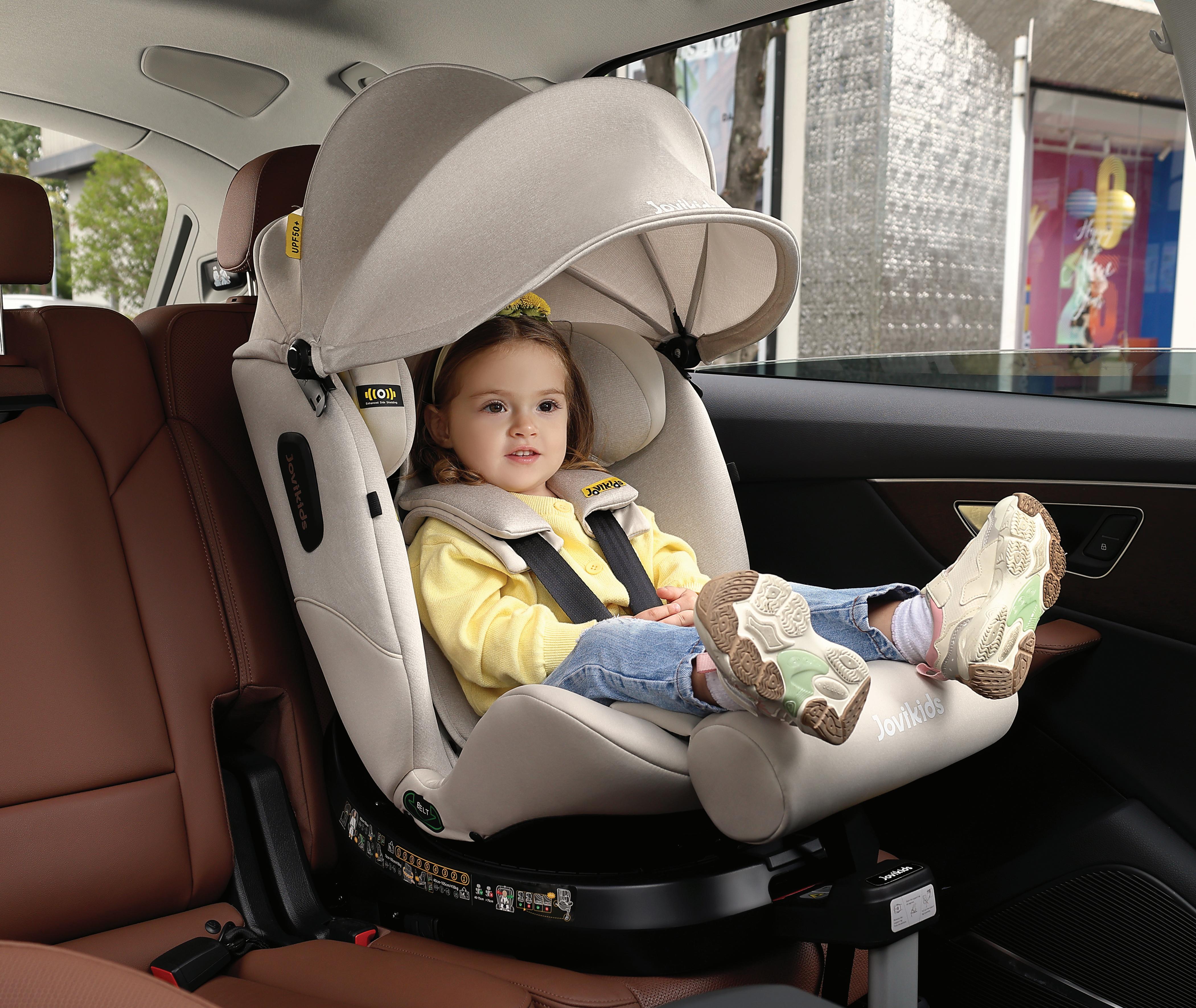
Introducing the Ranger 2 — the next generation of one of JoviKids’ most trusted designs. Suitable from birth to 12 years, it’s crafted to grow with your child while bringing a new level of comfort to every journey.
A leg-extension cushion supports a more natural seating position, making longer trips more comfortable, while 360-degree rotation makes every day easier from the very rst ride. With extended rearward-facing travel, enhanced side-impact protection and secure Iso x installation, safety comes as standard.

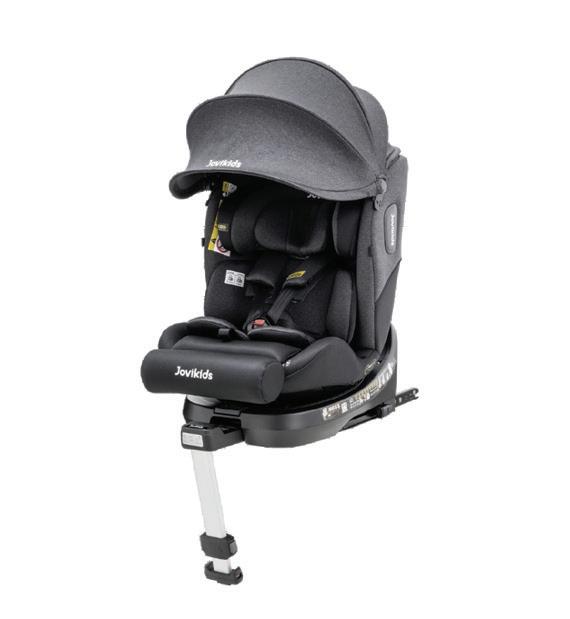
Finished in premium materials with re ned new colourways, and great extras such as the UPF 50+ canopy and included car seat protector, the Ranger 2 is designed to move seamlessly through family life — with comfort, con dence and style.

PEG and OKBaby are proud to announce a new strategic partnership, with Peg Perego UK appointed as the exclusive distributor for OKBaby across the UK and Northern Ireland, e ective from May 2026.

This collaboration marks an exciting new chapter for PEG and OKBaby in the UK market. The agreement re ects a natural alignment between two historic Italian nursery brands, built on a shared heritage, mutual trust, and a common vision for future growth.
Both companies are family-owned businesses with production rmly rooted in Italy since their foundation. PEG, established in 1949, and OKBaby, founded in 1976, have each built strong reputations for quality, design, and innovation within the nursery sector. Both brands also share a long-standing history in the UK market.
The partnership will focus strongly on supporting independent retailers, providing them with access to OKBaby’s specialised range of bathing and potty-training products, backed by Peg Perego UK’s established distribution network and extensive market expertise.
“We are delighted to bring OKBaby into our portfolio for the UK and Northern Ireland,” said Phil Howe, Country Manager UK & Ireland at Peg Perego UK. “This partnership brings together two brands with shared values and heritage, and we see signi cant opportunities to support our retail partners with a complementary and highly specialised product o ering.”
A spokesperson for OKBaby added: “Partnering with Peg Perego UK represents a key milestone in our international growth strategy. Their strong reputation and established retail network make them the ideal partner to further develop the OKBaby brand in the UK and Ireland, particularly as we celebrate our 50th anniversary.”
A series of activities is planned to support the launch and ongoing development of the brand across the UK. PEG and OKBaby will exhibit at The Baby Show, NEC Birmingham, from 8th to 10th May 2026, o ering consumers the opportunity to discover the range rst-hand. The brands will also participate in the Harrogate International Nursery Fair, from 18th to 20th October 2026, alongside further marketing initiatives throughout the year.
For further information contact Phil Howe, Country Manager UK & Ireland on the below. phil.howe@pegperego.com
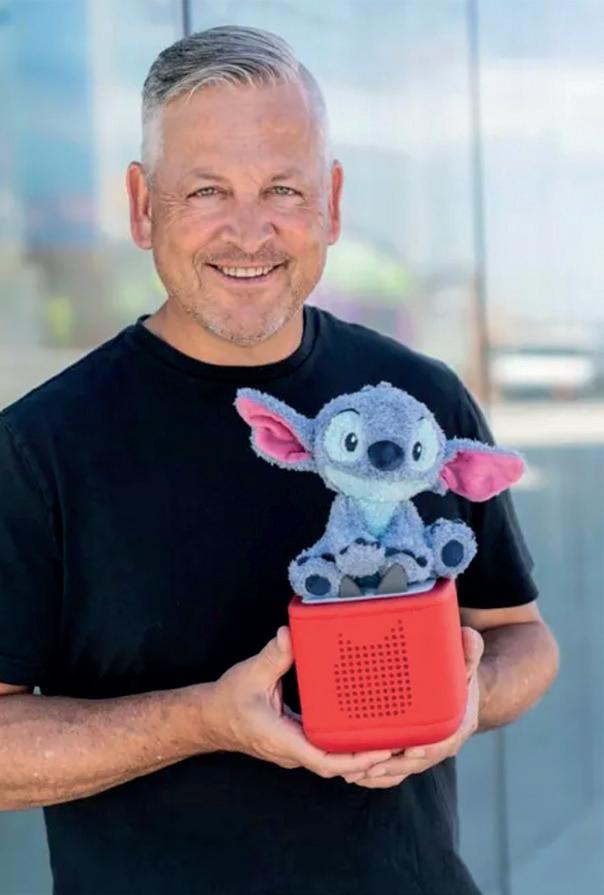
Former Mattel exec Mark McColgan has been appointed to the role, reporting to CRO Christoph Frehsee.
“Mark is a dynamic leader with a proven track record of creating a nity for beloved brands,” said Christoph Frehsee. “As we continue to deepen our footprint in North America, Mark’s expertise and deep understanding of the market will be instrumental in continuing our highgrowth momentum, making the US and Canada a key driver for Tonies’ global growth. I look forward to working with Mark as we scale established and new partnerships in North America and realize our full potential in Tonies’ most important growth market.” www.tonies.com


Vista PR is proudly celebrating their colleague, Georgina Morgan, who has completed the 2026 TCS London Marathon with the help of an 80 year old legend, raising £3,500 for the NSPCC – despite being, by her own admission, absolutely not a runner.
George’s furthest distance before race day was a 5K parkrun, and she only entered the public ballot because her ultramarathonrunning older brother dared her to. She assumed she’d never get in. The universe, however, had other plans.
What followed was 26.2 miles of nerves, determination, and one unforgettable encounter with an 80yearold marathon veteran, Sue Nicholls, who became George’s uno cial “pen buddy” on the course.
George said: “It was my rst marathon and the nerves were loud. Then I saw Sue and thought, there’s a woman who’s going to calm me down. And boy, she delivered. ‘Don’t be nervous, I’m 80,’ she told me. It was her 31st marathon, her 14th London. She started running at 63! We kept crossing paths. Every so often I’d hear, ‘Hello, me again,’ and it felt like a boost of magic each time. She steadied me, lifted me, and reminded me what this is all about. I’ll never forget her, she was the cherry on London’s beautifully iced cake that day.”
Jane Pavia, Vista PR Managing Director added: “We never doubted George. 20 years of grit and determination in the PR industry laid the perfect foundation for this gruelling physical challenge. We are so incredibly proud of our Vista Sista on her achievement.”
In today’s competitive nursery and playroom market, helping customers truly visualise their dream space is what sets retailers apart. CuddleCo’s Shop the Room concept is designed to do exactly that bringing together thoughtfully curated, stylish room sets that inspire parents while making the path to purchase feel simple and intuitive.
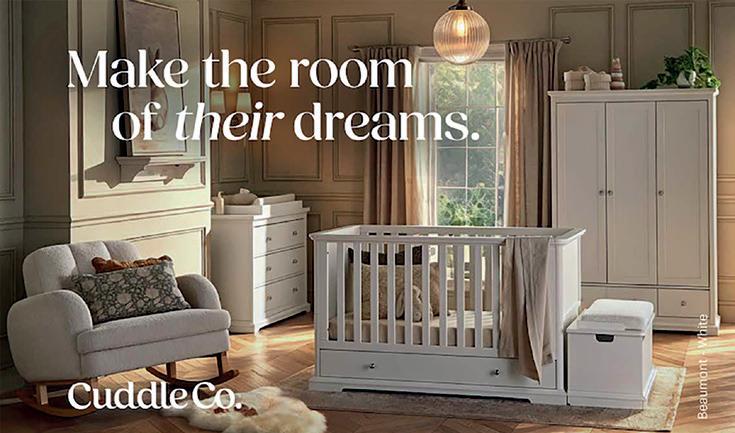
Rather than displaying individual products in isolation, Shop the Room enables retailers to present a complete, cohesive environment. Each space combines furniture, accessories, nursery essentials and playroom pieces that work seamlessly together, from adaptable furniture that grows with the child to smart storage and comfortable nursing chairs. The result is a more immersive in-store experience that helps parents’ picture how everything works in their own home.
By showing the full picture, retailers remove uncertainty and make decisionmaking easier. Customers can see not just what to buy, but how it all comes together naturally encouraging higher basket values and more con dent purchasing. Shop The Room also gives retailers a clear and consistent way to merchandise their space. With coordinated displays that feel intentional and considered, stores can create stronger visual impact, tell a clearer story, and guide customers e ortlessly through di erent stages of a child’s development.
Ultimately, Shop the Room shifts the focus from selling standalone products to delivering a complete lifestyle solution. It’s a simple but powerful way to inspire customers, elevate the retail environment, and unlock greater sales potential.
To discuss implementing CuddleCo Shop the Room in your business, contact your CuddleCo account manager or sales@cuddleco.co.uk www.cuddleco.co.uk























Gentle and safe from day one. The award-winning Chicco Baby Moments range is developed with up to 97% ingredients of natural origin and packaged using bo les made from 100% re cycled plastic to care for delicate skin
From bath wash and shampoo to body lotion, massage oil, wipes and napp y cream, the collection is designed to support daily care routines with trusted Chicco expertise. Carefully formulated and packaged, Chi cco Baby Moments provides families with a gentle, reliable skincare solution they can depend on.




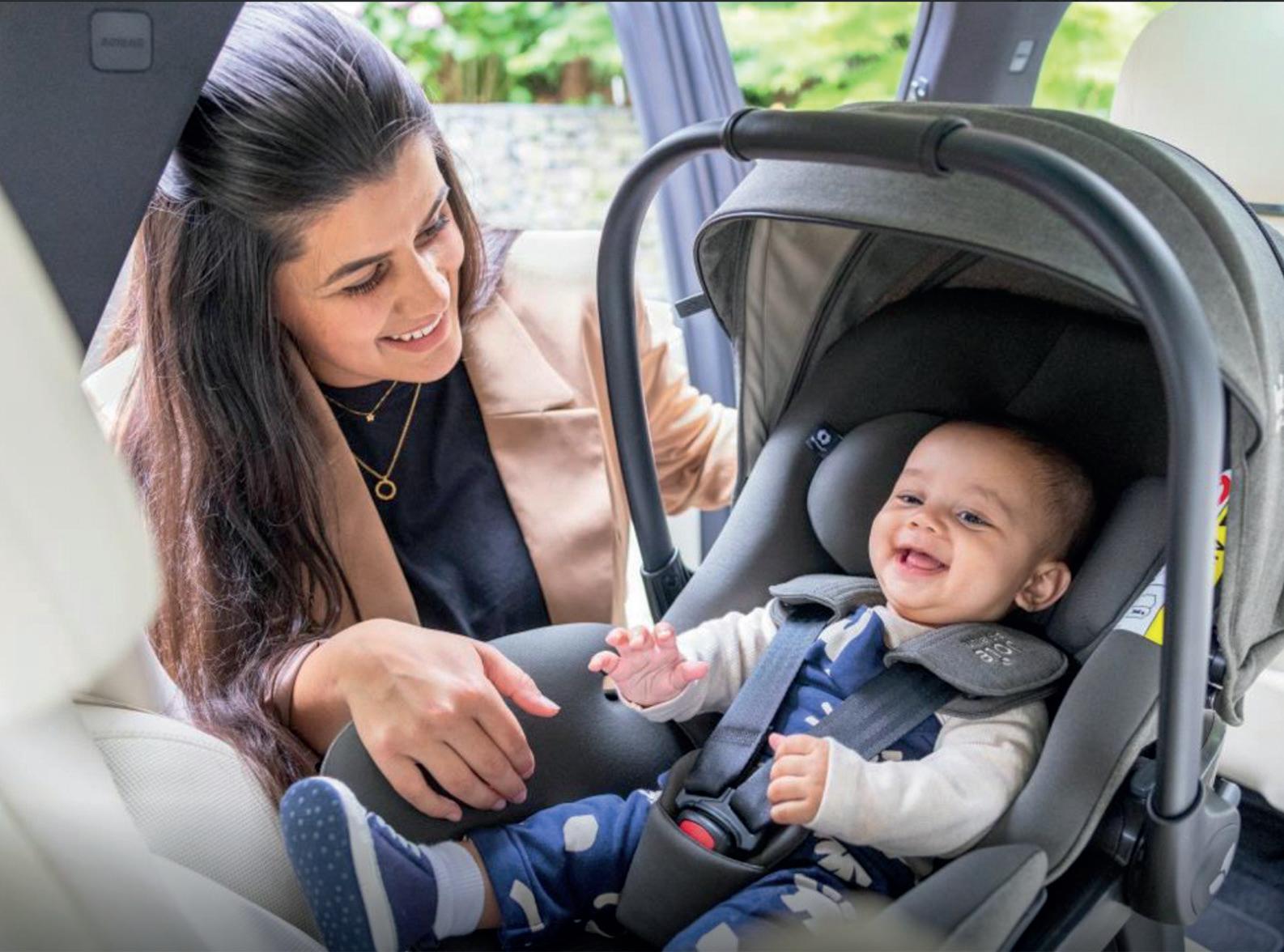
Joie is delighted to announce that it is now proud partners with The Lullaby Trust, a charity that exists to keep babies safe and grieving families supported. One of the key missions of The Lullaby Trust is to empower parents, carers and professionals with trusted advice on baby safety, including safer sleep.
Melissa Cooper, Head of Marketing at Joie said: “We are enormously proud to be an official partner of The Lullaby Trust. Their dedication to promoting safer sleeping for babies and supporting families, strongly aligns with our own ethos of family first and we are delighted to be able to spread that message through our collaboration on the i-Level Pro.”
Nicole Weeks, Corporate Partnerships Manager at The Lullaby Trust said: ‘’We are incredibly excited to partner with Joie, whose commitment to baby safety aligns strongly with our mission to end all sudden and unexpected infant death. There is so much information out there for families about car-seat safety, but not all of it is helpful or consistent. Our collaboration on the i-Level Pro gives us a powerful opportunity to share our expert baby safety advice with thousands of new and expectant parents and help families make informed choices about how to use their car seat safely.’’
www.joiebaby.com
LPD Home has reaffirmed its commitment to accessible, design-led furniture, highlighting its focus on delivering affordable yet stylish pieces to a broad customer base. Having identified a gap in the market for trend-driven, well-priced furniture, the company has built its offering around combining creative design, durable materials and competitive pricing.
With established expertise in the furniture sector, LPD Home works closely with retailers to supply high-quality collections that resonate with modern consumers, supporting partners with products that balance style and practicality.

As part of its ongoing expansion, the business has announced the appointment of Karl Hughes as National Sales Manager for Bebe and Beyond, its new nurseryfocused brand set to launch soon. He brings extensive industry experience and a fresh perspective to the role, with his arrival marking a key milestone in the development of the new category.
The launch of Bebe and Beyond signals a significant step for LPD Home as it broadens its portfolio into the nursery sector, positioning the company for further growth. In addition, LPD Home has updated its Meet the Team page, offering greater insight into the people behind the brand. www.lpdhome.co.uk

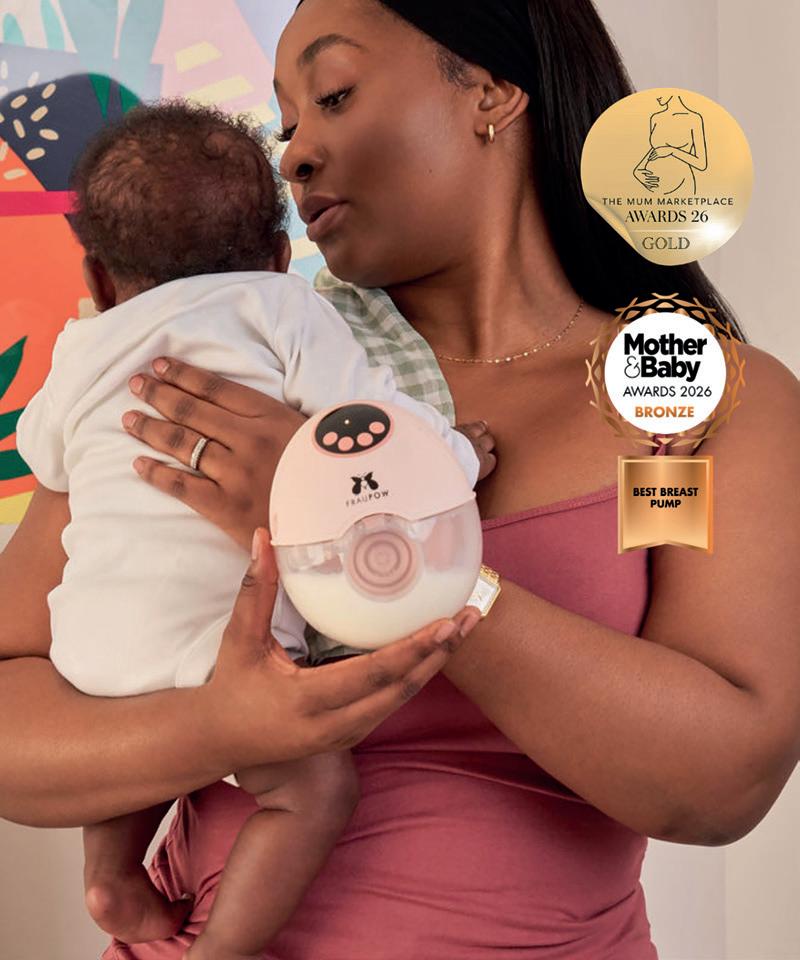
Fraupow gains traction across UK, Europe and UAE with a 360° model combining products, midwife access and dedicated feeding spaces for modern mums.
Since Fraupow launched in 2020 they have faced a tough battle to break into the breastpump industry. The feeding category is dominated by a handful of big brands, so as a challenger brand Fraupow have fought hard to win every listing. Their strategy of ‘support backed by products’ has paid off, and the award-winning range is now stocked widely across the UK, Europe and UAE.
What sets Fraupow apart from the competition is its 360° support offering. Shoppers who buy Fraupow are not just picking up a product, they are choosing to buy into a support system including free Midwife calls, an in-depth feeding course and free-to-use Feeding Rooms in 14 shopping centres and public venues aross the UK. Mums are looking for brands who embody their aspirations and Fraupow does just that, helping Mum to achieve her feeding goals. orders@fraupow.com www.fraupow.com
For over 30 years, the Mother&Baby Awards have been recognised as the gold standard for products and services for parents across the UK. Highly respected throughout the nursery and baby industry, the Awards are built on one defining principle: real parents testing real products in real-life situations.

Each year, thousands of expectant mothers and baby and toddler parents trial products in their own homes and daily routines. From nursery and playtime essentials to feeding, travel, toiletries, and pregnancy and postnatal care, products are assessed for performance, design and value. Every entry is tested by carefully selected parent testers, ensuring feedback is genuine, impartial, and trustworthy.
Being shortlisted or winning a Mother&Baby Award represents more than industry recognition, it offers a powerful endorsement and a trusted mark that parents actively seek when making purchasing decisions.
Entries for the 2027 Awards are open until 31st May with the shortlist being announced in September 2026. Winners are announced live at a glittering Mother&Baby Awards ceremony in November.
To find out more about the awards or to enter visit www.motherandbabyawards.co.uk
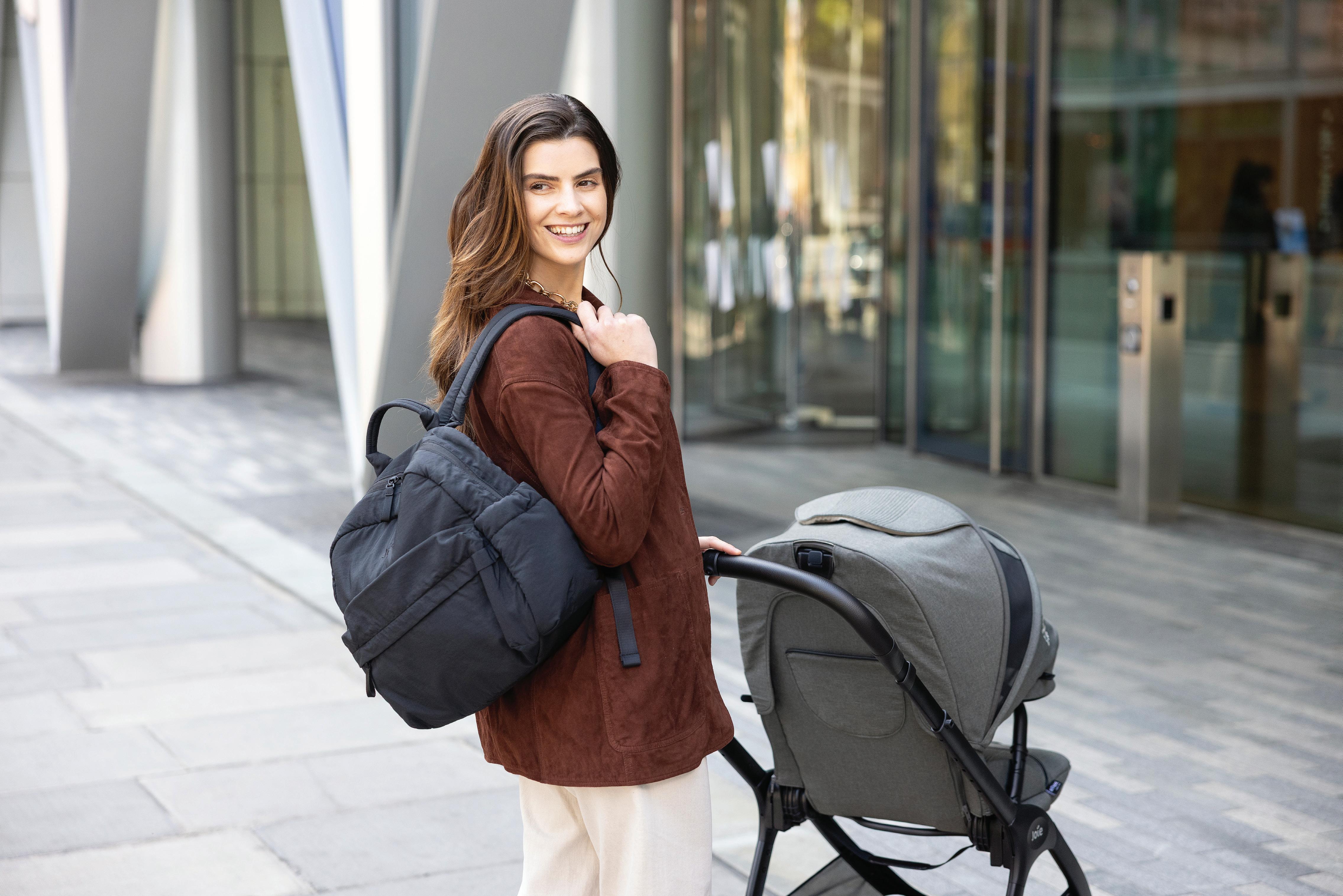


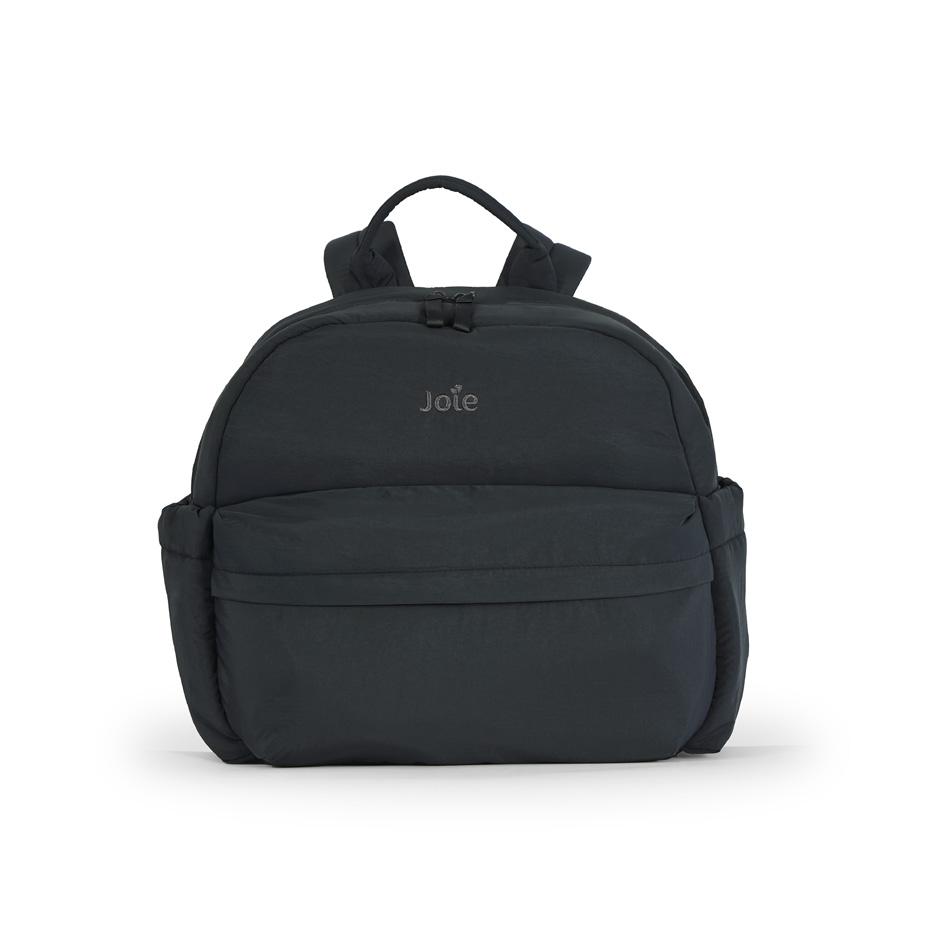


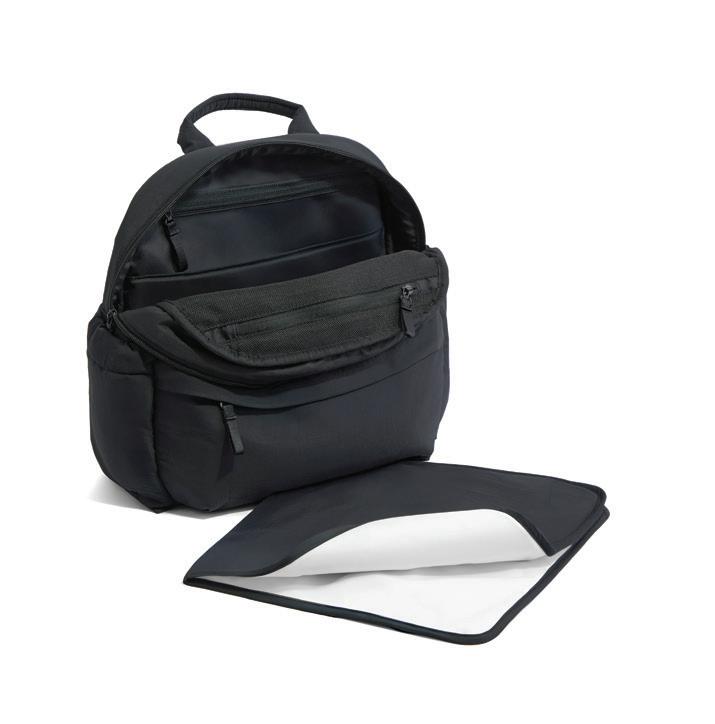


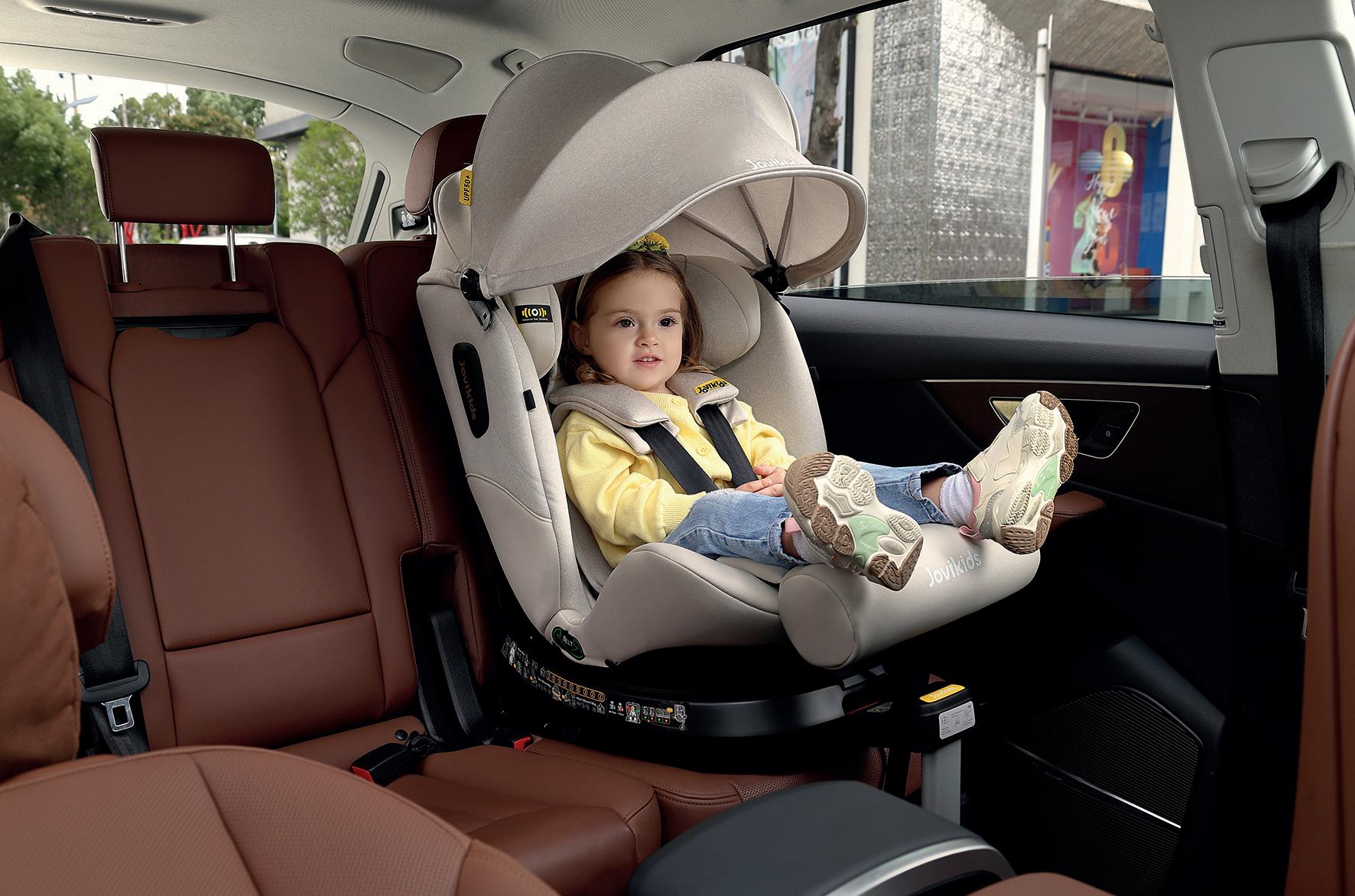
Three new launches from JoviKids highlight how smart engineering, exible design and lasting value are reshaping the family car seat market.
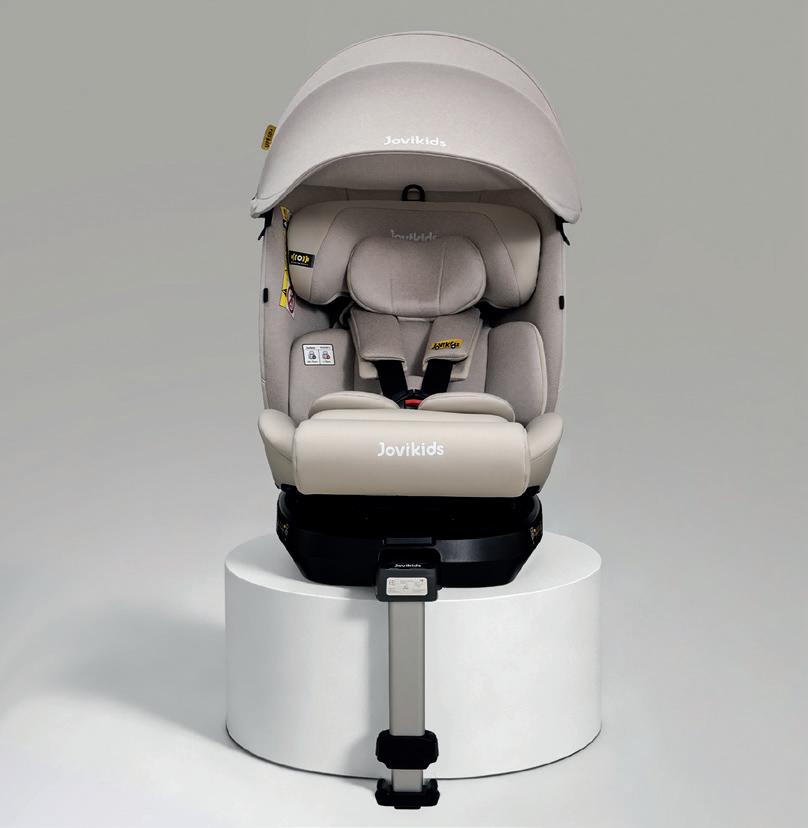
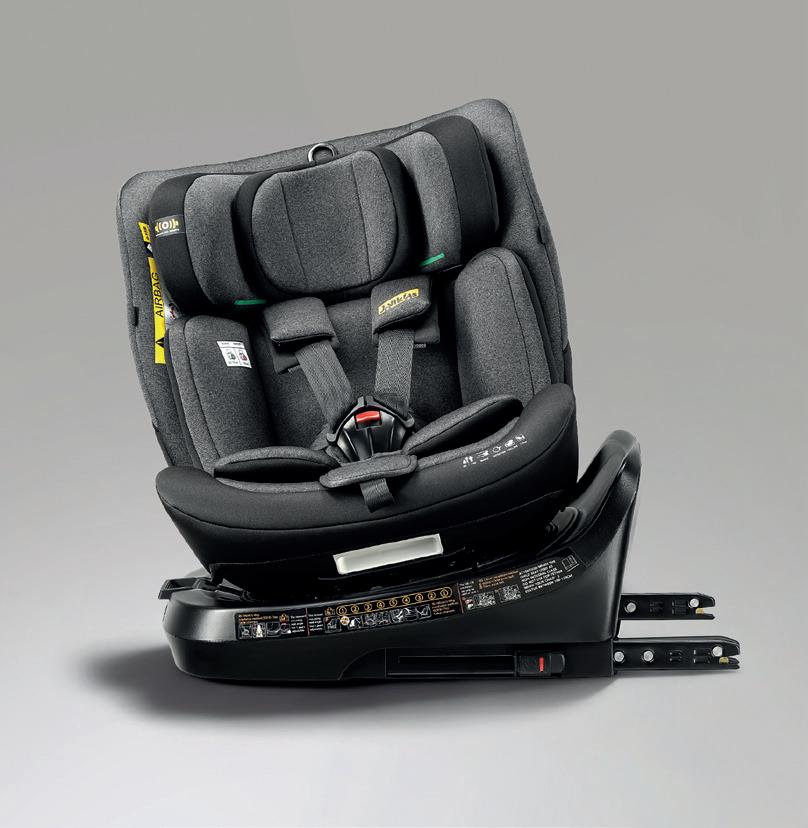
The nursery sector continues to see strong demand for products that combine safety credentials with genuine day-to-day practicality. For parents, the ideal car seat is no longer simply secure and compliant; it must also t around busy routines, changing family needs and the realities of life on the move. With the launch of three new models, JoviKids is addressing that shift with a collection designed for modern family travel.
At the centre of the range is the Ranger 2, an updated version of one of the brand’s most established seats. Designed to take a child from birth through to 12 years, it o ers long-term value in a category where longevity is increasingly in uencing purchase decisions. New additions include a legextension cushion, created to encourage a more natural seating position and enhance comfort during extended journeys. A UPF 50+ canopy and included car seat protector add further everyday practicality.
The Ranger TT builds on the same platform while introducing a key technical innovation: Top Tether technology. By reducing forward movement in the event of a collision, the system removes the need for a support leg. That change may appear small, but it creates useful additional footwell space and greater exibility inside the vehicle — an advantage for growing families or those regularly switching between cars.
The model also incorporates a number of premium features that continue to resonate with parents. A 360-degree swivel function simpli es everyday loading and unloading, while extended rearward-facing travel supports best-practice safety in the early years. Enhanced side-impact protection adds further reassurance, and Iso x installation helps make tting the seat quick, secure and straightforward. Refreshed colour options and premium nishes complete a product positioned as both practical and design-conscious.
Like the Ranger 2, the Ranger TT o ers 360-degree rotation and suitability from birth to 12 years, reinforcing the move towards products that remain relevant across multiple life stages rather than being rapidly outgrown.
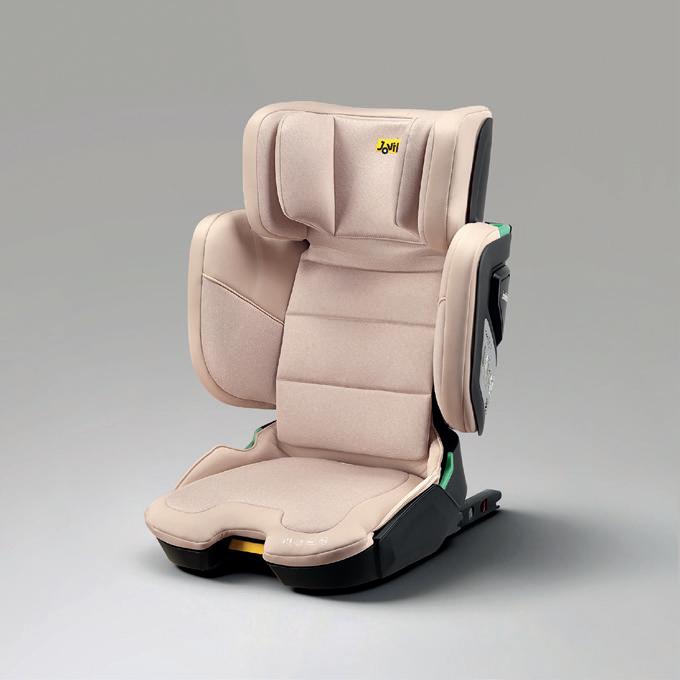
Also joining the latest introductions is the Rober+, a folding booster seat created for portability. As travel habits evolve and families look for lighter, easier transport solutions, compact products are becoming an increasingly valuable part of the category. The Rober+ folds down for convenient storage and transport, making it well suited to holidays, shared vehicles, taxis and occasional use.
Despite its compact format, practical safety remains central to the design. Advanced energy-absorbing foam helps provide protection, while a dedicated travel bag makes carrying and storing the seat even easier.
Together, the Ranger 2, Ranger TT and Rober+ demonstrate how innovation in the car seat category is increasingly centred on everyday usability. By combining safety, adaptability and convenience, JoviKids is responding to the expectations of a new generation of parents.
New and emerging brands now have an exciting opportunity to take their place at the UK’s only nursery trade show, as Harrogate International Nursery Fair introduces a dedicated New Brands Zone in Hall C — complete with an exclusive, fully supported exhibition package.
Created specifically for start-ups and smaller companies, this initiative is designed to remove the barriers to entry and give new businesses a powerful platform to present their products to both major retailers and independent buyers. With a turnkey package from just £885, exhibiting becomes an affordable and accessible option for companies looking to gain industry exposure, build connections, and grow their presence in the market.
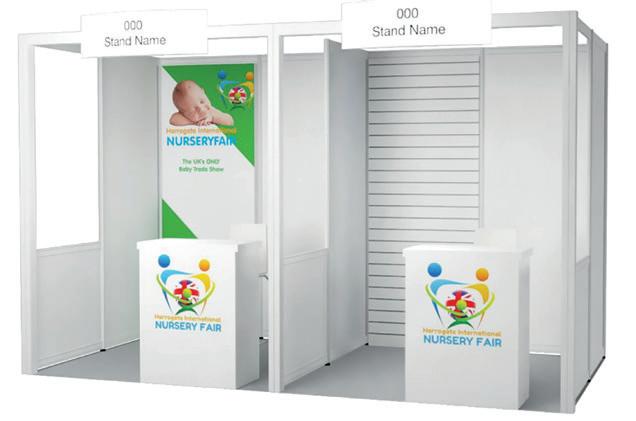
The New Brands Zone package includes a 2m x 2m stand area, carpet, and full shell scheme walling with a 1m high divisional wall between stands, ensuring a professional and cohesive look throughout the space. Each exhibitor will benefit from an illuminated fascia nameboard with stand number, plus the choice of either a 1m full-height graphic panel or a 1m slat wall on the back wall—ideal for branding and product display.
Also included is a front counter cupboard with custom graphic and a stool, providing a practical, ready-to-use set-up that allows brands to focus entirely on engaging with visitors and showcasing their collections.
For those looking to enhance their stand, optional extras include a power socket and connection (£145) and a 1.5m LED lighting batten (£45), offering additional flexibility.
Positioned within the busy Hall C, the New Brands Zone gives exhibitors direct access to key decision-makers actively seeking newness and innovation—making it the perfect launchpad for brands ready to take the next step.
This initiative underlines the Fair’s commitment to supporting fresh talent and driving the future of the nursery industry.
Harrogate International Nursery Fair takes place at the Harrogate Convention Centre from 18th to 20th October 2026.
For further information contact adrian@nurseryfair.com www.nurseryfair.com
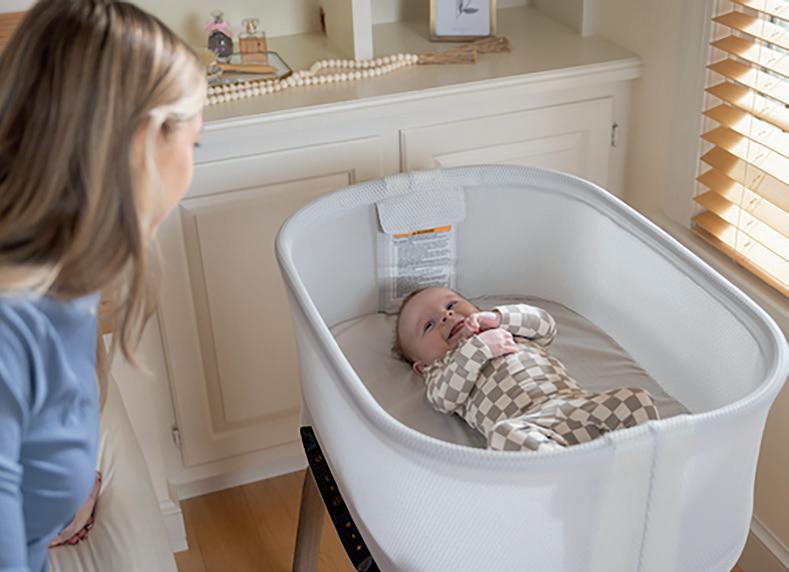
Graco announces a major new retail milestone with the launch of its Eluma Nest Bedside Crib into ten Mamas & Papas stores nationwide, as well as via the Mamas & Papas online platform, marking the first time Graco has partnered with the retailer on a multistore rollout for a new product.
The rollout focuses on a curated selection of the nursery chain’s highestfootfall and highestservice locations, including its flagship store in Westfield London at White City – an awardwinning concept space designed around an experiential shopping journey – as well as Victoria Square Belfast, Glasgow Fort and Fort Kinnaird Edinburgh. The wider store group also includes Croydon Purley Way, Leeds Birstall, Nottingham Giltbrook, Gateshead Team Valley, Stockton Teesside and Swindon Mannington.
“Mamas & Papas has long been a trusted authority for families seeking expert guidance on baby products, so seeing Eluma Nest introduced across ten of its stores is a significant milestone for Graco”, commented Luisa RollinsSvensson, Marketing Manager, Graco UK.
To learn more Graco visit https://gracobaby.eu/uk for further details.
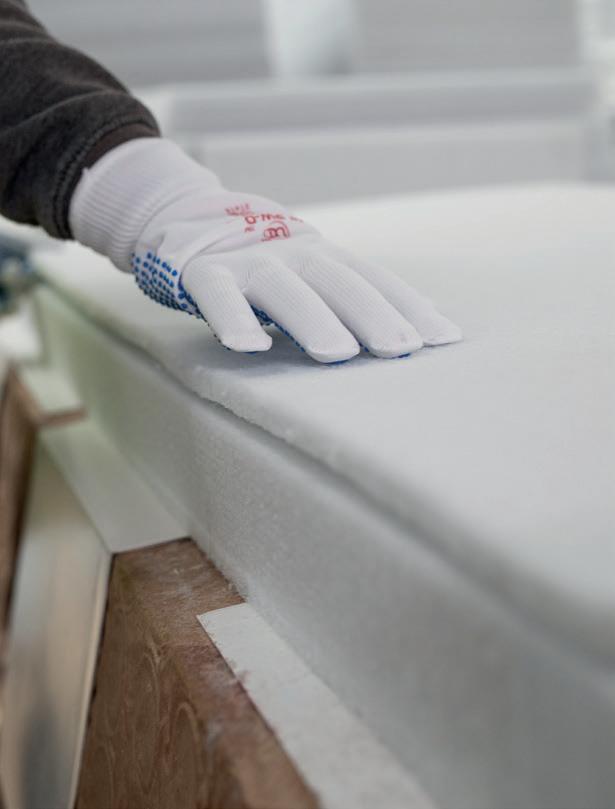
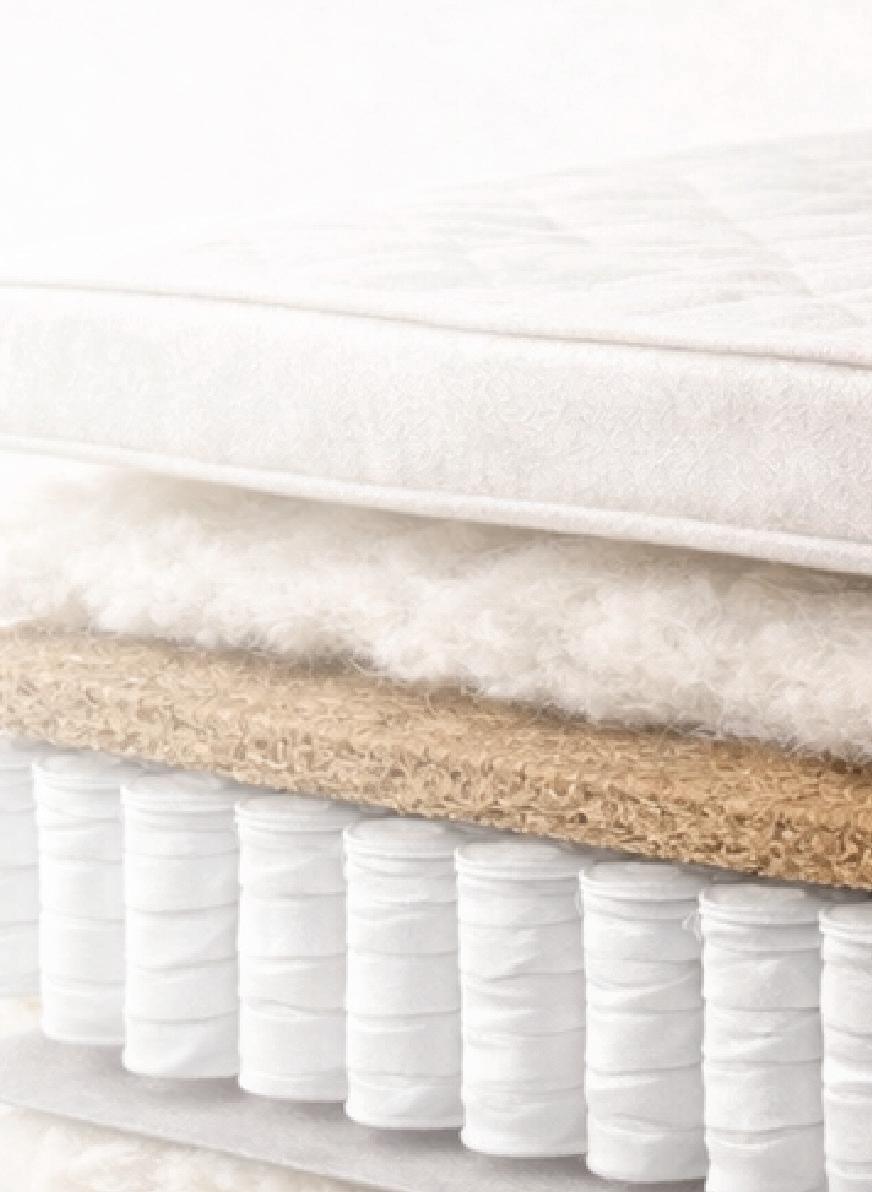
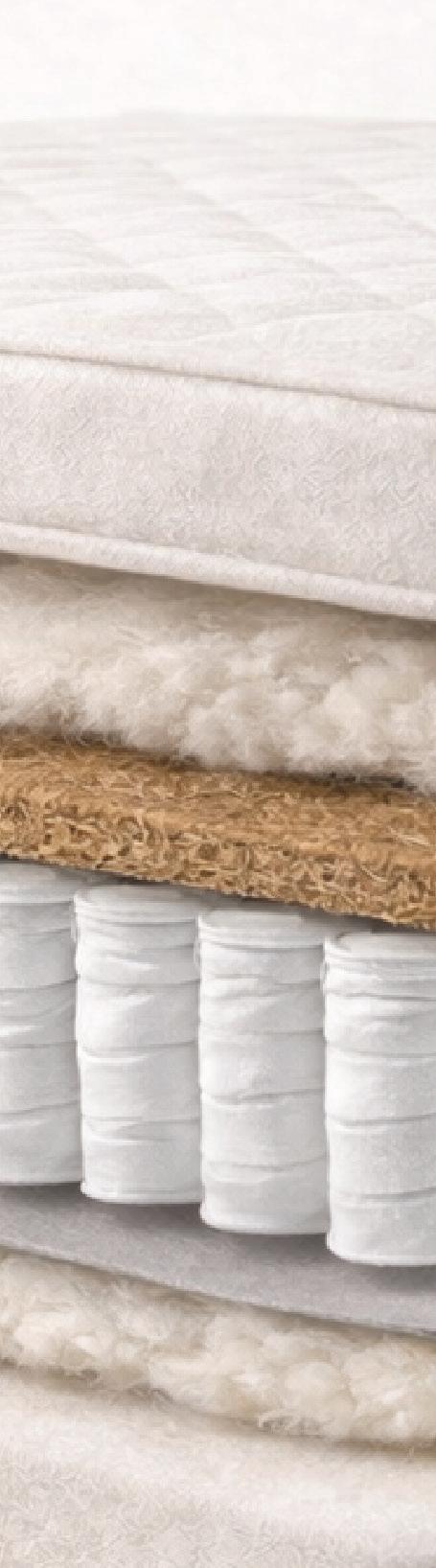
Take a look behind the scenes at the handmade side of the Prestige Sleep factory in Kent.
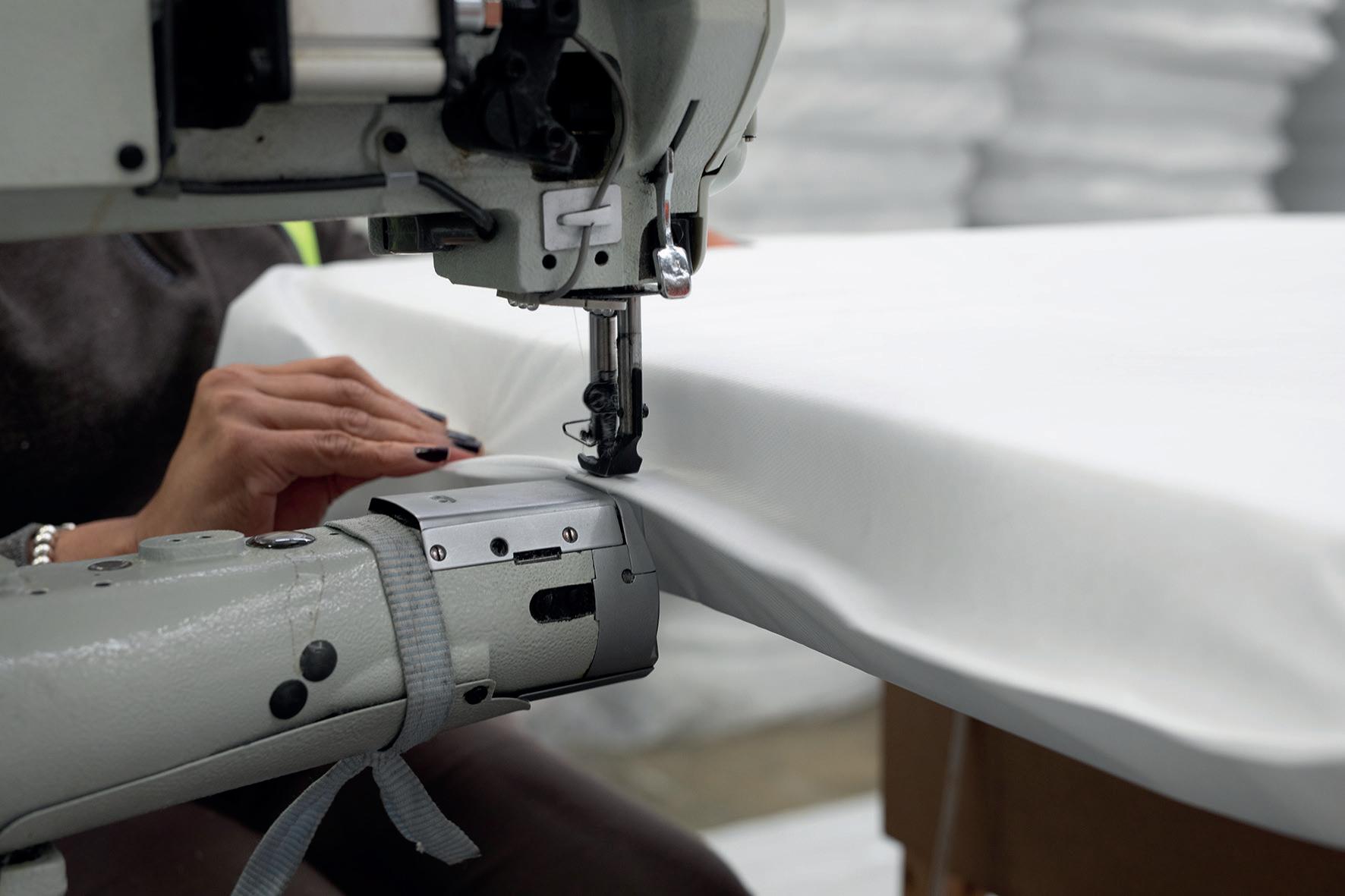
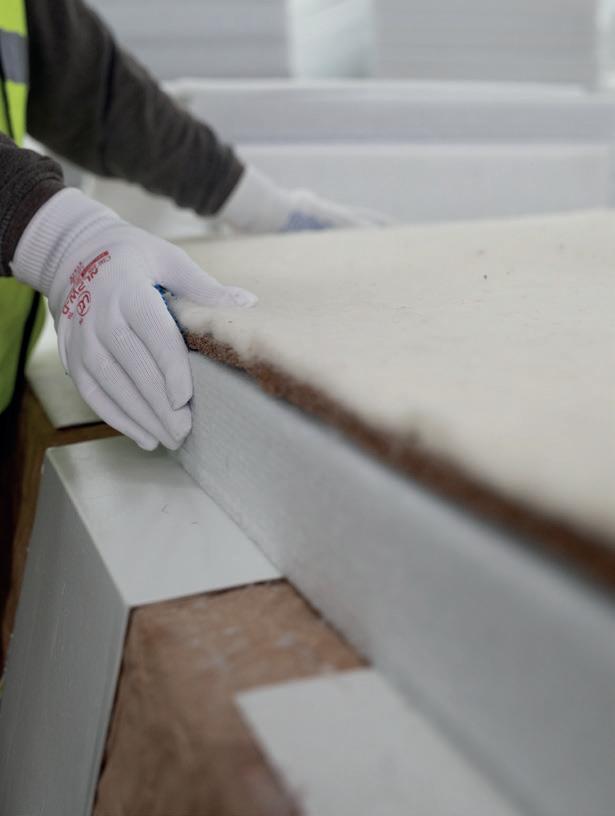
From fabric cutting and stitching to the mattress assembly and quality control, every mattress goes through a hands-on production process carried out by their experienced team. Producing around 1000 mattresses each day, their factory combines traditional craftsmanship with carefully selected materials and consistent attention to detail throughout every stage of manufacturing.
As a family-run British manufacturer, they take pride in creating products that are built for comfort, durability and everyday use — with quality remaining at the centre of everything they make at Prestige Sleep. www.prestigesleep.co.uk


Axkid is once again shining a spotlight on extended rear facing, using its annual awareness campaign to highlight why keeping children rear facing for longer remains one of the most e ective ways to improve car seat safety.
Axkid is marking its annual Rear Facing Month this May, continuing its mission to educate parents and caregivers on one of the most critical aspects of child car safety. The campaign focuses on encouraging families to keep children rear facing for as long as possible, with the brand recommending a minimum of four to ve years, and ideally longer.
The importance of extended rear facing is well established across the global safety community. Research consistently shows that travelling rear facing signi cantly reduces the risk of serious injury in the event of a collision, particularly for younger children whose neck and spine are still developing. Despite this, many parents continue to move children into forward facing seats earlier than advised.
Axkid’s campaign aims to address this gap between guidance and real world behaviour. While regulations in many European countries require rear facing travel only until at least 15 months, best practice guidance goes much further. Leading organisations including the World Health Organization, the American Academy of Pediatrics and European road safety bodies all advocate extended rear facing as the safest option.
“Research consistently shows that travelling rear facing significantly reduces the risk of serious injury in the event of a collision, particularly for younger children whose neck and spine are still developing.
Sweden remains a benchmark market in this area, widely recognised for its long standing commitment to child passenger safety. Built on the Vision Zero approach, which aims to eliminate road fatalities, Sweden combines legislation with strong national recommendations. Authorities encourage rear facing travel up to at least four to ve years of age, and this guidance has helped shape consumer behaviour.
According to Axkid’s Child Safety Report 2025, 83 percent of Swedish children aged two to four travel rear facing, compared to just 22 percent in the UK. By the age of four, the di erence remains signi cant, with 40 percent of Swedish children still rear facing versus only 10 percent in the UK.
However, even in a market with high awareness levels, challenges remain. Recent analysis from Swedish insurance company Folksam highlights the consequences of incorrect usage. The study examined 99 fatal crashes involving children aged 0 to 6 between 1992 and 2024, revealing that many of the youngest victims were not travelling in line with safety recommendations.
Among children aged 0 to 3, 69 percent were not travelling rear facing as advised. Only 28 percent were in rear facing seats, while 34 percent were forward facing and 33 percent were unrestrained. The data also indicates that up to 48 percent of these fatalities may have been survivable if the children had been travelling rear facing. Of those under four who were in forward facing seats, 12 out of 19 could potentially have survived had they been rear facing instead.
These ndings underline the importance not only of having clear guidance, but also of ensuring that it is followed in practice. Correct usage of child restraint systems remains a key factor in improving outcomes on the road.
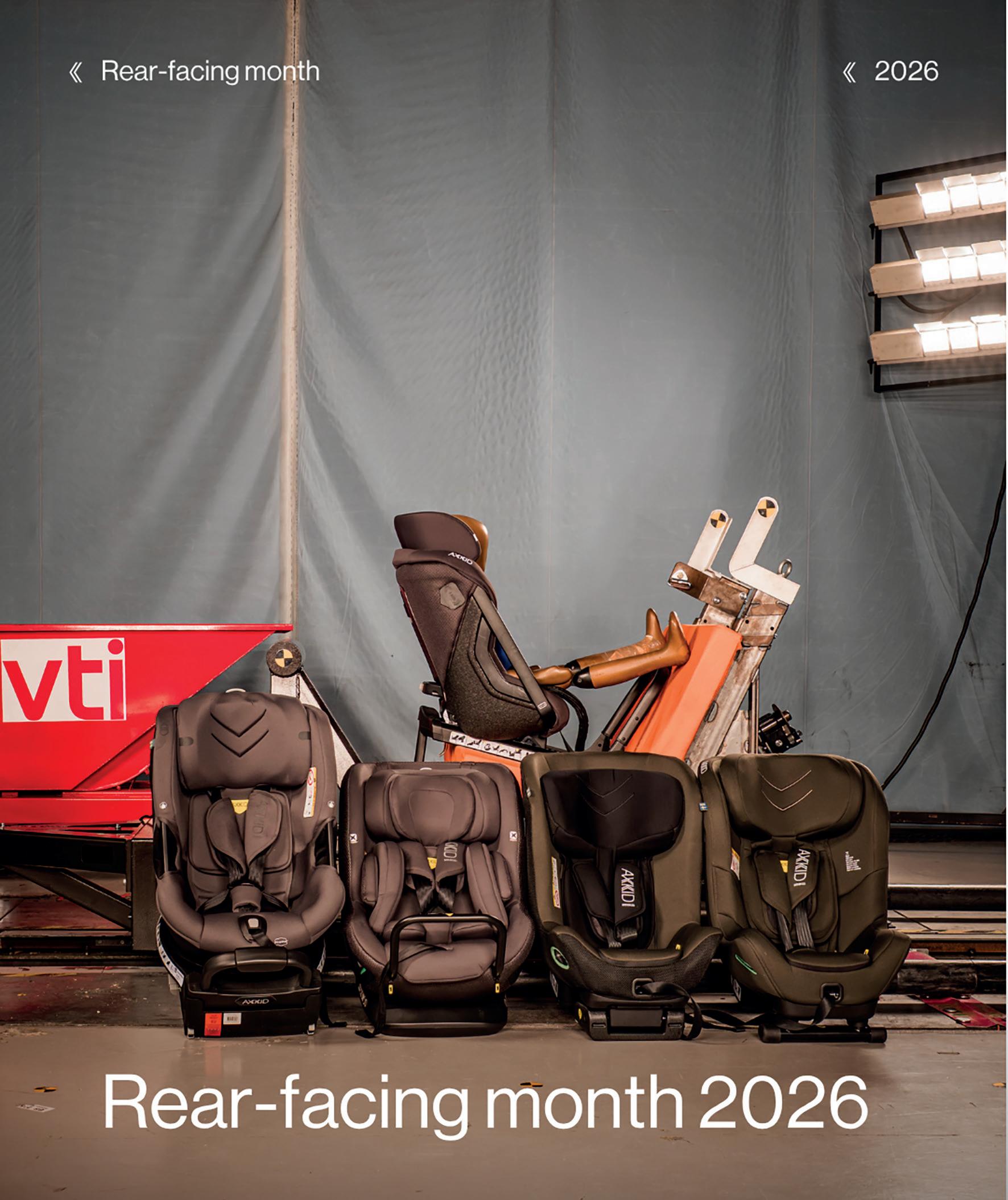
Axkid continues to position itself at the forefront of this conversation. Anton Wall, Deputy CEO and Chief Commercial Officer at Axkid, explains that the campaign was created to maintain focus on an issue that still requires attention across the industry.
“Rear Facing Month is something we initiated several years ago to keep attention on an issue that remains critically important,” he says. “We are encouraged to see more of the industry joining the conversation, but too many children are still turned forward facing too early. We will continue to advocate for extended rear facing, in line with Swedish recommendations, because keeping children rear facing for as long as possible is central to our vision of setting a new global safety standard for children on the move.”
Throughout May, the brand will roll out a series of activities designed to support both parents and retail partners. These include sharing educational content and practical safety guidance, as well as working closely with retailers to help communicate the bene ts of extended rear facing at point of sale. Promotional pricing across its range of rear facing car seats will also form part of the campaign, helping to make these products more accessible to families.
The initiative will culminate in a Safety Conference in early June, bringing together partners and stakeholders from across the child safety sector. The event will provide a platform to share the latest insights, research and developments, reinforcing the importance of continued collaboration within the industry.
For retailers, campaigns such as Rear Facing Month o er an opportunity to engage customers on a topic that sits at the very heart of the nursery category. Car seats remain the number one safety product for families, and clear, consistent messaging is essential in helping parents make informed decisions.
As Rear Facing Month returns, the message remains clear. Extended rear facing is not simply a recommendation, it is a proven approach to improving child safety on the road. Through education, collaboration and continued advocacy, Axkid is working to ensure that more families understand and adopt this life saving practice.
axkid.com/uk


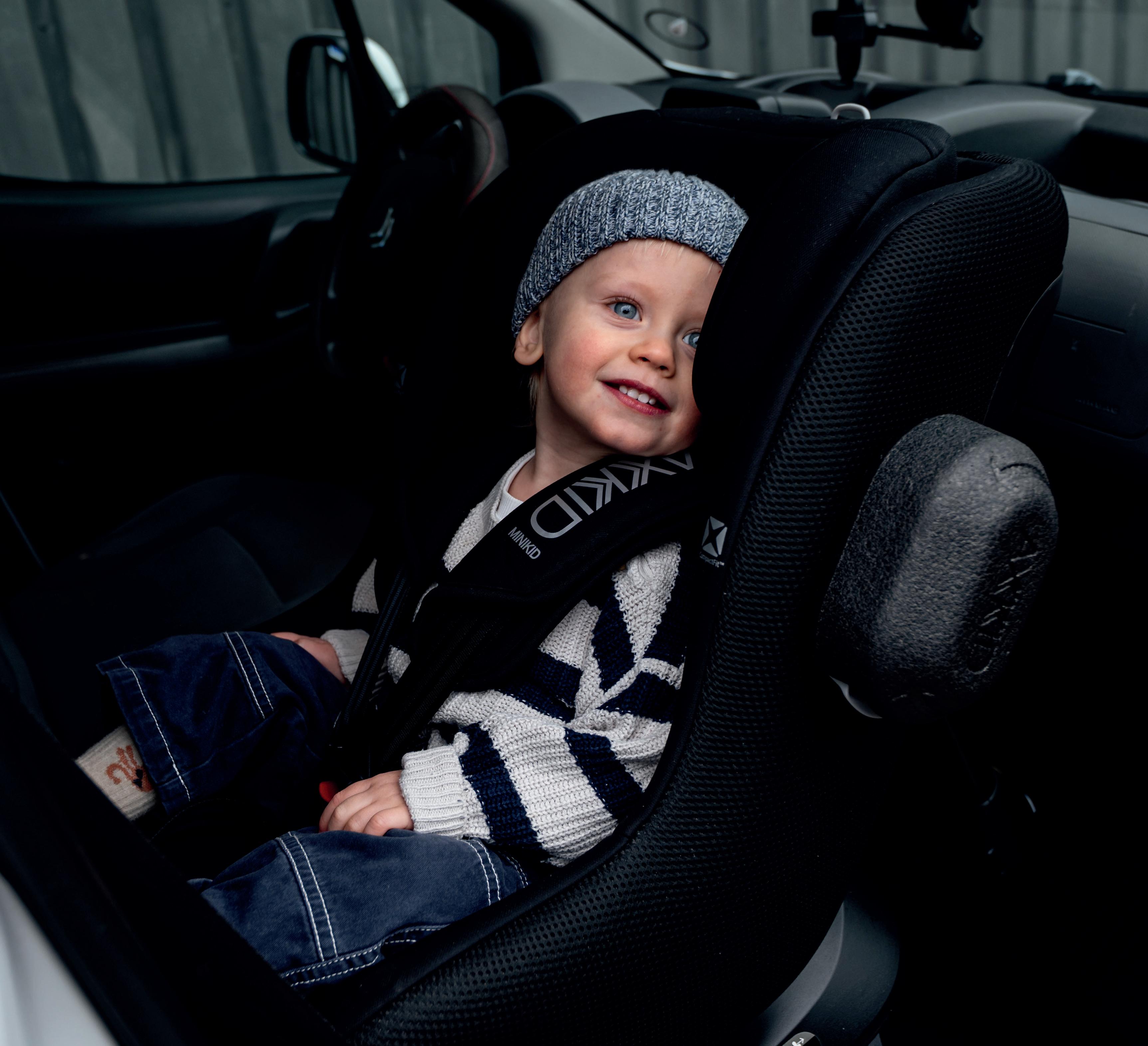
Pioneering safe adventures.
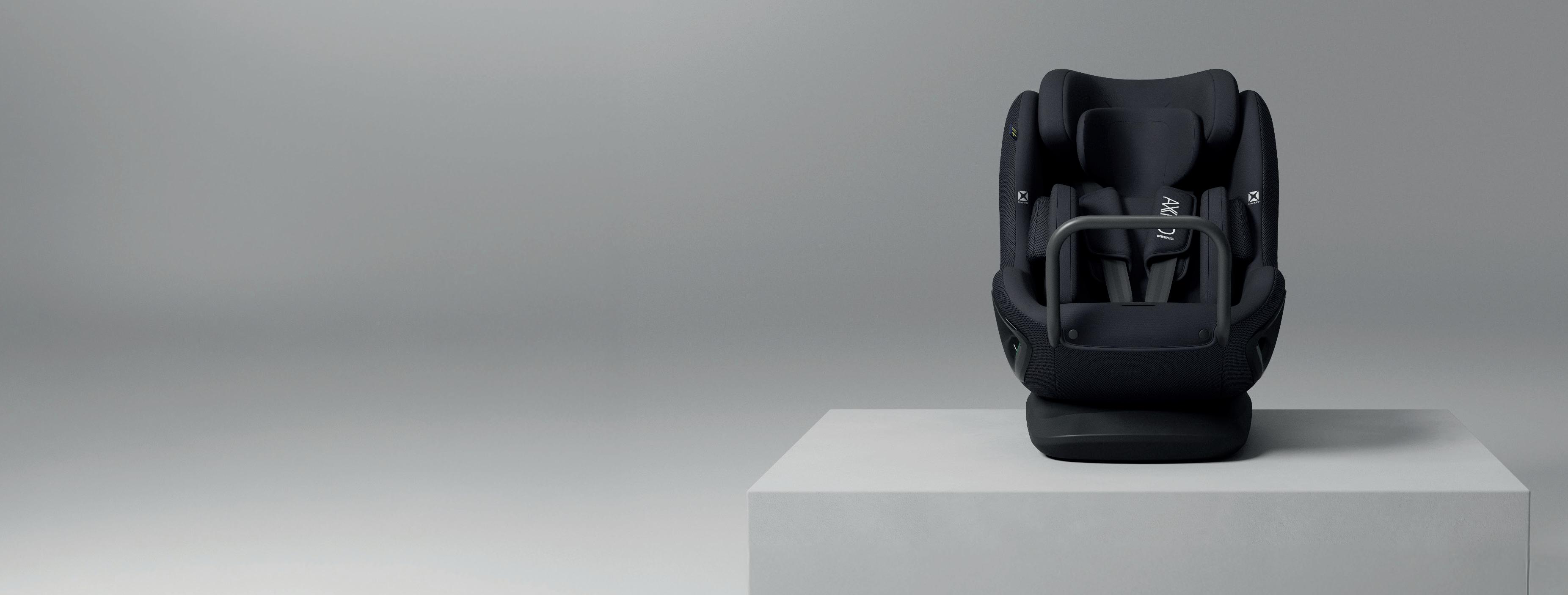
Safet y made easy. Built on the trusted Minikid™ platform, Minikid Core delivers Plus Test approved rear-facing safety in a simple, accessible design. For smooth installation and ease of use.



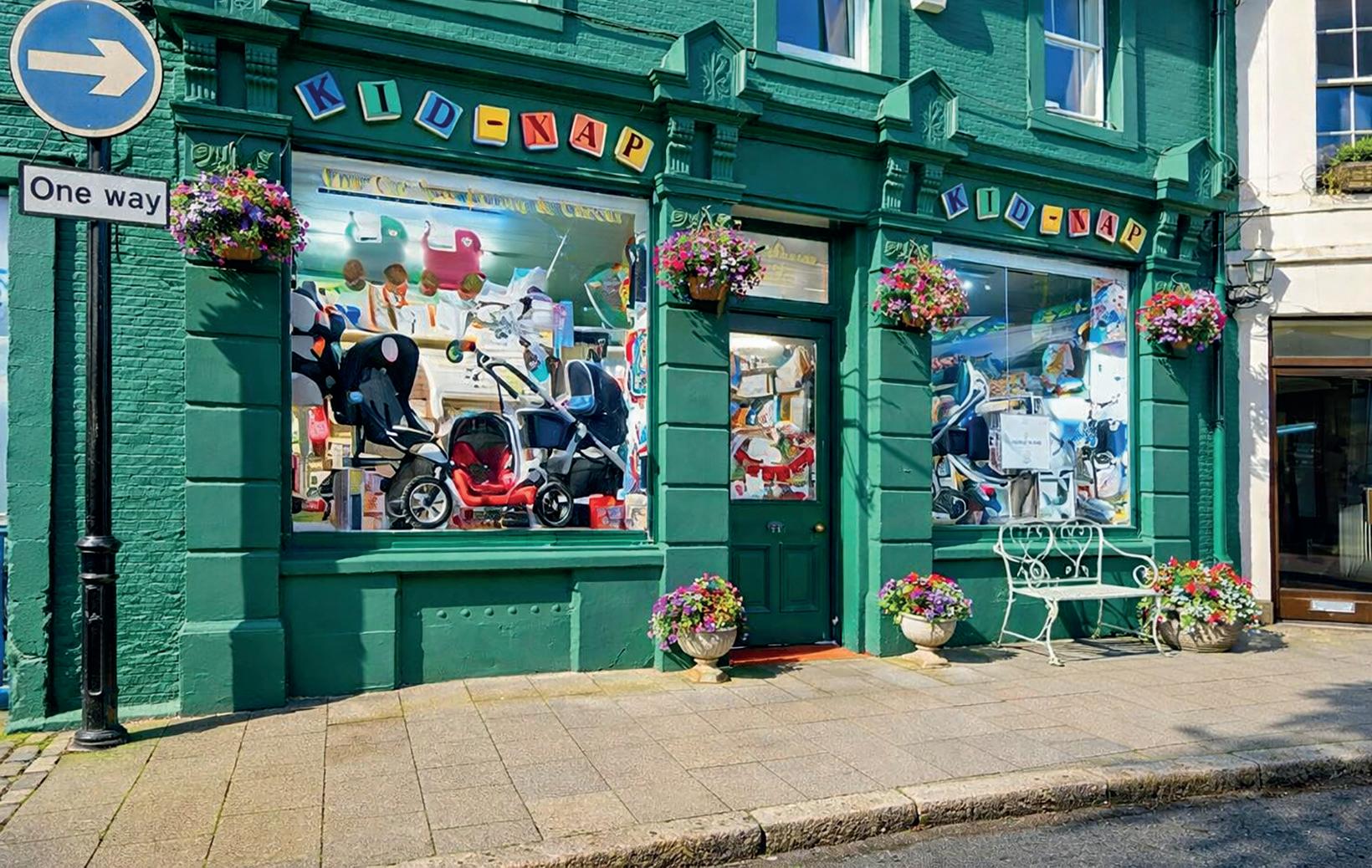
Celebrating 41 years in business, Kid-Nap remains a trusted destination for families, blending heritage with a forward-thinking approach. Founder Debbie Brown re ects on the journey so far, sharing insights on changing retail trends, loyal customers and what the future holds for independent nursery stores.
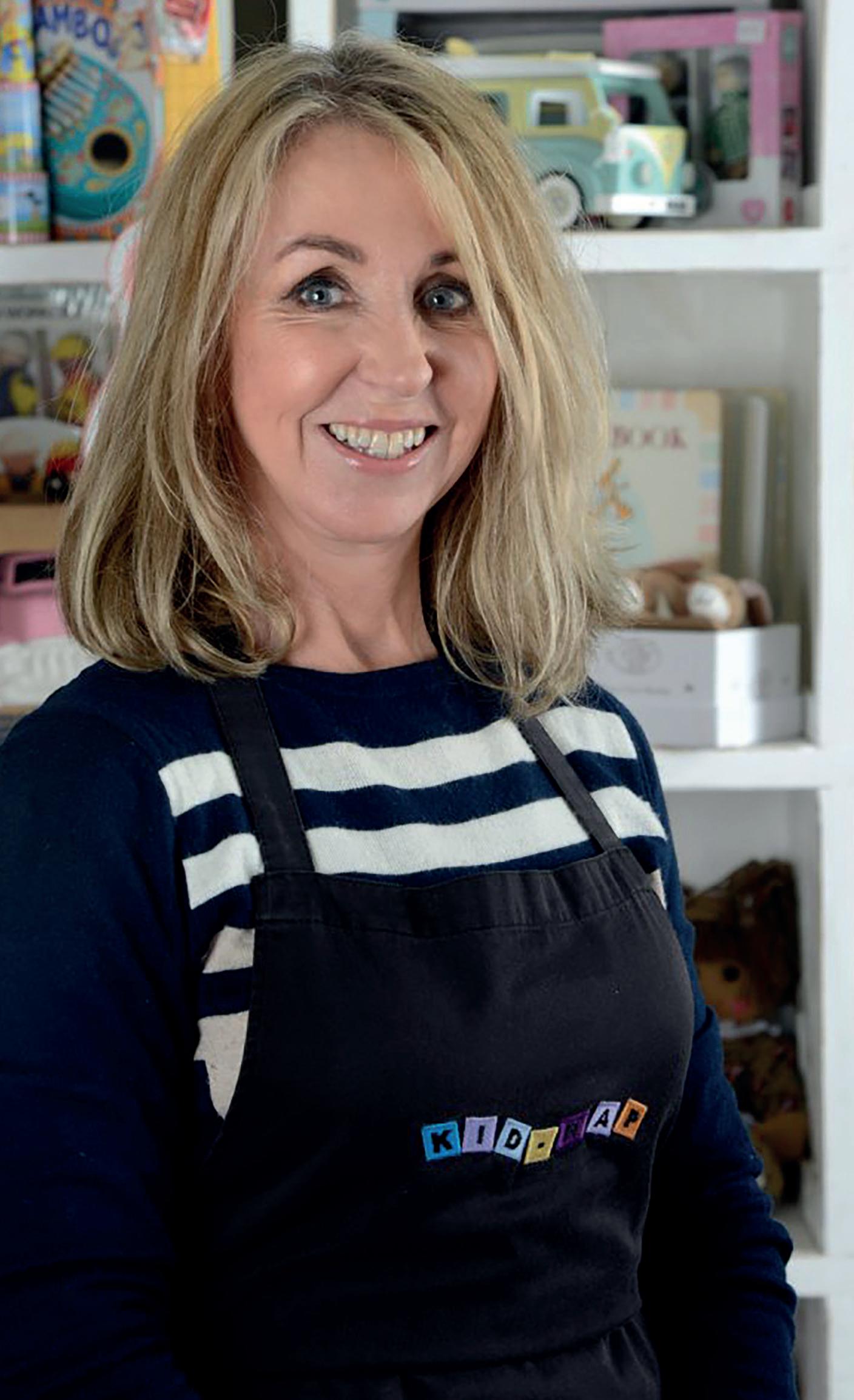
This year marks 41 years in business, which is a fantastic milestone, what do you think has been the secret to Kid-Nap’s longevity?
The secret has been nding the right balance between tradition and adaptability. We have always focused on o ering quality products alongside genuine, personal service, which has helped us build trust with generations of families. At the same time, we have embraced change, evolving with trends and customer needs while holding on to the warm, independent feel that makes Kid-Nap special.
Looking back to when the business rst launched in 1985, how has the nursery retail landscape changed?
Nursery retail has transformed signi cantly. It is now much more brand-led and heavily in uenced by online research and social media. While online shopping has grown, it has made the in-store experience even more valuable, with customers really appreciating expert advice and the opportunity to see and try products in person.
Kid-Nap has served multiple generations of families, how special is it to now welcome customers whose parents once shopped with you?
It is incredibly special and something we are very proud of. Welcoming back customers who were
once brought in as children themselves is a lovely reminder of the relationships we have built. It makes what we do about so much more than retail.
Over the past four decades, what have been some of the biggest challenges you have faced as a business?
Like many retailers, we have had to adapt to the rise of online shopping, changing customer expectations and wider economic pressures. Each challenge has encouraged us to evolve while staying focused on what we do best.
We have always focused on offering quality products alongside genuine, personal service, which has helped us build trust with generations of families. “ ”
On the ip side, what moments or achievements stand out as your proudest successes?
Our proudest moments are seeing families return to us time and again and the relationships we have built along the way. Reaching over four decades in business is also a huge achievement and reflects the trust our customers have placed in us.
Kid-Nap is known as a one stop shop for parents, which product categories are currently performing strongest in store?
It is always di cult to single out one category, as we o er such a wide range. Being able to provide everything new parents need in one place is what continues to make us a go-to destination. You o er such a hands-on, try-beforeyou-buy experience, how important is that in today’s retail environment? It is more important than ever. Customers often arrive having done plenty of research, but they really value being able to see, feel and try products for themselves. Combined with expert advice, this helps them feel con dent in their decisions.
Are there any standout nursery brands or hero products that your customers are particularly excited about right now?
With new products and colourways arriving all the time, there is always something exciting for customers to
discover. It is a great time of year for seeing what is new across our brands.
Over the years you have worked with some well-known nursery brands, how have those partnerships helped shape the business?
Our brand partnerships are incredibly valuable. They support us with training and product knowledge, helping us stay informed and ensuring we can o er the best possible advice in store, as well as keeping up to date with o ers and promotions.
Do you collaborate with suppliers or brands in-store, for example through demos, events or exclusives?
As a small independent, exclusives can be challenging, but we do work closely with our key brands. At the moment, we are excited to be collaborating on a large giveaway to celebrate our 41st year, which is a lovely way to involve our customers.
Your store is known for stocking unique and unusual products, how do you stay ahead of trends and spot the next must-have items?

We stay close to our customers and keep a close eye on emerging trends. Our experience helps us choose products that feel a little di erent while still delivering on quality and practicality.
What are today’s parents really looking for when they walk through your doors, has that changed in recent years?
Parents today are more informed than ever. They are looking for quality, safety and style, alongside trusted advice. While those core needs have remained consistent, expectations have certainly grown, with more emphasis on design and brand.
How important are your website and social media channels in connecting with customers and driving sales? They are an essential part of the business, helping us connect with customers, support sales and complement the in-store experience.
Do you nd social platforms help you showcase products in a di erent way compared to the in-store experience? Absolutely. Social media allows us to present products in a more visual and
immediate way, while in-store o ers that all-important hands-on experience. The two really work hand in hand.
With online competition continuing to grow, how do you ensure Kid-Nap continues to stand out?
We focus on what online cannot o er, personal service, expert advice and the opportunity to try products in person. That level of care and trust is what keeps customers coming back.
What are your hopes and ambitions for the business over the next ve to ten years?
We hope to continue growing while staying true to our independent roots, strengthening our relationships with customers and remaining a trusted destination for families.
Finally, what does the future of independent nursery retail look like from your perspective?
The future is very much experienceled. Customers value expert advice and a carefully curated product range. Strong in-store service combined with a supportive online presence will continue to be key.



If your company is a member of the BPIA and you are not currently receiving members’ e-bulletins with industry updates, but would like to, please email julie@b-p-a.org who will add you to the database.
In 1994, the UK nursery sector faced one of its most damaging crises when a television programme claimed cot mattresses could release toxic gases linked to Sudden Infant Death Syndrome (SIDS). The theory, promoted by researcher Barry Richardson, suggested that chemicals such as antimony could be converted by fungi into harmful gases.
The impact was immediate. Concerned parents discarded mattresses overnight, retailers faced mass returns, and manufacturers saw demand collapse. For some businesses, the consequences were devastating.
Yet crucially, government-commissioned research into SIDS was already underway. Findings published shortly after the broadcast — and reinforced by further studies later in the decade — found no credible evidence linking PVC mattresses or antimony compounds to cot death. By then, however, the damage had been done. This was not simply a failure of science, but of communication.
At the time, a ected companies lacked a single, authoritative voice to respond quickly, interpret complex evidence, and reassure both media and consumers. Without coordinated representation, fear lled the vacuum. Businesses were left to defend themselves against a powerful national narrative, resulting in a fragmented response to a uni ed crisis.
Today, the Baby Products Industry Association (BPIA) exists to ensure that no company faces such a situation alone.
If a similar issue arose now, BPIA would act rapidly—bringing together experts, scientists and regulators to establish the facts and present a clear, uni ed industry position. It would engage directly with media, providing expert spokespeople, issuing statements and challenging misinformation before it takes hold.
At the same time, BPIA would work alongside government to ensure consistent, evidence-based messaging, while supporting members with practical guidance, from crisis communications to regulatory advice. Just as importantly, it would communicate clearly with parents, translating complex science into calm, reassuring information.
The lesson from 1994 is clear: in a crisis, facts alone are not enough. Without speed, coordination and credibility, even unproven claims can have lasting consequences.
Membership of BPIA is therefore more than a badge — it is protection. It ensures businesses are supported, represented and never left to stand alone when it matters most.
The Baby Products Industry Association (BPIA) has strengthened its member support o ering with the appointment of Jennifer Lake of Bug Grip to its Executive Committee.
Jennifer takes on a newly de ned role focused on helping members unlock funding and nancial support opportunities to drive business growth.
With traditional schemes such as the UK’s Trade Access Programme no longer in place, navigating the funding landscape has become increasingly complex. In response, the BPIA is stepping in to ensure its members remain well-positioned to access support and capitalise on growth opportunities both in the UK and overseas.
Working closely with members, Jennifer will provide guidance and insight into the evolving funding environment, alongside highlighting key opportunities across trade, innovation and export.
The move underlines BPIA’s continued focus on delivering practical, business-focused support to its members at a time when many companies are looking to scale, invest and expand into new markets.
Jennifer’s appointment also signals a broader commitment from the association to equip members with the tools and knowledge needed to remain competitive in a fast-moving global marketplace.

Register by 30 May 2026 to receive 5% off exhibiting rates
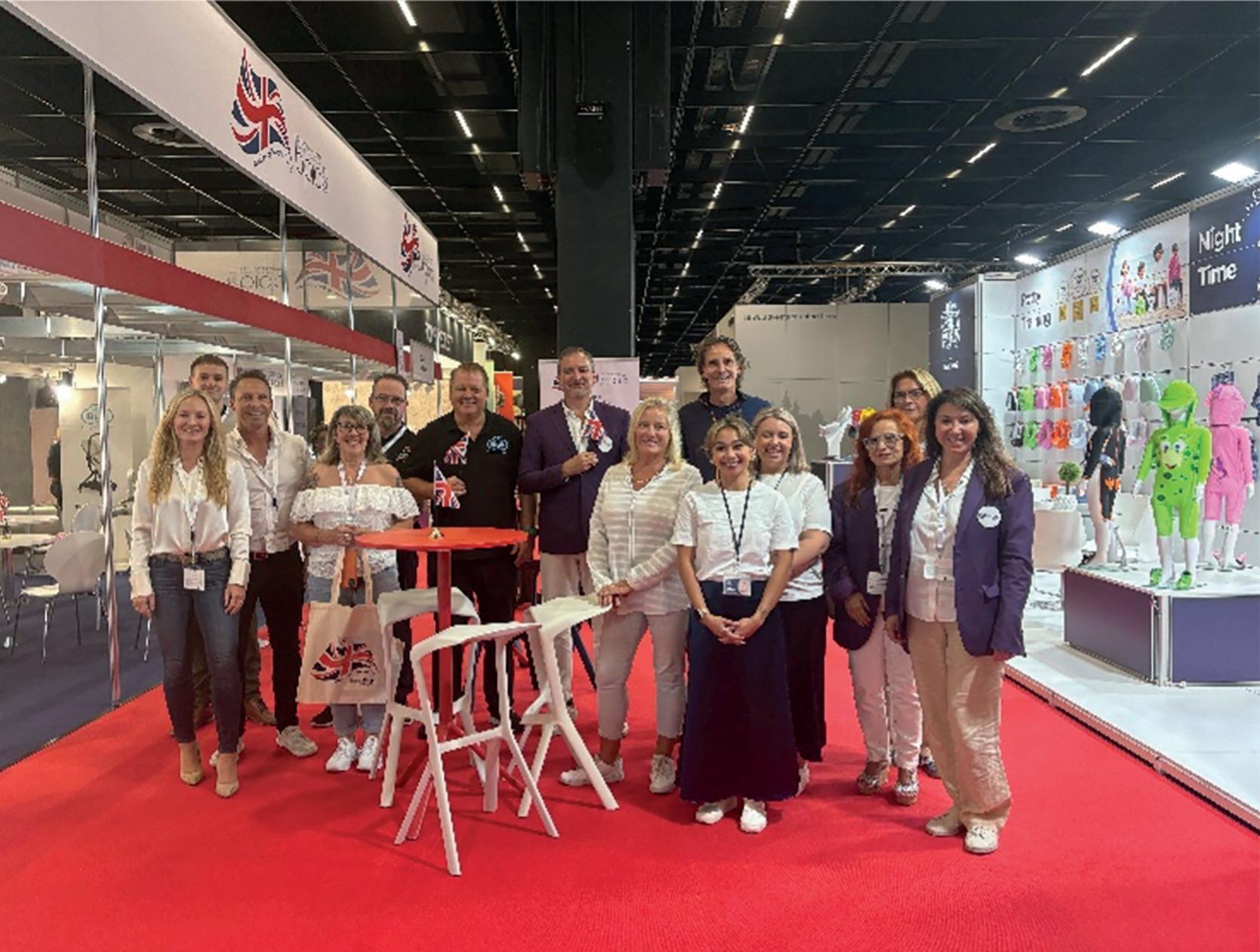
The Baby Products Industry Association (BPIA) has confirmed it will host a UK Pavilion at Kind + Jugend, taking place 15th to 17th September 2026 in Cologne, Germany.
As a world leading trade fair for baby, toddler and nursery products, Kind + Jugend brings together thousands of international buyers, retailers and distributors actively sourcing new products — from prams and car seats to nursery furniture, feeding, toys and innovation-led baby care.
For UK brands, it’s a key export opportunity — and the UK Pavilion is designed to help you maximise it.
The BPIA UK Pavilion gives British baby product brands a high-impact, professionally delivered presence — without the cost, risk and complexity of going it alone.
• By exhibiting within the Pavilion, companies benefit from:
• Stronger buyer attraction as part of a clearly branded UK destination
• Sector relevance — positioned alongside complementary baby and nursery brands
• Credibility and confidence for international buyers seeking trusted UK suppliers
• Shared infrastructure and support, reducing time, cost and logistical pressure
• Pre-show and on-site promotion to drive footfall and visibility
Stand layouts and pricing are currently being finalised — but early movers will be rewarded. Register your interest by 30 May 2026 to receive 5% off your final exhibiting rate.
Register your interest today – email: info@bpia.co.uk









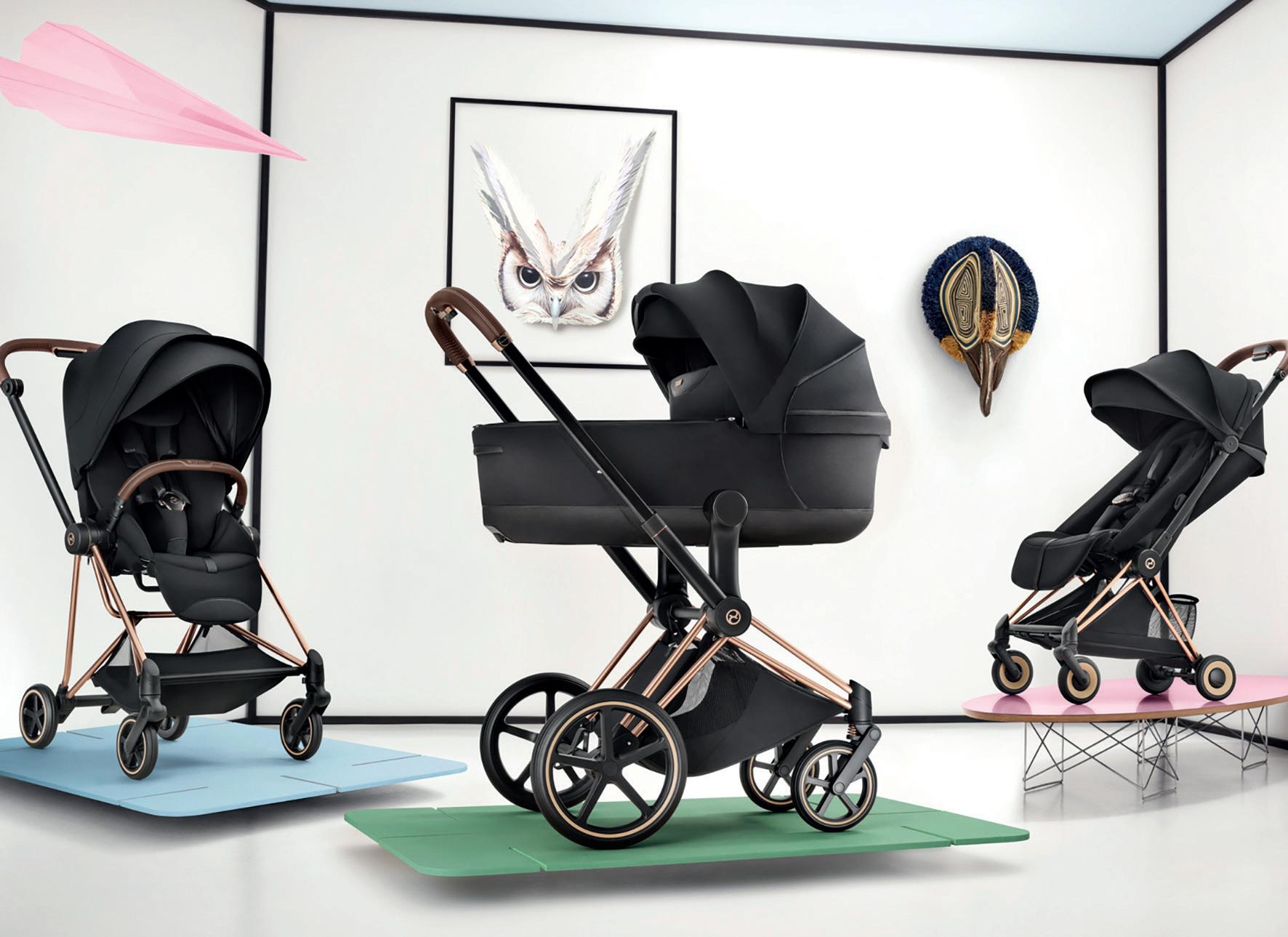
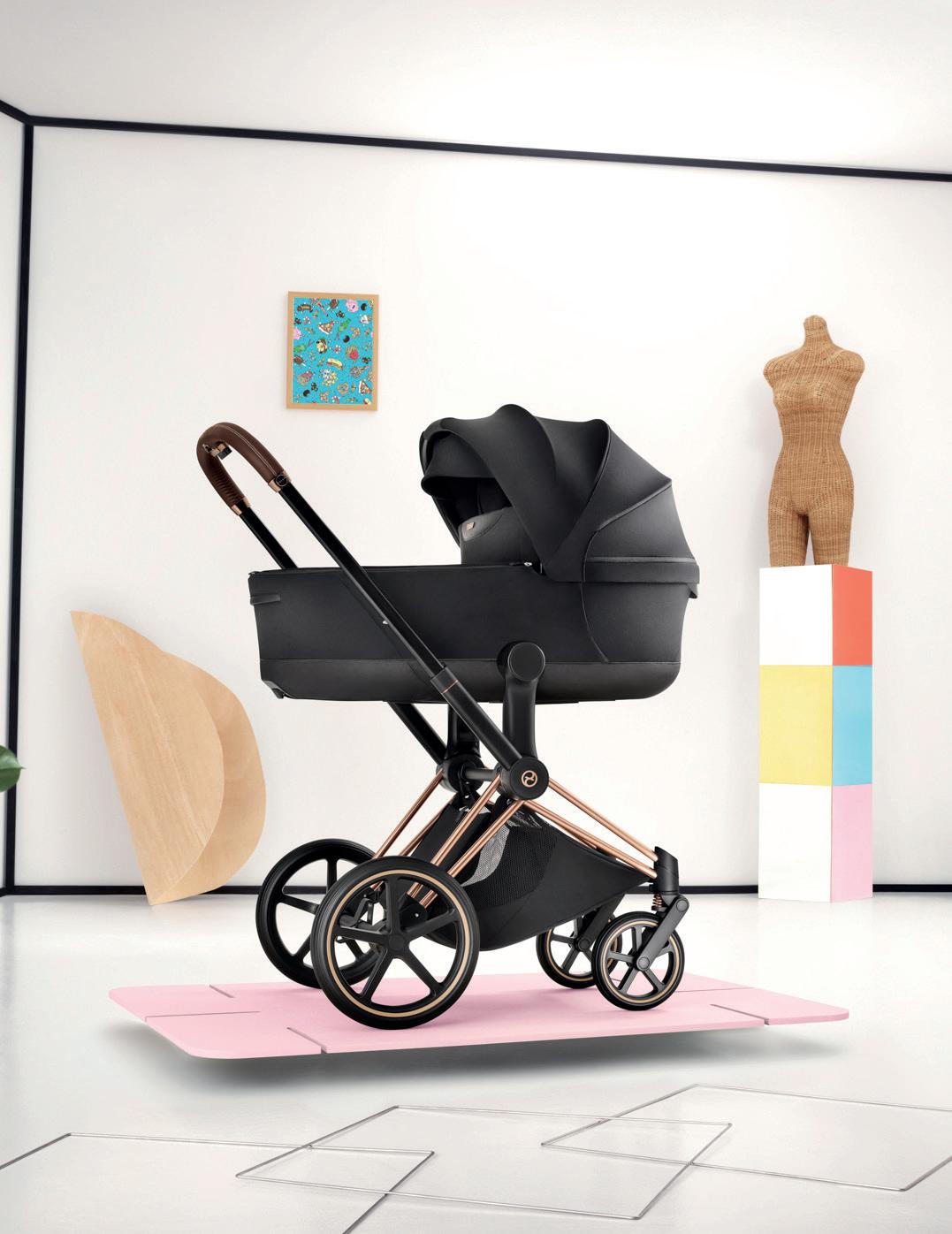
CYBEX unveils its new Platinum line, introducing re ned design across its iconic pushchairs as well as introducing the all-new innovative Fold Lux Carry Cot, delivering compact convenience, elevated comfort and seamless mobility for modern families.
The new range of Platinum Wheels from CYBEX marks a refined evolution of its most iconic designs and a confident step forward in modern mobility.
The collection sees the PRIAM, e-PRIAM, MIOS and COŸA pushchairs receive a design overhaul. The additional launch of the innovative Fold Lux Carry Cot brings together elevated design, intuitive functionality and everyday practicality.
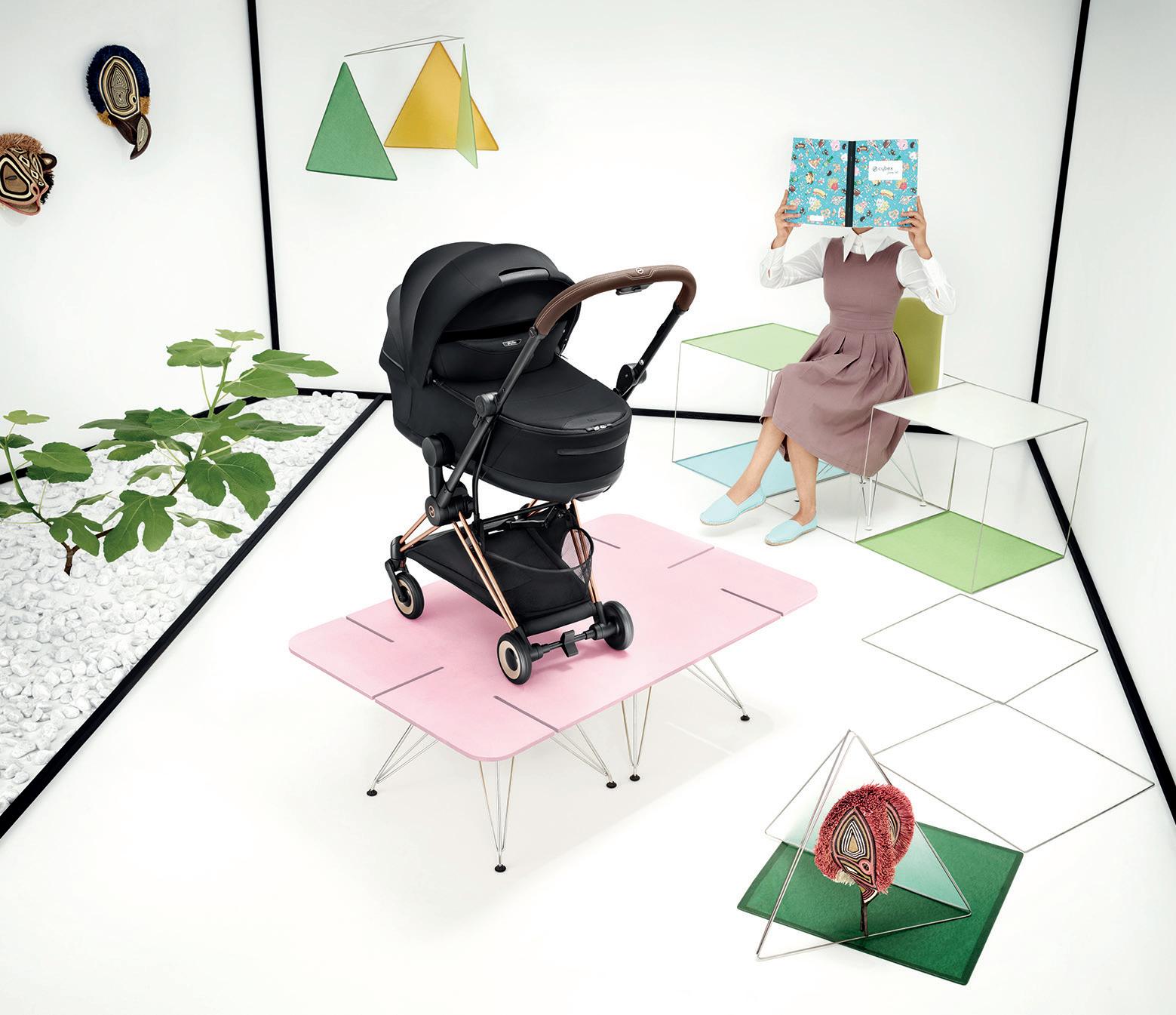
The updated Platinum line builds on CYBEX’s reputation for combining design excellence with intelligent engineering. Across the range, meticulous attention to detail is evident in the re ned silhouettes, curated nishes and elevated soft goods, creating a cohesive and premium in-store presence.
Each pushchair has been designed to support modern lifestyles. PRIAM continues to set the benchmark for luxury, combining timeless design with smooth handling and everyday functionality. Its counterpart, e-PRIAM, builds on this foundation with integrated smart
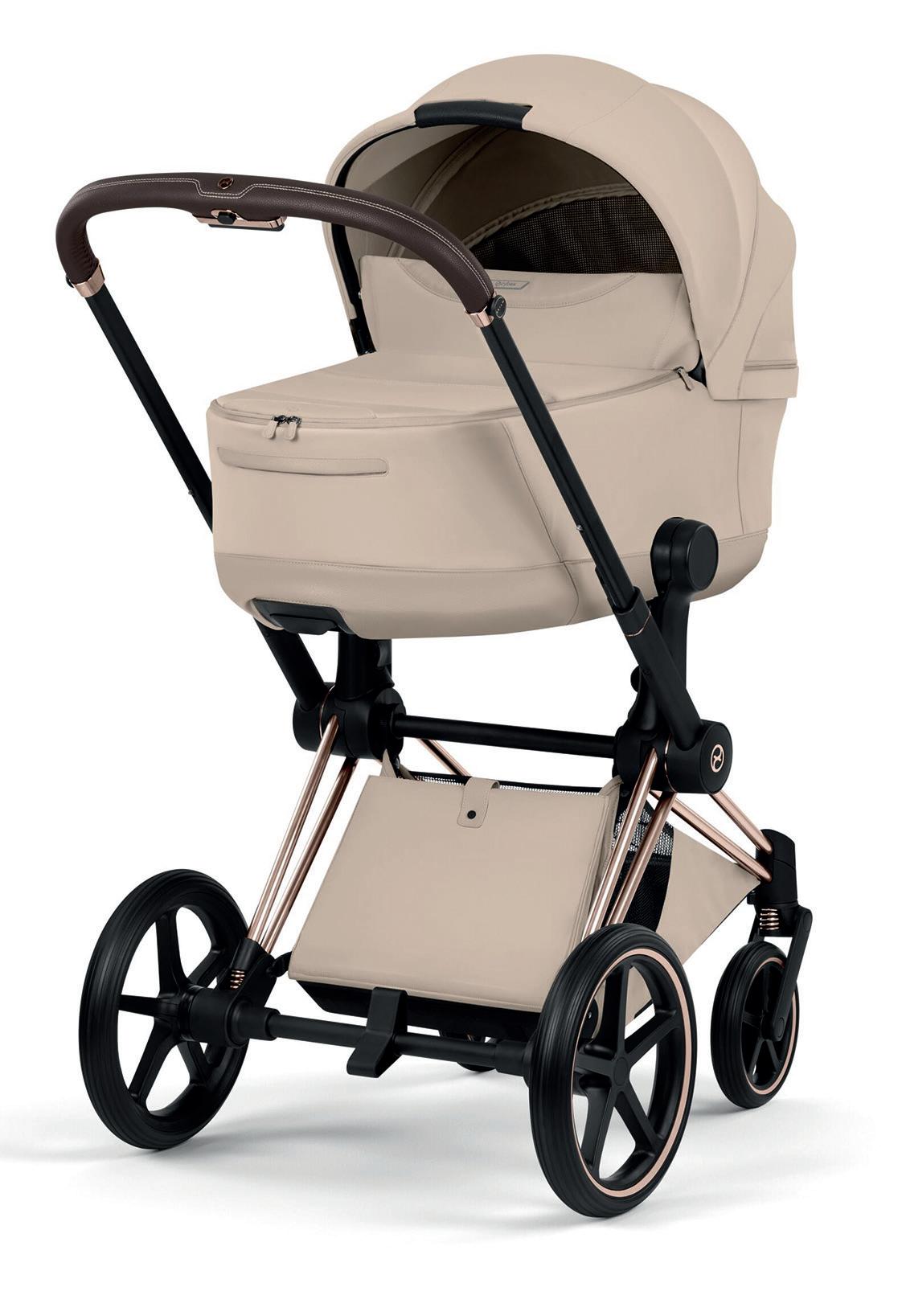
technology, o ering features such as uphill and downhill support, adaptive assistance on uneven terrain and a hands-free rocking function, delivering added value through innovation.
For city environments, MIOS o ers a compact and agile solution, designed to navigate city life with ease. Lightweight yet comfortable, it delivers a streamlined experience for parents moving through busy, space-restricted settings. Meanwhile, COŸA answers the needs of travel-focused families, o ering an ultra-compact design without compromising on comfort, making it ideal for life on the move.
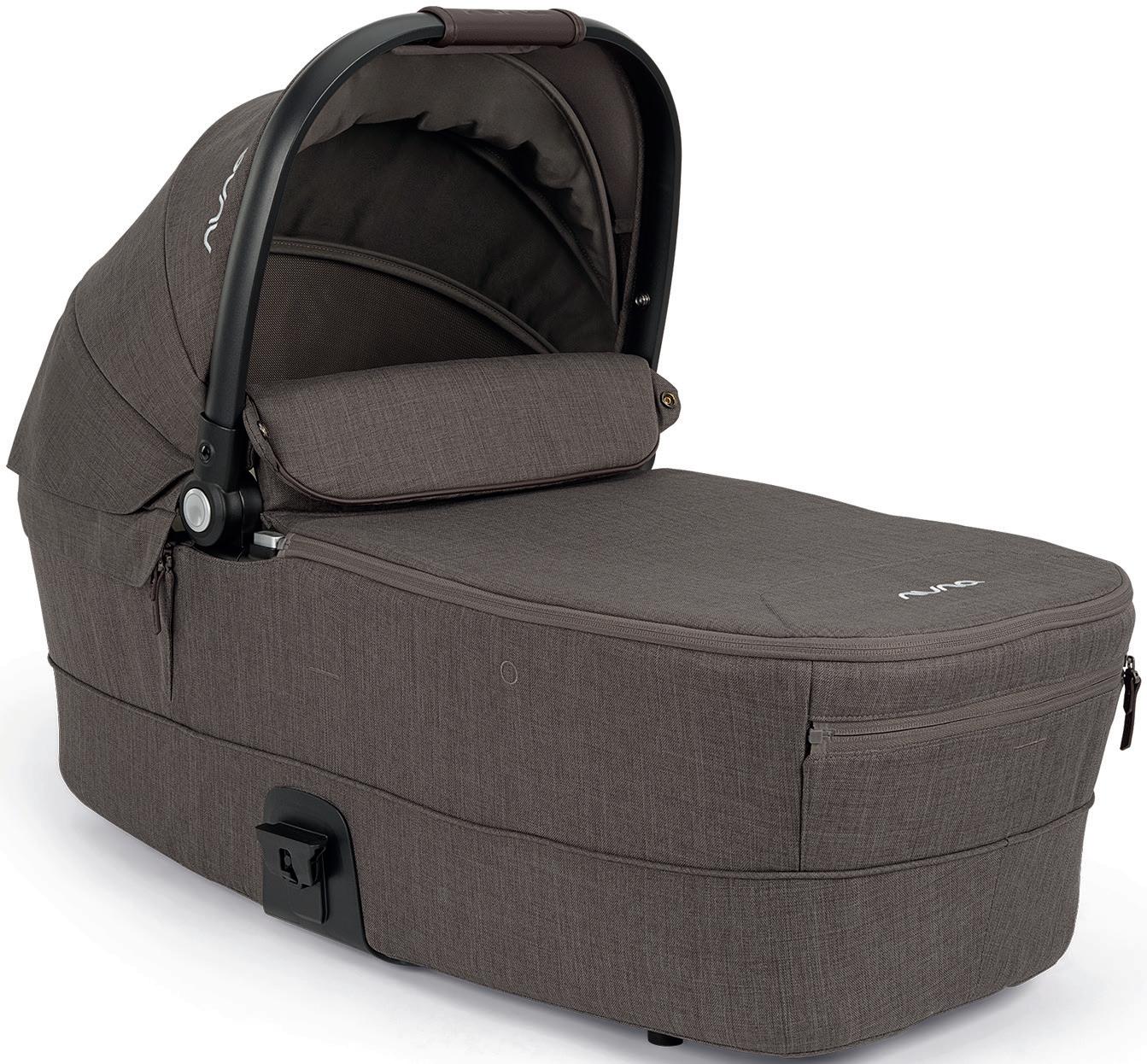
The Fold Lux Carry Cot is a standout innovation designed to meet the needs of today’s convenience-driven parents. Not only is there now a carry cot which can go across the full Platinum pushchair portfolio (even on the COŸA), but the carry cots introduce a new level of flexibility with its ability to fold to half its
Cozy Beige PRIAM
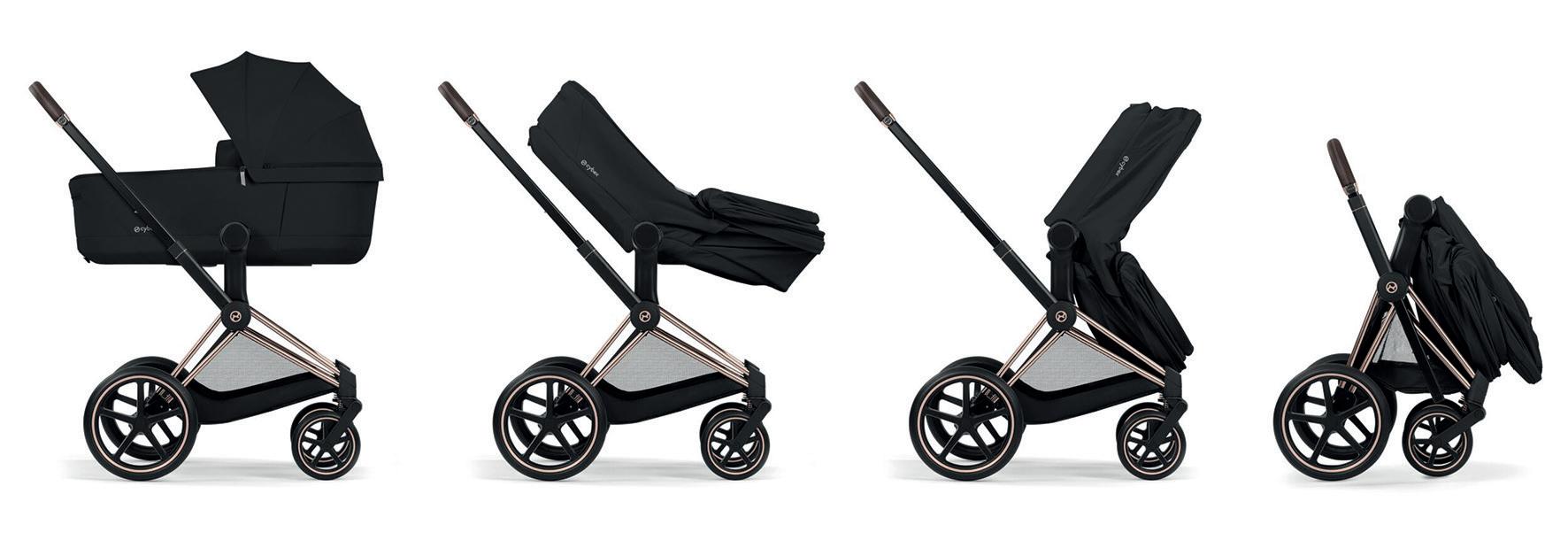

size while still attached to the frame. This one-motion functionality simplifies everyday use, making storage, transport and travel significantly easier.
When unfolded, the cot delivers the premium look and feel expected from the Platinum line, with re ned aesthetics, high-quality materials and a focus on newborn comfort. When folded, it becomes ultra-compact making it ideal for car boots and even overhead storage when detached, o ering a clear solution to a common consumer challenge.
Across the range, travel system compatibility ensures seamless transitions from carry cot to car seat to seat unit, supporting families through every stage. Signature features such as one-hand folding, all-wheel suspension, extendable UPF50+ sun canopies and the one-pull harness system reinforce CYBEX’s focus on both performance and ease of use.
For retailers, the new Platinum line presents a strong premium proposition. The combination of iconic design updates and meaningful innovation, particularly the Fold Lux Carry Cot, provides clear di erentiation on the shop oor. With consumers increasingly prioritising convenience, multifunctionality and design-led products, the range aligns closely with current purchasing drivers.
Rooted in a design philosophy inspired by Ray and Charles Eames, the collection re ects a belief that every detail contributes to the overall experience. This approach is evident throughout, with form and function working in harmony to create products that are both practical and aspirational.
As the nursery market continues to evolve, CYBEX’s new Platinum line positions itself at the forefront of the premium segment, o ering retailers a compelling story of innovation, design and everyday usability, and delivering parents a solution that ts e ortlessly into modern life.
For more information on the all new CYBEX Platinum range, please reach out to your sales rep or contact
Strollers continue to be a standout category within the nursery sector, driven by a combination of evolving consumer lifestyles and a growing appetite for convenience.
As families travel more and seek exible, on-the-go solutions, demand for lightweight, compact and cabin-friendly designs is on the rise. At the same time, today’s parents are more informed than ever, balancing practicality with style and often arriving in-store with clear expectations.
From entry-level value buys to premium models packed with thoughtful extras, the breadth of choice has never been greater. Innovation is also moving at pace, with brands focusing not just on compact folds, but on comfort, sun protection and user-friendly features that enhance everyday use.
For independent nursery retailers, strollers present a strong opportunity. With broad appeal, healthy margins and plenty of scope for add-on sales, they remain a key category for driving both footfall and customer engagement. We highlight a number of products across the following pages which are available to order now.
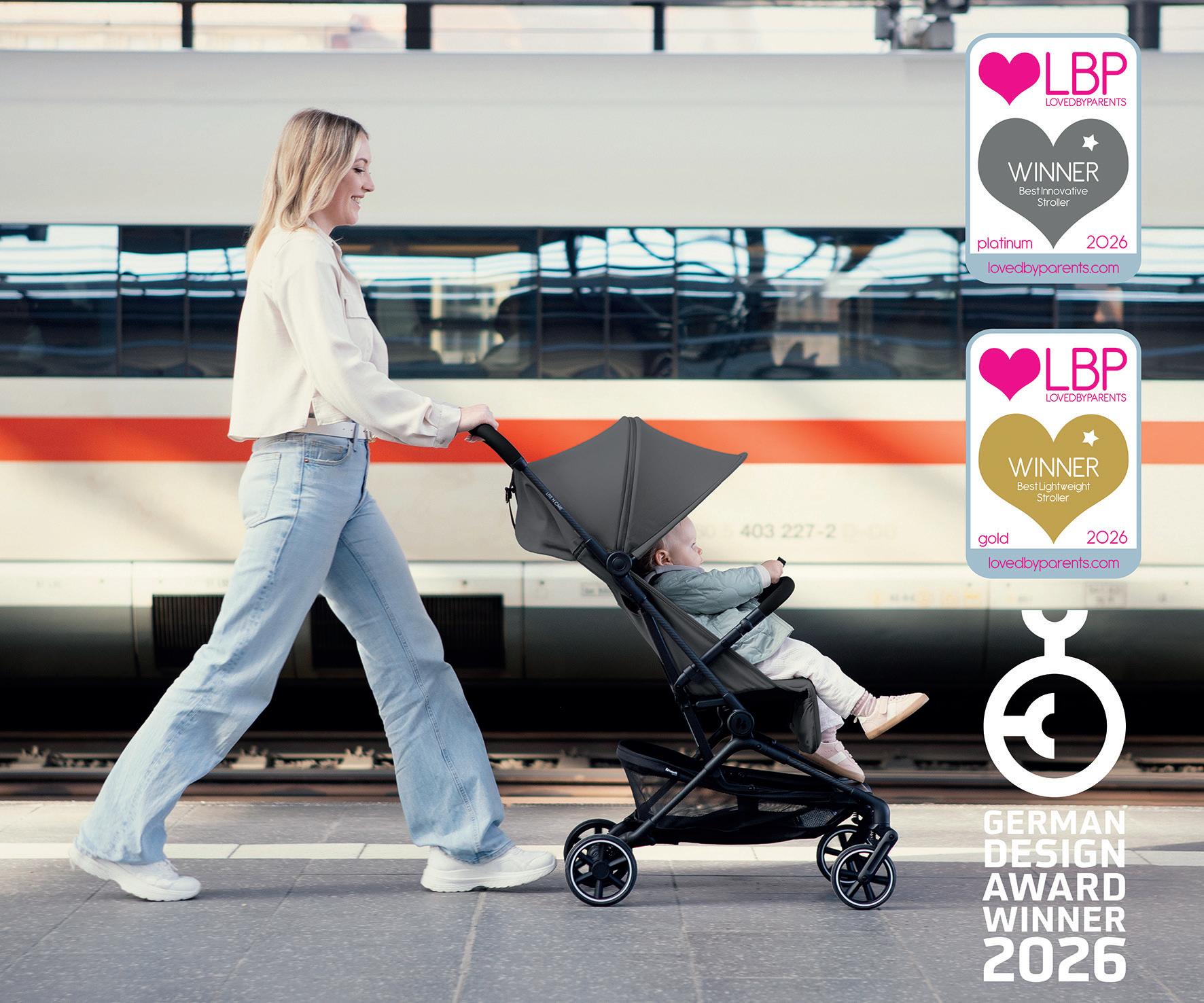
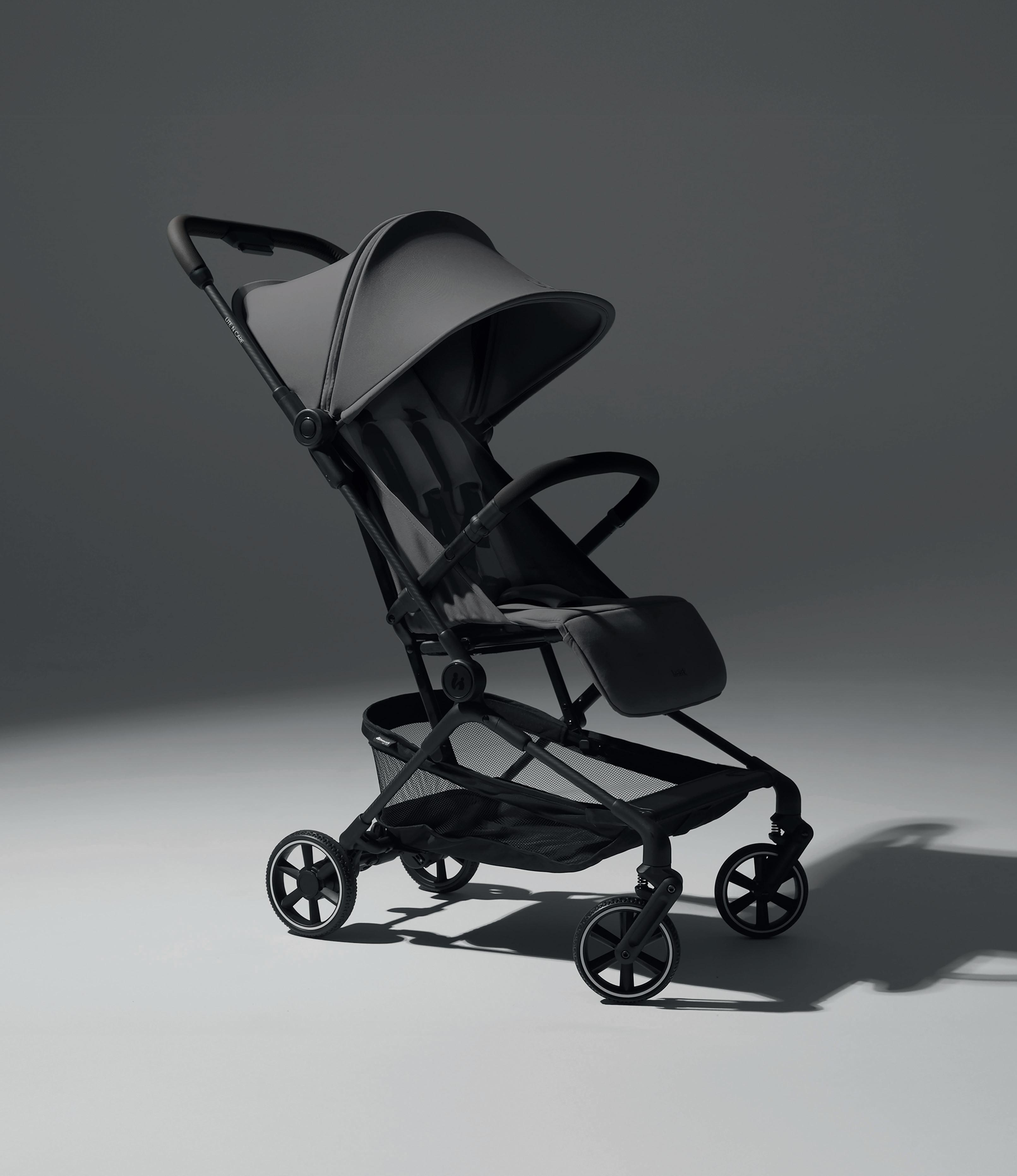
Now available, the hauck Lite N Care is made for modern life between city streets and travel, combining awardwinning design with a surprisingly light feel.
Crafted with an advanced carbon frame and weighing just 5.5 kg, it feels almost weightless when lifting, carrying or moving through the day. Elegant leather-look accents and a clean, contemporary silhouette underline its premium character.
Designed for families on the go, it features a comfortable, adjustable seat suitable from birth up to 22 kg, adapting naturally as children grow. The easy fold, integrated shoulder strap and IATA-compatible size make every journey feel e ortless.
info@hauckuk.com | www.hauck.de/en
‘Stroller Season’ is o cially underway, and Independent Nursery Retailer Jolly Tots are seeing a strong uplift in sales as families prepare for upcoming holidays. Nursery Today caught up with Managing Director Lorretta Owen to nd out more.
Strollers are such a big-ticket item for new parents. How are you seeing demand in-store, and what’s driving their popularity?
This time of year consistently boosts midweek trading and balances our busy weekends. Strollers remain a key category and are often a straightforward purchase, without the need for extended input or shared budgeting. Even with a full travel system, there is always a place for a lightweight, practical stroller in everyday life.
Demand for IATA-compatible models is rising as travel plans take shape. Customers are mindful of spending, but there are strong options across all price points. At entry level, the Red Kite Xplore o ers impressive speci cation for under £100. At the premium end, the iCandy Pip stands out, with accessories included as standard, plus a high-quality nish that reinforces its position. It’s been a promising start to the season, and we expect that to continue.
When customers are browsing, how do they balance style and practicality? What features matter most?
Many customers arrive with a clear checklist. As a second wheeled purchase, they know what they want, but balancing budget with cabin-friendly requirements can be challenging.
We are often asked for combinations that don’t yet exist, such as a double stroller that is cabin approved. For holiday use, priorities include good ventilation, extendable hoods and strong sun protection.
There is still room for innovation. Integrated features such as a concealed sunshade or even a small built-in thermometer could o er reassurance for parents in warmer climates. These thoughtful additions would make a real di erence. Would you say the stroller category is growing, and what trends are you seeing?
There is a strong focus on ever more compact folds to meet airline requirements.
While important, there is an opportunity to balance this with practical, everyday features.
Every brand now o ers a stroller, and ranges continue to expand. This makes it harder to present a clear, concise o er in-store, particularly with so many accessories. Demand for “cabin-approved” models is growing, although understanding of what that means is often limited and driven by perception as much as need.
Social media is playing a bigger role in purchasing decisions. Are you seeing that in-store?
Absolutely. Customers arrive more informed but also more in uenced, often with speci c preferences shaped online.
Colour trends are a clear example. We often joke, “sage or beige?”, which re ects how dominant these shades have become. Style is playing a bigger role, sometimes ahead of practicality. Beige, for example, remains hugely popular despite not being the most practical choice.
That said, customers still want balance. Products like the iCandy Pip, with reversible liners, allow for both style and practicality. We also see contradictions. Black fabrics are sometimes questioned due to heat, yet when unavailable, customers actively seek them out and the absence of a black option can quickly become a source of frustration. We saw this rst-hand with demand for a black version of the Egg Sky stroller. Since its introduction, it has performed exceptionally well across both stores, reinforcing the importance of o ering classic, versatile options alongside trend-led choices. Demand for classic options remains strong. Ultimately, expectations continue to grow. Customers want more choice, more features and more exibility. For retailers, the challenge is balancing trend-led demand with practical guidance, ensuring products genuinely suit family life.






















































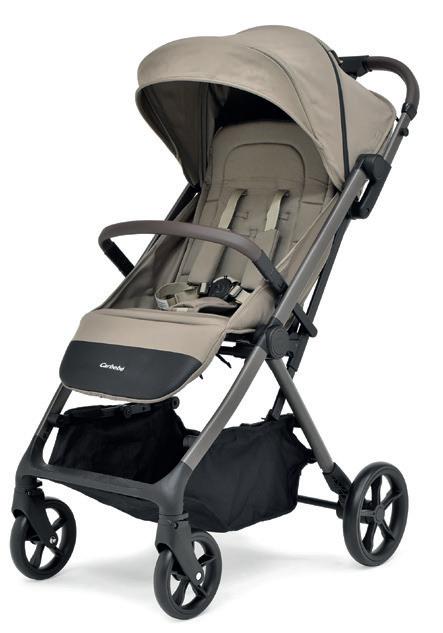
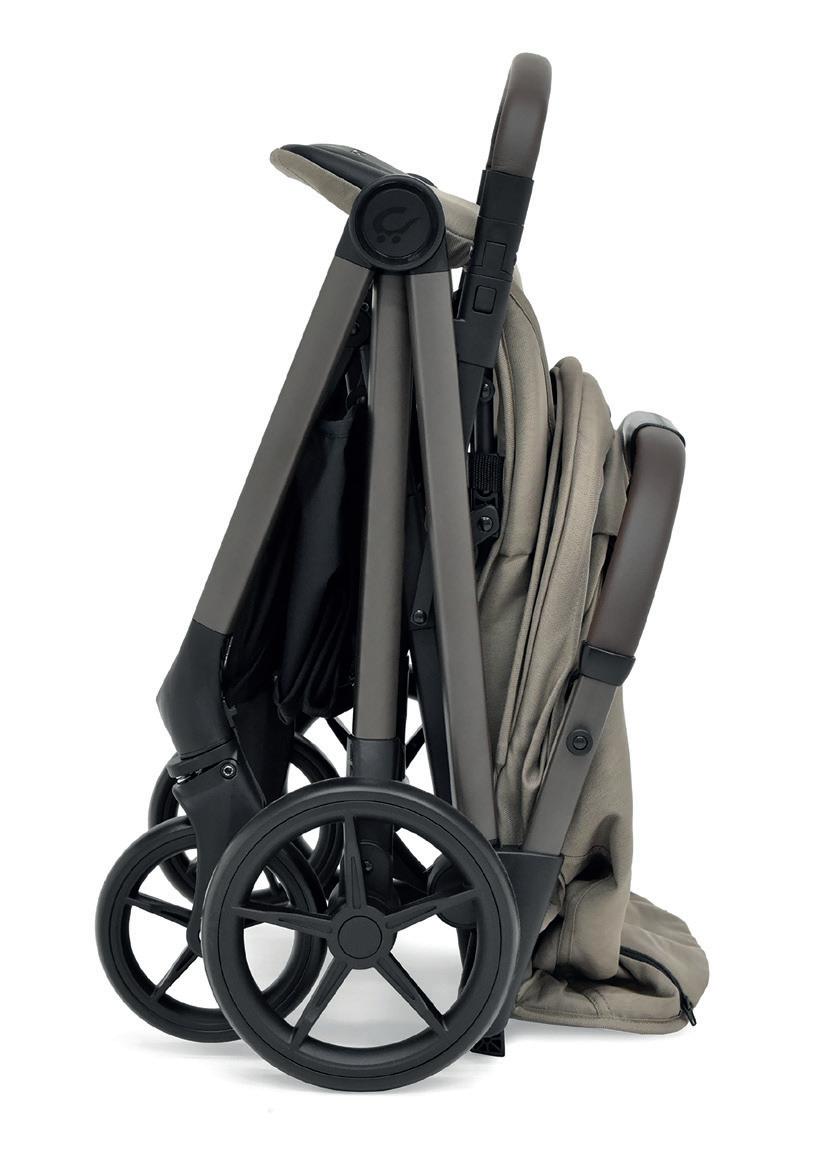
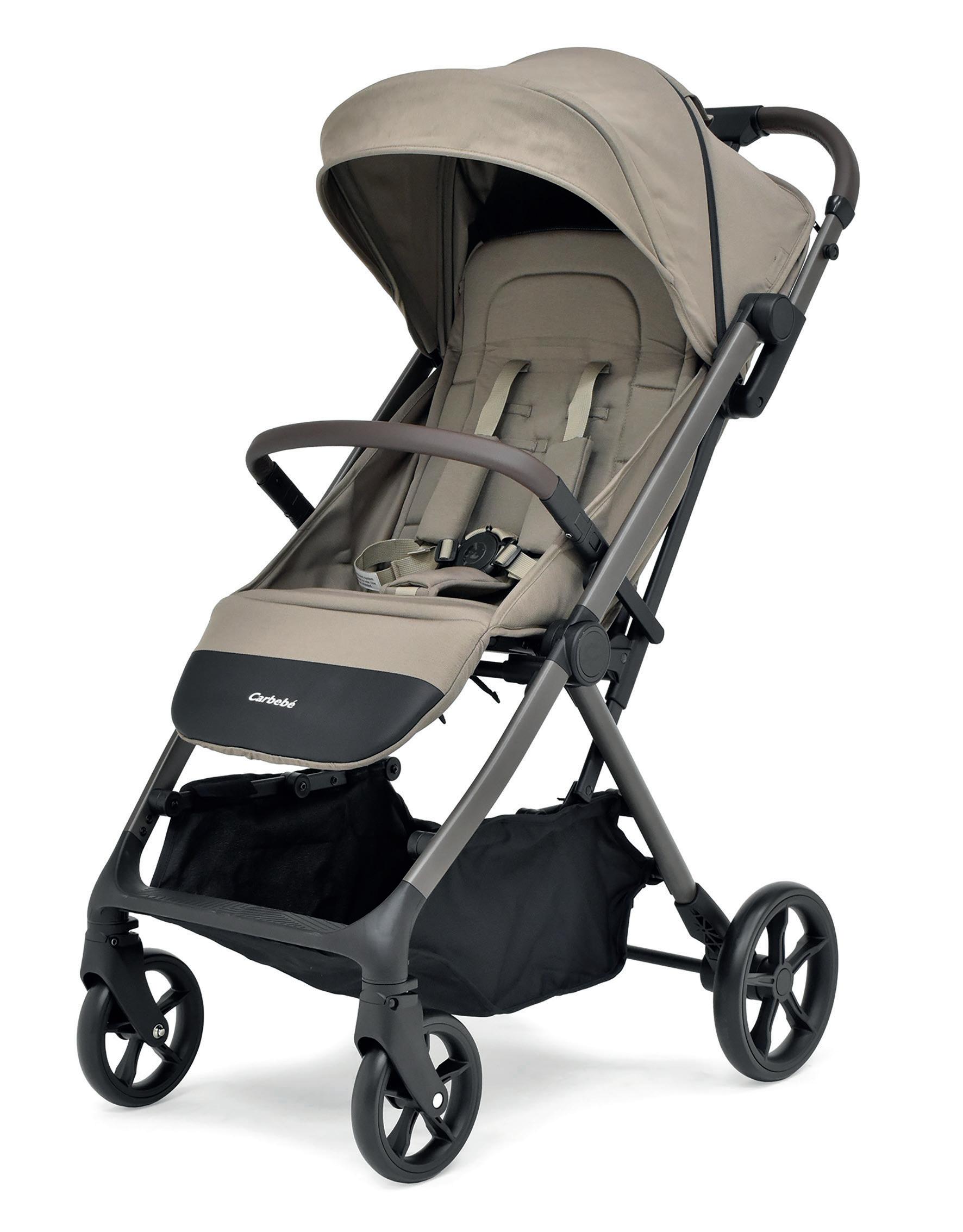
The Carbebé Una by Bébécar is a stylish, lightweight stroller designed for modern families seeking practicality without compromising on quality.
Suitable from birth up to 22kg, the Una o ers a compact, easyfold design that’s ideal for everyday use, travel and city living. Thoughtfully engineered, it features a breathable full mesh panel for enhanced air ow during warmer months, helping to keep little ones cool and comfortable on the go.
The stroller comes complete with essential accessories, including a raincover and cup holder, adding convenience for parents from day one. Available in versatile Beige and Grey colourways, the Carbebé Una combines contemporary design with functional details, making it a strong addition to the Bébécar 2026 range.
Lightweight, practical and e ortlessly stylish, it’s built to support busy lifestyles while ensuring comfort and ease for both parent and child.
For more information on stocking the Una please contact Phil Bosher on the below. phil.bosher@babycentral.co.uk
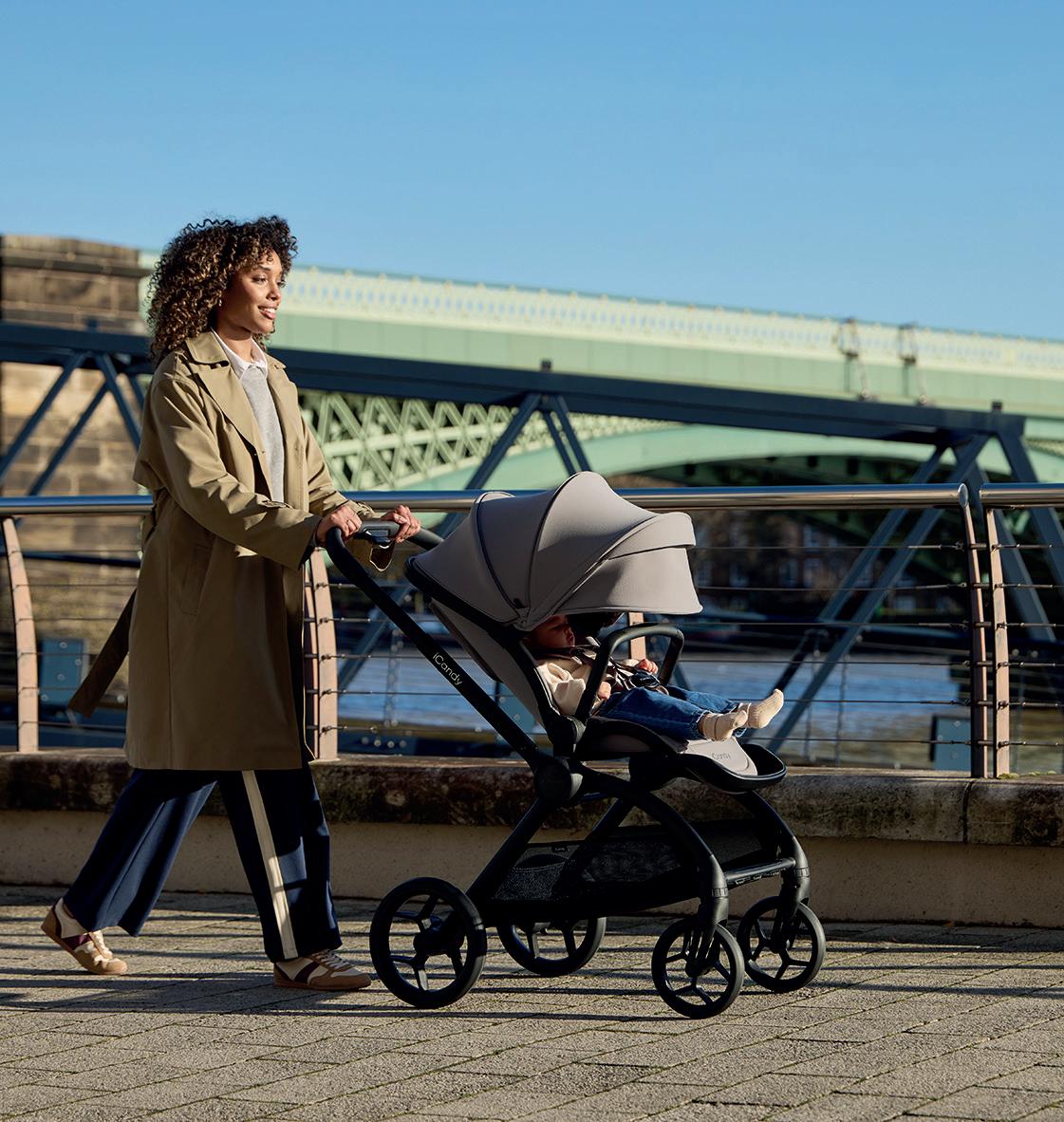
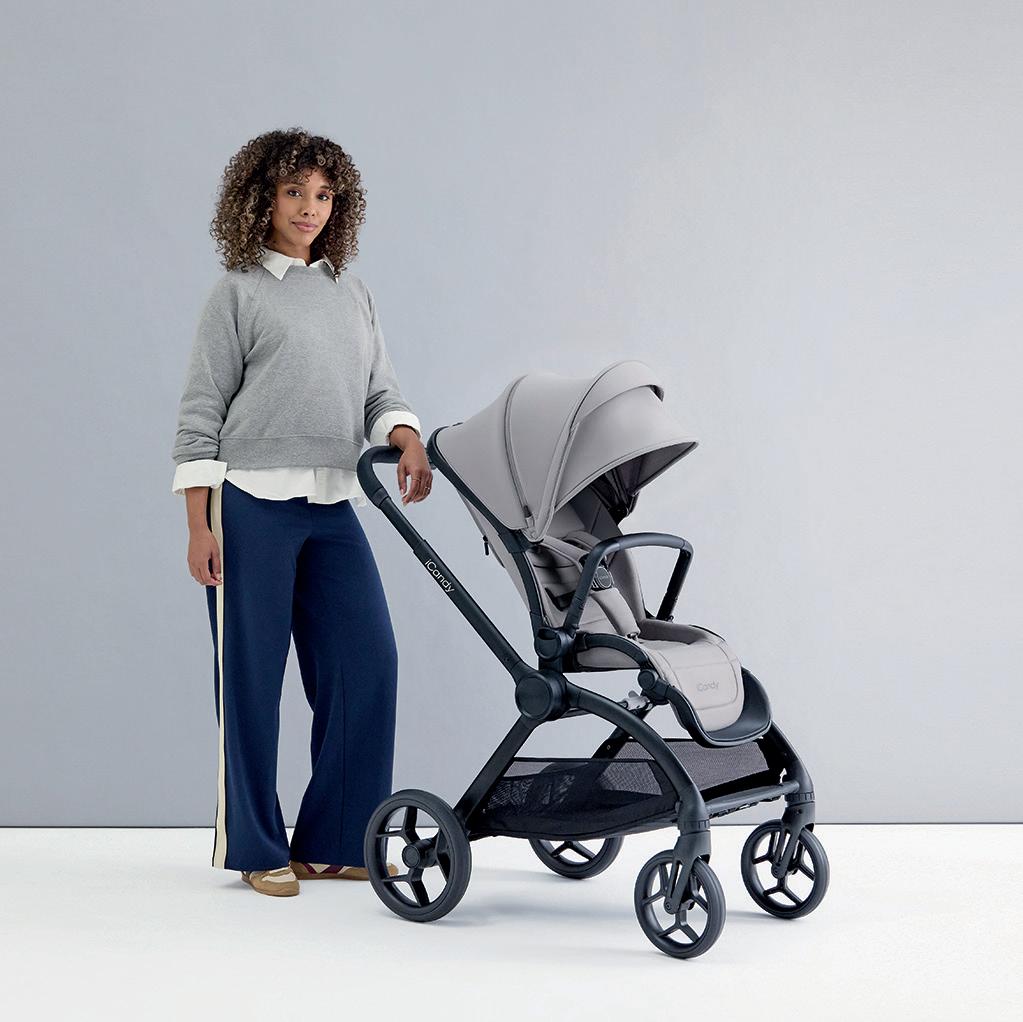
iCandy recently introduced the Core 2 stroller, a streamlined pushchair that balances everyday practicality with premium appeal.
Priced from £699, the Core 2 o ers a compact, one-piece fold with the seat attached in either direction, ideal for modern, space-conscious living.
A lie- at seat suitable from birth removes the need for extras, while its lightweight frame and responsive handling make city and travel navigation e ortless. Thoughtful details - including an extendable canopy, ample storage and re ned nishesenhance daily use.
Available in three beautiful colours, the Core 2 delivers comfort, style and functionality in a single, accessible stroller designed for life on the move.
www.icandyworld.com

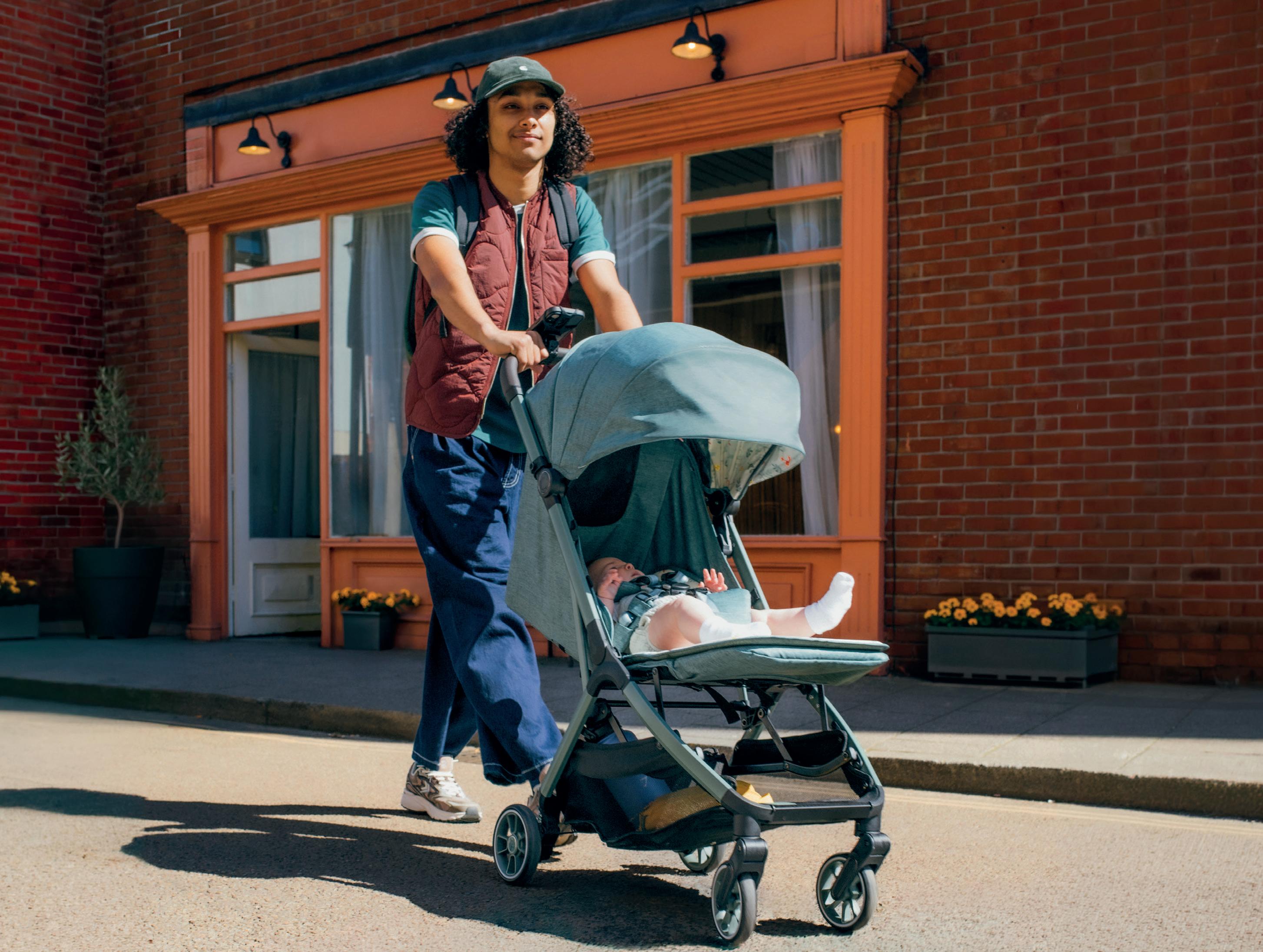


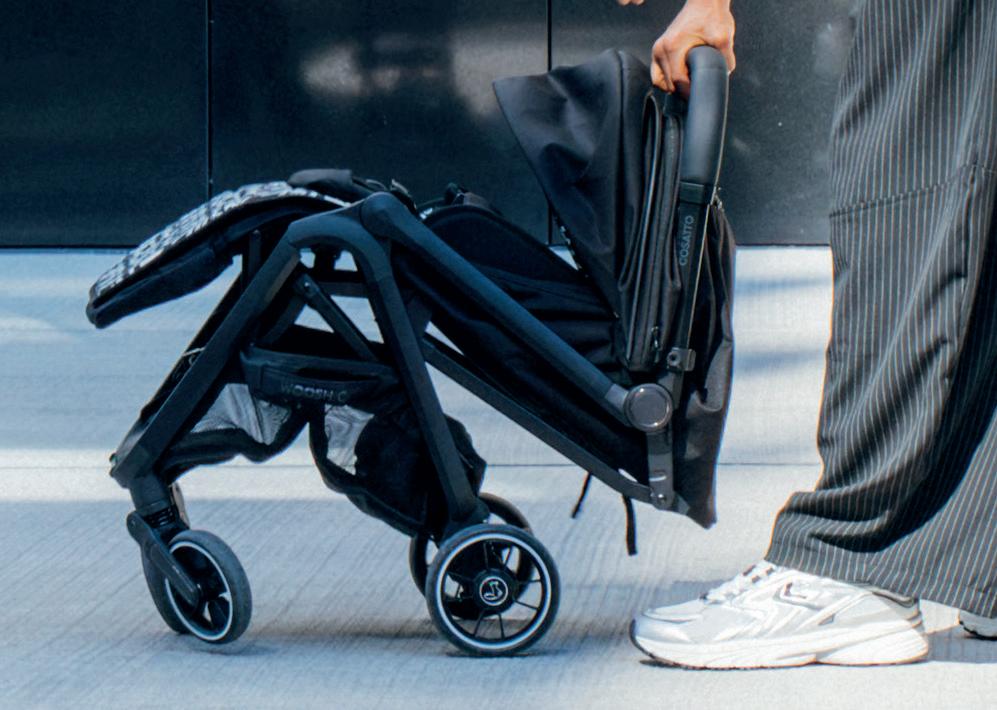

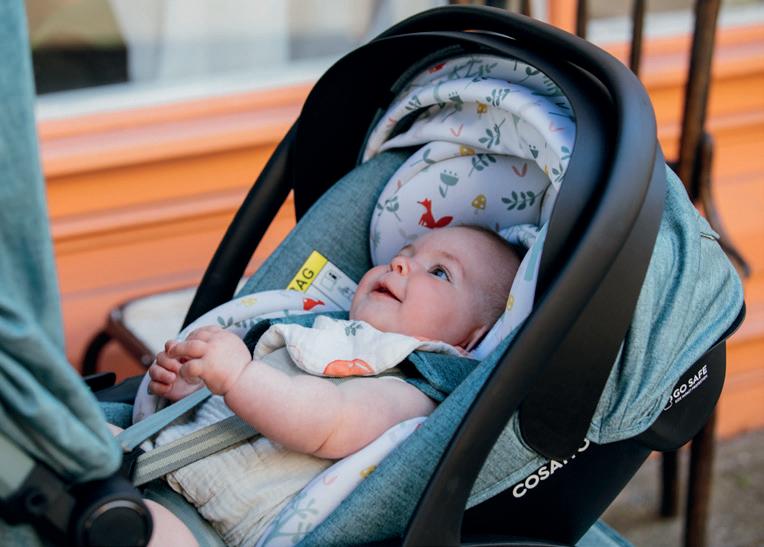


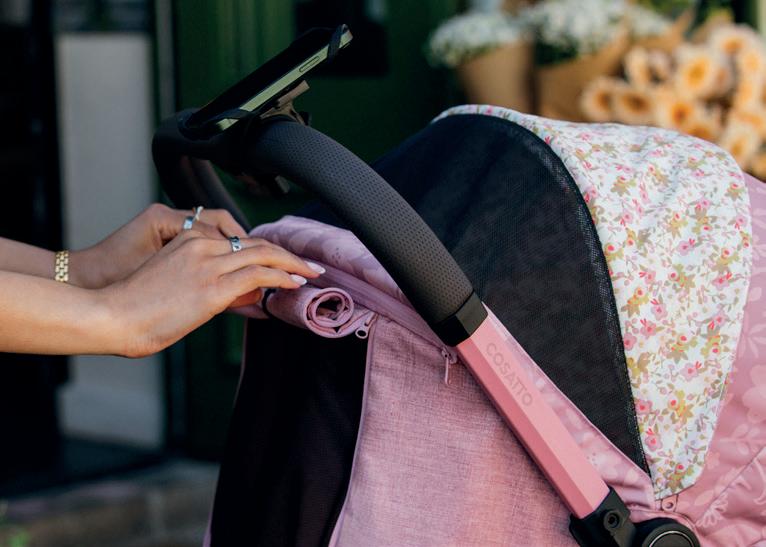
Exquisitely crafted for the Cosatto Ultimate collection, engineered for modern city life. Woosh City is the from-birth modular mover for busy parents. IATA compatible and infinitely versatile, it’s refined for the city and made to move beyond it. From Bolton to Bermondsey, wherever they woosh, make the city theirs. Compact ‘click and
Woosh City. The luxur y car-seat-capable capsule stroller.



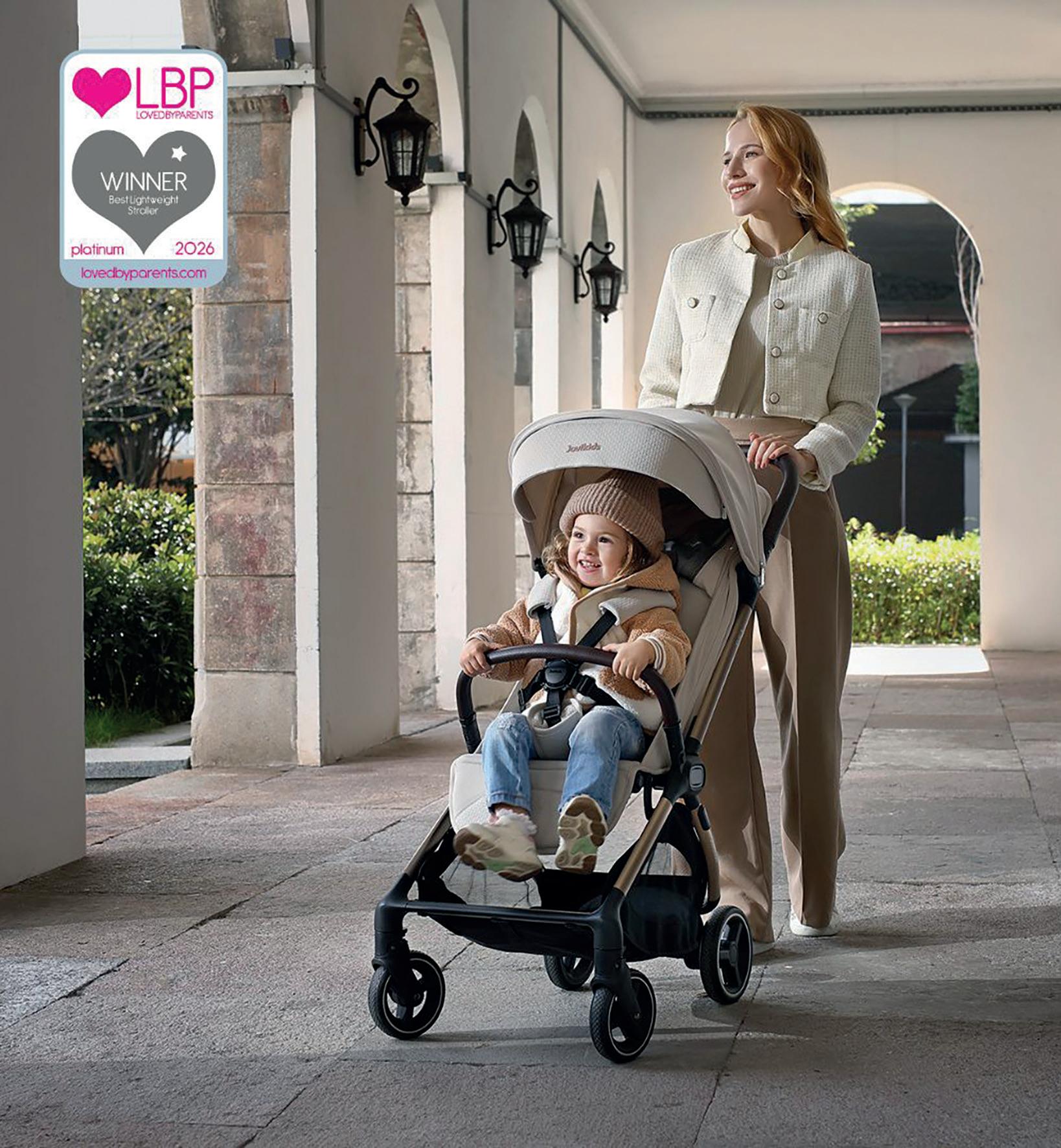
JoviKids’ award-winning Ayla Pushchair is setting the pace for modern family travel, combining cabinapproved convenience, sleek design and everyday comfort in one compact stroller.
As demand grows for practical travel solutions, JoviKids continues to lead with the Ayla Pushchair - a compact stroller created for families who are always on the move. Built to align with IATA cabin size recommendations, Ayla folds down in seconds using a one-hand automatic fold, making airports, trains and daily outings easier to navigate.
Suitable from birth up to approximately 22kg, Ayla delivers comfort without compromise. Features include adjustable recline positions, puncture-proof wheels, breathable ventilation panels and a protective UPF50+ canopy for all-weather adventures. Included adapters also allow quick connection with infant car seats, including the JoviKids Aria, transforming Ayla into a complete travel system.
Finished with thoughtful accessories including a footmu , cup holder and dedicated travel backpack, Ayla is ready for holidays, city life and everything in between — o ering style, simplicity and performance wherever families go.
Contact the below for enquiries.
Sales@norababyuk.com
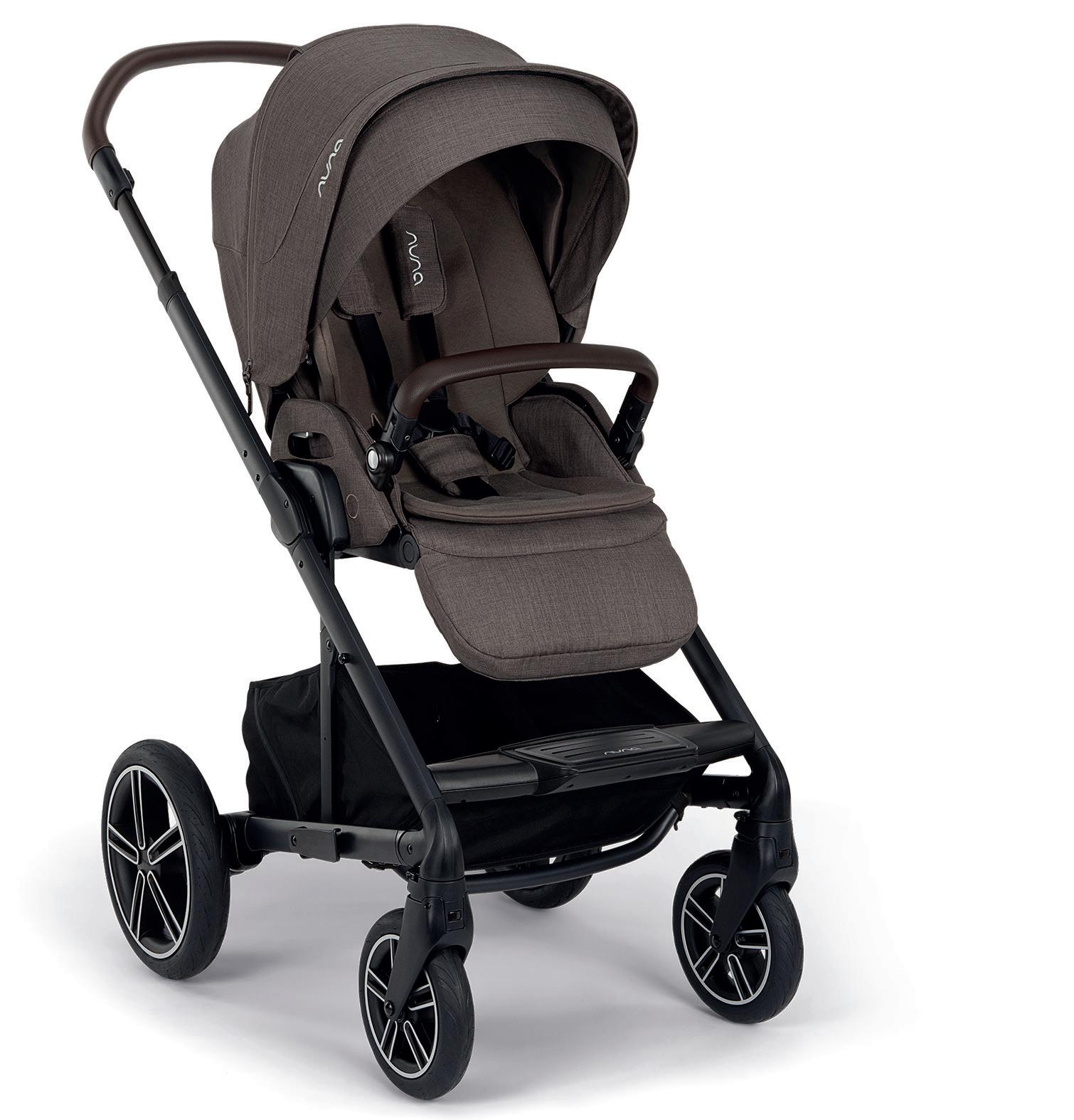

The MIXX next pushchair is the unsung hero of everyday parenting
This stroller from Nuna is a reliable companion that glides e ortlessly with one-handed ease, is travel system ready and o ers a true at recline for those spontaneous naps. With its four-wheel spring suspension, little ones can ride in comfort and style.
With the MIXX next carry cot, days become more exible and journeys more enjoyable. It connects seamlessly to the MIXX next pushchair frame with a simple click, making it easy to outsmart naptime and keep the day moving without interruption.
Available in: Pistachio, Caviar, Chateau, Chestnut and Cosmopolitan. UK.Sales@nunababy.com www.nunababy.eu/uk/

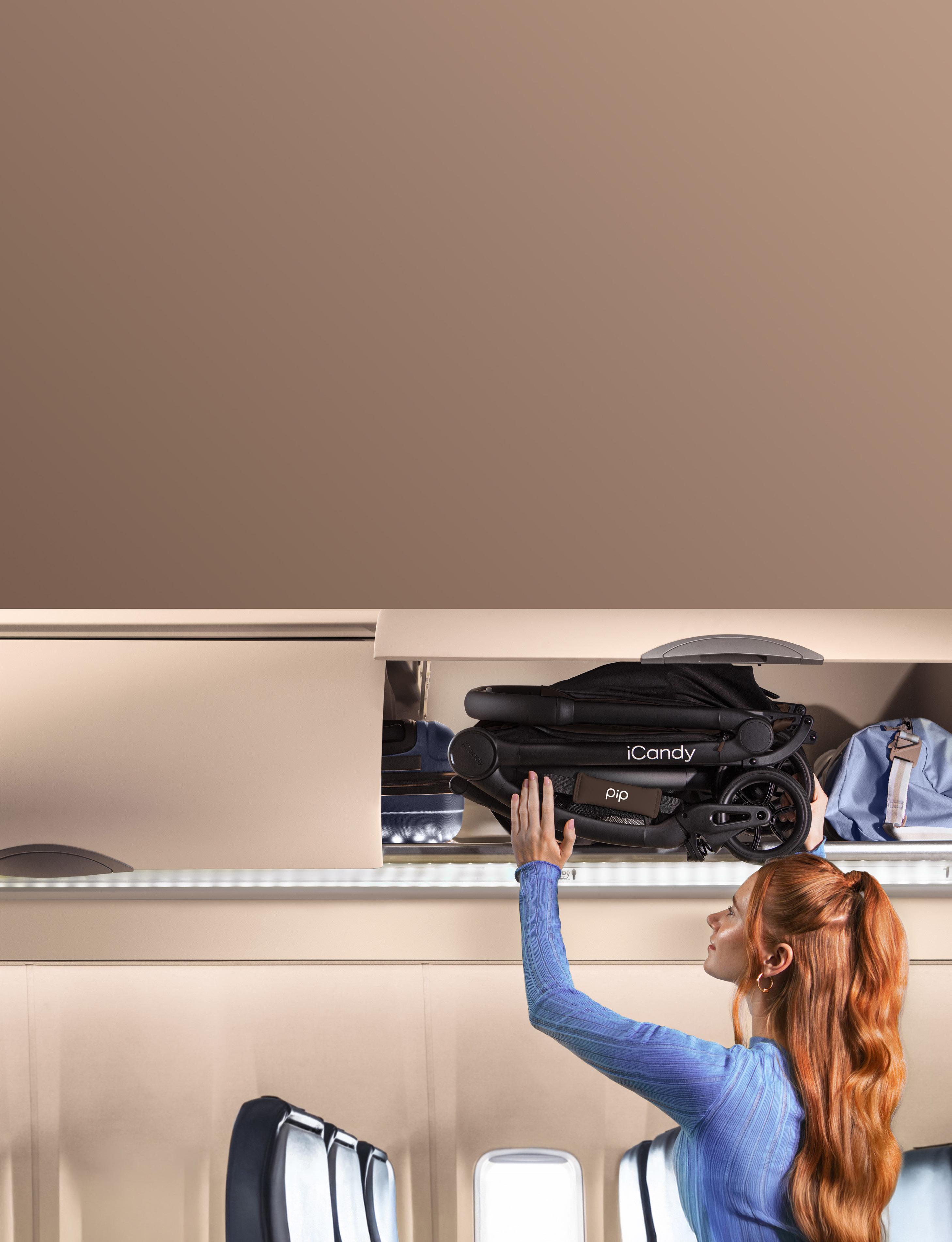



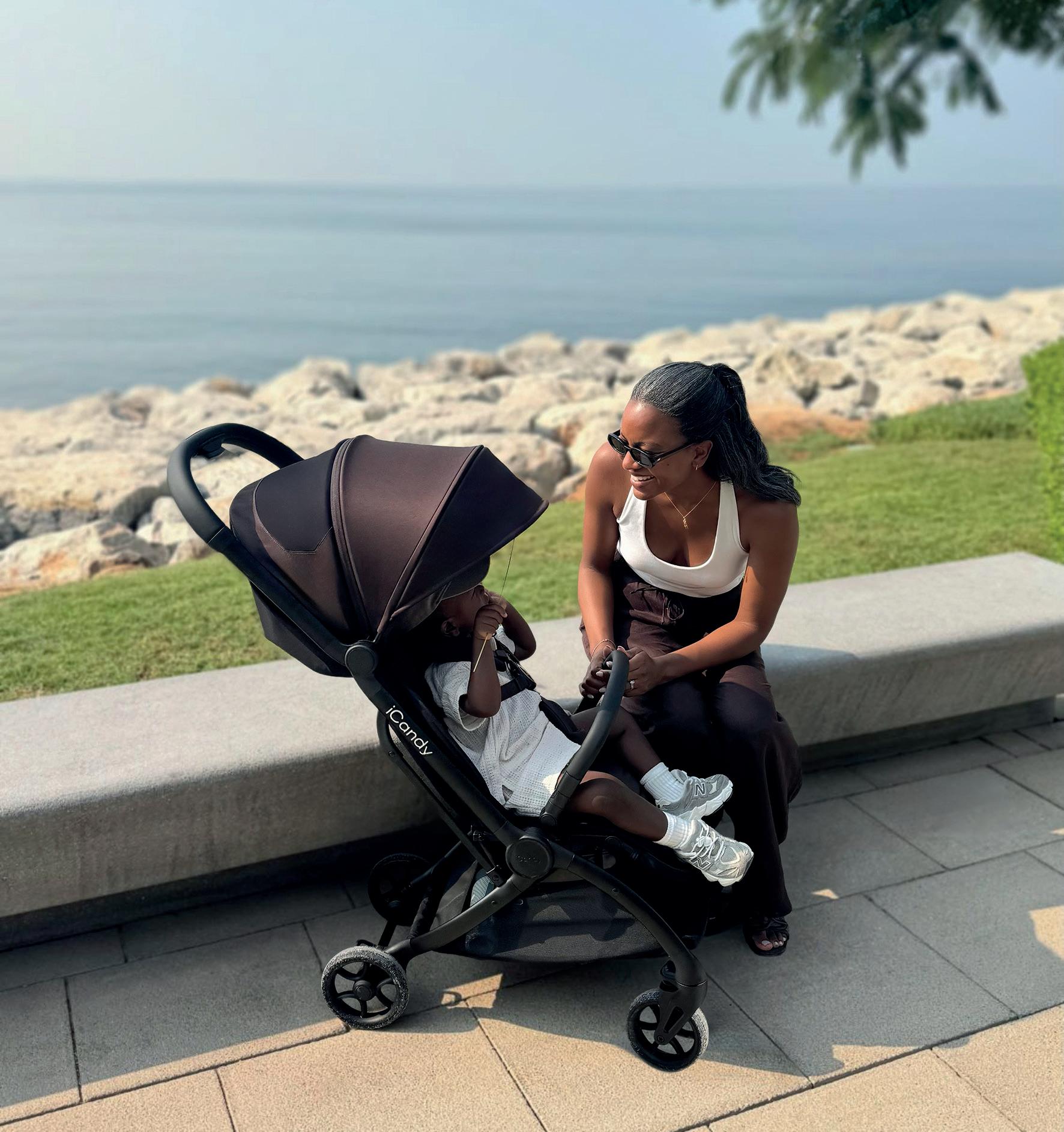

The iCandy Pip is an ultra-compact, travel-ready pushchair designed for modern families.
Weighing just 7kg and IATA cabin-approved (check with individual airline), the iCandy Pip is perfect for both city life and travel.
With its ultra-lightweight design, Pip features an incredibly spacious seat suitable from birth up to 25kg, with a lie- at recline, a UPF 50+ extendable canopy and car seat compatibility. It’s available in six stylish colours.
With e ortless one-handed folding and a smooth ride, Pip delivers everyday convenience without compromising on comfort or style.
www.icandyworld.com

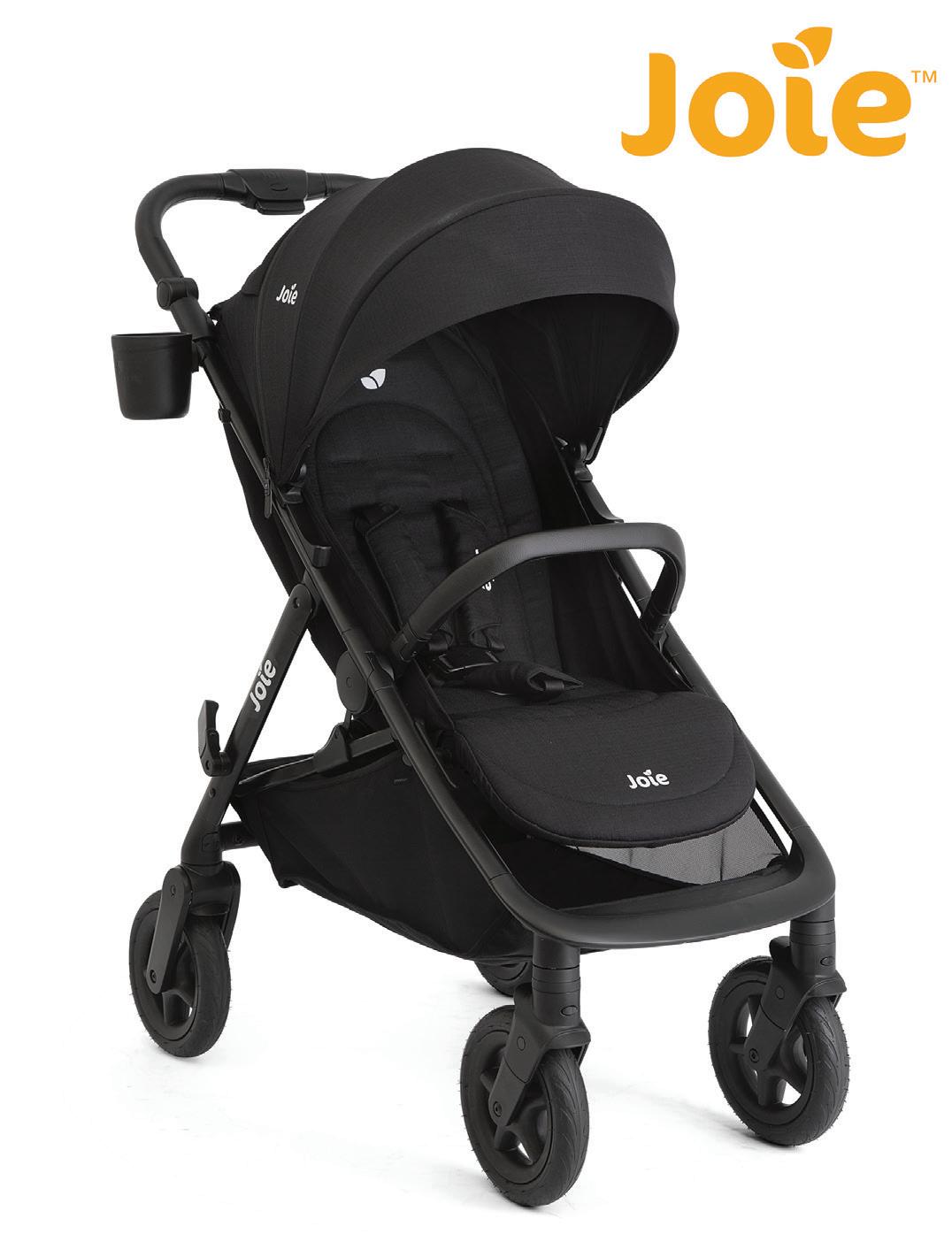
Meet mydrift, the new kid on the block, from Joie
Designed for forward thinking parents who want to skip the traditional pram, or experienced parents that are looking for a more compact travel stroller that glides in any direction thanks to the innovative 360-degree, swivel wheels.
When your growing family is constantly on the go, you need a simple, stress-free stroller that’s easy to push and pack up. Mydrift is ideal for urban or travel minded parents who are looking for a compact stroller that’s easy to manoeuvre through the streets or airports of your next travel destination.
Versatile and durable this is a stroller that will last from birth through to toddlerhood, that will go wherever you want it to and comes with all the must have features you’ve heard about.
uksales@joiebaby.com www.joiebaby.com
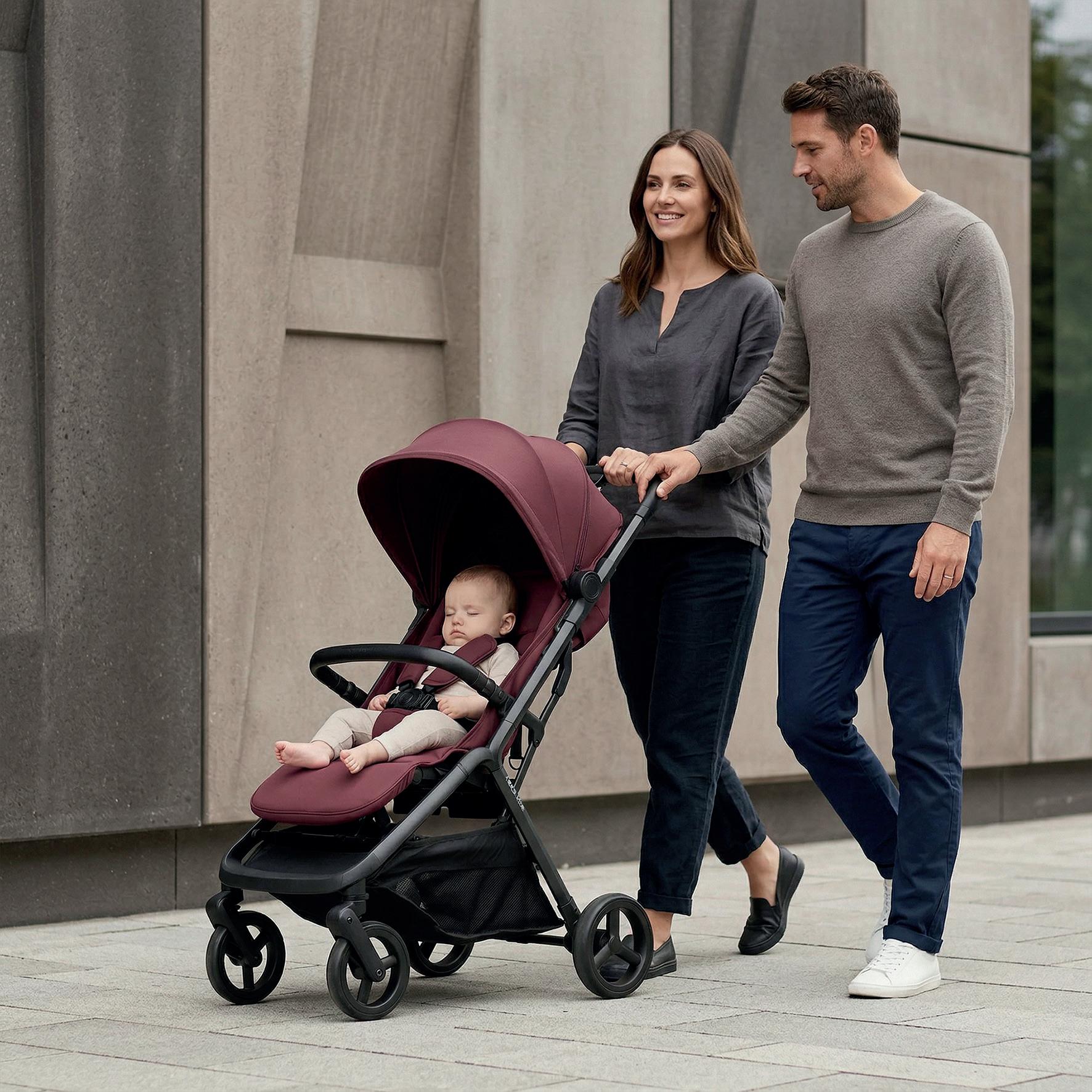
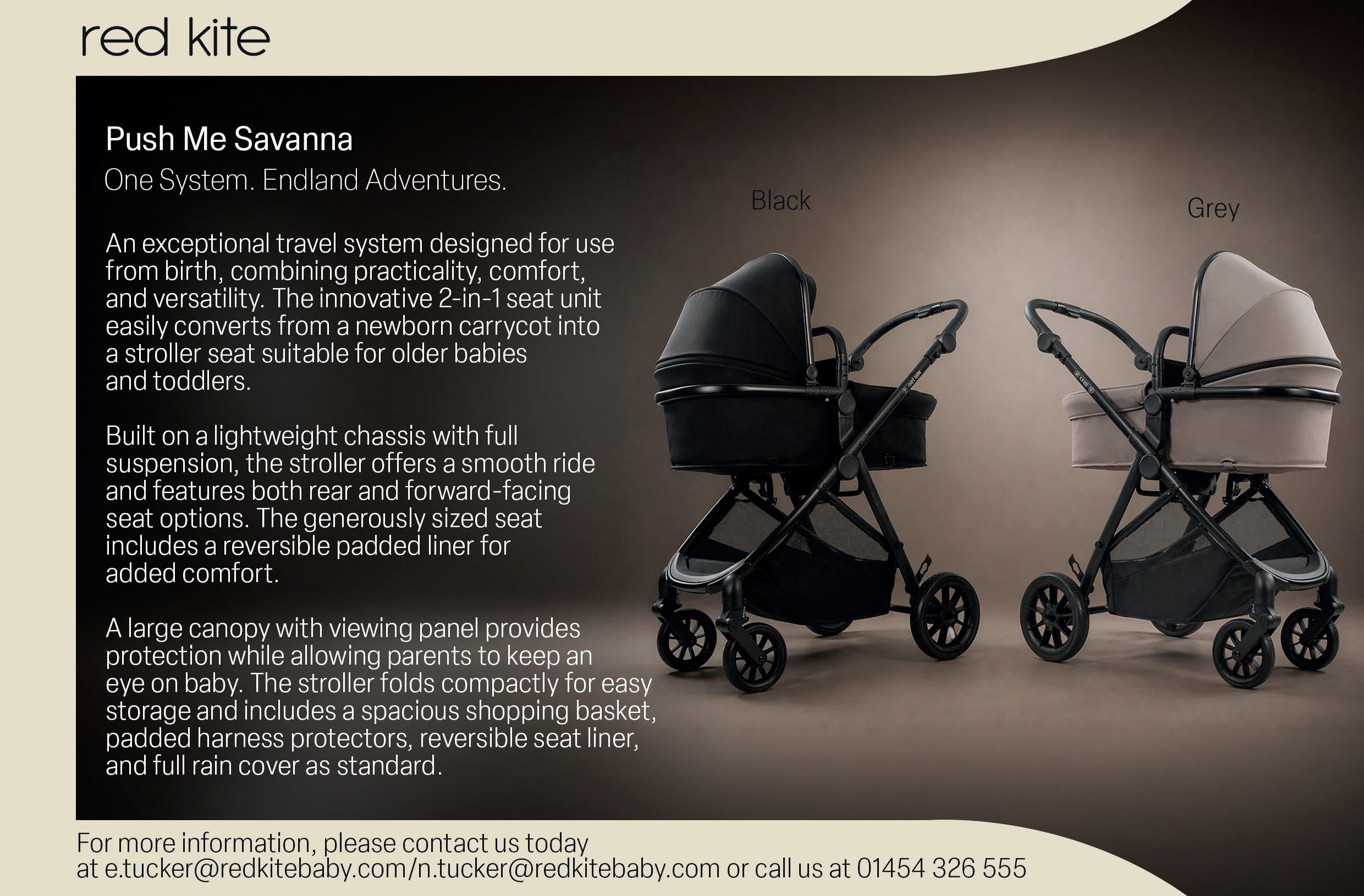
Blending style with everyday practicality, the Push Me Astro from Red Kite is a super auto-fold stroller designed to support a child from birth through to toddler years.
Available in Mulberry, Black, Sage, and Sand, it o ers a sleek, eye-catching nish alongside thoughtful functionality. The multi-position lie- at seat ensures comfort for naps on the go, while the spacious design accommodates growing children.
With a smooth auto-compact fold and self-standing feature, convenience comes as standard. A full suspension chassis, PU leather details, viewing panel, generous storage basket, and included rain cover complete this versatile, parent-friendly essential.
TEL: 01454 326 555
www.redkitebaby.co.uk


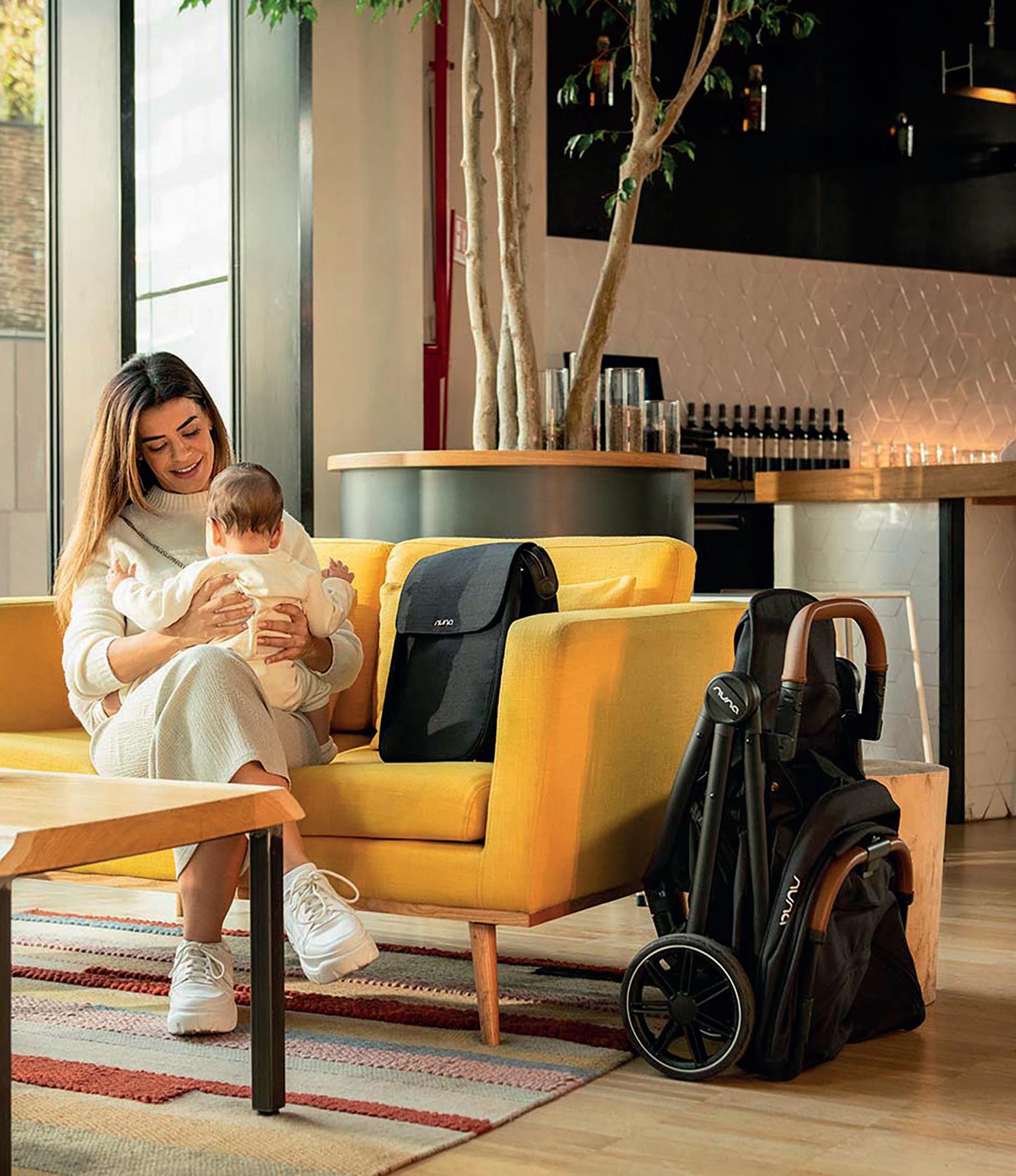
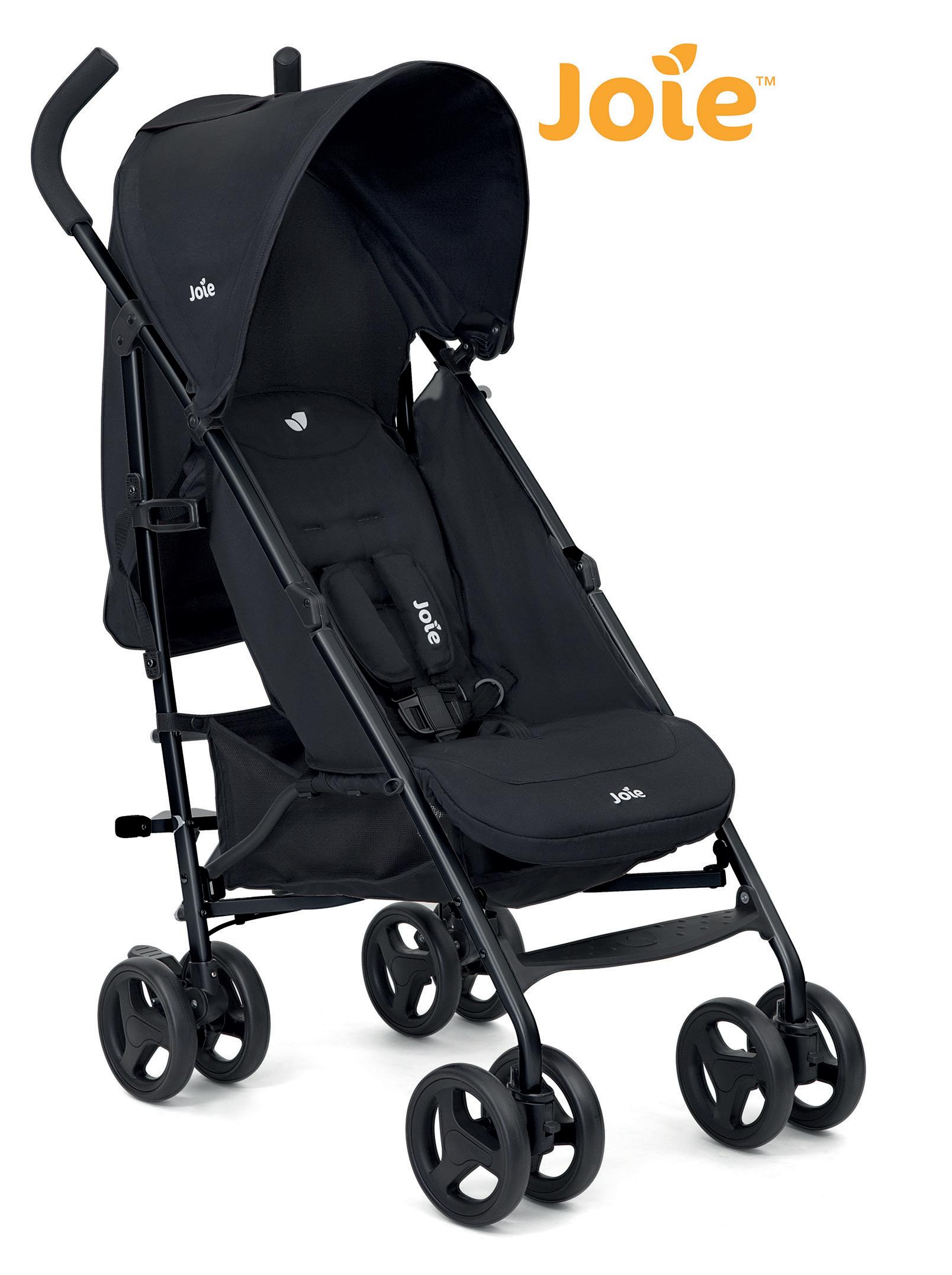
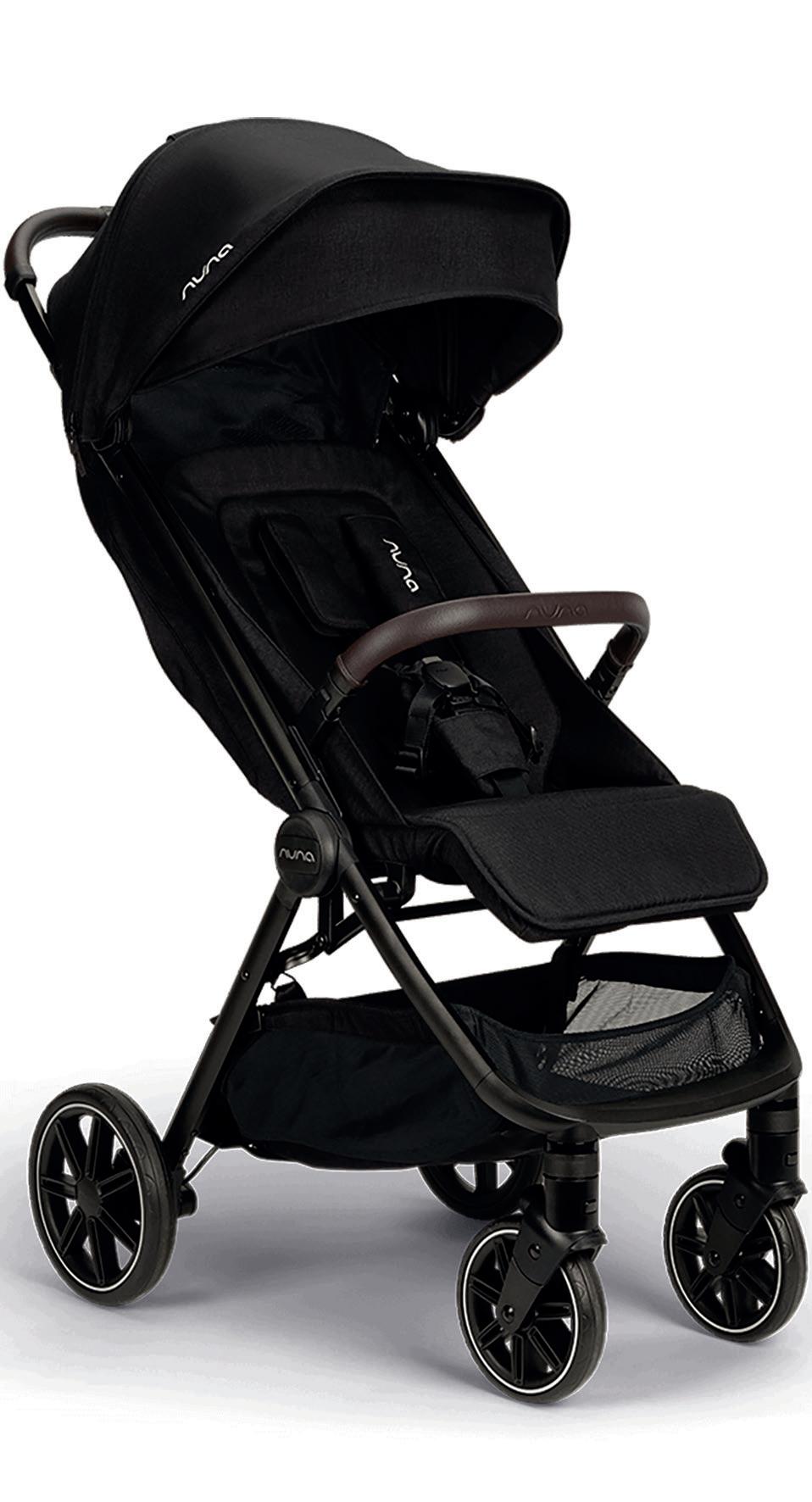
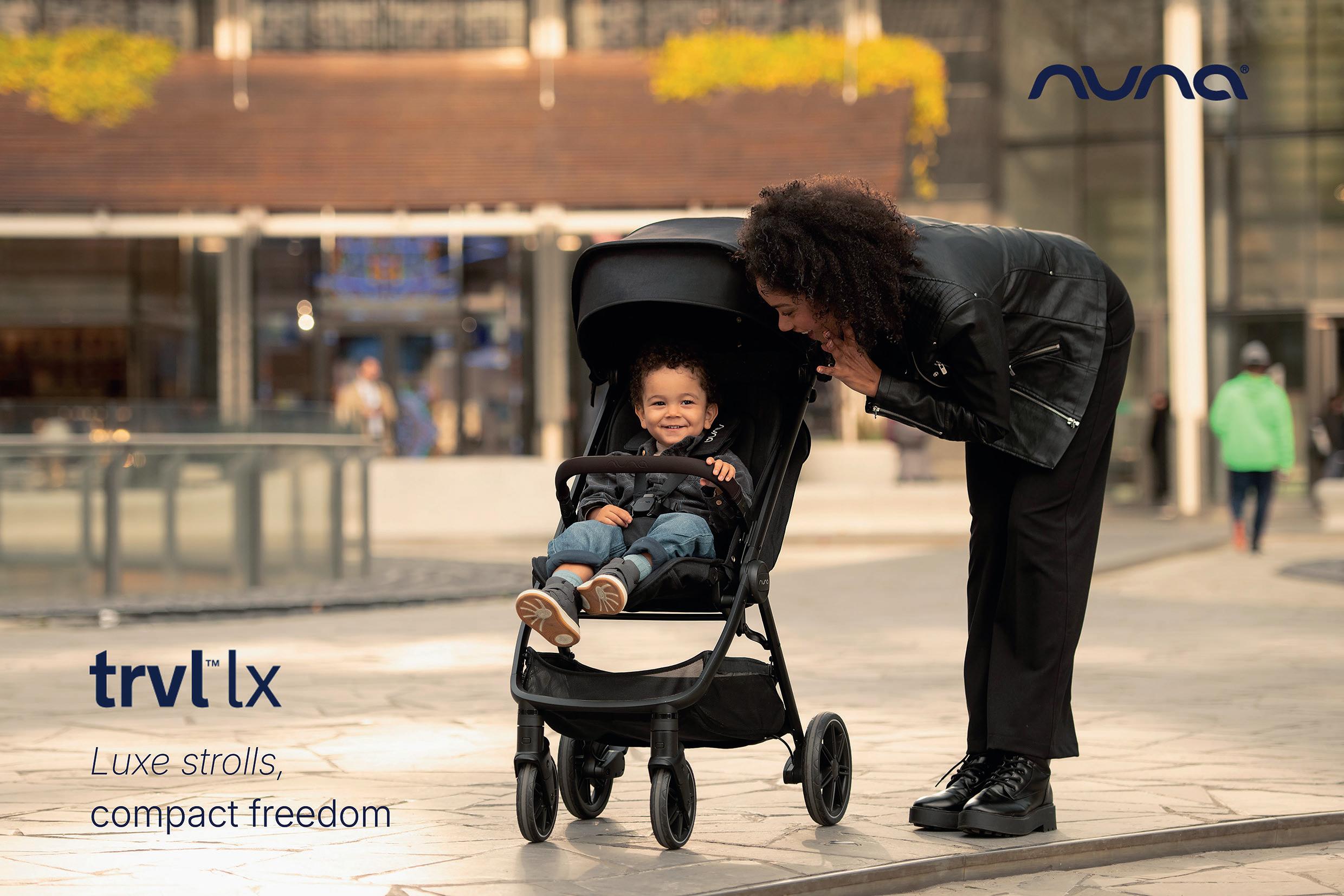
With baby as your co-captain, every moment, no matter how ordinary, has the potential to be made extraordinary. The TRVL lx pushchair o ers the compact freedom needed to get out and about, whether the journey is just around the corner or further a eld. Thoughtfully designed to feel lightweight and e ortless, it features a onehanded fold that reimagines what it means to move through the day with ease and con dence.
Enhanced with an upgraded wheel design, it is ready to handle whatever lies ahead on the path. The TRVL lx brings a touch of luxury to daily routines, turning every stroll into a moment worth celebrating.
UK.Sales@nunababy.com
www.nunababy.eu/uk/
Breeze through every day with the latest lightweight umbrella stroller from Joie, made for life on the go.
Suitable from birth up to 15kg, couri is a forward-facing stroller with a with a at reclining seat that makes it ideal for little ones that still need to snooze on the go.
The all-wheel suspension will keep them riding in comfort on even bumpy terrain, while the adjustable canopy will keep them sheltered from the elements. Whether they want to take in the sights or sit back and relax, the multi position corded recline has an option to suit them.
uksales@joiebaby.com www.joiebaby.com

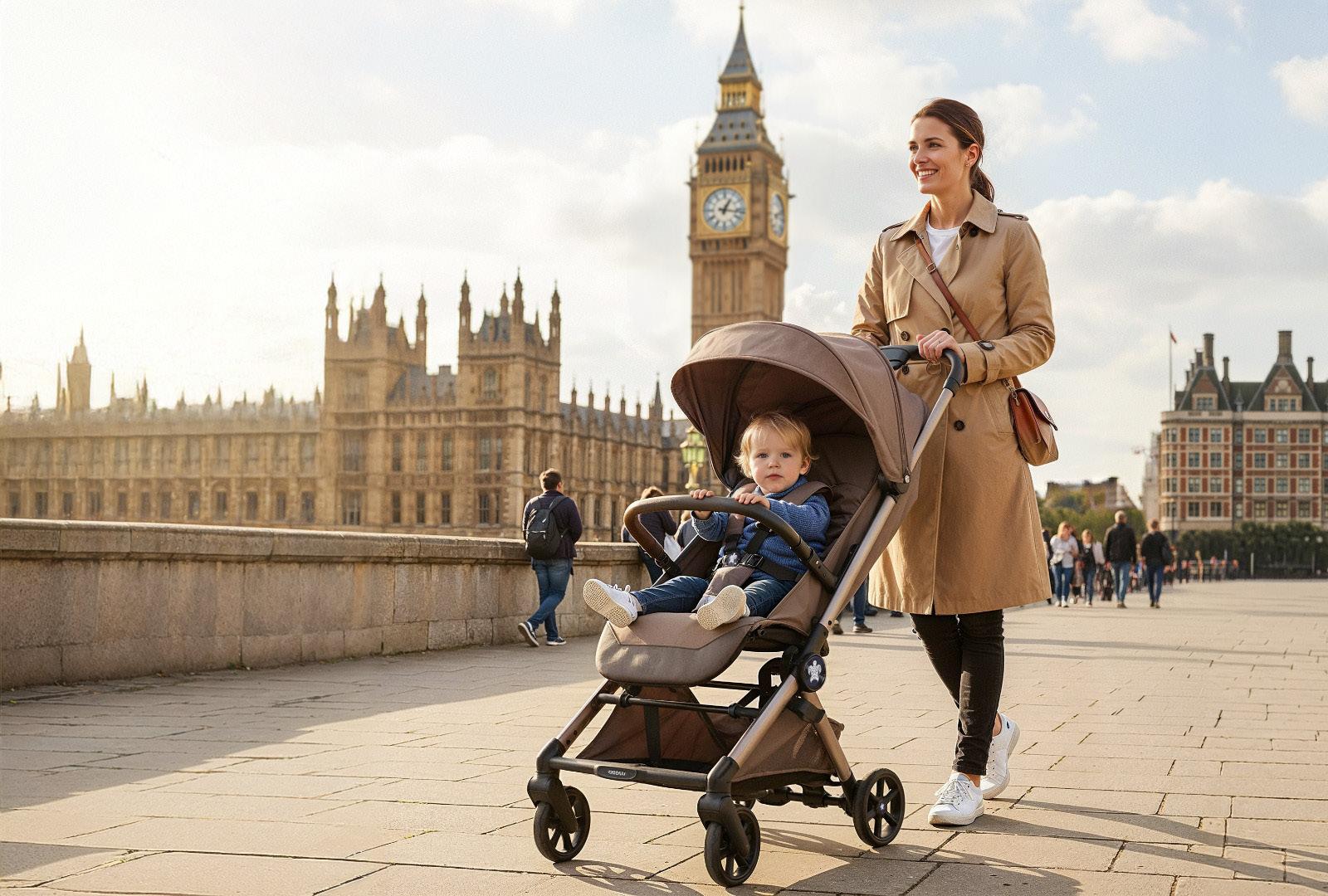
www.mymamoa.com info@mymamoa.com
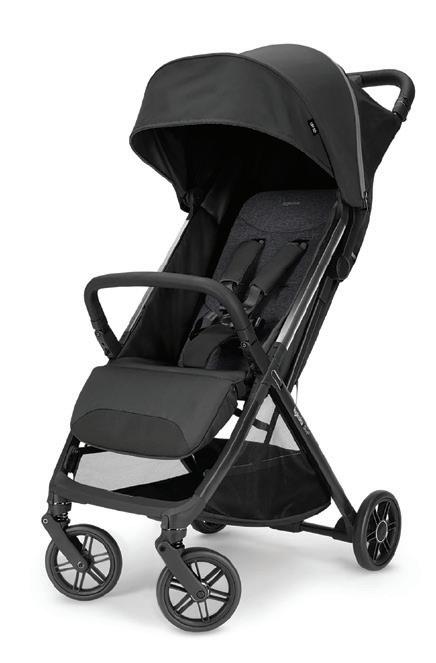
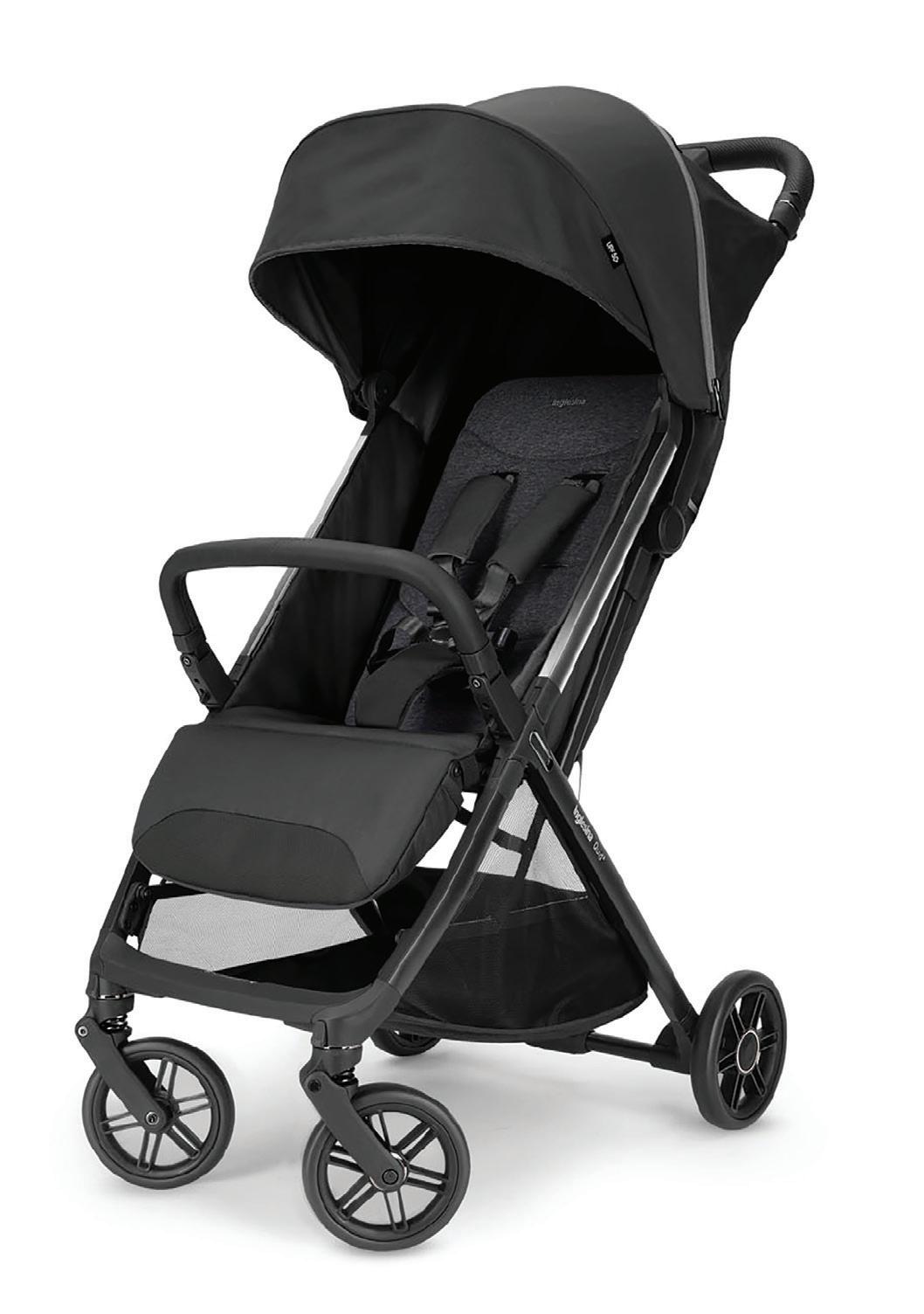
Lightweight, compact and designed for modern family life, the Inglesina Quid³ is the ideal travel companion for parents on the move.
Weighing just 6.4kg with an ultra-compact fold, it ts e ortlessly into car boots and overhead lockers, making it perfect for city living and air travel. Suitable up to 22kg, it o ers smooth manoeuvrability across busy streets and varied terrain, supported by upgraded wheels and suspension.
A breathable seat with 3D mesh ensures year-round comfort, helping regulate temperature on warmer days. With re ned design and practical features throughout, Quid³ delivers comfort, convenience and style in one smart solution.
For more information contact the below. sales@cuddleco.co.uk | www.cuddleco.co.uk
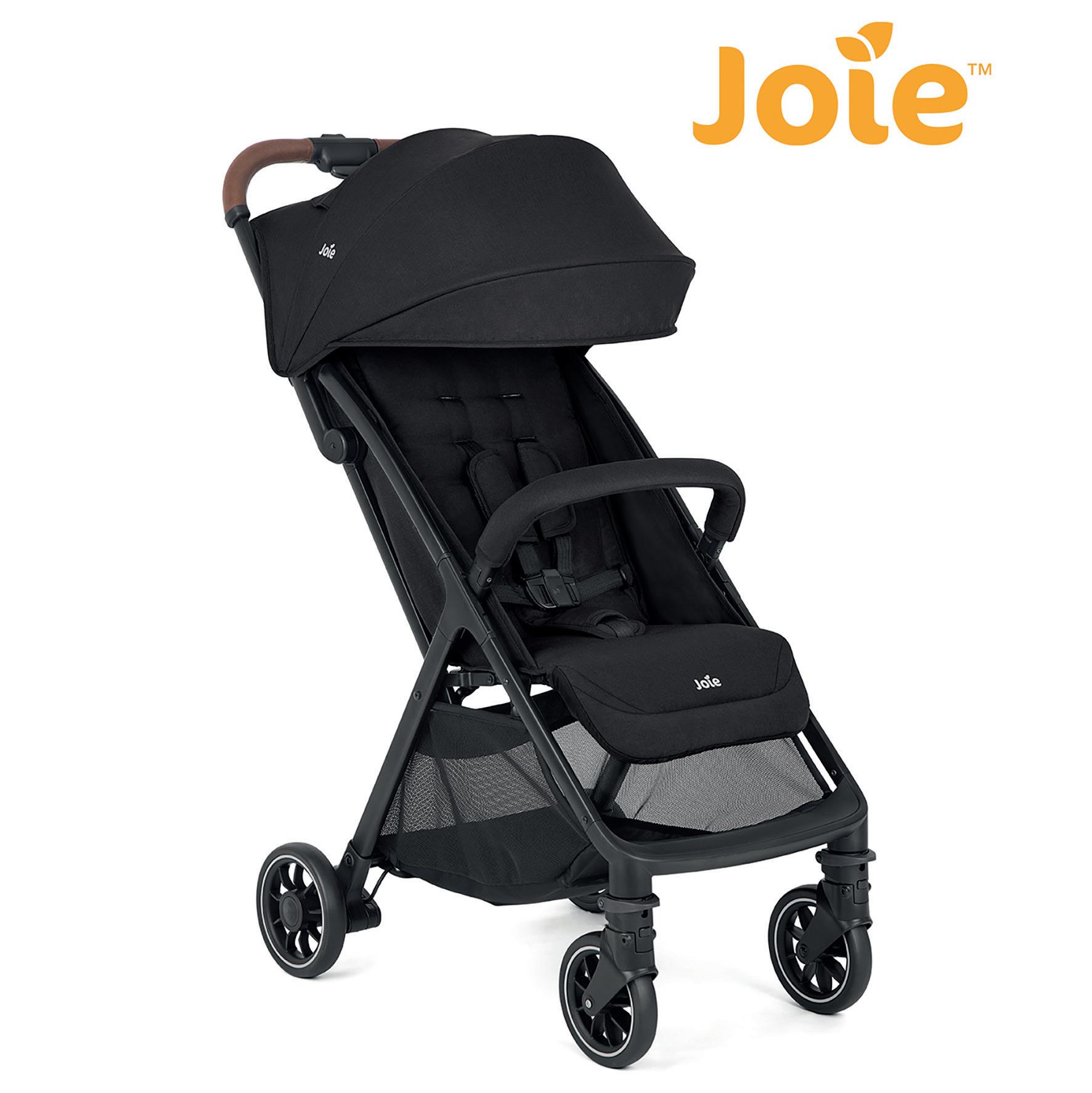
Designed for every journey from birth to big kids, the pact pro is three strollers in one, compatible with Joie infant carriers and carry cot (sold separately).
Whether little one wants to sit up and take in the sights or lie back and snooze, there is an option to suit, thanks to the multiple recline positions. Light as a feather, at just 6.3kg, the pact pro is super easy to fold with a quick one hand action, to create a compact, freestanding fold.
uksales@joiebaby.com | www.joiebaby.com
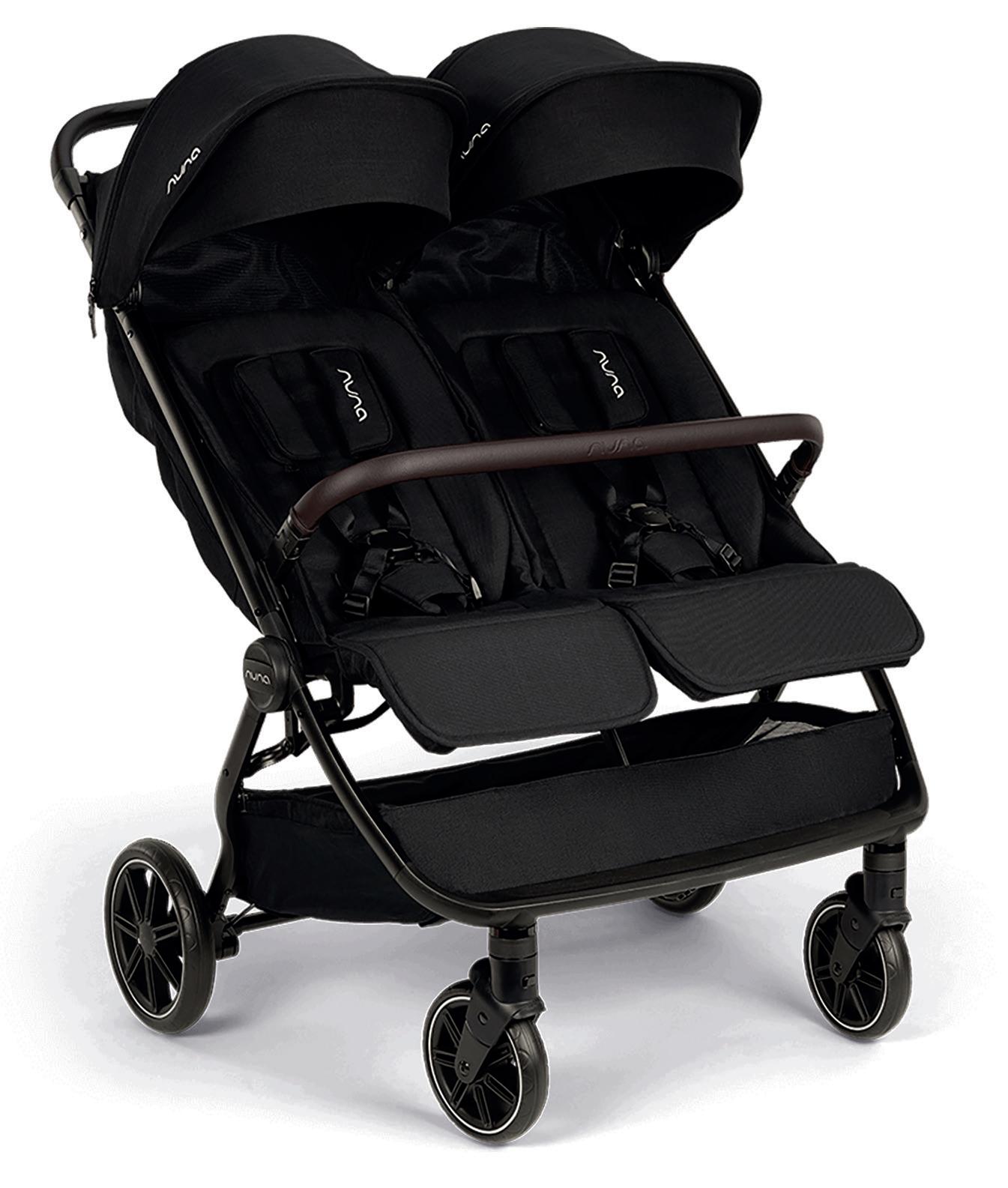
The TRVL dubl is travel-system ready, allowing any PIPA series infant car seat to attach seamlessly to the wider seat, no adaptor required.
The TRVL dubl becomes a parents new superpower. This side-by-side double pushchair acts as a lifeline, e ortlessly adapting to the increasing demands of daily life. It glides smoothly through doorways, navigates narrow spaces with ease, and keeps two little explorers side by side for every journey. Because life does not have to slow down as a family expands, the fun simply doubles. UK.Sales@nunababy.com | www.nunababy.eu/uk/






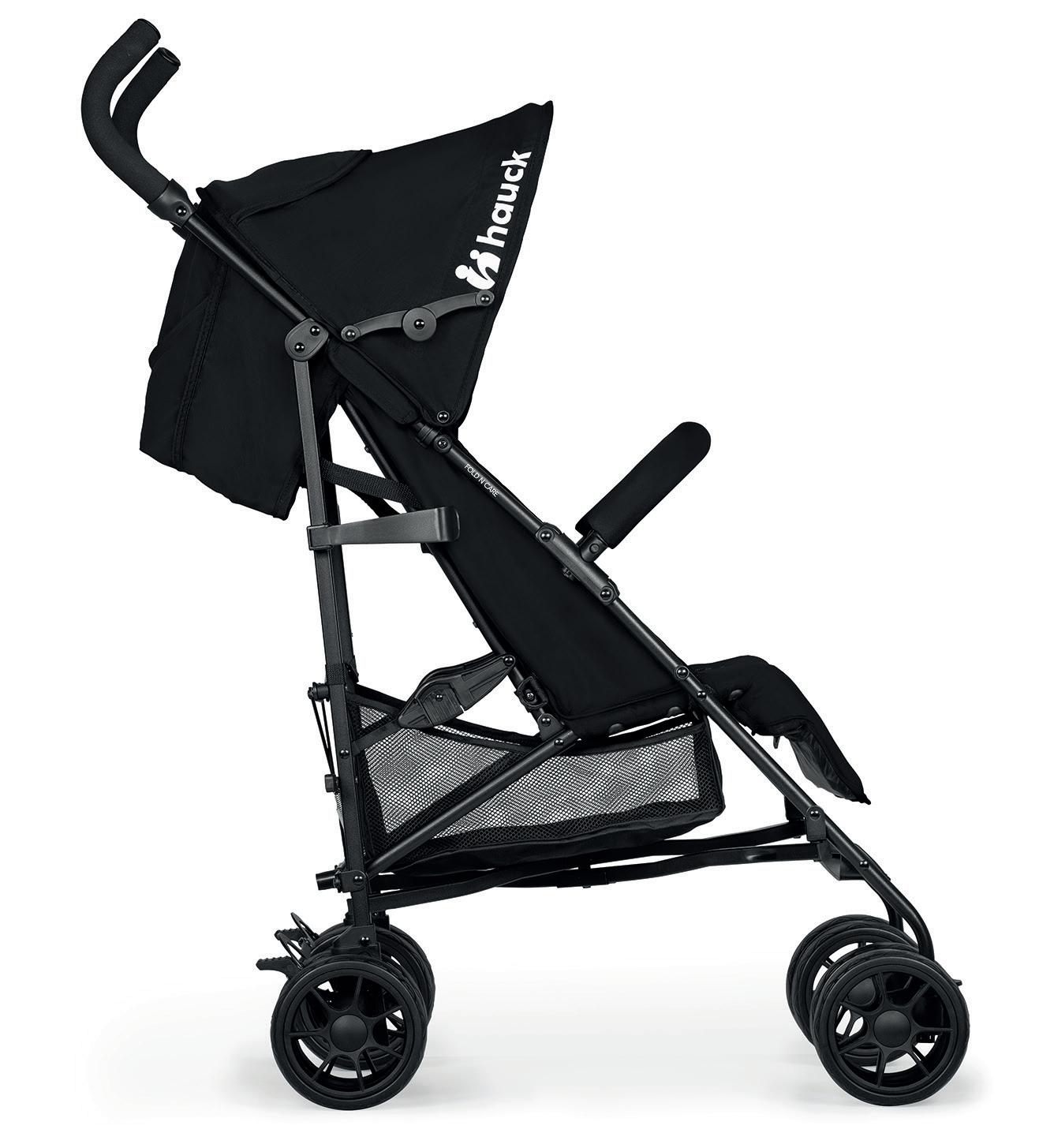
The hauck Fold N Care is a versatile everyday umbrella stroller created for families who value practicality without sacri cing comfort.
Weighing just 7.6 kg, it is lightweight yet durable, folding down compactly and featuring a convenient carry handle for easy transport. Suitable from 6 months up to 22 kg, it o ers long-term usability alongside an adjustable seat with multiple reclining positions for added comfort throughout the day. Its slim design makes it a reliable companion for busy routines, while integrated storage keeps essentials close at hand. The Fold N Care supports everyday family life with ease, exibility and dependable functionality. info@hauckuk.com | www.hauck.de/en
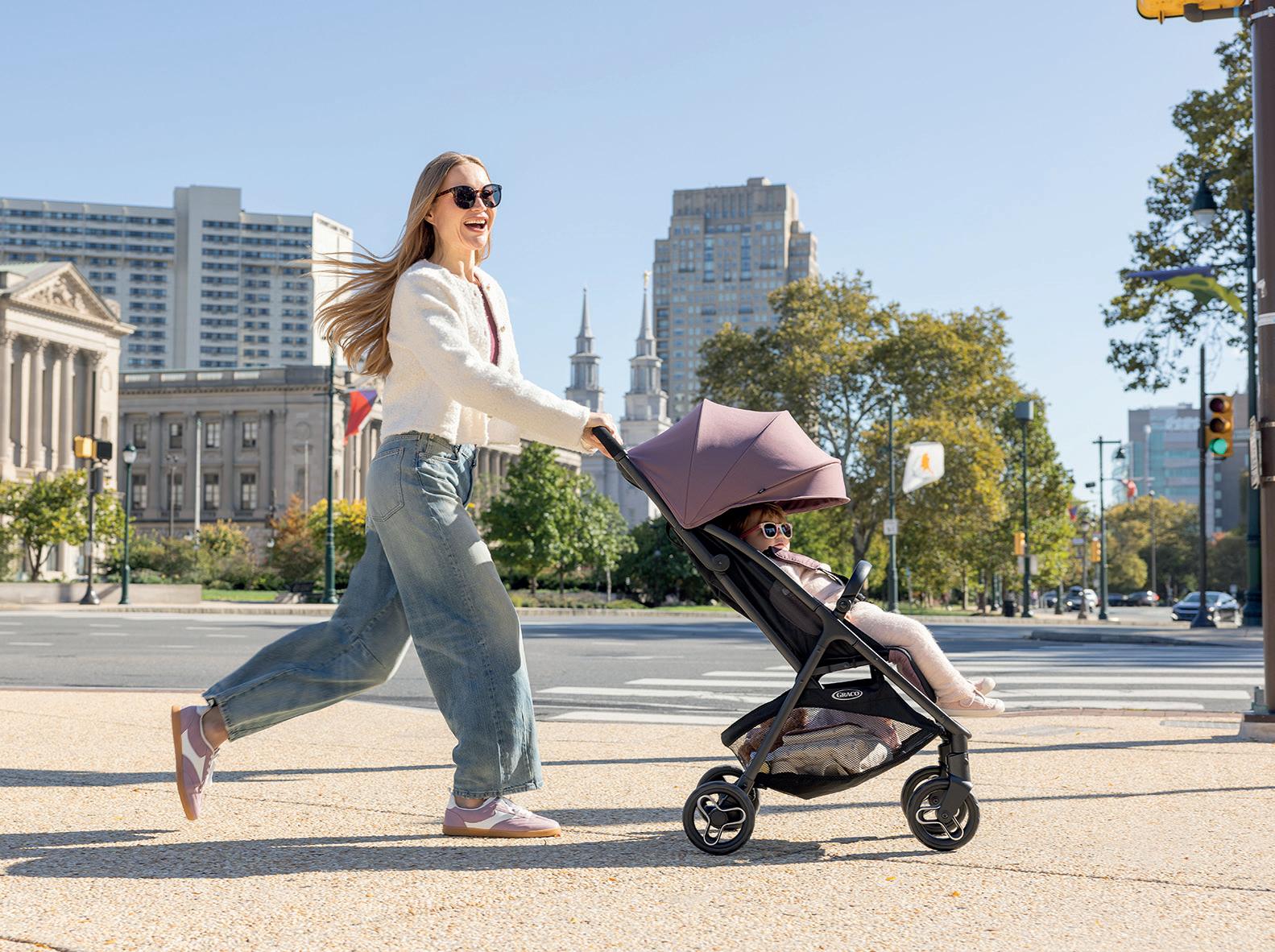
Graco’s award-winning Myavo is a stylish, modern stroller that weighs just 5.8kg, making it one of the lightest compact strollers on the market. It is suitable for newborns up to approximately 4 years old (0–22kg).
Myavo features an automatic, one-hand, one-second folding mechanism and a convenient stand-alone fold function. It also includes a removable, rotating bumper bar, adjustable calf support, and a spacious, easy-access storage basket.
Myavo combines a ordability with the style and convenience that modern families seek, making it an unbeatable choice for parents prioritising budget, practicality, and functionality. www.gracobaby.eu/uk

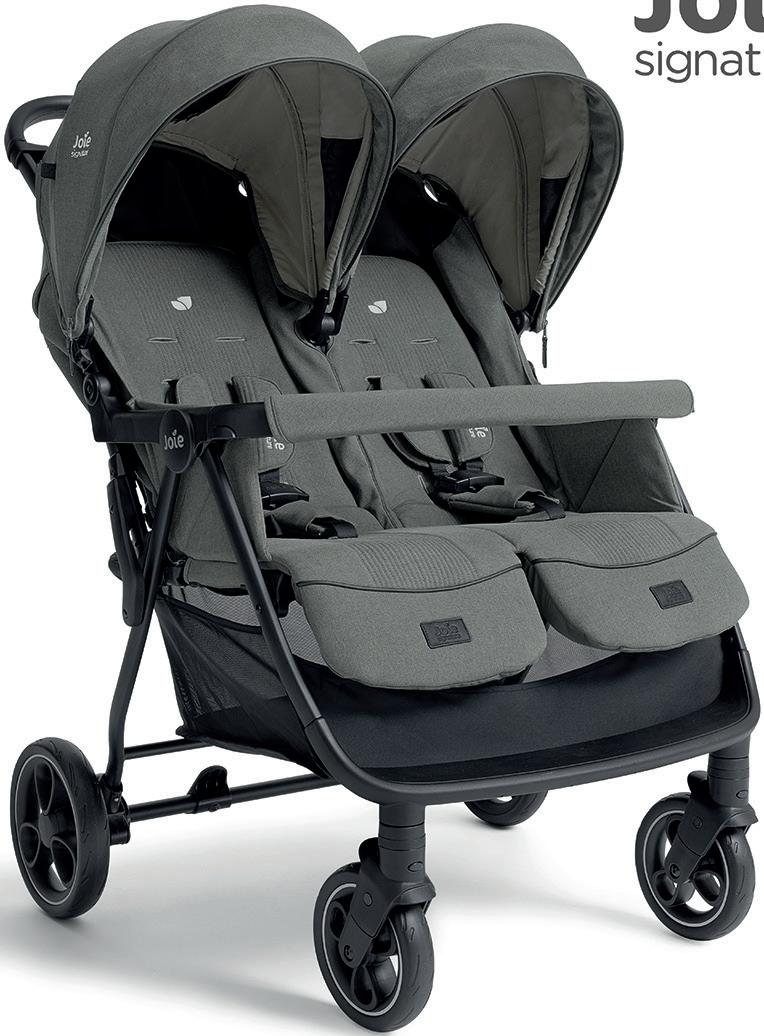
estrella is a lightweight double stroller that features two customisable seats – perfect for navigating adventures with little ones who don’t always see eye to eye.
Styled in the Signature look, estrella has a lie at recline in each seat that works individually, creating a cosy, ergonomic haven that is suitable from newborn to toddler.
The adjustable leg rests o er cushy calf supports to let growing, tired legs kick back comfortably, while the all-wheel suspension will absorb the impact of any terrain without disturbing sleeping tots. uksales@joiebaby.com | www.joiebaby.com










The Oyster Vee, joining the Oyster range this summer, is a versatile and practical travel system designed for modern families. Its carrycot folds in half on and o the chassis and stands freely when folded, whether the carrycot or seat unit is attached.
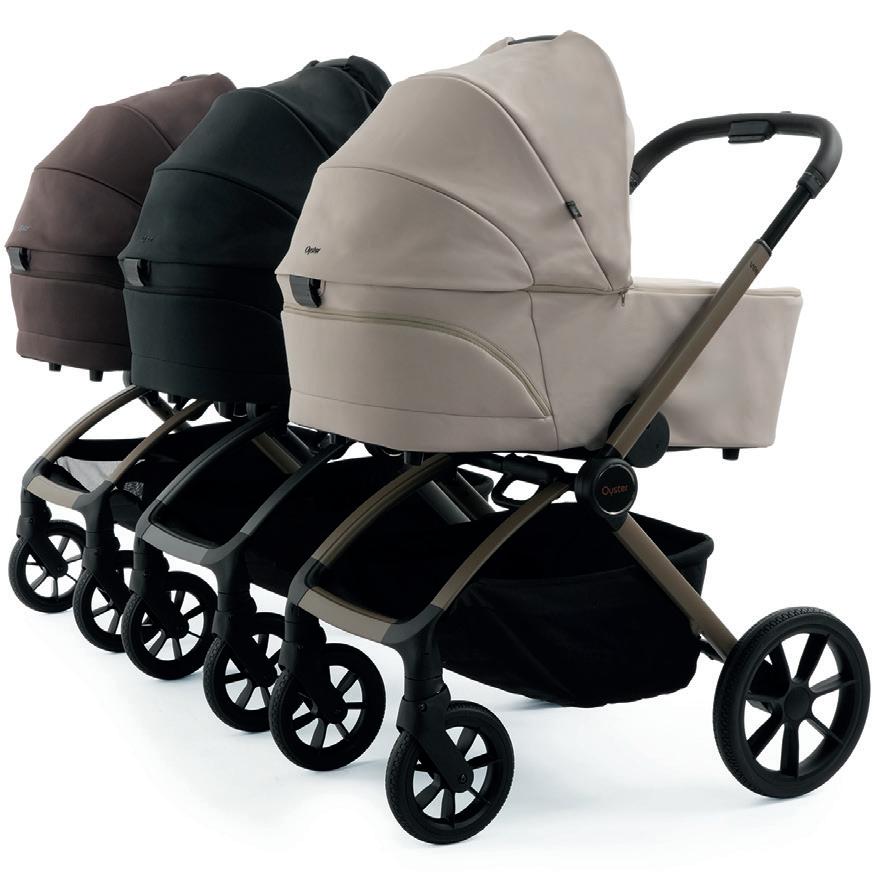
Including a magnetic internal divider in the shopping basket, the Vee o ers a one-box solution with seat unit, carrycot, chassis, multi-car seat adaptors, height increasers, bottle holder, footmu and backpack. The seat unit is suitable from birth up to 22kg, while the carrycot features dual ventilation and a UPF50+ canopy for comfort and protection. Colourways include Chocolate, Liquorice and Vanilla. www.babystyle.co.uk
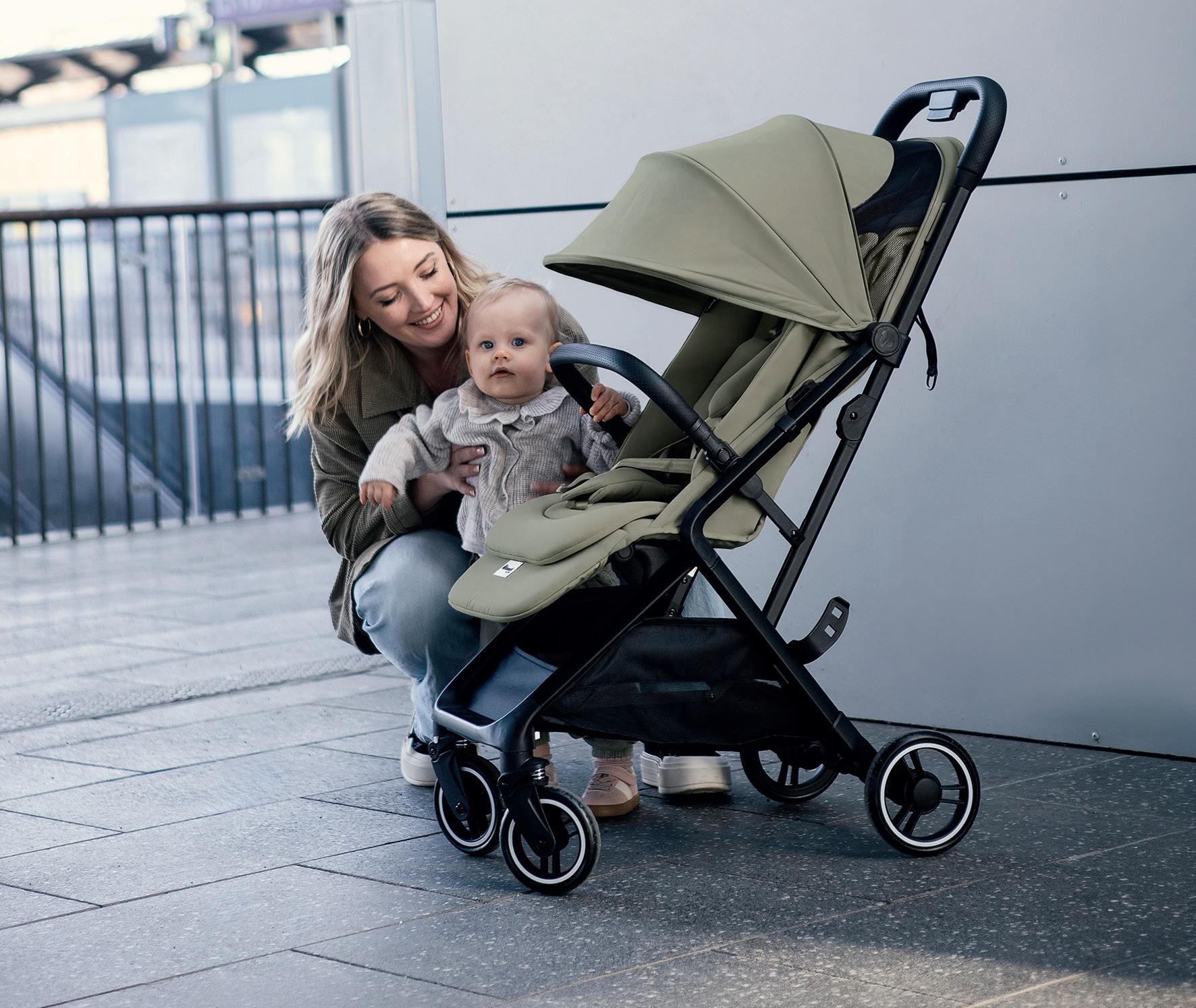
Now available, the hauck Fly N Care is designed for families who embrace life on the move. Weighing just 7.5 kg, it folds e ortlessly with one hand, making every transition smooth and uncomplicated.
Suitable from birth up to 22 kg, Fly N Care features a fully reclining, adjustable seat with a soft padded seat liner and premium fabrics to keep little ones comfortable wherever the journey leads. A practical carry bag and car seat adapters are included, so it’s ready from the very rst trip. Its compact design ts seamlessly into busy travel days, combining freedom, comfort and thoughtful design for exible family adventures. info@hauckuk.com | www.hauck.de/en

Responding to demand, Cosatto unleash Woosh City: a sleek, car-seatcapable capsule stroller set to woosh out fast.
The pinnacle of premium craftsmanship, Cosatto’s new Woosh City stroller has just raised the luxury bar even higher. Pulling out all the stops for their exclusive Ultimate collection, Cosatto bring this from-birth modular mover for a new generation of parents with busy lives and an eye for design. From Bolton to Bermondsey, from birth up to 25kg, this is their woosh-away system with car-seat-capability. Simply pop Acorn Recline car seat onto the sturdy lightweight chassis.
Streamlined and compact, it’s IATA compatible and in nitely storable. Forwardfacing, or parent facing in car seat mode, with ‘click and drop’ one hand fold, plus extended back and leg rest, this is all-season comfort and portability for zero fuss and maximum freedom. From bustling streets to boarding gates, wherever they woosh, bring them the re ned carry on. Make the city theirs.
For more info contact the below. steve.birds@cosatto.com www.cosatto.com
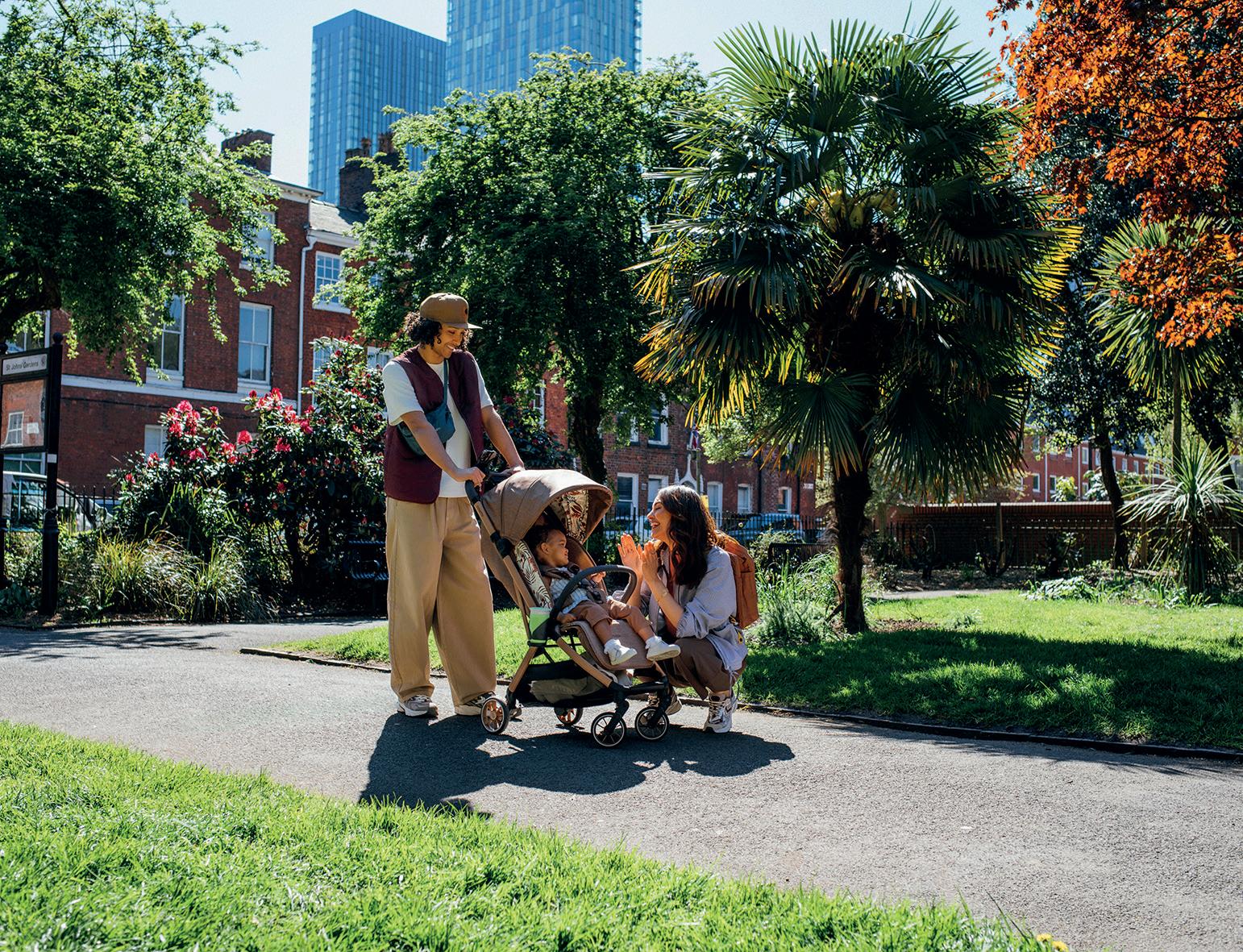
Combining sophisticated design with thoughtful innovation, Mamoa brings a fresh perspective to modern parenting.
Mamoa is rede ning the stroller market with a collection that blends contemporary style, premium comfort, and purposeful functionality. Inspired by the enduring strength and spirit of Māori heritage, the brand creates beautifully crafted products designed to support family life with elegance and ease.
Every detail within the Mamoa range re ects a commitment to safety, connection, and lasting quality, o ering parents products that feel as re ned as they are practical. With timeless aesthetics paired alongside modern innovation, Mamoa delivers a premium travel solution for today’s families while honouring the importance of legacy and togetherness.
Mamoa strollers and accessories are now available across the UK through Go10. www.mymamoa.com www.go10.co.uk


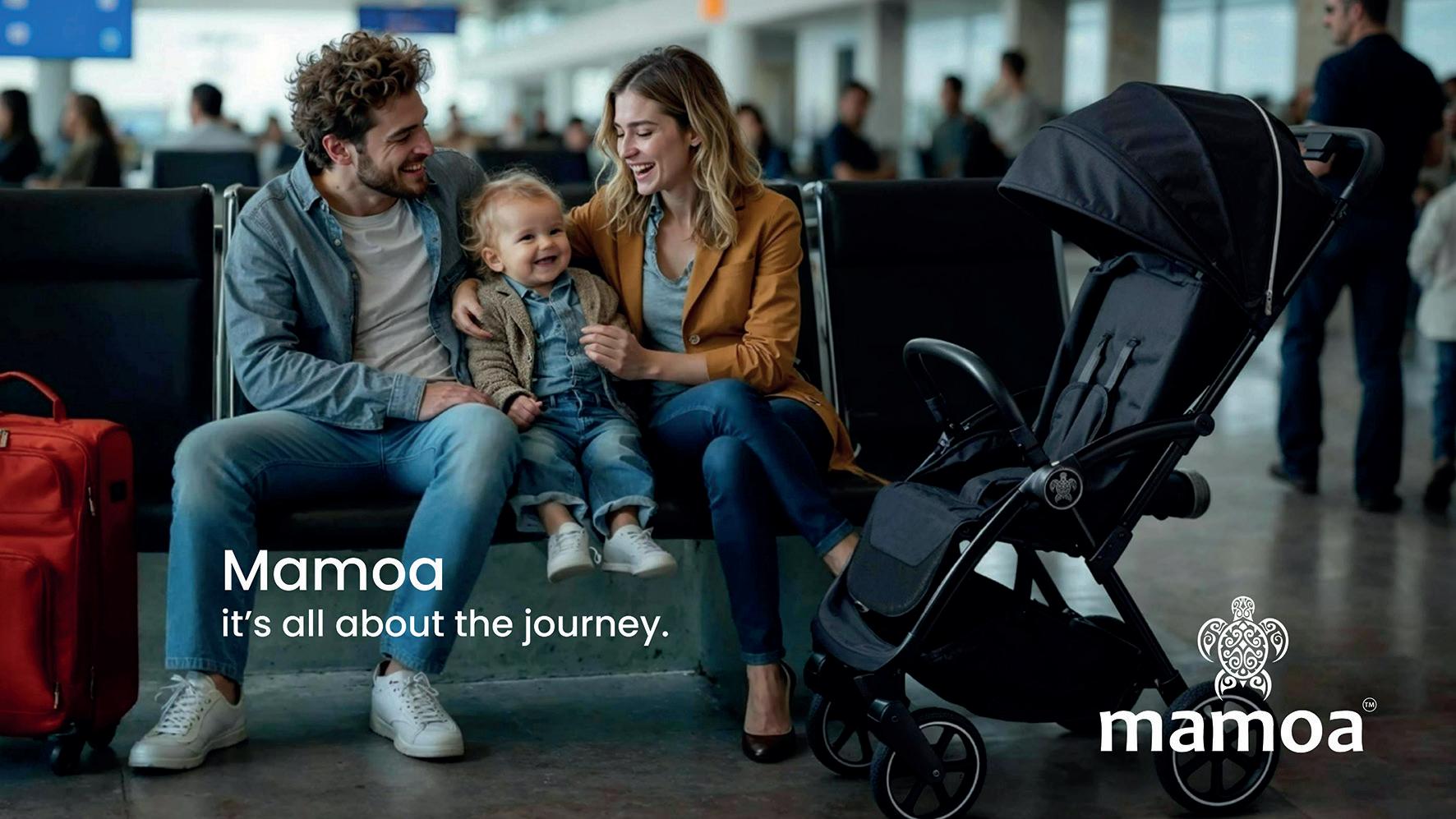
Strollers remain one of the most important and carefully considered purchases for new parents, with demand continuing to evolve as families look for products that combine style, practicality and long-term value. From compact folds and lightweight designs to fashion-led nishes and smart innovations, today’s consumers expect more from their pushchair than ever before. In this Co ee Break interview, Graco’s Luisa Rollins-Svensson discusses the latest trends shaping the category, what parents are prioritising when making a purchase, and why strollers continue to o er strong opportunities for independent nursery retailers.
Strollers are such a key purchase for parents. How are you seeing demand evolve, and what’s driving their ongoing popularity with today’s consumers?
There is more demand than ever for strollers that o er great value for money and longevity. While style, comfort and safety remain top priorities, to be a reliable choice, a stroller must be supportive enough for a newborn while also meeting the practical needs of an active pre-schooler.
Parents are often looking for that ‘sweet spot’, a stroller that is exceptionally lightweight and compact, yet durable, stylish and packed with practical, parentfriendly features such as a generously sized shopping basket. A one-hand quick fold is exactly the kind of innovation that keeps a stroller relevant.
When it comes to choosing a stroller, how do parents balance style and practicality, and how does Graco ensure it delivers on both?
Practicality is usually the ‘must-have’, while style is the ‘want-to-have’. Parents do not want to sacri ce their personal aesthetic just because they have had a baby. We ensure we deliver on both by focusing on ‘functional beauty’. This means creating a premium look using durable fabrics and sleek design nishes, while ensuring every creative choice serves a practical purpose. We know a stroller needs to o er curb appeal, but still handle the curbs too.
Would you say the stroller category is continuing to grow, and are there any standout trends or innovations within this sector you’re particularly excited about right now?
The stroller category is incredibly resilient. We are seeing a signi cant trend towards compact-folding strollers that fold down smaller than ever before. Innovation in selffolding technology is also a real standout. Seeing a stroller fold itself at the touch of a button is a game-changer for many parents.
However, innovation is not just about the mechanics. It is also about how a product looks and feels in a parent’s hands. While we focus on delivering excellent functionality, we also keep a close eye on global fashion trends to ensure our ranges remain on trend too.
For retailers, what makes strollers a strong and reliable category to stock, and how can independents really make the most of the opportunity?
Strollers are a destination purchase that naturally drives footfall. Because parents want to touch, fold and ‘test-drive’ before they buy, independents have a unique advantage when it comes to showcasing their expertise. There is no substitute for a hands-on demonstration and a well-briefed sales expert who can guide parents through the ‘must-haves’ and ‘nice-to-haves’.
What’s more, strollers act as a fantastic anchor for upselling accessories, from cosy footmu s and cup holders to buggy toys and ride-on boards. These add-ons can signi cantly increase the total sale value and help build crucial long-term loyalty with new parents as they return for the next stage of parenting.
Social media clearly plays a big role in shaping buying decisions for parents. How important is in uencer and online content in driving awareness and sales within the stroller category?
Social media content continues to play a major role in how parents discover brands, but its real strength comes when it is paired with product advice and guidance. By the time customers reach the point of purchase, they should feel prepared, having already become familiar with the brand, explored the range and understood the key features to look out for.
That is why we have launched our new Pushchair Buying Guide on our website, o ering clear and practical guidance to help parents compare options and choose the right pushchair with con dence.
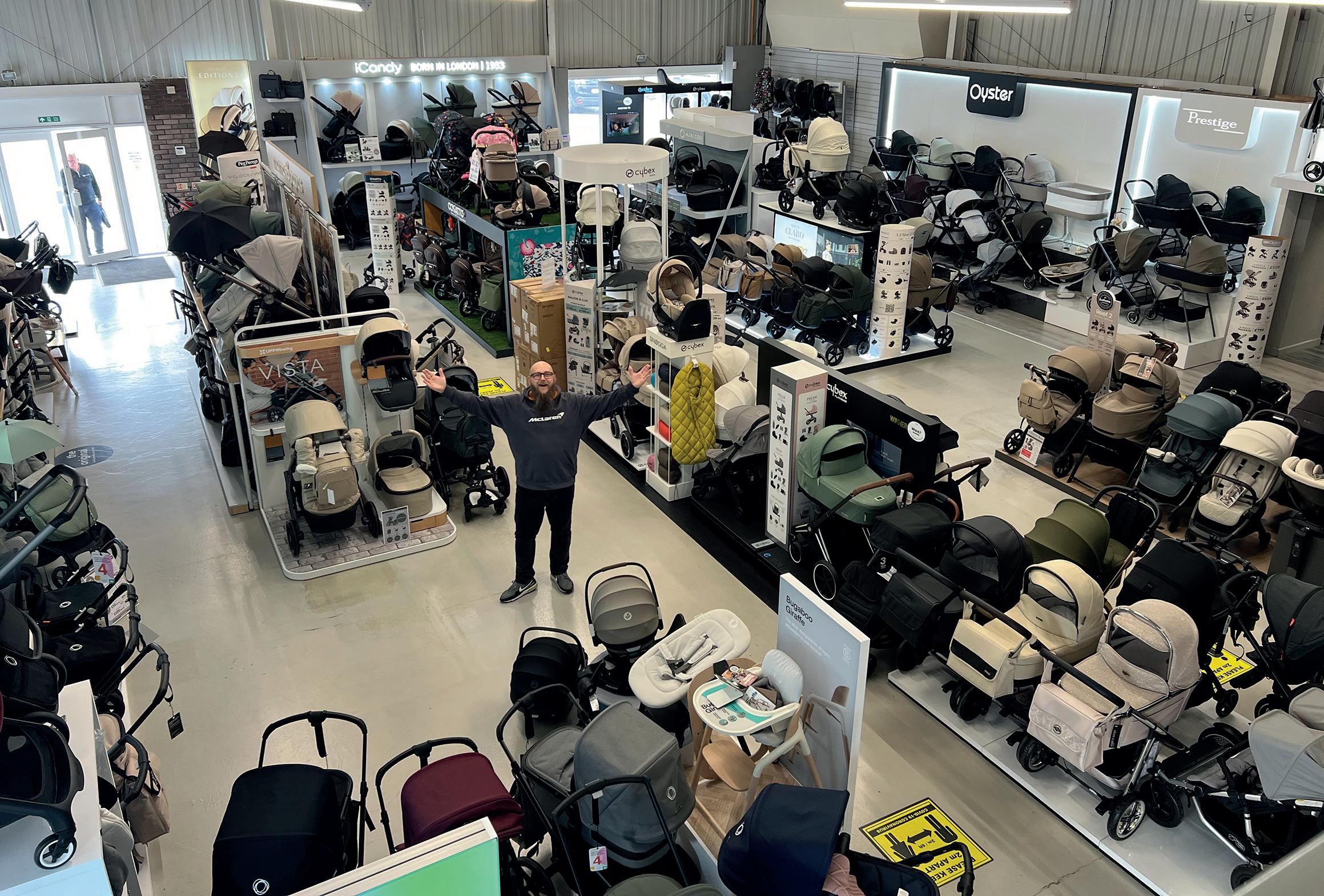
Independent nursery retailers continue to highlight the value of in-store expertise, customer service and long-term support for parents navigating the baby products market. In this latest opinion piece, Pramland’s John Barker re ects on his rst visit to a consumer baby show, questioning whether the cost and experience truly outweigh the bene ts of shopping locally, while also sharing his thoughts on sales techniques, customer reviews and the growing importance of online reputation management.
I’m a little excited today as tomorrow I’m o for a look around the Baby Show at the NEC. In the almost 20 years I’ve been in this trade, not once have I been to one of the consumer shows and tomorrow I’ll be correcting that mistake. I don’t know what to expect, to be fair, but I know what I have planned. My intention is to try and work out the true cost of parents visiting the show from Hull so that I can illustrate why it really isn’t a great option if you are travelling any great distance.
So far, given my mileage, ticket cost and parking for the two of us, Fake JB for those that follow my TikToks is coming along for the laugh too, I’m currently £132.79 down. By the time we’ve got there, and I’ve had a co ee or two, and then Fake JB has swindled lunch out of me, it will without a doubt stand me at £200, if not slightly more. From the o ers I’m aware of, a consumer would be hard pushed to
actually come out of this better o .
Now don’t get me wrong. If you live within 20 or 30 miles of the show, your travelling costs will be greatly reduced, as would the need for food and drink all day, but even still the cost will certainly be considerably more than visiting a local retailer. There is an argument that visiting the show will mean the consumer gets to see more of the brands they want to see in person, but this would entirely be based upon the stores in their home area. A store like ours o ers all but maybe one of the “key” brands parents are aware of and therefore I would argue that the need to visit a show over us is vastly reduced.
It’s starting to look a little like a done deal in favour of local retailers, but I still want to attend and gauge what the atmosphere is like. I am interested to see, and hear, how the sta manning the stands sell, given the fact that they are only there for the event weekend. I would assume that the selling is more
“One thing we never do is pressure customers into ordering. This is bad practice and may indeed reap short term rewards, but over the long term can lead to a bad reputation and, more importantly, multiple negative reviews.
towards the pressured end. I may be completely wrong but, given the fact the team have that one day to make that sale, it seems a safe and honest assumption.
Talking of pressure, I wanted to mention a recent negative review that we received that focuses on what the reviewer cites as “pressure selling”. I do not hide from the fact that we are a store that likes to sell. We don’t just take orders; we do like to advise and upsell. Over the years I have honed my team’s skills and patter so that it’s very friendly, approachable and, most
”
importantly, sales orientated. Yes, we are professional in what we say and how we present ourselves, but we are there to make sales. Sales are what keep the business a oat and we will always look to maximise every sales opportunity.
One thing we never do is pressure customers into ordering. This is bad practice and may indeed reap short term rewards, but over the long term can lead to a bad reputation and, more importantly, multiple negative reviews, much like this one. I actively encourage all my sta to ensure
We invested in some RF plates that we have stuck to the tables we use to sit down and take orders. Customers need only touch their phones to one and they are whisked away to our Google review page.
potential customers get honest and fair advice. If they visit us to view a particular product, we try and ascertain why they like this item and show them some alternatives, both cheaper and more expensive. We do this so they get a better overall picture of what’s available and so that they can choose the correct product for them. This to me seems very reasonable and I would expect any shop that offers an advice-based service to do the same.
Strangely enough, this particular person obviously doesn’t agree with me on this one as they chose to leave a “does not recommend” review on Facebook. Even stranger, they also opted to leave a “recommends” review on a local competitor’s Facebook page at the same time. I sincerely hope that the consumer opted to leave both of
these reviews without prompting from my competitors, as that seems a little underhand, but it does serve to illustrate the importance of positive reviews.
That one “does not recommend” review dropped my Facebook score by 0.1, a number that doesn’t seem so bad. But when you consider that, to undo this review, we will need to amass approximately 20 to 25 “recommends” to re-earn that 0.1, it seems a little skewed.
So how can we overcome these issues and ensure you get a consistent stream of positive reviews across all your chosen review sites? Now, I’m not aiming this at all you big stores out there with your clever shopping cart systems. I’m talking to those stores like us that are small and lacking sophisticated, all singing, all dancing

computer systems. We simply do everything manually, the old-ish fashioned way.
It starts at the point of sale. We invested in some RF plates that we have stuck to the tables we use to sit down and take orders. Customers need only touch their phones to one and they are whisked away to our Google review page. In addition to this, we send every customer that has collected an order from us a message, we use WhatsApp as it’s free and very easy, thanking them for their order. This message contains a link, once again, to our Google review page.
Both of these systems ensure we get a steady flow of positive reviews that allow us to keep above our local competitors across all the major review sites. If we ever receive a negative review, we jump
into action. Firstly, we always respond, and we respond in a professional and apologetic manner. Secondly, we send messages to customers that have ordered recently in an attempt to negate the negative review.
Given that Google ranks businesses on recent reviews, a constant drip of positive reviews works wonders for your Google ranking and, best of all, it gives you something to mention constantly on social media. We post at least once a week telling prospective customers that we are the highest rated nursery store in the region and it works.
So, next time you’re at a loose end for an hour or so, check out your reviews and try and encourage a few more. A few moments now will reap big rewards later.





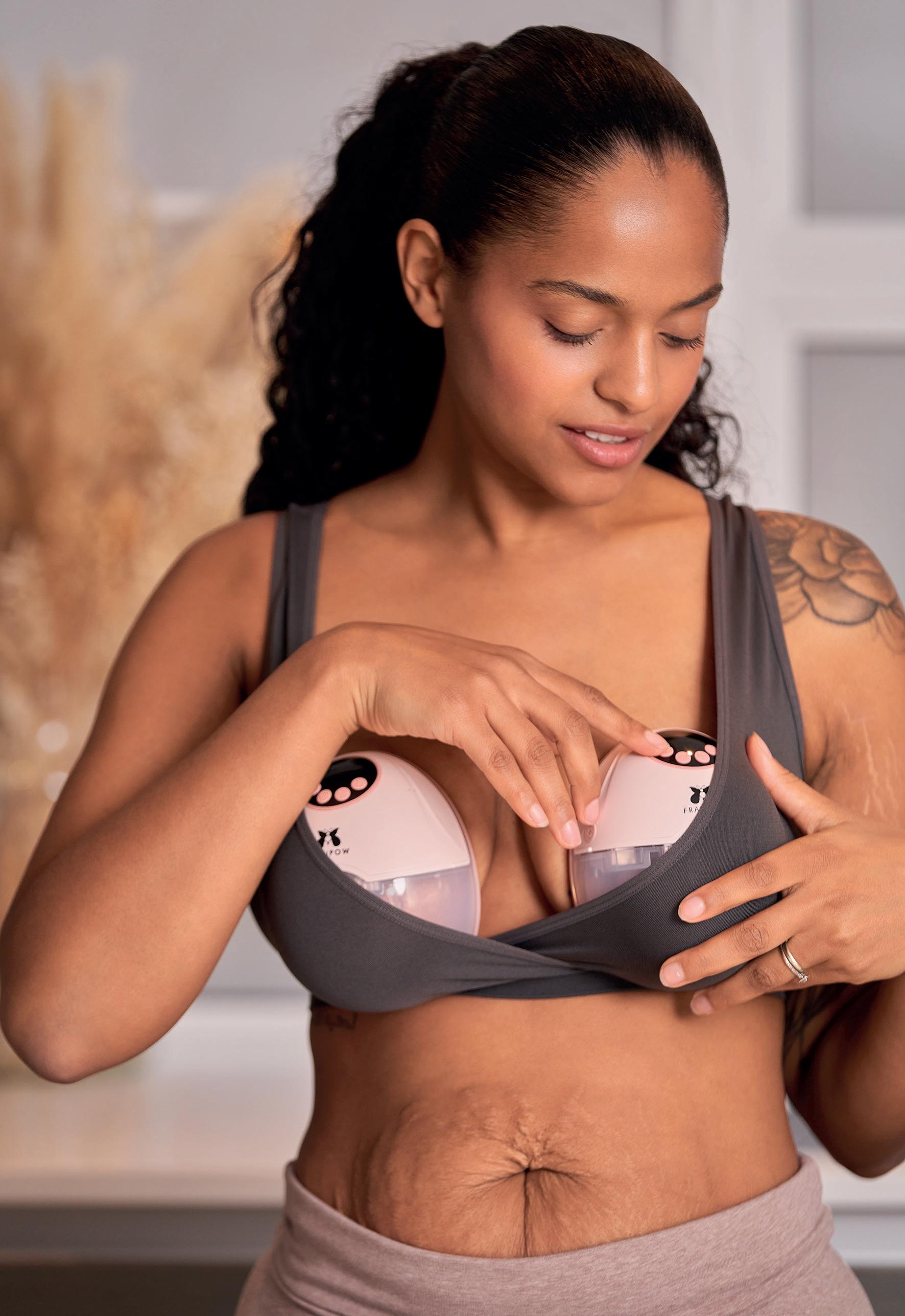
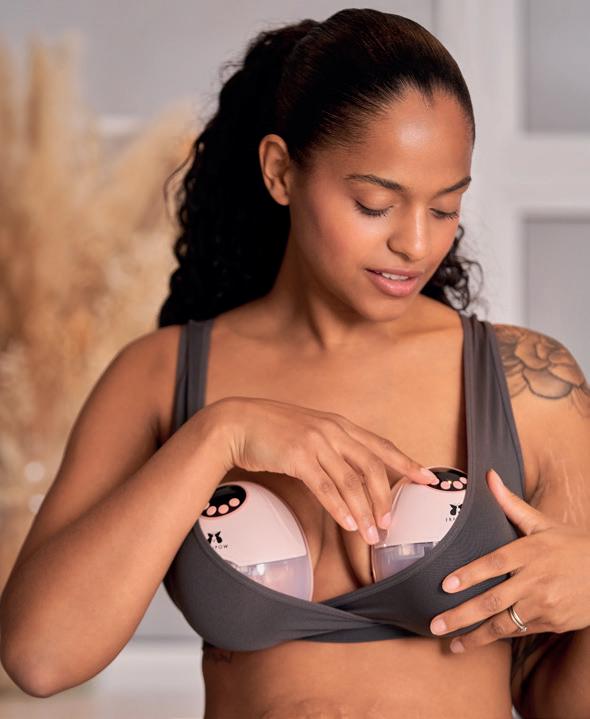
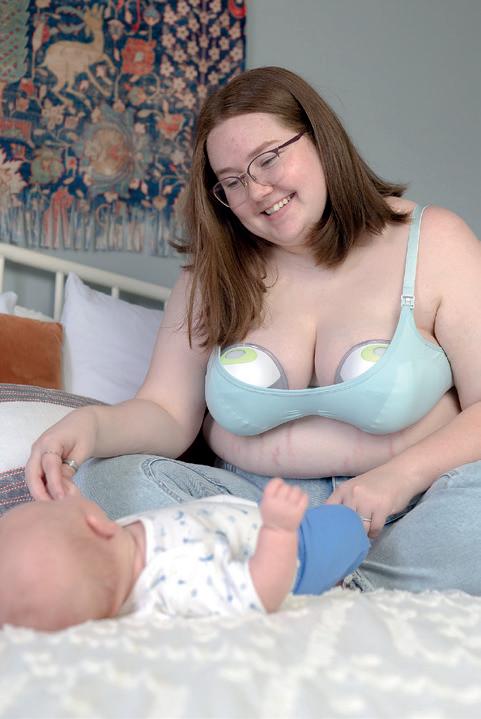
The Viva Pro Pump from Fraupow has proven popular amongst Mums looking to upgrade their pumping sessions. Fraupow are known for their breastfeeding support services, and the award-winning Viva Pro Pump comes with 3 x free 121 online midwife support calls and a free breastfeeding course hosted by Midwife Marley.
This intelligent pump uses infrared technology to monitor how much milk has been pumped and respond to your ow by stopping when the milk collector is almost full. It also has a unique voice assist option, as well as hospital grade suction and a whisper quiet motor. orders@fraupow.com www.fraupow.com


Breast pumps are a must-have for modern families, supporting exibility, comfort, and con dence throughout the feeding journey.
Breast pumps have become a go-to for many breastfeeding mums, helping them t feeding around everyday life while staying on track with their goals. Whether it is returning to work, building supply, or sharing feeding with a partner, more parents are making pumps part of their routine. As a result, demand continues to grow across a wide range of options, from simple manual styles for occasional use to e cient electric models designed for regular expressing.
Electric pumps remain a rm favourite thanks to their speed and ease, while manual options are valued for their simplicity and portability. Wearable pumps are creating real excitement in the category, appealing to parents who want greater freedom and exibility. Designed to sit neatly inside a bra, these hands free options make it easier to express while getting on with the day. With quieter performance, improved battery life and more user-friendly features, wearable pumps are quickly becoming an everyday essential.
For nursery retailers, there is a great opportunity to build sales with a well-rounded o ering. Pairing pumps with accessories such as milk storage bags, nursing bras, nipple creams, breast shields and feeding cushions can help parents feel supported while also encouraging add-on purchases.
As conversations around breastfeeding support continue to grow, parents are looking for products that feel practical, reassuring and easy to use.
Retailers who o er a thoughtful, well-presented range can build trust, encourage loyalty and stand out in this evolving space.
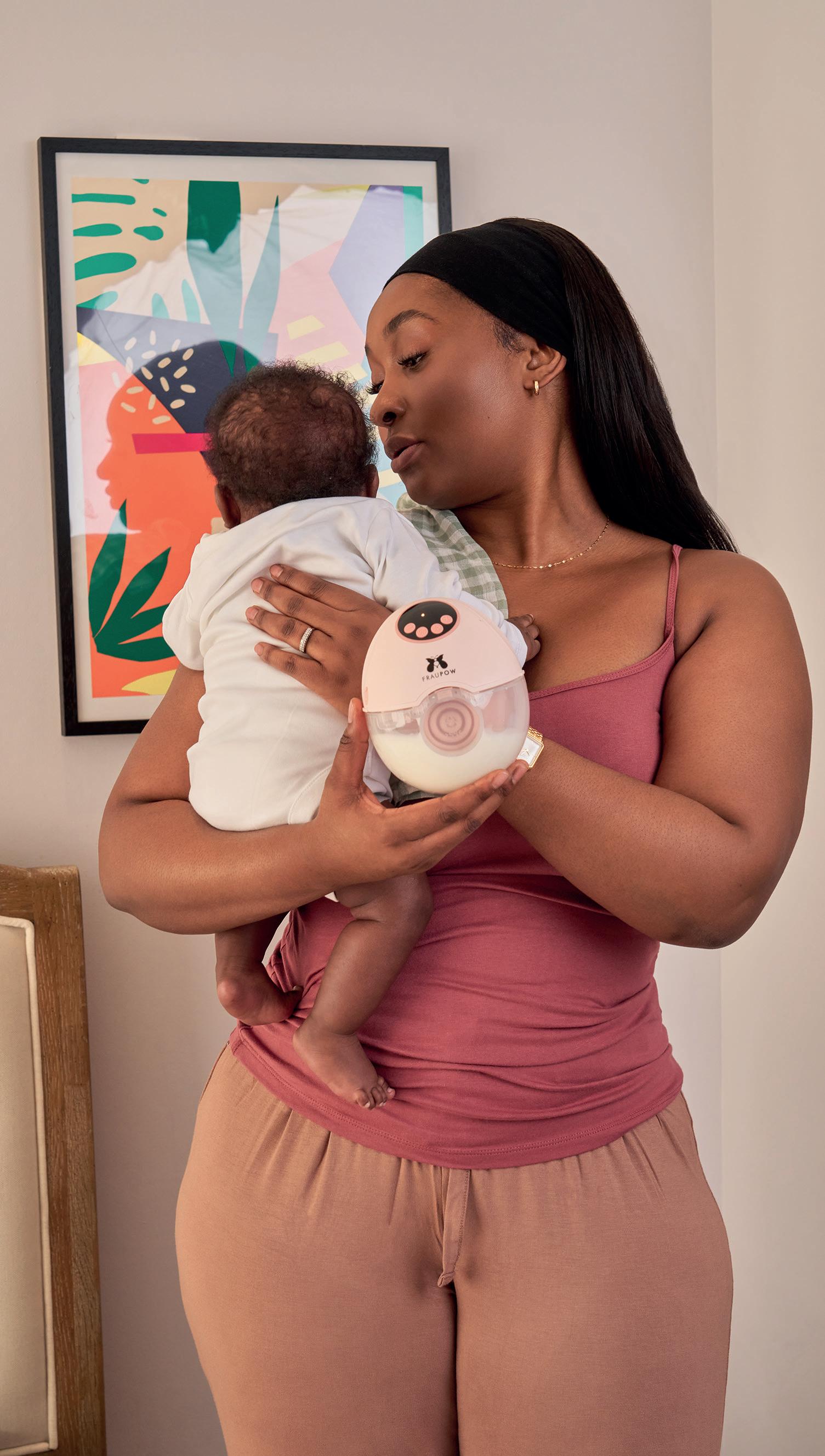
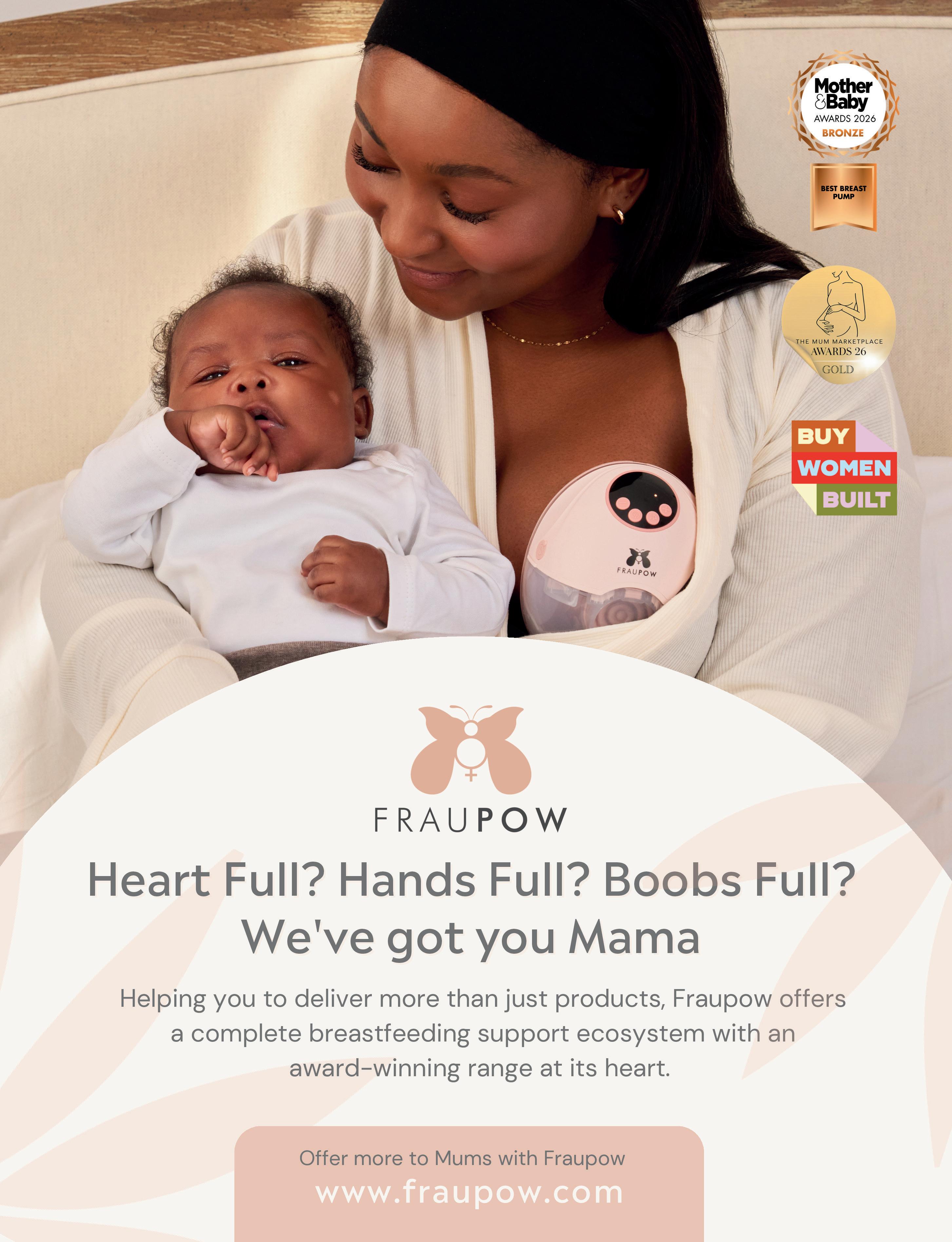
Compact, wireless, and truly discreet, the Ardo Melia ts comfortably inside a nursing bra. This allows mums to pump on the go without compromise.
This ultra-comfortable double pump o ers 15 vacuum levels and four expression modes, for a fully tailored experience. With two separate rechargeable pump motors, you can customise settings for each breast - because Ardo Medical know no two are ever quite the same.
Whether multitasking at home, expressing during a work break, or simply reclaiming a moment of calm, Melia supports your routine with freedom and exibility. www.ardomedical.co.uk
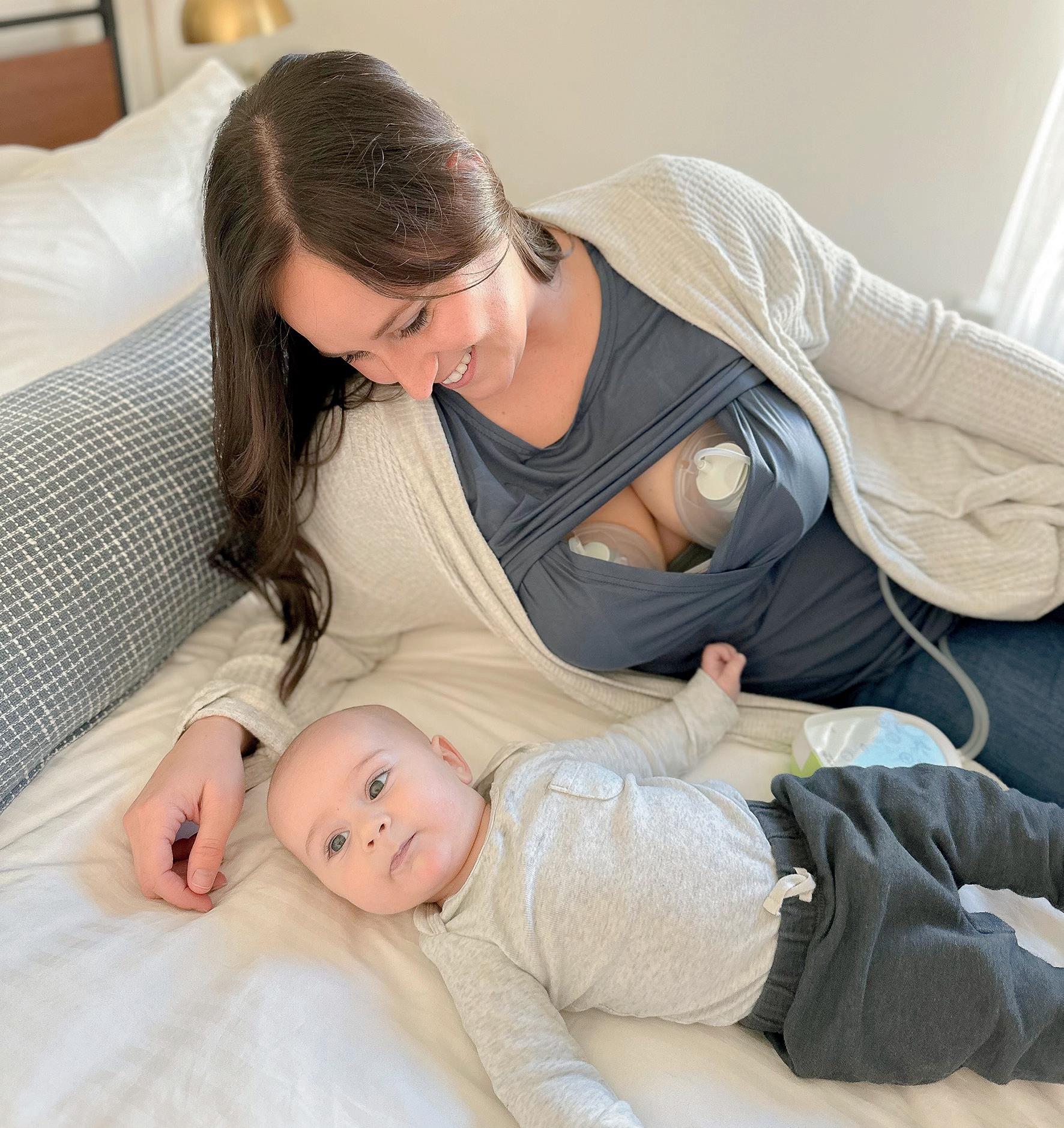
For mums who want power and portability, the Ardo Alyssa o ers the best of both.
Combining hands-free convenience with medical-grade performance, the Ardo Alyssa is their most feature-rich pump yet. Whilst not fully wireless like the Melia, Alyssa o ers enhanced functionality, making it the ideal choice for frequent pumping or establishing supply.
With powerful suction, automatic power pumping, memory save, adjustable settings, and a built-in app, it puts mums rmly in control of their feeding journey.
Rechargeable and hands-free, Alyssa gives you freedom when it counts - while still supporting the focused, restful pumping sessions that are so valuable in the early stages of expressing. www.ardomedical.co.uk
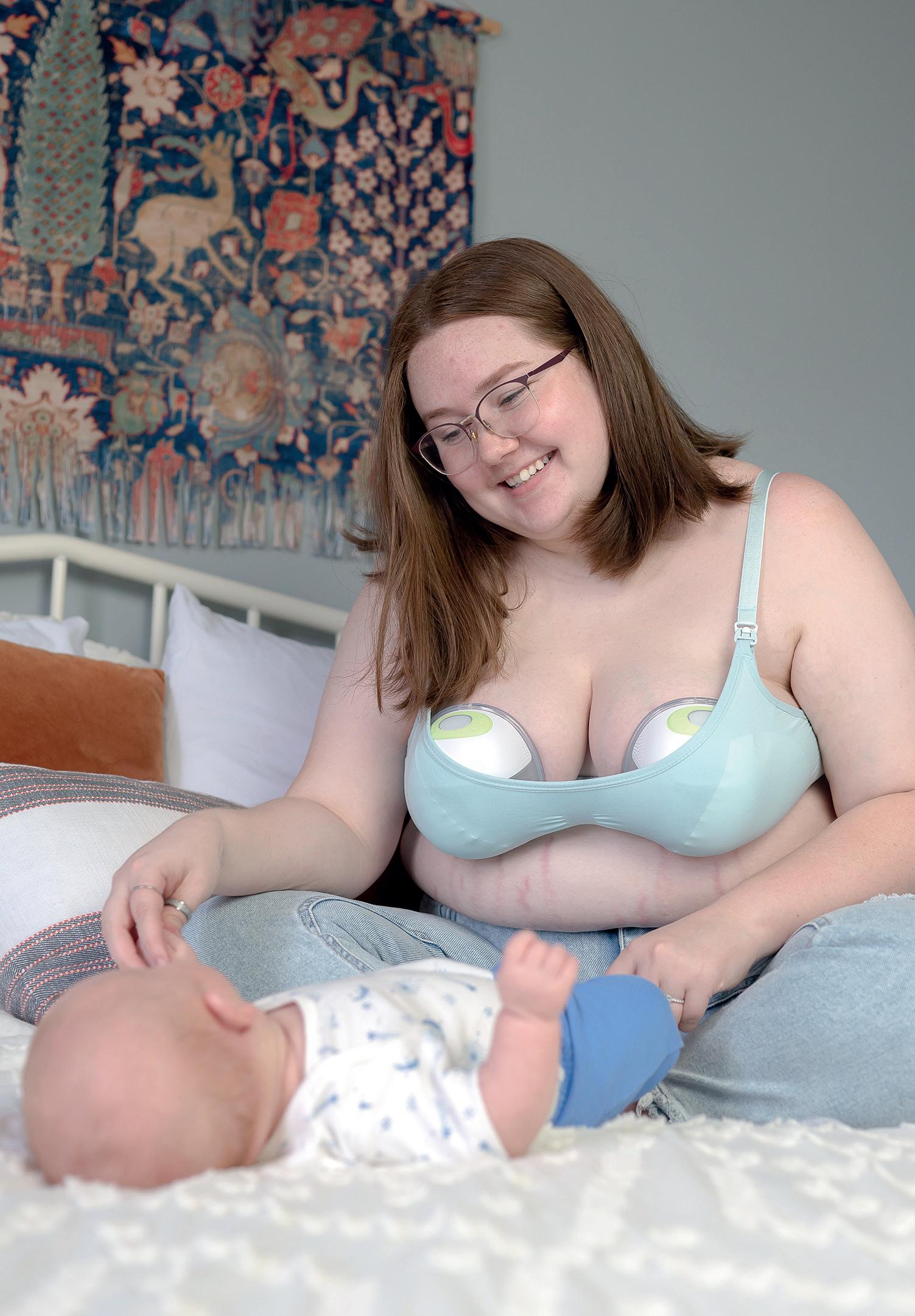
One of the trusted UK breast pump brands, Medela, is in stock and available to the independent trade with no minimum order quantities nor values at Baby Brands Direct.

Retailers can access the brand’s manual pumps through to their wearable pumps as well as a comprehensive selection of consumables and repeat purchase products including a nipple balm, nipple cream and breast massage oil. Medela’s o ering also includes nipple formers, breast shells, nursing pads and breastmilk storage bags.
Newly launched is the InBra Breast Milk Collector featuring a soft silicone back with SensoPearls for a gentle, breathable feel against sensitive skin.
TEL: 0208 845 5000
www.babybrandsdirect.co.uk
The award-winning Chicco Baby Moments Everyday Nappy Cream offers gentle, effective care for delicate skin from day one.
The Chicco Baby Moments Everyday Nappy Cream was recognised with a Silver Made for Mums Award and awarded Gold by Loved by Parents. Made with 96% ingredients of natural origin, it creates a light, breathable barrier to help protect against irritation.
The zinc oxide-free formula is enriched with Pro Vitamin B5 and Vitamin E to help soothe redness and support the skin’s natural recovery. Dermatologically tested and fragrance-free, it is suitable for sensitive skin and everyday use.
Fast-absorbing and non-greasy, it leaves skin soft and hydrated, with 100% recycled packaging.
For more information contact the below.
TEL: 0333 220 6070 | sales@rkwltd.com
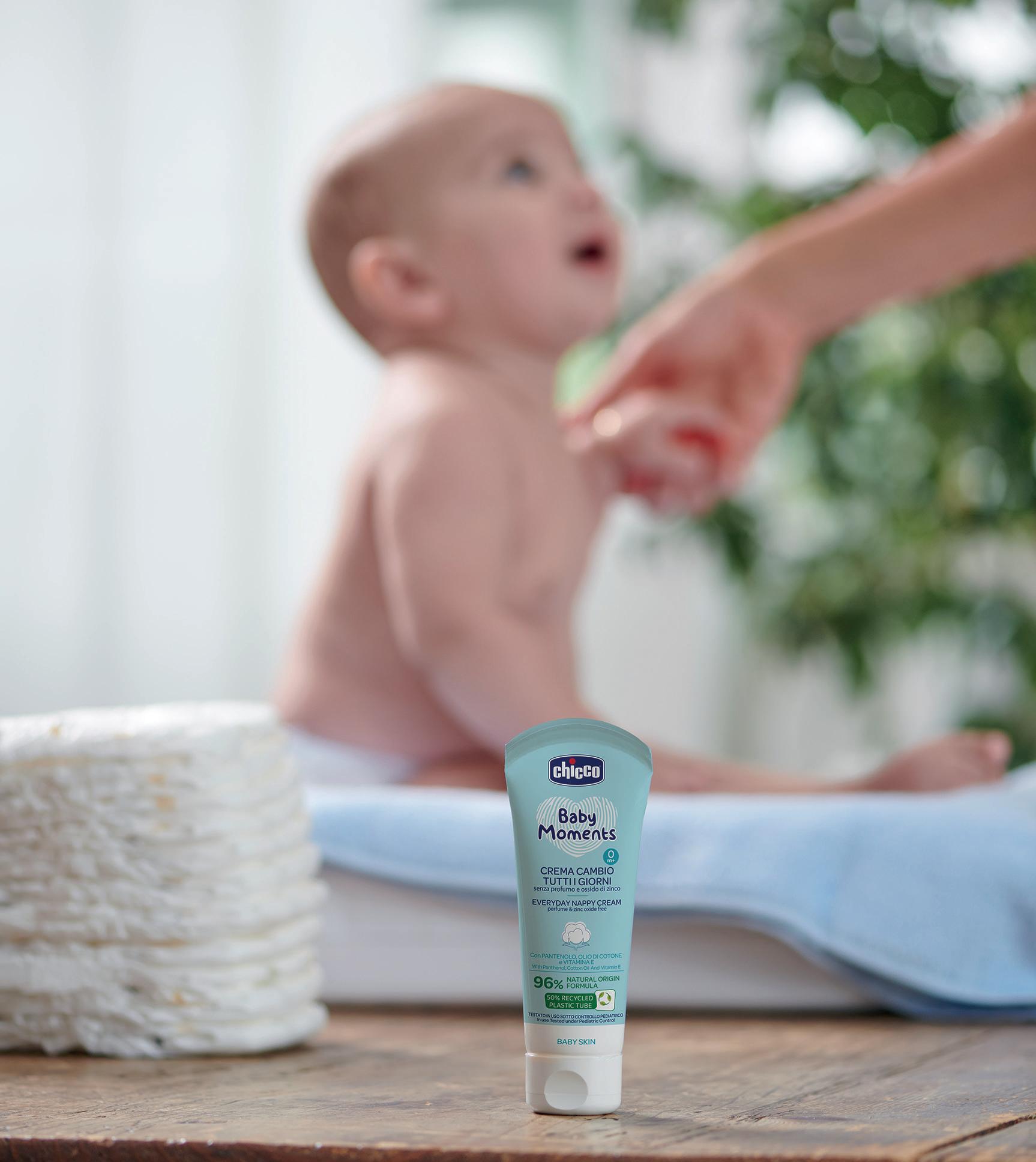
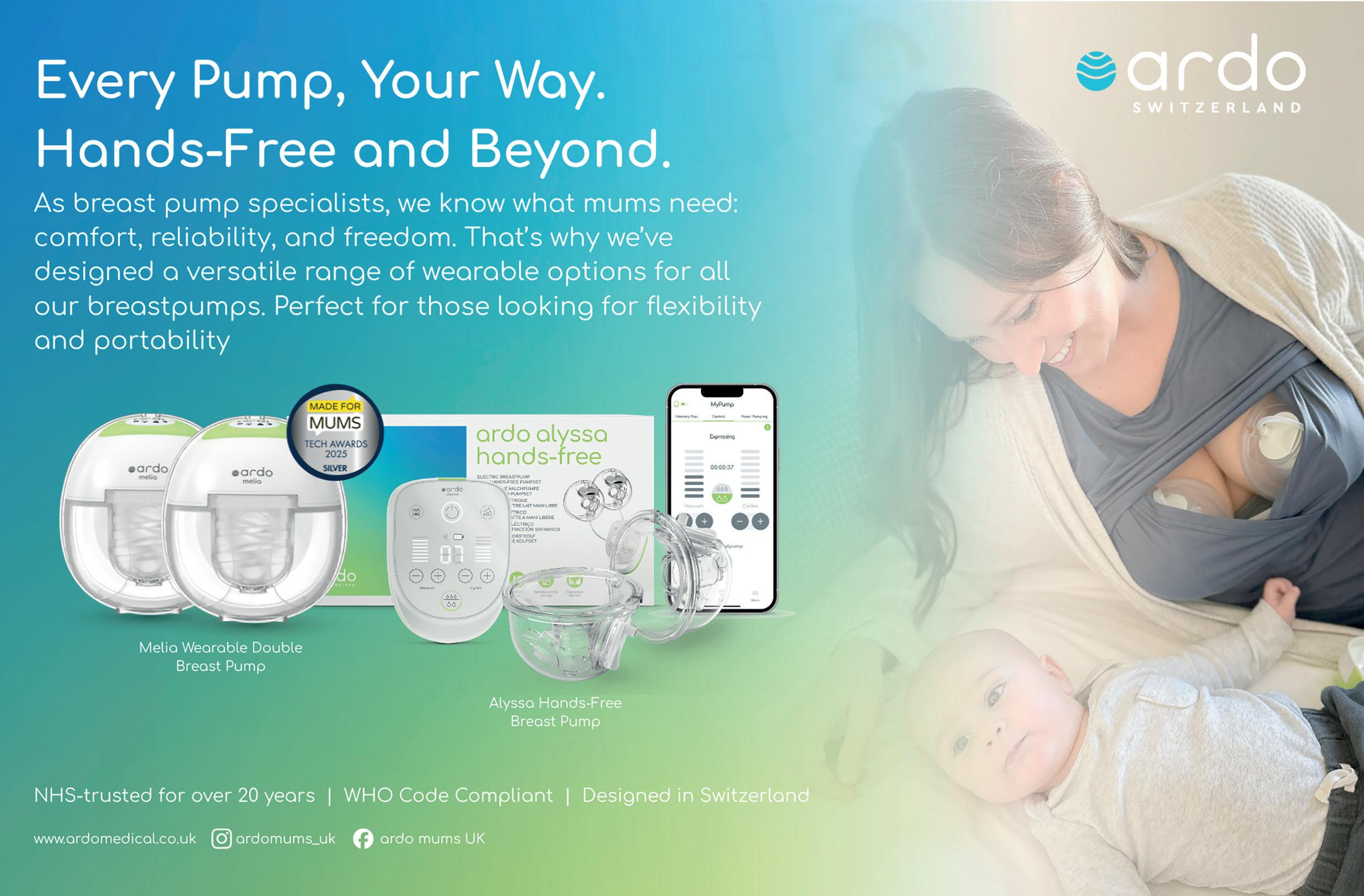
Clever comforts and calming gadgets are helping parents create a nursery that feels safer, smoother and more soothing than ever.
Today’s nursery products are blending innovation with everyday practicality, giving parents extra reassurance while making life that little bit easier.
Modern baby monitors now o er crystal-clear video, room temperature alerts, two-way talk and smartphone connectivity, so parents can stay close wherever they are.
Smart thinking is also transforming rockers and cribs, with features such as gentle motion settings, built-in lullabies and soothing vibrations designed to help little ones settle peacefully. Plush toys with comforting sounds and calming movements are proving popular too, adding a cosy touch to bedtime routines. From sleep time to play time, nursery essentials are becoming smarter, friendlier and more helpful than ever.

Technology has become a trusted companion for new parents and today’s baby essentials go far beyond the basics, with innovations like smart baby monitors, hands-free breast pumps, and precision digital thermometers helping families handle everyday routines with greater ease.
Whether it’s keeping an eye on a sleeping baby, maintaining the perfect room conditions, or simplifying feeding schedules, baby tech is designed to make life that little bit smoother.
Murrays Health & Beauty, a major supplier within the UK’s nursery and healthcare market, o ers an extensive range of reliable baby tech products. Their portfolio features well-known names such as VTech, Lansinoh, LeapFrog, Tommee Tippee, and Nuby, all o ering smart, practical solutions that support sleep routines, safety and feeding.
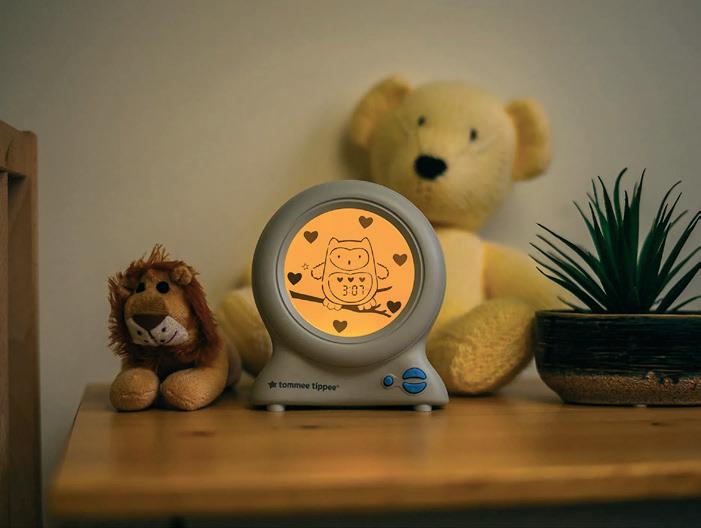
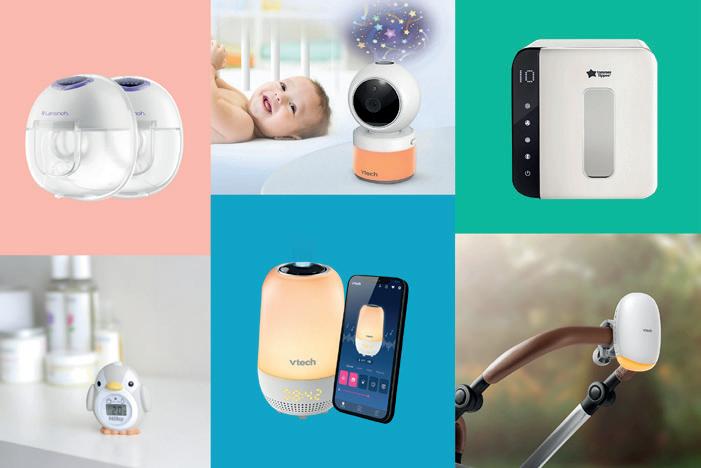
With more parents looking for convenient, tech-driven ways to care for their little ones, retailers in the nursery space have a strong opportunity to tap into this growing trend. Stocking innovative, in-demand products not only meets customer expectations but also helps drive sales with premium, fast-selling items.
Available from Murrays Health and Beauty. www.murrayshealthandbeauty.com
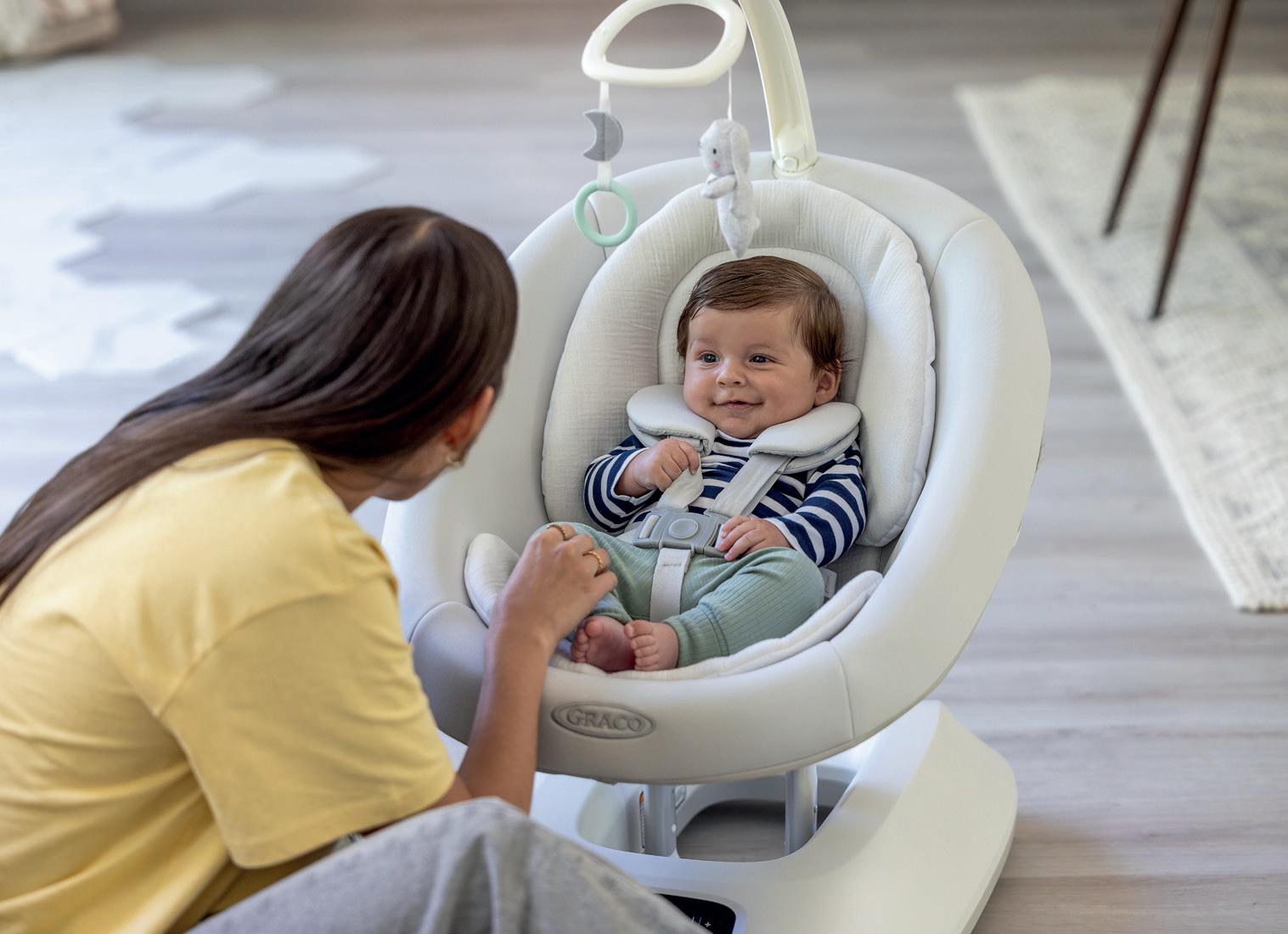
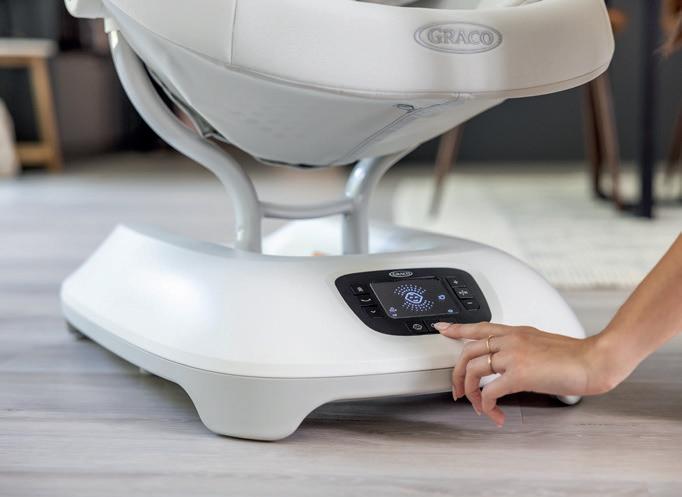
Graco’s Eluma range is rede ning smart soothing, combining advanced technology, contemporary design and standout value to bring calm to the oftendemanding fourth trimester. Launched last year with the introduction of the Eluma Sway Soothing Baby Swing, a must-have for new parents.
At the heart of Eluma is integrated Cry Detection Technology, which senses when baby becomes unsettled and responds with gentle motion and sound. Drawing from many soothing combinations from white noise and relaxing melodies to comforting vibration and sway motion, parentcontrolled settings allow Cry Detection functionality to be activated or switched o as preferred.
Extending the technology into the sleep space, the new Eluma Nest Bedside Crib o ers even more reassurance for a restful sleep, Eluma Nest bene ts from breathable mesh for increased air ow and visibility, a rm at mattress and Bluetooth connectivity. Both retail at £200, and feature intuitive touchscreen controls, organic fabrics, are suitable from birth to around six months (9kg) and deliver contemporary styling designed to complement modern home interiors. RRP £200 | Visit www.gracobaby.eu/uk for more information. www.gracobaby.eu/uk
Designed to soothe and comfort, the Sway Swing from Red Kite recreates the gentle motion babies love.
With a calming side-to-side sway, ve speed settings, and three timer options, it o ers a personalised soothing experience, enhanced by lullabies or your own music via Bluetooth. The deep, padded seat with head support ensures maximum comfort, while soft luxury fabrics add a premium touch. Lightweight and easy to move, it features a modern touch screen panel for e ortless control. Complete with a toy bar, washable seat unit, and
contented little ones.
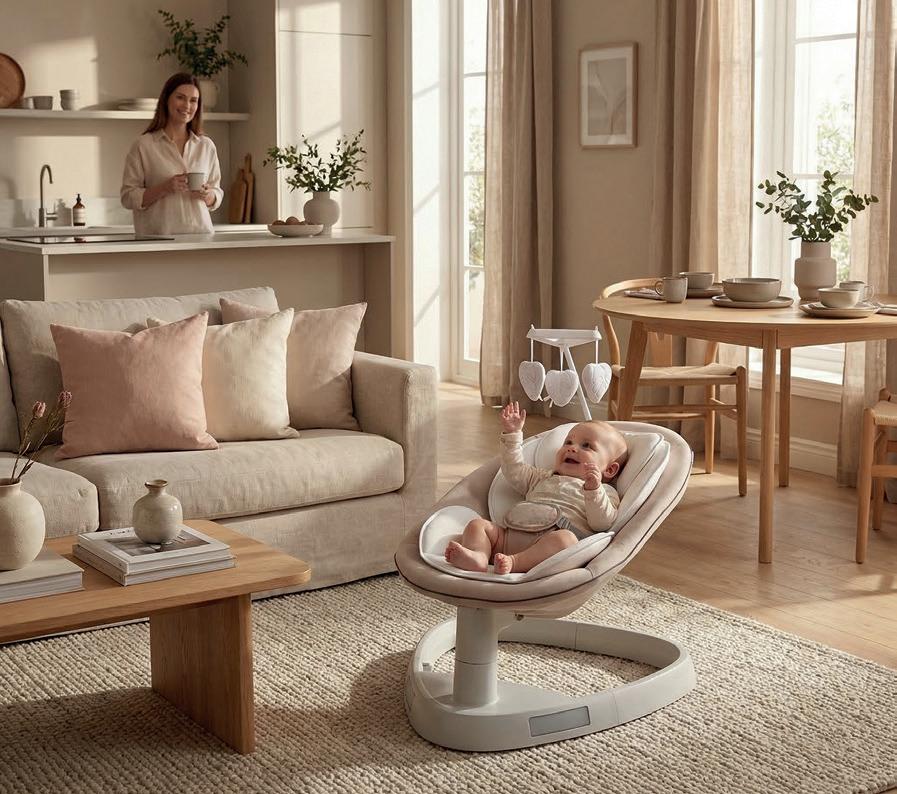
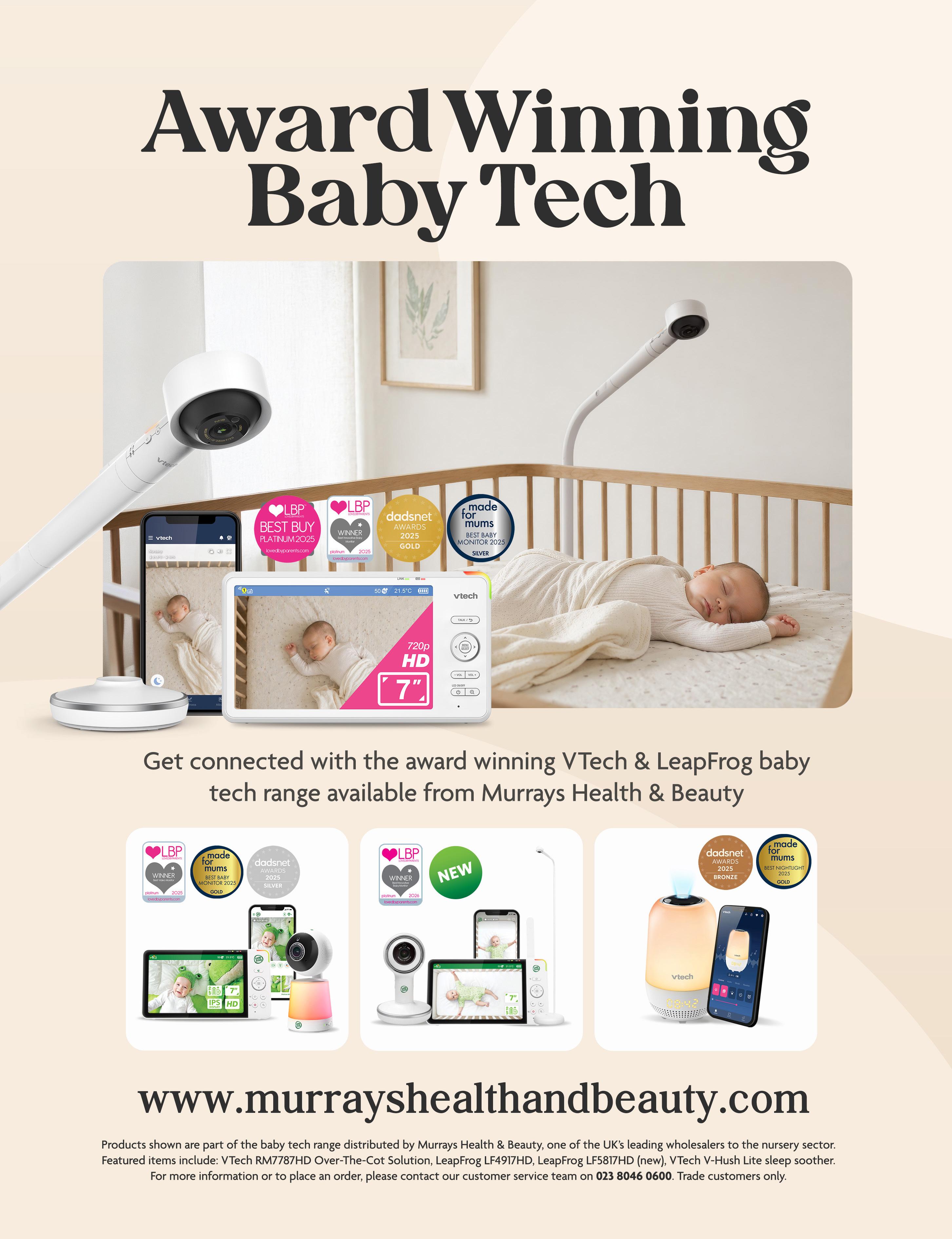
Chicco introduces the First Dreams Purring Cat, a soothing plush companion designed to support relaxation from birth.
Gentle vibrations mimic the comforting sensation of a real cat’s purr, helping little ones settle more easily at bedtime.
With over 20 minutes of continuous vibration and a choice of classical melodies from Mozart and Beethoven, it creates a calming sleep environment. The soft, cuddly design can be placed on baby’s tummy, encouraging sensory development and emotional comfort.
Practical for everyday use, it is machine washable with a removable battery compartment for easy cleaning.
For more information contact the below.
TEL: 0333 220 6070
sales@rkwltd.com
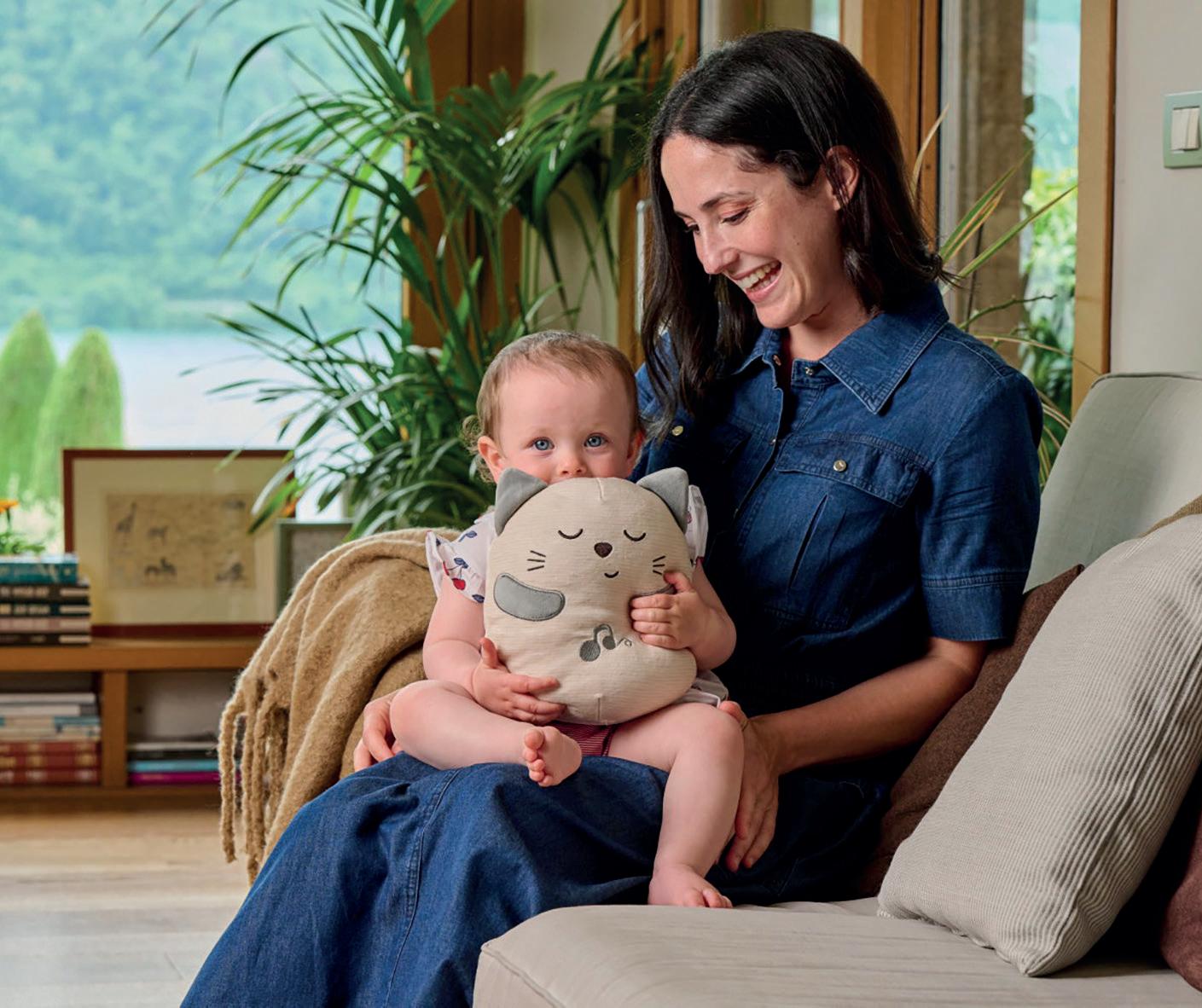
The Chillax DM568 brings a more exible approach to baby monitoring, combining the reliability of a parent unit with the freedom of app-based viewing.
Recently awarded Platinum in the Best Buy Nursery category at the Loved By Parents Awards, it re ects what modern parents value most.
With a 2K QHD camera and 5” handheld screen, it delivers clear visibility at home, while the ChillaxCare app enables remote access. A unique innovation, its WiFi on/ o switch, adds privacy control, while pan, tilt, zoom, and soothing nightlights support everyday routines. www.chillaxcare.com
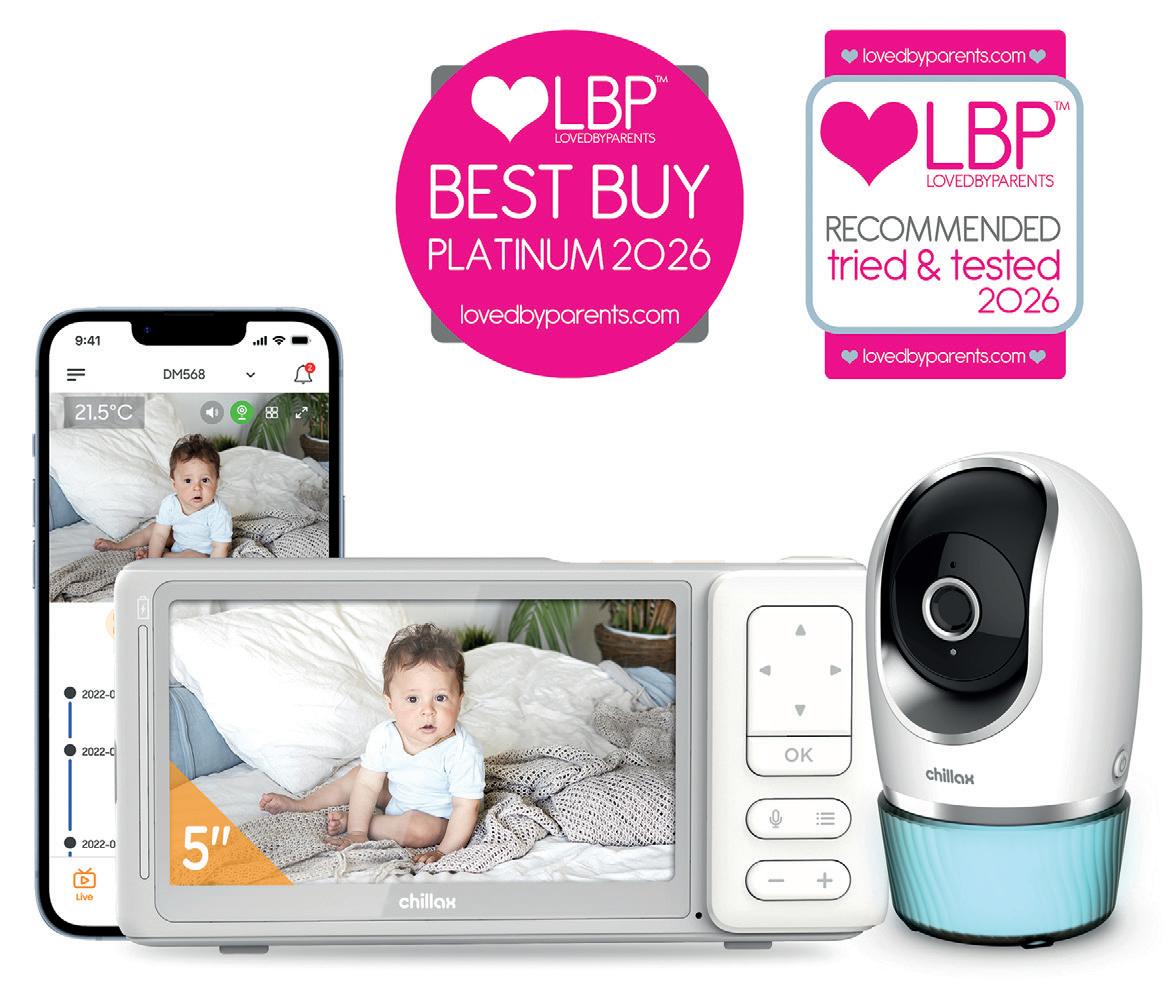
Most baby monitors are designed for the nursery. The GoBaby Portable+ is designed for real life and is already gaining recognition, winning Platinum in the Best Video Monitor category at the Loved By Parents Awards.
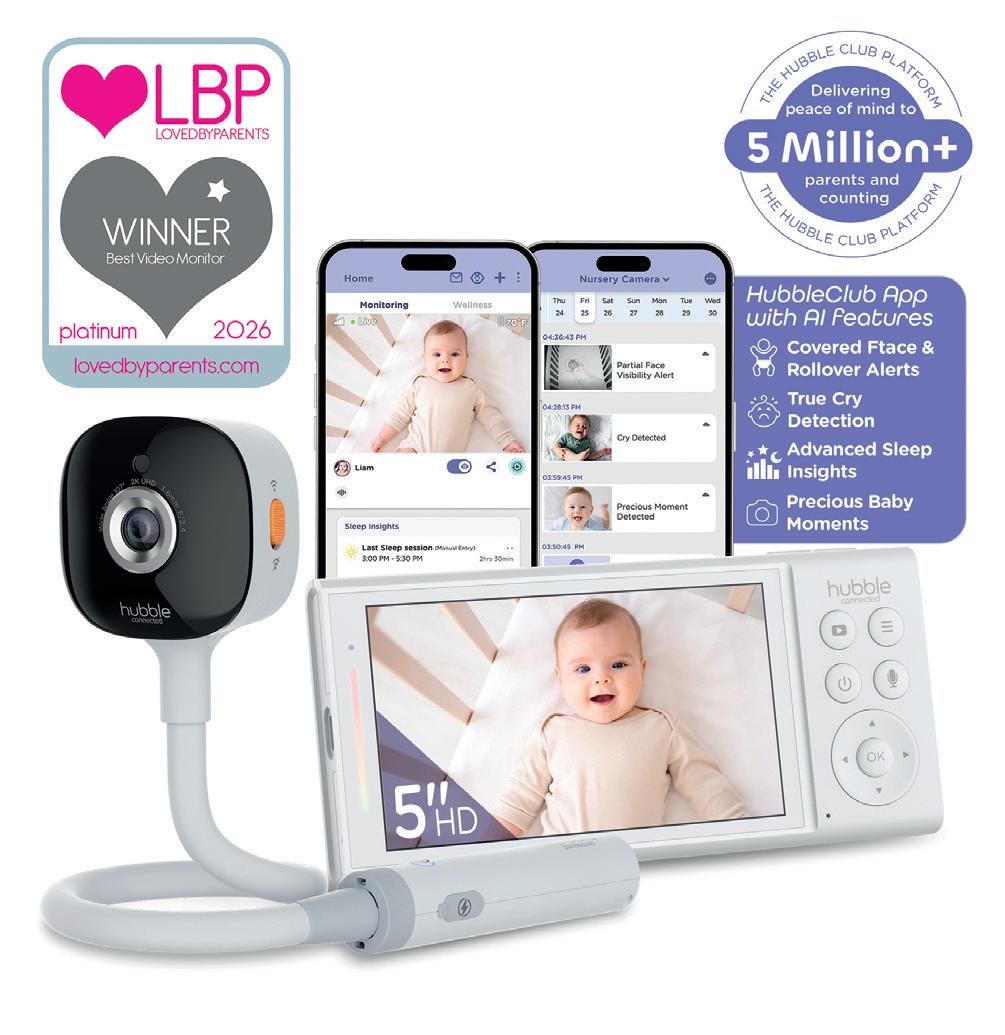
With 2K Ultra Clear HD video, an attachable all-day battery for portable viewing, and WiFi and non-WiFi viewing, it lets parents check in from anywhere whether that’s the kitchen, or a weekend away.
Paired with the HubbleClub app, Advanced Hubble Insights for Rollovers, Covered Face & True Cries cut through the noise, while Advanced Sleep Insights o er a clearer picture of baby’s sleep.
For more information contact the below.
TEL: 0333 220 6070 | sales@rkwltd.com
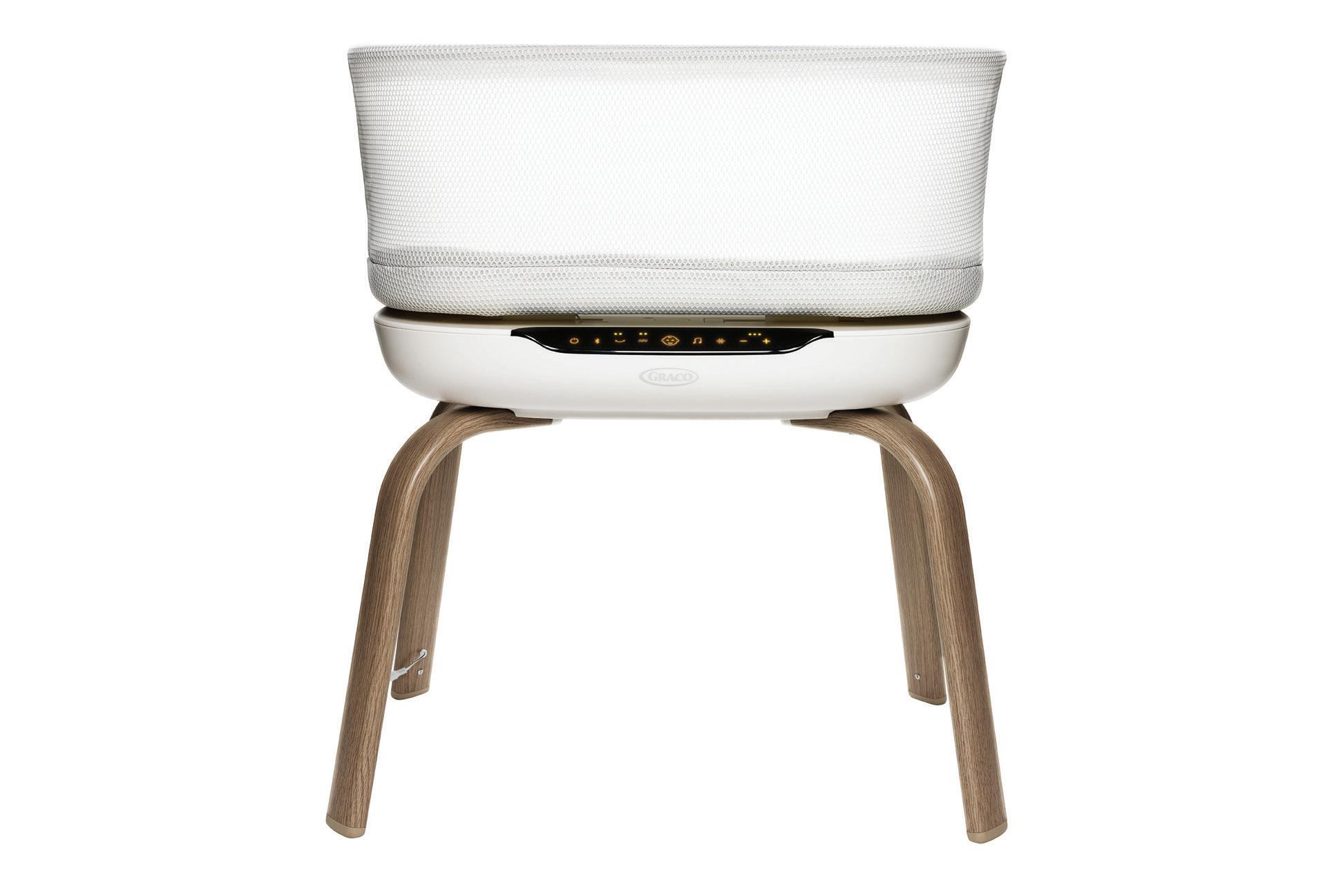
From cuddly comforters to stylish nursery companions, plush toys continue to win hearts with parents and gift buyers alike.
Soft and plush toys remain one of the most enduring favourites in the nursery sector, loved for the comfort, charm and emotional connection they bring from day one. Whether it’s a timeless teddy, a super-soft bunny or a playful safari character, these comforting companions often become part of a child’s earliest memories and treasured long after the baby years.
For today’s parents, plush toys o er far more than cuddle appeal. They’re increasingly chosen to complement nursery interiors, helping create warm, inviting spaces with personality and style. Soft textures, calming colours and beautifully designed characters all add to their appeal, especially as nursery aesthetics continue to in uence purchasing decisions.
Gift-givers also continue to drive demand, with grandparents, relatives and friends drawn to plush toys as thoughtful keepsakes that feel both meaningful and practical. Many shoppers are looking for gifts with longevity, and soft toys tick all the right boxes.
For retailers, the category o ers strong emotional appeal alongside excellent merchandising opportunities. From themed collections and seasonal launches to comforters and sensory soft toys, plush products remain a reliable performer that encourages gifting, repeat purchases and impulse buys alike.
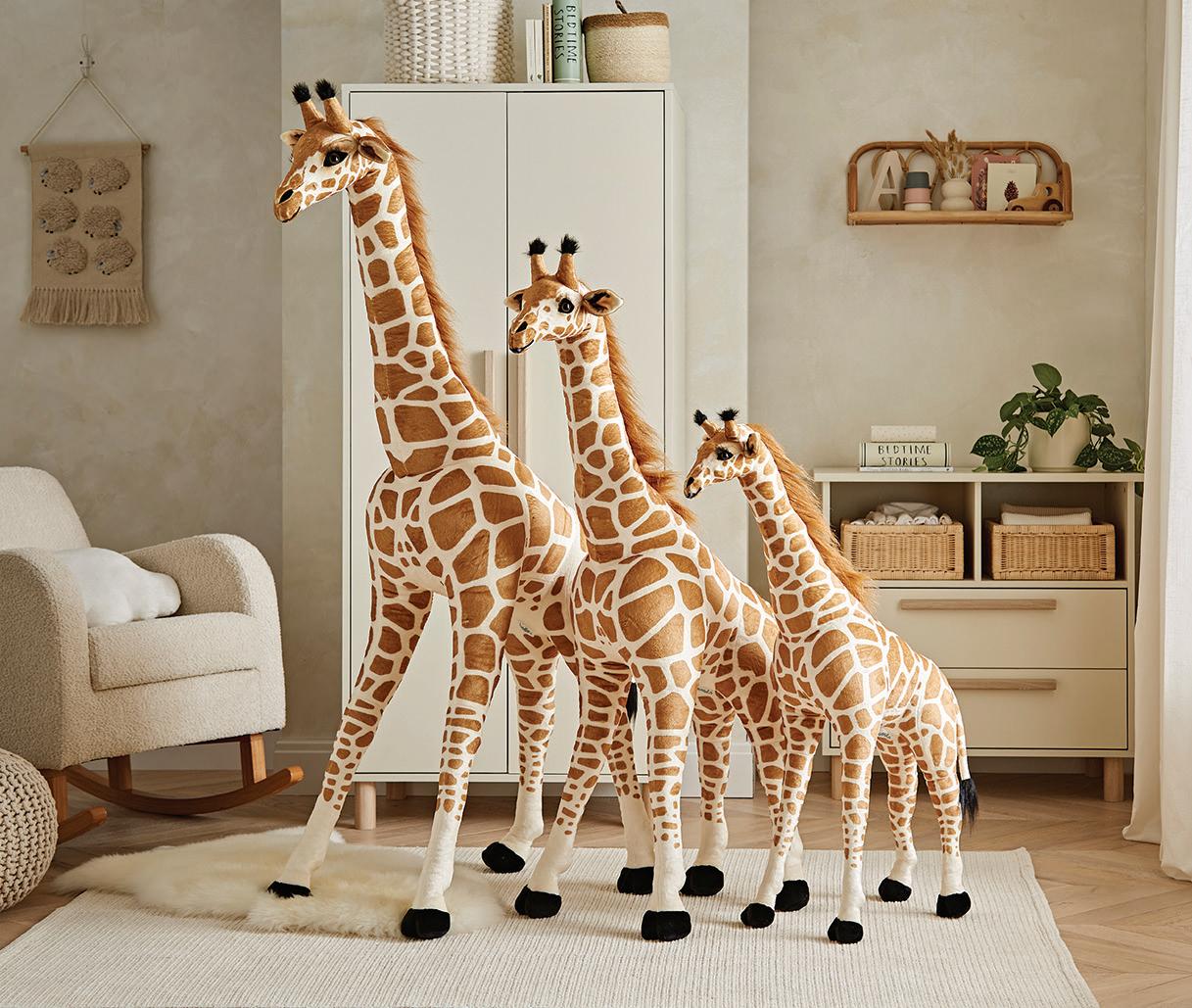
Bringing character and charm into the nursery, CuddleCo’s collection of standing plush animals o ers a playful yet decorative addition to any space.
From the beautifully detailed gira e, available in three sizes, to the enchanting unicorns in Rainbow and Gold Dust, each piece is crafted from soft, high-quality materials with a lifelike nish. Designed to stand independently, they create an eye-catching feature while encouraging imaginative play. Perfect for gifting or styling within a child’s room, these plush companions combine softness, scale and personality to create a warm, engaging environment little ones will love. For more information contact the below.
sales@cuddleco.co.uk | www.cuddleco.co.uk
At Baby Brands Direct retailers can access colourful botanical themed plush right through to the latest licenced trends.
Recently added to the o ering is the Taggies Signature collection, boasting their iconic colourful tags on loveys, toys and rattles.
The must have gift boxed collection by Kaloo of chubbies is available in 2 sizes and 4 colourways, and Lapinoo Rabbits in 2 sizes and 5 colourways, perfect for premium gift sales.
Retailers can also access favourites including Peter Rabbit, Paddington and Winnie the Pooh adorned on rattles, comforters and soft plush toys.
TEL: 0208 845 5000 | www.babybrandsdirect.co.uk
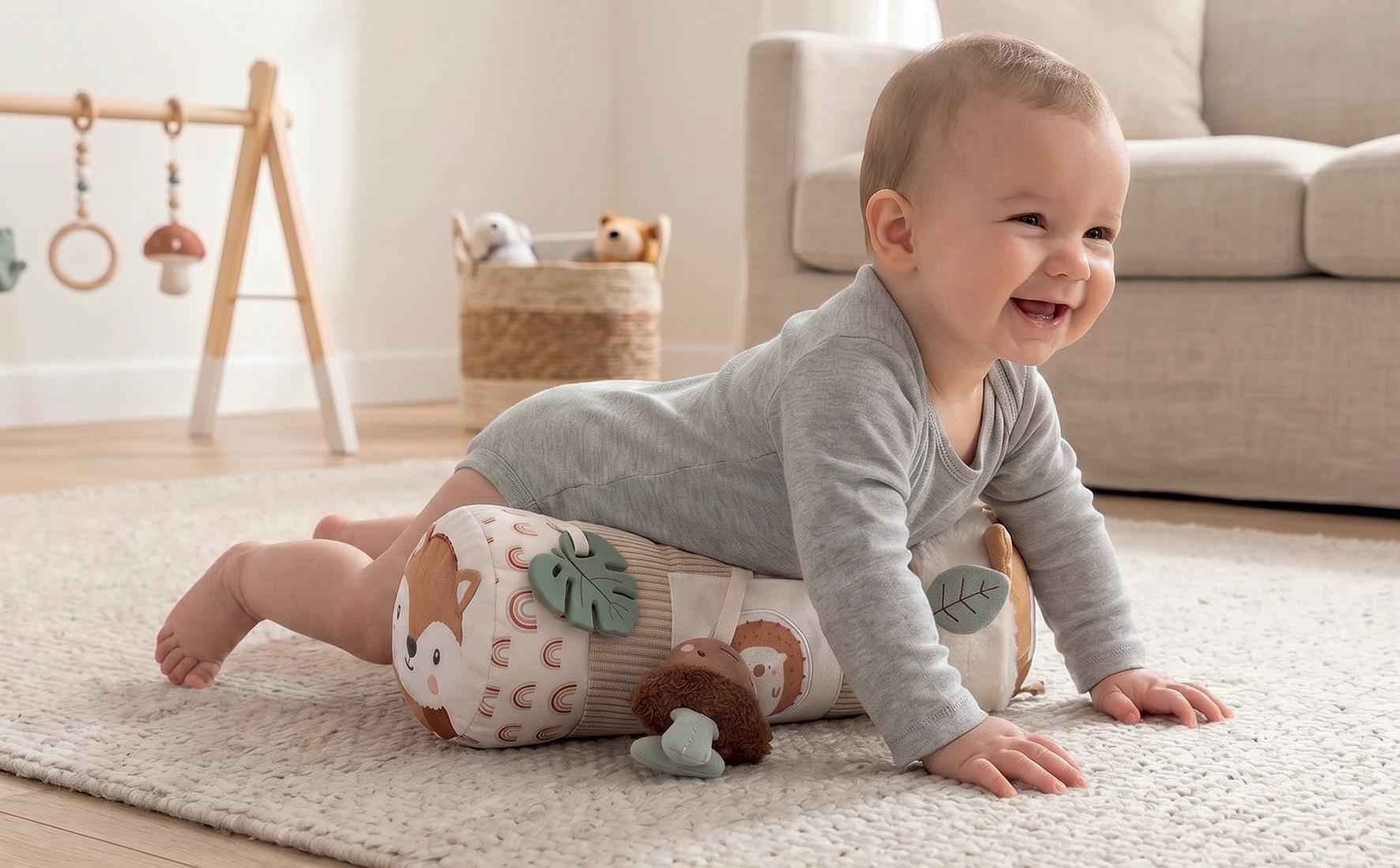
Make tummy time both fun and bene cial with these engaging activity rollers from Red Kite, designed to support early development from birth.
The soft, rounded shape gently props baby up, helping to build essential neck and back strength.
Packed with sensory features, including crinkles, rattles, tactile fabrics, and teething toys, it keeps little ones entertained while they learn. A baby-safe mirror encourages self-discovery and interactive play, adding to the experience.
Thoughtfully designed for comfort and stimulation, this versatile roller also makes a perfect gift for growing babies.
TEL: 01454 326555 | www.redkitebaby.co.uk
Rainbow Designs offers a beautifully curated collection of plush essentials and soft toys designed especially for newborns and infants.
Featuring much-loved classic characters such as Peter Rabbit, Paddington, Disney Winnie the Pooh, Harry Potter Wizarding World and Guess How Much I love You, Rainbow combines trusted brands with beautifully created baby-soft nursery toys, designed to support sensory development, encourage early interaction, and provide comfort during those important first months. Exciting new collections arriving this year include Care Bears Baby and Disney Dumbo, and a beautiful new Disney Winnie the Pooh collection to celebrate the 100 years of the much loved bear.
An exciting and adorable new arrival, is the Care Bears Baby collection which brings the timeless message of love, kindness and friendship to a new generation. Featuring babysoft versions of Cheer Bear, Funshine Bear and Bedtime Bear, the range includes ring rattles, comforters and My First Care Bear soft toys, making it ideal for gifting and everyday cuddles.
Rainbow’s best-selling Winnie the Pooh infant collections –Hundred Acre Wood and Always and Forever – are joined by the delightful Winnie the Pooh 100 range, created to celebrate the 100th anniversary of the beloved bear. The collection includes a commemorative Winnie the Pooh soft toy, complete with a special anniversary tag as well as a beautiful infant plush gift set featuring a super-soft Winnie the Pooh cuddly toy, an illustrated comforter and an engaging ring rattle.
Disney Dumbo also joins the Rainbow family this year with an adorable infant collection inspired by the gentle, big-hearted baby elephant. Created from tactile, baby-safe plush, the range includes a ring rattle, comforter and a huggable My First Dumbo Soft Toy, with oversized floppy ears and a star-shaped teether.
TEL: 01329 227300 | www.rainbowdesigns.co.uk
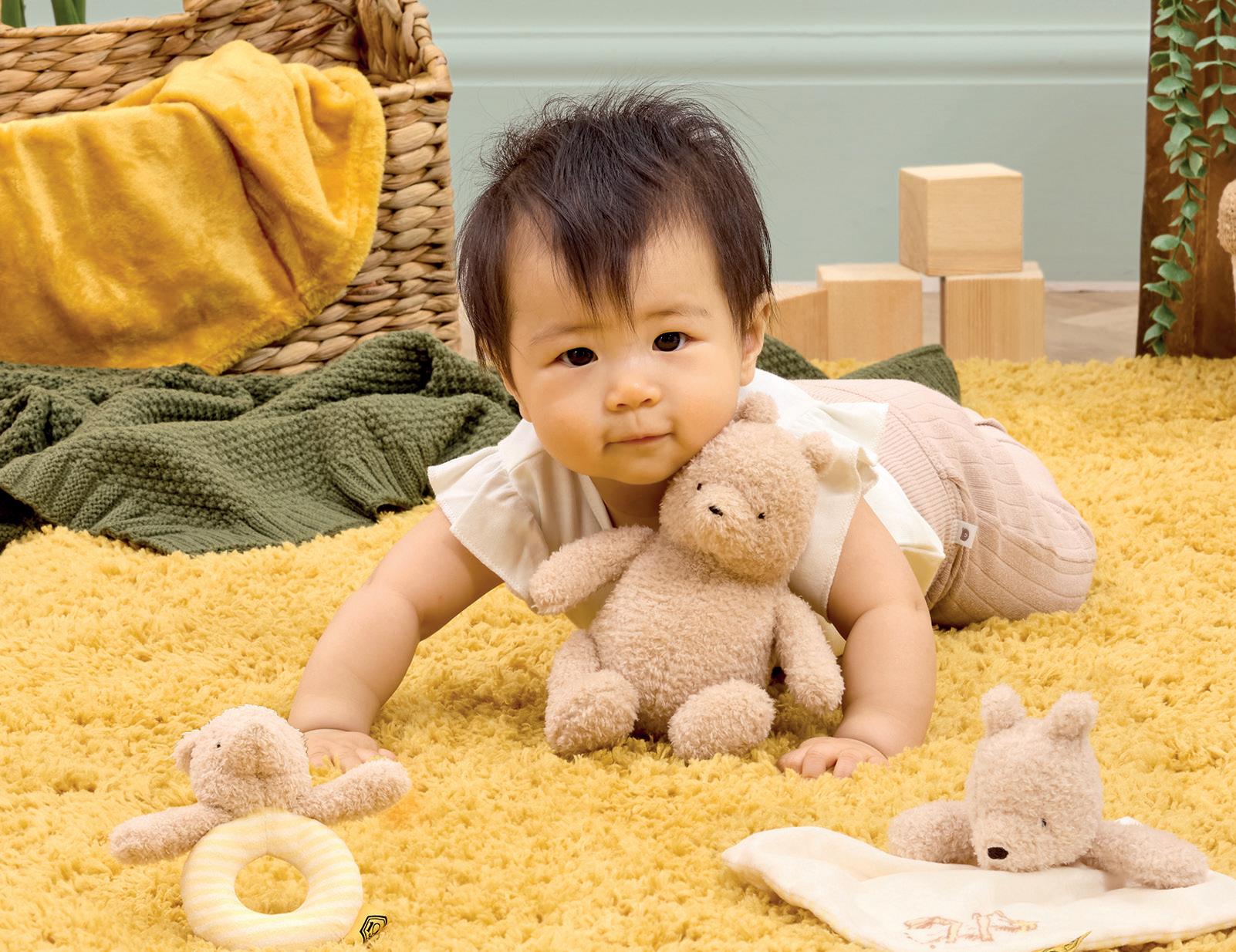
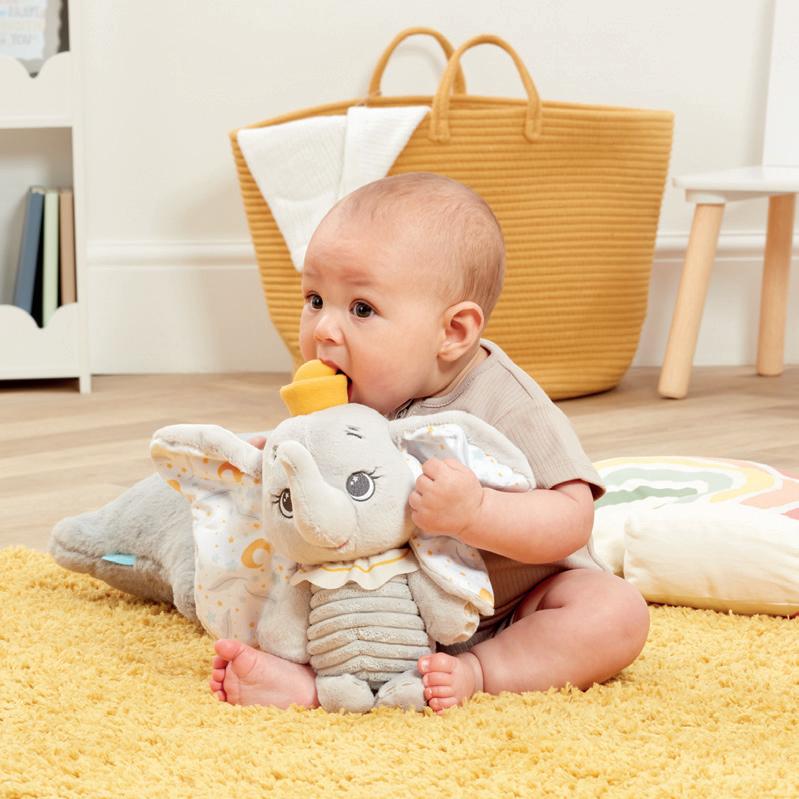
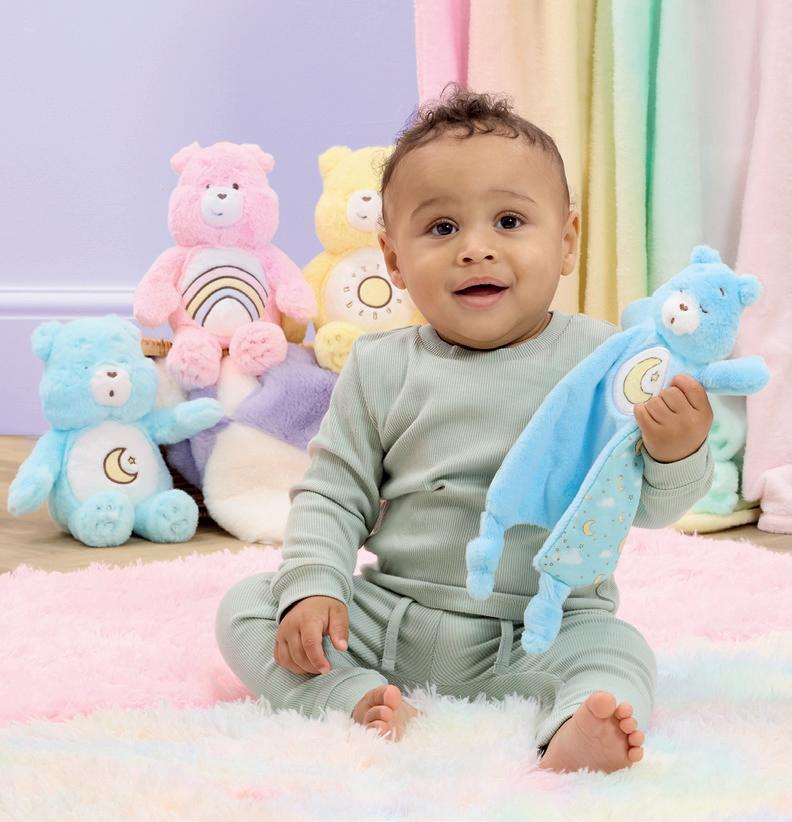
Celebrate 100 years of this beloved classic with our beautifully crafted new collection





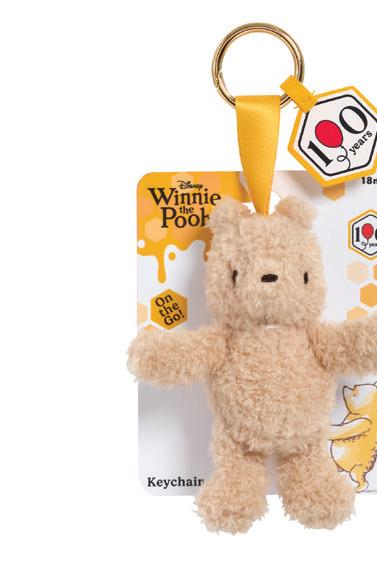






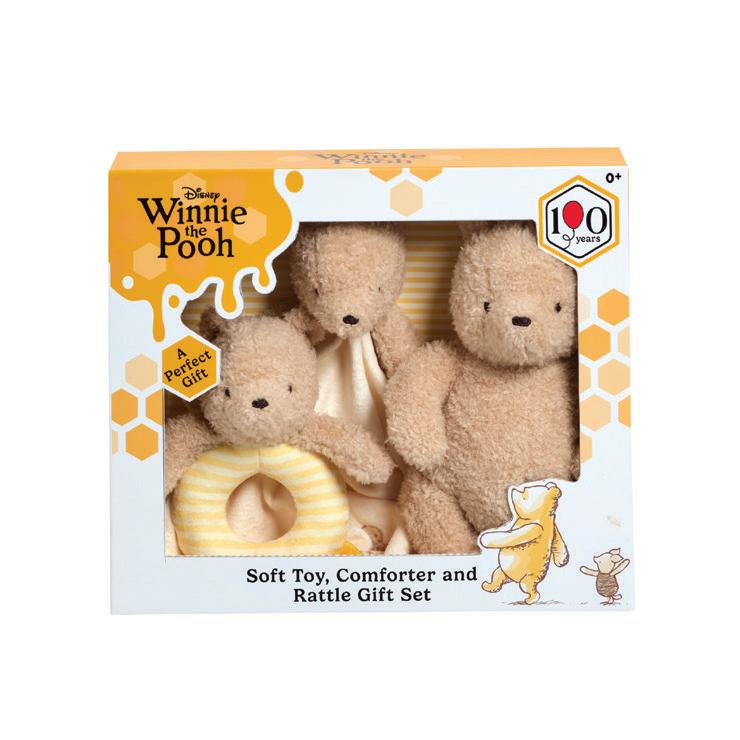





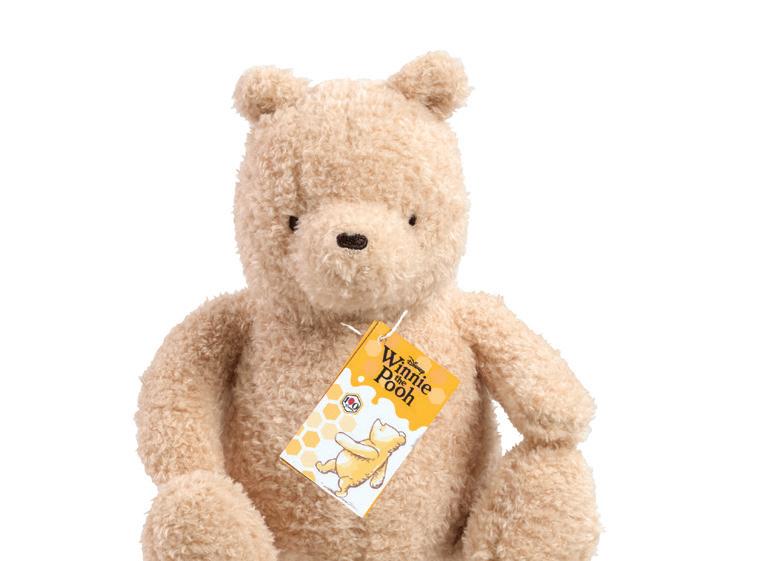


From rst teeth to soothing sore gums, today’s baby oral care products are designed with far more than comfort in mind.
Orthodontically developed paci ers, teats and teethers are helping to support healthy oral development from an early age, giving parents added reassurance while meeting everyday needs.
Meanwhile, baby-friendly toothbrushes and gentle gum care products are becoming nursery essentials as families place greater focus on early dental routines.
With soft materials, ergonomic designs and stylish aesthetics all playing a part, this category continues to evolve.
For nursery retailers, oral care o ers a strong opportunity to combine practicality, innovation and trusted developmental support in one growing sector.

Cheeky Chompers

Dr Brown’s toddler toothbrushes o er a practical and engaging solution for maintaining young children’s oral health.
Designed speci cally for small teeth and sensitive gums, these toothbrushes provide a gentle yet e ective cleaning experience. Featuring soft bristles and easy-to-hold handles, they support developing brushing skills while ensuring comfort.
A broad range of appealing, vibrant characters and colourful designs helps turn brushing into an enjoyable activity, capturing children’s attention and encouraging consistent use. Suitable for babies and toddlers, the range supports healthy dental habits early on.
For stockist enquiries contact Phil Bosher on the below. phil.bosher@babycentral.co.uk


multi-award-winning British nursery brand o ers their innovative ‘Flexi-Brush’!
Continuing their mission to support young gums, this product helps parents look after baby’s oral care.
The Flexi-Brush is the ideal rst toothbrush. The wide shoulders give an anti-choke design allowing baby to hold the brush themselves, explore and get used to teeth-cleaning!
Thoughtfully designed with a soft brush and di erent textures on the handle, the Flexi-Brush will gently massage teething gums to give much needed relief whilst the small head provides an ideal applicator to add teething gels and toothpaste. The perfect multipurpose rst toothbrush!
www.cheekychompers.com
Safe soothing has never been smarter with the Dr. Brown’s PreVent Soother Range.
Designed by a paediatric dentist, each soother features a 100% silicone bulb with a patented suction-free air channel and ultra-thin stem to help reduce pressure inside baby’s mouth, supporting healthy oral development and helping to prevent issues such as posterior crossbite.
Available from 0–18 months, the range offers ageappropriate solutions that are taste-free, odourless, and durable over time. Finished with playful designs and a classic shield to suit most little faces, PreVent combines clinical insight with fun-but-functional everyday appeal. For stockist enquiries contact Phil Bosher on the below. phil.bosher@babycentral.co.uk
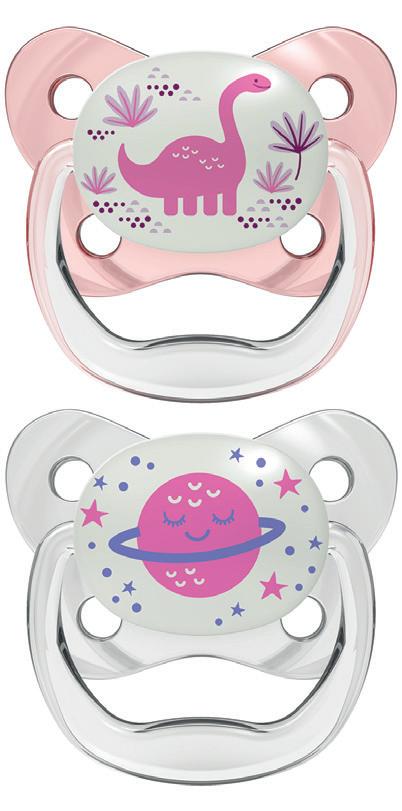
Make little one’s evening routine even more fun by introducing baby to a Matchstick Monkey Baby Electric Sonic Toothbrush.
Designed to clean little one’s teeth gently and effectively, the baby-sized brush features ultra-soft bristles that are ideal for newly cut teeth, while gentle sonic vibrations help to remove any food or milk residue.
The safety-tested product contains integrated BioCote Antimicrobial Protection and a travel cap to help keep the toothbrush cleaner and fresher for longer.
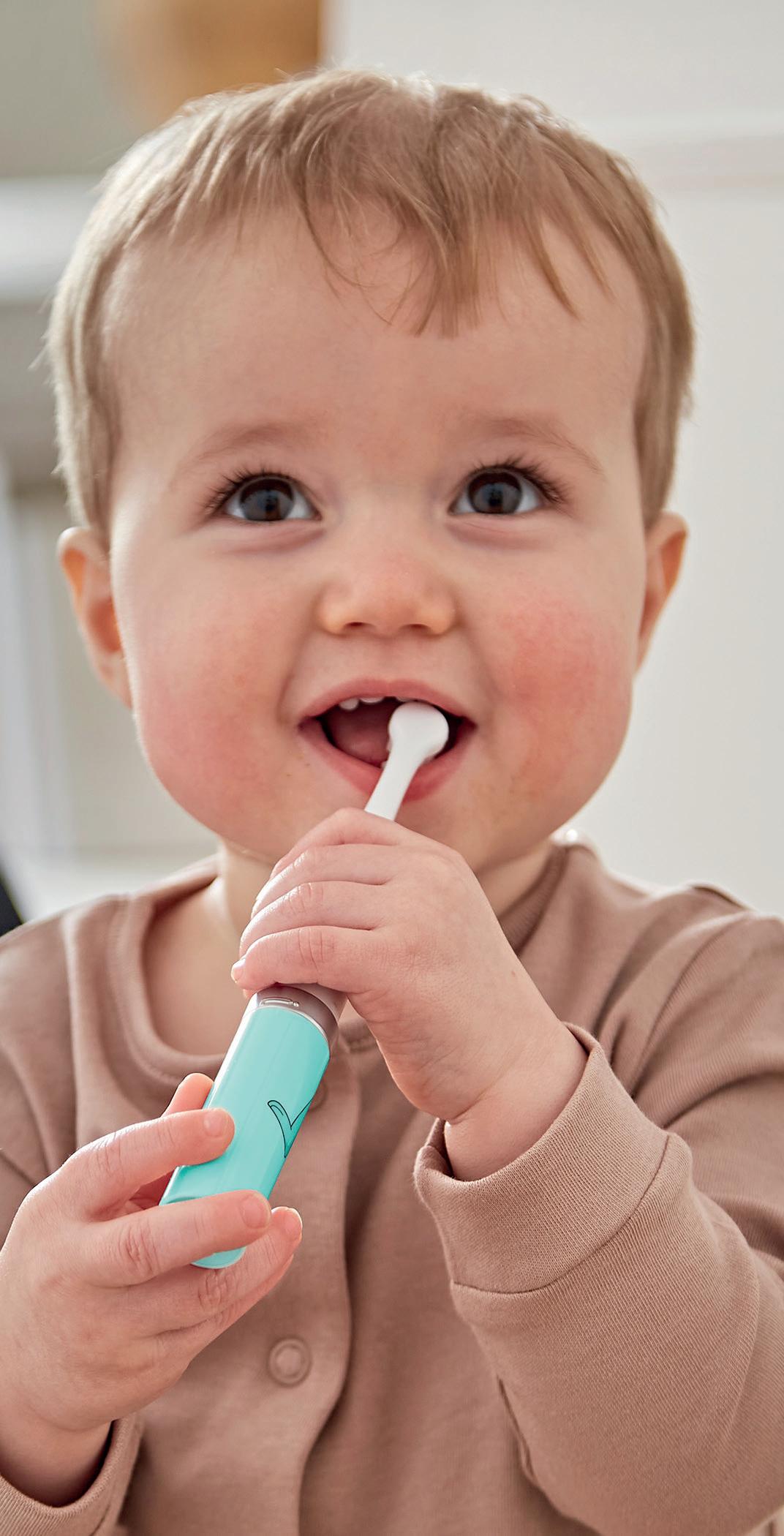
Matchstick Monkey’s five fun animal character designs make brushing fun and engaging for little ones, helping to establish an oral care routine from early on. www.matchstickmonkey.co.uk






From strong family values to emotionally driven purchasing decisions, Greece’s nursery market o ers a fascinating contrast to many Northern European territories. In this insightful feature, Jonathan Feingold explores how culture, trust, and multi-generational in uence continue to shape buying behaviour across the country’s baby gear sector. Drawing on rst-hand experience and conversations with retailers and families alike, he examines why specialist retail remains so important, how premium brands continue to thrive despite economic pressures, and why Greece remains one of Europe’s most distinctive and resilient nursery markets.
There are some markets you analyse from spreadsheets, data and retail reports. Greece is not one of them. Greece has to be experienced.
For me, that experience is deeply personal. I regularly spend summertime on Paros, an island which, once visited, tends to capture people permanently. Beautiful beaches, extraordinary food, dramatic scenery, ancient history, and a pace of life that reminds you how modern Europe often moves too fast. I admit freely to some very strong personal bias. Island life in Greece during the summer is something rather special.
Yet beyond the postcard image lies one of Europe’s most fascinating nursery markets.
Regular visits have given me the opportunity to observe the Greek baby industry beyond the tourist lens, speaking with retailers, distributors and families themselves. What emerges is a market built not simply on commerce, but on emotion, family structure, trust and cultural identity.
A Small Market with Big Emotional Spending
I always begin market analysis with demographics because numbers provide perspective.
Greece has a population of around 10 million people and approximately
70,000 births annually, barely 10% of UK birth levels. Unlike Britain, where population growth remains signi cant, Greece faces ongoing demographic decline, with the population reducing year after year.
On paper, that should create a weak nursery market.
In reality, the opposite often occurs.
The reason is simple: in Greece, children sit at the absolute centre of family life. Multi-generational households remain in uential and grandparents, “yiayia and pappou”, frequently play major roles not only in childcare, but also in purchasing decisions.
This creates a market where families often spend disproportionately highly on baby products relative to o cial economic indicators. Greeks may negotiate aggressively on many things in life, but when it comes to babies and children, quality and safety matter enormously. Parents and grandparents want the very best they can a ord, and often slightly beyond it.
What immediately di erentiates Greece from many Northern European nursery markets is that this remains a deeply physical retail environment. This is a touch-not-click country.
Parents do not simply click and buy a travel system online because an
in uencer recommended it. Is that a “hurray” I hear?
They want to touch the fabrics, run their ngers over them, fold the chassis, test the suspension for those dodgy roads, assess the nish quality, and physically manoeuvre the stroller. In Greece, this matters even more due to the realities of the local environment.
Bumpy, narrower pavements, uneven streets, steep island terrain and apartment living all in uence purchasing behaviour.
The stroller “test drive” remains very real and an absolute must.
Retailers repeatedly emphasised that advice, trust and in-person demonstration remain critical components of the sales process, especially for rst-time parents.
This is still a market where the shop oor closes the deal.
Despite the global rise of e-commerce, Greece remains overwhelmingly specialist retail-led in categories such as:
• Strollers
• Travel systems
• Car seats
• Nursery furniture
Independent retailers and specialist chains continue to dominate because they provide what pure online retail struggles to replicate: reassurance.
Parents want guidance. Grandparents
want con dence. Families want to physically inspect expensive purchases before committing.
Large destination-style baby stores continue to perform strongly, with key players including:
• Koudounistra
• LETO Baby Stores
• Kiddo Athens Megastore
• IroKids
• The Baby City
Alongside these sit long-established independents and regional specialists, many of which have built customer loyalty over decades.
Online Growth, But Not an Amazon Market
Online sales are certainly growing, particularly in consumables, entry-level products and price-driven categories. However, Greece has not evolved into a fully Amazon-led nursery market in the same way as the UK or USA. Amazon operates largely through German and Italian order ful lment into Greece rather than through a highly localised next-day infrastructure. That distinction matters. Delivery expectations, customer habits and buying behaviour remain di erent. Instead, the dominant digital in uence comes from Skroutz.gr, Greece’s enormously powerful price-comparison and marketplace platform. Skroutz has fundamentally



altered pricing transparency across the market and exerts major in uence over retailer competitiveness.
Yet even with digital growth, premium nursery purchasing still heavily favours physical retail interaction.
One of the most interesting contradictions within Greece is the resilience of premium baby products despite wider economic pressures.
Part of this comes from the strength of family support structures. Part comes from Greece’s signi cant informal cash economy, which continues to underpin spending power in ways not always re ected in o cial statistics.
The result is that premium travel systems and car seats continue to sell strongly.
In many cases, grandparents contribute towards large purchases as part of the traditional baby “proika”, e ectively the baby dowry, reinforcing the emotional signi cance of the purchase.
In Greece, a €700 to €800-plus stroller system is often not viewed simply as transport equipment. It is viewed as an expression of care, status, safety and family pride.
The Greek nursery market now e ectively operates across three distinct tiers:
Cybex currently holds perhaps the strongest aspirational momentum in Greece, particularly within urban consumers in Athens and Thessaloniki.
Priam, Balios and Cloud T systems are highly visible and socially in uential.
Bugaboo maintains strong appeal among a uent design-conscious parents, while UPPAbaby and Nuna continue to gain traction within premium independent retail.
Stokke remains powerful in complete nursery ecosystems, and Peg Perego continues to hold meaningful specialist presence.
Perhaps most interestingly, Inglesina still commands enormous respect and dominates travel system volume in Greece. The brand’s classic European styling, perceived reliability and heritage positioning resonate strongly with Greek families.
Mid-Market Volume Leaders
Joie performs exceptionally well thanks to its balance of safety reputation and value pricing.
Chicco remains one of the country’s strongest mass-market names, bene ting from long-standing consumer trust.
Maxi-Cosi continues to dominate heavily within car seats and travelsystem compatibility, while Chipolino performs strongly at accessible price points.
Joolz is becoming increasingly visible within premium independents, particularly among younger urban consumers seeking aesthetics alongside practicality.
Current purchasing trends strongly favour:
• Complete travel systems
• Neutral and beige colour palettes
• Compact-fold products

• Apartment-friendly solutions
• European safety credentials
• Car-seat compatibility
The market increasingly wants premium aesthetics without necessarily reaching ultra-luxury price levels.
In practical terms, the strongest combinations currently appear to be:
• Inglesina for trusted European quality
• Cybex for aspirational premium positioning
• Maxi-Cosi for trusted safety systems
• Joie for value-driven volume
A Market De ned by Emotion
What makes Greece truly di erent is that this remains an emotionally driven nursery market.
Purchasing is rarely transactional. It is family-led, discussion-led and trust-led. Grandparents remain highly in uential. Retail relationships matter. Brand storytelling matters.
Even in an era of demographic decline and economic pressure, Greek families continue to invest heavily in children.
That emotional intensity creates one of Europe’s most resilient and distinctive nursery sectors.
Greece may be smaller in birth volume, but it remains a powerful nursery fortress built on family, trust, premium aspiration and the enduring belief that children deserve the very best.