
THE 360° SOLUTION FOR YOUR CLUB UNITING THE WORLD OF FITNESS GLOBAL MEDIA PARTNER ISSUE 5 2024 @ HCMmag HCMmag.com


YOUR SUCCESS IS OUR BUSINESS – LET’S TALK.
At LES MILLS, we obsess about creating fitness experiences people fall in love with – making exercise more motivating and more enjoyable. That’s why everything we do is designed to get members through your doors and keep them coming back. With over 55 years of experience, Les Mills is here to help you build scalable group training success - ultimately driving more profit. Explore a partnership that provides you with industry-leading solutions: science-backed workouts, thousands of world-class instructors Omnifitness options, expert consultation, and more.






Infuse coffee into your wellness r ituals

When retailer, the €11 billion-a-year Colruyt Group, decided to get into the health club market, the plan was to fully integrate its entire business using customer insight data. The results are remarkable
he power of customer data to deliver success is highlighted in this issue by our interview with Pieterjan Nuitten (page 32).
Nuitten is MD of Jims, the Belgian health and fitness operator which is part of the Colruyt Group – Belgium’s biggest retailer and a vast and widely-divested €11 billion a year operation.
The company has had a decades-long commitment to the wellbeing of its customers which culminated in the realisation that in order to fully embrace this philosophy, it had to add physical activity to its portfolio
The board of the Colruyt Group made the decision to enter the health club market and set Nuitten the task of buying a gym chain and fully integrating it into the group.
Jims was acquired in April 2021 and Nuitten has been busy since transforming the business and connecting it to the Colruyt portfolio of retail businesses.
With an MBA and a background in retail, he’s been using his expertise in customer insight to inform decision-making around the development of this wellness ecosystem.
The Jims clubs are used as hubs for access to other services within the group. If you’re a cyclist you can get specialist bike workouts, as well as bike fittings and discounts at Colruyt’s retailer, Bike Republic and if you’re looking for healthy eating advice, Jims can assess your nutritional needs and prescribe menus and with one click of the app, all the groceries you need are ready to collect from the group’s supermarkets. These are just a few examples of the integrations already established.
Putting a health club operation at the heart of such a wide-ranging commercial operation is a thrilling concept and ultimately, it’s customer data that’s driving these integrations. Retailers have this at their fingertips – and the expertise to use it effectively.
The fitness sector is starting to move in this direction, with companies such as Active Insights doing regular consumer insight studies and Savanta partnering with UK Active to create the new UK Active Consumer Insight Repor t, which will be produced each quarter.

The board of retailer Colruyt Group made the decision to enter the health club market with the acquisition of the Jims brand
With huge interest in wellness from consumers, developments such as those at Colruyt could take us into a new world in terms of monetising the offering.
It begs the question who will get there first? Will more retailers take market share with their advanced customer insight tools, or can health club operators up their game and come to better understand customers, leading to more commercially effective offerings? Only time will tell.
● Pieterjan Nuitten will be a speaker at the HCM Summit in London on 24 October More: www.HCMmag.com/summit
Liz Terry, editor lizterry@leisuremedia.com32 Pieterjan Nuitten on how Jims is embracing a 360 degree approach


07 Editor’s letter
Using consumer insight to elevate the promotion of physical activity is opening new doors for the sector and engaging new and significant players, says Liz Terry
12 HCM Forum
An attempted suicide by one of his team has seen Kevin Teixiera making a commitment to support the mental health of members and staff
14 HCM people
Mariah Rooney
The founder of Trauma Informed Weight Lifting talks to HCM about supporting people who’ve experienced trauma to move past it
18 HCM people
Mark Tweedie
A move from Brimhams Active to Miova will see Tweedie tackling consultancy
22 HCM news
PureGym hits two million members and Empowered Brands takes on Fit+
32 Interview
Pieterjan Nuitten
The MD of Jims explains to Kate Cracknell how an €11 billion retailer got into fitness
48 Everyone’s talking about Pelvic power
It’s time to break the taboo about pelvic health for men and women of all ages
56 Life Lessons
Sarah Luna
Appointed president of Xponential Fitness in 2021 at the age of 34, Luna talks about life and the industry experiences that have helped to shape her and her career
62 Inspiring enthusiasm
Offering people rewards can help motivate them to exercise more, according to new research, as Kath Hudson reports
66 All welcome
As more trans women, trans men and non-binary people join health clubs, it’s time to work out an effective system where everyone feels included


76 Behaviour change
AI has the power to support people in making healthy lifestyle changes if its algorithms can be taught to understand the stages of motivation, as Jody Heckel reports
82 Ahead of the curve
Steph Eaves looks at how health assessment devices are being reinvented to keep up with industry trends and rising consumer expectations
94 Fully integrated
From member payments to virtual classes, the latest software integrations can take health and fitness operations to the next level. Providers tells us about their most in-demand offerings

100 Product innovations
Steph Eaves rounds up the latest health, fitness and wellness kit from Egym, Physical, Escape and Eleiko
102 Reader services HCM Directory
If you’re in procurement, the HCM Directory is part of a network of resources designed for you that includes www.HCMmag.com/CompanyProfiles
104 Research Preventing decline
Research by UCLA Health found Kundalini yoga has powerful effects on memory in women who are at risk of developing Alzheimer’s disease


theteam@leisuremedia.com

Editor Liz Terry
+44 (0)1462 431385

Managing editor
Steph Eaves
+44 (0)1462 431385

Editor-at-large
Magali Robathan
+44 (0)1462 431385

Publisher Jan Williams
+44 (0)1462 471909

Head of news
Kath Hudson
+44 (0)1462 431385

Assistant editor Megan Whitby
+44 (0)1462 471906
Email us:
Customer service
+44 (0)1462 471901
Advertising
+44 (0)1462 431385
Subscriptions
+44 (0)1462 471910
Circulation
+44 (0)1462 471932
Finance
+44 (0)1462 471930
Credit control
+44 (0)1462 733477


Other resources from Choose how you read
HCM digital Read free online and enjoy extra links and searchability www.HCMmag.com/digital
HCM magazine is available in print from www.leisuresubs.com
HCM PDF
A PDF edition is available to read offline at: www.HCMmag.com/pdf
Fit Tech magazine www.fittechglobal.com www.fittechglobal.com/archive
HCM Handbook www.HCMhandbook.com www.HCMhandbook.com/pdf
HCM Online library www.HCMmag.com/archive
HCM Ezine & Instant Alerts www.leisuremedia.com/subscribe
Leisure Opportunites jobs & news www.leisureopportunities.co.uk
Buyer Search Engine www.fitness-kit.net
To subscribe to HCM in print (Health Club Management): log on to www.leisuresubs.com , email subs@leisuremedia.com or call +44 (0)1462 471930.
Annual subscriptions: UK £45, Europe £57, rest of world £80, students (UK) £22.
Style: HCM follows an editorial house style which precludes the use of marketing devices in body text and headlines, eg: capitalised or part capitalised names and registered trademarks. CamelCase is allowed. Contact the editor for more details – lizterry@leisuremedia.com.
Copyright details: HCM (Health Club Management) is published 12 times a year by Leisure Media, PO Box 424, Hitchin, SG5 9GF, UK. The views expressed in this publication are those of the authors and do not necessarily represent those of the publisher. All rights reserved. No part of this publication may be reproduced, stored in a retrieval system or transmitted in any form or by means, electronic, mechanical, photocopying, recorded or otherwise, without the prior permission of the copyright holder, Cybertrek Ltd 2024. Print and distribution Printed by The Manson Group Ltd. Distributed by Royal Mail Group Ltd and Whistl Ltd in the UK and Total Mail Ltd globally. ©Cybertrek Ltd 2024 ISSN 1361-3510 (print) / 2397-2351 (online)


Fuel the debate about issues across the industry and share your ideas and experiences. We’d love to hear from you. forum@leisuremedia.com
We’re driving to enhance customer experience, deliver more sustainable operations and reduce operating costs
Ian Jones, Circadian Trust
For us to help our community stay healthy, we must ensure our buildings are in the best of health too. This means reducing waste and pollution and re-investing to keep them in tip-top condition.
Circadian Trust has ambitions to be carbon neutral by 2030, with interim targets including a 25 per cent reduction in CO2 emissions and 10 per cent reduction in water consumption by 2028 – we’ve also had a continuous improvement
programme to reduce our carbon footprint since 2005 and have undertaken initiatives, such as investing in Building Management Systems and installing LED lighting and pool covers, which has made a difference to energy consumption and costs.
Building management systems have become more powerful with the introduction of AI, meaning facility managers can control conditions 24/7, saving on both energy used and asset replacement.

This tech works across our sites, monitoring and adjusting, so the team can continually improve internal processes and procurement to ensure it minimises
impact on waste, miles travelled, emissions and pollution.
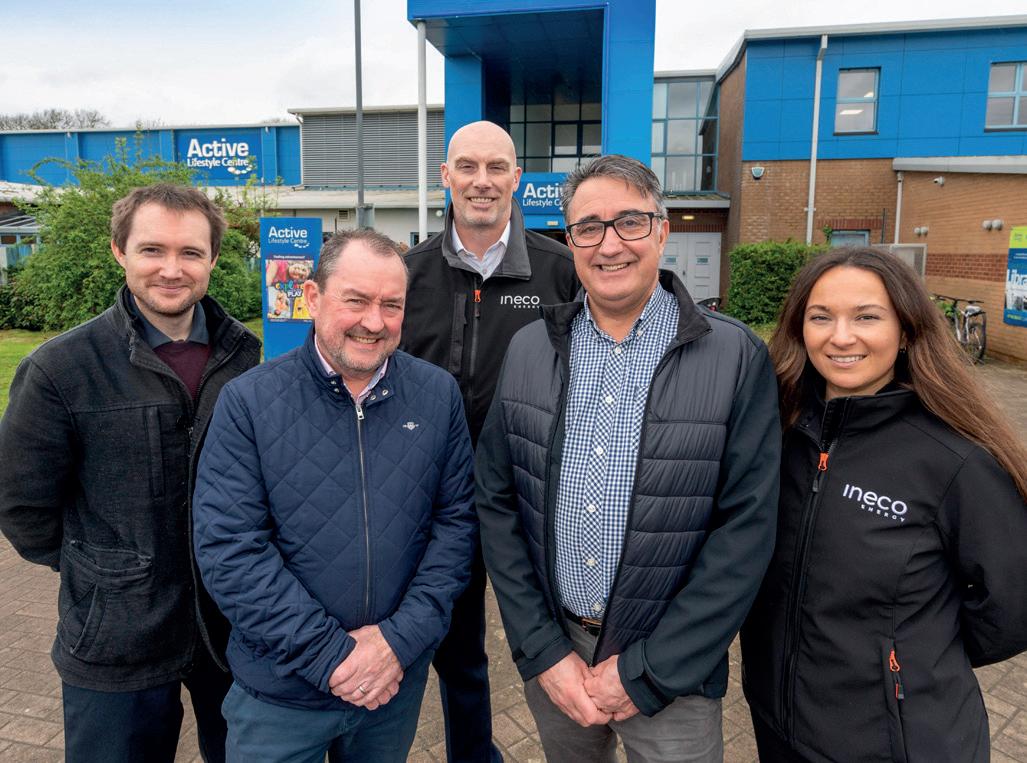
We’ve recently installed solar panels from Ineco that generate 360,000 kWh of clean energy and save 75 tonnes of carbon a year at Bradley Stoke Active Lifestyle Centre.
In summer they’ll power the entire 7,000sq m site, including the pool, exercise machines, pumps and lights, without needing power from the grid.
The £390,000 investment has been shared between us as the operator and South Gloucestershire Council, which owns the site.
Photovoltaics are a game-changer. They’ve been live since January and we’re already seeing up to £5,000 a month in energy savings.
We hope this demonstrates how sustainability can make a difference to the industry as we drive to enhance the customer experience and deliver more sustainable operations while reducing operating costs.
Warehouse Gym has a new focus on mental and physical

In light of your recent article on Mental Wellness (HCM issue 4, 2004, page 5), I wanted to share what we’re doing as a company.
The importance of mental health has never been clearer to me, as one of our team members tragically attempted to take their own life last year – an event that served as a massive shock to all of us on the team.
This incident made me realise that our physical fitness is not enough; we must also prioritise our mental health and I set out on the path of bringing awareness
to staff and members of the importance of mental health, particularly for men – a subject that’s often shrouded in stigma.
We launched the campaign with a charity event involving groups of men in physical challenges and with female staff and members as judges.
We’ve also introduced “Walk and Talk,” a programme encouraging members to engage in a group hike across Arabia’s landscape. It’s an opportunity for them to talk freely, while enjoying the beauty of nature.
I’ve made it our corporate responsibility to support the mental

health of members and staff and by incorporating this into our daily operations, we’re striving to create a more comprehensive health and fitness environment. We’re also providing group and solo sessions with mental health professionals to staff members who might be struggling. I firmly believe the industry should prioritise mental and physical health equally, because although exercise can relieve stress, mental health requires a deeper, more nuanced approach.
When people experience early life trauma it impacts their bodies and nervous systems. I became curious about how lifting weights could help them
Mariah Rooney
Founder,Trauma Informed Weight Lifting

Rooney has a psychotherapy background
Some personal trainers say they feel like their clients’ therapist because of the trusting relationship they build up – people confide in them.

At Trauma Informed Weight Lifting, we train them to be therapeutic within their scope of practice, including how to engage with a client who shows signs of trauma and how to make the gym spaces more inclusive.
We’ve found a real hunger for this and every training course we’ve run, since starting in 2020, has sold out. To date, we’ve trained around 600 people from a dozen countries.
The training appeals to personal trainers and sports coaches, as well as occupational therapists and mental health providers.
Trauma affects every aspect of human function, so treatment should holistically address the physical, emotional and social components of healing.
In Trauma Informed Weight Lifting, we talk about the idea of embodied metaphor and how certain movements or experiences can create shifts in our narratives. Science shows there’s a

huge relationship between sensory processing and early traumatic experiences and this can impact many physiological factors, including muscle tone, coordination and balance.
For example, someone who has suffered abuse in their childhood might feel weak and their posture might be curled forward. It can be very empowering for a trauma survivor to deadlift, where they literally pull the weight up off the ground and come upright. Then they get to put the weight back down and walk away from it. They don't have to keep carrying it, like they have carried the weight of their trauma.
In time, they start to feel strength along the back of their bodies and then start to carry themselves more upright, which can translate into them looking and feeling more confident and becoming more present in, and connected with, their bodies.
When someone learns to back squat, they also have to learn how to bail, to listen to their body and get out of a movement if they’re not able to complete it. This also builds self trust, which they may not have experienced before. They learn they can get out of the situation if they need to and it's going to be OK. This is very important for people who have not felt safe in their own bodies.
It can be very empowering for a trauma survivor to deadlift, where they literally pull the weight up off the ground and come upright, then put it down and walk away
Trauma affects every aspect of human function, so needs holistic solutions
I was working as a psychotherapist at a trauma centre in Massachusetts and used trauma informed yoga, meditation and somatic exercises in my practice, while competitively weightlifting in my spare time. I started to see how the three overlapped and thought the formulas used for yoga could also work within weightlifting with some adaptations, to help people who have experienced trauma.
When people experience early life trauma it impacts their bodies and their nervous systems, so I became curious about how lifting weights could help people have the experience of strength in their body.
My therapy practice was very bodycentric and nervous system-informed, which I thought was a strong foundation to create a modality. I partnered with a weightlifting coach and we developed it together.
Because trauma impacts people across a variety of domains: the body, the nervous system, relationships and how they move through the world, when people are recovering from trauma a combination of approaches are needed and talking therapy alone is rarely enough.
What does your training course cover?
Environmental factors come into it, to help people feel safer in the gym. Some trainers might have no control over the music, or the lighting, but they can still be very thoughtful about how they tend the relationship with their client and understand the many ways trauma can manifest for someone.
For example, if someone keeps cancelling, or they show up late, traditionally those behaviours would be labelled as lazy, or unmotivated. However, we take the stance that all behaviour makes sense and encourage trainers and coaches to find answers to the “why” instead of applying socially constructed and pathologising labels.
We train instructors to approach the situation with curiosity, saying to the client: “I’m wondering if something is making this really tough for you and if we could figure it out together, maybe there is a barrier I could remove?” It's a huge shift in perspective to hold the stance of curiosity.
For those who can influence the environment, there's a lot which can be done. If an operator wants to be trauma-informed, they need to be welcoming of people who’ve historically been left out of fitness environments.
Science shows there’s a huge relationship between sensory processing and early traumatic experiences
For example, gender inclusive bathrooms can help make trans and gender non-conforming folks feel more safe and included.
What should trainers do if they’re interested in training in this modality?
We have both foundational training and a more in-depth certificate programme. The courses are online, and we also offer inperson training if operators want to host it. We’re currently talking to two big fitness companies that have sites all over the world. We're not strict about who comes through the training. Many come from the mental health sector, wanting a better understanding of how to support their clients and to get more insight into working with them in a radically different way.
More: www.TIWL.org

All behaviour makes sense and needs to be approached with curiosity, not judgement
Weightlifting can heal trauma by reigniting the mind-body connection

The gym community helped them reshape the way they perceived themselves, their lives and their world
Trauma Informed Weight Lifting is undertaking a series of research studies to understand the scientific benefits of lifting weights. Two studies were published last year and there will be more this year
One of the research programmes was interview-based and involved a mixed-gender group of 46 trauma survivors, who had been weightlifting for at least three months and ranged in age from 23 to 68-years.
The results were encouraging and showed lifting weights, combined with the sense of belonging in a gym community, can be transformational for trauma survivors, leading to healing and post-traumatic growth.
Trauma commonly presents in a sense of disembodiment and social isolation. It leads to the individual disconnecting from their body, which feels unsafe because a dysregulated nervous system gets easily triggered, sending alarm signals to the brain, leading to a cascade of anxious thoughts.
As a result, trauma survivors can lose the ability to listen to their bodies and fail to recognise physical cues, such as tiredness and hunger. This can lead to negative coping strategies, such as disordered eating, substance and alcohol use.
Another symptom of trauma is dissociation, when the mind disconnects from reality, so individuals struggle to feel present and grounded. In short, trauma survivors aren’t connected to their bodies and are tortured by their minds.
The research shows that weightlifting can heal the trauma by reigniting the mind-body connection. As research participants focused on their breathing while they lifted, they spoke of feeling internal sensations again and feeling the contraction of the muscles in connection with the breath.
Strength in the body was found to be empowering in itself – individuals spoke of the feeling being transformational – and it also led to increased mental resilience. Participants also found they were better able to stop their minds wandering off to catastrophic thoughts, and their feelings of self-worth and self-esteem improved.
This led to secondary benefits, such as being more motivated to follow a healthy routine and habits around eating, sleeping, exercise and social connection, which led to healing and making them more proactive about making positive changes.
Furthermore, the gym community gave them support through social connection and helped them reshape the way they perceived themselves, their lives and their world. l
I’d love to see a national wellness service working hand in glove with NHS primary care
Mark Tweedie
Associate, Miova

Brimhams Active has been a short-lived but transformational organisation – tell us about its work I was fortunate to take a new role at Brimhams Active on behalf of Harrogate Borough Council in 2020, to help set up their new local authorityowned trading company, before stepping in as MD to run the company from its launch.

The council wanted to create a commerciallyeffective service that also delivered remarkable social value through improving the health and wellbeing of its communities.
It was the dream role because of the seamless vision set by the council and the buy-in to a transformational journey from the staff and local partners.
The council created the conditions for success by injecting nearly £50 million to renew facilities on an invest-to-save basis and by setting up an armslength company in the form of Brimhams Active that could provide the agility and accountability necessary to accelerate change and succeed commercially in a very competitive trading environment.
We embarked on developing and delivering a business growth strategy that had customer retention at its heart, achieved by offering bespoke support to people to meet their health and wellbeing needs, wherever they were on their movement and health journey. We called this our Five Ways to Wellness approach.
The sector has a workforce with the potential to become very highly skilled and work alongside allied health professionals

What did you learn during your time with Brimhams Active?
That we can be ambitious in extending conventional leisure services more broadly and deeply into the wider domains of health and wellbeing, thereby being a fundamental service when it comes to reducing demand in the primary and social care systems.
Leisure professionals have a strong will to improve lives and the sector’s workforce has the potential to become very highly skilled and work alongside allied health professionals. With capital investment to upgrade facilities, revenue to develop the workforce and the creation of a high-quality holistic wellness service, revenues and impact can be maximised to produce a sustainable service that can ultimately create significant savings in the wider primary and social care systems.
You’re taking up a new role at Miova. Tell us all about it
I’ve joined the team at Miova, a values-based, progressive consultancy company, founded in 2022, that’s a trailblazer in the design and delivery of systems-based leadership methodology and professional development.
Industry professionals will deliver health interventions
The Miova team works with councils and partner organisations in the UK to reimagine what physical activity strategy, programmes and initiatives could look like in order to be more impactful. They’ve ventured into supporting councils to support what’s now being commonly termed the pivot to active wellbeing.
Several of the team are also trained coaches providing personal development support to leaders via strengths-based coaching.
What lies behind the move?
My role at Brimhams Active had no future, owing to the newly-formed North Yorkshire Council deciding to transfer all its leisure services inhouse and close down the organisation.
I’ve got a fairly broad range of experience working in a variety of roles over my 32-year career and this decision provided me with the opportunity to make a positive move and scratch my itch for consultancy work. This will afford me an opportunity to help organisations and leaders be their best selves in what I believe is a very challenging environment, but one that’s full of progressive opportunities.
I’ve known Ken Masser, founder of Miova, since he started as CEO of Rossendale Leisure
Trust, and I also know other Miova directors, Cate Atwater and Andy King. They’re wonderful people, incredibly capable and values-driven, so the opportunity to work alongside them and others at this stage in my career is very compelling.
What will your work entail and what will your priorities be?
My skills and experience align to workshop delivery, which I’m starting in Q3 this year as part of the Miova systems-based leadership programme. I’m also a qualified and practicing executive coach, so I’d like to support Miova and its clients in this regard. I’ve got experience of strategy production and leading strategy into action, so I think I can assist with this, specifically around the pivot to active wellbeing.
You’ve said collaboration is key to avoiding agencies competing for the same resources
While competition is seen as beneficial in a free market economy when it comes to driving innovation and efficiency, it doesn’t always work that way in the public sector, where services arguably need to be focussed on addressing inequalities, thereby supporting those communities and people most in need.
Social change expert, Sir Michael Marmot, talks about this as being ‘Proportionate Universalism’ – the resourcing and delivering of universal services at a scale and intensity proportionate to the degree of need.
Poor health through avoidable lifestyle-related disease and health inequalities is worsening and contemporary thinking is that we need a ‘whole
systems approach’ to turn the dial in the right direction.
We’ve had decades of competitive tendering in public leisure and fixed-term competitive grant funding and arguably this has not worked when it comes to reducing inactivity and improving health outcomes.
If we want a whole systems approach that’s geared for deep and meaningful values-based collaboration, I would argue we need a funding approach that promotes collaboration, avoids duplication and drives the scaling of what works.
I suggest the solution also needs to include common – and better – accountability involving benchmarking, in relation not only to outputs , but also to the outcomes achieved.
What’s the key to doing more with less?
Adopting a whole system approach to collaboration, whereby shared objectives are agreed by agencies working nationally and resources are pooled and targeted with precision and accountability to achieve agreed objectives. Added to this, the recognition that investing in one part of the system will achieve savings in another, ie, the prevention versus treatment cost-saving argument.
Do those who need to do so, understand the principle of a systems-based approach?
The term systems-based approach can seem complex. But with some research or even better, taking part in a systems-based leadership courses, it’s reasonably straightforward to understandable. It starts with seeking a deep understanding of the barriers people face to adopting healthier lifestyles and moving more, before moving on to learn how

organisations and groups can optimise collaboration to better meet needs – considering all barriers. Leaders must achieve deep knowledge of the psychological dynamics of leadership and also appreciate the importance of understanding both self and others in order to collaborate effectively.
How can we measure success?
There’s a social value calculator called the Wellby, which measures the wellbeing experienced by a person over the period of one year (www.HCMmag.com/wellby) to create a score and I see this becoming a key metric in determining the long-term success of place-based collaborations that create the conditions for a healthier society.
Where do you hope we’ll be as a sector in 20 years’ time?
I’d love to see a national wellness service working hand in glove with NHS primary care services, whereby every community has a welcoming front door that people can walk through without fear of judgement to receive the support they require to start and maintain a healthy lifestyle.
Given the number of leisure assets across the UK and the scale of the workforce, it’s reasonable to
Every community needs a welcoming front door people can walk through without fear of judgement to receive the support they require to start and maintain a healthy lifestyle
The aim is for every community to have access to a national wellness service
suggest that with a national strategy and plan, public leisure could become this partner to the NHS.
What are your personal goals?
I’m driven by a purpose to bring the benefits of living a healthy lifestyle to more people. So by working across a wider geographic area with a range of agencies and people, I want to share my learning and ideas and also work with enthusiastic, capable people to effect the change required, so public sector resources can be deployed to achieve more to improve lives.
The United Nations says access to leisure is a basic human right. Do you agree?
For good health and wellbeing, people need a balance in life between work, recovery and activities which provide enrichment, including connecting with family and friends, leisure and culture and lifelong learning. In this regard I agree with the UN, but I’d go further and suggest that to justify public spending on leisure facilities and services, a better approach is required to ensure the quality of provision is consistent and opportunities are optimised to enable people to achieve measurable improvements to health and wellbeing. For me, this is the essence of the pivot to active wellbeing. l
Fast Fitness Japan, master franchisee of Anytime Fitness Japan, has acquired health club operator, Eighty-8, giving the company master franchisee rights to Anytime Fitness in Germany.
The company, which is headquartered in Shinjuku-ku, Tokyo operates 1,100 clubs in Japan, with 800,000 members, and has been seeking opportunities for growth, both domestically and overseas. Eighty-8 will operate as a subsidiary of Fast Fitness Japan.

We’ll accelerate the opening of new clubs in Germany
Kiyoaki Tamabe

Fast Fitness is focused on global expansion from its base in Japan
Kiyoaki Yamabe, CEO of Fast Fitness Japan, says: “We’re delighted to have obtained master franchisee rights for Anytime Fitness in Germany, a market with a high participation rate where we project a need for added-value gyms. We’ll continue to work closely with Self Esteem Brands in the US to further accelerate the
opening of new clubs in Germany, as well as other countries.”
In addition to its deal for Germany, Fast Fitness will take The Bar Method into Japan – also in partnership with Self Esteem Brands– with the first studio slated opening in Tokyo in 2025.
More: http://lei.sr/P3R3p_H

Xponential Fitness has sold another of its brands as it continues to realign its portfolio.
The sale of Row House to Extraordinary Brands, makes it the fourth brand to be in play this year, following the sale of Stride in February and purchase of Kinrgy and Lindora.
“The divestiture of Row House will further allow us to prioritise our time and resources on the brands that best fit our portfolio,” said Brenda Morris, Interim CEO.
“We look forward to continuing to provide a high-level of support for our franchisees as we execute against our strategic growth drivers.”
Morris said Xponential will work closely with Extraordinary Brands to ensure a seamless transition experience for Row

“The divestiture of Row House will further allow us to prioritise our time and resources
Brenda Morris
House franchisees. Terms of the transaction were not disclosed. Morris took over from founder and former CEO, Anthony Geisler in mid-May, following his departure after news broke of a legal challenge to the business.
More: http://lei.sr/p3T3g_H
Imbiba, has invested in boutique gym brand, 1Rebel, after closing a £90 million fund.
The investor has provided growth capital to support 1Rebel’s plans to scale the business across the UK and grow its international presence. Multiple new venues are already secured in the pipeline.
Co-founded in 2015 by James Balfour and Giles Dean, 1Rebel currently has 10 studios in London and three more in Australia and the Middle East.
A move into franchising in the Middle East and Israel has been shelved to concentrate on organic growth.
Three of the London studios have been acquired since the pandemic: two Core Collective clubs out of pre-pack administration in May 2022 and a Sweat It out of liquidation

With this infusion of capital, we’re poised to accelerate our growth and expand our reach
James Balfour
in February 2022. It offers four programmes: Reshape, Reformer, Ride and Rumble (boxing).
Balfour said this investment is a pivotal moment: “With this new infusion of capital, we’re poised to accelerate our growth,” he said.
More: http://lei.sr/7g5M8_H

Urban Gym Group will launch PILAT3S at ClubSportive in Amsterdam to create a boutique-in-gym experience.
PILAT3S is the newly-launched Reformer Pilates concept from HIIT specialist, TRIB3, which features three 50-minutes classes: Tone, Align and Power and aims to take Reformer Pilates mainstream.
June Sier, director at Urban Gym Group, says: “We’re confident that once our members experience the product, it will become an integral part

Urban Gym Group has been at the forefront of bringing new concepts to The Netherlands
Jonathan Fisher

of their exercise regime, regardless of their fitness level and background.”
Jonathan Fisher, executive chair at TRIB3, told HCM: “Urban Gym Group has been at the forefront of bringing new and innovative concepts to the Netherlands’ health and fitness sector. It’s a great honour to be launching PILAT3S in ClubSportive, which is undoubtedly a reference
point for the quality health club experience in Amsterdam.”
Urban Gym Group has 40 clubs and studios in cities across the Netherlands. Its TrainMore brand is already home to two TRIB3 boutiques. It also runs BTY CLB, which offers booty workouts and spa brand Renessence.
More: http://lei.sr/J6W9F_H
PureGym managing director, Rebecca Passmore, has told HCM the company is on track to deliver on its global expansion plans. Trading as Pure Fitness, PureGym has struck a deal with RCS Real Estate Advisors in the US for sitefinding and franchise rollout and is in active conversations with numerous territories, including Japan and India. Plans are progressing well in the Middle East, where 20 franchised gyms have opened since 2021 with partners from Al Hokair. “We have plans to


By 2027 we have plans to open 130 gyms across the Middle East and North Africa
Rebecca Passmore

PureGym has growth plans for all its global markets
open 130 gyms across the Middle East and North Africa region by 2027,” Passmore told HCM. “There also remains significant opportunity to open sites in our core markets of the UK and Switzerland, where we’re targeting an additional 200 gyms in the next three to four years and the optimisation of our Danish estate remains ongoing.”
The company is in a good position to execute its expansion plans, with £326 million in liquidity and according to its Q1 trading update, it started 2024 with the same momentum it ended 2023. Adjusted EBITDA was up 31 per cent to £36 million.
More: http://lei.sr/X9a9f_H

Women’s health specialist,
The Well HQ, has secured ‘sweat equity’ backing from Priya Oberoi, founder of venture capitalists, Goddess Gaia Ventures, who will take on a senior advisory role with the business.
Oberoi will work with the top team at The Well HQ to enable them to prepare to scale the business via a tech platform that will help sports support their greatest assets – their people – with health, wellbeing and performance.
Oberoi has been in private equity for decades and is now building a £100 million venture fund to invest in women’s health, wellness and femtech start ups. This is the only fund in Europe targeted at women and has five core pillars: women’s fertility,

Priya is entrepreneur in residence at Google and has contacts that can help us scale Baz Moffat
cancer, wellness, chronic diseases and femtech products and services. Co-founder of The Well HQ, Baz Moffat, believes the move will be transformational, telling HCM: “Priya is entrepreneur in residence at Google and has contacts that can help us scale.”
More: http://lei.sr/3e8G4_H


























The most innovative, immersive fitness equipment available, and a new benchmark in premium cardio. Body and machine together in seamless motion, with engaging personalization, advanced biomechanics and meticulous, purposeful design. The Symbio™ product series transcends the workout to deliver the ultimate sensory fitness experience.


DISCOVER MORE HERE








Peloton has secured a critical US$1bn five-year loan to shore up its finances.
The loan has repayment terms of around 11.5 per cent. In year one, if no repayments are made to reduce the total owed, a loan of this size and on these terms will require interest payments of around US$1.15 million.
Peloton shares have lost about 97 per cent of their value since the start of 2021 and earlier this month, chief executive, Barry McCarthy, stepped down as the company announced it would cut 15 per cent of its workforce. He was replaced by Karen Boone and Chris Bruzzo as interim joint-CEOs.
“ With a strong leadership team in place and the company now on solid footing, the Board has decided that






The board has decided that now is an appropriate time to search for the next CEO
now is an appropriate time to search for the next CEO,” said Boone.
The US$1bn loan will allow it to refinance debts that mature in the next few years and gives the management team time to figure out if a turnaround is possible.
More: http://lei.sr/K9R7E_H


Empowered Brands has signed a deal with European staffless gym chain, Fit+, to be its master franchisor in the UK and Ireland.
The advantage of the staffless model is that it allows penetration into smaller towns, suburban and even rural areas with a target population of 6,000 to 15,000. Providing gym-goers are confident going to an unsupervised facility, this solves the problem of access in less populated areas.
A fully-automated experience, which allows the gyms to open 24/7, Fit+ was


co-founded in Germany by health club operators and entrepreneurs, Torsten Boorberg and Björn Krämer, in response to staffing challenges. Within three years, the company has seen strong growth, with 320 gyms expected to be open globally by the end of this year.
Mark Pinner, CEO at Empowered Brands, says: “This is a concept that’s able to reach underserved
communities easily. Fit+ gyms will provide a range of strength, resistance, and free weights equipment, with QR codes on each piece of equipment to guide users on how they workout.
There are currently 250 Fit+ locations in Europe and the company is projecting a turnover of €30 million in 2024.
More: http://lei.sr/u5H3Q_H


Experience the seca TRU and elevate your member’s fitness journey with medically validated data on muscle growths and fat loss.
+ Cloud-based analysis software with member app
+ Fully integrable with other providers as EGYM and more
+ Boost motivation and engagement with team-challenges
+ Self-measurement feature for members


Planet Fitness has announced it will increase its Classic membership charge by 50 per cent in Q2 this year for new joiners, from US$10 to US$15 – the first increase in more than 20 years. This membership gives people access to one location.
The company also offers a Planet Fitness Black Card membership which allows access to more locations, as well as other benefits, for US$25/month. This fee isn’t increasing, although the company will quietly market-test increases to this category as well.

The US$15 price point was found to be optimal, leading to an increase in average revenue
Craig Benson

Planet Fitness has been undergoing a pricing overhaul
The average US gym membership price is US$50/month.
Craig Benson, interim CEO, said the company started testing both US$12.99 and US$15.00 price points in 2023, with the latter found to be optimal, leading to an increase in average revenues per gym “with the least impact on the rate of joins”.
Benson hands over the CEO baton soon, when Colleen Keating takes over to lead the next phase of growth. She brings more than three decades of experience in franchising, brand management, operations and leading customer-facing organisations.
More: http://lei.sr/Q4d9J_H

The JD Gyms Group has completed a deal to acquire Simply Gym from Bay Leisure. The deal comprises four gyms: one in Greater London and three in South Wales.
Alun Peacock, CEO of JD Gyms, says: “This acquisition is another positive step forward in bolstering our growth and helps us edge closer to the landmark of 100 gyms across the UK.
“The Simply Gym sites are in excellent locations, with promising membership bases we’re confident we’ll build as we transform the sites into JD Gyms.”
Founded in 2013, The JD Gyms Group offers high-quality, low-cost gyms. It now operates 89 gyms and 13 Swim! – children’s learnto-swim centres – in the UK.
The company is growing by acquisition and has previously

This acquisition is another step towards our landmark of 100 gyms
Alun Peacock
purchased and rebranded three Ben Dunne Gyms, a Helio Fitness site and 35 Xercise4Less sites.
This deal relates to gyms owned by Bay Leisure, not the independentlyowned chain, also known as Simply Gym, which has eight locations.
More: http://lei.sr/4r6R4_H


Sheet rubber floor coverings.


Rubber gym tiles in a variety of finishes.
High density polyethylene sports turf.
Recycled rubber and agglomerated cork underlays.
Surfaces for sports and exercise areas.





Sport England’s This Girl Can team has launched a campaign called Let’s Get Out There, aimed at getting more women active outdoors.
While the physical and mental benefits of spending time in nature are well documented, research by CPRE shows many women, especially those from cultural diverse backgrounds, face barriers to accessing these spaces.
Sport England has teamed up with Forestry England, Canal and River Trust and Ordnance Survey to develop resources to promote the benefits of the great outdoors, these include editable assets, photos and social copy.
A toolkit will also be released for those who provide and promote experiences for women in natural spaces, featuring guidance on how to create activities and communicate

“This Girl Can is all about celebrating women being active in a way that’s right for them”
Kate Peerseffectively with women from culturally diverse backgrounds.
“This Girl Can is all about celebrating women being active in a way that’s right for them,” said Kate Peers, Sport England’s strategic lead for campaigns.
More: http://lei.sr/X8b2G_H

Improving physical strength and fitness, mental health and confidence are the main reasons for joining a health club, while cost, time and motivation are the main reasons for leaving.
These were some of the key findings of the first UK Active Consumer Engagement report, undertaken in collaboration with insight specialist Savanta.
The report is based on 16 months’ of data and five waves of polling and will be followed by the publication of quarterly insights which provide analysis of consumer attitudes and trends – supporting the sector in its goal of reaching five million new members by 2030 as part of UK Active’s Vision 2030 strategy.
It will also be used to help the sector create a more inclusive service, with new insightled, targeted campaigns.
More than 10,000 existing, former and potential health club members

were asked about their physical activity levels; health club membership status and usage; barriers and motivations to physical activity participation; what health means to them; the impact of the cost-of-living crisis; and how the sector is supporting them with long-term health conditions.
The fact that existing, former and potential health club members
were polled on a variety of variables enables the report to make numerous comparisons between these three groups, creating complex layers of analysis which are beyond the scope of this news story.
For a more in-depth report, follow the link below.
More: http://lei.sr/C6Q5a_H












Pieterjan Nuitten led the acquisition of Jims and is now MD


In May 2021, Belgian retail giant Colruyt Group acquired health club chain Jims, enabling the Group to put healthy living at the heart of its consumer-centric ecosystem. The MD speaks to Kate Cracknell
What’s the story of the Colruyt Group?
A family company, it all began three generations ago – in the early 20th century – with the opening of a simple bakery. Over time, Colruyt became one of the first supermarkets in Belgium. Operating during a period of war, from the outset its focus was on delivering ‘everyday low price’. It proved highly successful. More and more locations opened until the company arrived at a pivotal moment: it could continue to grow under the Colruyt brand only, or it could make a strategic decision to diversify and tap into different markets. It chose the latter and created other brands and value propositions alongside Colruyt’s ‘everyday low price’. The portfolio expanded to include brands such as Bio-Planet, with food for the healthy lifestyle seeker; city concept Okay; high-end brand Cru
– a speciality market with artisan foods; and Spar, for which we own the franchise licence.
The Group also diversified beyond food to meet other consumer needs, with brands such as Dreambaby and Bike Republic as well as sustainable initiatives including wind turbines and the DATS 24 green fuel station network. (See page 43).
Colruyt Group now serves 85 per cent of Belgian households, and the Colruyt family – which still owns 60 per cent of the company – recognised that with this size comes social responsibility. It set out to help people in their search for a healthy lifestyle, leading to investments in Newpharma –Belgium’s largest online pharmacy, which is now an integral part of the Group – and a couple of corporate health start-ups. In 2021, it also saw us acquire Belgian health club chain, Jims.

The Colruyt family saw that government wasn’t moving fast enough towards prevention and realised real change would have to come from companies
Movement is a vital part of the whole lifestyle approach

Colruyt Group is now the largest private employer in Belgium with 33,000 employees and 30–40 brands – the majority still supermarkets – and revenues of almost €11bn a year.
How has your healthy lifestyle agenda evolved?
The diversification of our business has been a key contributor. We now touch so many people at so many points across their distinct life stages and our broad portfolio means we can truly meet their needs.
Let’s take pregnant women, for example. One in three will have their baby gift list with Dreambaby, but they’ll also get their nappies and food from our supermarkets and they’ll go to Newpharma for their vitamins and supplements.
The other key factor has been a growing appreciation, reinforced by COVID, of the importance of preventative healthcare – yet our whole society is still built around curative healthcare. We have a great social security system where it’s so cheap to see a doctor that it incentivises people to wait until they get sick. The Colruyt family saw that government wasn’t moving fast enough towards prevention and realised that real change would have to come from companies. It decided to take a leading role in the hope that other organisations would follow.
We’ve done this before and have a track record of being able to move the markets. We were the first to build a wind turbine and now
others have done the same. We were the first to introduce barcodes and the first to sell only MSCaccredited fish in our supermarkets – now it’s hard to buy fish in Belgium that isn’t sustainable.

We’re now ready to drive the same levels of change for preventative healthcare.
So you acquired health club chain Jims… We already sold healthy food and supplements, but we had a gap in our brand portfolio. We knew, if we really wanted to step up to the responsibility of helping people in their search for a healthy lifestyle, we needed to add a movement pillar to the business. We could have invested in sports teams, but that would have been superficial. We wanted to embrace a whole lifestyle approach, and we see fitness as a sector where you can easily create bridges between activity, food, sleep and recovery for a diverse range of audiences.
Our food division remains the largest part of Colruyt Group, but health and fitness is something we can place centrally, linking all our businesses and finding opportunities for our brands to work together.


So in May 2021, we acquired the 27 Jims clubs in Belgium and Luxembourg – where we also operate our retail brands – which made us the second biggest chain in the market after Basic-Fit. We also acquired the six clubs of a smaller chain called Oxygen. We closed one of each brand to bring us to 31 and have been on a growth trajectory ever since: we currently have 37 clubs.
The media questioned our rationale, asking if we weren’t already diversified enough, but we have hope and we have a vision. We were determined to go ahead. And people are responding very enthusiastically. Why? Because a couple of years ago, we made a very conscious decision to move away from being a product-focused company. We now focus on people and their needs,

bringing all our brands together to help them with those needs. They quickly see the value. When we have pregnant women in the club, for example, we can link them with Dreambaby and Newpharma. When we have overweight people in our clubs, we can link them to our healthy food brands. People who come to us for indoor cycling classes in the winter, we can direct to Bike Republic in the summer. There’s a whole ecosystem and we can put fitness at the heart of it.
Tell us more about this ecosystem. In the old days, when our focus was ‘everyday low price’, our goal was to sell the best possible product for the lowest possible price. Now,
The media questioned our rationale, but we have hope and a vision and people are responding very enthusiastically
with multiple brands and propositions at our disposal, we can take a more customer-centric approach, recognising that different people will buy the same product for different reasons.
For example, I might buy an apple because I want to lose weight, or I might buy it because I’m training for a marathon and want the right nutrition in my diet. It’s important that we understand and identify these different motivations, because we can then support each individual with additional, relevant services from across our brands: training programmes and magnesium supplements for the marathon runner, for example; meal scheduling and recipes, nutritionist support and help with activity for obese people.
In short, we’ve made the shift from product to service, from brand to consumer. We dive
We’re not ‘valuedriven’, we’re ‘valuesdriven’ says Nuitten

into the hearts of our customers, identify their broader needs and ask how our brands can together meet those needs. Rather than working in silos, we now work as an ecosystem.
Xtra – our Group loyalty card and app, held by 85 per cent of Belgian households – helps us do this, because it provides a large amount of customer data. We know what people eat, what they buy, how they live. It’s similar to Amazon and Alibaba, but rather than using the data to sell products, we use it to establish needs. We use our privileged position of holding extensive customer data to bring our brands together and help people live better lives.
To the consumer, the different Colruyt Group brands are still different companies, but behind the scenes there’s been a huge shift in how we work – and our company ethos supports that. We’re not value-driven. We’re values-driven, with an incredibly strong culture where one of the key values is togetherness. We join forces across verticals and share the same values.
Can you bring this to life for us?
In Belgium, one in 10 people is diabetic or prediabetic – that’s around 1.1 million people – but so many of them have no idea what to do once they’ve been diagnosed. So in November 2023, for World Diabetes Day, we decided to address this group.
We brought some of our brands together – spanning food, movement and pharma – and teamed up our
in-house experts with professors who specialise in diabetes, movement, nutrition and so on. Together, we created special programmes that began with online modules. We had a module on food, for example, another on movement, another on sleep and stress… In each, our experts and the professors came together to share simple but important information on topics such as reading food labels, movement for people with diabetes, tips on how to run your life with this health condition and so on.
For each online module, there were also offline elements. In the food module, we’d direct people to Bio-Planet, where a dietician would take them on a tour of the shop and show them how to choose the right products. In the movement module, they could go to Jims and take part in a small group training session catering only for people with diabetes. We also offered vouchers for Newpharma.
So it was online and in-person, and it was priced very affordably: around €30 for the whole thing.
Pregnant women, who I’ve already mentioned, represent another great example of how our ecosystem can work. Nappies from our supermarkets, gift lists with Dreambaby, supplements from Newpharma, but also pre and postnatal coaching

In Belgium, one in 10 people is diabetic or pre-diabetic, so we decided to address this group with interventions for World Diabetes Day
at Jims – all supported with expert online modules and webinars. ‘Congratulations, you’re pregnant: here’s some useful information on how and why to be active during pregnancy and after giving birth, how to cost-effectively and healthily eat as a family, how to raise and educate children.’
Our topics are wide-ranging because we’re focused on needs, not products. We’re happy to work with other partners, looking beyond our own business if it helps us meet people’s needs.
Will you rebrand Jims?
When you have an exciting new vision as we do, it’s very tempting to change everything, and we have changed the logo – not dramatically, but tweaking the colours to make it gentler and less masculine, and attributing elements of the logo with a sense of community. However, we’re not changing the name Jims.
When we acquired the clubs, there was a very strong community of members who were emotionally attached to the Jims brand. Meanwhile, for those who weren’t yet members, the brand had no connotations.
So there was no need for us to change the name: we could still position and shape the brand in the way we wanted. In fact, the only thing that could have happened had we rebranded would have been to offend the existing community.
Have you changed the Jims product?
Other than the brand, every variable you can change in a company, we’ve changed!
Jims used to be very similar to BasicFit and the two brands competed on price from the outset. We’ve completely changed the price proposition, upgrading the clubs to create a premium feel. They’re still priced accessibly, between €29.99 and €49.99 a
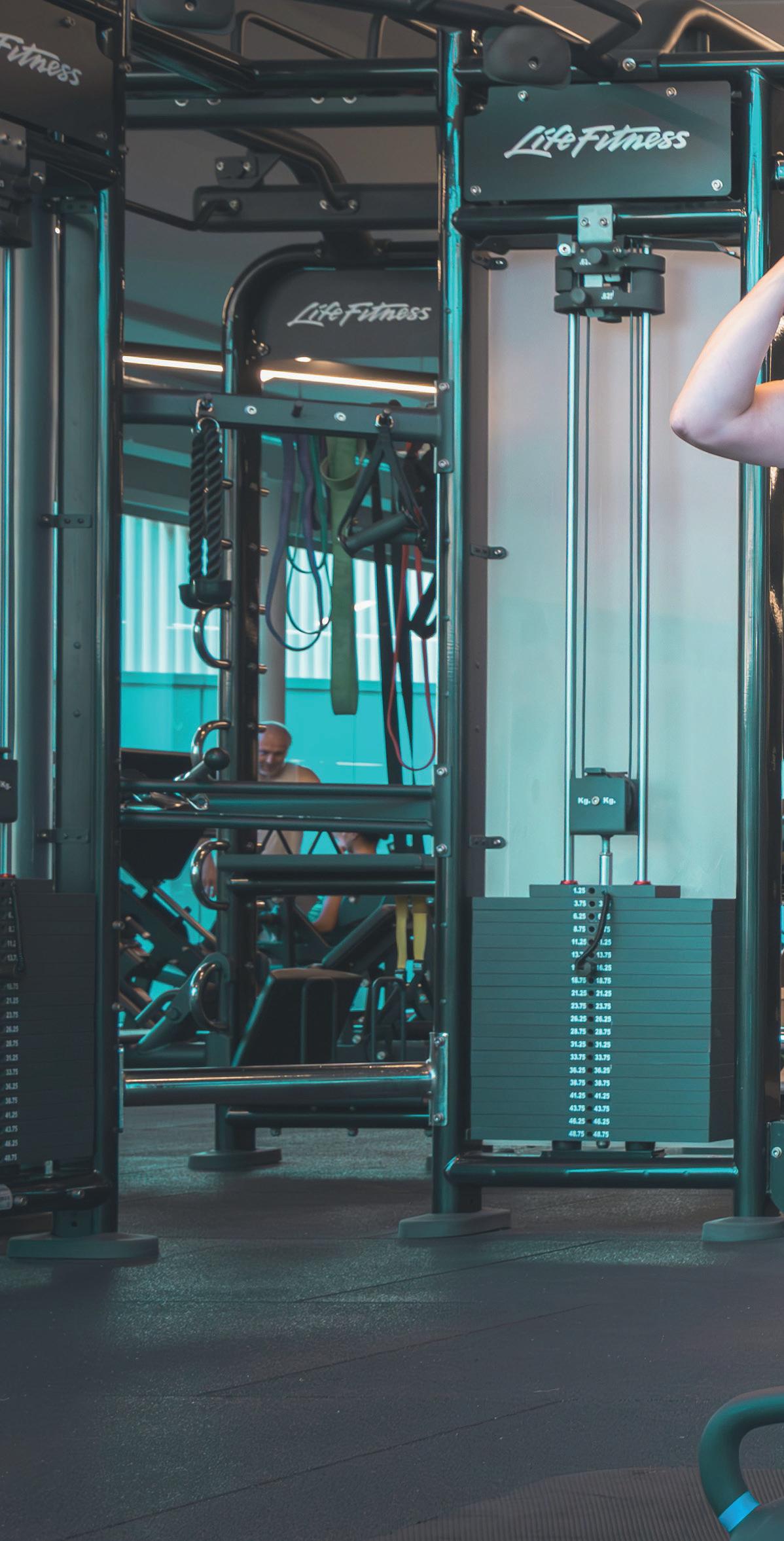
 The gyms are being upgraded with new interiors and kit
PHOTO: COLRUYT GROUP/JIMS
The gyms are being upgraded with new interiors and kit
PHOTO: COLRUYT GROUP/JIMS
By the time you’ve finished your workout, your groceries for the week will be waiting for collection
month, depending on the package you choose – with our ecosystem model and 85 per cent population reach, we want everyone to be able to come – but we’re no longer the €19.99 budget sector model.
The clubs now have a premium look and feel, with equipment also upgraded to be next level. And alongside the traditional 1,200sq m gym floor, we’ve created club-in-club options to compete with the boutiques. We call them Cubes and they have dedicated spaces – one per club. There’s a mind and body cube, a boxing cube, an immersive cycling cube, a performance cube for HIIT and CrossFit-style training. In one of our Luxembourg clubs, we have a wellness cube. They’re very high-end: wraparound screens for indoor cycling, permanent ice baths in mind and body, and so on. And where we have multiple clubs in a city, members can go to all of them to experience multiple boutique-style offerings.
Can you explain your pricing structure?
We’ve set out to challenge the status quo of the fitness industry in Belgium, creating a model that delivers personalised coaching – which we know is the best way to help someone – at an affordable price.
Everyone starts their Jims journey with a body composition scan and a health and lifestyle assessment; special groups such as pregnant women have a further on-site health check to avoid any medical risks.
We then use this data to create a personalised schedule that can be updated every three to four weeks. The trainer explains all the exercises and the programme goes into your app, allowing you to train independently.
If you don’t want to do that, we also have small group training specifically by target group: preand post-natal sessions only for pregnant women; beginners’ workouts only for beginners; strength training for women to break down the intimidation barrier; healthy back training for those with back problems; strength training for runners; and so on. Communities form of people with similar needs, and they talk to each other, not only about sport and

Groups are filtered by need to ensure they progress

movement, but also about their other needs – at which point we connect them with our other brands.
Finally, we have normal group classes, but even here we filter them according to need. If people are obese and want to lose weight, we prescribe fat-burning classes. If they’re a runner who wants to increase their mobility, we prescribe yoga and pilates. We don’t just give them the studio timetable and leave them to it. We look at their health data and their needs and we filter classes accordingly.
And we believe, if you do all four pillars – independent training to a personalised programme, targeted small group training, group classes and our Cubes – you really do get even more than you would from a personal trainer. And all for an affordable price tag: €29.99 a month just for the gym, €39.99 to include coaching and €49.99 including the Cubes.
Any other initiatives in the pipeline?
We’ve also launched food coaching – people go to the Jims website to fill in a survey that determines
their sporting type: endurance, strength-focused, healthy lifestyle seeker and so on. Once they have a profile, they’re directed to videos, webinars and blog posts about eating for their specific profile.
We’re also linking them to Collect & Go, our online supermarket, where the landing page will offer recipe inspiration for suitable meals and snacks. They can select the recipes they like, push them into their shopping basket, and by the time they’ve finished their workout, their groceries for the week will be ready and waiting for them, all based on the recipes they’ve chosen, all tailored to their profile.
It’s a fantastic experience for consumers and launching it is one of my highlights this year.
On another note, we have a partnership with the Special Olympics, providing free access to our clubs so the Belgian team can come and train. Society is still not fully inclusive of people with a mental disability and

we want to help them become part of a community. Many of them don’t have access to transport, though, so we’re now in talks to introduce a buddy system, connecting them with members who can bring them to the club and take them home again post-workout.
You’ve introduced healthy vending… We kicked out traditional vending machines filled with sugary drinks and candy – they just aren’t right in a health club environment – and have set out to create the healthiest vending machines in Belgium and Luxembourg.
The Colruyt Group was already experimenting with a smart fridge where you scan your bank card, the door opens, you pick what you want – you can pick things up and put them down, as the fridge is filled with weight sensors – and when you close the door, you’re automatically charged for what you’ve taken.
All 37 Jims clubs have these smart fridges and we fill them with healthy options. Just as importantly, we use the fridges as a platform to start a conversation about healthy food and lifestyle. There’s a decision tree on each fridge that helps you select the right nutrition for pre-, during- or post-workout and QR codes that provide further information on topics such as hydration, protein and so on. It’s all designed to help people understand what nutrition they need, and when, for a healthy lifestyle. We also use the machines to trial new suppliers and products, such as insect protein bars.
What are your growth plans for Jims?
We currently have 37 clubs and we’re expanding quite fast. At this stage we’re focused on Belgium and Luxembourg, even though the Colruyt Group
We’re aiming to reach 50-70 gyms by mid-2027, some in supermarkets
also has a presence in France. We’re aiming to reach 50–70 health clubs by mid-2027, all the while helping our customers achieve a healthy lifestyle. That’s enough to keep us busy!
Some of those new clubs will be located on top of our supermarkets: we own a lot of our supermarket sites and when we do a renovation or build from scratch, it makes sense to optimise the space by putting a gym on the first floor. We already have a couple of these projects in the pipeline
Once again, though, it’s when you take the perspective of the member and how you can help them that the true value of doing this becomes clear. Just having a gym conveniently located next to the supermarket is one thing. But if members can do their workout and as they walk out, their week’s groceries are ready to be picked up... That’s when you really make a difference. l l Pieterjan Nuitten will be speaking at the HCM Summit 2024. More at www.HCMmag.com/summit
The company grows herbs in Belgium’s fi rst vertical farm and also has windfarms and sea farms

“Colruyt Group was the first company in Belgium to build wind turbines,” says Nuitten. “Today, we generate all the energy we need for our business, with plenty left over to sell to consumers and to businesses.
“In the spaces between our offshore wind turbines, we’ve also set up sea farms to breed mussels and seaweed for sale in our supermarket. We have our own farmland too, bottle our own wine, make our own cheese, have the largest meat factory in Belgium and the country’s first vertical farm where we grow herbs. We’re very focused on our ‘farm to fork’ concept, doing everything we can to minimise the distance between the two.
“To encourage consumers to make good choices, in 2021 we launched Eco-score for our private label products. Any product where the ‘farm to fork’ distance is low gets an A, while a product ranked E might have been flown in.
“Our rewards scheme further incentivises people. Scan your Xtra card at checkout and you’ll receive points based on the Ecoscore of your shop. Those points can then be redeemed on things such as planting a tree or an area of bee-friendly flowers, protecting the endangered black stork or helping kids learn
Scan your shop at checkout and earn points based on the ‘farm to fork’ distance to be spent on eco-action
about becoming a forest ranger. It amplifies the power of people’s eco-friendly decisions.
“But we still have a CO2 surplus as a group, and to compensate, we’re planting one of the largest forests in the Republic of Congo – 10,000 hectares with 12 million trees – as well as cities around it to engage the local community with what we’re doing.
“And other companies are liking what we’re doing and joining forces with us. Once again, we’re moving the market and helping make change happen.” ●
A major refurbishment of Sport Ireland Fitness by Technogym has created a world-class public gym at the home of Irish sport
Sport Ireland Campus is home to a vast range of world-class facilities, including the National Aquatic Centre, National Indoor Athletic Training Centre, and National Horse Sport Arena. The campus – which has six gyms – is a hub of activity for elite international sport and leisure training.

While it’s Ireland’s centre for elite and international sport, the campus is also a thriving destination for community activity and in 2021, Sport Ireland began working with Technogym to bring its highperformance culture to the whole community, including Sport Ireland Fitness – the public gym on campus – which needed to evolve alongside the performance elements of the site.
Performance meets community
“Sport Ireland Fitness – our public gym – is an inspiring place to be,” said Byrne. “It’s above the National Aquatic Centre and members share a car park and a café with our elite sportspeople, which is exciting and inspiring.
Our vision was to make the Sport Ireland Fitness gym a five-star facility
Graham Byrne, fitness manager, Sport Ireland CampusGraham Byrne, fitness manager at Sport Ireland Campus, explains how the recently completed renovation has created a world-class public gym.

“The Sport Ireland Fitness gym was due an upgrade to reflect the performance ethos of the rest of campus and after a rigorous tender process, Technogym was chosen as equipment partner for phase one – when all cardio equipment was replaced and we created two state-of-theart studios – and phase two, when the gym’s strength equipment was upgraded.
“Our vision was to make Sport Ireland Fitness a five-star facility, with the best equipment possible within our budget,” said Byrne. “Technogym has a reputation for being the leading equipment supplier in the world. It’s helped us transform the gym into a world-class space that reflects our ethos of combining performance and community.”
Community

Technogym Teambeats and App underpin the new offering

Adding value to a top-class public membership
Sport Ireland had identified the need to increase its offering to members of the public gym, and the refurbishment allowed it to upgrade the cardio and strength equipment, invest in the fitness studios and offer members more choice.
The creation of the two group exercise studios have enabled Sport Ireland Fitness to nearly double its offering to 90 classes a week.
The brand-new immersive indoor cycle studio has 30 Technogym Bikes and Technogym Group Cycle programming.
The second studio runs Technogym Teambeats which offers instructor-led and virtual options. Unsupervised classes are popular with members who have children using other areas of the campus and with a million people visiting the campus each year, the Teambeats studio is a user-friendly way to fill gaps between instructor-led studio classes.
Technogym has helped us transform the gym into a world-class space that reflects our ethos of combining performance and community


The gym’s new cardio offering is high-tech and packed with digital elements to support performance athletes and leisure users. The equipment includes the performance-focused Skill Line and the contentrich Excite Live equipment which are increasing engagement with their large screens and digital options.
Byrne and his team took note of shifts in training trends, and brought in 12 plate-loaded strength and 10 pin-loaded machines. They also added three new Olympic lifting platforms and trebled the size of their cable machine offering.
The digital transformation of the space allows members to engage with motivating content on the cardio machines and enjoy a fully-immersive experience in the group cycle studio. Teambeats gives members the ultimate flexibility of instructor-led or unsupervised class options.

Following the gym upgrade, Sport Ireland Fitness membership has hit capacity and the team is putting a wait-list in place
Every member can access their training plans, use QR codes on equipment and track every element of their workouts on Technogym App.
The new gym layout means the space can comfortably hold 1,000 people a day, with members able to move freely and access equipment without waiting. Membership has hit capacity with a wait-list now in place.
The Sport Ireland Fitness gym refurbishment is the evolution the space needed, extending the campus’s high-performance culture into its community spaces.
“The gym has been here 20 years and we’re looking ahead to the next 20,” says Byrne. “We’re confident Technogym will help us stay fit for purpose and ahead of the curve as more consumers take an interest in their health and fitness.” ● More: www.technogym.com


It’s time to start the conversation about pelvic health. It’s not just menopausal women who have challenges: young women and men can also experience issues they’re too embarrassed to discuss or seek help for, as Kath Hudson reports


“Conversations about taboo subjects, such as continence and pelvic pain, can be hard to start, but fitness professionals are naturally good at building trust and rapport”
National clinical lead for pelvic health physiotherapy
Nuffield Health
In the context of a strained NHS faced with record numbers of people on waiting lists, there is a growing awareness of the potential for the fitness industry to play a role in supporting people living with health conditions and pelvic health is a key area in which the fitness sector can make a big difference.

Pelvic health is particularly relevant to the fitness industry for two main reasons. Firstly, pelvic health issues stop people taking part in exercise and physical activity, particularly women, who we already know experience huge barriers to fitness.
New data from our Healthier Nation Index has found that the gender gap is continuing, with men reporting that their fitness levels have improved over the past year (38 per cent better versus 26 per cent worse), whereas women state their physical fitness has worsened (31 per cent better versus 33 per cent worse.) When speaking to my clients, fear of leaking is the most common worry.
Secondly, the fitness industry can make a huge difference in supporting people with pelvic health issues, as the right exercises targeting the pelvic floor can help both prevent and alleviate pelvic health symptoms. Conversations about taboo subjects, like continence and pelvic pain, can be hard to start, but fitness professionals are naturally good at building trust and rapport, and with the right knowledge and skills, opening conversations around pelvic health will help to shape exercise programmes that can manage symptoms and allow them signpost to appropriate care when needed. It’s key to raise awareness about what the fitness industry can offer, ensuring that this support is of a high standard and working with partners to direct people to the right services. Research shows that more than 50 per cent of women may have trouble contracting pelvic muscles correctly. If a client is struggling to feel these muscles working, they may need support from a specialist pelvic health physiotherapist alongside their fitness professional. Supporting someone’s pelvic health is never a one size fits all approach. As in all other areas, exercises should be tailored to the individual.
“Both men and women suffer from pelvic health issues, but in different ways”
 Leanne O’Brien
Lead pelvic health physiotherapist
Ten Health & Fitness
The prevalence of pelvic health dysfunction is much more common than most people would think. The pelvic floor can affect squat depth, weight-lifting capability, agility and power production in the legs and torso, meaning clients are likely to experience reduced performance and further complications if issues aren’t addressed.

dysfunction due to tension and tightness in the pelvic floor, which can lead to pain, poor bladder control, constipation and erectile dysfunction.
Erectile dysfunction can be an early indication of heart disease, while increased bladder frequency can also indicate prostate cancer. Women typically suffer from weakness caused by lifestyle changes, such as pregnancy and menopause.
The current waiting times for pelvic health treatment on the NHS can range from sixto 18-months and often clients are limited to just four sessions. Although some people will need a more medical intervention, the vast majority of pelvic health issues can be identified by a pelvic health physiotherapist who could develop a plan for a PT to deliver, so this is an ideal opportunity for the health and fitness industry to support the NHS. Both men and women suffer from pelvic health issues, but generally in different ways. Men are more likely to experience pelvic floor
Normalising the problem is the key to success. The first step is to start with leaflets and posters in the gym, designed to highlight the common issues. Providers could then introduce pelvic health screening questions to their pre-exercise questionnaires for new members. Emailing the screening questions to existing clients will ensure no one is missed.
Screening new clients for pelvic health dysfunction is really important when it comes to managing their goal progression and long-term health and knowing when to refer them on to a pelvic health specialist is essential. Current statistics suggest that 82 per cent of women will have children and 50 per cent will experience a prolapse at some point.
This is not a trend, it’s a serious gig which we need to tackle properly. The official figures are that 50 per cent of women over the age of 50 will have some stress incontinence. Pelvic floor dysfunction can result from a multitude of reasons, some are quite straightforward, but many are very complex and could involve medical trauma, or sexual abuse.

“So many women I’ve trained can’t feel their pelvic floor. They’ve locked it, it’s dead to them, because they’re ashamed of it”
This is a specialist subject and the pelvic floor is a very private, intimate and vulnerable part of woman’s body, yet there is an important role for fitness professionals to play here. They need to be able to hold the space for a woman to say I’m struggling with this exercise and then to adapt the workout accordingly. They also need to be able to refer on to a specialist when it goes outside of their scope. Women face three factors making them vulnerable to pelvic floor dysfunction. The vagina provides a gap for pressure to come in and out of; giving birth causes further issues, followed by the hormonal rollercoaster of the menopause. Many midlife women are mortified to find they
wet themselves while exercising. This is because oestrogen levels drop and can be rectified by either taking HRT, or using a specific vagina oestrogen that can be obtained on prescription.
Many women feel they have to hide their problems, but we need them to exercise. My hope and belief is that by talking about pelvic floors, and adapting exercises, we can stop women feeling ashamed and isolated, help them with their issues and encourage them to be active. So many women I’ve trained can’t feel their pelvic floor. They’ve locked it, it’s dead to them, because they’re ashamed of it.
I’m currently running a project with The Gym Group, training their PTs in pelvic health, so they can deliver workshops. This is already having great results.
For example, one trainer shared that she noticed a woman leave her class because she was feeling faint. She found her after the session and the member said she hadn’t drunk much that day. The trainer dug a bit deeper, gently asking: “can you tell me a bit more about that? Why have you not had a drink today? Did you find the exercises a bit tricky?” Diplomatic language empowered the client to open up about her issues and gave the trainer the opportunity to help.
 PHOTO: SHUTTERSTOCK / FIZKES
PHOTO: THE WELLHQ
Yoga can strengthen the pelvic floor in men and women
PHOTO: SHUTTERSTOCK / FIZKES
PHOTO: THE WELLHQ
Yoga can strengthen the pelvic floor in men and women
Do you leak when you cough, sneeze, laugh or run?
Do you always make it to the toilet in time, or is there an urgency when emptying your bladder or bowel?
Do you wake up at night to empty your bladder?
Do you have persistent constipation or struggle to empty your bowel?
Do you have persistent pain around your pelvis (abdomen, groin, buttocks or genitals?)
Do you have pain with sex or erectile issues?

Don’t include star jumps, high knees or tuck jumps in the warm-up
Use the inclusive language of yoga, for example “If star jumps are not available to you today…”
When giving modifications still make your clients work, for example side lunges with weights
It’s important not to hold the breath when lifting because that puts more pressure on the pelvic floor, so educate your clients to exhale during the effort, as though they’re deflating a balloon
Go gently with conversations: if they feel comfortable they will share and if they don’t, back off
Find a pelvic floor physiotherapist to refer to, or direct clients to the POGP register
Physios want to work with the fitness industry, so invite them in to run a workshop. Both The Well HQ and Sarah Thorne run courses and workshops on pelvic health
Everyone should be doing at least one set of pelvic floor exercises a day. If they don’t work they need to see a specialist. Apps are available to support, including PelviFit and the NHS Squeezy app
Being constipated puts additional strain on the pelvic floor, so educate your clients to look after their nutrition to make sure this isn’t an issue

“Investing in educating and upskilling personal trainers would go a long way towards providing training that supports pelvic health”Joy Puleo Director of education Balanced Body
Pelvic floor support is part of the NHS Long Term Plan’s commitment to improve the prevention, identification and treatment of pelvic floor dysfunction, so fewer women experience ongoing issues after giving birth and later in life. There is a huge opportunity for the physical activity sector to embrace this opportunity and become an integrated part of the delivery infrastructure.

health. First, it is important to know that all exercise helps. Second, exercises known to support pelvic health are ones that are commonly taught: many core exercises, squats and lunges are helpful, with some additional consideration and refinement paid to breathing patterns, imagery, sensations and cueing.
Offering an alternative to a clinical environment, where people can access these services in community venues where they already feel comfortable, such as a leisure centre, a gym or a studio, is likely to reduce barriers and encourage more engagement, as well as relieving the pressure on more traditional NHS pathways and services.
Clubs and trainers already have the tools they need to support their clients’ pelvic
Fitness practices that are mat based and whole-body movement focused, such as Pilates, are excellent, as clients are provided with movements in all positions relative to gravity that train internal support of the spine, pelvis and legs. Pilates Reformer and studio training is particularly helpful, as the equipment is designed to assist the client when needed, as well as challenging and adding resistance in exercises that simulate real life movements.
Investing in educating and upskilling PTs and instructors would go a long way towards providing training that supports pelvic health, especially around breathing patterns, overload and isometric holds. The Pilates method includes these refinements, and can be learned and easily.
Alot of women are embarrassed about this issue until someone like me – as a women’s health physio – comes along and shouts vagina in the middle of the room. We should treat pelvic health the same as other health issues or injuries, so the conversation needs to start with screening questionnaires for new members. When we know women have symptoms, we can help them by adapting training, including some pelvic floor training, or signposting them to a physio. Partnering with a women’s health physio to run quarterly workshops, or beginner classes, would take pelvic health to a new level.
Gyms could partner with a women’s health physio

“Sixty per cent of women have a pelvic floor issue and more than 53 per cent have never sought help”
It’s important to maintain pelvic health with exercises from a young age. Some younger women who participate in high-impact sports, such as gymnastics or trampolining, can experience issues such as leakage and an overactive pelvic floor, where the muscles are working too hard because of the intraabdominal pressures required during their sport. Pelvic health physiotherapy can help.

There are many misconceptions, for example that if a woman has a prolapse, they can’t lift weights, but there’s research to show that’s incorrect. Exercise and strength training are vital components of rehabilitation and long-term management of prolapse and prolapse symptoms.
We have to enforce the point that women can exercise, while also supporting the prolapse, by adapting the exercise and ensuring they breathe out during the exertion to reduce intra-abdominal pressure.
Sixty per cent of women have a pelvic floor issue and more than 53 per cent have never sought help, not knowing that leakage when sneezing could be stopped. There’s so much PTs could do within their scope of practice and there are women’s health physios, like me, who want to work with the fitness sector to raise the awareness of pelvic health and stop women from suffering in silence.
Sarah Thorne is a women’s pelvic health physiotherapist and PT
Enhance your member relationships and boost retention by up-skilling your team with training from industry experts
Ready to prioritise your members like never before?
Gain
Act


Either get on and do the job you’ve signed up for and deal with the good, the bad and the ugly, or get out of the way


The biggest influence of my career came while I was dancing professionally in Chicago in the early 2000s and I still draw on the lessons learned from that time.
There were five professional dancers in the company and five understudies. I was one of the understudies and it was a strange time, as we were all waiting for our break, which would only come if someone else was injured or retired.
As understudies we would learn, and rehearse all the choreographies so we could jump in if needed. It was 40 hours of dancing a week and completely unpaid.
To make ends meet, I taught Pilates from 4.00pm until 10.00pm every weekday and all day on Saturdays.
Because I wanted to be a dancer so badly I pushed myself really hard and ran myself down.
One day I felt a sharp pain in my abdominals, which felt like a knife. When I told the artistic director the message was: “You don’t sit it out, the show goes on.”
Next up was a 12-minute high intensity piece and about half way in I felt an excruciating pain. The woman dancing opposite me said my face went ghost white. Afterwards I discovered I’d ruptured a cyst and my abdominal cavity was full of fluid. I ended up taking the next two days off to rest and recuperate.
Appointed president of Xponential Fitness when she was only 34, Sarah Luna attributes her career success to the grit, determination and stamina she honed as a dancer by day and Pilates teacher by night. She talks to Kath Hudson about how owning her choices has given her the resilience to take on one of the top jobs in the US fi tness industry, while also raising a family
At that point it dawned on me that I had a choice. I could either get back in the fight and go again, or I could lay low or I could step away altogether… I decided there were tons of people lined up for that opportunity and although the experience had been very painful, it was also short-term and it did pass. At that point I made the choice to keep showing up and get the job done.

On the work side, periods of intensity come with being a public company, you just have to work through it
Ultimately that’s the life lesson I've taken with me for the rest of my career. When the going gets rough, I evaluate whether it’s a short-term pain and whether that short-term pain is worth continuing to be in the fight.
Our life is a series of choices. It's common for people to say they hate their job, or a certain aspect of their life, but I subscribe to the idea that if you don't want to do it, there are tons of people who will, so either get on and do the job you’ve signed up for and deal with the good, the bad and the ugly, or get out of the way.

when I’ve felt defeated, that everyone wants a piece of me and I don't know how I can be successful.
This mindset gives me a sense of control when times are hard.
I've got two young daughters and one is in the middle of teething and the other one hasn’t been sleeping, so I’ve been getting by on two to three hours of sleep each night. At the same time there have been challenges at work. It's been very stressful on a lot of different fronts. There have certainly been a couple of times
But then I give myself a talk. I remind myself that I wanted my daughters and I love them to death. So even though it’s painful that they want to play and eat bananas and learn to walk in the middle of the night, I wouldn’t trade those moments for anything. I made the choice, I wanted to have children and sleepless nights are part of that deal. On the work side, periods of intensity come with being a public company, you just have to work through it. What I learned from that dance company experience allows me to take a breath and tell myself that I recognise


this low place, I recognise this exhaustion and this feeling of defeat and I also know how to get myself out of it. Lesson two from that experience was that it taught me how to manage my health better, be more in tune with when I need to slow down and when I can accelerate, rather than always being pegged at the high end of the range. You can’t constantly operate at high velocity and expect your body to keep up. I’ve certainly had to learn how to throttle energy and mental capacity. Although my husband says I like to keep it at 100 per cent! The experience also gave me the confidence to say yes to opportunities. My break came, in
2015, while I was working as a Pilates instructor at Equinox. Former Xponential CEO, Anthony Geisler, came to one of my classes because he was planning to buy Club Pilates. I had an MBA and knew how to sell Pilates so he offered me the job of national sales director of Club Pilates.
After a couple of years, I became senior VP of operations for the brand, before becoming president of Pure Barre and then president of Xponential in 2021. I just kept showing up every day and getting more responsibility and then walking through the doors as they opened. I've had a non-traditional career path, but it's been exciting and enjoyable. ●
Sydney Swans team members were impressed by previous BLK BOX installations such as those for Manchester United and Loughborough University

At the heart of the Sydney Swans new headquarters in Australia is an elite player-focused training facility by strength equipment specialist BLK BOX
Australian Rules Football team, the Sydney Swans, moved into its new headquarters recently and along with the relocation came new functionality for its training – all delivered by Belfast-based fitness equipment specialist, BLK BOX Fitness.
The Swans’ new home is the impressive and historic Royal Hall of Industries building in the Moore Park district of Sydney, close to the historic Sydney Cricket Ground where the team plays its matches.
In its 100-plus year history, the building has seen use as a boxing venue, ice skating rink, art gallery and ballroom. But the new interior is now unmistakably a Sydney Swans elite training space, with a full indoor football field and a large range of functional, strength and accessory equipment from BLK BOX.
Player connection
So how did the BLK BOX-Sydney Swans collaboration come about? Rob Inness, head of athletic performance, said team members were impressed by previous BLK BOX installations for elite sports
training facilities, such as those completed by the company for premier league football team Manchester United and Loughborough University in the UK.
Inness says: “We needed a training space that could accommodate all our players, as well as our young academy members and that often means from 150 to 200 people training at the same time.
“The bespoke equipment and layout from BLK BOX enables the whole team to train and bond. That connection between them is really important. The players love coming here. In fact, one of the big challenges is getting them out of the place!”
When designing and specifying the equipment, BLK BOX needed to take into account the specific training needs for the male and female players of AFL and AFLW – a sport that requires explosive strength, speed and endurance.
As a former Gaelic Football player, BLK BOX founder Greg Bradley, was no doubt more in tune than most about the type of training equipment and layout required to provide a truly elite and teamfocused facility for players at the top of their game.

He says: “To guarantee high performance training, we designed and manufactured a custom Samson 12-Bay Rig, complete with custom branded plates and weight plates.
“The bespoke rig was designed to include six Smith Machine attachments and resistance band holders.
“These rigs can easily accommodate between 20 to 30 players training at the same time, which fosters a very cohesive and motivating environment and strong team camaraderie.”

“The equipment and layout from BLK BOX enables the team to train and bond. They love it – one of the big challenges is getting them out of the place!”
Also designed and manufactured back at the 140,000sq ft BLK BOX headquarters in Northern Ireland were a BLK BOX 45-degree plate-loaded Leg Press Machine, GHD Pro, 45-degree Hyper Extension and a Big Ass Belt Squat Machine.
The road to completion was delayed by COVID, however, once everything was back on track and the BLK BOX kit was shipped and on-site, the full installation and fit-out of the entire project took only two weeks.
Rob Inness, Sydney Swans
The 10,000sq ft Sydney Swans training space, which is complemented by a range of community and public facilities, represents BLK BOX’s first major project in Australia.
Bradley says: “While we’d done smaller fit-outs in New South Wales, Sydney Swans is the first large-scale project we’ve completed in Australia and our first project for an AFL team.
“We realised we were competing with home-grown suppliers, but BLK BOX’s reputation in the field of elite sports and the uplifting, motivational training spaces we’ve been able to create for many professional teams certainly worked in our favour”.
For all of its projects, BLK BOX offers a complete end-to end ‘made in NI then shipped’ service for sport and fitness clubs anywhere in the world. This covers concept design, through to manufacture, installation and on-site training. With such capabilities and a strong customer focus, it’s not surprising the reputation of BLK BOX has spread across the globe. l
More: www.BLKBOXFITNESS.com


Immediate rewards can motivate people to exercise more, according to new research, reports Kath Hudson
Short-term incentives to exercise, such as using daily reminders, rewards or games, can lead to sustained increases in activity, according to new insight.
Researchers found that even a simple daily reminder encouraged people to move more, while offering financial incentives or point-based rewards was even more effective. Combining the two was the most powerful and led to participants logging improvements in activity levels six months after the rewards stopped, suggesting the intervention helped to form habits.

This research shows it’s easier to think about today than the future
Supported by the US National Institutes of Health (NIH), the study took place between 2019 and 2024 and was published in the journal Circulation. More than 1,000 adults, with an average age of 67, who were at elevated risk for major cardiovascular events were monitored via fitness trackers. Their daily step count increased by more than 1,500 a day after a year on the programme and they did an extra 40 minutes of moderate exercise each week.
Alexander Fanaro , Study author
get people moving that they also can do at home if needed is a huge win for public health,” said Alison Brown, a programme officer at the National Heart, Lung, and Blood Institute, which is part of NIH.
The research protocol
Participants set goals to increase their daily steps by 33 per cent, 40 per cent, 50 per cent, or any amount greater than 1,500 steps from their starting point and were divided into four groups. Three groups were offered incentives, including game-like rewards, financial rewards, or a combination of the two.
In the game group, participants received points for meeting their daily step goals and could move up a level. Those who missed their targets lost points and moved down a level.
At the end of the study, adults who reached the highest levels by meeting their daily step goals received trophies.
This is sufficient for a 6 per cent reduced risk of premature death and a 10 per cent reduced risk of cardiovascular-related deaths.
“Even moderate exercise can drastically reduce cardiovascular risk, so finding low-cost ways to
In the financial group, each participant received US$14 each week, but lost US$2 a day if they did not meet their step targets. The third group received game and financial incentives.
The fourth group – a control group – received no incentives but got the fitness tracker, along with daily messages that noted their step count.
Participants could also enlist a support crew, such as family or friends, who received weekly updates about their progress.
Each intervention lasted 12 months followed by a six-month follow-up period where all participants received the daily messages.
Prior to the study, all participants logged an average of around 5,000 daily steps, or 2.4 miles. After 12 months, they increased their daily step count – as previously explained – by more than 1,500, or three-quarters of a mile.
Compared to the control group, the game group walked an extra 538 steps from their baseline amount, while those who received financial incentives walked an extra 492. The group who received both of these incentives

averaged 868 extra steps and maintained an average 576 more daily steps six months later.
Study author, Alexander Fanaroff, said: “This research shows it’s easier to think about today than the future – whether it’s exercising more to support long-term heart health or saving for a future goal, such as college or retirement.”
Researchers advise helping people change their behaviours by giving instant rewards, including using exercise apps with daily reminders, enlisting family and friends for support and even creating scenarios where they give money away if they don’t meet their targets. ●
● The research: Effect of gamification, financial incentives, or both to increase physical activity among patients at high risk of cardiovascular events: The Be Active randomised controlled trial. More: www.hcmmag.com/motivate
Sustainability in the fitness industry is coming on in leaps and bounds as more operators refurbish their gym equipment to save money and the planet
Before embarking on an equipment refresh initiative, industry leaders and gym operators should consider the following key aspects:
Assessment and planning
Work with a provider that conducts a thorough evaluation of your equipment to identify machines that can be refurbished. Following this, develop a comprehensive plan that aligns with your sustainability goals and budget constraints
Quality and safety standards
Partner with a provider that ensures refreshed equipment meets safety standards, performance requirements and member expectations
Member engagement and communication
Communicate the equipment refresh initiative to your members, highlighting the benefits of sustainable practices, improved fitness experiences, and commitment to environmental stewardship. This is the perfect time to encourage feedback and engagement to enhance member satisfaction
ROI and long-term savings
Evaluate the return on investment (ROI) of equipment refresh projects by considering cost savings, extended equipment lifespan, energy efficiency gains and potential revenue growth from member retention and acquisition
The fitness industry makes a significant impact on the environment, as a result of the energy consumption, materials and waste generated by used gym equipment. According to research, the manufacture and disposal of equipment contributes to carbon emissions and resource depletion, but as industry leaders and operators strive to reduce their carbon footprint and become more eco-friendly, the practice of prolonging the life of gym equipment through careful refurbishment is gaining traction. This approach not only aligns with sustainable practices, but also proves to be economically beneficial for operators looking to optimise their investments. The practice of prolonging the life of equipment through refurbishment is poised to become standard practice for operators worldwide. By prioritising environmental responsibility, economic

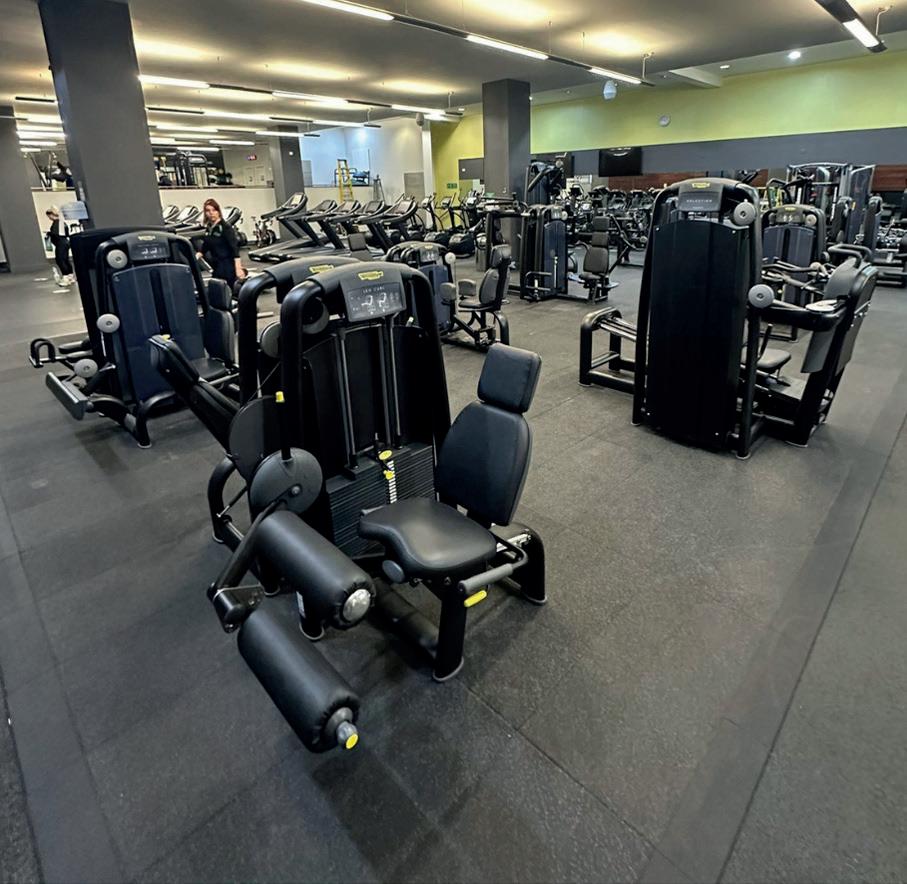
The practice of prolonging the life of gym equipment through careful refurbishment is gaining traction

efficiency, and member satisfaction, operators can lead the way towards a more sustainable future.
The shift towards sustainability in the fitness industry offers immense opportunities for operators to not only reduce their environmental impact, but also optimise their operations and enhance the member experience. By refreshing existing gym equipment and recognising the value in prolonging their lifespan, operators can contribute to a healthier planet, stronger communities and a thriving industry focused on longevity and sustainability.
Refreshing existing gym equipment, rather than replacing it, offers gym operators a host of benefits. It’s clearly more cost-effective than purchasing new machines and allows operators to save on capital expenditure, or invest in other sustainable practices, while still providing
Numerous operators have implemented equipment refresh strategies to prolong the life of their equipment and reap associated benefits.
n Bannatyne health clubs
ServiceSport UK played an integral role in the opening of Bannatyne’s first Just Fitness site in Broadstairs, UK, by refreshing a range of gym equipment, including Technogym treadmills and cross trainers.
members with high-quality fitness equipment.
By refurbishing equipment, operators divert machines from landfill, reduce waste and minimise the need for the use of new raw materials, thus promoting a circular economy and sustainable practices.
Refreshed equipment also enhances the member experience by ensuring machines are in optimal condition, safe and meet their evolving fitness needs.
Embracing sustainability and prolonging the life of equipment enhances a facility’s brand image, attracting environmentally-conscious members and showcasing a commitment to responsible business practices.
Equipment refreshes allow operators to customise machines to suit their branding and incorporate new features that cater to evolving fitness trends and member preferences.
More: www.servicesport.com
One of the largest gym operators in the UK has partnered with ServiceSport UK on a number of refresh projects that involved a full extraction of existing gym equipment and the installation of refreshed gym equipment in return. When compared with replacing the equipment with brand new, this has saved more than £150,000, and contributed towards Nuffield Health’s sustainability objectives.
By partnering with ServiceSport UK for 10 years, The Ministry of Defence has refreshed its cardio equipment and strength machines, such as treadmills, elliptical trainers, leg press, leg curl, shoulder press and chest press.
Extending the lifespan of equipment and aligning with sustainability goals, the refreshed machines receive positive feedback from those in the services at army barracks across the UK.
Health club operators have been running into challenges around locker room policy. Planet Fitness saw US$400m wiped off its share price last month, received bomb threats and was subjected to a “go woke, go broke” campaign when a woman posted a video on social media of a trans person shaving in the female locker rooms. The situation was further inflamed when the female member took to social media again about her membership being cancelled for videoing in the locker rooms and Planet Fitness co-founder, Mike Grondahl – who’s no longer with the business – took the opportunity to jump on board to criticise his former company with transphobic comments. This situation could potentially occur anywhere, especially since Planet Fitness followed industry guidance – which is informed by equality legislation – to allow the trans woman to use the locker room of the gender with which she identified.
Also impacted is David Lloyd Leisure, which follows UK Active guidance and has been criticised by a former member for allowing trans women to use the female locker room.

As more trans women, trans men and non-binary people join health clubs, it’s time to work out a system where everyone feels included, protected and safe in the locker room. Kath Hudson reports
She says she was mis-sold and wants access to changing areas for herself and her two daughters that are allocated according to their biological sex at birth, saying she doesn’t feel safe in the changing rooms if trans women – or as she puts it “a man who says he’s not a man” – are allowed there. She has mounted a legal challenge in relation to this, which remains in progress.
A spokesperson from David Lloyd Leisure told HCM : “We always seek to comply with the current legislation and believe that we acted within the law, while balancing the needs of all our members.”
Both Planet Fitness and David Lloyd Leisure acted in accordance with legislation and industry guidance, yet have still faced challenges. It’s such an emotive


don’t take into account
matter that it looks as though following the letter of the law is not enough to avoid issues arising.
HCM editor, Liz Terry, says: "We can all agree that the health club industry is in the business of making all members, guests, customers and staff feel safe and welcome.
"Current industry guidelines focus on outlining the legal position in relation to people who are trans, but existing legislation doesn’t take into account the human aspect for all concerned –trans customers, other customers and staff.
"We can go beyond the basic legal requirements as an industry by being smart about changing room design to ensure all feel safe, comfortable and at ease.
"It's important to also factor in training, so health club staff are fully equipped to deal with all queries with kindness and confidence and we’re fortunate that excellent trans awareness training is widely available.
"The numbers of people in the world undergoing gender reassignment, or identifying their sex in their own individual way is increasing,” says Terry. “Operators need to be ahead of this and ready with sensible, compassionate and effective solutions to ensure all customers are keen to return and enjoy the huge benefits of exercise and community that our industry offers”.

there are
Keith Ashton, CEO at Space & Place architects believes that even where space is limited within facilities, the industry can find elegant changing room solutions that enable all members, visitors and guests to feel comfortable, safe and secure if decisions around design and provision are based on a spirit of inclusivity.
“Changing rooms can be redesigned to be gender-neutral, so there are safe spaces for everyone,” he told HCM . “As soon as segregation occurs, there’s potential to cause upset and division.”
To enable this, changing room technology also needs to evolve, says Ashton: “Changing cubicles also need to be designed to be easy for operators to clean, while also making it impossible for those
I transitioned from female to male in 2010.
When a person transitions it’s one of the hardest things to do in life, because of the discrimination and fear from parts of society. Often sport is not even considered as an option, as trans people are too busy trying to stay alive – up to 42 per cent consider suicide. However, given its benefits, sport should be for all.

There’s the constant fear of being called out, asked to leave, or the worry of having to use the changing rooms of their birth once they’ve started hormone therapy.
With regards to locker rooms, safety for all is paramount, which means more cubicles and private spaces. Birmingham City Council’s newer leisure facilities do this well, with many cubicles of all sizes, so everyone can use them safely and privately.
In terms of making the trans community feel more welcome in

gyms, displaying trans-inclusion symbols and offering trans classes is a good start. Cost is likely to be a barrier, as many trans people are saving money for expensive treatment.
Planet Fitness followed guidance but still encountered major issues

with bad intentions to spy under or over them, to ensure everyone feels safe in the space.”
The university health and fitness and sports sector is ahead of the game in making these changes and Space & Place has been working in this part of the sector for almost 50 years, says Ashton: “Universities have been specifying inclusive changing spaces for sometime,” he explains, “so there’s a wealth of best practice in this area that health club operators can utilise when addressing this change to their own facility design.”
In the UK, ambiguities surrounding the definition of ‘sex’ in the Equality Act 2010 have led the government to call for changes to be made. The UK’s Equalities Minister wants to redefine ‘sex’ to specifically refer to legal protections relating to people’s ‘biological sex’ – the sex assigned to them at birth.
The likely future Labour government in the UK also intends to protect single sex spaces and agrees that legal clarifications are needed, but there are no details yet about how this would be achieved.
Until these changes are made, organisations are relying on the guidance published by the Equality and Human Rights Commission (EHRC) and their industry bodies.
UK Active and CIMSPA have guidance that complies with the law and is revalidated annually. The guidance provides practical steps for operators when it comes to providing solutions for customers.
The Health and Fitness Association (formerly IHRSA) advocates that operators follow the law while also being welcoming. “We’re proud that our industry has built a legacy of understanding and a welcoming culture, building a sense of community in classes and programmes and other ways,” CEO Liz Clark told HCM . “We support and advocate that fitness facilities fully comply with local and state laws protecting access, which also includes many facilities’ use of equality and privacy policies.”
Ensuring awareness of the law among operators is vital. The trans community has been critical of those who ask for proof of their transition –such as a Gender Reassignment Certificate or an updated birth certificate – before allowing them to use the locker room of their choice.
Only a small proportion have this documentation because it’s difficult to get, so operators who ask for such proof are in danger of falling foul of the Equality Act 2010. Trans people don’t have to undergo medical interventions, or be diagnosed with gender dysmorphia, to be protected from discrimination.
Sam Marshall, founder of the Be Trans Aware training course, says inclusion needs to start with policy and culture. If businesses genuinely want to welcome trans people they need to have trans and DEIB (diversity, equity, inclusion and belonging) policies in place and a culture which flows throughout the club, including representation in marketing.
She points out that many trans women are terrified when they come out and risk-assess places before they visit. Most trans women won’t use any locker rooms at the gym, as they fear being victimised in the female changing rooms and using the male locker rooms could put them at risk
“In the light of these recent incidents, it would be worth operators sending out updates to their members highlighting their policies and showing they’re operating in accordance with the Equality Act 2010,” she said.
“There needs to be signage around the club showing it’s a trans-friendly space and these policies should be accessible online, so the trans community can see they're welcome and transphobic people are also aware,” she continued.
She also calls for the use of pronouns on emails, pronoun badges for the staff, enabling trans staff to feel safe working in the facility and for gyms to do something to give back to the LGBTQ+ community – for example, by allowing local trans groups to run sessions and supporting local pride events.
Most importantly, she says there should be access to lockable changing rooms rather than communal areas, which make many people self-conscious. If this isn’t easy to offer, she suggests the accessible toilet could be used by anyone who feels uncomfortable: “Using the accessible toilet is a reasonable adjustment for any woman regardless of their trans status,” she says.
“In these cases it becomes a safe space.”


There are many barriers to participation for the trans population that we’re looking to tackle

Birmingham
Serco Leisure manages nine leisure centres for Birmingham City Council in the UK, including Ladywood, which is one of four facilities it has designed, built, operates and maintains. Dawn Page, deputy partnership manager for Serco Leisure, says this is the blueprint that will inform all Serco Leisure’s future new-builds.
“With the design of Ladywood we consulted with Birmingham City Council and Sport England to make it as inclusive as possible, which impacted the design, layout and signage,” says Page. “We went for a village changing room environment which takes away the fear of choice and means staff won’t be put into any awkward situations with trans people asking where they should change. We’ve had no challenges with this layout whatsoever.
“We have clear customer behaviour signage and an inclusive emblem for the private cubicles with showers. Staff patrol the changing rooms regularly and are all trained in trans awareness – the company runs its own course – some of them wear rainbow lanyards and display their pronouns. We also employ trans individuals and when the leisure centre first opened all our recruits had been long-term unemployed.
“There are many barriers to participation for the trans population, that we’re looking to tackle as part of our inclusion strategy. At the moment we’re working with Trans-Fitness CIC to run a trans-only session on Friday nights. The leisure centre will be closed to everyone except the trans
Ladywood Leisure Centre has embraced all aspects of inclusion
community so they will feel safe and welcome to use the swimming pool, sauna and steamroom. We’re hoping that after attending a few of these sessions they’ll feel comfortable to visit at other times. I’ll be attending the sessions to meet with the community and ask for feedback.”
Birmingham City Council’s trans-friendly policy
■ The LGBT+ and Allies’ Employee Network hold a number of networking meetings, or activities throughout the year. These are often themed around issues that affect the community, and are timed to coincide with other national campaigns
■ The council organises various annual events, including Trans Awareness week in November, LGBT+ history month in February and International Day of Transgender Visibility
■ The council also provides transgender training sessions that focus on understanding the correct terminology used to refer to transgender people, awareness of transgender issues, increased cultural competency and responsibilities towards trans co-workers and service users.
■ It also undertakes general promotions on how to be a Trans Ally (a Health Education England initiative)
■ The city council supports Birmingham Pride as a major event celebrating the LGBTQ+ community.
UK Active updates its guidance note for operators each year

While not a regulatory body, UK Active does promote that all facilities provide a safe and welcoming environment for everyone wishing to access them.
UK Active and CIMSPA have created a document, Guidance for front line staff to assist trans people to access leisure facilities , in order to help operators establish their own policies based on best practice. This guidance document was developed by standards and legislation experts and is regularly reviewed by Sport England and legal experts to ensure it complies with the latest legislation and best practice.
The Equality and Human Rights Commission (EHRC) also considered this guidance in December 2021, during the development of its own guidance, Separate and single-sex service providers: a guide on the Equality Act sex and gender reassignment provisions. During the creation of this guidance, UK Active requested that EHRC include sector-specific examples for health and fitness operators, including on changing rooms and single-sex classes/sessions.
This guidance is not intended to provide technical legal advice on all scenarios and sectors. Instead, it encourages service providers to use the information to create policies that are both legal and balance the needs of the different groups they serve.
We recognise the complex societal challenges and different viewpoints posed by

We have a responsibility to promote the adoption of legal, balanced policies
issues of access today, as well as the challenge facing many sectors and public spaces when it comes to navigating legal requirements while meeting consumer expectations.
Our sector is not immune to these challenges and we have a responsibility to promote the adoption of legal, balanced policies and procedures. At the same time, we’re working with other sectors and groups to seek further clarity from legislators and the Government on this issue.
UK Active continues to work with its membership council, standards and legislation committee, other membership representatives and consumer campaign groups, to share best practice, policies challenges and scenarios as the agenda evolves, to ensure the sector continues to improve services for everyone. ●






List your club for free today and join 3,800+ fitness facilities who are already driving more revenue and members into their clubs.
Drive more customers
Increase revenue
Boost brand visibility








As the leading awarding organisation for the physical activity sector, we provide the highest quality qualifications, resources and services that support professional recognition, professional career development and apprenticeship delivery.




BOOK A MEETING


WE LOOK FORWARD TO SEEING YOU THERE!

ARE YOU A TRAINING PROVIDER LOOKING TO BECOME APPROVED TO DELIVER QUALIFICATIONS?


ARE YOU LOOKING TO BECOME A FITNESS PROFESSIONAL OR TAKE YOUR FITNESS PATH TO THE NEXT LEVEL?

By becoming approved with Active IQ you will join over 500 centres who are already benefitting from delivering the highest quality qualifications.



We have over 100 qualifications in the fitness industry to start you on your journey.


Find out more at: www.activeiq.co.uk


Symbio ultra-premium cardio equipment from Life Fitness raises the bar for design and performance
Life Fitness has reimagined cardio with the launch of its Symbio line which has been designed with advanced biomechanics and offers deep levels of customisation
After more than 55 years shaping global fitness and a hard-earned reputation for setting standards in innovation and quality, Life Fitness has again created a new paradigm. Symbio, its new line of ultra-premium cardio equipment, raises the bar for design and performance, giving exercisers an extrapersonal dimension in their workouts.
We live in a world where one size no longer fits all. Members of gyms and health clubs increasingly expect training that connects with them as individuals, tailored to their own needs and preferences. Symbio was made to exceed those expectations by seamlessly blending aesthetics, quality and performance in a personalised, multi-sensory cardio experience.
As Life Fitness chief product officer Daniel Wille explains, “Symbio is the perfect manifestation of the human body and machine working together in harmony. Our biomechanics team engaged in countless hours of research into how the body interacts with our new technologies and the result is the ultimate multi-sensory workout experience, which is as unique as the individual exerciser.”
Symbio’s luxurious contemporary looks have been created using research carried out in partnership with a European design company and are matched by prestigious performance and functionality. The aim, says Life Fitness, is to redefine how exercisers think about cardio.
“You’re immediately drawn in by the sleek, contemporary design and the LED smart lighting that provides a wow factor, as well as functionality,” says senior product manager Tracy Barrett.
Symbio is the perfect manifestation of the human body and machine working together in harmony

The Symbio collection is already earning international accolades. The Symbio Runner was honoured in one of the world’s largest and most prestigious design competitions, the 2024 Red Dot Award: Product Design.
Reimagining knowledge
The Symbio concept has been built from the ground up on a deep foundation of research, along with direct interactions with thousands of exercisers around the globe. Both operators and exercisers want to go beyond existing console features to experience truly innovative workouts. Above all, they want personalisation: cardio products that deliver unique, tailored experiences to guide them on compelling personal fitness journeys.
Rigorous research also lies behind Symbio’s revolutionary biomechanical features. Here, Life Fitness firstly drew on its decades of experience in developing cutting-edge cardio equipment, then for Symbio, the company went even further, tasking its biomechanics and engineering teams with creating unmatched ergonomics, comfort and performance.
Reimagining fitness
Engaging with the equipment in the range, it is immediately obvious why Symbio’s slogan is ‘Fitness

Reimagined’ and why it has more than 10 patentpending features. The Symbio Runner, for example, has its patented Adaptive Flex Deck that allows exercisers to choose from five levels of deck firmness, increasing shock absorption for lower impact or increasing firmness for greater responsiveness. Interactive Terrains simulate different real-world surfaces, while Advanced Performance Metrics provide unique gait analysis and coaching, based on precision real-time sensors that capture every footfall.
Switch to the SwitchCycle and the standout features continue. The company that invented the original LifeCycle more than 50 years ago, now offers a revolutionary cycling experience in and out of the saddle, allowing the user access more than 100 resistance levels – plus immersive ondemand coaching – while enjoying the fluid ride.
For a more laid-back experience, in terms of position, though not workout intensity, the Recumbent Cycle is an ergonomic revelation. Easy to step onto, its on-screen seat and positioning guidance take the guesswork out of setting up. Perhaps even more impressive is the Incline
You’re immediately drawn in by the sleek, contemporary design that provides a wow factor, as well as functionality

Elliptical, which – thanks to a patented incline mechanism – emulates the body’s natural running motion. Want to target a specific lower-body muscle group? The interactive Muscle Map allows users to add variety and reach their personal goals.
The new Symbio line demonstrates the ongoing commitment of Life Fitness to customer satisfaction, representing a culmination of the company’s deep experience and passion for innovation. With greater adaptability, better features and increased personalisation, Symbio truly brings body and machine together in movement to reimagine the cardio experience. l
More: www.lifefitness.com

AI has the potential to support people in making healthy lifestyle changes if its algorithms can be updated to understand the different stages of motivation, as Jodi Heckel reports
Chatbots have the potential to promote healthy changes in behavior, but researchers from the Action Lab at the University of Illinois Urbana-Champaign found the AI tools don’t currently recognise certain motivational states in users and don’t provide them with appropriate information as a result.
Large language model-based chatbots – also known as generative conversational agents – are increasingly used in healthcare settings for patient education, assessment and management. Researchers Michelle Bak and Jessie Chin wanted to know if they also could be useful for promoting behaviour change as we move to promoting health and wellbeing through prevention.
Chin said previous studies showed that existing AI algorithms did not accurately identify the various stages of users’ motivation. She and Bak designed a study to test how well large language models – which are used to train chatbots – identify motivational states and provide appropriate information to support behaviour change.
Evaluating chatbots’ abilities
They evaluated large language models from ChatGPT, Google Bard and Llama 2 on a series of 25 different scenarios they designed that targeted health needs that included low physical activity, diet and nutrition concerns, mental health challenges, cancer screening and diagnosis and others such as sexually transmitted diseases and substance dependency.

In the scenarios, the researchers used each of the five motivational stages of behaviour change, which are:
1. Resistance to change and lacking awareness of problem behaviour.
2. Increased awareness of problem behaviour but ambivalent about making changes.
3. Intention to take action with small steps toward change.
4. Initiation of behaviour change with a commitment to maintain it.
5. Successfully sustaining the behaviour change for six months with a commitment to maintain it.
The study found that when a user has established goals and a commitment to take action, large language models can identify their motivational state and provide relevant information. However, when users are hesitant or ambivalent about behaviour change in the initial stages, chatbots are unable to recognise these motivational states and provide appropriate information to guide them to the next stage of change.

AI isn’t ready to recognise motivational states from natural language conversations
Researchers evaluated ChatGPT, Google Bard and Llama 2 on scenarios that targeted health needs, including low physical activity, nutrition concerns and mental health challenges
Machines don’t understand hesitation Chin said that language models don’t detect motivation well because they don’t understand the difference between a user who’s thinking about making a change – but is still hesitant – and a user who intends to take action. Additionally, she said, the way users generate queries is not semantically different in the five different stages of motivation, so it’s not obvious from the language they use what their motivational state actually is.
“Once a person knows they want to start changing their behaviour, large language models can provide the right information. But if they say, ‘I’m thinking about a change. I have intentions but I’m not ready to start action,’ that’s the state where large language models can’t understand the difference,” Chin said.
The study results found that when people were resistant to changing their habits, the large language models failed to provide information to help them firstly evaluate their problem behaviour and its ‘causes and consequences’ and secondly assess how their environment was influencing their behaviour.
For example, if someone was resistant to increasing their level of physical activity, providing information to help them understand the negative consequences of a sedentary lifestyle was more effective in motivating them to change – through emotional engagement – than simply giving them information about joining a health club.
Where they were unable to share information that triggered the user to be motivated, the language models failed to generate a sense of

readiness and the emotional impetus to progress with behaviour change, Bak and Chin said.
AI understands action
Once a user decided to take action, however, the large language models provided adequate information to help them move toward their goals.
Those who had already taken steps to change their behaviours received information about replacing problem behaviours with desired healthy behaviours and seeking support from others, the study found.
Even these outcomes were not optimal, however, as where users were already working to change their behaviours, the large language models didn’t
provide information about using a reward system to maintain motivation or explain about reducing stimuli in their environment that might increase the risk of a relapse of the problem behaviour.
“Large language model-based chatbots provide resources on getting external help, such as social support,” said Bak. “However, they’re lacking information on how to control environments to eliminate stimuli that reinforce problem behaviour”.
Large language models are not ready to recognise motivational states from natural language conversations, but have the potential to provide support on behaviour change when people have strong motivations and readiness

Stage 1 Lack of awareness of problems
Resistance to change and lacking awareness of problem behaviour
Stage 2 Awareness of problems with ambivalence
Increased awareness of problem behaviour but ambivalent about making changes

Stage 3 Intention to take action
Intention to take action with small steps toward change
Stage 4 Commitment to change
Initiation of behaviour change with a commitment to maintain it
Stage 5 Sustaining behaviour change
Successfully sustaining the behaviour change for six months with a commitment to maintain it

Having the intention to take action is a vital stage in behaviour change

to take actions, the researchers reported.
Chin said future studies will consider how to fine-tune large language models to use linguistic cues, information search patterns and social determinants of health to better understand a user’s motivational state, as well as providing the models with more specific knowledge to help people change their behaviour. ●
● Michelle Bak, doctoral student in information sciences and Jessie Chin, information sciences professor, reported their research – The potential and limitations of large language models in identification of the states of motivations for facilitating health behaviour change – in the Journal of the American Medical Informatics Association
Teca StandUp is an exciting line, bringing something genuinely new to gyms
We all know we need to stand more. Now an exciting new partnership between Physical and Teca Fitness expands this thinking into UK gyms and beyond
Physical is delighted to announce a new partnership with Italian strength specialist Teca Fitness, becoming the exclusive distributor for Teca in the UK.
Product development at Teca Fitness is based on a firm belief that there’s no one type of resistance or machine for all users – that within the discipline of strength training, everyone should have the opportunity to train in a way that helps them achieve their personal, optimal results in fitness and sport, wellbeing and longevity.

Teca StandUp is a fantastic range of equipment that trains you for life
Teca’s biomechanically-advanced portfolio therefore spans everything from selectorised and plateloaded machines to multi-planar equipment, from core and lower body stations to a standing circuit and multi-functional bench.
Products are inspired by science and guided by research for a complete, effective, natural and safe approach to strength training. Indeed, Teca prides itself on continually evolving its products as scientific research progresses.
James Anderson
Each of the 10 stations – chest press, squat, traction, biceps, rowing, triceps, deadlift and lunge, glute and hips, abdominal and shoulder press – requires just 1sq m of floorspace. On each machine, rather than sitting down and isolating one muscle group – as with so many other pieces of strength kit – you stand up throughout. It means far more of the body is engaged in every exercise: the core and other muscle groups kick in to support and stabilise the movement and reduce the risk of injury, while the standing posture helps create a natural movement, facilitating the correct alignment of the spine for maximum back protection.
Teca StandUp is an exciting line, bringing something genuinely new to gyms and office spaces alike.


“StandUp’s total muscle activation technology uses kinetic chain exercises to train the human body as a complete system,” confirms Elio Carrea, international sales manager at Teca Fitness. “You train for how you should live: standing up rather than sitting down. You train your whole body, not just your muscles. It’s an intuitive, accessible, highly functional approach to strength training that maximises muscle activation and boosts calorie consumption to reduce workout time.”


“Teca StandUp trains the whole body for everyday movements,” says James Anderson, sales and marketing director at Physical, “and the bonus is that it can be used without even having to change into gym kit.
“At Physical, we’ll have it in our reception area rather than the gym. We want to encourage our team, as well as visitors, to use it for five to 10 minutes here and there as a way to introduce movement between calls, meetings, desk time or driving.”
Feel the difference
Anderson adds: “I was really surprised by how different it felt when I first tried Teca StandUp. It’s great biomechanically – really nicely built, with a lovely smooth movement – but because you’re standing up, you really can feel your core engage and your whole body work in a slightly different way from normal sit-down machines.
“It’s a fantastic workout that aligns really well with current consumer mindsets: from standing desks to walking meetings, Apple Watch alerts to the ‘On Your Feet Britain’ challenge, we’re all being encouraged to stand up more often. Why wouldn’t we extend that to the gym environment? It seems counterintuitive that we get people into the gym and then get them to sit down on equipment!”

He continues: “We saw StandUp in action at a gym in Italy, in an instructor-led circuit class. Two things leapt out. First, how full the class was at 11.00am mid-week. And second, the diverse group of members it had attracted: people of all ages and fitness levels were taking part and enjoying the session.
“I also spoke to a PT, who told me he used StandUp at the beginning of every session with every client, to activate the body and get them ready for the workout.
“This is a fantastic range of equipment that trains you for life, and we’re hugely excited to bring it –and the rest of the Teca Fitness portfolio – under the Physical umbrella in the UK. We believe very strongly in the power of partnership. If someone has created a perfect wheel, why reinvent it?” l
More: www.physicalcompany.co.uk


 The workout aligns with consumer preference for standing desks
Health club members are benefi tting from increasingly sophisticated testing

Steph Eaves looks at how health assessment devices are evolving to keep up with industry trends


“The aim of the Technogym Ecosystem is to make the industry more credible in the eyes of institutional stakeholders, such as insurance companies, health professionals and the wider medical world”
Nerio Alessandri Technogym
Technogym has launched Checkup, an assessment station which uses AI to personalise training programmes in order to create more effective workouts.

The AI-based system scans body composition, balance, mobility and cognitive abilities, as well as analysing strength from workouts on resistance equipment within the Technogym Ecosystem. The data is combined to create a Wellness Age metric.
Technogym Coach then prescribes a set of training protocols before following the training evolution of each individual, enabling operators to create a clustering of club users – based on workout preferences, habits and patterns – which can inform interventions to boost retention,
challenges, promotions while also creating upselling opportunities.
Technogym Ecosystem is an open platform that integrates software applications, fitness equipment, payments and consumer apps and wearables to provide a seamless experience for club members.
The aim of the Technogym digital ecosystem is to grow the industry, making it more attractive to end users and more credible in the eyes of institutional stakeholders, such as insurance companies, health professionals and the wider medical world.
Village Health and Wellness Clubs is using Technogym Checkup to assess movement, mind-body and performance. The system is being rolling out across multiple clubs to enhance the member journey, because consumer trends towards data-tracking are creating interest from both members and potential members.
JP Morgan is using Checkup for health assessments delivered by Nuffield.
The health assessment industry is rapidly evolving towards more mobile and user-friendly technologies. Professionals now seek solutions that not only offer precision and detail, but are also quick and easy to use in various settings.
Conventional scales and body scanners weigh between 15 and 30kg and can take several minutes to produce results. Our Biody Xpert devices provide detailed body composition analysis in 10 seconds and weigh 300 grams, making them suitable for mobile health professionals such as fitness coaches and physical therapists. While technology continues to offer more automated and hands-free

“Our devices are ideal for mobile health professionals such as fitness coaches and physical therapists”


Some of Aminogram’s devices are medically certified
options, the essence of our approach lies in the balance between high-tech solutions and human engagement. Our technology facilitates health assessments, but it’s the professionals interpreting and communicating these findings to clients who add value and context to the raw data. This approach avoids the pitfall of overwhelming clients with data without insights, focusing instead on fostering meaningful human connections that enrich the coaching or therapeutic experience. Several versions of our devices are medically certified (Class IIa). In the coming years, non-medical equipment manufacturers will increasingly struggle to obtain certification as regulatory bodies tighten oversight. This will ensure that marketing no longer overshadows the essential medical benefits of the technology.
One of our most notable partnerships is French sports retailer Decathlon , which is structuring a health prevention project within its stores called MyHealth, designed to guide consumers towards professional nutritional advice and sports coaching.
InBody works with the military, as well as health club operators

Health assessments have now become a consumer-driven focus and are here to stay.
Although this is good news, this trend is driving an unwelcome increase in unvalidated devices and services, creating a real risk of cheapening the reputation of BIA (Bioelectrical Impedance Analysis).
This means the need for better and more accurate data is becoming ever more critical. Ultimately, data is key but successfully utilising this data remains a common challenge.
Operators are increasingly looking at how collected health data can increase revenue by enabling targeted marketing and this is where one opportunity lies.

Showing a customer that they lack muscle mass, for example, begins an easy conversion that can lead to them purchasing supplements or personal training, while also driving the trend of bespoke integration.
We’re excited to announce that we have a new selection of products launching in Q2.
InBody Touch allows scan results to be sent to a large interactive touchscreen so coaches and staff can review the results and discuss next steps.
InGrip (InBody hand grip strength) and InBody FRA (Fall Risk Assessment) have been added for strength and balance assessments. We’ve also released InBody 380 and 580 body composition devices in the UK.
“It’s the commercial value of data that’s driving the growth of InBody UK”
WHO’S USING IT?
We partner with an F1 academy to assist them with developing the next generation of drivers, as well as a global research company monitoring composition change throughout drug trials. We also work with the military to assist with injury prevention and recovery.

E-Pulse Studio in Peterborough, UK, offers personalised training programmes focusing on electrical muscle stimulation (EMS), which provides a fullbody workout in 20 minutes.
To cater to the specific needs of each client the studio’s founders, Przemyslaw Marcinkowski and Kamil Feret, added comprehensive organic supplementation and 3D body scanning, using Styku to help members understand the changes in their bodies and enabling them to track their progress across a number of metrics. It also means E-Pulse can tailor its EMS workouts to each individual’s needs, ensuring more effective training sessions.

Skyku scans the body to create 3D images for progress-tracking
The health and fitness industry is moving from a “how you look” approach towards “how you feel”. This is particularly true for forward-looking clubs that are eager to expand their membership to cover people of all ages and abilities. Using exercise to get and stay healthy – both physically and mentally – is now the biggest driver of health club memberships. This focus on working out for health benefits means demand for health assessments as part of the experience is growing.

“Styku ensures its 3D scanning technology is accessible and inclusive”
We’ve responded to the increased need for health assessments by ensuring our 3D scanning technology is accessible and inclusive. It can be operated easily by gym and health club staff and the reports are accurate and easy to comprehend due to their visual elements.

In a world where health and wellbeing are increasingly prioritised, the demand for medical fitness is growing. More people are turning to exercise, not just to improve their physique, but also to live healthier lives.
This shift in mindset prompted us to develop the Seca Tru – a medically-validated body composition analyser. With medically-validated data on muscle and fat mass provided in seconds, it offers a precise foundation for personalised training programmes. This BIA (Bioelectrical Impedance Analysis) solution helps

fitness enthusiasts see tangible progress, motivating them through clear, measurable improvements on their fitness journey.
In its latest update, the Seca Tru introduces a fun, competitive edge with a new challenge feature, allowing users to compare changes in body composition within a team competition. This gamification of health tracking encourages consistent participation and engagement.
“Our latest update allows users to compare changes in body composition within a team competition”
CIMSPA has worked with Tanita to develop accredited training

There’s been a significant rise in the number of providers who want to facilitate a more comprehensive and impactful discussion around health with a wider range of their members and local community.
There shouldn’t be a onesize-fits-all approach to health assessments and, therefore, there shouldn’t be a one-size-fits-all approach to the solutions that are utilised to maximise their impact.
In order to provide the best service possible, we’ve partnered with CIMSPA to develop the UK’s only accredited training in BIA and body composition technology for the sector.

“We’ve partnered with CIMSPA to develop accredited training in BIA and body composition technology”
We work with a number of partners such as Boditrax and CoreVue who have built Tanita scales into kiosk-based operating systems. This enables individuals to take their own measurements and track their progress on a regular basis. Other integrations include Technogym’s Mywellness, Egym, Pulse Fitness Trakk and Clubwise Fit Sense These integrations all allow the provider to embed Tanita data into its systems and create bespoke experiences that provide insightful results for members.


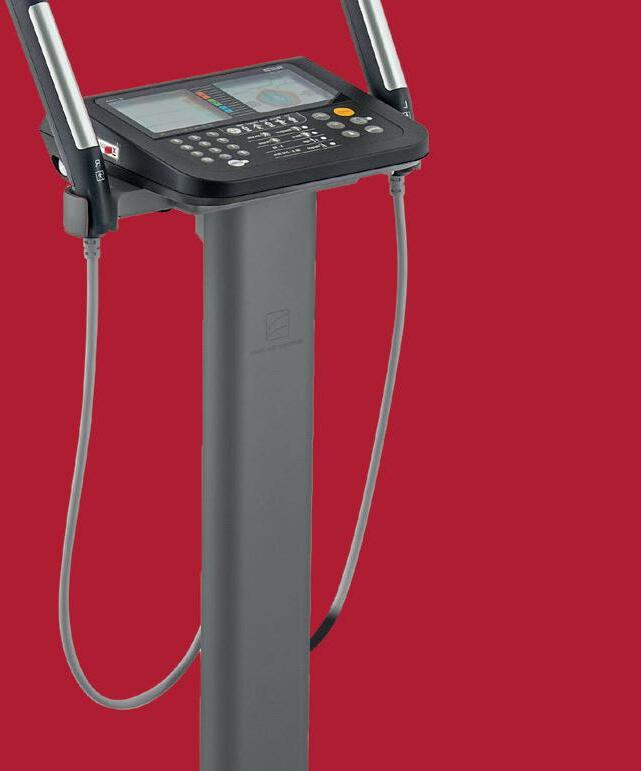





Industry leading health monitoring and body composition analysis solutions, powered by TANITA.
Working with a number of partners, alongside our own software solution, there is something to suit every type of health and fitness facility.
Whether your focus is:
• Better engagement to support members’ health goals, resulting in improved retention
• Increased revenue through paid for measurements and health checks
TANITA offers you Japanese precision for accuracy, and the most flexible product selection on the market.
For more information please contact Simon Wilkinson, Fitness and Sport Lead, TANITA UK on 07795 278733 or simon.wilkinson@tanita.eu





Matrix Fitness has partnered with Aberystwyth University to create a self-powered eco-gym in its new sports dome
Aberystwyth University has undertaken an impressive installation of a new sports dome on its Penglais Campus which takes the University a step closer to its 2030 net-zero goal. The dome has been equipped with the latest Matrix Fitness equipment and will include self-charging exercise stations.
The install included an equipment move to the dome from the current adjacent facility incorporating existing Matrix Fitness cardio integrated with 7xi consoles to provide an interactive user interface, live fitness data, workouts and streaming options. New equipment included Matrix Fitness Target Training CXP bikes which will run on the energy provided by users rather than being plugged into the mains electricity supply.
To accompany the cardio, the project also included a range of new strength equipment including the Matrix Fitness Ultra Series and Magnum Racks.
Darren Hathaway, head of sport and grounds at Aberystwyth University said: “We take great pride in these facilities, which are open to students, staff and the local community.
“We continually strive to invest in our facilities and to innovate when upgrading our equipment. Our new self-powered kit is another step towards limiting our carbon footprint. We hope everyone using it will feel better in the knowledge that they’re benefitting health, mind and the environment.”

The move to the sports dome doubled the number of stations available from 65 to 130, with the work being part of an upgrade programme that will eventually see all equipment being self-powered.
Hathaway continues: “We were one of the first UK universities to declare a climate emergency and over the past 10 years we’ve reduced our C02 emissions by 40 per cent.


“Over the past 10 years we’ve reduced our C02 emissions by 40 per cent”
Darren Hathaway“Understandably, the new sports dome project was a big undertaking and we needed the right supplierpartner. Matrix Fitness was onboard with our sustainability goals right from the start, helping us shape the innovative training space. From initial ideas through to completion, the team guided us through design, layout, equipment and more.”
Tony Vaughan, strategic key account manager at Matrix Fitness adds: “This project pushed the boundaries to be as sustainable and future-proofed as possible. This is a cutting-edge training area, with the latest equipment and technology but without the sacrifice of draining unnecessary energy.” ●
More: www.matrixfitness.co.uk



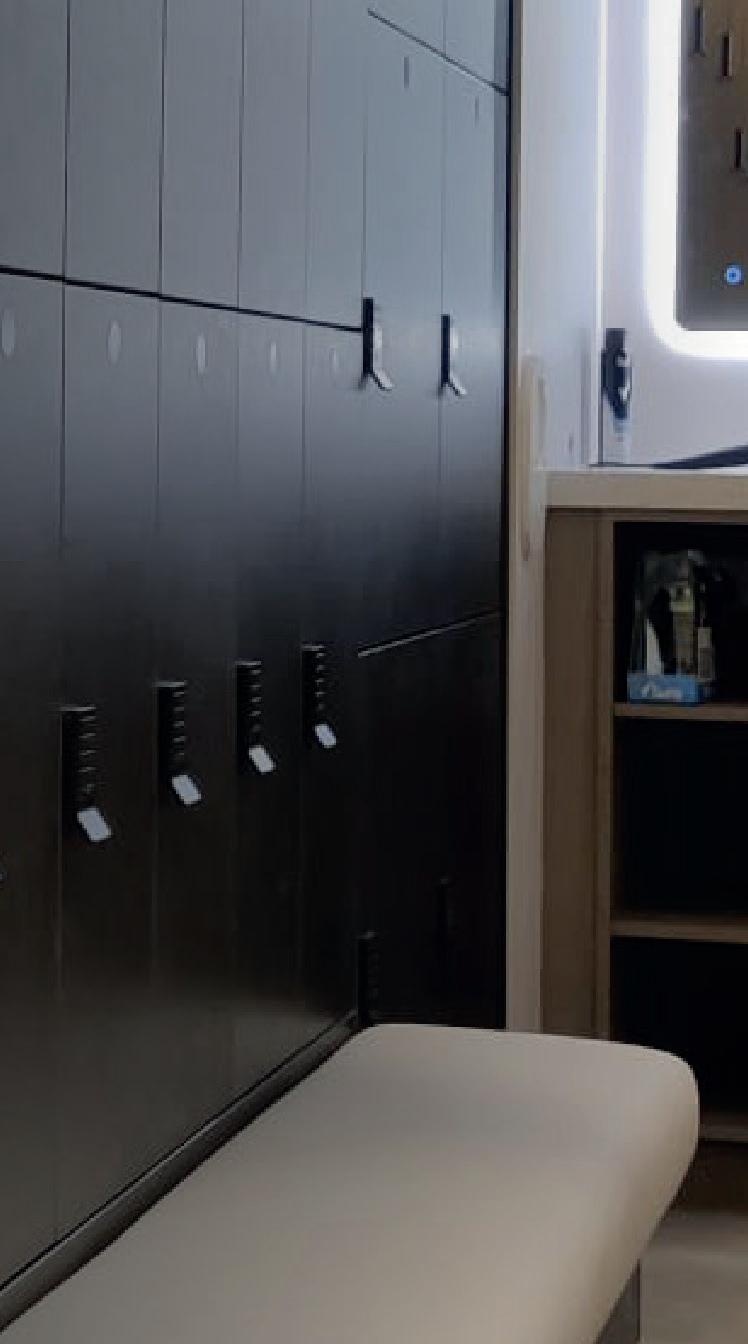


In the heart of Barking and Dagenham, the Bobby Moore Sports Hub stands as a beacon of community development.
Delivered by Alliance Leisure through the UK Leisure Framework, operated by Leisure United and outfitted by Safe Space Lockers, this facility not only revitalises the local area, but also sets a precedent with its sustainable design, achieving a BREEAM excellent rating.
Appointed by the Borough of Barking and Dagenham, Alliance Leisure transformed the vision into reality, supported by the Football Foundation, LBBD, Mayor of London and the London Marathon Trust.
Greg Walker, business development manager at Alliance Leisure, noted “This fantastic new hub will not only provide a boost to community sport, but will also have a transformative
impact on physical and mental wellbeing, bringing people together and strengthening the community.”
Safe Space Lockers, known for its high-quality changing room solutions, played a critical role, bringing a toptier changing environment to the hub. “The quality of Safe Space’s products and the company’s attention to detail is exceptional,” said Walker. “We created national league changing rooms with individual compartments – each one with its own hanger and compartment with digital lock – much as you’d see in a Premier League environment and it looked amazing.”
The facility provides opportunities for sports and recreation to local residents and surpluses will be invested into grassroots football and other community initiatives, ensuring

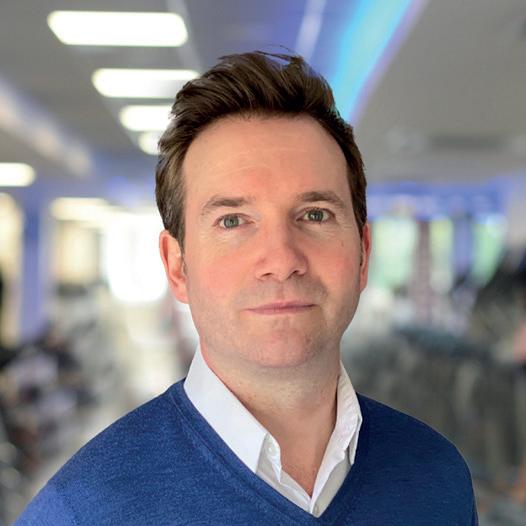
“Safe Space Lockers’ commitment to quality and attention to detail is exceptional”Greg Walker
sustained benefits for groups including disadvantaged young people, women and girls and disabled people.
Walker captures the essence of the project’s community impact, saying: “It’s about investing back into the local area. The selection of suppliers, such as Safe Space Lockers, proved pivotal. Its commitment to quality and ability to align with the vision has been instrumental, while its attention to detail is exceptional.”
This partnership demonstrates the importance of engaging suppliers who understand the project’s aims and are committed to delivering exceptional results, ensuring the contribution to social and economic vitality. ●
www.safespacelockers.co.uk

From payments to virtual classes, software integrations can take your operation to the next level. Providers tell us about their most in-demand offerings
 ABC Fitness has partnered with Les Mills to enable operators to deliver virtual classes


We’ve seen interest in providing a virtual fitness experience, which we offer through our integration with Les Mills
We partner with technology providers, continually expanding our integration offerings to meet evolving industry needs and working within our customer’s technology stack.
From chatbots to marketing, we’ve seen an increased variety in how our clients approach their online presence. One area we’ve seen interest in is providing a virtual fitness experience, which we offer through our integration with Les Mills.
While we provide marketing, sales and CRM support through our own tools, we also integrate with companies such as Sweti Marketing for improved digital marketing and execution. We’ve adapted our offerings to include integration for wearable technology, allowing our customers to leverage devices to provide personalised workout experiences and track member progress.
The advancement of AI is another area we’re staying ahead of – we currently use this technology to support our customers with faster, more efficient churn prediction. Additionally, from a staff management perspective, we’re watching how we help companies integrate their internal management systems.

Interested parties can easily access detailed information about each integration and its benefitsDaniel Wischer Magicline (Sport Alliance)
We’ve developed a platform which facilitates integration with 80 industry partners through an open API. These integrations enable automated processes and more efficient management.
For example, partnerships with companies such as Egym, Seca, Urban Sports Club, Milon and Gympass allow for streamlined workflows, automated training plans, member communication and marketing tools. These automations not only enhance operational efficiency, but also increase member satisfaction.

Two examples illustrate the benefits: the seamless course management and booking enabled by the integration with Urban Sports Club and the lead management and customer retention improvements facilitated by the interface with ClubPlanner. These eliminate manual effort, allowing trainers to focus on core competencies while enhancing the member experience.
We’ve revamped our website to include a marketplace showcasing partner integrations. Interested parties can access detailed information about integrations and their benefits, empowering operators to tailor their software solutions to meet their operational needs.
l Sport Alliance has acquired PerfectGym. Together, the new entity services 14 of Europe’s top 30 operators, a total of 130 chains internationally in 55 countries and 10,000 facilities globally. The acquisition was backed by PSG Equity.

EZFacility is off ering card payment integrations

We’ve enabled our customers to adapt seamlessly as the popularity of card payments surgedSean Dollery EZFacility


Operators in the fitness industry are primarily demanding integrations with card payment providers for ecommerce transactions.
We’ve responded to this demand by introducing integrated card payment services, as we anticipated the growing preference for this payment method. By staying ahead of the curve, we provided our clients with the option of integrated card payments early on, enabling them to adapt as the popularity of card payments surged. We’ve also evolved our card payment service in line with developments to the EZFacility product, ensuring clients benefit from an all-in-one solution that caters to their changing requirements. This includes integration with PDQ machines, enabling

operators to process card-present transactions efficiently. We’ve forged a partnership with Clover, a payment processing provider, enabling our customers to get competitive transaction rates. Mobile phone app integration ranks as a close second in terms of operator demand. To address this, EZFacility offers a branded app service that delivers a presence across iOS and Android platforms. The app integrates with EZFacility, facilitating two-way real-time updates for member sign-ups and class bookings. Marketing tools integrated into the app enable operators to communicate with their members, whether through universal announcements or targeted promotions based on member preferences and behaviour.


We look for integrations that will give our customers access to more dataJoanna Walker Xplor Gym
Data is a valuable business asset and we’re seeing operators look for integrations that boost the value of that asset, so when we’re reviewing opportunities to integrate with potential partners, we look to understand how an integration will enhance data for our customers.
Top priority is always making sure the data available to customers is accurate, up-to-date and as complete as possible. We look for integrations that give customers access to more data while making it easier for customers to effectively interpret and act on it within their all-in-one gym management software solution.

with business intelligence system
FitnessKPI. Using the data available within our software, the integration helps operators track business performance. Operators are alerted to changes and presented with suggested actions to take.
To help operators get more from their data, we recommend making use of our integration
FitnessKPI uses AI to make predictions and help operators analyse performance and as well as predicting future business performance, the technology identifies members most likely to cancel in the next three months. The integration also lets operators quickly make smart decisions that are informed by accurate, complete data. This eliminates the need to make flawed decisions based on intuition and powers better results. l


For more insight, or to get in touch with the companies featured, visit www.fitness-kit.net and type in their keyword
Egym Genius creates training plans across digital and traditional equipment, says Steve Barton
Egym’s new AI-based software, Egym Genius, creates automated personalised training plans that are tailored to the individual, the club and its equipment, including digital kit, free weights, selectorised equipment, and cable pulls.

“Egym Genius uses AI to analyse data from millions of workouts”
Steve Barton
The new software uses data from training sessions carried out on both Egym and partner devices –including 340 million assessment data points – and generates recommendations for individualised training plans that are tailored to the member’s experience level or training goal, while each completed, tracked training session better personalises the next workout.
Egym’s Steve Barton says: “Egym Genius uses AI to analyse data from millions of workouts, personalising training plans and bridging the gap between digital experiences and traditional equipment.”
Genius is the new driver of the entire Egym ecosystem and will be available in Q3 2024.
Physical’s RBX Rubber Dumbbells are priceconscious option, says James Anderson
New to the market are Physical’s RBX Rubber Dumbbells.
Physical’s James Anderson says:
“For the last few years, we’ve only supplied dumbbells in polyurethane

(PU) – a superb product, as they’re durable and come with a five-year warranty, however, a lot of operators were asking for a more price-conscious option.
In our new RBX Rubber Dumbbells, we’ve developed a product that meets this brief.
“We’ve incorporated a lot of the features that make our PU dumbbells popular, including antiroll steel heads, knurled stainless steel handles for a secure grip and a colour palette that allows the operator’s brand to dominate.
“We’re able to deliver all of this at a lower price point, by using commercial-grade, floor-protecting


“We’re able to deliver all of this at a lower price point, by using commercial-grade, floor-protecting rubber rather than PU”
James Anderson

rubber, rather than PU. They’re the perfect choice for price-conscious operators who still want to deliver high-class fitness experiences.”
RBX Rubber Dumbbells are available in 1kg increments from 1 – 10 kg and 2.5kg increments from 2.5 – 50kg and are sold in sets as well as pairs.

In a partnership with Glute Builder, Escape Fitness has launched the first of a dedicated glute equipment range, the Escape Glute Box.
Matthew Januszek, Escape Fitness, said: “We’re seeing a global

“We’re seeing a global increase in the demand for glute training equipment”
Matthew Januszek

● There’s a growing focus on exercising the glutes
increase in the demand for glute training equipment. The glutes are a major muscle group, yet are often neglected in training. Wellfunctioning glutes protect knees, hips and the lower back from injury and provide the stabilisation and power needed in many sports and everyday movements.
“In addition to performance reasons for training the glutes, there’s a growing aesthetic focus on training the butt. Our
modular storage enhances the user experience, says Erik Blomberg
Eleiko has announced the expansion of its Prestera Strength System to incorporate modular storage for free weights and training tools. Eleiko says it aims to address challenges related to space utilisation, while enhancing the user experience.
The storage solutions offer flexibility through a modular,
customisable system designed to navigate floor plan limitations, maximise vertical space and keep free weights and training tools tidy and accessible.
Eleiko’s Erik Blomberg says: “Whether a compact boutique gym or an expansive fitness centre, our modular system can be tailored to meet spatial

● The launch completes the Prestera Strength System
feedback from operators is that as more women enter the free weight areas there’s a growing demand for glute equipment.”
The Glute Box features a patented angled design to enable up to 30 glute exercises. The box is supported by a library of digital exercise demonstrations and workouts that can be accessed via Escape’s Mars 2.0 touchscreen.
fitness-kit.net keywords
Escape

“Whether a compact boutique gym or an expansive fitness centre, our modular system can be tailored to meet spatial requirement”
Erik Blomberg
requirements, enabling operators to create distinctive spaces.”
The launch means Eleiko’s Prestera Strength System is now a complete strength system of racks, rigs, cables and storage.
fitness-kit.net keywords
Eleiko


Tap into HCM ’s comprehensive supplier directory and profiles to get in touch with the industry’s leading suppliers of products and services to power your business

CLICK HERE to search for a supplier on HCM’s Company Profiles Hub


CLICK HERE to visit the HCM Handbook Company Profiles


New research from UCLA Health looked at the impact of Kundalini yoga on memory and found a significant impact, finds Megan Whitby
Anew study by UCLA Health found Kundalini yoga provides benefits to cognition and memory for older women who are at risk of developing Alzheimer’s disease.
These include restoring neural pathways, preventing brain matter decline and reversing age- and inflammation-associated biomarkers – improvements not seen in a group who received standard memory training exercises.
Led by Dr Helen Lavretsky, the study sought to determine whether Kundalini yoga can be used early on to prevent cognitive decline and trajectories of Alzheimer’s among postmenopausal women.
The research involved over 60 women aged 50 and over with self-reported memory issues and cerebrovascular risk factors.
They were divided into two groups: one participated in weekly 60-minute Kundalini yoga sessions that focused on meditation and breathwork and the other underwent weekly memory enhancement training over a period of 12 weeks. Both groups also received daily homework assignments.
Researchers assessed the women’s cognition, subjective memory, depression and anxiety after the first 12 weeks and again 12 weeks later to determine how stable any improvements were.
Ideally people should do both Kundalini yoga and memory training, because they impact different parts of the brain and have different health effects
Further tests undertaken
Blood samples were also taken to test for gene expression of ageing markers and for molecules associated with inflammation, which are contributing factors to Alzheimer’s.
Researchers found Kundalini yoga group participants saw several improvements not experienced by the memory enhancement training group. These included the prevention of brain matter decline and significant reductions in subjective memory complaints.
“Ideally, people should do both Kundalini yoga and memory training, because they impact different parts of the brain and have different overall health effects,” said Lavretsky. l l Cognitive and immunological effects of yoga compared to memory training in older women at risk for Alzheimer’s disease , was first published in the journal Translational Psychiatry
More: www.hcmmag.com/Kundalini


PULSE LAUNCHES ITS VERY OWN R&D HUB
CAPTIVATING THE FITNESS ENTHUSIASTS WORLDWIDE MAKING THE RIGHT MOVES AT ACTIVE-NET

THE NEXT EVOLUTION OF TRAKK ECOSYSTEM

Endurance events are captivating fi tness enthusiasts worldwide. The increasing focus on community spirit and collaboration amongst consumers within the health and fi tness space is igniting passion and motivation, driving individuals towards their fi tness goals.
In a dynamic landscape where consumer needs are constantly evolving, Pulse Fitness is committed to adapting and innovating. We’re thrilled to unveil our innovative Research and Development hub at our headquarters in Congleton. This state-of-the-art showroom gym serves a dual purpose; it not only functions as a welcoming gym space for members of the local community to thrive in their fi tness journey, it also functions as a live testing ground for our equipment and new products, giving us invaluable insights and feedback from users, enabling us to fi ne tune and perfect our equipment.
At Pulse Fitness, we recognise the vital role of technology in meeting consumer demands, which is why we are proud to announce further advancements to our app, TRAKK. With these updates, TRAKK will continue to empower gym operators with a fully-connected ecosystem, signifi cantly enhancing the user experience.
As we eagerly anticipate the rest of the year, we’re feeling optimistic and ready to embrace the opportunities that lie ahead.


In keeping with our ongoing commitment to maintain and redefine excellence in the fitness equipment industry, we were proud to launch our innovative Research and Development Hub at the Pulse Fitness HQ.

Following an extensive renovation project at our headquarters in Congleton, we are thrilled that our Research and Development Hub is now up and running in full force. This dynamic space represents our dedication to innovation and excellence in the fi tness industry, and serves as an experiential space for prospective customers to immerse themselves in the world of Pulse Fitness.
Best wishes,
Chris Johnson, MDVisitors will have the opportunity to explore and test the latest cutting-edge machines

in a fully equipped gym environment –experiencing firsthand the quality that defines our market-leading equipment. Committed to continuously improving the fi tness experience for both operators and customers, this space will function as a live testing ground, enabling us to gather real-time insights and feedback from users. This customer-centric approach empowers us to continuously enhance and refine our machines based on actual usage and user preferences.
Pulse Fitness understands the need for consistent product evolution to meet the changing needs of individuals. By delving deep into user experiences, we aim to uncover nuanced insights that will drive meaningful enhancements and modifications across our product range. This relentless pursuit of innovation ensures that our offerings resonate with our diverse user base.
Dedicated to fostering community wellness and providing a supportive environment for fitness enthusiasts to thrive, we’re excited to announce this space will also operate as a fully functional commercial gym. Serving the local community with the highest quality equipment, this gym offers a welcoming atmosphere where individuals can pursue their fitness goals with confidence and convenience.


The grand opening of the Pulse Fitness R&D Hub was a resounding success. Chairman Mo Chaudry and MD Chris Johnson delivered insightful speeches, while guest speaker Phil Campion, author of “Born Fearless,” inspired attendees with his story. Guests toured the state-of-the-art R&D hub, exploring the latest in fitness technology. The event concluded with a vibrant networking session, fostering valuable industry connections.


 Chris Johnson, MD
If you are interested in viewing this new research hub, please register your interest by visiting www.pulsefitness.com/contact/
Pulse Fitness recently attended Active-Net National, a two-day event for the fi tness, health, and leisure industry. Our focus on Pulse Build garnered significant attention, highlighting our comprehensive suite of services from Strategic Partnerships to Design & Build solutions. Attendees were intrigued by our full-service approach, signalling a shift towards best-in-class selection of suppliers. Pulse Fitness remains at the forefront of innovation, adapting to industry trends and delivering unparalleled value to our partners and clients.
Pulse Fitness is committed to adding value to local communities across the country to encourage people to get active for their physical and mental health. We were immensely proud to work with Bolsover District Council to donate £25,000 worth of state-of-the-art resistance machines and dumbbells to the beloved Pinxton Community Gym. The space has been a pillar in the local area for over 40 years and relies on support from the community and local businesses, so this significant boost has played a pivotal role in ensuring the gym’s continued operation for years to come.


At Pulse Fitness, we’re constantly pushing the boundaries to improve the fi tness experience for both operators and consumers, which is why we’re thrilled to announce the upcoming advancements to our flagship offering, TRAKK
TRAKK is a cutting-edge fi tness digital ecosystem tailored for each facility, empowering gyms and leisure centres to offer a more connected fi tness experience.


Coming soon, the TRAKK desktop software will evolve to be available as a web-based app, ensuring staff have seamless access to the cloud-based data anytime and on any device, transforming TRAKK into a reporting oasis of insights and analytics. Our Mobile app is also receiving a 2.0 release, bringing new ways for members to discover exercises, a fresh redesign to unify our digital product line-up, and much more.
What could we do for you? Let’s start the conversation today.
We’re taking integration to new heights with advanced body composition analysis, providing a comprehensive view of members’ fi tness journeys like never before. This integration serves as a catapult for further innovation, paving the way for enhanced features on both the web and mobile app.
TRAKK is more than just data. With our innovative approach to fi tness tracking, TRAKK fosters member engagement, motivation, and long-term loyalty. It removes any mystery surrounding fi tness data and empowers your trainers to guide members towards their goals with precision and efficiency.


CUSTOMER SUCCESS THROUGH HYPER PERSONALISATION
Technogym Digital Ecosystem allows you to boost your business by offering your members a hyper personalised training experience for fitness, health and sport performance. It is the only open platform able to integrate management software, consumer apps or devices, and equipment while leveraging AI and premium content to engage and activate your members in the long term, inside and outside your facility.