Circulation Manager Leo Phillips subs@constructionmaguk.co.uk
Website: constructionmaguk.co.uk
Twitter: @constructionukm
LinkedIn: @constructionmaguk
ACE INDUSTRY SCHEME RAISING FRAUD PROTECTION STANDARDS WITH NEW CARD
The Engineering Construction Industry Training Board’s (ECITB) new-look ACE cards will incorporate an NFC chip as part of its drive to improve the industry’s card checking procedures and ensure safety on major construction sites.
An ACE (Assuring Competence in Engineering) card is automatically issued to individuals who hold both an ECITB vocational qualification and a current CCNSG safety passport.
It is one of the 37 CSCS Alliance card schemes that meet Construction Leadership Council (CLC) recommendations.
All new and renewal cards issued from 20 July 2026 will have an embedded NFC (Near Field Communication) chip that can be scanned via the CSCS Smart Check App. This makes scanning workers’ cards at site entrances significantly quicker for employers and clients.
Chris Mann, Director of Learning & Assurance at the ECITB, said: “Engineering construction covers the construction, repair, maintenance and decommissioning of process plant and machinery spanning the energy, infrastructure and major process industries including oil and gas, power generation, nuclear, renewables, chemicals, pharmaceuticals, food processing and water treatment. These are high-risk sites. We must ensure the workers on them are qualified and safe to be there.
As each card is valid for three years there will be a period (until July 2029) where both the new-design card and the existing ACE cards are in circulation. These older cards do still have a QR code on the back for employers and clients to check the authenticity of cardholders but the new cards will make the process much quicker and more secure.
Civil engineering costs are forecast to rise by 15% over the next five years to 1Q2031, while tender prices for civil engineering work are expected to increase by 19% over the same period, according to the latest data from the Building Cost Information Service (BCIS). Infrastructure output is forecast to grow by 1% in 2026 and by 14% between 2026 and 2031.
Dr David Crosthwaite, chief economist at BCIS, said: “There is a particularly striking contrast between short-term market conditions and the longer-term outlook for infrastructure. Current activity levels have weakened and new orders have fallen sharply, yet there remains a substantial pipeline of planned investment in the energy, water and sewerage sub-sectors.
“The key question for the sector is how quickly projects move from commitment to delivery. Until investment begins to translate into activity on site, the
infrastructure environment will continue to be characterised by cost uncertainty, selective bidding and cautious optimism.”
The BCIS Civil Engineering Tender Price Index (CETPI), which measures movement in civil engineering tender prices, i.e. prices agreed between client and constructor at commit to construct, saw annual growth of 1.6% in 1Q2026.
Dr Crosthwaite said: “The BCIS Civil Engineering TPI Panel reported slightly softened but stable activity compared with the previous 12 months, varying by sub-sector. The electricity, aviation and water sub-sectors are active, while the road sub-sector is characterised mainly by repair and maintenance work. Panellists said contractors have become more selective about the tenders they pursue, reflecting the rising cost of tendering, and are seeking greater cost recovery from clients, particularly through early contractor involvement arrangements.”
The panel agreed on 2% quarterly movement for 2Q2026, resulting in annual growth of 3.7%.
On input costs, the BCIS General Civil Engineering Cost Index increased by 3.3% in the year to 1Q2026. Cost inflation is expected to rise more sharply in 2Q2026, driven by the conflict in the Middle East. Steel prices are a particular concern, with multiple factors feeding in, including the conflict itself, Carbon Border Adjustment Mechanism requirements and planned changes to steel tariff quotas from 1 July 2026, which will see import quotas reduced by 51% and imports above those quotas subject to a 50% tariff.
Infrastructure output contracted by 1.7% in 1Q2026 compared with the previous quarter, resulting in a 4.9% annual decline. New orders fell by 11.2% in the first quarter of 2026, representing a substantial annual decline of 36.3%.
“The chip does not store any biometric data but carries the identity, qualifications and safety training of the cardholder. It allows the site manager to verify the card is valid, belongs to the person in front of them and that they are suitably qualified and have the correct level of health and safety for their job. The newlook card is just one element of the planned programme of improvements we will be making to the card scheme. From September the number of vocational qualifications recognised within the scheme will be broadened to include qualifications from Awarding Bodies other than the ECITB. CSCS Ltd will manage the issuing of cards from this point, supplying cardholders also with a digital version of their card and introducing an online application process for applying for new cards.”
CSCS Alliance schemes operate with nationally recognised qualifications in place for all occupations, providing assurance that over two million UK construction workers are trained and qualified for the job they do on site.
ACE allows individuals to move between civil and engineering construction sites with a single card that validates their credentials.
CSCS Smart Check can be used, free of charge, as an app or via the website to validate all CSCS Alliance cards. It is used within existing site access and induction systems by industry’s largest contractors.
Dr Crosthwaite added: “The scale of the decline in new orders is significant, but it needs to be read alongside the broader investment commitments already in place. The pipeline exists, the challenge is translating it into activity, and that process is taking longer than the sector would like. At the start of 2026, markets were anticipating rate cuts that would have supported project viability and investment decisions. That picture has shifted considerably, and for a sector heavily dependent on public and private capital commitments, the interest rate environment is now an additional headwind at an already uncertain time.”
For more information visit: bcis.co.uk
CONSTRUCTION EMPLOYERS URGED TO STRENGTHEN SAFER HIRING PRACTICES AFTER SECTOR HIT WITH MORE THAN £1 MILLION IN PENALTIES
Construction employers are being urged to review their safer hiring practices after construction, building services and site support businesses were fined more than £1 million pounds for hiring illegal workers, according to Home Office data analysed by Personnel Checks.
Analysis of the latest Home Office illegal working civil penalties data identified more than £1 million worth of penalties issued to construction-related businesses, with individual fines ranging from £40,000 to £315,000.
The largest penalty was issued to Sandu Site Solutions Limited, which received a £315,000 fine. Other significant penalties included £120,000 for M A Builders London Ltd, £90,000 for Bhutta Builders Ltd and £80,000 for K.S. Building Services Solihull Limited, alongside a series of penalties issued to construction, civils, drylining, building services and site support businesses across the UK.
The Home Office list highlights employers that have breached right-to-work rules. It typically includes businesses that have failed to pay their fines within 28 days after exhausting any appeals, or employers that have received repeat penalties.
The findings come as construction businesses continue to face ongoing labour shortages and skills gaps, with many employers relying on subcontractors, agency workers and temporary labour to keep projects moving.
Separate Home Office enforcement figures show there were 290 illegal working visits to construction businesses during 2025, resulting in 588 arrests. While enforcement activity is more heavily concentrated in sectors such as hospitality, and retail, the latest penalties demonstrate that construction employers remain exposed to
significant compliance risks when proper checks are not carried out.
Jack Mellor, CEO of Personnel Checks said: “Construction employers operate in a challenging recruitment environment where projects often depend on subcontractors, temporary workers and agency staff. However, pressure to fill vacancies quickly should never come at the expense of proper hiring checks.
“These penalties highlight why robust safer hiring practices are so important. Right-to-work checks are a legal requirement, but employers should also consider wider measures such as identity verification, DBS checks where appropriate, reference checks and maintaining accurate recruitment records.
“Many businesses invest heavily in site safety, risk management and compliance. The same approach should apply to recruitment. Verifying who you hire before they arrive on site is one of the most effective ways to protect your workforce, your reputation and your business.
“Taking shortcuts during recruitment can have serious consequences. Financial penalties are significant, but employers can also face reputational damage, operational disruption and increased scrutiny from regulators.”
Personnel Checks is encouraging construction employers to regularly review recruitment procedures, audit compliance processes and ensure hiring managers understand current right-to-work requirements and safer hiring best practice.
Dr David Crosthwaite
CONSTRUCTION RECOVERY MUST NOT BE TAKEN FOR GRANTED, WARNS FMB
The 1.6% rise in construction output in the three months to May 2026, as reported in the latest figures from the Office for National Statistics (ONS), is a welcome sign of recovery for the construction industry, but policymakers must not assume the sector is out of the woods yet, says the Federation of Master Builders (FMB).
Brian Berry, Chief Executive of the Federation of Master Builders (FMB), said: “After a difficult start to the year, it is encouraging to see construction output increase for the third consecutive three-month period.
“The growth in repair and maintenance work is particularly positive, as this is the bread and butter of many small building firms and suggests that demand from homeowners and property owners has remained resilient. It is also reassuring to see growth recorded across the majority of construction sectors, demonstrating that activity is beginning to recover more broadly across the industry.”
Berry continued: “However, there remains no room for complacency. While repair and maintenance activity increased over the three months to May, the monthly figures show that this momentum weakened towards the end of the period, with repair and maintenance output falling in May.
The industry needs sustained confidence and a strong pipeline of projects if this recovery is to continue. The Government must use this momentum to accelerate planning reform, improve access to finance for SME builders and provide long-term certainty on housing and infrastructure investment.
“With the right support, small builders can play a central role in driving growth, delivering new homes and improving existing housing stock across the country.”
WORK BEGINS ON BESPOKE HOME FOR SOUTH EAST’S FIRST 3D METAL PRINTER
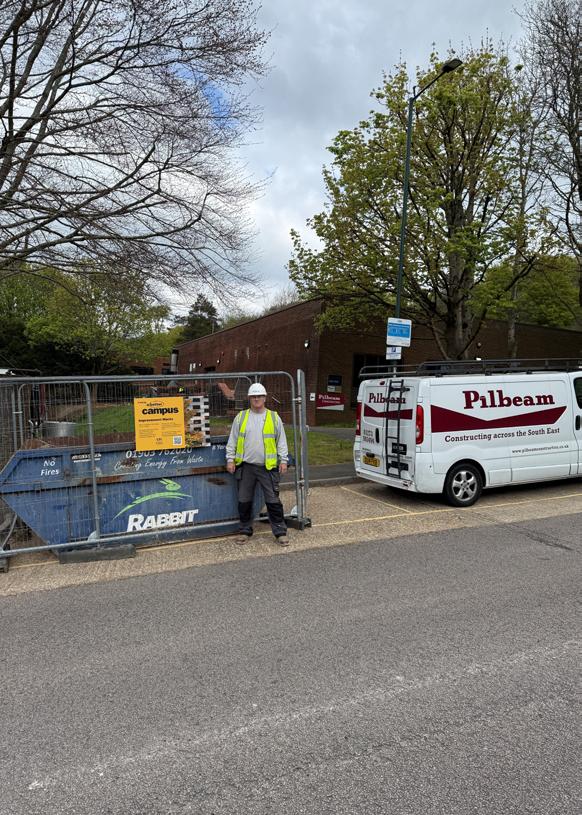
Sussex contractor Pilbeam Construction has started work to refurbish a building at the University of Sussex to upgrade the mechanical workshop capabilities, including installing the South East’s only state-of-the-art 3D metal printer.
The printer will soon be moved into the newly named Firle building on the Falmer campus, which was once used as the IMRA Europe UK Research Centre by the Japanese firm Aisin Corporation. The works will create a technical facility designed for advanced machining in both teaching and research.
The makeover started in April, with Pilbeam stripping out the wall, ceiling and floor coverings and replacing them, as well as installing new fire doors, to make way for the printer.
The building will house new automated Computer Numerical Control (CNC) teaching machines, CNC lathes, milling and turning machinery, a new coordinate measuring machine and video inspection equipment.
Laser cutters and 3D printers will also be repositioned in the building, with a predicted completion date of August 2026.
Alan Corbett, managing director at chartered building company Pilbeam Construction, based in Southwick, West Sussex, said: “This is an exciting and complex project which will bring huge benefits for the University and its students.
The main challenge for us is working within a tight timeframe and with a tight budget, but we’ve worked closely with our subcontractors and the University of Sussex to control the costs and ensure we can deliver our work on schedule.
“We’re really pleased to have been involved in such a significant project, involving the region’s only 3D metal printer and we look forward to seeing the finished results.”
Guillotines, grinders, bandsaws and shot blasters, which are surface preparation machines, will also be installed by Pilbeam, which has significant experience working in live environments in the education sector.
To accommodate the new equipment, windows and doors are being removed and structural openings are being increased.
Rob Fowler, associate director of technical operations at the University of Sussex, said: “This refurbishment, together with the introduction of state-of-theart equipment, will significantly strengthen the University’s mechanical engineering teaching provision, bringing considerable benefits to our students.
“The inclusion of an on-site 3D metal printer marks a major step forward in our technical capabilities. It will also provide advanced machining support for novel funded research such as Quantum computing and Thermofluids.”
Construction Insurance Built for You
Construction is complex. Managing risk shouldn’t be. Gallagher supports construction businesses across the UK with specialist insurance and risk management solutions. Our teams work with contractors, developers and consultants to help identify and manage risks across the construction lifecycle, from planning and procurement through to completion. Discover how we can support your business.
FUSION APPOINTS HG CONSTRUCTION ON TWO NEW PBSA SCHEMES
HG Construction has been appointed as main contractor by Fusion Group on two new purpose-built student accommodation (PBSA) schemes – a 706bed city centre development in Cardiff and a 541-bed canal-side regeneration scheme in Loughborough.
Fusion Group is one of the UK’s largest privately-owned developers and operators of student accommodation. HG is currently collaborating with Fusion on a 622-bed scheme in Bristol Road, Birmingham, which topped out in February 2026 and is due for completion in the summer of 2027.
The two new Fusion PBSA schemes are in line with HG’s continued expansion across the UK, with the contractor now delivering schemes in over 10 UK cities and towns including Leeds, Manchester, Bristol and London.
The Cardiff scheme, situated in Longcross Court, will transform a prominent site in a sustainable location into highquality student accommodation across 17 storeys. The development includes
extensive amenity and ancillary spaces, ground-floor commercial units and significant public realm improvements, reinvigorating the surrounding streets of Newport Road, City Road and Oxford Lane.
The Loughborough scheme is located in the heart of the city and involves the regeneration of a derelict brownfield site adjacent to the Grand Union Canal Basin. The eight-storey development comprises high quality student accommodation and amenities, along with landscaped courtyard and garden spaces. Its attractive design will complement the canal side location, featuring traditional brickwork and aluminium windows and a strong emphasis on placemaking.
Adam Quinn, Chief Executive Officer, HG Construction, said: “Securing these
SELCO
schemes with Fusion represents an exciting step for HG as we continue to grow our presence across the UK. Our expansion is built on strong collaboration with innovative partners like Fusion, who share in our ambition to create exceptional living spaces and deliver long-lasting benefits for the local community. We look forward to building on our partnership with Fusion as we bring these schemes to life.”
Paul Miles, Group Construction Director, Fusion Group, said: “We recognise the strength HG Construction brings to complex student living schemes, and that confidence makes them a natural partner for these two important developments.
“Cardiff and Loughborough are exciting opportunities to transform underused sites into high-quality living environments, with a strong focus on placemaking, community impact and long-term value.”
identify barriers, advise on best practice, and develop practical, scalable solutions that create a more inclusive workforce and a stronger industry for all.
As a Strategic Partner, Selco will help to direct the coalition’s trajectory and its future endeavours, championing initiatives that support the #BuiltOnBetter pledge.
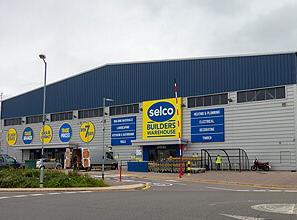
Selco Builders Warehouse has announced a new partnership with the Construction Inclusion Coalition (CIC), joining as a Strategic Partner to help drive meaningful progress through the coalition’s #BuiltOnBetter pledge.
The Construction Inclusion Coalition is dedicated to improving Diversity, Equality & Inclusivity (DEI) in the construction sector. Bringing together businesses committed to long-term, structural change, the CIC works to
The brand’s role will include inspiring change, listening to underrepresented voices, supporting communities, educating peers and contributing to industry wide change, led by Selco CEO Frank Elkins.
CPR RECRUITMENT ACQUIRES XENON RECRUITMENT GROUP TO LAUNCH CPXR
CPR Recruitment has announced the majority strake hold acquisition of Xenon Recruitment Group, forming CPXR - a new dedicated permanent recruitment arm operating under the CPR Recruitment umbrella. The move marks a significant strategic milestone for the business and strengthens its position as a leading force in construction recruitment.
The acquisition brings together two specialist recruitment businesses with shared values and a mutual commitment to service excellence. CPXR combines CPR Recruitment’s established reputation and industry network with Xenon’s deep-rooted specialism in permanent placements, creating an offering with unmatched breadth and depth.
With diversity and inclusion already at the heart of the business, this partnership represents a natural and important evolution of its commitment to colleagues, customers and the construction industry. As an equal opportunities employer, Selco already has initiatives in place to champion DEI, such as its Women’s Forum and Diversity and Inclusion Group.
Sally Kerr, HR Director at Selco Builders Warehouse, said: “Creating a more inclusive construction industry requires collaboration and joint action, which is why we are proud to be a Strategic Partner of the Construction Inclusion Coalition.
“At Selco, we believe that a diverse team brings stronger outcomes for both our customers and colleagues. We joined the CIC in 2025 and have already had the opportunity to connect with like-minded organisations that are as committed as we are to driving meaningful change within the sector. This year, we’re excited to forge ahead and see a measurable difference come into effect.
“There’s still more work to do to ensure the construction industry is one where everyone feels welcome and valued. Alongside the CIC, we are consistently working to remove existing barriers and encourage people from all backgrounds
The CPXR approach centres on indepth candidate interviews, a genuine understanding of client culture and long-term goals, and a proven track record as a preferred supplier to leading companies across the construction and built environment sector.
Tim Sutton, Co-Founder & Managing Director, CPR Recruitment: “This acquisition is a really exciting step for CPR. Xenon has built an exceptional reputation in permanent recruitment across construction and the built environment, and the fit with our own values and way of working is clear. By bringing the two businesses together under CPXR, we’re able to offer our clients and candidates a stronger, more complete service. I’m looking forward to what we’ll achieve together.”
David Abbott, Xenon Recruitment Group: “Joining forces with CPR Recruitment is far more than a business decision. CPR’s values, integrity and a people-first approach mirrors everything we’ve built at Xenon. By bringing our businesses together, we’re creating more opportunities for growth, development, and career progression, while maintaining the culture and values that have made both companies successful. I’d like to thank everyone who has supported Xenon on its journey so far. Our clients, candidates, partners, and, most importantly, our team (past and present) have all played a huge part in getting us to this point. I’m incredibly proud of what we’ve achieved, but even more excited about what’s ahead. Here’s to the next chapter, CPXR!”
to build rewarding careers and a more inclusive future for the industry.”
Find out more about the Construction Inclusion Coalition: builtonbetter.uk
L-R: David Abbott, Rami Khoury, Luke Skeggs & Tim Sutton
MARLBOROUGH HIGHWAYS SECURES
MAJOR £150M
CONTRACT WITH WEST BERKSHIRE COUNCIL
Marlborough Highways is proud to announce that it has secured a major new seven-year highways term maintenance contract with West Berkshire Council, valued at £150m.
The West Berkshire Highways Term Maintenance Contract will commence on 1 October 2026 and will run for an initial seven-year period, with the option to extend for a further three years.
Drawing on more than three decades of experience, our dedicated people will deliver a wide programme of highways maintenance and improvement services for West Berkshire Council. The contract will help ensure roads, footways and wider highway infrastructure are maintained to a high standard for residents, businesses, stakeholders and visitors.
The scope of services includes reactive and planned highway maintenance, winter maintenance, capital improvement schemes, street lighting, safety schemes, active
travel programmes and support with highways asset management.
Working closely with West Berkshire Council, Marlborough will support social value commitments including local employment opportunities, apprenticeships, skills development, school and STEM engagement, and volunteering support for community organisations across West Berkshire.
Marlborough and West Berkshire Council also share a strong commitment to sustainable delivery. Throughout the contract, Marlborough will support the Council’s environmental ambitions by delivering a carbon-neutral service from day one, while also working to reduce emissions, improve resource efficiency, minimise waste, support biodiversity, and introduce lower-impact materials, methods and technologies wherever possible. This approach will help support more sustainable highways maintenance across West Berkshire while maintaining a safe, reliable and high-quality service for residents.
Awarded following a competitive tender process, the contract further strengthens Marlborough’s growing presence across London and the Home Counties. It comes at an exciting time for the business, following our recent major win with the Royal Borough of Windsor and Maidenhead, and the renewal of long-standing partnerships in Southend-on-Sea, the London Borough of Newham, and the London Borough of Barking and Dagenham. Together, these awards reflect the confidence our clients place in our people, our processes, and the high standards we consistently deliver.
Joseph Revell, Director of Marlborough Highways, said: “We are incredibly proud to begin this new partnership with West Berkshire Council. This is a significant contract for Marlborough Highways and reflects the trust placed in our people, our processes and the consistently high standard of our work.”
West Berkshire has an important and diverse highway network, and we are excited to bring our expertise, energy and spirit to the area. Our focus will be on delivering a safe, reliable and highquality service for residents, while creating meaningful local opportunities and supporting the Council’s long-term priorities. This award is also an important milestone in Marlborough’s continued growth. We look forward to building strong relationships across West Berkshire and demonstrating our values through the way we deliver every day.
Councillor Stuart Gourley, Executive Member for Environment and Highways said: “This is an important step in securing a high-quality highways service for West Berkshire over the next decade. Residents want roads that are well maintained, safe to use and repaired quickly, and this contract is designed to deliver exactly that.”
Specifying CFA members for your flooring projects means you’ll be gaining a wealth of experience from vetted contractors with the knowledge and products to fulfil your specification with a sustainability criteria.
CFA members are part of a supply chain that includes specialist contract flooring contractors, manufacturers and distributors, all of whom promote the highest standards and expertise.
Fire Safety & Security
WHEN WAS THE LAST TIME YOU REVISITED YOUR FIRE SAFETY STRATEGY?
(AND WHEN TO UPGRADE OR REPLACE YOUR SYSTEMS)
As much as it can feel like a box to tick and move on, fire safety is never a “set and forget” responsibility for building owners, developers, property managers and housing providers. Even when fire safety is planned perfectly, systems and strategies can become outdated, either through general wear and tear, or through changes to how a building is occupied or used.
In this article, Brad Crisp, Commercial & Specification Manager at Sertus, explores when to review, upgrade or replace your building’s fire safety strategy and systems.
Fire Safety is an ongoing process
Even well-planned strategies need regular updating. Buildings can evolve from their original intended use surprisingly quickly. This could be due to an increase in occupancy levels, the addition of extensions or changes to internal structures, or refurbishment that changes access and how people behave in the space. In addition to this, regulations and guidance relating to fire safety are updated regularly, with increasing scrutiny especially for highoccupancy and high-rise buildings.
As well as changes to the building or to regulations, as time passes, systems require replacing. Smoke control and automated ventilation systems require
ongoing maintenance and will eventually need replacing. It’s important that your fire safety routines include continual assessment, rather than an approach of only acting once faults are reported. Building managers have both a legal and a moral responsibility for maintaining strong fire and smoke safety systems and maintaining safe evacuation conditions.
Why smoke control systems need regular attention:
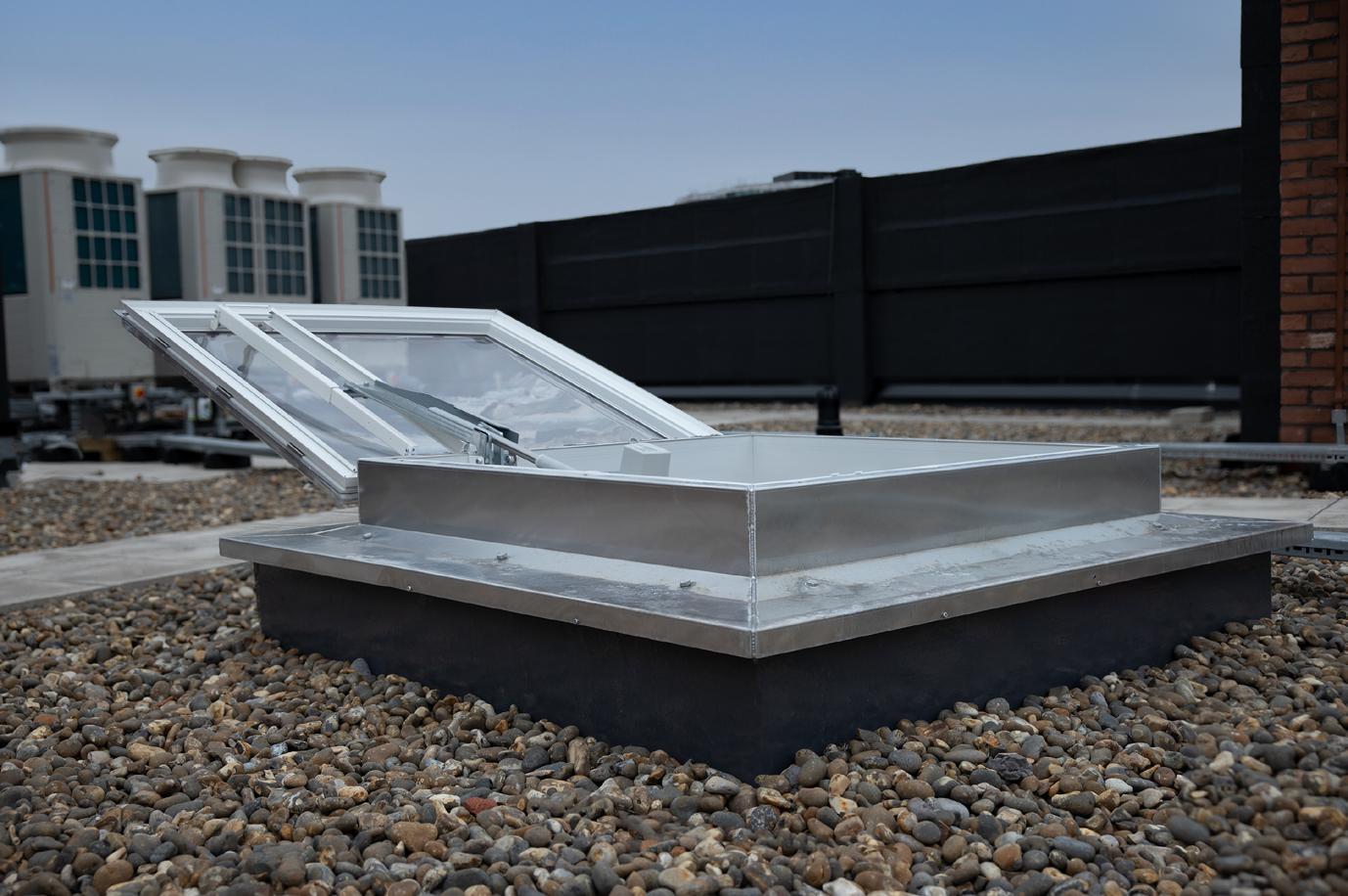
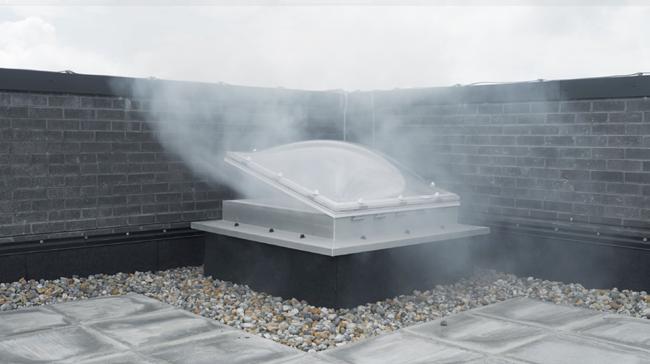
Smoke control systems protect escape routes such as corridors and stairwells, so that building occupants can safely evacuate in the case of a fire. The two types of smoke control system, mechanical and natural, both unfortunately degrade with age. This means that they need to be routinely assessed for efficiency.
As they degrade, the following issues could reduce performance in lifethreatening ways:
• Fans could lose efficiency
• Dampers could fail
• Automatic Opening Vents (AOVs) could fail to open correctly
• Electrics or controls could fail
Without testing, these systems will only come into play in real fire conditions, which could be too late if you realise they have degraded.
Depending on how old they are, some older smoke control systems may not meet modern expectations or performance standards.
Key signs it’s time to review or upgrade:
Even technically functioning fire safety systems need to be reviewed and upgraded on a regular basis.
Consider thorough review and upgrades if:
• The system is older than ten years
• Commissioning records or documented testing records are missing
• There are frequent faults, breakdowns or recurring maintenance issues
• There have been building alterations that impact airflow or fire compartmentation
• Complaints or concerns have been raised by occupants, staff or maintenance teams
• There have been changes to regulations, standards or guidance since the system was designed
The risks of an outdated fire safety strategy:
An outdated fire strategy can mean occupants are at risk and that you, or whoever is legally responsible for the building, are liable for that risk.
Smoke spread is a key risk to consider, and one that can have grave consequences. Smoke can compromise escape routes, such as corridors and stairwells, interfering in evacuation processes. It can also demonstrably reduce visibility and create dangerous tenability conditions for occupants.
Outdated fire strategies and systems can also increase risks faced by firefighters attending incidents, because they might face confusion or a change in the expected emergency procedures.
Brad Crisp
Fire Safety & Security
The greatest risk to consider, that we are all working to avoid, is fire leading to fatalities. In addition to loss of life, businesses with outdated fire strategies will be risking consequences through legal, insurance and compliance routes, as well as risks to business continuity and reputation.
The benefits of upgrading your fire safety system and strategy:
The key benefit of upgrading your fire safety is improving the safety for your occupants and staff during an evacuation.
Newer fire safety and smoke control systems will be more reliable, giving everyone involved more confidence in their performance. Many also have better monitoring, diagnostics and performance validation capabilities, taking advantage of newer technologies. Having new fire safety technology installed can also
mitigate insurance increases and, in many cases, decrease your insurance premium.
Updated fire safety strategies that consider changes in a building and how it is being used are more likely to get over the compliance hurdles in current regulations and fire safety guidance.
Taking a proactive approach to upgrading can literally save lives. It can also be much more affordable to address early, rather than waiting until there is an urgent need to replace.
Upgrade or replace?
Upgrading may be the better choice when the following conditions are in place:
• Your existing infrastructure is still fundamentally sound
• Only a few selected components require replacement or modernisation
Fire safety strategies must evolve alongside the building itself.
Upgrades will likely be considered first, due to being cheaper. They also allow for phased implementation that can help to spread costs and reduce building disruption.
Full system replacement will always be a better long-term solution, and ultimately, more cost effective than having to run a continuous upgrade programme.
Replacement will be needed if:
• Your existing system has reached an end-of-life condition, or is old enough that replacement parts are obsolete
• Repeated faults and false alarms indicate wider reliability issues
• The original design is no longer relevant to the building’s current or future use
Whether upgrading or replacing, always make sure that your solution is in line with the latest regulations and guidance, for both safety and compliance reasons.
Any new system or upgrade will have to work within the practical constraints of your business, whether that is retrofitting in an occupied building, managing limited space for new ductwork or equipment, or integrating with existing building management systems. Cost will also be a consideration, with the need to balance upfront costs with long-term maintenance and replacement savings, as well as compliance benefits.
Fire safety strategies must evolve alongside the building itself. Rather than waiting for an emergency or a point of failure, proactive reviews of your system and strategy will help you keep occupants safe and your building fully compliant.
A proactive approach and a clear plan for when to upgrade and when to replace will help safeguard lives and property, as well as helping ensure your building remains safe, compliant and resilient.
For more information visit: sertus.uk
Fire Safety & Security
RECOM OPENS NORTH WEST DISTRIBUTION HUB FOR PASSIVE FIRE PROTECTION DIVISION
RECOM Solutions has opened a north west distribution hub in Greater Manchester to support the continued expansion of its specialist passive fire protection division.
The 2,500 sq m (27,000 sq ft) warehouse and office facility at Trafford Park forms part of a six-figure investment in RECOM Fire Solutions to strengthen its operational capacity and efficiency. The investment also includes an expanded vehicle fleet.
RECOM Fire Solutions specialises in delivering passive fire protection works in live environments for clients across the education, healthcare, residential, defence and facilities management sectors.
Sarah Leadbetter, who heads the division, said several smaller facilities in the north west have been consolidated into a single site, increasing storage capacity, improving logistics and enhancing stock management.
The centralised hub on the Westbrook Estate will also streamline deliveries and reduce the number of journeys required to support projects, reinforcing the company’s commitment to lowering its carbon footprint.
The new hub and expanded fleet build on recent growth, following the opening earlier this year of a base at Fort Dunlop in Birmingham to support projects across the Midlands, along the M6 corridor and into the south west.
Sarah said: “The opening of our new north west distribution hub is a major milestone for RECOM Fire Solutions.
“It creates greater efficiency through a centralised location, increases storage capacity and improves stock management.
“Trafford Park is an ideal location, as it’s highly accessible and close to our group headquarters in Salford Quays. It provides us with a strong base for our next phase of expansion and will contribute to reducing our carbon footprint as a business.”
In recent months, RECOM Fire Solutions has expanded its management team with several appointments in line with growing demand for its services. It also employs around 60 operatives on projects across the country.
Its expansion comes amid increased regulatory scrutiny and rising demand for compliant passive fire protection measures across the built environment.
BRITISH GYPSUM SUPPORTS BEST PRACTICE WITH LAUNCH OF NEW FIRE-RATED JUNCTION
GUIDANCE
British Gypsum has introduced a new comprehensive best practice guide dedicated to fire-rated junctions – addressing a longstanding gap in fire safety standards and helping construction professionals design and build with confidence.
Junctions – where walls meet ceilings, floors, structural steel, or external facades – are fundamental to a building’s fire compartmentation strategy. If these connection points fail during a fire, flames and smoke can spread rapidly, undermining even the most robust fire-rated systems. Yet, these connection points have historically lacked standardised testing, leaving architects, specifiers, and installers reliant on assumptions or extrapolated data from ‘flat’ system tests. The result is significant variability in real-world installations.
This new best practice guide starts to change that. Developed through a year-long R&D programme and full-scale fire testing of GypWall systems, it offers validated solutions for key junction types, including internal corners, T-junctions, partition-to-column interfaces, offset beams, and ceiling junctions. These solutions go beyond conventional flat wall tests, reflecting real-world complexities and ensuring compartmentation integrity when it matters most.
“The industry has long needed junction solutions that are not only clearly detailed but also backed by rigorous testing – reducing on-site uncertainty and streamlining both specification and signoff,” said James McLavy, Head of Technical Customer Solutions at British Gypsum.
“This guide meets that need by providing robust, evidence-based support for construction details, offering both assurance and practical guidance for on-site implementation.”
Developed in collaboration with architects, specifiers and contractors, the guidance aligns with various BS EN standards and supports evolving requirements under the Building Safety Act. It is designed to raise industry standards, reduce risk, and provide assurance at vulnerable points of fire-rated systems.
The Best Practice Guidance for Fire-Rated Junctions is available to download now via www.british-gypsum.com/fire-ratedjunctions.
INFRASTRUCTURE IS NOT A BACKOFFICE FUNCTION – IT’S DEFINING THE FUTURE OF HOUSING
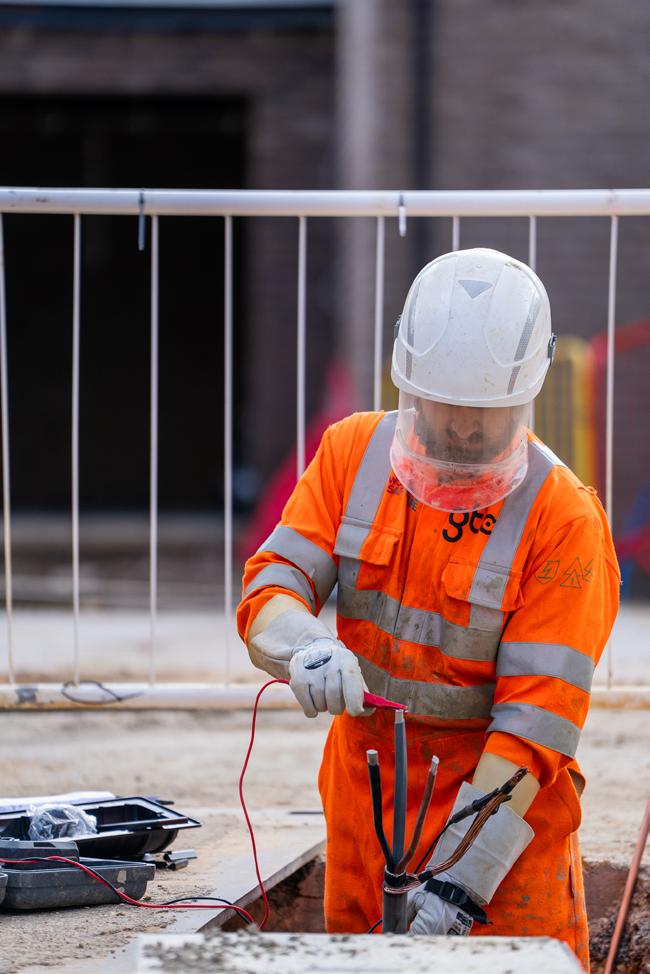
By Anthony Lowe, GTC
Construction Director
For years, utility infrastructure sat quietly in the background of residential development. Essential, but not always strategic. Electricity, water, gas, and communications were treated largely as operational tasks to complete before attention moved elsewhere. Success was measured by connection dates and handovers - once the lights and heating came on and the water flowed, the conversation ended.
Today, much has changed, and infrastructure is one of the major forces shaping the viability, pace, and longterm success of housing delivery across the UK. Developers and housebuilders are facing a multitude of pressures: constrained electricity capacity, the transition to low-carbon heating, tighter regulation, digitalisation, planning complexity and increasing pressure on margins and cash flow.
What has changed most dramatically is that utilities can no longer be viewed as isolated systems. Electricity networks are intrinsically linked to heating strategy. Reliable fibre connectivity is essential for the operation of intelligent energy management systems. Solar PV, battery storage and EV charging must operate together within developments that are increasingly expected to function as connected ecosystems, rather than simply collections of individual homes. At the same time, residents expect reliability, transparency, and seamless service from day one.
Housebuilders are now looking beyond simple installation capability. They need to work with utility partners that have delivery coordination, programme
Housebuilders are now looking beyond simple installation capability.
certainty, financial strength, and longterm accountability. In a market where delays, fragmented responsibility and rising infrastructure costs can quickly impact project viability, the ability to align infrastructure strategy with wider development goals has become critical.
One of the biggest challenges facing developers today is the growing financial burden associated with upfront utility investment. Modern housing schemes, particularly those designed around electrification and low-carbon heating, require significant infrastructure capacity. Managing that capital exposure
while maintaining build momentum is becoming increasingly difficult as projects increase in scale and complexity.
This is why long-term infrastructure models are becoming more prevalent across the sector. Increasingly, developers are seeking arrangements where networks are designed, funded, constructed, owned, and operated by a single accountable organisation. That approach changes the economics of delivery by reducing upfront capital requirements and creating greater certainty across the lifecycle of a development. It also changes incentives.
Infrastructure decisions driven purely by short-term cost reduction can create operational and reputational problems years later. Networks designed for minimum compliance rather than long-term resilience rarely age well. By contrast, when organisations retain long-term operational responsibility, infrastructure is more likely to be engineered with durability, reliability, and future performance in mind from the outset.
That long-term perspective is particularly important as the industry navigates the transition toward low-carbon housing. The Future Homes Standard is not just another layer of regulation. It mandates a shift in how homes are powered, heated, and connected. Electricity capacity, once viewed as a relatively straightforward utility requirement, has become one of the biggest constraints affecting residential development in many parts of the UK.
Anthony Lowe
The electrification of heat, combined with EV charging demand and the growing integration of renewable technologies, is reshaping energy requirements within new communities. In some areas, securing sufficient grid capacity now directly influences development viability and build-out speed.
As a result, infrastructure planning has become far more strategic. Housebuilders require greater flexibility around points of connection, substation delivery, capacity ramping and network coordination to maintain programme certainty. Delays linked to electricity infrastructure are no longer isolated operational issues; they can have significant commercial consequences across an entire scheme.
Low-carbon heat networks provide another example of why long-term operational thinking matters. The transition away from traditional gas heating presents both opportunity and risk for developers. Technologies such as networked air source and ground source heat pumps can deliver significant carbon reductions, but long-term performance depends heavily on design quality, operational management, and ongoing maintenance.
Historically, construction and operation have often been fragmented. One organisation installs a system; another adopts it later. That separation can create conflicting priorities, delays at handover and uncertainty around accountability.
It can also encourage design decisions focused on short-term delivery rather than long-term operational performance.
Integrated infrastructure models help remove that disconnect by creating continuity between design, construction, and operation. Networks are engineered not simply to pass inspection at completion, but to perform efficiently over decades. That continuity provides greater clarity commercially, operationally, and technically, particularly as developments become more complex.
The value of joined-up delivery becomes even clearer when considering the realities of construction on site.
Fragmented utility provision has long been accepted as standard within residential development. Multiple providers, separate contracts, repeated excavation works and overlapping delivery schedules have traditionally been viewed as unavoidable. Yet the inefficiencies associated with that fragmentation are substantial.
Every additional interface creates another potential delay. Every design revision can trigger multiple approval cycles. Different providers operate to different timelines, priorities, and communication structures. As plans evolve during construction, complexity escalates quickly.
Coordinated multi-utility delivery offers a far more efficient alternative. Delivering electricity, water, wastewater, fibre, and low-carbon heat infrastructure through a single integrated framework simplifies one of the most operationally challenging aspects of development delivery. One design strategy, one programme structure and one accountable
organisation can significantly improve coordination across build phases.
Scale and resilience matter too. As infrastructure demands increase, developers are placing greater value on organisations with the financial strength, operational maturity and long-term capability required to support large-scale residential growth. Funding certainty and regulated operational expertise are becoming increasingly important in a market defined by volatility and delivery risk. Ultimately, residential development is entering a new phase. One where infrastructure strategy and housing strategy are becoming inseparable.
The industry is moving away from transactional procurement toward long-term infrastructure partnerships. Housebuilders are no longer simply asking who can install a network fastest or cheapest. They are asking who can reduce complexity, protect programme certainty, support future compliance, and remain accountable long after construction ends. Because infrastructure risk does not end at installation. In many ways, that is where responsibility truly begins.
And as the future of housing becomes increasingly connected, electrified and low carbon, the organisations best placed to support residential growth will be those capable of thinking beyond handover - and designing infrastructure for the lifetime of the communities it serves.
CONNECT, COLLABORATE, SHAPE THE FUTURE - REGISTRATION NOW LIVE FOR UK CONSTRUCTION WEEK BIRMINGHAM
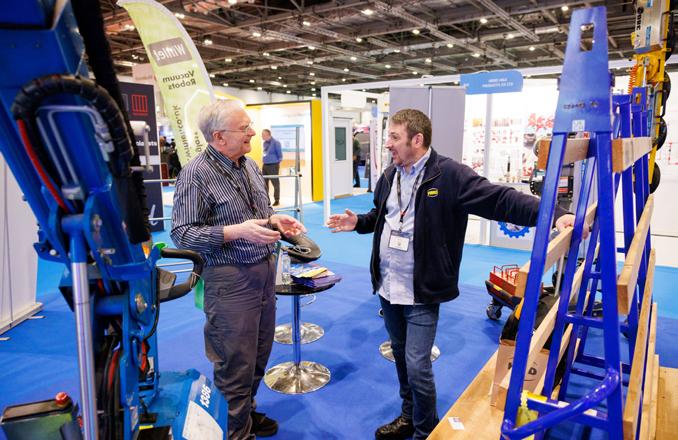
Registrations are now live for UK Construction Week (UKCW) Birmingham, the national platform for the built environment to connect, collaborate and shape the future of construction.
Sponsored by Wyre, HotelPlanner, SolarEdge and Build Warranty, UKCW Birmingham returns to the NEC from 29th September to 1st October and will feature over 250 leading brands; 200 speakers and over 150 hours of CPD accredited seminars across five stages.
As the construction sector faces growing challenges around skills, sustainability, productivity and delivery, UKCW Birmingham has been reset to reflect the needs of today’s industry. Moving beyond the traditional exhibition format, the show is designed to create meaningful opportunities for
AVOVE WINS CONTRACTOR OF THE YEAR AND BEST PLACE TO WORK HONOURS
Avove, a Tier 1 contractor partnering exclusively with the UK’s critical utilities, has won both Contractor of the Year and Best Place to Work –Contractor, at the New Civil Engineer Awards 2026.
The double success reflects the company’s growth and strong performance. In just four years, Avove has more than doubled in size, expanded its presence across the UK’s water and energy sectors, strengthened long-term client partnerships and continued to invest in its people, culture and capabilities.
Winning Contractor of the Year recognises Avove’s achievement in delivering sustained growth while maintaining high standards of operational performance, project delivery and client service. The award celebrates organisations that have demonstrated excellence across innovation, quality, collaboration and business performance, while building a platform for continued long-term success.
The Best Place to Work – Contractor award acknowledges Avove’s peoplefirst approach and the culture it has
businesses and professionals to connect and collaborate.
UKCW Birmingham Martin Hurn, Editorial Director, said: “UKCW Birmingham has an important role to play as a national platform for the built environment to connect. This year, we want UKCW to be more than an exhibition. It needs to be a meeting place for leadership, ideas, collaboration and practical solutions, helping the sector address the challenges that are shaping construction today and in the years ahead.”
Bringing together construction leaders, decision makers, and innovators from
built alongside that growth. Through a continued focus on colleague engagement, wellbeing, development and inclusion, the company has demonstrated that business growth and a positive colleague experience can go hand in hand.
Together, the awards recognise Avove’s ability to combine strong commercial and operational performance with a workplace culture that supports, develops and empowers its colleagues.
Mark Perkins, Chief Executive at Avove, said: “Winning Contractor of the Year and Best Place to Work – Contractor is important recognition for our business and our people.
“These awards demonstrate the close connection between strong delivery and a strong culture. The quality of our work is driven by the talent, commitment and expertise of our colleagues, and that enables us to deliver consistently for our clients and the communities they serve.
“This reflects the progress we have made as a business and the contribution of our brilliant colleagues across Avove, whom I would like to thank for their continued commitment and support.”
The Awards recognise Avove’s approach from early concept through to final commissioning - bringing together innovation, design engineering, ecology and environmental, infrastructure and delivery expertise to create solutions that support communities and protect the environment.
across the sector, UKCW Birmingham will serve as a central meeting point for the industry, showcasing the latest innovative products, technologies and ideas driving the future of the built environment.
The Main Stage will explore key issues shaping the built environment, alongside a packed seminar programme across five additional stages providing practical insights into how businesses can respond.
Face-to-face networking remains at the heart of the multi award-winning show, including insightful industry roundtables and meet the buyer sessions in the Build Connect Networking Lounge, with the exhibitor floor bringing it all together as visitors connect directly with suppliers and partners.
New for 2026, the Futurebuild Innovation Showcase will highlight the latest products, ideas and technologies transforming construction.
The three-day event will feature:
Built-for-purpose sections:
Events & Awards News
• Roofing, Cladding & Insulation - A dedicated destination for contractors, installers, specifiers and designers who want to explore the latest innovations in durability, efficiency and weather protection and architectural impact
• Digitalisation - See how technology, automation, and AI are redefining the way we plan and build
• Futurebuild Innovation Showcase - New for 2026, bringing together some of the most innovative products, technologies, materials and solutions transforming the built environment
• Building & Onsite Safety - Featuring product and systems supporting safer buildings and safer sites
• Equipment, Tools & Hire - Explore the newest tools and equipment driving productivity
• Construction Training & Services - Connect with experts in project delivery, compliance, training, and professional support
To find out more and to register free for UKCW Birmingham, visit https://register. visitcloud.com/survey/0hcnqiudc1lrv?act ioncode=1000
FUTUREBUILD 2026 TOPS 20,000 VISITORS AND TAKES INNOVATION SHOWCASE ON TOUR
Latest figures from Futurebuild 2026 confirm the new built environment super event - co-located with UK Construction Week (UKCW) London and The Stone & Surfaces Show - attracted 20,784 attendees, with access to the latest innovations being the number one draw for 76%.
On the back of this insight organisers are now set to launch a new ‘Innovation Showcase’ at UK Construction Week Birmingham (29 September - 1 October at the NEC).
The ‘best of Futurebuild’ experience extending to the Midlands will put a welcome spotlight on the proven solutions that are real-world ready, deliverable at scale and have been launched within the last 12 months. The appetite for new products and
breakthrough initiatives across the Futurebuild community is clear with all five of the show’s innovation trail partners for 2026 in the top 20 lead generating exhibitors.
“People want sign-posting to where genuine innovation is happening and that goes beyond the M25,” says Martin Hurn, the newly appointed Editorial and Content Director across all three colocated shows.
“Futurebuild 2026 was immense and it got me thinking about how we can practically keep the momentum going and remove some of the obstacles to getting the latest, greatest advancements in front of construction professionals committed to driving progress. The Innovation Showcase is our answer - a curated destination where the industry’s most
exciting developments get the visibility they deserve.”
A prime example of the type of proven, scalable solutions Futurebuild has a history of spotlighting is Madaster UK - this year’s winner of the show’s Big Innovation Pitch. Its Vinted-style materials marketplace, Madaster Match, has already been tried and tested in Germany and the Netherlands and is now set for wider adoption in the UK.
Alongside the exhibition element of the Birmingham showcase will be the Innovation Stage - a space for fastpaced presentations and the valuable knowledge share that has also long been associated with Futurebuild.
With three quarters of London’s attendees citing CPD-accredited learning opportunities as the second biggest reason for registering, UKCW Birmingham’s visitors can expect inspiring on-stage talks that translate into meaningful conversations on the floor.
Indeed, The National Retrofit and Futurebuild Arena conferences drew in over 5,000 delegates earlier this year, when over 600 speakers delivered at least 250 hours of accredited content across the super event’s 13 main stages.
UP TO £22.7 BILLION ESTIMATED TO BE SPENT ON REMEDIATING
RESIDENTIAL BUILDINGS WITH UNSAFE CLADDING IN ENGLAND
New data shows that as of the 31st May 2026, 2,080 monitored buildings (47%) for unsafe cladding have not started or completed remediation works.
Out of 4,411 residential buildings (11 metres and over) identified with unsafe cladding, 1,672 buildings (38%) have completed remediation works.
When considering work that has started or has been completed, this figure rises to 2,331 buildings (53%) as 659 buildings have started remediation (15%).
It is generally accepted that risk to life is proportional to the height of buildings and therefore the risk to life is usually lower in buildings under 11m in height, and are very unlikely to need costly remediation to make them safe.
Of local authorities where over 100 buildings are being monitored, Southampton Local Authority has completed the highest percentage of remediation works (as of the 31st May 2026), standing at 78%. Hackney has seen 48% of remediation works completed, with 45% of remediation works completed on buildings in Manchester.
Up to £22.7 billion is set to be spent remediating residential buildings that have or had unsafe cladding in England (which are 11 metres or above in height and contain dwellings).
Estimates by the Ministry of Housing, Communities & Local Government predict that up to £15.2 billion is set to be funded by government programmes, with £7.4 billion funded by non-government actors.
Karl McArdle, Co-Founder of The Property Buying Company, has shared what to do if you have concerns about unsafe cladding: “If you live in or are responsible for a building and are concerned about its cladding, you can tell Homes England by submitting details on their ‘Tell us Tool’. You will need to provide information including: the building name; the building address; and the number of storeys, starting from ground level. You will also need to let Homes England know whether the building is under interim measures, such as a waking watch.”
Source: Ministry of Housing, Communities and Local Government
The table shows only the local authorities with over 100 buildings that the department is monitoring the cladding remediation of.
WHAT INTEGRATED HEAT PUMP SYSTEMS CAN TEACH US ABOUT CLOSING THE PERFORMANCE GAP
By Liam Elmore, General Manager, Lochinvar
The UK’s transition to low-carbon heating has rapidly moved from policy ambition to engineering reality. As heat pumps are deployed at increasing scale, industry guidance from CIBSE, including AM16 and AM17, has helped identify why some early projects failed to achieve expected performance. However, the
challenge today is not a lack of guidance, but ensuring best practice is delivered consistently on site.
CIBSE has repeatedly highlighted that many performance issues stem from system design, controls and integration rather than the heat pumps themselves. Common challenges include overly complex control strategies, conservative domestic hot water design, and a gap between predicted and actual operational efficiency. These are system-level issues that can emerge when multiple stakeholders interpret and deliver projects differently.
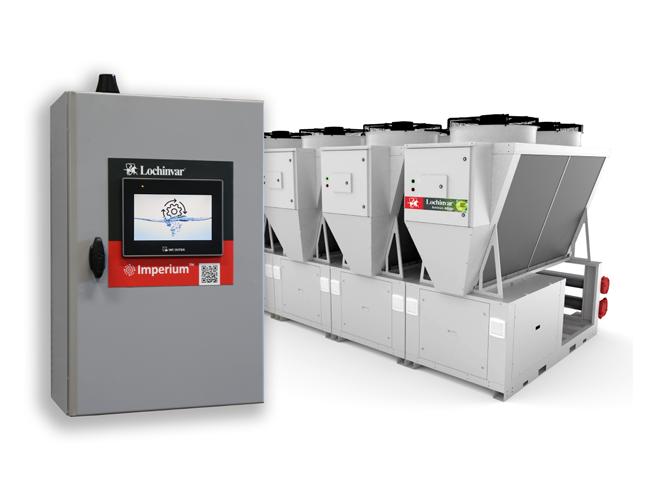
This has led to growing interest in integrated heat pump system architectures, where hydraulics, controls, storage and operating logic are designed as a unified solution. One example is Lochinvar’s Imperium™ system, a pre-engineered commercial
heat pump solution that integrates heat pumps, thermal storage, hydraulics and intelligent controls into a single architecture. By embedding proven operating strategies and reducing opportunities for unintended variation, integrated approaches can help translate design intent into more predictable outcomes.
Integrated systems are not a substitute for engineering expertise, but as the industry seeks to close the performance gap, reducing unnecessary complexity and improving consistency may be just as important as producing better guidance.
To learn more about the Imperium™ system and Lochinvar’s approach to integrated low-carbon heating, visit www.lochinvar.ltd.uk.
HEAT PUMP MANUFACTURER, CLADE ENGINEERING SYSTEMS, STRENGTHENS LEADERSHIP TEAM WITH APPOINTMENT OF NEW SALES DIRECTOR
Clade Engineering Systems, the UK’s leading manufacturer of natural refrigerant air source heat pumps for commercial and industrial applications, has appointed Tom Wilson as Sales Director to support its growth ahead of full integration into Groupe Atlantic.
Tom joins Clade at a time of rising demand for natural refrigerant heat pumps, bringing decades of HVAC and building services experience. He spent much of his career at BSS, progressing to Sales and Operations Director, where he led a business with more than £300 million turnover and 1,000 employees.
His appointment strengthens Clade’s leadership team as the company expands across the UK and Europe, supporting consultants, specifiers and contractors delivering highperformance, low-carbon heating solutions that meet evolving sustainability and regulatory requirements.
For more information on Clade Engineering, visit clade-es.com.
Modular Buildings & Welfare Units
CLOSING THE SKILLS GAP: WHY TRAINING FACILITIES ARE VITAL FOR THE CONSTRUCTION INDUSTRY
The UK’s construction sector is currently facing some big challenges. According to research by the Construction Industry Training Board (CITB), over 250,000 additional construction workers will be needed by 2029 to meet the average 2.4 per cent a year growth that is expected in the UK from now until 2028.
However, a skills gap has quickly developed in the industry. For instance, a Strategic Resourcing whitepaper reported on by Planning, Building & Construction Today found that workers aged 55+ outnumber those under 25 by 20 per cent at main contractor firms.
One encouraging aspect though is that Protrade’s State of Construction Apprenticeship Report (2026) revealed that there has been a 1.5 per cent increase in new construction apprentices during the 2024/25 period.
Kate Burns, Head of Talent and Learning at modular building experts Portakabin, commented:
“It is important that this skills gap continues to be addressed as a priority. As well as investing in future talent we need to ensure people are upskilled and reskilled, unlocking agility and innovation in the workforce to meet future needs.”
For employers looking to build skills at pace and at scale, access to dedicated, high-quality training space is becoming essential.
Why training should never be an afterthought in the construction industry
Roles in the construction industry require people to have specialised skills, knowledge and abilities.
CONSTRUCTION’S MENTAL
HEALTH CRISIS: HOW WELFARE UNITS CAN SUPPORT ON-SITE MENTAL WELLBEING
Andrew Thompson
Many roles within construction are known to be physically demanding, but it is the toll on workers’ mental wellbeing that is increasingly drawing attention. Long hours, tight deadlines and a transient workforce create conditions where stress, anxiety and depression can quietly take hold. In addition to that, a culture has developed where admitting to struggling is often seen as a weakness, so opening up conversations around mental health can be difficult.
Findings from the Chartered Institute of Building (CIOB) report, Understanding Mental Health in the Built Environment, found that 94% of construction workers
All of these elements can be studied and then built on through training and development programmes. Employers and employees alike will benefit from construction training for the following reasons:
1. A culture of continuous improvement and learning can be instilled around a workplace, motivating and encouraging staff members to find ways to improve their own abilities
2. Training programmes can be designed to upskill staff members in a gap that has been identified at a company or the entire construction industry
3. Productivity can be improved throughout a workplace, as staff members will better understand how to apply best practices to situations they encounter during their jobs
4. Information about the latest technologies, tools and industry trends can be passed on to all colleagues
experienced stress over the preceding year, 83% experienced anxiety, and 60% experienced depression.
Andrew Thompson, CEO at Cleveland Containers, part of Cleveland Group says:
The
physical environment on a construction site has a direct impact on how workers feel. When workers have nowhere to go to decompress, to take a proper break, or to simply sit quietly for a moment,
the pressure just continues to build.
Here, the experts at Cleveland Containers, a leading supplier of shipping containers, take a look how welfare units can positively impact the mental health of onsite construction workers.
through a company-wide training session
5. Safety can be enhanced around a business, as training helps to reinforce the importance of safety standards and how employees can protect themselves from potential hazards tied to their roles
The government has aimed to support productivity and fuel innovation by transitioning the apprenticeship levy into a new Growth and Skills Levy.
Introduced in April 2026, the Growth and Skills Levy is a more flexible skills system that is responsive to employers and aims to help people learn high-quality skills that are relevant to their roles.
Kate Burns has advised though: “Employers who are about to introduce any type of learning into their business
The Welfare Unit as a Mental Health Tool
Construction sites, by their nature, offer limited opportunities for workers to step away from pressure. Welfare units provide a dedicated, enclosed space where individuals can take a break from the noise, the physical demands and the pace of site life. That separation, however brief, can make a meaningful difference to how someone manages stress across a working day.
For workers where isolation is a more persistent challenge, the availability of a comfortable, well-equipped space serves an additional purpose. It signals that their welfare has been considered, which matters more than employers might expect.
“Welfare units give workers somewhere to breathe,” says Thompson. “It sounds simple, but having a private, comfortable space available sends a message to workers that they are valued.
“That feeling of being seen matters enormously when you are working in a high-pressure environment.”
Modular Buildings & Welfare Units
should make sure programmes are always designed to match the needs of their industry. Every programme needs to have clearly defined outcomes to ensure success, which will support to address the sector’s skills gap.”
The benefits of providing on-site construction training
Another recommendation for business owners in the construction sector is to provide on-site training wherever possible, which can be customised to suit an employer’s needs.
Learning in an actual working environment means that employees can be faced with real-life scenarios which they may have to adapt to during their day-to-day jobs. The blend of theory and practice encountered during these situations will improve how prepared staff members are in their roles.
On-site training in the construction industry can include techniques to improve someone’s workmanship, how to operate complex heavy machinery, and ways to follow a site’s safety protocols. It can also be used to swiftly address feedback or correct mistakes as these are identified among staff members.
Creating Spaces that Support Mental Fitness
Beyond their basic function, welfare units can be developed into genuine hubs for mental health support. Embedding mental health resources directly into welfare spaces, whether that is posters signposting confidential helplines, information on support services or simply making it easy for workers to access help privately, removes several barriers at once. No manager to approach, no awkward conversation to initiate.
The discreet nature of welfare spaces matters in a sector were asking for help can still feel uncomfortable. Providing access to support within a familiar, private setting makes it far more likely that workers will use it.
Regular breaks within welfare units also reduce the physical and emotional fatigue that lies at the root of many mental health difficulties on site.
“Making sure workers genuinely use their break time, and that they have a decent space to do it in, is one of the most
Those running a construction firm who are looking to install purpose-built training centres can do so quickly and effectively by investing in modular training rooms.
Kate Burns explains: “Modular training room buildings are cost-effective solutions which will showcase that your construction firm is committed to your employees’ development, without needing to take teams off-site.
“With a Portakabin modular training room, you can receive a fully equipped suite of any required size that can easily link into offices, welfare facilities and other buildings around your construction company.
“Don’t forget that modular buildings can be relocated with ease as well. So, you can move your training facilities to another part of your site or even to another of your locations as training requirements at your company change.”
In an industry which urgently needs to address its skills gap, construction companies should be looking at implementing dedicated on-site training facilities.
These sites can encourage an environment of continuous improvement, upskilling employees in a fast and effective way that will also make a firm more appealing to jobseekers.
practical steps a site manager can take,” adds Thompson.
“It costs very little and the return in terms of focus and morale is significant.”
Welfare Provision as Part of a Broader Industry Commitment
Welfare units alone will not resolve the mental health crisis in construction, but they are a tangible and accessible starting point. Alongside manager training, open conversations and the embedding of mental health into site safety briefings, they form part of the wider cultural shift the industry needs.
For businesses operating across construction, investing in quality welfare provision sends a clear signal, to workers, to clients and to the wider industry, that wellbeing is taken seriously.
“We talk a lot about safety culture in construction,” said Thompson.
“Welfare facilities are part of that culture. They are not a luxury. They are a practical investment in the people doing the work.”
ACCELERATING OPERATIONAL EFFICIENCIES WITH SAFETY-FIRST CONNECTED FLEET TECHNOLOGY
By Mervyn O’Callaghan, CameraMatics Founder and CEO
For construction fleet operators, nothing productive happens until people, vehicles and materials reach the site safely. And as projects grow in scale, urban environments become busier and compliance demands intensify, the industry is reaching an inflection point. Safety is no longer a cost of doing business to be minimised; it is becoming the operating system of the modern construction fleet and the businesses that understand this are pulling ahead of those that don’t.
The technology enabling that shift has changed almost beyond recognition. Traditional telematics tracked vehicles; the “driver monitoring” era that followed tracked drivers. Today’s connected fleet platforms do something categorically different: they combine intelligent driver aids, telematics, workflow management, predictive maintenance and asset management into a single operational ecosystem — one designed to serve the professional behind the wheel as much as the manager behind the dashboard. That design choice matters, because putting drivers first is precisely what unlocks benefits across every corner of the business, from lower fuel consumption and reduced downtime to stronger compliance and greater competitiveness when bidding for contracts.
When a workforce demands the technology rather than tolerating it, safety culture has stopped being a poster on the depot wall and become how the business actually runs.
From monitoring drivers to backing them
Construction drivers operate in some of the UK’s most demanding working environments. Whether manoeuvring a tipper through busy city streets, delivering concrete to a confined site or operating specialist vehicles vulnerable road users, every journey requires constant judgement and concentration. These are skilled professionals and the defining principle of the latest generation of fleet technology is to support that expertise rather than police it.
Consider what “good driving” actually looks like. Traditional accelerometerbased telematics penalises every harshbraking event equally. But a sudden brake to avoid a child running into the road is not poor driving; it is exactly the judgement we hire professionals to exercise. Context-aware systems now recognise the difference – a driver’s score can rise, not fall, after an emergency manoeuvre that prevents a collision. Coaching, meanwhile, is increasingly automated and self-directed, giving drivers ownership of their own performance and encouraging continuous improvement without creating a culture of blame.
The same thinking applies inside the cab. Drivers do not need another beeping widget flashing at them like an arcade game. Information integrated into the vehicle’s existing display, like
Case Study
360-degree visibility and intelligent blind-spot awareness reduce pressure rather than add to it, particularly on larger vehicles where sightlines are naturally more restricted and construction site conditions change by the hour.
The clearest proof that this philosophy works comes from drivers themselves. Some operators now report that drivers refuse to take a vehicle out when the safety technology isn’t working; they have come to rely on it the way any of us rely on the assistance features in a modern car. When a workforce demands the technology rather than tolerating it, safety culture has stopped being a poster on the depot wall and become how the business actually runs.
Safety as an operating system, not a bolt-on
The greatest misconception about safetyfirst fleet technology is that its value ends at with road safety. In reality, the same disciplines that make driving safer lead to improvements across an entire fleet operation. Smoother driving cuts fuel consumption and reduces wear on tyres, brakes and drivetrain components. Fewer avoidable maintenance issues translate into higher vehicle availability and lower operating costs.
Predictive maintenance takes this further: continuous vehicle-health analysis can flag a developing fault weeks before a warning light appears, so maintenance is scheduled around the programme rather than around a breakdown, and a mixer never loses a full load of concrete on the hard shoulder. For construction businesses transporting time-sensitive loads, avoiding unexpected downtime can prevent costly project delays and protect customer relationships.
Across our customer base, the cumulative effects we see are significant – a 70% reduction in unexpected breakdowns and a 32% reduction in maintenance costs,
Across our customer base, the cumulative effects we see are significant – a 70% reduction in unexpected breakdowns and a 32% reduction in maintenance costs, with utilisation insight enabling fleet reductions of up to 5%.
with utilisation insight enabling fleet reductions of up to 5%.
That utilisation point deserves more attention than the industry gives it. Consider a lorry-mounted crane costing thousands of pounds per hour. Connected data may reveal it was on site for five hours but lifting for only one – four hours
of hidden cost invisible to a traditional job sheet. Multiply that across a programme and the scheduling inefficiency dwarfs most line items a commercial team scrutinises. Safety technology didn’t set out to find that money; it found it because visibility, once established, illuminates everything.
Off-road benefits
For construction companies, operational efficiencies are not limited to the journey itself. Connected fleet platforms are increasingly becoming digital operational hubs, providing greater visibility across each project stage.
Integrated workflows can be tailored to individual sites, ensuring teams consistently complete inspections, safety checks and job sign-offs, while automated notifications allow managers to respond to issues before delays escalate. Digital walk-around checks catch tyre and load problems before they become failures on the road.
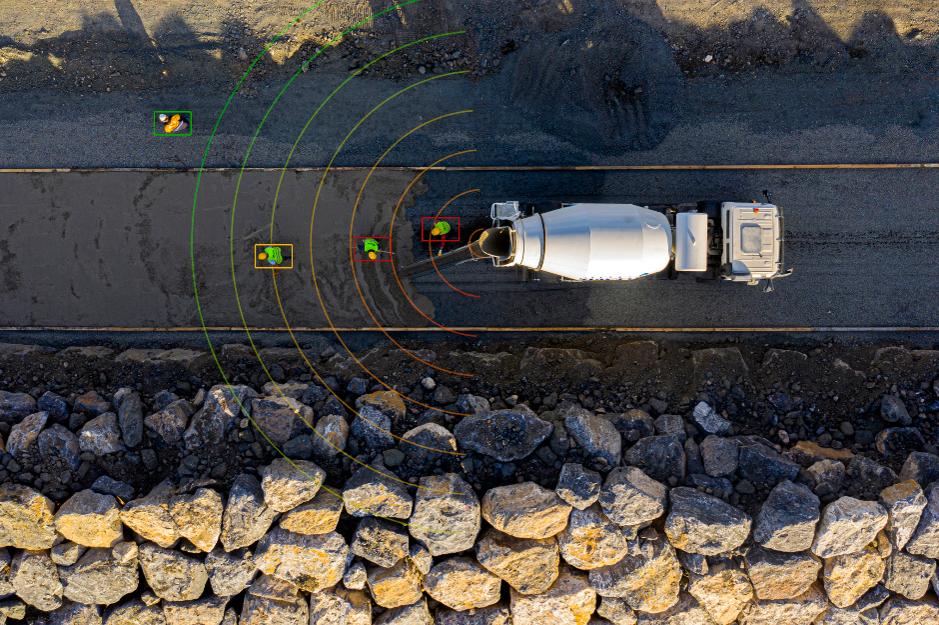
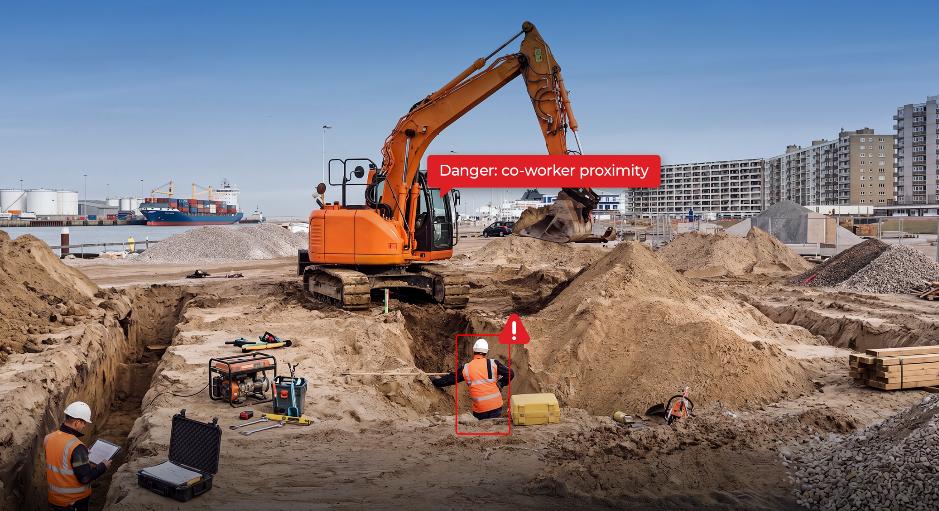
Specialist vehicle capabilities create further opportunities. Vehicle activations, such as a crane lift or a concrete pour, can automatically generate videobacked proof of delivery – reducing administration and settling disputes over quantities before they escalate. Insight into pouring activity also enables contractors to coordinate follow-on trades more effectively and keep programmes on track. Even when a vehicle is stationary, the technology keeps working – systems can flag a person standing in an exclusion zone while a crane operates, and geofenced, site-specific speed limits enforce a client’s own rules, not just the rules of the road.
Case Study
Meanwhile, geofencing, asset management and utilisation reporting give businesses a clearer picture of how vehicles, machinery and resources are deployed across multiple projects, improving planning, reducing wasted time and exposing hidden cost. None of this is surveillance for its own sake; it is the operational nervous system of a well-run site.
The commercial and ESG dividend
There is a harder commercial edge to all of this. Construction contracts are increasingly won and lost on demonstrable safety culture; main contractors and public-sector clients want evidence, not assurances, and how a subcontractor’s employees behave on a client’s site can decide whether the next contract arrives at all.
Sustainability is following the same path. Because driving style directly affects emissions, connected platforms can now generate carbon-footprint reporting that operators are using in tender submissions. For a sector under mounting pressure to decarbonise, the ability to evidence emissions reduction – driver by driver, project by project – is moving from nice-to-have to bid-qualifying.
Trust is the technology
As fleet technology becomes more sophisticated, building driver trust is essential to successful adoption.
This requires solutions that are designed around the needs of drivers. Privacy and usability are becoming increasingly
important considerations, with effective platforms providing safety support without creating unnecessary intrusion. For example, CameraMatics does not capture biometric data and our driverfacing cameras remain an optional part of the wider solution rather than a standard requirement.
The in-cab experience is equally important. Technology should simplify the driver’s day, not add complexity. Rather than introducing multiple screens or competing alerts, information can be integrated into existing vehicle displays, reducing distraction and ensuring technology supports drivers without demanding their attention.
Future-proofing construction fleets
As construction projects continue to evolve, driver welfare technology will increasingly be judged by the value it creates across the entire operation, not merely the information it collects.
The industry’s direction of travel reinforces the point: emerging neuromorphic sensing which CameraMatics is researching under an EU Disruptive Technology Fund project detects risk without producing a humanrecognisable image at all, promising the full benefit of a driver aid with privacy guaranteed by physics rather than policy. We’re also exploring body-worn technology that lets a remote expert assist an engineer mid-task, improving first-time fix rates, points in the same direction – technology that stands beside the worker, not over them.
As construction projects continue to evolve, driver welfare technology will increasingly be judged by the value it creates across the entire operation, not merely the information it collects.
The strategic choice
Construction operators face a genuine strategic choice, and it is not really about hardware. It is about whether technology exists to catch people out or to help them succeed. The businesses choosing the latter are discovering that safer operations naturally become more efficient ones – lower fuel bills, higher uptime, sharper utilisation, cleaner compliance and stronger tenders all flow from the same principle.
Investing in safety-first fleet technology is no longer simply a safety initiative. It is an operational strategy, a recruitment and retention strategy, and increasingly a commercial one – delivering measurable value while building safer roads, safer sites and stronger construction businesses.
RAPIDTRAY: DESIGNED FOR FASTER, COMPLIANT CAVITY TRAY INSTALLATION
RapidTray is a new cavity tray and DPC system from OBEX, developed to help contractors and specifiers address increasing pressure around compliance, installation speed and build consistency. With tightening building safety requirements and growing programme demands, the system is designed to remove uncertainty from cavity tray installation while maintaining high standards of fire and moisture performance.
The new product is a next generation addition to the wide range of construction products offered by OBEX. RapidTray simplifies on-site installation through a
combination of pre-formed components, integrated fixings and a flexible membrane, reducing complexity and helping ensure consistency across the build.
It achieves a Class A2-s1,d0 fire classification, offering performance which is supported by a comprehensive programme of independent testing and verification. Fire classification has been tested in accordance with BS EN 135011:2018, with testing carried out under conditions representative of real-world applications, including ventilated cavity scenarios.
The system has also undergone BBA water-flow testing and has a Kiwa agrément, demonstrating its effectiveness in managing moisture and protecting the building fabric over the long term.
David MacDonald, Global Chief Revenue Officer at OBEX, says: “Across the industry, there is increasing pressure to deliver compliant buildings without
impacting programme or cost. RapidTray was developed to simplify installation at the point it matters most, reducing complexity on site while maintaining the levels of fire and moisture performance that specifiers expect. It’s about giving teams greater certainty that systems are installed correctly, first time.”
Suitable for residential and commercial brickwork façade applications, RapidTray is designed to support faster construction programmes while maintaining compliance with current building standards.
As an OBEX Cortex product, RapidTray is supported by a structured delivery package that includes design input, specification guidance and on-site support through to final sign-off, helping ensure the system performs as intended throughout the build process.
A key regeneration site has been unlocked for future development following the completion of a new bridge over the River Trent in Nottingham.
Waterside Bridge forms part of the core infrastructure needed to further open up the 250-acre Waterside Regeneration Zone, transforming former industrial land into a viable development plot.
The walking and cycling route directly links communities either side of the river, from Victoria Embankment to Colwick Park, improving safe access to homes, leisure, employment and sports sites - including Nottingham Forest and Notts County Football Grounds and Trent Bridge Cricket Ground.
Multi-disciplinary consultancy Pick Everard was appointed to deliver project management, cost management and health and safety services, operating under Perfect Circle and appointed via the SCAPE Consultancy framework.
Supporting sustainable, active travel across the city, the bridge connects the first anchor waterfront neighbourhoods to the south side of the river. This will enable further development, including new homes, retail areas and public spaces.
The 87-metre, 160-tonne Waterside Bridge was fabricated using British steel at Britons Ltd in Hucknall, and is the first new bridge to be built over the River Trent since the 1950s.
Pick Everard worked alongside Nottingham City Council, main contractor Balfour Beatty and other key partners including Ramboll, Britons, the Canal and River Trust, the Environment Agency, Pedals, Blueprint, Geldards, Active Travel
England and funder, the Department for Transport. The bridge was the final project in the council’s £160 million Transforming Cities Fund programme, encouraging sustainable travel and intercity connectivity.
CHARTWAY PARTNERSHIPS GROUP COMPLETES PIONEERING ZERO BILLS
BUILD-TO-RENT NEIGHBOURHOOD AT EBBSFLEET GARDEN CITY
Chartway Partnerships Group has completed Alkerden 5B, a major Build-to-Rent and affordable housing development within Ebbsfleet Garden City that combines low-carbon living, professionally managed rental homes and long-term community investment.
Delivered in partnership with Packaged Living and Moat, the development has transformed a former quarry site into a mixed-tenure neighbourhood comprising 121 Buildto-Rent homes, 33 shared ownership homes and eight affordable homes.
Designed around affordability, sustainability and modern living, the scheme includes 47 Octopus Energy ‘Zero Bills’ homes, allowing residents to benefit from no energy bills through a combination of photovoltaic panels and Tesla Powerwall battery storage systems. Surplus energy generated by the homes is fed back into the grid.
At a time when energy costs continue to impact renters across the UK, the development demonstrates how Build-to-Rent housing can help tackle both affordability and sustainability challenges simultaneously.
A total of 121 homes achieve EPC A ratings, with the remaining homes rated EPC B. Smart meters and integrated Utopi monitoring systems have also been installed throughout the development, giving residents greater visibility and control over their energy use.
PARTNER ON TEMPLEBOROUGH BUSINESS ZONE DEVELOPMENT
Rotherham Council and Magna have appointed HBC Construction Limited (HBC) to deliver its £6million Templeborough Business Zone development next to the iconic Magna Science Adventure Centre, transforming the former steelworks area into a new hub for business growth and community activity.
Work began on the scheme in early June and will create eight new flexible business units totalling almost 10,000 sq. ft. within the business zone, including six commercial workspaces and two food-and-beverage units.
Complementing these workspaces, landscaped public spaces, outdoor seating, improved pedestrian access and parking provision will establish an attractive and accessible environment for businesses, visitors and the wider community.
Steelos Business Park will be named after ‘Steel, Peech and Tozer’, a 19th century large steel maker whose Templeborough steelworks became the Magna Science Adventure Centre. The development is designed to support small and medium-sized businesses and is backed by government funding through the ‘Town Deal’ initiative.
The Business Park will also benefit from enhanced regional connectivity, directly linking to the new Magna tram-train station, which opened in April.
HBC, Rotherham Council and Magna are targeting a completion date of Q2 2027 for the scheme. The project is being delivered through the YORbuild3 Medium Works framework.
PLANNING
GRANTED FOR £18MILLION NEXT PHASE OF MEA PARK WEST AT WIRRAL WATERS
Waterside regeneration specialists, Peel Waters, have secured planning permission for an £18million next phase of development at MEA Park West, advancing the delivery of new employment space within Wirral Waters.
The approved scheme will transform a dockside site into a hub for industrial, manufacturing and logistics businesses within the Liverpool City Region Freeport. It is the final of three planning approvals for MEA Park West, which together will deliver 171,400 sq ft of employment space, create more than 200 jobs and attract significant investment. Two earlier permissions were granted in March 2026, with this approval triggering the first phase of development.
Located east of Wallasey Bridge Road in Birkenhead, the site is both within the Liverpool City Region Freeport and a designated employment growth zone backed by Wirral Council.
The plans include remediation of a former industrial site and construction of a high-specification logistics and employment unit.
Designed in line with the wider MEA Park West masterplan, the development will feature contemporary architecture and high-quality materials.
The first phase comprises:
• A 44,982 sq ft (4,179 sqm) industrial/logistics building with ancillary office space
• 53 car parking spaces, including disabled and EV bays
• Cycle and motorcycle parking
• New and upgraded estate roads
• An electricity substation
• Landscaping and drainage infrastructure
Designed in line with the wider MEA Park West masterplan, the development will feature contemporary architecture and high-quality materials. Office accommodation will front the main approach, while service yards will be located to the rear.
The approval also enables extensive remediation works, bringing underused brownfield land back into productive use and preparing three neighbouring plots for future occupier-led development.
Once complete, MEA Park West will provide flexible employment space for industrial, manufacturing and distribution businesses.
With strong connections to the M53, Kingsway Tunnel, wider regional road network and Birkenhead North rail station, the scheme is well positioned to attract occupiers, create jobs and support sustainable economic growth while meeting rising demand for highquality logistics space.
WHY GOOD SITE PRACTICE MATTERS MORE THAN YOU THINK FOR BRICK CONSTRUCTION PROJECTS
Clay brick is a strong, durable and timetested building material. But even the highest quality brick can only deliver its full potential when it is handled, stored and laid correctly on site.
That is why good site practice matters. It protects the design intent, supports longterm performance and helps achieve the consistent, high-quality finish architects, developers and clients expect. In many cases, the difference between successful brickwork and disappointing brickwork is not the brick itself, but what happens after it arrives on site.
From reference panels and brick blending to mortar consistency and weather protection, this article explores why good site practice should never be treated as an afterthought.
Good site practice starts before the first brick is laid
Successful brickwork begins well before construction starts. Early conversations with the brick manufacturer can help confirm product availability, delivery schedules, lead times and any special shape requirements. This is particularly important for bespoke details, where additional manufacturing time may need to be built into the programme.
The Brick Development Association recommends consulting the brick manufacturer early, especially where availability, delivery scheduling and special shapes could affect the project timeline.
This early planning helps reduce the risk of delays, substitutions or inconsistencies. It also gives the project team an opportunity to clarify how the chosen brick should be handled, blended and laid to achieve the intended finish.
Why reference panels are essential
A site reference panel is one of the most useful tools for protecting design intent. It shows how the specified brick, mortar, bond and joint profile work together in real conditions.
Reference panels are particularly important because clay brick has natural variation. Colour, texture, shape and size can all influence the final appearance of the wall. A panel gives architects, developers, contractors and brick manufacturers a shared benchmark before full brickwork begins.
Reference panels are also crucial because they help identify the inherent
characteristics of the specified brick and set the general standard of workmanship and appearance that can reasonably be achieved.
For best results, the panel should be built in the chosen brick bond, using the specified mortar colour and joint profile. It should also be viewed from a sensible distance in natural daylight once the mortar has dried, so the whole team can assess the appearance in a realistic way.
Protect the brick before you use it
Good site practice continues after bricks arrive on site. Packs should be stored on a firm, level, clean and well-drained base, and the delivery should be checked against the reference panel to confirm the correct type, quantity and general appearance.
Protection is very important at this point. Bricks should be kept covered and protected from rain, snow, mud and site contamination. Excessively wet or saturated bricks are harder to lay and can increase the risk of efflorescence, lime leaching and mortar staining.
A critical point to remember is that bricks should not be allowed to absorb contaminated water from the ground. If salts are absorbed into the brick, they can later appear as efflorescence when the brickwork dries.
In simple terms, good site practice starts with keeping bricks clean, dry and protected for the duration of the project.
Brick blending and why three packs matter
One of the most common causes of poorlooking brickwork is inadequate blending. Clay bricks naturally vary in colour and shade. That variation is part of their appeal, but it needs to be distributed evenly across the elevation. If one pack is used for one area and another pack for the next, the finished wall can show visible patches, banding or demarcation lines.
Freshfield Lane’s Selected Dark
Bricks & Blocks
This is why bricks should be blended from a minimum of three packs concurrently, with overlap between deliveries where possible.
A common example is a gable end, where the corners appear one colour and the middle another because different packs were used in separate areas. To avoid this, bricklayers should draw from multiple packs as the work progresses, helping spread the full range of colours, textures and sizes throughout the wall. It is a simple discipline, but one that has a major impact on the final appearance.
Mortar consistency is part of the finish
A change in mortar colour, joint size or joint finish can significantly alter the perception of the brickwork. Mortar accounts for a meaningful proportion of the visible face of brickwork, so inconsistency can quickly become noticeable.
Good site practice means ensuring the mortar specification is appropriate for its intended use and that site-mixed mortar is batched accurately and consistently. We recommend using batching boxes or buckets rather than shovels
it requires consistency and supervision. Protect the bricks when they arrive, protect them when they are stacked, and protect the brickwork at the end of the day.
Newly built brickwork is vulnerable during construction. Rainfall, snow, frost, splashing and mortar smearing can all affect appearance and performance if not managed properly.
for proportioning, helping maintain consistency across the project.
Joints also need care. Mortar joints should be fully filled and practices such as ‘tipping and tailing’ or deeply furrowing bed joints should be avoided because they can affect brickwork performance and increase the risk of rain penetration.
Protecting brickwork as it goes up
Newly built brickwork is vulnerable during construction. Rainfall, snow, frost, splashing and mortar smearing can all affect appearance and performance if not managed properly.
New brickwork should be kept clean and protected from rainfall, snow and contamination. During breaks in construction, both bricks and brickwork in progress should be covered with waterproof sheeting.
Poor protection can lead to staining, saturation and visible lines in the brickwork. Good protection is simple, but
Good workmanship is visible in the finished wall. It means a consistent spread of brick colour, no obvious patches, regular joint sizes, consistent mortar colour and a uniform joint finish.
Why architects and developers should care about good site practice
Good site practice protects the value of good design.
For architects, it helps ensure that the finished building reflects the original specification, rather than being compromised by poor blending, inconsistent mortar or avoidable staining. For developers, it reduces the risk of defects, delays, remedial work and client dissatisfaction.
Most importantly, good site practice is not complex. It is about planning early, building reference panels, storing materials properly, blending from multiple packs, keeping mortar consistent and protecting brickwork as it is built.
When those principles are followed, clay brick can do what it does best. Create durable, characterful and long-lasting architecture.
For further guidance, explore Michelmersh’s technical resources or browse our case studies to see how carefully specified and well-executed brickwork performs across a wide range of projects.
Becontree Estate by Archio. Photo: FRENCH+TYE
Skinner Street - Leach
Rhodes Walker Architects. Photo: Mark Higgins
SURVEY SOLUTIONS EXPANDS CONSTRUCTION MONITORING SERVICES WITH
Survey Solutions, the UK’s largest independent engineering surveying and monitoring business, has announced its acquisition of construction site timelapse company, Site-Eye.
Site-Eye has specialised in construction time-lapse cameras, filming and media production for more than 24 years, and operates nationally from its two offices in Hebden Bridge and Brighton. The acquisition enables Survey Solutions to further expand its existing surveying and monitoring capabilities.
The deal marks the company’s third acquisition since undergoing a
SITE-EYE ACQUISITION
management buyout in December 2023 which was backed by private equity firm, WestBridge. Since then, Survey Solutions has acquired rail and highway survey and monitoring specialist, JWG Survey & Engineering in October 2024, and power and water utility feasibility specialist, SurvaTec in March 2025.
Gareth Evans-McClave, Managing Director of Site-Eye, will remain with the business following the acquisition. He said: “We’ve built a fantastic reputation over the past 24 years by delivering high-quality time-lapse and construction monitoring services to clients across the UK. Joining Survey Solutions is an exciting opportunity for our business, our team and our clients, enabling us to build on that success while becoming part of a larger group that shares our commitment to quality and customer service.”
Survey Solutions has experienced impressive growth in recent years and now has 14 regional offices, including its new headquarters in Birmingham. Clients include Wates, M Group, WSP, AECOM, Morgan Sindall, Mace, Galliford Try, Balfour Beatty and Kier.
PICK EVERARD APPOINTED TO GOVERNMENT COMMERCIAL
AGENCY’S £3.5 BILLION LEADING FRAMEWORK
Multi-disciplinary consultancy Pick Everard has been re-appointed to provide expert construction professional services on major building projects due to be delivered by the Government and across the public sector.
The appointment to the Government Commercial Agency’s (GCA) RM6356 Construction Professional Services 2 framework will put Pick Everard at the heart of core infrastructure and built environment projects in the UK over the next four years as part of the significant £3.5 billion procurement framework.
By accessing the Government framework as a named supplier, Pick Everard will be well positioned to lead on, and be involved in, some of
the most high-profile projects across central Government and the wider public sector.
Alastair Hamilton, Chief Operations Officer at Pick Everard, said the appointment was a proud moment for the team, reflecting the growth and standing of the consultancy.
He said: “This is a major appointment for Pick Everard and a proud point in our history, reflecting the hard work, expertise and consistent success of our teams. Inclusion on this framework is reserved for firms that have demonstrated the capability and performance expected of a leading consultancy.
“This will provide us with a solid foundation to play a leading role in
David Lowe, CEO of Survey Solutions, said: “Site-Eye is a well-established business with an excellent reputation and highly complementary expertise. This acquisition further strengthens our construction monitoring capabilities and enables us to offer our clients an even broader range of services.
We look forward to welcoming Gareth and the team to Survey Solutions as we continue to grow our business and deliver market-leading survey and monitoring solutions across the UK.
priority upgrades and major capital investment programmes that are set to transform communities and inspire further investment and growth across the UK.
“This appointment comes at a time when the UK construction industry is getting ready to deliver on the Government’s major infrastructure programmes. As these pipelines are accelerated there will be a heavy reliance on high quality professional services, such as lead consultancy and support services, protecting investments and keeping projects on schedule in addition to delivering excellent value for money.”
Alastair Hamilton
Renewable Recyclable Responsible
True sustainability starts with responsible sourcing.
Wood is one of the world’s most versatile resources. It is durable, recyclable, beautiful, and has a lower carbon footprint than other building materials, but its sustainability credentials fundamentally depend on whether it has been responsibly sourced.
FSC® certification is a proven method to help those working in the built environment source wood responsibly and ensure healthy, resilient forests for generations to come.
SUSTAINABILITY STARTS BEHIND THE SCENES
Sustainability in construction is often judged by what can be seen at the end of a project, such as finished façades or the energy efficiency of windows. But increasingly, the industry is recognising that true sustainability goes far beyond the finished product.
For businesses operating across the sector, sustainability must also be embedded into the way they operate every day. From manufacturing and logistics through to fuel use and supply chain decisions, the operational side of the industry has a major role to play in reducing environmental impact. Developers, contractors and specifiers are looking more closely at the sustainability credentials of the companies they work with, while tightening regulations and future legislation continue to reshape expectations across the sector.
For Unique Window Systems, a leading fabricator of aluminium and UPVC windows, doors and curtain walling, sustainability is not simply about meeting compliance standards, but also about identifying practical, measurable improvements that can make a genuine difference across the business.
One area attracting growing attention is transport and logistics. Across the construction industry, vehicle emissions remain a significant challenge, particularly for businesses operating large delivery fleets. While the transition
to fully electric vehicles remains difficult for many due to infrastructure, range and operational demands, alternative fuels are emerging as an important stepping stone towards lower carbon operations.
This has led to Unique Window Systems trialling HVO (Hydrotreated Vegetable Oil) fuel as part of its wider sustainability strategy.
HVO is a renewable fuel produced through the hydrotreatment of vegetable oils or animal fats, which significantly reduces harmful emissions. Designed as a drop-in alternative to diesel, it can be used within diesel vehicles and machinery and existing fuelling infrastructure without requiring significant vehicle modifications or operational disruption.
While the requirements for transition to this fuel source are minimal, the environmental benefits are considerable.
If fully implemented across the fleet, the use of HVO at Unique Window Systems could reduce net CO2 emissions by up to 90%. Current projections show that for every 1,000 litres of HVO used, greenhouse gas emissions could be reduced to 195kg of CO2, compared to the 3.6 tonnes generated by conventional diesel fuel.
Importantly, initiatives such as this demonstrate that sustainability
improvements don’t always require extensive operational changes, and that meaningful progress can come from identifying practical solutions that can integrate into existing infrastructure.
Historically, environmental conversations within fenestration have centred heavily around thermal efficiency, glazing performance and compliance with Building Regulations. While these remain critically important, there is now growing recognition that the environmental impact of manufacturing, transport and delivery processes also forms a key part of the wider sustainability picture.
For businesses supplying major new build and commercial developments, this matters more than ever.
Across sectors such as Build-to-Rent, purpose-built student accommodation and large scale residential construction, sustainability targets are becoming increasingly ambitious. Developers and contractors are being asked to demonstrate stronger environmental performance throughout their supply chains, and as a result, those suppliers that can evidence genuine sustainability initiatives are becoming increasingly valuable project partners.
Speaking about the ongoing focus on sustainability at Unique Window Systems, and the recent HVO trial, Ashleigh Crane, Head of Compliance, commented:
“Sustainability has become an important consideration across every area of construction and that includes the operational side of manufacturing and delivery. It’s not enough to simply focus on
the finished product anymore. Businesses also need to look at how they operate dayto-day and where practical improvements can be made.
For us, the HVO trial is about taking realistic and measurable steps that can reduce environmental impact without affecting the quality or reliability of the service we provide to customers. It’s a practical solution that has the potential to make a significant difference.
“We have partnered with a proven HVO supplier who can guarantee their supply chain from manufacturing abroad back to the UK for Net Zero purposes.
What’s important now is that sustainability becomes part of the wider business mindset. Incremental improvements such as this one across manufacturing, logistics and supply chain can collectively have a major impact over time.
Alongside emission reductions, HVO also offers operational advantages that support long-term implementation. The fuel has a 10-year lifespan, helping to reduce degradation concerns and minimise the need for regular testing.
Planned investment in on-site fuelling infrastructure including a 15,000L tank, will further support operational efficiency, while helping the business maintain greater control over supply and usage.
Equally important is supply chain transparency. By working closely with suppliers able to verify the origin and sustainability credentials of the fuel throughout the supply chain, businesses can ensure that environmental claims are backed by genuine accountability and traceability.
For the construction industry, this type of operational sustainability is likely to become increasingly important in the years ahead. Far from being the focus of standalone initiatives or marketing messages, it will become an integrated part of how construction businesses and their suppliers operate, manufacture, transport and deliver.
Sustainability must extend beyond products and into every stage of the wider process. Creating more sustainable buildings now relies on building more sustainable businesses behind the scenes.
NEW GUIDE HELPS DEVELOPERS AND PLANNERS DELIVER SOLAR PROJECTS SUSTAINABLY
New guidance seeks to minimise the impact of archaeological investigations on solar farm development, while ensuring assets remain protected.
A consistent framework
Supported by professional and industry bodies, the Archaeology and Solar Farms Good Practice Guide sets out a consistent framework for high-quality work covering every stage of large-scale solar farm development from early design through to decommissioning. Developers who deploy staged and focussed archaeological assessment and integrate this with scheme design before and after consent, can reduce planning risk, with better control of costs and delays.
Clear practical guidance
Planning officers and developers now have clear, practical guidance on when to act, which survey techniques to use, and how to work effectively with archaeologists.
The Guide shows how a well-planned approach to archaeology keeps projects on track and meets the policy requirements that sustainably conserve the historic environment.
The result should be archaeological requirements which can be moderated
more proportionately for sites where impacts are known to be low, or where risk can be managed as a result of the inherent flexibility on large areas of solar farm sites.
Connecting communities
Archaeological discoveries made during development can connect communities to the history of their place, giving developers a meaningful engagement opportunity with local people.
A partnership approach
The Guide is a result of collaboration between the Chartered Institute for Archaeologists (CIfA), Historic England, the Association of Local Government Archaeological Officers (ALGAO), the Federation of Archaeological Managers and Employers (FAME) and Solar Energy UK. Historic England provided funding of around £40,000 to support its development.
The guide applies across England, Northern Ireland and Wales.
Sustainability
BEYOND JUST BASICS
Polypipe Civils & Green Urbanisation explores why Biodiversity Net Gain is a regulatory requirement and how their projects are delivering measurable ecological enhancements.
The UK has long been considered one of the most biodiversity depleted countries in the planet, and this was further confirmed by a 2026 study from the UK Centre for Ecology & Hydrology, which found that over 200 species (including plants, birds and butterflies) are at risk of extinction by 2050 as a result of global warming, the burning of fossil fuels, and environmentally damaging agricultural and urban intensification.
Five years ago, in an effort to tackle the bleak outlook, the government introduced the concept of Biodiversity Net Gain (BNG) – an approach to development that ensures habitats for wildlife are left in a measurably better state than they were prior to the development – in the Environment Act 2021. The mandatory BNG requirements came into force in England in 2024 (February for large sites and April for small sites).
While BNG requirements are primarily placed on developers, achievement of the target relies on a collaborative effort across the entire supply chain. By working closely with developers from the outset, suppliers can play a key role in delivering solutions that not only
support compliance but help to maximise biodiversity outcomes across a project.
In the BNG era of construction, transparency is essential. Developers are legally required to deliver and maintain a 10% biodiversity uplift for at least 30 years, meaning traceability for products and materials is imperative.
These legal requirements bring an increased demand for sustainably produced materials – specifically for green urbanisation solutions. That includes sustainable urban drainage systems (SuDS) such as blue-green roofs, rain gardens, tree pits and so on – all engineered systems that deliver real habitat value and bring measurable ecological enhancements, including important BNG metrics like canopy cover, species richness, soil health, moisture retention and pollinator-friendly planting.
While BNG as a mandatory requirement is still relatively new, at Polypipe Civils & Green Urbanisation, we’ve been expertly delivering SuDS and nature-based solutions for decades, and our project portfolio illustrates how engineered green infrastructure can enable biodiversity uplift, even when utilities, space or soil conditions limit traditional landscaping.
Stockport Interchange – a monumental, £90million regeneration project delivered in partnership with Willmott Dixon, Stockport Council and our colleagues at the Environmental Protection Group (EPG) – is a perfect example.
The result of the recent susdrain award winning project (which was the first of its kind in the UK, and one of the biggest single projects outside of London) was a series of paths, cycleways and an elevated two-acre park named ‘Viaduct Park’.
With green features (including a blue-roof attenuation system made from different types of Permavoid, with capillary cones to enable passive irrigation) integrated throughout, sustainability was at the centre of this project from the outset – ultimately not only providing more sustainable travel options for local communities but also providing enhanced green public realm, bringing vibrant and healthy community space that increases and benefits biodiversity, too.
Elsewhere, in Manchester, our smart blue-green roof system on Bloc – a city centre workspace – is a good example of how sustainability and biodiversity can be embedded in developments (or redevelopments), creating attractive green spaces in urban areas that wouldn’t traditionally be available.
Unlike conventional green roofs, which typically use a drainage layer to simply remove rainwater, Bloc’s 525 square metre blue-green structure created using our Permavoid solution – a shallow sub-base attenuation system, made from 100% recycled polymer – and retrofitted to the building’s flat roof manages rainfall at the source. The collected surface water is then either retained for re-use or gradually released to help prevent flooding ahead of periods of extreme weather.
Not only has the integration of the blue-green roof approach enabled urban cooling, but it has also enhanced biodiversity by maintaining flora in optimum growing conditions. For Bloc, the planting was specially selected from local varieties to help to attract pollinators and the Manchester Argus butterfly – which became extinct in the area 150 years ago due to habitat destruction. By introducing these integrated natural habitats across the
urban landscape, we’re creating healthier, more resilient communities that are highly carbon and energy efficient.
These are just two examples of how ecological value can be built into construction but, with a shift in industrywide thinking, the opportunities are endless – and they span much further than just the visible, tangible benefits.
Utilising sustainable products should be a priority in the quest for compliance, and Environmental Product Declarations (EPDs) play an important role here.
At Polypipe Civils & Green Urbanisation, we’ve invested in producing our suite of independently verified EPDs, which provide a comprehensive assessment of a product’s environmental impact throughout their lifecycle. The existence of such documents provides transparent, data-driven insights that empower us all – at various parts of the supply chain – to make informed decisions that can enable
Sustainability
meaningful change and reductions in sector-wide impact.
Plus, the evident alignment of sustainable material manufacturing to BNG targets means suppliers are better placed during the tender process. If suppliers can prove their value – not just in terms of product performance, but in the long-term wider environmental context – they are more likely to be prioritised during tender.
Five years on from the Environment Act 2021, it’s clearer than ever that BNG cannot be approached as a box tick exercise. With a collaborative approach that spans every element of the project life cycle, we can go beyond just the basics and create truly valuable, sustainable urban environments that benefit us all – environmentally, economically and socially.
RESEARCH SHOWS AIR
SOURCE HEAT PUMPS CAN BE FOUR TIMES AS EFFICIENT AS GAS BOILERS IN NEW HOMES
Research by Bellway and The University of Salford has shown that air source heat pumps can work four times as efficiently as gas boilers in new homes.
The findings will inform how the housebuilding industry moves towards the Future Homes Standard.
Bellway built a full-size three-bedroom home to Future Homes Standards inside the university’s innovative Energy House 2.0 climate chamber. Tests were then conducted by academics to see how lowcarbon heating systems would perform in a range of climate conditions.
The results show that air source heat pumps can produce more than four times the amount of heat from one unit of energy compared with a typical gas boiler.
The heating costs for the air source heat pump used in the testing were as little as £1.19 per day. The research shows the most efficient way to use a heat pump is to keep it running at a low temperature all day, then increase heating for a period in the morning and the evening, or during periods of extreme cold. This will require a change in behaviour among consumers who are used to demand-led heating.
The key findings are:
• At typical winter temperatures of 5C, an ASHP used in combination with underfloor heating downstairs and radiators upstairs will produce 4.71 units of heat for every unit of energy used
• Heating costs in these conditions were between £1.19 and £1.84 per day (based on Ofgem’s energy price cap from 1 July to 30 September 2025 of 25.73 p/kWh)
• Constant low heat, supported by increased heating for a period in the morning and evening, is the most efficient in these conditions
• Even at more extreme winter temperatures of -5C, an ASHP will produce 2.98 units of heat per unit of energy used
• In these conditions, ASHPs work most effectively when they run at a constant comfortable heat level (1821C)
• Gas boilers are typically 90 per cent efficient, so up to 0.9 units of heat are typically created by one unit of energy
Jamie Bursnell, Head of Technical and Innovation for Bellway, said: “The Future Homes Standard building regulations are the most significant change for the industry, and we have led the way through this research to understand how our homes perform with low-carbon technology. The research shows that new build homes can provide low-carbon, low-runningcost heating without the need to pay for expensive retrofitting of secondhand homes, which can run into tens of thousands of pounds. This means new homes built to
TARMAC LEADS INDUSTRY AGAIN WITH 80% RECYCLED PLASTIC PACKAGING
Tarmac has announced the rollout of new 80% recycled plastic packaging across a large portion of its Blue Circle & Ready-to-use range, reinforcing its position as an industry leader in sustainable innovation.
Having previously led the sector with 50% recycled content packaging, Tarmac is once again setting the benchmark by increasing recycled content to 80% - with approximately 80% of its bagged products, including Mastercrete and Postcrete, incorporating this upgrade.
The transition follows a comprehensive 15-month development programme, including extensive on-site trials at Tunstead Cement Works - Tarmac’s largest packed products facility. More than half a million bags were tested to ensure the upgraded packaging maintains the same strength,
Future Home Standards will have a vital role to play in reducing the UK’s carbon footprint as the grid moves to net zero.
“Thanks to our partnership with The University of Salford, Bellway has already begun installing air source heat pumps to this optimum specification, meaning our customers can reduce their carbon footprint while saving money.”
Professor Will Swan, Director of Energy House Labs at the University of Salford, said: “Our collaboration with Bellway exploring Air Source Heat Pumps shows the value of Energy House 2.0 in allowing us to try different approaches before we install heat pumps in people’s homes. This collaboration shows us the importance of ‘doing it right’ and the value this can bring to the occupant in terms of efficiency.”
The Government announced in March that the Future Homes Standard will come into effect from 2027, meaning that new homes built from then will require heat pumps or heat networks, rather than gas boilers.
durability and performance standards customers expect.
Importantly, customers will see no difference in product performance or handling. The new bags have no impact on product quality and have already been supplied to customers since Q2 last year as part of a phased introduction designed to eliminate waste and maximise efficiency from trial materials.
All new Mastercrete and Postcrete packaging entering the supply chain will now clearly display “80% Recycled” on the bag.
The project was delivered in partnership with long-term packaging supplier RKW Group, with whom Tarmac has worked for more than 20 years. The two companies initially collaborated on the development of valve sacks and have continued to innovate together to improve sustainability performance.
Mark Griffiths, Senior Procurement Manager at Tarmac, said: “Moving from 50% to 80% recycled content across our bagged range is a significant milestone and another example of Tarmac leading the way for the industry.
“This has been a rigorous 15-month project, with extensive trials at Tunstead to ensure we could deliver a more sustainable solution without compromising on strength or performance. Customers won’t notice
Our collaboration with Bellway exploring Air Source Heat Pumps shows the value of Energy House 2.0 in allowing us to try different approaches before we install heat pumps in people’s homes.
Bellway’s Future Home project was officially launched in 2023, with initial research showing that the fabric of the building was a very close match to guidance in the Future Homes Standard consultation. The results of the first heating tests indicated that ASHPs were highly efficient, but identified several areas where improvements might be possible.
This latest report is the result of extended research looking at how to achieve better system efficiencies, with Bellway working closely with the university, partner consultants
any difference - but from an environmental perspective there will be a positive impact.
Garry Gregory, Packed Products Director at Tarmac, added: “Sustainability is central to our packed products strategy. By working closely with RKW and leveraging decades of collaboration, we’ve been able to deliver an industry-first solution at scale. With around 80% of our packed products transitioning to 80% recycled packaging, this rollout represents a major step forward in reducing plastic use while maintaining the quality and reliability our customers depend on.”
The new packaging is currently being rolled out across all of Tarmac’s Blue Circle Packed Cement and Ready-to-use
Sustainability
and contractors and manufacturers to implement the recommendations made.
The testing focused on air source heat pumps. There are no directly comparable cost figures for gas boilers as these are designed for on/off operation and ASHPs should be left on constantly.
A further research project is underway to explore whether fan coils can be more efficient than radiators for heating efficiency, and also how effectively ASHPs can cool homes in more extreme summertime temperatures.
The most recent report findings will be published in full with the aim of helping the wider industry, and especially SME builders, to prepare for the Future Homes Standard.
The Future Home project is part of Bellway’s over-arching sustainability strategy, which identifies carbon reduction as one of its key priorities.
For more information, visit www.bellwayplc.co.uk/sustainability/ carbon-reduction.
operations, with all new incoming stock moving to the 80% recycled specification as part of the company’s continued drive to make its operations as sustainable as possible.
For more information head to www.tarmac.com.
TACKLING DEPTH AND GROUNDWATER IN SCOTTISH WATER PIPELINE UPGRADE
When installing a new pipeline for Scottish Water in Saltcoats, Ayrshire, as part of a wider sewer main upgrade project, George Leslie had to directionally drill beneath a watercourse. To facilitate the safe delivery of the enabling works, including the excavation of a 10m
deep drive pit, the civil engineering contractor turned to Mabey Hire for support.
Scottish Water is upgrading the rising sewer main between its pumping station in Saltcoats, Ayrshire and the treatment works in Stevenson.
This project comes on the back of several pipe bursts and spot repairs since 2022, caused by the aging infrastructure. Contracted to support the delivery of the works on site was George Leslie, the Scottish based civil engineering contractor.
A particularly problematic section of the pipeline was located underneath the Stevenson Burn watercourse, which runs alongside a nature reserve and caravan park.
Speaking about the project, Allan Ralston, Project Manager at George Leslie, said: “To replace the old pipeline at this section, our proposed plan of works involved sinking two cofferdams, one either side of the watercourse and 70m apart (a drive pit and reception pit) and installing a large diameter steel by-pass pipework system. We have directionally drilled underneath the watercourse, using a 914mm diameter steel sleeve. Our teams will then install the new 710 PE pipe and tie-in to the existing network, before decommissioning the old pipeline.”
To facilitate the safe delivery of the project, an extensive series of temporary works was required, including a temporary bridge to provide access across the watercourse for plant, materials and equipment, as well as groundworks for the various cofferdams and excavations. Following recommendations by the drilling contractor, the drive pit had to be excavated to a depth of 10m - a minimum of 2m underneath the riverbed to avoid water ingress.
As a result, George Leslie chose to turn to Mabey Hire, the temporary works supplier, for support. Allan continued:
We’d actually recently worked with Mabey Hire on a very similar project in nearby Stewarton, which also involved a directional drill and an 8m deep excavation. It was a positive experience working with the team, with great levels of engagement and quality equipment that was easy to work with. As such, we chose to work with them again on this project, with our site team’s familiarity with using Mabey Hire’s groundworks kit at these depths proving useful.
RECOFLOOR DRIVES CIRCULAR ECONOMY WITH NEW FLOORING REUSE INITIATIVE
Recofloor, the UK’s leading vinyl flooring recycling take-back scheme funded by leading UK flooring manufacturers Altro and Polyflor, continues to set the standard for circular economy practices across the sector. Since its launch, the scheme has successfully diverted more than 8,200 tonnes of vinyl flooring waste from landfill, demonstrating the power of industry collaboration in reducing environmental impact.
Building on this success, Recofloor is now driving forward an even more
In addition to the temporary access bridge, designed for vehicles up to 26t and formed out of Mabey Hire’s flat top beam bridge product, spanning 12m, the supplier also designed and supplied a range of its groundworks support equipment for the various cofferdams on site, using a combination of its Larsen piles, trench sheets and heavy bracing frames. While, given the close proximity of the site to a residential area, Mabey Hire supplied its vibration monitoring sensors for installation during the works.
With multiple excavations required, including the reception and drive pit for the drilling rig and the two tie-in points, the project required a carefully planned phased approach, while the site location also presented challenging ground conditions.
Jamie McLachlan, Associate Sales Director - Scotland at Mabey Hire explained: “As well as the proximity to the watercourse, we were presented with a high-water table, meaning the team had to consider the resulting groundwater levels in the cofferdams.
“To counteract this, George Leslie installed a de-watering system in the proposed
impactful circular approach by supporting its members to donate surplus flooring for reuse – creating economic, environmental and social value across the supply chain.
This initiative marks an important step change for the flooring industry. By prioritising reuse before recycling, Recofloor is helping move materials further up the waste hierarchy, ensuring that usable flooring is given a second life instead of entering traditional waste streams prematurely. Alongside its established recycling programme, this new pathway extends the lifecycle of flooring materials while embedding circular economy principles into everyday practice.
The programme is already delivering tangible benefits for members. By facilitating reuse, contractors and distributors can reduce waste disposal volumes, lower associated costs, and strengthen their sustainability performance – all while contributing to meaningful community outcomes.
excavation locations. It involved the installation of small-diameter wells (wellpoints), connected to a header pipe and positioned around the perimeter of each cofferdam, with a vacuum pump system then used to lower the groundwater level.
“We also worked with the pile supplier to provide a sealant pre-delivery, to alleviate groundwater ingress. Through a combination of early engagement and excellent collaboration with George Leslie and the wider team, we were able to ensure that this didn’t cause issues or delays to the project timeline.”
Mabey Hire’s kit remains on site, with the directional drilling commencing at the end of April 2026.
For more information, please visit: www.mabeyhire.co.uk
Contractors can easily participate in the scheme by donating surplus flooring through their existing flooring distributor or by contacting Recofloor directly, while flooring distributors can also donate their surplus and old flooring stock. This streamlined process ensures that materials are efficiently redirected to where they can provide the greatest value.
The impact of this initiative is already being realised in the sector. In the past year alone, Recofloor supported Headlam Group in successfully diverting over 21 tonnes of flooring for reuse, showcasing the significant opportunities available when businesses embrace circular practices.
Recofloor is encouraging all members to take part and help scale this initiative.
To learn more about how to donate surplus flooring or to explore the reuse programme, please contact the Recofloor team or visit the reuse section on the Recofloor website.
BOUYGUES UK CELEBRATES DOUBLE AWARD SUCCESS, WITH A COMMERCIAL WIN FOR 71/72 KINGSWAY AND SUSTAINABILITY
Bouygues UK is celebrating a series of prestigious industry accolades with major projects in Swansea and Carmarthenshire receiving recognition for excellence, innovation and sustainability.
RECOGNITION FOR PENTRE AWEL
Canolfan Pentre Awel in Llanelli was named winner of the Sustainability Award at the Insider Wales Property Awards, while 71/72 Kingsway in Swansea secured the Commercial Development of the Year Award.
PREMIER FOREST CELEBRATES WIN AT C2S BUSINESS AWARDS
Leading UK timber supplier Premier Forest Products has celebrated success at the C2S Business Awards 2026, winning the Growth Award in recognition of its landmark period of strategic growth and expansion.
The business was also Highly Commended in the Large Business of the Year category, further recognising its outstanding performance and achievements.
The annual C2S Business Awards recognises organisations and individuals who demonstrate outstanding leadership, innovation, and impact. These awards celebrate those driving positive change and setting new standards in business and community engagement.
The 2026 awards ceremony, held at the Cheltenham Racecourse, recognised achievements in categories such as innovation, growth, and leadership.
Premier Forest celebrated its win in the Growth category for its recent growth following strategic acquisitions, operational investment and nationwide expansion, growing to 25 UK sites with its workforce increasing from 430 to around 800 employees through the acquisitions and organic growth.
The business was recognised for safeguarding jobs during recent acquisitions as well as investing over £1.5 million in advanced machinery and automation across multiple locations, significantly increasing production efficiency automation while also expanding into new markets.
By combining rapid commercial growth with innovation, job creation and long-term investment in people, Premier Forest has set a benchmark for sustainable business growth.
The success continued at the British Council for Offices (BCO) Southwest and Wales Awards, where 71/72 Kingsway received both the Commercial Workplace Award and the Innovation Award, further cementing its reputation as one of Wales’ most significant recent regeneration projects.
Delivered on behalf of Swansea Council, 71/72 Kingsway has played a key role in the ongoing transformation of Swansea city centre. The landmark development provides high-quality, flexible workspace designed to attract investment, support business growth and create new opportunities for organisations looking to establish a presence in the city.
The awards recognise the project’s innovative design, sustainability credentials and contribution to Swansea’s wider regeneration ambitions.
Canolfan Pentre Awel, delivered for Carmarthenshire County Council, is one of the largest and most ambitious developments undertaken in West Wales. The project was recognised for its exceptional sustainability standards and commitment to minimising environmental impact while creating long-term benefits for local communities.
Its sustainability journey began with achieving net zero in site activities, setting the tone for a development designed to deliver lasting social, environmental and economic value across the region.
Bouygues UK’s Mark Cesenek, Managing Director for the South-West and Wales region, said: “I am delighted to that our South West and Wales team’s outstanding performance is being recognised by some of Wales’ top industry awards this year.
“These awards are a testament to the hard work, expertise and dedication of everyone involved in delivering these landmark projects.
“To receive recognition for innovation, sustainability, regeneration and future leadership demonstrates the positive impact our teams are making across the region.
“We are incredibly proud of these achievements and the lasting legacy these projects will create for communities and businesses alike.”
Technology & Software
GEOWORKS LAUNCHES NEW SPECIFICATION PLATFORM
USHERING IN NEW ERA OF INTELLIGENT GEOGRID DESIGN
Geosynthetic solutions specialist Geoworks has launched Geoworks IQ, an accessible design specification platform to create accurate, datadriven geogrid design specifications for haul roads.
Built for engineers, contractors and specifiers across the UK and Ireland, Geoworks IQ uses the proven Giroud–Han design methodology to provide comparative designs across independently tested and verified TerraGrid™ Pro geogrid options. The solution gives clear insight into potential cost and carbon savings, while simplifying the design and specification process for reinforced ground applications.
Through clear visual comparisons, Geoworks IQ provides side-by-side analysis of multiple reinforced and
unreinforced build-ups – showing potential savings in cost, aggregate, vehicle movements and carbon emissions.
Geoworks IQ will provide end-toend industry support and has been built with the fundamentals of transparency, by ensuring information is clear, accurate, up-to-date, accessible and unambiguous. Engineers and specifiers can use the platform during the design process for haul road applications, while contractors and groundworkers will see enhanced data within verified build-ups and design reports. Procurement teams will be able to easily compare product choices, before regulators assess detailed design documentation to ensure compliance.
The launch of Geoworks IQ follows recent rebranding of the geosynthetic specialist’s two geogrid ranges, which saw E’Grid and SX Grid replaced as TerraGrid Pro and TerraGrid Core respectively.
To help users get the most out of Geoworks IQ from day one, a dedicated introduction programme has been created. The Geoworks team is set to host a series of webinars and faceto-face CPD seminars across the UK, giving potential users and beneficiaries the opportunity to see the platform in action, ask questions and gain handson experience.
“It’s fantastic, we’ve never looked back, and we like it that much that we’ve ordered a second one. Great service, great product, thank you!” – Balfour Beatty Secure your tools today. Visit www.KeyTracker.com. Call 01215599000. Email Sales@KeyTracker.co.uk On a busy site, a missing tool isn’t just an inconvenience, it’s a direct hit to your productivity and bottom line. KeyTracker is the simple, powerful solution to take control of your valuable assets. Our secure, cabinets and individual T1 units put you in command of every tool. Know who has what, when, and for how long. No more valuable time spent searching for keys & assets. Your Tools, Secured. Your Site, Productive.
Technology & Software
CONSTRUCTION BUSINESSES CAN’T BE REPLACED BY AI – BUT THEY CAN BE POWERED BY IT
By Benjamin Dyer, Founder and CEO of Powered Now
There’s a lot of noise around AI replacing jobs. For construction businesses, that largely misses the point. Skilled trades, project delivery, site management and relationships built on trust and expertise simply can’t be automated.
What is changing is the admin behind every project. Quoting, scheduling, invoicing, managing subcontractors, tracking jobs, chasing payments and maintaining compliance - the unseen work that steals time before, during and after every job.
This is where construction firms are quietly losing hours every week, and where digital tools are making a real difference.
Our recent survey found that admin tasks could be costing construction businesses more than £14,000 a year, with firms spending an average of seven hours a week on admin alone. That’s not just lost time, but lost income, slower growth and evenings that could be spent anywhere but behind a laptop.
The opportunity isn’t glamorous. It’s sending quotes faster, making sure invoices aren’t left on the office desk and knowing where staff and subcontractors are scheduled without ringing around. Small improvements, repeated every day, that save time, reduce stress and keep the business moving.
Why digital tools are becoming essential
Ask most construction business owners where they lose time, and they won’t say on-site. They’ll point to evenings spent at home catching up on paperwork.
Digital job management systems help bring quoting, scheduling, customer records, job tracking and invoicing into one platform. The benefit is simple: fewer mistakes, fewer things slipping through the cracks and time gained back.
A quote can be created and sent from site. Jobs are automatically scheduled. Workers are assigned, progress tracked, and invoices issued without re-entering information across multiple systems.
For teams on site, digital tools also provide instant access to job details, project notes, customer information and schedules from a mobile device, even without signal.
For growing construction businesses, this visibility improves day-to-day operations and decision-making.
Where AI is starting to play a role
The more recent development in digital technology is AI-powered features built directly into job management software, such as automated responses
to enquiries, intelligent scheduling suggestions, and virtual reception services that handle enquiries at all times, even when the business owner is off the clock.
For smaller firms without dedicated office staff, this is invaluable. A missed enquiry in a competitive market is often a lost job.
Getting started with digital transformation
Businesses that adapt most successfully rarely change everything overnight. Instead, they solve one administrative challenge at a time. A ‘little and often’ approach to admin is an ideal first step, and construction businesses can begin by:
1. Move away from paper-based systems
Replacing paper job sheets, handwritten invoices and scattered notes with a central digital system creates immediate visibility across projects, customers and payments.
2. Automate repetitive administrative tasks
Automating invoice reminders, recurring work schedules and customer communications saves hours every week while reducing human error.
3. Improve visibility across the business
For businesses managing multiple employees or subcontractors, real-time visibility of schedules, project progress and workloads improves efficiency.
4. Use software built for construction businesses
Generic office software rarely reflects the realities of managing construction projects, teams and clients. Purpose-built job management software streamlines the process from quote to payment.
The bottom line
Construction isn’t going to be automated out of existence. What is changing is how construction businesses operate.
The firms gaining an advantage aren’t necessarily the biggest. They’re the ones making small improvements that add up over time. Saving a few minutes creating quotes, reducing time spent chasing invoices or giving teams instant access to job information may seem minor on their own, but together they free up hours every week - time that can be spent winning work or simply getting home earlier.
To find out more and start your free trial, visit: powerednow.com
GROUNDBREAKING EMBODIED CARBON MANAGEMENT PLATFORM FOR UK BUILDING DESIGN PROFESSIONALS LAUNCHED
A unique software tool enabling UK construction design professionals to review and reduce embodied carbon emissions while still sketching or modelling their developments has been launched.
NZC InDesign allows operators, including architects, to quickly gauge projected lifecycle emissions from their buildings’ intended component products and materials - such as steel, concrete and glass - at the concept and early design stages, by uploading 3D models.
The package also allows these users to compare alternative options and make changes to incorporate more environmentally friendly contents than originally envisaged easily.
Computer aided design and Revitfriendly, the platform features a large, verified environmental data library, which provides real time emission details, therefore ensuring decisions about building ingredients are based on robust and up-to-date data.
NZC InDesign meets widely recognised and adopted relevant standards, such as the International Organization for Standardization’s ISO 14064, edition two of the Royal Institution of Chartered Surveyors’ Whole Life Carbon Assessment Standard, and the UK Net Zero Carbon Buildings Standard (UKNZCBS).
The new tool has been developed by NZC Solutions, a UK-based software development company, dedicated to supplying the domestic construction industry. The business was founded in 2023 by Tim Reeve, a former technical director of top 20 building company Winvic, who has more than three decades’ experience in the sector.
Explaining the thinking behind NZC InDesign, Mr Reeve said: “The biggest contributor to embodied emissions from UK buildings in practice is early decisions about matters like their materials,
structure and form, so getting these verdicts right offers the greatest scope for reductions.
“Unfortunately, though, carbon assessment currently usually happens too late, after these key considerations have been set in stone and high levels of embodied emission often effectively locked in for a building’s lifetime, which could be decades or even centuries.
Our
new product is a game changer, as it effectively converts environmentally friendly design at the start of the process from a theoretical possibility into a practical reality.
Mr Reeve said that the innovation would make carbon management, not just measurement, part of the early workflow, turning minimising embodied emissions into a key design parameter, alongside factors such as cost.
He said: “NZC InDesign will be a major boost to many professionals, making
it much easier for them to deliver low carbon or net zero projects that meet sustainability targets with maximum efficiency, by helping them avoid costly redesigns, for example.
“The innovation will also aid their businesses in satisfying ever-increasing demands for green developments from important groups, such as legislators – over matters such as planning requirements – plus regulators, customers, investors, buyers and tenants.
“By enabling users to future proof their buildings more easily against almost inevitably tighter environmental requirements from these groups in the years ahead, it will additionally help avoid the need for retrofitting, which studies have repeatedly shown can be many times more expensive than incorporating appropriate standards from the outset.”
Mr Reeve said NZC InDesign would also assist relevant companies, including those of users, to fulfil their own environmental, social and governance commitments.
He particularly highlighted the product’s potential importance in allowing design professionals to meet the demands of the UKNZCBS. Introduced fully in April, following collaboration between a wide range of industry bodies, this has provided a clear and almost universally applicable definition of a net zero British building for the first time.
Mr Reeve said: “We expect the impact of the new standard on the construction industry to be massive. Most previous comparable measures allowed buildings to be classified as net zero if emissions, whatever their levels, were balanced via methods such as carbon absorption, removal or offsetting. The UKNZCBS, on the other hand, sets stringent limits for most types of emission, with certification being withheld if even one of these ceilings is exceeded.”
For more information visit: www.nzcsolutions.co.uk
Tim Reeve
People On The Move
MAKES TRIO
OF
TECHNICAL PROMOTIONS TO SUPPORT CONTINUED GROWTH
Manchester-headquartered geotechnical and ground engineering consultancy, IGE Consulting, has promoted three members of its technical team to position the company for continued expansion over the coming years.
IGE supports housebuilders, developers, local authorities and other partners across the UK on the full lifecycle of development and regeneration projects. This includes early-stage land due diligence, viability and planning through to construction and delivery across a range of sectors including residential, commercial, leisure, retail, education and health.
Its clients include Breck Homes, Persimmon, Bellway, Anwyl Homes, Greater Manchester Combined Authority and Manchester City Council.
MICHAEL HOLLOWAY AS DIRECTOR OF LONDON OFFICE MANCHESTER
The company has promoted Angharad Jones to associate director. Angharad has more than 10 years’ experience in geo-environmental engineering and has been with IGE over eight years. She specialises in supporting safe and sustainable development at complex brownfield sites, including ground gas and mine risk assessment.
Her new role includes increased leadership of project direction, growing client relationships and mentoring other members of the IGE team.
Meanwhile, Alfie Leach has been promoted to principal geotechnical
and James Harley to senior geoenvironmental engineer.
Alfie has been with IGE almost eight years, joining shortly after completing a master’s degree in geology and earth science. His work involves unlocking barriers to development across residential, commercial and health sectors and his new role will include an increased focus on managing technically challenging projects through to completion.
James joined IGE as a graduate engineer in 2019 after completing a master’s degree in earth and environmental science. He has strong experience supervising large-scale investigations and is among a small number of professionals to hold a Gas Protection Verification (SGPV) accreditation. His promotion includes overall management of the validation aspect of IGE projects.
Andrew Edwards, director at IGE, said:
“Since our launch in 2017, IGE has grown rapidly through our reputation for helping unlock complex barriers to land and supporting construction projects through to completion.
“That reputation is built on the expertise of our team and passion for the work they do. Angharad, Alfie and James have nearly 25 years’ combined experience with IGE - this deep knowledge of our sector and clients is vital to maintaining the highest possible standards as we continue to expand.”
URBANA APPOINTS
Sheffield-headquartered planning and development consultancy Urbana has appointed Michael Holloway as director of its London office, marking a significant step in the company’s ambition to expand its presence in the capital.
The move builds on more than 13 years of delivery, supporting complex planning projects nationwide for clients including Capital&Centric, Peel Land, Miller Homes, Sheffield Hallam University, Southampton City Council, Harworth Group, Encyclis and Packaged Living amongst others.
Michael’s appointment aligns with Urbana’s occupation of a new London base at Tide Bankside, and is reflective of the consultancy’s continued growth in the south, where it has recently supported flagship projects across several London boroughs and within the home counties.
Michael has been delivering major regeneration and urban extensions since 2013, with a background that includes consultancy and client side roles, most recently at Tarmac. His established relationships with clients, local authorities and key stakeholders across London and the south east will support Urbana’s next phase of growth.
Angharad Jones, James Harley, & Alfie Leach
Michael Holloway
WILLIAM DAVIS STRENGTHENS AT BOARD LEVEL WITH CHIEF OPERATING OFFICER APPOINTMENT
William Davis Homes has made a key appointment in its leadership team with the creation of a new chief operating officer role to help lead the housebuilder’s growth plans.
Dan Endersby has joined the Loughborough-based developer after six years as managing director of Persimmon North Midlands.
The newly-created role provides greater strength to the William Davis team and the platform to deliver on its growth plans across both the East and West Midlands, as the developer continues to explore new land opportunities throughout the region.
Dan said: “I’m naturally very pleased to have joined the team at William Davis,
who I’ve admired from afar to this point, working within the industry and treading a similar path in terms of geography of both existing sites and areas of focus.
“It’s a very proud moment for me to take on the role as chief operating officer at William Davis, a newly-created position and one which will give us real strength to build together as a team for the long-term future and success of the business.”
Endersby’s career in construction and housebuilding began in the trades as a civil engineer, before working towards roles as technical director and managing director prior to his appointment by William Davis.
Dan added: “My background is site-focused as a civil engineer by trade, so I have a good technical understanding of the construction industry, before spending my recent years as a managing director. I really enjoy seeing a site go from a piece of underutilised land to a brand new community, bringing heart to an area and creating something from start to finish which means something to people, and delivering a product we can be proud of.”
As part of his new role, Endersby will work closely with William Davis’ existing board of directors.
CERTAS ENERGY PARENT COMPANY APPOINTS ROGERIO LOPES AS MANAGING DIRECTOR
The parent company of Certas Energy - DCC Energy is pleased to announce the appointment of Rogerio Lopes as Managing Director in GB, marking an important step in the continued evolution of the business and its ambition to be Great Britain’s leading multi-energy partner.
Rogerio joins DCC Energy with more than 25 years of international leadership experience across the energy, industrial and consumer goods sectors. Having held senior leadership roles across Europe, the UK and Latin America, he brings a proven track record of driving sustainable growth, enhancing customer experience, delivering operational excellence and leading complex business transformation programmes. Rogerio combines deep technical expertise with broad commercial and leadership
experience, making him ideally placed to lead DCC Energy through the next phase of its growth and development.
As Managing Director, Rogerio will lead a broad portfolio of trusted brands - including Certas Energy and Flogasserving customers across Great Britain. He will be responsible for further strengthening DCC Energy’s marketleading position while accelerating the development of its integrated multi-
energy offering. Rogerio’s appointment reflects DCC Energy’s commitment to helping customers navigate an increasingly complex energy landscape. By bringing together expertise across liquid fuels, LPG, renewable and lowercarbon energy solutions, mobility and energy services, the business is uniquely positioned to support customers with practical, tailored solutions that meet their energy needs today while helping them prepare for the future.
As the energy market continues to evolve, Rogerio will focus on enhancing collaboration across DCC Energy’s businesses, deepening customer partnerships and ensuring the company remains at the forefront of delivering reliable, flexible and increasingly sustainable energy solutions across both B2B and B2C markets.
Dan Endersby
Rogerio Lopes
Training & Education
CONSTRUCTION FIRMS URGED TO ACT NOW TO MAXIMISE APPRENTICESHIP FUNDING BEFORE DEADLINE
Construction firms across the UK are being encouraged to fast-track their apprenticeship plans to take advantage of existing funding opportunities, before major changes come into effect later this year.
With 16 apprenticeship standards set to be removed from government funding before the end of the year, organisations that don’t act quickly risk missing out on valuable opportunities to upskill their workforce at little to no cost.
Steven Hurst, Director of Corporate Learning at Arden University, warns that while the upcoming changes may mean employers need to rethink their talent development strategies, there’s still a critical window for employers to benefit.
“There’s a real opportunity right now for businesses to maximise apprenticeship funding before the deadline,” he says.
Organisations that act early can still enrol staff onto established programmes and make the most of funding before it’s no longer available.
Funding changes create urgency for employers
The government’s latest apprenticeship funding reforms will see several widely used leadership and management apprenticeships phased out, including:
• Level 3 Team Leader / Supervisor
• Level 5 Operations or Departmental Manager
• Level 6 Chartered Manager Degree Apprenticeship
These changes are designed to redirect funding towards areas of national skills shortage, particularly across entry-level roles and technical training. However, for many businesses, the removal of these programmes represents a narrowing window to invest in existing staff development.
“For organisations that have relied on these programmes to build leadership capability, the deadline is a decisive moment,” Steven
CITB PUBLISHES CONSTRUCTION WORKFORCE
The Construction Industry Training Board (CITB) has today published its Construction Workforce Outlook 202630. The annual report sets out expected construction demand over the next five years and the implications for the construction workforce.
The Outlook shows growth is expected to return to the industry over the medium-term, but that it continues to face ongoing pressures in recruiting and retaining the workforce it needs. The short-term picture for construction is challenging, with uncertainty and cost pressures affecting activity.
Meeting future demand will require sustained focus on recruitment, training and supporting people into construction jobs. This includes both attracting new entrants and replacing workers leaving the industry, and will require collaboration across industry, stakeholders and Government to meet the demands of the workforce.
The Outlook provides a UK-wide view, alongside insights for nations and regions, helping industry and stakeholders understand where demand is likely to be strongest and how workforce needs may change over time.
CITB has been producing the Construction Workforce Outlook since 2006/2007 to provide evidence and insights into the number of workers needed to meet forecasted demand. It is still the only report of this type for the construction industry and is compiled using a range of both backward- and forward-looking data. Having a view on changes in the construction workforce and the need for extra workers is a core part of helping CITB better understand future training needs.
The Construction Workforce Outlook represents a significant component of
Steven Hurst
explains. “Delaying action could mean losing access to fully funded training routes that have been central to workforce development strategies.”
A limited window to invest in workforce development
Although the funding reforms mark a shift in priorities, businesses still have time to act.
Programmes affected by the changes will remain funded until Autumn 2026, with some providers still able to offer them until December 2026. Employers can enrol current employees onto such leadership programmes, accelerate planned training initiatives and maximise levy funding that may otherwise go unused.
“If you’ve identified skills gaps in leadership or management, now’s the time to address them,” Steven adds. “Waiting until after the deadline means those programmes will no longer be an option.”
Alternative apprenticeships remain fully funded
Despite the withdrawal of certain management standards, a wide range of apprenticeships and other training programmes remain fully funded, particularly those focused on technical and operational skills.
One standout option is the Level 6 Project Manager Degree Apprenticeship,
CITB’s Industry Picture that explains the current and future circumstances of construction, the skills and people needs and where targeted action can have the greatest impact. As set out in Industry Picture, too few people are entering the sector, too many experienced workers are leaving, and productivity improvements have not been sufficient to close the gap. This will increasingly put a strain on the industry’s capacity to deliver on housing, infrastructure and retrofit commitments.
However, recent initiatives, such as the government’s £600m investment to support construction training and alongside additional funding such as the Youth Guarantee and Jobs Guarantee to help younger people into work, demonstrate a willingness to support the industry.
The Construction Workforce Outlook 2026-2030: www.citb.co.uk/cwo
which continues to offer degreelevel training and strong leadership development opportunities. Unlike traditional management courses, projectbased apprenticeships equip learners with practical skills in delivering complex initiatives, managing stakeholders and budgets and driving organisational change.
“Modern businesses need leaders who can execute strategy as much as define it,” says Steven.
Programmes like the Project Manager Degree Apprenticeship develop the exact skills organisations need to stay competitive.
Alongside the funding changes, the government has introduced financial incentives to encourage businesses to hire new talent. These include grants, such as a £2,000 payment for SMEs and a £3,000 Youth Jobs Grant, and are part of a wider push to create over 200,000 new jobs and apprenticeships nationwide.
Training & Education
“For businesses looking to grow, this is a compelling moment,” Steven says. “You can access funding to both upskill your existing workforce and bring in new talent in a highly cost-effective way.”
Act now or risk missing out
Steven’s advice to employers is to not wait for perfect planning: “The organisations that lose out on levy funding opportunities are often those stuck in over-analysis, while expiry continues in the background. Operational discipline matters more than perfection.”
With the deadline approaching, and some providers running last intakes as soon as September 2026, businesses that delay may lose out on funding that won’t be replaced in the same form.
“This is a ‘use it or lose it’ moment for many employers,” Steven concludes. “By reviewing your training plans now, enrolling staff where needed, and exploring alternative apprenticeships and training opportunities, you can turn these changes into a real competitive advantage.”
Training & Education
BELLWAY DURHAM GIVES CONSTRUCTION STUDENTS A RARE INSIGHT INTO LIFE ON A BUILDING SITE
Construction students with special educational needs enjoyed a rare firsthand experience of life on a building site during a visit to Bellway Durham’s Hedworths Green at Lambton Park development near Chester-le-Street.
The housebuilder hosted 13 sixth form students from Barbara Priestman Academy in Sunderland, a specialist school for children and young people with autism and complex learning difficulties.
The youngsters, who are studying for Level 1 qualifications in construction, were taken on site by Bellway Durham’s Head of Construction Daniel Ferguson and given a tour of a completed showhome by Head of Sales Lindsey Oliver.
During their visit, they got to see homes at various stages of construction, from the foundations being laid to the finished product, and were also given an insight into the various health and safety measures which are taken on site.
Construction teacher Aimee Patterson, who accompanied the students along with teaching assistant David Pells and the school’s head of sixth form Natalie Preece, said the visit had been both informative and inspiring for the students.
She said: “It was the first time this cohort of students have visited a real-life construction site and it was a really special experience for them. Due to health and safety restrictions it can be difficult for us to organise construction-related career visits so to be invited by Bellway to their Hedworths Green development was a real treat.
“It was great for the students to see the construction process in action step by step – from the first course of brickwork and the cavity walls, to the pipework and electrics and then the finished article. It really helped to reaffirm everything they have been learning in the classroom, especially the importance of health and safety which is extremely important.
“The students loved the experience. It made them feel like their knowledge was relevant and has inspired them to look into college courses, apprenticeships and other routes into the industry.
“We always have a strong cohort of students who are really practical and who would thrive in hands-on construction roles and be an asset to the industry.
“I’d like to say a big thank you to Bellway for giving us this opportunity. The team were so welcoming, kind and understanding and the students all felt right at home. The information was pitched just at the right level which helped to make the visit very informative and relevant to the course that the students are taking.”
Lindsey Oliver, Head of Sales at Bellway Durham, said: “At Bellway, we pride ourselves on our inclusive approach and this extends to our relationships with local schools and colleges.
“We appreciate the particular barriers that students with special educational needs can face when entering the world of work and passionately believe they should be given the opportunities to achieve their potential.
“The construction industry is facing a skills shortage so it’s absolutely crucial that we inspire as many young people as possible to pursue careers in the sector. It was wonderful to welcome the students from Barbara Priestman Academy to Hedworths Green and we thoroughly enjoyed showing them around the development.
“We hope the visit not only gave them a better understanding of the housebuilding process and the variety of job roles available in the sector but also provided valuable experience which will help them on the next stage of their career journeys.”
CONSTRUCTION FIRMS WARNED AS WORKPLACE STRESS BECOMES A GROWING SOURCE
OF DISCRIMINATION AND DISMISSAL
UK construction employers are being warned that unmanaged workplace stress isn’t just a HR concern — it can quickly become a serious legal liability.
Employment law experts at Citation are urging small firms to act before stress escalates into costly tribunal claims, with 70% of construction workers reporting that they feel moderate to extreme stress at work.
The duty of care around workplace stress runs deeper than most employers realise and failing to act on the warning signs can expose businesses to allegations of constructive dismissal or disability discrimination.
What begins as an employee struggling with workload or an unresolved conflict can, if left unaddressed, result in unfair dismissal compensation awards of up to £123,543 or 52 weeks’ gross pay, or unlimited exposure where discrimination is involved.
For small firms without dedicated HR support, the risks are even more significant. The line between a performance issue and a mental health concern is rarely obvious, but the legal consequences of misreading it can be substantial.
Gill McAteer, Director of Employment Law at Citation, is warning businesses on what to look out for and how to manage these delicate situations: “Stress doesn’t always announce itself. What looks like a dip in performance or a short-term timekeeping issue could be a sign of something deeper, and if an employer penalises an employee without recognising that, they could unknowingly be crossing into discrimination territory.
“Constructive dismissal claims often arise not because an employer acted badly in one moment, but because concerns were repeatedly raised and repeatedly ignored. The businesses most at risk are the ones that aren’t paying attention.
“The good news is that managing this doesn’t require expensive wellbeing programmes. It requires consistent, vigilant
CLAIMS
management practices — and knowing what to look for before it becomes a problem.”
Stress itself is not classified as a disability under the Equality Act 2010, but it is frequently a symptom of conditions that are. Where stress is long-term and substantially affects an employee’s dayto-day activities, the legal protections that apply to disabled employees — including the right to reasonable adjustments — will apply.
Gill adds: “Employers who miss escalating stress in a disabled employee or fail to review whether existing adjustments are still working risk a discrimination claim. Penalising someone for irritability, reduced concentration, or a drop in output — without first exploring the underlying cause — can amount to exactly that.”
When stress reaches a breaking point, some employees conclude that resignation is the only option. If that resignation is deemed to be the result of an employer’s serious failings — persistent inaction, inadequate support, or a failure to provide a safe working environment — it can give rise to a constructive dismissal claim.
A successful claim can leave employers facing a basic award of up to £22,530, plus a compensatory award of up to £123,543 or 52 weeks’ gross pay — whichever is lower — with unlimited exposure where discrimination is involved.
Citation is advising SME construction owners to put the following practices in place now:
1. Hold a return-to-work interview after every absence — even a single day off. Document what you hear. Patterns across a team often point to a structural problem, not an individual one.
2. Don’t wait for a concern to be raised twice. Repeated, unaddressed stress is where constructive dismissal claims are built. Log what was raised, what action was taken, and when.
3. If a disabled employee’s stress is rising, revisit their reasonable adjustments. Escalating stress is often a signal that current adjustments are no longer working — act before the employee has to ask again.
4. Put mental health first aiders across departments, not just in HR. Early signs surface weeks before a manager notices. Broad coverage makes the difference.
5. Schedule regular, low-stakes wellbeing check-ins. These build the trust and familiarity that make it easier to spot subtle changes in behaviour before they escalate.
For further guidance on managing workplace stress and your legal obligations as an employer, visit www.citation.co.uk
Gill McAteer
Show Preview: CLR Expo
SECURE YOUR FREE TICKETS FOR THE CONTAMINATION & LAND REMEDIATION 2026!
The Contamination & Land Remediation (CLR Expo), the UK’s leading business and knowledge exchange for the geoenvironmental sector, returns to the NEC Birmingham on 16-17 September 2026, bringing together 2,800+ highlevel professionals for two high-impact days of innovation, networking and knowledge exchange.
Whether you’re involved in contaminated land treatment, soil and groundwater remediation, brownfield regeneration, environmental monitoring, geotechnical engineering or regulatory compliance, CLR Expo is the place to discover the latest technologies, gain valuable insights and connect with the people from across the community.
Explore the show floor to meet a range of exhibitors, all showcasing latest products, services and solutions from leading suppliers across the contamination, remediation and land management industries. From innovative remediation technologies and environmental monitoring solutions to specialist consultancy services and geotechnical expertise, you’ll have the opportunity to explore a wide range of innovations.
You’ll also be able to drop-in the Keynote and Technical Theatres for an extensive programme of expert-led content. Hear from industry leaders, technical specialists and practitioners as they share practical insights, discuss emerging challenges and explore the latest developments affecting the geoenvironmental sector.
CLR Expo offers endless networking opportunities, bringing together consultants, contractors, developers, regulators, suppliers, environmental consultancies, engineers and decisionmakers from across the industry.
With 16,000+ attendees, 700+ exhibitors and 450+ expert speakers...
Whether you’re looking to strengthen existing relationships, meet potential project partners or expand your professional network, CLR provides the ideal environment to make valuable new connections.
As part of Environmental Services & Solutions Expo (ESS), your free ticket also gives you access to seven co-located shows, connecting you with the wider environmental services sector under one roof. With 16,000+ attendees, 700+ exhibitors and 450+ expert speakers, ESS provides a comprehensive platform to explore the latest innovations across resource management, water, energy, air quality, geotechnical engineering and more.
Free tickets available nowsecure your ticket today!