Most destinations come alive when their first guests arrive.
At the Saint Louis Zoo WildCare Park, though, life arrived first.
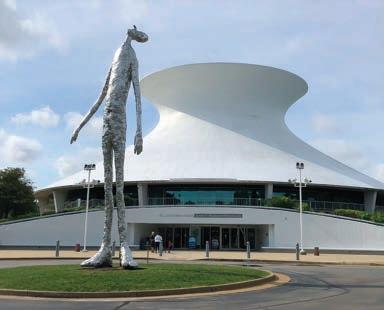
Currently, months before the Zoo’s new safari park and conservation center opens in north St. Louis County, endangered species from around the world are settling into the 425-acre property. And critical conservation work is already underway.
More than 25 endangered and critically endangered animals have been born at the WildCare Park since 2024. Each birth represents a critical milestone for its species and reinforces one important message: Conservation can’t wait.
Among the newest arrivals are two banteng calves, a critically endangered species facing an extremely high risk of extinction. Both calves weighed more than 40 pounds at their first health check and continue to grow alongside the herd. The park also made history with its first Bactrian camel birth in February. Female calf Ruby is not only growing fast but also raising hope for her critically endangered species.
Four scimitar-horned oryx were born this spring. Once listed as “Extinct in the Wild,” the species was successfully reclassified as “Endangered” in 2023, thanks in part to reintroduction efforts supported by the Saint Louis Zoo and partners. The WildCare
Park calves represent another critical step forward for the species.
These growing herds offer a glimpse into WildCare Park’s future role in advancing wildlife conservation. More than 120 animals already call the park home including residents of the Kent Family Conservation and Animal Science Center, which focuses on sustaining some of the world’s most endangered species. The Saint Louis Zoo expects that number to grow to more than
200 animals before the park opens in 2027.
Once open, guests will travel through the WildCare Park’s mixed-species habitats on guided safari tours featuring roaming giraffes, zebras, ostrich, rhinos, camels, and rare antelope. By opening day, dozens of species’ milestones will already be behind it – and hundreds more ahead.
Saint Louis Zoo WildCare Park, stlzoo.org/about/wildcare-park
Heffern for the Saint Louis Zoo | Photos courtesy of the saint Louis Zoo
Most people can tell you that air pollution is bad for the human body. But ask someone to explain exactly how it impacts skin, organs, and mental health, and you might find them struggling to connect the dots.
A new study led by Tracy Bastain, Ph.D., M.P.H., and co-authored by Carrie Breton, Sc.D., who recently joined the Bursky School of Public Health at Washington University in St. Louis, found that exposure to common air pollutants during early pregnancy may increase the risk of persistent depressive symptoms throughout pregnancy.
“The early pregnancy period – really, those first six weeks – was where we found the strongest effects,” Bastain says. “Women with higher exposure to nitrogen dioxide and particulate matter were much more likely to experience persistently high depressive symptoms during pregnancy.”
The findings come from the MADRES (Maternal and Developmental Risks from Environmental and Social Stressors) cohort, a long-running study that began in 2015 at the University of Southern California in Los Angeles.
Rather than measuring depression at a single point in time, researchers identified patterns of depressive symptoms throughout pregnancy. They then examined whether pollution exposure influenced which pattern participants followed. “What surprised us was that pollution exposure before conception didn’t appear to have
much of an effect,” Bastain says. “It was that early pregnancy window that emerged as especially vulnerable.”
The study also highlights environmental health disparities. Families living near busy highways and industrial corridors often face higher pollution exposure while also experiencing greater financial and social stress. “We wanted to tease apart the physical and sociodemographic contributors,” Bastain says. “Our goal has always been to identify solutions that can reduce those risks.”
While improving regional air quality requires broad policy changes, Bastain says individuals can take steps to reduce exposure. She recommends exercising away from peak traffic whenever possible and using air conditioning or air filtration systems to limit indoor pollution.
Bastain recently brought much of the MADRES research program to WashU after joining the university earlier this year. She plans to build a similar cohort in St. Louis and across the Midwest to better understand regional environmental health challenges.
“We want to understand what the unique environmental challenges are here,” she says. “That gives us the opportunity to develop solutions that are specific to the communities we’re trying to serve.”
Andrew M. and Jane M. Bursky School of Public Health at Washington University in St. Louis, 1 Brookings Drive, St. Louis, 314-935-4747, publichealth.washu.edu
Summer may be winding down, but these days pools stay open later into the fall. Even as kids head back to school, many of us are still enjoying time in the water. And while these moments create lasting memories, they also bring an increased risk of a very preventable tragedy: drowning. Most drownings we see in the hospital tend to happen at birthday parties or barbecues and often when people least expect it. Here are a few considerations that can improve safety and prevent a drowning.
Always ensure you have a designated “water watcher” – an adult assigned to pay constant attention to the children in the water. This person should not be on their phone or intoxicated. Make sure to switch off with other adults every 20 minutes or so to avoid fatigue. As the saying goes: “When everyone is watching, no one is watching.”
Older children and teenagers should always use the buddy system when swimming and should never swim alone.
Ensure small inflatable or portable pools are emptied after every use unless they are safely fenced off. Children can drown in as little as one inch of water.
Remove all pool toys from the pool area when done playing to make certain that young children are not attracted to the pool during non-swim times.
If you have an inground pool, it’s important to have it completely surrounded by a fence that separates the pool from the house. The fence should be at least 4 feet high, non-climbable, and have a self-closing and self-latching gate. The slats should be no more than four inches wide.
If you have an above ground pool, add a fence to prevent access during non-swim times.
Pool alarms and door alarms can add an additional layer of protection, but they alone are not enough.
Don’t forget to keep locked safety covers on hot tubs and spas.
Many parents rely on floaties or puddle jumpers, but this can create a false sense of confidence. Puddle jumpers, which are Coast Guard approved, put the child in an upright position and prevent them from using their arms to float. These do tend to make swimming easier for kids, but parents still need to maintain adequate supervision.
Stay safe, enjoy the water responsibly, and have a great school year!
Dr. Siri Kommareddy-Sloane is a pediatric critical care physician in the pediatric emergency department at Mercy Children’s Hospital. For more information about Mercy Children’s Hospital, visit mercy.net/laduenews.
Chelsea House’s Aryana center table is part of the larger Aryana furniture collection, featuring intricate pieces of inlaid wood that create stunning geometric motifs, floral patterns, and symbolic designs. the table is 30 inches high by 45.5 inches wide. (brodylamp.com)
With concentric circles of faceted glass set within an antique brass-finished metal frame, the Marjiescope wall sconce diffuses light through an optic crystal prism. Part of Currey and Company’s Marjorie skouras collection, the sconce is certified for damp locations. (bdaviscompany.com)
CR Laine’s Bridget chair uses a classic European armchair design –distinguished by its clean, unfussy lines and detailed carving on the frame. It is shown in Astrid fabric, a blend of cotton, linen, and viscose in the chocolate colorway. (marketplaceat theabbey.com)
Rich Texture, Grand Design
By Alecia Humphreys | Photos courtesy of Jeannie Liautaud Photography
The great room inside this Town and Country home is impossible to ignore, where soaring beams and sculptural chandeliers define a space designed by Meagan Cooperman, founder and principal interior designer of Cooperman & Co. Luxury Interior Design.
“The great room is the first space you experience after entering the foyer, so it establishes the tone for the entire home,” Cooperman says. “While grand in scale, it was designed to feel approachable and effortlessly livable: a place where large family gatherings, quiet mornings, and everyday life all feel equally at home. It’s sophisticated without being formal and luxurious without sacrificing comfort.”
Cooperman started with punchy wallpaper. “The moment the wallcovering was installed, the entire personality of the home shifted,” she says. “It was certainly a bold choice for such a large volume of space, but it became a defining element of the design.” The wallcovering’s subtle shimmer catches the light throughout
the day, adding depth and warmth to the home.
To complement the interior, Cooperman chose abstract art alongside an organically shaped wood console table. A Mongolian fur bench and set of large sofas sit nearby. “The oversized Century sofas upholstered in that rich, saturated velvet immediately command attention and anchor the room beautifully,” Cooperman says.
The designer was thrilled with the project’s outcome and credits her clients for helping bring the vision to life. “One of the biggest takeaways from this project is the value of trust,” Cooperman says. “Designing a home is a journey, and some of the most impactful decisions can feel unexpected in the moment. When clients trust the process and allow us the creative freedom to push beyond the obvious, the result is a home that feels layered, memorable, and uniquely theirs.”
Driving around St. Louis, I see dead trees almost everywhere.
Some of them died quietly during the winter, never leafing out in spring, or were zapped into a weakened state by the freezing cold. There are a mortally wounded few that are not dead yet, which folks will try, usually unsuccessfully, to save. Understanding what has happened and if prevention could’ve stopped the loss is important in avoiding that fate in the future.
Many of the dead trees are native ash that have been killed by the emerald ash borer, an invasive non-native beetle. We first started seeing dead ash trees in this area a few years ago; now, most of them are gone. One way to attempt to control this imperilment is by applying insecticide to the soil around the trees annually. If you have dead ash trees on your property and decide to leave them in place, they can still provide habitat for wildlife and contribute to the ecosystem in a different way. But if they are close to structures or pathways, the risk of falling limbs would prompt the decision to remove them.
The next large class of dead trees and shrubs is due to the excessive use of salt for ice prevention. The bitter cold snap that turned a beautiful snowfall into an icy mess caused a higher-than-normal use of salt as a safety management tool. Runoff from streets and sidewalks can become fatal to many plants. Here in my neighborhood, we lost conifers – especially pines – because of street salting run-off. If caught early enough, frequent and heavy irrigation can flush the salt from the soil, and a plant with enough reserves can be saved. The moral of the story is not to plant salt-sensitive materials close to driveways or sidewalks.
The last group of dead or dying trees is located along the path of last year’s tornado. These are the trees that did not immediately show damage but sustained structural impacts and cracks from the wind, which compromised their integrity. Stress fractures can cause a portion of a tree to die off and become a hazard. It might take a few years to reveal the damage, but paying close attention to minor changes in all your trees can lead to successful early intervention.
WOMEN IN REAL ESTATE
KIM ADAMS
Dielmann Sotheby’s International Realty 314-435-0098, kim@wellsmichael.com
Kim Adams delivers a refined real estate experience through exceptional communication and concierge-level service. As an original member of The Wells Michael Collective, the no. 1 team in Clayton by sales volume in 2025, she has achieved multiple record-setting sales in Ladue and leverages an extensive network, strategic expertise, and innovative marketing.
THE ANDEL-WHITE MCDONALD GROUP
Dielmann Sotheby’s International Realty 314-609-0139, lynn.andel@dielmannsir.com
Lynn Andel and Julie McDonald bring decades of award-winning marketing and negotiation experience to every client. As company-wide Top Producers, they pair strategic insight, creativity, and deep market knowledge with with personalized service, helping clients list well and buy smart.
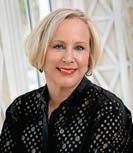
Licensed since 2003, Mary Beth Benes is ranked in the top quarter percent of all agents in the St, Louis metro area. She creates a stress-free process for buyers and sellers and is praised for actively involved during all price and contract negotiations. Benes is poised to serve you with results that can’t be matched.
LIZ BEATY
By Maggie Peters
Gladys Manion Real Estate 314-402-4242 (direct), 314-721-4755 (office), lizb@gladysmanion.com
Liz Beaty brings a relationship-first approach to real estate, pairing thoughtful guidance with strong communication and a calm, strategic presence. With experience across a growing portfolio of successful transactions, she takes time to understand each client’s goals, anticipate their needs, and provide attentive, personalized support from the first conversation through closing and beyond.
LAURIE BUSCH
Janet McAfee Real Estate 314-496-9654, lauriebusch@janetmcafee.com
Laurie Busch is a consistent Top Agent. She is passionate about real estate, her clients and their goals. Busch builds a genuine and sincere long-lasting relationship with her clients. As she says, “I am most rewarded by the personal connections that I have formed and take comfort in knowing that my clients are satisfied.”
MARCY BYRNE
Janet McAfee Real Estate 314-750-5800, mbyrne@janetmcafee.com
With over 33 years of experience, Marcy Byrne is a top-performing agent at Janet McAfee Inc., known for her creative marketing and tireless client service. In a constantly evolving market, Byrne leads with kindness, offering buyers and sellers undivided attention and around-the clock support for a seamless real estate experience.
BETH BENES
KIM CARNEY
The Carney Team, Coldwell Banker Premier Group 314-422-7449, thecarneyteam.com
Ranked among the leading REALTORS in St. Louis, Kim Carney specializes in the luxury real estate market and uses a unique and aggressive marketing plan. She prides herself on taking a proactive approach. Carney offers the experience and savvy negotiation skills that achieve optimum results for her clients.
LISA COULTER
Janet McAfee Real Estate 314-941-2883, lisacoulter@janetmcafee.com
“As a consistent top producer for over 35 years, I am firmly committed to providing exceptional service from start to finish for all my clients,” says Lisa Coulter. “And I love helping my buyers and sellers successfully navigate the current competitive market!”
JULIE DRIER
Dielmann Sotheby’s International Realty 314-791-0034, julie.drier@dielmannsir.com
Julie Drier has served St. Louis real estate clients since 1988, combining deep market knowledge with patience, organization, communication, and skilled negotiation. A Clayton native, she is known for her trusted guidance and strong commitment to her community.
THE GELLMAN TEAM
eXp Realty 314-336-1991, thegellmanteam.com
The Gellman Team has a powerhouse group of women who have collectively closed almost $650 million in sales volume and helped over 1,497 families achieve their real estate dreams. Driven, dedicated, and deeply knowledgeable, they continue to set the standard for excellence in real estate.
THE HALTERMAN STIX GROUP
Dielmann Sotheby’s International Realty 314-456-6733, robin@haltermanstixgroup.com
Halterman Stix Group believes every home tells a story. Combining decades of experience with creativity, and exceptional service, they create elevated experiences built on trust, guidance and genuine relationships. Their greatest success isn’t simply selling homes; it’s caring for the people whose lives unfold within them.
SARA JENSEN
Janet McAfee Real Estate 314-443-8884, sjensen@janetmcafee.com
Sara Jensen was born and raised in Kirkwood and is now raising her family with her husband there. This combined with her 20-plus year real estate experience gives her the knowledge and expertise to assist her clients with all their real estate needs. Call her for all your buy or sell needs.
For 29 years, Andrea Lieberman has helped families find their place at Innsbrook. With more than $257 million in area sales, she’s built her career on unmatched community knowledge and trusted relationships. For her, success is helping families find the home that houses some of their best memories.
HEIDI LONG
Janet McAfee Real Estate 314-983-2143, janetmcafee.com
For more than 25 years, Heidi Long has had the privilege of helping clients enhance their homes while providing the insight and tools to make confident decisions. She combines financial expertise with creative problem-solving to craft innovative solutions in an everchanging market, embracing every exciting challenge along the way.
With more than 50 years combined in the field, Kathleen Lovett and Laura Donovan read the subtle shifts in trends, understand the nuances of negotiations, and anticipate challenges before they arise. Their experience is more than just a number, it’s expertise that ensures clients make the smartest decisions and avoid costly mistakes.
KATIE MCLAUGHLIN
Dielmann Sotheby’s International Realty 314-283-8444, katie.mclaughlin@dielmannsir.com
Real estate has always been part of Katie McLaughlin’s life. Raised alongside her mother, Sue McLaughlin, a respected St. Louis real estate professional, she learned integrity, hard work, and putting people first. A Saint Louis University graduate and accomplished agent, McLaughlin achieved $98 million in sales volume last year.
BETH MANLIN
Dielmann Sotheby’s International Realty 314-954-3999, beth.manlin@dielmannsir.com
Beth Manlin is a seasoned St. Louis real estate professional known for tenacity, loyalty, and client advocacy. A St. Louis native and graduate of Ladue Horton Watkins High School and the University of Kansas, she brings more than a decade of experience helping clients buy, sell, and navigate new construction.
O’MEARA DEGRAND
REAL ESTATE TEAM
Dielmann Sotheby’s International Realty 314-477-1133, cathleen.omeara@dielmannsir.com
Kathe DeGrand and Cathleen O’Meara combine deep St. Louis roots, marketing expertise, listening skills, and a shared commitment to exceptional service. Their attention to detail and client-first approach create a seamless, personalized real estate experience.
STEPHANIE OLIVER
Dielmann Sotheby’s International Realty 314-322-6992, stephanie.oliver@sothebysrealty.com
Stephanie Oliver is a top-producing St. Louis luxury real estate professional with more than two decades of experience. A Ladue resident with backgrounds in economics and financial planning, she is known for market expertise, complex negotiation, creativity, and compassion.
LESLIE OWENS
Dielmann Sotheby’s International Realty 314-276-5858, leslie.owens@dielmannsir.com
With more than 30 years of experience and $171 million in career sales, Leslie Owens is known for professionalism, integrity, and personalized service. A longtime Olivette resident, she brings deep St. Louis market knowledge and has proudly served multiple generations of families, earning repeat business through trusted, lasting client relationships.
AMANDA PERKINS
Dielmann Sotheby’s International Realty 314-599-1859, amanda.perkins@dielmannsir.com
Amanda Perkins is a luxury REALTOR serving St. Louis’ central corridor. Known for combining innovative technology with strategic marketing and concierge-level service, she helps clients achieve exceptional results. A proud mother of two, she values the meaningful relationships that connect the St. Louis community.
ELIZABETH ST. CIN
Janet McAfee Real Estate 314-412-4687, estcin@janetmcafee.com
As an industry leader for more than 30 years, Elizabeth St. Cin knows house-hunting inside and out. Her joyful attitude makes her one of the most uplifting people in the business, and her careful attention to detail, dedication, and handson approach always achieves the best results.
ALISON SHEEHAN
Dielmann Sotheby’s International Realty 314-574-0110, alison.sheehan@dielmannsir.com
With over 25 years of client service expertise, Alison Sheehan is passionate about elevating your real estate experience. Combining Sotheby’s global reach with thoughtful communication, strategic expertise, and genuine care, she delivers exceptional results while making every client feel confident and supported throughout their real estate journey.
TRACY SHEFFLER
Dielmann Sotheby’s International Realty 314-606-3453, tracy.sheffler@dielmannsir.com
As a St. Louis native with 29 years of real estate experience, Tracy Sheffler is known for her deep understanding of the local market, caring approach, and unwavering commitment to her clients. She dedication and proven negotiation skills have earned the trust and referrals of generations of clients.
Nicole Simon works closely with people in St. Louis, one relationship at a time. She helps them find a home that fits their life and elevates the everyday, one home, one family, one story at a time. For her, it’s never about the transaction. It’s always about the people.
AIMEE SIMPSON
Dielmann Sotheby’s International Realty 314-712-0558, aimee.simpson@dielmannsir.com
With more than 30 years of experience, Aimee Simpson is a trusted St. Louis luxury real estate expert specializing in upscale homes, building lots, and new construction. She creates personalized, enjoyable experiences while building lasting relationships and supporting local children’s charities.
Dielmann Sotheby’s International Realty 314-779-8980, mary.slay@dielmannsir.com
Mary Slay combines experience in account management, product development, analytics, and strategic promotion with a detaildriven approach to real estate. She listens closely and guides clients with warmth, creativity and confidence.
RACHEL SOKOLICH
Dielmann Sotheby’s International Realty 314-640-1780
rachel.sokolich@dielmannsir.com
Rachel Sokolich is a St. Louis native with lifelong real estate experience and a strong background in sales, marketing, and advertising. Known for her energy, discretion, eye for design, and extensive local network, she uncovers off-market opportunities and delivers confident, full-service guidance throughout the central corridor and West County.
ANNA WELKE
Dielmann Sotheby’s International Realty 314-607-5727, anna@warnerhallgroup.com
Anna Welke brings the insight of an attorney and wealth manager to real estate defined by excellence, intuition, and fierce client advocacy. A devoted St. Louisan, she guides individuals and families through buying and selling with care, confidence, and perspective, helping each client find the place that truly feels like home.
MARY SLAY
ANN WROTH
Gladys Manion Real Estate 314-440-0212 (direct), 314-721-4755 (office), annw@gladysmanion.com
Ann Wroth, a St. Louis native and former teacher, turned a part-time role in real estate into a 39-year career. Focusing on the central corridor, Wroth is known for her integrity, exceptional service, and lasting client relationships built through every stage of their life.
TERRI WOLFNER
Janet McAfee Real Estate 314-983-2125, janetmcafee.com
Terri Wolfner has been a trusted agent with Janet McAfee Real Estate since 1989 and is a proud St. Louis native. With 37 years as a consistent top producer, she is committed to making the buying and selling process as smooth and successful as possible. Her passion for real estate shines through in everything she does.
Sunsetting SUMMERTIME
By Katie Yeadon | Photos supplied
From soft pinks to rich wine hues, this color combination is the chic way to transition from summer into fall.
guCCI 54mm acetate oval sunglasses in pink, $370, Neiman Marcus
HYACINtH HOusE Key mini skirt in pink floral, $128, tuckernuck (tnuck.com)
sIMKHAI Helena combo blazer midi dress in fig, $795, tuckernuck
ANDREs OtALORA La Promesa pants in blush pink, $520, tuckernuck
BOOts ARE MY ROOts hand-dyed bandanas in pink, $35, Ivy Hill
VARLEY Morwenna half-zip knit pullover in mellow rose, $148, Ivy Hill
tEN Audience satin maxi halter dress, $158, Aritzia at Plaza Frontenac (aritzia.com)
RAg & BONE spire woven Mary Jane ballerina flats in burgundy, $298, Neiman Marcus
J.CREW crochet sweater-tank in crushed crimson, $98, J.Crew (jcrew.com)
NIKE Pacific women’s sneakers in fauna-brown pink-foam, $80, J.Crew
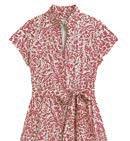
RuNgOLEE Cecilia cotton dress in fuschia flora, $339, Rungolee (rungolee.com)
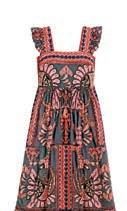
Lug VON sIgA sybill midi dress in black pink multicolor, $880, tuckernuck
MARYsIA Mott Maillot one-piece in port, $369, Neiman Marcus (neimanmarcus.com)
CAJAL glass Betta pendant necklace in pink and amber, $215, tuckernuck
Drinks BY DESIGN
By
What happens when a young, entrepreneurial bartender graduates with a degree in interior design? She opens her own bar, of course. But not just any bar – one that rolls up to events in a repurposed horse trailer toting custom cocktails designed to match the host’s aesthetic.
A couple of years after graduating from Maryville University, Nina Hanser partnered with her mom, Amy, to launch Thirsty Goose Mobile Bar in St. Louis, choosing a name that honors Hanser’s late father through his daughter’s nickname, “Goose.”
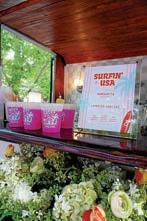
Their offerings include a black-and-white trailer bar for outdoor setups or a wooden bar counter that rolls into just about any space. The all-inclusive package, dubbed the Double Pour, features basic bar services plus three signature “goosetails,” garnishes, housemade syrups, and theme customization with a cohesive menu.
“Being a designer, those little details matter,” Hanser says. “We always make a custom menu. … I’ll ask for the invitations – or the signage, or whatever they may have for reference – copy that font, and make it seem like one person made everything.”
Thirsty Goose currently caters everything except the alcohol. In accordance with Missouri law, the Hansers decided to postpone obtaining a liquor license and instead provide clients with a liquor shopping list. They plan to expand to public events after securing
the license, but at just one year in, their focus is on personalized private parties. “Sometimes we’re able to pick up [the client’s order] for them, but we don’t supply [the alcohol],” Hanser adds.
Some clients opt for a nonalcoholic bar, especially as “dirty sodas” have become popular. These mix soda with flavored syrups, cold foam or something similar, and occasionally lime juice – plus a candy garnish. At a recent teen party, Hanser used blue raspberry lemonade as the base and topped it with cold foam, Nerds Gummy Clusters and a Pop Rocks rim.
Beyond catering to younger guests, Hanser hopes Thirsty Goose stands out for making each event “feel like one wholesome party.” She’s offered interactive activities – like hiding a goose for guests to find at the venue – with the successful seeker winning a prize. “We don’t just serve basic drinks and pull the trailer up,” she says. “We try to have a little flair to us being there.”
Andrea Smith | Photos courtesy of thirsty goose Mobile Bar
ATOMIC EATS
The Grove neighborhood has a new late-night food destination in a familiar location. Atomic Eats debuted inside multi-room entertainment complex Atomic By Jamo on July 8. The menu offers a lineup of casual comfort food from the team behind Kingside Diner and Herbie’s.
The launch coincides with Atomic By Jamo’s grand reopening, marking a return to regular business hours for the venue, which hosts a full calendar of live music, DJs, watch parties, and more across several stages.
Jamal Holmes runs operations at Atomic Eats in collaboration with the Kingside Diner team including owner Aaron Teitelbaum, chef and culinary director Eric Prophete, and director of operations Dan Rolf. The young chef got his start at Kingside Diner five years ago.
Guests can expect appetizers, entrées, and a couple of sweet treats. Look forward to savory shareables like the Squeaky Cheese – fried cheese curds coated in tempura batter and served with your choice of hot pepper jelly, comeback sauce, or ranch.
Plant-based options are also available including Impossible chili and Cowboy Caviar – a colorful side dish dip of black beans, blackeye peas, peppers, onions, garlic, corn, tomato, avocado, and chipotle lime dressing, served with tortilla chips.
Entrée highlights include Holmes’ personal favorite: short rib sliders made with beef braised for at least five hours and topped
with caramelized onions, provolone, and Worcestershire aioli.
The Atomic Meltdown is another indulgent signature entrée, with two all-beef patties, cheddar, chipotle aioli, and a gooey melted cheese curd skirt on a brioche bun (available gluten free). Other items include chicken tenders and a grilled chicken sandwich on focaccia, with provolone, arugula, roasted red peppers, and pesto mayo.
The Atomic By Jamo bar program also received a facelift for the regular hours rollout. Choose from drinks like adult slushies, batched cocktails from STL Barkeep, Jell-O shots, and non-alcoholic concoctions.
Atomic Eats’ hours are Wednesday through Sunday from 5 p.m. to 1 a.m.
Atomic Eats (inside Atomic By Jamo), 4140 Manchester Ave., The Grove, St. Louis, atomicstl.com
Story and photos by Mabel Suen
tOWER gROVE PARK
Flower Power Luncheon
Story and photos Christina Kling-Garrett
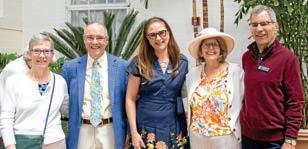
In late May, 250 guests gathered at the Piper Palm House to celebrate Tower Grove Park’s annual Flower Power Luncheon. Landscape architect Thomas Rainer was the featured speaker for this year’s exciting program. John Loughlin accepted the James Burney Award on behalf of his brother, Philip H. Loughlin III, and his late wife Caroline Loughlin, and Mayor Cara Spencer and Alderwoman Daniela Velazquez were both in attendance. Local florists designed the centerpieces on each table which were available for raffle. The luncheon raised over $95,000 to support keeping Tower Grove Park one of the outstanding spaces within St. Louis.
“Flower Power once again welcomed a devoted community of supporters to celebrate Tower Grove Park, showcasing the creativity of local floral designers, an engaging program, and the recognition of individuals whose dedication helps sustain the park year after year. Thomas Rainer offered a fresh perspective on how plant communities interact, encouraging guests to rethink the role of gardens in shaping resilient, living landscapes both within the park and at home.”
– BILL REININGER, EXECutIVE DIRECtOR, tOWER gROVE PARK.
Bridget sliney, thomas Rainer, Dede Fratt Mary Ellen Cotsworth, Bill siedhoff
Mayor Cara spencer, Dan guenther
Nancy and steve Kidwell, Dr. Lucia Lohmann, Joyce and Bob Herleth
Mayor Cara spencer, Alderwoman Daniela Velazquez Ann and John Loughlin
Amy and Jesse gilbertson
tracee Holmes, Robert Holmes
tHE CHARLEs A. AND ANNE MORROW LINDBERgH FOuNDAtION
Spirit of St. Louis Flight: 99th Anniversary Gala
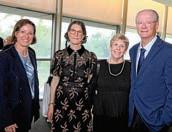
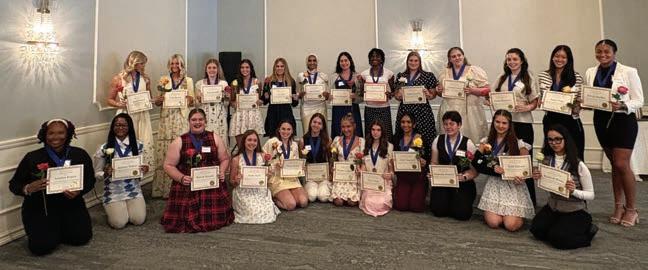
On May 20, National Women in Aerospace Day, the Lindbergh Foundation celebrated its 99th Anniversary Gala at the Missouri History Museum. The evening honored the legacy of pilot Anne Morrow Lindbergh by recognizing six incredible women shaping the world of aviation and science today. Award recipients were Christina Koch (NASA Artemis II Astronaut), Theresa Claiborne (1st African American Female US Air Force Pilot), Margrit Waltz (World Record Ferry Pilot – 979 ocean crossings), Sassie Duggleby (Co-Founder & CEO, Venus Aerospace), Rhonda Hamm-Niebrugge (Director, St. Louis Lambert Airport) and Frances Levine (Historian and Former CEO, Missouri Historical Society).
Special guest honors also went to Stephanie Pope (CEO, Boeing Commercial Airplanes) and James Hansen (Biographer of the Lindberghs).
“The 99th Anniversary Gala showed that the spirit of innovation, entrepreneurship and exploration is thriving in St. Louis and we intend to showcase that Spirit of St. Louis to the world for decades to come. The 100th anniversary is a unique leverage point where we can demonstrate to the world that, with the right education programs, we can inspire and motivate the next generation to live into a brilliant future.”
– ERIK LINDBERGH, LINDBERgH FOuNDAtION CHAIRMAN
Story and photos by Diane Anderson
Honorees: Margrit Waltz, Dr. Frances Levine, Rhonda Hamm-Niebruegge, theresa Clairborne, sassie Duggleby, not pictured Christine Koch
Bob, Natalie, steve and Brian O’Loughlin
sassie Duggleby, Kristina Lindbergh, Peggy and Jim Hansen