
school the magazine of springside chestnut hill academy welcome New Head of School Dr. Delvin Dinkins Begins Tenure | PAGE 8 campus wellness Creating a Culture of Wellness at SCH | PAGE 14 alumni award recipients Celebrating the 2022 Honorees | PAGE 20 commencement & awards ceremony Award Recipients and Photos | PAGE 34
Delvin M. Dinkins, Ed.D. Head of School
Board of Trustees
2022–2023
M. Brian Blake
Rashad I. Campbell ’08
John S. Detweiler ’91
Brooke DiMarco
Delvin Dinkins, Head of School
William M. Doran
William F. Dunbar
William H. Freeman ’91 Alexander C. Goldsmith
Anuj Goswami
Thomas Shaw Greenwood III ’01
David Hayne
Maria Sordoni Hudacek ’02
Thomas G. Kessler ‘88
Youngmoo Kim
Timothy W. Levin
Patrick S. G. Lindsay, Chair
Peter S. Longstreth ’62, Honorary Deborah E. Maine H’16
Edward J. McDevitt III ‘93
Ludlow Miller, Honorary
Janie B. Parker, Honorary
Edward C. Rorer ’61, Honorary
Elizabeth M. Salata ’02
Mary Shaifer ‘87
Marjorie Kershbaum Shiekman ’67
Nadine Badger Stevenson ’90
Andrew C. Topping
Thomas Watkins Jr. ‘78
Camilla (Kim) Whetzel H’17
Mims Maynard Zabriskie
MESSAGE FROM THE HEAD OF SCHOOL
As I settle into my first year as head of SCH, I find myself taking it all in: the waves to parents in the carline, the exchange of smiles and handshakes with students and staff, the inspiring lessons by our faculty, the chatter in the halls between classes, the laughter on the playground and in the dining hall, the roar of competition on the playing field, and the sun setting beyond campus after a busy day. I am so proud, so very honored, to be a part of this vibrant, dynamic community. At nearly every turn, I encounter firsthand the unbounded curiosity and independent thought of our students, nurtured by the unlimited dedication, passion, and creativity of our faculty and staff. Just a few weeks ago, I marked the start of my 28th year in education. Over these nearly three decades, never have I experienced a school with so much courage, resilience, and integrity. Oh, to lead this school is both an honor and a privilege!
I was floored to learn that 34 members of the Class of 2022 were “lifers”: they began their SCH journey as preschoolers and finished some 14 years later. Again, 34, or roughly a quarter of the graduating class! Take that in. Few, if any, schools of our size and character can say as much. Whether a student’s time here numbers 14 years or 14 months, that student is part of an unfolding legacy of excellence and impact, at SCH and beyond.
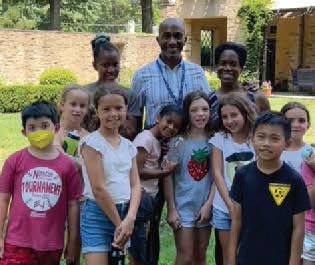
The power of an SCH experience extends to the campers and students who spend their summer days on campus. Upon my arrival, I learned more about the robust offerings in our “off” months, including a fairly new program at SCH: Horizons. A national program that provides a six-week academic enrichment and social experience to underserved children tuition-free, Horizons students begin the program the summer before 1st grade and return each year through 8th grade. This summer we welcomed to campus a second cohort of eager students. Hailing from local public, charter, and home schools, these children—by all reports—had a fantastic experience, thanks to the Horizons team which includes a few SCH faculty and staff.
It is no secret that SCH delights in nurturing students’ knowledge of themselves and the world in an effort to prepare them to lead lives of integrity, thoughtfulness, and impact. In this edition of SCHool, we highlight well-being at SCH. In the wake of the pandemic and a seeming uptick in demands and discord, well-being was identified as an institutional priority. Why? Because we are committed to expanding our students’ academic and personal potential. Moreover, students thrive when they are healthy mentally, physically, and socially, and feel a strong sense of belonging. Simply put, students learn better when they are healthy and feel connected to school, engaged, and have a sense of purpose. This happens in a learning environment in which they are inspired and supported. Similarly, the learning environment is optimized when our faculty and staff feel supported and act from a deep sense of purpose rooted in our mission and values. This coming year, we will continue to shine the light on student and community wellness in service of important outcomes, such as resilience, courage, empathy, and flexibility.
The edition also celebrates recent alumni award winners, whose outsize contributions bring into sharp relief the proud, storied legacy of our school. In earning distinction for themselves, these alumni also bring honor to our school. Their work is a testament to the enduring influence of an inspired education.
Let me close by saying that I look forward to our journey together. I aspire to a future SCH that is every bit as brilliant as its thousands of remarkable students, past and present, who have learned life lessons here and every bit as enchanting as the paths they have taken, or will take, in their lives.
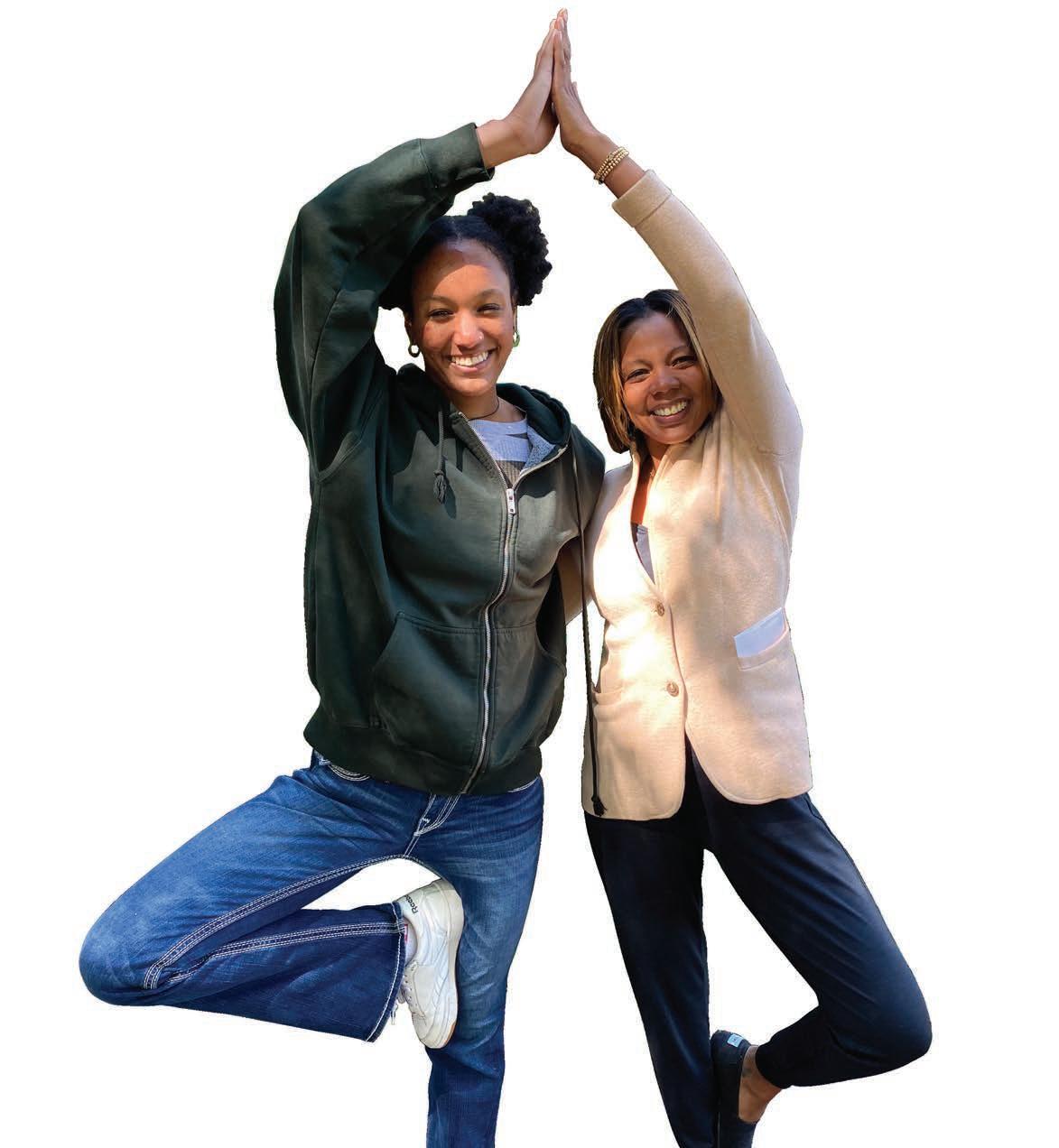
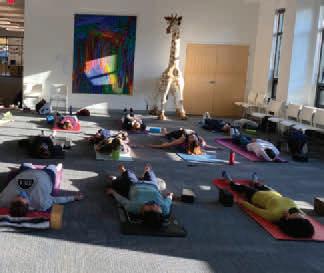
From left: Jazze Wingard ‘22 and Leslee Frye, Upper School psychologist, strike their favorite yoga pose during Mental Health Awareness Month.
Read the cover story on page 14.
Warmly, Delvin M. Dinkins, Ed.D. Head of School
 Cover Photo
Delvin M. Dinkins, Ed.D. Head of School
Communications Office
Karen Tracy HA, P’10, P’14, P’23
Director of Marketing and Communications
Laura Breen Cortes ’06 P'34, P’35
Marketing and Communications Associate
Julia MacMullan P’35
Associate Director of Marketing and Communications
Laura Richards
Communications Associate for Writing and Editing
Editor, SCHool Magazine
Office of Advancement
Jenny James McHugh ’84, P’15, P’19
Director of Development
Melissa Blue Brown ‘87, P’16, P’20, P’21
Director of Alumni Relations
Andrea Eckert P’23, P’25, P’29
Director of Parent and Community Engagement
Katy Friedland P’25, P’29, P’32, P’32
Director of Strategic Initiatives and Admissions Outreach
Paul Hines H’03, P’06
Special Projects
Brooke Mattingly P’36
Director of the SCH Fund
Kristin Norton P’20, P’22
Associate Director of Development
James Talbot II H’81, P’86, P’90, GP’26, GP’28, GP’30
Senior Gift Officer
Susan C. Toomey H’15, P’99, P’02
Administrative Assistant
P=Parent
We invite you to continue your enjoyment of the fall 2022 issue of SCHool
at https://bit.ly/schpublications.
Design Services Monica Glbert, 7ate9 Design
2 campus news
Highlights of Recent School Events
8 a warm welcome
New Head of School Dr. Delvin Dinkins Begins Tenure
12 a senior essay
Nia Hodges Reflects on her Senior Year
14 creating a culture of wellness at sch A Commitment to Wellness, Grounded in the School’s Mission
20 alumni award recipients
Profiles of the 2022 Honorees
29 legacy families at commencement Class of 2022 with Alumni Family Members
34 commencement and awards ceremony
Photos from Commencement and End of Year Awards
44 alumni weekend photos Celebrating the 2s and 7s
class notes
through the lens SCH Spirit Caught on Camera
school magazine fall 2022 1 SCHOOL the magazine of springside chestnut hill academy
GP=Grandparent HA, H=Honorary Alumna, Alumnus
47
56
contents FALL 2022 2 8 View Our Online Magazine with Links!
in our interactive space
14 34 44
CAMPUS
the center for entrepreneurial leadership marks 10 years of student successes
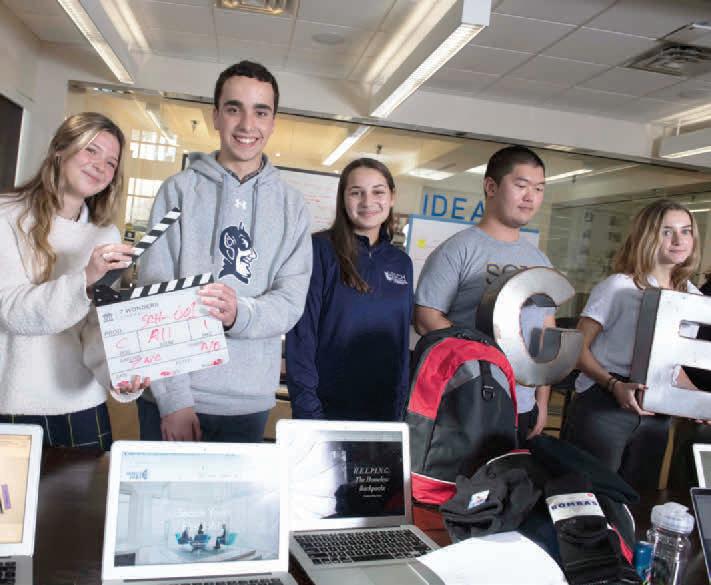
Since its inception 10 years ago, former SCH board chair Dick Hayne has championed the importance of preparing our students with competencies that national education and business leaders have identified as important for success in higher education and beyond. With this ethos, the CEL curriculum was launched.
This spring, the school announced that Hayne had made a $3 million gift in recognition of the school’s commitment to innovation. Hayne noted, “I think it’s very important that education does change, does innovate, that we educate for students’ future, not our past. That’s why our students are fully engaged in the CEL curriculum. They understand the relevance of it intuitively.”
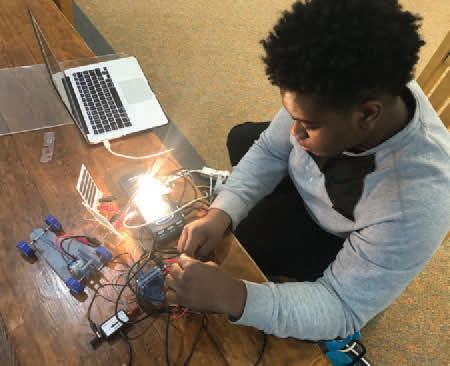
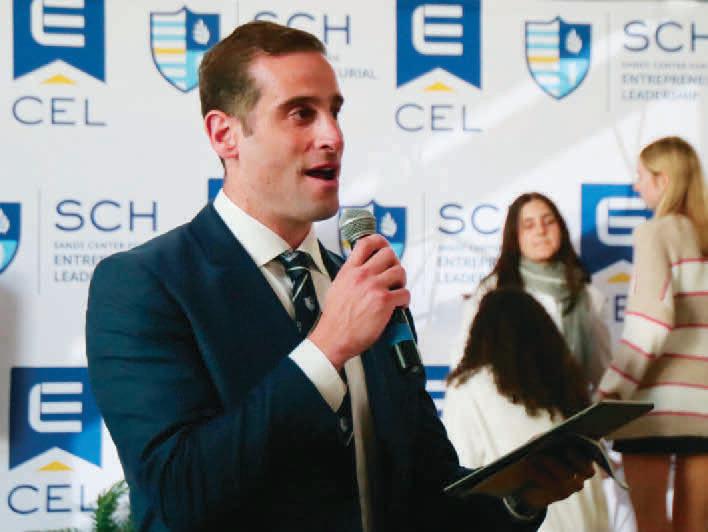
This year, Springside Chestnut Hill Academy (SCH) marked the 10th anniversary of its signature program, the Sands Center for Entrepreneurial Leadership (CEL), with a celebration attended by program alumni, school stakeholders, faculty, and special guests.
The CEL is an “engine for innovation,” says CEL Executive Director Ed Glassman '03. “The work that goes on in CEL changes lives and sets career paths. It’s about so much more than starting a business; it’s a powerful framework for the future of education.“
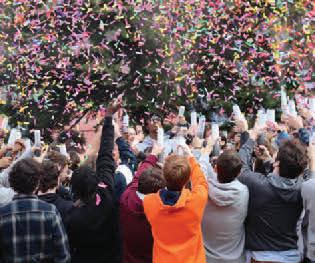
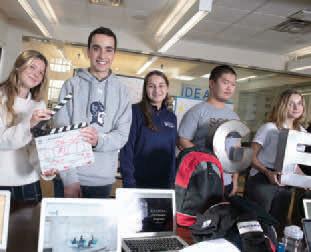
Illustrating Glassman’s premise, a “Demo Day” showcase featuring student ventures was part of the anniversary celebration. A handful of poised high school entrepreneurs delivered pitches for the projects that they have been working on—in some cases for several years. In addition, the CEL makerspace was humming with dozens of students explaining their original projects and prototypes to engaged guests. From a card game to help generate conversations around mental health to woven goods supporting women in a Cambodian village to a phone case to hold an epinephrine device, more than 25 student projects were on display.
In addition to the school’s investment in entrepreneurial education, SCH is currently engaged in several capital improvement projects: restoration of its performing arts venue and expansion and renovation of the student center at the heart of the school. Hayne’s gift will be directed to ensuring that these projects and others are completed with the same bold vision that has guided the school for many years and established it as one of the premier independent schools in Philadelphia.
“The work that goes on in CEL changes lives and sets career paths. It’s so much more than a business; it’s a powerful framework for the future of education.”
— CEL Executive Director Ed Glassman '03
school magazine fall 2022 2
NEWS | GENERAL
composer and springside alumna is artist in residence
Accomplished composer and Springside alumna Amanda Harberg ’91 performed her Piccolo Sonata alongside Erica Peel, a renowned piccoloist with the Philadelphia Orchestra, for SCH students on May 23 as the Springside Class of 1957 Artist in Residence for 2022.
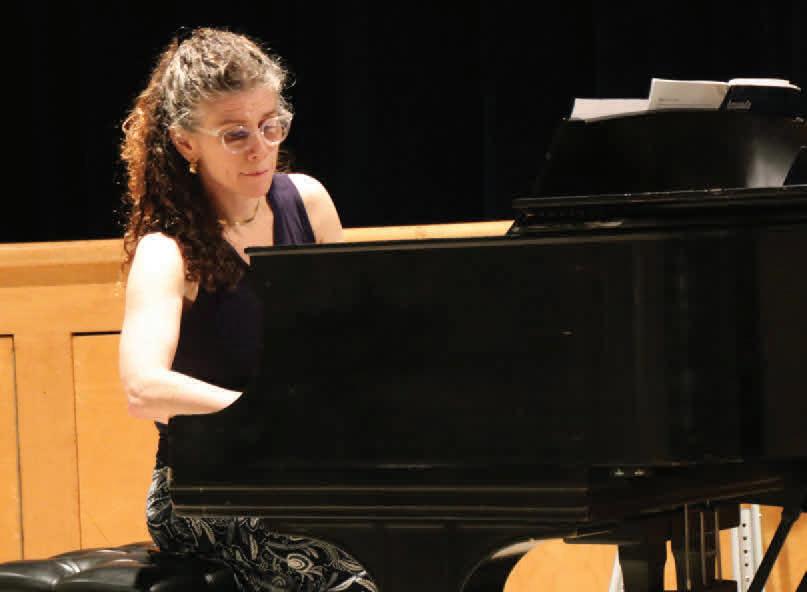
The world premiere of her latest work, Harberg Piccolo Concerto, conducted by Maestro Yannick Nézet-Séguin with the Philadelphia Orchestra, took place on December 8 and 15, 2021. Twenty-five tickets to the concerto, featuring Peel, were made available to SCH families.
Harberg's work, which has been conducted by some of the world’s greatest, has been described by The New York Times as “a sultry excursion into lyricism.” Her writing for a wide range of instruments weaves classical Western tradition with contemporary influences.
Harberg addressed SCH students virtually in 2021 about “how as a Springside lifer and graduate, SCH helped me in
singers on stage
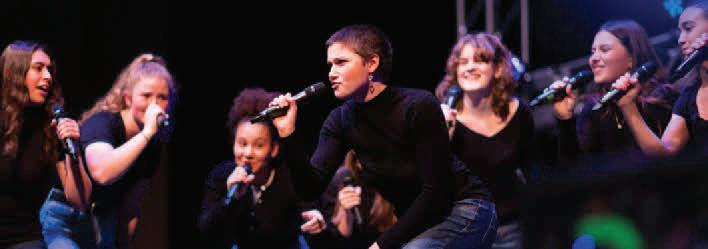
SCH singers took to various local stages this past spring. Ashley Keough '22 sang the national anthem at the United States Postal Service’s celebratory launch of a new stamp recognizing women’s rowing as “a highly competitive, graceful but demanding sport in which American women have excelled.”
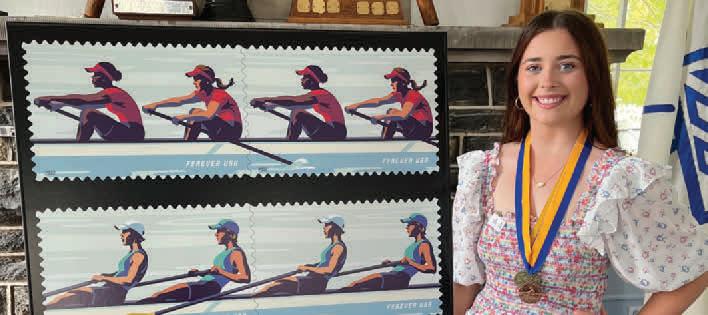
A member of the SCH varsity quad and talented vocalist, Ashley was thrilled to participate in this event at the Philadelphia Girls’ Rowing Club that included the CEO of U.S. Rowing, Amanda Kraus, and Springside alumna Amanda Gifford Cobb '99, one of the founders of the rowing program.
“I love performing and expressing myself through song,” said Keough.
The Chamber Singers also took to the stage this spring, participating in Germantown Friends School’s A Cappella Fest. At the Fest, SCH’s Laurelei and Hilltones teamed up with GFS’s two a cappella groups, the PC Quaker’s Dozen, the Temple OwlCappella, and University of Pennsylvania's Off the Beat for an outstanding night showcasing local talent both at the high school and college level.
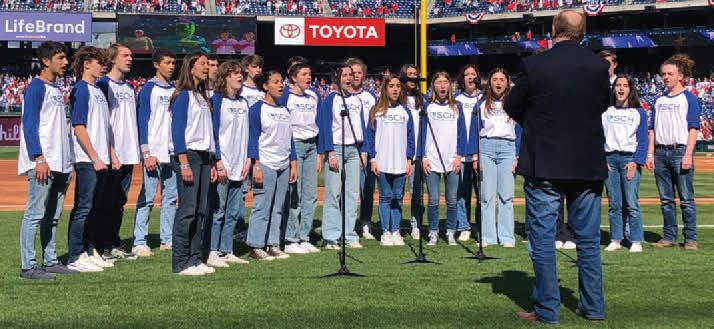
The Chamber Singers performed the national anthem on the baseball diamond at Citizens Bank Park during the Phillies’ home-opening weekend.
my path toward becoming a professional composer,” she said in an interview with the Chestnut Hill Local
The Artist-in-Residence program supports a performing or visual artist who works with students in a public capacity.
school magazine fall 2022 3
Visitors to The Exchange in the Inn are encouraged to take a stroll down the hallway leading to the Chapel where two new pieces of art have been added to the school’s permanent collection, commissioned by former Head of School Steve Druggan and his wife, Pia. With his office in the Chapel hallway for the past six years, Steve noted that the wall opposite the head of school portrait gallery was noticeably absent of any art.
Knowing that SCH has a strong alumni artist community, he reached out to art teacher Dan Brewer to recommend alumni who might be interested in sharing their talents with the school by depicting a place on campus that has special meaning to them.
Springside alumna Emma McClafferty ’14 and SCH alumna Emmaline Hamilton ’20 responded promptly and enthusiastically, and their artwork has now been hung alongside an oil of the Wissahickon Inn painted by Springside alumna Judy McCabe Jarvis ’77. Her piece, commissioned and painted in 2020, was featured on the cover of the Lure of the Wissahickon Inn history book by retired SCH history teacher and track coach Paul Hines.
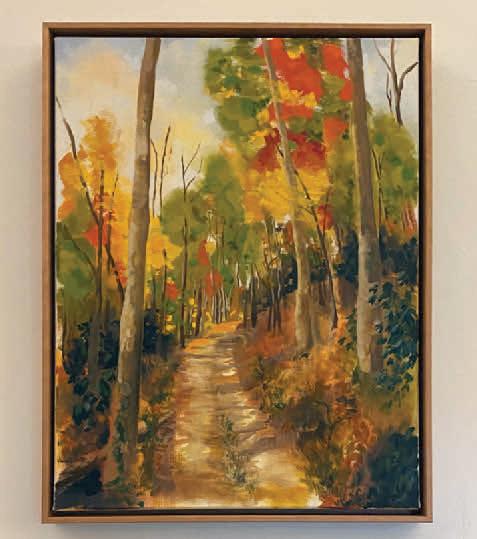
McClafferty’s piece is called Laurus crescit in arduis and features the Wissahickon woods on an afternoon in autumn and draws on the Springside motto.
“I can track my time at SCH through the changing of the leaves in the trees, which are the ever-present backdrop for my fondest memories of the school,” wrote McClafferty in her artist’s statement. “In many ways, the Wissahickon was a treasured teacher, its canopy and forest floor our classroom. It taught me to be a steward of the earth—a custodian of the nature that surrounds us—and like the laurel, to persevere through the seasons.”
As a student, Hamilton was “blown away” by the Henry Library and chose to depict that space based on a black-andwhite archival image from when the school was all-boys.
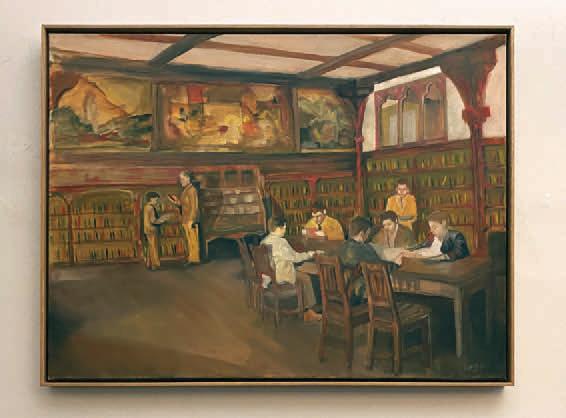
“The light from the large windows cast pretty shadows and illuminated the dark wood accents,” he wrote in his artist’s statement.
In addition to these pieces, Dr. Druggan's portrait now joins the Head of School gallery that lines the walls outside the Henry Library. Jarvis was selected for this commission and her lovely depiction was presented at Steve's "salute" from the Board of Trustees in June, shortly before his departure.
The Druggans were true champions of the arts at SCH and have made great strides to document the many significant works of art throughout the school.
The Henry Library Oil on canvas, 2022 Emmaline Hamilton '20
“The Henry Library inspired me the most for this piece due to its beautiful architecture and historical value.”
Laurus crescit in arduis
Oil on canvas, 2022
Elizabeth McClafferty ’14
“(The Wissahickon) taught me to be a steward of the earth—a custodian of the nature that surrounds us—and like the laurel, to persevere through the seasons. These are the lessons that I continue to hold dear, which served as inspiration for this painting.”
Dr. Druggan, then-head of school, stands with his wife, Pia, his portrait, and artist Judy McCabe Jarvis '77 (right) at his send-off in June.
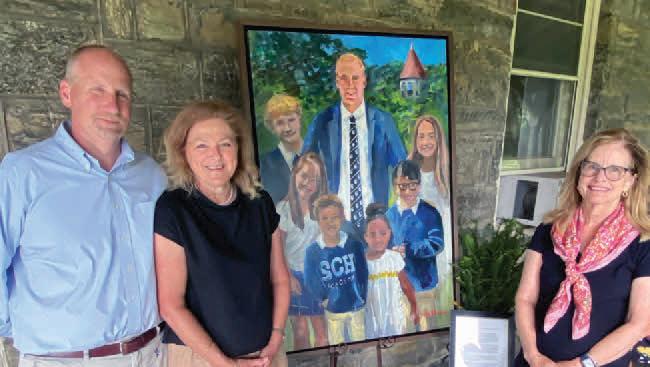 druggans add to sch art collection
school magazine fall 2022 4 CAMPUSNEWS | GENERAL
sch recording artists
Every other year, students are invited to participate in the Jamie Bell Songwriting Competition, made possible by a fund created in honor of Jamie, a talented musician in the Class of 1978, by his family members and classmates.
This year, three students were named winners: Upper School student Sarah Shoff and Middle School students Jahi AlUqdah and Ethan Monberg. The winners are afforded the opportunity to record with professional musicians and sound engineers in the brand new Jamie Bell '78 Recording Studio housed in the Thornley Middle School. Their work is showcased on the Jamie Bell Recording Project site on Bandcamp.
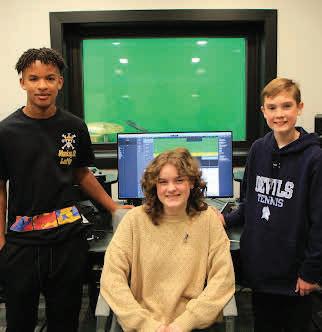
Shoff's “i carry your heart with me,” produced by Brendan McGeehan, features our own orchestra director, Katie Bechtold, on violin. Al-Uqdah's “Car Ride” and Monberg’s “Freight Train” were recorded with engineer Marcus Bryant.
“I enjoy music and it’s a fundamental part of my everyday life,” said Al-Uqdah whose song reflects his long car ride to school each morning with his grandfather.Jahi Al-Uqdah, Sarah Shoff and Ethan Monberg
lower school students 'doing for others'
“Life’s most persistent and urgent question is, ‘What are you doing for others?’” asked Martin Luther King Jr.
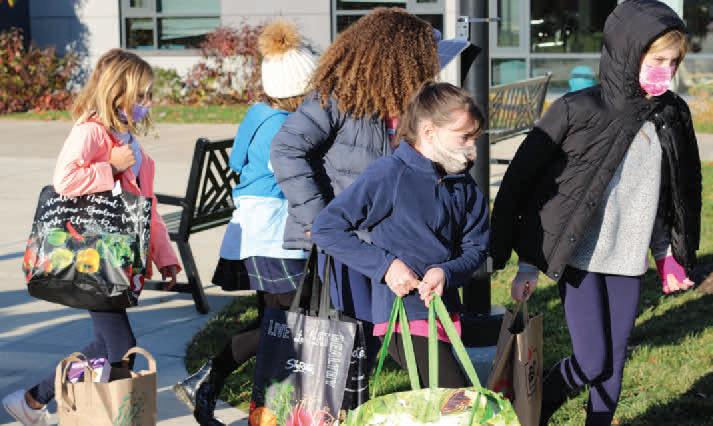
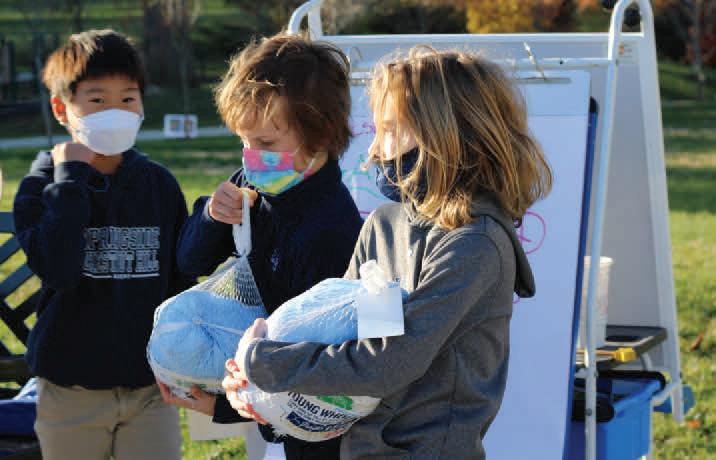
SCH’s Lower School faculty members continue to help students answer that urgent question posed by Dr. King. Both Lower School divisions have had decades-long partnerships with two local agencies, St. Vincent de Paul (Lower School for Girls) and Germantown Avenue Crisis Ministry (GACM) (Lower School for Boys). Throughout the year, students help raise awareness for their missions and collect and deliver donations.
This academic year, students achieved 100 percent participation and, together with their families, they collected more than 2,000 food items, 125 turkeys during Thanksgiving, more than 40 clothing bags for winter, and raised more than $16,000 during the 5K Race Against Hunger to “end hunger in the Greater Philadelphia area, one step at a time.” Funds from the race went to both St. Vincent’s and GACM.
school magazine fall 2022 5
This past spring, alumni engaged with students in the classroom and the extended SCH community.
sch connex: virtual conversations for the extended sch community
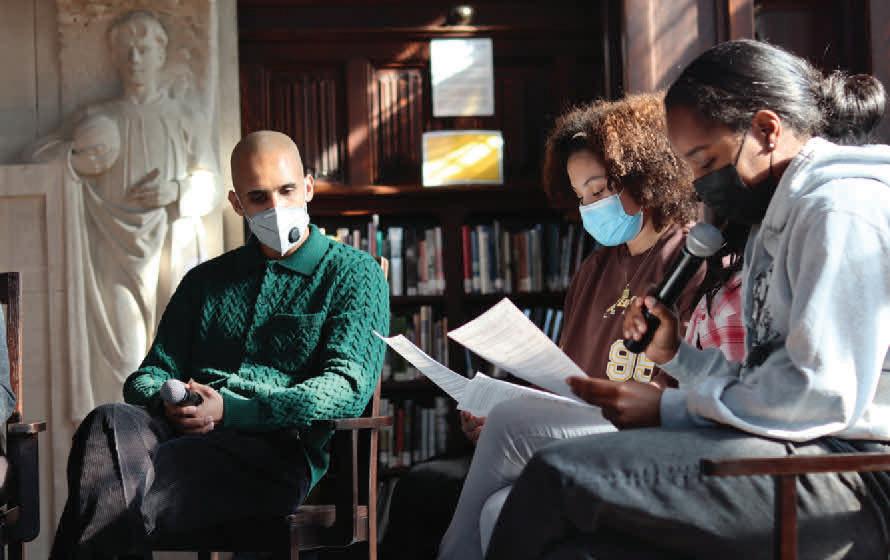
Storytelling Through Film
A discussion on the selection and editing process of documentary film and how those decisions affect whose history is told and how it is shared.
Moderator: Renee Chenault-Fattah, former anchor for NBC 10 News and former trustee and parent; panelists: Josh Pearson '82, film editor of the Academy and Grammy Award-winning documentary Summer of Soul, and Isadora Johnson '11, an alumna working in film acquisition for HBO and HBO Max.
Climate Change: Innovations on the Horizon
A positive, solutions-focused conversation on climate change that looked at what has been done, what’s happening now, and new frontiers being explored.
Moderator: Dr. Vanessa Chan; panelists: Jennifer Wilcox, Aaron Ratner, and Alyssa Edwards—all SCH parents
Crypto, Blockchain & NFTS: What Does it all Mean?
Three experts in diverse fields helped break down some of the terminology that is embedded in these new investment currencies.
Moderator: Ed Glassman '03, executive director of SCH CEL; panelists: Alexa Lombardo '08, Amit Gandhi P'33, P'28, and George Calle '14
Cooking with Chef Jansen
The culinary talents of David Jansen, master chef/owner of Jansen in Mt. Airy, PA, and parent of three SCH alumni, were on display as he led participants in a virtual cooking class for butternut squash soup.
spring alumni speakers
Writer-in-Residence on Campus
Cole Brown '14, this year’s Dempsey Writer-in-Residence, is a political commentator, writer, and author of the book, Greyboy: Finding Blackness in a White World, which received an NAACP Image Award nomination for Outstanding Literary Work—Debut Author. Brown recently visited his mentor Ms. Waleson's class, had a fireside chat with the student leaders of DEI, and hosted an Upper School writer’s workshop. He also had tea with the English Department and Deborah Dempsey, the Springside English teacher for whom the residency is named.
Social Impact with CEL
The Sands Center for Entrepreneurial Leadership (CEL) hosted Brian Hamilton '15, an ambassador to The One Movement, to discuss social impact businesses in May. The One Movement, a company that focuses on environmental and social impact, is removing plastic waste from ocean-bound waterways and turning that waste into homes for homeless waste-pickers.
Middle School Alumni Speaker Series
The Alumni Office and Middle School hosted its second annual Alumni Speaker Series. In January, we featured alumni in the STEM fields and in April we featured entrepreneurs. January speakers included Ty’Quish Keyes '10, an engineer at The Boeing Company; Stacy Perper Methvin '75, a former Shell Oil Company executive for more than 30 years; and Dr. Michael Lemole '87, a neurosurgeon.
April speakers Ed Glassman '03, SCH director of CEL and New Media; Hilary Sweeney Hayes '90, owner of Hudson Hils Café in Cold Spring, NY; and Nasir Yard '04, owner of Phresh Prints Ink.
Alumni Help Celebrate Girls & Women in Sports Day
On February 2, SCH celebrated National Girls & Women in Sports Day, which is also the 50th anniversary of Title IX, by saluting all our female athletes past and present.
Returning alumni included Emery Maine Greenwood '06 (lacrosse & squash), Taylor Washington '11 (track), Mikaela Watson '16 (lacrosse), Mo’ne Davis '19 (softball), Lilly Soroko '18 (squash), and Shannon McNally '20 (field hockey), as well as SCH current senior female captains.
SCH Black Alumni Hosts College Panel Discussion
Four SCH Black alumni came together for a virtual panel hosted by the Black Student Union (BSU) for the Upper School in April. Students heard from SCH graduates about how SCH prepared them for college, their varied journeys, whether attending a Historically Black College and University (HBCU) or navigating within a predominantly white institution (PWI). Panelists included Melanie Graves '17 (Wellesley College), Xavier Bell '16 (Penn State University), Sydney Crawford '17 (Hampton University), and Ty’Quish Keyes '11 (Morehouse College).
alumni speakers and conversations
Cole Brown (left), this year’s Dempsey Writer-in-Residence, returned to campus to speak with students.
| GENERALCAMPUSNEWS
Recordings of all 21-22 Connex events can be found at www.sch.org/connex school magazine fall 2022 6
ATHLETIC HIGHLIGHTS 2021-2022
61 athletes were designated as All-Inter-Ac and All-Independence (ice hockey) selections.
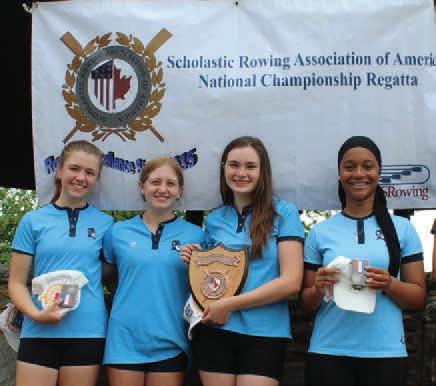
The girls freshman quad— Caitlin Keough, Emma Schwartz, Emma Ludwikowski, Nadia Stockman— were the SRAA National Champions.
FALL
26 senior student-athletes have committed to play their sport in college next year— 11 to DI, 6 to DII, and 9 to DIII.
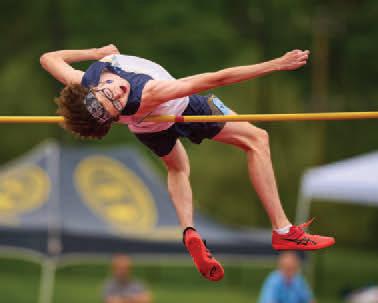
Henry Brandstadter ’22 was the PA Indoor Track and Field State Champion in high and long jump.
Girls soccer was both Inter-Ac and PAISAA champions with a final record of 18-0-1. Head coach Maria Kosmin was named the SEPA Coach of the Year, Lisa McIntyre '23 was named the Inter-Ac MVP, and McIntyre and Lauren Sullivan '22 were selected to the All-SEPA Team. Maya McDermott '22 was selected to participate in the ODP National Training Camp and boys soccer senior Sean Stackhouse was also named to the All-SEPA Team.
Field hockey won the inaugural PAISAA Commonwealth Cup tournament, and goalkeeper Colleen Conlan '25 has tallied 200+ career saves in just two years.
WINTER
Whitney Taylor '22 was named the girls squash Inter-Ac MVP for the 2021-22 season. The girls team finished 2-2 at Nationals in Division 1, and the boys team finished 2-2 in Division 3. Five athletes were named to the All-MASA 1st and 2nd teams.
Henry Brandstadter '22 earned Indoor Track and Field AllAmerican status in the high jump and was No. 1 in PA and All-State in both the high and long jump.
SPRING
Girls lacrosse made it to the PAISAA championship game for the first time. Senior goalkeeper Lucy Pearson was named a USA Lacrosse All-American, a USA All-Academic honoree, and was named a Under Armour All-American for the second year in a row, tallying 300+ career saves. Cece Reilly '22 and Emma Bradbury '23 both reached the 100+ career goal mark this season.
In boys lacrosse, sophomore Ross Prince achieved 100+ career faceoff wins, and coach Brian Dougherty was named to the PLL Hall of Fame.
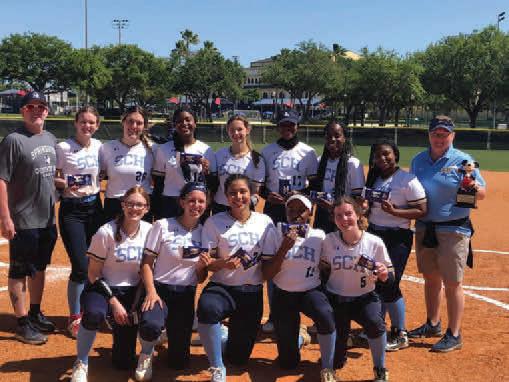
The softball team was both the Inter-Ac and PAISAA champions this year, and senior pitcher Sam Klug was named the InterAc MVP with 400+ career strikeouts. Coach Stef Mill earned her 200+ career win with her talented squad.
The crew team sent five boats to Nationals, earning a National Championship gold medal (girls freshman quad), a silver (boys lightweight quad) and a bronze (boys varsity quad), after all five boats reached finals among highlevel competition.
Darrion Rascoe '23 was the Outdoor Track and Field discus state champion at PAISAA and set a new SCH/PAISAA record with his throw. The girls 4x400m relay (Julia Thomson '23, Jasmine Matthews '23, Jolie Kaoma '25, and Simone Kelly '23) placed second in the Philadelphia High School Academic race at Penn Relays.
Darrion Rascoe ’23 was the Outdoor Track and Field PAISAA Champion in the discus and set a new SCH and PAISAA record.
Girls soccer and softball were both Inter-Ac and The Pennsylvania Independent Schools Athletic Association (PAISAA) Champions.
Softball: Inter-Ac softball champs Crew: Freshman girls quad, SRAA National Champions
Track: Henry Brandstadter, PA Indoor Track and Field State Champion
school magazine fall 2022 7
CAMPUSNEWS | ATHLETICS
A WARM WELCOME
NEW HEAD OF SCHOOL BEGINS TENURE
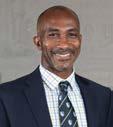
An educator and administrator for nearly 28 years, Dr. Delvin Dinkins began his tenure as head of school at Springside Chestnut Hill Academy on July 1, 2022. He and his wife, Davirah, moved into the Jennings House this summer.
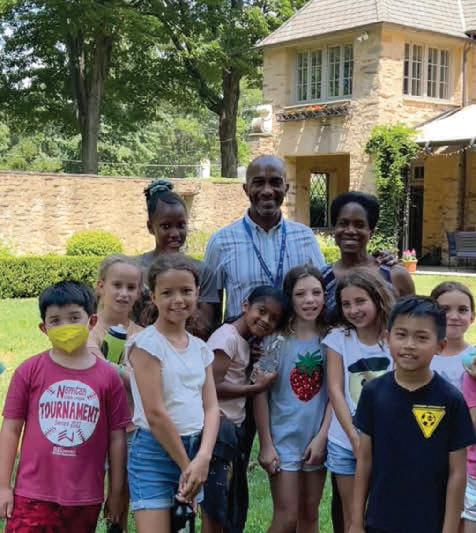

From his very first day on campus, Dinkins could be seen walking the grounds, talking to students, faculty, and staff.
“Walkabouts like these are now part of my daily diet, a healthy balance of connection, conversation, and contemplation,” he wrote in a recent letter to SCH families.
He has also visited with Summerside campers and Horizon students and spent time learning about SCH through the members of this community, discovering the dedication that faculty and staff have to this school and its students.
“This groove, this magic, is the heartbeat of our mission: to inspire unbounded curiosity and independent thought in
every one of our students, nurture students’ knowledge of themselves and the world, and expand their full academic and personal potential while preparing them to lead lives characterized by a quest to effect positive change,” he said. Dinkins comes to SCH from The Pingry School where he served as assistant head of school, managing the implementation of the school’s strategic plan, overseeing key academic and administrative priorities, and collaborating with faculty and administrators on a wide range of initiatives. In addition to his role as assistant head of school, he taught English and served as a grade-level advisor and student club sponsor.
“Dr. Dinkins’ thoughtful style of leadership is characterized by a collaborative and inclusive approach,” stated Board Chair Patrick Lindsay. “At his core, he believes in, in his own words, the ‘potential of people to do great things and the promise of school to change lives.’”
Dinkins has a doctorate from the University of Pennsylvania, a master’s from the University of Michigan, and a bachelor’s from Swarthmore College.
There will be many opportunities for the SCH community to meet and welcome Dinkins in the weeks and months to come.
Learn more about Dr. Dinkins at www.sch.org/head-of-school.
HE BELIEVES IN THE "POTENTIAL OF PEOPLE TO DO GREAT THINGS AND THE PROMISE OF SCHOOL TO CHANGE LIVES."
school magazine fall 2022 8
WELCOME TO OUR NEW TRUSTEES
It is our privilege to welcome the newest members of the Springside Chestnut Hill Academy Board of Trustees, who will serve for a three-year term.
 ANUJ GOSWAMI
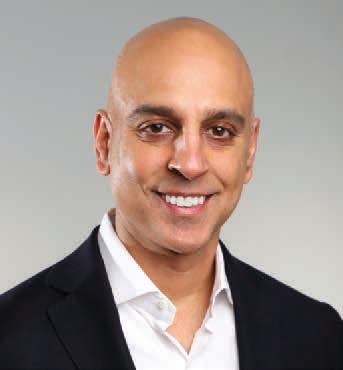
Parent General Counsel, Gennao Bio, Inc.
“My children have continued to thrive due to their academic, leadership, and athletic experiences at SCH, and have been further enriched by unique programs such as CEL and robotics. Having the opportunity to serve on the board affords me the chance to give back to SCH as we work to achieve our short and long-term goals and to ensure our continued success in providing an enriching educational experience for current and future SCH students that exceeds the very best private schools in the area.”
EDWARD J. MCDEVITT III '93
Alumnus, Parent Senior Vice President, Wealth Management, UBS
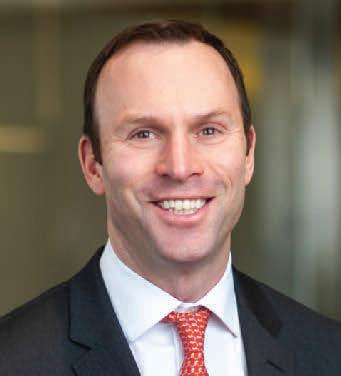
“As an alumnus and as a parent, I am passionate about SCH as a regional leader in excellence —a cutting-edge academic, athletic, and civic-minded institution. As a board member I want to apply my skill sets in finance and business development to collaborate with and support the administration to create conditions and resources to ensure that SCH can continue to thrive and offer quality experiences to students of all backgrounds and interests.”
Read more about
MARY SHAIFER '87
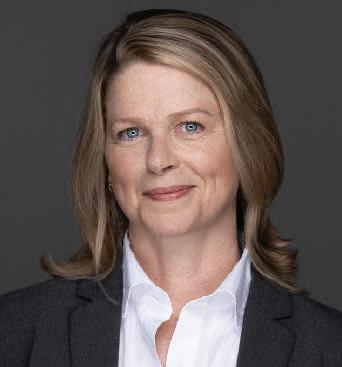
Alumna, Parent
Head of CLO Business Development, Senior Analyst, Columbia Threadneedle Investments
“In partnership with the head of school and Board of Trustees, I particularly look forward to advancing SCH’s mission to nurture students’ knowledge of themselves and the world. When I was a student at Springside, Elaine Weinstone taught art history as a lens through which students could better understand history, culture, politics, and religion. I have carried that lesson with me in the years since and have appreciated opportunities to gain new perspectives.”
THOMAS H. WATKINS JR. '78

Alumnus
Financial Advisor, Lincoln Investment
“Some of my fondest life experiences happened while attending SCH, and they have carried me throughout my life and helped me become the man I am today. I look forward to being visible at school events, sports, plays, and more, as well as interacting with the SCH community at large. I hope to show that the SCH board is not a nebulous entity but a clear and well-defined body that exists to serve the school.”
trustees at
school magazine fall 2022 9
our new
www.sch.org/news.
CAMPUS UPDATES
SCH is in the third and final phase of its implementation of the Campus Master Plan, which addresses much-needed renovations to The Rec Performing Arts Center and the expansion and upgrade of the Upper School Commons area.

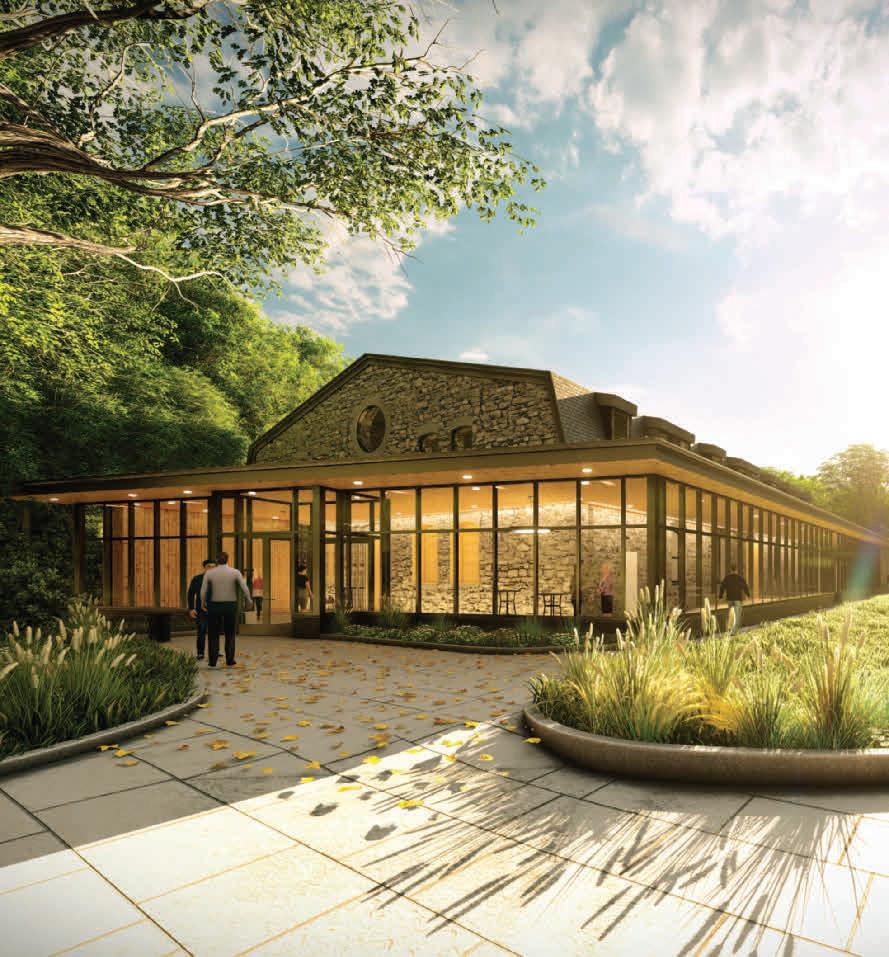
A decade ago, the SCH Board of Trustees embarked on an ambitious and comprehensive, multiphase, multiyear redesign of the school’s 62-acre campus, including new construction, facility renovation, redistribution of the academic divisions, and improved traffic flow and parking. Thanks to the vision and generous support of trustees, alumni, parents, and friends of SCH, these capital renovations and equipment projects have shaped the campus into what it is today.
ELIZABETH VAN VLECK, GRANDPARENT TO FIVE SCH STUDENTS, WILL MATCH ALL DONATIONS TO THE CAMPAIGN FOR THE COMMONS UP TO $100,000.
BRUCE WHELIHAN '60 HAS ISSUED A CHALLENGE: HE WILL MATCH EVERY GIFT TO THE RESTORE THE REC CAMPAIGN, UP TO $25,000 PER GIFT.
RESTORE THE REC
For nearly 50 years, The Rec has faithfully served its purpose as the performance home to the Players. But this 135-yearold facility is showing its age and requires substantial renovation and updating to ensure it can continue as a valued part of the school’s history.
With the funds raised so far, the roof and the windows of The Rec have been replaced. The final phase of the renovation plan includes:
• Expanded audience seating;
• A modular stage system allowing for multiple stages and seating options;
• Upgraded sound and lighting systems;
• Expanded dressing rooms;
• Increased storage space; and a
• Dramatic glass-walled, wraparound lobby.
Thanks to our lead donor, Bruce Whelihan, from the CHA Class of 1960, we have raised more than $4.7 million of the $6.85 million needed to continue the renovations. Please join the nearly 400 donors who have shown their support of this important project.
Co-chairs are Barry Shannon '70 and Caroline Estey King P'17, P'19.
school magazine fall 2022 10
CAMPAIGN FOR THE COMMONS

The Commons is the central hub on campus where our Upper School students dine, study, socialize, train, and compete. The building is home to our Upper School dining hall, Kingsley Gym, Woodward Gym, McCausland Squash Courts, training rooms, fitness center, locker rooms, and favorite hangout areas for students. This much-used space requires renovations and upgraded facilities to accommodate our growing student body.
The $6 million Campaign for the Commons includes expanding the dining and social areas, creating a state-ofthe-art fitness and wellness center, upgrading the training and locker rooms, and redesigning the outdoor social areas. These improvements will aid in the health and wellness of our students and our ability to compete athletically.
Co-chairs are Jess Hayne P'26, P'28, P'29, P'31, P'33 and Ed McDevitt '93, P'24, P'26.
SUPPORT THE REC OR COMMONS CAMPAIGN TODAY!
We are very grateful for the generosity of Dick Hayne, an extremely loyal donor and supporter of SCH, for his contribution of $3 million to the two campaigns.”
– Tom Kessler '88 and Emery Maine Greenwood '06, P'35, P'38, Campus Master Plan Phase III Chairs
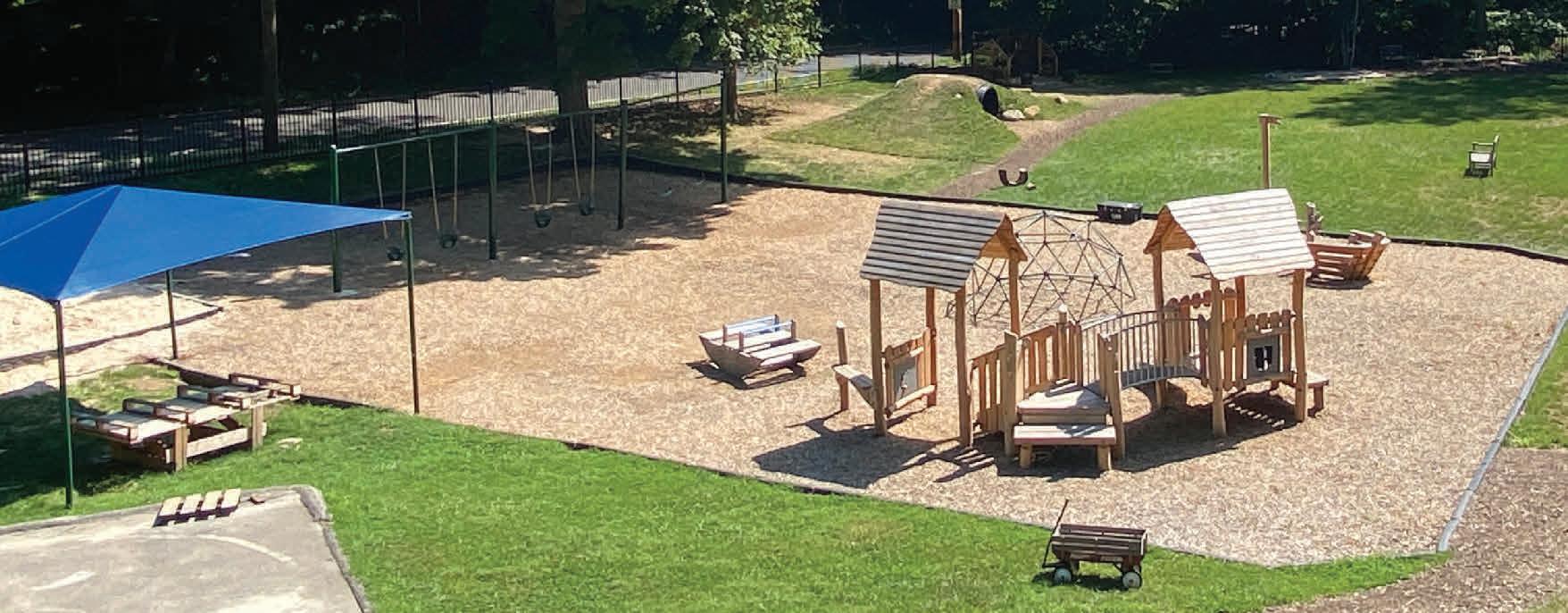
NEW PLAYGROUND DEDICATED
“Miss Janet’s Playground” introduces a new world of outdoor fun for Early Childhood Center (ECC) students.
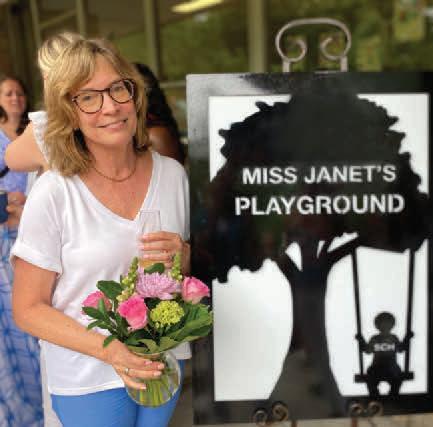
In May, ECC families gathered to dedicate a transformed playground to its beloved director, Janet Giovinazzo H'01, P'12, P'15. The play space that many boys remember from their elementary school days at CHA has been replaced thanks to the McCausland family, McCausland Foundation, and other donors. The playground, which was designed with our youngest students and the Reggio Emilia approach in
mind, now includes a slide, two large play structures and a series of features built with elements from nature—a natural sandbox, a “rock river” with a bridge, a series of stepping logs, and a hill and tunnel.
In addition, Thomas R. Nickel, an ECC dad and architect, designed and helped to build a small playhouse from the packing crates of the playground equipment.
SCH donated the Jordan building playground equipment to the Community Partnership School in North Central Philadelphia.
"We are excited about the momentum behind the Restore The Rec campaign and the Campaign for the Commons.
school magazine fall 2022 11
Navigating the Waters of Life, The Pandemic, and Senior Year
Nia Hodges’ essay was selected to be featured in Wissahickon, a magazine published by the Chestnut Hill Local, this spring. Hodges, Class of 2022, was one of the editors of the student literary journal, The Pub, and now attends Brown University. Her essay is reprinted here with permission from the Local.

school magazine fall 2022 12
Our lives are filled with countless paradoxes. Contradictions.
We watch the sun rise at dawn, only to watch it fall at dusk. I always prefer a beautiful sunset over the nearest ocean to a sunrise. In the ocean, some swim against the current— muscling their way through endless blue just to find the serendipity of that one perfect wave—only to become one with the current as it floats them back to shore.
My favorite paradox involves a ship and a man named Theseus.
A hero and a king of Athens, Theseus partook in a great battle and against all odds, emerged triumphant. To honor his legacy, the people of Athens decided to preserve his ship in their harbor as an artifact of his greatness.
However, as time progressed, the ship began to decay.
The wood planks began to chip and fray. The oars split and the floors creaked. The wooden beams began to rot, and soon the people of Athens had to replace all of the old parts with stronger and stronger pieces of timber. A century later, the children of those townspeople beheld a ship essentially “reconstructed” from itself. The ship in their harbor remained the ship of Theseus, and yet not the ship of Theseus. In a Buddhist iteration of this same story (Dà zhìdù lùn), a man has the parts of his body replaced with those of another and, in the end, cannot determine where he ends and the other begins.
Here lies our paradox: Can something reconstructed remain the original?
I don’t quite remember when the pandemic started and in the context of the past two years, this admission feels like a form of sacrilege. The word “COVID-19” has so effectively wedged itself into the proverbial English dictionary (and Merriam-Webster) that my forgetfulness feels a bit out of place. The internet claims that the pandemic started in March of 2020, but I remain slightly skeptical. March feels like yesterday, and yesterday I was watching the sunset from the balcony in my apartment. I almost felt peaceful— one with the current. Perhaps I am unable to identify the beginning of the pandemic because I am unable to identify myself during that time. Of course, I remember the silhouette of me—short and mid-stride running to class—with a decent amount of clarity. But like the ship of Theseus, there were pieces of me suddenly replaced with
spare parts. Last year (my junior year), I couldn’t tell where my body ended and the pandemic began. My mouth was lost to the N-95, and my hands permanently retracted to my sides for fear of spreading contact—my bony elbows would have to do. My eyes met glasses for the first time after weeks of staring at bright screens. My already soft voice dimmed until I had to almost shout to be heard, which made me completely unrecognizable to myself. I was me, yet reconstructed. This was pandemic Nia, and she seemed like a frightening imposter straight out of Invasion of the Body Snatchers.
I speak for the Class of 2022 when I say that junior year was its own paradox. With the loss of so many aspects of our academic and personal lives—our moments of serendipity—we struggled to reconcile an increasingly frightening present and an increasingly welcomed future: college. As the rest of the world turned inward toward the safety of their homes, we turned outward toward the colleges and universities that would become central to our futures. As the country grew divisive over mask policies and mandates, we drew closer to each other: Intuition told us that this year, however challenging, would be the defining moment of our time in high school. Strangely, I never felt so supported by my peers as when I was nothing more than a face on a screen participating in online learning while everyone else was in-person. The time spent apart from each other made every moment together that much more meaningful. Our realities had been torn apart, but we remained the original group of people who all respected one another.
As I set sail toward this next chapter of my life, I move through the waters with an undetachable anchor to the past. I will always be defined by the people who raised me, the experiences that have shaped me, and the moments, which I will cherish forever.
As a graduate moving into college, I am still made up of spare parts. My favorite black jeans are chipped and frayed. There are days where I do not know where I end and this reconstruction of me begins. I am my history, my family, and this pandemic. I am someone who does not believe in “solving” paradoxes. The most beautiful parts of life are not meant to last for more than a second. A single day. I wouldn’t want to miss it.
school magazine fall 2022 13
CREATING
A Culture of Wellness at SCH
BY DEIDRA LYNGARD H'18
Over the past few decades, anxiety levels have steadily increased in the general population, with anxiety now being the most common mental health concern affecting about 19.1 percent of the adult population.1
For educators, the last two years of COVID added additional and unprecedented stressors, including having to navigate an unfamiliar world of virtual and hybrid teaching; keeping students engaged and feeling connected while isolated in their homes; and juggling the needs of their own homebound families.
According to a 2021 RAND study of public school teachers funded by the National Education Association and American Federation of Teachers, stress rates during the pandemic were found to be higher among teachers than most other working adults. “My brain feels like a browser with 100 tabs open,” is how one teacher described her mental state.2
And students? A longitudinal study on anxiety by psychologist Jean M. Twenge from Case Western Reserve University found that “anxiety has increased substantially
1 Source: the Anxiety and Depression Association of America.
2 Source: From a survey published in the British Journal of Educational Psychology
among children and college-age students over the last three decades.” The study cites a number of factors for this rise, including decreases in social connectedness and perceived threats from environmental dangers such as climate change, the global pandemic, and crime.
All this paints a worrying picture, with long-term implications for the well-being of our society. How does one school even begin to tackle such a huge challenge? But the need to do so is clear as stress and anxiety have a profound impact on productivity, performance, and potential. Clearly, schools have a role to play in helping their communities maintain all dimensions of their health.
A Commitment to Wellness
With the arrival of Steve Druggan as head of school in 2016 and his initiative to clarify the mission and values of the school, the goal of supporting students’ self-knowledge and potential was given new focus and momentum.
school magazine fall 2022 14
 From left: Jazze Wingard '22 and Leslee Frye, Upper School psychologist, strike their favorite yoga pose during Mental Health Awareness Month.
15 school magazine fall 2022
SCH asked itself what it could do to ensure a positive environment for personal growth and learning and reduce the stress that interferes with these goals. The answer: Create a “Culture of Wellness” to help faculty and students reduce stress, feel connected, and keep a positive perspective. This wellness culture would be grounded in the school’s mission, values, and strong sense of community; informed by its past initiatives around resilience and grit; and infused with the tenets of positive psychology (PP), developed in the late 1990s by nationally respected psychologist Martin Seligman at the University of Pennsylvania. PP espouses an assetbased approach to mental health that focuses on people’s strengths and quest for meaning rather than simply the alleviation of suffering.
Experts on children’s emotional and mental health were regular guest speakers at the school, including New York Times columnist Dr. Lisa Damour, author of Untangled and Under Pressure: Confronting the Epidemic of Stress and Anxiety in Girls, and Dr. Michael Thompson, author of The Pressured Child and Raising Cain, among others. These initiatives and events helped create the fertile soil in which a more comprehensive wellness initiative would be planted.
The Work Begins
In 2019, Druggan, then-head of school, convened a faculty team to explore ways to integrate social and emotional learning into the curriculum. Yoga and meditation/ mindfulness classes that were offered to faculty began to make appearances in classrooms. The Physical Education Department, under the leadership of B.A. Fish, a long-time advocate of mental and physical health, began sending out regular emails to faculty with wellness tips and encouragement for staying healthy and balanced.
“We wanted to do this in a way that was not just, ‘Oh, here’s a happy hour or some other one-off activity,“ explains alumnus Frank Jackson '14, former Upper School Spanish teacher and a graduate of the University of Pennsylvania’s master’s program in positive psychology. “We wanted to be really intentional, integrating it into all aspects of curriculum, DEI, professional development, activities, coaching, sports, etc., so that it becomes part of the culture of the school. Positive psychology is intended to be an organizing framework for what we’ve already been doing around our mission, values, resilience, and DEI work,” adds Jackson. “Not the start of something new, but a container—a common language—for what already exists.”

Building on Precedent
The ground for such an ambitious initiative had already been prepared. In 2013, under then-Director of Educational and Counseling Services Dr. Marisa Crandall, the school launched a resiliency curriculum for students based on aspects of positive psychology. Also at that time, a team of SCH faculty participated in a research group to study resilience and grit under the direction of Angela Duckworth, MacArthur Fellow and founder and CEO of the University of Pennsylvania’s Character Lab, which “advances scientific insights that help children thrive.”
A new program in Middle School, AEIOU (awareness, empathy, inclusion, opportunity through differences, and understanding), was initiated to validate every student’s experience and identity and promote mental health. “By teaching children that feeling sad, angry, scared, or anxious isn’t inherently bad, it helps them use these emotions as information,” explains Middle School psychologist Sandra Tecosky. “What do these emotions tell me I need? How can I take care of myself? These skills are especially important during an age of transition, when bodies are changing, brains are developing, and new experiences are around every corner. By teaching and reinforcing these skills early, our students develop resilience and confidence in their abilities to cope with the hard stuff.”
Meanwhile, the school counselors, led by Upper School psychologist Leslee Frye, were in discussions with staff and faculty about ways to incorporate more positive mental health strategies into the school’s curriculum and activities.
Pandemic Persuasion
With these first steps building momentum, a catalyst for more immediate action came in the form of a virus that was
“We wanted to be really intentional, integrating it into all aspects of curriculum, DEI, professional development, activities, coaching, sports, etc., so that it becomes part of the culture of the school.”
Students enjoy a day of pet therapy.
school magazine fall 2022 16
The FIVE Pillars of Well-Being
Positive emotion Engagement Relationships Meaning Accomplishment
creating havoc across the world and an urgent need to address stress levels within the community.
As a first and important step, Dr. Druggan commissioned a Wellness Task Force, one of a group of task forces created to manage aspects of the school’s operations during the community’s physical absence from campus. Led by Frye, Tecosky, Middle School English teacher Jessica Tiffany, Fish, and director of Diversity, Equity, and Inclusion Rayna Guy, the Wellness Task Force was to focus on faculty—helping them feel supported and ensuring they were getting the resources they needed. “We didn’t want them pouring from an empty cup,” explains Frye.
As soon as the school closed due to COVID, Frye and Upper School world languages teacher Alexa Frankel took their yoga and meditation classes online. Sarah McDowell, chair of the History Department, was a regular yoga class participant. “For me, it was a lifeline,” she recalls. “Staying healthy and upbeat was harder for me in the pandemic, and starting my day with yoga really helped put me in the right mindset to keep my habits healthy and productive. More importantly, the yoga group gave me a sense of community and camaraderie during a time when I couldn’t see people in person.”
Taking advantage of the deluge of mental health information arising in response to the pandemic, the task force’s first initiative was to create an online wellness resource on the school’s website where faculty, parents,
and students could get helpful information and tools for supporting their mental health. Over the summer, Frye and the wellness team assembled an extensive inventory of articles, lessons, quick tips, fact sheets, infographics, and podcasts encompassing a variety of wellness strategies, from self-care practices to yoga and mindfulness activities, and from helping teens build social-emotional skills to coping with change, loss, and grief.
Small Nuggets
With the return to school in the fall of 2020, teachers and students sought to regain some form of normalcy, despite having to wear masks, conduct classes in tents, and keep six feet apart. Rather than try to undertake a major wellness initiative while still in the throes of the pandemic, the task force decided to dole out its efforts “in small nuggets that were easy for faculty to access—frequent little reminders that ‘We see you, you’re appreciated, and we’re all resilient and can get through this,’” says Frye.

Some of these nuggets included monthly emails with wellness tips and links and a travel mug imprinted with the words “Teachers can do virtually anything” that was filled with assorted teas, a calm strip, menthol cough drops, and a poem written by Tiffany.
Across the school, and in every division, faculty and students were looking for ways to stay mentally positive in
The building blocks that enable human flourishing, according to Seligman, are PERMA or:
University of Pennsylvania’s Dr. Martin Seligman defined the five pillars of well-being in his book Flourish.
school magazine fall 2022 17
the face of an uncertain future and the daily disruptions of student absences due to illness and having to quarantine. “Students are really resilient and we know that,” says Frye, “but at the time, they were coming in and out of school, and grades were going up and down. So there were more divisional meetings set aside to focus on mental health as well as faculty Google meets focused on self-care and selfreflection. That’s when Tecosky and I created a Wellness Check-In form for Upper and Middle School advisories. Students were asked to fill them out monthly as a way to keep tabs on their mental/emotional status. We also introduced more topics in the advisory curriculum based around wellness.”
That winter, Frye and Jackson formed a team with Ed Glassman '03, executive director of the Sands Center for Entrepreneurial Leadership (CEL), and alumna Victoria Roebuck '08, another graduate of Penn’s positive psychology program, to explore the best avenues for integrating positive psychology into the school program.
Conversations bounced between starting with faculty development or starting with curriculum. A podcast in February helped settle the debate. That month, an Upper School CEL student was interviewed on a national podcast for mental health where she spoke about the stresses on teens and the resources available at her school. While acknowledging the support and accessibility of SCH’s faculty and counselors, she observed that there was no mental health programming for students.
A colleague shared this podcast with Frye, and it was then that the idea for an Upper School class centered around the principles of positive psychology took root. With the blessing of Upper School Head Matt Norcini and Glassman, Frye began work under the guidance of Jackson and his PP expertise to develop a curriculum for a CEL class to be titled The Psychology of Happiness, which would be offered in the spring of 2022. “Our thinking was, we may not get as far as we hoped in culture building and professional development,” recalls Jackson, “but we can at least start this class and see how students receive it, which could inform bigger decisions down the line.”
Keeping Things Positive
Work on the class continued into the fall while on the faculty development front, a series of staff/facultyled workshops focused on DEI and mental health was organized. Workshop offerings included “Meet Yourself Where You Are: the Role of Racial Identity Development in Self-Care,” “Gratitude through Journaling, Meditation, and Movement,” and “Protect Your Peace—FlouriSCHing.”
“Our plan was to get staff equipped with the language of positive psychology and the tools of wellness which they could use for themselves and then gradually integrate into their classrooms,” explains Jackson.

To engage parents in the wellness conversation, Frye, Guy, and Andrea Eckert, director of Parent and Community Engagement, organized a community book club that winter to read Think Like a Monk: Train Your Mind for Peace and Purpose Every Day. Written by former monk and now social media star Jay Shetty, the book offers advice and wisdom on living a less anxious, more meaningful life.
Wellness work expanded to the athletic front as well, with Athletic Director Dave Wilson bringing the Positive Coaching Alliance program to the school, whose mission is to create a positive, character-building youth sports environment that results in “better athletes, better people.”
During mental health awareness month in May, the school hosted a panel of sports psychologists who spoke with students about managing their “mind chatter,” balancing sports and academics, and paying as much attention to their emotional and mental health as their physical health.
At the start of the spring semester, a small but motivated group of students gathered for the first class in The Psychology of Happiness. Focused on personal growth and introspection, with readings, yoga, meditation, discussion, and journaling, the class culminated in a series of studentmade podcasts reflecting on what they’d learned and the lessons they took from personal interviews with a faculty member they respected.
The class was a hit, word spread, and the original eightstudent enrollment grew to 35 registrations for the following
Students keep things positive with affirmations for one another.
school magazine fall 2022 18
year. Frye had to cap the class size at 21. “I loved this class,” remarked one student. “It challenged me to think about things I had never really thought about.” Another student said the class made her more mindful, and another learned that wellness is a personal choice—that “there are active steps you can take to activate your well-being on a daily basis.”
Achievements and Aspirations
While all those engaged in building a culture of wellness at SCH would agree their work is not finished, there has been much progress. Tiffany feels the school’s wellness efforts have made a real difference. “They’ve awakened the entire SCH community to the importance of caring for oneself so you can mindfully care for others. Articles, strategies, and workshops provided by our own community members have addressed the burgeoning need for teachers and students to feel seen, heard, affirmed, and supported with healthy stress-relieving, anxiety-reducing measures. In my own classes, I did more sharing of the practices I was already doing/working on. These included daily mindfulness exercises, planned movement breaks, daily journaling with reflection, learning/practicing 'letting go,' and strategies for regulating anxious or frustrating moments. Now more than ever, teachers and students are taking the time to breathe, reflect, and move their bodies as a means to increase focus, rebuild academic stamina, and reinforce healthy responses to stress.”

Asked about the next steps in building the school’s wellness culture, Frye responded with an ambitious list: “My dream is to have a health and wellness committee at a bigger level and bring together people who are doing it well, who have done the training or just created different activities, and for them to be able to share this knowledge out. I wish we could do a series of mental health Personal Learning Communities for faculty as we did so successfully around DEI. I wish we could combine wellness and DEI to really address some of the issues we’re seeing. I would love for there to be an actual wellness curriculum with more offerings, and for some of the tactics in the Psychology of Happiness class to be incorporated into other classes. And because this is a CEL class, I want to think about ways to combine wellness and business with a focus on how to bring one’s leadership skills and strengths into one’s venture, whatever kind of venture that may be.”
It’s an ambitious list indeed, but achievable. As positive psychologist Charles R. Snyder once said, “Hope has proven a powerful predictor of outcome in every study we’ve done so far.”
The Damour Download
Clinical psychologist and author Lisa Damour uses the latest research to offer practical advice to parents. A regular speaker at SCH, her most recent talk as part of our virtual parent program focused on how parents can help their children manage intense emotions. “We’re here to teach our kids how to handle emotions, and we’re going to do that both on how we model, or how we handle ours, but also how we respond to theirs,” she said.
A few pieces of advice from Dr. Damour:
Let them express
Respond with curiosity and empathy when children express their emotions, she says.
“Distress is normal and expectable”
Teach them that distress is normal and even informative. “Our job in this is to not have our kids be scared of getting upset and to not be scared when they get upset,” she says.
Distraction is sometimes OK
If talking it out isn’t helping, tell them, “Leave it with me tonight, we’ll come back to it.” It can help them gain perspective or just give them a break from the issue.
“Sleep is magical”
“If your kid is really reactive," she says, "really short-tempered, falling apart…the number one question I’d be asking is ‘How are they doing on sleep?’”
Focus on pockets of control
Tell them: “Don’t dump energy on the things you can’t control.” Encourage your child to put the full force of their energy behind the things they can control.
Bella Gentile, Kaliyani Wardlaw, and Mary Trudeau complete mindful glitter jars in their Psychology of Happiness class.
school magazine fall 2022
19
DISTINGUISHED ALUMNA AWARD
The Springside Distinguished Alumna Award recognizes an alumna who has made a significant contribution in her field and whose accomplishments have had an impact on the larger community.
Wanda Stewart '77
Stewart is a social innovator, community builder, and garden activist from Oakland, CA, where she runs garden-based education programs for schools. She is also executive director of the nonprofit Common Vision, which is dedicated to redistributing healthy food to feed people and build community resilience. Common Vision takes a unique approach to school gardens, using fruit trees and other perennials to create extremely highyielding, low-maintenance, and low-cost school gardens. Common Vision’s School Orchard Project provides fresh fruit to more than 100,000 lowincome children.
fresh food. She and others were inspired to grow food because students were hungry. Their goal was to show students that they could grow their own food and create a place where they could be face-to-face with nature and understand their role in saving the planet. By teaching these students to care for the garden, they would learn how to care for themselves, their community, and their world.
Wanda Stewart, an urban farmer and environmental education activist, embodies the SCH mission every day of her life. She is an alumna who has dedicated herself to bettering her community and her world.

Stewart has been called a “tireless champion and architect behind the garden project at Hoover Hawks Victory Garden.” That garden is an intergenerational hub of healing, learning, and wonder for her entire community. She has said that, previously, the Hoover Hawks Victory Garden, West Oakland, was known as a “food desert.” There were no grocery stores and corner stores didn’t sell
On volunteer days, people come from all over the neighborhood to work in the Hoover Hawks Garden. The garden plays a central role in seeding and growing all kinds of things, from plants to kids to families, flowing from seed to food to consumption and back again.
Stewart has been known to say, “If you can grow a seed, you can grow yourself. My hope is to teach them to grow a seed and grow plants so they can grow themselves.”
Classmates Ellen Nalle Hass and Carol Shelly shared this excerpt from the submission statement presented to the Awards Committee by Stewart’s classmates.
2022 Alumni Award Winners
Each year at Alumni Weekend, the school acknowledges significant alumni contributions and distinctions with
school magazine fall 2022 20
ALUMNUS OF THE YEAR
The CHA Alumnus of the Year recognizes an alumnus for outstanding service to the Alumni Association or to Springside Chestnut Hill Academy.
At CHA, Bruce Whelihan was actively involved in Players and served as its president in 1960. After graduating, he attended Washington and Lee where he majored in journalism and continued his involvement in the theater. In 2019, he was recognized by his college alma mater as a Distinguished Five-Star Alumni Award winner.
Following college, Whelihan pursued an M.B.A. from the Wharton School and entered the world of finance, serving as a commercial banker in New York for Irving Trust Company. In 1968 his career path took a turn when he left Irving to work on Richard Nixon’s presidential campaign. He followed Nixon to Washington in 1969 and worked in the White House as a staff assistant in the White House Press Office until Nixon’s resignation in 1974. Whelihan returned to finance, working for Alex Brown & Sons, the thenoldest investment banking firm in the country, where he became a partner and shareholder of Brown Advisory. Today, he is managing director with
William Blair’s Private Wealth Management group.
This fall, Whelihan issued a generous challenge grant to all alumni and friends in support of the “Restore The Rec” campaign, in addition to making a transformative leadership gift to the project. To build momentum for the campaign, he met with current and past Players, encouraging them to “get the job done.” He pledged in a letter to all Players alumni that he is “personally committed to getting the Players back in The Rec as soon as possible.”
Honorary alumnus and former faculty member Jim Talbot H'81 says that “Bruce discovered his love for the performing arts as a student at CHA that continues to this day. His wonderful support of the ‘Restore The Rec’ campaign, with both a lead gift and a matching gift challenge, has bolstered our plan to update the home of our drama program. Renovations are already underway, and Whelihan has urged SCH to get our students back into The Rec ‘as soon as we can!’”
 J. Bruce Whelihan '60
special awards. The many accomplishments of the 2022 award winners are highlighted on these pages.
J. Bruce Whelihan '60
special awards. The many accomplishments of the 2022 award winners are highlighted on these pages.
school magazine fall 2022 21 2022 Alumni Award Winners
THE ROLL OF FAME AWARD
The CHA Roll of Fame Award recognizes an alumnus who has made significant, far-reaching contributions to society. He is considered an expert in his field, and his work has had an impact that reaches beyond the bounds of a single community.
Eamon Javers ‘90
Eamon Javers joined CNBC in June 2010 as a Washington reporter based at the bureau in the nation’s capital. He is currently a senior Washington correspondent.

Previously, he was a White House reporter for Politico, where he covered the intersection of Wall Street and Washington. He has conducted investigations of the administration’s financial bailouts and economic stimulus efforts, broke news about the presidency of Barack Obama, and authored trend stories on Washington.
Prior to joining Politico, Javers was a Washington correspondent for BusinessWeek magazine, where he wrote extensively about Washington lobbying, including the Jack Abramoff scandal, and unearthed previously unknown incidents of corporate espionage. Javers’ articles have appeared in Fortune, Money, Congressional Quarterly and Slate.com. He began his career at The Hill, a weekly newspaper (and website) covering Congress.
Javers is the author of Broker, Trader, Lawyer, Spy: The Secret World of Corporate Espionage, which
uncovered a CIA policy allowing active-duty officers to moonlight in the private sector.
“As a Middle School history student, Javers quickly learned how to prepare for class and tests,” remembers CHA master teacher Paul Hines H'03. “Making detailed outlines, asking questions, and organizing his study time enabled Eamon to become an excellent student. His work ethic also helped him become an outstanding 300-meter hurdler. His resolve and hard work in track has carried over to his occupation as a journalist.”
Fellow journalist and CHA alumnus Clark Groome, Class of 1960, says that Eamon is deserving of every honor. “Watching Eamon on any number of Washington Week in Reviews and elsewhere,” says Groome, “it is clear that he is a thorough, accurate, and well-spoken journalist deserving of every professional accolade and this honor from the CHA Alumni Association.”
Javers honored the five stripes—courage, honesty, integrity, loyalty, and sportsmanship while a student at CHA and, later, as a professional.
school magazine fall 2022 22 2022 Alumni Award Winners
DISTINGUISHED SERVICE AWARD
The Springside Distinguished Service Award recognizes an alumna who, over the course of several years, has made unique contributions and shown an outstanding and extraordinary devotion to the school.
Sally Ellis Quale '57
As a school, SCH has benefited from the numerous events that Sally Ellis Quale has attended as well as the many projects she has stewarded and supported. Visible evidence of her commitment to the school include the Ellis Trophy Room in the Vare Field House, dedicated in honor of her parents, and investments made in perpetuity such as the endowed Class of 1957 Artist in Residence, which has funded many impactful programs, such as ReMIX Interactive, which partnered students from SCH and Boys’ Latin of Philadelphia at Drexel’s ExCITe Center.
Additionally, we have benefited from her wise counsel as a reunion chair, class agent, Annual Fund Leadership Committee member, member of the Springside National Alumnae Council, and a member of the Springside Board of Trustees.
Most recently, through her passion to save the American chestnut tree, Quale enabled the school to play a role in returning this species to the Wissahickon Valley Watershed by connecting the school with the American Chestnut Foundation. This partnership

led to SCH planting a grove of chestnut trees on its campus in 2019.
Quale's Springside classmate Frankie Jueds remembers Quale including her when she arrived at Springside in 9th grade. “From the beginning, says Frankie, “I admired Sally as one of the leaders who made our class the close, inclusive group it was. I got to know her better when we both worked on the Tatler. Sally could do everything—and so well! She reeled off entertaining, interesting articles, illustrated them with charming drawings, and always managed to get the terrible printer to print, which meant she was covered with ink a lot of the time too. She was a top student and athlete and leader at Springside, and has been a wonderful friend for all these years after.”
More broadly, she has served as a committed volunteer, helping to raise funds for the Springside and SCH capital campaigns, in this way continuing the legacy of her father, Addison Steeling Ellis, a Springside board chair who championed the new Springside School campus at 8000 Cherokee Street.
school magazine fall 2022 23 2022 Alumni Award Winners
OUTSTANDING YOUNG ALUMNA AWARD
The Springside Outstanding Young Alumna Award recognizes the achievements of an alumna who has graduated within the past 20 years and has demonstrated excellence in a career or service to the community.
Rebecca Chin '02
Rebecca Chin has over a decade of experience in internal communications and has worked from startups such as Figma and Jet.com to Meta and Walmart. She graduated from the University of Pennsylvania and earned degrees in English and communications.

Chin kickstarted a ladies’ basketball team with the Philadelphia Suns, a longstanding Asian American Pacific Islander community organization. Through a powerful combination of sports and community building, the Suns have been able to foster a home for Asian American youth to grow into passionate individuals and future leaders. She served on its board and as a captain of the Lady Suns from 2002 to 2013.
“Using the natural attraction of sports and friendship, the Suns provide under-served youth the opportunities to gain the confidence that can only be obtained from challenging themselves both physically and mentally,” she says.
During the Obama administration, she produced and directed a short documentary based on her experience with the
Suns and was honored as a White House Champion of Change.
Chin also dedicates her time to championing creatives of color through ADCOLOR as a long-time judge and founder of Asians for ADCOLOR. She was awarded the Unsung Hero Award in 2019 for her behind-the-scenes contributions. Now in Los Angeles, she serves on the board of the Alliance College-Ready Public Schools to provide more opportunities for scholars in the city’s most systemically oppressed communities.
2022 Alumni Award Winners
24 school magazine fall 2022
YOUNG ALUMNUS AWARD
The CHA Young Alumnus Award recognizes the achievements of an alumnus who has graduated within the past 20 years. It honors excellence in a career or service to the community.
Greg Lobanov '10
Indie game developer Greg Lobanov has been making video games since high school. While a student at Drexel’s Westphal College of Media Arts & Design, he became the first student in the college’s history to hire himself for a required sixmonth internship. During this internship, through his own company, Dumb and Fat Games, he created Perfection, a puzzle-solving meditative game that went on to become the 2014 Philly Geek Awards Game of the Year.
After graduating from Drexel, Lobanov took a bike trip across the country. This experience was life changing and became the inspiration for his new game, Wandersong. Following a successful Kickstarter campaign, he produced the game in collaboration with composer Gordon McGladdery, whose company, A Shell in the Pit, creates sounds for games. While in production, Wondersong has been featured at several top gaming shows and conferences, including Pax10, The MIX, and Penny Arcade Expo. In November 2017, Wandersong was
signed by Nintendo, and in September 2018 it was released on Nintendo Switch as well as STEAM, PC, and Mac—a major achievement and a professional milestone for any independent game maker. In 2021, he released a game called Chicory: A Colorful Tale which won numerous awards, including a BAFTA.

Lobanov, who is now based in Vancouver, recently worked with an 11th grader on the online game the student was developing for his Capstone project. “Greg was wonderfully informative and gave great advice, which propelled Sam into applying for summer study at NYU,” says Ellen Fishman, then-SCH Arts and New Media director. “Greg’s the real deal, and he has been making games since he was a high school student!”
Although his time at CHA preceded the creation of the Center for Entrepreneurial Leadership, Lobanov embodies the initiative, innovation, and creativity that are so emblematic of the true entrepreneur.
2022 Alumni Award
25 school magazine fall 2022
Winners
YOUNG PLAYERS ALUMNI AWARD
The Young Players Alumni Award is awarded to a Players alumnus who has graduated in the past 10 years and is actively involved and contributing to the arts world in unique and innovative ways that are positively impacting their greater community in any area of theater, theater education, new media, or film.
Aleah Welsh '12
Aleah Welsh is a writer’s assistant and office production assistant on the show The Goldbergs on ABC for which she has been writing scripts. Her episode, “The Strangest Affair of All Time,” aired in March 2022. She has also worked as a production assistant for Schooled on ABC.

She joined an improv group in Center City when she was just 15, was a member of Players throughout her high school career, and started writing sketch comedy when she was a first-year student at the University of Pennsylvania. She joined Bloomers, a comedy group, and committed herself to pursuing a career in TV comedy.
After graduating from college, she began her career on the East Coast before moving to Los Angeles and transitioning into the narrative space. She’s studied improv with The Upright Citizens Brigade in New York and Los Angeles.
Welsh worked in many different capacities for Nancy Glass, a six-time Emmy Award-winning TV writer, host, and producer in Bala Cynwyd. She was a production assistant, associate producer, and assistant director for the Glass Entertainment Group. When a friend told her that The Goldbergs was hiring new staffers, Welsh joined as a production assistant. Then, in seasons seven and eight, she worked for Alex Barnow, who took over for Adam Goldberg in 2019 as the program’s showrunner.
“You could always expect a little mischief, a lot of enthusiasm and laughter when Aleah was in the building, especially when she was joined by her cohort, Leise Trueblood,” says Aleah’s former Players director, Jill Garrett. “She always tackled the job at hand and delivered unforgettable performances.”
Welsh's most recent development project centers around comedian Becky Robinson’s viral online character, “Entitled Housewife,” with legendary comedy writer Mike Sikowitz attached to showrun. The youngest child of a therapist and bartender-turnedowner (two sides of the same coin, some say), her storytelling relies on her keen observation skills and ability to mine the human condition for inspired comedy grounded in reallife humor—and sometimes trauma.
26 school magazine fall 2022
2022 Alumni Award Winners
PLAYERS HALL OF FAME AWARD
The Players Hall of Fame Award is awarded to a Players alumnus who has contributed significantly to the arts and the greater community as an administrator, writer, creator, director, technical director, performer, educator, or arts professional in any area of theater, theater education, new media, or film.
Joshua Pearson '82
Joshua Pearson, CHA Class of 1982, is an awardwinning film editor based in New York. An avid, energetic, and prominent student in the Players community while at CHA, Pearson went on to graduate with a BFA in painting from Rhode Island School of Design. He and his friends formed a video art group that traveled with the first “Lollapalooza” tour and created live video projections for U2’s “Zooropa” tour. His career has included multiple Academy- and Emmynominated documentaries, including What Happened, Miss Simone?, Under African Skies: Paul Simon’s Graceland Journey, and Keith Richards: Under the Influence.
Most recently, Pearson was the lead editor on the Sundance, Grammy, and Academy Award-winning documentary Summer of Soul (...Or When the Revolution Could Not Be Televised) about six weeks in the summer of 1969. "The film pulls together largelyforgotten footage from The Harlem Cultural Festival, an event that celebrated Black history and the healing power of music," according to Searchlight Pictures.
The documentary received much praise when it was released in 2021. The New York Times praised the editing in particular, “On one hand, this is just cinema. On the other, there’s something about the way that the editing keeps time with the music, the way the talking is enhancing what’s onstage rather than upstaging it.”
Pearson called his work alongside Questlove on this film a “joyous” experience in a virtual talk with the SCH community. He also talked to the Chestnut Hill Local about the movie and his CHA experience.
“At CHA, I loved art class with the legendary Barbara Crawford. She allowed me to discover what freedom of expression feels like,” he says. “Ms. Crawford’s class allowed me and a few other ‘basement rats,’ as we called our little crew of oddball misfits, freedom to express ourselves in almost any way, shape, or form.”
 2022 Alumni Award
Joshua Pearson '82, left, stands with Questlove at the 2022 Ace Eddie Awards.
2022 Alumni Award
Joshua Pearson '82, left, stands with Questlove at the 2022 Ace Eddie Awards.
27 school magazine fall 2022
Winners
2022 Alumni Award Winners
SPECIAL SERVICE TO PLAYERS AWARD
The Special Service to Players Award is awarded to any parent, faculty member, adult leader, director or volunteer, past or present, who has exhibited longstanding commitment and dedication to the Players program through unique contributions of their time, energy, passion, and creativity over the course of many years.
Debra Gress Jansen '87 H'16

Players from 2006-2012, assistant director and producer from 2017-2020, and Players parent to Jack and Katie. She is a person who works with incredible diligence, attention to detail, and a deep love and passion for the craft of acting. She has an impeccable ability to cultivate a creative vision and bring it to life beautifully onstage. She communicates with open honesty, integrity of spirit, and encourages students to create and embody their characters fully, consistently maintaining positivity, encouragement, and a grounded thoughtfulness that lifts up all those who work with her.
to her stunning vision for her final show directing Sense and Sensibility, she has touched the lives of countless students, families, parents, faculty, adult leaders, and families with her unwavering dedication and commitment to Players.
“She was always willing to talk and hear your ideas, make you feel safe, and was just as excited to be there as we were,” says Players student Elizabeth Shoff.
“Having her around created a calming aura and made you want to work hard and create a great show.”
Debbie Gress Jansen has shared that “all she ever wanted to do— well, other than to become an actress—was to teach at SCH.”
And teach she did. Jansen, who taught and led in various roles at SCH Academy for 20 years, has served in myriad roles that encompass almost every facet of Players life and the theater program at SCH: Players alumna, director of
In addition to her work onstage and at The Rec, Jansen always went above and beyond, generously giving her time, energy, and resources behind the scenes to help to elevate the Players work, whether it was doing in-depth scene work with a student; ensuring that there was just the right costume, wig or prop; beautifying the lobby; lending a listening ear and imparting wise advice, ultimately benefiting the productions and community. From her very first production as director of The Wind and the Willows
Jansen's energy, passion, and creativity has left a lasting mark on the productions, people, and space that Players call home.
NOMINATIONS
The Alumni Association accepts nominations for the awards identified here. An alumni awards committee makes the final selection, and awards are given at reunions every year.
Please email alumni@sch.org with your suggestions.
school magazine fall 2022 28
LEGACY FAMILIES
class of 2022 legacy families celebrate commencement
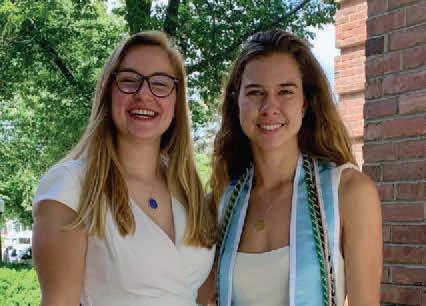
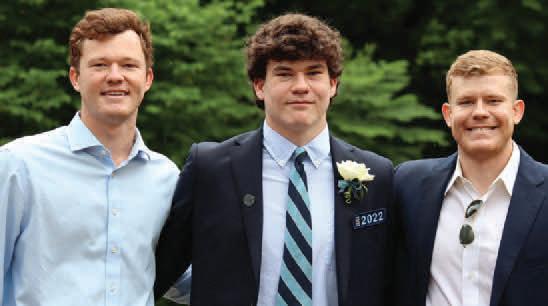
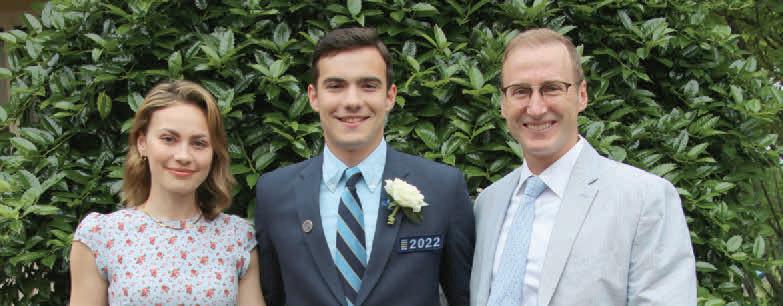
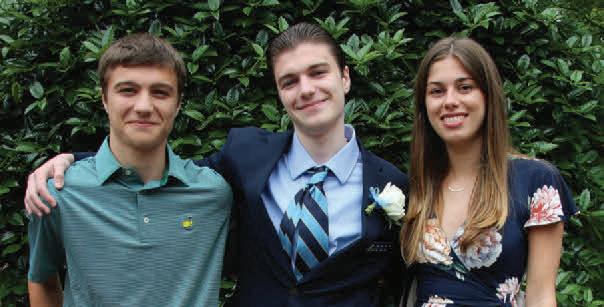
 Ryan '24 and James “Alex” Agnew '22, Julia Dardaris '16
Demianna '19, Maddigo '22, and Jameson '24 Callas
Alysa '20 and Kaylie '22 Akins
Gabriella '17, Luca '22, and Stephen '95 Belmonte
Bryce '29 and Brendan '22 Blake
Malcolm '22 and Sydney '17 Crawford Tucker ‘24 and Ava ‘22 DeLisle
Matthew '19, Drew '22 and Michael '15 Bown
29 school magazine fall 2022 Amanda '22 and Catherine '18 Cooney
Ryan '24 and James “Alex” Agnew '22, Julia Dardaris '16
Demianna '19, Maddigo '22, and Jameson '24 Callas
Alysa '20 and Kaylie '22 Akins
Gabriella '17, Luca '22, and Stephen '95 Belmonte
Bryce '29 and Brendan '22 Blake
Malcolm '22 and Sydney '17 Crawford Tucker ‘24 and Ava ‘22 DeLisle
Matthew '19, Drew '22 and Michael '15 Bown
29 school magazine fall 2022 Amanda '22 and Catherine '18 Cooney
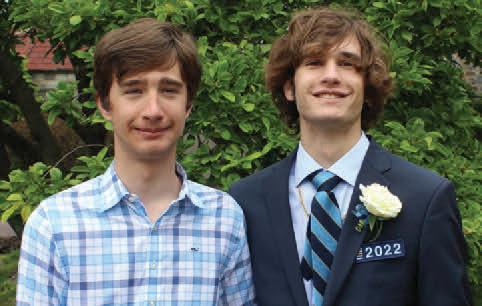
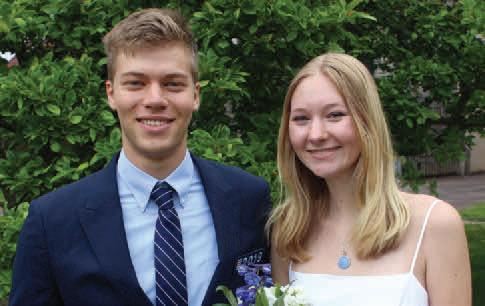
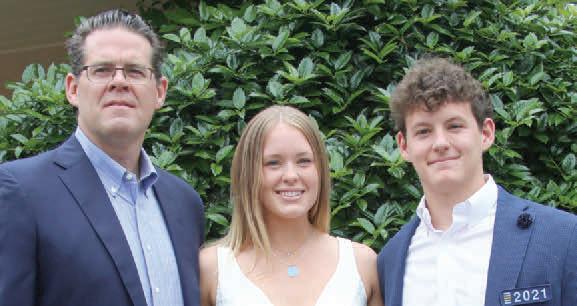
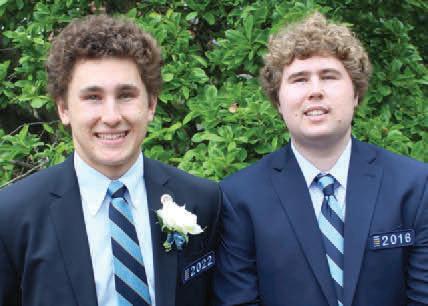
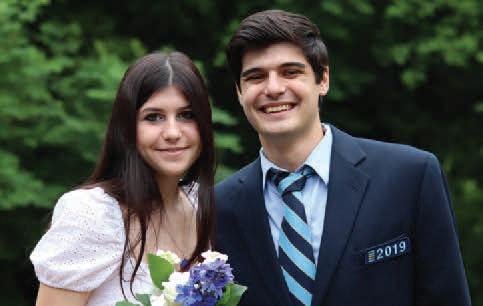
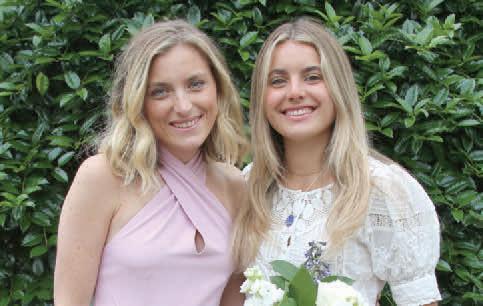
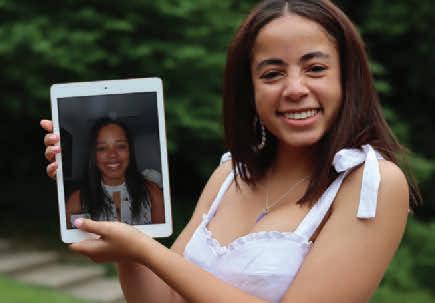
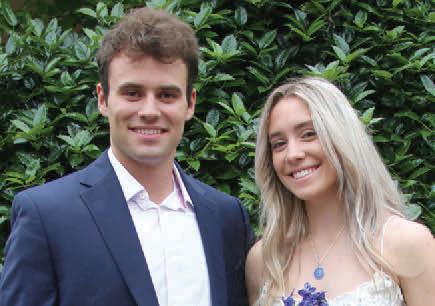
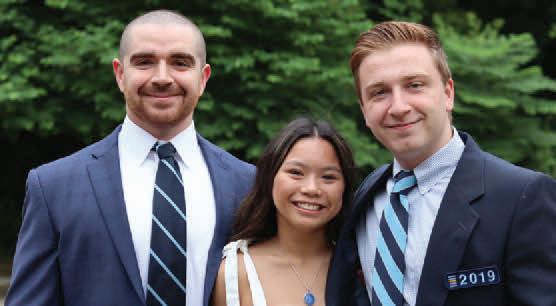
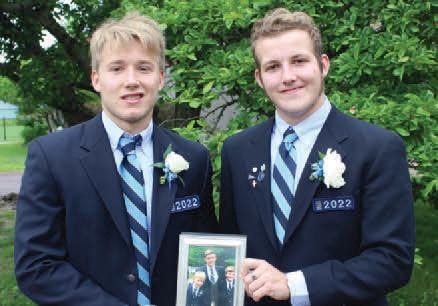
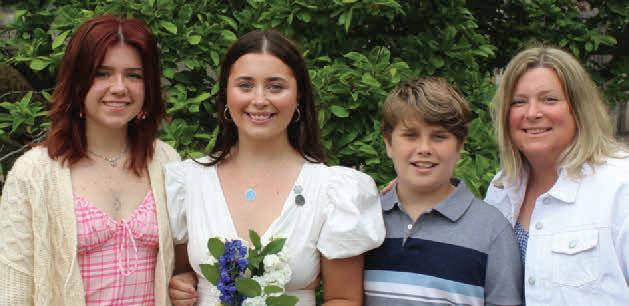
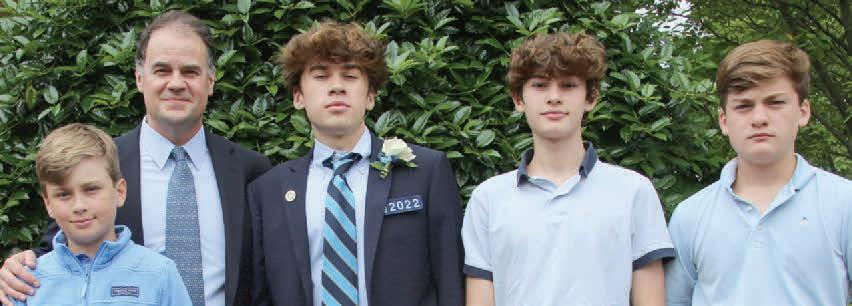
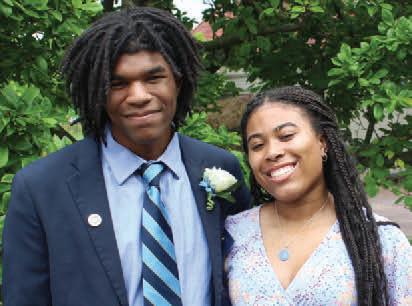 Nick '25 and Billy '22 Donato
Theo '19 and Lauren '22 Gregson
Brendan '90, Galen '22, and Conor '21 Kilfeather
Victor '22 and Andrew '16 Kasian
Cameron '22 and Cole '19 Golden
Stephanie '15 and Taylor '22 Haenn
Cameron '17 (photo) and Chandler '22 Fattah
Ethan '20 and Brooke '22 Gyllenhaal
Cole '13, Audrey "Na" '22, and Dane '19 Hoffmann
Caitlin '25, Ashley '22, Ryan '28, and Aimee H'20 Keough
Brady '28, Gerald Michael Jr. '87, Gerald Michael Lemole III '22, Dex '24, and Connor '26 Lemole
Sam '22, Jude '22, and Zach '16 (photo) Halfpenny
Wesley ‘22 and Nilah ‘20 Jordan
Nick '25 and Billy '22 Donato
Theo '19 and Lauren '22 Gregson
Brendan '90, Galen '22, and Conor '21 Kilfeather
Victor '22 and Andrew '16 Kasian
Cameron '22 and Cole '19 Golden
Stephanie '15 and Taylor '22 Haenn
Cameron '17 (photo) and Chandler '22 Fattah
Ethan '20 and Brooke '22 Gyllenhaal
Cole '13, Audrey "Na" '22, and Dane '19 Hoffmann
Caitlin '25, Ashley '22, Ryan '28, and Aimee H'20 Keough
Brady '28, Gerald Michael Jr. '87, Gerald Michael Lemole III '22, Dex '24, and Connor '26 Lemole
Sam '22, Jude '22, and Zach '16 (photo) Halfpenny
Wesley ‘22 and Nilah ‘20 Jordan
30 school magazine fall 2022
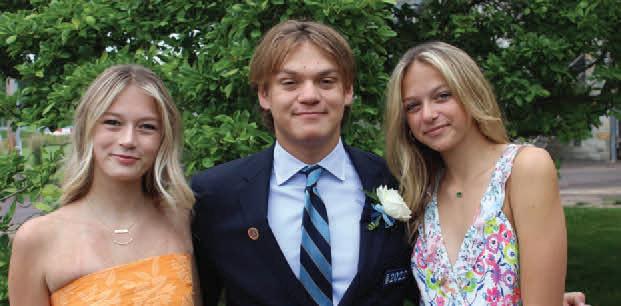
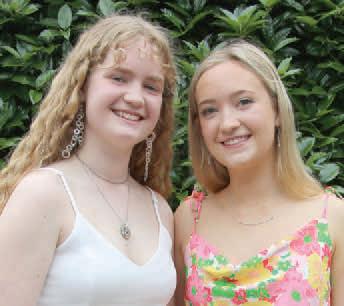
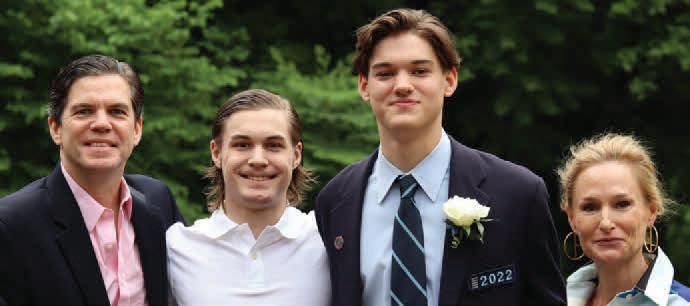
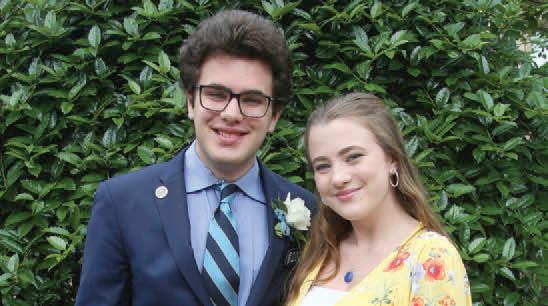
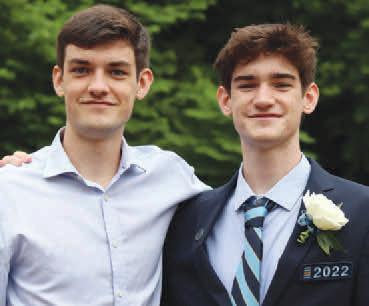
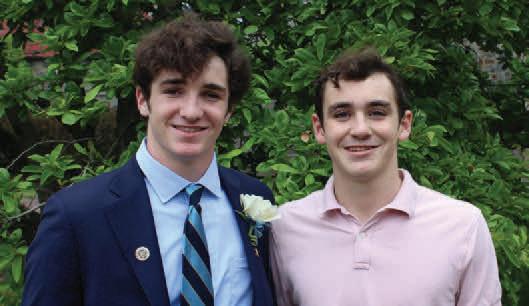
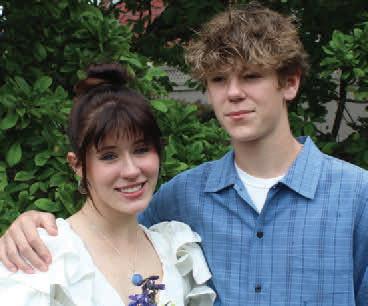
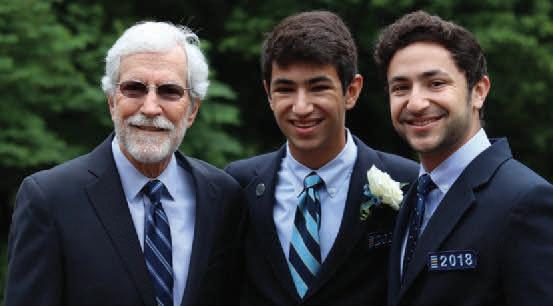
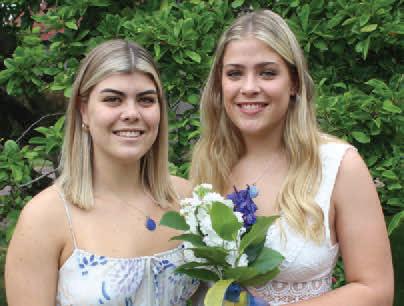 Alexis '24, Mac '22, and Eloise '26 Levin
Claire '22 and Anna '20 Mollen Vince ‘87, Jake ‘20, Brooks ‘22, and Christian Hovey Norpel ‘89
Tony ‘22 and Dominique ‘20 Regli
Kaia '22 and Luki '26 McTigue
Lucy '22, Philip '86, Maggie '20 and Margaret Newbold '45 Pearson
Matthew '23 and Gabriela '22 Leon-Palfrey
Paolo '22 and Gioia '20 Marchiano
Alex '25, Trevor '20, Sammy '22, and Chase '26 Meyer
Steven Orman '63, David '22, and Jordan '18 Lubell
Matt '20 and Charlie '22 Miles
Chuck ‘22 and Owen ‘20 Norton
Shannon ‘20 and Kate ‘22 McNally
Alexis '24, Mac '22, and Eloise '26 Levin
Claire '22 and Anna '20 Mollen Vince ‘87, Jake ‘20, Brooks ‘22, and Christian Hovey Norpel ‘89
Tony ‘22 and Dominique ‘20 Regli
Kaia '22 and Luki '26 McTigue
Lucy '22, Philip '86, Maggie '20 and Margaret Newbold '45 Pearson
Matthew '23 and Gabriela '22 Leon-Palfrey
Paolo '22 and Gioia '20 Marchiano
Alex '25, Trevor '20, Sammy '22, and Chase '26 Meyer
Steven Orman '63, David '22, and Jordan '18 Lubell
Matt '20 and Charlie '22 Miles
Chuck ‘22 and Owen ‘20 Norton
Shannon ‘20 and Kate ‘22 McNally
31 school magazine fall 2022
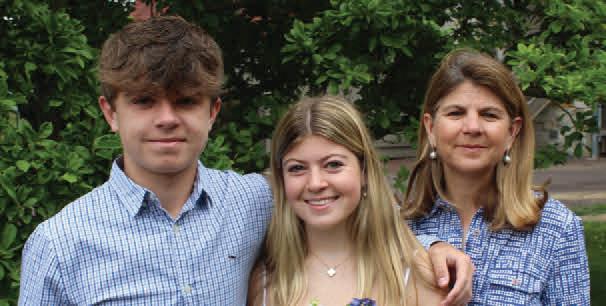
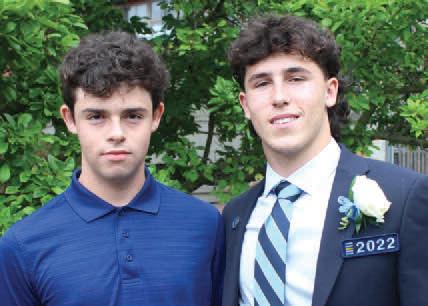
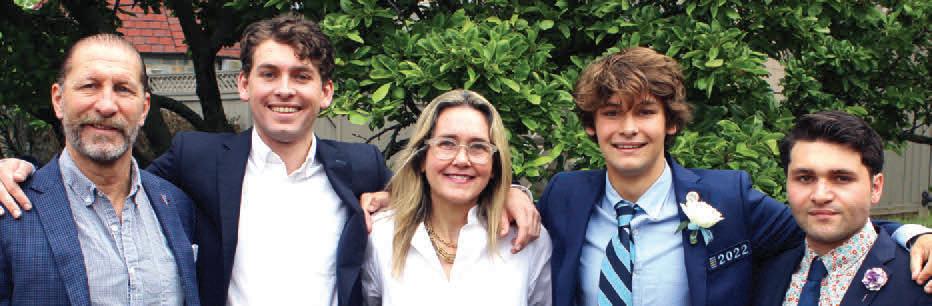
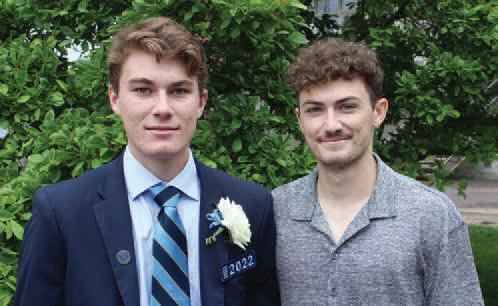
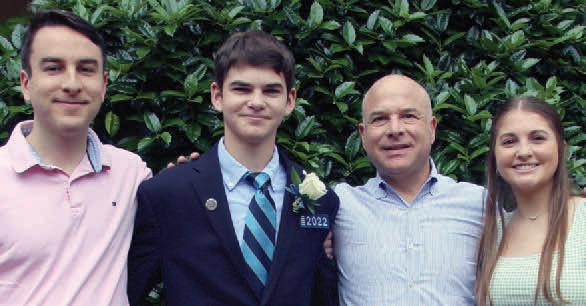
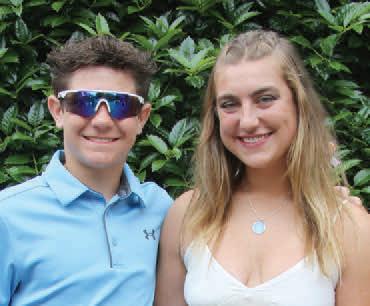
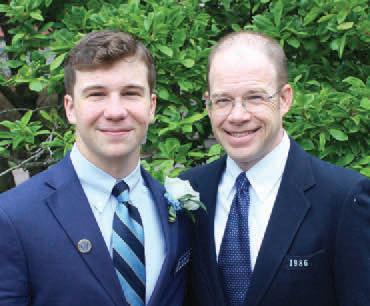
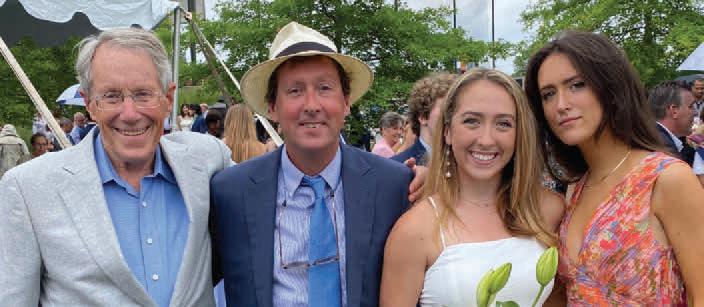
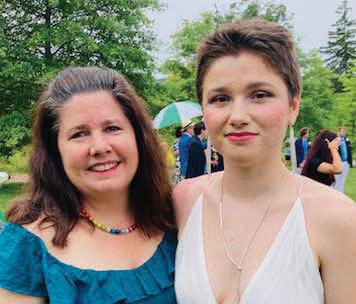 Ben '22 and John Rodgers '86
Peter '24, Anna '22, and Amy Tyler Shea '87
Ellie '22 and Noah '17 Shoup
Wynfield Rall '13, Kayla'22, and Hayden '19 Stephan Will '22 and Maggie '18 Stutman
Becky Swain Sanderson '91, Jack Sanderson '22, Cliff '59, and Ted Swain '96
Nolan '24 and Thomas '22 Shelinsky
Win '84, Luke '17, Heather Doran Stauffer '87, Roan '22, and Caiden '19 Stauffer
Sean '22 and Andrew '17 Stackhouse
Lane Taylor '60, Nat '88, Whitney '22 and Nathalie '23 Taylor
William ‘15, Theodore ‘22, Graham ‘85, and Grace ‘17 Tasman
Joey ‘27 and Ava ‘22 Schreiber
Pam Rosser Thistle ‘86 and Sally ‘22 Thistle
Ben '22 and John Rodgers '86
Peter '24, Anna '22, and Amy Tyler Shea '87
Ellie '22 and Noah '17 Shoup
Wynfield Rall '13, Kayla'22, and Hayden '19 Stephan Will '22 and Maggie '18 Stutman
Becky Swain Sanderson '91, Jack Sanderson '22, Cliff '59, and Ted Swain '96
Nolan '24 and Thomas '22 Shelinsky
Win '84, Luke '17, Heather Doran Stauffer '87, Roan '22, and Caiden '19 Stauffer
Sean '22 and Andrew '17 Stackhouse
Lane Taylor '60, Nat '88, Whitney '22 and Nathalie '23 Taylor
William ‘15, Theodore ‘22, Graham ‘85, and Grace ‘17 Tasman
Joey ‘27 and Ava ‘22 Schreiber
Pam Rosser Thistle ‘86 and Sally ‘22 Thistle
32 school magazine fall 2022
the sch fund

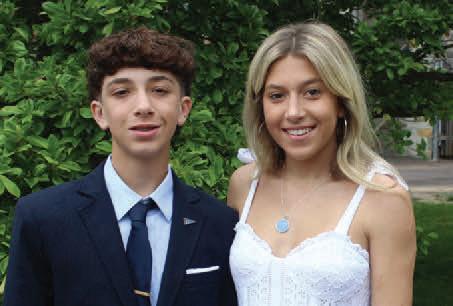
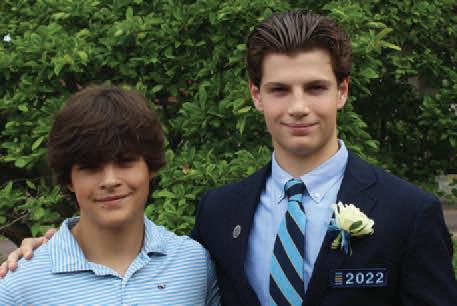
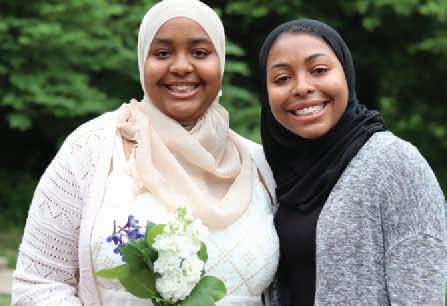
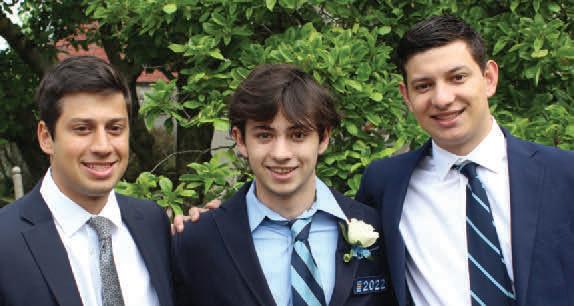
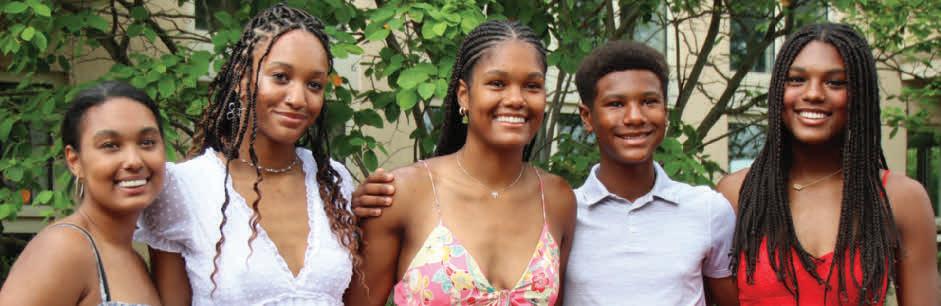
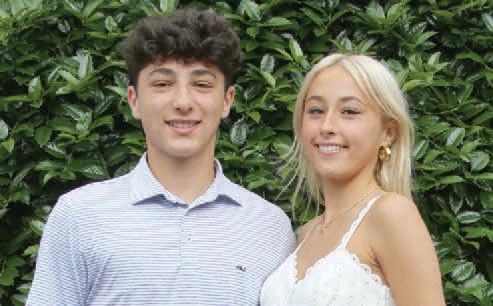
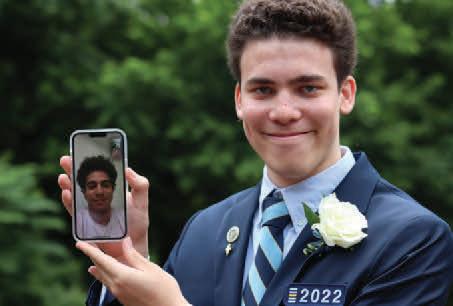
The generosity of our entire community—alumni, parents, grandparents, and friends—allows us to continue to offer the best-in-class faculty, curriculum, and programming that makes an SCH education unique. Your gift to The SCH Fund will have an immediate and lasting impact on our community. Whether it’s athletics or the arts, outdoor programs, robotics, or CEL, your gift to The SCH Fund will help us enhance, enrich, and improve the student experience. Your experience, generosity, and partnership all play a role in defining the future of our school.
 Jamieson '19 (photo) and Grayson '22 Wade
Alec '24 and Isabella Marie '22 Tulio
Jaelyn '18, Jazze '22, Jaia '20, Jaxen '28, and Joye '24 Wingard
Philip '19, Charlie '22, Michael '17 Wrede
Amatullah '22 and Nahla '19 Turner
Alex ‘25 and AJ ‘22 Topping
Chase ‘26 and Ava ‘22 Zimmer
Jamieson '19 (photo) and Grayson '22 Wade
Alec '24 and Isabella Marie '22 Tulio
Jaelyn '18, Jazze '22, Jaia '20, Jaxen '28, and Joye '24 Wingard
Philip '19, Charlie '22, Michael '17 Wrede
Amatullah '22 and Nahla '19 Turner
Alex ‘25 and AJ ‘22 Topping
Chase ‘26 and Ava ‘22 Zimmer
33 school magazine fall 2022
SUPPORT THE SCH FUND TODAY!
CELEBRATING
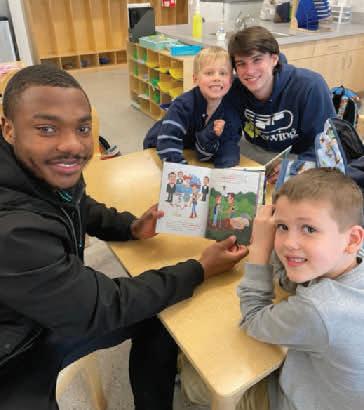
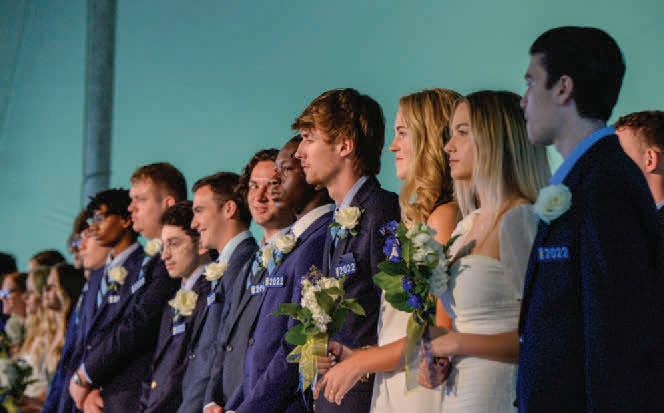
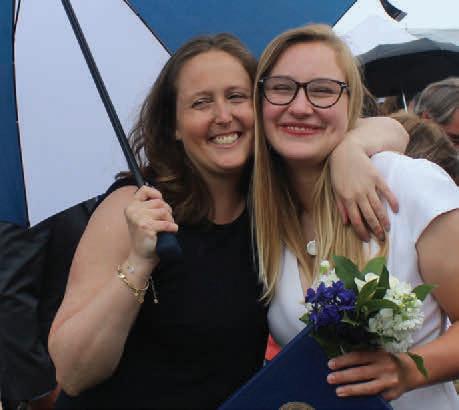
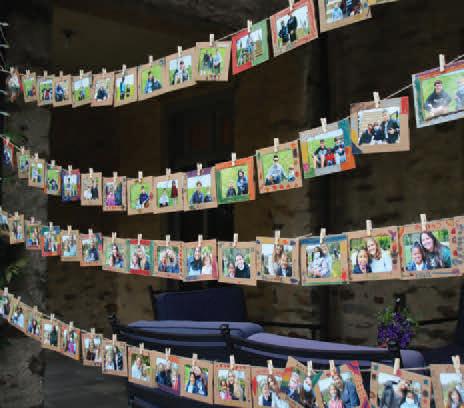
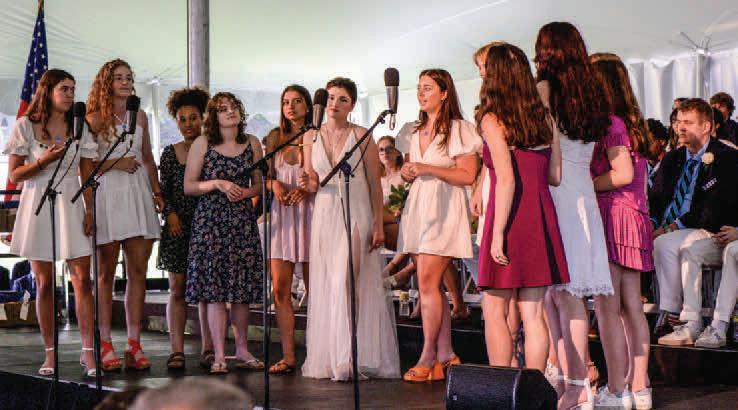
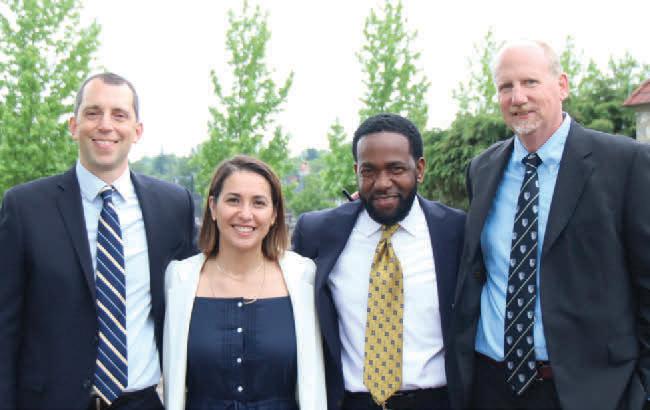
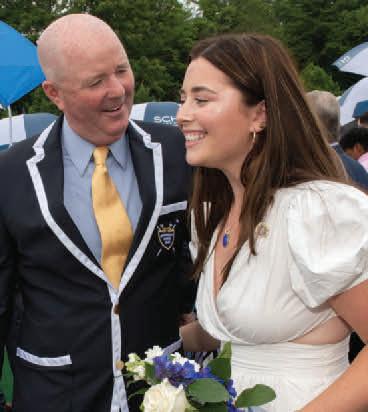
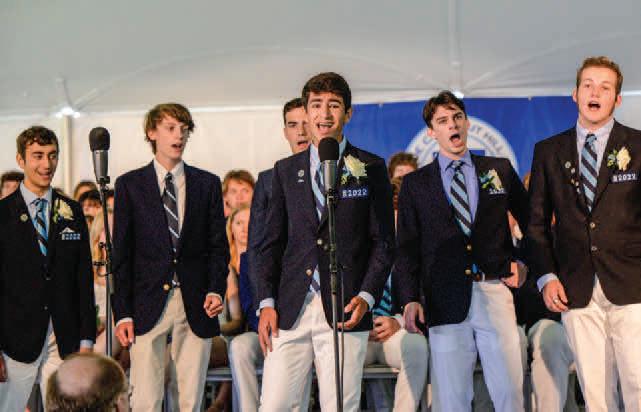
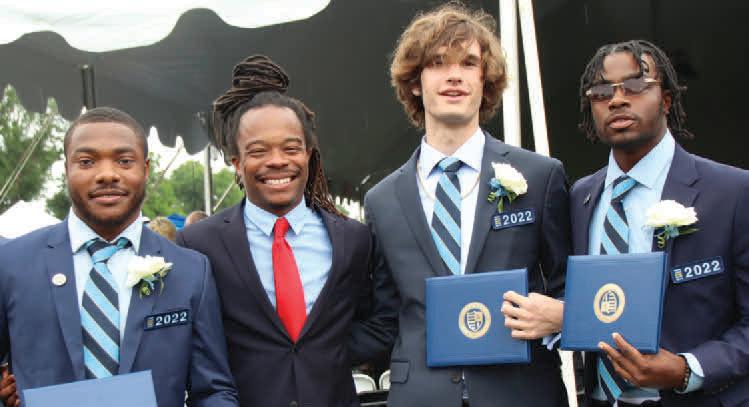


34
THE
CLASS OF 2022
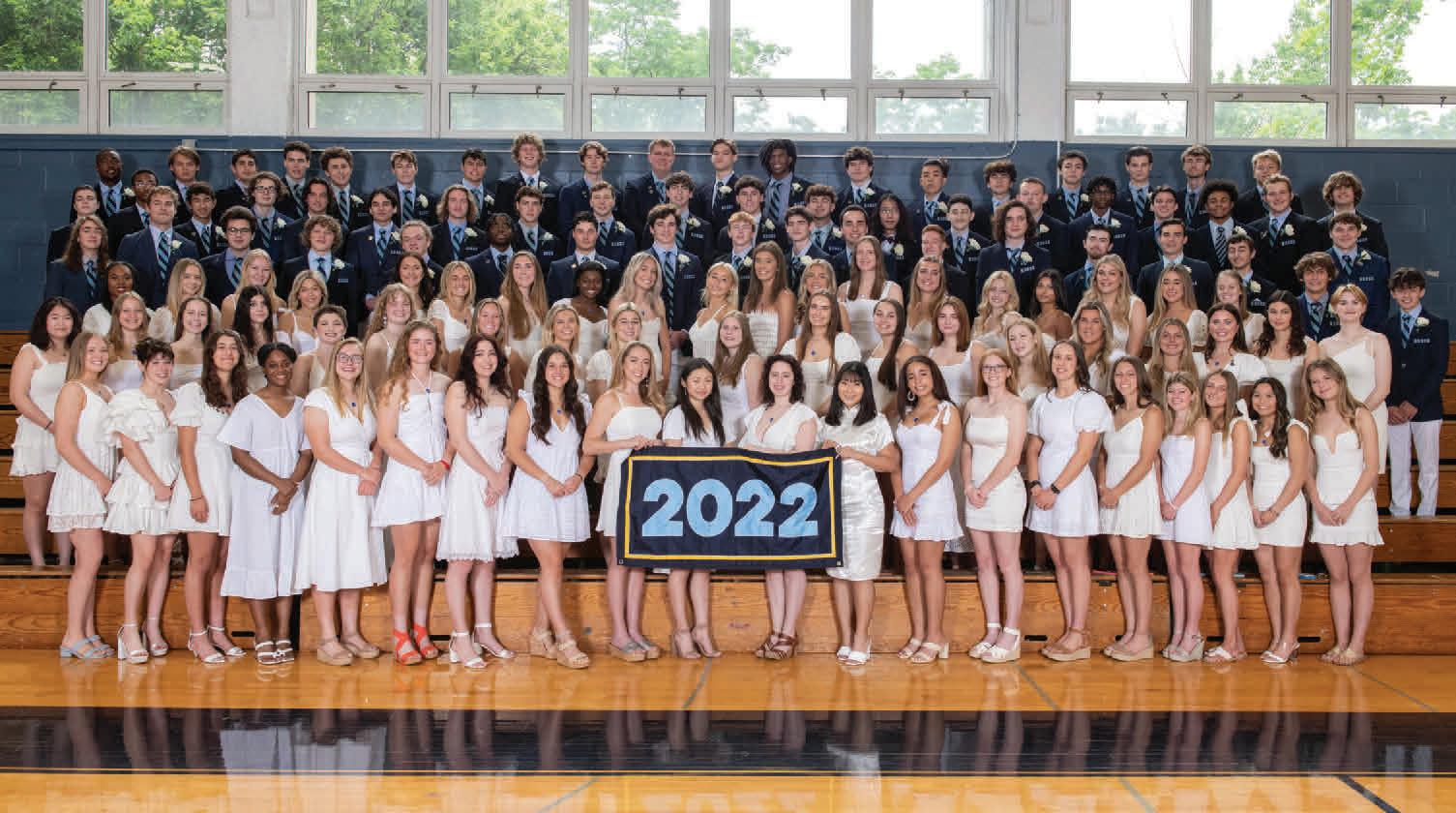
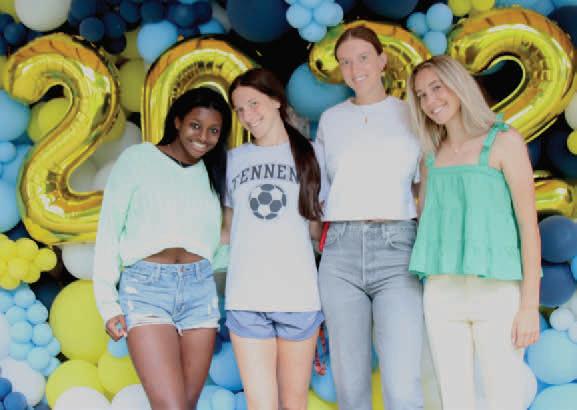
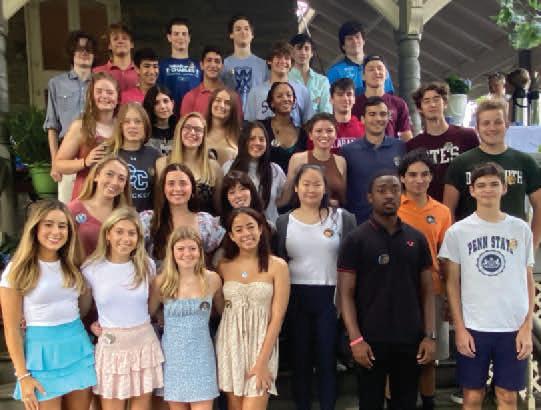
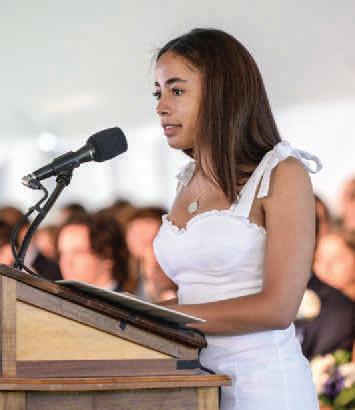
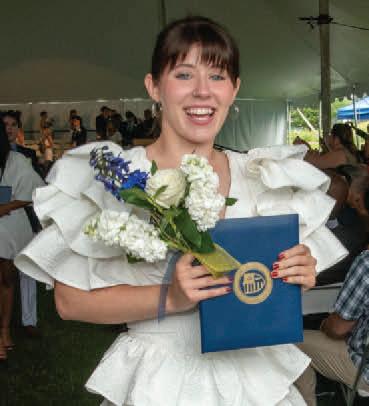
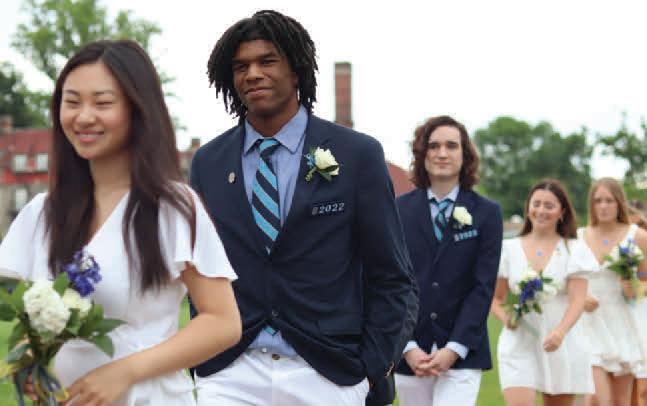
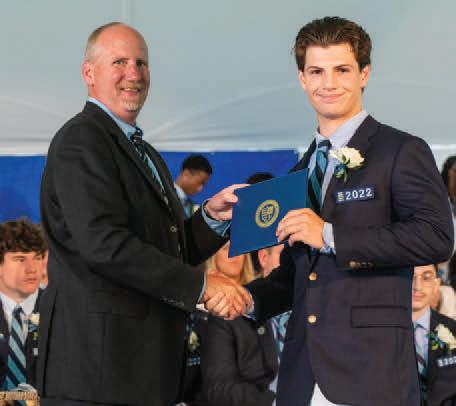

35
Congratulations, SCH Grads!
Congratulations to the graduates of SCH Academy as they embark on new journeys, write their own unique stories, and forge a new path in the world of higher education and beyond. We are confident that they will go on to lead lives characterized by thoughtfulness, integrity, and quests to effect positive change. The Class of 2022 is resilient and ready. We wish them all the best, and we salute them for their many contributions to our SCHool community as they begin their next adventure at the colleges and universities listed here:
Arcadia University
Arizona State University Babson College (3)
Barnard College Bates College Belmont University Bowdoin College
Brown University Bucknell University (3) California Polytechnic State University
Carnegie Mellon University Chestnut Hill College (2)
Clemson University Colorado College (3) Colorado School of Mines Connecticut College Cornell University Dartmouth College Delaware Valley University Drexel University Elon University Emory University Fairfield University Fairleigh Dickinson University
Florida Atlantic University Florida Gulf Coast University Fordham University
Franklin and Marshall College Georgia State University Georgian Court University Gettysburg College Grinnell College Haverford College Howard University Ithaca College Kenyon College Lafayette College Lehigh University (2) Loyola University Chicago Loyola University Maryland Maryland Institute College of Art
Middlebury College Morgan State University (2) Mount Holyoke College Neumann University Northeastern University (4)
Ohio State UniversityMain Campus
Penn State UniversityMain Campus (5)
Penn State UniversityAbington Penn State UniversitySchreyer Honors College
Princeton University
Rensselaer Polytechnic Institute Rhodes College Rollins College Rose-Hulman Institute of Technology Sacred Heart University Saint Joseph’s University Smith College Southern Methodist University Stanford University Syracuse University (3) Temple University (2)
The New School (Parsons School of Design) (2) Thomas Jefferson University Trinity College University of Alabama University of Alabama Honors College UNC at Chapel Hill, Honors College University of Colorado Boulder (2) University of Hartford University of Illinois at Urbana-Champaign University of Louisville University of Maine University of MarylandBaltimore County
University of MarylandCollege Park University of MassachusettsAmherst University of Miami (2) University of Michigan University of Pennsylvania (2) University of Pennsylvania LPS Online University of Pittsburgh (2) University of Rhode Island University of Richmond University of South CarolinaColumbia (2)
University of Tampa (3) University of TennesseeKnoxville University of Vermont
Vanderbilt University (2) Villanova University
Virginia Military Institute
Virginia Polytechnic Institute and State University
Wesleyan University West Chester
University of Pennsylvania (5) Yale University
"A blank slate is scary. Graduation means leaving behind friends who have become more like family, and teachers who have become more like friends. No one will know us. And, perhaps scariest of all, we are venturing off in different directions, into different unknowns. But a blank slate means a new beginning. We can take what we have learned here, the memories we have made, the successes we have earned, and the failures we have endured, and apply our wisdom to forge new experiences and adventures. These experiences will no doubt include obstacles and roadblocks, but we are well equipped to overcome them. Physically, we are leaving high school. But we will always hold every class, every friend, every teacher, and every day in our hearts and minds."
–Chandler Fattah '22, Commencement Speaker
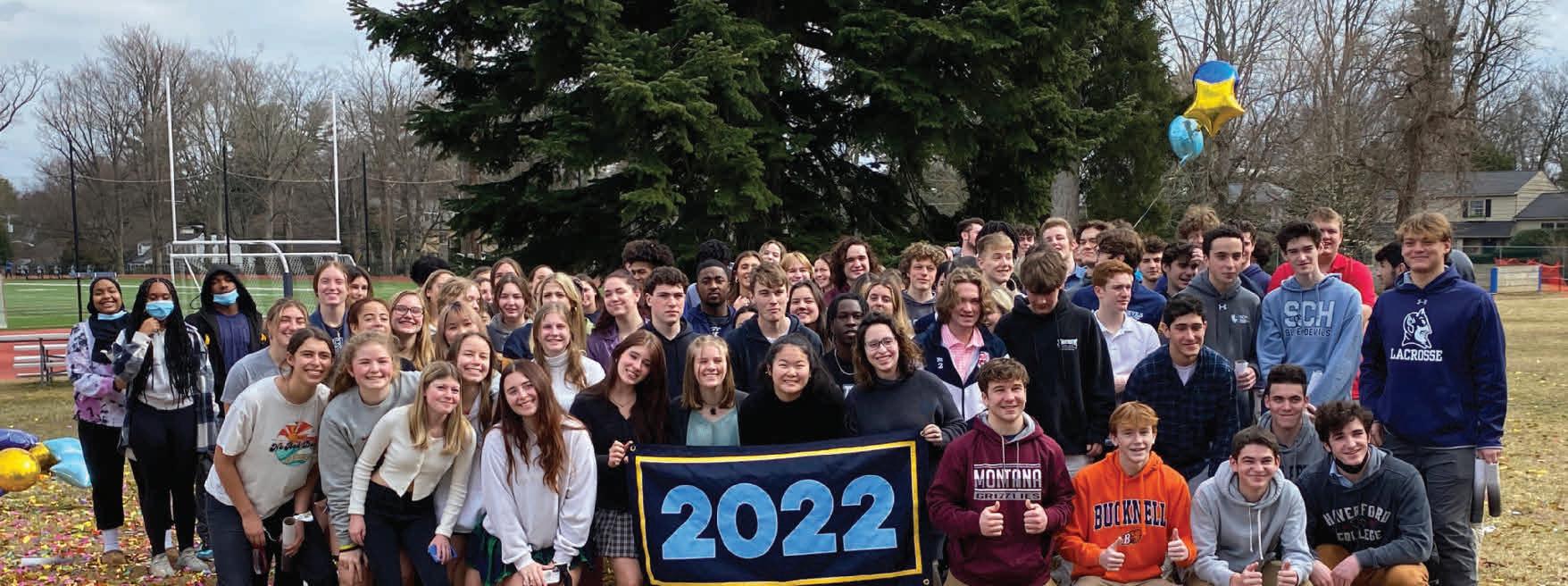
36 school magazine fall 2022
END-OF-YEAR AWARDS
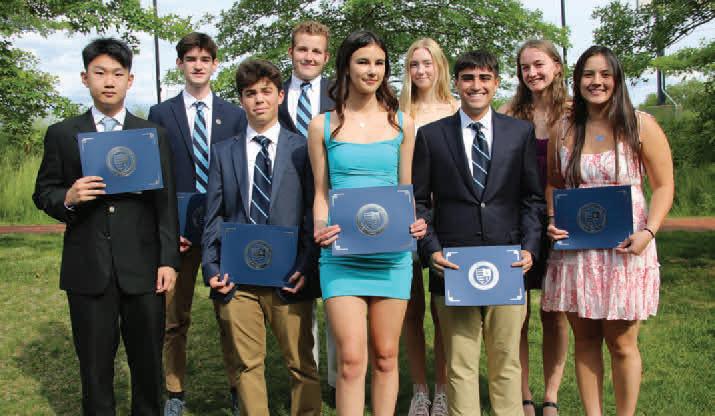
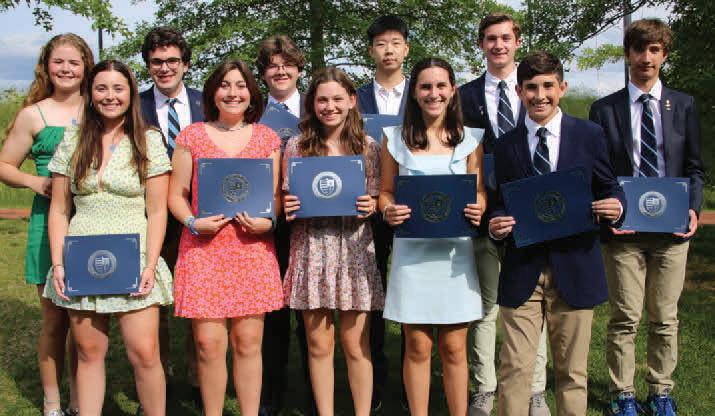
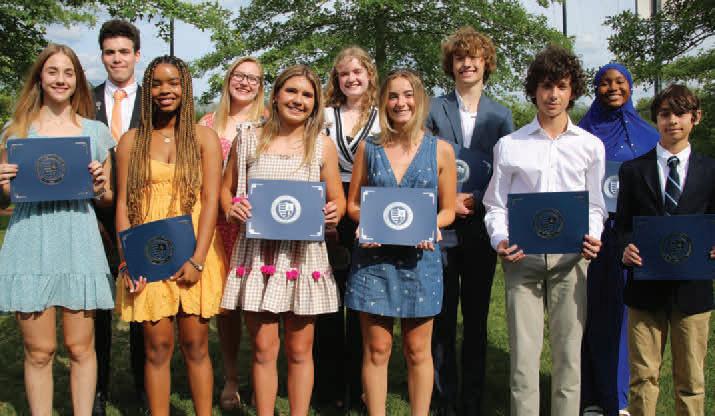
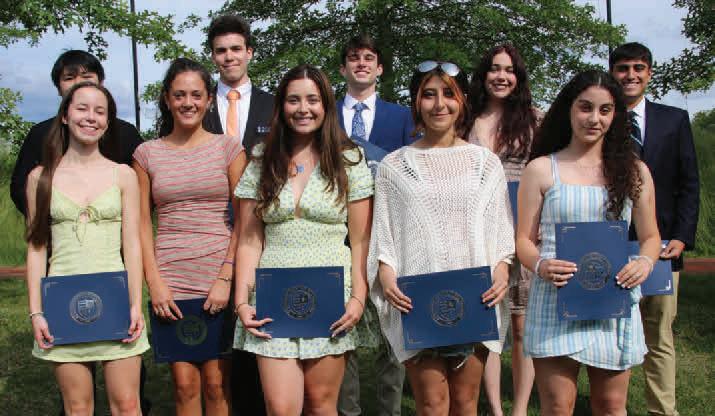
DEPARTMENTAL DISTINCTIONS
arts
9th: Baylin Manusov
10th: Casey Kaplan
Matthew Rizzo
11th: Sofia Foote
Samuel Miller
Taoxi Xie
12th: Ashley Keough
Madeline Mahoney
Samuel Meyer
Grayson Wade
Iris Wilde
Oliver Moscow
science
9th: Nicholas Donato
Leah Laudenbach
Joshua Miller
10th: Devin Gibson
Sophie McDevitt
Anya Rosenbloom
11th: Micah Ford
John Gaghan
Jikai Yang
12th: Ashley Keough
Lucy Pearson
Anthony Regli
history
9th: Zarin DeVeaux
Samuel Harris
Dylan Kaplan
10th: Alexis Reilly
Ameara Smith
Alexandra Stoddard
11th: Antoine Adson
Hans Bode
Nora Elliott
12th: Amanda Cooney
Claire Mollen
Grayson Wade
world languages
10th: Shaun Gupte
Cameron Harrop
Brendan Jolly
11th: Lillian Hall
Samuel Miller Qimou Song Winslow Tracy
12th: Samuel Halfpenny
Alisa Jia
Kayla Stephan Charles Miles Stephanie Scheuermann
Arts Distinction (l to r): Front: Iris Wilde ’22, Sofia Foote ‘23, Ashley Keough ’22, Casey Kaplan ’24, Baylin Manusov ’25; Back: Taoxi Xie ’23, Grayson Wade ’22, Sam Meyer ’22, Madeline Mahoney ’22, Sam Miller ’23; (Not pictured: Matt Rizzo ’24, Oliver Moscow ’22.)
History Distinction (l to r): Front: Alexandra Stoddard ’24, Ameara Smith ’24, Alexis Reilly ’24, Nora Elliott ’23, Dylan Kaplan ’25, Sam Harris ’25; Back: Grayson Wade, Amanda Cooney ’22, Claire Mollen ’22, Hans Bode ’23, Zarin DeVeaux ’25 (Not in picture: Antoine Adson ’23.)
At the end of each school year, the Upper School takes a moment to recognize students who have distinguished themselves through academics, athletics, character, or service to the school. The following awards were given to students at the 2022 Awards Ceremony on the eve of graduation.
Science Distinction (l to r): Front: Ashley Keough ’22, Sophie McDevitt ’24, Anya Rosenbloom ’24, Leah Laudenbach ’25, Joshua Miller ’25; Back: Lucy Pearson ’22, Tony Regli ’22, Devin Gibson ’24, Jikai Yang ’23, John Gaghan’23, Nicholas Donato ’25. (Not in picture: Micah Ford ’23)
World Languages Distinction (l to r): Front: Qimou Song ’23, Shaun Gupte ’24, Stephanie Scheuermann ’22, Samuel Miller ’23, Kayla Stephan ’22; Back: Charles Miles ’22, Sam Halfpenny ’22, Lillian Hall ’23, Winslow Tracy ’23. (Not in picture: Brendan Jolly ’24, Cameron Harrop ’24, Alisa Jia ’22.)
school magazine fall 2022 37
engineering and robotics
9th: Naomi Becker
10th: Karina CHan-van der Helm
11th: Daniel O’Connor
12th: Anthony Regli
cel 11th: John Gaghan
12th: Delaney Brody Shawn Gindea Charles Norton Lucas Poltorak Alexa Rhodes english
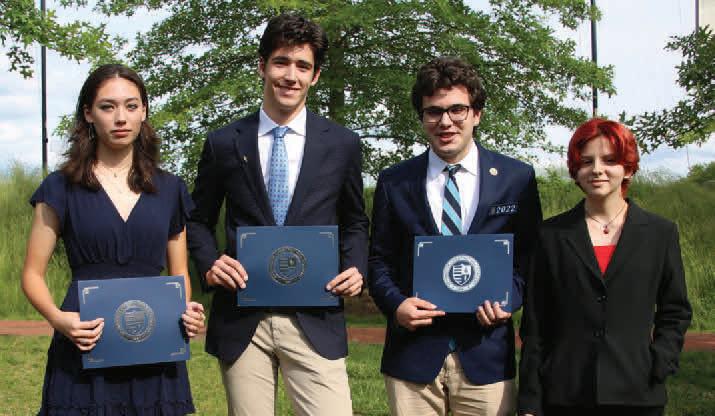
9th: Julien Freidland
Sam Harris Griffy Whitman
10th: Elizabeth Pearcy Ameara Smith Junyi Xin
11th: Shangchen Cai Micah Ford (missing from photo)
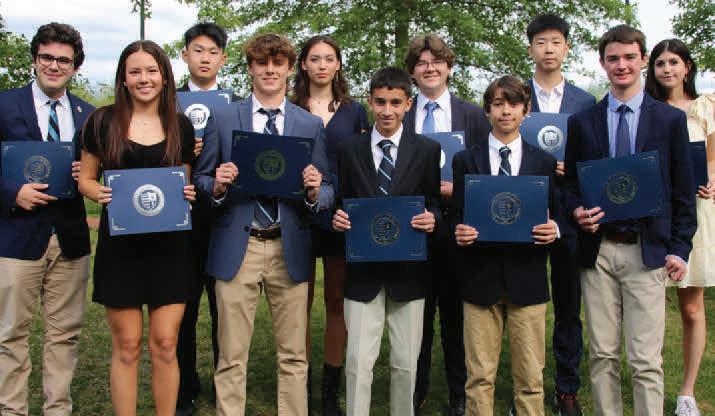
Eleanor Forrest
12th: Samuel Halfpenny Kaia McTigue
Claire Mollen mathematics
9th: Patrick Gaghan
Sam Harris Eliot Villasis
10th: Karina Chan-van der Helm
Devin Gibson Alex Pilling
11th: Evelyn Lauerman Qimou Song Jikai Yang
12th: Cameron Golden Alisa Jia
Anthony Regli
BOOK AWARDS
the bowdoin college book award
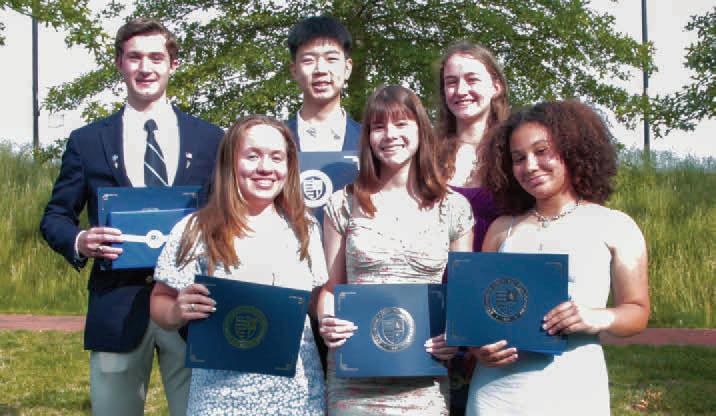
Presented to a member of the junior class who helps others and works toward positive change to improve the world. This student is working in service to the common good and towards developing ethical and balanced approaches to how they live and do work.
• Tatyana Hall '23
the brown university book award
Recognizes a junior who best combines a high degree of ability in English expression, both written and spoken, with those outstanding personal qualities which, in the words of the Brown Charter of 1764, give promise that the
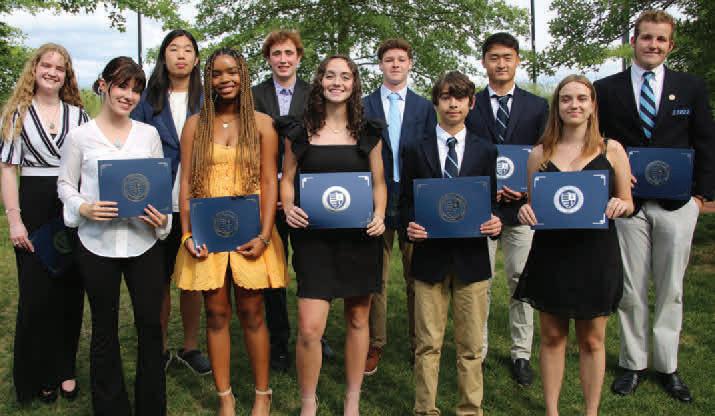
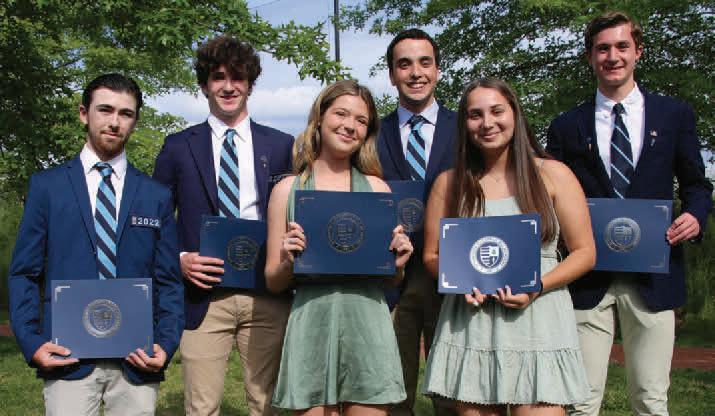 CEL Distiniction (l to r): Front: Lucas Poltorak ’22, Delaney Brody ’22, Alexa Rhodes ’22; Back: Chuck Norton ’22, Shawn Gindea ’22, John Gaghan ’23
Mathematics Distinction (l to r): Front: Anthony Regli ’22, Evelyn Lauerman ’23, Alex Pilling ’24, Eliot Villasis ’25, Sam Harris ’25, Patrick Gaghan ’25; Back: Qimou Song ’23, Karina Chan-van der Helm ’24, Devin Gibson ’24, Jikai Yang ’23, Cameron Golden ’22 (Not in picture: Alisa Jia ’22)
Engineering & Robotics Distinction (l to r): Karina Chan-van der Helm ’24, Daniel O’Connor ’23, Anthony Regli ’22, Naomi Becker ’25
English Distinction (l to r): Front: Kaia McTigue ’22, Ameara Smith ’24, Elizabeth Pearcy ’24, Sam Harris ’25, Eleanor Forrest ’23 Back: Claire Mollen ’22, Shangchen Cai ’23, Julien Friedland ’25, Griffy Whitman ’25, Junyi Xin ’24, Sam Halfpenny ’22. (Not in picture: Micah Ford ’23.)
school magazine fall 2022 38 Book Awards (l to r) Sam Simon ’23, Grace Hannigan ’23, Tatyana Hall ’23; John Gaghan ’23, Jikai Yang ’23, Winslow Tracy ’23
CEL Distiniction (l to r): Front: Lucas Poltorak ’22, Delaney Brody ’22, Alexa Rhodes ’22; Back: Chuck Norton ’22, Shawn Gindea ’22, John Gaghan ’23
Mathematics Distinction (l to r): Front: Anthony Regli ’22, Evelyn Lauerman ’23, Alex Pilling ’24, Eliot Villasis ’25, Sam Harris ’25, Patrick Gaghan ’25; Back: Qimou Song ’23, Karina Chan-van der Helm ’24, Devin Gibson ’24, Jikai Yang ’23, Cameron Golden ’22 (Not in picture: Alisa Jia ’22)
Engineering & Robotics Distinction (l to r): Karina Chan-van der Helm ’24, Daniel O’Connor ’23, Anthony Regli ’22, Naomi Becker ’25
English Distinction (l to r): Front: Kaia McTigue ’22, Ameara Smith ’24, Elizabeth Pearcy ’24, Sam Harris ’25, Eleanor Forrest ’23 Back: Claire Mollen ’22, Shangchen Cai ’23, Julien Friedland ’25, Griffy Whitman ’25, Junyi Xin ’24, Sam Halfpenny ’22. (Not in picture: Micah Ford ’23.)
school magazine fall 2022 38 Book Awards (l to r) Sam Simon ’23, Grace Hannigan ’23, Tatyana Hall ’23; John Gaghan ’23, Jikai Yang ’23, Winslow Tracy ’23
student will become one of the “succession of men and women duly qualified for discharging the offices of life with usefulness and reputation.”
• Nathalie Taylor '23
the harvard university book award
Awarded to an outstanding student in the junior class who displays excellence in scholarship and high character, combined with achievement in other fields.
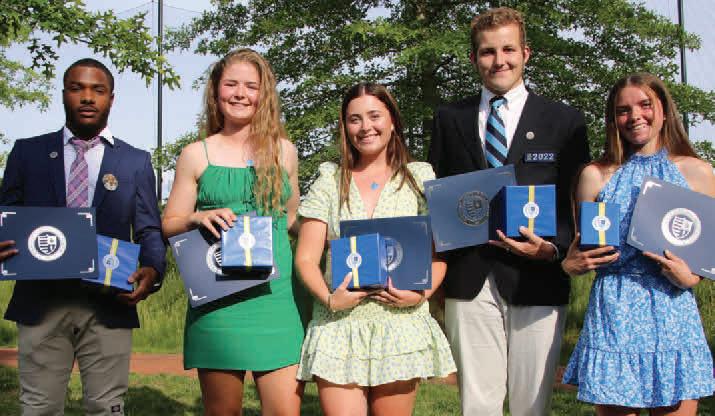
• Winslow Tracy '23
the smith college book award
Presented to a member of the junior class who exemplifies the academic achievement and leadership qualities that characterize
innovator, and one who served the community.
• Jikai Yang '23
the university of virginia book award
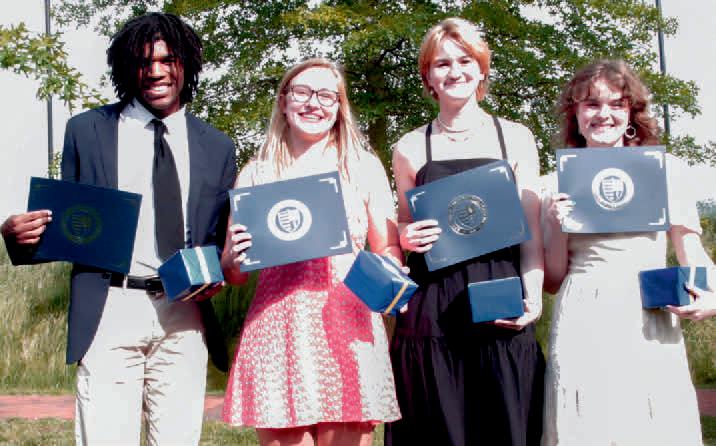
Presented to a junior who is outstanding in academics as well as in extracurricular activities in acknowledgement of that student’s commitment to academics, leadership and community involvement.
• Grace Hannigan '23
the yale university book award
Presented to a member of the junior class who has shown intellectual promise, significant involvement in extracurricular activities, and service to the community.
• John Gaghan '23
the suzanne turner rebmann award
Given in memory of Suzanne Turner Rebmann to a student in the Upper School for excellence in one of the performing arts. We remember with gratitude Suzie’s enthusiasm, her cheerfulness and kindness, and her willingness as a parent to contribute to many school activities.
• Sarah Shoff '23
the alumnae association art award
Given to a member of the senior class who has demonstrated extraordinary interest, ability, and accomplishment in the visual arts. A piece of their art will hang at school.
• Wesley Jordan '22
CEL the center for entrepreneurial leadership innovation award
Given in honor of Stephen L. Druggan, head of school from 2016 to 2022, this award celebrates the innovation and resiliency of a CEL student who, through a project or initiative, has pursued a uniquely creative, self-directed, and entrepreneurial approach to problem solving.
• Shawn Gindea '22
the thousands of women who have graduated from Smith College.
• Samantha Simon '23
the university of pennsylvania book award
Awarded to a junior who best exemplifies the qualities and characteristics of Benjamin Franklin, the founder of the University of Pennsylvania–a scholar,
DEEDED AWARDS
ARTS
the players on- and off-stage awards
Given by the director of Players to students who contributed significantly to Players during the year and who have displayed loyalty and commitment to the integrity of the productions.
On Stage
• Peregrine Jaeger '22
Off Stage
• Amanda Cooney '22
ATHLETICS
the chestnut hill academy father’s award
Presented to the senior boy who, as a varsity team player, has demonstrated the most outstanding combination of enthusiasm, perseverance, and dedication to his team and to the academy.
• Joseph Cassidy '22
the chestnut hill academic fathers’ club award
Presented to a male student of Springside Chestnut Hill Academy below the varsity level who has demonstrated the qualities of constructive school spirit, determination, and courage in athletics throughout the year.
• Robert Lamb Jr. '25 (missing from photo)
the varsity pride award
Honors a female varsity senior athlete who has
CEL Leadership Innovation Award: Shawn Gindea '22
Athletic Deeded Awards (l to r) Ivan Thorpe, Jr. '22, Lucy Pearson '22, Ashley Keough '22, Sam Halfpenny '22, Julia Thomson '23 (Not in picture: Whitney Taylor '22)
Arts Deeded Award (l to r) Wesley Jordan '22, Amanda Cooney '22, Pere Jaeger '22, Sarah Shoff '23
school magazine fall 2022 39
demonstrated passion, respect, intensity, determination, and enthusiasm, both on and off the playing field.
• Caroline Reilly '22
the junior varsity pride award Honors a female junior varsity athlete who has demonstrated passion, respect, intensity, determination, and enthusiasm both on and off the playing field.
• Leah Laudenbach '25
the meredith s. and langdon w. harris iii award
Given by the Harris family in memory of Langdon Harris and in honor of Meredith to the parent or parents who have been most supportive of SCH athletics and athletes during the school year.
• Christen Webber
the junior vare award
Given in memory of Johanna Sigmund, Class of 1994. Johanna lost her life in the 2001 attack on the World Trade Center and it is fitting that she, who won this award and who perfectly exemplified the qualities of the award, be forever associated with its ideals. This award was established for a junior who exhibits a keen interest in athletics, demonstrates sportsmanship, and maintains consistent academic achievement.
• Julia Thomson '23
program throughout the years, and who, through leadership and example, has shown to others the highest standards of sportsmanship and play.
• Ashley Keough '22 the lawrence r. mallery award
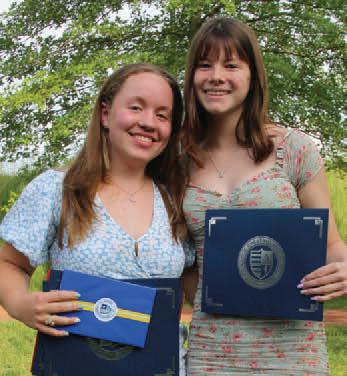
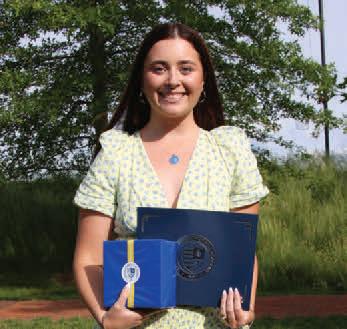
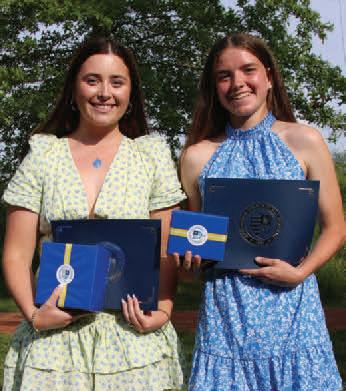
Named for Lawrence Mallery of the Class of 1905 to honor the male scholar-athlete of the senior class.
• Samuel Halfpenny '22
the blue and gold award
Presented to a female athlete in the senior class who best exemplified excellence in athletics and sportsmanship this year and is voted on by the Athletic Department.
• Lucy Pearson '22
• Whitney Taylor '22 (missing from photo)
the j. l. patterson cup
Named for Dr. James L. Patterson, headmaster from 1897 to 1923, this cup is awarded to the best allaround male athlete in the senior class.
• Ivan Thorpe Jr. '22
the edward morris mcilvaine memorial scholarship
Given in memory of Edward Morris McIlvaine, CHA Class of 1995, this award provides an outstanding summer Outward Bound experience for a boy who exhibits leadership potential and seeks a special growth experience.
and seeks a special growth experience.
• Ava Szalay '24
• Joye Wingard '24
ACADEMICS - SCIENCES the society of women in engineering award Recognizes and honors girls who have achieved excellence in the study of mathematics and science for at least three years, and have demonstrated an aptitude and interest in engineering.
• Grace Hannigan '23
the phyllis m. vare sportsmanship award
Given in honor of Miss Vare, former head of the Springside Physical Education Department, in recognition of a senior girl who has loved and participated wholeheartedly in the physical education
• Brendan Jolly '24 (Missing. No photo taken) the outward bound award Provides an outstanding summer Outward Bound experience for a girl who exhibits leadership potential
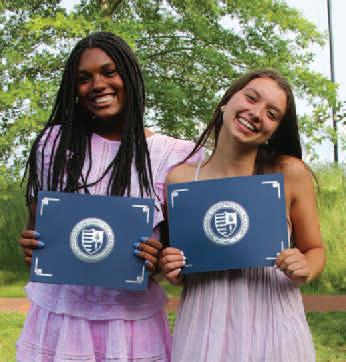
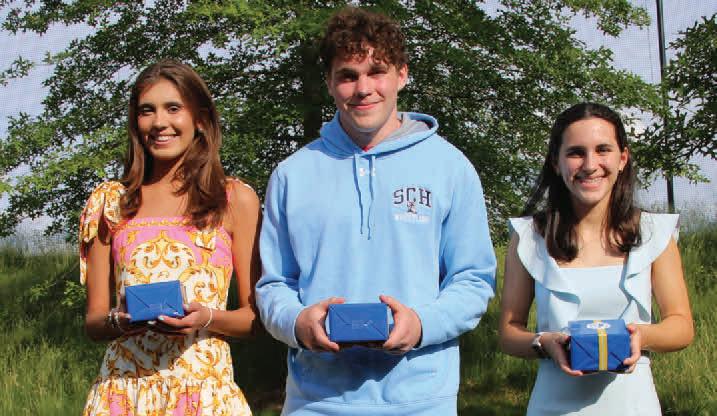
the rensselaer polytechnic institute award for excellence Awarded to a member of the junior class for outstanding academic achievement in the study of mathematics and science.
• Samantha Simon '23
Athletic Deeded Awards (l to r) Caroline Reilly '22, Joseph Cassidy '22, Leah Laudenbach '25 (Not in picture: Robert Lamb, Jr. '25)
Vare Awards: Ashley Keough '22, Julia Thomson '23
Phyllis M. Vare Sportsmanship Award: Ashley Keough '22
Outward Bound Award Joye Wingard '24, Ava Szalay '24
Science Deeded: Sam Simon '23, Grace Hannigan '23
school magazine fall 2022 40
the m.i.t. promise of the future award
Given to the student who, through personal initiative, has done the most to promote awareness of science and technology.
• Samantha Simon '23
ACADEMICS - GENERAL the class of 1959 award
Given to the student or students who show the greatest intellectual curiosity during each of the high school years.
9th: Naomi Becker '25
10th: Shaun Gupte '24
11th: Taoxi Xie '23
12th: Isaac Schapiro '22
the christopher fraser carpenter memorial award
Honoring the memory of Chris Carpenter, Class of 1960, this award is given to that member of the junior class who has shown the greatest improvement throughout the year.
• Reed McKnight ’23
the daniel webster charles memorial award
Honoring legendary faculty member Dan Charles who taught at CHA from 19431971, this award is given to the member or members of the junior class who demonstrated excellence in historical research and creativity in writing.
• Nathalie Taylor '23 (missing from photo)
the franklin and margaret steele fund for entrepreneurship
Honoring Frank’s legacy and his keen interest in the entrepreneurial spirit and those who shape the future, this award supports summer work by providing a small stipend to a student who wishes to pursue their entrepreneurial passion through an internship in a certain industry or business.
• Nia Hodges '22
the rebmann summer study award
Established in memory of former Springside parents
Bill and Suzie Rebmann, this award is presented to an Upper School student or students to enable them to participate in enriching opportunities that supplement and extend the normal scope of school experiences.
• Tara Benning '23 (missing from photo)
• Hans Bode '23
• Robert Greenberg '23
• Sela Perryman '24 (missing from photo)
• Jikai Yang '23
CHARACTER AWARDS the franklin d. sauveur memorial award
Honoring an alumnus from the Class of 1911, this award is given to a member of the 9th grade for character and scholarship.
• Patrick Gaghan '25 the garrett d. pagon award Given to a member of the 10th grade for moral courage and integrity.
• Devin Gibson '24
the community service award
Recognizes students in the senior year for extraordinary commitment to their community and meaningful service connection throughout their school career.
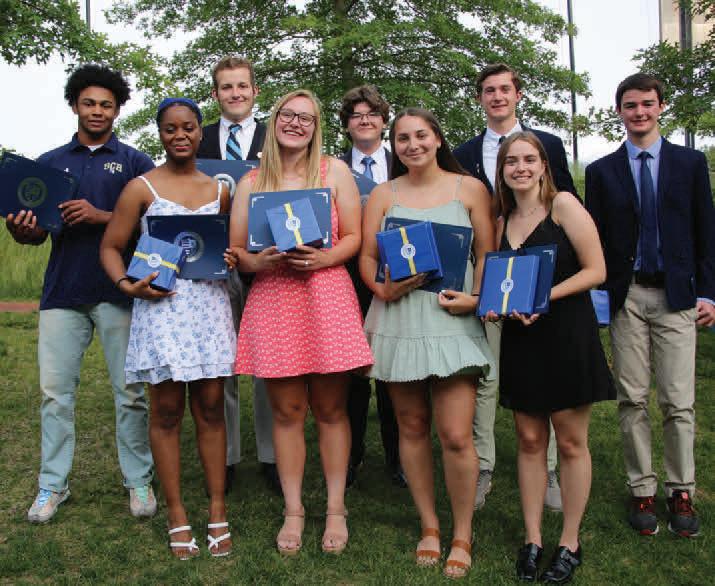
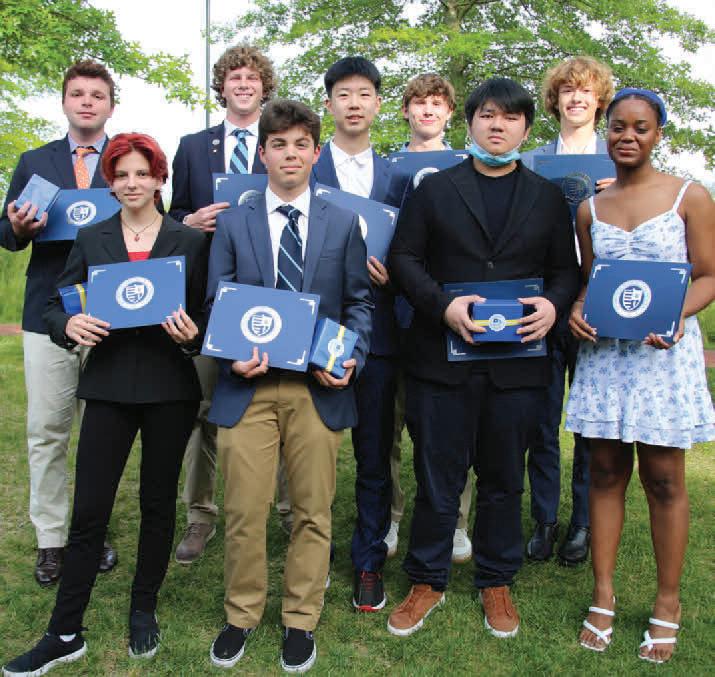
• Alexa Rhodes '22
the robert a. kingsley award
Honoring Robert Kingsley who served as teacher from 1923-1942 and as CHA headmaster from 1942 to 1965, this award is given to that student below the 12th grade who has shown the highest degree of academic promise and scholarship along with the most responsible type of leadership.
• John Gaghan '23
the kevin kirk memorial award
Given in memory of Kevin Kirk, Class of 2015, who passed away during his freshman year, this award is presented to a student, new to Upper School, who
General Academics (l to r)
Front: Naomi Becker '25, Shaun Gupte '24, Taoxi Xie '23 , Nia Hodges '22; Back: Reed McKnight '23, Isaac Schapiro '22, Jikai Yang '23, Robert Greenberg '23, Hans Bode '23
Character Awards (l to r) Front: Nia Hodges '22, Amanda Cooney '22, Alexa Rhodes '22, Eleanor Forrest '23; Back: Robert Moore, Jr. '22, Sam Halfpenny '22, Devin Gibson '24, John Gaghan '23, Patrick Gaghan '25 (Not in picture: Alassane Amadou '23.)
school magazine fall 2022 41
has made the most positive impact on the community.
• Alassane Amadou '23 (missing from photo)
the jane bell memorial award
Established to keep alive the memory of the founder of Springside School—a woman of noble personality, full of enthusiasm and courage— and to remind students that in this ever-changing world, there will always remain a need for these virtues.
• Eleanor Forrest '23
the martin henry dawson memorial award
Presented annually in memory of Tinry Dawson, Class of 1990, to that senior who has, by vote of the members of the senior class, provided the most positive support and friendship to their classmates during their years together in the Upper School.
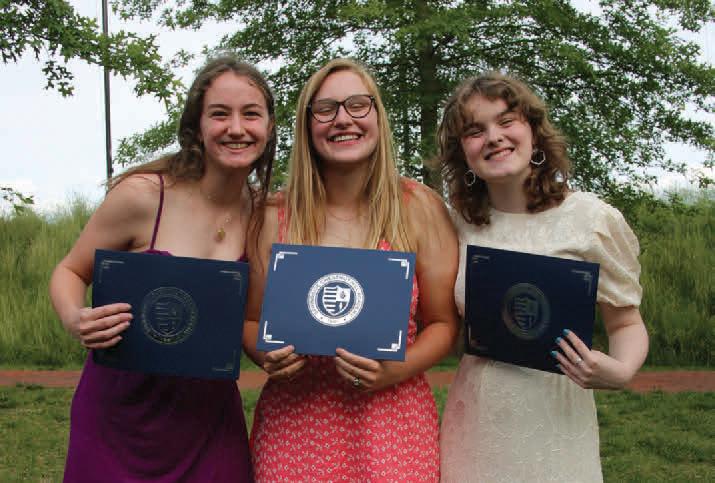
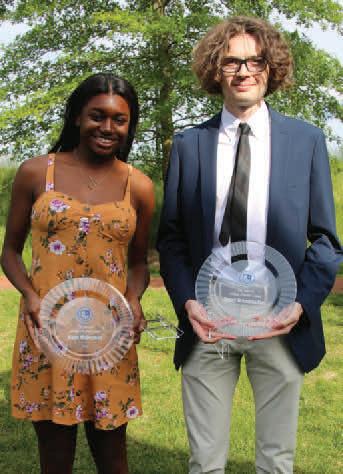
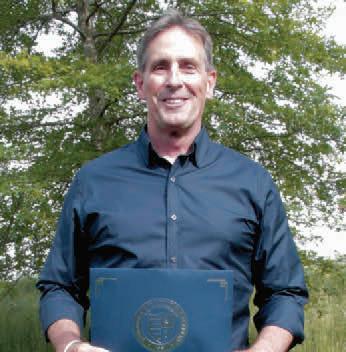
• Robert Moore, Jr '22
• Amanda Cooney '22
the sara wetherell blake award
Given to a senior in memory of Sara Wetherell Blake, Class of 1970, by vote of the senior class for service, simplicity, and sincerity.
• Alexa Rhodes '22
the alice morice memorial award
Given by vote of the faculty, in honor of Alice Morice, Class of 1924, to that student or students in the senior class who represent loyalty and devotion to the school in all aspects of school life.
• Nia Hodges '22
the edward savage memorial award
Named for Edward Savage who worked at CHA from 1915 through the 1930s taking care of athletic equipment and maintaining the athletic fields, this award is for loyalty and service to the school.
• Samuel Halfpenny '22
the caroline susan jones junior and senior awards
Given in honor of Springside’s headmistress from 1900-1921 by vote of the faculty and students to a junior and senior for academic achievement, courage, cheerfulness, fair-mindedness, good sportsmanship, influence widely felt, and the courage of her own convictions.
• Junior: Winslow Tracy '22 and Sarah Shoff '23
• Senior: Amanda Cooney '22
alumni silver and gold awards
Presented to a member of the junior and senior class who, in the judgment of the Alumni Association and in consultation with the faculty and students, best exemplifies those characteristics of leadership, academic standing, character, and service to Springside Chestnut Hill Academy.
• Silver: John Gaghan '23
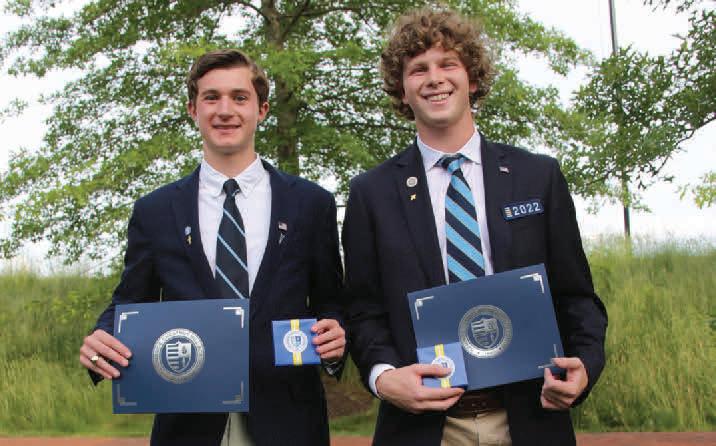
• Gold: Isaac Schapiro '22
the corning pearson ’30 service award
Given in recognition of extraordinary service to the school, longstanding commitment to the school’s educational experience, and dedication and loyalty to the school’s values and mission as personified by Corning Pearson, Class of 1930, student, athlete, educator, administrator, benefactor.
NON-DEEDED the inter-academic athletic league athletic directors’ award
Presented to multi-sport varsity athletes who have exemplified dedication to their teams and school. Recipients are considered to be outstanding representatives of the InterAc League in sportsmanship and leadership.
• Henry Brandstadter '22
• Maya McDermott '22
• Stephen Bandura Corning Pearson Award: Steve Bandura
Alumni Silver and Gold: John Gaghan '23 and Zach Schapiro '22
Inter-Academic League Athletic Director’s Award: Maya McDermott '22, Henry Brandstadter '22
Caroline Susan Jones: Winslow Tracy '23, Amanda Cooney '22, Sarah Shoff '23
school magazine fall 2022 42
FACULTY AWARDS
The following awards were given to SCH employees at the closing meeting for faculty and staff by Head of School Steve Druggan.
The Edward C. Rorer ’61 Faculty of Promise Award is given in honor of Ted Rorer, teacher, coach, trustee, and friend, this prize recognizes a faculty member who exemplifies energy, passion, love of learning, care for students, and a commitment to the school. The award includes a stipend to help the recipient pursue personal or professional growth.
• Ian Kreher and Xiaoxuan Li
The Elliston Perot Walker Teaching Excellence Award was established in 1996 by former students, parents, and friends to honor E. Perot Walker, and his wife, Susie, for years of dedicated service, excellent teaching, and commitment to students.
• Nancy Craft
• Martha Crowell
The Landreth Award is given in memory of Charles Landreth, Class of 1929 who later served as the Business Manager and Archivist of CHA. This award is given to a staff member who, for at least 10 years, has served the school with outstanding devotion.
• Frank DeTorro
• Phil Holmes
• Dave Rose
• John Cipparone
The William K. Gemmill Award awarded every three years to a teacher who exemplifies outstanding teaching, inside and outside the classroom, who exerts the positive influence that faculty have as role models of young people, and who demonstrates a deep commitment to the school community.
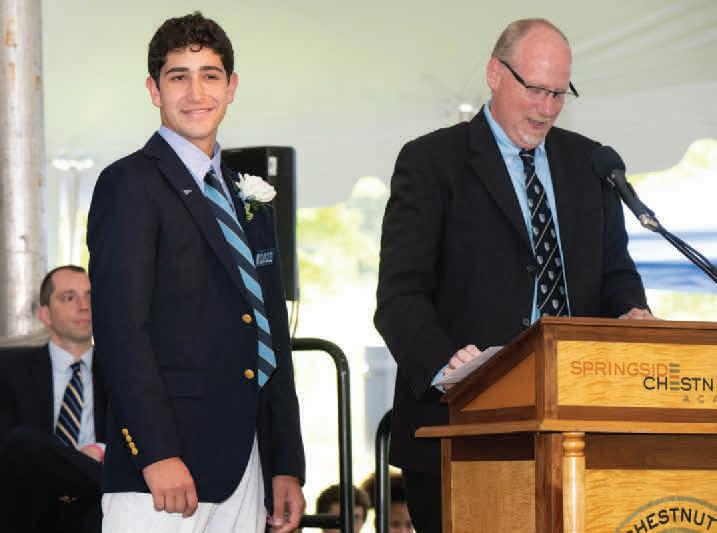
• Robert Ervin
The D. Stanley Parker '68 Award recognizes excellence in teaching, mentoring and coaching. This award was established by CHA alumni to honor the career of teacher and coach, Stan Parker '68.
• Charlotte Giovinazzo
The James F. McGlinn Award Presented to a member of the faculty or staff for his or her dedicated interest and loyal support to the athletes and athletic program.
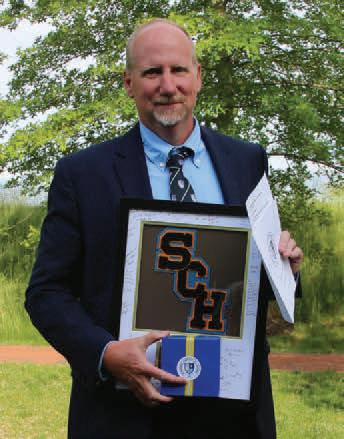
• Dr. Steve Druggan
McGlinn Award: Steve Druggan
THE SHIELD AWARD
NEW FOR 2023
THE WENDY ROMIG CONCANNON '82 PHOTOGRAPHY AWARD

Given by her classmates, family, and friends, The Wendy Romig Concannon '82 Photography Award was established in 2022 in her memory. Inspired by her myriad talents and skills, the award will be presented annually to a promising Upper School student whose photography work represents Wendy’s love of color, texture, and strong design principles.
Wendy, former Springside Alumnae Association president, passed away on July 7, 2022.
Shield Award: Aden Goldberg '22
The Shield Award, given in honor of former Board Chair Richard Hayne, recognizes a student who represents unbounded curiosity and independent thought while maintaining a courageous and resilient spirit with thoughtfulness and integrity.
• Aden Goldberg '22
school magazine fall 2022 43
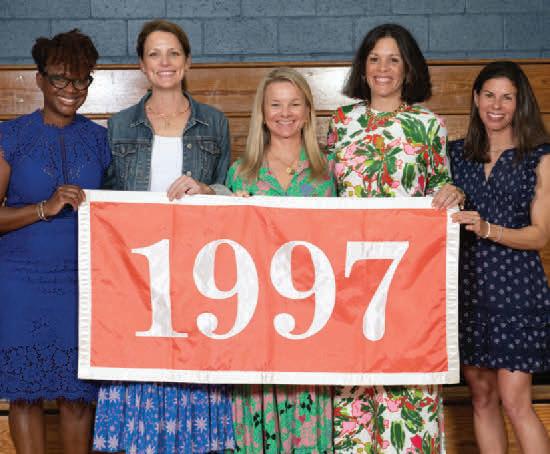

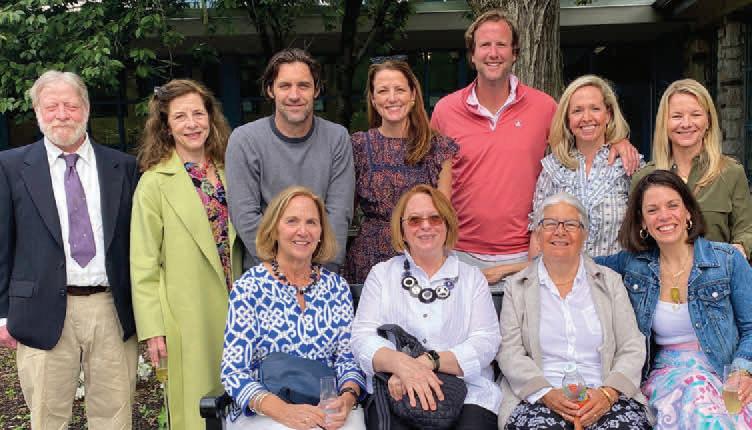
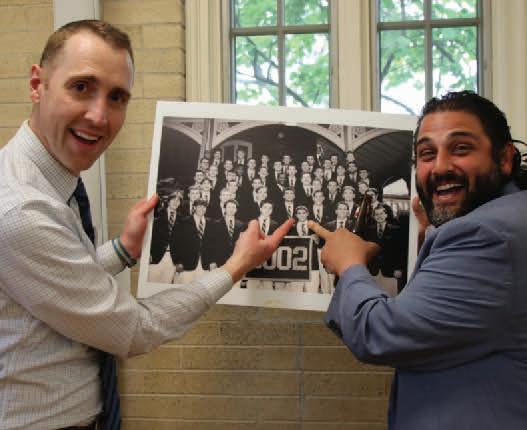
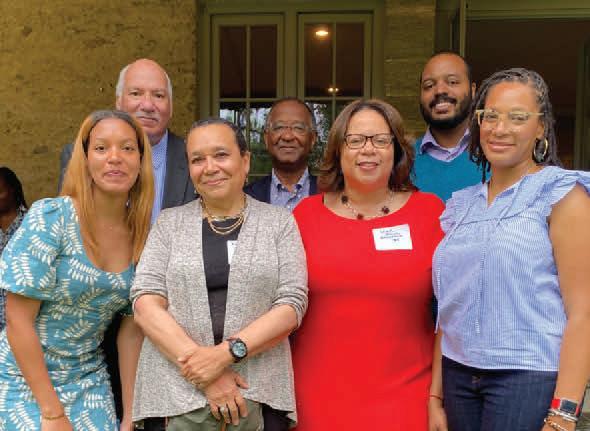
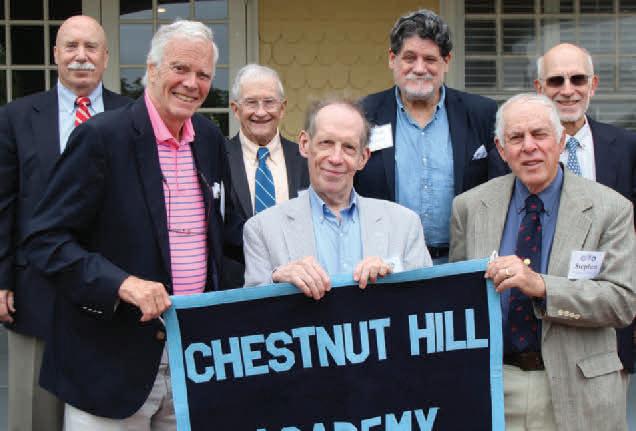
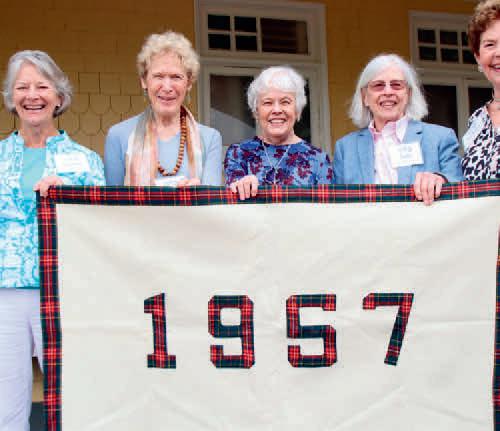
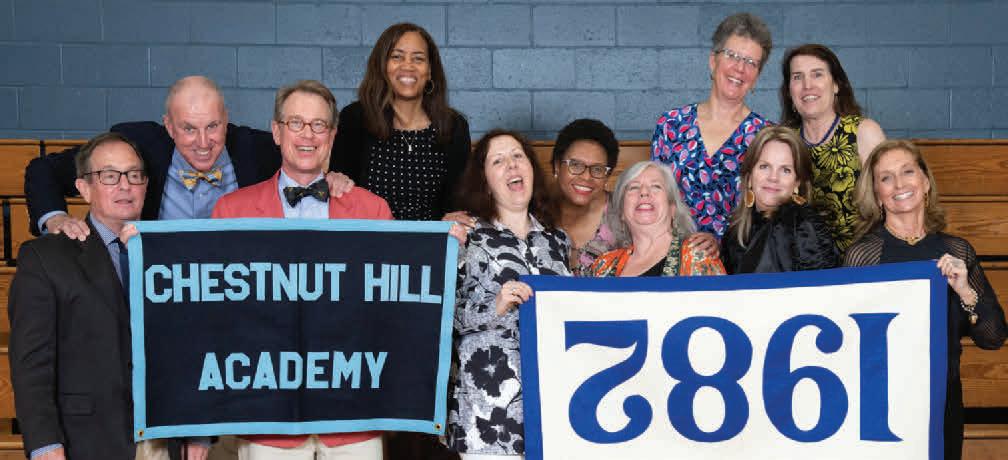
44 school magazine fall 2022 ALUMNI WEEKEND 2022
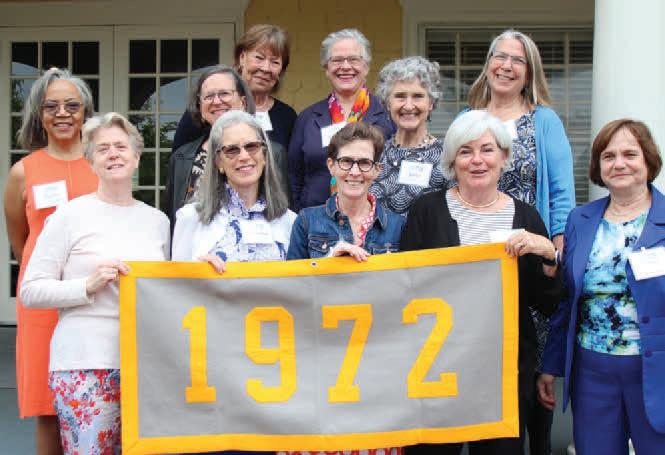
 To view more photos from Alumni Weekend visit www.sch.org/alumni
45 school magazine fall 2022
ALUMNI FAMILIES
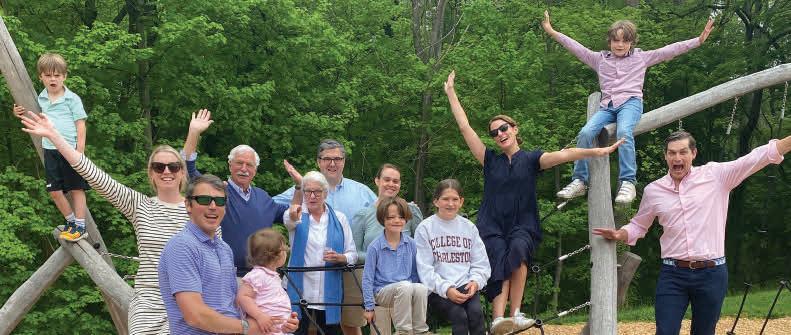
TOGETHER
Our alumni returned to campus to celebrate their class reunions. Not only did classmates celebrate together, but many family members also celebrated alumni weekend together. It was an SCH family affair!
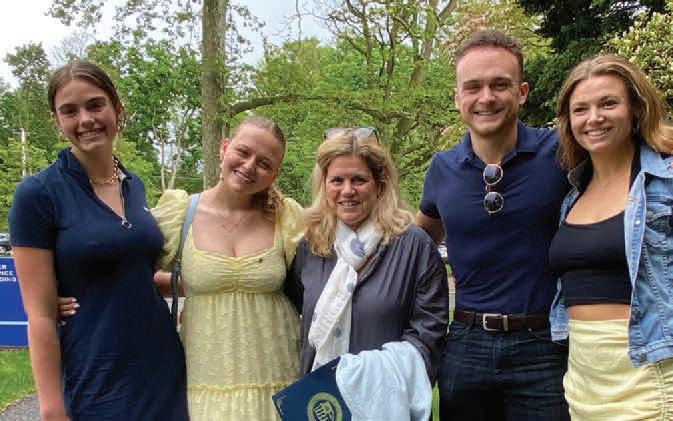

 n 1 Ben Rodgers '22 and John Rodgers '86 n 2 Greenwood Family: Jamie Greenwood '35, Emery Maine Greenwood '06, Thomas Greenwood '01, Georgia Greenwood '38, Tim Greenwood '66, Sandy Greenwood, Fraser Greenwood '03, Allison Hainline, William Salmon '35, Isabel Salmon '28, Sarah Greenwood Salmon '97, Field Salmon '33, Morgan Salmon n 3 Christine Giovinazzo '07, Alexis Giovinazzo '12 n 4 Ann Walker Kelly '82, Virginia Kelly '12 n 5 Rich Sheppard '77, Edgar Shepard Jr. '42, Ted Shepard III '72 n 6 Debbie Maine H'16, Jack Maine '11, Libbie Maine '12 n 7 Katherine O’Keefe '02, Cynthia Morrow O’Keefe '72 n 8 Patrick Toomey '99, Sue Toomey H'15, Michael Toomey '02 n 9 Emma Miller '12, Eydie Miller Ellis '77, Kim MIller '07 n 10 Addison Jansen '20, Katie Walker '20, Debbie Gress Jansen '87 H'16, Jack Walker '18, Hannah Jansen '14 n 11 John Hass '12, Ellen Nalle Hass '77, Ned Nalle '72 n 12 Elizabeth Kent P'33, P'34, P'38, Lili Frazier Kent '72
CELEBRATE
1 2 3 4 5 6 7 8 9 10 11 12 46 school magazine fall 2022
NEWS FROM OUR ALUMNI NEAR AND FAR

1940s
1947 R Barbara Brown Kling writes, “What fun for me and Jill Saunders Ashmead to be back for our 75th Reunion.”
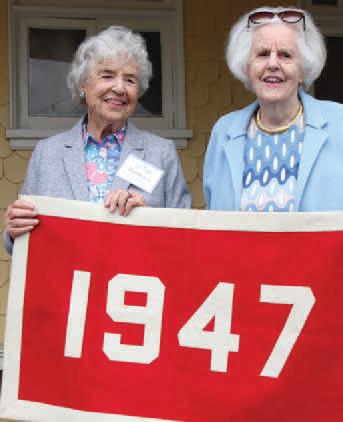
1949 Barbara Ketcham Wheaton has settled in happily at Brookhaven in Lexington, MA. “It’s full of people — mostly academics and other learned individuals who have had interesting lives.” She shares a bit of Springside history, recalling when her family hosted the pet show for the benefit of the Red Cross. “I remember the animals were mostly dogs, with a few smaller furry or feathered creatures in cages. I think it must have been in the spring of 1941, so I would have been 10, and it was at Ingleside, my mother’s parents’ home where we lived until Granddaddy died. I remember the dog, André, a Great Pyrenees. He was supposed to be an improvement over the collie that preceded him. But André was impossible: If he was on a leash and wanted
CLASS NOTES
to be somewhere, he simply dragged the person holding the other end of it along with him. I always ended up with grass stains on my skirts if I had to ‘lead’ him on a leash. He roamed Chestnut Hill’s hinterland, chasing animals that were mostly even larger than he was. Cows were a specialty. Our phone number was on his collar, and we got many phone calls from irate farmers. My parents finally disposed of him, supposedly to a farm way out in the country, but I’ll bet the ‘farmer’ was a veterinarian.”
1950s
1951
Margaret Estes Powell shares, “Life goes on as we contribute to our community, even after retirement, even after turning 80 and living in a Continuing Care Retirement Community (CCRC). I am in touch with my Springside classmate Evelyn Hamilton We have been close friends for over 70 years and she also lives in New Hampshire. My husband, Dick Powell, and I were married in 1954 and have enjoyed all these years together—happily. We met before I graduated from Springside; he spent three years in the Army, having been drafted during the Korean War. Two years ago, I founded Seniors Stewards Acting for the Environment, a nonprofit connecting the federated CCRCs in many states to work together, advocating and addressing climate change on several levels. I am a member of
a local People Acting for Change Together (PACT) organization, actively following state politics, voting legislation, education policies, gun restrictions, and abortion laws. We have sponsored candidates from both parties to speak and share ideas, and we strongly support voting in all elections. It is our position that retired citizens have much to give in this challenging time for our country. I am also enjoying my three grandchildren and two great-granddaughters!”
1953
Molly Carpenter Goodman sold her condo in Bay Head, NJ, and is living full-time in Vero Beach, FL, at John’s Island Club. Goodman shares that she “feels very safe and appreciated especially being there during the pandemic: We were well watched over. In June, I flew up there to be there for my new greatgrandson’s baptism and saw old friends again. Luckily, I am healthy and trying to stay that way, still play golf and lots of mah-jongg—a very nice life!”
1955
Harry Groome has published his latest book, Giant of the Valley. The book includes two novellas, Giant of the Valley, “a tale of a family struggling with the encroaching dementia of its aging patriarch, and The Witness, about “a revered concert pianist who pays a horrendous price to protect his Muslim granddaughters.”
1958
Patty Canby Colhoun lives in Boothbay Harbor, ME, and has been serving the Boothbay region YMCA in various capacities since she arrived in 1992, from lifeguarding to heading the capital campaign. She has received awards from the state and national YMCA for her work. “As always, I believe in being involved in the community in which I live. The town would not be what it is without the Y,” she says. She is also the senior warden for St. Columba’s Episcopal Church and chairman of the St. Andrews Village Association, which is part of Lincoln Health and Maine Health. “We work with 25 cottage owners to make sure they are receiving the aid and benefits of a retirement community. Colby Junior College, now Colby-Sawyer College (CSC), still is part of my life as I continue to write the class news column,” she says. “I was inducted into the CSC’s Athletic Hall of Fame for three sports: field hockey, basketball, and lacrosse. This was thanks to my athletic education at Springside.”
Elaine Endres Kelton says she is still loving Vail, CO, after 60 years, “I have just
47 school magazine fall 2022R = REUNION YEAR
stepped down as chair of the Colorado Mountain College (CMC) Foundation. CMC is a rural community college that in the past eight years has grown to 11 campuses in 12,000 square miles. I have six grandchildren. My husband is still working, and we are both still skiing, but far less. Two goldens are the only ‘kids’ at home now.”
1960s
1960
Sue Ellery Chapelle shares, “Most members of the Class of 1960 are turning 80 this year. Yikes! We have many years of memories from Springside and all those years since then. I’d like to share one. My daughter, Jenny, and I spent a fun week in Paris in June. This brought back many memories of one of our class’s exchange students, Michele Aigrot, who lived with my family for our senior year. We got to be good friends. I spent the following summer with her family in the town of Lons-le-Saunier in the Jura in eastern France. We spent time in Paris and Juan-les-Pins on the Riviera, as well as in Lons-le-Saunier.
We stayed in touch and visited back and forth until she died in her mid-40s of ovarian cancer. Being in Paris brought back memories, including lots from our senior year. I am lucky now to be in good health and independent. I garden, swim, play tennis, read, and try to tame my house and the too many things that I have accumulated over the years. My daughter lives near me in Baltimore. We travel together, which is a lot of fun. Please let me know if you will be near Baltimore. It would be great to get together!”
1961 Selby Fleming McPhee published a new book: Making It Up: The Vassar Class of '65 on the Cusp of Change.
Brown, mbrown@sch.org, for more information.
Dulcy Renner Kushmore writes, “We were all so impressed with the school as it is today! We are planning our next get-together of 1962 classmates, “The Girls,” for our 80th birthdays in 2024. Great fun staying connected with so many of our classmates!”
Guy Fritts traveled to the Riviera and the highlight was spending time with classmate Francois Midorge and his wife. They spent five days together sampling the delicious food of France and catching up. Fritts gave Midorge an old CHA sweatshirt and Midorge gave him a French chapeau. Fritts says, “The trip and our correspondence over the years proves that old friendships from prep school never go away or dissipate in any way!”
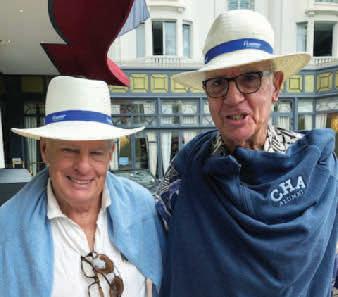
1963
Theodore M. (Ted) Hammett has two granddaughters, Ignazia (“Iggy”) who is three, and Alessia (“Sisi”) who is one. In addition, his book My Memoir, Entwined with Vietnam: A Reluctant Marine’s Tour and Return, was published by McFarland & Co. this summer.
Steven K. Orman, M.D. attended SCH graduation in May. Two grandsons are now his fellow alumni, David Lubell '22 and Jordan Lubell '18. Their mother, Heather Orman-Lubell M.D., is the medical director at SCH.
Polk Smith Foundation, as well as co-chair of the board of Independent Curators International and a board member of several other artist-endowed foundations, trusts, and art-related committees, including the Fabric Workshop and Museum in Philadelphia.
“To my surprise, it has been, professionally, the busiest time of my life,” he says.
His wife, Katy Homans, is a graphic designer specializing in art books and their two daughters are living in Los Angeles.
1966
Alyn R. Caulk recently moved to Chestnut Hill, practically next door to Springside, and is amazed and thrilled at what SCH has become!
1968
Nina Fleitas Hanson is now doing integrative massage therapy by adding Chinese techniques for the deeper massages and lymph drainage for swelling. At the moment, she has two interns to help with the waiting list. “Every six weeks I learn newer techniques and nuances than what we already know. This is a dynamic field and I love being on the cutting edge.”
1969
1962
The Springside Class of 1962 celebrated its 60th reunion in May with 17 classmates attending. The class also produced a cookbook, Recipes & Remembrances, with recipes from 38 women participating. All proceeds from the sale of the book will go to SCH’s Center for Entrepreneurial Leadership (CEL). If you are interested in buying one for yourself or a friend, contact Melissa
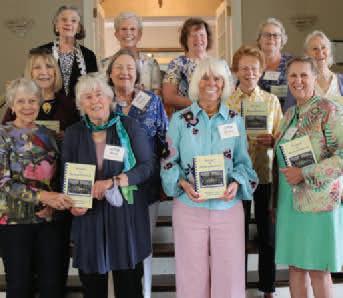
1965
Patterson Sims continues his career in the visual arts, having worked in a SoHo gallery, then at the Whitney Museum of American Art, the Seattle Art Museum, The Museum of Modern Art in New York, and the Montclair Art Museum as its director. He now serves as the managing director of the Saul Steinberg Foundation and president of the Leon
Steve Pearson shares: “Health issues have presented themselves over the past couple of years. Earlier this year, I celebrated the two-year anniversary of my stem cell transplant and massive chemo injection, which was the culmination of a number of medical procedures all designed to beat down my multiple myeloma into a state of full remission. And, I’m pleased
48 school magazine fall 2022
CLASS NOTES
to say, we have done just that. With the aid of my trusty caregiver, Betsy, we have navigated along this journey rather successfully. Now, we’re battling a case of prostate cancer, which we caught very early in its development. After four months of hormone therapy followed by nine weeks of radiation, we think we have it eradicated. Time will tell.” On the business front, Pearson continues to market his voiceover business, saying, “It’s been an exciting journey replete with much relationship building and the periodic financial transaction.”
1970s
1970
Robert M. Peck, author, naturalist, and photographer, has been elected to the American Philosophical Society. The “oldest learned society in the U.S.” honors and engages distinguished scientists, humanists, social scientists, and leaders in civic and cultural affairs.
Members have included George Washington, Charles Darwin, Marie Curie, and Albert Einstein. Peck is the curator of Art and Artifacts and senior fellow at the Academy of Natural Sciences of Drexel University. In 2020, we proudly honored him as the CHA Alumnus of the Year.
Andrew Ross is excited to share that he had the opportunity this summer to visit his newest granddaughter, Weezie, and his daughter, Lucy Ross '04. While spending time with his daughter and two older granddaughters, they were able to capture a threegeneration photo.
1972 R Cynthia O’Keefe shares that she and her husband, Bill, retired in 2020 after they shared a new computer to work from home for two months. “We considered those two months to be a practice run for our retirement. We are loving retirement: some golf, lots of bridge, a couple of trips (more to come, we hope), gardening, and trying to clean out our house (the house my parents built in 1968 and left fully furnished). We help Katherine with dog care and getting things done around her new old house in Mt. Airy, PA. We are looking forward to meeting Peter and Emily’s baby boy, our first grandchild who is expected in September. This year has introduced us to some health issues that our age group commonly encounters, even though we seem to be fairly healthy. Overall, I feel very fortunate.” 1975
Mark A Smith is retired and living in Potter County, PA, and Venice, FL.
1977 R Judy McCabe
Jarvis painted the Wissahickon Inn and the Head of School portrait of Steve Druggan that now hangs in the Head of School portrait gallery in The Exchange. Jarvis spent the winter months in FL, painting and exploring. She discovered Tarpon Springs,
Dunedin, and St. Petersburg, among other towns. She also met up with Pam Bussey '75, “did a little jig,” and took in an arts festival in Lake Mary, FL. “We had a blast,” she says. In the fall, Jarvis will be traveling and painting in Europe.
Wanda Stewart, the executive director of Common Visions, was awarded the 2022 Distinguished Alumna Award by the Springside Alumnae Association for her work related to environmental stewardship. “What is most amazing,” she says, “is the donation of $10,000 to our organization from my classmates. I’d like to thank everyone from the bottom of my heart. Your support is resourcing earth (and people) work in West Oakland schools and neighborhoods. We deeply appreciate you, Philly! It was amazing to visit Philly after three years gone. It was wonderful to bathe in the love of the Class of 1977! It reawakened my appreciation of how green Philadelphia and the campus are (‘Wow! Water comes from the sky here,’ said the Californian in me) and how much the Springside relationships formed the best parts of me.” Read more about Stewart and her work on page 20.
SC. Glendinning recently started a new career as chief growth officer for 1031 Corp, which provides real estate investment services for those looking to do 1031 tax-deferred exchanges.
John Andrew White retired from teaching in 2020 and also recently celebrated his 27th wedding anniversary.
1979
Jane Mebus Toczek is directing Miss Bennet: Christmas at Pemberley, which will open at The Stagecrafters Theater in Chestnut Hill on November 25, and run through December 11. Toczek shares, “It was a delight to be part of Players at The Rec in Upper School, and for the past several decades to have continued my theater journey behind the scenes and onstage at Stagecrafters.” For more information: www. thestagecrafters.org.
1980s
1982 R Josh Pearson was the principal editor for the documentary Summer of Soul, which won both a Grammy and an Academy Award in 2022, among other awards. He also won the SCH 2022 Players Hall of Fame Award. Read more about Pearson and his work on page 27.
Rebecca Smith is still living in Mexico City, specializing in the import and export of products. She is also the proud mother of William Albert, living in New York City, and Gabriella Albert, living in Silicon Valley, CA.
1978
In 2021, Bruce Glendinning and his wife, Heather, moved to Seabrook Island,
Susan Matlack Troemel (Suzy) has retired after 30 years of teaching and working in leadership in
49 school magazine fall 2022
CLASS NOTES
CLASS NOTES
public elementary schools and is now a licensed PA realtor, working with Quinn & Wilson in Jenkintown. “Although they’re different in many ways,” she writes, “both careers essentially come down to building relationships with people— something I love to do! Both my sons are now out of school. Brian (25) is a CPA working for Ernst & Young and living in Princeton, NJ. Christian (22) graduated from Lafayette College and is pursuing a career in engineering technical writing and applying to graduate schools. My husband, George, also retired from teaching and is working part-time with grown-ups!”
1983
Anne Ueland Bailey, co-founder and CEO of Form the Future CIC, has been named one of the four winners of the 2022 Cambridge Social Innovation Prize, awarded by Trinity Hall and the Cambridge Centre for Social Innovation at the University of Cambridge. These awards are made annually to extraordinary founder-CEOs of scaleup (growth stage) social enterprises to support their development as leaders. The prize also includes mentoring from experts at Cambridge Judge Business School and support from an expanding community of social innovators at Trinity Hall, which aims to help the winners develop the skills, resources, and networks they need to create more impact from their work.
Carolyn Sawin and her daughter recently raised over $2,500 to help children and families displaced by the war in Ukraine by selling t-shirts
she designed. The fundraiser was her daughter’s idea, as was the decision to donate the proceeds to the nonprofit CARE, which she chose because of the organization’s humanitarian work in Ukraine.
1984
An exhibition of Bibby Detweiler Loring’s current work opens at the Artemis Gallery in Northeast Harbor, ME, on July 21, 2022 (Instagram: @bibby_loring_art). She also continues to share a studio and gallery space with Christy Morse Kelly '87 in Chestnut Hill called The Line Gallery (Instagram: @thelinegallerystudio).
Robert H. Spratt Jr. is pleased to announce the birth of his first grandchild, Robert H. Spratt IV, whose nickname will be Hugh.
1987
Dr. Rodney Taylor was named chair of the Department of Otorhinolaryngology–Head and Neck Surgery at the University of Maryland School of Medicine in 2019. On June 1, he was proud to receive an endowed chair gift from the Cleland Family and was installed as the Bruce and Isobel Cleland Chair of Otorhinolaryngology–Head and Neck Surgery. His dear friend and high school classmate Dr. G. Michael Lemole '87 and his wife, Ruth, were in attendance for the Investiture.
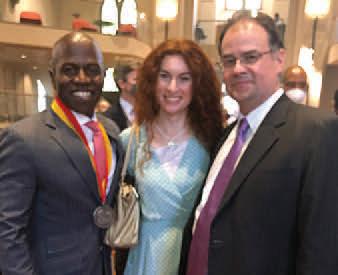
1988
Tracy Welsh has moved back to Philadelphia from Oakland, CA, and now resides again in Chestnut Hill after 34 years away.
1989
Casting director and actor Lesley Wolff is joining the YouTube comedy network and studio Smosh as director of on-air talent. She will oversee the current cast of Smosh, lead casting efforts—including scouting for new talent—and develop partnerships with creators across the digital landscape.
1990s
1991
Amanda Harberg was this year’s Springside Class of 1957 Artist in Residence. Amanda, an accomplished composer, and Erica Peel, a piccoloist with the Philadelphia Orchestra, performed for our Lower, Middle, and Upper School students. The Springside Class of 1957 enjoyed lunch with Amanda and the arts faculty after a performance with students.
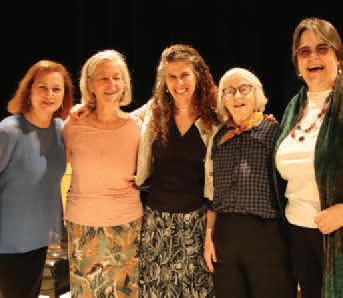
years on the road, time at home during the pandemic made Shaw nostalgic for childhood comforts and inspired a business concept. “Koffmeyer’s Old Fashioned Cookies,” a Philadelphia tradition once located at Head House Square, was at the top of her list of favorites. In addition to the cookies, the shop’s inventory, gathered from her years of travel, is a combination of sustainable and fair-trade goods, plus other unique finds. Visit samshawstreatery.com for online shopping!
1992 R On January 26, 2022, Sam Shaw officially opened the doors to her culinary and lifestyle boutique, Sam Shaw’s Treatery in Philadelphia. She enjoyed more than two decades as an operations executive in the world of professional tennis. After
2000s
2000
Chioma Azi started a new position in August 2021 as the national legal director with a New York-based nonprofit organization called African Communities Together. She oversees all legal departments of the organization and assists with national immigration litigation strategy, national African community coalition building, and legal funding strategy.
2001
On May 6, Esmée Kingsley Martin was born at Virginia Hospital Center to proud parents Ashley Martin Bundy and Tim Bundy.
school magazine fall 2022 50
Lee Stabert and her family are moving from Philadelphia to Cambridge, MA. “After many years in the brutal melee that is the academic job market, my husband has accepted a tenure-track gig as a history professor at Bentley University. My main concerns are: talking too much about the time Tom Brady dropped that QB option in the Super Bowl (doubt it’s a great way to make friends) and being eaten by a great white on Cape Cod. Also, having no friends and not owning warm enough clothes. I’ll be continuing my writing/editing contract work and will have lots of time for a daytime coffee, afternoon beer, or walk along the Charles— that’s a thing, right? We have a one-year-old (Ruth) and a five-year-old (June), so any tips on life with kids up there would be extra helpful.”
2002 R Kristine Chin, Bess Staebler DeLuca, and Maria Sordoni Hudacek enjoyed alumni weekend with their families at the alumni playdate on the McCausland Lower School playground.
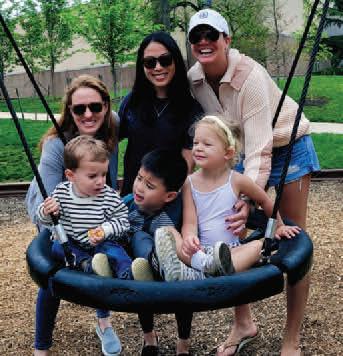
Raina Yancey, an attorney, recently took a position as an assistant vice president and senior counsel in Global Technology for the Corporate and Investment Bank at JP Morgan Chase in Chicago. She is the owner of “The Black Journey: Black History Walking Tour” in Philadelphia where she gives tours to visitors from around the world. Tours are every Saturday in Center City (Instagram: @ theblackjourney). She also shares, “I joined the seven continent club by traveling to Antarctica in January 2022.”
2003
Nathan J. Carr-Whealy was appointed general counsel of Community Council Health Systems in 2021 where he represents the company on all legal matters related to their business as a nonprofit mental health organization and school. He writes, “My work coincides with the strategic mission of the organization as the needs for mental health in the city continue to evolve, and our business model continues to adapt. I maintain my law practice in Lansdale, PA, handling business, real estate, estate administration, and wills/trusts. My band, Famous & Fallen, is back to playing shows after a twoyear COVID hiatus. My most recent album, Self Untitled EP, was released in February. In the fall, I will return to my alma mater in the evenings to teach one Real Estate Law course at Temple University Fox School of Business.”
Ali Pearson Webster, her husband, Whit, and big sister, Grace, welcomed Charles “Charlie” Whitney Webster IV into the world on July 4, “our Independence Day gift
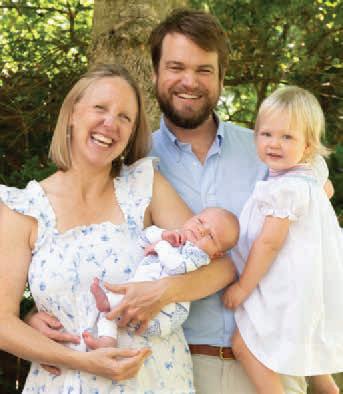
for life.” Grace celebrated her brother’s arrival by ringing the Pearson’s replica Liberty Bell four times in his honor and “has already taken to being a gentle and loving big sister.”
2009, which we share with our two rescue terriers, Freddie and Fleur. I was also named director of Digital Communications & Philanthropy at San Diego Humane Society, which is a national leader in the field of animal welfare.” See wedding photos in Marriages section.
2006
Kelly Logan Henry and Quinn Henry '03 welcomed their second son, Reid Thomas Henry, on March 20, 2022. He joins older son, Logan Michael Henry, who is four.
2008
2004
Morgan Berman joined Life Science Cares Philadelphia as its executive director in September 2021. She also launched a new startup, Glitter, a crowd-sourced litter removal service for urban neighborhoods, in August 2021. In addition, she transitioned from CEO of MilkCrate to board chair, passing on the leadership role to allow her to pursue a new startup and a new leadership role in local philanthropy.
Lucy Ross and her husband, Greg, welcomed another girl to the family in May. Weezie joins her older sisters, Penny and Susie.
Lucy Rice Culp and Chip Culp welcomed a baby girl, Campbell Gloria Culp, on January 7, 2022.
2005
Wyn Furman writes, “In addition to (sort of) getting married twice, my husband and I recently purchased our first home in San Diego, CA, where we’ve lived since
Grace Ortelere began working as a manager in strategy consulting at Strategy& of PricewaterhouseCoopers and also bought an apartment with her partner in the Park Slope neighborhood of Brooklyn, NY. Grace is also training to run in the Chicago Marathon in October, which will be her fifth marathon.
2009
After more than seven years of working in team and league sports marketing roles, Tom Gargan recently joined Wasserman, a global sports, entertainment, and talent management agency based in Los Angeles.
school magazine fall 2022 51 CLASS NOTES
CLASS NOTES
2010s
2010
Ethan Wang, who is pursuing his M.B.A. at the Wharton School of The University of Pennsylvania, was recently named one of six young alumni from Indiana University of Pennsylvania (IUP) to be awarded the Young Alumni Achiever Award. Wang (below, right) is an investment product manager at Vanguard Group in Malvern, PA. The Young Alumni Achievement Awards was created to recognize recent IUP graduates (less than 15 years out) who demonstrate excellence in their fields and to engage award recipients with current IUP students as examples of exceptional achievement.
The skills and drills the youth enjoyed are based on USA Football’s Player Progression Development Model, ensuring children are learning in an ageappropriate manner and creating an ideal atmosphere for FUN!
Additionally, the NFL Foundation pitched in with swag and refreshments for the event.
SCH Point of Pride:
Both Ibraheim and Rashad will be inducted into the SCH Athletic Hall of Fame in October.
2011 Summer Nagy graduated with an M.B.A. from Northwestern University’s Kellogg School of Management in June and joined the Retail Leadership Development Program at Amazon in July.
2012 R Dena O’Larnic graduated from Midwestern University’s College of Dental Medicine. She will be completing a residency at St. Christopher’s Hospital for Children.
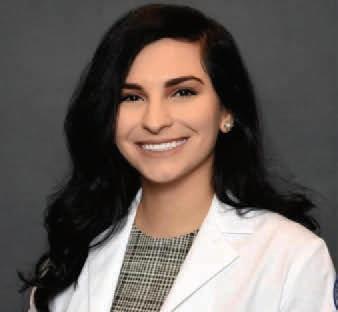
Ibraheim Campbell '10, a seven-year NFL veteran and retiree, and his brother, Rashad Campbell '08, a member of the SCH Board of Trustees, held a free football clinic for area athletes at Maguire Stadium this past summer.
More than 100 students, ages 5-15, participated in “Ibraheim Campbell’s 5th Annual Youth Football Camp.” Rashad says, “Ib’s goal is to serve as a positive role model and to instill life lessons that extend well beyond the field.”

2013
Forrest Rall was listed on the 2022 “Metropolis Future 100” as one of the top graduating architecture and interior design students in the U.S. and Canada. Students were nominated by their instructors and mentors and were chosen by the Metropolis magazine team. Rall completed his graduate
Rashad '08 (left) and Ibraheim '10 Campbell
degree in architecture from University at Buffalo.
2014
Cole Brown was this year’s SCH Dempsey Writer-inResidence. Read more about his visit to SCH on page 6.
Melissa Moxey is working on an M.Ed. in educational leadership and policy with a certificate in educational policy development. Moxey says, “My goal is to make education more accessible and equitable for students with disabilities.”
Xander Pacilio helped coach Upper Arlington High School’s mens lacrosse team in OH to its 17th state title, the first title since 2016.
2015
Brian Hamilton, an ambassador to The One Movement, returned to SCH in May to discuss social impact businesses. Read about his visit on page 6.
2018
Mo’ne Davis, who was the first girl to pitch a shutout in the Little League World Series in 2014 at age 13, is
now a student at Hampton University in Virginia. In June, she was profiled by The Philadelphia Inquirer for their Title IX anniversary series.
Tess Gallagher is acting as both a concept artist and scientific consultant for a new paleontology exhibit that will be featured in a museum in Switzerland. “I can’t share too many details at the moment,” she says, “but I’m incredibly excited as I’ve never done anything like this before. Additionally, I cannot begin to say how excited I am that the exhibit will be partially centered around my research on Diplodocus skin!”
Anthony Marrone graduated from East Stroudsburg University in December with summa cum laude honors and is currently working in sales at Welldoc Inc. in the pharmaceutical industry.
Earl Patterson welcomed a daughter, Loretta Elise Breault-Patterson, on January 21, 2022.
Sean Terrey moved to Washington, D.C., with
school magazine fall 2022 52
his girlfriend to start an internship in June on the Hill with Rep. Madeleine Dean and her staff. He says, “I could not be more excited to be serving my home district from our nation’s capital!”
Samiyah Wardlaw will be filming her first feature film this summer and is the writer, director, and executive producer on the project. She says, “I recently launched an Indiegogo campaign for my project and am currently in the process of raising money to be able to complete the film. The film is a heartwarming coming-of-age summer romance story. My film, Burn Out, is Say Anything meets The Spectacular Now. It deals with “burnout culture,” a problem that is affecting many people around the world. While this story is a work of fiction, our personal experiences have inspired this film. Burn Out will not only be an entertaining film but a needed film for upcoming graduates and beyond!”
2019
Juan Castellanos was recently promoted to become a full-time professional dancer with Charlotte Ballet. In addition to many principal roles with
the Metropolitan Ballet Academy in Jenkintown, PA, and roles with various other companies, his summer studies were with the Charlotte Ballet, San Francisco Ballet, Pennsylvania Ballet, and Next Generation Ballet in Tampa, FL.
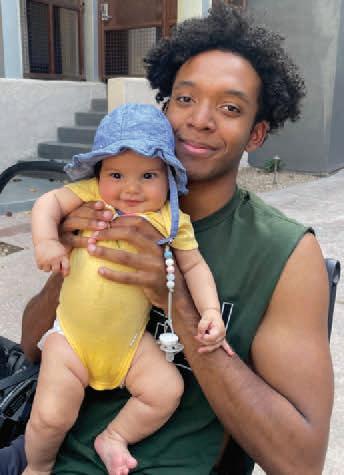
Sarah Edelson played field hockey for Team USA at the Maccabiah Games in Israel this summer. The team defeated Argentina in the final game with double overtime to win the gold medal. Edelson is a senior at Amherst college and participated in our Middle School virtual assembly for National Girls & Women in Sports Day.
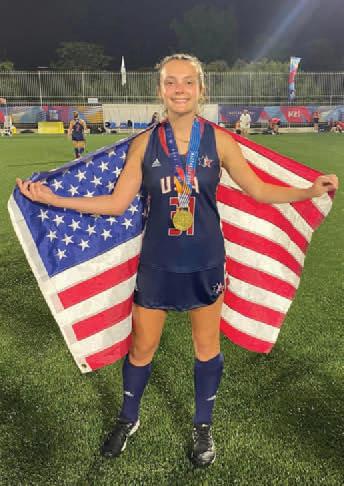
Kara Kniezewski is a
midshipman at the United States Naval Academy (USNA) and was recently selected as a 2022 Barry Goldwater Scholar. The USNA reports, “At the Naval Academy, Kara is an astrophysics major and has earned a place on the Superintendent’s
List for three consecutive years, the highest level of recognition for success in academics, conduct, military performance, and physical readiness at the Naval Academy.” Kniezewski is the current women’s representative for the USNA Marathon Team and has been selected as next year’s team president. She was also selected by her peers to receive the NavyMarine Corps Association Leadership Award for her exemplary embodiment of the highest ideals of leadership.
Thank you for your submissions. Class Notes has been edited for length and clarity.
in memoriam
all dates are included through july 31, 2022
ALUMNI
1939
Patricia Kenworth Nuckols
1946 Anne Newbold Godfrey 1947
Isabel Allan Coxe
1948
Elizabeth Tucker Ripley
1949 Charles R. Wood
1950 Rita Platt Coney Elisabeth Turman Ervin
1956
Jane Kelley Deming Gertrude Rowland Healy
1957 William Welsh George Woodward 1958 Elizabeth Frey Clark 1960 Tallmadge Starr Renault 1962 Susan Hine Stanley 1963
Pauline Brock Houghton
1964
Katherine Long Lit 1967 Ellen Ludlow 1970 Linda Schumann Civitello
1973 Steve Killough
1980
Leigh Rebmann Oler 1982
Wendy Romig Concannon 1990 Michael A. Pasciullo III
2017 William Newbold
FORMER FACULTY/ STAFF
Carol Baldridge Fairlee Gamble Leonard F. Morrow Clarence W. Rhoda
TRUSTEES
Betty Sherman Mark van der Helm
school magazine fall 2022 53 CLASS NOTES
CLASS NOTES
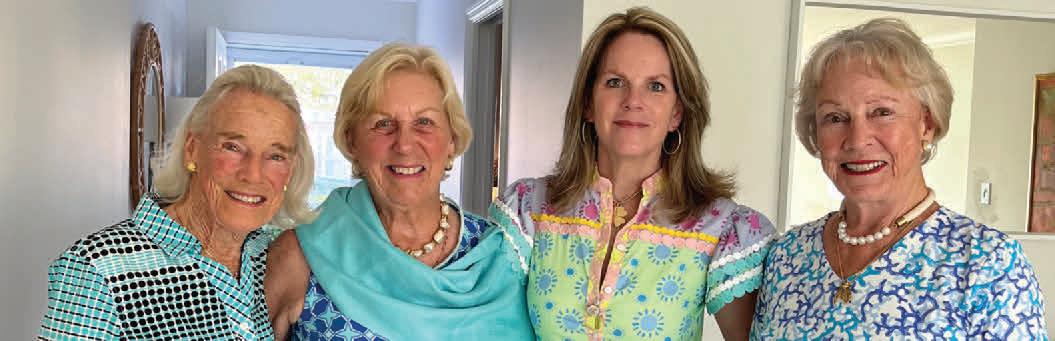
Chioma Azi '00 married Daniel Comboni Owinya on December 6, 2021. Due to the pandemic, they had a small courthouse wedding and are planning something bigger in the future.


 The CHA & Springside Alumni Associations hosted current and newly-enrolled alumni families for an end-of-year get-together on the development porch at the Inn.
Molly Carpenter Goodman ‘53, Elizabeth Hagar Perrott '55, and Sallie Carpenter Brooke '54 joined host Ann Walker Kelly '82 (second from the right) at a gathering for Springside and CHA alumni in Vero Beach, FL. Over 25 alumni and friends, some of whom did not know initially that they were fellow alumni, were in attendance.
Classmates Amy Alsentzer Whitworth '03, Lindsay Raden Dwyer '03, and Maria Sordoni Hudacek '02 enjoyed a summer weekend together in Harveys Lake, PA.
Mark Anspach '13 married Grace Schroeder on June 11, 2022, at Children’s Beach House in Lewes, DE. The couple is living in Delaware.
The CHA & Springside Alumni Associations hosted current and newly-enrolled alumni families for an end-of-year get-together on the development porch at the Inn.
Molly Carpenter Goodman ‘53, Elizabeth Hagar Perrott '55, and Sallie Carpenter Brooke '54 joined host Ann Walker Kelly '82 (second from the right) at a gathering for Springside and CHA alumni in Vero Beach, FL. Over 25 alumni and friends, some of whom did not know initially that they were fellow alumni, were in attendance.
Classmates Amy Alsentzer Whitworth '03, Lindsay Raden Dwyer '03, and Maria Sordoni Hudacek '02 enjoyed a summer weekend together in Harveys Lake, PA.
Mark Anspach '13 married Grace Schroeder on June 11, 2022, at Children’s Beach House in Lewes, DE. The couple is living in Delaware.
school magazine fall 2022 54 n
Ian Caplan '13 married Jacqueline Lapeyre on May 21 in Chester, NY. Many friends and classmates were there to celebrate! From left: Zach Gerard '13, Rob Ervin H'08, Matt Kozemchak '13, Graham Ervin '13, Kevin Voye '13, Peter Vlahakis '13, Ian Caplan '13, Sam Schardt '13, Christian Dorff '13, Evan Fireman '13, Forrest Rall '13, Peter Nicolo '13, and John Henry '13.

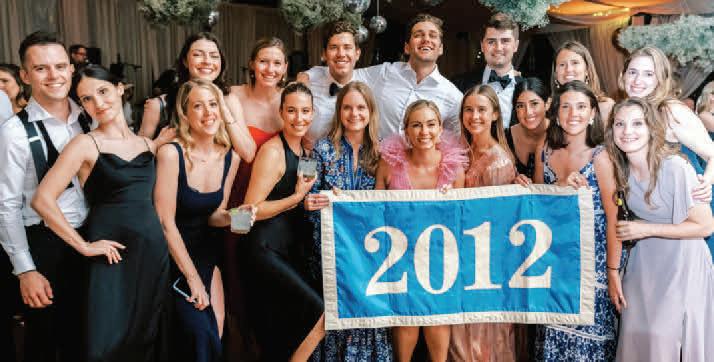

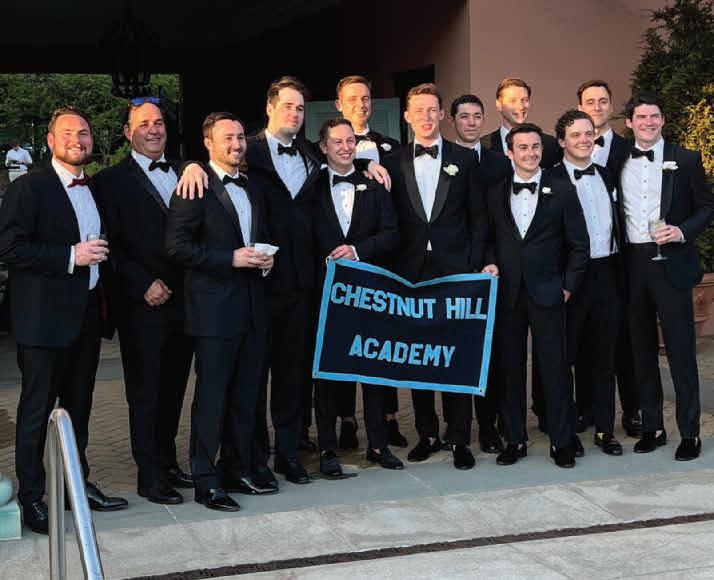 Wyn Furman '05 After postponing more traditional plans due to the pandemic, Wyn Furman '05 tied the knot at “The Marriage Hut” (the actual name of the courthouse in San Diego, CA) in October 2020. In October 2021, she celebrated her marriage to Ian MacNeill with family and friends at The Highlands Mansion & Gardens in Fort Washington, PA. Her younger sister, Wallis (Furman) Hamilton '08, served as matron of honor and, she says, “did a much better job than I did as her maid of honor in 2018!”
Sydney Fitzpatrick '12 and Connor Rudnicki were married on May 26, 2022, at Water Works in Philadelphia, PA. SCH alumni in the wedding party included Janie Grace Robertson '12, serving as the maid of honor, and Carly Schwartz '12, serving as a bridesmaid. The wedding was attended by many other 2012 SCH alumni. Fitzpatrick is a pediatric nurse practitioner and Rudnicki is an anesthesiology resident in New Orleans, LA
Todd Cramer '10 and Meredith Spann '13 were married May 21, 2022, on Kiawah Island, SC. CHA alumni Dylan Tracy, Ed McCrossen, John Canning, Robert Fink, Michael Rhoads, Patrick Connaghan, and Maud Simms were there to witness the special day.
Devin McInerney '09 and Steel Russell '09 were married on February 18, 2022, at Union Trust in Philadelphia. They were surround ed by many fellow SCH alumni: Brooks Russell, Hunter Bennett, Sean Morrison, Amanda Lownes, Sarah Thom, Marissa Pownall, Gianna Pownall, Elizabeth Harris, Pam Harris, Brian Altemus, Courtney Altemus, Tom Harris, Matt Flannery, Bradley Clements, George Hearn, Phil Thomas, Leslie Haddow, Sydney Redpath, and Chris McInerney.
Wyn Furman '05 After postponing more traditional plans due to the pandemic, Wyn Furman '05 tied the knot at “The Marriage Hut” (the actual name of the courthouse in San Diego, CA) in October 2020. In October 2021, she celebrated her marriage to Ian MacNeill with family and friends at The Highlands Mansion & Gardens in Fort Washington, PA. Her younger sister, Wallis (Furman) Hamilton '08, served as matron of honor and, she says, “did a much better job than I did as her maid of honor in 2018!”
Sydney Fitzpatrick '12 and Connor Rudnicki were married on May 26, 2022, at Water Works in Philadelphia, PA. SCH alumni in the wedding party included Janie Grace Robertson '12, serving as the maid of honor, and Carly Schwartz '12, serving as a bridesmaid. The wedding was attended by many other 2012 SCH alumni. Fitzpatrick is a pediatric nurse practitioner and Rudnicki is an anesthesiology resident in New Orleans, LA
Todd Cramer '10 and Meredith Spann '13 were married May 21, 2022, on Kiawah Island, SC. CHA alumni Dylan Tracy, Ed McCrossen, John Canning, Robert Fink, Michael Rhoads, Patrick Connaghan, and Maud Simms were there to witness the special day.
Devin McInerney '09 and Steel Russell '09 were married on February 18, 2022, at Union Trust in Philadelphia. They were surround ed by many fellow SCH alumni: Brooks Russell, Hunter Bennett, Sean Morrison, Amanda Lownes, Sarah Thom, Marissa Pownall, Gianna Pownall, Elizabeth Harris, Pam Harris, Brian Altemus, Courtney Altemus, Tom Harris, Matt Flannery, Bradley Clements, George Hearn, Phil Thomas, Leslie Haddow, Sydney Redpath, and Chris McInerney.
MARRIAGES
school magazine fall 2022 55 KEEP IN TOUCH CLASS NOTES Wedding bells? New baby? Career change? Share your news at alumni@sch.org
SCH senior leaders enjoy the sunrise during an Outward Bound trip in August.

Upcoming Events
SCH Convocation
Friday, September 23
Barbara Crawford Gallery Exhibition Opening
Chronic Creativity: Art + Activism by Jessie James Lewis ‘65 Thursday, October 13
Homecoming Weekend
Friday, October 21 and Saturday, October 22
Hall of Fame Induction Celebration
Friday, October 21
ibraheim campbell ’10 rashad campbell ’08 sean plunkett ’04 jennifer sager ’12 taylor ellis-watson washington ’11 dustin wilson ’12 brielle white ’02 cha 1978 soccer team
Homecoming Family Fair
Saturday, October 22
Alumni Happy Hour
Wednesday, November 23
Alumni Weekend
Celebrating the classes ending in 3 and 8
Friday, May 5 and Saturday, May 6
For more information: www.sch.org/calendar
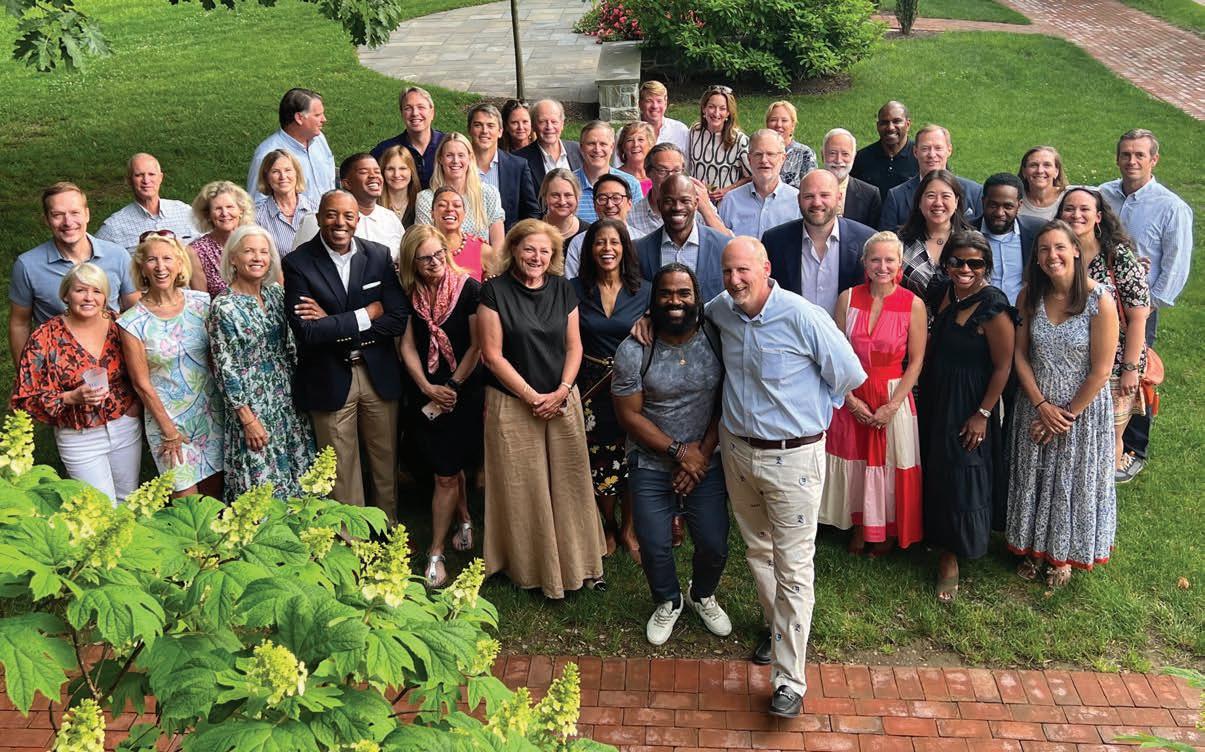 Trustees—past and present—gathered to salute then-Head of School Steve Druggan in early June as he completed his tenure at SCH.
school the magazine of springside chestnut hill academy 500 west willow grove avenue philadelphia, pa 19118
