Simplify your meetings, room booking and desk booking with flexible and fully integrated hardware and software solutions.

Room booking
Naso room manager


Desk booking


Kleeo desk manager


Room booking Liso room manager


Meeting connectivity Delo connection manager


kpm media Unit 1 Mill Place, Platt Business Estate, Maidstone Road, Sevenoaks, Kent TN15 8TB Tel: 01322 662289
Editor Sara Bean sara.bean@kpmmedia.co.uk
Assistant Editor & Social Media Development
Sarah O’Beirne sarah.obeirne@kpmmedia.co.uk Tel: 01322 476815
Director & Designer Warren Knight warren.knight@kpmmedia.co.uk Mob: 0780 1947757
Sales Director Danny Grange danny.grange@kpmmedia.co.uk Mob: 07867 418994
Business Administrator Maxine Howell maxine@kpmmedia.co.uk
Accounts Diane Jarvis accounts@kpmmedia.co.uk
Group CEO Nigel Copp nigel.copp@kpmgroup.co.uk
Alan Hutchinson, Facilities Director, Howard Kennedy LLP
Charles Siddons, Head of Operations, NHS Property Services
Darren Miller, NBCUniversal, VP for International Workplace, Facilities & Real Estate
Ian Wade, Head of UK Estates, British Medical Association
Lucy Hind, Senior FM Lecturer, Leeds Beckett University
Marie Johnson, Head of Workplace & Wellbeing, Nominet
Paul Cannock, Head of the Estates and Facilities Management Department, European Space Agency
Russell Wood, Facilities Manager at Dentsu Aegis Network
Russell Burnaby, Head of FM, Regeneration and Environment, Brent Council
Simon Francis, Director of Estates and Facilities, The Institute of Cancer Research
Simone Fenton-Jarvis, Group Director of Workplace Consultancy and Transformation, Vpod Solutions
Stephen Bursi, Facilities Lead, BAE Systems
Wayne Young, Facilities Manager at DB Cargo (UK)
Total Average Net Circulation
12,150 July 2022 to June 2023 SUPPORTED BY

kpm media adopts a sustainable policy of using paper from managed forests. Printed in the UK by The Gemini Print Group www.gemini-print.co.uk
Copyright 2023 kpm media
The publisher does not necessarily agree with the views and opinions expressed by contributors. No material may be reproduced in part or whole without written permission from the editor. Editorial contributions are accepted on an all-rights basis only. Letters to the editor may be published in their entirety or in edited form and remain the property of kpm media. While due care is taken to ensure the accuracy of information contained in this magazine, the publishers cannot be held responsible for any errors in editorial articles or advertisements. Subscriptions are available to non-qualifying and overseas readers at £120 p.a. (UK), £160 p.a. (EU countries) and £240 p.a. (overseas-other).

In the news on page 7 a consortium of leading organisations and professional bodies from the built environment have described the launch of their Built Environment Carbon Database (BECD) as construction’s ‘strongest ally’ in decarbonising the built environment.
The ground-breaking free-to-access database is designed to become the main source of carbon estimating and benchmarking for construction; from feasibility all the way through to operations.
Supported by representatives from BCIS, RICS, The Carbon Trust, IStructE, BRE, CIOB, the Environment Agency, CIBSE, ICE, RIBA, the UK Green Building Council and ACE, the database will allow data sharing across the industry and the harmonisation of reporting practices in alignment with the RICS Professional Standard on Whole Life Carbon Assessment (see page 8).
While the BECA illustrates the growing importance of digital data to the sector, within the FM sphere, the influx of digital solutions that have emerged in the last few years has made it di icult for many to know where to start. This is why in our FM So ware feature (page 28) we asked some of the leading experts for advice to organisations attempting to digitise their operations, whether building assets or mobile services.
Their main message was to ‘begin at the end’, by determining what information you are missing that would help you manage your building assets and provide a better service for occupants. They also strongly suggest you explore case studies of other organisations to ascertain best practices.
To illustrate this point, the case study on page 24 focuses on an app, downloadable to user’s phones which will facilitate seamless communication between them and the building in which they work. It’s a worthwhile read for those FMs interested in using digital technology to not only improve the performance of their assets but help enhance end users’ engagement with the workspace.
As always, we’d welcome your feedback about any aspect of the magazine, together with your insight into what’s happening in the FM sector.


This month’s summary of everything that has hit the headlines in the FM sector.
The latest news and views from membership organisations.


Heat networks o er big carbon and cost savings. Toby Steel, Head of Client Services at Insite Energy shares some tips for optimising communal heating systems.
The world of work has changed but the physical o ice is here to stay says Sam Addison of Colliers real estate.
Joanna Harris of Sodexo outlines some of the key changes in the newly amended maintenance guidance, CIBSE Guide M: Maintenance engineering and management.
Jack Adams, Laboratory Manager at the LIA warns that the test methods currently used to determine TP() classification have not kept up with current luminaire design practices.
Chris Handley, Construction Director at Concert believes poor mental health can have serious consequences on health and safety within the construction sector.
20 FM related sta such as cleaners, maintenance and security sta may struggle to cope with low wages and unsociable hours. How can the FM sector address this disparity and support these o en-overlooked workers?


32
Integrated technical and facilities solutions provider ABM had appointed Richard Sykes as SVP and President for the UK and Ireland. Sara Bean hears his plans
36 When we think of water management it o en concentrates on how we use our water. However, facilities management is about so much more than that says Louise Clarke of Buro Happold.

8 Bishopsgate a 50-storey tower in the heart of the City of London has dedicated 10 per cent of its space to amenities which occupants can navigate using a connected digital platform.
28 From CAFM to AI, how can FMs determine which systems are the right ones for their needs? FMJ presents an expert’s guide to the latest FM related so ware solutions.

38
As the year-round facilities management service provider for Edgbaston, 14Forty plays a pivotal role in ensuring the club’s sustainability goals become a reality.
40
Tim Whitaker of the DALI Alliance discusses sustainability, future-proofing and the opportunities o ered by smart, data-rich lighting systems.


42 Rachel Houghton MD, Business Moves Group with advice on how FMs can rethink the disposal of o ice furniture or furnishings and ensure they’re not gone to waste.
New product and service launches and company news from the

Find out who’s moving where in the facilities management profession.
Jo Sutherland, MD, Magenta Associates summarises the views of built environment specialists on how to address the talent shortage in FM.
The FM sector needs to lead the charge in upskilling the nation ahead of 2050 says Alexandra Gates, MD of Expedient Training.
A brief roundup of the latest careers news in the facilities management sector.
Remembrance Day is in November, so with research revealing that over two thirds of exforces people who join the industry felt FM was a good fit for their skills, what should the sector be doing to attract and mobilise veterans? We’ve a security and access special: exploring the security issues associated with multi-tenanted o ices, advising on installing access control systems in healthcare settings, explaining the implications of the ‘Protect Duty’ law on publicly accessible locations and a look at the role data privacy and biometrics play in security. And our interview with Kam Singh, Director of Carbon Solutions at EMCOR UK discusses the main considerations for FMs when analysing their energy profiles and the steps they can take to reduce energy consumption.


Jim Moore, Employee Relations Expert at HR consultants Hamilton Nash
Inappropriate behaviour in the workplace has been front page news in recent months.
While they are not responsible for their employees’ behaviour, the companies involved have been accused of failing to deal with the issues properly. This is a stark reminder of the importance of acting decisively with allegations of inappropriate behaviour, especially if they involve staff in the field or working on client sites.
Non-specific allegations
A common problem for employers is that an individual may have a reputation for misbehaviour, but nobody has come forward with a specific complaint. Employers often struggle with cases where the allegation is vague and there are no witnesses.
Worse still, what do you do when an allegation involves nonemployees, such as workers sent on-site by a managed service provider?
These difficulties often cause employers to downplay the concerns, or conduct a cursory investigation which simply reports that there was insufficient evidence to do anything.
Conducting investigations
Employers have a duty of care to their staff, so when non-specific allegations arise, or where non-employees are involved, it’s worth carrying out a ‘fact-finding’ investigation.
When a well-conducted investigation starts turning over rocks, it’s surprising what comes to light. A skilled investigator can encourage individuals to lower their guard and share information.
Even if there isn’t enough evidence to take action, the fact that there’s been an investigation sends a signal that the behaviour isn’t acceptable, and it’s a warning to anyone behaving inappropriately that they should change their ways.
It’s also worth building a relationship with an HR contact at the client employer, as they usually hear about an allegation before your client relationship manager does. It also provides a useful conduit for collaborating on any investigations.
The burden of proof
A common misconception is that without strong evidence, no action can be taken. It’s important to remember that the burden of proof is the ‘balance of probability’ and not ‘beyond reasonable doubt’.
If an employer has reasonable grounds to believe that misconduct occurs, that is sufficient to justify action being taken, even in the absence of iron-clad proof.
Prevention is better than cure
How can employers prevent this from happening in the first place?
Workplace culture exerts a significant influence on staff behaviour, but culture isn’t defined by a few dry words in your staff handbook. It doesn’t matter what the policies say if a blind eye is turned towards edgy banter and misbehaviour in practice.
When staff are deployed in the field, employers may feel that they have less control, because they have no direct line-of-sight into staff behaviour.
Here are a few things you can do:
1. Continually reinforce messaging on appropriate behaviour. Don’t rely on annual mandatory training or verbiage in policies.
2. Create and promote ‘safe spaces’ to raise concerns, as a fear of recrimination is a major barrier to disclosure.
3. Ensure managers at all levels are exemplars for appropriate behaviour.
4. Beware of banter and alcohol at work events. These are common factors in many cases of inappropriate behaviour that we’ve investigated.
No matter how well you prepare yourself, allegations can still arise. If so, the worst thing you can do is to do nothing.
The Finishes and Interiors Sector (FIS) has launched new guidance to help introduce the basic concepts of the Building Safety Act to all businesses and explain why it will promote a culture of safety and accountability in the construction industry.
The most significant piece of new legislation in a generation, the Building Safety Act (BSA) will fundamentally change the way in which buildings where people live are designed, constructed and maintained and records are kept of what was built, by whom and how. The Building Safety Act comprises of primary as well as secondary legislation which has complicated new responsibilities and processes.


The guide titled ‘Introduction to the Building Safety Act’ is designed to help businesses understand the definition of higher risk buildings, roles and responsibilities, and the new bodies including the Building Safety Regulator and New Homes Ombudsman. It explains the importance of organisational competence and how liabilities have changed under the Act. The guidance brings clarity to the three stop-go gateways at key stages of a higher risk building project. Furthermore, it discusses the importance of maintaining the ‘golden thread’ of information throughout the life of a building.
To download the guide visit https://www.thefis.org/membership-hub/ publications/sector-guides/
The results of a new study into the impact of ill-health on the UK’s working population have been published by the Society of Occupational Medicine (SOM).
‘Understanding Recent Trends in Ill – Health Driven Fallout from the UK Job Market’ reveals that of the 41.6 million people in the UK of working age (age 16-64), 2.5 million (one in 16 people) are inactive due to long-term sickness, which is a historically high number of people o work. It also found that more than 11 million people are living with long term conditions that can a ect their ability to work.
Key findings of the study include:
Long-term sickness in women across all age groups has been rising since 2014, with women becoming economically inactive at a higher rate than men.
An increase in economic inactivity in young men, aged 16 to 24, with sharp increases in mental health issues.
Occupations with a low ability to work from home are more likely to see people leave the workforce due to long-term sickness.
Pressures in health and social care delivery, including the impact of COVID-19, has led to backlogs for treatment and worsening health outcomes.
The UK has an ageing population, high rates of excess weight, and alcohol consumption and a legacy of smoking, resulting in long-term physical and mental health problems.
The analysis demonstrates how occupation, gender, and disability a ects getting back to work. SOM says Occupational health (OH) provision is a key solution to this issue, and is therefore calling for comprehensive OH coverage, with only 50 per cent of workers currently accessing OH.
A global report by Siemens Smart Infrastructure has found there is limited alignment on priorities and how best to progress towards a decarbonised and resourceefficient world. Although half of people surveyed believe the infrastructure transition is accelerating in their region, a quarter of participants – senior executives from seven major industry groups – said that progress is “too slow”, while 29 per cent believe progress is “coordinated”, and 31 per cent describe it as “on target”.
The guiding principles behind the research outlined in Siemens Infrastructure Transition Monitor 2023: The Great Divide on The Path to Net Zero, include the necessity of the infrastructure transition to have a positive impact beyond decarbonisation. Secondly, smarter infrastructure integration is mandatory to affect change. Finally, action must be undertaken urgently and at top speed to avert disastrous global consequences.

Acalling for the construction sector not to let up on its commitment to reduce its impact on climate change, as it launches the groundbreaking Bult Environment Carbon Database (BECD).
The project, which has been developed and funded by the Building Cost Information Service (BCIS) over the last three years, is free-to-access and is designed to become the main source of carbon estimating and benchmarking for the industry.
The report found that only 40 per cent of organisations expect to reach decarbonisation targets this year. While nearly half have targets for Scope 1 and 2 emissions (47 per cent) only 40 per cent think it is likely that they will meet their targets for the year ahead and just 44 per cent expect to meet their 2030 targets.
Another key area of consideration for businesses is their buildings. Only 37 per cent of respondents rated their organisation as mature or advanced in improving the energy efficiency of facilities and buildings, and just 30 per cent said the same for electrification and/ or decarbonisation of heating and cooling.
To download the report visit https://bit.ly/3PSOuGO
The BECD steering group, which is responsible for its conceptual development, promotion and adoption, includes representatives from BCIS, RICS, The Carbon Trust, IStructE, BRE, CIOB, the Environment Agency, CIBSE, ICE, RIBA, the UK Green Building Council and ACE.
For James Fiske, BCIS CEO and Chair of the steering group, the need to measure and report carbon data has reached a critical point.
He said: “With the government U-turning on green commitments, there has never been a more important time for the UK construction industry to take leadership on reducing its carbon emissions.
“With the recently updated RICS Professional Standard on Whole Life Carbon Assessment, which gives consistency to measuring environmental impact and is the net zero building carbon standard, we have the framework in place for us to do this.
“The other important part of the jigsaw is the data. Unless we have easy access to accurate and consistent carbon emissions data, and a place where we can share learning and experience, we will never truly understand if we are making the right decisions.”
The built environment is responsible for almost 40 per cent of greenhouse gas emissions globally, which means the construction industry’s role to play in addressing the climate emergency cannot be understated.
However, a lack of unity in how the industry approaches the problem is the greatest barrier to finding e ective solutions. The collaborative nature of BECD, using a consistent methodology and it being accessible to all parts of the industry, has been fundamental.
BECD will launch on Thursday 5th October https://www.becd.co.uk
TheRoyal Institution of Chartered Surveyors (RICS) has launched the second edition of its ground-breaking Whole Life Carbon Assessment for the Built Environment (WLCA) standard.
has now updated the standard to be used globally and to cover all built assets and infrastructure projects throughout the built environment lifecycle.
the upcoming United Nations Climate Change Conference (COP28) in Dubai, where the organisation is an accredited partner.
RICS Chief Executive, Justin Young, said:

First published in 2017 this 2023 edition is a global version of the standard that provides a considerably more developed understanding of the carbon costs and benefits of design choices in construction and infrastructure projects and assets. The new standard was produced in partnership with the UK’s Department for Transport and Net Zero Waste Scotland.


Following a public consultation in March 2023, RICS
According to the United Nations, the Built Environment contributes around 40 per cent of all global carbon output and 50 per cent of extracted material, making the second edition crucial for meeting global emissions targets and achieving net zero. This Professional Standard is relevant not only to those undertaking carbon assessments, but also to clients, investors and property managers.
In the UK, a Net Zero Carbon Building Standard is being developed incorporating the RICS Whole Life Carbon Assessment Professional Standard’s methodology to assess upfront, embodied, operational, user and whole-life carbon. It is hoped that the global focus of this new edition will lead to more nations incorporating its methodologies into their regulatory structures.
RICS will be promoting the new standard at
“The second edition of Whole Life Carbon Assessment for the Built Environment encapsulates RICS’s role as a global leader in the built environment and its duty to steer the industry towards decarbonisation.
“This second edition is a truly global standard for a global problem. I want to thank our members from every world region, our sta , partner specialists and the Department for Transport and Net Zero Waste Scotland for their hard work and crucial support, which made this a reality.
“At this year’s COP28, where RICS is a UNaccredited observer organisation, we will promote this standard and ensure it is at the heart of the built environment’s crucial response to climate change.”

In September, the IWFM brought volunteers and longstanding members together in London to help celebrate its 30th anniversary. Chair Mark Whittaker welcomed guests with a speech about its dedicated member volunteers and the importance of their contributions.
On the United Nations Global Compact Flag Day (25 September), IOSH launched a new report, Delivering a sustainable future(i), highlighting how IOSH believes good OSH management can contribute to 51 of the 169 targets that sit beneath the 17 SDGs. Of these 51, it can make a direct contribution to 31.
In the report, IOSH maps these targets to elements of good OSH management, which it hopes will support businesses in identifying how their activities can support the goals, through delivering good OSH, protecting workers and promoting health and wellbeing.
Ruth Wilkinson, Head of Policy at IOSH, said: “The UNGC says that the need for action on the SDGs is now greater than ever, and it really is. And OSH professionals have a major part to play, as do their businesses.
“IOSH believes that social sustainability is the backbone of resilience, and that OSH is fundamental to building and maintaining work, workforces, supply chains and communities that are all sustainable for the future.” (i) https://iosh.com/businesses/iosh-for-business/ sustainability/

“Passionate and dedicated volunteer members are and have always been critical in supporting the Institute in building knowledge, developing skills, creating connections, and ultimately advancing the profession,” he said.
Graham Briscoe, one of the Institute’s longest serving Fellow-grade members, then shared his first-hand account of the origins of the profession.
He explained: “Back in 1966, aged 23, I
joined the Institute of O ice Management as a member, and in 1968 I became a Committee member of its newly formed ‘O ice Design and O ice Services Division’ – the forerunner of its Institute of Facilities Management, which with the Association of Facilities Management, merged together in 1993 to become the ‘British Institute of Facilities Management’ (BIFM) that we know of today.” CEO Linda Hausmanis concluded with some thoughts on the profession as the Institute enters its fourth decade.
“Professional development and continual professional development are key foundations to any profession to ensure it stays on top of its game and equips itself for success. And through our professional standards we will continue to support you to do the job, whatever your career level or your aspirations. I know we will be supported every step of the way by our wonderful volunteers and partners and for that I give you all my heartfelt thanks for your belief and support in all that we have done and in all that we will do.”

You may already have your smoke control system maintained by Colt. And other dampers serviced elsewhere.
Colt can save you money and time.
Streamline your smoke control and damper maintenance management, while eliminating the need for secondary contractors and call-out charges. Colt can take care of all your smoke control and damper servicing needs in one package.

Your legal obligation.
Fire and smoke dampers play a very important role in a building’s fire safety system and under the Regulatory Reform (Fire Safety) Order 2005, it is the legal duty of the ‘Responsible Person’ in your company to oversee their maintenance and testing. It is imperative that your dampers are maintained properly by a competent company.
Colt is just such a company.

The benefits of a service contract with Colt.
Colt is the UK’s leading and largest supplier of smoke control maintenance and as such, we have the largest team of engineers stationed up and down the country. Our team is dedicated to delivering quality service 365 days a year, 24 hours a day.
As well as getting you the UK’s most competent engineers, the Colt service contract comes with a whole host of other valuable benefits.
One call is all it takes to find out more. Call 02392 491735, visit coltinfo.co.uk/service-maintenance.html or email service@uk.coltgroup.com


Toby Steel, Head of Client Services at Insite Energy, shares some tips for optimising communal heating systems

Heat networks o er big carbon and cost savings in residential properties, and growth in the sector is booming thanks to strong Government backing. Not all heat networks live up to their promise, however, because not all are operated and managed e ectively.
To achieve a heat network’s full potential energy savings, facilities managers must continuously and meticulously measure and monitor its performance, correcting issues as soon as they occur. Having a clear understanding of what optimum functioning looks like means faults can be spotted quickly.
While constant monitoring might seem like a lot to manage, it’s well worth the e ort. Enhancing e iciency by 10 per cent within a 50unit development can reduce costs by £9,612/ year, while a 20 per cent advancement could save £16,121. Improved performance also means lower emissions and longer lasting, safer equipment. With new emerging technologies, such as cloudbased dashboards with real-time data, consistent monitoring is now far easier.
Precise, accessible, up-to-the-minute, and comprehensive performance data is vital for optimising a heat network. Besides revealing faults, it provides essential insights into occupancy rates and peak usage periods, enabling accurate tailoring of heat supply to minimise network losses.
But what if you don’t have the latest smart meters or monitoring technology to work with? There are still steps you can and should take to optimise your heat network.
Above all, make sure a comprehensive maintenance regimen is implemented, covering every part of the system, including meters and heat interface units (HIUs). Heat network maintenance di ers significantly from that of ordinary gas boilers. As multiple properties are all connected, a change to one asset can have an impact on the entire network. Ensure potential service providers can explain this in detail and their strategies for optimising e iciency and minimising heat loss.
It’s also worth checking contractors’ familiarity with CIBSE's CP1 for Heat Networks: Code of Practice 2020. While adherence to these standards isn’t yet required legally, engineers should certainly be abreast of their contents. When Ofgem’s UK heat network regulations will be released in 2025, rules are likely to become more stringent.
Once you find someone with the right expertise, do take note of their suggestions. We constantly o er our clients ideas on how to reduce energy waste and enhance e iciency. Although there may be an upfront investment involved, we wouldn't make these recommendations if the cost/benefit
ratio wasn't compelling.
FMs and energy managers should also be cognisant of changes in energy tari s as, if not acted upon quickly, these can cause major headaches in the form of incorrect recovery of funds from residents. At the same time, with energy prices still very unpredictable, they should be wary of signing up to long-term contracts.
Tari changes o en happen when suppliers change, so set a diary reminder eight weeks prior to contract changeovers to proactively adjust the heat network rate charged to residents, making sure to give them as much notice as possible. Loop in your metering and billing provider, too, so they can advise you and ensure your residents are billed correctly, and your maintenance crew, so they can arrange any engineer visits. This is also a good time to ensure you have the necessary approvals and access for meter-fault repairs. You know your residents best, so keep your suppliers informed of how and when to best contact them.
If the energy tari has already changed, conduct an urgent customer-tari review and financial analysis to ascertain how much of any deficit is recoverable by each household and at what rate, for example a recovery rate of 25 per cent may need to be added to top-ups made to a PAYG account. It may be counterintuitive, but the heat in empty areas of the building(s) should not be turned o . It can take a while to get back online and there could be risk of network water contamination, making the system less e icient, or mould build-up in the property if the temperature drops below 16oC. Instead, factor the cost of voids into your heat tari s and/or keep a contingency fund to cover them. The metering and billing provider should be able to help with this.
Lastly, make sure you’re prepared for power outages. How old is your equipment? Do you have surge protectors? If you’ve had outages before, what was the issue and how can you prevent it in future? As heat networks become more common in rural areas, the risk of outages may be increasing. Similarly, consider what steps you can take to prevent internet connection issues. If communications are down, the systems and organisations supporting you with data analysis, metering and billing won’t be able do their jobs. Data management so ware can help you monitor this and see if it’s a recurring issue. Installing a 4G router as a backup may also be a good solution to ensure you’ll have access to data even when other channels are down.
Management of heat networks is complex. They are big, complicated, high-value systems with multiple stakeholders. But for these very reasons, investing in their e iciency and longevity is undoubtedly worthwhile.








The world of work may be changing but the physical o ce is here to stay, it’s up to us how we use it, writes Sam Addison, Head of Project Management at Colliers real estate

The global pandemic necessitated, and accelerated, a huge shi in our working habits. The case for e ective remote working was successfully proven and a new reality of hybrid work was embraced.
But what does that now mean for our physical o ices and the role they formerly played in supporting and promoting cultural cohesion and growth in our organisations?
The fact is, we are still in the midst of an intense period of transformation – both for our workforce and the workplace. The pandemic certainly played its part, but macro-economic uncertainty, technological change and evolving employee expectations have le our organisations in a state of flux.
In many ways, it’s too soon to know exactly how things will play out – but we can see the direction of travel. The o ice is definitely here to stay; it will just be used and occupied di erently.
In my role, I speak to and work with a broad array of organisations: helping them to understand what they want from their physical workspace and how it can be best deployed to meet both their commercial and people needs.
We’re seeing a real shi towards an agile o ice strategy: shorter tenancy leases to buy time while organisations assess just how much space they might need in the short to medium term, and creative design concepts that will allow their workspace to flex with them as business needs evolve.
This underpinning flexibility is now seen as core to the employee proposition. It has become expected. As the competition for talent gets fiercer, an agile workplace strategy in a vibrant and adaptable workspace can prove the di erentiator in winning, developing, and retaining talent.
For many workers at the earlier stages of their career, the physical o ice still plays a critical role in providing opportunities to interact with peers and ‘learn on the job’. They know that time spent observing and collaborating can have a significant impact on their future performance.
More than that though, workers now want to know that it’s not just their professional aspirations that mesh well with their organisation of choice. An organisation’s vision and values have become decisive factors when evaluating employers, with ESG and DEI as an important a consideration for
prospective employees as compensation and worklife balance.
FOSTERING EMPLOYEE ENGAGEMENT
Technology that enhances the workplace experience is another area of intense focus. I’ve seen some companies tap into tech to monitor their workforces’ growing environmental awareness and help employees measure – and reduce – their personal carbon footprint.
All of the organisations that I speak with have sustainability aspirations, and it’s encouraging that environmental matters are now front and centre. Ultimately, it’s about creating spaces that are sustainable and support occupants’ wellbeing and then factoring in those considerations from the get-go.
In a hybrid work culture, structuring inclusive workspaces to support di erent needs and foster spontaneous dynamic interaction is the only real way to encourage people to come back to the o ice, and to stay.
The fact is that the o ice is now less a place where people to come to complete solo work – they can do that at home - and more a platform that facilitates e ective collaboration. This can mean anything from two people teaming up for a project to an all-hands town hall. Going to the o ice is now ‘intentional’; somewhere you go for a reason, not just to work with your head down or sit on Zoom. Creating this ‘buzz’, this sense of proactive and productive destination, can be an act of imagination as well as research and planning. I’m seeing huge changes in workplace design with a clear shi from fixed workspace to collaborative, with collaborative now up 60-70 per cent.
That then drives di erent approaches in how we construct that space, because we want to make sure that the furniture, technology, and mechanical and electrical installations are flexible.
To support this vision there is a real trend towards smaller, more modular work settings that can be quickly adapted to serve di erent functions and the needs of the organisation. Any uncertainty about future headcount or user type can be accommodated by designing the space to be more adaptable. Buildings can also be internally zoned in ways that reflect di erent styles of work, with some dedicated to collaboration, others designated as quiet areas and soundproof booths available for calls.
At the end of the day, this doesn’t need to be an expensive or hugely disruptive process. Many of the employers with whom I work are already choosing to reset their o ices, using existing fixtures, to inexpensively increase collaboration space and buy time while they understand how their people want to work.
The o ice is here to stay; how it works for your business is really up to you.


Keeping smoke control and ventilation systems in good working order is vital to the operation of any building. Failure of a single element can impact the effectiveness of your system, potentially resulting in complete breakdown and unsafe conditions in your building. Therefore, it should be regularly tested and maintained. This is a legal requirement and should be done by a competent technical professional.
Our useful guide for Facilities Managers gives an overview of the maintenance requirements for these systems, and how Kingspan Light + Air can support you to keep them operating effectively. Scan the QR code to download.

Your legal responsibilities
Smoke control systems play a critical role in a building’s fi re safety system, which is why it is imperative that they are maintained properly by a competent company. This is a requirement of the Regulatory Reform (Fire Safety) Order 2005 and BS9999 gives a best practice framework for damper maintenance and testing.
Tailored to your needs
Our dedicated team of engineers work with clients to regularly inspect and test smoke ventilation
systems to ensure that they are working properly and are fully compliant with local regulations. We understand that each building is unique and that’s why we tailor our maintenance plans to meet your specifi c needs. We offer a range of packages to suit all building requirements including both annual and multi visit annual contracts for smoke ventilation system maintenance.
Talk to us about a service contract
Our experts are available nationwide 24/7, 365 days a year to respond to system failures and call out requests. They are also equipped to perform remedial works and preventative refurbishment to replace older or broken equipment as they carry a comprehensive stock of spare parts.
Kingspan Light + Air
T: +44 (0) 29 2077 6160 E: info@kingspanlightandair.com www.kingspan.com/gb/en/services/smoke-control-system-maintenance/


TheIn association with


Joanna Harris of Sodexo outlines some of the key changes in the newly amended maintenance guidance, CIBSE Guide M: Maintenance engineering and management which was launched on 28 September 2023


pace of change in the facilities management world is rapid. Driven by legislation, technology, rising energy prices and the need to ensure occupant safety in the response to the COVID-19 pandemic and the Grenfell Tower fire, reform is happening in almost every area.
To help facilities managers adapt and thrive in this fast-evolving world, I led a group of volunteers from CIBSE’s Facilities Management Group to update CIBSE Guide M.
O en referred to as the ‘maintenance bible’, CIBSE Guide M: Maintenance engineering and management is written specifically for facilities managers, designers and building owners and operators. The guidance includes all the information needed to successfully operate a building’s services, while ensuring buildings are safe and healthy and optimised for energy performance.
The Guide is written to provide a general overview of the many topics and issues of which facilities managers need to be aware. Each of the Guide’s 16 parts incorporates a detailed list of references to provide more in-depth and comprehensive information on specific topics.
This latest revision of Guide M has been published to provide guidance on the many areas of change since the Guide was last amended in 2014.
One of the biggest of these has been to the duties of facilities managers when commissioning or managing any form of building work, due to the fundamental changes to the Building Regulations that came into force on 1st October 2023 and imposing new statutory duties on clients.
The legislation also imposes major new requirements on facilities managers working in the residential sector on higher risk buildings in particular.
The Guide’s chapter on Legislation now includes a section outlining the requirements of the Building Safety Act and explains the implications of the “in occupation” provisions for higher risk buildings. Changes to the Building Regulations introduced under the Act also impose new dutyholder and competence requirements; these too are covered in more detail.
In addition, a new facilities managers’ guide to handover information has now been included in
Part 7: Handover procedures, which will be helpful when dealing with the ‘golden thread’ of safety information for higher risk buildings.
The COVID pandemic was another major event to impact the built environment. The pandemic changed the way people use o ices, in particular the introduction of agile working patterns and recognition that workers are no longer tied to a particular desk or even o ice building.
More generally, wellbeing has become an increasingly important topic since COVID. Earlier versions of Guide M lacked guidance on

infection control, lighting and daylight, water quality, noise and vibration, and electric and magnetic fields. All these issues influence the perception of comfort and can have an impact on occupant health.
The revised wellbeing section now addresses indoor air quality and explains how carbon dioxide levels have gained prominence as a proxy for the control of ventilation rates.
This amendment also expands the scope of Guide M to give guidance on aspects of the Well Building Standard and other assessment schemes.
www.cibse.org
The controls part has had to be almost completely rewritten to reflect developments in technology, the increased demand for ‘smart’ buildings and the growth of the Internet of Things.
Controls are critical in supporting the management of facilities and this chapter now includes current best practice from the Building Controls Industry Association. There is also advice on dealing with legacy systems, upgrading control systems and the importance of cyber security.
Similarly, the energy e iciency and maintenance chapter has also been completely overhauled to reflect the rapid increase in the cost of energy and the drive to net zero carbon.
The Guide explains that to achieve energy and carbon reduction targets the facilities management team will need to move its focus beyond that of keeping the building and its plant in good working order to being able to comment on the scope for varying system operations to match building usage patterns. It also explains what constitutes an e ective energy management policy, what is required from an energy management system, and it now also includes advice on low carbon and renewable systems.
Guide M is still the only industry source with a comprehensive list of the indicative economic life for the various engineering assets likely to be under the remit of the facility manager. The updated economic life expectancy table and its variation factors are derived from cross-sector user experiences of typical assets and equipment.
Illustrative examples are provided to show the use of these factors, which the Guide says is “subjective” and “relies on assessment by experienced engineers”. Nevertheless, the method does provide a logical approach for estimating purposes.
Other areas updated under this comprehensive revision of Guide M include guidance around the mobilisation of contracts This now includes a comprehensive list of items that need to be discussed and agreed during mobilisation to ensure a good working relationship from the outset. There are also updates to the contracts section that now include guidance on the procurement process.
Paul crawled underneath patients’ beds in an infectious ward to clear a blocked stack. Without this, the ventilators would have stopped, leaving patients without life-saving equipment. Complete water in, waste out solutions. Find out more: www.metrorod.co.uk


Jack Adams, Laboratory Manager at the LIA, shares how the LIA Laboratory testing is there to support facilities managers to help meet lighting safety requirements and prevent disasters from occurring

Inlighting safety, the Part B approved guidance document of the Building Regulations concerns lighting and the spread of flame. TP (thermoplastic) materials, such as polycarbonate (PC), acrylic (PMMA) and polystyrene (PS), are commonly used as di users in light fittings. When a lighting di user is deemed to be part of a ceiling it must be made of either TP(a) or TP(b) rated material.
The testing procedure requires that the material self-extinguishes, and any flaming and a erglow must not exceed five seconds once the source of flame is removed. In the building regulations, a TP(a) product used in a lighting design will comply, subject to a few restrictions, and if a TP(b) product is used, which it can still comply, there are more restrictions for the spacing of these di users.
The Lighting Industry Association (LIA) Laboratory is a state-of-the-art facility that provides testing and certification services for lighting products. It o ers a full range of flammability tests, including, TP(a)/TP(b) testing, glow wire
flammability and needle flame testing. Testing to the standards covering these tests is within the laboratory’s UKAS scope of accreditation (1286).
However, the LIA believes the test methods currently used to determine TP() classification have not kept up with current luminaire design practices, especially since the widespread use of LED technology.
In order to classify materials as either TP(a) or TP(b) a BS 2782-0:2004 method 508A: Rate of burning laboratory method is used. In the 2011 version of the standard method 508A, it clearly states that: “The method has been declared obsolescent but is made available here because it is referred to in the Approved Document B Building Regulations.” Method 508A was originally defined within BS 2782-5:1970 and was withdrawn by BSI in 1992. Therefore, the building regulations are using a test method no longer considered as best practice to classify thermoplastic materials.
When Method 508A was developed, light sources generally used single piece prismatic controllers or opal di users. However current methods of optical control are usually via a sandwich of materials with dissimilar burning properties and varying thicknesses.
Method 508A as generally interpreted is not suitable for testing this type of composite construction. The Building Regulations only consider the lower face of the luminaire, the part of the thermoplastic that faces directly into a room or space. When this face was a part of a single piece optic, or at least of a sturdy and relatively thicker construction, this was not particularly unreasonable. In modern optics the lower thermoplastic layer may be quite thin in cross-section, and therefore significantly di erent from the sample used in testing, and the other materials used in the optical sandwich may have little resistance to the spread of flame. This means that the safety of the space relies upon the full di user
behaving the same as the lower thermoplastic material under conditions of fire, staying undamaged, and remaining so through life.
The legal requirements of the building regulations are to initially resist the spread of flame and once a flame is established limit the growth of the fire. While testing only the bottom material will give some indication of the initial resistance to ignition, once ignition has occurred and a flame is established it will no longer give any reliable indication on how the flame will grow and spread.
We need to consider why we use a test method that has been declared obsolete and why do we use this method to test a sample that is completely unrepresentative of the optical construction in use?
For the first part of the question a relatively easy solution can be proposed. BS EN 60695-11-10, fire hazard testing - Test flames. 50 W horizontal and vertical flame test methods, has similarities to the Method 508A and could be reasonably applied. This would move from an obsolete to a current test method. It would also allow expected mounting orientation to be considered as it may test a material in both horizontal (e.g. ceiling mounted) and vertical (e.g. wall mounted) orientation.
However, this would not solve the issue of the test method being for the testing of single materials, not for optical sandwiches consisting of a number of layers of di ering materials. The test method would need to be amended to overcome this, and if necessary redefined within building regulations.
So, when a product is assessed to be TP(a) or TP(b), the question a customer should ask is ‘how was this test performed and is it representative of the actual product being purchased and installed?’ Declaring a TP() rating based purely on testing an unrepresentative sample of the bottom layer of the optics should not be considered acceptable. The LIA is strongly of the opinion that to meet the legal requirement of the building regulations, modern composite di users need to have their TP() rating based upon testing of the complete sandwich of materials as used within the recessed luminaire. This allows FMs to demonstrate a complete level of legal compliance to the national requirements. To view the LIA Laboratory decision on this please visit: https://bit.ly/3ZkLRR8




Liz Benison linkedin.com/in/lizbenison Loving being the CEO, UK&I at ISS A/S and being part of our OneISS journey.Loving being the CEO, UK&I at ISS A/S and being part of our OneISS journey. Humbled to be recognised by a great organisation, and amongst such inspiring company. Thank you Involve. The Inclusion People’s 2023 Heroes Role Model Lists supported by YouTube. These global lists celebrate role models in business who are driving inclusion for women across business. We are proud to see Liz recognised for her incredible achievements in this space. View the full lists here: https://bit.ly/3P6LNjh

@RICSnews RICS launches its manifesto for a safe, sustainable, energy-efficient, and affordable built environment. Read the manifesto: http://ms.spr.ly/60129mXqw
@LivingWageUK Inflation is falling, but half of Britain’s 3.5m low-paid workers feel worse off than last year after being hit hardest by rising food and energy costs. Paying a real Living Wage has never been more important. Read the full report: https://ow.ly/G1To50PPNVA
Esther Roelofs https://www.linkedin.com/in/ estherroelofs/ The benefits of greenery on creativity, productivity, and wellness have long been proven. That’s why our warehousestyle office is full of plants, leafy privacy screens and small trees to define workplaces, break-out zones and lounges. Our next Masterclass on Wellbeing (Thursday 16th of November) will be held in our new office.
@theCIOB Our Special Report sets out our case that social value is both here to stay and spreading as a procurement requirement. You can download our free report at https://orlo. uk/spsMh #CIOB

Amy Brogan https://www.linkedin.com/in/ amybrogan1/ Urgent action is needed to avoid the catastrophic effects of global warming with the planet being warmer now than it has been in 800,000 years. Last week, I loved filming with The Climate Pledge to help educate on how we reach net-zero carbon emissions together.
@workplacetrends Such a lovely attendee list building up for Workplace Trends 2023! Check it out along with our fantastic agenda at https://workplacetrends.co/events/wt23whos-attending/
Thank goodness we’re beyond the days where poor mental health was deemed to be a weakness or flaw. However, we still have a way to go in order to recognise su ering in others. While Health, Safety and positive Mental Health promotion are crucial components of our overall wellbeing, poor mental health is still a very hidden ailment and o en neglected. Yet mental health issues, if le to deteriorate can lead to severe depression.
There are not enough articles that recognise the pressures that we, as humans are faced with, so I wanted to highlight ways in which we can cope, and how we recognise in others that they, in fact, might not be okay.
Contrary to popular belief, workplace related stress is not reportable under RIDDOR (Reporting of Injuries, diseases and dangerous occurrences regulations). But should it be? Dermatitis is notifiable, as is asthma, neither of which are known for their mortality issues. Stress, however, is known to cause fatalities, not just of the individual su ering from stress, but of those a ected by his or her acts or omissions.
According to research, the most common cause of stress is work-related, with 79 per cent saying they frequently felt it (Statistica)(i) while one in 14 adults (seven per cent) feel stressed every single day (CIPHR)(ii).
Over a working day we all face challenges that test us. The problem is that we don’t always have only one single challenge, sometimes, like buses, three or four challenges come at once and we are then presented with a number of choices:
1. We chose to prioritise the challenges by order of the significance of the client.
2. We chose to prioritise by the size of the fee at stake.

3. We prioritise whoever is shouting loudest. 4. By which of them has been shouting the longest.
5. We stick our head in the sand.
Let’s say the person in question chooses option five. How does an employer begin to recognise this? There will be several indicators that an issue is developing:
» Aches and pains
» Signs of fatigue and muscular tension
» Headaches, dizziness, shaking and/or heart palpitations
» High blood pressure
» Exhaustion or trouble sleeping
» Loss of motivation
» Weak immune system
» Panic attacks

Of course, all too o en we allow these things to go on, unchecked, until it’s too late. As with any accident or incident there are blatant costs involved, but the hidden costs are what is important; a life, a family, a personal reputation. These are the things that a ect the individual(s) concerned, and where we should be focusing our energy way before we get to the point of no return.
We are all guilty of sticking our head in the sand over poor mental health issues, and now it’s time to do something about it. We all need to increase vigilance of fellow workers to create a culture of care, ensuring employees are aware of how to seek help when a colleague, or yourself requires it. The sooner the company knows of an issue, the sooner relevant actions can be put in place.
Enlightened companies will support their valued employees. At Concert we address all these issues by providing health benefits and advice to all employees. We have regular 1:1’s with line managers, and the Directors have regular catchups with the HR manager to discuss any potential issues that have, or may become an issue.
Health, Safety and Mental Health are interconnected and dependant on each other, and neglecting one can have a significant impact on the others so, when you ask someone if they’re okay, make sure you listen properly to their answer.
(i) www.statista.com/statistics/1134359/common-types-of-stressin-the-uk/ (ii)


...and Trust is here to lead that change.
We’re all about embracing technology while maintaining a friendly, fun, and relaxed approach for parking providers. That’s why we recently acquired Newpark Solutions and the Glide App, bringing together cutting-edge ticketless car park equipment, software, ANPR cameras, and systems into a convenient one-stop-shop for car park management.
Introducing the new Trust App:
Replacing the Glide App with a range of exciting features. It’s


designed to be user-friendly, ensuring smooth auto-payments to reduce queues, offering virtual season tickets, emailed receipts, and accommodating multiple vehicles on each account.
But wait, there’s more!
We’re constantly developing the app to provide our clients with demographic data reports, site specific marketing push notifications, and even the ability to book and pay for Car Washing and EV charging directly through the App.
Car park systems can often be costly investments, but Trust is breaking the mold with our unique subscription model. With one fixed monthly fee you get a fully operational, unparalleled car park management system that includes equipment, software, the Trust app, maintenance, hosting, and transaction fees. No surprises or hidden costs!

That’s not all...


We’re excited to introduce our brand new Trust Hub, a comprehensive intercom management service. You have the flexibility to choose full intercom management 24/7, overnight coverage or even short intervals as low as 30 minutes. Need some support when half of your team is out sick? Trust has you covered by handling the intercoms and lightening your load.
Trust is the only full-service parking operator out there. We take pride in manufacturing our own equipment and writing every line of code in-house. Our brand is at the forefront of car parking operations, and we stand behind it with every transaction our customers make.
Say goodbye to ticket jams, long queues, and upfront costs. With Trust, parking becomes effortless and hassle-free. We’re your one-stop-shop, dedicated to making parking effortless.




A recent report from the Living Wage Foundation found 6.1 million workers experience low pay and insecure hours. The research echoes that of Working Well: Delivering Better Outcomes for Hidden Workers by L&G which found many FM related sta such as cleaners, maintenance and security sta are struggling to cope with low wages and unsociable hours. What more can the FM sector do to support these o en-overlooked workers?
There are, unfortunately, some misconceptions about implementing these changes. The predominant concern is that introducing basic sick pay support comes at a significant cost. L&G’s own experience however is that this adds just one to two per cent to annual contract values. The second misconception is that workers might take advantage of a more ‘generous’ system - yet we know that early diagnosis and recuperation reduces ongoing absences, and that performance management systems in the workplace are good safeguards against abuse of the system.
Across over 80 per cent of its 400+ multi-let property portfolio, L&G has already mandated that cleaning, security, landscaping etc. suppliers must drop waiting days, introduce a top up sick
In FMJ's regular monthly column, our team of FM experts answer your questions about the world of facilities management
MARK TYSON, HEAD OF PROPERTY OPERATIONS AT LGIM REAL ASSETS
Across the UK’s real estate sector, there’s a magnitude of workers keeping our operations running, but they’re o en overlooked. The pandemic has shone a spotlight on the health inequalities that exist for a vital part of the workforce. Now –with a backdrop of rising costs and higher inflation – the physical and mental wellbeing gap identified in our research will only be further exacerbated.
pay and provide access to online GP services. We are now focusing on how we encourage workers in these roles to access these services and work with their management teams to plan medical appointments and get support at the right time. This is a huge cultural shi and we don’t want to do this alone.



More than half of respondents in our hidden workers survey (Dec, 2022) worked nine hours a day, and a third of this group worked 11 hours or more a day. This had a direct impact on mental and physical health and on their relationships with partners, children, and their wider families and communities. Fear of losing pay or appearing weak or unreliable, especially in a cost-of-living crisis, prevents them from asking for time o . However, businesses can be part of the solution and improve the social conditions that a ect health and health equity: in conditions of work and employment; in goods and services; and in the impact they have on wider society and the environment.
That is why we are working with the Centre of Progressive Change to support the Safe Sick Pay campaign which aligns with removing waiting days for statutory sick pay. This year the topic was discussed in parliament as part of PMQ’s in July with the financial impact on UK Plc identified in their report with WPI Economics.
This gives us an opportunity to work together across the real estate industry to consider how we adopt these important changes, both from a people and commercial perspective, which is mutually beneficial to the individual, supply chain partners and the organisations buying these services. Additionally, we can also go further and provide better access to healthcare services by working closely with the NHS, local government and providers of community health services. Look out for events later this year and next in partnership with industry bodies and businesses to help share the practical information needed to implement these changes, but also push ourselves as an industry to create positive change for those working in these roles and the wider UK economy. Ultimately, all workers should have the same access to sick pay policies and basic healthcare – this is an area we can all work closely together to close the gap we currently have.
DELIA CANNINGS, CHAIR, BCC
These latest reports are just two of a series which have highlighted these issues over the years. A TUC analysis just before the COVID-19 pandemic identified 3.6 million people in
insecure work and in 2014 the Equality and Human Rights Commission identified a number of issues a ecting ‘the invisible workforce’ including low rates of pay. These working conditions can have a huge impact on sta wellbeing. They can make childcare arrangements or visiting a doctor di icult. Working hours being suddenly cut can cause financial problems. Unsociable hours can cause physical and mental health issues.

Healthcare and the planned launch next year of the Cleaning Hygiene Operative Apprenticeship should help to dispel the low skill myth and assist in providing a career ladder.
Supporting in-work progression is another way companies can help. Investing in training and development can provide a potential route to better paid, more secure work.
Introducing a supportive flexible working culture should also be considered – allowing sta with family responsibilities, for example, to accept a new position which might have been impossible otherwise.
O ering a good employee benefits package with childcare, travel and retail options will also enable sta to make their money go further.
JOHN HAMILTON, PEOPLE DIRECTOR, BELLROCK PROPERTY & FACILITIES MANAGEMENT
disproportionately impacted by insecure work and it o en


Minority ethnic, young and older workers are all disproportionately impacted by insecure work and it o en comes hand in hand with low pay. As demonstrated by Birmingham City Council’s financial crisis, women are o en le out of pocket too.
Sta in occupations like caring, hospitality, leisure and, unfortunately, the cleaning and hygiene sector are more likely to face these issues.
Rates of pay in the cleaning industry do not reflect the skill and knowledge of sta , with it incorrectly being viewed as low-skilled, with no opportunities for skill or career development.
Cleaning sta make up five per cent of the UK’s workforce but many do more than one job to make ends meet.


Over one-third of Bellrock’s workforce are in frontline FM related roles, delivering vital services such as cleaning, maintenance, and security. We see them as absolutely intrinsic to the quality of service that we deliver to our customers, so it is critical to us that we look a er them in the same way that we look a er anybody else.


The British Cleaning Council has long called for firms in our sector to pay the Living Wage. Not only is it good for employees and their families, it is also good for businesses, bringing benefits such as improving morale and better staff retention.
The sector’s professional, highly-trained staff do a crucial, frontline role keeping people safe, well and healthy and they deserve to be paid accordingly.”

This isn’t new, it has historically always been the reality for many of those working in our industry.
This isn’t new, it has historically always been the


DeliaCannings

Since the pandemic, sta have returned to the workplace with changed behaviours sometimes resulting in a negative impact on colleagues who must manage the situation. This o en results in sta leaving a job they previously enjoyed because morale is low and job satisfaction diminishing.

So what can businesses do to help low paid sta in insecure work?
Firstly, they should commit to paying a real Living Wage to all their sta .
The British Cleaning Council has long called for firms in our sector to pay the Living Wage. Not only is it good for employees and their families, it is also good for businesses, bringing benefits such as improving morale and better sta retention.
The sector’s professional, highly-trained sta do a crucial, frontline role keeping people safe, well and healthy and they deserve to be paid accordingly.
The cleaning, hygiene and waste industry is worth £55bn, and pay rates should reflect this huge contribution to the economy.
The public increasingly expect high standards of hygiene following the pandemic, which is combining with severe sta shortages to put upwards pressure on wages.
The introduction of the Apprenticeship in Cleaning in


At the start of 2023, Bellrock took a stance against minimum pay in a move that ensured all workers received at least the recommended real Living Wage (as recommended by the Living Wage Foundation). Over 500 members of sta received a 10 per cent pay increase. Those in supervisory roles also received a proportionate rise.
Living Wage Foundation). Over a 10 per cent pay increase. Those


We made the decision from a moral stance in the first instance, it wasn't really a business argument, it was a moral argument. We asked ourselves what type of employer we wanted to be and made a change, not knowing how many of our clients would cover that rise in costs. We predicted some would, but there would also be some that absolutely wouldn't, but that didn't stop us doing it; we did it because it was the right thing to do.


Paying the real Living Wage is part of a wider commitment to our people, having launched a new employer brand in 2022 which sets out an entirely new employee proposition. The benefits
package, including paternity, maternity and adoption leave, holiday allowance and sick pay has been overhauled.
However, the changes are not purely altruistic, there have been some marked business benefits. We have become more competitive as a recruiter, finding it easier to recruit and retain good people and in turn, deliver greater levels of service to clients. Higher employee satisfaction has resulted in a reduction in sta turnover and absence.
When it comes to winning new business, being an employer committed to the real Living Wage can give companies a competitive edge and we can demonstrate we are an ethical provider and can attract suppliers that are aligned with our values.
For real change to happen in the industry, a greater number of employers need to make a commitment to paying the real Living Wage. The good news is that we have witnessed a growing number of clients becoming Living Wage Foundation accredited and demanding the same from their supply chain. This is especially true in the public sector.
Industry collaboration is key to addressing the disparity. My advice to other businesses would be to ask yourself what type of employer that you want to be, and then be brave in being true to that. It’s about doing the right thing, but you will absolutely see the benefits, even if they are indirect.
The financial cost can be o set by having conversations with clients about an ethical o ering, and by winning new businesses with clients who share the values and want to treat people in the right way.
EMMA
WILSON, SOCIAL IMPACT DIRECTOR, PARETO
think about the benefits of sta retention and future development when looking at such matters.
Workers in the FM sector, especially those in hidden roles, may not be aware of the mental health and counselling services available to them. The sector can take the initiative to educate workers about these services and create easier pathways for them to access the support they need. At Pareto we’ve had a real focus on this area with great success which has provided services to all layers of the business. We’ve had to really think and find better ways to successfully reach all demographics and appreciate how di erent these approaches can be. For example, the strategy of our Inclusion Committee includes five key objectives that ensure we are always questioning ourselves to find better ways to communicate with everyone, in a way that works for them, I see it as similar to finding their ‘love language’.
We all know that the UK labour market is facing significant challenges, leading to disparities in pay and working conditions. The Living Wage Foundation report highlights the prevalence of insecure work, where 6.1 million workers experience various forms of work insecurity, o en tied to low pay and uncertain hours. This issue is widespread, a ecting specific sectors, regions, and demographic groups. The L&G report delves further into the health and wellbeing gap among ‘hidden workers’, including those in facilities management and corporate real estate. These workers, o en performing essential roles like cleaning and security, face long hours, low wages, and inadequate support for their physical and mental health. To address these disparities and support this cohort of workers, the facilities management sector can look to undertake several options. Some of these we’ve explored in Pareto and are continuing to work on.

With all the studies out there its well known that investing in training and skill development programs for workers in the FM sector can open up opportunities for career growth. This, in turn, can lead to better-paid positions and improved job security. This can be in traditional technical training courses but also wider courses around leadership, personality profiling and wider life coaching. While o ering numerous courses is great, it is also important to understand the barriers that your sta may face and how as an employer you can assist your workforce to successfully complete these. While it starts with o ering subjects that your teams are genuinely passionate about, it is also about ensuring they have the support they need; academic, workload, study worthy environment and emotional/ motivational support, as you’ll very o en find that people who really need to do the training rarely think they do: ‘only good parents choose to go to parenting classes’.
The FM sector can play a role in raising awareness about the contributions of hidden workers, showcasing their essential role in maintaining the functioning of institutions. Recognising their e orts can help improve their status and increase public and employer appreciation. Industry awards are a great way to showcase this but, so is internal communications, Pareto have been active in telling the stories of our teams to great success with our largest to date being our More Than Just FM campaign. A further e ort to encourage people to bring their ‘Best’ selves to work, the part they want to be commended for.
Collaboration with researchers, organisations, and governments can provide valuable data and insights into the challenges faced by hidden workers. This information can inform targeted interventions and policy changes to improve their conditions. Again, at Pareto we have used SHAPE as part of our ESGM Consultancy to gather information and better understand our workforce. By harnessing the power of AI to focus on data collection, we further worked on these results to create white papers which not only raise awareness but give the perspective of the employees.
One of the fundamental steps is ensuring that all workers, regardless of their roles, receive fair wages that reflect their contributions. We should all be advocating for fair wages, usable benefits, and paid leave for workers in such roles, aligning with the concept of a 'Living Wage'. This would not only improve the livelihoods of workers but also enhance their overall wellbeing. It makes business sense and seems short sighted of employers not to
Fundamentally, the FM sector has the potential to bridge the pay and wellbeing disparities faced by hidden workers. By advocating for fair wages, better working conditions, access to support services, and policy changes, the sector can contribute to a more equitable labour market. Recognising and empowering these workers is not just a moral imperative but a strategic move that benefits both the workers and the sector itself.
Do you have a question that you’d like answered by the FMJ Clinic?
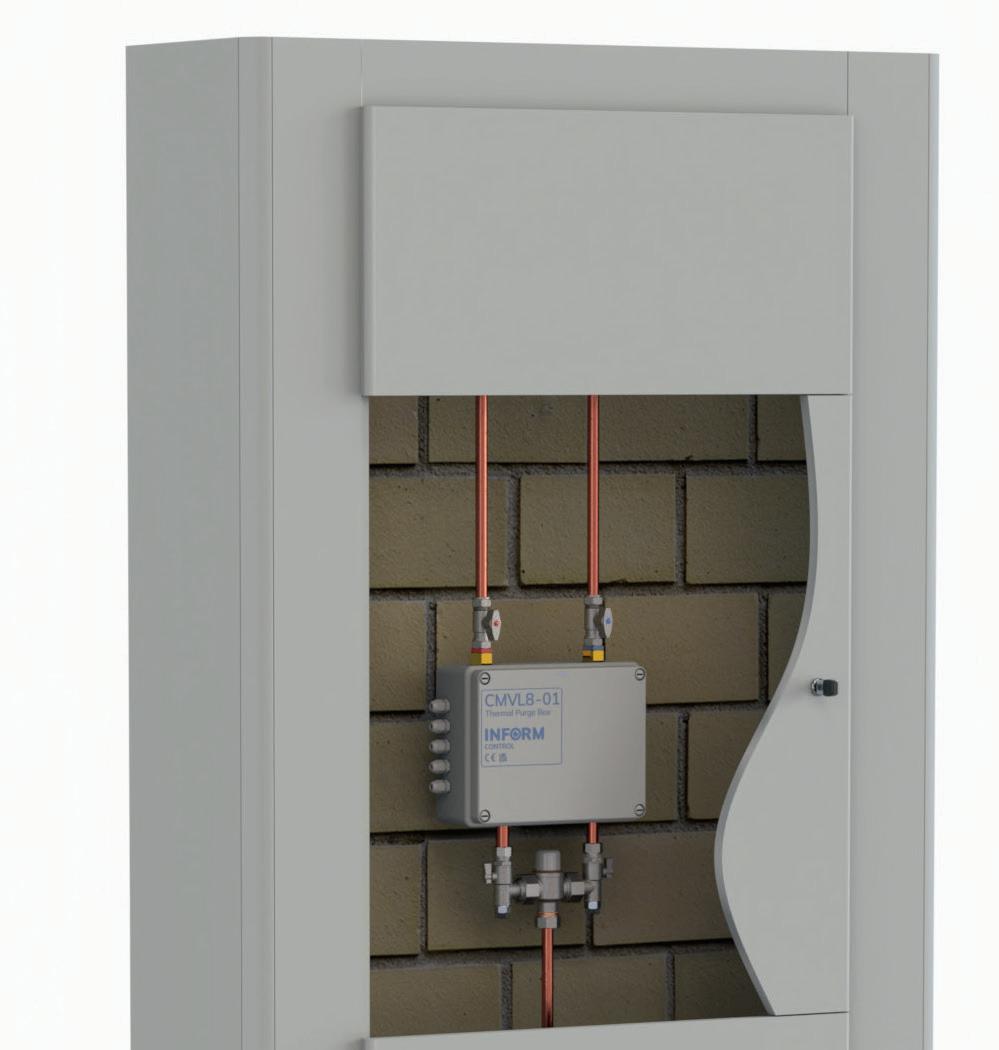

KWC DVS is making strides in clinical outlet safety via the wireless monitoring capability of our integrated temperature monitoring outlets. When combined with our INFORM Controls, hygiene flushing & outlet programming just became wireless with real time reporting.
The most technologically advanced clinical outlet solution on the market. CMVL8-01 paired with our INFORM control boxes; ensures the seamless monitoring of your temperatures, provides wireless control of thermal, dynamic & fixed purges. Verified in a downloadable report to keep you compliant.


TRY BEFORE YOU BUY
Log in for a FREE 10 day online trial or contact us to arrange a FREE on site trial.
Experience how INFORM can provide you with accurate data to help ensure a safe and compliant water system.

8 Bishopsgate a 50-storey tower in the heart of the City of London o ers a generous range of amenities, all of which can be navigated by occupants via a user-friendly digital app. Sara Bean visited to see what’s on o er


The commercial property sector has become more challenging and competitive in recent years. Tenants are all too aware that the talent pool is swayed by the o ice experience and demand premium workspaces that o er all the benefits of sustainable design and first-class amenities as well as the latest digital technologies that enhance the occupant experience.
Research published by The Workforce Institute at UKG revealed that as a result of the COVID-19 pandemic, 87 per cent of UK workers have been propelled into new ways of working by the influx of digital technology. Deloitte’s 2023 Global Human Capital Trends survey reports that more than 90 per cent of surveyed business leaders believe that using such technology to improve work outcomes and team performance is very important or important to their organisation’s success.
One of the latest additions to the London skyline is 8 Bishopsgate, a 50-storey tower in the heart of the City of London. The building o ers 560,000 sq of prime o ice space, but with 75,000 sq (10 per cent of the building) dedicated to amenities, including a café, events and viewing spaces - occupants are also being provided with a connected digital platform that o ers smooth communication between them and the building in which they work.
The app is provided by Cureoscity, a leading occupier experience and property management platform, which in partnership with Swi Connect, a provider of connected access enablement give tenants the means to access spaces and tap into other building resources through a single tenant experience app, using an NFC-enabled iPhone, Android or Apple Watch.
which is why explains Martin Peterlechner, Chief Commercial O icer, Cureoscity: “The relationship between Cureoscity and Swi Connect is almost the secret sauce. Whereas occupiers might in the past have had a di erent access control system to the employee app, this could sometimes create a problem, with one system used to enter the building and di erent systems within the occupier demise.
“Because Swi Connect has a middle layer that has pre-existing integrations with multiple di erent access control systems it integrates with Cureoscity’s digital platform and the access to an employee badge in Apple Wallet, resulting in a seamless, friction-free journey from street to seat.”
“This has been achieved from the ground up at 8 Bishopsgate, but going forward the Swi Connect journey is going to be useful for slightly older buildings where there are multiple di erent systems put in place. That is an absolutely key enabler to make the journey through the building a reliable and simple process.”

with COVID and needing to push people back into buildings.
Once inside the building, the app aims to streamline the occupier journey and improve sta engagement, as Aimee Rootes, Cureoscity
The relationship between Cureoscity and SwiftConnect is almost the secret sauce. Whereas occupiers might in the past have had a di erent access control system to the employee app, this could sometimes create a problem, with one system used to enter the building and di erent systems within the occupier demise.”
Digital wallets that allow you to store funds, make transactions, and track payment histories on devices like phones and tablets are growing in popularity,
Chief Operating O icer explains: “Cureoscity was founded in 2018 to look at the engagement aspect and how we could address connectivity, not just the door access piece but connecting the occupiers within the building. It’s about that experience in the building and how the user and customer feel about it. That was coming into play in 2018 and went into hyperdrive

“We started out with an app focus – being able to populate and push content around o ers both in the building and surrounding areas, using the door access as an activity piece. As you have to go into your app twice a day to move in and out of the building, this helps users engage with the content.
“We’ve now added elements like polls and closed questions to get immediate feedback from the wider occupier base. This is because the main point of contact for a building manager is going to be your occupier FMs who want to keep service charges down and make sure the amenities are as high quality as possible.
“The app is also designed to get people involved with building community experiences enabling the FM to have a wider reach in terms of the contacts they’re able to hear and engage with.”
Formed as a series of stacked blocks which maximise the lettable floor area while protecting views of St Paul’s, 8 Bishopsgate was developed by developer and asset manager Stanhope for Mitsubishi Estate London and designed by Wilkinson Eyre and Arup. It is the first tower to achieve a BREEAM Outstanding and EPC A rating. It is powered by sustainable and smart technologies, including an AI integrated analytics platform that captures analyses and shares energy performance and floor-by-floor air provision that can be tailored to the individual preferences of each business.
Occupant comfort is further enhanced by urban planting across accessible roof terraces throughout the building that boosts biodiversity. It also o ers a generous level of end-of-route facilities, which comprise 961 cycle spaces, 768 lockers and 54 showers. Access to the lockers is controlled by the app, with each occupier given an allocation that can either be pre-allocated or utilised as needed.
Tony Grizzanti, Client Services Director, Savills Property Management for 8 Bishopsgate says:

“Companies are looking for a building with an exceptional ESG strategy, with a vast amenity o ering. This is why we include the end-of-route facilities, a café area and on level 26, a restaurant bar/ terrace, which is focused on exclusive occupier use.”
These amenities are spread across several floors and designed to deliver a variety of spaces for socialising, networking, collaboration and wellbeing. There is an informal Corner Café at ground floor level, an Upper Corner business lounge at Level 1 and a dedicated TwentySix Kitchen, Bar and Terrace, with all the catering provided by the Rhubarb Hospitality Collection which will also manage the conference facilities and public viewing gallery.
Explains Grizzanti: “We also have the Think Tank auditorium – a 200-seater space where people can hold their own presentations and conferences. This features a breakout space above it – again prioritised for occupiers, and of course we have the Lookout Level 50 viewing area.”
The Lookout o ers occupants and general public visitors, who can enter from a dedicated entrance, a 2,500 sq viewing gallery with uninterrupted views of the City. It also includes 3,000 sq of executive suites and a 336-person events space. Tank Rooms (private meeting rooms) can also be used in conjunction with events or booked for meetings via the app.
O ering new occupants a digital guide to navigating the building is an essential part of the mix, explains Rootes, who says Cureoscity is working with the FMs from each of the individual tenant companies.
“To get buy-in, you’ve got to build relationships
with the occupiers so the managing agent introduces us as part of the onboarding process to ensure they’re downloading the app and getting access to their passes - so by the time they enter the building on day one they’re set to go.
“Bespoke elements come into the mix as well, in terms of the locker access and the food and beverages. For instance, when the café downstairs goes live there will be a click-and-collect option, enabling users to pre-order.
“Meanwhile, for the FM, they’ll be able to access the data to see how the spaces are populated and how demand fluctuates.”
Adds Peterlechner: “While the app gives for example occupiers access to the visitor management system so they can pre-book a room without having to contact receptionists, further up the pyramid it enables FMs to engage with occupiers and have the means to manage the building, including deliveries, permits or issuing helpdesk tickets.
“We’ve spent the last few months massively improving that part of our o er which means we can serve large well-appointed buildings like 8 Bishopsgate as well as smaller buildings whose FMs just need a way of managing their permits properly.”
The app is also playing a part in the leasing strategy. The leasing agents have downloaded it on their phones, so that when they’re escorting visitors around - if they’ve pre-booked them onto the system - they can get a feel for the use of the building. For new occupants, there is even a section on the app called ‘my building’ which breaks down the occupier handbook into bite sized chunks and works as an accessible onboarding tool.
Says Rootes: “With a brand-new building like this,
when people don’t know where the changing rooms are, when the amenities are going to open and how to book them, it’s so useful that all that information is available on the app, o ering an insight into how the building is run and who to contact with any questions.
“The beauty is you’re moving people in and moulding behaviours from day one. Every time you move an occupier in we’ll have a presence too. Part of the onboarding process with the first set of occupiers was that we were linked in with their steering group and doing a lot of training and onboarding with the app ambassadors who passed on that knowledge. We’ll use the same process with the incoming occupiers.”
Key to the success of any workplace is user experience and Rootes’ background in o ice concierge services means she understands why this front-of-house element is so important.
“There’s an understanding of what we need to do to o er a great user experience. It is not just about the bricks and mortar but fostering a sense of community and enlivenment, which means that the workplace is more than just a place you go to work.
“It’s about the feel of the building which will then trickle through to the individual occupiers, as the so ware in the app allows you to have that communication tool. In the past you might have those events but you had to painstakingly build up a mailing list that you’d include in a newsletter on a weekly basis which you hoped people would read.
“With the app, they have to use it to access the building and all the really good stu that is happening in that community that is being built – so this enhances that concierge lifestyle.”
Adds Peterlechner: “Our CEO and Founder wanted something that worked as the toothbrush test – that it has to be used at least twice a day, and that has influenced a lot of our thinking. So sure, we provide technology, but it’s tech with a user in mind and a way of making the workplace experience simpler and more e icient.”
International Law Firm, HFW, the first tenant in the building moved into floors 7-9 in July and will soon be joined by a cross-section of firms including law, insurance and security. Says Grizzanti: “We’re seeing traditional firms taking floors on the lower levels, but as you go higher, the plates are smaller and the rent per sq foot is lower, we’re getting a lot more companies from the West End, as the City is very vibrant.”
During the tenant mobilisation process, Cureoscity will continue to work with the onsite team, working with them to o er data and insights on how the app is being used, how people are engaging with it from a content perspective and how to maintain interest so people are driven to it not just from the door access piece.
Rootes concludes: “It’s about getting people back into the spaces, and for us, working with the landlord, the managing agent and the FMs, our goal is ‘how do we make these spaces places where people want to be and get the most from these buildings.’”



Are you facing constant key management challenges in your business? Issuing keys? Losing keys? Copying keys? Struggling to secure your world with technology that was created 6,000 years ago?
Introducing the Inigma System by Squire. Now you can control access to thousands of locks from just one smart key. With secure AES 256-bit end-to-end encryption, that’s as close to uncrackable as is possible – and all from a smart key that’s programmable from a simple app on your smart phone.
Built to be unbreakable. Coded to be uncrackable. Learn more at squirelocks.co.uk/inigma





the subsequent restructuring of an o ice can be di icult to manage without space management so ware.
“This so ware can provide scenario planning features to help with this, making sure every inch of the o ice is optimised,” he says. “Furthermore, IoT and sensor technology can also be implemented so FMs can understand how a space is used. Data on how o en desks or meeting rooms are occupied can add valuable insight into how to arrange an o ice space.
“For organisations trying to encourage people back to the o ice, the focus on facilities has never been more important. Making sure workspaces are optimised for employee needs, creating more collaborative spaces, and making sure assets are running as they should will help to incentivise people out of their home o ice and back into the corporate one.
“Implementing workplace so ware can make it easy for sta to plan their in-o ice days. If a hybrid working policy such as hot desking is introduced, sta need to feel confident that when they turn up at work, they’ll have access to everything they need.”
Massey describes how digital tech can help facilitate “hotel style amenities” where everything from the air conditioning to the availability of meeting room refreshments are in place and crucially can also help FMs reduce wasted resources such as heating/ cooling in empty spaces.
“People want to come in to work, not to come in and work around the facility” he explains. “Proactive space management is also critical, as there is little value in having a six-storey building with six people in it and one on each floor.
“Technology can help to flag these kinds of points and change the FM role into one of ‘proactive’ as opposed to ‘reactive’, encourage people to collaborate on those quiet days, and doesn’t let them sit in isolation.”
Measuring occupancy levels is another essential part of the digital mix, which is why Gorman would always advise installing the sensor technology first, as this provides a good foundation for the data utilisation.
He says: “Utilisation data helps to provide confidence that you have enough space to support hybrid working, but most importantly it gives you the data and insight to have conversations with the businesses you support. With this you can demonstrate their average utilisation of the space they currently use and the maximums they have reached.”
Paul Witter, Head of Finance, Commercial & Partnerships at BigChange argues there are other benefits of using data to unlock e iciencies and help save time, money and resources, particular by switching from paper
to digital based records.
“Automation – such as computer-generated service renewal reminders, booking confirmations and job despatch, reduce the administration burden. Information is also more accurate and instantly updated and some issues can be resolved much quicker and resources optimised more e ectively. Meanwhile field operatives are freed from filling out paper job cards, timesheets and other forms.”
BIM (Building Information Modelling) data models shouldn’t be overlooked either says SWG’s McCarthy as it gives contractors and operatives the ability to view a space beforehand, enabling them to access any areas where maintenance is required and familiarise themselves with a building layout without the need for multiple expensive site visits.
‘see’
used in spaces that are being used and introducing elements such as temperature control to make sure a space is not overheated.”


Many of the common challenges in the FM industry, such as minimising cost, increasing productivity and becoming more sustainable, can be dramatically helped by integrated technology solutions. But with so many solutions now available, where do you begin to integrate tech solutions to work together?
He says: “If needed, 3D viewing tools can be used to ‘see’ assets that may normally be hidden from view such as in ceiling voids. BIM technology means simple things such as knowing the make and models of certain equipment in advance and ensuring the right tools are taken to the site prevents the possibility of multiple unnecessary visits and streamlining the task at hand. This helps prevent a backlog and can ensure a building is performing at optimal levels.

assets that may normally


“IoT data can also help drive energy e iciencies – making sure energy is only

IoT and sensor technology can also be implemented so FMs can understand how a space is used. Data on how often desks or meeting rooms are occupied can add valuable insight into how to arrange an o ce space.”


Gorman at Anders+Kern recommends looking for technologies that have already provided integration with other technologies, and asking for examples and references.

have already provided
He says: “There are quite a few service providers now in the arena that partner with di erent technologies. These service providers have experienced the problems of integrating the technologies and they may have already tested solutions and found what works well.”


that partner with di erent





He recommends that users avoid trying to integrate several technologies in one step and, if one thing goes wrong it will bring everything down.
Core data integration is another critical consideration according to MRI’s Massey: “Be that the creation of an asset in a


single system and it being available in any subsequent ones. It’s about being able to call other technology platforms from within another (single sign-on being key to keep a good user experience), and giving the right user the right data.”
Witter of BigChange also recommends talking to other companies that have been through the process and get recommendations before choosing a system.
He says: “It is important to involve everyone from administration to accounts and field service engineers to customer service teams. A phased implementation (in one service area or regional location, for example) will help smooth out the pitfalls that may well arise.”
The so ware developments McCarthy sees as most useful for FM in terms of building performance and asset management include CAFM So ware which is integrated with other technology for a best-in-breed solution, IoT and Smart Building Technology, BIM & Digital Twins and AI for predictive maintenance.
“Ultimately, all the above converging together will create an optimal building management system. As buildings and building requirements continue to grow and
develop, having a succinct and established building management system to assist with performance and asset management is transitioning from a desirable arrangement to a necessary one.”
Massey says the latest IoT and not basic sensors that we used to have 10 years ago, but ultra-smart sensors that can give early indication to a wide-ranging set of issues will deliver huge digital benefits.
These enables the compilation of: “A ‘building health’ indicator, built up of a vast amount of data, feeding into a core FM platform. By this I mean the ability for a sensor to raise an alert (for example CO2 level is too high in a room), send that ‘task’ to the CAFM system and in-turn that CAFM system could (where possible) tell the BMS system to open the fresh air-vents or increase the AC unit or tell the facilities team to go and visit that room – all from a single sensor.”
Using IoT tools in this way could deliver smart energy management he says, working as “a digitally attentive landlord who o ers a feature-rich self-service portal or integrated access control on your phone. All of these are the foundations for ‘digitally driven maintenance’ which in my view is the most useful set of developments we are working on.”
ABAX’s Craig Allan agrees asset
management is an area of focus for FMs, and while some developments within buildings can o en be expensive, introducing an e ective asset management system can be a smaller, but rewarding and cost e ective, investment.
He explains: “As part of strong asset management, it can be possible to increase the life of some assets. We have a ‘one year longer’ commitment whereby we aim to share insights to help customers use their assets in a way that means they last at least a year longer than anticipated.
“This could mean o ering data-led insights on driving behaviours to reduce idling or sharing insights on how to limit wear and tear on machinery. Achieving this ‘additional year’ requires that the location of the asset is easily identifiable, and if it is lost/mislaid it can be recovered.”
However, he adds, with all these developments we should never forget the user’s role: “Data is what so ware uses and processes, but humans need information (processed data) to make more informed decisions. By using this information FMs can implement new ways of working, reduce energy spending or remove the need to unnecessarily replace assets – thus providing a more e icient, sustainable and profitable business.”


In his new role as SVP and President for the UK and Ireland for ABM, Richard Sykes tells Sara Bean his goal is to make the ABM brand as prominent here as it is in the US
The announcement in May that integrated technical and facilities solutions provider ABM had appointed Richard Sykes as SVP and President for the UK and Ireland, sparked a lot of interest. Arguably Sykes is better known in FM circles than the ABM UK & Ireland brand, but under his leadership he promises, that is going to change.
ABM has had up to now, a much higher profile in the US, where the multi-billion-dollar business is not only a member of the US Fortune 500, but draws key clients from over half of the companies on the list. Sykes’ role in the UK, Ireland and ultimately mainland Europe will be to draw on that pedigree to grow the business over here.
Says Sykes: “As a group ABM has around 100,000 employees, and around 350 o ices around the UK, Ireland and the US. It’s a big business
which was founded in 1909, has over seven-billiondollar revenues, and is well known in the US but not so much in the UK, which is why we need to move the brand along and show customers what we can o er here.”
I first interviewed Sykes back in the noughties, where, as Facilities Director at Taylor Woodrow he eventually oversaw its sale to Vinci and he’s gone on to prove his acumen in the FM sector ever since.
He explains: “I completed the sale of Taylor Woodrow to Vinci and then went on to work at Carillion for four and a half years, then moved to ISS UK & Ireland where I doubled that business in four years.
“I then moved to cover ISS in Western Europe, Benelux, Portugal, France, Spain, and later its Northern Europe market, which is the largest part of the ISS group. I then took on a strategic transformation role, where we ran a filter across the 52 countries in ISS as part of a decision to divest 12 of these and reinvest the proceeds back into the core focus of the business.”

Tiring of the endless international travel involved in the role and keen to experience a di erent sector, he took the opportunity to go into private equity for M Group Services, an infrastructure support services business. However, a er a couple of years he was drawn back into FM by ABM Chief Executive Scott Salmirs and COO Rene Jacobsen.
Says Sykes: “They’ve big ambitions for the UK and Ireland and Europe and appreciate they have massive opportunities here. Being so big in the US, with half the Fortune 500 customers in their portfolio there’s already growth potential on the back of that customer base alone.”
ABM he adds are also big players in key areas
around energy solutions in the US where they are market leaders in sustainable infrastructure, power, and bundled energy solutions, with services across eMobility, EV and electrification, all of which could be applied in the UK.
Sykes also adds: “ABM have a huge technical services o ering which we are not as well known for in the UK, so that was a big attraction for me. With Scott and Rene’s question to me being ‘how do we accelerate the growth of the UK & Ireland business?’ I realised it was a challenge that I really wanted to do.”
Prior to Sykes’ appointment, ABM has been busy with a spate of announcements, including the acquisition of Dublin-based Momentum Support last year.
Says Sykes: “Up to now Momentum had been kept mostly separate so my aim is to integrate it more now into the rest of the business. Aside from that our core businesses in Ireland remain aviation, healthcare and a growing life sciences sector and we’ll maintain those as our focus but will add new sectors as well.
“For example, we’ll keep going a er public sector work, and corporate real estate will also be a key area of growth. We’re also quite big in manufacturing and distribution in the US so we’ll open up that market here too.”
In terms of service lines, the focus of growth he explains will be on the technical side, as the business already has a strong so service presence, including cleaning, waste management and security.
Currently ABM’s European market is pretty small, consisting mainly of data centres in Northern Europe and Sykes advises: “We’re not going to run o in that area at the moment as I’m still getting to know the business. Phase one will be UK and Ireland growth and then we’ll start looking at where and if we need to expand into Europe. It’s a big playing field which I know from my experience, so we’ll be selective in which markets we may choose to go into.”
A er stepping out of FM for a couple of years it’s interesting to hear Sykes’ take on how the sector to which he’s devoted much of his career is dealing with the challenges of meeting ESG and embracing technological innovations.
Says Sykes: “Coming back into FM I’ve noticed

that the sector has been relatively behind the ESG journey. Working in infrastructure alongside utility companies, they’re way ahead. It is at the very top of their agenda as you wouldn’t win any work with clients if you’ve not aligned your o er completely around your ESG credentials.
“By contrast, the client tier in FM are asking us, ‘what do we need to do?, how can we align to these goals,?’ rather than really driving them. Whereas in utilities, the clients are driving ESG, in FM it almost seems the other way around, with the services companies pushing the customer towards embracing ESG.”
He continues: “Too many customers don’t understand the need to put cash behind
meeting net zero and other ESG targets. You might talk to a customer and advise that to bring all their energy costs down they’d need to renew certain assets; for instance, if the lifecycle of a current asset means it could run for five more years but we recommend replacing it to improve energy performance. In many cases they’ll o en prefer to run it for

five more years.
“So, we’re starting to have the discussions but the budgets just aren’t flowing. They’re in this limbo of ‘let’s just see what happens with the cost of living crisis and high inflation’ so everything is put on hold a little bit.”
I haven’t seen much innovation emerge in the couple of years I’ve been out. The use of AI and IoT is being talked about but not being really used. By comparison, in Utilities for example they’ve already got digital twins, with the use of mapping tools where they can analyse where breakages might occur, meaning they’re way ahead proactively in using digital technology...”
He’s similarly disappointed with the technical evolution of FM, which was supposed to have accelerated during the pandemic given the widespread adoption of sensors and other intelligent devices to monitor occupancy levels and cleanliness.
Says Sykes: “I haven’t seen much innovation emerge in the couple of years I’ve been out. The use of AI and IoT is being talked about but not being really used. By comparison, in Utilities for example they’ve already got digital twins, with the use of mapping tools where they can analyse where breakages might occur, meaning they’re way ahead proactively in using digital technology. This is something which we could do more of in FM.”
However, he believes where FM is ahead compared to other industries is in employee engagement: “I’ve always believed FM is about people and that comes across strongly in ABM.”

The priorities now are to keep the team motivated, highlight our USPs and draw on the enterprise to drive some of the customers over there here.”
The FM sector he feels, also excels at employee engagement and being customer centred.
“In comparison, infrastructure businesses are quite distanced from their customers because they get onto frameworks and land a contract for five years during the regulatory period but don’t worry about engaging with customers until the next regulatory period comes along.
“By contrast FM is day-to-day, we’re always trying to satisfy and impress our customers and stay close to them.”
When it comes to recruitment and retention in FM, Sykes argues that proactive resourcing is key and he’s been impressed with ABM’s strategy which is very proactive in resourcing teams. This is particularly notable within ABM’s Blackjack Promotions team, its guest experience brand that operates mainly in UK airports.
Explains Sykes: “They’ve done some fantastic recruiting around attitude, appearance and customer focus and we’re hoping to replicate that - not just within the UK and Ireland but Europe and the US. Their approach means that particularly in aviation
which requires a huge surge in resourcing during the summer months, we haven’t had too many problems because they are way ahead of the curve.”
The other issue for FM of course is around finding sta with the right technical skills. ABM has addressed this at the entry level through its Junior Engineering Engagement Programme (J.E.E.P.) which is run in schools to help inform young people of the opportunities in engineering and specifically, to raise the profile of the facilities management industry amongst young people and their parents, while creating a pipeline of future technical talent.
At a wider corporate level, ABM’s Elevate strategy which was launched in 2021 remains the lynchpin of its strategy; aiming to elevate the customer experience, the employee experience and the use of technology and data.
“There is also some good stu in the technical space we can draw from the US,” says Sykes.
“For example, we’ve got a little R2D2-type robot at the airports which is programmed to take you back to your car and we’ve a number of Cobotic floor cleaners in operation amongst our cleaning teams, but it’s the contribution our massive data field
makes which is most interesting.
“One of the best examples I’ve seen was with a leading coworking brand which was benchmarking all their o ices on usage, footfall, rent per square foot, all of which was collated into determining the most e icient work spaces they had across the globe. We were able to supply them with a lot of that data from both the UK and US.
“It shows how we can help organisations check on the performance of their assets to improve performance.”
Drawing on the resources of the organisation is key to Richard Sykes’ plan for growth. He relates that the “US have been super helpful; in my first few weeks I had 50 one-to-ones with them.
“My aim now is to get the growth going, create more synergy across the UK & Ireland business and bring all the businesses closer together. We also need to cultivate a fresh leadership team, so I am delighted we’ve appointed Niall Partridge as UK&I Finance Director from October 2023. He has been promoted from his role as Finance Director for Ireland which demonstrates the strength of talent we have within the business.
“The priorities now are to keep the team motivated, highlight our USPs and draw on the enterprise to drive some of the customers over there here.
“My ambition is to make this one of the key FM players in the UK & Ireland and while doing so I’m loving been back in FM in a great organisation and a sector where I’ve devoted most of my career.”


Louise Clarke from the Water and Public Health Engineering teams at the global
engineering consulting
and
advisory practice
Buro Happold provides insight into why we need to improve our water management and some of the best means of doing so
When we think of water management what typically comes to mind is how we use our water. However, facilities management is about so much more than just the how, requiring a wholly integrated approach that includes (but is not limited to) factors such as: the source of water; the quality of water needed for di erent uses; greywater (non-faecal contaminated) production sources; local rainwater and stormwater; flood water; condensation water; heating and cooling; drainage systems and public health.
In 2021, the Environment Agency reported
that 16 of its 23 water regions are under water stress, a term for when the demand for water exceeds what’s available for an extended period. Twelve of these are classified as serious. Sadly this is not uncommon, with the UN reporting that half of the world’s population will face severe water stress by 2030.
Water neutrality, where a new development does not result in a net increase in water demand, is one way to combat water stress. The three general principles of achieving water neutrality are reduce consumption, reuse water and regenerate nature.
It’s o en thought water neutrality is more suited to new developments, but there are endless opportunities to bring these
principles into existing developments through collaborative planning and minor modifications. Here, we’ll outline just a few of the options that can improve both water usage and the overall sustainable management of water.
Developing a water conservation plan is a great way to minimise water wastage and promote responsible water use. Such a plan should clearly set out changes that can be implemented and how new technologies can be used, when considering the specific requirements such as the water source and water usage.


In the water world, we say that the water quality should be dictated by its prescribed use. However, the typical standard of water provided is potable (drinking water), which is of much higher quality than is necessary for many uses. For example, potable water is not required for activities such as toilet flushing, landscape irrigation and car washing. The water required for a development can be reduced significantly by evaluating the di erent sources of water and the water quality needed for use. Similarly, not all used water needs to go into our sewers. There are ample opportunities to collect ‘grey water’, this is wastewater without faecal contamination, from places such as hand washing sinks, washing machines and showers. This can then be run through relatively low levels of treatment and reused. In a large residential building, for example, one third of shower water could be collected and reused to supply the toilet demands for the entire building.
depending on the demands of the system. This both prevents excessive pressure at the taps or faucets and helps achieve up to a 30 per cent reduction in pumping costs.
How o en have you needed to use hot water, so run the tap and wait for it to warm up? Most people do, but consider the combined water wastage this causes. The reason we must heat the water by running it is because water in the pipework cools rapidly under no-flow conditions when the tap is o . One simple solution is to install trace heating, which can be used on both new and existing systems.


exist at all stages of the plumbing cycle, right from the supply point connection to the final discharge into the public sewer or wastewater treatment plant.
There are many ways that pathogens can make their way into water supply systems, for example through water pipes in contaminated soil and cross-contamination of potable water with recycled water. The Pathogens Management Train (PMT) (Jeetun, 2021) is an innovative, seven stage concept that can be used by facility managers to identify the risks associated with pathogens and increase sanitary safety through careful design or improvements to new and existing systems.


New technologies are continually being developed that improve the sanitation environment using automatic methods of disinfection, such as the self-disinfecting trap. By using the PMT and adopting these technologies, FMs and design specialists can remove various factors that could impact public health.”


could be collected and reused


Collection of rainwater, stormwater runo harvesting, recycled water supply and harvesting condensation are also perfectly viable and proven alternatives to potable water.
Some of these options are more suited to new builds or for implementation during significant renovations, for example, internally plumbed greywater systems. However, some of the more ‘easy win’ opportunities include: external ablution facilities; installing tanks for rainwater collection; stormwater harvesting systems; air conditioner condensation collection; any detached grey water producing or consuming activity.
Water supply pumps are used to transfer water from the mains supply to the point of use. Research on pump operation by pump manufacturer Grundfos found that on average, pumps operate at their peak capacity only 4.5 per cent of the time and operate at less than half of peak capacity for 86.4 per cent of the time. One way to improve this is by installing variable speed drives on pumps, automatically adjusting the pressure

Installing trace heating means hot water in the pipework is maintained above a set temperature, so that when the tap is turned on it’s already warm. This not only has the benefit of reducing water wastage, but also helps to prevent pipes freezing and can reduce energy consumption.
means hot water pipework consumption.
Sustainable Drainage Systems (SuDS) are well established in the UK with a range of best practice guidance available. SuDS are external features designed to mimic natural drainage by slowing run-o . They are relatively easy to retrofit into buildings and have several benefits including reducing pollution; recharging groundwater; lowering the cost of drainage; creating an alternative water supply when rainwater or stormwater is captured and reused; reducing risk of flooding on site; improving run-o water quality; reducing the Urban Heat Island E ect by replacing hardstand with natural green and blue spaces; improving biodiversity.
Inadequate public health engineering can be a contributor to the spread of pathogens. With hundreds of millions of SAR-CoV-2 cases and almost seven million deaths registered worldwide, it would be remiss not to consider wastewater management and provision of public health engineering in a water management strategy. The risks
New technologies are continually being developed that improve the sanitation environment using automatic methods of disinfection, such as the self-disinfecting trap. By using the PMT and adopting these technologies, facility managers and design specialists can remove various factors that could impact public health.
Not all the sustainable water solutions we’ve covered so far are available to everyone. So here are some ‘quick wins’ for water conservation, including some of the well understood but sometimes overlooked methods:
Install low flow taps
Automatic switches to turn taps off after a timed period
Water efficient appliances
Dual or low flush toilets
Replace hardstand areas with permeable pavements
Review pump pressures
Conduct a PMT review
Installing greywater systems on a detached greywater producing / consuming activity
Rainwater tanks; and
Signage to remind staff and visitors to conserve water
So despite the increasing pressures on water resources, there are many practical, a ordable solutions available to us now that can help ensure we make the most of this precious commodity.
FM provider 14forty reports on how it is helping Edgbaston Warwickshire County Cricket Club prepare its grounds for the winter months

Edgbaston, located in Birmingham, is not your average cricket club. One of the most prestigious Test Match venues globally, what sets this club apart is not just its sporting excellence but its unwavering commitment to sustainability. As the year-round facilities management service provider for Edgbaston, we play a pivotal role in ensuring the club’s sustainability goals become a reality.
One of Edgbaston’s primary objectives is to become the most sustainable cricket venue in the UK, with an ambitious target of operating as a net zero venue by 2030. This is no small feat, considering the club’s capacity to host up to 25,000 fans on a match day and accommodate up to 2,000 banqueting guests.
To achieve these goals, the club has launched various initiatives, with a focus on waste management, use of local produce, and reduced energy consumption. As their total facilities management provider, we play a pivotal role in supporting these initiatives, tailoring our approach to meet the unique needs of each season.
Unlike traditional o ice buildings, sports stadia like Edgbaston experience a distinct o -season, typically from October to April, but the venue must remain operational for occasional events or conferences.
This presents a unique challenge from a
sustainability perspective. During the o -season, a considerable amount of energy, water, and resources would go to waste if not managed e iciently.
Strategically turning o gas and water supplies in areas not in use, is one way of overcoming this and something as simple as placing informative signs on doors can remind club sta and visitors to reserve resources.
A full transition to low-energy LED lighting and smart sensors play a significant role in this e ort, by controlling lighting in areas that might see use during the winter. This removes the worry of sta or visitors wasting electricity by leaving lights switched on for longer than necessary.
For further optimisation, sensors are installed above toilet entrances, calculating the number of people who have used the facilities. Notifications are sent to operatives when specific thresholds are reached, ensuring e icient cleaning schedules, conserving water, and reducing chemical use. Sensors are also integrated into toilet roll holders and towel dispensers to prevent the over-ordering of supplies. Any remaining stock is redistributed within the stadium, especially to areas expected to have higher footfall during the winter months.
In Edgbaston’s case, when it comes to cleaning for winter shutdowns, outdoor spaces still need to be presentable and hygienic in case of the occasional
winter event.
But here’s our ultimate top tip: avoid deep cleaning outdoor equipment and furniture as they will only get dirty again before the new season begins. This will result in doubling handling, meaning double the water, chemicals, energy and labour.
One of the key concerns when it comes to cleaning in winter is minimising germs and bugs. Winter sees the typical spike in cold and flu viruses, so doing our best to keep spaces clean and sanitised to prevent the spread of these germs is key.
For this, we use Tersano Ozone, an environmentally friendly cleaning product that requires less water than traditional alternatives. This product attracts and eliminates bacteria and germs, leaving behind only water and pure oxygen. It is safe for use on various surfaces, including food preparation areas, contributing to both cleanliness and sustainability.
During our partnership with Edgbaston, we have analysed all aspects of our business for potential improvements. We’re not just about bricks and mortar; we invest in our team members too, a critical component of our day-to-day operations.
On any given day at the club, we require anywhere between 10 to 100 team members, depending on the event schedule.
To reduce Edgbaston’s carbon footprint, as well as our own, we have prioritised recruiting part-time sta living within a two-mile radius of the stadium. This approach has proven successful, with the majority of our team living within that radius, and 90 per cent of them using sustainable transportation methods such as walking, cycling, or public transport.
During quieter seasons with longer gaps between events, we prioritise keeping our team members motivated and engaged. This includes providing advanced notice of schedules, o ering alternative shi s elsewhere, providing quality meals, regular breaks, and task rotation to keep the work interesting.
We’re proud to say that our collective e orts have yielded impressive results. Waste at the stadium has been reduced by a third, and hundreds of lowenergy LED lights have been installed.
In terms of catering, 95 per cent of event food is prepared on-site throughout the year, significantly reducing packaging waste. While a continued use of reusable e-cups has prevented the disposal of three million single-use plastic alternatives.
This dedication to sustainability has not gone unnoticed. In 2022, Edgbaston received a Sustainability Award at the West Midlands Business Masters Awards on November 3rd and another at the ECB Business of Cricket Awards (BOCA) in Manchester on November 10th.
These accolades not only recognise the club’s commitment to sustainability, but also the crucial role that our team played in making it a reality. We are partners in every sense of the word.


No load speed 0 - 20,000 / 23,000 min-1, Max. Air Velocity 53 / 64 m/s, Air volume 0 -13.5 / 16 m³/min, Product net weight 2.4 kg, Tool weight with battery (EPTA) 3.1 - 4.5 kg. Max blowing force can be easily obtained by fully pulling the trigger (Boost mode), Compact and lightweight for single handed operation, Lock-on button operable from either side of handle for continuous operation, High power and less user fatigue, The best choices for use in resorts, public places and residential areas, Battery protection system automatically shuts off power when the battery level is low.
makitauk.com/product/UB001G


• Comprehensive task management system simplifies tasking requirements.
• Digital operation reduces errors and operator time.
• Manages reactive and scheduled tasks.
• Enables tracking and updating of tasks when working in the field.
• iOS and Android compatible.
• Mobile operation enables offline operation. (connection required for uploading and downloading data)
• Meets growing demand for digital working.


We have saved over 6 days per month of resource time having the ability to auto trigger emails direct to our users, as well as now having access to key electronic data on audits being completed for ease of reporting.

Tim Whitaker - Marketing Communications Manager, DALI Alliance discusses sustainability, futureproofing and the opportunities o ered by smart, data-rich lighting systems
Sustainability across the electrical sector continues to be a key focus and with lighting accounting for around 15 per cent of global electricity consumption and five per cent of worldwide greenhouse gas emissions, how it is managed is of vital importance. But it is important to consider what can be achieved now, as well as the reasons for future-proofing for the benefit of the industry. It is here that the role of connected lighting is a key way to reduce energy consumption and cut carbon emissions.
There are many driving forces for sustainability across the lighting industry. First and foremost is the need to address environmental issues, which
are closely linked to social responsibility and achieving ESG. This had led to the introduction of legislation and compliance requirements, focused on achieving a more environmentally-sound future.
Another factor is the move towards creating a circular economy. This has garnered wide-reaching support, including a policy and regulatory framework in the European Union. A circular economy approach aims to ensure products can be reused, refurbished, upgraded and recycled, rather than simply disposed of when they stop being fit for purpose.
One of the most ine icient elements of building management is leaving lighting on even when a space is unused. To counter this,
an e ective approach would be to introduce an automated DALI (Digital Addressable Lighting Interface) lighting control system with sensors that detect occupancy, movement and daylight levels.
When detecting presence and movement using a PIR (passive infrared) sensor, the system responds by turning lights on and o as required, reducing energy usage.
Light level sensors are an additional tool in the drive for energy savings. With regard to daylight levels, light level sensors inform the system how much natural light is available in a particular location, and the artificial lighting levels can then be increased or decreased accordingly. By only being on when the area is in use, unnecessary electricity use can be massively reduced. To standardise the location and format of new types of data that can be stored in
control gear such as LED drivers, i.e. devices that regulate the power sent to your lights, several DALI data specifications have been developed. This data, which is drawn from the light sources, luminaires and the drivers, can be used for asset management, energy monitoring, diagnostics, predictive maintenance and a variety of other applications.
Bolstering this, some drivers have the capability to report real-time energy usage and power consumption. This is incredibly useful, as the savings achieved through the e ective use of a lighting control system can only be quantified if energy consumption is e ectively monitored. To build up an accurate picture of savings, it is important to not only measure the overall energy usage, but also to understand the specifics of di erent areas in a building – or even inside individual luminaires.
The introduction of new sophisticated lighting control systems has delivered huge gains in regard to reducing energy consumption. Enabled by protocols such as DALI, the energy savings can be even greater as it standardises the functionality of input devices that provide information to the system.
The benefits are clearly demonstrated in regards to enhancing sustainability, reducing energy consumption, and paving the way for the future. As a global industry organisation focused on standardisation and market acceptance, the DALI Alliance also enables the broad adoption, scale and technology leadership that is needed to keep driving energy usage down and promoting sustainable lighting solutions.
Data also plays a key role in providing smart, sustainable lighting networks. The standardised DALI protocol is built to enable data-rich networks in which the feedback and the exchange of data is enabled by twoway digital communication. Its control gear then routinely reports output levels, lamp failure information, emergency test data and other information to application controllers. This valuable data feeds into the lighting control system and triggers automated, real-time changes that in turn lead to energy savings.
Further aiding sustainability is predictive maintenance. LED drivers can report a wide range of operational and diagnostics data, allowing the system to proactively alert a facilities or operations manager to any faults. Employing this data-informed predictive maintenance strategy rather than a rudimentary time-led one, where replacements are scheduled a er a fixed period of time, can deliver significant savings. This in turn contributes to the overall

sustainability of the lighting control system.
Rather than being a temporary solution or a fast-changing trend, the DALI protocol has been around for decades, supported by all major players in the lighting industry.
The DALI-2 certification programme, which has been developed and maintained by the DALI Alliance, the global industry organisation for DALI, is the internationallystandardised protocol for digital communication between lighting-control devices, and has created an ecosystem of interoperable products from multiple vendors.
This ensures the long-term availability of compatible components. It also removes issues associated with vendor lock-in and reliance on proprietary solutions that may become obsolete in the future. Bolstering this further, DALI-2 provides backwards compatibility with earlier product generations.
By its very nature, DALI is a flexible solution that lends itself to future-proof designs that extend the useful life of a lighting control system. Changes to the design of a DALI system and how it is operated can o en be dealt with by so ware reprogramming, rather than having to rewire or replace luminaires and other equipment. This could, for example, allow the operator of a commercial building to easily change the layout of a space to accommodate new tenants.
At the luminaire level, future-proofing is enabled by the Zhaga-D4i connector system, which facilitates the plug-and-play replacement of luminaire-mounted sensors and communication nodes. Zhaga-D4i combines the standardised mechanical interface from the Zhaga Consortium with the communication and power requirements specified by the DALI Alliance as part of the D4i certification programme.
Zhaga-D4i certification has enabled an ecosystem of interoperable luminaires and control devices. This allows luminaire owners to easily update their fixtures, protect their investment, sustainably extend the life of the luminaire, and keep pace with fast-moving developments.
While there is a lot to consider when designing a new or improved lighting scheme, an e ective DALI lighting control system can o er huge gains with regard to sustainability, energy consumption, and advantageous use of data. As a global industry organisation focused on standardisation and market acceptance, the DALI Alliance also enables the broad adoption, scale and technology leadership that is needed to make a real step-change across the industry.
Ultimately, whatever the requirements of a lighting system, standardisation with DALI has been proven to deliver an e icient, flexible, sustainable and cost-e ective solution.


Wastemanagement is a large part of any relocation service, with many projects including assets that are no longer wanted or are at the end of their lifecycle. The easy option would be to simply dispose of these items. However, better solutions are needed for those who want to meet their green goals.
The term ‘waste’ already has negative connotations; its definition means to fail or neglect to use something, implying that waste involves poor management. At Business Moves Group, we actively move away from the term ‘waste’. Instead, we focus on the solutions businesses can action for such assets.
Within the consumer market, individuals are becoming more aware of where they choose to shop, the socially responsible accreditations held by those businesses, and what impact their shopping choices are having. While the corporate world was slower to adopt the same thought processes, tenders for the procurement of services and products now place greater importance on ESG requirements.
Having a clear furniture management strategy for handling unwanted assets should be the new norm. Ultimately, obsolescence through the purchase of bad-quality items and the unnecessary disposal of others a ects the Scope 3 emissions for both the client and the service provider. These should be avoided, not only for improving the business’
planet.
It is important to consider the circular economy when addressing your waste management solution. The circular economy is a system where materials never become waste. Products are kept in circulation through processes like reuse, refurbishment, and recycling as a last resort.
When there are assets that are no longer needed, instead of jumping straight to recycling, we consider alternative avenues as standard practice. First, we assess the quality of the asset. Those items that are still in great condition can potentially be sold, helping to create additional cash flow for the client.
For those pieces that aren’t quite sale-worthy, there are a plethora of options for donation. At BMG, we work closely with various charities that take unwanted o ice furniture for reuse in places like state schools [pictured] or other businesses across the UK, improving the infrastructure in schools that need extra support. Engaging with these types of initiatives also boosts your business’ social value credentials.
Closed-loop decision-making is also significant when considering new furniture options. Not only should you consider the material that you are buying, but also the actual items themselves and where they sit within a circular economy.
When sourcing new furniture, choose to go with manufacturers that use 100 per cent recycled materials, or source new items that have been refurbished themselves.
The type of furniture you source should also be a consideration. A desk, for example, has a great lifecycle, as many di erent industries need and use desk space. Something like an under-desk pedestal on the other hand does not have such a secure lifecycle. A er a business decides it no longer wants them, the design may be out of fashion, meaning their resale value will have decreased dramatically.
This is why organisations should think strategically about what types of furniture they are purchasing and what life it will have beyond its purpose for the business.
When organisations go through large change management projects, it is tempting to go for trending designs and space layouts. However, if users don’t know how to use those spaces or don’t engage with them, all the new furniture and equipment can lie stagnant.
Organisations need to consult their employees carefully about what they like and don’t like about their workspace to determine what can be improved. By doing so, change management teams can make e ective decisions around what purchases are required and what assets can be kept or repurposed, minimising the need for waste management.
Keeping track of all the assets owned by a business is essential for both management and maintenance purposes. During the pandemic, many businesses allowed employees to take home o ice materials such as laptop stands or keyboards. Since the return to the o ice, managers have been facing issues of tracking where the equipment is, resulting in unnecessary purchasing of new items.
Knowing what you’ve got, where you’ve got it, and how it is used is essential for minimising the need for waste management. It allows for better reporting on which assets might need replacing due to their condition and ensures organisations can know what stock they have that can be shared across di erent o ice locations if needed, rather than buying new items. Once there are items that are no longer serving their purpose for the business or require upgrading, the steps illustrated above can be followed to ensure best practice.
In this way organisations can ditch the wasteful thinking and instead focus on the potential opportunities.


www.beg-luxomat.com


Replaces all B.E.G. remote controls by using the app


Direct infrared connection to the sensors via smartphone

info@beguk.co.uk


Lee Brunsden has been appointed as the Head of Sales EMEA at CHAS, a Veriforce company, as part of the supply chain risk management expert’s ongoing global expansion strategy.
With a track record of over a decade in compliance and risk management, Lee has assisted numerous clients worldwide in enhancing their supply chain risk management practices. Lee's expertise in sales strategy, adept team leadership, and change management make him a valuable addition to CHAS as they expand their solutions to a broader international audience following their acquisition by Veriforce in January 2023.


Dulux has announced its Colour of the Year for 2024, Sweet Embrace™. The colour is a delicate, optimistic and modern tone that is understated and comforting and brings a sense of stability and so ness to a space. To complement Sweet Embrace™, Dulux is also launching three versatile colour palettes – Warm, Calm and Upli ing- to provide architects, specifiers and designers with a wealth of colour inspiration when creating beautiful spaces in any sector.
With over 20 years of experience across all disciplines of sales, Lee specialises in new business development, major market expansion, and fostering high-performance sales teams. His leadership skills and passion for building partnerships will play a pivotal role in overseeing CHAS’s sales organisation across EMEA.
Eager to engage with both new and existing customers, Lee is excited about launching innovative products tailored to meet the needs of the construction, utilities, and FM sectors in the UK and beyond.
Lee comments: "I'm thrilled to be joining CHAS and to have the opportunity to play a part in their expansion plans.
"CHAS has earned an excellent reputation for driving advancements in supply chain risk management within their operating sectors. I am eager to build upon this success both in the UK and overseas." www.chas.co.uk
Workwear – Protectivewear - Performancewear –Leisurewear.
The new Hybrid multipurpose work jacket is a street-smart, highly versatile garment. Great on site or for leisurewear, it’s made of flexible, wicking jersey fabric with Repreve® fabric insulation in the shoulder and upper body area.
The Hybrid provides great freedom of movement and elasticated comfort for all types of work and warmth or ventilation when you need it.
Whatever toplayer clothes you need – for work, play or protection against hazards – Snickers Workwear has a range of Jackets that will work on site for both men and women, always delivering optimal performance, comfort and good looks. www.snickersworkwear.com/products/work-jackets


Just check out the features of Snickers Workwear Jackets, there will be one to suit you - wherever you are, whatever you need, whatever you’re doing.


Dulux’s Colour of the Year for 2024 reflects people’s need for simplicity, meaning and a sense of belonging, whatever the environment. Sweet Embrace™ - named by Dulux for its delicate, welcoming and soothing qualities – can be used by architects and specifiers for projects across all sectors.
Dawn Scott, Dulux Trade Senior Colour Designer, said: “The Colour of the Year 2024 and its accompanying palettes can be used to evoke a wide range of emotions for building occupants. Whether you are looking for bright colours to inspire the younger generation at school or help those living with dementia maintain their independence by making critical surfaces more visible with saturated, deeper tones, Sweet Embrace™ and the Warm, Calm and Upli ing palettes are the ideal solution.”
Dulux has created the Dulux Trade Colour of the Year 2024 Specifier Brochure which includes mood boards that can be used to help create the perfect space across any sector.
www.dulux.co.uk
Facilities Management specialists NJC and Kite Robotics have announced their partnership to deliver the Kite Robot to the UK and Ireland. This partnership will provide the provision of both bespoke and standard Kite applications. The autonomous Kite Robot removes the human component in complex vertical environments, removing this risk, whilst cleaning 6x faster than standard cleaning.


NJC CEO Paul Crilly said: “We are really excited by this innovation which will disrupt the commercial window cleaning market. We have been working with Kite Robotics for almost 18 months and following our highly successful demonstrations on our customer sites, we are proud to o er the Kite to Developers and Landlords.”
“We are absolutely thrilled to sign this partnership with NJC.” said Stefan Spanjer, Founder & Managing Director of Kite Robotics. “At Kite, we are committed to the introduction of fully autonomous window and façade cleaning systems, that’s why we created the Kite.”
With a comprehensive decarbonisation roadmap in place, the UK manufacturing sector’s drive towards achieving Net Zero emissions by 2050 is set to drive increased innovation and competitiveness, positioning UK manufacturing as a leader on the global stage.
In a complex and busy environment, pinpointing unnecessary energy use across multiple sites and varied production processes and schedules can prove challenging. This is where MRI eSight, a dedicated Energy Management System (EMS), emerges as a pivotal tool.
Overcoming Time Constraints
Richard Smith, Senior Director EMEA - MRI Energy explains: “In the manufacturing sector, time is a precious resource, and the demands of maintaining daily operations can mean it’s di icult to find the time to address sustainability goals.
“An EMS can streamline this process, freeing up resource to capture optimisation opportunities. By making energy usage data accessible across your organisation, an EMS can help you to build strong business cases to win support for energy e iciency measures and prove the ROI of your investments.”
Transforming Scattered Data into Strategic Insights
A manufacturing plant may have meters for various utilities, but data is o en segregated into disparate systems managed by di erent vendors. The challenge intensifies when certain areas lack adequate metering, and calibration requirements add yet another layer of complexity.
MRI can help provide much-needed support to address these challenges. MRI eSight specialist contractors can conduct a comprehensive site-wide metering survey, ensuring up-to-date documentation of existing infrastructure and creating a structured workflow to address metering gaps.
Without a central interface for metering data, aggregating insights across hundreds of thousands of data points is a formidable task. Existing systems o en fall short of providing the comprehensive aggregated totals your business needs.
An EMS serves as the central repository for all utility metering data, o ering a robust toolkit for data analysis, anomaly detection, and centralised reporting of KPIs such as kWh per production unit. Modern visualisation capabilities o er a clear view of your energy usage and optimisation potential.


Managing targets and KPIs can be complicated, especially when production output exhibits wide variability. Many organisations rely on labour-intensive spreadsheets for data entry and analysis.
An EMS like MRI eSight calculates targets e ortlessly and generates consumption targets based on production volume forecasts, production schedules, and other critical factors. By consolidating utilities data, production volumes, and targets, it replaces disparate spreadsheets, saving valuable resource.
How MRI eSight helped Carlsberg achieve its goals
Brewer Carlsberg UK implemented MRI eSight to manage energy usage throughout their brewing process across their 16 UK sites. By leveraging eSight to understand their consumption loads matched against production periods via hourly dashboards, Carlsberg UK were able reduce their energy and water consumption by 10%, their e luent costs by 16%, and recover enough energy from their brewing process to cover 60% of site usage.
Paul Harris, Energy Centre Manager for Carlsberg UK, explained: “MRI eSight has enabled us to visualise and measure our utility usage against production in a way which was not previously possible. The benefits of integrating MRI eSight into our process have been invaluable.”
Chart your course to Net Zero with MRI eSight Energy Management So ware
Richard Smith says: “For nearly two decades, MRI eSight has been instrumental in helping manufacturing businesses achieve their corporate sustainability goals. MRI eSight empowers users with resource and energy intelligence, facilitating data-driven energy management decisions and providing the tools to implement intelligent energy management solutions enterprise-wide.“
Contact MRI So ware to talk about your energy management requirements and find out how you can manage your energy more e iciently to help achieve your Net Zero targets.

Hörmann UK, market leaders in the design and supply of industrial doors and loading systems, have introduced a new, innovative movable centre support for its industrial sectional doors. The centre support can be used to connect up to three industrial sectional doors, providing a flexible option to create large openings of up to 30m.


The new centre support is robust yet lightweight and can be quickly and easily pushed to the side on a low-friction track which is installed behind the lintel. This provides operators with complete flexibility by allowing for individual door opening or, if required, the entire opening can be opened to allow clear passage across its complete width.
For use on Hörmann industrial sectional doors with a H track application, the moveable support is particularly suited for installations where large openings are commonly required, such as transport facilities, airports, large-scale manufacturing, fitting and service bays.
Phil Thorpe, Industrial Division Manager at Hörmann UK comments: “At Hörmann we are committed to providing the market with a comprehensive range of industrial doors which consistently o er high quality materials, safe and secure operation, long life, and excellent thermal performance. The introduction of the moveable centre support for our industrial sectional doors is an innovation that further enhances the range and follows on from the introduction of our Series 60, which when fitted with our WA 500 FU


operator can achieve market beating opening/closing speeds of 1 m/s.
"The moveable centre support has been designed to specifically provide operators with maximum flexibility and also o ers developers the opportunity to build more adaptable, cost-e ective facilities.”
To find out more about Hörmann sectional doors visit https://bit.ly/3PVCuUX or call 01530 516868.
Here at Leafield Environmental, we understand the challenges of food waste and to support the UK Government’s commitment to reduce food waste by 2030, we have launched a dedicated food waste recycling bin range designed for o ice kitchens, canteens and hospitality, retail and leisure environments.
Leafield’s Food Waste Recycling Bin range varies in size and includes the 55-litre Mini food waste bin, Envirobin 100 food waste bin, Midi food waste 82-litre bin and the EnviroStep 90-litre food waste bin.
The li lid on the Mini, Midi and Envirobin 100 is easy to remove for cleaning and features a WRAP compliant food waste label as standard. The black unit is made from 100% recycled plastic (subject to availability) and has a sack retaining feature for discreet fitting of the refuse bag.
The EnviroStep food waste recycling bin has front moulded handle and non-marking wheels makes it easy to manoeuvre. Features mould-in graphic labels in WRAP compliant colours and icon and has a sack frame, for quick and safe bin maintenance.
For more information on Leafield’s Food Waste Bins call Leafield Environmental on 01225 816541, email recycle@leafieldenv.com or visit www.leafieldrecycle.com

Whatever fuel you’re storing - petrol, diesel, oil, biofuels, waste oil or LPG - there are regulatory requirements you need to meet to stay compliant.
Oil Storage Regulations for Business are set by the UK Government and state: “You must follow the rules on storing oil if you have an oil storage container with a capacity of 201 litres +. You risk a fine or prosecution if you do not follow the requirements. The Environment Agency can also serve an antipollution works notice to make you bring your oil store up to legal standards”.


Fuel Storage Solution’s dedicated Compliance and Technical (CATS) team is on hand to advise you on all matters relating to the safe storage and maintenance of fuel on your site and can help you with the following:
• Compliance concerns or questions
• Oil storage regulations
• Pollution control measures
• Safety checks
• Annual oil tank inspections
• Spill response
• Emergency call outs
Our Fuel Services
We are an OFTEC Registered, award-winning business, o ering UK wide coverage for the supply, installation and maintenance of complete fuel storage solutions to keep you compliant at all times.
ANNUAL FUEL TANK INSPECTIONS
• Required by OFTEC to ensure you meet all legal requirements.
PRESSURE TESTING
• To ensure complete system integrity.
INTERCEPTOR INSPECTIONS
• 6 monthly cleaning/maintenance and chamber jetted out every 5 years.
PUMPS
• Annual maintenance to ensure transfer and dispensing pumps do not leak and deliver the correct volume of fuel.
EMERGENCY SPILL RESPONSE
• Full site surveys and plans prepared ensuring legal requirements are fully met. 24/7 Emergency call out spill response.
If we can help you with any service related to the use and storage of fuel call our friendly CATS team on 01274 813003 or visit our website.


Zentia, a leading manufacturer of innovative ceiling solutions, is delighted to announce two exciting product updates. The highly anticipated Aruba Triangle range takes it debut, and 35 new colours are introduced to the existing Aruba family.
Zentia introduced its colourful additions to the existing Aruba range in July. It now boasts an impressive selection of 35 vibrant colours that can be used to define zoned areas, assist with wayfinding, or add a touch of creativity to any design. The range includes crisp and classic whites, deep black, elegant neutrals such as greys and browns, as well as playful shades of blue, green, yellow, orange, red and purple.
The Aruba family, previously known as Dune eVo, showcases a high-performance suspended ceiling tile, combining aesthetic appeal with outstanding functionality. Its exceptional acoustic properties make it an ideal choice for various environments including education, healthcare, commercial, leisure, retail, and transportation. The tiles do not have to be specified, and have short lead times, providing a versatile solution for architects and designers undertaking refurbishment projects as well as new builds.
Zentia also launched Aruba Triangles in August,


a product that shares the same functionality as the rest of the Aruba family but pushes the boundaries of design even further. With imaginative and captivating triangle-shaped tiles, this range opens up a realm of possibilities for creative expression.
The name “Aruba” is inspired by the breathtaking Caribbean Island, known for its white sandy beaches which replicate the finely sanded finish of the tile.
Aruba, has become highly regarded within the industry due to its exceptional mix of acoustic and aesthetic performance, sustainability credentials, and cost-e ectiveness. Zentia’s products o er the perfect balance between functionality and design, enabling
architects and designers to bring their visions to life. The Aruba product family consists of up to 46% recyclable content, minimising the ecological impact and contributing to a greener future.
As with all Zentia products, the Aruba product family is built on the four pillars that define the company: partnership, UK focus, reliability and innovation.
Zentia prides itself on working closely with customers to understand their unique requirements, o ering bespoke, localised support, maintaining consistent product quality, and continuously innovating to stay ahead of industry trends.
For more information about Zentia and its Aruba ranges, please visit https://bit.ly/3ETaEmd


The Waterblade Ultra o ers exceptional washing and rinsing performance at just 1.9L/min. This also means that it is an obvious choice if you are considering cold water only handwashing. The low flow and Waterblade design giving unrivalled cold-water comfort. We already have pre orders for the Ultra from clients in the middle East.
For the UK we think our existing Waterblade range (2.4L/min and 2.7L/ min) o ers the best low-flow washing and rinsing performance there is (using warm water!) It is easily fitted to your existing bathroom and washroom taps and can help you make a dent in your third biggest expense, energy. Our trials indicate that you can reduce your whole building water by around 5%. That also reduces your whole building energy consumption by around 1.5%, by using less hot water.


and 5% reduction in whole building energy consumption.
When fitted as a range of measures we are achieving 20% reduction in whole building water consumption,
For a measure that takes minutes to implement and has a Return on Investment measured in Months, it has to be worth considering!
Waterblade has been fitted to 10,000+ hotel bathrooms in the last year, as well as 1,000’s of washroom basins. It is WRAS approved and UK manufactured in premises with ISO 9001 and ISO 14001
Contact us and we can discuss which Waterblade best suits your taps, and set you up with a sample to try for yourselves. Or, if you missed us at Build2Perform at the start of the year, come and meet us in person at the Hotel & Resort Innovation Expo 2023 in October.

Simply Washrooms (Simply), the UK-based workplace and washroom hygiene service provider, has announced its certification as a B Corporation (B Corp), joining a growing group of companies reinventing business by pursuing purpose as well as profit.
Simply has also published its first B Corp Business Impact Report, an annual requirement for any certified B Corp. The report details Simply’s progress against various assessment criteria and shows how the company is advancing towards its sustainability goals.
Simply was certified by B Lab, the not-for-profit behind the B Corp movement, as having met rigorous social and environmental standards which represent its commitment to goals outside of shareholder profit.
Simply’s certification represents an industry first, making it the only workplace and washroom hygiene service provider in the world to have achieved B Corp status. There are currently over


7,000 B Corps worldwide, and 1,500 in the UK, including well-known brands such as The Guardian, innocent, Patagonia, The Body Shop and organic food pioneers Abel & Cole.
The B Corp certification addresses the entirety of a business’ operations and covers five key impact areas of Governance, Workers, Community, Environment and Customers. The certification process is rigorous, with applicants required to reach a benchmark score of over 80 while
providing evidence of socially and environmentally responsible practices relating to energy supplies, waste and water use, worker compensation, diversity and corporate transparency. To complete the certification, the company will legally embed their commitment to purpose beyond profit in their company articles.
Andrew Shelley, Operations Director of Simply Washrooms, says: “Simply is proud to be a part of the B Corp community. Achieving our certification is both the culmination of our e orts as a company to ensure we are doing everything we can to be an ethical and sustainable service provider, and also a reflection of our values and culture as an employer that really cares about its impact on the environment and community around us. Ultimately, it’s what sets apart from our competitors in the workplace.”

Good quality CAFM so ware enables you to manage your Property, Estates and Facilities amazingly, despite increases in demand and challenging budgets. Ensure you are using your CAFM to its full potential with this guide from CAFM experts 3i Studio Ltd, highlighting the features you should have available to you.
KEY CAFM BENEFITS
CAFM, or Computer Aided Facilities Management so ware, has come on in leaps and bounds in recent years; enabling Estates and Facilities Managers, as well as their teams and contractors, to manage their property and work e iciently and more easily. Key features you should now be benefiting from with your CAFM solutions should include the following:
REACTIVE ESTATES HELPDESK


Managing fault reporting and work requests can be complex, but a good CAFM solution can make this simple. With real time updates, monitor what is happening at every stage of works, including the costs; answering queries as they arise.
SEMI-AUTOMATED HELPDESK
Semi-automated Helpdesks are now standard; with end users logging their faults and issues themselves, freeing up your helpdesk teams to allocate jobs and solve issues rather than simply manning telephones.
STRAIGHTFORWARD PPM
Planned Preventative Maintenance tasks, as well as scheduled testing, can be managed simply and easily from within your CAFM system; ensuring nothing is missed. See clearly what is coming up, schedule in the work and plan accordingly; pro-longing the life of your assets and preventing unplanned failures and unexpected costs arising.
INFORMATION ON THE GO
With secure access to all your information and documentation you, your team and even your contractors, can work from anywhere, with one simple log-in. Live updates and the ability to attach photos and documents to tasks mean you can see


job progression in real time, enabling you to make immediate decisions, and provides a useful record of what has been done.
With saved templates and easy report creation, you won’t need to manipulate your data or spend frustrating hours finding the information you need for your reports. Your CAFM should simply run the reports the reports you need.
Modern CAFM runs securely in the cloud, enabling you, your team, and contractors, to work anywhere, without the cost of new technology.
Your CAFM should include a comprehensive Compliance Certificate Register, ensuring everything across your estate complies with relevant legislative requirements. View all your compliance dates and documents for your estates’ assets in once place, and be reminded when renewals are due, so you can plan ahead as well as budget more accurately.

CAFM makes your space reporting easy and fast. Tracking who is occupying which space, its area, the heated volume of each room, along with the overall usage figures, centrally and in real time, means you can release space for its best use; enabling informed space utilisation decisions to be made.
If your existing CAFM isn’t supporting you the way you need it to, now is the perfect time to consider upgrading it to a solution that does. 3i Studio have written a simple 1-page guide for this, so contact them today to request your copy.
Selecting the best CAFM for your Estates and Facilities Management
Email: info@3istudio.com for a FREE copy

Zentia, a pioneering leader in ceiling systems, is thrilled to announce the highly anticipated launch of three new creative additions to Sonify. This innovative release introduces an array of cutting-edge features that redefine the possibilities of acoustic design, enhancing both aesthetics and functionality.
Launched on 6th September, these three new additions to the Sonify range enables architects, designers, and space planners to cra truly immersive environments that prioritise both form and function.
The update includes the introduction of Sonify Tilt, a solution for creating motion in design using angled panels, redefining precision alignment without the need for cable adjustments. The incorporation of 3D free-flowing materials opens up new avenues for captivating ra solutions, making spaces more engaging and visually stimulating. Installation is seamless and swi , and the innovative angles not only serve as design elements but also enhance sound absorption by disrupting sound waves and curbing reverberation within the environment.
Another addition is the introduction of Sonify Highway, which introduces an innovative design approach by allowing wider gaps between panels,

emphasising the support grid as a prominent visual element. The dual layer grid, available in an array of 35 colours, contrasts aesthetically with panel and so it shades, injecting a personalised flair. Sonify Highway not only showcases the grid but also facilitates easier access to areas requiring constant entry without the need for panel adjustments, allowing designs to evolve and reflect the dynamic nature of modern spaces.
Sonify Wall Absorbers are also now available, o ering pioneering solutions in acoustic design. Sonify Wall Absorbers can e ortlessly adhere to walls o ering rapid and e icient installation. Architects and
designers can leverage the panels as visual elements, combining multiple units to create patterns and infuse colour into the rest of the room. By achieving a vertical dimension of sound absorption, the wall absorbers deliver both acoustic and visual excellence.
John Spicer, Head of New Product Development at Zentia, expressed the company’s enthusiasm about these exciting new features: “With these latest additions to our Sonify suite, we empower architects and designers to go above and beyond traditional acoustic solutions, and foster boundless creativity. Each component may seem small, but as a collective, they amplify design choices, o ering a new dimension of individuality.” www.zentia.com
Jangro, the largest network of independent janitorial distributors in the UK and Ireland, is celebrating its third consecutive year of being Planet Mark certified. Planet Mark is a sustainability certification that verifies and measures carbon and social value data to reduce emissions and achieve UN SDGs. Through this ongoing accreditation, Jangro is committed to reducing its footprint by at least 5% year-on-year.


Its work to maintain Planet Mark certification illustrates just one aspect of Jangro’s sustainability e orts to realise a brighter, more environmentally responsible future. It has recently started compiling sustainability data on depots and suppliers so that it can better understand the collective impacts and take action to minimise them. Similarly, prospective Jangro suppliers are now being assessed on the sustainability credentials of their products. Other initiatives are aimed at encouraging a circular economy, including the Jangro Circular scheme, in which products such as used mop buckets, can be recycled. Jangro’s ‘Return, Reuse, Recycle’ boxes also promote circularity. They are designed to not only use less ink consumption when printing designs on them, but when no longer required, they can be returned by customers to their local distributor, repurposed, and, at the end of their life, recycled into something new.
Jangro has also introduced a ‘bike-to-work’ scheme and is currently looking at solar and EV options at depots to support and encourage the switch to renewable energy.
For a limited time only, you can benefit from a special price on the testo 868s thermal imaging camera. Right now the testo 868s is available at £100 o RLP! The testo 868s thermal imaging camera is characterised by its professional measuring performance and easy handling, with the best thermal image quality in its class. Featuring an integrated digital camera, FREE app for simple creation of customer reports, and more useful functions.
To find out more: https://www.testo.com/en-UK/testo-868s/p/0560-8681
Servicing domestic and commercial boilers?
If you’re in the market for a new flue gas analyser, now is the perfect time to bag yourself a Testo! For a limited time only, all testo 327 flue gas analyser kits will come with a FREE engineer tool bag and all testo 300 flue gas analyser kits will come with a FREE engineer rucksack designed especially to carry your tools!
To find out more: https://www.testo.com/ en-UK/free-bag
Installing and servicing heat pumps?
This special o er is also available across our range of digital manifolds for heat pump servicing and installation. Get your FREE engineer tool bag when with testo 550i and testo 550s digital manifolds or get your FREE engineer rucksack with testo 557s and testo 570s digital manifolds.


To find out more: https://www.testo.com/en-UK/testo-bag
O ers available through authorised Testo distributors only. O ers end 31.12.23. Terms & Conditions apply.
www.testo.com 01420 544433


Following a rigorous search process, ISS UK & Ireland has appointed Leanne Lynch to drive the company’s technology strategy as Chief Information O icer.
Lynch, who is a highly accomplished Technology Director with global experience in the FMCG, aviation, mobile and internet industries, assumed her new role on 12 September.
As Chief Information O icer she will have a remit to deliver technology solutions that support, connect and protect ISS, its people and clients. This will include delivering best-in-class tools to support the more than 30,000 colleagues that work across the UK&I region, aiding better communication with front-line employees, and enabling higher productivity and e iciency across the business. And, with significant experience in cyber defence — most recently as Director of Technology and Cyber Defence at London Heathrow, Europe’s busiest airport — Lynch will ensure that security remains at the top of the business agenda to safeguard both ISS and its clients.


The global facilities service provider has appointed Gary McGaghey as Group Chief Financial O icer (CFO).
Bringing a wealth of experience and expertise to OCS, McGaghey has over 30 years of experience leading finance teams across the FMCG, Beverage, Pharma and Digital Marketing industries. He joins OCS from Williams Lea Tag, where he was Group CFO and successfully delivered an ambitious international M&A strategy under a private equity ownership structure similar to that of OCS.
In his role as Group CFO, McGaghey will work alongside OCS’ Group Chief Executive O icer, Rob Legge and the group’s supportive investors, Clayton, Dubilier & Rice, to deliver an ambitious organic and acquisitive growth agenda.


The Government Property Agency (GPA) has appointed Lisa Commane as Chief Operating O icer (COO), to support the transformation of the Government estate. Commane will take up her new role at the end of October and as COO will be responsible for coordinating the delivery of the GPA’s ambitious programme, and overseeing corporate services, including teams working across commercial operations, data and technology systems, security, planning and performance, HR and legal as well as marketing and communications. Currently COO of Ofwat, Commane has over 20 years’ senior experience in public, private and notfor-profit sectors. Having trained in accountancy at management consultancy KPMG, her previous roles include working at Deloitte and then at Coventry City Council, where she gained extensive experience of developing and implementing overarching change strategies encompassing finance, people, customer, property, data and IT. She is also a board member at the MHA, the UK’s largest charitable provider of care for older people.

If you are looking to grow your facilities team across either engineering or soft services, then our FM recruitment team have a rapidly expanding network of job seekers available for temporary, permanent or contract vacancies.
Simeon McTighe | Associate Director
Simeon leads the FM team here at Build. He personally specialises in senior FM appointments, Simeon works with a number of service providers and direct clients, sourcing for senior FM and technical services. Working on both a temporary and permanent basis, Simeon is your ‘go to’ if you’re looking to expand your team.
T: 07809 575 715 | E: simeon.mctighe@buildrec.com

Marcus May | Business Manager
Marcus started his career in recruitment in 1997 and has since built up a vast amount of experience within the built environment. Largely focused on the Public Sector, he has successfully recruited for roles within the NHS, Healthcare, and Higher Education, across Estates Directorates, FM (Hard & Soft) and Capital Works. He has supplied staff on a Retained, Permanent, Fixed Term Contract, Freelance and Interim basis at all tiers up to Executive Director Level.
T: 07951786236 | E: marcus.may@buildrec.com

Lizzie Lee | Recruitment Consultant
Lizzie started her recruitment career six years ago, always working within the FM industry. Focusing on soft service vacancies which include back office, front of house and all administration positions, as well as coordinators, facilities assistance, cleaners, catering, caretakers, and porters. Lizzie works on Temporary, Contract and Permanent vacancies.
T: 07538 636 965 | E: lizzie.lee@buildrec.com

Harvey Golding | Delivery Consultant
Harvey work’s with all trades staff and engineers in the commercial sector, including air conditioning, fabric, mechanical, electrical, gas and lead engineers, Harvey can help you keep your building running across one floor or an entire estate with either temporary or permanent recruitment.
T: 07944267226 | E: harvey.golding@buildrec.com

www.buildrec.com

Jo Sutherland, MD, Magenta Associates summarizes the views of built environment specialists on how to address the talent shortage in FM
Hybrid working has changed the way people collaborate, interact, and socialise with colleagues. That is why Magenta launched its ‘People Matters’ series earlier this year. It canvasses the views of HR, internal communications, marketing, and business leaders in facilities management to air the problems and solutions linked to talent attraction, retention, and management. We interviewed 10 built environment specialists over the summer to explore ways to combat the talent shortage in FM. Here’s a summary of those conversations.
HOW DO YOU MANAGE A DIVERSE AND DISPERSED WORKFORCE?
It’s important to adopt a ‘what’s in it for me?’ mentality to understand how di erent people prioritise certain things, and to then communicate in slightly di erent ways depending on those priority areas, suggests Elior’s HR and Employee Relations Manager Ashleigh Cresswell. A sentiment shared with her nine peers.
“Companies need to be honest and open about what they are trying to achieve and how their team members fit into those ambitions,” added Jaime Lloyd Jones, Churchill Group’s Head of Internal
SELLING THE DREAM TO FMS
Salary:On application
Location: Remote working
https://bit.ly/3LLP5I2
PFI FACILITIES ASSET MANAGER
Salary: £55k - 60k per year
Location: Greater London
https://bit.ly/3LJUWh8
ESTATES MANAGER
Salary: £39.83 - 39.83 per hour
Location: London
https://bit.ly/3LKYL5k
Communications. “Not being too top down and encouraging feedback is important. Give employees a voice and platform through which they can air ideas and opinions.”
For Jasmine Hudson, CPO at Mitie, it’s about treating people as individuals and creating human connections: “Rather than put people in a box, we need to build a culture based on respect that not only appreciates and celebrates what we have in common, but also embraces di erences and celebrates uniqueness.”
HOW DO YOU DEVELOP A CULTURE THAT RESPECTS DIFFERENCES?
Mark Sutcli e, CEO of Lorne Stewart, thinks this starts with living and breathing your values as a business. “Organisations need to connect with people to understand the key issues facing their communities, industries, and employees. The world is moving at an incredibly fast pace, but that shouldn’t mean we leave no room for empathy, understanding and genuine human connections in the workplace.”
Churchill’s D&I group Mosaic Champions works collaboratively across the business, at every level, to address issues, discuss ideas and come up with ways to make the company more inclusive. One way that is currently being explored is translating information for those who don’t speak English as a first language, a common occurrence in FM. “We have people of many di erent nationalities in the organisation, and this will help them to feel more included by being able to access information more easily,” added Lloyd Jones.
Hudson, subscribing to the notion that creating an engaging DE&I programme is essential to getting as many people involved as possible, is one of the minds behind Mitie’s award-winning ‘Count Me In’ initiative. This includes e-learning modules, workshops, coaching, gamification, team talks, social media engagement and a bespoke 360 feedback programme for senior managers. Managers play a huge part in driving culture, so o er support, training and learning to surface biases and educate them on how to be fully inclusive.
HOW DO YOU POSITION FM AS A CAREER OF CHOICE?
There are challenges across the board with
recruitment. The key is to o er flexible roles to suit people’s di erent lifestyles – “a hugely important factor as people recalibrated their priorities during COVID,” argued Cresswell.
Sutcli e highlighted that once upon a time o ering attractive pay and annual leave packages were the key to securing and retaining top talent. Now, however, there are so many other factors. “Culture is incredibly important,” he argued. “To attract top talent, employers need to prioritise creating a culture that provides both a good working environment and imparts genuine value to the wider world.”
Elior’s UK Communications Manager Andy Grant agrees: “I think the most important thing is to ensure you run programmes that actually make a tangible di erence to people’s lives and experiences.”
Mitie’s Science of Service campaign is all about a desire to keep Britain running and contribute to positive change. “The focus lies in enabling our team to deliver positive outcomes,” said Hudson, “from creating a safe and clean hospital environment for a mother cuddling her new-born in a maternity ward, to keeping our school buildings in good working condition.”
Companies need to get creative and support their colleagues in a variety of ways, urged Hudson, whether that’s providing a means to access discounts to help ease some of the burdens placed on people by inflation and the cost-of-living crisis or, as Grant suggests, not being afraid to try new ways to communicate and engage. Lloyd Jones’ advice is to get involved as much as you can. “You need eyes and ears in a lot of places,” she said, “as there are always brilliant ideas floating around.”
“It’s important to embrace diversity, not fight it,” summarised Sutcli e. “Part of that means ensuring people feel heard and appreciated. Sharing good news, being honest and open, o ering incentives – these are some of the ways in which we can help people to feel happy, and like they belong.”
The next series of Magenta’s People Matters series, due out in autumn 2023, will look at DE&I and conflict in the workplace, with the aim of providing a blueprint for an e ective communications framework for organisations that are looking to unite their disconnected workforce.

Why

The UK is headed for a roadblock. According to the 2023 Progress Report issued by the Climate Change Committee, “the UK is failing to make progress on the net zero transition on nearly every measure”. Hands up who is not surprised?
We are facing two rather pressing problems. One is the potential overheating of the planet to catastrophic levels (let’s not forget the reason for the 2050 targets in amongst all the political rhetoric). The other, is that there simply are not enough skilled people in decarbonisation to actually get the job done.
In 2019, the Government amended the Climate Change Act 2008 by introducing a target of at least a 100 per cent reduction of greenhouse gas emissions, compared to 1990 levels by 2050. From 1st April this year, commercial buildings were required to achieve an energy rating of E, with an eventual target of them all rating C and B by 2027 and 2030 respectively. This currently puts 70 per cent of the commercial building stock at risk according to a recent report by Knight
and “to meet the target, the
retrofit rate will need to quadruple in the intervening years”.
‘Retrofit’ is the buzz word around the assessment, design and installation of energy e iciency measures and renewable technologies on existing buildings. Standards and registrations to help ensure quality on installations include MCS (Microgeneration Certification Scheme), PAS 2030, PAS 2035, PAS 2038 and TrustMark.
The opportunity here is massive and under any other circumstances it would be a gold rush. But there simply aren’t enough people trained in green skills and retrofit to service this need. There have been attempts to upskill and cross-skill through government funded schemes over the last couple of years, however there is still a huge shortfall of organisations that hold the right certification (which includes proving their employees have the skills to deliver to a certifiable standard).
So, it is the sector itself that needs to lead the charge by upskilling its people in retrofit skills. For those that invest in people’s future the benefits are huge - solving a problem for the landlord, capturing the opportunity to be at the forefront of sustainability and training the next generation of sustainability experts, thus future-proofing the business.
Not only that but with rising cost of, well just about everything, now is the time for FM companies to get ahead in the race to net zero (and it is a race).
In a recent report by CBRE, it was suggested that a few factors are heavily influencing FM currently. Clients are looking to reduce costs, improve operational e iciency and require more automation – and of course the journey to net zero will support all of that. Not only does it make good business sense for the future but sustainability makes good business sense for now.
The reason we acquired Expedient Training was to help fill the gaps in green skills across the built environment while meeting the needs of the standards within the industry. O en, companies don’t have the internal knowledge or understanding of competency in a way that maps over the standard and therefore training needs are simply not being met.
We are working with our clients to attract new blood into the industry, because the career prospects and long-term benefits of a career in construction and facilities management are huge. It’s vital to get more energy e icient installers and professionals into the domestic market along with upskilling individuals so that they meet the PAS 2038 requirements (retrofit of non-domestic buildings).
Training companies and facilities management companies need to be working together to do more to attract talent into the industry. This starts at grass roots level, encouraging young people into the industry through schools and colleges. Young people simply can’t pick a career they know nothing about. There is also significant opportunity for people from other industries to make career changes with some additional training required for those who currently work in the domestic market.
Through apprenticeships, NVQ’s and training, we can support young people, those already trained in PAS 2030 (domestic buildings) and those from other industries into the non-domestic market and set them on dedicated training pathways through to becoming lead assessors, lead professionals and energy e icient installers.
We have developed a range of courses to support professionals in their understanding of PAS 2030 and PAS 2035. Running alongside recognised qualifications, we deliver training to support professionals in carrying out their roles.
It is only through working in partnership that the UK supply chain will plug the gaps within the nondomestic market. The challenge is a big one, but the opportunities for companies willing to invest in its people are massive. Let the gold rush begin.


Mitie has introduced two significant policy changes aimed at supporting its colleagues in achieving a better work-life balance. Mitie colleagues will now benefit from the early implementation of enhanced flexible working and carer’s leave policies almost a year ahead of them becoming statutory requirements in the UK.


These initiatives were championed by Mitie colleagues, who used their voices as part of the company’s Parents and Carers employee network to influence these policy changes across the business.
Jasmine Hudson, Chief People
O icer, Mitie, said: “As one of Britain’s largest employers, we’re focused on ensuring our benefits are focused on areas that will make the biggest di erence to our 64,000 colleagues by hearing from them directly about how we can help improve their working lives. We are proud to be a company that listens, evolves, and puts the needs of our people at the forefront of our workplace policies.”
Sector employers are being urged to sign up for one of a series of Zoom information sessions starting in October on the new Cleaning Hygiene Operative Apprenticeship.
The Cleaning Hygiene Operative Apprenticeship (Level 2), which is due to be launched early in 2024, will provide a way for cleaning and hygiene businesses to invest compulsory Apprenticeship Levy payments, that would otherwise go to the Government, into training their sta . All sector employers with an annual wage bill of more than £3 million pay the Apprenticeship Levy and could implement the Apprenticeship Standard in their businesses, as could smaller businesses who have been gi ed Levy payments.
Managers from these businesses, along with other interested parties, are being invited to book a place in a free expert-led AAG (Apprenticeship Advice and Guidance) Zoom session.
The sessions, which are being hosted by the British Cleaning Council, will detail what the Cleaning Hygiene Operative Apprenticeship (CHO) means for businesses and how to implement it in the workplace.
Sessions should be booked via admin@britishcleaningcouncil.org
The number of new jobs and applications have fallen dramatically in the UK over the past 12 months, according to Broadbean Technology. The firm’s data shows a three per cent decline in the number of new jobs in August compared to July’s figures. However, the number of people applying for roles has fallen by a dramatic 27 per cent month-onmonth, suggesting that key markets are feeling the impact of skills shortages. While a seasonal decline in hiring is expected around this time, the annual statistics demonstrate a significant decline. Both jobs and applications fell when compared to data from the same period last year, dropping 24 per cent and 30 per cent respectively.

Alex Fourlis, Managing Director of Broadbean Technology said: “Both the data on new jobs and applications paints a concerning picture for UK employers across all industries. It will come as no surprise to firms in many sectors but we do not have enough highly skilled professionals in the country at the moment to meet demand, even when the number of new roles has fallen.”

The Workers (Predictable Terms and Conditions) Act, which gives certain workers, agency workers and employees a new statutory right to request a predictable working pattern, has received Royal Assent but it may not come into force for another year.
The Predictable Working Act introduces a right for workers to request a more predictable working pattern, and according to solicitors Hannah Grayson and Colin Leckey of Lewis Silkin: “The Act is likely to have the greatest impact on industries where shi patterns vary as rotas change, and where work is very casual in nature. However, the definition of 'lack of predictability' is wide and appears to capture anyone whose hours or days vary in a way which provides them with an absence of certainty.”
If a worker’s existing working pattern lacks certainty in terms of the hours they work, the
times they work or if it is a fixed term contract for less than 12 months, they will be able to make a formal application to change their working pattern to make it more predictable. Once a worker has made their request, their employer will be required to notify them of their decision within one month.
Chief Executive Susan Clews of Acas said: "With the passing of the new Act, many workers will have the right to request more predictability around their working pattern should they wish to.
"Acas is producing a new Code of Practice that will provide clear guidance on making and handling requests. This will help workers and businesses understand the law and have constructive discussions around working arrangements that suit them both. Our dra Code will be available for public consultation in the coming weeks and we encourage all interested parties to respond and let us know their views."