UNCERTAINTY AND HEARTBREAK
Following the U.S. withdrawal, alumni reflect on their work to transform Afghanistan

Perspective Maxwell
WINTER
Maxwell School of Citizenship and Public Affairs at Syracuse University
2022
Perspective
Maxwell WINTER 2022
DAVID M. VAN SLYKE
Dean
JESSICA SMITH
Director of Communications and Media Relations
JESSICA YOUNGMAN
Editor
CONTRIBUTORS
Steve Buchiere
Jay Cox
Brandon Dyer
Kathleen Haley
Eileen Korey
Renée Gearhart Levy
Lisa Maresca
Jeffrey Pepper Rodgers
Kelly Homan Rodoski
EDITORIAL ASSISTANTS
Jewell Bohlinger
Jennifer Congel
Sarah McLaughlin
PHOTOGRAPHY
Amelia Beamish
Jeremy Brinn
Stephanie Case
Matt Coulter
Marilyn Hesler
Evan C. Jenkins
Ross Oscar Knight
Steve Sartori
DESIGN
Kiefer Creative
Maxwell Perspective is published twice yearly by the Maxwell School of Citizenship and Public Affairs at Syracuse University.

Direct written correspondence to: Editor, Maxwell Perspective magazine, 200 Eggers Hall, Syracuse University, Syracuse, N.Y., 13244; or MaxwellPerspective@syr.edu
Class Notes, personal news and other updates may be submitted at maxwell.syr.edu/perspective
Contents © 2021 Syracuse University, except where noted. Opinions expressed in the Maxwell Perspective are those of the authors and sources and do not necessarily represent the opinions of its editors or policies of Syracuse University.
ON THE COVER: Afghan refugees disembark from a U.S. Air Force C-17 Globemaster III aircraft after arriving at a naval air station in Sigonella, Italy, on Aug. 22, 2021. See story on page 12. Photo by William Chockey/U.S. Navy.

12 34
SUBMITTED ALAMY
FEATURES
6 Forever an Important Figure: One of Maxwell’s most generous supporters, Joseph Strasser ’53 B.A. (Hist)/’58 M.P.A./’20 Hon. was motivated by the pursuit of education, public service and a desire to uplift others.

8 Tracking COVID’s Toll: Faculty research on everything from food insecurity to opioid addiction is shaping public policy and perception.

12 From the Cover: Alumni wonder whether the changes they worked for in Afghanistan will endure following the withdrawal of U.S. troops.

3 MAXWELL NEWS 20 SPOTLIGHT ON STUDENTS 26 FACULTY FOCUS 33 ALUMNI NOTEBOOK 40 IN MEMORIAM 20 6 33 MARILYN
SECTIONS
HESLER
One of the joys of being the dean is sharing the myriad ways the Maxwell community is making a difference. In this edition you will read about graduates who broadened human rights in Afghanistan over the last 20 years, faculty research that is shaping national health care policy and students who are active in their communities here in Syracuse and around the world.
Also included in this edition are stories about gifts from generous alumni like Kenneth ’80 and Mindy (Meyer) Sosne ’81 who recently established a scholarship to reduce the burden on first-generation students. The couple served in the public sector for a combined 38 years. They were motivated by Mindy’s experiences as an undergraduate: At times, she wondered how she would get her next meal.
In sharing these stories, we celebrate our supporters and hope to inspire current students and alumni by showing the positive impact of giving. Gifts to Maxwell have a ripple effect: They are investments in our work to prepare students to make the world a better place for future generations.
Over the years, however, I’ve often wondered if sharing stories about alumni support has had the unintended consequence of making giving seem out of reach to those who don’t currently have the means to provide six-, five- or even four-figure gifts. Make no mistake, all gifts are important and impactful.
More than a dollar amount, philanthropy is about a commitment to bettering the lives of others and investing in a cause that is aligned with one’s interests and values. It strengthens one’s sense of belonging to a community, foundational to what we here at Maxwell refer to as active citizenship.
One of our goals in the coming year is to grow our community of 2,000 alumni and friends who give to Maxwell annually. Among them are alumni like my former student, Burnell Holland ’11 M.P.A., who you will read about on the back cover. His motivation is to provide opportunities to current and future students while honoring a family legacy. He told us he is also compelled by a deep sense of pride in being one of our 35,000 alumni. “The bonds that I built with classmates, faculty and staff ensured that Maxwell and Syracuse University will forever stay close to my heart,” he said. “I will do whatever I can to make sure that others have access to the same top-quality education and opportunity.”

Almost daily I hear stories of alumni like Burnell supporting one another or current students because of this shared sense of community and optimism for a better future. The students, alumni, faculty, staff and friends who are highlighted in this edition illustrate that Maxwell is an investment with tangible returns. As you read about their accomplishments, I hope you feel a sense of pride in the community we’ve built together.
Wishing you peace and joy this holiday season,
A. Bantle
in Business and Government Policy
By the Numbers
MAXWELL NEWS
FROM THE DEAN
David M. Van Slyke Dean, Maxwell School
2 | Maxwell Perspective | Winter 2022
Louis
Chair
“Philanthropy is about a commitment to bettering the lives of others and investing in a cause that is aligned with one’s interests and values. It strengthens one’s sense of belonging to a community, foundational to what we here at Maxwell refer to as active citizenship.”
At Maxwell, NY’s 57th Governor Was ‘All Competence and Hard Work’
Robert McClure’s introductory American Government and Politics course usually drew about 220 students per session, making it relatively easy for a student to be invisible.
But Kathy Courtney, as she was known then, stood out. And not just because she was among a minority of women in the class— in the late ’70s, most of McClure’s political science students were men.
“She came from a hard-working family, and she was very serious about taking advantage of the opportunity her parents had made possible,” says McClure, professor emeritus of political science and public affairs and former senior associate dean of the Maxwell School. “She was a dedicated and diligent student. She never cut corners. On my large syllabus, she read everything. Kathy was all competence and hard work.”
Fast-forward 44 years: Kathy Courtney is Kathy Hochul ’80 B.A. (PSc), New York State’s 57th governor and the first woman to hold the state’s highest office.
Hochul came to Syracuse University in 1976. In addition to her class with McClure,
she took courses such as Modern American Politics, Russian Politics and Constitutional Law. She engaged in debates, sharpened her public speaking skills and participated in student government. After Syracuse, she earned a juris doctor degree from Catholic University in Washington, D.C.
Hochul represented New York’s 26th congressional district in Western New York from 2011-13. While serving in the U.S. House of Representatives, she served on the House Armed Services and Homeland Security committees and traveled to Afghanistan to confer with military leaders and meet with activeduty men and women. Her focus in Congress was job creation and bridging the skills gap by bringing together business and academia and creating opportunities for returning veterans.
Before her election to Congress, Hochul served as a practicing attorney; member of the Hamburg Town Board (1994-2007); and deputy county clerk (2003-07) and clerk (2007-11) of Erie County in Western New York. Earlier in her career, she was a legislative aide to Congressman John LaFalce and Sen.
Daniel Patrick Moynihan (D-NY), who later served as a University Professor in the Maxwell School. She was instrumental in drafting legislation related to campaign finance reform, immigration reform and combating drug abuse.
For a time, Hochul worked in the private sector as head of government and strategic relations for M&T Bank. She left, however, following her nomination for lieutenant governor in 2014.
As lieutenant governor, Hochul served as president of the New York State Senate and the state’s liaison to New York’s federal representatives in Washington, D.C. Additionally, she chaired the state’s 10 Regional Economic Development Councils, the state’s Workforce Investment Board, the Women’s Suffrage 100th Anniversary Commemoration Commission and the New York State Heroin and Opioid Abuse Task Force. She also spearheaded the state’s “Enough is Enough” campaign to combat sexual assault on college campuses.
While lieutenant governor, Hochul returned to Maxwell numerous times, including in 2015 and 2016 to lead discussions on opioid abuse and sexual and relationship violence. Years earlier, when McClure was still teaching, she accepted his invitation to visit to speak with a cohort of students from Israel.
More recently—just a month after her swearing in ceremony—Hochul returned to the University to give the Commencement address to the Class of 2020. She told the graduates, “It takes a certain caliber of people to attend Syracuse University—they’re engaged, care about the community and come from many walks of life. Syracuse University provided me with an opportunity to spark my activism, while offering a caring, nurturing and diverse community.”
—Jessica Youngman with reporting by Syracuse University News Staff

MAXWELL NEWS
Maxwell Perspective | Winter 2022 | 3
JEREMY BRINN
New York State Gov. Kathy Hochul ’80 B.A. (PSc) spoke to Syracuse University’s Class of 2020 during Commencement on Sunday, Sept. 19.
Veteran Reflects on War, Writing
Author and U.S. Marine Corps veteran Phil Klay gave a talk titled “Citizenship in an Age of Perpetual Conflict” during a visit to the Maxwell School this past October. He shared anecdotes from his recently released novel, Missionaries, which offers a depiction of the remote, yet interconnected ways that American-sponsored wars are waged across the globe. Klay’s previous book, Redeployment, includes a collection of stories from the front lines of the wars in Iraq and Afghanistan; it won the 2014 National Book Award. The event was part of the Tanner Lecture Series on Ethics, Citizenship and Public Responsibility that is coordinated by the Campbell Public Affairs Institute and co-sponsored by the Institute for Veterans and Military Families and the University’s Office of Veteran and Military Affairs. For more, visit maxwell.syr.edu/tanner.
Easing the Burden of First-Generation Students
While pursuing a bachelor’s degree at Syracuse University’s School of Education, Mindy (Meyer) Sosne ’81 worked in a campus dining hall to ensure she’d get something to eat, at least on the days she worked.
As much as she felt at home and awash in opportunity as an undergraduate at Syracuse University, Mindy sometimes felt alone in her worries about having enough money for food and other needs.
“Students who are worried about money don’t have the same college experience as those who come from families who have the ability to provide financial support,” she says.
Forty years later, Mindy and her husband, Kenneth ’80, reside in Delaware, retired from successful careers that spanned the private and public sectors. Mindy’s experiences back then are never far from the surface and serve as a driving force in their work to uplift others.
The Sosnes have pledged $100,000 to establish an endowed scholarship at their alma mater. The Kenneth and Mindy Sosne Scholarship will be awarded to first-generation students at the Maxwell School of Citizenship and Public Affairs. “We’ve made a path for ourselves, professionally and financially, and now we want to give back,” says Mindy. “We want to make others’ lives easier.”
Maxwell Dean David M. Van Slyke says the gift fits well with the School’s efforts to foster a culture of diversity, equity and inclusion. “Many of our first-generation students come from communities that have been underrepresented or marginalized,” he says. “This generous gift will help remove financial barriers, enabling our students to focus on being successful in their academic pursuits.”
While Mindy received a degree from the School of Education, Kenneth is a graduate of the Whitman School of Management. They say they chose Maxwell in part because of its nationally recognized public affairs program—both retired from federal service careers—but also because the instruction they received taking courses at schools

across campus provided a breadth of skills that enabled them to seamlessly change careers.
Kenneth worked in finance with a large defense contractor before he joined the civil service as a budget analyst in the federal judiciary. Later, he went to work for the Department of Health and Human Services’ Administration for Children and Families. Before retirement he served in a dual role: as a regional grants director and a loaned executive for the Combined Federal Campaign, the workplace giving program for federal, postal and military employees.
After starting her career in retail, Mindy took a support position with the Bell telephone system, where she rose to senior project management. After 20 years of service, she found herself looking for work. She eventually joined Kenneth in public service, taking a position in operations for the FBI’s Washington Field Office. Together, they spent just over 38 years with the federal government.
Giving is their greatest joy. They hope their gift to the University inspires others who have the means to consider how they can make a difference.
“We can’t wait for the first scholarships to be awarded,” says Kenneth. “Seeing the smile on someone’s face, knowing you’ve helped make life a little easier, is one of life’s greatest gifts.”
—Jessica Youngman
MORE ONLINE
The Sosnes belong to a community of generous alumni and friends who have made gifts to the Maxwell School in support of students, faculty research and priority projects. Their story is highlighted in the annual Dean’s Report. To view their story in full and a list of our valued supporters, check out the report at maxwell.syr.edu/sosne-donor.
MAXWELL NEWS
MATT COULTER
4 | Maxwell Perspective | Winter 2022
Jay Golden Named Pontarelli Professor of Environmental Sustainability and Finance

When Jay Golden attended Arizona State University as an undergraduate, he was unsure of a major. A job with campus public safety, however, piqued his interest in a career he hadn’t considered.
The position had Golden supporting environmental health and safety efforts, everything from conducting routine inspections to helping in the investigation and cleanup of minor chemical spills. He was drawn to the law enforcement side as much as engineering and sustainability.
Golden began his career as a full-time police officer, with a focus on environmental crimes. Eventually, he launched a consulting business and then returned to academia to further his studies and share his expertise.
In the 15 years since, he has served as an associate vice provost, a vice chancellor and a university president. But, he says, “my passion has always been being an educator and mentor to students and using leading research to help transfer theory into real world understanding.”
At the start of the fall 2021 semester, Golden joined Maxwell as the inaugural Pontarelli Professor of Environmental Sustainability and Finance. The position is situated in the Department of Public Administration and International Affairs, though Golden teaches across undergraduate and graduate degree programs, drawing students interested in diverse careers that intersect with sustainability and finance, including aspiring entrepreneurs, economists and policy makers.
He is also a research associate in the Center for Environmental Policy and Administration, and he has launched the Dynamic Sustainability Lab to examine the impacts of new technologies, policies and strategies aimed at meeting sustainability commitments.
The professorship is funded with a gift from University Trustee Kenneth A. Pontarelli ’92 B.S. (Econ) and his wife, Tracey. “Tracey and I are passionate about creating opportunities for students to get excited about sustainability as a career,” says Pontarelli, who also earned a degree in finance from the Whitman School of Management. “Dr. Golden’s experience in this field, his passion for mentoring
and developing future leaders and his vision for this curriculum is going to make Syracuse University’s sustainability initiative one of the best.”
In 2018, Pontarelli founded Mission Driven Capital Partners, a New York City-based firm focused on sustainability investing. He recently returned to Goldman Sachs, the global investment banking, securities and investment management firm where he launched his career. He now serves as partner and managing director and leads private equity impact investing efforts within its asset management division.
Maxwell Dean David M. Van Slyke says the position “meets a need for our students to have an interdisciplinary, holistic understanding of sustainability at this most crucial time for industry and our environment.”
Golden’s courses include an introductory course for the environment, sustainability and policy integrated learning program which attracts a range of majors. He will also teach a course focused on supply chain for sustainable technologies as well as a course for Maxwell’s Washington Programs, and in the summer of 2022, he will visit London to teach European corporate sustainability.
“The courses I teach are the nexus of business, public policy and sustainable technology transitions,” he says. “I try to provide the students an appreciation of sustainability as an ambition but also an in-depth understanding of the sciences and the real-world implications that both corporations and governments face in advancing a new generation of sustainable technologies and organizational strategies.”
Golden received a Ph.D. in engineering from the University of Cambridge and a master’s degree in environmental engineering from a joint program of Cambridge and Massachusetts Institute of Technology. He
also completed Organizational Mastery of Project Management at Stanford University and attended the Harvard Graduate School of Education Institute for Management and Leadership in Education.
“We are already seeing new initiatives, opportunities and results from his active engagement and enthusiasm for collaboration,” says Van Slyke. “I have no doubt that the University and Maxwell will see collective benefits from his passion in connecting students and research to changing the way we think about the policy implications of sustainable energy investments.”
—Jessica Youngman
Maxwell Perspective | Winter 2022 | 5
Jay Golden, Pontarelli Professor of Environmental Sustainability and Finance, teaches a range of courses that draw majors from across the University’s 13 schools and colleges. Among them, an introductory course for the environment, sustainability and policy integrated learning program.
STEVE SARTORI
B.A.
M.P.A./’20 Hon. received numerous honors for his professional achievements and philanthropy, including the University’s top award for alumni accomplishment, the George Arents Award.
an Important
BY JESSICA YOUNGMAN
Joseph Strasser ’53 B.A. (Hist)/’58 M.P.A./’20 Hon. was just 8 years old when he and his brother arrived in New York aboard a Kindertransport rescue ship with only the clothes on their backs. They had escaped Nazi persecution following the Third Reich’s invasion of their home county, Austria.

Their father, Paul, was not as fortunate. He was sent to a concentration camp.
The boys were taken in by an aunt in Queens and cared for until 1941, when Paul made it to the states and reunited with them following a cross-Pyrenees escape. He carried with him a box containing their mother’s ashes. She had died from illness after seeking refuge in France, he explained, but said little more.
Memories from that time faded like an old photograph, but the pain of losing a parent at such an early age was never far from the surface for Joseph Strasser. What could have turned him inward or festered bitterness instead inspired a life motivated by the pursuit of education, public service and more than anything else, the drive to improve the lives of others.
Joseph Strasser was among the Maxwell School’s most generous supporters, having donated more than $7 million to benefit its students, faculty and schoolwide priorities. He died at age 89 on Sept. 12 following a lengthy illness.


“I can think of no one who better embodied the Maxwell spirit,” said Maxwell School Dean David M. Van Slyke. “Public service was at the core of who Joe Strasser was, as was his desire to use his means to make life better and provide more opportunity for others. He will forever be an important figure in our history. Not only is he among the most charitable donors of all time across all areas of our School, but his professional public service has helped define the discipline and is a quintessential Maxwell story.”
After receiving a bachelor’s degree, Strasser served as a finance officer in the U.S. Army during the Korean conflict. He then returned to Maxwell and received a master of public administration.
6 | Maxwell Perspective | Winter 2022 MAXWELL NEWS
Joseph Strasser and his brother, Alexander, were sent to the U.S. to escape the Nazis in the lead up to World War II.
Joseph Strasser ’53
(Hist)/’58
‘Forever
Alumnus Joseph Strasser was among the Maxwell School’s most generous benefactors.
Figure in Our History’
Strasser was the first budget officer of Savannah, Georgia, where he was nominated as Young Man of the Year for saving DeKalb County a quarter of a million dollars. He later served the city of Jacksonville, Florida, as budget officer, where, among many other achievements, he introduced civilian, professionally trained fiscal administrators into fire and police departments. Strasser served in various fiscal posts and found success as a land investor in Jacksonville until he retired in 1996.
Strasser devoted himself to causes close to his heart: education, homeless pets, parks and recreational programs. He was a member of the board of Tree Hill, a 50-acre nature park in his Jacksonville, Florida, hometown; he donated funds to renovate the park’s amphitheater— which is named for him—and replace its main gate and provide for operation and maintenance. He supported First Coast No More Homeless Pets, whose veterinary clinic is now located in the Joseph A. Strasser Animal Health and Welfare Building in Jacksonville.
At the Maxwell School, his gifts funded a variety of

schoolwide priorities, including upgrades and renovations to a multi-use public events room—renamed the Dr. Paul and Natalie Strasser Legacy Room in honor of Joseph’s parents. The central atrium, connecting Maxwell’s two main buildings, is named the Joseph A. Strasser Commons. A large study/meeting space for students in public administration and international affairs is named the Strasser Academic Village, and he established the Strasser Endowed Scholarship Fund that supports top Maxwell graduate students.
In 2018, he endowed a professorship in public administration. Tina Nabatchi serves as the inaugural Joseph A. Strasser Endowed Professor in Public Administration.
“Mr. Strasser has led an incredible life—one filled with honor and dignity and kindness and generosity—despite trauma and heartbreak,” said Nabatchi, who joined Van Slyke in supporting Strasser’s nomination to receive an honorary doctorate.
The degree was awarded in October 2020. “Our Chancellor talks about alumni ‘bleeding Orange,’” said Van Slyke during a virtual event. “I can’t think of an alumnus who is more pro-Syracuse than Joe Strasser. He has been so generous with his time, his energy, his expertise and philanthropy. It has benefitted the Maxwell School, our faculty and our students in really amazing and sustainable ways.”
Van Slyke said Strasser spoke of the fact that his father and brother, Alexander, were doctors. That made the honorary doctorate especially meaningful, said Van Slyke. “I think one of the things Joe always aspired to was to demonstrate to them that he also was both a learned man and that he was having an impact on the lives of others,” he said.
It was not the first time Strasser was honored by his alma mater. His numerous awards included the University’s top award for alumni accomplishment, the George Arents Award.
In 2015, Strasser described his family’s difficult immigration to America and its lessons. “It’s an amazing thing that we’re here,” he said. “What this drove into me, all along, was to give back, because we wouldn’t have been here if people hadn’t done that for us.”
Maxwell Perspective | Winter 2022 | 7
“I can think of no one who better embodied the Maxwell spirit. Public service was at the core of who Joe Strasser was, as was his desire to use his means to make life better and provide more opportunity for others.”
—DAVID M. VAN SLYKE
TRACKING
Pandemic research by Maxwell faculty
 BY JEFFREY PEPPER RODGERS
Uncertainties about daily meals are a fact of life for Gerald, a divorced, retired Black man in his late 60s. With $19,000 in annual household income and the minimum $16 a month in Supplemental Nutrition Assistance Program (SNAP) benefits, Gerald and his stepson sometimes run out of food, or must choose between buying groceries or other necessities.
Once a month, the senior center gives him a food box, but he is unable to carry it up the steps to their second-floor apartment, and it often contains processed food that is not good for his health; he is on the kidney transplant list. During the COVID-19 pandemic, he has gone more often to food pantries—at least when he can get a ride—but supplies have diminished.
“At the senior center, they used to have an abundance of food,” Gerald says. “But being so many people was in the pandemic, we would get the food from the food bank and it was hurting. Oh, my God, it was hurting. During COVID they did not have enough food at the food bank.”
Gerald’s story is one of 60 gathered by Maxwell sociologist Madonna Harrington Meyer and sociology graduate students for a book she is writing with Colleen Heflin, professor of public administration and international affairs, about food insecurity among lower income seniors. Harrington Meyer and Heflin are researchers in the Center for Policy Research, the Lerner Center for Public Health Promotion and the Aging Studies Institute (ASI).
“By conducting in-depth interviews, we are able to connect individual, everyday experiences with nationally representative data sets,” says Harrington Meyer, who is a University Professor and a Meredith Professor of Teaching Excellence. “What we see is that the challenges millions face securing enough food for their families are not so much caused by, but exacerbated by, the pandemic.”
While Harrington Meyer investigates policies from the individual perspective, Heflin examines how policies work using big data, studying, for instance, access to SNAP and WIC (a nutrition program for women, infants and children) during the pandemic.
“With the pandemic, I really feel like I’m being called for service in a new way,” says Heflin. “With the high level of food hardship we’re seeing, SNAP and WIC have become more important than ever, and I’m pleased to be able to document and improve the coverage of how these programs are being implemented throughout the country.”
Harrington Meyer and Heflin’s research, funded by the Russell Sage Foundation, is one of many current projects by Maxwell faculty that track the toll of COVID. Scholars across the School are analyzing data, conducting surveys, and examining policy initiatives, often in collaboration with colleagues in other disciplines, to better understand the true impact of the pandemic—and to inform more effective policy.
8 | Maxwell Perspective | Winter 2022 MAXWELL NEWS
and students is shaping policy and perception on everything from aging to opioid addiction.
T OL L
UNEVEN IMPACTS
One important way that Maxwell faculty are contributing to our understanding of the pandemic is by assessing how it has affected specific segments of the population.
In the early days of COVID-19’s spread in the U.S., reports suggested that rates of infection, hospitalization and mortality were particularly high in Black and Latino communities. At the time, says Marc Garcia, a specialist on health disparities in the U.S. and a new member of Maxwell’s sociology faculty, “The assumptions made about these communities of color were that their health was a result of individual characteristics.
“We now know that structural factors have led to these negative health outcomes among older adults, in particular, including inequalities of wealth, racial segregation, the lack of green spaces and health care access,” adds Garcia, also a researcher in the Aging Studies Institute.
One of Garcia’s current projects compares data on COVID deaths in 2020 and 2021. He has found that Blacks and Latinos are still dying from COVID at much higher rates than whites, but some states—New York and Illinois, for instance—have been much more successful at reducing that disparity than others, notably California. Since COVID policies vary substantially by state, Garcia says his research aims “to examine these differences so that we can better target public health efforts toward communities.”
Another group disproportionately impacted by the pandemic is people with intellectual and developmental disability (IDD), especially those living in group homes.
The research of sociologist Scott Landes, who worked in human services before beginning an academic career, has helped spotlight the high rates of COVID transmission and fatalities among people with IDD, who often have underlying health conditions that increase their risk. His work has been cited in media outlets like the New York Times and PBS NewsHour, and by Congressional legislators as part of a push to improve COVID data reporting on this often-overlooked population, and to prioritize them for vaccination.
Landes’ work in this area continues. In one new project, he’s analyzing data from a New York City provider that serves 25,000 adults and children with IDD, aiming to get a clearer picture of COVID’s impact on those living with their families or in their own homes.
“The overarching goal in my research—and it harkens back to my time providing direct services—is that the work I do actually makes a difference in the lives of people with intellectual and developmental disability,” says Landes, an associate professor and researcher with the ASI. “They are often marginalized within society in general, and within the medical community in particular.”
MEASURING HEALTH
A wave of recently announced projects by Maxwell faculty, all supported by the National Institutes of Health (NIH), will continue to shed light on the ongoing repercussions of the pandemic.
continued on page 10

Maxwell Perspective | Winter 2022 | 9
MARILYN E. HESLER
Maxwell School professors Colleen Heflin, left, and Madonna Harrington Meyer are collaborating on a book about food insecurity among lower income seniors during the pandemic. Theirs is one of several research projects by Maxwell faculty to better understand the true impact of COVID and to inform more effective policy.
continued from page 9
One five-year study, funded by a $3.5 million NIH grant, will examine how COVID-19 has affected the health and education of children in the New York City public school system. Leading the research team are Amy Ellen Schwartz, professor and chair of economics and professor of public administration and international affairs (PAIA) and Daniel Patrick Moynihan Professor of Public Affairs, Brian Elbel of New York University, with co-investigators including Schwartz’s PAIA colleague, Michah W. Rothbart, and members of New York’s Department of Health and Mental Hygiene.
Partisanship and the Pandemic
In March 2020, Shana Kushner Gadarian, professor and chair of political science, joined a team of scholars to survey 3,000 Americans on their attitudes and behaviors relating to the emerging issue of coronavirus. The study revealed stark differences in respondents, but not based on any typical factors.
“It wasn’t about people’s risk perception or how many COVID-19 cases were in their geographic area,” says Gadarian. “It wasn’t about age or occupation. The overriding characteristic that differentiated people was their partisan identities.”
The researchers went on to interview the same group five more times over the course of a year, and they found that the partisan gap changed very little. These findings, which helped Gadarian earn a 2021 Carnegie Fellowship, will be published next year in the book Pandemic Politics: How COVID-19 Revealed the Depths of Partisan Polarization (Princeton University Press), co-written with Sara Wallace Goodman and Thomas Pepinski.
“Health doesn’t happen separately from politics,” Gadarian says. “Public health knows a great deal about how to message on issues of health and medical best practices. But we also need to think about the other signals that people are getting, particularly the politics, and how to work with or around them.”
The team will explore a range of factors in the five-year study, including the effects of vaccine availability and uptake; racial, ethnic and income disparities; and the role of school and neighborhood resources in shaping outcomes.
Another NIH-funded faculty project will investigate the challenges for adult children caring for aging parents during the pandemic. Emily Wiemers, associate professor of public administration and international affairs, is leading the two-year project in collaboration with researchers at Bowling Green State University, UCLA and Duke.

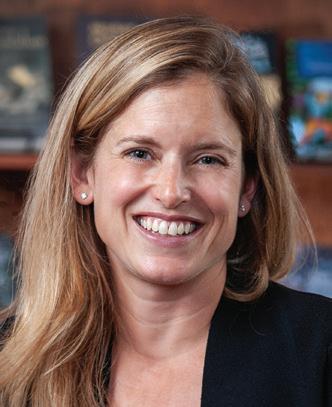


“We’re studying how intergenerational help changed during COVID, because of course face-to-face interactions became riskier, and also the substitutes for that help—like formal care and Meals on Wheels—stopped, at least for a time,” says Wiemers, who is also a researcher at the Aging Studies Institute and Center for Policy Research. “So, we’re exploring how family members made up the gap, or whether there were needs for older adults that didn’t get filled.”
Beyond its impact on physical health, the pandemic has had profound psychological effects. Rates of drug overdose and suicide rose—although only in certain places and among certain groups, according to Shannon Monnat, associate professor of sociology, Lerner Chair for Public Health Promotion and director of the Lerner Center for Public Health Promotion. At the same time, states took widely varying approaches to controlling the spread of COVID (through measures such as mask mandates, business closures and stay-at-home orders) and lessening the effects of these restrictions (through extended unemployment benefits and eviction moratoria, for instance).
“These policies varied all across the U.S., both in terms of whether the state implemented them and how long they were in effect, and in some cases the level of generosity,” says Monnat. “So, it creates a natural experiment to understand whether state policies had any effect on psychological health, drug overdose and suicide.”
That connection between policy and psychological health is the focus of a five-year study led by Monnat and funded by a $1.95 million grant from the NIH. The research uses data collected through a national survey on well-being conducted through the Lerner Center. Several Maxwell


MAXWELL NEWS
Marc Garcia Scott Landes Amy Ellen Schwartz
Emily Wiemers
Michah W. Rothbart
Shannon Monnat
10 | Maxwell Perspective | Winter 2022
Shana Kushner Gadarian
scholars are co-investigators, including Wiemers; Jennifer Karas Montez, University Professor and director of the Center for Aging and Policy Studies; and Douglas Wolf, Gerald B. Cramer Professor of Aging Studies and professor of public administration and international affairs.

“Understanding how those variations affect different outcomes during the pandemic is really important,” says Monnat, “and ideally it will help to inform policies during the next pandemic.”
THINKING ON THE GROUND
Conversations with faculty about COVID-related research quickly reveal connections to work by Maxwell colleagues across the social sciences and public affairs. Research hubs such as the Lerner Center, Aging Studies Institute, Center for Policy Research and Campbell Public Affairs Institute facilitate collaborations across disciplines, too, and help share the fruits of research with policymakers and the public.
In addition to the collaborative research underway, an upcoming conference will highlight Maxwell faculty work on the pandemic. As part of her Carnegie grant for the book Pandemic Politics (see sidebar), Shana Kushner Gadarian, professor and chair of political science, is planning a conference on COVID research in spring 2023, facilitated by the Campbell Institute. “Part of the plan is to bring people in from the outside,” she says, “but also to highlight the many colleagues here at Maxwell who have been doing work on COVID-19.”
Colleen Heflin noted that the confluence of Maxwell research on the pandemic makes her own work much more rewarding.
“We’re all looking at a different piece of the puzzle,” she says. “At Maxwell we do high, rigorous research, but we like to do it with application. We’re trying to change how things work on the ground. Our campus has a real strength in this area, and I think it makes us well-placed to have an impact in policy and implementation during this critical time.”
Supporting the Elderly
As a Ph.D. student in sociology and graduate fellow with the Lerner Center for Public Health Promotion, Claire Pendergrast does research on community-based agencies that support older adults living at home, providing services that became particularly critical during the pandemic.

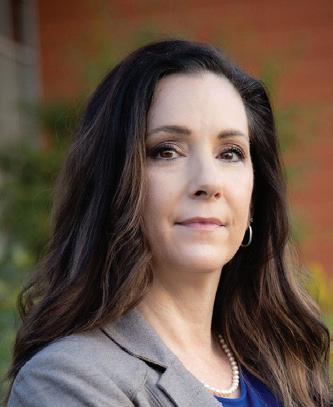
Last spring, she published a paper and a research brief on New York aging networks’ responses to COVID and sent them to the Association on Aging in New York—which in turn shared her findings with state senator Rachel May, chair of the Committee on Aging. In July, Pendergrast testified at a senate hearing about the importance of “building local infrastructure to equip older adults to age in place and avoid more restrictive, costly and often unwanted institutional care.”
For Pendergrast, who now is interning in May’s office, the hearing was a gratifying chance to bridge research and policy. “The reason I’m studying these organizations,” she says, “is to understand if they’re effective and how we can do better to help older adults be healthy and independent.”

Maxwell Perspective | Winter 2022 | 11
Jennifer Karas Montez
Douglas Wolf
“We’re all looking at a different piece of the puzzle. … We’re trying to change how things work on the ground. Our campus has a real strength in this area, and I think it makes us well-placed to have an impact in policy and implementation during this critical time.”
—COLLEEN HEFLIN
Claire Pendergrast
ANGER, DESPAIR SEEDS OF HOPE
BY JESSICA YOUNGMAN
Leaving dust in their wake, the young Afghan women set out for a miles-long run along a trail riddled with rocks and, every so often, a spent bullet. The casings and an occasional rusted Soviet tank served as reminders of their country’s history of war.
The women embodied its resilience.
Just a generation before, under the Taliban, they would have faced punishment, even death, for exercising in public. Women were forbidden to participate in sports or leave home without a male escort.
This fact was not lost on the women who ran together at dawn. Nor was it lost on Adriana Curto.
She is among alumni who have lived, worked or served in Afghanistan as soldiers, diplomats, humanitarians, attorneys and educators who share in anger and despair following the summer’s withdrawal of U.S. troops and subsequent Taliban coup.
From January to June 2021, Curto served as the Afghanistan country manager for Free to Run, a nonprofit that empowers Afghan women to participate in sports such as running to reclaim public spaces and to reconsider the roles they can—and should—have in society.
“These girls are experiencing so much trauma,” says Curto, who earned a degree in international relations and citizenship and civic engagement in 2016. “It is so unfair. I can’t help but think about what it must be like for them.”
Taliban leaders tried to assuage fears with claims they would rule with fewer restrictions. Yet, days after they claimed the capital, Kabul, The Ministry of Women’s Affairs—a building Curto drove past most every day—was turned into a headquarters for the Taliban’s ministry for the “propagation of virtue and prevention of vice.”
‘TRANSFORMING AFGHANISTAN’
Adriana Curto heard about Free to Run through a friend who had worked for the organization in Iraq. She developed an interest in sports as a pathway to empowerment while serving with the Peace Corps in Morocco. During her two years of service, she helped develop programming for an outdoor youth leadership program.
Adriana Curto ’16 B.A. (IR/CCE) is shown in Afghanistan, where she served as the country manager for Free to Run, a nonprofit that empowers women to run and participate in other adventure sports to reclaim public spaces and reconsider the roles they can have in society.

“It sounded incredible,” she says of the Free to Run opportunity. “I didn’t know much about Afghanistan, but I learned so much being there. It is an incredibly complex place.”
Most impressive were the young women. “In the news we never see the newer generation in Afghanistan—girls who are 15, 16, 17—who have grown up in this postTaliban era and have worked to fight for a lot of different freedoms,” says Curto.
12 | Maxwell Perspective | Winter 2022 FROM THE COVER
SUBMITTED
AND
While times had changed since the Taliban fell in 2002, running was still not without risks for Free to Run participants. Yet, they persisted, waking up to board an unmarked van at 4:45 a.m. destined for a gated compound where they could safely run before school. On weekends, they traveled further for long runs that took them past the spent bullets toward the mountains of the Hindu Kush. “It was really special and exciting for them to be able to do this,” says Curto.

Last spring, Curto sensed worry among the young women. They heard reports of the pending American troop withdrawal and murmurs at home about the potential for the Taliban’s return to power. “They grew up hearing their parents talk about the days of the Taliban and a lack of women’s rights and education,” she says.
Two months after Curto returned home to New York, she watched news reports showing thousands of Afghans crowding the Kabul airport in hopes of evacuation. She
learned that many of the women she knew made it out and are scattered across the globe as refugees.
One of the former runners is a Fulbright scholar who arrived in the U.S. but told Curto she “can’t focus” on anything because she is consumed with worry for her family left behind.
“I can’t put into words how heartbreaking these past few months have been for our Afghan colleagues and friends,” says Curto.
Maxwell alumni Akbar Quraishi and Amy Friers know the heartache. From their home in Troy, New York, the husband and wife have kept tabs on their long list of relatives, friends and colleagues in Afghanistan. Following the troop withdrawal, they heard pleas from those fearing they would be targets of the Taliban.
Friers belongs to the Association of Wartime Allies and was asked by the organization to compile a list of those in continued on page 14
Maxwell Perspective | Winter 2022 | 13 STEPHANIE CASE
Maxwell alumni wonder whether the changes they worked for in Afghanistan will endure after the ‘heartbreaking’ U.S. withdrawal.
Afghan women on a training run with the organization Free to Run. Maxwell alumna Adriana Curto served as the country’s program manager in early 2021.
August.
specialized international relations university. Instructors encouraged critical thinking and recruited female students with scholarships. The university’s motto: “Transforming education, transforming Afghanistan.”

“There was a huge, huge push for education,” says Friers. “Everyone wanted a degree.”
After five years, Friers returned to the states with their three-month-old twins and resumed her studies at Maxwell as a graduate student. Quraishi later joined her and went to work as a diplomat at the Afghan Embassy in Washington, D.C.
The couple continued to help oversee the university from afar. Friers also signed on with nonprofits like Team Afghan Power, an organization that brings electricity, internet and educational programming to rural schools.
By early summer, a sense of urgency prevailed. “Everyone was nervous,” says Friers. “Everyone thought something was going to go bad. We were trying to stay optimistic. When everything started falling to the Taliban, we thought, ‘It’s ok, there’s a plan. They are going to protect the capital.’ We were not prepared for how quickly Kabul fell to the Taliban.”
continued from page 13
need of evacuation. She and Quraishi got to work, helping coordinate Afghans’ safe passage throughout the country and access to the airport. Thousands reached out for help.
“We spent almost every minute of every day reaching out to try to find our people,” says Friers, who earned a bachelor’s degree in political science in 2011 and a master’s degree in international relations in 2017. “We barely slept, barely ate.”
Quraishi, an Afghan, joined the government following the Taliban’s collapse in 2002. Under constant threat, he worked in various high-level government positions before going to Maxwell for bachelor’s and master’s degrees in international relations, in 2009 and 2011, respectively. He tutored his future wife, Friers, in Farsi.

The couple moved to Kabul, and with the help of a few friends and Quraishi’s colleagues, opened the country’s first
After several agonizing weeks, the couple got word that their university had survived, though it was open in a reduced capacity, without female students. Their efforts to help in the evacuation continued into the fall. At times, their work felt futile, yet it was not in vain: They managed to get some out, including the first woman to enroll at the university.
BROTHERS AND SISTERS
Amid her work to help Afghans—including a nephew briefly captured by Taliban fighters—Amy Friers reached out to a fellow Maxwell graduate experienced in navigating the special immigration visa (SIV) process.
Army veteran and former CIA analyst Matt Zeller, who received master’s degrees in public administration and international relations in 2006, offered guidance during his own ’round-the-clock work to help Afghan allies.
In a Washington, D.C., office suite, he spent the late summer directing a team of volunteers for an organization he co-founded with the Afghan interpreter who saved
14 | Maxwell Perspective | Winter 2022 FROM THE COVER
SUBMITTED
Amy Friers ’11 B.A. (PSc)/’17 M.A.I.R. and her husband, Akbar Quraishi ’09 B.A. (IR)/’11 M.A.I.R. are shown on the right with students from the first graduating class of the university they helped launch in Kabul in 2012. On the left is their nephew, who was captured by the Taliban during the fight to defend Herat; he was released and managed to be evacuated in
“If you served in Afghanistan, you return with a part of its soul in your blood. I feel a profound obligation to take care of these people because they are my brothers and sisters.”
— MATT ZELLER ’06 M.P.A./M.A.I.R
Akbar Quraishi ’09 B.A. (IR)/’11 M.A.I.R. (front) at the university opening.
his life. No One Left Behind advocates for the well-being and the safe placement of Afghan and Iraqi natives who worked as translators with U.S. troops.
Using phones, laptops, flowcharts and diagrams, Zeller and volunteers kept track of those who were hiding in safe houses or trying to board evacuation planes. On Aug. 15—the day Kabul fell to the Taliban—Zeller was keeping track of roughly 86,000 interpreters and family members seeking evacuation. A month later, he learned that 1,800 made it out.
With the troops and U.S. diplomats departed, the evacuation effort continued through a largely underground network of humanitarians and organizations. “We all just put our lives on hold,” says Zeller.
He was joined by many other Afghanistan veterans in helping with the evacuation of Afghan allies while airing frustration with the White House’s handling of the withdrawal on major networks like CNN and MSNBC.
Years earlier, Zeller launched a media campaign to rally support to convince the U.S. Embassy in Kabul to grant a visa to the interpreter who saved his life on the battlefield 13 years ago, Janis Shinwari. Shinwari fought off Zeller’s attackers just a few days after they were introduced, when Zeller began his tour as embedded combat advisor to the Afghan National Army and Police in Ghanzi Province.
The act of heroism had an indelible impact on Zeller, who comes from a long line of military officers and enlisted after 9/11. “I told him, ‘I don’t even know why you did it, man. Why did you save my life?” recalls Zeller. “He said, ‘You’re a guest in our country, I take a bullet before you.’”
For the remainder of Zeller’s tour, the pair forged a deep friendship over cups of chai and the constant threat to their lives.
“If you served in Afghanistan, you return with a part of its soul in your blood,” says Zeller. “I feel a profound obligation to take care of these people because they are my brothers and sisters.”
Army veteran Matt Zeller is shown on the left with Janis Shinwari, the Afghan interpreter who saved his life on the battlefield in Ghanzi Province. Upon returning to the U.S., Zeller launched a campaign to help Shinwari obtain a special immigration visa (SIV) to come to the states. It took several years, but he arrived safely with his family. He soon after partnered with Zeller to launch an organization to help interpreters of the Afghanistan and Iraq wars obtain SIVs.

NOT THE SAME AFGHANISTAN
Alumnus and former U.S. ambassador James Cunningham also bonded with Afghans and fellow diplomats amid constant threat of harm.
“You develop intense relationships with the people you are serving with. It makes the pain of what’s happening now in Afghanistan all the greater for us,” says Cunningham, who received a bachelor’s degree in political science and psychology from Maxwell and the College of Arts and Sciences in 1974.

continued on page 16
More from Matt Zeller
Army veteran and former CIA analyst Matt Zeller ’06 M.P.A./M.A.I.R. spoke in late July with fellow Maxwell alumnus John Boccacino ’20 E.M.P.A. for his podcast, ’Cuse Conversations. Zeller talked about his efforts to help Afghan allies seeking asylum and shared how Afghan interpreter Janis Shinwari saved his life on the battlefield. To listen to the episode, check out ’Cuse Conversations on Spotify, iTunes, Google Play and more. The podcast is offered by the University’s Office of Alumni Engagement, where Boccacino is a communications specialist.


Maxwell Perspective | Winter 2022 | 15
SUBMITTED
continued from page 15
He had a storied career at the Department of State, including serving as ambassador to Afghanistan from August 2012 to December 2014. Other posts included ambassador to Israel, consul general for Hong Kong and Macau and ambassador and deputy permanent representative to the United Nations in New York.


Two weeks after the 15th anniversary of 9/11, Cunningham visited the Maxwell School to give an Orange Central lecture titled “Afghanistan, Violent Islamic Extremism, and America.”
He told the audience that America needs serious discussions that lead to a long-term, sustainable strategy in the region. He cited the education of young people and the recognition of women’s rights as critical to the country’s future. And, he acknowledged the growing sentiment among Americans questioning the continued commitment to Afghanistan.
“Fatigue over Afghanistan is more than understandable but is not the basis for good policy that protects our interests in a place where we have sacrificed much and have much at stake,” he said before making a foretelling plea, “Let us not lose sight of Afghanistan as we did after the Soviets left. Succumbing to fatigue will lead to failure of the better future Afghans are working for, deal a serious blow to the war on terror, and ultimately increase the danger to our own people as Afghan failure feeds the strength of the extremists.”
In the weeks following the withdrawal, Cunningham joined Matt Zeller in the public criticism of the withdrawal, with a particular concern for a potential terrorist resurgence.
He has been frustrated, too, by the dismissal of what he says are important advancements in Afghanistan
over the last 20 years. He points to increases in life expectancy and decreases in infant mortality; expanded educational opportunities, most notably for girls and women; the exchange of ideas via media outlets and access to cell phones and the internet; and strides toward democracy, with millions of men and women participating in elections, despite Taliban threats against them.

“With all its faults, with all the corruption and everything else, it is a country transformed,” says Cunningham. “That’s something the Taliban are finding out. It’s not the same Afghanistan and that’s going to be very difficult for them to deal with. It’s hard to be optimistic at this point but I will say the story is not over. Afghanistan has changed.”
‘SHE SURVIVES AGAIN AND AGAIN’
After serving for 10 years as the executive director of Afghanistan’s Human Rights Commission, Maxwell School alumnus Mohammad “Musa” Mahmodi returned to the U.S. as a World Fellow at Yale’s Jackson Institute for Global Affairs.
The appointment began in February 2020 and upon its completion, Mahmodi was invited to stay at Yale’s Schell Center for International Human Rights to continue his scholarly work.
Had it not been for that invitation, he would likely have gone back home to Afghanistan and, given the events of recent months, would likely have been a Taliban target.
“I have family and friends and colleagues in Afghanistan calling me and sending me messages asking for help,” he says. “I should not name them but there are a great number waiting for some opportunity to get out. They should not be condemned to live under some tyrant group.”
Mahmodi knows that painful reality. He was a sixth grader in Kabul when the Soviet rocket attacks began.
16 | Maxwell Perspective | Winter 2022 FROM THE COVER
OFFICIAL WHITE HOUSE
Maxwell alumnus James Cunningham ’74 B.A. (PSc) with former President Obama at the White House in 2014.
PHOTO/PETE SOUZA
James Cunningham speaks during a ceremony marking the 4th of July at the U.S. Embassy in Kabul in July 2013.
MUSADEQ SADEQ /U.S. STATE DEPARTMENT
James Cunningham
Going to school most days was too much of a risk, so he stayed home with his eight siblings and extended family.
When the Soviets left, a civil war broke out. Kabul was left in ruins.
Then came the Taliban.
Mahmodi’s father insisted they not join the thousands who fled. He “had a very deep love and connection to the country,” Mahmodi says. “We were the witnesses of every day’s violence in Kabul. It took very, very tragic forms.”
He saw friends killed in attacks. His fiancé was injured in an attack that claimed her brother’s life. He saw public hangings. Hunger became a way of life.
Of all the horrors he witnessed, one that most resonates—or perhaps is easier to talk about— did not involve the loss of life.
Mahmodi remembers vividly how, one day, his mother obtained a small amount of flour—a prize for even those
continued on page 18
Afghanistan Notebook
All told, dozens in the Maxwell community have served in Afghanistan over the last 20 years as soldiers, diplomats, humanitarians, educators and more.
Among them is Maxwell Assistant Dean for Washington Programs Mark Jacobson, who assisted in the evacuation effort and provided media commentary about the troop withdrawal. A reservist for over 25 years, he deployed to Afghanistan as a Navy intelligence officer in 2006 and returned three years later as the first Deputy NATO Senior Civilian Representative. During that time, Jacobson worked with Maxwell alumni Omar Qudrat ’10 J.D./M.A.I.R./M.S.P.R, a senior policy adviser at the NATO headquarters, and Hekmatullah Foushanji ’08 E.M.P.A./’09 M.A.I.R., an Afghan National Security Council staffer.
Additionally, John R. Bass ’86 B.A. (IR) served as the U.S. ambassador to Afghanistan from 2017-20. He returned to Kabul this past August to help manage the evacuation effort as the last U.S. troops withdrew.


Over the coming months, we’ll be gathering more stories of Maxwell connections to Afghanistan we hope to include in a new online Maxwell Perspective feature, “Afghanistan Notebook.” To share your story, send us an email at MaxwellPerspective@syr.edu with the subject line “Afghanistan.” Submissions should include details about your role in Afghanistan along with your current position, name, degree, class year and contact information.
During his 10 years as executive director of Afghanistan’s Human Rights Commission, Mohammad “Musa” Mahmodi ’08 E.M.P.A./ ’09 M.A.I.R. faced myriad threats as he worked to expand freedoms, educational opportunities and a more democratic society.

Maxwell Perspective | Winter 2022 | 17
“Let us not lose sight of Afghanistan as we did after the Soviets left. Succumbing to fatigue will lead to failure of the better future Afghans are working for, deal a serious blow to the war on terror, and ultimately increase the danger to our own people as Afghan failure feeds the strength of the extremists.”
—JAMES CUNNINGHAM ’74 B.A. (PSc)
Mark Jacobson John Bass
continued from page 17 families like his who had financial means. She made a simple bread for her family and others sheltering with them.
“And then a militia came into our house and the first thing they found was the food and they ate it,” he recalls. “This kind of situation is traumatizing. We saw the despair on the face of every kid.”
Determined to bring change, Mahmodi attended Kabul University and obtained his law degree. He wanted to focus on human rights, yet there was little understanding of what that meant, even among those advocating for change. “That was the first challenge to overcome,” he says.
After working for two years to advocate for peace and human rights, Mahmodi was awarded a Fulbright scholarship for graduate studies at the Maxwell School. He came to Syracuse in 2007 to pursue master’s degrees in public administration and international relations.
“It was a unique opportunity, and I am thankful to Fulbright and to Maxwell to get the training,” he says. “Upon graduation I left Syracuse and went back to Kabul and started my new job as executive director of the Afghanistan Human Rights Commission.”
That post brought myriad obstacles. “Civilian casualties—all of those things were still happening,” he says. “Keeping the independence of the commission was another test. There was so much pressure, so many threats and intimidation.”

Mahmodi headed the commission for 10 years, defending the rights of even those facing criminal charges, which didn’t prove popular. He fought to protect freedom of speech and religion, to expand women’s rights, including their access to education. He oversaw 14 offices and some 600 staffers, operating “day and night, nonstop.”
“There was a huge array of human rights violations and violators,” he says. “It was a huge operation to hold them accountable. To be honest, it was exhausting.”
He stepped down in September 2019, just a few months before the opportunity arose at Yale.
This past October, with his home country facing an uncertain fate, he wasn’t sure how his work to advance human rights would continue. “I don’t know how successful I will be because everything I was hoping for is now gone,” he says.
“I have always been an optimistic person; I always believed in better. We have made great achievements, providing a system in which women and minorities could live and work. There was a system of government, not perfect, but a civil society was there. But now, I really feel hopeless and helpless. It is such a tragedy.”
Still, a seed of hope remains.
“I saw the downfall of Kabul but then she survives again and again,” says Mahmodi. “I hope to see it once more.”
18 | Maxwell Perspective | Winter 2022 FROM THE COVER
“I have always been an optimistic person; I always believed in better. We have made great achievements, providing a system in which women and minorities could live and work. There was a system of government, not perfect, but a civil society was there. But now, I really feel hopeless and helpless. It is such a tragedy.”
TAYLOR CRUL/U.S.
FORCE
—MOHAMMAD “MUSA” MAHMODI ’08 E.M.P.A./ ’09 M.A.I.R.
AIR
For Doctoral Student, Afghanistan is an Elusive Home
Sohrob Aslamy grew up in a tight-knit Afghan community in Phoenix, Arizona, longing for a home he’d never visited.
“As much as I like to identify with Afghanistan, I have never lived there,” he says. “I feel in my heart of hearts a connection to the people, to the history.”
His interest was fueled by the vivid memories and fables shared by his Afghan father, who settled down in the states after attending Arizona State University.
Aslamy remembers one story about Alexander the Great. His father told him the conqueror-turned-king was so impressed by what is now Afghanistan that he ordered his ambassadors to bring sacks of its soil to Greece. He believed the smell of the rich soil would help him build support as he expanded his empire.
Now an academic pursuing his doctorate in geography from the Maxwell School, Aslamy appreciates the tale’s symbolism. “I always took from it that there is a real connection between the land and the people of Afghanistan,” he says. “It’s a very romantic idea. I have always just wanted to go to Afghanistan, to grab the earth and take one smell. There’s always been this deep, deep longing to know this home that I never knew.”
The yearning propelled Aslamy’s academic career. As an undergraduate at the University of Washington, he studied Near Eastern languages and civilization and interned with Sahar Education International, a nonprofit that supports girls’ and women’s education in northern Afghanistan. He earned a master’s degree in geography at Maxwell in 2018 and is working toward a doctorate. His research has focused on urban development in Kabul, specifically on efforts by the government to construct a new capital city and urban center for the country—“Kabul New City.”
“In large part, this dissertation project is the outcome of my experiences growing up in an Afghan diaspora community in the U.S., within which I commonly heard stories about Kabul from those who once called it home,” he explains.
This past summer, Aslamy was to finally visit Afghanistan. Having advanced to the research stage of his dissertation project, he began making plans to meet relatives he had only seen in photographs and on social media.

The events of this past summer, however, sidelined the trip. “With the new Taliban government, I think much of this research project is up in the air, so not only are my plans physically to travel to Afghanistan stalled but so is my dissertation,” he says. “My inability to go there—it’s the least of all the tragedies that abound in Afghanistan.”
Aslamy spent this past summer and fall in Tajikistan, which borders Afghanistan for 843 miles. “I was always planning to base my research operations in Tajikistan because it is close by and more secure,” he says. “I also have many connections with various organizations and individuals in the country who have unique perspectives on developments in Afghanistan. Moreover, as Afghans, especially former government workers, increasingly arrive and seek refuge in Tajikistan, I also have the opportunity to connect and speak with them there.”
While Aslamy considers how best to continue his research, he holds on to hope for the country he is yet to meet.
“Afghanistan is not what it was 20 years ago, when the Taliban last ruled,” he says. “The people there have shown a desire and energy for creating a better Afghanistan, for creating a better society. There is a lot to be hopeful for in that.”
Maxwell Perspective | Winter 2022 | 19
—Jessica Youngman
SUBMITTED
Geography doctoral student Sohrob Aslamy is shown in Tajikistan, where he has conducted research for his dissertation on efforts by the Afghanistan government to construct a new capital city and urban center for the Afghanistan—“Kabul New City.” The fall of Kabul to the Taliban last summer sidelined what would have been his first visit to Afghanistan.
“I have always just wanted to go to Afghanistan, to grab the earth and take one smell. There’s always been this deep, deep longing to know this home that I never knew.”
—SOHROB ASLAMY
Growing Through Education
Student leader and activist takes a hands-on approach to creating connections across cultures.
As a resident advisor (RA) for the International Living Learning Community at Syracuse University, Sofia de la Grana values sharing experiences, building relationships, exploring cultures and creating inclusive communities.
“Education is at the forefront of what I want to do,” says de la Grana, who’s majoring in public relations at the S.I. Newhouse School of Public Communications and in citizenship and civic engagement at the Maxwell School.

De la Grana grew up near Miami in a largely Hispanic community and earned a scholarship from the Posse Foundation that provided her with a support system that she considers invaluable. As an incoming student, she chose to live in the International Living Learning Community, which has provided her with the opportunity to get to know students from around the globe. “I really wanted to meet new students outside of my own little bubble,” she says. “I wanted to make these global connections, and I learned so much about different cultures.”
As an RA she gets to create programming and help other students continue to grow as she has. In addition, de la Grana served as a Newhouse peer advisor and a First-Year Experience class facilitator, engaging students in discussions about race, identity, equity and inclusion, and leading them in activities. “I’ve been learning so much about different people’s cultures and sharing conversations about my own,” she says. “I think creating relationships with people is such an important part of it.”
This summer, de la Grana joined the University’s Mary Ann Shaw Center for Public and Community Service as a public relations intern and she put her communication skills to work for Best Buddies International at Syracuse University, the local chapter of a global nonprofit dedicated to expanding opportunities for individuals with intellectual and developmental disabilities. She has been involved with research, advocacy and social media messaging, which includes supporting accessibility for voting and highlighting Black activists with disabilities as part of the Black Lives Matter movement.
De la Grana has many life goals—including working for the Peace Corps and teaching abroad—that would immerse her in new cultures and allow her to both teach students and learn from them. She wants first-year students to know there are opportunities for everyone on campus, and she encourages them to be patient, explore and not get overwhelmed. “There are so many resources and so much support. People are willing to help you grow and advocate for you to learn what you want to learn,” she says. “It’s been such an enriching experience. I just love my classes—I really do. I love learning.”
20 | Maxwell Perspective | Winter 2022 SPOTLIGHT ON STUDENTS
—Jay Cox
MARILYN HESLER
Sofia de la Grana sees education and learning as a way to bring people together. She is majoring in public relations and in citizenship and civic engagement and enjoys being a resident advisor for the International Living Learning Community.
“I really wanted to meet new students outside of my own little bubble. I wanted to make these global connections, and I learned so much about different cultures.”
SOFIA DE LA GRANA
A Life Changed by an Experience Abroad
An international relations major and Army ROTC student rises to challenges on the field and steps into a global classroom.
Brian Bauer has never been one to back down from a challenge. Whether it is the physical exertion from 6 a.m. training sessions with his fellow Army ROTC cadets or learning a new language, he enjoys pushing himself to his limits.
The senior from Ocean Township, New Jersey, is studying international relations at the Maxwell School and Chinese language through the College of Arts and Sciences. He has taken advantage of many opportunities presented to him—he joined Army ROTC, where he learns discipline; he’s a member of a fraternity, which has expanded his social circle; and he is a member of the American Red Cross Club, which helps him give back to the community.
Bauer is on the Forever Orange Student Alumni Council, which has connected him with alumni and shown him the power of the University network. He’s received career advice from alumni who are now lawyers, and he was set up with an internship in Hong Kong through an alumnus. “It’s nice to know alumni and learn how much they do for the school,” he says. “You get an idea of what helps Syracuse become Syracuse.”

The opportunities were made possible in part by the Gloria and Sidney Danziger Scholarship and the Syracuse Army ROTC Scholarship, both of which Bauer received. “Having a scholarship makes you realize how lucky you are,” he says. “To be able to go to a great institution like Syracuse and not have financial burden on top of that really helps me focus on my studies.”
One of the most meaningful experiences Bauer had was studying abroad in Hong Kong. The trip provided him the opportunity to test his Chinese language skills and immerse himself in the culture. He visited historic places, including the Great Wall of China, a tea house and a rice paddy in Malaysia. In between studying and trips to Beijing, Singapore, Malaysia, South Korea, Tokyo, Vietnam, Cambodia and Thailand, he made sure to sample as much of the food as possible.
“Having experience with different cultures and Mandarin will help if I want to work in that region of the world one day,” says Bauer, who took classes in Mandarin, religions in Asia and business economics.
He also utilized the alumni network to secure an internship at the Ogilvy public relations firm while abroad.
Upon graduation, Bauer will be commissioned as a second lieutenant in the U.S. Army. He’s given a lot of thought to what he wants to do in the Army; infantry or military intelligence are his top choices. “I would like to utilize what
I study, so it would be rewarding to be able to utilize my knowledge of Chinese in the Army,” he says.
Bauer plans to be fully active duty for at least four years, then plans to attend law school and eventually practice law, while possibly serving part time in the Army Reserve. He’d love to practice international law, which would give him the opportunity to explore the world and work with people from different backgrounds and cultures.
Also in his long-term plans is giving back to the Orange community that has given him so much. “I feel like I’m part of a big family that’s been around for 150 years,” he says. “I want to support students and let them know that being part of the Syracuse University community is about representing something bigger than yourself. It’s not just about donning that big S or bright orange shirt. You’re part of a family.”
—Lisa Maresca
Maxwell Perspective | Winter 2022 | 21
EVAN C. JENKINS
When he’s not busy with his schoolwork, Army ROTC, his fraternity and the Forever Orange Student Alumni Council, Brian Bauer gives back to the community through his involvement with the American Red Cross Club.
Robertson Fellows Committed to Public Service and Uplifting the Working Poor
As an undergraduate, PaulDonavon Murray took advantage of leadership roles, including a congressional internship, that exposed him to national policy making and local government.

Meanwhile, in Nevsehir, Turkey, Jacob Emont worked as a Fulbright English teaching assistant and then directed programs for the Global Fairness Initiative, a nonprofit devoted to uplifting the world’s working poor.
This fall, Murray and Emont joined the graduate student ranks at the Maxwell School, pursing master’s degrees in public administration and international relations. Both are Robertson Foundation for Government Fellows.
Robertson awards are among the most generous and prestigious available to professional graduate students at the Maxwell School, covering full tuition for two years of study, a living stipend, health insurance and assistance in finding a summer internship. In exchange, Fellows agree to work in the U.S. federal government for three of the first seven years following graduation.
“The experiential opportunities I had as an undergraduate prepared me for the courses I’m now taking at Maxwell,” says Murray. “Everything has come full circle because I can build upon those experiences and explore the complexities behind the policy making and the implementation process of federal and local government decisions.”
Murray attended the Honors College of Miami-Dade College and transferred to Swarthmore College, where he received a B.A. in political science with a minor in peace and conflict studies in May 2021. He was a chapter leader for the United Nations Association of the United States of America, as well as a student government senator and a board member for the Rotaract Club. Additionally, he was named a Future Leaders Fellow for the African American Mayors Association, and he held a summer internship with the Congressional Black Caucus Foundation for then-U.S. Rep. Marcia Fudge (D-Ohio).
The congressional internship introduced Murray to policy formation at the federal level. “Preparing memos and executive summaries about child poverty, U.S.-Latin America relations, global nutrition and migrant detention centers allowed me to research issues that I care about,” he says.
Emont is a 2015 summa cum laude graduate of George Washington University, where he studied political science and minored in Arabic. He took the Fulbright post in Turkey after graduation and went on to work with the Global Fairness Initiative, an organization that promotes a more equitable, sustainable approach to economic development by advancing fair wages, equal access to markets and balanced public policy to generate opportunity and end the cycle of poverty.

“This work included efforts to extend social protections to informal workers in North Africa and eliminate forced, bonded and child labor in Nepal’s brick-making industry,” Emont explains, adding that he is looking forward to further exploring international economics and labor issues and the larger systems and forces that affect them.
The Robertson Foundation for Government (RFG) exists to inspire the best and brightest U.S. graduate students to pursue long-term federal government careers in foreign policy, national security and international affairs. The Maxwell School is one of four schools that partner with RFG on the fellowship program.
After graduation, Murray aspires to a federal government position that fosters peace and stabilization operations throughout the world. Emont hopes to be able to advance the rights of global workers.
All told, 33 Robertson Fellows have entered the Maxwell School since 2010 when the School’s partnership with the foundation began.
—Jessica Youngman
SPOTLIGHT ON STUDENTS
Paul-Donavon Murray
22 | Maxwell Perspective | Winter 2022
Jacob Emont
“Preparing memos and executive summaries about child poverty, U.S.-Latin America relations, global nutrition and migrant detention centers allowed me to research issues that I care about.”
— PAUL-DONAVON MURRAY
Public Housing Violence Research Earns Top Honor
Madeleine ‘Maddy’ Hamlin was one of 8 doctoral students to have been named an H.F. Guggenheim Emerging Scholar.

Madeleine “Maddy” Hamlin ’17 M.A. (Geog)/M.P.A. says a books-for-inmates program she was involved in as a high school student in Urbana, Illinois, was the early spark that ultimately led to research focusing on urban issues ranging from public housing to mass incarceration.
That early passion has led to a prestigious national award. Hamlin, who is now pursuing a Ph.D. in geography at the Maxwell School, is among just eight doctoral candidates nationwide to be named a 2021 Harry Frank Guggenheim Foundation Emerging Scholar. The $25,000 award supports and recognizes promising graduatestudent researchers in their final year of writing a doctoral dissertation.
Hamlin’s dissertation focuses on issues of public housing violence in Chicago and challenges long-held views that widespread violence in “the projects” must be blamed on the people who live there or on poorly designed living environments. “In contrast,” she writes in her project overview, “my work shows that police violence often precipitated community violence and lawlessness in public housing projects, rather than followed it.”
Hamlin says her research suggests public housing’s decline in Chicago and elsewhere “instead reflects some of the many failures of modern policing.”
Guggenheim scholars are working to advance knowledge of the causes, manifestations and control of violence around the world, the foundation says. Priority was given to those whose research addresses “urgent, contemporary problems of violence—how it originates, what sustains it and what reduces it.”
“Maddy is one of strongest students I’ve ever worked with,” says Jamie Winders, professor of geography and the environment and one of her dissertation advisors. “Her research and teaching on policing, housing, law and race prioritize topics that have profoundly shaped the development of political struggles in U.S. cities…her work is incredibly important not just to academia, but also to the communities with which she works.”
Hamlin received a bachelor’s degree from the University of California at Berkeley in 2011, with a double major in English and peace and conflict studies. She worked for three years in the publishing industry before returning to school to pursue master’s degrees in geography and public administration at Maxwell.
She lauds Maxwell faculty, including Winders as well as her advisor, Don Mitchell, Distinguished Professor Emeritus of Geography and the Environment. She says several others supported her as she developed her dis-
sertation, including Jonnell Robinson, associate professor of geography and the environment, and Gretchen Purser, associate professor of sociology.
“The mentoring I’ve received has been incredible,” she says.
Tom Perreault, professor and chair of geography and the environment at Maxwell, calls Hamlin a “remarkable and a fantastic student” and admires her research, “a real mix of academic work, but that is very directly policyoriented.”
He says Hamlin has the ability to work in the academic and policy-making worlds, and envisions she may do both. “Her work is the best of what the Maxwell School represents,” Perreault says.
Hamlin says she’d love to ultimately teach full time and does believe in research that has an impact beyond academia.
“I hope my dissertation will be useful to scholars and the wider public,” she says. “I’ve really found an intellectual home in geography. It is a small field in the U.S., yet one I think is important and well-positioned to tackle some of the major issues we’re facing, from climate change to mass incarceration.”
—Steve Buchiere
Maxwell Perspective | Winter 2022 | 23 SUBMITTED
Madeline “Maddy” Hamlin ’17 M.A. (Geog)/M.P.A. is one of eight doctoral students nationwide to be named a 2021 Harry Frank Guggenheim Foundation Emerging Scholar.
Four Maxwell Students Named Boren Fellows

Four Maxwell School students are recipients of the 2021 Boren Fellowship. Sponsored by the National Security Education Program, the fellowship funds immersive foreign language study abroad experiences for graduate students who plan to work in federal national security.

Recipient Courtney Blankenship will spend six months studying the Amazigh language, Tarifit, as a Boren Fellow in Morocco. The first-year master’s degree student in international relations (peace, security and conflict track) will live in the Rif region, which is the same area of the country where she served as a Peace Corps volunteer before she was evacuated in 2020 due to the pandemic.
Roger Onofre plans to enroll at the University of Jordan in Amman for his year as a fellow, which begins January 2022. “The Boren Fellowship will allow me to become a strong Arabic speaker,” says Onofre, who is pursuing a master’s degree in international relations. “I will combine my Gilman, Fulbright and Critical Language Scholarship (CLS) experiences to thrive as a Boren Fellow.”
Ivy Raines, a Ph.D. student in political science, will study Persian and the local Tajik dialect to assist with her research in Tajikistan. “The Boren fellowship serves as a part of my doctoral research that centers on the intersection between modernization, gender and religious fundamentalism,” she says. After earning a Ph.D., Raines plans to join the U.S. Foreign Service.
Kelli Sunabe, a graduate student pursuing master’s degrees in public administration and international relations, is studying in Taipei during the 2021-22 academic year.


“During my 18 months of Peace Corps service, I primarily focused on learning Darija—the Moroccan dialect of Arabic—and while I hope to continue expanding my proficiency in Darija throughout the Boren Fellowship, I am very excited to focus on Tarifit this time around so that I may further engage with people in the region,” says Blankenship, who is also pursuing certificates of advanced study in security studies and Middle Eastern affairs.
“My Boren experience will be dedicated to language learning to improve my Mandarin proficiency and to learn about Taiwanese culture,” says Sunabe, who is a Robertson Foundation for Government Fellow at Maxwell. “I am enthused and grateful to have been selected as a Boren Fellow and look forward to growing my Mandarin language abilities to foster positive cross-cultural relations between the U.S. and China through a career with the U.S. Department of State.”
— Kelly Homan Rodoski
SPOTLIGHT ON STUDENTS
Courtney Blankenship Roger Onofre Ivy Raines Kelli Sunabe
“The Boren fellowship serves as a part of my doctoral research that centers on the intersection between modernization, gender and religious fundamentalism.”
24 | Maxwell Perspective | Winter 2022
— IVY RAINES
Five Students Awarded Downey Scholarships
Five Maxwell School students have been awarded Downey Scholarships from the Syracuse University Intelligence Community Center for Academic Excellence.
The $1,500 award recognizes academic excellence, commitment to public service and potential to bring diverse and distinctive backgrounds and experiences to the U.S. Intelligence Community. As a designated U.S. Intelligence Community Center for Academic Excellence, Syracuse University is part of the congressionally mandated program funded by the U.S. Office of the Director of National Intelligence, which partners with universities to increase the diversity of the U.S. intelligence workforce.
“Downey Scholars are high-achieving students, interested in learning more about the diversity and importance of the work being done among the various Intelligence Community agencies—and how they might contribute one day,” says Carol Faulkner, chair of the Downey Scholars selection committee and professor of history and associate dean for academic affairs in the Maxwell School.
A total of 13 undergraduate, graduate and law students at the University received the scholarships. Maxwell’s recipients are:
COURTNEY BLANKENSHIP, a graduate student studying international relations, security studies and Middle Eastern studies
FIONA LEARY, a graduate student studying international relations
ABIGAIL NEUVILLER, who earned a bachelor’s degree in 2019 in international relations, political science and communication and rhetorical studies and is now a graduate student studying public administration and at the College of Law
GRACE SAINSBURY, a sophomore studying international relations
ASHTHA SINGH, a sophomore studying citizenship and civic engagement and international relations and a member of the Renée Crown University Honors Program
—Kathleen
Haley
Trio from Maxwell Among Fulbright Recipients
The 2021 Fulbright U.S. Student Program recipients include three from the Maxwell School: a Ph.D student and two alumni.
STEVEN HARRIS, a 2016 graduate who earned a bachelor’s degree in earth sciences from the College of Arts and Sciences and anthropology from the Maxwell School. He is now pursuing a doctorate in anthropology at Maxwell. He traveled to Barbados in October for a 10-month research endeavor. His current project is a continuation of archeological research at a plantation that was begun by Doug Armstrong, professor of anthropology.
JENNA BURGESS, a 2021 graduate with a bachelor’s degree in international relations from the Maxwell School and linguistics (Korean) from the College of Arts and Sciences. She is to arrive in South Korea in early January and plans to work as an assistant English teacher in classrooms for third through fifth graders. She plans to support North Korean refugee initiatives.
ASHLEY HUDSON, a 2020 graduate with a bachelor’s degree in policy studies from the College of Arts and Sciences and the Maxwell School. She will be assigned to a teaching position in South Korea in January. She plans to pursue a master’s degree in educational policy and administration in the United States after her Fulbright experience and is keen to explore South Korea’s educational system to inform her future studies.
The Fulbright U.S. Student Program funds a range of awards that include English teaching assistantships and study/research grants in over 140 countries. Alternates include Lara Hicks ’20 B.A. (IR), currently enrolled in the Maxwell School’s M.P.A./M.A.I.R. program with a C.A.S. in civil society organizations; Brittnee Johnson ’21 B.A. (PSc), a current M.P.A. student; Hanna Nichols ’20 B.A. (PSt/CCE); and Alexa Shephard ’21 B.A. (Soc).
Maxwell Perspective | Winter 2022 | 25
Johannes Himmelreich
Resident Expert
Economist Mary Lovely will spend nine months at the Kluge Center at the Library of Congress.
For nearly two decades, economist Mary Lovely has focused on China’s sustainable development and its emergence into the global market. Her expertise has drawn much interest from media outlets, from Bloomberg and CBS News to the New York Times and Reuters.

So, it’s an apt choice that Lovely has been tapped to serve as Library of Congress Chair in U.S.-China Relations at the Kluge Center at the Library of Congress. The ninemonth appointment begins on Jan. 3, 2022, and includes full access to the Library’s collections, which are the largest in the world, and an office in the Library of Congress overlooking the Supreme Court Building.
“It’s very exciting,” says Lovely of her appointment. She plans to focus her research on the role of multinationals and how their interests were represented during the period when the U.S. was negotiating China’s entry into the World Trade Organization.
“They will certainly have documents and hearing testimony related to that,” says Lovely, who served as editor of the China Economic Review from 2011 to 2015 and is also a senior fellow of the Peterson Institute for International Economics.
Lovely is also tasked with convening events for Congressional staffers related to U.S.-China relations. “I’m
hoping to do three events—create a panel that I moderate and write an overview brief for Congressional staff with suggested readings,” she says. Possible topics include trade policy, the future of the U.S. dollar and China’s digital currency, and Chinese industrial subsidies.
That intellectual exchange is really the goal of the program. The Kluge Center was established in 2000 by a $60 million endowment from philanthropist John Kluge to bring top scholars from around the world to residence at the Library of Congress to make their expertise accessible to the U.S. Congress and contribute to conversations about challenges facing democracies in the 21st century.
“Something I’ve tried to do when talking to reporters is to elevate the conversation, but often they pull a sound bite that’s the pluckiest,” says Lovely. “So, I’m really looking forward to facilitating these conversations for policymakers. It’s normally very hard to get access to Capitol Hill.”
Lovely will teach at Maxwell’s Washington, D.C., facility housed at the Center for Strategic and International Studies in fall 2022 and return to the main campus in Syracuse in spring 2023.
—Renée Gearhart Levy
Himmelreich named to Syracuse Surveillance Technology Work Group
AMaxwell School faculty member whose research focus includes artificial intelligence and ethics is one of 13 individuals selected by Syracuse Mayor Ben Walsh ’05 M.P.A. to serve on a Surveillance Technology Work Group, whose mission is to ensure community input in its use, including law enforcement.
Johannes Himmelreich, assistant professor of public administration and international affairs and researcher with the Autonomous Systems Policy Institute (ASPI) and the Campbell Public Affairs Institute, is one of five community members named to the group that Walsh says will ensure “surveillance tools are implemented in a safe and well-governed way.”
The city defines surveillance technologies as tools that “observe or analyze the movements, behavior or actions of
identifiable individuals in a manner that is reasonably likely to raise concerns about civil liberties, freedom of speech or association, racial equity or social justice.”
A researcher focused on the ethics of autonomous systems, including drones and self-driving cars, Himmelreich teaches classes in ethics and human values, including ethics of data science and emerging technologies. He joined the Maxwell School in 2019 as part of Invest Syracuse cluster hiring in artificial intelligence, autonomous systems and human technology. Earlier that same year, the university launched ASPI to advance interdisciplinary scholarship and teaching on the design, governance and wider implications of autonomous systems.
 —Steve Buchiere
26 | Maxwell Perspective | Winter 2022 FACULTY FOCUS
Mary Lovely
‘Most People Flying Drones Haven’t Gone to Flight School’
Jamie Winders served on a report panel advising FAA policy on small, unmanned aircraft systems.

This past August, a passenger airplane at Chicago’s O’Hare International Airport struck a drone during takeoff, adding to the growing list of incidents in which commercial planes have been endangered by unmanned aircraft systems (UAS).
The incident highlighted the importance of Federal Aviation Administration (FAA) policy regarding the use of UAS, which continue to proliferate as advancements in technology make them more affordable for consumers.
“There are now approximately five times the number of UAS than there are piloted aircraft. That is a massive change for a federal agency to deal with,” says Jamie Winders, director of Syracuse University’s Autonomous Systems Policy Institute (ASPI) and professor of geography and the environment at the Maxwell School.
Winders was one of five panelists on a Congressionally mandated report exploring the policies and procedures related to the registration of small UAS. The report, released in August 2021, was conducted by the National Academy of Public Administration as an independent audit of the FAA’s registration policies for small (under 55 pounds) unmanned aircraft. The report is intended to guide policy decisions regarding the registration and regulation of UAS.
“The challenge for the FAA is to integrate the regulation and management of small UAS into an organizational

structure built around piloted aircraft,” she says. “This report was an attempt to look at how the FAA can successfully integrate this new form of aircraft into the national airspace in a way that doesn’t jeopardize the safety of piloted aircraft or people on the ground.”
That’s just the sort of question studied at ASPI. “We’re seeing rapid technological innovation in autonomous systems that fly, drive or go under water,” Winders says. “We look at the societal impacts to critically shape policy and governance frameworks for these technologies.”
As an expert in this area, Winders says her contribution was to help the panel think about and understand how drones are perceived by the people using them and how that differs from the ways the FAA sees these technologies.
“There’s a disconnect between the way the FAA views drones—essentially the same as a 747—and the public perception of the hobbyist. The report signals that disjuncture and the need for significant public education to make sure that the people who are using these technologies understand the risks that they pose, as well as the regulations that guide their use,” says Winders. “Most people flying drones haven’t gone to flight school.”
—Renée Gearhart Levy
Maxwell Perspective | Winter 2022 | 27
Jamie Winders
Recent Hires
The following have joined the Maxwell full-time faculty:
SEAN J. DRAKE is an assistant professor in the Department of Sociology and a senior research associate in the Maxwell School’s Center for Policy Research. His research focuses on institutional mechanisms of segregation and inequality that disproportionately affect students of color and lower-income students. Drake previously served on the faculty at New York University. He received a Ph.D. in sociology from the University of California, Irvine, in 2017.

MARC A. GARCIA, assistant professor of sociology, researches health disparities in the United States and Mexico with a focus on physical and cognitive health disparities among older diverse and immigrant adults and longevity and mortality outcomes among older Latinx subgroups. Garcia was an assistant professor at the University of Nebraska-Lincoln. He received a Ph.D. from the University of Texas-Austin in 2015.
New Department Chairs
CATHERINE HERROLD, associate professor of public administration and international affairs, explores how citizens, nongovernmental organizations and public organizations work to promote social justice and democracy. She was previously an associate professor at the Indiana University Lilly Family School of Philanthropy and a faculty affiliate of the Paul H. O’Neill School of Public and Environmental Affairs. She also served as a visiting scholar at Birzeit University in Palestine and at American University in Cairo, Egypt. She received a Ph.D. in public policy from Duke University in 2013.
JULIA
L. CARBONI CITIZENSHIP AND CIVIC ENGAGEMENT


Carboni, associate professor of public administration and international affairs, co-directs the Collaborative Governance research initiative within Maxwell’s Program for the Advancement of Research on Conflict and Collaboration (PARCC). Her research focuses on collaborative arrangements to address large-scale social issues and social media use and management by nonprofit organizations and has been funded by the Bill and Melinda Gates Foundation, the IBM Center for the Business of Government, the Army Research Office and the Social Science and Humanities Research Council of Canada. She received a Ph.D. from the University of Arizona in 2012.
CHRISTOPHER R. DeCORSE ANTHROPOLOGY
DeCorse, professor of anthropology, researches the archaeology, ethnohistory and ethnography of sub-Saharan Africa. He is particularly interested in how archaeology reveals the transformations that occurred in African societies during the Atlantic slave trade period in Africa. Recent publications include “Power, Political Economy, and Historical Landscapes of the Modern World: Interdisciplinary Perspectives, British Forts” (SUNY Press, 2019) and “Their Communities: Archaeological and Historical Perspective” (University Press of Florida, 2018), co-edited with Zachary J. M. Beier. He received a Ph.D. from the University of California, Los Angeles, in 1989. This is his third time serving as chair of the department.
OSAMAH F. KHALIL UNDERGRADUATE PROGRAM IN INTERNATIONAL RELATIONS
Khalil, associate professor of history, is a historian of U.S. foreign relations and the modern Middle East. He is the author of America’s Dream Palace: Middle East Expertise and the Rise of the National Security State (Harvard University Press, 2016) and the editor of United States Relations with China and Iran: Towards the Asian Century (Bloomsbury, 2019). He has been a frequent media commentator and contributor to the Huffington Post, the Los Angeles Times, The Hill, Al Akhbar and Al Jazeera. In 2018, he received the Chancellor’s Citation for Faculty Excellence and Scholarly Distinction. He received a Ph.D. in history from the University of California, Berkeley, in 2011.
AMY ELLEN SCHWARTZ ECONOMICS
Schwartz, professor of economics and public administration and international affairs, also serves as the Daniel Patrick Moynihan Chair in Public Affairs and is a senior research associate in the Center for Policy Research. She is also an emeritus professor of public policy, education and economics at New York University and a co-principal investigator and director of transportation research for the National Center for Research on Education Access and Choice. Her research on education policy and urban economics focuses on the nexus of schools, neighborhoods and public services and the causes and consequences of children’s academic, social and health outcomes. She received a Ph.D. in economics from Columbia University in 1989.
28 | Maxwell Perspective | Winter 2022 FACULTY FOCUS
RYAN MONARCH, assistant professor of economics, researches buyer-supplier relationships in international trade and how the recent tariff war affected U.S. exports and supply chains. He previously served as a principal economist for the international finance division of the Board of Governors of the Federal Reserve. This past winter, he served as a visiting scholar at George Washington University. He received a Ph.D. in economics from the University of Michigan in 2014.
HEATHER LAW PEZZAROSSI, assistant professor of anthropology, is an anthropologically trained archaeologist who collaborates with Indigenous communities in North America to build community-led heritage projects. She received a Ph.D. in anthropology from the University of California, Berkeley, in 2014.

Promotions
The Syracuse University Board of Trustees approved promotions for six faculty members at the Maxwell School. Two of them, Dimitar Gueorguiev and Guido Pezzarossi, were granted tenure in their promotion from assistant to associate professor.
Gueorguiev, associate professor of political science, specializes in comparative political economy, authoritarian institutions, governance and survey methods. He was honored in 2020 with the Maxwell School’s Daniel Patrick Moynihan Award for Teaching and Research. He received a Ph.D. from the University of California at San Diego in 2014.


Pezzarossi, associate professor of anthropology, specializes in the archaeology of colonialism, historical anthropology, postcolonial theory, new materialism and the archaeology of food. He received a Ph.D. from Stanford University in 2014.
The four additional faculty members who were promoted received tenure previously. They are: Alan Allport, who was promoted to professor of history; Shana Kushner Gadarian, who was promoted to professor of political science; Matt Huber, who was promoted to professor of geography and the environment; and Junko Takeda, who was promoted to professor of history.
BAOBAO ZHANG, assistant professor of political science and core faculty member in the Autonomous Systems Policy Institute, researches the governance of artificial intelligence (AI). She served as a research affiliate with Centre for the Governance of AI at the University of Oxford and as a fellow with the Berkman Klein Center for Internet and Society at Harvard University. She received a Ph.D. in political science from Yale University in 2020.

Other Faculty News
CATHERINE GERARD has been named a professor of practice of public administration and international affairs, after having served as an adjunct professor of public administration and associate director of Executive Education at Maxwell for many years. In July 2020, Gerard stepped down from her longtime role as director (and previously, co-director) of the Program for the Advancement of Research on Conflict and Collaboration but stayed on to co-direct its Collaborative Governance Initiative.
And, GLADYS MCCORMICK has been promoted to associate dean for diversity, equity and inclusion. She is an associate professor of history and the Jay and Debe Moskowitz Endowed Chair in Mexico-U.S. Relations at the Maxwell School, and she is a senior associate in the Americas Program at the Center for Strategic and International Studies in Washington, D.C.
Maxwell Perspective | Winter 2022 | 29
Dimitar Gueorguiev
Guido Pezzarossi
New Books
Sociologists JANET M. WILMOTH and ANDREW S. LONDON co-edited a new book LifeCourse Implications of U.S. Public Policies (Routledge, 2021) that includes several Maxwell School contributors. The book encourages readers to consider the influence of public policies and social programs on lives, aging and the life course. The foreword is authored by University Professor of Sociology Jennifer Karas Montez. In chapter one, “An Introduction to Life-Course Perspectives on Public Policies,” Wilmoth and London, both professors of sociology, review the history of U.S. public policy development, starting with policies and associated programs that emerged out of President Theodore Roosevelt’s New Deal. In chapter six, “U.S. Food and Nutrition Policy Across the Life Course,” Professor of Public Administration and International Affairs Collen Heflin evaluates the development of U.S. food and nutrition policy. In chapter 10, “How Social Policies Affect Grandparent Care Work,” University Professor of Sociology Madonna Harrington Meyer and sociology Ph.D. student Amra Kandic examine the nexus of public policies and care work by grandparents.

RYAN GRIFFITHS, associate professor of political science, argues that the rules and informal practices regarding state recognition create a strategic playing field between existing states and aspiring nations in his new book, Secession and the Sovereignty Game: Strategy and Tactics for Aspiring Nations (Cornell University Press, 2021). To win sovereign statehood, an aspiring nation must compel and persuade its home state and the international community to provide recognition. Griffiths explains how aspiring nations go about it, the dynamics that follow and how tactics vary according to local conditions. It combines original data, fieldwork in a dozen breakaway regions, more than 100 interviews with secessionist leaders, and case studies on Catalonia, the Murrawarri Republic, West Papua, Bougainville, New Caledonia and Northern Cyprus.
ALBRECHT DIEM, associate professor of history, provides a new view on the emergence of monastic life in Late Antiquity and the Early Middle Ages—an institution and form of life that had a deep impact on Western culture—in his new book, The Pursuit of Salvation. Community, Space, and Discipline in Early Medieval Monasticism (Brepolis Publishers, 2021). The book revolves around a hardly studied seventh-century monastic rule for nuns which he was able to identify as the work of the eminent hagiographer Jonas of Bobbio. This discovery profoundly alters the narrative of the impact of Irish monasticism in Europe. Diem shows that the topics addressed in this rule, such as hierarchy, authority, space, love, confession, silence, sleep, mutual care, exclusion and education, lend themselves to writing a new history of monasticism that replaces the traditional narrative.
AUSTIN ZWICK, assistant teaching professor and the assistant director of the Policy Studies Program, explores the intersection between urban planning and technological change in his new book, The Platform Economy and the Smart City: Technology and the Transformation of Urban Policy (McGill-Queen’s University Press, 2021). As new innovations change the way we live and work, municipal governments are struggling to keep up with new demands to regulate novel industries and streamline service delivery. This march toward the future holds both promise and peril for local governments, asserts Zwick. He highlights the need for cities to rethink their historical approach as reactive policymakers, but rather embrace and harness innovative technologies into proactive governance.
BRIAN BREGE, assistant professor of history, offers a fresh appraisal of one of the foremost cities of the Italian Renaissance as it sought knowledge, fortune and power throughout Asia, the Americas and beyond in his new book, Tuscany in the Age of Empire (Harvard University Press, 2021). He examines how Tuscany established a global presence while unable to compete directly with the growing empires of other European states. By finding areas of common interest with stronger neighbors and forming alliances with other marginal polities, a small state was able to protect its own security while carving out a space as a diplomatic and intellectual hub in a globalizing Europe, Brege asserts.


FACULTY FOCUS
Janet M. Wilmoth
Andrew S. London
Ryan Griffiths
Albrecht Diem
Austin Zwick
Brian Brege
30 | Maxwell Perspective | Winter 2022
Sociologist Named University Professor
Sociology professor Jennifer Karas Montez has been named University Professor. The appointment is a prestigious distinction granted to faculty who excel in their fields and who have made extraordinary scholarly contributions as judged by their peers nationally and internationally.
Montez’s appointment was recently approved by the Syracuse University Board of Trustees following recommendations from the sociology department, the Maxwell School and University leadership. “I absolutely love what I do,” says Montez, professor of sociology, Gerald B. Cramer Faculty Scholar in Aging Studies, director of the Center for Aging and Policy Studies and co-director of the Policy, Place and Population Health Lab.
Montez has built a career around asking “big questions” in the search for solutions to some of life’s most pressing public health problems: Why do people in one state live longer than those in other states? Why is the
United States losing ground in its international ranking in life expectancy? Why is life expectancy worse for lesser-educated adults than most other groups? What can be done to reverse these disturbing trends and change life trajectories?
Montez changed the trajectory of her own life because of her fascination with these kinds of questions. Though her mother never went to college, she insisted that Montez do so. With an undergraduate degree in math and a master’s in statistics, both from Purdue University, Montez got a job in the private sector. But her work in pharmaceuticals, food and beverage and petrochemicals did not satisfy her.
At 37, she quit her job and went back to school. “My biggest risk was a game changer for me,” she says. “It’s not an exaggeration to say that my upbringing and experiences literally impact everything I do every single day.”
—Eileen Korey
Leonard Lopoo Named Volcker Chair
Leonard Lopoo, professor of public administration and international affairs, has been named the Paul Volcker Chair in Behavioral Economics.
A faculty member since 2004, Lopoo additionally serves as the director of the Center for Policy Research and director and co-founder of the Maxwell X Lab. His interdisciplinary research is focused on family formation, behavioral economics and the social welfare policies designed to assist the low-income population.

The Volcker chair supports a student-organized symposium on research in behavioral science and an annual lecture that has attracted a diverse group of scholars, including two Nobel Laureates and a recipient of the John Bates Clark Medal awarded to the top economist under age 40.
Lopoo succeeds Leonard Burman who was named the inaugural Volcker Chair in 2014, five years after he first joined Maxwell as the Daniel Patrick Moynihan Chair in Public Affairs. Burman has returned to the Tax Policy Center, a joint project of the Urban Institute and the Brookings Institution, which he co-founded. He is also an Institute Fellow at the Urban Institute.
Lopoo’s work has been published in numerous journals, including Demography, Journal of Health Economics, Journal of Human Resources, Journal of Marriage and Family, Journal of Policy Analysis and Management and Journal of Public Economics. He has received funding from federal agencies and foundations, including the Eunice Kennedy Shriver National Institute of Child Health and Human Development, the National Institute on Aging and the Pew Charitable Trusts.
Lopoo is the recipient of several awards for his research and teaching, including the Birkhead-Burkhead Teaching Excellence Award, the Excellence in Graduate Education Faculty Recognition Award and the Daniel Patrick Moynihan Prize. He received a Ph.D. from the Harris School of Public Policy Studies at the University of Chicago in 2001 and was a postdoctoral fellow at the Woodrow Wilson School of Public and International Affairs at Princeton University.
— Jessica Youngman Leonard Lopoo
About the Volcker Chair
The Volcker Chair was endowed by Robert Menschel, retired senior director at Goldman Sachs Group and trustee emeritus of Syracuse University. It is named in honor of the late Paul Volcker, a former Maxwell School Advisory Board member whose distinguished career included eight years as chair of the board of governors of the Federal Reserve under Presidents Carter and Reagan, four years as president of the Federal Reserve Bank of New York, and two years as chair of President Obama’s Economic Recovery Advisory Board. In addition, he served as undersecretary of the treasury for international monetary affairs and was chair of the prominent New York investment banking firm, J. Rothschild, Wolfensohn & Co. Volcker also chaired the National Commission on Public Service, which focused on the changes needed to restore vitality and credibility to the public service.
Maxwell Perspective | Winter 2022 | 31
Jennifer Karas Montez
Three Named O’Hanley Scholars
Three members of the Maxwell School faculty were named O’Hanley Faculty Scholars:
Saba Siddiki, associate professor of public administration and international affairs; Martin S. Shanguhyia, associate professor of history; and Chris Faricy, associate professor of political science. Each was selected for outstanding teaching, scholarship and other accomplishments, including success with external grant support and service to the institution. The scholars hold the title for three years and receive supplemental financial support for teaching and research.
The O’Hanley Endowed Fund for Faculty Excellence was created with a major gift from Maxwell Advisory Board Chair Ron O’Hanley, chairman and chief executive officer of State Street Corporation and a 1980 graduate of the Maxwell School with a B.A. in political science.
Siddiki, a senior research associate in the Center for Policy Research, researches policy design, collaborative policymaking, institutional theory and analysis and regulatory implementation and compliance. She is also the author or editor of multiple books, including Understanding and Analyzing Public Policy Design (Cambridge University Press, 2020). She currently serves as director of the Institutional Grammar Research Initiative, co-managing editor of the Collaborative Governance Case Database

and associate editor for Policy Design and Practice.
Shanguhyia’s research focuses on colonial and postcolonial Africa, with a concentration on eastern Africa. He is interested in the intersection between critical resources and state and community interests within the lens of politics, economy and social relations. He has authored Population, Tradition & Environmental Control in Colonial Kenya, 1920-1963 (University of Rochester Press, 2015) and co-edited The Palgrave Handbook of African Colonial and Postcolonial History (Palgrave Macmillan, 2018) and Development in Modern Africa: Past and Present Perspectives (Routledge, 2020) as well as multiple chapters.
Faricy serves as the director of graduate studies for the Department of Political Science and is a senior research associate in the Campbell Public Affairs Institute. His research focuses on American politics, social policy, income inequality, tax policy and public opinion on government spending. He authored Welfare for the Wealthy: Parties, Social Spending, and Inequality in the United States (Cambridge University Press, 2015) and co-wrote The Other Side of the Coin: Public Opinion toward Social Tax Expenditures (Russel Sage Foundation, 2021). The latter was supported with a grant from The Russell Sage Foundation.

Professorship Awarded to Historian


Osamah F. Khalil, associate professor of history and chair of the undergraduate program in international relations, was recently awarded the Dr. Ralph E. Montonna Endowed Professorship for the Teaching and Education of Undergraduates. He will hold the professorship for the 2021-22 academic year.
Khalil is a historian of U.S. foreign relations and the modern Middle East. He is the author of America’s Dream Palace: Middle East Expertise and the Rise of the National Security State (Harvard University Press, 2016) and the editor of United States Relations with China and Iran: Towards the Asian Century (Bloomsbury, 2019). In 2018, he received the Chancellor’s Citation for Faculty Excellence and Scholarly Distinction. He received a Ph.D. in history from the University of California, Berkeley, in 2011.

Gretchen Purser, associate professor of sociology, was the inaugural recipient of the award.

The Montonna Professorship was established with a gift from the honoree’s daughter,
the late Mary Lou Williams ’50 B.A. (AmSt). Montonna earned a B.S. in chemistry from Syracuse University in 1916 followed by a Ph.D. from Yale University. In 1946, he was named director of research at Syracuse University. He died in 1952.
“Every faculty member rose to the challenge during the pandemic, leading to many strong nominations,” says Maxwell School Dean David M. Van Slyke.
As a result, the Dean’s Office additionally recognized two faculty members for their undergraduate teaching and mentoring. Daniel McDowell, associate professor of political science and director of undergraduate studies for the Department of Political Science, received the Maxwell School Dean’s Award for Undergraduate Mentoring. Kristy Buzard, associate professor of economics, was awarded the Maxwell School Dean’s Award for Innovative Teaching. The dean’s office gave these one-time awards to acknowledge the extraordinary efforts of these faculty during the pandemic.
Daniel McDowell Kristy Buzard
32 | Maxwell Perspective | Winter 2022 FACULTY FOCUS
Saba Siddiki
Martin S. Shanguhyia
Chris Faricy
Osamah F. Khalil
Together Again
Dear alumni and friends,
As you may have experienced recently, returning to an activity—even one you know quite well— after a long pause is not unlike re-learning how to ride a bicycle. There may be a few nerves and a wobble or two, but then excitement and anticipation take over and it’s time to go.
It had been nearly 18 months since we hosted an in-person alumni event, when, on a sunny day this past September, we welcomed Maxwell alumni from the 1970s through the 2020s for an outdoor luncheon and conversation about our ongoing work to advance diversity, equity and inclusion at Maxwell. With safety protocols in place, the outdoor event was held during Syracuse University’s Coming Back Together, a triennial reunion of Black and Latinx graduates.


During the program, Dean David M. Van Slyke spoke about Maxwell’s commitment and efforts to increase diversity and foster an inclusive and accessible environment. Associate Dean for Diversity, Equity and Inclusion (DEI) Gladys McCormick updated guests on current initiatives, including the creation of affinity groups for faculty and graduate students of color and the successful implementation of a training program for graduate students. You can keep track of the latest developments by visiting maxwell.syr.edu/diversity-equity-and-inclusion.
Associate Dean McCormick also facilitated a group conversation during which alumni shared their own experiences and insights. Attendees engaged in discussion about challenges and opportunities they experienced at different times during their personal and professional journeys, from their time as students on campus to their roles after graduation. It was moving to see the sense of community demonstrated as alumni shared their stories with Maxwell and with each other—and in doing so became a part of Maxwell’s DEI journey.
With my first bike ride in many months a success, I’m looking forward to welcoming you back to campus or visiting you where you live. To keep tabs on the latest alumni events and offerings headed your way, visit our website maxwell.syr.edu/alumni.
Stay in touch and be well,
Jessica Murray Director of Alumni Relations

COMING BACK TOGETHER 2021
The Maxwell School welcomed alumni back to campus this past September for the University’s Coming Back Together celebration. Those who took part in the lunchtime reception to reconnect with faculty, staff and fellow alumni included, from left to right, Gabriel Cruz ’96 M.P.A.; University Regional Director of Development Keri Lowder ’95 B.A. (IR)/’96 M.P.A.; Ruben Orosco
ALUMNI NOTEBOOK
Jessica Murray
Maxwell Perspective | Winter 2022 | 33
BEAMISH
Dean David M. Van Slyke is shown with Carol Tyrell ’81 B.A. (Soc) and, on the right, Cheryl McLeod ’79 B.A. (Nonviolent Conflict and Change).
AMELIA
’96 M.P.A.; Maxwell’s Director of Executive Education Programs Steve Lux ’96 M.P.A.; and Brian Woods ’96 M.P.A.
SUBMIT YOUR CLASS NOTE
Online:
maxwell.syr.edu/perspective
Email: maxalum@syr.edu
Post Office: 200 Eggers Hall, Syracuse, N.Y. 13244
KEY TO DEGREES
Alumni are designated by year of graduation, degree level and (in parentheses) discipline—for example: Joan Smith ’87 M.A. (Soc). A few of the degree abbreviations indicate both level and discipline, such as M.P.A. and M.S.Sc. Alumni with more than one degree from Maxwell are listed under the year of the latest degree.
AmSt American Studies
Anth Anthropology
CCE Citizenship and Civic Engagement
ESP Environment, Sustainability and Policy
E.M.I.R. Executive Master of International Relations
E.M.P.A. Executive Master of Public Administration
DFH Documentary Film and History
Econ Economics
Geog Geography
Hist History
IR International Relations
J.D. Law
LAS Latin American Studies
M.A.I.R. Master of Arts, International Relations
M.A.I.R./
M.S.P.R. International Relations/ Public Relations (dual)
M.P.D.G.
Comm. Master of Public Diplomacy and Global Communication
MES Middle Eastern Studies
M.P.A. Master of Public Administration
M.P.A./
M.A.I.R. Joint M.P.A. and M.A.I.R.
MPH Master of Public Health
M.Phil. Master of Philosophy
M.R.P. Master of Regional Planning
M.S.Sc. Master of Social Science
PA Public Administration
PPhil Political Philosophy
PSt Policy Studies
PSc Political Science
RusSt Russian Studies
Soc Sociology
SPsy Social Psychology
SSc Social Science
UrSt Urban Studies
Class Notes
60s
Frances Aloi ’63 M.P.A. has written a book-length study on organized crime in America. It will be released in four parts and is titled The Gangster Chronicles (Blair Publishing, 2020).
Howard Palley ’63 Ph.D. (SSc), professor emeritus at the University of Maryland, recently co-edited the introduction, conclusion and a chapter on Canada in the paperback issue of Comparative Health Care Federalism (Routledge, 2020). The publication offers academics the opportunity to study federalism on an international level.
John Pollock ’66 M.P.A. has penned a new book titled COVID-19 in International Media: Global Pandemic Perspectives (Routledge, 2021).
Richard Corrigan ’68 B.A. (Soc) has published his fifth book, CRUST (KDP Publishing, 2020). Corrigan is a full-time writer who is currently working on two more novels, a mystery and an archeological adventure.
Richard J. Perry ’69 M.A. (Anth)/’72 Ph.D. (Anth) was recognized by Marquis “who’s who” for instruction in anthropology. Marquis is a group of professionals and educators who select top candidates in various fields on a competitive, yearly basis. He was chosen based on factors such as position, noteworthy accomplishments, visibility and prominence in the field. He is a professor emeritus at St. Lawrence University in Canton, N.Y.
70s
Robert O’Neill ’74 M.P.A. will serve on the board of directors of the National Academy of Public Administration’s Center for Intergovernmental Partnerships, an independent, nonprofit and nonpartisan organization chartered by Congress to assist government leaders.
James A. Jacobs ’74 M.S.Sc. is professor emeritus of journalism and English at Diablo Valley College in Pleasant Hill, Calif. Jacobs just penned a new book, Reprisal (Palo Verde, 2021), the fourth novel in the Daniel Mendoza series.
Peder A. Schaefer ’74 M.P.A. returned to Warwick, R.I., as the city finance director in January 2021. Schaefer previously held the position from 1993 until 1999.
Cynthia Simison ’76 B.A. (PSc) was named The Republican’s first woman executive editor in 195 years. The Republican is a daily newspaper based in Springfield, Mass. It is owned by Newhouse Newspapers, a division of Advance Publications.
R. John Crosset ’78 B.A. (PSc) was honored by the National Capital Chesapeake Bay Chapter of the National Academy of Television Arts and Sciences for contributing to his community with a more than 25-year career in broadcasting. He was inducted into the organization’s “silver circle.”
FIRST TO HOLD COAST GUARD POST
Amy Donahue ’96 M.P.A./’00 Ph.D. (PA) has been sworn in as the first provost of the U.S. Coast Guard Academy.

Donahue serves as the principal adviser to the superintendent in all matters relating to the academic program and faculty. She received graduate degrees at Maxwell after receiving a B.A. at Princeton University.
As an Army officer, she commanded soldiers and personnel as the officer-in-charge of a forward surgical team that trained, staffed and equipped a medical team for global deployment. Her previous public service also includes a temporary appointment to the National Aeronautics and Space Administration (NASA) where she identified opportunities to deploy technology to support the efforts of other federal agencies.
Donahue’s academic experience includes serving as a professor of public policy at the University of Connecticut and vice provost for academic operations at the University of Connecticut. In addition, she has served as a technical advisor to the Department of Homeland Security.
Honors include three NASA Exceptional Public Service medals, three Army commendation medals and the Army meritorious service medal.
Founded in 1876, the Coast Guard Academy is one of the five U.S. service academies and ranks among the nation’s most prestigious and selective institutions of higher learning.
34 | Maxwell Perspective | Winter 2022 ALUMNI NOTEBOOK
Amy Donahue has been sworn in as the first provost of the U.S. Coast Guard Academy.
ORANGE CIRCLE AWARDS RECIPIENTS INCLUDE LISA Y. GORDON
Lisa Y. Gordon ’90 M.P.A., president and chief executive officer of Atlanta Habitat for Humanity, was among the University’s 2021 Orange Circle Award recipients honored at an event this past September. From generous financial support to selfless volunteerism, the Orange Circle Awards recognize students, faculty, staff and alumni who possess a deep sense of responsibility for acts that better society.

Gordon, shown with Maxwell School Dean David M. Van Slyke, serves as the district council chair of Urban Land Institute (ULI) Atlanta and is a national ULI Americas Executive Committee member. She was recently appointed to ULI’s Global Governing Trustees. She is a co-chair of the national ULI Diversity, Equity and Inclusion Council and a board advisor for the Terwilliger Center for Housing. Additionally, she is chair of the U.S. Council Advocacy Committee for Habitat for Humanity International. She is a member of the Maxwell School Advisory Board, the International Women’s Forum, Leadership Atlanta and Commercial Real Estate Women (CREW).
80s
Ellen Sax ’80 M.P.A. is the vice president of community engagement at MVP Healthcare and part of Berkshire Bank’s newly formed community advisory council in the Capital region of New York state.
Caral E. Spangler ’81 M.P.A. was nominated by President Joe Biden ‘68 for the role of principal deputy assistant secretary of the Army (financial management and comptroller) at the Pentagon in Washington, D.C. She was approved by the Senate Armed Services Committee on July 27, and confirmed by the full Senate on Aug. 9.
Stephen Bright ’82 M.P.A. has been named vice president for finance at Bridgewater College in Bridgewater, Va.
John Robert Greene ’83 Ph.D. (Hist) received the Distinguished Service Award from Cazenovia College, where he has been teaching for 40 years. His roles include director of the history program, chair of the division of social and behavioral sciences and he is the Paul J. Schupf Professor of History and Humanities.
Jeffrey Towery ’85 M.P.A. has been selected as president-elect of the International City/County Management Association, which advances professional local government through leadership, management, innovation and ethics.
John Bass ’86 B.A. (IR), former U.S. Ambassador to Afghanistan (201720) and Turkey (2014-17), was recently nominated by President Joe Biden ’68 to serve as undersecretary of state management. If confirmed, he will serve as primary advisor for the secretary of state and the deputy secretary of state.
Maggie Fitzpatrick ’88 B.A. (PSt) was appointed to the board of directors of VistaGen Therapeutics, a clinical-stage biopharmaceutical company based in San Francisco, Calif.
David Sulek ’88 B.A. (PSc) is senior vice president at Booz Allen, where he analyzes emerging policy, regulatory, market and technology trends for U.S. government clients. He currently focuses on law enforcement issues. Prior to that, he focused on issues surrounding the implementation of the Affordable Care Act.
90s
Allison Patrick ’91 B.A. (PSc)/’94 M.P.A. is the vice president of programs for the Department of Homeland Security.
J. Ryan Smith ’91 B.A. (PSc) is currently an anchor for ESPN’s SportsCenter and Outside the Lines Smith has worked for ESPN as a legal analyst and a correspondent, and he has hosted ABC News shows including 20/20
Julie A. Capterton ’92 B.A. (Hist) has been appointed the head of Wells Fargo Private Bank, a division of Wealth & Investment Management. Robert Dawson ’92 M.P.A. has been named corporate counsel to the city council of Rockville, Md. Terrence Guay ’92 M.A.I.R./’96 Ph.D. (PSc), clinical professor of international business at Pennsylvania State University, has been named director of the Smeal College of Business Center for Global Business Studies.
John R. Selman ’92 M.P.A. is now the chief operating officer at Amyx, Inc., a managing and consulting firm based out of Reston, Va.
Tricia Heon ’93 M.P.A. was promoted to chief executive officer at the National Auto Auction Association, which is based in Frederick, Md.
Sanjay Pandey ’94 M.S.Sc./ ’95
Ph.D. (SSc) is professor and Shapiro Chair of Public Policy and Public Administration at the Trachtenberg School at George Washington University in Washington, D.C. Cathryn Quantic Thurston ’95 M.A.I.R. recently left the federal government after 25 years working in national security in Washington, D.C., to be an associate professor at SUNY Empire State College in Saratoga Springs, N.Y. Thurston is heading Empire State’s new bachelor’s degree in security studies.
Rodney M. Hudson ’96 M.A. (PSc) has joined the law firm Greenberg Traurig as shareholder and litigator in its expanding pharmaceutical, medical device and healthcare litigation and products liability and mass torts litigation practices.
Jason Lumia ’96 M.A. (Econ) is the new chief of staff in the Washington, D.C., office of U.S. Rep. Jim Cooper, D-Nashville.
Maxwell Perspective | Winter 2022 | 35
LIAISON TO U.S. INDUSTRY AND TRADE ASSOCIATIONS
Nazakhtar Nikakhtar ’02 M.A. (Econ) has served as assistant secretary for industry and analysis with the U.S. Department of Commerce since March 19, 2018, when she was confirmed by the U.S. Senate. Nominated by President Trump, she serves as the primary liaison with U.S. industry and trade associations to help address industry concerns and support American competitiveness. As the department’s lead on the Committee on Foreign Investment in the United States, she plays a key role in shaping U.S. investment policy and addressing national security threats. She also advises the secretary on trade and economic issues impacting the global competitiveness of U.S. businesses, heading the division that conducts trade policy research and analysis on manufacturing, services, e-commerce, privacy and cybersecurity, emerging technologies and economic trends that impact the International Trade Administration’s mission.

Previously she was a partner at the international trade law firm of Cassidy Levy Kent LLP and was an adjunct professor at Georgetown University Law Center.
Nikakhtar received a bachelor’s degree from the University of California, Los Angeles. In addition to a master of economics degree at Maxwell, she received a juris doctor from the Syracuse University College of Law.
Kathryn E. Martin ’99 M.P.A. is the chief operating officer of Health Care Cost Institute, located in Washington, D.C.
Megan S. Sweeny ’99 M.P.A. became the chief financial officer of the Service Employees International Union, which represents 2 million people in health care, public services and property service professions.
00s
David John Brigham ’00 M.A.I.R. and Kate Rudder ’03 M.A. (Anth) moved to Zimbabwe 12 years ago. Since then, Kate has been consulting, volunteering and finishing up an E.M.P.A. at Maxwell. David is currently Chief of Party for Cultivating New Frontiers in Agriculture. They’ve spent time in Kosovo, Afghanistan, Sierra Leone, Sudan, Jordan, Syria and Lebanon.
Philippe Solages ’00 J.D./ M.P.A. was confirmed as judge to the New York State Court of Claims by the New York State Senate. Solages serves as an acting supreme court justice in Nassau County, N.Y. John McBride ’01 M.A. (PA) has been named as manager of underwriting and corporate sponsorship for WCNY (Western and Central New York) radio, based in Syracuse, N.Y.
Catherine Choi ’02 M.P.A. is senior director of programs at the Eisner Foundation and an incumbent member of the University of California, Los Angeles Alumni Association Board of Directors.
Rachel Pasternak ’03 B.A. (PSc) joined the Bonadio Group as a recruiting specialist. The Bonadio Group is a group of certified public accountants and consultants based in Rochester, N.Y.
Rebecca Bostwick ’04 M.P.A. is the assistant vice president of community impact for NAF (formerly known as the National Academy Foundation), which supports high school students on their academic paths toward higher learning and career preparation.
Christian C. Jackstadt ’04 B.A. (Econ) was appointed to fill the position of deputy director of agency and enterprise operations, and is now deputy director of state operations for New York State.
Sun-on Gilford Law ’04 M.A. (PA) is the new Hong Kong Economic and Trade Office’s director-general.
Victoria Perez Shires ’04 B.A. (PSt/PSc) received a “40 under 40” award from the Central New York Business Journal
Thomas A. Mandl ’05 M.A.I.R. has written a new book, Modern Paraguay: Uncovering South America’s Best Kept Secret (McFarland, 2021). The book is based on Mandl’s time in Paraguay interviewing leaders and collecting data in order to present Paraguay’s challenges, strengths and direction in a global world.
Artemus Ward ’96 M.A. (PSc)/’99
Ph.D. (PSc) is a professor of political science and faculty associate at the College of Law at Northern Illinois University.
Charles Guthrie ’97 B.A (PSc) has been named director of athletics at the University of Akron in Akron, Ohio.
John D’Agostino ’98 B.A. (Econ) has joined Pentegra as a regional director. Pentegra is a fiduciary organization based in White Plains, N.Y.
Janis Garcia Keating ’98
M.P.A. was named 2021 entrepreneur of the year for the northeast region by Latina Style magazine She is the founder and president of Wilco Group LLC which provides information technology consulting services, Agile development support and general business consulting services in the Washington, D.C., area.
McGee Wester Young ’98 M.A. (PSc)/’04 Ph.D. (PSc) is founder and chief executive officer at WattCarbon which measures and tracks carbon savings in buildings and is located in California’s San Francisco Bay area.
LeeAnne Rogers Clayberger ’02 M.P.A. was named chief executive officer of the Pennsylvania Economy League, a nonprofit organization that provides technical assistance and consulting services to local governments and shares independent research on public policy issues.
David Angelo Levinthal ’02 B.A. (PPhil) is now deputy Washington D.C. bureau chief at Business Insider, a financial and business news website. Previously, he held the position of senior Washington correspondent.
Benjamin J. Markus ’02 M.P.A. has been appointed as interim coordinator for English language arts for K-8 at Greenwich Public Schools located in Greenwich, Conn.
Justin G. Rudgick ’05 M.P.A. was named the new president of Christopher Community, Inc., a nonprofit that strives to provide affordable housing in Upstate New York.
Jason Yaley ’05 B.A. (IR/PSc)/’06 M.P.A. is Parson’s Corp.’s new chief communications officer. Parson’s Corp. delivers innovative technologies in defense and intelligence to clients across the U.S.
Jennifer Schiske Tifft ’06 J.D./ M.P.A. is the City of Syracuse’s new director of strategic initiatives, and was tasked by Mayor Ben Walsh ’05 M.P.A. to lead the implementation of the American Rescue Plan Act.
Michael Apicelli ’07 J.D./M.A.I.R. is director for multilateral climate and clean energy engagement for the U.S. Department of Energy.
Steven Wesley Holden ’07 E.M.P.A. currently teaches finance, contract and leadership courses to federal employees and co-owns a
36 | Maxwell Perspective | Winter 2022
ALUMNI NOTEBOOK
Nazakhtar Nikakhtar
business, Digital Horizon Services, which helps veterans win government contracts.
Rufat Mahmud ’07 E.M.P.A. is the advisor to the chairman on the state committee on urban planning and architecture of the Republic of Azerbaijan.
Mary Jacqueline Myers ’07 M.P.A. works as healthcare and life sciences lead at Slalom, LLC, a global consulting firm focused on strategy, technology and business transformation in the U.S., Canada, Australia and England.
Michael Edward Scherger ’07 M.P.A. was chosen by the Department of the Interior and the Bureau of Land Management to be the new director for the National Training Center. In this role, he leads training and workforce development programs from the newly renovated facility in Phoenix, Ariz.
Carlos Torres ’07 M.A.I.R. is currently chief of party for the U.S. Department of Labor government-funded program in Costa Rica for the Foundation for Peace and Democracy and Partners of the Americas. Previously, he worked as a consultant for projects financed by Inter-American Development Bank, the U.S. State Department and several corporate donors for organizations such as World Vision and the Central American Public Administration Institute.
Deborah Seltzer ’08 B.A. (PSt) has been named executive director of Maryland Legal Services Corp., a funder of civil legal aid, based in Baltimore, Md.
Ekin Senlet ’08 J.D./M.A.I.R. was listed as a Chambers U.S.A. 2021 “notable practitioner” in geography. A partner at the law firm Barclay Damon, she practices energy and regulatory law in New York state. She was also named a class of 2021 honoree of the Albany Business Review’s “40 Under 40.”
L. Scott Baird ’09 J.D./M.P.A. is vice president at AgReserves, an agricultural investment company based in Salt Lake City, Utah.
Jeremy Paul Busch ’09 M.A.I.R. is now serving on the Human Rights Commission and the Shade Tree Committee for the city of Geneva, N.Y.
Lawrence Miller ’09 Ph.D. (PA) was named vice president for learning and workforce development at Greenville Technical College in Greenville, S.C.
10s
Eliza Orlando ’10 E.M.P.A. is the strategic director of the Clinical and Translational Science Institute at the University of Rochester Medical Center in Rochester, N.Y. She was also recently named director of stakeholder engagement for the Center for Leading Collaboration and Innovation.
Gerard McTigue ’11 B.A. (IR) has been promoted as an account director at Freuds, a London-based communications agency focused on representing clients working to achieve the United Nations’ sustainable development goals.
Dan Zhang ’11 M.A. (Soc) joined the online platform ClickUp as vice president of finance.
Selina Howe Carter ’12 M.P.A./ M.A.I.R/’13 M.A. (Econ) is pursuing a dual Ph.D. in statistics and machine learning at Carnegie Mellon University. Carter was a Boren Fellow in Turkey and worked as the financial director at the Turkish Grameen microfinance program. Following that, she worked in Nampula, Mozambique, to conduct a survey on child vaccination with the Jameel Poverty Action Lab. For the last five years, she has worked as a data scientist at the Inter-American Development Bank and completed a master’s in mathematics and statistics at Georgetown University in Washington, D.C.
David Frazier ’12 M.P.A. was promoted to deputy secretary of finance for the New York State Senate majority conference.
Joshua Beams ’14 M.P.A. was appointed as the county administrator for Otsego County, N.Y.
Kyle Coleman ’14 B.S. (Econ)/’16 M.P.A. was named borough manager for Kennett Square in Chester County, Pa.
ALUMNA OVERSEES STUDENTS IN NYS ASSEMBLY WHERE SHE ONCE INTERNED

Going to work every day at the New York State Assembly, Vanessa Salman ’17 B.A. (PSc) is reminded of her time in the Maxwell School. As part of her responsibilities as a staff training associate for the Assembly Minority Conference, Salman oversees students within the conference participating in the Albany semester program. In 2017, Salman was one of those interns.
The Assembly Intern Program in Albany gives students the opportunity to work full-time in the New York State legislature. During the legislative session, from January through May, students work for an assigned legislator and take courses on New York State politics. Salman found her experience as an intern powerful, and this ultimately drew her back there to work full-time post-graduation.
“It’s a really interesting environment. It’s so fast-paced and unpredictable,” says Salman.
As an intern, Salman sought out the opportunity to be placed with a female member because of her interest in representation in politics. She also wanted a member without staff in Albany because of her desire to take on as much responsibility as possible. The day she got her assignment in Albany with Assemblywoman Melissa Miller, Salman was elated.
Fast forward four years, Salman is now supervising interns within the New York State Assembly as part of her work as a staff training associate—an experience Salman describes as “surreal.” Salman’s role is to help manage and guide student interns.
The majority of Salman’s time, however, is spent working in tandem with the human resources department as part of the central staff for Assembly Minority Leader Will Barclay L’95. Salman ensures that new members are equipped with all necessary information to run successful operations in Albany and in district offices. There may not be a guide on how to be an assembly member, but Salman works to create that for each member. She works with two to three assembly members at a time and participates in meetings with lobbying groups, researches legislation and makes purposeful legislative recommendations.
“Maxwell courses really develop incredible critical thinking skills. Those have really been able to help set myself apart in my internship program, my current studies in Albany and my work now as I read legislation or look at information from an interest group or give a member my opinion on an issue,” says Salman.
Maxwell Perspective | Winter 2022 | 37
Vanessa Salman
Maxwell alumni gathered for a networking reception in Chicago this past September. Attendees included, from left to right, College of Engineering and Computer Science alumnus and Chicago Regional Council member Nurul Eusufzai ’89; Director of Development Nate LaFrance; Whitman School of Management alumnus and Chicago Regional Council member Ben Nummy ’91; Michelle Hill ’11 M.P.A.; Kevin Young ’11 B.A. (Econ/Hist/ PSc); Dean David M. Van Slyke; guest Patrick Efiom; Regional Director of Development Keri Lowder ’95 B.A. (IR)/’96 M.P.A.; Brandi Efiom ’21 M.P.A.; and Josh Kaufmann ’09 M.P.A.
Harmony Eyers-Friedlander ’14
E.M.P.A. became the deputy commissioner of mental health and director of community services for Tompkins County, N.Y., in March 2021. She has dedicated almost three decades in educational, community-based and residential settings providing clinical services to children, youth and families.
Stephen Keil ’14 B.A. (IR) is now a strategy and issues management advisor for Chevron Corporation in Washington, D.C. He was previously Chevron’s project coordinator for international government affairs.
Jade Kraft ’14 B.A. (PSc) was appointed to the New York State government position of deputy communications director for Albany. Kraft previously served as deputy press secretary in the executive chamber.
Christopher Alexander ’15 B.A. (PSc) was confirmed by the New York State Senate as executive director of the Office of Cannabis Management.
Calvin Corriders ’15 B.A. (Soc) received a “40 under 40” award from the Central New York Business Journal. Corriders is the manager of neighborhood economic development for the Syracuse-based CenterState Corporation for Economic Opportunity.

Jeorge Cymon ’15 M.A.I.R./ M.S.P.R. was appointed to the position of deputy communications director for transportation for New York State. Cymon previously served as deputy press secretary in the executive chamber.
Elisabeth Chistel IJmker ’15 M.A.I.R. was installed as a councilor on the city council in Amsterdam, Netherlands, on behalf of “GroenLinks” (the green party in the Netherlands).
Matthew Michael Santacroce ’15 M.P.A. was appointed chief of the Office of Cannabis Regulation in the Rhode Island Department of Business Regulation.
Vikas Sheel ’15 M.P.A. is an administrative service officer for India and serves as secretary for the country’s Ministry of Health and Family Welfare. Sheel is part of the national team handling COVID emergency response, and developing and implementing Co-WIN, India’s digital COVID vaccination platform.
Ronald James-Terry Taylor ’15 B.A. (PSc/PSt) was appointed as the new head of Middle School at Browning School in New York City. Prior to the start of this appointment, he was acting director of the Office for Identity, Culture and Institutional Equity at Horace Mann School, also in New York City.
Alison Weber ’15 B.A. (Anth/IR) is working as an English community manager for Storybook, an Ecuadorian tech start-up. She does translation work, gives ESL classes and manages its English social media networks.
Mike Petroni ’16 M.P.A. published an article in Environmental Science & Policy titled “NYenviroScreen: An Open-Source Data Driven Method for Identifying Potential Environmental Justice Communities in New York State.” Petroni works as an environmental contractor and consultant helping clients by providing environmental forensics. His clients have included Hancock Estabrook LLP, ProPublica, the Electric Power Research Institute and the State University of New York College of Environmental Science and Forestry. Sarah Pirzada ’16 M.P.A. was appointed by Arizona Governor Doug Ducey as the state’s chief operating officer.
Charlene Cordero ’17 M.P.A. was appointed to the position of assistant secretary for public safety for New York State.
Kayla Fermin ’17 B.A. (Geog) works as a permanent biological science technician and lead GIS specialist at Lewis and Clark National Historical Park in Astoria, Ore.
Lauren Goodwillie ’17 B.A. (IR) was named one of 15 climate security fellows by the Center for Climate and Security, the American Security Project and the Wilson Center’s Environmental Change and Security Program—all non-partisan organizations based in Washington, D.C. Mark Temnycky ’17 M.P.A./ M.A.I.R. was among the recipients of the Ukrainian World Congress’ inaugural Ukrainian Diaspora “30 under 30” award. The Ukrainian World Congress is an international non-governmental organization composed of 60 countries that work to support a European Ukraine, and has special consultative status with the United Nations Economic and Social Council.
Rachel Baker ’18 M.P.A. was appointed to the position of assistant secretary for health for New York State. Baker previously served as an Excelsior Service Fellow.
Rachel Barnhart ’19 E.M.P.A. represents Rochester, N.Y.’s 21st district in the Monroe County Legislature. In June of 2021 she won the Democratic primary to retain the seat. Barnhart previously worked for 18 years as a broadcast journalist.
38 | Maxwell Perspective | Winter 2022 ALUMNI NOTEBOOK
Laurel Bennett ’19 B.A. (IR) has accepted a position working with the fund administration team for the consulting firm Carter Mackenzie in Washington, D.C.
Mazaher Kaila ’19 B.A. (PSc) has joined the Syracuse-based law firm, Bousquet Holstein, as an associate. She is currently pursuing a J.D. at the Syracuse University College of Law.
Cynthia Wang ’19 B.A. (IR) is a lecturer teaching English and social science research methods at the University of Strasbourg in Strasbourg, France.
Baylee Wright ’19 B.A. (IR) has accepted a position as a senior global legal specialist with Bain and Company, a management consulting firm in Boston, Mass.
20s
Lara Hicks ’20 B.A. (IR)/’21 M.P.A. has accepted a position as executive assistant and assistant United Nations representative for the non-governmental organization Unanima. The New York City-based Unanima advocates for the environment, women, children, migrants and refugees, as well as those who are homeless or displaced.
Peter Karpinski ’20 E.M.P.A. was named executive vice president of operations, independent and lifestyle hotels at Pyramid Hotel Group LLC, based out of Boston, Mass.
Liam Kirst ’20 B.A. (PSc) received a “40 under 40” award from the Central New York Business Journal Kirst is a legislative aide to Senator John W. Mannion in the New York State Senate.
JOURNEY TO CAPITOL HILL COMES FULL CIRCLE
By taking advantage of Syracuse University mentorship opportunities like the first-year leadership program Orange Seeds, Andrew Regalado ’20 B.A. (PSt/PSc) was able to spend his first summer as an undergraduate working in the Rayburn House Office Building on Capitol Hill.
Regalado, a first-generation American citizen, interned for Ed Royce, the U.S. representative from his hometown congressional district in southern California. He went on to work as a legislative intern with the New York State Assembly in Albany and as a policy research intern with the U.S. Senate in Washington, D.C. Before earning his degree, he also served as a junior foreign service officer at the U.S. Department of State and as an economic intern with the U.S. embassy in Madrid, Spain.
Shortly after graduation, Regalado was hired as a staff assistant, and he is now a legislative correspondent in the office of U.S. Rep. Adam Kinzinger from Illinois. He now has his own set of credentials for the Rayburn building.
“I’m grateful for the experiences I had that led me up to this point, and I felt ready for that call to action to serve,” he says. In addition to his official duties managing correspondence and monitoring legislative processes, he also works as grassroots director for Kinzinger’s national initiative, Country First.
Regalado has been paying it forward by supporting students. “Since moving to our nation’s capital, it has been rewarding to mentor SU students also interested in public service and to provide advice throughout their internship search,” he says.
As the regional co-chair of the University’s Alumni Club of Washington, D.C., he continues to plan programs to bring alumni and students in the region together, like the Orange Connections: Mentorship program he created. He’s also thankful for the opportunity to speak on Maxwell
Alex Jeffrey Rouhandeh ’20 B.A. (CCE/PSt) is a writer for Newsweek
Kenza Bouanane ’21 B.A. (IR) is serving as a legal research associate with the New York City-based non-governmental organization, Human Rights Foundation. Human Rights Foundation gives a platform to human rights activists with a focus on closed societies.
Scott Lowry ’21 B.A. (IR/PSc) has accepted a position as a patent assistant with the firm Arent Fox in Washington, D.C.
School career panels and discussions. To remain connected to the campus community, Regalado serves on the Generation Orange Leadership Council and leads an initiative for the Hendricks Chapel Food Pantry that recruited nearly 200 donors and raised over $9,000.

His new role is another step toward becoming the public servant he always wanted to be. “I always viewed myself as someone who could one day be a leader, and over time that’s why I fell in love with getting involved and the concept of service,” he says.
—Brandon Dyer
Maxwell Perspective | Winter 2022 | 39
ROSS OSCAR KNIGHT
Vernon Greene, Pioneer in the Study of Aging
Vernon Greene, professor emeritus of public administration and international affairs, saw the aging process as much more than a person getting old, and his vision helped build Syracuse University’s reputation as a national leader in gerontology, home of the Aging Studies Institute (ASI) and the Center for Aging and Policy Studies.
Greene died on Oct. 10, 2021, at the age of 77. From 1988 to 1992, he was the director of ASI’s predecessor, the All-University Gerontology Center. He joined Syracuse University in 1986 as an associate professor of public administration and was promoted to professor in 1992. He served as the longtime chair of the doctoral program in social science at Maxwell.

“Vernon was a bedrock for one of the most distinguished interdisciplinary aging institutes in the nation,” says Maxwell School Dean David
M. Van Slyke. “It is a testament to his work that we have been able to recruit and retain prolific research faculty and talented students who have an interest in aging as a life course and its direct relationship to public policy. Throughout his career, he challenged colleagues and students to question conventional norms and to rethink issues through an interdisciplinary lens and rigorous research methodology.”
That was a draw for Douglas Wolf more than two decades ago. Wolf, now professor of public administration and international affairs and Gerald B. Cramer Professor of Aging Studies, says Greene’s interdisciplinary approach reflected “the Maxwell way of looking at the world.”
“Vernon taught his students to ask the central questions about the rationale for government intervention in people’s lives,” says Wolf. “He explored implications for public funding and policies involving the safety net, housing, organizational and community support. He included the neurosciences, biology and social sciences in his perspectives on aging. His lens was broad and analytical.”
Montgomery Meigs, Decorated General and Former Bantle Chair
Montgomery C. Meigs, a retired four-star general who commanded U.S. Army forces in Europe and served as the Louis A. Bantle Chair in Business and Government Policy at the Maxwell School, died on July 6, 2021, in Austin, Texas. He was 76.
Meigs joined the Maxwell faculty in 2004, one year after it partnered with the College of Law to form the Institute for National Security and Counterterrorism (INSCT)–now known as the Institute for Security Policy and Law. He served as a senior faculty advisor for INSCT, where he taught History of American Strategic Practice, a cornerstone of its certificate programs.
Also Greatly Missed
A West Point graduate with a doctorate in history from the University of Wisconsin, Meigs served in the U.S. Army for more than 35 years. He commanded armored units in Vietnam and during Operation Desert Shield/Desert Storm. At the time of his retirement in 2003, he was Commander of the U.S. Army in Europe, charged with the oversight of 60,000 soldiers and commanding NATO’s peacekeeping force in Bosnia. His awards included the Distinguished Service Medal, the Bronze Star and the Purple Heart.
Since our last edition, the following deaths have been reported:
Bettie M. Harward Hull ’43 M.P.A.
Gertrude H. Schmidt Pedersen ’44 M.P.A.
Bluma F. Bretstein Schwarz ’44 B.A. (Soc)
Marilynn J. Miller Dyer ’46 B.A. (Soc)
Sylvia Levis Gouse ’46 B.A. (Soc)
Concetta Tuori B.A. ’47 (PSc)/’48 M.A. (Hist)
Adele G. Levin Konecky ’48 B.A. (SSc)
Walter Bodnar ’49 B.A. (Soc)
Frank W. Craig ’49 B.A. (Hist)
Robert S. Fried ’50 B.A. (PSc)
Paul Gershick ’50 B.A. (Hist)
Kenneth H. Katz ’50 B.A. (PSc)
Raymond D. Weisbond ’50 B.A. (PSc)
Norton A. Blumenthal ’51 B.A. (Soc)
W. C. Coyne ’54 B.A. (Hist)
Leon R. DeKing ’54 B.A. (Soc Studies Ed)
Anna B. Buikstra Helisek ’54 B.A. (IR)
Robert A. Bagdasarian ’55 B.A. (PA)/’59 M.A. (Econ)
Alastair McArthur ’55 M.P.A.
Paula R. Matusow Sandfelder ’56 B.A. (IR)
Edward J. Swiatlowski ’56 B.A. (Hist)
John J. Dullea ’57 M.P.A.
Patricia A. Hawkins ’57 B.A. (Soc Studies Ed) (McCracken)
Fleurette I. Myers ’57 B.A. (PSc) (Reon)
Charles F. Adams ’58 M.P.A.
Roger R. Langley ’58 B.A. (Econ)
William C. Johnson ’59 B.A. (Hist)
Robert N. Lawrence ’59 M.P.A.
Richard G. Heydet ’60 B.A. (Geog)
Charles H. Holmes ’60 Ph.D. (SSc)
Ward L. Hopkins ’60 Ph.D. (SSc)
Michael R. Anzivina ’62 B.A. (PSc)
Anne H. Houghton Hopkins ’63 B.A. (PSc)/’65 M.P.A./’69 Ph.D. (PSc)
Hobart L. Morris ’64 M.A. (Hist)
Larry D. Cardwell ’65 M.P.A.
Thomas J. Kerr ’65 Ph.D. (SSc)
Sherry L. Montgomery ’65 B.A. (PSc) (Saxton)
Stuart M. Ginsburg ’66 B.A. (Hist)
Alan V. Sokolow ’66 M.P.A.
James A. Salvatore ’67 B.A. (PSc)
Gina P. Clapp ‘68 M.P.A.
Richard A. Rohstedt ’68 B.A. (PSc)
John F. Celestian ’69 B.A.
Shyamala K. Mahler ’69 Ph.D. (PSc)
Gery E. Yoh ’69 B.A./’71 M.P.A.
Thomas R. Benjamin ’70 M.P.A.
James B. Knight ’70 M.P.A.
Zigmas Paronis ’70 M.P.A.
Sarah J. Taylor-Rogers ’70 M.P.A./’76 Ph.D. (PA)
Charles E. Harrigan ’71 M.P.A.
James R. Hayes ’71 Ph.D. (SSc)
Robert J. Clark ’72 B.A. (Econ)
Thomas H. Cornick ’72 M.A.I.R.
David K. Hallett ’72 M.C. (PA)/’75 M.P.A.
Regina M. Robbins ’72 B.A. (PSc)
David J. Bjornstad ’73 M.A. (Econ)/’73 Ph.D. (Econ)
William J. Reed ’73 B.A. (Hist)
Seymour Slavin ’73 Ph.D. (SSc)
Steven M. Gorenbergh ’74 B.A. (Econ)
Edward R. Hutchison ’75 B.A. (Soc)/’83 M.A. (SSc)
Janet S. Barkun ’76 M.A. (Soc)
Larry R. Dietrich ’77 B.A. (Econ)
Paul V. Palange ’77 B.A. (Soc)
Shirley I. Pardee-Napier ’77 B.A. (Econ)
Mark W. Ryan ’77 B.A. (PSc)
Michael Y. Seletsky ’77 B.A. (Psc)
Alice M. Shimomura ’77 M.C. (PA) (Nishimura)
Jonathan L. Fulbright ’79 B.A. (Hist)
George A. Misner ’79 M.Phil. (SSc)
Bernhard I. Wolff ’79 M.A. (Econ)
Eugene S. Brown ’80 B.A. (Econ)
Mark W. Wasmund ’81 B.A. (PSc)
Andrew K. Katz ’82 B.A. (Hist)
Robert E. Feldman ’83 B.A. (PSt)
Eric W. Sherman ’83 B.A. (PSc)
Derrick D. Jordan ’88 B.A. (Hist)
Christopher C. Cartwright ’90 B.A. (Econ)/’19 E.M.P.A.
Andriy A. Meleshevych ’92 M.A. (PSc)/’98 Ph.D. (PSc)
Allen L. Simmonds ’93 M.A. (Econ)
Midwin Charles ’95 B.A. (IR)
Jason A. Cohen ’98 B.A. (PSt)
Lynette L. Barry Haughton ’03 B.A. (Soc)
Madelyn M. Morris Lovell ’04 M.Phil. (Hist)
Bryan T. Fischer ’11 B.A. (PSt)
Mercedes L. Crymes ’14 B.A. (PSc)
40 | Maxwell Perspective | Winter 2022 IN MEMORIAM
Maxwell School Advisory Board
B. Ben Baldanza ’84 B.A. Former CEO, Spirit Airlines
Carol Becker ’76 B.A. Owner, William Greenberg Desserts
Andrew T. Berlin* ’83 B.A. Chairman and CEO (ret.), Berlin Packaging
Stephen Brodsky ’93 B.A. Chief Financial Officer, Encyclopedia Britannica
John H. Chapple* ’75 B.A./’11 Hon. President, Hawkeye Investments LLC
Nicole Collier ’00 M.P.A. Vice President of Federal Government Affairs, Proctor and Gamble
Cathy Daicoff ’79 M.P.A., Vice Chair, Maxwell Advisory Board Managing Director (ret.), S&P Global
Mary Daly ’94 Ph.D./’19 Hon. President and Chief Executive Officer, Federal Reserve Bank –San Francisco
Wesley C. Dias ’74 B.A. CEO, Argosy Consulting Group LLC
Felipe Estefan ’10 M.A.I.R./M.S.P.R. Investment Director & Head of Washington, D.C. Office, Luminate
Amma Felix ’95 B.A./’01 M.P.A. President and CEO, Collegiate Directions, Inc.
Kelly Flannery ’00 B.A. Finance Director, Metropolitan Government of Nashville and Davidson County
Javier Font ’92 M.P.A. Founder and Executive Vice President, Intelligence & Public Affairs
Michael G. Fox ’95 B.A. Co-Founder, BSTEVR Inc.
Lisa Y. Gordon ’90 M.P.A. President and CEO, Atlanta Habitat for Humanity
Stephen Hagerty ’91 B.S./ ’93 M.P.A.
President, Hagerty Consulting Inc.
Allegra Ivey ’99 M.P.A. Managing Director, Global Banking & Markets, Bank of America Merrill Lynch
Anjali Joseph ’19 M.P.A. Senior Policy Analyst, New York City Mayor’s Office of Operations
David Kelso ’68 B.A. Vice Chairman of Private Banking (ret.), J.P. Morgan Chase & Co.
Erik Larson ’83 B.A. Managing Director, Management Committee Member and Global Head (ret.) for Quantitative Methodologies and Analytics, Promontory, an IBM Company
Travis Mason ’06 B.A. Operating Partner, Seven Seven Six
Christopher Meek ’92 B.A./’18 E.M.P.A.
Senior Director of Global Relationship Management, S&P Global; Director/Chair, Soldier Strong, Inc.
Ronald P. O’Hanley III* ’80 B.A. Chair, Maxwell Advisory Board Chairman and CEO, State Street Corporation
John Palmer University Professor and Dean Emeritus, Maxwell School of Citizenship and Public Affairs
Kristen Patel ’90 B.A.
Donald P. and Margaret Curry Gregg Professor of Practice in Korean and East Asian Affairs at the Maxwell School
Nancy Jacobson Penn ’94 B.A. Founder and CEO, No Labels
H. Lewis Rapaport ’59 B.A. CEO, Component Assembly Systems, Inc.
Jeffrey Scruggs* Managing Director and Co-Head of Public Sector and Infrastructure Group, Goldman Sachs Group Inc.
Aysha Seedat ’16 B.A. Analyst, Fitch Ratings
Donna E. Shalala ’70
M.S.Sc./’70 Ph.D./’87 LLD Trustee Professor of Political Science, University of Miami
Nate Shanok ’98 B.S. Senior Managing Director, Tishman Speyer
Elizabeth Stearns Chair, The Judy Fund
David Sulek ’88 B.A. Senior Vice President, Booz Allen Hamilton Inc.
W. Lynn Tanner ’75 Ph.D. Founder and Executive Chairman, TEC Canada
Richard L. Thompson* ’67 M.A./ ’15 Hon. Senior Counsel, Akin Gump Strauss Hauer & Feld LLP
Brian White ’02 M.P.A. Partner, DBO Partners
Debra Whitman ’97 Ph.D. Executive Vice President and Chief Policy Officer, AARP
Susan Willie ’99 M.P.A. Chief, Public and Private Mandates, Congressional Budget Office
Steve Zimba ’86 B.A./’87
M.P.A. Co-Founder and CEO, Nulia
HONORARY MEMBERS
Alwaleed bin Talal bin
AbdulAziz Alsaud ’85
M.S.Sc./’99 LLD Founder and President, Kingdom Holding Co.
Molly Corbett Broad ’62
B.A./’09 Hon. President (ret.), American Council on Education
Samuel V. Goekjian ’52 B.A. Chairman & CEO (ret.), Intracon Associates LLC
Susan C.V. Penny* ’70 B.A. Private Investment Consultant
Howard G. Phanstiel* ’70
B.A./’71 M.P.A. Chairman and CEO, Phanstiel Enterprises LLC
*Syracuse University Trustee
fo facebook.com/ Maxwell.School t @MaxwellSU & @MaxwellAlumni I instagram.com/ maxwellalumni Yo youtube.com/ maxwellschool CONNECT WITH MAXWELL
Burnell Holland’s grandfather, Alfred W. Lucas Sr., most nights went to work as a taxi driver after his daytime shift as a nurse. He worked two jobs—sometimes adding a third—to provide opportunity for his three children.
The Washington, D.C., trio became the first generation in their family to go to college. They chose Syracuse University, one for a bachelor’s degree, two for graduate studies.
“When it came time for me to select a graduate school, the Maxwell School was at the top of the list,” says Holland, who earned his M.P.A. in 2011. “Having the chance to study at the No. 1 public affairs school in the country and continue my family’s Orange legacy was something I couldn’t pass up.”

Holland’s annual gift to the Maxwell School reflects his gratitude, investment as an alumnus and—most importantly—support for future students.
“Our family’s journey to Syracuse was paved by my grandfather,” says Holland, who recently launched a social impact strategy and investment consulting firm, Gilded Knight Consulting. “Syracuse University and the Maxwell School will forever stay close to my heart. I will do whatever I can to make sure that others have access to the same top-quality education and opportunity that I was provided.”
GIVING BACK AND CONTINUING AN ORANGE LEGACY MAKE YOUR MARK
Learn more about giving options and priorities by visiting maxwell.syr.edu/ give-today or contact Laine Norton at 315.443.1053.
NON-PROFIT ORG. U.S. POSTAGE PAID SYRACUSE UNIVERSITY SYRACUSE, NY
200 Eggers Hall | Syracuse, NY 13244-1020
