14269 N 87th Street, Suite 205, Scottsdale, AZ 85260. americas@khl.com
AI growth likely to spur pipeline development
Artificial intelligence and data centers are expected to represent 8% of U.S. electricity consumption by 2030, more than double their share today, according to a Goldman Sachs report published in April.
In the same report, Goldman Sachs said natural gas will fuel 60% of the increased power demand from data centers, while renewables will power the remaining 40%.
Consultancy firm East Daley Analytics expects the demand for energy to feed those data centers will be a boon for pipeline companies.
“The industry is abuzz about data centers and their potential to juice future natural gas demand. East Daley Analytics views Energy Transfer (ET), Kinder Morgan (KMI), TC Energy (TRP) and Williams (WMB) as uniquely positioned to ride this emerging trend.”
According to the company, industry forecasts show from 3-15 Bcf/d of additional gas demand could emerge by 2030.
“Developers require three resources to build data centers: access to affordable and reliable power, water for cooling, and proximity to fiberoptic networks to connect to internet infrastructure,” the company reported. “Geography will influence where new facilities can be constructed, and which midstream players will see upside.”
East Daley Analytics singled out Northern Virginia and the DallasFort Worth area as likely beneficiaries of the data center boom. Indeed, Prince William County in Virginia recently announced support for the Digital Gateway Project, which aims to bring up to 37 data centers to the county.
So there’s definitely demand coming. But how fast can the pipeline companies react to get natural gas to where it’s needed, given the current state of regulations and permitting? As seen with the Mountain Valley Pipeline project (Pg. 11) – or quite frankly any project – getting to the finish line is an arduous task.
And even some data center companies, like Microsoft, are pushing against using natural gas to supply the energy they desperately need. The tech giant recently announced its carbon emissions in 2023 were 29.1% greater than they were in 2020, driven mainly by data center construction and their use of energy. Microsoft has ambitions decarbonization goals and wants to meet its power needs with zero-carbon sources by 2030.
I know they have a lot of smart people, but I can’t see that happening.
Jack Burke Editor | jack.burke@khl.com
ALWAYS WORKING...
PROVIDING INNOVATIVE COMPRESSOR SOLUTIONS AND SERVICES THAT NEVER STOP WORKING.
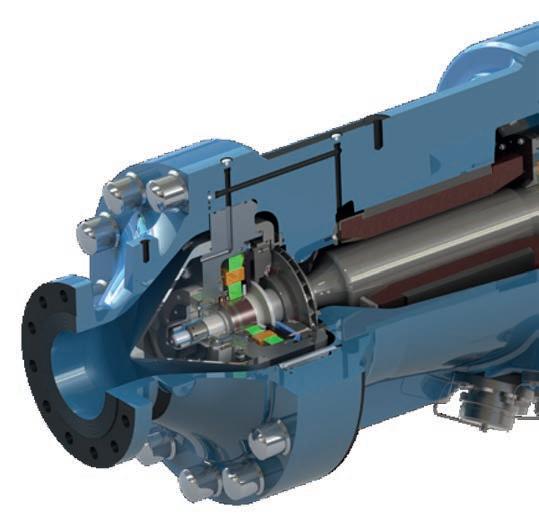
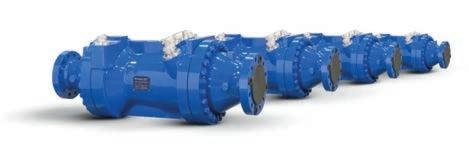
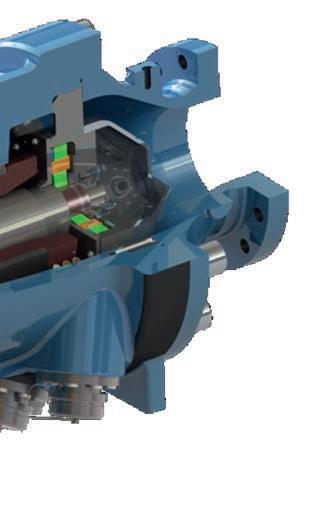
Since the early 1960s, compressor sets from Solar Turbines have provided the essential infrastructure for powering homes, businesses, industries and institutions. Solar designs and manufactures durable and efficient centrifugal gas compressors to match our gas turbines.
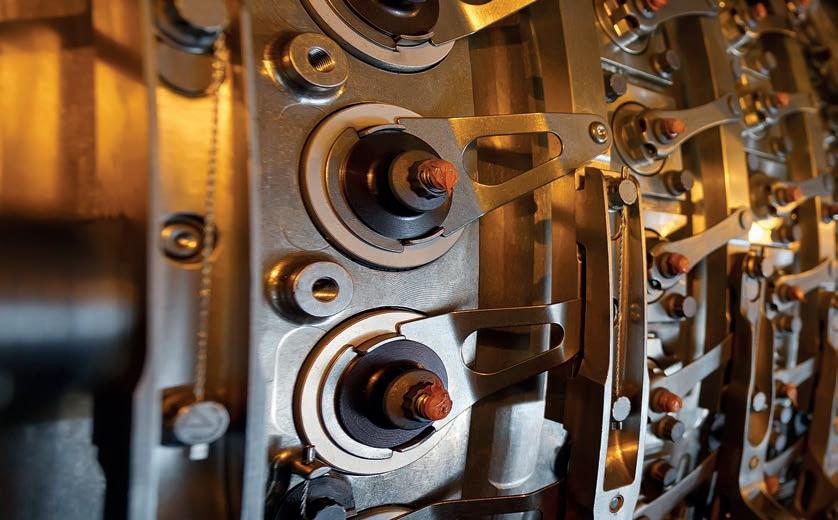
Over time, technology has provided improvements in how we design and manufacture our compressors, but what hasn’t changed is our passion and dedication to producing the best compressors possible for our customers. With more than 6500 compressors sold in a myriad of applications, our experience speaks for itself.
Always working for you.
Visit us at www.solarturbines.com , call +1-619-544-5352 or email infocorp@solarturbines.com for more information.
COMPRESSORTECH2
ISSN 1085-2468 (print) | ISSN 2995-9144 (online)
Volume 29 | Number 5
Published 10 issues/year (January-February, March, April, May, June, July, August-September, October, November, December) by KHL Group Americas LLC, 14269 N 87th Street, Suite 205, Scottsdale, AZ 85260, USA.
Subscription rates are $85.00 per year/$10.00 per copy worldwide.
POSTAGE
Periodicals postage paid at Waukesha, WI 53186 and at additional mailing offices.
Canadian Publication Mail Agreement # 40035419.
Return Undeliverable Canadian Addresses to: P.O. Box 456, Niagara Falls, ON L2E 6V2, Canada. Email: circulation@khl.com.
POSTMASTER: Send address changes to: Circulation Manager, COMPRESSORTECH2, 14269 N 87th Street, Suite 205, Scottsdale, AZ 85260 USA.
www.compressortech2.com
Follow @COMPRESSORTECH2
TECHNOLOGY
Technip wins EPC contract
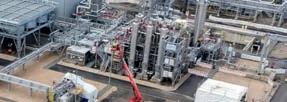
Technip Energies has been awarded a contract by TotalEnergies and OQ for the Marsa LNG bunkering project located in Sohar, Oman.
The contract, worth between €500 million and €1 billion, covers Engineering, Procurement and Construction (EPC) of a natural gas liquefaction train with an LNG production capacity of 1 Mtpa. The plant will use electric-driven motors instead of conventional gas turbines and will be powered by renewable electricity from a planned nearby solar farm which will cover 100% of the annual power consumption of the LNG plant. This is positioning the site as one of the lowest greenhouse gases intensity LNG plants ever built worldwide, the companies said. The LNG produced will be used as a marine fuel to reduce the sipping industry’s carbon footprint.
The Marsa LNG project is an integrated complex developed by TotalEnergies (80%) and OQ (20%).
“The world’s net-zero trajectory will require LNG as a critical source of energy, while addressing emissions abatement,” said Arnaud Pieton, CEO of Technip Energies. “TotalEnergies and OQ’s progressive Marsa LNG project is an example of how we can decarbonize the LNG value chain by powering its production with renewable energy and using it as a marine fuel to reduce emissions linked to maritime transportation 500 million and €1 billion of revenue.
Largest bio-LNG plant in
Shell Deutschland has opened a bioLNG plant that the company said is the largest of its kind in Germany.
The plant in the Energy and Chemicals Park Rhineland can produce around 100,000 tons of the lower-CO2 fuel annually. The transport sector plays a significant role in Shell’s corporate strategy to create more value with fewer emissions. With the commissioning of the bio-LNG plant in the south of Cologne, an important part of Shell’s decarbonization ambitions for heavyduty transport will become reality.
“We want to serve the entire value chain for bio-LNG,” said Felix Faber, Managing Director of Shell Germany. “To this end, Shell has already set up a Europe-wide network with 90 filling stations for refueling LNG
trucks, including 36 stations in Germany. In 2022, we purchased Europe’s largest producer of biomethane from Denmark, NatureEnergy, and are currently working on building additional plants in Germany. With the liquefier in the Rhineland, we are not only driving forward the transformation of the location, but are also adding another important component to the value chain.”
Biomethane is a sustainable gas that is obtained from agricultural waste (manure,
U.S. sets natural gas use record
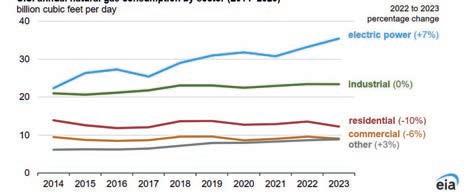
The U.S. Energy Information Administration (EIA) reports the U.S. set an all-time natural gas consumption record in 2023.
The EIA said 89.1 billion cubic feet per day (Bcf/d) of natural gas was consumed in the United States last year. Since 2018, U.S. natural gas consumption has increased by an average of 4% annually.
“Monthly natural gas consumption set new records every month from March 2023 through November 2023,” the EIA reported. “U.S. natural gas consumption has risen
in the electric power sector as coal-fired electric-generating capacity has declined.”
The largest monthly increases in natural gas consumed by the electric power sector were in July and August. Natural gas consumption in the electric power sector, which typically increases in July and August to meet air-conditioning demand, increased by 6% in July and August 2023 compared with those months in 2022, setting monthly records of 47.5 Bcf/d in July and 47.2 Bcf/d in August. CT2
Technip Energies has won an EPC contract for the Marsa LNG bunkering project in Sohar, Oman. IMAGE: TECHNIP ENERGIESw
U.S. ANNUAL NATURAL GAS CONSUMPTION BY SECTOR (2014
Germany opened by Shell
liquid manure or organic residues). In the new plant in the Rhineland, the gas is liquefied and delivered to the Shell LNG stations where customers refuel.
Shell’s goal is to become a net-zero carbon company by 2050. The focus of this transformation is on activities that reduce or avoid greenhouse gas emissions. Shell is investing significantly in low- and carbon-free products and offerings such as green hydrogen, wind and solar power, the development of charging infrastructure for electric vehicles and biofuels. It is important to manage the trilemma of
energy security – energy costs –transition to climate-friendly energy. Road freight transport is responsible for around nine percent of global CO2 emissions and is expected to triple by 2050. However, the entire transportation sector is difficult to decarbonize. That›s why Shell is expanding its strengths in molecules with lower CO2 emissions, such as bio-LNG for truck fuels.
The gas liquefaction plant put into operation in Cologne contains, in addition to a liquefaction unit, a gas processing system, storage tanks, truck loading and the necessary safety flares.
Shell Germany operates over 30 LNG filling stations along the main road freight transport routes.
ExxonMobil closes deal
ExxonMobil has closed its acquisition of Pioneer Natural Resources, saying the merger creates a business with the largest, high-return development potential in the Permian Basin.
The combined company’s more than 1.4 million net acres in the Delaware and Midland basins have an estimated 16 billion barrels of oil equivalent resource. ExxonMobil’s Permian production volume will more than double to 1.3 million barrels of oil equivalent per day (MOEBD), based on 2023 volumes, and is expected to increase to approximately 2 MOEBD in 2027, based on initial estimates.
The FTC approved the deal, but stipulated that Exxon bar former Pioneer CEO Scott Sheffield from the board, alleging “collusive” messages with OPEC+ members years ago aimed at limiting production.
Shell said it started the largest plant for the production of bio-LNG in the Rhineland.
TotalEnergies partners in U.S. RNG deal
TotalEnergies and Vanguard Renewables, a U.S. leader in farmbased organics-to-renewable natural gas production, have agreed to develop, build, and operate renewable natural gas (RNG) projects in the United States.
TotalEnergies and Vanguard Renewables will advance 10 RNG projects into construction over the next 12 months, with a total annual RNG capacity of 0.8 TWh (2.5 Bcf). The three initial projects in this agreement are currently under construction in Wisconsin and Virginia, each with a unit
capacity of nearly 75 GWh (0.25 Bcf) of RNG per year.
Beyond these first 10 projects, the partners will consider investing together in a potential pipeline of about 60 projects across the country for a total capacity of 5 TWh (15 Bcf) per year.
“By expanding into this fast-growing market, our joint venture will create value for both companies while benefiting the food and farming sectors as well as providing a ready-to-use solution to industrial companies willing to decarbonize their
Bosch Rexroth expands portfolio
Technology needed for producing green hydrogen offshore or for carbon capture use and storage (CCUS) to be economical must become significantly more cost-effective. To help achieve this, Bosch Rexroth is expanding its portfolio of subsea actuators with additional variants and motion options to electrify and digitalize all safety-relevant movements at depths of up to 4,000 meters.
In the offshore storage of CO2 as well as in the intermediate storage of green hydrogen, valves regulate the controlled flow of process gases and fluids. Up to now, these valves have mostly been operated by hydraulically driven actuators, Bosch Rexroth said. This requires central hydraulic power units above water with kilometers of pipelines to the individual actuators on the seabed. The company said its newly developed eSEA actuators supplied with 24 V low-voltage (DC) are an economical alternative to these capital- and energy-intensive conventional hydraulic systems. Their lower power consumption reduces operating costs. In addition, digital twins increase process reliability with condition monitoring.
Bosch Rexroth is now adding the eSEA Push actuator for linear movements and the eSEA Drive for applications with very high torques in excess of 35 kNm to its actuator for rotary movements (eSEA Torque). This means that all movements required for a safe and reliable
■ GPA MIDSTREAM and GPSA announced the retirement of Senior Vice President and Corporate Secretary Johnny Dreyer as well as the hiring of Brandie Dibrow, who will be Director of Midstream Activities.
Dreyer has been a leader of the midstream industry, having served in an array of roles with GPA Midstream and GPSA for nearly 30 years, including producing the acclaimed
annual convention, managing technical services, and government affairs.
“We will miss Johnny’s experience, wisdom, and good humor,” said GPA Midstream President Joel Moxley. “His contributions to the associations and to the midstream are immeasurable. When many people think of national GPA Midstream and GPSA associations, the first name that comes to mind is Johnny Dreyer.”
Disbrow comes to GPA Midstream with two decades of experience within energy, engineering and
energy supply,” said Olivier Guerrini, Vice President, Biogas at TotalEnergies. “This joint venture is a new step for TotalEnergies in achieving its objective to produce 10 TWh of renewable natural gas by 2030.”
Headquartered near Boston, Massachusetts, Vanguard Renewables was founded in 2014 and has a workforce of approximately 260. The company currently operates 17 organics-to-renewable energy facilities with an annual capacity of more than 440 GWh (1.5 Bcf) of RNG. Looking beyond 2024, Vanguard Renewables plans to commission over 100 RNG projects by the end of 2028.
In July 2022, Vanguard Renewables was acquired by BlackRock, through a fund managed by its Diversified Infrastructure business. BlackRock has partnered with Vanguard Renewables’ management team to build upon the company’s market-leading track record to drive the next phase of its growth to support the nationwide expansion of its anaerobic digester projects from coast to coast. BlackRock will remain the majority shareholder of Vanguard Renewables.
“These 10 RNG projects, jointly undertaken by TotalEnergies and Vanguard Renewables as co-investment partners, further reinforce our commitment and ability to deliver on our mission of harnessing the power of waste to decarbonize our planet,” said Neil H. Smith, CEO at Vanguard Renewables. CT2
construction. Her expertise includes business development, trade shows, operations management, and sales and marketing.
Her resume includes stops at Audubon Companies, JRJ Energy Services, Energy Inspection Group, Tulsa Inspection Resources, Golden Field Services, and Excellence Engineering.
She has been an active member of GPA Midstream’s Midcontinent chapter, including serving as chair of the chapter’s Marketing Committee.
GAS LINES LNG EXPORTS
Natural gas trade will continue growth
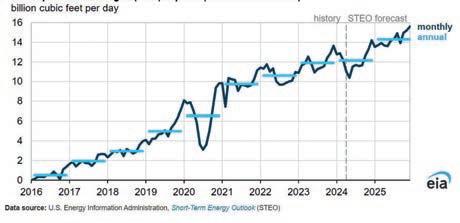
U.S. LIQUIFIED NATURAL GAS (LNG) EXPORTS (Jan 2016-Dec 2025)
U.S. liquefied natural gas (LNG) exports will continue to lead growth in U.S. natural gas trade as three LNG export projects currently under construction start operations and ramp up to full production by the end of 2025, according to the U.S. Energy Information Administration (EIA)
The EIA also forecasts increased natural gas exports by pipeline, mainly to Mexico. The EIA expects that net exports of U.S. natural gas will grow 6% to 13.6 Bcf/d in 2024 compared with 2023. In 2025, net exports should increase another 20% to 16.4 Bcf/d.
“In 2024–25, we forecast that existing U.S. LNG export facilities will run at similar utilization rates as in 2023,” the EIA said. “Later in 2024, we expect that Plaquemines LNG Phase I and Corpus Christi Stage 3 will begin LNG production and load first cargoes by the end of the year. In 2025, the developers of Golden Pass LNG plan to place in service the first two trains of this new
three-train LNG export facility.”
The EIA also forecasts an increase in U.S. natural gas pipeline exports to Mexico as several pipelines in Mexico – Tula-Villa de Reyes, Tuxpan-Tula, and Cuxtal Phase II connecting to the Energía Mayakan pipeline on the Yucatán Peninsula –become fully operational in 2024–25.
These pipelines started partial service in 2022–23 but have not been operating at full capacity. Also, flows via the Sur de Texas-Tuxpan underwater pipeline are likely to increase slightly in 2024 when it begins delivering natural gas from the United States to Mexico’s first LNG export project, Fast LNG Altamira. CT2
YOUR PARTNER FOR THE HYDROGEN TRANSITION
For over 100 years, Cook Compression has partnered with OEMs and end users to design innovative solutions for the gas compression industry. This includes a long history of engineered products with proven success in refining, petrochemical, and industrial hydrogen applications.
Today, we’re leveraging this experience and investing in the research and testing capabilities needed to develop the next generation of products for renewable hydrogen applications.
See how we can help you with the coming hydrogen transition at www.cookcompression.com/hydrogen.
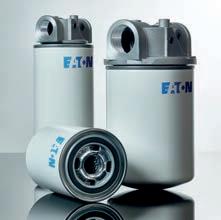
Eaton’s new spin-on filters
Eaton’s Filtration Division launched a line of WPL spin-on filters designed to protect pumps, valves, compressors, and hydraulic systems from contamination as per ISO 2941, ISO 3723, and ISO 2942 standards.
The company said the filters are designed to provide one of the highest cleanliness levels for hydraulic systems, incorporating cartridges that are engineered to fit into many filter systems on the market. They are designed for power generation, oil and gas, and other markets.
Eaton’s WPL filters consist of a head mounted directly in-line with the piping and a cartridge containing a WP filter element. The cartridge seals to the head to prevent leakage. Spin-on filters can be replaced without special equipment or tooling, and do not require emptying or cleaning. Operators can choose between five element sizes based on their servicelife requirements. Each option is offered with fiberglass or paper as the filter material and provide a filter fineness of 10 µm.
Eaton’s WPL spin-on filters provide the following characteristics:
■ Compatible with a variety of mediums such as oils, fuels, emulsions, glycol water and synthetic fluids
■ Flow rates: up to 48 GMP (180 l/min)
■ Operating pressure: 145 psi (10 bar)
■ Operating temperatures: 14 to 230°F.
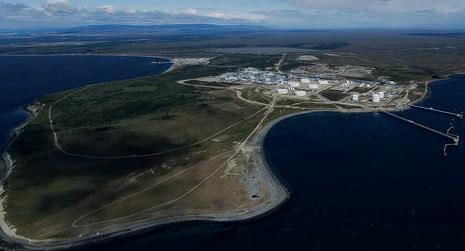
The National Petroleum Co. (ENAP), Chile’s state-owned oil company, announced the construction of its first green hydrogen plant in Magallanes.
Neuman & Esser leading hydrogen plant project
Neuman & Esser will be in charge of building a hydrogen plant for Chile’s National Petroleum Co. (Enap) with production projected to start in 2025.
In January 2023, the company announced the start of its own green hydrogen project in the Cabo Negro complex, in Magallanes.
The plant will be powered by the Vientos Patagónico wind farm – of which Enap is the majority shareholder – and will have a capacity of 1 MW, which will be used for vehicle charging stations and to power the furnace of the plant.
With the construction of this plant, Enap hopes to generate knowledge and experience in the production and use of this energy in the Magallanes region, as part of its strategy for the development of new fuels.
■ COOPER named Kenneth (Kenny) Pucheu as Chief Financial Officer. Pucheu joins Cooper from NexTier Completion Solutions where, as EVP and Chief Financial Officer, he played a pivotal role in steering the company through the challenges of the pandemic to emerge as a top-performing company in the sector. His leadership in finance, accounting, M&A, Information Technology, and Digital Initiatives
Neuman & Esser was awarded the bidding process for the project, which considers electrolysis, storage, a charging station and a detailed training plan for company workers, among others, the company said.
“We at Neuman & Esser, as global experts in the hydrogen value chain, see Enap’s pioneering spirit and the technological complexity of this important and challenging project as highlights,” said Managing Director of Neuman & Esser Marcelo Veneroso.
“Aligned with global decarbonization policies, Enap’s strategic vision promotes national self-consumption and contributes to the development of the green hydrogen economy in Chile, complementing the country’s objective of being an exporter of this sustainable energy vector.” CT2
contributed to the company’s strong growth in revenue, earnings, and market capitalization.
The company also named Bernie McCoy, Jr. as Senior Vice President, Field Operations.
McCoy is a 20+ year leader in the oil & gas and new energy industries. He has held various leadership roles at TechnipFMC and Shermco Industries in engineering, project management and field operations. Bernie brings a wealth of
Baker Hughes supplying Aramco
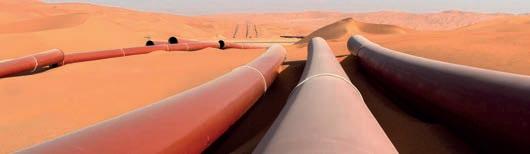
Baker Hughes said it will supply gas technology equipment for the third phase of Saudi Arabia’s Master Gas System project.
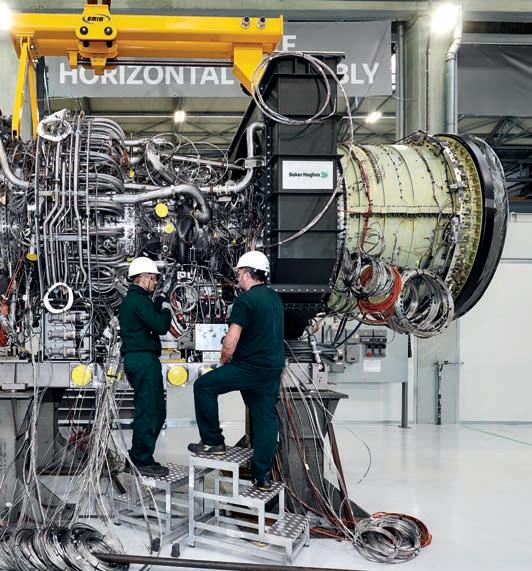
The order came from Worley on behalf of Aramco. Baker Hughes will supply 17 pipeline centrifugal compressors driven by aeroderivative gas turbines for Aramco’s project. The new 4,000-km pipeline will increase domestic gas distribution and contribute to a reduction of carbon emissions and oil consumption. The order follows the delivery of 18 of Baker Hughes centrifugal compressors driven by aeroderivative gas turbines for Phase 1 and 2 of the Master Gas System projects executed by Baker Hughes.
“Saudi Arabia is in a unique position to ease the pressures of the energy trilemma with its vast supply of gas,” said Yahya Abu Shal, senior vice president,
Project Management at Aramco. “Our collaboration with Baker Hughes has been greatly successful for many years. Their technologies have been used for Phase 1 and 2 of the Master Gas System, and we look forward to continuing our work together to decarbonize critical industries across Saudi Arabia.”
Cook names service partner
Cook Compression named Kompressorteknik ML AB as its Authorized Service Partner within Sweden, Denmark, Norway & Finland.
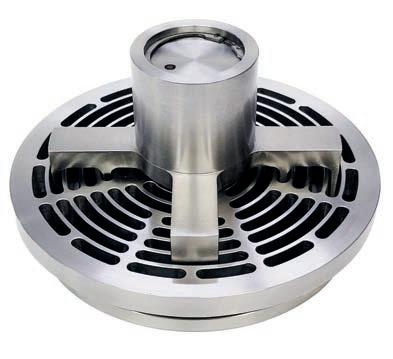
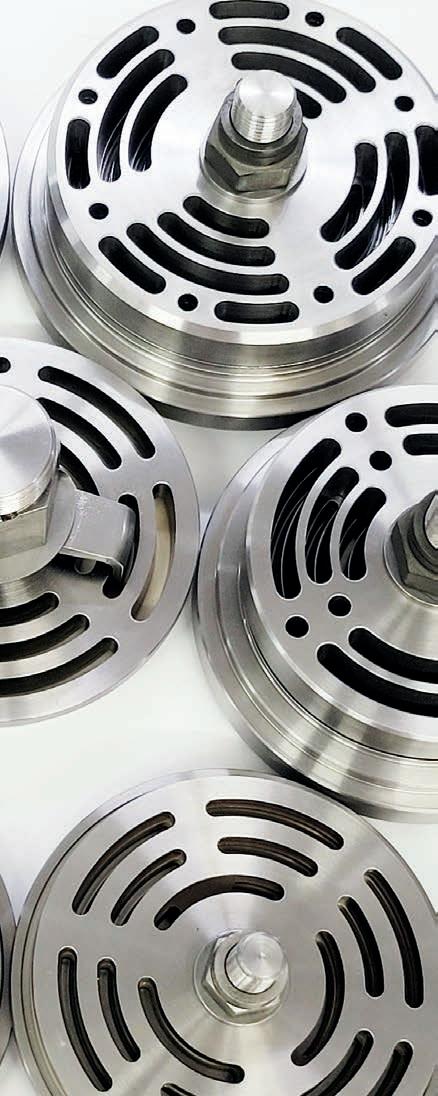
Cook Compression Authorized Service Partners are certified to provide local compressor valve and packing case repair and reconditioning to end users.
Backed by more than a century of service to the gas compression industry, Cook Compression applies extensive technical expertise to improve reciprocating compressor performance around the globe. Through its Authorized Service Partner program, Cook Compression is expanding access to its services and knowledge and helping to minimize downtime of critical equipment.
CT2
Baker Hughes is also investing in expanding its manufacturing site in Modon, Saudi Arabia. In addition to doubling the capacity of its workforce, the upgraded site will further support the delivery of projects in the country, including MGS3, with localized testing and packaging solutions. In February, Baker Hughes announced the delivery of the first two trains of advanced hydrogen compression solutions for the NEOM green hydrogen project in the Kingdom, the largest such project in the world.
strategic leadership experience to support our mission and values, advance our ambitious goals, and drive future growth at Cooper.
■ BCCK, a leader in engineering, procurement, fabrication and field construction services, has appointed Divyam Mandalia as director of business development-renewables.
Mandalia will be based in The Woodlands, Texas, and will be responsible for managing existing
and new customers while assessing opportunities for BCCK to expand its presence in the renewables market.
Mandalia brings over four years of experience in the renewables sector. His previous roles included managing sales and business development activities for a Houston-based organization, alongside contributing to process engineering design for both existing and new technologies. He holds a master’s degree in chemical engineering from Carnegie Mellon University.
Authorized Service Partners also have access to Cook Compression expertise to partner with customers on analysis, upgrades, and additional reciprocating compressor components and services.
Founded in Sweden in 2009, Kompressorteknik ML AB is staffed with highly experienced technicians and sales team, offers a variety of technical support for major brands of reciprocating and rotating equipment. Services include compressor overhaul, repairs, valve service, safety valve service.
“We are proud to partner with Kompressorteknik to provide expert reciprocating compressor service and OEM-quality components within Scandinavia, an area with a high density of reciprocating compressors and customers who demand local service capabilities to support outages and compressor stops. Working with Kompressorteknik will position Cook Compression to best meet those needs,” said Dean Lewis, Cook Compression VP.
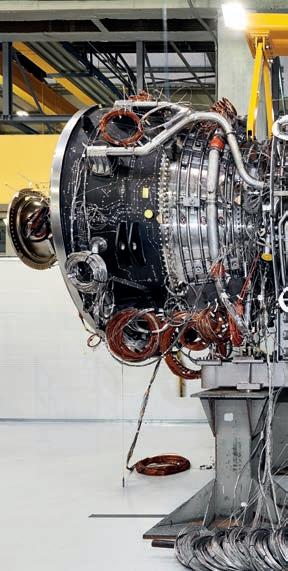
Baker Hughes awarded significant gas technology scope for Phase 3 of Saudi Arabia’s Master Gas System.
Biden administration finalizes NEPA reforms but faces opposition
In a move that would affect the environmental assessment of projects ranging from oil and gas pipelines to federal highways and other infrastructure projects, the Biden administration unveiled a final rule on April 30 to reform the federal environmental review process.
Issued by the White House Council on Environmental Quality (CEQ), the goal of the rule is to “reform, simplify and modernize” permitting under the National Environmental Policy Act (NEPA), which was signed into law in the 1970s.
While being hailed by environmental organizations as a means to remove barriers to clean energy projects, other organizations criticized the rule as making a broken review system even worse, particularly when it comes to permitting for fossil-fuel-driven process.
The new rule will apply to projects beginning environmental review on or after July 1, 2024. However, some members of Congress have signaled they will seek to overturn the measure. The changes were made possible by the Fiscal Responsibility Act of 2023, a law to raise the federal debt ceiling that also contained provisions sought by the Biden administration to update NEPA. This marked the second phase of the administration’s drive to modify NEPA.
According to the CEQ, the new rule will build on more than $1 billion from the Inflation Reduction Act to expedite federal agency permitting, Biden’s Permitting Action Plan, and other reforms to help accelerate environmental reviews
Critics claim it makes bad situation worse.
while ensuring environmental protections, community engagement, and coordination with states, Tribes, and local governments.
CEQ Chair Brenda Mallory said, “These reforms will deliver smarter decisions, quicker permitting, and projects that are built better and faster. As we accelerate our clean energy future, we are also protecting communities from pollution and environmental harms that can result from poor planning and decision making while making sure we build projects in the right places.”
Unraveling Trump changes
In part, the rule seeks to unravel the changes made to NEPA under the Trump administration, lawyers for Portland, Maine-based Pierce Atwood LLP wrote in The National Law Review. According to their analysis, certain changes that likely will speed up federal agency approval include:
■ Narrowing the scope of projects subject to NEPA review by requiring that the agency’s “major federal action” be one subject to “substantial” federal control
■ Detailing new methods for establishing categorical exclusions (CEs) from NEPA review
■ Confirming page limits and timelines for environmental reviews
However, the lawyers continued, many of the changes increase the regulatory burden by:
■ Restoring the analysis of a project’s “context” and “intensity”
■ Codifying that an environmental impact statement (EIS) must include analysis of climate change effects and environmental justice
■ Clarifying that in establishing deadlines, NEPA review agencies may consider the “degree to which a substantial dispute exists as to the size, location, nature, or
By Brian Ford
consequences of the proposed action and its effects.”
The final rule drew criticism from the American Petroleum Institute (API).
“This final rulemaking is the opposite of what is needed to create a durable and predictable permitting review process to unleash energy investment in America,” said API Senior Vice President of Policy, Economics and Regulatory Affairs Dustin Meyer. “Amid rising demand for affordable, reliable and cleaner energy sources, this final rule adds bureaucratic roadblocks to an already arduous process, jeopardizing the buildout of needed projects and low carbon infrastructure. NEPA will continue to be the most litigated environmental statute, resulting in more uncertainty, more stalled projects, and more taxpayer dollars drained from agencies and the courts.”
In April, Sen. Joe Manchin (D-West Virginia) announced plans to lead a Congressional Review Act resolution of disapproval to overturn the NEPA rule. He was joined by Rep. Garret Graves (R-Louisiana) and Sen. Dan Sullivan (R-Arkansas).
“The Biden Administration is clearly more interested in caving to activists during an election year than building new infrastructure to unlock America’s full potential in the 21st century,” Manchin said. “Bottom line: instead of simply implementing the bipartisan, commonsense reforms included in the Fiscal Responsibility Act, they loaded up this rule with new requirements to help agencies and litigators run out the clock on the types of projects they don’t like.”
Graves said: “As written by the White House, the rule includes definitions that favor certain groups over others instead of keeping a level playing field for all types of projects.” CT2
BRIAN FORD is editor in chief for Industrial Info Resources, which provides up-to-date project information on a wide range of industries across the globe. He has worked as a reporter and editor for newspapers and other publications since 1979.
Plays
James Willis highlights the latest news from the major North American shale plays
MARCELLUS/UTICA
Seneca buys Southwestern assets
Seneca Resources, a subsidiary of National Fuel Gas Company, has agreed to acquire Southwestern Energy’s northwestern Pennsylvania assets for $127 million. The deal includes approximately 30,000 net acres located in Tioga and Potter counties. At closing on June 1, the assets were expected to have net production of 20 MMcf/d. In addition, Seneca entered into two separate transactions to acquire approximately 6,000 bolt-on fee and lease acres with a modest amount of production and one developed non-producing well in its Lycoming and Tioga operating areas for total consideration of $20-$25 million. Seneca’s Appalachian gas production increased 12% in the most recent quarter prior to the asset additions.
Encino offered Ohio $1.8 billion deal
Encino Energy offered the State of Ohio $1.8 billion to drill for natural gas and oil under Salt Fork State Park, located in Guernsey County. The park includes 17,229 acres
of land and 2,952 acres of water. Encino made the offer to the state in December, immediately after a new bill was signed into law allowing shale drilling under state parks. The offer included a payment of $5,500 per acre as a signing bonus plus 20% royalties. No drilling would be done inside the park but on land surrounding (outside of) the park. Ultimately, for undisclosed reasons, Ohio rejected the offer. Encino remains interested and may try again.
Dominion, National Grid shopping pipelines
Dominion and National Grid–large electric
HAYNESVILLE
BAKKEN/WILLISTON
Ovintiv sells Bakken assets
Ovintiv Inc. announced a deal to sell all of the company’s Bakken assets located in the Williston Basin of North Dakota to Grayson Mill Bakken, LLC, a portfolio company of EnCap Investments, for approximately $825 million in cash. Ovintiv’s landholdings in the play totaled 46,000 net acres as of December 31, 2022. Ovintiv’s estimated first quarter Bakken production was approximately 37 Mboe/d (60% oil and condensate).
Crestwood gathering and processing declines
Crestwood Equity Partners reports that during 1Q24, the company’s Bakken crude oil gathering volumes averaged 80 MBbl/d, natural gas gathering volumes averaged 230 MMcf/d, natural gas processing volumes averaged 257 MMcf/d, and produced water gathering volumes averaged 171 MBbl/d.
During the first quarter, producers connected 29 wells across the company’s gathering systems.
Driftwood pipeline receives FERC certificate FERC issued a certificate authorizing Tellurian to move forward with the company’s Driftwood Line 200 and Line 300 projects. Lines 200 and 300 are a $1.28 billion, approximately 37-mile-long dual 42-inch-diameter interstate natural gas pipeline project that will originate near Ragley in Beauregard Parish, Louisiana, and end near Carlyss in Calcasieu Parish. The pipelines will provide shippers with access to Haynesville-sourced gas via new regional infrastructure located near Texas Eastern and Transco Pipeline mainline compressor stations.
Tuscaloosa
and gas companies providing service to millions of customers in multiple states–are rumored to be shopping some of their natural gas pipeline networks in the northeast, according to the venerable Wall Street Journal. The reason? The utility companies believe the end of the natural gas utility business is on the distant horizon, and they want to sell their gas pipeline assets now, while those assets will still fetch big money.
World record for lateral feet drilled in 24 hours
Antero Resources, which is 100% focused on the Marcellus/Utica with over 500,000 net acres under lease and the largest shale driller in West Virginia, disclosed as part of its first quarter update the company achieved a new world record in 1Q of drilling 12,340 lateral feet in 24 hours. Antero’s net production averaged 3.3 Bcfe/d during 1Q, an increase of 3% year-over-year. Net income was $213 million.
Gulfport reorganizing
Gulfport Energy, the third-largest driller in the Ohio Utica Shale (by the number of wells drilled), emerged from bankruptcy in May 2021 with a new board and new top management. In January, the company appointed a new CEO, John Reinhart, who was the former president and CEO of Marcellus/Utica driller Montage Resources Corporation before that company was gobbled up by Southwestern Energy in late 2020. In April of this year, Gulfport announced two more additions to senior management, a new CFO, Michael Hodges, and a new Senior VP of Operations, Matthew
PERMIAN (Delaware)
Ovintiv adds 65,000 net acres
Ovintiv Inc. announced a deal to acquire substantially all leasehold interest and related assets of Black Swan Oil & Gas, PetroLegacy Energy, and Piedra Resources, portfolio companies of EnCap Investments, in a cash and stock transaction valued at $4.275 billion. The deal adds approximately 1,050 net 10,000-foot well locations to Ovintiv’s Permian inventory and approximately 65,000 net acres in the core of the Midland Basin. The new acreage is located in close proximity to Ovintiv’s current Permian operations. The deal is expected to close by the end of June.
Matador production picks up
Matador Resources Company focuses primarily on the oil and the liquids-rich portion of the Wolfcamp and Bone Spring plays in the Delaware Basin in Southeast New Mexico and West Texas. Matador reports first quarter average daily oil and natural gas production increased 14% year-over-year from 93,969 boe/d in the first quarter of 2022 to 106,654 boe/d in the first quarter of 2023. The company credits the increase to betterthan-expected production in the Permian, fast midstream connections, and fewer days of shut-in production than anticipated. During 1Q, Matador turned to sales 24 gross (18.0 net) operated horizontal wells with an average completed lateral length of approximately 9,800 feet.
San Mateo Midstream record highs
San Mateo Midstream, a joint venture formed by Matador Resources Company and Five Point Energy, achieved the company’s all-time high natural gas gathering and processing in 1Q23. Gas gathering averaged 333 MMcf/d in 1Q23, up 25% from a year ago. Gas processing averaged 352 MMcf/d, up 39% from a year ago. The increase comes not only from new Matador volumes but also from adding new customers to the San Mateo system.
Rucker. Both Hodges and Rucker formerly worked for Reinhart at Montage Resources.
Builder cancels
$1.1
billion gas-fired power plant
Bechtel Corp. announced that after eight years of trying to move forward with a plan to build the $1.1 billion Marcellus-fired Renovo Energy Center power plant in Clinton County, PA, it is giving up and canceling the project.
ROCKIES (Powder River Basin, Denver-Julesburg Basin, Niobrara)
Montana judge cancels gas plant permit
A Montana State District Judge canceled an air quality permit granted to NorthWestern Energy’s $250 million natural gas-fired power plant already under construction along the Yellowstone River. The judge cited concerns about climate change, saying officials granting the permit failed to account for a potential 23 million tons of so-called greenhouse gases the plant will emit over its projected 30-year life. A statement from the company said the air permit was approved by Montana environmental regulators “using standards that have been in effect for many years.” NorthWestern said it will work with regulators to determine the path forward.
Using regulatory and court challenges, three environmental groups that oppose shale energy–the Clean Air Council, PennFuture, and the Center for Biological Diversity–claimed victory in defeating the 1,240 MW project.
Range gets new CEO, will go it alone in Marcellus
Range Resources Corporation, the very first producer to drill a Marcellus well back in 2004, recently issued its first quarter 2023 update and held a conference call with analysts. During the call, retiring CEO Jeff Ventura proclaimed Range sits at the best spot it has been in company history. Ventura said, “For the Marcellus, the future is very bright.” Current COO and incoming CEO Dennis Degner echoed Ventura’s remarks and pledged to “stay the course” in the Marcellus in the months and years ahead. Responding to an analyst question during the call, Degner stated that Range will
EAGLE FORD (Austin Chalk, Tuscaloosa Marine Shale)
Crescent buys operated interest in non-op assets
Crescent Energy Company is taking over as operator and purchasing an incremental working interest in its existing non-operated Western Eagle Ford assets from Mesquite Energy, Inc. for $600 million in cash. Crescent will increase its legacy ~15% non-operated interest to a ~50% operated working interest in the acquired assets and operate approximately 90% of its Eagle Ford position. The asset is fully operated with approximately 75,000 contiguous net acres, primarily located in Dimmit and Webb counties, Texas. The transaction is expected to close early in the third quarter of 2023.
Mitsui buys EF assets from Silver Hill Eagle
Japan’s Mitsui & Co Ltd. recently purchased a 92% stake in the Eagle Ford from Silver Hill Eagle Ford E&P for an undisclosed sum. The assets include approximately 8,500 gross acres and are a part of the Hawkville field. Mitsui will operate the assets with plans to produce 200 MMcf/d. Mitsui is promoting the liquefaction and export of U.S. natural gas to global markets. The company targets methanol production businesses using natural gas as feedstock. Mitsui said it believes natural gas and LNG will play an important role as a “pragmatic solution” as a transition energy source.
continue to focus on the Marcellus and will do so “alone”–implying the company is not actively considering offers to merge or sell.
KM begins work on third East 300 compressor
Kinder Morgan’s East 300 Upgrade of the Tennessee Gas Pipeline will deliver 115 MMcf/d of extra capacity to Consolidated Edison customers in New York City and surrounding suburbs. The project includes work on three compressor stations. Work on a new compressor in New Jersey began
MIDCONTINENT
(Anadarko/SCOOP/ STACK)
SandRidge drilled and completed two wells
SandRidge Energy, Inc. operated one drilling rig in the first quarter and successfully drilled and completed two wells targeting the Meramec formation in the core of the NW Stack play as part of its previously announced capital development program. The company plans to drill and complete two additional operated wells, which will conclude its program for the year. SandRidge’s production for the quarter totaled 1,500 MBoe (16.7 MBoed, 17% oil, 28% NGLs and 55% natural gas).
last November. Work to upgrade an existing Pennsylvania compressor began earlier this year. That left just one final compressor project, upgrades to an existing compressor station in NJ. According to KM, the East 300 project is expected to be done Nov 1. CT2
BARNETT
Sage cancels Barnett drilling for balance of 2023
Sage Natural Resources LLC announced that it recently completed its 2022 Barnett Drilling program, successfully drilling 30 horizontal wells targeting the Barnett Shale formation in North Texas. The program totaled 96 miles drilled. The average lateral length was approximately 8,200 feet per well, with average spud-to-rig release of under 13 days. On average, each well came in at approximately $745 per drilled and completed lateral foot. Due to the significant drop in natural gas commodity price through the first quarter of 2023, Sage is suspending its Barnett drilling program. The company will return to its gas inventory when prices rebound relative to the cost of capital services. Sage plans to focus on its Texas oil assets in the Eagle Ford Shale for the balance of 2023.
Think. Create. Change.
Anna Kachkova provides information on the latest gas compression news from Europe
EUROPEAN UNION
EU countries consider restricting re-exports of Russian LNG European Union (EU) countries began negotiations on May 8 on the next round of sanctions against Russia, against the backdrop of the ongoing war in Ukraine. For the first time, the European Commission put forward a proposal to place sanctions on Russian LNG. However, the proposed measure would not ban imports of Russian LNG into the EU, instead preventing member countries from re-exporting volumes that arrive from Russia.
Under the proposal, EU involvement in new Russian LNG projects would also be banned, with the aim of limiting Russian LNG capacity growth and related revenues.
It could take weeks for EU member countries to reach a final agreement on what is set to be the 14th package of sanctions against Russia since it invaded Ukraine in February 2022. And given that energy industry sanctions are considered highly sensitive, there is a possibility of further delay if EU members struggle to reach an agreement. If sanctions on Russian LNG are ultimately adopted, though, this could have significant implications for Europe.
According to S&P Global data,
ANNA KACHKOVA is an independent oil and gas writer based in Edinburgh, Scotland. She has over 13 years’ experience of covering the energy industry, including five years in Houston, Texas, as NewsBase’s North America editor. Her email address is: aikachkova@gmail.com
during the start of 2024 up to early April, Russian volumes accounted for more than 16% of Europe’s total LNG imports, up from 12.74% in the first four months of 2023. France, Spain and Belgium were the main importers of Russian LNG.
In addition, cargoes from the Yamal LNG project in the Russian Arctic are transported to Belgium and France in ice-class vessels and then transferred onto conventional LNG tankers for transshipment. It is this practice that would be banned under the proposed sanctions, and this is expected to lead to extra Russian volumes remaining in the EU.
Meanwhile, the EU’s Agency for the Cooperation of Energy Regulators (ACER), a decentralized agency created to foster the integration of the EU’s electricity and natural gas markets, warned in April that the bloc will still need to import Russian LNG. This is especially important given that pipeline gas imports from Russia are due to decrease at the end of the year, ACER noted. Thus, while several EU members, including Sweden, Finland and the Baltic countries, have been pushing for a total ban on Russian LNG imports, such a step has been advised
against – not that it could be achieved without unanimity among all EU countries.
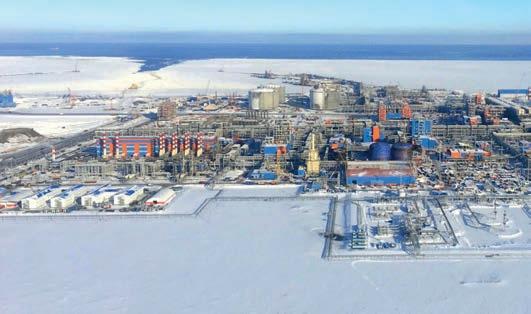
The Yamal LNG facility. Cargoes from the Yamal LNG project in the Russian Arctic are transported to Belgium and France and then transferred onto conventional LNG tankers for transshipment. It is this practice that would be banned under proposed sanctions, and this is expected to lead to extra Russian volumes remaining in the EU.
GERMANY
Gascade to begin construction on Rehden 2 compressor station Germany’s Gascade announced in mid-May that it would soon begin construction on the Rehden 2 gas compressor station project. This comes after the company received planning approval for the project from the State Office for Mining, Energy and Geology (LBEG), the mining and energy authority for the German states of Lower Saxony, Bremen, Schleswig-Holstein and Hamburg.
Work will begin in May in the district of Diepholz, Lower Saxony, in the joint municipality of Rehden, next to the existing compressor station. The plan is to extend
Novatek’s Yamal liquefied natural gas facility on the Yamal Peninsula in the Arctic. IMAGE: NOVATEK
DENMARK
Tyra II faces delay in reaching peak capacity following compressor issue
A technical issue with an intermediate pressure (IP) gas compressor at the Tyra gas field offshore Denmark means that the field is now expected to reach peak production in the fourth quarter of 2024 instead of mid-year.
Operator TotalEnergies and its partners restarted production at the field in March following the completion of a major redevelopment project, Tyra II. However, commissioning was disrupted shortly thereafter, in early April, by technical issues with a compressor. TotalEnergies subsequently found that the transformer for the IP compressor needed to be repaired, which it said would affect the timing of Tyra II’s ramp-up to its maximum technical capacity.
TotalEnergies’ Danish unit said in a statement in early May that it was in close dialogue with our supplier of the transformer for the IP compressor, with everyone involved in the project working on mitigating the consequences of the malfunction as quickly as possible.
the station to the north via the addition of three new compressor units and the associated construction of connecting pipelines, Gascade said.
The company expects the new compressor units to be ready by the end of
2026, with the completion of all facilities and the recultivation of all construction areas targeted by the end of 2028.
“As part of the expansion measure, the installation of three additional electric compressors is planned, which will be connected to the existing pipeline infrastructure on site and the Rehden storage facility,” stated a Gascade project manager, Johannes Daum. “The additional compressor capacity is particularly necessary in order to feed natural gas into the North European Natural Gas Pipeline (NEL) and transport it to Eastern Germany in the direction of Lubmin. An inlet pressure of 100 bar is required for feeds into the NEL, which the existing compressor station in Rehden is currently unable to provide.”
According to Gascade’s website, the existing Rehden compressor station
consists of three compressors – two with a capacity of 11 MW each and one with a capacity of 7 MW.
Gascade expects the expansion of the Rehden site to help bolster the security of supply both for Eastern Germany and for neighboring countries. The company said that after the expansion has been completed, additional feed-in capacities can be made available at the border crossing points of Eynatten with Belgium and Bunde with the Netherlands in order to boost imports of gas arriving in those countries as LNG.
SLOVAKIA
Slovakia targets gas from Azerbaijan to replace Russian imports
Slovakia is making plans to receive natural gas from Azerbaijan via Ukraine, in a bid to replace its imports of Russian gas.
This comes as Ukraine maintains that it will not extend the deal that currently allows Russian gas to transit its territory en route to Europe. That deal is due to expire this year, and some countries that still rely on Russian gas are having to explore alternatives as a result.
Slovakia is among those countries affected, having been completely dependent on Russian gas prior to the war in Ukraine and having also served as a transit route for gas being shipped from Russia to other European countries. Now, Slovakia has turned its attention to Azerbaijan as an alternative supply source.
Slovak Prime Minister Robert Fico said in mid-May that his country was preparing to receive gas from Azerbaijan. His comments came after a visit to the Central Asian country earlier in the month.
Fico told a televised briefing that his government had done “everything politically necessary” in order to enable imports from Azerbaijan.
Plans being explored entail gas from Azerbaijan transiting Ukraine, via a Russian border point. There is also the possibility that some of the gas could transit Slovakia to reach other importers, including Austria. Fico said he would discuss this with his Austrian counterpart. CT2
Tyra gas field offshore of Denmark. IMAGE: TOTALENERGIES
New Compressor Solutions for Emerging Hydrogen Applications: The Case for Hybrid Designs
By Michael Schulz and AbulAla Siddiqui, Siemens Energy
Compressors represent an essential part of the emerging hydrogen value chain and are needed to efficiently transport and store hydrogen from the production source to its point of end-use. Siemens Energy is a leading supplier of hydrogen compressors and maintains a large installed base of both reciprocating and turbo-compressors, with 2,500+ units in H2 operation today (more than 2.5 million of installed horsepower).
Historically, reciprocating compressors have been the primary technology for compressing hydrogen in traditional applications, such as refineries. However, as the market for hydrogen grows to support various decarbonization use cases, there is an increasing demand for compression of high volumes of H2, which lends more toward turbo-compressors.
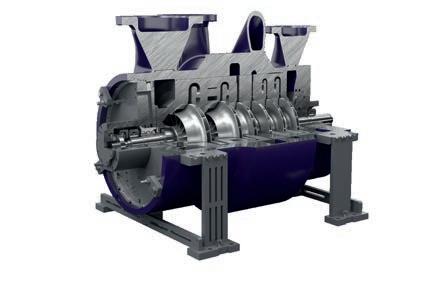
FIGURE 1. STC-SVm Single-Shaft Centrifugal Compressor featuring innovative technology to support the Decarbonization of Industry.
there is significant process variability or if high compression ratios are required.
To meet the evolving needs of the market, Siemens Energy developed the Advanced Hydrogen Compressor, the latest evolution based on the STC-SVm Single-Shaft Centrifugal Compressor (Figure 1)
The STC-SVm combines best-in-class features from legacy products like the DATUM and STC lines, and it is applicable to all major industrial markets, including those with case ratings up to 350bar(g) and temperature levels down to -50°C. Beyond typical Oil & Gas applications it features innovative technology to support the decarbonization of industry, for example, Hydrogen Compression.
The Advanced Hydrogen Compressor is designed for pure hydrogen, hydrogen-rich, and other low weight applications. It is ideally suited for applications with high hydrogen flows where the installation of several reciprocating compressor packages is uneconomical or impractical due to footprint constraints. For electrolyzer plants, it can also be combined with reciprocating units in hybrid and/or combination compression packages to improve operating flexibility and reduce total cost of ownership (TCO).
Comparing Different Technologies for Hydrogen Compression
Reciprocating compressors demonstrate high efficiency at part-load operation and exhibit turndown capabilities up to 85% (i.e., difference between minimum flow and design flow). As a result, they are the primary choice in low- to medium-flow hydrogen applications where
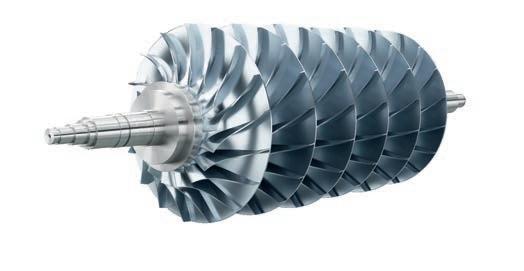
For medium- and high-flow hydrogen applications, turbocompressors typically represent a more economical solution and can achieve similar performance to several reciprocating compressors in a smaller footprint. However, the physical properties of hydrogen, particularly its low molecular weight (2 g/mol vs. about 16 g/mol for natural gas), means that a high amount of specific work is required to achieve meaningful pressure ratios, as there is a comparatively lower pressure rise per stage relative to heavier gases. To overcome inherent limitations and achieve high discharge pressures in a reasonable footprint, the Advanced Hydrogen Compressor, and its evolutionary rotor technology for hydrogen duties (Figure 2) facilitates circumferential speed at the impeller discharge up to 600m/s, without compromising
FIGURE 2. The advanced hydrogen rotor facilitates high tip speeds, up to 600m/s.
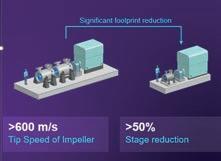
FIGURE 3. The turbo-compressor footprint can be reduced by up to 50% compared to a conventional solution.
material limits specified in API 617. This enables compressor stage count and footprint to be reduced by up to 50% compared to a conventional turbo-compressor solution (Figure 3)
The Advantage of Hybrid Compression Packages
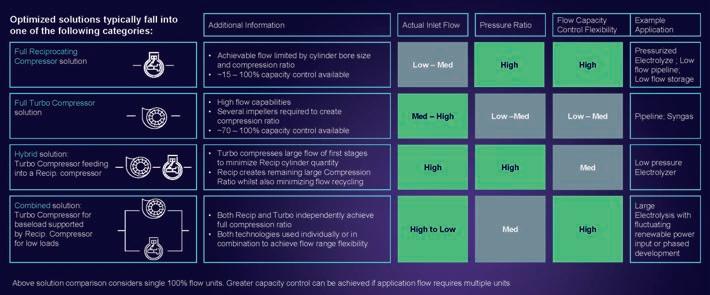
Reciprocating and turbo-compressor technology cover the complete map of low-mole weight applications. For electrolyzer plants, selecting the type of machine for hydrogen compression has traditionally been viewed by operators as a binary decision (i.e., one or the other). But a strong business case can be made for combining both reciprocating and turbo-compressors to capitalize on each technology’s relative strengths.
In a “hybrid” package, a turbo-compressor is applied to leverage its specific advantage in managing high effective flow in a small footprint. One or more reciprocating compressors are then installed downstream to increase the pressure ratio and potentially reduce the need for recycling. This configuration is suitable for applications with high inlet flows and a requirement for high discharge pressure. A representative example would be a low-pressure electrolyzer feeding green hydrogen into a pipeline or a storage vessel.
Another option is a “combined” package in which a turbocompressor and one or more reciprocating compressors work independently. In such cases, the turbo-compressor would handle the baseload of the plant, with the reciprocating unit(s) coming online during times of low-load. This configuration is advantageous for large electrolyzer plants with high flow variability due to fluctuating renewable power input. Plants being developed in a phased approach would also be applicable. The reciprocating units could be installed first, with the turbo-compressor being brought online after the plant has reached full capacity.
In certain cases, it may be advantageous to utilize both hybrid and combined configurations to meet compression duties.
Total Cost of Ownership (TCO) Comparison
Several site-specific factors will dictate whether a hybrid compression package is suitable or not. Three of the most important variables are inlet flow, the pressure ratio to be achieved, and the plant’s power profile (i.e., continuous, or intermittent).
Siemens Energy has performed a total cost of ownership (TCO)
analysis for green hydrogen plants of various sizes and power profiles, taking into account all lifecycle expenses, including initial CAPEX, installation, energy costs, maintenance, etc.
For small green hydrogen plants (up to 100,000 m3/h effective flow) at medium to high pressure ratios, (i.e., compressing from 1 Bar(a) to 30 Bar(a)), where the supply of hydrogen is highly intermittent, reciprocating compressors usually show the most economical option because of their part-load capability and lower energy costs over their lifetime. However, for the same service with continuous hydrogen flow, a hybrid compression solution might be more economical.
As plant size approaches 200,000 m3/h effective flow and larger, the economics of the hybrid solution become favorable irrespective of the load profile (i.e., intermittent, or continuous), because trains can be arranged in parallel to significantly improve the part-load capability of a turbo-compressor.
Additional studies by Siemens Energy showed that for plants with medium inlet and outlet pressures, an all turbo-compressor solution is the most economical. As an example, for a plant with inlet pressure of 1.2 Bar(a) and outlet pressure of 13 Bar(a), the Advanced Hydrogen Compressor is best suited for both the continuous and intermittent load profile. This is mainly due to smaller footprint and CAPEX, as well as reduced maintenance costs compared to a solution with reciprocating compressors.
Conclusion
Both reciprocating and turbo-compressors possess individual strengths that can be leveraged to efficiently meet the requirements of emerging hydrogen applications. Green hydrogen plants are unique in that they can have large volumes and high production variability. A hybrid compression package may represent a more economical solution than reciprocating compressors in certain instances. As discussed, however, the inlet flow, compression ratio, and load profile are key variables that need to be considered.
Determining the right technology and configuration will ultimately vary on a case-by-case basis. In all instances, plant developers should engage early with the compressor OEM to ensure that all technical and economic variables (e.g., CAPEX, OPEX, footprint, maintenance, etc.) are considered to arrive at an optimized design.
FIGURE 4. Potential reciprocating and turbo-compressor combinations for green hydrogen plants
At Regal Rexnord, we are making the power of one, work for you.
With decades of combined experience and industry expertise, we provide our customers with multiple solutions and products from one source to help create a better tomorrow. This also extends to working in partnership with our customers to solve your problems.
We are ready to show you what we can achieve together.
Filling a need
CECO builds on 60 years of serving the industry. By Jack Burke
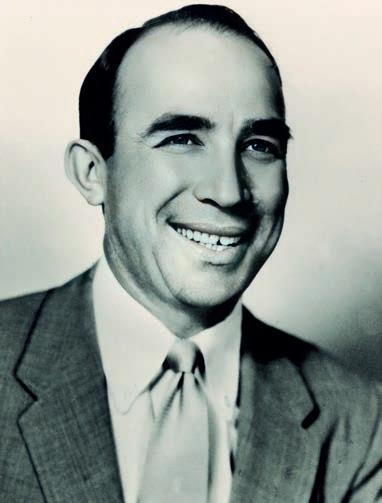
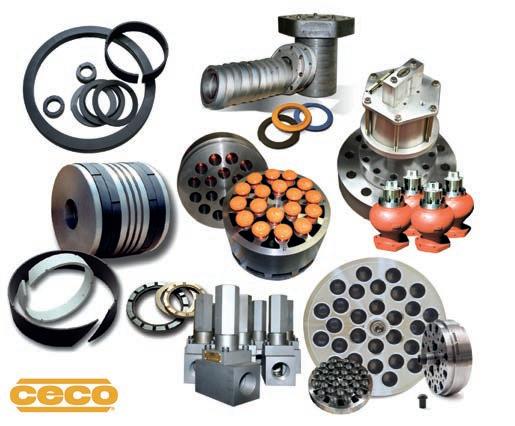
Compressor Engineering Corp. (CECO) is the world’s largest independent manufacturer of engine and compressor replacement parts. CECO, which was founded 60 years ago by Ernest G. Hotze and is still family owned, offers pipeline construction and maintenance, emissions testing, and is an industry leader in training and technical services. Customers include gas pipelines, gathering and processing companies, petrochemical, industrial and refrigeration plants worldwide.
CECO is headquartered in Houston, Texas, with offices in Odessa, Texas, Walker, La., and Birmingham, Ala.
COMPRESSORTECH2 recently reached out to Richard K. Hotze, the company’s CEO, to learn more about the company and how it’s readying itself for the next 60 years.
60 YEARS IS A LONG TIME FOR ANY BUSINESS. TO WHAT DO YOU ATTRIBUTE THAT LONGEVITY?
“Find a customer’s need and fill it!” with uncompromising honesty and integrity is the leitmotif of the company instilled by the
“Find a customer’s need and fill it!”
ERNEST G. HOTZE, founder of CECO
leadership of CECO since it’s founding by my father, Ernest G. Hotze in the summer of 1964. It is still the value statement of the company and all its associates 60 years later.
COMPANY FOUNDER ERNEST G. HOTZE IDENTIFIED A CRITICAL INDUSTRY PROBLEM, THE LACK OF QUALITY COMPRESSOR REPLACEMENT PARTS. HOW HAS THE COMPANY EVOLVED TO SUPPLY THAT NEED?
We did not start the business based upon replacement parts. The company
“Being debt free for the first time since 1988 will help ensure that CECO can weather the industry and economic cycles that happen from time to time.”
RICHARD K. HOTZE, CEO of CECO
TAKE FIVE CECO
started because Tennessee Gas wanted to purchase a 2- cycle Dresser Clark engine into a station that already had 4 cycle Ingersoll-Rand engines. The customer was impressed with the BMEP of the 2-cycle engine but wanted Ingersoll-Rand style compressor valves in lieu of the valves offered by Clark. After originally accepting the order from Tennessee Gas, Clark engineering department rejected the order and demanded that the order be returned.
Ernest Hotze made a deal with both Dresser and Tennessee Gas. The customer would order the integral engine compressor package without any compressor valves and Ernie would find a vendor to supply Ingersoll-Rand compressor valves to fill the holes in the compressor cylinders. Unable to do so, Ernie designed them himself and with the help of his sons, fashioned the valves in his garage at his Houston home.
WAS IT A CHALLENGE FOR THE COMPANY TO GET CUSTOMERS TO TRUST NON-OEM PARTS?
It is a misnomer that CECO makes non-OEM parts. Most of the product supplied by CECO is and has been freshly engineered by CECO over the years to replace inefficient and unreliable product offered or originally supplied by the “OEMs”. CECO has become the supplier of choice for their designed equipment.
TALK ABOUT SOME CRITICAL MOMENTS IN THE COMPANY’S HISTORY.
In the mid 1960’s CECO purchased some raw materials from Japan that was inferior to that made in the United States that almost submarined the company due to our one and only recall. Being nimble and resilient,
CECO was founded in 1964 and has been serving the natrual gas, petrochemical, industrial and defense markets since then.
we hustled and survived.
We expanded into the pipeline construction business in the early 2000’s but had insufficient systems in place that nearly bankrupted the business. The ownership pitched in some more capital and working with our vendors, we were able to survive and earn the Large Business Turnaround of the Year by the Turnaround Management Association in 2014.
HOW DOES CECO DIFFERENTIATE ITSELF FROM COMPETITORS?
CECO has a stable of well qualified engineers that are able to design industry leading products. Products we have designed have been patented and become a ubiquitous industry staple.
CECO has business units specializing in compressor parts and repair, pipeline construction and maintenance and training and technical services.
WHAT MARKETS OR TECHNOLOGIES DO YOU SEE CECO MOVING INTO?
CECO has been committed to maintaining the large bore engine business for decades and will continue to do so. Current efforts are to provide innovative products that reduce or eliminate fugitive emissions of methane as well as reducing the consumption of lubrication required to operate both low and high-speed engines. We are constantly expanding our field service offerings to include more overhaul crews.
HOW DO YOU ENSURE ANOTHER 60 YEARS FOR THE COMPANY?
Being debt free for the first time since 1988 will help ensure that CECO can weather the industry and economic cycles that happen from time to time. CECO also has a solid succession plan that will ensure that the company will remain family owned and operated for the foreseeable future. CT2
CENTURIES OF CRAFTSMANSHIP
ONE VISIONARY FUTURE
FIELD SERVICE
Your reliable partner for turnarounds, strategic planning, and maintenance, ensuring minimal downtime during overhauls and swift emergency responses with top-quality, safety-focused crews.
We provide turn-key on-site and shop repair services for pumps, compressors, turbines and gearboxes.
ENGINEERING
With our team of specialists and strategic partnerships, we deliver innovative and optimized performance solutions, including re-engineering, retrofit, modernization and other technical services.
PARTS
Our experts manufacture and source parts to keep your machinery running in high health. We manage parts inventory and supply spare parts kitting.
TAKING CARE OF ALL YOUR COMPRESSOR VALVE NEEDS.
24 hrs 7 days
LNG production: efficiency, compactness, and modularity
“There is no doubt that demand for LNG is growing. According to Baker Hughes’ estimates, to meet this demand an additional 100/150 MTPA of new projects have to be approved in the next two to three years.” This is Enrico Calamai’s preface to a discussion about trends in LNG production around the world.
Calamai is LNG Strategic & Growth Leader at Baker Hughes and, as an expert in the LNG market, has shared his thoughts and analysis with our editors on more than one occasion.
The latest has been at the Baker Hughes Annual Meeting 2024, held in Florence, Italy, in January 2024. An event that gathered over 2000 participants from all over the world to discuss Energizing Change, not only in the energy industry but also in other industries such as mining, aerospace, and hard-to-abate CO2 emissions sectors such as cement and steel production.
According to Calamari there are more than 800 MTPA of projects at different stages of development in competition to reach FID.
“These projects are segmented in terms of the technology being used for liquefaction, with some major trends emerging,” said Calamai. “For the drivers that operate compressors, we are seeing a shift from heavy-duty gas turbines to more efficient aeroderivative gas turbines and electric motors.” He added that this trend is confirmed also for future projects that aim at reducing emissions.
COMPRESSORTECH2 talked to Baker Hughes about the latest trends in liquefied natural gas (LNG) production.
Keywords: higher efficiency, mid-size compression trains, modular solutions, and offshore. By
Roberta Prandi
“In terms of the liquefaction train size, we see that future projects involve smaller solutions in the mid-size range. Larger trains are still being installed for those projects that are already in the works, but they don’t seem to be the preferred solution going forward.” Flexibility is a key element in future installations where growing production needs can be met at a later stage with the addition of more liquefaction trains.
Modular solutions
When it comes to project execution, Calamai added that modular solutions
Baker Hughes’ LM9000 aeroderivative gas turbine.
are increasingly in demand, and offshore installations are growing.
“The market is very volatile and many projects are started with the intention of capturing a positive phase; in this scenario a quick project execution becomes key and modular construction constitutes an ideal approach.”
Modular solutions are an important area of research and investment for Baker Hughes. One of their latest product developments is the NMBL compact liquefaction module (Editor’s Note: NMBL is pronounced Nimble), which is available up to 1 MTPA and 1.5 MTPA.
The NMBL module solution can be driven by a gas turbine or an electric motor without changing module configuration. The modules are produced and fully tested in Baker Hughes’ operation in Avenza, Italy, and are delivered as plug-and-play modules to the site. This enables greater speed to market: up to two years faster from inception to operation, reducing both site time and on-site personnel.
NMBL is recommended for both onshore
and offshore liquefaction and for small to medium-size operations. It is ideal though for remote locations, where Baker Hughes can also offer dedicated power generation options.
“With operations driven by electric
motors, we have cases where a reliable power grid is not available and a dedicated power generation solution on-site might be necessary,” said Calamai. “In such instances we can offer our LM9000 gas turbines in simple- or combined-cycle configuration for
maximum efficiency.
“The LM9000 is an aeroderivative gas turbine and as such is designed for frequent starts and stops. This makes it a reliable solution also in combination with renewable energy sources which are fluctuating by nature.”
Calamai added that Baker Hughes is currently exploring the possibility of a larger NMBL module and is working at improving its supply chain and further reducing delivery and execution time.
Decarbonization of value chain
Rossella Palmieri, LNG Decarbonization Manager, Baker Hughes, explained that decarbonization is a key concept for Baker Hughes in the LNG value chain, but it applies also to the whole natural gas industry.
In this respect, she outlined three major trends, starting with technology efficiency: “Our aeroderivative gas turbines constitute the backbone of our decarbonization efforts when it comes to technology.”
The LM9000 gas turbine, as an example, reaches 73.5 MW power output with 44% efficiency in simple cycle and up to 56% in combined heat and power cycle. “This gas turbine is very flexible and can be used both in mechanical drive or power generation and is suitable for 50 or 60 Hz frequency applications.”
In general, efficiency can also be >
The Waukesha VHP ® Series
Five delivers superior power, 10% lower CO₂e and 85% lower CH4 emissions than any other engine in its category. Available in options from 750HP to 2,500HP, the Waukesha VHP ® Series is your first step toward a more powerful future.
LNG BAKER HUGHES
Frame 9 gas turbines, like the LM9000, can be used in simple- or combined-cycle configuration to generate power for liquefaction modules in areas where the power grid is not reliable.
COPYRIGHT: BAKER HUGHES 2023
improved in brown field projects where Baker Hughes offers upgrade kits for its gas turbines.
“The second trend for decarbonizing natural gas and LNG production is electrification,” said Palmieri. “Baker Hughes made an important step in this direction with the acquisition of Brush Power Generation in 2022, which added electric motors and generators to the company’s portfolio.”
One of the most recent projects that includes Brush Power Generation’s electric motors is the contract with ADNOC Gas signed in October 2023, where Baker Hughes will provide two electric liquefaction systems for the Ruwais LNG project in the United Arab Emirates.
Two Baker Hughes’ LNG liquefaction trains with a capacity of 5 MTPA each, driven by three 75-MW Brush Power Generation electric motors each.
New energy solutions
Finally, the last trend for decarbonization looks at new energy solutions. According
to Palmieri, some technologies are emerging in the natural gas chain and all its applications – down, mid, and upstream. These include hydrogen; carbon capture, reutilization, and sequestration; integration of renewable power sources; and emissions abatement.
“In addition, CO2 compressors and pumps are the first components that can contribute to CO2 emissions reduction in liquefaction plants,” she said. “Feed gas is pretreated before being liquefied to eliminate CO2 which would otherwise freeze during the process.
“Currently, the captured CO2 is vented into the atmosphere, but customers are increasingly looking at CO2 sequestration to abate emissions.”
Petronas’ Kasawari Carbon Capture
and Sequestration (CCS) project, which is being developed off the coast of the state of Sarawak in Malaysia and is expected to be the world’s largest offshore CCS facility, with capacity to reduce CO2 emissions by 3.3 MTPA, is a great example of how these technologies deliver emissions reductions.
Baker Hughes is providing a state-of-theart compression solution with minimized footprint and weight, as well as a power density allowing for larger flows per unit and best-in-class efficiency. The compressors will be used to enable the transportation and reinjection of the CO2 separated from natural gas into a depleted offshore field via a subsea pipeline. CT2 (Editor’s Note: NMBL is a trademark of Baker Hughes and is pronounced Nimble)
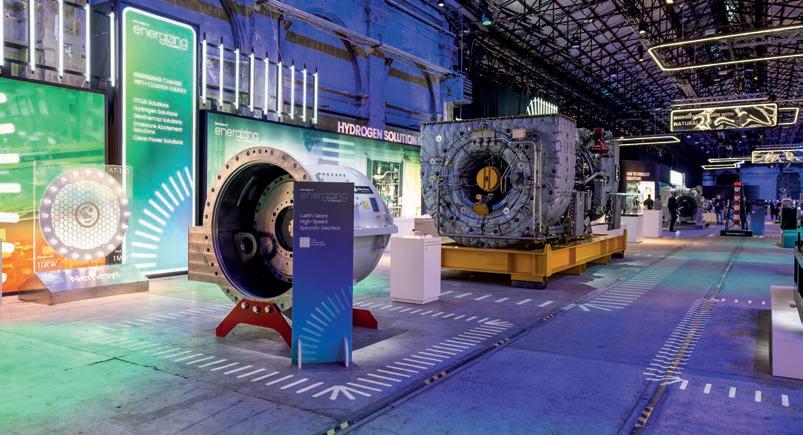
The Baker Hughes Annual Meeting 2024 hosted a Solutions Fair with products and technologies on display, along with company’s experts at hands.
WHEN IT MATTERS MOST.
A century in business has taught us that you can never go wrong when you focus on the needs of the customer and the importance of getting every project right the first time. We know that committing to innovation and quality are the best paths to reduced lubricant consumption, gas stream contamination and downtime. Our focus on reliable, dependable service is invaluable to earning trust and building long-term relationships. It’s not a gimmick. It’s just the way we do business and why we’re the first name in compressor lubrication.
SOLVING COMPRESSOR PROBLEMS SINCE 1964
•Compressor Parts & Repair
eMAX™ Poppet Valves
durMAX™ Actuators/Deactivators
LEP™ Low Emission Packing
Piston Rings/ Rider Bands/ Rod Packing
rMAX™ High-Speed Compressor Valves
truBalance™ Fuel Gas Modulators
Emissions Testing •Training & Technical Services
Services
Field Services
Services
60 years of
Blackstone,
Synergy supports customers in improving the return on their assets.
In a clear intent to expand their engineering capabilities,
two years ago Blackstone Industrial Services (BIS) developed a partnership with Italy’s Compression Service Technology (CST). The origin of this partnership was established in 2015 and evolved from a collaboration agreement that had BIS becoming a minority shareholder of CST. Meanwhile, BIS created a new division internally, Blackstone Technical Services (BTS), with the mandate to supply complete engineering and technical solutions to their customers.
Luciano Roppo, Vice President Technical Services, Blackstone Technical Services
COMPRESSORTECH2 recently had a conversation with Luciano Roppo, vice president of Technical Services at Blackstone, and Cosimo Carcasci, the Engineered Solutions Manager at Compression Service Technology. The conversation delved into their integrated team’s support for rotating machinery users. Below is an edited version of the interview, edited for brevity and clarity.
WHY AND WHEN DID THE COLLABORATION BETWEEN BLACKSTONE AND COMPRESSION SERVICE TECHNOLOGY START?
LUCIANO ROPPO Seven years ago, Blackstone partnered with CST, a renowned engineering leader specializing in rotating equipment. This collaboration granted us access to extensive technical engineering know-how, that led to a share acquisition in 2022 to become a formal partner.
We identified a significant loss of knowledge within our industry, with younger generations lacking sufficient exposure to mechanical engineering. Our goal was to equip ourselves to effectively address customer challenges, while also offering mentorship and guidance to our workforce. It was crucial to ensure that our highly skilled tradespeople had access to extensive engineering expertise and experience. Now, there are heightened national security concerns if our industries fail to adapt and meet customer demands.
The shift towards anticipating equipment life cycles and advocating for long-term solutions over quick fixes or cost-cutting measures is challenging in the realm of transactional sales within engineering businesses. Convincing customers and organizations to prioritize durable repairs and maintenance requires navigating against the prevailing mindset driven by short-term financial metrics, often measured in quarterly terms.
With the CST team we are building a framework of programs for internal and external training programs to support the industry by emphasizing the importance of reliability relating to equipment.
Left to right: Filippo Cinelli (Director Business Development at Blackstone International), Mark Tabernilla (Blackstone Engineering Manager), Alessandro Traversari (Chairman of the Board at CST), Luciano Roppo (Blackstone Vice President Technical Services), Giovanni Bucaneve (Chief Executive Officer at CST).
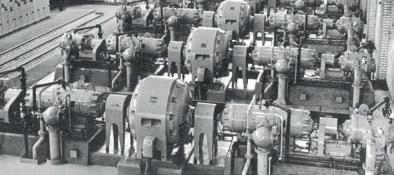
Steam turbine and centrifugal compressor
CST join forces
WHICH SERVICES/PRODUCTS ARE YOU SUPPLYING TO YOUR CUSTOMERS?
LUCIANO ROPPO Blackstone has evolved into a 360° comprehensive service provider, offering a complete range of service solutions to critical global fleets. In addition to their traditional on-site overhauls and maintenance services, Blackstone provides parts supply and manufacturing, pipeline services, engineered shop repairs, incorporating enhancements for safety and reliability as required. They also specialize in problem-solving, machinery diagnostics, modernization, Root Cause Analysis (RCA), and many other engineered services.
The partnership between CST and BTS supports a full suite of engineered solutions tailored to meet the specific requirements of customers with critical rotating equipment installed in their facilities. Our expertise extends to various type of equipment including compression equipment (reciprocating, centrifugal, screw), reciprocating and centrifugal pumps, steam and gas turbines, as well as gears.
We are also redesigning and “liberating” Intellectual Property (IP) for critical components for abandoned machines and/ or hard to source critical spares.
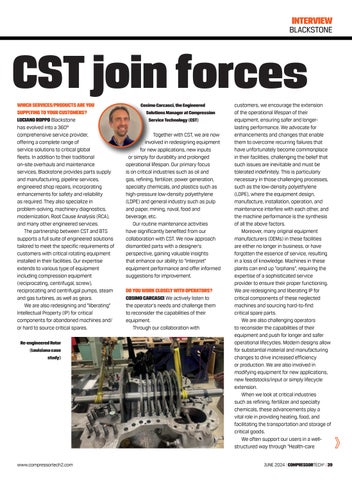
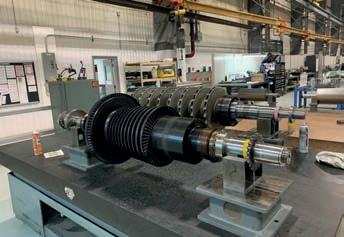
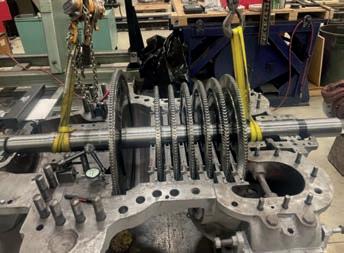
Re-engineered Rotor (Louisiana case study)
Cosimo Carcasci, the Engineered Solutions Manager at Compression Service Technology (CST)
Together with CST, we are now involved in redesigning equipment for new applications, new inputs or simply for durability and prolonged operational lifespan. Our primary focus is on critical industries such as oil and gas, refining, fertilizer, power generation, specialty chemicals, and plastics such as high-pressure low-density polyethylene (LDPE) and general industry such as pulp and paper, mining, naval, food and beverage, etc.
Our routine maintenance activities have significantly benefited from our collaboration with CST. We now approach dismantled parts with a designer’s perspective, gaining valuable insights that enhance our ability to “interpret” equipment performance and offer informed suggestions for improvement.
DO YOU WORK CLOSELY WITH OPERATORS?
COSIMO CARCASCI We actively listen to the operator’s needs and challenge them to reconsider the capabilities of their equipment.
Through our collaboration with
customers, we encourage the extension of the operational lifespan of their equipment, ensuring safer and longerlasting performance. We advocate for enhancements and changes that enable them to overcome recurring failures that have unfortunately become commonplace in their facilities, challenging the belief that such issues are inevitable and must be tolerated indefinitely. This is particularly necessary in those challenging processes, such as the low-density polyethylene (LDPE), where the equipment design, manufacture, installation, operation, and maintenance interfere with each other, and the machine performance is the synthesis of all the above factors.
Moreover, many original equipment manufacturers (OEMs) in these facilities are either no longer in business, or have forgotten the essence of service, resulting in a loss of knowledge. Machines in these plants can end up “orphans”, requiring the expertise of a sophisticated service provider to ensure their proper functioning. We are redesigning and liberating IP for critical components of these neglected machines and sourcing hard-to-find critical spare parts.
We are also challenging operators to reconsider the capabilities of their equipment and push for longer and safer operational lifecycles. Modern designs allow for substantial material and manufacturing changes to drive increased efficiency or production. We are also involved in modifying equipment for new applications, new feedstocks/input or simply lifecycle extension.
When we look at critical industries such as refining, fertilizer and specialty chemicals, these advancements play a vital role in providing heating, food, and facilitating the transportation and storage of critical goods.
We often support our users in a wellstructured way through “Health-care >
packages,” that include remote diagnostics, machine performance evaluation, root cause analysis of machinery failures, improvement of reliability and whatever is necessary to improve the productivity of customers’ assets.
YOU SAY YOU SUPPLY SOLUTIONS TO YOUR CUSTOMERS BUT WHOSE TECHNOLOGY DO YOU UTILIZE IN SUPPLYING THEM?
COSIMO CARCASCI We, at CST, have our own know-how for reciprocating compressors, centrifugal compressors, centrifugal and reciprocating pumps, and steam turbines. We have internally developed and
evergreened over a 20+ year period through our dedicated research and development (R&D) initiatives, resources processes, training programs, and proprietary software suites. This continuous internal R&D activity in collaboration with external Research Centres and Universities allow us to cultivate and improve this technical knowledge base. Therefore, whether assisting BTS in serving their clients or engaging in our own endeavours, we exclusively rely on our proprietary technology.
We have also a deep knowledge of the majority of machinery brand installed in the process industry. As a result, we can provide support for nearly all types of
rotating equipment, particularly on orphan centrifugal and reciprocating compressors and steam turbines.
CAN YOU TELL US HOW YOUR COLLABORATION WORKS?
LUCIANO ROPPO Blackstone Technical Services maintains close proximity to its users. Our teams are strategically located across North America, Mexico, Brazil, Spain, Sub-Saharan Africa and, specifically Congo. Depending on the nature of the maintenance contract, we can provide round-the-clock support through our newly established Blackstone Answer Centre (BAC). Additionally, CST consistently supports us through web-based collaboration and periodic customer visits. Contrary to expectations, the time zone difference between North America and Europe works to our advantage and we leverage it to ensure seamless handoffs between the team members, allowing us to operate continuously and efficiently.
Our guiding philosophy, “ONE TEAM-ONE VISION” aims to blend OEM capabilities with a lean and fast organizational structure. This ensures that we maintain swift reaction times suitable for our customers who rely on uninterrupted support for their equipment and facilities.
CAN YOU TELL US A FEW CASE STUDIES WHERE YOU APPLIED THE BLACKSTONE-CST SYNERGY?
As illustrations of the collaborative efforts between BTS and CST, LUCIANO ROPPO showcased four instances of joint team intervention.
The first case covers the successful execution of a comprehensive revamping on a critical piece of equipment for an industrial food and beverage plant in Louisiana, USA. Blackstone Technical Services (BTS) in association with Compression Services Technology (CST) was commissioned to overhaul a 2500 kW steam turbine. The project aimed to increase the power output while addressing the technical challenges associated with a 60+ year old steam turbine. The turbine underwent extensive refurbishment and re-engineering, focusing
BTS and CST say their collaborative efforts include work on an high pressure hypercompressor.
on a new steam path that included both rotating and stationary components. A dedicated software developed by the Politecnico di Milano University was utilized for the purpose to design the angles of the blades and nozzles and to optimize the performance of the steam flow path. The collaboration among the client, partners and the BTS-CST team not only led to the successful revamp of the steam turbine but also showcased the potential for proactive planning to extend equipment life cycles. The upgraded equipment now operates with 42% increased efficiency, demonstrating the positive impact of strategic refurbishment and re-engineering efforts.
The second case pertains to an old high pressure (30,000 psi), 3 MW hyper-compressor installed in a LowDensity Polyethylene plant in Louisiana. This compressor experienced several connecting-rod big-end bearing failures due to inadequate crush within the housing in the conrod, resulting in fretting on the bearing’s external surface and fatigue failure of the antifriction metal, necessitating repeated replacements. CST conducted a Root Cause Analysis (RCA) that confirmed the fretting phenomenon through Finite Element methods (FEM) simulation.
Subsequently, the big end bearing and cap bolts were redesigned to optimize contact
pressure and prevent relative movement, leading to the refurbishment of the connecting rods accordingly.
The third case was relevant to the upgrade of two existing reciprocating compressors installed in a refinery in Tarragona, Spain. The two units were 30 and 10 years old, therefore they were only equipped with basic thermodynamic instrumentation and lacked specific machinery protection systems. The new system was typically provided by Blackstone as a turn-key solution with CST offering engineering support including schematics, plant arrangement, loop diagrams, and all necessary materials such as instrumentation, cables, and supports, all assembled in a cabinet installed in safe area satisfying SIL2 protection level, as per customer specifications.
The new system, common to the two units, monitors key machine parameters including crosshead guide vibration and main bearing temperatures, enabling the customer to closely monitor the health status of his compressors. This allows for:
■ Predicting possible failures and providing alerts about damage-causing conditions, such as component loosening, before extensive damages occurs;
■ Protecting the compressor in case of
MALB connecting rod with FEA
sudden anomalous situations, such as liquid slug ingestion, by stopping the unit before any damage can propagate and become catastrophic.
The fourth case was about a customer’s need to safely minimize the scope of work and time of the inspection of a large Ethylene compressor train to be carried out during the incoming plant shutdown of a Butyl pellet production plant in Singapore.
The unit had skipped last Major Inspection (MI) four years before because it was running smoothly, so it has not been opened in the last nine years since the start-up of the plant. The key customer’s dilemma was whether to plan for the MI of the compressors or skip it again and plan it in 6 years for the next plant shut down. On one side, the MI would have mitigated the risk of unplanned events, but on the other, it would have implied a bigger maintenance cost and a longer shutdown time with the relevant loss of production.
The Blackstone-CST answer was a proposal of a “data-driven compressor performance study” to assess the health of the compressor train and to analytically define the actual need and scope of a maintenance intervention.
The customer accepted the proposal, and a software model of the compressor train was created and fine-tuned to match the original performance curves. Using this model, the complete set of historical field data from the previous nine years of operation was processed to analyze the following Key Performance Indicators:
■ Dry Gas Seals buffer pressure trend (as proxy of DGSs health)
As a conclusion of the study, BTSCST recommended against opening the compressor to inspect the internals and change the labyrinth seals, but instead advised limiting the maintenance intervention to just replacing the DGS.
In this manner, the customer achieved significant savings. By combining the reduced maintenance work with the shorter turnaround time and the resulting smaller loss of production, the total savings amounted US$S2 million.
YOU STARTED YOUR ACTIVITY IN CANADA, THEN YOU MOVED TO THE USA, DO YOU SEE GROWTH OUTSIDE NORTH AMERICA?
LUCIANO ROPPO Indeed, we are experiencing rapid growth, and our strategy focuses on strengthening our activities in North America while expanding globally. We opened a branch in Brazil, recently acquired Blackstone Roteq in Spain, and set up another branch in Florence, Italy (Blackstone Italia) to be closer to CST. Additionally, we established a branch in the Republic of Congo (Blackstone Congo). Our goal is to evolve into a prominent global player and assist our customers wherever their facilities are located.
In conclusion, Luciano Roppo and
Cosimo Carcasci underline that when it comes to compressor technology, the journey toward excellence is defined by innovation, expertise, and collaborative endeavors. Blackstone Industrial Services, through its newly created division Blackstone Technical Services, and Compression Service Technology (CST) have forged a partnership, combining their extensive experience, highly skilled tradespeople, and cutting-edge solutions to elevate machinery maintenance, engineering, and safety practices. This collaboration not only shapes the future of compressor maintenance and operation, but also establishes new benchmarks within the process industry. CT2
Old Esslingen hyper compressor vibration measurement. Together with LDPE case (2nd case) with the big-end rod
BEARING TECHNOLOGY
FOR THE HYDROGEN TRANSITION
Scaling the hydrogen economy requires groundbreaking solutions that enable equipment to operate beyond known application limits. Waukesha Bearings advanced uid lm bearing technologies, ISFD ® and Flexure Pivot ®, are proven to control vibrations and improve stability in centrifugal compressors operating at high rotating speeds in hydrogen service.
Learn how we are driving the success of the energy transition at waukbearing.com/hydrogen.
Waukesha Bearings
Sapphire Technologies said its FreeSpin In-line turboexpander can recover energy wasted during pressure reduction processes and use it to generate zero emissions power.
Growing demand for data centers spurs need for creative solutions for backup energy.
By Steve Richards, Vice President of Engineering, Sapphire Technologies
Natural gas pipelines offer power solutions
STEVE RICHARDS, Vice
President
of Engineering, Sapphire Technologies. Based in Cerritos, Calif., Sapphire Technologies manufactures and sells energy recovery systems for hydrogen and natural gas industrial applications.
Demand for data centers is booming, driven by investment in artificial intelligence applications. As demand for data centers increases, so too will the energy consumed by these server warehouses. According to McKinsey, data center energy consumption will increase from 17 gigawatts per year in 2022 to 35 gigawatts per year by 2030. For context,
35 gigawatts is roughly enough to power 30 million households! According to the International Energy Agency (IEA), emissions from data must be halved to achieve 2030 Net Zero goals.
With demand for data centers skyrocketing, and existing grid issues already leading to financial and environmental losses for data center
NATURAL GAS PIPELINES
operators, these goals seem unrealistic unless we invest in reliable, clean energy solutions for data centers. In addition to the environmental benefits, addressing the challenge of reliable clean energy for data centers also has the potential to reduce the cost of data center outages for operators and their customers.
Data center outages are already an expensive proposition. According to Uptime Institute, two-thirds of all outages cost more than $100,000 per outage. Uptime Institute suggests that several long-term trends are impacting the reliability of electricity grids which are the primary cause of data center outages.
These trends include incorporation of intermittent renewable energy sources in the grid, aging infrastructure, more frequent weather-related disturbances, and geopolitical disruptions to traditional fossil fuel supplies.
Because outages can cost thousands of dollars per minute, data center operators rely on backup energy sources to keep servers humming. Historically, these backup energy sources have largely included high-emissions diesel generators.
According to one study conducted by engineering firm FEA based on data from the U.S. Energy Information Administration and EPA, a typical diesel generator emits more than double the CO2 as the US energy grid for every KWh of electricity generated.
Thus, the environmental toll of data centers as their demand for energy increases and the reliability of the US electricity grid decreases, has the potential to increase exponentially if solutions to
provide data centers with reliable, clean backup energy sources are not addressed.
Options available
The good news is several solutions already exist that can help data centers solve for both sustainability and energy reliability challenges. One such solution to backup energy for data centers are Lithium-ion batteries. These batteries can store energy generated from clean energy sources like renewables in a different location or at a
electricity (LCOE) from Li-ion batteries as of 1H 2023 was $155/MWh. This compares unfavorably to traditional energy sources like natural gas ($92/MWh) as well as to renewable sources like solar ($76/MWh) and wind ($50/MWh).
Hydrogen fuel cells are another potential replacement backup energy source for data centers, as Microsoft is currently exploring. Hydrogen fuel cells offer zero-emission energy by producing electricity through a chemical reaction between hydrogen and oxygen.
However, the economic viability of hydrogen is still very much in question and today hydrogen fuel cells would prove even more costly than Li-ion batteries according to most estimates.
Natural gas network
Another solution to providing data centers with reliable, cost-efficient, and clean backup energy involves a perhaps unlikely source – the natural gas distribution grid. However, this solution does not involve natural gas as an energy source in and of
A 300 kW
AMB-supported turboexpander generator commissioned in April 2019.
NATURAL GAS PIPELINES
SAPPHIRE
FreeSpin In-line Turboexpander can recover energy wasted during pressure reduction processes and use it to generate zero emissions power. Clean electricity produced from waste energy in pipelines can be consumed to power data centers. Since data centers offer a portable, modular load they are well-suited to co-location with pressure letdown stations, which are often found in remote locations.
Sapphire Technologies has partnered with Tallgrass Energy and Evolve Energy to install 72 turboexpander generators across Tallgrass Energy’s 6,500-mile natural gas pipeline network in the US. The clean electricity generated will be consumed by Evolve Energy data centers. The data centers will be installed as close
as possible to pressure letdown stations to minimize the need to run electric cables, further minimizing the infrastructure needed to utilize this clean energy source.
Sapphire Technologies’ FreeSpin In-line Turboexpander (FIT) extracts energy from the pressure reduction required at various stages of gas distribution. As natural gas is moved through pipelines, pressure energy is wasted at pressure letdown stations in the pipeline network.
The FIT consists of an integrated high-speed turbine and a high-efficiency generator. It runs on magnetic bearings in a hermetically sealed lubrication-free unit. As pressurized gas flows through the FIT, it spins a radial turbine wheel and drives the permanent magnet generator with a variable speed drive.
The drive can be programmed to specific power requirements, making it ideal for integration with devices like data centers. Furthermore, with an LCOE of $45/MWh, Sapphire’s FreeSpin In-line Turboexpander is a cost-efficient backup power source for data center operators compared to alternatives.
The FreeSpin In-line Turboexpander (FIT) can also be used to create clean electricity from waste energy upstream at natural gas wellheads. In addition to generating clean energy from waste energy in the natural gas supply chain, the FIT is “fuel-flexible.” The system is compatible with hydrogen, compressed air, and carbon dioxide applications.
As data centers continue to grapple with the challenge of reliable power consumption to support the growing demand from AI applications, creative solutions will be needed to balance energy reliability and affordability with emissions-reduction goals.
While no solution is perfect, the ability to harness waste energy from traditional energy infrastructure is one interesting solution on the horizon.
The FIT systems’ generators extract kinetic energy.
Identifying capacity control related problems using condition monitoring
Thorsten Bickmann, Senior Technical Leader for Recips for Europe and Fayyaz Qureshi, Senior Technical Leader
for Recips and Analytics for Middle East, Asia and Africa at Bently Nevada, a Baker Hughes business
EDITOR’S NOTE: This is paper was first presented at the 13th EFRC Conference in Sagreb, Croatia. It has been edited for length by the authors. This Tech Corner originally ran in the Jan-Feb. issue, but several of the images were incorrectly identified.
High costs for energy and global focus towards reduction in carbon emissions are demanding to operate reciprocating compressors at their optimum capacity, continuously adjusted to the requirements of the production. Wasting energy by using a recycle valve to expand compressed gases to suction pressure is economically inefficient. Thus, several capacity control devices such as suction valve unloaders, clearance pockets, reverse flow control or variable speed drives for motors are used to operate the reciprocating compressor as per downstream requirement.
THORSTEN BICKMANN Senior Technical Leader for Recips for Europe. thorsten.bickmann@bakerhughes.com
FAYYAZ QURESHI Senior Technical Leader for Recips and Analytics for Middle East, Asia and Africa. fayyaz.qureshi@bakerhughes.com
Condition Monitoring Systems can support to monitor the health of capacity control systems so that operators can rely on them. Automated rules can be programmed to automatically detect malfunctions of capacity control devices.
This paper will describe the impact of capacity control systems on dynamic pressures, calculated performance and vibration using several case studies.
Introduction
As the cost of electricity and fuel continues to increase, efficient plant operation requires more flexibility in compressor loading and capacity control.
A few of the most commonly used methods of varying compressor load and capacity include the following:
■ Unloading of suction valves by suction valve unloaders
■ Varying the cylinder end clearance
■ Reverse flow control
■ By starting and stopping the compressor
■ Speed Control
■ Recirculation or bypass
Depending on the variations in flow throughput requirements, the correct capacity control techniques are deployed. Some capacity control devices are more expensive than others and hence a tradeoff between horsepower losses and cost of relevant capacity control technique is
evaluated. Simultaneously the performance of capacity control system is equally critical for optimal production. Advanced online asset health management systems help in performance monitoring of reciprocating compressors and provide insights into the efficacy of capacity control by monitoring their affects on pressure, temperature, and vibration signatures.
Capacity Control Case Histories
2.1 Suction valve unloader setup error Suction valve unloaders can be used to hold suction valves open continuously to control capacity. For the cylinder chamber to be in the unloaded condition, the fingers push the plates or concentric rings down against spring force and allow the gas to flow in both directions through the valve. In case the suction valve unloader is engaged, the suction valves never close, there cannot be any compression and the pressure in the chamber is equal to the suction line pressure during the entire stroke.
On a 6-throw makeup gas reciprocating compressor, the cylinder chamber pressure versus crank angle plot in Figure 1 showed a deviation between measured (brown) and theoretical (green) pressure curves for CE chamber of cylinder 6 (stage 3). The measured pressure was rising slower than expected which delineates that as pressure was increasing during compression, high pressure gas was leaking to a low-pressure area, hence delaying compression. Leakage to low pressure zone around CE chamber would mean either suction valve leak or leak through pressure packing. The crosshead synchronous (unfiltered) vibration waveform showed broadband of high frequency energy in Figure 1. This high frequency
content was appearing in the crosshead vibration versus crank angle plot during the time when CE suction valve is closed. During closed state of valve, the leaking gas was producing a high frequency sound “hiss” which was captured by accelerometer installed on top of crosshead of the same throw.
Further, the trends for suction valve temperatures were also checked and temperature of CE suction valve was found significantly higher than the HE suction valve as shown in Figure 2.
Hence, maintenance teams were advised to inspect the suction valve on the CE chamber and valve cage was found broken causing severe leakage.
Following the maintenance activity, the machine was restarted. Few minutes after start-up, the piston rod vibration (pk-pk displacement) started increasing significantly in vertical orientation on cylinder 6 (same throw where maintenance was carried out). This customer had a history of piston rod failures wherein piston rod vibration (pk-pk displacement) would show an increasing trend 30 mins
before the piston rod breaks. Based on the history and a simultaneous increase in crosshead vibration as shown in Figure 3, it was decided to shut down the machine immediately.
In parallel, dynamic data was reviewed to identify potential failure to reduce time for inspection. Filtered crosshead vibration (red waveform) versus crank angle plot (upper plot in Figure 4) showed two high amplitude impacts during the revolution which represents possibility of mechanical looseness in the running gear. At the same crank angle instants of those impacts, piston rod displacement waveform showed considerable change resulting in very high pk-pk displacement in the lower plot in Figure 4.
FIGURE 1 Crosshead vibration overlayed on cylinder chamber pressure vs crank angle plot
FIGURE 2 Trend of HE and CE suction valves’ temperatures
FIGURE 3 Trend of pk-pk displacement (upper) and crosshead vibration (lower)
FIGURE 4 Crosshead vibration (upper) and piston rod displacement (lower) vs crank angle plots
of HE chamber as shown in lower plot of Figure 5 and hence zero degrees of rod load reversal.
2.2 Suction Valve Unloader
Malfunction
Unusually high amplitudes were observed in crosshead vibration for stage 3 cylinder as shown in Figure 6.
During the first 10 minutes of machine operation, crosshead filtered vibration magnitude was within limits as shown in
Rod load curves in Figure 5 (upper plot) showed the degrees of rod load reversal as 0 degrees i.e. combined load forces (green) on crosshead pin were found to be in compression throughout the revolution; hence no force reversal from tension to compression or vice versa. Loss of rod load reversal is a disastrous phenomenon which causes loss of adequate lubrication to crosshead pin or bushing leading to pin or bushing failure.
Upon inspection, crosshead pin was found bent and small end bushing was found broken. But why would Operations load the machine in such a sequence where the machine will be in distress due to no rod load reversal? It was not intentional. The unloader sequences for different load conditions were programmed within DCS based on standard operating procedure provided by OEM. However, during maintenance for suction valve replacement, the instrument air tubing for suction valve unloaders’ solenoids were removed. During reassembly, the tubing between CE and HE chambers got swapped mistakenly which resulted in unloading CE chamber instead
FIGURE 5 Rod load forces (upper) and pressure (lower) vs crank angle plots
FIGURE 6 Trend of crosshead vibration for stage 3 cylinder
FIGURE 7 Crosshead vibration trend
FIGURE 8 Crosshead acceleration vs crank angle waveform (at the cursor instant from Figure 7)
FIGURE 9 Crosshead Vibration Trend
FIGURE 10 Crosshead acceleration vs crank angle waveform (at the cursor instant from Figure 9)
Figure 7. No significant mechanical impacts were observed in the filtered waveforms of both redundant accelerometers as shown in Figure 8.
Once the crosshead vibration exceeded setpoints in Figure 9, the knocks (impacts) were prevalent in filtered crosshead vibration waveform in Figures 10 and 11 near
11
12
Theoretical Pressure vs Crank Angle plot for Stage 3
30 deg crank angle where, typically for a double acting cylinder and for similar suction and discharge pressures of makeup hydrogen gas, the suction valve(s) in head end chamber open(s) as shown in Figure 12.
Customer was advised to inspect suction valve(s) and its unloader at HE
Norman Shade, in cooperation with KHL Group Americas and COMPRESSORTech2
Set to be published in October 2024, the primary objective of this book is to preserve the record of historically important compressors, engines and related technology and the companies that developed and manufactured them.
Norm Shade is the world’s leading expert in the gas compression industry, and this book is destined to be a classic and be a treasured resource for the industry with an infinite shelf life.
PRE-ORDER THE BOOK NOW
chamber. Upon inspection, the stem length of unloader was found a little too long. After adjusting the clearance between valve and stem by 2 mm, the compressor was restarted, and the crosshead vibration reduced back to normal. This showed the effectiveness of monitoring setup which was able to capture faults occurring at
Models available for all common gas engines.
Rugged, compact, proven design.
Dual port versions for continuous monitoring and auto-balance systems.
ASK US ABOUT SPECIALS TO MEET YOUR REQUIREMENTS. WE DO THEM ALL OF THE TIMEANY QUANTITY!
FIGURE
3D band waterfall plot for crosshead acceleration filtered vibration
FIGURE
cylinder while sensor was installed at crosshead (few meters away).
2.3 Reverse Flow Control Problems
Another type of capacity control is the Reverse Flow Control. Active valve control devices installed on the suction valves can be used to hold suction valves open continuously, or during a selected portion of each compression stroke to control capacity. When the Reverse Flow Control System releases the suction valve, the compression process starts and only the remaining gas in the cylinder is being compressed.
Operators noticed a considerable reduction in stage 2 discharge pressure. To rule out any instrumentation issues, discharge line pressure was compared with discharge pressures for both HE and CE chambers (available from the newly installed cylinder chamber pressure transducers) and the same reduction was observed.
According to working principle of these stepless unloaders, the load on both chambers of a throw should be similar and hence same capacity signal is provided to both HE and CE unloaders. When the condition monitoring system data was compared with the DCS signal of the reverse flow control system, it was noticed from pressure versus crank angle plot in Figure 13 that the CE capacity followed the pattern as commanded i.e. pressure started increasing in CE chamber almost immediately after top dead center (TDC) for 94% capacity signal. The HE pressure curve showed as
if the suction valve unloader was stuck at 37% capacity as the pressure did not start increasing in HE chamber immediately after bottom dead center (BDC). It was hence diagnosed that HE unloader was not functioning as expected and needed to be repaired / replaced.
As soon as the machine was started after replacing the HE stepless unloader, the target 60% capacity and pressures were achieved in both chambers as shown in
FIGURE 16
Trend of discharge volumetric efficiency for CE and HE (healthy state after HE stepless unloader exchange)
Figure 15. Timely identification of failure root cause helped in achieving optimum machine operation.
As can be seen from the example above, the difference between discharge volumetric efficiencies for both CE and HE should be constant as shown in Figure 16. The malfunction in one of the stepless unloaders will be depicted as the CE and HE discharge volumetric efficiencies start to drift apart as presented in Figure 14. CT2
FIGURE 13 Pressure vs crank angle plot
FIGURE 14 Trend of discharge volumetric efficiency for CE and HE (drifting away during malfunction)
Offshore Technology Conference May 5-8, 2025 Houston, Texas 2025.otcnet.org
IF YOU HAVE TO MACHINE IT , DON’T BUY IT
Still sending out valves for machining and repairs?
That’s expensive. Time consuming. And totally unnecessary.
Zahroof StraightFlo™ valves with Modular Reed Technology are refurbished in minutes with simple, on-site module replacement. And their housings never wear out.
Just imagine the life cycle cost savings.
ORDINARY
Send to machine shop Inspect (Scrap if at end of life)
• Machine seat and guard Replace sealing components
• Ship back to location
STRAIGHTFLO™ VALVES
• Replace modules, on site, in about 15 minutes
StraightFlo™ valves. Lowering your total cost of ownership.
Fuller sliding vane compressors
Co. was an early developer of sliding vane technology in the U.S.
Col. James W. Fuller III founded a company in Catasauqua, Pennsylvania in 1926. The Co. engineered and sold pneumatic conveying systems for fluidic, pulverized, dry materials, principally finished Portland cement and cement raw materials. His original FullerLehigh Co. of Fullerton, Pennsylvania, which developed and patented the Fuller-Kinyon screw pump – a pneumatic pumping system for pulverized coal and dry cement, had been disbanded when Babcock & Wilcox acquired the patent and manufacturing rights for coal conveying.
Continuing to focus on cement plants, Fuller discovered that they did not have sufficient high-pressure air for conveying. So, he decided to build compressors for applications with Fuller-Kinyon pumps. A decision to build water-cooled reciprocating compressors was imminent when a Fuller executive, on a business trip to Europe, became impressed with sliding vane rotary compressors. The compressor design, which had originally been created and patented in Switzerland, was being manufactured by Cie de Machines Pneumatiques Rotatives of Gennevilliers, France.
Compared to reciprocating compressors, the new rotary vane compressor design was compact, light-weight, simple in construction and lower cost. It had negligible vibration, used simple foundations and was pulsation-free. Seeing its many benefits for pneumatic conveying and other applications, Fuller immediately began to develop the technology for both vacuum pump and compressor applications. In 1931, Fuller acquired the exclusive rights to manufacture the compressor in the U.S.
Special alloy steel
The success of the rotary vane compressor is dependent on physical factors properly interrelated to obtain vane (blade) life of 10,000 hours or more. The original French design utilized thin blades of special alloy steel that required a mating cylinder bore material of hardened steel, usually a liner press-fit into a jacketed cast iron cylinder. Fuller’s team made major improvements to the French design. The first Fuller Co. patent, U.S. no. 1,890,000 granted in 1932, described lubrication of an undercut bore cylinder design, providing for a larger sealing area at the bottom of the cylinder between the high-pressure discharge port and low-pressure inlet port, and a bottomnested rotor in the cylinder. A patent for
This Fuller compressor, covered in cement dust, is used in pneumatically conveying dry cement material, the application that spawned the company’s development of rotary vane compressors.
a two-stage rotary vane compressor and vacuum pump followed in 1933. Design improvements in 1934 included a highquality cast iron cylinder and laminated plastic blades, redesigned inlet and outlet ports for improved efficiency and longevity, and improved lubrication and water jacket cooling systems. A 1935 patent described a design to reduce the risk of the rotor expanding into the heads by using a fixed drive end head and floating non-drive end head design, which also improved compressor efficiency.
Compressor production was subcontracted to a conservative quality foundry and machine shop in Manheim, Pennsylvania that produced the compressors to Fuller’s designs and standards. A widespread acceptance of the rotary design occurred during the World War II years. Production orders increased so greatly that Fuller was forced to acquire and enlarge the Manheim foundry and shop in 1946.
A figure from the Fuller Co.’s first U.S. patent for a rotary vane compressor, 1932.
CORNERSTONES OF COMPRESSION
Fuller compressors were first adapted for ammonia refrigeration services in 1949, with thousands, like this one, packaged with industrial frozen-food systems.
Pneumatic conveying of dry cement continued to be an important application for Fuller rotary vane compressors, but in the decade following World War II, the company found many new applications for its compressors. In 1945, Fuller introduced a high-pressure rotary vane compressor for pressure ratings up to 300 psig (20.7 bar). In 1949, it partnered with a major industrial frozen-food system supplier to adapt singlestage rotary vane compressors for ammonia gas, granting them exclusive packaging rights for the Fuller rotary ammonia booster. As a first-stage booster to a second-stage reciprocating compressor, the arrangement greatly reduced the size, cost, and power requirements of commercial frozen storage refrigeration systems. New specialized designs included innovations such as a pressurized dual-shaft seal arrangement and an oil-jacket cooling system to prevent freezing, both of which were soon patented. Thousands of Fuller compressors were produced for ammonia refrigeration in ensuing years.
In 1950, Fuller Co. introduced a two-stage
These three gas engine driven Fuller compressors were used to boost 4.3 MMSCFD (1.2 x 10⁵ m3/day] of wellhead gas from 5 to 25 psig (0.34 to 1.72 bar).
vacuum compressor capable of reaching 29.97 in. of Hg (1.015 bar) vacuum. Its exclusive undercut cylinder bore design proved to be critical to its eventual success, allowing for minimal internal leakage and reduced operating temperatures and power consumption. The Fuller Co. was vastly strengthened through its acquisition, in 1954, by General American Transportation Corp. (GATX). Operating as a subsidiary of GATX, Fuller’s engineering and marketing were immediately expanded. Developments continued, especially for ammonia compressors, and by 1962, Fuller marked the sale of its 10,000th compressor. In the period from 1963 to 1970, major improvements were made at the Manheim plant, including expansion of the foundry capacity to 100 tons per month.
Changes, acquisitions
In 1968, Fuller introduced a larger rotary vane compressor, capable of more than 3000 inlet cfm (85 m3/min). In 1986, an investment group that included GATXFuller management acquired the company. Product development continued, and in 1987, the Co. released a variation of the
compressors having a circular bore that enabled higher speeds and capacities within a smaller compressor body.
FLSmidth A/S acquired the company in 1990, and product evolution continued, including introduction of an integral drive option on larger compressor sizes and use of FLSmidth’s carbon fiber vanes that reduced cylinder wear while increasing compressor speed, temperature and pressure capabilities.
The company’s rotary vane compressors found uses in dozens of different applications. In addition to moving bulk solids and ammonia refrigeration, they have been used for transfer of liquids and heavy hydrocarbon gases, providing compressed air, boosting wellhead natural gas, fuel gas and process gases, and for vacuum and vapor recovery services.
Product evolution in the 2000s included improved lubrication systems and an efficiency upgrade that allowed old, costly and inefficient 600 rpm direct drive electric motors to be easily replaced with premium, low-cost 1800 rpm motors without changing the foundations or layouts. More recent developments included improved lubrication systems and PLC controllers with capability for monitoring and controlling compression operations. Along the way, the Fuller compressor line was rebranded and trademarked as the FLSmidth Ful-Vane rotary vane compressor, and it remains an important product of FLSmidth Cement USA Inc. CT2
1926
stage rotary van compressors for ammonia gas.
Four electric motor driven FLSmidth Ful-vane duplex two-stage rotary vane compressors in an industrial application.
1990
Fuller Co. acquired by FLSmidth A/S.
Fuller-Lehigh Co. was founded by James W. Fuller III.
acquired U.S. rights to manufacture sliding vane rotary compressors.
SHORT COURSES: AUGUST 19, 2024
SYMPOSIA: AUGUST 20 – 22, 2024
GEORGE
R. BROWN CONVENTION CENTER • HOUSTON, TX
The Turbomachinery & Pump Symposia is recognized worldwide as the industry’s must-attend event. Connect with more than 4,900 delegates, meet with leading suppliers, observe product demos, and get answers to your technical questions. We look forward to seeing you in Houston!