14269 N 87th Street, Suite 205, Scottsdale, AZ 85260. americas@khl.com
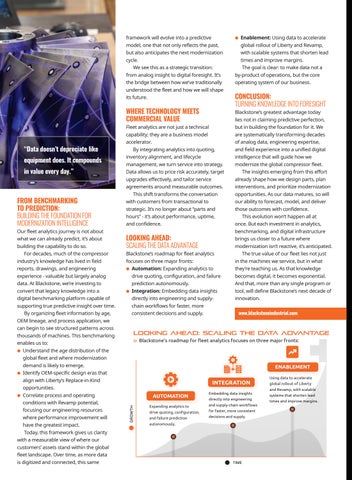
What does it mean to know something?
Ihad the opportunity to attend the EFRC conference in Hamburg, Germany in October. It was a great event. For those of you who don’t know, it’s a conference for professionals in the reciprocating compressor industry, including users, manufacturers, and scientists. It happens every two years.
The central theme of this conference was “Digitalization in the Design and Operation of Reciprocating Compressors.”
The theme that kept crossing my mind was: AI.
I attended a presentation by a graduate student who was explaining his thesis. That’s not an easy thing to do in front of experienced engineers. Not being experienced or an engineer myself, I began thinking about the basic knowledge that this graduate student had to grasp. Any technical expertise comes from building a foundation of information. You can’t run until you can walk, as it were. Even as a humble scribe, I must know the laws of syntax and punctuation. That takes some skill (?).
As I watched the young graduate student present his case, I thought about what programs, tests and learning he went through to be able to put together his thesis. In other words, education.
I fear AI takes education out of the equation. ‘Why should I learn Bernoulli’s principle if AI already knows it?”
I’m not a complete anti-AI crank. By integrating AI into compressor monitoring systems, engineers can analyze vast streams of sensor data in real time to identify early warning signs of mechanical issues such as vibration anomalies, temperature deviations or bearing wear. This predictive maintenance capability reduces unplanned downtime and extends the life of critical assets.
AI can also enhance performance optimization. Machine learning algorithms can evaluate historical operating data to determine the most efficient compressor settings for varying load and gas conditions, helping operators minimize energy use and emissions while maintaining throughput.
Engineers further benefit from AI-driven digital twins— virtual models that simulate compressor behavior under different scenarios.
Additionally, AI streamlines data management and reporting, automating tasks that once required hours of manual analysis. By turning raw operational data into actionable intelligence, AI frees engineers to focus on higher-level system optimization and innovation.
Focusing on the outcome is never good for learning. Reliance on AI may lead to knowing a lot but understanding too little.
Jack Burke Editor | jack.burke
@khl.com
INDUSTRY NEWS
18 Sundyne expands CO2 compressor capabilities
30 Ariel gives update at EFRC
32 In Memoriam: Karen Buchwald Wright
36 Sealing technology in hydrogen compression
DEPARTMENTS
3 Editor’s Comment: What do you know?
VOLUME 30 | NUMBER 10
COMPRESSORTECH2 ISSN 1085-2468, is published monthly with combined issues of January/ February and August/September by KHL Group Americas LLC, 14269 N 87th, Suite 205, Scottsdale, Arizona, 85260, USA. Periodicals postage is paid at Scottsdale, AZ, and additional mailing offices (if applicable).
16 Shale Play by Play: Williams project gets key permits
28 Euro Gas Report: European Union launches hydrogen outreach
35 Events
40 Tech Corner: Signal analyses on recip compressors and integral gas engines
49 Cornerstones of Compression: Evolution of pipelines, gas compression stations
Is a natural gas “Super Cycle” ahead for 2026?
Pembina Pipeline Corp. and Malaysia’s Petronas have signed a 20-year agreement covering 1 million tonnes per annum (mtpa) of liquefaction capacity at the Cedar LNG project in Kitimat, British Columbia. The deal provides Petronas with access to additional LNG export capacity from western Canada, while giving Pembina a long-term take-or-pay revenue stream linked to its expanding export business. The agreement is structured as a synthetic liquefaction service, under which Pembina will supply transportation and liquefaction capacity to Petronas LNG Ltd. The arrangement supports Petronas’ plans to monetize its Canadian natural gas resources and diversify supply to Asian
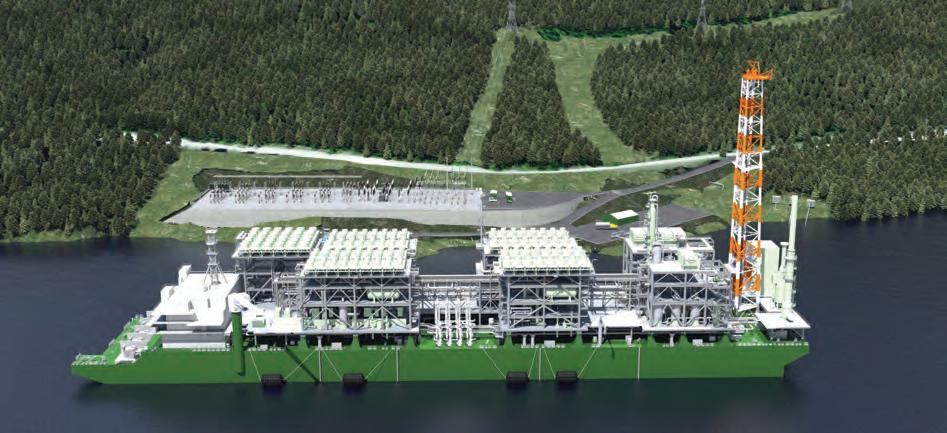
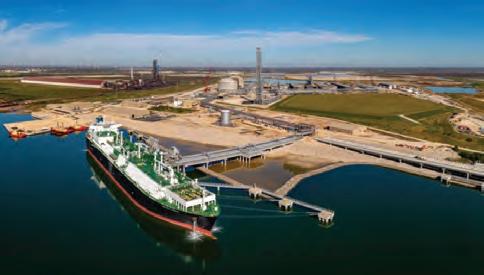
Pembina, Malaysian energy giant Petronas have signed a 20-year agreement for 1 million tonnes per annum of Pembina’s liquefaction capacity at the Cedar LNG facility on Canada’s West Coast.
Pembina, Petronas in 20-year Cedar LNG deal
markets, where demand for LNG continues to grow.
“Petronas is a global LNG industry leader and one of the largest gas producers in Canada. This agreement is an extension of our existing relationship and an important development in the ongoing expansion of our export business,” said Stu Taylor, Pembina senior vice president and corporate development officer. “It further validates Cedar LNG and highlights the
Vallourec plans expansion at Youngstown tubular plant
Vallourec will invest at least $39 million to expand its operations in Youngstown, with the final investment expected to total up to $48 million. The project will add new capacity to thread VAM high-torque connections at the company’s primary North American production site, supporting demand from the energy and industrial markets.
The expansion includes construction of a new threading line and associated infrastructure. Once operational, the project is expected to create about 40 full-time jobs and broaden the local supply chain for tubular products used in oil and gas development and other applications. Construction is underway and slated for completion in early 2027, with no interruption to current production.
Vallourec, based in France, produces seamless steel pipe manufactured from recycled scrap metal. The company said the Youngstown project aligns with its long-term strategy to increase U.S. manufacturing capacity for specialized tubular solutions.
strong demand for West Coast export capacity, given the advantages of Canadian feedstock and shipping distance to Asia.”
Pembina previously secured 1.5 mtpa of liquefaction capacity at Cedar LNG in 2024 to support the project’s final investment decision, with plans to remarket a portion of that capacity. The new agreement with Petronas marks the first step in that process. Pembina expects to reach agreements for the remaining 0.5 mtpa by the end of 2025.
Cedar LNG is a partnership between the Haisla Nation and Pembina to develop a floating LNG facility powered by renewable electricity from BC Hydro. The US$4 billion project remains on schedule and on budget, with an expected in-service date in late 2028. The project’s design is intended to achieve one of the lowest carbon intensities among LNG export facilities globally. CT2
“This expansion reflects Vallourec’s long-term vision and continued investment in the U.S. market,” said Chairman and CEO Philippe Guillemot. “By strengthening our industrial base in Youngstown, we are building on the region’s proud manufacturing legacy and supporting all energies with high-performance, locally produced solutions.”
Vallourec employs nearly 2,000 workers in North America and about 13,000 worldwide. The company serves oil and gas well construction, as well as industrial sectors.
ATLAS COPCO COMPRESSORS has appointed industry veteran Brian Bertelsen as general manager for its StraightFlo valves business, expanding his responsibilities as the company looks to build on global demand for advanced reciprocating compressor valve technology.
Bertelsen, who previously served as senior vice president of sales and marketing, will oversee worldwide growth, product development and operations for StraightFlo valves. His role includes leadership of the
Radiant Ridge, Nordcon partner to convert natural gas into computing power
Radiant Ridge Energy Ltd. (RRE) and Nordcon Canada Inc. have formed a strategic partnership to deploy modular data center capacity powered directly by natural gas produced at Nordcon’s well sites in Western Canada. The initial phase includes 3 MW of hydrocooled data center infrastructure installed alongside Nordcon’s production facilities, where the gas will be used on site to generate power for high-performance computing workloads.
The project pairs RRE’s experience developing data center and energy systems with Nordcon’s upstream natural gas operations to create what the companies describe as a vertically integrated model for turning “stranded” or remote gas into a computing asset.
company’s manufacturing and operations center in Houston.
Bertelsen brings more than three decades of experience in compression, polymers and industrial equipment. Before joining Atlas Copco, he served as president of NEAC Compressor Service USA at Neuman & Esser Group, vice president of sales and marketing at CDI Energy Products, and as a senior machinery reliability engineer at Eastman Chemical Co. Atlas Copco describes StraightFlo valves as an innovation in reciprocating gas compression, with Radiant Ridge, Nordcon partner to convert natural gas into computing power.
ADNOC and SLB deploy AI-powered system to enhance upstream productivity
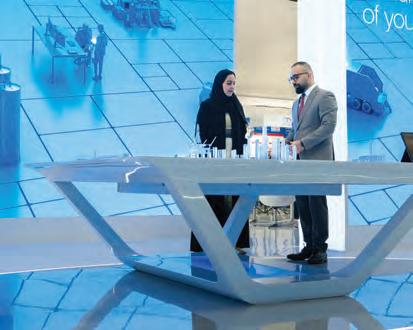
Abu Dhabi National Oil Co. (ADNOC) has launched a new artificial intelligencepowered Production System Optimization (AiPSO) platform in partnership with SLB and Cognite, marking a significant milestone in its goal to become the world’s most AI-enabled energy company. The announcement was made during ADIPEC in Abu Dhabi.
The AiPSO platform, powered by SLB’s Lumi data and AI platform and leveraging Cognite Data Fusion, integrates millions of real-time data points and ADNOC’s proprietary machine learning to proactively monitor and optimize the company’s entire production system. That includes thousands of hydrocarbon wells and hundreds of processing facilities across onshore and offshore operations.
According to ADNOC, AiPSO enables smart workflows that link office and field operations in real time, allowing engineers to diagnose and optimize wells within minutes rather than days. This capability enhances workforce productivity, shortens decisionmaking cycles and supports ADNOC’s strategy to increase oil and gas production capacity.
patented designs in more than 30 countries and deployments across energy, industrial and technical gas applications.
WORKING NATURAL GAS IN STORAGE across the Lower 48 states entered the 2025–26 heating season at one of the highest levels in nearly a decade, according to the U.S. Energy Information Administration’s (EIA) November Short-Term Energy Outlook.
The injection season, which runs from April 1 through Oct. 31, ended with more than 3,900 Bcf of working gas in storage. That is
ADNOC and SLB launched an artificial intelligence (AI)-powered Production System Optimization (AiPSO) platform with initial deployment across eight fields.
Following initial deployment across eight upstream fields, ADNOC plans to roll out AiPSO across all 25 of its onshore and offshore fields by 2027. The initiative reflects ADNOC’s broader push to integrate AI technologies throughout its operations to improve efficiency, safety and sustainability. AiPSO complements ADNOC’s existing ENERGYai platform, developed with AIQ, which the company describes as the first “agentic” AI solution in the energy sector. Together, the two platforms form a key part of ADNOC’s integrated digital strategy to improve operational performance across the energy value chain. CT2
roughly on par with last year’s starting point and the highest opening winter inventory since 2016. As of Oct. 31, storage stood 4% above the five-year (2020–24) average, the EIA said.
GOLDEN PASS LNG, a joint venture owned by energy giants QatarEnergy and ExxonMobil, has received approval from the US FERC to introduce fuel gas into the first train, as it continues to move forward with commissioning activities at its three-train LNG plant in Texas.
GAS LINES
N. America’s LNG exports boom
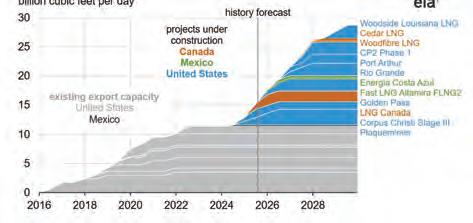
North America poised to double LNG export capacity by 2029 Liquefied natural gas (LNG) exporters in the United States plan to more than double national liquefaction capacity by adding 13.9 billion cubic feet per day (Bcf/d) between 2025 and 2029, according to data from the U.S. Energy Information Administration (EIA). The expansion would lift total U.S. LNG export capacity to roughly 29.3 Bcf/d by the end of the decade—up from the current 15.4 Bcf/d—solidifying the nation’s position as the world’s largest LNG exporter.
Across North America, LNG export capacity is expected to grow from 11.4 Bcf/d at the start of 2024 to 28.7 Bcf/d in 2029, provided all projects under construction begin operations on schedule. Canada and Mexico are also entering or expanding their roles in the LNG market, with announced additions of 2.5 Bcf/d and 0.6 Bcf/d, respectively. The EIA noted that North America’s growth will account for more than half of global LNG export capacity
NORTH AMERICA LIQUEFIED NATURAL GAS EXPORT CAPACITY BY PROJECT (2016-2029)
billion cubic feet per day
additions through 2029, citing data from the International Energy Agency.
Most of the planned U.S. expansion is centered along the Gulf Coast, the country’s largest LNG export hub. The region continues to attract large-scale investment from developers seeking to supply Europe and Asia amid strong global demand for secure natural gas supply.
Five new U.S. projects that have reached final investment decision (FID) and are currently under construction will drive the
next wave of capacity:
Grande LNG
2.1 Bcf/d ■ Woodside Louisiana LNG – 2.2 Bcf/d
■ Golden Pass LNG – 2.1 Bcf/d
■ CP2 Phase 1 – 2.0 Bcf/d
Canada begins exports, eyes further west coast expansion Canada’s first LNG export terminal, LNG Canada, shipped its initial cargo from Train 1 on July1, after achieving first LNG production in late June. The British Columbia facility can produce 1.84 Bcf/d from two trains and is expected to reach full capacity in 2026. CT2
UPTIME
MATTERS.
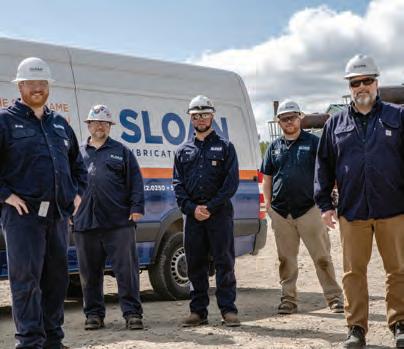
For customers who can’t afford downtime, having an experienced team committed to answering the call and servicing your critical equipment is key to keeping your operation up and running.
At Sloan, our team is ready to put their knowledge and skills to work to help with your company’s lubrication needs. From engineering design and evaluation, to installation, maintenance and emergency response, our legacy of service and performance has helped make Sloan Lubrication Systems the first name in lubrication for over one hundred years.
Burckhardt Compression expands North American service network
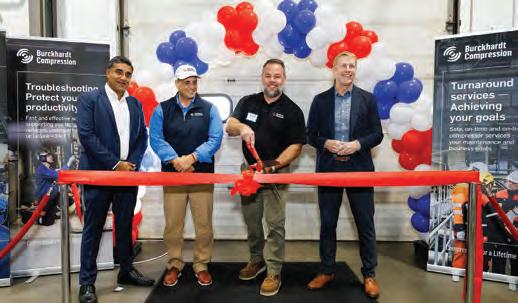
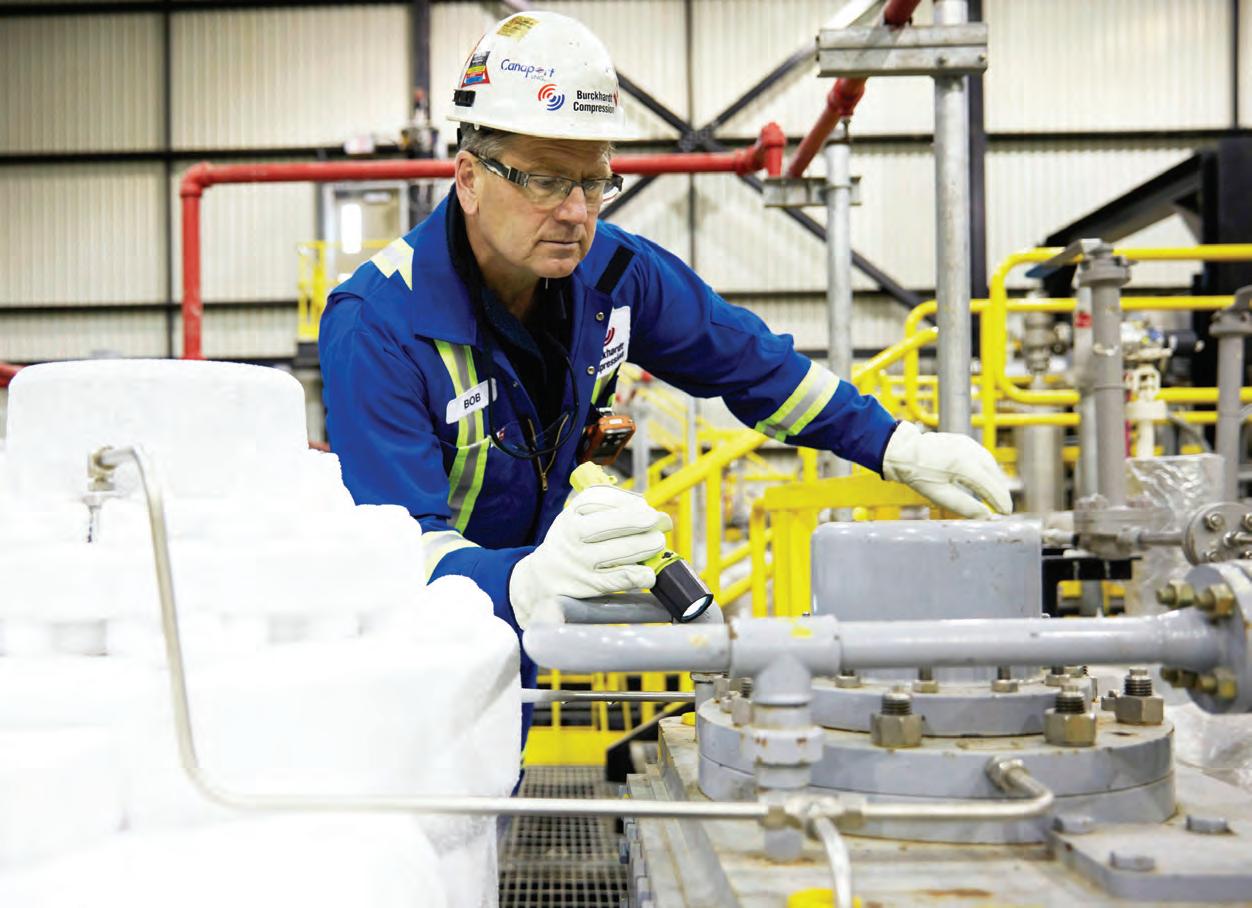
Burckhardt Compression has broadened its North American service footprint with the opening of two new regional service centers—one in Sarnia, Ontario, and another in Pottstown, Penn.—alongside its recent acquisition of Advanced Compressor Technology (ACT) in the U.S. The moves support the company’s customer-focused strategy, aimed at providing faster, more efficient, and locally responsive service across the continent.
The new 1,200 m2 facility in Sarnia represents a significant step in Burckhardt Compression’s Canadian growth. The site offers sales, testing, and maintenance support while complementing the
company’s existing operations in Drumheller and Edmonton. By establishing a hub in Eastern Canada, Burckhardt Compression
KBR to provide detailed engineering for gas growth project in southern Iraq
KBR has been selected by ENKA İnşaat ve Sanayi A.Ş. to provide detailed engineering design services for Phase 2 of the Associated Gas Upstream Project (AGUP2), part of the broader Gas Growth Integrated Project (GGIP) in southern Iraq. The development is operated by TotalEnergies in partnership with Basrah Oil Co. and QatarEnergy.
The award follows KBR’s completion of front-end engineering design for the same project and extends the company’s long-standing working relationships with TotalEnergies and ENKA. Under the agreement, KBR will deliver multi-discipline engineering from its global design offices to support ENKA’s engineering, procurement, supply, construction, and commissioning scope for the central processing facility.
AGUP2 will process oil and associated gas from the Ratawi oil field in Basra.
LEWA, a long-time specialist in diaphragm pump technology, has expanded its line of micro-metering pumps with two new model sizes designed to improve precision and cost efficiency in gas odorization systems. The new MAH4 and MBH6 models provide a broader range of flow and pressure combinations, addressing increasing market demand for smaller, more flexible odorization units.
BAKER HUGHES has secured an award from Technip Energies to provide a steam turbine
generator and critical centrifugal compression equipment for the Blue Point Number One Ammonia Project in Modeste, Louisiana.
The order, booked in the third quarter of 2025, marks another major milestone in the development of what is expected to be the world’s largest low-carbon ammonia facility.
The Blue Point Number One project is a joint venture between CF Industries, MITSUI & CO., and JERA. Once operational, it will have an annual nameplate capacity of approximately 1.4 million metric tons of ammonia. The plant
can shorten shipping times, lower costs, and boost efficiency for regional customers.
The Sarnia team provides maintenance, training, and testing services under Burckhardt Compression’s global quality standards. Local experts deliver faster onsite support, rapid quotations, and improved project turnaround times to meet growing customer demand.
In the U.S., Burckhardt Compression’s new 11,000 sq. ft. service center in Pottstown offers maintenance, repair, and upgrade solutions for all reciprocating compressor types and brands. Services include valve and packing case refurbishments, full compressor overhauls, installation and commissioning support, and emissions management. CT2
will employ an autothermal reforming (ATR) process coupled with an integrated carbon capture and storage (CCS) system designed to sequester up to 2.3 million metric tons of carbon dioxide each year.
Under the contract, Baker Hughes will supply a suite of compressors — including ammonia, syngas, recycle, and CO₂ compressors — as well as a steam turbinedriven BRUSH Power Generation generator.
The CO₂ compressor will enable captured carbon to be transported via pipeline for permanent geological storage.
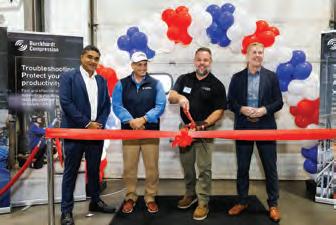
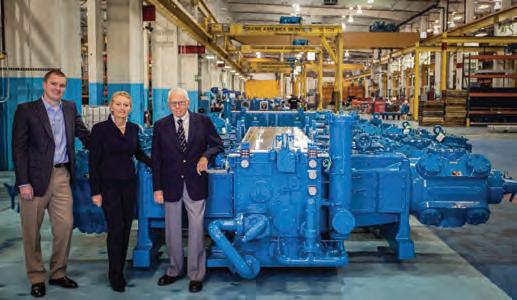
Burckhardt Compression team at the opening: from left to right: Ananth Srinivasan, Head of Services, US Douglas Berkley, Sales Account Manager Michael Smith, Pottstown and Waller Service Center Manager Tim Lillak, VP Services, Americas.
Svanehoj expands gas compressor systems offerings
Svanehoj has broadened its capabilities in gas handling and marine technology with the acquisition of Germanybased Köhler & Hörter GmbH (KOHO Kompressorsysteme), a familyowned manufacturer of high-quality reciprocating compressor systems.
The acquisition marks a strategic step for Denmark-based Svanehoj as it continues expanding beyond its core offerings of marine pumps, tank control systems and service solutions. With global demand for gas transportation — including LNG, LPG and emerging low-carbon fuels — continuing to rise, Svanehoj is positioning itself to offer integrated systems that cover the full gas-handling value chain.
Founded in 1948 and headquartered in Hagen, Germany, KOHO employs about 40 people and designs customized reciprocating compressors for hydrogen, hydrocarbons and other demanding gas applications. The company also produces gastight bulkhead shaft penetrations used in both industrial plants and shipbuilding.
The acquisition continues a year of growth for Svanehoj. Earlier in 2025, the company completed the purchase of European Pump Services B.V., now Svanehoj EPS, a Dutch firm focused on pump integration and maintenance for the industrial, offshore and maritime.
Svanehoj is expanding its expertise in gas solutions with the acquisition of Germany-based Köhler & Hörter GmbH (KOHO Kompressorsysteme).
Chart earns Bechtel award for LNG technology supply
Chart Industries has received an award from Bechtel Energy for the supply of air-cooled and brazed aluminum heat exchangers, along with cold boxes, for Sempra Infrastructure’s Port Arthur LNG Phase 2 development in Jefferson County, Texas.
The equipment will support the expansion of the Port Arthur LNG export facility, one of the largest energy infrastructure projects currently under development on the U.S. Gulf Coast. Chart previously supplied similar technology for Port Arthur LNG Phase 1, which is now under construction.
The Phase 2 award extends Chart’s involvement in the project, reinforcing its role as a key equipment provider
ACCELLERON North America has named Dave Otto as territory sales manager, overseeing service sales across the eastern United States and the Caribbean. In his new role, Otto will focus on strengthening customer relationships and supporting operations in the power production, cruise, shipping, and gas compression markets.
for large-scale liquefied natural gas developments.
The company’s heat exchangers and cold box technology are critical to enabling reliable and energy-efficient liquefaction operations.
Port Arthur LNG Phase 2 is designed to add up to 13 million tonnes per annum (MTPA) of LNG capacity, doubling the facility’s overall output potential. Bechtel Energy serves as the engineering, procurement, and construction (EPC) contractor for both phases of the project, which are strategically located to leverage access to U.S. natural gas supply and global LNG markets.
Otto brings more than 30 years of industrial sales experience, most recently serving a decade with Toromont CAT as a territory sales representative managing a
CT2
portfolio of more than 400 engines. Earlier in his career, he held account management and sales roles at Wärtsilä after beginning his career in hydraulics and later moving into engines for marine and power plant applications.
A graduate of Heidelberg University in Tiffin, Ohio, with a bachelor’s degree in business administration, Otto is fluent in French and English. He is relocating from Glens Falls, New York, to South Florida, where he will be based at the Miami service station.
Chart has received an award by Bechtel Energy for the supply of air-cooled and brazed aluminum heat exchangers, and cold boxes for Sempra Infrastructure’s Port Arthur LNG Phase 2 development project in Jefferson County, Texas.
FERC eliminates rule delaying natural gas project construction
Regulation aimed at better protecting landowner
rights during construction
As far as U.S. regulations go, Code of Federal Regulations: Title 18, Section 157.23 had a relatively short life. Enacted by the Federal Energy Regulatory Commission (FERC) in 2020 under Order No. 871 and amended in 2021, the regulation was aimed at better protecting landowner rights by prohibiting projects approved under Sections 3 and 7 of the Natural Gas Act from starting construction while certain rehearing requests were pending.
On Oct. 7, FERC deleted the regulation at the urging of energy industry groups and companies that said it unnecessarily delayed pipeline construction—sometimes by as much as 150 days. The Interstate Natural Gas Association of America (INGAA) led the charge in petitioning FERC in April to rescind the rule.
In June, the commission issued an order temporarily waiving the regulation for one year while it pursued a permanent repeal.
Industry pressure and political backdrop
FERC noted that at the start of his second term, President Donald Trump issued executive orders calling for reduced regulatory delays and a faster permitting process for energy infrastructure projects. Those orders, framed as a
response to a “national energy emergency,” prioritized energy development as a matter of national and economic security.
U.S. Secretary of the Interior and National Energy Dominance Council Chairman Doug Burgum was among those advocating for repeal. In a letter to then-FERC Chairman Mark Christie, Burgum wrote that the rule “stands in direct opposition to this mandate, imposing unnecessary delays on the development of energy infrastructure.”
Joined by a wide range of energy companies—including Energy Transfer and Cheniere Energy—INGAA argued that the rule created blanket delays even for projects without contested rehearing requests.
Costly consequences for pipeline projects
In its petition, INGAA said the rule’s delays could ripple through construction schedules, equipment procurement, and financing.
“For example, current timelines for procuring new compressor equipment or pipeline components require that orders be placed, and schedules for delivery set, years before a scheduled construction start date,” the association said. “These schedules cannot be easily changed, and in most instances, they cannot be changed at all.”
The group noted that warehousing a new compressor station pending construction “is not only costly, but in most instances logistically prohibitive.” Compressor stations are often sited in remote areas to minimize community impact, leaving few costeffective storage options if construction is delayed.
As a result, INGAA said, scheduling equipment delivery without accounting for potential rehearing-related delays “amounts to a risky gamble.” The association also claimed that the rehearing rule had become a tool for organized opposition to stall projects “even when the commission has
found such infrastructure to be in the public interest.”
Rehearing
activity nearly doubled
Before the rule took effect, FERC had issued more than 1,000 certificates for gas infrastructure projects, with rehearing requests filed roughly 24% of the time, according to INGAA. Since the rule’s enactment, the rate of rehearing requests nearly doubled to 48%.
“Anti-infrastructure groups” accounted for most of those requests, INGAA said, asserting that their goal was “not to protect landowners, but to stop or impede the construction of any new natural gas infrastructure.”
LNG producer Cheniere Energy added that uncertainty from possible delays could jeopardize contractual deadlines under long-term offtake, sale and purchase, or engineering, procurement and construction agreements.
Landowner protections remain
Supporters of the rule said its repeal weakens protections for property owners affected by eminent domain. INGAA countered that landowners retain several avenues to challenge projects, including the right to petition FERC for rehearing and, if unsuccessful, to seek a court stay.
Other commenters warned that eliminating the rule could contribute to overbuilding pipeline capacity, but FERC rejected that argument. The commission said projected natural gas and electric demand “requires natural gas infrastructure” and that forecasts showing a smaller share of gas in power generation “do not negate the interdependence of natural gas supplies and electric generation.”
“Domestic natural gas consumption, natural gas exports, and demand for electricity are expected to increase,” FERC concluded.
BRIAN FORD is editor in chief for Industrial Info Resources, which provides up-to-date project information on a wide range of industries across the globe. He has worked as a reporter and editor for newspapers and other publications since 1979.
Want to improve operational efficiency and maximize compressor reliability?
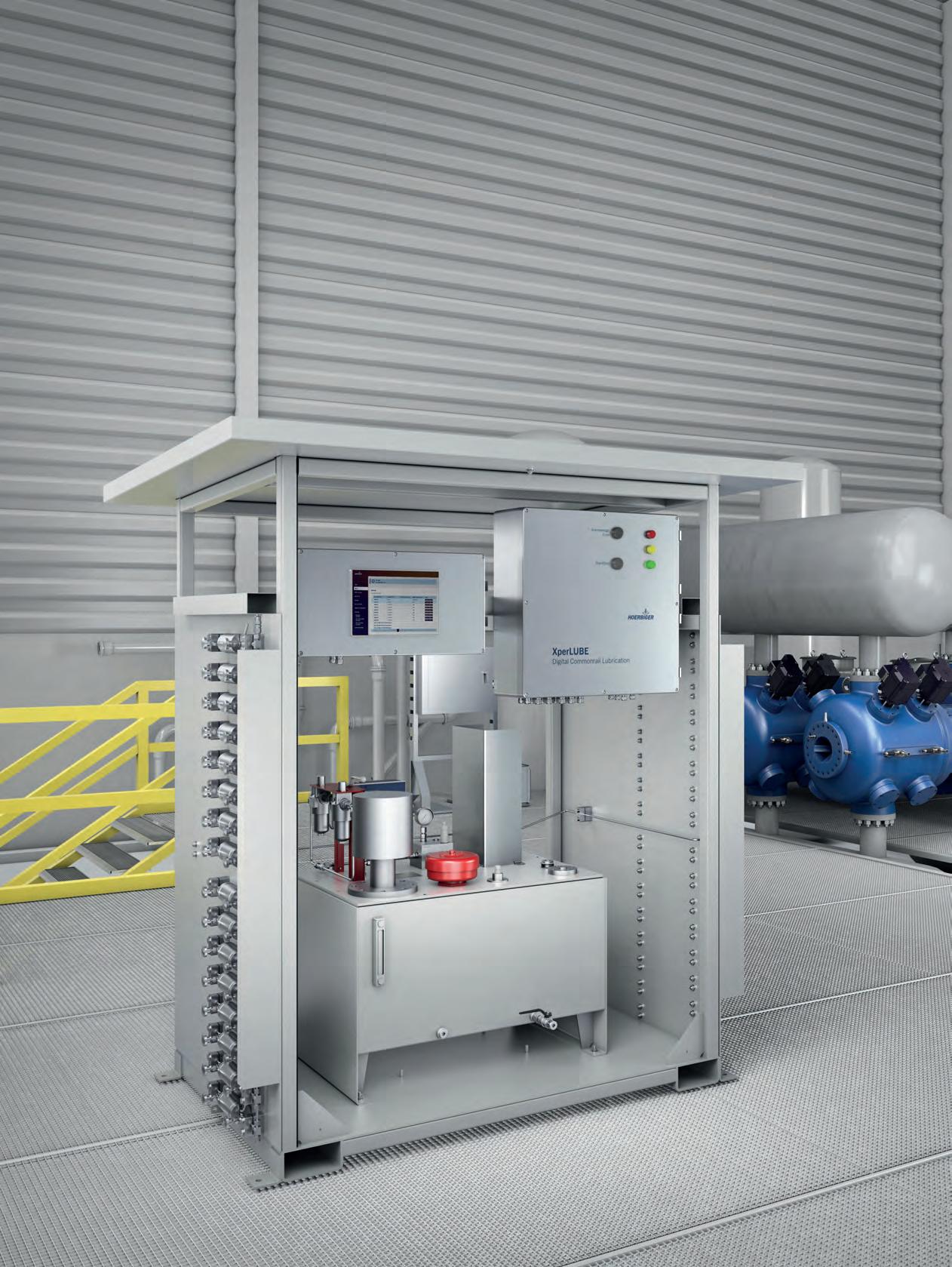
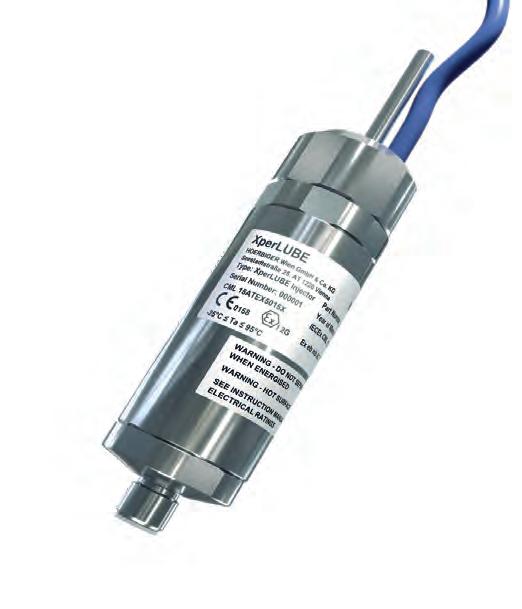
XperLUBE Digital Commonrail Lubrication
For reciprocating compressors, reliable and precise cylinder lubrication is critical. Inconsistent or excessive lubrication can lead to unplanned downtime, accelerated wear, and system issues. XperLUBE, our Digital Commonrail Lubrication System, delivers targeted, real-time lubrication exactly where and when it’s needed. The system features a standardized, modular architecture that simplifies integration across various compressor configurations. The result: optimized oil consumption, streamlined maintenance, and fast system adaptation for minimized downtime and enhanced overall compressor reliability.
Enabling change. For a better tomorrow.
Learn more by visiting www.hoerbiger.com/xperlube today!
BAKKEN/WILLISTON
Bakken East pipeline progresses
WBI Energy outlined a development schedule for the 1 Bcf/d Bakken East pipeline, with an open season in 2026, initial approvals by early 2028, and first-phase service by late 2029. Full completion is expected in 2030.
MDU expands gas network
MDU placed its Minot Expansion Project into service, adding 7 MMcf/d of capacity. It is advancing the Line Section 32 Expansion for a new power plant and continues marketing its Bakken East Pipeline initiative. MDU also began early work on the 90-mile Minot Industrial Pipeline to support industrial demand.
Chord completes XTO acquisition
Chord Energy closed its $542 million purchase of XTO Energy’s 48,000 Williston Basin acres. The company has turned in line four 4-mile laterals year-to-date and expects seven by year-end.
HAYNESVILLE
Pine Wave sells East Texas assets
Pine Wave Energy Partners sold its East Texas position to Rockcliff Energy III, including 25 operated wells and gathering assets across 29,000 acres. Net output is about 100 MMcf/d.
JERA acquires Haynesville assets
Japan’s JERA agreed to buy the South
MARCELLUS/UTICA
NJ & NY issue CWA permits for NESE
New Jersey and New York environmental regulators in November approved Clean Water Act permits for Williams’ $1 billion Northeast Supply Enhancement (NESE) project. The plan includes a 23-mile pipeline across Raritan Bay to expand natural gas access to New York City by 400 MMcf/d, displacing higher-emitting fuel oil. The approvals followed direct pressure from former President Trump.
Mansfield field from Williams and GEP
Haynesville II for $1.5 billion. The field produces more than 500 MMcf/d and is targeted to reach 1 Bcf/d, strengthening JERA’s LNG supply chain.
Texas Gateway open season begins
Boardwalk Pipelines’ Gulf South Pipeline launched a binding open season for its Texas Gateway Project, a 155-mile
James Willis highlights the latest news from the major North American shale plays
Constitution Pipe would save consumers $11.6B
A new S&P Global report estimates that Williams’ proposed 135-mile Constitution Pipeline could provide up to $11.6 billion in consumer energy savings over 15 years, add $4.4 billion in Gross State Product across four states, and support nearly 2,000 jobs annually.
The pipeline would move 650 MMcf/d of Marcellus gas from northeastern Pennsylvania into New York and New
greenfield line and upgrades on Index 129 to move up to 1.45 Bcf/d from Katy and Carthage to Southwest Louisiana.
Lithium facility breaks ground
Select Water Solutions and Mariana Minerals began construction of a facility in Joaquin, Texas, to extract lithium from Haynesville produced water. Mariana will fund, build, and operate the site, with
PERMIAN
Mustang Express reaches FID
ARM Energy reached FID on its $2.3 billion Mustang Express Pipeline, a 236-mile, 42-inch system with 2.5 Bcf/d of capacity anchored by Sempra Infrastructure for Port Arthur LNG Phase 2. ARM has secured all steel and 300,000 hp of Solar Turbines compression. Service is expected in late 2028 or early 2029.
SM Energy, Civitas to merge
SM Energy and Civitas Resources agreed to a $12.8 billion all-stock merger that will retain the SM Energy name. Civitas shareholders will receive 1.45 SM shares and own 52% of the combined company. Expected annual synergies total $200 million.
Tailwater raises $1.1B for Producers Midstream
Tailwater Capital raised $1.1 billion to support Producers Midstream II, including expansions at the Dude processing plant to 240 MMcf/d by Q3 2026 and development of the 300-mile Palo Duro Pipeline, which will serve the “Data Center Corridor” from Abilene to Oklahoma.
Matador sets production record
Matador Resources posted record Q3 2025 production of 209,184 boe/d, up 22% year-overyear. Gas output hit 537.8 MMcf/d, 9% above guidance. Costs averaged $855 per completed lateral foot.
Diamondback boosts output, cuts costs
Diamondback Energy reached 504 Mbbl/d of oil production in Q3, at the top end of guidance, while reducing well costs to 2020 levels. The company drilled 108 wells and completed 137 wells during the qua
England, easing winter constraints that often push Northeast prices to triple the national average.
EQT eyes former steel plant site
EQT Ventures secured an option to purchase a 400-acre former steel mill site along the Monongahela River in Washington County, Pa. The Mon River Industrial Park offers river, rail, interstate, and significant electrical infrastructure access. EQT has not disclosed specific development plans.
Select providing water treatment and pipeline support in exchange for royalties.
Amplify exits East Texas
Amplify Energy is divesting all East Texas assets for $127.5 million, including a closed $5.5 million Haynesville sale and a pending $122 million sale of remaining Haynesville and Cotton Valley properties.
ROCKIES Roadmap for Rockies gas
The Western States and Tribal Nations Energy Initiative released a Rocky Mountain Gas Roadmap identifying two main pathways—the Pacific Northwest and Southwest—to move Rockies gas to domestic and Asian markets using existing infrastructure. The report highlights low methane intensity and calls for streamlined permitting.
NOG buys Uinta minerals
Northern Oil and Gas purchased 1,000 net royalty acres in Utah’s Duchesne and Uintah counties for $98.3 million. Operated by SM Energy, the assets are expected to produce 900 boe/d in 2026 with minimal capital needs.
Fundare DJ pad outperforms
Fundare Resources’ Q3 production rose 14% to 8,756 boe/d, driven by strong results from the Wildhorse 04 pad in the DJ Basin, which delivered 215,000 bbl in four months with a 70% oil cut.
EAGLE FORD
Magnolia production up 11%
Magnolia Oil & Gas reported 100.5 Mboe/d in Q3 production, up 11% year-over-year, driven by 15% growth in the Giddings area. The company plans to hold a two-rig, one-completion-crew program through 2025.
Activist investor targets Coterra Kimmeridge launched a public campaign urging Coterra Energy to unwind its 2021 merger of Cabot Oil & Gas and Cimarex Energy, arguing the combination “has failed.” The firm wants Coterra to divest all nonPermian assets. CEO Tom Jorden rejected the assertions, noting “factual errors” in Kimmeridge’s open letter.
MPLX Harmon Creek
MPLX continues developing its Harmon Creek III project in southwest Pennsylvania: a 300 MMcf/d processing plant and a 40 Mbbl/d de-ethanizer expected online in the second half of 2026. CT2
MIDCONTINENT
Devon expands in Anadarko
Devon Energy announced a $500 million expansion of its Anadarko Basin operations to fund advanced drilling, infrastructure, and completions work. The plan is expected to lift Oklahoma’s oil output by 15% next year.
Ovintiv to sell Anadarko assets
Ovintiv plans to divest its Anadarko assets in early 2026 to help fund its $2.7 billion acquisition of NuVista Energy. The deal adds 140,000 net acres and 100 Mboe/d in Alberta’s Montney.
New high-pressure design enhances performance, reliability and affordability for emerging CCUS markets. By
Jack Burke
Sundyne expands CO2 compressor capabilities to meet rising demand for carbon capture and low-carbon energy
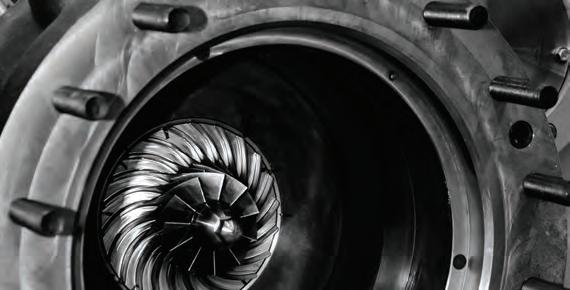
Sundyne’s latest expansion of its LF-2000 centrifugal compressor line marks a significant advance in the company’s long history of innovation in high-speed rotating equipment. The latest model, developed to meet the demanding requirements of carbon capture, utilization and storage (CCUS) projects, underscores how engineering refinements and smart packaging can accelerate the energy transition, according to Gregory Junot, Sundyne’s Compressor Product Line Manager.
The latest CO2 compressor is designed for applications across hydrogen production, natural gas processing, industrial manufacturing and power generation. It features larger first-stage casings and customized aerodynamic components that double previous capacity and enable operation in
supercritical CO2 service. With its modular, standardized package, Junot said, Sundyne aims to offer high reliability at lower total cost—critical for operators who must balance emissions goals with economic realities.
A growing market for carbon capture
Industry analysts and policymakers increasingly view carbon capture as an indispensable tool for decarbonizing heavy industry and power generation. “Renewables will not be able to solve the problem by themselves,” Junot said. “Cleaner energy needs carbon capture.”
Dozens of commercial capture
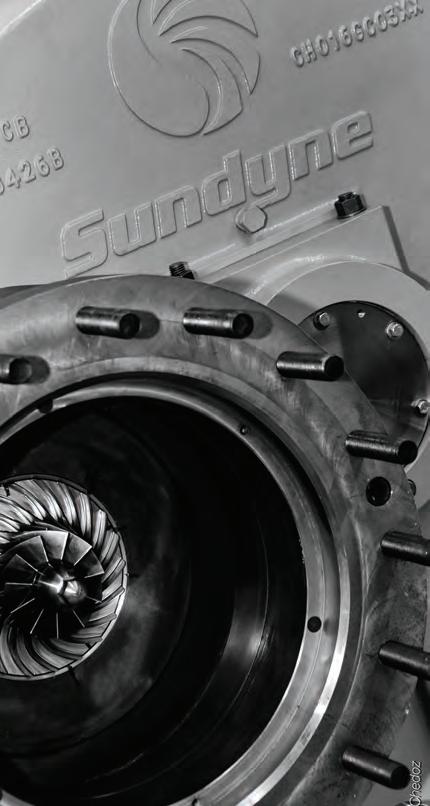
Sundyne has expanded its LF-2000 centrifugal compressor line.
facilities are operating today, and many more are planned or under construction. Each requires specialized compression technology to pressurize CO2 for transport and permanent storage. For Sundyne, whose LF-series compressors have long served refineries, chemical plants and utilities, adapting proven
designs for CO2 service represents both a technical challenge and a natural evolution.
“Corporate commitments to reduce emissions, policy support and advancements in technology are all driving investment in carbon capture projects, and Sundyne is actively engaged in the research and development that’s needed to address these requirements,” Junot said. “For decades, thousands of Sundyne LF-2000 compressors have been deployed
either offshore or onshore. Today, many of those same facilities seek to reduce their carbon emissions. Our fit-for-purpose CO2 compressor leverages everything we’ve learned from prior LF-2000 deployments.”
Engineering for supercritical performance
The latest model targets operation above the critical pressure of CO2—about 72 bar—where the gas behaves as a dense fluid and must be handled differently than conventional process gases. Meeting that challenge required innovations in both aerodynamics and mechanical design.
“They need supercritical capacity— higher pressure,” Junot explained. “So we developed a specific aero end—the impeller, the diffuser and all the internal parts of the compressor—plus a dedicated test bench to run our compressor at high pressure and validate customer operating conditions.”
Supercritical compression amplifies efficiency but introduces new complications. Leakage control, thermal stresses and materials selection become far more demanding. When CO2 expands rapidly through small clearances, it can form dry ice that interferes with seals and bearings. “When this leakage escapes the compressor, from high pressure to atmospheric pressure, it’s like an extinguisher bottle,” Junot said. “It makes carbonic ice, very cold. We had to manage this problem at high speed and in a very compact sealing area.”
To address that, Sundyne collaborated with a dry-gas-seal manufacturer to refine the geometry of the sealing system, mitigating icing and ensuring stable operation. “It’s a simple idea but technically very complex,” Junot said. “We worked together to arrange the seals so that even in the worst conditions we maintain reliability.”
Choosing the right metallurgy
Another crucial factor is material selection. CO2 captured from industrial exhaust streams typically contains water vapor and trace contaminants that can form corrosive acids. “The CO2 comes wet when it’s coming out of capture units,” Junot explained. “It’s CO2 plus water plus contaminants, so the metallurgy has to handle this very acid gas mixture.”
The gas stream is later dehydrated, allowing less-alloyed steels to be used in downstream stages, but the early compression zones must withstand aggressive conditions. “We use the proper metallurgy for each section,” Junot said. “After dehydration, CO2 is almost pure, so carbon steel is sufficient.”
Balancing cost and corrosion resistance is part of Sundyne’s broader goal: to deliver oil-and-gas-level reliability for customers who expect lower capital costs in CCUS projects. “We have to propose the highest reliability we have on oil and gas applications for a non-toxic gas where the customer expects a cheaper price,” Junot said. “We found solutions to keep the same reliability level with minimal maintenance and reduced package cost.”
Simplifying the package
Roughly one-third of a typical compression package’s value lies in the core compressor; the remainder is auxiliaries—coolers, lubrication systems, controls and skids. By standardizing these components and eliminating unnecessary specifications
borrowed from API oil-and-gas standards, Sundyne shortened lead times and reduced overall cost.
“All these auxiliaries are cheaper to source, easier to source,” Junot said. “There’s less testing and less documentation, which also helps shorten delivery schedules.”
That streamlined approach aligns with the company’s modular “package” philosophy. Each LF-2000 CO2 compressor system includes process and auxiliary systems built into ready-for-operation modules that can be tailored to site-specific needs. The compact footprint is especially advantageous for retrofits at existing industrial sites, where space is often limited.
Leveraging decades of experience
Although marketed for a new application, the CO2 compressor is not an unproven design. The LF-2000 lineage dates back more than half a century. “We’ve taken everything we’ve learned from all of this,” Junot said. “This isn’t new—it’s an expansion of the line. Given the people we’re selling to, the word ‘new’ is not a good word. It’s existing technology, applied to a different requirement.”
That emphasis on continuity reassures industrial buyers who must meet tight reliability and safety standards. Sundyne’s high-speed integrally geared compressors are known for handling demanding services in refineries and chemical plants. Extending that heritage into carbon capture offers customers familiarity and confidence.
Fit-for-purpose and API-compliant options
The expanded LF-2000 family can be configured as a “fit-for-purpose” industrial
model with minimal specification overlay or as a fully API-compliant version for oil and gas operations. This flexibility allows Sundyne to serve diverse markets ranging from small-scale LNG refrigeration and ethanol-to-jet production to vapor recovery and feed-gas compression.
Each version uses the same aerodynamic core but can be adapted to the standards, materials and control systems appropriate to the application. Intercooling between up to six stages and variable inlet guide vane control help optimize efficiency across operating ranges. The high-speed centrifugal design maintains a compact footprint even as flow capacity doubles.
A collaborative approach to innovation
During development, Sundyne’s engineers worked closely with customers and component suppliers to validate every design element under realistic conditions. The company invested in a new highpressure test bench at its Arvada, Colorado, facility to simulate supercritical CO2 service. Testing at full speed and full load confirmed aerodynamic performance and mechanical integrity before field deployment.
“We developed this in partnership,” Junot said. “Our customers are asking for reliable, maintainable, affordable solutions for carbon capture. To meet that, we had to innovate not only in technology but also in how we package and support these systems.”
Market drivers and future applications
While CCUS remains the primary focus, Junot sees a range of adjacent opportunities. Emerging technologies such as solid-oxide fuel cells and other low-carbon power systems may require integrated carbon capture to meet emissions goals. Even data centers—whose explosive growth is straining power grids—could become future customers.
“Think about where the data centers are being built,” Junot said. “They’re in the Marcellus, the Permian—right where the gas is. Many will generate their own power, and that means they’ll produce emissions. They’ll need carbon capture. Even the new
renewable systems will need carbon capture.”
That evolving landscape mirrors broader energy trends. As artificial intelligence drives unprecedented power demand, natural-gasfired generation is expected to play a central role in supplying stable electricity. Coupling those plants with carbon capture could offer a practical path toward decarbonization without sacrificing reliability.
Why compression matters
In any carbon capture system, compression is the critical link between capture and storage. After CO2 is separated from process streams, it must be compressed to supercritical pressures for transport via pipeline or for injection into geological formations. The compressor’s efficiency and reliability directly affect project economics.
“Compression is the tricky part of this application,” Junot said. “We understand that’s where projects either succeed or face challenges, and that’s where Sundyne brings real expertise.”
A global footprint
Headquartered in Arvada, Colorado, Sundyne maintains operations across Europe, the Middle East, India, Asia and China. Its products are known for precision engineering, safety and efficiency in demanding services such as hydrocarbon processing, hydrogen, renewable fuels and power generation. The company is also part of Honeywell, whose broader portfolio spans industrial automation, energy transition and sustainability solutions.
That global presence positions Sundyne
Sundyne sees diverse markets for its expanded LF-2000 family.
PHOTO: SHUTTERSTOCK
to support CCUS projects wherever they emerge. Europe and Asia are advancing large-scale capture initiatives, while North America is rapidly building pipeline and storage infrastructure to handle millions of tons of CO₂ per year. Each project will require reliable, high-performance compression systems—an area where Sundyne sees clear opportunity.
From laboratory to field
Testing and validation are now complete, and early customer interest is strong. Engineers report that several pilot projects are evaluating the compressor for upcoming capture and sequestration systems. “Every site is different,” Junot said. “Some need full API compliance; others want a simpler, standardized system. Our modular design lets us accommodate both.”
Preparing for the energy transition
As governments and industries race to meet net-zero targets, technologies that combine proven reliability with lower emissions will gain favor. Sundyne’s expansion of the LF-2000 line illustrates how incremental engineering advances—higher pressure capability, optimized metallurgy, better seals—can make a tangible difference in the pace of decarbonization.
“Cleaner energy needs carbon capture,” Junot said. “Even the new technologies need carbon capture too.”
For Sundyne, that message resonates beyond a single product. The company’s work on CO2 compression is part of a broader strategy to supply pumps and compressors that enable sustainable fuels, hydrogen, renewable power and low-carbon industrial processes. By bridging legacy energy systems with future requirements, Sundyne is helping industries move toward a lower-carbon world.
Conclusion
The latest expansion of the LF-2000 CO2 compressor embodies both continuity and change: continuity in the decades of engineering expertise behind Sundyne’s integrally geared designs, and change in their application to one of the most urgent challenges of the energy transition. With higher capacity, supercritical pressure capability and simplified modular packaging, the machine provides the performance and reliability needed for carbon capture projects worldwide.
CT2
ADI ANALYTICS is a prestigious, boutique consulting firm specializing in oil and gas, energy, chemicals, and industrials since 2009. We bring deep expertise in a broad range of markets where we support Fortune 500, mid-sized and early-stage companies, and investors with consulting services, research reports, and data and analytics, with the goal of delivering actionable outcomes to help our clients achieve tangible results.
ADI has supported a wide range of industrial companies and turbomachinery OEMs with market intel, product and service strategy, customer segmentation, installed base and aftermarket growth, and M&A due diligence.
We also host the ADI Forum that brings c-suite executives together for meaningful dialogue and strategic insights across the oil & gas, energy transition, and chemicals value chains. Learn more at: www.adi-analytics.com
UDAY TURAGA is Founder & CEO of ADI Analytics. Through 25 years of industry experience gained at ExxonMobil, ConocoPhillips, Booz, and ADI, Turaga brings deep commercial and technical expertise in energy, chemicals, and industrials.
He holds a PhD in fuel science from Penn State and an MBA from the University of Texas at Austin. In addition to authoring over 100 papers and two U.S. patents, he has been recognized by the U.S. National Academy of Engineering and featured in the Wall Street Journal.
PANUSWEE DWIVEDI is a project manager at ADI Analytics. She brings experience in the oil and gas upstream, midstream, and downstream sectors and in commodity and specialty polymers markets.
She holds a master’s degree in petroleum engineering from the University of Houston, and a bachelor’s degree in petroleum engineering from the Pandit Deendayal Energy University in India, with experience in production engineering at ONGC.
A natural gas and LNG super cycle in 2026
By Uday Turaga and Panuswee Dwivedi
We at ADI predicted an LNG and natural gas “Super Cycle,” showing unprecedented growth earlier this year. But global gas markets didn’t get the memo, with 2025 growth trailing the prior year. That pause is now over. A massive new wave of LNG supply is poised to crash the market in 2026, creating a major inflection point for global gas market. This liquefaction surge will ignite global gas demand, especially in Asia’s price-sensitive regions. It’s excellent news for everyone in the natural gas and LNG value chains, from industrial players to turbomachinery OEMs.
Supply outlook
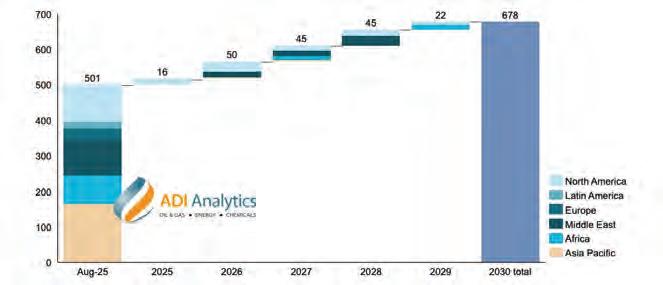
Global LNG supply is forecast to rise about 7% in 2026, outpacing the expected global gas demand growth of about 2%. This expansion marks the start of what ADI is calling a super cycle: global LNG capacity will jump by more than 150 million tons per year (mtpy) by 2030, with Qatar and the U.S. providing approximately two-thirds of the new volume (see exhibit 1). This new liquefaction capacity will need significant feedgas, driving growth in key shale plays in the U.S. and international basins globally. Supply hotspots include:
■ Permian associated gas production, which averaged about 20 billion cubic feet per day (Bcf/d) in 2025, urgently needs new pipeline capacity to reach the Gulf Coast. Relief is expected in late 2026; these expansions are vital for containing the extremely low, often negative, prices seen at the Waha trading hub in 2025.
■ Haynesville will continue to account for a significant share of new U.S. natural gas supply, with growth here directly linked to new LNG projects. DT Midstream’s LEAP Phase 4 is set to boost capacity, creating a firm path to Gulf Coast LNG plants.
■ Despite ample supply in the Marcellus/ Utica basin, growth is bottlenecked by downstream transport limits. The major Transco SouthEast Supply Enhancement, needed to fully open the path south, won’t be ready until 2027.
Kitimat LNG in is British Columbia is the first major LNG export facility in Canada.
PHOTO: REUTERS
According to ADI Analytics, a LNG and natural gas “Super Cycle” is set to begin in the global gas market.
■ Outside the U.S., we will see growth in Western Canada. LNG Canada Train 1 is ramping up to its full rate by mid2026, increasing Western Canadian gas demand by about 2 Bcf/d.
■ Beyond North America, the Leviathan field in the Eastern Mediterranean Sea is increasing capacity to 1.5 Bcf/d from early 2026. In Brazil, the Rota 3 pipeline and processing units are boosting marketed gas to local industry and power generation by at least 15% if not more
Demand hotspots
This new natural gas and LNG supply is expected to trigger price-sensitive demand globally. Asia leads the growth, but new pockets of demand are also appearing in North America. Asian LNG imports are forecast to jump by about 10% in 2026, rebounding from a soft 2025. India is a key hotspot, enabling more imports through infrastructure expansions led by Petronet’s Dahej terminal. In Southeast Asia, countries like Vietnam are investing in floating storage and regasification units (FSRUs) to boost new gas-to-power capacity by potentially 20 GW.
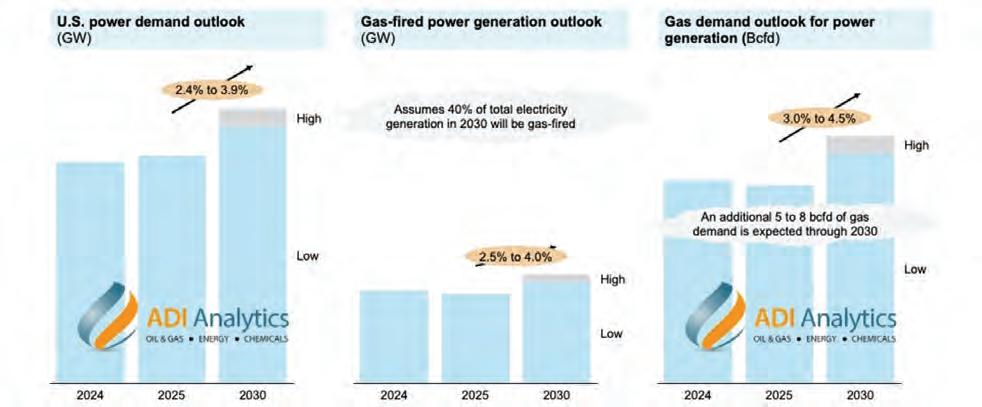
Europe still needs significant LNG, and demand is expected to grow around 5% in 2026 to refill storage and replace Russian pipeline gas. Europe’s plan to stop buying Russian LNG by the end of 2026 will keep demand for Atlantic cargoes high. A new, long-term factor is the massive building spree for AI-led data centers across the U.S. (see exhibit 2). This huge new electric load relies on gas generation, leading to pipeline expansions that compete directly with LNG exports for U.S. natural gas. While international benchmark LNG prices (e.g., JKM and TTF) will likely soften, this should make LNG more affordable for pricesensitive emerging markets, encouraging them to switch away from fuels like fuel oil and coal and thereby drive additional demand.
EXHIBIT 1: GLOBAL LNG CAPACITY THROUGH 2030 BY REGION
Source: U.S. EIA, IGU, ADI Analytics
Shipping faces new hurdles
While the gas supply picture is improving, issues with shipping logistics and trade policy are creating new difficulties. Red Sea security remains a high risk, forcing shippers to use the longer Cape routings, keeping LNG transits through the Suez Canal far below historical norms. Panama Canal slot capacity has returned to normal. The global fleet of LNG carriers is set to grow with about 300 LNGCs delivering across 2025–2027. Crucially, most of this capacity is already committed to long-term contracts, which limits the flexibility of the spot market even as supply increases. Finally, the U.S. is requiring that a growing share of its LNG exports must use U.S.-built ships (starting at 1% in 2029), which could shift future vessel orders toward Korean yards.
Pricing convergence?
The supply surge will heavily impact global pricing by moderating regional price extremes and providing new momentum for the idea of convergence across regional pricing hubs. This is uncertain, although ADI’s models expect relatively moderate price outlooks globally, with Henry Hub expected to be a little short of $4.00 per million Btu through 2026. Lower, converging
prices will reduce the profit in the arbitrage trade, especially as the JKM-TTF spread is near zero. The risk of insufficient arbitrage, coupled with data center demand, could depress the arbitrage and limit the financial viability of new LNG export projects.
Turbomachinery sector implications
The confluence of robust LNG project sanctioning, accelerating gas-fired power additions, and surging data-center electricity demand underpins a durable runway for turbomachinery suppliers to achieve revenue growth rates in the midsingle to low-double-digit range through 2030. The strongest demand is for large equipment, skewed toward heavy-duty F/Hclass and aeroderivative gas turbines for mechanical drive and power generation, alongside large centrifugal compressors for
new liquefaction projects. Reciprocating compressors also have opportunities which may expand as backlogs plague other preferred compression options. OEMs are responding with strategic capacity expansions, such as Siemens Energy’s planned 30-60% increase in gas turbine output and GE Vernova’s 5 GW capacity addition by mid-2026. Companies that scale manufacturing judiciously, extend service offerings, and tailor portfolios to efficiency and fuelflexibility requirements are positioned to capture share in the coming cycle.
Conclusion
The year 2026 will test the global gas market. The new wave of supply will provide crucial security and lower prices, but how smoothly this massive volume is moved and consumed, from fixing pipelines out of the Permian to building terminals in Asia, will define the market for the rest of the decade. CT2
EXHIBIT 2: DATA CENTER-DRIVEN POWER AND NATURAL GAS DEMAND GROWTH IN THE U.S.
Source: U.S. EIA, IGU, ADI Analytics
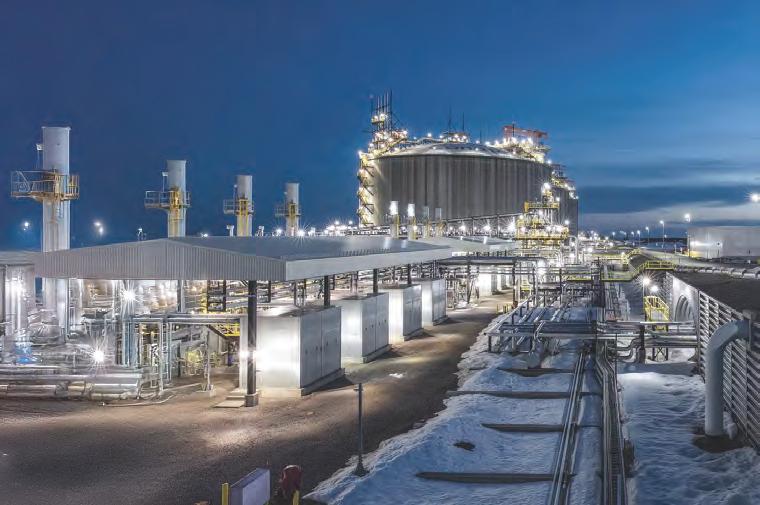
The Cedar LNG is a proposed floating LNG facility in British Columbia .
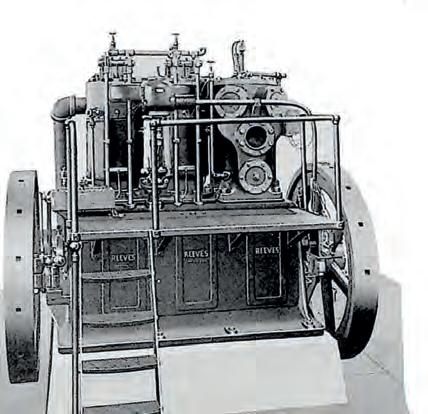
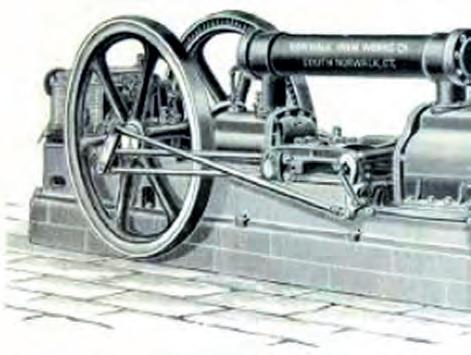
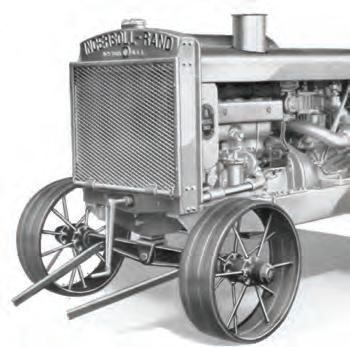
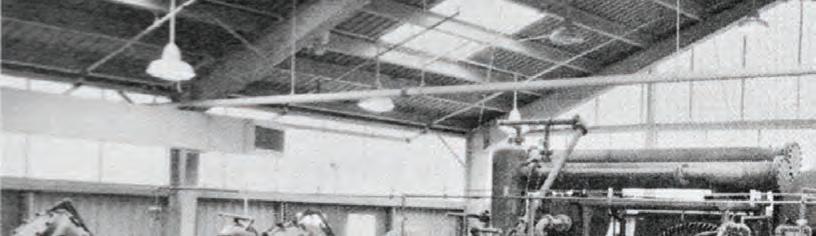
The Companies and Machines That Drove Compressor Progress
Author: Norman Shade
From piston to rotary, steam to electric — Cornerstones of Compression dives deep into the legacy of industrial compressors and the visionaries behind them.
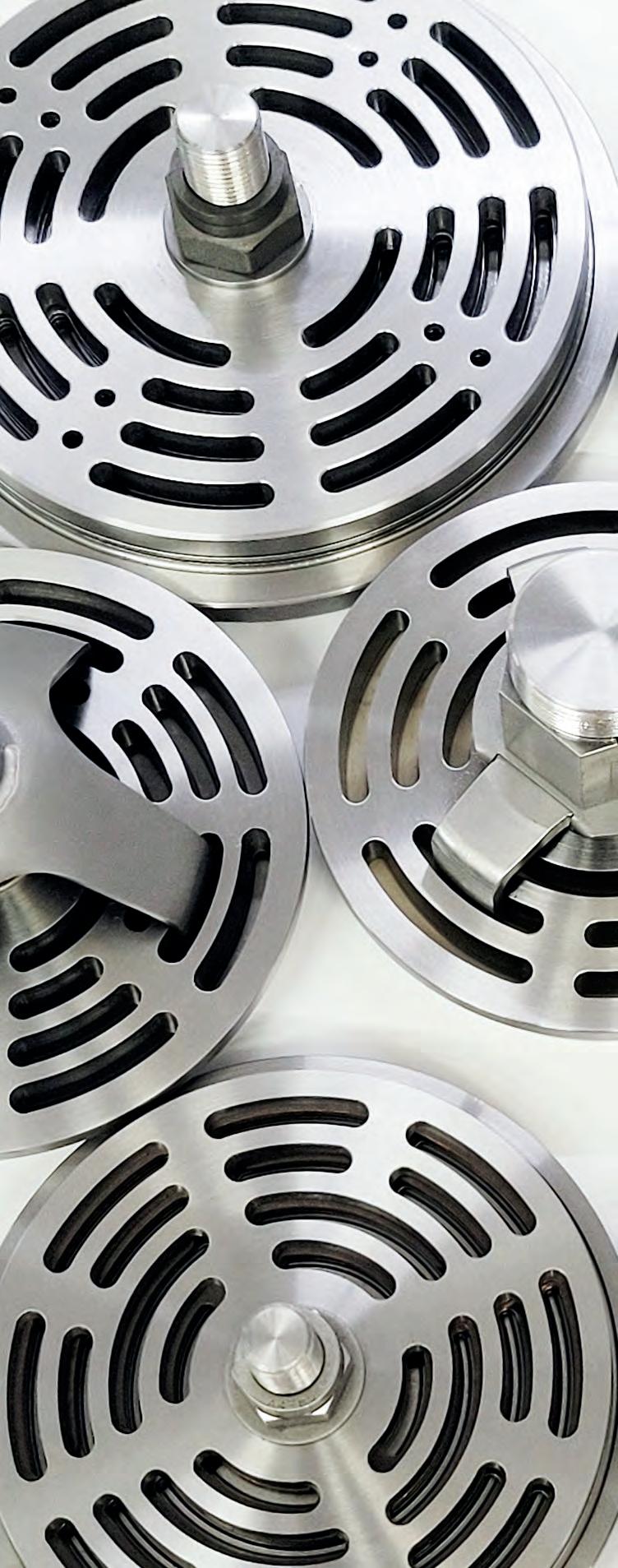
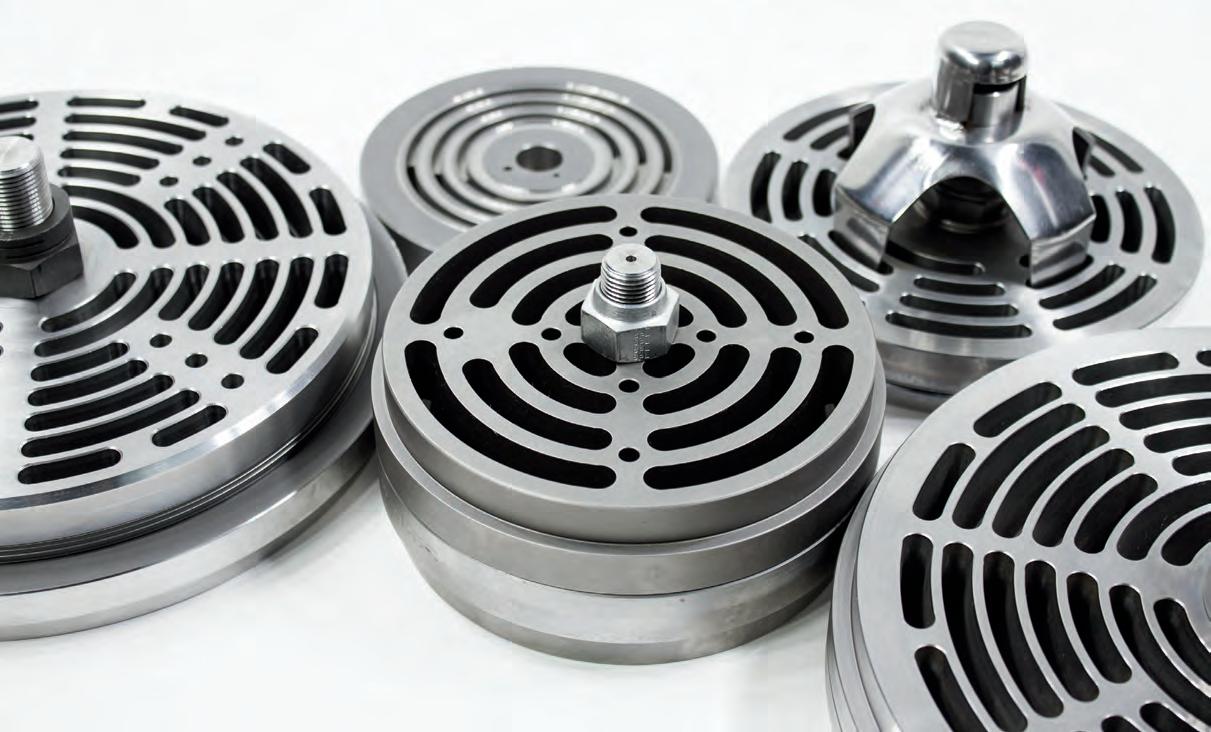
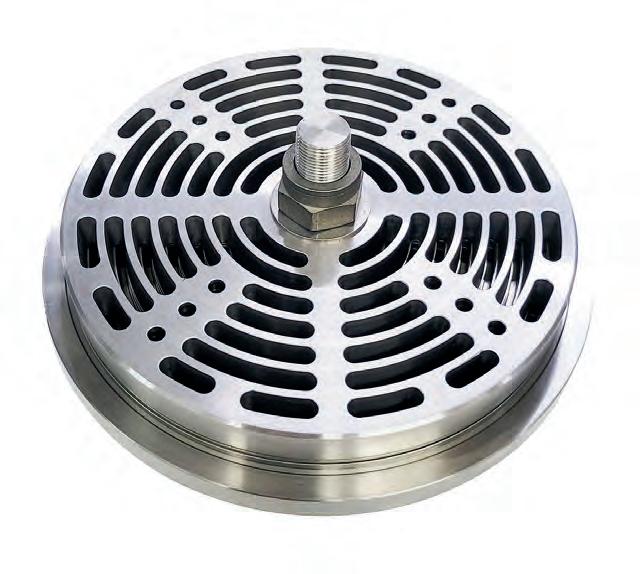
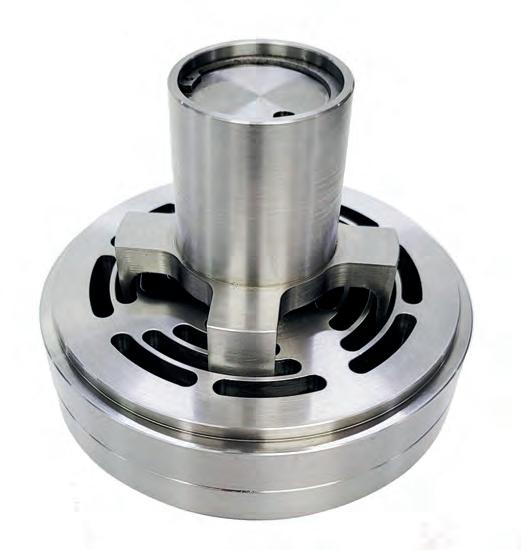
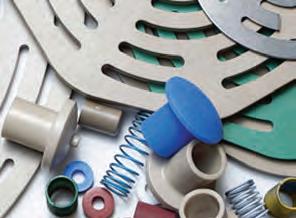
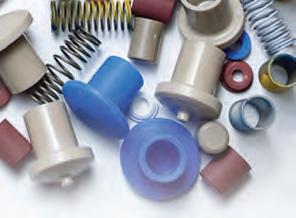
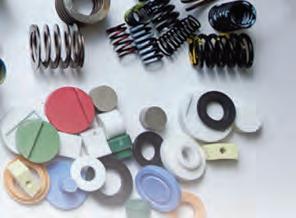
TAKING CARE OF ALL YOUR COMPRESSOR VALVE NEEDS.
24 hrs 7 days
Metallic Plates|Thermoplastics|Springs|Buttons
Poppets
Kits
Center Bolts
Pins
Lift Washers
O-Rings
Anna Kachkova provides information on the latest gas compression news from Europe
EUROPEAN UNION
European Commission opens first call for interest under Hydrogen Mechanism
The European Commission launched its first call for interest under the Hydrogen Mechanism in mid-November, aiming to link hydrogen buyers and suppliers and accelerate the development of an integrated hydrogen industry across the European Union. Infrastructure build-out remains at an early stage, and several proposed projects have been delayed or cancelled in recent years, but activity continues to advance across the bloc.
Suppliers of renewable or low-carbon hydrogen and derivatives — including ammonia, methanol, synthetic
ANNA KACHKOVA is an independent oil and gas writer based in Edinburgh, Scotland. She has over 17 years’ experience of covering the energy industry, including five years in Houston, Texas, as NewsBase’s North America editor. Her email address is: aikachkova@gmail.com
aviation fuels and eMethane — may submit offers until January 2, 2026. Anonymized supply information will be published on January 19, when offtakers can begin expressing interest. That process runs through March 20, with results due on March 31.
“Today’s call marks a new chapter in the EU’s support to the European industry and its competitive decarbonization,” said Dan Jørgensen, Commissioner for Energy and Housing. “By connecting buyers and sellers, this hydrogen mechanism will help us create a cleaner and competitive future for our energy and our economy.”
GERMANY
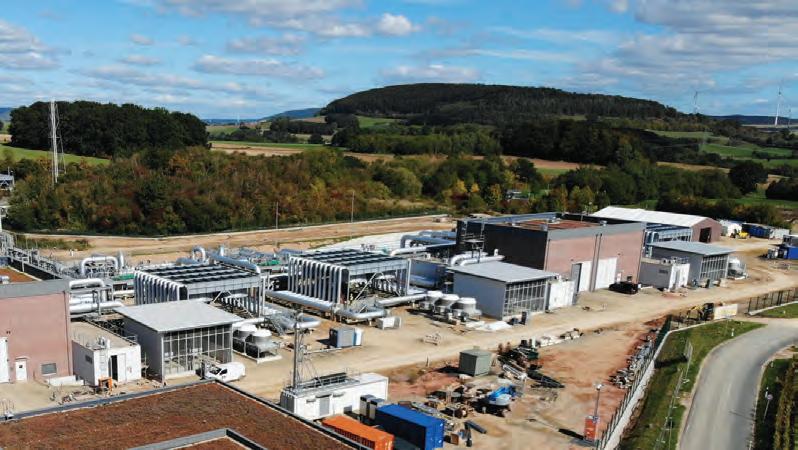
Gascade advances commissioning of Reckrod 2 compressor station
Gascade said in mid-November it has been gradually commissioning the new Reckrod 2 compressor station in Hesse since September. Phase 1 is complete, and Phase 2 begins November 24, with full commissioning — including the first compressor unit — scheduled by mid-December 2025.
Reckrod 2, located south of the existing Reckrod station, will connect to the MIDAL and STEGAL systems and operate with four electric compressor units. The added capacity will allow older gas-turbine units at the original station to be retired. The site is also expected to support future hydrogen-network planning. Full operation is targeted for 2026, improving regional supply security and boosting transport volumes toward Baden-Württemberg.
SPAIN
Enagás reports progress on hydrogen backbone network Enagás reported continued progress on Spain’s hydrogennetwork development as part of its third-quarter 2025 update. The company received EUR32.5 million from the EU’s Climate, Infrastructure and Environment Executive Agency under the Connecting Europe Facility to fund studies and engineering for the Spanish Hydrogen Backbone and the H2med interconnections. Basic engineering contracts for the backbone network have been awarded and work is underway, including detailed planning for associated compressor stations. Enagás said it is working with six Spanish engineering firms and has issued a request for information to identify suppliers of piping, valves and equipment.
The EU is seeking to connect buyers of hydrogen to sellers.
GREECE
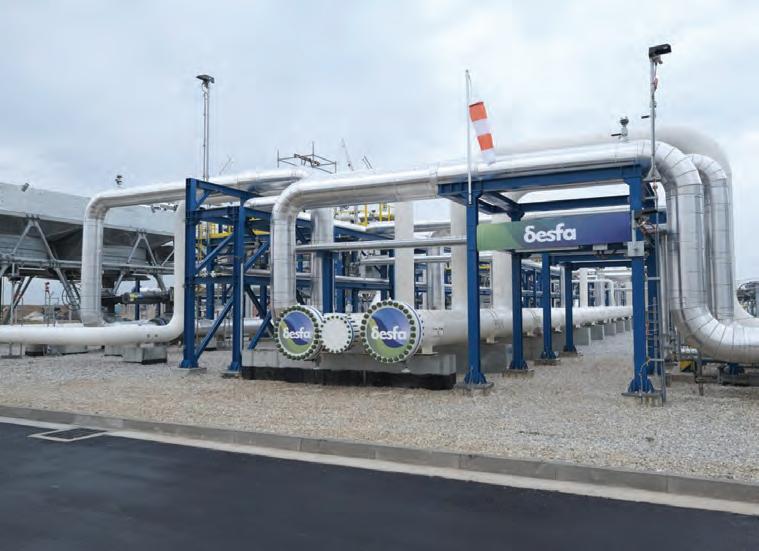
DESFA inaugurates Komotini compressor station
DESFA inaugurated the Komotini compressor station in northeastern Greece in early November. The 24.6-MW station includes three operating units and one standby unit and is the first electric-driven gas compressor installation in the country. DESFA said the facility will operate with zero direct emissions and has been designed to handle blends containing at least 10 percent hydrogen.
The station is part of Greece’s contribution to the Vertical Corridor initiative, which aims to expand north-south gas flows across Southeast, Eastern and Central Europe. Together with other projects — including the Ampelia compressor station and upgrades at Nea Mesimvria — Komotini will enable Greece to move as much as 300 Bcf per year of gas to northern markets.
Construction at Komotini cost EUR134 million. DESFA is also progressing work on the EUR334 million Karperi–Komotini pipeline and additional compressor upgrades. All new infrastructure is being built to accommodate at least 10 percent hydrogen blends. Start-up dates for Ampelia and Nea Mesimvria are not specified, though both were scheduled for completion this year in DESFA’s 10-year development plan.
CYPRUS
Energean signs preliminary deal to supply Israeli gas to Cyprus Energean signed a letter of intent in early November with Cyprus-based Cyfield for potential gas supply to Cyfield’s planned 260 MW power plant at Mari in Larnaca. Energean proposes to ship gas from Israel via a new subsea pipeline connecting the Energean Power FPSO to the Cypriot grid. The company highlighted energy-security and decarbonization benefits, though the project requires approval from both governments. Israeli Energy Minister Eli Cohen expressed support for the initiative in the announcement.
UNITED KINGDOM
National Gas secures Ofgem funding for hydrogen network build-out
Gastransport GmbH is constructing the new Reckrod 2 compressor station in Eiterfeld.
National Gas has received GBP164 million in Ofgem funding to advance elements of Project Union, the UK’s plan for a 1500-mile core hydrogen network. The system would repurpose portions of the existing natural gas grid and add new pipelines to connect emerging hydrogen clusters.
The latest announcement includes GBP107 million for two new projects that will support future connections between hydrogen hubs in northern Scotland and industrial regions in northeast and northwest England. It adds to the GBP57 million awarded in June for Project Union: East Coast, which is expected to support hydrogen infrastructure development across Teesside and the Humber region. CT2
DESFA inaugurated the Komotini Compressor Station, project designed to strengthen Greece’s role as a strategic energy gateway while reinforcing the Vertical Gas Corridor. IMAGE: DESFA
The Energean Power FPSO, which is located offshore of northern Israel. IMAGE: ENERGEAN
Updated sensors, Modbus connectivity and predictive diagnostics highlighted at EFRC in Hamburg
Ariel details advancements in smart compressor platform
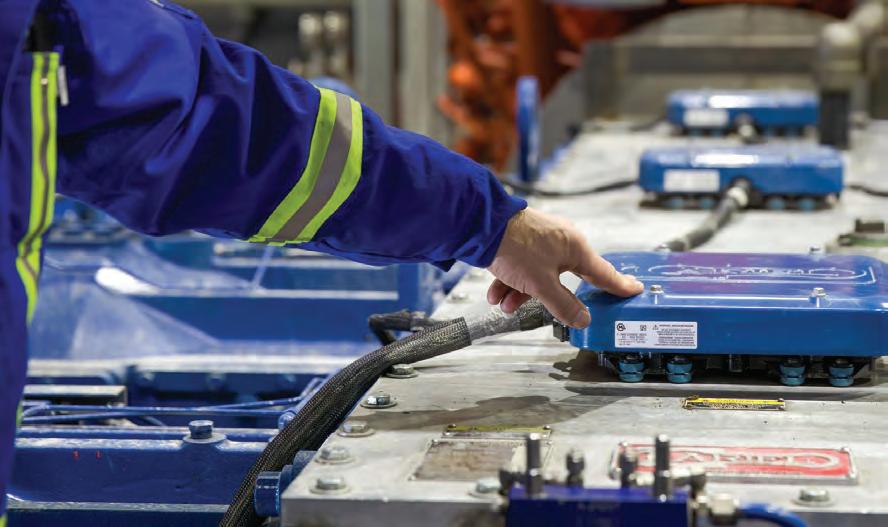
Ariel Corp. has continued to refine its Ariel Smart Compressor (ASC) technology since first introducing the platform in 2019, with more than 1,600 units now operating in the field. Jacob Shackelford, director of marketing for Ariel, outlined the latest updates during a presentation at the European Forum on Reciprocating Compressors (EFRC) in Hamburg, Germany.
The ASC platform is designed as an Ariel-installed monitoring and performance calculation system that runs directly on the compressor. Shackelford said most installations to date have been in the United States and Canada, with additional units in Argentina and the Middle East. Experience from those deployments has driven updates focused on more robust sensors, expanded connectivity, and simplified field retrofit options.
“We are providing greater access to performance data directly at the compressor,” Shackelford said. “The goal
is to compare theoretical performance to real operating conditions and use that comparison to improve reliability, decision-making and response.”
Digital twin calculation onboard the compressor
At the core of the system is a digital twin that performs Ariel performance calculations in real time. The module continuously compares expected compressor performance to measured data. That calculation is then used to trigger alerts or shutdown signals through the unit’s existing skid controller, regardless of whether the site uses Allen-Bradley, PLCs or other control platforms.
ASC does not control the skid directly, Shackelford noted. “We send the signal. The operator or the PLC determines the action.”
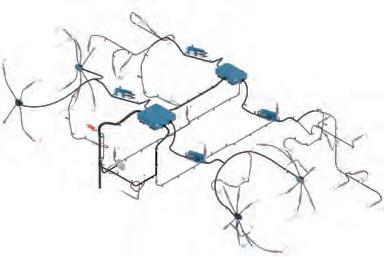
The system communicates through Modbus over RS-485, providing access to roughly 1,500 registers for integration into SCADA systems, IoT gateways or proprietary monitoring environments.
shipped over the past two years has been “ASC-ready,” simplifying retrofits in the field.
A CSA-certified version is currently available, with HX and C certifications planned for international applications.
Focus on sensor improvements and field practicality
Newer ASC configurations include upgraded sensors for process pressures and temperatures, crankshaft and lubrication monitoring, and vibration measurements.
Optional components include valve cap temperature sensors and packing vent temperature sensors, now available in sour gas-compliant versions.
A recently introduced isolation manifold block allows operators to troubleshoot or replace pressure sensors without shutting down and depressurizing the compressor.
“This makes field service significantly more efficient,” Shackelford said.
ASC also includes onboard data storage. If a shutdown occurs, the module retains a “black box” record that can be retrieved via USB or transmitted through an IoT gateway to Ariel’s Fleet Manager online monitoring portal. The Fleet Manager
The ASC platform is designed as an Ariel-installed system.
technology.
system provides remote trend analysis and supports postevent evaluation.
Predictive diagnostics expanding
One of the platform’s most significant advancements is the calculation of a valve leak index. By performing a flow balance across the compressor and comparing valve cap temperatures, the system can indicate which valve is degrading. Shackelford said the system can also monitor torsional vibration and predict crosshead pin mount reversal events before they occur.
A new predictive model is being developed to identify packing leaks based on temperature profiles, using data collected across hundreds of operating compressors. This approach could reduce or eliminate the need for separate flow meters in many applications.
Standard equipment in North America, available globally
ASC is now pre-selected as a standard option on Ariel compressors shipped within the United States and Canada. It is also available for international shipments, and compatibility for older units depends on the
model and age of the frame.
“Our intent is to make ASC flexible,” Shackelford said.
“Whether an operator wants local visualization, SCADA integration, cloud connectivity, or just black-box capture, the system supports those modes.”
Key features of the Ariel Smart Compressor (ASC):
■ Digital twin performance model runs onboard the compressor, comparing expected versus actual operating conditions in real time
■ Modbus connectivity (RS-485) provides access to approximately 1,500 data registers for SCADA or IoT system integration
■ Local or remote access options, including HMI visualization, SCADA trending and Ariel Fleet Manager online monitoring
■ Black box data capture stores shutdown and event records for post-event analysis.
■ Valve leak index uses flow balance and valve cap temperature data to identify degrading valves in service
■ Predictive diagnostics under development for packing leak detection based on gas and environmental temperature profiles
■ Optional sour-gas-rated temperature and pressure sensors for H2S environments
■ Retrofit capability for most recent Ariel frames, with all compressors shipped in the past two years built “ASC-ready”
■ New isolation manifold block allows field technicians to troubleshoot or replace pressure sensors without depressurizing the unit CT2
MECHANICAL FIELD SERVICES
CECO’s Mechanical Field Services provides on-site service, analysis and repair.
Compressor & Engine Overhauls
Field Machining/Repair
Engineering Support
Cylinder Boring/Relining
Unloading Equipment Installation
CECO Mechanical Field Services is more than just overhauls. You can count on our experienced mechanics to help with equipment installs, eld repairs and rely on our real-time engineering support.
Ariel Corp. has advanced its ASC
Karen Buchwald Wright, who guided Ariel Corp. through a period of significant growth while shaping the cultural and civic life of her hometown, died Oct. 15, after a protracted battle with cancer. She was 71.
Her son and current Ariel CEO, Alex Wright, confirmed her passing in a message to employees: “It is with great sadness that I report my mother, Karen Wright, passed away today. After a long and tenacious battle with cancer, she died peacefully at home, surrounded by family. If you knew my mother, you know that she loved Ariel and everyone here. I could not possibly list the ways that all of us have benefited from her hard work, generosity, and leadership. We feel her loss deeply.”
A public celebration of life was held at the Hodges Chapel of Mount Vernon Nazarene University and was livestreamed by the university.
‘Empowering’ leader
Karen Buchwald Wright, longtime leader and philanthropist behind Ariel Corp., passes away at 71
From
hometown
roots to global leadership
Born July 4, 1954, in Mount Vernon, Karen Wright grew up in Springfield, Ohio, and later earned a Bachelor of Arts degree from St. Olaf College in Northfield, Minnesota. She began her career in public relations and communications before returning to Mount Vernon in 1980 to join Ariel Corp., the company founded by her
parents, James and Maureen Buchwald.
Over the next two decades she advanced into executive leadership, becoming CEO and president in 2001. In 2021, she transitioned to chairman of the board when her son, Alex Wright, assumed the role of CEO.
During her tenure, she guided Ariel through international expansion and diversification across energy markets. Colleagues and industry observers credit her with establishing Ariel’s modern organizational structure and positioning the company for long-term growth.
In comments to COMPRESSORTech2 magazine, Alex Wright said his mother’s influence was especially strong in how she developed the people and culture of the company.
“She built some unbelievable long-term relationships in all aspects of our business.”
ALEX WRIGHT, Karen’s son and current CEO of Ariel
“She was a gifted organizational thinker with a good eye for talent,” he said.
“When she first took over the company, she successfully transitioned our organization from a more founder-led structure to a more corporate, team-based structure. This was difficult and controversial at the time, but it unlocked a lot of things at Ariel. By spreading responsibility and empowering people to make big decisions, we avoided some traps that a lot of family companies encounter when they change between generations. We were able to scale rapidly when the market needed it, without compromising the things that define us as a company – our quality and our support.”
Expanding relationships and strengthening the industry Wright was known across the gas compression and oil and gas sectors for cultivating strong relationships. “In the early years of her leadership, she worked hard to establish Ariel as a trusted partner in the industry,” Alex Wright said.
“She built some unbelievable long-term relationships in all aspects of our business, whether suppliers, distributors, or end users. That’s our preferred way to do business –high trust, long term, friendly.”
Philanthropy and legacy in Mount Vernon and beyond Wright’s impact extended far
Karen Buchwald Wright
Alex Wright, Karen Buchwald Wright and Jim Buchwald in 2012.
OBITUARY KAREN BUCHWALD WRIGHT remembered
beyond industrial leadership. In 2009, she established the Ariel Foundation, which supported economic development, education, recreation, and historic preservation projects throughout Mount Vernon and Knox County. Her civic commitments helped reshape the community’s physical landscape and cultural life.
Her contributions included Ariel-Foundation Park, a 250-acre public green space developed on the site of a former manufacturing facility; the Wright Family Medical Pavilion at Knox Community Hospital; restoration of the historic Woodward Opera House; and continued expansion and maintenance of the Kokosing Gap Trail. She was also a longtime supporter of George Washington’s Mount Vernon estate.
“She felt a deep affection for her hometown,” Alex Wright said. “As the leader of the largest local employer, she brought great vision and tremendous drive to the project of protecting and enhancing the quality of life that we all enjoy. It is hard to find something in the community that she didn’t directly improve – parks,
hotels, sidewalks, restaurants, trees, housing, education, and childcare. That commitment to our local community is something we will certainly continue. We’ve grown and we work in a lot of places around the world, but in many ways we’re still a small-town Ohio company.”
A lasting personal legacy
Wright cherished her role as a mother and grandmother. She is survived by her sons Alex, Andy, and Sam Wright, and seven granddaughters: Evie, Lark, Annabelle, Frances, Sloane, Capri, and Remi. She was preceded in death by her son Hunter, her father James, and her brother Philip.
The family asks that any memorial contributions be made to causes meaningful to her, including George Washington’s Mount Vernon and the Kokosing Gap Trail.
Her influence will continue to shape both Ariel Corp. and Mount Vernon for decades to come
As Alex Wright reflected, “When we list out all the companies, groups, and causes that she impacted, it is staggering.” CT2
Karen Buchwald Wright became Ariel Corp. CEO and president in 2001.
Help shape COMPRESSORTech2: Take our 2026 Reader Survey
COMPRESSORTech2 is launching its 2026 Reader Survey, and we are asking every reader across the gas compression, midstream and turbomachinery sectors to take a few minutes to share their perspective. As the industry evolves at a rapid pace — driven by electrification, global LNG expansion, supply chain constraints, alternative fuels and digital technologies — it is more important than ever that our coverage reflects what
matters most to the people doing the work.
The survey is short, easy to complete and entirely anonymous. Most readers will finish it in just a few minutes. But the value of your participation is long-lasting: your responses help determine the direction of our editorial calendar, the technical depth we provide, the regions and markets we highlight, and the issues we explore in print and online. Put simply, your feedback directly shapes the magazine.
This year’s survey asks questions about company profiles and job roles to understand the diversity of the industry and the needs of professionals across engineering, operations, R&D, project development and management.
Readers can also weigh in on market
conditions, including expectations for capital spending, staffing challenges, regulatory pressure, supply chain issues and regional growth prospects. With differing views on regulatory direction, workforce shortages and the pace of project activity, your insights will help define the challenges and opportunities ahead.
The survey also invites your thoughts on the political and economic environment, including the effects of U.S. policy decisions on oil and gas markets, equipment costs and international competitiveness.
Your participation will help us better serve this market in 2026 and beyond. We encourage all readers to take part. Thank you in advance for your time and for helping guide the future of COMPRESSOR
2026
JANUARY
POWERGEN
Jan. 20-22, 2026
San Antonio, Texas
www.powergen.com
ADI Forum
Jan. 28-30
Houston, Texas
www.adi-forum.com
MARCH
GCA CONFERENCE & EXPO
March 23-26
Galveston, Texas Gascompressor.org
OTC Asia
March 31-April 2
Kuala Lumpur, Malaysia www.otcasia.org
APRIL
HANNOVER MESSE
April 20-24
Hannover, Germany www.hannovermesse.de
MAY
Sensor+Test
May 9-11
Nuremburg, Germany Sensor-test.de
EASTERN GAS COMPRESSION ROUNDTABLE
May 12-14
Pittsburgh, Penn. www.egcr.org
JUNE
ASME Turbo Expo June 15-19
Milan, Italy Asme.org
SEPTEMBER
GPA MIDSTREAM Sept. 20-23
San Antonio, Texas gpamidstream.org
BOLDFACE indicates shows and conferences in which COMPRESSORTECH2 is participating
TURBOMACHINERY & PUMP SYMPOSIA
Sept. 22-24
Houston, Texas Tps.tamu.edu
GMRC Sept. 28-Oct.1 Louisville, KY www.gmrc.org
For a complete listing of upcoming events, please visit our website: www.compressortech2.com/events
THE 275GL+ IS READY TO WORK.
MEET THE MORE POWERFUL, MORE RELIABLE
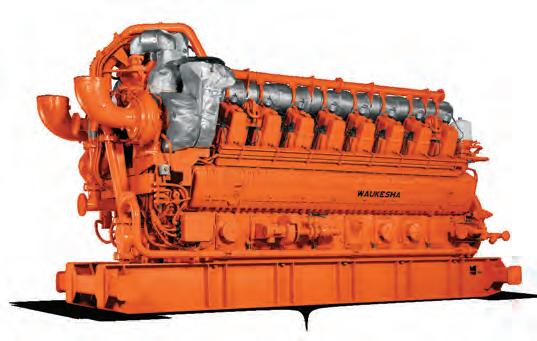
275GL+ NATURAL GAS ENGINE
Our biggest natural gas engine is among the industry’s most efficient and can be on your site quickly and affordably. Continuous updates and breakthrough features have lengthened service intervals and increased runtimes while maintaining that legendary Waukesha fuel efficiency and low emissions.
Enabling clean hydrogen compression: A breakthrough in sealing technology
As the hydrogen economy gains momentum, industries worldwide are under increasing pressure to accelerate the shift toward cleaner, more sustainable energy systems. At the core of this transformation lies a critical challenge to develop technologies that not only deliver performance and reliability but also meet rigorous decarbonization and emissionsreduction targets.
Clean hydrogen, particularly green hydrogen produced from renewable energy, is emerging as a cornerstone of
ABUBAKAR RASHID is a Senior R&D Engineer for Turbomachinery & Systems at Flowserve Corporation based in Kalamazoo, MI. He completed his M.S. in Mechanical Engineering from Texas A&M University & is an alum of famous Turbomachinery Lab. Abubakar actively participates in industry standard organizations and is active member of Hydraulic Institute Standard committees.
JOE BARKER (PE) is an Engineering Specialist at Flowserve Corporation based in Kalamazoo, MI. He graduated from Western Michigan University with a B.S. in Mechanical Engineering. He has over 20 years of experience working with mechanical seal design, sealing systems, and fluid handling equipment. Mr. Barker is an active member of the API692 2nd edition Task Force.
the global energy transition. Yet realizing its full potential, demands innovation at every step of the value chain especially in compression and transport, where purity, safety, and zero-emission operation are non-negotiable.
In close collaboration with one of the leading compressor manufacturers, Flowserve’s engineering team has developed a water-lubricated mechanical seal purpose-built for oil-free screw compressors used in green hydrogen applications. This novel solution eliminates the need for oil or inert-gas barriers by using pure water as the sealing medium enabling truly clean, zero-emission hydrogen compression. Beyond improving operational efficiency, this technology represents a step change toward a safer, more sustainable hydrogen infrastructure aligned with global climate goals.
The need for a new approach
Green hydrogen production relies on electrolyzers powered by renewable energy to generate ultra-pure hydrogen. Once produced, the gas must be compressed, purified, and transported. These processes demand exceptional reliability and cleanliness. Conventional sealing technologies for turbomachinery often depend on oil or inert-gas barriers, which can risk contamination or introduce emissions.
To address these limitations, Flowserve partnered with a compressor manufacturer
Flowserve conducted extensive testing program of its water-lubricated mechanical seal developed for oil-free screw compressors.
to develop a zero-emission, waterlubricated mechanical seal that uses the same high-purity water employed in the electrolyzer process itself.
The use of dry screw compressors is particularly well-suited for hydrogen applications due to hydrogen’s low molecular weight and unique thermodynamic behavior. Unlike turbo compressors which rely on high flow rates and often struggle with hydrogen’s low density, screw compressors are positivedisplacement machines, compressing gas by reducing volume between meshing rotors. This allows for higher pressure ratios per casing and efficient handling of low-density gases, particularly in small- to mid-scale hydrogen installations.
In addition, screw compressors provide operational flexibility, ideal for variable loads tied to intermittent renewable energy sources, according to Flowserve. Compared to reciprocating compressors, they feature fewer moving parts, no valves, and reduced wear to deliver lower maintenance, improved reliability, and reduced operating costs (OPEX).
“Hydrogen is one of the most demanding gases to compress. It’s light, small, and prone to leakage. Screw compressors, when paired with the right sealing solution, offer a compact, efficient,
below 25 m/s and depend on lubricating oils or inert gases. Developing a highspeed, water-lubricated seal for hydrogen demanded a complete rethinking of materials, design geometries, and testing protocols.
At Flowserve, we leverage decades of expertise in sealing technology, rotating equipment, and fluid dynamics to tackle such challenges. Our engineers developed a system that meets the demanding conditions of hydrogen compression while ensuring zero emissions, uncompromised gas purity, and long-term reliability.
Key performance enablers include:
Flowserve said its Aquapac seal represents an innovation for hydrogen turbomachinery.
and low-maintenance path to clean compression,” said Joe Barker, Engineering Specialist at Flowserve. “Our goal was to make oil-free hydrogen compression not just possible, but practical for long-term operation.”
Engineering a high-speed, water-lubricated seal
Designing a mechanical seal capable of reliable operation in oil-free hydrogen service at speeds exceeding 100 m/s presented a formidable challenge. Conventional designs typically operate
■ Zero emissions and hydrogen purity: No oil or inert-gas contamination; hydrogen remains ultra-pure.
■ High-speed operation: Reliable sealing at extreme peripheral speeds with minimal wear.
■ Leakage control: Engineered for back-pressure tightness and minimal water loss.
■ System integration: Custom-fit designs for diverse compressor configurations and process parameters.
“Hydrogen compression at these speeds, without oil or inert gas, is no small feat. But it’s exactly the kind of challenge our engineering teams are built to overcome,” added Barker. “This seal demonstrates how close collaboration with customers can lead to truly industryleading innovation.”
From laboratory to proven reliability
Following design development, Flowserve conducted an extensive testing program to verify performance and reliability under real-world conditions. A total of 45 tests were performed under varied operating parameters, resulting in 700+ testing hours, 170,000 data samples, and over 5 million logged points. Tests simulated field scenarios including:
■ Continuous and variable-speed operation
■ Temperature and pressure upsets
■ Dry turning during assembly
■ Slow roll and emergency trip events
The results validated the seal’s integrity, confirming no hydrogen leakage and stable operation at speeds up to 12,500 RPM. The performance results fully qualified the new seal design, providing OEMs and operators with a proven, zero-emission solution for hydrogen compression.
Leveraging data analytics for next-generation design
To complement experimental validation, the team developed a data-analytics framework to extract insights from high-resolution test datasets. Using multivariate correlation analysis and regression modeling, engineers identified key parameters influencing performance such as chamber pressure, rotational speed, and barrier-fluid flow.
“With the vast amount of test and operational data available in turbomachinery systems, data analytics and machinelearning techniques are transforming how we design, test, and optimize mechanical systems,” said Abubakar Rashid, Senior R&D Engineer at Flowserve. “By applying predictive modeling, we can understand complex interdependencies, improve reliability, and accelerate development cycles. As we advance, our future sealperformance models will incorporate machine-learning frameworks and expanded datasets to enhance robustness across geometries and operating regimes, including cross-validation with field data.”
A step forward for the hydrogen economy
“The Aquapac seal represents more than a sealing solution, it is a technological innovation in hydrogen-ready turbomachinery. By eliminating oil and inert gases and adopting pure water as a sealing medium, this system delivers truly clean, emission-free compression,” said Abubakar Rashid. “It enables compressor OEMs to design fully oil-free systems with greater flexibility and gives operators a reliable, maintenance-efficient, and compliant solution, all while reducing total cost of ownership.”
How fleet intelligence is redefining service, design, and value creation across the turbomachinery industry.
By Alex Fulthorpe, P.ENG, President, Blackstone Industrial Services
THE POWER OF THE FLEET: WHY DATA IS BLACKSTONE’S MOST VALUABLE ASSET
“Our approach to fleet analytics doesn’t just describe what’s happening in the field, it defines how we build, service, and evolve. It’s the heartbeat of our technology.”
A NEW CORE FOR COMPETITIVE ADVANTAGE
In a business long defined by process, horsepower, metallurgy, and engineering skill, the next frontier of differentiation isn’t hardware, it’s the combined application of historic knowledge with modern intelligence.
At Blackstone, the most powerful tool we own is not a service, best practice or machine design approach - it’s the data behind the aggregate intelligence of all working turbomachinery. Every asset we service, every retrofit we execute, every part we replace adds to a growing reservoir of fleet intelligence.
This living dataset now underpins how we modernize our business, from Liberty (our Replace-in-Kind initiative) to Revamp (our data-driven retrofit and upgrade program). It connects service, design, and supply chain into a unified system of insight — a system that makes us faster, smarter, and more valuable to
our customers. Blackstone is investing in platforms to transition from a traditional service company to a product and technology company. To do that, we must aggregate our historic knowledge, leverage our custody of machines in our service fleet, and apply modern tools and data science to create an incredible technological advantage.
TURNING DATA INTO INSIGHT
Each machine in our network contributes data: performance profiles, operational histories, maintenance outcomes, and design lineage. We are investing in tools to optimize our fleet analytics to help
evaluate fleet-level information. Blackstone is transforming reactive service and simple asset lists into predictive intelligence.
● Liberty (RIK): A history of deep knowledge of critical spares and BOM requirements allows us to develop new tools for our key clients. These tools will create data precision and drive faster, more accurate quoting and ensure interchangeability across legacy machines. It allows us to automate complex matching tasks and or kitting opportunities and manage global supplier performance with transparency and control.
● Revamp: Analytics help identify upgrade candidates across the global fleet by application, age and historical design, enabling our engineering teams to prescope retrofit opportunities and model thermodynamic improvements before the first drawing is made.
● Service Modernization: Field analytics highlight degradation patterns, reliability trends, and stress factors, helping us schedule interventions before downtime occurs and design service kits and reverse engineering interventions in real time that address root causes, not symptoms. Together, these initiatives form a feedback loop. Every project generates intelligence that improves the next one, continuously refining the way we engineer and serve.
“Data doesn’t depreciate like equipment does. It compounds in value every day.”
FROM BENCHMARKING TO PREDICTION: BUILDING THE FOUNDATION FOR MODERNIZATION INTELLIGENCE
Our fleet analytics journey is not about what we can already predict, it’s about building the capability to do so.
For decades, much of the compressor industry’s knowledge has lived in field reports, drawings, and engineering experience - valuable but largely analog data. At Blackstone, we’re investing to convert that legacy knowledge into a digital benchmarking platform capable of supporting true predictive insight over time. By organizing fleet information by age, OEM lineage, and process application, we can begin to see structured patterns across thousands of machines. This benchmarking enables us to:
● Understand the age distribution of the global fleet and where modernization demand is likely to emerge.
● Identify OEM-specific design eras that align with Liberty’s Replace-in-Kind opportunities.
● Correlate process and operating conditions with Revamp potential, focusing our engineering resources where performance improvement will have the greatest impact.
Today, this framework gives us clarity with a measurable view of where our customers’ assets stand within the global fleet landscape. Over time, as more data is digitized and connected, this same
framework will evolve into a predictive model, one that not only reflects the past, but also anticipates the next modernization cycle.
We see this as a strategic transition: from analog insight to digital foresight. It’s the bridge between how we’ve traditionally understood the fleet and how we will shape its future.
WHERE TECHNOLOGY MEETS COMMERCIAL VALUE
Fleet analytics are not just a technical capability; they are a business model accelerator.
By integrating analytics into quoting, inventory alignment, and lifecycle management, we turn service into strategy. Data allows us to price risk accurately, target upgrades effectively, and tailor service agreements around measurable outcomes.
This shift transforms the conversation with customers from transactional to strategic. It’s no longer about “parts and hours” - it’s about performance, uptime, and confidence.
LOOKING AHEAD: SCALING THE DATA ADVANTAGE
Blackstone’s roadmap for fleet analytics focuses on three major fronts:
● Automation: Expanding analytics to drive quoting, configuration, and failure prediction autonomously.
● Integration: Embedding data insights directly into engineering and supplychain workflows for faster, more consistent decisions and supply.
● Enablement: Using data to accelerate global rollout of Liberty and Revamp, with scalable systems that shorten lead times and improve margins.
The goal is clear: to make data not a by-product of operations, but the core operating system of our business.
CONCLUSION:
TURNING KNOWLEDGE INTO FORESIGHT
Blackstone’s greatest advantage today lies not in claiming predictive perfection, but in building the foundation for it. We are systematically transforming decades of analog data, engineering expertise, and field experience into a unified digital intelligence that will guide how we modernize the global compressor fleet.
The insights emerging from this effort already shape how we design parts, plan interventions, and prioritize modernization opportunities. As our data matures, so will our ability to forecast, model, and deliver those outcomes with confidence.
This evolution won’t happen all at once. But each investment in analytics, benchmarking, and digital infrastructure brings us closer to a future where modernization isn’t reactive, it’s anticipated.
The true value of our fleet lies not just in the machines we service, but in what they’re teaching us. As that knowledge becomes digital, it becomes exponential. And that, more than any single program or tool, will define Blackstone’s next decade of innovation.
www.blackstoneindustrial.com
Looking Ahead: Scaling the Data Advantage
Blackstone’s roadmap for fleet analytics focuses on three major fronts:
Expanding analytics to drive quoting, configuration, and failure prediction autonomously.
Embedding data insights directly into engineering and supply-chain workflows for faster, more consistent decisions and supply.
Using data to accelerate global rollout of Liberty and Revamp, with scalable systems that shorten lead times and improve margins.
By Michael Schulze, Joel Sanford, and Sam Rotheram, Siemens Energy
Abstract
This paper presents a method for early prediction of long-term developing issues in reciprocating compressors via periodic capture and correlation of mixed sensor data in different monotonic domain spaces. It shows how discrete signal transmissions from sensors measuring pressure (crank angle), vibration, frequency/Fast Fourier Transforms (FFTs), etc. can be used to build spatial heatmaps along a vertical time axis. As the time axis is common for all sensor data, relationships can be identified that correlate with specific compressor failure modes. For illustrative purposes, the paper shows how the method has been applied for early detection of a piston ring and valve failure in a reciprocating compressor operating in natural gas service. Once a specific pattern has been identified, failure mode effects analysis (FMEA) can be applied as part of a reliability-centered maintenance (RCM) approach. The operator can then take action to manage the problem by procuring the necessary replacement parts and scheduling service, or by altering the unit’s operation to minimize the likelihood of failure before the next planned maintenance period.
MICHAEL SCHULZE, Siemens Energy. Fort Collins–CO, USA michaelschulze@siemens-energy.com
JOEL SANFORD, Siemens Energy. Painted Post-NY, USA joel.sanford@siemens-energy.com
SAM ROTHERAM, Siemens Energy. Aberdeen, UK. samuel.rotheram@siemens-energy.com
A novel approach to multi-domain signal analyses on reciprocating compressors and integral gas engines
1 Introduction
In recent years, advancements in both software and hardware have enabled significant improvements in machine health monitoring techniques. Reciprocating compressors and integral gas engines, with their high maintenance requirements, have been seen as an ideal target for data collection and analysis. Despite digitalization efforts, however, early automated detection of problems caused by normal wear on piston rings, valves, packing, bearings, etc. remains elusive. These issues often develop very slowly over days or weeks and can go unnoticed until an accelerated failure occurs at which point, very little can be done to prevent machine downtime.
The method described in this paper aims to address this pain point by enabling early detection of faults via the use of spatial heat map plots for data visualization. The approach has a low digital footprint (i.e., does not require continuous real-time data collection which reduces the need for preprocessing) and is well suited for analysis using machine learning (ML) and artificial intelligence (AI) based image recognition. Additionally, by creating a common time axis across different domain spaces, relationships can be identified between sensors that correlate with specific
failure modes. This capability is highly valuable, as it allows operators to optimize service schedules and ensure spare part availability to support a reliability-centered maintenance (RCM) approach. It may also be possible in certain circumstances to adjust the compressor’s operation to delay a failure until the next planned shutdown.
2
Current machine health monitoring approaches
Machine health monitoring of reciprocating compressors is typically performed along two parallel branches. Issues that develop rapidly (i.e., in a matter of seconds), such as bolt or connecting rod failures, are extremely difficult to predict and are managed with programmable logic controllers (PLCs), which are designed to shut down the machine to minimize damage.
Slow developing issues, like small leaks caused by failing piston rings, faulty valves, rider band wear, etc. are addressed typically via periodic onsite monitoring conducted every ~1-3 months. Some real-time tools are also available that can provide early notifications of some failure modes. During these campaigns, data is captured from various sensors representing different domain spaces. For example, vibration and ultrasonic sensors
Fast Fourier Transforms (FFTs.)
capture bursts of high frequency data in the time domain and are then processed to represent different spectral bands for closer examination. Other variables, such as pressure behavior and rod drop, which are typically analyzed in the crank angle domain (CAD) or as a function of cylinder volume (%Vol), are captured and evaluated over more prolonged periods of time. This data is collated into reports which the equipment owners use to manage the operation of the machine.
While periodic monitoring is effective for identifying significant changes in a compressor’s behavior, such as a large valve leak between two testing periods (shown in Figure 1), it is usually more difficult to determine the root cause of the performance deviation early on. Smaller leaks, which may be indicative of a larger underlying problem, can go undetected entirely. Displaying real-time (automated monitoring) and/or three dimensional (3D) mixed signals across different data domains may help with detection and root cause determination. However, this methodology has a large digital footprint and high data transmission costs. Overall, multi-domain data displays in cloud environments are uncommon and seldom the focus of an analytical investigation for reciprocating compressor applications.
3
Multi-domain data analyses using spatial heat maps
Analyzing mixed signals from different sensors is challenging due to lack of a common data domain, which makes developing a correlogram (Rxy) or coherence function (Cxy) difficult. In cylinder pressure, for example, is measured in the crank angle domain, whereas vibration is derived from velocity or accelerometers, which is measured in the frequency domain in the form of
FIGURE 2 Daily highfrequency snapshots of normalized acceleration in the frequency domain (Fast Fourier Transformation) stacked to build a spatial temporal heat map taken over approximately six months on a reciprocating compressor, documenting the development of failure modes and subsequent machine performance following service.
Introducing a third axis, such as time, offers a solution to this problem. 3D representation of data provides a visual method to track long-term changes but is unfortunately very resource intensive. Employing temporal spatial heat maps reduces the digital footprint significantly and produces a ‘shaded’ or colorized image. The image formed produces an intensity or heat map representing peaks (red shades) and valleys (blue shades), as well as the timing of their formation along the third axis. The heat maps are compact, two-dimensional (2D) waterfall charts which allow for visualization of patterns and detection of gradual changes in signals over time. As shown in Figure 2, each “layer” of the heat map represents a single sensor cycle (e.g., pressure, acceleration), measured at key locations on the compressor. As the intent is long-term machine health monitoring, taking one snapshot of data per day via a timed signal burst produces 365 lines per year, which yields the below images. Taking this data in the crank angle domain (CAD) for example with a resolution of 1 degree for one year yields an image of ~130K pixels.
As shown below, a historical data record develops with the first taken data set above and the most recent data slice below the map. The exceptionally small
FIGURE 1 A one-time snapshot of a pressure and vibration trace of a crank end (CE) suction valve leak.
digital footprint (360/720 pixels/sensor per day) is ideal for pre-processing on edge devices, such as field programmable gate array (FPGA) controllers. The controllers align the timestamp before transmitting phased signals to the cloud. Differential image analysis can then be applied for background noise removal and spatial filtering.
A benefit of color-coded heat maps when compared to analysis via traditional methods, such as scatter plots or spreadsheets, is that they are simple to interpret, giving a broad audience access to failure analysis. Visualization makes it relatively easy to see a deviation in the machine’s behavior over time. Determining the root cause of that behavior change is more complex and requires correlating heat maps that have been collected from sensors in different data domains in the temporal time step.
Employing anomaly detection algorithms1 for shapes, signal intensities, and patterns for each heat map of a representative data domain is only one
component of a failure mode identification. Stacking (i.e., overlaying) mixed signal heat maps (see Figure 3 and Figure 4) provide a much more accurate method to identify failures by cross-referencing Risk Priority Indicators (RPNs) in FMEA matrixes2. The stacked image below shows a healthy operating compressor over a period of 4 months using daily snapshots gathered from vibration and pressure sensors.
Note: For ease-of-use all heat map amplitudes in this document have been normalized for easy comparison.
Analyzing a compressor running under unhealthy conditions using this form of data stack reveals significant deviations in patterns and amplitudes. An example of differentiating faults using heat stacks is shown below. A confirmed ring leak occurring simultaneously with a valve issue shows a lower FFT frequency anomaly, whereas the valve leak signature is represented in amplitudes in higher frequencies.
Proactively training human supervised machine learning algorithms from
patterns3 that have been derived from failure mode anomalies not only aids in failure identification but also improves analysis speed and time-based prediction of developing issues. Using Singular Value Decomposition (SVD)4 methods provides further reduction in the digital footprint of heat maps and large data sets without compromising pattern recognition algorithm. This makes the method well suited for automated cloud-based analytics. In the following sections, heat maps are presented that were collected from a reciprocating compressor operating to move natural gas. The data captured included feedback from a stepless control system, as well as from pressure and vibration sensors, showing their respective FFTs.
4Case study: separation of multiple failures modes developing simultaneously Piston ring failures and valve issues are among the most common reoccurring issues faced by operators of reciprocating
FIGURE 3 Heat map stacking using normalized mixed signals for pressure and vibration in the crank angle and frequency domain of a compres-sor operating in ‘healthy’ conditions over 4 months.
FIGURE 4 Heat map stacking using normalized mixed signals of a machine operating in ‘un-healthy’ conditions. Showing fault anomaly correlation between different sensor signals and data domains over 4-months.
compressors. Both play a crucial role in maintaining compression efficiency and preventing gas leakage. When either fails, the impact on compressor performance and reliability can range from very slight to significant. Typically, a leak makes itself known by a distinct vibration pattern between the head end (HE) and crank end (CE) pressure humps in the CAD domain. These leaks develop slowly, and at first, are difficult to detect using traditional pressurevolume (PV) analytics, especially if they originate from mixed signals. However, when monitoring daily snapshots, patterns around specific CAD locations emerge. These patterns hold a wealth of information including:
■ Time of the onset of the failure mode
■ Severity of the failure mode
■ Time-based tracking and progression of failure mode
■ Cross-correlation with other sensor data
■ Failure mode identification using FMEAs
Relying on patterns presented in a heat map opposed to a one-time snapshot of data traces helps distinguish origins of failure modes hidden in mixed data domain spaces. This form of signal deciphering is
demonstrated in the following analysis of two simultaneously occurring failures. The following heat maps in this study describe vertical crosshead acceleration data collected in the crank angle domain and their corresponding FFT’s. Data has been acquired on one 3rd stage cylinder on a recip compressor running at approximately 1000 RPMs. All heatmaps have been normalized over a period of about a one-year collection cycle with automated daily snapshots that are transmitted to dedicated cloud services. The shown segments have been ‘cut out’ along the time domain to better highlight any detected anomalies.
A typical system leak presents itself in increased vibration amplitudes as shown in Figure 5 below, which is a heat map collected over a period of ~200 days.
As seen, parallel vertical bands extend over the entire data collection cycle. Those correspond to valves opening/closing that extend vibrations to piston and rod movements due to mechanical gaps and gas transport. At the top of the figure and over a period of ~40 days two higher intensity regions in acceleration are visible
and of concern. Those are at around 125° ±20° CAD and 225° ±25° CAD.
An FFT analysis taken from the acceleration data presented in Figure 5 is shown in Figure 6. Here, three temporal map segments shown representing conditions before, during, and after failure modes are detected. The first segment of the spectral representation reveals vibrations originating from a valve leak at a frequency band between 10-20kHz over a period of almost 70 days. The intensity of the band can be seen increasing from the top to the bottom, with the bottom representing the most recent data transmission. No other frequency anomalies are detected. The middle section shows a dramatic increase in the intensity of this frequency band with the addition of a secondary anomaly developing between 2-2.5kHz. That anomaly was identified as a ring leak which in turn impacted valve performance. The middle section represents a zoomed in region shown in Figure 5. After ring and valve replacements the situation stabilized significantly, which is shown in the lower segment. At the ~130 day mark a substantial reduction in vibration is clearly visible.
For comparison, once piston ring and valve were replaced the cylinder returned to normal operating condition as shown in Figure 7.
Common causes of piston ring and valve failures include normal wear and tear, insufficient lubrication, presence of foreign particles, improper sizing of the piston, thermal stress, etc. As previously stated, this failure mode typically takes multiple days or weeks to develop before being noticed in PV data. As a result, the mapping technique is an ideal candidate for automated early detection and identification of what failure mode is in progress.
5Coupling heat map studies with failure mode effects analysis (FMEA) to enable reliabilitycentered maintenance (RCM)
Identifying image signatures in stacked heat maps that are representative of specific compressor conditions is immensely valuable when combined with FMEA. Over time, building a library of these signatures
FIGURE 5 Vertical normalized crosshead accelera-tion heat map segment covering a time span of ~200 days indicating signal anomalies (red areas) over a ~40-day period stemming from confirmed ring and valve degradation.
provides a structured approach used in reliability engineering and risk management to prioritize potential failure modes in a system.
Within the context of FMEA, potential failures of and associated effects, as well as required (corrective) tasks are identified. The failure mode defines the event that causes the asset to fail, while the failure effect defines the consequence of a failure mode. For example, when a piston ring is damaged (failure mode), it can lead to cylinder wall damage, blowby, oil carryover, reduce compressor efficiency, etc. (failure effects).
A comprehensive FMEA matrix organizes failure modes by type, priority, frequency, impact on machine, environment, health, cost, etc. It also defines other adjacent problem components that may be impacted by an identified failure mode.
Over time, as more data is collected and algorithms are sufficiently trained, it may be possible to calculate the remaining useful life of certain components and incorporate this information into maintenance-related decisions. Hence, using heatmaps and pattern recognition of anomalies provides an ideal platform to automate and streamline service schedules. Linking an FMEA therefore is a necessary component for cost estimates, parts procurement, and service team assembly.
6
Conclusion
This paper introduces a nontraditional data analytics methodology to identify signal anomalies in reciprocating compressors based on singular and or mixed failure modes. Using heat maps composed of signals collected over long periods of time, visual patterns associated with slow developing issues can be identified. By using a common time axis when comparing sensors, it is possible to correlate these patterns showing anomalies along different data domains. It was shown that this technique produces an additional avenue to accurately pinpoint failure modes that may otherwise be difficult to identify. It's been demonstrated that these heat maps provide an ideal platform in the form of >
FIGURE 6 Vertical normalized crosshead acceleration FFT heat map segments zoomed into the areas of interest showing anomalies developing due to ring and valve degradation.
images, which can be effectively employed to use pattern recognition algorithms5. Specifically, they allow to define simple rectangular windows along a common time axis. Within these windows, detected failures can easily be correlated across various data domains. This method offers a streamlined approach to pinpointing issues by segmenting data in a more manageable fashion.
Furthermore, training data models under healthy machine operating conditions provides an avenue to compensate for background effects such as banding along the time axis which are a normal part of operation. This process significantly increases the sensitivity of anomaly detection.
It was discussed using FMEA matrices in conjunction with pattern signatures derived from heat maps to optimize scheduling of service activities and timely procurement of spare parts, translating into higher machine availability CT2
REFERENCES:
FIGURE 7
Vertical normalized crosshead acceleration sensor heat map segment in the crank angle domain during ‘normal’ healthy machine operation.
1 Deep Learning for Anomaly Detection. Cloudera Inc. 2020., Online paper by Cloudera AI. https://ff12.fastforwardlabs.com/
2 How to Assess Risk Using FMEA. Relyence. 2020. Relyence Corporation, Online paper (p. 1-23), https://relyence.com/
3 C. M. Bishop, Pattern Recognition and Machine Learning, Springer Verlag, ISBN-10: 0-387-31073-8, ISBN-13: 978-0387-31073-2
4 E.A. Compton, et. al., Singular Value Decomposition: Applications to Image Processing, Citations Journal of Undergraduate Research, 2020, Vol 17
5 Kolodziej, J. R., & Trout, J. N. (2018). “An image-based pattern recognition approach to condition monitoring of reciprocating compressor valves”. Journal of Vibration and Control, 24(19), 4433–4448.
GAS COMPRESSION INDUSTRY: WE KEEP IT UP AND RUNNING.
The Gas Compression industry turns to Exline for engine and compressor solutions — repair, manufacturing, thermal spray-coatings, spare parts and custom parts.
Broken? We repair it.
Spare part? We provide it.
Custom part? We manufacture it. Make it last longer? We spray-coat it.
Engineering Services
Maximize your reciprocating compressor’s full potential
As your compression partner, we offer comprehensive engineering expertise to better support you:
CORNERSTONES COROLLARY: EVOLUTION OF PIPELINES AND COMPRESSOR STATIONS
The Cornerstones of Compression series has highlighted many significant products over more than 160 years of continuous progress. This is the fifth of seven Cornerstones of Compression corollary articles that provide a look the evolution of natural gas pipelines and compressor stations. By
The Ohio Fuel Gas Company
TNorm Shade
he Ohio Fuel Gas Company was organized in 1902 as the Ohio Fuel Supply Company, following gas well drilling in central Ohio before the turn of the century. The last edition reviewed a number entries listed in a c.1923 journal, neatly
hand-printed in blue ink, which documented the equipment and brief histories of most of the Ohio Fuel Gas pipeline compressor stations. The equipment at the stations ranged 50 hp (37 kW) to 1350 hp (1007 kW), with the largest station having units totaling 14,580 hp (10,872 kW). Several more stations are reviewed in this issue.
Miley Compressor Station
Miley Compressor Station was built in 1920 in Holmes County, Ohio. It was equipped with two 485 hp (362 kW) Cooper horizontals. Shreve Compressor Station was constructed in 1920 in Wayne County, Ohio. It was equipped with two 150 hp (112 kW) Cooper horizontals. Brill Compressor Station was constructed in 1921 in Washington County, Ohio. It was equipped with four 80 hp (60 kW) Clark Brothers horizontals. York Compressor Station was constructed in 1922 in Medina County, Ohio. The compression equipment included three 485 hp (362 kW) Cooper horizontals transferred from the Perrysville Station and two new identical Cooper horizontals. Brown Compressor Station was built in 1922 in Knox County, Ohio near the village of Jelloway. It was equipped with six 160 hp (119 kW) Cooper horizontals and one 80 hp (60 kW) Cooper horizontal. Perrysville Compressor Station was built in
FIGURE 1
Hope Natural Gas Hubbell Station compressor building, 1939.
FIGURE 2 Inside view of the Hope Natural Gas Hubbell Station compressor building with four Westinghouse and two Cooper horizontal engine compressors visible, 1939.
1922 near Perrysville, Ohio. It was equipped with four 65 hp (48 kW) Miller horizontals.
Hagan Compressor Station was built in 1923 in Noble County, Ohio. It was equipped with three 65 hp (48 kW) and four 110 hp (82 kW) Watts-Miller horizontals. Heslop Compressor Station was built in 1923 in Washington County, Ohio. It was equipped with three 65 hp (49 kW) Watts-Miller horizontals. Gay Compressor Station was also built in 1923 at Stewart in Athens County, Ohio. It was equipped with three 190 hp (142 kW) Watts-Miller horizontals.
Interestingly, as the large gas fields played out, smaller ones took their place, and the engine-compressors were smaller than the huge units that were installed in the early years. Most of the large steam and gas enginecompressor manufacturers of the time originated in Ohio and Western Pennsylvania. Ohio alone included Cooper and Reeves in Mount Vernon, Miller (and Watts-Miller) in Springfield, Laidlaw-DunnGordon in Cincinnati and Rathburn-Jones in Toledo. The cost and effort involved in transporting and installing the large horizontal units favored purchasing from manufacturers that were close to the fields, and it can be seen that Ohio manufacturers Cooper and Miller dominated the Ohio Fuel Gas fleet after about 1916.
West Virginia, provide further evidence of the self-sufficient infrastructure and village that had to be built at each remote station.
Fig. 1 shows the Hubbell compressor building in 1939. The multiple engine exhaust stacks without mufflers must have provided quite a noisy “concert” in the nearby hills.
A look inside the Hubbell Station
A number of c.1939 photographs from Hope Natural Gas Company’s Hubbell compressor station, a pre-World War I era installation in
1902
The Ohio Fuel Gas Company was organized as the Ohio Fuel Supply Company.
or so
1920
Miley Compressor Station (Holmes County) and Shreve Compressor Station (Wayne County) were built, each with Cooper horizontals.
Fig. 2 is a view inside the enginecompressor building showing three of four large Westinghouse horizontal gas engine-compressors with two more Cooper horizontal units visible in the background.
The compressor cylinders on the big
1921
Brill Compressor Station (Washington County) was constructed with four Clark Brothers horizontal units.
1922
York Compressor Station (Medina County) and Brown Compressor Station (Knox County) were built, both with Cooper horizontals.
Westinghouse units are shown in Fig. 3. As was common on slow-speed compressors well into the 1950s, the gas piping was directly connected to the large, long stroke cylinders without volume bottles to reduce pulsation. Acoustic design analysis and attenuation principles were not developed until much later when higher compressor speeds and pulsation frequencies led to more piping vibration problems and failures.
Onsite power, machine shops
As was generally the case in all remote stations, all the electricity and the compressed air for the Hubbell facility was generated on site. A three-cylinder Westinghouse vertical gas engine drove a DC generator and a clutch-driven horizontal air compressor on the same drive-line to provide these utilities for the Hubbell station. Most compressor stations also had wellequipped machine shops for use in repairing machinery and equipment in the remote facility.
Fig. 4 shows several of the dozen or so company-owned dwellings that housed employees and their families on the Hubbell grounds. The grounds also had a large club house for social gatherings and with sleeping rooms for visitors to the site. CT2
1922
Perrysville Compressor Station (near Perrysville, Ohio) was constructed with Miller horizontal engine-compressors.
1923
Hagan (Noble County), Heslop (Washington County), and Gay (Athens County) stations were built, each using WattsMiller packages.
FIGURE 4
Several of the dozen
companyowned dwellings at the Hubbell Station, 1939.
FIGURE 3 Compressor cylinders on the ends of the big Westinghouse units shown in Fig. 2, 1939.
ENGINEERED-TO-ORDER VALVES A 50-year track record of success
Compressor valve failure is the #1 cause of unscheduled shutdowns, and no single valve design works in all operating environments.
Cook Compression has the depth of experience, engineering know-how, and a toolbox of proven technology to assess your equipment and offer the best solution to increase reliability and uptime – even in the most demanding conditions.
Read how Cook Compression engineered-to-order valves can boost productivity and put an end to unscheduled shutdowns at cookcompression.com/valves.
The Moment You Realize Your Company’s Total Spend on Compressor Valves
Need valves for a new compressor? Replacing existing valves? Here’s how to spend less and get more.
With conventional compressor valves, you typically spend more than twice what’s needed. That’s because each valve in your compressor requires a duplicate, spare valve set to keep the compressor running while the failed valve set is out for repair. You’ll also need to buy numerous repair kits for them.
With StraightFlo™ valves, there’s no need for duplicate, spare valve sets. Because StraightFlo™ valves are completely refurbished – onsite, in minutes – by simply replacing their interchangeable modules.
How much can you cut your valve acquisition costs? Get a quote today! straightflo-sales@atlascopco.com.