14269 N 87th Street, Suite 205, Scottsdale, AZ 85260. americas@khl.com
Navigating market uncertainty
As we digest the Dallas Fed’s latest energy survey, one conclusion is clear: the natural gas industry is facing a moment of heightened uncertainty—and early signs suggest cautious contraction despite optimistic rhetoric.
The second quarter 2025 Energy Survey by the Federal Reserve Bank of Dallas reveals that overall oil and gas activity in the Eleventh District (Texas, northern Louisiana and southern New Mexico) turned negative, with a business activity index plunging from +3.8 to –8.1. Notably, natural gas production followed suit: its diffusion index fell from +4.8 in the first-quarter to –4.5 in Q2. Even more striking, oil production dropped from +5.6 to –8.9. These readings mark a rare quarterly contraction in what many had hoped would be a steady rebound.
Survey respondents point directly to sharply higher input costs— particularly for steel and aluminum. Tariffs recently doubled to 50%, intensifying cost pressure across oilfield services. Inputcost indices climbed for both services firms and E&P operators, while margins worsened. Service firm operating margins, for instance, steepened from –21.5 to –33.4, and pricing turned negative: the services pricing index tumbled from +7.1 to –17.7.
The result: nearly half of survey participants expect to drill fewer wells in 2025 than originally planned, and roughly a quarter foresee significant cuts in drilling activity. For natural gas in particular, inactivity may persist even as prices stabilize, simply because rising drilling costs are eroding capital deployment.
Perhaps no statistic in the report is more revealing than the spike in the Outlook Uncertainty Index, which climbed to 47.1—well above firstquarter readings—reflecting widespread anxiety over trade policy, regulation, geopolitical risk and price volatility. Notably, the company outlook index remains negative (–6.4), signaling that firms are entering a waitandsee mode.
In other words, policy ambiguity—from steel tariffs to international trade battles—is throttling confidence in longterm planning, even as some signals suggest moderating inflation and modest price recovery. How should industry and policy stakeholders interpret these findings, especially with regard to the gas segment?
The Dallas Fed’s Q2 survey sends a sobering message: natural gas, despite longstanding strengths, is navigating turbulent waters. Margins are under pressure, production is contracting, and strategic uncertainty is high. For gas to play its expected role, the industry needs immediate stability—in policy, in pricing, and in planning.
Jack
Burke Editor
| jack.burke@khl.com
We are ready to show you what we can achieve together.
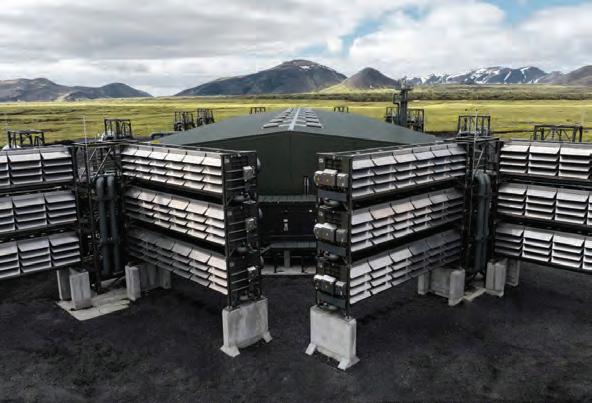
CARBON CAPTURE
DEPARTMENTS
COMPRESSORTECH2 ISSN 1085-2468, is published monthly with combined issues of January/ February and August/September by KHL Group Americas LLC, 14269 N 87th, Suite 205, Scottsdale, Arizona, 85260, USA. Periodicals postage is paid at Scottsdale, AZ, and additional mailing offices (if applicable).
POSTMASTER
Send address changes to KHL Group Americas LLC, 14269 N 87th, Suite 205, Scottsdale, Arizona, 85260, USA.
INDUSTRY TRENDS
Lines:
volatility down in first half of
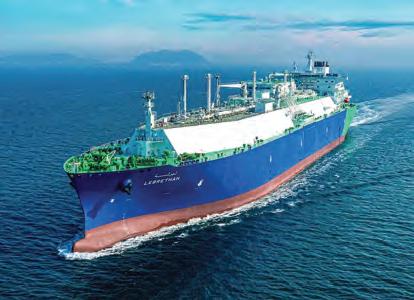
A Hanwha-built LNG carrier at sea. Hanwha has ordered a liquefied natural gas (LNG) carrier from its affiliate, Hanwha Philly Shipyard. The vessel will be constructed with advanced technology and propulsion systems, and will be the first U.S.-ordered, export-market-viable LNG carrier in almost 50 years, dating back to the late 1970s.
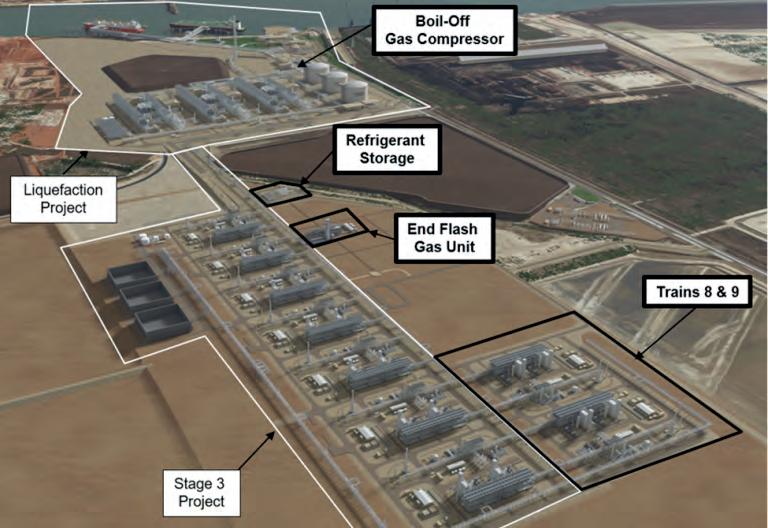
Cheniere Energy Inc. has reached a final investment decision on its Corpus Christi Midscale Trains 8 & 9 and associated debottlenecking project, aiming to add approximately 5 million tonnes per annum (mtpa) of liquefied natural gas (LNG) production capacity.
Hanwha orders U.S.-built LNG carrier
Hanwha Shipping, a U.S. subsidiary of Hanwha Ocean, has placed an order for a liquefied natural gas (LNG) carrier with Hanwha Philly Shipyard — the first U.S.-ordered, export-marketviable LNG vessel in nearly half a century. The groundbreaking contract, announced in late July, includes an option for a second vessel and represents a pivotal moment in the resurgence of U.S. shipbuilding
Cheniere moves forward on Corpus Christi LNG project
Cheniere Energy Inc. has reached a final investment decision on its Corpus Christi Midscale Trains 8 & 9 and associated debottlenecking project, aiming to add approximately 5 million tonnes per annum (mtpa) of liquefied natural gas (LNG) production capacity.
Construction will be led by Bechtel Energy Inc., which received a full notice to proceed.
The new development represents a key phase in Cheniere’s expansion strategy. It will bring the total capacity at the Corpus Christi site to over 30 mtpa later this decade when combined with the ongoing Corpus Christi Stage 3 project and platform-wide debottlenecking. Across both its Sabine Pass and Corpus Christi facilities, Cheniere now expects to exceed 60 mtpa of total run-rate capacity by 2028, a more than 10% increase from prior guidance.
The Midscale Trains 8 & 9 project includes two new trains and other infrastructure upgrades to support system-wide optimization. This is part of a broader growth roadmap that includes potential brownfield expansions at both Corpus Christi and Sabine Pass. If fully built out, Cheniere’s total liquefaction capacity could reach approximately 75 mtpa by the early 2030s.
capacity for the global LNG trade.
“This is the first time in almost 50 years that a U.S.-ordered LNG carrier capable of serving the export market will be built,” said Ryan Lynch, president and CEO of Houstonbased Hanwha Shipping. “We’re excited to leverage Hanwha’s world-class shipbuilding prowess to equip American industrial partners with the skills to construct nextgeneration LNG carriers.”
Hanwha Ocean, one of the world’s top builders of LNG carriers, will support the project through a joint-build model. While a significant portion of the vessel’s construction will be carried out at Hanwha’s Geoje shipyard in Korea, Hanwha Philly Shipyard will handle compliance with U.S. Coast Guard regulations and safety standards. Over time, Hanwha plans to transfer more advanced shipbuilding technology to its U.S. yard.
The vessel ordered by Hanwha Shipping will feature advanced propulsion systems and energy-efficient technologies in line with next-generation environmental and performance standards. While the immediate plan is to fulfill internal Hanwha Group transport needs, the long-term goal is to establish a robust U.S.-flagged LNG carrier fleet capable of competing globally. CT2
DELFIN MIDSTREAM has moved a step closer to reaching a final investment decision (FID) on its floating LNG export project in the Gulf of Mexico, announcing new agreements with Siemens Energy, Samsung Heavy Industries (SHI), and Black & Veatch. The deals secure key turbine manufacturing capacity and advance detailed vessel engineering work.
Houston-based Delfin said it has signed an agreement with Siemens Energy to reserve manufacturing slots for four SGT750 gas turbine mechanical drive packages.
IMAGE: CHENIERE
Trains 8 & 9
JERA agrees to U.S. LNG buys
JERA Co., Japan’s largest power generation company, has finalized a series of long-term agreements to procure up to 5.5 million tonnes per year (MTPA) of liquefied natural gas (LNG) from the United States, reinforcing its strategy to diversify fuel supply and strengthen energy security for Japan and Asia.
The agreements include Sales and Purchase Agreements (SPAs) with NextDecade Corp. and Commonwealth LNG, along with Heads of Agreement (HOAs) with Sempra Infrastructure and Cheniere Marketing LLC, to secure future volumes from projects in Texas and Louisiana. The LNG will be delivered on a Free on Board (FOB) basis with no destination restrictions.
According to an analysis by S&P Global cited during the announcement, the cumulative impact of the new offtake deals could contribute approximately $200 billion to U.S. GDP. The total value of these new transactions also exceeds JERA’s existing U.S. equity investments, which stand at $6 billion across LNG and power generation assets. JERA is already one of the largest LNG buyers globally and a major player in U.S. LNG procurement, with existing offtake contracts totaling 3.5 MTPA from Freeport LNG and Cameron LNG, plus a 2023 agreement with Venture Global CP2 LNG for 1.0 MTPA.
These units will drive the mixed-refrigerant compressors central to Delfin’s offshore liquefaction process. The SGT-750 is a modular, mid-sized turbine designed for high efficiency and operation in demanding environments—an ideal fit, according to Siemens, for floating LNG (FLNG) operations.
If the company reaches FID as planned in the fall, it would mark the next major step in the development process and likely cement Delfin’s position as the operator of the first U.S. offshore LNG export terminal.
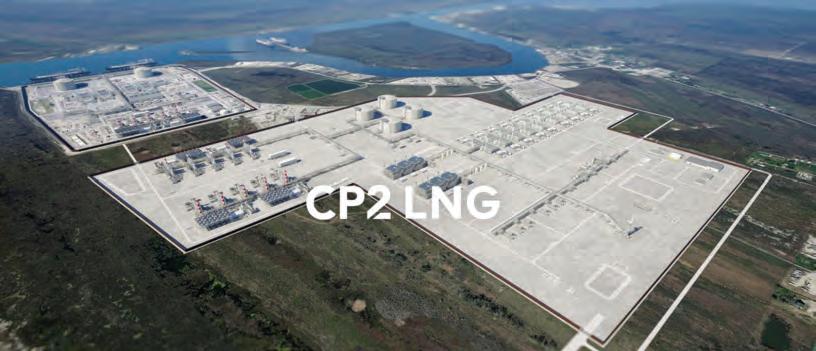
Venture Global makes final investment decision on $15.1 billion CP2 LNG project
Venture Global LNG Inc. has made a final investment decision (FID) and closed $15.1 billion in project financing for Phase 1 of its CP2 LNG export terminal and the associated CP Express pipeline, marking what it called the largest standalone project financing in history.
The commitment, backed by more than 30 international banks, is the latest in a string of high-profile transactions by the Arlington, Virginia-based LNG developer. CP2 becomes Venture Global’s third major project on the Louisiana Gulf Coast, following Calcasieu Pass and Plaquemines LNG.
MATADOR RESOURCES CO. and its midstream affiliate, SAN MATEO MIDSTREAM LLC, announced several leadership promotions, aimed at strengthening the company’s executive team as it expands operations in the Delaware Basin.
Collectively, the company’s facilities now represent 43.5 million tonnes per annum (MTPA) of contracted export capacity.
The facility will begin LNG deliveries in 2027. CP2’s Phase 1 production will be supported by long-term sales and purchase agreements (SPAs) with customers across Europe, Asia and other international markets.
At full buildout, CP2 LNG will have a peak capacity of 28 MTPA. The facility’s location near Venture Global’s existing assets in Cameron Parish gives it access to existing infrastructure and natural gas pipeline networks. CT2
Bryan A. Erman has been promoted to co-president, chief legal officer and head of M&A. William D. Lambert will now serve as executive vice president, chief financial officer and head of strategy.
In the midstream division, Brian J. Willey, formerly Matador’s chief financial officer, has been named executive vice president – midstream at Matador and executive vice president, chief administrative officer and chief legal officer at San Mateo.
Robert T. Macalik has been promoted to executive vice president – administration and finance at Matador and chief financial officer of San Mateo.
Venture Global LNG Inc. has made a final investment decision (FID) and closed $15.1 billion in project financing for Phase 1 of its CP2 LNG export terminal and the associated CP Express pipeline.
IMAGE: VENTURE GLOBAL LNG
IHI and GE Vernova open ammonia combustion test facility in Japan
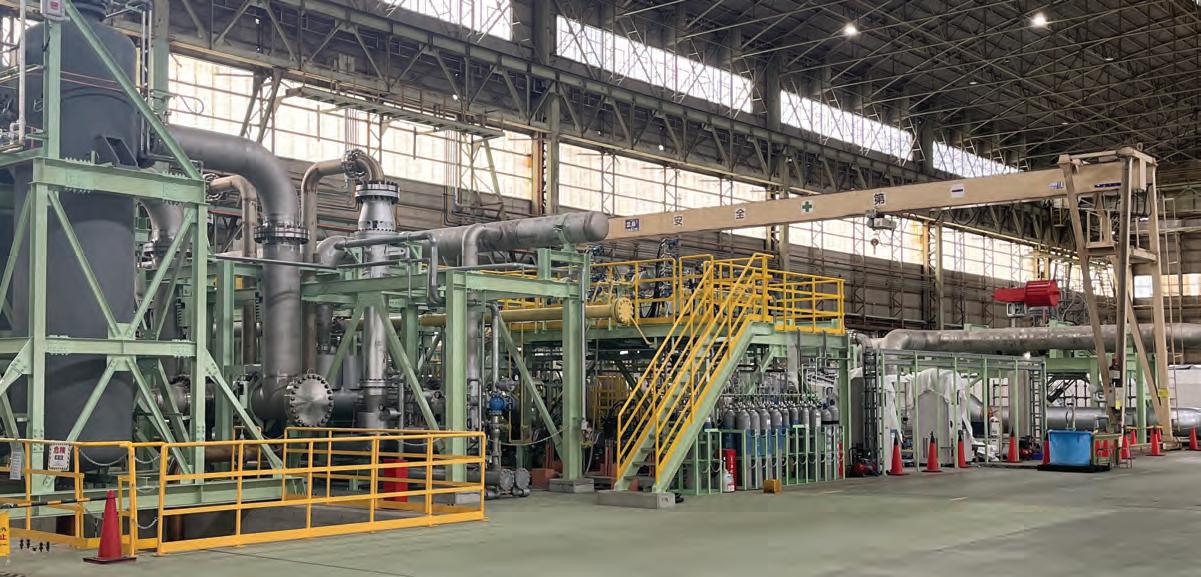
IHI Corp. and GE Vernova have completed construction of a large-scale combustion test (LCT) facility in Hyogo, Japan, as part of their joint effort to develop carbon-free gas turbine technology using ammonia as
a primary fuel source. The announcement marks a key milestone in a multiyear collaboration to commercialize ammoniafueled power generation systems by the end of the decade.
Coastal Bend LNG launches development of 22.5 Mtpa export terminal on Texas Gulf Coast
Coastal Bend LNG announced plans to develop a 22.5 million ton per annum (Mtpa) natural gas liquefaction and export facility along the Texas Gulf Coast, marking a significant addition to the next wave of U.S. LNG infrastructure.
The proposed project will include up to five liquefaction trains, each with 4.5 Mtpa capacity, as well as cogeneration, LNG storage tanks, and export systems designed to support marine shipping, bunkering, and ISO container transport. In line with growing global demand for lower-emission fuels, the facility will integrate carbon capture, transport, and storage across both liquefaction and cogeneration operations.
“We are responding to growing global demand for low carbon intensity LNG,” said Nick Flores, CEO of Coastal Bend LNG. “The integration of carbon capture on both our liquefaction and cogeneration facilities will deliver low carbon intensity LNG while monetizing both 45Q tax credits and our low-carbon products.”
According to the company, carbon capture will be a core element of the project’s emissions profile. The use of cogeneration—where electricity and process heat are produced simultaneously—along with CO2 capture and sequestration is expected to reduce the overall carbon intensity of the exported LNG compared to conventional production.
Coastal Bend LNG anticipates beginning the pre-filing process with the Federal Energy Regulatory Commission (FERC) in 2025.
Located at IHI’s Aioi Works facility, the new test site is specifically designed to support full-scale combustion testing under GE Vernova’s F-class gas turbine operating conditions. This includes the capability to replicate real-world pressures, temperatures, and flow rates for both air and fuel—key parameters for validating nextgeneration combustor designs.
The facility will serve as a hub for joint development under a 2024 technology roadmap signed by the two companies. The agreement targets the deployment of a 100% ammonia-capable combustion system by 2030. Testing at the new site is expected to begin this summer. CT2
ENERGY TRANSFER has reached a positive financial investment decision (FID) for the expansion of its Transwestern Pipeline to increase the supply of natural gas to markets throughout Arizona and New Mexico from Energy Transfer’s premier asset base in the Permian Basin. The Desert Southwest pipeline expansion project consists of 516 miles of 42-inch pipeline and nine compressor stations in Arizona, New Mexico and Texas. The design capacity of the pipeline is 1.5 billion cubic feet per day (Bcf/d).
Overview of large-scale combustion test facility built in IHI’s Aioi Works. IMAGE: IHI
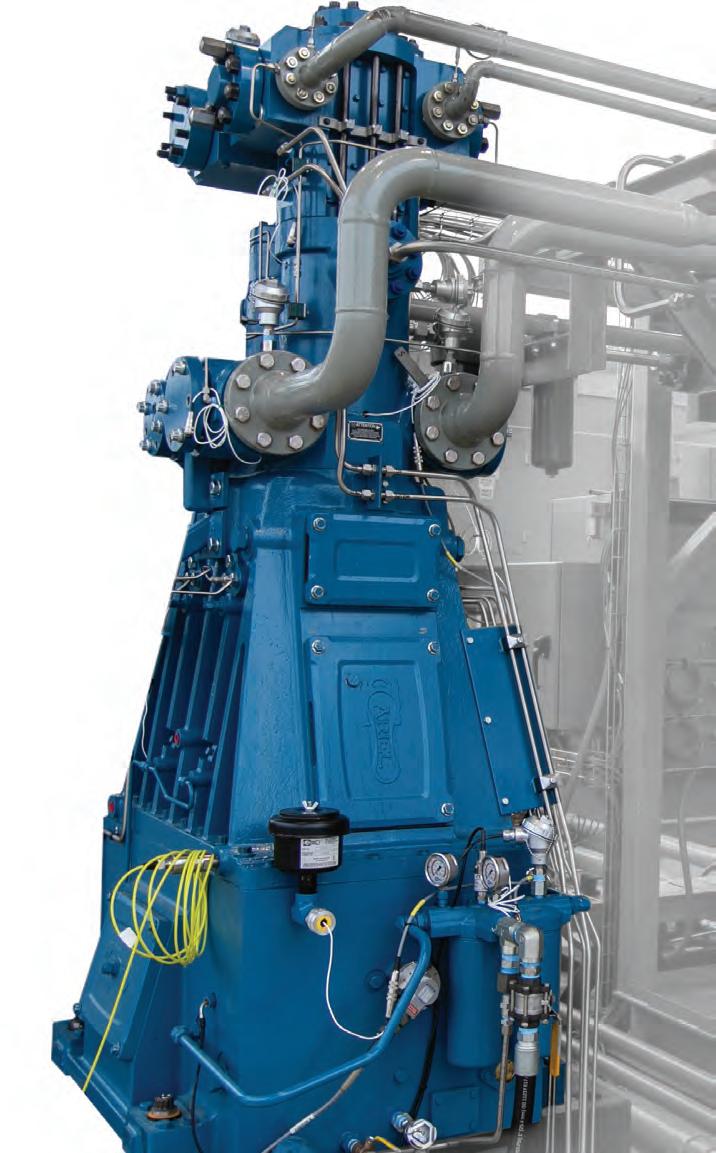
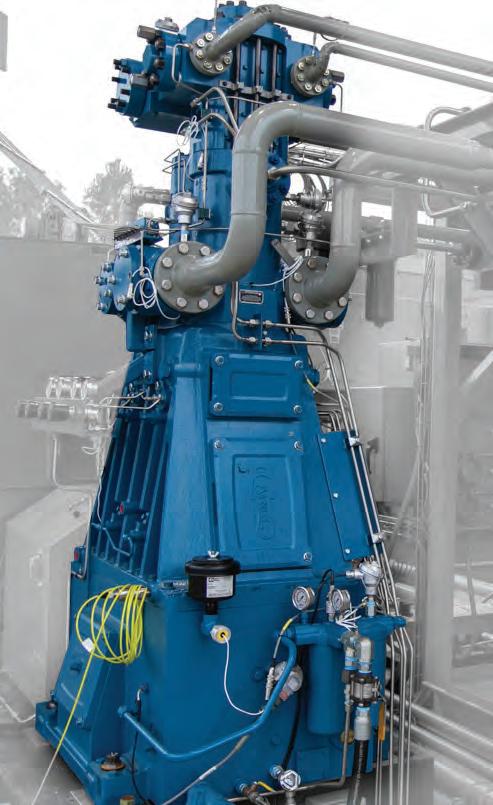
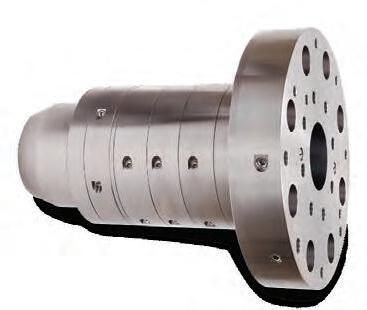
THE ARIEL KBH.
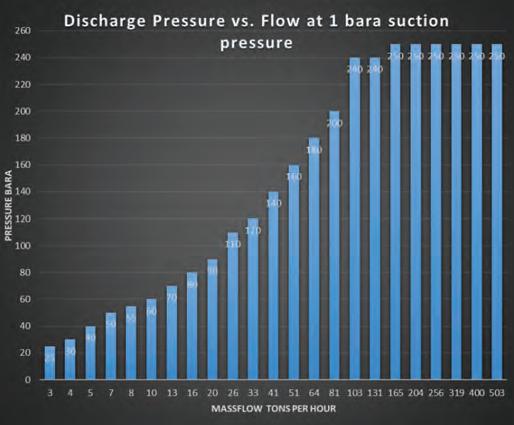
25 to 500 Bar at 250kg/hr
Ariel’s KBH is a vertically oriented, non lubricated, reciprocating compressor designed to maintain high gas purity, featuring the latest advanced materials allowing for optimal compression efficiency and reliability. Ariel KBH compressors can compress hydrogen gas to pressures up to 7,250 psig (500 barg) for trailer filling, hydrogen mobility, and other hydrogen storage and transport needs.
Find out more at arielcorp.com/hydrogen
U.S. natural gas price volatility eased in first half of 2025 as inventories rebounded
Market volatility in U.S. natural gas prices moderated through the first half of 2025 as storage inventories recovered and seasonal patterns returned to more typical levels, according to data from the U.S. Energy Information Administration (EIA).
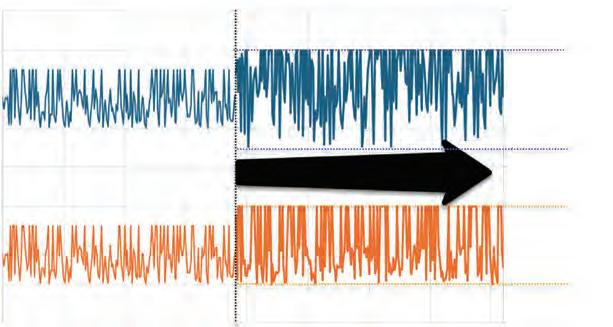
The EIA reported that historical volatility in the daily Henry Hub front-month futures price—a key benchmark for U.S. natural gas— fell from 81% in the fourth quarter of 2024 to 69% by mid-2025. The decline suggests a stabilizing market environment following several years of extreme price swings driven by supply-demand imbalances and storage fluctuations.
Natural gas markets have experienced heightened uncertainty since 2022, when both unusually high and low inventory levels contributed to sharp price movements. In contrast, recent quarters have seen more consistent seasonal behavior, as storage builds and withdrawals aligned more
closely with historical norms.
Historical volatility measures the degree to which daily prices deviate from their average over a given period. Price volatility tends to rise during periods of supply disruptions or unexpected demand surges and typically falls when inventory levels are stable. The EIA’s Weekly Natural Gas Storage Report showed a sustained ramp-up in
injections beginning in mid-March/ The robust storage rebuild helped ease market fears over supply shortfalls, contributing to the drop in price volatility observed. The EIA said the combination of higher inventories, record injection volumes, and seasonally consistent pricing behavior indicates a more balanced natural gas market heading into the second half of the year. CT2
Solutions for Tomorrow‘s Energy Infrastructure
At NEUMAN & ESSER, a century of Hydrogen compression expertise meets the technologies required for a decarbonized society. As an OEM for reciprocating compressors, electrolyzers and reformer systems including HRS, we bring in all plant components along the value chain and balance them for the optimal overall solution.
Family-owned for almost 200 years, today more than 1,600 employees are committed to bringing challenging projects to life around the world – from evaluating project feasibility, through engineering, construction, and commissioning to digitally supported 360° service during operation.
Enjoy our new Web Presence: www.neuman-esser.com
Baker Hughes to supply compression tech for Eni’s Liverpool Bay CCS project
Baker Hughes has been selected to provide carbon dioxide (CO₂) compression equipment to Saipem for the Liverpool Bay Carbon Capture and Storage (CCS) project, a key component of the United Kingdom’s HyNet industrial decarbonization initiative.
The contract, awarded in the first quarter of 2025, includes three centrifugal CO₂ compressor trains driven by electric motors, along with gearboxes supplied through
Talos
the company’s Lufkin Gears division. The equipment will be installed at Point of Ayr in North Wales, where an existing gas treatment facility is being converted into a CO₂ electrical compression station. The station will inject captured carbon dioxide into depleted offshore gas reservoirs under Liverpool Bay for permanent storage.
The Liverpool Bay CCS project recently achieved financial close, formalizing a partnership between project operator Eni
Energy unveils new strategy to become leading offshore pure-play producer
Talos Energy Inc. has announced a revamped corporate strategy aimed at transforming the company into a top-tier pure-play offshore exploration and production (E&P) operator. The new plan, spearheaded by President and CEO Paul Goodfellow, centers on enhancing operational performance, scaling offshore assets, and growing free cash flow through disciplined capital management and selective acquisitions.
Goodfellow, who joined the Houston-based company in March 2025, said the strategic overhaul follows a comprehensive review of Talos’s business and the broader market outlook. “We anticipate a shift in the global exploration and production market, with offshore basins expected to play an increasing role in global oil production,” he said.
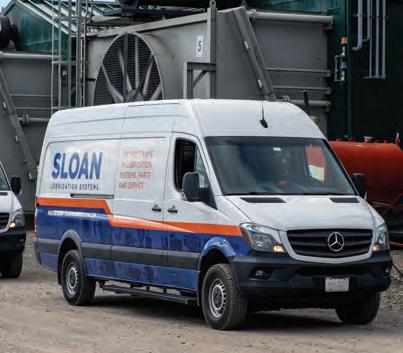
SLOAN LUBRICATION SYSTEMS has named Samantha Fox as its new Director of Sales, a move the company said will support its continued growth strategy and reinforce its commitment to delivering a seamless, customer-first experience.
Middough Inc., where she served on the company’s leadership team and played a key role in launching a new oil and gas business unit. Her previous experience also includes sales and account management roles at Wood Group USA and Highland Tank.
Baker Hughes to supply compression tech for ENI’s Liverpool Bay CCS project. IMAGE: BAKER HUGHES
Fox brings more than 15 years of experience in business development and sales leadership, having built a strong track record in the oil and gas, refining, industrial, and power markets. She joins Sloan from
COOK COMPRESSION has opened a new service center in Corpus Christi, Texas, expanding its U.S. footprint and offering cylinder-end repair and support services
and the UK government’s Department for Energy Security and Net Zero (DESNZ). Once operational, it will serve as the core transport and storage infrastructure for the broader HyNet Cluster, moving CO₂ captured from industrial emitters across North West England and North Wales via a network of new and repurposed pipelines.
The Liverpool Bay CCS project is expected to play a critical role in helping the UK meet its net-zero targets by capturing and permanently storing emissions from hard-to-abate industrial sectors. With infrastructure being developed under the HyNet umbrella, the project will support a cluster-based approach to decarbonization, one that the UK government has identified as essential to achieving large-scale emissions reductions.
Eni is the transportation and storage operator for the HyNet CCS system, which is being developed in phases to meet future demand. CT2
to customers in the Eagle Ford Shale and surrounding areas.
The facility is equipped to provide repair, reconditioning, replacement, and upgrade services for reciprocating compressor components, including packing cases, valves, pistons, piston rods, ring and rider bands, and cylinders. It will serve operators across a range of gas compression applications. The center’s location is intended to position Cook Compression closer to its midstream and upstream customer base operating in South Texas,
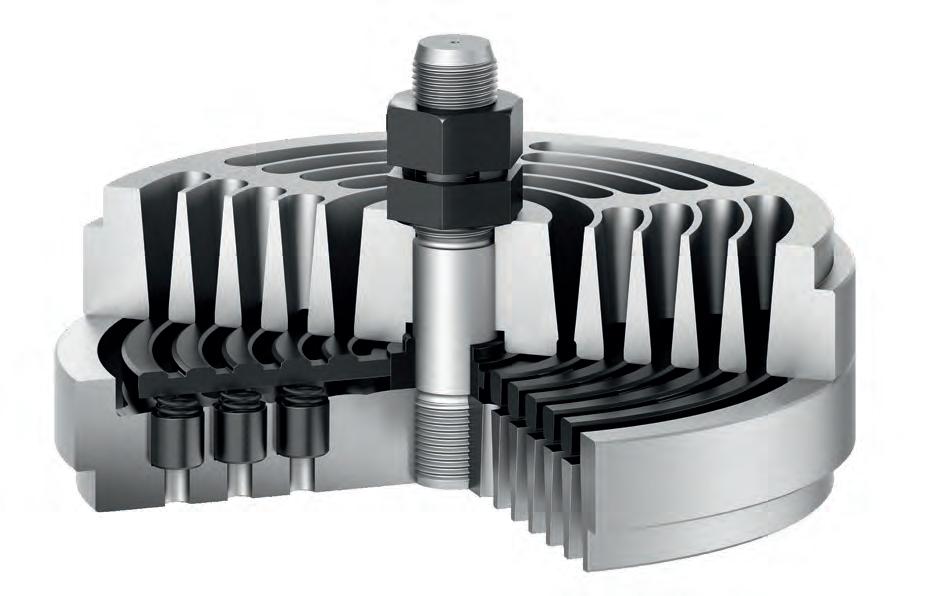
Baker Hughes acquires Continental Disc in $540 million deal
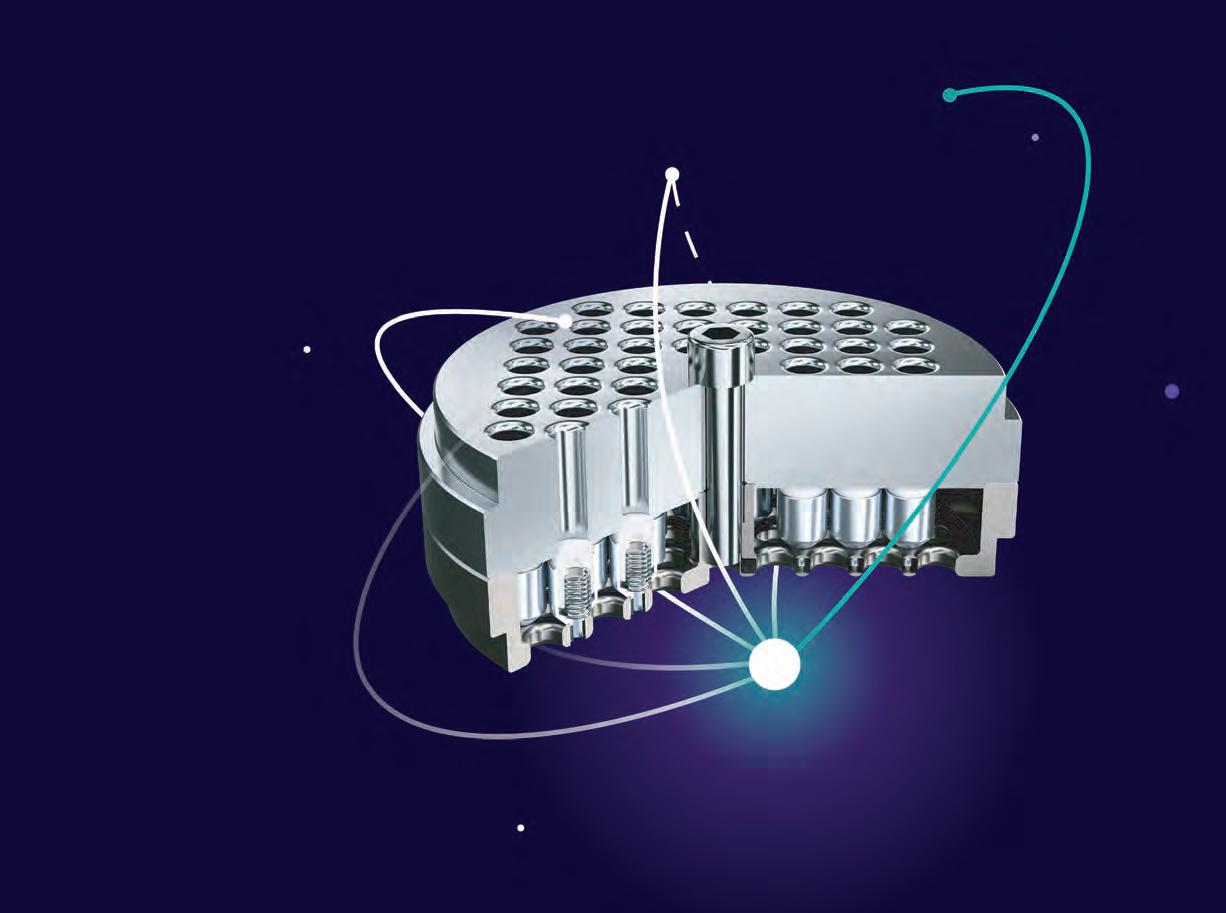
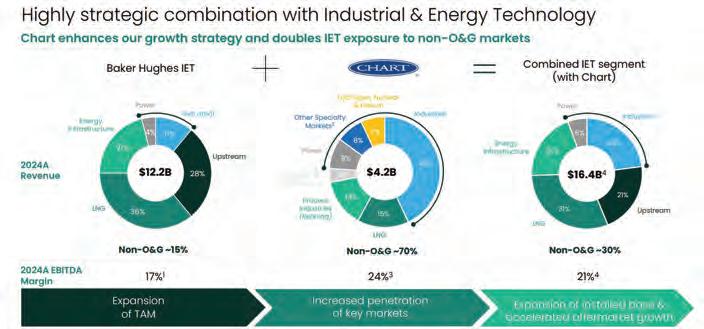
Baker Hughes acquired Continental Disc Corp. (CDC), a specialist in pressure management safety equipment with oil and gas applications, in an all-cash transaction valued at approximately $540 million.
The deal will bolster Baker Hughes’ Industrial & Energy Technology (IET) segment with high-margin, recurring revenue tied to critical safety systems.
Headquartered in Liberty, Missouri, CDC manufactures rupture discs, relief valves, flame arrestors and other safety components used across multiple industries. These products are essential to pressure control systems in refining, chemical processing, and upstream oil and gas operations.
“This acquisition sets the blueprint for our portfolio optimization strategy – focused on driving higher returns and creating long-term value for our shareholders,” said Lorenzo Simonelli, Baker Hughes chairman and CEO. “We are excited to enhance our industrial portfolio and expand our addressable market with the addition of CDC’s well-established critical pressure management solutions.”
McDermott wins offshore installation contract for Papa-Terra and Atlanta fields off of Brazil
McDermott has secured a transportation and installation contract from BRAVA Energia for offshore work at two major Brazilian oil fields—the Papa-Terra field in the Campos Basin and the Atlanta field in Block BS-4 within the Santos Basin.
The contract, defined by McDermott as “sizeable,” with an estimated value between $1 million and $50 million, will see the Houston-based engineering and construction firm deliver subsea infrastructure for two new wells at each field.
Under the agreement, McDermott will transport and install flexible pipelines,
umbilicals, and related subsea equipment, and will also provide pre-commissioning and onshore base support services.
BRAVA Energia, the most diversified independent oil and gas operator in Brazil, is developing the wells to support production ramp-up and extend the life of deepwater assets. The company is operator of both the Papa-Terra and Atlanta fields.
The new wells at Papa-Terra and Atlanta are part of BRAVA Energia’s Phase 2 development strategy at Atlanta, which is aimed at increasing output from the field while maximizing returns on existing infrastructure.
a region with ongoing demand for gas compression equipment maintenance and refurbishment.
BHE COMPRESSION SERVICES has appointed Ryan Rudnitzki as vice president of business development. He brings more than two decades of experience in the energy and compression sectors, most recently serving as senior vice president of sales – energy at RPower.
Rudnitzki spent 18 years in
leadership and technical roles at Waukesha, through its various iterations under INNIO Waukesha, GE Power, and Dresser Waukesha. He holds a bachelor’s and master’s degree in mechanical engineering from the University of Wisconsin–Madison, as well as an MBA from the University of Chicago Booth School of Business.
Based in Houston, BHE Compression Services provides large-horsepower contract compression across the U.S.
McDermott wins offshore installation contract in Brazil. IMAGE: MCDERMOTT
Wolong introduces new line
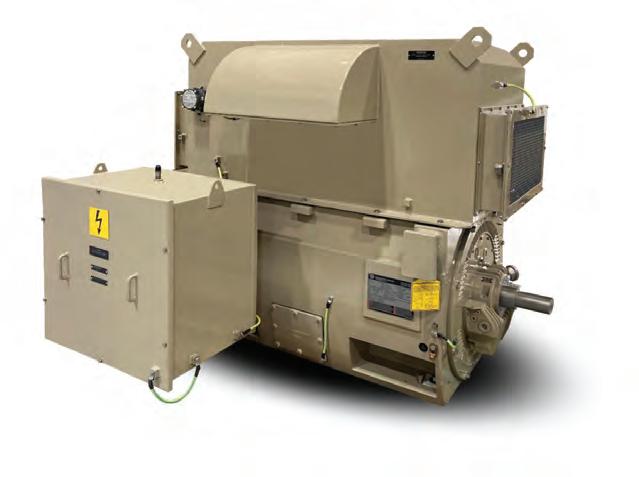
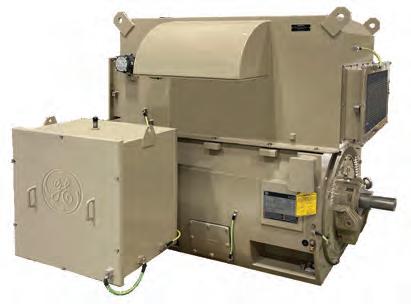
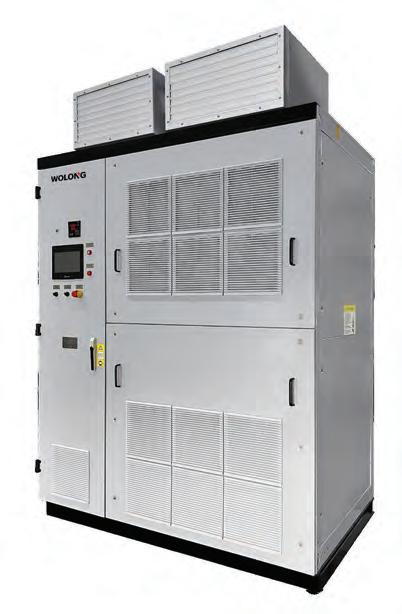
Wolong Electric America has introduced a new line of high power, low voltage motors designed for horizontal pumping applications in oil and gas production and natural gas compression. The new motors, part of the company’s Quantum line, deliver up to 1,500 horsepower at 460 volts, offering a low voltage alternative to traditional medium voltage systems.
Targeting upstream and
Renergen selects He4u consortium for Phase 2 of Virginia Gas Project
South African energy company Renergen has awarded preferred bidder status to the He4u consortium for the engineering, procurement, and construction (EPC) contract for Phase 2 of its flagship Tetra4 LNG and helium liquefaction project. The consortium includes U.S.based Chart Industries Inc., South Africa’s Wilson Bayly Holmes-Ovcon Ltd (WBHO), and Aurex Constructors.
The announcement marks a major milestone for Renergen’s Virginia Gas Project, which is poised to become a globally significant source of helium and a key supplier of liquefied natural gas to South Africa’s domestic energy market. The EPC contractor appointment is one of the final conditions required to unlock project financing from the U.S. International Development Finance Corporation (DFC).
The He4u consortium’s proposal features Chart Industries’ liquefaction technology for both LNG and helium—positioning the U.S. firm’s engineering capabilities at the center of the next phase of the development.
South African construction leaders WBHO and Aurex Constructors will manage site development and infrastructure build-out. Both companies bring decades of experience in complex industrial and energy-sector projects in the region.
Phase 2 of the Virginia Gas Project aims to scale up LNG production capacity and significantly boost helium output from Renergen’s unique natural gas reserves in South Africa’s Free State province. The project is the only one of its kind in the country, and among the very few globally that will produce helium at commercial scale outside of the United States, Qatar, and Russia.
With Phase 1 already operational and producing both LNG and helium at small scale, Phase 2 will expand the facility’s output dramatically—positioning Renergen as a pivotal player in global helium markets and a domestic supplier of low-emissions energy.
midstream operators, the 2-pole, 3-phase motors are built for demanding service in compression stations and pipeline facilities. Housed in the WPII 580 frame, the motors maintain the same physical footprint as medium voltage models, enabling high output without major infrastructure changes.
The new motors are built with invertergrade insulation and a form coil epoxy vacuum pressure impregnated insulation system. They feature insulated flangemounted sleeve bearings and are designed for use with variable frequency drives. Certifications include API 541 and 547, CSA, and suitability for use in Class I, Division 2 hazardous environments.
Wolong said the motors reduce the need for multiple machines or medium voltage conversions, offering operators a lower capital cost option for high horsepower applications. Standard features include bearing and winding temperature detectors, space heaters, and multiple access boxes to simplify installation and operation. Maintenance-free bearing options are also available.
Rated for operation from minus 40 to 50 degrees Celsius, the motors are engineered for a 20-year service life in harsh environments common to oilfield and industrial facilities. Available in voltage ratings up to 575 and 600 volts, they are suitable for compressors, blowers, fans, chillers, and municipal power generation.
Wolong Electric America is headquartered in Houston and manufactures motors in Monterrey, Mexico. The company provides low to high voltage motors, drives, controls, and related equipment for industrial applications. CT2
Wolong Electric America has launched high power low voltage motors for oil and gas pumping systems. IMAGE: WOLONG ELECTRIC AMERICA
Renergen selects He4u consortium for Phase 2 of Virginia Gas Project. IMAGE: RENERGEN
Hydrogen compression in a simple, compact package
Hydrogen at refueling stations needs to be safely stored and compressed at the right pressure without any contamination.
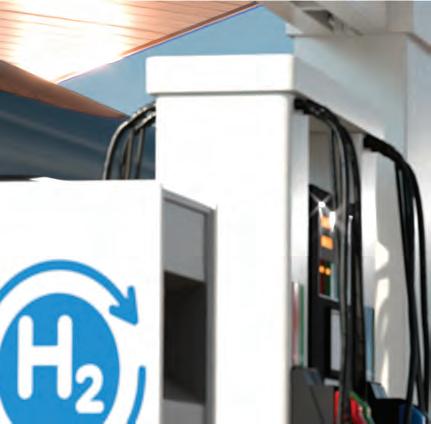
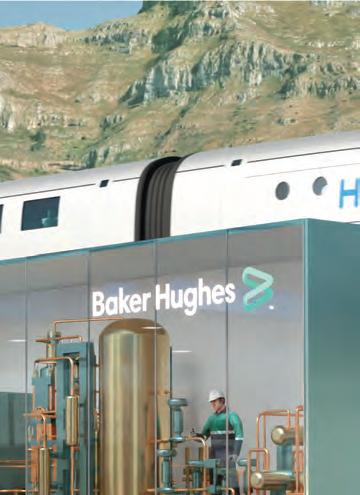
Baker Hughes’ Hydrogen Refilling Station Compression technology provides 3 or 6 tons of 99.9% pure H2 daily, at up to 550 bar, with over 99.95% reliability and 98.5% availability.
Its compact vertical design is easy to install and reduces both space requirements and maintenance.
This is how we take energy forward.
Scan for more information
Trump administration targets faster permitting for energy projects, with support from key Supreme Court ruling
Federal environmental permitting procedures are undergoing significant changes following an executive order from President Donald Trump and a landmark U.S. Supreme Court decision. The reforms aim to streamline the federal review process for major infrastructure projects, including natural gas pipelines and LNG terminals, under the National Environmental Policy Act (NEPA).
Signed into law in 1970, NEPA requires federal agencies to evaluate the environmental impacts of major projects before making decisions. Over time, critics say the process has grown unwieldy and costly.
“This modest federal procedural statute expanded into a vast regulatory bog that sucks construction projects into years of paperwork and environmental review,” wrote attorney James Burnham in a Wall Street Journal op-ed. Burnham, a former Trump administration official, cited a 2020 federal study showing the average NEPA environmental impact statement takes 4.5 years to complete.
Unleashing American Energy
On his first day in office, Trump signed an executive order titled Unleashing American Energy, directing agencies to reduce permitting delays and paperwork. The Council on Environmental Quality (CEQ) subsequently withdrew
Federal NEPA regulations undergo sweeping overhaul
its NEPA regulations from the Code of Federal Regulations in April, paving the way for individual agencies—including the Department of Energy (DOE), Department of the Interior, and the Federal Energy Regulatory Commission (FERC)—to draft their own streamlined guidelines.
By June 30, eight agencies had proposed revisions. The DOE’s proposed reforms include:
■ Eliminating outdated procedures
■ Cutting maximum review timelines from three years to two
■ Designating a lead agency for multiagency projects
■ Enforcing strict page limits and deadlines
■ Requiring reliance on verified scientific studies and limiting speculative analysis
Key Supreme Court ruling
The DOE noted that the new guidelines incorporate the Supreme Court’s May ruling in Seven County Infrastructure Coalition v. Eagle County, which significantly narrows the scope of NEPA reviews. In a unanimous decision, the Court ruled that agencies are only required to assess environmental effects directly caused by a proposed project and within their regulatory authority.
“NEPA is a purely procedural statute… a cross-check, not a substantive roadblock,” wrote Justice Brett Kavanaugh. “The goal of the law is to inform agency decision-making, not to paralyze it.”
The case involved a proposed 88-mile railway to connect Utah’s Uinta Basin oil region to national rail lines. A lower court had blocked the project over concerns about upstream drilling and downstream refinery emissions. The Supreme Court reversed that decision.
At FERC, the commission retained most of its existing NEPA regulations with only
Signed into law in 1970, NEP requires federal agencies to evaluate the environmental impacts of major projects before making decisions.
minor edits to align with the repeal of CEQ rules. In addition, FERC in June raised the cost ceiling for natural gas pipeline projects eligible for blanket certificate approval—from $41 million to $61.65 million—and temporarily waived a rule that had prevented construction from starting while rehearing requests were pending.
Opposite reactions
The American Gas Association (AGA) praised the changes. “This significant step should be followed by congressional action to permanently streamline essential natural gas infrastructure expansion,” said AGA President and CEO Karen Harbert.
Not everyone agrees. Environmental groups like Earthjustice warned the revised rules reduce transparency and public input.
“The Biden administration made explicitly clear the requirements that agencies consider climate change, environmental justice and local communities when performing NEPA reviews,” said Andre Segura, Earthjustice vice president of litigation. “The Trump administration has thrown those standards in the trash and cut people out of the people’s environmental law.” CT2
BRIAN FORD is editor in chief for Industrial Info Resources, which provides up-to-date project information on a wide range of industries across the globe. He has worked as a reporter and editor for newspapers and other publications since 1979.
UPTIME
MATTERS.
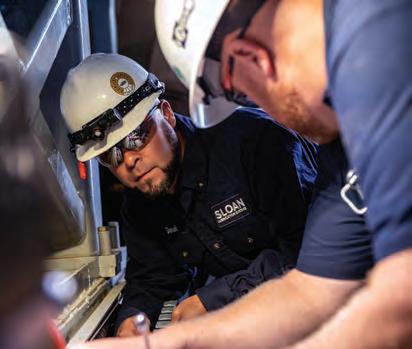
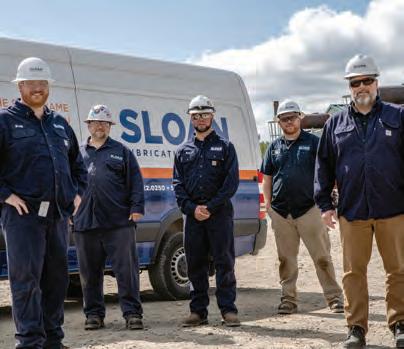
For customers who can’t afford downtime, having an experienced team committed to answering the call and servicing your critical equipment is key to keeping your operation up and running.
At Sloan, our team is ready to put their knowledge and skills to work to help with your company’s lubrication needs. From engineering design and evaluation, to installation, maintenance and emergency response, our legacy of service and performance has helped make Sloan Lubrication Systems the first name in lubrication for over one hundred years.
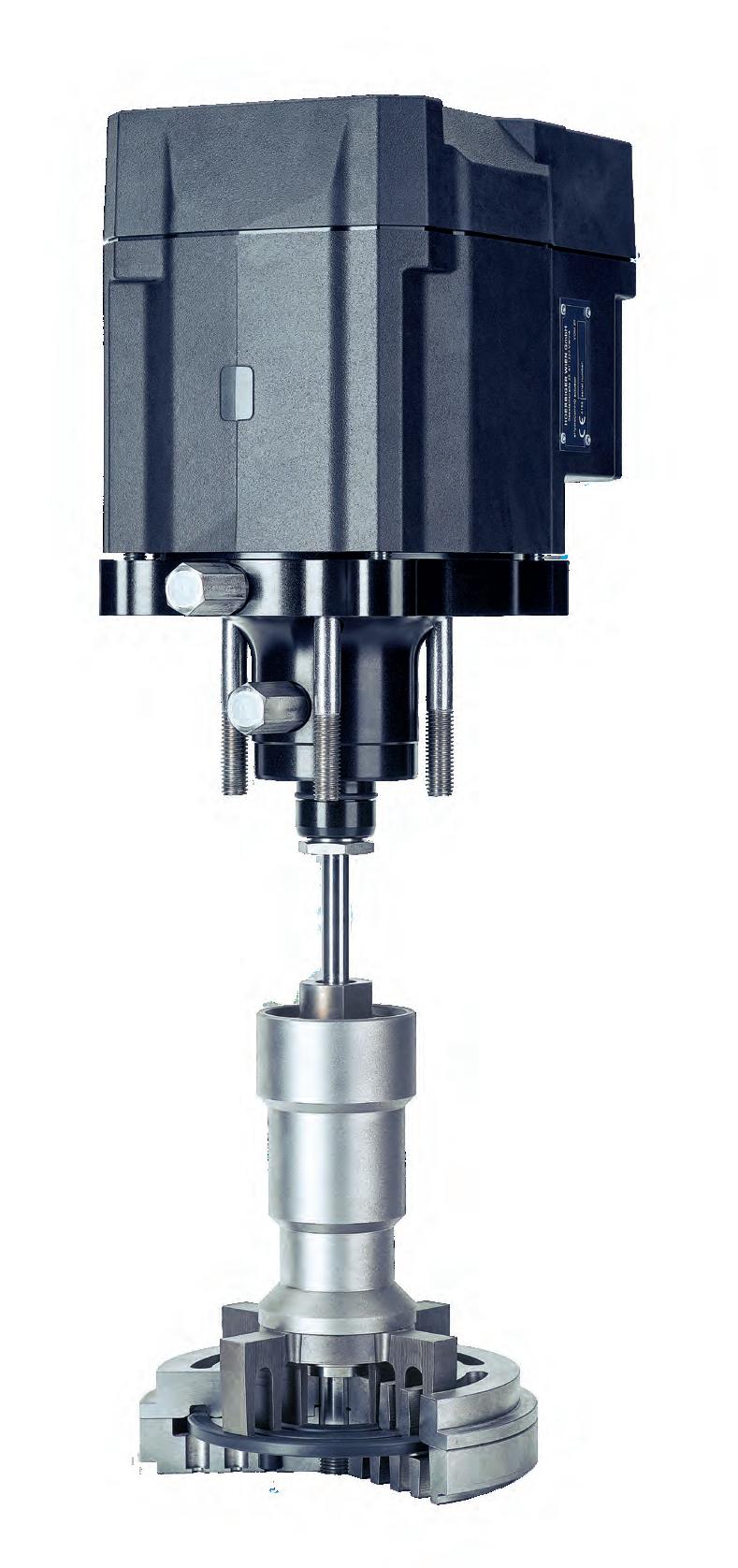
Want to improve system pressure consistency between your reciprocating compressor and electrolyzer?
eHydroCOM Electric Stepless Capacity Control System
Energy is generated locally from solar, wind, or hydro energy and then converted into hydrogen. Depending on the amount of solar radiation, different amounts of energy are available. This has a significant impact on the capacity of the electrolyzer and requires a highly precise and fast control system for the downstream reciprocating compressor.
HOERBIGER’s eHydroCOM ensures more stable suction pressure control when flow conditions change.
Improved stability results in automatic load adjustments for H2 production; fewer electrolyzer issues when starting, stopping or switching compressors; and oil-free, clean hydrogen production.
Enabling change. For a better tomorrow.
Learn more by visiting www.hoerbiger.com/ehydrocom today!
BAKKEN/WILLISTON
BLM greenlights 74-mile gas line
The Bureau of Land Management approved a 74-mile natural gas pipeline from Helena to Three Forks, MT, following a 14-day review under President Trump’s national energy emergency declaration. Construction is scheduled to begin in 2026 and wrap by 2029.
N. Dakota fracking holds steady North Dakota reported steady fracking activity in June with 13 frac crews and 32 rigs. April oil output fell by 22,000 bbl/d to 1.172 million bbl/d. State officials said large producers remain steady despite price volatility. U.S. crude briefly hit $75/ bbl in June before easing on Middle East ceasefire prospects.
Chevron closes Hess deal
Chevron finalized its $53 billion acquisition of Hess Corp. after a 20-month delay tied to ExxonMobil’s legal challenge over Guyana assets. With 463,000 net acres, Hess is one of the Bakken’s largest producers. The industry wonders whether Chevron retains or sells these assets.
Pipeline to boost ND gas use
Tulsa-based Intensity Infrastructure and Bismarck’s Rainbow Energy are building a gas pipeline from the Bakken to eastern North Dakota. Phase I is a 136-mile, 36-inch line from Watford City to Washburn, while Phase II adds 208 miles to Casselton. Combined, the system will transport over 1.5 million Dth/d by mid-2029.
MARCELLUS/UTICA
WV Supreme Court rules against Antero
The West Virginia Supreme Court of Appeals ruled that post-production costs cannot be deducted from royalty payments unless explicitly allowed in the lease. In Romeo v. Antero Resources, a 3–2 majority rejected Antero’s claim that deductions were permissible once gas reached the “first available market.” The court upheld the “point of sale” standard as
HAYNESVILLE
Mitsubishi eyes $8 billion
Aethon buy
Mitsubishi Corp. is in talks to acquire Aethon Energy’s shale and pipeline assets for roughly $8 billion. The move would give Mitsubishi significant exposure to Haynesville gas production near LNG terminals. Aethon is among the largest private U.S. gas producers.
James Willis highlights the latest news from the major North American shale plays
extending through the entire marketing and transportation process, setting a significant precedent for royalty disputes.
Repsol reports wastewater release
Repsol reported an “uncontrolled release of produced fluid” on July 13 at its 7H shale gas well in Troy Township, Bradford County, PA. The release escaped containment measures and flowed into the environment for 34 hours before a second plug halted the flow.
Shreveport ramps up urban drilling
Urban leasing in Shreveport and Bossier City is picking up as surface acreage becomes scarce. In June, Shreveport leased over 500 acres to Chesapeake Louisiana L.P. and Cypress Energy Partners, earning bonuses of $2,500–$4,100/acre and royalties up to 25%.
Kinder Morgan to invest $500 million
Kinder Morgan will invest over $500 million
PERMIAN
Coterra
holds Permian rig count
At the J.P. Morgan Energy Conference, Coterra CEO Tom Jorden said the company will maintain its nine-rig program in the Permian, reversing earlier plans to cut to seven rigs. Originally anticipating a price collapse, Coterra now expects more stable oil prices.
Palo Duro open season completed
Producers Midstream II, LLC, a Tailwater Capital portfolio company, completed a binding open season for the Palo Duro Pipeline, which will connect Waha residue gas markets in the Permian to the Anadarko Basin.
The system will leverage existing infrastructure and interconnect with NNG, Transwestern, NGPL, ANR, PEPL, EGT, and Southern Star.
Delaware pipeline expansion underway
Producers Midstream II is expanding its gas gathering and processing system in Lea County, New Mexico. Phase Two will raise processing capacity from 60 MMcf/d to 90 MMcf/d, add acid gas injection, and support varied gas compositions including H2S and CO2. Phase One wraps in Q2 2025; Phase Two follows in Q4.
Permian could add 5–10 Bcf/d with more pipelines
Diamondback Energy’s infrastructure director Michael Sollee said the Permian could unlock another 5–10 Bcf/d of gas production if new pipelines are built.
The basin produced over 25 Bcf/d in
to expand its KinderHawk gathering system in the Haynesville. Backed by life-of-lease dedications, the project will support growing volumes tied to LNG export capacity.
BKV building second CCS plant
BKV Corp. and an unnamed partner will build a CCS project at an East Texas gas processing plant. It will capture 70,000 metric tons of CO₂ annually starting in
2024, but limited takeaway capacity continues to depress local prices.
Mach buying Sabinal’s Permian assets
Mach Natural Resources is acquiring Sabinal Energy’s Permian assets for $500 million, adding 130,000 net acres and 11,000 boe/d. In a separate $787 million deal, Mach is also acquiring 570,000 net acres in the San Juan Basin from IKAV Energy. Combined, the acquisitions will nearly double Mach’s output to 152 Mboe/d.
APA curtails gas, NGLs
APA Corp. cut U.S. natural gas production by 10 MMcf/d and NGLs by 750 bbl/d in Q2 due to low prices. U.S. realized gas prices averaged $1/Mcf compared to $4/Mcf globally.
Open season for Permian-REX line
Tallgrass launched a binding open season on July 21 for a new pipeline connecting Permian Basin gas to the Rockies Express (REX) system.
The line will provide direct access to REX’s bidirectional, 1,712-mile network spanning from Colorado to Ohio.
Kinder Morgan expands Trident
Kinder Morgan raised capacity on its Trident Pipeline from 1.5 to 2.0 Bcf/d after securing an additional 500 MMcf/d from an LNG customer.
The 216-mile pipeline will run from Katy, TX, to Port Arthur’s industrial corridor. Startup is planned for Q1 2027.
Lithium extraction from Marcellus wastewater
Boston-based Gradiant has launched a lithium subsidiary, alkaLi, to operate a commercial lithium extraction facility in Susquehanna County, PA, starting in early 2026. The site will use the company’s EC2 process to extract, concentrate, and convert lithium from produced water. Gradiant claims the facility could meet 50% of U.S. lithium demand.
Coterra resumes drilling in Dimock
Coterra Energy is drilling 11 wells in a previously restricted nine-square-mile area of Dimock, PA, following a decade-long ban tied to groundwater contamination claims. After pleading to a misdemeanor and funding a new water system, the company returned to the prolific lower Marcellus play. “Dimock is among the most prolific of the prolific,” said CEO Tom Jorden.
EQT settles investor lawsuit for $167.5 million
EQT Corp. agreed to a $167.5 million settlement in a class action over its 2017 merger with Rice Energy. Investors alleged EQT overstated the merger’s benefits. A judge granted preliminary approval in June.
Encino Energy to lay off 121 employees
Encino Energy will lay off 121 workers in Ohio by mid-August, according to a WARN notice. While no reason was disclosed, the layoffs coincide with EOG Resources’ $5.6 billion acquisition of Encino’s Ohio Utica assets, expected to close by year-end.
2027. BKV will handle transport and storage via a nearby Class II injection well, avoiding high-pressure pipeline infrastructure.
Louisiana gas production rebounds Louisiana’s gas output rebounded to 336,500 MMcf in March 2025, up from a February low of 264,000 MMcf. Higher prices and supportive federal policies are credited with driving the recovery.
GeoSouthern marketing Haynesville JV
GeoSouthern Energy and Williams Cos. are marketing their GEP Haynesville II joint venture. The package includes 50,000 net acres (75% owned by GeoSouthern), 200 operated locations, and 196.3 Bcf of 2024 production—valued between $1.2-$1.5 billion.
ROCKIES
Prairie adds 11,000 DJ acres
Prairie Operating Co. is buying Edge Energy II’s DJ Basin assets for $12.5 million. The acquisition includes 11,000 net acres, 47 producing wells (88% WI), 40 drillable locations, and 16 permits. Prairie’s total DJ holdings rise to 60,000 acres, with development starting August 2025.
Tallgrass,
Crusoe plan data center
Crusoe and Tallgrass are developing a 1.8-GW AI data center in southeast Wyoming, with expansion plans to 10 GW.
PA nets $92 billion in energy investments
At the Pennsylvania Energy and Innovation Summit in Pittsburgh, Sen. Dave McCormick announced more than $92 billion in new investments for the state, with Marcellus Shale gas playing a central role. The largest project is a $25 billion Blackstone-backed
MIDCONTINENT (Anadarko/SCOOP/STACK)
Golden Gas proposes Kansas storage
Golden Gas Service Co. wrapped up a non-binding open season for its Joy Station Natural Gas Storage Project in Kiowa County, Kansas. The high-deliverability salt cavern facility offers 2.4 Bcf of firm capacity for regional utilities, power generators, and industrial users.
investment in data centers and energy infrastructure in Northeast Pennsylvania.
EQT moves ahead on MVP expansion
EQT is accelerating procurement for its MVP Boost project to expand Mountain Valley Pipeline capacity from 2.0 to 2.5 Bcf/d. CEO Toby Rice said long-lead equipment orders are underway to de-risk the construction schedule. The project adds 180,000 hp of compression and will enter service in 2029.
Ohio to study Lake Erie LNG pipeline
Ohio has earmarked $250,000 to study a greenfield pipeline in the “Lake to River” corridor, potentially linking eastern Ohio and western Pennsylvania gas to Lake Erie ports
for LNG export and power generation. The study will focus on feasibility along State Route 11.
Potomac
River pipeline finished
After eight years of permitting and litigation, Columbia Pipeline completed a 3.4-mile, 8-inch gas pipeline beneath the Potomac River. It connects Pennsylvania gas supplies to Mountaineer Gas in West Virginia.
Aspire
Energy building OH pipeline
Aspire Energy Express, a Chesapeake Utilities subsidiary, is building a $10 million intrastate pipeline in central Ohio to supply Marcellus/Utica gas to a new fuel-cellpowered data center.
CT2
Anna Kachkova provides information on the latest gas compression news from Europe
EUROPE
Atlas Copco to acquire ABC Compressors
Sweden’s Atlas Copco Group announced plans in June to acquire Spanish compressor manufacturer Arizaga Bastarrica y Compañia (ABC Compressors). The deal, expected to close in Q3 2025, will see ABC join Atlas Copco’s Air and Gas Applications division within its Compressor Technique business area.
Founded in 1943 and headquartered in Eibar, Spain, ABC also operates an assembly unit in Suzhou, China, with sales offices in India, the US, and Mexico. The company manufactures reciprocating compressors for gas and air applications
ANNA KACHKOVA is an independent oil and gas writer based in Edinburgh, Scotland. She has over 17 years’ experience of covering the energy industry, including five years in Houston, Texas, as NewsBase’s North America editor. Her email address is: aikachkova@gmail.com
NEP CONTRACT AWARDED
Halliburton to deliver for CCS project offshore England
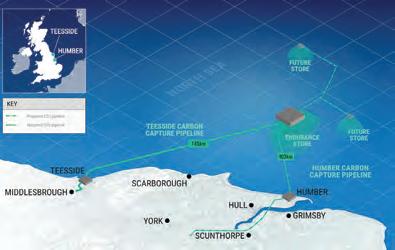
Halliburton has been awarded a highprofile contract by the Northern Endurance Partnership (NEP) to deliver completions and downhole monitoring services for its carbon capture and storage (CCS) system in the East Coast Cluster (ECC) of northeast England.
Under the agreement, Halliburton will manufacture and supply the bulk of the
A compressor from ABC Compressors, which is being acquired.
across multiple sectors.
Atlas Copco did not disclose the purchase price but said 319 ABC employees would join the company following the acquisition.
“With this acquisition we add an innovative technology which will enhance our offering within gas and air compression,” said Philippe Ernens, business area president for Compressor Technique.
EUROPEAN UNION
European Commission proposes Russian energy phase-out
The European Commission in June proposed phasing out all imports of Russian gas and oil into the EU by the end of 2027, in alignment with the REPowerEU plan introduced in response to Russia’s war in Ukraine.
Under the proposal, new contracts for
project’s equipment from its Arbroath, Scotland, completions manufacturing facility—an operation with over five decades of experience servicing North Sea operations, equipped with on-site product development, testing, and advanced production capabilities.
Jean-Marc Lopez, Senior Vice President for Europe, Eurasia, and Sub-Saharan Africa, hailed the opportunity as a chance to expand Halliburton’s footprint in CCS: “This project allows expansion of our completions
Russian gas would be banned starting January 1, 2026, with existing short-term contracts ending by June 17, 2026. Imports under long-term contracts would stop by the end of 2027, along with Russian oil imports. An exception would apply to short-term pipeline gas contracts linked to long-term agreements for landlocked countries, allowing those supplies to continue until the 2027 deadline. Reuters reported the proposal is structured to be approved by a reinforced majority—72% of member states representing at least 65% of the EU population—thus potentially avoiding vetoes from Hungary and Slovakia, which oppose a full ban.
BULGARIA
Bulgaria targets 2026 for Vertical Gas Corridor section Bulgaria aims to complete its section of the Vertical Gas Corridor by the end of 2026,
The Northern Endurance Partnership (NEP) is a joint venture formed in 2020 by bp, Equinor and TotalEnergies.
NORWAY
Shell starts production from Ormen Lange Phase III
Shell and partners announced first gas in late June from Phase III of the Ormen Lange project in the Norwegian Sea. The project added two seabed compression stations to boost recovery from 75% to 85% at the offshore field.
Shell and partners announced first gas from Phase III of the Ormen Lange project in the Norwegian Sea.
Located 120 km (75 miles) from shore at water depths of 900–1,000 meters (2,953–3,281 feet), the compressors are tied directly to the Nyhamna processing plant, with no new platform required.
The system is expected to extract an additional 1.1–1.8 Tcf (30–50 Bcm) of gross gas. Ormen Lange has been producing since 2007, with gas transported to the UK and other European markets via the Langeled pipeline.
Shell operates the field with a 17.8% stake. Other partners include Petoro (36.5%), Equinor Energy (25.3%), Orlen Upstream Norway (14%), and Vår Energi (6.3%).
Main contractors included SLB OneSubsea (offshore) and Aker Solutions (onshore). The project supports Norway’s role as Europe’s top gas supplier by maximizing output from existing assets.
Energy Minister Zhecho Stankov said in early July.
A second shipment of 2,526 pipes arrived from India, with construction of the 61-km (38-mile) Rupcha-Vetrino segment
activity and showcases Halliburton’s leadership in CCS projects. We look forward to the opportunity to deliver our services to support the NEP project.”
NEP, a joint venture formed in 2020 by bp, Equinor, and TotalEnergies, is developing a first-of-its-kind CCS infrastructure serving the East Coast Cluster. This includes CO2 gathering and onshore compression facilities, a 145-km offshore pipeline, and subsea injection and monitoring systems targeting the Endurance saline aquifer,
Bulgaria aims to complete its section of the Vertical Gas Corridor by the end of 2026, according to Energy Minister Zhecho Stankov.
scheduled to begin in September. Work is also ongoing on the 48-km (30-mile) KulataKresna segment, with 12 km (7.5 miles) laid as of July. Another shipment of 2,500 pipes is expected in August.
Once completed, the project will double capacity at the Bulgaria-Romania interconnection point.
The Vertical Gas Corridor is designed to connect gas networks across Greece, Bulgaria, Romania, and Hungary.
located roughly 1,000 m below the seabed. Initially, it’s designed to transport and permanently store up to 4 million tonnes of CO per year, with substantial expansion potential as the East Coast Cluster grows.
NEP reached financial close in December 2024, accompanied by a Final Investment Decision by its partners, setting the stage for construction to begin in mid-2025, with commercial operations targeted for 2028.
Transmission system operators from seven countries—including Slovakia, Moldova, and Ukraine—are participating in the project, which supports Europe’s broader goal of reducing reliance on Russian gas.
UK
Costain to design hydrogen storage site
UK-based engineering firm Costain has been selected by Storengy UK to design the Keuper Gas Storage Project (KGSP), an underground hydrogen storage facility in Cheshire.
The facility will feature 19 salt caverns and related infrastructure for hydrogen treatment, compression, dehydration, and transfer. It will be designed to store around 14.1 Bcf (400 million m³) of hydrogen, or 1,300 GWh.
Costain will execute two front-end engineering and design (FEED) contracts— one for solution mining and another for gas storage systems connected to the planned HyNet hydrogen network.
Work is expected to conclude in 2026 and inform Storengy’s final investment decision on the project.
UKRAINE
Ukraine to buy gas from Azerbaijan via new route
Naftogaz Group said in late July it had signed its first deal with Azerbaijan’s Socar for natural gas supply, marking a new step in diversifying Ukraine’s energy sources.
The initial shipment is being delivered through the Transbalkan corridor, which runs via Bulgaria and Romania into Ukraine.
“This is a small volume but strategically important step that paves the way for longterm co-operation,” said Naftogaz CEO Sergii Koretskyi.
Earlier in July, Naftogaz also signed a deal with Poland’s Orlen for 4.9 Bcf (140 million m³) of US-sourced LNG, which will be regasified in Poland and delivered to Ukraine. This marks the fourth such supply contract between the two companies in 2025. CT2
COMPRESSOR & ENGINE PROBLEMS
“We’re creating winwin opportunities with natural gas producers, processors and midstream operators.”
CEO Greg Harper outlines compression needs, midstream integration, and CCS market growth. By Jack Burke
CapturePoint sees growing role for CO2 infrastructure
CapturePoint, a fast-growing player in carbon capture and storage (CCS), is betting on the natural gas sector’s infrastructure as the backbone of a rapidly scaling carbon management industry.
In a recent interview, CEO Greg Harper described how the company is leveraging compression technologies, legacy pipeline assets, and subsurface expertise to develop regional sequestration hubs across North America.
“Our vision is to be recognized as a leading developer, operator and service provider
of carbon management infrastructure,” Harper said. “We’re creating win-win opportunities with natural gas producers, processors, and midstream operators.”
Midstream builds the bridge CapturePoint’s business model revolves around integrating CO₂ capture into existing energy operations. The company’s contract with ETC in Central Louisiana offers a clear example: CO2 is captured at the gas processing stage before it enters the atmosphere, then transported to permanent underground storage.
“From a broader perspective, midstream operators can repurpose or expand some existing pipelines to transport captured CO2 to storage sites,” Harper said. “That allows us to accelerate timelines and lower costs by leveraging infrastructure already in place—rights-of-way, compression stations, control systems, and operational know-how.”
GREG HARPER, CapturePoint CEO.
This integration also supports emerging opportunities in low-carbon LNG and hydrogen, where CO₂ emissions from natural gas feedstocks must be mitigated to meet regulatory and market expectations.
Engineering for CO2, not methane
While midstream operators are wellequipped to handle high-pressure gases, carbon dioxide requires specific material, design, and operational adjustments. “There are key differences in how CO2 behaves compared to natural gas,” Harper explained. CO2 is most efficiently transported in a highly compressed supercritical state, typically above 1,200 psig, requiring more robust materials and higher compression ratios than those used in typical gas transmission. Dehydration is critical to avoid carbonic acid formation, which can cause internal corrosion in carbon steel pipelines. CapturePoint works closely with vendors and OEMs that understand the thermal and mechanical dynamics of CO₂ compression. “Reliability is everything,” Harper said. “With 45Q credits tied to uptime, even small failures have major consequences. That’s why our vendors must understand the science of CO2.”
Site selection and subsurface science
CapturePoint holds more than 285,000 acres of geologic storage rights, and Harper said site selection is driven by a trio of factors: subsurface suitability, regional economic benefit, and community impact.
“Our subsurface team is one of our special sauces,” Harper noted. “They are to CO2 storage what great E&P teams are to hydrocarbon production—only their job is to find places to put molecules back into the ground safely.”
When viable sites align with existing pipeline corridors, the economics and logistics of a CCS hub become far more attractive. “Location, location, location— that’s what we live by,” Harper added.
The company begins every project with a geological and regulatory screen. “We look for sealing formations, pore space, fault-free zones, and good landowner and mineral rights frameworks,” Harper said. “From there, we build outward—designing a transport and injection system around the best rocks we can find.”
A central concern for CapturePoint is the spread of misinformation. Harper said he’s been surprised by the level of public misunderstanding around CO2 safety.
“There’s a lot of false narratives online— people comparing CO2 to explosive oil or gas leaks, which is just not accurate,” he said. “CO2 is not flammable. It’s used in fire extinguishers, not to start fires.”
CapturePoint engages first responders, local governments, and community leaders early in the development process. “We want them to understand how CO2 works, how we’ll monitor and manage it, and what they
need to have in place,” Harper said. “We’re even setting up local funds to support training and equipment purchases for emergency personnel.”
“This isn’t new technology,” he added. “It’s been around for decades, but it’s new to some communities, especially where oil and gas development hasn’t had a presence before. So, we start with education and support.”
The company has also taken a leadership role in briefing elected officials, funding responder training, and launching community benefit initiatives, particularly in parishes where CCS is entering for the first time.
From tax credits to market demand
While many CCS projects initially gained momentum through the federal 45Q tax credit program, Harper said the sector is shifting toward a more commercial footing.
“There’s a real market pull for low-carbon fuels, especially in LNG and sustainable aviation fuel,” he said. “What started as a compliance-driven business is becoming a demand-driven one.”
Harper cited recent partnerships with energy, chemical and DAC companies as evidence that industrial emitters increasingly see carbon storage as a competitive advantage. “We’re building a business model that will go from tax credit-supported to full midstream-style contracting,” he said.
“The foundation was tax credit-driven,” Harper added, “but the future is in market pull. Companies are looking to decarbonize everything—from fuels to packaging—and they’re willing to pay for reliable storage.”
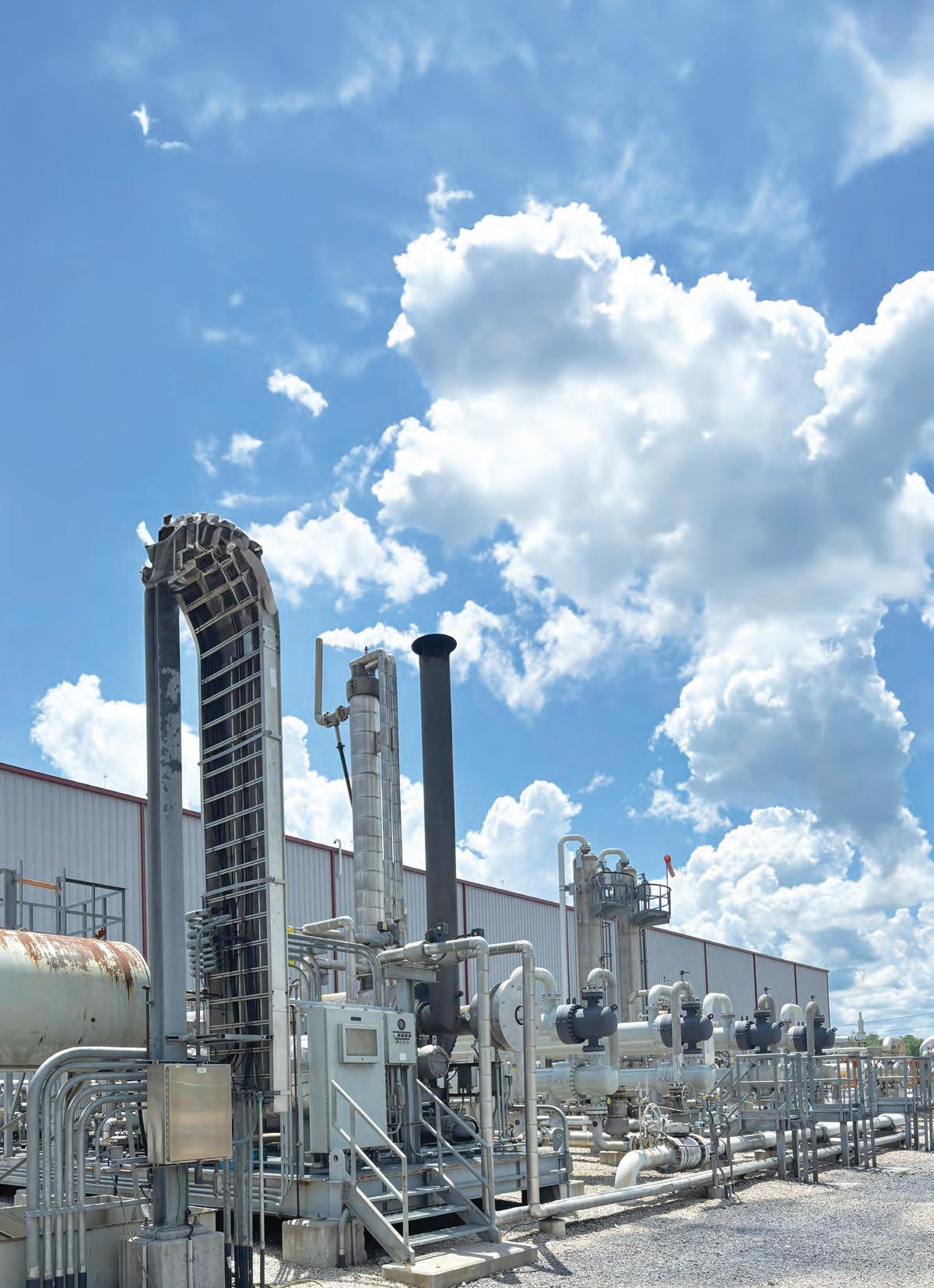
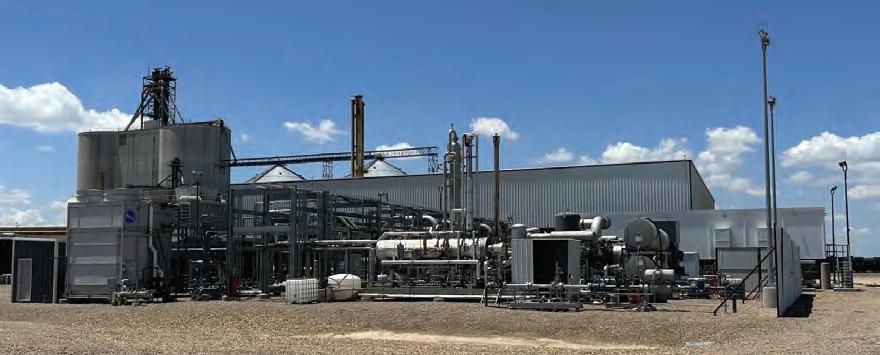
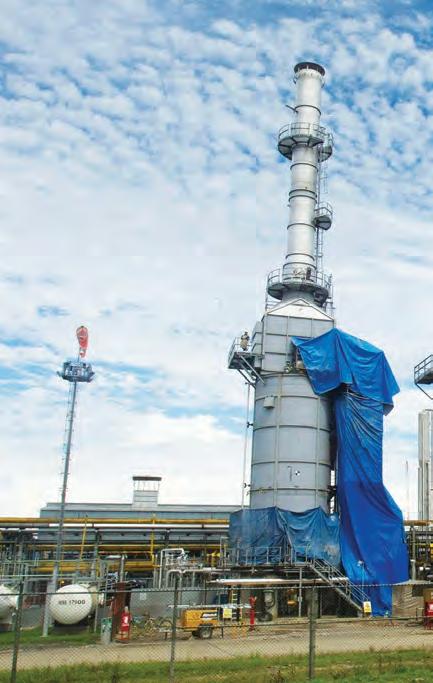
At right, a CapturePoint CO2 capture and processing facility.
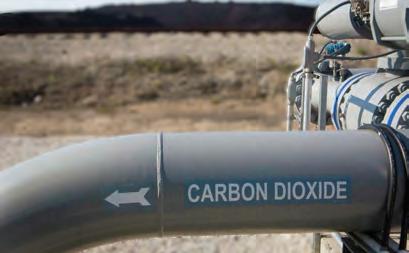
Below, a CO2 pipe at the Oklahoma Carbon Hub.
Inside CapturePoint’s Carbon Hub Strategy
KEY PROJECTS
CENLA Hub (Central Louisiana): Anchored by Energy Transfer and Bia Energy; future DAC support via Climeworks and Heirloom. Targeting over 2 billion metric tons of storage. Class VI permit applications active in Rapides and Vernon Parishes.
Oklahoma Carbon Hub: World’s first multimodal site: DAC pilot (Heimdal) and industrial CO₂ from a fertilizer plant. Supports CO₂-EOR via 68-mile pipeline and 80+ active wells. Class VI permits in progress.
Panhandle and Weld County Hubs Supporting current EOR in Kansas; Weld County (CO) advancing toward storage and injection with 5,800 acres under control.
Exploratory Sites: Mississippi (school district lease), SE New Mexico, Western Colorado, Wyoming — over 230,000 acres in evaluation.
TECHNOLOGY HIGHLIGHTS
Compression & Transport: Supercritical CO2 requires higher pressures (~1,200+ psig), corrosion-resistant alloys, dehydration, and custom cooling.
Monitoring & Safety: Class VI storage includes subsurface seismic mapping, well integrity checks, and groundwater protection. CPS runs community-first responder programs.
Capture Design: Turnkey purification systems for CO2 from gas processing, fertilizer, ethanol, SAF, and DAC sources.
Vision of a mature carbon market
Harper envisions a mature CCS market operating much like today’s natural gas midstream sector.
“Capture at the source, process it if needed, transport it safely, and inject it securely. That’s how we see this evolving,” he said. “Just like gas midstream, we’ll have point-source purification, compression, regulated transport, and contracted storage.”
As policies and carbon markets mature, Harper expects CCS infrastructure to become standard across major industries. “We want CapturePoint to be structured like
LEADERSHIP & SCALE
■ CEO: Greg Harper (ex-Enbridge, Spectra
■ COO/CDO/CLO: Former Denbury CCUS leadership
■ 285,000+ acres of pore space under lease
■ Active in 8 U.S. states and expanding “We’re not just storing CO₂—we’re converting existing gas infrastructure into the backbone of a cleaner energy economy.”
— Greg Harper, CEO, CapturePoint
1. High-pressure compression systems: CO2 must be transported in a dense, supercritical state, requiring compression to pressures above 1,200 psig.
CapturePoint designs systems using corrosion-resistant alloys and enhanced cooling systems to manage CO’s unique thermodynamic properties.
Dehydration units remove water vapor to prevent carbonic acid formation inside pipelines.
2. Pipeline adaptation and design: While some legacy natural gas lines can be repurposed, most CO₂ pipelines are built to ANSI 900 pressure specs, not ANSI 600.
For retrofits, engineers must limit pressure drops to prevent phase changes and install crack arrestors to reduce fracture risk.
Monitoring systems include real-time pressure, leak detection, and geolocation.
3. Subsurface storage modeling: Site selection includes geologic mapping,
a midstream company in five to six years.”
“In the future, we’ll be treating CO2 just like gas,” he said. “We’ll have gathering systems, processing equivalents for dehydration and purification, long-distance transport, and large-scale, contracted storage. That’s the roadmap.”
Permitting remains a challenge, particularly for Class VI storage wells. Harper noted the approval timeline at the federal level often stretches beyond two years.
“Only a handful of states like Louisiana have primacy over Class VI permits, and Texas is in the process of securing it,” he
seismic review, and rock property analysis to confirm capacity and sealing potential.
CapturePoint evaluates legacy wellbores for replugging needs and conducts caprock integrity testing for Class VI compliance.
4. Integrated capture systems: From pointsource emitters (e.g., fertilizer, methanol, ethanol) to DAC units, CO2 must be purified to pipeline-grade standards.
CapturePoint provides design, construction, and tie-in services to ensure long-term compatibility and low maintenance.
5. Safety and first-responder readiness: CO2 is heavier than air and non-flammable, but can displace oxygen. The company trains local first responders and equips rural regions with monitoring and emergency tools.
CO2 infrastructure is equipped with automated shutoff valves, pressure relief systems, and isolation protocols.
said. “Getting more states to that level would help tremendously. These state agencies understand their geology better than Washington does.”
Apart from Class VI, Harper said permitting for pipelines and capture facilities resembles the traditional midstream playbook—Fish and Wildlife clearances, state-level siting, and safety compliance with PHMSA.
“We’re not pioneers in pipeline development,” he added. “We’re just applying existing playbooks to a new molecule.”
Despite the permitting delays, Harper
sees the U.S. as uniquely positioned for leadership in global carbon management.
“We’ve got the infrastructure corridors, the best geology—especially across Louisiana, Alabama and Georgia—and growing demand from global tech and manufacturing,” he said. “What we need now is to close the education gap and accelerate approvals.”
He emphasized that the U.S. was initially
slow to adopt CCS technologies compared to global peers, but is now catching up. “The infrastructure is here. The know-how is here. And the urgency is here. It’s just about aligning those pieces.”
Harper said projects like the Central Louisiana hub could be catalytic, offering the state both economic upside and climate leadership. “It’s new to some of these communities, and they’re understandably cautious,” he said. “But the opportunity is enormous.”
Harper, who joined as CEO in April, said his biggest surprise has been the strength of CapturePoint’s internal bench.
“I’ve walked into other companies where a shakeup was needed, but here the team is solid,” he said. “The subsurface group in particular is top-tier—they know how to find the right rock to store carbon safely and permanently.”
With backgrounds from Denbury, Enbridge, Spectra and CenterPoint, the executive team is familiar with both pipeline
operations and CO₂ EOR, giving CapturePoint a foundation of technical depth and commercial discipline.
He added that the leadership culture is forward-looking and mission-driven. “Everyone here gets the importance of what we’re building. It’s not just a business—it’s an energy transition tool with economic benefits.”
Eyes on policy, partnerships
Looking ahead, Harper flagged two priorities: tracking the impact of the proposed BBB (Build Back Better) tax bill on CCS projects, and watching which additional states seek primacy over Class VI well permitting.
“Both of those will shape our project timelines and customer strategy,” he said. He closed with a clear message to the gas industry: “This is your opportunity to extend the value of your infrastructure and lead in decarbonization. CCS is not a side project—it’s the next chapter for midstream.”
CT2
A CO2 capture and processing facility in Coffeyville, Kan.
Energy companies, steelmakers and other industry partners join forces.
By Jack Burke
Consortium launches study to develop carbon capture hubs in Asia
Amultinational consortium of steelmakers, energy companies and industrial partners has launched a pre-feasibility study to assess the potential for Carbon Capture, Utilization and Storage (CCUS) hubs across Asia.
Participants include ArcelorMittal Nippon Steel India (AM/NS India), JSW Steel, Hyundai Steel, BHP, Chevron, Mitsui & Co., Ltd. and other value chain participants. According to the consortium, the initiative is the first independent, industry-led CCUS hub study in Asia and will examine technical and commercial pathways to deploy the technology in hard-to-abate sectors such as steelmaking.
The study will explore opportunities for large-scale projects that can repurpose or store captured carbon dioxide (CO2), using shared infrastructure to reduce costs and improve efficiency. Captured CO2 could be used in industrial processes or transported by pipeline or ship to storage sites in Asia or Northern Australia.
Development strategies
Each participant is expected to be involved in at least one hub, with the study delivering conceptual development strategies, cost and schedule estimates, and potential commercialization pathways. Non-technical factors, including regulatory and crossborder transport requirements, will also be assessed.
Hatch will serve as Project Management Officer, collaborating with the Global CCS
Institute, McDaniel and Pace CCS. The study is open to additional members and is expected to conclude at the end of 2026, with results to be shared publicly to promote industry learning and inform policy development.
The consortium is targeting the economies of scale needed to make CCUS a viable decarbonization tool in Asia, where a large portion of steelmaking capacity is still early in its operational life. By aggregating captured CO2 into regional hubs, the group aims to optimize costs, support economic utilization, unlock solutions for multiple industries and distribute financial and operational risks among participants.
Decarbonizing existing assets
BHP Vice President Marketing Sustainability
Ben Ellis said that with more than 1 billion tonnes of steel produced annually in Asia, mostly from blast furnaces, it is essential to find ways to decarbonize existing assets while new commercial pathways develop. “By leveraging shared knowledge and resources with our partners, we are investing in innovative solutions—like the potential of CCUS—that we see as an essential part of decarbonizing hard-toabate sectors such as steelmaking,” he said.
AM/NS India Chief Sustainability Officer Arvind Bodhankar emphasized the consortium’s role in shaping industrial responsibility. “The choices we make today will fundamentally shape the next
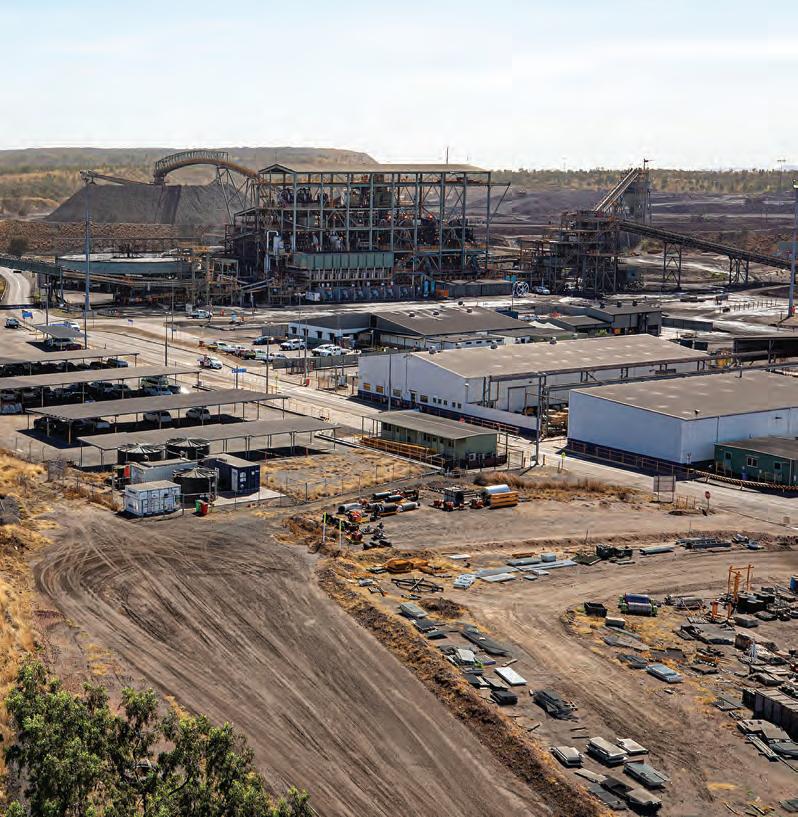
The Blackwater coal mine in Queensland, Australia, part of the BHP Mitsubishi Alliance (BMA). An industry consortium comprised of leading steelmakers ArcelorMittal Nippon Steel India, JSW Steel, Hyundai Steel Co. and other value chain players, BHP, Chevron, Mitsui & Co., Ltd. (the Consortium), are undertaking a pre-feasibility study to assess the development of Carbon Capture, Utilization and Storage (CCUS) hubs across Asia. IMAGE: BHP
generation, far more than our own,” he said. “This shared vision will enable pioneering initiatives to decarbonize steelmaking and set new benchmarks in industrial practices, accelerating India’s journey toward net zero.” JSW Group Chief Sustainability Officer Prabodha Acharya said CCUS must become financially viable to achieve near-zero emissions in the steel sector. “We aim to reduce our CO2 emission intensity in steelmaking by 42% by 2030 from a 2005 baseline, and achieve net neutral carbon emissions by 2050,” he said, noting that JSW has already achieved a 30% reduction. Hyundai Steel Vice President Yonghee Kim said the consortium represents “real and measurable emissions reductions” beyond
conventional technology development. “We will continue to lead in low-carbon technologies, including CCUS, contributing to the industry’s sustainability,” he said.
Chevron: CCUS has ‘critical role’ Chevron Australia Lower Carbon Execution General Manager David Fallon said: “Chevron believes in the critical role CCUS can play in a lower carbon world, including by reducing carbon emissions in the hard-to-abate sectors. We are focused on leveraging our expertise and global reach to advance CCS technologies and scale lower carbon solutions across the value chain, with a focus on areas including the hard-to-abate sector.”
Mitsui COO Masaya Inamuro said the company is targeting a 30% emissions reduction by 2030 compared to 2020 levels. “This initiative aims to explore viable pathways for large-scale CO2 reduction and lay the groundwork for future deployment of decarbonization solutions,” he said. CT2
The state of the natural gas market in South America
As the global energy landscape continues to evolve in the wake of geopolitical tensions, climate imperatives, and shifting market dynamics, natural gas remains a pivotal fuel in the transition toward cleaner energy. In South America, a continent rich in hydrocarbons and renewables, the natural gas market is undergoing a complex transformation marked by contrasting trends: booming production in some countries, infrastructure deficits in others, and an increasingly urgent need for regional integration.
Overview: A Continent of Contrasts
South America is home to vast natural gas reserves, with countries like Argentina, Venezuela, and Bolivia traditionally leading in production. However, in recent years, a combination of economic instability, underinvestment, political challenges, and shifting energy priorities has caused supplydemand mismatches across the continent. While some countries are net exporters, others struggle with shortages and are heavily reliant on imports, including liquefied natural gas (LNG).
As of 2025, South America’s natural gas market reflects this patchwork reality. On one hand, Argentina is ramping up production from its Vaca Muerta shale play, positioning itself as a regional powerhouse. On the other, traditional exporters like Bolivia are facing declining output, prompting a reconfiguration of regional gas flows.
Production hotspots
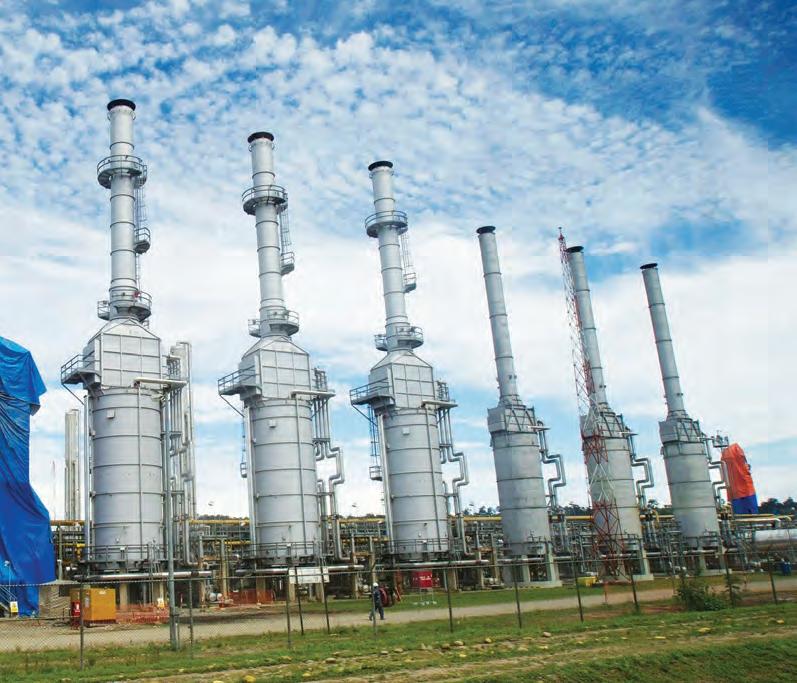
Argentina: The rising giant Argentina has emerged as the linchpin of South America’s natural gas future. The Vaca Muerta formation in the Neuquén Basin—one of the largest shale gas reserves in the world—has seen significant development
Trends, challenges, and opportunities in the South American market.
By Jack Burke
thanks to policy support, improved regulatory frameworks, and private sector investment.
By 2024, Argentina’s natural gas production reached over 140 million cubic meters per day (MMcmd), with shale accounting for more than 45% of total output. The government’s Gas.Ar Plan and recent agreements with international investors have spurred infrastructure development, including pipelines such as the President Néstor Kirchner Gas Pipeline (GNK), which enhances domestic connectivity and enables future exports to Brazil and Chile.
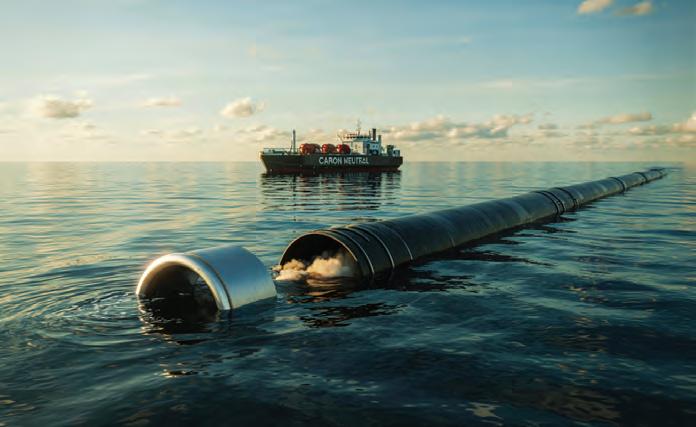
Offshore CO2 reinjection operation off Brazil’s coast — showcasing Petrobras’ carbon capture from natural gas on offshore platforms in the Santos Basin.
Argentina has started exporting natural gas to neighboring countries during surplus periods and is laying the groundwork for future LNG exports via the Atlantic coast. If sustained, this trend could reposition the country as a major supplier to both regional and global markets.
Brazil: From importer to producer Brazil has traditionally been a large
consumer and importer of natural gas, particularly from Bolivia through the Gasbol pipeline and via LNG terminals. However, domestic production is increasing, driven by pre-salt offshore reserves associated with oil extraction. In 2024, Brazil’s gas production surpassed 130 MMcmd, though a significant portion is reinjected or flared due to a lack of infrastructure for processing and transportation.
The New Gas Market (Novo Mercado de Gás) reforms aim to liberalize the sector by attracting private investment and breaking Petrobras’ monopoly. These changes are expected to enhance gas distribution and reduce costs, making natural gas more competitive in power generation and industrial use.
Declining exporters
Bolivia: A former leader in decline
Once a major supplier to Argentina and Brazil, Bolivia’s natural gas industry is facing a critical decline. Production dropped to under 40 MMcmd in 2024, compared to more than 60 MMcmd a decade earlier. The country’s main gas fields are maturing, and exploration has slowed due to underinvestment, political uncertainty, and an unattractive fiscal regime.
As a result, Bolivia is struggling to meet its long-term export contracts and has begun to prioritize domestic supply. This
decline has forced Brazil and Argentina to seek alternative sources, including domestic production, LNG imports, and new pipeline projects from Argentina.
Venezuela: Potential undermined by instability
Venezuela holds one of the world’s largest gas reserves, particularly offshore in the Caribbean region. Yet, production remains minimal due to chronic underinvestment, economic collapse, and international sanctions. Projects such as the Mariscal Sucre and the Dragon Field have stalled for years. While there have been renewed talks with Trinidad and Tobago and Chevron about developing these reserves, tangible progress remains slow.
Venezuela’s gas sector has vast potential, especially for LNG exports and petrochemicals, but it will require substantial political and financial stabilization before meaningful development occurs.
Importers and infrastructure gaps
Chile: LNG reliant but diversifying Chile lacks significant domestic gas reserves and is heavily reliant on LNG imports from the United States and other sources. The country operates two LNG regasification terminals—Quintero and Mejillones—which supply gas for power generation, residential use, and industry.
Chile has also resumed pipeline imports from Argentina, taking advantage of surplus gas during Argentina’s low-demand months. The government is working to integrate natural gas more efficiently into the power matrix, but long-term strategy increasingly leans toward renewables and green hydrogen.
Uruguay and Paraguay: Small but growing markets
Uruguay has no domestic gas production and relies entirely on imports. Efforts to import gas from Argentina have been hampered by infrastructure limitations and pricing issues. Meanwhile, Paraguay’s gas market is underdeveloped, but interest is growing in CNG and LNG for transportation and industry.
Infrastructure: Pipelines, LNG, and interconnectivity
South America’s natural gas infrastructure is highly fragmented. Most pipelines were designed for bilateral trade—Bolivia to Brazil and Argentina; Argentina to Chile—but do not support integrated regional flows. This limits the continent’s ability to optimize resources and respond to demand fluctuations. >
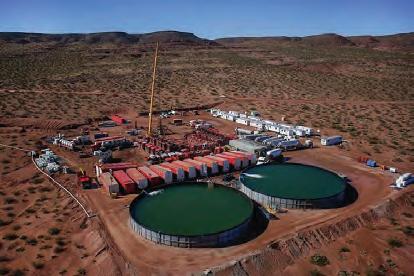
A view of the pumping and processing infrastructure near Vaca Muerta, which is linked to Argentina’s pipeline expansions enabling production growth and transit north toward Brazil.
South America is a continent rich in hydrocarbons and renewables.
The GNK pipeline in Argentina is a game changer, but further extensions are needed to connect to Brazil via southern corridors. Brazil’s Southeast Northeast Interconnection Gas Pipeline (Gasene) and other internal projects are improving internal flow but not yet fostering regional integration.
LNG infrastructure is growing, particularly in Brazil, Chile, and Argentina, with new terminals planned or under construction. However, LNG remains more expensive than piped gas, and storage capacity remains limited.
Market liberalization and investment climate
The investment climate varies sharply across the continent. Countries like Brazil and Argentina are making strides in liberalizing their markets, improving regulatory frameworks, and attracting foreign capital. Brazil’s efforts to open its gas market to competition and Argentina’s shale gas incentives have begun to pay off.
In contrast, countries like Venezuela and Bolivia remain unattractive to investors due to political risks and opaque regulatory environments. Peru, with modest but stable production, offers a relatively balanced environment, exporting LNG from its Melchorita terminal.
International companies, including TotalEnergies, Shell, YPF, Petrobras, and Tecpetrol, are key players in upstream and
A fresh aerial capture of drilling and site activity in the Neuquén basin underlining expansion trends toward export markets.
midstream projects, while local firms are gaining ground in downstream operations.
Environmental considerations and the energy transition
While natural gas is often positioned as a “bridge fuel” in the transition from coal and oil to renewables, environmental scrutiny is growing. Methane emissions, flaring, and the long-term role of gas in a net-zero future are increasingly under the microscope.
Several South American countries have made net-zero commitments, including Chile (by 2050) and Brazil (by 2050). As renewable energy—especially solar and wind—becomes more competitive, gas will face pressure to decarbonize or risk obsolescence.
Carbon capture and storage (CCS), hydrogen blending, and methane mitigation technologies are being discussed, but implementation remains limited. For
A facility in South America.
Conclusion
now, gas is seen as a crucial backup for intermittent renewables and as a cleaner alternative to diesel and fuel oil.
Outlook: regional integration and global linkages
Looking forward, the natural gas market in South America is likely to be shaped by three key factors:
1 Regional integration: Greater coordination among countries could lead to more efficient use of resources, particularly as Argentina’s production increases and Bolivia’s declines. Cross-border pipelines and harmonized regulations could facilitate this.
2 Global market linkages: LNG will remain important for countries with limited domestic supply, and Argentina’s eventual entry into the LNG export market could change the game. South America may also benefit from seasonal swaps with Europe and Asia.
3 Energy transition policies: The role of gas will increasingly depend on how countries balance affordability, reliability, and climate goals. Investments in decarbonization technologies will be key to ensuring gas retains a role in cleaner energy strategies.
CT2
The natural gas market in South America stands at a crossroads. Argentina’s shale boom offers immense promise, Brazil’s reforms are reshaping the landscape, and regional interconnectivity could unlock new efficiencies. Yet, declining production in Bolivia, instability in Venezuela, and fragmented infrastructure present significant hurdles.
As countries navigate the twin pressures of energy security and climate commitments, natural gas will likely retain a significant— though evolving—role. The key to success lies in greater cooperation, sustained investment, and a clear-eyed approach to balancing growth with sustainability.
Experience
the
of compressor valve technology with the MAGNUM™ Plus valve
Presenting our MAGNUM™ Plus compressor valve, the latest product offering in our successful MAGNUM™ family of compressor valves. Designed to enhance flow and reduce pressure drop, delivering exceptional efficiency and reliability.
LET’S MAKE TOMORROW DIFFERENT TODAY
Why cylinder valves fail
Reciprocating compressors are the workhorses of industries like natural gas, petrochemicals, and refrigeration. These machines are tasked with the critical job of compressing gases under pressure, making them essential to industrial processes. Central to their function are cylinder valves, which regulate gas intake and discharge during each compression cycle. When these valves fail, the result is often operational downtime, productivity loss, and expensive repair costs that quickly accumulate across complex systems.
Recent research has provided valuable insight into the most common causes of cylinder valve failures. In this article, we explore the root causes of these failures and offer practical strategies to avoid them, whether you’re a technician or a reliability engineer planning system-wide improvements.
Mechanical wear
One of the most common causes of valve failure is mechanical wear. Every time a cylinder valve opens and closes—a process that happens thousands of times per minute—friction occurs between the valve plate, seat, and guide surfaces. Over time, this repeated contact causes the surfaces to erode. As the sealing surfaces wear down, leaks can develop, leading to a decline in compressor efficiency. The best way to address this issue is through regular inspections and timely replacement of worn components. Using high-durability materials, such as hardened steel or plastic composites, can also significantly extend the lifespan of the valve components.
While lubrication is critical to compressor performance, too much can have costly consequences, especially for compressor valves. Over-lubrication often leads to carbon build-up, where excess oil burns in high-heat zones, forming sticky deposits that prevent valves from sealing properly and reduce efficiency. Sluggish or sticking valves can also result, caused by oil
Understanding the common causes
of reciprocating compressor valve failures. By Kevin Cain
thickening or interacting with particulates, which impairs valve timing and increases energy use. Additionally, oil residues can attract dirt, accelerate valve wear and shorten component lifespan. For operators facing recurring valve problems, it’s essential to reevaluate lubricator settings, oil feed rates, and oil quality. A proactive approach can help maintain the delicate balance needed for reliable, highperformance compressor operation.
System overload is a failure mode often linked to operational practices. Compressors are designed with specific load and pressure limits, and pushing them beyond these parameters can have serious consequences. Excessive mechanical stress on the valve can lead to warping, cracking, or outright failure. In many cases, overload occurs because a compressor is being used for tasks beyond its design specification. Preventing this means operating the compressor strictly within its rated capacity, continuously monitoring system loads, and selecting the right equipment size for the job at hand. Another issue is high-cycle fatigue.
This failure mode arises from the repetitive stress imposed on valve materials during normal operation. Over time, the materials, particularly springs and thin components, may develop microscopic cracks that eventually lead to mechanical failure. This kind of damage is often invisible until it causes a malfunction. Using fatigue-resistant materials during valve manufacturing, optimizing operating cycles to reduce unnecessary stress, and implementing regular inspection routines can all help mitigate this form of wear.
Gas condensate slugging represents a more sudden and dramatic form of valve failure. When liquid enters the gas stream—usually due to insufficient gas drying or poor upstream separation—it can be drawn into the compressor. Upon compression, this liquid causes a hydraulic shock that can damage or break valve components. This phenomenon is both dangerous and costly. The most effective way to prevent it is to properly condition the gas before compression. This includes installing moisture separators and autodrain systems, along with routine checks to ensure no liquid is present in the intake stream.
Contamination
Contamination by foreign particles is another frequent contributor to valve degradation. Dust, rust, and other debris can enter the system through the gas stream or during maintenance. These contaminants can obstruct valve motion or act as abrasives that accelerate surface wear. Ensuring the intake system is equipped with highquality filters, maintaining a clean operating environment, and verifying the purity of both gas and lubricants are essential steps to mitigate this issue.
Installation and assembly errors are also major contributors to early valve failure. Mistakes such as improper torquing, misalignment, or use of incompatible components during maintenance can compromise valve function. Even minor
Kevin Cain is VP of Operations for KB Delta.
— and how to prevent it
deviations from the manufacturer’s specifications can introduce stress points or reduce sealing effectiveness. Preventing this type of failure starts with training. Technicians and maintenance personnel should be thoroughly trained on installation procedures and should follow the manufacturer’s guidelines exactly. Post-installation checks for alignment and fastener torque can help verify that everything is set up correctly.
When valves are exposed to sustained heat, their materials can expand, warp, or become brittle. In extreme cases, overheating can cause valve failure or piston seizure. Prevention lies in keeping the compressor’s cooling systems in excellent condition. Operators should also monitor temperatures in real time and avoid operating the compressor at full load
for extended durations without adequate cooling.
Lastly, corrosion is a long-term threat caused by chemical interactions between valve materials and elements present in the gas or lubricant. Corrosive environments lead to pitting, cracking, and eventual disintegration of valve surfaces. This can occur when acidic lubricants are used or when gases contain aggressive compounds. The solution is to use corrosionresistant materials such as stainless steel or coated alloys, and to ensure that both gas and lubricants are treated to remove harmful substances. Routine inspections for signs of corrosion can also allow for early intervention.
Each of these failure modes can be addressed with proactive strategies. By combining smart design choices, disciplined
operational practices, and a commitment to regular maintenance, it’s possible to significantly reduce the frequency of valve failures in reciprocating compressors. In industrial settings where uptime is critical, even small improvements in reliability can translate into major financial and operational gains.
Cylinder valve failures are rarely the result of a single issue. More often, they stem from a chain of small oversights: a skipped inspection, an overloaded compressor, or a contaminated gas line.
But by understanding the causes and implementing effective preventive measures, facility managers and maintenance teams can extend the life of these critical components and ensure the smooth operation of their compressors for years to come. CT2
Innovative design solutions for enhanced engine performance and reliability
Larry Osland, USA Compression, and Dakota Gormley, Global Compression, discuss innovative bracketry and control system enhancements for the Cummins 855 engine, to reduce fatigue and boost performance.
Global Compression Services was tasked by USA Compression to develop bracketry to accommodate an ActuCOM R8 governor and CD200 ignition for the Cummins 855 engine. After collaborating closely with the customer and refining several prototypes, Global Compression Services delivered a cuttingedge, customized solution. The innovative bracket design removed the venier throttle assembly, streamlining the control system and significantly reducing operator fatigue. This improvement eliminated the need for operators to climb on and off the compressor package to adjust RPMs, which also reduced the risk of slips, trips, and falls. By integrating speed control into the control panel, the overall operator interface became more efficient and safer.
Additionally, the removal of the Cummins accessory drive and the Woodward hydraulic governor improved reliability and run time by stabilizing RPM, while also reducing equipment lifecycle costs. Replacing the Magneto ignition system with a modern, electronic ignition made timing adjustments easier, further enhancing engine performance and reliability. This solution offers a practical alternative to the original components, which are becoming harder to source. It addresses common reliability challenges, simplifies maintenance, and provides a cost-effective way to reduce lifecycle costs. The ease of installation and minimal disruption to
operations make this solution an appealing choice for operators seeking to enhance engine performance and reliability.
In the following Q&A, CT2 asked USA Compression’s Larry Osland and Global Compression Services’ Dakota Gormley for more details on how this project delivered a practical, economical solution to known problems with the OEM options.
WHAT ARE SOME COMMON RELIABILITY ISSUES WITH THE CUMMINS 855 ENGINE?
LO: The Cummins 855 engine, particularly in natural gas applications, has some reliability issues primarily due to its origin as a diesel engine adapted for natural gas use. While it has been largely successful and is D-rated for natural gas applications, certain design features present challenges.
The most common issue lies with the cylinder heads, especially in oil and gas settings where the engine often runs on unprocessed wellhead gas instead of pipeline-quality natural gas. The impurities in wellhead gas can accelerate wear and reduce reliability. Another frequent problem is with the accessory drive, which powers the ignition generator, also known as the magneto. Failures in this component can cause significant downtime. Additionally, mechanical or hydraulic governors, typically supplied by Woodward, are another common source of failure that impacts engine performance and operation.
Despite these concerns, the rest of
the engine is generally very reliable and performs well when properly maintained.
WHAT ARE THE BEST WAYS FOR EQUIPMENT
LIFECYCLE COSTS TO BE REDUCED?
LO: To reduce lifecycle costs for the Cummins 855 engine, one of the best approaches is upgrading it to a full-authority electronic control system. This allows the engine to operate with true closedloop air-fuel ratios, improving efficiency and reliability. Most of these engines are mechanically tuned, relying on a mechanical throttle, a magneto ignition system, and a single RPM setting. If the engine needs to operate at a different RPM, manual adjustments are required, which can be time-consuming and less precise. By upgrading, several benefits are achieved. For example, replacing the magneto generator with a more reliable drive system eliminates a common failure point. At the same time, the problematic hydraulic or mechanical governors can also be removed. A key part of this upgrade is the custom bracket designed by Dakota and his team, which integrates space for an electronic ignition
system, specifically the CD200. This system is calibrated for the 855 engine, providing ignition tables tailored to different RPMs. DG: This upgrade not only improves overall reliability and efficiency but also helps extend the life of the cylinder heads by optimizing performance at varying operating conditions. It’s a comprehensive improvement that addresses multiple reliability and cost concerns in one package.
WHAT’S INNOVATIVE ABOUT THE BRACKET DESIGN?
LO: The innovation in the bracket design lies in its robustness and precision. While some might say it’s more robust than necessary, in the oilfield environment, where bolts aren’t always torqued as they should be, over-engineering is a benefit, not a drawback. The bracket takes full advantage of bolting points on the Cummins 855 cylinder block, creating a sturdy and reliable solution.
What sets it apart is that it is specifically designed for the Cummins 855—it’s not a generic, one-size-fits-all part. It fits perfectly without requiring any modifications to the cylinder block or head, making installation straightforward and hassle-free.
Additionally, the bracket works in tandem with a system upgrade that replaces the accessory drive first. This step clears space and eliminates a known troublesome component, allowing for the seamless installation of the new parts
sourced from global suppliers. This thoughtful integration makes the design both practical and effective for improving engine reliability in demanding applications. DG: GCS has many different bracket configurations to accommodate several different engine models. We can also assist with create new custom designed brackets for nonstandard engines and other custom applications.
CAN YOU DESCRIBE THE PROCESS OF HOW YOU WENT ABOUT INSTALLING THE NEW BRACKET DESIGN?
LO: The process of designing and installing the new bracket was very hands-on. Dakota and Freddie came to our site to assess several Cummins 855 engines we had in stock, looking for any variations and identifying the best fit. We went through a few different prototypes before settling on the final version, which turned out to be robust and easy to install with no issues.
Once the bracket design was finalized, our technicians, who had been involved in the field installations, were excited about the improvements. Since the installation, we’ve received positive feedback from both our technicians and our customers. The upgrade has made a significant difference in how the engines are operated. Operators no longer need to climb on and off the unit or walk back and forth to check RPMs. Instead, they can remain at the control panel where all functions are easily accessible and bring the unit online quickly.
DG: We work with the customer to make sure that the bracket is placed in a manner that will minimally impact the routine maintenance is a priory when we design the brackets. We work to make the brackets functionality can accommodate other needs. For this example, the bracket was designed to mount both the ActuCOM as well as the CD200 ignition system to help reduce complexity and help maximize the free space on the small engine.
WHAT BENEFITS WERE DELIVERED BY REMOVING THE VENIER THROTTLE ASSEMBLY?
Additionally, the new design has improved engine start-up. The system now commands a starting position, preventing the engines from flooding out, which was a common issue with the hand throttle. The engine now waits for the commanded RPM before opening the throttle and allowing fuel into the cylinders, resulting in much smoother starts. This has not only saved on battery life but also reduced downtime, making the equipment more reliable. Our customers who rent these units are absolutely thrilled with the results.
LO: Removing the venier throttle assembly delivers several key benefits. One of the main challenges with the venier throttle is that if a compressor goes down—particularly with older, more traditional control systems—the only way to lower the engine RPM is for an operator, often not one of our employees, to manually climb onto the compressor, release the throttle, and adjust it. This process is necessary to restart the engine at a lower RPM, warm it up along with the compressor, and then gradually bring it back to its rated speed. By switching to an electronic throttle, the engine automatically resets to a low idle set point whenever the compressor shuts down and restarts. This ensures that the engine starts at the proper RPM for warming up before it ramps back up to operating speed. DG: Another major advantage is improved safety and convenience for the operator. Instead of climbing on and off the compressor to make adjustments, the operator can stay at the control panel, monitor key gauges like oil pressure and coolant temperature, and make adjustments directly from there. It’s also easier for operators to start, operate, and shut down the machine, as the electronic throttle allows for precise control of the maximum and minimum RPMs. This not only simplifies operation but also reduces wear and tear on the equipment.
ARE THE
CUMMINS ACCESSORY DRIVE
AND WOODWARD HYDRAULIC GOVERNOR ESSENTIAL COMPONENTS? WHAT ARE THE CHALLENGES WITH NEEDING/USING THEM?
LO: The Cummins accessory drive and the
CONTROL SYSTEMS
GLOBAL COMPRESSION SERVICES
Woodward hydraulic governor are essential components in this application, as they perform critical functions. The accessory drive is used to power various components, such as hydraulic pumps, air compressors, and, in this case, the governor, which controls engine speed and maintains a steady RPM setpoint. It also drives the mechanical magneto or ignition system.
These components cannot simply be removed without a suitable replacement, as the accessory drive is also responsible for operating essential systems like the engine’s water jacket cooling pump and other belt-driven components. To address this, we’ve sourced an updated accessory drive solution that aligns with Cummins’ current product line, even though it’s not available through global suppliers.
Once this updated accessory drive is in place, it enables us to replace the Woodward hydraulic or mechanical governors with modern alternatives. In this case, the ActuCOM R8 system takes over those responsibilities, providing a more reliable and efficient solution while eliminating the challenges associated with the older components.
DG: GCS is collaborating with the engine manufacturer to source hard-to-find replacement materials for the ActuCOM / CD200 engine upgrade. We will provide two options: the first is a complete kit containing all the materials necessary to fully install the upgrade, and the second is for engines that have already received the updated components. This second option will include all the required Altronic materials and bracketry to complete the upgrade.
WHAT CAN YOU SAY ABOUT THE MAGNETO IGNITION SYSTEM? WHAT ARE ITS MODERN FEATURES THAT MAKE IT AN IMPROVEMENT OF WHAT WAS USED BEFORE?
LO: The magneto ignition system is one of the earliest ignition technologies, dating back to the Henry Ford Model T and even earlier vehicles. It was the original ignition system, used before the advent of batterypowered or more advanced systems. Magnetos are durable, simple to install, troubleshoot, and replace. However, they rely on numerous internal mechanical
components that can wear out over time, and troubleshooting them requires significant experience to identify issues effectively.
As part of our conversion process, we replace the magneto with a modern electronic ignition system, unless the engine has already been upgraded. This electronic system offers several advantages. It simplifies timing adjustments, making it much easier for technicians to set when the spark is delivered to each cylinder. Troubleshooting is also far more straightforward thanks to features like an LED light that flashes diagnostic codes and indicates whether the system is live and functioning.
DG: The modern electronic ignition system is also more durable because it eliminates moving parts and mechanical couplings. Instead, it operates electronically, using engine position data to determine spark timing. This significantly reduces wear and, barring major failures, makes it a lifetime conversion, ultimately lowering lifecycle costs while improving reliability and ease of maintenance.
OVERALL, WHAT WOULD BE YOUR MESSAGE TO PEOPLE LOOKING TO ENHANCE THEIR ENGINE PERFORMANCE AND RELIABILITY?
LO: If you’re looking to enhance engine performance and reliability, this conversion is a logical and cost-effective choice. The older Woodward governors, while reliable in their time, are no longer in production and have been replaced by alternatives that aren’t direct bolt-on options. Although repair parts are still available, finding qualified service providers is becoming increasingly difficult. For equipment like compressors, which are expected to run 97% of the time, minimizing downtime is critical, making this upgrade a natural step forward in improving reliability.
DG: The ActuCOM kits for Cummins engines, as well as many other engine models, offer a bolt-on solution that enhances engine reliability. By replacing older technology, which often has mechanical inefficiencies requiring frequent maintenance, the kits introduce new electronic technology with fewer moving parts. This results in longer
maintenance intervals and improved overall performance.
HAVE YOU STANDARDIZED THESE CONVERSIONS ACROSS ALL CUMMINS 855 ENGINES PASSING THROUGH YOUR REMANUFACTURING FACILITIES?
LO: Yes, we have. Once in the field, this upgrade adds only about 30 minutes to the installation process compared to older engines equipped with a magneto ignition and a Woodward hydraulic governor. The slight additional installation time is well worth the significant operational advantages gained, including better performance, easier maintenance, and enhanced reliability.
Initially, we had concerns about implementation, but Dakota’s team has provided excellent onsite support, one-onone training for our technicians, and nextlevel troubleshooting assistance. They’ve also developed a comprehensive package of wiring diagrams, installation instructions, and troubleshooting materials, making the entire process seamless. We couldn’t be more pleased with the results and the support provided by Dakota and the global industrial team. This conversion has proven to be a smart and reliable choice for longterm engine performance and reliability.
WHAT’S NEXT ON THE HORIZON?
LO: Next, we’re looking at another family of engines in our fleet that has been experiencing issues with the Woodward throttle actuator or electronic governor. We’re planning to explore installing the ActuCOM R8 system on those engines as well. Based on the positive experience we’ve had so far, we’re eager to expand and apply the same improvements across more of our equipment.
DG: GCS is always looking for new opportunities to help customers make their equipment more efficient, longer maintenance intervals, and over all better operations capability. GCS is the largest Altronic distributor and we have an array of products that can help your maintenance teams reduce downtime by upgrading to the latest aftermarket ignitions systems, AFR controls, control panels, throttle actuators, and electronic louver controls CT2
COMPRESSOR VALVES, PARTS &
Samco Enterprises, Inc. is one of the largest suppliers of natural gas compressor parts, valves and equipment in the nation. Founded in 1972, we stock over 13,000-part numbers between our five facilities and over 100,000 square feet and 25 acres of inventory. We stock new, used, and remanufactured compressor and engine parts for Cooper Bessemer, Ingersoll/Dresser Rand, Clark, Worthington, PPC, Gemini, Chicago Pneumatic, White Superior, Ariel, Joy, and other legacy manufacturers.
Valve Exchanges • New Manufactured Valves • Remanufactured Valves OEM & AFT Valve Repair • Field Repair Kits THE LARGEST INVENTORY OF COMPRESSOR VALVES IN THE INDUSTRY
ARIEL CYLINDERS IN STOCK
REPORT: CCS must scale 50-fold by 2050 to meet climate goals
Cost hurdles and infrastructure gaps remain despite project surge
Carbon capture and storage (CCS) must grow more than 50 times from today’s levels to play its expected role in meeting net-zero targets by midcentury, according to a new report from global risk management firm DNV.
The report, “Carbon Capture and Storage: Forecast to 2050”, projects that by mid-century, CCS will need to prevent 6 gigatonnes (Gt) of CO2 emissions annually— up from just 49 million tonnes captured and stored in 2023. However, current plans and investments fall short of what’s needed to close that gap.
“Despite positive momentum and increased policy support, the CCS industry
DNV is an independent assurance and risk management company headquartered in Oslo, Norway, with operations in more than 100 countries. The company provides expert advisory, certification, and technical services across industries including energy, maritime, and healthcare. In the energy sector, DNV is a leading authority on safety, performance, and the energy transition, offering data-driven insights into hydrogen, carbon capture and storage (CCS), LNG, renewables, and grid systems.
OVERVIEW TABLE: CCS VALUE CHAIN COSTS
Capture
Transport (pipelines)
Transport (ship/rail)
Storage (saline aquifers)
Storage (depleted fields)
$15–120, varies by source
$2–14
$10–28+
$5–35
$3–15
Tariffs (full chain) ~$74 on
is not on track,” said Remi Eriksen, Group President and CEO of DNV. “To stay aligned with the goals of the Paris Agreement, we need exponential growth in capture capacity, transport infrastructure, and permanent storage development.”
Capacity
rising—but not fast enough
DNV forecasts that global capture capacity will reach 500 million tonnes per year by 2030, driven by stronger incentives and a wave of announced projects. Yet even this figure represents less than 10% of the 6 Gt target needed by 2050.
The energy sector is expected to account for over 80% of CO2 captured by mid-century, with heavy industries—such as cement, steel, and chemicals—also contributing significantly. Regional leadership is expected to emerge from North America, Europe, and China, which are projected to house over
Decline ~40%; modular systems key
Stable or lower with scale
Decline modest; logistic intensive
Stable; depends on site development
Benefit from existing infrastructure
75% of global CCS infrastructure by 2050.
Key bottlenecks: transport and storage
While capture technologies are advancing, DNV warns that the “Achilles heel” of CCS development lies in transport and storage infrastructure. The report calls for urgent investment in CO2 pipeline networks and shipping capabilities, as well as in developing geologically secure storage basins.
Current storage capacity is sufficient for only a few hundred million tonnes of CO₂ annually. DNV estimates that storage capacity will need to exceed 6 Gt per year by 2050 to align with net-zero scenarios. That equates to developing roughly 1,200 commercial-scale storage sites globally.
Business models and policy gaps
The report also highlights the lack of viable
Climeworks began operations at its direct air capture and storage plant, Mammoth (Hellisheidi, Iceland) — the world’s largest such plant — in 2024.
IMAGE: CLIMEWORKS AG
business models for many CCS projects, particularly in hard-to-abate industrial sectors. Without stronger carbon pricing, subsidies, or regulatory mandates, private investment will likely remain constrained.
“To unlock scale, CCS needs to become economically sustainable,” said Hari Vamadevan, Executive Vice President at DNV. “This requires clear policy signals and long-term incentives that allow companies to plan, invest, and operate with confidence.”
DNV recommends governments prioritize
policies that de-risk investment, enable shared infrastructure, and standardize permitting processes. The report notes that the U.S. Inflation Reduction Act and the EU’s Net-Zero Industry Act are positive steps, but further coordination and global alignment are necessary.
Shipping expected to play critical role
While pipelines will remain the dominant mode for CO2 transport, DNV expects
ship-based transport to grow significantly, especially in connecting emitters in Asia and Europe with offshore storage hubs in the North Sea and elsewhere. CO2 shipping capacity is projected to exceed 200 million tonnes per year by 2050, with nearly 90 ships in operation globally.
The report identifies over 1,400 miles of CO2 pipelines currently under construction, mainly in North America, with a longer-term need for 90,000 miles of infrastructure globally.
A make-or-break decade
According to DNV, the 2020s will be decisive for CCS. The firm’s “most likely” scenario predicts 2.2 Gt of CO2 will be captured and stored annually by 2050—well below the 6 Gt required for net-zero alignment.
“CCS is one of the few scalable options for decarbonizing heavy industry and balancing emissions in the energy system,” Eriksen said. “But ambition must be matched by execution. Without urgent action this decade, CCS will not fulfill its climate potential.”
CT2
According to DNV, the 2020s will be decisive for the future of carbon capture and storage (CCS) projects. PHOTO: DNV
The Petra Nova carbon capture facility (shown on the right of this image) retrofitted at NRG Energy’s W. A. Parish coal-fired power plant in Texas. IMAGE: RM VM
With our HOERBIGER Profiled Plate Valve Series, you get both proven reliability and better performance.
Optimized for higher speed compressors with larger bore cylinders , our CP valve’s unique design and features provide maximum reliability and efficiency.
With more than ½ million valves in the field today, HOERBIGER profiled plate valves are the global standard and preferred choice. In fact, one in every three high speed compressors in your natural gas fleet is likely using our profiled plate valves right now. And if not, they should be.
Our Profiled Valve Series are the best valves available today. For a better tomorrow. Visit us at this year’s GMC booth #501, to learn more
Learn more by visiting www.hoerbiger.com/cp today!
The critical role of field services in reciprocating compressor maintenance
In the dynamic world of gas storage and transportation, reciprocating compressors are the beating heart of the infrastructure. Tasked with moving large volumes of gas across pipelines and into storage facilities, these machines must operate with maximum efficiency and reliability. Any failure, no matter how minor, can result in costly downtime, lost product, and operational chaos. In this high-stakes environment, field services play a vital role in compressor maintenance and repair, which are not merely a support function but a strategic imperative.
Reciprocating compressors in gas applications are exposed to high pressures, extreme conditions, and continuous duty cycles. Their complex configuration comprising pistons, valves, cylinders, crankshafts, and intricate control systems means they require specialized care. Despite being built for heavy-duty use, these machines are all subject to wear and tear, especially when working with fluctuating loads and irregular maintenance schedules.
Tailoring service
Unexpected failures can cascade through an operation. A seized piston, a cracked valve, or a failed rod bearing doesn’t just halt compression, it disrupts supply schedules, strains regulatory compliance, and inflates repair costs through emergency interventions. To mitigate these risks, operators increasingly turn to providers of field service facilities, who offer comprehensive maintenance programs tailored for reciprocating compressors.
Proactive maintenance is the most costeffective way to ensure ongoing reliability. A compressor that performs consistently with minimal downtime contributes directly to the
AUTHORS
THE
TRAVIS SHULL, Account Manager, Services Division, and DAVID MASON, Account Manager, Services Division at Burckhardt Compression, examine the needs of compressor operators to ensure control and monitoring processes are properly delivered for long-term efficiency and reliability.
bottom line. The right service partner helps achieve this by aligning their services with the operator’s business goals, not just their equipment needs.
This means offering a broad range of services beyond supplying personnel and equipment for routine maintenance and repairs. Service level agreements (SLAs) that define uptime guarantees and regular
support for multiple assets offer greater peace of mind. These can be partnered with lifecycle cost modeling, which gives details on projected maintenance costs and helps with budgeting and cost analysis. Further benefits can be gained by providing inventory and parts management, which, coupled with expert knowledge of the assets on site, can streamline
Smooth on-site overhauls are the culmination of in-depth planning and effective organization.
stockholding and ensure the required parts are on site ready for planned maintenance projects. Further benefits can be gained from training in-house teams to identify early warning signs and promote the proactive maintenance strategy.
Field service teams bring knowledge, training, and specialized tooling to site, reducing time and costs.
True flexibility is key
Field service teams bring deep domain knowledge, OEM or equivalent technical training, and specialized tooling to the operator’s site, reducing the time, cost, and complexity of transporting heavy machinery to workshops. This convenience is matched by their flexibility: mobilizing quickly to remote compressor stations, working in challenging environments, and integrating seamlessly with the customer’s operations.
Gone are the days when compressor maintenance was based on reactive models and waiting for something to break before fixing it. Today, the leading service providers advocate proactive maintenance strategies that anticipate failure modes before they occur. The use of condition monitoring equipment and remote diagnostics enable trends to be identified and acted upon.
Modern maintenance providers use scheduled overhauls that are based on duty cycles and real-time data, not just calendar intervals. In addition, root cause failure analysis is used to prevent repeat breakdowns. Gathering more data and using it effectively is key to providing a comprehensive preventive maintenance package.
The evolution towards proactive maintenance
The proactive approach to maintenance allows gas operators to shift from a costcenter model of repair to a value-creation model of reliability. By avoiding failures, unplanned shutdowns, and emergency repairs, companies save not only in direct
costs but gain in reputation and adhere to regulatory compliance.
In many cases, the ideal provider will also help customers to benchmark performance against industry standards and continuously refine maintenance strategies. By ensuring equipment operates within optimal parameters, service partners help maximize gas throughput, reduce energy use, and extend equipment life, delivering both operational and financial value.
In a competitive field, top-tier service providers distinguish themselves by offering value beyond the repair. They build long-term relationships grounded in trust, performance, and technical excellence. This can be illustrated by a few examples of outstanding service.
Expanding the hydrogen network
Hydrogen fuel networks are growing rapidly, and they must include compressors to enable the transport and storage of hydrogen ready for delivery. Depending on the role of a facility, different sizes of compressors are required to maintain optimal storage conditions and transfer gas either to tankers for local transport or to refill vehicles on the forecourt.
A site operating as a hydrogen filling station for tankers which transport gas to service stations and larger customers tests different designs of compressors to determine the best solutions for the wider network. In this business, any downtime on the compressor would result in a backlog in deliveries, which would have a significant impact on the business, including penalties for missed deliveries.
The decision on which OEM to select is based on many factors, primarily the expected availability of the compressor, which is key to an effective business. Avoiding unexpected downtime is essential and can be achieved through a combination of proven design, digital monitoring services and reliable field service support. Local support is crucial in this market –accepting the fact that there will be a need for regular maintenance and having the support network in place to deliver a fast response is essential.
MAINTENANCE
Building the relationship
The first step is to strike up a good relationship and build on it by keeping in touch and developing a proactive maintenance strategy. One of the first priorities is to create a list of long lead-time items – major capital parts that are crucial in a major repair. The chance of needing these is slim, but if they are required, the cost of weeks of downtime would be considerable. In this example, this strategy has already paid dividends
During the festive period, a compressor experienced some valve temperature issues. The field service engineer from the chosen maintenance provider flew in and was on site within 24 hours. An additional site visit by the sales contact reassured the business that prompt action would be taken. The valves were removed, switched out for new parts and within the day, the compressor was back up and running thanks to the spare parts being on site. Successful interventions such as this
help to foster existing relationships, building trust and understanding. It is difficult to overstate the importance of trust between the operator and their maintenance supplier. A trusted partner will also tell you when maintenance intervals can be extended without detrimental effects to the machine. For example, a compressor using composite rings was routinely overhauled every 12 months. However, closer inspection showed that the rings were in perfect condition after a year and in fact they could perform effectively for at least twice as long. Adjusting maintenance schedules to suit each application is crucial to establishing the optimum for intervention.
Expert knowledge saves money
In a separate example, a chemical company with 14 compressors working in a polypropylene process had previous experience with poor maintenance services such as underquoting jobs and overrunning projects because of a lack of knowledge.
This had a doubling effect on the costs of the maintenance – the project took twice as long as planned, doubling the manhours, and the lost production time also doubled, increasing costs to productivity.
The company was looking to reduce maintenance costs and improve reliability, and the new provider selected a hand-picked team to carry out planned maintenance. The management was impressed by the work procedures used throughout the project, as well as the professionalism and
Models available for all common gas engines.
Rugged, compact, proven design.
Dual port versions for continuous monitoring and auto-balance systems.
ASK US ABOUT SPECIALS
Digital services support predictive maintenance and are the future of compressor maintenance.
knowledge of all the personnel.
At the heart of these tasks are the technicians on the ground; their knowledge and commitment to delivering the best service is crucial to maintaining the customer relationship. Technicians live a 24/7 lifestyle – always aware that they can be called on to support customers at a moment’s notice. The relationship between customer and technician is central to an effective operation and extended reliability.
While the technicians and their
knowledge are very important, there is also the role of the parent company to consider – compressors are used all over the world making a global network of service centers crucial to extending local support to customers.
Proximity to the customer on a geographical basis reduces time in the event of unplanned maintenance or repairs, keeping downtime to a minimum.
Furthermore, the company needs to offer capabilities that go beyond mechanical repairs, such as control system diagnostics, pulsation analysis, and API-standard compliance assessments. By providing a holistic approach to maintenance, and looking at the compressor systems as a whole, it is possible to achieve unprecedented levels of reliability.
Finally, as part of the technician-operator relationship, the process of passing on knowledge through training is key. While on site, these technical experts not only support operators with their expertise
GAS COMPRESSION INDUSTRY: WE KEEP IT UP AND RUNNING.
The Gas Compression industry turns to Exline for engine and compressor solutions — repair, manufacturing, thermal spray-coatings, spare parts and custom parts.
Broken? We repair it.
Spare part? We provide it.
Custom part? We manufacture it. Make it last longer? We spray-coat it.
to resolve problems, they also pass on their wisdom, helping customers to better understand their machines.
Meeting new expectations
As the gas industry evolves to meet higher efficiency and reliability standards, the expectations for field service partners are rising. It is not only about who can get there first, it’s also about who can keep the operation running longest, safest, and most cost-effectively.
For asset-intensive operations relying on reciprocating compressors, the maintenance partner of tomorrow will be data-savvy, strategically aligned, and relentlessly focused on reliability. By partnering with a company that has expertise in all brands as well as OEM knowledge and a company ethos that focuses on the end user, there are many rewards. Reduced downtime, extended asset life, lower total cost of ownership, and a competitive edge in a high-stakes market.
CT2
Type 93AX coaxial separation seal aims to set new standard in compressor protection across midstream, offshore and power sectors
John Crane introduces next-generation compressor seal to boost uptime, cut emissions
John Crane has launched a new dry gas separation seal engineered to improve compressor reliability and reduce emissions in highperformance applications across the energy sector. The Type 93AX coaxial separation seal is designed to address one of the most persistent weak points in rotating equipment: contamination of dry gas mechanical seals by oil ingress.
The seal’s introduction comes at a time when operators are facing tighter efficiency requirements, higher operating pressures and increased sustainability targets across midstream transport systems, offshore platforms, and power generation plants.
A solution to an escalating challenge
Separation seals serve as a first line of defense in centrifugal
compressors, isolating lubricating oil in the bearing chamber from the dry gas seal faces. Traditional radial seals, while widely used, struggle to maintain performance under modern operating demands that include higher speeds, temperatures and pressures.
John Crane’s Type 93AX addresses those shortcomings with a coaxial, non-contacting design capable of sustaining operations through three failure scenarios: loss of separation gas, dry gas seal failure, and standard operations. In each case, the seal maintains barrier integrity to prevent oil contamination or process gas leakage.
“Contamination is one of the leading causes of dry gas seal failure,” said Mike Eason, Chief Technology Officer at
John Crane. “The Type 93AX is engineered to address this challenge directly, ensuring compressors keep running even in degraded conditions. It’s about keeping critical assets online, reducing environmental impact and lowering the total cost of ownership.”
Performance meets resilience
Key to the seal’s performance is its axial configuration and TriHex grooved face technology, which ensures a stable film of nitrogen
between sealing surfaces while minimizing wear. The design supports three operating modes:
■ Normal operation: Noncontacting barrier prevents oil ingress under standard conditions.
■ Separation gas failure: The seal maintains noncontacting performance and oil control even without nitrogen flow.
■ Dry gas seal failure: The seal resists pressure up to 35 bar to restrict process gas leakage during shutdowns.
The system is validated for integrity up to 70 bar, providing pressure containment across a wide range of operational scenarios.
Efficiency and sustainability built in In addition to protecting equipment, the Type 93AX is built with sustainability in mind. The new seal reduces nitrogen consumption by up to 80%
compared to conventional radial separation seals, a significant improvement that helps operators reduce energy use and associated emissions.
This translates into operational savings and less strain on nitrogen generation infrastructure — a major consideration for remote or offshore installations. According to the International Energy Agency, improving industrial efficiency could cut global energy use by 12% by 2040. The Type 93AX supports this goal by minimizing the support system burden on compressors.
Extensive validation and global support
The development of the Type 93AX was informed by extensive simulation, prototyping and field testing. John Crane engineers used Computational Fluid Dynamics (CFD) to optimize the seal’s fluid dynamics, followed by a series of design-of-experiments
PRODUCTS
JOHN CRANE
studies that fine-tuned geometry and performance characteristics.
Independent third-party analysis confirmed the design’s reliability, and internal testing showed robust sealing across normal and failure conditions.
The seal is fully compatible with John Crane’s portfolio of dry gas seals and can be specified for both new equipment and aftermarket upgrades. It is also backed by a global support network of more than 200 facilities and 13 turbo service centers worldwide.
Targeting compressor risk and downtime
The financial impact of unplanned compressor downtime can be significant. Deloitte estimates that the global process industries lose roughly $50 billion annually to unplanned shutdowns, with equipment failure responsible for more than 40% of those incidents.
With the Type 93AX, John Crane is targeting the core of that problem. By maintaining seal integrity even when supporting systems fail, the new separation seal helps operators avoid cascading failures, extend mean time between repairs, and better protect turbomachinery investments.
John Crane describes the Type 93AX as a “new benchmark” in separation seal performance. The company is positioning it not just as a component, but as a compressor protection strategy tailored to the evolving demands of midstream gas, offshore energy, petrochemical and power generation markets. CT2
PHOTO: JOHN CRANE
BLACKSTONE INDUSTRIAL UNVEILS NEW CENTER OF EXCELLENCE IN HOUSTON, TX
Houston, meet your new performance partner
Blackstone Industrials Services USA
Ltd., a leader in the field services, parts distribution, repair, and advanced manufacturing of API rotating equipment, has officially opened its new Center of Excellence (CoE), marking a significant milestone in the company’s ongoing commitment to innovation, talent development, and operational excellence.
INNOVATION IN MOTION
With over 74,000 square feet, this evolving state-of-the-art facility, located in Houston, Texas, is designed to serve as a collaborative hub for research and development, best practice sharing, and next-generation rotating equipment engineered solutions. The Center will bring together industry experts from across Blackstone’s global operations and strategic partners to accelerate our
Main entrance at our new location 1600 Brittmoore Rd, Houston, TX, USA.
ENGINEERING AND TECHNICAL CENTER
ENGINEERING AND TECHNICAL CENTER
The Engineering and Technical Center will feature advanced 3D scanning technology and metrology to support complex repairs and the Parts Liberty product line. It offers tools for machinery design, performance optimization, and accurate part replacements.
Blackstone has been utilizing 3D scanning technology for the past four years at our Sherwood Park facility in Alberta,
Canada. We have now expanded these capabilities with a dedicated 3D scanning area at our Houston location, equipped with advanced Creaform tools to support precision measurement and engineering services.
“We run a handheld scanner over a component to map it then take the data and develop engineering drawings to be able to improve on the design and facilitate
manufacturing,” said Alex Fulthorpe, President.
Blackstone recently completed a significant upgrade of a 1940s-era steam turbine operating at a Gulf Coast refinery. Using advanced 3D scanning technology, our team captured precise data on the turbine’s blades, rotors, and diaphragms. Our engineers then leveraged this data to modernize and enhance the performance of the aging equipment. The result: a remarkable 42% increase in turbine output.
REPAIR SHOP CAPABILITIES
At Blackstone, we restore capacity to original or better performance standards and reduce long-term operating costs.
Our Technical Center of Excellence are hubs of innovation, precision, and expertise in rotating equipment services. We deliver industry-leading solutions that keep your operations running at peak performance.
Our comprehensive service offerings include:
● Preventive maintenance and inspections
● Predictive testing and analysis
● Precision adjustments and alignments
● Full equipment overhauls and replacements
● Diagnostics, reporting, and performance optimization
Specialized services
Blackstone provides direct access to OEM parts for seamless replacements or rebuilds, in addition to:
● 3D laser scanning
● Accu Scan XE200L electrical and mechanical runout system
● Degaussing services
● Refurbishment or repair, and replace babbitt bearings
Millwrights reassemble a hydrogen gas compressor following a thorough inspection, cleaning, and precision clearance verification.
company’s core competencies.
“This Center of Excellence represents our continued investment in supporting our customers and their rotating equipment needs” said Brian Wadas, Executive Vice President. “Our goal is to deliver continuous improvement, innovation, and unmatched value to the rotating equipment in the petrochemical, refinery, and agriculture markets. This is a space where our teams come together to execute daily on customer needs, to solve
complex equipment challenges, and to develop engineered solutions that will help strengthen our customers’ equipment reliability.”
The CoE will focus on key areas such as data analytics, meteorology, parts distribution, inspection, repair services, and engineered solutions. It will also serve as a learning environment – promoting skill development for our employees, fostering collaboration, and mentoring future leaders in the industrial sector. As Blackstone Industrial continues to grow, the Center of Excellence will play a vital role in strengthening its position as a global industrial leader, driving innovation and performance across its operations.
GRAND OPENING EVENT: SEPTEMBER 15, 2025
A Technical Advisor conducts cleaning, inspection, and critical clearance checks on a hydrogen gas compressor during scheduled maintenance.
To celebrate this important milestone for Blackstone, join us for an exclusive CoE Grand Opening event on Monday, September 15, 2025, from 4:00 PM to 10:00 PM at our brand-new home, 1600 Brittmoore Rd, Houston, Texas. Enjoy cutting-edge 3D scanning and metrology demos, shop tours, Texas-style BBQ, cold drinks, your chance to win great prizes and catch Monday Night Football. Scan the QR code or visit blackstoneindustrial.com/ houston to get your VIP Invite —we look forward to welcoming you!
3D Scanning Centrifugal Compressor Volute.
How digital twins at the edge are redefining compressor optimization.
By Zachary Bennett, Detechtion Technologies
Dynamic package control
In natural gas compression, control systems have traditionally been designed to protect the asset, not optimize its performance. They monitor a handful of variables, react when thresholds are crossed, and keep machines within fixed safety limits. This approach works, but it’s inherently limited - especially in today’s fastchanging field conditions.
Dynamic Package Control
Dynamic Package Control (DPC) is a new approach to compressor automation that addresses these limitations by expanding the set of process variables used in realtime control. Rather than relying only on basic pressure or temperature readings, DPC incorporates both measured and calculated data - such as dynamic rod load, volumetric efficiency, and real-time horsepower utilization - into the control logic itself. The result is smarter, more responsive operation that adapts to what’s actually happening inside the machine.
At Detechtion, we’ve implemented this concept through SkidIQ Adapt, our edgebased control solution that integrates DPC into the compressor’s existing control ecosystem. But the principle behind itusing a broader, more intelligent set of inputs to manage compressor behavior - is applicable across any reciprocating compression environment.
This article explores what Dynamic Package Control is, why it matters, and how it’s helping compressors run longer, safer, and more efficiently in the field.
Traditional controls: stuck with static setpoints
Most legacy compressor control systems rely on just a couple of process variables within the control logic – typically suction and discharge pressure. Operators set fixed
limits, and the controller adjusts engine speed, the recycle value or suction control valve to stay within those bounds. This works under steady conditions, but oilfield operations are anything but steady.
Flows surge, filters clog, temperatures swing, and components wear. A static control system can’t keep up. It might slam the suction valve closed during a gas spike, choking throughput, or open the bypass too soon when flow drops, wasting energy and increasing wellhead pressure which in turn impacts production.
This rigid approach leads to three common issues:
■ Unplanned shutdowns when a single parameter crosses a line - often avoidable with improved load management.
■ Hidden mechanical stress, like high rod loads or engine strain, that goes unnoticed until damage is done.
■ Missed production opportunities when
the compressor could safely handle more, but the control logic holds it back.
It’s like driving a truck uphill with the pedal locked - no downshift, no nuance. In today’s dynamic environments, that one-speed approach leaves performance, runtime, and revenue on the table. We need smarter, more adaptive controls that evolve with field conditions - not just react to them.
Dynamic package control: adapting on the fly with digital insights
This is where Dynamic Package Control steps in - bringing compressors into the era of adaptive automation and real-time digital insight. Rather than relying solely on suction and discharge pressure, DPC ingests a broad set of live inputs from both physical sensors and calculated values produced by a digital twin running in parallel.
This digital twin continuously simulates performance indicators—such as rod
Comparisons
I/O MEASURED
■ Suction Pressures
■ Discharge Pressures
■ Suction Temps
■ Discharge Temps
■ Etc.
ENGINE PARAMETERS
■ Speed
■ Knock
■ Fuel Pressure
■ IMAT
■ IMAP
■ Etc.
load, reversals, volumetric efficiency, and horsepower utilization—that traditional control systems are not typically aware of.
Control decisions are made on the edge, right at the compressor, not in the cloud. That means no latency or lag - just immediate action through a multitude of split range and override PID control loops. The system continuously monitors the compressor’s vitals and makes precise adjustments in real time, without needing constant operator input.
The result is a machine that responds like a modern vehicle’s engine control unit - adapting seamlessly to terrain, load, and conditions. It’s not just reacting to problems but anticipating them, optimizing for performance and protection every second it’s running.
Dynamic package control in action: extending range and preventing downtime
So how does Dynamic Package Control improve day-to-day operations? It enables compressors to respond more intelligently to changing conditions - maintaining reliability while extracting more value from the equipment.
1 Extended operating range: By monitoring a broader set of real-time variables, DPC can safely expand the compressor’s operating envelope. Higher suction
DYNAMIC PACKAGE CONTROLLER
ALARM AND CONTROL LOGIC
Cylinder Rod Loads
Efficiencies
pressures - and increased throughputcan be achieved when mechanical loads remain within safe limits.
2 Predictive control to prevent shutdowns: Instead of waiting for a trip point to shut the unit down, DPC utilizes a control first philosophy. If conditions begin to approach a critical limit, the system responds by adjusting engine speed, the bypass valve, or the suction control valve—prioritizing control action before shutdown.
This significantly reduces unnecessary shutdowns.
3 Real-Time equipment protection:
Dynamic control continuously monitors stress-related metrics such as rod load, reversals, volumetric efficiency and various indicators of engine load. If a key parameter approaches a dangerous threshold, DPC takes corrective action in real time - helping prevent damage and reduce wear.
4 Optimized performance and energy use: At low flow rates, the compressor can operate at reduced pressures, improving power efficiency and further drawing down wellhead pressure—potentially spurring incremental production.
The result is a compressor that runs more reliably, adapts to dynamic field conditions, and protects itself without constant operator intervention.
FIGURE 2 The architecture of Dynamic Package Control. A digital twin feeds into intelligent control logic at the edge, enabling fast, local responses to changing field conditions.
Real-World payoff
What does Dynamic Package Control mean for facility and production teams? In short: better performance with fewer disruptions. When gas is available, the system enables the compressor to maximize throughput. During low-flow periods, it scales back power consumption to avoid wasted energy. Because the system acts proactively - adjusting before conditions trigger a shutdown - compressors stay online longer, with fewer trips and less need for manual intervention. Teams spend less time troubleshooting and more time optimizing.
The financial upside can be substantial. Field modeling suggests value gains of up to $150,000 per unit annually, based on increased gas throughput, improved runtime, lower fuel use, and reduced maintenance costs. These savings come from capturing more production during peak periods, avoiding costly shutdowns, and preventing equipment damage through realtime protective actions.
Even if results vary by site, the message is clear: smarter control helps compressors do more with less - delivering higher reliability and a strong return on investment.
Trust Ebara Elliott Energy for prompt, professional single-source on-site turbomachinery services.
Ebara Elliott Energy’s (EEE) field service organization offers trustworthy, on-site turbomachinery services no matter where equipment and operations are located. Our turnkey approach includes experienced personnel, complete tooling, and project planning and scheduling regardless of system size, process application, or equipment manufacturer. EEE field service crews are supported by our worldwide network of service centers.
Learn more about our range of service capabilities at elliott-turbo.com.
Trusted Solutions for a Sustainable Future
DATE/TIME
Embracing the next generation
The emergence of Dynamic Package Control marks a meaningful shift in how compressor fleets are managed. It brings together advanced sensing, real-time modeling, and edge-based automation - bridging the gap between traditional mechanical systems and modern digital intelligence.
Rather than reacting to alarms or sticking to rigid setpoints, compressors can now operate with greater context and precision. Control decisions are made dynamically, based on a full picture of equipment performance - not just what a few sensors can see. For facility and production teams, this means more uptime, better throughput, and fewer surprises.
2025
SEPTEMBER
GASTECH EXPO
Sept. 9-12
Milan, Italy
www.gastechevent.com
TURBOMACHINERY & PUMP SYMPOSIA
Sept. 16-18
Houston, TX
Tps.tamu.edu
GPA MIDSTREAM
Sept. 21-24
San Antonio, TX
www.gpamidstream.org
GMC
Sept. 28-Oct.1
Louisville, KY
www.gmrc.org
OCTOBER
Carbon Capture, Utilization and Storage Conference
FIGURE 3 By expanding the control system’s field of view, DPC helps compressors stay online longer, run more efficiently, and protect themselves more effectively.
Importantly, DPC doesn’t remove the human from the process - it empowers them. Operators still set the boundaries and priorities, but now with a system that supports smarter decisions, adapts in real time, and reduces the need for constant manual intervention.
In an environment where efficiency, reliability, and remote operability are more important than ever, adaptive control is becoming essential - not optional. The days of settling for one-dimensional control are fading. By adding intelligence at the edge, Dynamic Package Control helps compressors run cleaner, longer, and more efficiently. It’s a practical upgrade with real-world impact - bringing performance, protection, and productivity into better balance.
CT2
EVENTS & MEETINGS DIARY DATES
NOVEMBER
ADIPEC
Nov. 3-6
Abu Dhabi Adipec.com
2026
JANUARY
POWERGEN
Jan. 20-22, 2026
San Antonio, TX www.powergen.com
ADI Forum
Jan. 28-30
Houston, TX www.adi-forum.com
MARCH
OTC Asia
March 31-April 2 Kuala lumpur, Malaysia Otcasia.org
MARCH
HANNOVER MESSE
April 20-24
Hannover, Germany www.hannovermesse.de
JUNE
ASME Turbo Expo
June 15-19
Milan, Italy
Asme.org
OCTOBER
Power Progress Networking Forum
Oct. 6, Louisville, Ky. khlforums.com/ powerprogressforum For a complete listing
BOLDFACE indicates shows and conferences in which COMPRESSORTECH2 is participating
Tired of The
Valve Repair/Replace
Merry-Go-Round?
Switch to StraightFlo™ Compressor Valves
Do you know your true, recurring operating costs for conventional valve repair in terms of labor and materials? What about all the time and expense to manage logistics? The hidden impact on your maintenance budget and your income statement can be a real eye opener.
Don’t forget, every time a valve is machined for repair, it takes another step toward the scrapyard. Seats and guards eventually reach their thickness limits, leaving you stuck buying expensive replacements.
Endless valve repair/replacement has a frustratingly high lifetime cost. Ready to break the cycle?
StraightFlo™ valves don’t need machining. Wear and tear from operation is contained in replaceable reed valve modules, which are simply swapped out on site, in minutes. StraightFlo™ valve housings are reused – and typically last the life of your compressor.
Get a quote today! Straightflo-sales@atlascopco.com
Baker Hughes aims to transform industrial segment with $13.6 billion Chart Industries deal
Baker Hughes’ planned $13.6 billion acquisition of Chart Industries marks one of the boldest moves yet by a traditional energy technology company to position itself at the center of global decarbonization trends. The all-cash transaction, announced in early August, underscores Baker Hughes’ push to expand its presence in industrial and energy transition markets, particularly in liquefied natural gas (LNG), hydrogen, and carbon capture.
Industry observers have largely viewed the deal as strategically sound, citing strong complementarities between Baker Hughes’ rotating equipment and digital services and Chart’s portfolio of cryogenic systems, modular process equipment, and aftermarket services. If completed, the combination would create a vertically integrated platform spanning the full value chain of liquefied gas handling—from compression and liquefaction to storage, transport, and end-use applications.
Analysts, regulatory approval
Analysts expect the merger to enhance Baker Hughes’ position in both energy and industrial markets, including LNG export
A major bet for Baker Hughes
terminals, hydrogen fueling infrastructure, and industrial gas supply chains. It also significantly boosts Baker Hughes’ installed base and aftermarket potential—areas where recurring revenue and margins are typically higher.
Regulatory approval will be a key milestone. The transaction is subject to customary closing conditions, including antitrust review in multiple jurisdictions. While both companies operate globally, their overlapping offerings in LNG and hydrogen equipment markets could invite scrutiny, though analysts expect approval given the fragmented nature of the industry.
If the deal closes as expected in 2026, it will represent a transformational step for Baker Hughes, advancing its long-term strategy to grow its Industrial & Energy Technology (IET) segment as a standalone growth engine beyond its core oilfield services business.
Doubling down on industrial and energy transition markets
Chart Industries’ business focus on cryogenic equipment, hydrogen, carbon capture, and specialty gases provides Baker Hughes with a significant platform
to diversify away from the cyclical oilfield services market. With Chart’s 64 manufacturing sites and a customer base spread across LNG, data centers, refining, nuclear, and power sectors, the combined company will have an expanded global footprint and an enhanced aftermarket services opportunity.
A major pillar of the deal is the aftermarket growth potential. Chart’s installed base complements Baker Hughes’ service infrastructure, allowing broader deployment of digital tools such as Cordant and iCenter for AI-enabled asset performance management. By combining service footprints and deploying lifecycle management solutions, the new entity expects to see a marked acceleration in recurring revenue.
Together, the companies expect unit growth of 20 to 35% by 2030, primarily driven by LNG demand and industrial decarbonization. This growth will be supported by continued investments in power generation, data centers, carbon capture, and thermal management infrastructure.
Strategic realignment
With this acquisition, Baker Hughes expects to reshape its revenue mix to achieve a near 50/50 balance between Oilfield Services & Equipment (OFSE) and Industrial & Energy Technology. This rebalancing is central to CEO Lorenzo Simonelli’s vision of building a more resilient company aligned with longterm decarbonization and electrification trends.
“This is a bold move that positions us to lead in the future of energy and industry,” Simonelli said in prepared remarks. “Chart brings highly complementary technology, a strong culture of innovation, and deep domain expertise.” CT2
THE AUTHORS
NEETIN GHAISAS, P.Eng. (AB, BC) is Senior Fellow - Rotating Equipment with Fluor. Prior to joining Fluor, he had worked with Petrokemya (a SABIC affiliate) in Jubail, Saudi Arabia. Ghaisas has contributed to development of American Petroleum Institute (API) standards and process industry practices and currently serves positions at the API as Chairman of API Standard 612, Chairman of API Standard 672, and member of Subcommittee on Mechanical Equipment. Ghaisas has authored and coauthored numerous papers that have been published in international magazines and presented at international conferences.
MAURICIO RAMIREZ is the director of Carbon Capture, Utilization, and Storage (CCUS) at Everllence USA, Inc. He holds both bachelor’s and master’s degrees in mechanical engineering from Texas A&M University, where his research at the Turbomachinery Laboratory focused on the rotordynamic characteristics of labyrinth seals used in turbines and compressors. Mauricio began his professional career in the Calculations and Development group at Everllence in Zurich, Switzerland. He later transitioned to Houston, Texas. Since 2020, Mauricio has specialized in the sales of CO₂ compressors and, as of 2024, leads the company’s CCUS initiatives in North America.
Abstract
Carbon dioxide (CO2), nitrous oxide (N2O) and methane (CH4) are the greenhouse gases responsible for global warming. Large amounts of CO2 are present in flue gas emissions that result from burning of fossil fuels such as coal, natural gas, and oils. Other dominant sources of direct CO2 emissions include ethanol, ammonia, cement, and power generation. CO2 exists in the gas state at ambient temperature. It can be captured at source with absorption, adsorption, cryogenic or membrane technologies and compressed before injection in pipelines or compressed and liquified for storage or transportation to job sites where it can be utilized as a feedstock for production of many chemicals or synthetic fuels. This paper presents an overview mechanical design detail, typical materials of construction, train configurations, shaft sealing options, and capacity regulation methods used in integrally geared compressors that are typically used in CO2 compression.
CO2 Compressors
By Neetin Ghaisas, P.Eng.Senior Fellow
– Rotating Equipment, Fluor, and Mauricio Ramirez, Director –CCUS, North America, Everllence.
Thermodynamic properties of CO2
CO2 has specific properties that make it attractive to compress after capture, transport, and sequester away. It has high compressibility due to its high molecular weight, allowing for a volume reduction at supercritical pressures to a fraction of a
percent when compared to atmospheric volumes. This means that substantial amounts of CO2 can be compressed into minuscule volumes for storage. CO2 is not flammable, and not corrosive when dry. CO2 has a low critical temperature of 31.3°C (88°F) and achievable critical
pressure of 73.9 bar (1,072 psi), so many CCUS applications focus on supercritical CO2 to take advantage of the higher density supercritical fluid, like its liquid phase, and with viscosity like its gaseous phase for transport or sequestration. The high density of CO2; 800 kg/m3 (50 lb/ft3) makes it difficult to compress.
Many CO2 sources are a result of combustion or other ‘wet’ sources, with H2O in the gas stream. There is a potential for this wet CO2 to produce carbonic acid, so appropriate materials of construction for all gas wetted parts are necessary.
3
Intercooler arrangement in a multistage CO2 Compressor.
Stainless steel impellers are the norm for most compression services, and stainlesssteel volutes/ casings, interstage piping, and intercoolers are typical for this type of acid gas service. A representative Temperature-Entropy diagram with compression of CO2 in eight stages is shown in Figure 1.
Test runs on the test loops have demonstrated that care should be taken as the CO2 was taken transcritical and beyond into supercritical, as the compressibility of the gas drops. Compressor designers usually allow a degree of superheat to remain in the CO2 gas during the final stages of compression to improve compressibility, as well as to avoid liquefaction and flashing due to the non-homogeneous nature of interstage cooler performance.
Compressor types
While high gas volumes needed for many supercritical carbon dioxide (sCO2) services have encouraged the use of centrifugal compression in general, API 617 Part 3 [1] integrally geared centrifugal compressors (IGC) have become the preferred compression technology for sCO2 services for several reasons:
1 Inlet geometry of an IGC allows for higher head impellers due to higher tips speeds when compared to traditional in-line centrifugal compressors. The higher impeller tip speeds result in less impeller stages to achieve the desired discharge pressure.
2 Greater loading per impeller creates high flow coefficients and smaller impeller diameters. This results in a more efficient compressor operating with a smaller footprint (Figure 2).
3 Efficiency is further enhanced with the use of process gas intercoolers (Figure 3).
FIGURE
FIGURE 2 Flow paths in in-line and integrally geared compressors.
FIGURE 4 Compression path of dry CO2 in IGC (solid) and in-line.
The outboard location of IGC compression stages allows to direct the gas stream through an intercooler after each stage (Figure 4), bringing the compression performance closer to its optimum isothermal performance.
4 Each pinion of an IGC can operate at its optimum speed which helps to achieve higher flow coefficients as the compression takes place, maintaining higher efficiencies when compared to in-line centrifugal compressors that
share the same rotor speed across many impellers on the same shaft (Figure 5).
5 High pressure ratio compression solutions for supercritical CO2 applications often involve near-atmospheric CO2 suction and discharge pressures between 130 and 200 bar (1,885 psi and 2,900 psi). This can become a limitation for centrifugal solutions, based on flow rates.
If the flow rate is too low for centrifugal compression to be applicable, positive displacement technology can be used, with the most likely selection being reciprocating compressors. Figure 6 provides an estimate of what discharge pressures can be achievable with various inlet mas flows in an integrally geared centrifugal compressor. Figure 7 shows the lower head required, the higher polytropic efficiency achieved and the lower absorbed shaft power realized
FIGURE 5 Impeller losses and rotor speeds in relation to radial flow coefficient.
FIGURE 6 Example of achievable discharge pressure vs flowrate for CO2 with integrally geared compressor.
FIGURE 7 Comparison of compressor performance.
FIGURE 8 CO2 compression scheme.
in an IG compressor in contrast to that in a centrifugal compressor. This assessment is based on 200 t/h mass flow of CO2 and its compression from 1 bara to 160 bara
Three-dimensional model of an integrally geared
(14.5 psia to 2,321 psia). A representative compression scheme for an integrally geared seven-stage CO2 depicted in Figure 8.
Integrally geared compressor design
In supercritical CO2 services, open impellers are selected for the first stage due to greater performance and high Mach Number tolerance requirements. Several capture technologies result in a ‘wet’ gas mixture, with entrained H2O in the gas stream. Removing the water from this flow is useful to protect equipment or
Turboexpander Design
You Benefit from L.A. Turbine’s Standardized Turboexpander Design-to-Build Approach
Advantages for EPCs
Why ARES?
• Delivering quicker-to-market solutions with lower CAPEX
• Customizable for varying plant sizes with two bearing options & no price increase
• Proven & highly reliable equipment suited for extreme environments
Contact us today for turboexpander design, repair or 24/7/365 support services.
Cornerstones of Compression
The Next Generation of Howden Compressors
Howden, a Chart Industries company, is a global leader of compressor engineering, with a history of constant innovation. Utilizing nearly 170 years’ experience, the company has recently developed the next generation of oil-injected rotary twin-screw compressors with improved reliability and longer service intervals.
Introducing the
• Reduced CO2 footprint by up to 20%
• Over 100 customizable options from design, materials, control mechanisms, instrumentation, seals and bearings
• Instant product selection tailored to customer needs and applications
• Auto Vi comes as standard & provides a 7% power saving for varying temperature applications
• Minimized noise vibration & reduced power consumption by up to 7%
• 30% weight reduction
• Reduced manufacturing lead times on configured machines
FIGURE 9
piping downstream of the compressor from corrosion as well as improving the purity of the CO2 gas produced. This may result in a two-section machine being designed, with a dehydration unit separating the two sections, wet and dry. Typically, each section has its own element for control, as well as its own anti-surge loop. High efficiency, optimum flow coefficients (achievable by speed selection for each pinion), small hub-to-tip ratios resulting in low impeller
eye Mach Number, adjustable inlet guide vanes, possibility of intercooling after each stage, adopting multiple processes or process stages on one gearbox, flexibility to incorporate extractions or feed streams between two stages, and low cost of investment make IG compressors an ideal choice in many applications such as carbon capture and storage, and enhanced oil recovery.
Figures 9 and 10 show the 3-D model of an IG compressor and its internal components. Modularized Inlet Guide Vanes (IGVs) are used in IGCs for capacity control. In comparison to other options for compressor control, such as adjustable frequency drive (AFD), inlet throttle and variable discharge guide vanes, IGVs are simpler, less costly, and the most efficient. Turndown (without recycling) with CO2 compressors is usually limited due to high Mach numbers. By using IGVs, it is possible to optimize turndown capability to decrease flow throughput while saving energy (Figure 11). Head is controlled by IGVs, eliminating the need for speed control by AFDs. Zero flow throughput is possible by operating the anti-surge valves fully open. IGVs and fixed-speed
motors typically provide a wider operational performance profile compared to in-line centrifugal compressors running with adjustable frequency drives (AFDs). AFD control is often used with in-line centrifugal compressors but does not result
FIGURE 10 Internal components of an integrally geared compressor.
FIGURE 11 Inlet guide vane assembly.
FIGURE 12
Carbon ring seal.
in enhanced capacity turndown and adds to the equipment cost and complexity due to the addition of an operational AFD and the associated electrical equipment. While AFD control is typically avoided in multi-stage IGCs due to the separate and disparate critical speeds present in a multi-pinion assembly, a starter AFD or soft starter can be used to decrease the starting load current and better suit an operator’s present grid.
The seal system is an important subsystem for any compressor design. With IGCs operating in sCO2 services, Carbon Ring Seals with leakage recovery is a proven and robust solution, while minimizing CO2 leakage to the atmosphere (Figure 12). Dry Gas Seals [2] are a preferred choice for many dry compression services but operating them in wet CO2 applications can entail a higher risk of failure. Dry gas seals need seal gas treatment systems.
Maintenance and serviceability are the dominant considerations in sCO2
applications. Large IGCs with ‘nestled’ intercoolers can appear complex, but longtime users of IGCs have appreciated the smaller footprint and best-in-class efficiency resulting from this arrangement of the intercoolers. The extended periods of operation between turnarounds achievable by an API 617 Part 3 [1] IG compressors infer that maintenance interventions have been much lower than what is typical with other forms of compression and the advantages provided by tight packaging outweighed any cons (Figure 13).
Some users in the CCUS market have demanded more space for maintenance, as well as more packaged or modular designs to improve delivery time, minimize the site installation work and reduce overall equipment and construction costs. Facility owners have a choice about what design configuration best suits their operations. Figure 14 shows an earlier standard compact solution vs the
Mechanical Pin PLDs
A visual indicator (pin) extends, in response to packing leaks. The calibrated pin enables visual and rate/volume identification of the gas leak.
Digital Transmitter and PLC-equipped PLDs
Systems using PLD-PLC Monitor Panels provides flexibility to remotely access information via Modbus registers over RS-485 Serial COMM and Ethernet. Data can be manipulated by customer to meet their specific requirements.
Reduce GHGs, Increase Profitability and Ensure Compliance!
First device measuring real-time Zero-Leak baselines! Easily determines when and how-much packing leaks in Dynamic or Static State!
• Over/under lubrication
• Incorrect packing installation
• Piston rod hardness/smoothness
• Piston ring wear/rod drop
• Provides leak rate on packing gland in dynamic or static mode
• Compatible for different gas types and multiple services
• Proactive “health” data supporting maintenance and servicing
• Set alarms/shutdowns
• 24-hour monitoring (dynamic or static state)
• Return on investment (ROI) in less than a year
• Provide 24/7/365 documentation for Carbon Credits
FIGURE 13
Integrally geared compressor skid.
TECH
newer ‘wider’ design option. As shown in Figure 15, a modularized IG compressor unit incorporates the compressor, baseplate, interstage heat exchangers, pre-fabricated process piping spools and their on-skid supports, auxiliary piping and its supports, lubricating oil system, dry gas seal support system (if dry gas seals are installed) and a unit control panel that can be custom designed to provide anti-surge and performance control systems.
As CO2 compression has become more commonplace, requests for enhanced performance testing, such as ASME PTC-10 tests [3], have become less common. While many manufacturers can accommodate a Type 1 test, it is preferred to conduct this test on-site during typical commissioning activities, as on-site conditions will always be different from datasheet or manufacturer test facilities. Additionally, this reduces delivery time and cost impacts of fully assembling and testing the compressor at the manufacturer’s factory.
A Net Zero future is in sight for many governments around the world and international companies. It is obvious that CCUS will be one of the major contributors to making this goal a reality, and IGC compression will be the prime choice for operators as they develop large-scale, efficient, and economical carbon capture solutions.
CT2
The images and some of the material in this paper were contributed by Everllence.
REFERENCES
1 API Standard 617 (2022) Axial and Centrifugal Compressors and Expander-compressors. 9th edn. American Petroleum Institute, Washington, DC
2 API Standard 692 (2018) Dry Gas Sealing Systems for Axial, Centrifugal, Rotary Screw Compressors and Expanders. 1st edn. American Petroleum Institute, Washington, DC
3 ASME PTC-10 1997 (R2014) (1998) Performance Test Code on Compressors and Exhausters. American Society of Mechanical Engineers, New York
Norman Shade, in cooperation with KHL Group Americas and COMPRESSORTech2
Published in October 2024, the primary objective of this book is to preserve the record of historically important compressors, engines and related technology and the companies that developed and manufactured them.
Norm Shade is the world’s leading expert in the gas compression industry, and this book is destined to be a classic and be a treasured resource for the industry with an infinite shelf life.
ORDER THE BOOK NOW
CORNERSTONES COROLLARY: EVOLUTION OF PIPELINES AND COMPRESSOR STATIONS
This continues a series of Cornerstones of Compression corollary articles that provide an historical look at the industries that drove the invention and technological evolution of compressors and that supported the growth and development of the industries that depended on them. By
Norm Shade
The first natural gas pipelines
The Cornerstones of Compression series has highlighted many significant products over more than 160 years of continuous progress. This is the second of six
Cornerstones of Compression corollary articles that provide a look the evolution of natural gas pipelines and compressor stations.
Pipeline development continues
In 1891, two parallel 120 mi. (193 km), 8 in. (203 mm) threaded wrought iron pipelines were constructed from near Greenwood, Indiana with wellhead pressure of 525 psi (36.2 bar) to Chicago, Illinois. Soon after 1900, natural gas spread to industrial centers like Cincinnati, Cleveland, and Toledo, Ohio. Yet, pipe leaks and failures persisted, and further developments were necessary in order to safely move higher
pressure gas through pipelines. It would take another 30 years to start delivering gas as far as 300 mi. (483 km) away. Development of the centrifugal casting process in 1914 led to better quality iron pipes. Although wrought iron pipe was usually caulked at the threaded joints, leaks were still frequent in 1916. Dresser couplings were increasingly used to stop pipe joint leaks. But to move gas long distances, it would take leak-proof pipe.
Thin-walled, seamless steel pipe was developed in the late 1890s. Oxyacetylene welding of steel pipe was perfected by 1910 and commonly used for pipelines by the 1920s. Electrically welded steel pipe was first used for gas pipelines in the 1920s, becoming common practice by 1940. The availability of stronger, thinner, large diameter steel pipe reduced friction and enabled higher pressures, enabling transportation of gas over long distances. Improvements in protective coatings first appeared in 1928 to guard against metal corrosion. By 1931, a 1000 mi. (1609 km), 24 in. (610 mm) pipeline was laid from Panhandle, Texas to Chicago. The vast U.S. natural gas pipeline network evolved quickly from there, ultimately growing by 2008 into
FIGURE 1
U.S. natural gas pipeline grid, 2008.
FIGURE 2 Typical steam engine driven gas compressor, c.1904.
FIGURE 3 National Transit horizontal gas engine-compressor, 1899.
the 305,000 mi. (482,820 km) interstate and intrastate transmission network shown in Fig. 1. Driven by the original discovery and development of oil and gas in the U.S., the pipeline grid in western Pennsylvania, eastern Ohio and western West Virginia remains among the densest pipeline network anywhere in the world.
The need for gas compressors
Gas flowed through early pipelines under natural pressure from the wellhead. Pressure control was maintained by manually turning wells on and off. But wellhead pressure could not force gas through pipelines over very long distances. This led to the development of large compressors to boost the gas pressure. The first gas compressor, driven by a 580 hp (433 kW) steam engine in 1883, provided a discharge pressure of 6 psig (0.4 bar). Even more necessary as well pressures declined, it was found that compressing gas to higher pressures increased the amount of gas that could be transported through a pipeline.
Not much has been written about the early compressors used for pressurizing gas pipelines. Companies such as the Rand & Waring Drill and Compressor Company, the Ingersoll-Sargeant Rock Drill Company, the Westinghouse Machine Company, and Laidlaw-Dunn-Gordon Company began producing belt-driven and steam enginedriven air compressors in the period from the 1872 to 1885. These naturally found
their way into pipeline use as the need for gas compression developed to increase flow volumes in longer pipelines. Gas compressors at the time were relatively small, single-cylinder machines, that were belt- or rope-driven by oil or steam engines. Some horizontal integral steam engine gas compressors were also in use by the late1880s. Fig. 2 shows a Bury integral steam engine gas compressor that was similar to many in use around the turn of the century. Ironically, most of the steam for early gas compressor engines was generated from burning coal. That picture began to change in 1899.
First horizontal gas engine-compressor
The National Transit Company, which manufactured most of the pump machinery used by its parent company Standard Oil, built the first natural gas enginecompressor. The huge machine, shown in Fig. 3, was installed in 1899 near Mt. Jewett, Pennsylvania
cylinder and a high pressure 15.25 in. (388 mm) diameter by 24 in. (610 mm) stroke compressor cylinder.
Teams of eight and ten horses drew special low wagons having eight wide steel wheels to transport the 74 ft (22.6 m), 140 ton (127 tonnes) machine in many pieces from Oil City, Pennsylvania to the station site more than 73 miles (117 km) away. After the ground froze, several parts were skidded on sleds. As shown in Fig. 4, this was the common method of moving large machines to remote sites in this era.
Manufacturing of the big National Transit horizontals was soon taken over by the Snow Steam Pump Works of Buffalo, New York. By 1902, Snow developed its own 4-cycle horizontal gas engine-compressor, with ratings as high as 4000 hp (2983 kW). In 1904, three 1000 hp (746 kW) Snow horizontal engine-compressors were built for the Ohio Fuel Gas compressor station in Homer, Ohio. Interestingly, these were manufactured for Snow by the C. & G. Cooper Company in Mount Vernon, Ohio. With the demands of the rapidly developing U.S. natural gas industry, it was not unusual for Snow to subcontract manufacturing to other companies. Most of the cylinders for early Snow engines were manufactured by National Transit, the Hall Steam Pump Company or Ingersoll-Rand.
The 1000 hp (746 kW) twin tandem engine had four 25 in. (635 mm) diameter by 48 in. (1219 mm) stroke single-acting power cylinders, a low pressure 31 in. (787 mm) diameter by 24 in. (610 mm) stroke compressor
Once again, the immense challenge of transporting and erecting these beasts is evident in some photographs from the time. Even though the Homer station was only 10 miles (17 km) from the Cooper plant, the large engine-compressors had to be disassembled into many pieces and shipped by rail to Utica, Ohio. There, they were loaded onto large wagons such as the one with an engine block in Fig. 5, which was pulled to the station by a team of 42 horses.
A few other companies entered the gas pipeline market with large horizontal gas engine-compressors, including Westinghouse and Allis-Chalmers. However, Cooper and Snow-Worthington would dominate the market for large horizontal gas engine compressors for pipelines, which persisted through the 1930s, when large, higher-speed and more compact angle integrals gained favor. CT2
FIGURE 5 Large Snow horizontal frame loaded on a heavy wagon for hauling to the compressor station.
FIGURE 4 Moving part of a large horizontal gas engine-compressor frame.