Dive In









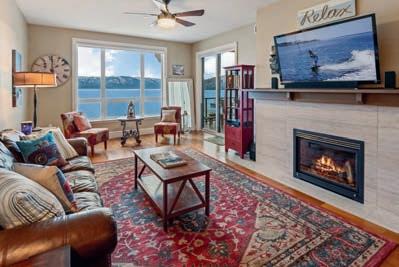
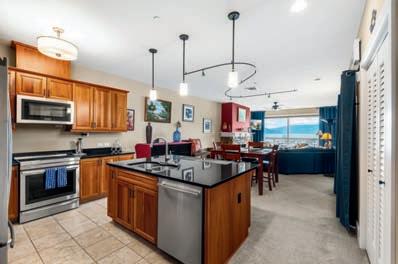
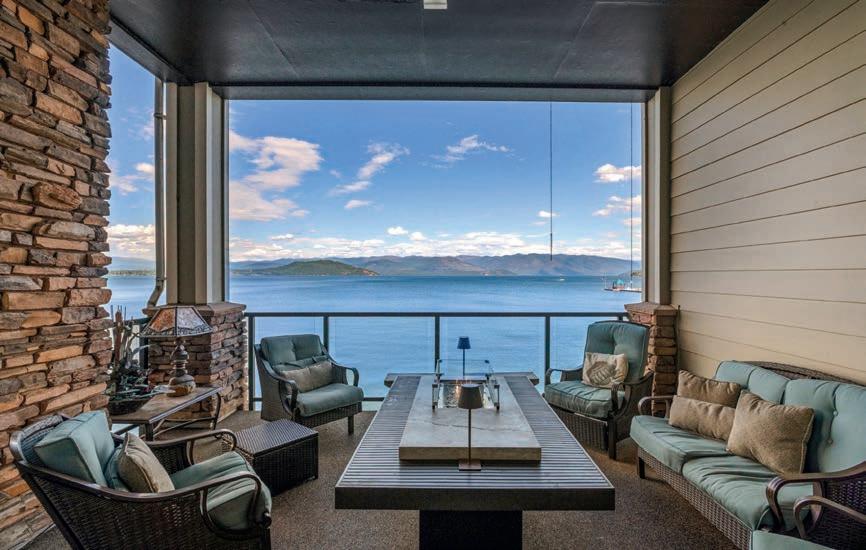






Featuring an extraordinary collection of one-of-a-kind Native American Art, Jewelry, and Artifacts
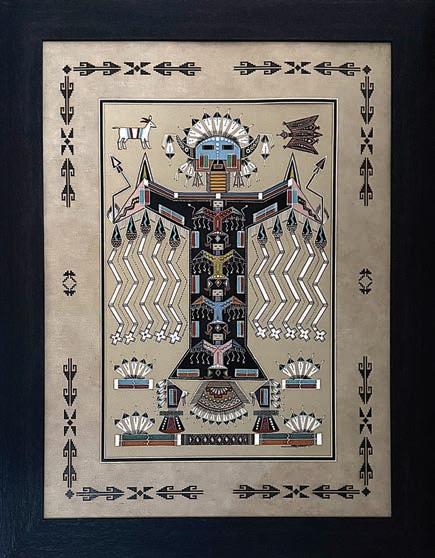
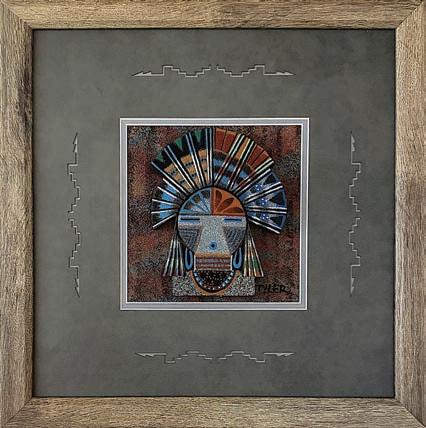
TIMELESS NAVAJO SANDPAINTING
Traditionally, an integral and powerful part of religious ceremonies for healing and protection. Today, they are more commonly seen as a unique and permanent art form using crushed stone to respectfully depict sacred Navajo symbols.




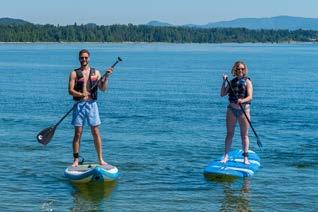
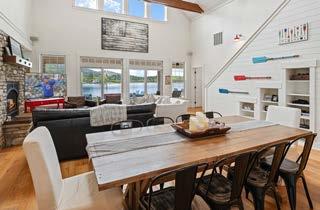

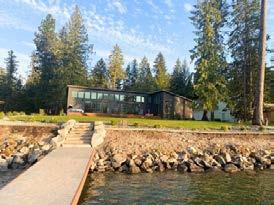
Titan’s Landing
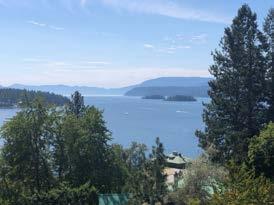
Blue Heron
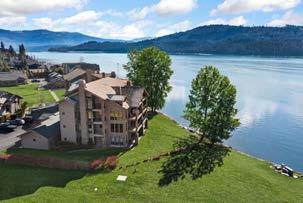
Villa Z
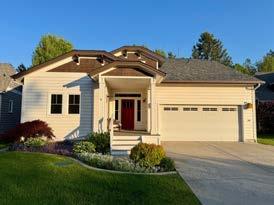
River Run - Laclede
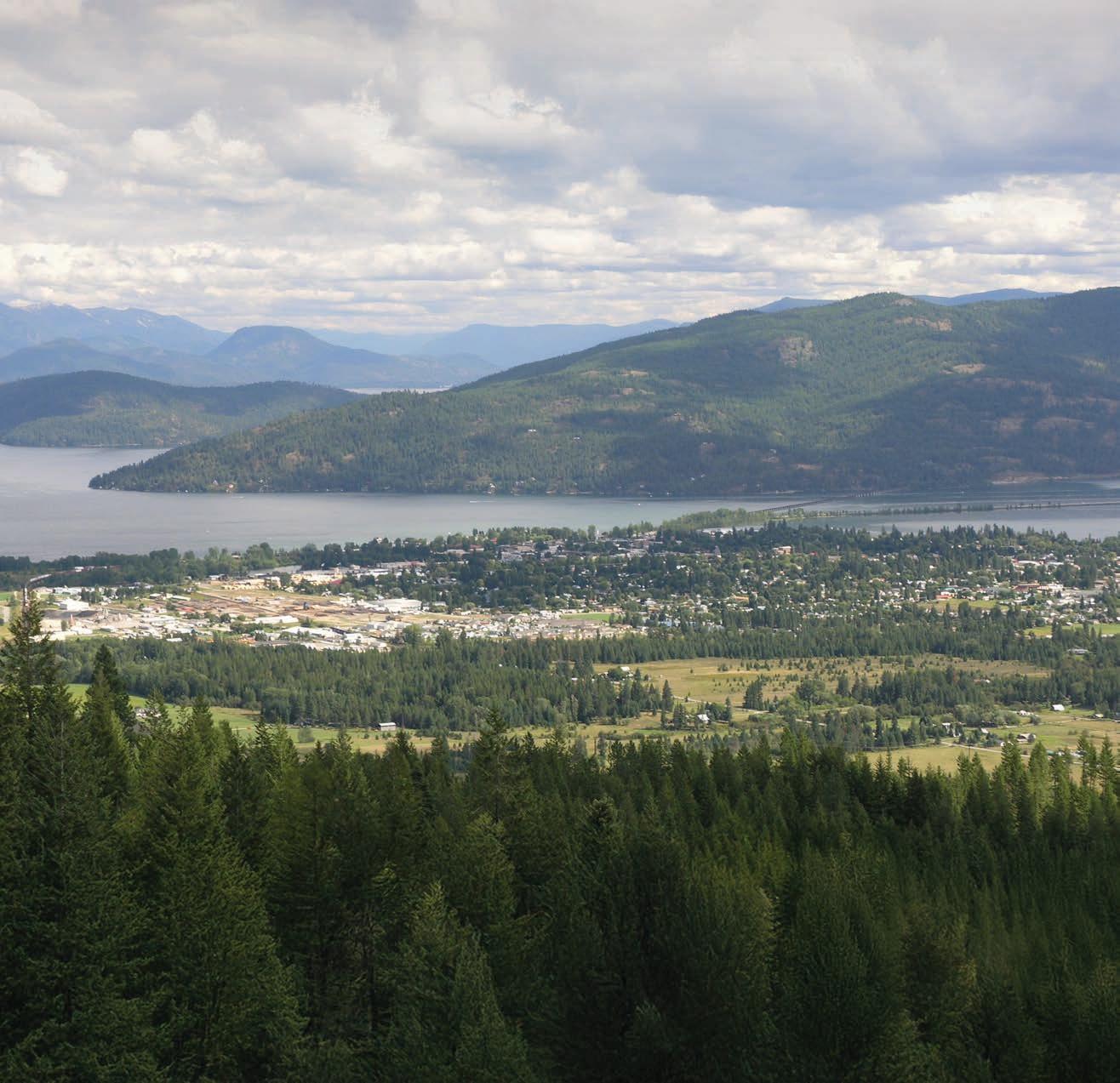









Peterson. Harold’s IGA
at a Festival at Sandpoint Community
lies beneath Exploring hidden worlds under Lake Pend Oreille
A lake of many depths Pend Oreille’s mysterious story
the billion dollar bathtub Behind the doors of the lake’s submarine base
They’ve gone off the deep end Distance swimmers and winter plunges
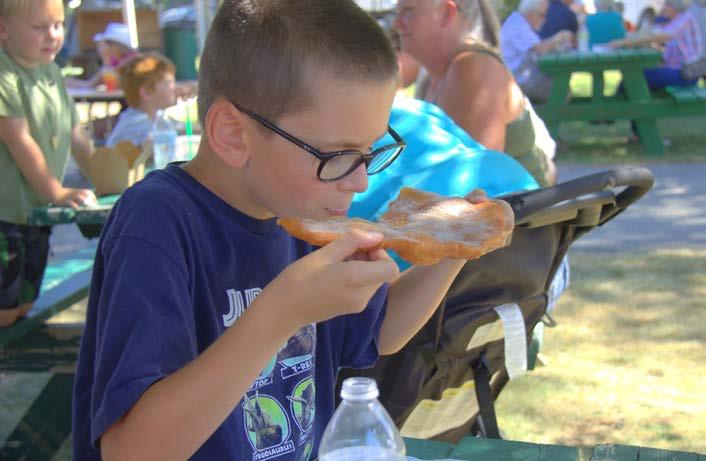
Hunting in their world
A new fishing adventure in our waters
distinctive Peaks
How did those mountains get their names?
phoenix rising
Local scavenger king builds a big boat 47 the fly-in that birthed a painting Weekend event inspires a depiction of Miss Veedol
A State Champion tree
Pine Street Woods home to record aspen
vigilance on the Water
A long history of protecting the lake’s water quality
eight Years All Year Long
Nonprofit has a big impact on community
Shifting gears
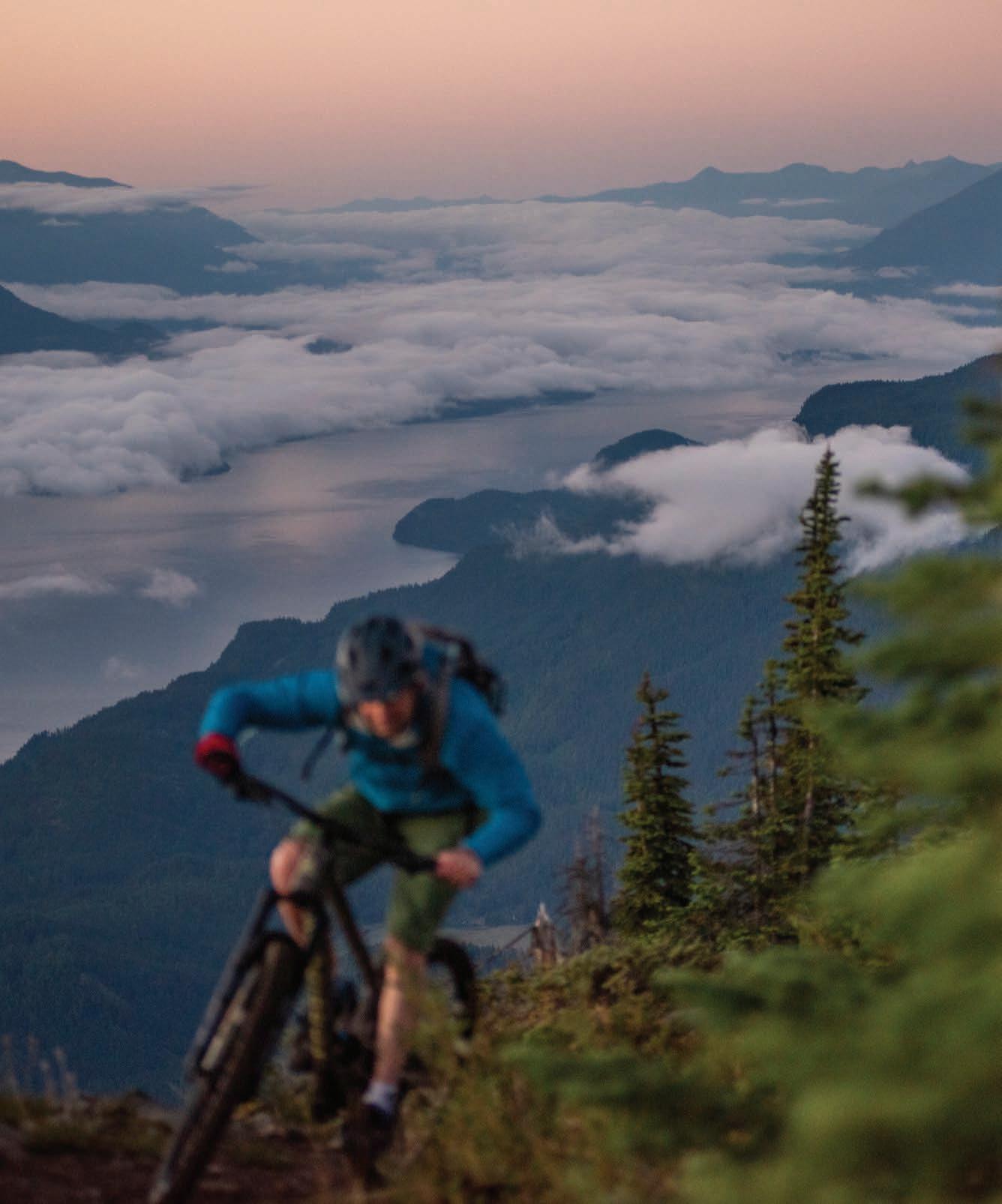
Bicycling icon cutting a new trail
room for the future and the past
Library, museum plan for expansion
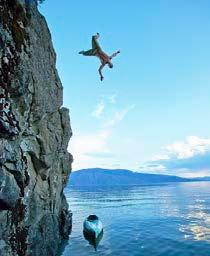
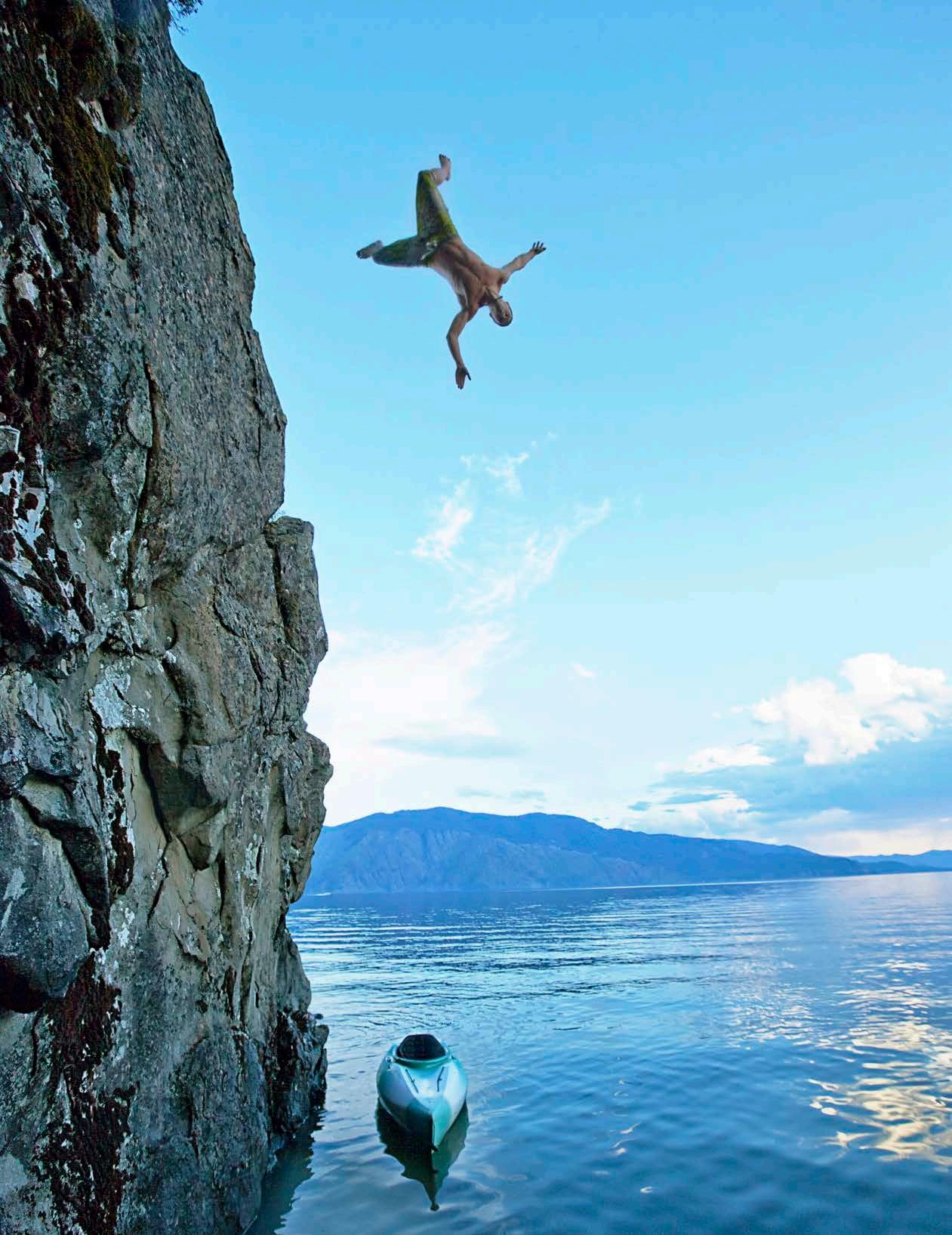
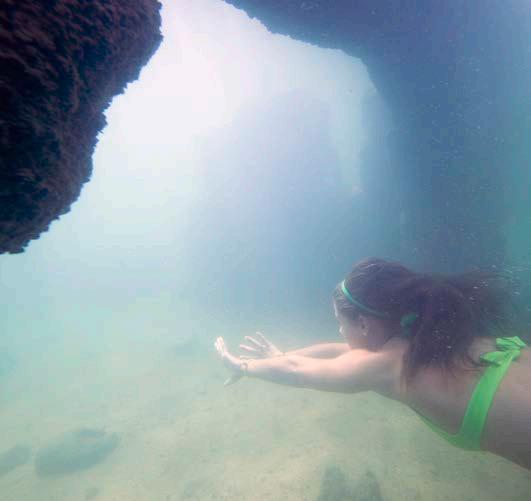
That wild dive into Lake Pend Oreille is a self-portrait by photographer Patrick Orton—and a perfect depiction of his boundless gusto for life. Patrick tragically died in 2013 at age 24, but his adventure photography and passion for living life fully have inspired countless others. His parents, Kristina and George Orton, created a scholarship fund in his memory that each year helps local students pursue their own passions. To contribute, go to any Wells Fargo Bank and tell them you want to donate to the Patrick Orton Live Your Dreams Scholarship.
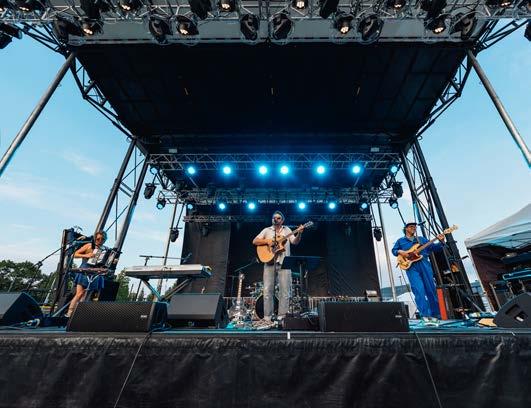
From top, clockwise: There’s a whole world waiting to be discovered beneath our lake’s beautiful waters. Photo by Patrick Orton. Sawyers Bakery is just one of many opening this summer in Sandpoint. Photo by Amy
performs
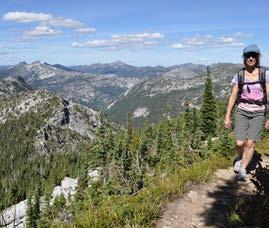
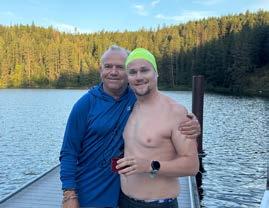
Night. Photo by Racheal Baker. Kim Woodruff with his son, Kevin, who gets a warmup during his epic swim. Photo by Gina Woodruff. Sandy Bessler hikes with the Lions Head behind her left shoulder. Staff photo.
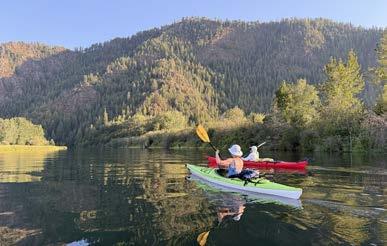
Publisher’s wife and cousin scratching the surface last summer.
PUBLISHER’S NOTE
Is there anyone who lives or visits here that, come summer, doesn’t have something they particularly love about big, beautiful Lake Pend Oreille?
It might be swimming and playing at City Beach, or walking the Bay Trail, or merely basking in marvelous lake views from some good vantage point. Or, of course, it can be getting out on the lake’s expansive waters by motor boat or sailboat or paddle craft.
Me, I like all those ways of experiencing Lake Pend Oreille. But even that multitude of enjoyments just scratches the surface of our amazing lake. All the numbers we recite about it—Idaho’s biggest lake, the nation’s fifth deepest, the 100-plus miles of shoreline— don’t capture its essence either.
This issue of Sandpoint Magazine is devoted to Lake Pend Oreille in a deeper way. Our feature stories will take you well below the surface, from the adventures of scuba diving, to the Navy’s submarining activities, to accounts of the lake’s geology and ecology and the human history around it. For all those who love it, we hope you’ll discover something new (and deeper) about our magnificent lake.
For a final note, I want to say that making Sandpoint Magazine for 35-plus years has truly been a deep and enriching experience in itself. This is my final issue. I tell a bit more about where the magazine came from, and where it’s going, in the Sandpoint of View essay on our last page. Check that if it’s of interest. And by all means … have your best and deepest summer ever.
- CB
DEPARTMENTS
10 almanac
25 events calendar
29 interview: William Peterson
49 Pictured in History: Sandpoint tennis
57 history mystery: Calm waters, turbulent past
88 Photo Essay: The Golden Hour
122 Marketwatch
125 natives and newcomers 147 dining guide
152 Sandpoint of view: What the earth set in motion
REAL ESTATE / BUSINESS
96 life on the high end
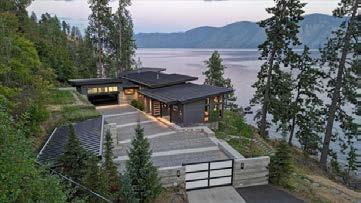
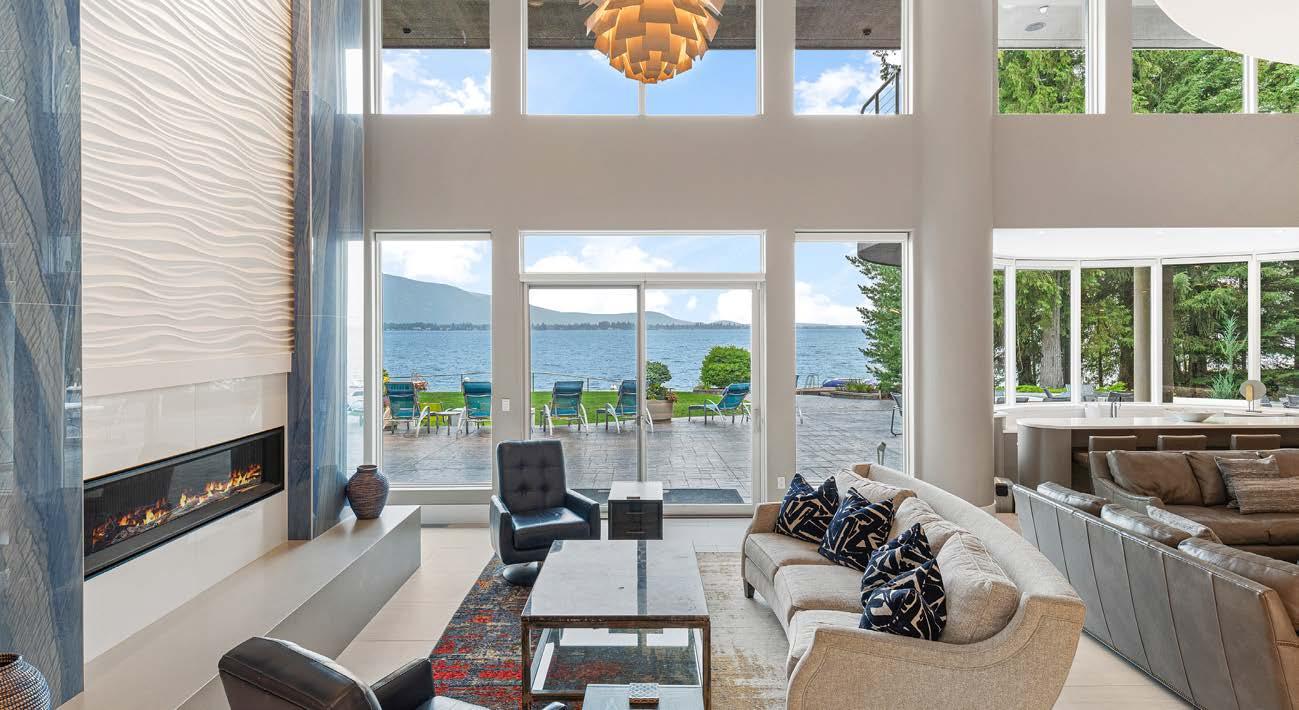
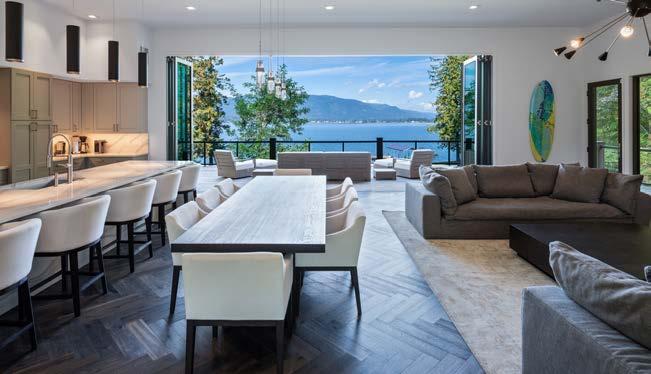
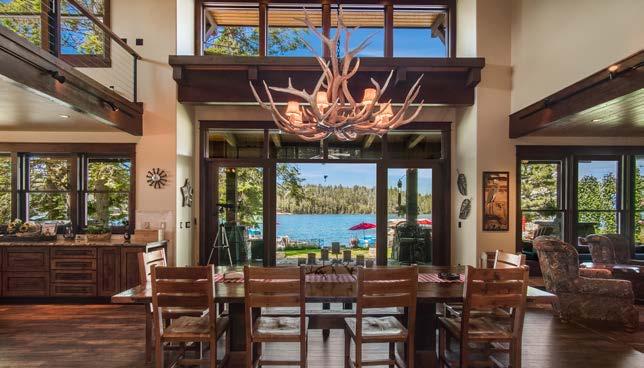
Top dollar lake homes offer the luxury of tranquility
103 The Accidential Broker
Charlie Parrish spends forty years in real estate 105 The Intentional Home
Sustainability and Style in the Pacific Northwest 111 a new look for black rock
Ponderay moves forward to reclaim its shoreline 115 expect delays
Sandpoint has a busy road season ahead
117 State opens door
Protecting short-term rentals
119 joel Aispiro serves sandpoint
Restaurateur rooted in community
EATS & DRINKS
132 dock and dine
Finding the best boatable bites on the lake 138 Connies is Winning the game
Game nights, live music and a comfortable atmosphere 139 the art of the rise
Sandpoint’s getting sweeter 142 Serving Sandpoint
Ashli Thompson at Connies and Madalina Moreno at Roxy’s
143 A taxing situation
National policy impacts local business
Publisher Chris Bessler
COO Jeff Lagges
Editor Trish Gannon
Events Editor Misty Grage
Advertising Director Clint Nicholson
Art Director Pamela Milless
Design Team Dan Seward
Digital Marketing Skye Konz, Brandy Nicholson, Joel VanBrocklin
Office Manager Susan Otis
IT Manager Ethan Roberts
Sales Mitchell Fullerton
Sandpoint Magazine is distributed by Panhandle Special Needs, Inc
Contributors: Daryl Baird, Racheal Baker, Cody Bartels, Vaun Bartels, Caren Bays, Sammy Berryman, Bonner County Historical Society, Barry Campbell, Brandon Puckett, Dig Chrismer, Amie Comber, Hannah Combs, Sandy Compton, Pete Comstock, Caleb Cooke, Susan Drinkard, Susan Drumheller, Mark Duffner, Jill Eberley, Jennifer Ekstrom, Josh Smith, General Electric, Cole Golphenee, Misty Grage, Zach Hagadone, Cate Huisman, Clay Hutchison, Steve Jamsa, Kathryn Larson, Jenny Leo, Loren Media Group, Sue Mangan, Doug Marshall, Jimmy Matlosz, Jim Mellen, Linda Mitchell, Ben Olson, Patrick Orton, Amy Peterson, Brandon Puckett, Regan Plumb, Cameron Rasmusson, Cienna Roget, Tara Rumore, Renee Sande, Brad
Smith, Josh Smith, U.S. Dept. of Navy, Austin Vallone, Corey Vogel, Mark Vogt, Pam Webb and Gina Woodruff.
Sandpoint Magazine is published twice yearly, in May and November, by: Keokee Co. Publishing, Inc.
405 Church St., Sandpoint, ID 83864 208-263-3573 • www.keokee.com Printed in USA by Century Publishing, Post Falls, Idaho.
©2026 by Keokee Co. Publishing Inc. All rights reserved. Reproduction in whole or in part without written permission is prohibited. Subscriptions: $14 per year, payable in advance. Subscribe at www.SandpointMagazine.com.














Kent AndersonKelly Armstrong
Steve Carlson
Bobby G
Nathan HesterCindy Hunter
Dave Wilson Shari Keelin
Jeff Woodall
Jenna Miller
Ciara Normandeau
Randy & Darla Cole Webb
Dani SteinhorstBob Lesniewski
Kira Romero
They’re AMAZING utterly

River otters are the area’s water
gymnasts
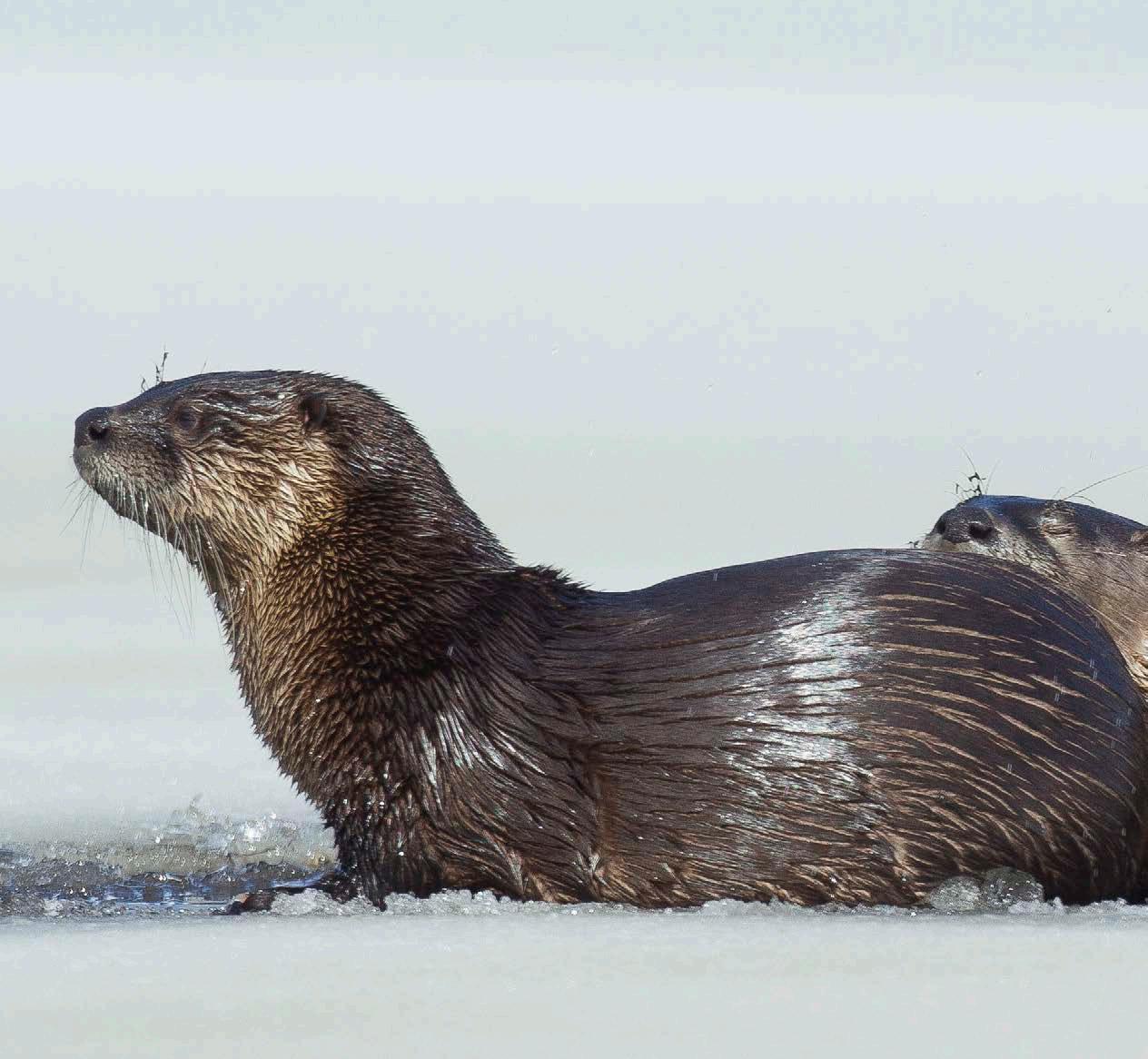
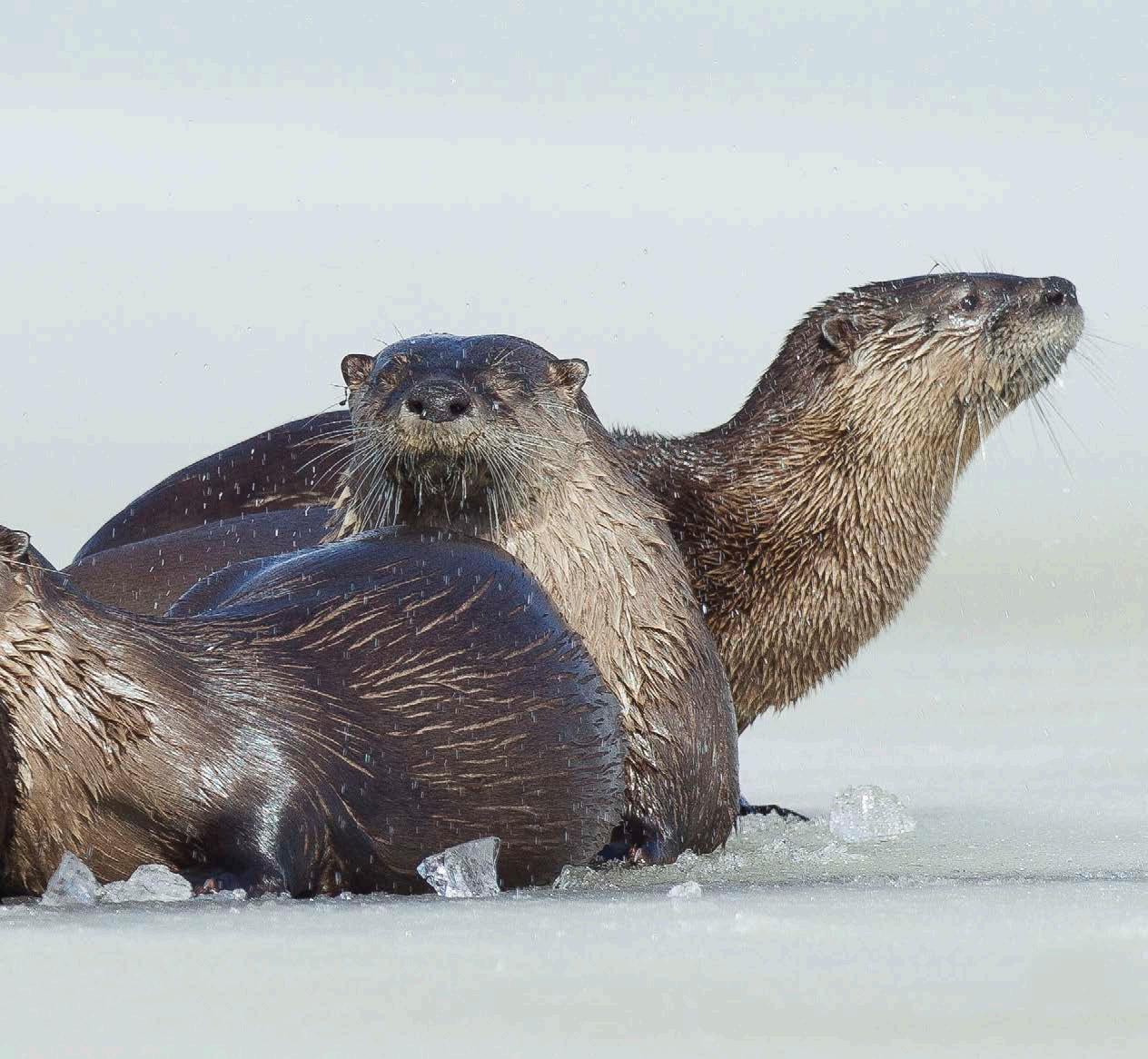
It’s hard not to smile when watching river otters. Like the silly friend who always makes life fun and adventurous, river otters seem to be full of pure joy and playfulness, sliding down a muddy or snowy hill whenever they get the chance, juggling rocks or playing hide and seek.
They even chuckle—a series of quiet, grunting sounds—and purr during this playtime, making them even more charming creatures.
Idaho Fish and Game tells us their playfulness, however, is more than simply having a jolly good “romp” (the word also fittingly used to refer to a group of otters on land). When otters play, they develop the coordination and skills to become great
hunters and survive in the wilderness.
In fact, they become so agile and adept at steering clear of danger, seeing them in the wild can sometimes prove challenging.
“While observations in our database are limited, sightings may be more likely from Hope to Clark Fork as well as sloughs and inlets on the west end of Lake Pend Oreille and the Pend Oreille River,” said Casey McCormack, a nongame biologist with the Idaho Department of Fish and Game.
If you do happen to see one or many, you’ll notice that their playful nature comes with a big dollop of curiosity. But be quick, as while they may stand on their hind legs and contort their long flexible body to get a better look at you, before you know it, they’ll swiftly dive into the water and be on their way.
Although their name denotes they live in water, river otters—or the North American river otter to be precise—aren’t only found in rivers, but also lakes, ponds, small streams, marshes and wetlands, in cold, warm and even high-elevation areas.
They are a semi-aquatic species, meaning they also spend a large chunk of time on land. However, river otters always make their homes in abandoned burrows or empty hollows with underwater entrances, to avoid being accessible to predators.
The next time you’re playing in the water, keep an eye out, as you could see a “raft”—a group of otters holding on to each other— or find yourself diving for the same underwater treasure as one of these intriguing mammals. If you do, count yourself lucky.
–Renee Sande
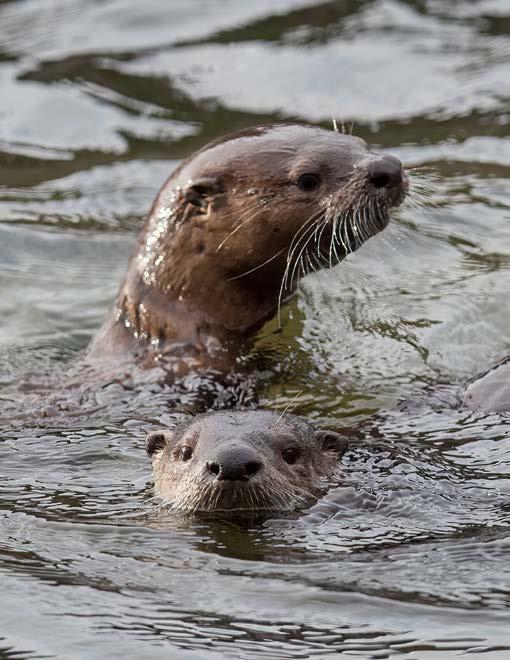
Above: An otter family plays at the Kootenai Wildlife Refuge. Photo by Steve Jamsa.
Right: This pair of curious river otters were spotted on the Kootenai River. Photo by Mark Vogt.
FILM FESTIVAL AIMS TO GROW A LOCAL FILM COMMUNITY
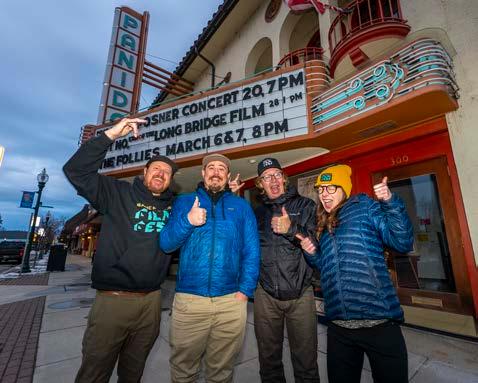
During a 2025 winter storm at the Yellow Goat Studio in downtown Sandpoint, local filmmakers and artists Katie Winkler, Chris Renfer, Nick Harper-Johnston and Michael Boge conspired to create a film festival for Sandpoint. “If Sandpoint had an authentic film festival, what would it look like?” they asked themselves. Sandpoint has had film festivals before, so the foursome relied on their personal experience working at other events, plus their combined backgrounds in action sports filmmaking, event production, graphic design and marketing.
After many weekly meetings and a few libations at Eichardt’s a plan emerged, buoyed by a simple mantra: “Sharing films that release the human spirit.” And thus the Sandpoint, Idaho Film Fest was founded.
The event will take place Oct. 17 through 24, presented at the Panida Theater. Eleven individual film categories—documentary, narrative, experimental, animation, made In Idaho, environmental, social justice, the Next Wave (student films), youth works (18 and under) and “past forward” (classic, must-see short films from the past), will be shown, plus there are plans for awards and film education seminars.
“Moving forward, the SPIDFF founders envision an annual event that they hope brings the community together, expanding the shared enthusiasm for filmmaking beyond the theater walls,” said Renfer.
Sponsored local film screenings and a film crawl are some future planned events that will serve to make SPIDFF a yearround community film group, right here in Sandpoint. Learn more at www.sandpointidahofilmfest.org
Emergency • Immediate Care • Orthopedics


–Jimmy Matlosz
Sandpoint Idaho Film Fest founders (from left to right), Chris Renfer, Nick Harper-Johnston, Michael Boge, and Katie Winkler. Photo by Jimmy Matlosz.
KANIKSU LAND TRUST EXPANDS WITH ACQUISITION OF GARDEN CENTER
Paul and Karen Oleson opened their Sandpoint garden center in April 2020, right as COVID-19 caused many businesses to close their doors. The center thrived as people discovered the joy of working outside in their yards when forced to stay home.
The business became more than a nursery as it filled the need for the community to connect with one another, which is one reason why the Olesons bypassed other offers and went with the Kaniksu Land Trust when they decided to sell.
Acquiring the Aster Gardening Center made sense for the organization given its well-known community connections and its focus on appreciating the outdoors.
Marcy Timblin, KLT’s director of communications, said that purchasing the garden center is a way to engage volunteers while educating people in how they can create a flourishing habitat in their own backyards.
Cara Johnson, the newly hired garden manager, envisions the center will become a welcoming community space that will not only continue to offer high-quality plants, but will also provide garden-care education on a larger scale. “The primary advantage of merging Kaniksu Land Trust with a garden center is alignment between mission and daily action,” she said. Combining the land trust's focus of protecting public lands with the personal care focus of gardeners, she said, creates a wider spectrum of understanding conservation.
The center is now a new home for the KLT staff and operations, with plans for workshops, seasonal events, a full gift shop and volunteer opportunities.
Learn more at www.kaniksu.org/aster
–Pam Webb
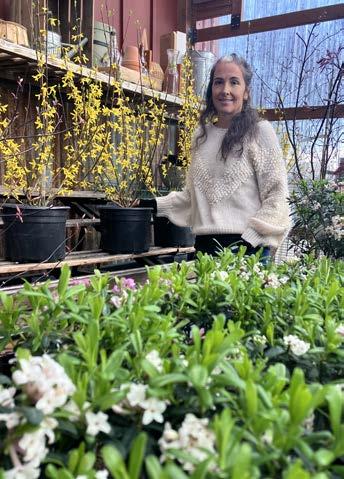



Garden Manager Cara Johnson pauses while working in the greenhouse. Photo by Pam Webb.

Coming Back to Life in Sandpoint.
This isn’t just a carousel. It’s a piece of history—rescued, restored, and reimagined right here in North Idaho.
Originally built in the early 1900s and silent since 1952, this rare Allan Herschell carousel is being brought back to life by dedicated volunteers, artists, and supporters who believe in something bigger than themselves.
PRESERVING HISTORY
Restoring a rare piece of American heritage.
BUILDING COMMUNITY
Creating a gathering place for families and smiles.
SPREADING JOY

A place where memories are made year-round. CREATING SMILES FOR THE YOUNG... AND THE YOUNG AT HEART.


Reno and Clay Hutchison take a test ride on the carousel. Courtesy photo.
CAROUSEL PONIES READY TO RIDE
COMMUNITY PROJECT GETS CLOSER TO LONG-AWAITED DEBUT
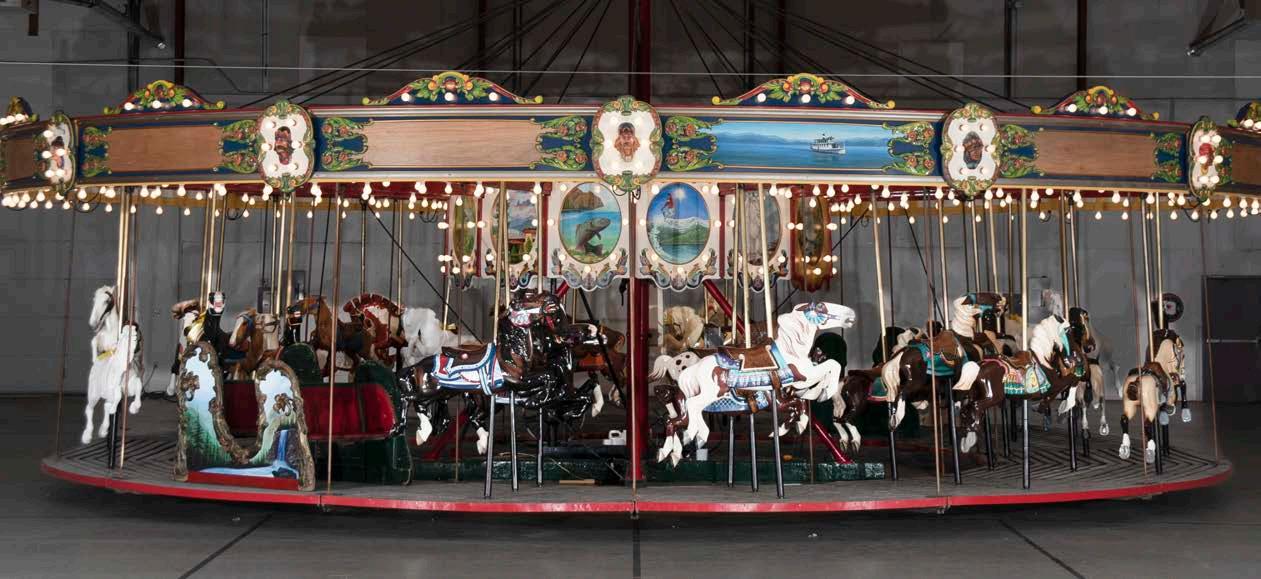
Once upon a time there was a stable of neglected horses that were no longer wanted. The heroic rescue efforts of Clay and Reno Hutchison, however, along with a sizable group of diligent volunteers, have restored these magnificent creatures, and soon the public will enjoy them as well. After nearly 26 years invested into saving a bit of Americana—the Carousel of Smiles—those wooden horses that have captured the hearts of the community are almost ready to ride.
For those who have watched the Carousel of Smiles project unfold, the anticipated debut is near, now that the mechanism and all but two ponies are completed. The next phase is creating a venue for them. Currently the carousel horses reside in the former Bizarre Bazaar building. “At present we are leasing the building and we are negotiating the purchase,” said Clay. “A substantial capital campaign is forthcoming.”
The carousel was set up September 2025 at the Bonner County Fairgrounds. An enthusiastic crowd was thrilled with viewing the carousel powered up in all its glory, complete with music and prancing ponies. Although public rides were not available, the teaser generated plenty of excitement. What was even more exciting was the visit of the National Carousel Association. “One hundred members came to see the carousel,”
said Reno, adding that the association has shown great support for the project.
The Hutchisons purchased the neglected 1920s Allan Hershell carousel in July 2000, and brought it to Sandpoint in 2016, initializing a dedicated community interest. Clay and Reno estimate there are at least 30,000 hours in volunteer service, and with the time and resources contributed by local businesses the restoration represents at least a million dollars in community investment.
While volunteers are busy inside putting the finishing touches on the ponies, another project is ready to go: a second, smaller carousel has been donated for refurbishment. In addition, the pair are exploring options for a mural on the long, back wall of the building. An earlier plan—silhouettes of prancing carousel horses—ran afoul of the city’s signage laws, so Reno is regrouping to develop a new vision. Whatever that turns out to be, “I really want to involve area youth. I want them to feel like they’re a part of it all,” she said.
The Hutchisons are planning summer hours for those wanting a tour of the carousel project.
Learn more at www.thecarouselofsmiles.org –Pam Webb
The nearly completed carousel was put on display at an event last year. Photo by Clay Hutchison.
Building Trails Builds Community
New group brings trail users with motors and those without together
The Pend Oreille Pedalers bicycle club has been building and maintaining mountain bike trails around Sandpoint for well over a decade. They are experts at finding funding and recruiting volunteers for their popular work parties, which involve not only digging trails but riding bikes and hosting barbecues and beers afterward at the trailhead. In 2025 alone, they built ten miles of new trails and kept up 45 miles of existing ones.
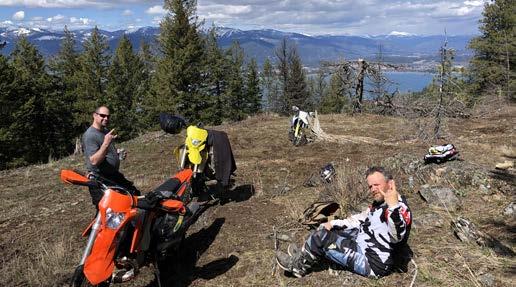
Motorized dirt bikers have long been building and maintaining trails too, albeit not in so organized a fashion. South of the Long Bridge, an extensive network of trails out of Hayes Gulch courses around Gold Hill, often following old logging roads.
Nick Bandy and his buddies have been cutting back the everencroaching saplings to ride these since he was a kid.
Although motorized and nonmotorized trail users have sometimes been at odds with each other, the Northern Rockies Trail Project was conceived in the spring of 2025 to recognize all they had in common. When POP president Emily Strizich asked Bandy to bring some of his dirt biking friends to a meeting about working together, an enthusiastic crowd turned up. Although the dirt bikers were a little skeptical at first, “in two minutes we could see that we were here for the same thing,” said Bandy.
Strizich has since become board chair of the NRTP. “It’s a much bigger production” than POP, she said, embracing all trail
users, including hikers and horseback riders as well as bikers. Wanting to ensure that all voices are heard, she has been meeting with a variety of stakeholders and landowners to identify how they all share an interest in trails. “Access to public lands is a unifying cause,” she said. But community trust is essential before the first route is flagged.
A key to making this idea work is building trails that work for everyone. Strizich refers to “purpose built” trails that are designed to survive intensive use. Moderate grade changes, skillful use of topographic features and dirt mounds all help prevent riders from slamming on brakes or throttling up so fast as to erode the tread.
POP, meanwhile, will continue its focus on trails and programs specifically for human-powered cycles, including trails in Pine Street Woods and the Little Sand Creek watershed, which will remain off limits to motorized use.
A particularly ambitious project for NRTP is a single-track trail connecting Sandpoint and Priest River. The effort is beginning now with a search for access points and buy-in from communities, agencies and landowners along the way. Eventually, “I would love to connect every town in the Panhandle by singletrack,” said Strizich.
Learn more at www.northernrockiestrailproject.org –Cate Huisman
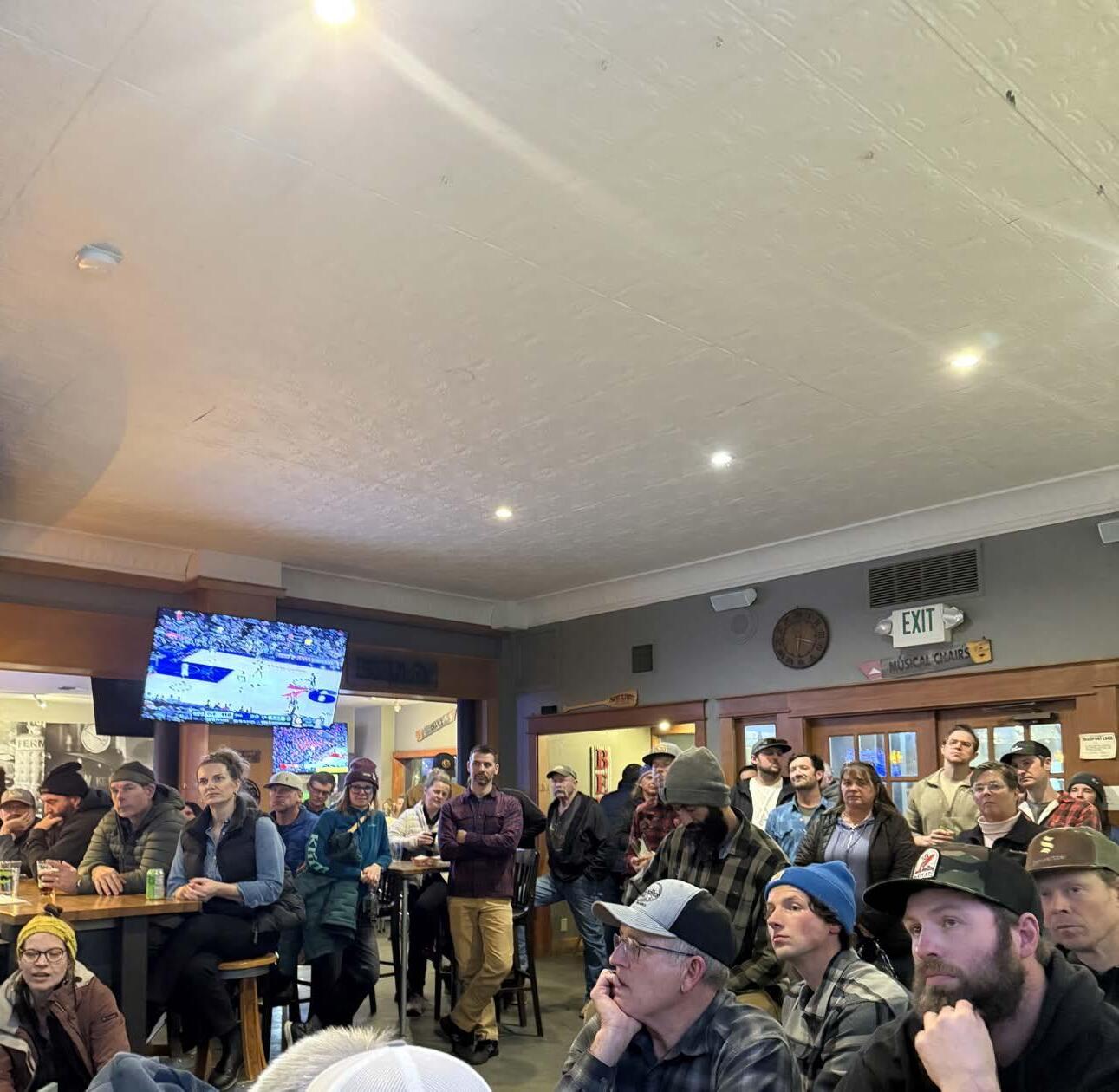
There was a large turnout at a meeting held to bring motorized and nonmotorized bikers together to increase access to public lands. Courtesy
Left: Local riders taking a break with a beautiful view from Gold Hill. Courtesy photo.
Below:
photo.
Live To Ski? Ski Where You Live.
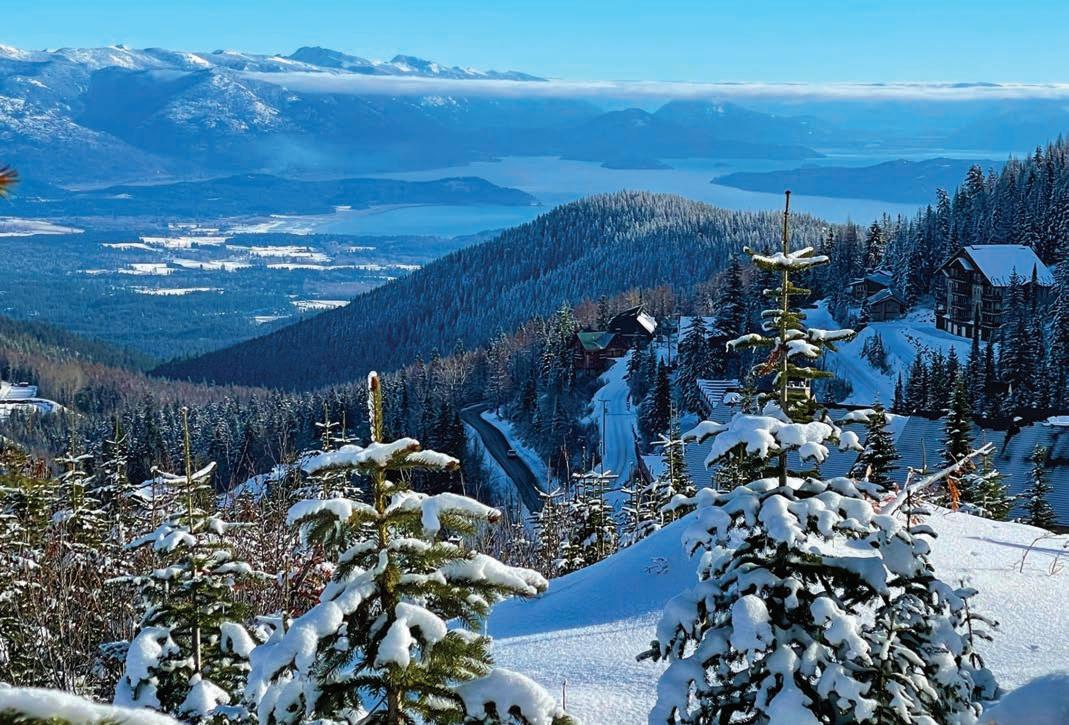
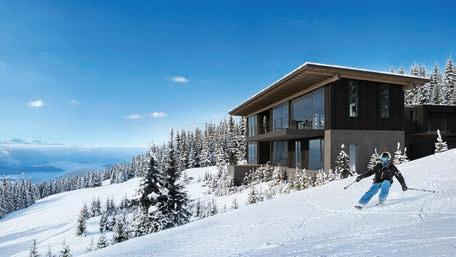
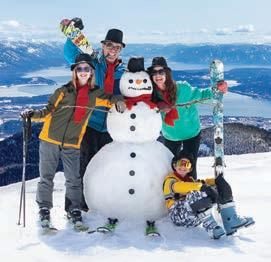
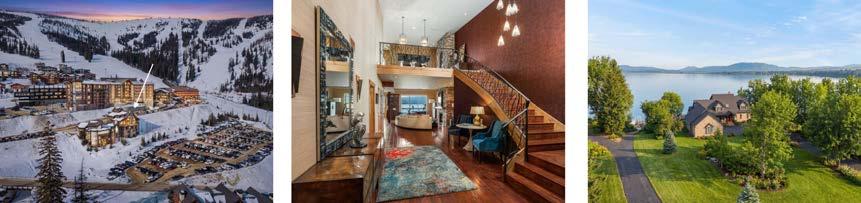
This is your very rare opportunity to own a homesite on Schweitzer resort’s highest, most awaited slopeside location. Schweitzer is the largest ski resort in Washington and Idaho, which also overlooks the largest lake in both states.
Crystal View dramatic homesites are ideal for creating your consummate four-season retreat and reward your family with the ultimate in mountain lake living. Your home will treat you to spectacular lake, mountain and ski
Now you can discover an uncrowded, authentic, mountain lake community right here in the Pacific Northwest. Our “Experience Schweitzer VIP Visit” services are available to help plan an easy trip to see for yourself. Please contact us for more information plus a free subscription to Mountain Lake Living magazine. Make the most of
trail views while providing the exceptional convenience of skiing, biking or walking to the bustling Schweitzer Village.

LOCAL SAVED BY SPIRITS ON GAME SHOW

In early 2025 local Ginna Minervini, owner of Temanos Counseling Services, found herself standing on the edge of an eight-foot-deep pool, not knowing if she would soon be flying into the drink.
As three of her family members had already made a big splash (literally), their luck was wearing out. Ironically, a drink is what saved her from going in—that is, a drink question that was answered incorrectly by the family they were competing against—in the game show, “The Quiz with Balls.”
Hosted by comedian Jay Pharoah and filmed in Belgium, Minervini, her two brothers and nephew answered the call when Minervini’s niece asked if they’d like to do the show with her.

Local Ginna Minervini and her family competed on the Hulu game show “The Quiz with Balls.” Minervini (on right in bottom photo) avoided going into the drink when it was her turn in the spotlight. Courtesy photos.
“A talent scout sought her out as she owns a modeling agency and tried out for 'The Voice,'” said Minervini. “We love the spotlight, so it was an easy yes!”
The show is fast-paced and losing answers get contestants knocked into the pool.
“It was loud and there’s all this anticipation, but I didn’t go in,” said Minervini.
It was when the competing team missed one of the correct answers to, “Which of these drinks is made with vodka?” that the Minervinis knew they were going to win and get a shot at the Golden Ball round.
“We know our vodka,” laughed Minervini.
In the Golden Ball round, one of the remaining family members must answer all five questions correctly to win $100,000. Minervini sent her nephew to battle because “He’s the really smart one. And we won!”
Missed seeing the episode’s premiere? You can still watch on Hulu, (Season 2, Episode 8 of The Quiz with Balls) to cheer on your local game show gal.
–Renèe Sande






HOT ROD HALL OF FAMER
If a car could talk, what would it say about the families it served? The adventures it undertook? The experiences it enabled for the people who owned it?
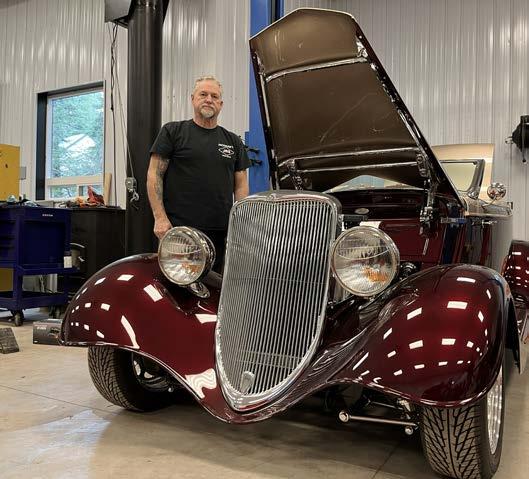
The thought passes through Chet Jackman’s mind whenever he begins work on a new hot rod. A lifelong passion he inherited from his father, Jackman honed his mechanical prowess over a lifetime—experience acknowledged last year with his induction in the Northwest Hot Rod Hall of Fame. It’s an extraordinary honor. And even more extraordinary? Jackman had no idea it was coming.
His wife kept him in the dark as she spearheaded the effort to present his hot rod restoration work to the organization.
His work speaks for itself. Ever since his childhood working alongside his dad, Jackman honed his ability to turn rusted shells into gleaming, road-ready works of art.
Recently retired from his job with the city of Sandpoint, Jackman believes his masterpiece is a cherry-red 1934 Dodge pickup. But his attention to detail and quality is evident in all of his builds. At a recent Battle of the Builders competition he made the top 40, competing against well-resourced builders like Chip Foose, host of the popular TV show “Overhaulin’.”
“A guy interviewing me for the show sat there and said, ‘You built your truck in your garage in North Idaho, and you’re

First in Fashion



here on the biggest stage in the United States competing with some of the best shops in the world,’” Jackman said. “Once again, what do you say?”
Every car Jackman works on is a labor of love. And central to that love are the memories and identity that our cars build for us. Now, Jackman has yet another memory to cherish. –Cameron Rasmusson




Chet Jackman’s retirement will give him plenty of chances to indulge in his favorite hobby—restoring hot rods. Photo by Misty Grage.


He Takes His Message to the Medians

Brother Nathanael’s unique outreach
If you have traveled the highway near Walmart, you might have seen a man in the median, energetically jumping and kissing the wooden cross he carries, sharing his love for Jesus with drivers passing by. While the Sandpoint-area resident doesn’t eat locusts or wear camel’s hair garments, his eccentric devotion echoes the spirit of John the Baptist—faithful to his calling and unafraid to stand out.
“Brother Nathanael” Kapner doesn’t preach. Instead, he worships through twirling, waving, jumping and dancing along the highways and byways of North Idaho. His cassock, an ankle-length robe, symbolizes his devotion to God. White, frizzy hair spills from beneath his kamilavka, a tall clergy hat. Multiple large crosses hang around his neck, and he carries a prominent wooden cross. It amuses him when he is mistaken for a rabbi, since Judaism rejects Jesus as divine.
Kapner, 75, was born Milton Kapner and raised in a Jewish family in the suburbs of Pittsburgh, Pennsylvania. In 1968, during the Jesus People Movement, he moved to California where he had a conversion experience. “I am one of the original Jews for Jesus,” he said.
After returning to the East, Kapner spent 25 years as a commission salesman for chemicals used in water treatment and factory cleaning. Following a lengthy association with the Russian Orthodox Church, he moved his ministry to the streets of America.
Kapner has faced criticism for anti-Jewish remarks and has been removed from various places, including ski slopes in Colorado.
Kapner has taken his message to the medians. He has been called names, labeled crazy, been arrested and even sprayed with soft-air pellets. Online critics are plentiful. However, he finds that most people, especially children, respond positively to him. He feels a kinship with the Sandpoint area because he believes there are a lot of Christians here. “Even the police here are Christian. I can tell by their eyes,” he said.
Kapner’s street evangelism is supported by his church in Naples, Idaho, some Catholics, and people who may not share his beliefs but support the First Amendment.
He credits his daily Bible reading and private prayer life as the fuel behind his ministry. “What I do is unique because I don’t speak, but I have a huge impact. It’s because I am bringing Jesus and they see the love in me.”
–Susan Drinkard
Brother Nathanael is a frequent fixture at Highway 95 and Kootenai Cut-Off road. Staff photo.
A ‘Bizarre’ Success Story
Nonprofit continues its legacy at a new location
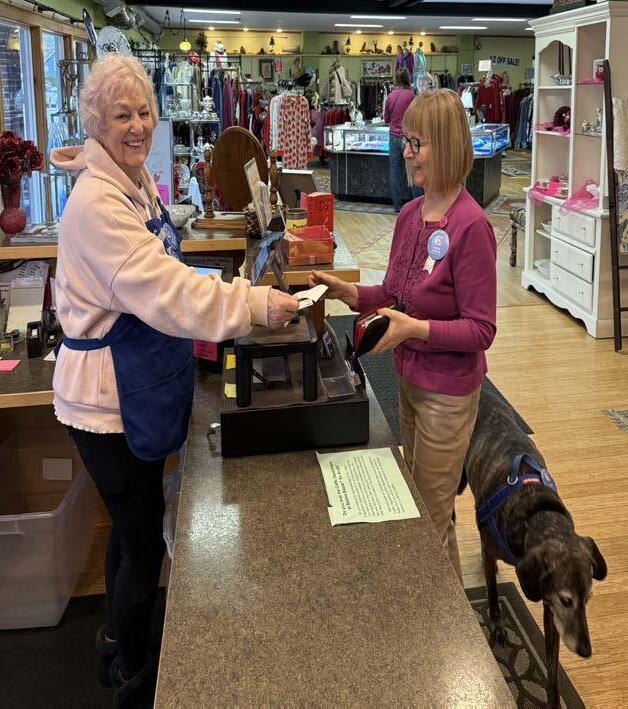
Two decades ago, the Community Assistance League of Sandpoint faced a recurring "mountain" of unsold goods after its 25th annual rummage sale. Member Joyce Spiller proposed a radical solution: a year-round store. Though leadership feared volunteer burnout, the membership was undeterred. Janet Rogers famously shouted out a motion to open the shop and the Bizarre Bazaar, Sandpoint's upscale resale store, was born. Newly relocated to 114 S. Boyer, the self-sustaining business that returns nearly a quarter of a million dollars to the community each year is celebrating its 20th anniversary.
The first store, a tiny 600-square-foot space, opened in Ponderay in 2006. The initial efforts proved the idea to be a success, but the lack of space and foot traffic prompted a search for a new location.
After scouting a few possibilities, Bizarre Bazaar moved to Church Street. Through the diligent efforts of CAL members, the store opened in December 2010, remaining there until 2024. When the lease expired, the store opened its present space near Smokesmith BBQ.
Though in a new location, Bizarre Bazaar still has a volunteer staff, providing the community with reasonably priced, gently used items. The profits return to the community as grants and scholarships, fulfilling their mission statement to support the community through education, service and philanthropy. This year CAL expects to give around $175,000 in grants and another $75,000 in scholarships to high school graduates.
Last year nearly 3,500 customers came through the door of the shop with an average of 20 people a day. Over 50,000 items were sold with nearly 15,000 total transactions.
“Bizarre Bazaar is more than a place to find great finds at a great price,” said Kathryn Larson, director of communications. “It’s a place where people (volunteers) can use their hidden talents, and socialize.” Larson described the store as an ecosystem. “It’s a self-sustaining cycle of volunteers, donors, and shoppers.”
As Bizarre Bazaar settles into its new home, the numbers speak to its success. What began as a radical notion in 2006 has become a permanent promise to Sandpoint—one thrifted treasure at a time.
–Pam Webb

Virginia Chavez and Jackie Carter are both volunteers with CAL.
Photo by Kathryn Larson.
Noteworthy
Beware of ticket scammers

Both the Festival at Sandpoint and the Panida Theater are warning event-goers to beware of scam ticket sellers. Both venues sell tickets at their respective places of business, or on their own websites, via ETIX.
ETIX is the only ticketing platform either venue uses—any other ticket sales sites are a scam. www.FestivalatSandpoint.com and www.panida.org
Shelter Dog Takes on New Role
At a spring city council meeting, former shelter dog Hunter and his human partner, Officer Hopman, received recognition for their certification as a Sandpoint Police Department K-9 narcotics detection team. Hopman has been a Sandpoint police officer for seven years as a patrol officer; Hunter is less experienced, as he’s just two years old. Although he didn’t speak, he looks pretty happy with his new role in life. As for his new workmates, they say he’s a very good boy.

Travers named a 2026 outstanding park for idaho
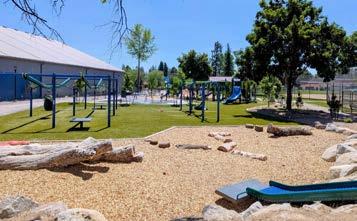
Sandpoint’s Travers Park was recently recognized by the Idaho Parks and Recreation Association, which selected it to receive their 2026 Outstanding Park or Facility award. Park improvements over the last few years include the James E. Russell Sports Center, an expansion of the skate park, a remodeled, inclusive playground and the creation of the tiny tots bike skills park. In a press release, the city stated this work was “a citywide effort made possible by residents, donors, nonprofits, local businesses, volunteers, user groups and public partners.”
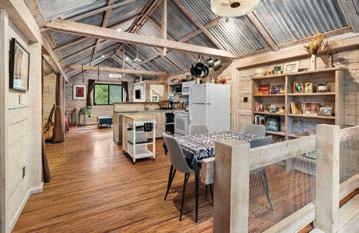
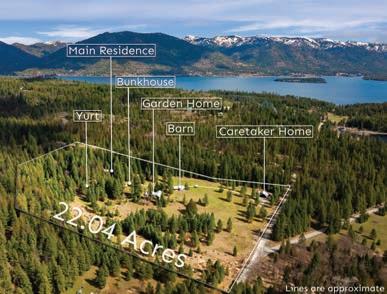
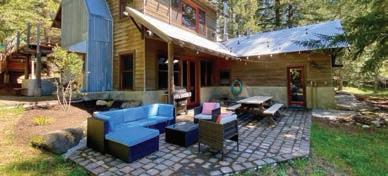
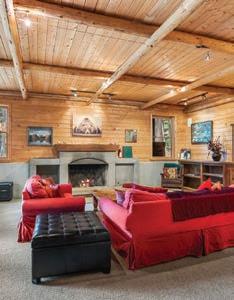
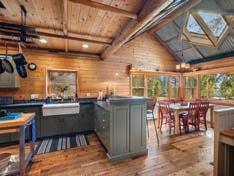
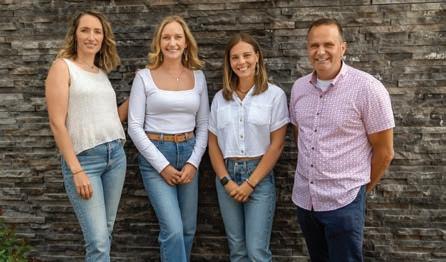
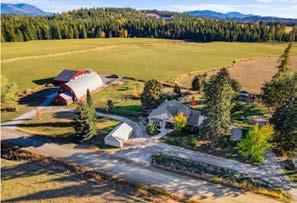
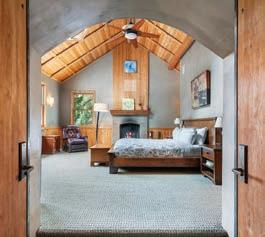
Eureka Estate
Offered at $2,450,000 MLS# 20260737 208-263-6370
Set on 22 serene acres in Sagle, this rare offering encompasses three charming residences, a large barn, multiple outbuildings, and park-like meadows. Whether a private or multigenerational estate, this unique property offers endless possibilities amid the beauty of North Idaho.

Project 7B offers land use toolkit
As part of its mission to promote education regarding land use issues, Project 7B has launched a new arm to its website offering basic to more advanced information on the subject. Their land use toolkit includes a glossary of land use terminology, plus overviews of topics like zoning, comprehensive plans and more. Check it out at www.project7b.org

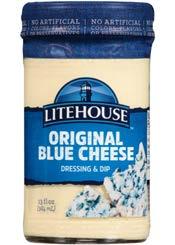
Litehouse takes a new, familiar name
After more than 60 years in business, Litehouse Inc. has been a Sandpoint success story. What began as a delicious salad dressing at Hurshell’s Lighthouse Restaurant in Hope has expanded into a specialty foods company sold throughout the United States. This year the company has changed its name to Litehouse Foods, acknowledging its foray beyond dressing. But no matter the name, you can still find your favorite Litehouse offerings at your local grocery market, and can buy knowing it all started right here.
Couple looks to bring scooter rental business to town E7B, an e-scooter rental business, is looking to open up shop here in Sandpoint, beginning with what they term a “thoughtful ordinance” on their operation in city limits. The dream of locals Brian and Sara LeBlanc, the couple believe scooters, which can be capped at a max speed of 15 mph, can be banned from certain high traffic locations, such as First Avenue, but can also offer people a chance to visit downtown amenities without adding to the city’s parking issues. The pair have been meeting with city government officials and committees because, said Sara, “We are able to do this privately, but would really like to work with the city [to ensure we can] operate safely and meet residents’ needs.” Follow on Facebook @E7B.
Architecture as Art
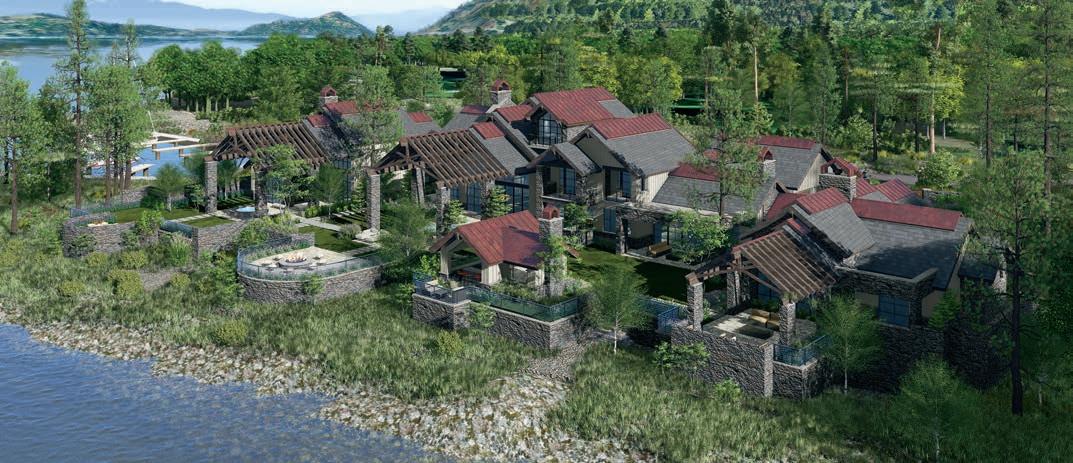
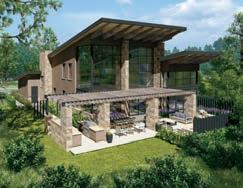
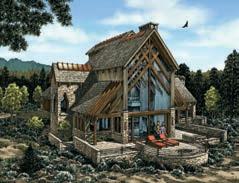
James Hann approaches architecture as an art form shaped by human experience. With more than 45 years of practice and licensure in multiple states, he brings a sculptor’s sensibility to creating designs that are both inspiring and functional.
Ranked #52 among the Top 100 Residential Architects in North America by Bond Custom, James Hann Design, AIA, believes true architecture emerges where artistry meets purpose. Each home is a bespoke design, tailored to its owner’s vision, lifestyle, and setting— turning clients’ dreams into spaces that feel uniquely their own.
EXPLORE SHOP & DINE
Discover local flavors, unique shops and places worth lingering.
RECREATION
Get outside and enjoy activities for every pace and season.
Download the Kootenay Lake Road Trip App to keep the journey fun.

Sandpoint Online’s events calendar is updated weekly and provides
May
On May 29, join the Pend Oreille Arts Council for their annual Art Party at the Sandpoint Organic Agriculture Center at 5:30 p.m. On the same day, you can swing over to the Sandpoint Library from 2 p.m. to 4 p.m. with your bike or scooter and helmet for a Bike Rodeo, including a bike safety check and minor repairs. There will be free helmets available for those without, while supplies last.
June

June kicks off with Schweitzer Mountain opening for summer activities on Jun 13. Also that day, check out Schweitzer's community day, featuring area nonprofits. Enjoy food trucks, musicians and more. In addition, scenic chairlift rides on the Great Escape Quad will be discounted, so you can take a ride up to the Sky House at the summit. Don't miss the trampoline jumper, climbing wall, mountain biking, hiking, geocaching and more fun activities.
That weekend also marks the start of Pend Oreille Art Council's 49th annual ArtWalk, held from Jun 13 to Aug 31. Local artisans, galleries and business owners throughout downtown Sandpoint showcase all our unique town has to offer with exhibits galore. Opening receptions take place Jun 12 at all locations from 5 p.m. to 8 p.m. The Sandpoint Renaissance Faire takes place Jun 13 and 14 at the Bonner County fairgrounds, where all your medieval needs will be met. Costumes are both encouraged and admired.
On Jun 20, the 18th annual CHAFE150 Gran Fondo takes place. This is one of the top charity rides in the U.S, featuring a signature 150–mile loop through the scenic Cabinet Mountains and lake valleys, with shorter rides also available. Sandpoint's Summer Sampler kicks off Jun 25. This event brings Sandpoint's finest restaurants and caterers to a central location in downtown Sandpoint, for an opportunity to sample Epicurean delights from our many talented local chefs.
The Monarch Grind for cyclists, starting and finishing near Clark Fork, happens on Jun 27. Finally, lace up your running


shoes because Bonner General's Find Your Strength 5K and 1K fun run starts and finishes at Sandpoint's City Beach and down the Sand Creek Trail with a family–friendly after party. Also, the Race the Wolf marathon and half marathon takes place Jun 20–21 at Schweitzer Mountain.
July

Independence Day celebrations in Sandpoint and surrounding communities are just the start of July's fun! Sandpoint Beerfest takes place Jul 5, featuring nearly two dozen handcrafted beers from regional breweries. Leave the kids at home for this one, it's 21 and older only. On Jul 9–12, join PFLAG Sandpoint for the annual Pride Festival at the Granary Arts District. From Jul 10–12, the Antique & Classic Boat Show will hit the Sandpoint city boardwalk, with a boat parade up Sand Creek.
Jul 18–19, the Northwest Wine Fest brings a two–day summer wine tasting event to Schweitzer. The weekend of Jul 24–25, the community of Priest River hosts Timber Days, with a parade, logging events, food/beer vendors, pancake breakfast, log load raffle, car show, movies at the Rex Theater... the list goes on. And on Jul 30 the Festival at Sandpoint kicks off with Andy Grammar and Walk off the Earth. followed by Aaron Lewis and the Stateliners on Jul 31. (See page 27.)
August
Start the month off with a Sandpoint classic, the Long Bridge Swim, on Aug 1. Swimmers tackle the 1.7 mile distance along the Long Bridge, in an event for all ages. Swimmers have ranged in age from 7 to 80 years old! The Festival at Sandpoint continues, with six more concerts, concluding on Aug 9 with the classical favorite, How to Train your Dragon, with free face painting and fireworks. (See page 27.)
Aug 7 and 8, don't miss the annual PRCA/WPRA Rodeo, held at the Bonner County Fairgrounds, which includes WPRA sanctioned women's barrel racing. Also on Aug 8, PORPA sprints are held at the Mudhole, just a half mile east of Priest River. This day celebrates non–motorized watercraft with fun races for
Find Your Strength Fun Run June 27.
Northwest Wine Fest July18–19.
Bike Rodeo May 29.

all ages and abilities. On Aug 8–9, the POAC annual Arts and Crafts Fair takes over downtown Sandpoint, with artist booths, food vendors, and a youth art arena. Sculpture, ceramics, metal, fiber, photography, paintings, wood, crafts, and more are available for sale. Aug 15, bikers can participate in Aether's Traverse, a 35-mile trek west, ending up at the Sky House on Schweitzer via Baldy Road.
The Bonner County Fair will be open to the public Aug 18–22 at the county fairgrounds, featuring Challenge of the Champions bull riding and the Demolition Derby. The annual Wings Over Sandpoint Fly–in, with pancake breakfast and aircraft display, takes place at the Sandpoint Airport on Aug 22. Montana Shakespeare in the Parks features two performances this year at Sandpoint's Lakeview Park: The Merchant of Venice will play on Aug 20, followed by Much Ado About Nothing on Aug 22. The plays feature outdoor lawn seating only, so bring your blankets and chairs! And both are free of charge.
Ponderay Neighbor Days, on Aug 29, brings a family-friendly community carnival to Harbison Field, just behind the Hoot Owl. The event is free.
September
Visit the artists during the Artists' Studio Tour Sep 4–6. See first hand the studios of painters, jewelers, potters and more on this free-of-charge event. Fall Fest takes place at Schweitzer on Sep 4–7 with four days of beer tasting and fun, plus live music
On Sep 26–27, the Panhandle Preparedness Expo raises disaster awareness with vendors, speakers, and demonstrations at the Bonner County Fairgrounds. Kids 12 and under are free.
October


Harvestfest with the Sandpoint Farmers’ Market Oct. 17
Scarywood offers five haunted attractions, seven scare zones and most of the park's signature rides at Silverwood Theme Park. It takes place Oct 2–30 on Fridays, Saturdays and Sundays. On Oct 17, Sandpoint Farmers' Market closes for the season with Harvestfest, a cornucopia of food booths, activities, displays and more, at Sandpoint's Farmin Park.

Artists’ Studio Tour Sept. 4–6.
Plenty of fun at the Bonner County Fair, Aug. 18–22. Photo by Marianne Love.
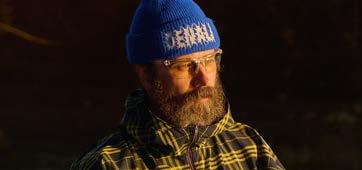
andy grammer

Aaron lewis
portugal. the man

community night

george thorogood
midland


lineup festival
’ 26
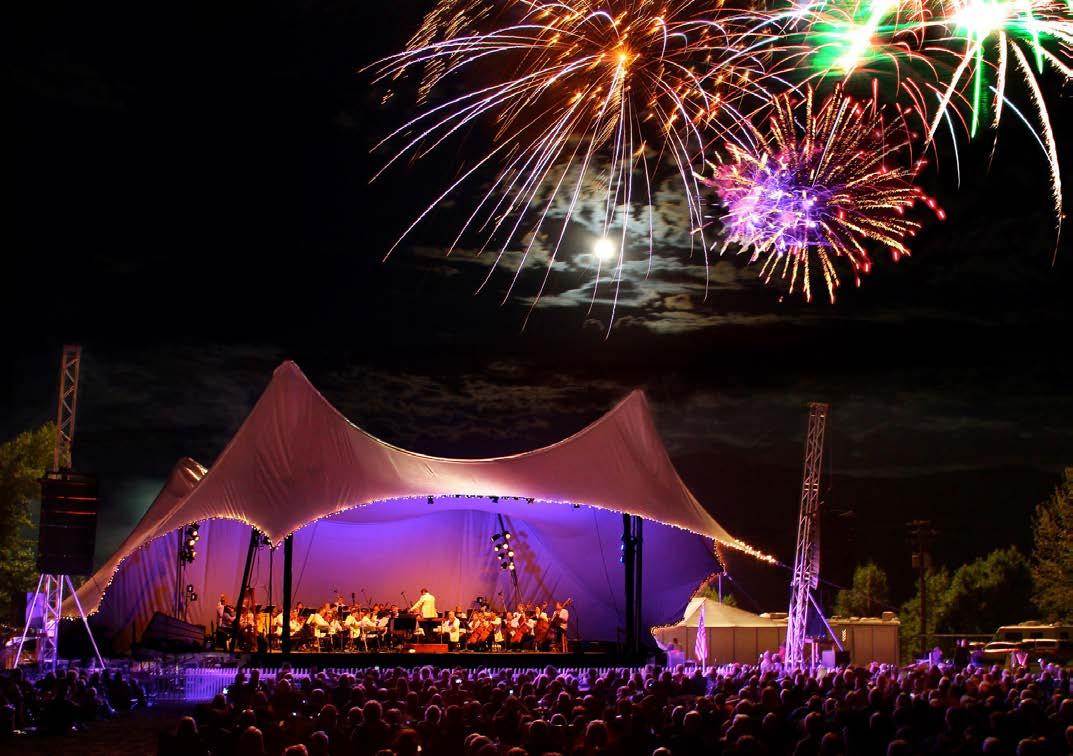
The Festival at Sandpoint’s 43rd annual summer concert series at Memorial Field features great music under the stars! Gates for evening shows open at 6 p.m., and concerts begin at 7:30 p.m. unless stated otherwise. Standard shows leave the area in front of the stage open for dancing. The Cheers Beer and Wine Tasting event during the finale requires an add-on ticket, 21 and older only. Get tickets, maps, and info online at www.FestivalatSandpoint.com.
Thursday, july 30 - Andy Grammer with Walk off the EartH
After some dark times, mandolin artist Andy Grammer has carved out a specific niche by focusing on relentlessly positive, life-affirming themes in his rock/pop and soul/pop music that is perfect for sing-alongs. Walk Off the Earth is known for their eclectic, highly creative indie pop who became a YouTube sensation for their viral covers. Their biggest hallmark is unconventional instrumentation: look for glockenspiels, didgeridoos, theremins and kazoos on the Festival stage. This will be a standard show.
friday,
July 31 – Aaron lewis and the stateliners
A Vermont-born powerhouse, Aaron Lewis embraced his country roots to come up with two albums that debuted at Number 1 on Billboard. He collaborated with his heroes George Jones and Charlie Daniels on “Country Boy,” which went platinum, and hit Gold with “Am I the Only One.” This is a standard show.
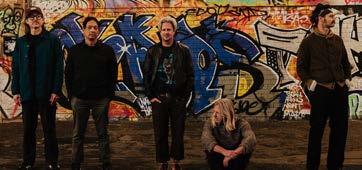
saturday, August 1 - Portugal. the Man
A hard-touring cult favorite, this Alaskan rock band is a mainland American institution. “Feel it Still” was a massive pop hit, while the SHISH focuses on a more righteous world. This will be a standard show with alternative, indie and rock.
sunday, August 2 - community night
This is a seated show featuring JOSEPH and openers Sydney Dale and Hannah Meehan. JOSEPH is the sister duo of Natalie and Meegan Closner, known for powerful harmonies, honest song-writing, and a genre-bending blend of indie, folk, pop and rock. Sydney Dale has a sound shaped by pop, jazz, R&B and folk influences, while Hannah Meehan is a Sandpoint-based singer/songwriter, who weaves songs of joy and melancholy.
sunday, August 5 - george thorogood & the destroyers
This is a standing show featuring Thorogood’s signature blues rock, which has stood the test of time for over five decades and still brings fans back for more. The Baddest Show on Earth Tour is said to be a stage-shaking, roof-raising, guitar-snarling blast. The Robert Cray Band opens the night. This blues icon, soul man, and rock and roller charted his path along the likes of Jimi Hendrix. He’s called the keeper of the flame for American roots music. This is a standard show.
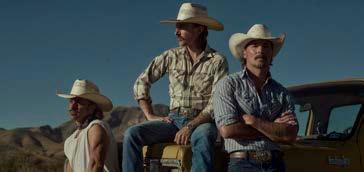
Thursday, August 6 - Midland
Neotraditional country artists Midland earned their first Grammy awards nomination, for both best country song and best country duo/group performance, for “Drinkin’ Problem.” Their music is a throwback to the smooth, polished sounds of the ‘70s, with hints of the Eagles or Jackson Browne. This is a standard show for this country sensation
friday, August 7 - switchfoot
With 13 studio albums, Switchfoot has sold over 10 million copies and have racked up a string of alternative radio hit singles. Their introspective, alternative rock sound has been dscribed as muscular and philosophical. Their strong, melodic sensibility often makes their work cross over from the indie scene to mainstream success. This is a standard show featuring alternative rock.
saturday, August 8 – Rick Springfield
This pop/rock wonder has been knocking out hits since “Jessie’s Girl” became a national sensation back in the 1980s. Now an accomplished actor, author, and “working man’s deejay” on Sirius XM, he’ll bring old favorites plus new hits from his recent album “Automatic” to the Festival stage. This is a standard show.
sunday, August 9 –
How to Train Your Dragon: In Concert
The Festival’s grand finale with Morihiko Nakahara, resident conductor of the Spokane Symphony. This is a seated show and ends with a fantastic fireworks celebration. Get a “cheers add-on” for your ticket for the Cheers Beer and Wine Tasting event, lasting from 5 p.m. to 7 p.m., and sample pours from throughout the region (21 and older only). This is a seated show.



From the woods of Elmira to the world of counterterrorism
Former
FBI agent (and Sandpoint Eagle Scout) William
Peterson has lived a life of international adventure and intrigue
by Zach Hagadone
William Peterson’s career sounds like a movie waiting to happen.
Since the age of 5, he aspired to become an FBI agent. He accomplished that goal in 1999 and went on to serve for 23 years, starting in the Violent Crime and Major Offenders Task Force, where after just 18 months on the job he solved a case that saved a group of American businessmen who’d been kidnapped and taken to Kenya. It

cemented his reputation for handling complex investigations that spanned international borders.
After the 9/11 terror attacks, his experience made him an ideal fit for the FBI’s fledgling counterterrorism squad. He served 12 years in that role—from Baghdad to Afghanistan to Greece, then Switzerland and Pakistan. By the time he retired, Peterson had served more time overseas than any agent in the Bureau.
Then-FBI Director Louis Freeh presents William Peterson with his diploma upon his graduation from the FBI Academy.
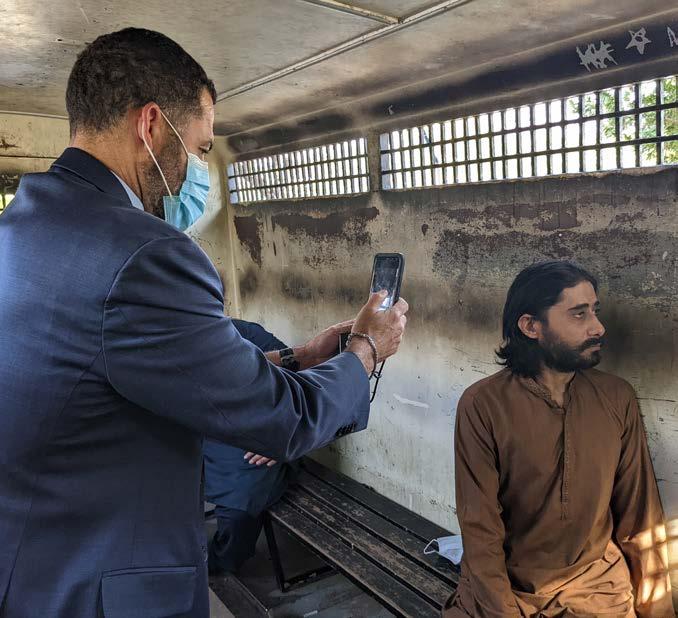
Along the way he worked on the investigation into Saddam Hussein; deployed with Special Forces hunting al-Qaeda leader Abu Musab Zarqawi; led the capture of Sajid Mir, who was wanted for the 2008 attacks in Mumbai, India; worked with the Swiss to arrest cybercriminal Vladislav Kliushin; and managed the effort to evacuate 27 families from Afghanistan to Pakistan. He earned recognition from the Office of the Director of National Intelligence and the FBI’s Cyber Division, as well as


FBI Combat Theater Awards for Iraq and Afghanistan.
Retired from the Bureau in 2022, today he works as the security manager for Amazon Corporate Security in the L.A. area.
For as action-packed and dramatic as his life has been, Peterson’s path started right here in the Inland Northwest, which left him with lasting memories— and lessons learned.

WHAT WAS IT LIKE GROWING UP IN OUR RURAL COUNTY?
I lived in Spokane until I was about 12. My dad was working for Pacific Gas and Electric and he was given the option to either transfer to San Francisco or Samuels, so we decided to move to Sandpoint. That would have been 1982.
My dad had always had a passion for being a farmer. He ended up buying 35 acres out in Elmira, and it was just woodland—there was just trees and woods. The plan was to initially build a garage. Up to that point, we were cooking over a fire, living in a tent. Then we finally got the garage built just before the winter came, and we didn't have enough time or money to put windows on the garage, so there were plastic windows, and we all moved into it—myself, my sister, my brother and my two stepsisters—and we all slept in this garage throughout the winter.
We had a wood stove, which was constructed out of some piping from Pacific Gas and Electric, and we had one of those handle water pumps in the kitchen, and we had to boil water if we wanted to take showers. We had to walk a mile to get to the bus on U.S. 95.
It was a really, really, really rough time; but, you know, we were happy with family. There were no distractions or anything like that. I really learned to respect what you have.
WHAT ABOUT YOUR SCHOOL LIFE AT THAT TIME?
I made friends the best I could, and I had some great friends that I grew up with in high school. The other part of it, too, was I'm biracial—half Black and half white. I didn't feel that I was discriminated against in high school, aside from a couple of episodes. The coaches, the teachers, they all made me feel really welcome. But that time was a little bit uncomfortable because you had the Aryan Nations in Hayden Lake, and, every once in a while, I would bump into one of them, and they would say some pretty harsh things, so I just had to brush it off and keep on going.
During that time I was on the football
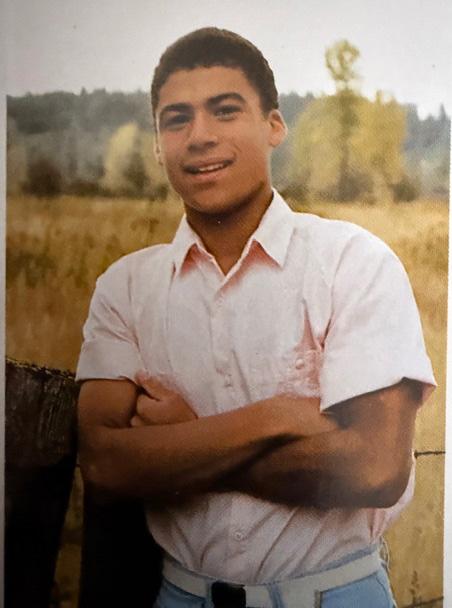
Peterson was a Sandpoint High School graduate and Eagle Scout, a background he says helped him go on to a career in the FBI. Courtesy photo.
team, on the track team and had some great coaches like Coach [Mike] Hagadone and Dave DeMers. They were real role models for me.
Also during that time, I said, “When I graduate, I'm going into the military, and I'm going to go into the FBI, and that's my hope and dream.”
I did my four years in college, went through my Naval ROTC training, graduated in 1992 and I went to the Navy. I was a surface warfare officer in Norfolk, Virgina, and I did that for seven years, deployed on an aircraft carrier.
was partially raised by my grandmother in Spokane. And I was 5, 6, 7 years old and she would always put me in front of these shows, like CHiPS, and some of the other law enforcement shows back in the ’70s. And I remember one came on called The F.B.I.
I was really fascinated by the work these guys did. It wasn't just like they were going out investigating burglaries. There was terrorism, counterintelligence. They were running around the world. I was fascinated by it.
My grandmother said, “You could do that.” It just kind of instilled in me that, hey, I could do that. And that was my goal from a young age. I just wanted to get into a profession where I could help others. And with my mother being a victim of violent crime, I didn't want that to happen to anybody else.
Plus, this is a phenomenally exciting career. I was so excited when I got that letter that said, “You're going to the FBI Academy in Quantico, Virginia.”

Then I got out and went to the FBI in 1999, but it took a long time to get into the FBI. I applied, like, three years prior to getting out of the Navy. I just kept being told, “No, no, it's very, very competitive,” and I was told that it's easier to get into Harvard than it is the FBI, statistically. I didn't let that dissuade me, and I kept pushing.
HOW DID THOSE EXPERIENCES SHAPE YOUR CAREER PATH?
In 1975, my mother was a victim of violent crime in Spokane. She was killed. Losing my mother at such a young age, I


WHAT WAS THE MOST MEMORABLE INVESTIGATION FROM THE BEGINNING OF YOUR CAREER?
The one in Kenya changed a lot of things for me. It made me confident. Because the challenges I was dealing with in this kidnapping were immense.
I'll just give you a brief on it. My supervisor said, “Okay, all the other agents are really bogged down, working other cases, and we just got a call from some wives out in Valley Center”—which is in the outskirts of San Diego—“that their husbands have been kidnapped. They think there's something suspicious.”
I could talk about that for 45 minutes, but it was one of the most significant hostage recoveries in FBI/San Diego history, and one of the top in the Bureau. I didn't realize it at the time, but all the work that had gone into that to recover the victims got worldwide publicity, and it really gave me confidence. That was the first big case, and after that, anytime a kidnap-
Sandpoint’s Original
One-Stop-Shop
We are located right downtown and have plenty of parking right in front of our store. Our knowledgeable, friendly and helpful sta is standing by, ready to help you. It's what makes us di erent — we take the time to help our customers personally.




William Peterson takes photos of Sajid Mir in Pakistan, one of the FBI’s most wanted terrorists at the time. Courtesy photo.

ping came in it definitely landed on my desk.
Up to then, a lot of agencies were ignoring me, and then, when this kidnapping broke, they were coming up and patting me on the back, and they're like, “This is your career case.”
HOW DID YOU TRANSITION FROM THAT ROLE TO AN INTERNATIONAL CAREER?
My plan was to be a violent crimes agent my entire career. Then I remember the day: 9/11.
My supervisor came over to my cubicle and said, “Um, guess what? We don't have enough counterterrorism agents, so you're now a counterterrorism agent.” And I said, “I don't know anything about terrorism.” He said, “That's why books were invented, so pack your gear and get over to the Terrorist Squad.”
Every day when I’d come home from work, I would see “Lance Corporal So-and-So killed by a roadside bomb,” and “Marine Sergeant So-and-So blown up,” and it just made my gut wrench, having been a veteran myself. Then a canvas came out from FBI headquarters: “We need five agents from San Diego to go to Iraq to work the Saddam Hussein investigation.”
I thought about it. Like, that place is dangerous. I've got a wife. I've got kids. Why would I even consider that? Then I started thinking about these soldiers, sailors, airmen and Marines who are giving their lives. I said, “If there's anything I can do by going to Iraq, I'll do it.”

So I volunteered to go along with four other agents—the fifth didn't go. That's how hard it was to fill.
For weeks we were just going through all the Saddam Hussein papers; we're connecting him to his brothers, and trying to piece everything together to prosecute Saddam. Then, one day, my supervisor comes to me and he said, “You're a counterterrorism guy, right? Do you want to work terrorism in Iraq? Do you really like what you're doing with the Saddam case?”
“Not particularly,” I said, and he said, “Okay, you're working terrorism.” And I'm like, “What am I doing?” He said, “You'll find out. Go up to your room, pack your gear, get your weapon, get your backpack, get your sleeping bag and then report down here at 22:00.” He wouldn't tell me where I’m going and now I’m freaking out.
I can't really get into the details of what we did, because it's classified, but I was embedded with that team [tracking Zarqawi] and it was a phenomenal team. Eventually Zarqawi was killed in an airstrike. I didn’t have anything to do with that. I just worked with them to try to treat al-Qaeda like an organized crime network, and that's where the military was lacking. They're great at war fighting, but they don't know anything about interviewing. They don't know anything about investigations, and that's why they brought the FBI in to show them how to work these terrorism matters like organized crime cases.
WHAT CAN YOU TELL US ABOUT YOUR WORK IN EUROPE?
In Greece there was the 2007 rocket attack against the U.S embassy that was unsolved, and working with the Greeks we solved that.
Then I went back to the United States and I ran a counterterrorism squad in San Diego from 2013 until 2017. I decided to put in for some other posts, like Rome, London and so on. Those are very, very competitive posts for the FBI. I didn’t get them, but was asked, can I put in for Bern, Switzerland?
Bern at the time was a one-agent office, and I said, “This is going to be challenging. I'm going to be the only FBI agent covering two countries: Switzerland and Liechtenstein.”
But I took the offer because I had been an FBI attache in Greece before for five years, so I was comfortable being a diplomat and working overseas on investigations. But I would say my tour in Switzerland, by far, was the most meaningful for me.
There were 23 terror plots disrupted in Switzerland when I was there. I was the only agent there—I was working non-stop, but it was very, very meaningful work, and I did that for about three and a half years. Then, toward the end of my tour, capturing Vladislav Kliushin, who was one of the most significant cyber criminals in FBI history. He was a skier, and we had some information that he was coming to Switzerland. We grabbed

him and extradited him to the United States, and he was one of the eight exchanged for the American prisoners in Russia.
ARE YOU CONCERNED ABOUT THE CURRENT EROSION OF THE U.S RELATIONSHIP WITH MANY EUROPEAN ALLIES?
Absolutely, because collaboration with your partners is synergy—one plus one equals three, not two. When you put all your tools in the same toolbox, it gives you better capability, so I am concerned about the erosion of trust—particularly in Europe. They have extraordinary capabilities, but if they don't trust the United States with that information, they're going to be unlikely to share, and that puts Americans in danger.
People don't realize how important these relationships are. If they don't trust you, they're not going to share intelligence with you regarding a potential plot in the United States or against U.S. citizens overseas or against U.S. infrastructure; that's my concern.
WHAT THREAT ARE WE FACING TODAY THAT IS MOST UNDERAPPRECIATED?
The biggest concern to anyone right now is cyber. It's a rapidly developing threat, and it's only going to get more intense with AI. I'm not a cyber agent; I just see that on the horizon. However, with regard to terrorism and what's going on in Iran, we are going to see more and more attacks.







We can talk about ISIS and al-Qaeda all day and how they evolved, but one of the things we're forgetting about right now is Afghanistan.
My biggest concern is a group called ISIS-Khorasan, in the Khorasan Province in Afghanistan. Right now, all the attention’s on Iran. But what are they doing in Afghanistan? They're expanding. So, I see on the horizon, sooner rather than later, ISIS-Khorasan carrying out an attack, and a massive one at that.
CAN YOU GIVE US AN IDEA OF WHAT YOU DO FOR AMAZON?
I'm a security manager for Amazon Corporate Security, and basically I oversee sensitive Amazon sites throughout the L.A. region, also in Santa Barbara, and the security companies that protect those facilities and make sure that they're doing what they're supposed to do. Also making sure that we've integrated tech in our security posture.
WHAT
ADVICE WOULD YOU
GIVE TO A YOUNG PERSON WHO'S INTERESTED IN A SIMILAR CAREER?
You know, focus on academics. That's the key. But also get involved in as many activities as you can. Be a three-sport athlete. You have to work in teams in the FBI, and when you’re in Sandpoint High School football on a Friday night, you learn how to function with a team effectively.
And for me, Boy Scouts was huge. I was in Boy Scouts from Cub Scouts from the age of 7 until I graduated high school, just learning that leadership and also those team skills as well.
Not only does that develop you, it also makes you more appealing for jobs like the FBI. Believe it or not, me being an Eagle Scout was a question the FBI asked, and they were impressed with it. It was one of the small aspects that got me in.
The grades are the main thing, and then if I were to go to college, I would study cyber—that's the future of threats.
Read the full interview online at www. sandpointmagazine.com
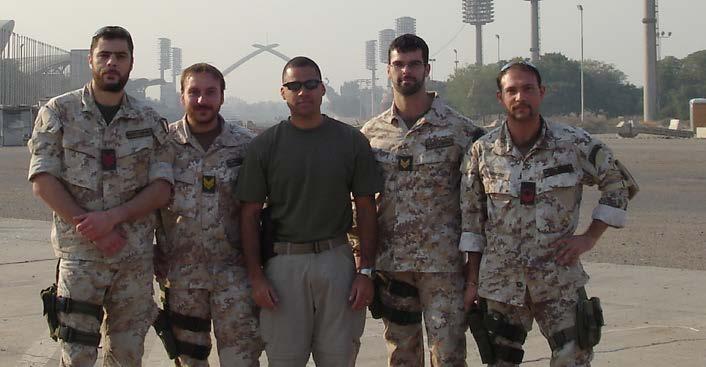

Peterson (center) with his team in Iraq. Courtesy photo.
Peak Curiosity
Names as colorful as the landscape
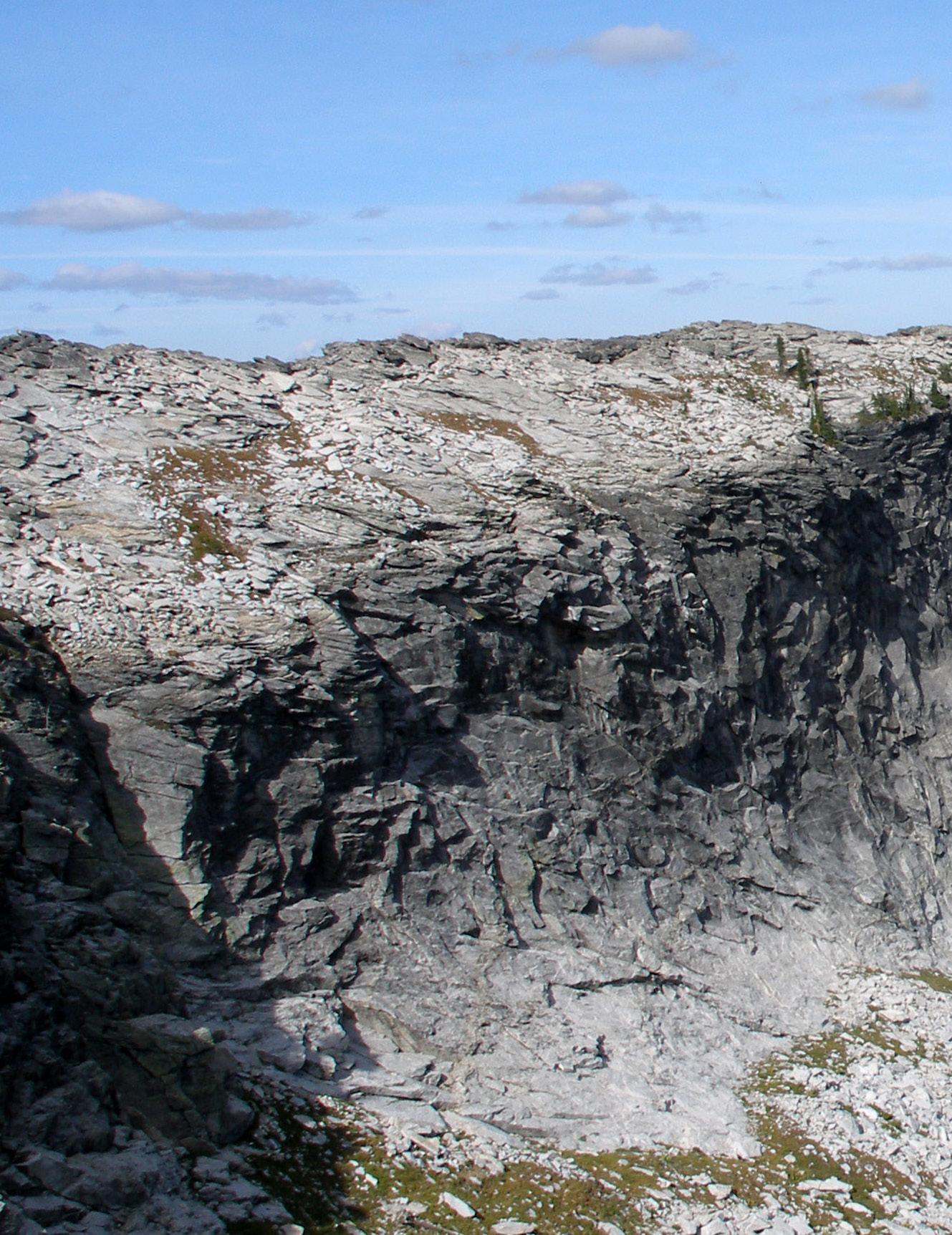
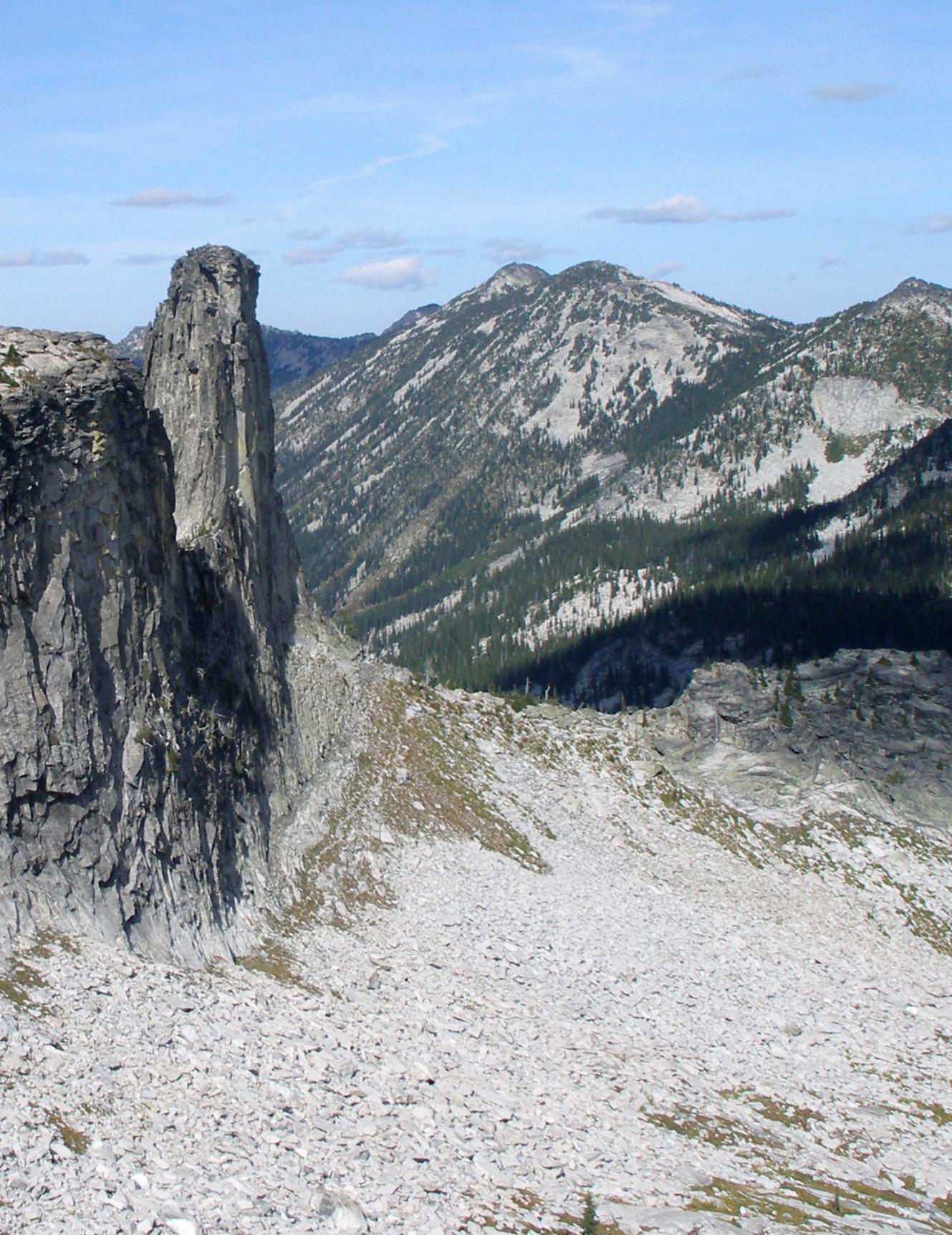
Chimney Rock is likely the area’s most well-recognized peak. Staff photo.
Curiosity
by Sandy Compton
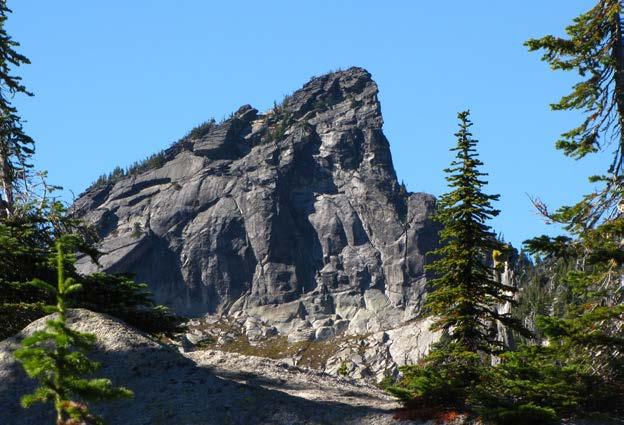
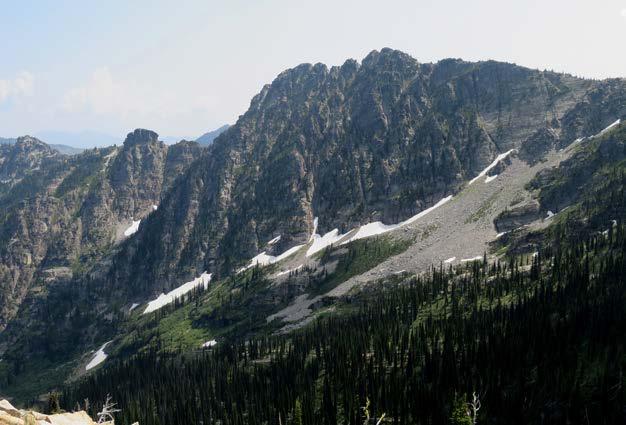
Grandma Mariam Clayton pointed it out, and I’ve never looked at Scotchman Peak again without seeing a craggy Scot with a ruffled shirt. North is Scotchman Two, not so Scots in appearance, but just as craggy. Between is Black Top, with yes—a black top.
How place names came to be can be mysterious or obvious. Round Top, above Hope, has a round top. Gunsight, north of Schweitzer, emulates the rear sight of a rifle. Roman Nose, Chimney Rock, and the Lions Head in the Selkirks, or Clifty and Sawtooth in the Cabinets? One only need look to answer the question. Baldy Mountain near Sandpoint fits the pattern—one of at least six so-named in Idaho, hundreds country-wide. Packsaddle, east of Lake Pend Oreille, has two points separated by a ridge that looks like a pack frame. Nearby is Peep-A-Day Ridge, referencing its relationship to sunrise.
Trestle Peak inherited its name from Trestle Creek, which gained that moniker when the Northern
The Lions Head
Scotchman Peak
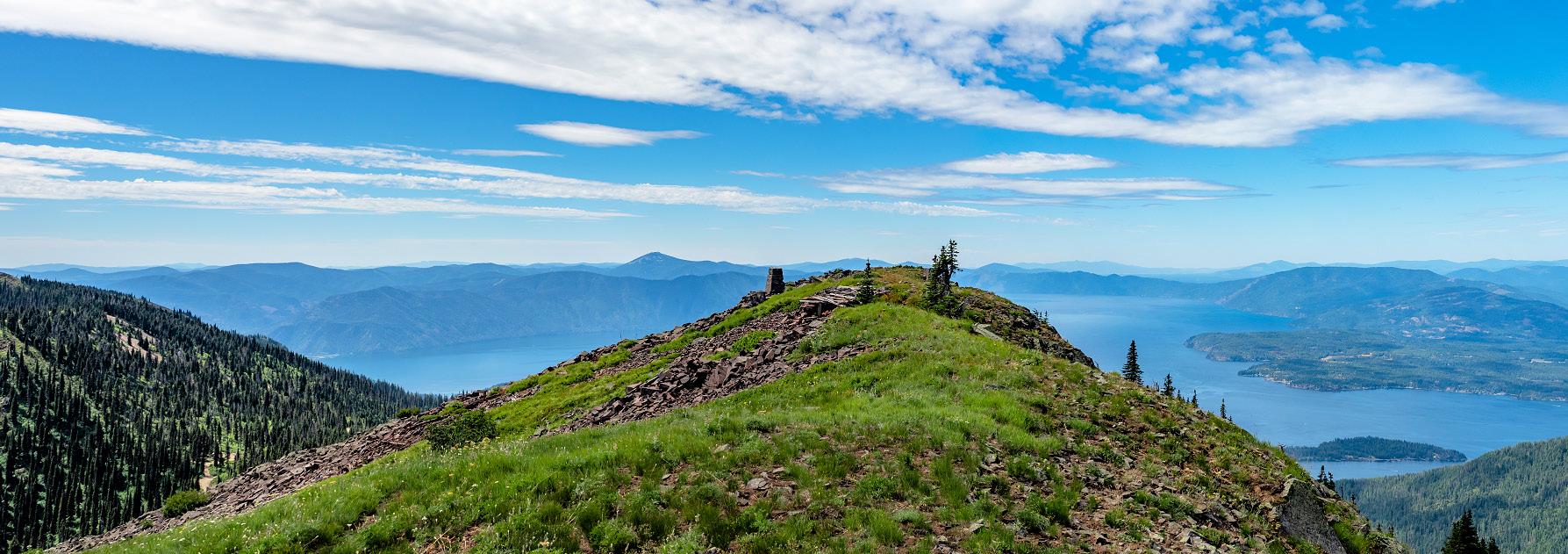
Round Top
Pacific built a long, curved trestle at Pack River in 1882. Schweitzer Peak inherited its name from a relatively crazy Swiss immigrant who achieved fame by eating his neighbors’ cats and courting Ella Farmin somewhat obsessively.
Lunch Peak was named by road builders with a sense of humor who ate midday meals there. Nearby are Smorgasbord and Nosebag Creeks. Sundance Mountain in the Selkirks was named for the way sunlight reflects off rocks near the top. Green Monarch Mountain, and the ridge above Lake Pend Orielle, were named after the Green Monarch Mine, established in the 1900s.
Many peaks have inherited names from people: Delyle Ridge east of Clark Fork, for Charley Delyle, of whom I can find no more information; Johnny Long Mountain above Wrencoe Loop, for a trapper who never came home; Gisborne Mountain in the Selkirks, for Harry Gisborne, Forest Service fire expert who worked at Priest River Experimental Station.
The Selkirks are named for Thomas Douglas, Fifth Earl of Selkirk, a shaker and mover in the settling of Canada who
never saw his namesake. The Cabinets are named for Cabinet Gorge, with rock shelves that reminded David Thompson’s French voyageurs of, well, cabinets.
The Seven Sisters? There are many seven “somethings” named “Seven Sisters,” including the Pleiades and cliffs along the English Channel. Whoever named ours is lost to history. Gold Hill? Not much gold was discovered there, unless you count high-end real estate. But witnesses to sunsets from City Beach might have a clue to why it gained that name.
Blacktail Mountain and Little Blacktail west of the lake are named for a local ungulate. Antelope Mountain near Clark Fork wasn’t, but whoever named it once saw a pronghorn from behind. Whiskey Rock was named for either a boating accident or a swim race—involving a jug of whiskey.
At last, we come to Atlasta Peak, named by trail-builder Pete Croy, after a project took longer than he anticipated. South of that is Keokee peak, which lent its name to the company that publishes this magazine. That name may have migrated here with a settler from the town of Keokee, Virginia.
Top Left: The Lions Head above Priest Lake resembles a lion’s head to some, though others come up with different animals. Photo by Jim Mellen.
Top Right: Scotchman Peak in Clark Fork is the tallest in Bonner County. Scotchman I is the focus of the image on the right, while Scotchman II is to the far left; Black Top is the middle knob. Photo by Don Otis.
Above: A close look at Round Top makes it clear how it got its name. Photo by Corey Vogel.
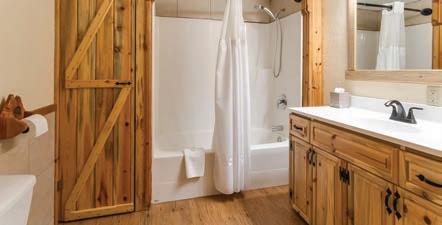
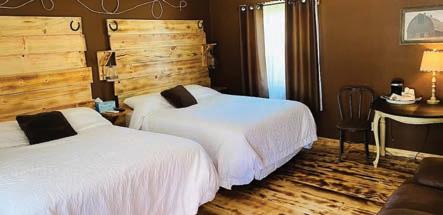
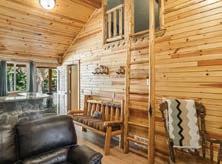
Waterfront & Downtown
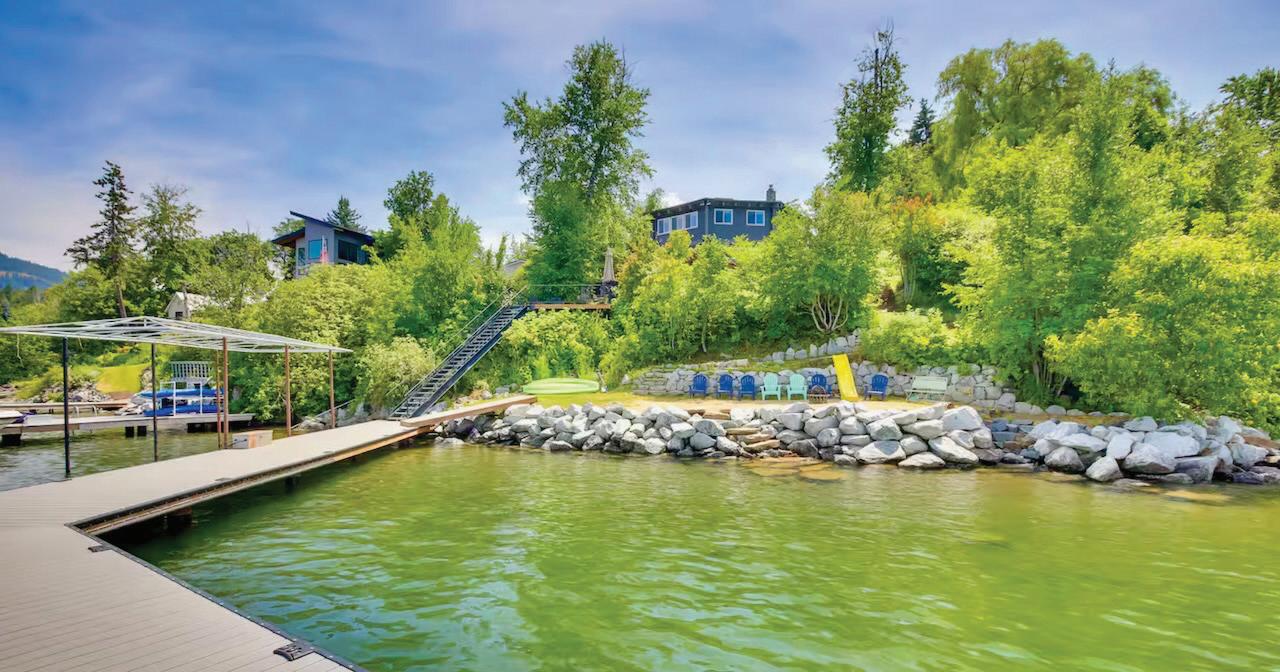
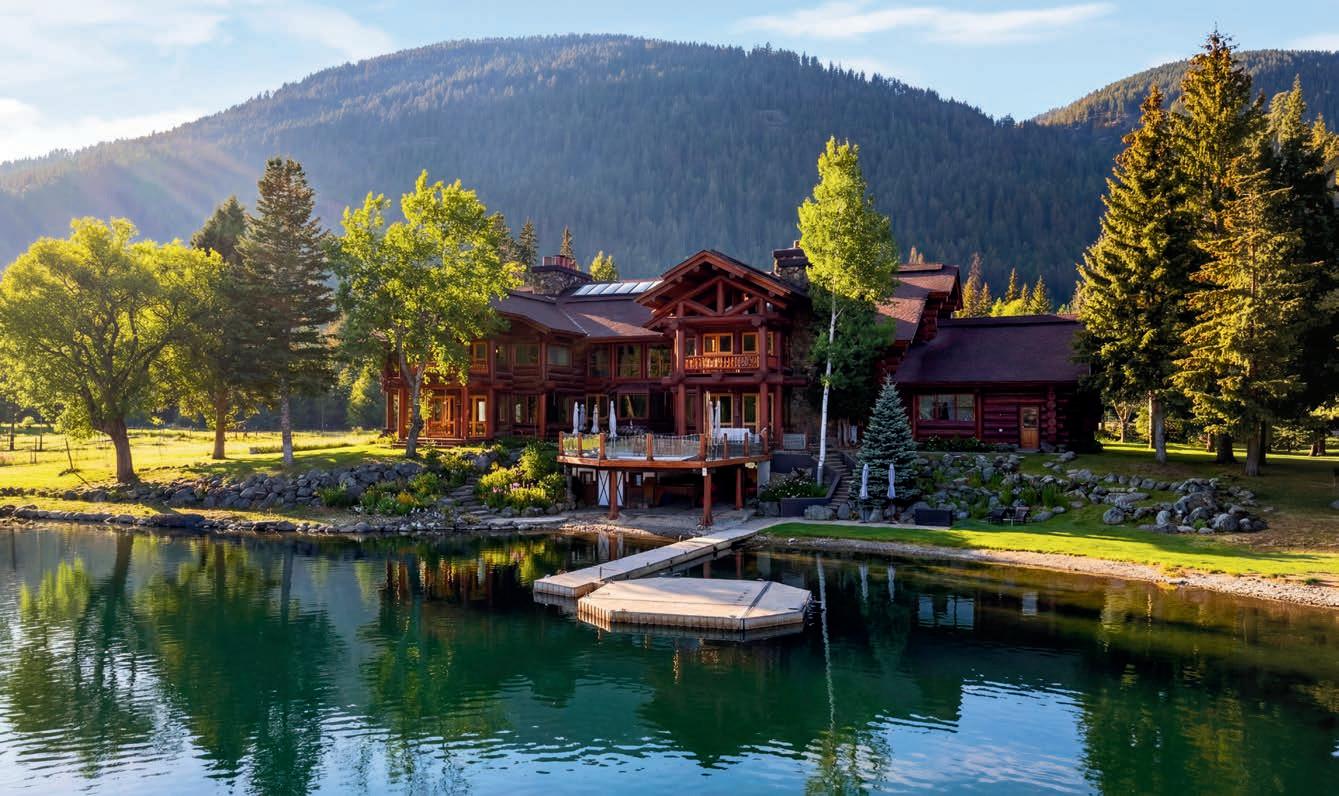
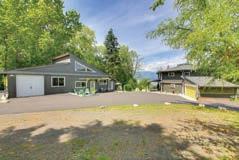
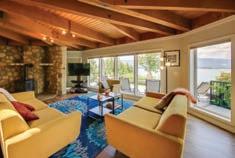
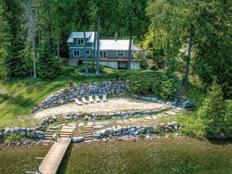
Two fully furnished homes. One breathtaking setting. Positioned just moments down Lakeshore Drive, this .88-acre property offers 100’ of private water frontage with a deepwater dock and sublime beach area. The main residence has a distinctive design and was built to showcase the views, with water sightlines from nearly every window, offering 4 bedrooms, 2.5 bathrooms and a 2-car garage. The detached guest home is a gem with 2 bedrooms, 1 bath, and a 1-car garage. $2,200,000.
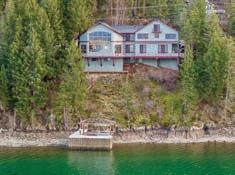
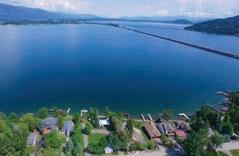
Crystal clear, deep water, Lake Pend Oreille frontage with 214’, offering panoramic views of Sandpoint and Schweitzer. The main level impresses with hardwood floors, a towering wall of windows, and a gourmet kitchen with granite countertops, pantry and wet bar. This home offers multiple private suites, a private dock and covered boat lift, all just minutes from downtown. Perfect for year round living, a vacation retreat or an investment opportunity. Custom waterfront living at its finest. $3,400,000.
This stunning Bottle Bay waterfront home has been fully remodeled inside and out, offering modern comfort in a spectacular private setting. The residence features 4 bedrooms, 2 bathrooms, manicured grounds, and a lakeside beach leading to your own private dock. Adding to the appeal, a second building site with a pre-paid sewer connection is included—an exceptional opportunity on the shores of Lake Pend Oreille. $2,200,000.
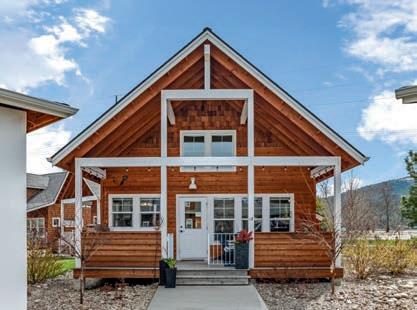
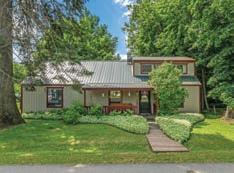
This well-maintained Clark Fork home offers the best of small-town living. The spacious living area is filled with beautiful natural light, there are two main-level bedrooms, and a full bath. Upstairs, bonus rooms include a bedroom with private exterior access adding flexibility. Outside, a sunny backyard with a garden, room for a shop or park model, outbuildings, and a lovely covered front porch complete this wonderful opportunity. $425,000.
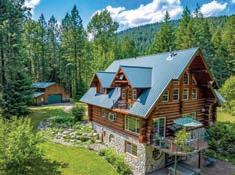
Crafted with full scribe Swedish cope log construction, this timeless home offers 4 bedrooms, an office with private deck, and a top-floor playroom. The great room boasts soaring ceilings and a wall of windows overlooking the forest. Features include mahogany countertops, newer SS appliances, a MIL apartment, 3 living areas, 2 fireplaces, 3 decks, 2 shops, and gardens. Set on a private forested lot with a seasonal creek and pond, just minutes from downtown. $1,795,000.

Schweitzer
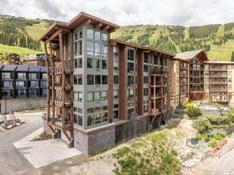
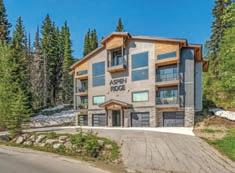
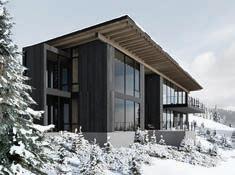

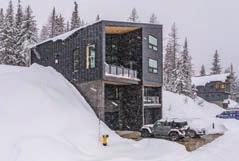
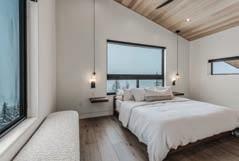
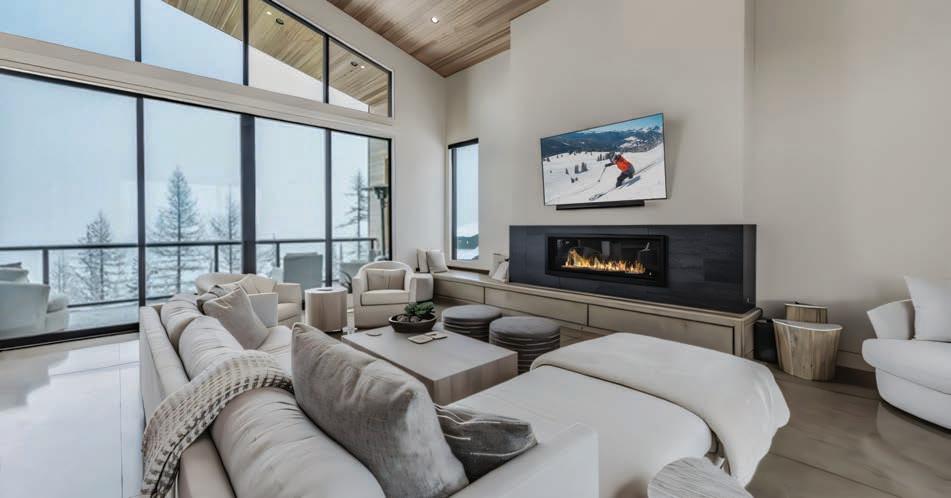
True luxury is found in the details, and this custom-built Schweitzer home leaves nothing to chance. Conceived from the ground up with an uncompromising vision, every space has been purposefully designed to elevate the everyday into something extraordinary. This home delivers an experience that is as breathtaking as the views surrounding it. 4,300SF featuring 3 beds, 5 baths, elevator access, slope-view decks, a true chef ’s kitchen, sunny walk- out patio with hot tub, and a ski locker worth bragging about. $3,875,000.
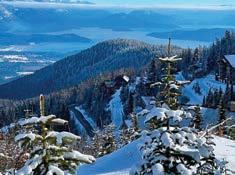
This premier ski-in/ski-out enclave offers the area’s most sought-after homesites with sweeping views of Lake Pend Oreille, the Cabinet Mountains, Schweitzer Village, and the Selle Valley. Designed as Schweitzer’s premier custom home destination, Crystal View combines natural beauty with modern convenience—ski from your door, bike scenic trails, or walk to the Village for dining, shopping, and the new spa. This gated community offers ready-to-build estate lots with multiple opportunities starting from $750,000.
Brand-new, turn-key studio offering breathtaking lake and mountain views, ideally situated in Schweitzer Village with unmatched ski-in/ski-out access. This fully furnished, mountain-contemporary condo is outfitted with premium European appliances and efficient all-electric HVAC. Amenities include new hot tubs, private ski lockers, a fitness center, heated underground parking, and an owners’ lounge. Priced at $549,900.
Fully furnished, top-floor ski-in/ski-out condo blending luxury, comfort, and mountain charm. This spacious 4-bedroom retreat features soaring lofted ceilings, an open layout, and both formal and informal dining areas—perfect for après entertaining or cozy meals. Two primary suites offer privacy, while a main-level bedroom includes a generous loft. Recent high-end updates include new siding, roof, windows, garage doors, and a brand-new hot tub for relaxing after the slopes. $1,750,000.
Perched on the slopes of Schweitzer Mountain, this ski-in/ski-out luxury chalet is a striking four-bedroom, five-bathroom alpine retreat designed by renowned Eerkes Architects offering the ultimate in mountain living. From carving first tracks to stargazing from the expansive deck or unwinding fireside with breathtaking views in every direction, this one-of-a-kind home captures the essence of high-altitude elegance. $6,500,000.

Together to Protect Our Communities
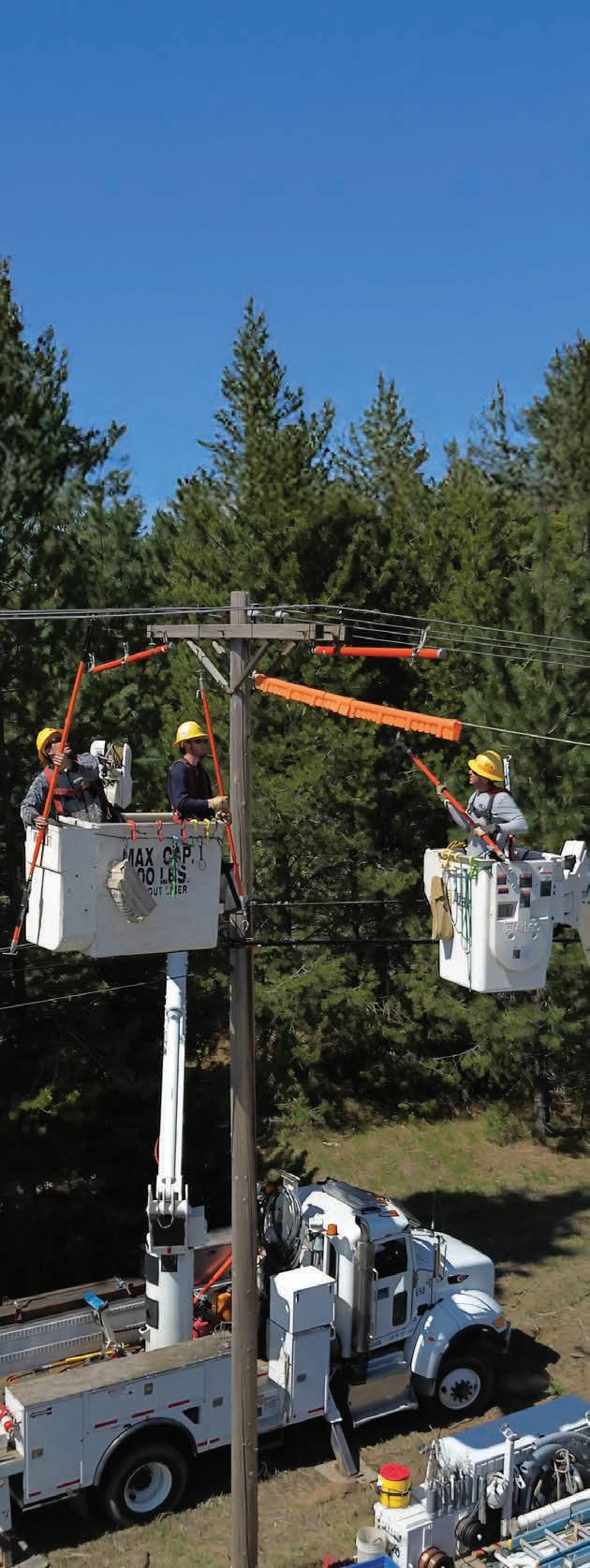
Wildfires are a substantial threat to our region, and we must all do our part to reduce risks –utilities, landowners, government agencies and you. Northern Lights continues to operate responsibly to protect our members, our employees and the communities we serve.
Northern Lights serves members across northern Idaho and western Montana, powering rural homes, farms and businesses. We’re your member-owned, not-for-profit electric cooperative.

208-263-5141 or 800-326-9594
Outage Hotline: 866-665-4837

Local scavenger king builds boat out of scraps Phoenix Rising
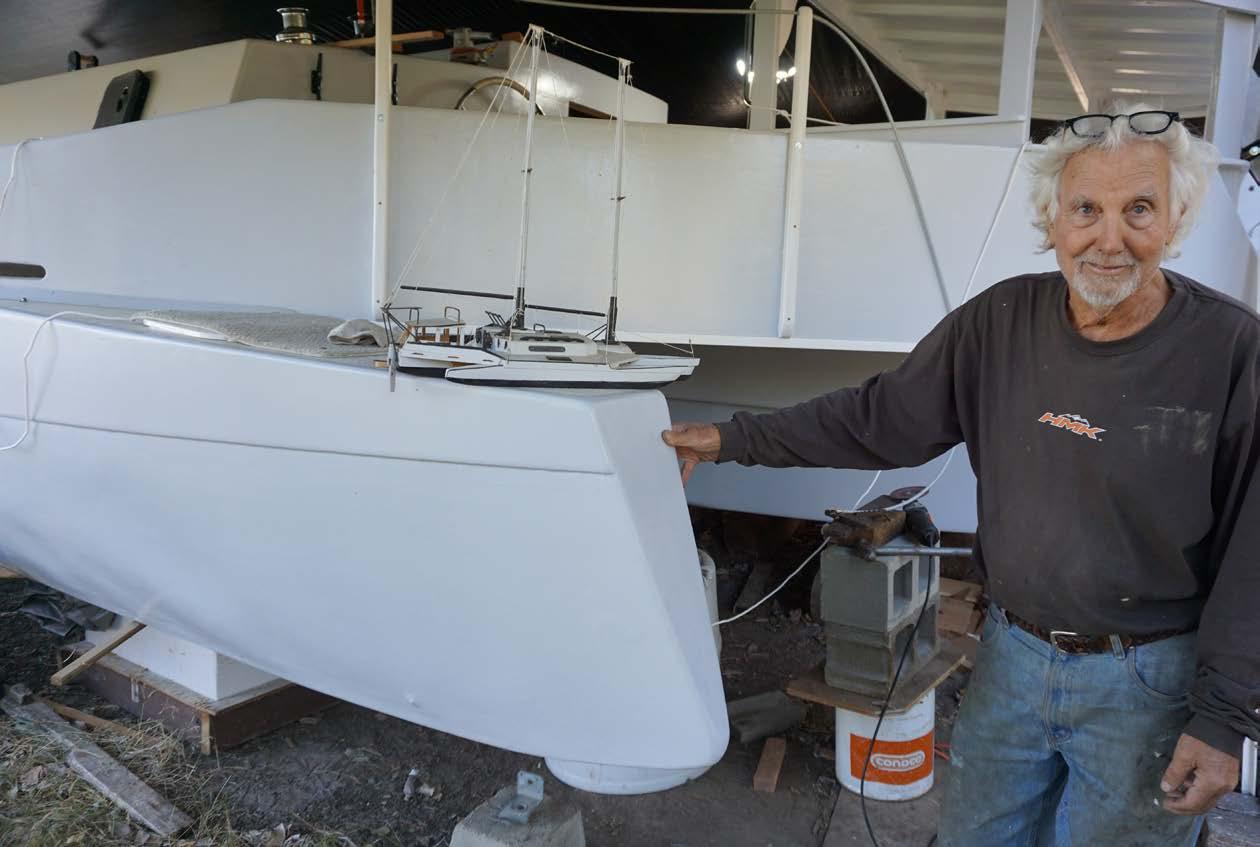
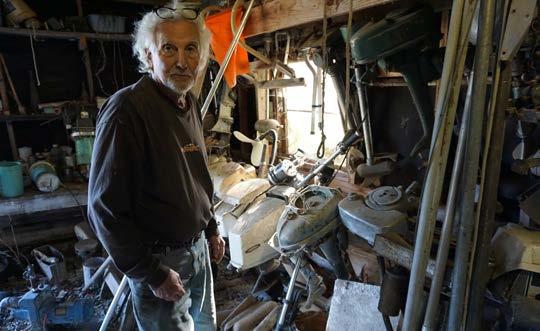
Terry Anderson is one of those rare people who defy easy classification. He's an artist, a junker, a tinkerer and a builder. He's a dreamer and a hippie with a nautical soul that drives him to create works of art that blur the line between function and fantasy.
He's built over 20 boats from scratch in his lifetime, as well as dozens of other projects that vary from motorcycles to sailpowered Hobie cats and steam-powered canoes. If it blows your hair back, Anderson has probably built it.
For the past three years at his home on the shores of Lake Pend Oreille, Anderson has been quietly constructing what he claims will be his last vessel, this one destined to be one of the
lake's largest and most unique.
Dubbed the Phoenix, after the mythological bird that cyclically regenerates by rising from the ashes of its predecessor, Anderson's 50-foot trimaran will certainly embody that name: Every piece of the vessel is something he has scrounged, repurposed, haggled or handcrafted, with much of the boat constructed out of the remnants of other boats he's built. He plans to launch the Phoenix in July.
Building works of art out of scraps is something Anderson has done since he was old enough to hold a screwdriver.
"I've been a junker since I was a kid," he said. "I used to take my wagon when I was eight or nine years old on trash day and
story and photos by Ben Olson
Terry Anderson decided on a trimaran instead of a pirate ship because building the center hull took so long.

go through trash cans to make things. I had to sneak it in the yard when my parents weren't looking."
Once his absconded haul was safely stowed in his yard, Anderson would let his imagination run wild and his fingers followed.
"I'd build whatever I imagined or wanted—when I wanted to have something, I made it," he said. "My contraptions didn't always work, but that's the way I've lived my whole life. I just
learned as I went, by trial and error. We won't talk about my errors, though."
Early in his life Anderson began making annual pilgrimages down to Belize and Mexico in the wintertime, diving and exploring the underwater world, encountering archaeological finds and discovering adventure around every corner.
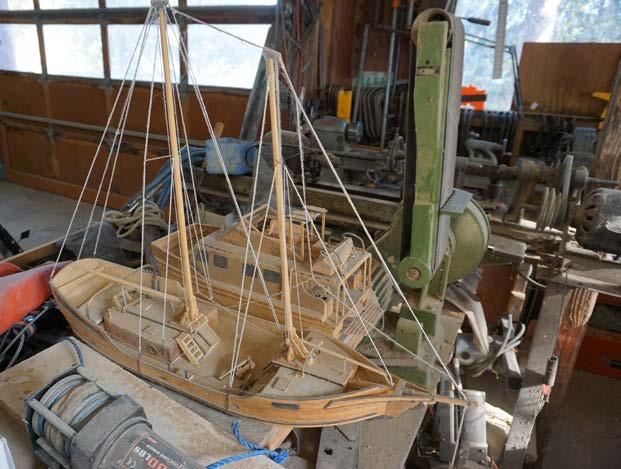
With mornings dedicated to surfing and evenings for revelry, Anderson found himself with downtime in paradise, so he began building boats out of any materials he could find. Before launching into a project, he usually built an intricate model of the design out of whatever materials he could find, usually with working parts and realistic scaling. It's a habit that has followed him through the decades, with his fantastic models festooned along the workbenches of his workshop and home.
Four years ago, Anderson began scheming up his latest—and final—boat-building project: the Phoenix was about to begin its heroic rise from the ashes.
For the main hull of the Phoenix, Anderson used cement forms he'd gotten from local dockworker Dana Martin decades ago. He also pilfered hulls from a catamaran he built in the 1970s and built them up about ten inches higher, adding a bow and stern. That job itself took another year of work, usually by himself at his shop by the lakeshore as he fiberglassed it all together.
"I was originally going to make something that looked like an old pirate ship," he said. "That year I made the hulls and it

Anderson makes models of his creations before he builds them.

took so long to put the center hull together, by the next year I decided I'm not going to do that. ... I thought, I should make a trimaran."
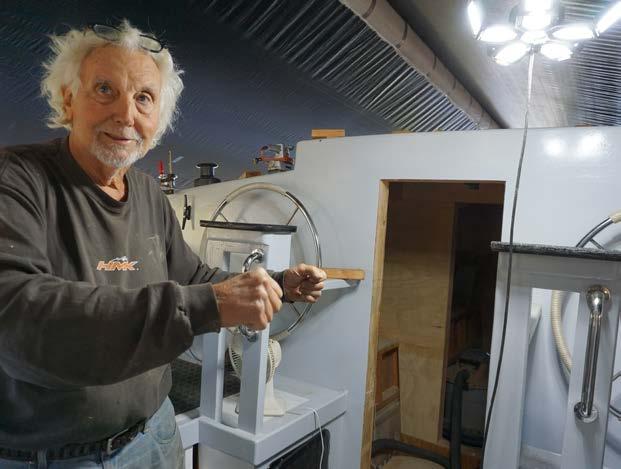
After the outer hulls had been completed, Anderson began checking off different aspects of the construction, piece by piece. He took two circular clothing racks that once displayed men's shirts and ties in a department store and used them for twin helms. For the interior, he built individual cabins and lockers, made cushions and decks. Slowly, the hulk began to resemble a sailing ship.
"All the rigging is stuff I found on eBay or in swap meets when I'm down south," he said. "I made my own cleats, too."
He salvaged a main mast in Florida and cut it in two for transport to North Idaho. The other mast was found in Santa Barbara and also cut in two for the voyage home.
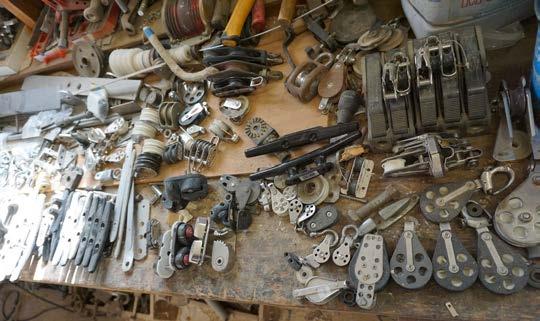
With his hair askew, ratty sweatshirt, and pants covered in paint and fiberglass residue, Anderson toils every day to finish the Phoenix. The inside of Anderson's shop resembles an old time chandlery, with work benches lined with all manner of nautical equipment.
"I used to go to auctions and bought boxes of stuff," he said. "I have a spring collection with probably 1,000 springs. Everything from leaf springs on a car to tiny little springs out of an ink pen. I can make something out of anything. I have millions of nuts and bolts. I don't throw anything away."
When it comes to creating, Anderson relies on his innate
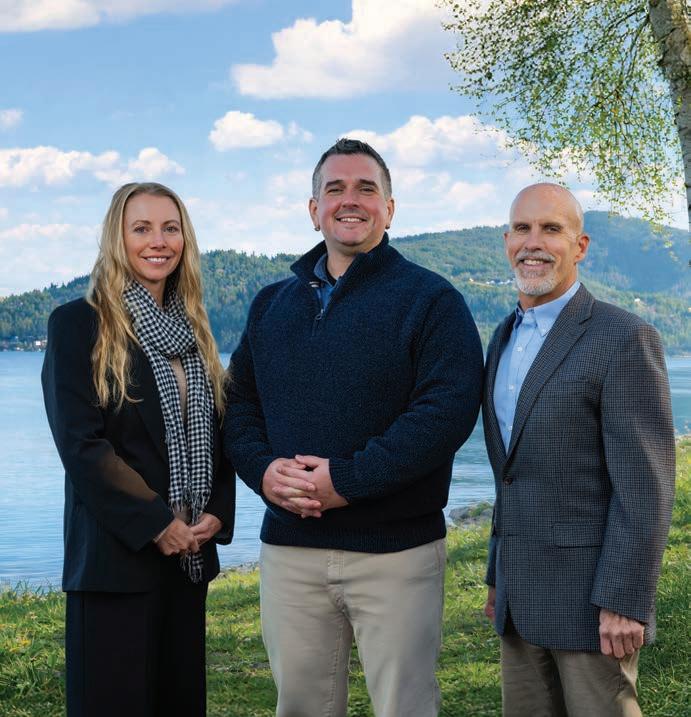
Jim, Besse and Leo formed Clearwater Investment Partners to provide clients with personalized investment management, retirement strategies, 529 plan expertise, and finding financial security through the strength of advice.

Besse Bailey, Leo Schmeltzer, and Jim Zuberbuhler
Above: Anderson’s work benches are littered with items.
Below: Anderson says the Phoenix will be his final big project. But he has plenty of material
craft.
ability to understand how things work.
"I have an aptitude toward mechanical stuff," he said. "I can look at something and know how it operates. I follow the chain of movement and can diagnose what it does. I like making something without knowing anything."
As the vessel nears completion, Anderson said it will be just over 50 feet long with a 20-foot beam and a draft of only ten inches — the latter an essential for navigating the shallow water just off his home on the lake.
Blending the line between art and function, the Phoenix is a perfect testament to Anderson's abilities.
"I'm more of an artist than a builder," he said. "I build things to look good. Sometimes they don't work, but they look good."
Looking back on an artful life, Anderson's fantastic crafts all hold special places in his heart, all culminating in the construction of the Phoenix.
“This will be my last big project," he said.
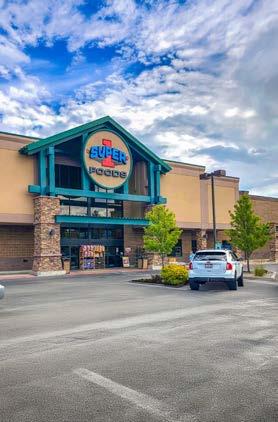

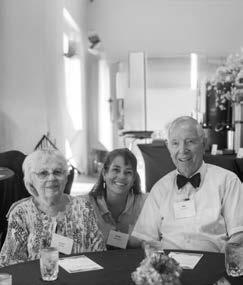
Ron McIntire, owner of Super 1 Foods.
Anderson says, “I’m more of an artist than a builder. I build things to look good.” Courtesy photo.
The Fly - In that Birthed a Painting

While taking photos like the one above at the Wings Over Sandpoint Fly-in, Daryl Baird discovered a new interest.
Some left with only photos but one local artist left with the vision of a massive canvas story and
photos by Daryl Baird
In 2015 I took in our first Wings Over Sandpoint Fly-In at Sandpoint Airport, now known as Dave Wall Field. This event gave me the opportunity to see dozens of amazing planes fly in and land at our local airport as well as to examine them up close.
The vintage planes were beautiful. I must have shot a hundred photos that day.
My interest sparked, so I visited “Wings & Wheels” in Wenatchee, Washington the following year.
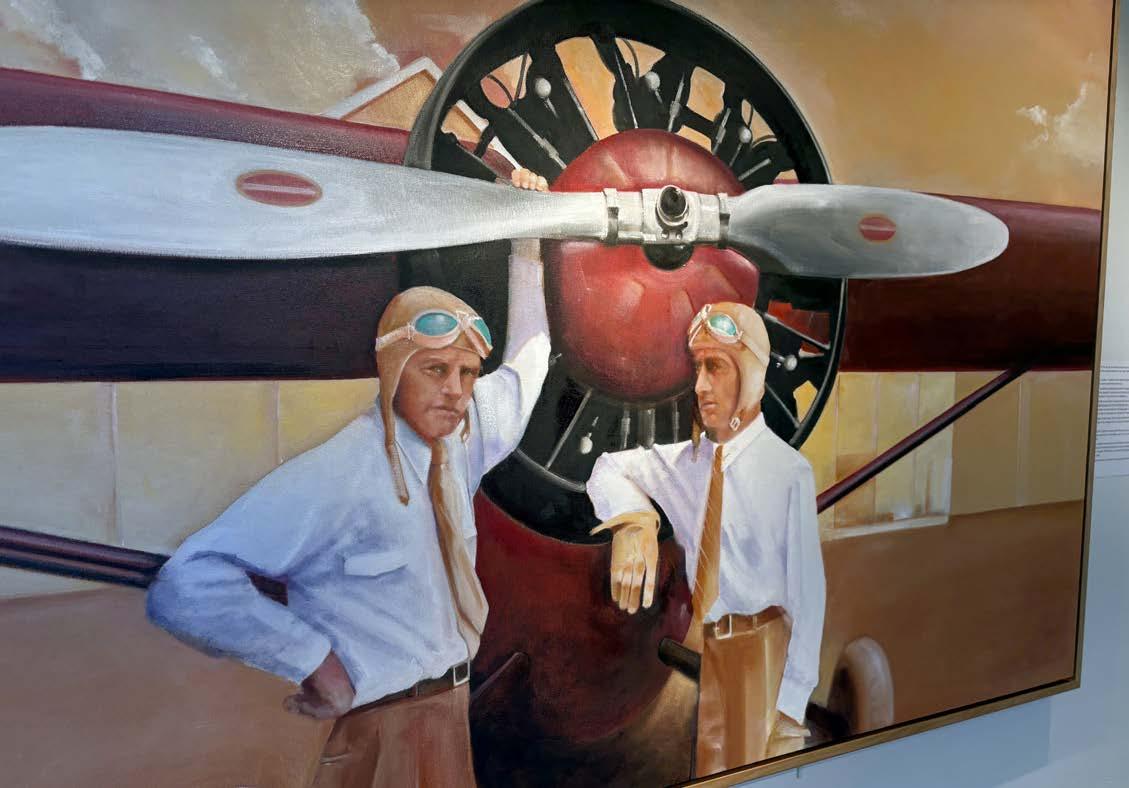
The Sandpoint Fly-In and the trip to Wenatchee instigated my interest in flying, and these beautiful vintage planes also inspired me as an artist. It was at Wings & Wheels where I “met” Miss Veedol; or at least, her exact replica. Miss Veedol was a 1931 Bellanca J-300 long-distance special. I knew then and there that I wanted to paint her but I was just getting back into painting, seriously, and the opportunity to get her on canvas would have to wait for my skills as a painter to catch up.
In January of 2025 I decided that it was time to start my
Miss Veedol project. The first step was to find the right reference photo. A simple online search yielded exactly the photo I wanted. The grainy, black and white photo showed two pilots— Clyde Pangborn and Hugh Herndon—standing in front of Miss Veedol. With the image being black and white, I felt free to take artistic license with how I would paint the scene as I knew Miss Veedol could only be red.
I bought a huge—intimidating—canvas that measured 20 square feet. I had to use two easels to set it up in my studio. Up to that point, the largest canvas I had painted was only 8 square feet.
While the canvas sat there prodding me to get started, I took a deep look into the lives of Pangborn and Herndon. Clyde Pangborn was a local boy born in Spokane and raised with his brother in St. Maries, Idaho. He learned to fly as a teenager and became a barn stormer, earning the nickname “Upside Down Pangborn.” As legend has it, he gave WWII ace Greg “Pappy” Boyington his first ride in an airplane. Hugh Herndon, five
years younger than Pangborn, was attending Princeton but dropped out to take up flying. He met Pangborn at an airshow and they partnered up to see if they could break the record for fastest flight around the world.
Pangborn and Herndon got beat out of that record in 1931 but that same year they flew from northern Japan and survived a “controlled crash landing” in Wenatchee in 41 hours and 13 minutes. They later earned a $25,000 prize and the 1931 Harmon Trophy for aviation achievements.
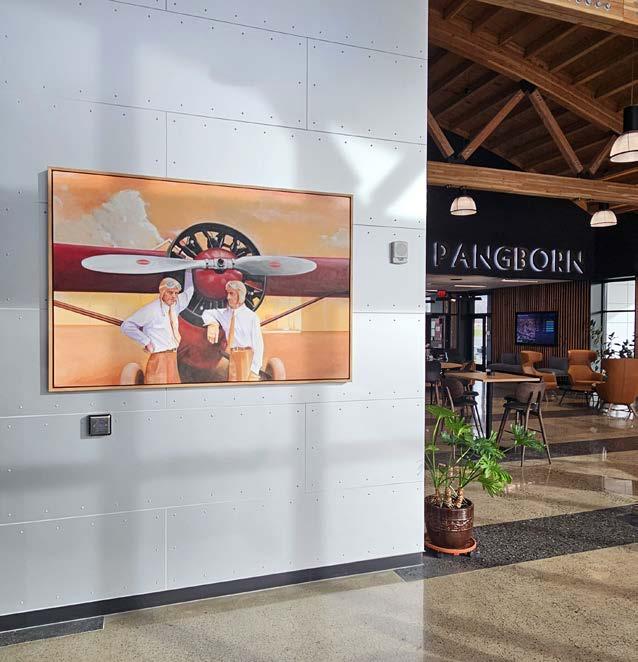
The story of those amazing young men in their flying machine inspired me to get my painting finished. Today it hangs in the air terminal at Pangborn Memorial Airport, just outside of Wenatchee.
Sandpoint's 20th annual Fly-In
Takes place August 22, 2026 at the Sandpoint Airport. It is sponsored by EEA Chapter 1441, and combines a Saturday morning pancake breakfast with the chance to examine various aircraft. Admission is free.
This AUGUST at the Sandpoint Airport
Miss Veedol was the largest canvas Baird has ever attempted.
Baird’s painting hangs at the Pangborn Memorial Airport in the center of Washington state.
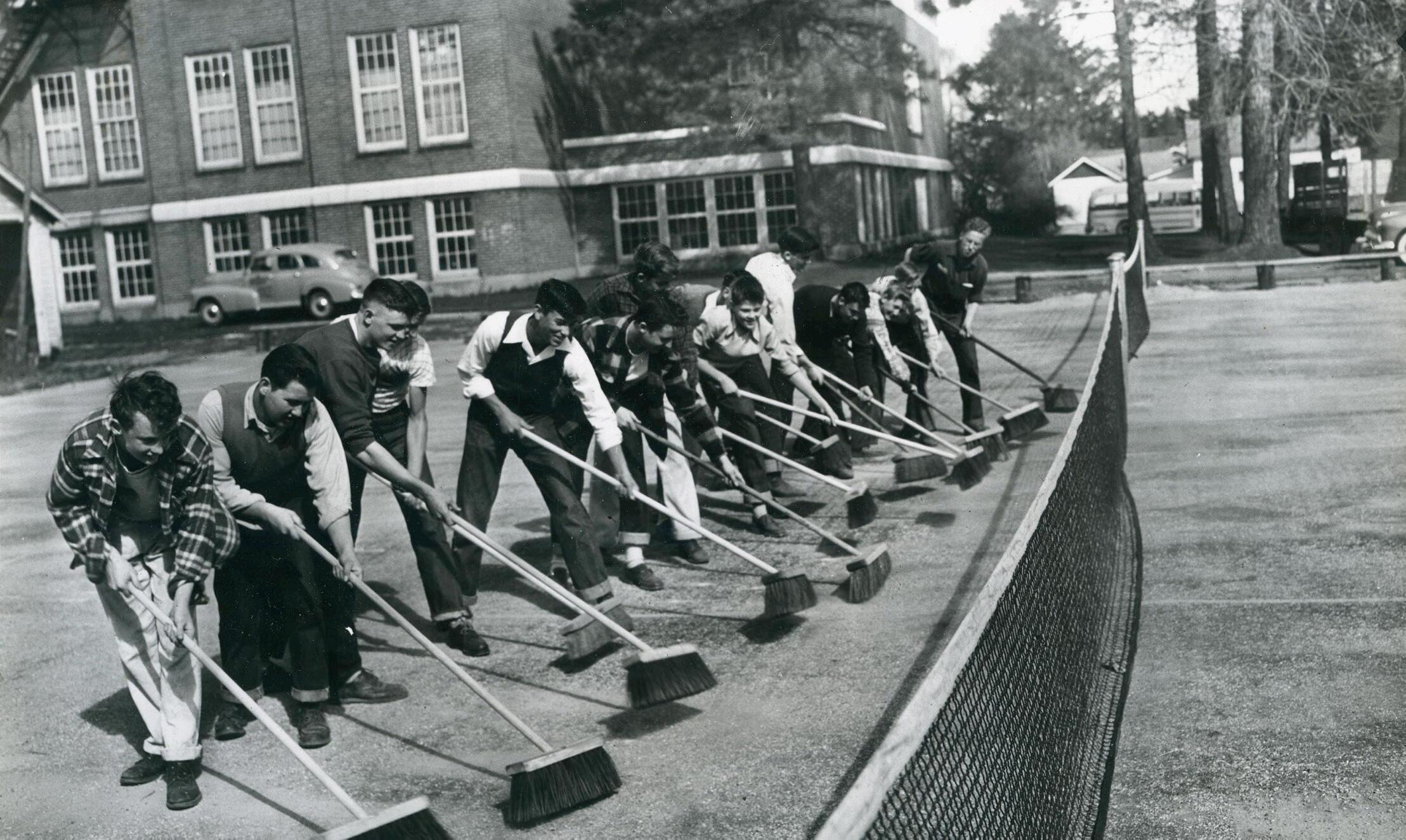
A Brief History of Tennis in Sandpoint
by Jenny Leo
Long before pickleball stole the spotlight, tennis had already captured the hearts of Sandpoint residents. The sport’s roots here run deep—back to 1947, at least, when a handful of determined teenagers grabbed shovels and got to work.
A photograph recently donated to the Bonner County Historical Society shows a group of young people constructing a tennis court behind the then-high school on Euclid and Pine. One of those industrious teens was Jim Parsons Jr., who would go on to play a central role in Sandpoint tennis for decades to come. That handmade clay court is long gone, but the spirit it represented never disappeared.
By the 1960s, when courts were built at City Beach, tennis enthusiasm had grown. In the 1970s, the Sandpoint Racquet Club arranged for indoor courts at the Bonner County Fairgrounds, giving local players a place to swing a racket even through the long North Idaho winters. While those courts no longer exist, they proved that Sandpoint’s love of tennis was never just a fair-weather affair.
Fast forward to the early 2000s, and Sandpoint’s tennis community faced a challenge. The two courts at City Beach—beloved by players of all ages—had been declared unsafe by the city council and were slated for demolition. That’s when the Sandpoint Tennis Association swung into action.
The STA launched a fundraising drive with a $30,000 goal to resurface the courts, install a new fence and add lights for night play. In the end, the STA raised $30,920—enough to save

both courts. “It wasn’t one major contributor, rather a bunch of little pledges,” said Tish Litven at the time, who co-chaired the drive with Jim Parsons Jr. “Everyone pitched in and a little added up to a lot. It was a tremendous community effort.”
By 2008, the story had a happy epilogue. Two of the four courts at Travers Park had also been resurfaced, with the remaining two soon to follow. Combined with the newly refurbished Lakeview Park and City Beach courts, Sandpoint boasted eight pristine public courts for community use.
“City Beach is the jewel of the town,” said Jim Parsons Jr., who by then was serving as president of the STA. “The number of people playing tennis in Sandpoint has gone up. Everything is good about it.”
In 2022, Ginny Russell and her son Jim approached the city with a vision: to honor their late husband and father, James E. Russell, a Sandpoint native, by giving the community a yearround indoor facility for court sports. Their gift of $7.5 million funded the construction of the James E. Russell Sports Center at Travers Park, which opened in 2024 with four indoor tennis courts, 14 pickleball courts, and other amenities. That same year, Sandpoint High School's girls tennis team won their firstever state 4A team title.
From teenagers with shovels to a multimillion-dollar sports center to a state championship, Sandpoint’s tennis story is a legacy worth celebrating, one match at a time.
Kids clean the new tennis courts they helped build in this photo from the Jim Parsons collection at the Bonner County History Museum.
Located in Ellisport Bay on beautiful Lake Pend Oreille in scenic Hope, Idaho.
Hope’s premier full service marina offering marine store, full service shop, and docking facilities. Our sales department represents Wooldridge Boats, Honda Motors and Volvo/Penta engines and we offer customer service like no other marina on the lake.
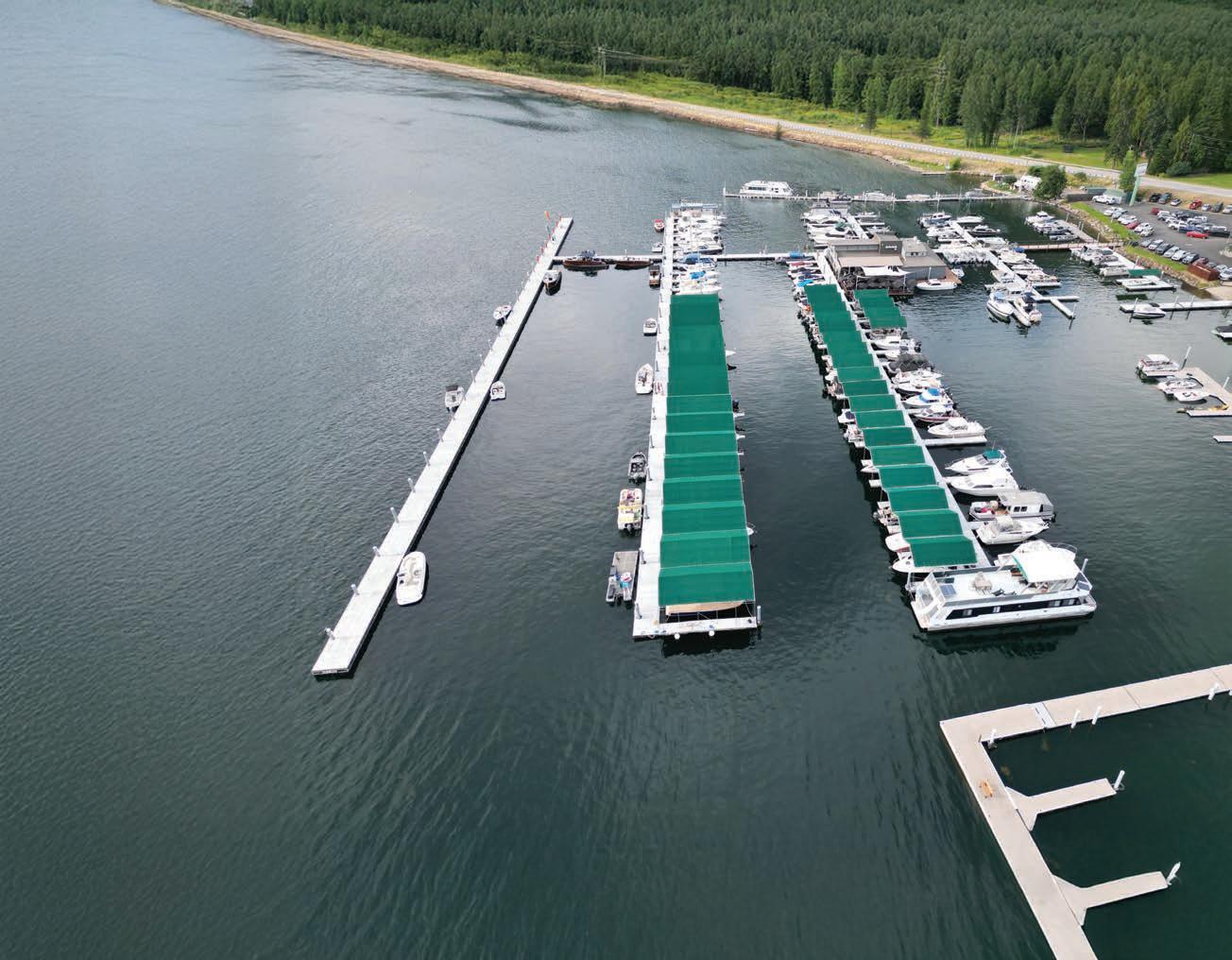
Breakwater
With the breakwater, getting into the marina is effortless—perfect for fueling, pump-outs, service visits, and Float House restaurant guests.
Other services include:
Showers, laundromat, boat rentals, pump-out station, attended fuel dock, float-plane accommodations, and, of course, “Home of The Float House”. Hope’s Premier Full Service
Marina


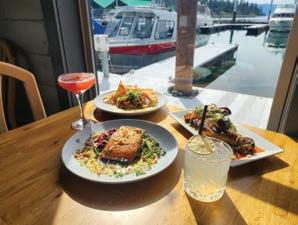
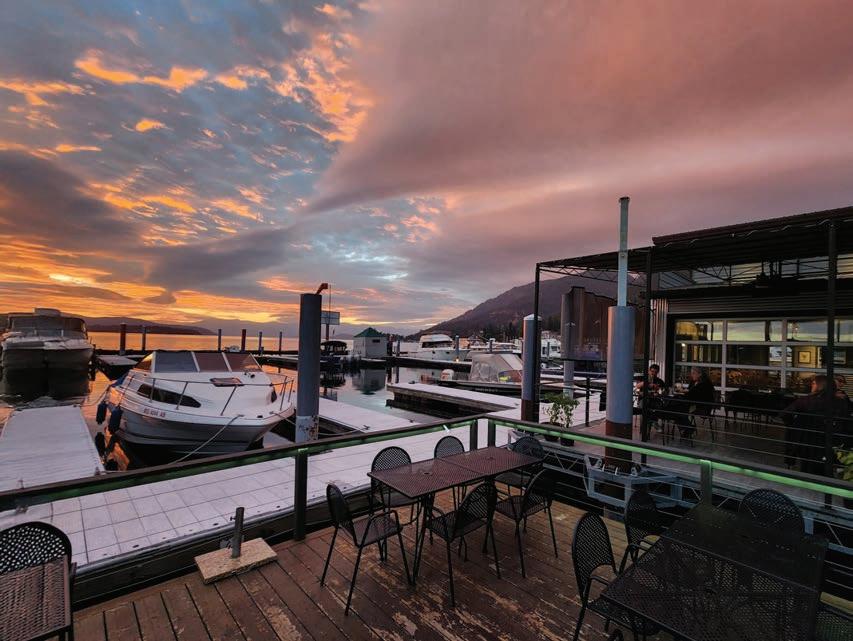
Pine Street Woods is home to a new state champion tree
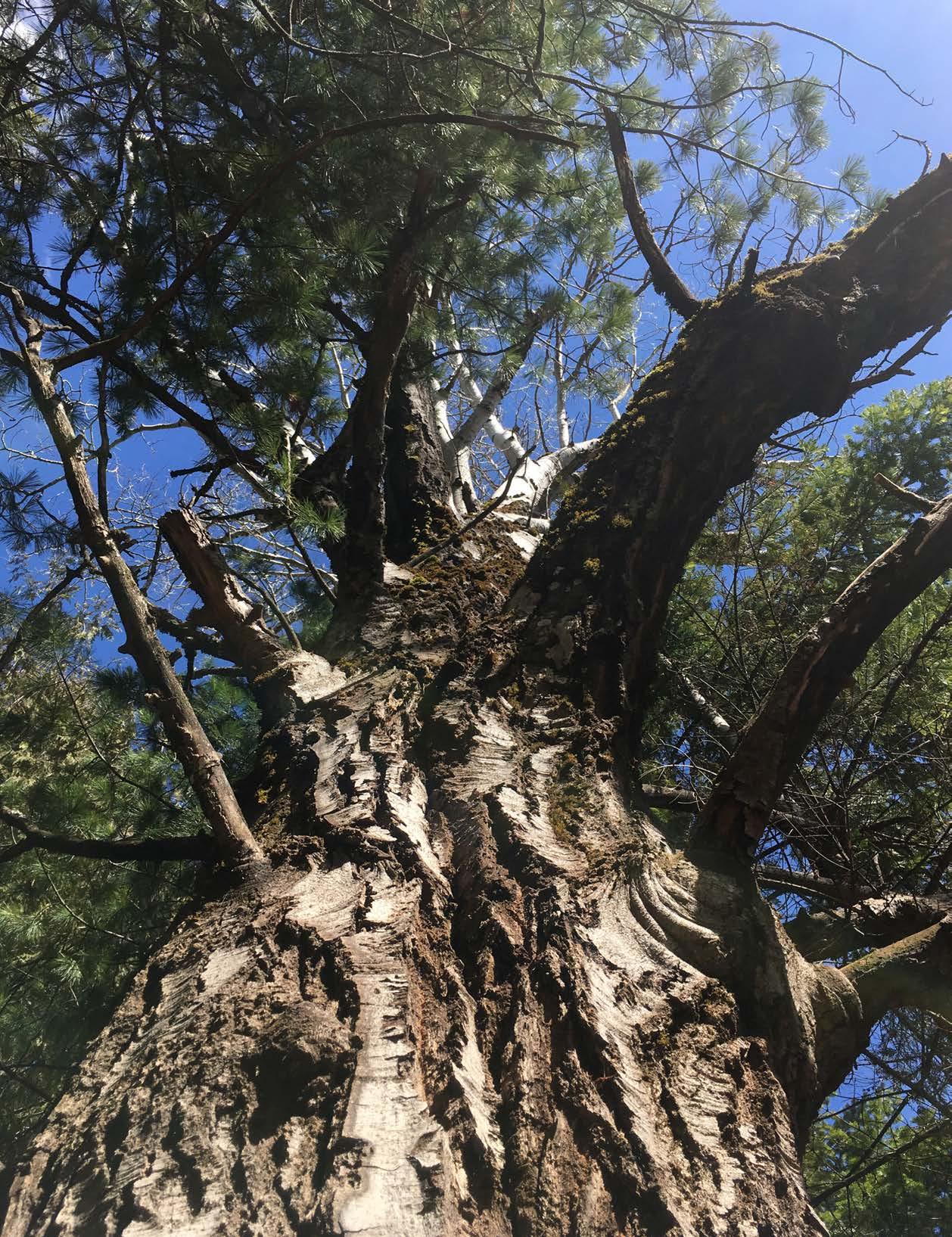
by Cate Huisman
The recent discovery of a champion aspen tree in Pine Street Woods has stirred interest in Bonner County’s big trees. Not only is a newly crowned champion aspen right here among us, but several other championship trees are in our county as well.
Becoming a championship tree in Idaho doesn’t mean just growing tall. Championship trees need to have significant crowns and trunks too. For the state’s official Big Tree Program, a moderately complex formula generates a point score that considers the tree’s height, the circumference of its trunk, and its crown size. The tree with the most points is considered the state champion.
Kaniksu Land Trust discovered our amazing aspen several years ago, when their forestry com-
An aspen tree at Pine Street Woods was discovered to be the biggest in the state. Photo by Regan Plumb.
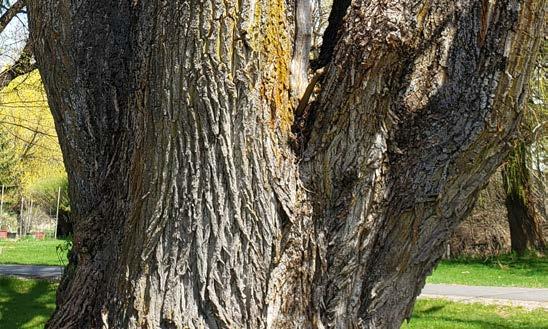
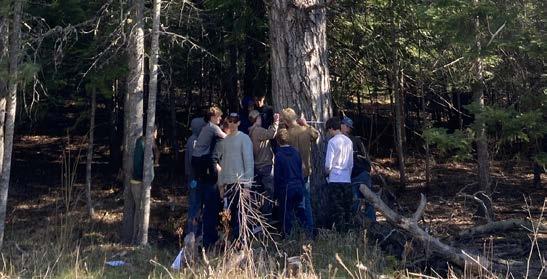
mittee was first cruising the newly purchased property that would become Pine Street Woods. But despite its size, the tree stayed under the radar until last spring, when visiting grade schoolers were practicing their outdoor skills. Using an innovative approach that involves facing away from the tree, bending over and looking back up at the tree between their knees, they estimated the tree’s height with remarkable accuracy. The measurement was later formalized by older students from Sandpoint High School’s forestry class, who measured the tree somewhat more conventionally under the supervision of consulting forester Bill Love, and concluded that the height was 97 feet.
Realizing that our aspen’s height and score were clearly better than those of the current titlist—an 87-foot aspen in Blaine County—KLT submitted an application to the Idaho Big Tree Program last spring, Our aspen is not only 10 feet taller than that one, but our tree’s circumference of 128 inches handily beats that one at only 74 inches.
Meanwhile, Bonner County’s other champion trees are thus far uncontested. Two are in the same yard—at 105 Gooby just north of town. The black cottonwood there was 91 feet tall when it was certified as champion in 1991, and the 75-foot paper birch received its accolade the same year. The cottonwood was already large when the Gooby family moved into the house over 80 years ago, and it has supported treehouses and recreational tree climbers over many decades.
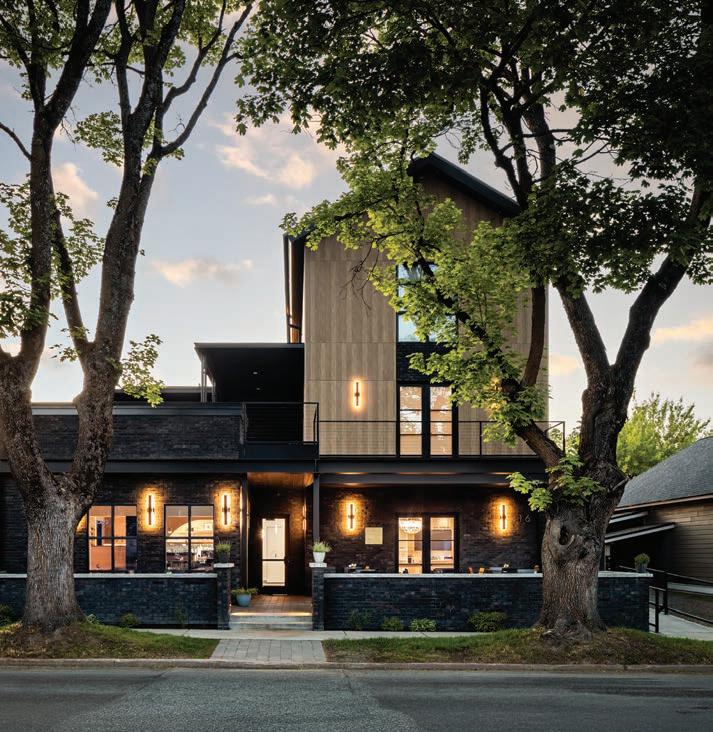
Students were responsible for the discovery of the aspen’s championship height. Photo by Regan Plumb.
A black cottonwood on Gooby Road—springing up 91 feet from a multi-limbed trunk—is also a state champion. Staff photo.
Three other trees in Bonner County are state champions: a 71-foot red alder on the Sandpoint Ranger District, a 91-foot butternut in Bottle Bay and a 104-foot subalpine larch at Roman Nose Lakes. And we have a co-champion Douglas maple that shares the title with a tree in Clearwater County. For a day trip, other notable trees are nearby. The Roosevelt Grove of Ancient Cedars in Nordman, Idaho (head west to Priest River, then north almost to the Canadian border) holds trees estimated to range from 800-year-old ‘young pups’ to 2,000-plusyear-old granddaddies, measuring up to 12 feet in diameter and 150 feet tall. As a bonus, a one-mile trail leads you to view points where you can see both Lower and Upper Granite Falls.
Another half mile beyond is the upper cedar grove. It’s about a 60-mile drive from Sandpoint to Nordman.
Or go east, young man! almost to Noxon, Montana and then north, almost to Libby, where you’ll find the Ross Creek Cedars. (You can also get there by going north to Bonners Ferry, then east to just past Libby. Both routes are gorgeous, so why not make a loop?) The cedars there are relative youngsters compared to Roosevelt, clocking in at a mere 1,000 years old, more or less. There’s an accessible loop trail through the trees, and a lot of informative signage along the way.
Admirers will find our champion aspen in the kids’ camp area of Pine Street Woods, and they might be on the lookout for a celebration of its champion status this spring.
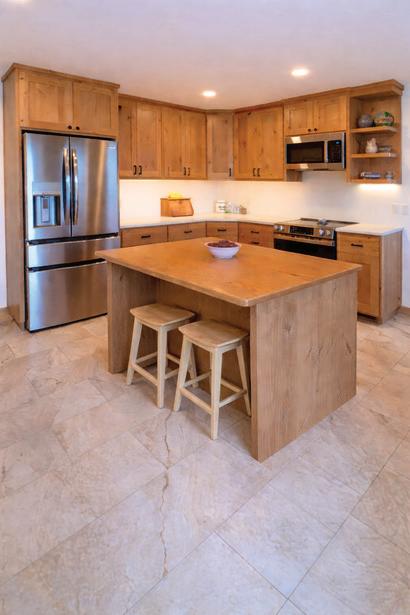
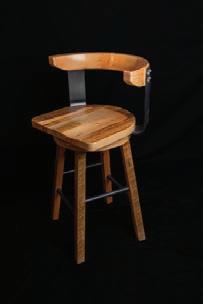
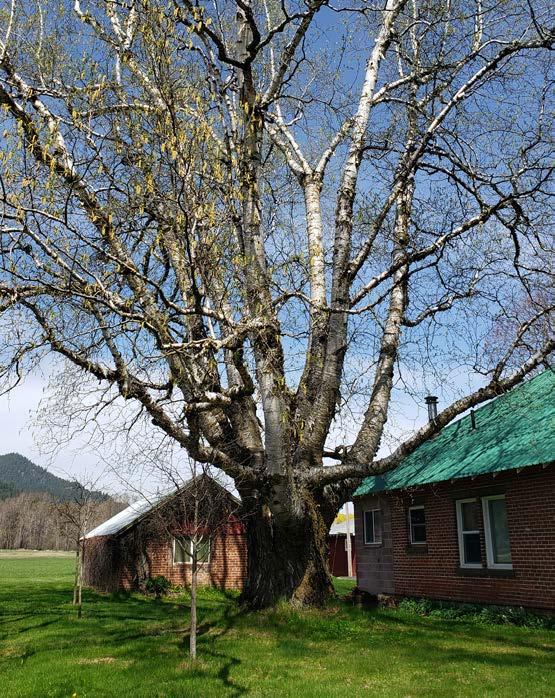

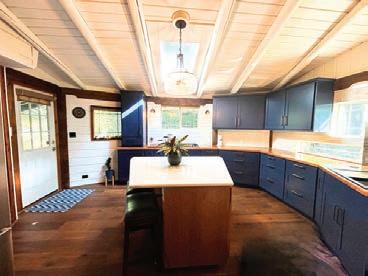
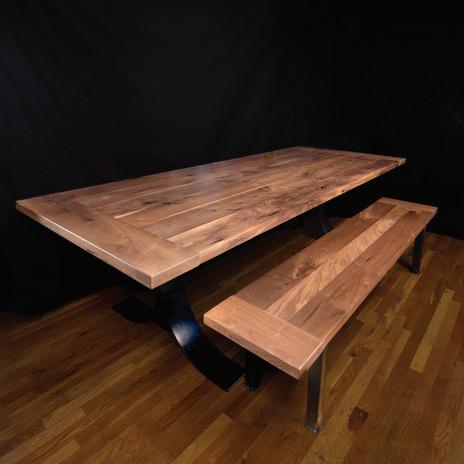
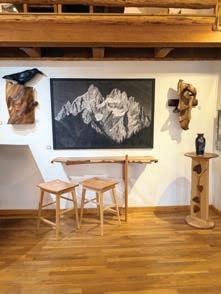


This paper birch tree on Gooby Rd., which shares a yard with the cottonwood, was 75 feet tall in 1991, when it entered the record books as the biggest in the state. Staff photo.
Big Solutions. Small firm.
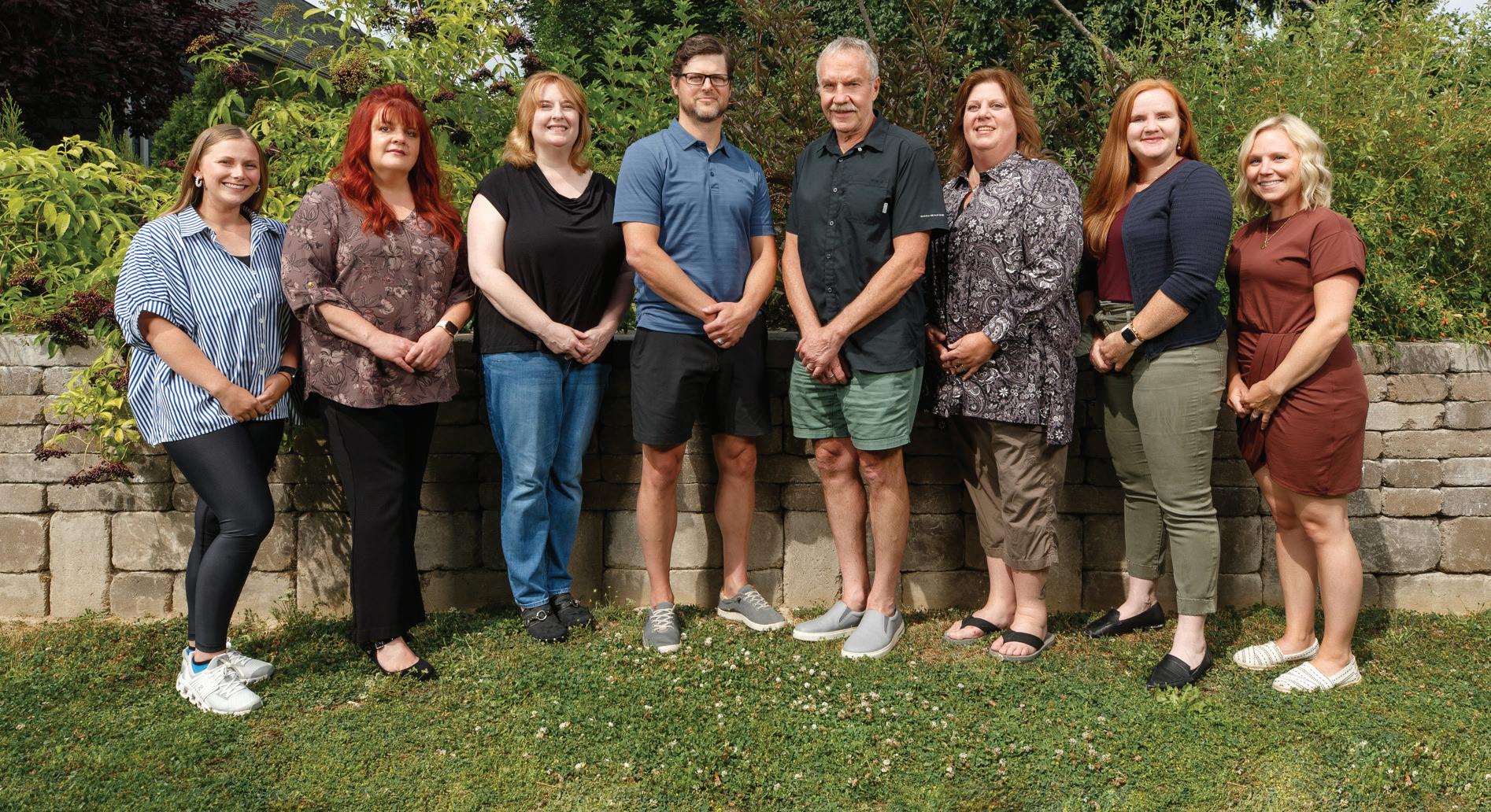
We’re proud that Williams & Schiller CPAs & Consultants have become woven into the very fabric of Sandpoint in the 30 years since co-founder Brad Williams first began offering accounting services here. Co-founder Mark Schiller brings comprehensive wealth management expertise and, after years here, in 2019 opened our office in Fargo, North Dakota.
Our deep roots inspire the personal, attentive service that everyone at WS CPAs offers to our clients. Combined with expertise in tax planning and preparation, wealth management, business valuation and accounting services, we are the comprehensive solution business owners and high net worth individuals turn to.

Meet our staff. From left are Mikayla Cargile, CPA; Cheryl O’Boyle, CPA; Suzi Cochran, reception; Mark Schiller, CPA/ABV, CFP; Brad Williams, CPA, PFS; Kim Queen, of f ice manager; Mariah Williams, MBA, CPA,CMA; and Maggie Hayes, accounting senior associate.
Passing the Torch … and Keeping the Flame
Evolving leadership continues a legacy built on trust and community
For nearly three decades, Williams & Schiller CPAs & Consultants has been part of the financial fabric of Sandpoint, helping families, retirees and business owners navigate their personal financial decisions with clarity and confidence. Now, as the firm looks ahead, its story is coming full circle in a way that is both natural and deeply rooted in community.
Co-founder Brad Williams, CPA, PFS, is beginning a gradual transition toward retirement, reducing his role after a career defined not only by broad technical expertise, but by relationships built over time. His presence will remain – particularly on the wealth management side of the firm – but his day-to-day work will evolve as the next generation steps forward.
A natural continuity for succession
One of the firm’s next-generation team members includes someone who knows the firm, and the community, well.
Brad’s daughter Mariah Williams, MBA, CPA, CMA, joined the firm six years ago after returning to Sandpoint from university and work in Missoula. She has taken on an increasingly larger leadership role, working closely with clients and helping guide the firm’s direction alongside other senior team members. For Brad, the transition is professional – and, of course, personal.
“It’s rewarding to see the continuity,” he says. “Mariah understands not just the technical side of what we do, but the importance of the relationships we’ve built here.”
The continuity reflects the philosophy that has shaped Williams & Schiller since its inception. Brad first established the firm in 1996 alongside his late partner, Paula Freeman Parsons, with a vision of delivering high-level expertise for a small town where personal touch still matters. Over the years, that commitment to the personal has held steady, even as the firm’s capabilities have expanded.
Continuing the hallmarks of the firm
Today, Williams & Schiller offers integrated services across tax planning and preparation, wealth management and business services. Their boutique approach is a hallmark of the firm, aimed
for clients who value thoughtful, personally tailored strategies over one-size-fits-all solutions.
That same long-view perspective is evident in the firm’s approach to succession. While Mariah’s presence represents a continuation of the firm’s core values – especially its commitment to community well beyond the office – she is far from alone in guiding this next chapter. Williams & Schiller’s dedicated team of professionals, many of whom have been with the firm for years and have longstanding client relationships, are equally invested in upholding those values.
An enduring commitment to community
Brad has long been known for his civic involvement, including his role in founding the CHAFE 150 Gran Fondo, the signature regional cycling event that has raised significant funds for local education initiatives. Today, Mariah and others on the Williams & Schiller team are active in carrying that involvement forward, joining with a dedicated group of community members.
The firm’s commitment to community and clients extends beyond the Williams family. Co-owner Mark Schiller, CPA/ABV, CFP®, spent years working in the Sandpoint office before launching the firm’s Fargo, North Dakota location in 2019; in the years ahead he will transition to spend more time back in Sandpoint. His return reinforces the strong connection between both offices and the shared knowledge that benefits clients in each.
Building the future on a strong foundation
Together, these transitions reflect an evolution larger than a passing of the torch.
For clients, that means continuity where it matters most: The same trusted relationships. The same depth of experience. The same ability to navigate increasingly complex financial landscapes – whether through strategic tax planning, integrated wealth management or forward-looking business advisory services.
And for Williams & Schiller, it means the story that began in Sandpoint decades ago continues. As a new generation takes the baton, it is building the future on the strong foundation of deep expertise, attentive personal service and enduring values.
WILLIAMS & SCHILLER , PC
Williams & Schiller Wealth Management and Williams & Schiller CPAs – Sandpoint & Fargo Boutique solutions. Big results. Learn more at wswealthmanagementllc.com and wscpas.us



Brought
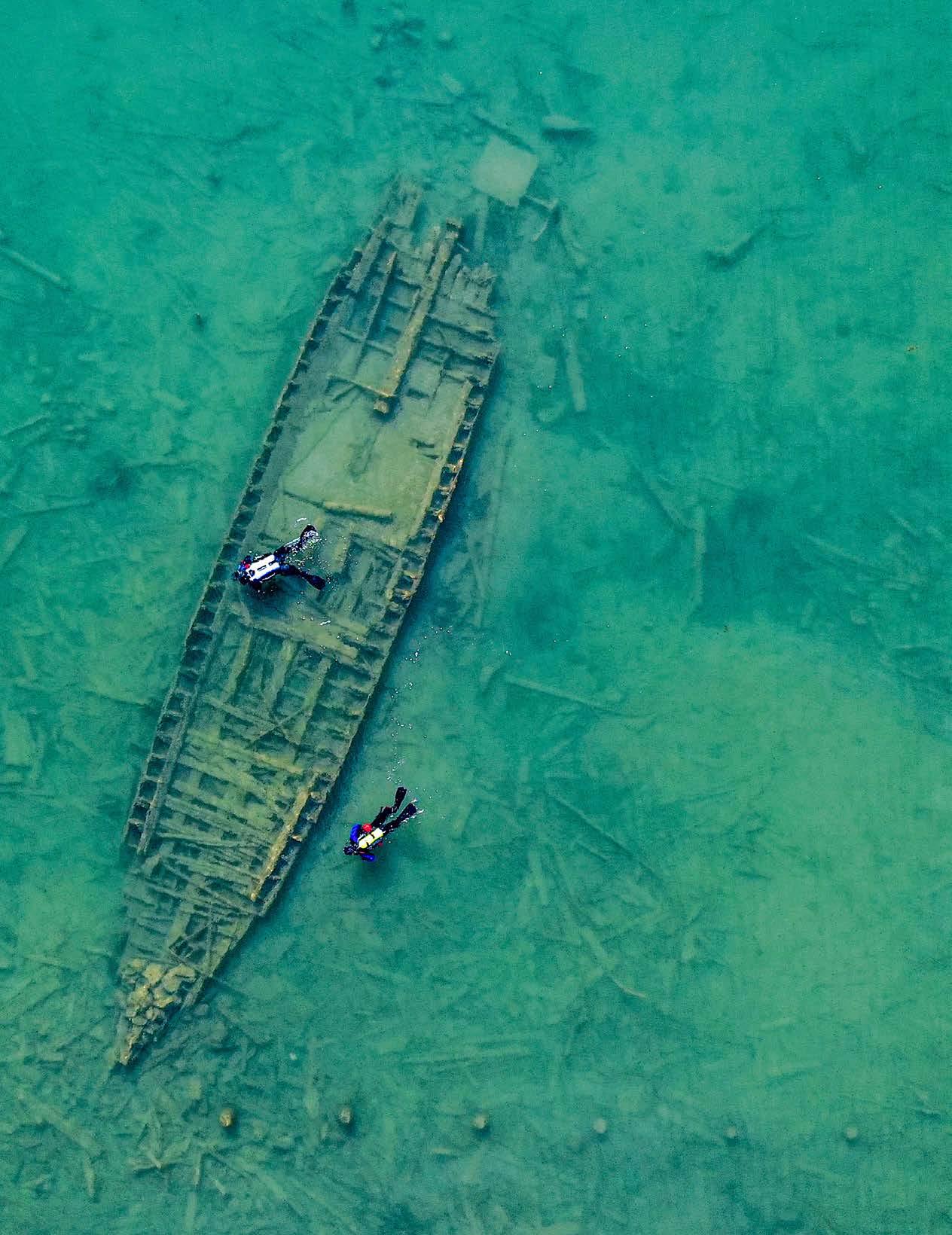
Calm Waters, Turbulent Past
A history of life and death on Bonner County's risky waterways
by Hannah Combs
It takes a moment to readjust to the gentle rocking of the boat after I put the VR headset over my eyes. A year after the sunken boat was discovered in the river and our dive team first examined what remains of its 65-foot hull, we’re back for a second look, this time dry on deck, with a robot. Peering through the murky water, I clumsily toggle the controller to move the robot up and over the bulwark of what we believe to be the Coyote II. After I get a taste, diver Chris McNaughton takes over, expertly cruising the ROV (remotely operated vehicle) over the wreck, looking for any clues that will further enlighten our team about its history.
A drone photo of the wreck found in 2025 shows divers Chris McNaughton and Brian Nadwidny examining the site. Photo by Austin Vallone.
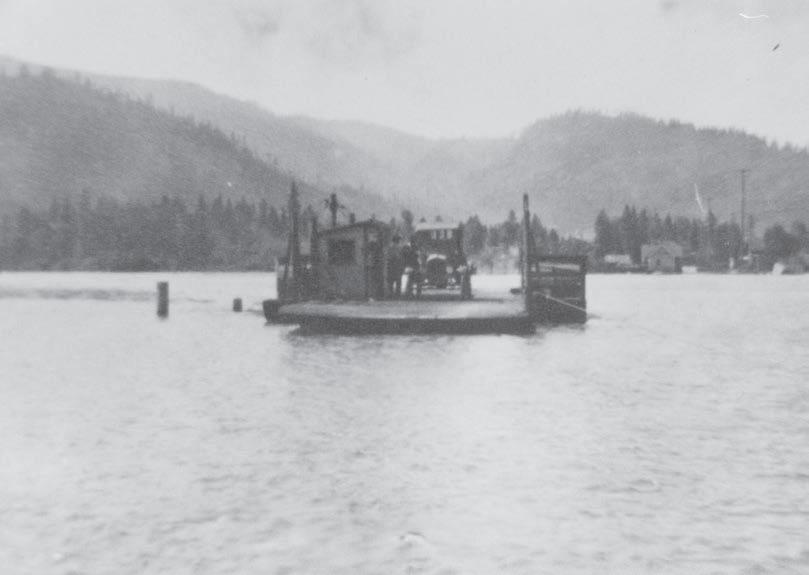
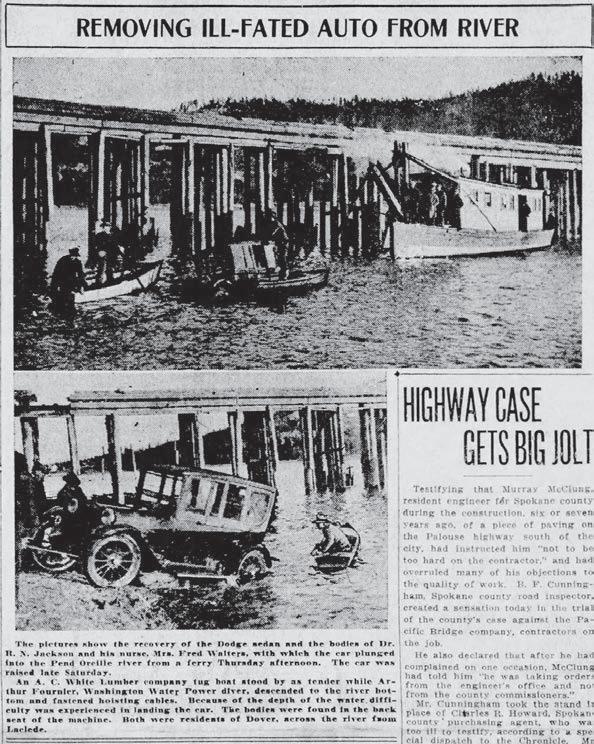

After a long career tugging log booms, the Coyote II “partially sunk” in shallow waters in 1936. A team from the nearby lumber mill successfully raised it back to the surface using forestry pumps. Based on the pile of rocks in its bow, we assume the team stripped off anything that could be repurposed and then scuttled the boat. Ninety years later, on a calm spring morning, the site is quiet and peaceful, but it makes me wonder, just how risky was it to be on or near our waterways long ago?
One of the earliest accounts of navigating Lake Pend Oreille’s waters comes from William Penn Abrams, who was commissioned by the Oregon Steam Navigation Company to chart a viable steamboat route into Montana in 1866. The gold rush was on, and time being of the essence, his team headed for the Clark Fork River in early March… only to find the northern half of Lake Pend Oreille frozen solid. After dragging their 30-foot boats over ten miles and sleeping under wet, icy blankets, they rowed upriver to the Cabinet Gorge, where they had to set up a towline to drag the boats through the rapids. Undeterred, they portaged around several other rapids and falls on their 98-mile journey to the Jocko River in Montana, with no serious injuries or fatalities.
Unfortunately, many encounters with our rivers were rife with danger, particularly when people tried to tame them. During construction of the Cabinet Gorge Dam in 1951, 19-year-old “high scaler” Ray McFarland was crushed to death when 150 tons of rock peeled off the cliff face above him while he was hanging on a rope, clearing debris. Two others were caught in the slide at the river’s edge but lived to tell the tale.
The Clark Fork River proved particularly difficult to tame, yet essential to navigate. Back when those steamboats were established, the small landing town of Cabinet popped up on the south side of the river. To access the town and its railroad depot from the homesteads on the north shore, they built a cable footbridge across the Clark Fork, but it was washed out in a storm. It was no mean feat to rebuild the 476-foot-long suspension bridge in 1922. During construction, the team tightening the bridge cable with a stump puller lost their grip, sending the heavy cable flying with great
Above: A 1923 story from the Spokane Chronicle shows the original Coyote tugboat (Coyote I) recovering Dr. Jackson’s car from the river. Image courtesy BCHS.


Build connections at the Litehouse YMCA and create a community of health and wellness.


Looking for the perfect place for fitness, fun and a welcoming community? The Y is your place.

Visiting Sandpoint? Stay active with a Y day pass—or ask about our 2-week guest pass. Stop by for details.
1905 Pine St. • Sandpoint

harrowing story of a fellow river pig who fell into a log jam in his heavy boots and clothing and couldn’t swim. Submerged under the logs, he could only reach one hand out of the water. A quick-thinking mate drove the spike of his peavey through the man’s hand, nailing him to the log, then the rest of the men dragged him to safety out of the jam. Bews said, “It was the last log drive he worked on.”
Drownings were common, but always a tragedy. In December 1923, prominent local doctor Roscoe Jackson and nurse Mary Alice Walters died en route to a sick patient when their automobile rolled off the Laclede Ferry into 157 feet of icy water. The professional diver sent to retrieve them managed the feat, despite the cold temps and a leaky diving suit.
Leaning now over the edge of the boat, watching the robot explore this exciting “new” shipwreck, I appreciate the calm water more than ever. While none of these specific distressing encounters with the water are likely to occur today, unpredictable environments and hurried decisions can still put us in dangerous predicaments.
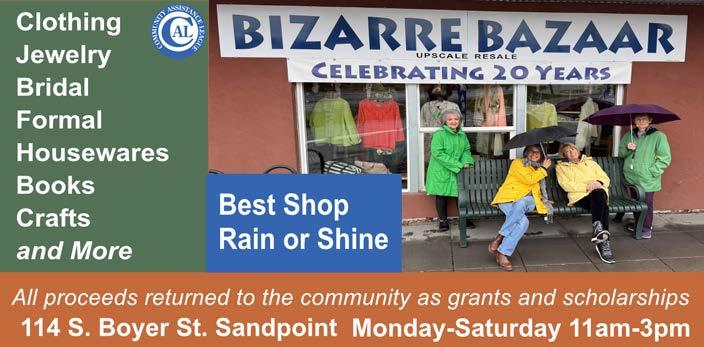

Vigilance on the Water
Local citizens have long history of working to protect water quality on the lake
by Cameron Rasmusson
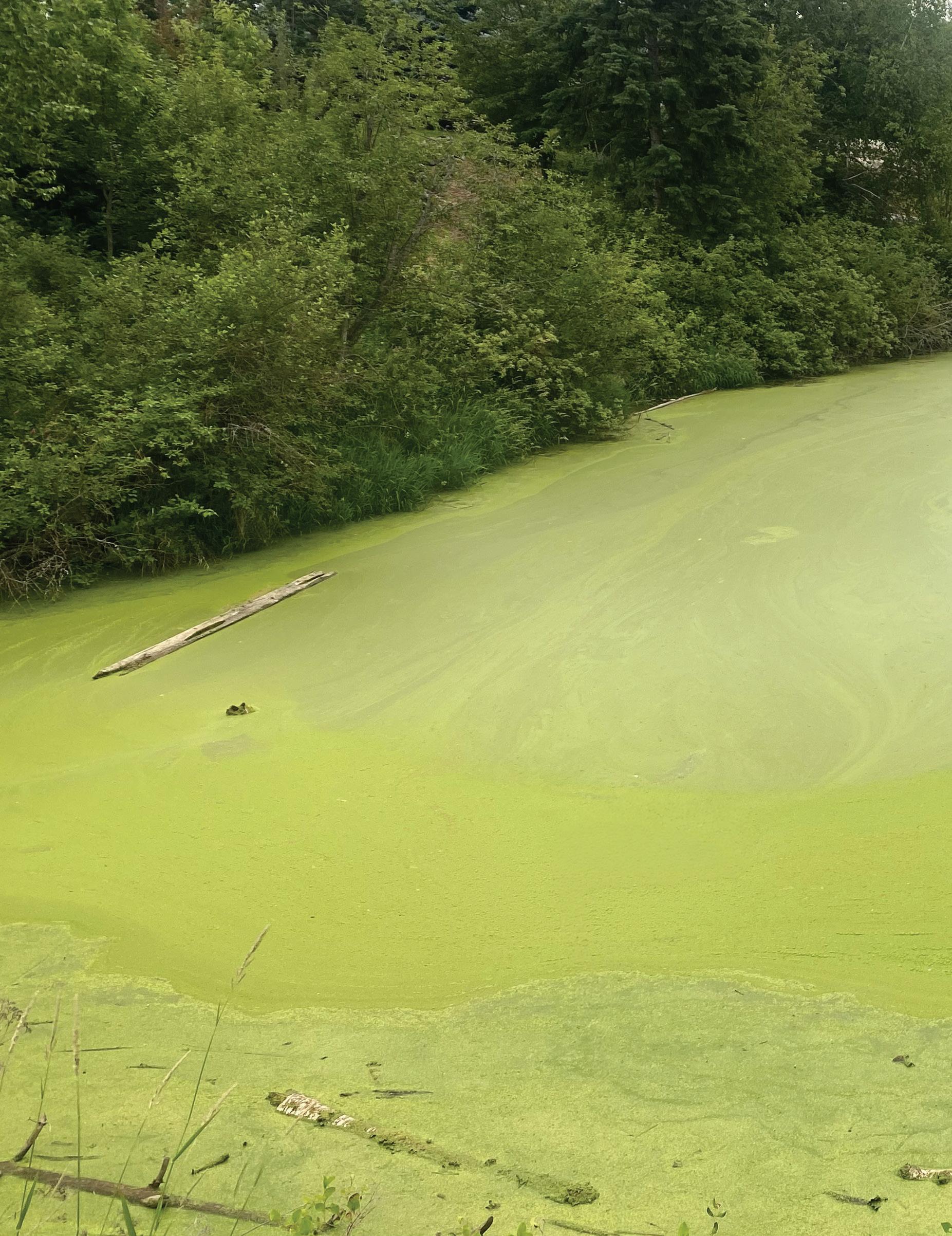
Chuck Slough, photographed in late June of 2025, was full of algae but DEA found no toxins present. By Aug. 8, it became a toxic algae outbreak. The presence of even nuisance algae, however, indicates that state water quality standards are being violated. Photo by Jennifer Ekstrom.
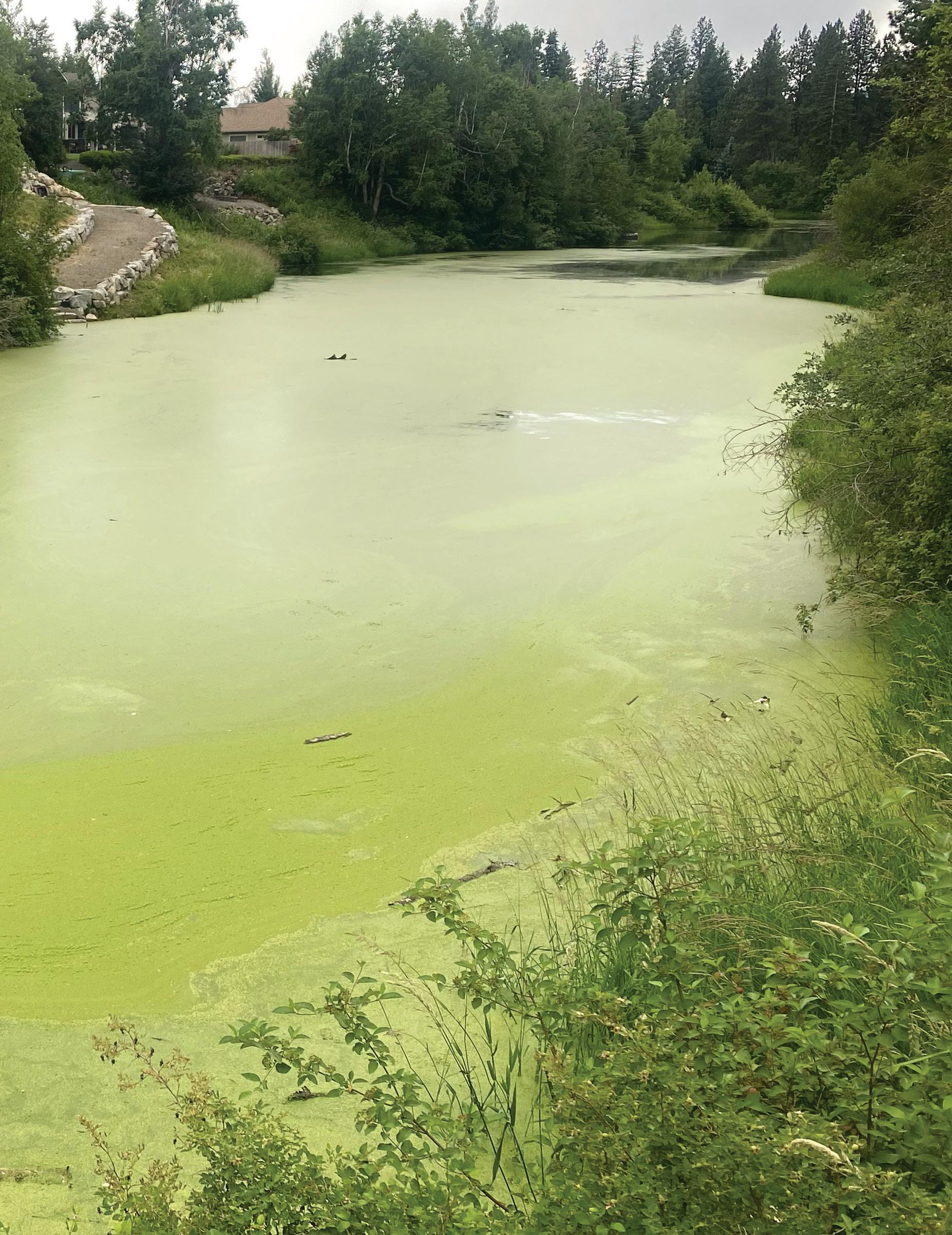
If there’s one single natural feature that makes Sandpoint iconic, it’s Lake Pend Oreille. While its beauty is obvious, it also means so much more—an idyllic blue jewel that sustains the town’s ecology, economy, quality of life and habitability.
But protecting a resource as essential and iconic as the fifth-deepest lake in the United States is a decades-long story, one with its own unique challenges and triumphs. The story of Lake Pend Oreille conservation is one without a final chapter. After all, it’s a labor that will never be finished. As long as threats to water quality and lake health exist—and they always will—the task will fall on those who live near its shores to protect it.
“Together, we can make sure that Lake Pend Oreille stays healthy for current and future generations,” said Idaho Conservation League North Idaho Director Jennifer Ekstrom.
Lake Pend Oreille conservation properly reaches back centuries upon centuries, to its role in providing sustenance for Indigenous peoples. In turn, they venerated the lake and made it a central part of their identity, particularly the Kalispel. But following the arrival of settlers in the 19th century, a modern era of American conservation dawned, spurred by arguably its greatest champion.
Theodore Roosevelt was already familiar with Sandpoint, having visited the town in 1888 during the youthful expeditions that cemented his love for nature. While hunting in the Panhandle forests, he remarked upon the town’s lawless nature and, according to the late local historian Bob Gunter, navigated a drunken midnight dispute with resident Scott Monhart over the use of a shack bed.
Who knows if Roosevelt remembered those wild days 30 years later when, as U.S. president, he established the Coeur d’Alene Forest Reserve in 1906. This formed the foundation of what would become the Idaho Panhandle National Forest in 1973. In 1955, the Army Corps of Engineers initiated the next major change with the construction of the Albeni Falls Dam, introducing flood control and establishing the now familiar seasonal rhythm of high and low lake levels.
Lake Pend Oreille’s beauty makes it a natural choice for lakeside homes and vacation destinations. But increased human development has its price.
“While Lake Pend Oreille may look vast and indestructible, it is actually quite vulnerable—especially as population growth increases pressure on the lake and its shoreline,” Ekstrom said. “In fact, the area near the shoreline is officially designated as impaired under the Clean Water Act because of elevated phosphorus levels. Excess phosphorus can fuel toxic algae outbreaks and the overgrowth of invasive weeds.”
And invasive weeds are a persistent problem, particularly the Eurasian watermilfoil. The weeds choke out Lake Pend Oreille’s natural ecosystem, and while they’re hand pulled at City Beach, herbicides are the typical management tool.
“This causes large amounts of vegetation to die all at once during the heat of summer, and the plant matter decomposes and releases nutrients back into the water,” Ekstrom said. “That can create a cycle where the added pollution fuels the next generation of weeds and algae.”
The lake, along with its fish populations, also faces threats from mining runoff and increased development—all of which is monitored by the Idaho Conservation League. Formed in 1973, the nonprofit organization is on the front line of monitoring and advocating for environmental health. In 2006, Susan Drumheller opened a Sandpoint office.
“A great success that Susan Drumheller worked to orchestrate was the creation of the Pend d'Oreille Bay Trail,” Ekstrom said. “This trail is such a terrific asset to our community, offering an accessible opportunity to connect with the lake right in town.” ICL played a critical role in drawing attention to the contaminated soils along the trail at lake's edge left from a historic smelter; the city of Ponderay obtained a grant in 2019 to clean up the lead and other heavy metals contamination at Black Rock.
ICL wasn’t alone in the fight for water conservation. Indeed, their work
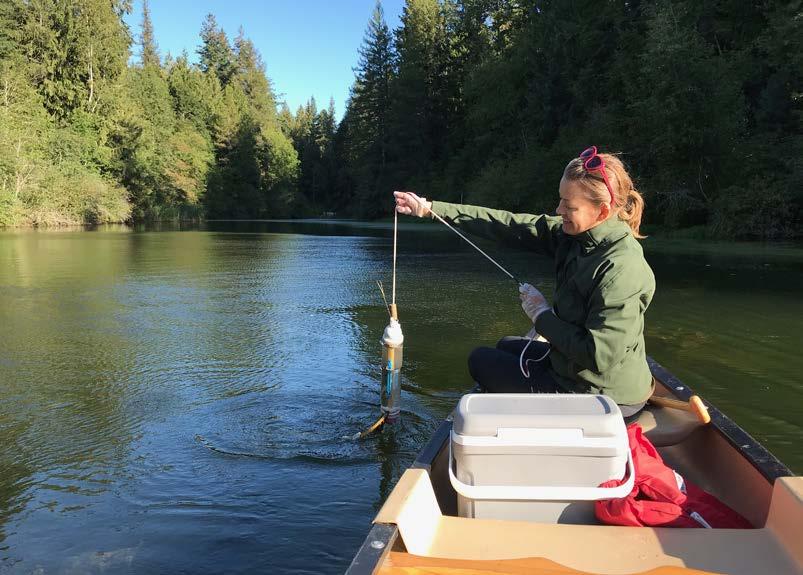
perpetuated a legacy established by citizen volunteers. Local icon Eugene "Skip" Cyril Pucci, who passed away in April 2025, collected water samples over decades, sometimes taking his Boy Scout troop out in canoes to aid collection efforts. In 2007, the Idaho Department of Environmental Quality praised Pucci for his 35 years of collection efforts as a credit to statewide environmental science, according to the Bonner County Daily Bee.
The example set by citizen scientists like Pucci was contagious. Founded in 2009, Lake Pend Oreille Waterkeeper began a water quality monitoring program in response to the state’s plans for herbicide treatments, relying on volunteers much like Pucci.
“At the beginning, we were focused on limiting the use of herbicides, and then it branched out to a more global effort to protect water quality,” said Steve Holt, former executive director and board president.
The monitoring program saw residents hit the lake on paddleboards and other watercraft to collect water samples at various points across Lake Pend Oreille. In 2022, ICL took over program management.
Advocacy is another central pillar of local water conservation, and the decades have seen both victories and defeats for conservationists. Many locals,
for instance, opposed the opening of a second train bridge over the lake, fearing the impact of shedded debris or a potential derailment. Nevertheless, the bridge was completed in 2023.
ICL is also in a legal battle with the Army Corps of Engineers and the U.S. Fish and Wildlife Service over bull trout threatened by the luxury development at Trestle Creek. And it’s working to designate a critical groundwater area in Schweitzer Basin ahead of yet more development plans. Throughout it all, it’s working with local governments to call for management of lakeside development with an eye toward lake health.
There are encouraging signs, Ekstrom said. Most notably, voters approved wastewater treatment plant updates in Sandpoint and Kootenai-Ponderay sewer districts—a boon to water health. However, she cautioned that vigilance and action are always necessary. Conservation is a volunteer-fueled effort, and there’s always a need for more to pitch in. But it’s good work, a good community, and the reason for many good afternoons on beautiful Lake Pend Oreille.
“It’s so much easier to keep pollution out of the water than to clean it up once the problems occur,” Ekstrom said. “I hope that everyone who lives near Lake Pend Oreille will get involved!”
From waterkeeper to the Idaho Conservation League, Jennifer Ekstrom has spent years protecting the lake. Photo by Brad Smith.
Eight Nights... All Year Long
Festival orchestrates big community impact
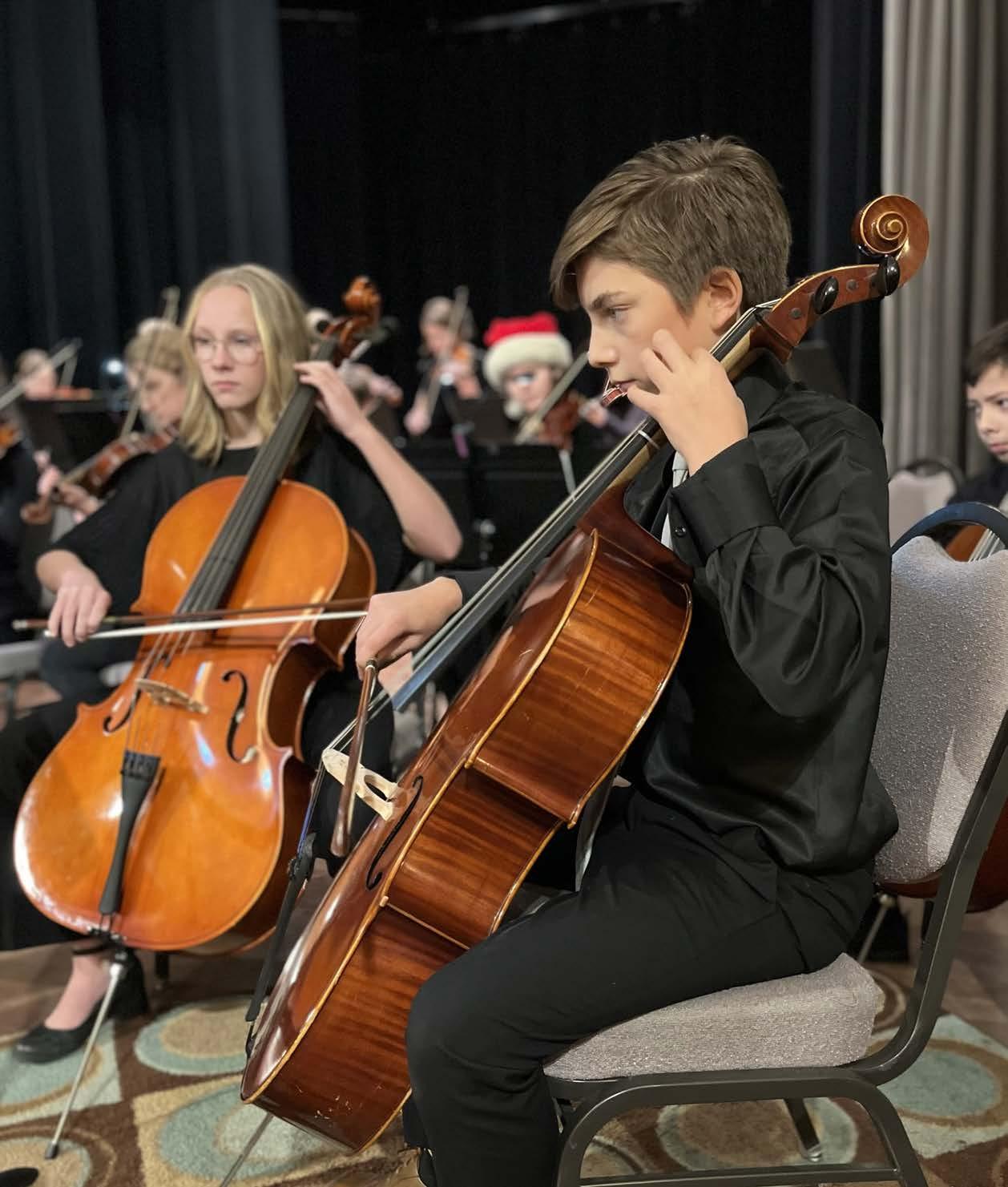
by Dig Chrismer
For most nonprofits, hosting a gala is a once-a-year affair. Months of detailed planning go into a single evening, all in the hope of raising enough support to sustain the mission well into the future. It’s intense. It’s high stakes. It’s exhausting.
As thousands gather at Memorial Field in Sandpoint each August, unfolding lawn chairs and blankets while the sun dips behind the mountains, a year-round staff of just six coordinates what amounts to a series of eight gala-scale events. Nearly 20,000 people attend over the course of the run. National touring artists arrive with full production teams and high expectations. Volunteers, more than 300 of them, fill critical roles. From the outside, it feels seamless and what began more than 40 years ago as a simple way to fund music outreach has evolved into a sophisticated organization that still holds tightly to its roots.
The Festival at Sandpoint’s Youth Orchestra offers free weekly classes during the school year and is open to string players. They put on two free concerts each year. Photo by Cienna Roget.
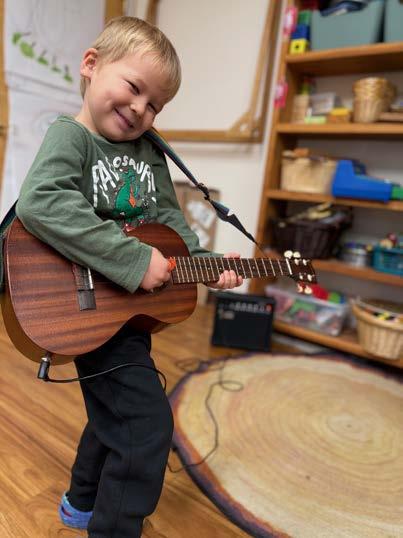
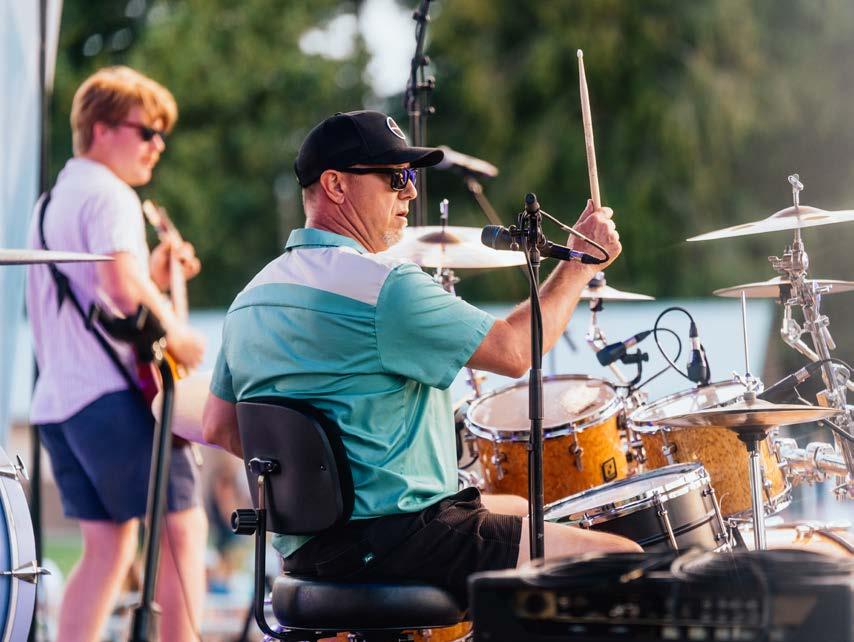
Nonprofit - In Practice, Not Just in Name
With the caliber of artists and the polished guest experience, it can be easy to forget that the Festival at Sandpoint exists first and foremost as a nonprofit whose mission is “to be a community catalyst for arts, culture, and education.”
Revenue from ticket sales fuels year-round outreach, including partnerships with the Lake Pend Oreille School District. The Festival also supports free music education in four prekindergarten classrooms, maintains a free instrument library, offers high school internships and hosts master classes with professional musicians. When an instrument needs repair and a family doesn’t know where to turn, the Festival often steps in there, too.
Director of Operations Veronica Knowlton describes the work as outward-focused. “Our goal is to go out into the community and give people—kids and adults—access to music they wouldn’t have had otherwise,” she said. The concerts make that outreach possible and that outreach is what gives the concerts purpose.
Stronger Through Challenges
Like many long-standing organizations, the Festival has weathered difficult seasons. Legal and organizational challenges that began in 2019 prompted deep reflection and meaningful structural change. Leadership found itself balancing the desires and traditions of the local community with the contractual requirements and production standards that nationally touring artists expect before stepping on stage. Some long-standing practices evolved in the process—adjustments that were not al-
ways easy, but necessary to ensure the Festival could continue attracting high-caliber performers while also prioritizing safety and a positive experience for every guest.
The relationship with the city of Sandpoint has grown more collaborative, particularly around the lease process for Memorial Field. The location itself presents some logistical challenges, from limited power access to space constraints, and rather than ignore those realities, the Festival has begun engaging the community in conversations about what the future should look like. Listening sessions and focus groups are helping the Festival evaluate what residents value most: location, atmosphere, accessibility or simply the music itself.
“One thing we are all confident about is that the Festival is more than just the field,” said Marketing and Communications Manager Cienna Roget. “It’s about bringing music to the people.”
Access, Belonging and Ownership
That philosophy shows up in tangible ways. In 2025 alone, the Festival distributed 1,186 free tickets through its community access programs, prioritizing service workers and others who might not otherwise be able to attend a Festival concert, which have grown pricier through the years.
While national touring artists may headline the series, local and regional musicians are woven intentionally into the lineup. Community Night highlights performers many residents recognize from farmers’ markets and local venues. Opening acts often come from within the region, providing meaningful exposure and professional experience.
“Regional and affordable access to live music is central to

A preschooler at Selkirk School strums a ukulele during an in-class strings lesson. Photo by Tara Rumore.
The Real McCoy performs at the Festival’s 2025 Community Day. This year’s community day concert is Aug. 2, featuring local and regional musicians, plus reduced ticket prices. Photo by Racheal Baker.
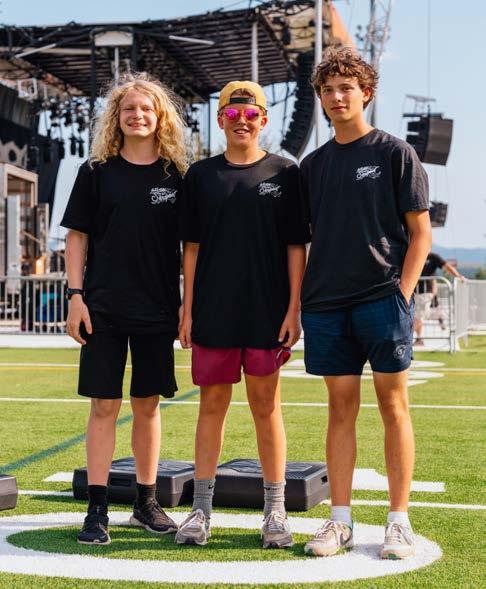
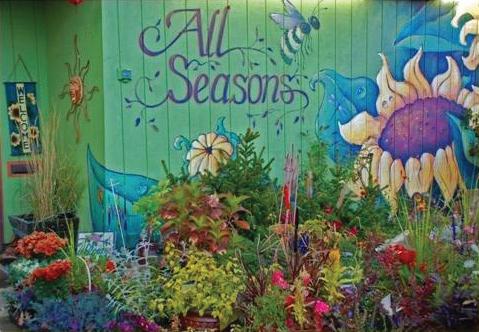
what we do,” Knowlton said. “We want people to see themselves in the Festival.”
Ticket sales also offer steady feedback. “They show us what people want,” Roget added. “And we respond, enabling us to keep the Festival consistent, relevant and resilient.”
And for more than 300 volunteers each summer, it’s a chance to be part of something bigger than themselves. For young people especially, it can be a first glimpse into careers in arts, events or nonprofit work. It’s proof that a small town can host nationally touring bands and do it well.
From a borrowed instrument in a preschool classroom to a volunteer’s first shift at the gate, from a master class with a touring musician to a family sitting together on the lawn, the Festival’s impact extends far beyond eight summer nights.
“If you love music,” Knowlton said, “think about where that began for you. The Festival exists to help create that beginning for someone else.”
This summer will mark the Festival's 44th season of music under the stars.


Production and Facilities intern Roan Luikens leads production crew team members to prepare the venue for opening day. Photo by Racheal Baker.

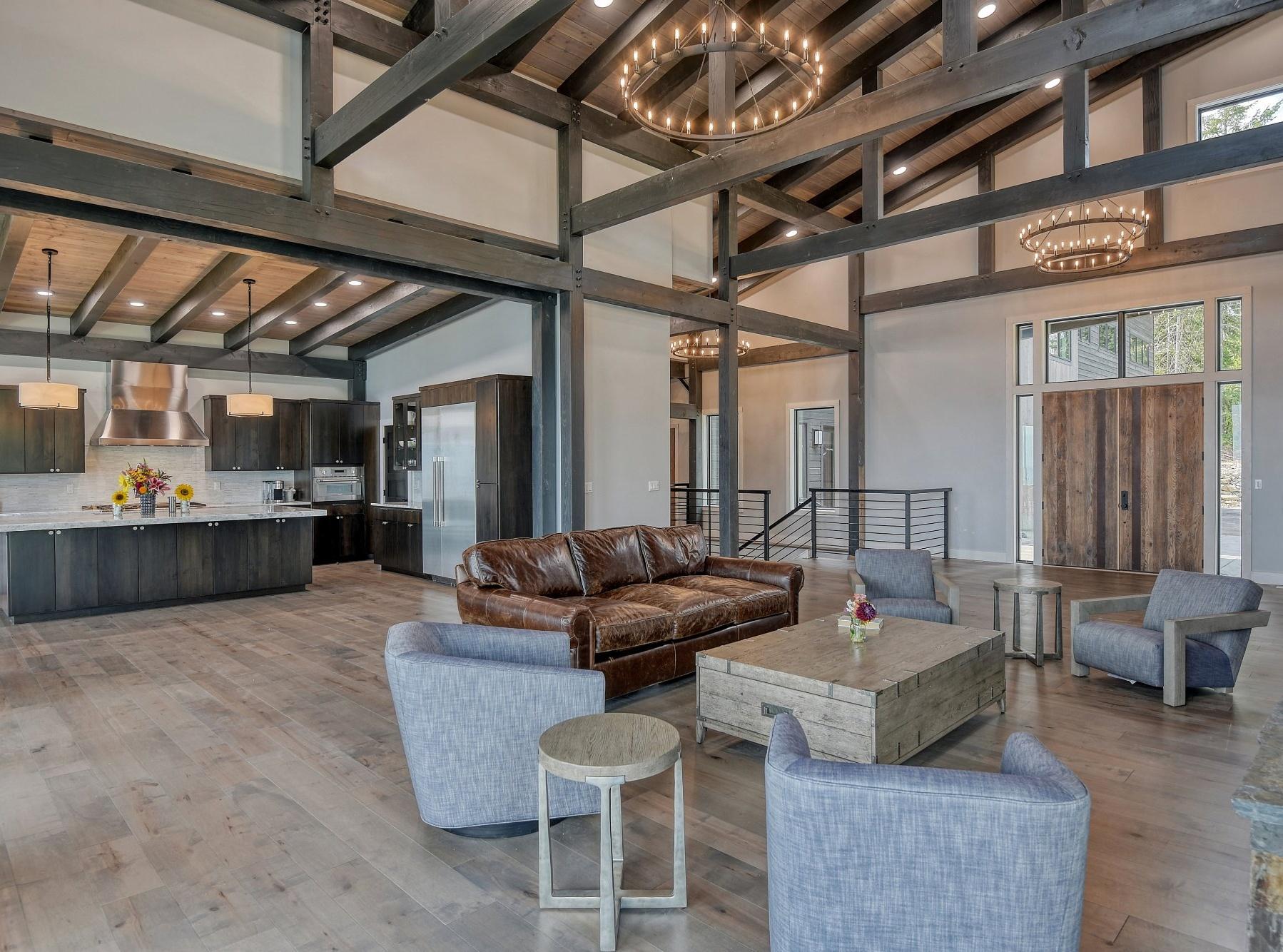

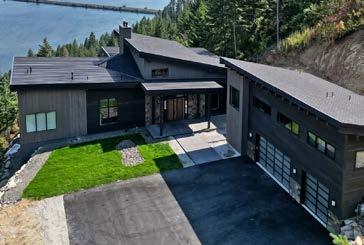
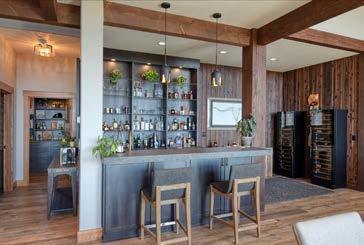
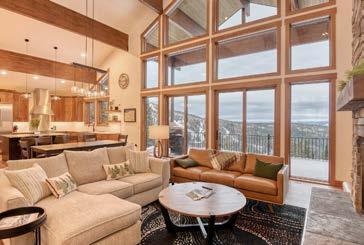
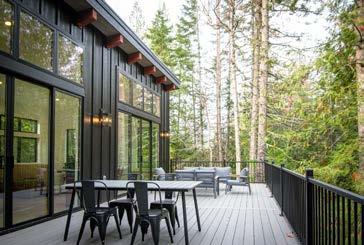
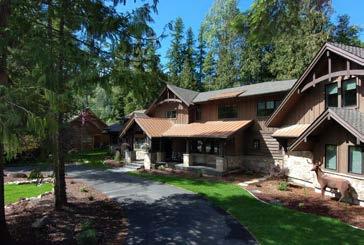
SHIFTING GEARS
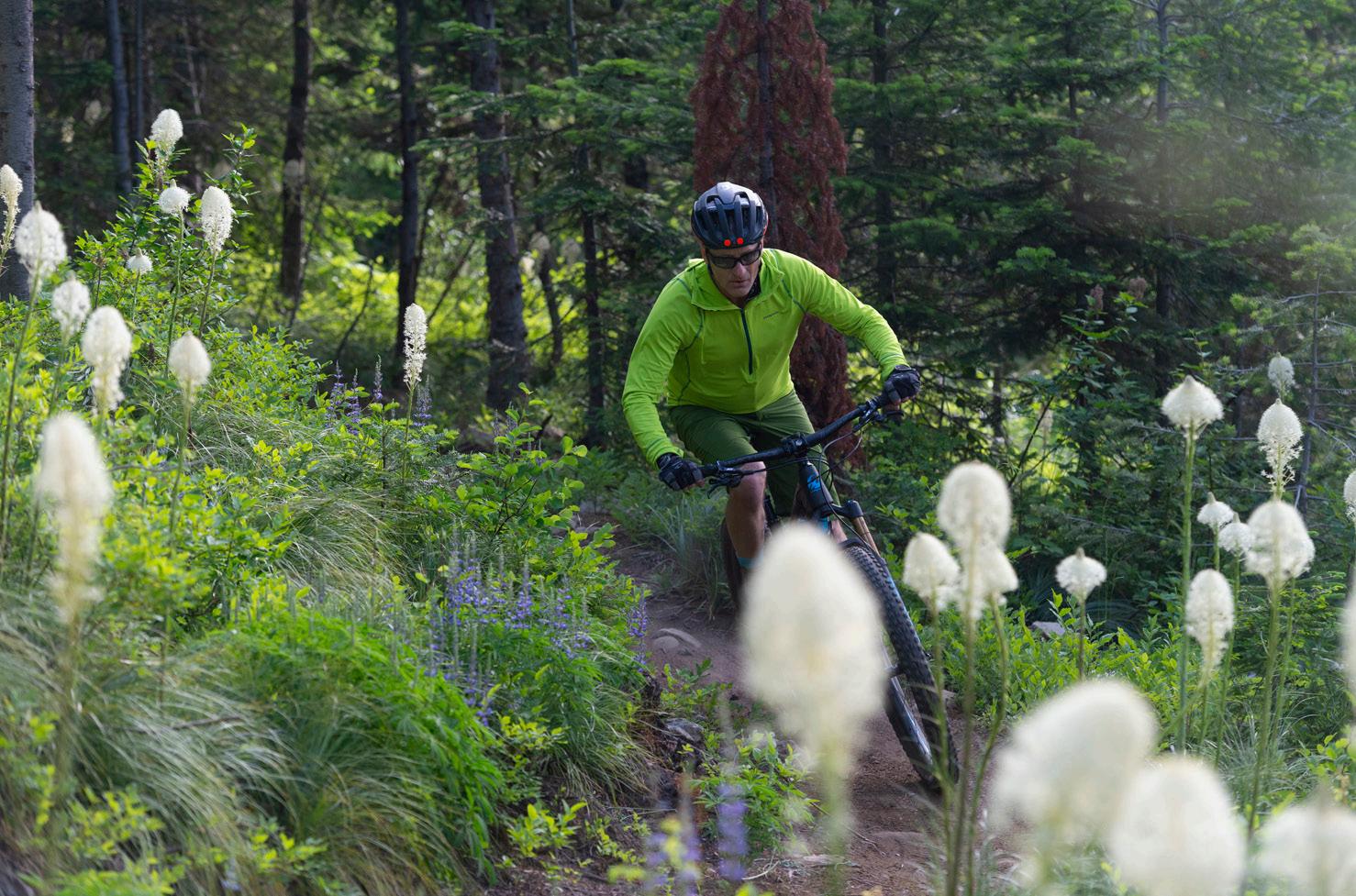
Local bicycling icon is cutting a new trail
by Sammy Berryman
Perhaps you’ve had a flat tire fixed or your brake pads changed; maybe you’ve taken part in one of Sandpoint’s gravel bike races or won a raffle basket through Scotchman Peaks or Sandpoint Nordic Club. Maybe you’ve listened to Sandpoint’s community radio station, KRFY, ridden the trails at Pine Street Woods, or have a child who attends the Waldorf school—whatever it may be, there’s a good chance that Charles Mortensen has contributed to it. Now, with his retirement from business, he'll likely contribute to a lot more.
Most people in town know Charles as the owner of the former bike shop Syringa Cyclery. Mortensen opened up his shop in 2014 in a cute, quirky, partially A-frame shop on the corner of Oak Street and Sixth Avenue,
A bike store run by the late Larry Baggett closed, and "Colin Cox proposed that he and I open up a bike shop, as Larry had moved out of town and it seemed there was an opening there for us to do so." Cox moved on, but Mortensen moved forward.
In classic Charles Mortensen fashion, the move into the space by the Charter School that Baggett had operated was
very low key, with no regular hours and mostly by appointment—some might say Syringa kept this spirit as the years progressed.
At the beginning, Mortensen kept his job as an environmental consultant while being the sole bike mechanic at Syringa Cyclery. In 2015, as work slowed down on the consulting side, he started looking for bigger buildings for the bike business. He landed on 518 Oak St.
Originally an Episcopalian church, the 1910 building had later transitioned into an art gallery that held classes in the back. In 2016, Mortensen made the leap and purchased the quirky red—at the time—building with an A-frame entrance. He slowly added bits and bobs that reflected his unique style: chain rings pressed into the cement leading up the entry steps, two giant pieces of rustic wood painted in primary colors framing the porch overhang, art pieces placed around the building and a chalkboard out front displaying store hours and posters of community happenings. It was a shop that piqued interest from the outside and was filled with warmth and knowledge on the inside.
Charles Mortensen helps build trails in part because he loves to ride on them. Photo by Doug Marshall.
For a while only the front part of Syringa was in use because the back half was rented by Dave Parkins—aka “Fast Eddie.” As business grew, the back space was needed for mechanical work and the front of the shop for customer service and merchandise.
Though Mortensen has lived in Sandpoint since 1998, it wasn't until opening Syringa that he really felt like he was a part of the community. He worked remotely, had a good group of friends and knew plenty of people in town, but the bike shop tied him to Sandpoint in a different way.
“Having the shop, I really felt like I was more a part of the Sandpoint community,” Mortensen said. “We had quite a few characters who came through our doors and saw people at their highs and lows. It was a true community.”
He created a comfortable atmosphere; a hub for people who would often come into the shop, pour themselves a beer from the keg, then sink in to the comfy brown leather couch for a chat. It was jokingly called the Syringa Social Club.
But it was more than a social club. “Every year there were stretches of time where I thought that I just can't keep doing this because it was so all consuming,” he said. “It was the business itself. Having to pre-order product every year, maintain it all, run the bike shop … it was a lot of work and it was pretty stressful.”
Mortensen has always described Syringa Cyclery as a “hobby that turned into a business.

“When I started it, I didn’t think about all the nuts and bolts,” he said. “I thought ‘Oh yeah, it would be fun to have a bike shop.’ I was pretty naive and didn’t really think it through.”
In 2025, someone approached him about selling the building but not the business. After looking at the numbers he thought it made sense financially and for his sanity.
In November 2025, the storefront Syringa Cyclery officially closed. The building is now home to the Granary General Store. (See story on page 139.)
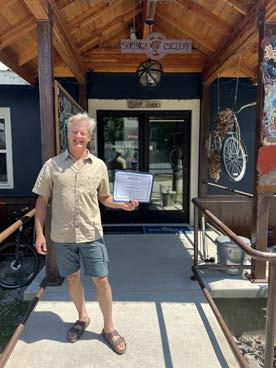
“We still have Syringa Cyclery LLC, which is now fully focusing on the Panhandle Gravel Series and other events under Syringa Productions,” Mortensen said. “I think we’re keeping the flame going with our cycling events. It’s still the same business, we’ve just shifted gears and that keeps us involved in the community.
“It’s still fresh but retirement will include more riding, more skiing, more travel (roadtripping) and keeping our bike race series going.”
Learn more at www.panhandlegravel.com, or keep an ear out on KRFY for a few radio interviews throughout 2026.
1303 N Division St Ste B Spokane, WA 99202-1930
509-724-0000
The Carbaidwala Family Clients since 2005
Scott Jensen
Room for the Future ... and for the past
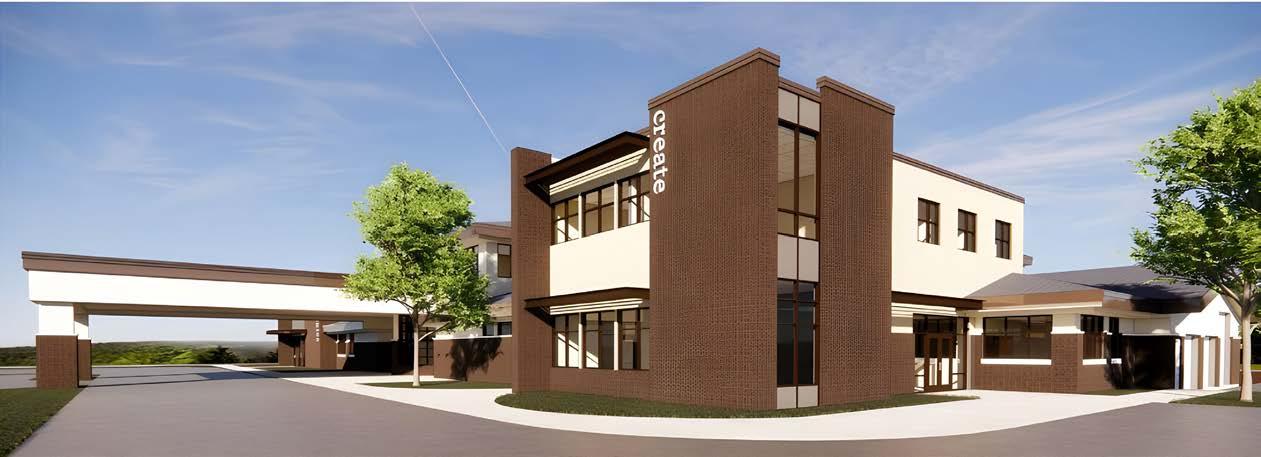
Library, museum meet burgeoning growth with ambitious expansions
by Pam Webb
Growing pains. The uncomfortable feeling when things just don’t fit as well as they used to. Two organizations, the East Bonner County Library and the Bonner County Historical Museum, have both outgrown their present buildings and have made plans to stretch out a bit more.
THE SANDPOINT LIBRARY
The Sandpoint branch of the library has experienced its share of growing pains. From its early 1900s City Hall beginning to its move to the former U.S. Post Office building on Second Street (now MickDuff’s Brewing Company), and then on to its present site on Cedar Street in 2000, the library has continually grown to meet the needs of the community.
The Cedar Street facility anticipated meeting the community’s needs for several years, yet in 2017 an additional 7,000 square feet was added in order to increase shelving and meeting space. However, the library once again proves it isn’t done growing.
As more people move into the community, and as the facility’s wealth of programs, shelf treasures and resources are discovered, library visits have grown. Survey input indicated the public appreciated the library’s offerings and additional report findings prompted plans to add a 4,456-square-foot, two-level expansion to the present building.
“At the Sandpoint branch alone, from October 2024 to November 2025, we circulated 333,871 physical items and served 231,012 patrons. The Sandpoint branch meeting rooms were used 1,543 times,” stated Vanessa Velez, the library's director. Although the library has applied creative means to utilize the library’s space, the acknowledgement that the building needed more space could no longer be ignored, prompting board trustees to move forward with expansion plans.
Construction funding will come from donations and earmarked Bonner County sales tax revenue. The addition will be located on the northwest corner and will comprise two levels. The first floor will consist of a large meeting room with
A rendering of the library’s renovation plan pictures how the finished project will change the face of the building.
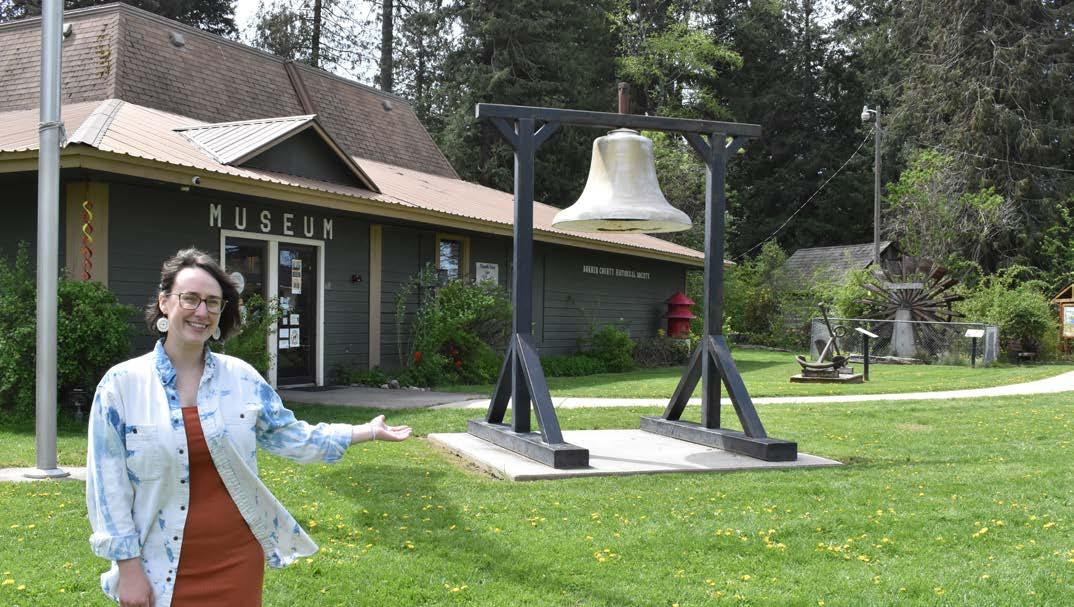
smaller meeting spaces and a possible area for a Friends of the Library store with a separate café. The second floor increases the lifelong learning center space with additional tutor rooms and study carrels. There will also be an increase in staff workspaces, particularly the paging room, where returned materials are sorted.
The library will remain open during construction with a commitment to minimizing construction inconvenience as much as possible. Construction is set to begin this summer and could take as long as two years to complete. Updates can be found on their website at www.ebonnerlibrary.org.
BONNER COUNTY HISTORICAL MUSEUM
The Bonner County Historical Museum, another longtime, community-centered organization, is also in the process of examining its facility shortfalls. After 50 years of providing and preserving local culture the museum is at capacity and needs to also address other critical aspects such as a new roof. Having received a generous $1,000,000 gift from an anonymous donor, plans for the expansion are underway.
The approximate 2,100-square-foot expansion would provide a space for educational programming, improve preservation needs, and enlarge the entryway and hallways. The expansion would occur in two phases. The first adds to the existing Lakeview building, providing classrooms and community space, with the possibility of a mezzanine. The second phase involves attention to the collections and volunteer research spaces, providing updates and improvements to the building. At present, the expansion is dependent upon the city of
Sandpoint approving the museum's lease, which expired in 2019. If the lease is not approved, alternate properties are being considered; however, remaining at the Lakeview property is the favored option. For one, packing up and moving would involve an extensive effort, interrupting the ability for the museum to remain open, said Executive Director Hannah Combs. Keeping the museum available to the public is a prime directive of the staff.
The museum is a valued and integral aspect of the community as it focuses on the region’s diverse history. It incorporates the area’s geological impact to its Native American cultural influence with engaging, photo-based displays that highlight the area’s connections to the fur trade, railroad, mining and logging industries. The displays also include hands-on activities for children, complete with educational programming that schools can tap into.
Stepping into the museum is stepping into Bonner County’s past. Increasing space increases the museum’s ability to inform, educate and enlighten visitors to Bonner County’s history. And people are interested in local history. "We have about 1,600 visitors tour the museum each year. We also host four monthly programs, as well as about 15 special events throughout the year,” said Combs.
The expansion will continue to help the BCHM with its mission to preserve and share Bonner County’s history with an intent to inspire curiosity and community connection. As this issue goes to press, the organization is still awaiting the city’s decision on lease renewal. Updates can be found at www.bonnercountyhistory.org.
Hannah Combs, the museum’s executive director, gestures to where a new extension would be placed if the city approves the museum’s lease. Staff photo.
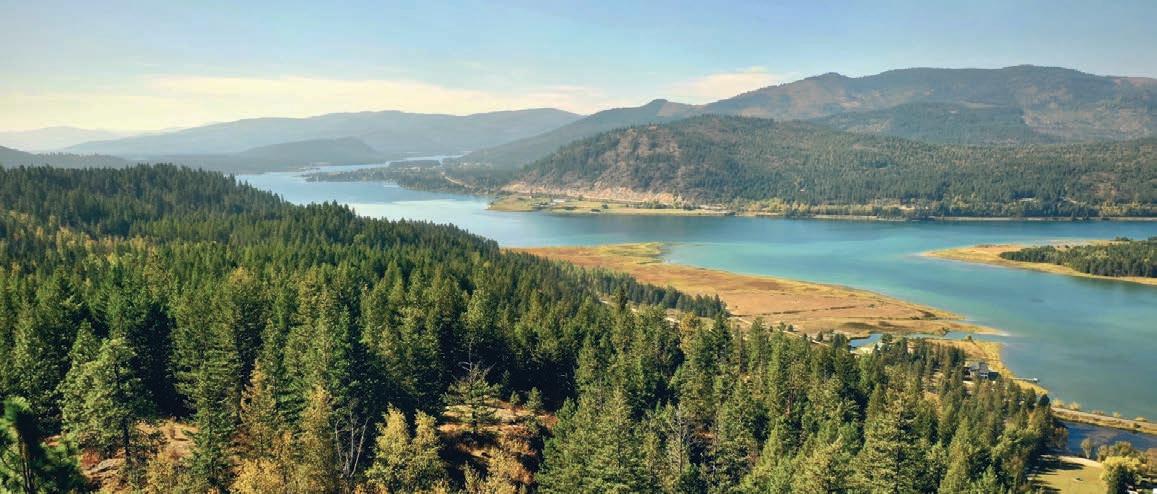
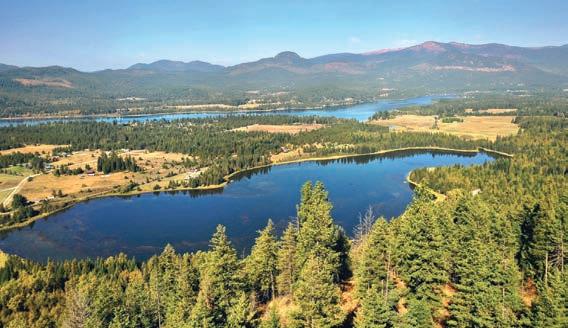
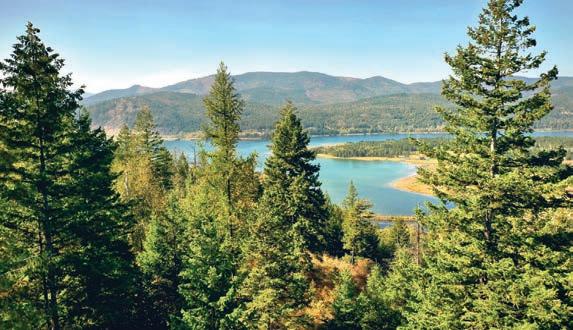
Here is a great opportunity to own one of these remaining 23 of 28 homesites. These 10 Acre parcels have amazing views of the Pend Oreille River! All the parcels are 10 acres in size with underground power to the property line for each lot and have limited CC&R’s with no minimum timeframe to build. Several lots border public land and there is an easement for the remaining lots to have access too! These homesites are located just 20 minutes to downtown Sandpoint and 45 minutes to Schweitzer Mountain Ski Resort and The Idaho Club golf course. The public boat launch for river access is just 2 miles away and Willow Bay Marina is nearby with seasonal boat slips for rent. Come and enjoy thousands of acres of public lands in Bonner and Boundary County for all of your four season recreational fun!

What Lies
Exploring the hidden world of Lake Pend Oreille
by Dig Chrismer
Lake Pend Oreille defines life in North Idaho. From the mountain ridges above Sandpoint to docks stretching into its deep blue water, the lake anchors the landscape and the communities along its shore.
But what most people never see is what lies beneath.
At more than 1,100 feet deep in places and stretching across nearly 93,000 acres, Lake Pend Oreille is the fifth-deepest lake in the United States. Below its calm surface lies an entirely different world: steep rock walls carved by ancient glacial floods, historic wrecks resting quietly on the lakebed and fish gliding through cold, clear water.
For a small but passionate community of divers, freedivers and spearfishers, the lake isn’t just something to admire from shore. It’s something to explore.
“I once found a slot machine,” Jill Eberley, a certified dive master and local SCUBA enthusiast, laughed. “That was a surprise, but usually the best finds in the lake are just those moments of calm.”
Eberley dives several times a year, often wearing a dry suit to stay warm while checking water treatment filters for the cities of Hope, Dover, and Laclede. While this isn’t a tropical destination, she said the lake offers its own rewards.
“The water can be incredibly clear, especially in winter,” she explained. “And there’s so much to see: wrecks, fish, geology. It’s a whole different perspective on the place we live.”
One favorite dive is near Laclede, where the remains of an old ferry sit about 20 feet below the surface. The wreck has become a gathering point for fish and crawdads. Other discoveries hint at the region’s past: train cars near Hope, pillars of stacked timber from old logging operations and even a possible undocumented mine shaft. Most recently, in November 2024, a drone first spotted a sunken vessel, which divers later confirmed to be a “narrow, single-screw river boat with metal plating along the hull.” While archaeologists are still confirming its history, the discovery hints at what other forgotten vessels or artifacts may lie elsewhere in the lake.
Diving locations can vary widely across the lake. Some sites offer shallow wreck dives, while others reveal towering rock walls plunging far beyond visibility. Water clarity changes with location and season:
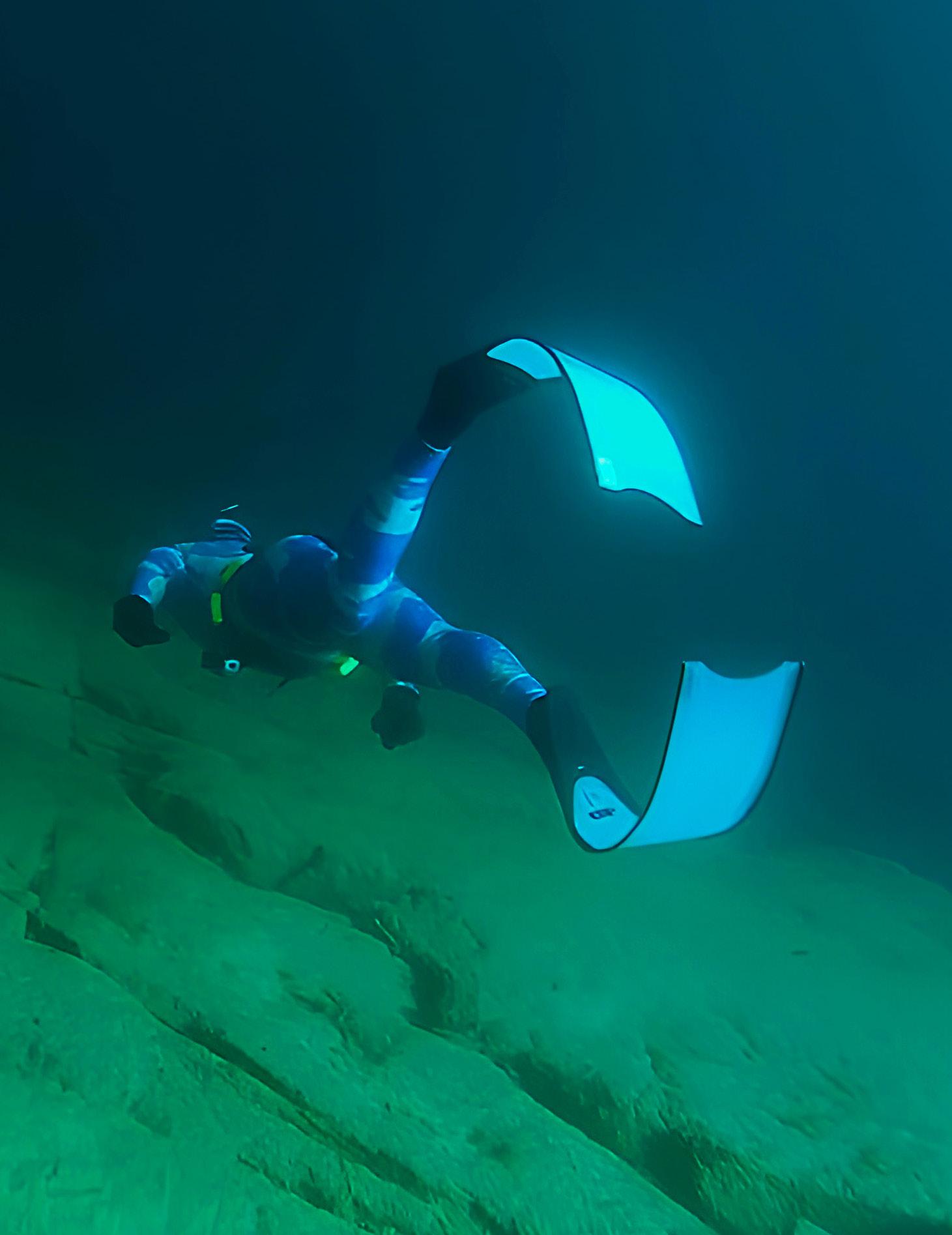
Beneath

Cody Bartels dives just south of Garfield Bay. Film still by Vaun Bartels.
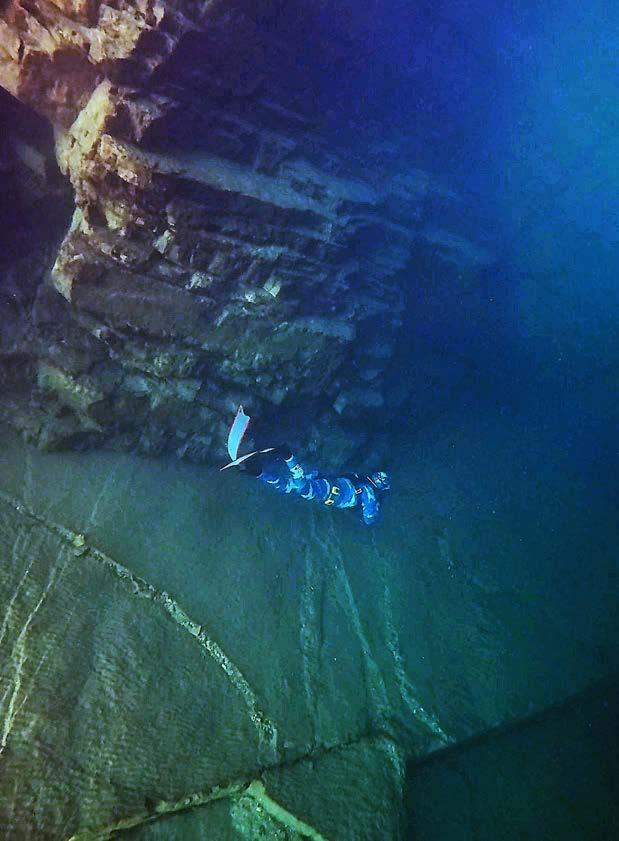
We still don’t know what’s down there, and that’s the best part “
the west side often provides the clearest conditions, especially in winter, while areas near river inflows or bridges can be cloudier. Fish species also influence where divers go, from shallow bass habitat to deeper, colder water where lake trout roam.
And not everyone explores the lake the same way. Some rely on tanks and SCUBA gear, while others descend with nothing more than fins, a mask and a single breath.
Freediver and spearfisher Vaun Bartels is part of a growing group who explore the lake without tanks, sometimes reaching depths of 100 feet. Bartels moved to Sandpoint with his twin brother in 2016 and quickly became fascinated with the underwater landscape. “We had no idea what was down there,” he said. “And that’s part of what makes it exciting.”
Freediving requires careful breathing, relaxation and steady technique. Divers kick downward with long fins until the increasing pressure reduces their buoyancy, allowing them to glide silently into deeper water.
One of the most surprising things divers notice is how different the underwater landscape is from the shoreline above it. On land, wind, rain and seasonal runoff constantly erode the terrain. Beneath the surface, those forces largely disappear. The rock formations below Lake Pend Oreille remain sharply defined, with steep walls carved by ancient glacial floods plunging hundreds of feet into the depths.
At a certain depth, Bartels said, the experience becomes almost surreal. “You stop kicking and just start falling,” he explained. “It feels like flying. I’ve hugged rock walls and just free-fallen down them like Superman into what feels like a black abyss.
“Was I scared? Yes,” he laughed. “But once you relax, you realize you’re in this incredible environment that hardly anyone ever sees.”
For those interested in exploring the lake themselves, the local diving community is welcoming. SCUBA certification courses are available through Jake’s Scuba Adventures in Coeur d’Alene, and informal groups like Freedive Sandpoint, Bartels’ Facebook group, organize dives and share information about conditions and locations.
Safety is always part of the conversation. Running out of air, becoming entangled or misreading gauges can create dangerous situations, which is why divers stress training and never diving alone. Depth also introduces the potential risk of decompression sickness, often called “the bends.”
“The risks here are the same as diving anywhere,” Eberley said. “You need proper training and to know your limits.”
One risk that's non-existent, however (despite persistent rumors) is that of unexploded ordinance left behind by the Navy base at Bayview. Seth Lambrecht, a mechanical and ocean engineer who oversees the Navy’s Acoustic Research Detachment, said there’s nothing on the bottom of the lake from the Farragut training base days. “This was just basic training, so small arms and some basic anti-aircraft training was the extent of what they did here. Additionally, there were only small boats
Cody Bartels dives near Maiden Rock, where the geology is as impressive below the water as it is above. Film still by Mark Duffner.
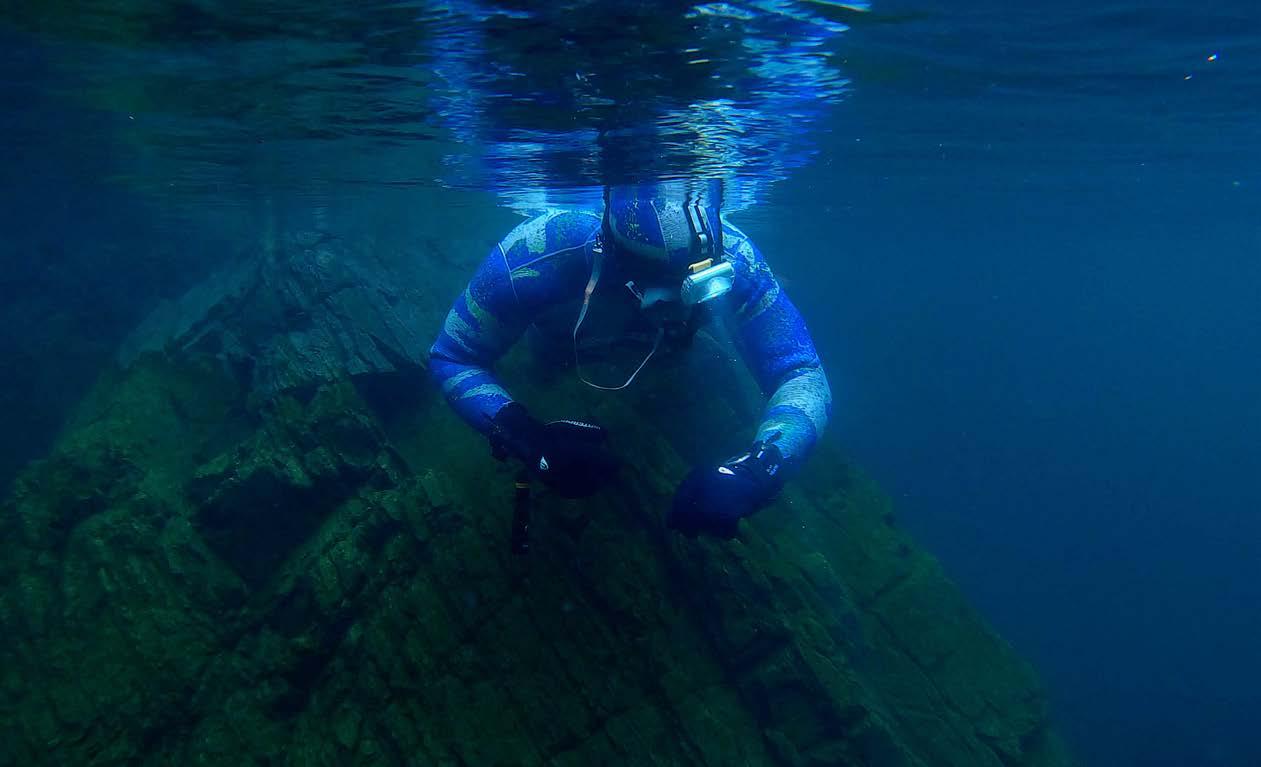
operated on LPO, nothing large enough to fire torpedoes.”
Diving skills also serve a more serious purpose. A few local divers are also deputies with the Bonner County Sheriff’s Office Search and Rescue team, responding to incidents across major waterways, including Lake Pend Oreille, Priest Lake and sections of the Pend Oreille and Clark Fork rivers. Equipped with drysuits, full-face masks and diver-to-surface communication systems, the unit is trained to recover drowning victims, vehicles, firearms and other evidence. While the sheriff’s Marine Division handles patrols, the dive team investigates underwater incidents and coordinates with neighboring dive units when needed.
Yet for all these divers, the lake holds more than duty and technique. Beneath the surface lies a world of calm, mystery and discovery that contrasts sharply with the busy shoreline above. Even on the busiest summer days, when boats crowd the docks and noise fills the air, a completely different realm waits just below, a place where time slows, history rests and the natural world feels vast and undisturbed.
“We still don’t know what’s down there,” Bartels said. “And that’s the best part.”
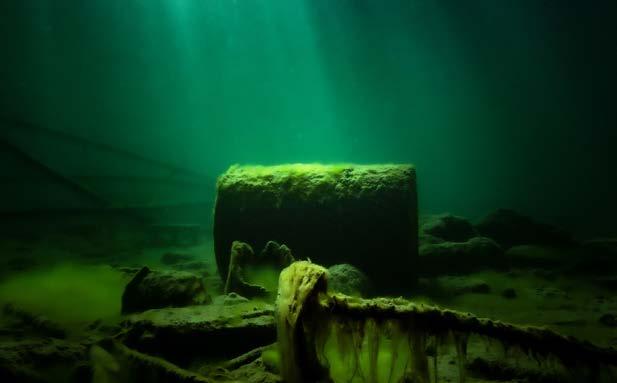
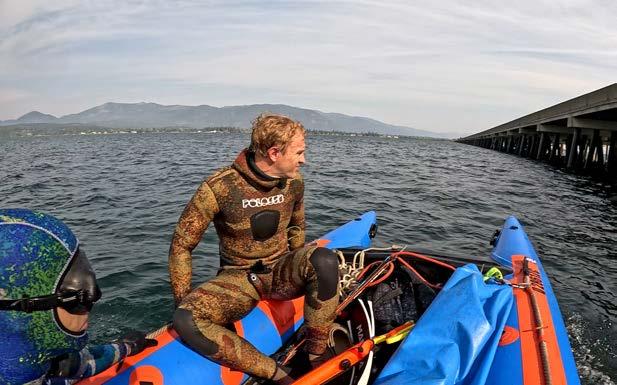

Above: Cody Bartels begins to head down a rock face near Mineral Point. Film still by Vaun Bartels.
Right: Remnants of the past litter the lake bed, mysteries waiting to be solved. Photo by Jill Eberley.
Right Bottom: Travis Uminski looks ahead to the next diving spot as Cody grabs a selfie pic of the pair just as they near the Long Bridge. Photo by Cody Bartels.
A Lake of Many Depths
Pend Oreille’s story is one of geology, mystery ... and a fragile future
by Sandy Compton
Lake Pend Oreille is many things to many people. To the Kalispel, it is the cradle of creation where the Bear first stepped out of the water at the beginning of time. To explorer David Thompson, who dubbed it Kullyspell in 1809, it was a gateway to a new world. Its modern name—a French reference to an ear-shaped pendant worn by the tribe—suggests something ornamental. But beneath its shimmering surface and "pretty face" lies a complex, living entity that is far more than the tourist attraction it’s seen as today. It is a geological marvel, a critical water source and a fragile ecosystem currently at a crossroads.
Chad Landrum is as “lakey” as one can get. He runs Go Fish! Charters. It might be assumed he’s all about fish, but he’s also about how the lake was formed. He sees Pend Oreille as a geological masterpiece.
“The way the glaciers shaped the landscape is profound. I can sit on the jetty (Skipping Stone Beach) and look up the Clark Fork River. South, the Green Monarchs come straight up out of the lake. I imagine the glaciers smacking into the Monarchs and creating the ice dam that backed up Lake Missoula. I imagine half a mile of ice above me and a lot more below, flowing out of the Purcell Trench, damming up all that water and gouging out the lake.”
“Gouge” is a good word. Like a gargantuan bulldozer, the Cordilleran ice sheet proceeded and receded as many as 50 times, each pass carving deeper into bedrock. But the work of the glaciers was not just excavation. They left behind an underground river.
John Hastings, a semi-retired science teacher, points out that only ten percent of the water flowing through the lake exits via the Pend Oreille River.
“Ten times that comes into the lake via the Clark Fork and the Purcell aquifer,” he said. “It percolates southwest through glacial till—like a big sand filter—to Rathdrum and Spokane. It supplies half a million people [with reliable water].”
For those who ply its waters, Lake Pend Oreille is more than a pretty face.
Photo by Doug Marshall.
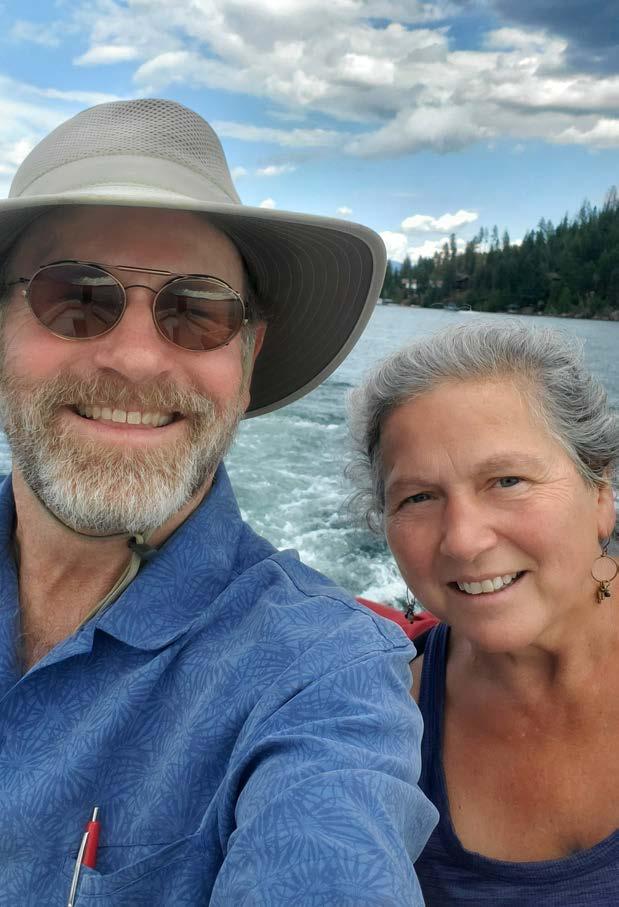
Jacob Soni has had a place at Cedar Creek on the “other side of the lake”—the east side—since 1979. He is appreciative of the amount of public land on the lower arm of the lake. “Except for a few places, it’s Forest Service,” he said. “But there’s still lots of history; mining, homesteads. There were resorts at Whiskey Rock, Pine Cove, Kilroy Bay and Lakeview. The area around Cedar Creek was once Clara, Idaho, with a post office. Now, there’s just a mail boat.” Kaniksu Land Trust is developing a water map of those public places where a canoe or kayak can pull in for a break while journeying around the lake.
Hastings loves lake time in the summer, and confesses he often stops at Schweitzer road switchback seven in the winter just for its view of the lake. “Lots of people stop and take pictures. I just stop and look.” During not-ski seasons, Schweitzer exec Tom Chasse’s favorite feature of the lake is about what’s not there. “It’s uncrowded,” he said. “You can always find a spot without many others around. At ‘Brand X’ (an unnamed lake to the south), there are boats everywhere.”
Still, the lake is busier now than ever. It’s been a tourist attraction since the Northern Pacific Railway pushed past in 1882. But beyond its physical beauty, and beneath it, there are things more subtle—and perhaps more important.
Jennifer Ekstrom was the first Lake Pend Oreille Waterkeeper and is now the North Idaho director of the Idaho Conservation League.
“While the lake may appear indestructible, even tiny changes can undermine its health,” Ekstrom said. “Nutrient pollution like phosphorus might be measured in parts-per-million, but even a few tiny “drops” act like fertilizer in gardens. Invasive weeds grow faster. Algae blooms become more common. Toxic algae can develop—a threat to fish, wildlife, pets and people.
“A difference of a couple of degrees might not feel like much when we’re jumping off the dock in July. For cold-water fish like bull trout, those few degrees determine whether they can survive and reproduce.”
Chad Landrum knows about fish and water temperatures.
“At the bottom of the lake is a layer that’s around 40 degrees and has no oxygen. Nothing lives there. Above that, there’s a natural gradient of water temperatures that are suitable for different fish to live to their best potential. For some species, larger fish live in colder water and smaller ones live in warmer layers.”
Old-timer Harlan Walker once opined that the dams built at Cabinet Gorge and Albeni Falls ruined the fishery. It may not have been ruined, but it was dramatically changed. Landrum notes that dams reversed the natural order. Low water used to be a summer phenomenon. Albeni Falls added many acres of warm-water habitat, making life easier for some species.
“Right now,” Hastings said, “Idaho Fish and Game manages the lake for nonnative species. The Gerard rainbow and kokanee came from someplace else.”
The rainbows were imported from Canada in the 1940s by the Lake Pend Oreille Idaho Club. The kokanee fluttered downstream from Flathead Lake, where they were also introduced. Since then, small mouth bass, lake trout, pike and walleye have infiltrated from upstream. Hastings and Landrum both feel IDFG should expand their vision of management.
“Walleye are the best-eating fish in the lake,” Hastings said.
For 35 years, Linda Mitchell was co-owner and first mate of the Shawnodese, Pend Oreille’s quintessential tour boat, plying the lake's waters every summer. She sold the business seven years ago, but she still crews part time in the season.
“I love sharing my knowledge of the lake,” she said. “The ice age floods, the Kalispel, David Thompson, the amazing animal kingdom and more. More importantly, I try to invoke the mystery, the ever-changing beauty, the ebb and flow of seasons and the fragility of the ecosystem to every passenger.
“The lake speaks to me in many ways. I’ve spent thousands of hours on Lake Pend Oreille and almost since the beginning, I’ve felt it’s a living, breathing entity.”
On tour with Linda, one learns about ospreys. “They aren’t lazy like eagles,” she pointed out. “They mate for life and they cooperatively build a new nest every year. Baldies use the same one season after season.”
Mitchell’s “Long Bridge Moment” was 50 years ago.
“I was enthralled,” she said. “With a degree in environmental studies, my analytical mind hit overdrive. How was [the lake] formed? What were the flora and fauna? What was its history?
Science teacher John Hastings (with wife Nancy), is amazed by the massive, underground river that exists beneath the lake. Courtesy photo.
“ I try to invoke the mystery, the everchanging beauty, the ebb and flow of seasons and the fragility of the ecosystem to every passenger
And folks regaled me with tales of a lake monster.”
Ah, yes. The Pend Oreille Paddler. Jacob Soni says he might have seen it. Others might have as well. No one has caught it. The biggest catch so far is a 37-pound rainbow, a fish imported with good intentions that has changed how things work in “our” lake. Humans are good at changing things, sometimes to unintended results.
“People seeing the lake for the first time or the one hundredth time might not see the changes I’ve seen over half a century,” Mitchell said. “Unchecked development, demands for electric power, downstream water demands, upstream mining, erosion, pollution from septic tanks and fertilized lawns—all can lead to our pristine lake being irreparably damaged.”
“Lake Pend Oreille is an interconnected web of life,” said Ekstrom. “Plankton, macroinvertebrates, fish, aquatic mammals, shoreline forests, migrating birds, and people all influence one another every day. When one piece shifts, everything else responds.
“I often view the lake through a science and policy lens, but I recognize that it functions as a living system. It reacts to stress. It can recover when given the chance. Respecting the lake means understanding that it's not just for scenery or recreation—it’s a complex, living system that requires great care from all of us.”
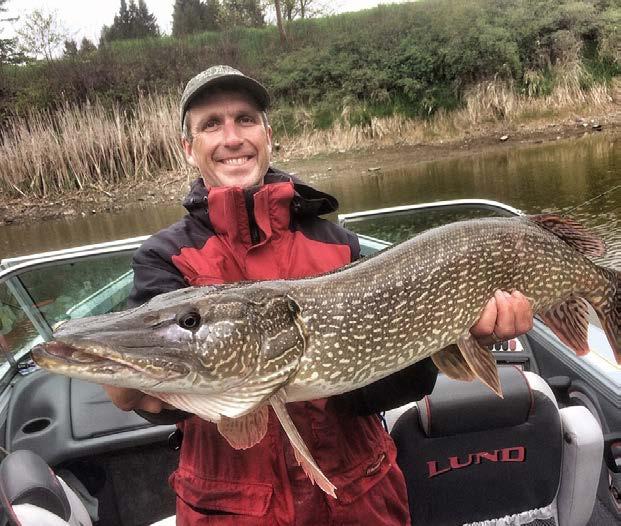
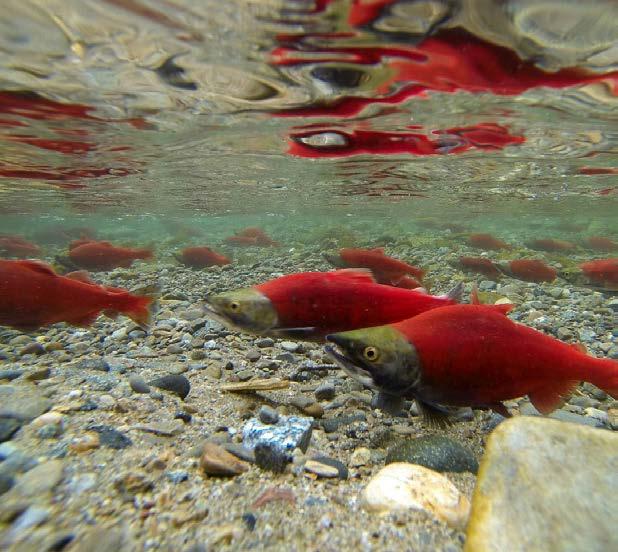
Linda Mitchell tries to invoke the lake’s mysteries for passengers of the Shawnodese. Photo by Linda Mitchell.
Charter boat Captain Chad Landrum knows all about the fish— he’s shown here with a northern pike—but he says the real lake attraction is its geological magificence. Courtesy photo.
Kokanee are an introduced landlocked salmon that came into our lake from Flathead Lake upstream but are now critical as a food source for the lake’s trophy-size Gerard rainbow and mackinaw trout. These kokanee are pictured in Trestle Creek, an important spawning tributary. Photo by Pete Comstock.
The Billion-Dollar Bathtub
Behind the doors of Lake Pend Oreille’s not-so-secret submarine base
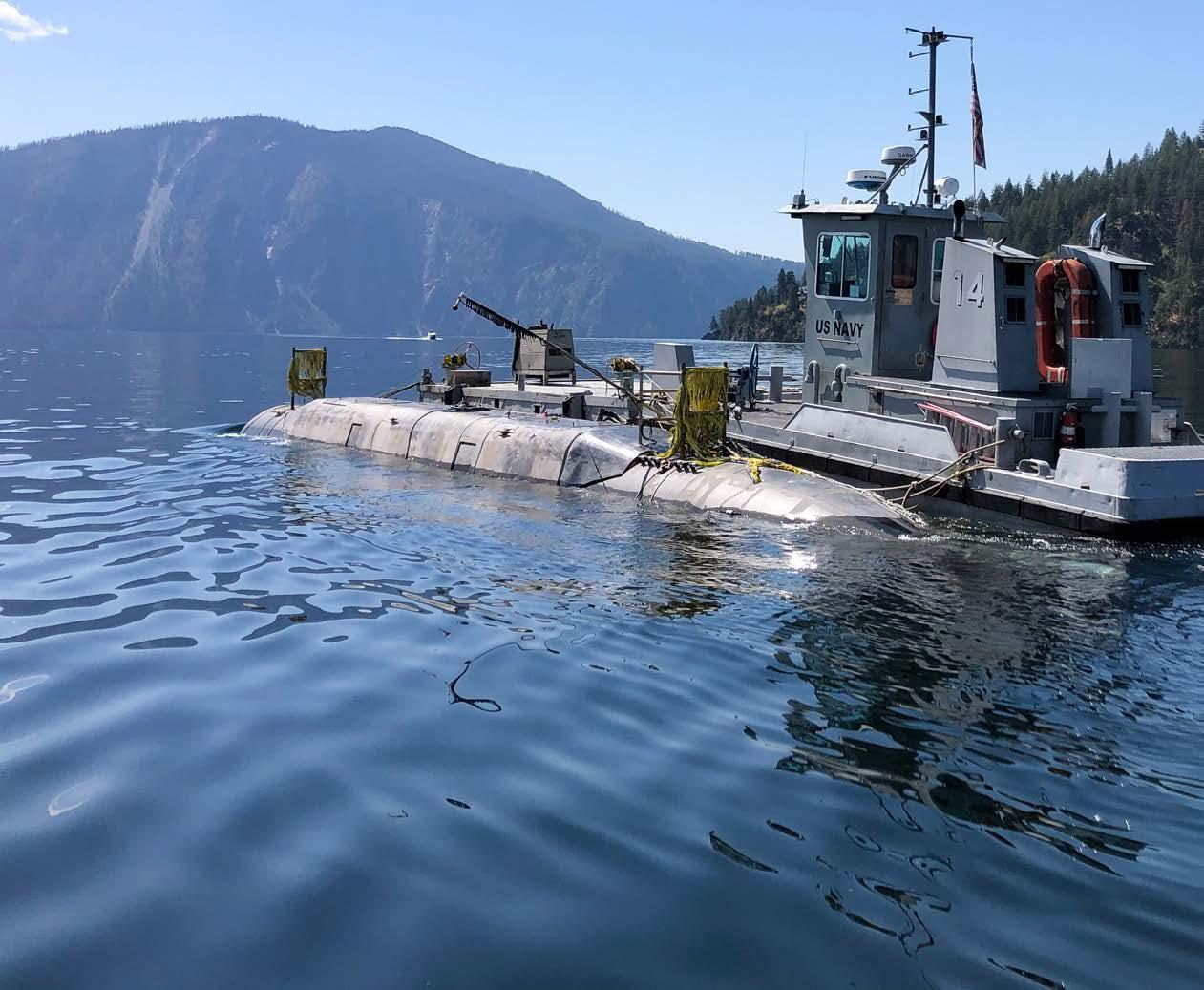
by Barry Campbell
Whether you’ve braved the Long Bridge Swim, boated its vast 111-mile shoreline, or simply paused at a scenic turnout to drink in the view, you likely feel a deep appreciation for Lake Pend Oreille. Most locals know the landmarks: the sandy stretch of City Beach, the nesting eagles and the fenced-off Navy base at Bayview. But while the lake's surface is a playground for the public, its 1,000-foot depths hide a high-tech mission that remains largely a mystery.
What’s not as widely known is that the U.S. Navy’s Acoustic Research Detachment base in Bayview, which straddles the Bonner-Kootenai County line and is surrounded by fencing, a security gate and no trespassing signs, is probably one of the top ten employers in Bonner County. “We’re staffed at about 135 people right now,” said Seth Lambrecht, a mechanical and ocean engineer who has worked at the site for two decades.
“About half are engineers and scientists. The rest are welders, fabricators, electricians, maintenance staff—basically every
trade you need to build and operate everything in house.”
The base exists partially because of the huge naval training base at Farragut—which was effectively the largest city in Idaho in the 1940s—and the lake’s incredibly unique geology. The detachment operates as a part of Naval Surface Warfare Center, Carderock Division, one of ten such divisions under the Navy’s Naval Sea Systems Command enterprise. It occupies 25 acres in Bayview, with a couple shore-based locations on the lake’s western shore. ARD staff conduct research that directly influences the stealth performance of American submarines, with a rich history of success.
A Lake Like No Other
After World War II, the Navy retained a small portion of land from the former Farragut Naval Training Station, now Farragut State Park. For a decade, only a handful of personnel kept the site minimally staffed.
Then came the Cold War.
Should you happen to see a large submarine floating in the southern end of Lake Pend Oreille, there’s no need to panic. You’re welcome to check it out—from a safe distance. Photo courtesy U.S. Navy ARD.
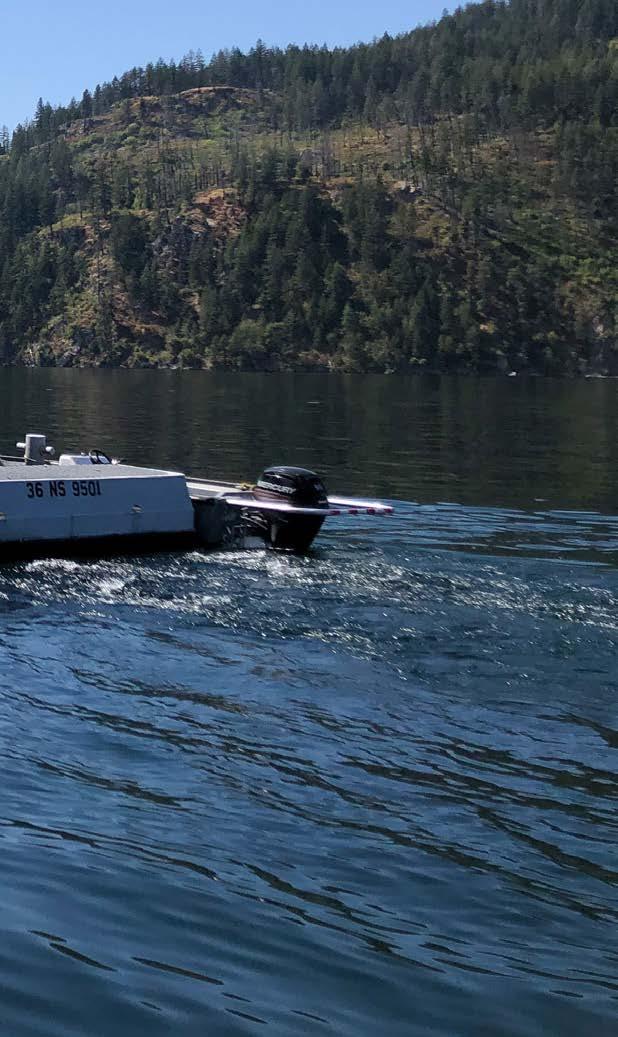
As submarine stealth became a strategic priority, researchers needed a controlled environment—essentially, as Lambrecht puts it, “a giant bathtub”—to measure sound without the unpredictable variables of the open ocean.
Lake Pend Oreille and its depths of up to 1,150 feet proved almost geologically perfect. Below roughly 100 to 150 feet, the water remains a constant 39.6 degrees year-round, creating an isothermal environment where the speed of sound doesn’t fluctuate. The south end of the lake has virtually no underwater current, and thanks to glacial formation, much of the lake bottom is remarkably flat, covered in sediment rather than jagged rock.
“All those things combined,” Lambrecht explained, “make it probably the most unique, geologically formed lake in the entire world for acoustic testing.” For engineers attempting to measure faint sound signatures from submarine components, eliminating variables means everything. In the ocean, shifting temperatures, currents and salinity distort results. On Lake Pend Oreille, sound behaves predictably.
Submarines – Without Sailors
The Bayview facility doesn’t operate full-scale submarines,
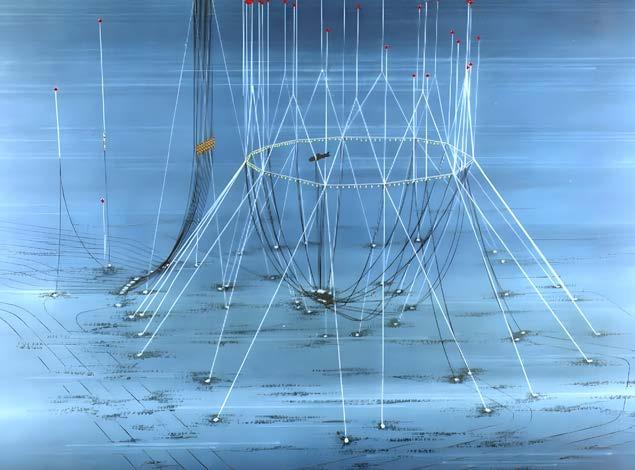
The array at the heart of the base is roughly 1,000 feet deep and wide in diameter. It is connected to the base by roughly 14 miles of cable on the bottom of the lake. Graphic courtesy U.S. Navy ARD.
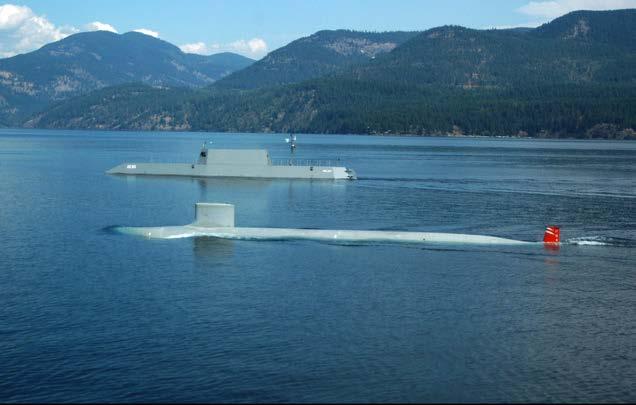
The Large-Scale Vehicle-2 (foreground) is a model of a Virginia Class submarine. The LSV
or offer rides to curious locals, even if they wanted to—every vehicle is unmanned.
The largest, the Large-Scale Vehicle-2 (LSV-2), is a 111-foot, 205-ton autonomous model powered by a 3,000-horsepower electric motor. Others range from roughly quarter-scale to onethird-scale models of modern submarine classes. These vehicles can carry full-scale hardware for testing—an ability unmatched elsewhere in the world.
Everything the detachment operates is unmanned by design. “If you put a person into a submarine for R&D testing, you’re putting someone’s life at risk,” Lambrecht said. “With unmanned platforms, if something happens, it’s a dollar figure— not a life.”
Operations often take place at night or during off-peak boating hours. The lake remains fully public. Before tests, staff clear the ranges to avoid conflicts with fishing boats or pleasure craft. Most interactions with the public are minimal—and friendly.
An Underwater Stadium
Perhaps the most interesting ARD feature lies invisible to boaters overhead: the Intermediate Scale Measurement System, a massive circular array roughly 1,000 feet in diameter anchored
SeaJet is in the background. Photo courtesy U.S. Navy ARD.
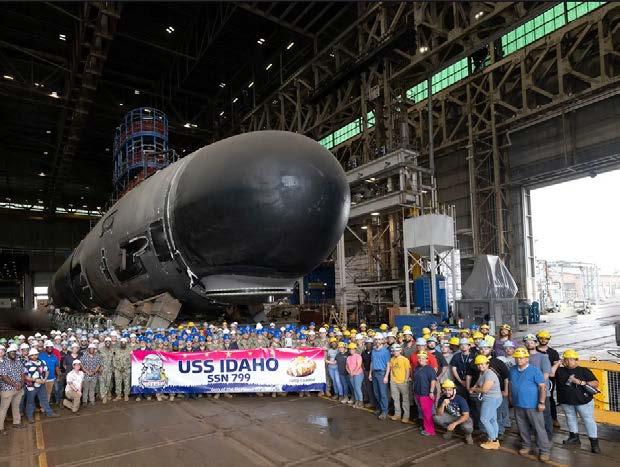
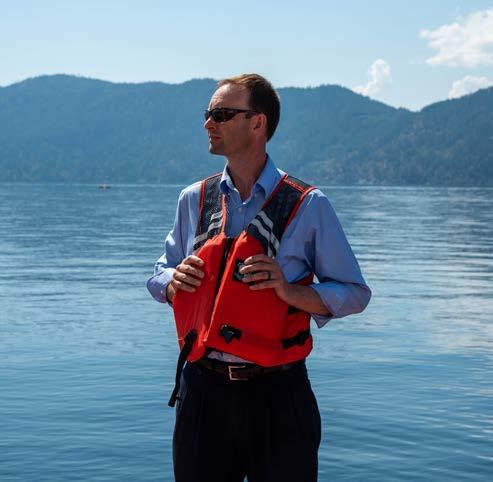
FROM MONTANA TO THE DEEPS
Seth Lambrecht's path to Bayview
to the lake bed. Imagine an inverted football stadium on the bottom of the lake, equipped with thousands of acoustic sensors.
More than 14 miles of underwater cable connect this array back to the Bayview base, allowing researchers to transmit and receive acoustic signals from shore. Hundreds of millions of dollars in infrastructure rest quietly below the surface.
From these arrays, scientists study two fundamental aspects of submarine performance: making vessels quieter (defensive stealth) and improving sonar systems to detect adversaries (offensive capability). Research ranges from propulsor design and cavitation control to vibration isolation and structural acoustics.
In recognition of the importance of the acoustic center to the Navy, and featuring technology developed there, the USS Idaho was commissioned into the Navy fleet in early spring.
Nestled up to the Houseboat community
Despite its global significance, the Bayview detachment feels deeply local. There’s no base housing; employees live in Sandpoint, Coeur d’Alene, Spokane Valley and even as far as Bonners Ferry. Many are lifers.
“Once you come here, you pretty much finish your career here,” Lambrecht said. “It’s a tight-knit community.” The North Idaho lifestyle, with its plentiful outdoor activities, is a powerful draw.
In a region shaped by timber, tourism and the legacy of Farragut’s World War II training base, the modern Navy presence is more subtle but still considerable.
On a calm summer evening, as anglers and cruising families drift atop a thousand feet of water, few spare little thought that the same lake supporting recreation and legend—yes, even the mythical “Pend Oreille Paddler”—is also advancing the next generation of submarine technology.
Seth Lambrecht didn’t grow up dreaming of submarines. Raised in Thompson Falls, Montana he took a high school aptitude test that suggested engineering. A quick online search revealed it was also one of the highest-paying bachelor’s degrees. “Perfect,” he thought. He earned that degree in mechanical engineering and added a master’s in ocean engineering. After starting his career with the U.S. Navy in Washington, D.C., he learned about a small detachment in Bayview, Idaho.
“I had no idea Bayview even existed,” he said. “Then on orientation day they mentioned it, and I thought, ‘No way—that’s where I want to go.’”
Two decades later, Lambrecht is still here.
At the Acoustic Research Detachment on Lake Pend Oreille, he supervises a staff of 135. The work blends hands-on operations, math and physics—everything from analyzing structural vibrations to piloting test vehicles across the lake.
“Everyone wears so many hats here. Most everyone gets boat, crane and forklift qualifications, so they can help with different tasks, so that really appeals to a lot of people,” he said.
What keeps him here isn’t just the engineering challenge. It’s also North Idaho.
“Outdoor paradise,” he said. “That’s the biggest draw.”
For Lambrecht, Bayview represents a rare intersection of innovative defense research with a tight-knit staff, and small-town mountain life—a combination that, much like the lake itself, is one of a kind.
–Barry Campbell
The USS Idaho, a Virginia class, nuclear-powered fast attack sub commissioned just this spring, is the first vessel to carry the name “Idaho” since 1946. Image courtesy General Electric.
Mechanical and ocean engineer
Seth Lambrecht. Courtesy photo.
They’ve gone off the Deep End
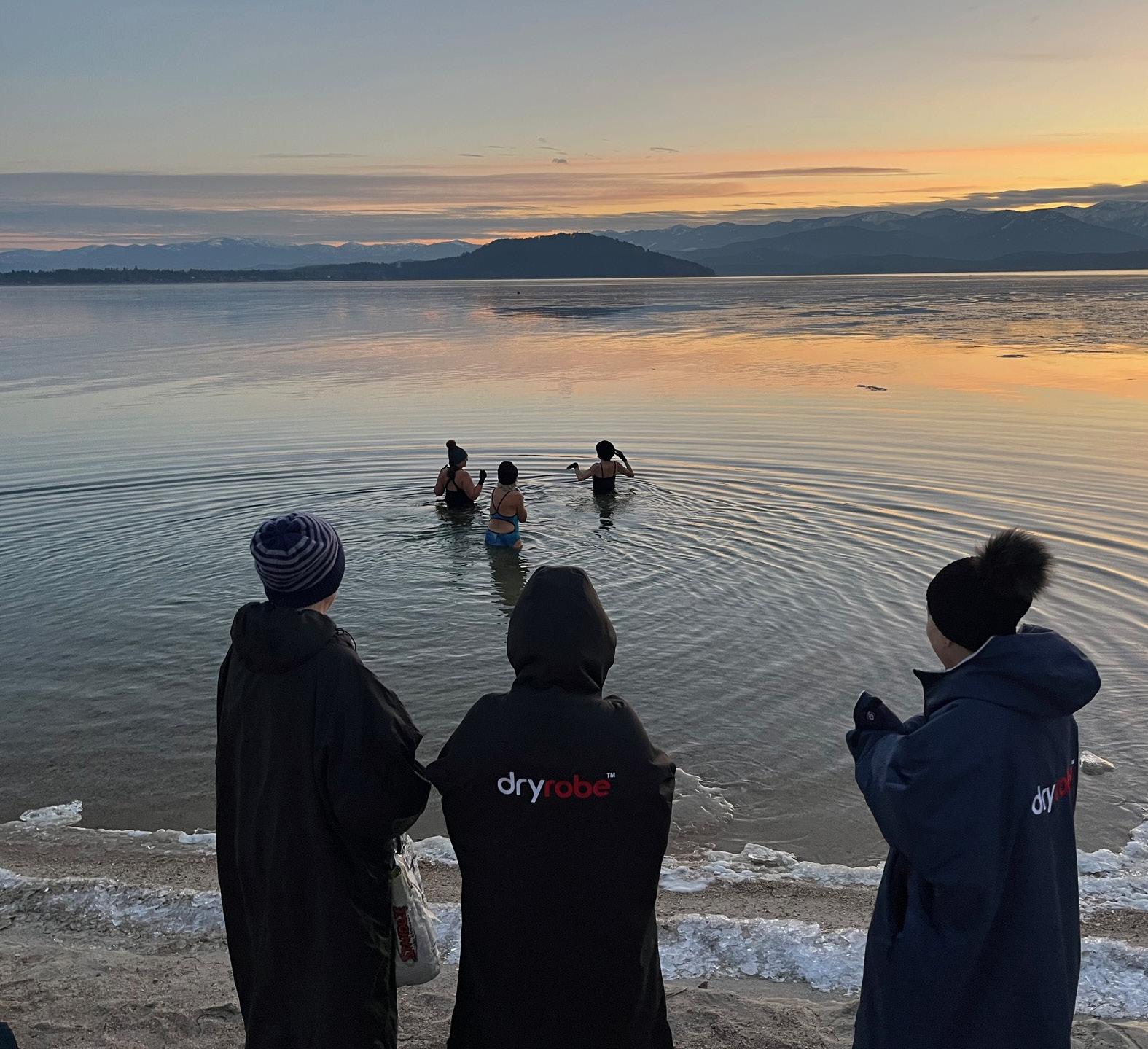
From distance swims to winter plunges, Lake Pend Oreille inspires feats of devotion and daring
by Ammi Midstokke
In the history of people who paddle Lake Pend Oreille, most of us are familiar with the Long Bridge Swim, which appeared in 1995 as the brainchild of Eric Ridgeway. For 30 years, a growing mass of humans has plunged into the far side of the shore, and sputter-splashed their way 1.9 miles to Dog Beach in a cacophony of churn and cheerleading.
I have never personally completed that swim, or even
considered doing it, because I’m not an open water swimmer. Which makes it all that more curious, that, when a friend suggested we swim the entire length of the lake from Buttonhook Bay to Sandpoint City Beach, I said, “Sure.”
The motivation for our swim, related to our nonprofit work, is to raise awareness about diversity and representation in the outdoors, and the conservation of our incredible natural resources. Sometimes we need to familiarize ourselves more
Swimmers warm up after an icy morning dip. Photo by Linda Navarre.
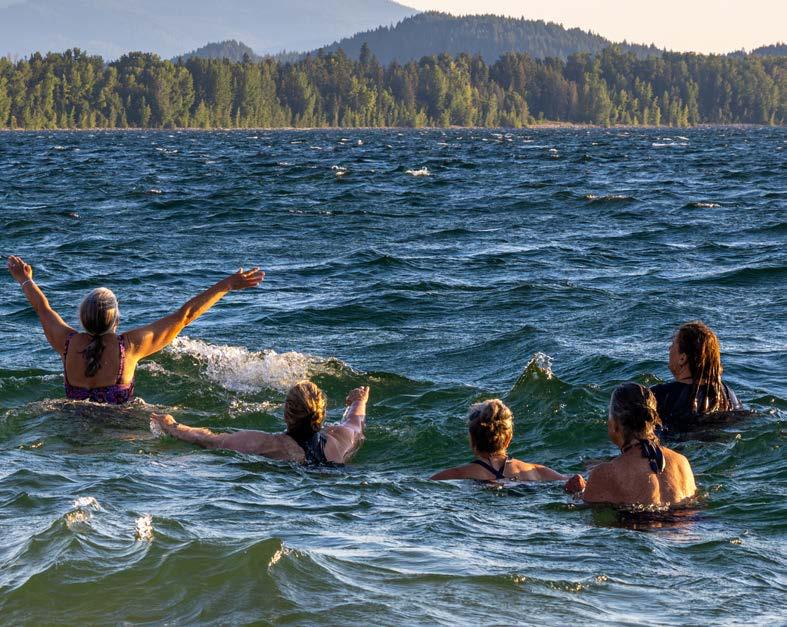
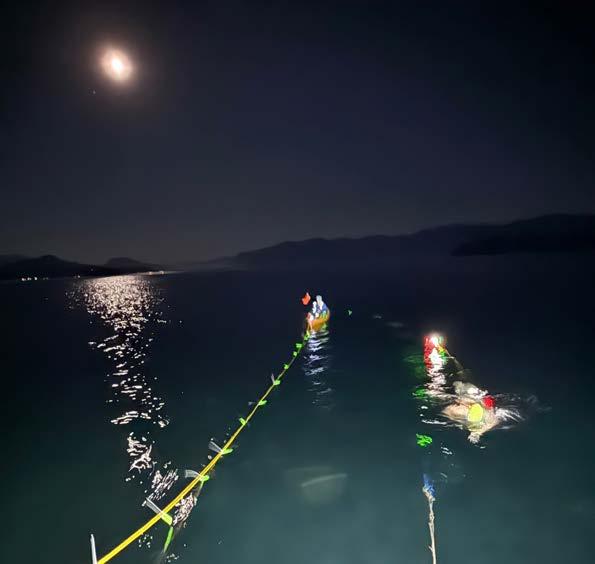
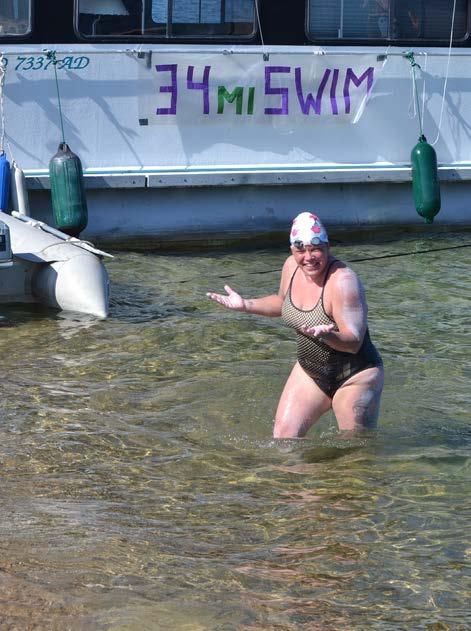
“
With a relay you have to be comfortable getting back in when it’s dark and cold, which I’d argue is a harder skill set than just slogging through 32 miles on your own
intimately with our environment, to sense how precious it is. Swimming in our freshwater lake is to become connected to all the systems that support it, to appreciate and understand them.
I began researching if other humans had made similar efforts of questionable judgment, and was relieved to find the lake has a rich history of arguably insane swimmers.
It was 2013 when world record open water swimmer Elaine Howley came to Sandpoint to crawl the route—all 32.3 miles of it—solo in a swimsuit. To set marathon swimming records, strict rules apply to the swimmer: they must enter and exit the water on their own, they can have no physical human contact and they must remain in the water, swimming. They are allowed a swimsuit, swim cap, goggles and a wristwatch. This means that for 24 hours and 25 minutes, Howley had to tolerate the cool temperatures of the lake and her own thoughts, the latter being the more daunting.
I asked Howley for some expert advice, thinking the relay would be much easier than a solo swim.
Top Left: A group of intrepid ladies swam in Lake Pend Oreille every single day, regardless of the weather, for a full year. Photo by Sue Mangan.
Top Right: Elaine Howley finished her historic swim of the length of the lake at City Beach, welcomed by an enthusiastic crowd. Staff photo.
Above: Kevin Woodruff swims while Mariah Williams monitors in the safety kayak near Sunrise Bay. A support boat towed a submerged line with glow sticks attached that Kevin could follow underwater without looking up.
Photo by Gina Woodruff.
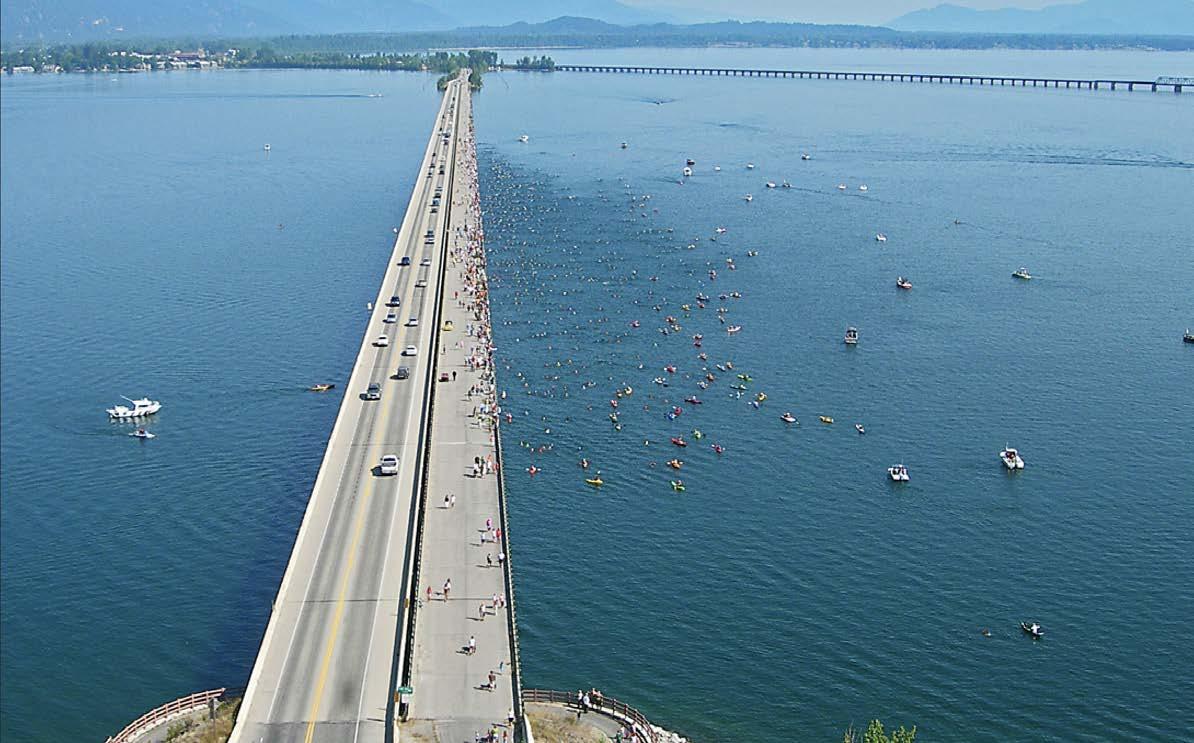
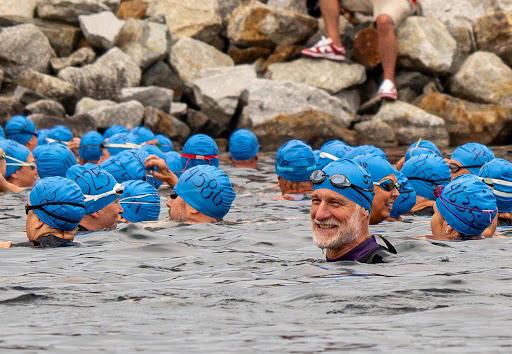
“With a relay you have to be comfortable getting back in when it’s dark and cold, which I’d argue is a harder skill set than just slogging through 32 miles on your own,” said Howley.
After learning this, my relay partner and I decided we would follow no such masochistic rules, and exchange places as few times as possible. We still had no idea what could make the swim feel more fun. We’re not setting records, after all.
“Community,” was the answer from Eric Ridgeway, who has experience not just from his Long Bridge Swim; he's also swum a circumnavigation of the lake—approximately 84 miles—with ten swimmers, and was part of a supporting relay of 50-andover mermaids along Howley’s course in 2015.
In August of 2025, local Kevin Woodruff swam solo from south to north, also finishing at City Beach, in 25 hours and 19 minutes. Woodruff lives with a metabolic disorder that required him to check his blood sugars regularly and fuel on a liquid concoction of corn starch.
“I just wanted to see if I could do it,” said Woodruff, whose condition typically limits people from contact sports and grand athletic feats. He wore a wetsuit at times for thermoregulation, and allowed himself entertainment: an audio recording of “Ender’s Game.”
Of all the ways in which we enjoy Lake Pend Oreille, it appears remarkably underused as a place to distance swim, which was Ridgeway’s inspiration for founding the Long Bridge
Swim. When asked about the allure he responded, “It’s super peaceful out there.”
That was the unanimous response from every swimmer I spoke to, as if some primordial gene remembers our evolutionary ancestors and feels at home in the water. For the most part, remembering my own childhood open-eyed dives and mermaid games, I believed them.
Until I spoke to Linda Navarre. Navarre and a group of devoted gals have been in the lake nearly every day for years. They used to plunge from May until October, but someone suggested they carry on through the winter two years ago, and so they did. Every morning throughout the year, the group meets at City Beach, tromps across frozen or thawed sand in their neoprene booties or bare feet, and sinks into the lake for a minimum of ten minutes. Sometimes others join them.
“It’s a wonderful ritual,” said Navarre without a hint of sarcasm, speaking to the quiet open space of a seasonally abandoned beach. Navarre brings a thermometer with her. “It was 32 today,” she said one February morning. She means in the water.
Our two-person relay team will wait until the tepid temperatures of July to embark on our adventures, applying the wisdom of those who pioneered this lunacy before us. In the meantime, the community and its many visitors will continue to enjoy their own version of a dip, float, paddle, soak, tread, bathe or swim in our wonderful Lake Pend Oreille.
Above: Hundreds now come out to fulfill one man’s crazy dream of swimming the length of the Long Bridge. Photo courtesy Long Bridge Swim.
Right: Eric Ridgeway, the event’s founder, still participates as a swimmer himself and has a blast doing it. Photo courtesy Long Bridge Swim.
Hunting in Their World Inside Idaho’s newest fishing adventure
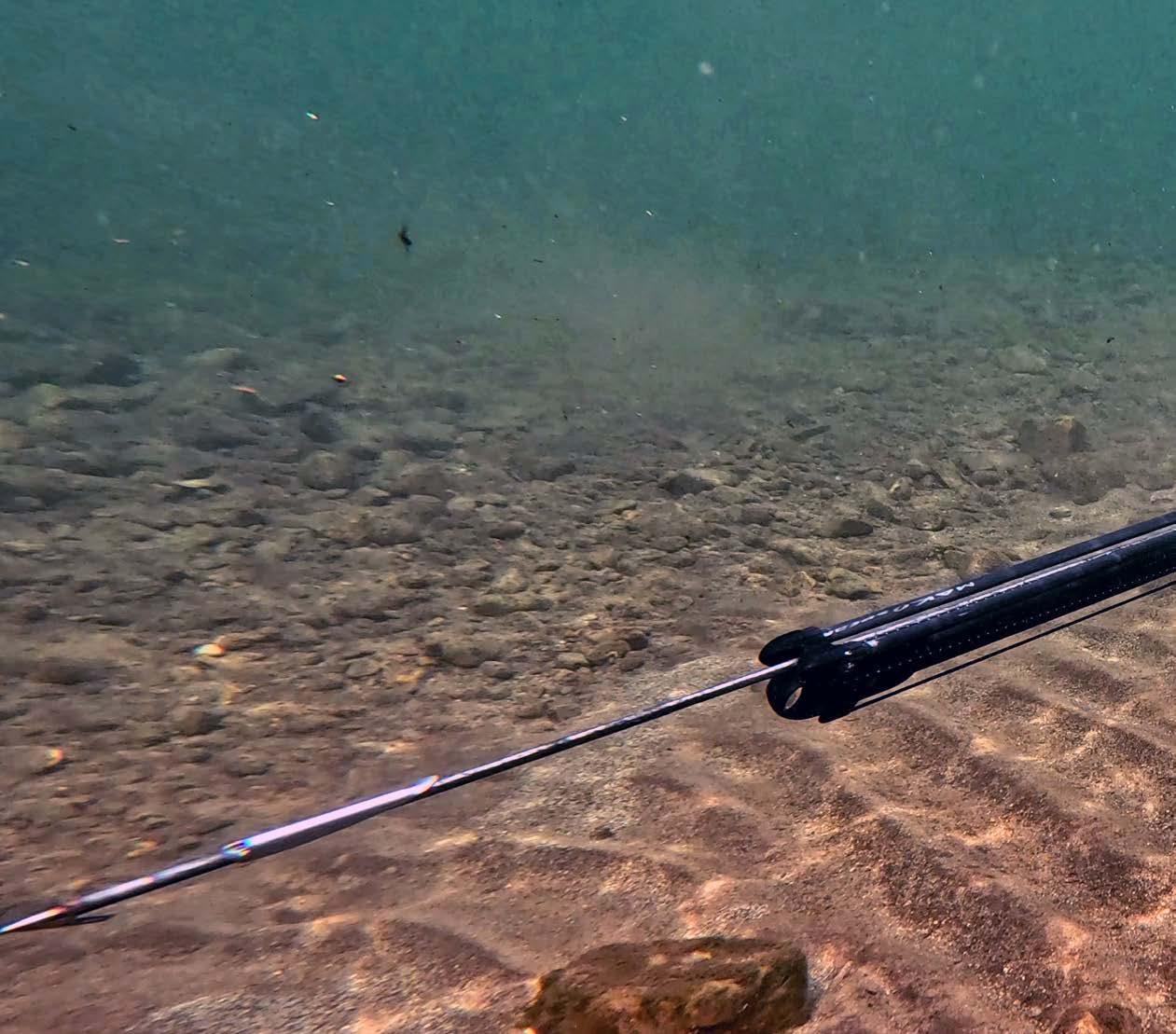
by Dig Chrismer
Most people picture spearfishing in the sundrenched tropics, but Vaun Bartels has taken his pursuit to the emerald depths of Lake Pend Oreille. Sinking beneath the surface isn't just about the harvest; it’s about entering a silent, shadowed world where common techniques no longer apply. While the sport has ancient roots, it’s a new frontier in Idaho, thanks to a years-long push by local divers to bring the sport to the Pacific Northwest.
Vaun Bartels and his twin brother Cody are among the spearfishers who helped petition the Idaho Fish and Game Commission to allow spearfishing, particularly in Lake Pend Oreille.
After years of discussion, new rules took effect in July 2025 permitting underwater spearing of certain species to help manage fish populations. Walleye can be taken throughout the Pan-
handle Region, while lake trout and northern pike can be taken from the lake. Only northern pike can be taken on the Clark Fork, Pend Oreille and Pack rivers. As with all fishing, anglers 14 years of age and older need a valid fishing license.
“Some people thought we were going to shoot all the fish in the lake,” Bartels said. “But that’s not really how it works.” Spearfishing requires patience and quiet movement as divers wait near structures where fish gather. “Anglers can spend hours trying to catch bass,” Bartels added. “But when you slip into their world underwater, they show up, like big hungry cats, friendly and curious.”
Spearfishing in Lake Pend Oreille is very different from open-water hunting. Most local divers enter from shore, slipping into the water equipped with wetsuits, masks, fins and spearguns designed for short-range accuracy. Visibility in the lake can change depending on weather and location, so divers
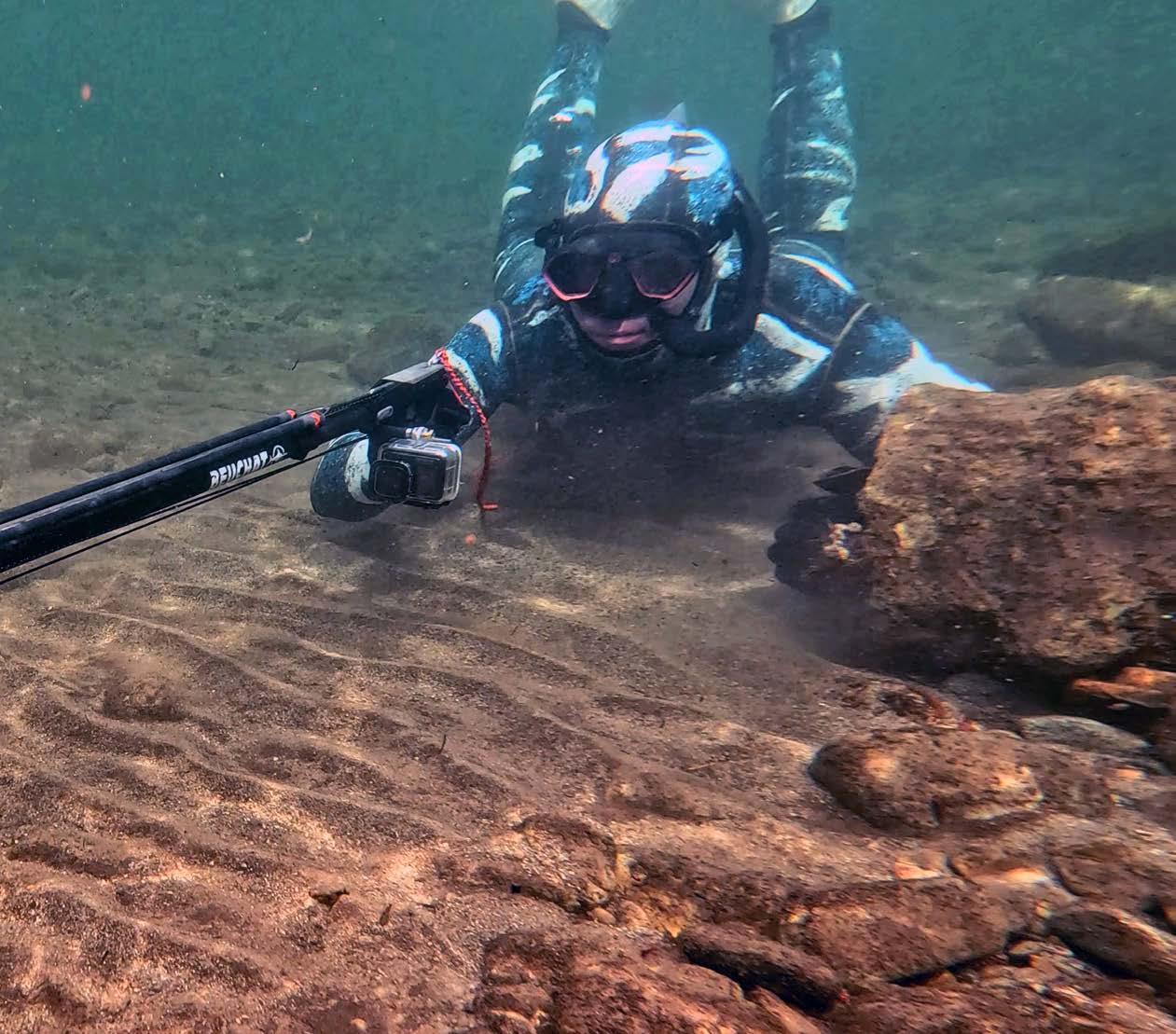
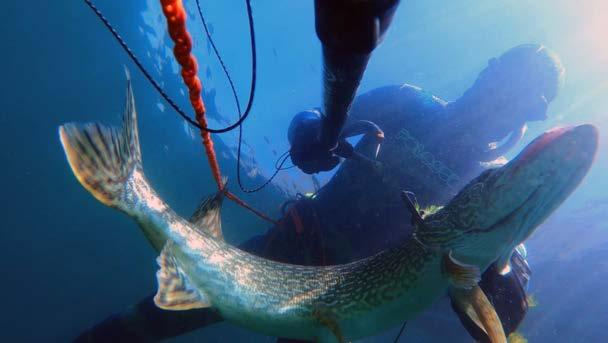
rely heavily on patience and careful observation.
Different fish require different tactics. Walleye and northern pike often linger near structures such as bridge pilings, submerged logs, or weed beds, where divers can approach slowly and wait for the right moment. Lake trout, on the other hand, tend to stay deeper in colder water and are far more skittish, sometimes requiring dives to 60 feet or more.
The fish targeted under the new rules are not random. Idaho Fish and Game authorized spearfishing for species that conflict with current fisheries management goals in the lake. Removing
them helps protect native and preferred sport fish populations.
Despite growing interest, the spearfishing community remains small and welcoming. Experienced divers are happy to share knowledge, and sometimes gear, with those curious about trying the sport.
“There’s no gatekeeping,” Bartels said. “Anyone can learn how to dive and spearfish.” The appeal goes far beyond harvesting fish. Spearfishing places him directly inside the underwater world of Lake Pend Oreille, a place few people ever experience. “You’re not just fishing anymore,” he said. “You’re part of the environment. You’re in their world.”
Above: Cody Bartels gets a photo of his twin brother, Vaun, diving near Trestle Creek.
Left: Cody Bartels snapped this picture of a northern pike from a camera attached to his spear gun.

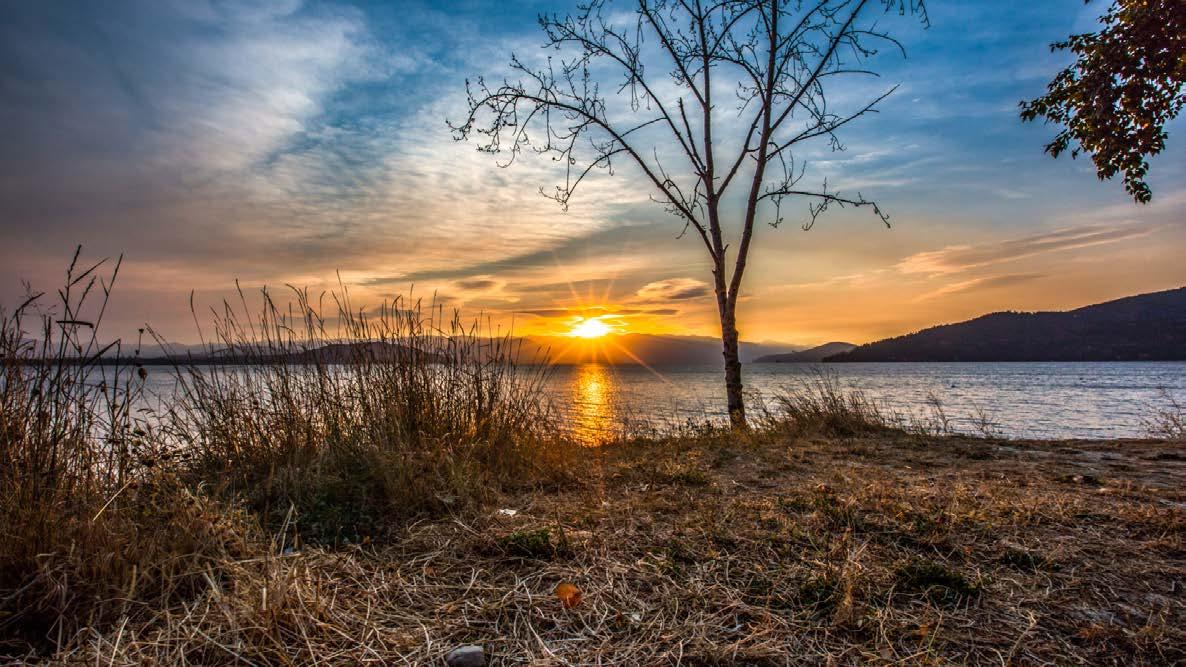
The “Golden Hour” is the magical hour after sunrise or before sunset, when the long rays of sunshine can imbue photos with a special dreamy quality. We asked our photographers to send their best Golden Hour photos.
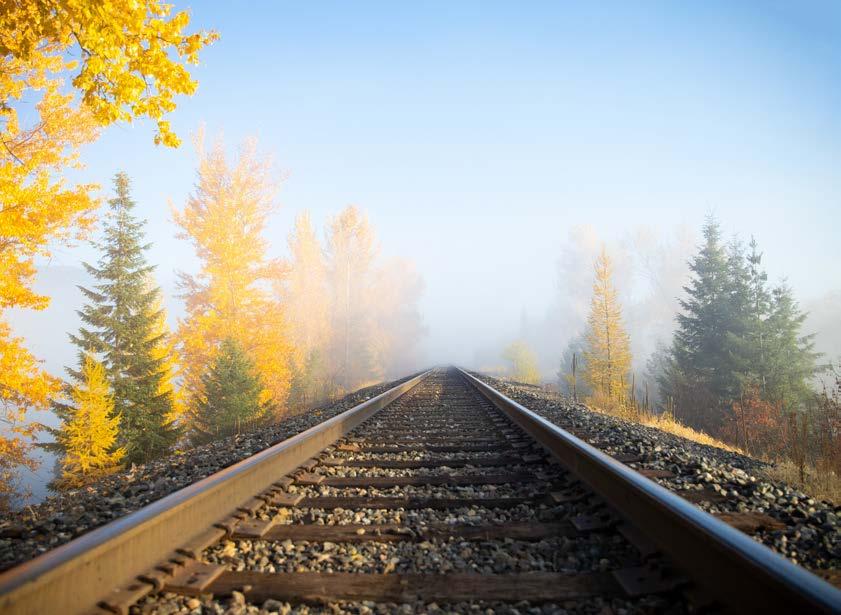
Left Page: “Round Lake seems so magical it felt right to use a crystal ball to help frame its beauty,” said photographer Caren Bays
Top: Photographer Josh Smith was intrigued by this lonely tree on the Pend d’Oreille Bay Trail not long after sunrise.
Right: Photographer Cole Golphenee snapped this photo one Sandpoint morning as the fog slowly gave way to a rising sun.
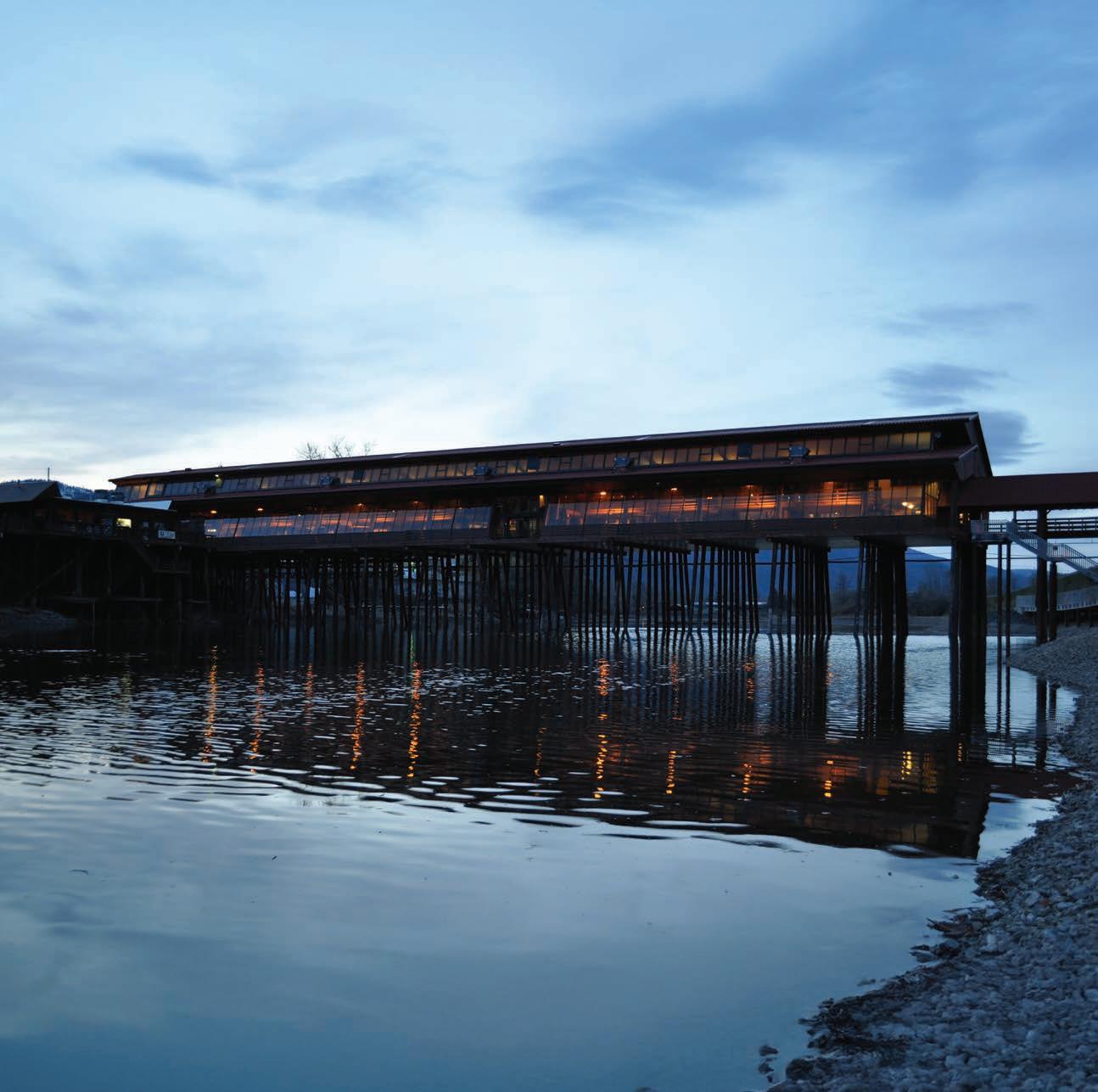
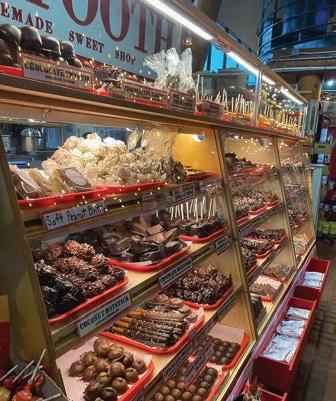
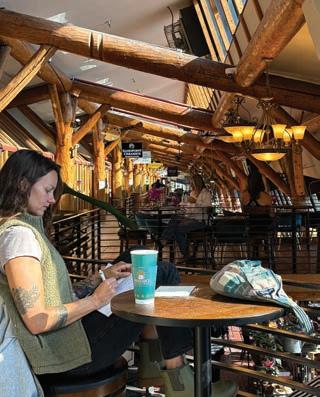
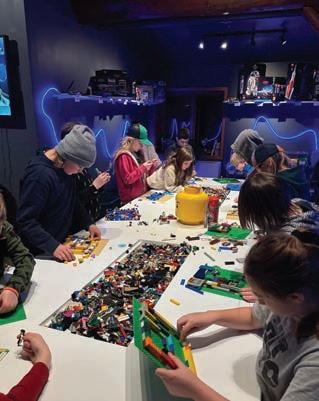
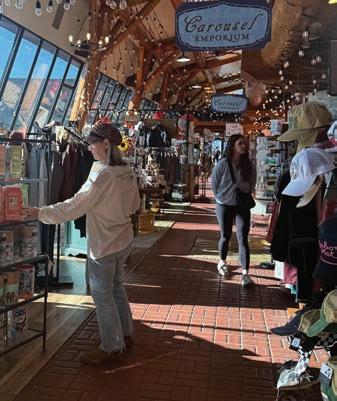

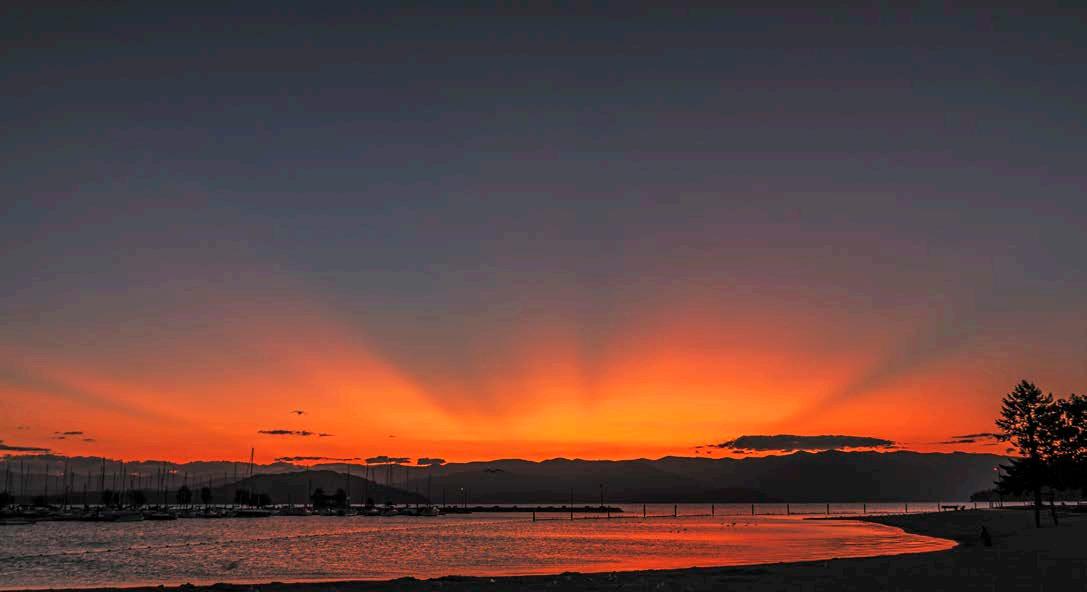
Above: Photographer Amy Peterson said that when she spotted this fox at rest, she snapped over 100 photographs. This one, above, has recently won several photography awards.
Below: Late photographer Kirk Miller thrilled fans on a daily basis with his years-long project of photographing every sunrise.
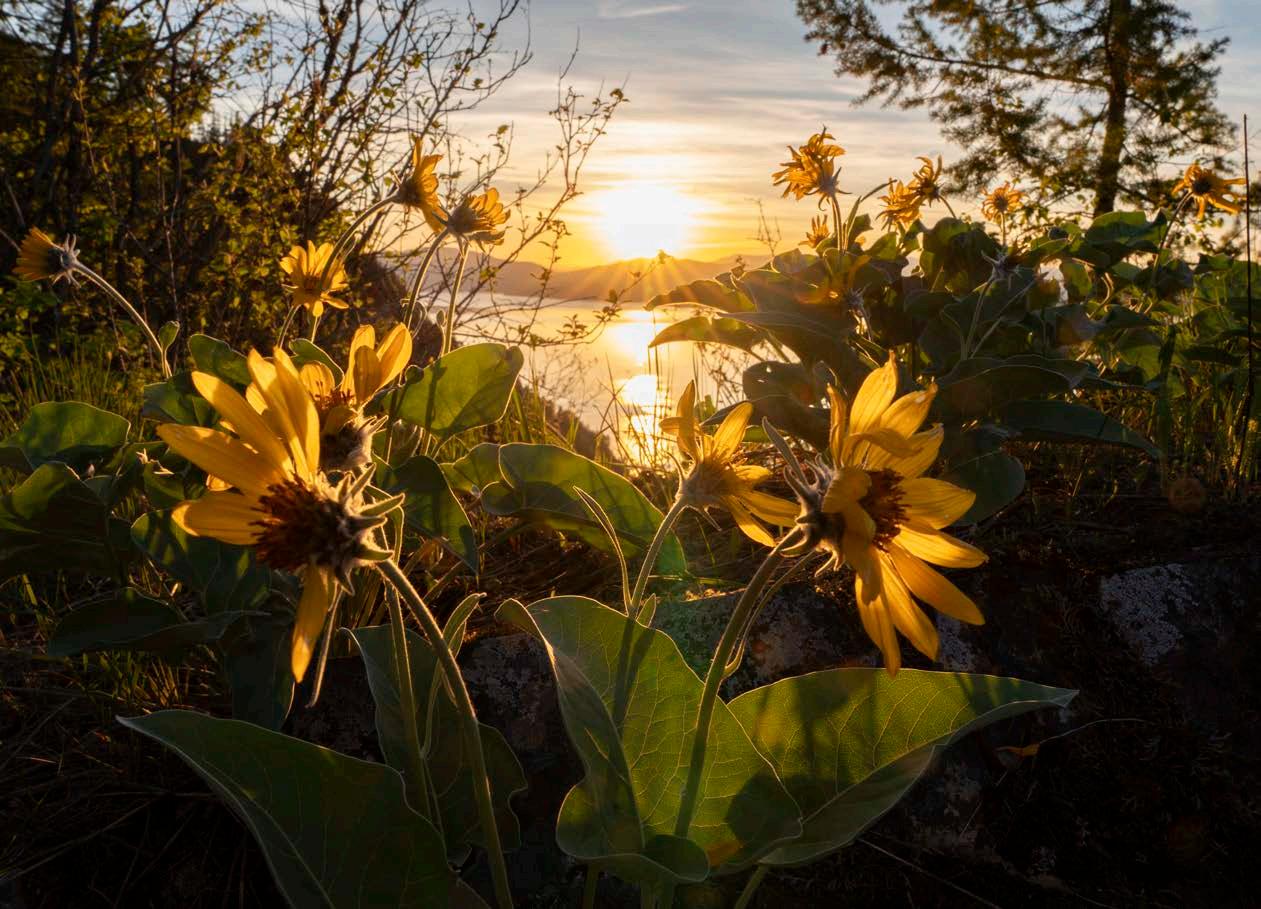
Above: “This is arrowleaf balsamroot framing a view of Lake Pend Oreille in early May. It was taken from the far end of the Monarchs near Clark Fork,” said photographer Brandon Puckett
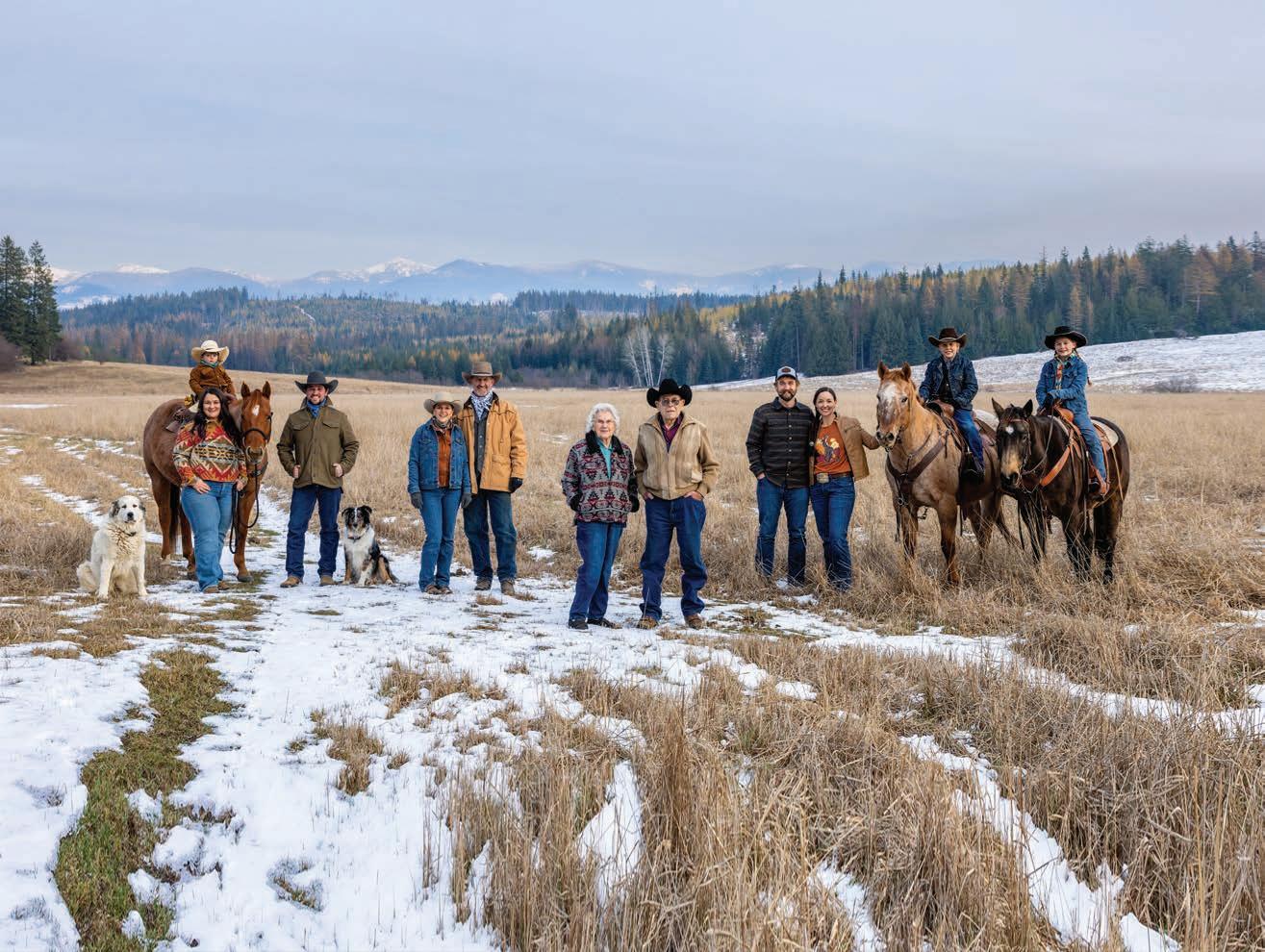
A Legacy in the Saddle
Built on grit, family, and a love for the land.
Recognized as one of Idaho’s premier dude ranches, Western Pleasure Guest Ranch traces its roots to the 1940s, when Riley Wood came to North Idaho in search of a new beginning. What began as 320 acres grew through decades of hard work into a 1,300-acre working cattle ranch, now spanning five generations in the Upper Gold Creek area.
The guest ranch began in 1991 with a single horseback ride that sparked something more. Today, Western Pleasure offers all-inclusive stays with daily trail rides, western activities, and evenings under the open sky— creating connections that last long after guests leave.
Still family-run, the ranch remains true to its roots: a place where western heritage isn’t staged—it’s lived.
Located just 15 miles northeast of Sandpoint, Western Pleasure offers year-round stays, with full ranch experiences in summer and limited riding in May and October.



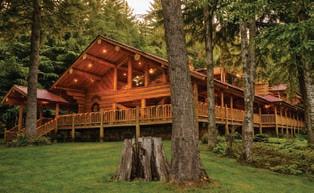
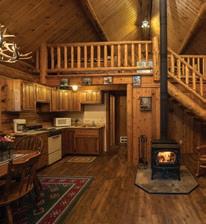
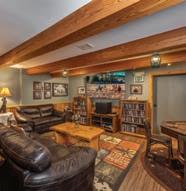
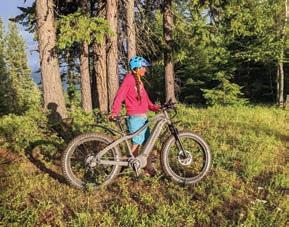
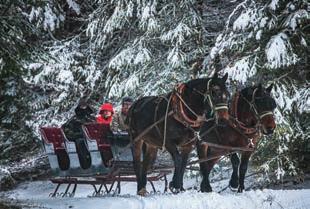
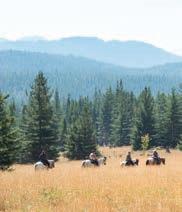

Photo: Amy Peterson, Selkirk Ridge Photography
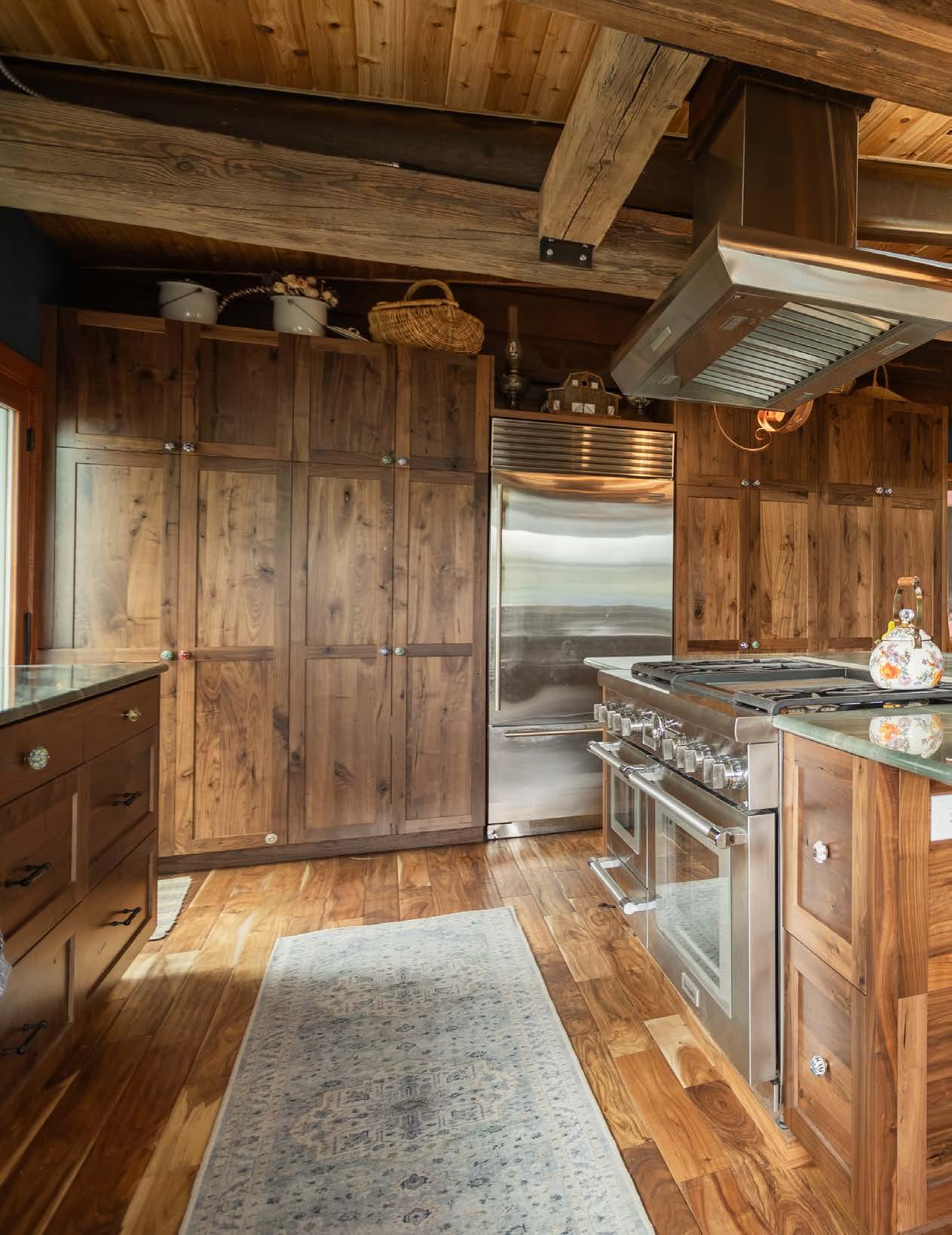
BUILD REMODEL TRIM CABINETS
When you choose Timberstone Builders and Timberstone Woodworks for your home remodeling or home building project, you gain a major advantage: an experienced general contractor with over 30 years experience and a full in-house cabinet shop to pass on the savings, quality and flexibility. Connect with us to experience our higher level of service and quality!
Just need Cabinets? We will service all customers and builders throughout Northern Idaho, Eastern Washington and Western Montana, give us a call for a free consultation! Or visit SandpointCabinets.com
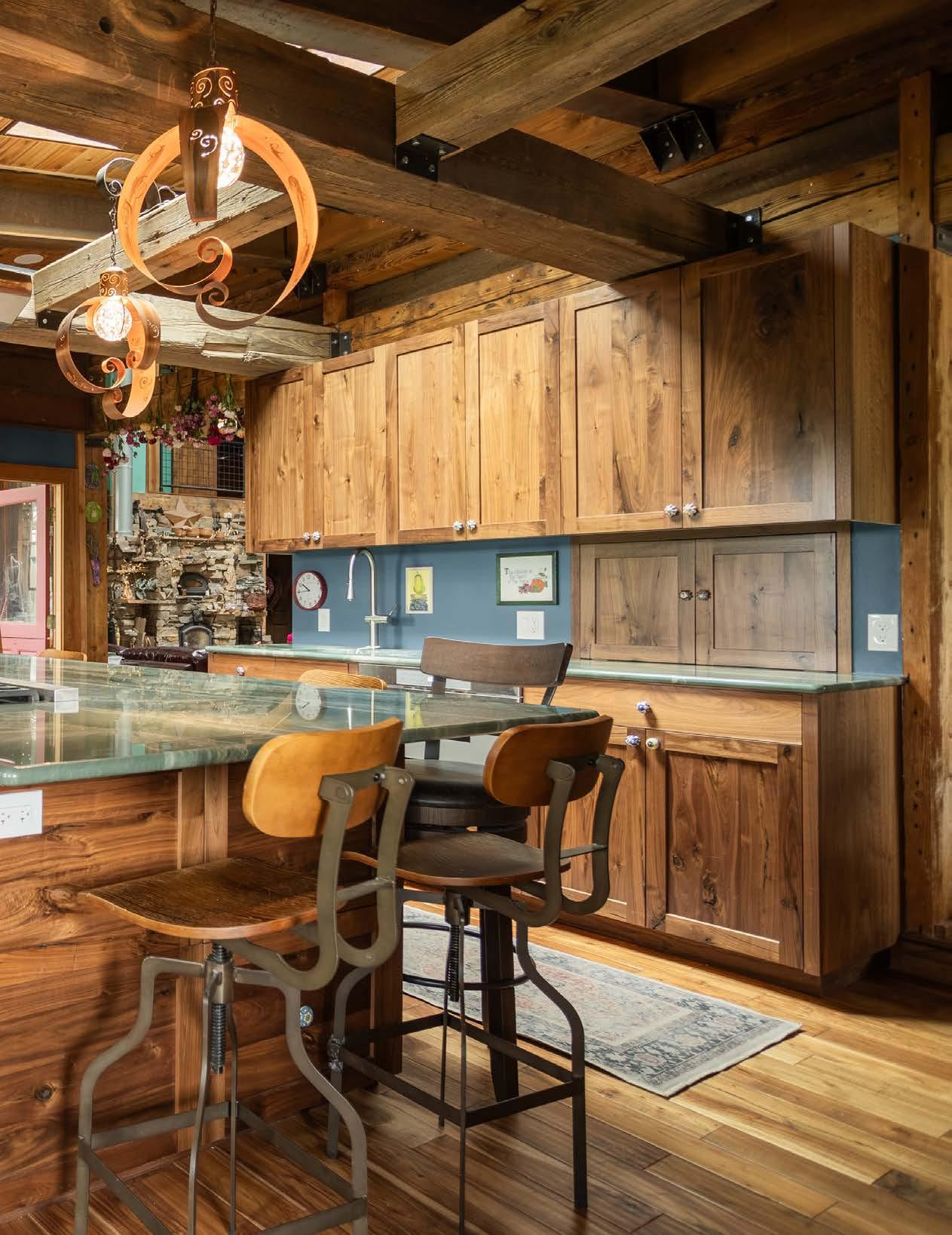
Timberstone Builders (208) 946-1006
1105 Schweitzer Plaza Dr. Ponderay, ID www.timberstone.builders
Timberstone Woodworks (208) 946-0602
1106 Superior St. Sandpoint, ID www.timberstoneww.com


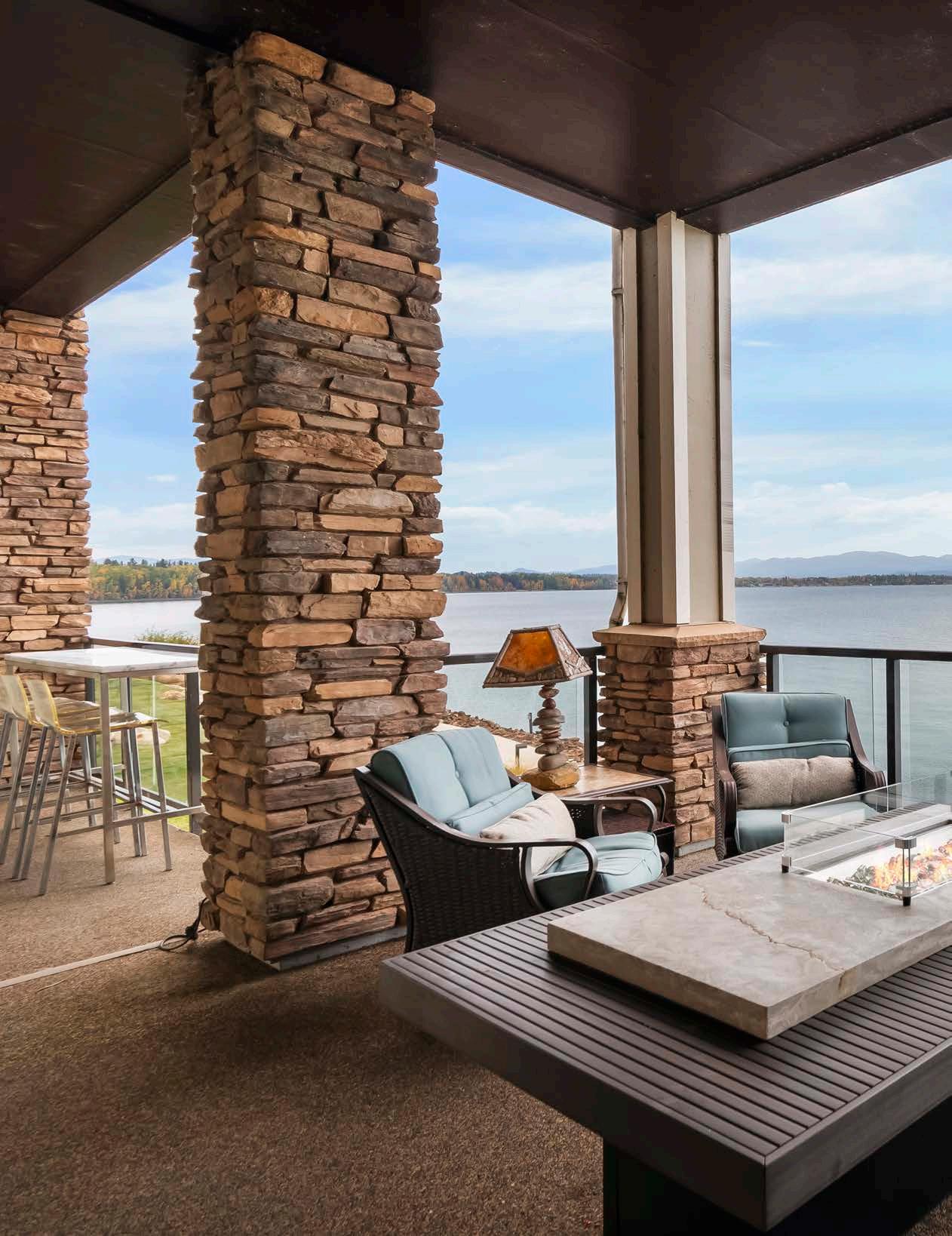
Condos at the Seasons at Sandpoint offer both waterfront access and incredible views. Photo courtesy Chris Chambers/Tomlinson Sotheby’s Realty.
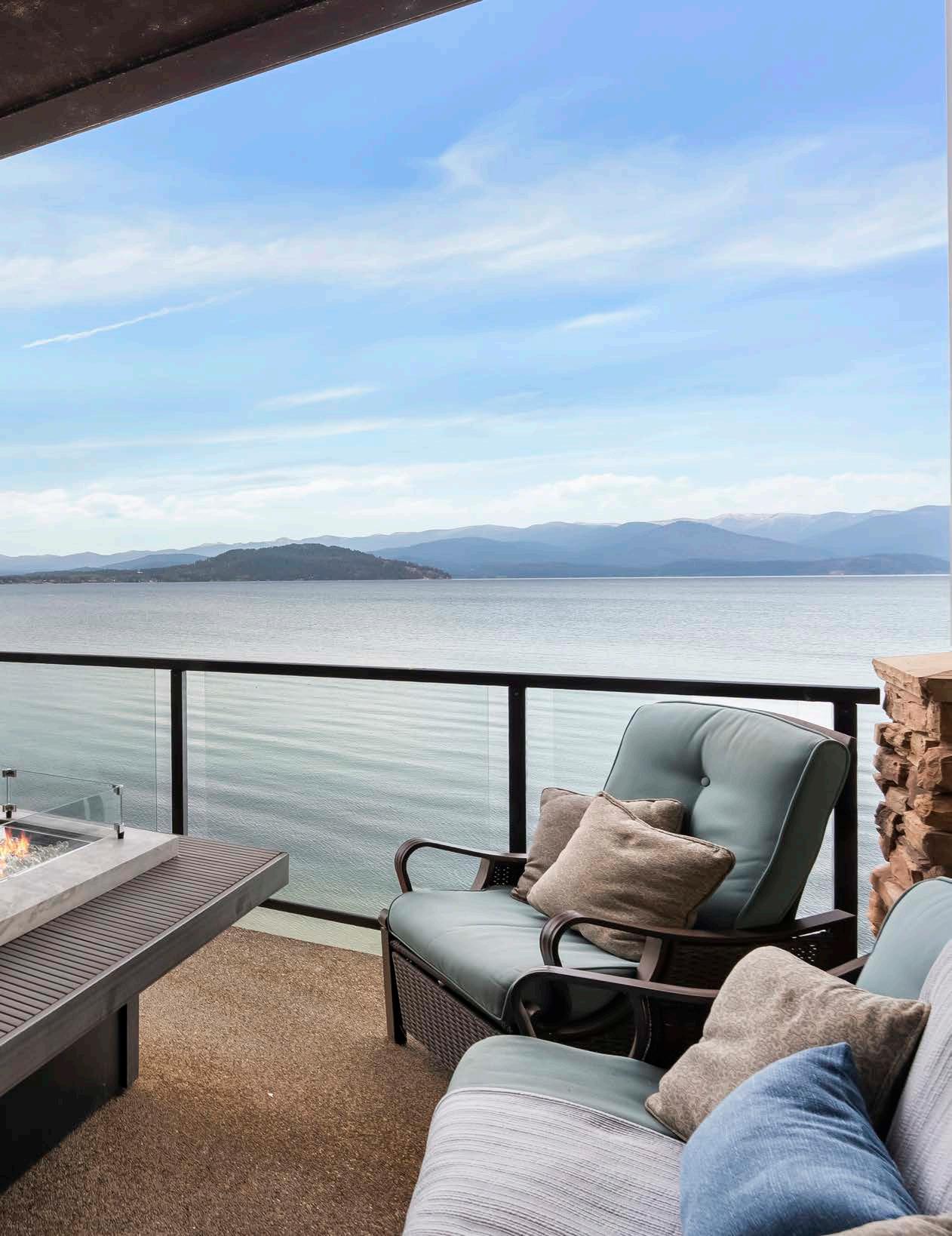
Life on the high end
TOP-DOLLAR LAKE AND VIEW HOMES PROVIDE THE RAREST LUXURY OF ALL: TRANQUILITY
by Pam Webb
From cottages to custom homes, there are a variety of home styles available on the local real estate market. High on the desirable list is lakefront property. Many of these homes carry a multi-million dollar price tag, but for those who can afford them, what they offer is priceless.
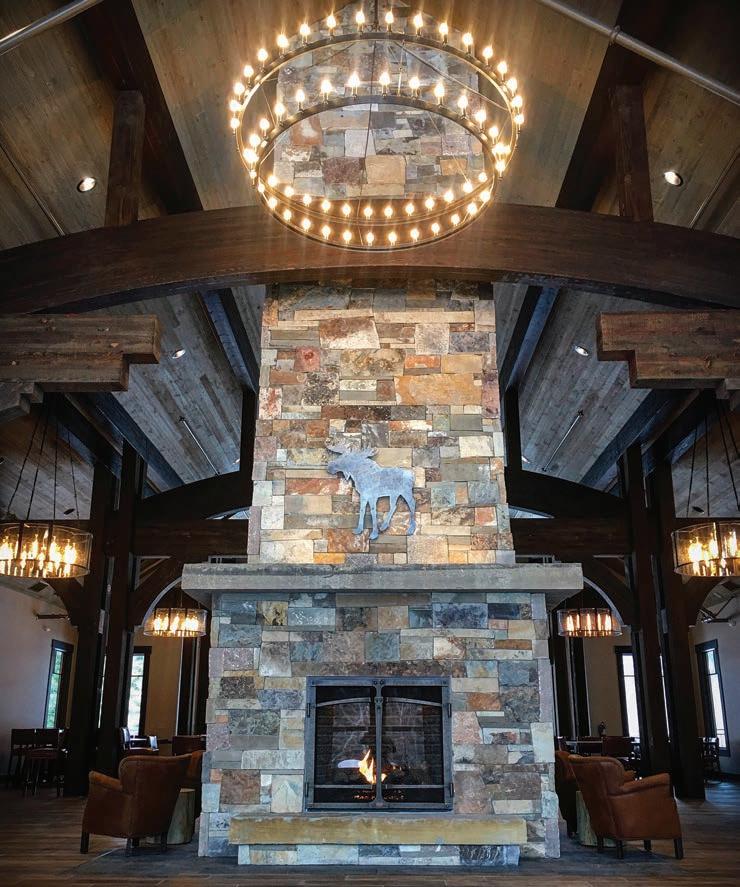

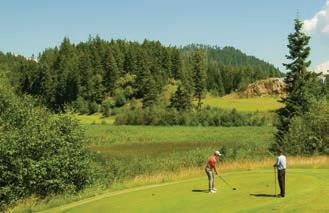



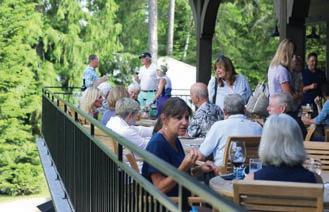









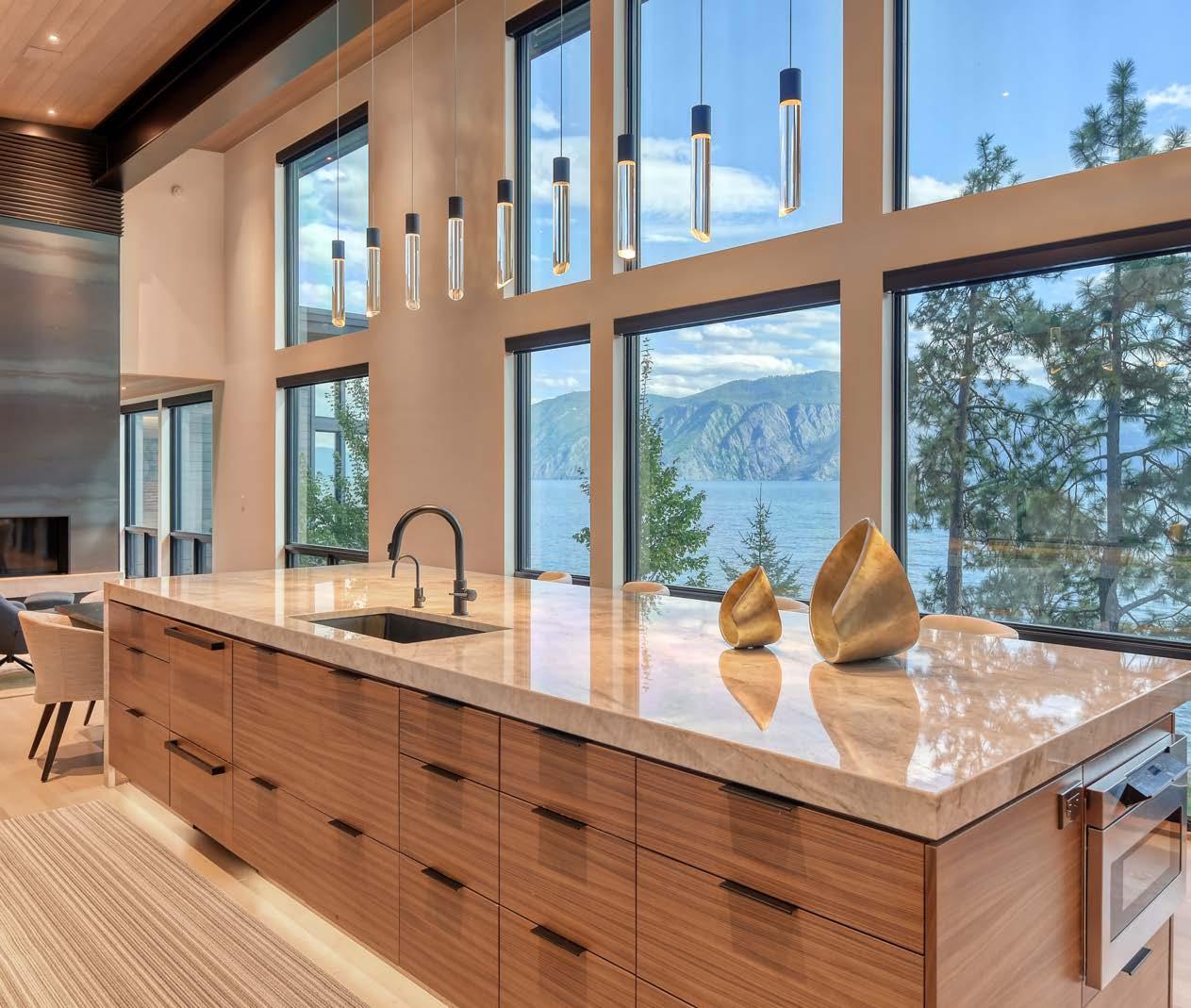
Seasons at Sandpoint, not far from City Beach, is a condominium development that combines stunning vistas with ease of maintenance. Many appreciate condos for their built-in, small community, while still providing autonomy. One especially popular feature at Seasons is how these condominiums practically sit on the lake, rising up from the shoreline, taking advantage of the view as much as possible.
Properties like Seasons are often second homes, said Chris Chambers, an associate broker with Tomlinson/Sotheby’s International Realty in Sandpoint. “You also see people choose these [properties] as their primary residence, especially if they are downsizing from a larger, more maintenance-heavy lakefront home.”
Chambers emphasized that Seasons is a community not easily reproducible with its tranquilizing views and luxurious resort amenities, plus proximity to the lake and Schweitzer Mountain Resort. There is also the convenience of being within an easy stroll from downtown activities.
One current listing in the multi-million-dollar range offers stunning lake and mountain scenes. The three-level home is thoughtfully designed with impressive engineering. It exudes a peaceful quiet that even a passing train cannot infiltrate; the focus is on the ever-changing moods of Lake Pend Oreille, and not the hustle and bustle found outside its doors.
On a treed shoreline in Sagle near Garfield Bay, a custombuilt home on two-plus acres provides panoramic views in
A view like this takes the drudgery out of washing dishes, and is a hallmark of waterfront properties in Garfield Bay. Photo courtesy Cindy Bond/ eXp Realty.
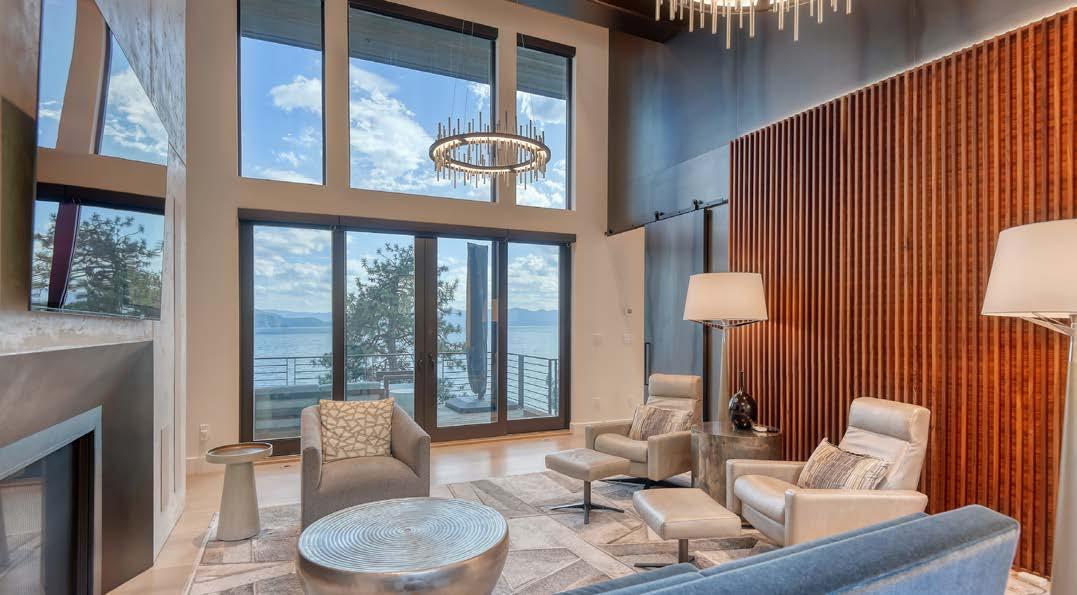
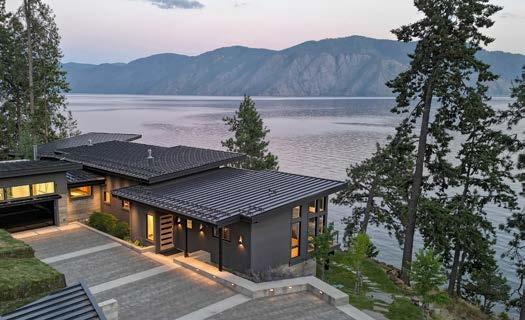
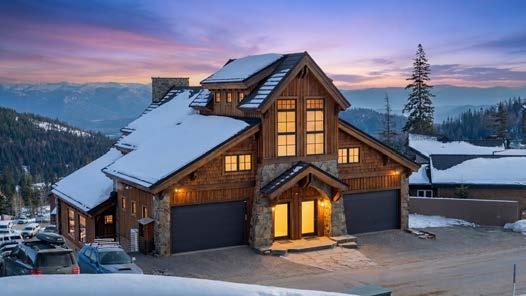
practically every room. The three bedroom, three bath home offers a grand feeling of luxury while embracing the rustic surroundings of woods, lake and mountains. These types of mountainside properties combine the solitude of forested quiet with soothing views of the lake. At this particular property, living here is described as waking up inside a postcard, with the lake to greet the day and usher in the evening. The view sets the tone, one that reflects the benefits of building a home with tranquility as a main attribute.
Designed as a primary residence, it also serves well as a vacation home. Cindy Bond, an associate broker with eXp Luxury, said that properties like this are more than a home; they're a way of life. The ability to relax and enjoy the view, with the lake as a backdrop, instills a peace that provides the means to slow down, breathe deep and savor the moment.
Some prefer being up close and personal to the snow scene. and several homes can fit the bill for high-end living at Schweitzer Village. Many homes also offer views of the lake, while embracing the ski appeal of Schweitzer Mountain. These ski in/ ski out residences are for those looking for quality comfort after an exhilarating day on the slopes.
These days, Pend Oreille lakefront and lakeview properties come with a steep price tag, but the dream of North Idaho waterfront living doesn’t have to begin and end there. While the 'big lake' offers unmatched amenities and high-end luxury, that's not the only way to get your feet wet. Bonner County abounds with hidden gems, from quiet riverfront retreats to homes tucked along seasonal creeks. For those seeking a more affordable slice of paradise, waterfront opportunities in the area currently start at just under half a million dollars.
Top: High-end properties like this Garfield Bay gem offer interiors as spectacular as the exterior. Photo courtesy Cindy Bond/eXp Luxury.
Middle: This Garfield Bay property, like many waterfront homes, is set above the waterline in order to allow uninterrupted views. Photo courtesy Cindy Bond/eXp Luxury.
Above: Schweitzer Mountain doesn’t offer waterfront, but does combine ski in/ski out convenience with some of the most iconic views around. Photo courtesy Cindy Bond/eXp Luxury.

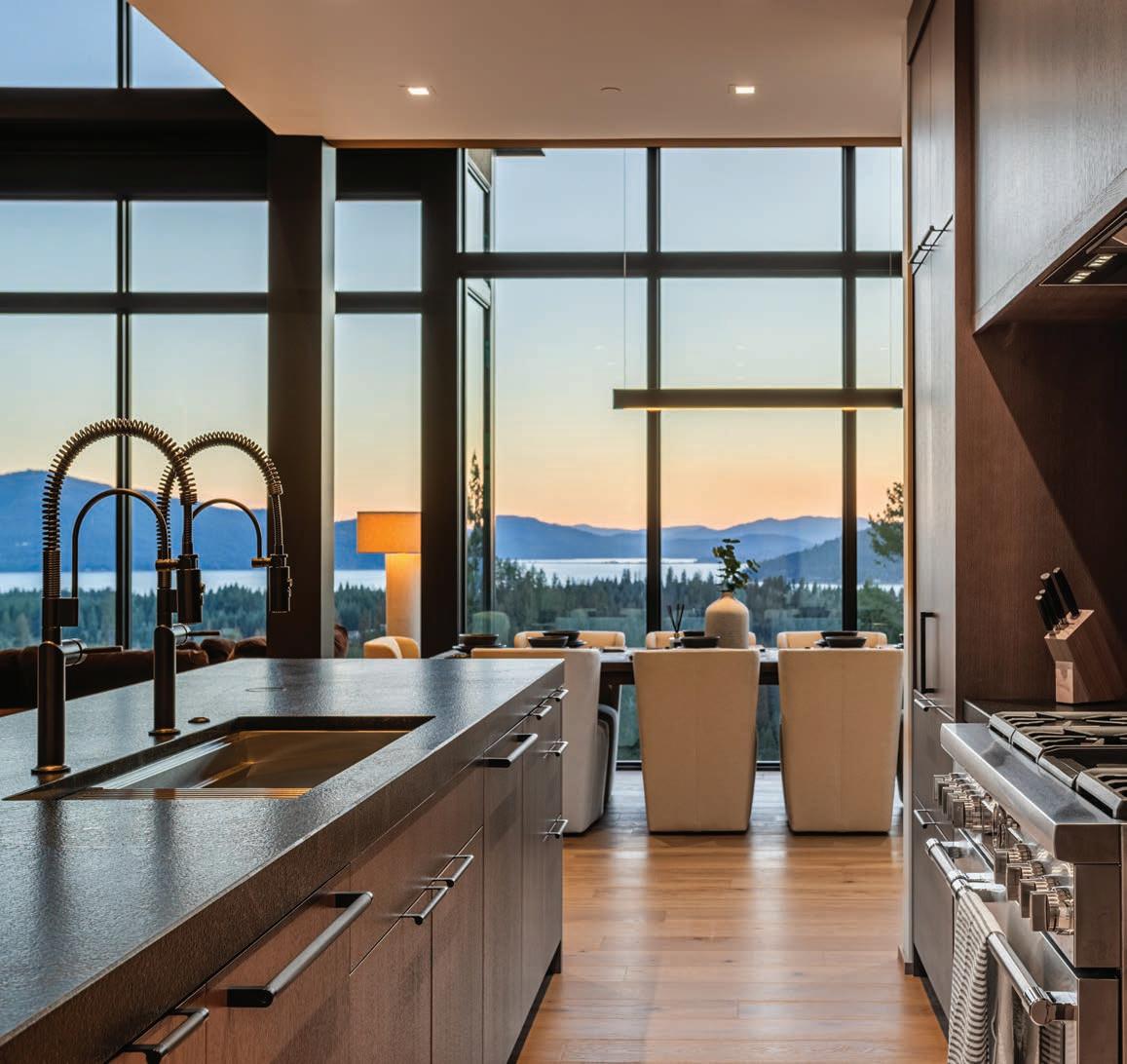
The Accidental Broker

How a stalled condo project and a leap of faith transformed Charlie Parrish into a cornerstone of Sandpoint real estate
by Sandy Compton
In August of 1984, Charlie Parrish traded the sweltering heat of South Africa for the sweet mountain air of North Idaho. Managing a workforce of 2,500 people from a dozen different countries at a $3 billion coal gasification plant had been, in his own words, a "mind-bender"—a high-stakes corporate marathon. But the real mind-bender was just beginning. Instead of a smooth transition into local life, Parrish discovered that a condo investment he had at Schweitzer was "going south" fast, with the money gone and the buildings unfinished. To save the project, he didn't just find a real estate agent—he became one, sparking a 40-year career that would ultimately help reshape the landscape of North Idaho real estate.
The Parrishes, along with Phil and Nancy Albanese, and Bob and Linda Yerby, became partners in Four Seasons, Inc., in order to undertake finishing and selling the Wildflower condo project on the mountain. Albanese had his real estate broker’s license and Evergreen Realty was formed as a Four Seasons subsidiary. Charlie became an agent. A few years later, the Albaneses and Yerbys were gone to other, maybe greener, pastures. By 1989 Charlie Parrish was owner of Four Seasons
and broker at Evergreen.
Through serendipity, Parrish was also involved in managing a couple of restaurants, the old St. Bernard at Schweitzer and the Floating Restaurant at Hope. What he mostly remembers about that was how good it felt to get out of that business.
Since taking over the Wildflower project over four decades ago, Four Seasons has developed and sold 175 condominiums at Schweitzer, valued at over $120 million. Since its inception, Evergreen has also handled the majority of real estate sales at Schweitzer, not to mention sales of hundreds of other properties in the Sandpoint area.
But Parrish isn’t there anymore. At least not all the time.
“I officially retired in March of last year,” he confessed. “Donna’s nephew, Will Mitchell, has taken over Evergreen.” Mitchell, who worked in real estate in Seattle, sheltered with his family in Sandpoint during the 2020 COVID outbreak and decided not to go back to the big city.
“We converted them,” Parrish said. “It was easy.”
With over 40 years in real estate, I asked Parrish what was the sweetest real estate deal he ever made. He laughed. “Maybe the buildings on First Avenue (Evergreen’s main office is at 323
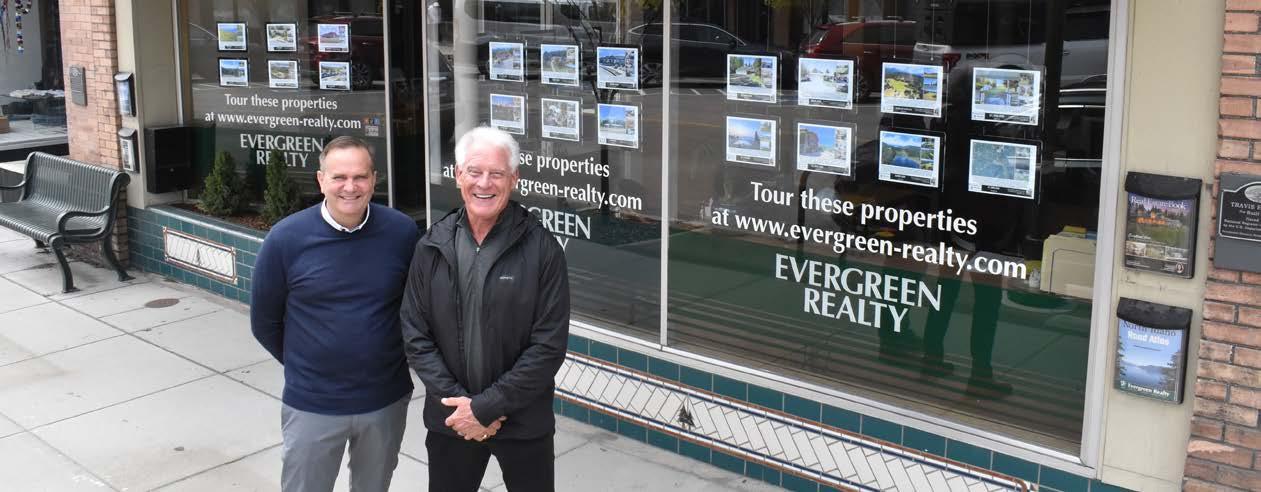
First) even if they’ve had to be constantly remodeled.”
Much has changed since Evergreen sold the first Wildflower condo in 1985, including something most people outside real estate don't think about: “One thing that’s changed,” Parrish said, “is the amount of fraud involving real estate. For example, someone will locate a piece of property out in the middle of nowhere, list it and then sell it.” The catch? The seller doesn’t own the land to begin with, and the buyer ends up with no money... and no property. This can happen when eager buyers think they can get a deal by purchasing real estate without involving an agent. “It’s really important to have good people helping with property sales.”
Of course, in 40 years the price of real estate has gone up. Way up. “In 1985, a Wildflower unit sold between $44,900 and $79,900. Those condos are now selling for about ten times those ’80s prices.” That’s a growth spurt reflected in the median price of a single-family home. “Plus, buy-sell agreements in ’85 were one page. Now they average at least 12.” Ah, paperwork.
Parrish has served as President of the Board for KRFY community radio since 2012, has an MBA from Duke University, has completed 25 marathons and was once offered a contract to play for the Pittsburgh Steelers. He turned it down—and ended up in Sandpoint. Not a bad deal.
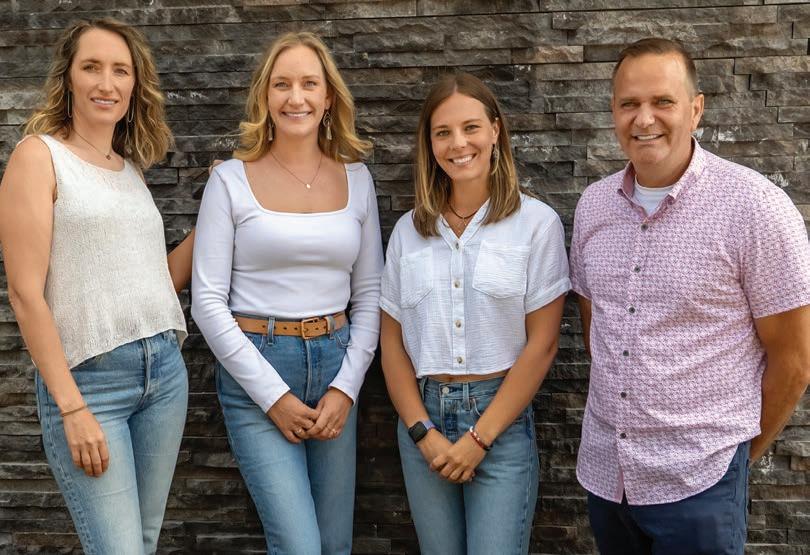
Will Mitchell (left) is taking over at Evergreen Realty from retiring broker Charlie Parrish (right). Staff photo.
the intentional home
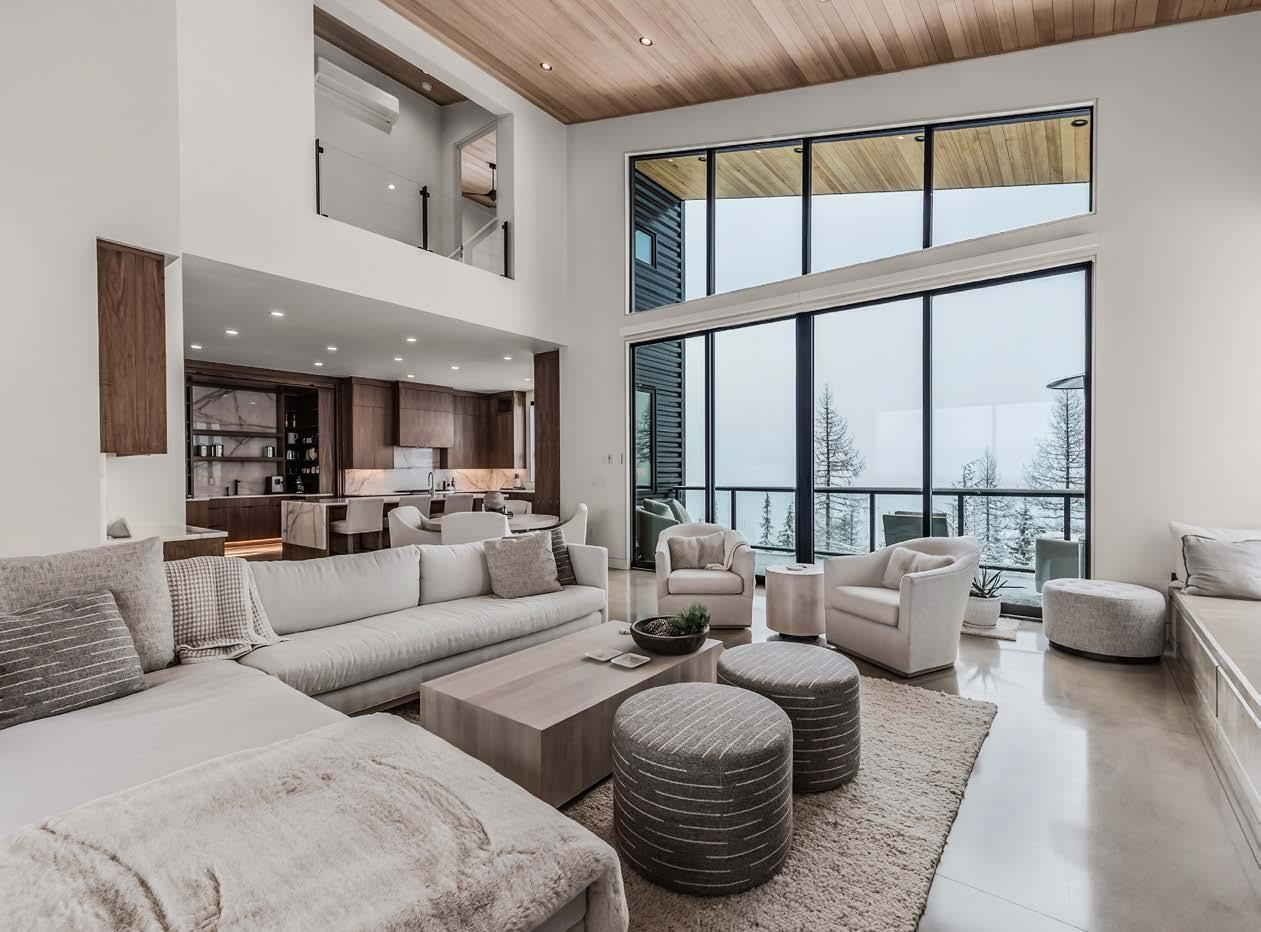
“Probably
ISustainability and style in the Panhandle
by Renee Sande
n Sandpoint, architecture grows from place. The lake, the mountains and a deeply rooted sense of community have long shaped how the town builds, adapts and evolves.
It’s this shared commitment to being thoughtful stewards of the land and the town’s history that has cultivated an approach to design that balances tradition with innovation—protecting Sand-
point’s character while allowing for thoughtful change.
“I tell everyone that I won the geographic lottery by my parents finding this place, so I didn’t have to spend my life searching for it,” said Alison Murphy, Northwest Realty Group associate broker.
Born and raised in Sandpoint, Murphy moved away for ten years before finding her way back home. While some changes
the biggest change I’ve seen is from the rustic, heavy, darker lodge-type to something more sophisticated and lighter, with larger windows and clean, modern lines,” like in this Schweitzer home, said Alison Murphy. Photo by Loren Media Group.
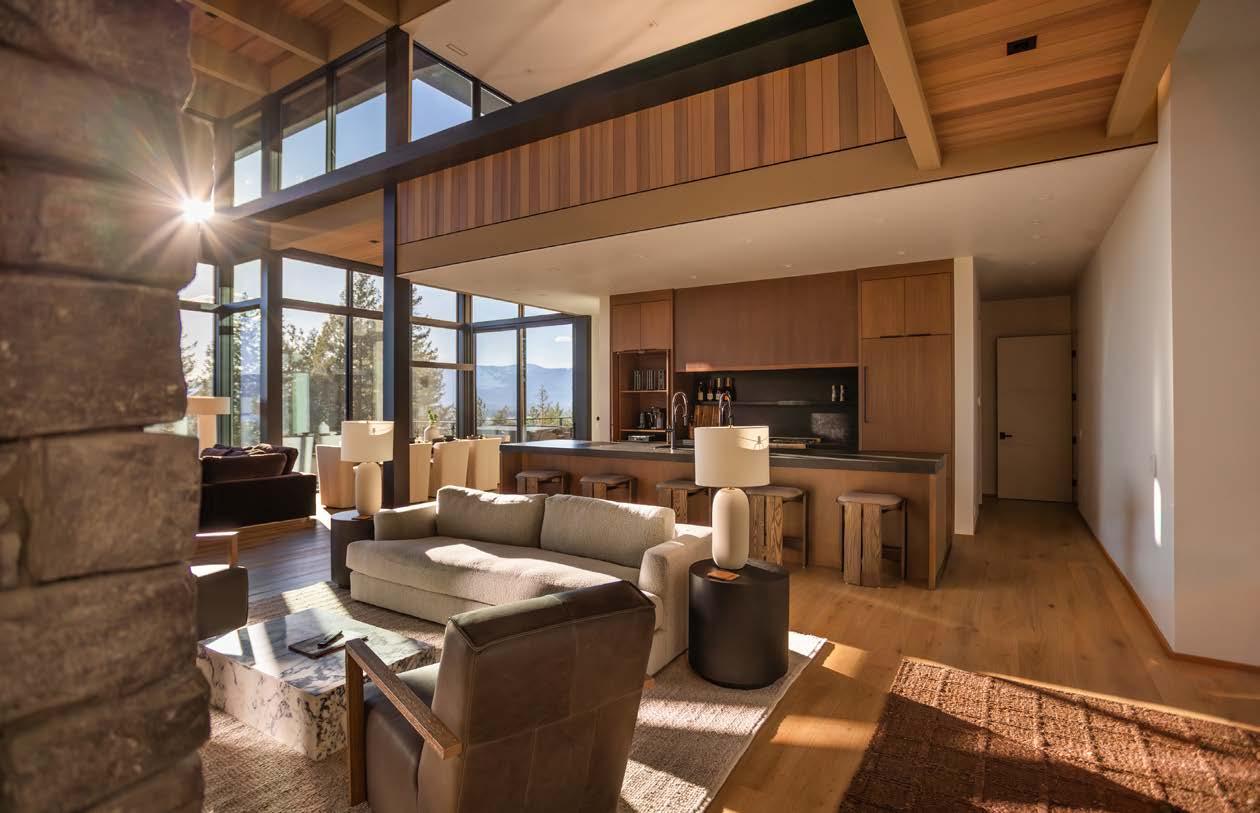
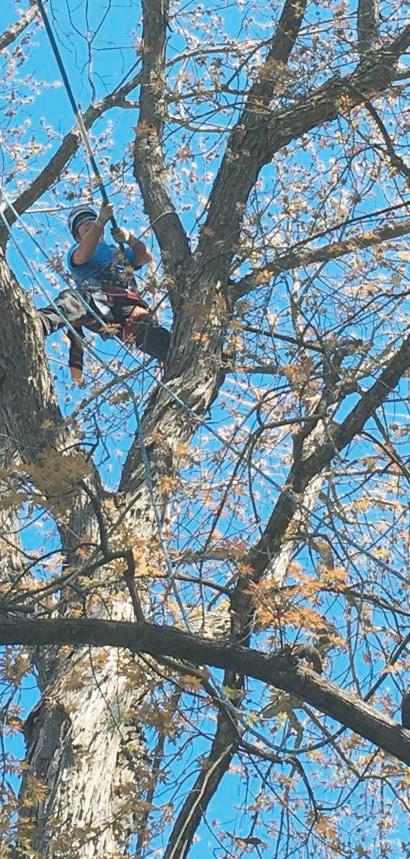

Jason Collins, owner of Smithwright, says mountain modern is the style he now sees prevailing. This Sandpoint home demonstrates the cleaner design aesthetic. Photo by Caleb Cooke.
have been hard to accept—like the more crowded streets and Schweitzer’s shift in ownership—she said it’s nice to see that the homes being built now, compared to the 1980s and '90s, have a focus on quality, not quantity.
“They’re building smaller homes but they’re using better materials, so it just has that feel of a more sophisticated, elevated lifestyle.”
As design preferences shift, Murphy has also noticed a stylistic evolution. “Probably the biggest change I’ve seen is from the rustic, heavy, darker lodge-type to something more sophisticated and lighter, with larger windows and clean modern lines.”
The evolution is visible throughout the region. Take a drive around the Idaho Club—a golf club known for its signature Jack Nicklaus golf course—and you’ll notice what Jason Collins, home builder and owner of Smithwright in Ponderay, calls “mountain modern.”
“[The club] started out wanting things to look very traditional-mountain lodge. And now you see the progression into more of a contemporary lodge to now a full-on mountain modern,” said Collins. “It does have a different level of sophistication and elegance to it. Anything that’s floor-to-ceiling glass, either flat or sloped roof, with the incorporation of steel—very modern
forms clad in more traditional material.”
The move toward smaller, more intentional homes doesn’t automatically translate to a smaller carbon footprint, but it does signal a broader shift in priorities.
Tim Hammer of Cast Architecture—a Seattle-based firm that recently finished a home on the north shores of Lake Pend Oreille—says building sustainably is a direction new homes are taking increasingly more.
“There are so many levers you can push and pull to achieve your sustainability goals for the home while at the same time staying within your target budget,” said Hammer, architect and principal at Cast. The firm recently committed to AIA30—an initiative by the American Institute of Architects to achieve zero emissions in the built environment by 2030.
“It’s like, ‘Let’s take the whole package of what you need your home to achieve and reduce its scale by 15 percent so we can also meet these sustainable goals.’”
A similar perspective is shared by Brennen Chasse, a LEED (Leadership in Energy and Environmental Design)—certified architect at Studio Ascent, an architecture design firm based in Spokane, Washington, who is currently working on six projects on Lake Pend Oreille.
“Most people building new are heading in the direction of
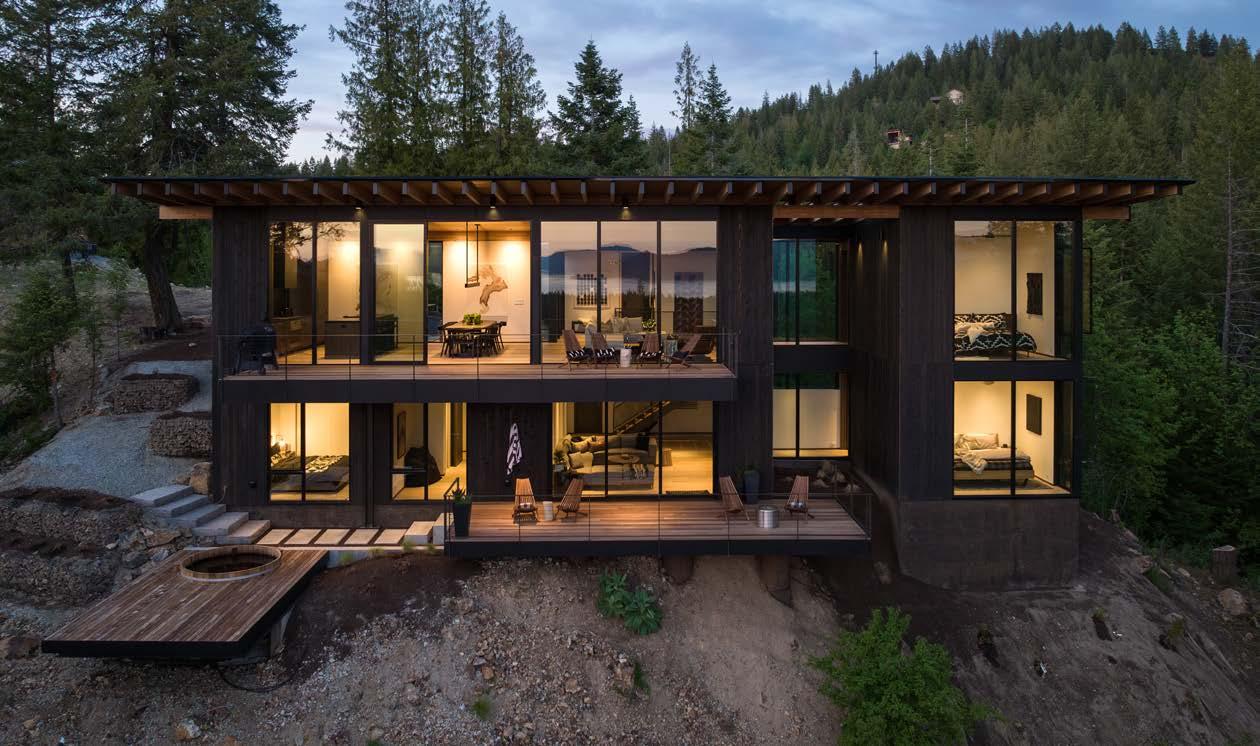
We get requests for the modern glass box on the waterfront, but I would say, honestly, we’re getting asked more for the old-world homes—like stone and timber, not the heavy rustic cabin feel, but rather aesthetically light, kind of English cottage on the water “
sustainability, but also wellness,” said Chasse, who also grew up in the area.
“Even inside, we’re doing a lot of wellness centers in homes, with saunas and red-light therapy, even meditation rooms,” he said. “There’s just a lot more thought put into the home as a whole so it’s really a place to escape and reset.”
While Chasse agrees there’s a trend towards the more modern look, he notes that most of their clients are gravitating toward a kind of timelessness. “We get requests for the modern glass box on the waterfront, but I would say, honestly, we’re getting asked more for the old-world homes—like stone and timber, not the heavy rustic cabin feel, but rather aesthetically light, kind of English cottage on the water.”
Hammer sees this style, although filtered through the Pacific Northwest lens, as well, as “this really cool emerging appreciation for the classic rural aesthetics—rugged structures that have weathered time.
“You can be driving around and see these old agricultural buildings that have survived the test of time and they have a certain level of character and durability that I think appeals to people who are drawn to the West and the outdoors and that sort of rugged individualism—with a refined layer of worldliness on top of that.”
Sandpoint’s architecture is really a story about the people who choose to call it home, whose values hold up and shape a vision for the future—intentional, connected and attuned to the rhythms of this special place.
“People definitely seem to be seeking quality over quantity. It’s not bigger is better anymore, it’s about being intentional, really planning that 'more,'” said Chasse.
Floor-to-ceiling glass, flat roofs and the incorporation of steel are all signs of the mountain modern style, as in this Sandpoint home. Photo by Cole Golphenee.
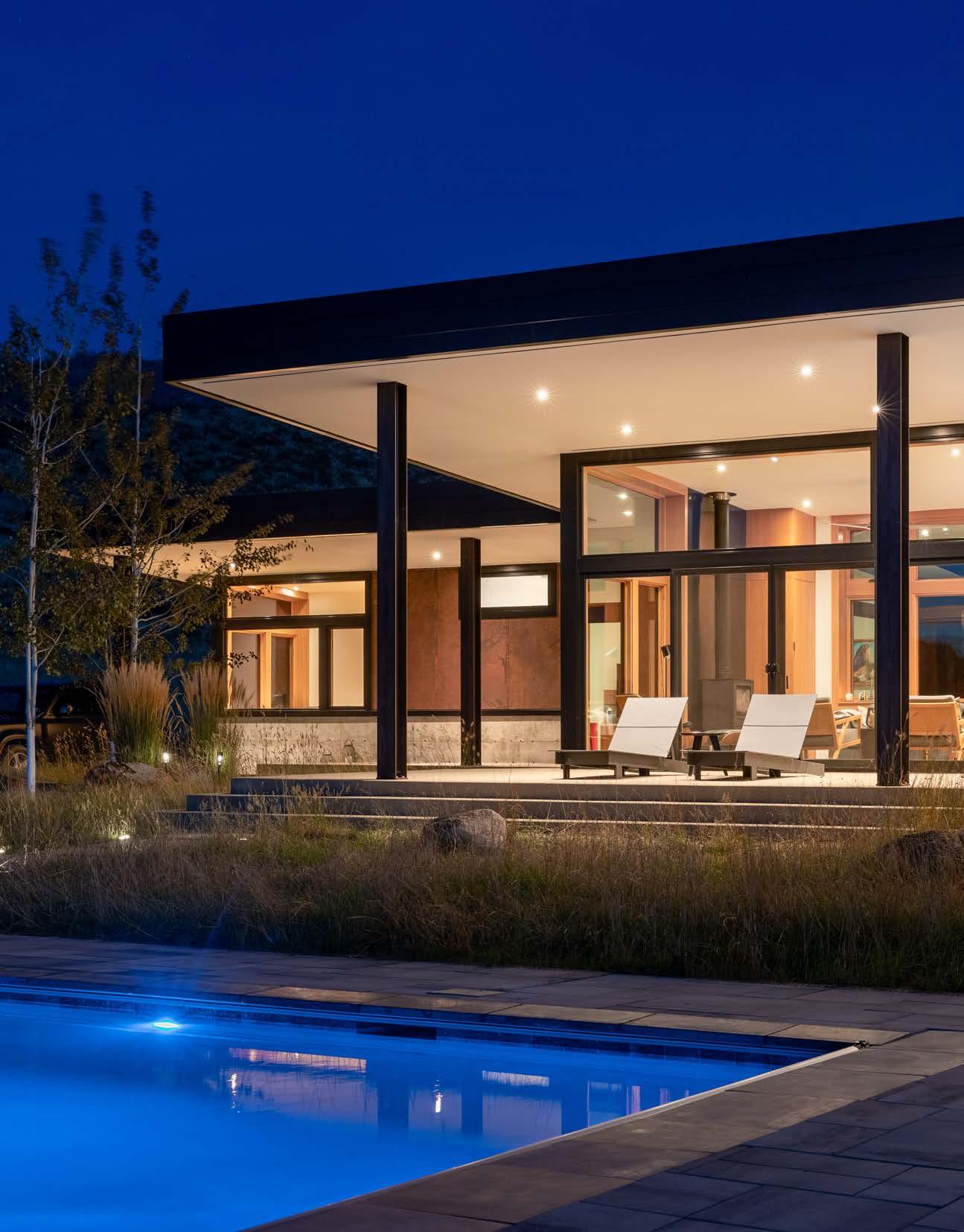
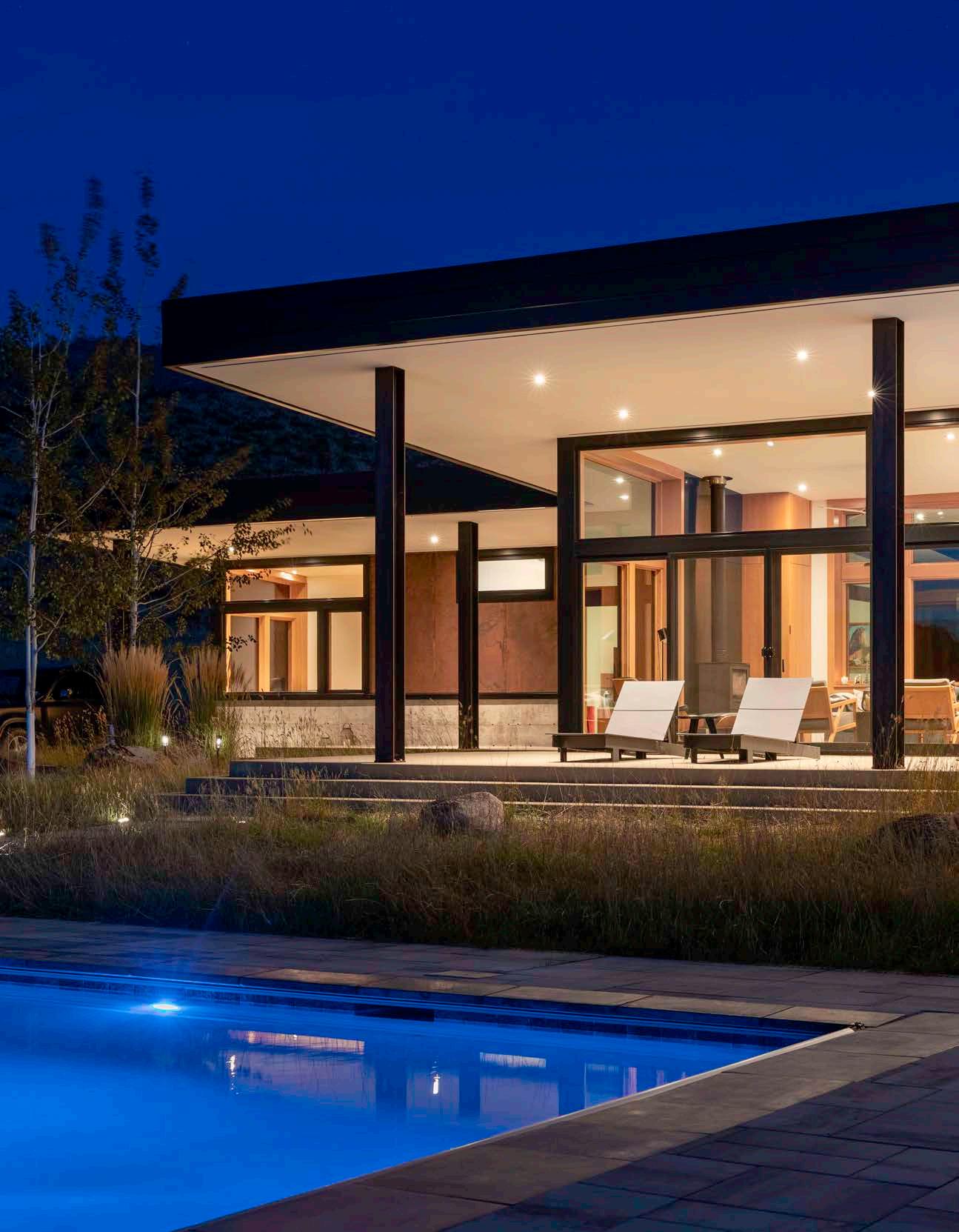
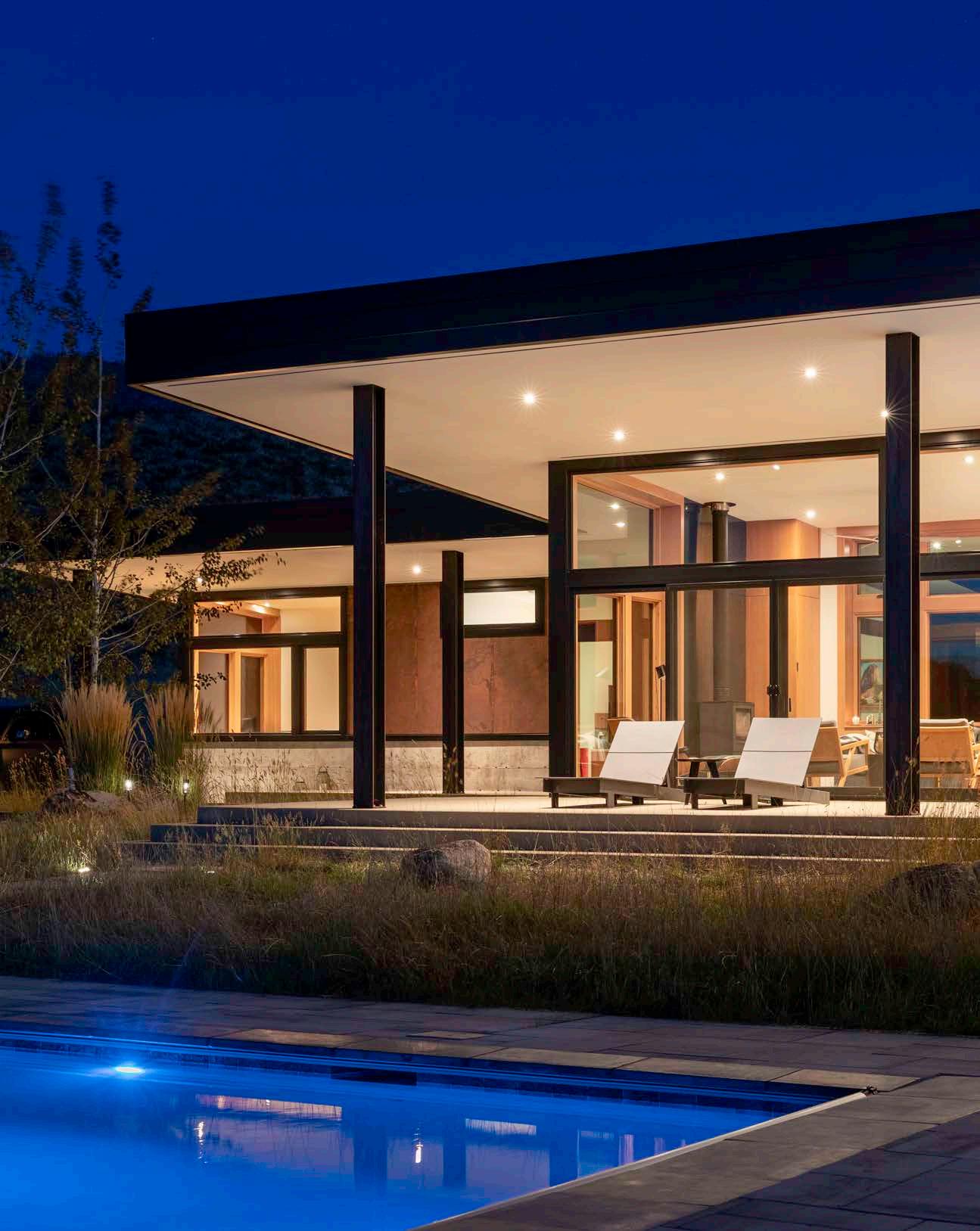
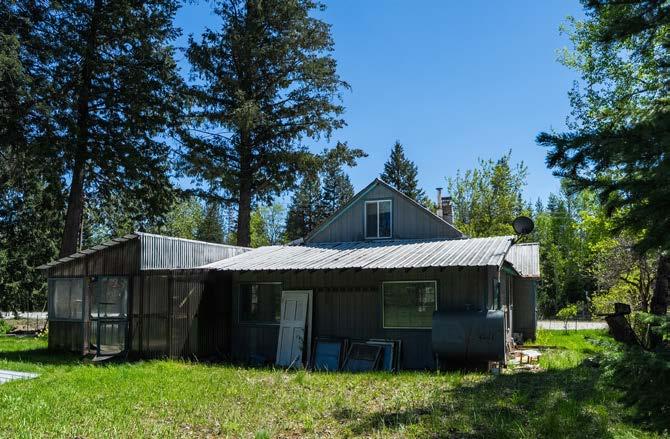
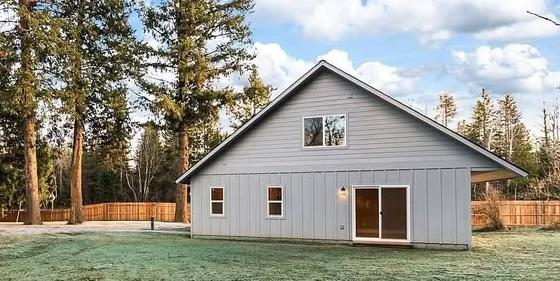
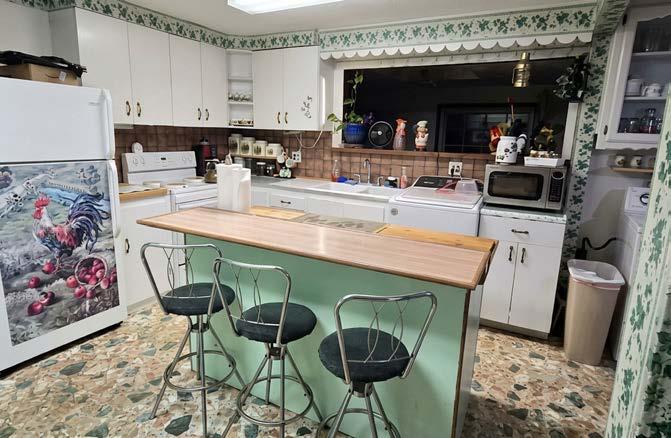


Black Rock will be capped with concrete and a protective railing will be added. But the views will still be spectacular. Staff photo.
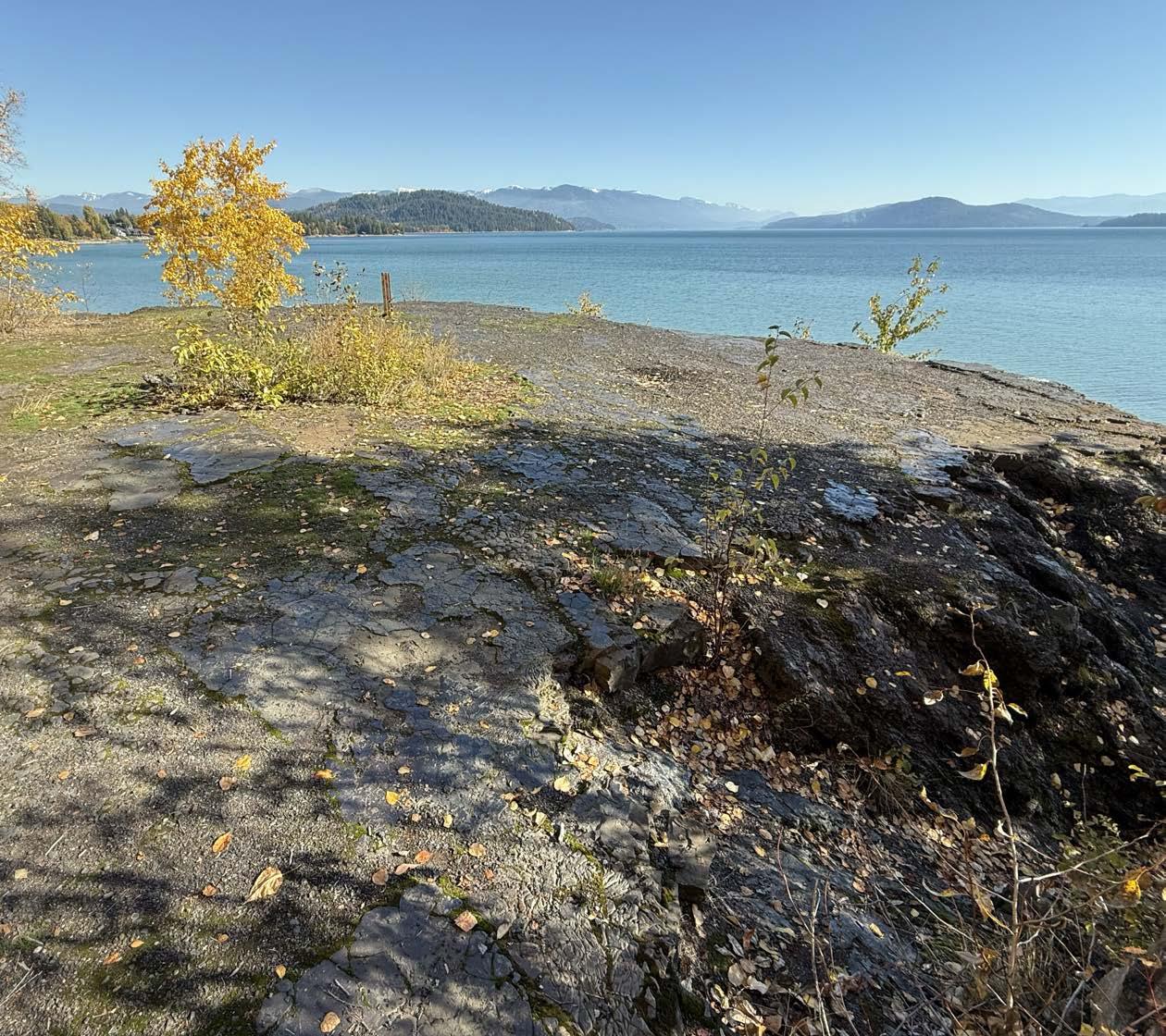
A new look for BLACK ROCK
PONDERAY MOVES FORWARD TO RECLAIM ITS SHORELINE
by Susan Drumheller
Ponderay’s shoreline, tucked along the northwest corner of Lake Pend Oreille, is undergoing renovation to make it safer and easier to get to.
This year marks an important milestone for the Front Yard Project, a multi-pronged effort to connect the town’s residents to the shoreline and clean up historic contamination from a 100-year-old lead and silver smelter.
The cleanup and planned railroad underpass to the Bay Trail (shorthand for the Pend d’Oreille Bay Trail) along the city’s southern length will provide Ponderay a waterfront park and a non-motorized path connecting it to Sandpoint.
A federal Environmental Protection Agency Brownfields
Multipurpose cleanup grant will expire at the end of September, so the city of Ponderay and the Idaho Department of Environmental Quality are scrambling to meet the deadline. The goal is to remove the gate at the end of the Bay Trail, extend the trail, and make the area safe for recreation.
At first, it won’t be pretty at the northeast end of the trail, because removing lead-contaminated soils will leave a sparse scene where a forest once stood. But the vegetation eventually will grow back, and the views from atop Black Rock—the historic slag pile—will still be spectacular. “It (Black Rock) will look a lot like it does now, but with a railing around it,” said Ponderay Planning Director Kayleigh Miller.
DoorsFor PersonalAchievement
PSNI
Panhandle Special Needs Inc.
“Providing Services to Adults with Disabilities since 1975”
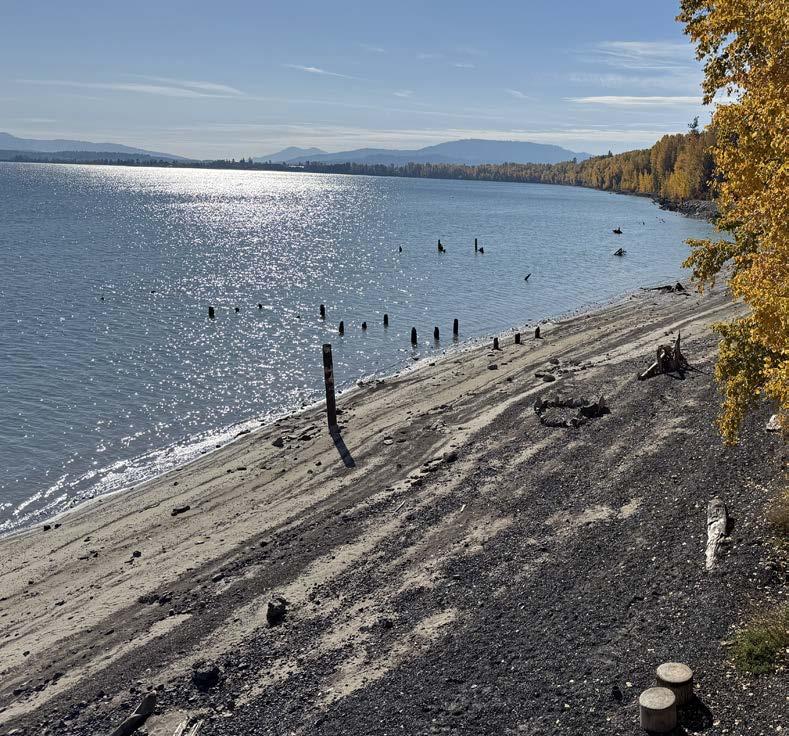
Also, a breakwater will route the trail around the basalt-looking slag heap. That will keep the lake away, wakes from eroding the slag pile, and people also away from still-exposed slag.



IDEQ and the city decided to cap Black Rock with reinforced concrete to keep water from leaching through it and potentially to the lake, which is a source of drinking water for Sandpoint and the surrounding area.
Water samples near Black Rock meet state water quality standards, but the cover will help lock the contaminants in place, according to an IDEQ assessment. The other option was to remove Black Rock.
“From a cost standpoint, it’s not feasible,” said Eric Traynor, program coordinator for IDEQ's Brownfields and Lands Revitalization program. Besides, he said, the city wanted to keep it.
“It’s an iconic thing for the community,” Miller explained. “To take it out just seems wrong. Instead, we decided to turn it into a feature.”
Black Rock will now be a patio for Ponderay’s Front Yard, furnished with decontaminated relics of the past, like old railroad tracks from the smelter operations. Interpretive signs will be added later to explain the smelter’s history and other stories of Ponderay’s cultural past, including the Kalispel tribe’s legacy.
The samples that prompted the environmental cleanup were near the “roasters,” which processed the ore. Some samples found lead concentrations that were 192 times the soil standard for kids’ play spaces.
The plan calls for contaminated soils to be buried under 12 feet of clean soil in a repository adjacent to the railroad, where people frequently trespass to access the lake. The repository design calls for capping with geotextile fabric and clay.
Unfortunately, it will be a while before a legal crossing replaces the illegal paths from decades of foot traffic.
In February, the city applied for a federal grant to construct a pedestrian/bike undercrossing just west of Black Rock. The project is expected to cost $23.5 million, which includes a bike path along U.S. Highway 95. The city’s local option tax will cover another $3 million to develop a park at the entrance to the underpass by the Hoot Owl restaurant.
Tree-lined beaches (above) and Black Rock (at right) are elements that will become part of the city of Ponderay’s new “front door.” Staff photos.
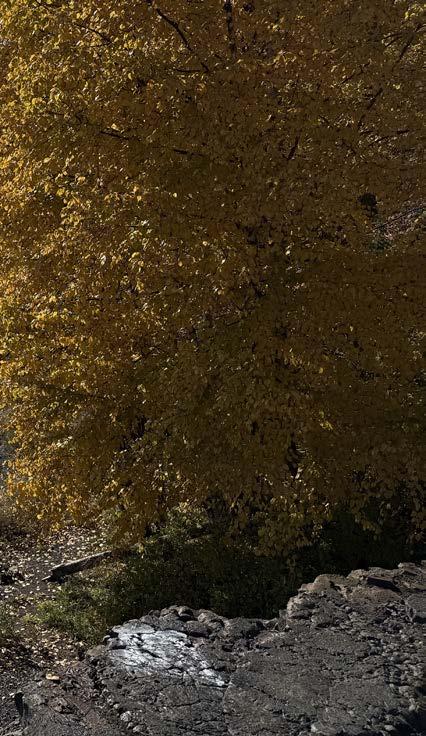
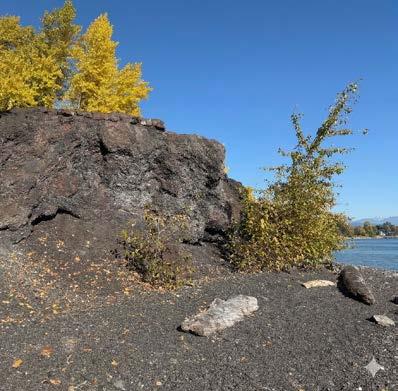
City residents recently renewed the sales tax for ten years, which is expected to bring in around $30 million for the Front Yard Project, along with street maintenance and the Field of Dreams sports complex. The previous five years of sales tax revenue paid for shoreline property and the first phases of the Field of Dreams. All the waterfront now between Sandpoint and the Ponder Point neighborhood is public, (other than the railroad right-of-way) thanks to the recent land purchases.
Until the underpass is constructed— as soon 2028 or 2029, if the grant is awarded—the only legal and safe access to the shoreline remains the trailhead in Sandpoint, between the Seasons and the city’s water treatment plant.
As a founding member of Friends of the Pend d’Oreille Bay Trail, Jan Griffitts has spent nearly two decades promoting public access to Ponderay’s front yard. During that time, she’s learned to be patient—mostly.
“We are grateful to see our vision of public access becoming real,” said Griffitts, president of the nonprofit group. “I can’t wait to walk through that underpass.”


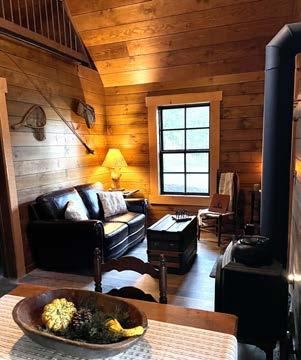
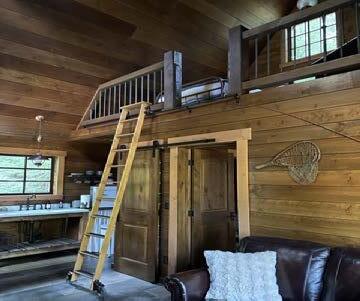
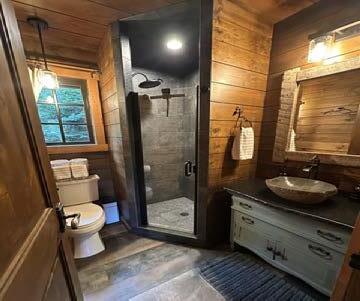
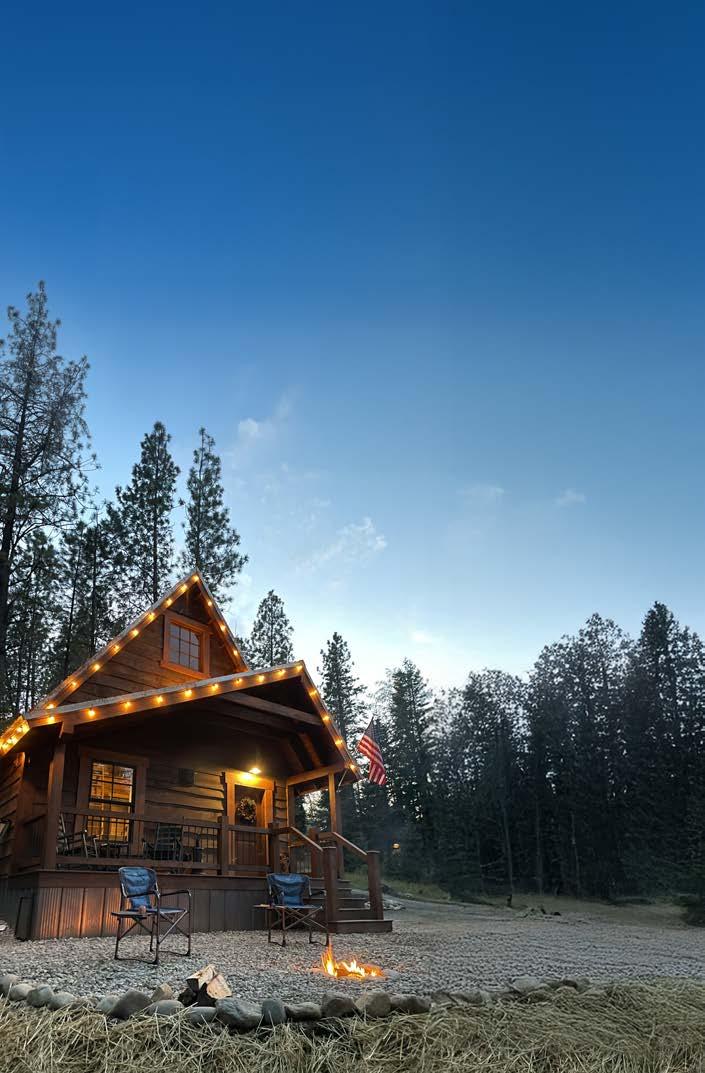
SCAN ME
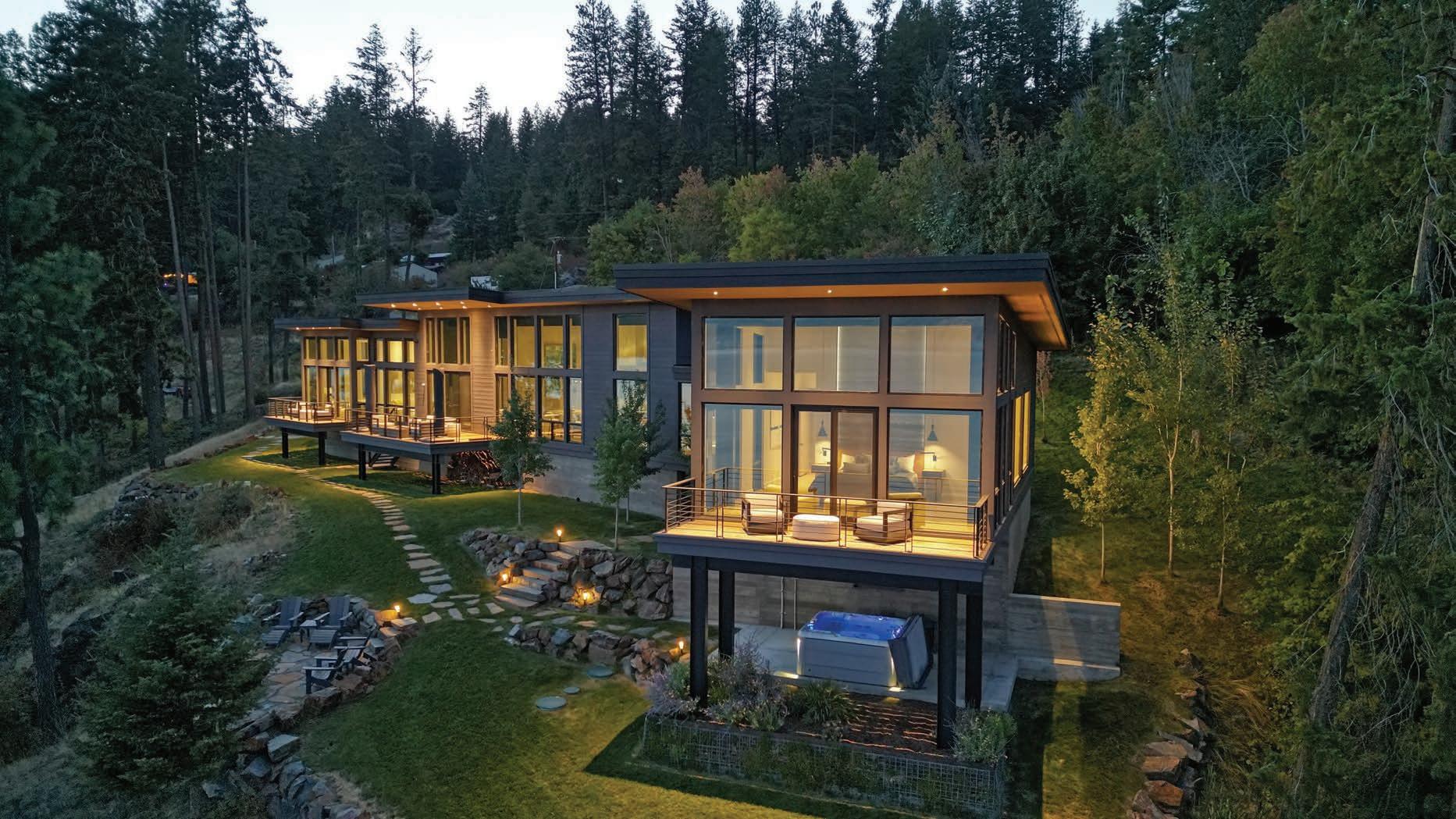
PREPARE FOR DELAYS
Street work, paid parking slated for summer
implementation
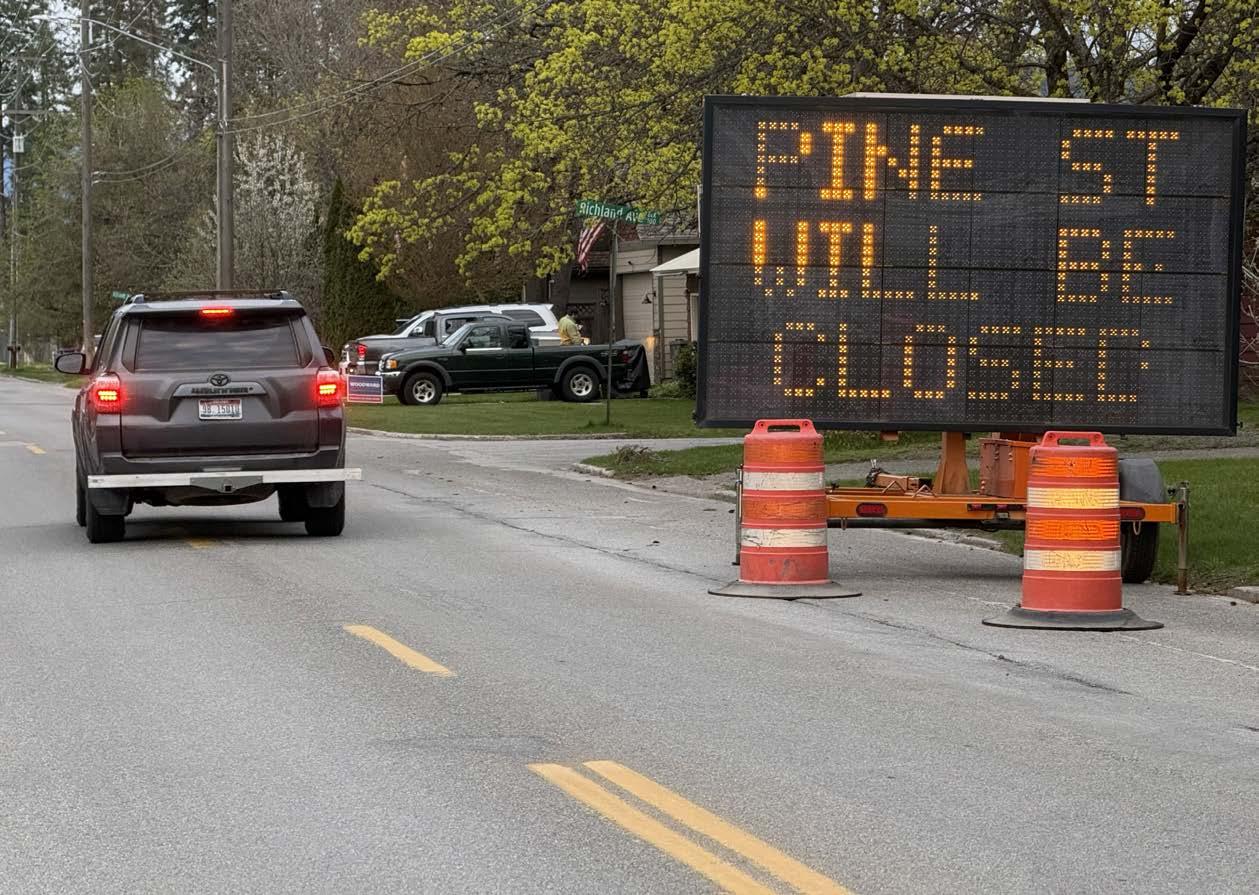
by Cameron Rasmusson
It’s a seasonal sound as inevitable as bird songs in springtime: Once the weather warms, the rumble of road construction is only a few weeks away. And this year, the city of Sandpoint has several projects scheduled in both residential areas and downtown that residents should factor into their daily routines. With a long-considered paid parking plan also set to roll out this year, it amounts to big changes for downtown equilibrium.
“Once construction is underway, residents should allow extra travel time, especially in downtown corridors, and stay informed through updates on the city website and project pages,” said Sandpoint Public Works Director Holly Ellis.
Pine Street is the first road to receive a spruce-up from the Sandpoint Public Works Department. According to Ellis, the project represents the completion of work between Boyer and Division avenues, which began with the installation of ADA ramp upgrades. This next round will see crews milling existing asphalt and placing a new overlay, addressing delamination, centerline seams and alligator cracking on the surface. Work is expected to be completed by early summer.
As summertime moves forward, the focus shifts to the Cedar Street and Lincoln corridor, bringing a full reconstruction to
Cedar between Monroe Street and Lincoln Avenue, along with a suite of infrastructure improvements near the library. Crews will install a new stormwater main along Lincoln from Pine to Cedar, extending through the Cedar corridor. They’ll also place new sidewalks on both sides of the street, plant new trees, and introduce new water infrastructure and stormwater treatment features integrated into landscaped planter strips.
“A newer approach to street tree planting is being incorporated,” Ellis said. “The city will take responsibility for watering newly planted street trees during the first three years to help ensure establishment.”
Downtown revitalization begins in earnest this fall after Labor Day. As the third phase of the city’s Downtown Revitalization Project, it targets First Avenue from Bridge and Church streets to Lake Street. The corridor rebuild will bring full utility upgrades and undergrounding of electrical infrastructure; wider, ADA-compliant sidewalks; new street trees, pedestrian lighting, benches and bike racks; intersection improvements; and multimodal design elements for safer pedestrian and cyclist movement and traffic calming.
“A raised intersection at Bridge and First is also under consideration to help slow traffic and reinforce pedestrian
This summer sees several construction projects taking place in Sandpoint. Staff photo.
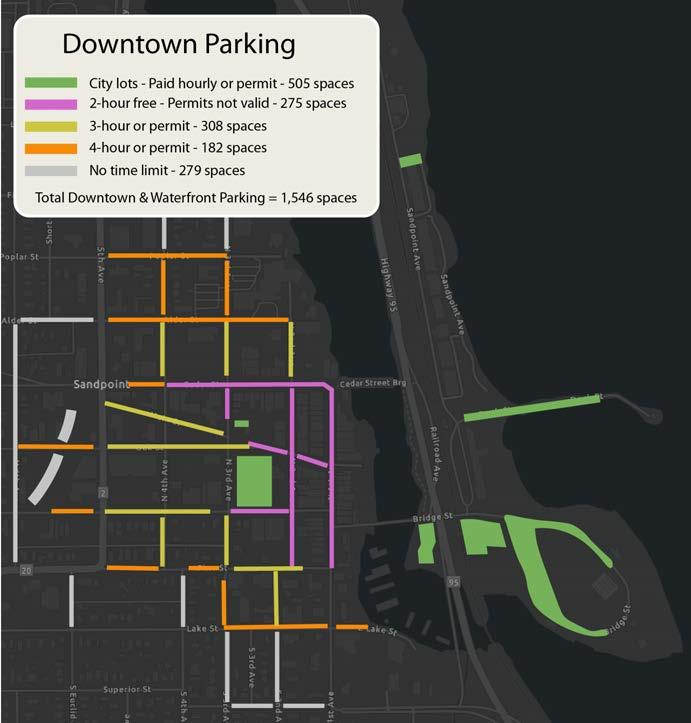
priority,” Ellis said. “In addition, bollards are planned at the Bridge and First intersection to serve as a physical barrier restricting left turns from Bridge Street onto First Avenue for safety.”
Finally, there’s the much-discussed implementation of paid downtown parking. According to Ellis and Sandpoint Planning and Community Development Director Jason Welker, the move intends to address parking turnover issues and increase availability of short-term parking for businesses—a perennial topic at city public meetings. City officials have mulled the possibility for years, with the public debate appearing in Bonner County Daily Bee pages as early as 1993. Three decades later, the proposal finally found traction following another round of public engagement, where council members weighed the impact to residential affordability versus the need to support downtown businesses and vitality.
“The city has approached this as a policy decision requiring council direction, informed by public input, stakeholder feedback and experiences from similar communities,” Ellis said.
According to Welker, the city expects to have parking kiosks installed by the end of June with permits available for purchase around the same time. The first phase of the rollout will focus on education, with kiosk screens and on-street stalls alerting the public to the imminent changes.
While all parking in city lots will be paid, all street parking will remain free for at least two hours, and up to four hours in some zones. City and county residents will be able to buy parking permits for $15 or $30, respectively. “The exact date we will be charging non-permit holders and checking permit status is to be determined,” said Welker.
All in all, it’s shaping up to be a busy summer for city staff and a period of adjustment for residents and business owners. As always, pedestrians and drivers should expect lane closures and detours, reduced on-street parking, noise and dust, and access limitations to driveways and businesses.

State Opens Door for More Short-Term Rentals
New law restricts how municipalities can regulate vacation rentals
by Trish Gannon
Sandpoint’s city council is scrambling to rewrite their short-term rental ordinance after the Idaho Legislature passed a law this session preventing local government from placing restrictions on vacation rentals in their communities, unless those same restrictions also apply to longer-term rental housing. Some local governments have instituted rules regulating vacation rentals in an attempt to control their impact on housing costs, and maintain their local quality of life. But groups like the Idaho Association of Realtors and the Idaho Vacation Rental Association have opposed any such rules, arguing they limit a property owner’s ability to do what they want with their property.
The law, House Bill 583, also strips a local authority’s ability to require licenses, permits or certification, fees or even require registration to operate as a vacation rental.
“Cities now have no ability to determine where short-term rentals should operate and how they should be managed,”
Mayor Jeremy Grimm said in an interview with the Sandpoint Reader. “That decision has effectively been centralized at the state level, even though communities across Idaho differ dramatically in their housing markets, infrastructure capacity and neighborhood patterns.”
The concern is not so much about snowbirds renting out their homes to the winter ski crowd while they spend the season basking somewhere with warmer temps; it’s more about investors swooping in to net available housing, then renting it out to weekly visitors.
Grimm said Sandpoint already struggles to provide affordable housing for local residents.
“When residential homes are removed from the long-term housing market and converted into short-term rentals, the supply of housing available to local employees shrinks,” he said. “The pressure on prices increases, and employers struggle to
recruit and retain workers who simply cannot find a place to live in the communities where they work.”
In 2025, the city removed its cap allowing just 35 non-owner-occupied short-term rentals in city limits after the Idaho Supreme Court ruled that prohibiting short-term rentals is illegal. But the new law passed by the legislature goes further.
Max Pond, the government affairs director for the Idaho Association of Realtors, said the law is a “much-needed clarification of existing law in Idaho which will ensure short-term rental property owners are not targeted by local jurisdictions,” in an interview with Homes.com.
And Cornel Rasor, who supported the bill, wrote that it, “balances local governance with protections for short-term and vacation rentals. It ensures proper local control while curbing over-regulation and safeguarding property rights. HB 583 was the culmination of a three-year collaboration between STR owners and local governance. I am confident it meets the requirements of state oversight and of local governance.”
But Grimm pointed out that in resort areas like ours that attract a lot of visitors to a limited supply of housing, the choice is often between the visitor and the resident—and the visitor, who generally has deeper pockets, tends to win.
“If housing continues to shift away from long-term residents toward short-term visitors, communities like Sandpoint could lose the very economic diversification that state leaders and local officials have spent decades trying to build,” he said.
While proponents of the new law celebrate the protection of property rights, local leaders worry about the erosion of the ‘Idaho way’—local rule. With Sandpoint’s hands now tied by state oversight—and no signs the demand for short term housing will ease—the results of this experiment will be felt first on our neighborhood streets and the residents of Sandpoint will certainly be the ones living with the outcome.
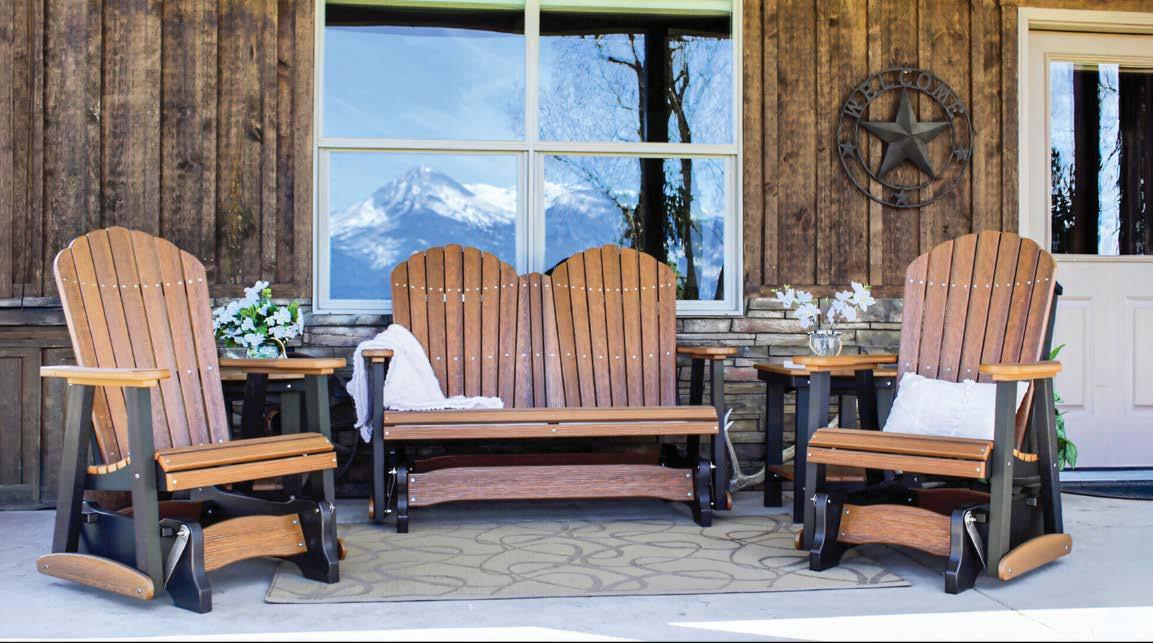

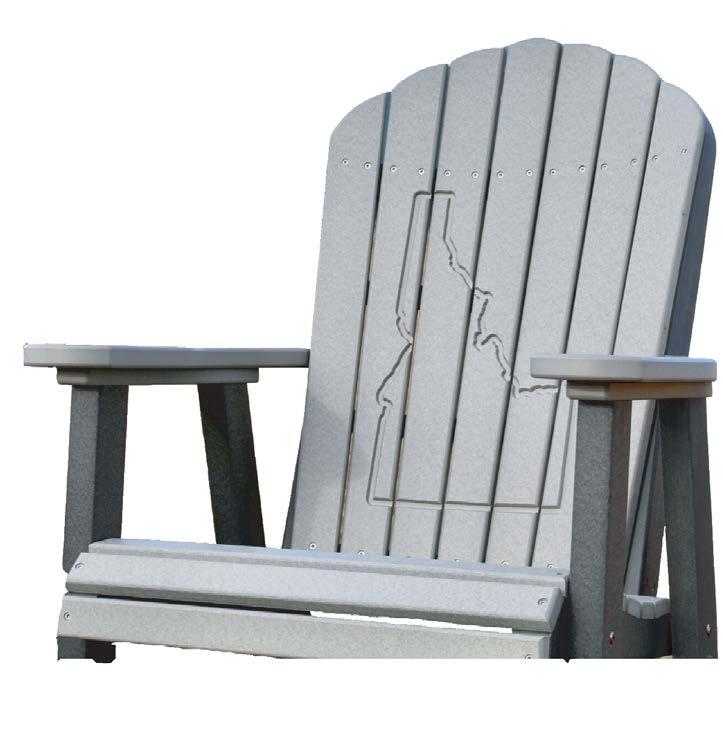
Serving Sandpoint in More Ways than One
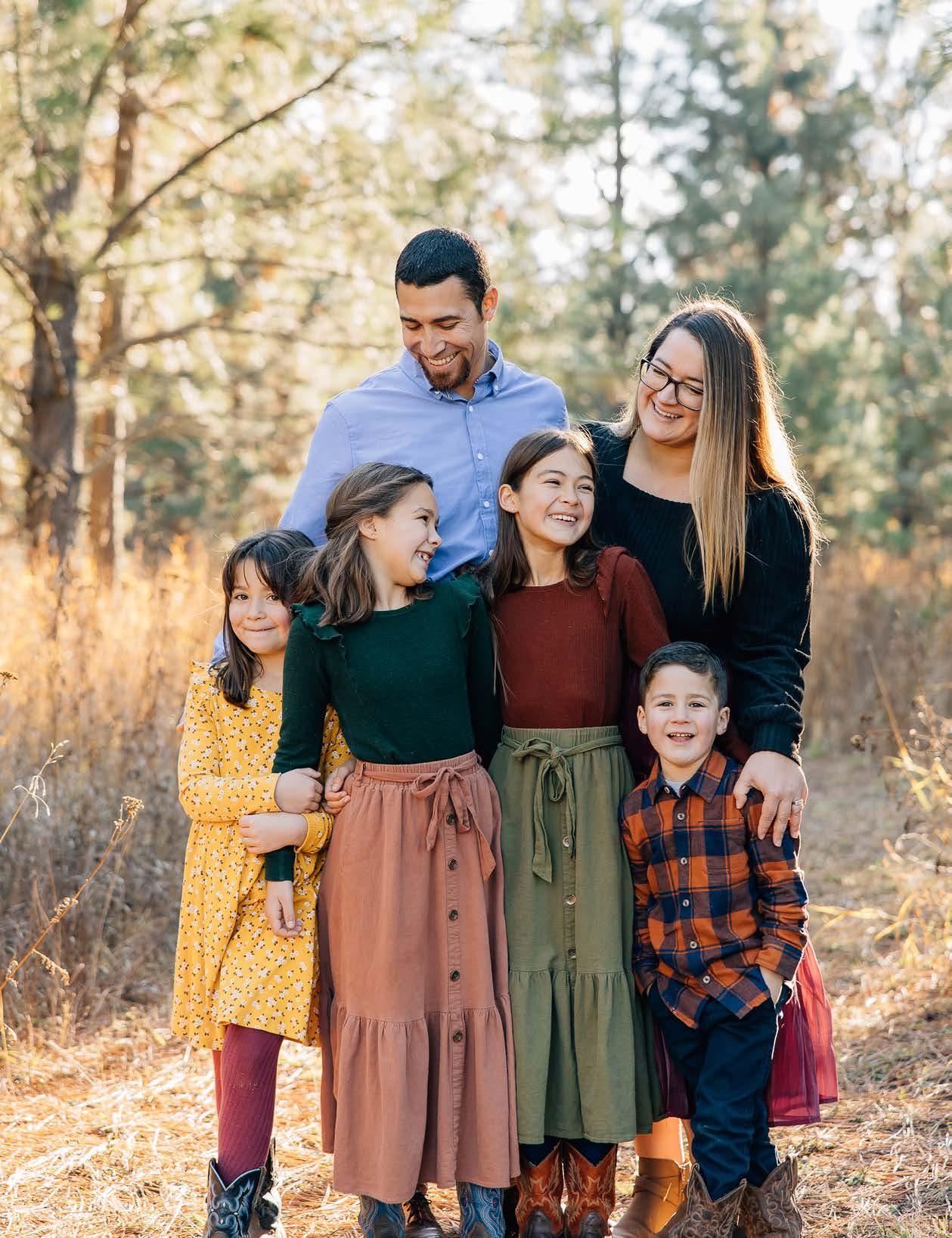
Restaurateur is rooted in food, family and community
by Susan Drinkard
You don’t go to Joel’s Mexican Restaurant just for the fish tacos. You go because it’s a place where you’ll been seen, recognized and called by name. The appeal of Joel’s lies in its business model— tasty, affordable food in a casual yet lively setting with notably friendly staff.
Joel’s started in 1995 when Joel and Rebeca Aispuro brought their family to North Idaho from San Diego and opened a food truck a few streets over from their present locale on Church Street. Now, 40-plus years later, it’s operated by its founder, the senior Joel, and two of his children—Joel and Veronica—and they are all dedicated to creating an inviting environment for their guests.
Joel Aispuro and wife Moriah with kids Brielle, Eliana, Anastasia and Zion. Courtesy photo.
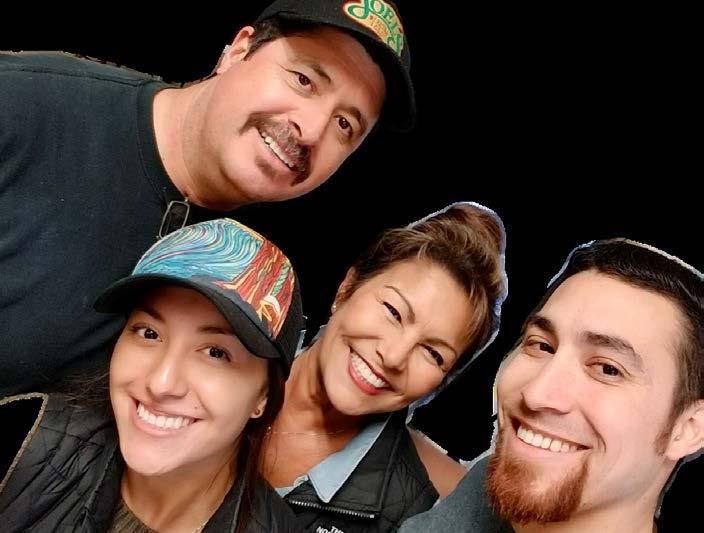
The younger Joel, called “Papas” by his family (it means ‘potato’ in Spanish), is the head of public relations and principal goodwill ambassador at the restaurant. He is known for addressing individuals by name and maintaining direct eye contact.
Papas has worked at the family business since he was a teenager. During the intervening decades he has been witness to a lot of changes: many new faces as customers, an expanded menu, a remodeled kitchen and a different schedule of workdays. He has also helped the business expand and gain recognition. Food and Wine magazine once named Joel’s burritos some of the best in the country. According to the magazine, “the Sandpoint joint draws crowds for its vegetarian burritos, fish tacos and spicy chicken asada burritos.”
“We have a larger variety of options (now), and in 2005 the kitchen got bigger. We wanted an open kitchen where you can see that it is clean. When the health department eats at your restaurant, you know it’s good,” Papas said
Today, he counts the new No. 1 seller as the egg, bacon and potato burrito with salsa they serve all day. “Another change
is that 30 percent of our business is now vegetarian.”
One change, however, is especially difficult. In the summer of 2025, Joel and Veronica lost their beloved mamacita, Rebeca—an essential part of both their family and restaurant—when she passed away. “She was brave,” said Joel, “and she did not complain. She trusted in God.” Rebeca is recalled with fondness by residents who remember her bright red lipstick, big smile and her ability to belt out the names of people when their order was ready. Her impact was obvious as the tributes poured in to the business’s Facebook page.
Joel values community and service, and also family, which influenced the decision to close the restaurant on Wednesdays a few years ago. He acknowledges that upholding a healthy work-life balance is essential for overall well-being and productivity.
Joel has been working at the restaurant since he was 17. “I saw kids in the womb who are now coming here and eating beans and poppers.”
He reflected on those early years, and his high school experience, saying, “That time was hard for me. I did not do well
I want to be generous and I want to give back “
in school and that created an insecurity and anxiety in me, but it was not the fault of my teachers. At that time Shaun Alexander, running back for the Seattle Seahawks, put on a clinic here. He shared Jesus with me, and it changed my life. He ministered to a lot of kids here and keeps in touch.”
Joel and his wife, Moriah, met at a local Protestant church. “I watched her and saw her integrity.” They married 14 years ago and now are parents to four children: Anastasia, 12; Eliana, 10; Brielle, 8; and Zion, 5. Moriah leads home school studies with the children. Joel likes to target shoot, ski and hike in his free time.
Over the years he has coached youth basketball and soccer teams, and Moriah has coached volleyball. It is part of a spiritual mission. “I want to be compassionate with conviction; I want to be generous, and I want to give back. These are things I aspire to,” he said. People notice his efforts.
As part of that giving back, Joel was elected to Sandpoint’s city council in 2017, and re-elected in both 2021 and 2025. He urges residents to attend meetings to understand the complexity of issues and how city codes often shape decisions. “There is a belief that our taxes cover everything, but they don’t.”
As a Sandpoint city councilor, he sometimes encounters criticism from fellow residents, particularly on social media. He noted that public misunderstanding of his intentions can be challenging, but he remains open to friendly conversations about city issues.
In his roles in the community, Joel says he’s in the limelight a lot of the time. “It’s the people in the shadows, like my mom and sister and my wife, that have kept me going,” he said.
Joel’s has always been a family affair, centered around Joel Sr., mom Rebeca, Joel Jr. and his sister Veronica. Sadly Rebeca—Mamacita to family and friends—passed last year, but family is still at the heart of the business. Courtesy photo.
Your local guide to living, exploring, and finding your place in North Idaho.



If Sandpoint stretches the budget, look a little wider
It's a new year, but is it a new real estate market in Sandpoint? Not really. In the first quarter of 2026, the median price of a single family home in Sandpoint inched a little farther upward, averaging $571,545, almost eight-and-a-half times the median salary for the county, estimated at just under $67,000.
“If Sandpoint proper is stretching the budget, I'm pointing people to Ponderay, Kootenai, Sagle and Priest River first,” said Fabiola Ferris, a Realtor with Tomlinson Sotheby's and the vice president of the Selkirk Association of Realtors. “You'll get more for your money yet still stay close to everything that makes Sandpoint such a great place to be.” For those not afraid of a little distance, she added that “Oldtown, Newport and even Bonners Ferry start opening up real value—especially for land, shops or flexibility. It really comes down to lifestyle versus drive time.”
There are slightly more options on the market than there have been in the past thanks, Ferris pointed out, to more building going on. “We're filling gaps in certain price points, mostly mid-range and new construction,” she said. “But for a move-in ready, well-priced home? That's still tight, and those don't sit on the market long.”
Well-priced and in good repair is really the secret for becoming a successful seller. “The homes that are priced right will move, but the ones that miss the mark on price or condition? They'll sit, and end up chasing the market.” Deep clean, declutter and interview agents until you find one you trust. Then listen to what they have to say; their expertise really matters.
If you're looking to buy, Ferris recommends “Get clear, get ready and don't hesitate when you find the right one.” If a house looks like a good buy to you, it will likely look like a good buy to others looking for their new home.
“You have to know your non-negotiables versus your niceto-haves,” she added. “Understand your budget (the real one, not the hopeful one) and be honest about your timeline and how quickly you're willing to move. Are you okay with a little work, or do you want something that's turn-key? Do you need land, or a shop or just the right location? The buyers who are winning right now aren't guessing—they've already made those decisions before they walk in the door.”
And as always, “Have your financing lined up, know your numbers and when the right home shows up—move with confidence!”
–Trish Gannon
Drywall Patch
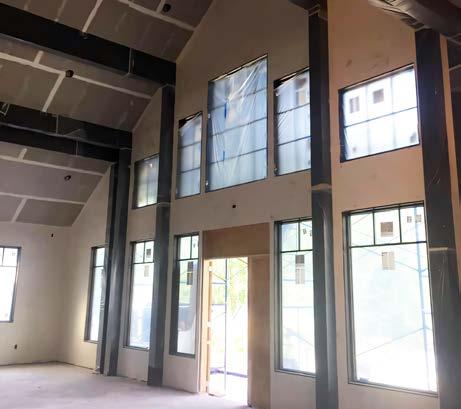

Advanced Drywall Concepts provides a wide range of drywall services from small drywall repairs to complete remodels, and commercial & residential jobs. Whatever your drywall needs are, we can help you improve and complete any project.
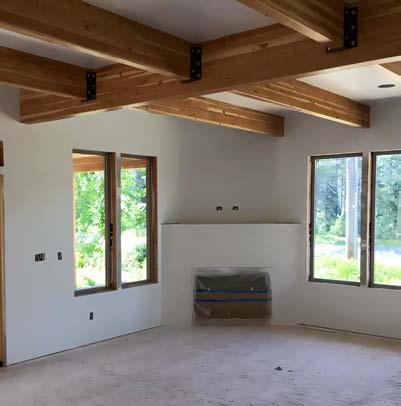








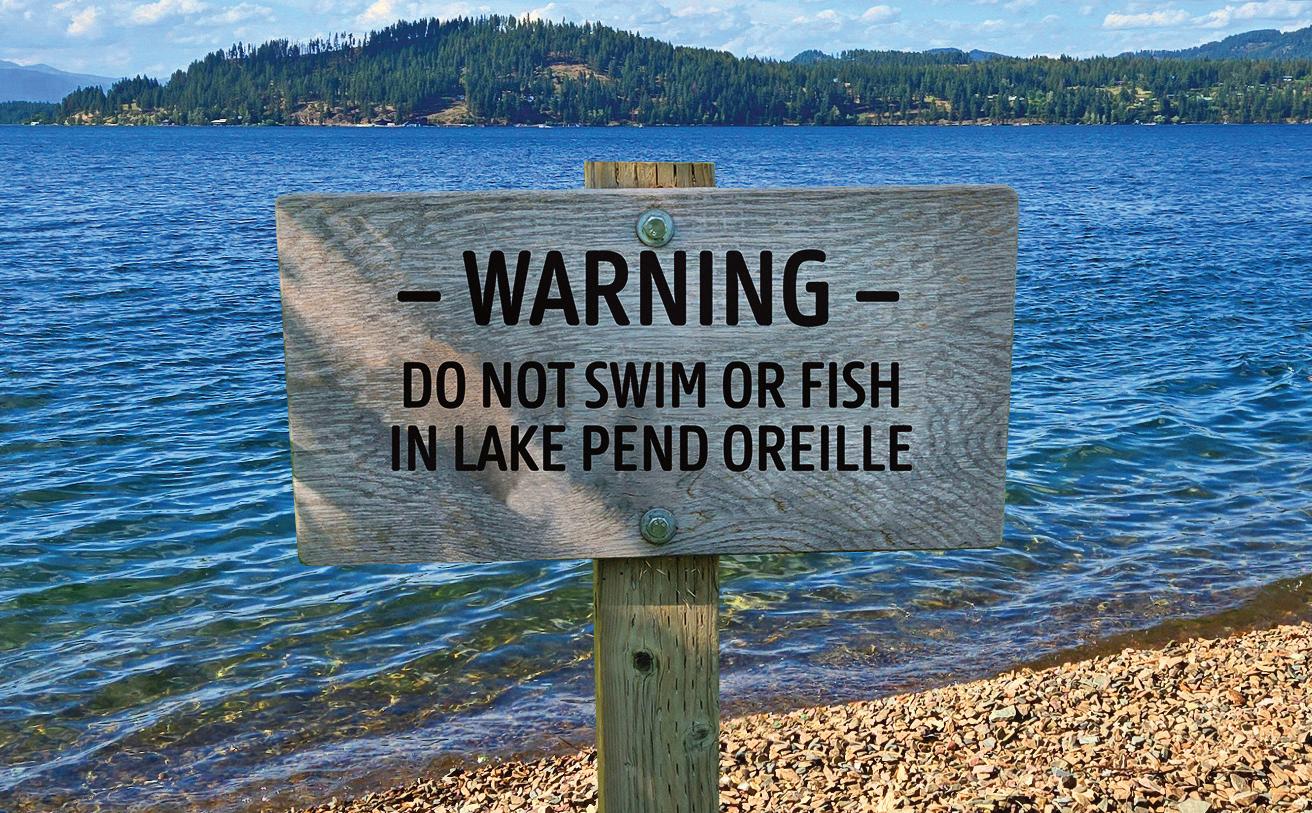
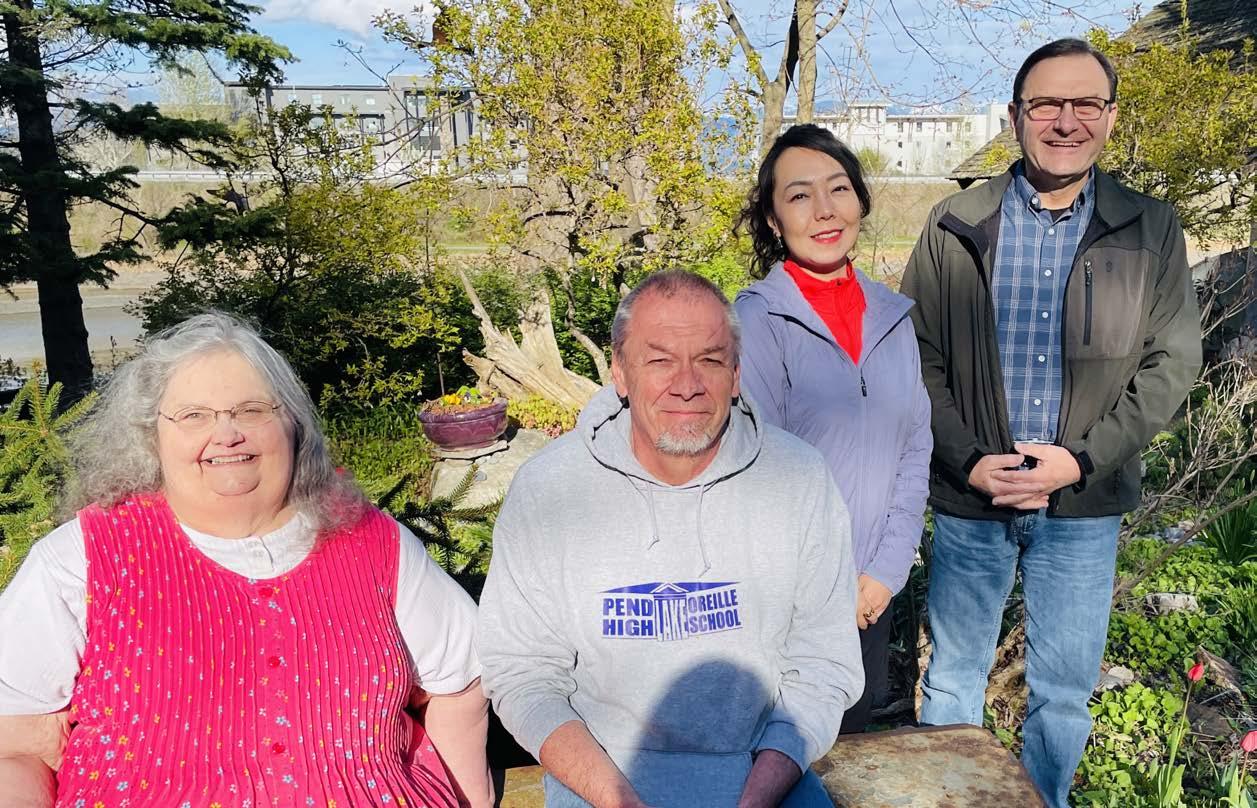
Natives & Newcomers
story and photos by Susan Drinkard
Seeing Sandpoint through the eyes of newcomers is uplifting, especially after long winter months. Often newcomers bring new skills, perspectives and much enthusiasm for their new town. And that is the case with our newcomers, Leah Ye from China, via Bangkok, and John Stoddard, from Virginia. Both quickly embraced different aspects of Sandpoint life with inspiring energy.
Sandpoint natives featured in this edition share their memories of summers spent here during their childhood and teenage years, some fifty years ago. Randy Wilhelm and Terrie Abromeit Collins share fun stories about those days, as well as keen observations about positive and negative changes they’ve witnessed over the years.
Native RANDY WILHELM
Randy Wilhelm was born 63 years ago in the old Sandpoint hospital, a former Farragut Naval Training Station building. His dad, Richard, worked at the W.I. sawmill in Colburn, now gone, and his mother, Edna, spent 30 years working for Yoke’s. His mother was raised in Bonners Ferry while his father grew up in Careywood; he has two sisters and a brother.
“I graduated from SHS in 1981 and went on to attend the University of Idaho. After being placed on academic probation I spent a year working at a sawmill. I soon realized there had to be a better way to earn a living. Following a girl—something that seems to be a recurring theme in my life—I went to Rick’s College for a year. I lived in Oregon, Colorado and Missouri. Wherever girls were moving, I’d drive the U-Haul.” Randy studied at the Art Institute of Denver before returning to Sandpoint to work at Keokee Publishing. While working there, he earned his certification and B.A. “I also volunteered to teach a class at LPOHS, which was fitting since I had gone there during my first three years of school.”
After 27 years teaching art at the Lake Pend Oreille High School, also known as the alternative school, Randy retired in 2025. He left a lasting positive impact
on students in the school, known for its supportive and caring environment. He now teaches art classes for Pend Oreille Art Council, serves on the board of the farmers' market and volunteers at the food bank every Tuesday. He is a vocal proponent for keeping the LPOHS building as the site for the school. What were summers like as a young person in Sandpoint?
Being poor—everyone was poor then—we went swimming and hung out at the beach on the weekends. We went to the movies at the Panida, which were never current movies. Connie’s was the only place open after 8 o’clock. I always had a job: I delivered papers for the Daily Bee; I managed McDonald’s for six years; I worked at Harold’s IGA. Ralph always put me to work when I was home. Harold’s had a loyal clientele of elderly people, some who probably hadn’t talked to anyone all day except for me. Harold’s served a purpose other than groceries.
I lived a block down the street from LPOHS. All the neighborhood kids would get together and play basketball outside at the school. We used to go swimming at midnight at the sailboat docks. It was pitch black down there in those days, and kind of creepy.
What are the worst changes you’ve observed over the years in Sandpoint?
There’s a lot of angry people who have moved into the area. It used to be a small town where everyone knew everyone. Sandpoint doesn’t have the same small-town community feel

that it used to.
What are the best changes you’ve observed over the years in Sandpoint?
We have a seven million dollar pickleball court. (Laughing.) The food bank. People would not get by without the food bank. The way it’s set up is not humiliating. Everyone there is so nice. It’s fun to volunteer there.
What advice do you have for people who want to move here, or for newcomers?
Be careful of all the wolves and grizzly bears that are marauding around town. (Laughing.) Understand it’s probably not like other places you’ve lived before. Don’t assume everyone here is rich. Spend an afternoon on the SPOT bus. Go to the farmers' market. Spend time at the library. Become part of the community.
Newcomer LEAH YE
Leah Ye and her husband, Aaron Ling, moved to Sandpoint in October of 2025 from Bangkok, Thailand, “a place where it’s always summer.” In a few short months Leah has embraced Sandpoint, but she says it is Sandpoint that has embraced her with such a welcoming spirit that she never knew she would be so happy in a new community in a new country, especially with limited English-language skills. Leah, 40, speaks Mandarin, some Japanese, and her English skills are improving with the help of her language coach, Isolda Robinson, who tutors at
Backed by over 100 years of experience, I’m ready to help you protect what matters most with top-notch service and a local touch.
The Roberts Family Clients since 2007
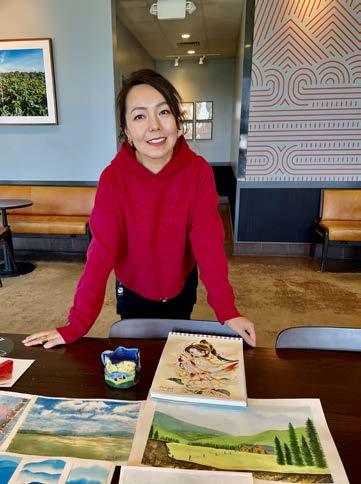
the library.
Leah holds a B.A. in psychology. Her job experience includes a successful online store and prior to that, pharmaceutical sales.
“I was worried about my wife being by herself and isolated, but now she is so busy we can’t meet for lunch,” said Aaron, who came along to the interview. “I am so grateful to the community, to my boss, Charles Manning, and to my coworkers for being so helpful. Happy wife, happy life.”
Leah and Aaron spent the past four years working in Thailand, but they are Chinese nationals from Nanjing, located in Jiangsu province in the Yangtze River Delta region of East China, which is about 200 miles from Shanghai. Nanjing, a city with a population approaching 10 million, is a prominent cultural center in China. Sandpoint is a dramatic change for the couple
after living in huge cities in Thailand and China. What brought you to the North woods?
My husband has a job with Kochava. (Kochava is a data solutions company on Church Street in Sandpoint.)
What are your hobbies and interests, and how are you fitting in to the community?
I played badminton in Thailand. Now I play pickleball and tennis at the James E. Russell courts every day. The badminton helped me become good at pickleball and now I am in the advanced group. I take oil and watercolor lessons, and I am painting bookmarks for the people in my Bible study group. I play Mahjong with other women, and I am learning pottery on the Cedar Street Bridge. I feel so lucky to find these passions here and proud of how much I’ve grown in a short time. Is there anything about living here that has surprised you?
Yes. How friendly it is. It is easy to make friends here. I went to Zumba at 7B gym and a woman in the class, Mary Berryhill, asked me to have coffee with her. People here are so nice. Everybody waves and they remember my name. I have also found an Asian group of women, and we have a special bond.
Expensive living costs of Idaho were unexpected. What do you miss about where you lived?
Seafood. There are many good restaurants here, but we drive nine hours to eat good Chinese food in Vancouver. It is

challenging to find Chinese vegetables. You must go to an Asian market in Spokane.
Native TERRIE ABROMEIT COLLINS
Terrie Abromeit Collins has fond memories of growing up in Sandpoint during years when parents watched out for all the neighborhood kids, not just their own. She and her five siblings grew up on Church Street, in a house that still stands. “Everyone knew everyone so you couldn’t get away with anything. I was walking with a girlfriend down by War Memorial Field and she picked someone’s flowers. By the time we made it home my mom already knew about it.”
Terrie was born in 1959 to parents Albert and Omojean Abromeit. Her father ran the Pastime Sports Shop downtown.
“When I was young, Sandpoint was super, super fun.” What were summers like as a young person in Sandpoint?
In our little block we must have had 16 to 20 kids and we played Ollie Ollie in Come Free. We played badminton and when it got dark, we’d move it to the post office where there were lights.
We had a neighborhood newspaper with Joanne Peterson as our editor. To get our news we’d knock on doors and ask, ‘What’s going on?’ It was on grocery sacks. We couldn’t sell it, so we just gave it away.
The beach was the place. We would get up early, like at 6 a.m., to get our chores done and then walk to the beach. The police had a ten o’clock whistle and that was the time that all of us kids had to go home. As teenagers there was a route we drove in Sandpoint. We called it “running the gut.”
The Fourth of July was especially memorable because there was more participation back then; every business and organization had a float. There was often a carnival on the back side of Farmin School, which was where the U.S. Bank is now. The Lions would put on a variety show and there was a huge street dance. Then we’d lie down in the football field and watch the fireworks.
Another memory as a kid was a super fun one. There was the trash dump up Baldy Mountain Road. My mom would pop a couple big bags of popcorn, and we’d stop at the A & W to get a gallon jug of root beer. We would go watch the bears slide down the trash. If the sows thought we were too close they would investigate us, and we would jump back into our car. We weren’t the only family that would do that.
One year I accidentally tripled the Crisco in a cookie recipe, but we couldn’t waste it. We added all the ingredients necessary. We gave all our neighbors cookies and even sent some to the boys in Vietnam. My sister Mary had pen pals in Vietnam. We went to farms in the area to pick strawberries, corn, beets and beans. We gathered sacks of (wild) morel mushrooms. My dad hunted and fished, and he loved catching the big Kamloops.
What are the worst changes you’ve observed over the years in Sandpoint?
Businesses on the beach, the jut outs, the dangerous parking downtown, the loss of Dog Beach, electing people to run the city who don’t have an interest in keeping the flavor of the town. The city parking lot is too far away for older people to walk downtown.
What are the best changes you’ve observed over the years in Sandpoint?
The bypass has been a big improvement for the downtown traffic. I’m glad they didn’t tear down the old junior high on Pine Street. I want them to keep the Lincoln School as the alternative school. Family who went there came home happy. What advice do you have for people who want to move here, or for newcomers?
You are going to make an impact on this beautiful area, so make sure that impact is good for our town and 85 percent of the people living here.
There are budget friendly things to do outside: swimming, hiking, sledding and more. We have good medical services here, including specialists.
These Facebook sites are beneficial to know about: Sandpoint Facebook Yard Sale, Living in Sandpoint and Sandpoint Yard Sale. You can buy, sell or ask for help on these sites. A fun site is Signs You Are a Sandpoint Kid.
And don’t forget to look up and see the stars.
Newcomer JOHN STODDARD
Originally from Detroit, John Stoddard, 66, served 22 years in the Air Force after enlisting in 1978. His area of expertise was in security communications during his assignments in Japan, Georgia, Alaska, Mississippi, Nevada, inside Cheyenne Mountain in Colorado Springs, Colorado, Verona, Italy (with NATO during the Balkan War), and his last Air Force assignment—the Pentagon. John earned a master’s degree in his field while in the Air Force.
After retirement he worked in security for NCIS for 12 years before taking a position with the Air Force Office of Special Investigations, AFOSI. “I was just a nobody, but I was assisting the agents with real spy investigations. It was incredible that I had those opportunities. My manager was getting a lot of calls from writers of the show The Americans for advice; she told them to deal directly with me to make sure nothing was exposed that was classified.”
John and his wife Susan, married 46 years, relocated to Sandpoint from Colonial Beach, Virginia in 2024.




























What brought you to the North woods?
Family was here. My daughter, Erika, worked for the Idaho Transportation Department as a structural engineer in Boise. They thought it was getting too crowded there, so they moved to Sandpoint. We spend time with two of our three grandchildren, attending their sports events, and my wife likes to cook for them. Our son Blake and his family

live in Maryland.
We don’t do well with the heat. It’s hot and muggy in Georgia, Mississippi and Alabama, places I was stationed. Everyone we knew was retiring to Florida and other southern places. We headed north. What are your hobbies and interests, and how are you fitting in to the community?
I love history, genealogy, tinkering, exploring Idaho’s state parks, being a grandparent, hiking, biking, fishing and kayaking. I am a member of the Veterans of Foreign Wars, and we host a monthly movie night at our house for the V.F.W. I serve as a board member on the Friends of the Pend d’Oreille Bay Trail. My wife and I are actively engaged with our church community; she provides food for meetings and the soup kitchen; she has a passion for cooking. We are also members of the Eagles and we work as election officials. I took it upon myself to identify all the veterans’ burial locations at Lakeview Cemetery, with assistance from Mary Garrison and her son. In 2012, there were 2,700 people buried there and maybe more because years ago paupers were often placed above other relatives. I’ve found 202 veterans so far—about two dozen Civil War veterans (including one Confederate), as well as those from the Spanish-American War and WWI. Next, I’ll research Pack River Cemetery for veterans.
Is there anything about living here that has surprised you?
Not really, because we visited here a couple times first. The people are friendly, and we enjoy the area’s rustic charm. We lived 150 feet off the Potomac River in Virginia; my wife is a water person. She has the lake here and I have the mountains. This location provides a stark difference from the tense environment of Washington, D.C. What do you miss about where you lived?’
I do miss the history in Virginia because there is so much there.


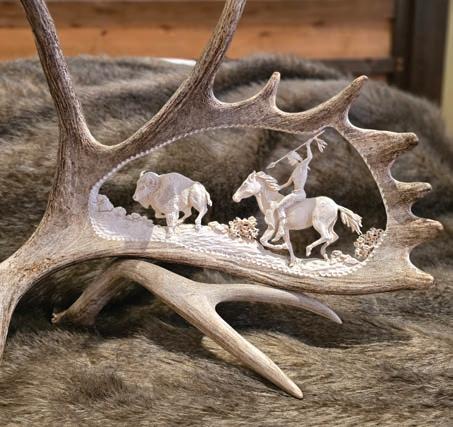
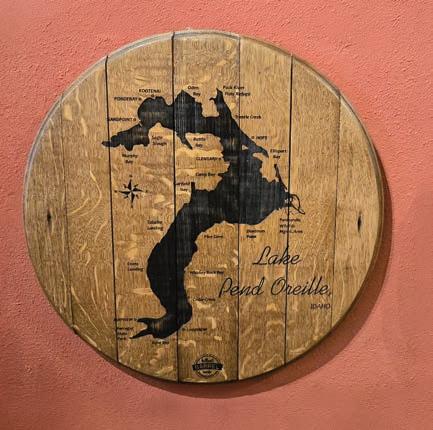
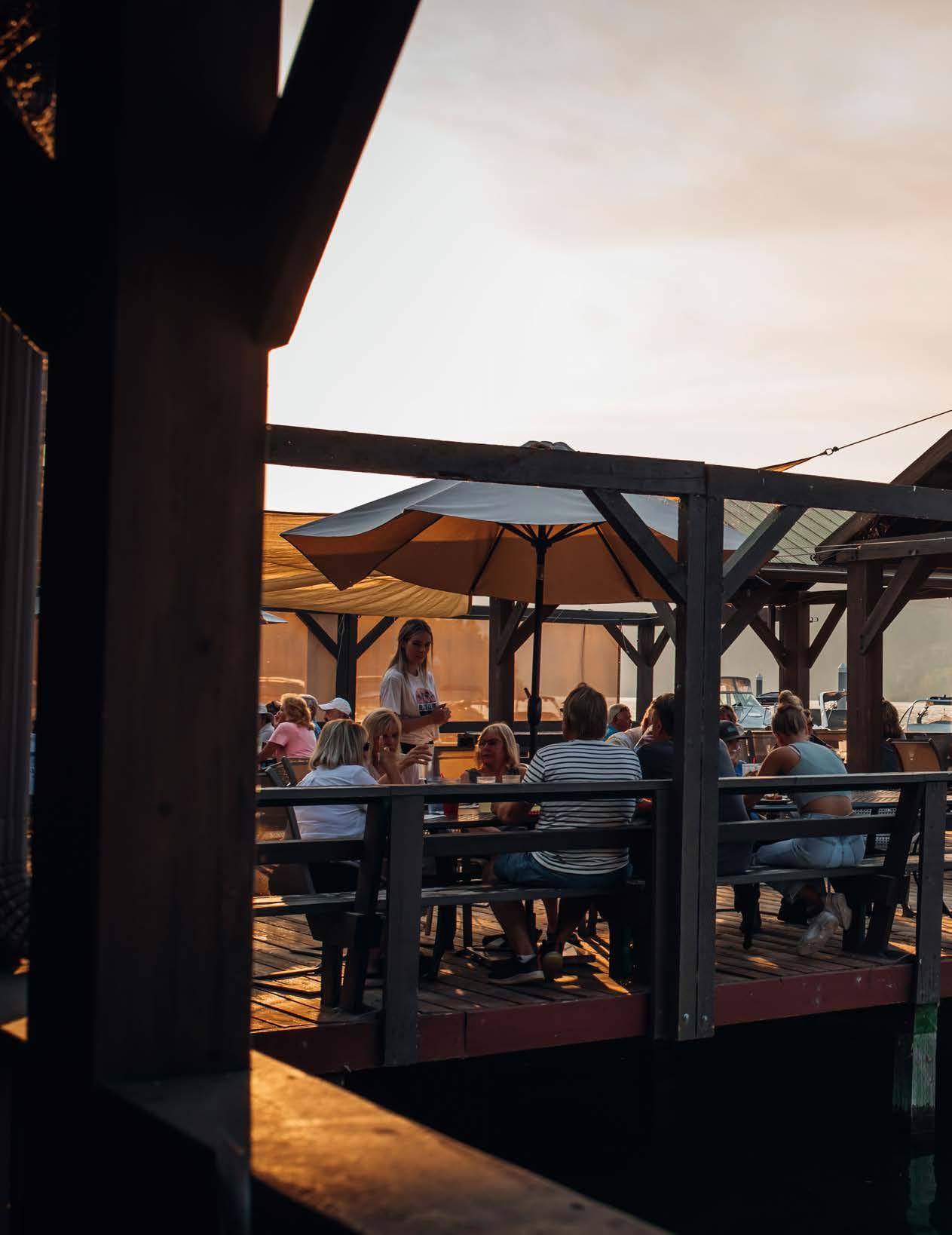
Diners enjoy a summer’s evening at Willow Bay. Courtesy photo.
Dock and dine
Finding the best boatable bites on the lake
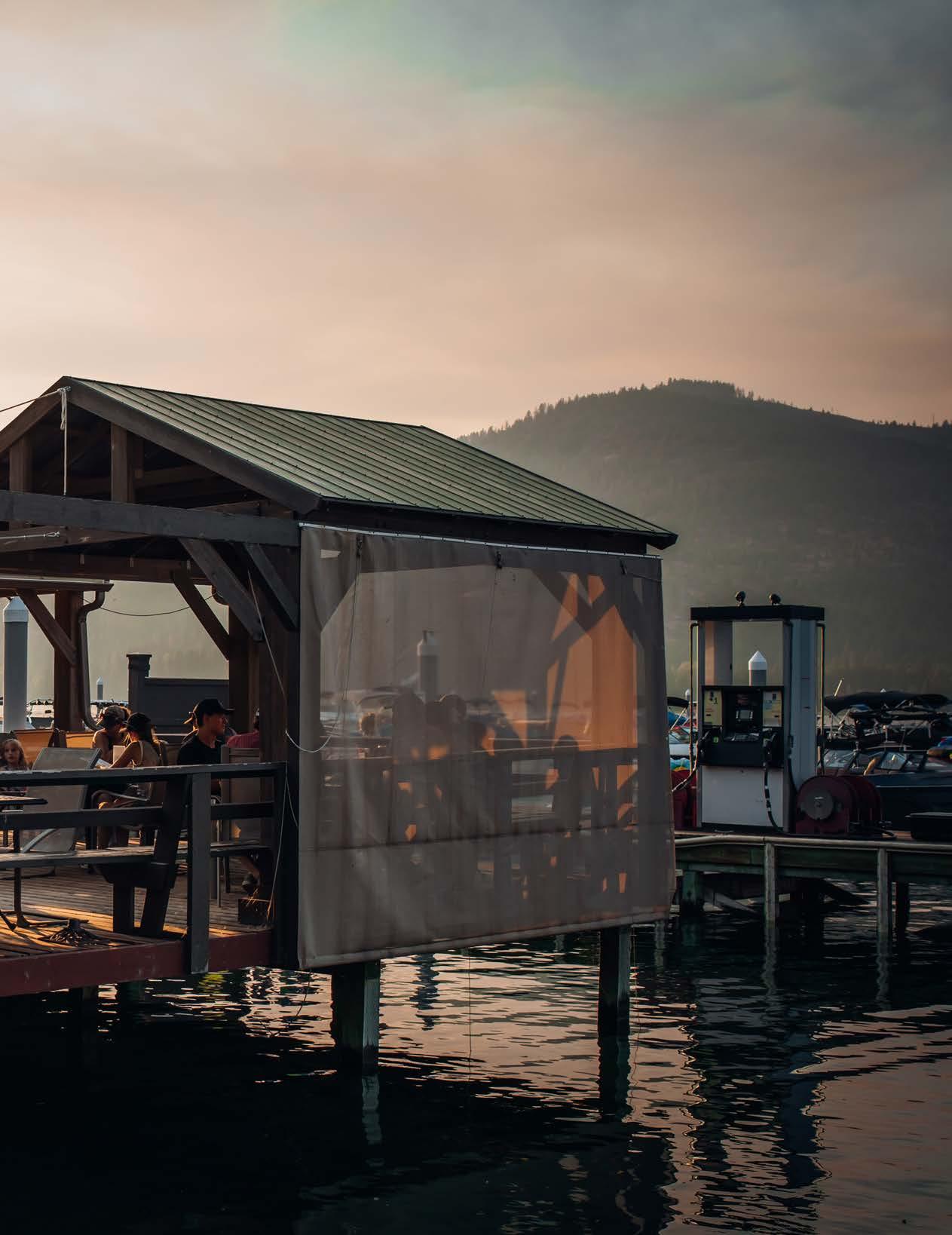
by Renee Sande
There’s nothing quite like a day of boating to invoke that blissful feeling that you are living your best life.
All your senses settle into something instinctive: waves lapping at the dock, the clean earthy scent of open water, sunlight warming your skin and views that feel almost otherworldly. And then... your stomach starts to growl. It's time to dock and grab a bite to eat. But where to go?
Whether you’re north, south or somewhere in between, there are several prestigious purveyors of fine food and spirits on the shores of beautiful Lake Pend Oreille that welcome both you and your boat.
In the Hope area, the Float House is a long-time favorite. If the sunsets were a part of the Float



Natural beer, food & fun!






























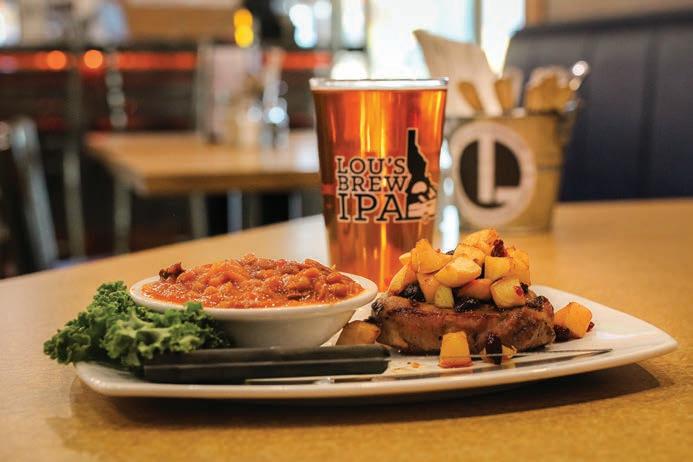
House menu, they’re so jaw-dropping gorgeous no one could afford them. Luckily however, they’re free and pair well with everything here. Fresh fish, local beef, flavorful pastas and homemade breads and desserts get rave reviews, hands down. Fan favorites include the sesame ahi and bacon and bleu meatloaf, along with their award-winning wine list. Located next to Hope Marina, clearly marked public docking is available at the end of the marina.
Just around the corner, so to speak, is Pearl’s on the Lake, with a public dock at the Beyond Hope Resort. Twenty slips are dedicated to restaurant customers; if all those are full, a slip can be rented from the resort.
Even though Pearl’s is named after the eight-year-old daughter of owners/ husband-wife team, Alex and Brittany Jacobsen, the fare is decidedly all grown up. After attending California Culinary Institute and chef-ing his way all over California’s East Bay for eight years, Alex has a passion for creating food with love, using the freshest ingredients. Try their beet salad with feta or king salmon and make sure to leave room for huckleberry cobbler.
Holiday Shores Marina has a small cafe in the back of the C-store that's a local hot spot for breakfast, plus burgers and the like for lunch.

Closer to Sandpoint, the Burger Bay Bar and Grill at Bottle Bay Resort is like coming home to an old favorite, as it's operated by Brett Mullinder and Kelley Kennedy, the couple behind the Fat Pig in Sandpoint. It's a great spot for watching the sunset while relaxing on the outdoor deck, or head inside to a full bar. They welcome pets as long as they're on a leash—children are allowed leash-free on the deck.
Burger Bay is the home of the smash burger, a burger so large you have to smash it down to eat it. A big favorite is the popper burger, with popper sauce, cream cheese and crispy jalapeno. They also have a veggie burger with a black bean and mushroom patty.
At Garfield Bay you'll find the Captn's Table Hard Liquor Saloon and a fan-favorite, house-made corned beef for a Reuben you won't forget. Plus, all the burgers and chicken are charbroiled to order so they're tasty and fresh. During the summer, the only reservations are for parties of more than eight people. In addition to the good ol’ time vibe of playing music on their jukebox and shooting a game of pool, the excellent service provided makes your visit fun and memorable.
There is 50 feet of courtesy boat docking reserved for the Captn's Table that's first-come, first-serve. This is a popular lake spot, so arrive early.
If you're boating the southern part of the lake, check out the Captain's Wheel in Bayview. Even though this oldie has been around since 1978, don’t worry, it’s a goodie, with food that’s fresh! Enjoy a game of darts, karaoke on Saturdays and panoramic views of the lake while enjoying fresh seafood, steaks and locally sourced trout. Their hand-breaded fish and chips will keep you coming back for more. Located on the northwest corner of Scenic Bay, boaters should keep their eye out for a brick wall and a sign that reads 'guest parking,' to get to the dock for the restaurant.
It may not be on the lake itself, but for boaters, the Pend Oreille River is part and parcel of the lake experience. Just west of Sandpoint, boaters will find Dish at Dover Bay, in Dover.
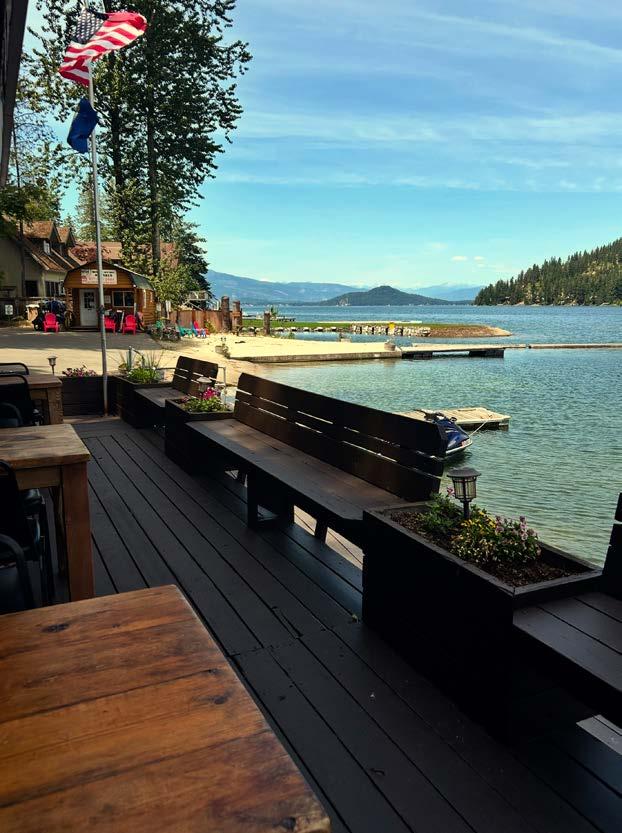
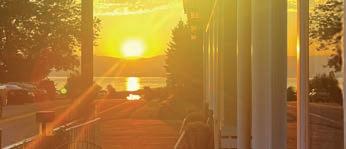
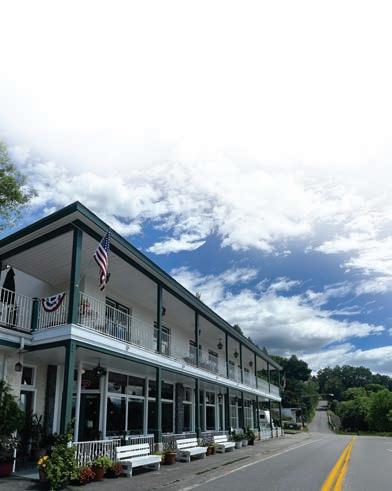
Historic Restaurant & Lounge overlooking Lake Pend Oreille
• Call for Summer Hours
• Brunch Every Sunday 10am to 2pm
• Prime Rib Dinner on Sundays
• Locally owned and operated
• BBQ Mondays
• Taco Thursdays
• Full Catering available
• Best Sunsets on Lake Pend Oreille
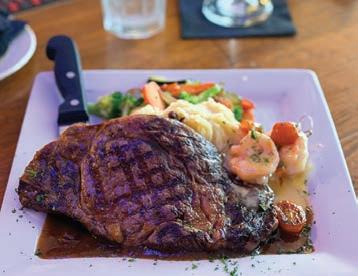
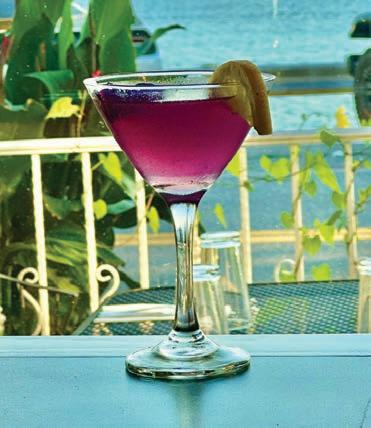


Burger Bay welcomes children and pets on their outdoor deck. Courtesy photo.
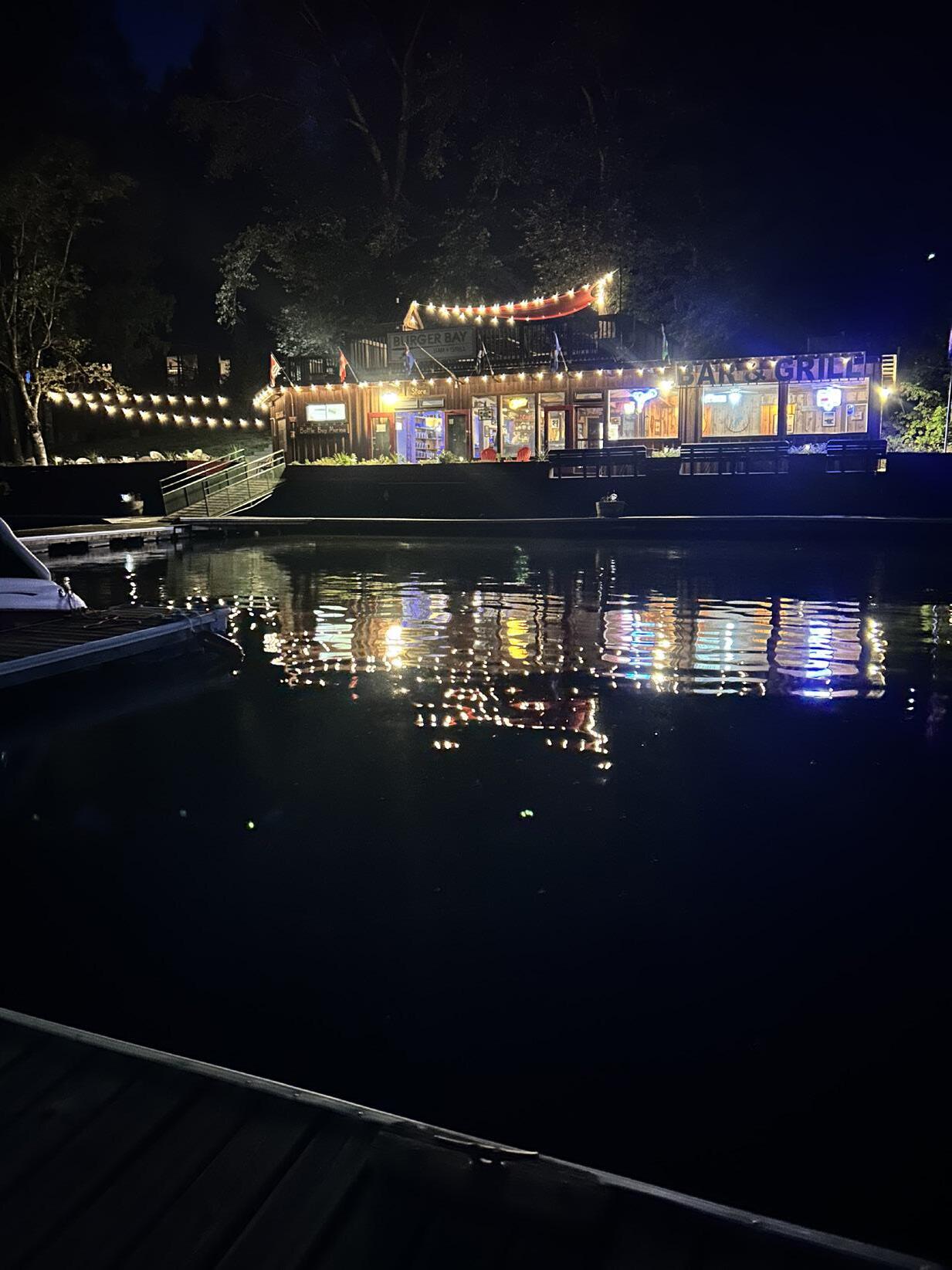
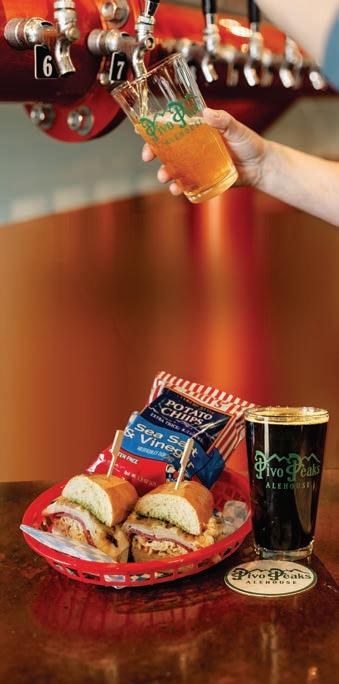
When you pull into the marina with your boat, take a left and head to the long, public dock for day use.
Once at the restaurant, seasoned restaurateur Gary Peitz has made their waterfront dining an experience to remember. With dishes like roast buttermilk chicken and a fan favorite—fish tacos with avocado fries—this must-stop on the Pend Oreille River fits the bill nicely for some delightful dock and dine time.
Further west on the river you'll find Willow Bay North restaurant and bar. This family-friendly place with a covered patio offers a little something for everyone, from Mediterranean and south of the border food to good old American barbecue. Don’t miss Thursday nights, when smoked prime rib takes center stage with live music to amp up the fun.
With over 150 slips on their dock, they can fit just about any boat that stops in. About 80 percent of their diners, in fact, arrive by boat.
Look for all these restaurants to be open by Memorial Day, check their websites for hours of operation, and remember, it's a wise boater who phones ahead.

Burger Bay in Sagle welcomes the casual diner as darkness falls. Courtesy photo.
Boatable Eateries
BURGER BAY (SAGLE)
208-263-5916 • www.bottlebayresort.com
CAPTN'S TABLE HARD LIQUOR
SALOON (SAGLE)
208-265-6391 • captnstable@facebook.com
CAPTAIN'S WHEEL (BAYVIEW)
208-683-6504 captainswheelresort@facebook.com
DISH AT DOVER BAY (DOVER)
208-265-6467 • www.dishatdoverbay.com
THE FLOAT HOUSE (HOPE)
208-920-5027 • www.thefloathouseidaho.com
PEARL’S ON THE LAKE (HOPE)
208-264-0665 • www.pearlsonthelake.com
WILLOW BAY NORTH (PRIEST RIVER)
208-819-3472 • www.willowbayidaho.com
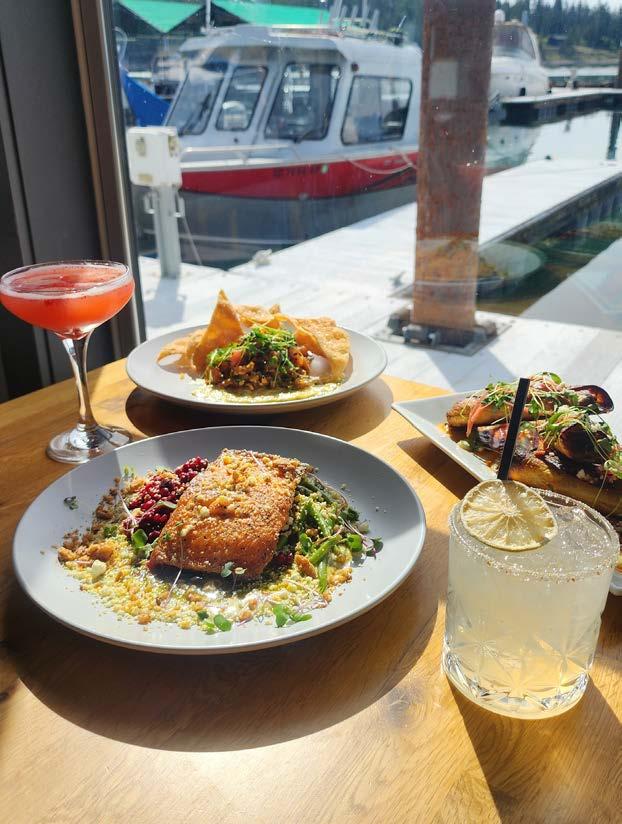




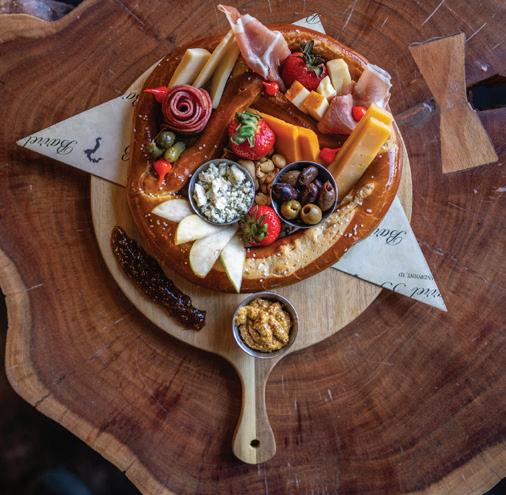
The Float House in Hope has long combined great food with boat-in convenience. Courtesy photo.
CONNIES MASTERS THE COMMUNITY BUILDING GAME with game nights, live music and a comfortable atmosphere
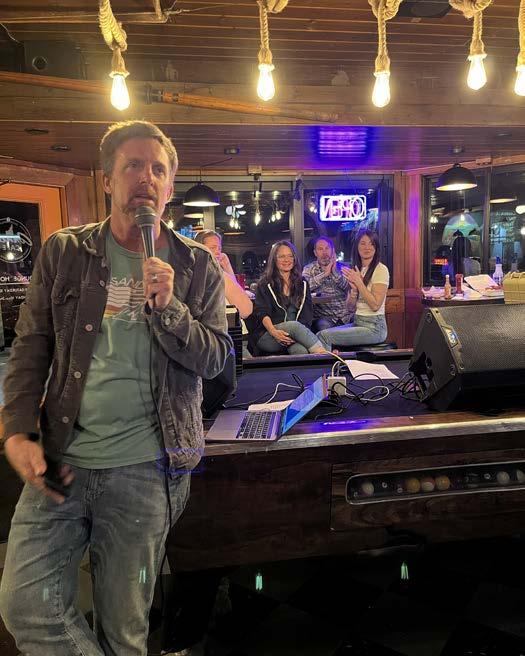
by Amie Comber
Connies Cafe, a historic landmark in the city of Sandpoint since the 1950s, is attracting a thriving community to its trivia and cribbage game nights. “Connies is the place locals go and tourists visit to experience the local Sandpoint culture,” shared Ashli Thompson, Connies’ community engagement manager. From Connies’ scratch-made, comfort-food menu, involvement in local fundraisers and events curated to bring people together, the cafe makes a visible effort to invest in the Sandpoint community.
Trivia takes place every Wednesday at 7 p.m. in their recently renovated lounge. Gather the family, invite a few friends and build a team. Bring $5 to enter the game and test your team’s collective knowledge, with a chance to win a cash prize at the end. Connies is known as a multi-generational place, offering events built for the whole family, as seen with a three-generation team—the Pheasant Pluckers—that’s well-known at trivia nights.
Cribbage tournaments are offered every Monday at 6 p.m. Everyone is welcome regardless of skill level, from seasoned players to newcomers to the game. The cribbage tournament draws members of the community around its lounge tables, deep in thought and conversation. “It’s great to get together with everyone,” said Doug (who didn’t want to share his surname), a participant in most tournament nights.
Hours: Mon-Fri: 7AM-3PM


Connies’ passion for the Sandpoint community runs deep, evidenced by the fact that they host a special “Regulars’ Christmas party.” Regulars make Connies part of their daily routine, with the staff preparing their place settings in the evenings, ready for the expected guests who trickle in the moment the doors open. David Villaverde said he is a regular at Connies, adding, “I love everyone here.” Connies’ atmosphere leaves a nostalgic impression of “days-gone-by” where the staff welcomes you by name, and you’re seated among friends.
Whether you’re an established local or a tourist exploring Sandpoint for the first time, you’re invited to meet the community at Connies Cafe. Join for trivia, cribbage tournaments or their weekly live music nights, featuring bands, jam nights with local artists and the ever-popular Benny on the Deck during the warm weather months. There’s something for everyone.
Host Toshi runs a lively trivia competition on a regular basis at Connies. Photo by Misty Grage.
The Granary General Store has been selling out quickly at their Saturday pop-ups as they prepare for opening day.

The Art of the Rise
Sandpoint gets sweeter as new bakeries open their doors
by Sammy Berryman
The mouth watering aromas, hum of conversation and warmth of it all draws you in before you’ve even reached the door. Croissants, cinnamon rolls and sourdough loaves act as a siren call with the promise of a satisfied belly and a wide grin.
And this summer in Sandpoint, four new bakeries will join the Miller's Country Store, Bernklau, Bluebird Bakery and offerings from our local grocery stores' in-house bakeries to make sure even the sweetest tooth is satisfied.
Located at 320 N. First Ave. in the old Image Maker building, with a planned opening in June, Sawyers Bakery focuses primarily on French pastries made by the passionate Becky Sawyer.
“I grew up in Bonner County and was involved in the 4-H program, where I first learned cake decorating,” Sawyer said. “My instructor, Sally Peterson, encouraged me to keep developing my skills.” Sawyer went on to attend the Amaury Guichon Pastry Academy in Las Vegas, then returned to
Photo by Misty Grage.

Sandpoint and began making custom cakes from home in 2020 along with working at the bakery at Winter Ridge for the past three-and-a-half years.
Now she'll be opening her own space focusing on viennoiseries—a yeastleavened and often laminated enriched dough—that forms classic French breakfast pastries. Viennoiseries include items like croissants, éclairs, tarts, petit fours and choux pastries. And all will be waiting for you at Sawyers, along with baguettes and other breads, chocolate bonbons and sugar confections.
Sawyer will also be teaching classes out of her shop. Those interested can sign up via her online reservation system.
Across the street from Sawyers Bakery is Abby Stolfo’s new brick and mortar, the Cakery on First. Taking over the former Hen’s Tooth Gallery at 323 N. First Ave., the longtime local will be serving up everything from loaf cakes, cupcakes, bundt cakes and lemon cakes to cookies and whatever else she creatively comes up with.
“There will be cakes and there will
FOOTBALL, BASEBALL & ALL SPORTS ON 8 T.V.’S


be everything that people have come to love at the [Sandpoint Farmers’] Market, which is my favorite part of the business.”
A self-employed food stylist for commercial photography in San Francisco, Stolfo returned home to Sandpoint during COVID and started the Cakery thinking, “I’ll just bake cakes out of my house; it’s something fun to do.”
Fast forward six years later and we now get to enjoy all of her goodness on a larger level. Pro tip: she says the bestsellers are her chocolate zucchini loaf covered in chocolate ganache and the lemon tart brushed with white chocolate.
Stolfo also plans to be open by summer.
Another Farmers’ Market purveyor, Sam Podmajerski, has partnered up with Emily Peilleron to introduce the Granary General Store. After dreaming of a place to bring people together through baked goods and provisions, the duo have been renovating the former Syringa Cyclery building at 518 Oak St., and holding popups selling their treats before their scheduled, first-week-of-June opening date.
Podmajerski , the Granary’s baker, has been at the Sandpoint Farmers' Market as well as the Bonners Ferry Farmers' Market under the banner “Flourish Sourdough” while Peilleron co-owned a cafe in Biarritz, France. Together, they will
The wide variety of donuts often sell out quickly at Backwood Donuts. Photo by Misty Grage.
Becky Sawyer brings a French flair to First Avenue with Sawyers Bakery. Photo by Amy Peterson.
be serving a variety of sweet treats as well as long-fermented sourdough bread and baguettes.
“We will have a full bakery counter that changes with the seasons, breakfast and lunch items, espresso, teas, and beer and wine by the glass or bottle,” Podmajerski said.
Long-fermented sourdough bread using regional and regenerative grain is the cornerstone of the Granary said Podmajerski. They’ll also have an assortment of refrigerated and frozen house-made, grab-and-go foods to enjoy at the shop or out on your adventures.
Backwoods Donuts was an instant hit when their doors opened earlier this year.
Located at 1301 U.S. Hwy. 2, in the former Burger Express building, April and Rodney Johnson dish out donuts, coffee, dirty sodas and other beverage assortments.
“We are new business owners so our donuts are a first for everyone in the area!” Rodney said.
Their specialty pastries include apple fritters and buttermilk bars, though April loves their maple bars and baked cinnamon rolls and Rodney loves the peanut butter squares.
April has worked and managed donut shops for more than a decade and it shows as the demand for their handmade and decorated donuts are high.
“It brings us joy that everyone feels a good energy in our space and wants to be there and stay awhile,” said April. “We look forward to exciting things moving forward and are so appreciative of the community's support!”
Perhaps a bakery crawl is in order. With all of these new bakeries spread across town, each with its own personality and specialty, the hungry shopper can cook up a delicious afternoon of exploration. Whether you’re after a perfectly glazed donut, an image-worthy slice of cake, a rustic sourdough loaf or a buttery croissant, this little mountain town has you covered.

Abby Stolfo has moved her popular pastries from the Sandpoint Farmers’ Market to First Avenue with the Cakery at First. Courtesy photo.
Serving Sandpoint
Ashli Thompson and Madalina Moreno
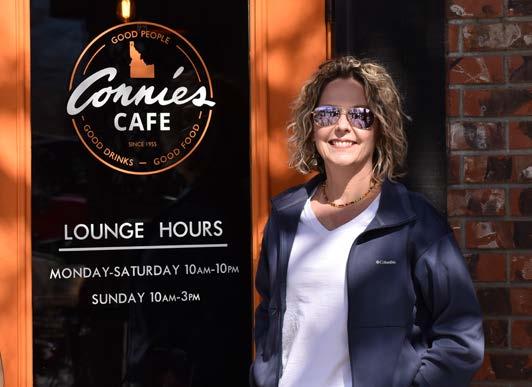
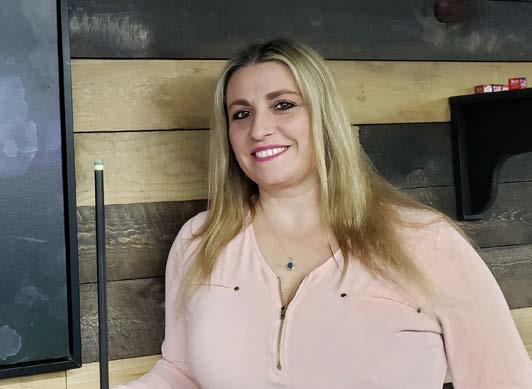
At the heart of it all, Ashli Thompson (manager at Connies Cafe) and Madalina Moreno (manager at Roxy’s bar) host regular community parties at their respective businesses, inviting all to come for an evening of fun and relaxation. They are firmly rooted in their commitment to craft places where locals feel at home.
What's your favorite part of running a nighttime hot spot?
AT: We conduct most of our evening business in the lounge. The transformation has been stunning. What we love most is that it is a place the locals want to spend time, just like Cheers.
MM: I love the energy—people coming in to relax, celebrate, and connect. Every night is different, and it’s rewarding to help create a place where people feel welcome and can just enjoy themselves.
What trait has served you best in doing your job?
AT: I bring marketing, event planning and networking skills to the team. I am also an architect and planned the interior updates and patio replacement project.
MM: Getting things done, staying calm and reading the room. When things get busy, your attitude sets the tone—if you stay steady, everything runs better.
related to your work, what are you most proud of?
AT: Being the local place people want to go and our community engagement are the two things we are the most proud of. We intentionally keep our pricing as fair as possible knowing our customers appreciate this.
MM: I’m proud that Roxy’s feels like a place with heart. Stepping in after my friend passed and helping carry the bar through
a tough transition—then being trusted by the new owner to continue—means a lot to me.
What advice do you have for others in dealing with the public?
AT: We truly love and appreciate our customers and our staff. My advice would be to build your team in both ways.
MM: Don’t take it personally and always start with a smile and respect. Listen first, help keep boundaries clear and remember that consistency and kindness go a long way.
What is the most difficult part of your job?
AT: It is heartbreaking to receive a bad review and then have to respond to it. Our team works really hard each and every day to deliver top-notch service and scratch-made food.
MM: Composure and awareness. Being able to read people, stay steady and keep the bar flowing makes all the difference.
Based on your experience, what is Sandpoint's favorite thing to snack on and, related to that, to drink?
AT: Our Bloody Marys are coveted. Coors Light is our number one beer. Sandpoint loves breakfast! And our meatloaf is the bomb.
MM: We don’t serve food at Roxy’s, so most people grab a bite before or after they come in. Drink-wise, Sandpoint loves the classics—cold beer and simple mixed drinks you can count on.
Ashli Thompson at Connies. Staff photo.
Madalina Moreno at Roxy’s. Staff photo.
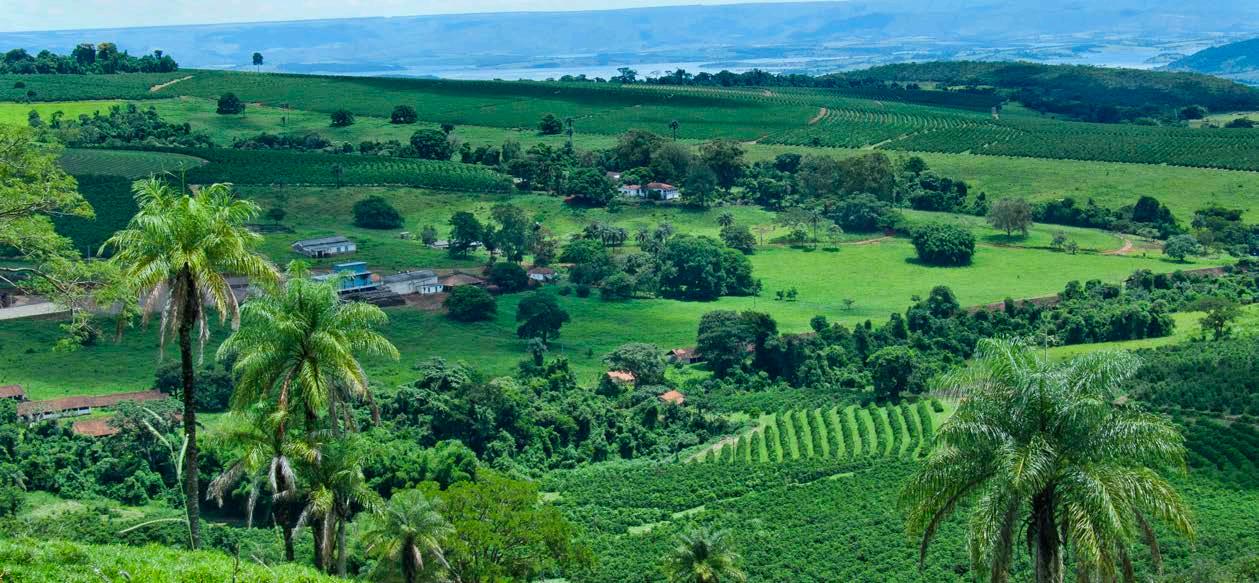
A Taxing Situation
National trade policies impact local business
by Ben Olson
Those who own small businesses know the reality of making it in a world of razor thin profit margins. Often, one bad season or a sharp increase in costs can be the deciding factor between solvency and folding up shop for good
For Rick and Randy Evans—co-owners of Evans Brothers Coffee Roasters with shops in Sandpoint and Coeur d'Alene— the past year has proved to be a difficult one. When the current administration issued widespread tariffs affecting nearly all goods imported into the U.S. in 2025, it came at a particularly difficult time for the coffee industry.
"The whole coffee industry was already facing historic prices," said Randy, pointing to droughts in Brazil and Vietnam, two of the world's biggest coffee producers.
Over 30 percent of coffee the U.S. imports comes from Brazil, and after the implementation of a 40 percent tariff, the price of beans rose significantly.
"The tariffs were like adding gasoline to a fire," Randy said.

HOURS
Tues and Wed, 4pm to 10pm Thurs through Sat, 11:30am-10pm www.sandpointfatpig.com
Cedar St., Suite 102 208.265.PORK
Despite repeated claims that tariffs are paid by foreign governments, economists are clear that importers pay tariffs, which they then pass off to American consumers.
The nonprofit Tax Foundation found that tariffs in 2025 amounted to an average tax increase of $1,000 per U.S. household, and that 2026 tariffs will increase it another $600. Gross tariffs have brought in $86 billion in revenue since their implementation.
At one point, coffee imports from Brazil—where Evans Brothers gets most of their coffee beans, along with Guatemala and Colombia—reached nearly 50 percent.
"We're paying those tariffs," Randy said. "It's a tax. We probably have spent about $40,000 in tariffs in the last year."
The increase in costs forced Evans Brothers to raise prices, just like every other roaster in the world.
"We have eaten a lot of that margin that we had.”
One argument used in the widespread implementation of tariffs is that it will inspire more companies to increase manu-
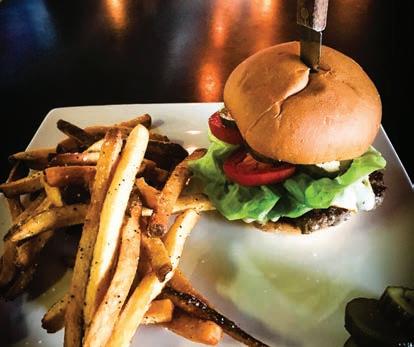


Evans Brothers sources much of its coffee from Brazil. The only state with a climate suitable for coffee growing in the U.S. is Hawaii. Photo by Jonathan Wilkins.
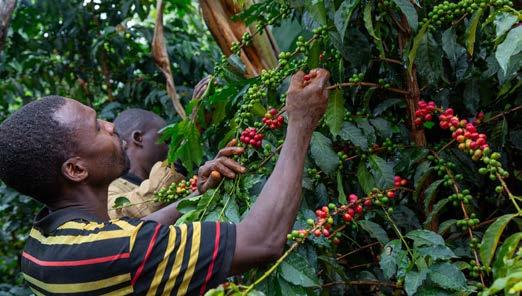
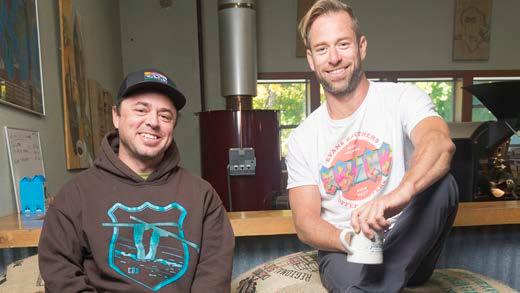
facturing to the U.S., but Randy said that's not going to happen with coffee.
"The U.S. does not produce coffee at a commercial scale," he said. "The only coffee grown in the U.S. is from Hawaii, which is less than one percent of the world's supply."
The U.S. Supreme Court struck down the sweeping tariffs in February. While the president responded by immediately implementing replacement tariffs of 15 percent, that does not include coffee beans yet.
"A lot of us were hoping for that ruling," Randy said. "That came with some relief."
While the court struck down the tariffs, Evans Brothers is still paying fees on shipments they had already committed to, but Randy hopes with new harvests ahead they can crawl out of the hole to recoup the $40,000 the business lost to tariffs.
Of course, as the price of gasoline skyrockets, that will have its own impact on the price of products shipped from abroad.
"I think everybody's nervous about everything right now," Randy said. "We just don't know what's going to happen from day to day. It's like this bad reality TV show that you can't escape from.” No matter what comes next, however, he said, “We appreciate our community and their understanding of the challenges we've had and their continued support."






Top: Coffee beans are often picked by hand. Photo by James Wasswa, Creative Commons 2.0 license.
Above: Brothers Rick and Randy Evans are navigating trade policies that bring new complications for their business. Photo by Doug Marshall.

The local
DISH
Barrel 33 (100 N. First) is planning on a summer full of fun. Every Friday and Saturday from 6 p.m. to 9 p.m. they'll be offering live music, weather permitting, on the back patio. On every other Sunday, enjoy the tunes with Fiddlin' Red from 1 p.m. to 4 p.m. Tango Tuesday will be held with Muffy Nye once or twice a month. On the third Thursday of every month, Nicole Black will be there to host a Paint and Sip. And for the summer, look for the Tiki Bar on the Patio on Friday through Sunday, again, weather permitting.
Out at the Float House (47394 Hwy 200, Hope), Eddie Sneva has made exciting new additions to the menu. Try the Jamaican Jerk Chicken, with a citrus brine, classic jerk rub, mango pico and lime aioli, or the pork ribeye with orange chipotle marmalade and charred tomato salsa and cilantro crema. Street corn shrimp (a tajin-seasoned poached shrimp) will also be available. New drinks include the Basil Drop with Tito's

vodka and Deep Eddy's lemon vodka, plus lemonade and more, or the Hot Summer Sour: Buffalo Trace bourbon with pineapple juice, house hot honey and lime sour. You may want to sample these more than once, so bring along a designated driver!
For summer, Baxter's on Cedar (109 Cedar) offers a "lighter side" menu every day until 4 p.m. featuring a small selection of sandwiches (including a prime rib slider! Yum!), salads, chicken/ rice bowls or chicken Ceasar.
Sweet Lou's (477272 Hwy. 95 N.) goes full-on country with their Western Burger—BBQ pulled pork atop ground certified Angus beef, with jack cheese and fried onions. They report their southwest chicken alfredo has become a menu staple, along with their espresso martinis.
B's Beacon (126 W. Main, Hope) features a "bites" menu for happy hour that includes garlic truffle fries, cheese curds, old school calamari, plus polish sausage or fish, both with chips. Don't miss BBQ Mondays and Taco Thursdays.
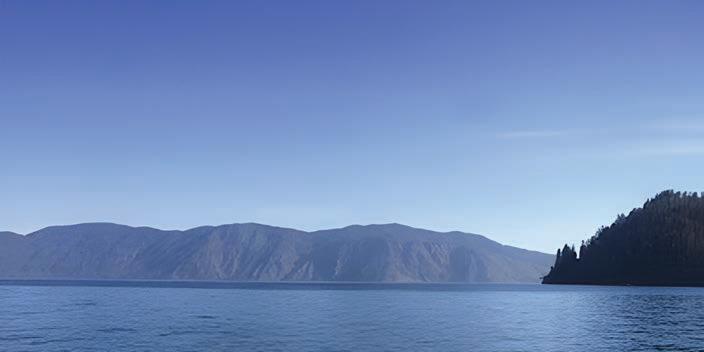



TC Stacks burger and fries. Courtesy photo.


Connie's Cafe (323 Cedar) is still covering it all. Breakfast, lunch and dinner are served in the restaurant, plus there's a separate lounge with game nights, live music, drink specials, access to their full menu and one of the most hoppin' decks in town! Don't miss their budget-friendly, scratch-made comfort food featuring family favorites like homemade meat loaf, Salisbury steak and beef stroganoff. And yes, there is a kids' menu!
New restaurants are popping up around the area. Read about all the new spots for sweet treats to please you this summer on page 139.
Hot Nobbie Shabu Shabu is making a mark in Sagle. It's open every Wednesday from 5 p.m. to 9 p.m., with plans to open more frequently as the summer arrives. Fresh meats, crisp veggies and rich, flavorful broths come together cooked right at

your table. Reservations can be made at 208-423-3857.
TC Stacks took over the former Panhandler Pies building on First Avenue in Sandpoint in February. They're open for breakfast, brunch and lunch from 7 a.m. to 2 p.m. Wednesday through Sunday.
Papa B's Fried Chicken, a food truck at Kessa's Court in Ponderay (across from the Sandpoint Cinemas), opened in late April. Brandon Brown is offering hand-breaded fried chicken (sandwiches and tenders) plus zucchini chips made from “Grandma's secret recipe.” He said the chicken is fried in 100 percent beef tallow, and as this issue went to press, was adding gluten-free options, hot chicken and a vegetarian sandwich.
And for an actual pop-up, there's a fresh bagel pop-up on Wednesdays at the Forge from Full Circle Bagelry.






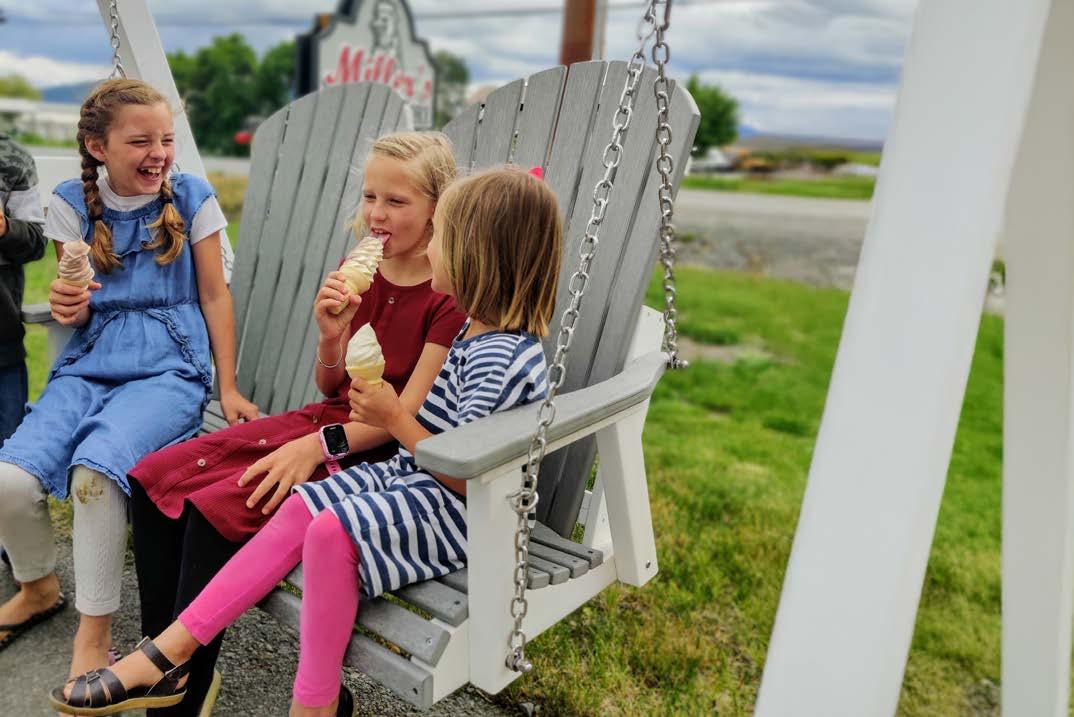
Left to right: a popular dish at Baxter’s on Cedar is the chipotle chicken pasta; Barrel 33 serves a Twisted Tasting Tray built on a Bavarian pretzel; look for the teriyaki bowl at Marigold Bistro this summer. Courtesy photos.
DINING GUIDE in & around Sandpoint
COFFEE & CAFES
EVANS BROTHERS COFFEE, ROASTERY & CAFE
524 Church St. Roasted onsite. Handcrafted seasonal drink menu. Local pastries, burritos, breakfast sandies and more. Voted USA Today’s 3rd Best Independent Coffee Shop in the country. Open 6:30 a.m. to 5 p.m. daily. 208-265-5553 www evansbrotherscoffee com
MOJO COYOTE CAFE
10000 Schweitzer Mtn. Rd. Enjoy a fresh Evans Brothers espresso, lotus or matcha latte and treat your sweet tooth to a warm scone. Freshbaked pastries, breakfast burritos, and lunch specials. 208-255-3037 www.schweitzer.com
CABINET MOUNTAIN COFFEE
10000 Schweitzer Mtn. Rd. The closest coffee to the lifts is Cabinet Mountain. Stop into the Lakeview Lodge and there you'll find a great selection of quick bites and snacks, perfect for nibbling on the go. In the summer, enjoy refreshing beverages and cocktails while exploring the mountain. www schweitzer com
DELICATESSENS & MARKETS
MILLER’S COUNTRY STORE & DELI

1326 Baldy Mtn. Rd. Wholesome goodness with a selection of fine deli meats and cheeses, bulk food items, pie fillings, fresh-baked pies, breads and pastries—plus soup and sandwiches, takehome dinners and more. Now serving breakfast sandwiches. Open Monday-Friday. 208-263-9446 www.millerscountrystoresandpoint.com
WINTER RIDGE NATURAL FOODS
703 Lake St. An independently owned natural foods grocery store specializing in local produce, meat, dairy, beverages, goods and more. Open daily and featuring an in-house deli, from scratch bakery, juice and espresso bar, and full hot bar with indoor seating. Since 1997. 208-2658135 www.winterridgefoods.com
GOURMANDIE
10000 Schweitzer Mtn. Rd. A specialty foods market located in the White Pine Lodge at Schweitzer, focusing on artisanal items from around the world while highlighting the culinary craftsmanship of the Northwest. Gourmandie features farmstead cheese, cured meats and salads as well as a unique selection of beer and wine. Look for a rotating selection of freshly made soups, charcuterie boards and shareables. www schweitzer com
ECLECTIC/FINE DINING
113 MAIN
113 Main St. Cozy, historic, downtown corner location offers delicious scratch cooking, a full beer and wine bar plus premium handcrafted cocktails and mixed drinks. Offering lunch and dinner daily from 11 a.m. to 9 p.m. 208-946-5309 www.113mainsandpoint.com
B’S BEACON
126 W. Main St. in Hope. The beautiful Hotel Hope is alive and well thanks to B’s Beacon, a full bar and restaurant inside the building’s ground floor. B’s offers carefully crafted and curated food and beverages served up by lifetime locals Brianna and Antone Changala. Come for the sunset, stay for the good company. 208-264-5952
THE BANK BARROOM & EATERY
105 S. First Ave. Located on the bank of Sand Creek in historic downtown Sandpoint, The Bank is a refined-yet-approachable restaurant and craft cocktail bar. It offers inspired familystyle dining with bold flavors and the highest quality ingredients. The space combines classic charm and outdoor dining over the marina, making it a standout destination for both casual dinner and special occasions. 208-948-2952 www.thebanksandpoint.com
CHIMNEY ROCK
10000 Schweitzer Mtn. Rd. Choose from a diverse selection of comfort food from delicious burgers, south-of-the-border items, hearty
sandwiches, and scrumptious salads. Offering a full bar, local beers and a hand-selected regional wine list. Open daily. www.schweitzer.com
THE CLUBHOUSE AT THE IDAHO CLUB
151 Clubhouse Way. The perfect fusion of fine dining and authentic Idaho hospitality, the Clubhouse Restaurant offers an eclectic, fresh menu made all the better by impeccable service. New bar menu. Wed-Sat, 3 p.m. to 8 p.m. 208-265-2345 www.idahoclubhospitality.com
CONNIES CAFE
323 Cedar St. Welcoming atmosphere in the heart of downtown Sandpoint, Connie’s Cafe is all about good people, good drinks and good food. Breakfast, lunch, and dinner, plus a lounge with a full bar hosts many local musicians. Now with family-style dinners. Open daily.
www conniescafe com
CROW’S BENCH
10000 Schweitzer Mtn. Rd. Located in the Humbird Hotel, Crow's Bench serves a selection
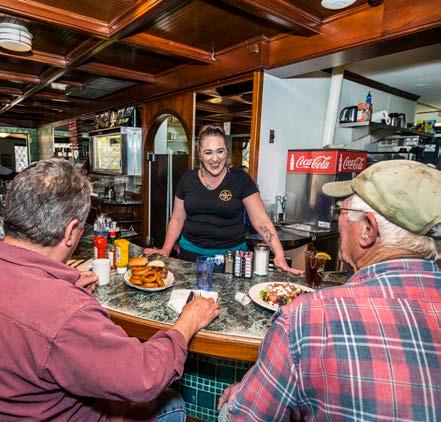

Connies Restaurant

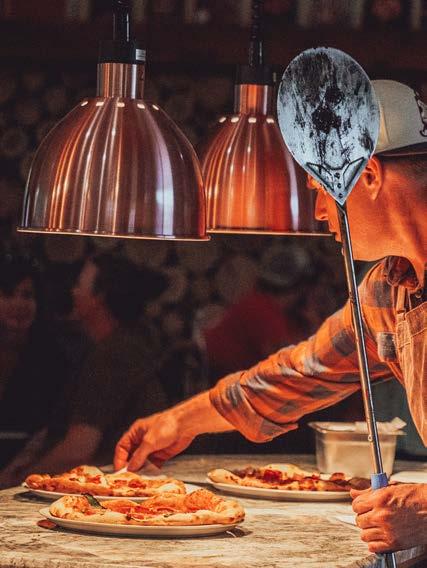
of après cocktails and elevated eats in a cozy, central setting. Reservations recommended. www.schweitzer.com
THE FAT PIG
301 Cedar St. Suite 102. Enjoy an extensive draft beer selection in a warm pub environment with a rotating wine list. Classic pub fare and vegetarian menu. Now open for lunch Thurs day–Saturday. 208-265-PORK (7675) www.sandpointfatpig.com
THE FLOAT HOUSE
47392 Hwy. 200, Hope. The area’s only floating restaurant featuring modern American food. Full bar and lounge. Indoor and outdoor seating. 208-920-5027 www.thefloathouseidaho.com
THE FORGE ARTISAN PIZZA
salads. Gluten-free and vegan options available. Open 11 a.m. to 9 p.m. Thursday–Monday. 208252-9433. www.forgeartisanpizza.com
JALAPENOS RESTAURANT
314 N. Second Ave. Jalapeños Mexican Restaurant in downtown Sandpoint offers fantastic Mexican favorites in a fun and lively atmosphere. A full bar, deck dining and party room make Jalapeños a must-visit. Friday-Tuesday 11 a.m.-8 p.m. 208-263-2995 www sandpointjalapenos com
MARIGOLD BISTRO
414 Church Street, located in the charming heart of Sandpoint within the Sandpoint Center. A local favorite specializing in fresh ingredients, a welcoming atmosphere, friendly service and memorable meals. Open weekdays from 7 am to 3 pm, available after hours and weekends for private events, as well as offsite catering services. 208-263-9514 www.marigoldbistro7b.com
POWDER HOUND PIZZA
201 E. Superior St. AND on Schweitzer Mountain! Legendary pizza and a wide selection of greens, appetizers and sandwiches. Beer, wine, outdoor patio. Streaming favorite sports all season long. 208-255-0685 (town) 208-255-5645 (mtn) 208-255-0685 (town) 208-255-5645 (mtn) www.powderhoundpizza.com
SECOND AVENUE PIZZA
215 S. Second Ave. Piled-high specialty pizzas, calzones, salads and sandwiches. Gluten-free choices. Beer and wine. Take-and-bake pizzas available. 208-263-9321 www.secondavenuepizza.com
SKY HOUSE
10000 Schweitzer Mtn. Rd. Experience a lunch outing unlike any other at the summit of Schweitzer. Soak in the panoramic views while enjoying a chef-inspired menu with locally sourced, farm-fresh ingredients. 208-263-9555 www.schweitzer.com
to North Idaho with traditional Hawaiian eats, as well as a selection of wine, beer and canned cocktails. Come enjoy a plate with a side of aloha spirit. 208-597-7055
www.instagram.com/sunshine on cedar
SWEET LOU’S
477272 U.S. Highway 95 in Ponderay. Terrific traditional and regional fare. Family-friendly restaurant with full bar. Now with special NFL menu. Two more locations in Coeur d’Alene and Athol. Open daily. 208-263-1381 www sweetlous com
PUB STYLE
BURGER BAY

306 Pine St. Neopolitan and Detroit-style pizza baked in a genuine wood-fired Acunto oven, plus fresh pastas. Patio seating, beer, wine, canned cocktails, appetizers and seasonal
SUNSHINE ON CEDAR
334 N. First Ave. Located on the second floor of Sandpoint’s iconic Cedar Street Bridge, Sunshine on Cedar brings the warmth of the islands

int, brought to you by the local folks behind downtown Sandpoint’s The Fat Pig. They are putting the booze in fast food starting in late May and into the fall. 208-263-5916 www.burgerbaysandpoint.com
CHIMNEY ROCK GRILL
10000 Schweitzer Rd. At the heart of Schweitzer village. Homey ambiance and log cabin feel. Meatloaf, burgers, salads, unique appetizers and more. 208-255-3071
EICHARDT’S PUB & GRILL
212 Cedar St. Relaxing pub and grill mixes casual dining with seriously good food. Completely family friendly. More than a dozen beers on tap, good wines and live music. Upstairs game room with fireplace. 208-263-4005 www eichardtspub com
MICKDUFF’S BREWING CO. BREWPUB
419 Second Ave. Enjoy craft ales in the iconic restored old federal building downtown. Traditional and updated pub fare. Open daily. 208255-4351 www mickduffs com
TAVERNS, BREWS, AND WINERIES
BARREL 33
100 N. First Ave. Local wine, beer, cider tastings and a curated food menu in a historic, waterside setting. Open daily from 11 a.m.-8 p.m. (SunThurs) and 11 a.m.-9 p.m. (Fri-Sat). Dog and kid friendly with a tiki bar, cowgirl taco Tuesday,



The Forge Pizza
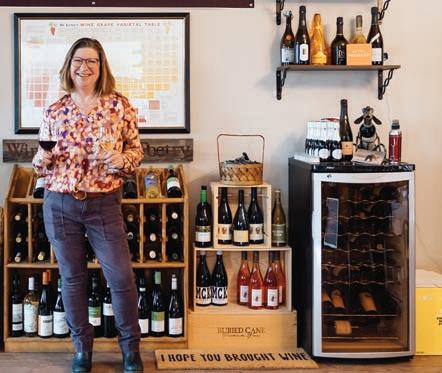





live music and summer events. Follow @barrel33sandpoint on social media. 208-920-6258 www.barrel33.com








MICKDUFF’S BREWING CO. BEER HALL & BREWERY
220 Cedar St. Tasting room boasts 16 taps, local art, free popcorn and weekly entertainment. Beer Hall is bring-your-own-food friendly. All ages welcome. Open daily. 208-209-6700 www.mickdu s.com
ROXY’S LOUNGE



215 Pine St. This iconic Sandpoint bar and lounge is back to the name that first graced it in 1981, but almost every other part of the business is new and improved. Come for the drinks, stay for the Diamond pool tables, darts and pinball. Eight TVs for sports! 208-946-5376 www.roxyslounge.com
TAPS

10000 Schweitzer Mtn. Rd. The mountain’s prime après spot with a full bar, 20 beers on tap, big screen TVs, pool tables, dance floor, and a stage – featuring live music and DJs throughout the winter season. Food is available from Sam’s Alley. www.schweitzer.com
WINE 4U






1309 Ponderosa, Suite 116. Located just o Division Street in Sandpoint, large selection of wines including hidden gems from both small producers and global vineyards. Great wine at great prices! Sip while you shop. Regular events, wine club, and wine adventures. Open Tue-Thur 1-5; Fri 1-6; Sat 11-3. 208-217-8321. www.wine4uonline.com

























Beth Giacomo hosts tastings at Wine4U. Courtesy photo.


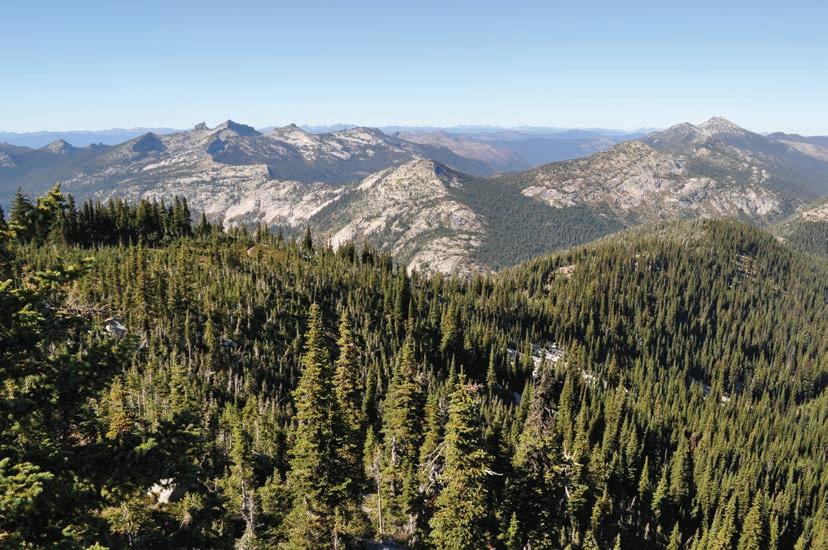












Alpine Motors is your GMC truck dealer. New and used sales and leasing. Full service, parts and body shop.
Highway 95 N., Ponderay (208) 263-2118 (800) 430-5050 www.alpinemotors.net

Sandpoint Super Drug The Center for Functional Nutrition offers a full line of clinical nutrition products including Klaire, Thorne, Pure, Ortho Molecular, and Apex.
604 N. 5th Ave. Sandpoint (208) 263-1408 www.sandpointsuperdrug.
What the Earth Set in Motion
by Chris Bessler
In the often curious way things happen in our world and our lives, Sandpoint Magazine owes its existence in no small part to an earthquake 1,000 miles away—and the gifts brought by many people. Here's how it happened.
In 1987, following most of a decade as a reporter and editor for the Bonners Ferry Herald and Sandpoint Daily Bee, wife Sandy and I landed in Santa Cruz, California, where I became editor for the alt weekly Good Times newspaper and its adjunct magazine, Cruzan. Santa Cruz is a beautiful place and my work there was rather transformative, because not only was I introduced to the magazine world but my boss Jay Shore had us on the leading edge of publishing with the new Macintosh desktop publishing tools. Up to then, publishing required expensive typesetting machines and layout staff; the Mac enabled all the layout and composition to be done in the computer.
trajectory. I did look around the Northwest for jobs. But I was emboldened by the Mac. We returned to Sandpoint that spring and in November 1990 produced the first Sandpoint Magazine. I articulated its mission simply: To help everyone who likes this special place get more out of being here.
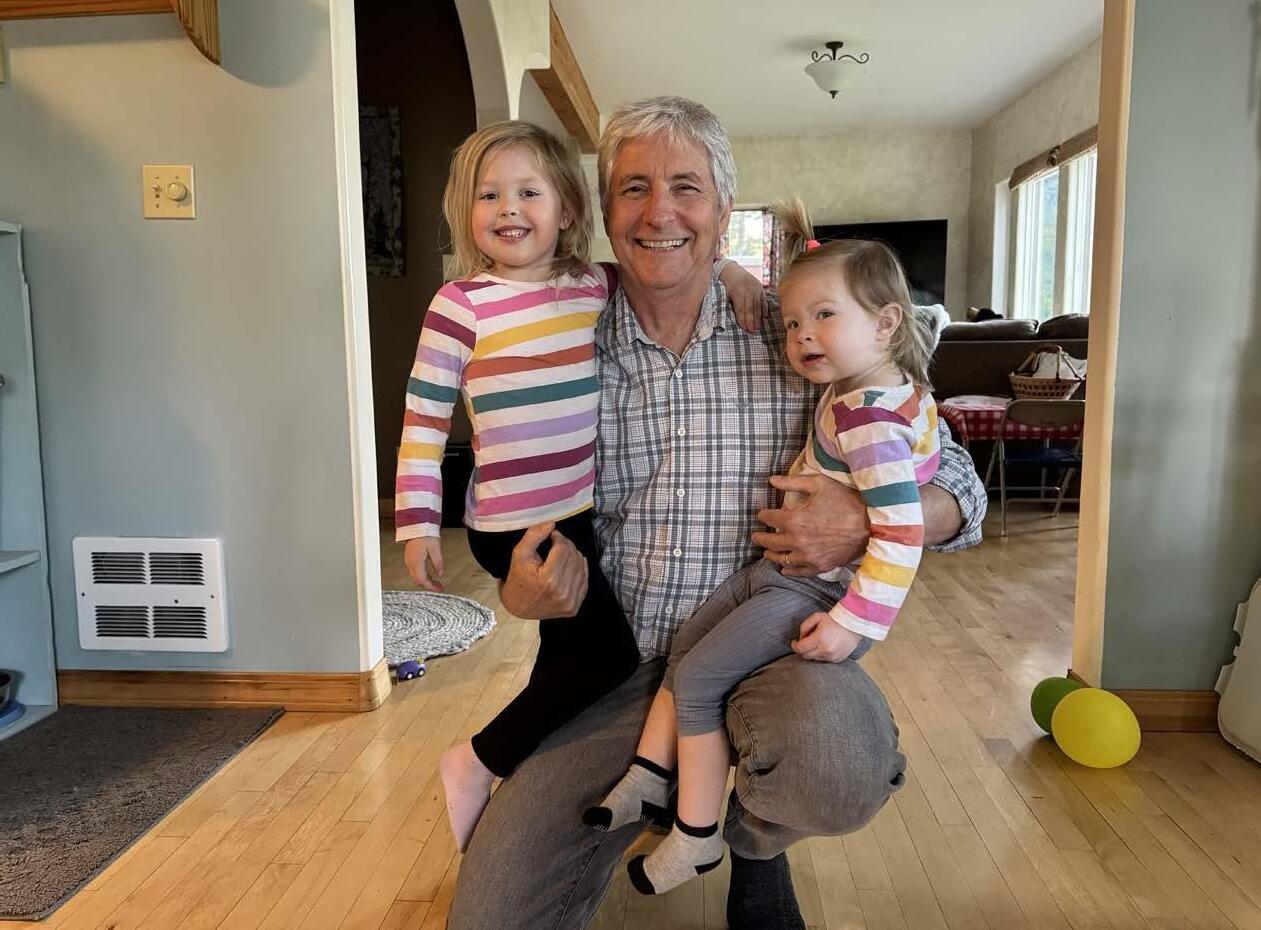
But Sandy and I were missing the Northwest and by October of 1989, I was prospecting for jobs back up north. On my last day of work, alone in Jay's office building on the town's Pacific Garden Mall, I had just printed out my resume, about to walk out that door forever. That's when the 6.9 magnitude Loma Prieta earthquake hit, destroying buildings, collapsing part of the Bay Bridge and killing 63 people.
Our old brick office building managed to stand (and Sandy and baby Nate were also safe). But it suffered major damage and was condemned, while the entire downtown was cordoned off with a patrol to keep out looters. Trouble was, Jay's own computer was up in our third-floor office, along with the Mac I had used the past year. Jay called and proposed a plan: If I'd accompany him that night to sneak in and recover his computer, I could carry out my own as well.
It was a big gift. And that Mac SE computer, something I could not have afforded at the time, changed our family

Of course, Sandpoint Magazine owes its life to many more gifts, especially in its very skinny early years. The Huguenin family, owners of Schweitzer, supported the idea and gifted a letter of support to advertisers. A fellow just down the hall from my first office in Pioneer Square, Sandy Compton, came on in the first issues to gift the magazine with both his writing and ad sales. Within a couple years we had a bona fide editor, Billie Jean Gerke, and art director, Randy Wilhelm, later succeeded by Laura Wahl. Our current editor Trish Gannon and art director Pam Milless have carried on those roles for nearly ten years now, and ad director Clint Nicholson has hit the 20-year mark. Office manager Sue Otis is the proverbial glue. And Susan Drinkard has given her fine writing from the very first issue. These people and several hundred more—editors, writers, photographers, those who help distribute and, of course, advertisers who have supported this magazine—brought their gifts to the magazine.
And that does not even touch on the readers. Truly, there's no magazine without you, dear reader.
I'm headed out a new door now, for retirement. I'm happy the Hagadone Media Group, with its long commitment to the communities of northern Idaho, has acquired Sandpoint Magazine. I'm excited, actually, to see what comes next.
I'm pretty sure this place where we live, play and make community is one of the finest on the planet. If Sandpoint Magazine has helped us to appreciate the gift we have simply to be here, then it is doing good work. Here's to its bright future, and thank you to all.
The publisher with a couple good reasons to head out the new door, granddaughters Wren and Pepper.