CHAMBER

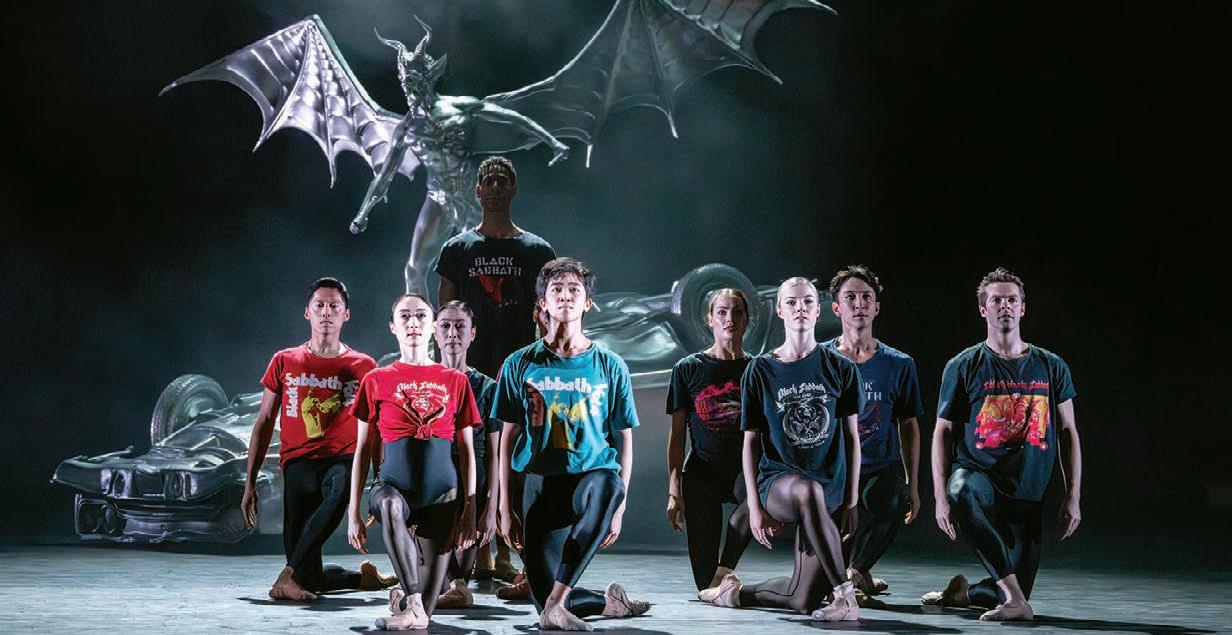
...thanks to Black Sabbath, says BRB boss
See pages 12-13

• Regional Chambers’ awards extravaganza
• Judgement day for Future Faces
• ABCC celebrates spirit of Pakistan






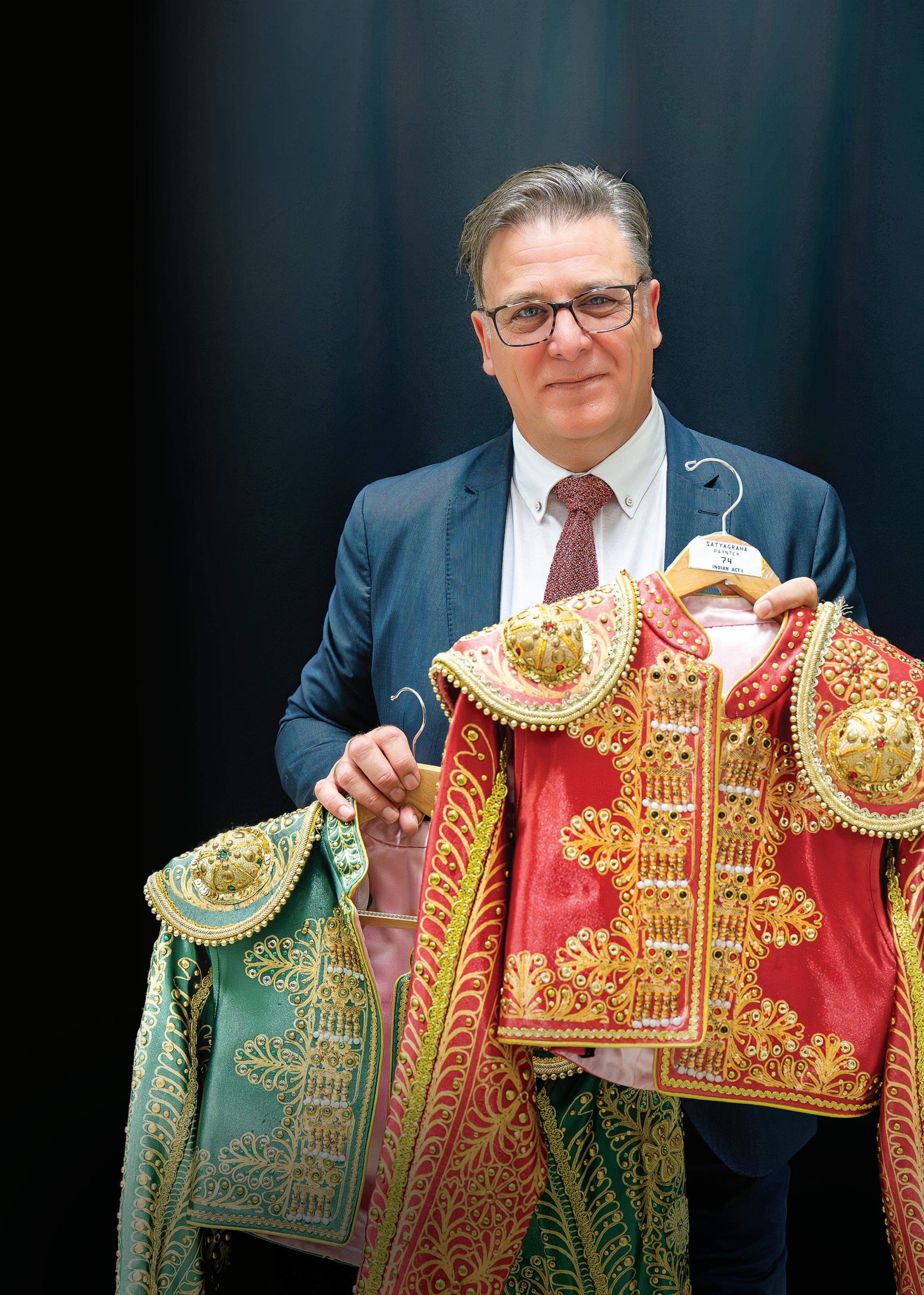

Picture: Hetal Trivedi
...thanks to Black Sabbath, says BRB boss
See pages 12-13
• Regional Chambers’ awards extravaganza
• Judgement day for Future Faces
• ABCC celebrates spirit of Pakistan
30 International Trade: Pakistan pushes for
35 Burton & District: Chamber welcomes new patron
36 Lichfield & Tamworth: New choral course for young people
37 Royal Sutton Coldfield: Former editor takes up role as president
38 Solihull: Moors graduates earn first team squad numbers
40 Future Faces: Games charity joins as patron
42 The latest list of Chamber events and training courses

The official publication of Greater Birmingham Chambers of Commerce
Editor: John Lamb 07814 539329 lambjohn@mac.com
Deputy Editor: Dan Harrison 0121 274 3239, 0797 1144052 d.harrison@birmingham-chamber.com
Assistant Editor: Jon Griffin 07963 405538
j.griffin@birmingham-chamber.com
Reporter: Feron Jayawardene 0121 2743240, 07508 317356 f.jayawardene@birmingham-chamber.com
Reporter: Darby Newman 07951 245985
d.newman@birmingham-chamber.com



44 Corporate Christmas: Caring at Christmas 48 Your foolproof guide to the ultimate office
party 50 Legal Services: Tools for verifying documents
52 Business Travel: Modern trains to transform journeys
54 Finance: Heritage Fund to help preserve historic gardens
56 Legal: European law firm announces relocation
58 Property: Funding boost secured to train future construction workers
60 Skills: Mayor’s plan to deliver free adult AI training
62 Technology: Aston University recognises tech entrepreneur 64 The Arts: Young dancer on track to join Royal Ballet 66 Sport: BCFA in partnership to deliver green fund
Insight Caroline Davis, Outdoor Places Unusual Spaces (OPUS)
New Members Chamber welcomes new members
70 …any other business News from Chamber businesses
The Greater Birmingham Chambers of Commerce (GBCC) is here to connect, support and grow local businesses. Accredited by the British Chambers, we have acted as the voice of local businesses since 1813.




























BY JOHN LAMB
It seemed like a different age. But I can remember as if it were yesterday, covering a Davis Cup tennis match between Great Britain and West Germany at Edgbaston Priory.
It was staged in 1969, an era of great change for tennis. It was the year after the shackles of bygone years came off and major tennis became professional – and it remains one of the highlights of the club’s illustrious history as it celebrates its 175th year (see page 21).
It was the same year that Ann Jones, a stalwart member of the Priory, won Wimbledon, beat Billie Jean King in the Wimbledon final. Ann’s love of tennis prevailed and she returned to the amateur ranks, representing Warwickshire and Great Britain in the Wightman Cup.












Edgbaston Priory is a true monument to sport in Birmingham and has moved with the times to offer tennis, squash and a myriad of leisure activities.
It stands just over a mile from that other Birmingham symbol of sporting greatness Edgbaston, the home of Warwickshire County Cricket Club, another sport that has undergone transformation in recent years.
Birmingham is rightly proud to be able to boast of being the home of two such classic sporting venues and at the same time has kept pace with changing times.
And Edgbaston continues to maintain a worldwide focus as it stages an England women’s match against Sri Lanka and a men’s game against Pakistan in 2026 (see Sport on page 66).
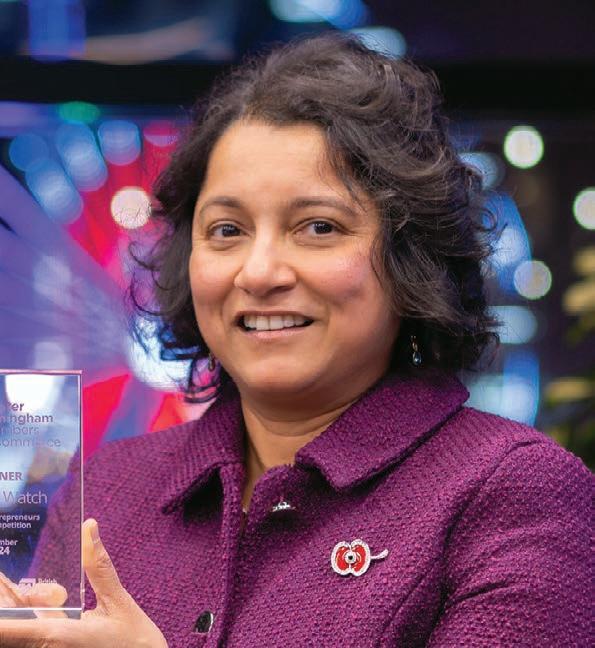

A competition designed to showcase the West Midlands’ best women-led SME and start-up businesses is to return for a third year.
The Women Entrepreneurs Pitch Competition – delivered by Greater Birmingham Chambers of Commerce (GBCC), NatWest and the British Business Bank – provides female entrepreneurs with an opportunity to showcase their business by pitching to a live panel of investors.
Applications for the 2025 edition are open now until Wednesday, 17 September.
Up to five finalists will be invited to pitch to a panel of judges at a Birmingham city centre venue on 6 November.
‘The Women Entrepreneurs Pitch Competition puts a spotlight on ambitious and talented female founders in our region’
The competition is designed to showcase the best of the region’s women-led SMEs and startups, while addressing some of their barriers to growth.
Latest figures from the Gender Index reveal just 3.29 per cent of West Midlands-based female-led companies have attracted angel investment in 2025 so far – down from 7 per cent in the same period during 2024.
This is despite the region having the highest proportion of female-led companies in the UK.
Last year’s winner was Wolverhampton-based iCount – a medtech firm that has developed a safety device to prevent medical complications during childbirth and surgery – following a successful pitch from co-founder and CEO Dr Aditi Desai.
In 2024, biotech firm SymbioTex Ltd, led by CEO and founder Olivia Simpson, was the judges’ choice.
Lillian Elekan, director of membership at Greater Birmingham Chambers of Commerce, said: “The Women Entrepreneurs Pitch Competition puts a spotlight on ambitious and talented female founders in our region. It is a fantastic opportunity to pitch to potential investors both on the panel and in the audience, as well as growing your profile and network.”
Harinder Kunor, community accelerator manager at NatWest, said: “We are incredibly excited about the latest Women Entrepreneurs Pitch Competition and are very much looking forward to hearing from some amazing women entrepreneurs from across the region.
“Helping women-led businesses to scale and succeed is critical to harnessing long-term, sustainable growth in the local and national economies, and we welcome the opportunity to work with leaders in our local ecosystem to support female-led businesses in securing investment.”
Tracy Sherratt, UK senior network senior manager (West Midlands at British Business Bank), said: “We know that underrepresented founders, including female entrepreneurs, continue to face challenges in accessing funding and capital. The British Business Bank is committed to changing this through initiatives like the new £400m Investor Pathways Capital programme, which will support emerging fund managers and ultimately open up greater opportunities for a broad range of entrepreneurs to secure investment through microfunds set up to support small and early-stage businesses.”
Go to greaterbirminghamchambers.com for details of how to apply.

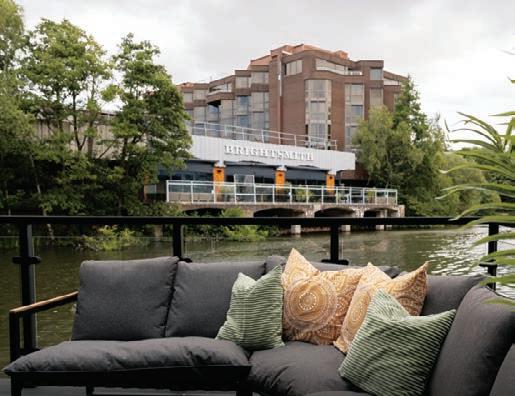
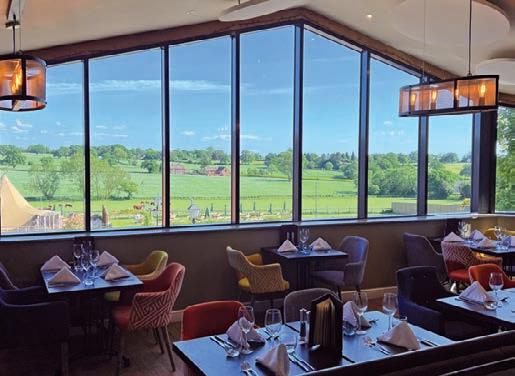
Trams have reached Millennium Point in a successful overnight track test on the first leg of a new tram extension – which will eventually reach Birmingham City FC’s planned 60,000 seater stadium.
This first phase of the Eastside extension includes two stops offering passengers easy access to key destinations including Moor Street Station, Millennium Point and Birmingham City University campus, while work continues to take the extension to Digbeth Coach Station.
It also offers a direct tram link for the almost 400,000 bus passengers a week who use services at the busy Moor Street bus interchange.
This brings bus, rail, tram and cycle hire together in a single location as part of an integrated transport system.
Mayor Richard Parker has earmarked £400m to build the tram extension to the new stadium and surrounding Sports Quarter regeneration scheme.
Passenger services will start in the autumn following the completion of a rigorous testing process. The tests are the first time trams have run down Lower Bull Street, Albert Street and across Moor Street Queensway before stopping at a temporary terminus next to the Eastside City Park.
The mayor said: “Our plan to extend the Metro network to East Birmingham and Solihull is crucial to unlocking the £3bn private sector investment in our new Sports Quarter.”
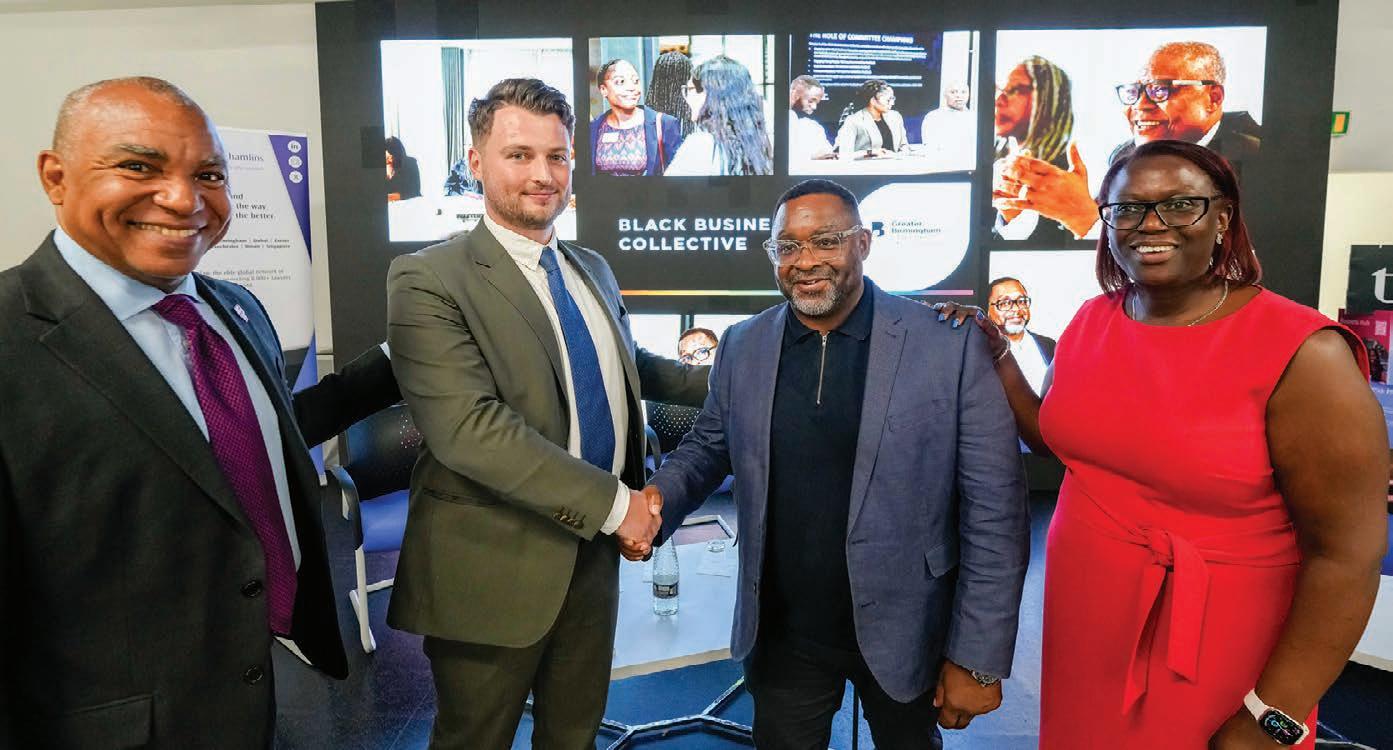
Applications are now open for a free Investment Readiness Accelerator initiative designed to accelerate growth for Black-owned SMEs across the region.
The free initiative has been made possible through a partnership between the Greater Birmingham Chambers of Commerce Black Business Collective and Oxford Innovation Advice.
‘Investment readiness is often a barrier – not lack of ideas’
It is backed by the Business Growth West Midlands Investment Readiness programme and funded via the UK Shared Prosperity Fund.
The Investment Readiness initiative is designed to address the critical gap in securing investment for black owned SMEs due to the lack of access to tailored networks, advice, and pitch preparation.
As programme co deliverers, Oxford Innovation Advice and the Black Business Collective will provide one-to-one mentoring, pitch refinement, investor introductions, and tailored coaching to prepare high growth SMEs for successful fundraising.
Alex Cole, chair of the Black Business Collective, said: “Investment readiness is often a barrier – not lack of ideas. Through this partnership with Oxford Innovation Advice, we're giving Black entrepreneurs across the West Midlands the tailored support and network access they need to scale and compete on the global stage.”
David Ledbury, stakeholder and partnership director at Oxford Innovation Advice, said: “Collaborating with the Black Business Collective allows us to provide pragmatic, bespoke support for talented business leaders who are too often excluded from mainstream investor ecosystems. We’re proud to co deliver a programme that equips founders with the confidence, clarity and connections to raise capital.”
Jamie Elliott, from the West Midlands Combined Authority (WMCA) and senior delivery manager for Business Programmes, said: “This initiative offers a route for under represented entrepreneurs to access vital investment, aligning fully with our strategy to unlock opportunities for all West Midlands communities.”
Interested business owners can register at: www.investment-readiness.co.uk
• Law firm sponsors Collective – see page 19
Digital skills provider Netcom Training is working with Greater Birmingham Chambers of Commerce (GBCC) as the official Technology Training Partner as part of its newly launched Business Services portfolio.
Together they will deliver a range of short digital training courses to local business leaders and their employees, giving them the skills and knowledge they need to thrive in the digital economy.
The GBCC’s Training Services operation has been established to support local businesses in unlocking new opportunities for innovation and expansion.
“Working alongside Netcom Training, GBCC will offer members and non-members access to high quality one-day courses, designed to
improve digital skills within the region including Artificial Intelligence.
The first session AI Readiness Business Leaders will take place on the 11 September at Netcom’s offices at iCentrum in Birmingham. Delivered in partnership with multinational corporation Intel, the full day workshop will guide attendees through the fundamentals of AI, demonstrating real world applications and preparing organisations for AI adoption.
Kevin Vashi, managing director at Netcom Training, said: “We are proud to be GBCC’s official training partner. Together we will give leaders practical ways to use digital tools to positively impact the way they run their businesses.”
David Woakes, head of commercial
development at GBCC added: “This is an excellent and exciting partnership for the GBCC as we re-launch our business services model with a range of training courses to support businesses in the region.
The partnership with Netcom follows a recent policy support programme and aligns both with the training needs identified by our members in the survey, but also the goals and ambitions set out by West Midlands Mayor, Richard Parker, in the recently announced Growth Plan.”
For more details and to apply go to: greaterbirminghamchambers.com
• See page 43 for more details about the AI training course.
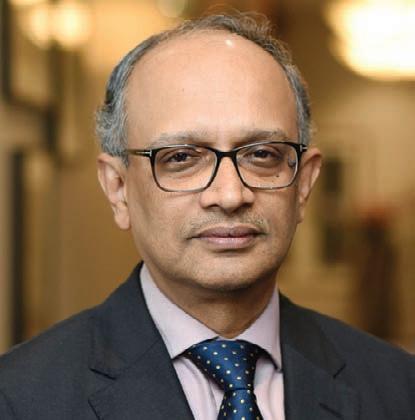
Jaguar Land Rover has named P B Balaji as CEO, replacing Adrian Mardell, who is retiring.
The automotive giant confirmed that Mr Mardell would step down after three years at the helm. He had been with the company for more than three decades.
Mr Balaji, who takes the reins from November, has been Tata Motors’ group chief financial officer since late 2017.
Mr Mardell said: “These three years have been a great privilege.
Together with the incredible JLR workforce, we have cemented JLR’s position in the automotive industry during a time of incredible change.
“I would like to thank everyone in JLR and the extended Tata Group and wish Balaji every success in his new role.”
Mr Balaji is a global finance professional with almost three decades of experience in the corporate sector spanning the FMCG and Automotive industries.
As well as being the CFO of Tata Motors, he served as a non executive director on the board of JLR.
He is also on the boards of Tata Consumer, Air India and Titan Industries.
He started his career with Unilever in 1995 and worked in different corporate finance roles across Asian markets, Switzerland, UK and India. He joined Tata Motors after his last assignment with Hindustan Unilever, a $6bn enterprise, where he headed the finance function as CFO. An alumnus of the Indian Institute of Technology, Chennai, Mr Balaji also has a post graduate degree in management from the Indian Institute of Management, Calcutta.
Mr Balaji said: “It is my privilege to lead this incredible company. Over the past eight years I have grown to know and love this company and its redoubtable global brands.

“I look forward to working with the team to take it to even greater heights.
“I thank Adrian for his immense contributions and wish him well for his next innings.”




An awards ceremony celebrating business success across Sutton Coldfield, Lichfield, Tamworth and Cannock Chase is returning in 2026 – with a new venue and categories.
The annual Royal Sutton Coldfield, Lichfield & Tamworth and Cannock Chase Chambers of Commerce (SLTC) awards will take place at Statfold Country Park – the Tamworth-based destination which houses a heritage railway museum, event space and family attractions.
More than 250 people are expected to attend on Thursday, 12 February.
Twelve awards will be handed out on the night – including nine revamped categories.
Businesses can enter the following categories:
• Royal Sutton Coldfield Business of the Year Award
• Lichfield Business of the Year Award
• Tamworth Business of the Year Award
• Cannock Chase Business of the Year Award
• SLTC Business of the Year Award
• SLTC Community Builder Award
• SLTC Workplace Champion Award
• SLTC Breakthrough Business Award
• SLTC Young Professional of the Year
The presidents of the three Chambers will also present President’s Awards.
It is the 10th anniversary of the popular awards which celebrate the achievements of businesses across three geographical areas in the Greater Birmingham Chambers of Commerce group.
Gary Phelps, president of the Royal Sutton Coldfield Chamber, said: “There is so much to celebrate about the local business community in Sutton Coldfield, and these awards showcase the very best of what is on offer in the Royal Town.
“I would urge local businesses to get involved – by sharing your successes you can not only increase your own visibility, you can also inspire others.”
Fiona Rouse, president of the Lichfield & Tamworth Chamber, said: “It’s exciting to be launching our awards at a brilliant new venue, Statfold Country Park. We have so many businesses and individuals in our area achieving amazing things, who deserve to put themselves forward, and I encourage you all to send your nominations in.”
David Mitchell, president of the Cannock Chase Chamber, said: “These awards are more than a celebration – they’re a chance to be recognised and rewarded for the dedication, drive, and progress you’ve made. Cannock Chase businesses continue to show incredible commitment in challenging times, and these awards offer a powerful platform to showcase that success. Don’t miss the opportunity to shine a spotlight on your achievements.”
For more information go to greaterbirminghamchambers.com
• See President’s Focus – page 10.
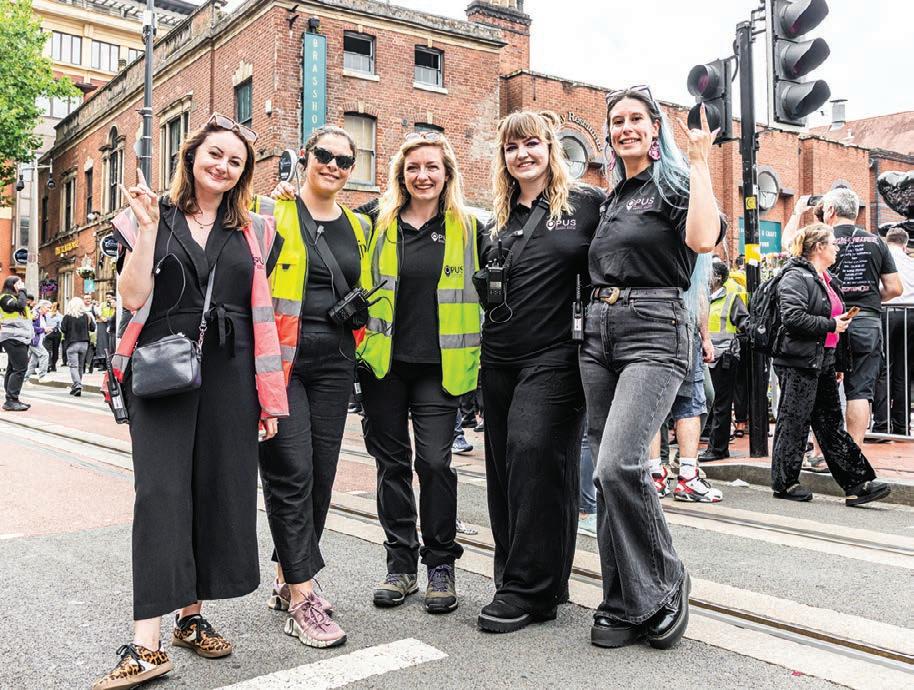
Birmingham came together to offer a final farewell to Ozzy Osbourne.
Working with Birmingham City Council, Transport for West Midlands and Midland Metro, Chamber members OPUS (Outdoor Places Unusual Spaces), a femaleled arts and events business, delivered over five days of moving tributes to the Black Sabbath icon.
Caroline Davis, OPUS managing director and event director, said: “The tribute to Ozzy was a textbook example of how the right partnerships enabled us to quickly and effectively work closely with Birmingham City Council, our safety advisors, and a deeply professional supplier team meaning we were able to navigate the events complexity with confidence. The trust between all partners made the difference – and we’re proud to have been part of it.”
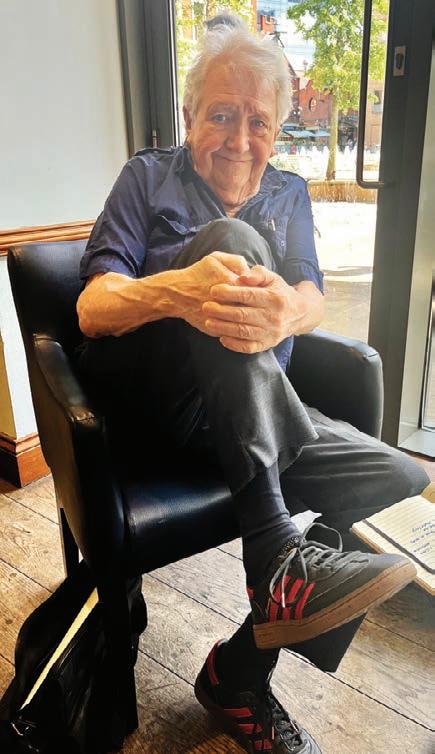
Black Sabbath’s first manager
Jim Simpson has starred in a video about new
celebrates Birmingham as the founding city of heavy metal. The video was filmed outside the band’s original venue of The Crown pub, near Birmingham New Street station, and was commissioned by Size?, the footwear and clothing chain that is part of the JD Sports empire. The footage, commissioned to promote the new Adidas
• See Member Profile – page 67
Former newspaper editor Gary Phelps is the new president of Royal Sutton Coldfield Chamber of Commerce. Here he explains why he is determined to help businesses get the best out of what he calls the two worlds of Sutton Coldfield.
It’s a great honour to take over as president of the Royal Sutton Coldfield Chamber of Commerce, supporting the business community in my home town.
Call me biased (which I am), but I think Sutton Coldfield is quite a special place – you could even call it unique.
Why? Because there are two Sutton Coldfields – the up-market suburb of the UK’s Second City, and the ancient Tudor town which retains a bit of a stubborn independent streak.
It’s home to a thriving local business economy, while at the same time many of the people and entrepreneurs who occupy the boardrooms of Brum live here too.
It’s proudly independent yet benefits from being just a few minutes away from the metropolitan buzz of Birmingham.
Add to that its reputation as a desirable place to live, married with its genuinely unusual status as a “Royal Town” and it’s clear that Sutton has a USP that other places might envy, along with serious business pedigree.
‘There are real opportunities here.Sutton continues to attract big investors’
During my time as president, I’m determined to help businesses here get the best out of both those worlds – by tapping into that strong local pride, while benefitting from close access to Birmingham and beyond. That means building on the success of the last few years, while ensuring our members understand what they can get out of Chamber membership, and all the services, guidance and support it offers.
I think we can do a better job of explaining the value of Chamber

“Collaboration” reflects the role the Chamber should play in helping to shape the future of the communities it serves. There are big opportunities ahead for Sutton Coldfield, from the redevelopment of the town centre to the 500th anniversary of the town’s Royal Charter, and I want to ensure the Chamber has a seat at the table when these plans are being discussed.
Collaboration also means closer ties with neighbouring Chambers. As a former editor of the Tamworth Herald, Lichfield Mercury and Cannock Mercury, I’m also looking forward to forging closer links with our colleagues in those towns.
“Community” speaks for itself. In Sutton Coldfield, our Chamber is embedded in local life, from supporting our chosen charity, the Cancer Support Centre, to backing local events and venues. I want to build on that.
Of course, while Sutton is a great place to do business, firms here are facing the same challenges found elsewhere – from rising costs and skills gaps to the impact of online shopping. No business is immune to these challenges.
But there are real opportunities here. Sutton continues to attract big investors. For example, Australian retail giant Harvey Norman is building its UK HQ here, the Belfry is undergoing a multimillion-pound revamp, and the town centre is on the cusp of a new era.

membership, and I hope that my background as a journalist will helps us achieve that goal.
After all, Royal Sutton Coldfield Chamber of Commerce has a great story to tell.
The three watchwords I’ll be working to will be connection, collaboration and community.
“Connection” is at the heart of
the Chamber, and a successful programme of events is essential in providing that connectivity.
In Sutton we have big events –the SLTC Awards and the Royal Business fair – which are important calendar dates, but I’m keen to also continue developing smaller, more intimate events which provide practical advice for members.
Our smaller high streets, in places like Boldmere, Mere Green, Wylde Green and Walmley, are flourishing too. People want to do business here.
I want to put on record my thanks to outgoing president Naeem Arif for an inspirational two years in the chair, which has seen the Sutton Chamber go from strength to strength.
As I follow Naeem, my ambition is to raise the profile of the Chamber even higher, to attract more members – and ensure local businesses work together to take advantage of the opportunities ahead.

It’s an unlikely turnaround for the Birmingham heavy metal rock band, but Black Sabbath are now credited with bringing ballet to “everyday people”. Paul James, the new boss of Birmingham Royal Ballet, says Black Sabbath – The Ballet is responsible for widening the appeal of ballet and here he tells JON GRIFFIN how that happened.
Birmingham Royal Ballet is set to rock audiences like never before in nearly 100 years of artistic stagecraft - as Black Sabbath –The Ballet comes home to the city that invented heavy metal.
The Royal Ballet, an acclaimed cultural fixture in Birmingham since the London-based Sadler’s Wells ballet company moved to the city in 1990, is celebrating its fastestselling show following a sold-out premiere in 2023 and a string of successful dates in Europe and the USA.
The Black Sabbath spectacular comes home to Birmingham Hippodrome from 18 to 27 September before other UK dates in Salford, Plymouth, London and Edinburgh in October and November.
And Birmingham Royal Ballet CEO Paul James said the success of the Black Sabbath production reflected the talents and skills of a world-class touring company which battled back from Covid-19 to strengthen its place on the global stage with the support of many loyal Midland ballet-lovers. Paul, who took over at the helm following the death of previous CEO Caroline Miller last December, told Chamberlink: “What I love about this company, and what I love about Birmingham is that our supporters are everyday people. It’s not an elite group of uber-wealthy people sitting in Monte Carlo.
“Most people I speak to in Birmingham are very proud of their ballet company. They recognise who we are and you look at the critical response. We have this amazing company and within the world of ballet, Birmingham Royal Ballet is incredibly well regarded.”
The long-standing public acclaim for the city’s Royal Ballet, patrons of


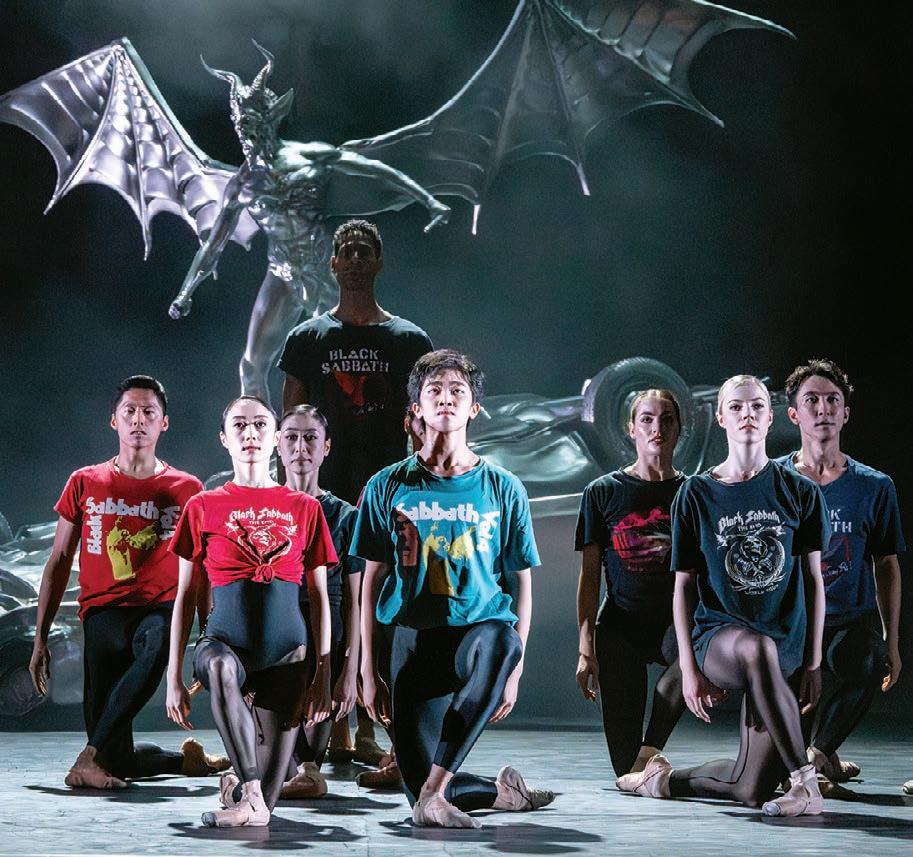
the Greater Birmingham Global Chamber of Commerce, was mirrored by the worldwide fervour for Black Sabbath – The Ballet, the company’s fastest-selling production of all time, an idea first mooted by director Carlos Acosta when he arrived in Birmingham in January 2020 just before the first Covid-19 lockdown.
‘Black
The Ballet sells incredibly well and talks to a really wide audience’
Paul says: “It’s certainly our fastest-selling show. It’s extraordinary but actually some of our shows are 50 or 60 years in existence. It’s hard to say that it’s the most successful ever when you think about the Nutcracker, which has probably had around 1.1 million people see it.
“Black Sabbath – The Ballet sells incredibly well and talks to a really wide audience. It attracts ballet fans because it is a work of contemporary ballet with three amazing choreographers


involved in creating it under Carlos’s vision for the production. But obviously you also get Sabbath fans, rock fans. It’s a new thing entirely, not a jukebox musical. And it’s also about Birmingham, and why Black Sabbath and why heavy metal evolved here. And that’s really at the heart of the story.”
Birmingham Royal Ballet’s Black Sabbath production will be followed by the Nutcracker before Christmas and Don Quixote next spring – as the touring company prepares to meet the challenge of rising inflation and a tripling of operating costs. Paul said a range of costs, from accommodation to storage and feeding dancers on tour, had increased “exponentially”, while annual turnover for the 180strong staffed organisation had risen to around £17m.
“How do we tackle that? We have to continue to put on exciting, engaging, world-class art that has relevance, draws people in so they’ll continue to buy tickets and come to shows and tell our story across the community so people continue to support us.”
Paul said he was optimistic for the future of the Birmingham company in a digital era of ever-expanding

cultural choices for new generations.
“The thing that frustrates me sometimes in the conversations you have within the arts in general is this thing about you’ve always got to attract a new generation. Successful art has always attracted a new generation, otherwise it wouldn’t exist. We have people who have been supporting us for 50 years –they’re now in their eighties but they started when they were in their forties. People come to ballet at all points in their lives – if you look at our demographic, across all of the shows, we have young families, we have all sorts.”
He said the Royal Ballet audiences were not people
“wearing tiaras and black tie”.
“This isn’t a 1960s movie. If you want to see Don Quixote coming
‘We’re always looking to make sure that we’ve got the next wave of talent coming through’
up in the spring it’s perhaps not a title that trips off everybody’s lips but it is the most extraordinary, joyous, bright, colourful, dramatic production. You won’t see better whether you are in New York, Paris or Moscow.”
Paul said the Royal Ballet was also a recruiting organisation for a variety of non-dance roles, from wig and costume makers to lighting designers, lighting engineers, stage crew and other crafts, with a careers programme especially aimed at people from 16 to 24.
“For everybody that’s on stage there’s somebody behind stage making this happen. We’re always looking to make sure that we’ve got the next wave of talent coming through to take on those roles. These are really good careers in theatre that can support people for their whole lives – we have three accountants but they live in a world of ballet, dance and theatre.”
Meanwhile, the Birmingham company has proved an invaluable finishing school for promising great young talent with its BRB2 arm.
“We’ve had dancers go to Paris, Munich, Berlin, all over the world because they’ve had this incredible training. My analogies are always to do with football, rugby. You build an academy – you can’t sell anybody for 50 million quid but what you do enhances the dance world and our own reputation.”
• Ballet director awarded highest honour – see page 26.
• Young dancer on track for Royal Ballet in London – see page 64.
Participants in Greater Birmingham Chambers of Commerce (GBCC) Quarterly Business Report survey for Q3 will have a chance of winning a festive meal for six at Crowne Plaza Solihull.
The report, sponsored by Birmingham City University, is the most comprehensive regular report of its kind in the city region, offering an up-to-date snapshot of the performance of the Greater Birmingham business community.
As well as gathering the usual data on key indicators such as sales, exports, investment intentions and the workforce, the GBCC is working with M6Toll to gather information on business usage.
Survey data will be collated at a national level and will feed into policy and lobbying activity for both GBCC and the British Chambers of Commerce, reaching institutions such as the
Government and the Bank of England.
On average, the survey takes around five minutes to complete.
‘It’s vital that we hear from as many firms as possible’
Participants will also have the opportunity to enter a prize draw, with the chance to win a festive meal for six and glasses of prosecco at Crowne Plaza Solihull (terms and conditions apply).
Emily Stubbs, GBCC head of policy, said: “The results from our Q2 Quarterly Business Report underline the continued impact of domestic and international developments on the local business community.
“It’s vital that we hear from as many firms as possible so we can ensure stakeholders fully understand the impact these
Employers have pledged almost 13,000 work experience, training and apprenticeship opportunities as part of West Midlands mayor Richard Parker’s (pictured) drive to get young people into good careers.
Working with local business and partners to create 20,000 work experience placements, training opportunities and apprenticeships over the next three years is a key part of the mayor’s Growth Plan which sets out a blueprint for re-igniting the regional economy.
The employer pledges mean the mayor is on the way to achieving his target which is a key pillar of his flagship Youth Employment Plan which he launched 12 months ago.
Rising youth unemployment is a national issue, but it is double the national average in some areas such as Walsall, Wolverhampton and Birmingham – with around 28,000 young people classed as unemployed across the region.
The mayor’s Growth Plan sets out a bold vision to transform the region’s £77bn economy by creating 93,000 good quality, well-paid job opportunities for people over the next 10 years.
Richard said: “I’m pleased we’ve now secured even more training and work experience pledges from employers across the West Midlands. We’re making a real difference every day.
“This is what our Growth Plan in action looks like. We’re backing young people with the skills and opportunities they need to thrive, while helping local firms grow the talent they need.”


political and economic developments are having on the economy.
“The Bank of England recently cited data from the Chambers’ Q2 survey in the Monetary Policy Report informing the decision to cut interest rates to four per cent.
“As always, this quarter’s findings will also be shared with local and regional policy makers, as well as national stakeholders in the
Government, Treasury and the Bank of England, so your response will have a direct impact on Government policy at the highest level.”
To complete the survey, go to: www.surveymonkey.com/r/7RL8LL9
To find out more about festive events at Crowne Plaza Solihull go to: letsdochristmas.com



Greater Birmingham Chambers of Commerce’s (GBCC) office manager has been crowned the region’s best during a top awards ceremony.
Kate Warnaby (pictured), who is executive assistant to the chief executive’s office as well as being office manager at the GBCC’s headquarters, was triumphant in the Office Manager of the Year category at the West Midlands PA Awards.
The awards ceremony, operated by the PA Forum, took place at the National Conference Centre at the Motorcycle Museum and was
attended by around 350 people. Kate joined GBCC in 2019, having spent many years working in the Arts sector, including 14 years as executive assistant to the artistic director and CEO at Birmingham’s Hippodrome theatre.
Judges said Kate “clearly demonstrated her determination, passion and enthusiasm for her role”.
Kate said: “The PA Forum is a brilliant organisation, set up by Daniel Skermer, that unites and empowers those of us who play a vital role in providing business support across various sectors.”

glamping brand, has opened a new site at the NEC Birmingham.
Located in a private wooded area on the edge of Pendigo Lake, just a three-minute walk from the NEC, bp pulse LIVE, and Resorts World, the new glamping site offers accommodation option for eventgoers, business travellers and “staycationers”.
On completion, the resort will feature 59 architecturally designed pods: 12 overwater suites with private terraces suspended above

complete with its own private hot tub and overwater terrace, and 46 woodland bungalows nestling among the trees.
Guests will have the option to choose between double or twin rooms throughout the resort, making it ideal for couples, colleagues and friends..
Each pod is crafted to offer hotel-level comfort while immersing guests in the natural surroundings. All of the pods offer a luxury hotel experience with
interiors that open seamlessly to a tranquil woodland setting or to an outstanding outdoor terrace set above the water.
As part of its first phase launch, AvantGlamp is unveiling 11 luxury pods - self-contained units that combine the charm of nature with the comfort of a boutique hotel.
These pods are fully insulated and equipped with modern amenities, plush beds, private bathrooms with high-end toiletries, heating and air conditioning, Nespresso coffee machines, and
smart TVs and Bluetooth speakers. Bookings are now available for the remainder of this year and 2026.
Calum MacLeod, founder of AvantGlamp, said: “We’ve worked hard to build an experience that feels like a unique hideaway, while still being right next to everything the NEC has to offer.”
Sarah Harvey, chief development officer at the NEC Group, said: “We’re really excited to welcome AvantGlamp to the NEC. The pods look fantastic and will offer our visitors a truly elevated stay.”

Head of department: Paula Bates
Can you describe your role and your team’s primary responsibilities within the Chamber? My role is to lead the Chamber’s marketing, events and digital strategy, working with the wider team to co-ordinate and deliver three key areas: marketing (promoting the Chamber and its offer), events (designing and delivering the member events programme) and digital (CRM management, website, email marketing, and social media).
I work closely with internal teams and external partners to increase member engagement, attract new audiences, and showcase the value we deliver to the business community. I use insights and data to ensure our campaigns, events and digital channels are impactful, relevant, and continually improving.
What are the key services your team provides to members and the wider business community?
• Facilitating connections, knowledge sharing, networking and insights through the website and member portal – all maintained and developed in-house
• Advertising
• Communications – member bulletin, marketplace offers and emails to ensure members understand the benefits available to them and the connections they can make with the business community
• Events – managing and delivering, including co-ordinating speakers, maximising sponsors’ opportunities and ensuring members can apply for awards during “awards season”
• Promoting our members through social media, case studies and testimonials, inclusion in campaigns through videos, photos and positive affiliation.
What does a typical day look like for your team?
It's an early start for the events team with a Business at Breakfast event, welcoming members across the region to learn key business advice before the day even begins. Then it’s a quick check on bookings, before they’re out on a site visit at member venues and suppliers. The team check-in with divisional leads and other staff to plan upcoming events, using feedback and ensuring we offer a wide range of event types, timings and locations. After lunch, events promotion may take priority, spending focused time preparing for our flagship events like awards and expos. Planning starts up to a year in advance, so there is never any time to pause. Late afternoon, it’s time to prepare for the
Paula


evening’s event, gathering materials, processing last minute enquiries, and setting up another session full of connection for our members.
What’s a recent project, initiative, or success your team is particularly proud of?
Over the past few years, we have reduced our paper usage by 95 per cent, by using digital delegate lists, digital brochures, and encouraging guests to bring their own name badges. We are now cutting food waste by encouraging guests to only book for the events they intend to attend or give their place to a colleague if they cannot attend. We want to make this year’s GBB Expo our most sustainable expo yet.
What are the most common challenges or needs your team helps members address?
Last year, over 300 members booked onto an event and did not attend, resulting in 229kg of croissants going in the bin, and 1000 litres of coffee being poured away.
To support our sustainability initiative, we want members to help us reduce this waste by following three simple steps:
1. Only book for events you are planning to attend
2. Give your place to a colleague so your organisation doesn’t miss out on important connection and knowledge
3. If you really can’t make it, cancel your place online or by emailing us at least three days in advance.
What’s the most rewarding part of your work within the Chamber?
Seeing the teams’ hard work pay off. For events, the team start with nothing more than an idea and coordinate every aspect to turn it into a
successful, engaging event that connects, supports and celebrates our members. From a marketing perspective, it is rewarding to share positive testimonials and case studies to demonstrate to others how the Chamber has really supported other businesses to achieve their business goals.
What’s something people might not know about your team’s work but should?
The events team of five manage and deliver over 230-plus events every year, including six awards ceremonies and three expos.
What are some fun facts about your team members?
• Keerti owns eight cats, four fish, three turtles, one dog, one hamster and one snake.
• Kamila speaks fluent Spanish and lived in Spain for a year.
• Marcella has a background in dance and trains aerial circus in her free time.
• Nick is a drum and bass DJ and has had some music featured on BBC Radio 1
• Elaine is an adrenaline junkie having taken on both skydives and bungee jumps and is always front of the group for a good roller coaster or scare maze!
• Mahalia started tap dancing at the age of six and worked up to intermediate level.
• Richard has over 50 medals for halfmarathons, marathons and triathlons collected since 2006. Taking pride of place are his medals for two Ironman triathlons (2.5 mile swim, 112 mile bike, 26 mile run) and a 52-mile ultra-marathon.
• Paula has different coloured eyes which came in handy surviving Tough Mudder – a 13k assault course.


Hannah Bailey, of Blue Light Wellbeing, is on a mission to create opportunities for improved mental health and wellbeing for all employees.
At Blue Light Wellbeing, we understand that stigma around mental health in the workplace can create a major barrier to performance, engagement, and overall wellbeing.
As a former police officer –now a qualified mental health and wellbeing specialist –Hannah has seen firsthand how difficult it can be to speak up when you're struggling, particularly in high-pressure, high-responsibility roles where resilience is often misunderstood as silence.
Hannah’s personal and professional experiences have shaped the mission at Blue Light Wellbeing: to create psychologically safe workplaces where people feel empowered to be honest about their mental health without fear of judgment or consequence.
Hannah works with organisations through impactful speaking, tailored training, wellbeing coaching, and specialist support to reduce stigma, build awareness, and drive sustainable cultural change. Whether you’re leading a team or working on the front line, our services help your staff feel educated, valued, and empowered to take steps toward better wellbeing.
We don’t do ‘tick-box’ wellbeing. Our workshops are shaped by real experience and delivered with the passion to inspire meaningful change. The results? Reduced absence, improved retention, stronger performance, and more resilient teams.
If you’d like to know more about how we can support your employees, get in touch at hannah@bluelightwellbeing.uk to arrange a chat. Sponsored by:
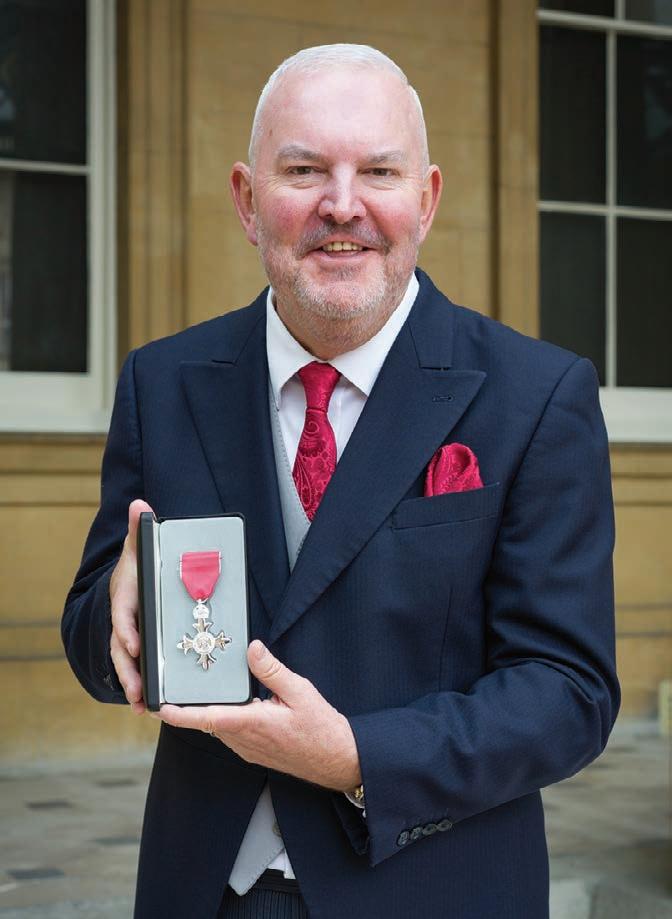
Doug Wright MBE has announced that he will bid farewell to McDonald’s after 44 years. The McDonald’s stalwart is selling his restaurant empire – with 16 restaurants initially returning to the corporation and the other 10 being purchased by other franchisees.
It closes a remarkable chapter in a career which began on 1 July, 1981, at the age of 16 when Doug took his first job at McDonald’s in Bedford as a 93p-an-hour cleaner.
He climbed the ranks within the McDonald’s corporation before fulfilling a dream in 2002 by being granted his first franchised restaurant.
Over the next two decades, Wright Restaurants (T/A McDonald’s) mushroomed into one of the West Midlands’ biggest employers – with nearly 3,000 staff across 26 sites.
‘Doug stands as one of the West Midlands’ great business success stories’
Business success also brought a string of personal awards including the Fred L Turner Golden Arch award - the highest accolade in the global McDonald’s network.
His work was nationally recognised when he was awarded an MBE in the Queen’s final honours list in 2022 for his contribution to business and charities in the West Midlands.
“I'm very proud of the business we’ve created and what it has contributed to the West Midlands economy,” said the preeminent businessman and philanthropist, who is affectionately known across the region as Mr McDonald’s.
A golden thread of Doug’s 23-year stint as a franchisee has been using his business as a vehicle to make a positive impact on society.

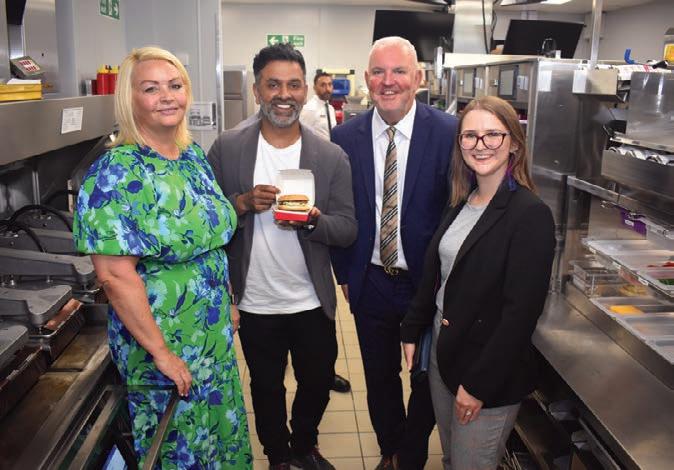
Inspired to give back to the community after suffering a life-changing car accident at the age of 20, Doug has spearheaded a host of charitable endeavours
As chair of Ronald McDonald House Charity, he helped to raise millions for the charity and has supported hundreds of initiatives. He has also sponsored and supported hundreds of initiatives in the local community – from sports clubs to arts and educational projects.
He is a long-standing patron and former board member of Greater Birmingham Chambers of Commerce (GBCC) and a Deputy Lieutenant of the West Midlands.
Doug recently completed a one-year term as High Sheriff of the West Midlands, which he lists as “the highlight of my working career” and where he was “fortunate to meet various members of the Royal Family when they visited the West Midlands.”
He will remain as chair of Kids’ Village, as the charity continues its mission to build the UK’s first holiday resort offering free breaks for critically ill children.
He said: “...Being part of the Chamber was a turning point for me – joining an organisation where you can connect, support, grow and meet like-minded people, as well as leveraging the support of fellow members to get the Kids’ Village project off the ground.”
Raj Kandola, acting deputy CEO of the GBCC, said: “Doug stands as one of the West Midlands’ great business success stories.
“His success with McDonald’s has not only contributed significantly to our regional economy but also created a lasting impact in the communities he’s served.”


Shaping a better future for this generation and the next is the aim of UK medtech leader Professor Gino Martini in a showpiece event of West Midlands Life Sciences Week (LSW) from 15-19 September.
Professor Martini, chief executive of Precision Health Technologies Accelerator (PHTA), based in the Birmingham Heath Innovation Campus (BHIC), is the keynote speaker of the morning events on 18 September in Birmingham’s Orelle restaurant on the 24th floor of 103 Colmore Row.
In partnership with the Greater Birmingham Chambers of Commerce (GBCC) and LSW, the exclusive morning session with Professor Martini will be followed
by a Global Brunch with a focus on “the power and potential of partnerships”.
‘Our region is full of untapped potential in life sciences and medtech’
Raj Kandola, acting deputy CEO of the GBCC, said: “Connecting people and businesses is what we do – and nowhere is this more crucial right now than in the life sciences sector, which is fast establishing a UK base right here in the West Midlands.”
Prof. Martini said: “Our region is full of untapped potential in life sciences and medtech. The infrastructure, talent and innovation are not future ambitions - they’re real, current assets that many other regions across the country are only beginning to build.”.
Joining him on a discussion panel will be Fiona Latter, creative, culture and heritage programme lead for the West Midlands Combined Authority, and John Richards, director of knowledge exchange at Aston University.
LSW is in its first year. Its focus is fourfold:
• Pharmaceutical and biotech: drug discovery, novel therapies, global research
• Medical technology and

She said: “We congratulate the Collective as it celebrates this important one year anniversary milestone. We are passionate about our continued support as a sponsor of the Black Business Collective and the important role it plays in nurturing local talent, supporting entrepreneurs and Black-owned businesses.”
Subscription to the Black Business Collective bulletin is free and individuals can have access to a dedicated GBCC Black Business Collective quarterly event alongside a bimonthly digital bulletin sharing the latest insight, events and opportunities for the Black business community from across the region.
Go to greaterbirminghamchambers.com to subscribe

diagnostics: tools, devices, diagnostics, clinical practice
• Academic institutions: university research shared with the private sector
• Investors: emerging ventures and opening doors to capital and scaling opportunities.
Plug and Play, Bruntwood, Crowe UK, Willis Towers Watson, Medilink Midlands, and WMHTC (West Midlands Health Technologies Cluster) are among the brands involved with LSW.
Book to attend the Power of Partnerships in Life Sciences at wmlifesciencesweek.co.uk
Book to attend the Global Brunch greaterbirminghamchambers.com
The West Midlands Business Festival is set to return in 2026 following the huge success of its inaugural event earlier this year.
Between 2 and 13 February next year, thousands of small and medium sized enterprises (SMEs) and the wider business community will get another opportunity to come together for a fortnight of inspiration, innovation, learning, showcasing and networking.
Plans for the 2026 festival have been unveiled just a week after the Mayor Richard Parker launched the West Midlands Growth Plan to fire up the region’s economy by backing businesses to grow and help create thousands of new jobs.
The theme for 2026 is Growth Without Limits - championing growth for all by unlocking opportunity and supporting ambitious businesses to succeed and scale, ensuring fairness and sustained progress across the region.
To register an interest in taking part go to: wmbf.co.uk
ADVERTISEMENT FEATURE

For many SMEs, procurement is a necessary but frustrating part of running a business. Whether it’s navigating supplier price increases, managing contracts, or dealing with supply chain delays, procurement can feel like a drain on time and resources.
Yet, when done well, procurement isn’t just about cutting costs – it’s a strategic tool that can improve cash flow, reduce risk and drive business growth. The challenge? Many businesses don’t have the time or in-house expertise to unlock its full potential.
Even if you don’t have a dedicated procurement team – or you have just one or two people managing purchasing alongside other responsibilities – you can still benefit from the right training, guidance and support.
That’s where Beaumont Procurement comes in.
Making procurement work for your business
Led by Richard Beaumont, a procurement expert with over 30 years of experience in businesses of all sizes – from SMEs to global corporations – we specialise in helping businesses buy smarter, negotiate better and streamline procurement processes. Unlike generic training programmes, we listen first, understanding your challenges before designing practical, handson training that delivers results. Whether you’re looking to save costs, manage supplier risk, meet sustainability targets, or improve contract negotiations, we provide the tools, skills and strategies your business needs.

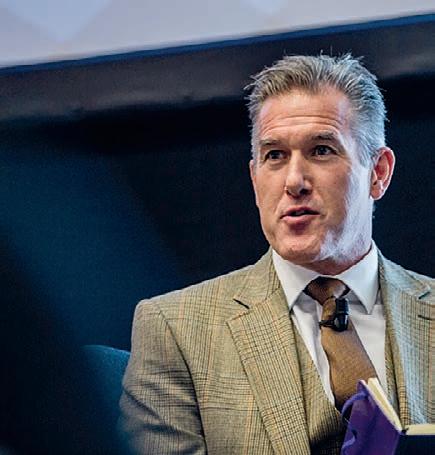
Beaumont
Whether you have a full procurement team, just one person handling purchasing, or no dedicated procurement resource at all, we offer training and coaching that fits your business, including:
• Tailored procurement training –delivered in-person or online, for individuals or teams
• Coaching & mentoring for business owners and procurement leads
• Practical workshops focused on cost-saving, supplier management and contract negotiations
• Procurement technology guidance – helping you make the most of digital tools and AI
• Sustainable procurement strategies – ensuring your supply chain meets ESG and sustainability commitments.
Let’s talk If procurement is slowing your business down, let’s change that.
Visit: beaumontprocurement.com/cl1
Email: richard@beaumontprocurement.com
Call: 0800 0842059
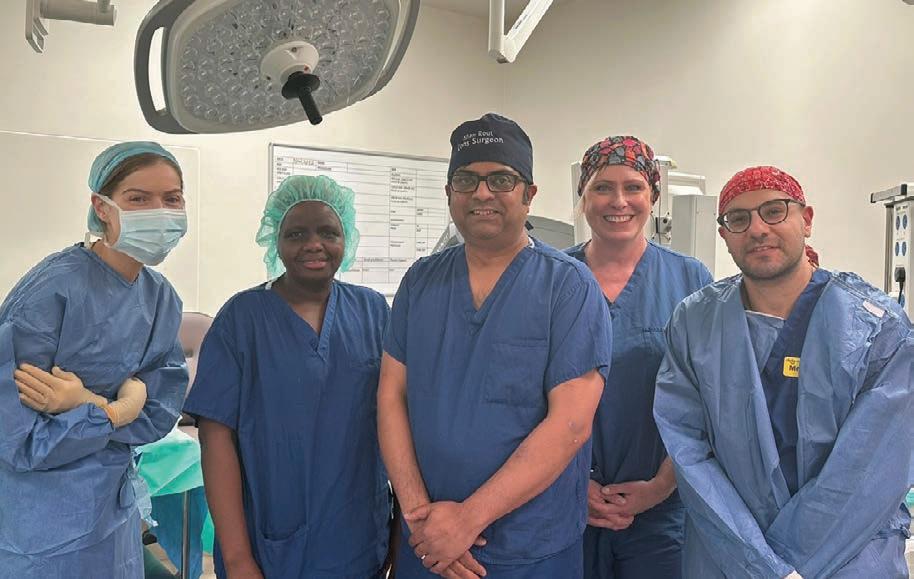
Surgeons at the Midland Metropolitan University Hospital have successfully performed a robotic-TAMIS surgery, the first robotic colorectal surgery of its kind to be performed in Birmingham and the Black Country.
Transanal minimally invasive surgery (TAMIS) is a technique to remove polyps and early-stage cancers from the rectum.
‘By 2035, it’s estimated that 90 per cent of all keyhole surgery will be robotic’
It removes potentially cancerous tissue and decreases the chances of patients requiring major surgery or permanent stomas in the future.
Colorectal surgeons at Sandwell and West Birmingham NHS Trust have been performing TAMIS since 2024 but have now used a da Vinci surgical robot to carry out the procedure.
With the Robotic-TAMIS (rTAMIS) technique, one surgeon controls both the telescopic camera and the surgical instruments using a surgical console. This provides extra manoeuvrability of the instruments, making it much more ergonomic to perform than conventional TAMIS surgery.
Consultant Colorectal and general surgeon Mr Shantanu Rout, who performed the procedure said: “NHS England have recently announced that they are anticipating a significant expansion of robotic surgery to speed up patient care and cut down waiting lists. By 2035, it’s estimated that 90 per cent of all keyhole surgery will be robotic.”
The Anawin – Birmingham’s Centre for Women – is on the lookout for an inspiring and dynamic individual to join their board of trustees. Anawim is a Birmingham charity committed to working for women, offering gender responsive and trauma-informed support. The charity does this through wraparound services including longterm specialist provisions alongside other practical resources.
Anawim CEO Joy Doal said: “We especially require skills and understanding of finance and fundraising and trustees who can help our positioning with corporate, philanthropic and policy partners as well as providing the security that good governance brings.”
For more information, email joydoal@anawim.co.uk
Edgbaston Priory Club has a rich history as a sporting icon in Birmingham dating back to 1875. This year it celebrates its 150th birthday and Chamberlink looks back on some of the club’s highlights from those years.
Edgbaston Priory Club is celebrating 150 years of excellence in racquet sports, wellness, and community.
From its beginnings as the Priory Lawn Tennis Club in 1875 to its present-day status as one of the UK’s most prestigious racquets and leisure clubs, it has a rich and inspiring legacy.
Founded just down the road from where lawn tennis was first devised on Ampton Road in 1859, Priory Lawn Tennis Club quickly established itself as a cornerstone

of the sport’s early development.
Nearby, the Edgbaston Cricket & Lawn Tennis Club was founded in 1878, further strengthening Birmingham’s role in tennis history.
Among the club’s earliest icons was Maud Watson, a local talent from Solihull who won the Midland Counties Tournament at the club before becoming the first Wimbledon ladies’ singles champion in 1884.
She later donated her trophy to the Edgbaston Priory Club. Today, it is known as the Maud Watson Trophy and is awarded annually at the Lexus Birmingham Open grass court tournament.
The present club took shape in 1964, born from the merger of the two historic clubs following a devastating fire that destroyed the original Priory clubhouse in 1963.
Edgbaston Priory Club adopted the phoenix as its emblem, symbolising rebirth, resilience, and ambition.
Over the decades, the club has hosted numerous tournaments, including the Priory Whitsun Tournament, the Davis Cup, the British Open, the British Junior Open and the Lexus Birmingham Open.
The club is also home to worldclass athletes such as Ann Jones, Wimbledon Champion in 1969, and Joel Makin, currently World No. 4 in squash.
Today, Edgbaston Priory Club spans 14 acres and boasts outstanding facilities, including:
• 31 tennis courts across a range of surfaces (grass, clay, hard, indoor and outdoor)
• 10 squash courts
• Three padel courts
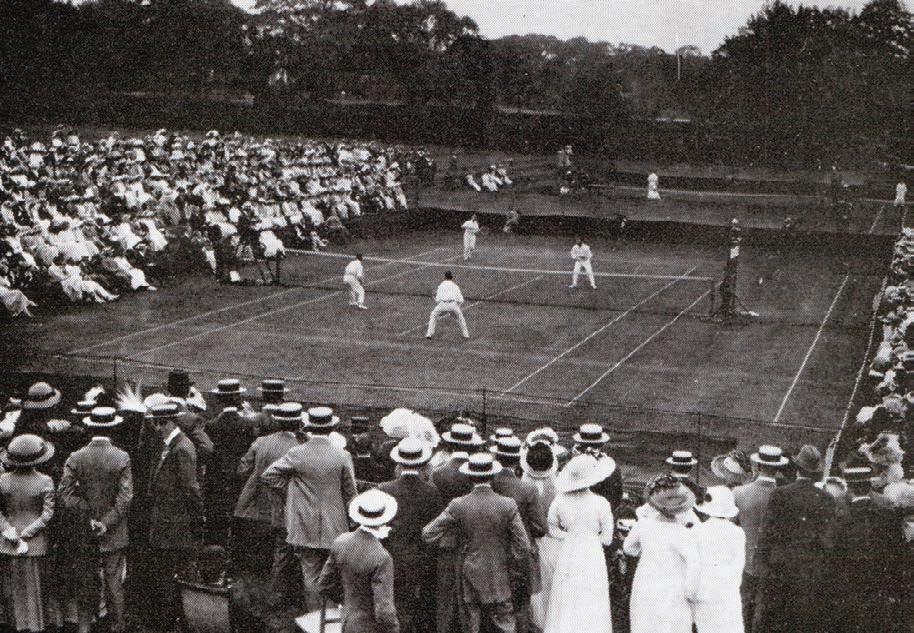
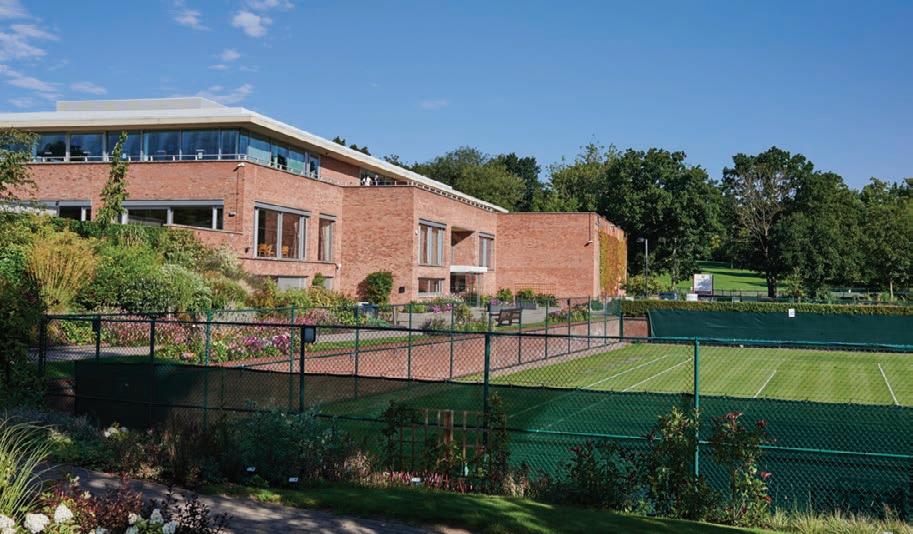

Club CEO Claire Daniel said: “What makes Edgbaston Priory Club unique is our blend of tradition and innovation. Members enjoy elite facilities, expert coaching, a warm
community, and a calendar packed with both competitive and social events. We host major tournaments like the Lexus Birmingham Open, serve as a launchpad for local and national talent and run community programmes that open doors to sport. We’re proud to be both a sporting beacon and a social cornerstone in Birmingham.”



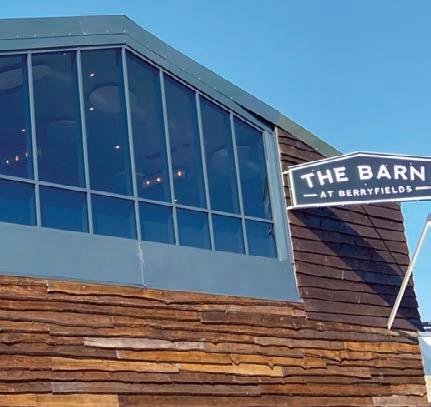
The Barn at Berryfields is a multi-award-winning independent 2 AA Rosette restaurant, private function room and 33-bedroom hotel in Meriden. The restaurant has achieved TripAdvisor’s Travellers’ Choice award for the last four years, received the Best Restaurant in Warwickshire with the Muddy Stilettos in 2022, won Taste of The West Midlands with the WM’s Tourism Awards in 2023 and received 2 AA Rosettes in 2024. It serves British cuisine, and offers breakfast, lunch and dinner seven days a week with a signature Sunday roast. The family-run business opened the hotel in August alongside a new pizzeria and bar. All of this is based in the heart of their family farm in Meriden.
Food and drinks
Breakfast
Showcases the best of The Barn’s handmade and home-reared ingredients. All the sausage and bacon are home-reared, the bread is handmade by their artisan bakery and the coffee is provided by an independent local gourmet supplier. Dishes include a full English, smashed avocado and handmade pancakes.
Lunch
The Barn’s lunch menu comprises its most popular a la carte dishes, such as smashed burgers and stonebass, but also some lighter options such as risotto, truffle mushrooms and linguini.
Dinner
The dinner menu offers The Barn’s most technically skilled dishes such as stuffed pork belly, tandoori chicken patty and slow-cooked duck breast, alongside all of the classics such as fish and chips, burratina and a smashed burger. Vegetarian, vegan and gluten-free options are available.

Wines
The Barn’s wine list offers a list of exclusive wines from across the world and from some of the most unique vineyards. Every flavour has been paired with a dish on the

menu to ensure it caters to everyone’s palate. Alongside wine, there is also a variety of draught lager, cider and ale, cocktails, mocktails, spirits, soft and hot drinks.
Several conference packages offered to suit each business need – enquire to find out which options suits your requirements best. All day catering, set menus and buffet options are available.
Private dining and conference facilities
The Loft is sound-proofed, with privacy blinds, independent sound system, conference facilities, bespoke menus and a dedicated team. It is available Monday to

Saturday. It can seat up to 40 people and stand up to 60. Set menu, buffet menu, wedding menu and all-day conference-style packages are available. The rates vary depending on the number of
Berryfields Farm Meriden CV77LB
T: 01676522155
E: eat@thebarnatberryfields.co.uk W: www.thebarnatberryfields.co.uk
Owner: Brothers Tom, Joe and Will Barber
Executive head chef: Jason Hornbuckle
Opening hours: Monday to Friday 6:30am to 11:30pm, Saturday 8am to 11:30pm Sunday 8am to 7pm
people and the catering package requested – enquire direct to find out more. The conference facilities include an overhead projector, HDMI port, speakers and a whiteboard with pens.
Exclusive offer for Chamber members
Chamber members can enjoy an exclusive 50 per cent discount off room hire if redeemed by the end of 2025 (excluding December). Enquire direct and quote ‘Chamber 50’ and the admin team will liaise.




Director of Birmingham Royal Ballet (BRB) Carlos Acosta CBE has received an honorary degree from University of Birmingham.
It is the university’s highest honour, awarded to eminent individuals who have made an exemplary contribution of regional, national, or international significance to their field.
Carlos has been director of BRB for five years. During his tenure he has shown a commitment to amplifying the region’s rich heritage and culture through the creation of work such as On Your Marks for the Birmingham 2022 Commonwealth Games and the acclaimed Black Sabbath - The Ballet, the second in a trilogy of creations for the City of Birmingham, the first being City of a Thousand Trades, with Luna completing the trilogy.
Professor Adam Tickell, vice-chancellor and principal of the University of Birmingham, said: “Carlos Acosta is one of the most influential and innovative figures in the arts today. As director of Birmingham Royal Ballet, he has made an outstanding contribution to the city, positioning Birmingham as a globally renowned centre for arts and culture.”
Overcoming childhood poverty in one of Cuba’s poorest districts through dance and education, Carlos channelled outstanding natural talent, an ambition to succeed and a commitment to education at the National Ballet
Birmingham Women’s and Children’s NHS Foundation Trust has become the first in the city to be commended for its greener travel to work schemes offered to staff.
The Trust has a catalogue of initiatives that have led to the organisation achieving a Modeshift STARS Certification for a “Very Good Travel Plan” awarded by Birmingham City Council.
Trust with the certification and met with staff Steve Cumley, chief operating officer and Maya Desai, who both cycle to work.
Cllr Mahmood said: “This is the first hospital site in Birmingham to achieve this level of accreditation on the Modeshift Healthcare platform which is a fantastic achievement and I would like to congratulate everyone involved.”
‘This is the first hospital site in Birmingham to achieve this level of accreditation’
Schemes include the promotion of car free days, cycling to work and using more public transport to travel to the Trust’s sites.
Councillor Majid Mahmood, cabinet member for environment and transport at Birmingham City Council, visited Birmingham Children’s Hospital to present the
Dan Saxton, head of sustainability at the Trust, said: “The take up from staff in using different modes of travel has been really encouraging.
“We have been actively promoting cycling by offering free bike loans and investigating car sharing where possible. We have also expanded on offers for use on public transport.”

Contact: Raj Kandola T: 07815 952462

School of Cuba. He has achieved global recognition as one of the world’s leading ballet dancers and choreographers, and has won numerous international awards, including an Olivier Award for Outstanding Achievement in Dance in 2007 and a CBE in 2014.
Carlos said: “I feel strongly that this honour from the University of Birmingham, in its 125th birthday year, also pays tribute to the company I direct and to the world-class creative industries of Birmingham and the wider West Midlands. We serve with pride, and represent to the world, this extraordinary second city of the UK.”
--Staff at Multifleet Vehicle Management are celebrating after the company scooped a top national prize at the Business Motoring Awards 2025.
Multifleet, which trades as runyourfleet and is based in Solihull, won the Best Fleet Management Company award for its tailored, scalable services that are designed to meet the needs of customers ranging from SMEs to large corporates.
Mark Gibson, marketing manager of business motoring, said: “runyourfleet has brought large corporate fleet management ability to SMEs.
“Their pay-as-you go model removes barriers to entry for SMEs to access best-in-class fleet management.
“In addition, runyourfleet has a dedicated support team for SMEs, as well as compliance and risk reduction services.
“With a national support network for tyres, accident management, breakdown services, maintenance and more with competitive rates, runyourfleet is a worthy winner.”
Boss: runyourfleet’s Steve Whitmarsh

Aston University’s Chancellor and CEO of Lioncroft Wholesale Dr. Jason Wouhra OBE recognised the achievements of his father, Jasbir Wouhra, during the university’s summer graduation ceremony.
Jasbir walked onto stage to celebrate his lifelong dream of earning an MBA following two years of dedicated study.
While many graduates are about to embark on fresh careers or new businesses, Jasbir’s decades as a passionate entrepreneur and cofounder of East End Foods brought unique insights into his studies.
He played a pivotal role in transforming the business from a small operation selling pulses and rice to one of the UK’s largest Asian food companies.
Jasbir always harboured a desire to study but postponed it for decades so he could continue building the family’s successful business. His decision to pursue an MBA reflected his enduring commitment to personal growth and lifelong learning.
This achievement is even more remarkable given Jasbir’s determination to recover from a recent health setback, ensuring he was fit to walk on stage and stand alongside his son.
Dr. Jason Wouhra, who worked alongside his father at East End Foods before establishing his own thriving enterprise, Lioncroft Wholesale, expressed his admiration for his father’s perseverance.
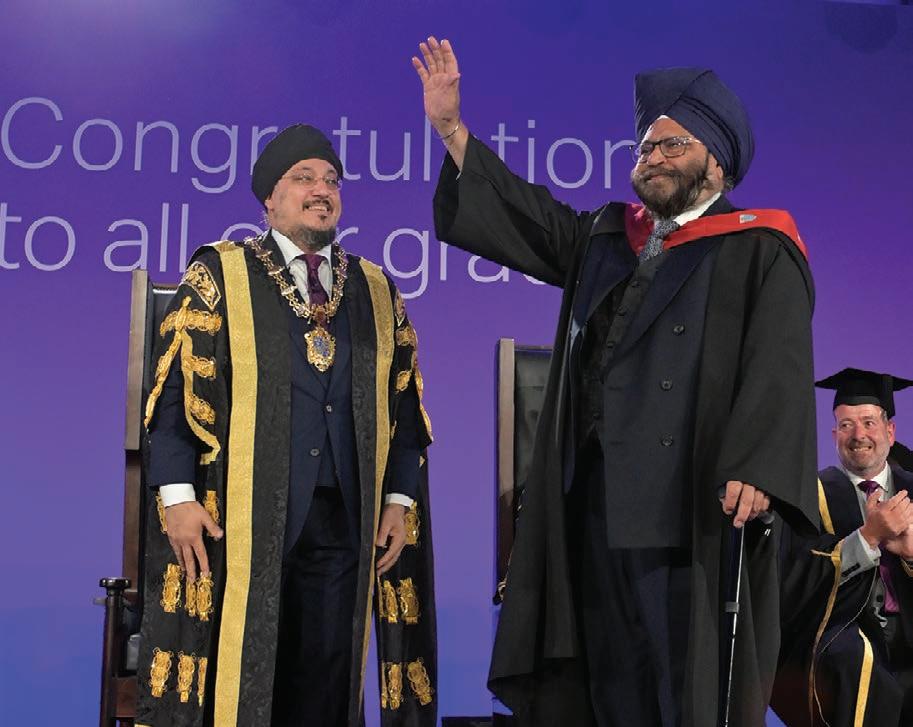
He said: “It’s an incredible honour to recognise my father’s achievement and celebrate all the successes of students across Aston University this year. What makes this even more special is that this is the only time a son, as University Chancellor, has conferred a degree to his father at Aston.”
Jasbir Wouhra said: “Achieving this MBA after having spent 50 years building a business is an incredible milestone for me. Having stepped aside from a formal education all those years ago, my Aston University MBA gave me a great opportunity to formalise my business experience.”
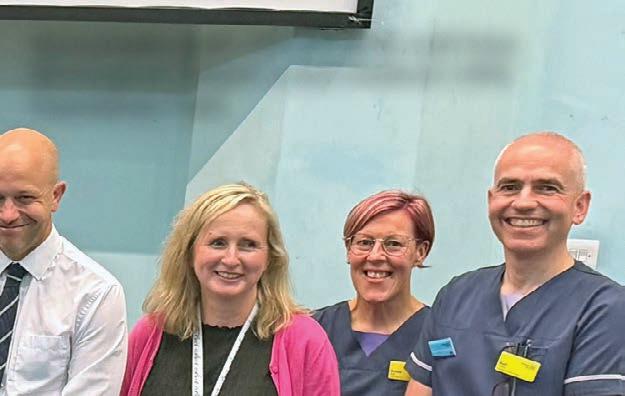
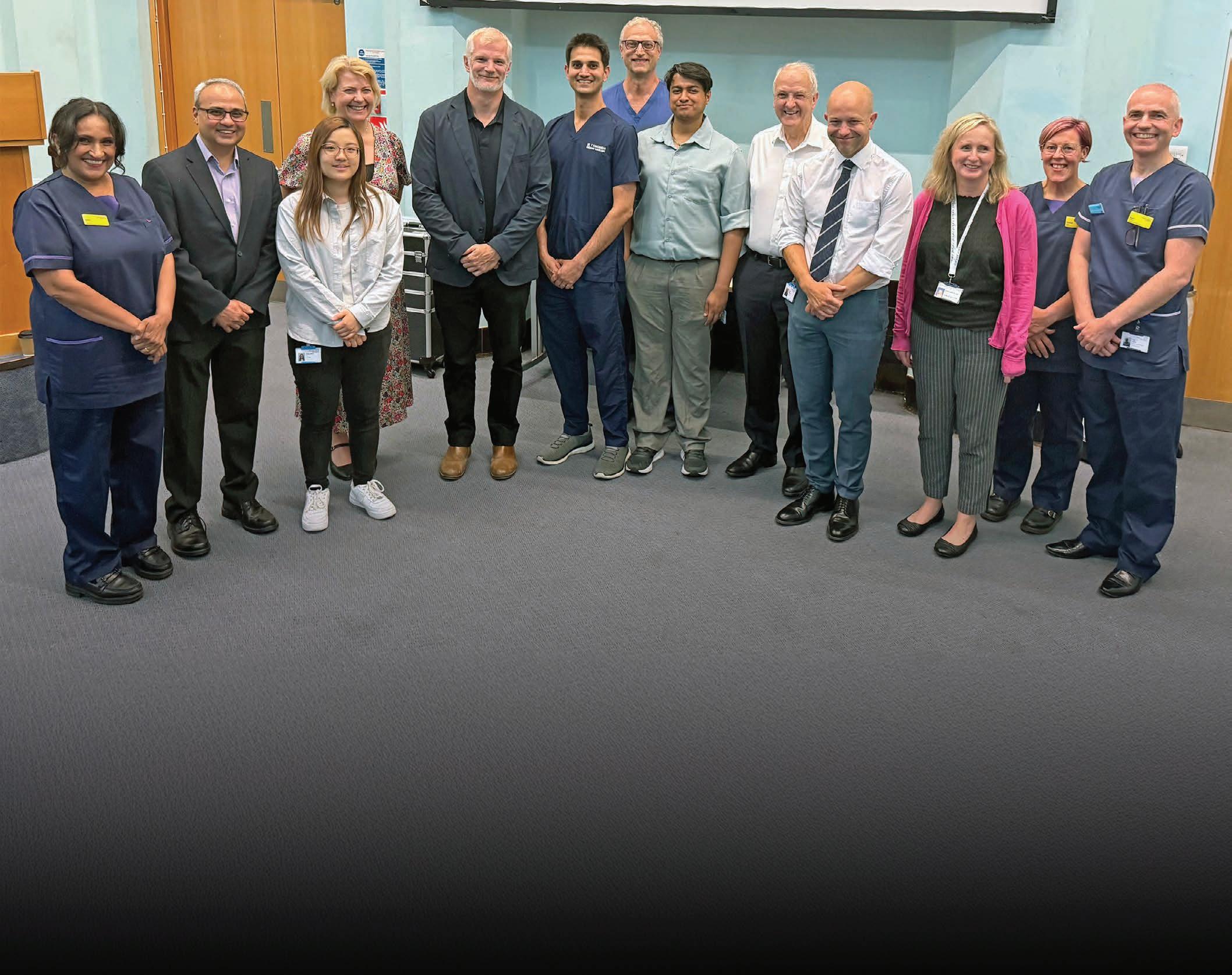
MP Al Carns saw first-hand the care provided to some of the region’s sickest youngsters during a visit to Birmingham Children’s Hospital.
The Labour MP for Birmingham Selly Oak met with medics on the paediatric intensive care unit (PICU), where he learned more about the specialist treatment being delivered.
Al was invited to the hospital by Sir Bruce Keogh, chairman of Birmingham Women’s and Children’s NHS Foundation Trust and former medical director of NHS England, where he also heard how research and innovation is transforming healthcare through cutting edge studies.
Birmingham and the wider West Midlands is fast establishing itself as a leading city for health and life sciences by investing in research and innovation through significant studies and the creation of world-class facilities.
BWC feeds into this work with higher education partners by recruiting future healthcare professionals into clinical and research posts and collaborating on studies.
One of those significant projects includes the genomics service provided by the trust.
Claire Lemer, chief strategy officer said: “We are at the forefront of cutting-edge research looking at early diagnosis of rare diseases in one
of the most diverse populations. As a trust we are growing our capacity to test new drugs that are being developed that are highly specific to individuals, whom we identify often using genetic testing.
“This research enables early detection and prevention. An example of this is the Generations Study, which tests babies at birth for rare diseases, using their genetics.”
Al said: “I witnessed remarkable work from an exceptional team dedicated to supporting all our children and women in society. While society has its heroes, there are also heroes right here in this hospital.”

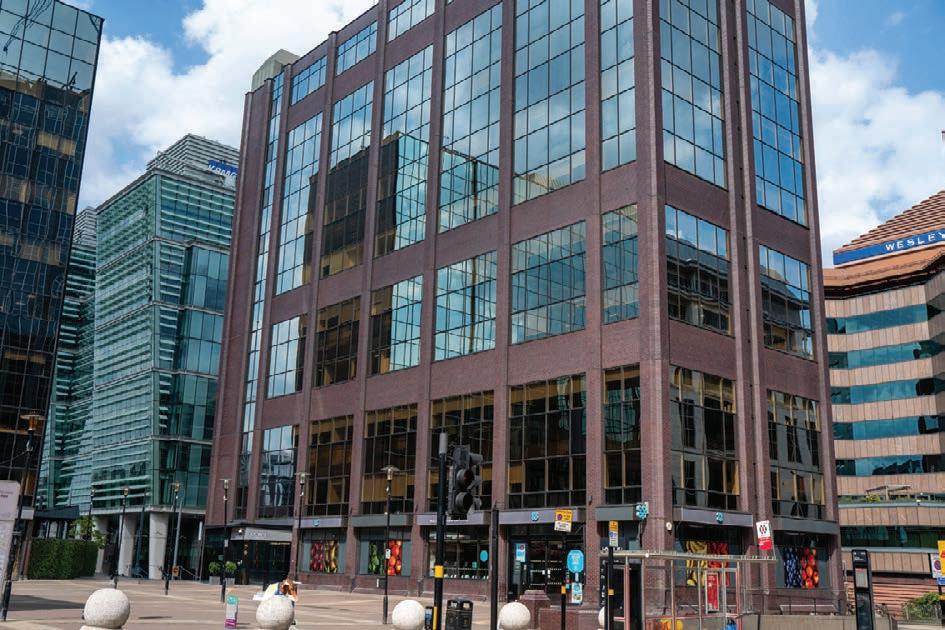
National audit, tax, advisory and consulting firm Crowe has opened a new office in Birmingham, marking a significant step in its continued growth strategy in the Midlands & South West region.
The firm now occupies the entire eighth floor of the One Colmore Row building, located in central Birmingham. With 4,169 sq ft of new office space, Crowe is well-positioned to continue its commitment to the region’s thriving business community and further enhance the services it offers to clients.
Ross Prince, managing partner of Crowe in the Midlands and South West, said: “Colmore Row is traditionally Birmingham’s most prestigious address, and the Colmore Row Business District is filled with well-respected businesses.
“The office’s prime location positions us in the heart of the city’s dynamic business community and enables us to be even more connected to our clients and wider business network.”
Crowe’s new office will initially serve as a base for its local

Premier Membership
Contact: Gary Birch T: 07971 144059
advisory and consulting teams to support the ongoing expansion of their capabilities.
Ross added: “To begin this exciting chapter, we have initially relocated some of our local advisory and consulting teams based in our nearby Oldbury office.
At the same time, we remain committed to investing in our existing offices in the Midlands Southwest to continue to deliver the quality of service our clients expect. It’s evident to me that our culture and values at Crowe are what sets us apart.”

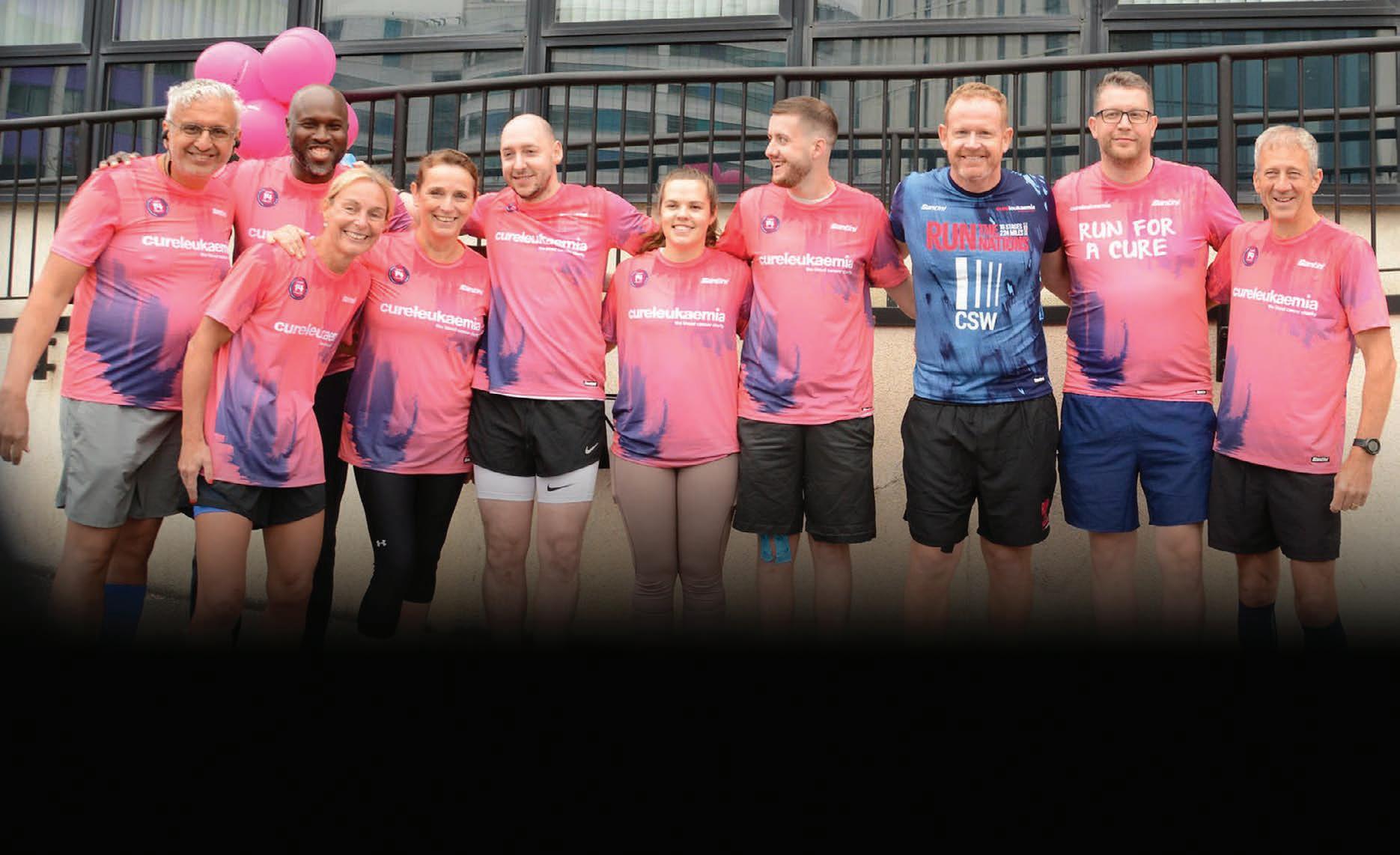
Cure Leukaemia chief executive James McLaughlin is lacing up his running shoes one more time – as he prepares to take on 270 miles in 14 days during Blood Cancer Awareness Month in September.
James will be taking part in his final Run The Nations challenge over a 14-day period with no rest days.
It is the equivalent of more than 10 marathons – and he will visit 29 blood cancer centres across the UK where Cure Leukaemia supports clinical trial networks.
Cure Leukaemia is the chosen charity of Greater Birmingham Chambers of Commerce president Nasir Awan, who is urging the business community to get behind the challenge. Sponsorship packages are available from £2,500.
James will be running 15 miles through Birmingham on Thursday 11 September and individuals are invited to join him for the full distance or part of the route.
Nasir said: “Once again, I urge the business community to rally behind James and support
the vital funding of the specialist nurses whose expertise is transforming outcomes and offering hope to blood cancer patients across the UK.”
James said: “I’m calling on Birmingham businesses to rally behind this challenge and help raise vital funds for Cure Leukaemia. Every step I take is for the patients here in our city, at the QE and Birmingham Children’s Hospital.”
Find out more information go to: cureleukaemia.co.uk

Unplugged: The live music performances
The Birmingham team at Simpex Express will be taking part in a Memory Walk on Saturday, 20 September at 10am in Sutton Park, in support of the Alzheimer’s Society.

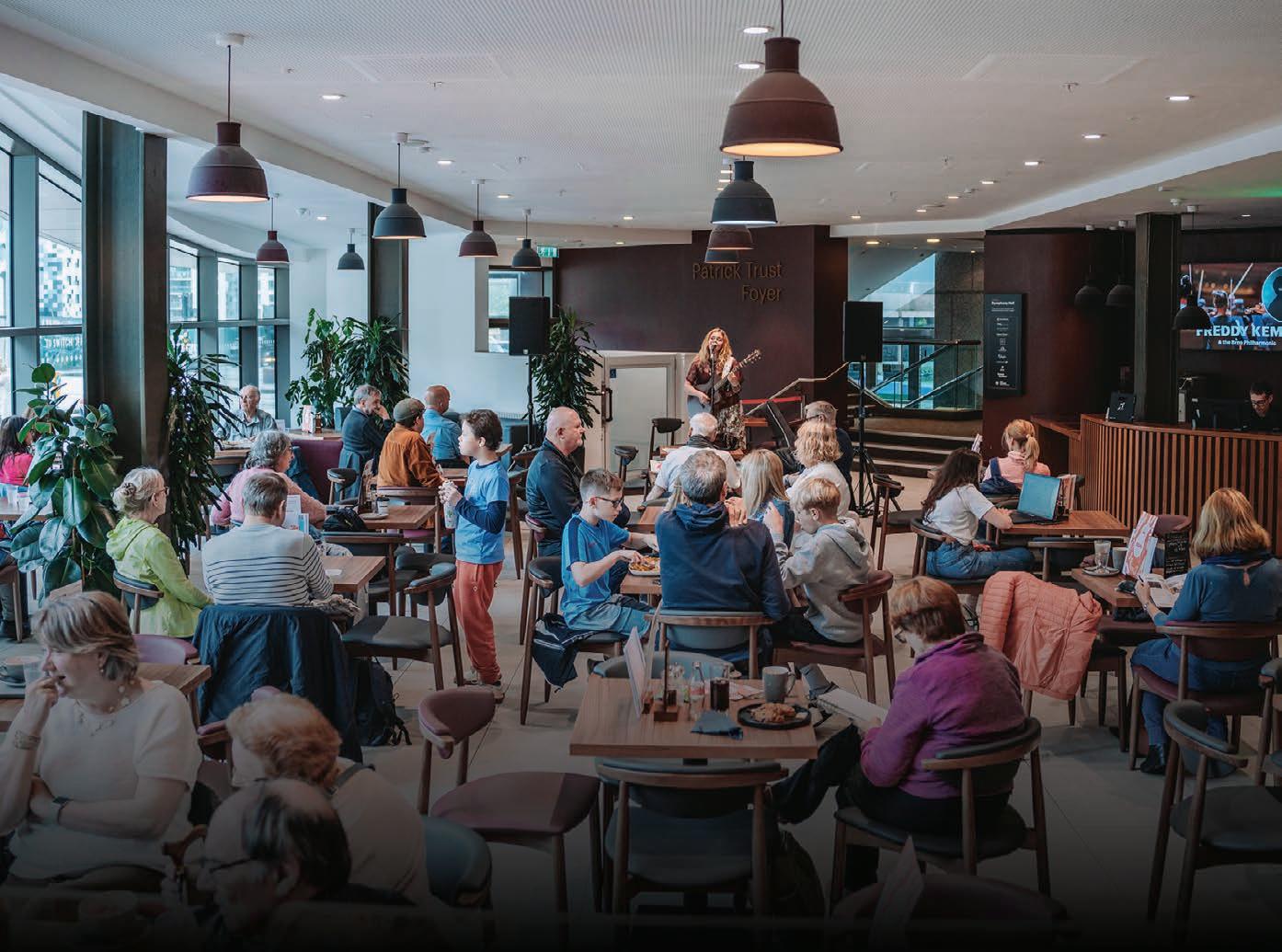
Birmingham music charity B:Music has launched a Lunch: Unplugged series featuring a series of live music performances at the symphony Hall café.
The acoustic performances will be held at 1pm during lunchtime slots at the B:Eats cafe on various dates between September and November. Attendance is completely free.
Nestled within the world-renowned Symphony Hall and overlooking the vibrant Centenary Square, B:Eats has been enriching the heart of Birmingham since its opening in the summer of 2022.
B:Eats is now a celebration of local flavours and culture with a menu brimming with feel-good favourites, including “The Home of the Brummie Bacon Cake”.
Every purchase made at B:Eats directly supports B:Music, the charity behind Birmingham’s Town Hall and Symphony Hall.
Each cup of coffee, sandwich, or piece of cake that is bought helps B:Music in its mission to nurture the next generation of creative talent, both on and off stage, while also maintaining these iconic venues.
Nicole Evans, director of commercial services at B:Music, said: “We understand how challenging it can be to unplug during lunchtimes and resist the temptation to opt for a supermarket meal deal so you can keep working through lunch, or even to grab a quick handful of biscuits between meetings.
“However, we believe that taking a proper break is crucial.
“Not only does it enhance focus for the rest of the day, but it also allows us to reconnect with our community and colleagues by stepping out into the city.”
The full schedule of artists set to perform at B:Eats can be found below (all performances start at 1pm):
16 September – Lumi HD (singer-songwriter)
30 September – Urban Soul Trio (acoustic RnB and pop)
7 October – Pop Voices (as seen on Britain’s Got Talent)
16 October – BIMM at B:Eats (talented students)
21 October – Credo Kampeta (striking, emotional tunes from an acclaimed singer-songwriter)
28 October – Dal Singh: History of the tabla (lunch, learn, and live music)
29 October – BIMM at B:Eats (more students with incredible talent)
31 October – Bhangra Tots (family fun with Sohan Kailey)
1 November – Laura Lenthall (interactive music for tots)
4 November – Aayushi (contemporary folk singersongwriter)
18 November – Tom Morgan (a man, a guitar, and bangin’ tunes)
20 November – BIMM at B:Eats (more students, more talent)
B:Eats is open Monday to Saturday from 11am - 4pm and pre-concert.
The 5km walk is part of a national initiative raising awareness and funds to support those affected by dementia.
The team has set up a JustGiving page for donations:www.justgiving. com/page/simpex-1
Top 50 commercial law firm Freeths has advised the Topping family on the sale of the renowned Barton Grange Garden Centre to leading UK operator Blue Diamond. Established in May 1963, Barton Grange has long been a local institution in Lancashire, offering top-tier gardening products, homeware and gifts, an acclaimed farm shop, and diverse dining experiences. In January, it was recognised as the UK’s best garden centre. Freeths Corporate Partner Martin Smith and Real Estate Partner Mark Gradwell led the advisory team, supported by senior associates Grace Hill (corporate) and Ben Cox (real estate), associate Harry Fraser (corporate), and trainee solicitor Natasha Manifold (corporate).
BCRS Business Loans is set to host a Masquerade Ball to support their charity of the year, Kids’ Village.
The spectacular evening of entertainment and fundraising will take place at the newly renovated Warwickshire Suite at Warwickshire County Cricket Club, Edgbaston Stadium from 7pm until midnight on Friday, 10 October.
Guests are invited to dress to impress and don their finest masks for a night of networking and celebration raising funds for BCRS’s Charity of the Year, Kids’ Village.
Attendees will be welcomed with a glass of prosecco before enjoying a three-course meal and entertainment provided by a live DJ. Guests will have the opportunity to take part in fundraising activities, including a raffle featuring fantastic prizes, an auction, and additional charitable initiatives.
‘Our
guests can
expect
an
exceptional evening of entertainment, networking, and celebration in one of Birmingham’s most prestigious venues’
Kids’ Village founder Samantha Fletcher is the guest speaker and will provide insights into Kids’ Village's mission and outline ways attendees can become involved in supporting this vital cause.
Located in Wychnor, near Lichfield in Staffordshire, Kids’ Village will be the UK’s first purpose-built holiday village providing respite support for up to 70,000 children and their families living with critical illness.
The charity received planning permission for their proposed site in Wychnor in 2022, and they are now working tirelessly to raise £5m to transform their vision of a memorable retreat for families into reality.
BCRS Business Loans chief executive Stephen Deakin said: “We're absolutely thrilled to be hosting our Masquerade Ball at Warwickshire County Cricket Club. This event represents everything we value at BCRS – bringing the business community together while supporting a cause that truly matters.
“Our guests can expect an exceptional evening of entertainment, networking, and celebration in one of Birmingham's most prestigious venues.”
For more information and to purchase tickets please go to: eventbrite.co.uk
Greater Birmingham Chambers of Commerce welcomed Pakistan’s Minister of Commerce in a visit that bolstered Birmingham’s international trade ties.
Minister Jam Kamal Khan was received in Birmingham during an official visit to the UK to promote deeper trade ties and encourage investment in new sectors.
He met a number of businesses including Intercity Technology and Birmingham Wholesale Markets, before leading a delegation on a visit to Birmingham City Football Club.
The minister emphasised Pakistan’s value proposition in
supplying Birmingham’s advanced manufacturing and automotive sectors, citing “cost effective production capabilities and expertise in light engineering and metal fabrication”.
‘Greater Birmingham continues to be a gateway for international trade’
Pakistan exported £2.5bn worth of goods and services to the UK in 2024 while importing £2.2bn, according to UK government statistics.

Total trade between the two countries stands at £4.7bn, up 7.3 per cent from the previous year.
Nasir Awan, president of the GBCC, said: “Greater Birmingham continues to be a gateway for international trade, and this visit
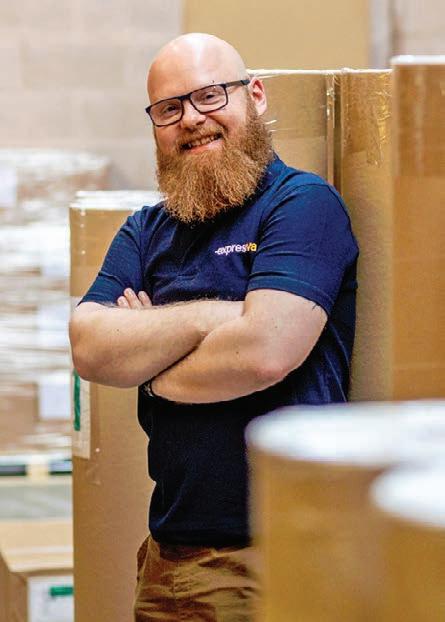
Birmingham-based Simpex, a specialist in express transport and customs clearance, has welcomed the UK Government’s newlyannounced trade strategy, calling it a timely boost for exporters and a clear step toward reducing red tape for small and medium-sized businesses.
The strategy, published by the Department for Business and Trade, sets out a more “agile and pragmatic” approach to international trade, with measures including £20bn in new capacity through UK Export Finance (UKEF), modernisation of border processes, and the creation of a new Supply Chains Centre and Economic Security Advisory Service.
Simon Beechener, managing director of Simpex, said: “This strategy reflects what many in our industry have been calling for –joined-up thinking on customs, infrastructure, and digital tools. For a company like ours, which has built its reputation on speed, precision, and compliance, it’s
encouraging to see government backing progress in these areas.”
The strategy’s focus on digitalisation, simplified export support, and reduced paperwork aligns closely with Simpex’s service evolution since Brexit. The company also continues to support clients through changes to customs legislation, including the

upcoming Entry Summary Declaration (ENS) requirements, offering a standalone ENS solution for hauliers.
“Modern, efficient border processes are vital for SME exporters,” said Simon. “The government’s pledge to simplify digital trade corridors and export support tools could help more businesses re-enter EU markets with confidence.”
Simpex also warn how small errors in paperwork when transporting dangerous goods can have serious consequences. The process needs accurate information in a legally required format via a Dangerous Goods Note (DGN).
Tomasz Rembecki, dangerous goods safety advisor at Simpex Express Limited, said: “At Simpex, we’ve seen firsthand how small errors in these documents can have serious consequences. These issues don’t just lead to delays or penalties; more importantly, they jeopardise safety. In an emergency, first responders rely on the information in a DGN to act quickly and appropriately.”
from the Minister of Commerce of Pakistan underscores our city’s growing importance on the global stage.
“We are proud to champion bilateral dialogue and long-term collaboration.”
The German-British Chamber of Industry & Commerce has welcomed the German-British Friendship Treaty signed in London by Chancellor Friedrich Merz and Prime Minister Sir Keir Starmer.
It marks a historic milestone in bilateral relations and opens new perspectives for businesses in both countries.
The treaty establishes a strategic framework to deepen security, political, social, and also economic cooperation.
Dr Ulrich Hoppe, director general of the German-British Chamber of Industry & Commerce, said: “The Friendship Treaty is a strong symbol of the close ties between our two countries.
“In times of global upheaval, it is vital that Germany and the UK place their economic relations on a stable and forward-looking foundation.”
Global Chamber Patrons




A major conference this month will help West Midlands businesses navigate the changing global picture and support them in exploring new markets.
The West Midlands International Trade Summit 2025 takes place at The Slate at the University of Warwick on Friday, 12 September, and is open to firms across the West Midlands and Warwickshire.
The three regional chambers of commerce –Coventry and Warwickshire, Greater Birmingham and Black Country – are organising the event alongside the West Midlands Combined Authority, with support from Lloyds for the third year running.
The event will hear from Corin Crane, chief executive of Coventry and Warwickshire Chamber of Commerce, as well as from businesses who are already exporting, alongside other partners. The summit will offer practical tips, information on where to go for advice, and guidance on how to navigate a fast-moving global picture, such as US tariffs.
Professor David Bailey has been confirmed as a keynote speaker.
Corin said the event, free for businesses in the region to attend, had been expanded due to its success over recent years.
‘International trade is pivotal to the ambitions of the West Midlands Combined Authority’
He said: “Our international trade summits have provided businesses with so much information and, crucially, inspiration over the past couple of years to help them export. So much so, that we’re growing it this year to include the whole of the West Midlands and it will be great to see firms from all over the region coming to the University of Warwick to benefit from all of the knowledge and experience that will be packed into one room.”
David Weatherhead, of Lloyds, said: “In the face of an ever-changing global landscape, it’s
A cross-cultural leadership expert Marina Ibrahim, founder of Globility Insights, is one of the newest members of the growing Greater Birmingham Global Chamber of Commerce.
With over 25 years international experience, Marina works with globallyminded organisations to help their leaders, project teams, and customerfacing staff develop the cultural agility, inclusive leadership, and global mindset needed to succeed in complex international markets.
Her consultancy supports clients including BMW, Bentley, EMI, Kellogg’s, Nike, and PepsiCo. The firm’s services include leadership development, team integration after mergers and acquisitions, and export readiness training – all delivered through Marina’s signature GLOBE+ framework
“I’m delighted to be part of the Global Chamber,” said Marina. “It’s a brilliant addition to the wider Chamber network, creating a vibrant space for internationally oriented businesses to connect, grow and collaborate.”
Marina’s decision to join the Global Chamber was driven by the natural synergy between the Chamber’s mission – to support international trade and collaboration – and Globility’s focus on building people capability for global growth.
Her services are particularly relevant for:
• Leaders and managers of international and multilingual teams
• Export-facing sales, customer service, and relationship managers
• Project leads and M&A teams managing global collaborations
• SMEs preparing to expand into new international markets.
To connect with Marina, visit her on LinkedIn www.linkedin.com/in/marinaibrahim/ or explore www.globility-insights.com
crucial that businesses are able to access support and guidance as they look to seize on the opportunities that exist overseas.
“We’ve seen first-hand how bringing West Midlands organisation together has helped them to break into new markets, innovate and grow.
“We look forward to welcoming Professor David Bailey and the fantastic line up of speakers, and to see new relationships and opportunities that will take shape at this year’s conference.”
Dan Carins, policy manager at the West Midlands Combined Authority, said:
“International trade is pivotal to the ambitions of the West Midlands Combined Authority as outlined in the West Midlands Growth Plan.
“By expanding global reach, local businesses can unlock new markets, drive innovation, and boost productivity, which are essential for achieving inclusive growth.”
• For more information and to book a free place go to: cw-chamber.co.uk

Updates and useful information from the largest ethnic support organisation in the UK
Contact: Anjum Khan T: 0121 274 3255
By Feron Jayawardene
The Asian Business Chamber of Commerce celebrated the Pakistani spirit during a networking event formed as part of a national celebration.
The event - The Spirit of Pakistan: A land of Opportunities –took place at Chamber HQ with 50 delegates attending.
The delegates were welcomed by Greater Birmingham Chambers of Commerce president Nasir Awan, who also sponsored the event.
Nasir gave an overview of GBCC activities to the delegates. He said: “It has been my mission to strengthen the region’s international ties.
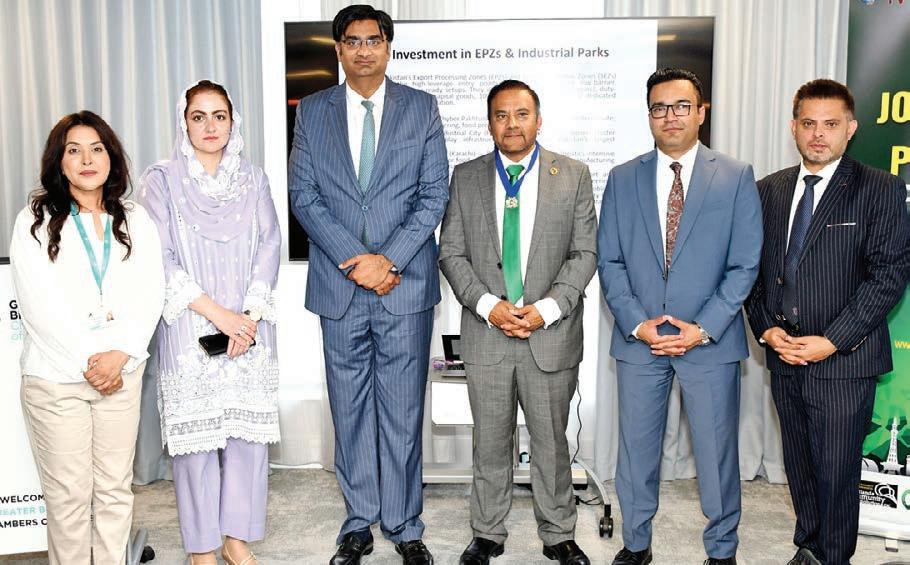
“During my time as GBCC president, I have organised three business delegations to Pakistan. These meetings with government and private bodies have been immense.
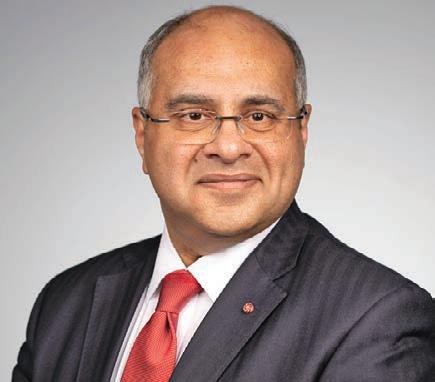
A pioneering new service has launched to transform commercial debt recovery across England and Wales.
Remote Court Users (RCU) offers a centralised, scalable model that connects creditors, legal professionals, enforcement agencies, and the courts. RCU acts as a national clearing house for Writs of Control, facilitating the transfer of County Court Judgments (CCJs) to the High Court for enforcement.
Founded by Amir Ali OBE, RCU aims to unlock up to 650,000 additional writs annually, potentially boosting HMCTS revenue from £10m to £64m.
“Pakistan is also a key part of the fabric of the region. Their
contribution to the economy is immense with 200,000 businesses in the region and strong trade relations with the West Midlands.”
High profile delegates at the event included Consulate of Pakistan Birmingham consul general Fahad Amjad, Head of Chancery Bukhtawar Mir, councillor Waseem Zaffar, and Owais Hussain, Pakistan's Trade and Investment Attaché to United Kingdom and Ireland.
Fahad Amjad said: “It is an honour to represent the Consulate of Pakistan Birmingham at this event.
“We hope businesses understand the potential Pakistan has and we look forward to growing connections with Greater Birmingham business community.”
Owais Hussain gave a presentation on Pakistan’s state of trade. He said: “Pakistan’s focus is shifting from weathering global volatility to enabling trade, investment, and services growth.”
Forward Carers has been recognised in the SE100 Index 2025 as one of the UK’s Top 100 Social Enterprises.
The SE100, created by Pioneers Post and NatWest Social & Community Capital, highlights outstanding UK-based social enterprises making a measurable difference in society while running resilient, values-led businesses.
The application process has consistently served as a valuable tool for growth, challenging the social enterprise to reflect honestly on how they capture and demonstrate impact while strengthening governance, accountability and inclusion across the organisation.
Forward Carers did not opt to apply last year, instead focusing on internal development. They expanded ways to measure impact, built the carers voice co-production group, and explored environmental ambitions.
Meanwhile, they have also been shortlisted as a finalist in the SE100 Social Business Awards in the Diversity Pioneer category.
‘We’d like to thank the unpaid carers at the heart of Forward Carers’
The category recognises social enterprises demonstrating real leadership in advancing equity, diversity and inclusion. Over the past year, they have worked to embed this principle by shaping
workplace culture through equality focus groups, inclusive recruitment, staff training, and creating safe spaces for reflective dialogue.
Anna Smith, executive manager at Forward Carers, said: “We’d like to thank the unpaid carers at the heart of Forward Carers for their ongoing insight, honesty and challenge. Thanks also to our delivery partners and team members.”

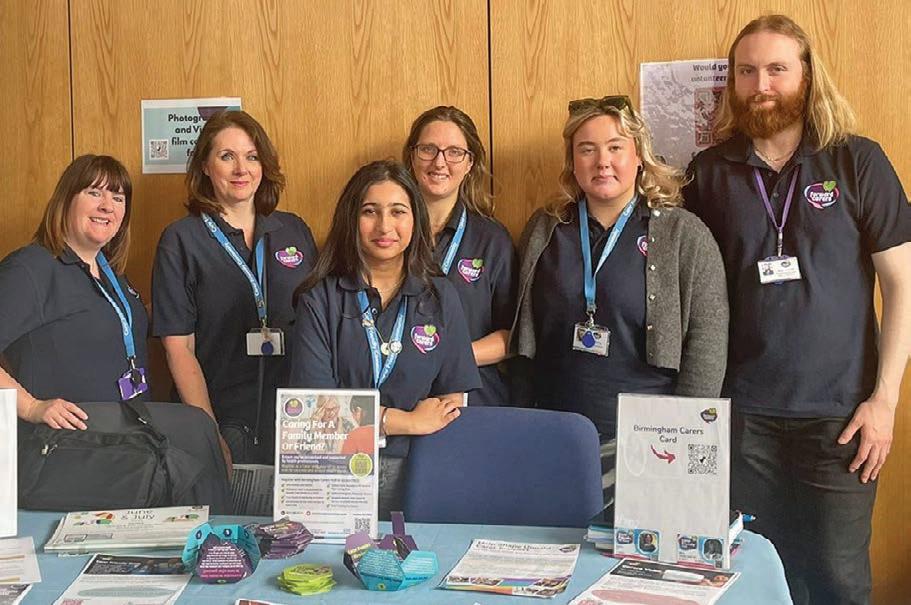




A host of sponsors has been announced for the upcoming ABCC Awards 2025 at the National Conference Centre on Thursday, 27 November.
Over 350 delegates are expected to attend to witness the distribution of 10 awards with one receiving the accolade of ABCC Overall Business of the Year.
Reputed education provider South and City College Birmingham (SCCB) has been confirmed as the sponsor for the Outstanding Contribution to Diversity & Inclusion award.
SCCB provides high quality education, technical and vocational training to young people, adults and employers looking to develop their workforce.
SCCB principal Mike Hopkins said: “I am very pleased that South and City College Birmingham was able to sponsor what is a key category.
“In a city like ours equality, diversity and inclusion need to be central to everything we do, therefore recognising any contribution to this is very important.”
Meanwhile, the Scholars School System and Ernst & Young (EY) have also been confirmed as sponsors of the ABCC Young Achiever of the Year and Overall Business of the Year respectively.

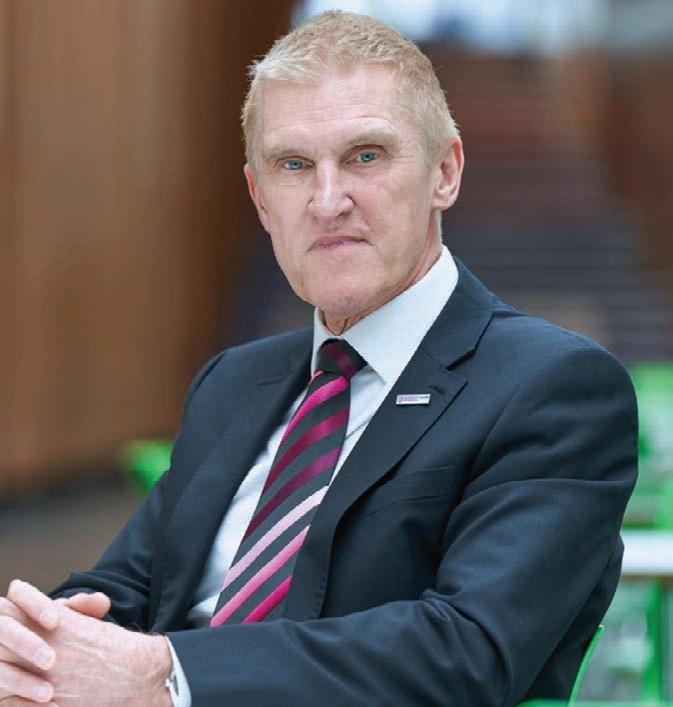
Scholars School System is a modern and wellresourced institution that aims to help students achieve their maximum potential.
With 400,000 employees worldwide, EY delivers services across four integrated lines: Assurance, consulting, strategy and transactions, and tax.
The National Conference Centre, based in Solihull, is set to sponsor the drinks reception at the awards night. The table decoration of the award night will be carried out by Turkish Airlines.
For sponsorship opportunities, contact ABCC director Anjum Khan on a.kham@birmingham-chamber.com
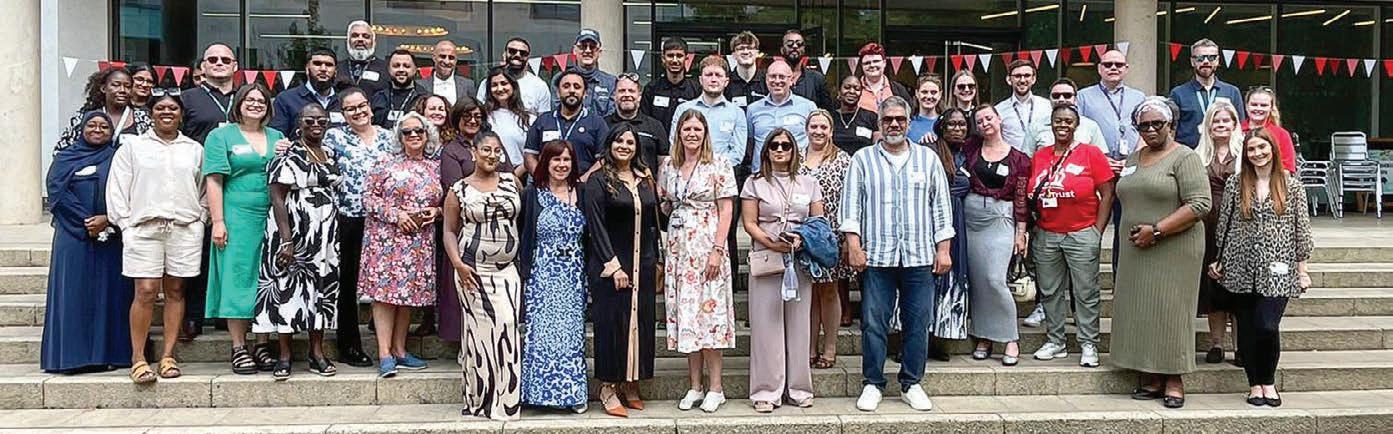
The Joseph Chamberlain Sixth Form College (JCC) recently hosted their annual BBQ, celebrating the support and collaboration with business and the education community.
The college has seen many achievements during the past academic year, including 1,589 students who took part in future focused activities, 1,689 students engaging in work related activities,
and 266 students who participated in individual work placements.
One of the standout events of the year was the ‘JCC Futures Conference’, which brought together over 600 Year 12 students and more than 64 employer partners.
Students participated in 44 workshops, covering various sectors including healthcare, technology, business, engineering, and the creative industries.
This year also saw a strengthened focus on social responsibility and personal growth. Through Charity Week and Community Connect, students collaborated with the Adult Learning team to make a tangible difference in the community, The college also hosted a vibrant series of ‘Career Panels’, giving students the chance to hear directly from professionals.




Social media sensations
Sweet Joe’s has launched their American-style cookie dough pots in Asda – with support from NatWest bank.
The brand has been launched in 222 Asda stores with two flavours: classic Choc Chunk and Red Velvet.
The fridge-stored pots are made without additives or preservatives. They deliver warm, gooey cookie dough within 50 seconds in microwaves.
It was founded by cookie fanatic Ammar Saleem, a Birmingham-born entrepreneur who left behind a career in medical sales and a degree in forensic science to pursue his dessert dreams.
Saleem was a part of the Birmingham hub of the NatWest Business accelerator - a thriving community for entrepreneurs, providing a range of support for business growth virtually and across 12 hubs in the UK.
Sweet Joe’s flagship cookie shop in Birmingham’s Grand Central has become known for its decadent cookie creations, playful toppings, and TikTokworthy bakes.
Since opening in November 2024, the store has served thousands of hot cookies and racked up a loyal 13.8k Instagram following.
Saleem said: “This launch is a massive moment for us and we’re proud to bring something genuinely new to shops.
“The NatWest Accelerator Birmingham programme played a pivotal role in Sweet Joe’s journey.”
Contact: Richard Brooks T: 07796 242029
A Cannock-based charity established to fund research into Motor Neurone Disease (MND) has announced a celebrity-line up for its glittering fundraising gala in Birmingham.
The Mel Evans MBE Foundation, Cannock Chamber’s Charity of the Year, will host a masked entertainer fundraising dinner on Saturday, 18 October, at Edgbaston Stadium, with all proceeds going towards MND research.
A host of famous faces will be in attendance including Coronation Street’s Daniel Brocklebank and Peter Ash, former England cricketer Phil Tufnell, and football legend Marcus Stewart, who is living with MND and raising awareness.
Also in attendance will be TV icon Christopher Biggins and Bad Girls and Coronation Street actress Amanda Barrie.
The event will include a drinks reception, three-course dinner and a live entertainment
experience where celebrities will emulate the popular ITV1 gameshow, the Masked Singer.
The Mel Evans MBE Foundation was set up by Lynn Pritchatt in honour of her late husband, Mel Evans MBE, who was diagnosed with MND in 2016 and passed away in 2017.
Mel and Lynn both had illustrious sporting careers in crown green bowling, with Mel earning more than 100 caps for Staffordshire.
Lynn said: “This gala is about making memories, raising funds and sharing hope.
“MND is a cruel condition, but with every pound raised, we take a step towards better understanding and treatment.”



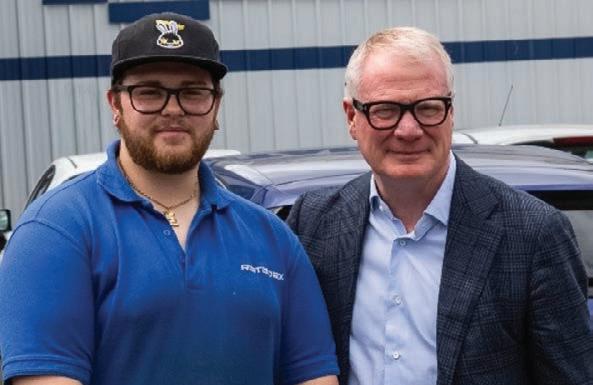
Cannock-based training provider
Performance Through People (PTP) has helped a professional chef switch careers to manufacturing after suffering from an unexpected health condition.
Determined not to let this setback define his future, Daniel Harte enrolled in a PTP Welding Path 2 Apprenticeship (P2A), a sixweek pre-apprenticeship programme funded by the West Midlands Combined Authority. He progressed from the P2A directly into a Level 2 Lean Manufacturing Apprenticeship with Rotadex.
Daniel said: “I now have a great work-life balance. I feel happier than I have in years, and motivated to continue doing new things to progress my career.”
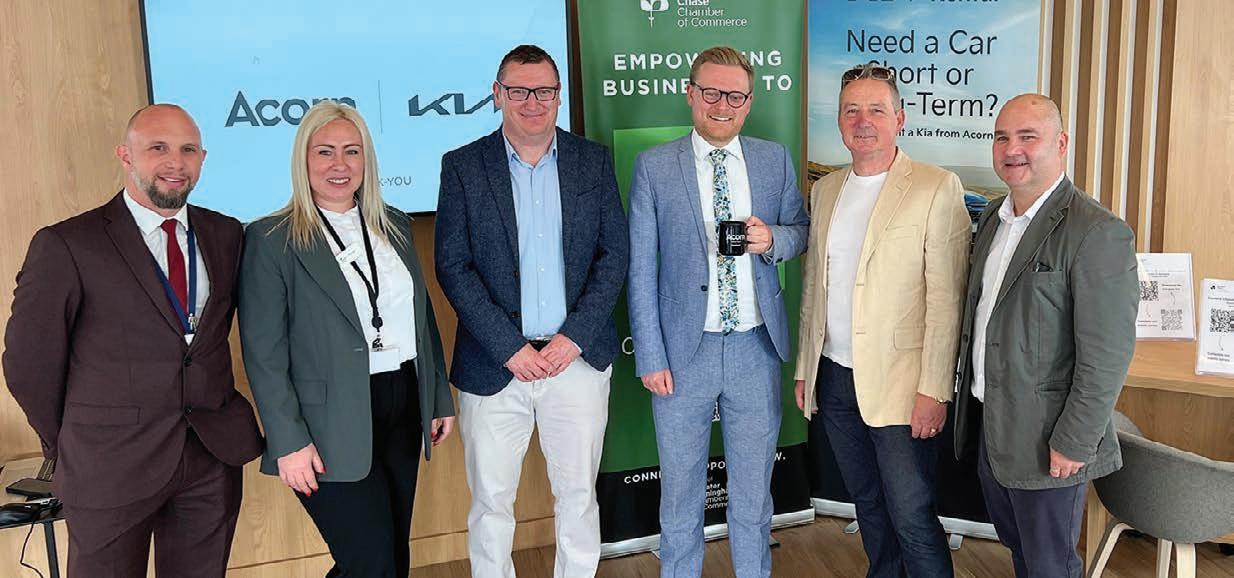
Josh Newbury, the Member of Parliament for Cannock Chase, visited a networking event organised by the Cannock Chase Chamber of Commerce.
The event at Chamber member Acorn Kia in Burntwood brought together a wide mix of local businesses –
with attendees getting the chance to test drive the latest Kia EV Series models. The newly elected MP heard from local firms about the opportunities and challenges they’re facing.
Head of Cannock Chase Chamber Richard Brooks said:
“It was great to welcome Josh to one of our events so soon after our initial meeting.
“He’s been clear about wanting to understand what businesses in our area really need, so it was encouraging to see him engaging directly with local firms at Cannock Chase Chamber member Acorn KIA.”
Contact: Richard Brooks T: 07796 242029
By Feron Jayawardene
The SOCOTEC Group – a global leader of risk management and Testing Inspection Certification (TIC) services – has become a patron of Burton & District Chamber of Commerce.
Headquartered in Burton-uponTrent for its UK and Ireland operations, SOCOTEC employs 14,000 people across 27 countries and holds more than 250 external accreditations.
The group is ranked number one for geotechnical services and
construction quality control in both the UK and Italy.
With a legacy spanning over 70 years, SOCOTEC is a major player in the construction and infrastructure sectors across Europe and the United States.
The firm supports public and private clients throughout the life cycle of their buildings and infrastructure, offering services that strengthen safety, compliance and sustainability.
Richard Brooks, head of Burton & District Chamber of Commerce, said: “As a major employer and



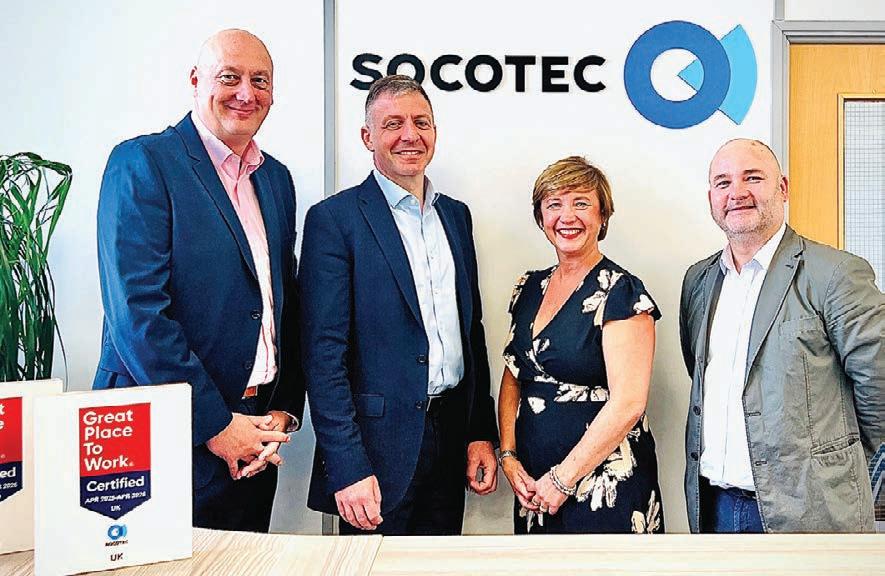
national company with their HQ in Burton, SOCOTEC brings both reach and depth to our network.
“Their support for local business and skills is clear, and they’re set to become a key voice within our membership."
Matthew Marriott, CEO of SOCOTEC UK and Ireland, said:
“With SOCOTEC’s UK and Ireland headquarters being based in Burton-upon-Trent, the region and our surrounding communities have always been of great importance to us. This is the latest step in our commitment to growing the services we provide from our Bretby base.”
A high-powered training company and a firm of international head-hunters and business consultancy are the headline sponsors of Burton Chamber’s Celebratory Lunch at Branston Golf & Country Club on Monday, 24 November.
Momentum Training Solutions (MTS), who will join Sefton & Associates as headline sponsors, was founded by Terri Lennon, an industry professional and passionate advocate for people development. The firm focuses on practical, high-impact training solutions that empower individuals and strengthen businesses across the UK and supports new starters and experienced teams to thrive in an ever-evolving industry.
Terri said: “As someone deeply passionate about supporting people and helping close the skills gap in engineering and manufacturing, it’s an honour to celebrate the incredible achievements happening right here in our community.
“At Momentum Training Solutions we believe in empowering individuals and businesses to reach their full potential, and this event perfectly captures that spirit.”
Sefton & Associates operates across the UK, Europe and the USA, offering premium recruitment and strategic advisory services to a diverse client base.
Managing director Russell Jeans said: “I have been associated with the Chamber network for many years, and it has provided me and my business with incredible opportunities to learn,

obtain advice and guidance, benefit from peerto-peer support, connect with new and exciting sales opportunities, support my international work, and, most importantly, create genuine friendships.”
Four awards will also be available, including:
• Start-up Business of the Year
• Young Professional of the Year - Sponsored by Hardy Signs
• Business of the Year - Sponsored by BCRS Business Loans
• Burton & District President’s Award - Chosen by Burton & District president.
Astle Paterson, a well-established firm of Solicitors based in Burton upon Trent will sponsor the President’s Award during the Celebratory Lunch.
The award will be handed by Burton Chamber president Richard Wileman to an individual who has gone above and beyond in championing the local business community.
Liam O’Shea, solicitor and director of the firm, said: “Supporting local excellence and community spirit aligns with our core values, and we are honoured to help recognise those making a real difference in Burton.”
A multi award-winning, signage manufacturer has been confirmed as the latest sponsor of the Burton Celebratory Lunch.
Hardy Signs Ltd, a bespoke signage solutions firm, will sponsor the Burton & District Young Professional of the Year award.
To be eligible for the Young Professional Award, the nominee must be between the ages of 18- 35 years, on 24 November 2025.
Blu Hardy, marketing manager of Hardy Signs, said: “It was a great honour to receive the Young Professional Award at last year’s Burton Celebratory Lunch. This year we are proud to sponsor the award and continue supporting the recognition of emerging talent within our local business community.”
The deadline for entries is Monday, 15 September. To apply for an award, visit: greaterbirminghamchambers.com
Contact: Charlie Elliott T: 07753 453624
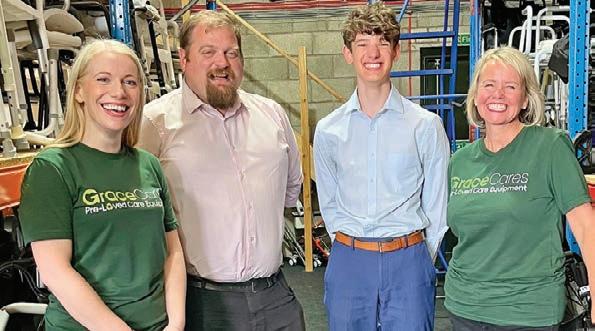
Lichfield MP Dave Robertson paid a visit to local not-for-profit Grace Cares, showing his support for a community-led mission to make care more sustainable, compassionate and circular.
Founded in 2023, Grace Cares rescues care equipment from landfill, redistributes it affordably to people in need, and reinvests profits to support older people, unpaid carers, and community projects.
In just over a year, the organisation has helped over 1,500 people, reused 2,300-plus care items, including wheelchairs, walking frames and hospital beds, and delivered 44 community activities such as companionship tea parties.
Mr Robertson met with the team to hear about their growing impact and the urgent challenges ahead. Hannah Montgomery, cofounder of Grace Cares, said: “We’re not just solving waste and inequality – we’re building a new model for sustainable social care.”

Musical youngsters are being urged to apply for Lichfield Cathedral’s new choral course –featuring workshops and expert guidance on higher education and careers in music.
“Lichfield for Singing” is being organised in partnership with the award-winning vocal ensemble, The Gesualdo Six, directed by Owain Park.
It will run on Saturday, 20 September, and will feature singing workshops, plus a session on higher education and careers in music. It will finish with an informal concert in which the course participants will perform alongside The Gesualdo Six.
‘We are incredibly excited to work with aspiring young singers at Lichfield Cathedral’
Aimed at young people aged 13-19, the daycourse will focus on developing singing techniques, exploring choral music and providing experience of working with a professional group. Participants will need to have experience of singing and a passion for it.
Owain Park, director of The Gesualdo Six, said: “We are incredibly excited to work with aspiring young singers at Lichfield Cathedral, helping them to develop their musicianship and gain

The next phase of construction is underway at the Kids’ Village site in Staffordshire, marking a major step forward in the creation of the UK’s first holiday village exclusively for children with critical illnesses and their families.
Work has begun on a 573-metre internal road through the Kids’ Village site.
This road will lead to the 10 lodge plots and once built, will enable families to drive directly to their individual four-bedroom lodges for a free of charge, week-long holiday.
Crown Highways, based in Burntwood,
Staffordshire, has been appointed to deliver these works.
Mike Dale, managing director of Crown Highways, said: “We are incredibly proud to be part of such a meaningful project. Kids’ Village is more than just a construction site, it’s a place that will bring joy, comfort, and lasting memories to families who need it most.
“As a local business, it’s an honour to contribute our expertise to something that will have such a profound and positive impact on the lives of children and their loved ones.”
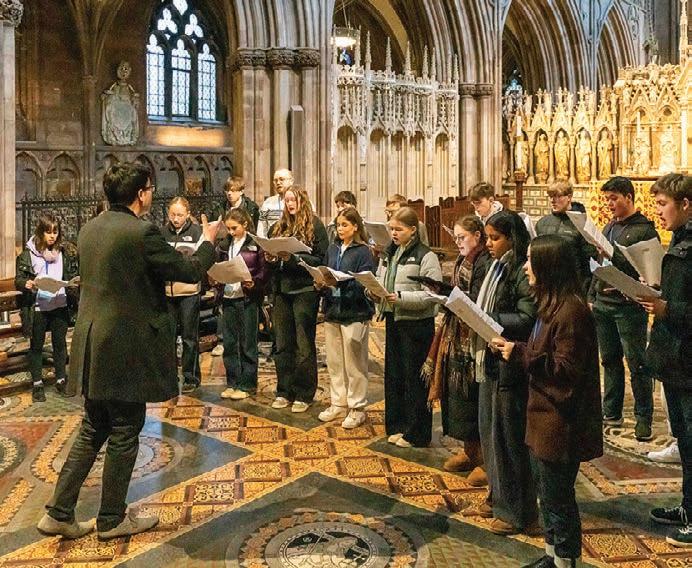

valuable experience in consort singing. It's a day designed to ignite passion, enhance skills, and provide valuable insights into the music industry.”
The course costs £110, including lunch and refreshments, with opportunities to apply for funding to help with the cost of the course fee or travel.
Applications are open until 7 September and more information is available at lichfieldcathedral.org
IT firm earns ‘gold standard’ accreditation
Tamworth-based IT specialists’ Bold IT have received the ISO 27001: 2022 certification – the international gold standard for information security management.
The accreditation provides a framework for managing and protecting sensitive data including internal documents, client information, and business systems.
It also proves the firm’s ability to identify risks, prevent data breaches, and respond to incidents with speed and control with the highest standards for confidentiality, integrity, and availability of information.
Head of finance Charlotte Steel said: “Achieving our ISO 27001:2022 certification is a significant milestone for Bold IT.
“It demonstrates our ongoing commitment to the highest standards of information security, not only for our own business operations but also as a guarantee of trust and assurance for our clients, current and future.”
Contact: Charlie Elliott T: 07753 453624

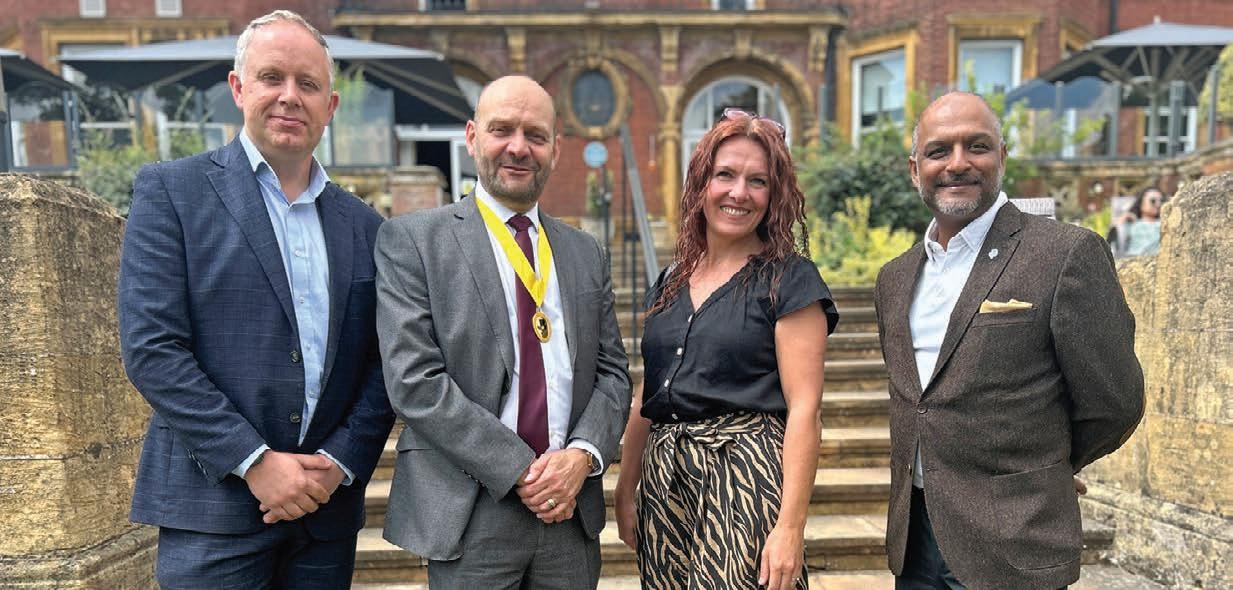
A town centre audit from Visit Royal Sutton Coldfield Business Improvement District (BID) has revealed a significant shift in the town centre’s business mix, with professional services now overtaking all other sectors – a clear indicator of how town centres and high streets are evolving across the UK.

A former newspaper editor and award-winning journalist has taken the reins as president of the Royal Sutton Coldfield Chamber of Commerce.
Gary Phelps, who grew up in the town and went on to become the editor of the Royal Sutton Coldfield Observer, was named as the Chamber’s new president at the annual meeting at Moor Hall Hotel & Spa.
A new vice-president was also appointed, with customer experience expert Shaun Cremins of insight6 joining fellow vice-president Kate Curry, CUDOS Creative agency founder.
Gary Phelps has worked in the media for more than 30 years and has edited nine newspapersincluding the Tamworth Herald, Royal Sutton Coldfield Observer, Lichfield Mercury and Nuneaton News.
He runs Gary Phelps Communications, a media consultancy specialising in education, charity, industry and public affairs.
Gary ran communications on former West Midlands mayor Andy Street’s election
campaigns and is also editor-in-chief of ASHES Magazine. A member of the Chartered Institute of Public Relations, Gary is the founder and publisher of www.ukschoolnews.com and www.suttonschoollife.co.uk, and is also the author of horror novel 13 Doors.
Gary, who succeeds outgoing president Naeem Arif, said: “I want to thank outgoing president Naeem Arif for an inspirational two years in office. As I follow Naeem, my ambition is to raise the profile of the Chamber even higher, to attract more members – and ensure local businesses work together to take advantage of the opportunities ahead.”
Naeem Arif, who becomes honorary chair following his two-year term as president, said: “As I complete my two-year term as president, I do so with a mix of pride and gratitude. I’m delighted to pass the baton to Gary, a passionate advocate for our town.”
• See President’s Focus – Page 10
The June 2025 Business Premises Audit, compiled by the BID, found that out of 337 business premises in Sutton Coldfield town centre, professional services account for 83 – representing 25 per cent of the total. This makes it the largest single sector in the town centre, surpassing traditional retail for the first time.
Professional services include solicitors, estate agents, accountants, financial advisors, IT firms, insurance companies, marketing and recruitment agencies, and other industry specialists.
This shift reflects a broader national trend toward service-led town centres, driven by changing consumer habits, the growth of remote working, and a reimagining of how high streets are used.
Michelle Baker, BID manager, said: “This data confirms what we are witnessing on the ground – Sutton Coldfield town centre is evolving into a service-orientated economy. While retail remains important, professional services are now playing a leading role in our local economy, providing stability, jobs, and attracting daytime footfall.”
Visit Royal Sutton Coldfield BID is calling for continued investment in the town centre, increased marketing for vacant properties, incentives for new businesses and stronger communication from landlords regarding timelines for key development projects to boost public confidence and attract further business interest.
The boss of the Belfry Hotel & Resort has been named as one of only 10 industry leaders to be awarded prestigious Master Innholder status in 2025.
Managing director Chris Eigelaar (pictured) has received the honour which recognises individuals who have demonstrated exceptional leadership, influence and dedication in the hospitality industry.

The much-coveted accolade is regarded as one of the highest honours in hotel management.
Championing this year’s cohort, judges praised the Master Innholders for their strong commitment to upholding best practices, driving forward industry standards, and inspiring both peers and the next generation of hospitality professionals.
Chris said: “To be recognised as a Master Innholder is a true professional and personal highlight.
“Hospitality is in my blood, and it’s an industry I’m so passionate about creating a thriving, progressive and exciting future for.
“To now have the opportunity to do so alongside so many industry peers as we champion excellence, lead on important sector
discussions, support long-term hospitality careers, and cultivate progress is thrilling.
“I congratulate everyone who achieved Master Innholder status this year, and I can’t wait to work with them, and all fellow Innholders, to nurture the exceptional experiences our dynamic industry is, rightly, renowned for.”
With over two decades of hospitality experience behind him, Chris has transformed The Belfry in his seven-year tenure, from spearheading an £85m expansion project, which has seen The Belfry almost double in size, to securing a contract to host the Betfred British Masters for five years, and being named in the “Top 30 Best Places to Work in Hospitality” twice.
All the latest news, advice and events for the Solihull business community
Contact: Samantha Frampton
T: 0121 678 7488

Academy graduates Charlie Watts and Kyle Moseley have been awarded first team squad numbers for the 2025/26 season by Solihull Moors.
Charlie will wear the number 30 shirt and marked the occasion by making his full first-team debut in a pre-season fixture against Everton U21s.
The young midfielder delivered an assured, composed performance, showing maturity in possession and a tireless work rate off the ball.
His display caught the eye of the manager, who praised Charlie’s attitude, decision-making, and commitment throughout the game.
Kyle, meanwhile, has been handed the number 31 shirt and is working hard in training to earn his own first-team minutes.
Speaking about the new graduates, head of the academy Myles Cooper said: “Seeing the boys progress into the first team is something I'm really proud of.
“I think their progression into this environment shows the pathway is working effectively and we’re giving opportunities to young players.
“It's satisfying from my point of view to know that we’re not only developing footballers but also better people.
“I am confident (because the pathway works) that there will be more coming through the system. I can't wait for the season to get started!”


first Pride event, the remaining event sponsors have been revealed.
The two-day event, taking place on Saturday 6 and Sunday 7 September, is being organised by Solihull Business Improvement District (BID) and has been made possible by support from a number of local companies.
Following the initial announcement of npower Business Solutions (nBS) as headline sponsor and BNP Paribas Personal Finance, John Lewis & Partners, Solihull College & University Centre and Touchwood as associate sponsors, there have been more big names in the business community stepping forward to support the event.
Davisons Law, Muse and Paragon Bank have come on board as Associate Sponsors whilst funding has also been secured from The National Lottery Community Fund.
For more information go to: solihullbid.co.uk


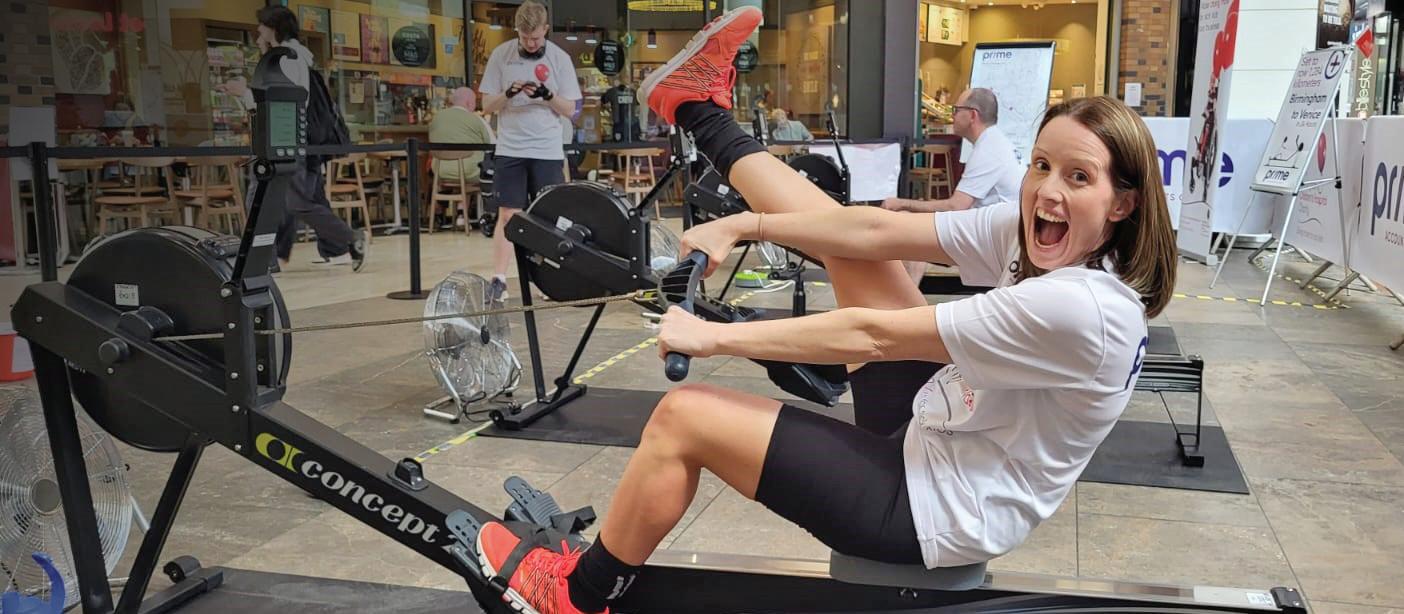
A West Midlands accountancy firm has revealed details of its latest epic fundraising challenge –a mountain-sized mission to climb the height of Everest seven times in just 24 hours.
Prime Accountants Group, which has offices in Solihull, Birmingham and Coventry, has raised a £81,953 to date for Birmingham Children’s Hospital (BCH) through a series of ambitious charity challenges.
It is now calling on local businesses and supporters to help it raise at least £19,000 through its latest challenge, Prime vs Everest, and help it smash through the £100,000 mark for BCH.
To hit their goal, the Prime team will attempt to climb 61,950 metres of elevation on five treadmills, running non-stop and set to a punishing incline.
The challenge will take place from 3pm on Friday, 19 September, at Touchwood Shopping Centre in Solihull.
Kerrie Given, associate director at Prime Accountants Group, said: “We’ve completed several epic challenges to support the incredible work of Birmingham Children’s Hospital and this is the most challenging and ambitious yet.”
• For more information go to: primeaccountants.co.uk





Specialist IT firm Hubtel IT will sponsor Solihull’s Non-Profit Champion at the upcoming Solihull Awards.
The awards ceremony, hosted by Solihull Chamber of Commerce at The National Conference Centre on Friday, 26 September, will recognise business excellence in the region across 12 award categories. Over 250 guests and delegates will be attending the event.
Hubtel IT is a leading managed service provider delivering IT support, cyber security solutions, hosted telephony and managed print to SMEs, schools and charities.
They have supported over 400 clients across 20 years and are known for exceptional customer service.
The firm is also Panasonic accredited and a Microsoft Certified Partner – having full support direct from manufacturers with up to date software releases.
Neil Bayliss, director of Hubtel, IT said: “We are proud to sponsor the Solihull Non-Profit
Champion 2025 and to celebrate the incredible organisations nominated for this award.
“Non-profits work tirelessly in our community, often overcoming significant economic challenges.
“That’s why we believe it’s so important to recognise those who inspire hope, drive change, and remain committed to making a lasting difference.”
Businesses shortlisted for Solihull Non-Profit Champion 2025 are:
• Colebridge Trust
• Kingshurst Community Association
• Knowle and Dorridge Memory Café
• Solihull Action through Advocacy
• Solihull BID Company LTD
Tickets for Solihull Awards are still available. They are priced at £125 plus VAT or £1250 plus VAT for a table of 10.
To book go to greaterbirminghamchambers.com



Paragon Banking Group is this year celebrating its 40th anniversary since launching in Solihull. CEO Nigel Terrington has been at the helm for 30 of those years and here he marks the business’s significant milestone.
This year marks a proud milestone for Paragon Banking Group: 40 years since our founding in Solihull, and 30 years since I became chief executive.
Paragon first launched in 1985 as a specialist residential mortgage lender. Over the years, we’ve evolved into a diversified, FTSE 250 specialist bank, pioneering buy-to-let lending in the 1990s before expanding into consumer finance, motor finance and commercial lending.
2014 brought transformation as we obtained our banking licence and launched Paragon Bank, enabling us to offer savings products and broaden our lending capabilities.
Throughout this journey, Solihull has remained our home. Over the past four decades, the town has emerged as a vibrant business hub, and we’re proud to have played a part in that journey.
To celebrate our 40-year anniversary, we’ve launched a series of events, including a celebratory dinner with past and present board
members, as well as a birthday lunch for all our employees turning 40 this year.
We’ve also created a time capsule to be buried at our head office, capturing memories from 2025 for future generations of Paragon employees and the wider Solihull community.
On a personal note, this year also marks 30 years since I became CEO. To commemorate this, I recorded a podcast with one of our development consultants Rachael Arundel, reflecting on the journey so far. I’m also looking forward to our upcoming ‘30 under 30’ event, where I’ll be hearing directly from younger colleagues about their aspirations and ideas for the future – and most importantly, how Paragon can support them to make them happen.
Beyond business, Paragon remains deeply committed to the communities we serve. Through our employee volunteer scheme, every colleague is encouraged to take a paid day each year to support local causes. We also raised over £48,000 for our Charity of the Year, Molly Ollys,

based in Warwick, and this year are delighted to be supporting Guide Dogs with an array of fundraising activities.
Looking ahead, as part of our long-term commitment to the region, we’re also investing in a decarbonisation project at our head office, which will reduce our operational emissions to reach net zero by 2030.
Many will also be aware that Solihull’s first ever Pride event will be taking place in September. As a major employer of the town with the values of respect and fairness at our core, I’m proud to share that we’ll be a sponsor for the celebrations.
As we celebrate these milestones, I want to thank the Solihull Chamber of Commerce and the wider business community for your support.
Contact: Sophie Poduval-Morrell
T: 07540 751590



A charity set up to continue the legacy of the Birmingham 2022 Commonwealth Games by championing opportunities for young people has become a patron of the Future Faces Chamber of Commerce.
United By 2022 was established to continue the positive momentum of the Commonwealth Games through volunteering, creating opportunities for young people and community engagement.
The charity is a trusted advisor to more than 500 community organisations, to whom it provides real-time support.
‘Birmingham is the youngest city in Europe, with nearly 40 per cent of its population under 25’
United By 2022 says its mission is to drive “inclusive growth and social value by uniting local businesses with local communities, to benefit young people, marginalised communities, the third sector, volunteers and people with disabilities”. As part of the partnership, United By 2022 will also be the Future Faces chosen charity for 2025 into 2026
Nicola Turner, CEO of United By 2022, said: “We are excited to be the patron of Future Faces – the Chamber’s dynamic network for young professionals.
“United By 2022 is a charity that champions our city and creates opportunities for young people who live in our most deprived places.
“Additionally, our staff have benefitted from the
Aaron Forde Foundations4TheFuture CIC Conner Elwell CJE Developments & Property Services Ltd
Ella Boyce Leopard Co.
Feldon Haynes Feldeluxe
Heather Woodhouse Colmore BID
Jonathan Thompson Virtus Consult
Jordan Arblaster Clays
Kasim Choudhry Pathway Group
Katy Paddock Colmore BID
Katrina Fleet WM International Ltd
Leah Clements University of Birmingham
Lori Stephenson WM International Ltd
Lucy Round Leopard Co.
Madeline Reynolds Individual Restaurants
Maisie Casey Regional Driving Assessment Centre
Morgan Knight Bouden Coach Travel
Nadia Johnstone-Smith Partners Wealth Management
Rayen Bouden Bouden Coach Travel
Rob Butler Tri Wellness Ltd
Ryan Taylor Regional Driving Assessment Centre
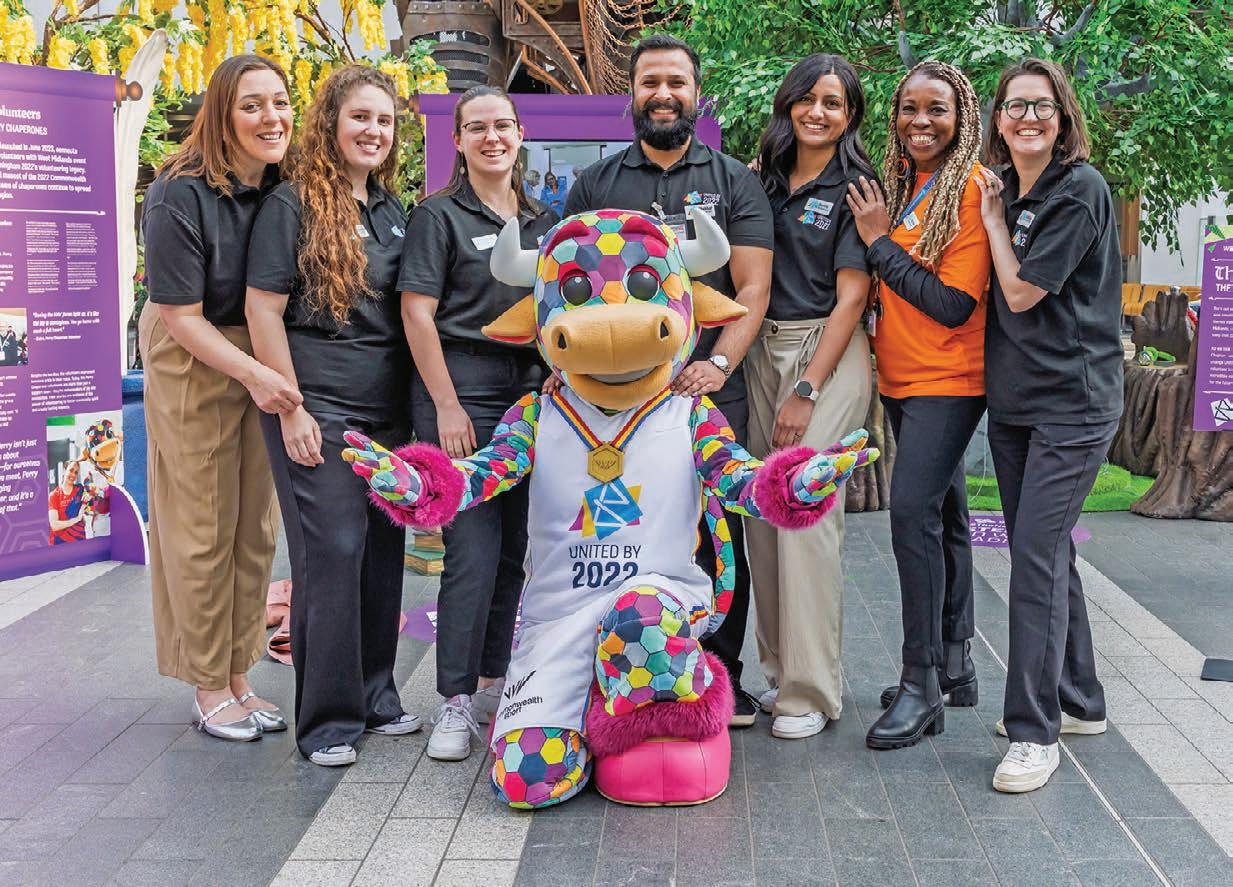
support available through Future Faces so this felt like a perfect match.
“Birmingham is the youngest city in Europe, with nearly 40 per cent of its population under 25, supported by over 400 schools and 15 universities within an hour’s drive. The future looks bright – the region is poised to become a leading destination for major events, investment and infrastructure
projects are kicking off all around the city and Future Faces and United By 2022 share a mission to put young talent at the centre of this growth!”
Sophie Poduval-Morrell, Future Faces manager, said: “We love the work United By 2022 are doing and we are so proud to be working together. We have so many exciting things already planned, so watch this space!”
The manager of Future Faces has been nominated for a new national award.
Sophie Poduval-Morrell (pictured) is on the shortlist for the British Chambers of Commerce’s Rising Star Award – a new accolade recognising early-career professionals who are shaping the future of the network.
Since joining the Chamber in 2022, Sophie has helped to grow Future Faces’ membership by more than 50 per cent, as well as introducing a string of new initiatives such as the mentoring programme, which has now matched over 300 young professionals with senior leaders across the region.
brand acquired by the GBCC. This led to an increase in brand awareness, as well as award entries rising by 20 per cent year on year.
Recognising the diversity of Greater Birmingham’s young professionals, Sophie has also overhauled Future Faces’ social events calendarintroducing more inclusive formats with varied timings and settings.

In 2023, Sophie was instrumental in the rebranding of the Future Faces Awards as the Greater Birmingham Young Professional of the Year Awards, aligning with the legacy BYPY
Lillian Elekan, director of membership at GBCC, said: “I’m absolutely thrilled to see Sophie recognised at the British Chamber Awards – it’s a well-deserved honour that reflects all her hard work and dedication. She brings so much energy, passion, and personal commitment to Future Faces, and her enthusiasm is infectious.
“She has used that to create a network that feels authentic and relevant, and that is going from strength to strength.”
The Chamber’s ever growing network for young professionals and the leaders of tomorrow.
University College Birmingham (UCB) will be sponsoring the Start-ups and Entrepreneurship category at this year’s Greater Birmingham Young Professional of the Year Awards.
Dr David Paulson, pro-vice-chancellor and executive dean of the business school at UCB, said: "UCB has a proud history of nurturing entrepreneurial talent, with many of our graduates going on to successfully launch new ventures, including multi-million-pound companies.
“We are passionate about fostering an entrepreneurial mindset in all our students, supporting them to think creatively and confidently in whatever path they choose.
“That’s why we’re proud to support Future Faces and the Greater Birmingham Young Professional of the Year 2025 by sponsoring the Start-ups and Entrepreneurship Award.
“As the UK’s youngest city and home to the second largest population of start-ups in the country, Birmingham is the perfect backdrop for celebrating emerging talent. We look forward to an outstanding line-up of entries.”
The awards, taking place at the ICC Birmingham on Friday, 17 October, will celebrate the talent and successes of young professionals across Greater Birmingham.
They cover a wide range of sectors, with the following categories:
• Greater Birmingham Apprentice of the Year
• GBYPY - Creative Industries and Culture
• GBYPY - Digital, Tech & Innovation
• GBYPY - Sustainability and ESG
• GBYPY - Events and Hospitality
• GBYPY – Finance
• GBYPY – Legal
• GBYPY - Built Environment and Engineering
• GBYPY - People and Wellbeing
• GBYPY - Marketing, Sales, and Communications
• GBYPY - Start-ups and Entrepreneurship
• GBYPY - Charity and Social Impact
• GBYPY - Training and Education
Find more information on the awards, including sponsorship opportunities and ticket sales, go to: greaterbirminghamchambers.com
Future Faces will be holding a pre-awards celebration to highlight the successes of this year’s Greater Birmingham Young Professional of the Year Awards finalists.
Taking place at the Birmingham Museum on Wednesday, 24 September, the event is a chance for attendees to mix with finalists, BYPY alumni, judges and senior leaders from across the region’s business and professional community. The event is open to Future Faces members and non-members.
Seventy-seven young professionals across wider Birmingham have been shortlisted for this year’s awards.
Sophie Poduval-Morrell, manager of the Future Faces Chamber of Commerce, said: “This year’s nominees are part of a very special celebration as we look back at the 25-year legacy of BYPY.
“It is so exciting to be celebrating the young professionals of 2025 while seeing the impact these awards have had on winners since the year 2000.”
Visit: www.greaterbirmingham chambers.com/event-calendar/greaterbypy-shortlist-celebration.html
Future Faces, the young professionals’ arm of the Greater Birmingham Chambers of Commerce, has praised the judges involved in this year’s Greater Birmingham Young Professional of the Year Awards for all of their support and efforts.
The judging for the awards took place at Birmingham Library, with 77 young professionals interviewed.
The judges for this year’s awards were:
• Stacey Hayes Allen – director of employer engagement at Arden University
• Suzie Branch-Haddow – vice principal – external development at Birmingham Metropolitan College, and BYPY 2009 overall winner
• Santina Bunting – Greater BYPY 2024 overall winner and Level 6 civil engineering apprentice at Arup
• Kasim Choudhry – executive director of Pathway Group and creative director at Thinkfest, and honorary chair of Future Faces
• Adam Davies – founder and consultant
• Nicola Fleet-Milne – chief executive of FleetMilne, and BYPY 2007 category winner
• Bina Ganatra – head of digital projects at Santander Corporate & Commercial Banking
• Tom Gree – senior people and future tech manager at T&P Group, and Greater BYPY 2023 category winner
• Rebecca Mander – founder of GuruYou
• Michael Parker – associate director, people &
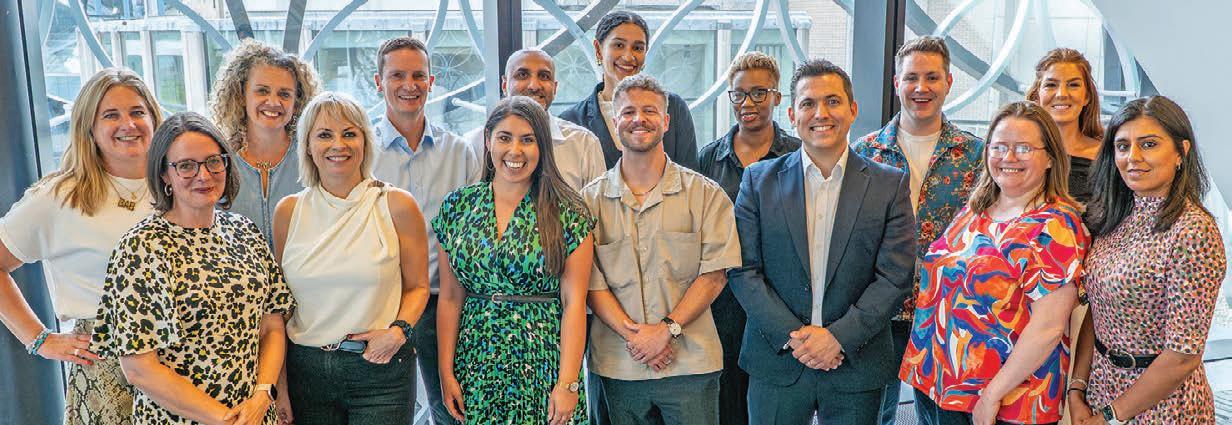
organisations advisory Midlands leader at Arup, and BYPY 2017 overall winner
• Ruth Pipkin – managing director of Rewired PR, and BYPY overall winner
• Tru Powell – personal brand expert, CEO of Black Business Magazine and INSPIRE Awards
• Hilary Smyth-Allen – chief executive at Supertech WM, and BYPY 2011 overall winner
• Mark Taylor – office lead at Bishop Fleming
• Justice William – editor in chief of Black Business Magazine and vice-chair of The Black Business Collective (Greater Birmingham Chamber of Commerce)
• Chrissie Wolfe – partner at Nexa Law and founder of LAB Consultancy, and BYPY 2018 category winner
The overall Greater Birmingham BYPY overall winner will receive an Executive MBA from headline sponsor Arden University.
Find more information on the awards, including sponsorship opportunities and ticket sales, scan the QR code.

Two major Greater Birmingham Chambers of Commerce business events take place at Edgbaston Stadium on Wednesday, 1 October. Alongside Business Expo there will be a Business Growth Studio conference featuring the co-founder of Absolute Collagen. ...see below for more information
A wide-ranging programme has been announced for the Greater Birmingham Business Expo, on 1 October at Edgbaston Stadium. The seminar programme line-up is:
• ‘Creating Compelling Content to Captivate Your Audience’, with Leopard Co agency chief marketing officer Anthony Tattum
• ‘LinkedIn: Being Yourself To Boost Your Business’, with Shoosmiths LLP associate Becca Horley and Tribera agency brand executive Ibukun Oluleye
• ‘Unlocking The Value of AI for SMEs’, with Tom Haworth, founder of B13.AI
• ‘The Human GPs: From Small Talk To Strategic Relationships’, with Belinda Kaur of BK Networks
• ‘Sell Smarter, Not Harder’, with Daniella Genas, founder Be The Boss International.
ABCC Chamber Connections
Date: 3 September
Time: 17:30 – 19:30
Venue: The Rectory
Division: ABCC
Cost: Members only
Royal Sutton Coldfield Chamber Connections
Date: 8 September
Time: 16:30 – 18:30
Venue: Highclare School
Division: Royal Sutton Coldfield
Cost: Members: Free Future Faces: £15 + VAT
Non-members: £25 + VAT
Brumbassadors
Date: 9 September
Time: 9:30 – 11.30
Venue: St Andrews, Knighthead Park
An award-winning entrepreneur who turned a kitchen table product into a best-selling supplement will deliver a keynote at Greater Birmingham Chambers of Commerce’s Business Growth Studio Conference.
Maxine Laceby co-founded Absolute Collagen with her daughter Darcy in 2017.
Together, they turned Absolute Collagen into one of the UK’s fastest-growing direct-to-consumer brands, were responsible for creating the liquid collagen category and were named fourth in The Times Top 100.
Maxine has won several significant industry awards, including the NatWest Everywoman award, The Great British Entrepreneur award and the LDC top 50 most ambitious leaders.
Before launching Absolute Collagen, Maxine had been a happy full-time mum for 25 years and had no previous business experience.
Within three years, Maxine secured a 15m investment to grow the business further and turn Absolute Collagen into the £30m business it is today.
The Business Growth Studio Conference takes place at Edgbaston Stadium on 1 October (9.30am to 4pm).
The member-only event also features a host of highprofile panellists and speakers including former Dragons’ Den star Piers Linney and former MP Greg Clarke, who is now chair of the University of Warwick’s Innovation District.
Division: Birmingham
Cost: Members only
Future Faces Social Networking
Date: 16 September
Time: 12:00 – 14:00
Venue: Roxy Ball Room
Division: Future Faces
Cost: Future Faces members only
Lichfield & Tamworth Chamber Connections with Future Faces
Date: 17 September
Time: 12:00 – 14:00
Venue: Midland Karting
Division: Lichfield & Tamworth/ Future Faces
Cost: Members: Free Future Faces: Free Non-members: £25 + VAT
Burton & District Chamber Connections
Date: 18 September
Time: 15:30 – 17:30

Keynote speaker: Maxine Laceby
Maxine said: “I will be discussing the 'purpose' that has been and continues to be behind the success of Absolute Collagen. How I created a formula in my kitchen, and scaled it to a £30m turnover.”
The Business Growth Studio Conference is an exclusive benefit for Chamber members, although a limited number of tickets are available to nonmembers, priced at £250 (plus VAT).
Venue: Burton Rugby Football Club
Division: Burton & District
Cost: Members: Free Future Faces: £15 + VAT
Global Brunch – The Power and Potential of Partnerships
Date: 18 September
Time: 9:30 – 11:30
Venue: Orelle
Division: Global
Cost: Members: Free Future Faces: Free Non-members: Free
1813 Club & Premier Support Session
Date: 24 September
Time: 8:30 – 10:30
Venue: Statfold Country Park
Division: GBCC
Cost: 1813 Club & Premier members only
Greater BYPY Shortlist Celebration
Date: 24 September
Time: 18:00 – 20:00
Venue: Birmingham Museum & Art Gallery
Division: Future Faces
Cost: Future Faces: Free Non-members: Free
Business at Breakfast – Accidental manager? This is how you master people management
Date: 24 September
Time: 9:00 – 11:00
Venue: Aquarius Ballroom, Hednesford
Division: Cannock Chase/GBCC
Cost: Members: Free Future Faces: £25 + VAT
Solihull Awards 2025
Date: 26 September
Time: 18:00 – 22:30
Venue: The National Conference Centre
Division: Solihull
Cost: Tickets: £125 + VAT
Table of 10: £1,250 + VAT
An exclusive course on how AI can transform and benefit businesses has been launched by Greater Birmingham Chambers of Commerce.
“AI for Business Leaders” is delivered in partnership with Netcom and Intel, offering practical insights into the world of artificial intelligence.
This immersive full-day training course, taking place on Thursday, 11 September, is tailored for business leaders from diverse industries who are eager to harness the power of AI to drive growth, boost efficiency, and unlock new avenues for innovation.
Participants will gain valuable insights into:
• What artificial intelligence is - and what it isn’t
• How to spot AI opportunities within their own organisations
• Practical applications of AI to enhance efficiency, decision-making and innovation
• Steps to ensure their business is digitally prepared for seamless AI integration.
Participants will also explore tools and demos used by leading companies and receive an Intel Digital Readiness Certificate after the course.
Leah Quarmby, training manager at the GBCC, said: “Designed for senior-level professionalsincluding managing directors, CEOs, and executive leadership teams - this full-day course features four sessions covering a wide range of topics, offering expert guidance that participants can immediately apply within their organisations.”
The face-to-face course is broken down in to:
• Session 1 (1 hour): Introduction to Artificial Intelligence
• Session 2 (one-hour): Fundamentals of how modern AI models work
• Session 3 (two-hour): Implementing AI in the company
• Session 4 (two-hour): AI in Practice: Technical demo and tool overview
To help get the most out of the day, it is recommended that participants complete a 90minute online module beforehand. This will be sent ahead of the workshop.
The course cost is £75 (plus VAT) for GBCC members and £125 (plus VAT) for non-members.
Book now by contacting the training team at training@birmingham-chamber.com or by going to the website greaterbirminghamchambers.com
The Chamber is again organising a comprehensive programme of training courses for business of any size who are looking to brush up on their international trade knowledge. Those planned for April are listed below.
For more details contact Leah Quarmby, international trade training manager, on 07860258387
Supply chain; responsibilities and considerations
Date: 4 September
Time: 9:30 – 12:30
Venue: Online remote training
Cost: Members: £125 + VAT
Non-members: £175 + VAT
This course aims to equip attendees with an understanding of how an effective supply chain delivers value, what to consider when disruptions occur, and strategies for managing risk.
ISO9001 Quality Management Training
Date: 9 September
Time: 9:30 – 16:30
Venue: Birmingham Chamber of Commerce
Cost: Members: £200 + VAT
Non-members: £290 + VAT
This in-person training is suitable for everyone, whether you are new to ISO9001 or have been running a Quality Management System for some time. On the day, you will learn how to implement and maintain a successful Quality Management System, ensuring your organisation reaps the benefits of ISO 9001 certification.
Introduction to Customs declarations in CDS
Date: 10 September
Time: 9:30 – 15:30
Venue: Online remote training
Cost: Members: £280 + VAT
Non-members: £350 + VAT
Learn how to complete an import & export Customs declaration correctly on the new CDS system. Learn what you need to include on paperwork and what you would need to provide to agents or brokers competing declarations on your behalf.
Import procedures
Date: 11 September
Time: 9:30 – 12:30
Venue: Online remote training
Cost: Members: £180 + VAT
Non-members: £250 + VAT
The course is aimed at anyone who works in an import role and has had no formal training, or for the more experienced staff member looking to refresh and update their knowledge on all import procedures.
AI training for business leaders
Date: 11 September
Time: 9:30 – 16:00
Venue: Icentrum, Holt Street, Birmingham, B7 4BP
Cost: Members: £75 + VAT
Non-members: £125 + VAT
Partnering with Netcom and Intel, participants will gain a clear understanding of what AI is, how it works, and how it can be applied to improve efficiency, decision-making, and innovation in business.
Understanding export and export documentation
Date: 17 September
Time: 9:30 – 15:30
Venue: Online remote training
Cost: Members: £290 + VAT
Non-members: £360 + VAT
This course is suitable for those who are new to their role in Export or who haven’t had any formal training. It is an ideal follow-on course for delegates that have previously attended our Beginners Export course, however, would also suit more experienced staff looking for a refresher and wanting to update their knowledge.
Carbon Border Adjustment Mechanism (CBAM) Training
Date: 17 September
Time: 9:30 – 12:30
Venue: Online remote training
Cost: Members: £280 + VAT Non-members: £400 + VAT
The Carbon Border Adjustment Mechanism (CBAM) is a policy implemented by governments to account for the carbon cost of producing imported goods. CBAM regulations can be intricate. Attendees will gain essential insights and tools to adapt to the new EU regulations with this course.
Inward & outward processing, and Customs special procedures
Date: 18 September
Time: 9:30 – 12:30
Venue: Online remote training
Cost: Members: £180 + VAT
Non-members: £250 + VAT Customs special procedures allow you to store, temporarily use, process or repair your goods and get partial or full relief from import duty, or in some cases suspension. Processing can be anything from simply sorting or repacking goods, up to the most complicated manufacturing. The course is suitable for those working in an import environment and looking to gain knowledge on special procedures, with a main focus on inward and outward processing.
Mental Health First Aid champions training
Date: 23 September
Time: 9:30 – 16:30
Venue: Birmingham Chamber of Commerce
Cost: Members: £170 + VAT
Non-members: £250 + VAT
Mental health in the workplace impacts every industry. Our course is designed for businesses of all sizes and employees who want to support their colleagues and recognize the signs of struggle.
By attending this session, your organization can strengthen its wellbeing strategy and build a network of MHFA Champions equipped to provide meaningful support.
Trading with Ireland & Northern Ireland including GPSR
Date: 30 September
Time: 9:30 – 12:30
Venue: Online remote training
Cost: Members: £125 + VAT
Non-members: £175 + VAT
If you are currently trading with Ireland or Northern Ireland, or exploring the market, this session is perfect for you.
We will provide a comprehensive overview of various topics related to Irish trading, breaking down complex procedures and explaining them in a simplified manner.
An Introduction to CPTPP and Free Trade Agreements
Date: 30 September
Time: 1:30 – 16.30
Venue: Online remote training
Cost: Members: £125 + VAT
Non-members: £175 + VAT
A Free Trade Agreement (FTA) is a pact between two or more countries to reduce or eliminate trade barriers such as tariffs, quotas, and import/export restrictions. Our course will provide attendees with a detailed overview of how to understand Trade agreements, benefits, considerations and more.

Christmas is a wonderful time of year for many, filled with joy, warmth and time spent with loved ones. However, it can be a time of great difficulty and heartbreak for those living with a terminal diagnosis and their families.
This Christmas, while many gather to celebrate, Birmingham Hospice will be continuing to operate as normal, with our dedicated care teams providing essential care, dignity and comfort to people living with a terminal illness and their loved ones. People like Jamie and his family.

When Jamie Tinsley was diagnosed with a terminal heart condition, aged just 36, his first priority was to minimise the impact on his family, and he decided he wanted to spend his final days being cared for at Birmingham Hospice.
Known as a ‘loveable rogue’ who liked to make people laugh, Jamie was a devoted family

man who enjoyed going on outings with his two sons and one daughter. A keen Aston Villa supporter, he often went to games with family members, and also ran his son’s football team.
After suffering a cardiomyopathy heart failure, he was in hospital for two weeks, followed by a brief period being cared for at home before coming to our Inpatient Unit, where he died four weeks later.
His wife Tracie said: “He was the best husband and father I could have ever wished for. He would always put me and the children first, and even up until the day we lost him, he made sure he told everyone to promise that they would look after me and the children for him.
“We originally had a lovely nurse from the hospice come and see us but Jamie did request that when he became more poorly he wanted to go into a hospice as he didn't want the children to see him deteriorate or pass away.”
When that time came, Jamie had made his peace with the decision, but Tracie was far more uncertain about what to expect. However, she said the team couldn’t have done more to put their minds at ease.
She added: “We both felt so welcomed by the staff; they made it feel just like home. When the nurses introduced themselves, I remember one saying to me ‘it’s our turn to look after Jamie, you be his wife again’. This is something that I have never forgotten as it just meant so much to me and really touched my heart.”
At first Jamie was looked after on one of the wards but as soon as the nurses found out that his three children would be visiting regularly, he was moved to the Family Room that evening.
Tracie said: “I couldn't believe how lovely the family room was; it was like a little holiday apartment, and it didn't feel like we were in a hospice. It really was a godsend for us as we

‘From the moment we walked through those doors, nothing was ever too much’

could spend time together as a family in a private environment.”
The hospice team also made sure Jamie’s family were supported, both during his time there and afterwards. All the family had hand casts made as a lasting memento of their time together, and both Tracie and the children received counselling, while Tracie also joined our Good Grief Group for people experiencing bereavement.
Reflecting on her experiences, Tracie added: “From the moment we walked through those doors, nothing was ever too much. All the staff truly are incredible and the services they provide not only for the patients but for the family really are phenomenal.”
Thanks to the dedication of businesses across the region, we’re able to go the extra mile for patients and their loved ones by providing moments of magic, especially around Christmas.
In recent years, corporate festive generosity has included:
• A selection box donation organised by Birmingham Business Park, delivering approximately 1,000 boxes to patients and hospice teams.
• Over £3,000 worth of toys, games and computers from Rolls-Royce, helping bereaved children feel joy at Christmas.
• Ruby Duke Communications lovingly decorating and supplying Santa’s Grotto at our Harborne shop.
• The Wilkes Partnership Solicitors providing hands-on help with gardening at Selly Park and joining us at our Living Well Centre Christmas Fayre.




By Liz Woodward, sales & marketing director, The H Suite
After a year of hard work, team wins, and shared challenges, the Christmas party is more than just a chance to celebrate – it’s a way to bring people together. But if you’re the one planning it, you’ll know: creating a night that works for everyone is no small task.
Here’s your guide to planning a festive celebration that’s stress-free to organise and unforgettable for your guests.
Start with the why
Before you dive into menus and music, ask: What do we want this party to achieve? Is it a reward, a thank-you, or simply a fun way to end the year?
Clarifying this helps shape decisions on theme, tone, format and budget. A formal sit-down dinner and speeches has a very different vibe to a lively Caribbean-themed party – and the right vibe matters.
Timing & planning: Get ahead of the rush
The best venues and entertainment book up quickly – especially those offering all-inclusive packages. Lock in your date early, then build around it.
Venues like The H Suite in Edgbaston offer a choice of pre-themed festive nights as well as private party packages, giving you flexibility and fewer moving parts to manage. Planning is
Choose a theme that creates a buzz
Themes are more than just décor – they help build excitement and create a cohesive experience. A strong theme gives you a clear direction for styling, food, entertainment and even dress code.
Classic options like Winter Wonderland offer elegance and sparkle, while something like Christmas in the Caribbean adds colour, fun and a relaxed party vibe. Both deliver a clear identity and a chance to do something different – which guests will remember long after the last mince pie.
Many venues now offer immersive themed party nights as part of a ready-made package –saving you the stress, while still making a statement.
Prioritise the guest experience
From the moment guests arrive, the focus should be on ease, warmth and enjoyment. Consider transport links, parking, welcome drinks, seating plans and how you’ll accommodate dietary requirements.
Venues with in-house catering and experienced event coordinators make this easier – streamlining communication and reducing the risk of things being forgotten or lost in translation. The H Suite, for example, offers everything under one roof,
from stylish spaces and festive menus to entertainment, décor and logistics.
Keep it simple – but personal
You don’t need to reinvent the sleigh to make a party feel special. In fact, trying to manage every element separately – venue, décor, catering, entertainment – can be time-consuming and costly. Instead, look for a venue that offers flexible packages you can tailor. That way, you can still add personal touches (like awards, speeches, or branded extras) without having to micromanage every detail.
Make it memorable
The best parties create lasting memories – and it’s often the little touches that stand out. A themed photo wall, signature cocktail, or thoughtfully designed space helps your event feel “bigger” and more considered.
Don’t forget the follow-up: sharing photos in January or sending a thank-you message rounds off the experience with impact.
Final thought: make planning part of the celebration
The Christmas party is your chance to celebrate your people – not stress about logistics. Choosing a venue that’s experienced, flexible and equipped to handle every detail gives you time back, confidence in the outcome, and a better guest experience overall.






FBy Elisabeth Briggs, forensic document examiner, QD Examiners
orensic document examiners are often asked to determine whether or not a signature is genuine, whether a page has been substituted, or whether an anonymous note came from a particular writer. Most instructions involve handwriting or signature comparison - typical cases include authenticating a signature on a will, confirming the author of a Land Registry TR1 form or linking a set of unsigned letters to one author.
It is important to note that forensic handwriting examination is not graphology: it does not involve the pseudo-science of assessing personality, character or psychological traits through handwriting. Instead, it is a structured comparison of writing features including the construction of letters, joins between characters and fluency of the pen strokes – based on established forensic principles.
Handwritten entries do not always tell the whole story. Two laboratory instruments – the video spectral comparator (VSC) and the electrostatic detection apparatus (ESDA) allow an examiner to look beyond the ‘visible’ layer and consider the difficult questions of when and how a document, or part of a document, was created or whether it could have been altered.
Video spectral comparator: revealing differences in inks and papers
A VSC is a specialised imaging system that visualises a document in ultraviolet, infrared and transmitted light, while a high resolution camera records the results. Because different inks, toners and paper fibres react distinctively at specific wavelengths, hidden inconsistencies can be revealed:
• Ink variation – entries that look identical in daylight may react differently under infrared light, revealing that a different pen was used to add text, or to amend a date or amount.
• Erasures and abrasions – oblique lighting highlights minute surface damage.

• Embedded security features – watermarks, fluorescent fibres and yellow dot patterns become visible, helping verify official forms and ID, or link printed documents.
For solicitors and businesses, the value can be significant. A disputed invoice total, a hastily added page or clause to a contract, or an altered tenancy date, can be examined without damaging the original document. Clear VSC photographs can provide visual evidence to support or refute the claims of a particular party, long before anyone reaches court.
Electrostatic detection apparatus: reading the paper’s secrets
Where the VSC highlights colour differences, ESDA reveals hidden impressions. Writing on the top sheet of a pad leaves shallow indentations on the pages below. ESDA charges the questioned page electrostatically, dusts it with fine toner, and
the powder clings only where those indentations disturb the charge, creating an image of words invisible to the eye. The process is nondestructive and can recover valuable evidence without damaging the document.
Indentations can show what was written on a missing page, reveal erased diary entries, or expose the rewriting of documents. ESDA examinations of witness statements have helped overturn wrongful convictions. Alternatively, a staff appraisal completed and signed last week may bear impressions of another appraisal allegedly completed months earlier; an anonymous letter might show impressions of a name and address.
VSC and ESDA are complementary tools in forensic document examination: VSC detects changes in colour or composition, while ESDA reveals erased or latent writing impressions. Both techniques produce objective visual evidence suitable for presentation to clients, juries and judges.
Solicitors and small business owners do not need these machines on site, but they do need awareness. If a document feels “not quite right”, halt the paper trail, protect the original document from further handling and seek advice from a forensic expert. Early intervention is almost always more cost-effective than reactive litigation.
As methods of forgery evolve, so does the need for careful, informed analysis. Forensic document examiners combine experience with technology to detect subtle details - differences in signatures and handwriting, ink or marks left on the paper, anomalies in physical properties such as staple holes – that might otherwise go unnoticed. Their role is to interpret these findings clearly, helping clients and courts look beyond appearances and assess the integrity of a document.
Delivering employment expertise to clients in litigation, corporate support, and employer advisory contexts, Stephens Scown’s employment team and HRExpress service has gained national recognition with a shortlisting for Employment Law Firm of the Year in the 2025 Personnel Today Awards.
Tier One ranked by Legal 500, the team is known for its expertise in creating great employee engagement and for practising ethical HR, something increasingly important to purposedriven and valuesbased clients.
Unique offerings
Key to the team’s shortlisting success, four aspects of its offering stand them apart from competitors:
by a dedicated team, headed by Hazel Sanders and led on by Chris Morse in Cornwall.
3. Specialist immigration support on issues such as sponsor licences, right to work checks, and overseas recruitment.
4. Extensive knowledge of regulatory matters such as CQC, NHS and Charity Commission provisions which often come into play when advising charities and healthcare businesses.

Partner and head of the employment team, Ellie Hibberd (pictured), said: “We’re extremely proud of the very high-quality work we handle within our team, including for well-known, high-profile clients, and it’s fantastic to see that being recognised on a national stage.”
1. ‘Boots on the ground’ support from in-house HR manager, Mark Roby.
2. The HRExpress (HRE) service, through which advice is provided
The ceremony is scheduled for November at the Grosvenor House Hotel in London.
Contact the team by calling 0345 450 5558 or emailing enquiries@stephens-scown.co.uk



transform customer journeys in the West Midlands, Warwickshire and Buckinghamshire and Oxfordshire.
Chiltern Railways, which is part of Arriva Group, will replace its oldest carriages (Mark 3s) with 13 modern trains (Mark 5As) which will carry customers along one of its three main routes, between London and the West Midlands, from spring 2026.
New features will include plug sockets and USB ports at every seat, enhanced Wi-Fi and digital customer information screens. Customers will also benefit from onboard air conditioning, improved luggage and bike storage, and dedicated areas including fully accessible toilets.

route in 2026, offering more spacious seats and improved connectivity for business and leisure travellers.
Chiltern has decided to fuel these newer trains with recycled vegetable oil, a renewable fuel that reduces carbon emissions and cuts pollutants such as nitrous oxide compared to conventional diesel.
Richard Allan, managing director of Chiltern Railways, said: “We are thrilled for our customers that we will be able to replace our oldest trains, which are nearly 50 years old, with their modern equivalent, that are just six years old, and provide significant improvement to their on-board experience.”

INSET: Connectivity: Plus sockets and USB ports on every seat
Birmingham Airport (BHX) has unveiled its latest terminal investment as it opened extended boarding gate lounges.
The new and improved Gates 58 to 60 have been re-developed, improving boarding experience through better layout design that
easyJet has launched a new route from Birmingham Airport to Grenoble in France as part of a bumper package of 22 new routes from UK airports for winter.
The new service to Grenoble will start on 20 December and will operate once a week on Saturdays, giving customers in the Midlands a convenient option for their winter break whether that’s a ski trip in the Alps or exploring the city and its famous Bastille Fort.
will also support airlines with ontime departures.
The modern boarding lounges, constructed in partnership with Vinci Building, feature new flooring, brighter energy-efficient lighting and sleek balustrades designed to open up the space and enhance the overall appearance of the boarding spaces.
Previous partitions have also been removed to assist with the flow of passenger traffic and provide a more visually connected environment.
‘We’re backing a more sustainable aviation industry’
The Secretary of State for Transport, the RT Hon. Heidi Alexander MP, visited BHX amid a significant period of growth for the regional transport hub.
The visit completed a tour of the airport’s ongoing development works including enhanced baggage handling facilities, the newly
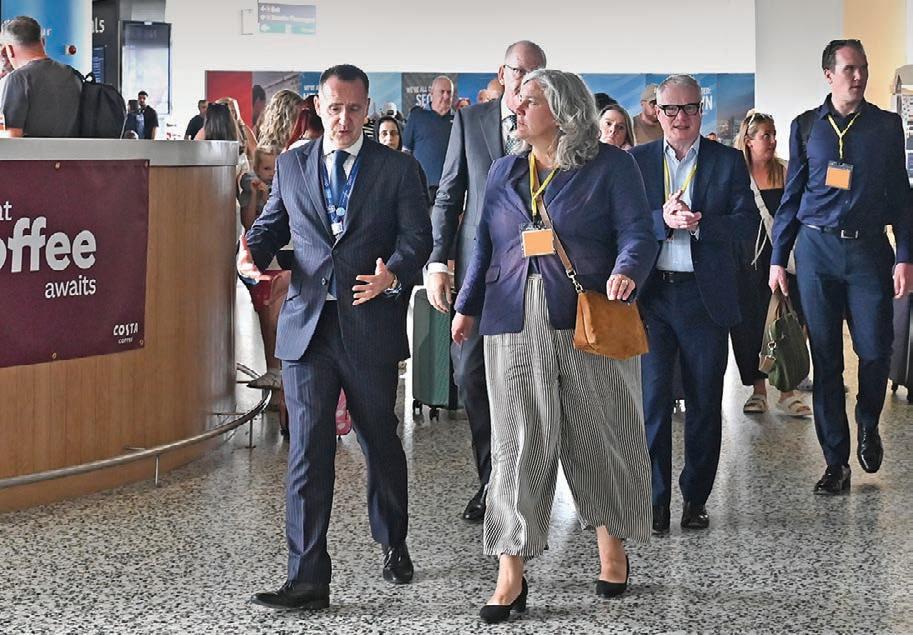
configured international pier and wider terminal improvements including Next Generation Security.
The visit came as BHX celebrates having one of the highest recycling and reuse rates among UK airports.
Last year, in partnership with Bidvest Nooran and The Green Block, BHX became the first airport
worldwide to implement a MSU to help sustainably process waste.
Heidi Alexander said: “We’re backing a more sustainable aviation industry and it’s fantastic to see Birmingham Airport leading the way, proving that environmental responsibility and operational excellence can go hand in hand.”


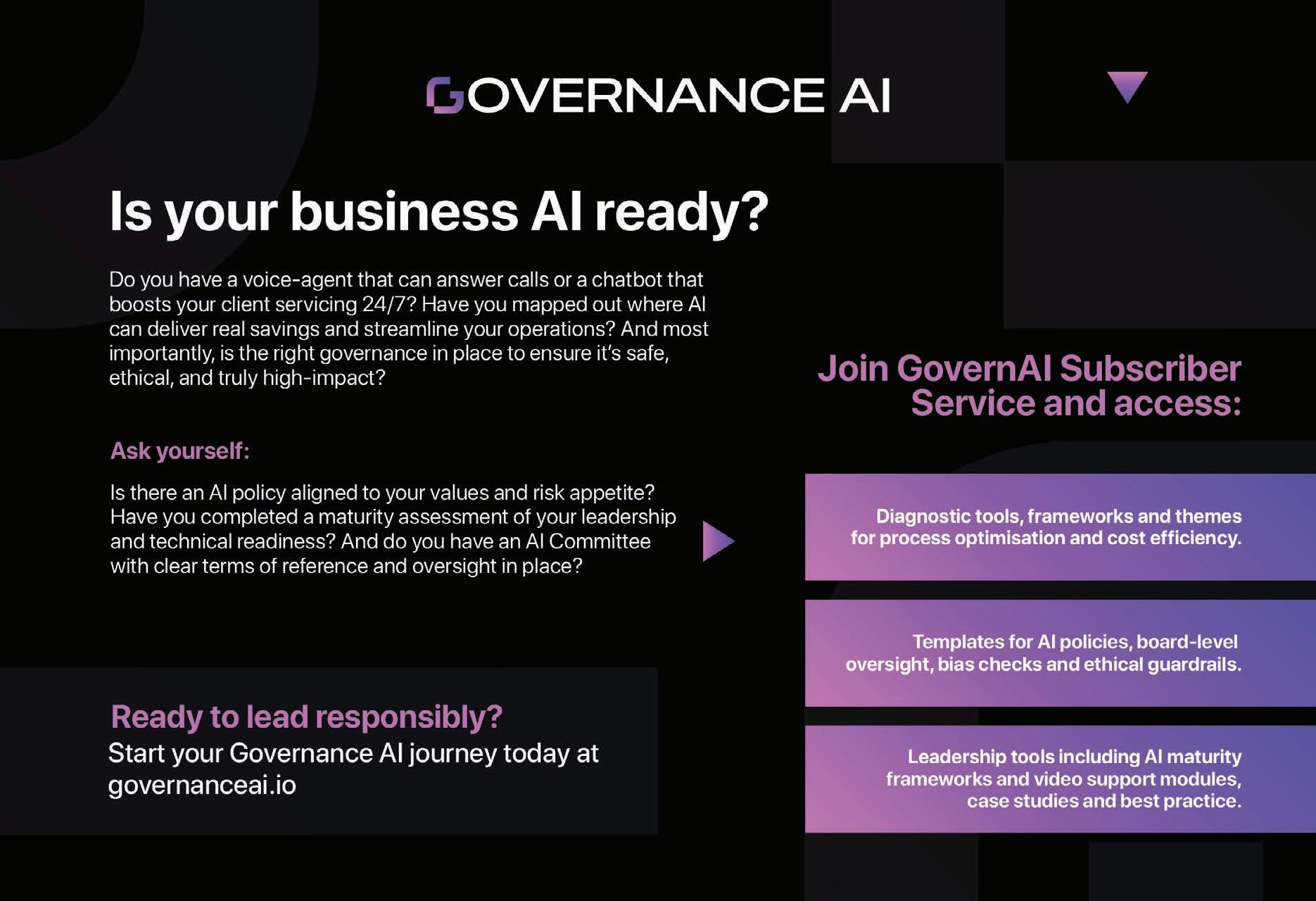
ADVERTISEMENT FEATURE
By Alice James (pictured) Senior Accountant at
Zoo Accounting, a forward-thinking practice helping businesses harness technology and real-time financial data to achieve sustainable growth.
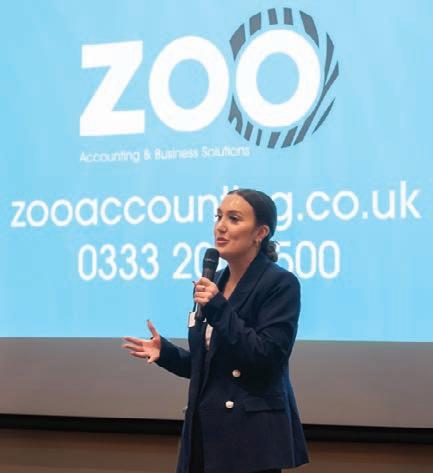
In today’s fast-moving business environment, waiting until yearend to review your financial performance is no longer enough. Real-time financial data gives business owners the clarity and confidence to make better decisions, faster – transforming accounting from a compliance task into a strategic advantage. Traditional accounting often meant waiting weeks, sometimes months, for a clear picture of how your business was performing. By the time the figures arrived, the opportunity to act had often passed.
The move to cloud accounting and integrated financial software has changed that. With the right systems in place, business owners can see up-to-date figures, track key performance indicators (KPIs), and spot trends as they happen. This allows for proactive decisionmaking, not just historical reporting.
At Zoo Accounting, we specialise in helping clients move beyond spreadsheets into tailored, tech-led solutions that save time, reduce errors, and create valuable insights. We work with a wide range of cloud platforms and business apps to build a setup that works for each client’s specific needs – whether that’s automated invoicing, instant expense tracking, or live cash flow forecasting.
Why real-time data matters
• Better cash flow control –You can see exactly what’s coming in and going out, making it easier to plan and avoid shortfalls.
• Informed growth decisions –Real-time reporting shows whether you can afford to invest, hire, or expand.
• Faster problem-solving –Issues like late payments or unexpected cost increases are spotted early, giving you time to act.
While technology drives efficiency, it’s our personal service that ensures clients get the maximum benefit. Every client is welcomed with small but meaningful touches – a reserved parking space with their company name and logo, a personalised welcome screen in our boardroom, and even a mug with their preferred drink order ready for meetings. It’s our way of showing that you’re more than just a number in a ledger.
This combination of cutting-edge software and genuine relationshipbuilding means we don’t just provide accounts – we help our clients understand and use them as a strategic tool. We take the time to explain reports in plain language, highlight opportunities for growth, and suggest improvements based on real-time insights.
Making the switch is easier than you think
For businesses still relying on manual records or basic spreadsheets, moving to a cloudbased system may seem daunting. But with the right partner, it’s straightforward. We handle the setup, data migration, and training, so you can start benefiting from real-time data almost immediately. The result? Less time spent on admin, fewer surprises at year-end, and more control over your business’s future.
If you’re ready to move from reactive to proactive financial management, we can help you build a streamlined, data-driven system tailored to your needs.
Contact Zoo Accounting on 0333 200 6500, email info@zooaccounting.co.uk, or visit zooaccounting.co.uk



Birmingham Botanical Gardens (BBG) has been awarded £9.075m from The National Lottery Heritage Fund towards its major restoration – Growing Our Green Heritage to preserve a nationally significant historic botanic garden.
Over the next 4.5 years, the funding will help the landmark project to restore the gardens’ historic Grade II listed glasshouses, enhance visitor infrastructure and amenities, improve sustainability and expand public access to education, horticulture, heritage
and nature in this unique green space.
It will also increase public understanding of the importance of plant biodiversity to life on Earth and share the importance of plants to people, our places and the planet.
The funding will ensure that urgently needed repairs and restorations are carried out to secure the future of this treasured historic site. Funds needed for the full restoration is now 90 per cent in place, and BBG is appealing to
National audit, tax, advisory and consulting firm Crowe has welcomed Sara Imafidon Evboboru, Perpetual Nimley, Zainab Adewuyi and Maria Nwosu to its Oldbury and Cheltenham offices as part of its continued support of the 10,000 Black Interns Programme.
This marks Crowe’s fourth consecutive year partnering with
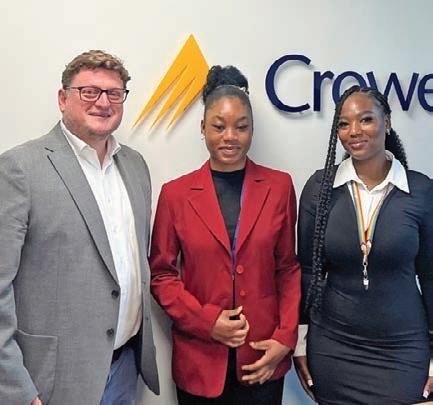
the initiative, which is led by the 10,000 Interns Foundation, a nonprofit organisation dedicated to transforming the landscape of opportunities and experience for Black talent in the UK.
This year, Crowe has been joined by 18 interns across the UK in its largest cohort to date. They are based across six of the firm’s offices with three in Oldbury, one in Cheltenham, nine in London, two in Manchester, two in Reading, and one in Kent.
As part of the internship, Crowe provides a minimum of six-weeks paid employment.
Ross Prince, managing partner of Crowe’s Midlands and south west offices, said: “We’re proud to continue our partnership with the 10,000 Black Interns Programme.
“Driving meaningful societal change is essential, and it requires collective, intentional action to break down barriers and create opportunities that are truly accessible to all.”




the public to help close the gap.
Sue Beardsmore, chair of Birmingham Botanical Gardens, said: “This safe, peaceful space is part of the green heart of Birmingham and a hugely treasured place to the city, the West Midlands region and its communities.
“With The National Lottery Heritage Fund’s grant, together with generous pledges of support, we can now preserve this historic estate, nursery and iconic glasshouses for future generations.”
Accountancy firm Cooper Parry (CP) has taken another significant step in its UK and Ireland expansion with the acquisition of Northern Ireland powerhouse CavanaghKelly.
This is the 15th deal in just over two years and the third since partnering with New York-based Lee Equity Partners in December 2024.
For 25 years, the seven partners and 100-plus strong CavanaghKelly
team has built an outstanding reputation as one of the region’s most respected multi-service line accountancy and business advisory firms.
Des Kelly, CavanaghKelly founding partner, said: “In selecting the right partner for the next phase of our growth journey, we went through a thorough evaluation of our options.
“Immediately, Cooper Parry stood out, creating an incredibly strong first impression. Our alignment on values, vision and ambition couldn’t be stronger.”
Ade Cheatham, CEO of Cooper Parry, said: “CavanaghKelly gives us more than a footprint - it gives us a foundation.
“Their values, their people, and the trust they’ve built in Northern Ireland make this a perfect fit.”
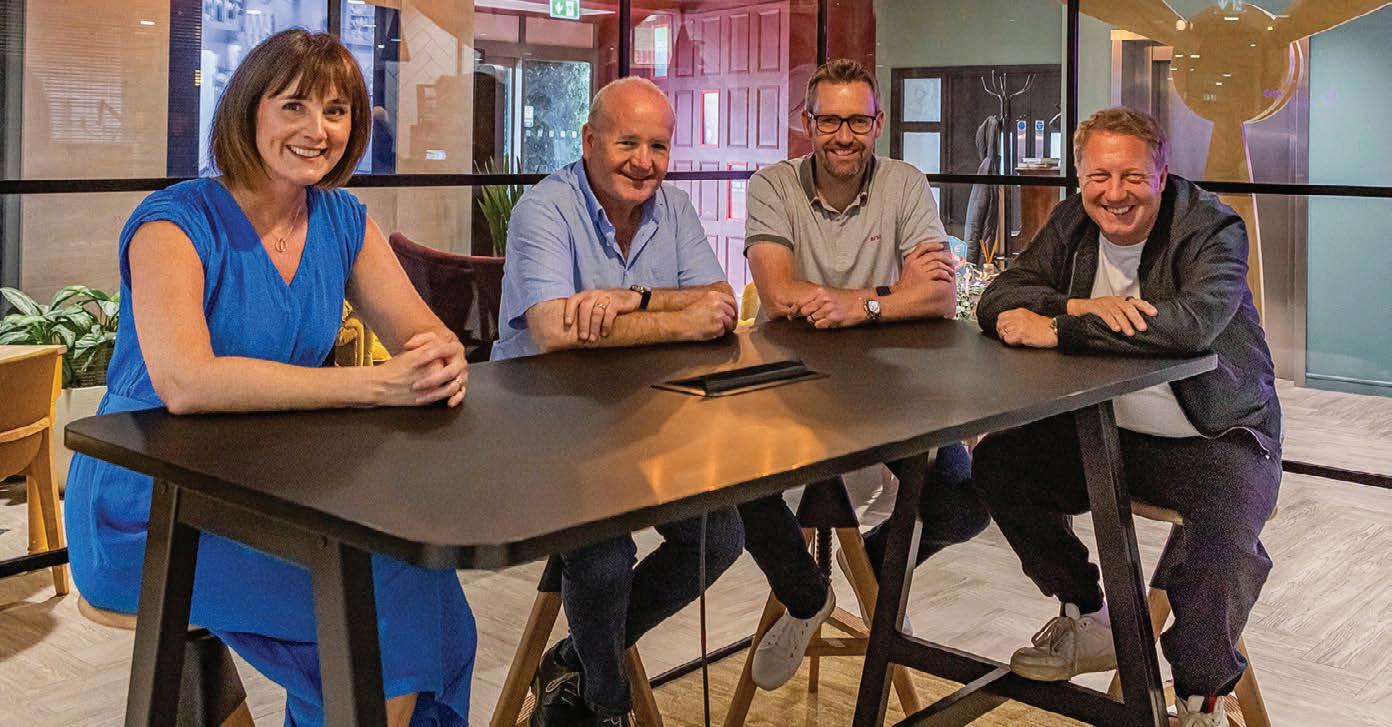

Unity Trust Bank has become a Changemaker at Birmingham Children’s Hospital Charity, helping to transform the lives of sick youngsters.
Changemakers support the charity by investing in projects such as life-saving equipment and childfriendly spaces.
Colin Fyfe, CEO at Unity Trust Bank, said: “As a social impact bank, Unity’s mission is to help create a better society. We’re based in Brindleyplace and proud to be part of the Birmingham business community.
“We’re delighted to support the region by becoming a Changemaker for such a worthwhile charity.
“Every year, more than 100,000 children and young people receive expert care from Birmingham Children’s Hospital. It’s important to continue to raise the funds needed to provide the best paediatric services.”
As part of its commitment to supporting good causes, Unity’s 270-strong workforce receive up to five paid days a year to volunteer for charities of their choice.
Grants and donations are provided to organisations through various programmes.
Dearbhla Craddock, senior partnership officer at Birmingham Children’s Hospital Charity, said: “Thanks to Changemakers like Unity Trust Bank, we hope to
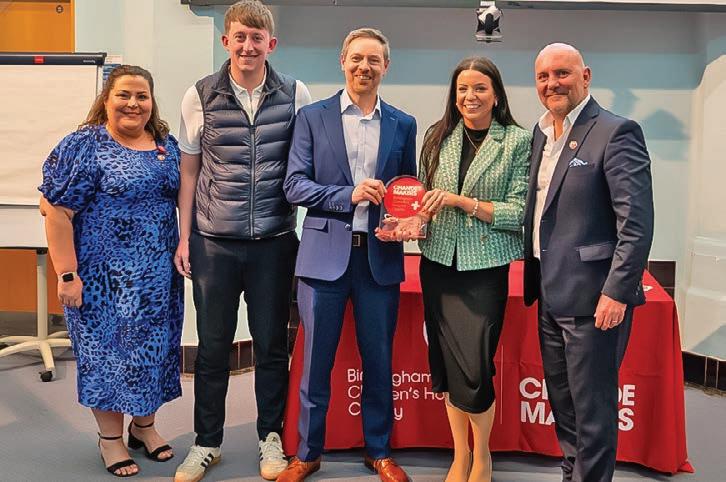
Social impact lender UKSE has created 150 jobs by delivering loans to businesses in the West Midlands.
UKSE Midlands area manager Steve Grice and regional executive Mike Lowe have overseen lending totalling £2.5m to 16 companies on behalf of UKSE since they began work in 2023.
Unsecured loans up to £200,000 are also available, often without the need for personal guarantees.
continue to provide the very best care to young people and their families. It’s really heartwarming that several Unity colleagues have already spent the day with us to see first-hand what we do.”
Meanwhile, 17 Unity colleagues will be taking part in the Birmingham Women’s and Children's Hospital Charity’s Dragon Boat Race 2025. These include CEO Colin Fyfe and his executive committee.
Held at The Mailbox, this year’s event is sold out. Fiftysix businesses will go head-to-head on 19-20 Septemberall united in raising vital funds for the hospitals. Unity has set a team fundraising target of £5,000.
The lender has operated nationally since 1975 and appointed Steve and Mike to deliver investment in the West Midlands to give added focus in the region.
Married couple Cameron and Elizabeth Wakeman secured funding from UKSE to help them acquire Midland Wire Mesh Ltd in April 2024 when the original owners decided to retire.
European law firm Fieldfisher will be relocating its Birmingham office to a new city centre location at Two Chamberlain Square, part of the £1.2bn Paradise Birmingham development at the end of this year.
The central office space will enable Fieldfisher to grow its offering across the UK as well as Europe, increase the firm's involvement in the region's business community and continue to deliver market-leading services to its clients.
With Birmingham's excellent travel connections –London is just 80 minutes away by train, and Birmingham Airport, the UK’s third largest regional airport, offers 133 direct flights daily – the firm can continue to foster and grow its European connections.
This strategic move will enable Fieldfisher to double its staff over the next five years, attracting talent from the region and offering opportunities for those who might have left to work in other areas of the UK to return.
Ranjit Dhindsa, partner and Birmingham office leader, said: “Fieldfisher’s sector focus aligns perfectly with the
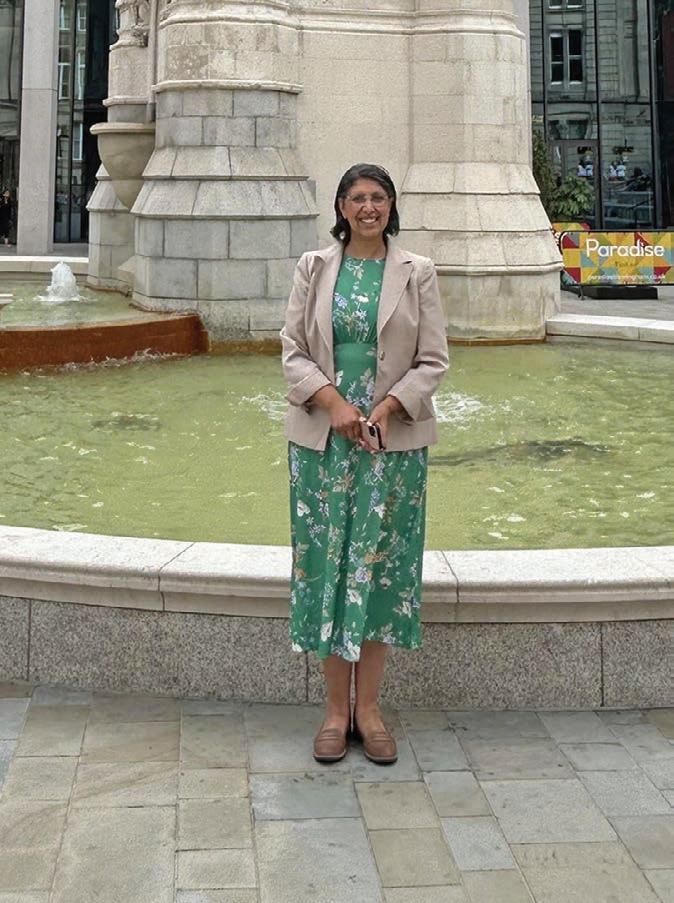
West Midlands’ strengths in tech, life sciences, and green energy.
“Our strategy is centred around growing our capabilities and maintaining our position as a market leading European law firm, and Birmingham has the connections to allow us to do that.
“The West Midlands is the UK’s leading destination outside of London for international investment, which is a testament to the city's dynamic growth and potential. As a firm, we want to be part of the exciting business environment in Birmingham.”
Wilkes has advised the shareholders of SERS Energy Solutions (Scotland) Limited and SERS Energy Solutions Group Limited on the successful sale of their respective business and assets in a complex, multimillion-pound deal with Cardo Group.
In a simultaneous transaction, the business and assets of SERS Energy Solutions (Scotland) Limited were acquired by Cardo (Scotland) Limited, while Cardo (Wales & West) Limited acquired those of SERS Energy Solutions Group Limited.
The Wilkes team was led by corporate partner Rick Smyth, supported by Kiran Munawar (associate solicitor), Matt Workman (paralegal), with specialist input from Charlotte Keys (solicitor, property) and Joanne Briscoe (associate solicitor, employment).
Rick Smyth said: “We are proud to have supported the shareholders of SERS through these significant transactions.”
Clarke Willmott LLP has been recognised at the highest level in the 2025 Chambers and Partners High Net Worth Guide.
For the first time the firm has been ranked for its expertise in UK-wide family and matrimonial finance, with an interviewed client saying: “Clarke Willmott has a real strength in depth. I needed to use several departments in a complex divorce, and their service throughout was highly bespoke and client-centred.”
Elsewhere in the guide, Clarke Willmott has ranked highly for its private wealth law offering in three regions gaining the top Band 1 position in Somerset, Band 2 in Bristol and surrounds and Band 2 in Manchester and surrounds.
Anthony Fairweather, head of Clarke Willmott’s private client team, said: “Our strong and growing presence in all regions of the UK highlights Clarke Willmott’s private client practice as one of the best and most diverse in the country.”
Shakespeare Martineau has been appointed to the legal panel of Avant Homes, one of the UK’s leading housebuilders.
The interim appointment – effective immediately and running until a panel review, which is expected to take place later this year – means Shakespeare Martineau will provide legal support on a range of residential development matters.
This includes the acquisition of sites for new housing schemes, strategic land options and promotion agreements, sales to affordable housing providers, construction and planning advice.
Jill Briggs, residential development partner at Shakespeare Martineau, said: “We’re delighted to have been appointed to Avant Homes’ legal panel.
“Having previously worked closely with the team –including on secondment –I’ve seen first-hand

their ambition and drive. This is a great opportunity for our team to work alongside one of the UK’s most dynamic housebuilders and deliver strategic, commercially focused legal advice across their development pipeline.”
With more than 60 highly-experienced and wholly specialist residential development experts nationally, Shakespeare Martineau supports housebuilders at all stages of their residential and mixed-use developments.
Shakespeare Martineau has supported leading housing provider Amplius in delivering affordable homes as part of a fast-growing partnership tackling the country’s housing crisis.
Appointed to Amplius’ legal panel in 2022 following a competitive tender process, Shakespeare Martineau’s social housing team has been instrumental in securing a pipeline of new developments that form part of Amplius’ wider strategy to build high-quality, affordable housing at scale.
In a UK-first for the automotive supply chain, Aston Business School is teaming up with West Bromwich manufacturer Metal Assemblies to calculate and report the carbon cost of every metal component used in car production, tackling one of the industry’s biggest sustainability challenges.
It is hoped the Knowledge Transfer Partnership (KTP) will transform how vehicle parts are made and regulated, setting a new standard for transparency and lowcarbon manufacturing across Europe.
Metal Assemblies produces a wide range of machined metal components and welded assemblies, supplying Toyota, BMW and Nissan, among other manufacturers across the UK and Europe.
New environmental regulations, such as the EU Carbon Border Adjustment Mechanism, now
require detailed data on the carbon cost of each vehicle component and place tariffs on carbon intensive goods. Developing more sustainable approaches to manufacture vehicle parts will help the sector to limit these tariffs and support efforts to decarbonise the automotive industry.
‘This offers a new way to think about sustainability’
Through the three-year KTP with Aston University, Metal Assemblies is gaining access to specialist data and operations expertise. The project will design and integrate an innovative approach to energy efficiency across the company’s entire manufacturing process. This will deliver a competitive edge into the business, supercharging its plans to be the
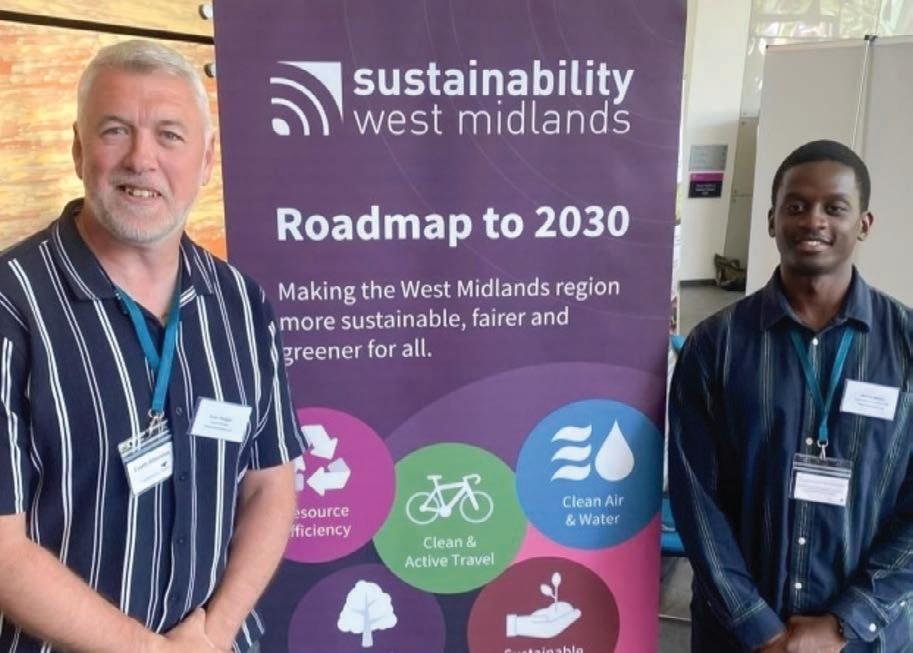
first in the sector to offer detailed carbon cost information.
By enabling Metal Assemblies to work in partnership with customers to design more sustainable components, this KTP will support the wider sector to adopt alternative, lower-impact manufacturing techniques.
Dr Breno Nunes, reader in sustainability operations management at Aston Business School, said: “Through the Corporate Sustainability Fitness Model, we’ll be providing Metal
Assemblies with a visual dashboard that clearly shows the company’s sustainability performance, tradeoffs of each potential shift in their strategy, and a clear direction to take for a more sustainable future.
“This offers a new way to think about sustainability – one that balances short-term economic needs and longer-term sustainability requirements.”
KTPs, funded by Innovate UK, are collaborations between a business, a university and a highly qualified research associate.

Midlands are to get the chance to train for a rewarding career in construction following a new Government funding announcement.
Dudley College of Technology has been named as one of 10 National Centres for Technical Excellence for Construction (CTEC) to lead the way in boosting skills in all areas of construction including builders, bricklayers, engineers, surveyors, plumbers, plasterers and electricians, as well as green technology like solar panels and retrofit installation.
CTEC will share in £100m Government training funding over the next four years to accelerate the development of construction sector skills and will work with leading employers,
education providers to ensure that people right across the region benefit from the new opportunities created.
A new army of construction workers is needed to meet demand for new housing and sites for industry – including delivering on mayor Richard Parker’s new Growth Plan, which set a target to build 120,000 new homes over the next decade –including thousands of social homes – to help tackle the housing crisis. And £2.4bn has been secured to grow transport networks and services.
Richard Parker said: “Dudley has a proud history of making and building and this new status for Dudley College will help make sure it has a proud future too.


this investment and I’ll be working with them, Dudley College and local employers to make sure it delivers opportunities for people across the Black Country and the wider region.”
Dudley College already has an excellent record in construction skills and the new CTEC will build on training already being offered at the Construction Apprenticeship Training Centre at Brierley Hill and the Advance Centre in Dudley.
Diana Martin, chief executive and college principal said: “This is superb news and recognises the significant growth we have achieved over the last three years. In becoming a Centre for Excellence, we will be able to accelerate our mission to train hundreds of learners.”
Businesses occupying prime Grade A office property in Birmingham’s central business district will see significant rises in their business rates bills next April, following the 2026 Revaluation.
That’s according to the business rates team at Colliers, who estimate that office occupiers in the best space in Birmingham could experience increases of up to 26 per cent in their bills next year.
John Webber, head of business rates at Colliers said:
“Of course we are talking about the best office space in these regional centres and there will be poorer stock elsewhere not seeing such a high growth in rental values and therefore in liability.
“Similarly, even with these hikes, the rents and rates bills in these areas will still be more attractive than in London.”
The Birmingham city centre office market has experienced a subdued start to 2025, according to the latest market report from commercial property consultancy, KWB.
The figures from KWB’s H1 2025 Birmingham Office Market Review reveal a total take-up of 182,794 sq ft across 38 transactions – a significant drop on both the five- and 10-year averages, but one that KWB says must be viewed in context.
Malcolm Jones, director of office agency at KWB, said: “After a record-breaking year in 2024, it’s not surprising to see some rebalancing. The absence of a single, large ‘landmark’ deal has skewed the data - just as previous years were positively distorted by those major lettings.”
Last year’s performance was lifted by high-profile transactions such as Aston University’s 189,053 sq ft deal at 10 Woodcock Street
and the BBC’s relocation to Typhoo Wharf.
In contrast, the largest city centre deal in the first quarter of 2025 was Covalt’s 27,000 sq ft letting at 1 Victoria Square, followed by Phoenix Life’s 25,107 sq ft move into 10 Brindleyplace.
While activity in some sectors has slowed, notably technology, media and telecoms and education, professional services has accounted for 55 per cent of take-up with over 100,000 sq ft acquired across 21 deals in the first three months of 2025.
Rebalancing: Malcolm Jones



Malcom continued: “The resilience of the professional services sector is a real positive. CBRE’s move into 16,458 sq ft at Three Chamberlain Square and Turner & Townsend’s 10,177 sq ft deal at 55 Colmore Row show that firms are continuing to invest in prime locations.”
The report also highlights that Colmore Business District remains the city’s leading business destination, accounting for 18 of the 38 city centre deals. However, with many of its best buildings now at or near capacity, the district is projected to fall short of its recent take-up highs - a sign of demand outpacing supply for Grade A space.



Young people aged 18 to 25 are invited to create a lasting legacy by joining a free leadership programme.
The two-day leadership programme taking place on 15 and 16 October will challenge participants to think through what they want their generation’s legacy to be.
‘We need to create space to support and hear from Birmingham’s young people’
The programme is delivered by Common Purpose, a notfor-profit organisation founded in 1989 that develops leaders who can cross boundaries.
It is part of the Birmingham Legacy campaign, run by Common Purpose and sponsored by Aston University, HMPPS, Trowers & Hamlins and Unity Trust Bank.
Louise Teboul, UK partnerships director at Common Purpose, said: “We need to create space to support and hear from Birmingham’s young people about their big ideas and longterm thinking - but also to make that an intergenerational dialogue – which is what this programme will do.”
• For more information go to: commonpurpose.org

A bold ambition to make the West Midlands the UK’s number one place for Artificial Intelligence (AI) skills training has been set out by mayor Richard Parker as part of his Growth Plan.
The goal is to give every adult in the region free training in how to use AI in their everyday lives at home, work or in the community, with further opportunities for thousands more to develop the technical skills needed to land jobs in an increasingly technology dominated workplace.
The Growth Plan’s AI training package, backed by £10m, also includes proposals for a pioneering, region-wide AI Academy to be set up under a joint project between the West Midlands Combined Authority (WMCA), leading tech companies, colleges, universities, specialist providers and community groups.
The academy would provide local people with clear career routes into AI, digital and data jobs as well as upskilling existing workers so they can help drive economic growth and higher productivity. The West Midlands is already one the UK’s most active AI hubs, with more than 140 AI companies employing 69,500 people, contributing £5.5bn to the economy each year.
The mayor said: “In an age where artificial intelligence is revolutionising industries, the need to give all our communities the AI
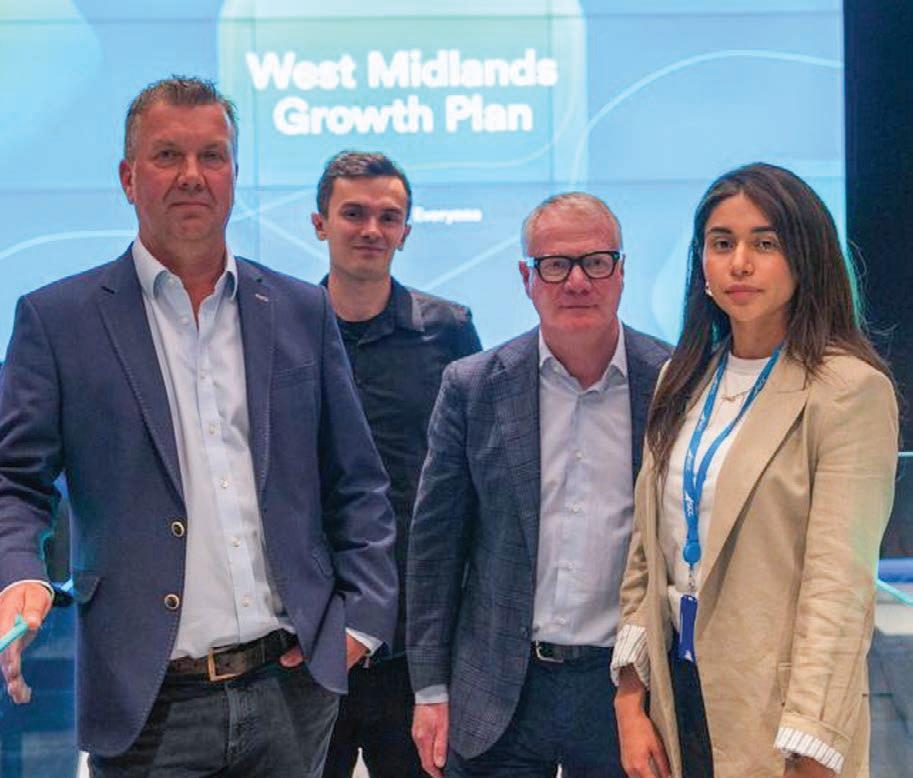
skills to secure high quality jobs is economically imperative.
“As jobs become increasingly digital and data-driven, AI will become a core skill just like English or maths. So, if we don’t make AI skills training a priority and readily available to all, then lots of people risk being left behind. That’s why I want to make the West Midlands the number one place in the UK for AI skills training.”
A new video series aimed at opening young minds to the world of work and the wealth of career opportunities across the UK has been launched by Pertemps Network Group, in collaboration with the University of Wolverhampton Business School.
The series, created with three leading UK employers - Boots UK, My Policy and the William Mitchell Group - brings real-world insights directly into classrooms.
It aims to help teenagers understand the evolving job market, the skills employers are looking for and the wide range of paths available to them beyond school.
Tailored to support GCSE Business Studies students, the
videos align directly with curriculum expectations and offer an engaging new tool for teachers and career advisers.
Carmen Watson (pictured), chair of Pertemps Network Group, said: "Helping young people feel more confident about their futures means showing them what’s possible, especially in regions like the West Midlands, where youth unemployment remains a major challenge.
“This series connects students with real voices from the world of work, helping them explore career paths they may never have considered and giving them the tools to take the next step with confidence.”
The University of Birmingham applies AI in health and robotics and is a Turing Institute member. Coventry and the Digital Futures Institute at Aston University are leading in areas like cybersecurity, fintech and supply chains, and the University of Wolverhampton has launched the Centre for Cyber Resilience and AI, while pioneering sustainable computing to reduce the power needed to run large AI models.
Summit Learning Trust, which runs eight schools and a college across Birmingham and Solihull, has won the “Transforming Lives Through Partnerships Award” at the ‘Education Awards 2025.’
This accolade celebrates educational organisations that have significantly enhanced life chances for young people through powerful partnerships with community and charity organisations. The award recognises the impact of Summit’s innovative Base Camp provision, a trustwide initiative ensuring that every learner has their basic needs met so they are fully equipped to thrive academically and personally.

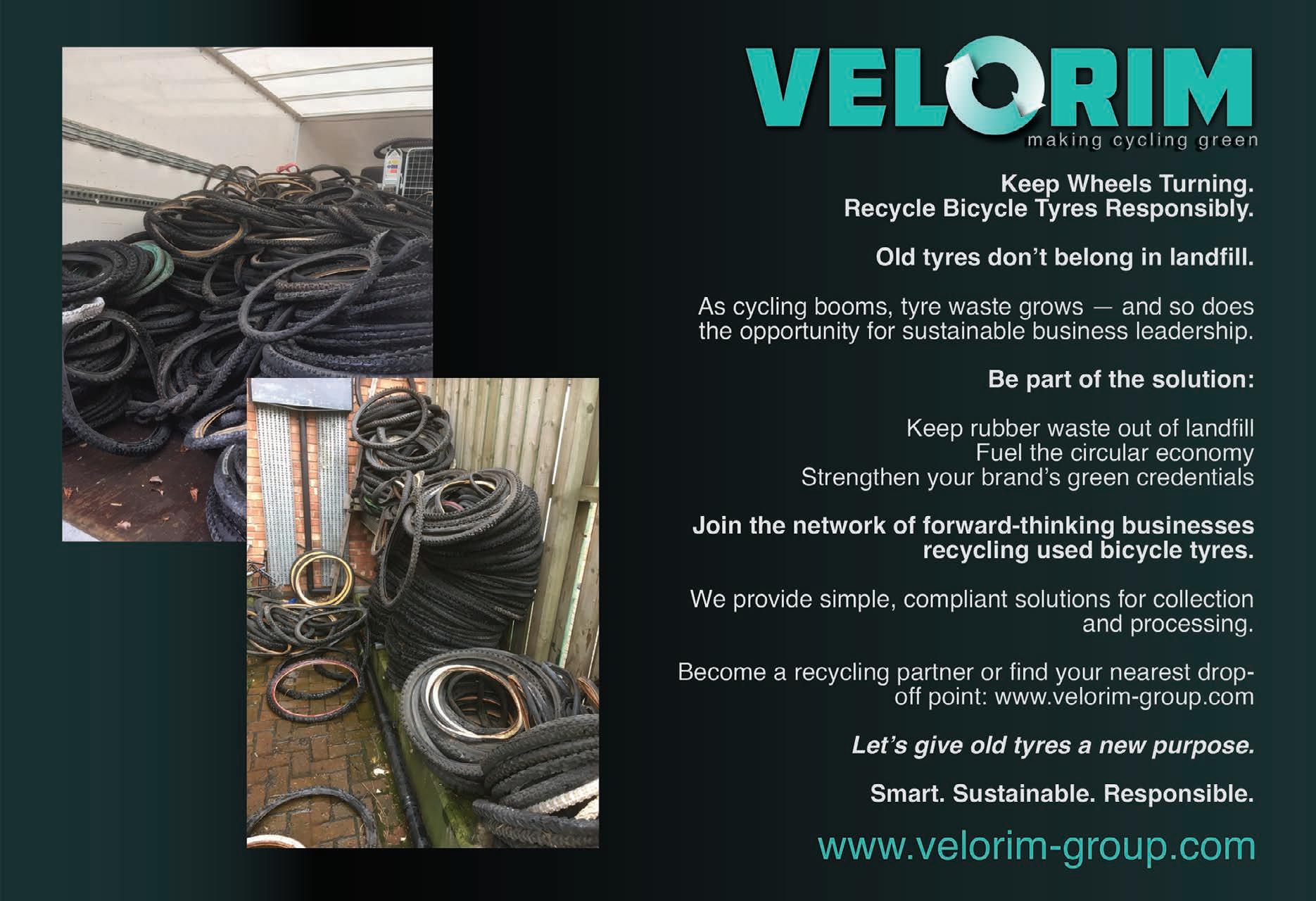
Technology innovator and entrepreneur Yiannis Maos has been awarded an honorary doctorate in business administration by Aston University, recognising his exceptional contributions to the UK’s digital economy and entrepreneurial ecosystem.
The honour came in the same week that a portrait of Maos was unveiled, celebrating his work in transforming the West Midlands into a thriving hub for innovation, talent, and inclusive growth.
His efforts are widely recognised for helping the region become the UK’s fastest-growing digital economy, now worth over £16bn.
A champion of the region’s tech sector, Maos is best known as the founder of TechWM, the not-for-profit organisation behind major initiatives that have propelled the West Midlands onto the global tech stage.
His leadership has directly influenced skills development, investment attraction, and startup growth across the region.
This year Maos was also named West Midlands Technology Leader of the Year at a industry awards ceremony, cementing his reputation as a driving force for change and impact.
Maos said: “It’s an incredible honour to be recognised by Aston University, an institution I’ve long admired for its commitment to innovation, diversity, and social mobility. This week has been deeply humbling and I share this recognition with the many amazing people I’ve worked with over the years.”
The new portrait was unveiled at the Centrala Gallery in Digbeth alongside other notable figures who have made a lasting impact on the region.

Air IT has again been recognised by Channel Futures on the MSP 501 list of the world’s top managed service providers.
This year, the firm has been ranked as fourth overall in the UK and 92nd globally for its fully staffed, permanent offices in nine UK locations, delivering regional support and on-the-ground expertise.
The recognition places Air IT among an elite group of companies leading the way in technology, service delivery and long-term impact.
Barney Taylor (pictured), CEO at Air IT said: “Being ranked fourth in the UK on the MSP 501 is a fantastic achievement. It’s a real credit to our team.”
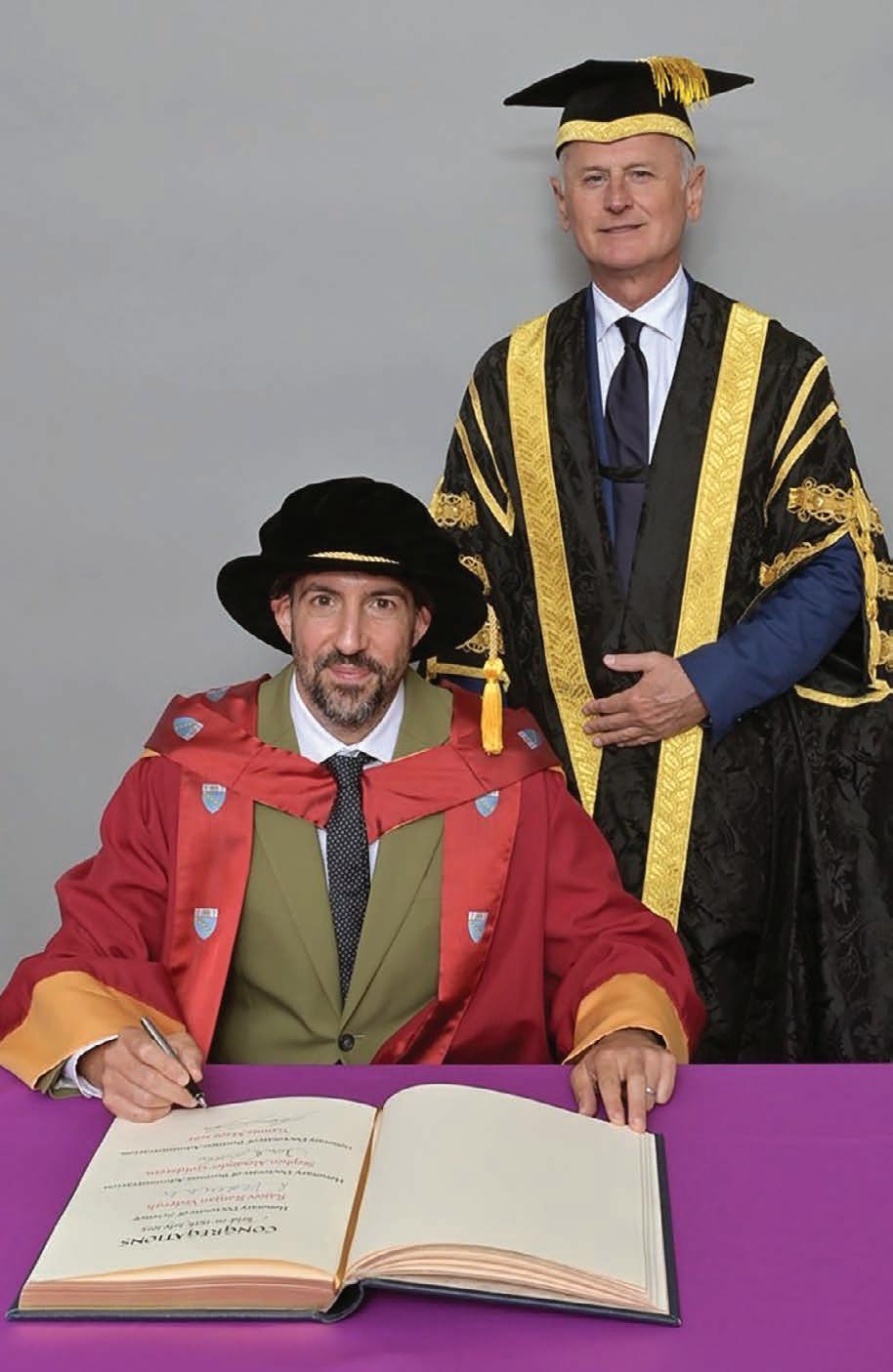
Recognised: Yiannis Maos signing the honour roll alongside Professor Aleks Subic, vice chancellor of Aston University
University of Birmingham spin-out
PeroCycle, an industrial decarbonisation venture advancing closed-loop carbon recycling for steelmaking, has appointed Grant Budge as CEO.
The announcement coincides with the opening of a £4m seed round to fund pilot deployment and accelerate commercial growth.
Grant brings 30 years of experience leading carbon capture projects and advising on decarbonisation across energy and heavy industry.
He has raised significant public and private funding and led delivery of large-scale CCS infrastructure.
His appointment signals a new phase of commercial growth for PeroCycle as it advances towards pilot-scale deployment.
Grant said: “PeroCycle can reshape one of the world’s most emissions-intensive sectors. Its technology stands out for its ability to cut carbon emissions from existing steelmaking infrastructurea rare combination. I’m thrilled to join at this pivotal stage.”
PeroCycle is built on breakthrough research by Professor
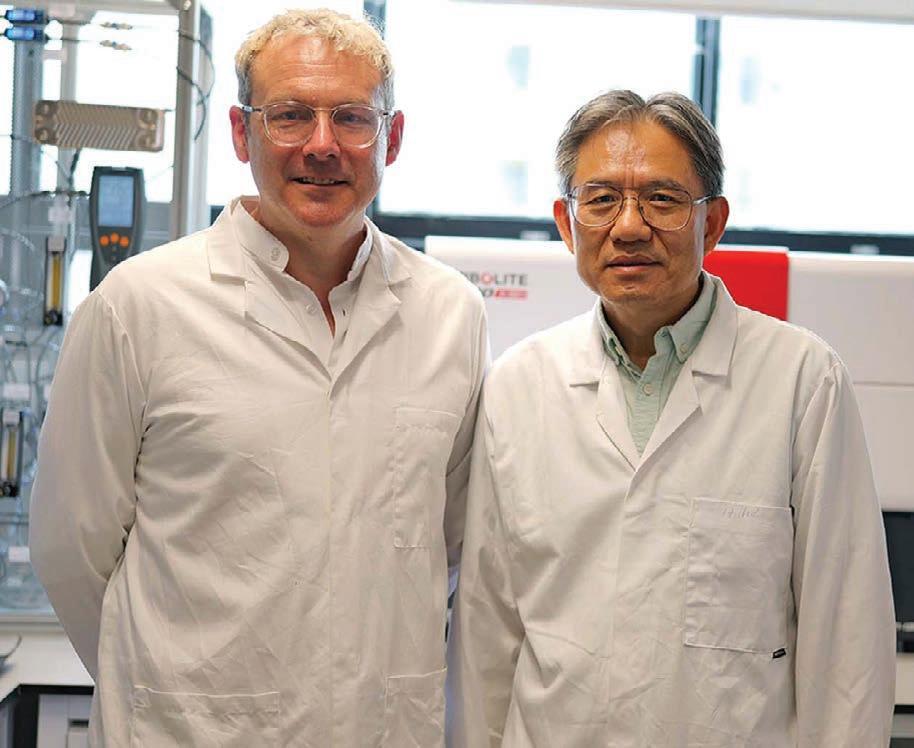
Breakthrough: Grant Budge and Professor Yulong Ding, whose breakthrough research led to a novel carbon recycling technology
Yulong Ding and Dr Harriet Kildahl at the University of Birmingham. The company was spun out by the University of Birmingham and Cambridge Future Tech, a deep tech venture builder and early investor, in collaboration with Anglo American to commercialise
its novel carbon recycling technology.
With emissions from steelmaking needing to fall within the next decade to align with net-zero pathways scalable industrial solutions like PeroCycle’s are critical to the global climate response.


Musicians and concertgoers can make savings on tram travel to concerts as the partnership with the City of Birmingham Symphony Orchestra (CBSO) and West Midlands Metro is renewed for a record-breaking third year.
Since 2023, West Midlands Metro has been recognised as the orchestra’s official travel partner – a relationship that’s seen music enthusiasts and performers enjoy generous discounts on travel to concerts across the city.
Birmingham Hippodrome has launched a new sustainability plan for the theatre.
The plan, which contains 10 core commitments, is the culmination of the theatre’s successful journey to reach Theatre Green Book (TGB) Preliminary standard.
This journey began more than a decade ago when the Hippodrome became the first UK theatre to hold the ISO 14001 accreditation for global standard Environmental Management Systems.
The Crown’s Ed McVey and Eastenders alum and Strictly Come Dancing finalist Maisie Smith will star as Ripley and Marge respectively in the first ever UK tour of The Talented Mr Ripley.
The production comes to Birmingham Rep from Monday 22 to Saturday 27 September. Ed and Maisie will be starring in the roles until the end of 2025.
Ed McVey is best known for his debut performance as Prince William in The Crown (Netflix) starring alongside iconic actors such as Imelda Staunton, Jonathan Pryce and Dominic West.
Maisie Smith is an awardwinning actress, best known for her beloved portrayal of Tiffany Butcher in BBC’s EastEnders.

Free dance training: Shani Moran-Simmonds
Birmingham Royal Ballet’s Shani Moran-Simmonds will be the first Dance Track student to join The Royal Ballet in London.
Birmingham-born Shani, a former pupil at Kings Heath Primary School, joined BRB’s Dance Track in 2012 at the age of six, attending workshops in school delivered by a dance artist and pianist.
Her talent and love for ballet was recognised by BRB when she was selected to join regular dance classes with the company and later performed in Sir Peter Wright’s The Nutcracker winning a coveted place at The Royal Ballet School where she recently graduated.
Dance Track, part of BRB’s Learning, Education Access and Participation (LEAP), was launched in 1997 and offers free dance training to children aged six and 11 who would not normally have access to dance. Working across nearly 60 schools the programme has taught just under 4,000 youngsters across the city and also provides a chance to see live shows and to be in performances.
‘I am so grateful I was given the opportunity to be a part of BRB’s Dance Track’
Shani said: “I remember always being so happy and excited when it was time to go to my weekly ‘Dance Track’ classes. Miss Rachel (Hester) was such a great teacher and made the classes fun whilst learning so much. I made some great friends too and it played a big role in my development from social skills, confidence, coordination and posture.
“I am so grateful I was given the opportunity to be a part of BRB’s Dance Track and super excited to start the next chapter with The Royal Ballet as a professional dancer. It truly is a pinch me moment that the dream I had from a very young age has actually come true.”
For further information on BRB’s Dance Track go to www.brb.org.uk
Lulu and the Boomtown Rats are among the star attractions that BMusic have attracted to Symphony Hall and Town Hall in the coming months.
Grammy-nominated singer, pop sensation, and gifted stage and film actress, Lulu has been entertaining the nation for decades and brings
her If Only You Knew show to Town Hall in October.
The Boomtown Rats play Symphony Hall in October as they celebrate 50 years.
Boundary-breaking pioneers fusing the omnipotent power of the orchestra with innovative technology and the raucous
rebellion of rock, London Symphonic Rock Orchestra deliver iconic rock hits in the most spectacular way at Symphony Hall in October.
Town Hall hosts A Night of Ska: Originally brought to life in Jamaica during the '50s, and with a rich and longstanding history, Ska has transcended time and arrives in the
heart of Birmingham in September for a night of live music, DJ sets and dancing.
Bill Bailey brings Thoughtifier to Symphony Hall in August- a magical, musical mystery tour of the human mind, along with some other pressing matters about whales, biophilia and unrequited love.
We are a forward-thinking independent electrical design engineering consulting firm committed to driving the decarbonisation of the power system with a particular emphasis on electricity networks.
We specialise in crafting customised electrical design solutions tailored to empower even the most energy-intensive network.
Our goal is to ensure that the transition to a "Net Zero" future is not only reliable but also economically viable and sustainable.
We offer an array of services including:
• Power System Analysis
• Electrical Plant Design Engineering
• Cable Design Engineering
• Electrical Procurement Support
• Project Lead Engineering & Management
• Electrical Commissioning & Construction Support


www.elecwatts.com contactus@elecwatts.com
The England & Wales Cricket Board (ECB) have announced the international fixture schedule for 2026, during which both India and Pakistan will visit Edgbaston Stadium.
Kicking off a landmark summer for cricket, Edgbaston has been selected as one of seven venues to host the 2026 ICC Women’s T20 World Cup, with England Women taking on Sri Lanka Women in the opening fixture of the tournament on Friday, 12 June.
India Men are set to play against Harry Brook’s England Men for a One Day International (ODI) on Tuesday, 14 July.
The international season concludes with a five-day Men’s Test between England and Pakistan from Wednesday 9 September, a first Test between the two sides in Birmingham since 2016.
Vitality Blast Men’s Finals Day also returns to Edgbaston for its 14th successive year, with the date to be confirmed later this summer.
Fans can now register for the best chance to secure tickets via the ballot. The ballot is now open and closes on Tuesday, 30 September. Alternatively, fans can beat the ballot with Priority Club, which is on sale for £35.
A two-time captain of the British & Irish Lions is the guest of honour at a special luncheon organised by Birmingham Moseley Rugby club.
Sam Warburton will be attending the event on Friday 12 September at the Reddings Suite. The event gets under way at noon.
Tickets are available at birminghammoseleyrugby. tickco.events
Unity Trust Bank has partnered with the Birmingham County Football Association (BCFA) to support local sustainability initiatives.
The bank is sponsoring the BCFA’s “Green Innovation Fund”, which supports the sustainability efforts of local grassroots football clubs through green project funding.
BCFA affiliated clubs can apply to receive up to £500 to support their environmental initiatives.
‘At Unity, we believe in the power of collaboration’
More than 150 grassroots organisations have already benefitted from the fund since its inception in season 22-23.
As part of its sponsorship, Unity will contribute £12,500 to the £16,000 fund. It will also join the BCFA judging panel to help select this year’s successful applicants.

Following its launch in April, the initiative received 34 applications from local and volunteer-led football clubs across the West Midlands.
The judging process is now under way to determine the successful 15 and a new application window will open again later in the year.
BCFA is the not-for-profit governing body for football across Birmingham, the Black Country, Coventry and Warwickshire. It supports more than 900 grassroots football clubs with nearly 6,000 teams across the region.
Colin Fyfe, CEO of Unity Trust Bank, said: “At Unity, we believe in the power of collaboration. By combining resources and expertise through partnerships with organisations like BCFA, who share our mission to create a better future, we can further amplify the impact we each create.”
Birmingham City University (BCU) has renewed its groundbreaking partnership with the South Asian Cricket Academy (SACA).
The new three-year partnership addresses the stark underrepresentation of British South Asian males in the professional game.
Despite making up around 30 per cent of recreational cricketers in England and Wales, British South Asians accounted for just four per cent of professional male players at the start of the 2020s.
Established in 2022 by Dr Tom Brown, a former BCU PhD student, SACA has become one of sport’s most compelling success stories, offering British South Asian cricketers long-overdue access to professional opportunities in the game.
Dr Brown, a former Warwickshire County Cricket Club pathway coach who now serves as SACA’s general manager, said: “It couldn’t have happened without BCU.
“Sixteen players have come through SACA to play first-class cricket. Jafer Chohan was playing club cricket three years ago. Now he’s in England squads. It’s like a

Hollywood film. Our goal was to get one player a year on a professional contract – we’ve got 16 in three-and-a-half years, among them Jafer and Zaman Akhter, who has played for England Lions.”
SACA’s impressive work has drawn the attention of England and Wales Cricket Board (ECB), sparking important conversations about equity and inclusion.
The new initiative, backed by the BCU Research for Athlete and
Youth Sport Development (RAYSD) Lab and supported by the ECB, is focused on creating more inclusive talent pathways, with a strong emphasis on supporting girls and young women.
Two PhD students are at the heart of the project: Omar Green, a former primary school teacher now coaching at Surrey CCC, and Hina Shafi, co-owner of Luton Women and Girls Cricket Club and a director at Cricket East.

Name: Caroline Davis
Company:
Outdoor Places Unusual Spaces (OPUS)
Job Title: Managing director and executive producer
What does your company do?
OPUS are a female-led team of cultural events producers. We want to see your neighbourhood spaces and places transformed by cultural events.
How did it all start?
I set OPUS up when I was pregnant and could see the opportunities present with Coventry City of Culture and Commonwealth Games, so I leapt in and formed the company and haven’t looked back.
What’s your greatest achievement so far?
Feeling how alive the city felt when delivering all of the festival sites for the Commonwealth Games.
What is the biggest risk you’ve ever taken – and did it work out? Leaving the stability of a public sector job to work in the cultural sector. It was the best decision I made and I am happy I’ve continued to make a living here.
What keeps you awake at night?
If I look at this positively then I would say Ideas, I find some of my most creative thoughts are at nighttime. More realistically… my to do lists.
If you could turn the clock back, what would you do differently? Maybe look after myself a bit more. I’m sure many small business owners/mothers know what it’s like. I do carve out more time for myself now than I did.
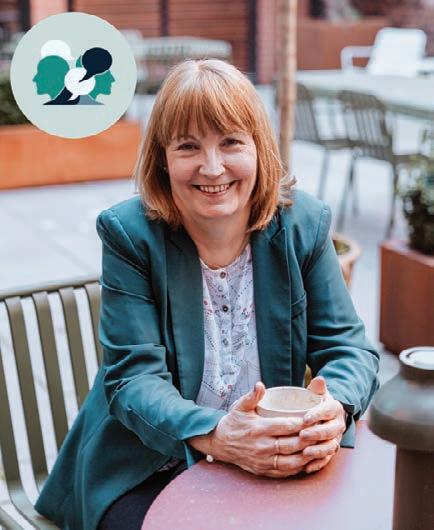
Caroline Waddams (pictured), internal communication specialist, works with growing businesses to boost productivity and strengthen team connection through clear and impactful communication.
Caroline said. “It’s about making sure everyone understands what’s happening, why it matters, and how they contribute.”
A Fellow of the Institute of Internal Communication and a mentor for the profession, Caroline helps business leaders simplify their messaging, align teams, and build confidence in their communication.
Caroline’s no-nonsense, practical approach helps organisations uncover what’s working, what’s missing, and what needs to change.
To get started, she offers a free Internal Comms Health Check, helping businesses spot gaps and identify opportunities to improve.
What has surprised you most in your job?
Audiences in outdoor arts can regularly surprise you but when delivering live events I’ve come to be surprised by very little.
What advice would you give to someone starting out?
Take a business development course and take that time for your own personal practice whilst also being in the business you need to also be working on the business.
Which business do you most admire?
It’s a charity rather than a business but this speaks to my arts background: The Friends of Cotteridge Park - they work hard to provide for my local community.
What exciting projects is your business working on?
We are excited to be working with the National Trust and have new presentation pieces at Mailbox and the National Memorial Arboretum this summer. And hopefully – Birmingham Light Festival 2026. Watch this space.
What made you join Greater Birmingham Chambers of Commerce and how are you making use of your membership? The events programme allows me to stay connected to best practice. There’s always more to learn in business and life.
Contact Tel: 0121 312 0565
Visit: www.opusartsevents.co.uk
With nearly 20 years’ experience, Caroline knows effective internal communication boosts productivity, strengthens culture, and drives growth. She’s now on a mission to support smaller organisations that don’t have dedicated internal communication expertise.
“Internal communication isn’t just about sharing updates,”
With growing evidence linking internal communication to business success, Caroline is passionate about helping businesses lay strong foundations and build for the future.
Tel: 07929 939683
Email: caroline@carolinewaddams.co.uk www.carolinewaddams.co.uk
Apton Partitioning Ltd
Oliver Turkman
01902 385250
www.apton-partitioning.com
Manufacture of doors and windows of metal
Birmingham Chamber of Commerce
Arden University
Stacey Hayes-Allen 024 7651 5700
www.arden.ac.uk
First-degree level higher education Birmingham Chamber of Commerce
BlackRook Academy
Lucy Rook 07973 363643
www.blackrookacademy.com/about-us
Educational support services Birmingham Chamber of Commerce
Blue Light Wellbeing
Hannah Bailey 07966 399040
www.bluelightwellbeing.uk
Management consultancy activities other than financial management Solihull Chamber of Commerce
Bouden Coach Travel
Sophie Baugh 0800 112 3770
www.boudencoachtravel.co.uk
Other passenger land transport Birmingham Chamber of Commerce
British Judo Association
Andrew Scoular 0121 728 6920
www.britishjudo.org.uk
Other sports activities Birmingham Chamber of Commerce
Burton & District Mind
Joanne Smith 01283 566696
www.burtonmind.co.uk
Other social work activities without accommodation n.e.c.
Burton and District Chamber of Commerce
CAMRA - Campaign for Real Ale
Alan Jones 0330 153 9924
www.camra.org.uk
Other service activities n.e.c. Birmingham Chamber of Commerce
Cuubo Limited
Daniel Sweet 0121 714 4509
www.cuubo.co.uk
Licenced restaurants
Birmingham Chamber of Commerce
D & A SOLICITORS
Punam Deepak 0121 523 3601
Solicitors
Asian Business Chamber of Commerce
Edgbaston Priory Club
Claire Daniel 0121 440 2492
www.edgbastonpriory.com
Operation of sports facilities
Birmingham Chamber of Commerce
Eventa LTD
Ahmed Elkest 0121 751 1701
www.eventa.uk
Activities of exhibition and fair
organisers
Greater Birmingham Global Chamber of Commerce
Expressive Arts Productions Ltd
Georgina Forsythe 0121 630 3607
www.expressiveartsproductions.com
Video production activities
Birmingham Chamber of Commerce
Feldeluxe
Feldon Haynes 07562 614867
www.feldeluxe.com
Birmingham Chamber of Commerce
Frankham Risk Management Services
David Calvert 020 8309 7777
www.frankham.com
Other professional, scientific and technical activities n.e.c.
Birmingham Chamber of Commerce
Global Experience Specialists (GES)
Ltd
Robert Cotton 07415 942513
www.ges.com
Other business support service activities n.e.c.
Greater Birmingham Global Chamber of Commerce
Inspired IOT
Barnie Giltrap 0121 751 1707
www.inspired-iot.co.uk
Security systems service activities
Birmingham Chamber of Commerce
Jessanol Limited
Jane Feilden 07970 445867
www.jessanol.com
Management consultancy activities other than financial management
Birmingham Chamber of Commerce
Jigsaw Associates
Nigel Higgs 07980 761916
www.jisawassociates.co.uk
Financial management
Sutton Coldfield Chamber of Commerce
JT Web Ltd
Joanne Turner 01543 301787
www.jturnerwebservices.co.uk
Web portals Lichfield and Tamworth Chamber of Commerce
JTT IT Ltd
Jacek Tarkowski 07365 322240
Information technology consultancy activities
Birmingham Chamber of Commerce
Whatever your business size and requirements, the Chamber has a membership scale to suit your needs.
For more information visit: www.greaterbirminghamchambers.com/membership
Karolina Grzyb powered by eXp
Karolina Grzyb 07902 147670
www.karolinagrzyb.exp.uk.com
Real estate agencies
Solihull Chamber of Commerce
Leonard Curtis Charlotte Bradley 0121 200 2111
www.leonardcurtis.com
Financial management
Birmingham Chamber of Commerce
Leopard Co.
Anthony Tattum 0121 812 0250
www.leopardco.com
Public relations and communications activities
Greater Birmingham Global Chamber of Commerce
Let's Get Financial
Vijay Chamber 0121 630 1330
www.letsgetfinancial.com
Other Financial Services
Asian Business Chamber of Commerce
LGM Limited
Andrew Westwood 01562 823700
www.lgm-ltd.co.uk
Retail sale of carpets, rugs, wall and floor coverings in specialised stores
Birmingham Chamber of Commerce
MAttIK Consultancy Services Ltd
Matthew Huckfield 07909 511622
www.mattikconsultancy.co.uk
Engineering related scientific and technical consulting activities
Birmingham Chamber of Commerce
MET Recruitment UK LTD
Matthew Hunter 01827 217117
www.metrecruitment.com
Temporary employment agency activities
Lichfield and Tamworth Chamber of Commerce
Michael Cummins Employment Solicitors
Michael Cummins 07984 181118
www.michaelcummins.uk
Solicitors
Birmingham Chamber of Commerce
Midlands Health And Safety Consultancy
Chad Bott 0121 582 4072
www.midlandshsc.co.uk
Management consultancy activities other than financial management
Birmingham Chamber of Commerce
Momentum Training Solutions
Terri Lennon 07761 632376
www.m-ts.co.uk
Educational support services
Birmingham Chamber of Commerce
PrivaLex Advisory
Oluwasegun Victor Alade 07899 034130
www.privalexadvisory.com
Information technology consultancy activities
Birmingham Chamber of Commerce
Rhodar Industrial Services Ltd
Darren Payne 01283 561683
www.rhodar.co.uk
Demolition
Birmingham Chamber of Commerce
Sandwell Accountancy Services Ltd
Swaranjit Singh Sohal 01384 569197
www.sas-accounts.co.uk
Accounting and auditing activities
Asian Business Chamber of Commerce
Senses Of Siam
Pom Collins 01827 286888
www.sensesofsiam.co.uk
Hairdressing and other beauty treatment
Lichfield and Tamworth Chamber of Commerce
SignLive Ltd
Steph Lotz 0330 822 0288
www.signlive.co.uk
Video production activities
Birmingham Chamber of Commerce
Spark Intent
George Petrakos 07413 336084
www.sparkintent.co.uk
Management consultancy activities other than financial management
Birmingham Chamber of Commerce
Sticky Knowledge
Mark Freiberga-Postle 07719 414904
www.linkedin.com/in/mark-freibergapostle-35041258
Management consultancy activities other than financial management
Birmingham Chamber of Commerce
Tallis Mobility Limited
Malcolm Tallis 07894 737114
www.mobilityav.co.uk
Specialists medical practice activities
Birmingham Chamber of Commerce
The Norton Motorcycle Co Ltd
Rebecca Ross 0121 420 3000
www.nortonmotorcycles.com
Sale, maintenance and repair of motorcycles and related parts and accessories
Solihull Chamber of Commerce
Urban Thompson Limited
Urban Thompson 07950 761838
www.urbanthompson.com
Other service activities n.e.c. Solihull Chamber of Commerce
Virtus Consult
Andrew Ogilvie 0121 200 2855
www.virtus-consult.co.uk
Urban planning and landscape
architectural activities
Birmingham Chamber of Commerce
Wibn- Solihull
Rachael Jackson 07427 059883
www.wibn.co.uk
Activities of professional membership organisations Solihull Chamber of Commerce
Workerbull Limited (T/A SooS)
Jideofor Agbo 07701 082412
www.soosbuilder.com
Information technology consultancy
activities
Birmingham Chamber of Commerce
Wow Group of Companies Ltd
Qasim Majid 0121 285 1100
www.wow-group.co.uk
Web portals
Greater Birmingham Global Chamber of Commerce
81 Colmore Row
Cal Taylor 0121 296 3000
www.kinrise.com/81-colmore-row
Commercial buildings
Birmingham Chamber of Commerce
Acteniq ltd
Nathan Ghundoo 0333 880 2848
www.acteniq.com
Scientific and technical consulting Solihull Chamber of Commerce
Aimpro Digital
Ajay Dhunna 0121 285 8490
www.aimpro.co.uk
Advertising agencies
Birmingham Chamber of Commerce
All About People Ltd
Gemma Richardson 07743 464537
www.allaboutpeople.co.uk
Human resources
Burton and District Chamber of Commerce
Amani Bridge Ltd
Joy Matu
Other Trade and Retail
Greater Birmingham Global Chamber of Commerce
Autolift UK Ltd
Jon Weatherhog
www.autoliftsrl.com
Machinery manufacture
Greater Birmingham Global Chamber of Commerce
BGF
Aaron Baker 07557 923211
www.bgf.co.uk
Fund management
Birmingham Chamber of Commerce
BPI Advisory
Deji Agboade 0330 133 2823
www.bpiadvisory.co
IT consultancy
Sutton Coldfield Chamber of Commerce
Calidus Care Consultancy Limited
Neelam Kaur Gupta 07583 777712
www.caliduscare.co.uk
Other health and social services
Birmingham Chamber of Commerce
Caroline Waddams Communications
Limited
Caroline Waddams 07929 939683
www.carolinewaddams.co.uk
Public relations and communications
Birmingham Chamber of Commerce
Evenfields Careers Ltd
Denise Myers 07518 291124
www.evenfieldscareers.co.uk
Human resources
Birmingham Chamber of Commerce
FareShare Midlands
Pauline Clarke 0121 328 6640
www.faresharemidlands.org.uk/about-us
Charity Solihull Chamber of Commerce
Foundations4TheFuture CIC
Aaron Forde 07944 312435
www.foundations4thefuture.co.uk
Primary education
Birmingham Chamber of Commerce
G2S Accountants
Ghulam Mustafa 07599 990045
www.g2saccountants.co.uk
Accounting and auditing
Asian Business Chamber of Commerce
Garvey Veterinary Services Ltd.
Jack Garvey 0121 798 5679
www.garveyvets.co.uk
Veterinary
Sutton Coldfield Chamber of Commerce
Guitaria Music Tuition
David Lycett 07717 049919
www.guitariamusictuition.co.uk
Other education
Birmingham Chamber of Commerce
Halcyon Mortgage Services Ltd
Andrew Essex 07488 349759
www.halcyonmortgages.co.uk
Mortgage finance
Lichfield and Tamworth Chamber of Commerce
Josephine Solutions Limited
Mitchell Smith 0121 752 2975
www.niclocal.com/operators/mitchellsmith-liam-byrne
Cleaning
Birmingham Chamber of Commerce
KAR Gomes Taxation Consultancy Co
LLC
Abbas Ali +971 551865948
www.kargomes.com
Tax consultancy
Greater Birmingham Global Chamber of Commerce
Konsileo Commercial Insurance
Brokers
George Brown 07398 861466
www.konsileo.com
Insurance agents and brokers
Birmingham Chamber of Commerce
LEARN ACTIVE COACHING C.I.C.
Malachi Farquharson 07717 201972
www.learnactivecoaching.co.uk
Sports and recreation education
Birmingham Chamber of Commerce
Megatron Scrap Metal Supplier Limited
Ahsan Abid 07361 897670
www.megatronscrapmetalsupplier ltd.com
Metals
Greater Birmingham Global Chamber of Commerce
Midland Mencap
Dave Rogers 0121 442 2944
www.midlandmencap.org.uk
Charity
Birmingham Chamber of Commerce
NIW CONSULTING LIMITED
Nicky Westwood 07973 654946
Other education
Birmingham Chamber of Commerce
Officlean Limited
Andy Price 01902 896208
www.officlean.co.uk
Cleaning
Birmingham Chamber of Commerce
Park Plaza Office Space & Billboard
Danny Nicoll 01543 766079
www.parkplazaofficespace.co.uk
Conference organisers Cannock Chase Chamber of Commerce
Project Better Energy Ltd
Sumit Bajaj 0333 733 0011
www.projectbetterenergy.com
Utility projects
Burton and District Chamber of Commerce
Ram Support Ltd
robin mitchell 07515 936039
Computer facilities management
Solihull Chamber of Commerce
RBL Brand Agency
Andrew Milton 01926 678368
www.rbl-brandagency.com
Other marketing and media
Greater Birmingham Global Chamber of Commerce
Sallara Marketing Ltd
Lara Denney 07730 484754
www.sallara.co.uk
Public relations and communications
Burton and District Chamber of Commerce
SEO Results
Dan Tweedie 0121 726 3861
www.seoresults.co.uk
Other marketing and media
Birmingham Chamber of Commerce
Solihull BID
Melanie Palmer 0121 285 1370
www.solihullbid.co.uk
Facilities support
Solihull Chamber of Commerce
Stratstone Land Rover
Vicky Lowe 0121 382 5566
www.stratstone.com/dealers/landrover-birmingham-north Motoring
Birmingham Chamber of Commerce
Sure Shot Studios Ltd
Andy Whitehorn
www.sureshotstudios.co.uk
Video production
Birmingham Chamber of Commerce
THE AI CURRICULA GROUP LTD
Gary Murrain-Meade 07955 522219
www.AICurriculaGroup.com
Technical and vocational
Birmingham Chamber of Commerce
The Officium Group Limited
Adam Dy-Ross 07888 872060
www.officium.uk
Facilities support
Greater Birmingham Global Chamber of Commerce
TT Lab
Inna Stevens 07889 065772
www.ttlab.ai
Technical and vocational
Greater Birmingham Global Chamber of Commerce
TV Trev Photography
Trevor Price 07515 165658 www.tvtrevphotography.com
Media services
Birmingham Chamber of Commerce
VERTEBRAE SOCIAL LTD
Samantha Wiltshire 07837 591309
www.vertebraesocial.co.uk
Advertising agencies
Birmingham Chamber of Commerce
Ward Hadaway
Sabina kauser 0330 137 3014 www.wardhadaway.com
Solicitors
Greater Birmingham Global Chamber of Commerce
Wellbar HR
Lisa Smart 07926 592900
Human resources
Burton and District Chamber of Commerce

Martyn Richardson, from the Richardson family, has taken to the Irish roads on his trusty dumper truck to support two important charities.
He’s been driving his old Thwaites site dumper, with a top speed of 12mph, a total of 400 miles. Travelling from Malin Head to Mizen Head, he was raising money for Prostate Cancer UK and the Irish Cancer Society.
Martyn said: “I love Ireland and the great outdoors just as much as I enjoy driving construction vehicles. So taking one of my favourite dumper trucks through the Irish countryside while raising money for two exceptional charities just seems like the right thing to do.”
TV doctor Hilary Jones went on a 360-mile round trip for surgery –to bypass his local NHS waiting list.
The GP, 72, from Kent, underwent a second hip replacement at the newly built Practice Plus Group hospital in Birmingham, almost 180 miles from his home to reduce his waiting time for treatment.
He is now speaking out about his own surgery to show others awaiting treatment that they can also fast-track themselves if they’re happy to travel.
He took advantage of NHS Patient Choice after discovering the hospital that had almost no waiting list in the middle of the country.
Patient choice in the NHS provides patients with a legal right to choose where they receive their NHS healthcare services, including hospitals and other providers.
This will include many private hospitals if they provide services to the NHS and it does not cost the NHS any more than a referral to a standard NHS hospital.
Speaking after his procedure at Practice Plus Group’s new hospital in Birmingham, Hilary said: “It was over 180 miles from my home to Birmingham – but as it’s a new
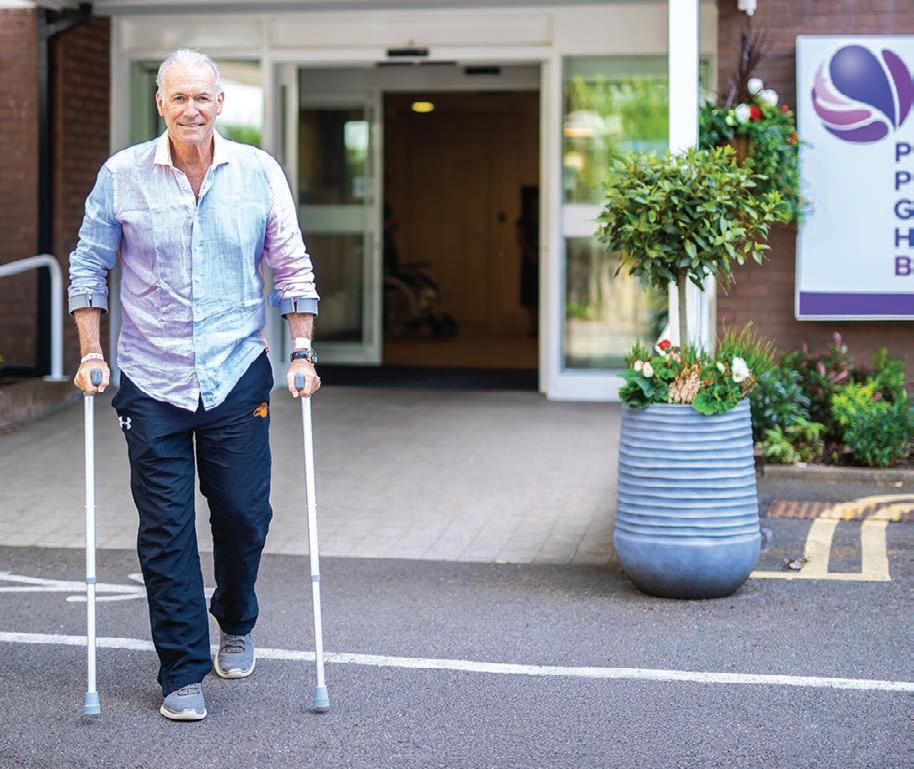
hospital and it’s a private hospital that treats NHS patients, they could get me in very quickly just with a referral from my GP.
“The NHS App is going to be developed further to make this easier, and you can speak to your GP about your choices. You can choose to be referred to a private hospital at the outset, or you can
Birmingham-based animation studio
Second Home Studios has delivered a charming and visually inventive stopframe commercial for the Irish government’s upcoming My Future Fund, a new national retirement savings scheme set to launch in 2026. Commissioned by Irish creative agency Creed, the 30-second spot uses hands-on animation to transform a complex financial message into a simple metaphor: a growing ice cream cone built by contributions from the employee, the employer, and finally the State, represented by a cherry on top.
Shot entirely at Second Home’s Birmingham facility, the production used:
• 3D-printed replacement models to build a biscuity-looking cone
• A specially developed, non-melting “ice cream” recipe, formulated to hold up under hot studio lights
• Stylised graphic flourishes including flags, sparkle effects and sliding doors
• Pixellated animation using real human hands to physically “contribute” to the fund.
Chris Randall, director and founder of Second Home Studios, said: “This was a joy to work on, not only because of the quirky visual challenge, but because the message really matters.”
My Future Fund is part of Ireland’s forthcoming automatic enrolment system.
switch hospitals like I did if you’re facing delays locally.
“It’s free for the patient and costs the NHS no more than if that same patient had their op at an NHS hospital.
“It makes complete sense to find a hospital that can do your operation sooner so you can get on the road to recovery sooner.”