













There are some great stories in this month’s magazine – not least our Big Interview catch-up with the team at Sherwood Observatory.
As you can imagine, everyone there was incredibly excited by the Artemis II mission to go around the Moon, and right now the observatory is hosting an exhibition of NASA memorabilia including a tile from the fateful Challenger Space Shuttle which blew up shortly after take-off in 1986.
The tragedy was a stark reminder of the dangers attached to space travel but also reminds us of the unwavering dedication of all those people who are committed to getting us into space, especially those putting their lives on the line in the name of progress.
On a slightly smaller scale than the Artemis luna mission or the Shuttle programme, we’ve a report on an experiment to test the effects of things such as zero gravity and solar radiation on the biology of a crew of tiny worms that have just been sent up to the International Space Station.
It is hoped the experiment – conducted by scientists including a team from Space Park Leicester – will provide data to help us deal with the pressures on the human body of travelling to the Moon, Mars and beyond in the decades to come.
The Focus pages also include a report of work going on in the region to try and make AI less reliant on energy-guzzling data centres, and the latest on the RollsRoyce plans to build the UK’s first Small Modular Reactors (SMRs) in Anglesey.
Inevitably we have several reports on AI – what we should be using it for, what we should be wary of and where it could be taking us. It's something we all need to be thinking about.
We also have pictures from the third of our 2026 regional award ceremonies, covering Derbyshire, which took at the Derby County ground, and – hot off the press – pictures from our 2026 Celebration of Culture and Communities, held at the Athena in Leicester.
And there’s plenty more besides. I hope you enjoy the read.
Tom Pegden, Editor, Business Network

Editor Tom Pegden
T: 07816 347 451
E: tom.pegden@emc-dnl.co.uk
Contributor Tim Smith
Chamber Membership
E: membership@emc-dnl.co.uk
Follow the Chamber
W: www.emc-dnl.co.uk
X: @EMChamberNews
Publishers Kemps Publishing Ltd
8, The Courtyard, 707 Warwick Road, Solihull, B91 3DA
T: 0121 765 4144
w: www.kempspublishing.co.uk
Managing Editor Laura Blake T: 0121 765 4144
E: laura.blake@kempspublishing.co.uk
Designer Lloyd Hollingworth
Advertising T: 0121 765 4144
E: jenni.everall@kempspublishing.co.uk
Printers Stephens & George Print Group W: www.stephensandgeorge.co.uk
Celebration of Culture and Communities
16 Paralegal joins board of Veda Women's Club
19 Business Network correspondent Lizzie Rix meets the team reaching for the stars at Sherwood Observatory
Studio investment boosts agency’s offering
26 Peak District SEO is optimising its location
NETWORKS 32 Helping young professionals take Next step
36 Gearing up for East Mids Tech Week
38 Education sector can take sustainability lead
40 How East Midlands Chamber helps business to go global
42 Market Place regeneration plans submitted
44 GROWING YOUR BUSINESS
Why small businesses are rethinking support ahead of 2026 employment law changes
46 Grow your business by designing with people, not for them 48 FOCUS
The latest digital and technology ideas and concepts shaping innovation in the region
Eventurous grows through bold decisions
56 How heritage and hospitality can herald economic growth DIGITAL &
58 Tech event is MEET and great!
Court verdict must make difference to social media safety
Haines Watts opens two new offices in region
Leicester City FC offers scholarships
67 PROPERTY
Promising start to 2026 for consultants
68MOTORING
Nick Jones puts the Porsche Taycan Cross Turismo through its paces
THE LAST WORD
70 Chamber president Dr Cham Kang on the importance of humans in a world of AI

Pictures by Pete Martin
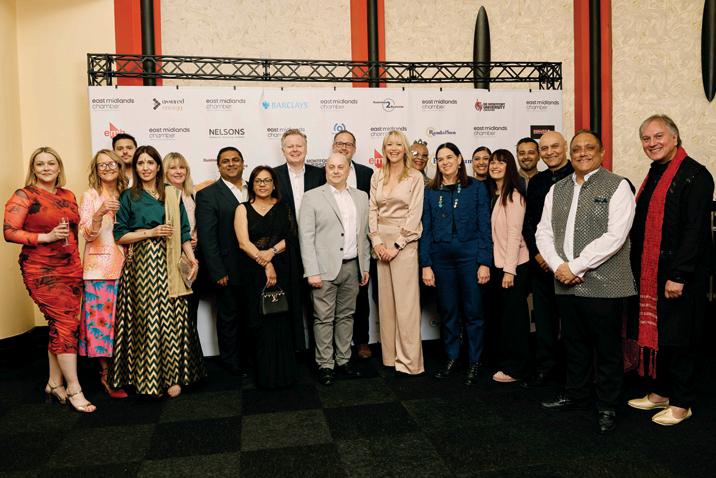
Live performances, music and international cuisine brought together representatives from hundreds of the region’s businesses and charities for the Chamber’s 2026 Celebration of Culture and Communities.
Now in its 6th year, the landmark event celebrates the people, businesses and charities that make up the East Midlands.
It was hosted by Leicester-based artist Carol Leeming MBE D Univ FRSA, who specialises in everything from literature to performing arts and digital media, and took place at the city’s Athena.
The night's acts included Xtreme Carnival Band; Singing for the Soul, which delivers inclusive
performance sessions for adults with learning disabilities; Moving Together – a not-for-profit community dance organisation that works across the East Midlands to make dance inclusive for people of all ages; singer Navin Kundra and DJ The Old Boy.
The night was made possible thanks to headline partners De Montfort University, emh Group, RandalSun Capital and Business2Business and associate partners Nelsons, PPL PRS, Assured Energy, Barclays, Sanjay Foods and event partner Sanjib 8.
East Midlands Chamber
President Dr Cham Kang said:
“Supporting and celebrating our communities and culture is critical.
“EDI is our region's superpower
and gives us a competitive advantage. The more we can do to nurture that, the better we can look forward to positive growth in the future.
“When people think about this region, they think about cultural diversity – we're known across the world for that.
“That makes the region stand out and allows us to do things that other regions can't because we approach challenges and problems in a different way. We have a different thought process, we bring inclusive thinking and we use hidden powers to give us a competitive advantage to go forward.”
RandalSun Capital founder and chairman Dr Nik Kotecha OBE DL


















‘The East Midlands is a beacon to the world when it comes to cultural diversity’



said: “One of our biggest strengths in the East Midlands is cultural diversity – it’s in the population we have and the businesses we have so I'm really proud of the Celebration of Culture and Communities. I was one of its first supporters when it started several years ago.”
Charley Gibbons, chief executive of housing group emh, said they were proud to support the event.
He said: “This is part of our wider commitment to promote diversity and inclusion, one of our core values at emh.


“The diversity of the East Midlands gives it a unique identity and a strong foundation, supporting the growth of the region.
“Our latest joint research with the Chamber – ‘Equality, Diversity and Inclusion in the East Midlands’ – demonstrates that this is something many businesses in the region value, and we’ve seen an increase in the number of organisations adopting EDI policies.
It also highlights potential barriers and provides an opportunity to explore how we can support each other and share good practice, to make even more of a difference.”
De Montfort University principal partnerships officer Sarah Thomson said: “The strength of our region lies in the breadth of perspectives and experiences within it.
“Bringing businesses and communities together in this way not only celebrates that diversity but helps turn it into real opportunity for the East Midlands."
Business2Business director Veejay Patel MBE said: “The East Midlands is a beacon to the world when it comes to cultural diversity. As we mark our 40-year anniversary, throughout which Business2Business has been centred on tackling social exclusion, being socially responsible and applying our expertise to overcoming barriers to employment, it is right to reflect on all that has been achieved so far in promoting inclusivity across the region.”











Derby businesses have pledged to support a YMCA Derbyshire initiative to change the lives of pre-school children in Derby’s most deprived areas.
The charity’s chief executive Gillian Sewell used the Dare to Dream slot at Marketing Derby’s annual business event this spring to launch the Tale of Two Cities Early Years initiative.
It aims to raise thousands of pounds for nine local community nurseries to help some of the city’s most vulnerable children.
Gillian said: “It’s shocking to think that, living alongside some of the best-paid workers in the country are hundreds of young children for whom these are most definitely the worst of times.
“We cannot afford to ignore this any longer. This isn’t about playing the blame game – we need to play the ‘taking action’ game.”
Dean Jackson MBE, founder and chief executive of Derby performance sportswear brand HUUB, said he was supporting the project because children deserved to “maximise every opportunity that life gives them”.
He said: “No matter how young they are, or where they are on their life journey, they just have to grasp those opportunities and be
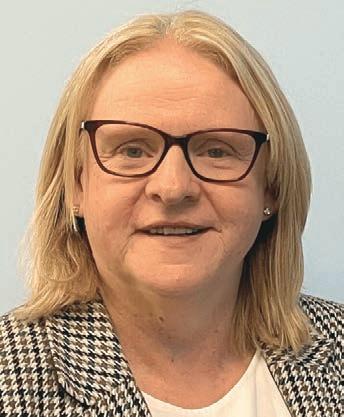
Gillian Sewell
‘This isn’t about playing the blame game – we need to play the “taking action” game’
supported every single step of the way.”
The Marketing-Derby backed campaign is calling on firms and residents to pledge to donate £4 a month to help make a difference to the city’s youngest and most inneed generation.
Figures suggest that despite Derby’s high income levels, 38% of children living in the city are classed as being in poverty – above
Derbyshire Addictions Advice Service (DAAS) has been awarded funding to become one of the UK’s government-backed veteran centres.
Its STAND TO Armed Forces Support project has been selected as one of 14 nationally to receive investment through VALOUR – a new programme designed to simplify how veterans and their families access essential services.
The funding forms part of more than £50m committed to strengthening local support across areas such as health, housing, employment, finance and wellbeing.
education, finance, health, housing and wellbeing. It also runs peer support groups designed to reduce isolation.
Derbyshire Addictions Advice Service chair John Ydlibi (pictured) said: “We are absolutely delighted that our Veteran Community HUB in Chesterfield has been selected in the first round of funding for the VALOUR programme supporting our veterans.

“It’s great to see increased support for UK veterans and a strengthened commitment to our veteran community.”

the national average. The effects are most acute in a child’s preschool years where nurseries do not get government support to provide free meals. Some have been forced to close their kitchens due to mounting costs, further compounding the problem.
Around 20 organisations across the city have already offered to contribute to raising £438,000 each year over the next three years
• Air Con Hire
• Arcsus IT Solutions
• Artisan Biscuits
• Aurora Wellbeing Services
• b:friend
• Backlit
• Bilborough College
• BrightSparks Arts
• Carelight Weartech
• Circle Insurance Services
• Collective Build
• Collective Security
• Connolly Land & Developments (North Midlands)
• DAAS
• Derby One
• Derbyshire Dales Council for Voluntary Service
• East Midlands Financial Wellbeing CIC
to fund hot meals, speech and language therapy, outdoor activities and equipment and storytelling programmes for all nine nurseries.
They include Derby County, Salloway Property Consultants, Derby City Council, the University of Derby and heating systems manufacturers Vaillant.
www.taleof2cities.co.uk
STAND TO Armed Forces
Support provides a central hub and county-wide outreach for Derbyshire veterans and their families, offering advice, guidance and referrals on issues such as
If you have served in the Armed Forces or know someone who may benefit from support, please contact the STAND TO Armed Forces Support team.
Visit: standto.co.uk
• Equate Digital
• Focus on young people in Bassetlaw
• Gifts for Geeks & Tabletop Tyrant
• Good not Lucky
• Haines Watts Leicester
• HQ Can
• Kala Arts CIC
• Kelme UK
• LB Communications
• Longwood Maven
• LPP Events
• Marinos Healthcare
• Matthews and Tannert
• MDIGITAL Consulting
• MDJ Manufacturing
• Nature Healing Ways
• Nespresso Professional
• Neurodiversity Support CIC
• NordMind AI
• Nottingham Samaritans
• Nuvo HR
• Open Homes Nottingham
• Prestige Pest Control
• Q Collection (UK)
• Swann Security Services
• Templewood Construction
• The Welcome Team
• UK Business College
• Unbreakable Self-Defence
• UOCEAN
L-R:

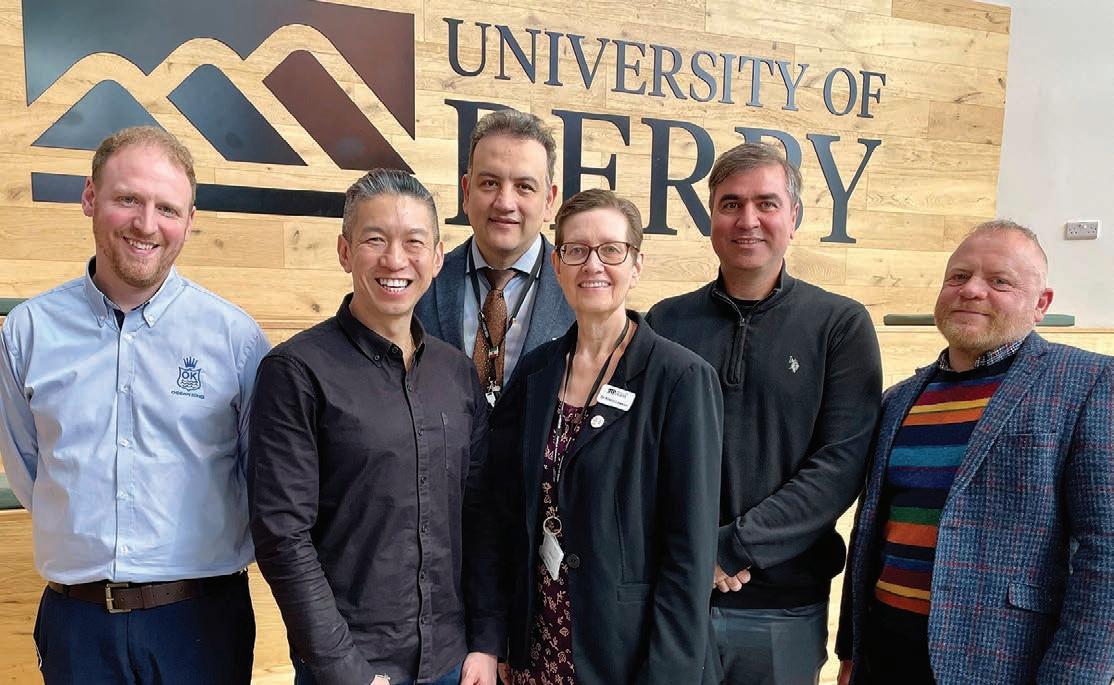
Aseafood business founded by a family that fled Vietnam on fishing boats and rebuilt their lives in the UK has secured major government-backed funding.
Ocean King managing director Steven Thai was 18 months old when his family escaped Vietnam in 1979, arriving in the UK as part of the ‘Vietnamese boat people’ resettlement programme.
The family set up the business in their garage two decades later and it has grown to become one of the UK’s leading Asian restaurant wholesalers with a £15m turnover and a nationwide customer base.
It has now secured a Knowledge Transfer Partnership (KTP) Award
‘We are always asking how we can improve for our customers, our team and the wider community’
with the University of Derby to future-proof its supply chain using digital technology and AI.
The £200,000, 24-month project will help boost its operational efficiency and supply chain resilience and enhance its environmental credentials.
Steven said: “Ocean King started nearly 30 years ago, and this project represents the next chapter in our journey.
“By combining our real-world supply chain experience with the university’s academic expertise and AI capability, we have a real opportunity to build a smarter, more resilient operation for the future.
“At Ocean King, we are always asking how we can improve for our customers, our team and the wider community. This partnership will help us strengthen our systems, develop our people and continue creating opportunities for growth.”
Supported by Innovate UK government funding, the initiative brings together Ocean King, the University of Derby, and a specialist graduate recruit to drive innovation and long-term growth.

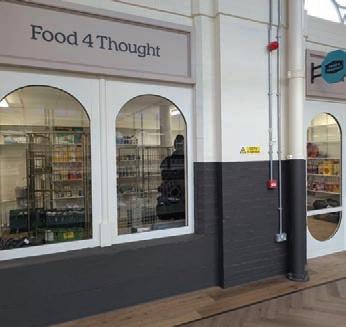
A Derby charity that helps fight food insecurity has opened a community shop in the new Market Hall (above), which includes a school uniform hub.
The Thoughtful Shop (below), run by Derby Food 4 Thought Alliance, supports people on a membership basis, with families getting virtual credit to spend instore – depending on their household size.
Charity chief executive Paul Brookhouse said: “It is a very exciting time for us as we have wanted to launch a community shop for ages.”

Loughborough engineering business BRUSH Group has acquired iDESo – parent company of industrial switchgear specialists Allenwest and Baldwin & Francis.
Management said the takeover significantly increased BRUSH’s switchgear product range and aftermarket service capacity, and would allow the group to develop a nationwide service platform for customers.
Allenwest, established in 1918 and based in Prestwick, Scotland, employs around 40 people and specialises in electrical control and hazardous area equipment.
Baldwin & Francis, which was founded in Sheffield in 1919, also employs around 40 people and has expertise in electrical equipment for tough environments – including
industrial, utilities, energy and rail.
Their field service engineering expertise includes maintenance, repair, overhaul and around-theclock technical support, which BRUSH will be able to use to support its customers in industries such as energy, water, technology, transport, manufacturing and commercial development.
BRUSH Group chief executive Nicolas Pitrat said: “It is apt that in a year when we are celebrating 150 years of innovation that we welcome these highly respected, pioneering brands to our group.
“Along with engineering expertise, these acquisitions bring complementary market positions and expand our portfolio into new areas, enabling us to build a more diversified and resilient organisation that is focused on exceeding customer expectations.”
Chatsworth Escapes is offering Chamber members 10% off midweek stays at its new hotel The Hide – after it was named The Times and The Sunday Times’ best value place to stay in the UK.
The 25 room hotel reopened in October, offering what management say is an “affordable and stylish” base for people who want to get close to nature and the great outdoors.
It is run by the team behind The Cavendish Hotel, in Baslow, and stands in moorland on the edge of Chatsworth Estate.
‘Our
aim has been to create a place that feels special and memorable’
The 2026 Times and Sunday Times guide described it as “a stylish but inexpensive base from which to explore the surrounding Peak District”, praising the Grill and Pizzeria restaurant and saying the level of service was “laid-back and unpretentious while still offering Chatsworth hospitality”.


Kilworth House Theatre has announced Cole Porter’s musical Anything Goes as its summer 2026 production.
The show will run against the backdrop of Kilworth House’s iconic open-air theatre, bringing the glitz and glamour of Broadway to south Leicestershire.
It is being directed and choreographed by Lee Proud with the same creative team that has produced 42nd Street, Singin’ in the Rain and Hairspray
Sales manager Sarah Johnson said: “We are absolutely delighted to be reopening our theatre for what promises to be another fantastic summer season.
“Anything Goes will bring high-energy choreography, unforgettable music and a truly outstanding cast to the stage.
“This will be followed by our ever-popular Live at Kilworth programme, featuring some of the UK’s finest tribute acts.
“Together, it all sets the stage for a vibrant summer filled with exceptional entertainment. We can’t wait to open the gates and welcome everyone back.”
Anything Goes runs from 23 June-2 August.

Richard Palmer, managing director of Chatsworth Escapes, said: “Winning best value hotel in the Sunday Times Best Places to Stay is a fantastic recognition for The Hide and the team behind it.
“From the beginning, our aim has been to create a place that feels special and memorable while offering genuine value for guests.
“This award reflects the passion of our staff and our belief that great hospitality doesn’t have to come with an extravagant price tag – it’s about warmth, character and delivering an experience people want to return to.”
To get 10% off midweek stays use promo code EMCC10 on the Chatsworth Escapes website.
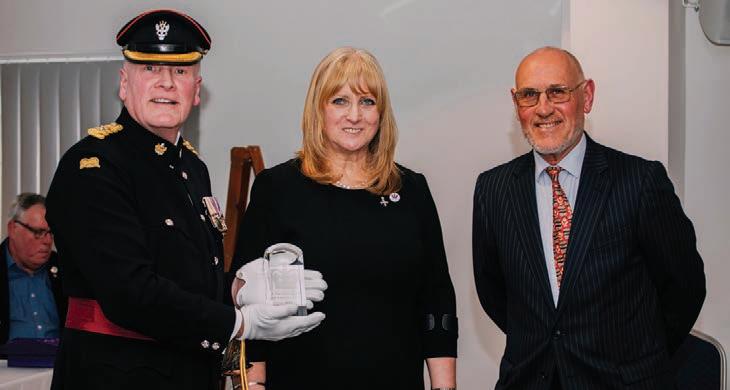
A Derbyshire charity which helps families facing short and uncertain futures to make lasting memories received the King’s Award for Voluntary Service at a special event attended by 90 guests.
Melbourne-based me&dee, set up by Maria Hanson MBE, was presented with the award by Mr David Coleman QPM DL and Lieutenant Colonel David Dawber TL DL on behalf of His Majesty the King.
The ceremony, at The Central Coop County Ground, in Derby, was attended by civic dignitaries, including Derby City Council leader Councillor Nadine Peatfield and MPs Baggy Shanker and Samantha Niblett, as well as Maria’s daughters, charity trustees, volunteers, fundraisers and families that have been supported.
It is the highest honour a voluntary group can receive in the UK, and is considered equivalent to an MBE. Last year, across Derbyshire,
only three organisations gained one.
Maria and the charity were nominated in recognition of outstanding voluntary community service over the last 20 years.
The 71-year-old said: “Years and years ago, Delia [Maria’s cousin] and I had a dream. She died before we could make it a reality and 20 years on, I carry her in my heart every day, hoping that she would be proud.
“I am so very happy that her son, Christopher and his wife, Alison, and my daughters, Xzena and Krystal, could share in this celebration.”
The charity helps families where a potentially life-limiting, and often rare illness is diagnosed, by providing everything from private group swimming sessions, unique tailor-made outings for families, support for siblings through craft sessions and a specialist bereavement support group.
www.meanddee.co.uk



Anew art gallery has opened in Ashbourne, with its inaugural exhibition, called Brushed Light: Atmospheric Watercolours, running until 27 May.
Hopton Hall Gallery was opened by Chris and Andi Harvey, who own and run the Hopton Hall Estate, to build something that connects centuries of craftsmanship with the artists shaping today's landscape –both in the gallery's vision and in the 18th century St John Street building where it is based.
Chris said: “We love how art is revitalising the Hopton Hall Estate.
“This July marks four years of our Month of Art, timed perfectly with the opening of our popular

‘A relaxed, welcoming spot to enjoy incredible local artists’
walled rose garden. It’s all about bringing the community together through creativity and heritage.
“Our gallery is a natural extension of that – a relaxed, welcoming spot to enjoy incredible local artists and experience a piece of history in a whole new way.”
Ruth Matthews, who has been instrumental in the development of Hopton Hall’s annual Month of Art, has been appointed gallery director. It is open for exhibitions from 10am-4pm Tuesday to
Saturday, and the inaugural show features artwork from local artists Roger Allen, Martin Sloman, Sue Quinby, Cheryl Wilbraham, Mark Langley, Sarah Sutton, Tim Rose, Carol Hill and Sarah EA Parkin.
Chris and Andi bought Grade II listed Hopton Hall as their family home in 2023 with two goals in mind – to restore the 16th century manor house and its grounds and to continue welcoming visitors to its cottages and events.
Over the years they have renovated more than 40 historic buildings and pubs, working with hospitality and retail tenants in Derbyshire, Nottinghamshire and Yorkshire.




Nick Gall (pictured) is managing director of NetMonkeys, which provides managed IT services from offices in Nottingham, Manchester and London.
Ispend an unhealthy amount of my week reading, listening and talking to people about AI. Podcasts on the commute, finance related pieces, founder conversations and client boardrooms.
Pull the string on the bag and a picture forms that I think every East Midlands business owner should see – the next 24 months will quite possibly reshape every SME in this region, whether we’re ready or not.
A headline that hits home for me: global AI infrastructure spend in 2026 is projected to hit $720 billion. That’s Meta, Microsoft, Amazon, Alphabet, Oracle and Google all betting their savings that they can be the winner.
The problem? Combined AI revenue across those players is less than a fifth of what they’re spending. A five-to-one spend-torevenue ratio.
This is a classic Schumpeterian boom-bust scenario, and would be bigger than the dot com bubble and the telecom crash combined.
90% of AI startups are expected to fail in 2026. 95% of enterprise AI pilots never make it to production. It feels as if a severe contraction is coming, probably within two years, and it will touch every sector.
So why am I still positive for our

‘The next 24 months will quite possibly reshape every SME in this region’
region? Because the builders of the railways went bust, but the railways themselves transformed Britain. The infrastructure survives the investors.
When coal got cheaper in the 19th century, we didn’t use less of it, we used vastly more, because suddenly everything could run on it. The same thing is happening with code and content right now.
Spotify say their team hasn’t written a line of human code since December last year. But here’s the twist. Programmer demand is up globally. Why? Because every company is now open to what software can do for them.
Lawyers are building tools. Marketers are shipping apps and we’re building amazing levels of automation for businesses which are seeing fantastic levels of return.
For an East Midlands manufacturer, retailer or services firm, this is the biggest levelling of the playing field we’ve seen in a generation. Capabilities that used to belong to enterprises with million-pound IT budgets are now available to start-ups.
The flip side is that the job

market is changing fast. Anthropic (the people behind Claude) has data that shows entry-level roles are already down 13% year-on-year. Honestly, a lot of our clients question entry-level hires against one question ‘could an AI agent do this?’ A lot of the time, the answer is uncomfortable.
In data driven roles, where one analyst used to need a supporting team, we’re now seeing analysts running three or four AI agents and doing the work of entire teams.
But this isn’t just doom. It’s a signal about where those progressive SMEs should look to budget in 2026.
From everything I’m seeing and from my own experience running teams, three groups of people will thrive in this new world.
First, deep domain experts. Our FD knows things about our business and our sector that no AI can replicate, the context, the relationships, the judgement calls. That’s irreplaceable.
Second, AI-proficient workers who can design and manage agentic workflows. These are the people who look at a process and ask “how do we turn this into an agent?”. They’re your multiplier hires.
Third, high-trust human roles. When I had root canal recently, I still very much appreciated the human explaining it to me almost as much as the experienced dentist doing the procedure. When a client of mine has a sensitive problem, they want to pick up the phone to a person.
SMEs should do three practical things this quarter, and none of them require a £200,000 AI budget.
One, audit every repetitive task in your business. If a junior could learn it in two weeks, an AI agent can do it today. I’m not saying replace people. I’m saying free them up for work that actually matters. Adopt a human-first approach alongside your innovation initiatives.
Two, get your team AI-literate. Not the senior team – everyone.
The receptionist, the finance team, engineers... The companies winning this decade aren’t the ones with the fanciest AI; they’re the ones where the accounts user knows how to prompt an AI model to shave two hours off month-end.
Three, focus on relationships. As costs fall and automation spreads, the human element becomes more valuable, not less.
We’re hosting the AI Tech event on 15 June at the Vaillant Live arena in Derby, as part of the East Midlands Tech Week Festival. Why not come and debate this with us there.


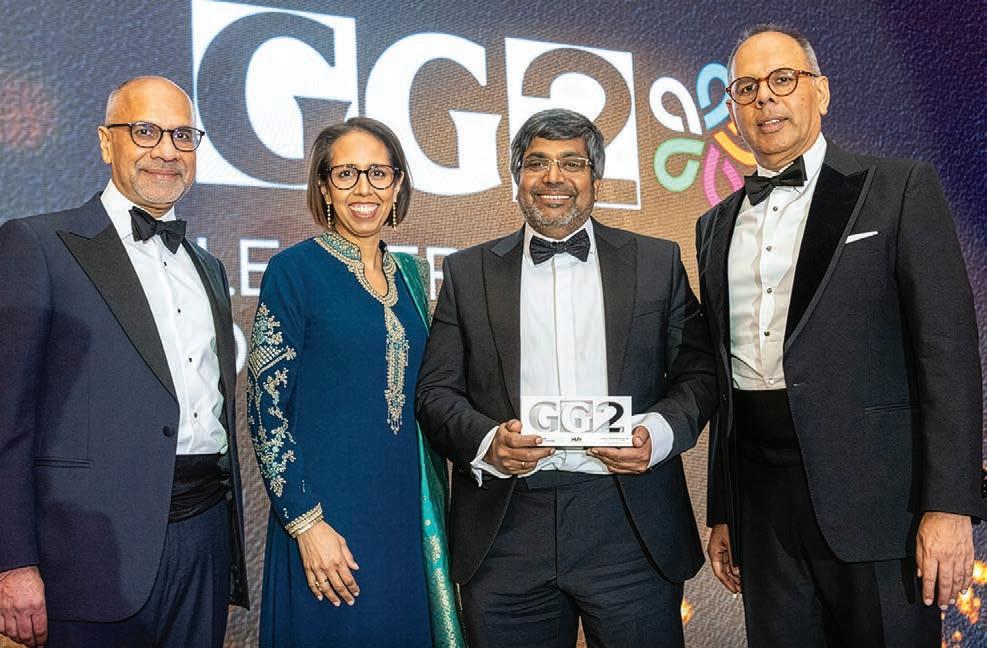
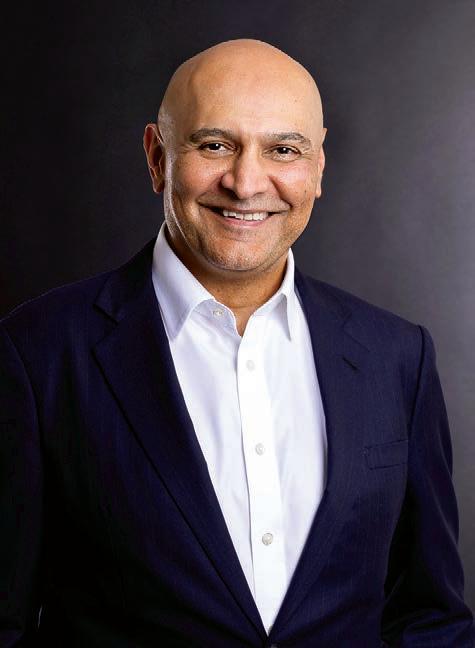


Some of the region’s leading business people, academics and health experts were honoured at the recent GG2 Leadership and Diversity Awards, which were hosted by publishing house the Asian Media Group. The annual awards, launched in 1999, celebrate excellence in inclusion, diversity and leadership, honouring sectors such as medicine, law, technology and community service. There were three East Midlands recipients this year:
• Entrepreneur and philanthropist Dr Nik Kotecha OBE DL, who was named social entrepreneur of the year
• Dr Kamlesh Khunti, professor of primary care diabetes and vascular medicine at the University of Leicester, who won the outstanding achievement in medicine award
• University of Leicester president and vice-chancellor Professor Sir Nishan Canagarajah, who was named GG2 Man of the Year.
Dr Kotecha said: “It was an unexpected honour to be recognised in this way – and I was proud to accept the award of social entrepreneur of the year on behalf of my board of trustees for our family foundation, the Randal Foundation.
“Last year we focused on expanding our support to continue driving policy change, recognising the importance of influencing systemic change alongside direct service delivery.
“We are now engaged with more than half a dozen national partners involved in shaping national policy across a range of key themes.
“These partnerships enable us to drive forward evidence-based research, shape policy, and enable
wider public discussion on key social issues. It’s been eye-opening to work with organisations such as The Centre for Policy Research on Men and Boys to advance research and guide interventions to improve mental health and wellbeing for men and boys.
‘Projects like
“This vital work aims to ensure root causes are addressed and crucial support can be carefully timed and structured.
“Working once more with the talented teams at De Montfort University, we’re collaborating to boost employability and rehabilitation for women with criminal justice experience. Our foundation has also furthered its
commitment to invest in delivering our charitable goals through evermore entrepreneurial organisations.”
Dr Khunti was recognised for his contribution to improving health outcomes in communities across the UK and abroad.
He is regarded as one of the country’s foremost experts in diabetes and cardiovascular disease, and his work has been instrumental in shaping national policy, advancing clinical practice and reducing health inequalities.
Sir Nishan Canagarajah was recognised for his commitment to advancing inclusion and diversity in higher education.
As the first minority ethnic vicechancellor at the University of Leicester, he has given voice to those who are often overlooked and under-represented, taking action to overcome barriers and create opportunities for others.
A Leicester design agency has struck a deal to work for Network Rail.
Creative Triangle has signed up to the rail infrastructure giant’s Creative Services Framework, which will see it deliver design, production and other services to support communications across the UK network.
It puts the business among a select group of agencies chosen to support Network Rail in its work managing and maintaining Britain’s railway transport network.
Creative Triangle has built a reputation for delivering communications for public-sector and infrastructure-focused organisations over the years, including Heathrow and Manchester Airports Group.
Agency director Joanne McBean said: “Supporting communications across the UK rail network is an exciting opportunity, and we look forward to collaborating on meaningful, high-quality projects.”
The business specialises in accessible design and communications across print, digital and animation.




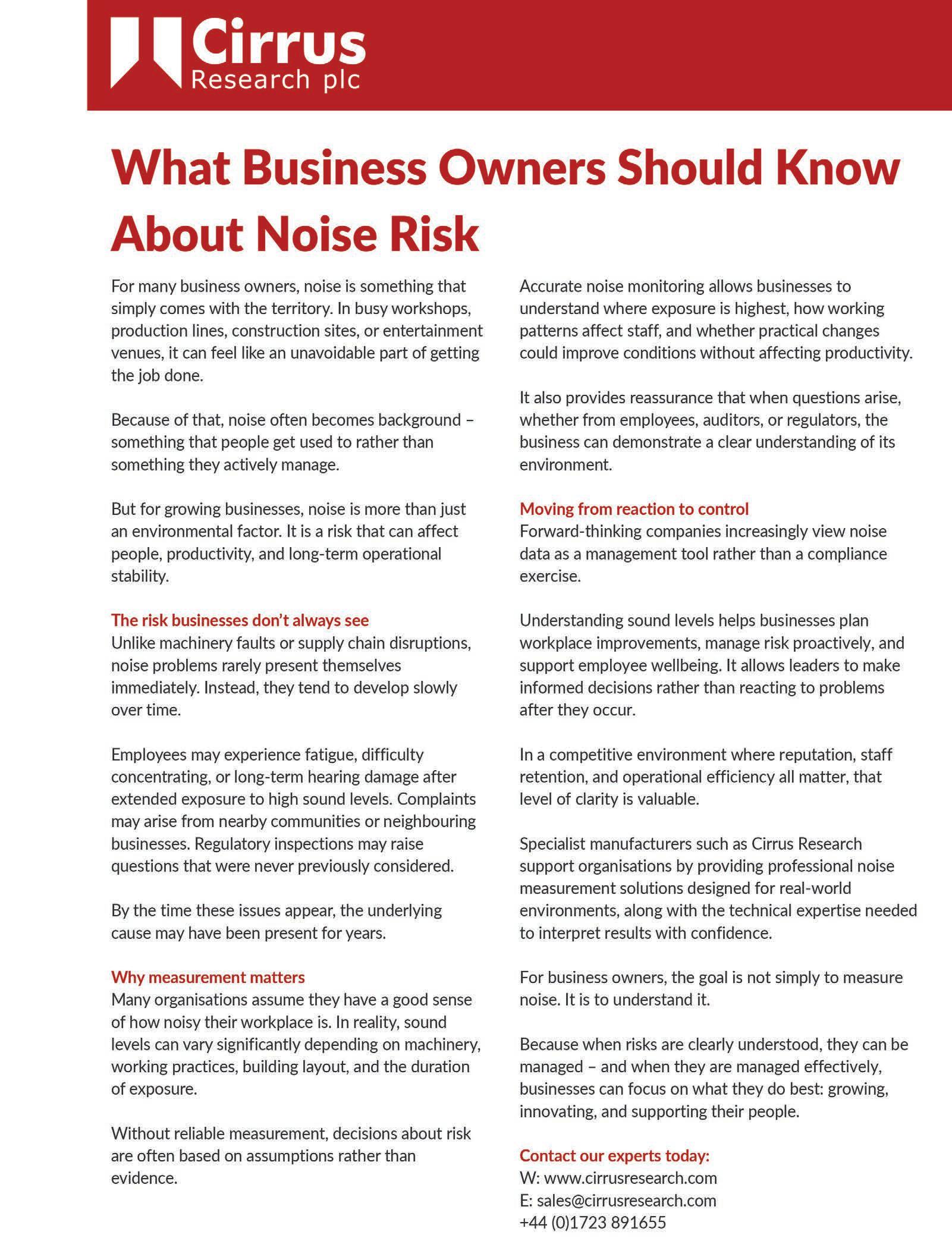

Elkington
SSAS, tax consultancy, legal and actuarial service provider WBR Group has promoted Ian Elkington to chief financial officer (CFO), and appointed him to the board following two years as finance director.
Ian is responsible for financial strategy, planning, operations and financing across the group and will play a key role in supporting its long-term growth strategy at board level.
Rocky Leanders, who has served as CFO for the past three years, has assumed a new role as chief banking officer, where he will continue to focus on banking relationships and helping WBR’s pension scheme clients.
Ian began his career in audit at PwC, where he qualified as a chartered accountant, and is a fellow of the ICAEW.
He has held senior finance roles across medium and large corporate organisations, including Thomas Cook, Dunelm and MyHomeMove, and spent seven years at Leicester financial services firm Mattioli Woods during its time as a plc.
Alongside his role at WBR, he is a governor and finance committee chair at Rothley Church of England Primary School.
Ian enjoys spending time with his family, including his two young daughters, and in what spare time he gets he enjoys long walks, loud music and following Leicester City.

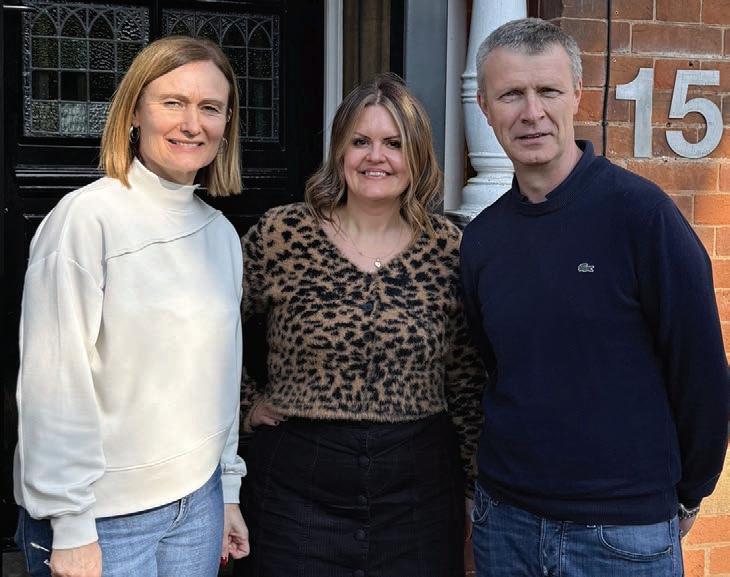
BLucy Payne has been appointed as a nonexecutive director of VEDA Women’s Club. This appointment marks Lucy’s commitment to supporting initiatives that create meaningful impact across the local community.
VEDA Women’s Club, based in Leicester, is dedicated to empowering women through connection, collaboration and personal development, built on the core values of integrity, sisterhood, resilience and empowerment.
It provides a supportive environment where women from all walks of life can come together to grow both personally and professionally.
Lucy said: “I am incredibly proud to be joining the board of VEDA Women’s Club.
“The work they are doing to support, uplift and connect women across our community is genuinely inspiring.
“For me, this is about contributing to something bigger than myself, helping to create opportunities, build confidence and support women to step into their full potential.”

Engineering consultancy Rodgers Leask has bolstered its presence in Nottingham, following significant team growth, an office expansion and its appointment to several local projects.
The Nottingham office, which was set up in 2021, has been expanded to accommodate the growing team including David Spurrell, who has joined as an associate.
David, who has more than 30 years of experience in structural engineering, said: “With the variety of projects the business is working on, I have no doubt I’ll get to tackle new challenges and offer my experience on projects that will shape Nottinghamshire’s built environment.”
Aaron Hand joined the transport planning team at the end of 2025, while principal structural engineer Majid Ahmed also recently joined the Nottingham team, moving across from the Derby office.
The Nottingham team has been instrumental in several recent key projects including the multi-million-pound Automated Distribution and Manufacturing Centre (ADMC) in Sutton-in-Ashfield.
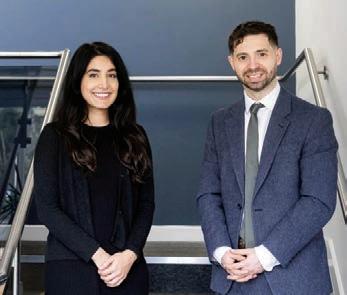
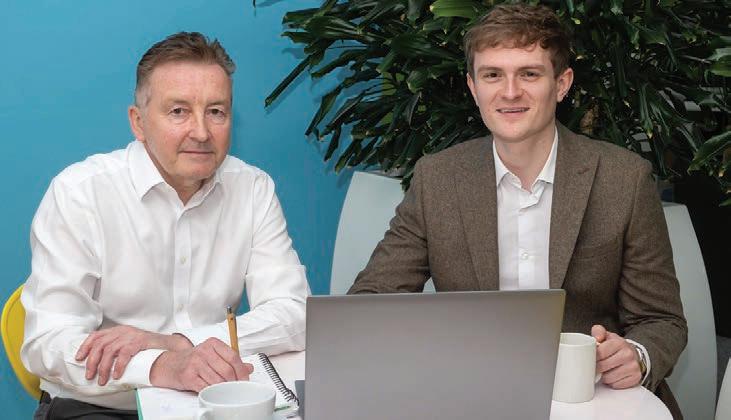
Zara Abbas and Paul Davis of BHW BHW SOLICITORS ADD DISPUTE EXPERT
Litigation solicitor Zara Abbas has joined the dispute resolution team at BHW Solicitors in Leicester.
Her recruitment follows growth in demand for its commercial litigation services, and in particular contentious probate expertise.
Zara, who holds a first class law degree from Nottingham Trent University joins the team as an associate solicitor, having previously worked as an associate at a multi-service firm.
She advises a range of clients on complex and often sensitive disputes involving wills, estates, inheritance claims, trusts, land and property, alongside working on wider commercial disagreements.
Zara said: “I’m excited to have joined BHW Solicitors at a time when the contentious probate market continues to evolve.”
Housing association emh has appointed Danielle Oum as its chair, following the planned departure of her predecessor Professor David Russell.
Danielle has extensive experience in the housing and care fields, in roles including chair of the NHS Birmingham, Black Country and Solihull Integrated Care Board (ICB) cluster, and chair of the NHS Coventry and Warwickshire ICB. She also holds board member positions at Fusion21 and Waythrough.
Danielle began her career in publishing and went on to work in skills and employment roles at the Department for Work and Pensions, the Learning and Skills Council and training company TCV.
She said: “I am delighted to take on the role of chair of emh at a time of significant demand for housing across the East Midlands, a region of stark socio-economic disparities.
“I look forward to working with emh to maximise its resident-centred, values-driven approach, providing good quality, well maintained homes across a range of tenures as well as much needed care and support services.”
emh has more than 21,000 homes across the East Midlands and aims to deliver around 500 new homes a year. Danielle is currently the chair of Tuntum Housing Association and will stand down from that role in September.

Eden Public Relations, which marks its 25th anniversary this year, has promoted Polly Donaldson (pictured) to junior account manager.
The PR and marketing agency has been growing its media relations services alongside its established digital and social marketing offering.
Polly has been with the business for almost four years, achieving three promotions. In her new role, she will support client accounts and manage junior team members.
She said: “This is an exciting next step in my career as I look to take more responsibility and help the junior team as we continue to go from strength to strength.”
The business is based in Nottingham’s historic Lace Market.
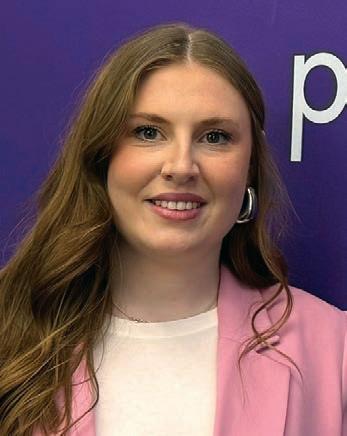

Marsh
The Royal Town Planning Institute (RTPI) has appointed Marrons’ principal planner Sarah Marsh as chair of its East Midlands Young Planners Committee – a regional network that brings together early-career professionals to build connections, share knowledge, and strengthen the future of the planning profession.
Based in the consultancy’s Nottingham office, Sarah will lead the committee in delivering a programme of events and initiatives designed to connect planners in the early stages of their careers, encouraging collaboration, professional development, and knowledge-sharing across the industry.
Sarah said: “I wanted to join the Young Planners Committee because it plays an important role in creating a welcoming space for those starting out in the profession to meet others in a similar position and build connections across the industry.
“Early-career networks are valuable not only for introducing the concept of professional networking, but also for creating opportunities for training and knowledge-sharing that help people grow and develop within the profession.”
Mark Jones, who has 40 years of experience in the social housing sector, has been appointed as chairman of Rykneld Homes.
He joins at a busy time for Rykneld with a new five-year contract with North East Derbyshire District Council, and a range of new partnerships agreed as well as ambitious plans to deliver more new homes and retrofit programmes.
Mark is also an executive director at Acis Group, a charity which provides housing, education and skills across Lincolnshire, Yorkshire and the Humber, North Derbyshire and Nottinghamshire.
He said: “Rykneld Homes does more than just provide decent homes, it provides places where people want to live, building communities and encouraging pride in place.”
Rykneld Homes



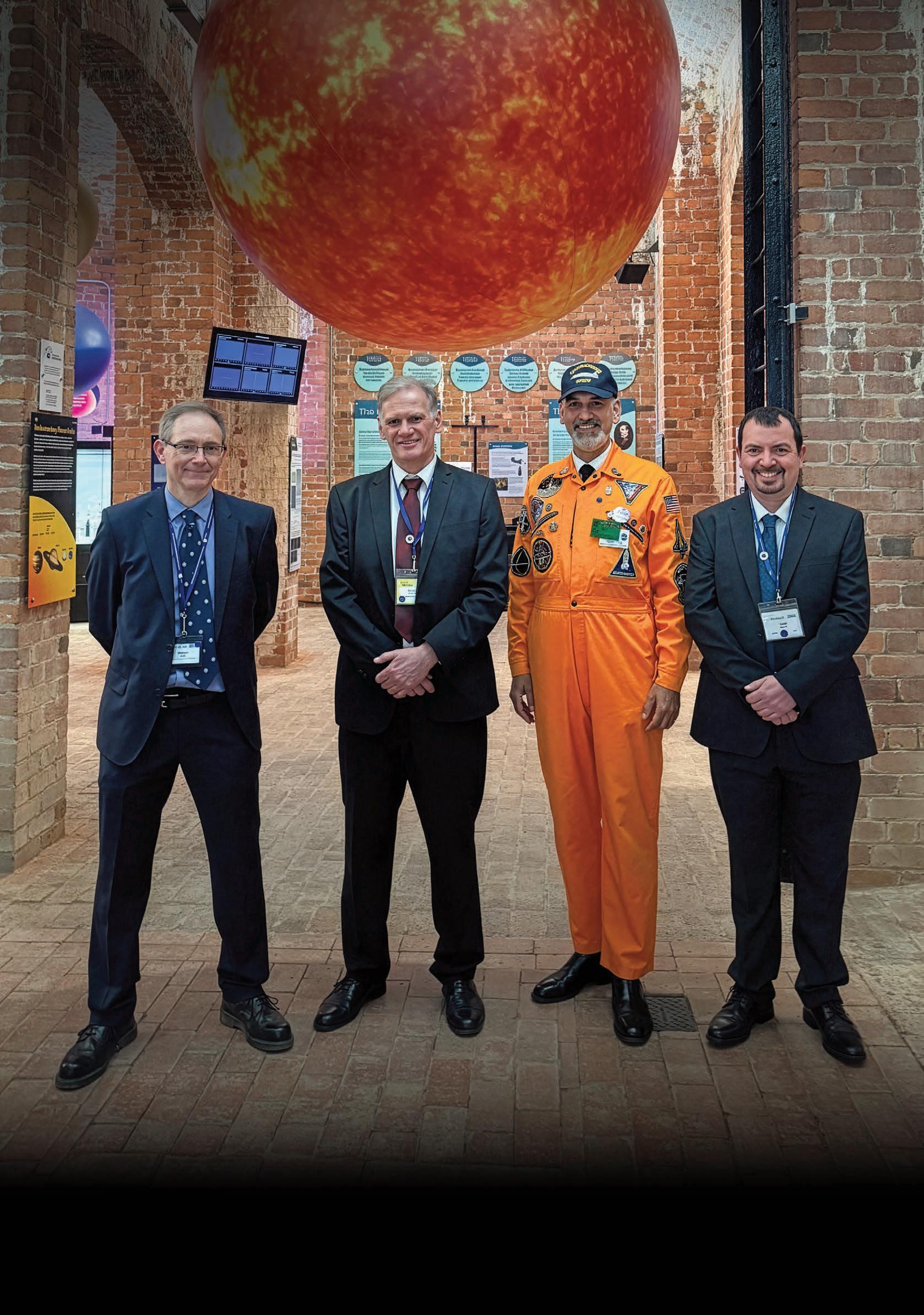
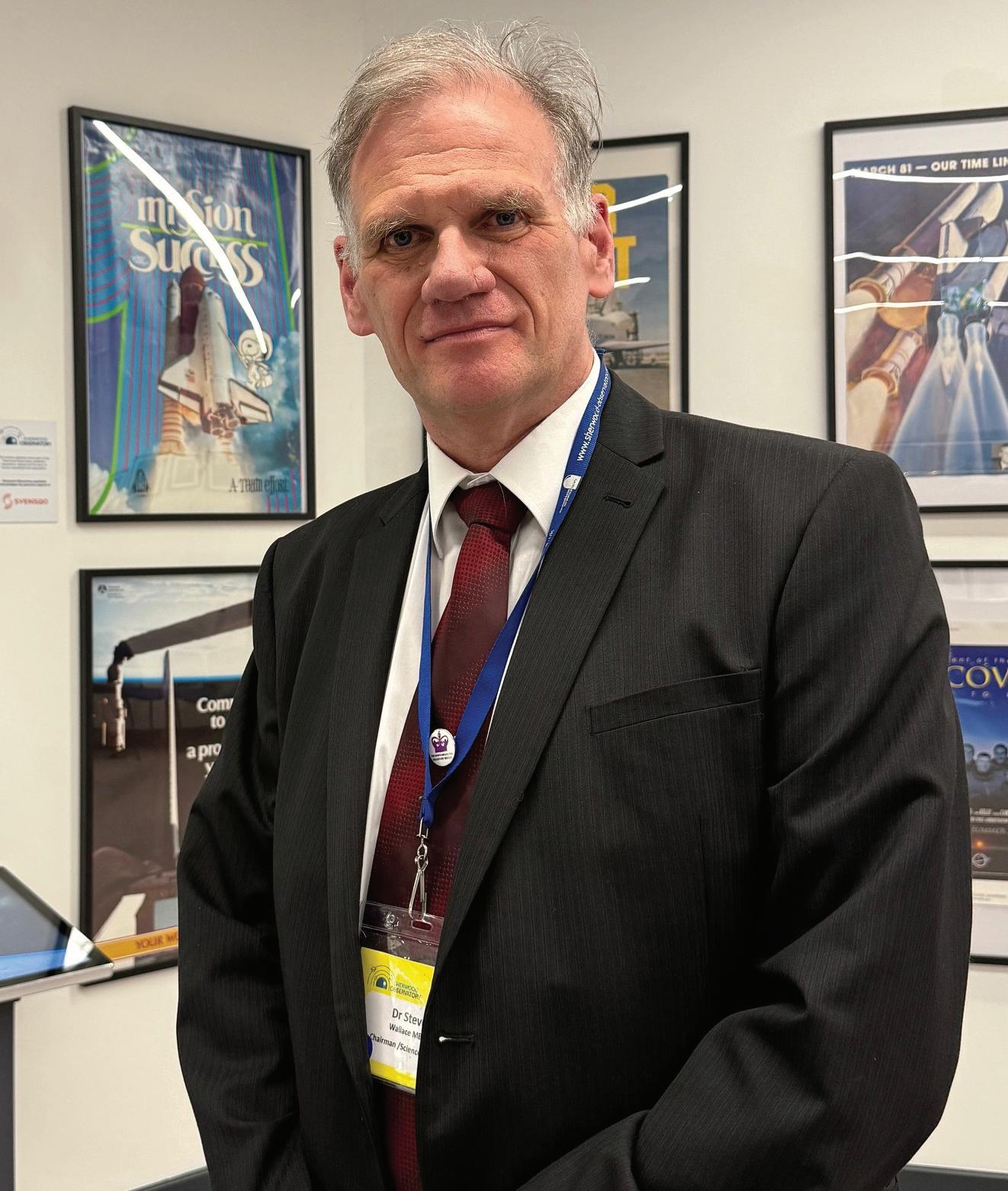
Business Network correspondent Lizzie Rix was granted access to the launch of the new Sherwood Observatory exhibition Space for Nature & The Shuttle Collection. She said it wasn’t just the content that stood out – including objects that have travelled into space and original NASA workforce posters – but the people behind it.

MEETING THE PEOPLE BEHIND THE REGION’S TOP BUSINESSES


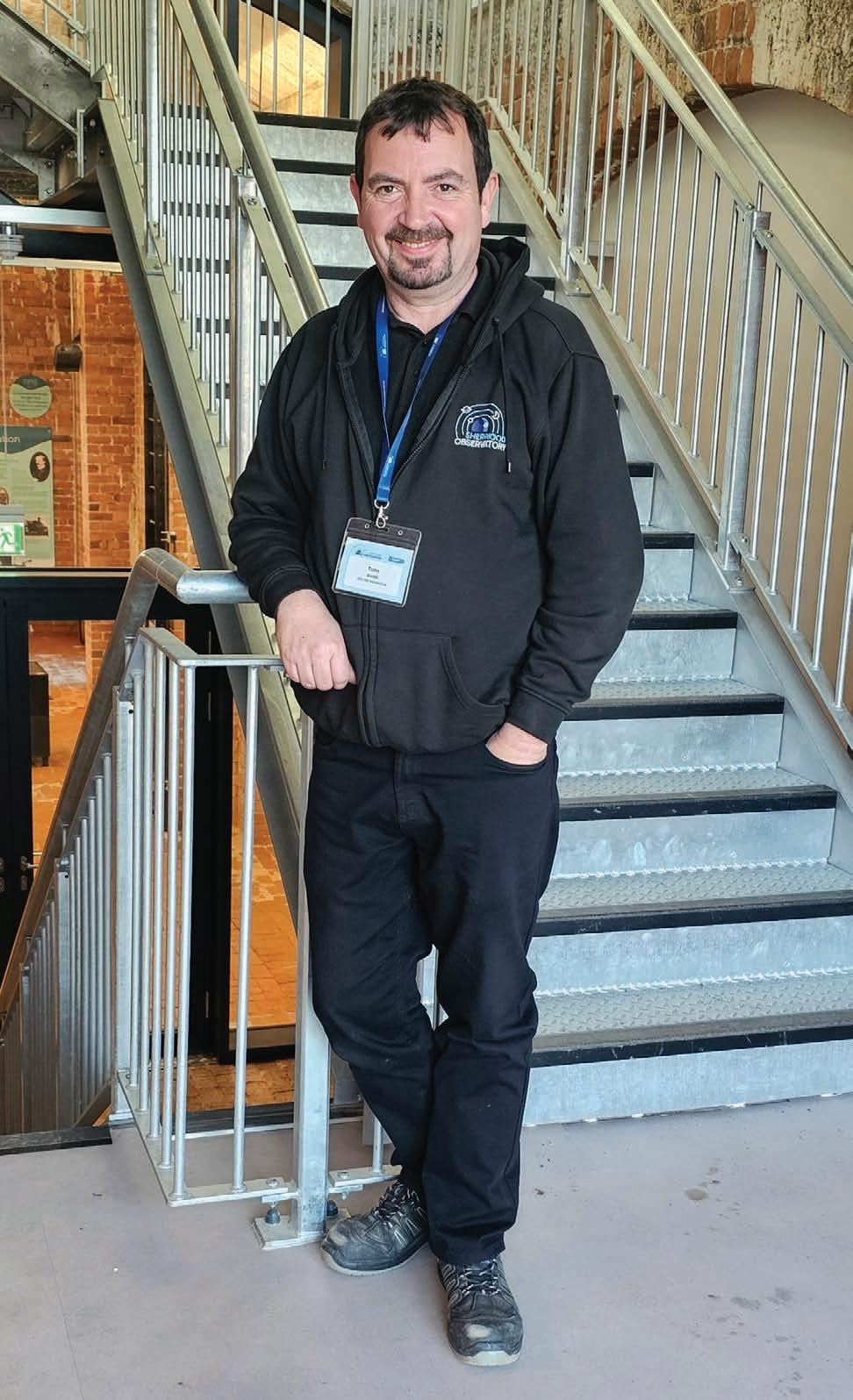
Texhibition Space for Nature & The Shuttle Collection has been put together by centre manager Tony Booth and exhibition project lead Julian Best, with help from Dr Steve Wallace MBE, the chair of Mansfield and Sutton Astronomical Society and the planetarium’s science officer.
history and future of space flight, key moments in British history and rocketry and even how satellites are being used to track endangered species down on the ground. A key feature is a detailed look at the Space Shuttle programme, showcasing remarkable artefacts such as used thermal protection tiles from the orbiters Challenger and Atlantis, alongside hand-crafted models, vintage


the
which
acquired over several decades with the support of NASA. All in all, the Sutton-in-Ashfield observatory boasts a unique blend of expertise, passion and community spirit.
Continued on page 20...

The leadership, volunteers and creative contributors have built something very special for people of all ages in the East Midlands.
The Mansfield and Sutton Astronomical Society (the volunteer group behind the observatory) hopes to inspire the local population and young people in particular to take an interest in space technology.
They want to encourage more young people into careers in STEAM (Science, Technology, Engineering, Arts and Mathematics), which they say will offer financial stability to young people when they move into work and contribute to the area's future economic prosperity.
From the beginning, the group, which shares a deep-rooted passion for astronomy, wanted to inspire. The foundations for the original observatory, which houses a large Newtonian telescope, were laid down in 1975. The building took over a decade to build, done by members in their spare time, and was opened in 1986.
In 2010 the team built a Radio Astronomy Centre, a specialised facility to detect the radio waves emitted by celestial objects such as stars, galaxies and black holes, which was relocated to its own building in 2019.
The centre is now the UK’s meteor beacon, sending out signals across the UK and Europe to track meteors while also researching solar flares and weather patterns.
As demand to visit outgrew the capacity of the original observatory, the group set about fundraising and securing grants and donations which eventually totalled £6.8m.
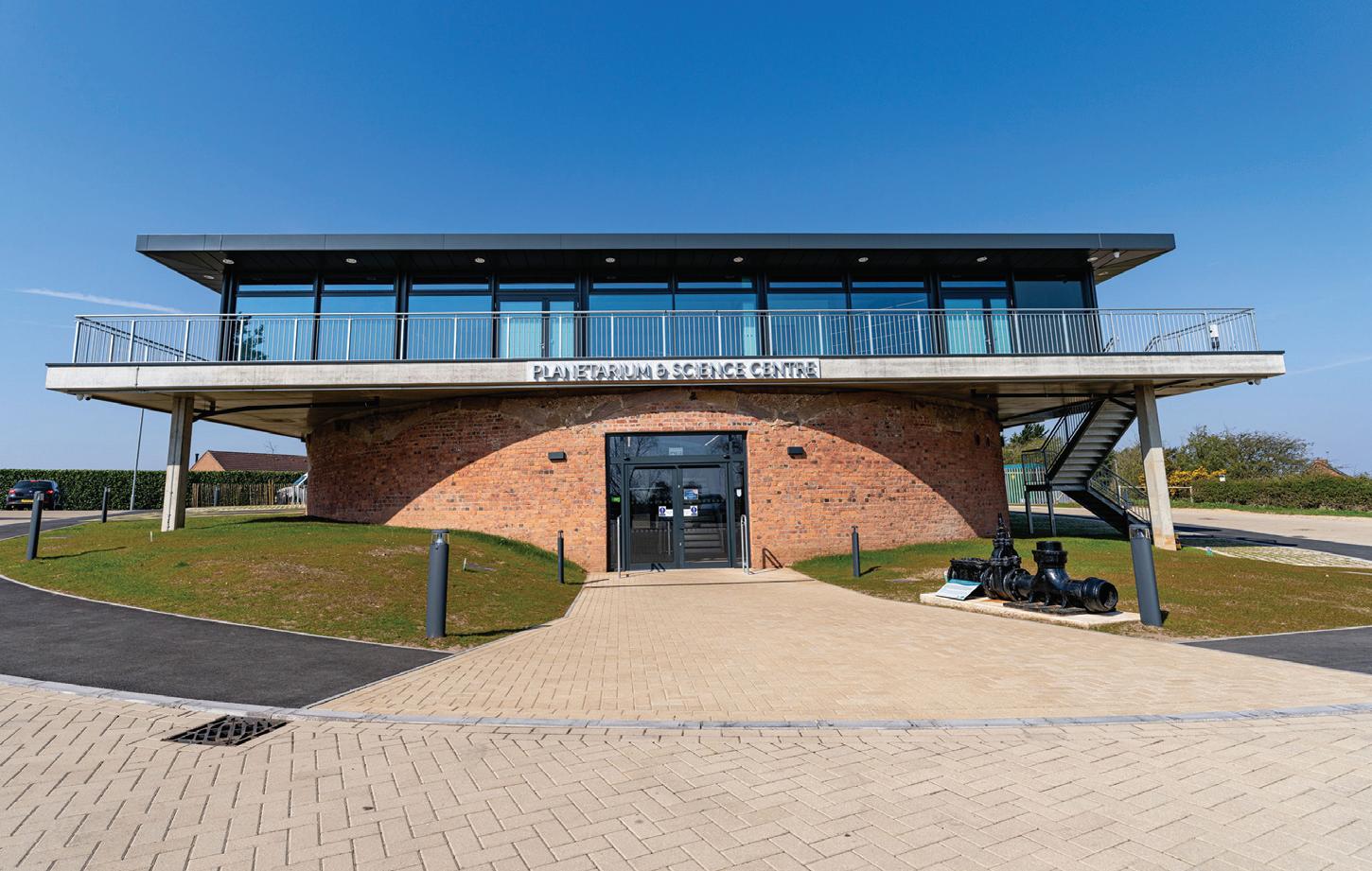
That allowed the observatory team to embark on its most ambitious project yet – converting a nearby disused Victorian reservoir building into its new base. Construction started in August 2023 and over a period of 15 months the derelict Victorian shell was transformed.
Officially opened in January 2025, the old Victorian reservoir is now at the heart of the site, which includes a 59-seater planetarium offering immersive 360 degree shows on some of astrology’s most fascinating subjects – from the possibility of alien life to the quest for worlds outside the solar system.
There is also an exhibition space – home to the Space for Nature & The Shuttle Collection –as well as conference rooms and a spacious cafe all designed to be accessible.
Sherwood Observatory was awarded a silver in the accessible and inclusive tourism category at the Visit Nottinghamshire Tourism Awards 2026. Last November the volunteers at the observatory were awarded The King’s Award for Voluntary Service – the highest award a local voluntary group can receive in the UK.

Lizzie Rix spoke to key figures involved in the new exhibition, and asked about the success of the project 18 months in, as well as the shared mission of bringing STEAM to the East Midlands.
Tony was a volunteer at the observatory before becoming the full-time centre manager last year.
Can you tell us more about the process of renovating the reservoir?
So, this is going back to Spring 2022. Mansfield and Sutton Astronomical Society bought the reservoir about 10 years ago, through individual donations.
The reservoir itself was decommissioned in 1974 so the only entry was from a big pump house on top of the structure. Volunteers had to abseil down originally!
One of the first comments was that it would be a great space to put an inflatable planetarium (with model planets hanging from the ceiling), which we eventually did.
It was disused for a long time, mainly for storage, but the group always had renovations in mind. While we were raising the funds, to save money we prepared the space ourselves.
There’s a core team of about 8-10 volunteers who spent the spring of 2022 shovelling all of the muck and trying to clean things as best we could. We actually went to the top and tore down the pump house by hand and sold the bricks to raise funds too.
It was a lot of hard work but it was worth it as we were originally quoted £40,000.
Did you secure the whole £6.8m needed through donations?



No, we also received grants and funding from schemes such as the Towns Fund as well. We also got a Levelling Up grant, one of the 110 projects chosen.


We put in a very strong bid because of our links to STEM, schools and education. We showed how we were already doing a lot but had very limited existing facilities in the old observatory. Our new bid was all about showing what we could do in a new facility. There were also donations from foundations as well as private donations from members.
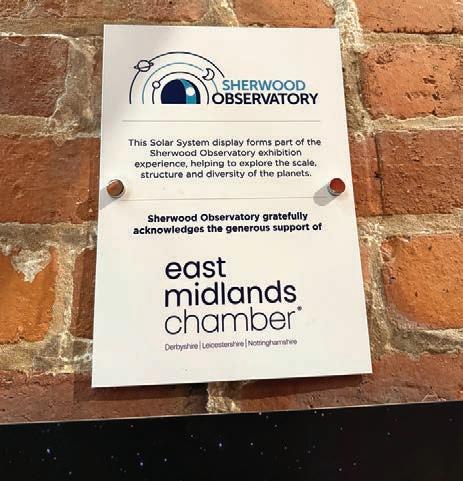
East Midlands Chamber has been really helpful all the way through. We’ve had grants from the Chamber before, lots of business advice and a really kind donation for the exhibition as well. They have been absolutely fantastic.
18 months in, how successful has the renovation been?
The renovation has been great for the centre. When we opened, our forecast was 20,000 visitors in a year. We actually had over 36,000 visitors in that first year which absolutely blew our minds.
The Mansfield and Sutton Astronomical Society was awarded The King’s Award for Voluntary Service for 2025. How important was that to the volunteers?
It’s a fantastic accolade for a fantastic team of volunteers. We’ve got around 90 active members, who in the first year of opening have collectively worked about 6,000 hours.
That is either in the cafe, while a few are now trained planetarium presenters or running the school visits. We also have another team that does group visits of all ages – which can be Cubs, Brownies or visits from the U3A (University of the Third Age).
They put an awful lot of work in and without them we wouldn’t be able to function. It’s so well deserved and I am very proud of them.
We also have adult learners from the local Academy Transformation Trust Further Education (ATTFE) College that work in the cafe. They come in and can gain some work experience and skills dealing with the public. It really benefits them and gives back to the community. Together I think they’ve clocked up about 2,000 hours as well.
The principal Liz Barret OBE DL has been on the planetarium project board since we started bidding for funding, and has been amazingly supportive.
‘We are looking into further exhibitions and are hoping to have a display of satellite material going into the next year’
Talk us through the plans for the old observatory?
We’ve got big plans for the old observatory coming up, and are hoping to completely rebuild it. We are planning to keep the telescope as it is but rip out the old lecture theatre and kitchen to have both completely redone. We are also planning on putting an accessible telescope as well on the ground floor. We could potentially completely rebuild, but at the minute we are undecided. Hopefully, the work will start at the end of the year.
What can we look forward to at the observatory this summer?

We had plans to update the exhibition area so that returning visitors could see something fresh.
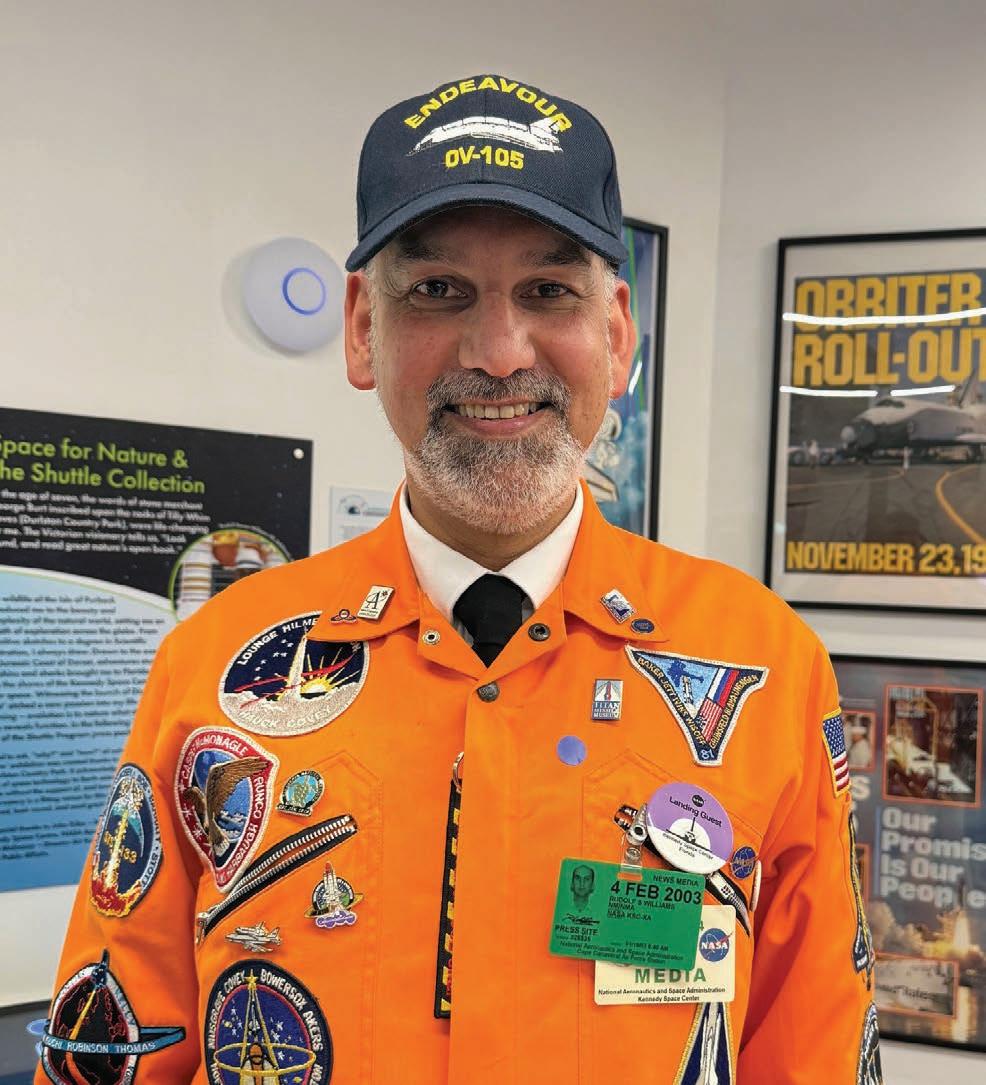
Late last summer, when Rolf got in touch with us with an offer of loaning his Space Shuttle memorabilia we grabbed it with both hands. There are extremely special objects in the exhibition, which you won’t see anywhere else in the UK.
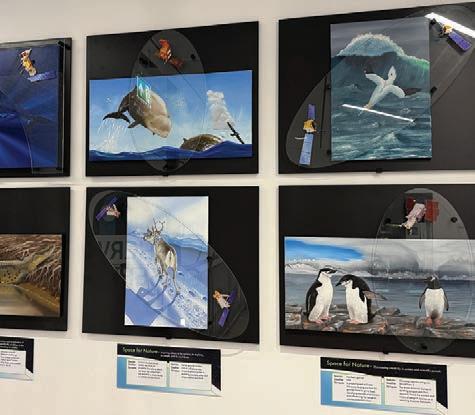
The collection also includes the space for nature exhibition, which are all paintings he's done himself of endangered species and how they can be tracked with satellites.
This fell within our STEAM remit so we were really excited by it. It’s taken a lot of planning
and back and forth, but we’ve finally got the exhibition open.
What updates have you made throughout the whole facility?
The recent addition of an inflatable planetarium in our downstairs exhibition has really added to the space. We now have interactive screens which track the moon race missions, such as Mercury, Gemini and Apollo and are also beginning a live telescope build.
It’s important to keep improving the facility to keep people coming back. We’ve already had some really good comments from people that are either here for the first time or coming back.
In the school holidays shows can get booked up very quickly. We do have two new shows to be released, one of which is a musical featuring Queen. Another show will feature the compositions of local pianist Chris Miggells, who last year had three sell-out concerts at the planetarium.
He’s also due to appear on the Channel 4 show The Pianist later this year. The observatory show will be all his own compositions, done in collaboration with Matt, our planetarium presenter, who has written a piece to go alongside the music. This should be running throughout May.
We are looking into further exhibitions and are hoping to have a display of satellite material going into the next year. But as the objects in our exhibition now are very, very rare we want to keep them on display, while changing a few items such as the posters from NASA’s Assembly Building.
ROLF WILLIAMS
EXHIBITION DONATOR AND ARTIST
Can you tell us more about the pieces which make up the exhibition?
I’ve assembled a collection over 30 years with the support of NASA and the Cape Canaveral Air Force Station and the personnel and people that work there.
Here at the observatory, they’ve worked very hard over the last few months to curate what was a lot of objects, pictures, images and flown space shuttle hardware into this wonderful display.
How did it come to be at the observatory?
I was using it piecemeal, doing talks in schools and for interest groups, but I thought it really deserved to be on display permanently.
I moved to Lincoln two years ago, and visited the Sherwood Observatory and was so inspired by what they’ve achieved here and the vision and intent to promote the STEM subjects in this region, so it seemed like a fitting home.
We had conversations and I could see there was the space to do it credit.
The exhibition includes your artwork of animals that are tracked through satellites by scientists. Could you tell us about the importance of promoting the arts alongside STEM?
It’s about putting a focus on the need for creativity. You need to have imagination as a scientist, and that comes through the arts. The arts are a safe way to make mistakes and to build a brave mindset. This is essential as we push forward pioneering science in the UK.
How important are places like Sherwood Observatory in pushing STEM?
Places like this are so important because the visitors, whoever that individual is and however old they are, will make a connection that means

something to them. Hopefully, they’ll build on that and go and make more of it. That’s how we grow our future in STEM.
‘NASA missions, such as Artemis II, are about benefiting all of us’
Is that a personal mission of yours?
Yes, absolutely. I didn’t collect any of this for myself really. It was always with the intent to inspire others how I was inspired by seeing the Space Shuttle and the people who built it and
flew it. The men and the women, particularly Eileen Collins who was commander of the space shuttle and speaks on this video display in the exhibition. NASA missions, such as Artemis II, are about benefiting all of us and hence it was only right that this should now be on display.
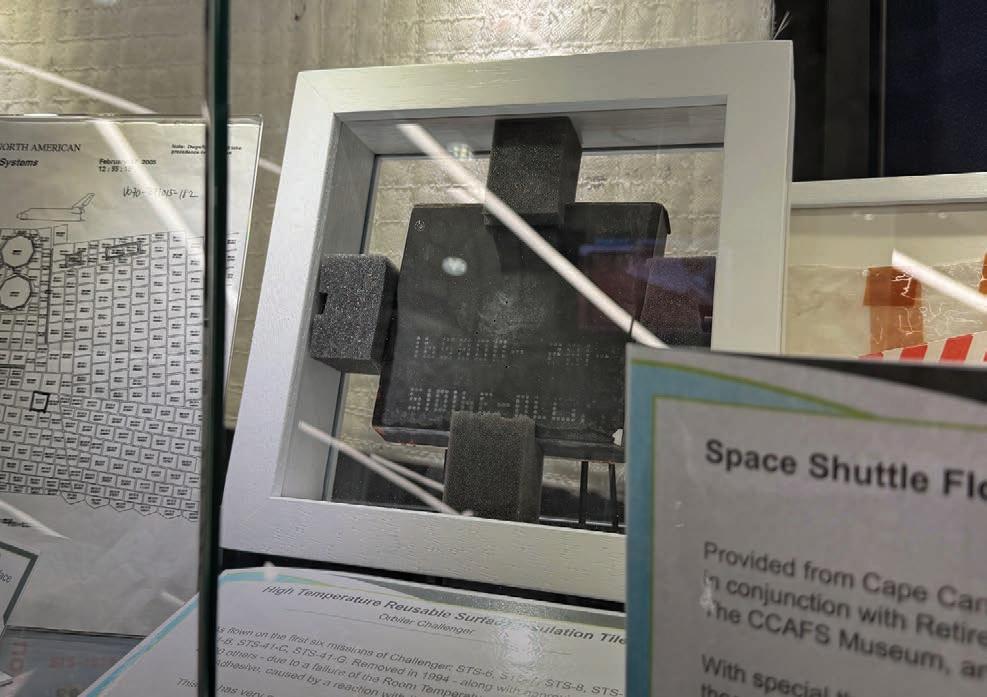
Do you have a favourite item from the collection? It has to be this eight inch Space Shuttle tile because it is from the 1986 Challenger Shuttle [which exploded] and reminds us of the risks involved if you are going to push frontiers.
The reason we lost Challenger was because of human failures, so it was a very humbling experience. It’s there to remind us of our weaknesses, but actually from tragedy they built success, and so it goes forward.
So that’s a message for all of us when we sometimes feel unempowered and weak.


The astronauts on Artemis II were all asked what are you most afraid of? And they all said failure.
But that’s actually part of being human, so don’t let that beat you. Strive for your passions and what you dream about.
DR STEVE WALLACE MBE
– CHAIR OF MANSFIELD AND SUTTON ASTRONOMICAL SOCIETY AND SCIENCE OFFICER AT THE OBSERVATORY
How does this exhibition take the visitor experience to the next level?
We already inspire people coming through the door, but to have the Space Shuttle parts that have actually been to space and for visitors to hear the stories about human space flight is brilliant.
They can learn that in our region we’ve created technology that’s flying all over the solar system already, and that they can be a part of that.
How important is STEM for the East Midlands?
We’re still one of the largest manufacturing areas in the UK. That requires a skilled workforce and all sorts of different disciplines.
So, all in all, this isn’t about getting people to be astronauts, this is about getting people to be interested in science, technology, engineering, maths and delivering some of that through the arts as well.
The world we live in needs these things to function. So, we need to get people excited and interested in that.


‘As humans who live in urban environments we’ve lost our connection with the night sky due to light pollution’
Dr Steve Wallace MBE

Where do you see the legacy of the observatory moving forward?
The ultimate legacy is the people who come here, and the education and career decisions they make. We’ve now got a project that looks at sky quality. As humans who live in urban environments we’ve lost our connection with the night sky due to light pollution.
We are planning a project where we can work with local schools to monitor sky quality, get real data and educate people to be more sensitive on how they’re using lighting.
The ultimate ambition of that project is for Sherwood Observatory to launch a satellite to monitor light pollution from above.
As a volunteer group, what was it like receiving the Kings Award?
The overwhelming feedback we get is how inspirational our volunteers and members of staff are. The King’s Award cemented what an amazing job they do. It’s not common to receive one and we had 100 members here for the award ceremony, every one of whom had volunteered in some capacity.
For any organisation to have 100 people who actively give their free time is just amazing.
Visit: sherwood-observatory.org.uk



The University of Derby and Unipart have signed a partnership agreement, aimed at creating new opportunities for students, driving sustainable growth across the region and developing skills and innovation for sustainable supply chains.
The three-year strategic partnership will foster collaborative working, strengthen links between industry and education, and support both organisations in their ambitions to grow and evolve their operations.
Unipart is a supply chain partner working with customers in 22 countries.
Opportunities under the deal will include a three-year funded PhD studentship, graduate schemes, student placements, and insight from Unipart experts on developing graduates for the future workforce, as well as sustainable and digital practices across operations and supply chains.
Media and performing arts students at West Nottinghamshire College have worked with industry professionals on a film project tackling the dangers of online radicalisation.
Godolphin Communications has been working on the project to challenge violent extremism and raising awareness of how harmful ideologies spread.
Students worked with Giles Bancroft and Rob Gould from Godolphin on the professionally supported production – which is being delivered in partnership with Mansfield District Council and Ashfield District Council.
The project has received funding approval through the Home Office and is supported by the local Prevent teams.
Students were involved in every stage of the filmmaking, including acting, camera operation, sound and lighting, script development and preproduction planning.
Strategic marketing agency
Purpose Media has stepped up its collaboration with a leading TV artist by investing in a new television studio and fulfilment centre.
It marks the latest step in the partnership between South Normanton-based Purpose and Watercolour.tv, a subscriptionbased service founded by author and art tutor Matthew Palmer.
Purpose took a stake in the online watercolour tuition platform last year and has invested a fivefigure sum converting part of its Derbyshire headquarters into a studio capable of producing 4K resolution broadcasts.
An in-house fulfilment centre has also been created and international deals struck with suppliers to support the growing demand for Matthew Palmer branded art supplies.
Purpose said Watercolour.tv had enjoyed a doubling of turnover and profit since the partnership was struck, and the new studio will allow
Matthew to broadcast live, produce video tutorials, host interviews and collaborate with guest artists. It also supports a deal which will see Matthew appear on UK crafting channel HobbyMaker, showing off his skills and giving viewers a chance to buy his range of
watercolour materials and books. His YouTube channel already has more than 170,000 subscribers.
Matthew said: “The new studio allows us to create much higher quality content and connect with audiences in entirely new ways, including through television.”



NOCN Group has become a patron of East Midlands Chamber. The international charity delivers skills support described as ‘future-fit with social impact’ for colleges, training providers, employers and individuals.
In addition to a subsidiary in India – the NOCN India Skills Foundation – the Group operates in Africa, the ASEAN area, Europe, the Gulf, South Asia and other international territories, spanning 32 countries.
During 2024 and 2025, the group developed 49 new qualifications, designed to advance skills across: preparation for life & work; construction and the built environment; engineering, manufacturing and the green economy; health and social care; education and management.

Becoming a patron will enable the charity to engage with the Chamber’s 4,000 members across the East Midlands and help shape policy when the Chamber meets with political leaders.
Chamber chief executive Scott Knowles said: “Upskilling the
workforce and workforce of tomorrow is a key ingredient to growth. NOCN Group’s work in widening opportunities to learners, providers and employers is significant – an organisation the East Midlands can be proud of.
“I am delighted to welcome NOCN Group as a patron and look forward to close collaboration.”
NOCN Group head of business development Laura Randall said: “We’re really pleased to be partnering with East Midlands Chamber to strengthen our commitment to supporting skills development across the region.
“The Chamber’s close relationships with local businesses and communities make them an ideal partner in developing the skills employers and individuals need.”
Midlands Airport Aviation Careers Festival.
The event, held at the Aeropark aviation museum on the edge of the airfield brought together 17 employers including airport parent company Manchester Airports Group (MAG) with students from 18 schools and 22 colleges.
Students aged 14-19 got the chance to take part in hands-on activities including:

The UK’s workforce environment is in a period of rapid transformation, driven by legislative reform, evolving employee expectations and increasing organisational complexity.

and demonstrations, offering a realistic glimpse into aviation roles
• Industry-led STEM workshops exploring aerodynamics and engineering principles
• Career speed networking with aviation professionals
• Inclusive access for groups under-represented in aviation including women, ethnic minorities and individuals with disabilities.
Online training provider Peritus Learning has teamed up with CLO100 (a professional body for learning leaders), business advisory firm RSM and East Midlands Chamber to hold an ‘Access to Impact’ event at the National Space Centre, Leicester, on 12 May.
The invitation-only forum is aimed at senior leaders in learning and development, people and organisational development.
The morning event is designed for organisations with more than 250 staff that want to move their workforce beyond “activity, engagement and completion rates” and build their leading and development support. It will explore:
• Why AI won’t replace learning
and development – but leaders who use it will
• How to make learning and development impossible to ignore at board level
• Measuring what actually matters to the business — not vanity metrics
The day will be hosted by Ad Davies, the former head of talent development at Gymshark. As the managing director of The Leadership Club, he works with organisations to build highperforming learning cultures that drive business performance.
Keynote speaker James Swift of the Leyton Group will talk about building staff development to drive organisational performance, sharing

practical examples of how leaders can align learning to strategy, and use AI and emerging technologies to scale workforce capability with commercial results.
is.gd/eFtgRV

That’s according to Freeths’ 2026 Employment Survey, an annual report that draws on responses from senior HR and business leaders across a range of sectors to build a picture of the HR landscape and the priorities shaping UK workplaces for the year ahead.
Key Insights include:
• Awareness of the Employment Rights Act 2025 is broad, but depth of understanding is limited.
• Employers are moving towards compliance with their obligations to prevent sexual harassment under new legislation.
• Most organisations feel operationally ready for day one parental and paternity leave rights, but only 2% intend to enhance pay.
• AI adoption within HR remains low and, in some areas, has slowed.
• Neurodiversity and menopause support have emerged as the leading DEI priorities, though manager confidence in supporting employees experiencing menopause is low.
Rena Magdani, head of employment, pensions and immigration at Freeths, said: “This year’s survey shows employers bracing for the most significant employment law reforms in a generation.
“The next 12 months will be pivotal as employers strengthen their foundations, equip managers and prepare for a far more regulated, people first era.”

The Chamber has an initiative to give fully subsidised community membership to charities, schools and community interest companies (CISs).
The new offer has been created to ensure the team can make it as easy as possible to support local charities and similar, to help them make a difference.
In order to be eligible community membership organisations must:
• Have a locally registered charity number with the Charity Commission or be CIC registered with Companies House
• Have their main base in Derbyshire, Nottinghamshire or Leicestershire
• Have an annual income below £1m (CICs and bigger organisations will be considered on a case-bycase basis)
• Have a primary activity that directly benefits the community rather than shareholders or private owners
• Have fewer than 50 team members – paid and unpaid.
The scheme is also open to state-funded primary and secondary schools based within the East Midlands. Existing Chamber members will be eligible at renewal.
There are a handful of services that community members cannot benefit from, although they can choose to enhance their package by paying for optional services. Those services include business support from Quest; international discounts; access to the member database; and dedicated account manager meetings.
is.gd/eT4qRX



Phil Gregory is founder of Peak District SEO, which employs two people in Matlock, Derbyshire.
Peak District SEO was founded to give businesses access to professional search engine optimisation and digital marketing services without needing to work with large city agencies.
The business focuses on helping companies improve their visibility in Google and other search engines through technical SEO, content strategy, Google Ads management and digital PR.
Many of our clients are SMEs that want practical marketing support rather than jargon.
A strong focus is placed on local companies that want to attract customers in specific towns or regions. Rather than outsourcing work overseas, we work closely with each client to understand their services, their market and their growth goals.
That allows us to build campaigns that focus on real business outcomes such as enquiries, phone calls and sales rather than vanity metrics like traffic or Ad impressions (views).
Since founding Peak District SEO in 2017, we’ve weathered challenges like the pandemic and are now approaching our ninth year. Over this time, we’ve steadily expanded both our client base and revenue year-on-year.
We’ve earned the trust of a wide range of businesses. This includes major distributors of garden furniture, key players in the PPE sector, and manufacturers of
Business Peak District (BPD) is a free membership organisation in the Peak District National Park, High Peak, Staffordshire Moorlands and Derbyshire Dales. Its principal supporter is East Midlands Chamber, and it works with councils, the Peak District National Park Authority, the University of Derby, as well as Visit Peak District and Derbyshire. BPD has more than 700 members. Email: members@businesspeakdistrict.com
polyurethane products used worldwide.
We’ve also supported companies developing educational apparatus for engineering and science, helping them reach new markets.
‘Running a business in the Peak District offers a strong sense of community and collaboration’
On the other end of the spectrum, we’ve worked closely with tree surgeons, local car salespeople and beauty product distributors.
Because we’re rooted in the Peak District, we’ve fostered trust with regional businesses that value that local understanding. This local base, combined with our ability to scale beyond, has been a key ingredient in our growth and client success.
Running a business in the Peak District offers a strong sense of community and collaboration. Many companies here value long-term relationships and practical advice.
The opportunity lies in helping traditional local businesses adapt to
the digital economy. Many excellent companies still rely heavily on word-of-mouth, which means there is real potential for growth when they invest in online visibility.
The main challenge is that some rural businesses underestimate the importance of digital marketing. Helping them understand how search visibility translates into real customers is often the first step.
Networking groups such as Business Peak District create opportunities for collaboration and knowledge-sharing. For a digital marketing company, it provides a chance to understand the challenges faced by local businesses and to meet with the businesses to offer practical guidance on how they can compete online.
It also helps strengthen relationships between local companies and encourages businesses to support each other.
Over the next two years the focus will be on expanding our work with regional businesses while continuing to develop expertise in emerging areas such as AI-driven search and Generative Engine Optimisation. Support from Business Peak District and similar organisations will be valuable in that.
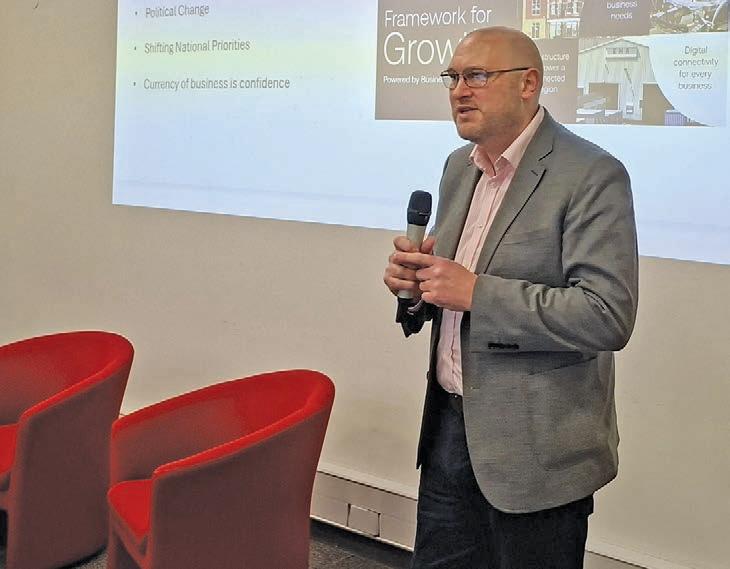

UK and overseas sales were up slightly according to the Chamber’s first Quarterly Economic Survey of 2026, but more firms say finding suitable staff is a challenge, and others are considering raising their prices.
Hundreds of East Midlands businesses, across a range of sectors, took part in the in the regular Chamber research, which is delivered in partnership with the University of Leicester.
Data gathered suggests sales and orders performance stabilised slightly over the first three months of the year, with overseas orders up a reported 16% compared to the last quarter of 2025.
Some 73% of firms, however, said they were operating below capacity, while 43% anticipate raising prices over the next three months.
Investment intention in machinery and training has risen slightly, although two-thirds of businesses said they were having difficulty finding suitable staff, which is slightly up on late 2026.
Chamber director of policy and insight Richard Blackmore said: “Operating with more caution than confidence is the general approach East Midlands businesses seem to have taken across this quarter to mitigate against high costs before looking at investing to grow.
“Lifts in UK and overseas sales are strong performance indicators, suggesting slightly more stable trading than we saw throughout 2025 but with more firms reporting
pressure to increase their prices and less than half having attempted to hire staff, being mindful of costs would seem to remain front of centre of thinking.
“Inflation, still above the Bank of England’s 2% target, continues to top concerns reported by firms, along with corporate taxation so when you factor in the lift of 3% in businesses considering raising their prices and couple that with hesitant hiring in recent months, the sense of mitigating against cost is clearer.
‘Operating with more caution than confidence is the general approach East Midlands businesses seem to have taken’
“With many firms likely to have reduced their cost base where they could, any increased investment intention in machinery, up 3% from the last quarter and training, up 2% from the last quarter may mean businesses have already made difficult decisions and are now thinking more about growth.
“On recruitment, while there has been a 6% net lift in businesses intending to increase their workforce, we’re only talking about two out of ten businesses. Finding suitable candidates to fill roles is a persistent problem.”

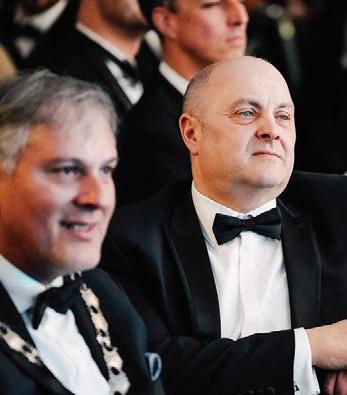
Innovation, international growth and commitment to people development were among qualities recognised at the East Midlands Chamber Derbyshire Business Awards 2025/26.
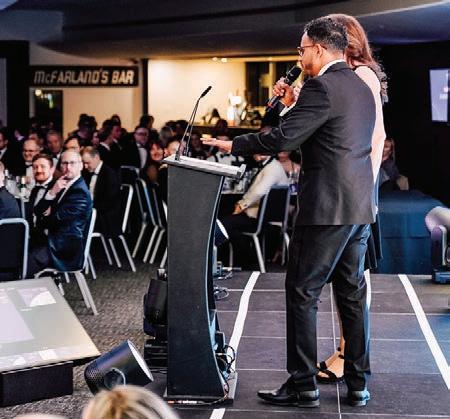
The black tie ceremony took place at Derby County’s Pride Park Stadium, and was hosted by radio personalities Jo and Sparky.
The night was delivered in partnership with heater engineering business Vaillant, with entertainment sponsored by Vaillant LIVE, Derby, and drinks by Longbow Venues.
The flagship Business of the Year Award went to Embark Federation multi-academy trust, after first receiving both the Collaboration of the Year Award and the Education and Business Partnership of the Year Award.
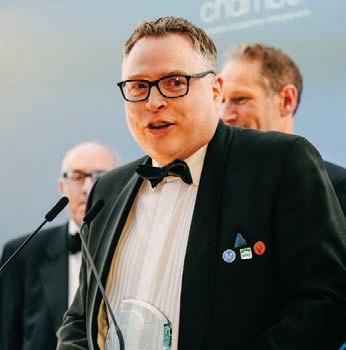
Trust leader Matt Crawford said: “We serve 25 schools currently and about 10,000 children across



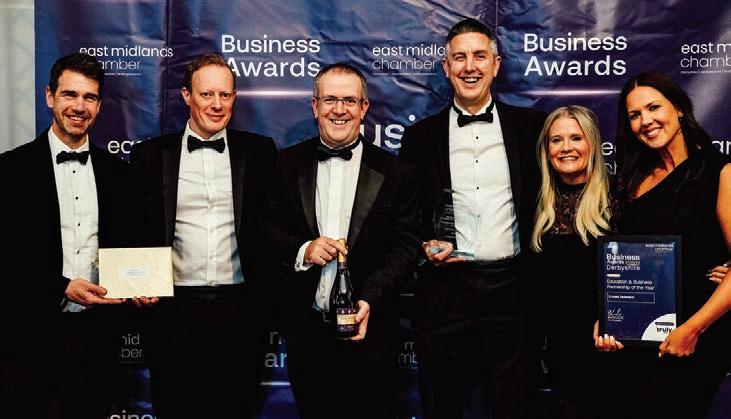

Derbyshire. Many of those are in the most disadvantaged areas in the whole country. We're trying to give them the best of everything, from two to 18-year-olds, supporting them, giving them opportunities that they perhaps wouldn't normally have. Our work with businesses really helps us do that. It's lovely to have been recognised on behalf of everyone in our organisation.”
Chamber chief executive Scott Knowles said: “The Derbyshire
Business Awards shine the spotlight on standout people and organisations driving growth through their creativity, their approach and their leadership.
“Recognising that talent, enabling firms to celebrate their achievements and build connections across the business community is valuable. I would like to extend my thanks to the partners and sponsors that made the Derbyshire Business Awards a















superb event and I congratulate all the finalists and award recipients.”
The Digital Transformation Award went to Mickleover-based manufacturing efficiency specialist Devtank.

Co-founder and chief executive Tim Telford said: “We've been on this journey for 12 years now. I started the business from my garage and bedroom and it's been an amazing rollercoaster.
“I’ve met fantastic people in the East Midlands and we’ve got a great customer base.”
Michael Gladwell, managing director of CSR Leadership Award winner Upbeat Clean – a commercial cleaning firm which helps maintain some of Derby’s best-known buildings – said: “Corporate social responsibility is our business model; it's everything about how we employ people, how we serve our staff as well as our partners.”
Professor Keith McLay, deputy vice chancellor of the University of Derby – which sponsored that award – said: “Corporate and social responsibility is central to the University of Derby.
“We contribute and serve the communities of Derby and Derbyshire and we're delighted to be able to have sponsored this particular award. We're thrilled that Upbeat Clean is the winner of the CSR Leadership Award.”
Penny Engineering was Green Business of the Year. It’s finance

THE DERBYSHIRE BUSINESS AWARDS 2025/26 WINNERS:
BUSINESS OF THE YEAR


Sponsored by Vaillant and selected from award recipients from all categories Embark Federation
DIGITAL TRANSFORMATION
In association with Treetops Hospice Devtank


CSR LEADERSHIP
Sponsored by the University of Derby Upbeat Clean
COLLABORATION OF THE YEAR
Sponsored by Juggling Octopus Embark Federation


director Ashley Holmes said: “We do so much for our green credentials.
“We've done solar panels, heating controls, we've got battery storage, we recycle, we make our products cheaper and more user friendly with less CO2 in them year on year. We work really hard and it's really important to us.”
Chris Ratcliffe is sales and marketing director of Cosy, which won the award for Excellence In International Growth. It supplies sustainable playground furniture and play equipment to customers around the world.
He said: “Every single person at Cosy works so hard, both within the UK and internationally. We think we're doing well ourselves but for people outside Cosy to give us that validation is just tremendous.”
Vaillant UK and Ireland managing director Henrik Hansen said: “As one of the area's largest employers with over 90 years of manufacturing heritage in Derbyshire, Vaillant is proud to be part of this thriving business landscape.
“The evening has exemplified the innovation, commitment and excellence that make Derbyshire such a vibrant place to do business. We're excited about our continued investment here and events like these remind us why we remain so firmly committed to manufacturing in Derbyshire for generations to come."
‘The evening has exemplified the innovation, commitment and excellence that make Derbyshire such a vibrant place to do business’
GREEN BUSINESS OF THE YEAR
Sponsored by Mackworth Vehicle Conversions Penny Engineering
COMMITMENT TO PEOPLE DEVELOPMENT
Sponsored by Derby College Group (DCG) Bloc Digital
APPRENTICE OF THE YEAR
Sponsored by Chesterfield College Group Tasha Mills of Paragon
EXCELLENCE IN INTERNATIONAL GROWTH Sponsored by DJH Accountants and Business Adviser Cosy
EDUCATION AND BUSINESS PARTNERSHIP OF THE YEAR
Sponsored by Truly SMB Embark Federation
EXCELLENCE IN CUSTOMER SERVICE
Sponsored by Howden Longbow Venues
MICRO BUSINESS OF THE YEAR
Sponsored by Amazon Broadhurst Digital
SMALL BUSINESS OF THE YEAR
Sponsored by Azets Thompsons Group
INNOVATION OF THE YEAR
Sponsored by Rolls-Royce Devtank
Derbyshire and Nottinghamshire business will benefit from the continuation of fully funded business support, after the Accelerator programme was extended until 30 June 2026.
The extension from East Midlands Combined County Authority (EMCCA) ensures that more businesses across the region can access practical advice, skills development and growth-focused support at a time of ongoing economic uncertainty.
Accelerator is funded by the UK Government through the UK Shared Prosperity Fund (UKSPF) and is delivered by East Midlands Chamber.
Since its launch in 2023, the programme has made a significant impact on the regional economy, engaging with more than 7,600 businesses, delivering 930 events, creating or safeguarding 1,300 jobs and helping to establish 143 new businesses.
‘The support allows a small business to think and dream big’
One element of the programme is Export Accelerator, which supports businesses looking to explore or expand into overseas markets. It is open to companies of all sizes, particularly where export activity is expected to create jobs, improve productivity or open up new markets. Support can include help with launching products or services overseas, market research, and attending international trade missions, conferences or specialist training.
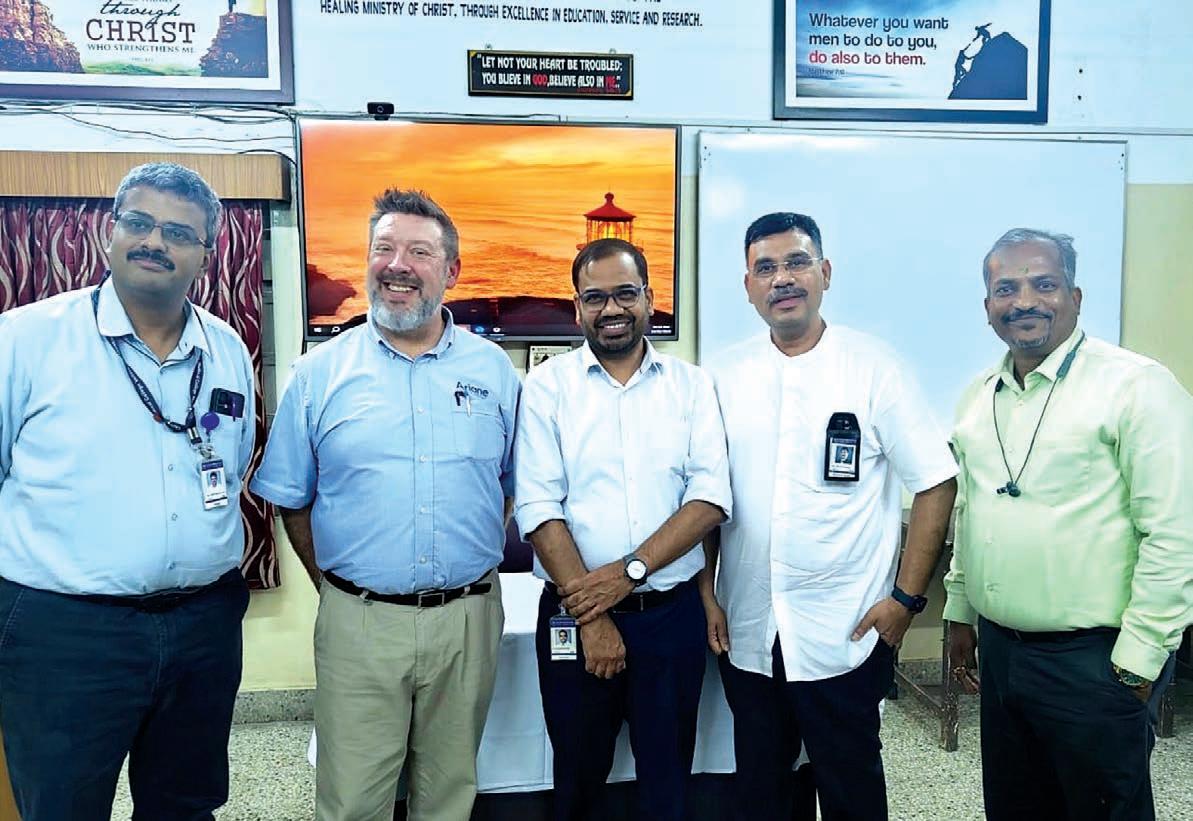
One business to benefit is Ariane Medical Systems, in Alfreton, which makes medical equipment used in cancer treatment. Through an Export Accelerator grant, the company secured funding for a trade mission to India, enabling meetings with prospective customers and distribution partners.
The visit included opportunities to showcase Ariane’s radiotherapy solutions to Tata Memorial Hospital in Mumbai and other healthcare providers across the region.
Mark Davies-Cousins, vicepresident of international sales, said: “The support allows a small business to think and dream big.
“Our adviser Cat Walls, guided us throughout the process, including helping us complete the applications. It’s potentially helped us to open a brand-new market.”
In addition to tailored advice and grants, businesses can also access a
comprehensive Accelerator training programme designed to build knowledge, skills and confidence.
The programme includes a mix of in-person workshops and webinars covering a broad range of topics critical to business growth and competitiveness. These include sales, marketing, finance, social media, AI and ChatGPT, SEO, Canva and wider digital skills.
Sessions are deliberately limited in size to encourage interaction, collaboration and personalised feedback. Delegates also leave with a clear action plan tailored to the needs of their business, ensuring learning translates into practical outcomes.
Businesses in Derby and Derbyshire get the added benefit of free, one-to-one impartial business advice and mentoring from experienced Chamber business advisers.
With operational costs continuing to rise, regulatory pressures increasing and global instability affecting supply chains and markets, having access to an external adviser can provide valuable perspective and clarity.
This support is available across all districts in Derbyshire, including South Derbyshire and Bolsover, and is open to businesses at all stages of development.
www.emc-dnl.co.uk/services/
Open to all businesses in Derby, Derbyshire, Nottingham and Nottinghamshire:
• 7 May: Handling Difficult People and Situations, Nottingham
• 12 May: Utilising ChatGPT for your Business, Ashfield
• 12 May: Practical Guide to Marketing, Nottingham
• 19 May: Mastering Graphic Design with Canva and Adobe Express, Newark
• 19 May: Managing Finance, Chesterfield
• 20 May: Scaling Sales with RevOps & CRM, Rushcliffe
• 20 May: East Midlands International Trade NetworkNottinghamshire Forum Meeting, Newark
• 27 May: Modern SEO, Bassetlaw
• 27 May: Mastering Graphic Design with Canva and Adobe Express, Derbyshire Dales
• 28 May: Getting Ready for the Employment Rights Act, Online
• 2 June: Mastering Graphic Design with Canva and Adobe Express, South Derbyshire
• 2 June: Selling for Non-Sales People, Chesterfield
• 4 June: Advanced SEO, Mansfield
• 9 June: Utilising ChatGPT for your Business, Bolsover Book your free place at: bit.ly/AcceleratorTraining26 The Accelerator project is funded by UK government through the UK Shared Prosperity Fund (UKSPF).




Generation Next is a vibrant, Chamber-led community, dedicated to empowering young professionals across the East Midlands with the experiences and opportunities they need to reach their fullest potential.
Joining Generation Next provides you with valuable opportunities for professional growth, including skillbuilding workshops, mentoring programs, and networking events. You’ll connect with like-minded young professionals, gain insights from industry leaders, and access resources to help you advance your career.
The network stands on a foundation of excellence and a deep commitment to business success and boasts a robust membership base of professionals from diverse sectors and industries, providing a rich tapestry of knowledge, expertise, and collaboration opportunities.
‘A dynamic group of talented young professionals from across the East Midlands’
The Generation Next board is a dynamic group of talented young professionals from across the East Midlands. They play an active role in shaping our activities and enhancing our profile.
Supported by our dedicated ambassadors, they collaborate closely with the board and the Generation Next team to promote key developments and initiatives to our members. Together, they drive our mission to empower and connect the next generation of leaders.
www.generationnextemc.co.uk
Delegates at the 2025 Generation Next Leadership and Growth Conference

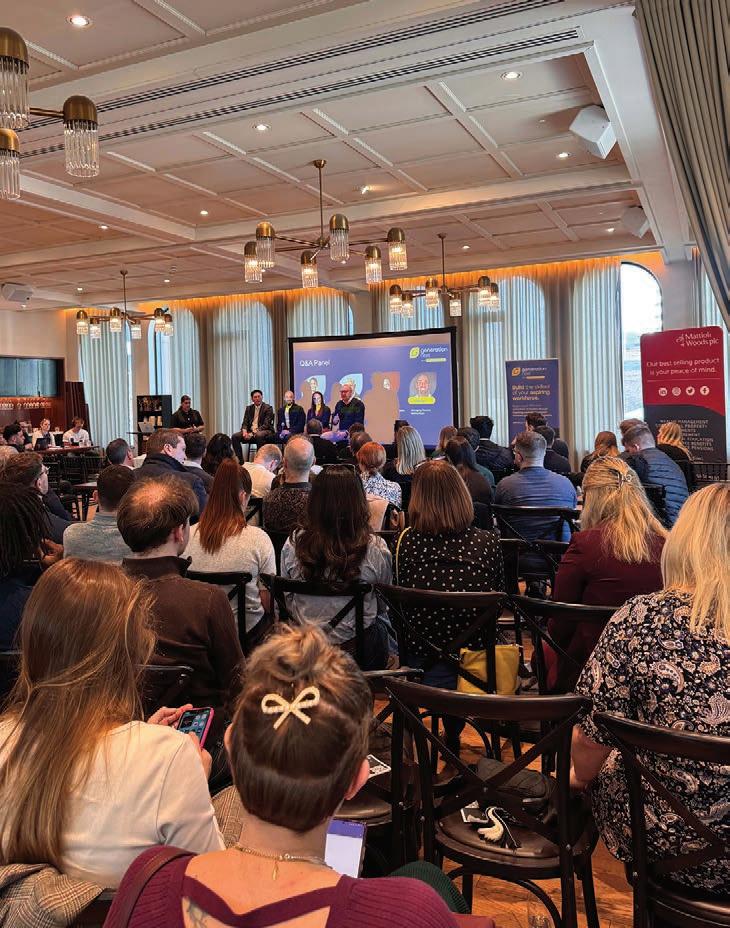
OPTIMISE YOUR LINKEDIN PROFILE FOR SUCCESS
Time: 2-4pm
Date: 28 May
Claiming itself as ‘the professional network’, LinkedIn can help businesses connect with others and promote their organisations. What is the best strategy to use? This session, aimed at Generation Next members, will cover the basic principles to get users up-and-running, and look at the best ways to build your profile to get noticed, get connected and make progress. Things it will cover:
• Why focusing on LinkedIn today is a great idea for your business
• Where the opportunity lies
• Optimising your personal profile
• The different content types in the platform
• Growing your network
The online course is free to sign up to at: is.gd/bwyyAC
HR FORUM – EMPLOYMENT LAW UPDATE AND RECRUITMENT & RETENTION
Time: 8.30-10.30am
Date: 10 June
Venue: CASA Hotel, Chesterfield
In this session, Izabella Edwards, from Edwards Employment Solutions, will provide a straight-talking overview of the local recruitment landscape, drawing on real-time insight from employers and candidates across Chesterfield, South Yorkshire and the wider East Midlands.
This free event at CASA Hotel, Chesterfield, is open to all Chamber members: is.gd/oEg9hW


GETTING READY FOR THE EMPLOYMENT RIGHTS ACT
Time: 9.30-11am
Date: 29 June
The Employment Rights Act 2025, which became law on 18 December 2025, represents a major overhaul of UK employment law, with key changes being implemented throughout 2026 and 2027.
This session will explore what the act means for employers and business owners, and show some of the practical steps to prepare for its phased introduction.
This free, online Generation Next session will equip attendees with the knowledge and practical steps needed to prepare for the changes being introduced under one of the most significant updates to UK employment legislation in recent years.
is.gd/yWBKDa
The region’s successful business leaders have until 22 May to get their applications in for the Chamber’s 2026 Enterprising Women Awards. As ever, this year’s awards will honour business leaders from across Leicestershire, Nottinghamshire and Derbyshire, with the winners announced on the night of 25 September, during a ceremony at Center Parcs Sherwood Forest.
THE CATEGORIES ARE:
• Business Woman of the Year, sponsored by Michael John Switchgear
• Social Commitment, sponsored by Mackworth Vehicle Conversions
• Small Business of the Year, sponsored by Knights
• Female Entrepreneur of the Year, sponsored by Freeths
• Female Employee of the Year, sponsored by Cambridge and Counties Bank
• Team of the Year, sponsored by Azets
• Innovation, sponsored by Pick Everard
• Apprentice of the Year, sponsored by Datalink Electronics
• Developing Leader, sponsored by Sarah Higgins Corporate Coaching
• Lifetime Achievement, sponsored by NOCN Group
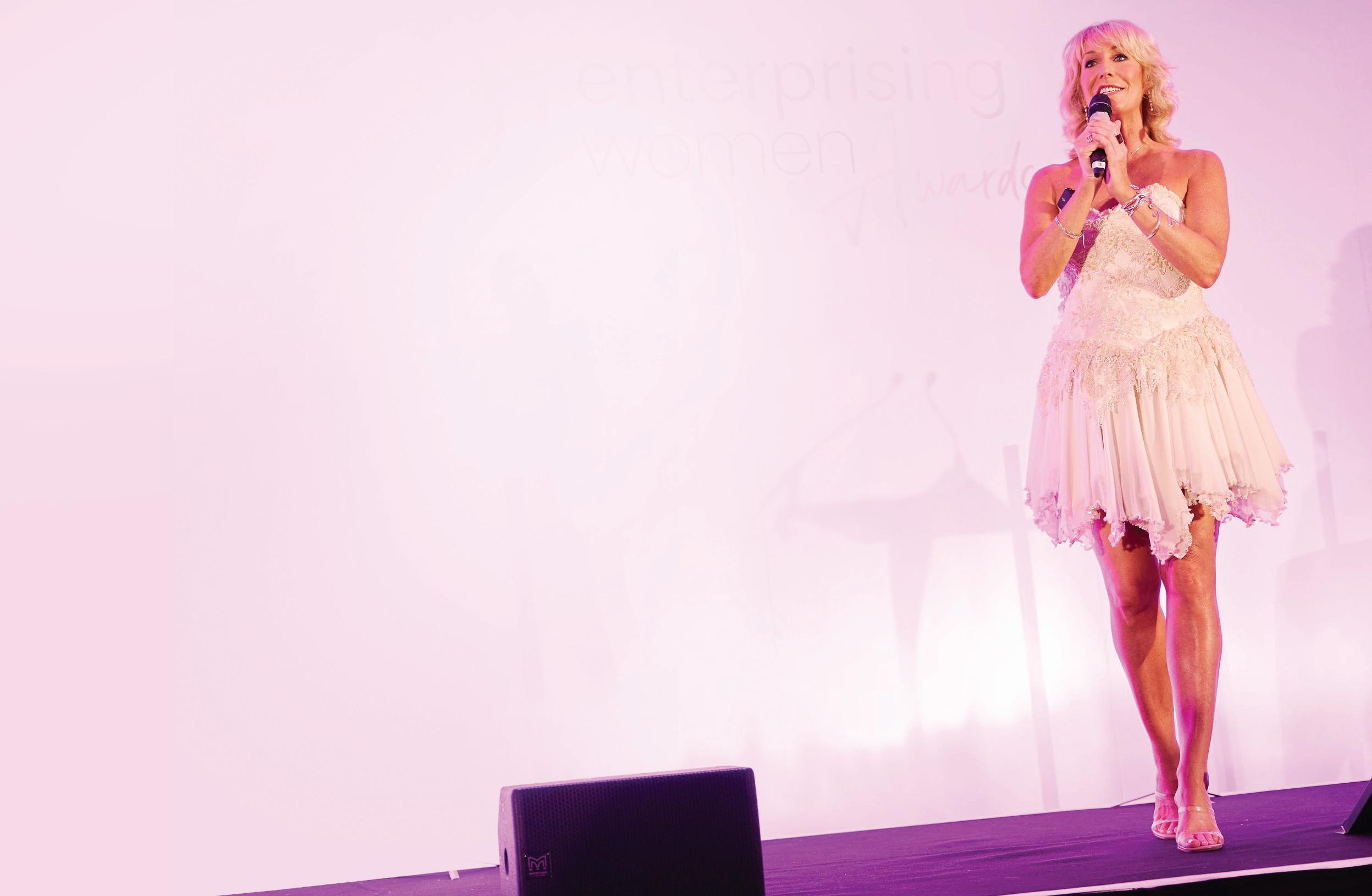
The awards night will be a true celebration of female achievement, with a welcoming atmosphere, opened by Enterprising Women co-chairs Eileen Perry MBE DL and Jean Mountain, and hosted by ITV presenter Emma Jesson.
Emma said: “I love the fact that we celebrate the achievements of some of the best and brightest women in business across Derbyshire, Nottinghamshire and Leicestershire.
“Every year at the Enterprising Women Awards there are new innovations, new initiatives and it's fantastic –it feels that women are leading the charge.
“It's crucial we celebrate every achievement women make – no matter how big or how small, in business or any field of life.
“We’ve seen turbulent times in business, but everybody's ridden it out supremely and they've thrived. That's testament to our business community and how skilled they are.”
To enter visit: is.gd/JYax3C
To book tickets visit: is.gd/8cnsFH
Hannah Harwood (pictured), reflects on women in business.
As operations director at Access Training, I’m proud to help shape a supportive, values-driven culture where learners and colleagues can thrive. Access Training, co-owned by NCHA and Futures Housing Group, supports over 1,000 learners each year, and we’re committed to helping people and businesses build skills, confidence and long term career pathways.
In recent months, I’ve been reflecting on what leadership means to me and the women who have shaped that journey.
For me, leadership begins with clarity, fairness and a people-first mindset. I believe in being transparent, consistent and accountable, and in making decisions that balance operational requirements with compassion. I try to model the behaviours I value most: integrity, respect and a genuine commitment to developing the people around me.
Creating an environment where people feel supported and empowered is central to my approach. Psychological safety plays a huge role in how I lead; I want people to feel they can question, challenge and try new ideas without fear of judgment. Empowerment comes from clarity, autonomy and knowing you are seen and valued.
‘Diverse leadership teams make better decisions, challenge assumptions and help create cultures where everyone feels
they belong’
When people feel safe to speak openly and collaborate honestly, teams become stronger, more innovative and more resilient.
I’ve been fortunate to learn from remarkable women throughout my life and career.
My mum has been the strongest influence on the leader I’ve become. She began her career in nursing and went on to hold global operational leadership roles, showing me that resilience and compassion can exist powerfully side by side.
Watching her navigate complex roles while remaining grounded and kind gave me a real-life example of authentic leadership.
Representation of women in operations and leadership roles genuinely matters.
When women can see themselves reflected at senior levels, it expands their sense of what’s possible. Diverse leadership teams make better decisions, challenge assumptions and help create cultures where everyone feels they belong.

Like many women in operational roles, I’ve faced moments where I’ve needed to prove my capability more than expected. I overcame those challenges by staying focused, building strong relationships and trusting in my ability. Over the past year, one lesson has stood out more than any other: clarity is one of the greatest gifts a leader can give. When clear expectations meet true collaboration, teams thrive.
To women aspiring to senior leadership, my advice is simple: back yourself. Speak up. Growth happens in the stretch. Build your network, stay curious and trust your instincts, you know more than you think you do.
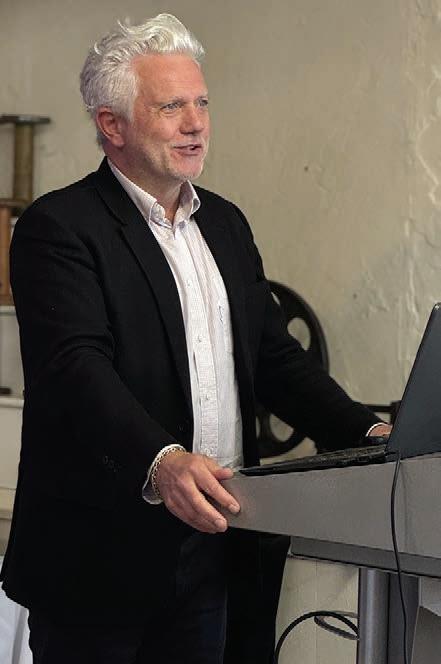
Retention and attraction of talent, exploring new supply chain opportunities and the role of apprenticeships in strengthening the workforce were among themes addressed at the Derbyshire Makes: Advanced Manufacturing Sector Conference at Masson Mills, Matlock Bath.
Delivered by Derbyshire County Council, the University of Derby and Derbyshire Makes, in partnership with East Midlands Chamber, the conference aimed to support growth and resilience within Derbyshire’s Advanced Manufacturing sector, bringing together the business community and young people.
The event was one of a number of STEAM (Science, Technology, Engineering, Art and Manufacturing) initiatives led by the Derbyshire Makes project as part of its Derbyshire Makes Festival 2026.
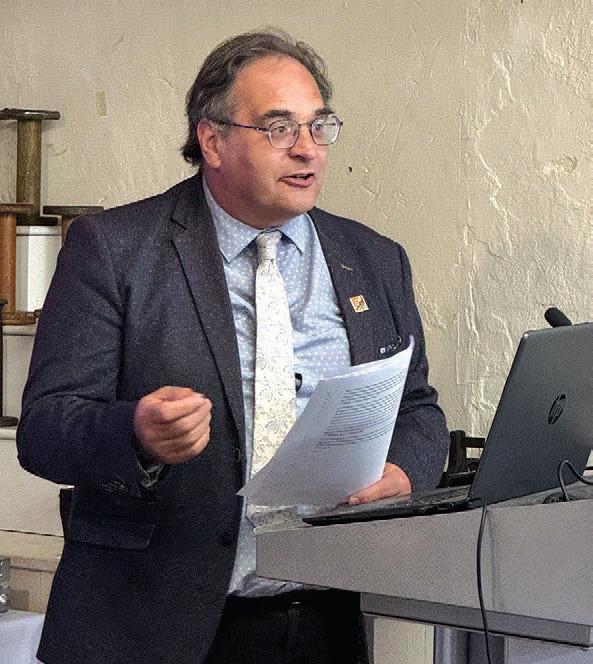
‘Advanced
manufacturing is a cornerstone of Derbyshire’s heritage and economy’
Chamber director of policy and insight Richard Blackmore, who opened the conference, said: “Advanced manufacturing is a cornerstone of Derbyshire’s heritage and economy.
“Ensuring it continues to grow and remain resilient means investing in both innovation and people. By creating opportunities for businesses to explore new supply chain links, while also showcasing apprenticeship and career pathways, we’re helping to build a stronger, more inclusive workforce.”
Derbyshire County Council deputy leader and cabinet member for economic development and
LEICESTER AND LEICESTERSHIRE
13 May, 7.30-10.30am, 13 May, Loughborough University. This is a combined meeting, bringing together members from the Leicester and Leicestershire networks.
DERBYSHIRE
5 June, 7.30-10.30am, East Midlands Chamber, Chesterfield head office
NOTTINGHAMSHIRE
10 June, 7.30-10.30am, NTU University Centre, West Notts College, Mansfield, NG18 5BH.
For further details visit: emmn.co.uk
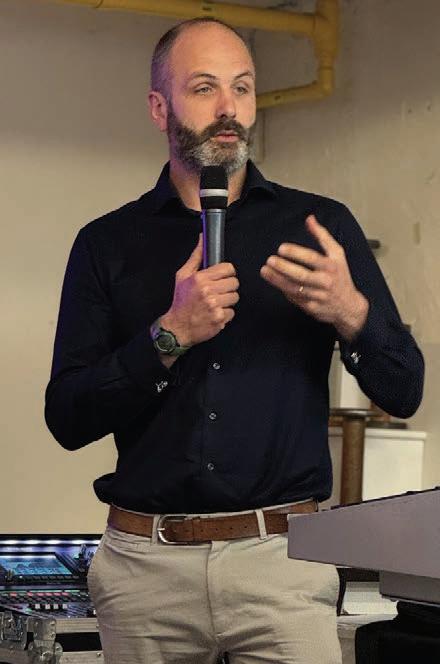
regeneration Cllr Robert Reaney said: “This area is like ground zero of the industrial revolution. We’ve got it all going on. We’ve got the history, the heritage, the latest tech.
“The council, East Midlands Chamber and similar groups are about support and making life better for the people of Derbyshire, creating good jobs, opportunities for kids and bringing money in.”
Derbyshire Makes project lead Clare Limb gave a talk on encouraging creativity and problem-solving skills in children and young people through a schools pilot project exploring STEM through the arts.
She said: “It's very important to encourage young people to get more under the skin of their science, technology and engineering and maths learning to understand the application of it more broadly.
“Whatever tools can be used to
engage children in that is really important.”
Speakers at the 2026 Derbyshire Makes: Advanced Manufacturing Sector Conference:
• Richard Blackmore – director of policy and insight, East Midlands Chamber
• Cllr Robert Reaney – deputy leader, Derbyshire County Council
• Andrew Storer – CEO & founder of NucCol (Nuclear Collaboration)
• Clare Limb – project lead, Derbyshire Makes and STEAM into ACTION
• Joanna Winterbourne – STEM coordinator, Stem ambassadors partner East Midlands, LEBC
• Dr Chris Pilgrim – technical lead, Innovate UK (IUK) Business Connect
• David Goater – managing director, Trans-Tronic
• Neil Chandler – managing director, Nelop Systems
The Chamber-run East Midlands Manufacturing Network (EMMN) has been bringing businesses together for four years.
It has six groups covering Derby, Derbyshire, Leicester, Leicestershire, Nottingham and Nottinghamshire, which each meet every couple of months. Membership is free for manufacturers of any size and comes with complimentary affiliate membership of Make UK.
To join you must be: a senior manager, leader and future leader; have a business based in the Chamber area; have a business that makes something.
www.emmn.co.uk

Representatives of the region’s biggest businesses will be attending East Mids Tech Week, which runs from 15-19 June.
The week-long festival will have headline and fringe events designed around core economic clusters – from engineering right through to nuclear infrastructure and space innovation. All the events will be free to attend.
Louise Holland, managing director of tech week founder Holland Alexander, said: “We wanted to create an electric festival that drives attention to those incredible business assets based in the region which are creating global tech ingenuity and have the potential to fuel economic growth.”
The festival will launch on Monday, 15 June, at Vaillant Live, Derby, with an investment show for businesses looking for R&D, tech or innovation funding. It will include investor and BBC One The Apprentice team leader Mike Soutar discussing investment trends and how to close a deal.
Forging Ahead, a coalition of 15 Midlands university partners led by Loughborough University and Midlands Innovation, which is backed by the Research England Connecting Capabilities Fund, is supporting the show.
Vaillant Live will also host an AI tech and creative tech event that day, showing off the latest in technical advancement for product design and client service developments.
Nick Gall, managing director of Nottinghambased NetMonkeys, which is curating two panels during the event, said: “There is a real energy in the East Midlands tech scene, and this festival will finally provide the national and international spotlight our incredible innovators deserve.”
BANK OF ENGLAND FORUM
Time: 10-11.30am
Date: 14 May
Venue: Freeths in Nottingham
This free event offers the opportunity for Chamber members to take part in discussions on local business conditions.

The Bank regularly engages with the Chamber, seeking to gauge levels of business confidence and investment intentions among members. These events provide an opportunity for members to have their say and exert influence.
The feedback helps to complement the intelligence supplied by the Chamber’s economic research. Issues arising from the forums are fed into the Monetary Policy Committee, which sets the monthly interest rates affecting us all.
is.gd/SvvnXn


‘There is a real energy in the East Midlands tech scene’
Day two on Tuesday, 16 June, will see the Energy Research Accelerator Conference 2026, at Vaillant Live.
The venue will also see a defence and security tech and engineering tech headliner event that day.
Day three on Wednesday, 17 June, takes place in Nottingham and will put the focus on women in tech.
Day four on Thursday, 18 June, will see two
events in Leicester – with data and space tech covered at Space Park Leicester, which is part of Space City. The University of Leicester Freemans Common campus will be the location for a med tech event the same day.
On Day five, Leicester’s newest co-working complex Canopy, in King Street, will host the EMTW 26 wrap party.
www.emtechweek.com

CHAMBER CONNECT NETWORKING BREAKFAST
Time: 9-11am
Date: 27 May
Venue: Nottingham Playhouse (pictured)
Start your day with quality connections over coffee and breakfast in this iconic Grade II* listed building. The event is free.
is.gd/g7pjlU
CHAMBER CONNECT NETWORKING AFTERNOON
Time: 4-6pm
Date: 4 June
Venue: International Logistics Centre, Newark Chamber members can sign up for an open event being organised by a logistics firm which provides transportation, shipping, warehousing and storage services.
Over the past year, the site has undergone

Aseries of videos has been launched to support the cyber security sector, answering questions raised by businesses at the Cyber Local Midlands Business Roundtable, delivered by Innovate UK, East Midlands Chamber and Chamber patron Air IT Group.
The roundtable was one of a series with cybersecurity specialists on hand to answer questions, discuss real world challenges and to help shape practical next steps for strengthening cyber resilience locally.
Feedback from the sessions has been used to develop a series of videos with cyber security experts to support local businesses.
The most recent event included talks from Lee Johnson, chief technology officer at Air IT Group, on emerging cybersecurity trends across
significant investment and this offers an opportunity to step behind the scenes of a growing, multiservice logistics and manufacturing group.
The afternoon is part of Chamber Connect Events, a special benefit for members to help build strong business connections.
is.gd/toznU6
Non-Chamber members can attend one event for a £30-plus VAT fee. If you are a Chamber member and would like to host a networking event, email: membership@emc-dnl.co.uk
HR FORUM, LOOKING AT EMPLOYMENT LAW, RECRUITMENT AND RETENTION
Time: 8.30-10.30am
Date: 10 June
Venue: CASA Hotel, Chesterfield
The BRM Employment Law team will provide guidance on what businesses should do now to prepare for latest HR changes and advise on how using probationary periods and effective performance management can help.
The event is free.
is.gd/oEg9hW
the region and key security concerns facing local businesses.
Simon Shiu, professor of practice in cyber security at the University of Bristol, gave a talk on the Cyber Security Growth Action Plan – an independent report commissioned by government from Bristol University and Imperial College London.
Produced by Innovate UK in partnership with Cyber Local, East Midlands Chamber, Intercity Technology and the Greater Birmingham Chambers of Commerce, the videos provide answers to the questions put forward by businesses.
Innovate UK is a key delivery partner for the UK’s strategic cybersecurity objectives, primarily through the National Cyber Strategy and the Cyber Growth Action Plan.
EAST MIDLANDS PEOPLE AND SKILLS CONFERENCE – 2026: A FRAMEWORK FOR GROWTH
Time: 9am-1.30pm
Date: 16 June
Venue: Loughborough University
Over the last year our Quarterly Economic Survey has revealed six-in-10 East Midlands firms have had difficulty finding new employees with the right skills.
The 2026 conference will focus on the key areas that will enable economic growth, through the targeting of skills reform, improved recruitment and retention, and developing sustainable interventions that support better business engagement with educators. It is free to attend.
is.gd/B7n872
Cyber Local is a government scheme to deliver tailored support for the cyber security sector across the regions. It taps into local knowhow to fund initiatives which support the growth of cyber security ecosystems, promote partnerships and increase cyber security skills and careers opportunities.
WATCH THE VIDEOS AT: www.youtu.be/mNJShgB_Ti8?si=uhoAeYGxbzu eLOaM
www.youtu.be/Rr_uglupLi4?si=l82cZUWl0bUU FSiz
www.youtu.be/zefRarSS3rE?si=c3tKtWDAd5V WIWHa
www.youtu.be/SotW4Pk2f9o?si=1snnXSUZrru9 yffp
CHAMBER CONNECT NETWORKING BREAKFAST
Time: 9-11am
Date: 25 June
Venue: Your IT Department, Nottingham Free to attend.
is.gd/tvbSEO
BANK OF ENGLAND FORUM, HOSTED BY HOWES PERCIVAL
Time: 10-11.30am
Date: 23 September
Venue: Leicester
is.gd/VFn7Ch



www.emc-dnl.co.uk/sustainability
Law firm Freeths has published its first Net Zero Transition Plan, setting out its science-based planning to achieving net zero by 2040.
Management said the firm had already made strong progress on the road to sustainability over more than a decade, including publishing its first Carbon Reduction Plan in 2024.
Last year it recruited Ben Churchill as its director of responsible business and Maggie Stewart (pictured) as sustainability manager.
Since 2024, the firm said it has reduced overall emissions by 8% and office energy consumption by 15%. Its Net Zero Transition Plan includes: clear, measurable and science-backed targets embedded into decision-making; defined decarbonisation pathways across energy, travel, waste and supply chain; and strengthened governance and delivery through its boards and committees.

By Jack Stevenson (pictured), a director at Nottingham sustainability consultancy R2G
The Department for Education now requires every education setting in England to have a Climate Action Plan and a nominated sustainability lead by the end of this academic year.
Plans must align with four core pillars: adaptation and resilience; biodiversity and nature; climate education and green skills; decarbonisation and net zero.
The ambition is to position the UK education sector as a global leader in sustainability by 2030.
Maggie said: “This launch reflects the progress we’ve made, but more importantly, it sets out the action we must take next. By strengthening our data, governance and supplier engagement, and by supporting colleagues to make sustainable choices day to day, we are building the foundations for longterm, science-aligned change.”
Management at trentbarton have welcomed a national Your Bus Journey survey which found its heartlands – Greater Nottingham, Derbyshire and Nottinghamshire – were in the top seven areas for bus passenger satisfaction.
The business was ranked joint eighth out of 72 operators, with an overall satisfaction score of 91% – above the national average of 85%.
Sister operator Notts + Derby achieved 92% – securing fourth spot in the operator ranks.
Tom Morgan, trentbarton managing director, said: “This is a fantastic result for trentbarton, Notts + Derby and our fellow operators in Nottinghamshire and Derbyshire.
“To have our areas and so many operators judged so highly by customers is a great achievement.
“It is also great news for the people who live and work in our heartlands, as they have the best bus services outside of London. That reflects our commitment to outstanding service and is testament to the hard work of our teams seven days a week.”

However, a Climate Action Plan doesn’t need to be complicated. At its core, it is simply a way for schools to organise practical actions that reduce costs, improve buildings and support student learning. Done well, it becomes less about compliance and more about running schools more efficiently.
In practice, sustainability and efficiency are closely linked. Reducing energy waste lowers bills, improving buildings reduces maintenance costs, and better resource management strengthens long-term resilience.
‘A strong plan should focus on a clear baseline, a small number of priority actions each year and regular progress review’
For schools facing rising operational costs and tight budgets, a Climate Action Plan can help ease financial pressure when treated as a practical improvement programme rather than a reporting exercise.
The starting point is understanding current energy and water use. Much of this information already exists in utility bills.
Schools can often achieve immediate savings through simple operational changes such as optimising heating schedules, reducing unnecessary temperature setpoints and limiting holiday or weekend energy use.
Switching to renewable electricity alongside these reductions can quickly lower emissions while demonstrating visible commitment to sustainability.

Once demand is understood and reduced, schools can consider targeted investments such as solar PV, LED lighting, insulation improvements or smarter building controls.
Climate Action Plans also support wider benefits. Resilience planning helps schools prepare for overheating, flooding or extreme weather, protecting buildings and learning environments.
Biodiversity projects such as wildflower planting, tree planting or eco clubs enhance outdoor spaces, improve wellbeing and provide valuable learning opportunities.
Embedding sustainability into lessons allows students to explore real-world topics such as energy use, climate science and the growing net zero economy, which (according to the CBI) grew 16.2% between 2022 and 2024.
A strong plan should focus on a clear baseline, a small number of priority actions each year and regular progress reviews. Climate Action Plans are not just regulatory requirements. Used well, they reduce operating costs, strengthen resilience, enhance learning and help prepare young people for a net zero future.

East Midlands Chamber provides a broad range of services to help businesses importing and exporting goods and services do their work as smoothly and efficiently as possible.
As well as regular on-line and in-person training courses, Chamber support can make the crucial difference between trouble-free trading and costly delays.
The export office, for instance, provides support for every aspect of export administration, giving businesses peace of mind that they are compliant with overseas trading rules at home and abroad.
The team is on hand to share their knowledge or fill skills gaps, and has the ability to check and amend commodity codes and raise documents such as Certificates of Origin, EUR1s, commercial invoices and packing lists.
Another service the Chamber offers is in supplying ATA Carnets. These are travel documents required by border officials when businesses temporarily export items into and out of the UK – items such as sports equipment, audio-visual equipment or display items for exhibitions.
The customs document helps streamline the customs process by offering a dedicated declaration form with a predetermined cost.
The team has been issuing carnets for more than a decade and has seen the number processed grow since the UK left the EU – for the simple reason that they weren’t needed for travel into and out of Europe when we still held membership.
Before Brexit, the team was issuing about 100 a year for the US, India, China, Morocco, Turkey. Today they are issuing 450 carnets a year – with 80-90% for the EU. Customers make their application online, which is then assessed to ensure that the goods comply and the country they are going to will accept them.
Costs vary depending on the goods, where they are going and for how long but it tends to be a lot cheaper than if the client was paying typical export and import costs.
The team can turn ATA Carnets around in 24to-48 hours, but generally asks for three-to-fivedays to complete the processing because of all the toing-and-froing that is sometimes needed.
Customs
HMRC is putting full responsibility on businesses who import and/or export and expects full awareness and compliance with their responsibilities.
The Chamber expert consultants can guide businesses through a personalised one-on-one session to ensure your documentation is verified and compliant with an HMRC audit.
This free service is ideal for early-stage exporters and businesses in international trade.



ITOPS – International Trade Operations and Procedures Qualification:
The International Trade Operations and Procedures (ITOPS) qualification is a BCCAccredited and highly practical, relevant qualification designed to prove that candidates have the necessary skills to accurately operate the administration procedures in an international trade environment – whether that of a manufacturer/supplier or freight forwarder.
It concentrates on training staff in the key areas of:
• Export documentation
• Freight moving
• Customs and official procedures
• International payment methods
The course is delivered in partnership with Fidelitas Training.
International Courses:
The Chamber has a comprehensive range of courses which focus on the compliance side of trading internationally – for example Incoterms® 2020, Customs Procedures and Documentation, Understanding Commodity Coding and IP/OPRInward/Outward Processing Relief.
The most popular course is Export Documentation which covers what documents are required and how to complete them correctly.
The Chamber will be able to advise businesses on the best support they can get and any funding that could help cover the cost.
Contact Julie Whiting or Theresa Hewitt on internationaltraining@emc-dnl.co.uk for an eligibility check.
Chamber Customs Declarations:
The Chamber’s expertise can be used to help businesses avoid border delays and additional costs. The Chamber team has extensive
knowledge and a solid reputation and can provide first-class service in facilitating international trade – taking the hassle out of a business’s hands when it comes to exporting and importing goods.
General Advice and Support:
From one-to-one advice, targeted ‘how-to’ workshops, fact-finding events to putting you in touch with sector or country-specific partners and experts, the Chamber’s multifaceted international approach makes us the place to turn to if you’re looking to start out in international trade.
To find out more visit: www.emcdnl.co.uk/services/international
Michael Smith Switchgear will accelerate its growth plans after being acquired by a leading European tech group.
The Leicester-based supplier of low-voltage switchgear solutions is the 10th UK business to be acquired by Lagercrantz Group AB for its UK network – and the first from the UK within its Electrify division.
Michael Smith Switchgear managing director Sean Smith said: “We’re delighted to be joining Lagercrantz and embarking on the next phase of our company’s development with a long-term and stable owner who shares our values and ambitions.”
MSSL was founded in 1985 and has developed a reputation for its technical expertise, high quality standards and sustainability.
The company has annual revenues of around £8m and employs more than 50 people from its
Chris Ratcliffe, sales and marketing director of Cosy, at the 2026 Derbyshire Business Awards (Averill Photography)


Management at Cosy said overseas reach doubled in 2025 as its Cosy Global platform targeted more distributors.
They said the Derbyshire-based early years supplier expanded its international reach from 25 countries in 2024 to 50 countries in 2025, underlining a push to formalise export operations and distributor support.
The business, which recently won the award for Excellence In International Growth at the 2026 East Midlands Chamber Derbyshire Business Awards, supplies sustainable playground furniture and play equipment to customers around the world.
Its international plans were put in the spotlight last July when Chancellor Rachel Reeves visited the Cosy headquarters for the Government’s UK Trade strategy launch.
The Chancellor toured its warehouse and product design operation and met staff, who highlighted the use of technology and AI in its operations.
She described Cosy as “a shining example” of best practice for medium-sized businesses, which was also reflected it receiving the King’s
Award for Enterprise for International Trade last year. One way it has built exports has been the launch of Cosy Global, a dedicated site aimed at its trade partners and distributors.
The platform positions Cosy as a “global partner” and highlights propositions designed for resellers, including more than 900 openended resources and 90% stock availability, alongside EU drop shipment options.
Cosy has also strengthened management standards to support consistency as volumes have grown. Having held ISO 14001 certification for environmental management for more than two years, it was recently awarded ISO 9001, the internationally recognised quality management standard.
Competition in international education supply remains strong, with potential customers typically looking for proof points such as delivery performance, documentation and sustained repeat ordering via distributor networks.
The team said Cosy’s move to a dedicated export platform – alongside the King’s Award recognition and ISO standards – signalled a more structured attempt to scale overseas.
The British Chambers of Commerce (BCC) said Government must boost export support and ease bureaucracy in light of the disruption caused by the Iran War.
A BCC survey of 2,000 exporters – carried out between Monday, 9 February, and Monday, 9 March – found that 25% of exporters had reported an increase in export orders, while 23% reported a fall, and 52% reported no change.
The United States and Israel began airstrikes against Iran and Lebanon on 28 February, causing a seismic shock to global markets.
The BCC figures were an improvement on Q4 of 2025, when 21% reported increased orders, 28% a drop and 50% no change.
However, micro-exporters with fewer than 10 employees said they were faring worse.
The BCC said the picture is substantially different to the performance before Brexit, Covid, the war in Ukraine, US tariffs and other geopolitical disruption. In Q2 2018, 31% of all firms saw increased orders and 14% a decrease.
‘This is the exact time when we must double down on our efforts to grow exports’
William Bain, head of trade policy at the BCC, said: “These findings make for dispiriting reading, having mainly been collected before the impact of the Middle East conflict began to be felt.
“It is also of concern that our services firms, which have been the source of most of our export growth in recent years, appear to be facing growing headwinds as well.
“But this is the exact time when we must double down on our efforts to grow exports and involve more UK businesses in this fight. To take an isolationist approach and retreat from the principles of fair and open trade would be a grave mistake.
“There are a number of things the Government could do to support smaller businesses to trade overseas. First and foremost, it must boost export support and move more trade processes online to simplify the bureaucracy. Securing concrete progress on the EU reset and other trade and sectoral deals should also be a priority.”
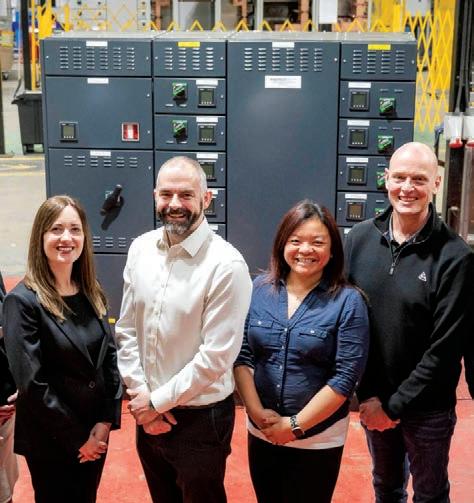


base on the Braunstone Frith Industrial Estate.
In 2025 it was awarded the King’s Award for Enterprise for sustainable development after reducing carbon emissions by more than 60% over seven years.
More recently, it won environmental product of the year at the Data Centre World Awards in recognition of its R&D work on its LV switchgear products.
The management team, comprising Sean Smith and Emily Smith, will continue to lead the company within the Lagercrantz Group.
Emily Smith, operations and finance director, said: “We’ll keep on developing the approach that has made MSSL such a success – with the additional benefit of Lagercrantz’s support.
“It’s a great opportunity for our company, team, suppliers, and clients to continue growing together.”
Lagercrantz Group is a listed tech group which buys and builds businesses offering “worldleading, value-creating B2B technology”.
The group consists of more than 80 companies, each with a focus on a specific niche. Based in Sweden, it is active in Europe, the US, China and India, employing around 3,600 people and with annual revenues of around £800m.
Daniel Andersson, head of the Electrify division, said: “Michael Smith Switchgear operates in an attractive niche with strong fundamentals, and we look forward to supporting a very competent team in the next phase of their development.”
Michael Smith Switchgear designs and builds low-voltage switchgear and electrical distribution assemblies for customers across the UK industrial, commercial and infrastructure sectors, including data centres and other big buildings.

Derby City Council have submitted an early planning application for the £100m regeneration of Market Place at the heart of the city centre, writes Lizzie Rix
The plans include creating a mixed-use destination – particularly on the site of the former Assembly Rooms which are set to be demolished – with three new buildings aimed at serving different purposes for the city: called DerbyMADE, DerbyWORKS, and DerbyHOTEL.
DerbyMADE will be Derby’s cultural hub, with a small music venue, exhibition space and a library.
DerbyWORKS will offer new, modern office accommodation, while DerbyHOTEL will be a high quality, full service 4-star hotel.
The aim is to create a modern, inclusive destination that will support and attract investment, through enhancing Derby’s visitor economy.
Market Place itself will have revitalised landscaping, including play areas and improved
to
It will also have a flexible event space, for things such as community events and live performances, and the whole development will also have a focus on sustainability and biodiversity, with trees and green spaces.
former commercial properties in Liversage Street, Siddals Road and Canal Street, which will be demolished.
Construction is anticipated to begin in early 2027.
Council leader Councillor Nadine Peatfield said: “Castleward is one of our city’s key regeneration projects, transforming brownfield land into a vibrant new gateway to the city.
and attract investment’
‘The aim is to create a modern, inclusive destination that will support
A key aspect of the project is community involvement, with multiple public consultations shaping the proposals. The target for demolition to start is this summer, subject to planning.
Construction should follow in early 2027.
Meanwhile, planning permission has been granted for the next phase of the Castleward Urban Village, paving the way for work to begin on 167 new homes.
The required land has been transferred to developers Compendium Living, including
“I’m delighted that we’re closing in on this next phase and have got this land acquisition and planning decision over the line. Now, we can focus on delivering more high-quality homes in our city centre.”
The £100m development is one of the city’s largest housing and regeneration projects, situated between Derbion shopping centre and Derby Midland Station.
In total, the scheme will provide more than 800 new homes, as well as green space and nearly 35,000 sq ft of commercial retail space. It is a long-term placemaking project, being delivered over a period of 15 to 20 years.
The first projects funded by Kirkby’s £20m Pride in Place fund will be coming to life in the next few months, now that the government has approved the investment plan.
After receiving the news in 2023 that Kirkby would be awarded £20m over 10 years, Ashfield District Council worked with the Kirkby Town Board – made up of residents, council officers, local councillors, representatives from voluntary, education, business and healthcare sectors and the local MP – to put together a vision for the future of the market town.
There are currently around 40 ideas that cover the high street, heritage and regeneration, work, productivity and skills, unity, health and wellbeing, transport, safety and security, and education and opportunity, that will be brought to the board to be approved. Three schemes have so far been approved by the board:
• Digital Inclusion – every student starting Year 10 in September 2026 will be given a
Chromebook as part of a two-year pilot at Outwood Academy to support them through Years 10 and 11, as well as into further education and employment.
• Morvern Park Playzone – a safe, accessible, all weather multi use games area to tackle low activity levels, health inequalities and limited youth provision.
• Titchfield Park – new changing facilities and an upgrade to the existing all-weather pitch for football, netball and basketball.
Regeneration spokesman Councillor Matthew Relf said “The range of proposals are vast and cover all areas that residents and businesses have told us they are concerned about.
“Our vision is to make Kirkby a great place for everyone. We want it to be a fun, safe, and happy place to live, work, learn and play. By working together and listening to our community, we can help people do well, feel proud, and enjoy life – now and in the future.”


Representatives from business improvement districts (BIDs) across the East Midlands have been discussing the next decisive phase of the region as devolution reshapes regional governance and town centres navigate structural change.
They heard how collaboration between BIDs, councils and the East Midlands Combined County Authority (EMCCA) was becoming more important.
A roundtable hosted by North Notts BID brought together business owners, BID managers and regional leadership, including East Midlands mayor Claire Ward, to consider how BIDs can remain integral to the high street, and beyond.
North Notts BID chief executive Sally Gillborn MBE said: “We work hard to deliver services across such a large area, so partnerships with other BIDs are key to achieving the best outcomes for our members.
“We recognise that our BID differs significantly from others in the region, including It’s in Nottingham, Mansfield BID, and the Cathedral Quarter and St Peters Quarter BIDs in Derby. However, we draw on our combined
knowledge and strengths to support one another. Together, we must continue lobbying to ensure we have a seat at the table in shaping the future of the region.”
Insights shared by Professor Chris Turner, director of research at British BIDs, reinforced the point that BIDs contributed £180m annually to the UK economy.
Alex Flint, chief executive of It’s in Nottingham (the city’s BID), said: “Nottingham’s placemaking success is driven in no small measure by our reputation for offering consumers a real variety of smaller, often independent stores and leisure venues.
"The passion and appeal of these unique businesses brings lifeblood to our high streets by attracting visitors and residents alike.
“While not always levy paying members of the BID, these smaller businesses contribute to the economic vitality of the city, which in turn benefits the more established brands.”
Claire Ward said: “While EMCCA’s work and my goal is to support and enable growth, it is the businesses locally who create it. The BIDs across our cities and counties hold great value in supporting businesses to achieve this.”
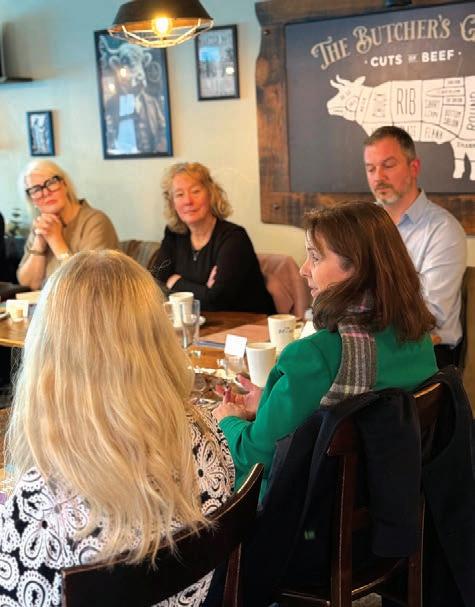
Business and communities across the East Midlands experienced their second wettest February on record in 2026 – making it the wettest since 1977.
Latest figures from the Met Office – which show that February’s rain was 277% of the long-term average for February – have prompted flood experts at the Leicester, Leicestershire and Rutland Local Resilience Forum (LRF) to call on communities to do more to ‘Stand up to Flooding’ and be ‘risk ready’ all year round.
Barrow-upon-Soar and Littlethorpe are among the communities which have already taken steps to keep flooding at bay.
At Barrow, the parish council has installed two pumps and a storage cabin for sandbags at the village cemetery, using funding from Charnwood Borough Council’s flood locker scheme.
It also received money from Leicestershire County Council for warning signs to alert motorists to flooding in Slash Lane, a flooding hotspot.
In Littlethorpe, one family installed £15,000 worth of flood defences at their home after it flooded twice in just over a year, supported by a £5,000 Property Flood Resilience (PFR) repair grant from Leicestershire County Council.
The family have also joined other residents in Narborough and Littlethorpe to set up their own community response team following the increase in flooding incidents.
Volunteer flood warden Dave Ovington-Creighton said: “Flooding seems to have got worse since 2024 so the community has come together to try to do something about it.
“As flood warden for the last 20 years, I’ve always had a lot of support from the local community but this is different – there are a lot more people getting on board and looking at ways to make a difference, support each other and reduce the risk of flooding.”
Businesses and communities are now being urged to:
• Know their flood risk
• Sign up for free flood alerts and warnings
• Create a Community Response Plan (including a response to flooding)
• Recruit their own volunteer flood wardens
• Sign up to the free Risk Ready Communities programme.
Communities can strengthen their resilience to emergencies like flooding by signing up to the LRF’s Risk Ready Communities programme which includes free webinars, workshops and in-person events: www.llrresilienceforum.org.uk/risk-ready-communities
Useful information to help prepare for flooding can be found on the LRF’s ‘Stand up to Flooding’ page: www.llrresilienceforum.org.uk/prepare-yourself/flooding


By Cath Harrison (pictured), founder/owner of Bee-Assisted Limited
Changes to the Employment Rights Act, which began in April 2026 and roll out over the coming year, are prompting important conversations across the UK business community, driving a shift towards more flexible, resilient ways of working.
While much of the attention has focused on the change to Statutory Sick Pay (SSP), these changes signal something much broader – a shift in how small businesses manage people, risk and day-to-day operations.
For many small businesses, the reality is simple: when someone is off, the work doesn’t stop – but the costs continue. For businesses operating on tight margins, that pressure can quickly build.
From April 2026, key changes to Statutory Sick Pay (SSP) came into effect, including:
• SSP being paid from day one of absence (removing the current waiting period)
• More employees becoming eligible, including lower-paid and part-time workers
• A revised payment structure, linking SSP more closely to earnings.
In practice, this means businesses will be paying sooner, to more people, and potentially more often – increasing both cost and financial exposure. Beyond SSP, businesses will also need to prepare for a wider set of responsibilities, including:
• Reviewing contracts, policies, and employee handbooks
• Updating internal systems, particularly around absence and payroll
• Rethinking recruitment processes
• Considering changes to probation periods
• Addressing underperformance earlier and more formally
• Ensuring managers are trained and equipped to handle these changes.
This is not just a compliance exercise – it represents a broader operational shift.


‘For many small businesses, the reality is simple: when someone is off, the work doesn’t stop – but the costs continue’
One of the most overlooked aspects of these changes is the role of management. Poorly supported or undertrained managers are estimated to cost UK businesses around £84bn each year in lost productivity. Businesses will need to ensure their managers are:
• Confident in handling absence and performance
• Clear on policies and processes
• Equipped to make consistent, fair decisions.
As a result, many small businesses are beginning to rethink how they access support. This approach allows businesses to:
• Access experienced support without long-term commitment
• Reduce overheads such as sick pay, holiday pay, maternity/paternity leave, NI payments
• Scale support up or down depending on business needs
• Bring in specialist skills exactly when required.
WHERE THIS WORKS IN PRACTICE
We are already seeing businesses outsource key areas such as:
• Administrative and operational support
• Executive assistant support
• Social media and marketing tasks
• Finance tasks.
As these changes begin to roll out in 2026, many small businesses are already taking steps to prepare. Reviewing processes, strengthening management capability, and exploring flexible support models are becoming key priorities.





By Ann Fomukong-Boden (pictured), co-founder and managing director, Kakou Technologies
When people talk about growing a business, the conversation often focuses on scale – more customers, more revenue, more reach. But in my experience, sustainable growth comes from something much simpler: understanding people properly and designing around what actually matters to them.
That sounds obvious, but it’s where many businesses fall down. I’ve spent more than 20 years working across different sectors – from technology and product development to community-led projects – and the same pattern shows up again and again.
We think we know what people need, we build something based on that assumption, and then we spend time and money trying to fix it when it doesn’t land. The shift is moving from designing for people to designing with them.
It’s tempting to jump straight into problem-solving. We’re wired to do it. But the most valuable thing you can do at the start is slow down and listen.
That doesn’t mean commissioning big research projects. It can be as simple as having honest conversations with your customers, your community, or the people using your service day-to-day.
Ask open questions. Pay attention to what frustrates them, what they value, and what they’ve stopped expecting altogether. Some of the most useful insights I’ve come across haven’t come from formal processes –they’ve come from real conversations where people feel heard.
One of the biggest risks for any business is over-investing too early. I’ve seen organisations spend months developing something they believe is the right solution, only to realise it doesn’t quite fit.
You don’t need to get it perfect – you need to get it real. Test ideas early, even if they’re rough. Pilot something on a small scale. Try it in a real environment. Then listen again and adjust.
This approach not only reduces risk, it builds confidence in what you’re creating because it’s shaped by actual experience, not assumption.
Growth isn’t something that happens in isolation. It’s a collective effort. Whether you’re running a small business or a larger organisation, the people around you – your team, your partners, your community – see things you don’t. Creating space for those perspectives leads to better decisions and stronger outcomes. In my work, especially within community-led projects, this has been critical. When people feel ownership over something, they invest in it. That makes growth more resilient because it’s shared.
It’s easy to fall into the trap of measuring what’s visible –outputs, activity, volume. But those don’t always tell you if you’re actually making progress.
I always come back to a simple question: what difference does this make? If what you’re doing doesn’t improve someone’s experience, solve a real problem, or create value in a meaningful way, it’s worth questioning whether it’s the right thing to be doing at all.
Being clear on impact helps you prioritise and stops you spreading yourself too thin.
We’re operating in a world that changes quickly –economically, socially, and technologically. Businesses that struggle are often the ones that are too rigid in how they operate. Flexibility doesn’t mean constant change. It means being able to respond when things shift.
That might be about how decisions are made, how quickly you can test new ideas, or how open you are to adapting your approach. The more responsive you are, the better positioned you are to grow.
For me, growth is about building something that lasts. That means having a clear direction, but also taking practical steps every day to move towards it.
You don’t need all the answers upfront. What matters is starting, learning, and refining as you go. The businesses that grow well aren’t always the fastest – they’re the ones that stay connected to the people they serve, remain open to change, and keep focusing on what really matters.

‘Whether you’re running a small business or a larger organisation, the people around you see things you don’t’
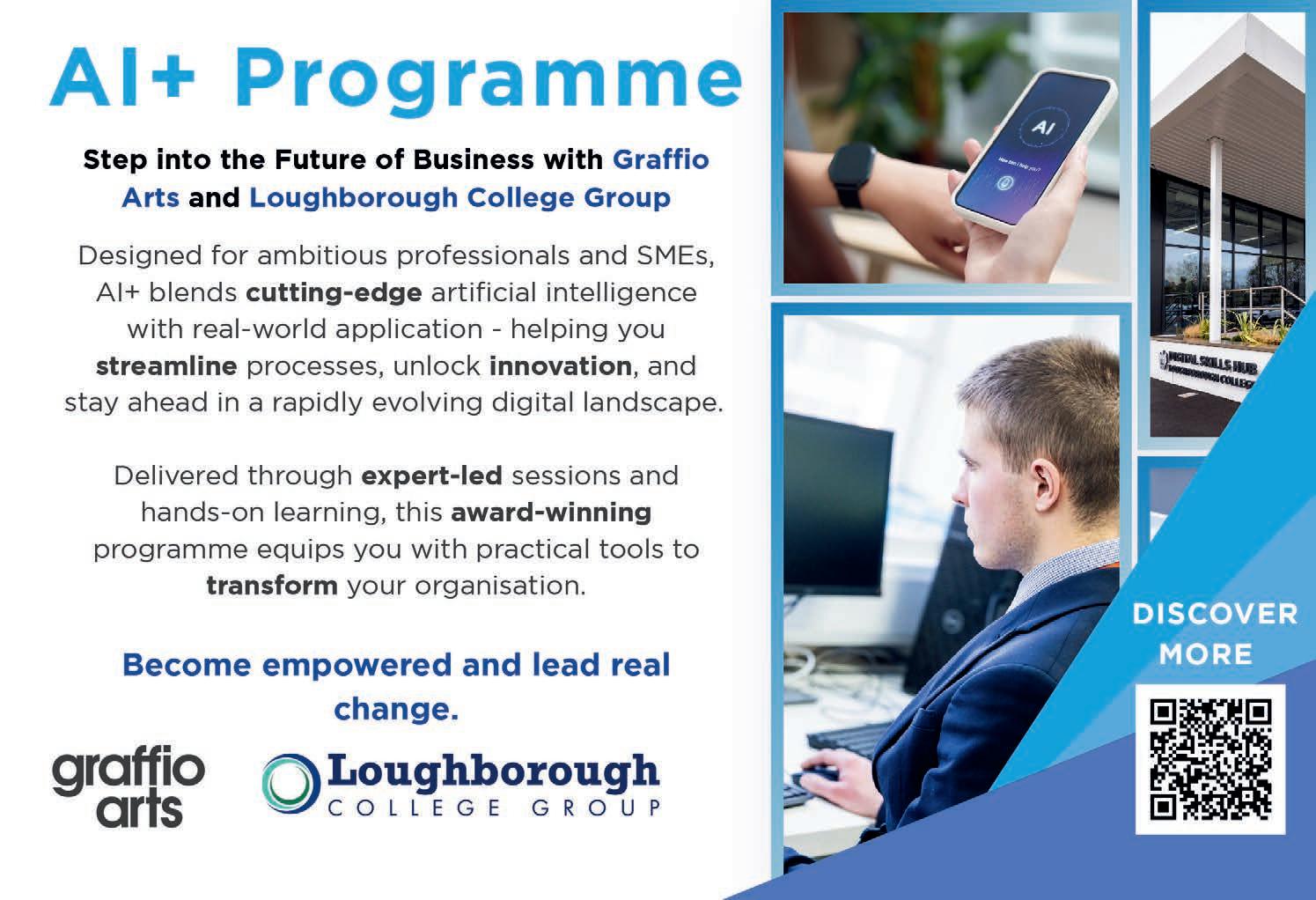

This month’s Focus section has a DIGITAL AND TECHNOLOGY theme, and looks at some of the latest ideas and concepts shaping innovation in the region.
When Tom Jelliffe featured in our Big Interview spot a year ago, his business Tzuka was on the verge of cracking the assembly challenges that come with a novel product – a hardwearing, waterproof ear bud that would fit the needs of today’s sportspeople.
Twelve months later, the Loughboroughfounded start-up has taken two big steps –bringing its manufacturing operation back to Britain, and finally opening up pre-orders.
The decision to move assembly back to the UK was one of the most significant of Tom’s sixyear journey, giving the team tighter control over quality and IP protection.
It has allowed the business to accelerate towards launch with a level of confidence that wasn't possible before.
And all of that, Tom said, without a hit to production costs.
He said: “Bringing manufacturing home wasn’t just a commercial decision. It gives us complete control over the product from the moment it’s assembled to the moment it’s in someone's ears.”


‘Bringing manufacturing home wasn’t just a commercial decision. It gives us complete control over the product from the moment it's assembled to the moment it’s in someone’s ears’
Tzuka was conceived after the Loughborough University graduate realised too many earbuds fell apart in the gym. His concept was a new type of earbud that was sturdy and waterproof and, significantly, had onboard storage for music so you could leave your phone behind.
After years of development Tzuka has now officially opened pre-orders for the TZ7 Ultra, its flagship workout earbud.
Tom said the TZ7 Ultra is built around two core innovations – durability and phone-free listening.
He said they are the only earbuds in the world with an independent impact resistance

certification, while being fully dustproof, shockproof and waterproof.
Tzuka has also developed FreedomMode: onboard storage on the earbuds for up to 1,000 songs for phone-free workouts.
A double-tap of the earbud toggles between standard Bluetooth and FreedomMode.
A £20 deposit secures a place in the queue, with orders expected to be fulfilled at the end of the summer/early autumn. Pre-order customers get a £190 exclusive launch price, giving a saving of £30 on the eventual retail price.
Everything is engineered and assembled in the UK and the initial production batch will be limited – with the pre-order window closing once manufacturing begins.
Tom said the target market, functional fitness training, continues to explode.
Hyrox – or fitness racing – is one of the two sports Tzuka has anchored its strategy around, and has grown substantially in five years.
The other is CrossFit – a high-intensity fitness program featuring varied movements such as lifting, rowing and gymnastics. He said it had been overlooked by the major audio brands –which is where Tzuka hopes to come in.


By Baggy Shanker (pictured), Labour MP for Derby South
Derby is, and has always been, a city of makers. We build things here. We design, test, manufacture and deliver. For generations, skills have not just shaped our economy, they have shaped our identity.
As someone who trained as an apprentice and spent more than two decades working as an engineer at Celanese and a further 12 years at Rolls-Royce, I speak from personal experience. I know what technical education really means in practice. It means confidence. It means progression. It means earning while you learn. And at a national level, it means productivity, resilience and growth.
That is why the work of the East Midlands Institute of Technology matters so much, not only for Derby, but for England’s wider economic future. Institutes of Technology were created to tackle a challenge the country has faced for too long: an ever-growing gap between the skills employers need and the education systems that supports them. By bringing together further education colleges, universities and industry partners, they deliver technical education shaped
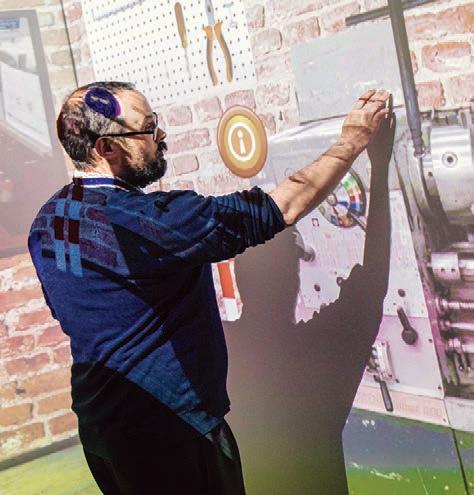
directly by labour market demand, while opening doors to secure, well-paid careers.
The case for action is clear. Recruitment challenges in science, technology, engineering and mathematics are estimated to cost the UK economy around £1.5bn each year.
In construction, figures from the Office for National Statistics show around 35,000 vacancies still need to be filled.
At the same time, the country has committed to delivering 1.5 million new homes alongside major investment in schools and hospitals.
‘By connecting construction training with advanced technical education, we can create clear progression routes’
Ambition without skills is simply aspiration. Growth depends on a skills system that works and, crucially, one that is now being strengthened through sustained government investment and reform.
Derby’s role in this national mission is distinctive. Through the East Midlands Institute of Technology, partners including Derby College Group, the University of Derby, Loughborough University and Loughborough College are working alongside major employers such as Rolls-Royce, Toyota and Alstom to deliver higher-level technical education rooted in real industrial demand.
Alongside advanced manufacturing and engineering, Derby College Group is also playing a leading role in construction skills as a Construction Technical Excellence College.
Nationally, these colleges are backed by a £100m investment and are expected to train more than 40,000 bricklayers, electricians, carpenters and plumbers by 2029. This builds on a wider £625m investment to train up to 60,000 additional construction workers through new apprenticeships, skills bootcamps and industry placements.
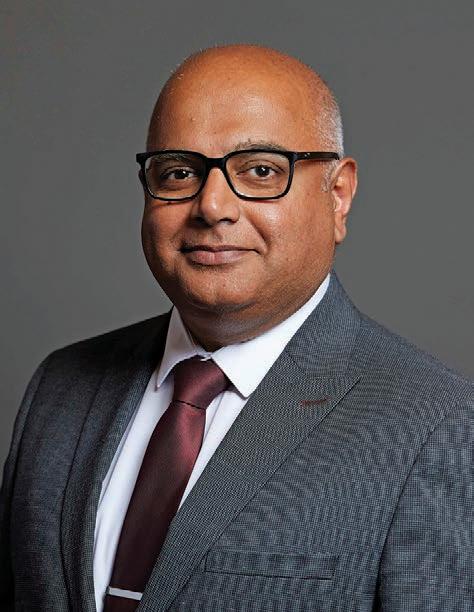
This scale of investment reflects a clear and welcome recognition from government: labour supply drives growth. By investing early and decisively in skills, we can speed up delivery, reduce costs and raise productivity across the economy. But investment works best when the system joins up. Construction Technical Excellence Colleges are currently focused primarily on qualifications at levels one to three, while Institutes of Technology specialise in higher-level technical education. Linking these pathways is essential if we want careers to progress and potential to be fully realised.
By connecting construction training with advanced technical education, we can create clear progression routes so people are not just trained for a job, but supported into a long-term career. That matters for individuals, for employers and for the economy as a whole. Deepening skills over time drives innovation, strengthens supply chains and boosts productivity.

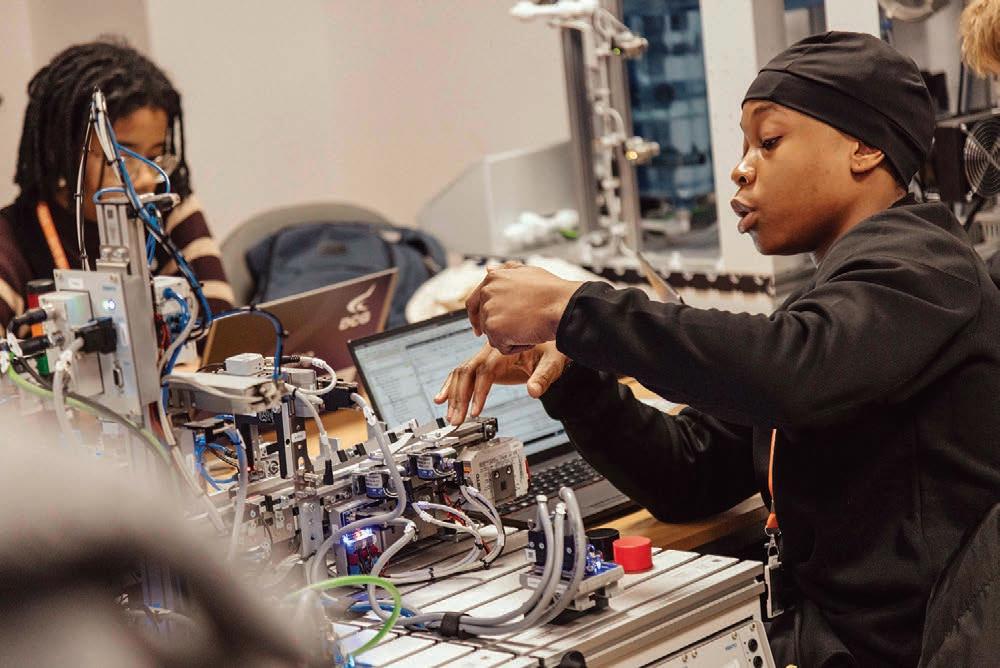
This work has a powerful social mobility dimension, and I know from my own apprenticeship how life-changing those opportunities can be. Technical education has always been one of the most effective tools for widening opportunity. When high-quality training is visible, respected and clearly linked to good jobs, it provides a genuine route forward for young people and career-switchers who may not see a traditional academic pathway as the right fit.
In Derby, I have seen how this approach works in practice. Learners gain skills that employers genuinely value. Employers gain a workforce they can rely on. And the region gains resilience, confidence and capacity for the future.
Our industrial heritage gives Derby our identity. But it is our partnerships, backed by sustained government commitment to skills and growth, that give us momentum.
When education providers, universities, employers and government align around shared priorities, we build something far stronger than individual programmes. We build a skills ecosystem. Being serious about growth, raising productivity, delivering infrastructure and strengthening industrial capacity, means being serious about technical education.
Derby shows what that can look like in practice. And if we continue to invest in progression, partnership and place-based delivery, our city will not just reflect Britain’s industrial past, it will help shape its economic future.
Rolls-Royce SMR has signed a deal with Great British Energy-Nuclear to start work on the UK’s first Small Modular Reactors (SMRs).
The Government says the project will support around 3,000 jobs at its peak and thousands more across the UK supply chain, as well as help strengthen national energy security and support economic growth.
Rolls-Royce SMR was selected as technology partner on the £2.6bn project last June, and the new contract unlocks the next phase.
Its chief executive Chris Cholerton said: “This contract unlocks the delivery of our first three units and brings certainty to the UK SMR programme.
“With plans for up to six further units in Czechia, this announcement makes Rolls-Royce SMR the only company with multiple commitments in Europe.
“We are transforming the way nuclear projects are delivered, to give greater cost and schedule certainty with a standardised, factory-built approach. This project is important to the UK’s energy security and will power up our business
and the UK supply chain, and we are excited by the opportunity and are focused on successful delivery.”
The mini-reactors will be built at Wylfa, on the north coast of Anglesey, using modular, factory made parts.
‘Our clean energy mission is the only route to getting off the rollercoaster of fossil fuels and take back control of our energy independence’
SMRs are smaller and quicker to build than more traditional nuclear power stations but, between them, the three could still power the equivalent of around three million homes. They could be operational for more than 60 years.
Energy Secretary Ed Miliband said: “At a time of global instability, this is a major milestone for Britain’s energy security.
“We are backing a British company to deliver our first small modular reactors – creating a
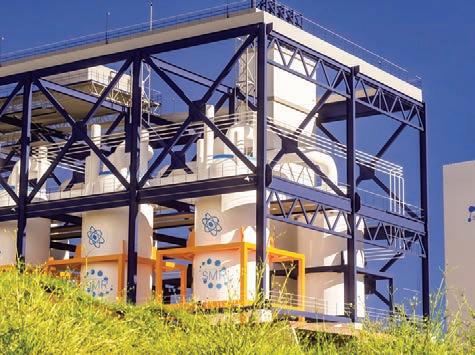
generation of good jobs, driving growth and providing clean, homegrown power for decades to come.
“Our clean energy mission is the only route to getting off the rollercoaster of fossil fuels and take back control of our energy independence.”
The National Wealth Fund is committing up to £599m to Rolls-Royce SMR to support the development of its SMRs.


Scientists in the region are working on designing ways to make AI less reliant on energy-guzzling data centres as well as more localised and secure.
The Nottingham Trent University-led ‘TinyML UK Network’ has brought together experts across AI, electronics and hardware to overcome AI’s dependence on “large models”, cloud infrastructure and continuous data transfer.
Current technology is costly, energy-intensive and increasingly difficult to keep sustainable –and has led to concerns around privacy, resilience and digital sovereignty.
The network is looking at decentralised AI and tiny machine learning (TinyML), which allows AI to run directly on small, low-power devices rather than big data centres.
It means AI can operate locally, respond in real time and continue functioning even when connectivity is limited, by running machine
learning directly on sensors, wearables and embedded systems.
The network is being funded by UK Research and Innovation through the Engineering and Physical Sciences Research Council, with the University of Southampton and Imperial College London as co-leads.
It is focused on linking UK researchers with industry to accelerate innovation, support skills development and ensure that future AI systems are efficient, trustworthy and decentralised.
Recent technological advances mean AI systems can be deployed on tiny, affordable and energy-efficient devices – with artificial intelligence coming from collaboration across many devices rather than from a single large model.
The result is data that is kept close to where it is generated, reducing latency and energy use while improving privacy and reliability.
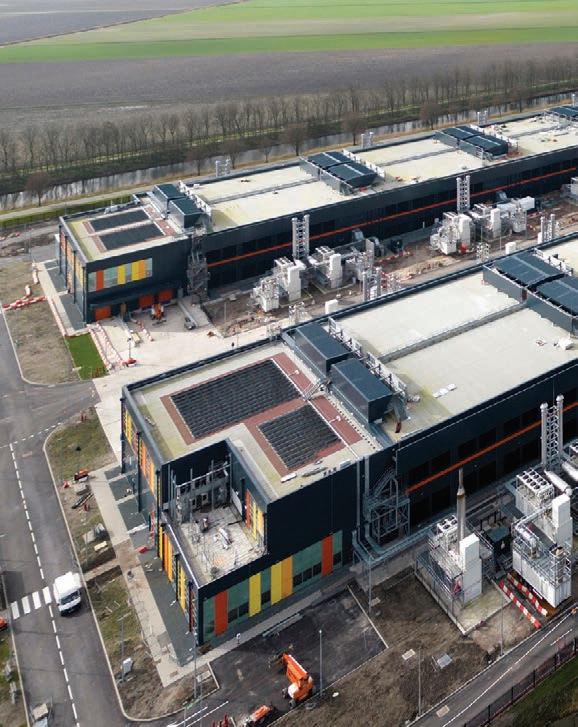

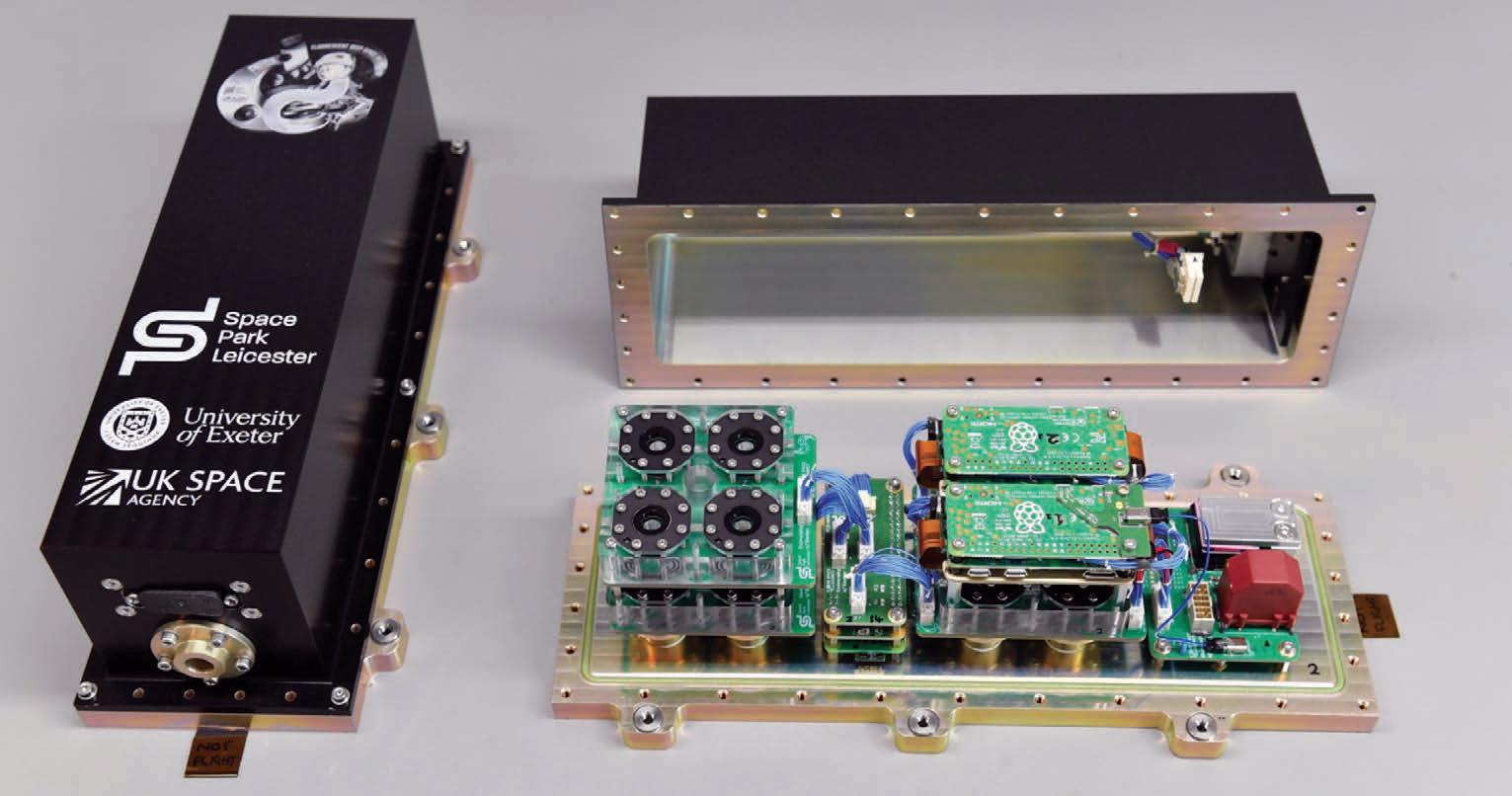
Scientists including a team from Space Park Leicester have sent a crew of microscopic worms to the International Space Station for an experiment that could help unlock the secrets of space travel.
The miniature lab will study how biological organisms respond to the extreme conditions faced by astronauts. It has been led by the University of Exeter, engineered and built by the University of Leicester at Space Park Leicester, and funded by the UK Space Agency.
They believe it could provide insights into how astronauts can stay fit and healthy while travelling to and from the Moon – and further.
The study was launched on a cargo vehicle from the Kennedy Space Center in Florida, in April ahead of being mounted on the outside of the ISS by a robotic arm.
Researchers will conduct tests on dozens of microscopic worms, called C. elegans nematodes, controlling the equipment remotely from Earth.
The 1mm worms are commonly used in scientific research.
They will be used to consider the harmful effects of extended space travel on human health. Microgravity can cause bone and muscle loss, fluid shift and even vision problems, while
there are also risks from radiation exposure.
The experiment will also show that complex biology experiments can be done in space at miniature scale and relatively low cost. The Petri Pod sits in a unit measuring just 10x10x30cm and weighing around 3kg. It contains 12 experimental chambers, four of which can be actively watched.
Each provides a tiny ‘life support’ environment, by maintaining temperature, pressure and a trapped volume of air for organisms to breathe when exposed to the vacuum of space. The specimens also receive food and water.
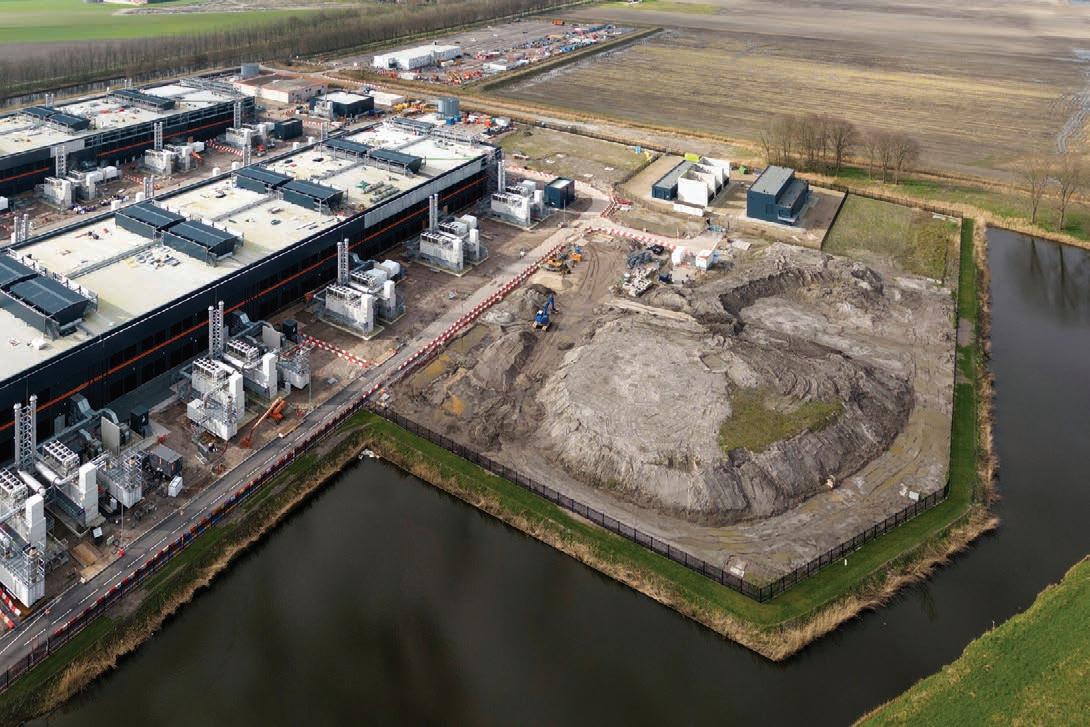
It can also allow AI to be deployed at scale in real-world environments such as homes, cities, farms and hospitals.
Examples of TinyML that are already making a real-world difference include models embedded in livestock devices which can learn behavioural patterns and identify if an animal falls ill.
It has also been used in personal safety devices which detect unusual movements or sounds to trigger alerts without storing recordings.
The network is being led by Eiman Kanjo, professor of pervasive sensing and TinyML in Nottingham Trent University’s School of Science and Technology. She said: “AI adoption is accelerating, alongside concerns over energy consumption, infrastructure cost, resilience, privacy and sustainability.

“This is our opportunity to bring together our engineering, electronics and AI communities to build decentralised, low-energy, privacypreserving and affordable systems.
“The new TinyML UK Network is our chance to grow UK capability and help lead in this space.
The network will connect AI, hardware, embedded systems and engineering researchers across the UK.”
Writing for the EMCCA Growth Hub, Chamber digital marketing specialist Emma Jones (pictured) considers how AI brings both opportunities and risks to UK businesses.
Artificial Intelligence (AI) is no longer a distant concept. It is actively reshaping how businesses across the UK operate. From financial services in London to manufacturing firms across the East Midlands, organisations are increasingly adopting AI to boost efficiency and remain competitive. However, alongside its benefits, AI presents real challenges, many of which are already being debated in UK policy and reported by major news outlets.
Increased efficiency and productivity
AI enables businesses to automate repetitive tasks such as administration, customer service and data processing. This is particularly valuable in the UK, where productivity has long been a concern. By reducing manual workloads, businesses can redeploy staff into higher value roles.
Smarter decision making
AI allows firms to analyse large volumes of data quickly, helping them forecast demand, optimise supply chains and identify new opportunities. According to industry analysis, effective AI adoption could significantly boost UK economic output if implemented strategically.
Innovation and economic growth
AI is already creating new industries and services. Reports suggest that, under the right conditions, AI could contribute hundreds of billions of pounds to the UK economy annually, highlighting its potential as a major growth driver.
Improved customer experience
Many UK businesses are using AI to personalise services, whether through product
recommendations, chatbots or targeted marketing. This helps meet modern consumer expectations for fast and tailored interactions.
Competitive advantage
With adoption increasing rapidly and nearly one in three large UK firms now using AI, companies that invest early can gain a significant edge over competitors.
Job displacement and workforce impact
One of the most widely reported concerns is the effect of AI on jobs. Recent reports highlight that major firms are already considering workforce reductions linked to AI driven efficiency.
For example, a large banking group is reportedly exploring significant job cuts as part of an AI led restructuring. More broadly, research suggests that up to 7.9 million UK jobs could be affected by AI in a worst case scenario, particularly in lower skilled roles.
Skills gaps and training challenges
While AI creates new opportunities, it also demands new skills. Many UK businesses lack the internal expertise to implement and manage AI effectively, contributing to a widening digital skills gap that is already costing the economy billions.
Data privacy and GDPR concerns
AI systems rely heavily on data, raising concerns around privacy and compliance. Surveys show that data security is one of the biggest worries for UK businesses using AI, especially when usage is not properly monitored.

Additionally, a lack of clear internal policies is causing GDPR challenges for many organisations, with employees often using AI tools without sufficient guidance.
Ethical and legal uncertainty
AI is also raising complex legal and ethical questions. For instance, debates around copyright and AI-generated content have led to policy changes in the UK after backlash from creative industries.
These developments highlight the ongoing tension between innovation and protecting intellectual property, an issue businesses must navigate carefully.
Lack of oversight and transparency risks
Experts warn that many UK companies are adopting AI without fully understanding how it works, creating risks around transparency and accountability. Without proper oversight, businesses might rely on systems they cannot fully explain, which is particularly problematic in regulated sectors such as finance or healthcare.
STRIKING THE RIGHT BALANCE
For UK businesses, success with AI depends on responsible adoption. This includes:
• Investing in staff training and upskilling
• Establishing clear AI usage policies
• Not replacing all your creative outlets and creative employees – for AI to be a success, it needs to work alongside human creativity
• Ensuring compliance with UK GDPR and data protection laws
• Maintaining human oversight in decisionmaking processes.
Government and industry initiatives will also play a key role in supporting businesses, particularly SMEs, in accessing AI safely and effectively.
AI offers UK businesses a powerful opportunity to improve efficiency, innovate and compete globally. However, it also introduces real risks, from job displacement and skills shortages to ethical and regulatory challenges.
The key is not to avoid AI, but to adopt it thoughtfully. By balancing innovation with responsibility, UK businesses can harness the benefits of AI while minimising its downsides, ensuring long term and sustainable success in an increasingly digital economy.
growthhub.eastmidlandscca.gov.uk

For many small businesses, digital and technology can feel like a moving target. New platforms, changing algorithms and increasing expectations can make it difficult to know where to focus. Particularly when time and resources are already stretched.
However, from working closely with businesses on a daily basis, it’s clear that success in digital isn’t about doing everything. It’s about doing the right things, with clarity and consistency.
We speak to small businesses every day who feel like they’re constantly trying to keep up.
But often, the real opportunity isn’t in doing more, it’s in stepping back and focusing on what actually matters.
‘While social media continues to grow, a business’s website remains a critical part of its digital presence’
One of the most common challenges businesses face is approaching digital activity without a clearly defined foundation.
Before investing in websites, content or campaigns, it’s essential to understand what the business stands for, who it is trying to reach, and what sets it apart. Without that clarity, digital efforts can quickly become fragmented and less effective. A lot of the time, businesses come to us wanting a new website or more content.
But when you dig a little deeper, what they actually need is clarity because that’s what everything else is built on.
While social media continues to grow, a business’s website remains a critical part of its digital presence. It is often the point at which potential customers make a decision. Whether to
Every day in the UK, thousands of businesses are successfully hit by cyber-attacks, and most of them are preventable.
According to the UK government’s Cyber Security Breaches Survey 2025, businesses experienced around 8.58 million cyber-crimes in a single year. Spread across the calendar, that works out to roughly 21,000 cyber-attacks on UK businesses every day.
The reality behind those numbers is even starker – nearly half of UK businesses reported experiencing at least one breach or attack in the past 12 months. And those are only the incidents we know about. There are plenty we don’t.
‘Cyber Essentials is a UK government-backed cyber security certification scheme designed to protect organisations against the most common internet-based threats’
Telemetry from internet service providers suggests the average UK company now faces an automated attack attempt roughly every 40 seconds. Firewalls block most of them, but the message is clear – businesses are under constant, industrial-scale probing by cybercriminals looking for the easiest way in.
In plain terms, almost every UK organisation is tested for weaknesses all the time, and thousands of them fail that test every day. This is exactly why Cyber Essentials should be the minimum standard for UK business above a certain size. For those unfamiliar, Cyber Essentials is a UK government-backed cyber security certification

Megan Scott (pictured) is digital marketing manager of design agency Creative62 in Leicestershire
enquire, purchase or move on.
A clear, well-structured website that reflects the business accurately can significantly improve engagement and conversion, while an outdated or confusing one can have the opposite effect. There is a common misconception that businesses need to be active across every platform to succeed digitally. In reality, a more focused approach is often more effective.

Mike Donoghue (pictured) –founder, principal consultant and managing director at Derby IT consultancy Economit –considers why Cyber Essentials should be mandatory
scheme designed to protect organisations against the most common internet-based threats. It focuses on secure configuration, access control, patch management, malware protection and network security.
It raises an uncomfortable question: if cyber-
Consistent messaging, a recognisable visual identity, and a regular presence, even on a small number of platforms, can build trust and familiarity over time.
Digital can feel overwhelming because there’s so much out there. But the businesses we see doing well are usually the ones keeping things simple and showing up consistently, rather than trying to do everything at once.
Technology has created more opportunities than ever for small businesses to generate new business, from data insights and automation to improved user experiences.
However, these tools are most effective when used with a clear purpose.
Rather than adopting every new platform or trend, businesses benefit from understanding what supports their goals and focusing their efforts there.
For many small businesses, the challenge is not a lack of ambition, but a lack of time and clarity. Taking a practical, measured approach, refining what already exists, improving consistency, and focusing on key areas, can often deliver stronger long-term results than reactive or short-term activity.
It’s about putting the right things in place so that your digital presence is actually working for you, bringing in enquiries, building trust, and supporting growth.
As digital and technology continue to evolve, the fundamentals remain the same.
Clear messaging, strong branding, and a consistent presence will always play a central role in helping businesses stand out.
For small businesses, focusing on these core elements, rather than chasing every new development, is often what leads to the most meaningful and sustainable progress.
attacks are this common, why aren’t we mandating even the most basic levels of cybersecurity?
For all the discussion about nation-state threats, ransomware gangs and sophisticated cybercrime, the uncomfortable truth is that many successful attacks still rely on simple weaknesses and most commonly, a lack of basic security processes. In other words, the kinds of issues that Cyber Essentials is designed to address.
That’s why I believe Cyber Essentials should be mandatory for UK businesses, or at the very least the default baseline expected of any organisation handling data, systems or customers online. My view is simple. If you are operating digitally, you should meet a minimum cybersecurity standard.
A practical starting point would be to tie that baseline to company size. Organisations with a turnover above £250,000 should be required to achieve Cyber Essentials, while those with a turnover above £1m should meet the higher Cyber Essentials Plus standard. There are a lot of legacy applications in operation that would never allow a company to pass Cyber Essentials, but a potential five-year ramp might be an allowance for organisations to get sufficiently ready.
If you run a business, you should secure it, and it shouldn’t be an unreasonable burden. It would simply make cybersecurity a routine cost of doing business, much like registering with the ICO, paying taxes or meeting health and safety requirements.
Ask yourself what the UK’s cyber posture would look like if those thresholds were actually introduced? The answer is, of course, incredibly better.
www.ncsc.gov.uk/cyberessentials/overview





In a competitive and ever-evolving events industry, growth often comes down to making the right decisions at the right time. For our directors Joe and Joanna Garland, this has meant taking calculated risks to expand their portfolio with the recent acquisitions of team building specialist Off Limits and 4Events which provides racing simulators such as F1 driving experiences.
Rather than waiting for certainty, their approach has been to act decisively when opportunity aligns with strategy, strengthening an already diverse group that includes full-service events agency Eventurous, Mythe Barn events venue and Sheepy Meadows tipi.
“Business growth doesn’t come from standing still,” said Joanna. “We’re always evaluating opportunities, but we’re not afraid to act when the timing is right. You need to know where you want the business to go, and also be prepared to act quickly when an opportunity presents itself.”
Recent years have tested the resilience of the events sector. From the pandemic to ongoing cost-of-living pressures, adaptability has been critical.
Joe said: “Unexpected challenges are inevitable. The key is building a business that can respond quickly and continue delivering value.
“Agility has allowed us to not just navigate change, but grow through it acquiring two businesses in the second half of 2025.”
This ability to pivot, plan and remain forward-focused has been central to the group’s continued expansion.
Alongside strategy, a strong internal culture has played a vital role. By fostering an environment where creativity and collaboration thrive, the Garlands have empowered their teams to drive innovation across every brand.
‘The key is building a business that can respond quickly and continue delivering value’
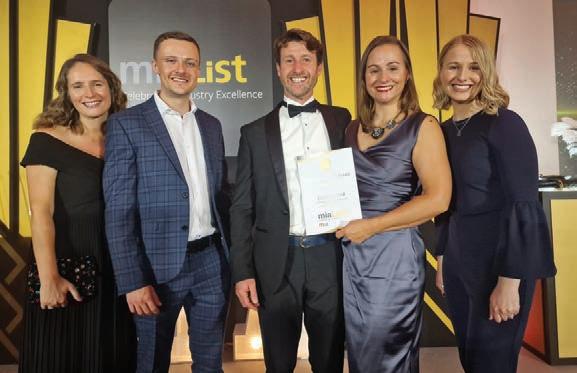
“Our people are everything,” said Joanna. “When you build a culture of trust and passion, it naturally feeds into better ideas, better delivery and better results.
“Our team understands the possibilities and potential of our organisation and is willing to embrace change quickly to drive the business forwards.”
A commitment to continuous improvement underpins every decision. Whether through acquisitions, staff development or evolving services, the focus remains on long-term growth.


“It’s easy to become comfortable,” added Joe. “But we believe in bold evolution, because that’s what keeps businesses relevant and successful.”


By Louise Third MBE (pictured), chair of trustees, Dronfield Heritage Trust

It is a striking ambition, but I can see the logic in East Midlands Combined County Authority (EMCCA) mayor Claire Ward’s plans to grow the region’s visitor economy by £1bn over the next decade.
Through the ‘At the Centre of it All’ campaign, EMCCA is positioning the region as a destination that delivers both unforgettable experiences for visitors and long-term economic growth for local communities.
The cradle of the first Industrial Revolution now boasts some of the country’s finest restored heritage attractions, museums and visitor experiences.
From the UNESCO World Heritage Site at Cromford Mills, to Derby Museums, Creswell Crags and the Ruddington Framework Knitters Museum, these places have already strengthened the region’s appeal to visitors, businesses and investors.
However, if we are to achieve greater economic growth as a destination for visitors we need to widen the offer, cooperate in packaging short breaks, and map the smaller heritage and hospitality venues, such as Dronfield Hall Barn,


into the visitor trail. How to do this?
I offer three ways to success for the smaller heritage hospitality and events venues, plus a practical plea to EMCCA and its strategic partners.
First, I believe that momentum must build from within the region, starting with local businesses prepared to book slightly quirkier places to hold meetings, away-
days, recruitment interviews and dinners.
By being creative with search terms like heritage, charity, wellbeing, gardens, location and catered, you would be pleasantly surprised by what emerges.
Not only do these bookings bring much-needed income to the projects, but they build relationships and a lasting legacy of corporate support to the charities in charge.
INVEST IN STAFF AND VOLUNTEER MENTORING
We should be committed to providing a clear and well-funded career training route into what I will term the heritage hospitality sector.
Several of the region’s universities and colleges already excel in such courses, but at the Dronfield Heritage Trust we have found mentoring on the job a great way to grow and retain talent. Whether it’s our coffee shop team,

‘Although
the Dronfield Hall Barn is not as large or grand as some heritage sites, we can differentiate the events and experiences we offer by weaving stories to attract the consumer pound’
events manager, or the volunteer archivists, all are gaining valuable skills to take into the sector.
While we all appreciate the attraction and draw of stately homes and sweeping film locationworthy landscapes, it can be the smaller historic site that tells a story people remember.
In Dronfield we like to channel the spirit of Lady Alice Deincourt who built the late-medieval dwelling for her steward in around 1430. Alice was by all accounts a feisty entrepreneur, wealthy in her own right, and well-connected at Court.
Although the Dronfield Hall Barn is not as large or grand as some heritage sites, we can differentiate the events and experiences we offer by weaving stories to attract the consumer pound.
So instead of hosting the ubiquitous Christmas wreathmaking workshop, we can provide the chance to create a heritage festive swag or table centre using the natural materials Lady Alice and her steward would recognise.
In fact, we grow many of these in our garden and can provide a takeaway historical explanation detailing the meaning of each item.
Having established a network of popular heritage hospitality venues, we need organisations such as the mayor’s authority and public sector partners to provide a hidden heritage visitor map or app.
Whether it leads drivers off the M1, A50, the M6 or draws passengers by bus, train, bike or on foot, such a guide would be crucial to making that journey easier, memorable and repeatable.
Take a leaf out of the National Gardens’ Scheme annual ‘Yellow Book’ to see how garden visiting, and raising funds for the chosen charities, has been transformed.
So, I challenge those tasked with regional economic growth, and the business community, to help boost the East Midlands visitor economy by including and supporting those hidden heritage gems on your doorstep.



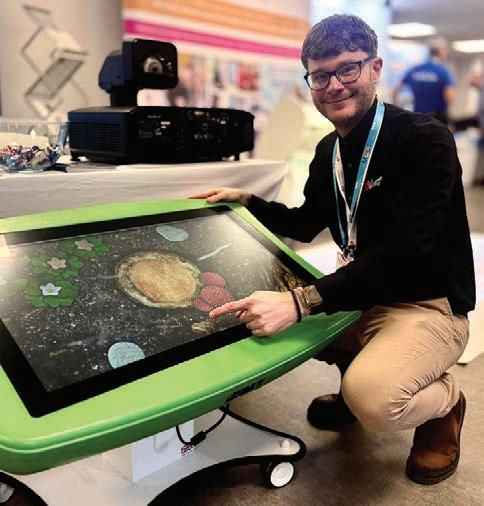



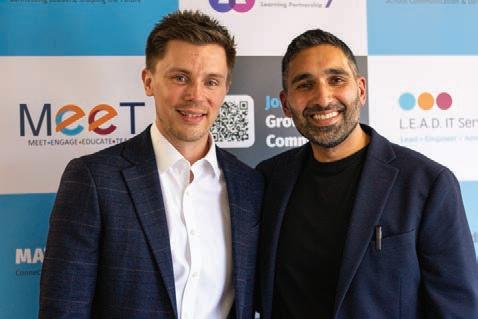



Leading lights in education joined hundreds of academy principals and teachers in a new type of digital technology expo.
Education visionary Dr Fiona Aubrey-Smith, educator – and Gogglebox star – Baasit Siddiqui and academy trust chief executive Dr Paul Heery, who is one of the government’s specially appointed school improvement advisors, took to the stage at the packed MEET and MATNetworks event in Derby. Organised by Derby technology company L.E.A.D. IT Services, the day was aimed at equipping teachers and principals with the
latest advances and best practice in digital education.
It was the first time the MEET event had been combined with the UK-wide MATNetworks educational leadership conference.
‘It’s more than worth the effort to go along’
Headline speaker Dr Aubrey-Smith, named by Education Business magazine as one of the top 50 visionary women in education, spoke on shifting mindsets from ‘ed tech’ to putting the art and science of educating at the heart of digital
tools in the classroom.
Dr Heery, founding chief executive of the White Hills Park Trust, told the audience how the Government’s RISE (Regional Improvement for Standards and Excellence) scheme was helping schools, while break-out sessions covered use of AI in the classroom and practical tips on using 3D printers and virtual reality headsets.
Matt Crawford, chief executive of Embark Federation, which has 25 schools across Derbyshire, said it was great to see so much collaboration between school leaders on the day.
He said: “If you can take one or
two ideas from an event such as this that you can then take back and practise, then it’s more than worth the effort to go along.”
L.E.A.D. IT Services director Lee Jepson said: “We set up MEET to bring together different schools and multi-academy trusts and allow them to collaborate.
“Combining with MATNetworks this year was a great opportunity to make it bigger and better.
“Hearing the conversations and feeling the energy in the room was a great endorsement of our collaborative education family here in Derbyshire – all working hard to give children the best start.”
A Nottinghamshire business that designs, installs and maintains green gas refuelling stations has helped upgrade its digital systems thanks to the nationally funded Made Smarter Programme. Roadgas has been helped by the government supported initiative which offers technologybased support to manufacturers and SMEs across the UK including the East Midlands. Support ranges from financial assistance to expert advice as well as leadership training to help steer the digital change.
Catherine Rix, marketing manager at Roadgas, attended an eight-week digital technology course as part of the support.
She said: “We heard about the leading digital transformation course through our membership with the Chamber which helped to steer our thought process as well as suggesting ways in which we could use digital tools in areas of the business.

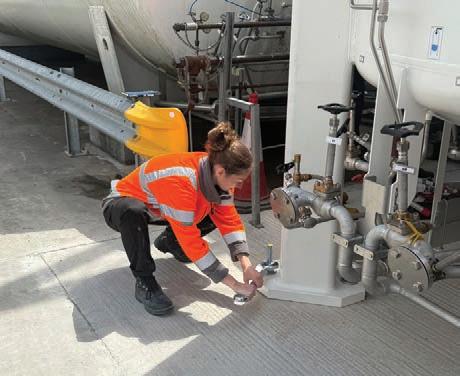
software platforms that will help with day-today-job and site management, as well as the introduction of a lone working app to ensure the health and safety of team members especially when working at night.
Catherine said there was excitement about digital transformation across the business. She said: “All of our employees are definitely on board and very keen for it to happen.”

“As a leadership team we have spent 12 months developing our Going Digital project, laying out our objectives and outcomes as well as looking at the available solutions.”
The Roadgas project includes field engineer

She said the team could see that technological transformation will play a key part in Roadgas’ development.
“It’s essential to future-proof your business, which is something that I learnt on the course.
“To future-proof, we need to have digitalisation across the business, especially with the growth expected within the next three-tofive years. This is so important.”
is.gd/bBnrTf

By Dr Hellen Mukiri-Smith (pictured), a lecturer in Loughborough University’s Department of Law
ALos Angeles County Superior Court jury found that Meta and Google were liable in negligence for deliberately designing platforms that trapped the plaintiff, a young woman who begun using Meta’s Instagram app and Google’s YouTube app as a child, in a cycle of addiction causing her mental health harms.
During the trial of the action filed in 2023, the plaintiff, KGM, testified that she began using Google’s YouTube at the age of six and Meta’s Instagram at the age of nine and that she had become addicted to these platforms.
She testified that because of her addiction, she spent hours on end on the platforms which negatively
impacted her relationships with family and school. By age 10 she said she had become depressed and was engaging in self-harm and was diagnosed with body dysmorphic disorder and social phobia attributed to her use of the platforms. The jury found that Meta’s and Google’s apps played a substantial role in the mental health harms suffered by the plaintiff and awarded her damages in the amount of $6m.
This decision is likely to shape ongoing global debates about the extraordinary power and influence wielded by social media companies over infrastructure, behaviour and norms that shape the lives of social media users, and how to ensure that social media companies are held accountable.
KGM is the first test case known as a bellwether, tied to more than 1,600 lawsuits brought by parents and social districts across the United States against social media companies.
‘The decision does not mandate companies to change the design of their platforms’
Meta and Google have stated that they intend to appeal the jury’s decision. If they lose their appeal and the jury’s verdict is upheld, the verdict is likely to have an impact on the outcome of other lawsuits

Some social media platforms are accused of being designed to ‘trap’ young users

against social media companies and might enable groups who claim to have suffered similar harm through social media platforms to seek damages. The decision may also put some pressure on social media companies to change their product design.
Although the jury’s decision highlights the harms caused by addictive design features that are embedded in social media platforms such as algorithmic amplification, infinite scroll, constant notifications and beauty filters, the decision does not mandate companies to change the design of their platforms.
Additionally, while there have been efforts to regulate social media companies in some jurisdictions through regulations such as the UK’s Online Safety Act, the EU’s Digital Services Act and Digital Markets Act and the EU’s and UK’s General Data Protection Regulations, regulatory challenges remain.
The question is whether legislators and regulators will now take steps to regulate the design of social media platforms in ways that protect rights, and that address structural conditions that drive harm through these platforms.
Specifically, whether legislators and regulators will:
1. Enact regulations that fully addresses the problematic surveillance business model of social media companies which is based on extraction and exploitation of data and ‘profitoriented algorithmic curation of content’ to maximise user engagement on the platforms.
2. Take steps to prevent the dominance of social media companies, which contributes to watered down regulation.

Leicester law firm Howes Percival has acted on the acquisition of East Midlands-based All Purpose Cleaning and Catering Supplies.
Melton Mowbray-based All Purposes has more than 50 years of history delivering hospitality products to sectors including education, healthcare, leisure and the public sector.
Howes Percival advised buyer All Purpose Holdings on the complex acquisition, co-ordinating multiple interlinked transactions involving restructuring, refinancing and longterm employee incentives.
Led by corporate partner Jeremy Hyde, the firm’s team included corporate lawyer Chloe Chambers, with Simon Warburton and Anindita Banerjee providing banking support.
Samuel Moore looked after tax, while employment law was handled by Nick Benton and Courtney Kidney.
Eureka Education has schools and campuses in cities including Lyon in France

The buyers were also advised by Ten XGrowth and C&G Advisory. Gateley acted for the lender. Roythornes advised the sellers.
Jeremy Hyde (pictured) said:
“I’m delighted with the leading role we were able to play in making this deal happen.
“Howes Percival’s central coordination was critical in delivering a smooth completion and ensuring the commercial and strategic aims of all parties were achieved.”

One of the biggest private professional education providers in France and Switzerland has made its second international acquisition in three months in a deal supported by Browne Jacobson.
Eureka Education, backed by French private equity firm Naxicap Partners, has acquired Knovia Group, a UK apprenticeship and vocational training provider, from Sovereign Capital Partners.
Together with its acquisition of Spanish vocational training provider Albali in January 2026, the deals are said to demonstrate Eureka Education’s standing as a significant pan-European education group.
The Browne Jacobson team advising included partner Sandra Wong, partner Christian Farrow, associates Dina Hansotia and Laura Dunn, principal associate Matt Dorman and associate Salwa Ali, partner Shaun McCabe and associate Lucy Charlesworth, and principal associate Craig Thomas.
They were supported by specialists including experts from the firm’s education and skills sector.
Sandra Wong, principal partner on the deal, said: “This acquisition is a great example of what our cross-border private equity practice does best – delivering seamless, multi-disciplinary advice on complex international transactions.
“It also underscores the strength of the UK’s skills sector as a destination for ambitious, growth-focused investors.”


Professional services business
Haines Watts has opened new offices in Nottingham and Derby, strengthening its presence across the East Midlands.
Management said the expansion reflected the firm’s continued growth and commitment to supporting businesses across the region.
‘These are key business locations, and it’s fantastic to be re-establishing our presence here’
Building on its established base in Allendale Road, Leicester, the new offices will allow Haines Watts to deliver accountancy, tax and advisory services to a broader client base.
The move marks a return to Nottingham and Derby, reinforcing its long-standing connection to the cities.
The new Nottingham office is in Toll House Hill and the Derby office is in St Christopher’s Way.
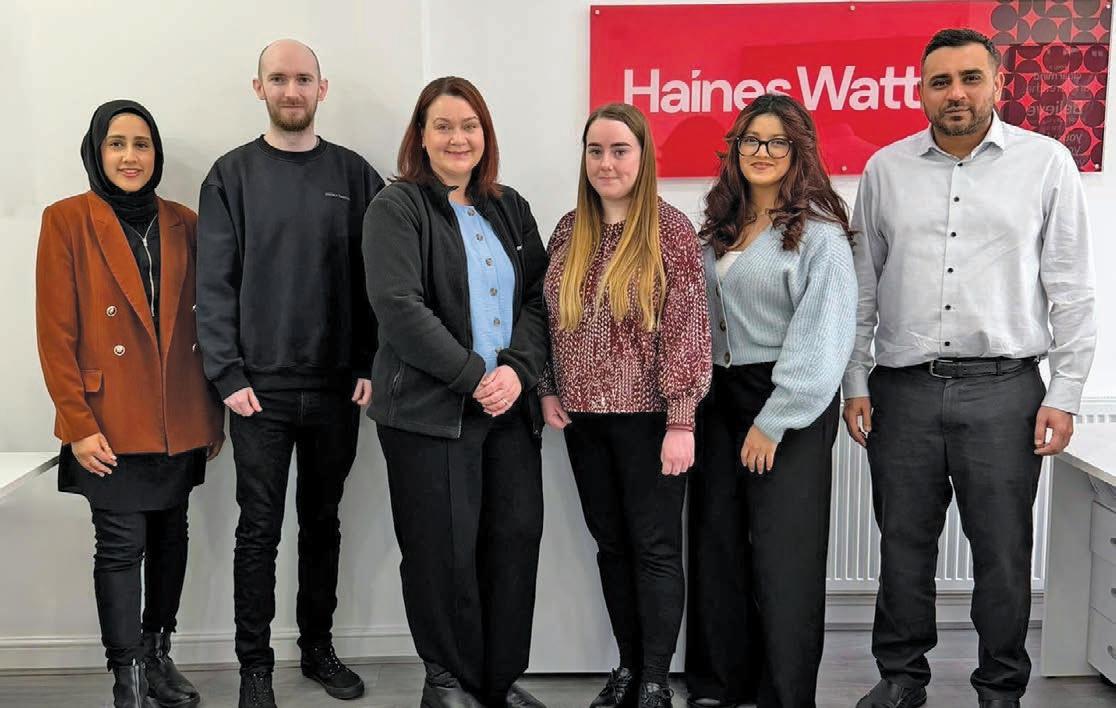

Leicester office director Shazin Tayub said: “Opening offices in Nottingham and Derby is an exciting step for us. These are key business
locations, and it’s fantastic to be reestablishing our presence here. We’re passionate about supporting growing businesses across the East
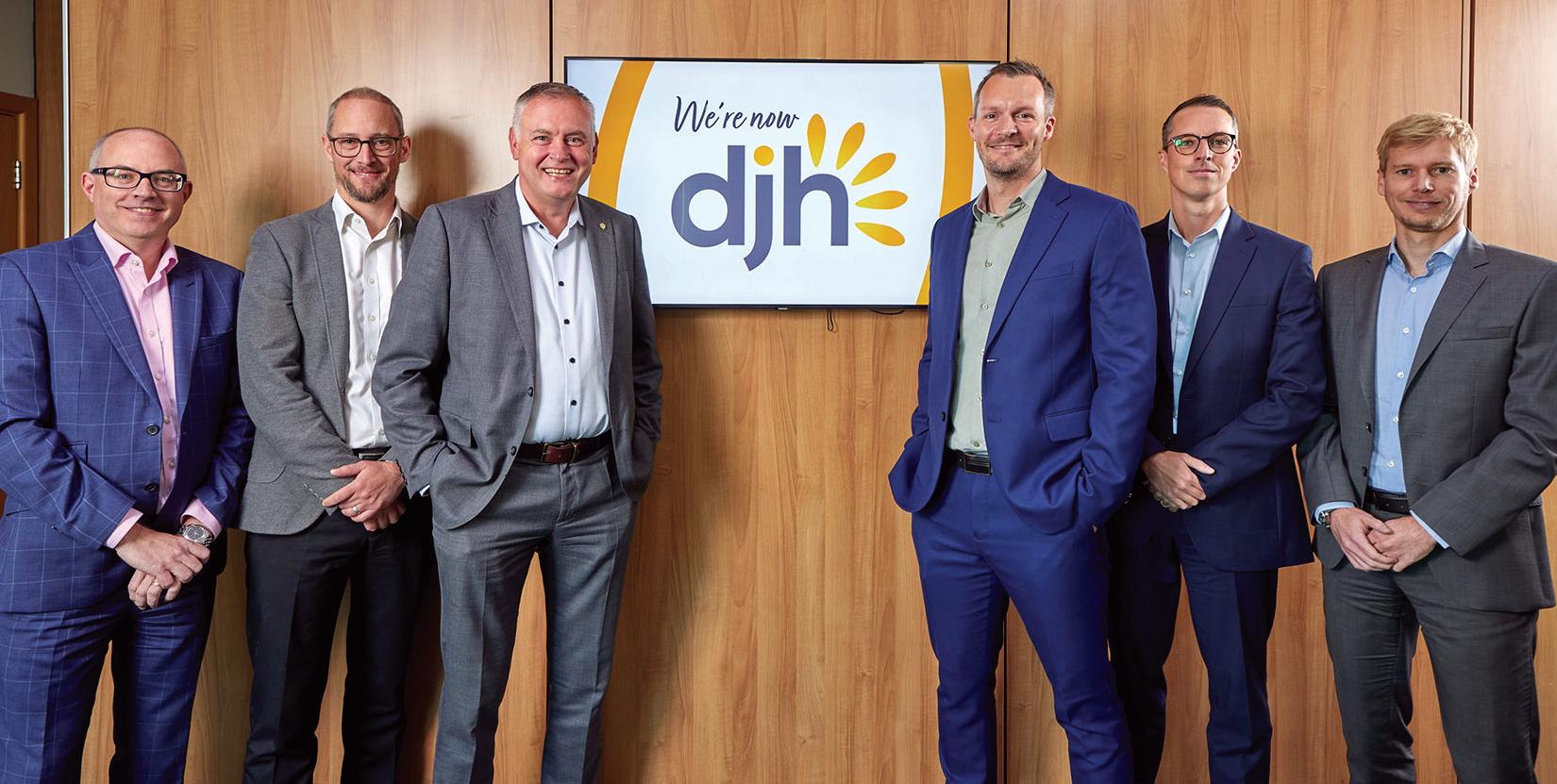
An East Midlands accountancy group has marked 20 years at its Pride Park offices by setting out ambitious growth plans.
DJH Derby, which was formerly known as Ashgates, has seen turnover rise from £2m to £7m since it moved to the location near the football stadium in 2006, with the team doubling in size to over 90 people.
The firm now hopes to take that towards 100 people by building on opportunities with SMEs and owner managed businesses.
Two of the senior management team – David Newborough and Steve Martin – have overseen the expansion during the last two decades, with fellow directors Arron Anderson, Ian Johnson, Jonathan Williamson and Gavin Booth all approaching almost 20 years of service.
The business offers accountancy, tax and business advisory support, as well as managed IT services through DJH Tech Partners, an independent business led by managing director Jon Woliter.
Midlands, and these new offices allow us to continue delivering proactive, partner-led advice to both new and existing clients.”
Dains has appointed Natalie Brown as regional finance director for the Midlands.
She will work closely with regional managing partner Mark Tuckwell, supporting other partners across the Midlands in driving financial performance, overseeing budgets and strengthening reporting processes.
Leading the regional finance team, she will play a key role in integrating newly acquired firms into the structure, ensuring consistent reporting and alignment within the group.
Natalie joined the Dains group through the acquisition of Isosceles Finance in 2022, where she worked for more than 10 years in its outsourced finance team supporting SMEs. She joined the leadership team in 2022 and was promoted to account director in 2023.
She said: “I’m delighted to step into this role at such an exciting time for the Midlands region. Having grown within the business, I’ve seen firsthand the impact that strong financial visibility and collaboration can have on performance.”

Leicester City Football Club has teamed up with the University of Leicester to offer £5,000 scholarships to encourage school and college leavers in deprived areas to go into higher education.
Five Leicester City scholarships are up for grabs for home applicants in areas including parts of Coalville and Hinckley, as well as New Parks and Beaumont Leys in the city.
The club and university have collaborated on providing opportunities for children and young people since the Leicester City Football Club Children’s Health Partnership was launched in 2018.
Leicester City chief executive Kevin Davies said: “We are proud to support opportunities that can make a real difference for young people across our city and county.
‘We are incredibly proud to be working with Leicester City Football Club to break down the barriers to education and opportunity’
“Through this collaboration with the University of Leicester, we want to help remove some of the
Engineering apprentices from Mars’ Melton Mowbray site expanded their practical skills on a two-week welding programme at Stephenson College, Coalville.
Marcus Newton, Jacob Brady, Lottie Smith and Joshua Hatherley were picked from around 250 applicants to enrol on Mars’ five-year Level 3 engineering apprenticeship.
The apprentices are based primarily at Loughborough College, but spent time at the group’s Stephenson site to use its welding and fabrication facilities, under the supervision of engineering lecturer Stephen Smith.
The group described the experience as “fantastic” and “a brilliant opportunity to get hands-on,” praising the facilities for giving them real world exposure to specialist engineering skills.
Josh said: “It was really easy to learn by watching the lecturer and then repeating the activity ourselves. Being in a college workshop means you are in a supportive environment and can learn through trial and error.”
barriers that can stand in the way of higher education and support talented local students to take the next step in their journey.
“This scholarship reflects our commitment, and that of King Power, to investing in the communities we are proud to represent.”
University president and vicechancellor Professor Sir Nishan Canagarajah said: “We are incredibly proud to be working with Leicester City Football Club to break down the barriers to education and opportunity.
“Social mobility and inclusion are priorities that are especially urgent in Leicester, the UK’s first
‘superdiverse’ city, and at our university, where many come from low-income households.”
In addition to the £5,000, successful applicants will get a boost to their CVs thanks to opportunities with the Foxes including the chance to take part in community initiatives and invitations to events at the King Power Stadium.
The deadline to apply for one of these scholarships is 14 May 2026, with each student starting their studies at the University of Leicester in September.
For eligibility criteria and to apply, visit: is.gd/vyaqjC
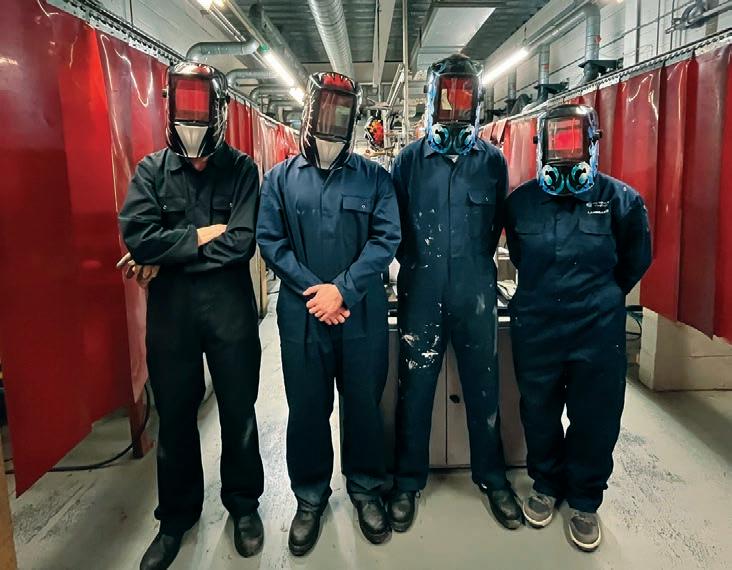






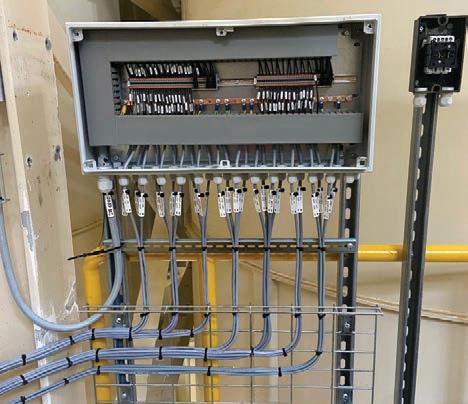
Since 2012, GRAYS Electrical Engineering Limited has positioned itself as a premium commercial and industrial electrical contractor, serving businesses across the East Midlands. As an industry-recognised contractor, you benefit from a partner with a proven track record of delivering complex projects safely, efficiently and to the highest professional standards.
Whether you operate distribution warehouses, medical facilities, quarrying sites or manufacturing factories, your electrical infrastructure is critical to performance, compliance and long-term growth. You need a contractor who understands operational pressures, minimises disruption and plans beyond immediate installation.
GRAYS works alongside you and your senior decision-makers as a strategic partner, helping you phase, futureproof and optimise your assets. By taking time to understand your business objectives, risk profile and expansion plans, you gain tailored solutions that support resilience and productivity.
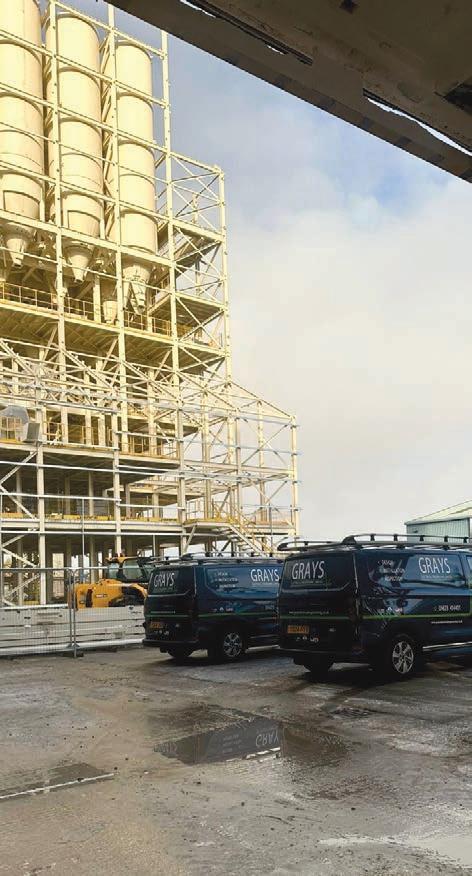
You are not simply appointing an electrical contractor; you are securing an expert partner committed to long-term relationships and proactive planning. From new commercial and industrial developments to complex upgrades and structured maintenance strategies, you receive capability-led delivery backed by strong leadership and disciplined project management. Clear communication, commercial awareness and uncompromising safety standards give you confidence at board level and assurance on site. Across the East Midlands, your business benefits from an industry-recognised team focused on quality, compliance and performance.
With GRAYS as your contractor, your electrical infrastructure is designed not only for today, but for the demands of tomorrow. You gain certainty, accountability and a trusted adviser invested in your continued success. Supporting sustainable growth at every stage of development.
VISIT: www.grayselectricians.co.uk CALL: 01623 414401
Harry Gamble (pictured), a surveyor at FHP Property Consultants, looks back at activity from the firm’s Derby office over the start of 2026.
Pleasingly, as we rolled over into the new year, we were hit with an unexpected demand across industrial, office and retail, with high enquiry levels, increased viewing numbers and deals being concluded.
We found that businesses we had been talking to six months prior have come back into the frame and are starting to make decisions. Across all three sectors, we were extremely busy with 32 deals completing across the first three months of 2026.
January and February proved to be very active, and we are hoping that this will set the precedent for the forthcoming year.
In March we still completed on a number of lettings and sales, but activity across telephone and email


‘After
a positive 2025 in Derby’s office market, the trend continued into 2026’
enquiries slowed down which can be linked to the ongoing tensions in the Middle East.
Within the retail sector, one of the standout transactions for us was the sale of The Royal Buildings, one of Derby city centre’s landmark buildings in Victoria Street. It comprises 22,062 sq ft, and marked a major investment sale within the city centre.
After a positive 2025 in Derby’s office market, the trend continued into 2026 with a number of deals
completing. Notably, Pentagon House, a 30,000 sq ft office building just off the A61 in Derby, has now reached 100% occupancy with an occupier taking a secondfloor wing of around 4,000 sq ft for a period of 10 years.
We are also pleased to launch The Exchange, a new office scheme situated on Pride Park where we can offer build-to-suit opportunities from 10,000 sq ft to 45,000 sq ft on either a leasehold or freehold basis.
Finally, the industrial market has seen a variety of deals from 500 sq ft to 66,000 sq ft. Ascot Drive has proved to be positive with 5,814 sq ft of prime trade counter space being recently let to Lincs Electrical Wholesalers. Off the back of this we have received two further

instructions, one being Unit 6, Newmarket Court comprising 2,895 sq ft, and the second being the former Jewson site of roughly 1.63 acres to be sold on a long leasehold basis.
Pleasingly, we are seeing deals complete and businesses looking for their first or even next step. The majority of the deals are within the sub 5,000 sq ft industrial market but we have transacted the letting of 66,000 sq ft in Alfreton on a 6.4 acre site.


Analysis from planning, design and development consultancy Marrons shows that grey belt policy (covering lower quality green sites within the green belt) continues to have a major impact on housing planning permissions, with 75% of major residential appeals approved since the policy’s introduction in December 2024.
The study reviewed all 224 planning appeals referencing “grey belt” between 12 December 2024 and 28 February 2026.
The headline finding shows that 18 of 24 major residential schemes – defined as developments of 10 or more dwellings – were allowed by the Planning Inspectorate.
size is between two and nine dwellings, with 22 out of 73 schemes gaining approval.
Overall, 48 of 111 residential grey belt appeals were allowed, equating to a success rate of 43%.
Big housing schemes make up 22% of total residential grey belt appeals and 38% of approved residential schemes.
Marrons said the data also highlights a pattern that the larger the site, the more likely it is to gain approval. Developments of 200 or more dwellings were all approved, those with 100-199 dwellings achieved a 71% success rate, 50-99 dwellings were 100% approved, and 20-49 dwellings saw a 67% approval rate.
(comprising all land uses), 50% were allowed –down from 57% previously.
Marrons planning director Roland Brass said: “Grey belt policy continues to be a game changer for achieving major residential planning permissions. The data shows that larger sites in particular are much more likely to succeed, which is crucial for unlocking the scale of development we need to address the housing crisis.
“Importantly, grey belt policy is not just about housing; it is also supporting a range of land uses including commercial, infrastructure, energy and community projects, which provide benefits to local areas.”


‘A Porsche should drive and handle so very well, yet when driven in a more sedate manner, the refinement and comfort should also impress’


FACTFILE
MODEL
Porsche Taycan 4S CT
PRICE OTR
From £99,650
PERFORMANCE
Top speed: 150 miles per hour
0-60 mph: 3.8 seconds
POWER
600 BHP
RANGE
Up to 350 miles on a single charge
The Porsche Taycan was first revealed some seven-years ago and was the company’s first electric car. This version, the Cross Turismo came two-years later and added genuine practicality to the car.
Unmistakably a Porsche, one would classify it as a sporting estate model for the masses.
As a car to get from A-to-B in haste, the Taycan is incredibly quick and impressive. A Porsche should drive and handle so very well, yet when driven in a more sedate manner, the refinement and comfort should also impress. On the road, the performance figures are quite incredible. Not only will it top 150mph, but it will also catapult you to 60mph in just 3.8 seconds.
Frustratingly all you hear is a little wind noise instead of an engine rumble as the speedo rapidly heads onto the other side of the dial territory.
The Taycan has little body roll that help guides it through bends at breakneck speeds, and with it being 4-wheel-drive, traction is plentiful whatever the conditions. On the inside, access is good and once ensconced the driving position is first class with extremely comfortable seats – even in the rear, adults will find plenty of room.
According to Porsche, one can expect a (standardised) WLTP range of over 350 miles which I feel slightly optimistic – maybe 300 or so is more realistic. At home, charging is cheaper than out-andabout when on trickle and is comfortably undertaken throughout the night.
If one is out, a quick-charge is not cheap, but it tops the battery up from 20-90 per cent in as little as 20 minutes.
Overall, it’s not cheap but any 911 owners would not be disappointed making the switch to keep all the Porsche accoutrements, with the added bonus of greater room and certainly a lot more practicality.



Chamber president Dr Cham Kang says digital technologies might be increasingly prevalent, but human connection will always be key for business.
Recently I have visited some international exhibitions and noticed that while exhibitors were showcasing scientific data in a more detailed and sophisticated manner, the human intervention was stronger than ever.
Building trust and relationships will always require the human connection because digital technologies, for all their capabilities, cannot genuinely feel care or build emotional bonds. They cannot replicate lived experience, moral judgment or the subtle understanding that comes from shared human context.
In moments of uncertainty, frustration or vulnerability, customers seek reassurance, not just a machine resolution.
A human voice that listens, adapts and responds with empathy creates a sense of trust that no algorithm can.
True connection is built through authenticity, presence and emotional intelligence. For SMEs especially, this human touch is not a limitation, it is a strategic advantage that transforms exceptional human customer service into trusted relationships and loyalty.
However, delivering an exceptional customer experience can feel like a constant balancing act for SMEs.
Limited budgets, smaller teams and growing competition often make it difficult to match the scale and sophistication of larger organisations. Yet, this is precisely where SMEs have a unique advantage. By combining accessible AI and digital tools with their natural strength in personal relationships, SMEs can create customer experiences that are not just competitive, but genuinely distinctive.
We all understand AI can no longer be the exclusive domain of large corporations.
Today, affordable and easy-to-use digital tools allow SMEs to automate routine tasks, understand customer behaviour and deliver faster service without requiring massive infrastructure.
Simple AI-powered chatbots can oversee common queries around the clock, while CRM (customer relationship management) systems track preferences and personalise engagement.

AI is useful but humans create connections and add meaning to any business

‘SMEs often know their customers personally, creating trust and loyalty that technology alone cannot replicate’
That human connection, however, remains the SME’s greatest strength.
SMEs often know their customers personally, creating trust and loyalty that technology alone cannot replicate.
While AI and digital drives speed and efficiency, it is human connection that includes empathy, authenticity and the contextual understanding that creates lasting impressions.
The real opportunity lies in blending these strengths thoughtfully.
AI and digital can identify patterns such as when a customer is likely to disengage while humans add meaning to the interaction.
For instance, a system may trigger a follow-up message, but a business owner should personalise it with genuine care. This
combination transforms automation into relationship building.
AI and digital enables smarter decisionmaking. With even modest data, SMEs can identify trends, forecast demand and personalise offerings which they are naturally placed to undertake compared to large corporates.
Instead of relying on guesswork, businesses can act with greater confidence while still validating insights through direct customer interaction.
The goal is simple: let AI and digital handle scale and efficiency, while humans focus on connection, understanding, meaning and trust.
One luxury SMEs do not have is budget to recruit AI and digital experts, so, buy-in from current team members who may not be technical is essential.
To gain that, focus on outcomes, not technology – demonstrate how AI and digital saves time, reduces repetitive work and improves customer satisfaction.
Don’t forget – when the Industrial Revolution started in the mills of Derbyshire, the machinery could not operate or be optimised without human intervention.
History is repeating itself.