





The last few weeks have been incredibly busy for East Midlands Chamber. Hundreds of people joined us for the Leicestershire and Nottinghamshire Business Awards which, I’m sure everyone will agree, were a huge success, once again highlighting the quality of enterprises in our region.
You can read about both awards on pages 60-63, while pictures from the Derbyshire Awards will feature in the May magazine.
The annual Enterprising Women conference took place at Vaillant Live in Derby (see pages 64-65), and was a celebration of the work the region’s business women do to make this part of the world such a great place to live and work in.
The conference saw the launch of the 2026 Enterprising Women Awards (details on page 45) which take place this September at Center Parcs Sherwood Forest. You can find out how to enter at: https://is.gd/JYax3C.
‘Events highlight how much the Chamber does for the business community, but they also show how much positive momentum there is out there’
The Chamber also hosted its annual Manufacturing and Trade Conference at Loughborough University, and a week earlier helped Nottinghamshire County Council host its Digital Awareness Conference, (see page 38 to read about both).
Not only do all those events highlight how much the Chamber does for the business community, but they also show how much positive momentum there is out there despite all the economic challenges the world manages to throw at us.
This magazine also has a political theme.
For many, politics has become a bit of a dirty word, so hopefully what our regional and national leaders – including cabinet minister Liz Kendall – have to say in these pages will go some way to reassure us that there is still room for sensible debate out there.
I hope you enjoy the read.
Tom Pegden, Editor, Business Network

Editor Tom Pegden
T: 07816 347 451
E: tom.pegden@emc-dnl.co.uk
Contributor Tim Smith
Chamber Membership
E: membership@emc-dnl.co.uk
Follow the Chamber
W: www.emc-dnl.co.uk
Twitter: @EMChamberNews
COVER PHOTO
Main image: Berkfield was one of the winners at this year’s Leicestershire Business Awards
See page 60
Publishers Kemps Publishing Ltd
8, The Courtyard, 707 Warwick Road, Solihull, B91 3DA
T: 0121 765 4144
w: www.kempspublishing.co.uk
Managing Editor Laura Blake T: 0121 765 4144
E: laura.blake@kempspublishing.co.uk
Designer Lloyd Hollingworth
Advertising T: 0121 765 4144
E: jenni.everall@kempspublishing.co.uk
Printers Stephens & George Print Group W: www.stephensandgeorge.co.uk
BUSINESS NETWORK is produced on behalf of East Midlands Chamber (Derbyshire,
APRIL 2026
MEMBER NEWS
4 Devolution delay is hampering business
APPOINTMENTS
26 Ketchup sources new marketing director
THE BIG INTERVIEW
29 Liz Kendall, Leicester West MP and Secretary of State for Science, Innovation and Technology
STRATEGIC PARTNERS AND PATRONS
34 College students visit Auschwitz
CHAMBER NEWS
36 Interest rate cut might ease impact of war in the Middle East
CHAMBER NETWORKS
44 The importance of investing in politcs
TRAINING & EVENTS
48 Conference highlights Chesterfield’s vibrancy
SUSTAINABLE EAST MIDLANDS
50 Logistics Centre is offsetting its emissions
INTERNATIONAL TRADE
52 Middle East crisis in the spotlight
POLITICS
54 Devolution brings host of opportunities
FEATURES
56 GREEN BUSINESS & SUSTAINABILITY
How switching to LEDs can cut costs
58 Taking control of energy
60 FOCUS
A round-up of the Leicestershire and Nottinghamshire Business Awards, as well as the 2026 East Midlands Enterprising Women conference
66 LEGAL SERVICES
What really kills business agreements
68 Wills, LPAs and why forward planning is so important
DIGITAL & TECHNOLOGY
70 Derby University takes the nuclear option
BUSINESS SUPPORT
72 LEGAL
Employment Rights Act heralds a raft of changes
75 FINANCE
Event puts focus on support for exporters
76 SKILLS
Meeting the needs of employers
79 PROPERTY
Tech centre sows seeds for future farming
80MOTORING
Nick Jones tests Suzuki’s new e Vitara
THE LAST WORD
82 Chamber president Dr Cham Kang calls on politicians to support business


Amy Orton (pictured) is an account director at PR company 1284 and a former Leicester Mercury politics reporter. Here she writes about devolution – or the lack of it – in Leicester, Leicestershire and Rutland.
The system of governance for our towns, cities and regions is changing.
The emergence of mayoral combined authorities around the UK is shifting how funding is allocated. Nowhere is this more evident than in Leicester, Leicestershire and Rutland.
To its north, the East Midlands Combined County Authority (EMCCA) formed in February 2024. Mayor Clare Ward was elected three months later and now represents 2.2 million people across the region.
No such authority exists in Leicester, Leicestershire and Rutland (LLR), and increasingly the question being posed is what delaying devolution means for businesses and communities in the region.
As seen in combined authority areas, with devolved status comes the luxury of government access for the elected mayor. It also means
regional decision-making powers over issues including transport, skills and employment and infrastructure. It brings direct dialogue with Number 10 and firmer links with government departments.
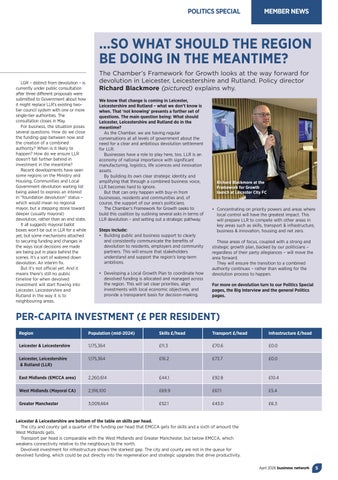
‘Data shown in our tables show some of the disparities between funding received’
Devolved status is also reflected in funding settlements – and there’s currently a stark difference in investment being allocated to devolved and non-devolved areas.
East Midlands Chamber analysis reveals that – compared with devolved areas – LLR is consistently losing out.
Data shown in our tables shows some of the disparities between funding received (or not) in LLR, and money distributed to neighbouring areas with established mayoral combined authorities.
While some of the reasoning behind this could be historical –Leicestershire County Council has long maintained that it is the lowest funded council in the country – the figures suggest LLR is falling behind.
Of course, it’s not just the amounts of money transferred from Whitehall, but the length of settlements too. Planning for longterm investment and projects becomes almost impossible when allocations are decided from one year to the next.
Multi-year integrated settlements –such as those handed down to mayor-led authorities – make longer-term planning simpler.

Localised funding packages are easier to allocate and implement.
In the autumn budget Chancellor Rachel Reeves indicated there will be even more spending power for regional mayors, which adds another level of urgency.
The reality is that other regions are further along the route to devolution than LLR – and have still seen their legislative and parliamentary approvals paused. Therefore, it’s unlikely that LLRbased voters will be electing their first regional mayor any time soon. 2028 has been mooted as a potential date for change – but lots involved in the process see this as an optimistic estimate.
This is, in part, down to the fact that local government reorganisation (LGR) is viewed in some local and national government quarters as a pre-requisite to devolution.
Leicester and Leicestershire receive significantly lower investment in skills and transport than every devolved region listed.
For instance, East Midlands Combined County Authority receives almost eight-times more skills funding than Leicester and Leicestershire, and 2.5-times more transport funding West Midlands and Greater Manchester both get transformational levels of investment, while LLR receive no infrastructure allocation at all.

LGR – distinct from devolution – is currently under public consultation after three different proposals were submitted to Government about how it might replace LLR’s existing twotier council system with one or more single-tier authorities. The consultation closes in May.
For business, the situation poses several questions. How do we close the funding gap between now and the creation of a combined authority? When is it likely to happen? How do we ensure LLR doesn’t fall further behind in investment in the meantime?
Recent developments have seen some regions on the Ministry and Housing, Communities and Local Government devolution waiting list being asked to express an interest in “foundation devolution” status –which would mean no regional mayor, but a stepping stone toward deeper (usually mayoral) devolution, rather than an end state. It all suggests mayoral ballot boxes won’t be out in LLR for a while yet, but some mechanisms attached to securing funding and changes in the ways local decisions are made are being put in place behind the scenes. It’s a sort of watered down devolution. An interim fix.
But it’s not official yet. And it means there’s still no public timeline for when devolved investment will start flowing into Leicester, Leicestershire and Rutland in the way it is to neighbouring areas.
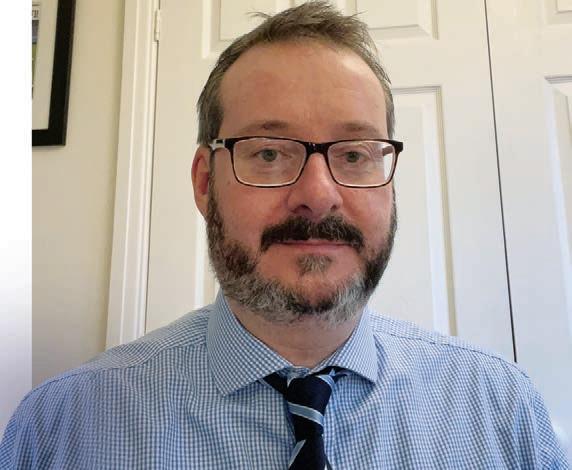
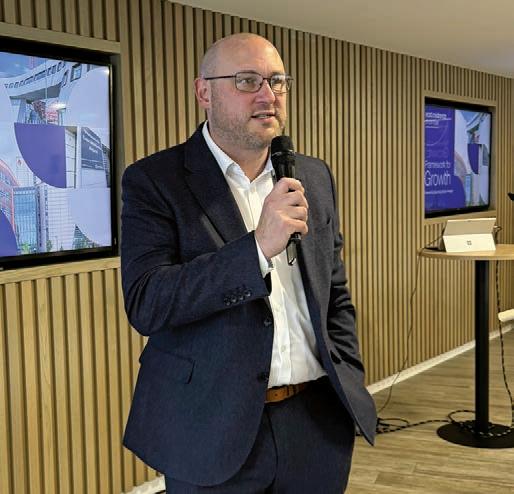
The Chamber’s Framework for Growth looks at the way forward for devolution in Leicester, Leicestershire and Rutland. Policy director Richard Blackmore (pictured) explains why.
We know that change is coming in Leicester, Leicestershire and Rutland – what we don’t know is when. That ‘not knowing’ presents a further set of questions. The main question being: What should Leicester, Leicestershire and Rutland do in the meantime?
As the Chamber, we are having regular conversations at all levels of government about the need for a clear and ambitious devolution settlement for LLR.
Businesses have a role to play here, too. LLR is an economy of national importance with significant manufacturing, logistics, life sciences and innovation assets.
By building its own clear strategic identity and amplifying that through a combined business voice, LLR becomes hard to ignore.
But that can only happen with buy-in from businesses, residents and communities and, of course, the support of our area’s politicians.
The Chamber’s Framework for Growth seeks to build this coalition by outlining several asks in terms of LLR devolution – and setting out a strategic pathway.
Steps include:
• Building public and business support to clearly and consistently communicate the benefits of devolution to residents, employers and community partners. This will ensure that stakeholders understand and support the region’s long-term ambitions.
• Developing a Local Growth Plan to coordinate how devolved funding is allocated and managed across the region. This will set clear priorities, align investments with local economic objectives, and provide a transparent basis for decision-making.

• Concentrating on priority powers and areas where local control will have the greatest impact. This will prepare LLR to compete with other areas in key areas such as skills, transport & infrastructure, business & innovation, housing and net zero.
These areas of focus, coupled with a strong and strategic growth plan, backed by our politicians –regardless of their party allegiances – will move the area forward.
They will ensure the transition to a combined authority continues – rather than waiting for the devolution process to happen.
For more on devolution turn to our Politics Special pages, the Big Interview and the general Politics pages.
Leicester & Leicestershire are bottom of the table on skills per head.
The city and county get a quarter of the funding per head that EMCCA gets for skills and a sixth of amount the West Midlands gets.
Transport per head is comparable with the West Midlands and Greater Manchester, but below EMCCA, which weakens connectivity relative to the neighbours to the north.
Devolved investment for infrastructure shows the starkest gap. The city and county are not in the queue for devolved funding, which could be put directly into the regeneration and strategic upgrades that drive productivity.
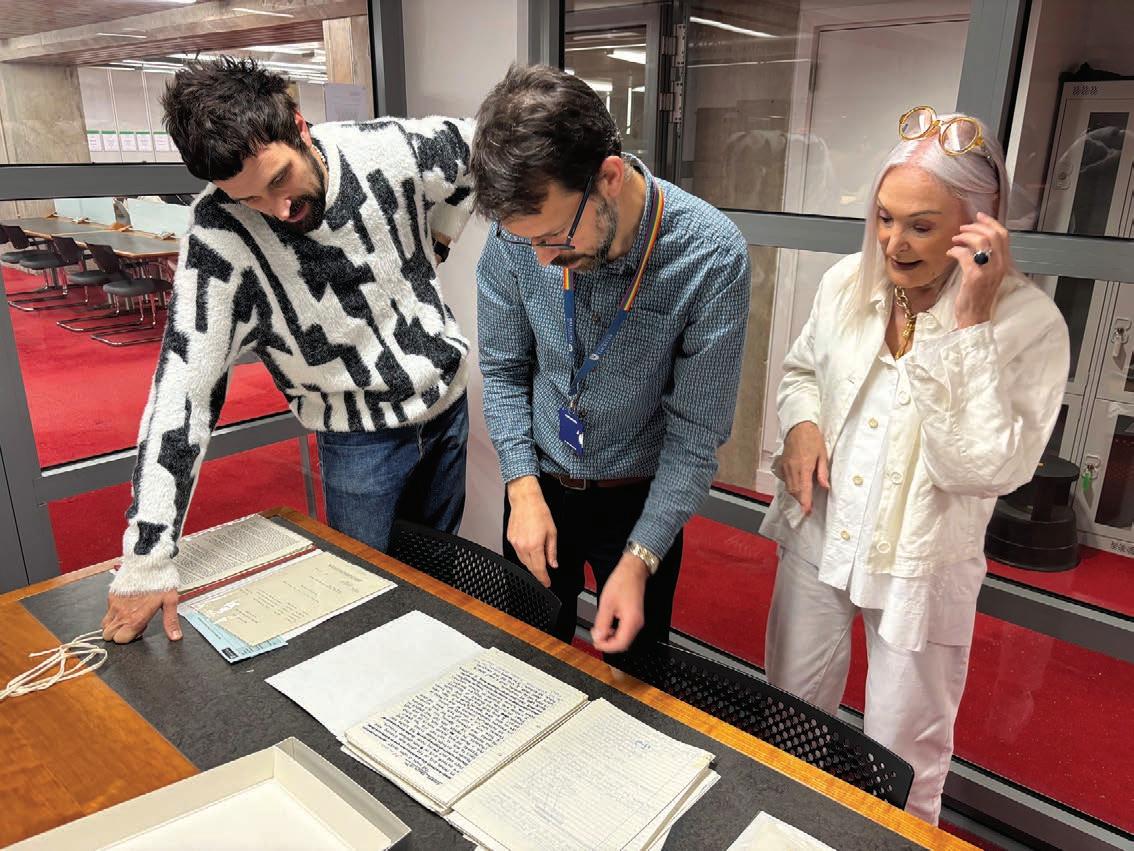
The family of Kasabian frontman Serge Pizzorno have donated items to a University of Leicester archive honouring his grandfather, Wilf Dillon.
Wilf served as the university Students’ Union president between 1971 and 1972, when he was 50 and already a grandfather.
His youngest daughter, and Serge’s mum, Pat Pizzorno, has donated a box of university-related items from Wilf, including newspaper cuttings, exam papers and photographs.
‘His spirit, energy and dynamism, will go on growing with his memory’
Wilf enrolled on a politics course when he was 47, following the sale of his family hosiery business, which he ran with his wife Kate.
The archive includes his profile for the presidency campaign, where he described himself as a working class father of two and grandfather, who had worked as a door-to-door salesman, clerk, engineer, sales rep, manager, factory manager and someone who set up a manufacturing business from scratch.
It also highlighted his trade union achievements, which saw him act as the chairman of two branches and a shop steward, and lead strike action.
He also pointed towards his role on the student council, which helped bring in a university ban on employing South African staff, in

protest at its Apartheid regime.
Years later Wilf featured on Kasabian’s 2014 album 48:13, saying “in mortis ora incerta est” –meaning “the hour of death is uncertain”.
The same year, Serge performed at Glastonbury wearing a T-shirt with Wilfred written across the front.
He told the NME: “That’s my grandad. He’s the most incredible man… I just thought if I wore a little nod to him, he might see it when he opened the newspaper in his
hospital bed on Monday morning and get a kick out of it.
“My mum said he was buzzing from it, so job done.”
Wilf died in 2017 aged 95. His obituary was penned by friend and fellow Leicester graduate, Esuantsiwa Jane Goldsmith, who was the first black female student elected as President of the Students’ Union, in 1975.
She wrote: “Wilf was an internationalist and a socialist who hated privilege, poverty and inequality wherever that might be.
He strove, through his own actions, beliefs, principals and politics, to do his best to redress the balance.
“He was a man of many parts; opera-lover, football fanatic, keen sportsman, rambler, mountaineer, ace quiz compiler and devoted father for daughters Pat and Marcia, who talk fondly about how much fun Wilf was as a dad. It was a pleasure and a privilege to have known Wilf. He was a life-enhancer, and his spirit, energy and dynamism will go on growing with his memory.”
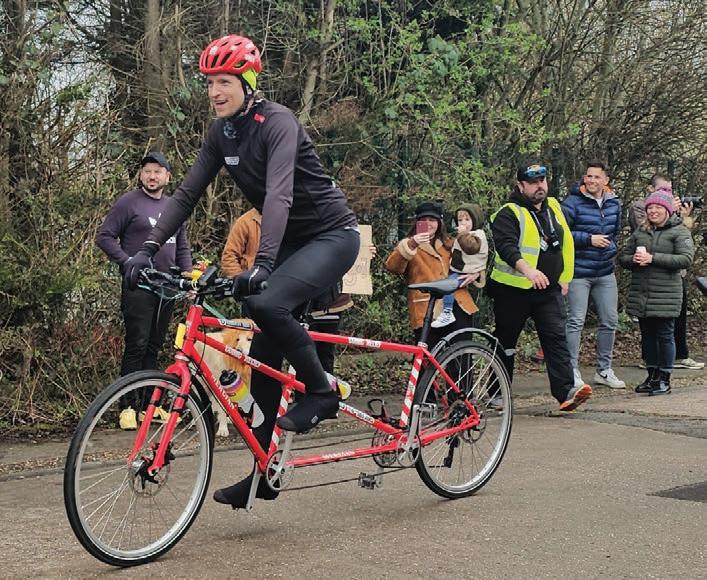


Dean Jackson, founder of specialist sportswear manufacturers HUUB, and James Knowles and Jeremy Murphy, owners of Mercian Cycles, rode tandems alongside the breakfast show presenter after he stopped for lunch in the city.
The Longest Ride for Red Nose Day saw Greg riding a tandem from Weymouth to Edinburgh in eight days, raising more than £4.6m for charity. He was even joined for a stint by the Prince of Wales, much to his surprise.
HUUB supplied Greg’s technical kit, including cycling shorts and waterproof outerwear, and Mercian supplied his hand-built steel-framed custom tandem.
Dean said: “It was such a surreal feeling riding alongside Greg James with people coming out of schools and houses holding up signs and waving and shouting encouragement to him. It was so great to see that Derbyshire really got behind him and cheered him all the way, and it was an amazing experience to be a part of it.
“We were chatting as we rode along and he said he was really grateful for the sportswear and the support. He’s also a really strong rider. Going up to Drum Hill is a horrible hill to cycle up, but he took the tandem up on his own, without any trouble.”

Loughborough College has been officially selected as the East Midlands Centre of Excellence for STEM (science, technology, education and maths) Racing – the global education programme supported by Formula 1.
The college has also become the first organisation to receive a miniature four-lane STEM Racing track, which made its global debut at the competition’s prestigious World Finals in Singapore last September.
This partnership with STEM Racing will enable the college’s T Level and apprenticeship students to gain hands-on engineering, design and racing experience inspired by real F1 principles.
Students will design, manufacture and race miniature F1-style cars, supported by specialist manufacturing equipment and a dedicated wind tunnel from STEM Racing’s official equipment supplier Denford, with guidance from the college’s engineering team.
Christopher Abel, a curriculum head at Loughborough College, said: “This is a brand-new opportunity for our students and for young people across the region, enabling our T Level learners, Level 3 apprentices, and even business and marketing students to gain realworld experience – from engineering and aerodynamics to branding and promotion. It gives them a tangible project with a real competitive edge, and we’re incredibly excited to get started.”
As the regional hub, Loughborough College will host the East Midlands STEM Racing competition from 2026/27, with facilities currently being prepared on campus. Local primary and secondary schools will also be able to request support from the college’s engineering team to manufacture their race cars.
Students participating in the programme will have the chance to progress to national and international competitions, with recent world finals taking place alongside F1 Grands Prix in Abu Dhabi and Singapore.
The college’s own engineering team also aims to compete at the highest level, with big ambitions in the competitive sphere.




The chief executive of Nottingham children’s charity When You Wish Upon A Star has been recognised as one of the region’s top leaders.
Joe Williamson was named in the Midlands’ Most Influential CEO Awards 2026, by CEO Monthly, despite only taking the reins in June last year.
The awards celebrate exceptional leadership, spotlighting chief executives who are driving change, fostering innovation and making a lasting impact on their organisations and sectors. Winners are chosen based on their influence, strategic direction and positive outcomes for their organisations and wider communities.
It recognised Joe's leadership at the charity, which grants wishes to children living with life threatening illnesses across the UK.
Founded in 1990, When You Wish Upon A Star has granted more than 19,000 wishes, creating life-changing experiences for children and their families during incredibly difficult times.
Joe and his team have flown many of these children and their families to Disneyworld, Florida, and to Lapland to meet Father Christmas in the last few months alone.
Central to his leadership is the belief that no two people are the same.
By structuring his approach through coaching, mentoring and
open conversations, he aims to help each individual grow in a way that works best for them.
He said the charity’s mission is rooted in hope and compassion.
He said: “At a time when life can feel overwhelming and uncertain, we exist to make dreams come true and to remind families that happiness, magic and hope are still possible.”
‘Ultimately, a healthy organisation will always outperform a smart one’
Before moving into charity leadership, Joe qualified as a teacher, developing a strong understanding of empathy, care and the importance of believing in young people’s potential.
He believes organisational culture is key to success, he added: "My advice to budding CEOs is simple but often underestimated: prioritise culture and people above everything else.
“Qualifications, training and technical expertise matter, but they will never outperform a healthy, engaged and motivated organisation. People are the true engine of success.
“Ultimately, a healthy organisation will always outperform a smart one. If you get the culture right, the results will follow.”


Johns of Nottingham has launched its first in-prison training workshop



Afourth generation family business is celebrating the double success of being named UK SME employer of the year at the national Apprenticeship and Training Awards and the launch of its first in-prison training workshop.
Johns of Nottingham specialises in services such as commercial decorating, insurance reinstatement and facilities management in a variety of sectors throughout the UK.
From its base in Mapperley it employs around 85 people and also provides work for subcontractors who work around the UK.
Recent projects it has worked on include Derby Market Hall and a 27-storey commercial scheme in Canary Wharf, and it provides facilities support at sites including the Merlyn Vaz Health Centre in Leicester and the Kingsway Hospital in Derby.
The business has worked on a number of big prison contracts including the recently completed HMP Fosse Way in Leicestershire, HMP Stocken in Oakham and the new Gartree Prison in south Leicestershire.
It now has a workshop inside HMP Nottingham to help ex-offenders build skills in painting and decorating.
Financial director Matthew Champman – part of the latest generation to run the business –said training and apprenticeships were the backbone of their company.
He said collecting the ATA SME employer of the year award (for businesses up to 250 staff, with turnovers of less than £50m) was a huge achievement and came on the back of winning SME employer of the year at the 2023 and 2024

Everyone wins when prisoners and ex-offenders find work
‘A real drive to help those who have made mistakes in the past find a second opportunity in life’
Nottingham College Apprenticeship Awards.
He said: “We work closely with the college and most of our painters have come through apprenticeship programmes there.
“After being nominated by Nottingham College for our dedication to apprenticeships, we were incredibly proud to go on and win the national SME Employer of the Year award.”
“It’s really hard to recruit in construction but we’ve found value in investing in young apprentices.
“I would say 70% of our painters have been through our apprenticeships and we have an average employer retention of 18 years, which is
more than triple the national average.
“We’ve also been working with prisons across the UK as part of our commitment to social value. One of our KPIs is to support the rehabilitation of prison leavers by giving them employment opportunities and helping them reintegrate back into the workforce.”
“Sitting on the Employment Advisory Board at HMP Nottingham has given me a real drive to help those who have made mistakes in the past find a second opportunity in life. Creating this workshop is the perfect place to start.”
“We are creating a type of academy within HMP Nottingham, with prisoners in our workwear and gaining the relevant qualifications. When they come to leave we offer them a job or encourage local contractors to.”
Matthew said the business started trading in 1909 and was one of the longest-serving Chamber members, over 55 years. It has an annual turnover of around £12m.
Donna Bharmal is employment services manager at East Midlands Chamber and works closely with Johns of Nottingham. She also sits on the employment advisory board at HMP Nottingham.
She said: “Employers who partner with prisons aren’t just filling jobs – they’re unlocking untapped talent, strengthening communities, and giving people the opportunity to rebuild their lives.”
If businesses are interested in working with prisons and offering training and employment pathways, they can reach out to: donna.bharmal@emc-dnl.co.uk
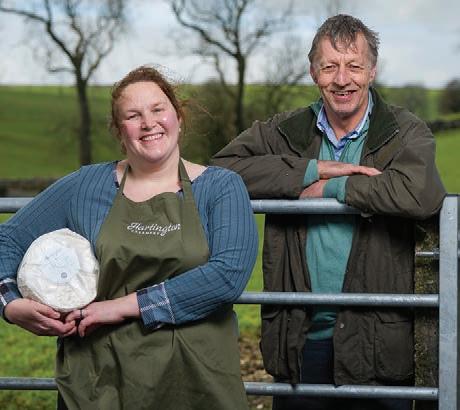
A Derbyshire business is starring in a new regional campaign for National Grid, shining a spotlight on how investment in the electricity network supports local communities, businesses and public services, and helps them to thrive.
Hartington Creamery has become the regional star of The Great Grid Upgrade, a campaign showcasing the UK’s biggest grid improvements and National Grid’s biggest programme of investment in a generation.

The campaign brings the story of the grid changes to life, highlighting the vital role electricity plays in everyday life.
Electricity demand in the UK is set to double by 2050 as homes, transport and industry
switch to cleaner power. Investment in the network is essential to move more homegrown cleaner energy to where it is needed.
Robert Gosling revived the 100-year-old creamery in 2012, and today it produces more than 100 tonnes of cheese a year. It plans to increase production from 100 tonnes to 250 tonnes over the next two years.
Chamber director of policy and insight Richard Blackmore said: “Increasing demand means Derbyshire businesses and communities must be able to have a guaranteed energy supply. As firms plan for the future, they need to know they can count on energy’s role in reliably delivering their project or service as they look to grow.”

This month’s Chamber
Business
Network magazine has a politics theme – the following pages feature the thoughts of a cross-section of the region’s political leaders and campaigners.


I’ve lived in Nottinghamshire all my life. I grew up locally and went to Gedling School –which, if I’m honest, had its challenges at the time and has since closed. Despite that, it was there that I first became interested in politics. At our prom I somehow ended up being voted ‘most likely to be the next Prime Minister’.
While most of my friends spent their late teens enjoying the usual student life, I was the political geek delivering leaflets, knocking on doors and learning how local campaigns work. Politics, for me, was about communities – fixing things when they’re broken and trying to make life a bit better where you live.
I was elected to Gedling Borough Council in 2019 at the age of 22, becoming the youngest councillor in the borough and, at the time, the youngest Conservative branch chairman in the country. Three years later I was elected to Nottinghamshire County Council representing Newark East, going on to serve as cabinet member for education and SEND and then leader of the council.
Being young in politics has its moments, but public service needs energy as much as experience. New voices and different perspectives matter, and I’ve never believed that your age or your background should define the limits of your ambition.
Local government is where politics becomes real. It’s where decisions about schools, roads,

Cllr

Sam Smith (pictured) is leader of the Conservative opposition at Nottinghamshire County Council. He represents Newark East – covering Newark Town, Balderton & Beacon Hill.


social care and libraries directly shape people’s everyday lives. When residents contact their councillor, they’re usually not interested in party politics – they just want problems solved and services that work.
‘Cut waste, focus on growth and show voters that government can still work’
Politically, the Conservative Party has a clear task ahead: rebuild trust. The rise of Reform UK shows that many voters feel unheard and tired with ‘politics-as-usual’. The answer isn’t clever messaging – it’s delivery. Cut waste, focus on growth and show voters that government can still work.
Here in the East Midlands, the opportunity is enormous. The Chamber’s Framework for Growth sets out the right priorities: faster planning, Midland Main Line electrification, smarter business rates and skills funding that actually reflects what employers need.
Business rates reform to reward investment rather than punish success is long overdue – we need a system that encourages firms to expand. And flexible skills funding is spot on; I’ve seen it working locally with apprenticeships and projects
like the STEP Fusion project at West Burton creating thousands of jobs. These asks would turbo-charge the East Midlands.
Businesses here are resilient, but they’re frustrated. Poor roads, skills shortages and rising costs come up in almost every conversation I have. Fix those basics and the region can thrive. The East Midlands has world-class strengths in advanced manufacturing, research and innovation. Harnessing technologies like AI – while making sure people have the skills to benefit – can help power the next chapter of our economy.
I’m most proud of the practical things that have made a real difference to people’s lives. As cabinet member for education and SEND, and then leader, we protected and expanded vital services, kept libraries and rural bus routes going, and pushed through investment in schools.
The biggest buzz is simply being residents’ voice – whether it’s securing a new crossing, tackling parking issues or fighting to keep funding for rural areas.
The biggest issue locally and nationally is the fragmentation caused by Reform UK – they’ve split the centre-right vote and eroded proper democratic representation, which makes it harder to deliver for residents. The solution is simple: get back to basics. Be the party of low taxes, competence and local delivery. Win
back support by proving we’re the ones who actually fix roads, protect rural services and grow the economy. I absolutely think Kemi Badenoch should lead us into the next General Election – she’s got the clarity, economic grip and fighting spirit we need.
The East Midlands Combined County Authority has the potential to be hugely beneficial for our region, but at the moment I think it’s fair to say it hasn’t yet delivered as quickly or as effectively as many of us had hoped.
If EMCCA is going to succeed, we need to see a stronger focus on infrastructure, transport connectivity and the practical projects that will unlock growth across the region. It should be a vehicle to get things done – attracting investment, delivering infrastructure and supporting jobs and growth.
The framework is there, but it now needs leadership and momentum to make sure the East Midlands actually sees the benefits. I was an active campaigner for Brexit, and while there were teething problems, the consequences overall have been positive. We’re now free to strike our own trade deals, cut red tape and back British business. Where next? Lean into those opportunities – focus on global trade, innovation and making the most of our new freedoms.
For more Politics see page 15
Across the East Midlands, businesses are rethinking what success looks like. It’s not only about turnover – it’s about the value created for people and place. The SocialFuse Network brings companies, creatives, and community organisations together to accelerate collaboration and deliver measurable social value.
In a changing economy, competitive advantage is increasingly built through partnership. When businesses connect with charities, social enterprises, creative professionals and public sector teams, ideas move faster, resources go further and outcomes are better for everyone.
That’s the principle behind SocialFuse – a hybrid (in-person and digital) network developed by Kakou to help organisations collaborate with purpose. From themed meet-ups and online discussions to practical workshops and curated match-making, SocialFuse makes it easier to find partners, co-design projects and demonstrate meaningful social value.
• Stronger bids and tenders: Collaboration unlocks new capabilities, making it easier to meet social value criteria and local procurement goals.
• Skills in, barriers down: Crosssector teams share knowledge quickly, building confidence and reducing duplication.
• Local impact: Working with regional partners keeps value in our communities – supporting jobs, wellbeing, and a fairer economy.
Through the SocialFuse Network, members can:
• Build CSR and ESG programmes that fit their capacity and budget
• Co-create products, services, and events with real users
• Share insight and evidence to demonstrate impact
• Discover funding opportunities and potential joint ventures.
The network is designed for action, not just conversation. Every session focuses on practical outcomes –identifying opportunities, agreeing next steps and building relationships that lead to measurable results. Over time, that approach turns good intentions
into credible outcomes that organisations can reference in board reports, tenders and annual impact statements.
One way SocialFuse brings this approach to life is through Biz Buzz, a quarterly facilitated networking series that connects local entrepreneurs, start-ups, corporates and third sector organisations through structured speed networking in a relaxed environment. Rather than traditional networking, Biz Buzz helps participants move quickly into meaningful conversations about collaboration, shared challenges and opportunities to work together.
By combining short, focused introductions with facilitated discussion, Biz Buzz helps organisations identify practical ways to partner – whether that’s building stronger local supply chains, developing joint projects, or exploring social value initiatives that benefit both business and community.
These sessions create space for new ideas and partnerships to emerge while strengthening the wider business ecosystem across Chesterfield and the surrounding areas.
The next biz buzz event will take place on Friday 24 April, bringing together corporates and third sector organisations to spark collaboration and explore opportunities for meaningful partnership.
As expectations around responsible business continue to grow, collaboration is becoming an essential capability rather than an optional extra. By bringing together organisations from across the private, public and third sectors, SocialFuse creates a space where ideas can develop, partnerships can form, and collective impact can grow.
Join the SocialFuse Network and turn partnership into measurable social value.
Next Biz Buzz: Friday 24 April Email: hello@socialfuse.org.uk Visit: www.socialfuse.org.uk




Frank Adlington-Stringer is the 28-year-old Green Party councillor on North East Derbyshire District Council. He is also social security and welfare spokesman for the party at national level. He recently featured on Handcuffed: Last Pair Standing, where he was handcuffed to social media content creator and outspoken political commentator Lin Mei for 10 full days. Here he talks about his life as a Green activist:
Itry my hardest to limit my impact on the environment but I know that this can be a real challenge. While I use shampoo bars and reusable bags, buy seasonally and sustainably where possible and travel by public transport as much as I can, there are many occasions in which I am forced to use more damaging alternatives.
That is why I chose to get actively involved in local politics and why I work hard to make the right choices affordable, and accessible to as many people as possible. The system as it is prioritises profit and that is why we have to flip it on its head and empower people to make positive choices for themselves and the planet.
I never had any intentions of being political but I felt compelled to act once I left full-time education. When I stepped out post-A-Level into the world of work I was met with a harsh reality. Zero hours contracts, temporary gigs, low wages and terrible workplace culture left me asking for more. After two years, I decided to go back into education and learn everything I could about why the world works and why it doesn't. Three years later I had a degree in politics and international relations and was a candidate for the Green Party in my hometown.
It was a huge achievement being elected as the first Green Party councillor in Wingerworth, the ward I have always lived in, and also the first and only Green on the

whole of North East Derbyshire District Council. Since 2023, I have pushed the council to not just be greener but fairer – through my work on the environmental scrutiny committee pushing for our green spaces and waterways to be not just protected but enhanced, working through the Local Plan working group to make sure that we have the right homes in the right place at the right price, or bringing motions to full council to hold the administration to account. I am proud to have shaken up the broken two party politics in North East Derbyshire and spoken truth to power.
The faith put in me by voters locally is not lost on me and every time I step into the council chamber I feel that sense of duty and responsibility. I hope to have represented everyone, regardless of how they voted, honestly and with integrity.
Standing for East Midlands mayor was

great fun. It was an election that nobody thought the Green Party could compete in, not even the regional Greens. In many ways that sense of being an underdog gave
me the head room to campaign ambitiously and challenge the misconception that Greens cannot win. With a crowdfunder of small donations, I raised the £10,000 needed just to get my name on the ballot paper in a matter of weeks. Through social media I shared clips of debates which to my surprise went viral.
I campaigned loudly for a ‘Green Industrial Revolution’ which would have put our region on the map and during the campaign the now Labour mayor began to adopt my calls for buses in public hands and citizens assemblies. It is a terrible shame to see that this was done in name only and none of those policies which I fought so hard to get on the agenda have been adopted.
Following the East Midlands Mayoral election result my reputation and profile in the party readily increased. Many people encouraged me to stand for
Continued on page 16...
deputy leader and, at the age of just 27, I was proud to have finished as runner up out of nine candidates.
I would have loved the opportunity to represent my party on the national stage but am relishing the chance to do that through other opportunities such as my spokesperson role in the Green Party’s national welfare and social security brief and on Channel 4's “Handcuffed: Last Pair Standing”.
As a politician I spend my time knocking on doors and speaking to people, and appearing on the TV show seemed the next level up. This was a chance to test if two people with different backgrounds could get along and value each other’s opinions. It was also an opportunity to push myself out of my comfort zone, but I didn’t realise how tough it would be.
We were handcuffed together 24 hours a day – there was no TV trickery. She is a Reform voter and social commentator who appears on shows like Jeremy Vine and on Talk TV and GB News, and a lot of what she does is to try and catch people out by being controversial. It was more like being cuffed to Jeremy Paxman than Nigel Farage, which in many ways was frustrating, but I definitely think we both learned from the experience. I think we bonded quite well and have been in touch since.
I was fortunate to meet with the Chamber on many occasions during the East Midlands mayoral election and I am grateful for the work they do all year round. It is so important that these forums exist for business and key partners to come together in a meaningful way to engage with elected representatives. I welcome the Chamber’s Framework for Growth and, whilst I may disapprove of the Government’s current approach to growth, I see great value in working together towards many of our shared aims as we move towards a society which values health, wellbeing and prosperity over profit.

Upskilling and empowering people of all ages for a rapidly shifting workplace, improving how we travel around our communities and cleaning up our energy production to lower bills are all vitally important and require healthy discussion and debate. I thank the Chamber for their input into shaping our beautiful region.
My mum is a small business owner and I know just how hard she has found the last few years. Making ends meet is proving to be an impossible task with spiralling costs and markets dominated by multi-national conglomerates with enormous spending power. Local councils, North East Derbyshire included, need to be braver and bolder in their demands of Government. I would love to see more strong, independent voices standing up for our local businesses.
I am the only Green councillor on North East Derbyshire Council and it is extremely challenging. The entire

system is designed to favour the majority party and stifle collaboration. Council meetings allow a farcical debate in which the ruling Labour lot always vote through what they want regardless of how many of their councillors might actually agree with us in opposition.
‘What keeps me awake at night? The fear that my partner [who is Brazilian] and so many like her who live legally in Britain may be brutally and violently deported from this country through no fault of their own’
Committees pretend to offer real scrutiny but are stacked with a majority of governing councillors effectively rendering them useless. That does not mean that a huge amount cannot be achieved with the help of council officers and relentless badgering of portfolio holders but it is an uphill battle. That said, I wouldn't be there if it was easy.
Zack Polanski’s impact on the Green Party is obvious for all to see. Within a matter of months, the membership has more than quadrupled to over 215,000. That's more than the Conservatives and Liberal Democrats, and within touching distance of Reform UK. On a personal note, I have known Zack for a number of years and I must say that he has always acted
with such kindness, humility and warmth towards me and others in my company. This is a wonderful moment for the Green Party and I am happy to be a part of it. Nothing is more costly than the collapse of our planet’s health. Right now, an entirely unnecessary war has increased fuel costs overnight, made our world more dangerous, and threatens to cause even more death and destruction across innocent communities. The money can be found time and again for war which enriches arms dealers and oil companies, but apparently the piggy bank is empty when it comes to making the places we live safer and more secure.
There is no economic argument against going green and ironically Trump has proved this with Iran and Venezuela.
What keeps me awake at night? The fear that my partner (who is Brazilian) and so many like her who live legally in Britain may be brutally and violently deported from this country through no fault of their own, but the bigoted prejudices of self-interested politicians, just as is happening in the United States of America.
Tearing families apart and attacking vulnerable people will do nothing to improve our communities or further anyone else’s quality of life. History has proven that time and again. I never thought in my lifetime that the threat of racially-motivated deportation would become a reality but here I am fighting it on the frontline.

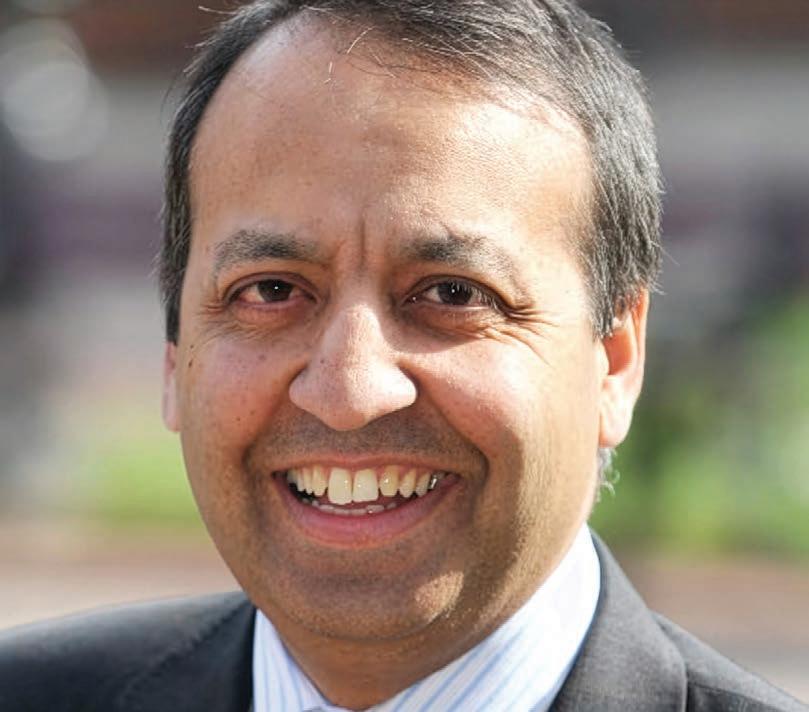
Zuffar Haq is one of three Liberal Democrat councillors on Leicester City Council, having represented the Evington ward for the last three years. He is a longstanding health campaigner and a former constituency candidate for the Lib Dems. Here he talks to Business Network about the economic climate in Leicester, why it is crucial to protect the NHS, and the damage which he says was inflicted by Brexit:
I enjoy being a councillor, but I fear for the city because we've lost lots of jobs over the past four or five years, particularly in the clothing sector. A lot of cities are facing similar issues, but in Leicester there were so many small textile factories with no collective voice.
Because they were small manufacturers, they've all gone by the wayside and that's causing real financial problems for lots of families. It was the second income for most of those families. Manufacturing is really important for this city – it was one of the richest cities in Europe in the 1970s. Leicester has been hit badly by the huge rise in energy costs in recent years. I spoke to one business who said their annual energy bill had gone from £900,000 to £2.2m and in the end they just could not survive. The Government supports households, but they now need to do more to support businesses.
I think Leicester and Leicestershire have also missed out when it comes to devolution. They should have been part of the combined county authority for the East Midlands (which covers the whole of Nottinghamshire and Derbyshire) – it’s money that we would have had.
That new authority has had billions of pounds for infrastructure and we haven't got anything near that. It’s badly needed money that could have come in to improve the railways, bus infrastructure and road systems in Leicestershire.
People want Government to actually make a difference on the ground – we are looking at issues across the board, be it the NHS, be it policing, be it council services. The whole infrastructure of this
country has been hit and it needs to be improved, and it needs to be done quicker and more effectively and by thinking outside-the-box. When it comes to the NHS the Government is doing things differently, which is having a small effect of improving services. But the real problem is GP appointments and access to primary care, which isn’t as good as what it should be. And the Government has no real solution for that.
‘Trading in Europe was made so much more difficult – we’ve lost direct access
to a market of half a billion people on our doorstep’
The answer is to make more appointments available. At the moment, primary care is run by private companies, private businesses or GP surgeries. We need to be investing in more primary care services that are run by the NHS. I do have concerns that the UK could go down the

route of privatisation. The whole reason the NHS works so well is because it is a unified organisation with the sole purpose of benefitting the whole population, and that gives it the ability to work across the whole of the country, so that it can work together in harmony. That makes a positive difference and positive outcome to lots of patients.
For instance, if a consultant sees a patient in Leicester, who knows that there is a better specialist in that field in Birmingham or Northampton – or anywhere else in the country – they will refer them to that person so that you can be seen by the best possible consultant for your particular problem.
It means the best possible outcome for that patient.
Brexit was the biggest disaster for this country. It’s been a massive economic hit to thousands of businesses and it saw the end of thousands of businesses as well. Trading in Europe was made so much more difficult – we’ve lost direct access to a market of half a billion people on our doorstep. It was the most retrograde economic step this country could ever have taken. We need to be back in the customs union, so easier trading can resume with our European partners. We can see how close we are with the Europeans, rather than America, right now.
I'll carry on because I love the city. My family’s been here for years. I’ve got a real love for Leicester. It's part of my life and I would love to see more and more improvements happen across the city.


I think Leicester city centre needs more regeneration, with better access for cars to get in and park. Lots of elderly people across the area don’t go into Leicester city and that makes me sad so I want to encourage more people to visit by making it a clean and welcoming environment.


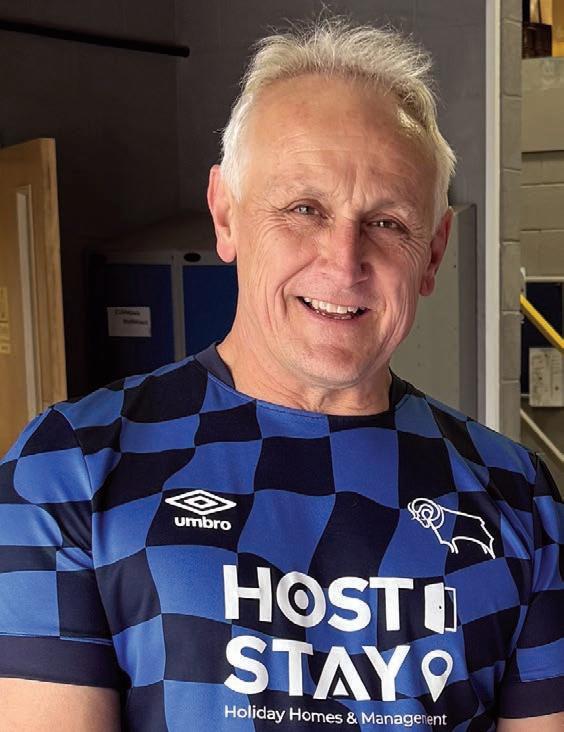
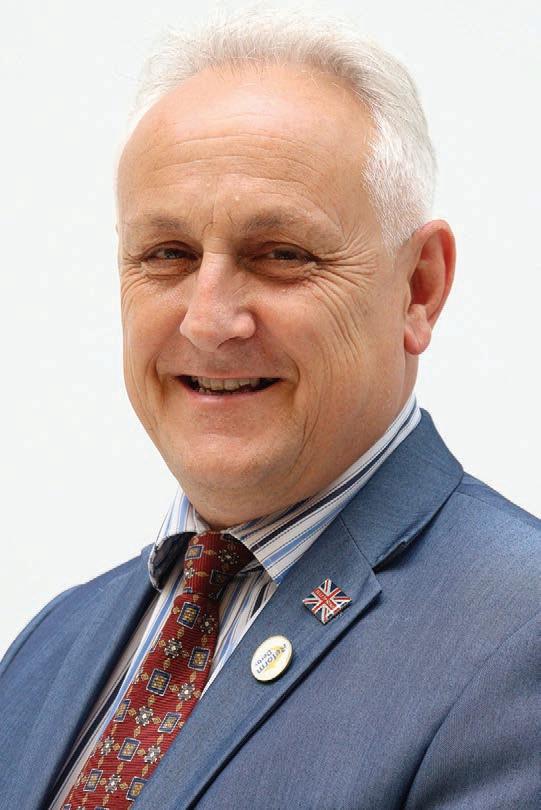
Councillor Alan Graves has been the Reform UK leader of Derbyshire County Council for almost a year. Since winning a decisive majority in the May 2025 county elections, he said the party had transformed the council under his leadership and the hiring of a new chief executive, Neil Crittenden, from the business sector. He said one flagship action has been the refresh and refinement of the council plan for 2026–29, reflecting a “pragmatic and no-nonsense approach” to local government.
My team has emphasised financial discipline and service delivery. Across the board, the council reports it is on track to deliver tens of millions of pounds of savings this financial year – a figure used to stabilise the budget, maintain statutory services and reduce previous forecast overspends.
The council identified savings of around £37.5m for 2025-26 through efficiencies across departments.
On roads and highways, the administration has made repairing the county’s extensive network a priority.
In April 2025 there were more than 16,000 outstanding potholes awaiting repair – a legacy issue from previous years.
‘Derbyshire spent more than £41m on roads, pavements, drainage and related works between April and December 2025’
Since then, more than 26,000 potholes have been fixed, and the number outstanding is expected to fall below 3,000, returning the network to typical levels of reported defects.
The council has also increased its pothole repair teams from 22 to 26 and carried out extensive resurfacing work.
In terms of capital investment in the road network, Derbyshire spent more than £41m on roads, pavements, drainage and related works between April and
In February, 53 new members joined the Chamber:
• Airco Cooling Services
• Alexander & Co Solicitors
• Alita Creative
• Art.dexterity
• Bangali Go
• Beyond Business Travel
• BNU in Nottingham
• BPD UK
• Bridge the Gap Child Mental Health CIC
• Carbon Path
• CASE
• Children's Bereavement Counselling
• Citizens Advice Leicester
• Critical Electrical Services
• Enrych
• Finden Business Finance t/a Asset Finance Solutions
• Future We Want
• Global EMC UK
• Growing Me CIC
• Hawcliffe Group
• Kai-zen Change for Good CIC
• Kyoto Digital
• Leicester Gazette
• Leicester Vaughan College

December 2025, a higher level of expenditure in the first nine months of a year than in recent prior years, which is expected to reach around £52m by year-end.
This is a notable increase compared with figures under the previous administration, where annual spend was between £35m and £40m for the five years up to 2024.
For Education, Health and Care Plans (EHCPs) – the statutory plans that set out support for children with special educational needs – Derbyshire has seen a significant rise in demand in recent years.
As of late 2025 there were 8,778 EHCPs maintained, which represents a substantial increase.
To address delays and backlogs, the council has invested an additional £1.3m to recruit 20 more staff into key SEND teams, helping to speed up statutory assessments, improve annual reviews and enhance communication with families.
While demand for SEND support continues to grow, these investments reflect tangible steps to improve processing capacity and reduce delays that had previously hindered timely EHCP issuing and reviews.
Overall, the Reform UK-led council highlights substantial savings, more intensive highways investment and targeted support for SEND services as central elements of its performance – portraying measurable progress in core service areas within its first year of governance.
• Leicestershire and Rutland County Football Association
• Lisa Vaughan Financial Planning
• M W Vehicle Contracts
• Made in Britain
• MBD
• Messy Minds
• Mortgage Advice Bureau
• Motion HR
• My Sight Nottinghamshire
• NatWest Bank
• NEU Community Wellbeing CIC
• NOCN
• Opal22 Arts and Ed
• Peak Health Coaching
• PEEPUL CENTRE
• Radio Lear
• Reaching People
• Real Purpose
• Saffron Lane Neighbourhood Council
• Sherwood Forest Hospitals Charity
• Soar Sound
• Socials for Creatives
• Sparked Potential
• STEMpura CIO
• Veda Women's Club CIC
• Vicky McClure's Our Dementia Choir
• Watcal Property Services
• Waves of Positivity
• Wenham Specialist Finance



The Chamber Charitable Fund is administered by Leicestershire & Rutland Community Foundation. Charities are selected by the incoming President in November, and this year Dr Cham Kang has chosen:
• Treetops Hospice
• Headway Nottingham
• Voluntary Action Leicester (VAL)
Visit: www.emc-dnl.co.uk/chamber-charitable-fund

A teacher at Murray Park School, in Mickleover, is training to run the London Marathon in support of Treetops Hospice – and is gaining a bit of Olympic-level guidance on the way.
Alfie Holland has faced a couple of hurdles during his training, but has been helped by a physiotherapist parent from his school as well as his friend, Team GB Olympic marathon runner Ben Connor.
Alfie said after catching the running bug he managed his first half marathon in a time of 1 hour 43 minutes, before injury forced him to take five weeks away from training – something he described as a “mentally really tough”.
He said: “I’d gone from feeling unstoppable to suddenly not being able to run at all.
“It was frustrating, and I worried I’d lost all the momentum I’d built.
“Ben told me that around 90% of my training should be at an easy pace.
“I’d been pushing way too hard, and hearing that from an Olympian completely changed my mindset. If an Olympic marathon runner tells you it’s okay to run slowly, you listen!”
Ben has since written Alfie a personalised training plan.
Alfie said the school and its pupils had also been a great help, with a recent non-uniform day raising more than £800 for Treetops, with more fundraising planned in the run-up to race day.
He said: “Treetops is such an important part of our community and there are families at our
school that I know will have directly been supported by their services.
“If running a marathon can help them continue their amazing work, then every mile is worth it.”
Claire Mathias, relationships manager at Treetops Hospice, said: “Alfie’s dedication, both in his training and his fundraising, is truly inspiring. The support from his school community shows just how much of an impact one person can make. Every pound he raises helps us continue providing specialist care to those who need it most.”
www.treetopshospice.org.uk
Headway Nottingham is looking for trustees to join the board, and help shape the future of a “warm, passionate” organisation that helps adults living with brain injury regain their confidence, skills and independence.
Successful applicants will join a friendly, committed team and play a vital part in protecting and growing a charity that transforms lives. They will help steer strategy, champion good governance, and support the chief executive.
The charity said they will need to be someone who enjoys collaborating, with a steady hand who can help guide the board and who believes in the power of rehabilitation and community.
No brain-injury specific knowledge is needed although experience in fundraising,


communications, governance, IT or clinical experience of brain injury would be welcomed.
Contact: recruitment@headwaynottingham.org.uk
Voluntary Action Leicester continued its 60th anniversary celebrations with an event at Leicester Racecourse marking six decades of changing lives, strengthening communities and looking ahead to an exciting future.
VAL provides advice, support and training to charities and community groups across Leicestershire, and the event was a thank you to the people who have been part of its journey over the years, with more than 130 attending.
Charity chair Linda Jones thanked guests for their support and reflected on the organisation’s history and values.
Mike Kapur OBE CStJ, HM Lord Lieutenant of Leicestershire, then spoke about the role VAL has played supporting individuals and communities throughout the county. The event also heard from Eileen Perry MBE DL, who spoke on behalf of Dr Nik Kotecha OBE DL, whose continued support of VAL was warmly acknowledged.
One of the most moving moments of the night came from Rehana Sidat, who shared a heartfelt and inspiring speech about her personal journey and the support she received from VAL.
valonline.org.uk


• Leadership & Management (ILM)
• AI for Business & Creative Industries
• Cyber Security & Digital Skills
• Employability & Professional Development
•
• Limited Jobs
• Skills Gaps Digital
• Change
• No Industry Access
• Work Placements
• Live Projects
• Employer Partnerships
• Work-Ready Graduates
• Practical Skills
• Confidence
• AI Awareness
•
•



Ryan Connolly (pictured) is sales director at Economit, which has seven staff and is based in Pride Park, Derby.
Q: Tell us what your company does?
A: Since 2011, Economit has established itself as a trusted independent IT, information security and data protection consultancy, helping clients “do more with less” through strategic leadership, robust practices and intelligent automation.
Each company we engage with is always somewhat different from the next, so we pride ourselves on tailoring our offerings to suit our clients' needs.
Q: What services do you provide?
A: A core part of our offering is fractional leadership, where we act as virtual chief information officers, chief information security officers and data protection officers to provide strategic IT, cybersecurity and data governance guidance without requiring full-time hires.
We also deliver cybersecurity and compliance services, supporting organisations with ISO implementation. In addition, we provide Cyber Essentials and payment security compliance support. We also offer business software services.
We are not industry-specific; our focus is on helping businesses that want to improve their utilisation of available technology, strengthen cybersecurity and obtain the best possible return on investment for growth. Whether you’re a small business, a large enterprise or a nonprofit, we provide impartial, practical consultancy and solutions tailored to your unique needs.
At Economit, our unique strength lies in being truly independent and impartial. We don’t sell products or take commissions, so every recommendation is made with our client's best interests at heart. We sit on the same side of the desk as our customers, acting as a trusted partner to help shape their IT strategy and drive efficiency. Our clear, jargon-free approach and fractional leadership model give clients access to senior-level expertise without the overhead of full-time hires.
Q: What are the plans for the future?
A: Beyond sales, we plan to grow Economit’s portfolio by adding further technology services and areas of expertise, broadening our capability to deliver even more value to clients. This means staying ahead of emerging trends and continuously evolving our services to meet the market's changing needs.
Q: How have you engaged with the Chamber?
A: We have been members of the Chamber on and off for a long time. When I joined the business more recently, one of the first things I wanted to re-establish was our partner network, and the Chamber was an obvious one for me. I know the Chamber very well, attend many of their events, and appreciate the added value they bring.
‘Our unique strength lies in being truly independent and impartial. We don’t sell products or take commissions’



Dr Elizabeth Rozario (pictured) is a former GP and author of Before Breaking Point. She is founder of The Caregiving Journey CIC, supporting professionals and organisations navigating caring responsibilities and emotional strain:
Across the East Midlands, many capable professionals are managing far more than their job descriptions suggest.
They are leading teams and meeting targets. At the same time, they are supporting ageing parents, emotionally and practically, while quietly worrying about what decline will look like. Most do not talk about it at work, saying they are fine.
Before Breaking Point was written for people doing their best and finding it harder than expected. While it speaks directly to those caring for ageing parents, its relevance extends beyond the individual reader. For business leaders and managers, it offers insight into the pressures shaping employee behaviour, decisionmaking and resilience.
These pressures do not stay at home. They influence how clearly someone thinks after a disrupted night. They shorten patience in difficult conversations. They affect how long someone feels able to keep going before burnout becomes visible.
For HR professionals and SME leaders in particular, understanding this hidden layer of responsibility matters. Smaller organisations often depend heavily on a few reliable individuals. When those individuals are quietly overwhelmed, the effects ripple through teams, even if absence never occurs.
The book offers a glimpse into the internal dialogue many employees never articulate at work. It helps explain why high performers sometimes become withdrawn or reactive.
As our population ages and working lives extend, caring responsibilities will increasingly intersect with professional roles. Ignoring that reality does not make it disappear.

NatWest has appointed a dedicated mid-market champion for the East Midlands, to support medium-sized businesses and help drive economic growth.
Anne-Marie Hunt (pictured) is one of 12 new regional leads for the bank, put in place to help it drive investment and growth in areas outside the capital, and work with local policymakers to back business.
She is the bank’s regional director, commercial mid-market, for the East Midlands.
She said: “Mid-market businesses are the backbone of the East Midlands economy – creating highquality jobs, investing in skills and driving growth in towns and cities right across the region. These firms sit in the ‘critical middle’ of the UK economy and don’t always receive the same attention as small businesses or large corporates.”
Loughborough-based BRUSH Group – an engineering specialist for electrical infrastructure and power networks – has appointed Vanessa Wu-Barker (pictured) as director of its transformers division.
As a member of the executive team, she has responsibility for shaping the direction and driving the growth of BRUSH’s transformers business, including making power transformers that are essential to the UK’s energy transition.

Jules Hayes has joined Nottingham-based Ketchup Marketing as its new marketing director. Jules has spent 25 years in marketing, within agency and client-side roles, and ran her own agency for 11 years.
She has led campaigns for brands including Tesco Mobile, Beefeater and Thorntons and helped launch the first UK Citadis tram for the Nottingham network.
She said: “I’m thrilled to be joining Ketchup at such an exciting time. With so much talent in the team, I’m really confident that we’ll be able to deliver optimal results in the coming year.”
Ketchup founder and managing director
Michelle Jones said: “It’s fantastic to have Jules on board.
“She’s got so much experience, and that’s really going to complement what was already a very talented marketing team.”


L-R: Ellie Smith, Brooke Townley-Jones, Beth Blance
She said: “It’s an exciting time to be part of a business playing such an important role across the energy landscape. From my early conversations with the leadership team, it’s clear there is real ambition, focus and momentum –and I’m thrilled to be part of it.”
PR and communications agency Nielsen McAllister has appointed three members of staff in support of its growing client portfolio.
The business delivers PR, social media and digital marketing campaigns for a range of businesses, including recent clients in the property, forestry and packaging sectors. Following stints as head of creative and associate creative director at agencies Fabric Social and SocialChain, Beth Blance joins the business as account director.
Joining alongside her is Ellie Smith, a University of Birmingham graduate with a BSc in business management and an MA in international security, who will be supporting clients across PR and content as account executive.
Digital marketing apprentice Brooke Townley-Jones rounds out the triple appointment, following in the footsteps of a number of PR professionals who gained their marketing qualifications with the help of Nielsen McAllister.

Howes Percival has strengthened its agriculture and estates team in Northampton with the appointment of legal director Olivia Chalmers.
Olivia acts for a range of clients advising on property law, including freehold and leasehold acquisitions and disposals, option agreements and conditional contracts, alongside property portfolio management and secured property financing.
She has a dual specialism in both commercial and agricultural property, and corporate transactional work and is also experienced in business acquisitions and disposals often as part of significant land and property disposals.
The agriculture and estates team deals with managing estates and farms, tax-efficient structuring, agricultural property, development land and tax.

Leicester City FC has restructured its senior leadership in a bid to “provide clarity of responsibility, strengthen governance and support… long-term development both on and off the pitch”.
Kevin Davies has been promoted to chief executive while Jon Rudkin will lead the club’s football operation as chief football officer.
James McCarron has been brought in from City Football Group –owner of 12 clubs including Manchester City – as sporting director while Russell Jones has been named as commercial director.
The club hopes the new structure will eventually re-establish it as a “sustainable, aspirational Premier League football club” following what has turned out to be a difficult season in the Championship. It follows the February appointment of Gary Rowett as manager. Kamonthip Netthanomsak will continue in her role as managing director.
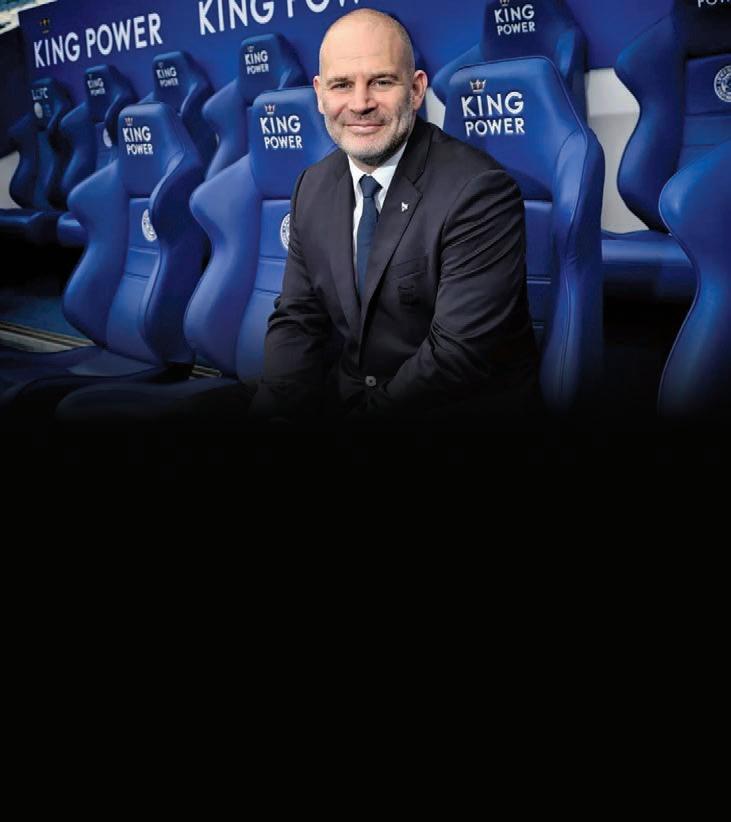
The former CEO of Aston Villa and Nottingham Forest has been appointed as vice chairman of the Midlands for Barclays.
Paul Faulkner, who has also led Greater Birmingham Chambers of Commerce and is the co-founder of business consultancy Element45, will act as a senior leader across the region, strengthening the bank’s market presence.
Barclays said the appointment reflected its commitment to growth and expanding its reach within the Midlands.
Creative62 co-founder Mark Robinson has been appointed entrepreneur in residence at University of Leicester, to strengthen the connection between ambitious students and modern brand-building.
Over the past year, Mark has contributed to guest lectures, live briefs and marketing programme projects within the university’s School of Business and the appointment formally recognises his work bringing agency thinking directly into the classroom.
Mark said: “The University of Leicester is leading the way with its entrepreneur in residence network. It’s a privilege to be involved, and I’m excited to see what we can achieve together.”
Sofia Coviello (pictured) has qualified as an architect at IMA Architects, marking the culmination of eight years of study, training and professional practice alongside her degree apprenticeship.
Sofia is now registered with the Architects Registration Board (ARB) and The Royal Institute of British Architects (RIBA).
She joined IMA Architects in March 2021 and has progressed through the practice while completing her level 7 architect degree apprenticeship with the University of Nottingham.
Throughout that time, she balanced the demands of full-time professional practice with academic study, building strong experience across design development, technical coordination and client liaison.
At IMA, she has worked on largescale industrial and commercial projects, taking increasing

responsibility for design packages and project delivery.
Sofia was also just named Apprentice of the Year Award at the Chamber's Leicestershire Business Awards (see pages 60 & 61)
Over the past 12 months, the practice has also seen director Joe Travers and Tasawar Rahim achieve architect status.
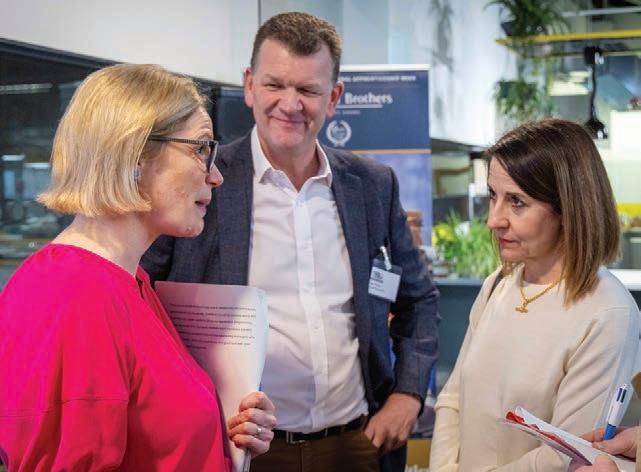
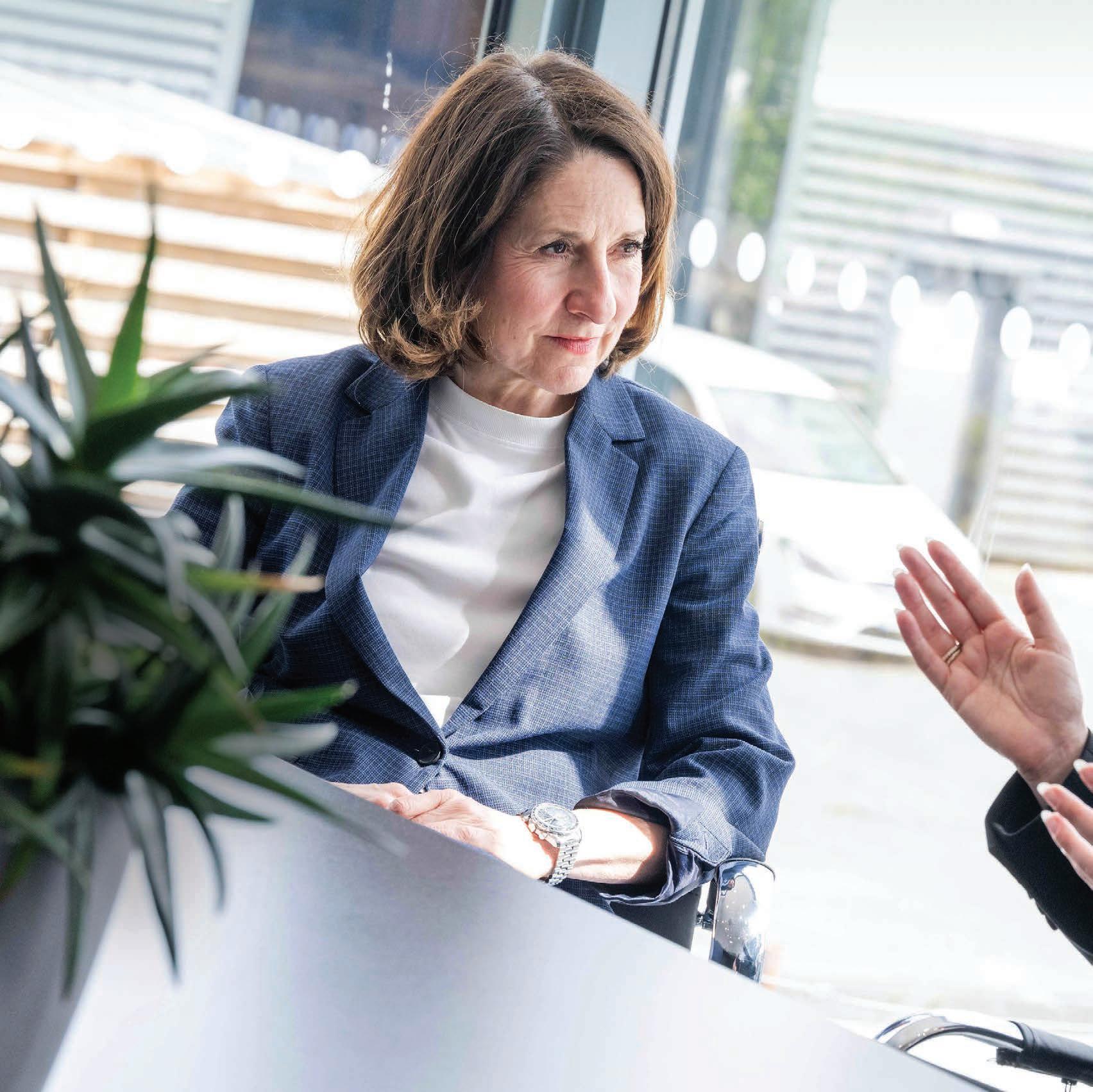
Liz Kendall was appointed Secretary of State for Science, Innovation and Technology last September, and prior to that was Secretary of State for Work and Pensions.
She was elected as the MP for Leicester West in May 2010 and was an opposition frontbencher under the Labour leadership of Ed Miliband. Following the party’s defeat in the 2015 election she stood as his successor, coming fourth to Jeremy Corbyn.
Here, she answers questions from Tom Pegden on issues ranging from devolution, the state of the economy, AI and the role of our universities in developing science and technology.
Q: How would you describe business sentiment in Leicester at the moment? What are the biggest struggles businesses face and what is the Government doing to help? Labour said it would be the party of growth but the economy is sluggish and unemployment is up: What has gone wrong?



A: You won’t be surprised that I disagree with the premise of this question. The Government came into power after 14 years of failure, malaise and turmoil. The priority was to bring stability and that is what we have done.
Continued on page 30...



...from page 29
Yes, it has involved some hard choices but there are signs that the country – and the East Midlands – has turned a corner. Wages have risen faster in the first 14 months of this Government than during the last 10 years of the previous one.
Inflation is falling, interest rates have been cut and growth is rising. Is there more to do? Absolutely. I also want to pay tribute to the amazing businesses in my constituency and across the region, small and large, which continue to punch above their weight.
Leicester is one of the best places in the country in which to start a business. In the last five years there’s been a 35% increase in business stock – greater than London and Birmingham. That’s a testament to the hard work and entrepreneurialism of this region.
‘Leicester’s universities are not just centres of academic excellence, they are also responsible for some exciting spin-offs’
Q: Is the UK staying ahead of the game in science, innovation and technology? What recent successes have you seen within the East Midlands? How are you ensuring industries working in those sectors prosper?
A: I am really proud that the UK has so many amazing science and technology companies from major pharmaceutical firms to enterprising start-ups. This is a country brimming with brilliant scientists, researchers and innovators.
I recently visited the National Space Centre in Leicester to see the world-leading research taking place.
I’m also proud that my department, through UKRI (UK Research and Innovation), is investing a record amount in research and development to make sure the East Midlands and the rest of the country continues to be at the forefront of new ideas, scientific breakthroughs and research that will create the jobs and prosperity of the future.

Q: How are you ensuring our universities – which are struggling financially – are leading the way when it comes to science and technology?
A: As I’ve just mentioned we are investing a record £38bn over the coming years in research and development. That includes, more than £14bn in curiosity-led research, something at which our universities excel.
Leicester’s universities are not just centres of academic excellence, they are also responsible for some exciting spin-offs whether that is Perpetual Atomics which started at Leicester University, and is leading the way on building power plants in space, or VenueSim at De Monfort, which is developing software for large transit hubs.
Q: Labour has placed a huge emphasis on AI in rebuilding the economy – is that wise? It seems much of the IP for AI is US-owned, it takes huge
amounts of energy to run, and many fear it is often only as good as the (copyrighted) data that it mines and it could lead to redundancies as more people are replaced by computers. How would you sum up the situation and what do you think will happen over the coming five10-20 years?
A: I have always said there is no route to stronger growth and more jobs that does not lie through science and technology. And that includes AI.
Britain has the third largest AI ecosystem after the United States and China. It is already changing the way we earn, learn and deliver services, from helping diagnose new medicines to helping teachers, including those in my own constituency of Leicester West, plan lessons and inspire pupils.
But if we want people to take full advantage of AI we need to give them the skills. That’s why we are offering free AI courses to everyone in the country. If you search for “AI Skills boost” you can find a course that suits your needs.
Yes, AI will impact on some jobs but it will also mean some jobs will change and other jobs will be created.
You are right to ask about the environmental and energy impact of data centres. But AI is actually helping cut some energy costs by using smarter technology.
For example, AI is being used to map buildings to make them more energy efficient and reduce energy consumption.
Q: East Midlands Chamber recently launched its Framework for Growth, highlighting key asks for policy areas such as skills, connectivity, green energy support, taxation and investment in transport to help the region thrive. What is your take on these issues?
A: Changes to planning are imperative for Leicester. It is a city bursting with potential and one that has been punching above its weight thanks to its Labour leadership, but there is so much more our mayor and councillors want to do for residents.
We need to cut red tape so we can move further and faster, from building the homes our residents need to making sure our high streets are brought back to life. This Government is determined to restore pride to the places we live in and streamlining planning will be a central tenet to that.
Of course, I empathise with the calls for the mainline electrification to go ahead – it is something I want to see happen to benefit our city.

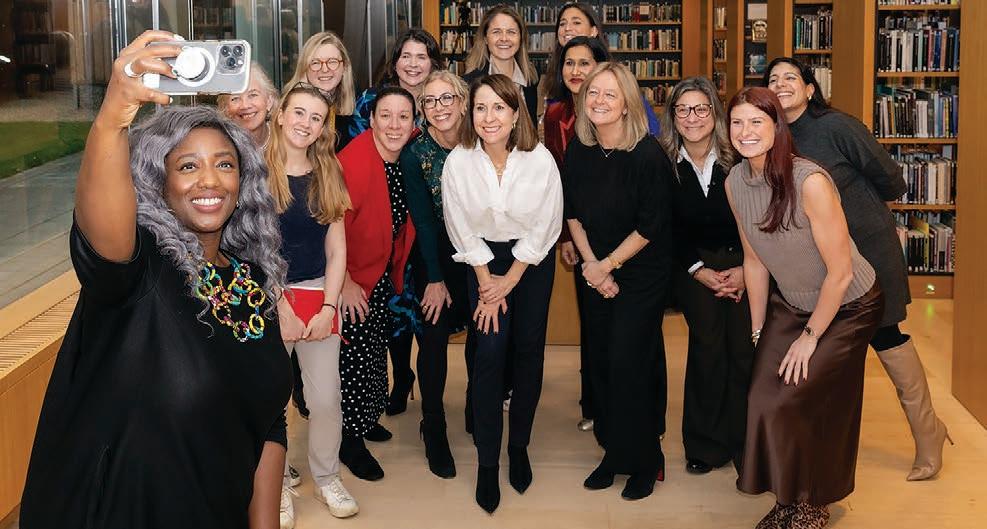

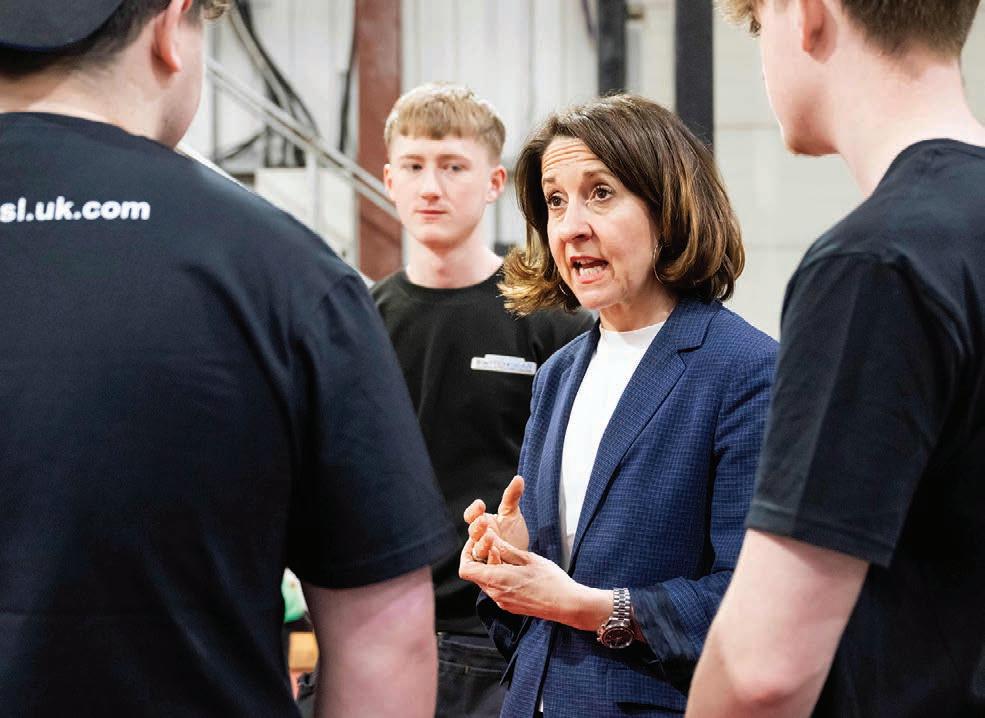
Liz Kendall has warned that big tech companies must use every tool at their disposal to protect women and girls from online abuse and misogyny – or face further action.
At a roundtable with representatives of companies including Snapchat, Meta, YouTube and TikTok, the Secretary of State urged platforms to go further and faster in implementing safety measures.
Over the past six months, the Government has made intimate image abuse, cyberflashing and choking priority offences under the Online Safety Act – treating them with the same seriousness as child abuse or terrorism. In January, the Prime Minister singled out Grok for AI generated sexualised images of women and girls on its site, fasttracking legislation to ban the creation of non consensual intimate “deepfakes”.
New legal requirements mean tech firms must remove intimate images shared without consent within 48 hours of being flagged while an amendment to the Crime and Policing Bill created a new offence criminalising “nudification apps” – AI tools that generate sexualised images of women and girls.
The Technology Secretary said: “Every woman and girl deserves to be safe online and we will stop at nothing to ensure the digital world is working for them, not against them. This Government has taken tough action to tackle intimate image abuse, deepfakes and the online harms women and girls face every day.
“Now, tech companies must go above and beyond to use the tools readily available to them to make their platforms safer. If they don’t, these companies are not innocent bystanders – they are enabling abuse to thrive. That is why we are asking Ofcom to report swiftly on how companies are complying, because better safety and better accountability go hand in hand.”
But Labour is putting billions of pounds of investment into transport of every type, including our trains which we are bringing back into national ownership, and rest assured, electrification it is not off the table and remains under review.
Q: How badly do you think Leicester and Leicestershire have been left behind by not being part of the East Midlands Combined County Authority? What are you doing to push for more devolved powers and access to government spending in the city and county? What do you think the timescale will be and how is the process going?
A: The East Midlands Combined County Authority is thriving under Labour Mayor Claire Ward and, working with this Labour Government, she is securing record levels of investment for Nottinghamshire and Derbyshire, from supporting community groups through to business investment, from transport projects to youth skills.
We will continue to devolve more power to local people who know their areas best. The local government reorganisation taking place in Leicester and Leicestershire will see huge opportunities for growth coming to our doorstep. And, through our fairer funding model, this Government is committed to making sure those areas most in need get their fair share.
Q: Tell me about your earlier life and aspirations, and how you became interested in politics? How did you first enter politics and how easy or difficult did you find it?
A: I’ve never been one to scream at the telly and think that’s enough. I’m someone who thinks “there’s a problem that needs fixing, let’s get on and do it”. My first political demonstration was with my mum, we campaigned for a pedestrian crossing in our village of Abbott's Langley, Hertfordshire. And yes, we won.
After university I went to work for two brilliant Labour women: Harriet Harman and then Patricia Hewitt. They taught me so much –that good politics flows from good policy, that you should always stand up for what you believe in and you have to keep fighting for hard-won rights.

‘We will continue to devolve more power to local people who know their areas best’
Q: What are you most proud of achieving during your time as an MP and as a minister?
A: You’ve saved the toughest question till last! I am proud of the amazing people in my Leicester West constituency who never cease to inspire me whether it is teachers in Braunstone Primary School who have opened my eyes on how AI can be used in the classroom or the young apprentices I met at Michael Smith Switchgear who are learning the skills of the future.
As a cabinet minister, I was proud to co-chair the Child Poverty Taskforce with Bridget Phillipson which will transform the lives of hundreds of thousands of children. And as Tech Secretary I led the fight against Grok and stood up for British laws and British values. But I should say that so much we have done in Government has been a team effort. It’s a privilege to be part of that team.


Liz Kendall toured Space Park Leicester and the National Space Centre to hear how scientists are preparing to venture onto the final frontier with their research.
The space park is the University of Leicester’s £100m research, innovation and teaching hub and the Secretary of State for Science, Innovation and Technology found out about the work it is doing transforming the economy and providing opportunities through space.
She also visited the National Space Centre –part of Leicester’s broader Space City – where she joined a national roundtable with space industry experts and saw first-hand the educational outreach undertaken to encourage careers in space.
During the space park tour, she spoke to key figures in missions the university has contributed to, including the BepiColombo mission to Mercury and the SMILE (Solar wind Magnetosphere Ionosphere Link Explorer) mission due to launch in April.
She also learned how Space Park Leicester is creating business from research conducted at

the university, speaking to Professor Richard Ambrosi, director of spin-out company Perpetual Atomics, who hopes to lead the application of nuclear technology in space.
On top of that, she learnt about the university’s Leverhulme Centre for Humanity and Space and its Humanising Space work –which could increase understanding of how humans experience space by engaging with the arts, humanities and social sciences.


Professor Emma Bunce OBE, director of the University of Leicester Institute for Space, said: “This was a fantastic opportunity to talk with the minister about Leicester’s involvement in exciting upcoming missions like BepiColombo and SMILE, as well as the long heritage that the university and city has in supporting space exploration.
“Space Park Leicester builds on that tradition with its leading-edge work to advance our knowledge of space and the world around us, and helping to boost the regional and national economy through its skills and education agenda.”
A new partnership between Derby City Council and Peritus Learning is showcasing the strength of collaboration within the regional business community.
Through the partnership, the council will provide its staff with unlimited access to a range of microlearning content, as well as a full suite of management learning programmes.
Established in 2004 and based in Leicester, Peritus Learning provides businesses with access to more than 180 online courses covering everything from leadership and compliance to health & safety, IT, net zero and professional development.
Councillor Hardyal Dhindsa, cabinet member for digital and organisational transformation, said: “We are delighted to have partnered with Peritus to provide our colleagues with unlimited access to a comprehensive range of microlearning content, alongside the full suite of ILM management learning programmes.
“From our very first contact with the Peritus team, we were extremely impressed by the breadth and quality of the learning packages on offer.
“Equally valuable to us has been the level of support provided, from initial implementation through to ongoing guidance. We are confident that, with the flexibility of the platform and the continued support from Peritus, this next phase will deliver even greater impact across the organisation.”
Media and film production students from West Nottinghamshire College took part in a moving two-day educational visit to Auschwitz in Poland, reinforcing the college’s commitment to Holocaust education and remembrance.
The trip, attended by year 1 and 2 students, was delivered in partnership with the Holocaust Awareness charity. It came after the students worked with the National Holocaust Centre and Generation 2 Generation (G2G) to put together survivor testimony and film historical evidence, and learn about the longterm lessons of the Holocaust.
‘Understanding where intolerance can lead can help our young people and future generations’
It is the second time college media students have visited Auschwitz.
Jon Hall, programme area leader for film and TV, said: “In today’s world where conflict and hatred are all around us, understanding where intolerance can lead can help our young people and future generations guard against and work to stop the slide into genocide.”
The students toured Auschwitz I and AuschwitzBirkenau, viewing preserved barracks and exhibitions


containing personal belongings of victims, including hair, shoes, luggage, and household items. The artefacts provided a powerful insight into the scale of loss and the lived realities of those imprisoned in the camps.
Students also learned about the overcrowded and inhumane living conditions endured by prisoners, as well as the historical significance of the site’s memorials, which stand as a warning against hatred and denial.
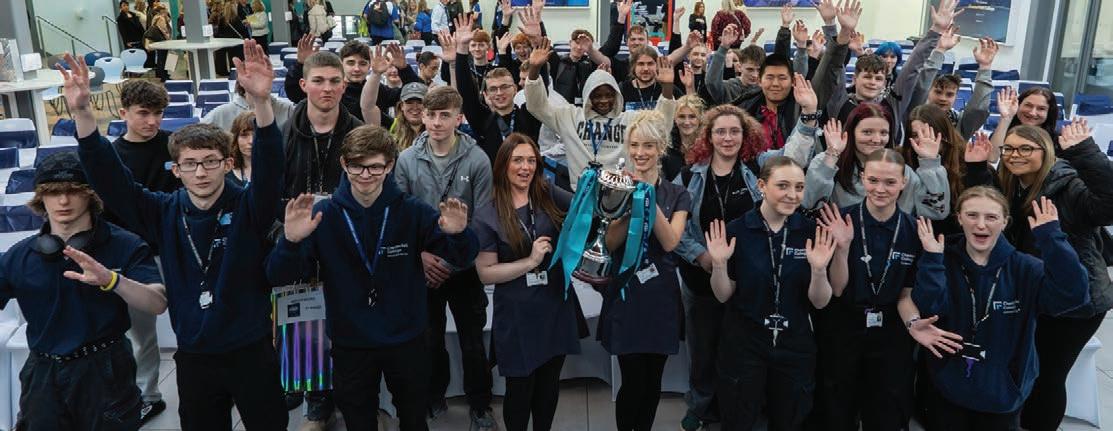
More than 200 students from three colleges competed in the inaugural Skillsfest inter-college competition on the Chesterfield College Infirmary Road campus.
Taking place during national Colleges Week, the competition hosted students from Chesterfield College, Derby College and Burton and South Derbyshire College.
A medal and trophy ceremony at the end of the day went to the
winners in subjects such as bricklaying, joinery, plumbing, hairdressing, cookery, games design and music. Tallying scores from each category, Chesterfield emerged as overall winner.
College principal and chief executive Julie Richards OBE, said:
“To see so many unbelievable skills from the next generation on display all at once was something to behold and is so inspiring to see
the upcoming talent pool in every sector.”
Heather Kelly, deputy chief executive at Derby College Group, said: “Days like Skillsfest truly capture what further education is all about.
“Our students have demonstrated not only exceptional technical ability, but also resilience, professionalism and pride in their craft.”


By Tom Martin, senior employee benefits consultant at wealth management provider Mattioli Woods.
Sleep is one of the most effective forms of self care. Yet for many employees, quality rest is elusive.
Sleep impacts every part of our cognitive and emotional balance. When people sleep well, they’re more focused, resilient and able to manage stress. On the other hand, poor sleep is strongly linked with anxiety, low mood and burnout – all common challenges in today’s workplace.
Research by the Mental Health Foundation highlights that people who experience insomnia are four times more likely to suffer from anxiety or depression.
In a workforce already under pressure, addressing sleep health isn’t just a wellbeing gesture – it’s a business imperative.
‘Improving employees’ sleep quality leads to tangible benefits across an organisation’
Poor sleep rarely has a single cause. It’s often the result of everyday pressures and habits that develop unnoticed over time. Common disruptors include: financial worries; sleep routines due to irregular bedtimes, excessive screen time or caffeine late in the day; workplace stress, long hours or blurred work–life boundaries; lifestyle factors such as shift work patterns, alcohol or lack of physical activity.
Good sleep starts with small, manageable changes such as a consistent bedtime routine (winding down with calming activities rather than screens) and creating an ambient sleep environment –dark, cool and clutter free.
Employers can help employees create and support healthier sleep habits by encouraging awareness sessions to address topics like mindfulness and digital wellbeing and opening conversations about workload and work–life balance.
By combining financial education with access to wellbeing solutions, employers can build trust and engagement while empowering individuals to take control of their health.
Improving employees’ sleep quality leads to tangible benefits across an organisation: reducing stress levels and absenteeism; increasing focus and decision-making ability; enhancing creativity and positive workplace culture; and creating stronger employee engagement and retention.
A workforce that’s well rested is simply more productive and supportive of one another – it is the foundation of a healthy business.

Vaillant has joined forces with YMCA Derbyshire to work collaboratively on its charitable initiatives, employee volunteering, fundraising and awareness-raising activities, and to help provide educational opportunities for young people across the region.
The boiler and heat pump manufacturer has been rolling out its charitable Growing Communities plan across 2025, while YMCA Derbyshire provides vital support for young people at risk of homelessness and social exclusion, and communities most in need.
leading knowledge too, plus information on the varied roles available in the heating sector – to inspiring youngsters who might not previously have felt those options were open to them.
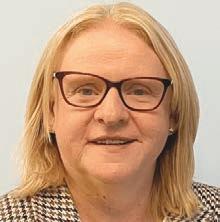
Eight students from a YMCA Key college participated in a weeklong Launch into Engineering programme which combined Vaillant’s industry expertise with the Derby Museum of Making’s STEAM learning approach (covering science, technology, engineering, arts and mathematics).
Last year Vaillant embarked on a number of initiatives to support the Padley YMCA Derbyshire Community Hub.
The latest project has allowed the company to share its industry
YMCA Derbyshire chief executive Gillian Sewell (pictured) said: “At YMCA Derbyshire, we believe that programmes like Launch into Engineering are vital for empowering young people.”
Scottish rock band Biffy Clyro has made global live music history by having the first international tour to achieve certification for responsible sound management.
The band’s ‘Futique’ tour was the first in the world to achieve HELA (Healthy Ears, Limited Annoyance) tour certification – aimed at promoting best practice for responsible sound management at live events.
Developed by researchers within the Electro-Acoustics Research Lab (EARLab) at the University of Derby and international sound and hearing experts, the HELA initiative helps promoters, venues, artists and technicians put on safer – and more sustainable – performances.
It was created in response to

global research highlighting the risks of unsafe listening levels, and is aimed at audiences and crews, and at reducing community noise impact.
University of Derby graduate James Coghlan, who is chief sound system engineer for the band, said: “Responsible sound management is vital to the future of live music, and I’m proud to have completed the training and put those principles into practice.”
The Bank of England’s decision to keep interest rates at 3.75% could contribute to business anxiety after the Middle East war caused a big rise in fuel prices, with inflation set to follow.
Iran has inflicted billions of dollars worth of damage to oil and gas infrastructure in the Gulf and attacked ships passing through the Strait of Hormuz – in retaliation for being bombed by the US – causing a huge jump in energy costs and knocking inflation off course.
Chamber director of policy and insight Richard Blackmore said: “With concern over the potential for inflation to rise toward 3% this year as a result of the Middle East conflict, instead of reaching the Bank of England’s 2% target, keeping the interest rate static was widely expected.
“When you consider the weight of challenges and the tough landscape that businesses are having to wade through with high costs, changing regulation like the Employment Rights Act and the impact of conflicts around the world, for those businesses looking to borrow, waiting longer for an interest rate cut will be an added frustration.
“Unemployment in the East Midlands, although down slightly, still stands above the UK level at 5.6%, while the Chamber’s soon to be published Quarterly Economic Survey for the first quarter of 2026

‘Waiting longer for an interest rate cut will be an added frustration’
paints a picture of hesitant investment intention and concern persisting over corporate taxation and inflation.
“The Chamber’s Framework for Growth outlines a series of proposals that, if adopted by policymakers would make a significant difference in enabling growth, by incentivising businesses to invest to grow.”
Latest unemployment data from the Office for National Statistics –covering November, December and January – suggests an overall UK jobless level at 5.2%.
The Chamber’s Framework for
Growth – visit https://is.gd/y6TFsP – sets out specific asks of policymakers in areas such as taxation, regulation, devolution, planning reform and infrastructure investment.
On skills, it proposes reforms such as flexible skills funds for SMEs and microbusinesses and the creation of a single portal for firms to access apprenticeships more easily.
Across 2025, the Chamber’s Quarterly Economic Survey found six-out-of-10 East Midlands employers had struggled finding staff to fill roles, while the latest
soon-to-be-published survey for Q1 of 2026, reveals an increase closer to seven-out-of-10.
Richard Blackmore said: “While a slight fall in East Midlands unemployment is the right direction of travel, 5.6% is still above the overall UK level and still far too high so it’s essential that support is prioritised by political leaders, as we have proposed in our Framework for Growth.
“The latest Chamber research for the first quarter of 2026 shows an increase toward seven-out-of-10 employers in the East Midlands saying they have struggled to find suitable staff. The figure was already high but for it to have increased demonstrates the extent of the skills gap.
“The Jobs Guarantee scheme is an example of the kind of support needed but initiatives like that need mobilising at scale. Accessing apprenticeships and funding opportunities can be a complex process so simplification is needed, as set out in our Framework for Growth, so that more businesses are likely to take up the options open to them.
“Employers need to be incentivised to invest so policies must be put in place that achieve that, while providing a talent pool to employers made up of candidates equipped with the skills they need.”
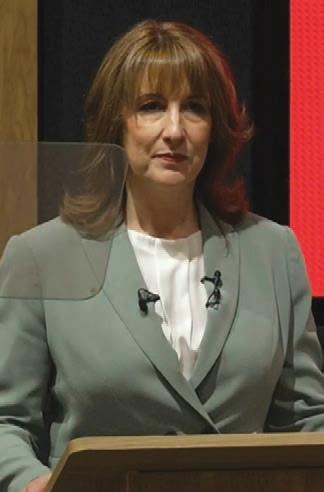
The Chamber has welcomed priorities recently set out by the Chancellor, which focused on investment in AI, in regional economies and bringing closer EU alignment.
Rachel Reeves delivered her second Mais Lecture at Bayes Business School, at City St George’s, University of London, against the bleak backdrop of the Iran conflict.
The Mais Lecture has been taking place for almost 50 years, and honours Lord Mais, a former Lord Mayor of the City of London and Chancellor of City St George’s.
The Chancellor highlighted the volatility facing the world today and said the UK needed “secure, resilient growth” that could weather global economic storms and conflict.
Chamber director of policy and insight Richard Blackmore said: “The Chancellor set out compelling measures aimed at achieving growth, like investment in AI initiatives and adoption, reduction of international trade barriers by having closer alignment with the
European Union and investment in regions of the UK, all of which are pillars that would enable growth.
“AI will play a critical role in business going forward and it is right to invest in its development and take-up, just as it is to take measures to overcome the many challenges for those that import and export goods overseas by strengthening the relationship with the EU.
“While regional investment is good to hear, the Chancellor’s lecture neglected some golden opportunities to enable growth in the East Midlands, like the need to upgrade much of the region’s transport infrastructure, for example. Investment should benefit the whole East Midlands, not just part of it.
“The Chamber’s Framework for Growth outlines ways to best unlock the full potential of the East Midlands, across areas like infrastructure and connectivity, reforms to planning, to rates, to taxation and skills investment but it was encouraging to hear a credible step forward to growth.”


By Steve Phillips, Chamber business adviser.
This May, I will be swapping my usual business advisory toolkit for cleats and carbon fibre as I take on a 200km unsupported cycling challenge across the East Midlands.
The Tour de East Midlands is more than a long day in the saddle. It is a personal challenge in memory of my dad, who passed away in 2022 following a short and aggressive battle with glioblastoma.
He lived and breathed sport. Whether playing, watching, coaching or debating results, sport was his language.
Taking on a demanding endurance ride feels like a fitting tribute.
On 28 May, I will cycle between the regional offices of the East Midlands Chamber, connecting Derbyshire, Nottinghamshire and Leicestershire as part of one continuous route.
The ride is entirely unsupported, meaning everything I need for the 200km will be carried with me. No team car. No shortcuts. Just preparation, pacing and persistence.
The aim is to raise funds and awareness for brain tumour research, a cause that urgently needs both visibility and investment. Brain tumours remain one of the most underfunded areas

‘Brain tumours remain one of the most underfunded areas of cancer research’
of cancer research, yet they affect thousands of families each year.
The Chamber has generously committed to promoting the challenge across its network of members and stakeholders, helping to amplify the message and encourage wider engagement.
I am also seeking support from regional businesses, particularly those in sports, health and wellbeing sectors, who may wish to contribute through sponsorship, product support or fundraising collaboration.
This challenge reflects something I see every day in business support: resilience, community and collective effort. When organisations work together, impact multiplies. The same is true here.
If you would like to follow the journey, support the fundraising or explore sponsorship opportunities, you can find full details at the website below.
www.justgiving.com/page/tourde eastmidlands

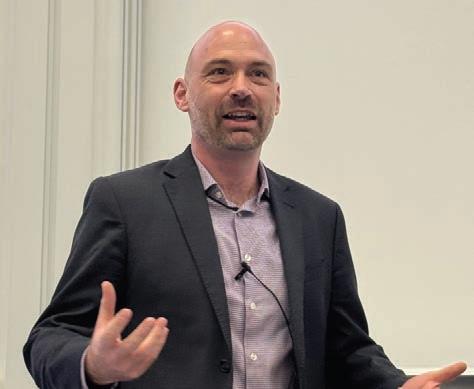
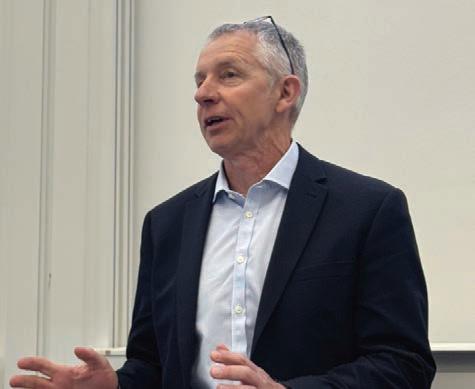
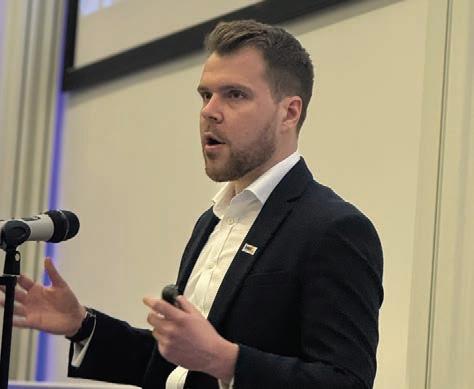
Putting more digital technology into manufacturing and increasing research into robotics were among areas covered at the 2026 East Midlands Manufacturing and Trade Conference at Loughborough University.
The day – delivered by the Chamber in partnership with the university and Leicester College and sponsored by Flogas –included talks, interactive workshops and panel discussions which looked at overcoming challenges in manufacturing and international trade.
Chamber head of international trade Lucy Granger gave a talk on how exporters can seize opportunities to achieve growth.
She said: “The East Midlands, as a region known for making, creating and innovating should never be held back from achieving its export goals. Being able to share some of the ways firms can effectively navigate obstacles in the road and for businesses to share their experiences of international trade is what makes conferences like this so important.
‘We need to have more of an ecosystem where educational providers work with businesses’
“I would urge businesses in the East Midlands keen to further their
Nottinghamshire businesses from a range of sectors came together to hear from expert speakers and share best practice at the Digital Awareness Conference 2026.
The event, which took place at Trent Vineyard in Nottingham, was delivered by East Midlands Chamber in partnership with Nottinghamshire County Council.
Expert speakers and workshops helped Nottinghamshire businesses think about their digital transformation strategies and gave insight into tools and technologies to support sustainable growth, while underlining the need for robust cyber resilience.
Speakers included Nottinghamshire County Council digital connectivity manager Ian Stoddart, who presented details of the council’s framework to improve connectivity across its area, and Microsoft local public services lead Phil Grantham.
Nottingham Trent University’s Prof Daniel Vera gave a talk on AI technologies, their capabilities and limits, while Gwilym Williams, of the Department for Science, Innovation and Technology (DSIT) spoke of the support it provides for business.
Chamber director of policy and insight Richard Blackmore, who opened the conference, said: “The lightning-fast pace at which digital technology progresses means business needs to be ready for all it brings, have a strategy in place and, at the very least, be as informed and up-to-date as possible on the very latest developments. That’s what this conference, with
export journey or unsure of the best way forward to reach out to the Chamber’s international trade team who stand ready to advise and support.”
Professor Mey Goh, associate director of the university’s Intelligent Automation Centre, who delivered a workshop said: “There are many, many challenges manufacturing companies are facing. In research, we work on some of those challenges. For me, it's having the dialogue between educators and companies to work out what the challenges are and share the research we're doing as that can help industry in overcoming challenges.”
Leicester College principal and chief executive Shabir Ismail joined
a panel discussion on attracting and retaining talent in the manufacturing sector.
He said: “Skills are so fundamentally important that they are in our mission. Our very first two words at the college are: developing skills. It is really important to be able to connect that to businesses, for every young person and for adults who are reskilling as that is vital to get economic growth within the local region and nationally.
“We need to have more of an ecosystem where educational providers work with businesses and employers to try and get pathways going. That's where we need to unlock barriers and career opportunities from a young age.”
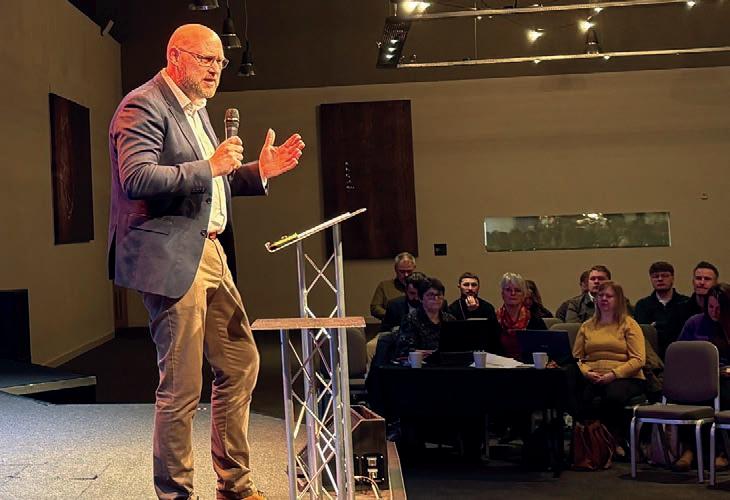
Keeping pace with technology: Chamber head of policy
its wide range of expert speakers and interactive workshops, set out to do and why it was so important.
“The scope of AI is immense, is transforming the way firms operate now and will in the future, while the need to be cyber-secure to protect your business is essential.
“The approach of one business will differ from another based on its needs, so the more insight a business can gain from industry experts, as well as hearing best practice from other firms on a similar journey, the better.”

Richard Smith (pictured, inset) is a director of PS:Planet, in Whaley Bridge, Derbyshire.
Back in 2010 me and my business partner Kevin Price sparked a revolution in the UK TV industry by bringing the BBC, ITV, Sky and many others together to help broadcasting go green.
We’re now working with a range of organisations in heritage, TV production, higher education and more, to create a more sustainable world. We help businesses grow by reducing their environmental impact and giving their staff the skills and knowledge to thrive in the 21st century, green economy.
Customers include local authorities, universities, charities and production companies, but we’re not just for well-established organisations. We love helping companies go green, no matter whether they’re just starting out on their sustainability journey or they’re well on the way.
It was thrilling to get our first client and that feeling never gets old, even though we’re now well into double figures.
I think our location on the edge of the Peak District helps in two ways. First, a lot of the sustainability “industry” is in London and I think companies like encountering highly experienced
people like ours who are doing good things away from the crowd.
Secondly, we both love running, walking and being outdoors. Being in the Peak District gives us lots of fresh air and a different perspective on life. It’s invaluable.
‘The language around sustainability can be complex’
We have clients all over the country so we don’t badge ourselves as a “Peak District company” – but we’re very proud of our location. The opportunities are numerous as people wake up to the fact that sustainability isn’t just for big companies; everyone will have to get involved sooner rather than later or face the financial and reputational consequences.
The challenges are that the language around sustainability can be complex and off-putting to newcomers and particularly SMEs, so we want to make things as clear and simple as possible and break big tasks into chunks.
The biggest threat is the ticking clock: there is limited time for us all to reduce our environmental impact before the damage gets too
Business Peak District (BPD) is a free membership organisation in the Peak District National Park, High Peak, Staffordshire Moorlands and Derbyshire Dales. Its principal supporter is East Midlands Chamber, and it works with councils, the Peak District National Park Authority, the University of Derby, as well as Visit Peak District and Derbyshire. BPD has more than 700 members.
much for us to deal with. We want people to see the benefits of action and just not the scary statistics.
A networking group like Business Peak District is essential, because without groups like this, you can get stuck in an echo chamber. There’s nothing better than meeting people who start off with a degree of scepticism about what we do, but after ten minutes with
us they feel excited and inspired. And as homeworkers it’s lovely to get out of the house and meet people in the real world.
Our main objective is to put PS:Planet on a solid footing so we can help even more companies. This isn’t just about earning a living for us (though that’s welcome of course), it’s about doing something positive for people and planet.



Chamber management want Government to give greater support to the region’s firms amid fears of price rises brought on by the conflict in the Middle East.
Latest ONS inflation figures for the year to February stood at 3%, already above the Bank of England’s 2% target.
However, they cover the months prior to the Israel and US attacks on Iran which have seen oil prices spike.
Chamber director of policy and insight Richard Blackmore said: “The current level holding at 3% will give little comfort to firms in the East Midlands as it covers the period in time before the conflict in the Middle East began so its impact is not accounted for.
“Uncertainty is no good for business and amid the colossal weight of pressure from business rates, corporate taxation, high unemployment in the East Midlands at 5.6% and new regulation like the Employment Rights Bill –the first stages of which kick in this month – firms will be heading into the new financial year with a degree of worry.
“The Chamber’s Framework for Growth calls for the support businesses need and outlines the specific areas for policymakers to prioritise like taxation, planning, infrastructure, devolution and skills investment.
“It’s a working, evolving document and with inflation now looking less likely to reach the Bank of England’s 2% target this year, the need for support remains very high.”

East Midlands Chamber has an impressive record in successfully delivering Government-funded business support programmes.
Most recently, this has been through the delivery of the Accelerator programme, funded by the UK Shared Prosperity Fund (UKSPF) which was set up by Government to reach businesses, communities, people and places in the most impactful way.
UKSPF is the first funding mechanism since the 1990s where central government has issued funding for locally determined economic development, giving local authorities (and now EMCCA in Derbyshire, Nottinghamshire, Derby and Nottingham) greater ownership on local investment.
The impact of the first UKSPFfunded Accelerator programme (delivered between 2023 and 2025 across Derbyshire (excluding Bolsover and Erewash), Leicester and Nottinghamshire; and the subsequent one-year extension in Derbyshire and Leicester and expansion to Nottingham and Erewash), has already been seen.
While final outcomes and outputs are still being calculated (the programme extension came to an end in March 2026), the two Accelerator programmes, with their combined investment of £11.77m, can already demonstrate the following:
• 260 grants totalling more than £1.23m and 435 Growth Vouchers delivered
• More than 7,600 businesses engaged
• More than 1,300 jobs created or safeguarded
• More than 930 events and workshops delivered
• More than 677 businesses supported in introducing new technology or processes; 585 in improving productivity; 344 engaged in new markets; and 308 in adapting new or improved products or services
• 143 new businesses created.
The good news is that Derbyshire Accelerator, Export Accelerator and EMCCA workshop projects have been extended to 30 June 2026. Full details will be available on the Growth Hub website in coming weeks.
Businesses benefitting from support include:
Derby mechanical engineering company Apexis Engineering has developed a strong reputation for high-quality, bespoke machinery and custom-engineered equipment since its establishment in 1999.
After the founder of the business retired, it became clear that the business (previously Bennett Engineering Design Solutions) needed a rebrand and a new website to clearly communicate its evolved offering and attract the right enquiries.
Directors Seleena Creedon and Craig Harbron were introduced to the Accelerator project and Chamber business adviser Sonny

Lakhani through the Chamber’s East Midlands Manufacturing Network (EMMN).
Sonny provided one-to-one advice and supported the business in securing a Growth Voucher for the rebrand and website, which had an immediate effect in re-engaging existing contacts through email marketing and LinkedIn activity and securing the largest order in the company’s history from a longstanding client. The growth has given the directors the confidence to plan the recruitment of a senior design engineer.
Craig said: “The support we have received has been totally transformative. Sonny has taken the time to get to know us, understand our business issues, review our business plans and help our confidence in rebranding, which always comes with risks.”
Wirksworth-based micro-business Built for Good provides products which offer closed captions on smart glasses in cinemas for people with hearing problems.
A primary target market of the USA with its changing tariff landscape is proving extremely challenging. However, with guidance from Chamber business adviser Andrew Bunn, the business successfully applied for an Export Accelerator grant, enabling it to better understand the commodity codes and countries of origin for its product. That gave it more certainty around tariffs and has helped to shape its pricing strategy for the USA. It has also enabled it to ship a demo kit to prospective customers –removing the need for in-person demos – and roll out software improvements, including the ability to run captions in different languages. New sales have led to more staff.
Founder Tabitha Allum said: “We know we have a really good product that theatres in the United States are interested in buying, but we needed to improve our ability to make a compelling case to them, without (the cost) of getting on a plane to follow up leads.”
Cromford-based Soil Acoustics was set up in 2024 by the directors of ecology consultancy Baker Consultants, to bring to market a new agritech product, the Soil Acoustic Meter (SAM).
The meter records the sounds of invertebrates within the topsoil to measure the biological health of soil, and could benefit farmers, agronomists, wine growers, food producers, and land and estate managers in the UK and internationally.
Work by Chamber business adviser Andrew Bunn identified challenges around onboarding new customers and renewal subscriptions.
With Andrew’s guidance, Soil Acoustics successfully applied for a £2,000 Accelerator Growth Voucher for specialist consultancy advice from fellow Derbyshire business Destination Digital.
It has streamlined its sales and customer data process as a result, to focus on market expansion and launching a subscription service.
Director Saffron Johnston said: “This Growth Voucher enabled us to use another small Derbyshire business to speed up our route to market for this emerging technology. This will give us a competitive advantage over other potential competitors.”
The Belper-based business works on public safety risks, together with landowners, government, NGOs, building companies, architects and designers. Its work involves redesigning public spaces, conducting risk assessments and creating management plans across the UK.
The team of technical specialists is spread around the UK, causing significant travel costs. The business’s growth has also outpaced the team’s knowledge in areas such as marketing and software.
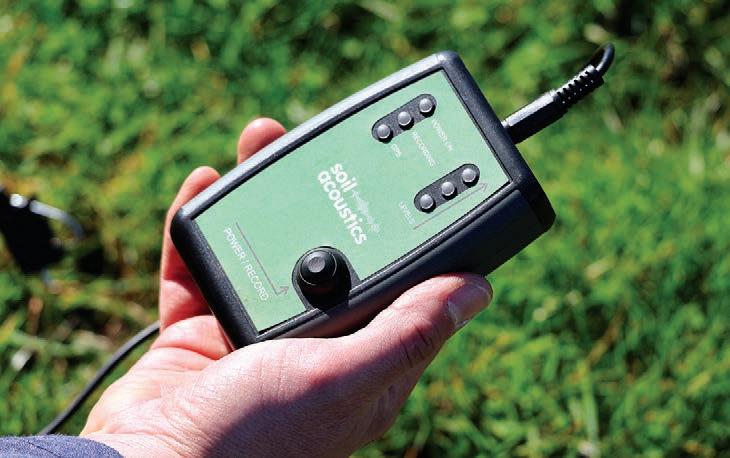
Chamber business adviser Cat Walls helped it apply for an £8,000 Export Accelerator to create a market-ready web-based app, allowing customers to self-assess, with results available within the hour, as opposed to one day.
The support means the business will save at least nine months of development time and each use of the new product could potentially save an average of 200 miles worth of travel, and many tonnes of carbon emissions every year.
Support through Greenhill Consulting has helped ensure that the finished product is genuinely scalable and capable of being used internationally.
The Print Tavern was set up in 2020 by couple Michelle Chapman and Luke Plewinski as a side project offering tabletop miniatures and hobby models.
The small manufacturer has faced price pressures from overseas competitors, as well as increases in energy prices and materials.
An Accelerator Growth Voucher providing access to specialist web
and SEO strategy consultancy helped the business establish clear SEO goals and improve the structure of its website and presence on Shopify. Through that, Michelle and Luke have developed practical skills in using digital tools such as Google Analytics and Google Search Console, allowing them to better understand customer behaviour and attract website traffic without the need for paid advertising.
Further Accelerator support has been on hand from the Chamber’s head of international trade Lucy Granger, who has provided guidance on re-entering the European markets the business was forced to abandon after Brexit.
Through improved SEO strategy, clearer workflows and the effective use of AI tools, the business estimates a saving of around eight to 12 hours a week that can now be reallocated to core growth in manufacturing, product development and strategic planning.
Michelle said: “The support received has had a clear and measurable impact, contributing to increased sales, improved revenue and greater brand awareness.”







Preethi Kang (pictured) chairs Generation Next, the Chamber’s network for young professionals aged 18–35. She is a business, marketing and sales professional with more than 15 years’ experience. Her current role is marketing manager at Derby-based business growth consultancy Qinesis. This month she shares her thoughts on the importance of getting future business leaders invested in politics at local and national level.
The political landscape across the United Kingdom is constantly evolving and nowhere is this more evident than in the East Midlands.
Over recent years, the region has experienced significant transformation, from looming local government reorganisation, to the establishment of the East Midlands Combined County Authority and the introduction of the East Midlands Freeport. These developments are reshaping not only local governance, but also economic opportunity, infrastructure and long-term regional growth.
Despite these changes, many younger people remain disengaged or unaware of the decisions being made around them. This presents a real challenge. The next generation of leaders, entrepreneurs and professionals will be directly affected by these policies.
From business investment opportunities linked to the freeport to everyday considerations such as how interest rates influence mortgages and financial stability, political decisions are closely tied to both career and life choices.
As chair of Generation Next I want to create more informal roundtable events that make it engaging for young professionals in the area to come together and understand the key topics shaping the communities we live and work in. These conversations are designed to demystify complex issues and make them accessible, encouraging participation and confidence among young people.
I am very excited to be launching our next round of events at Generation Next, which will include these roundtable discussions and provide valuable insights into the



changes happening across the East Midlands. Engagement, however, must be a two way process. It is equally important for local MPs, mayors, and decision-makers to actively involve younger voices in these discussions. Their perspectives, ideas and ambitions will help shape the future of the region, ensuring that growth reflects the needs of the communities it serves.
By becoming more informed and involved, the younger generation can make better decisions, both professionally and personally, and play a meaningful role in shaping the East Midlands for years to come.
To find out more, visit generationnextemc.co.uk or contact Preethi Kang at pkk@qinesis.com


Generation Next is seeking young ambassadors to join the network and help lead the Chamber’s work with the next generation of business leaders.
While the “Board of Champions” drives strategy and shapes its direction, its ambassadors play an equally vital role in bringing the network to life.
Ambassadors are the faces of the network, who help make its events, initiatives and campaigns engaging and inclusive, ensuring members feel welcomed, supported and inspired.
Being an ambassador is also an opportunity for personal and professional growth – providing visibility across events, building your profile, developing leadership skills and expand your network.
If you are interested in being a Generation Next ambassador in 2026 contact new chair Preethi Kang or one of the Generation Next Champions. Or visit: generationnextemc.co.uk
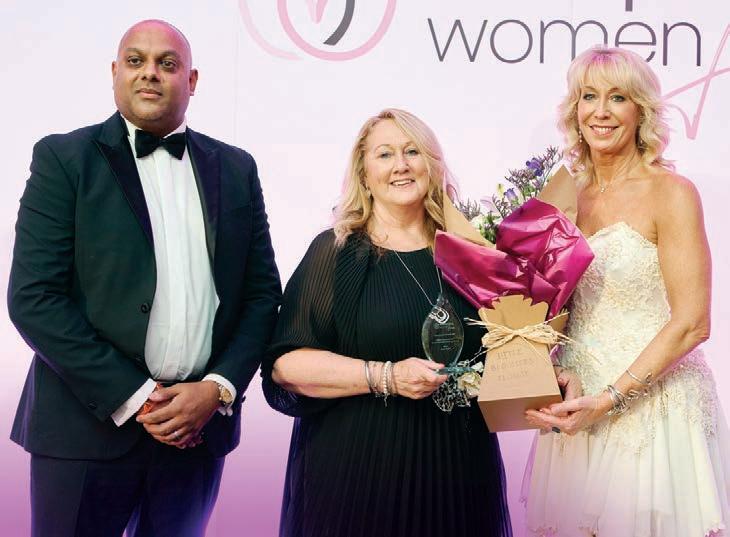


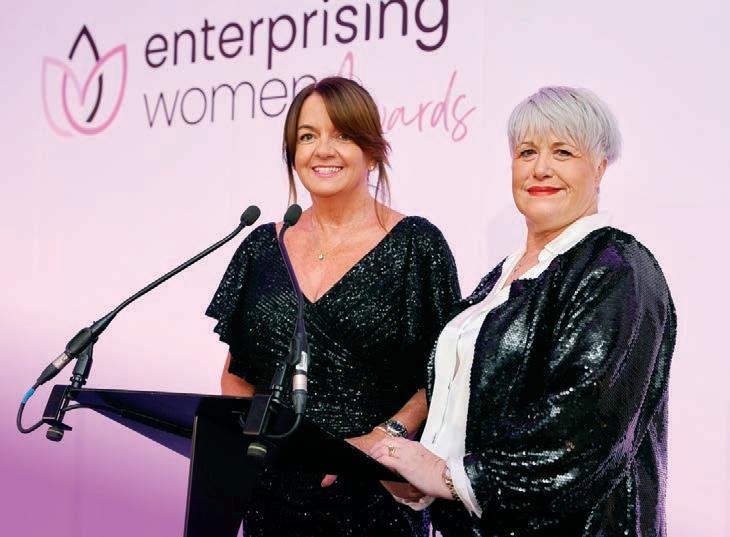
Women who have dedicated their lives to social commitment, innovation and entrepreneurship will be celebrated at the Chamber’s Enterprising Women Awards, which return later this year.
The 2026 Awards were launched at the Enterprising Women conference (see our spread on pages 64 and 65) and will honour business leaders from across Leicestershire, Nottinghamshire and Derbyshire.
Awards will be given out for categories including Business Woman of the Year, Employee of the Year and Team of the Year –with a Lifetime Achievement Award going to someone who has gone above and beyond in their commitment the regional economy.
Entries are now open for each category – Lifetime Achievement will be chosen by the judges – and the closing date for applications is 8 May.
The winners will be announced at a ceremony taking place on the night of 5 September at Center Parcs Sherwood Forest.
Enterprising Women co-founder Eileen Perry MBE DL said:
“Enterprising Women, which I’m so proud to have co-chaired for nearly three decades, holds an award ceremony each year, celebrating the outstanding achievement of women – leading, inspiring teams, innovating – so I see what real progress is through the entries, the winners, the ideas, the leadership.”
Encouraging women to get their entries in, fellow network cofounder Jean Mountain said: “When I look back on our almost 30 years of this network, I realise we chose
Business Woman of the Year - Sponsored by Michael John Switchgear
Social Commitment - Sponsored by Mackworth Vehicle Conversions
Small Business of the Year - Sponsor TBC
Female Entrepreneur of the Year - Sponsored by Freeths
Female Employee of the Year - Sponsored by Cambridge and Counties Bank
Team of the Year - Sponsored by Azets
Innovation - Sponsored by Pick Everard
Apprentice of the Year - Sponsor TBC
Developing Leader - Sponsored by Sarah Higgins Corporate Coaching
Lifetime Achievement - Sponsored by NOCN Group
To enter visit: https://is.gd/JYax3C
Awards over numerous years when I had my own manufacturing business. What I do now, at Women on Boards CIC, came out of being usually the only female voice in the room in too many meetings.
“If we don't step ourselves forward and we don't celebrate success, or whatever success looks like, then we are not putting role models out that open the doors for our next generations to come through.”
Datalink Electronics managing director Mariam Smith won the Business Woman of the Year in 2025.
She said: “It felt like such an amazing achievement to win the Business Woman of the Year Award. I never expected it in a million years so it felt like an amazing validation. Celebrating success is absolutely important because there are fewer and fewer women in leadership roles and I feel women don't champion themselves.
“To have other people push them is so important. I'm not a very confident person and I don't like public speaking so having somebody to push me and encourage me has been fantastic.”


the name well. Enterprising Women is what it says on the tin –‘enterprising’ doesn’t mean carrying out work – it means being inventive, resourceful, creative, entrepreneurial and making new business ideas a success.”
Women on Boards CIC cofounder and chief executive Sandra Wiggins won the 2025 Lifetime Achievement Award. She said: “I'm still in shock about winning Lifetime Achievement. I've entered the Enterprising Women
The awards night will to be an evening full of vibrancy, pride and celebration with a welcoming atmosphere.
Guests will be treated to a welcome drink upon arrival followed by a three-course meal and winners announcements. The evening will be opened by Eileen Perry and Jean Mountain, and hosted by ITV presenter Emma Jesson.
To book tickets visit: https://is.gd/8cnsFH
The Chamber-run East Midlands Manufacturing Network (EMMN) has just marked its fourth anniversary.
There are six groups covering Derby, Derbyshire, Leicester, Leicestershire, Nottingham and Nottinghamshire, and they each meet every couple of months. Between them, the branches have 400-plus members.
Membership is free and open to manufacturers of any size. It also entitles members to complimentary affiliate membership of Make UK.
THE CRITERIA FOR JOINING THE NETWORK ARE:
• You are a senior manager, leaders and future leaders.
• Your business is based in the Chamber area of Derbyshire, Leicestershire and Nottinghamshire
• Your business makes something
For details visit: emmn.co.uk
DERBY
Date: 22 April
Venue: University of Derby Enterprise Centre
NOTTINGHAM
Date: 29 April
Date: Medical Technologies Innovation Facility, Nottingham Trent University Clifton Campus. (This will be the first EMMN visit to the facility and will include an introduction and site tour, which should be of particular interest manufacturers in the medical and life sciences sector.)
LEICESTER AND LEICESTERSHIRE
Date: 13 May
Venue: Loughborough University
DERBYSHIRE:
Date: 5 June
Venue: East Midlands Chamber, Chesterfield head office
NOTTINGHAMSHIRE
Date: 10 June
Venue: TBC
For further details visit: https://emmn.co.uk
The East Midlands Manufacturing Network hosted a spring meeting at Cromford Mills, near Matlock, which is one of the UK’s most significant Grade I listed 18thcentury industrial building complexes.
Work is ongoing to take the mills – built in the 18th century by Sir Richard Arkwright, who was considered the father of the modern industrial factory system –off Historic England’s National Heritage at Risk Register and secure its future as a heritage destination and community space.
‘Restoring our vacant historic industrial buildings is about unlocking new opportunities’
Eilis Scott, chief executive of the Arkwright Society which runs the complex, shared the story of the site, the world’s first successful water-powered cotton spinning mill and a cornerstone of the Industrial Revolution.
The mills are part of the internationally significant Derwent Valley Mills UNESCO World Heritage Site and continue to build on its history of innovation, industry and education as part of the thriving community for visitors and business.
This spring the society announced that it had secured £1.3m in development funding from The National Lottery Heritage Fund, marking the beginning a “once-in-a-generation” project to restore and reimagine the buildings.
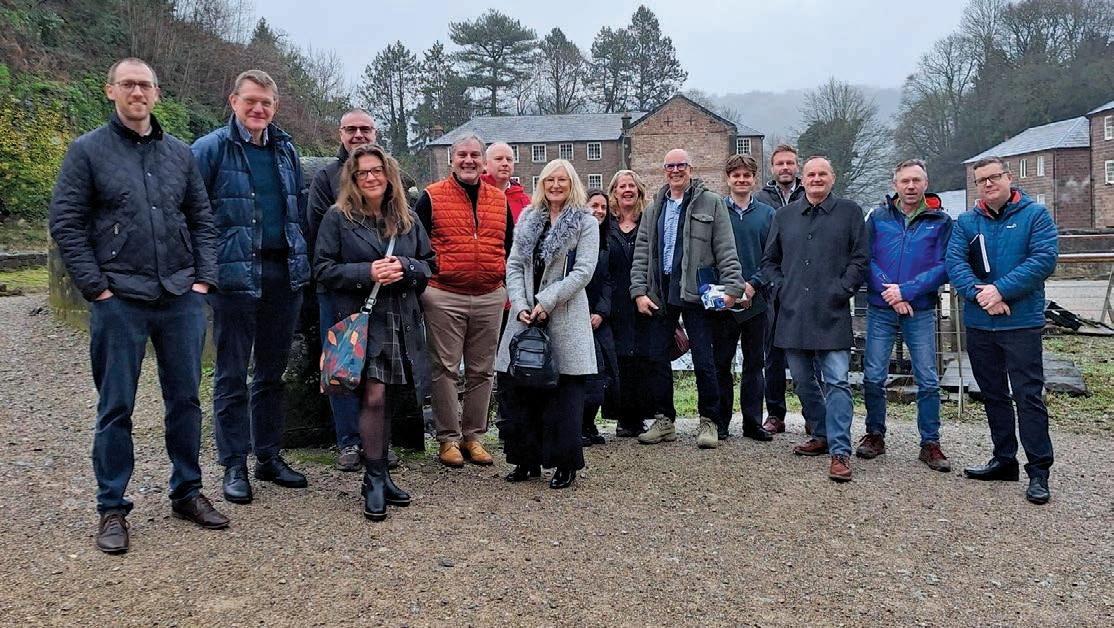


Work will focus on the transformation of the landmark four-storey Mill, Building 1, which greets visitors as they walk through the main entrance.
The support will fund the essential planning, consultation, and design work phase, laying the groundwork for the full restoration. At the heart of this vision is a skills and enterprise
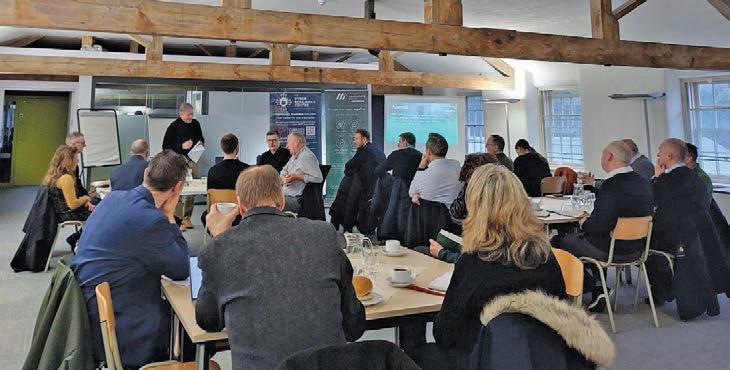
programme, to be developed in partnership with The University of Derby, local organisations and colleges.
Eilis Scott said: “Restoring our vacant historic industrial buildings is about unlocking new opportunities, sparking innovation, and using the stories of creativity and enterprise to inspire.”
The visit saw ideas shared
between EMMN members from across Derbyshire, Nottinghamshire and Leicestershire, as well as networking opportunities. Representatives of Chamber member The Cyber Resilience Centre for the East Midlands, used the opportunity to give an update on cyber security and share details of the funded support they can offer to SMEs across our region.

The Chamber and West Nottinghamshire College are inviting construction leaders, contractors and tradespeople to a relaxed early morning networking breakfast in Mansfield for the construction sector.
The breakfast takes place from 7.30–9.30am on 16 April and includes a free breakfast, the chance to connect with representatives of other construction firms and the chance to be back on site in time for the working day.
This event is free to attend but places are limited. It takes place at West Nottinghamshire College’s Old Brewery Campus, NG18 1AH. There is some free parking on site but alternate paid parking is available just across the road in the Watermeadows Car Park.
The event is open to Chamber members only. If you wish to attend and are a nonmember, please contact event organiser Caroline Lucy on 0333 320 0333 or email caroline.lucy@emc-dnl.co.uk.
To book visit: https://is.gd/A34IEF
FORUMS OFFER REAL INSIGHT
The Chamber’s regular Bank of England Forums offer the opportunity for Chamber members to take part in discussions on local operating conditions.
The Bank regularly engages with the Chamber, seeking to gauge current levels of business confidence and investment intentions among members. These events provide an opportunity for businesses to have their say and exert influence.
The Bank listens to business leaders’ observations on issues that affect businesses locally and regionally. The feedback helps to complement the intelligence supplied by the Chamber’s economic research and the emerging issues arising from these forums are fed into the Monetary Policy Committee, which sets the monthly interest rates affecting us all.
• 14 May: In person,
Freeths, Nottingham (10–11.30am)
Book at: https://is.gd/SvvnXn
• 23 September: In person
Howes Percival, Leicester (10–11.30am)
Book at: https://is.gd/VFn7Ch
A logistics firm that provides transportation, shipping, warehousing and storage services is inviting Chamber members to join it for an open event.
International Logistics Centre is hosting the open afternoon/networking event at its 11-acre Newark site, from 4-6pm on 4 June.
The afternoon is part of Chamber Connect Events, a special benefit for members to help build strong business connections.
Non-Chamber members can attend one event for a £30-plus VAT fee.
To book, go to: https://is.gd/toznU6

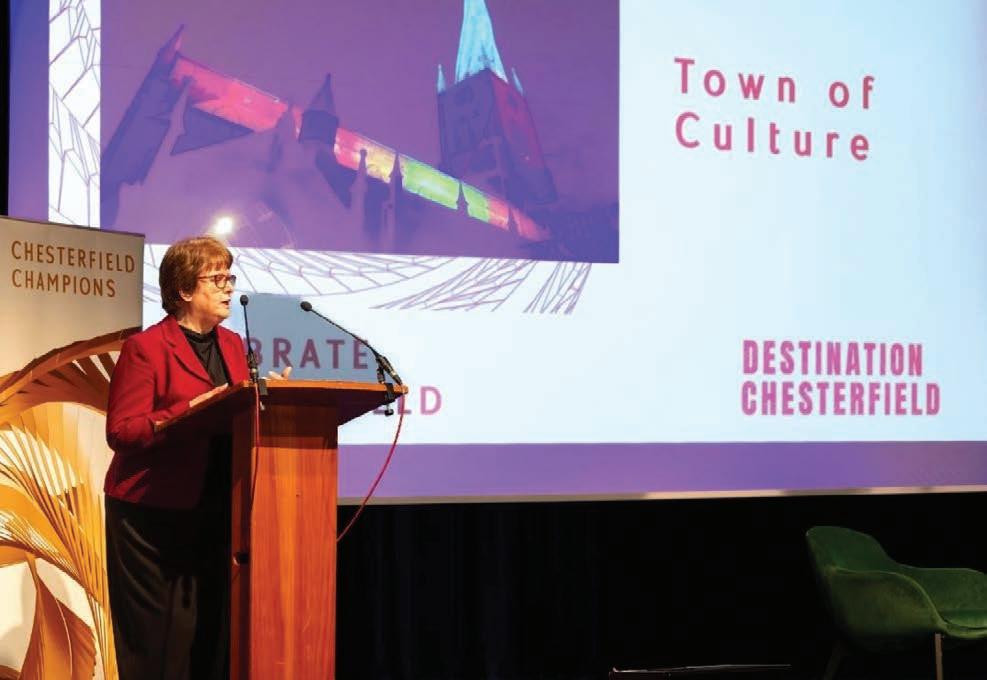
Chesterfield’s vibrant cultural identity and the community impact of ongoing regeneration took centre stage at this year’s Celebrate Chesterfield conference.
Organised by Destination Chesterfield and supported by Vines Legal and Stepnell, the event highlighted how culture, creativity and placemaking are becoming core drivers in the town’s long-term economic strategy.
Emily Bowman, managing director at Junction Arts, showcased Chesterfield’s expanding creative programme, demonstrating how local arts, events and heritage initiatives are boosting wellbeing, attracting new visitors and driving footfall into the town centre.
‘Chesterfield’s ambition to become Town of Culture is an exciting moment for our borough’
She also outlined the borough’s ambition to become a Town of Culture, as part of its wider cultural strategy. If successful, the programme would be led by the community working in partnership with Pride in Place Town Board and Chesterfield Borough Council.
Council leader Councillor Tricia Gilby said: “Chesterfield’s ambition to become Town of Culture is an exciting moment for our borough. It gives us a platform to celebrate who we are: our heritage, our creativity and our people, and to showcase the cultural energy across the borough.”
The conference also highlighted how regeneration continues to reshape the borough, with Chesterfield now benefiting from a £2bn investment pipeline.
Council chief executive Huw Bowen, who retires in May, reflected on his 18 years of placeled leadership and stressed the importance of long-term partnership in achieving regeneration milestones.
Ivan Fomin, chair of the Staveley Town Deal Board, also shared how Town Deal projects are supporting communities, with a new video showing the benefits beginning to be felt across Staveley.
Andrew Byrne, who chairs Destination Chesterfield, said: “At Celebrate Chesterfield, we have not just talked about ambition. We have heard real stories of impact. The public, private and community sectors are working together to support the economy and people of Chesterfield.”



Around 400 people are expected at the annual celebration of Culture and Communities at the Athena, Leicester, on 24 April – the foremost event in the Chamber’s cultural calendar.
The evening, produced in conjunction with events and marketing company Sanjib8, will include a mix of networking and live entertainment, with dance and song across the cultural spectrum.
Hosting will be poet and playwright Carol Leeming MBE, founder and artistic director of Leicester-based Dare to Diva Arts company, which delivers arts and arts training programs and organises exhibitions, festivals, performing arts shows, seminars and digital productions.
There will also be live performances, with colourful Carnival vibes from XTREME Carnival Band; Singing for the Soul delivering inclusive performance sessions; and dance from Moving Together, a not-for-profit community group which works across the East Midlands to make dance accessible, inclusive and meaningful for people of all ages.
On top of that there will be music from award winning British singer-songwriter Navin Kundra, who writes, composes and performs songs in Hindi, Punjabi and English, and a DJ set from The DJ Old Boy to close the night in style.

Time: 9am-4pm



This year’s headline partners are De Montfort University; emh Group; Business 2 Business and RandalSun Capital. The 2026 partners are Nelsons, Sanjay Foods, Sanjib 8, PPL PRS, Barclays UK and Assured Energy.
For more information and to book places, visit: https://is.gd/kPVtaR
East Midlands Chamber and the University of Derby are hosting a Derbyshire Makes: Advanced Manufacturing Sector Conference, at Masson Mills, Matlock Bath, between 9.30am and 1pm on 16 April.
The day is open to businesses based in the Derbyshire County Council area, to support growth and resilience within advanced manufacturing sector within the county.
It will consider areas such as supply chain opportunities and understanding the benefits of apprenticeships in attracting and retaining talent and supporting employment.
‘We want Derbyshire to have great places to live and work’
Specific subjects under discussion will include opportunities in the UK’s nuclear industry, suppliers stories, and the best ways of demonstrating that your manufacturing environment meets the demands of your clients.
There will also be contributions from young people through a Derbyshire Makes STEAM (science, technology, engineering, art, and mathematics) project, delivered as part of the 2026 Derbyshire Makes Festival.
County council cabinet member for economic development and regeneration Councillor Rob Reaney said: “We want Derbyshire to have great places to live and work.
“Creating a strong local economy with good jobs is one of our top priorities and initiatives
Date: 8 April
Venue: Online
This full-day practical programme provides delegates with the skills and knowledge to prepare and process documents encountered when exporting goods overseas. Delegates will study the principles and current industry practices required to ensure that they can process documents in order to operate both legally and cost effectively.
Visit: https://is.gd/gZjMCn
Time: 10-11.30am
Date: 23 April
Venue: Online
Many businesses transport dangerous goods without realising they may have a legal obligation to appoint a Dangerous Goods Safety Adviser (DGSA). This webinar is aimed at manufacturers, distributors, importers, freight forwarders, warehousing/logistics teams, and any organisation involved in consigning, packing, loading, unloading or transporting dangerous goods by road.
Visit: https://is.gd/UjogI4
DANGEROUS GOODS AWARENESS TRAINING
These sessions will help businesses understand their responsibilities when handling or shipping dangerous goods under ADR, IATA, IMDG and the UK Carriage of Dangerous Goods regulations.
Dangerous Goods by Air – Full Certification
Three day 25-27 May
Dangerous Goods by Air – Revalidation
Two day 28-29 May
Dangerous Goods by Road & Sea (ADR & IMDG) Full Certification
Three day 22-24 June)
Intermediate Rules of Origin
Half day

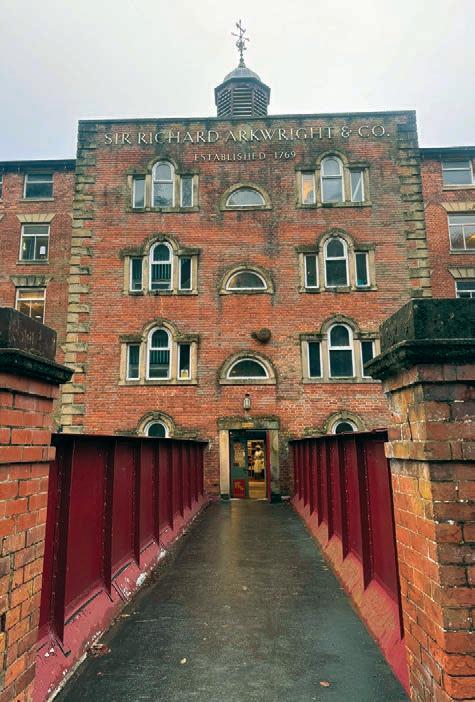

such as the Derbyshire Makes Advanced Manufacturing Support Programme aim to help us achieve our goal by supporting local businesses to grow.”
For details visit: https://is.gd/9QswN2
Exploring New Export Markets – A Roadmap for Success
Two half days
Find out more at: www.emcdnl.co.uk/services/international/
For all Chamber courses
visit: https://is.gd/fhN4Ms
www.emc-dnl.co.uk/sustainability
Emma Clarkson is business development manager at the International Logistics Centre, in Newark, which provides services ranging from transportation and shipping to warehousing and storage:
At our 11-acre site, sustainability and biodiversity have become a core focus.
Within a dedicated field, we have planted a variety of floral and fauna species and installed several flower beds to promote a diverse ecosystem.
We also introduced bee hives, now managed by a local beekeeper, producing honey.
During 2021 and 2022, the International Logistics Centre partnered with the University of Derby and its DE-Carbonise project to embark on a pioneering decarbonisation programme.
Logistics centres naturally generate significant carbon emissions due to constant HGV and forklift truck operations. To mitigate this, the project focused on creating a living carbon capture system on-site, incorporating flowers, shrubs, fauna and trees in strategic areas.
A key challenge was managing water and runoff from the extensive hard-standing loading areas. Commercial vehicle activity carries the risk of fuel and oil contamination spills, and the surfaces needed to remain impervious to fluids.
To address that, we redesigned and rerouted
A Leicestershire tree specialist has been recognised as one of the UK’s 100 most inspiring female entrepreneurs.

Kimberley Allen (pictured), who co-founded Shepshedbased Broadleaf Midlands Tree Care in 2019, was singled out in the Small Business Britain’s f:Entrepreneur #IAlso100 campaign, which celebrates female business leaders.
Women on the list were picked for driving innovation, growth and positive impact in their communities, while running successful businesses.
Kimberley said: “This recognition means so much to me. Broadleaf was created during a challenging period of my life, and being part of the #IAlso100 shows that building a business around real life, health and family is not a weakness, but a strength. I’m proud to stand alongside so many inspiring women who are proving that success doesn’t have to follow one fixed path.”

around 650m of drainage, ensuring compliance with legal building requirements while protecting the new habitats. The drainage system maintains a constant water level in a newly constructed swale, supporting plants and wildlife even during drier periods.
‘A key challenge was managing water and run-off’
Further enhancing the site’s sustainability, the inhouse Klargester BioFicient system treats clean water runoff from our commercial offices, directing it into reed beds and plant areas.
Along the fence lines, we planted hardy flowering laurel, providing an additional 800m of greenery, improving visual appeal and creating vital habitats for birds, pollinators and other wildlife.
This programme represents a first for a busy logistics centre in the region, demonstrating that even industrial sites can actively contribute to biodiversity and carbon reduction.


A partnership of regional businesses is working together to provide bus services for the 440acre Hugglescote Grange and Swinfen Vale communities, near Coalville, Leicestershire.
GO Travel Solutions, Arriva and property developer Harworth Group have collaborated on rerouting the 15, 29 and 29A services to cover hundreds of new homes.
Ian Murdey is project manager at Leicesterbased GO Travel Solutions, which offers consultancy services to help businesses and communities take on sustainable travel and cut their carbon emissions.
He said: “As the travel plan coordinators for Hugglescote Grange and Swinfen Vale, we’re delighted that Arriva are providing these services through the development.


“With almost 100 residents having already taken up our free six-month Arriva bus ticket offer via LocalGO, we know that local people really value buses as an alternative to driving for both long and short journeys.
“These routes truly provide an important additional transport option for everyone.”
The new bus service for Hugglescote Grange and Swinfen Vale is already up and running and plans are in place to enhance the bus service through provision of bus shelters and real time information in these communities, with further promotion to take place with local residents.

Hundreds of businesses gained geopolitical insight into the Middle East crisis thanks to a joint initiative by the British Chambers of Commerce (BCC) and Foreign, Commonwealth and Development Office (FCDO).
The first event organised by the new Diplomatic Advisory Hub saw senior FCDO officials host a webinar giving updates on the unfolding situation, and its implications for costs, energy, logistics and risk. Firms were also given crucial advice on stress-testing planning for trade with the Middle East.
Further briefings on geopolitical challenges and opportunities will be arranged in the coming months.
‘Exporting is not just growing our reach; it is helping us build a stronger, better business in every way’
The hub was announced by the Foreign Office in March last year at the BCC’s Driving International Trade Conference. It is now fully operational, with businesses able to receive personalised advice on world politics via the BCC website and events across the Chamber network.
It is the first time that diplomats have been seconded into the BCC. They are led by Richard Oppenheim, a former ambassador, who has had diplomatic experience in the Middle East and Japan, as well as multilateral experience at the UN, on EU issues and as a Commonwealth envoy.
East Midlands Chamber welcomed the new hub and the way it can help businesses understand new regulation, respond to
geopolitical shocks and anticipate trends in global trade.
Chamber chief executive Scott Knowles said: “We know that trade delivers growth which is why we are working hard to support more businesses across our network to tap into overseas markets.
“Working with the Foreign Office, the new Diplomatic Advisory Hub will do just this, supporting firms across the East Midlands to shine on the world stage. In turn, these opportunities will mean more investment into local communities and more good quality jobs for hard-working people across the region.”
Peter Ellse, chief executive and co-founder of Derbyshire-based Cosy Direct, which designs and sells indoor and outdoor play and nursery equipment around the world, also backed the new resource.
He said: “Exporting is not just growing our reach; it is helping us build a stronger, better business in every way.”
Shevaun Haviland, director general of the BCC, said the first webinar on the situation in the Middle East was a powerful signal of how vital the Diplomatic Advisory Hub was.
She said: “It will help more SMEs navigate the complex world of geopolitics, giving them the knowledge and certainty to expand into new markets. This unique partnership with the FCDO shows how government and business working together can drive forward growth.
“British firms know business and British diplomats know world politics. Bringing them closer together can only be a recipe for success.”
www.britishchambers.org.uk/diplomaticadvisory-hub


The Chamber is calling for greater support for exporters after national research suggested the government was failing to help businesses with trade policy changes.
Hundreds of firms took part in the research, carried out by the British Chambers of Commerce (BCC) in partnership with GS1 UK, without a single one saying they had had “comprehensive support” from Government over recent changes. Only 13% said they got enough help, with 32% saying they didn’t get much and 31% saying there was none. The findings form part of a BCC and GS1 UK report looking at how digital trade can help economic growth and calls for a joint plan between Government and business.
Recommendations proposed include:
• E-labelling and digital product passport systems that work seamlessly across borders
• UK to show leadership in building global adoption of electronic trade documentation

• More digital trade corridors following the UK’s pilot schemes with France and Germany
Chamber head of international trade Lucy Granger said: “A greater level of support for exporters is something we’ve been calling for but the need grows every time there is a change in policy, whether that be US tariffs, new regulations or new paperwork.
“All these factors impede export, making the process more difficult and this research shows those headaches are frustrating exporters.
“The Chamber is here to support businesses looking to export so I would urge any firm trading internationally and trying to navigate challenges to contact our International Trade department.”
View the report ‘New Trade Frontiers for SMEs: Digitalising Commerce, Raising Economic Growth’ here: https://is.gd/LNzrKj
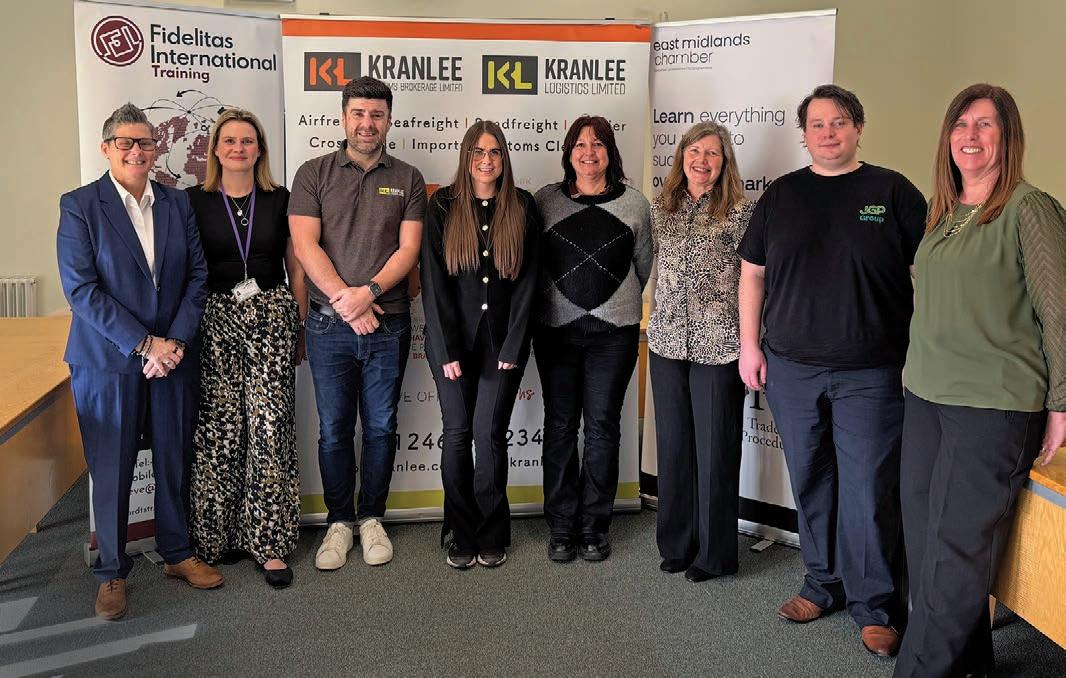
East Midlands Chamber has celebrated the latest cohort of learners to successfully complete the ITOPS – International Trade Operations and Procedures Qualification – and to gain the BCC Foundation Award in International Trade.
The programme, which recognises professionals who have shown exceptional commitment to strengthening their knowledge and expertise in international trade, is delivered by the Chamber in partnership with Fidelitas International Training.
Delegates from internationally-focused businesses took part in an intensive and practical learning experience, developing their understanding of key areas including export documentation, logistics, trade finance and customs procedures.
As principal sponsor of the programme, Chesterfield-based Kranlee Logistics provided a freight forwarder placement and contributed to delivering the workshops, and continues to add significant value to the learner experience.
Kranlee director Karen Mosley said: “ITOPS is a reminder of what’s possible when delegates
come together with a shared purpose. Their commitment, curiosity, and willingness to challenge themselves is inspiring to see.
“It’s been a privilege to support their journey and watch them grow into confident, capable professionals ready to make a real impact in international trade.”
‘Not only have the delegates proven their knowledge of current international trade procedures, they also have the practical skills to utilise this knowledge in their place of work’
Patrick Revell of Mallinckrodt Chemical, also in Chesterfield, received the award for achieving the highest mark in the latest cohort.
Fidelitas International Training owner Steve Townsley said: “It’s always a pleasure to see successful ITOPS candidates receive their certificates at these presentations.


British exporters pivoted away from America over the last 12 months, sharpening their focus on European and eastern markets as the year progressed.
The shift away from the US was most stark among manufacturers, as they targeted new territories to mitigate the impact of Trump’s tariffs, according to the latest UK Trade Barometer.
Their order books increasingly featured China, Japan, Australia and several EU nations over the course of the year – a trend that looks set to continue through 2026.
However, many businesses expect sales to America to bounce back this year.
Britain’s status as a services superpower shone through as finance firms recorded their strongest quarter yet in Q4. Not impacted by White House tariffs, America remained a top market, with Canada becoming increasingly important during 2025.
Britain’s strength in supplying construction services was another key trend – the sector consistently recorded the highest percentage of firms reporting export uplifts during 2025 –and sales to Japan surged.
Another theme was the gulf between London and the regions when it came to export performance – which could present an opportunity for ministers as they look to jumpstart productivity through the delivery of the Government’s industrial strategy.
The UK trade barometer is delivered by Manchester Airports Group (MAG) – which owns East Midlands Airport – and the Growing Together Alliance of business groups.
Government plans to put import charges on low value and individual items would disproportionately impact SMEs, according to the Chamber.
“They are a celebration of the hard work that all delegates put in to reach the required standards.
“Not only have the delegates proven their knowledge of current international trade procedures, they also have the practical skills to utilise this knowledge in their place of work.
“Success in this qualification ensures that the joint goals of professional compliance and costeffective trading have been achieved – a real benefit to their employers.”

The other delegates who qualified were Claire Milnes from Penny Hydraulics; Victoria Burnand from SSS Super Alloys; Jackie Smith and Laura Lowe from Rompa; Sian Baguley from R&D Tools; and James Smith from JG Pears.
For details of ITOPS courses visit: https://is.gd/08wP6U
The EU has said it could follow the US in removing ‘de minimis’ exemption on imports, , which allow goods under a certain value to enter the country without duties applied. The planned charges could come in from 2029.
British Chambers of Commerce survey findings revealed that more than half of UK goods importers would pass on import costs to customers, if charges were between 5 and 10% on small shipments. Others said they might switch suppliers or even scale down activity.
Chamber head of international trade Lucy Granger said: “Any new costs to be covered by exporters mean additional burden for them and would add to pressure on them to consider price increases.
“I’d urge Government to re-think proposals so that small and medium sized businesses that import goods are not presented with a barrier to growth.”
ROUNDING UP LOCAL AND NATIONAL AFFAIRS
Sue Tilley (pictured), who chairs support group Leicestershire Business Voice, explains why politicians and business leaders in Leicester and Leicestershire must do everything they can to grasp the opportunities that devolution offers.
Across England, devolution is reshaping how regional economies are supported and developed. Combined authorities are gaining greater control over skills, transport and infrastructure investment, allowing regions to plan more strategically and compete more effectively for growth.
For businesses, the benefits of this approach are becoming increasingly clear. Regions with devolved powers are able to align economic strategy, infrastructure investment and workforce development in ways that create confidence for investors and employers alike.
That is why the current debate around devolution is so important for Leicester and Leicestershire.
Leicestershire Business Voice recently submitted a White Paper to Government outlining the priorities of the regional business community as discussions around devolution and governance reform continue. LBV is an independent and apolitical organisation and our objective was simple: to ensure that the voice of business is clearly heard as decisions that will shape the future of our regional economy are considered.
At present, much of the local focus is understandably on the Government’s consultation
regarding local government reorganisation proposals for Leicester, Leicestershire and Rutland (which are not the same as devolution). These discussions are important and will influence how local governance operates in the future.
‘While neighbouring regions are already benefiting from devolved investment, Leicester and Leicestershire currently sits outside that framework’
I have been invited by the leader of Leicestershire County Council to join a small group of business leaders to discuss these proposals and how they may provide a pathway towards devolution. Engagement between local government and the business community is essential, and these conversations provide an opportunity to ensure that economic growth remains central to future governance arrangements.
However, while those discussions continue locally, the national landscape is moving forward quickly. Neighbouring areas such as Derbyshire and Nottinghamshire are now part of the East

Midlands Combined County Authority, which is beginning to unlock devolved powers and funding to support economic development across the region.
This shift is already visible in the distribution of public investment. Analysis shared by the Chamber shows that residents in Leicester and Leicestershire currently receive around £11 per head in skills investment (see pages 4&5). By comparison, areas within the East Midlands Combined Authority receive around £44 per head, while Greater Manchester receives more than £52 per head and the West Midlands nearly £70 per head.
In practical terms, residents in devolved areas are benefiting from three to six times more investment in workforce development than those in Leicester and Leicestershire.
Transport funding presents a similar picture. While Leicester and Leicestershire performs reasonably compared with some areas, investment remains below that available in the East Midlands Combined Authority area.
For businesses, these figures matter. Investment in skills supports workforce development. Transport investment strengthens connectivity and productivity. Infrastructure investment enables innovation districts, science parks and the commercial environments where high growth companies thrive.
While neighbouring regions are already benefiting from devolved investment, Leicester and Leicestershire currently sit outside that framework, despite hosting one of the UK’s most powerful concentrations of knowledge, technology and innovation assets. As discussions around local government reorganisation and devolution continue, it will be important that the wider economic opportunity remains firmly in view.
Businesses want clarity, ambition and collaboration. Above all, they want to ensure that Leicester and Leicestershire remain fully connected to the investment and opportunities shaping the future of the UK economy.

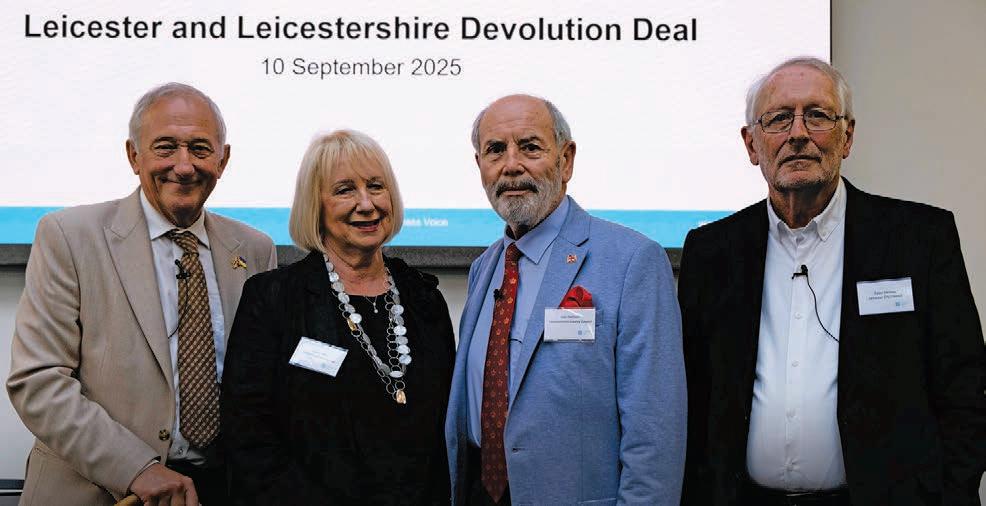


Because while governance debates continue locally, other regions are already moving ahead. Leicester and Leicestershire cannot afford to be left standing still.
The next phase in the regeneration of Newark town centre has been announced.
The Newark Town Centre Masterplan has been drawn by a partnership made up of Newark and Sherwood District Council, Historic England and urban designers and architects Allies & Morrison. It hopes to steer new developments and support a vibrant, sustainable and accessible future for the town, preserving its historic character while encouraging growth and investment.
THE MASTERPLAN IS STRUCTURED AROUND SIX KEY THEMES:
1. Revitalising the Market Place as a safe and flexible space
2. Supporting a strong economy and town centre living
3. Promoting education, skills training, and creative industries
4. Enhancing riverside leisure and flood resilience
5. Improving walking, cycling and public transport links
6. Celebrating Newark’s history and cultural assets

Councillor Claire Penny, the district council’s portfolio holder for sustainable economic growth, said: “Newark is a town with a proud heritage and a vibrant community. The masterplan is about building on what makes Newark special while ensuring it thrives for generations to come. We’ve listened carefully to what people have told us, and this Masterplan reflects that feedback.”
Read the full report at: https://is.gd/2Ju82y
Management at two nurseries for children with special educational needs and disabilities (SEND) have expressed their relief that they will not now be closed by the local council.
The Wigston Menphys Nursery School and Sketchley Hill Menphys Nursery School had been threatened with closure by Leicestershire County Council. The Oasis Retreat in Melton Mowbray and Lift Beacon in Loughborough were also threatened.
However, following a consultation with parents, carers and professionals, the Reform UK-led council decided to axe the plans.
It followed more than 2,500 responses to a survey on the proposals, mostly expressing concerns, as well as a 2,000-signature petition.
Robert Martin is chief executive of the Leicestershire Menphys charity which helps

The Chamber has welcomed an announcement of over £470m from the East Midlands Combined County Authority (EMCCA) to upgrade bus services, cycle routes and repair roads across Nottingham, Nottinghamshire, Derby and Derbyshire.
At least £120.9m of the money will be used for road maintenance over the next three years and will be split between the four highway authorities for each city and county.
Projects set to benefit from funding include:
• Spondon Interchange, Derby
• A50 Junction 3A link road, part of the South Derbyshire Growth Zone
• A614/A6097 corridor, Nottinghamshire
• Road safety programmes across Nottingham and Nottinghamshire
Chamber chief executive Scott Knowles said: “A reliable, efficient and modern transport system is essential to business, the workforce and communities, as well as the wider supply chain that depends on it.
“Poorly maintained roads are a barrier to growth, which is why the need for improved connectivity and transport infrastructure are policy asks in the Chamber’s Framework for Growth.
“The publication outlines specific actions that, if taken, would unlock the full potential of the East Midlands and enable the region to thrive so I very much welcome this investment as a significant forward step.”
disabled children, young people and their families.
He said: “We are incredibly pleased and relieved that Leicestershire County Council has listened to families and the wider community and has decided to keep the Menphys nurseries open for the children who need them most.
‘The
nurseries gave us immense reassurance, understanding and hope’
“We sincerely thank the council for recognising the strength of feeling shown throughout the consultation and the vital importance the nursery schools.
Sixteen senior defence industry leaders have been appointed to support the sector’s growth in the region as government prepares to boost national security spending as a result of heightened global tensions.
Some of the region’s biggest employers as well as SMEs are represented on the new Midlands Defence and Security Industry Council, tasked with attracting investment for high-quality, well-paid jobs in the region’s defence and security industries.

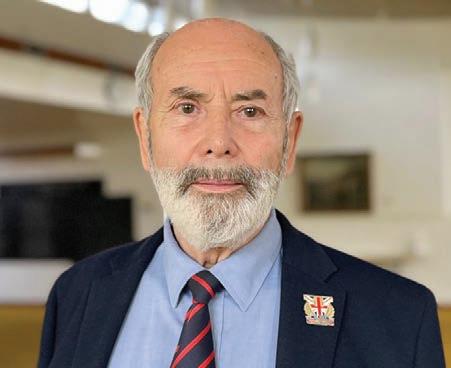
“For many of us, this decision is deeply personal. The nursery changed the direction of my own family’s journey with my son Arthur during a time of real desperation.
“The nurseries gave us immense reassurance, understanding and hope. Like so many families, the thought of these doors closing was heartbreaking.”


Council leader Councillor Dan Harrison said: “It’s hard not to be moved by the powerful feedback received. These young children desperately need our support. Our intention was not to cause worry but the first-hand accounts I’ve heard and read have left me in no doubt that halting plans is the right thing to do.”
The council is a joint body created by EMMC mayors Claire Ward and West Midlands Mayor Richard Parker. It is chaired by Chris Spicer, managing director of engineering and systems integration at Babcock International.
Claire Ward (pictured) said: “The East Midlands has substantial strengths in defence and the sectors that support it, but we know that even greater strength and opportunity is generated by the wider Midlands working together. Our supply chains do not stop at administrative boundaries, so we have built a partnership that understands and responds to that. This will allow for stronger, inclusive growth.
“Businesses expect us to ensure that the benefits of increased defence investment accrue to our major global businesses and SMEs alike, and this council will ensure that we work together to deliver that.”


Across the UK, lighting accounts for approximately 20% of all energy consumption, which means it also accounts for a significant amount of consumer energy bills. Business Network explores how switching to LEDs can dramatically cut costs.


LED lights are ‘instant on’ lights and, unlike many fluorescent lamps, do not need time to warm up before they work at full strength. Rather than sacrificing lighting efficiency through being ‘instantly on’, they improve it. Consuming less than 80% of the electricity of traditional incandescent bulbs, LED lights significantly reduce electricity bills.
Unlike typical incandescent bulbs, which emit light as a current is passed through the metal within them, LEDs pass electrons through a semiconductor and consequently have no filament to wear out, meaning they don’t get as hot,


‘Swapping these inefficient lights could see businesses reduce their lighting bills by 90%’
reducing the chance of burn-out.
They can produce light in a variety of colours and like the white fluorescent tubes that light many offices, can do so without a great deal of glare. Unlike fluorescent tubes though, they can be readily turned on and off without diminishing their lifespan.
The advantages of LED are quickly becoming more-widely appreciated by customers as they replace halogen and fluorescent strip lights – LED lighting is more attractive, energy efficient, costeffective and durable than existing lighting infrastructures.
LED lighting solutions will not only help to make significant energy and cost saving, but will
also result in reduced CO2 output, helping companies to meet carbon reduction obligations, while improving the overall working environment, comfort and productivity.
This is easily achievable, with businesses able to carry out a simple one-for-one retrofit, right the way through to a complex full redesign.
To get the greatest efficiency it’s important that businesses tailor any approach to their specific site, as poorly implemented LED installations will not necessarily lead to savings on their own.
With that being said, it isn’t difficult for an LED lighting solution to make a difference to your
energy costs, quickly. Looking at the energy efficiency of a standard 50w halogen lamp, found in the majority of SME businesses, they use just 10% of the electricity they consume for producing light.
In a commercial building filled with these bulbs, swapping these inefficient lights could see businesses reduce their lighting bills by 90%.
Despite LED prices falling, they can still prove more expensive to purchase compared to fluorescent tubes. However, some LED lights have an operating lifespan of around 70,000 hours – eight to 10 times longer than standard lamps. The old adage of ‘you get what you pay for’ is never truer.

By Ross Kent (pictured), managing director, Herd Energy

In business, resilience is rarely built on external forces. Government policy, global economics and geopolitical conflict are largely outside our control. Sometimes they work in our favour, often they do not.
Rather than dwelling on that uncertainty, many businesses are focusing on the areas where greater influence and control can be achieved.
Energy is one such area.
For many years, electricity costs were little more than a footnote on the balance sheet, a predictable operational expense that required little attention. Recent volatility has changed that perception. As prices have fluctuated, businesses have begun to look more closely at efficiency, consumption and how energy is sourced.
At the same time, expectations around carbon have shifted. Carbon literacy is increasingly expected by customers and supply chains alike. Sustainability is no longer a “nice to have” – it is becoming a baseline requirement for organisations that want to operate competitively in the modern economy.
‘For many organisations, the question is no longer whether solar should be considered, but how it can best be integrated into their long-term energy strategy’
This raises an important question: how can businesses regain control over one of their most critical inputs?
Solar power offers a compelling answer.
While the majority of businesses pay more than 20p per kilowatt-hour for grid electricity, the levelised cost of solar generation typically falls between 5p and 7p per unit over the life of a system. In simple terms, this allows businesses to secure a portion of their energy supply at a fixed and significantly lower long-term cost.
Importantly, solar is not limited to businesses with available capital. Power Purchase Agreements (PPAs) allow companies to access on-site solar generation without
upfront investment, purchasing the electricity produced by the system at a discounted rate, often delivering savings of 20–50% compared with grid prices.
In an uncertain world, the ability to produce your own energy offers something increasingly valuable: control.
This isn’t just about cost savings; it’s also about effective planning for an increasingly electrified economy.
Electric vehicle fleets, data storage and climate control systems are all increasing demand for electricity. Driven in part by the rapid growth of artificial intelligence, electricity consumption from data centres alone is projected to rise by around 15% annually to 2030, roughly four times faster than overall electricity demand.
When we consider ourselves as consumers – whether individuals or businesses – electricity is an essential input that behavioural changes can only influence to a limited degree.
For manufacturers in particular, energy is fundamental to producing goods. Units must be sourced from somewhere. Yet many organisations continue to pay a premium for their electricity, handing away significant capital to energy suppliers that could otherwise be reinvested back into their own operations.
Generating electricity on-site is one of the few ways businesses can materially change this equation.
For many organisations, the question is no longer whether solar should be considered, but how it can best be integrated into their long-term energy strategy. Rooftop space that once served little purpose can become a productive asset, generating electricity for decades while helping to stabilise operating costs.
Unlike many other investments, solar infrastructure offers a rare combination of financial and environmental returns. Once installed, the fuel source is free and the technology itself is well proven, with systems typically producing energy for 25 years or more. When combined with battery storage or smart energy management, businesses can further optimise how and when that electricity is used.
In an environment where energy demand is rising and price volatility remains a constant risk, the ability to generate power on-site offers something increasingly valuable: certainty. For businesses looking to strengthen resilience while meeting evolving sustainability expectations, solar is becoming an increasingly logical place to start.
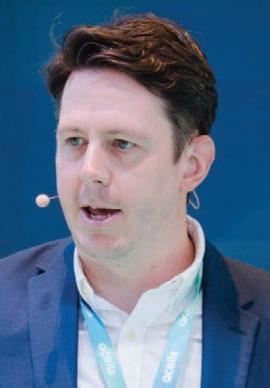

In this month’s Focus pages we round-up three of the highlights of the region’s business calendar - the Chamber's Leicestershire and Nottinghamshire Business Awards and the 2026 East Midlands Enterprising Women conference.
Architects, manufacturers and medical device designers were among businesses and organisations recognised at the 2025/26 Leicestershire Business Awards.
The packed Chamber ceremony took place at Leicester City Football Club’s King Power Stadium, hosted by radio personalities Jo and Sparky. It was held in partnership with Knights.
The flagship Business of the Year Award went to COBA Plastics Group, which also won the award for Excellence in International Growth.
Headquartered in Fleckney, COBA employs 900 and has operations around the world. It specialises in plastic extrusion within the automotive industry.
Chief operating officer Jonathan Atkinson said: “We’re absolutely thrilled and absolutely proud to have received this award which is testament to the team at COBA.
“We’re a business that values its customers and puts them first.
“We’re a privately funded group of manufacturing businesses, producing a million components a day for many of the world’s best vehicle manufacturers. We’re extremely proud to do that.”


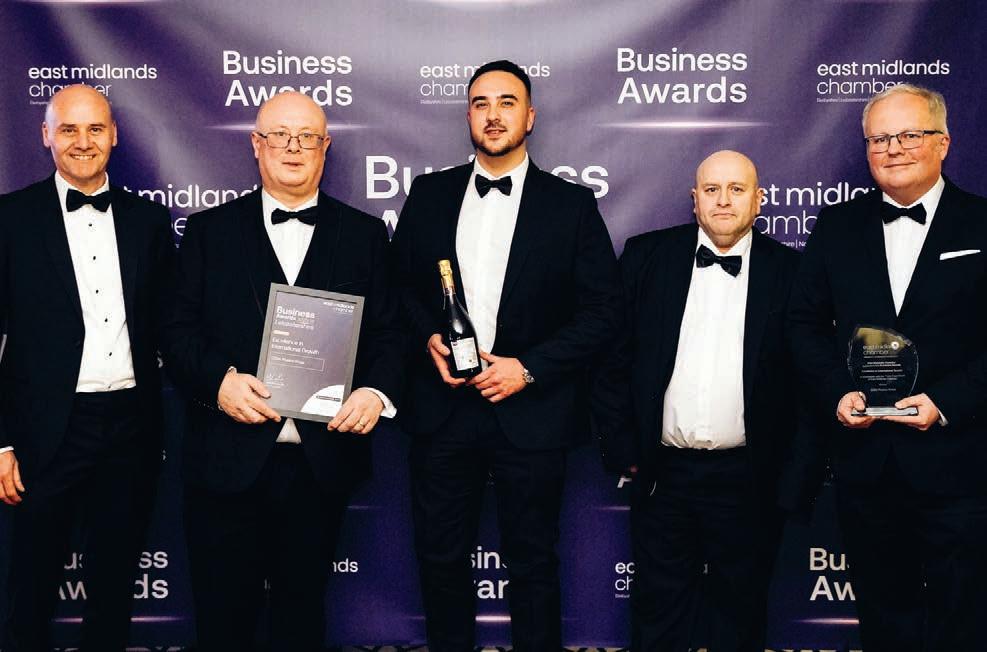
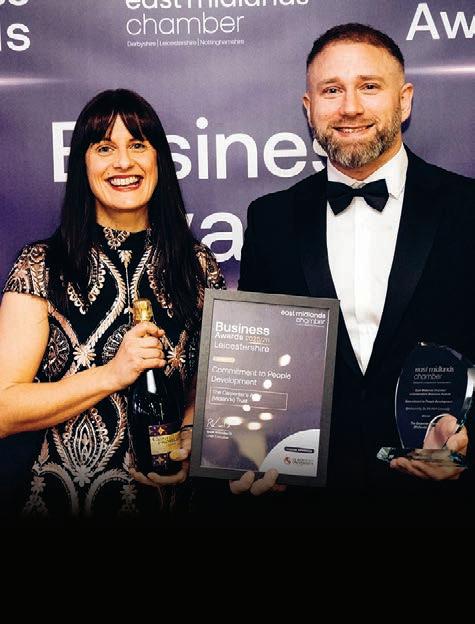
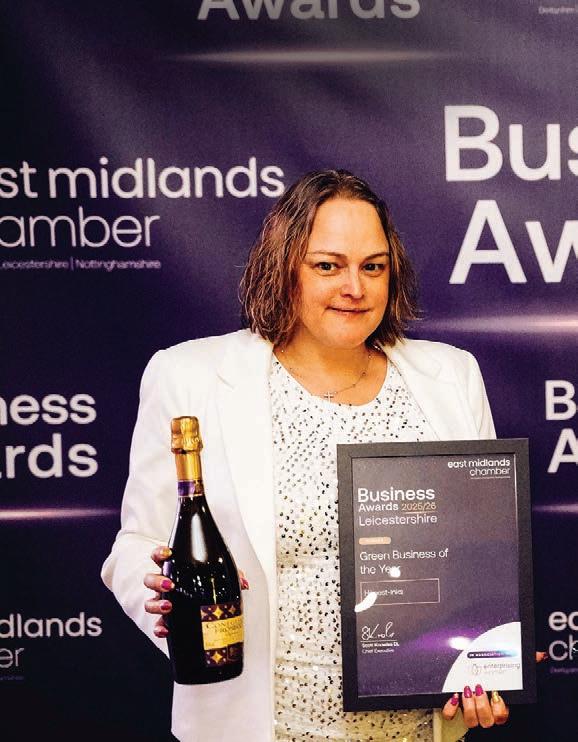

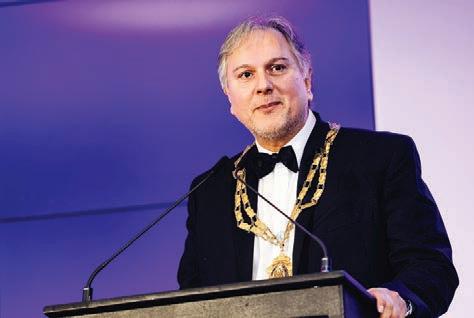
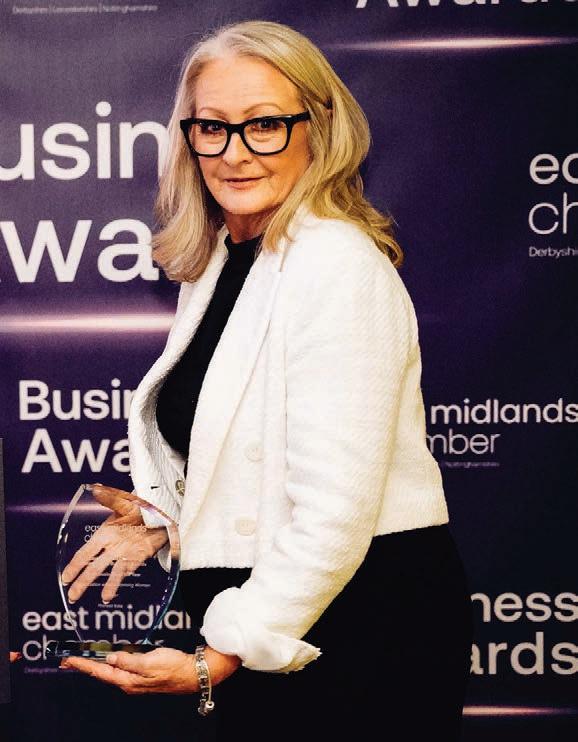
Apprentice of the Year Sofia Coviello, of IMA Architects, said: “Just to be nominated for an award like this is amazing but to have won is incredible and I thank the people that supported me and IMA Architects for being there throughout.
“Apprenticeships are hugely important, especially for a career like architecture. To be able to work and get academic experience at the same time is really valuable and I don’t think I’d be in the position I am in today if I hadn’t gone through this route.”
‘Long-established for manufacturing, innovation and creativity, Leicestershire never stands still’
Ravi Agravat of Innovation of the Year winners Berkfield said: “This recognition reinforces our vision of building a technology-driven retail platform designed to scale nationally and internationally.
“Sharing the stage with my wife and son made the Innovation of the Year award especially meaningful and reminds me why building something lasting matters.”
Datalink Electronics won awards for Digital Transformation and Small Business of the Year.
Managing director Mariam Smith said: “We’ve worked so hard to transform our systems to move from paper to digital so it’s incredible to have received this award.”
Chamber chief executive Scott Knowles said: “Long-established for manufacturing, innovation and creativity, Leicestershire never stands still, always moving forward at pace, as we have seen with the county’s approach to sustainability and digitisation.
“The businesses and individuals that drive this forward momentum, display resilience against challenges and fuel growth of the Leicestershire economy are worthy of recognition.”
Jessica Neyt, regional client services director at headline partner Knights, said: “Being part of the judging process and seeing for ourselves the wealth of outstanding business talent the East Midlands has to offer has been a great experience.”
BUSINESS OF THE YEAR
COBA Plastics Group
DIGITAL TRANSFORMATION
Sponsored by Digital Planning
Datalink Electronics
CSR LEADERSHIP
Sponsored by emh Group Better-IT
COLLABORATION OF THE YEAR
Sponsored by Knights HMP Fosse Way & HMP Leicester
GREEN BUSINESS OF THE YEAR
In association with Enterprising Women Honest-Inks
COMMITMENT TO PEOPLE DEVELOPMENT
Sponsored by De Montfort University
The Carpenter’s Arms (Midlands) Trust
APPRENTICE OF THE YEAR
In association with Generation Next Sofia Coviello, IMA Architects
EXCELLENCE IN INTERNATIONAL GROWTH
In association with the Trade Department at East Midlands Chamber COBA Plastics Group
EDUCATION AND BUSINESS PARTNERSHIP OF THE YEAR
Sponsored by Scholars School System Loughborough College Group
EXCELLENCE IN CUSTOMER SERVICE
Ssponsored by ER Recruitment Better-IT
MICRO BUSINESS OF THE YEAR
In association with Voluntary Action Leicestershire (VAL)
The Simulator Company
SMALL BUSINESS OF THE YEAR
In association with East Midlands Manufacturing Network Datalink Electronics
INNOVATION OF THE YEAR
Sponsored by Digital Planning Berkfield




THE NOTTINGHAMSHIRE WINNERS WERE:
BUSINESS OF THE YEAR AWARD
Sponsored by Vertas
The Gene Haas Centre for Advanced Manufacturing, West Nottinghamshire College
DIGITAL TRANSFORMATION AWARD
Sponsored by NetMonkeys Blue Stamp Travel
CSR LEADERSHIP AWARD
Sponsored by Vaughandale Construction Cartwright
COLLABORATION OF THE YEAR AWARD
Sponsored by Eversheds Sutherland
The Gene Haas Centre for Advanced Manufacturing, West Nottinghamshire College
GREEN BUSINESS OF THE YEAR AWARD
In association with Blueprint Baxter Freight
COMMITMENT TO PEOPLE DEVELOPMENT AWARD
Sponsored by Peritus Vaughandale Construction
APPRENTICE OF THE YEAR AWARD
In association with Generation Next Oliver Whitehouse of Murphy & Son
EXCELLENCE IN INTERNATIONAL GROWTH AWARD
Sponsored by DHL Batfast
EDUCATION AND BUSINESS PARTNERSHIP OF THE YEAR AWARD
Sponsored by Step West Nottinghamshire College
EXCELLENCE IN CUSTOMER SERVICE AWARD
Sponsored by Express Recruitment Copley Scientific
MICRO BUSINESS OF THE YEAR AWARD
Sponsored by Headway Nottingham Cosy Garden Rooms
SMALL BUSINESS OF THE YEAR AWARD
Sponsored by Your IT Department First Enterprise
INNOVATION OF THE YEAR AWARD
Sponsored by Nottingham Trent University Batfast

People development, international growth and digital transformation were among qualities recognised at the Nottinghamshire Business Awards 2025/26, writes Tim Smith.
The landmark event in the Chamber calendar was delivered in partnership with headline sponsor Vertas at The Renaissance at Kelham Hall. The night was hosted by East Midlands radio personalities Jo and Sparky.
Recipients of 12 award categories were announced, with the coveted Business of the Year Award going to the Gene Haas Centre for Advanced Manufacturing at West

Nottinghamshire College, which also received the Collaboration of the Year Award.
West Nottinghamshire College principal and chief executive Andrew Cropley MBE said: “The Gene Haas Centre is an inspirational place that helps young people to become brilliant engineers.
“I hope the centre inspires other local businesses to believe they can grow and invest and create more jobs for other young people.
“It’s one of many great projects at West Nottinghamshire College, probably the highest profile. We are the UK’s first Gene Haas Centre and it’s a great example that Mansfield and

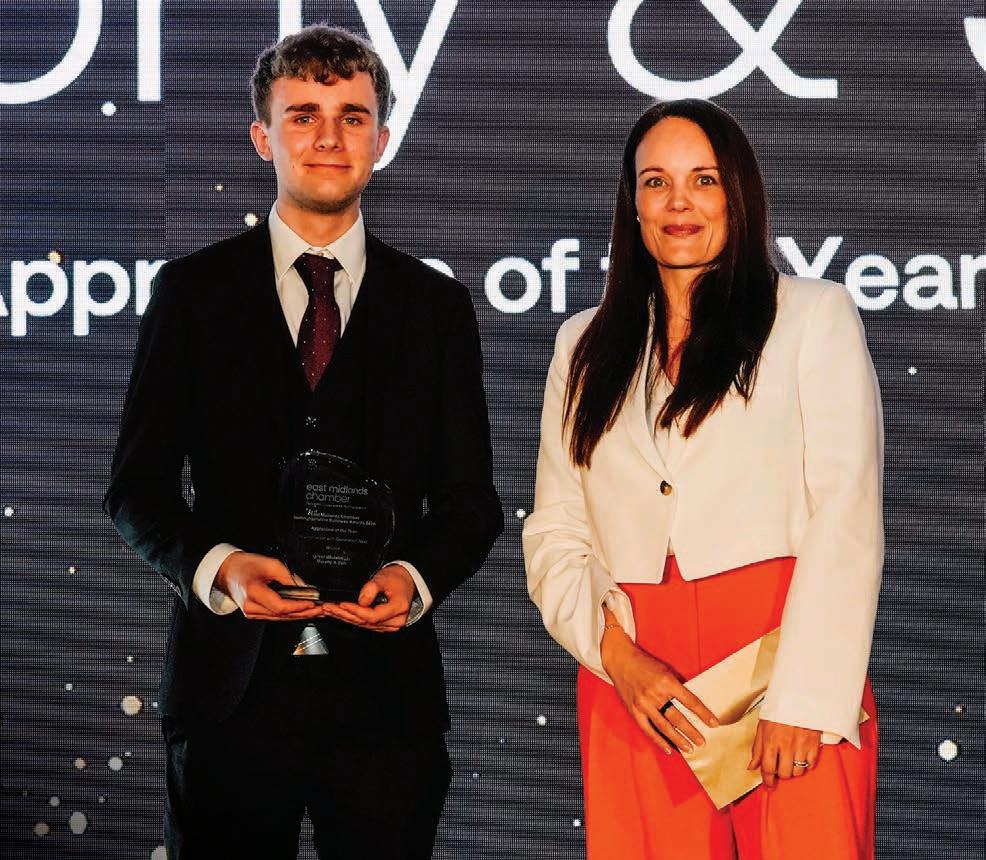


Ashfield can be at the front of great things happening in our country.”
Steve Manderson, managing director of Blue Stamp Travel, which won the Digital Transformation Award, said: “Our digital journey helps us grow, helps us be more efficient in what we do. It’s a big part of what we provide our customers and a big part of the company.”


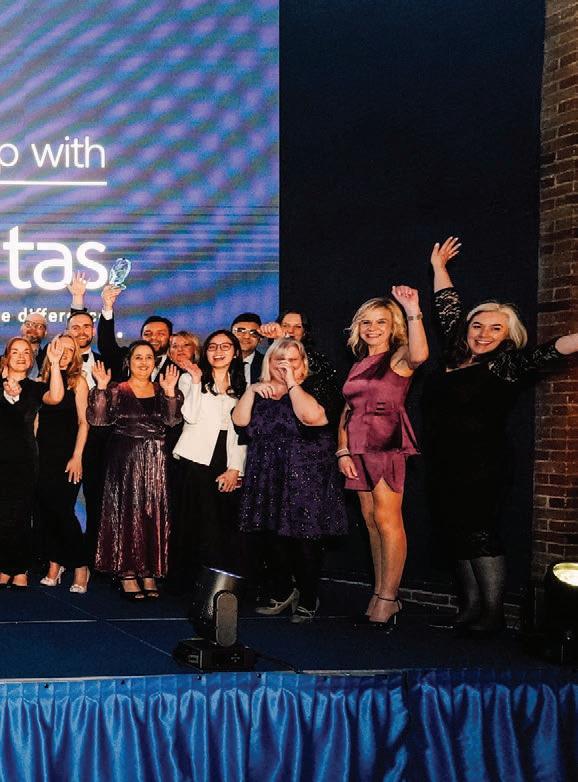
Nick Gall, managing director of category sponsor NetMonkeys, said: “If you’re trying to innovate in any way with digital transformation, it has to turn up revenue, it has to make it easier for the staff and Blue Stamp Travel did all of that. That’s why they won but that’s also why we sponsored this award.”
Martin Heartfield, marketing and business development consultant at Commitment to People Development Award winner Vaughandale Construction said: “We’re absolutely thrilled to have won this award and we keep developing.
“Considering 95% of our workforce has been with the company for over 15 or 20 years, it’s an absolutely fantastic achievement. We’re delighted for all the staff because without the staff, we wouldn’t be the fantastic company we are.”
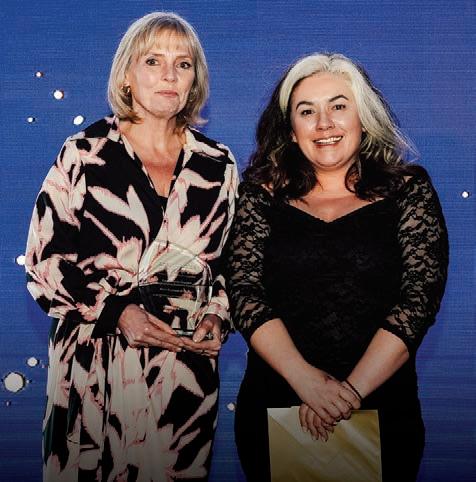


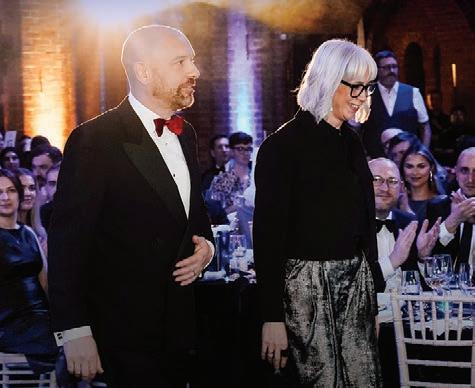





Apprentice of the Year Oliver Whitehouse of Murphy and Son, said: “To win has been an amazing feeling. Apprenticeships are so good for the future generation. I’ve worked hard for it and the business gave me a lot of freedom to be able to learn lots of new skills.”
Chamber chief executive Scott Knowles said: “Congratulations to all the finalists and to the category winners for their amazing achievements. I would like to thank all the sponsors and partners for their part in delivering such a memorable event.”
Vertas managing director Keith Buet said: “With our new joint venture now embedded in Nottinghamshire, sponsoring the Business Awards is a meaningful way for us to engage with the wider business community. The awards champion the values we believe in – collaboration, excellence and investment in people.
“We’re proud to support an event that recognises the organisations and individuals driving growth across the county.”
• The winners of the Derbyshire Business Awards will be revealed in the May Business Network.
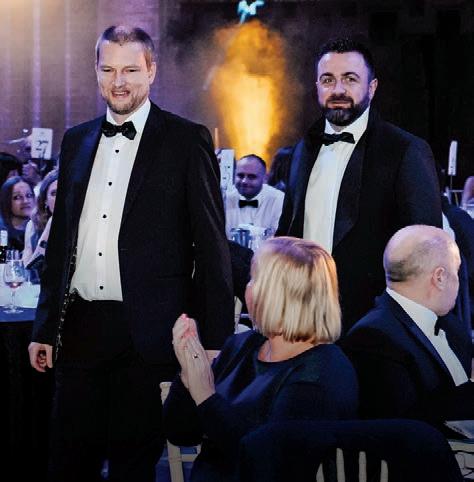


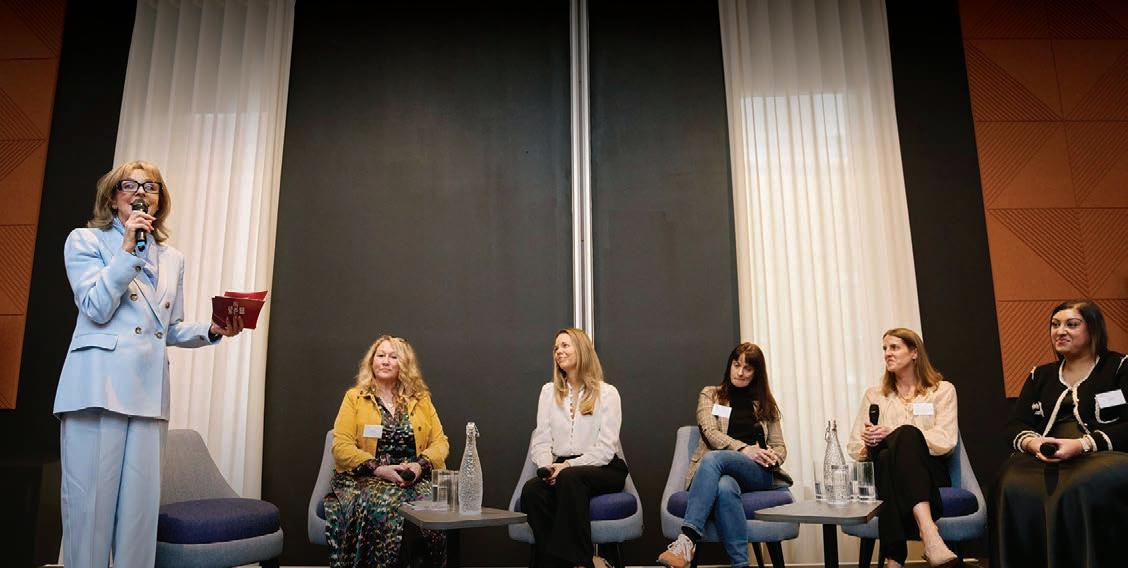



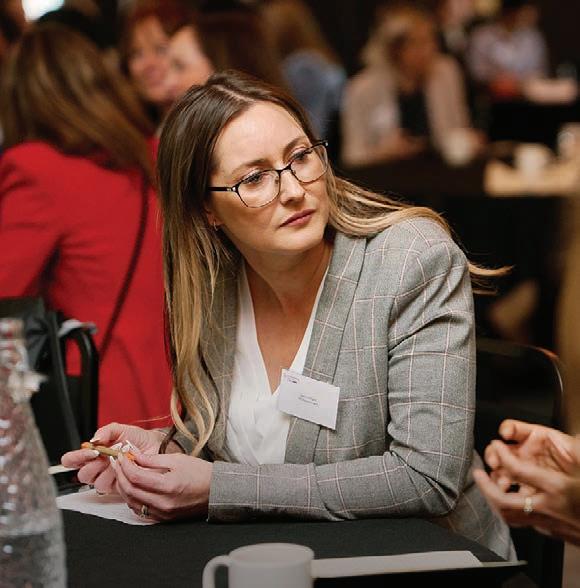





Pictures by Pete Martin Photography
The 2026 East Midlands Enterprising Women conference marked the 115th anniversary of International Women’s Day with a keynote speech from the first black female winner of The Apprentice and inspirational talks from the region’s leading businesswomen.
The annual conference took place at Vaillant LIVE in Derby, and featured panel discussions along the worldwide International Women’s Day theme of #GivetoGain.
It was delivered shortly after publication of the latest FTSE Women Leaders Review, which showed women make up 43% of FTSE 350 boards and 31% of boards in the 50 biggest private companies – little changed from 2025 but a big increase on 2011, when FTSE 350 boards were just under 10% women.
Keynote speaker Sian Gabbidon shared insight into how businesswomen can best reach their full potential. Sian is the British businesswoman behind fashion and swimwear brand Sian Marie, and was the first black female winner of The Apprentice in 2018.
The conference – with headline partner Barclays and associate partner Knights – also
marked the launch of the 2026 Enterprising Women Awards. (Details on how to enter and book tickets are on page 45.)
Enterprising Women co-founder Eileen Perry MBE DL said: “Women do amazingly in business but let’s step it up. Let’s push a little higher or even a lot higher – that’s my message.
“For boards to be more than 40% made up of women, according to the FTSE Women Leaders Review shows some progress, yes, but do we want that to be it, and slow down? I don’t think East Midlands businesswomen do.
“Through East Midlands businesswomen sharing insight each year at this conference, we bring together and strengthen the role of women in business and that’s what will get more women onto boards, leading firms.”
Fellow co-founder Jean Mountain said: “Quite simply what we have is brilliance in our East Midlands businesswomen. I’ve said that for years –across the almost 30 years now that Enterprising Women has championed female leaders, entrepreneurs and apprentices – so it’s right that as International Women’s Day celebrates its 115 years, we shine a light on the East Midlands and the women that are in business right here.
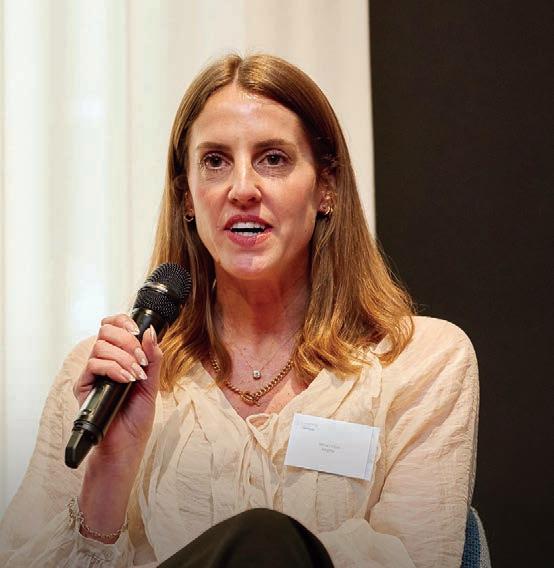

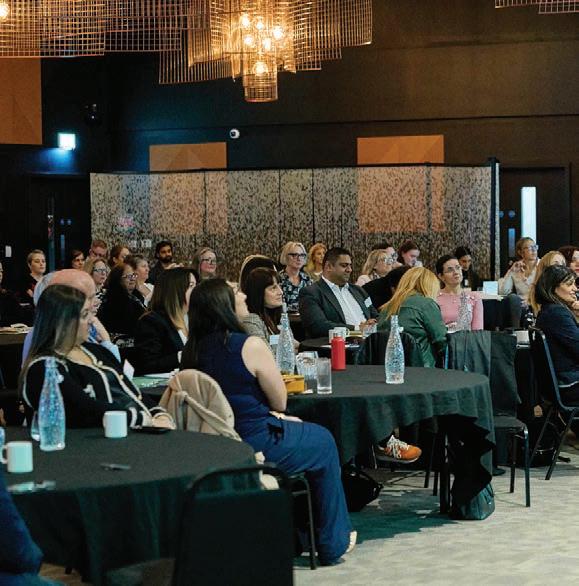
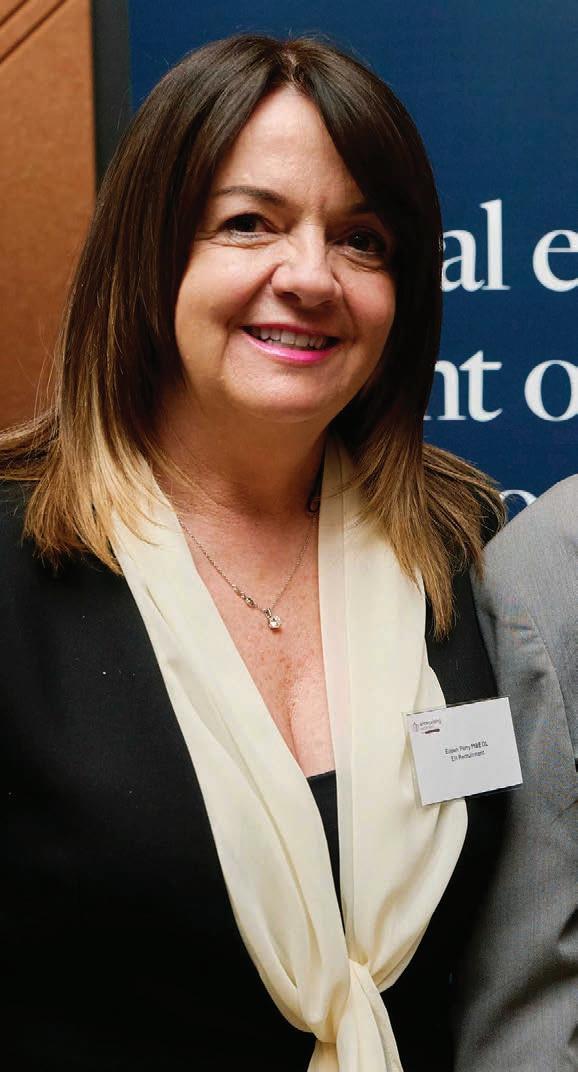


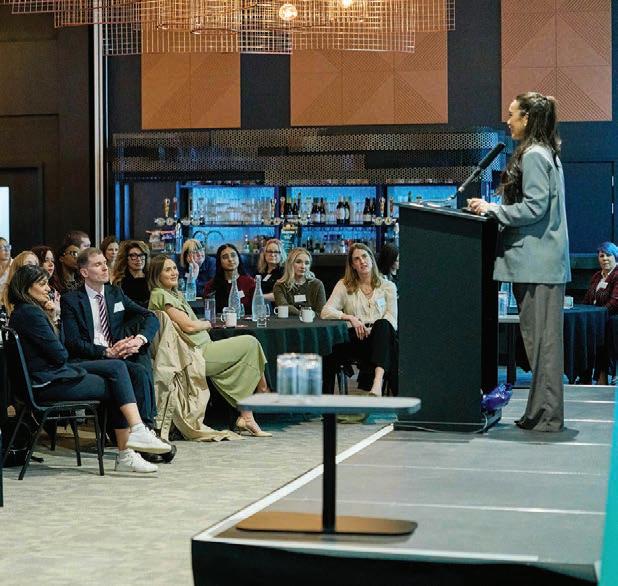
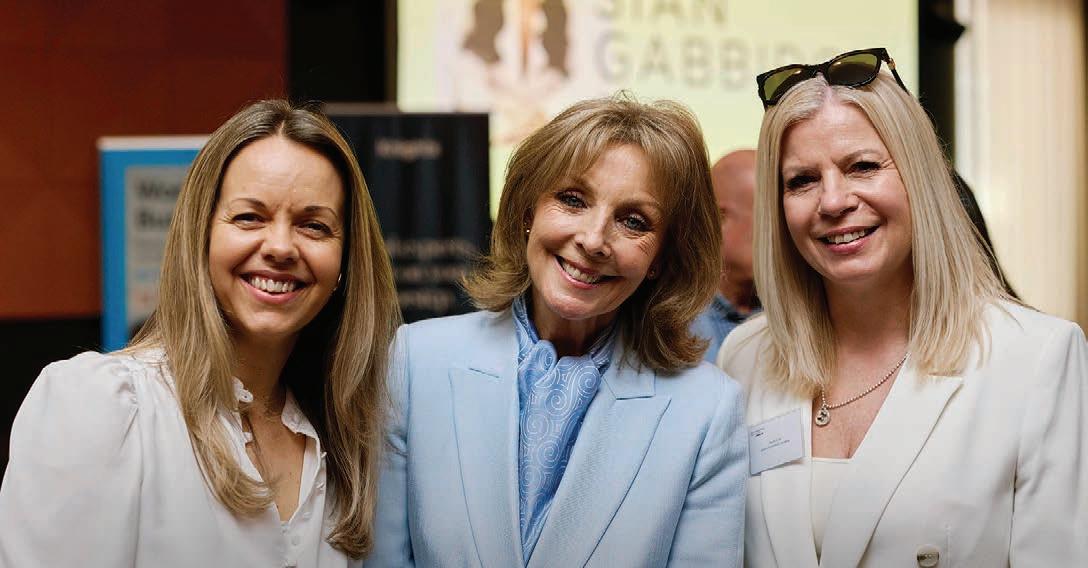

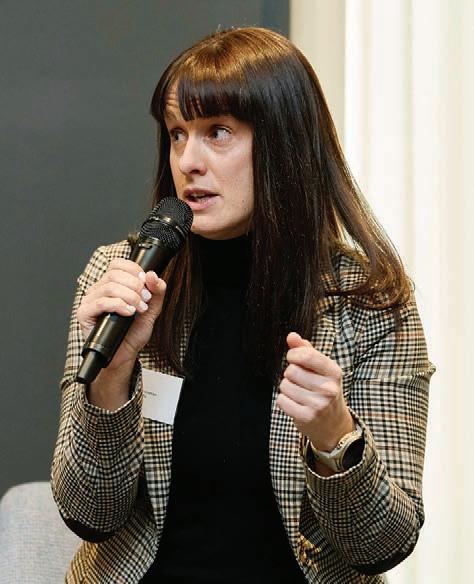

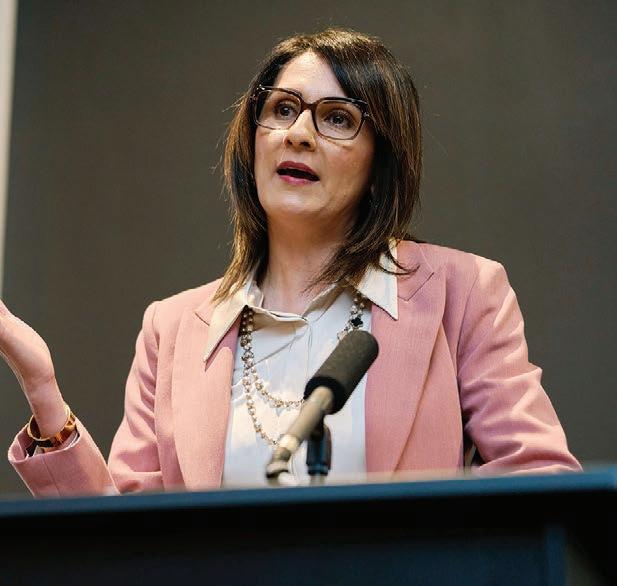

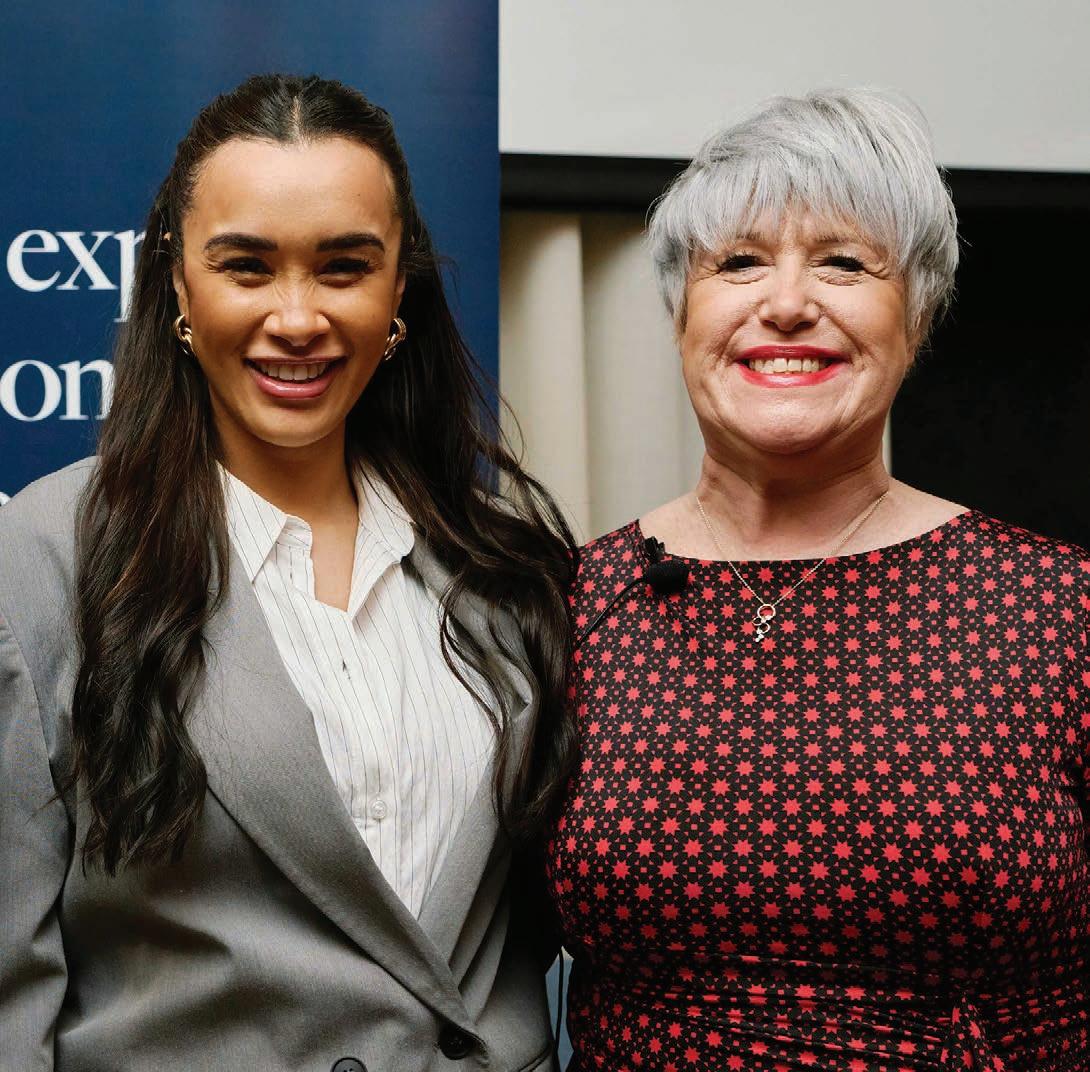
“The International Women’s Day conference we hold is not just a confidence booster or a reminder of where women are in that journey –it’s women sharing how they reshaped a business, how they grew it and that’s the conversation we need to be having more of.
“I’m delighted that, once again, we’ve delivered a conference that energised the whole room, with lively panels and great speakers and it was exciting to hear so many great ideas that can drive growth in the East Midlands.”
Conference panellist Jenny Colver, partner at law firm Knights, said: “It’s important for us to connect with the business community and given that I'm a female partner, supporting Enterprising Women is so good.
“You see the wonderful work the network does in supporting women across the East Midlands within business, connecting people, driving really good conversations and discussion topics.”
TV presenter and consultant Anne Davies, who chaired a panel on overcoming career challenges, said: “The more collaborative you are, the more you get back, when you think about what you have gained by being given or what you gave that gained for you.
“This conference is important because by giving, by sharing the knowledge you have, realising you know something, you get to see it change somebody else’s life.”


Vaillant Live premium sales, conferencing and events manager Felicity Kemp said: “It’s been fantastic to host this event with Enterprising Women and East Midlands Chamber.
“There’s still a gap to go in getting women further in business, not just in the event industry but in business in general.
“It’s been so good to support the diversity and inclusion and help the conversations keep going and build momentum.”

By Azam M. Z. Zia (pictured), head of corporate and commercial teams at Zia Harman Solicitors

There’s a moment in most deals where everyone believes they’re aligned. The commercial terms are agreed in principle. The relationship feels strong. The emails become shorter, “Looks good to me.” “Let’s get this signed.”
And yet, a significant number of those same deals unravel, sometimes quietly, sometimes expensively, within months.
Not because the businesses were careless. But because they misunderstood where deals actually fail. In my experience, deals rarely collapse because of what’s written down. They fall apart because of what isn’t.
A common scenario: two businesses reach what appears to be a clear understanding. One side is focused on growth and flexibility; the other is relying on stability and predictable revenue.
Both believe the deal reflects that. But the contract, when you strip it back, is silent on the point that matters most.
In one case, a supplier entered into what it believed was a growth arrangement, modelling increased volumes over time. The customer saw a flexible, non-committal relationship it could scale up – or down.
Nothing in the contract resolved that tension. When demand dropped, orders slowed. The supplier felt blindsided; the customer felt entitled.
The dispute wasn’t really about the contract. It was about two different versions of the same deal.
Assumptions are where alignment goes to die.
Another recurring issue is over-reliance on “standard” contracts. They create a dangerous sense of security –particularly when businesses assume they are balanced or universally understood. They aren’t.
I’ve seen both parties sign what they believe is routine, only to discover later that key clauses – on liability, termination or payment triggers – operate very differently in practice.
In one instance, a business found its ability to exit an underperforming contract was far more limited than expected. The clause was clear. It just hadn’t been tested against reality.
A contract isn’t a formality. It’s a translation of the deal. And like any translation, small nuances can change the meaning entirely.
Most deals don’t fail at the drafting stage. They fail earlier – often in the room, long before lawyers are asked to “paper it.”
That’s where misalignment lives:
• what one party assumes will happen
• what the other quietly intends
• and what neither side quite wants to say out loud.
By the time lawyers are brought in, the most important decisions have often already been made – just not clearly articulated.
And this is the uncomfortable truth: many businesses avoid clarity.
Because clarity forces difficult conversations. It forces someone to say, “We are not committing to volume.” Or “We need flexibility on pricing.” Or “We need an easy exit.”
Those conversations create friction. They slow momentum. They introduce the risk the deal might wobble. Ambiguity is left in place, until reality arrives.
RELATIONSHIPS DON’T PREVENT DISPUTES
A persistent misconception is that strong relationships make detailed contracts less important.
In reality, the opposite is true.
‘A contract isn’t a formality. It’s a translation of the deal. And like any translation, small nuances can change the meaning entirely’

Many of the most difficult disputes arise between parties who started with a high degree of trust. The problem isn’t bad faith – it’s ambiguity.
When expectations aren’t clearly defined, each side defaults to its own interpretation. Over time, that gap widens.
I’ve seen relationships deteriorate not because either side acted unreasonably, but because neither had defined what “reasonable” meant.
Clarity doesn’t undermine relationships. It protects them.
THREE PRACTICAL WAYS TO AVOID DEAL FAILURE
1. Identify pressure points
Ask: what would cause this deal to fail in 12 months? Whatever it happens to be – volume, pricing, performance or exit – those are the issues that need to be explicit.
2. Force the conversation
Ask: “What does success look like for you in 12 months?” Then: “What happens if that doesn’t materialise?” If the answers differ, you don’t have alignment yet.
3. Treat contracts as commercial tools, not shields The best agreements don’t just allocate risk; they translate expectations into something both sides can rely on when circumstances change.
WHERE DEALS REALLY SUCCEED OR FAIL
It’s easy to think of contracts as the final stage of a deal. In reality, that’s where the deal is tested. A good contract won’t rescue a flawed commercial arrangement. But a poor one can undermine even a strong opportunity.
The businesses that get this right don’t spend more time on legal process. They spend more time making sure that what they think they’ve agreed is actually what’s been said and then making sure it survives in writing.
Because in business, alignment isn’t what’s said in the room. If it matters, it isn’t real until it’s written down.
Many people plan to leave their most valuable possessions to their families after they pass away – and yet a 2025 report suggested that over half of adults in the UK don’t have a will. And have you considered what might happen if you become ill or incapable of making decisions for yourself? In this article, Business Network explores the importance of wills and lasting powers of attorney (LPA).
In your will you can name who you want to look after your affairs when you are no longer here, name the people you want to inherit, express your funeral wishes, and even set up a trust in the will to protect 50% of a house from being taken for potential care home fees.
All that is necessary is to change the way you register your property to ‘Tenants in Common’ as most people who own their own their house have it registered as ‘Joint Tenants’. You then give your spouse/civil partner/or whoever the ‘right to reside’ in your 50% of the property until they die.
A will is what most people know they should have, but sadly, more often than not they never get round to writing one. While there are the so called ‘Free Wills’ advertised everywhere, you’ll find you usually have to name those offering the will as executors and trustees. There is the opportunity of course of writing a will for yourself, but unless you know exactly what you are doing, this can quite often turn out to be totally inadequate.
If you are also concerned about someone you want to inherit from you – for instance, because they use drugs or you feel they are irresponsible with money – you can always leave their inheritance in a discretionary trust.
An LPA is a legal document in England and Wales allowing you to appoint trusted people (“attorneys”) to make decisions
on your behalf if you lose mental capacity. It ensures your wishes are followed regarding your finances or your health if you become unable to manage your own affairs.
You can choose more than one person to be your attorney; if you have multiple, you can also decide if they are allowed to make decisions separately or together. You can pick anyone over the age of 18, including spouses, relatives or friends, but it’s important that you can trust them to make decisions in your best interests and consider how willing they will be to make decisions for you, if it comes to that.
If you should become mentally incapable, or simply just don’t want to deal with your affairs any longer, and you do not have an LPA in place, the Court of Protection will appoint a deputy to make these decisions for you.
There are two types of LPA: one for property and finance and one for health and welfare. Having a health and welfare LPA means that your named attorneys can make decisions regarding your care, once you are unable to make decisions for yourself. It could be choosing what residential home you go to, or giving instructions on how you are to be cared for, and what might make you more comfortable. A property and finance LPA will ensure that bills are paid, bank accounts are managed, benefits are collected and can also oversee the sale of your home.
When you’ve made your LPA, you need to register it with the Office of the Public Guardian, which can take up to 10 weeks. An online service is available on the gov.uk website.
‘A will is what most people know they should have, but sadly, more often than not they never get round to writing one’





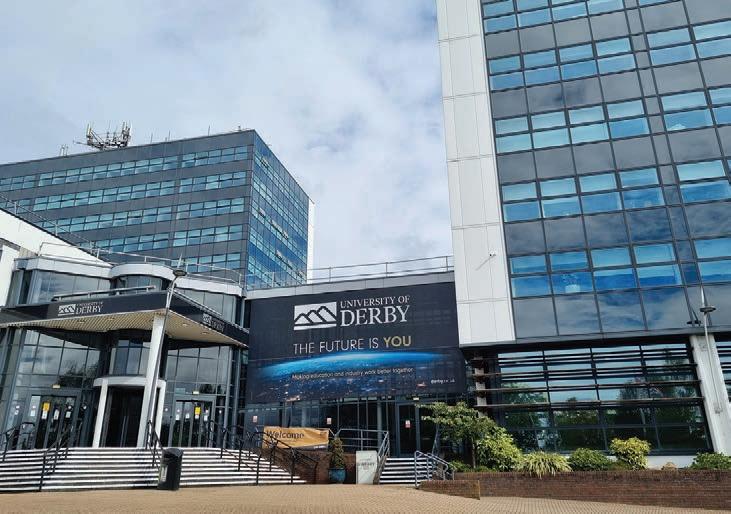

The University of Derby has received funding to develop the UK’s future nuclear workforce.
The city is already at the heart of the UK's commitment to nuclear power – with RollsRoyce investing billions in developing the latest nuclear submarine technology, and working on small modular reactors which could one day supply low carbon, affordable power to millions of homes and businesses.
The university is part of two university consortia receiving £65.6m to launch the bespoke nuclear doctoral award. Delivered by UK Research and Innovation (UKRI) and match-funded by
industry, the programmes will train more than 500 doctoral students at universities across the country, over the next four academic intakes.
The first consortium, led by Bangor University, has secured funding to train up to 100 doctoral researchers - working with partners including Derby.
Derby is also a partner in a programme, led by the University of Strathclyde, which will train 80 engineering doctorate researchers to support the transition to net zero. Nottingham University is also involved.
Professor Kathryn Mitchell CBE DL, is vicechancellor and chief executive of the University
of Derby. She said: “Developing the skills and expertise of the next generation is essential to securing a sustainable talent pipeline for the nuclear sector.
“The University of Derby is committed to working with partners to drive bold action on the UK’s nuclear skills shortage.
“Together with our partners, we are creating clear pathways into specialised careers, delivering industry informed education, and supporting cutting edge research.
"Through this work, we are helping to build a stronger national workforce and ensuring the future success of this vital sector.”
A logistics boss whose 158 year old company collapsed after a ransomware attack urged East Midlands business leaders to put cyber security “at the top of the board agenda”.
Paul Abbott, a former shareholder director of KNP Logistics Group, in Kettering, told a sold out East Midlands Cyber Security Summit how a cyber-attack in June 2023 led to the closure of the £95m turnover business.
He said it came despite the group’s investment in security and £1m of cyber insurance.
The Summit was organised by the East Midlands Cyber Security Cluster (EMCSC) and De Montfort University Leicester (DMU), and brought together business leaders and cyber specialists to share steps organisations can take to

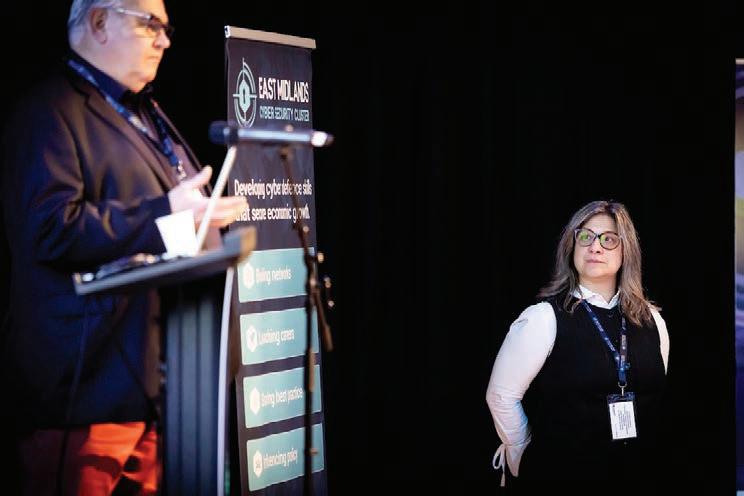
strengthen their defences.
Mr Abbott described how the attack hit KNP’s server based transport and warehousing systems, forcing teams to run
12,000 weekly transactions manually.
He said: “After a few hours of trying to restore the system, one of the tech guys came to me with a
very pale face, saying “it’s a ransom attack, we don’t really know what to do”.
“That was a real sobering moment.”
Despite restoring operations within around 10 days, the business was forced into administration three months later when it could no longer provide lenders with the financial reporting they required.
Mr Abbott told delegates that, like many boards, KNP had believed its cyber defences were solid, with firewalls, backup systems, external managed service providers and regular staff training in place.
He said: “My view now is it has to be at the top of the board agenda because it should sit with health and safety and general welfare of people. The whole thing is security – it’s not just an IT issue.”

Employers in England and Wales witnessed a wave of legal reforms in 2025, with more to come in 2026 as a result of the Employment Rights Bill. Katie Ash (pictured), head of employment law at Banner Jones Solicitors, explains what employers should be aware of.
The Employment Rights Act rollout represents the most comprehensive employment law update in generations. Employers in 2026 must become agile – updating policies, thoroughly training staff, engaging in proactive dispute resolution, and readying themselves for intensified scrutiny by ACAS and the Fair Work Agency. Early planning is key: a robust HR and legal framework can help ensure compliance, foster a positive workplace culture, and reduce risk during this period of transformation.
EMPLOYMENT LAW CHANGES
IN 2025:
• Neonatal Care Leave made eligible employees entitled to one week of additional leave –paid at statutory rates – for each week their newborn is in neonatal care, up to 12 weeks.
• ACAS Early Conciliation Extension saw the early pause window before employment tribunal claims double from six to 12 weeks – meaning disputes could linger for at least nine months before proceeding.
WHAT’S COMING IN APRIL 2026
Unfair dismissal, paternity leave and parental leave
• Statutory Sick Pay (SSP) becomes payable from day one, removing both the lower earnings limit and the three-day
waiting period. It also increases to £123.25 a week.
• New day-one rights introduced for paternity leave and unpaid parental leave.
Collective redundancy
• Protective awards for failing to consult properly will double to 180 days’ pay (up from 90 days).
Fair Work Agency
• A new enforcement body to oversee SSP, minimum wage, holiday pay, zero-hours misuse, and more.
Trade union reforms and industrial action
• Electronic balloting introduced.
Salary and pay
• National Living Wage increases to £12.71 an hour for over 21s. SSP and statutory rates also rise.
Whistleblowing
• Whistleblowing reports of sexual harassment are now protected.
OCTOBER 2026 ONWARDS Fire-and-rehire
• Dismissals for refusing restricted contractual changes (like pay, hours and pensions) will be automatically unfair unless an employer can justify them.
Third-party harassment
• A new duty to take "all reasonable steps" to prevent third-party sexual harassment.
Tribunal time limits extended
• Time limits to bring tribunal claims extended from three to six months.
Industrial action changes
• Collective redundancy threshold to be changed, additional reforms around right to a statement of trade union rights, facilities for, and time off for, trade union representatives and protected status for participants.
Ban on NDAs in harassment/discrimination cases
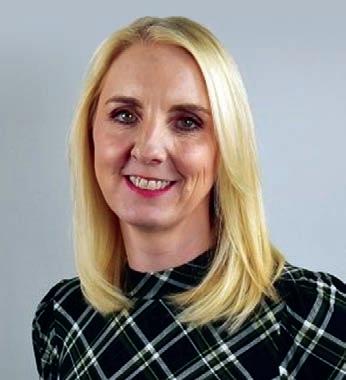
• These will be unenforceable unless requested by the victim –with carve-outs for medical and legal disclosures.
Zero hours and predictable work
• Those regularly working set hours must be offered guaranteed hours (including agency workers) – and compensation for short notice shift cancellations.
Tipping
• Employers must pass on 100% of tips.
Meanwhile, Banner Jones has won litigation and dispute resolution team of the year at the Sheffield and District Law Society Awards, held at the Royal Victoria Crowne Plaza Sheffield.
The award recognised the firm’s expertise in handling complex disputes across areas including wills and estates, property, landlord and tenant and commercial disputes.
Banner Jones was shortlisted in four additional categories: employment law, residential property, commercial property and private client – reflecting the strength of its teams across personal and commercial legal services.
and
Commercial law firm Freeths has advised property website Zoopla on its acquisition of property portal New Homes for Sale.
Founded in 1998, New Homes for Sale is a specialist new-build property website, supporting more than 200 developers and showcasing over 2,500 active developments across England, Scotland and Wales. The business connects more than one million buyers with new homes each year. The Freeths team was led by corporate partner Francis Dalton, supported by senior associate Christian Davison and associate Shivani Fakey.

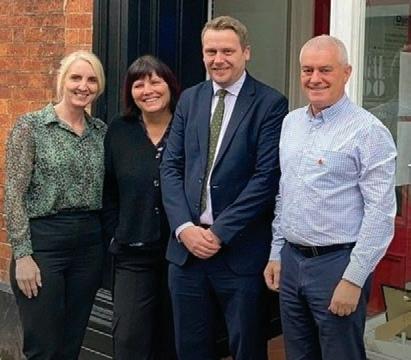

The tax and incentives team was led by partner Claire Boyce and associate Dhruv Shah.
Francis Dalton said: “We are delighted to have worked with the brilliant team at Zoopla on this strategic bolt-on.
“The transaction was a great example of Freeths’ expertise in private equity portfolio work and our knowledge in the tech sector.”
Freeths clients include Centrica PLC, ENGIE, Aldi, Mercedes-Benz UK, Tarmac, Experian, and Lloyds Bank.




East Midlands businesses joined representatives from UK Export Finance (UKEF) for a Navigating Global Growth: Export Finance Unlocked roundtable at the Chamber’s Chesterfield head office.
Delivered by the British Chambers of Commerce and UKEF, the event raised awareness of support available to firms seeking to grow through exporting.
The roundtable – part of a UK-wide series – focused on four key areas:
1. Trade outlook and export plans – identifying opportunities, barriers and risks to international trade prospects and how UKEF and the Chamber can help exporters pursue strategic growth.
2. Export finance as a growth enabler – optimising use of finance at every stage of the export journey to boost competitiveness and bid for larger contracts with confidence.
3. De-risking through practical support – how UKEF helps UK exporters protect cash flow, manage exposure, and pursue new markets.
4. Bank lending commitments – an overview of the recently announced £11bn lending package from the UK’s five leading banks to boost business growth, especially for small and mid-sized enterprises.
Carl Williamson (pictured), director of SME and trade finance at UKEF, chaired the session and outlined the scope of support available.
He said: “The roundtable showed me there is real ambition to export more, but some firms aren’t sure who to speak to and what the opportunities are.
“The key message is – talk to the Chamber, talk to UK Export Finance.
“Your local export finance managers can help you explore export opportunities, assess financing needs and connect you with the right people in your target markets.
There is a lot of support out there – it’s about all about tapping into it.
Attendee Luke Mulligan, managing director at furnishing company Filigree Group, said: “For me it was important to attend and listen to other businesses and their experiences.
‘Your local export finance managers can help you explore export opportunities, assess financing needs and connect you with the right people in your target markets’
“Some were quite advanced in exporting so I’ll be looking to get some tips on how to start that process. “I’d heard of UK Export Finance but didn’t know much so I learnt more about that and I think that will ultimately be useful but for me the focus is first steps, establishing what the market looks like, contacts, how to get into that market, then probably coming back to UK Export Finance and how that can support us.”
For more information on export support, businesses can contact East Midlands Chamber or UKEF’s local Export Finance Managers.

A new webinar series called Advisory Hour has launched, providing timely insights, expert guidance and legislative updates.
Hosted by Midlands accounting and advisory firm PKF Smith Cooper, these free monthly webinars will help business professionals across the UK stay informed and confident in a changing landscape.
Every month a new webinar will deliver specialist insight into a range of different topics and include a live Q&A session. The fourth, on 29 April, will consider the impact of the Spring Statement on tax, growth and planning.
Managing partner James Bagley said: “As accountants and advisers, we make sure to stay ahead of changes within the business landscape that may impact on our clients. Advisory Hour will give professionals direct access to valuable insights from our specialist teams. These monthly webinars are free to attend because it is important to us that this information is accessible to everyone.”
Register at: www.pkfsmithcooper. com/advisory-hour
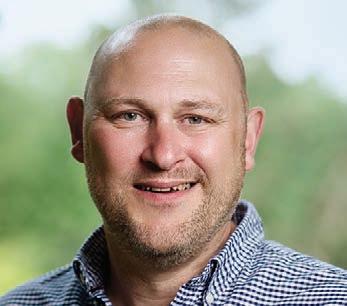

Chamber management say zero growth in the economy underlines the need for more Government support to ease the pressure on businesses.
The latest data from the Office for National Statistics showed 0% growth in January, down from 0.1% in December.
Chamber director of policy and insight Richard Blackmore said growing unemployment and the consequences of war in the Middle East were making things worse.
He said: “The Chamber’s Framework for Growth outlines specific actions that would unlock the full potential of the East Midlands, like addressing the skills gap head-on with investment, and making apprenticeships and training easier for firms to access.”
Business leaders came together to explore how universities can better align graduate skills with the evolving needs of the workforce –especially as AI raises graduate concerns about job prospects.
The Future Jobs roundtable, hosted by the university’s Cavendish Building – home of Derby International Business School – was one of several events across the UK where university and business leaders are talking about how universities can match graduate skills to the future needs of employers.
‘This collaborative approach is fundamental to securing long-term success for our area’
The university said an estimated 11m-plus additional graduates will be needed to fill high-skilled jobs in the UK between 2020 and 2035, with 82% of new jobs crucial to economic growth – including in the life sciences, creative, digital & technology and defence sectors –needing workers with higher education-level qualifications.
The Future Jobs sessions are exploring how universities and businesses can work together to grow the pipeline of graduates
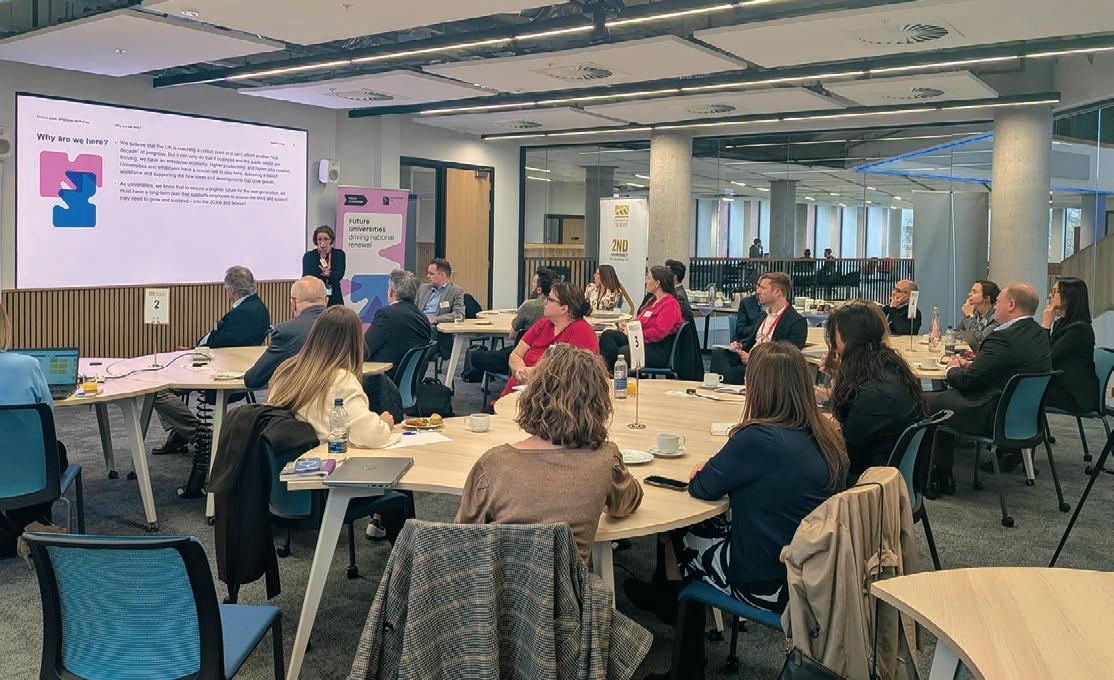
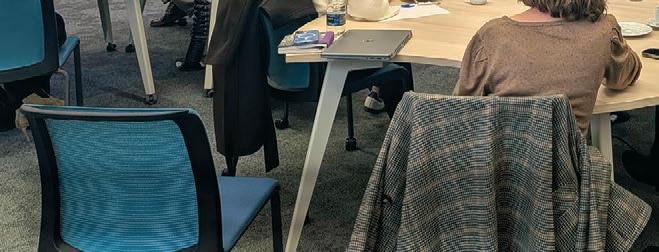
entering industry and create new high-quality jobs.
Representatives of businesses including Rolls-Royce, Toyota and Marketing Derby attended.
University deputy vice-chancellor
Professor Keith McLay said: “By aligning education, skills and industry demand, we can create meaningful pathways into careers that empower individuals, strengthen local communities and build a more resilient and prosperous economy.
Nottingham College is offering students a pathway to a military career
This collaborative approach is fundamental to securing long-term success for our area.”
Claire MacDonald, creative director at Derby marketing communications & design agency MacMartin, said: “Employers don’t just need graduates with knowledge. We need people who can apply it well through strong professional skills: communicating clearly, working across disciplines, solving messy problems and
keeping learning as roles evolve. With AI accelerating change, those human capabilities are becoming even more valuable.
“By combining universities’ academic rigour with employers’ real-world insight, we can shape learning around the demands of modern work and give students more chances to practise real workplace challenges, so they can contribute confidently from day one.”
Nottingham College has launched a defence and military pathway for students who want to explore careers in engineering, uniformed services and cybersecurity.
The programme will welcome its first cohort in September and has been designed in direct response to the Government’s Defence Industrial Strategy, which forecasts the creation of thousands of new jobs by 2030.
It will be open to students on courses including engineering, welding, digital technology and uniformed services, which is aimed at students considering a career in the military services.
By opting in, students will develop teamwork, discipline, communication and leadership skills and take part in industry days and taster sessions with the Army, Navy and RAF.
James Thorne, assistant principal of curriculum skills at the college, said: “This presents a huge opportunity to our young people who may be seeking a career in a growing sector.”

SIRM College hosted its annual Awards, dedicated to celebrating the teamwork, commitment, and impact of its staff.

The awards saw nomination made by college staff to highlight colleagues who consistently demonstrate and implement SIRM’s core values in their daily work.
They covered areas ranging from student support and innovation in delivery, to operational leadership.
The evening also featured team
performances, bringing energy, creativity, and unity into the room –a reminder that SIRM is not only a workplace, but a community.
A spokeswoman said: “The SIRM Awards stand as a testament to what can be achieved when values are lived, vision is shared, and people work together with purpose.
“At SIRM College, we grow because our people grow – and this celebration was proof of that.”


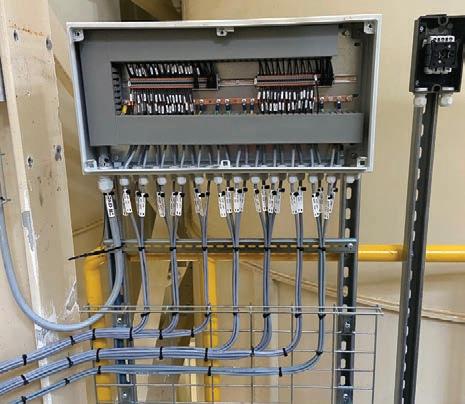
Since 2012, GRAYS Electrical Engineering Limited has positioned itself as a premium commercial and industrial electrical contractor, serving businesses across the East Midlands. As an industry-recognised contractor, you benefit from a partner with a proven track record of delivering complex projects safely, efficiently and to the highest professional standards.
Whether you operate distribution warehouses, medical facilities, quarrying sites or manufacturing factories, your electrical infrastructure is critical to performance, compliance and long-term growth. You need a contractor who understands operational pressures, minimises disruption and plans beyond immediate installation.
GRAYS works alongside you and your senior decision-makers as a strategic partner, helping you phase, futureproof and optimise your assets. By taking time to understand your business objectives, risk profile and expansion plans, you gain tailored solutions that support resilience and productivity.
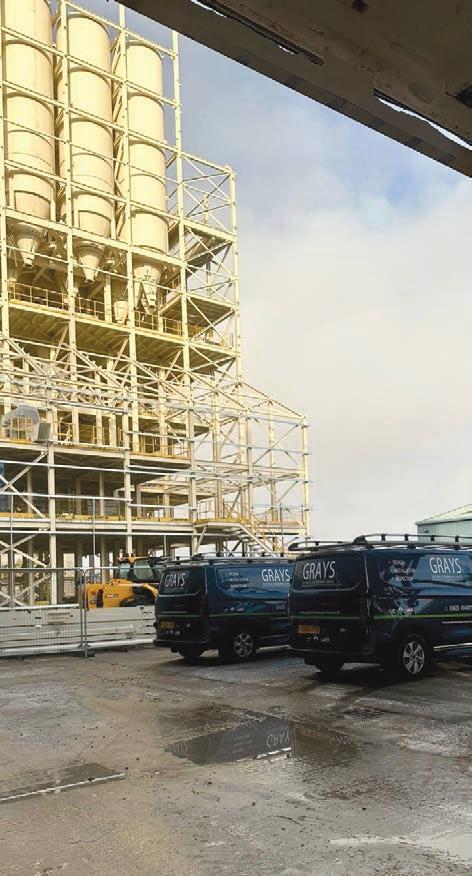
You are not simply appointing an electrical contractor; you are securing an expert partner committed to long-term relationships and proactive planning. From new commercial and industrial developments to complex upgrades and structured maintenance strategies, you receive capability-led delivery backed by strong leadership and disciplined project management. Clear communication, commercial awareness and uncompromising safety standards give you confidence at board level and assurance on site. Across the East Midlands, your business benefits from an industry-recognised team focused on quality, compliance and performance.
With GRAYS as your contractor, your electrical infrastructure is designed not only for today, but for the demands of tomorrow. You gain certainty, accountability and a trusted adviser invested in your continued success. Supporting sustainable growth at every stage of development.
VISIT: www.grayselectricians.co.uk CALL: 01623 414401
Progress made on the Brooksby College Agri-Tech Centre
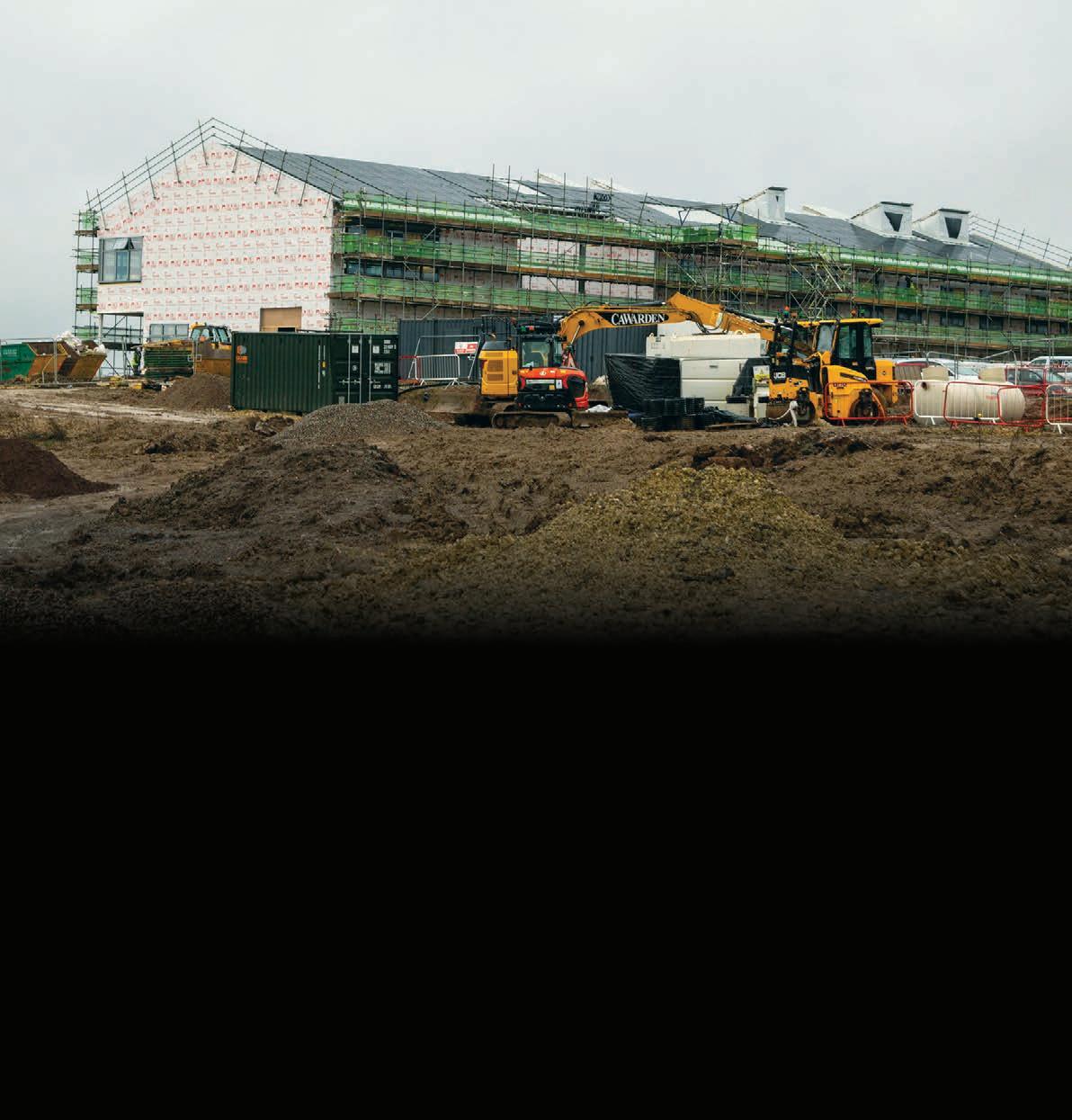

Work is progressing on the new Agri-Tech Centre development at Brooksby College, in Leicestershire.
The Loughborough College Group project is being supported by the Department for Education, and has been designed to transform the way farming education is delivered in the region.
Once complete, the Agri-Tech and cattle complex will include livestock accommodation, a stateof-the-art cattle-handling system, a viewing gallery and a machinery
teaching and tractor-driving yard. There will be three classrooms, two laboratories and an industry workshop as well as precisionfarming equipment.
Brooksby College principal
James Fryer said: “Seeing this development take shape marks an exciting milestone for everyone connected to our college
community, and we’re looking forward to opening these facilities later in the year.
“This investment will give our students access to the technology, environments and real-world experience that truly reflect the future of modern agriculture, ensuring they leave ready to lead and innovate within the industry.”
‘This investment will give our students access to the technology, environments and real-world experience’
Plans for 20 council homes on a brownfield site in Kirkby have been given the go-ahead.
Ashfield District Council’s planning committee unanimously agreed to the homes in Fairhaven, on the former Kirklands Residential Care Home and Day Centre site.
The 100% affordable properties will be a mixture of two and three bedroom homes, two-bed bungalows and one and two bed flats.
Cllr Andy Meakin, council executive lead for social housing, said: “This site has become an eyesore since
the closure of the care home 10 years ago, attracting antisocial behaviour.
“This application will see 20 families have a place to call home and will be built to the highest quality.
“They will be energy efficient houses and close to our previous development in Adrian Sheldon View. This is part of the Council’s commitment to providing safe and affordable housing to the people of Ashfield.”
The new homes are part of the council’s 2023 pledge to build more than 200 new homes over four years –on top of 100 built since 2018.
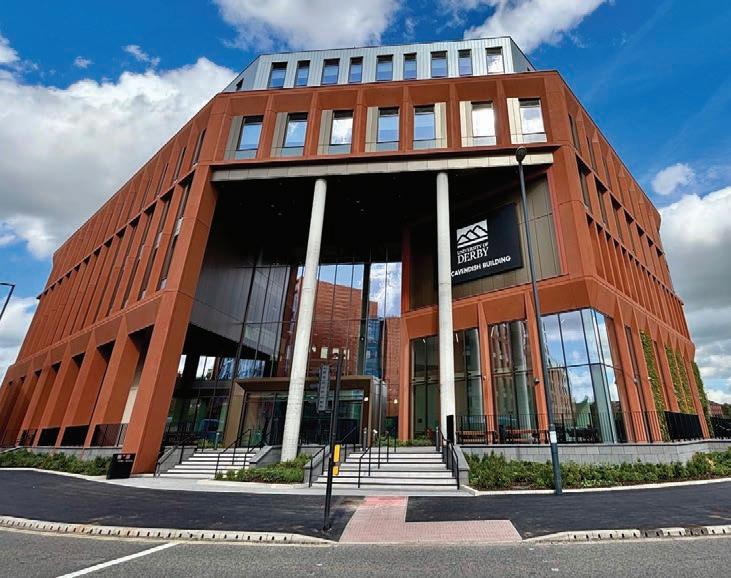
A £568m deal by Asda to sell 24 stores and its Lutterworth depot and lease them back over 25 years has put this financing strategy back in the spotlight.
According to Buckles Law, businesses are grappling with £3.8bn-plus debt piles, elevated interest rates and ongoing economic pressures, seeing sale-and-leaseback emerge as a tool for strengthening balance sheets without disrupting operations.
Buckles Law partner Janine Harris said: “This isn’t just about retail. From distribution centres to manufacturing facilities, businesses across sectors are sitting on valuable property assets that could be unlocked for strategic purposes.
“The question is, who should be considering it and what are the pitfalls to avoid?
“Timing, negotiation, and legal expertise are critical, as businesses lose negotiating power if they seek buyers while already in financial distress. Structure the deal poorly and you could be locked into unfavourable terms for decades.”
One of Derby’s newest buildings has been recognised for its design and contribution to the city’s regeneration.
The Cavendish Building – home to the University of Derby’s International Business School – has won the new building category at the 2026 Derby Civic Society A Brighter City of Derby (ABCD) Awards.
It was recognised by the society for its “outstanding contribution to contemporary educational architecture and its transformative impact on the city’s urban fabric”, its “strong architectural identity” and its role in shaping Derby’s southern gateway.
Judges said The Cavendish Building “not only enriches the campus experience but also stands as a model for how educational facilities can inspire, engage and contribute meaningfully to the life of a city”.
They also cited its “architectural ambition, contextual sensitivity, and contribution to the future of business education” as key reasons for the award win. The seven-storey building opened in September 2025, and features a creativity lab and a finance lab for future investment bankers.


Suzuki e Vitara PRICE OTR
From £26,355 (with Suzuki’s grant)
PERFORMANCE
Top speed: 112 miles per hour
0-60 mph: 9.4 seconds POWER
From 145 to 240 BHP
‘The look says Vitara, but don’t let that fool you as it’s an all-new model built on a new platform’

Journalist Nick Jones tests the latest offering from Suzuki, the eagerly-awaited e Vitara.
It seems like everyone is wanting electric cars nowadays, to the point where brands will suffer if none are produced. So here, Suzuki has launched the electric Vitara, a must for them in this fiercely-competitive sector.
Been around since 1989 has the Vitara and it’s now into its fourth generation. The look says Vitara, but don’t let that fool you as it’s an all-new model built on a new platform. Good for all-terrain, its body cladding is deep black in colour and the fact you sit quite high-up in the cockpit tells you everything you need to know.
Internally then, it has durable plastics and trim that doesn’t shout ‘jazzy’ – more sedate – with some functions controlled with buttons and some controlled from the central touchscreen.
The powertrain has several options: a 49kWh pack with 145 horsepower and a larger 61kWh that produces 175 horsepower.
An ALL-GRIP all-wheel drive system can also be had

that boasts twin motors outputting an impressive 240 horsepower.
Range is clearly dependent on which battery option you choose, the entry-level version suggests a range of around 200 miles, with the more powerful ones going much further.
Suzuki are, very kindly, (and subject to a survey) offering to fit new chargers at people’s homes – and I’m told it takes around nine hours to get to 100% if you’re battery is on 5-10%.
Vitara owners will tell you that it’s an ultra-reliable car and expect this to be no different – Suzuki even offers a 10-year/100,000 miles vehicle and battery warranty, providing one stays within the clutches of the dealer network.
Overall, it’s rugged, comfy and it does everything you ask of it. I for one would shell out another £2,000plus for the 4WD – then come rain or shine, you’re good to go whatever the season.



Chamber president Dr Cham Kang calls on politicians to support business.
Dear Politician,
Please help the East Midlands with:
Entrepreneurs, business leaders, startups and mission-driven organisations play a vital role in driving economic growth, innovation and social impact across our region.
From pioneering technologies to delivering essential community services, these groups contribute significantly to East Midlands growth and prosperity. Leaders of such organisations want a supportive and collaborative relationship with government – one that focuses on enabling growth, reducing barriers and investing in the foundations of innovation.
They want a stable and predictable environment to focus on developing new ideas, create jobs and solve real-world challenges. By working with them, policymakers can help build a thriving ecosystem that benefits businesses, communities and the economy.
Many entrepreneurs have strong ideas and viable business models but struggle to secure the early funding needed to turn them into scalable ventures. Entrepreneurs, business leaders and not-forprofits are advocating for expanded access to grants, low-interest loans and governmentbacked funding programmes. Strengthening initiatives such as Start-Up Loans, expanding support through the financial sector and increasing investment in high-growth sectors can help more companies move from startup to scale-up.
Tax incentives also play a key role in attracting investment. Dear Politician, please can we scale investment up, rather than back, to help ensure the UK remains an attractive destination for investors and founders alike.
Leaders often face complex reporting requirements and regulatory frameworks, while

planning for expansion is prohibitive to growth. Simplifying and speeding up planning processes helps businesses and communities deliver projects faster, reduce costs, encourage investment, unlock development opportunities, create jobs and support sustainable economic growth.
A stable and predictable policy environment is essential. Frequent or unexpected policy changes can create uncertainty for businesses making longterm investment decisions. By maintaining clear and consistent policies, governments can help leaders plan confidently and grow sustainably.
Reliable fast digital connectivity is essential for companies operating in an increasingly digital economy. Continued investment in both digital and physical infrastructure can ensure businesses across the East Midlands, especially our rural communities, have the tools they need to compete globally.
Programmes that strengthen professional business skills, digital literacy, leadership and business management training can help build a workforce ready to support emerging industries. Access to the best international talent is crucial and streamlined visa pathways for experienced and skilled professionals can help innovative companies attract the expertise they need.
Entrepreneurship and innovation go hand in hand. Government investment in research and development accelerates the creation of new industries, new opportunities, new supply chains and new jobs.
Clear, simple and stable policies with R&D tax incentives and targeted funding programmes encourage companies to invest in research, new technologies and breakthrough solutions. These investments not only benefit companies but also strengthen the East Midlands global competitiveness.
Public sector procurement represents an important opportunity for entrepreneurs and small businesses. Making government contracts
more accessible to SMEs can act as a powerful growth accelerator. However, government rhetoric outweighs the commercial impact for SMEs. Often and not deliberately, SMEs are excluded in simple terms.
Simplifying procurement processes, business procedures and increasing transparency on payment terms can allow more innovative businesses to contribute solutions to public sector challenges.
When SMEs can compete effectively for public contracts, government benefits from agility, flexibility, new ideas and new technologies, while businesses gain valuable opportunities to scale.
Entrepreneurs across the UK are also advocating for stronger economic ecosystems beyond London. We in the East Midlands just want a level playing field and Dear Politician, you will be astounded with the return on investment.
The East Midlands with its vibrant start-up communities and innovative industries punches well above its relative government investment weight.
Dear Politician, show us the money and our investment in collaborative community hubs, infrastructure and innovation clusters will accelerate diverse growth.
Ensuring that women, disabled entrepreneurs and other underrepresented groups have fair access to funding, mentorship and opportunities strengthens the entire entrepreneurial ecosystem.
Charities and not-for-profits play a key role in this landscape, collaborating closely with communities and bring valuable insights into social challenges. So often, it’s stated, government is listening, but its actions suggest that government has not heard us.
When all these elements come together, they create an environment where ideas can flourish, businesses can scale and organisations can deliver meaningful economic and social impact.
So, Dear Politician…please help!