






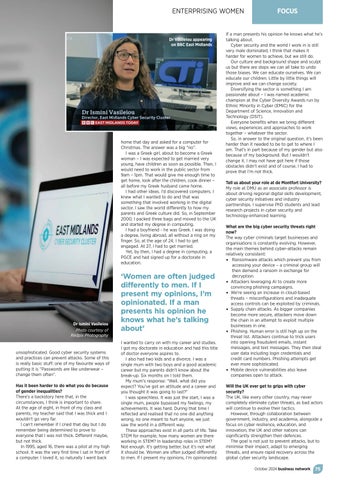

This month’s Business Network celebrates one of the most enjoyable events on the Chamber calendar – the annual Enterprising Women Awards. The 2024 awards took place in the elegant surroundings of Winstanley House and brought together businesswomen – and men – from across the region to honour their commitment to industry and entrepreneurship.
The winners were the best of the best and each was solid proof of the quality of female leadership in this part of the world.
The evening was also a fantastic showcase of the Enterprising Women network and the camaraderie it breeds among everyone who is involved. You can read about the winners and see pictures from the night in our feature on pages 10 and 11.
As part of those celebrations we took time out to interview this year’s Emerging Leader winner, Alice Houghton, general manager at The George hotel in Hathersage. Alice, like all the winners, was delighted to collect her award, like many of them, putting much of her success down to the dedication of her team and the backing of her management. The interview also gives an idea of the hard work that has gone into her career and the talent that has helped her achieve so much for such a young person. Read her story on page 31.
Continuing the women in business theme on our focus pages, Elizabeth HardwickSmith, group people and culture director at Pick Everard looks at what drives female growth, while Cartwright Communications director Annie Brafield tells us how a positive, flexible working environment should act as a strong incentive to female and male workers alike.
We also hear from psychologist Vanessa Pozzali on the personal barriers she had to overcome to make it as a woman, and from cyber security expert Dr Ismini Vasileiou on why women still have to work harder than men to achieve the same levels in industry – and why positive steps towards diversity are still so important.
I hope you enjoy the read.
Tom Pegden, Editor, Business Network

Editor Tom Pegden
T: 07816 347 451
E: tom.pegden@emc-dnl.co.uk
Contributor Tim Smith
All Submissions
E: magazine@emc-dnl.co.uk
Chamber Membership
E: membership@emc-dnl.co.uk
Follow the Chamber
W: www.emc-dnl.co.uk
Twitter: @EMChamberNews
Cover photo
Eileen Perry and Jean Mountain at the Enterprising Women Awards
(Credit: Pete Martin Photography)
BUSINESS
Publishers Kemps Publishing Ltd 8, The Courtyard, 707 Warwick Road, Solihull, B91 3DA
T: 0121 765 4144
w: www.kempspublishing.co.uk
Managing Editor Laura Blake T: 0121 765 4144
E: laura.blake@kempspublishing.co.uk
Designer Lloyd Hollingworth
Advertising T: 0121 765 4144
E: jon.jones@kempspublishing.co.uk
Printers Stephens & George Print Group W: www.stephensandgeorge.co.uk
OCTOBER 2024
MEMBER NEWS
4 Derby’s Eastern Gateway under way
APPOINTMENTS
28 New team leader for insurance broker
THE BIG INTERVIEW
31 Alice Houghton, general manager of The George Hotel and Enterprising Women Award winner
STRATEGIC PARTNERS AND PATRONS
38 Freeport investment boost for students
CHAMBER NEWS
42 Skills Plan still has plenty of work to do
CHAMBER NETWORKS
54 Member milestone for the East Midlands Manufacturing Network
TRAINING & EVENTS
58 College takes a flexible approach to learning
SUSTAINABLE EAST MIDLANDS
62 Recycling efforts to reduce e-waste
INTERNATIONAL TRADE
64 New tool aims to make trading easier
POLITICS
66 Overspend warning from Derby City Council
FEATURES
68 Health in the Workplace
How to support mental health at work
71 Sexual health and its implications on staff
74 FOCUS
Celebrating some of our region’s top female entrepreneurs, industrialists and business leaders
83 Enterprise & Innovation
The importance of brand innovation
86 What to look for in a new recruit
DIGITAL & TECHNOLOGY
90 Finding the best social media strategy
BUSINESS SUPPORT
92 LEGAL
New challenge for local industry veteran
94FINANCE
BBB names new regional network director
97 SKILLS
Accountants add largest graduate intake
98 PROPERTY
Building under way on new children’s home
100 MOTORING
We take the Hyundai Ionic5N for a spin
THE LAST WORD
102 Chamber president Stuart Dawkins identifies issues the new Government should focus on to encourage the UK’s long-term stability

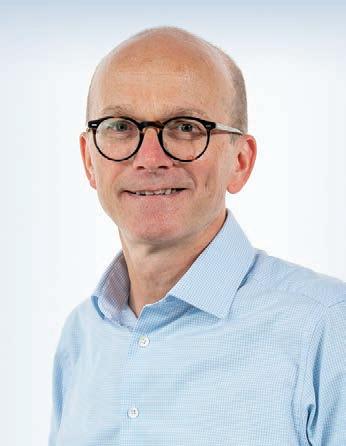
Freeths reported another year of double-digit growth with turnover up by 13% to £145.5m in the 2023/24 financial year.
The national law firm has reported average annual turnover growth of more than 10% over the last five years and an increase of £16.7m over the last 12 months.
Management attributed much of the financial success to the talent and commitment of its 1,200-plus people, including 14 lateral partner hires in the last year alone, and the support of its clients.
The business has seen expansion across all main practice areas including highend M&A, disputes, restructuring and insolvency, real estate and environmental and energy mandates. The business was recently named law firm of the year at the Legal Business Awards 2024.
Karl Jansen, Freeths national managing partner, said: “As we report on another year of strong performance, our success has enabled us to invest strategically in the future of the business.
“This includes our investment in the latest market leading technologies such as AI, helping to enhance our performance across the firm, and yielding significant benefits for our clients.
“The depth and breadth of our national practice, which now includes Scotland, has helped us to become one of the UK’s leading law firms.”
Freeths launched the landmark High Court victory for 555 sub-postmaster clients against the Post Office, which helped expose Britain’s largest miscarriage of justice. The firm now advises on the subsequent GLO and Horizon Convictions Redress compensation schemes.



Work to transform a new gateway into Derby city centre is under way, after final funding arrangements were approved by Derby City Council.
The Eastern Gateway – being delivered by Derbion and partfunded by the Government’s Future High Streets Fund – will create a new façade and urban garden, transforming the area opposite the bus station and the eastern entrance to the shopping centre.
It is due for completion during the first half of 2025.
Derbion managing director Beth McDonald said: “The Eastern Gateway project will create a welcoming new entrance to the city centre, transforming the
‘Another significant step in the revitalisation of Derby’s city centre’
environment and encouraging footfall and visitors by opening up the space and introducing an urban square.
“We’re looking forward to getting under way with the development next month and seeing the positive difference that it makes for the city.”
Council leader Cllr Nadine Peatfield said: “I’m thrilled that this project is moving ahead, marking another significant step in the revitalisation of Derby’s city centre.
“By transforming this area, we’re not just enhancing the look and feel of the city, but also creating a space everyone can enjoy.
“This development will be key to better connecting different parts of the city centre, making it more accessible and welcoming.
“It reflects our commitment to ensuring Derby’s future is bright, inclusive and full of opportunities. We look forward to seeing the positive impact it will have.”
Derby City Council was awarded £15m by the Government’s Future High Streets Fund to support the development of the city centre, with £3m allocated to the Eastern Gateway-Derbion scheme, with Derbion contributing a further £1m.
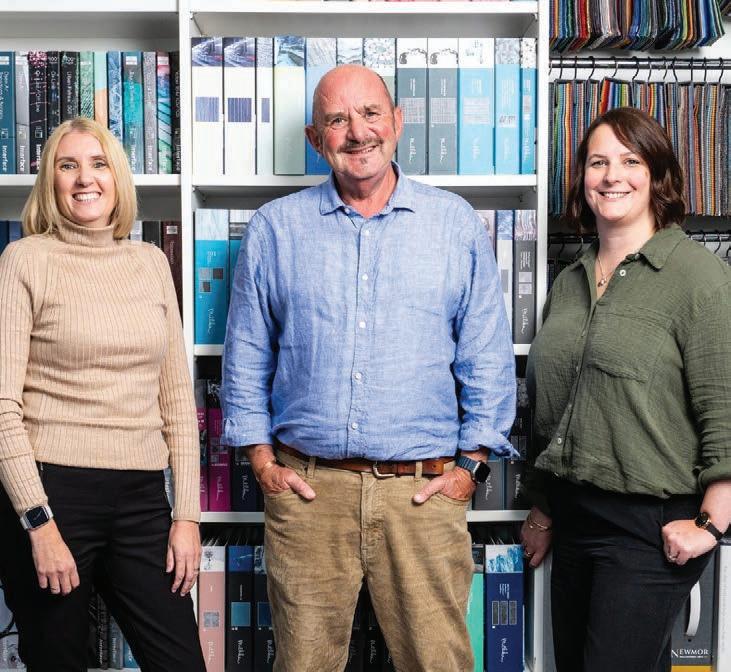
A new era is under way at office fit-out specialists Blueprint Interiors, with operations director Rachel Biddles and creative director Chloe Sproston taking ownership of the business.
The changes at the Ashby-de-laZouch firm will allow chairman and founder Rob Day to take a step towards retirement and his passion for community-led projects for the company.
It comes after the business celebrated a record 12 months of trading, securing significant projects with a number of household names in 2025.
Rachel and Chloe have been with the business for 22 and 19 years respectively, helping to shape the company’s innovation and growth. As co-owners they said they were ready to continue that legacy and take Blueprint Interiors to even greater heights.
Rachel said: “This has been three


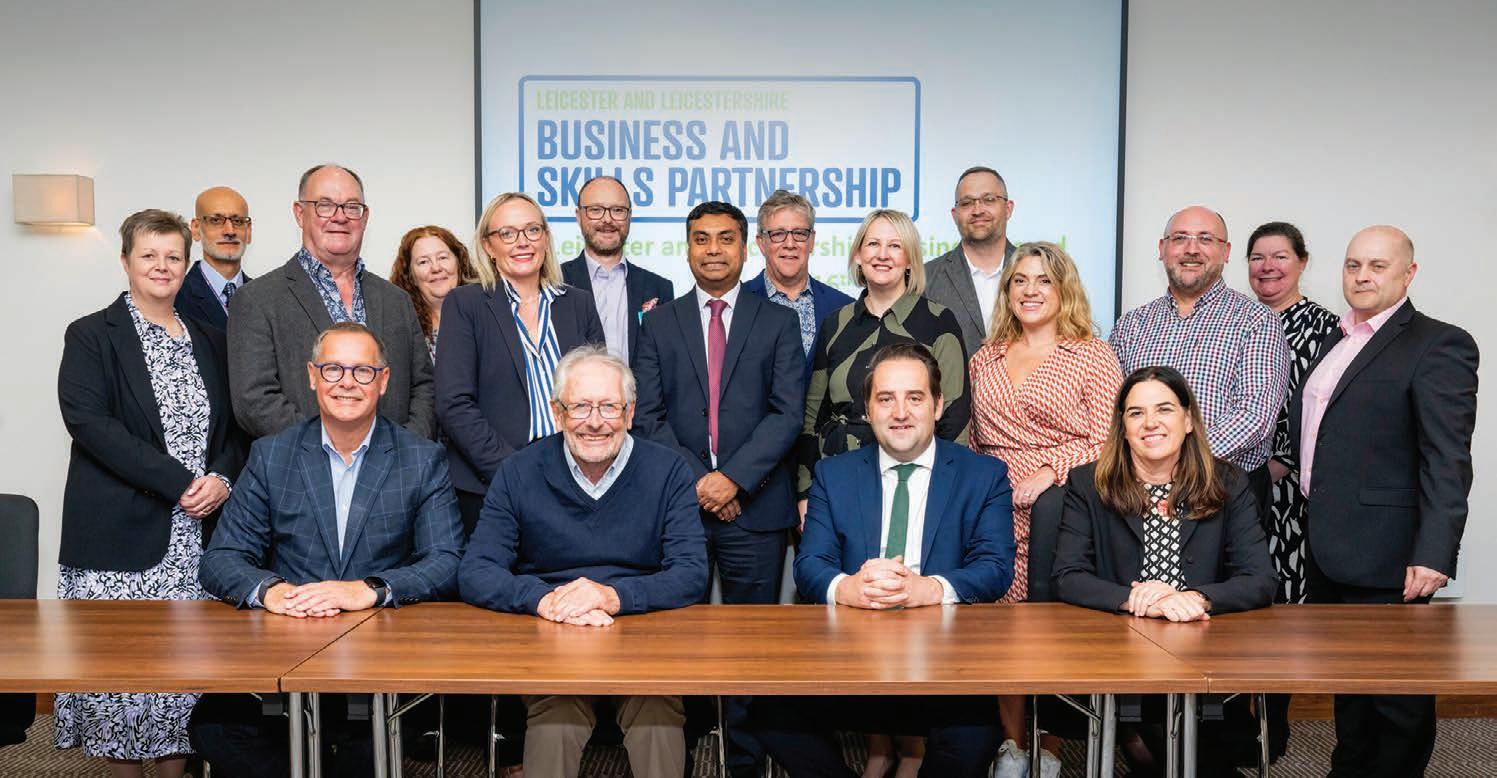
The newly-formed Leicester and Leicestershire Business Board has held its inaugural meeting.
Senior leaders came together at City Hall for the new group set up to represent the interests of councils within the city and county, businesses, the education sector and charities.
It is also connected with the new Leicester & Leicestershire Business and Skills Partnership (LLBSP), which was formed earlier this year and which is led by Leicester City
Council and Leicestershire County Council.
Board members were welcomed by chair Andy Reed OBE and Leicester mayor Sir Peter Soulsby.
The business board will have delegates representing Leicester City Council, Leicestershire County Council, the Federation of Small Businesses, Institute of Directors, East Midlands Chamber, Make UK, Leicestershire Business Voice, voluntary and community groups, social enterprises, higher and further education sector,
years in the planning and it’s wonderful to be able to share the news with the industry.
“While it’s a strategic move, it has felt a natural transition with Chloe and I being in the business for such a long time.
“With a very busy order book and some big projects to announce in the coming months, there is plenty for Chloe and me to deliver and celebrate.
“This new ownership will enable us to continue to drive forward innovation and quality in workplace design, which is what Blueprint is known for.”
Chloe said: “Rob has passionately created a vibrant company with strong ethics and values. His success is significant and he has been a fantastic mentor to Rachel and me. We have always had a clear sense of who we are at Blueprint, our expertise, and our desire to provide the best

experience for our clients. We love this company and have always treated it as our own, so to now be a co-owner is incredibly rewarding.
I want to thank Rob for putting his trust in us to take things forward, and the dedicated team who Rachel and I will be working alongside in this next phase of organic growth and expansion.”
Rob Day established Blueprint Interiors 23 years ago to create workplaces that focus on people’s wellbeing and productivity.
He said: “Now is the perfect time to hand the reins over, while I’ll remain in my role as chairman and founder, as well as continuing to help drive our community and social value activities.
“There may also be some sailing on the horizon for me as I relish a little more free time. I wish Chloe, Rachel and the team the very best for the future and look forward to seeing their continued success.”
‘We look forward to supporting the LLBSP and our local authorities over coming months and years’
Leicestershire district councils and Rutland County Council.
A number of business leaders –including senior figures from Caterpillar and Everards – have also been invited to join the board.
Andy Reed said: “There’s been a



lot of work completed behind the scenes over recent months to ensure input from business, education, and the third sector continues to be available to local authority leaders as they form growth strategy for our city and county.
“It was great to see that come together at the Business Board meeting and we look forward to supporting the LLBSP and our local authorities over coming months and years.”
The next Business Board meeting will take place in November.
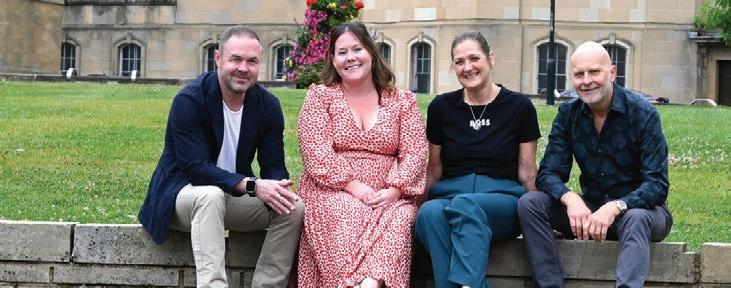
Long-established Derby agencies Balls2 Marketing and Koobr are merging to create a super agency under ‘The Koobr Group’ umbrella.
With both agencies already working in strategic partnership, the merger is set to combine their strengths, forming a full-service agency that will serve clients across the East Midlands and beyond with marketing, PR and digital expertise.
Craig Barker, director and founder of Koobr and Katie Bregazzi, director at Balls2 Marketing, will lead the new entity. The founders of Balls2 Marketing, Sarah and Andy Ball, will continue to step back from daily operations and remain involved in strategy.
Craig said: “This union is the culmination of years of experience, expertise and collaboration, and we are excited to move forward as a united team.
“By joining forces in this new chapter, we are creating a powerhouse agency that will provide even greater value to our clients and the local community across the East Midlands and further afield.”
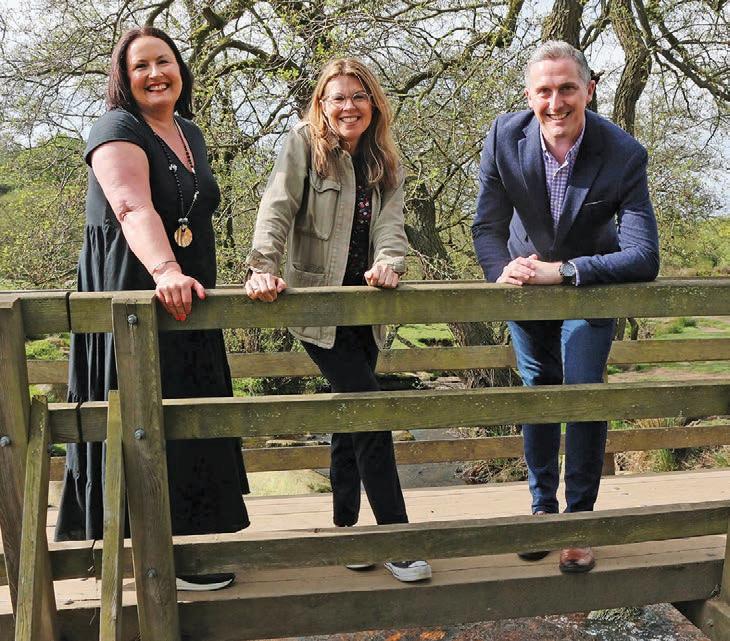
Visit Peak District & Derbyshire has announced a strategic partnership with holiday home management company Host & Stay as part of its mission to grow the area’s visitor economy.
Strategic partners are a key network of businesses that share core aims to increase visitor spend, extend the tourism season and champion the long-term success of the tourism industry and the communities it supports.
Host & Stay is a family-run holiday let management company that provides short term rental accommodation and “modern, hassle-free” property management services.
Visit Peak District & Derbyshire said tourism contributed £2.894bn to local economy in 2023 and
‘Our strategic partners are a group of influential, like-minded organisations’
supported thousands of jobs.
Tom Bell, managing director of Host & Stay, said: “This collaboration not only highlights the incredible experiences guests can enjoy while staying in our properties, but also brings to light the incredible end-toend service we can provide holiday let and short-term rental owners within the region.
“By working together, we’re ensuring that more visitors discover the hidden gems the area has to offer, while contributing to the local economy, and allowing owners with Host & Stay to start earning more

Nottingham Forest has signed a five-year deal with sports and leisure hospitality provider Sodexo Live, which will deliver hospitality and retail services at the City Ground as well as nonmatchday sales, marketing and events.
It follows a multi-million pound upgrade of hospitality facilities at the Premier League club and the improved matchday food and drink offering is now led by Sodexo Live executive head chef Darren Kelly. The events specialist will also run the newly upgraded Trentside Lounge, which overlooks the Trent and can accommodate more than 550 guests for conferences and events.
Overall, the deal will see Sodexo Live create around 15 permanent roles at the stadium with a casual workforce of around 500 people.
Club chief operating officer Paul Bell said: “We are excited to welcome Sodexo Live to the Nottingham Forest family.
“With a proven track record in delivering top-tier hospitality and catering services, Sodexo Live aligns perfectly with our vision for enhancing the matchday experience at the City Ground.
“This partnership will also bring the best possible service across the stadium and our brand-new hospitality lounges for this season.”
revenue and generating more bookings from their holiday lets.”
Jo Dilley, managing director of Visit Peak District & Derbyshire, says: “Our strategic partners are a group of influential, like-minded organisations who want to support
our core mission to grow the value of the visitor economy in a sustainable way.”
The other strategic partners are Northern, Breedon Group, the Institute of Quarrying, Severn Trent and Stagecoach.
Public relations firm Poppy PR has signed a contract with one of the biggest inland marinas in Europe.
Boating, leisure and retail destination Mercia Marina, based near Willington, South Derbyshire, has taken on Poppy PR to handle all aspects of its public relations and social media.
Poppy PR will promote the shopping, eating and office space at the 77-acre beauty spot as well as the marina’s forthcoming investment and growth plans.
Tina Clough, managing director of Poppy PR, said: “Mercia Marina is an amazing location. We are so proud to have added another award-winning business to our portfolio. We are literally beaming.

“Our PR crew can’t wait to show the wider public just what this hugely popular destination has to offer.”
Mercia Marina Village and Park’s On The Boardwalk complex has a mix of boutique retailers, a café, offices and a two-storey bar and restaurant that overlooks the marina.
Robert Neff, Mercia Marina’s general manager, said: “We have bucked the trend here at the marina and, while city retailers have seen a dip in sales, businesses here are expanding.
“We have some exciting projects ahead so it is great to have Tina, Phil and the rest of the team on board to help raise awareness of them.”

Nottingham Arena – the largest venue in the East Midlands and the home of the Nottingham Panthers ice hockey team –has extended its naming rights partnership with Motorpoint for another six years.
Known as the Motorpoint Arena Nottingham since 2015, the renewal means the relationship between the UK’s biggest independent used car retailer and the 10,500-capacity venue in the heart of the city will continue until at least 2030.
As part of the deal, Motorpoint will expand the scope of the partnership and introduce a range of new initiatives with the venue’s support – including a new monthly prize draw.
Outside the Arena in Bolero Square, Motorpoint
will showcase a selection of its nearly new cars, and run family-friendly activities during events, for the chance to win prizes, including tickets and signed merchandise.
As part of the retailer’s commitment to safe driving, non-alcoholic Estrella Galicia beer will be introduced at the arena with 50p for every pint sold going to Motorpoint’s nominated road safety charity.
Andrew Thomson, chief digital officer at Motorpoint, said: “As part of this renewal, we’ll be focusing our efforts on offering event goers something extra when visiting the arena.
“We’re going to be featured much more prominently on the digital screens throughout

the venue – making it easier for event goers to be kept up-to-date with all the exciting initiatives we’re running online and across our 20 stores nationwide.”
Arena chief executive Martin Ingham said: “As we head into our landmark 25th anniversary year in 2025, we have much to celebrate but, more importantly, much more to look forward to as we deliver cultural, social, sporting and economic benefits to Nottingham and the East Midlands with a great commercial partner by our side.”
Upcoming shows include Becky Hill, Bob Dylan, The Script, Fontaines D.C., Pete Tong, Paul Heaton and Culture Club.
Leicestershire fashion giant Next is anticipating profits of almost £1bn for the year after excellent trading in the first half of 2024.
The high street retailer said total sales were up 8% in the six months to July, at £2.95bn, with profits up 7.1% for the half at £452m.
It now expects sales for the full year to be up 6.6% with pre-tax profits up to £995m.
In a trading statement the business said: “The overriding financial objective of the group remains the same – the delivery of long term, sustainable growth in earnings per share.
“Our established businesses generate more cash than we are able to profitably invest in the group, so managing our capital to ensure high returns, and returning cash that cannot be profitably invested to shareholders, remains a central discipline of the group.
“We enter this new era in a more positive frame of mind with new avenues of growth and a more stable business.
“Retail sales have stabilised and, though the shift to online may not have run its course, its effects are much diminished.”
Ahome care company is using AI pets to support people with dementia.
Mansfield-based DICE (Dignified, Individualised, Compassionate, Exceptional) Healthcare helps people of varying ages and with varying levels of dementia – many who live alone and can be socially isolated.
‘The
robotic pets seem to have been effective in reducing loneliness in our clients’
The business recently gained funding from Digital Notts to support robotic pets – DICE chose cats and dogs – as companions to improve the social interaction and mental state of older adults with dementia.
The robots have the characteristics of “live pets” and can detect when they are being petted. They are curled to sit on a person’s knees or nearby and have realistic fur. The cats even meow when they want stroking and purr when they are touched.
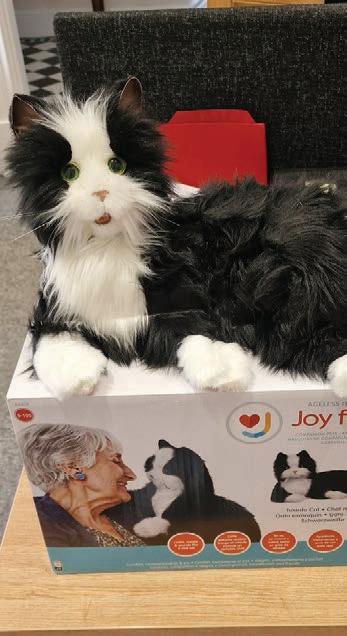
we carefully selected clients who might benefit from the companionship.
“The clients we chose were known to have previously been pet owners, live alone and have a diagnosis of dementia.
“Initially when the pets were introduced the clients were unsure; wondering what they were and how they would be able to look after them but after a short time their behaviour changed.
“When interacting with the animals their relationship and communication skills changed when interacting with carers and family members.

DICE director Doreen Webster said: “The robotic pets seem to have been effective in reducing loneliness in our clients, particularly among those who live alone and have few social interactions. Some clients even took the animals to bed to sleep with them.
“With all of the above in mind
Derby City Centre has welcomed more than 30 new businesses since May, according to the latest report from the city’s two Business Improvement Districts (BIDs).
New cafés, bars and restaurants and a range of independent shops are now trading within the Cathedral Quarter Business Improvement District (BID) and the St Peters Quarter Business Improvement District (BID) areas.
Brad Worley, BID manager for the Cathedral Quarter and St Peters Quarter, said: “We still have empty units in and around Derby, but the findings from our new report are hugely positive.
“Like every other city across the UK, there are challenges when it comes to city centre trading, but we are determined to strengthen the quality of our city centre streets.
“The fact that we have seen such a large number of businesses open in Derby in recent months – and more are coming in the next few weeks – is testament to the fact that Derby has a lot to offer.”
Houseboat, a South Indian tapasstyle restaurant, opened in St Peters Street in July, specialising in

food from Kerala, a region of South India, in a building which was once home to the Swiss Cottage café.
Manager Johns Geo said: “We are thrilled to be part of the vibrant Derby community. We are excited to bring our unique flavours and warm hospitality to the area and look forward to serving the wonderful people of Derby.”
Farhan Mahmood also has a new shop in Derby – BCS Electricals, on Albert Street – after running his stall in the Eagle Market for 30 years.
He said: “I struggled to find a shop, but Martin’s Fruits was my neighbour in the market, and he helped me.
“We are now neighbours again and it is great.”
“Clients who had previously been aggressive at times showed a calm demeanor and demonstrated improved communication skills when interacting with the animals. Showing their pets to others helped to increase communication.
“When a client is feeling upset, it was observed the AI-powered robotic pet offered comfort through gestures, sounds and simulated cuddles. This emotional connection enhanced interactivity with the pet and contributed to the wellbeing of the owner, often improving their mood.”
There were 29 new Chamber members in August:
• ACERLINX
• Ascentant Accountancy
• A S Studios
• AtkinsRéalis
• Blue Stamp Travel
• Boutique Housekeeping
• CT Skills
• Chris Johnson Design Ltd
• Clear Insurance Management
• Corporate and Executive Travel
• Dawson Creations
• Drone Discovery Ltd
• Fishers Solicitors
• Gateway Consultancy Leicester Limited
• KJB Tool Hire Limited
• Lang Learning Systems
• Mechigen Ltd
• National Forest Company
• Pink Fox Salon Socials
• Railston & Company Ltd
• SDE Group
• SE-LF
• Spatial Careers Service
• Tech Ed Solutions LTD
• Texture Jet Ltd
• The City Ground Events
• Tini PA Services
• True Talent
• Wonderpack Eco

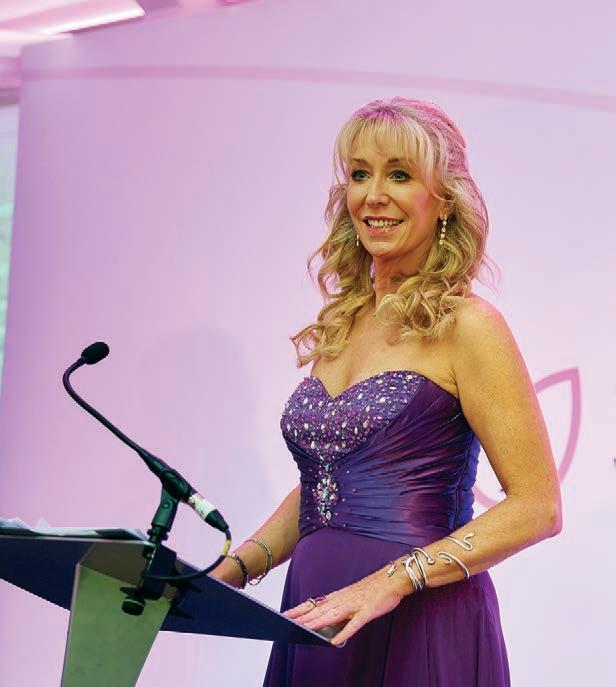
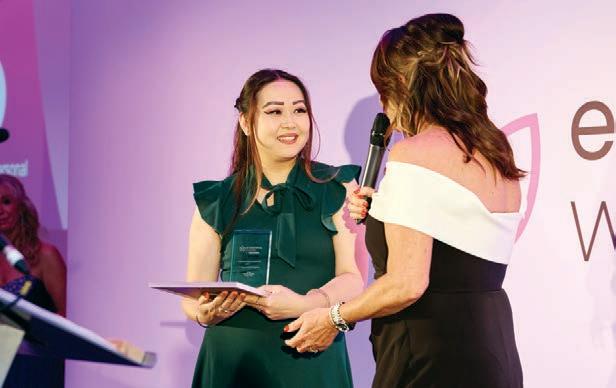
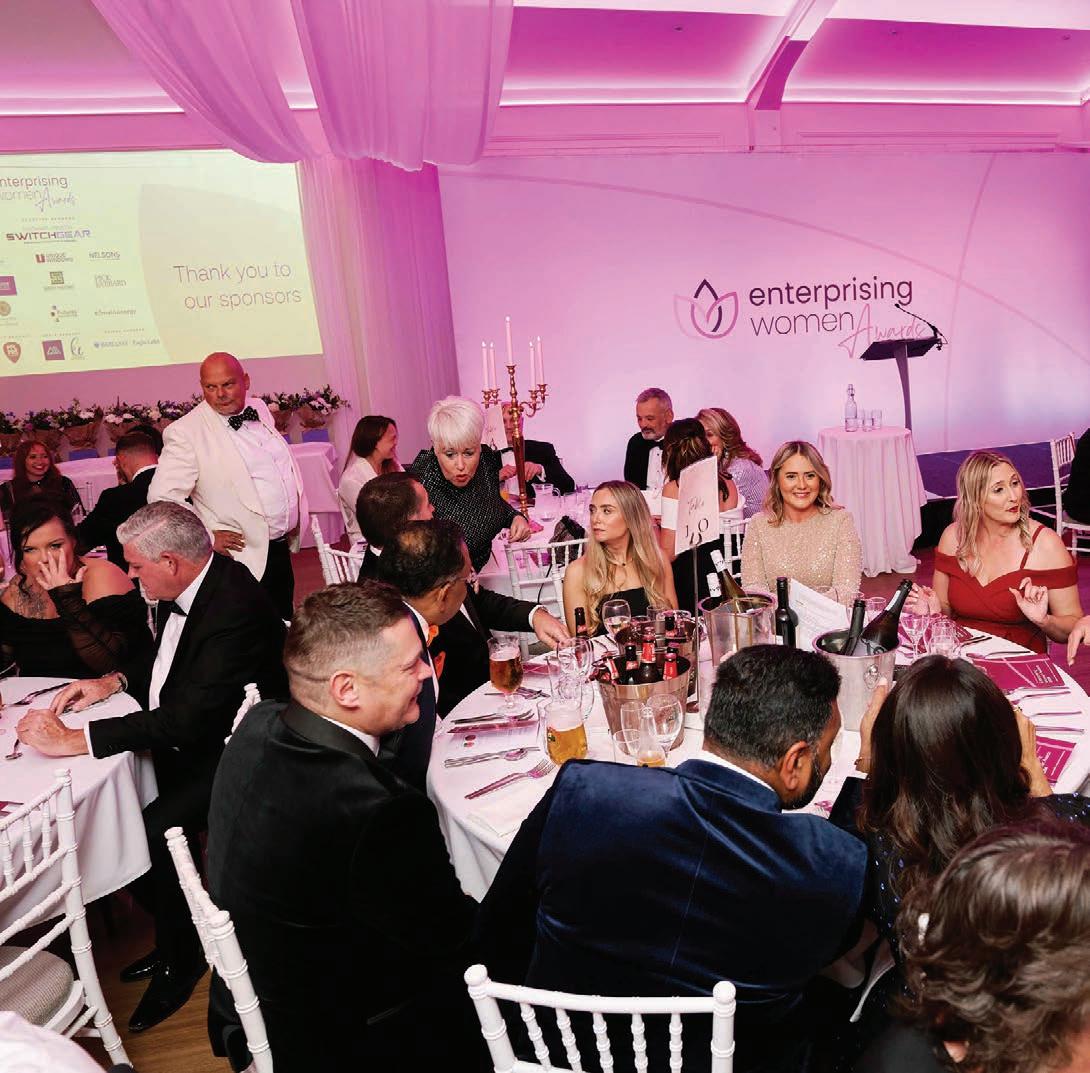
Photos by: Pete Martin Photography
Women with exceptional entrepreneurial skill, standout apprentices and emerging leaders were among the recipients of the 2024 Enterprising Women Awards, writes Tim Smith.
Organised by East Midlands Chamber’s Enterprising Women network, the prestigious event took place at Winstanley House in Leicester. ITV presenter Emma Jesson, who has hosted the event every year since its launch more than a decade ago, announced the winners, spanning 10 categories, along with two special recognition awards.
The Businesswoman of the Year Award –sponsored by Michael Smith Switchgear – went to Andrea Gray, who was until recently managing director of Leicester-based music licencing company PPL PRS. Andrea said: “What a huge honour to win this award – I’m absolutely blown away. There was some phenomenal competition in this category. I want to say a huge thank you to Enterprising Women and East Midlands Chamber who put on these awards, as well as Michael Smith Switchgear for sponsoring this category.”
The Lifetime Achievement Award – sponsored by Paradigm Wills and Legal Services – was presented to Lindsey Williams, formerly chief executive of Futures Housing Group and a former president of East Midlands Chamber. Judges described Lindsey as “an exceptional leader who has made a major contribution to the East Midlands business community for over 20 years. Lindsey has shared her expertise and experience to champion women in business, and who truly embodies the values of Enterprising Women”.
Enterprising Women co-chair Eileen Perry said: “All I can say is – wow! There are those moments in life where you have to take a moment, a few seconds to reflect and you feel so incredibly proud of the East Midlands and its businesswomen.
“What we’ve seen right here this evening, evidenced as each and every one of our region’s winning women stepped up onto the stage, is that Leicestershire, Nottinghamshire and Derbyshire are blessed with women that aren’t just keeping a business ticking over; they’re leading. They’re leading change, they’re leading ideas and giving people inspiration. We’ve seen sheer hard work and determination shine.
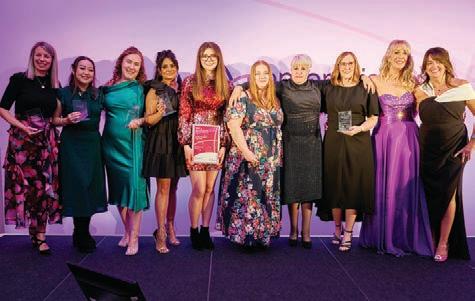
“We hold the Enterprising Women Awards each year to celebrate the very best of female business talent in the East Midlands and I extend my thanks to all of the sponsors who made this glitzy evening so memorable.
“I only wish there was an award for every one of the finalists as the standard was exceptional.”
Fellow co-chair Jean Mountain said: “Being able to stand next to these women that have done so much for women in business in the East Midlands is something that cannot be underestimated.
“We can all look up to, all learn from, and all aspire to be like the businesswomen that have been recognised at this ceremony. While the network is ‘Enterprising Women’, winning an
award is really elevating the role of women in business. It’s not just achievement; it’s attitude. The winners of these awards are women who don’t stand back - they’re generating new ideas and they’re influencing the people around them to achieve too.
“The quality bar has been broken tonight as, once again, we’ve seen exceptional entries and I’ve no doubt the judges will have pulled their hair out during selection. In my mind everyone that entered is a winner, because by doing so you’re doing East Midlands women proud.”
ITV presenter Emma Jesson said: “There’s so much innovation and resilience and it's fantastic to see women in business across a wide range of sectors and backgrounds recognised, as well as ladies at different parts of their career journey, whether starting out in apprenticeship roles or already highly successful business leaders.”
Nicki Robson, managing director of Breedon Consulting, sponsor of the Team of the Year Award said: “We're HR consultants and so we


1.
2. Special Recognition Award Winner Lai-Yee Cheung of Sanjay Foods
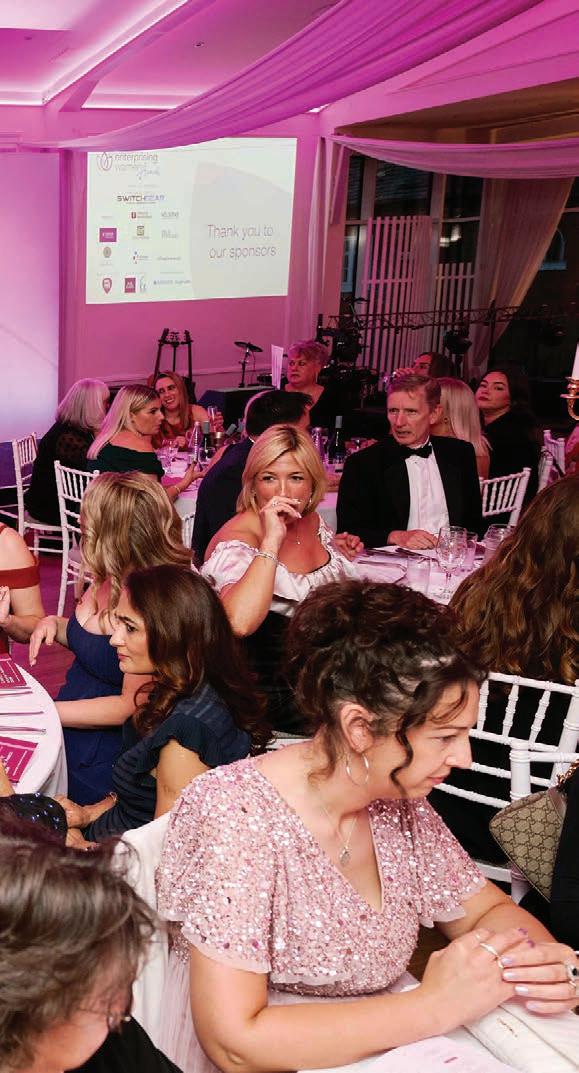
3. Enterprising Women Awards 2024 guests
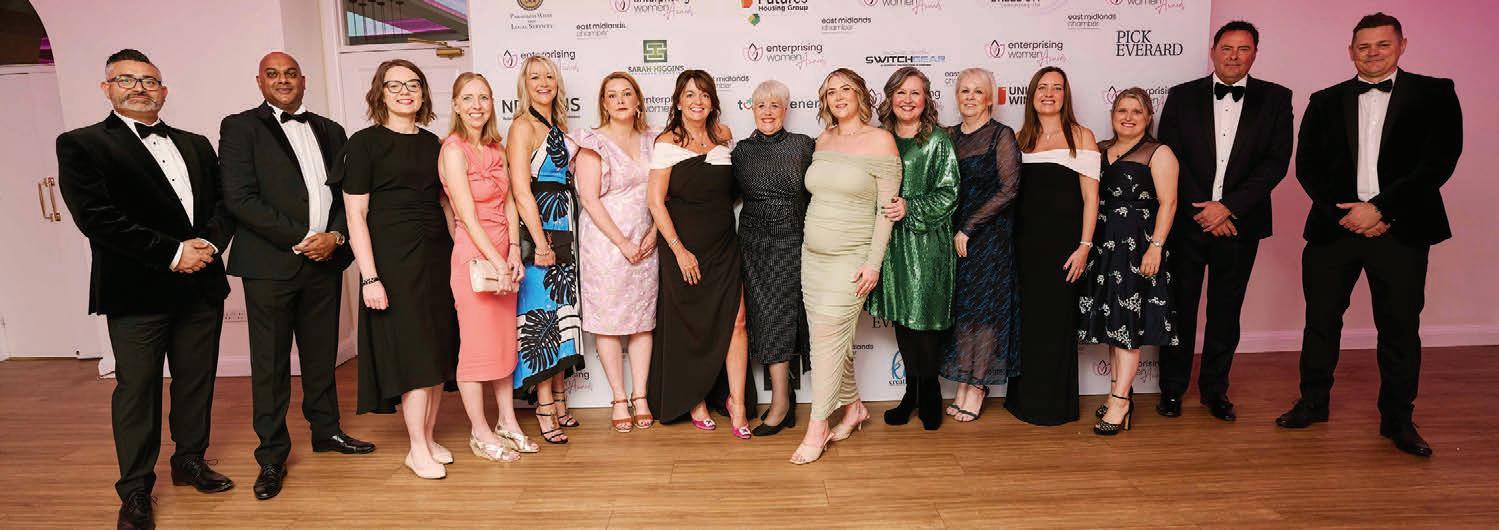
4. Some of the 2024 winners
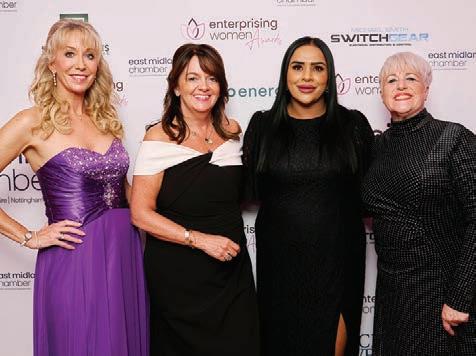
5. L-R: Emma Jesson, Eileen Perry Jaz Kaur and Jean Mountain
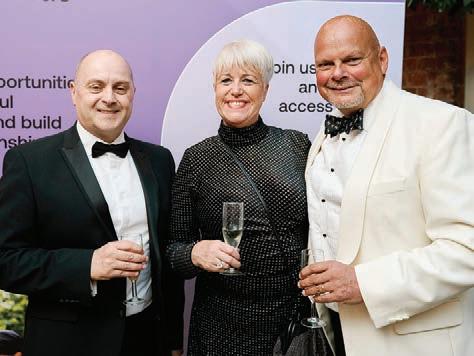
6. L-R: Scott Knowles, Jean Mountain and Kevin Harris
7. Female Employee of the Year Charlotte Barker, from The Maynard
8. The organisers with this year’s sponsors
spend our lives trying to make teams the best they possibly can be and supporting our clients in doing that – so the Team of the Year Award was a natural fit for us.”
Social Commitment Award
(sponsored by Tomato Energy)
WINNER: Emma Sharpe – Menphys
Female Apprentice of the Year (sponsored by Futures Housing Group)
WINNER: Sarah Illsley – Pentaxia
Female Employee of the Year (sponsored by Nelsons)
WINNER: Charlotte Barker – The Maynard Hotel in Grindleford
Emerging Leader Award (sponsored by Sarah Higgins Corporate Coaching)
WINNER: Alice Houghton – The George, Hathersage
She Who Innovates in STEM (sponsored by Pick Everard)
WINNER: Elena Richards – Rolls Royce PLC
Female Entrepreneur of the Year (sponsored by Fraser Stretton Property Group)
WINNER: Michelle Williams – Meesh Consulting
Small Business of the Year Award (sponsored by Unique Window Systems)
WINNER: Design Studio Architects
Team of the Year (sponsored by Breedon Consulting)
WINNER: Bodie Hodges Foundation
Businesswoman of the Year
(sponsored by Michael Smith Switchgear)
WINNER: Andrea Gray – PPL PRS
Lifetime Achievement Award (sponsored by Paradigm Wills & Legal Services)
WINNER: Lindsey Williams
Enterprising Women Co-Chair Special Recognition Awards
WINNER: Lai-Yee Cheung – Sanjay Foods
WINNER: Laura Holland – EcoTech Engineers
“The ceremony has been brilliant, it always is.”
• PPL PRS were the music sponsor, and Barclays Eagle Labs were the welcome drinks sponsor.
An HR firm is embracing the power of AI with an online service offering streamlined, cost-efficient and accurate employment support for SMEs.
Breedon Consulting, in Ashby-dela-Zouch, Leicestershire, has invested tens of thousands of pounds in its Billie the Breedon bot, which managing director Nicki Robson believes is the first of its kind to help small businesses in this way.
The service uses artificial intelligence to scan Breedon’s database and find the right answers to the most complex HR questions – with Nicki saying it was even given a thumbs up from an employment barrister who specialises in tough HR cases.
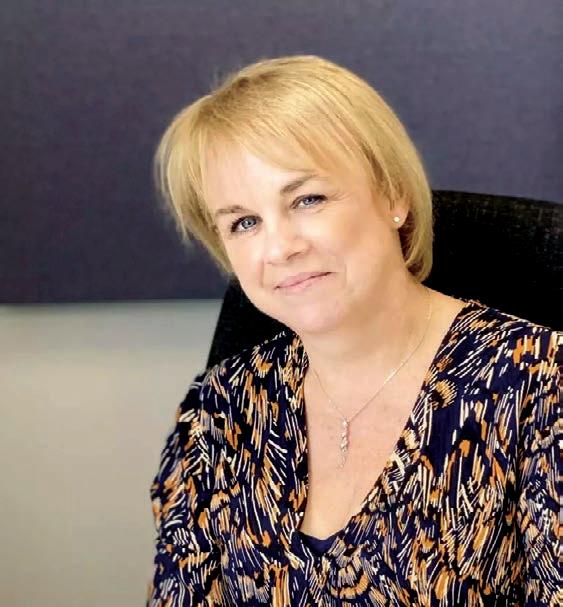
‘There’s a massive resource library that sits behind it, with decent, accurate, legal HR advice’
The bot, which has only just gone live, is available as part of an Essential HR package at £75 a month, or an Essential HR Plus package, which includes half an hour of telephone support each month for £150, She said that is a small percentage of what traditional one-to-one HR or legal support might cost.
Nicki hopes it will act as a vital resource for cash-strapped, timeconscious managers juggling their staff requirements.
She said: “We already provide SMEs with hands-on HR support, helping companies that don't have their own in-house HR.
“It’s time-consuming for us to do that and consequently the costs can mount up so we wanted to produce a bit more of a self-service type of offering – something that was more suitable for smaller businesses.
“We came up with something that effectively does what HR advisors and helplines do through an AI bot –and it’s ring-fenced to only look at our IP rather than searching the whole Internet.
“There’s a massive resource library that sits behind it, with decent, accurate, legal HR advice –25 years of information that we use for supporting clients, internal training, external training, the works.
“So, if something happens at work the manager can go into the
will go through our library and find the right answers.
“The cost is one benefit but so is the availability because obviously it's there 24/7 – and it’s instant.
“It could be used by an HR person who wants to check something because there's so many different ways of interpreting HR, or bigger organisations giving it to their managers so that they are a bit more self-sufficient.
“Or it could be the boss of an SME who wants to know what to do if an employee hasn't turned up to work that day or a team member has done something stupid, or what to do if someone has asked to work part-time. You name it – it can answer anything and everything.
“Before we launched it, we ran it by a top London-based employment barrister to see what he thought and he threw some really tough questions at it. I have to admit, I actually held my breath, but it coped and he said “wow, that is so good”.”
She said there were thousands of small UK businesses that could make use of it, and Breedon hopes to have discussions with some big organisations and trade bodies to see if it can be offered as part of their services.
Nicki said rather than threatening jobs she felt that AI had potential to free workers from the more mundane elements of work, allowing them to concentrate on the more important things.
She said: “There's been a lot of scaremongering, but there's a hell of a lot of stuff that AI will never be able to do – or do well – because it doesn't have that human approach.
“People still like the human interaction, don't they?”


The boss of a digital design and marketing agency says business is booming since making the decision to drop a key service on ethical grounds.
Inzar Haq (pictured inset), founder and managing director at Insight Consultancy, said the team decided to stop creating “organic” social media posts for clients, believing that content was more authentic and engaging when produced directly by the clients themselves.
He said it is one of the first in the industry to stop managing clients’ organic social media posts.
Inzar said: “We believe that the most effective social media content comes directly from the heart of a brand. Authenticity is key. Today’s audiences want to see genuine posts directly from businesses themselves that are less polished and more real.
“Whether it’s content directly from the brand, employee generated content (EGC) from staff – which is a growing trend – or user generated content (UGC) from customers, it’s this that builds trust and engagement.”
The agency had managed social media accounts for around 50 clients but decided to hand responsibility back to them, offering support and guidance where needed.
‘We’re
committed to assisting clients with strategy and direction, but we now encourage them to own their social media presence’

Inzar said: “We’re committed to assisting clients with strategy and direction, but we now encourage them to own their social media presence. We provide training and ongoing support to ensure they succeed.”
Despite dropping this service and expecting to lose a substantial part of their income, Inzar said the business has made up for it by shifting focus to paid social advertising, a service where results can be clearly measured.
He said: “Within a very short period, paid advertising was bringing in more revenue than we had lost. Offering paid advertising means you can quantify the work that you are doing because it’s a technical service and you can actually see the return on investment."
This shift has enabled the agency to thrive, with strong growth projections for the future. With business booming, they plan to increase their headcount in the coming year. By 2025, the agency aims to expand to a team of 22 people, continuing to grow its services and reach.
Inzar said: “The plan is not to focus outside the East Midlands though, because we’re proud to be based here. We want to increase the number of websites we host and continue doing what we do well.”
Insight Consultancy offers a range of services including website design and development, branding, email marketing and website hosting. It is also making strides in artificial intelligence by introducing AI-driven solutions in live chat services.
Inzar said: “We had a human chat window service, with operators in the UK but now have a quite sophisticated chatbot, which we are continuing to develop. We take a holistic approach to everything we do, ensuring our clients get the best results. We have their best interests at heart. It’s this transparent, straight-talking attitude that sets us apart.”
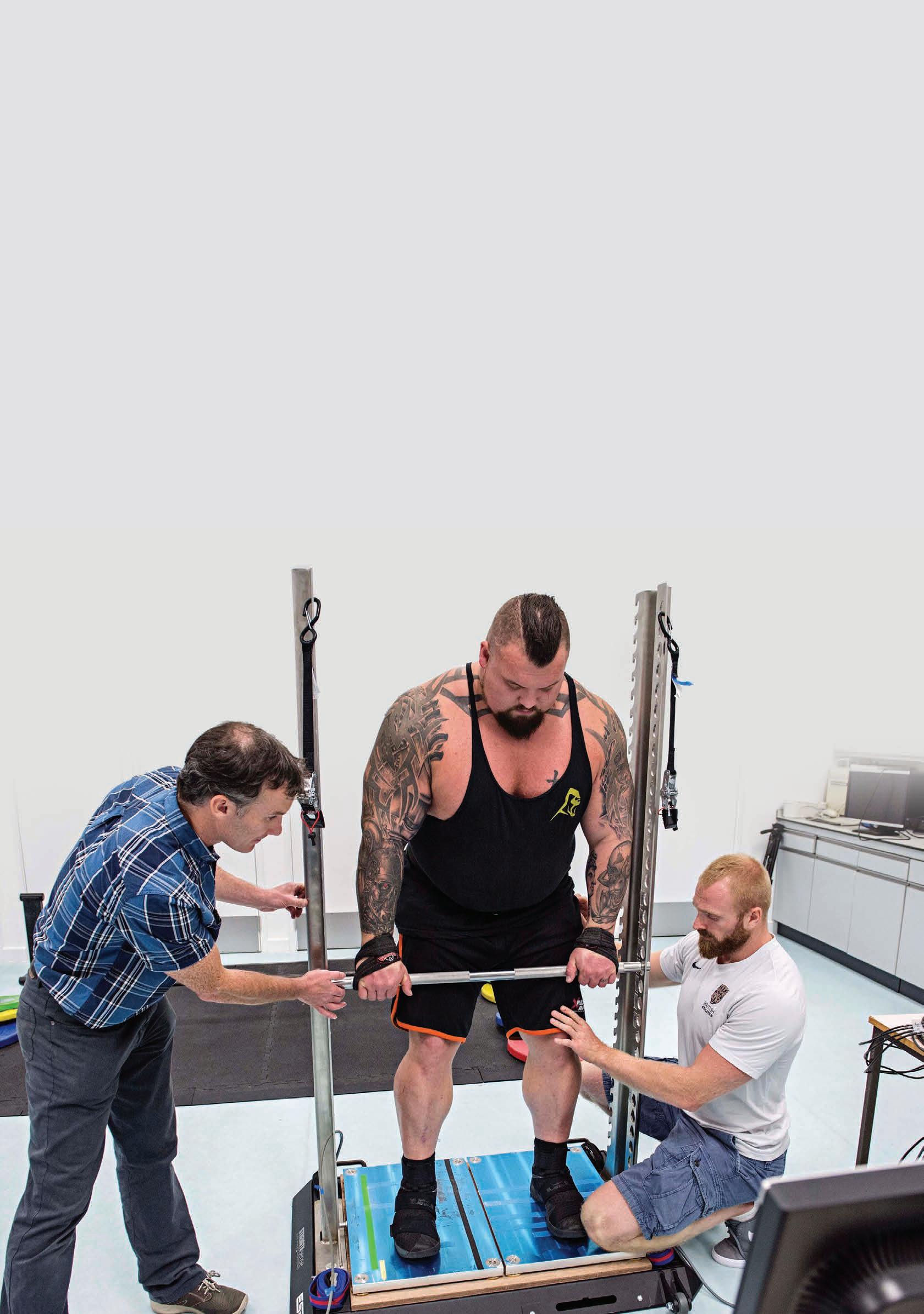
One of the world’s strongest men has been put through his paces by scientists to see just where his phenomenal power originates – in a study that could be used to improve understanding of athletic performance, injury prevention and healthy ageing.
Scientists from Loughborough University carried out strength tests and MRI scans on former World’s Strongest Man winner, deadlift champion and TV star Eddie Hall, and compared his muscle and tendon structure to that of athletes as well as trained and untrained people.
The research has helped build a picture of the factors that contribute to Eddie’s extreme strength, and provide a better understanding of how people in general could build their strength.
The findings showed Eddie’s lower-body muscle mass was almost twice that of untrained men. His calf muscles and the three “guy ropes” muscles that provide stability to the pelvis and thigh had the biggest differences compared to a typical untrained male. His quadriceps, for instance, on the front of the thigh, were twice the average. All these muscles are vital for heavy lifting, carrying and pulling tasks – staples of the strongman sport.
Some of his other muscles, used in movements that are not so important for heavy lifting and carrying, such as those involved in flexing the hip, showed much more modest differences when compared to untrained men. They were between 23% and 65% bigger.
His patella tendon, that his quadriceps muscles attach to, was only 30% bigger than the average, which the team said shows that muscles are much more adaptable than tendons with training.
‘We can all change and develop our muscular system to improve the function and performance of our muscles’
Dr Tom Balshaw from the university’s School of Sport, Exercise and Health Sciences, said:
“Scientific understanding of muscular strength is important because of its role in athletic performance, injury prevention, and healthy ageing. However, our knowledge of extreme human strength is limited.
“Overall, the results suggest how adaptable the muscular system is, with the greatest muscular development of the muscles that Eddie trains and uses the most.
“This suggests that we can all change and develop our muscular system to improve the function and performance of our muscles.”
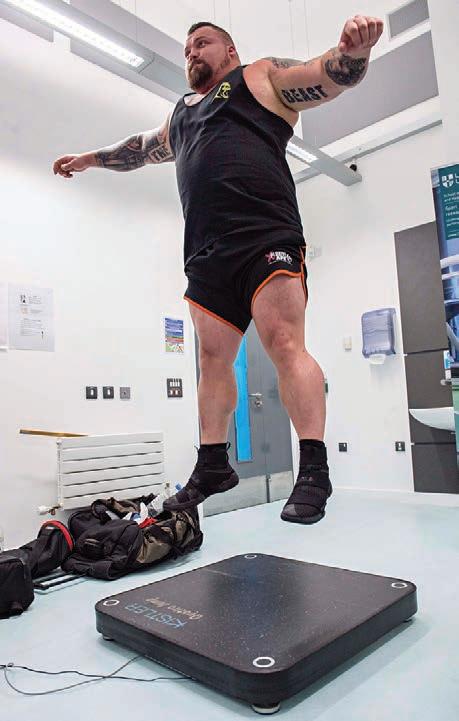
Professor Jonathan Folland said: “With Eddie, a strongman and deadlift champion, we expected the big muscles involved in extending the knee and hip would show the greatest development.
“While these muscles were certainly well developed, we were surprised that the greatest muscular development was of the long, thin “guy ropes” muscles that stabilise the pelvis and thigh. This indicates that these stabilising muscles may be more important for heavy lifting and carrying than we previously thought.”

From Nottingham to Northampton, Parkway Volkswagen is on hand to offer you friendly and informative advice on all aspects of purchasing and financing your next company car or personal contract hire lease. We can offer support throughout the process, from sourcing one car to helping to manage multiple purchases and supplying larger fleets.
There has never been a better time to consider Volkswagen for your fleet with our fantastic range of models offering something for everyone from our iconic Golf to hybrid and fully electric ID Range - all available in the new enhanced Match specification!
I would love the chance to talk to you in more detail. Please contact me on the details below or pop in for a chat and please check out my linkedin page at: www.linkedin.com/in/jodie-shipley-b1b4b4108/
Jodie Shipley
Fleet business development manager jodie.shipley@parkwayvolkswagen.co.uk Telephone: 07703 830192

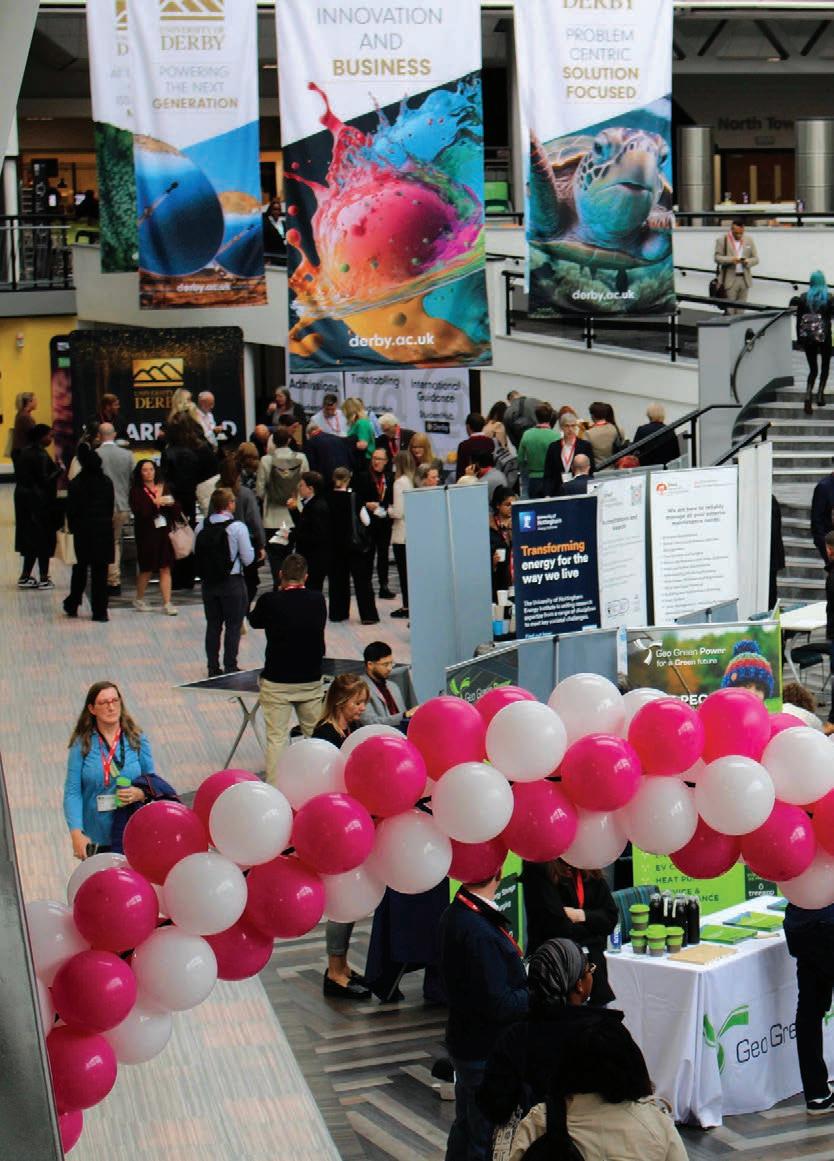
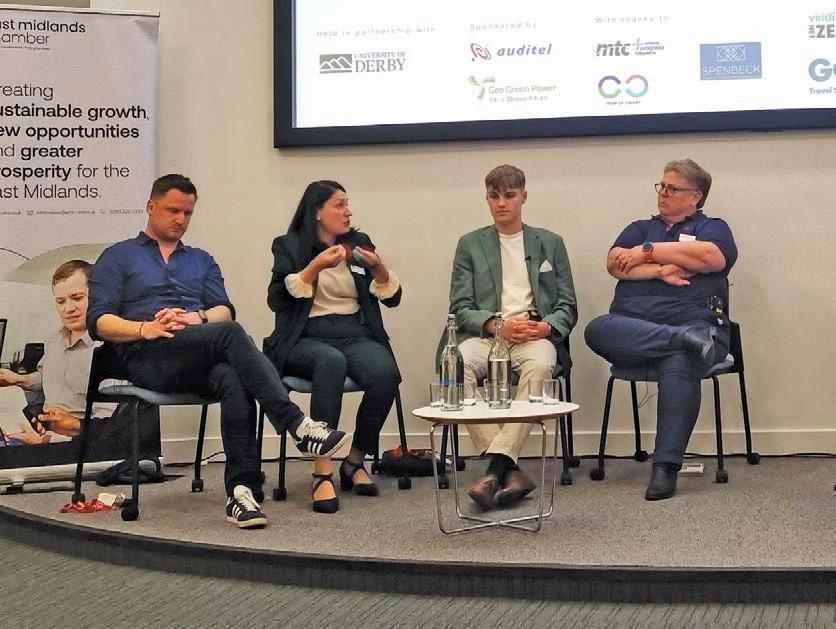
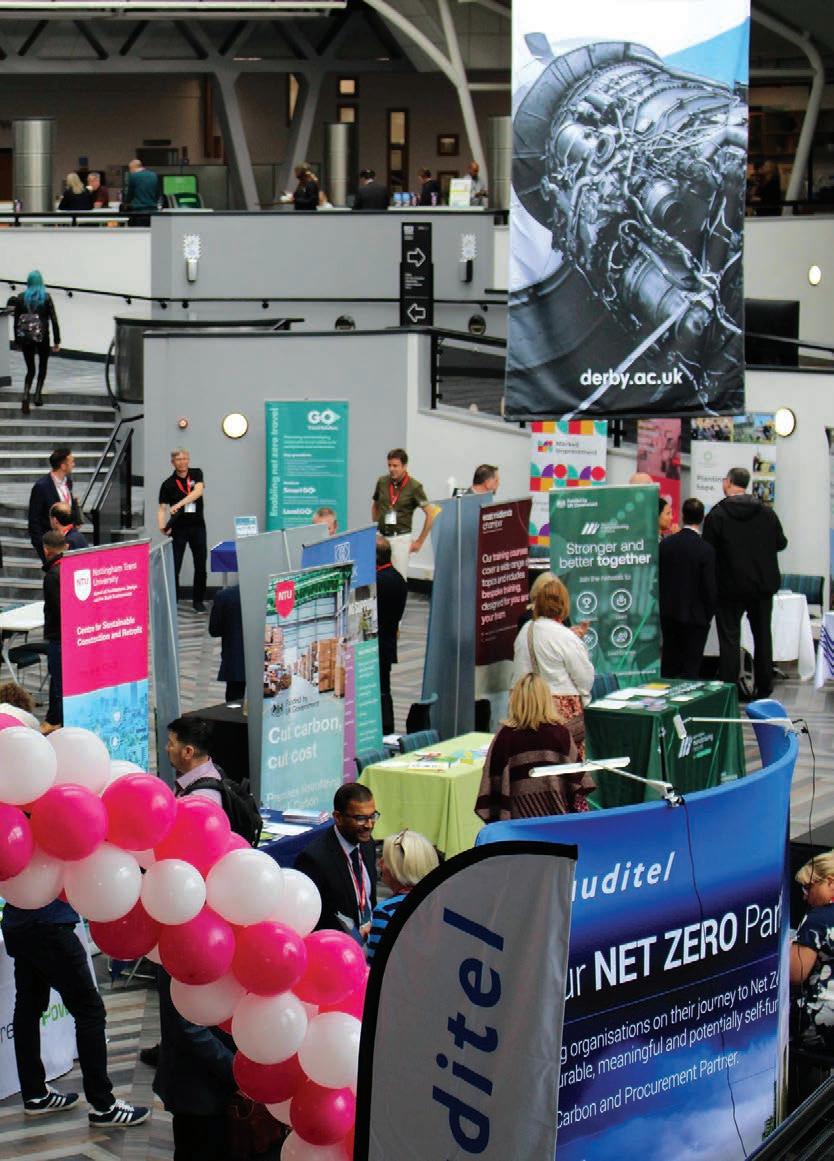
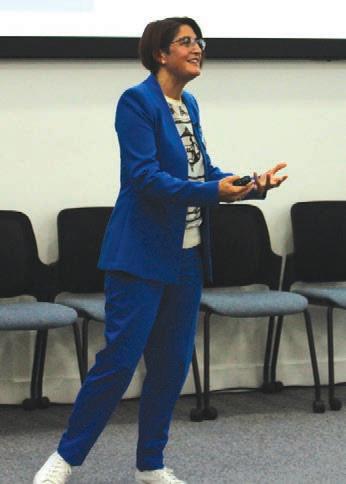
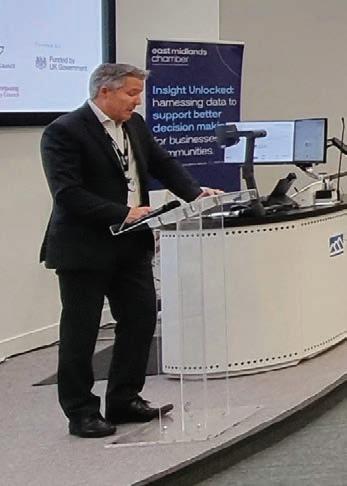
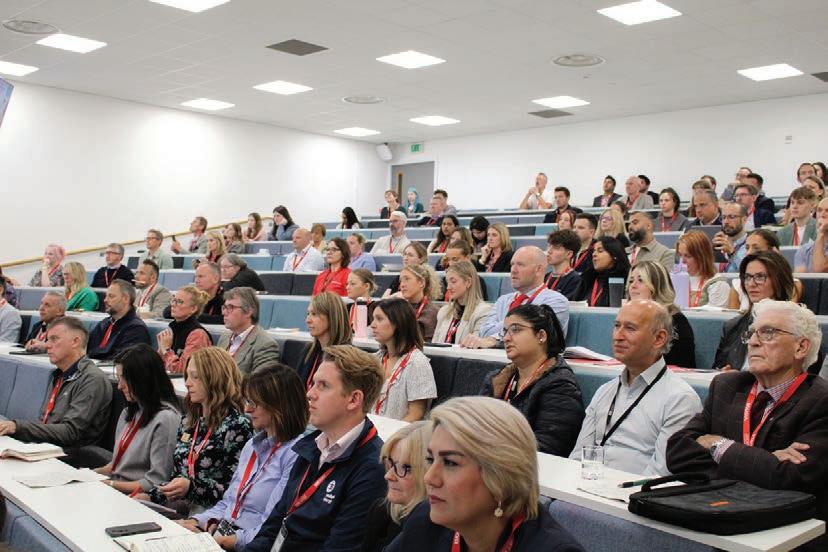
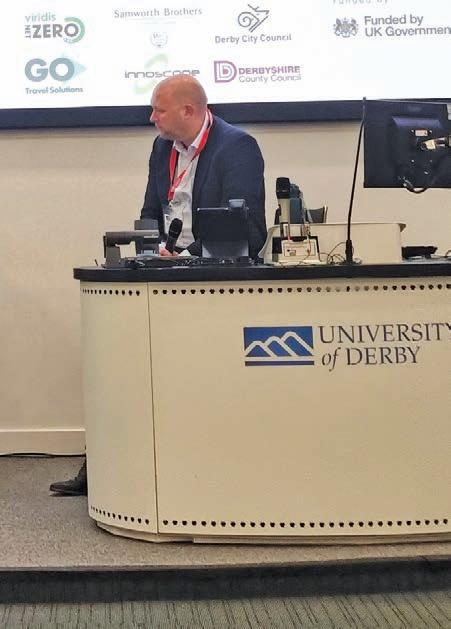
Representatives from the region’s top businesses joined academics and industry specialists to consider ways to tackle barriers to Net Zero at the Chamber’s 2024 East Midlands Sustainability Summit.
Workshops, seminars and presentations unpicked some of the hurdles faced by firms in their journeys toward becoming carbon neutral at the event hosted by East Midlands Chamber in partnership with the University of Derby, where the summit was held.
Chamber president Stuart Dawkins, who opened the summit, said: “To see so many businesses, of different types and sizes gathered at this summit was a welcome sight and really underlines just how seriously the East Midlands is taking its approach to sustainability.
“I get the feeling no one is under any pretence about the obstacles that can make mitigating against Climate Change daunting. How does a business prepare? Are they doing it the right way?
“The summit shared best practice, saw research the Chamber has carried out with the University of Derby and workshops to help break down difficulties and find solutions.
“The East Midlands must, as I reiterated today, think hard about what it leaves for Generation NextBut-One – what we do now directly impacts the life they inherit.
“Businesses in Derbyshire, Nottinghamshire and Leicestershire really can be on the right side of
history and get this right, but how we all get to that destination, when each business is structured differently, is a conversation that must never stop.”
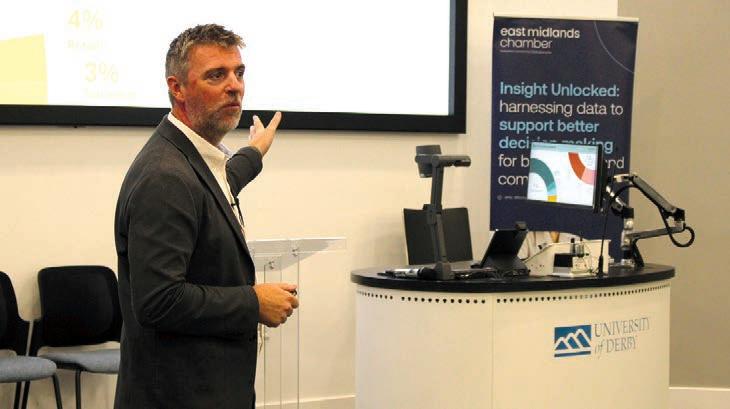
East Midlands Chamber director of policy and insight Richard Blackmore said: “Getting East Midlands businesses together to overcome the challenges around becoming more sustainable is an important step toward achieving Net Zero, but we should remember that the summit was also an excellent opportunity to focus on the economic growth potential for businesses that get the strategy right.
‘An excellent opportunity to focus on the economic growth potential for businesses that get the strategy right’
“Keeping the momentum of the sustainability journey front and centre of all business operation is essential, as putting it on the back burner to just worry about another day isn’t an option.
“We heard from some fantastic speakers and I extend my thanks to all of them – to our summit sponsors Auditel, Geo Green Power and our partner for this summit, the University of Derby.”
Research carried out by the Chamber and the University of Derby into Green Growth Trends –
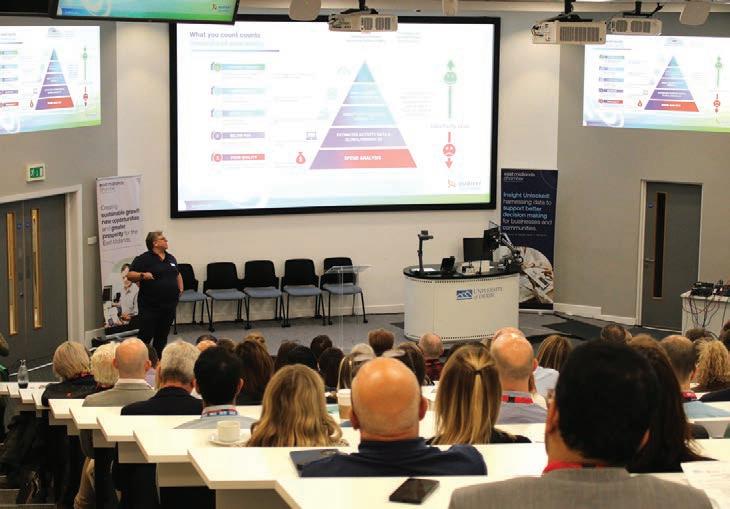



achieving economic growth without negatively impacting the environment – was shared by the university’s associate professor of strategy and sustainability Dr Polina Baralova.
Findings included three-quarters of large businesses reporting that they pursue green growth, while half of small businesses do.
Dr Baralova said: “My advice to businesses would be to think a little bit about how to grow sustainably, which we refer to as green growth.
“So, if you have a number of products and services that you trade on the market and they are having green credentials – as in they allow the general public, your customers or suppliers to reduce
their carbon footprint and support an environmentally friendly agenda.
“At the same time, you also need to start thinking about your decarbonization initiatives and reducing carbon so those two elements go hand to hand. You can’t really have one without another.”
Julie Adams, a carbon reduction specialist at carbon, cost and procurement consultancy Auditel, explored the importance of ‘carbon maturity’ and how to approach cutting emissions at every level of your operation and supply chain.
She said: “Coming together like this at the summit has been invaluable, and the sessions that we’ve had have all built upon each other with the message that there


is an imperative and an urgency to address sustainability that we all have to pull together to head.
“It’s not about having a carbon footprint or reduction plan. It’s how we build this into our lives personally and professionally into a company.”
Sustainability and building health specialist Becky Valentine, who coowns sustainable office consultancy Spenbeck, gave a presentation on overcoming barriers to climate engagement.
She said: “This summit has been very much around ‘you’ve started your net zero journey, now how do we help you with the next steps?’. I think these questions are vital, bringing companies together with academics helps us on the next
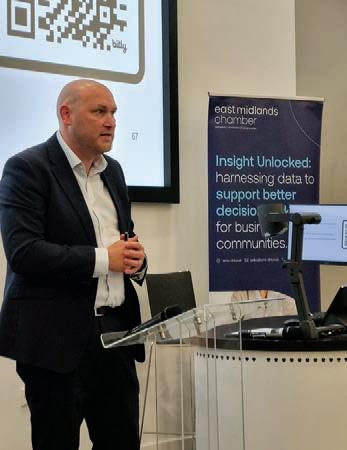

stage of all of our journeys. I think it it’s been a really vital day.”
Andy Wright, responsible business director at Leicestershire food manufacturer Samworth Brothers, spoke about the importance of having the right approach to sustainability.
He said: “Engaging is the key. People have to understand what it is they’re trying to deliver and make it available in a language that is understandable.
“So, if you’re dealing with procurement colleagues, it’s probably a different conversation than if you’re dealing with new product development colleagues or operational colleagues. There needs to be a message for everybody.”
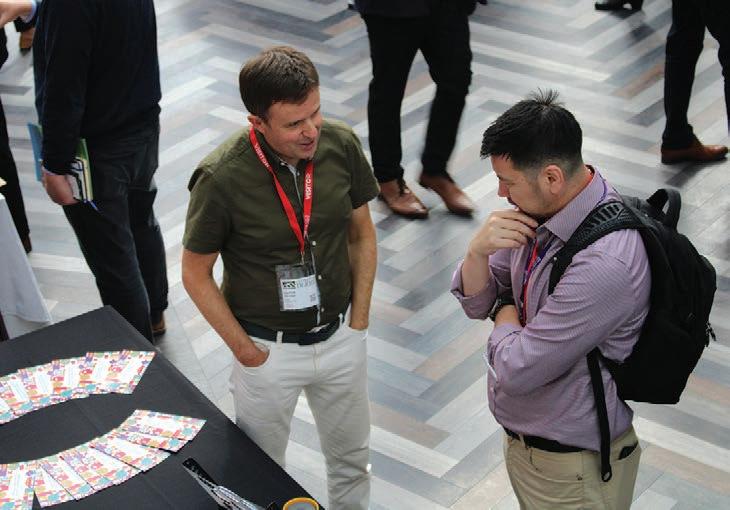

Nottingham Panthers has chosen Framework as its charity of the year for the 2024/25 season.
The Nottingham-based charity which supports homeless and vulnerable people across Nottingham, Nottinghamshire and further afield, was chosen from among more than 150 charities suggested by fans.
It is the first time that a local charity has been chosen and Framework will have a regular presence at home matches throughout the season and will work with the club on fundraising activities.
Claire Eden, Framework’s head of fundraising and communications, said: “It shows how important the work of Framework is to the people of Nottingham and Nottinghamshire and how much they care about their fellow citizens who are homeless and living on the streets.
“It is a particular honour to have been chosen from among more than 150 excellent charitable organisations and for us to be the first local charity to be chosen as charity of the year.”
The Leicester Business Festival (LBF) 2024 will take place from 4 -15 November.
The Chamber is a key partner of the festival and this year’s Leicestershire Business Awards fall within the fortnight and will be a significant highlight in the programme. Taking place on 8 November, the annual awards recognise achievements in categories such as Excellence in Innovation, Outstanding Growth, and Business Improvement Through Technology.
This year’s festival will address a range of pressing business challenges, from energy efficiency and financial planning to business growth and wellbeing strategies. The first set of free events is now available for booking on the festival’s official website.
A snapshot of the festival events line-up includes:
• Thursday, 7 November, 10amnoon: OMG! I’m Starting a Business but Don’t Know Where to Begin!
• Tuesday, 12 November: 6pm-8pm: Bills, Bowling & Beers.
• Wednesday, 13 November, 7pm9pm: The How I Failed in Business Podcast LIVE.
• Thursday, 14 November, noon2pm: Navigating Net Zero:
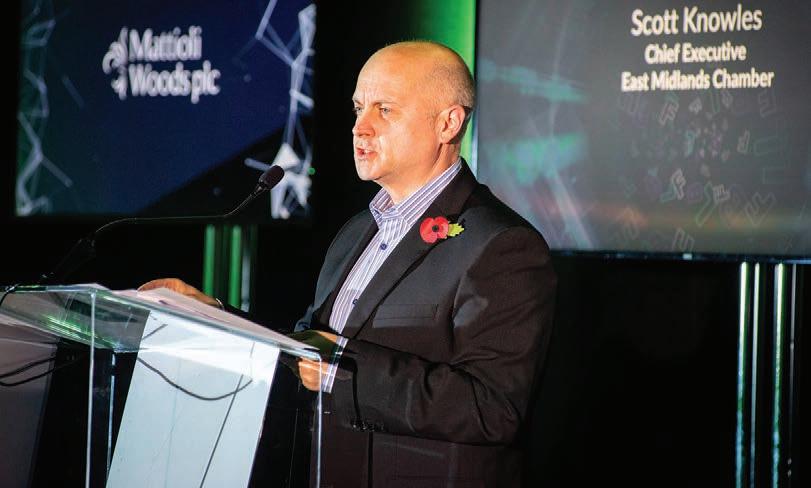
Consultus/GO Travel Solutions.
• Friday, 15 November, noon-1.30pm: Neurodiversity in the Workplace.
Hiren Kanabar, general manager of Assured Energy, a supporting partner of LBF 2024 and event host, said: “We’re proud to have a part in LBF 2024 so we can offer businesses our expertise, advice and practical solutions in an interactive way especially during the current turbulent energy market.
“Our events aim to help businesses reduce costs and operate sustainably.”
With around 70 free events
L-R: HORIBA executive vice chairman and group COO Juichi Saito, Vice LordLieutenant Colonel Murray Colville TD DL, Deputy Lieutenant, Eileen Perry MBE DL and HORIBA MIRA managing director Declan Allen
scheduled over the fortnight, LBF 2024 provides an excellent opportunity for businesses to prepare for the winter season as well as gain more longer-term benefits.
Early booking is essential as spaces are limited.
For all events, details and to secure your FREE tickets, visit www.leicesterbusinessfestival.com For details of the Leicestershire Business Awards visit www.emcdnl.co.uk/services/businessawards/leicester-business-awards

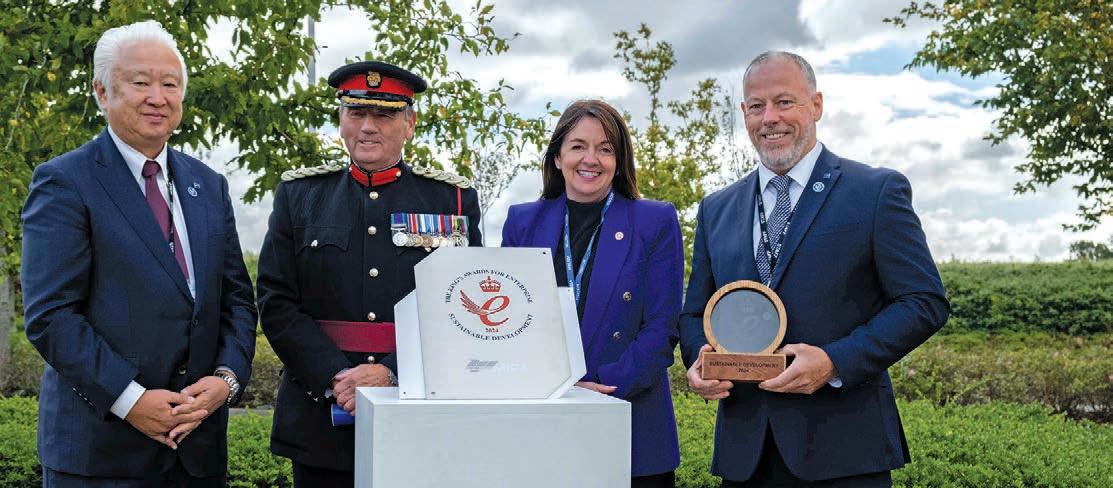
The team at vehicle testing facility HORIBA MIRA welcomed high profile guests to their headquarters between Hinckley and Nuneaton for a King’s Award formal presentation.
Vice Lord-Lieutenant Colonel Murray Colville TD DL was joined by his deputy Lieutenant Eileen Perry MBE DL and guests including HORIBA’s executive vice chairman and group COO Juichi Saito for the occasion.
The King’s Awards for Enterprise is presented to businesses and other organisations which excel at international trade, innovation, sustainable development or promoting opportunity. They are the highest official UK awards for British businesses.
Guests and MIRA team members gathered for the raising of the King’s Award flag, which will fly for a period of five years. After the reading of a message
from King Charles III and speeches, a plaque was unveiled and an award was presented to Declan Allen, HORIBA MIRA’s managing director, on behalf of the entire team.
The facility was recognised for its outstanding achievements in ‘sustainable development’, particularly in relation to its role as an enabler and catalyser of the automotive industry’s path toward net zero vehicles.
MIRA Technology Park, which has HORIBA MIRA at its heart, is helping to drive a cluster of organisations committed to reducing the carbon emissions arising from road transport across the world.
Lindsey Randle, stakeholder relationship co-ordinator at MIRA Technology Park, has been central to many of the park’s sustainability initiatives, and raised the distinctive King’s Award flag as guests looked on.

A corporate events business has taken 25,000 sq ft of space on the Cotes Park Industrial Estate, near junction 28 of the M1, at Alfreton.
Presentation Design Services has moved into the unit in a deal brokered by Tim Gilbertson at FHP Property Consultants. He said opportunities to buy industrial or distribution space in the East Midlands were getting harder.
Tim said: “This latest deal continues our recent strong run of freehold sales in the mid-range market and means stock continues to reduce.
“Normally, August is a quiet month of the year but we are still seeing deals complete and good levels of enquiries for freehold opportunities continue to come through.
“The building has been sold to expanding company Presentation Design Services Limited and we wish them well in their new accommodation.”







Photographer Pete Martin (pictured) shares his thoughts on the importance of having the right portrait when it comes to promoting your personal brand.
While I genuinely enjoy all the areas of photography I specialise in – whether it’s capturing the energy of events, navigating drones for stunning aerial shots, or crafting engaging web content – the corporate headshot or business portrait holds a unique place in my heart.
There’s an excitement I feel when I receive an inquiry for this service that’s unmatched by anything else. When I have someone in front of my camera for a headshot, it’s not just about taking a photograph; it’s about getting to know them, learning about their journey, their challenges and their triumphs.
Each session becomes a shared experience, a brief but meaningful exchange where I take something away as much as I give.
I understand that most people aren’t comfortable being photographed, especially in the intimate, up-close setting of a headshot. My role is to make them feel at ease, to help them relax so I can capture the image they want, whether it’s for LinkedIn, a book cover, an album or a company website.
Sometimes they need a headshot for a conference, where their image will be displayed alongside their achievements, or for a business
magazine article where their face will connect with their words. Each of these scenarios requires a slightly different approach, tailored to the individual. This is where I truly excel.
The feedback I receive about my personal approach is as positive as the comments on the quality of my photography. It’s this combination of technical skill and personal connection that allows me to deliver headshots that not only meet but exceed expectations.
In the crowded world of LinkedIn, your profile picture is your first impression. While a blurry selfie of you feeding a squirrel might be adorable, it’s far from professional. Why settle for “okay” when you can exude confidence and polish with a professional headshot? Here’s why it makes all the difference:
1. STAND OUT IN A SEA OF FACES
LinkedIn is saturated with profiles, and a professional headshot sets you apart from the flood of casual selfies and vacation snaps. It signals that you take your career seriously and are committed to building a strong personal brand.
2. FIRST IMPRESSIONS COUNT (EVEN ONLINE)
In the fast-paced digital world, you have just seconds to make an impact. A polished headshot

conveys competence, approachability, and trustworthiness – qualities that are essential for career growth.
3. INCREASE YOUR VISIBILITY
Studies show that profiles with professional headshots receive 21 times more views. More views mean more opportunities to connect, network, and land your dream job. Think of it as LinkedIn’s version of catnip for employers and collaborators.
4. ALIGN YOUR IMAGE WITH YOUR BRAND
Your headshot is a key part of your personal brand. It should reflect your professionalism, values, and industry. Leave the beach photos for Instagram and choose a look that supports your career aspirations.
5. CONFIDENCE SHINES THROUGH
Investing in a professional headshot can boost your self-confidence, which directly impacts how you present yourself online. When you feel polished and prepared, it shows, making you appear more engaged and approachable.
Your LinkedIn profile deserves more than a “meh” photo. Elevate your image and make every click count.

ADerbyshire adventure centre which has thousands of visitors a year is working with a homelessness organisation to help adult residents get out into the fresh air.
Mount Cook Adventure Centre in Matlock has been working with Derventio Housing Trust for several years, with residents – many of whom are in recovery from drug and alcohol use – coming to the centre to enjoy outdoor pursuits such as archery, sitting round a campfire and climbing.
The housing trust provides more than 700 bed spaces throughout the UK for people who would otherwise be at risk of homelessness. It is currently providing housing for more than 200 people in Derby and Derbyshire, and hundreds more in Staffordshire, Warwickshire, Wiltshire and Nottinghamshire.
Operating in five counties, the trust runs numerous support schemes including Growing Lives in Ilkeston, which offers residents the opportunity to take part in a range of activities




designed to boost confidence, including craft, woodworking, gardening and countryside walks.
It is through Growing Lives that residents have been able to enjoy Mount Cook, and which has inspired a new partnership between the organisations.
Madeline Horton, sales and marketing manager for Mount Cook Adventure Centre, said: “Our mission at Mount Cook is to provide access to the outdoors for groups of people, especially those who might not otherwise get the opportunity to participate in the adventures we offer here.
“We’d like to use our partnership to help Derventio raise funds so that more adults can benefit from its services. The feedback from residents who have been to our centre in the past is that the biggest impact it had was the sense of community it gave them.

“They came away feeling they had enjoyed a holiday, that they had gathered round a table together and shared experiences.”
Jackie Carpenter, assistant director of strategy for Derventio Housing Trust, said: “We are very excited to be starting this new partnership with Mount Cook Adventure Centre. Residents who have enjoyed staying there have loved their experience and we know what brilliant work the centre does with many different groups.
“We are looking forward to working together and hope we can use our partnership to raise funds and awareness so that more residents can enjoy outdoor experiences when they otherwise might not.”
Mount Cook is a not-for-profit outdoor activity centre which opened in 2016 in a former quarry.
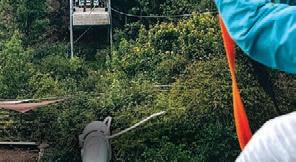
It offers activities including bushcraft, rock climbing, archery, high ropes, abseiling, land karts and a via ferrata – where climbers can traverse across quarry walls using an iron walkway hammered into the rock face.
A joint Marketing Derby networking event on 22 November will see business people invited to have a go on the zip wire and via ferrata.

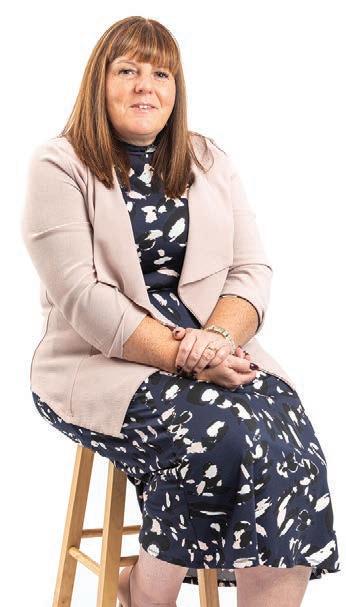
RTSC was founded on 24 September, 2021, following a successful career in the automotive industry. Our mission at RTSC is deeply rooted in personal development and mental well-being.
With a wealth of expertise in strategic account management, business development, coaching, and mentoring, we strive to enhance workplace growth and resilience. My journey and passion for making a difference are at the heart of RTSC’s values.
At RTSC, our coaching and mentoring approach is unique. We are people-centred, supporting personal and professional growth, with individual programmes which supports employee and business development in a way that sets us apart.
With a deep understanding of life challenges and a strong commitment to building resilience, our mission at RTSC is clear – to enhance company policies with a preventative approach to absenteeism, presenteeism and turnover.
Businesses are being challenged by the Leicestershire and Rutland charity Hope Against Cancer to take part in ‘Grow your Dough’ to support life-changing cancer research and trials.
The ‘Grow Your Dough’ idea is simple. Begin with £10 – donated by your employer – and, through various team challenges and events, make the money grow.
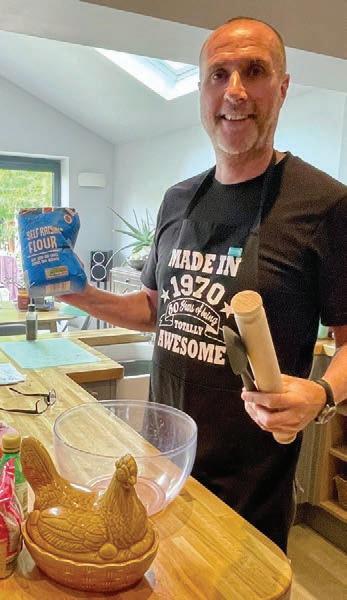
Martin Robinson, from HOPE, said: “‘Grow your Dough’ is designed to be fun, motivating and to encourage the teams to think and work together to come up with the best ideas.
“Although it is a fun event there is likely to be a serious amount of competition with bragging rights for the winners.
“The sky is the limit as far as fundraising ideas go. They could be as diverse as baking and selling cakes, holding quizzes, washing cars, organising dog walks, exercise or physical challenges, raffles or even a chilli cook-off.”
Hope Against Cancer funded the construction of a cancer trials centre at the Leicester Royal Infirmary which brought cuttingedge trials to the East Midlands.
The centre has transformed the lives of many, and HOPE continue to support the amazing work
Our unique selling proposition lies in our ability to provide independent support to businesses and organisations. We enhance personal development and mental well-being by working in partnership with our clients.
We offer consultancy days and maintain an open-door policy in a non-judgemental, confidential space.
‘My passion is to make a difference so that individuals feel empowered to live the lives they want’
This allows employees to discuss life challenges, career development and mental well-being awareness. Our preventative approach and early support for mental well-being are what set us apart.
I am not passionate about titles these days. My passion is to make a difference so that individuals feel empowered to live the lives they want in both their professional and personal lives.
carried out there.
Since 2012, more than 30,000 people have attended the Hope Cancer Trials Centre.
‘Grow your Dough’ is running throughout October. If you would like to take part, please contact Martin on 07903 430686 or martin@hopeagainstcancer.org.uk
Day to day at RTSC will see me wearing many hats, from coaching to mentoring to being RTSC marketing and business development. Building RTSC has given me many new skills, and I learn new things daily.
My challenge has been developing the skills required to build a solid business model for the development of RTSC. While learning is exciting, being able to reach out to mentors and having networking groups with training support have enhanced my skills.
Looking ahead, RTSC envisions a future where everyone has access to independent coaching when needed. We are committed to expanding our services and reaching more individuals and businesses, ensuring that personal development and mental wellbeing are prioritised in all sectors.
I have been a member of East Midlands Chamber for one month. However, I have been privileged to join them for training days and conferences. I am looking forward to future networking and training events.
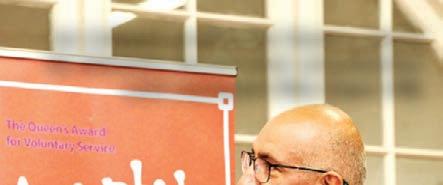



The chief executive of Menphys is leaving his role after six years at the charity.
Ian Caldwell has led Menphys – which supports children and young people with disabilities – since November 2018. He will leave in October to become chief executive of the Leicestershire Education Business Company (LEBC).
Joint-chairs Wyn Rees and Lisa Franklin praised his dedication and commitment, and said: “Ian has been committed to our vision of creating a future full of equal choices and opportunities for children and young people with disabilities and their families.
“He has worked very hard to help empower them to live as ordinary lives as possible. His leadership has enabled the charity to continue its vital work supporting thousands of local people, despite the many challenges faced during his time as CEO. Ian leaves with our appreciation and we wish him the best of luck in his new role.”
Ian said: “I have been lucky enough to lead a fantastic team in the staff and volunteers that make Menphys what it is.”
The Menphys Board has begun the recruitment process for a new CEO.
Greg Brushett, (pictured) sales director at hot water specialist Adveco, offers some advice on introducing sustainability into your buildings.
To help achieve climate-neutral building stock by 2050, UK businesses are being challenged to reduce operational energy use. By increasing the use of renewable energy supply and prioritising on-site renewable energy sources, the hope it to reduce both harmful carbon emissions and improve the management of operational costs.
There is no doubt that being more sustainable comes at a cost. Whether in the form of new build projects or the refurbishment of existing, yet ageing facilities, understanding the necessary capital investment, operational savings and payback periods is key to developing a realistic sustainability strategy.
Because of the ubiquitous need for hot water, from basins, baths and showers to catering and cleaning, addressing how this business critical resource is secured is one of the quickest, easiest and most impactful ways of making active carbon savings today.
Addressing the efficiency of domestic hot water (DHW) systems – whether through the implementation of heat pumps, solar thermal, direct electric water heating or even simple modernisation of existing gas appliances – helps properties meet sustainability goals in a practical and cost-effective manner. It also delivers improved year-round conditions for customers and staff, providing spaces better suited to delivering quality services.
For buildings already on gas and that rely on large amounts of DHW, silent solar preheat is the preferable option. For new build properties, the expectation is for specification to default to a mixture of heat pumps and direct electric afterheat. New system approaches, including prefabricated packaged plant rooms, also provide for better use of the spaces that already exist, without the need to undertake expensive and disruptive building projects.
DON’T PLAN
When it comes to water heating, every building is different. So before embarking on any renovation

work or transitioning from gas to electric, we recommend investing in non-invasive water metering. With accurate data comes better design, reducing capital investment, avoiding pitfalls of new technology and offering clear sight of future operational costs for improved strategic sustainability planning.
Talk to Adveco about the design, supply, and service of low-carbon water heating for commercial properties.
www.adveco.co


Independent Derby funeral directors Wathall’s has opened its eighth branch across Derbyshire and Staffordshire.
The new branch in Burton Road, Littleover, joins the existing branch network of Macklin Street in Derby city centre, Allestree, Alvaston, Ashbourne, Borrowash, Chaddesden and Burton-on-Trent.

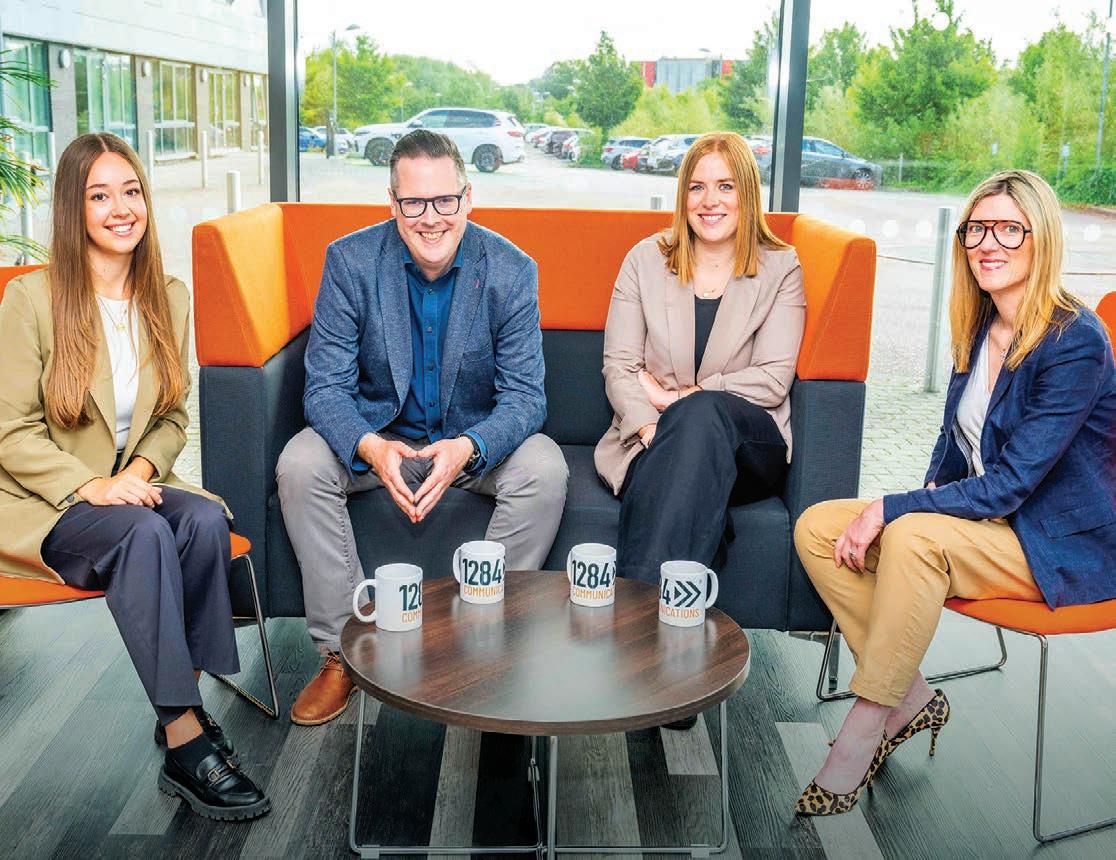
PR firm 1284 Communications has moved into bigger office space on the Loughborough University Science and Enterprise Park campus.
After operating from the LUinc. workspace in the Holywell Building since it was launched in 2020, 1284 is now based at the nearby Advanced Technology and Innovation Centre (ATIC).
The CIPR Chartered PR consultancy was founded by George Oliver in 2020 to provide B2B and G2B communications to innovative organisations in the East Midlands.
The move to ATIC supports the company’s growth ambitions while keeping it at the heart of the East
Derby Museums has teamed up with His Grace the Duke of Devonshire and Elizabeth Fothergill CBE, and Wavensmere Homes to launch a new business network.
The Derby Museums Business Network has been set up to help businesses in the city make it a more vibrant and inspiring place to live, work and visit.
The team and founding members Wavensmere Homes, Vaillant, RollsRoyce, Circulayo, Fulton Partnership, Morley Hayes, Cosy Direct, Derby Pepperpot Property Company, Brian Ashby and Leonardo Hotels Derby are inviting supporters to join and demonstrate their support for culture in the city.
Annual membership costs £1,000, and individual memberships are also invited. To become a member, contact Jennifer Cuadrado at jennifer@derbymuseums.org, or phone 01332 641901.
‘We were keen to stay on the LUSEP site and ATIC is a great fit for us’
Midlands innovation community and will provide a solid foundation for ongoing expansion and investment.
Managing director George Oliver said: “1284 had a good year of growth last year and maintained that momentum into 2024-25.
“It got us thinking about where we are going next – in July we celebrated four years of 1284 and the time felt right to make the move. We were keen to stay on the
LUSEP site and ATIC is a great fit for us and the work we do in the innovation space.”
As well as working with innovative high growth and midcorp businesses in Leicestershire, Nottinghamshire and Derbyshire, the consultancy works with a number of local councils, charities and social enterprises.
The office move coincides with the expansion of the 1284 team. Lauren Cropper started as 1284’s new account executive in the same week as the switch to ATIC. She will specialise in working with 1284’s non-profit and charity clients while also maintaining the company’s Good Business Charter accreditation and operations system.
The branch, which was previously a retail unit and has been fully refurbished by Wathall’s, is fully accessible with additional disabled parking, an arranging room and chapel of rest for families to visit their loved ones.
There is also a dedicated area with samples of headstones and memorials which are designed, created and installed by Wathall’s sister company, Art Stone Memorials.
Helen Wathall MBE, who is the fifth generation of her family to head up the company, said opening the branch was the next chapter in Wathall’s longstanding commitment to serving local communities.
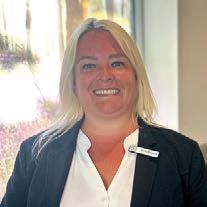
She said: “I have wanted to open a branch in Littleover for some time to better serve the local community here who have previously come to our other Derby branches.”
The branch is managed by experienced funeral arranger Karen Knighton (pictured).
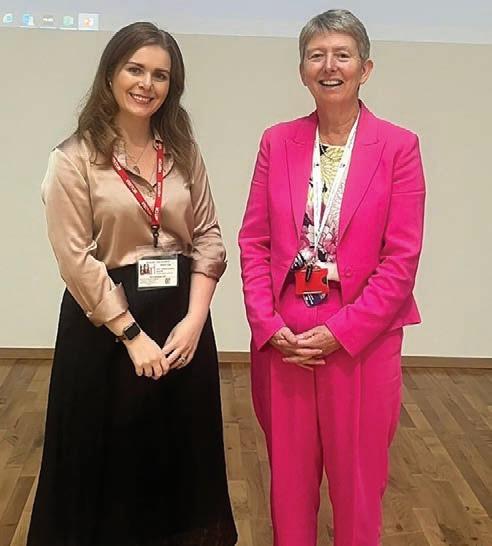
A Nottingham-based PR and marketing agency has been appointed by one of the region's biggest education providers.
Professional Female-fronted Nottingham PR agency
Eden Public Relations has been appointed by the city’s biggest multi-academy trust to deliver PR support for its schools across the East Midlands.
Archway Learning Trust, which educates one third of Nottingham’s secondary school children, is a multiacademy trust which prides itself on its inclusive approach.
It has 10 academies consisting of eight secondary schools, four with sixth forms, and two primaries, including the Bluecoat schools, The Nottingham Emmanuel School, Lees Brook Academy, The Long Eaton School and Alvaston Moor Academy, in Nottingham, Derby and Derbyshire.
The partnership comes at an exciting time for Archway, with Eden helping the trust hit the headlines in September as it opened the doors on its new school, Bluecoat Trent Academy – a £30m development constructed on the former Clarendon College site, in Mansfield Road, Nottingham.

National accountancy group
UHY Hacker Young has appointed Nick Carr (pictured) as partner in its corporate finance practice.
Nick brings with him more than 25 years of experience advising entrepreneurs, owner managers, family-owned businesses and private equity houses on a range of M&A and other corporate finance transactions.
He has experience advising on both acquisitions and disposals together with equity and debt fund-raises.
Nick has helped complete transactions across his career to date with a combined value of more than £2bn.
Prior to his appointment at UHY Hacker Young, he spent 18 years in the corporate finance advisory team at Deloitte in Nottingham.
As corporate finance partner based in both the Nottingham and London offices of UHY Hacker Young, Nick will focus on continuing to grow the firm’s corporate finance practice.
He said: “I have known the firm for a long time and it has a very strong reputation in both the London and Nottingham markets. It has delivered strong growth in recent years and I am looking forward to developing the corporate finance offering.”

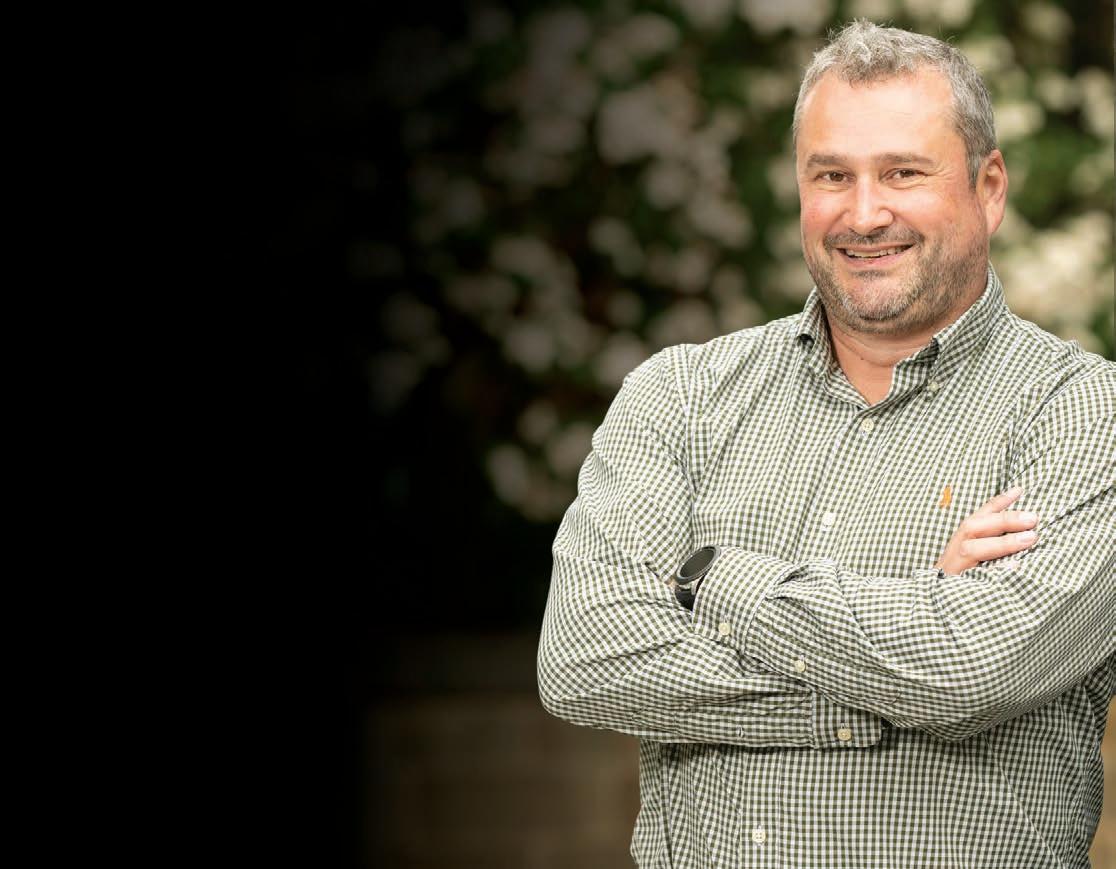
(pictured) to commercial team leader following a period of growth for the business.
Rob returned to the Nottingham-based firm in 2023, spending the last year working as a senior accounts handler.
In his new role, he will support recently appointed board member Joanne Marriot, who is heading up the commercial and small to medium enterprise (SME) operations of the business.
He has more than 30 years’ experience in the insurance industry and becomes the team leader for one of Russell Scanlan’s key service offerings, helping to manage any technical queries or issues that arise.
Rob said: “It’s an exciting time for Russell Scanlan and I’m thrilled to be supporting the senior team in driving the business forward in my new role.
“A management role on the commercial side will be a new challenge for me, but one which I’m very much looking forward to. I’m thrilled to have been given this opportunity at such a long-standing company with a brilliant reputation.”
Russell Scanlan has been offering bespoke insurance support for businesses of all sizes, operating across multiple sectors since 1881.
Destination Chesterfield has recruited eight new board members to strengthen the promotion of Derbyshire’s biggest town.
Since being founded by Chesterfield Borough Council and local businesses in 2010, the organisation has showcased the town as a strong destination to work, live, visit and invest.
The partnership works alongside a community of more than 230 businesses, known as Chesterfield Champions, from whom board members are picked.
The new volunteer recruits are:
• Ann Fomukong-Boden, owner, Kakou CIC
• Andrew Dabbs, director, Whittam Cox Architects
• Nick Hogan, owner, Chesterfield Escape Rooms
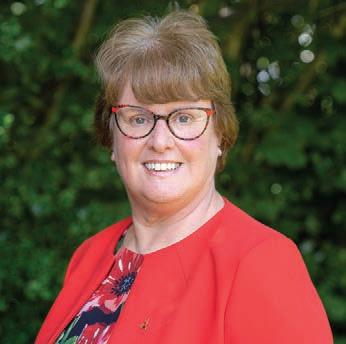
• Andrew Byrne, property development director, Devonshire Group
• Nick Catt, managing director, Weightron Bilanciai.



• Dominic Staniforth, partner, BHP LLP
• Ryan Wilkes, director of owner managed business, Shorts Chartered Accountants
• James Borkoles, head of business development, University of Derby
Hugh Sutherland (pictured) has been promoted to sales director at document management, print services and IT specialist DNS.
Hugh joined the business in 2011, and has gone on to have, what management said was, a “profound impact on the company”.
After joining the business, he became known for his specialisation in production print, helping DNS provide value and knowledge in the area. He has also developed a strong understanding of IT and cybersecurity in the industry.
In his new role he will continue to lead the sales, business development and marketing teams.
Peter Swallow has announced he is stepping down from his position after 14 years. Cllr Tricia Gilby, vice chair and leader of Chesterfield Borough Council, will lead the board while a new chair is elected.
Peter said: “It is fantastic to be signing off my chairmanship by welcoming eight new board members, who will all be helping to guide the future marketing and economic growth of Chesterfield. The new members all have a vast amount of knowledge and expertise when it comes to the needs of our businesses and communities.”

Company founder Darren Marsh said: “As both a colleague and a friend, I am thrilled to announce Hugh’s promotion to sales director at DNS.
“Over the last 13 years, I have witnessed first-hand his incredible dedication, vast expertise and unwavering passion for the company.
“This promotion is a testament to Hugh’s remarkable contributions over the years and I would like to whole-heartedly thank him for all that he does. “Congratulations, Hugh, on this well-deserved promotion.”

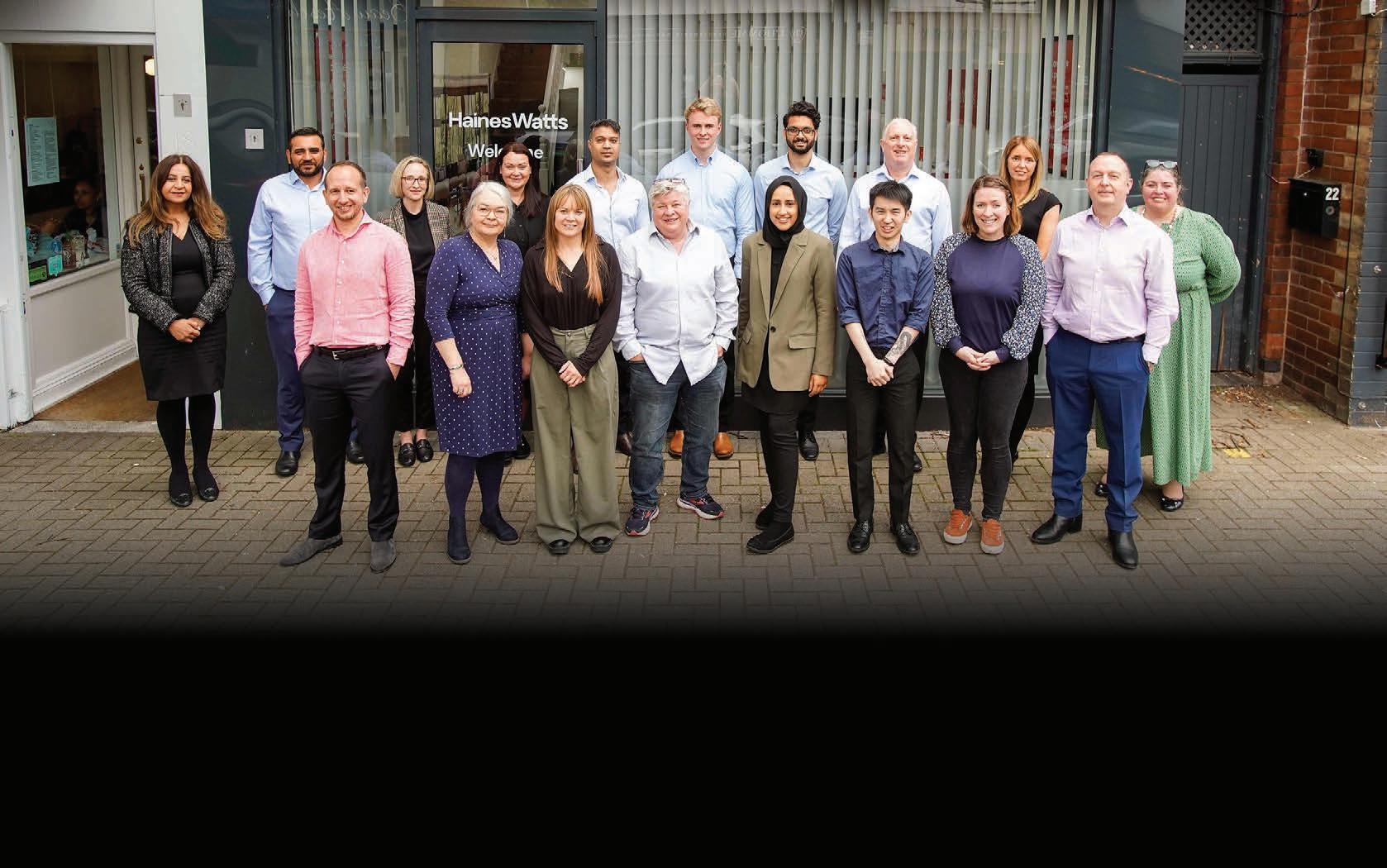
Haines Watts in the East Midlands continues its expansion with the appointment of Shiran Wynter as a director in Haines Watts Audit EM.
Shiran, who has more than 16 years’ experience in auditing and accounting, has been brought in to help with the continued growth of

Shakespeare Martineau has bolstered its agricultural law offering with the appointment of expert solicitor Charlotte Boyes (pictured)
Charlotte, who has almost four years’ post-qualified experience, completed her training contract at Crombie Wilkinson Solicitors and more recently worked at Wilkin Chapman Solicitors.
She grew up on a farm in North Yorkshire, and has been deeply involved in the agricultural and equestrian communities her whole life. Throughout her career, she has specialised in agricultural matters, providing legal services to farmers and businesses within the sector.
Charlotte, who will be based in Lincolnshire working with clients and teams nationally, said: “I am thrilled to have joined Shakespeare Martineau – I was particularly attracted to the firm’s specialism in agricultural law.”
the business and its commitment to serve clients both regionally and throughout the country.
Other appointments at the Haines Watts Audit EM Leicester office, in Stoneygate, include Julie Green, associate director in the VAT department; new audit
manager Kiran Palmer; Joanna Pieczonka and Shan Hughes, who join the audit and tax teams respectively; and Jay Bhatti, associate director in the R&D department.
Martin Bowles, regional managing director, said: “These

Cartwright Communications has grown its expertise in property and construction – with additional focus on planning communications and branding – through a pair of key hires.
Jonny Hodges and Ioana Batcu have joined the Nottinghamheadquartered agency as account director and senior account executive respectively.
The duo – both formerly at Cavendish – will work across Cartwright’s portfolio of B2B and B2C clients, which includes national and international brands across the built environment, professional services, food and drink, and retail and leisure.
Jonny specialises in planning communications and adds to Cartwright’s expertise in that area, working alongside Oliver Sargent from the agency’s London team. Ioana has expertise in branding, digital PR, and content strategy, having previously worked at SC Johnson and the University of Derby.
appointments are a significant step in our ongoing expansion strategy in the East Midlands region and nationally.
“As we continue to grow, we remain committed to providing our clients with the highest level of service and expertise.”
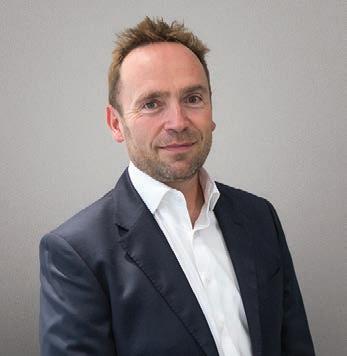
Paul Tennant (pictured) has joined law firm Flint Bishop as its new chief information officer as it looks to make further investments in innovation and technology to enhance the delivery of its services.
Paul has held several senior technology positions within the financial services and legal sectors, including C-suite and director roles at Simply Conveyancing Group and My Home Move Ltd (now Simplify), the UK’s biggest conveyancing firm, which employs more than 1,100 people across the UK and India.
He has more than two decades of experience in driving significant growth through innovation, transformation and the design and delivery of strategically aligned IT solutions.
Chief executive Qamer Ghafoor said: “I am confident that Paul’s knowledge and expertise will help us continue to innovate and strengthen our position in the market.”



‘There’s no
can’t do what I do’
Alice Houghton, general manager of The George Hotel in the heart of the English Peak District, was a winner at this year’s East Midlands Chamber Enterprising Women Awards. Here she talks to Tom Pegden about the ups and downs of the hospitality business –including a devastating flood last year – and what it means to be a young woman in a high-pressure role.
Alice Houghton is proud of what she’s achieved in her 12-year career, and sees no reason why other women – especially women as young as her – shouldn’t be leading more companies.
“Being a woman in business”, she says, “for me, is about being a role model. I want people to know that it is a viable career option.
“I don't want people to think, “oh, I can't do that, that's a man'’ job”. It’s not.”
It’s been a busy few years for someone who only recently turned 29 – topped off by winning
the Emerging Leader Award at this year’s Enterprising Women Awards.
Alice grew up in the Peak District and got her first job in hospitality when she was 16, while studying for her GCSEs and A levels.
Back then she was working at the Peak Edge Hotel and said she loved it – working her way up to events manager.
She said: “I’m quite a people-person and doing an admin-based role wasn’t really something that appealed to me.
“I don't think it works for me, to be honest.

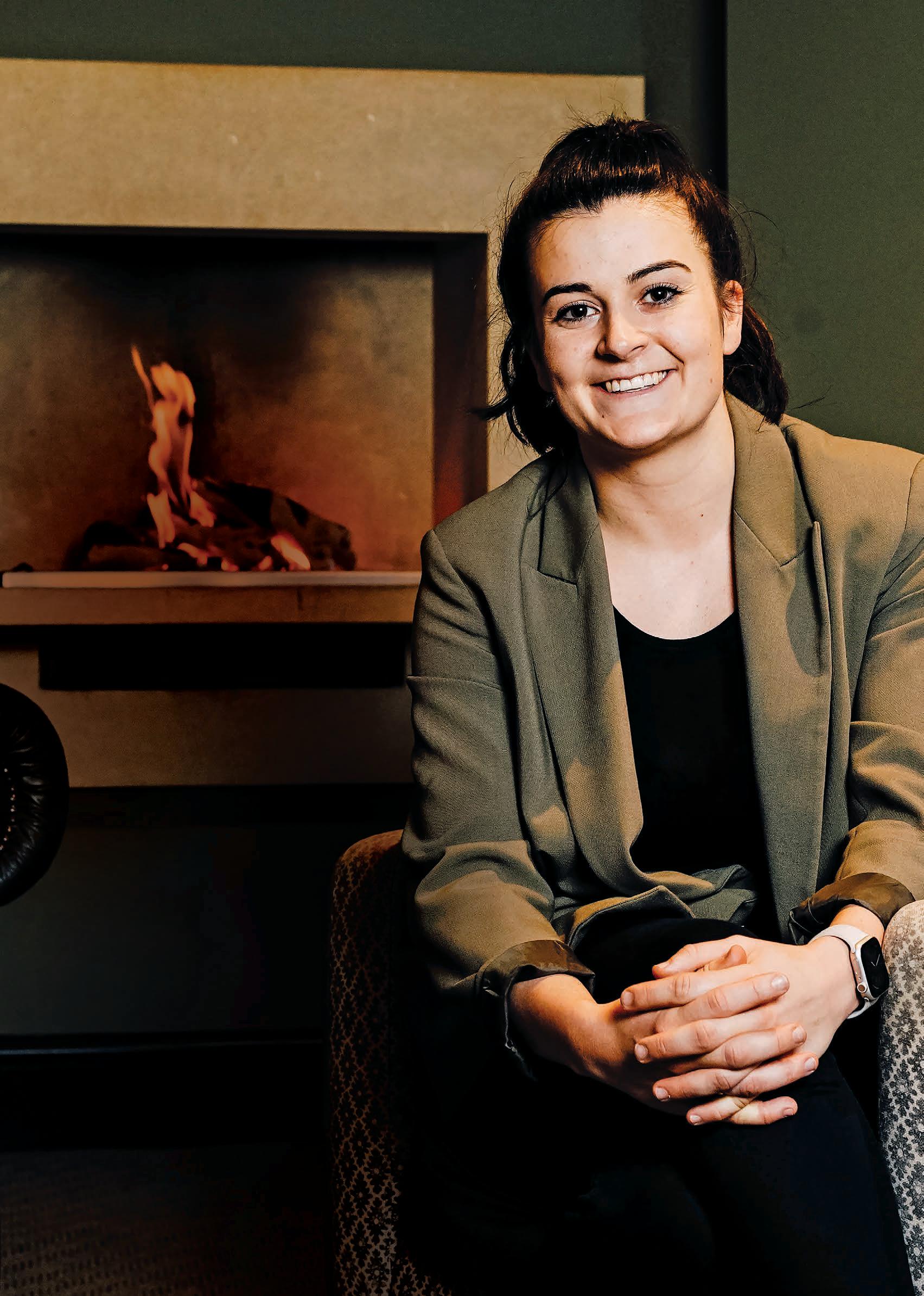

“I do have some admin to do, but I like to be on the floor with the team and getting to know my guests.”
She left the Peak Edge in 2016 to join the premium division of Marston’s as an assistant manager in the busy Farmhouse at Mackworth –moving to Derby in her early 20s.
It was there that she first worked with Rob Hattersley, who would go on to launch independent hospitality business Longbow Bars & Restaurants. Today it operates the 24-room George in Hathersage, The Maynard, a few miles down the road in Grindleford, and The Ashford Arms in Ashford-in-the-Water, which opened in March last year following a £1.6m refit.
Within a couple of years of her joining Marston’s, Rob had put her forward as a general manager at another hotel in Balsall Common, near Solihull, encouraging her to progress up the career ladder. She was just 23.
“I then moved back to Derbyshire as I wanted to be back home and not be a million miles from my family. It was hard to say goodbye to my first business and the team I had built there, but it was time to take the next step.
‘It was all new, and then we flooded and had to do it all again’
“I took another general manager role with Marston’s at The Lost & Found bar and restaurant in Sheffield. I wasn’t there very long before I got a phone call from Rob. It was nice to know that he saw me as someone that could run one of his businesses as he had just started out Longbow, and this was going to be their second site.
“It was quite funny as I declined at first. I’d just taken this new job in Sheffield, I'd just done a big interview for it, and had got the recognition to go and do it. It was bigger than other venues where I’d been, and I felt it was the next step for me.
“But I quickly realised what Rob’s vision was and that it was something that I wanted to be a part of. Having worked with Rob previously I knew his values aligned with mine, so in October 2021 I became the general manager of The George.”
The 500-year-old coaching inn, once frequented by Charlotte Bronte, sits in one of the prettiest corners of the Peaks.
Today it is a popular boutique hotel and restaurant, serving customers from all over the world. Alice said prior to acquisition the hotel was achieving sales of around £700,000£750,000 a year which, following a refurbishment and her arrival, grew to £2.7m.
Then, a year ago, everything fell apart.
In the middle of October 2023, Storm Babet battered the UK, causing huge damage to businesses, homes, schools, shops, farmland, and parklands across the UK as rivers burst their banks and the drainage system failed. Lives were lost.
In Hathersage, a small stream that runs behind The George, became a torrent, sending water through the building and into the street beyond.
She said: “Rob acquired the George in June 2021, closing it through the summer of that year for refurbishment to reopen in September 21.
“It was all new, and then we flooded and had to do it all again.
“Due to the damage caused, we were closed from that October and only reopened in June this year.
“We have a brook at the back of the car park and it burst over a low wall, coming through the ground floor of the restaurant – through the kitchen and into the ground floor bedrooms.
“Every inch of The George’s ground floor was flooded. There was no pre-warning for how bad it was going to be. We knew there was going to be some flooding, I’d put our usual measures in place but I didn’t expect any amount of water that would cause us to close.
“The team was doing everything they could to try and save the building – wading through the water and trying to block off the doors. It was devastating.
“But within 15 minutes the water was in, there was no stopping it, there was nothing we could do. And then it was a wait with the insurance company and the wait for the building to dry out. Water gets everywhere, and so we had to rewire, install a brand-new kitchen rebuild and redecorate. It was a really challenging time.
“We were closed for eight months, but you know what's amazing is what Rob's doing with Longbow – it's all about people.
“He didn't let any of us go. He could have quite easily done that. You see a lot of businesses do that. They panic and they make staff redundant because they don't know if they can support them. But he didn't.
“He got us in straight away, and together we made the decision that we would keep all my 60-plus team on board, and it was just amazing.




Alice Houghton was named the 2024 Emerging Leader at the 2024 Enterprising Women Awards – in celebration of someone who has achieved exceptional career growth, with further potential to develop into an even greater future leader. She said: “I was just overwhelmed to receive the award. I wasn’t expecting it because there was so much competition. I'm so proud.”
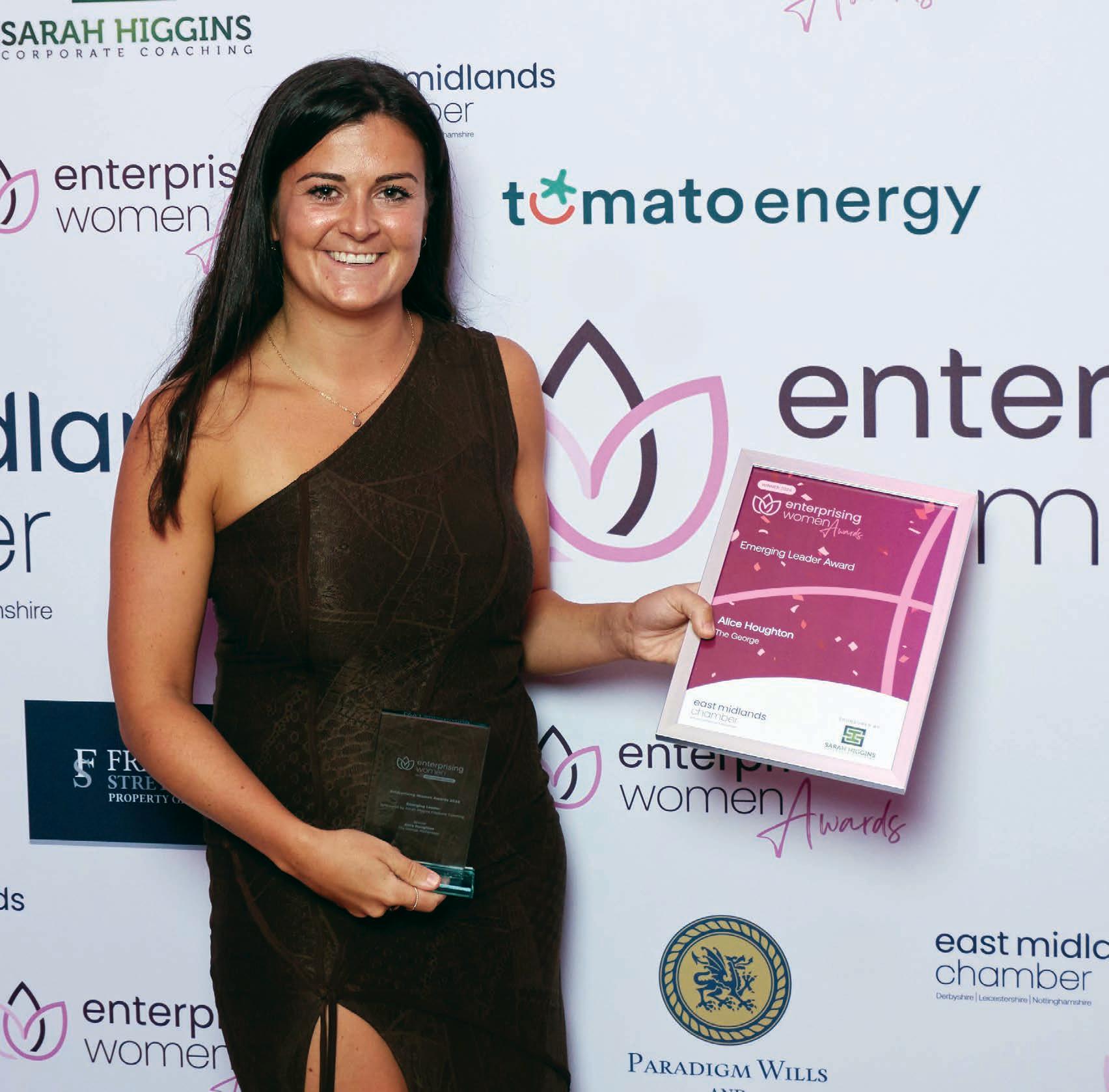


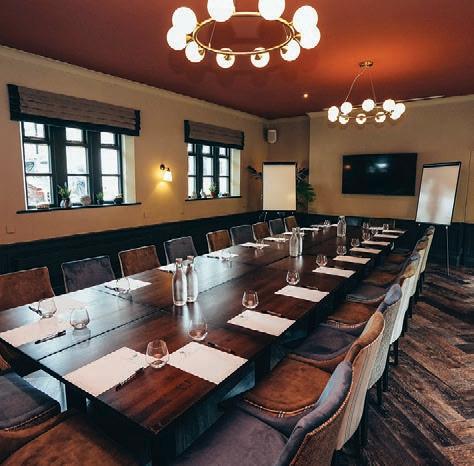





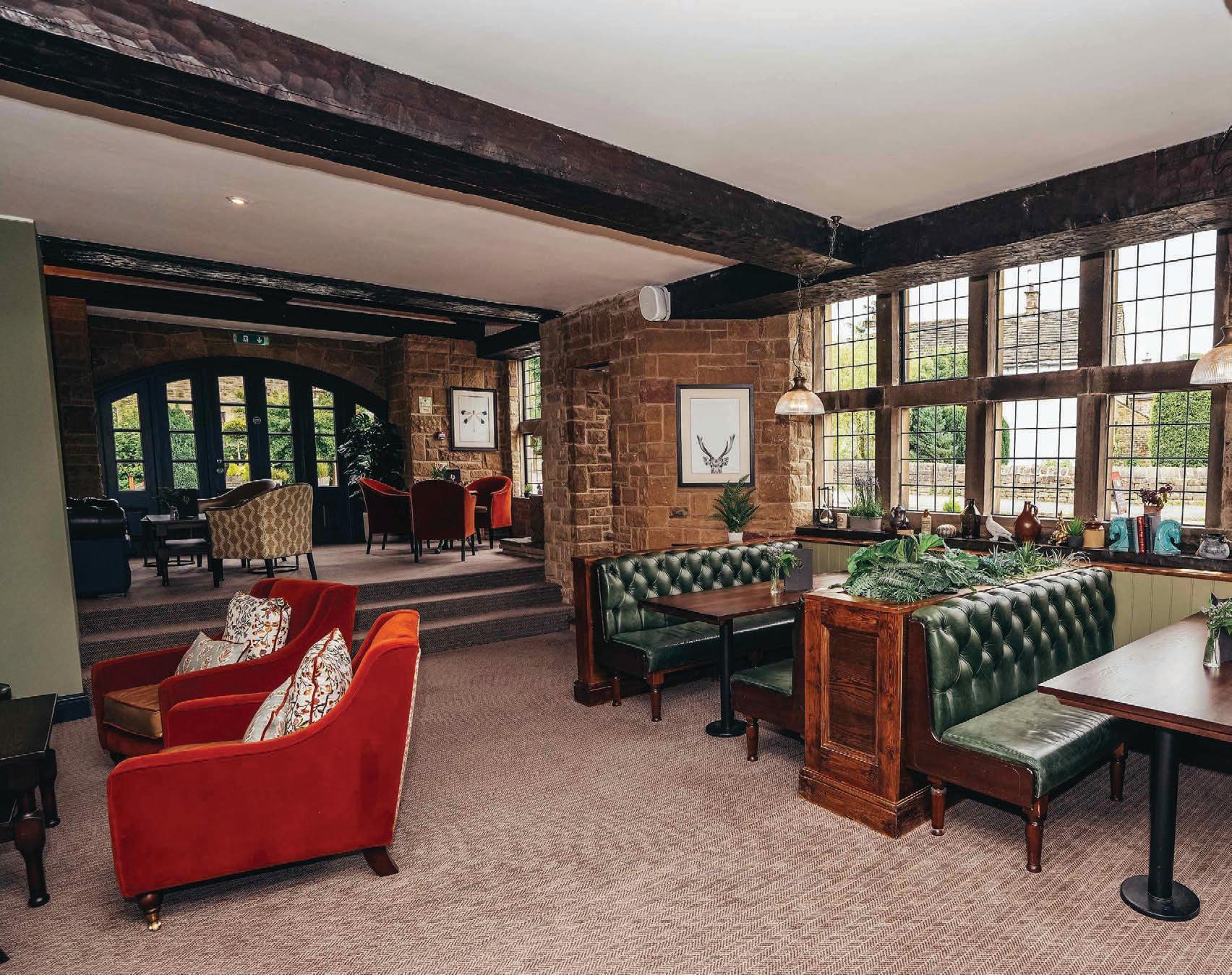

“Obviously at the time we were wondering what's going to happen, but we had so much confidence in him, and he just supported us.
“I suggested that we used staff in other venues to help develop them and also support the other teams during the busy Christmas period.
‘We’ve just gone through one of the busiest periods of the year, which has been great’
“It meant people weren’t sat at home. They also opened the Ashford Arms in February, so there was a big build-up for that, and it meant my team could help develop a new team over there. Some of us became a part of project work including the conception and implementation of company SOPs [standard operating procedures], vital for a fast-growing business.
“What's great is that having kept the team on when we reopened, it felt like we'd never all been apart.”
Alice said everyone was excited when the hotel welcomed its first customers back in June, with a big social media push and a lot of local support for the hotel and the team
She said: “During the closure, people would drive up to the George and the lights would be all off and you'd get messages saying “We can't

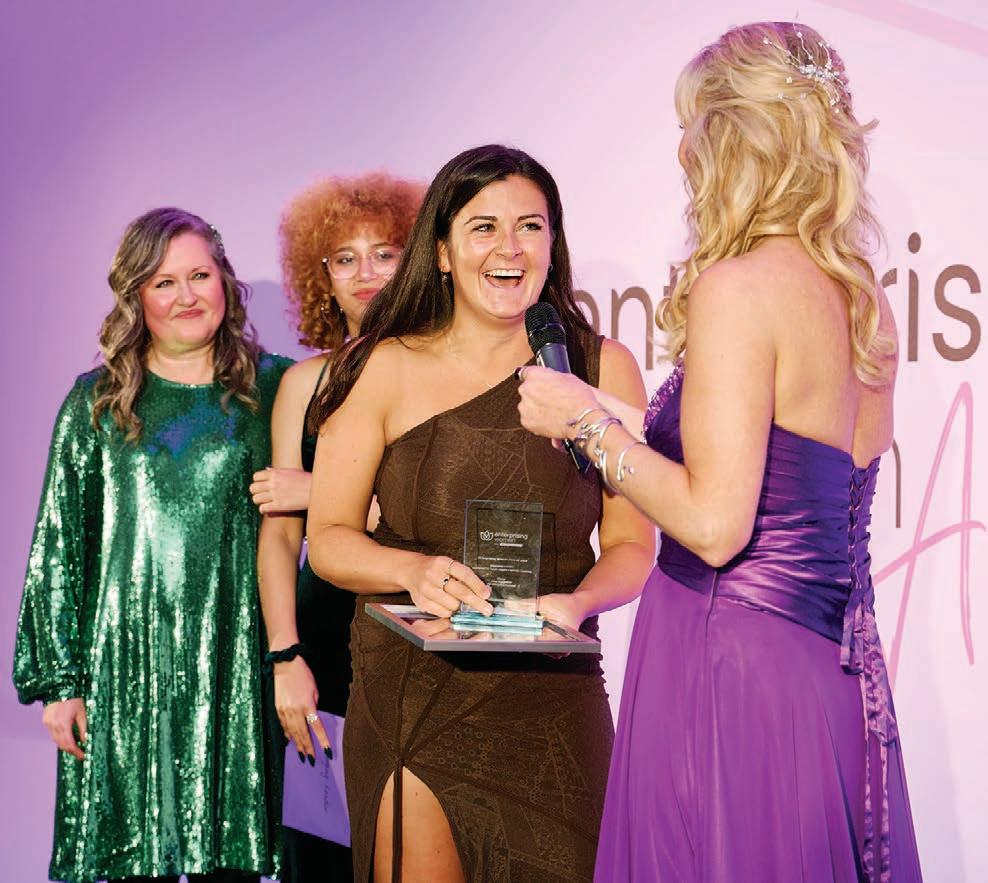

wait for you to reopen – the village is not the same without you”.
“You don't realise, until something like that happens, what your venue means to the community.
“We've just gone through one of the busiest periods of the year, which has been great –we've had an overwhelming amount of support. Now we’re all ready for a busy, successful Christmas period.
“We've got a festive menu that's running throughout December and people have already started to book Christmas parties. And while we were closed, we took like the opportunity to renovate all our bedrooms. So, every single room is to the standard that you would expect in a Longbow venue, ready to welcome the distant family and friends of locals in the area.”
The support of Rob Hattersley, she said, had been pivotal in her progression – particularly for someone still so young.
“Despite being a woman in business, while working for Rob, I haven't faced any barriers to my progression – he’s always surrounded himself with really strong female leaders.
“There are currently two female general managers within the company – in fact within the operational management of the 214 employee business, it is ran by a team constructed of 80% female managers.
“I'm not going to say hospitality is plain sailing. It is hard work. But the reward at the end of it outweighs all of that hard work.”

Rob Hattersley, owner of Longbow Bars & Restaurants, wants more recognition for talented individuals within the hospitality industry.
In recent months his business has celebrated multiple successes – and he said he is keen to promote hospitality as a viable career option.
Recent successes for the group include:
• Being named in The Sunday Times Best Places to Work Awards 2024
• Winning two categories in the 2024 Generation Next Awards, run by East Midlands Chamber, with operations director Steve Atkinson winning Entrepreneur of the Year and Longbow winning the award for Investing in Young Talent.
• Winning Team of the Year (for The George Hathersage) at the 2024 Visit Peak District Tourism Awards
• Alice Houghton, general manager at The George in Hathersage, was named Emerging Leader at the 2024 Enterprising Women Awards and Charlotte Barker, general manager at The Maynard in Grindleford, won the Best Female Employee category. The Maynard was also shortlisted for Female Management Team of the Year.
Rob said: “We are delighted and incredibly proud that our employees and Longbow itself have been recognised in these annual awards. It is such a great achievement for our individual winners and finalists, Steve, Alice, and Charlotte. But, as we welcome news of their success, it’s important to also recognise that award winners aren’t the only talent in the business. While we are celebrating with them, there are lots of people in our business who have been with us for many years, have great knowledge, and are also integral to our success.


“There are numerous unsung heroes, both at Longbow and across the hospitality industry, who enable individuals to shine because of the great supportive team that are around them and nurturing them.”
He said Longbow’s three venues have an extensive and dedicated team of housekeepers, event and wedding coordinators, hosts, waiting staff, chefs of all levels and specialties, bar staff, and more. In total, 214 staff work for the business.
Rob said: “Industry-wide, even more could be done to shine a spotlight on the breadth of talent that work within hospitality.
“Often it is the companies that are recognised and not the individuals whose vital work is why the business is receiving recognition and accolades.
“It is something that we pay a lot of attention to. We recently launched our Longbow long-service awards, for example, which is just one way of celebrating our employees and their hard work over the years.”
He said Longbow has a people-overprofits philosophy with a clear career progression ladder and investment in training – operating with, on average, a 44% higher labour allowance than the industry standard.
In August 2023, the business further bolstered its people approach with the appointment of its first talent and succession manager, Jack Arksy.
Rob said: “People who are happy and feel seen and respected provide the best customer service. Then, the profits look after themselves.
“There are still some irresponsible hospitality operators out there but there are also companies, like Longbow, that are trying to break the mould with good career pathways and well-paid jobs.
“Taking action and sharing our stories is the only way to change negative perceptions of the industry.”
Never
If that’s the case, then you might not be aware of new legislation coming into force. But don’t panic! Minakshee Patel, equality, diversity & inclusion specialist, MindSonar® professional and organisational development coach, is here to help you stay compliant.
Minakshee Patel Consultancy offers an equality audit service, where they visit your organisation and undertake a review of your current policies, procedures and training needs.
The end report you receive will highlight whether the policies and procedures are compliant and meet the requirements of the Equality Act 2010.
If the policies and procedures are not compliant, recommended actions will be identified for the business to undertake to ensure they are compliant. The report will also identify any training needs for the business, to
enable them to action the recommendations.
If you only review your policies, procedures and training needs when legislation changes, are you aware that the Worker Protection (Amendment of Equality Act 2010) Act 2023 comes into force on 26 October 2024?
Are you ready? Have your business’ policies and procedures been amended to incorporate these changes? Has your business commissioned training for your staff so that they are aware of these changes and how they relate to them while they are at work?
If the answer is no, then get in touch to see how Minakshee Patel Consultancy can support your business to be compliant.

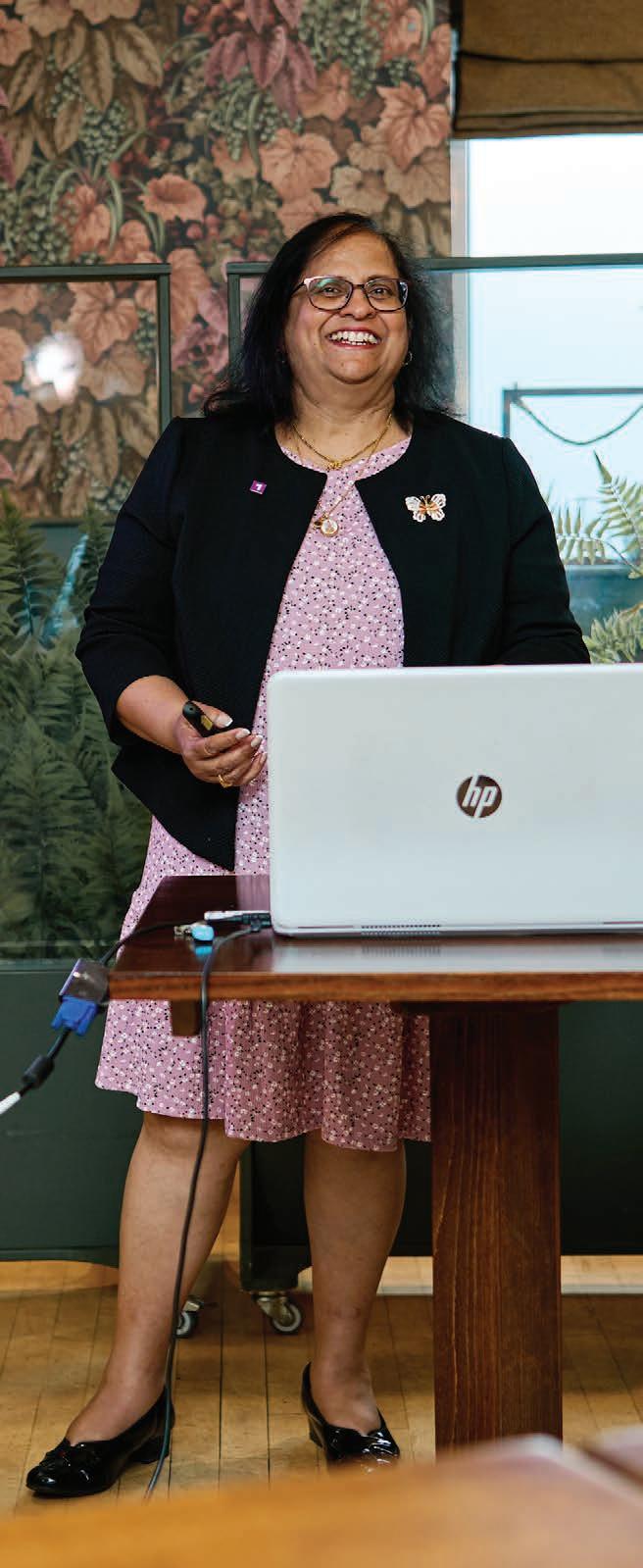
When it comes to business training I firmly believe that one size does not fit all. Any training needs to take account of the type of business and the industry, so that staff understand how everything fits together.
MISTAKES AND BUILD YOUR BEST TEAM YET
With decades of experience in Equality, Diversion and Inclusion (EDI) and the most accurate psychometric profiling there is, I want to show you that people are never the problem. It’s the way you relate to each other that counts.
I offer one-to-one and group training for directors, managers, individuals or small teams.
First of all, I’ll get together with you to understand exactly what you need before tailoring your bespoke training session. We’ll then agree on the time, place and approach for delivery that will suit you best.
Have you ever wondered how to recruit the right person or wished your team could understand and adapt to one another better? Perhaps you’re feeling that what started out as workplace banter no longer has its place?
I’m passionate about EDI. I’ve helped all kinds of local businesses, councils, the NHS and even the fire service to see that when you get relationships right, teams thrive.


When the Worker Protection (Amendment of Equality Act 2010) Act 2023 comes into force, employers will be required to comply with a new duty to take reasonable steps to prevent sexual harassment of their employees
As a young Asian girl growing up in the 60s, I saw that the world wasn’t always fair. Supported by my family, I was encouraged to challenge, but gently. Others have called this “soft but strong”, an approach that has helped me to engage others, open conversations and bring people together with incredible effect.
The UK is rich in cultural diversity – and that means our workplaces are too. With the Equality Act 2010 as our guide, I can help you to understand different types of discrimination and put all the practical steps in place to create a fair and respectful workplace with a workforce who are highly motivated to want to work for you.
Working with businesses like yourself, I have created more inclusive and diverse workplaces where everyone feels welcome and valued, regardless of cultural diversity and differences.
I have enabled companies to have a clear policy on EDI, outlining their commitment to these values and setting out the steps they will take to promote them and a training programme - helping employees understand the importance of these values and how to put them into practice.
I offer a variety of services to meet your specific needs. Together we will develop the right systems and solutions for you, your employees, and your business. My goal is that everyone has a voice, is confident to be themselves, listens to others and so are able to reach their full potential.
I am currently working with an organisation who wanted to train their staff on the topic of EDI and human rights legislation so that they have an understanding of the legislation and how it relates to the business and their working practices. This session will be run later in the year so keep an eye out for updates in this publication.
On 25 July, I presented at a business network meeting, in which I outlined many of the principles and approaches covered in this article.
If you’re ready to take the next step in your personal or professional or business development, call me to discuss how I can help your business grow and thrive.
Tel: 07831 634896 Email: minakshee@minaksheepatel.co.uk Visit: www.minaksheepatel.co.uk




British cargo airline One Air has expanded its fleet operating from East Midlands Airport (EMA).
One Air moved its operation from Heathrow in April and is now based at EMA, which is the UK’s number one air freight hub – used by cargo-only aircraft carrying goods around the world.
The airline runs regular flights between Hong Kong and the UK, and moving to the Castle Donington airport has given it greater availability for flight slots –including night flying – and fewer restrictions for all-cargo aircraft.
It has now added another aircraft, taking its total fleet at EMA to three 747s – with the new arrival boasting a nose door as well as side door for loading and unloading. The original Boeing-built freighter also has a higher payload capacity of up to 124,000 kgs.
It follows the second 747-400 which arrived at EMA in December to support One Air’s growing programme between China/Hong Kong and Europe.
EMA managing director Steve Griffiths said: “We’re delighted to welcome One Air’s latest addition to its fleet, showing that we have a winning formula at East Midlands Airport to support the growth in air cargo and global e-commerce.”
Loughborough College students had the opportunity to experience the adrenaline-fueled world of MotoGP during a behind-thescenes tour at the Monster Energy British Grand Prix 2024 at Silverstone Racetrack with MotoGP management company Dorna.
Led by the Dorna MotoGP media manager Friné Velilla, sport and engineering students were provided with a glimpse into the careers and operations that power one of the most prestigious motorsport events in the world.
Students explored various components of the Grand Prix weekend, starting with a tour of the media and press conference rooms, where they got a look at the workings of race communications and media management.
One of the highlights was an opportunity to stand on the winners’ podium.
Anew generation of students will get the chance to train for careers in advanced manufacturing and clean energy following an investment of more than £2m from East Midlands Freeport.
The freeport wants to deliver tens of thousands of jobs and add billions of pounds to the regional economy by attracting inward investment at its three tax sites –the East Midlands Intermodal Park near Derby, the Ratcliffe-on-Soar Power Station site in south Nottinghamshire and the East Midlands Airport Gateway Industrial Cluster.
It is estimated that backing the three sites could add £9bn to the value of the regional economy and support 28,000 new jobs.
The freeport is putting some of the money from its £25m Seed Capital investment fund into a training programme aimed at developing the talent that firms need to grasp the opportunities available from clean energy and the decarbonisation of industry.
The freeport is putting more than £2m in the Future Energy Skills Hub (FESH), a project led by the East Midlands Institute of
Space engineering staff and students from Loughborough College celebrate at the National Space Centre
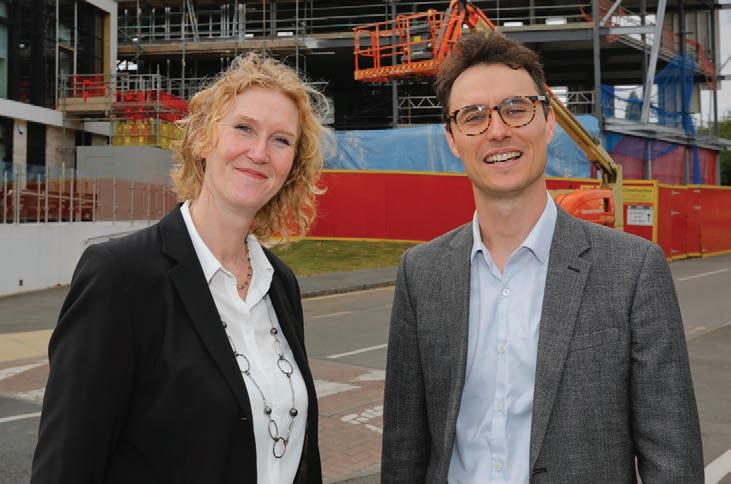
Tom Newman-Taylor, CEO of East Midlands Freeport, with Rachael Quinn, executive director of the East Midlands Institute of Technology
Technology (East Midlands IoT) in Derby, which promotes technical training and qualifications through a partnership involving Derby College Group, Loughborough College, the University of Derby, Loughborough University and business partners.
From next September, East Midlands IoT will run FESH courses which provide higher technical skills tailored to the needs of businesses operating directly in
advanced manufacturing and clean energy, but also for the increasing numbers of firms seeking to make a clean energy transition in their day-to-day work.
Freeport chief executive Tom Newman-Taylor said: “The freeport is the biggest growth initiative in the East Midlands and we are delighted to be supporting a project which means the benefits of that growth will be felt by people and communities.”

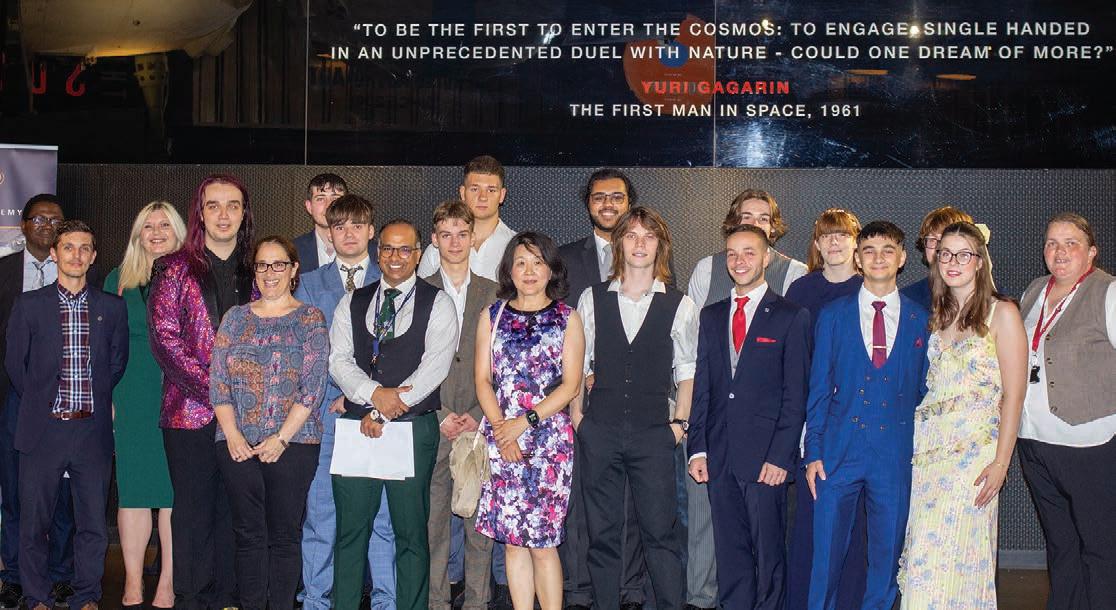
Following the success of receiving a Queen’s Anniversary Prize, Loughborough College’s space engineering course was recently celebrated at an awards ceremony at the National Space Centre in Leicester.
Now in its 12th year, the course’s achievements were recognised by guests such as college deputy principal Heather Clarke and chair of governors Stephen Smith.
Students, parents, and staff were welcomed to the event by Neil Shorrock, estates and operations
director at the National Space Centre, who spoke about the success of the space engineering enhanced A Level programme and its partners.
Three students – Dev Pancholi, William Harvey, and Luca Calardo-Cooper – received awards for their dedication, academic success and abilities throughout the programme.
Luisa Walford was also recognised for her commitment to the course and her recent nomination for the Association of Colleges’ (AoC) student of the year award.


Software company Ideagen has announced an expanded three-year partnership with Nottingham Rugby Club to become the Championship team’s primary sponsor.
Under the deal, Ideagen has become front-of-shirt sponsor for both home and away kits and the main sponsor at The Bay, the club’s home ground.
Ben Dorks, Ideagen chief executive and regular at The Bay, said: “We’re delighted to be strengthening our ties with Nottingham Rugby Club.
“Community, ambition and adventure are our company values, and our relationship with Nottingham Rugby is a great
example of bringing this to life.
“Ideagen colleagues have loved supporting the team from the sidelines on matchdays and we’ve been able to work with the club to grow our education programme, showcasing the connection between sport and technology and the importance of teamwork and respect.
“We’re proud to support the team through this expanded sponsorship and look forward to many more successful seasons together.”
Ideagen’s relationship with Nottingham Rugby extends beyond sponsorship – Will Yarnell, commercial compliance manager at Ideagen, plays as the squad's
scrum-half and has recently resigned for the 2024/25 season.
Will said: “Many of my Ideagen colleagues have already enjoyed visiting The Bay to watch some amazing rugby in action. I hope that even more will have the chance to experience it in the future.”
Ideagen, which is also shirtsleeve sponsors of Premier League football club Nottingham Forest, has its global headquarters in Ruddington.
It has been a significant supporter of Nottingham Rugby Club since 2022, and as a premium sponsor, the Ideagen logo has featured on the team’s shirts for the last two seasons.
A Midlands conservatory firm has handed over its marketing campaign to a Derbyshire agency to help it to reach out to homeowners all over the country.
ConservatoryLand, which is based in Mansfield Woodhouse, has asked Purpose Media to look after its website and social media, and to co-ordinate a national advertising blitz.
Purpose Media has been working with ConservatoryLand for six years, filming customer testimonial videos for its website, but it is now extending its remit, which will also include print and online advertising and a national TV advert.
Purpose will film the advert in time for it to hit viewers’ screens in December and January, traditionally a time when householders start to think about home improvement plans for the New Year.
ConservatoryLand has been manufacturing and installing conservatories for more than 20 years and general manager Rob Smith said the structures are still proving popular with older home-owners and couples who need extra space for growing families.

The family of a woman whose name is behind a new physiotherapy clinic at the University of Leicester, have spoken about how moved they are by the lasting legacy.
respected member of the team who taught physiotherapy at the university and died a few months after retirement in February 2022.
name the clinic after mum.
“It’s testament to the friends she made here and the level of care, empathy and commitment she gave towards improving the lives of others.


The clinic, which has just opened to the public, staff and students at reduced rates, was named after Johanna Williams - or Jo as she was known - who was a highly
At an official event to mark its opening, Jo’s widower Nigel and daughters Beth and Hannah, joined the team behind the clinic to celebrate its launch.
Beth said: “We’re moved that both staff and students chose to
“This clinic will ensure that lasting legacy continues through the lives of patients and students who come through its doors and it’s wonderful to see.”


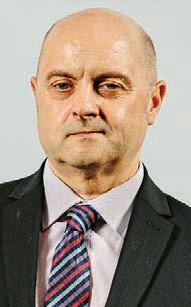

Scott Knowles and Andrew Bailey
High borrowing costs could delay spending plans, according to the chief executive of East Midlands Chamber, following the Bank of England’s announcement to keep the interest rate at 5%.
The Bank of England decided to hold interest rates at the most recent meeting of its monetary policy committee, but governor Andrew Bailey said they were “gradually on the path down” as inflation had fallen in recent months.
There will be two more interest rates decisions this year.
Chamber chief executive Scott Knowles said: “Obviously businesses grow with investment into people, machinery, equipment and technology, and while economists widely expected the interest rate to hold at 5%, expensive borrowing continues to tie the hands of firms eager to expand through spending.
‘Autumn Statement… must take account of the high cost of doing business’
“Only two out of 10 respondents in the Chamber’s Quarterly Economic Survey reported having increased their investment plans in plant, machinery, equipment and training, although seven out of ten had made no change to investment intention.
“The new Government’s Autumn Statement at the end of next month must take account of the high cost of doing business and not miss the opportunity to alleviate the pressure on businesses, giving support with better rates, a reduction in regulatory red tape and enabling growth.”
Investment intentions from East Midlands Chamber’s Quarterly Economic Survey Q2, 2024:
• Six out of 10 respondents reported concern over interest rates
• Seven out of 10 respondents have not changed their investment plans on plant, machinery, equipment or training
• Two out every 10 respondents increased their investment intentions.
Skills Plan has made progress but there’s more work to do
One year on from the publication of the Local Skills Improvement Plan (LSIP) for Leicester & Leicestershire, East Midlands Chamber has launched its progress report outlining the measures taken to date.
The original LSIP was launched in summer 2023 with the aim of making Leicester & Leicestershire the best place in the country for developing people with the skills needed for businesses to thrive, the economy to grow and individuals to succeed.
Recommendations were made against three broad priorities:
• Partnering with further education colleges and others on the continued development of an education and skills offering that responds to the needs of business
• Growing businesses’ understanding of local skills offerings and delivery
• Ensuring local structures are fit for purpose to support collaborative working across businesses and educators.
Achievements over the past year include:
• Securing more than £3m of Government funding for colleges to develop new programmes in the areas of green leadership
• Decarbonising transportation programmes with courses on electric/EV vehicles
• Rollout of a new local skills bootcamps programme aligned to specific priorities around green and digital upskilling, including a course on Generative AI
• Development of a new business 'scorecard' capturing business views on skills needs and provision.
The project, which has been delivered with funding from the Department of Education, has also

‘There’s no quick fix or silver bullet when it comes to supporting people in Leicester and Leicestershire to develop the skills needed by local business’
been successful in coordinating efforts across the public and private sector, working with colleges, universities, local authorities and bodies such as the Careers & Enterprise Company and Job Centres in the area.
Local Skills Improvement Plan lead Chris Hobson said: “It's great to be able to look back at the
positive steps taken since the original skills plan for Leicester and Leicestershire was launched last summer.
“The success of activity to date is testament to the efforts of all of the partners involved and the willingness and flexibility each has shown to align their own work to the priorities of the skills plan.
“The report also shows those areas where further work is required.
“There’s no quick fix or silver bullet when it comes to supporting people in Leicester and Leicestershire to develop the skills needed by local business.
“We live in a dynamic economy and people have competing pressures and demands on what they do. It requires consistent hard work, collaboration and backing from Government to help us on this journey.
“This report shows that we’re on the right track, but with more to be done. The city and county are great places to live and work – if we can collectively get this right, then businesses, communities and individuals will all win.”
Minister for Skills Rt Hon Baroness Smith of Malvern (former Home Secretary Jacqui Smith) said she welcomed publication of the progress report.
She said: “These reports set out progress made on meeting the skills needs of local employers. As well as being a valuable source of information for local skills deliverers, employers and stakeholders, the reports along with the LSIPs themselves, will provide important intelligence for the newly established Skills England.”
The Local Skills Improvement Plan Progress Report can be viewed at is.gd/pLgpo6
Doing business still too costly
East Midlands Chamber has
Director of policy and insight Richard Blackmore (
in the cost of doing business.
“While some comfort can be taken from research we’ve carried out in the East

Midlands showing two-thirds of Quarterly Economic Survey respondents anticipated not having to make price increases over the next three months, the huge cost of doing business remains ever present.
“With the new Government’s Autumn Budget just weeks away, I would urge them to ensure all measures they announce fully support business, so growth is helped, not hindered.”


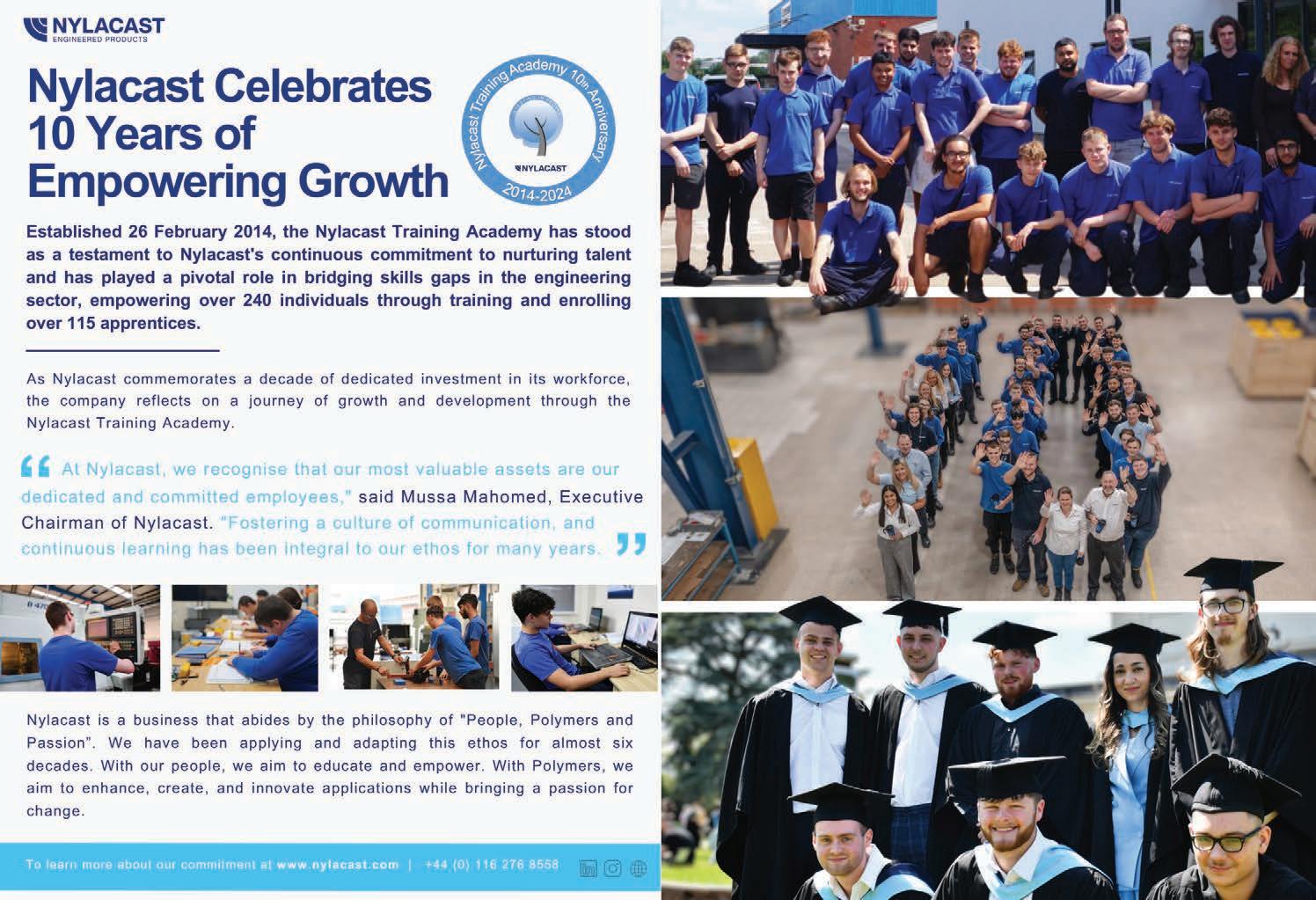





Companies in Derby are being encouraged to apply for loans and grants from a business support programme, funded and administered by Derby City Council.
Ascend is a £5m scheme designed to help Derby-based businesses and social enterprises to innovate and expand.
It aims to support ambitious local companies to develop and implement growth plans and secure investment.
The team behind Ascend is now calling on SMEs based in Derby to come forward and talk to them to find out how the scheme can benefit them.
Firms who have been trading for at least a year and are liable for business rates, can apply for grants and loans from Ascend.
It is offering grants of between
‘A £5m scheme designed to help Derby-based businesses and social enterprises to innovate and expand’
£5,000 and £35,000 and loans of between £10,000 and £200,000.
The money can be used for capital and revenue expenditure, which would lead to the creation of new jobs.
Successful applicants must meet certain criteria in order to qualify for financial support.
For example, applicants must demonstrate that the business plan is realistic and likely to succeed.
The cash must be necessary for the business to grow, and applicants must be able to prove
that the business as a whole will have a promising long-term future after receiving a grant or loan.
The money cannot be used for everyday business expenses. It must be ‘new spending’ – and used for investments, such as product innovation or larger premises.
Ascend was initially launched in 2021 as part of the city’s coronavirus economic recovery strategy – devised to ensure that Derby could build back successfully after the Covid-19 pandemic.
However, the scheme has since evolved – and is now hoping to supercharge the growth of the city’s SMEs.
To find out more about the Ascend grants and loans visit www.derby.gov.uk/business/ business-support-advice/ascend/ #page-1


Chamber calls for more investment
Investment in skills, planning and infrastructure are among reforms needed in the East Midlands, says East Midlands Chamber, after there was no growth to the UK economy in July for a second month.
The estimated figures published by the Office for National Statistics follow GDP growth of 0.7% in the first three months of the year and 0.6% from then until June.
Chief executive Scott Knowles said: “After two quarters of GDP increasing, to see no rise for two months is a stark reminder that while the economy has been showing encouraging signs of brightening, compared to the position late last year, in the upcoming budget the Government needs to clearly outline how businesses will be supported to deliver the growth the economy needs.
“We need to see the new Government move at pace to address the continued challenges around skills and recruitment, reform the planning system to make it fit for purpose, and confirm the investment needed across physical and digital infrastructure. The Chamber has outlined exactly how to achieve these in our Manifesto for Growth 2024.”
Unemployment among over-16s in the East Midlands has fallen from 5.2% to 4.8% in a second consecutive drop for the region, according to data published by the Office for National Statistics.
East Midlands Chamber director of policy and insight Richard Blackmore said: “It’s encouraging to see unemployment continue to fall in the East Midlands. 4.8% is an improvement but still above the level of this time last year.
“The number of vacancies across the country has again reduced, but to make sure roles are filled, the government needs to address skills reform, a key ask in our Manifesto for Growth.
“The findings of the Chamber’s Quarterly Economic Survey found more than half of respondents in the East Midlands had tried to recruit in the second quarter of this year, but nearly seven in 10 said they’d had difficulty finding the right level of skills and experience, as well as finding the right volume of candidates to optimise opportunities for growth.”




Derby businesses are being urged to apply for innovation and growth grants and a host of other support currently on offer under the Derby Accelerator project.
The project, which started last autumn and is funded by UK Government through the UK Shared Prosperity Fund, is already making a tangible difference to the city’s business community. So far, 371 businesses have received an hour or more of business adviser support, with 25 successfully applying for grants and 19 being awarded growth vouchers. Participating businesses have signalled that 50 jobs will be created as a result, with a further 19 safeguarded.
The Accelerator project is made up of five strands:
• Start-up Accelerator for individuals seeking to set up in business
• Net Zero Accelerator providing access to free energy audits and training
• Digital High Street Accelerator including brokerage to the nationally funded Made Smarter Programme and its digital technology specialists
• Innovation Accelerator providing intensive support to highgrowth businesses
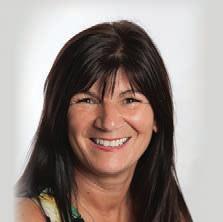
• Financial Accelerator providing growth vouchers of up to £2,000 towards specialist training or consultancy advice as well as grants of up to £2,499 towards start-up costs and between £2,500 and £20,000 towards innovation and growth.
Organisations benefitting from Accelerator grants include Derby Uncovered, a local heritage centre that promotes Derby and Derbyshire. Based in Sadler Gate in the city’s Cathedral Quarter, it opened its doors in February. One of the biggest challenges for the
community interest company has been the lack of footfall in the Cathedral Quarter. A high street grant from the Derby Accelerator project enabled the business to make alterations to its shopfront including the addition of barriers for its café seating area and a digital screen to promote tours even when the centre is closed.
Derby Uncovered managing director David Turner said: “We’re very grateful for the support. Chamber business adviser Steve Phillips was invaluable in terms of helping and guiding us through the process and it’s something that I’d recommend other business get in touch about. Our shop front now attracts more customers into our premises which in turn leads to more revenue.”
East Midlands Chamber deputy chief executive Diane Beresford (pictured, inset) said: “The Derby
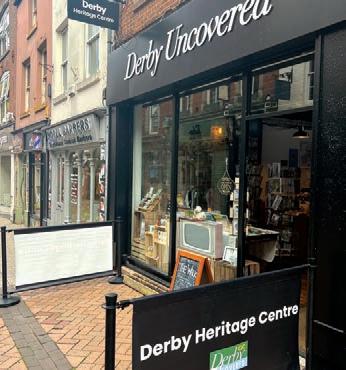
Accelerator project is already paying dividends to businesses, whether it be through grant funding or access to innovation and other expert training and consultancy.
“While the project is not due to end until 31 March 2025, funds are likely to be fully committed before then. I would therefore urge any Derby business that hasn’t already been in touch with the Chamber to do so as soon as possible to discuss any potential projects.”
Businesses interested in signing up for Derby Accelerator support or applying for a business innovation and growth grant can do so by completing the Expression of Interest at: www.d2n2growthhub.co.uk/ initiatives/derby-accelerator
Name of business: Peak Cluster
Location of business: Derbyshire
Number of employees: 2,300
Name and job title of the interviewee: John Egan
We are Peak Cluster and our USP is pretty epic in scope – a solution which enables cement and lime production to continue across Derbyshire and Staffordshire with a hugely reduced impact on our climate.
Our project is all about decarbonising vital industry, focused on cutting the carbon dioxide emissions from major cement and lime sites based in Derbyshire and Staffordshire.
Our project will have a huge impact, reducing Derbyshire’s CO2 emissions by 30% by capturing the gas as it is created during the cement and lime production process. We will transport the CO2 via an underground pipeline to the coast where the emissions will be permanently stored.
Peak Cluster is not only essential for the planet, but also essential for our economy.
Derbyshire and Staffordshire produce 40% of all the UK’s cement and lime, while at the same time, the UK is a net importer of cement. Therefore, it’s essential for the UK and the Peak District to retain our historic and essential industry and its jobs.
Peak Cluster, which is project-managed by Progressive Energy, is made up of some the region’s largest employers: Tarmac, Breedon, Lhoist, SigmaRoc and Aggregate Industries.
We launched back in May 2023. Since then, we have continued to develop the project whilst meeting as many local groups as we can.
Behind the scenes we have been carrying out studies to determine the engineering design of the project.
Shortly, we hope to begin detailed design work and start consulting with local communities. Ultimately, we went to the public to help us shape this exciting project by providing their insight and opinions.

You have probably seen at least one of our partners’ logos on the side of one of the many lorries that traverse the roads of the Peak District carrying limestone to areas around the country.
‘We are working hard to ensure we have the best interest of the people and a duty of care for the landscape’
Peak Cluster is centred in the Peak District. Developing a project of this scope and size brings many challenges, largely though the construction process. We are working hard to ensure we have the best interest of the people and a duty of care for the landscape at the projects heart whilst we removing carbon emissions from the nation’s important industry.
Being involved in Business Peak District allows us to share the details of our project to our fellow business community and connect with the local businesses in the region.
We are shortly entering the next stage of the project which means we will be ready to local communities with more specific information our plans.
Peak Cluster is a solution to the three million tonnes of CO2 released every year as we produce the materials we all use every day. Each year that goes by means more CO2 enters our atmosphere and contributes to climate change. Peak Cluster can have a huge impact on this and the sooner it happens, the better.
East Midlands Chamber has welcomed new Government measures aimed at ending the practice of paying late for goods and services as good news for small businesses.
The Department for Business and Trade has announced plans to bring in a new Fair Payment Code, which includes shining a light on responsible businesses doing the right thing by their suppliers and small firms.
East Midlands Chamber director of policy and insight Richard Blackmore said: “Small businesses shouldn’t have the hassle of having to wait to get paid for the products and services they’ve provided in good faith.
“An entire supply chain is adversely affected by a single bad payer and a self-employed person shouldn’t be having to worry whether they can pay their bills after someone’s benefited from their work if an invoice isn’t settled promptly.
“If these measures are able to bring to an end the practice of late payment and can help small businesses move forward, to invest and create new jobs, then it’s something the Chamber and its members welcome.”
Astar of screen and stand-up who has featured in Phoenix Nights, Benidorm and Little Britain has been booked to provide the entertainment at this year’s Chamber Christmas Lunch.
Comedian Ted Robbins will bring his signature wit and charm to the event at Leicester’s Athena on 6 December. Known for his impeccable comedic timing, Ted has been a staple of British comedy for decades – and his blend of sharp observations and northern charm is expected to guarantee a hilarious and festive afternoon.
The Liverpool comedian has acted as the warm-up act for an array of shows including Granada Television’s Wood and Walters and played the part of Den Perry, Brian Potter’s main rival in Phoenix Nights
He was Victor St James in ITV’s Benidorm and has acted in BBC comedy series The League Of Gentlemen as well as Coronation Street, Birds of a Feather and the Calendar Girls film.
Ted is most at ease in front of a live audience, helping him gain a reputation as one of the top British comics.
The Chamber’s annual Christmas Lunch is a highlight on the region’s seasonal calendar, helping kick off the festive season and providing excellent networking opportunities.
Tickets are £75 for Chamber members and £95 for non-members and can be booked at is.gd/yxzNAD



Sponsorship is available for this event by contacting Trace Voss on 07387 141583 or by email at trace.voss@emc-dnl.co.uk


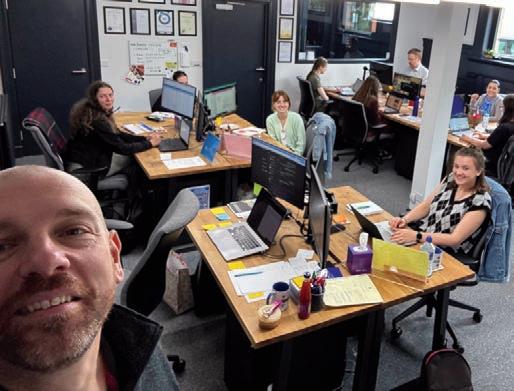
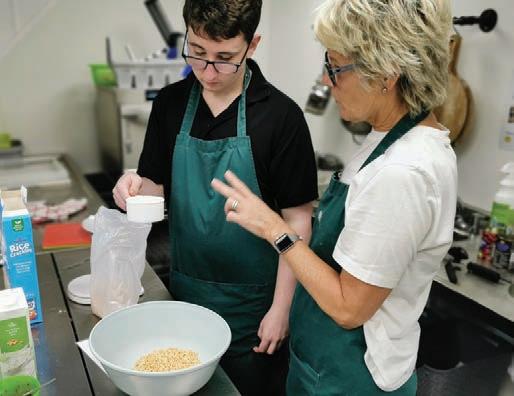
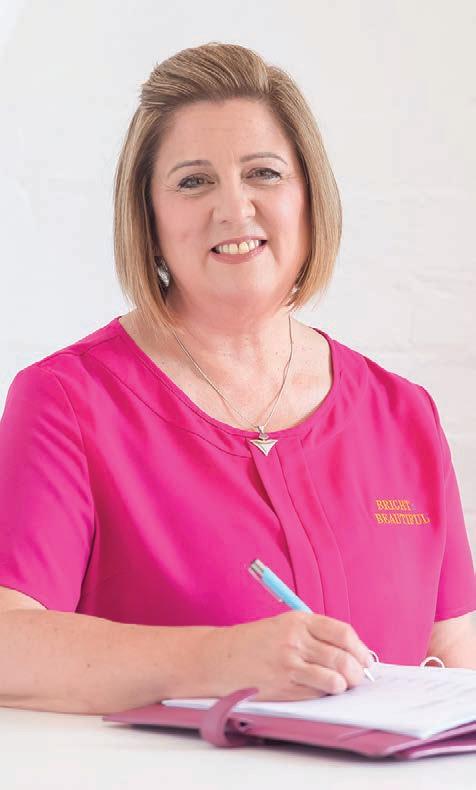
Whether it is fresh-eyed business adviser support, specialist training and consultancy, energy usage reviews or grants for growth, the Accelerator project offers something for every business at every stage. Businesses benefitting from support include:
As a business whose unique offer is built around travel, Blue Stamp suffered major disruption as a result of Covid; in both operations and revenue. Despite uncertain times, it has built back and is now predicting its best ever revenue year.
Keeping an eagle eye on costs has become more important than ever following the business’s recent relocation to the old Midland Bank hall in Daybrook.
The 100-year-old building offers new opportunities when it comes to improving energy efficiency – a fully funded energy audit gave the business the evidence needed to successfully apply for a decarbonisation grant from Gedling Borough Council.
Managing director Steve Manderson said: “During the original renovations, 22 solar panels were installed with the intention of adding a battery later down the line.
“A battery has just been installed and already the property is 100% off-grid with surplus energy being exported to the grid.
“Financially, this will make a difference from day one and the investment will be repaid very quickly.


“I am so proud of my team and achieving my goal of providing ethical employment, building a valued business and putting Bright and Beautiful on the map in Derby.”
What started as a side hustle for tradesman Harry Squires during the pandemic has evolved into pre-loved clothing business Credible Clothing.
Harry’s products are sold in two vintage clothing stores in Mansfield and Nottingham. He has recently moved into a spacious warehouse and employs four members of staff.
Capital and a lack of in-house business skills have been the biggest barriers to growth for this start-up business so business advice from NBV Enterprise Solutions has been valuable, particularly on cashflow forecasting and putting together a comprehensive business plan.
“Equally importantly, the environmental impact of creating green energy is very satisfying.”
This domestic housekeeping services business prides itself on the use of only eco-friendly products. It has enjoyed year-on-year growth above 20% but the finances of a growing business remain a challenge.
One-to-one support from the business adviser team is helping manage financial forecasts which will help to maintain the growth seen to date.
Director Toni Hibbert is keen to upskill her team to take on more customer interaction and sales roles and is in the process of arranging telesales training for key members of the team, via an Accelerator growth voucher.
The training for the team will directly support the move into newer markets such as short-stay properties, which will contribute to additional sales and income generation.
Toni said: “The advice and support from the business adviser team has been invaluable. I have a clear vision of financial forecasting and all-important numbers for 2024.
Taking discarded clothes and converting them into retro items is in high demand and Harry believes the business has the potential to employ students in photography, textiles and fashion design.
He said: “I feel happy to have received the support and I hope it can continue in the future. I have much to learn and am eager to do so within business.”
Debbie Bryan is an award-winning gallery, tearoom and creative space in Nottingham Lace Market and Ruddington Village.
Its galleries curate fashion, lighting, art, glass, ceramics, and jewellery designed and made by nationwide and international designers.
Historically, the website, booking system and supplier portal all stand alone and cannot be integrated – which means manually entering sales, products, and bookings across the systems, costing time and money.
The challenge has been to move to a solution that integrates the systems, including full connectivity of stock and sales data in-store and online. Debbie has received advice from Chamber business adviser Insan Farooqi on how


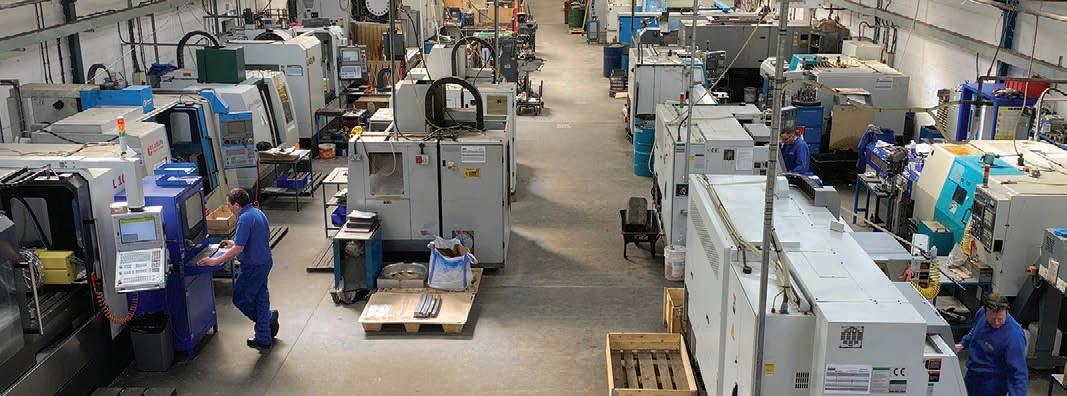
to elevate both online and in-person retail sales.
A Growth Voucher has enabled the business to access specialist consultancy support around moving to the Shopify platform to help expand online bookings, as well as to optimise the Faire Market booking system and integrate applications to streamline operations.
Managing director Debbie Bryan said: “The support has been exceptional. Insan has helped me develop the project based on our expansion plans for 2024.”
Frances Alexandra Jewellery is a small bespoke, handmade jewellery business run and owned by Alex Parkinson.
Alex credits much of her recent success to advice from her Chamber business adviser Alex Gardner.
The guidance has given her newfound clarity to pursue opportunities such as taking part in craft fairs and making presentations to guests at a local stately house, as well as collaborating with other social media influencers in the craft industry.
By re-evaluating her business strategy, she has gained confidence in the value of her services, reflected in adjusted pricing.
She said: “I strongly encourage fellow business owners to seek support through the Accelerator Project.
“The tangible results I’ve experienced, including increased bookings and positive feedback, attest to the effectiveness of personalised business advisory services.”
Rumbletums Café is a special place. Set up as a charity in 2011 by parents of young people with learning difficulties, its vision is to help young people access work-related training and be part of their local community.
With capacity for up to 30 trainees, 10 members of staff and almost 50 volunteers, it has to be diligent in monitoring its costs, not least its energy bill.
Attending an energy audit workshop gave the charity the tools needed to measure its energy usage and identify improvements in refrigeration and insulation – and evidence to apply for council funding for new energy-efficient equipment.
TDP is a family-run business that designs and manufactures sustainable, environmentallyfriendly furniture from recycled plastic.
To help achieve its turnover goal of £3m by the end of 2025 and target for saving 10,000 tonnes of plastic waste ending up in landfill, oceans and rivers, the business sought to streamline production and increase sustainability.
It wanted to have a better understanding of its client base and the Accelerator project highlighted the chance to modernise its analysis, including through AI technology and the use of “heatmaps” to get a picture of where clients are based.
Being able to find meaning behind the numbers and gain a deeper understanding of buyers and target clients will help TDP better adapt their marketing strategy and product development.
Chamber business adviser Andrew Bunn also supported them on their idea to create a marketing apprenticeship position in place of using externally sourced email marketing.
Commercial director Kym Barlow said: “We have exciting times ahead and the support has given us new ways of working that we’re sure will help get us to our goals.”
Growth plans of this fourth-generation, highquality precision engineering business have been supported by Chamber business adviser David Smith’s introductions to key partners such as the University of Derby’s apprenticeship team and Made Smarter for automation advice & funding.
The injection of a Made Smarter grant will help the business to invest in new machinery, to increase manufacturing speed and efficiency. An energy audit has also been commissioned and
1. Blue Stamp Travel, Gedling
2. Toni Hibbert of Bright and Beautiful, Derby
3. Credible Clothing, Mansfield
4. Debbie Bryan, Rushcliffe
5. Frances Alexandra Jewellery, Thorseby
6. Rumbletums Café, Broxtowe
7. Rob Barlow, founder and managing director of TDP, Wirksworth
8. Tybro, Ashfield
the business is looking forward to further cutting its carbon footprint.
Managing director Mandy Tyler said: “Our grant will help us increase our manufacturing capability. Our new machine has additional features that our current turning machines don’t, enabling us to undertake multiple operations in one setting rather than manufacturing on multiple machines.”
Marketing Made Easy for Tourism Businesses, Chesterfield 15 October
Harnessing AI for Business: Practical Applications and Legal Insights, Nottingham 16 October
Energy Reduction Workshop with Toyota Motor Manufacturing UK, Derby 29 October ONLINE
Getting Started with HR Essentials 15 October
Carbon Footprinting – Next Steps 16 October
20 Simple Ways to get your Website Generating more Business 20 October
Why Create Video for Social Media 29 October
Book your place at: bit.ly/AcceleratorEvents
The Accelerator project is funded by UK Government through the UK Shared Prosperity Fund.





We are delighted to share that over the summer the East Midlands Manufacturing Network has now grown to more than 400 members from manufacturing companies across the East Midlands.
The Chamber-led network (EMMN) launched in March 2022 and supports manufacturing companies from Derby, Derbyshire, Leicester, Leicestershire, Nottingham and Nottinghamshire.
By the time you read this article, we will have held our first regionwide meeting, bringing together more than 120 of those members in one place, to network, collaborate and enjoy some great speakers –(there will more on this in next month’s Business Network).
The network team has been busy planning over the summer and as a result of this, for the year ahead, members will see network meetings held quarterly in each area and extended by 30 minutes, running from 7.30am-10.30am, to allow for more collaborative activity at each meeting.
To keep in touch between meetings, we will be running more manufacturing-based webinars, bringing in expertise to support those issues that are main topics of discussion at our meetings.
We also plan to hold a further regional meeting in the autumn of 2025.
Bookings are being taken for our autumn/winter meetings, so if you are a manufacturing company, please book to attend.
• 12 November – Leicester/shire bit.ly/3ZtsYO6
• 26 November – Derby bit.ly/3Zrawpj
• 11 December – Nottingham bit.ly/4epNF1w
• 10 January – Derbyshire
bit.ly/3zizzAo
• 14 January – Nottinghamshire bit.ly/3XkDJzu
Not sure you can attend all the meetings? No problem, if you are interested in joining East Midlands Manufacturing Network, you can still become a member and receive our monthly newsletter, attend webinars and keep up-to-date with funding and support – sign up at bit.ly/3JqVxlX.
Here’s a brief glimpse of what we have been up to so far in 2024:
During the year, in each network area, we encourage members to host our meetings at their site, giving them the opportunity to highlight their business to other members and most are able to offer a tour of the premises.
We recently held our Derbyshire meeting at Specialised Canvas in Staveley, where managing director Paul Noble not only hosted the meeting but also gave us a tour of the factory.
Specialised Canvas is part of the Specialised Canvas Group, which includes Banner Box Print Solutions, offering large format printing, and Flagmakers, making bespoke flag and flagpole products. It was great to see how the company had diversified across a number of areas and meet the teams who work across the three business areas, which are all based at Stavely.
We ensure that all members are aware of any relevant conferences and summits that the Chamber is running throughout the year, and it’s been great to see members attending a number of these this year, including our Manufacturing &
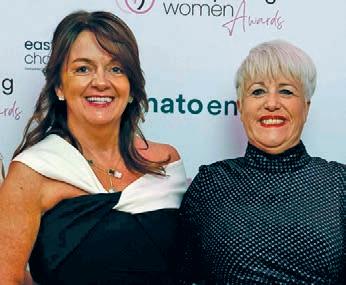
East Midlands Chamber’s Enterprising Women network was set up to help female professionals and business owners connect, grow and succeed throughout their careers.
Its key aims are to:
• Develop valuable relationships through popular networking events
• Improve members’ personal and professional skills at its
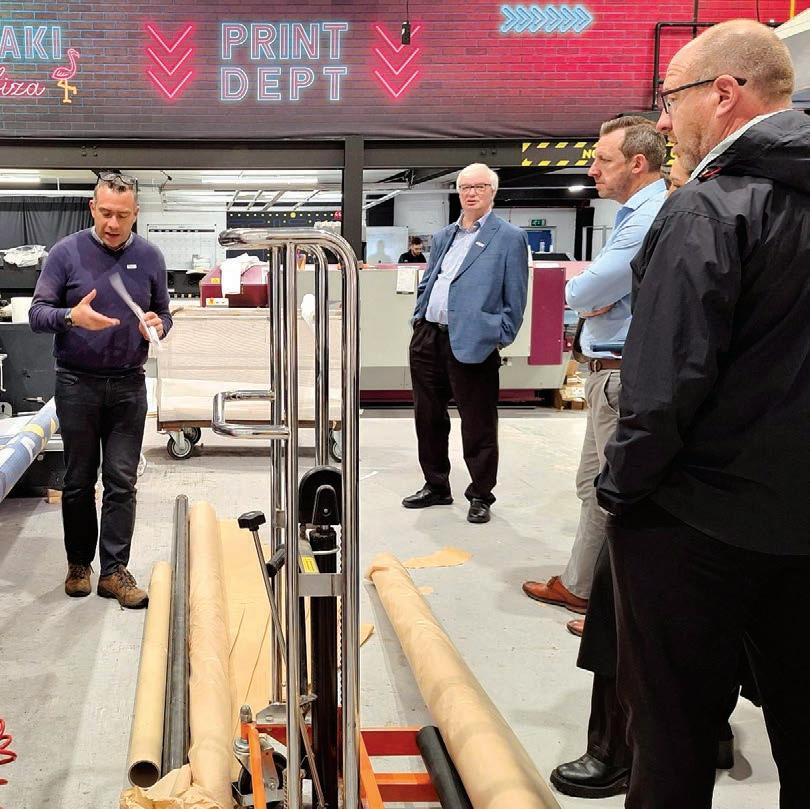

You can join the East Midlands Manufacturing Network via the East Midlands Chamber website, and there are regular events through the year.
Membership is free and open to manufacturers of any size. It also entitles members to complimentary membership of Make UK.
The criteria for joining the network are:
• You are a senior manager or leader
• Your business is based in the Chamber area of Derbyshire, Leicestershire and Nottinghamshire
• Your business makes something.
www.emc-dnl.co.uk/services/east-midlands-manufacturing-network
Trade conference, People and Skills Conference, Sustainability Summit and the Generation Next Conference.
We work closely with the team at the Chamber and local authority stakeholders to ensure that all members are aware of funding opportunities in their area, and recently we were able to offer members webinars on how to use
AI for the purpose of data activity.
We also invited members to attend energy reduction workshops which were hosted by the Toyota Motor Manufacturing UK Energy and Support Collaboration Team –these were a great opportunity to look at best practice and take away ideas for their own businesses.
Alongside this we encourage members to ensure they access any support and funding that is available through this project.
interactive seminars and workshops
• Inspire and motivate members at its events through carefully curated guest speakers
• Celebrate the success of female talent across the East Midlands.
Co-chairs Eileen Perry MBE DL and Jean Mountain said: “Enterprising Women is about helping people to understand their purpose, what they want out of a
role, whether it’s in the short or long-term.
“Thinking about what they aspire to be, and then gaining an understanding from successful businesswomen on how they have achieved their level. Enterprising Women isn’t about the fall of men, it’s about the rise of women.”
www.emc-dnl.co.uk/services/ enterprising-women/#contact

Last year’s Generation

Generation Next is gearing up to launch a series of business workshops inspired by East Midlands Chamber’s Accelerator Project
Starting in October, Generation Next members will be able to engage in the programme delivered by top level business advisers, industry experts and tutors.
Generation Next manager Kate Nemeth said: “Aspiring business leaders, entrepreneurs or creators of the future will find this series especially exciting.
“At Generation Next we have the immense resource and insight of East Midlands Chamber’s experts and business advisers right at our finger tips so why not fully embrace that and equip young people fully.
‘I’d urge people to get signed up straight away as we go into this exciting new chapter’
“Accelerator has done wonders in upskilling people at all levels in their career journey and what we wanted to do was adapt it, take the very best elements that are directly relevant to Generation Next members on their journey.
“Our programme goes head first into the things we know people find of use. So, we’re talking AI and Chat GPT – I’m sure that will be a hugely popular one as it’s so relevant right now, but then we’re often asked about getting the best out of social media, number crunching as you start your own business, marketing your business but without busting your budget.
“If these are things that intrigue and could really propel you forward, I’d urge people to get signed up straight away as we go into this exciting new chapter and open the doors of the Generation Next Accelerator Academy.”
GENERATION NEXT ACCELERATOR ACADEMY SESSIONS:
8 October: Getting Started with Monthly Accounts
This event is ideal for small and medium business owners who want to move beyond basic accounting and build a system of financial controls and processes, supported by real-world case studies.
Attending this webinar will help you understand essential financial reports like P&L, balance sheets and cash flow, equipping you to manage your business’s financial health and make informed decisions.
To book: www.emc-dnl.co.uk/ events/getting_started_with_mon thly_accounts2905870452
10 October: Champagne Marketing on a Lemonade Budget
Benefit from marketing expert
Lindsey Newman-Wood’s insights, including step-by-step strategies, creative ideas, and live Q&A, ensuring you leave with actionable tips to immediately enhance your marketing efforts.
Learn practical, budget-friendly marketing techniques that will help you attract and retain customers without the need for significant financial investment, making this perfect for small businesses and start-ups.
To book: www.emc-dnl.co.uk/ events/champagne_marketing_on _a_lemonade_budget1150491658


Generation Next is a vibrant, Chamber-led community, dedicated to empowering young professionals across the East Midlands with the experiences and opportunities they need to reach their fullest potential.
Joining Generation Next provides you with valuable opportunities for professional growth, including skill-building workshops, mentoring programmes and networking events. You’ll connect with like-minded young professionals, gain insights from industry leaders, and access resources to help you advance your career.
The network stands on a foundation of excellence and a deep commitment to business success and boasts a robust membership base of professionals from diverse sectors and industries, providing a rich tapestry of knowledge, expertise and collaboration opportunities.
The Generation Next board is a dynamic group of talented young professionals from across the East Midlands. They play an active role in shaping our activities and enhancing our profile.
Supported by our dedicated ambassadors, they collaborate closely with the board and the Generation Next team to promote key developments and initiatives to our members. Together, they drive our mission to empower and connect the next generation of leaders.
Stay connected, engage with us online and keep up-to-date with our latest events, insights and opportunities by following on LinkedIn, Instagram, Twitter and Facebook.
Alternatively visit the Generation Next website at generationnextemc.co.uk/about






Let me tell you a story about a client of mine. I won’t name them but it doesn’t matter as it’s also the story of many of them. In fact, it’s the story of a vast number of small businesses. See if it sounds familiar to you.
The company founders are a small team of technical experts. They are very good at what they do too: experienced, knowledgeable and with a great network in their industry. Having grown tired of being a small part of a much larger company, they made the bold and exciting leap to start their own company.
Their first few years were tremendously successful! Clients who had known them in their previous lives found a newer and better service. These told other companies too and pretty soon business was booming. It wasn’t long before it became necessary to hire a first employee. And then another. And then still more!




By Richard Williams (pictured), founder of Connect With Impact
In the middle of all this success a realisation dawned on the founders: “Oh blimey! We have a business now!” No longer could they simply be technical experts, doing great work for clients. They also had a business to run. They needed to make the shift to becoming leaders of people as well as trusted advisors to their customers. In addition to everything else on their busy agendas they needed to create a clear strategy for the future.
A great piece of advice I was once given is that when you’re feeling overwhelmed, STOP. It’s an acronym for Stop, Think, Orient and Plan. In other words, make sure you don’t get even more lost in the noise, take some time to think about your business then make a solid plan for the future. A plan made from a place of calm, not created in tiny spaces of time between other tasks.
No one needed to do this more than my client. And so, over the course of a workshop
‘When you’re feeling overwhelmed, STOP. It’s an acronym for Stop, Think, Orient and Plan’
and sessions of follow-on coaching, that’s exactly what I helped them to do.
They now have a clear vision and strategy for their future. A vision that has inspired their team and attracted new talent. A strategy which has guided clear and effective action. Here’s what one of them said:
“We now have a clear understanding of the way forward and have laid the foundations for a successful future. Without Richard and his skills and expertise, we would not be in this position.”
If you’d like to experience the same for yourself, I’d love to talk.
Please visit my website at www.connectwithimpact.net to get in touch.


Fixing the skills gap without a gap in the workday –Nottingham College’s work skills manager Lisa Greenfield talks to East Midlands Chamber media and communications manager Tim Smith on their flexible approach.
Improving ability in areas like English or maths to match the level a recruiter requires doesn’t need to cut into a student’s working day or mean them getting stuck in traffic, thanks to courses from Nottingham College. They can be taken outside working hours and at a location that works for the person taking the course, such as their workplace.
“During the pandemic, many colleges recognised the need to adapt and increase their flexibility to effectively reach students who were unable to attend in person,” explains Lisa Greenfield. “Employers appreciated the concept of having a tutor conduct functional skills training on-site, which has been instrumental in addressing skills gaps among their staff.”
‘Employers appreciated the concept of having a tutor conduct functional skills training on-site’
“We partner with a prominent employer in the region to provide non-accredited ESOL and functional skills training several times a week.
“This training is conducted on-site at the employer’s location, allowing employees to take part without the need to travel to our college.
“Our approach is flexible, tailored to accommodate the specific needs of the business. If there is a preferred time for training, we ensure that our tutors are available to deliver the sessions at that appointed time and on that day.”
Non-accredited ESOL courses are tailored to student’s ability level, says Lisa. “Students will be required to complete an initial assessment to determine their level of learning, this is to ensure that the student is in the right course, we wouldn’t want to set anyone up to fail and they receive an enjoyable learning experience.”
The skills gap varies significantly across different industries, as highlighted by Lisa: “In sectors such as manufacturing and warehouse
Iqra Zulqurnain

Nottingham College

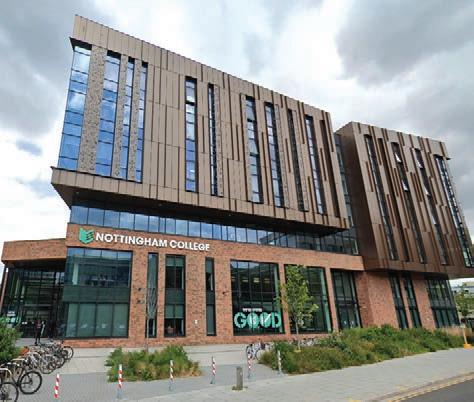
distribution, there may be a substantial demand for essential skills. Conversely, established organisations may find that their staff also have varying skill requirements.
“Additionally, the motivation to learn is not solely driven by necessity for work; many individuals pursue education for personal enjoyment or specific objectives.
“For instance, we offer an online course designed for parents who have recently had a child diagnosed with autism, providing them with valuable insights and understanding about their child's situation.”
The opportunities for professional development extend beyond just English and maths. “We offer a diverse range of qualifications designed to address various skills needs. For instance, a company with a sizable customer service team could utilise our Level 2 qualifications to enhance the skills of their existing staff.
“Often, individuals recognise the need to develop a particular skill while already employed in their roles or looking to seek employment where these skills are a requirement.
“There are many ways we can support businesses to be able to fill these little gaps.”
Nottingham College student Alliance Kandjii, 47, from Namibia said: “You’re never too old to learn, they say. I truly believe that now as I never thought I could do it.

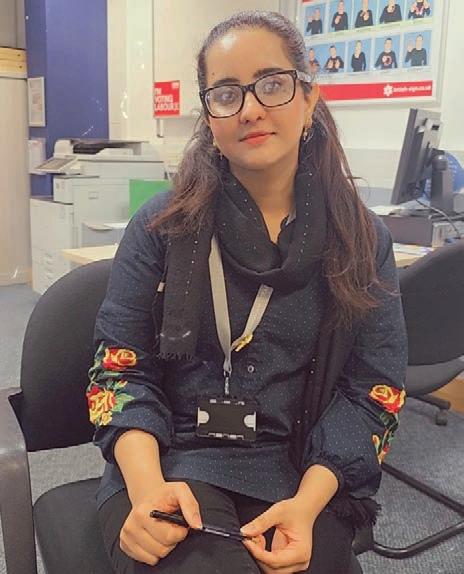
“I got an opportunity to study with Nottingham College online as I was not able to do it face-to-face because I am a single mum, and I found it easier to get around the day-today activities with my son.”
Nighat Naveed, who studied with Nottingham College, said: “The teachers are exceptionally skilled, and the learning environment is both friendly and comfortable.”
Student Iqra Zulqurnain said: “I am proud that I have completed and passed the Functional Skills English level 2 course.
“During this time, I have improved my reading, writing, speaking and listening skills. I am grateful for the support of my instructor and the encouragement from my classmates.
“This course has given me confidence and a solid foundation in English that I will use in my personal and professional life.
“I am also planning to start the Functional Skills maths course with Nottingham College soon and am planning to join some team and office management courses which will help me at work. Thank you for this valuable experience. I will recommend everyone to study at Nottingham College.”
Lisa Greenfield suggests businesses that feel they might benefit could try a pilot.
She said: “Not only will it boost staff morale, but it’s proven to increase productivity and staff retention.”
Midlands Energy Summit 2024 – Toyota Motor Manufacturing, Derby, 9am-1:30pm on 28 November.
The event will be held in partnership with the University of Nottingham’s Energy Institute and will explore how businesses, academia and policy makers can come together to ensure that clean growth underpins our future economic landscape.
Identified in the Chamber’s ‘Manifesto for Growth 2024’ as “The Big Opportunity” as to how we develop the future of energy production, storage and provision in the East Midlands, the summit will explore the strengths of the region and the role of regional businesses in this space.
Exhibitor and sponsorship opportunities are available at this event which is open to all businesses and free to attend.
For details visit: is.gd/JKcIL2




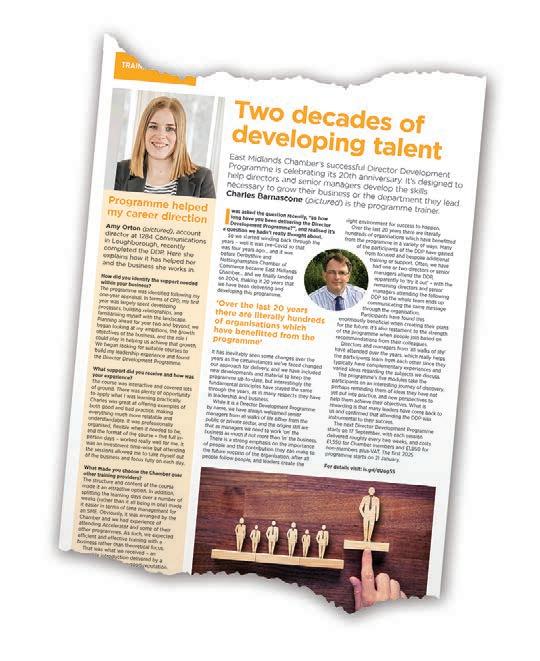

The Doctor of Business Administration qualification goes ‘beyond the normal’ and is an opportunity to develop a deeper business understanding, says Vicki Thompson, head of leadership and training programmes at East Midlands Chamber.
We live in interesting times’ – so goes the well-known saying. Indeed, never more so was this the case.
We are witnessing a series of radical transformations which organisations and executives within them have to contend with.
A range of issues are in play, including: digital transformation and the recent maelstrom of concerns surrounding artificial intelligence; changing values and attitudes shaping societies and markets; the constantly evolving responses of businesses and organisations through, for example, innovative product offerings, thoughtful branding and corporate social responsibility positioning; and, geo-political instability and its impact on business and market transformations. These are just a few of the serious contemporary challenges for executives, managers and leaders.
There exists a device, a tool, a process, an approach that can facilitate and support executives and aspiring consultants, and address such challenges – the Doctor of Business Administration (DBA).
The DBA – supported by the Chamber working alongside De Montfort University – is a conceptually-based/practice-focused top-level developmental process and degree qualification that enables highly experienced executives to move to the next level and operate in unique elevated dimensions and perspectives.
It provides a process and opportunity to examine a specific business problem and context in profound detail and allows the DBA candidate to develop world-class innovative models, insights and solutions.
This action/research doctorate can be undertaken full or part-time and typically can take three to four years to complete.
It provides a safe space for delegates to experiment with multiple ideas and possibilities, and also to meet, build relationships and exchange ideas with a wide range of international delegates who operate across a diverse range of sectors and markets.
At the end of the process, programme participants repeatedly state that they have
evolved and become different people.
They think differently, talk differently (with a sharper vocabulary and expression of ideas), and approach business issues in alternative ways. Indeed, they are on the road to re-inventing their world and interacting more effectively with the worlds with which they connect.
The journey of becoming a business doctor is not a sprint. It is a methodical, guided and supervised, and part-taught marathon (all set in a flexible schedule) that equips you with the mental and conceptual tools to be able to research in detail an area of your choosing and develop you as a world-class industry/organisational expert.
DBA teaching teams are a rich mix of international ex-practitioners, leading commercial academics, and ‘pracademics’ (i.e. practising academic/ business/organisational hybrid executives). This enables education and supervision to be done in a method and language that you will appreciate and that is always mindful of commercial practice.
In a DBA, you choose the area/environment that you want to research, and the supervision team will work with you to refine, challenge, distil, and reshape your research question and objectives into a revolutionary focus that will get you noticed in a crowded and noisy business/organisational/consultancy world.
You will challenge your own thinking in the most powerful ways. The opportunity to reinvent yourself and become an expert thinker in a way you never imagined is very possible.
DBA graduates are testimony to that. Becoming a business Dr through the DBA is both mind and life changing and could energise your consultancy ambitions.
For further information about this opportunity please visit bit.ly/3za53Zz
The Chamber will be holding an online awareness raising webinar from 10am-11am on the 14 November. To book your place to find out more about the DBA visit bit.ly/3ZrULhP
Alternatively contact Vicki Thompson at vicki.thompson@emc-dnl.co.uk or 07469 148833.

In last month’s edition of Business Network, we celebrated 20 years of the Chamber’s Director Development Programme.
If you missed the article, please follow this link to check it out: issuu.com/kemps/docs/ biz_network_sept_2024/52
The last of our 20th anniversary courses commenced in September and for those who are interested, but were not able to make these start dates, our next course commences in January 2025 (see page 60 for more details).
It runs through the first few months of the year and ends in March. If you are a director or senior manager this programme will give you the skills and confidence you need to drive your business forward and achieve your objectives. Use the link below to find out more about this five-day programme which has supported hundreds of senior leaders across the East Midlands.
bit.ly/3ZrWbt0
There are three new half-day courses in the Chamber’s autumn/winter programme:
Succeeding on LinkedIn for Businesses
bit.ly/4egfx8u
Getting started with Podcasting for Businesses
bit.ly/3TxpjLr
Email Marketing 101 for Businesses
bit.ly/3MOMqgE
Each course is run by Paul Ince who supports organisations to understand their voice and helps to put strategies in place to amplify it to their markets.
If you want to elevate your marketing and make sure you ‘stand out from the crowds’ check out these three new courses or contact vicki.thompson@emc-dnl.co.uk.
For a full list of all the courses, including accredited training, please visit bit.ly/3Iqs78v
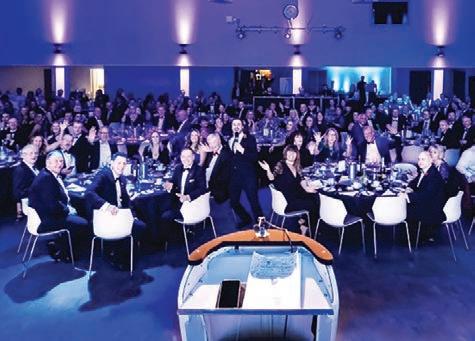
Attendees at last year’s Derbyshire Business Awards
Tickets are now on sale for the 2024 East Midlands Chamber Business Awards, which will be held this autumn.
The annual awards – which are held separately in Leicestershire, Derbyshire and Nottinghamshire – showcase the achievement and resilience of businesses across the three cities and counties.
The finalists for all 13 categories –ranging from Excellence in Innovation to Outstanding Growth and Business Improvement Through Technology – were revealed at East Midlands Chamber President Stuart Dawkins’ summer celebration at the end of August, followed by a virtual judging process.
A Business of the Year is chosen from the winners in each county and selected firms will go through to the regional and national British Chambers of Commerce Awards.
The dates for the three award ceremonies are:
• Derbyshire – 25 October
• Nottinghamshire – 1 November
• Leicestershire – 8 November.
TV presenter Emma Jesson will host the awards.
Chamber chief executive Scott Knowles said: “The Chamber Business Awards recognise the remarkable achievements of the region’s business community, its strength in challenging times and the innovation that the East Midlands is so proud of.”
Award sponsors confirmed so far are: emh group, Cambridge & Counties Bank, De Montfort University, Loughborough College, Blueprint Interiors, ER Recruitment, SMB Group, RSM, Purpose Media, University of Derby, Amazon, Futures Housing Group, Aston Lark (formerly Howden), University of Derby, Rolls-Royce, Eversheds Sutherland, University of Nottingham, DHL, Nottingham Trent University and Geldards, EMAAN, Vertas Group, Barclays Eagle Labs, Be Your Best Version, Unique Window System, RandalSun. The awards are also supported by the Green Entrepreneurs Fund (funded by Derbyshire County Council). Sponsorship opportunities can be discussed by emailing trace.voss@emcdnl.co.uk For more


Visionary, tenacity, driver of change, compassionate, active listener, coacher and strategic are all characteristics synonymous with a great leader.
Along with hands-on experience of managing and leading others, East Midlands Chamber’s Director Development Programme can help you gain a well-rounded view of the workings of a director, and prepare and refresh your knowledge of the processes and skills useful to a senior role. However, you don’t have to be an established director to benefit from the transferable content on the Chamber’s flagship course.
The five-day programme takes delegates through various skills including leadership strategies, planning priorities, finance, people management approaches, and driving performance and change, which can be applied in a variety of situations encountered by senior employees. Here are five examples of people who could benefit from the Director Development Programme.
The new director
The Director Development Programme enables you to get a well-rounded view of what is required to excel in the role. Having this knowledge can also give you the confidence and skills to drive the business forward following your recent promotion. The course is a good starting point for setting and achieving your objectives, as well as assisting in contributing and developing your organisation’s culture to achieve them.
The experienced business owner who is growing their staff
Once your business operations are going steady, it will be time to look at expanding your team. With a growing team, it will be important to create a strong vision, values and strategy to form your company’s culture – and ensure the whole team adheres to it. Each module in the Director Development Programme is interconnected as part of one process, which is primarily the setting and achieving of an agreed culture within your business.
A senior manager or director who has been given new budgetary and financial responsibilities
Many non-finance managers or directors find themselves with budgetary responsibilities when newly appointed or through a change in role. During the Director Development Programme, you will learn to understand the flow of cash in relation to other financial statements, how to create and monitor a simple budgetary system, and how to calculate appropriate financial ratios to understand business performance.
The experienced manager who is looking for the next step
The Director Development Programme is a great way to prepare for the next step in your career if you are an experienced senior manager. Not only can you apply the learnings to your current role and organisation, but it can also assist you in a promotion in the future.
A senior staff member who has been given a new remit to lead internal change
The programme can equip you with the ability to measure the outputs and processes to drive performance through an organisation, as well as identify the drivers of internal change. It will also help you reinforce the behaviour required from stakeholders at all levels of the organisation to sustain the new environment.
WHEN IS THE NEXT DIRECTOR DEVELOPMENT PROGRAMME?
The Chamber’s next Director Development Programme will start on 21 January 2025, with five sessions running every two weeks until midMarch. Led by trainer Charles Barnascone, the five modules cover the following topics:
• Developing vision, values and strategy leadership
• Planning, direction and priorities
• Finance for non-financial directors
• People management approaches
• Driving performance and leading change.
The sessions will be structured to be stages in a business development process. Developing a business culture has the potential to be too abstract, so the focus at every session will be for the participants to have specific action steps to begin during the session, and complete between sessions.
At each subsequent session, participants will be expected to discuss how they have applied the material covered during the previous session, so that clear connections and progress can be made.
This approach grounds the business development process in practicality, and ensures that the material covered will be used immediately, and that the process begun during the sessions can be sustained when the participants return to apply them in their business environment.
Each session of the Director Development Programme is delivered roughly every two weeks, and costs £1,550 for Chamber members and £1,950 for non-members plus-VAT.
For details visit: is.gd/wErnim
Davies Turner established the Express China Rail service in 2016 in conjunction with our long term partners in China, Air Sea Transport, who already had years of experience in the China rail sector.
Initially, predominantly an import service, offering both LCL (groupage) and FCL (full load containers), the service quickly gained momentum as clients took advantage of the fast transits, compared to ocean freight and the much lower costs, compared to air freight.
With confidence and demand for China rail freight services soaring, February 2022 seeing the 50,000th China-Europe train embarking on its journey, Davies Turner, keen to fulfill the desire of the UK export market, has established a dedicated weekly LCL rail service from the UK to China.
Following successful trials, where transit savings in excess of 20 days compared to ocean freight were achieved, we are sure our export clients will benefit from this third freight option.

www.emc-dnl.co.uk/sustainability
The National Forest has announced a milestone in its journey toward regenerating the local landscape – reaching 25% forest cover across its 200 square miles of the Midlands.
The transformation has seen an industrialised area that was once one of the UK’s least wooded places – with forest cover as low as 6% – turned into a vibrant forest landscape in just over 30 years.
Since the forest was announced in the 1990s more than 9.5 million trees have been planted, restoring a landscape scarred by centuries of coal mining and clay extraction across parts of Derbyshire, Leicestershire and Staffordshire.
National Forest chief executive John Everitt OBE said: “This milestone of 25% forest cover is testament to all our partners who have helped create the National Forest for more than 30 years – the early pioneers as well as a new generation of farmers and landowners.
“It is a chance to celebrate success and demonstrate how this approach can be used to encourage more forest projects across the country in the drive to adapt to a changing climate and reach net zero.
“The National Forest is also part of a wider success story for all tree planting in England over the past year. The last planting season saw tree planting rates increase by 52% from the previous year with 5,529 hectares [13,600 acres] of new woodland planted.
“This marks significant progress towards meeting the Environment Act target of achieving 16.5% tree and woodland cover in England by 2050.”
Hitting 25% forest cover has been boosted by increased tree planting over the last four years as part of Defra’s Nature for Climate Fund and the England Tree Planting Programme – plus adding in previously uncounted trees and woodland across the area.
A spokesman for the forest said there had also been changes in wildlife and biodiversity including rising numbers of woodland species such as sparrowhawk, brown long-eared bat and speckled wood butterfly.
Around seven in every 10 National Forest residents now live within 15 minutes’ walk of a woodland, bringing opportunities to enjoy recreational activities to improve health and wellbeing.

Every year millions of laptops, monitors, hard-drives and keyboards are thrown away.
Figures presented to Parliament a few years ago suggested every person in the UK generates around 24kg of electronic, or ewaste a year.
Around 155,000 tonnes of e-waste, those figures said, was thrown in the bin and ended up incinerated or in landfill. A similar amount was thrown into skips. A worrying amount is sold for illegal export to be dumped abroad.
But it’s not all bad news. The same stats suggested more than 500,000 tonnes of ewaste was recycled.
And one of the people helping the e-waste cycle go around is Hassan Bhatti.
‘What we are doing was already sustainable but then we thought we should take it a step further’
Hassan runs Leicester-based Zero E-Waste, a specialist in electronic waste management taking in the eco-friendly disposal and recycling of things such as computers, hard drives – which can be cleaned and reused –and USB drives right through to the secure disposal of confidential documents and archives.
“What we are doing was already sustainable but then we thought we should take it a step further.
“We looked at the way other people were doing things and it just wasn’t great. Even recyclers were just not recycling everything.
“Some were also offering to collect trash for free, but that means they’re not providing an incentive to the actual end user to recycle.
“So, we actually offer rebates for everything we take.
“We buy complete electronics and dismantle them down into their raw materials and then from there they're sent across to either precious metal recovery, plastic treatment or metal recovery.
“All the base elements are segregated out into the raw components.
“And because we've got that process, we’re actually able to offer rebates on material, so it's not just a convenient service that we've provided to people, we’re actually incentivising them to recycle because they're going to get paid something.
“It means people are more likely to start recycling more aggressively and change the processes they have.
“We also deal with scrapyards and waste management companies and you'd be alarmed at the amount of WEEE [waste electrical and electronic equipment] that's coming in that just goes to landfill.
“It's a completely circular approach, and basically all about thinking twice before putting it in the bin.


Hassan started out with an IT hardware company called Tech Camal, buying used, end-of-life equipment from businesses then fixing it up and selling it on.


He said: “Tech Camel has basically been buying the sort of old equipment that might have been scrapped so that we can turn it into good working products.
“We were buying from pretty much everyone, and we noticed that there was a gap in the market in terms of the actual waste side of electronics.
“There’s a lot of ways to be sustainable in business – you might change your fleet to electric, for instance, but one of the core issues is the amount of electronic waste being produced.”
He said the business has its own workshop repurposing and testing equipment or extracting gold and precious metals and other parts that have value, and employs a team of 10.

The Government has extended the easement of import checks on medium-risk fruit and vegetables imported from the EU from January 2025 to 1 July 2025.
Such products will not be subject to import checks at the British border or charged the associated fees until that date.
The postponement is a temporary measure to ensure that new ministers have a full and thorough opportunity to review the planned implementation of further border controls, and an opportunity to listen to businesses across import supply chains.
Defra has also changed the risk categorisation of certain plants and plant products, including deregulating certain products, following further a scientific review of plant and plant product risk categories.
Seven commodity groups (including apples and pears) will be recategorised from medium risk to low risk, allowing these goods to move freely into GB from the EU, Switzerland and Liechtenstein.
These changes will come into force on 30 January 2025.
Defra will continue the systematic, proactive screening of potential new and emerging biosecurity risks.


Eproject to make it easier for businesses to trade within the framework of Free Trade Agreements (FTAs).
International Chamber of Commerce (ICC) has launched a new digital trade tool, ICC Genesis, which helps streamline the invoice self-declaration process.
The tool has been developed by the World Chambers Federation (WCF) at ICC and a handful of member chambers of commerce around the world with the aim of simplifying exporting under FTAs.
Post-Brexit, the UK is in the process of putting together new FTAs with trading partners.
To benefit from FTAs, exporters must selfcertify the originating status of their goods – a process for which no regulations or obligations are currently in place.
During the process, Rules of Origins are applied to determine if goods are eligible for duty-free or reduced duties under FTAs.
This assures importers and customs that the shipments they are receiving are at a lower risk of exposure to fraud, ensuring smoother custom checks and reducing legal liability.


‘As export documents decline in use this was a way for international Chambers of commerce to help businesses in their country’
Mistakes made during this process, due to the complexity of the Rules of Origin, can lead to fines and longer holding periods at customs clearance, costing businesses time and money during international transactions.
FTA numbers are rising with over 360 currently in force worldwide, lowering barriers to international trade and opening up markets for businesses worldwide.
Yet, the lack of standardisation and low levels of knowledge around the invoice selfdeclaration procedure under FTAs can be a costly obstacle for companies looking to import or export, especially smaller businesses.
The simplified certification process offered by ICC Genesis verifies that the self-declaration that has been made is accurate – giving both the exporter and importer peace of mind and,
The British Chambers of Commerce (BCC) has endorsed the World Trade Organisation’s (WTO) focus on services and digital trade as key priorities.
The BCC was part of the biggest ever UK delegation to the WTO Public Forum in Geneva, recently. It met with the UK Ambassador to the WTO, the wider UK Mission team, and businesses and other stakeholders from across the globe.
BCC head of trade policy William Bain said: “Business voices need to be heard at events like the WTO Public Forum, but also in its work all year-round.
“The BCC agrees with the priorities of the WTO Secretariat for the next 12 months.
“Services are a UK, and global trade success story, and expanding markets for tradeable services will increase prosperity for UK businesses and the rest of the world.
“On digital trade, we want to build a wider

take up of the agreement on Electronic Commerce – currently accepted by 91 countries.
“This will cut costs and expand opportunities for both developing and developed nations. We need to do more to get other states into the tent on this agreement.
“A major theme of the week was the effect of regulations and subsidies policies on openness to exports. Countries need to ensure that measures with good intentions on climate do not become overly protectionist in how they are applied.
“We look forward to engaging further with the important work on these issues going on at the WTO.
“A strong rules-based global trading system matters to business in the UK, and we must make sure our voices are heard.
“We share their aim of putting better trade and growth at the heart of the WTO staff and delegations’ agenda for the coming 12 months.”
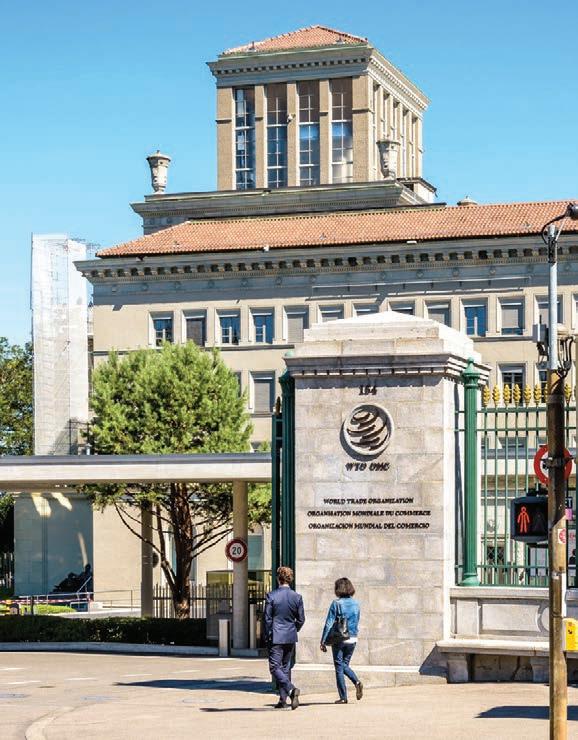
paving the way for a new era of trading digitally.
East Midlands Chamber international trade manager Lucy Granger said ICC Genesis makes it easier to prove where your goods are made –the preferential origin – for tax purposes.
She said: “We haven’t provided this service before but as export documents decline in use this was a way for international Chambers of commerce to help businesses in their country.
“It’s been launched as a pilot and we hope it will become a world-wide, standardised service.
“We’re now ready to help businesses with their self-certifications and Genesis verification, as well as help businesses understand preferential rules of origin that support trading with Free Trade Agreements”
The Chambers involved – alongside East Midlands – include Bristol, Dublin, the Danish Chamber of Commerce, Netherlands Chamber of Commerce, Paris Ile de France Chamber of Commerce, Qatar Chamber of Commerce, Slovakia Chamber of Commerce and Slovenia Chamber of Commerce.
For details contact Lucy Granger at Lucy.Granger@emc-dnl.co.uk


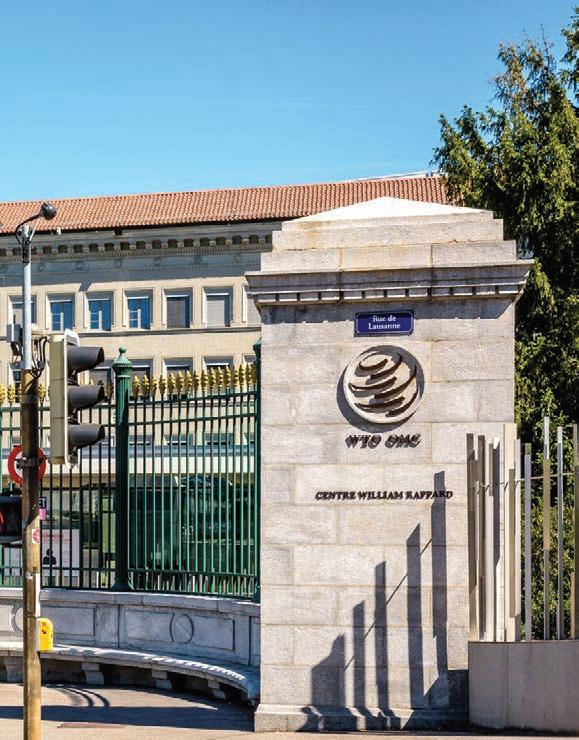

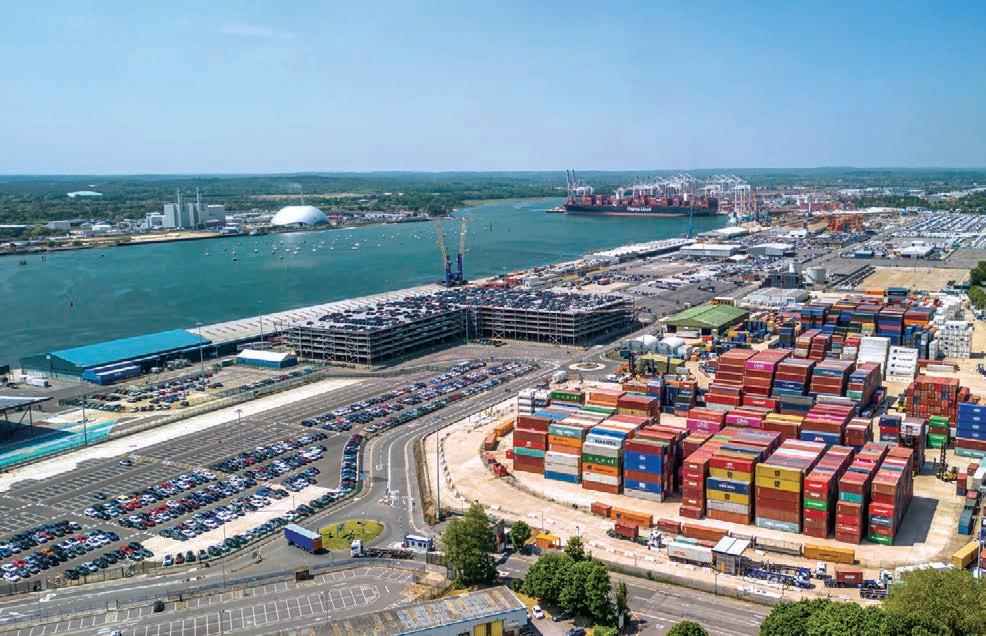
Responding to the latest trade figures published by the ONS, William Bain, head of trade policy at the British Chambers of Commerce (BCC), said: “June was a strong month for UK trade, with goods exports to the EU experiencing a double-digit rise.
“Services growth was steady for the month, and throughout the last quarter.
“The data reflects the strengths of the UK’s export portfolio in professional, travel, financial and business services as well as manufacturing, chemicals, pharmaceuticals and transport goods.
“To keep up this momentum, we want to work with the Government on its forthcoming Trade Strategy. It must ensure the UK has the right framework in place to increase exports and improve the efficiency and security of its supply chains.
“This must include a focus on improving trading terms with the EU, to cut the costs of doing trade and sustain June’s welcome sales growth in our largest export market.”
The UK trade data revealed a strong goods trading month in June, rounding off the second quarter of 2024 with growing exports and imports.
The volume of goods exports (excluding inflation) rose by 11% in June, with substantial increases in both EU exports (up by 12.7%) and non-EU trade (up 9.4%).
Imports also saw a significant upswing in volumes for June with an overall increase of 7.8%. EU goods imports rose by 9.9% and nonEU goods by 9.4%.
Drivers for the rise in exports to the EU were machinery and transport equipment – including aircraft and electrical machinery to Germany, mechanical machinery to France, and pharmaceutical and medicinal products to the Republic of Ireland.
For rest of the world, the main drivers were higher chemicals exports, particularly to the USA. Sales of medicinal products to the US were also up.
For imports, the rise in EU goods was led by
machinery and transport equipment – including aircraft from France.
There was also an increase in imports of various manufactured goods from Germany. With non-EU imports, machinery and transport equipment sales played a key role in the increase – particularly aircraft from the USA and cars from China.
On services trade, imports were estimated to have fallen by 2.6% in volume terms (excluding inflation), while exports continued on a steady path with a rise of 0.5%.
‘The data reflects the strengths of the UK’s export portfolio in professional, travel, financial and business services’
Imports from the EU across Q2 rose by 3.6%, in seasonally adjusted value terms, principally through stronger trade in machinery and transport equipment (cars, ships and mechanical machinery).
On non-EU goods imports, there was a larger rise of 10.4%, driven by higher fuel (refined oil from India), and machinery and transport equipment (aircraft from the US and ships from China).
Exports growth was smaller across the quarter than imports, with EU goods rising by 1.1% in seasonally adjusted value terms (driven by higher chemicals and manufactured materials). Non-EU goods rose by 1.5% (due to chemicals, machinery and transport equipment).
Services imports rose by 3.3% compared with the first three months of the year, on the seasonally adjusted values basis, with strong performance from business, intellectual property and construction services.
Exports grew by 2.8%, with business services, travel, telecoms and IT services doing particularly well.

The newly-opened tennis courts in Alfreton
Four refurbished tennis courts in Alfreton have been reopened as part of a £119,000 renovation programme.
The work, which is part of the biggest transformation of park tennis facilities across Britain, has been funded by Amber Valley Borough Council, supported by the LTA Tennis Foundation, and managed by the LTA.
Under the improvements, the courts have been resurfaced, new security fencing, new tennis posts and nets have been installed, walls have been painted and a new digitally coded gate system installed.
A nationwide programme of investment is reinstating thousands of existing park tennis courts currently in poor or unplayable condition for the benefit of communities across the country, providing vital opportunities for children and adults to get active.

Jill Colbert OBE (pictured) has been appointed as the new corporate director for children and education services at Nottingham City Council, while Vicky Murphy has accepted the role of corporate director adult social care and health. The appointments come as the council works on a improvement plan to find new ways of delivering vital local services efficiently and effectively.
Jill Colbert has joined the council from her role of chief executive of Together for Children, the operating company that delivers children’s services for Sunderland City Council. She also held the role of director of children’s services for Sunderland City Council.



The leadership at Derby City Council have warned that the authority is facing a significant financial strain as demand and costs for essential services continue to rise at a much higher rate than forecast.
They said that despite best efforts to bring costs down, the figures for the end of the first quarter show that without further mitigation, the council faces a predicted revenue budget overspend of £9.6m by the end of March 2025.
‘The council has a good track record of reducing its pressures and delivering its savings’
They said: “These increases in costs and demand are outside the council’s control, and at the heart of the overspend are services which the council is required by law to provide, affecting the most vulnerable residents in Derby.”
Some 80% of the council budget is for social care where costs and demand are “soaring way beyond” what was forecast – despite adding £12m to social care budgets this year.
The council is the “corporate parent” to more
than 550 children, with the 10 most expensive children’s care packages costing the Council more than £5.5m. Demand in adult social care is currently costing £13.5m more than the council budgeted for.
Rising homelessness and the need for temporary accommodation emerged as a new significant pressure in the last financial year, when there were 2,486 approaches from homeless people. The council said there have already been 593 approaches in the first quarter of this financial year.
In a statement it said: “The council has a good track record of reducing its pressures and delivering its savings and has implemented various measures to address these challenges.
“Strict controls on spending and recruitment remain in place, while the city continues to find innovative ways to deliver good and costeffective services.
“One example is purchasing former student accommodation at Abbey Lodge to provide a better, more stable environment for homeless families living in temporary accommodation, whilst also unlocking income for the council through additional Housing Benefit to support those costs.”
Nottinghamshire County Council said it had fewer complaints upheld by the Local Government and Social Care Ombudsman (LGSCO) compared to the average among similar councils.
The ombudsman carried out full investigations into 27 complaints about the county council for the period from 1 April 2023 to 31 March 2024.
Of those, 81% were upheld – set against the national average of 85% – which equates to 2.6 upheld decisions per 100,000 residents. The council said the national average is 4.5 upheld decisions per 100,000 residents.
In total, the county council received 1,146 complaints during the 12-month period – with 96 referred to the LGSCO, which made decisions on 76 cases.
The opening of Leicester’s Jewry Wall Museum and Visitor Centre – which is undergoing a multi-million pound transformation – has been delayed following the collapse of a second contractor working on the project.
Scotland-based Elmwood Projects, which was commissioned by the city council to design, build and install exhibition cases, large mosaic displays, object mounts and some of the audiovisual elements for the centre, recently announced it was going into liquidation.
The news follows the collapse of construction company NMCN three years ago which was originally brought in to carry out the external works needed to the museum and heritage site.
The council managed to appoint Olivetti and Jeakins Weir last year to continue with the construction work, and good progress was being made.
The council said: “This new blow to the project is likely to result in some further delay to the opening, although the council hopes this will not be significant.”
Richard Sword, Leicester’s strategic director for city developments and neighbourhoods, said: “It is very rare for two such well-established companies working on the same project to be hit in this way, but these are very difficult times for the construction industry, with three of the four companies that originally bid for this work now in administration.
“We sympathise with everyone affected by these company closures. We are grateful that Elmwood had already completed most of the work we had commissioned.
“Leicester already benefits significantly from tourists interested in our 2,000 years of history and the discovery of King Richard lll.
“The new-look museum and visitor centre has the potential to bring in many more thousands of visitors and huge economic benefits to Leicester.
“At this point it is difficult to say exactly how this will affect the opening date and our costs, but I am hopeful we can resolve this without too much of an impact.”
The opening date is expected to be next summer.


The Long Eaton Town Deal projects –following government funding of £25m in 2021 – are reaching the development phase, with some now complete.
They include new lighting in West Park where 42 low-energy lamp posts now light up three-quarters of a mile of pathway, and work has started on the park’s events field which will host open-air concerts and outdoor events.
Work to put in place a new bridge over the canal from Broad Street to the park and create an attractive waterfront where people can relax will start in January.
The design of a new bridge at the former Britannia Mills is also due to be finalised, while work continues to convert listed outbuildings at Long Eaton Town Hall into a business hub.
As well as this the council recently acquired all the properties at Galaxy Row which includes a former cinema. The council is now looking for a development partner for the project which will include new commercial space and homes.
Richard Ledger, chair of the Long Eaton Town Deal Board, said: “Years of planning has gone into these major projects, so it is fantastic when you start to see all the hard work paying off.
“In the not too distant future residents and businesses will start to notice more of the projects taking shape and I’m excited for the result.”
However, a project to revitalise the town centre, led by the highways authority at Derbyshire County Council, has been delayed due to design changes, with a new completion date of October 2026.

A multi-million-pound savings plan put in place by Derbyshire County Council is “progressing well”, but high demand and cost pressures across social care continue to challenge the county’s finances.
In January the council’s leadership announced proposals to manage a funding gap of around £40m for the 2024-25 financial year. Plans to take forward the budget savings proposals were agreed in February, which the council said allowed it to set a “balanced budget” for the year.
The council said a number of the proposals have now been out to public consultation and either agreed or are awaiting final decisions, with savings being made across a number of services. Many of the savings proposals are still in the planning or consultation stage.
A new council report highlights that delivery of savings is “on track” in most areas but continuing demand and cost pressures, mainly in adults’ and children’s social care services, could result in a forecast overspend of more than £20m for 2024 to 2025.
The overall savings target for 2024 to 2025 to be made through the budget savings proposals is £31.3m, with the forecast savings totalling £30.2m, or 95% of the target. In some areas, the savings originally forecast have exceeded the original target.
In the areas where it is possible that the savings targets will not be met, council departments are developing alternative savings proposals to ensure the targets can be met and the total savings needed can be delivered.


Mental health issues can seriously impact an employee’s ability to cope in the workplace. It can lead to low morale, low self-esteem, absenteeism and physical illness. As an employer, senior leader or line manager, there’s a lot you can do to support your employees who are undergoing mental health struggles and create a better working environment.
The best place to start is making sure you have good knowledge of common mental health problems and the warning signs of poor mental health. You should also take the time to get to you know your team so that you can notice any changes in their behaviour – however, it’s important to remember that different people will react to stress in different ways, and there is no ‘one size fits all’ approach.
You may have to adapt your approach to suit the different needs of individuals, so getting to know them is the first step in providing useful support. Additionally, make sure you’re aware of your company policies regarding mental health and wellbeing. If you don’t have any policies in place, now’s the time to write them.
Conversations about mental health can be difficult, so try to remove any barriers that might make your staff feel reluctant to open up. Schedule one-to-ones and catch ups with your staff and let them know they have a safe space in which to talk about any difficulties they are having, whether that be at work or in their personal lives. Getting to know them can make it easier to spot any concerning changes in their mood or outlook.
If your employees come to you to talk about their problems, the most important thing is that they feel heard. The best way to do this is to use a technique called active listening. Firstly, try to maintain eye contact and open body language. Acknowledge what they are saying by repeating it back to them to make sure you heard correctly. Ask direct questions, but make sure you’re not probing or pushing them too far – you can gauge what is acceptable from their body language.
At the close of the conversation, recap what you’ve discussed and what your next steps are. Don’t be tempted

to offer solutions too quickly: while you may want to show how much you want to help, they may just need a space to vent and get things off their chest.
Show your staff that their physical and mental wellbeing is important. Encourage them to take their full breaks, work reasonable hours and use their annual leave – because overworked staff are stressed out staff.
You can also implement initiatives such as home or hybrid working, the cycle to work scheme, volunteering days and team building activities. These initiatives can improve physical fitness, boost mood and help them feel valued, all of which will have a positive impact on their mental health.
PRIORITISING WORKLOADS
While it might not be possible to offer your staff complete control over their workload of hours – after all, targets must be met – you can work together to find areas in which your staff can make their own decisions and have more autonomy.
You should also make sure that your employees are properly trained to do their jobs, because inadequate training can lead to stress or a lack of motivation. One way to increase morale is to offer regular training and development opportunities.
LOOK AFTER YOUR OWN MENTAL HEALTH
As an employee or manager, it’s your job to support your team. But remember, your own mental health and wellbeing is important too. You can’t effectively support your staff if you’re feeling burned out or stressed, so take time away from your desk and make sure you have someone to talk to, too. If you’re a manager, you can ask for mental health first aid training to better understand how you can effectively support others and boost your own mental health too.
‘Conversations about mental health can be difficult, so try to remove any barriers that might make your staff feel reluctant to open up’

That’s one in six living with the pain, fatigue and disability it can cause. Many more live with arthritis but remain undiagnosed, untreated and unsupported. The impact of arthritis can be huge yet for a condition affecting so many, far too little is done.
It can mean that many people with arthritis and musculoskeletal (MSK) conditions are not able to work when they want to. They are one of the main reasons (21%) given for economic inactivity caused by ill-health.
Arthritis and MSK conditions have a severe impact on the economy, with 23.4 million working days lost in 2022.
Many people are waiting far too long for the support that they need, with waiting times for Access to Work tripling between March 2021 and 2022. It is crucial that people with arthritis get the vital support to enter employment and thrive at work.
VERSUS ARTHRITIS IS CALLING ON THE GOVERNMENT TO:
• Support more people with arthritis and MSK conditions to start and stay in work, with better access to occupational health and employment support programmes
• Promote and improve awareness of Access to Work
• Listen and learn from people with arthritis when developing employment initiatives.
World Arthritis Day aims to help raise awareness across the world of the existence and impact of rheumatic and musculoskeletal diseases.
Alongside volunteers, people with arthritis and thousands of signatures from across the UK, the charity will be heading to Downing Street in October to hand in an open letter to the Prime Minister calling for change.

To add your voice to the open letter, and find our more information on arthritis and the support services available, visit www.versusarthritis.org

By Lucy Robinson, head of marketing and communications, Skins Sexual Health
Sexual health is an integral aspect of overall well-being, along with your mental and physical health, yet because of the generally taboo topic, it’s more than often overlooked in discussions surrounding health and productivity in the workplace.
In this article, sexual health specialists at Skins Sexual Health will explore the relationship between sexual health and workplace productivity, highlighting the benefits of addressing this often-taboo subject in a professional context. Maintaining good sexual health can positively impact your focus, engagement, and efficiency at work.
Here are just four of the ways that looking after your sexual health can positively impact workplace performance…
1. Reduced stress and better mental health
Sexual activity is a natural stress reliever – it releases endorphins and oxytocin, hormones that help reduce stress and promote feelings of happiness and relaxation. Lower stress levels can lead to better concentration, improved decisionmaking, and enhanced problem-solving skills –all essential for workplace productivity.
Employees who feel mentally balanced are less likely to experience burnout and more likely to perform optimally.
2. Improved physical health and energy levels
Regular sexual activity can contribute to better cardio, a stronger immune system, and improved sleep quality. These benefits translate to fewer
sick days, reduced absenteeism, and sustained energy levels throughout the workday, ensuring that employees are present and productive..
3. Enhanced emotional well-being and team collaboration
Sexual health contributes to emotional stability and a positive self-image, which can improve interpersonal relationships both at home and in the workplace. Employees who feel emotionally well are more likely to engage in healthy communication, collaborate effectively with their colleagues, and contribute positively to a team environment.
4. Increased motivation and job satisfaction
Employees who maintain a healthy balance between their sexual health and overall wellbeing often report higher job satisfaction and motivation. Feeling good about oneself can lead to greater enthusiasm and creativity at work, making it easier to handle challenges and remain engaged in daily tasks.
Talking about sexual health can be taboo, but to promote sexual health and its benefits in the workplace, employers can take several proactive steps such as:
• Encouraging work-life balance: Promote flexible working arrangements and sufficient time off to help employees maintain a balanced life.

• Offering wellness workshops: Implement wellness workshops that address various aspects of health, including sexual health, mental health, and physical fitness.
• Creating a supportive culture: Foster an inclusive workplace culture where discussions about health and well-being are encouraged and supported without stigma or judgment.
HOW EMPLOYEES CAN IMPROVE THEIR SEXUAL HEALTH
• Protection: Using protection such as condoms during sexual activity reduces the risk of any unwanted pregnancies and STIs – saving you stress, and time off work.
• Seek GP support when needed: Check in on symptoms at the first instance, before a bigger problem potentially arises.
• Support: Products such as Skins Delay and Enhance products offer support with erectile dysfunction and premature ejaculation.
Fostering a culture that recognises the importance of sexual health as part of overall wellness can have a profound impact on workplace productivity. By supporting employees in maintaining their physical, mental, and emotional health, organisations can create a more dynamic, motivated, and efficient workforce. Investing in employee well-being is not only good for the individual – it’s also a smart business strategy.


To coincide with the Chamber’s 2024 Enterprising Women Awards, this month’s Business Network celebrates the region’s female entrepreneurs, industrialists and business leaders.
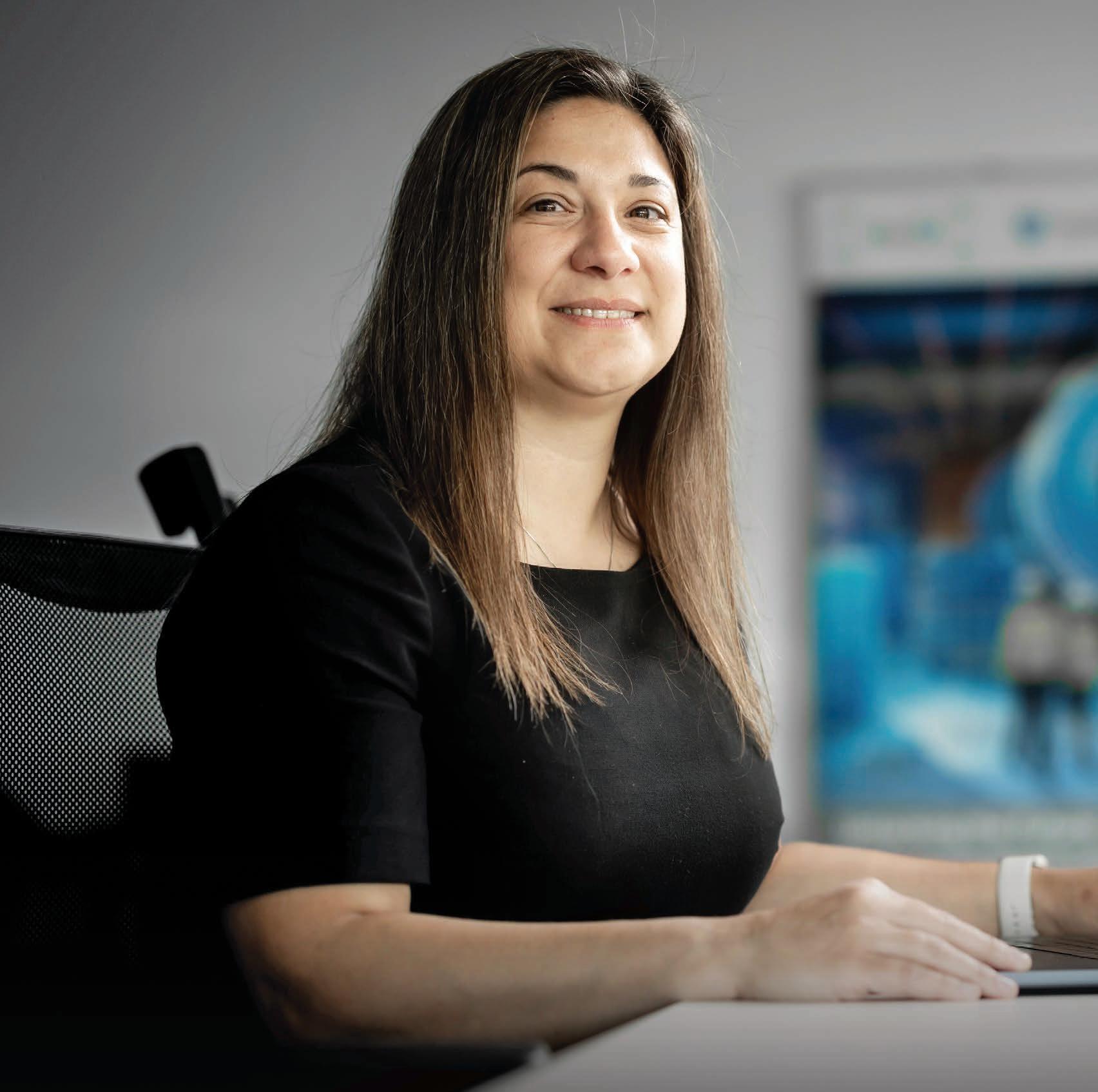
Dr Ismini Vasileiou is a founder and director of the East Midlands Cyber Security Cluster and an associate professor in information systems at De Montfort University. Her work focuses on enhancing cyber skills, raising awareness, and understanding human risks in cyber security. She spoke to Business Network about computers, her research and how businesses can protect themselves digitally – and about overcoming obstacles and her determination to diversify the digital security sector.
Tell us about the Cyber Security Cluster?
East Midlands Cyber Security Cluster (EMCSC) is a hub for sharing digital security insights and expertise. We bring together business, academia, and cyber security experts to strengthen our
region’s digital safety. We’re one of a number of regional clusters under the UK Cyber Cluster Collaboration (UKC3) – the national network driving cyber security innovation and growth.
We’re a community interest company and incorporated as recently as June 2023, so we’re in the startup phase and being funded by UKC3 as we establish. As the cluster develops, we’re looking to access external funding and offer partnership opportunities. But, regardless of how we develop, we’ll remain a social enterprise.
Who uses the service?
Our audience is anyone running a business or organisation in the East Midlands. We bring together everyone from SMEs and industry professionals to researchers and government officials to share latest knowledge and insights. As such, we’re here to teach, signpost, share and assist regional businesses and organisations. We
want to bolster the East Midlands digital economy and innovation space.
How did you get involved?
I was aware of the work of UKC3 through my research work and wanted to get a cluster for the East Midlands region. The vision is for each UK region to have its own cyber security cluster. As co-founder of EMCSC, I oversee our interaction with other clusters, work directly with businesses and organisations on their digital security, and speak on panels and at roundtables about our region’s cyber safety.
What are the most fascinating aspects of the work? There’s lots to be fascinated about with cyber security. There are always emerging threats and trends and it’s intriguing to see new ways systems and businesses are being targeted. The most common cyber threats are relatively

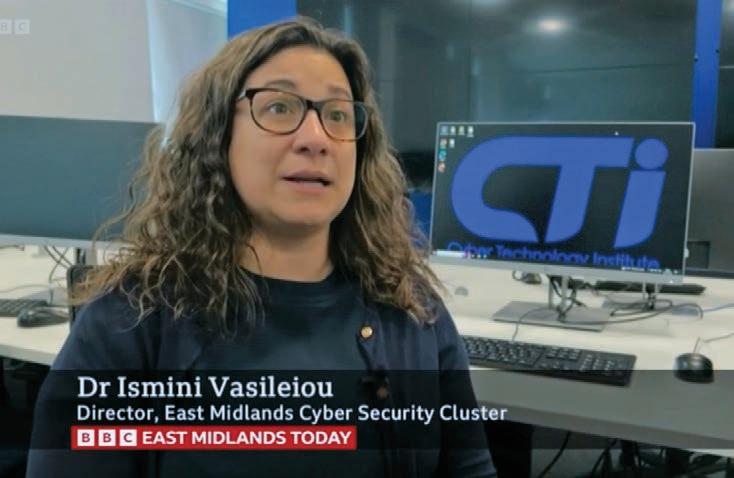


unsophisticated. Good cyber security systems and practices can prevent attacks. Some of this is really basic stuff: one of my favourite ways of putting it is “Passwords are like underwear –change them often”.
Has it been harder to do what you do because of gender inequalities?
There’s a backstory here that, in the circumstances, I think is important to share. At the age of eight, in front of my class and parents, my teacher said that I was thick and I wouldn’t go very far.
I can’t remember if I cried that day but I do remember being determined to prove to everyone that I was not thick. Different maybe, but not thick.
In 1995, aged 16, there was a pilot at my high school. It was the very first time I sat in front of a computer. I loved it, so naturally I went back


If a man presents his opinion he knows what he’s talking about.
Cyber security and the world I work in is still very male dominated, I think that makes it harder for women to achieve, but we still do. Our culture and background shape and sculpt us but there are steps we can all take to undo those biases. We can educate ourselves. We can educate our children. Little by little things will improve and we can change society.
Diversifying the sector is something I am passionate about – I was named academic champion at the Cyber Diversity Awards run by Ethnic Minority in Cyber (EMiC) for the Department of Science, Innovation and Technology (DSIT).
Everyone benefits when we bring different views, experiences and approaches to work together – whatever the sector.
home that day and asked for a computer for Christmas. The answer was a big “no”.
I was a Greek girl, about to become a Greek woman – I was expected to get married very young, have children as soon as possible. Then, I would need to work in the public sector from 9am – 1pm. That would give me enough time to get home, look after the children, cook dinner –all before my Greek husband came home.
I had other ideas. I’d discovered computers. I knew what I wanted to do and that was something that involved working in the digital sector. I saw the world differently to how my parents and Greek culture did. So, in September 2000, I packed three bags and moved to the UK and started my degree in computing.
I had a boyfriend - he was Greek. I was doing a degree, living abroad, all without a ring on my finger. So, at the age of 24, I had to get engaged. At 27, I had to get married.
Yet, by then, I had a degree in computing, a PGCE and had signed up for a doctorate in education.
‘Women are often judged differently to men. If I present my opinions, I’m opinionated. If a man presents his opinion he knows what he’s talking about’
I wanted to carry on with my career and studies. I got my doctorate in education and had this title of doctor everyone aspires to.
I also had two kids and a divorce. I was a single mum with two boys and a good academic career but my parents didn’t know about the break-up. Six months on I told them.
My mum’s response: “Well, what did you expect? You’ve got an attitude and a career and you thought it was going to last?”
I was speechless. It was just the start, I was a single mum, people bypassed my feelings, my achievements. It was hard. During that time I reflected and realised that no one did anything wrong, no one meant to hurt anyone, we just saw the world in a different way.
These approaches exist in all parts of life. Take STEM for example, how many women are there working in STEM? In leadership roles in STEM? Not enough. It’s getting better, but it’s not what it should be. Women are often judged differently to men. If I present my opinions, I’m opinionated.
So, in answer to the original question, it’s been harder than it needed to be to get to where I am. That’s in part because of my gender but also because of my background. But I wouldn’t change it. I may not have got here if those obstacles didn’t exist and of course, I had to prove that I’m not thick.
Tell us about your role at de Montfort University?
My role at DMU as an associate professor is about driving regional digital skills development, cyber security initiatives and industry partnerships. I supervise PhD students and lead research projects in cyber security and technology-enhanced learning.
What are the big cyber security threats right now?
The way cyber criminals target businesses and organisations is constantly evolving. However, the main themes behind cyber-attacks remain relatively consistent:
• Ransomware attacks which prevent you from accessing your device – a criminal group will then demand a ransom in exchange for decryption.
• Attackers leveraging AI to create more convincing phishing campaigns.
• We're seeing an increase in cloud-based threats – misconfigurations and inadequate access controls can be exploited by criminals.
• Supply chain attacks. As bigger companies become more secure, attackers move down the chain in an attempt to exploit multiple businesses in one.
• Phishing. Human error is still high up on the threat list. Attackers continue to trick users into opening fraudulent emails, instant messages, and text messages. They then steal user data including login credentials and credit card numbers. Phishing attempts get ever more sophisticated.
• Mobile device vulnerabilities also leave companies open to attack.
Will the UK ever get to grips with cyber security?
The UK, like every other country, may never completely eliminate cyber threats, as bad actors will continue to evolve their tactics. However, through collaboration between government, industry, and academia, alongside a focus on cyber resilience, education, and innovation, the UK and other nations can significantly strengthen their defences.
The goal is not just to prevent attacks, but to minimise their impact, adapt to emerging threats, and ensure rapid recovery across the global cyber security landscape.
By Annie Brafield (pictured), director, Cartwright Communications in Nottingham.
While the world of marketing and communications changes on a regular basis, one of the surest ways to success is through creating a culture that empowers and encourages growth, regardless of any perceived barriers.
Over the past couple of years, we’ve worked hard to build a culture that makes a real difference to our employees’ lives, not just benefits or headlines that look great on a website but aren’t supported by regular action from the senior team.
As with many businesses, the pandemic was a transformative time for us, and we truly believe that coming out of the other side of that largely unscathed was largely down to the strength of our team and how our ethos had empowered them.
However, when you go through an experience such as the pandemic, it is a real opportunity to take stock, review your business and refine what that culture actually stands for. For us, an updated approach –powered by flexible and hybrid working –allowed us to look at expanding our services by bringing in different skills and expertise.
This renewed approach created the potential for the second major catalyst for the renewed focus on culture, which was the decision to open additional offices in Birmingham and London. When mapping out the growth plans for these locations, it was clear that we needed to really distill what our culture was so that it could more easily be exported as those offices grew.
‘There is always a lot of talk about how women need to “break the glass ceiling”, but in reality, if you’re doing things properly then the glass ceiling doesn’t exist at all’
What makes or breaks this kind of culture-led approach is how authentically it represents you, and how that permeates throughout the team. We’ve always considered ourselves to have a fairly flat and accessible management structure, but this has been increasingly important to keep sight of as we have grown in size and locations.
As a result, we don’t really consider ourselves to have the kind of divide many businesses have in terms of gender. While our team is female-led and the spilt in terms of numbers is around 75% female-to-male, this provides excellent balance against our clients, who are often from male-dominated industries such as the built environment.
There is always a lot of talk about how women need to “break the glass ceiling”, but in reality, if you’re doing things properly then

the glass ceiling doesn’t exist at all.
Senior teams and decision-makers need to be accessible so that asking them about adjustments doesn’t feel like climbing Everest in itself, and they need to be empowered to be adaptable so that making those adjustments is as smooth a process as possible.
The good news is that most businesses are now alive to the possibilities that this more flexible approach can bring and we’re proud to have been at the leading edge of this over recent years, and we're now Great Place to Work certified.
However, it’s important that this isn’t seen just as something for women. For the longest time, talk of adjusted hours, part-time and semi-remote working was euphemistically aimed almost entirely at “working mums” –whether by design or practice.
While it’s absolutely right that birthing parents returning to work are looked after and accommodated well, we’re adamant in our business that flexibility extends beyond that group and covers the likes of those with caring responsibilities, fathers with parenting and coparenting responsibilities, and anyone else that requires flexibility considerations.
Above all, the greatest ability is visibility –we’re ensuring that our culture is as open and transparent as possible so that we can have these conversations, and in turn remove any barriers to progression.
Maintaining and delivering gender equality is a continuing commitment across many industries. Within construction, the agenda for change is actively being driven by employers, professional organisations and government but traction of the results is slow. Cultural challenges and outdated notions around women’s ability, interest or commitment to the industry continue to place substantial shackles on industry drives to address its gender imbalances.
However, with a new generation of workers comes fresh ideas and input. Last year, it was revealed through ONS figures that 15% of the UK construction workforce was female, the highest figure since records began in 1997 – while one in nine top positions in the industry are occupied by women.
Construction apprenticeships in general too, remain on the upward curve, with approximately 26,100 new apprenticeships starting in the sector between 2021-22.
Female apprenticeship representation shows a slight decline of 7.35% over the last 12 months, yet with an average from the past five years coming in at 10.6%, it remains encouraging that training, awareness and education drives are at the core of change in the industry.
More centrally, we need to address women in construction not just for perception and equality, but because the industry has a deepening skills crisis. Over the next four years, 225,000 workers are needed to plug industry shortfalls, and key to this is not only tackling industry image problems, but opening up pathways for more women to contribute, collaborate and build better, together.
‘Everyone should have fair and equal access to development opportunities throughout careers’
At Pick Everard, my role involves fostering a company culture that empowers women and strengthens their contribution, as they seek to fulfil promising careers. I work to shape EDI programmes and solutions that go beyond being purely female centric and focus more on broader cultural change. The aim of this is to break down ingrained habits of stereotyping, remove biases and provide strategies for harnessing our talent, while shaping new attitudes.
Women bring some fantastic, unique qualities to the table; I’ve seen first-hand how female resourcefulness, empathy, and compassion has delivered some fantastic leaders, both here and within the wider industry. A stronger pipeline of female talent brings indispensable benefits with diverse teams driving unique ideas, innovations and better business performance overall.
Many organisations are investing in development opportunities throughout the life cycle of women’s careers. Often, I find that professional development in this sector doesn’t sit solely within gender differences but rather similarities, and obtaining the
Construction continues to see a rise in women entering the workforce and occupying senior leadership positions. Elizabeth Hardwick-Smith, group people and culture director at multi-disciplinary consultancy Pick Everard, looks at what drives female growth and what helps retain talent in an ultra-competitive sphere.

right role models, whether they be male or female. Everyone should have fair and equal access to development opportunities throughout careers, that can help funnel personal growth.
To successfully lay the conditions for more
Elizabeth Hardwick-Smith of Pick Everard
women entering the industry, we must work hard on becoming a more agile workforce while eradicating lingering, negative notions around remote and flexible working. This starts with raising awareness that flexible working is the top way in which construction professionals
can successfully manage their mental health and the pressures of the industry. We need measures in place that eliminate a culture of work isolation and long hours, and open up an environment in which people can hold brave conversations about how they are.
Our strategy should focus on tangible outputs from hybrid working, not overburdened approaches to time measurement or micromanagement that led to burnout and stress.
I also believe staff rewards, benefits and incentives are incredibly important. We must speak to how society has evolved – to dual income, dual career families, as well as women’s specific needs.
One of the key outcomes of our recent Women in Leadership forum is to provide dedicated resources on health, including a new menopause policy. This represents a proportion of our workforce and addresses a core need through individualised work adjustments, including how they structure their week.
On a societal level, one of the biggest positives for women entering or rather reentering the industry has been the extension of free childcare hours via government policy, as well as changing maternity and paternity policies.
Restrictions and cost of living conditions have been one of the key barriers for highly skilled women re-entering the workforce, and by relieving the financial burden somewhat of the cost of childcare, more women get back to their careers early and continue to scale the organisational ladder.
We’ve enhanced our own policies and offering in this area and we’ve improved how we reboard colleagues back into the business following a long break.
Looking ahead, I know that successful upward internal mobility efforts must be underpinned by establishing clear, unbiased metrics for promotion and advancement.
As we work to shape a clearer senior level career path, we’ll be considering the link to our mission and goals, values and competencies but also client expectations.
At Pick Everard, we are proud to continue supporting the professional growth and development of our female talent.
Only by working collaboratively on culture, policies, decision-making, training and development can we enact the change that delivers more promising conditions for women entering and re-entering our industry, and empower them for the future.
Vanessa Pozzali is a counselling psychologist, psychodynamic psychotherapist and group analyst and is the co-founder of workplace consultancy Synthosys, in Derby. Here she sums up her career journey, considers gender inequalities in the workplace and suggests what’s needed to fix it.
Growing up in Italy, I had no female role models in professional careers within my family. My grandmother was obliged to marry young, dedicating her life to raising children and managing the household.
My mother was compelled by her father to stop working after marriage, leaving me with limited expectations about my career prospects. Back then, Italian society was governed by patriarchal traditions.
‘I believe many women will find my story
relatable, revealing
the daily challenges women face in the workplace’
My struggles in school didn't improve matters. By the eighth grade, my teachers recommended hospitality school, forecasting a career as a waitress for me.
Nevertheless, I harboured a strong passion for psychology. I took social sciences and humanities but missed a year because I lacked “foundational” skills.
Back then, I was perceived as a lost cause, lacking motivation. Teachers often said: “She has potential, but she doesn't put in the effort.”
(It wasn’t until I moved to the UK and was 34 years old that I discovered my severe dyslexia. The diagnosis provided immense relief from the feelings of shame and worthlessness that had accompanied me throughout my entire life.)
Unaware of my dyslexia, I completed my exams with respectable grades and was accepted into one of Italy's best psychology programmes, where I studied neuroscience and cognitive psychology.
Within four years, I shattered the first glass ceiling in my family by becoming the first to graduate – inspiring some of my cousins to believe in their potential too.
Upon completing my bachelor’s degree, I felt directionless and without clear objectives. I was in a stifling, abusive relationship that further isolated me. Nevertheless, I found the strength to leave and motivated myself to pursue a master's degree in community psychology, discovering a passion for group settings.
I became a psychologist and spent another four years specialising in group analysis. Along the way, I met a wonderful man who believed in me, even during my moments of self-doubt. Together, we moved to the UK, where my Italian colleagues doubted my ability to work as a psychologist in a different language and suggested I seek other employment.



Yet within two years, I secured a position with the NHS, eventually becoming a team leader in a forensic hospital in the private sector.
Following this, my husband and I dared to start our firm to foster a workplace culture, free of discrimination and inequality, where everyone, particularly women, can thrive.
If I could tell my younger self about my achievements, she would be incredulous.
I believe many women will find my story relatable, revealing the daily challenges women face in the workplace, particularly in obtaining strategic roles in large influential companies.
In 2011, when I was 25, only 9.5% of FTSE 350 board members were women. By 2023, women had reached 42% board presence in the FTSE 350, but only 31% in the top 50 companies.
The disparity becomes more pronounced at the highest level.
In 2011, the FTSE 350 had 15 women CEOs –as of today, that number has only increased to 21. Women frequently have to adopt male leadership traits to succeed, thereby renouncing their own qualities.
Studies also show that women are less likely to apply for new positions. A Hewlett Packard study revealed that women usually apply for a job only when they meet all the requirements, whereas men apply (and often get hired) when they meet about 60%.
Furthermore, women are less likely to negotiate for higher pay, with just 7% negotiating their first salary versus 57% of men. And a 2021 study by the Office for National Statistics (ONS) found that women in the UK were more likely than men to reduce their working hours or leave employment entirely due to childcare responsibilities.
It found that women were almost three times more likely than men to work part-time, with 40.1% of women doing so versus 13.1% of men.
Additionally, the gender pay gap for full-time employees in the UK was 7.9% in 2021, indicating that women continue to earn less than men on average.
Achieving true equality for every minority requires everyone’s participation. With these challenges in mind, we founded our organisational development consultancy firm Synthosys, focusing on transformative culture change.
We aim to create environments where all individuals, especially women, can learn to embrace their strengths and break free from societal limitations.
We address more than just surfacelevel issues, exploring the unconscious processes that influence workplace culture. We aim to create psychologically healthy work environments that promote resilience and adaptability, benefiting both individuals and organisations. Small daily actions, starting with dialogue and personal awareness of these issues, can truly make a difference.
My story is a testament to the power of perseverance, passion, and the strength of relationships free from bias.
By addressing the systemic issues women face in the workforce, I am committed to fostering a future where gender equality is not just an aspiration but a reality.

Tania Gerard is a new Chamber member, whose work focuses on neurodiversity in the workplace. She brings a decade of digital marketing expertise to her role as founder of Tania Gerard Digital – and said launching her own service was driven by a desire to improve communication between employees and employers, especially for those with neurodiverse conditions.
As an AuDHD – autism and attentiondeficit/hyperactivity disorder – woman, Tania has a first-hand understanding of the challenges faced by neurodiverse individuals in the workplace.
‘We believe that when workplaces embrace and support all minds, they unlock the true potential of their teams’
Her service offers workshops and resources designed to help businesses create more inclusive environments.
She said: “Neurodiversity isn’t about fitting in – it’s about unlocking the potential that comes from thinking differently.
“At Tania Gerard Digital, we believe that when workplaces embrace and support all minds, they unlock the true potential of their teams.”
Beyond her workshops, Tania is a speaker on diversity, equity and inclusion (DEI) panels.
She hopes her insights and personal experiences can help drive meaningful change within companies.
She also serves as an ADHD ambassador, advocating for better recognition and support for those with ADHD and has a podcast, ADHD Founders Unfiltered, on Spotify.
The podcast features conversations with a fellow entrepreneur as they navigate the business world with ADHD, offering practical advice and sharing their experiences.
Tania Gerard’s story is a reminder of the impact one individual can have on the business community.


SF Recruitment has long been dedicated to championing gender equality and empowering women across industries, and has expanded that theme through its ‘Inspiring Women’ initiative.
Originally launched as a series of filmed interviews titled ‘Inspiring Women in Finance’, the programme rapidly gained popularity and expanded to include voices from charity, sports, business and beyond.
What began as a niche project focused on women in finance evolved into a platform for sharing positive stories about many of the exceptional women encountered by SF Recruitment.
As a female-led business, SF Recruitment – under the leadership of chief executive Saira Demmer – has made significant strides in promoting gender equality within its own ranks.
Saira has been instrumental in reducing the company’s gender pay gap to zero, a notable achievement in an era and industry where gender disparity in pay remains prevalent.
The business also introduced flexible working arrangements in 2020, in particular supporting women returning to work after maternity leave.
The business has made particular inroads into the traditionally maledominated fields of engineering and technology recruitment – and the launch of its technology recruitment division in 2020 and engineering recruitment division in 2023 exemplifies its commitment to breaking gender stereotypes.
The engineering division is led by a woman.
The next series of “Inspiring Women”, slated for 2025, will focus on women in STEM (Science, Technology, Engineering, and Mathematics).
Fiona Frudd, head of marketing at SF and creative lead on the ‘Inspiring Women’ programme, said: “We know there’s still a lot of work to do in raising the profile of women in STEM. Our next Inspiring Women series will shine a spotlight on some incredible women and their groundbreaking work, and we’re really excited to share the next set of inspiring interviews in 2025.”
By Simon Langdown (pictured), Co-founder of Essenkay

In an increasingly competitive landscape, businesses across all industries must ensure their technology systems support growth and efficiency. To help, Simon Langdown, ERP implementation specialist at Essenkay, explains how to get the most out of cloud systems.
Legacy systems prevent businesses from being able to accurately aggregate and analyse data from different departments, which can slow progression. Modern cloud solutions, such as Microsoft Dynamics 365, offer a centralised database with customisable data models and access requirements to enhance visibility. With a cloud-based system, businesses can also avoid maintaining expensive on-site legacy systems. In this way, the short-term implementation costs from cloud systems can be offset in the longer term as the responsibility for system upkeep, security, and troubleshooting is shifted to the service provider.
In addition, upgrading legacy systems to cloudbased software can strengthen a business’s cybersecurity policies and maintain data security. Legacy systems are often incapable of supporting
Maximising efficiency in Microsoft Dynamics 365 systems
Microsoft Dynamics 365 systems are designed on a subscription basis, making it simple for businesses to add new features depending on business needs. Users can stay within their budget by carefully assessing the most appropriate tools for their business.
With Dynamics 365, businesses can be flexible on their overall software usage, as services can be scaled up or down on demand. For example, a manufacturing business can test out the inventory management features of Dynamics 365 Supply Chain Management and the automated cashflow forecasts from Dynamics 365 Finance before determining which is most beneficial for overall ROI.
present data protection laws, such as GDPR, and could leave businesses vulnerable to data leaks and loss of customer satisfaction. Cloud systems enhance GDPR compliance by providing secure data storage and automated privacy management.
Cloud-based ERP (Enterprise Resource Planning) systems offer real-time access to business data from anywhere, anytime, enabling stakeholders to stay informed and teams to collaborate more efficiently. This particularly benefits organisations with remote or distributed teams, fostering greater collaboration and productivity.
Businesses can also benefit from enhanced efficiency as decision-makers can quickly access key insights, for example, budget utilisation, resource allocation or project timelines to identify any potential roadblocks ahead of time.
Cloud-based ERP systems can also significantly enhance supply chain management. Potential disruptions can be identified and managed more quickly as ERP systems give businesses greater visibility across inventory levels, shipments and third-party supplier updates. Businesses across the supply chain can then benefit from improved risk management and streamlined operations.
Another way to maximise efficiency is to take advantage of the automation features across the Microsoft Dynamics 365 suite. By using the software to support analysis and process management, businesses can free up employee time to concentrate on high-value, strategic tasks that drive profitability and growth.
Mitigate long-term risk from inaction with Essenkay’s bespoke ERP implementation solutions: essenkay.co.uk





By Jo Berthelot, brand strategist, Threerooms
In today’s fast-paced business world, standing out isn’t just an option – it’s essential for business growth. But how do you cut through the noise and ensure your brand not only survives, but thrives? The answer lies in brand innovation.
WHAT IS BRAND INNOVATION, AND WHY DOES IT MATTER?
Brand innovation isn’t just a buzzword – it’s the driving force behind any successful business. It’s about staying relevant and deeply resonating with your audience while continuously finding fresh, creative ways to express your brand’s identity. It’s not just about a shiny new logo or a clever tagline – it’s the entire experience that makes your brand memorable.
As industries evolve at lightning speed, brands need to do more than keep up – they need to lead the way. Those who fail to innovate risk falling into obscurity, while those who embrace change and adapt will find themselves ahead of the competition, driving both brand recognition and business growth.
THE MAGIC RECIPE FOR BRAND INNOVATION
Brand innovation requires a clearly defined strategy to succeed. This ensures your brand evolves while staying true to its core identity. Here are some key steps to follow:
Stay true to your brand’s core
At the heart of any strong brand is a clear understanding of its purpose. What drives your vision, mission and values? These elements should act as your North Star, guiding every decision you make. Even as you innovate, staying true to these fundamentals ensures your brand remains authentic.
Stay customer-centric
Successful brands have a deep connection with their customers. Regularly ask yourself, ‘What do my customers
truly want?’. In today’s world, customers can be both loyal and fickle. If your brand meets their needs and keeps them engaged, they’ll stick around and shout loud and proud about your brand. But if you lose connection, they’ll move on quickly. So, engage with them regularly, listen to their concerns and keep their evolving expectations at the centre of your innovation strategy.
Stay ahead of market trends
What worked five years ago might not cut it today. Staying ahead of industry trends allows you to anticipate shifts and adapt your branding efforts to remain relevant. Encourage a culture of innovation within your team, celebrate creative thinking and don’t shy away from taking calculated risks. The most successful brands are those that dare to break new ground.
Innovate with purpose – a cautionary tale
While innovation is vital, it must be purposeful. Innovation for innovation’s sake can lead to confusion and even alienation. Elon Musk’s rebranding of Twitter to X is a prime example. Without a clear link to the brand’s identity, the abrupt change left many users feeling disconnected from a platform they once loved. To support sustainable growth, innovation should enhance your brand’s identity and align with its core values.
Keep evolving to fuel growth
A key point to remember is that branding is never ‘done’. Your brand must continually evolve alongside the business landscape to stay ahead of the competition and fuel growth. So, don’t tick branding off your to-do list just yet. Instead, embrace innovation, keep refining your strategy, and watch your brand – and business – soar to new heights.
The best way to do this? Work with an expert branding agency who can help you consistently elevate your brand and stand out.
‘Encourage a culture of innovation within your team, celebrate creative thinking and don’t shy away from taking calculated risks’




To be an enterprising business, first you need to recruit and retain enterprising skills. Business Network takes a look at the key skills you should look out for when recruiting staff to boost your workforce and take your business to the next level.
Communication: No business can run smoothly without effective and clear communication. Poor communication results in misunderstandings and errors, which in turn can lead to costly mistakes. A good communicator will be able to explain complex concepts easily and deliver important information succinctly, and strong communication skills allow employees to understand each other’s ideas, offer constructive criticism and make the right decisions together as a team.
Critical thinking: Critical thinking skills allow individuals to step back, analyse the situation and make the best possible decision based on the information at hand. Strong critical thinkers are open-minded yet analytical, and able to see situations from all sides. They use evidence, not just intuition, to see connections and tackle problems creatively.
Problem solving: Problem-solving skills are essential in the workplace, because problems can slow or
even halt production and cost time and money. If your employees run into a problem, you want to know that they will be able to solve it quickly and efficiently with minimal disruptions to the workday. Strong problem-solving skills can also help employees stay motivated and focused on the task at hand; if they run into a problem and get immediately discouraged, this can have a dramatic impact on their work performance.
Resilience: Being stressed at work is sometimes inevitable, but ideally employees will be able to cope with stress and bounce back from setbacks. Those that lack mental resilience may dwell on the problems, become easily overwhelmed or rely on unhealthy coping mechanisms. A resilient individual can respond well to pressure, deal with adversity and figure out how to overcome challenges. They will look for solutions rather than focusing on the negatives (however, it’s also important to remember that periods of prolonged workplace stress can affect job performance and the mental and physical health of your employees, no matter how good they are seen to be coping).
Teamwork: When people work together, they can achieve more than they can on their own. Teamwork allows employees with different skills, experiences and ways of working to
‘Strong critical thinkers are open-minded yet analytical, and able to see situations from all sides’

come together to create something new. Teamwork can also foster creativity, promote strong workplace relationships and improve productivity – as the old saying goes, many hands make light work. An enterprising employee will know the value of teamwork and appreciate opportunities to hear new ideas and work with different people. They will not feel compelled to take over or force their way of thinking on the team, but rather see the value in working towards a common goal.
Leadership: A good leader will not just keep things running smoothly – they will also motivate and influence his or her team. They will embody the company’s values and culture and inspire confidence; an engaged and positive leader will have an engaged and positive team. A strong leader should also be able to foster a culture of openness and trust throughout the company, which in turn can boost employee satisfaction. Finally, a good leader should be able to adapt well to change. After all, enterprise and innovation requires new ideas and change, which often isn’t easy, especially for long-standing employees used to doing things a certain way. An effective leader can smoothly steer their team through change and get everyone on board and excited for the future.




Chris and Sarah Spencer (pictured) run Peak Media Marketing where they specialise in multi-channel digital marketing strategy. Specifically, they offer a combination of social media marketing and search engine optimisation – to help ensure their message is high up on Google rankings. Here Chris discusses how the two can work together.
There are two main types of marketing: inbound and outbound.
Inbound marketing is like a magnet. It pulls people towards your business by creating content that attracts clicks from search engines. People search for products or services they need, find your website in the search results, and click through to learn more.
Outbound marketing is more like a megaphone. It pushes your message out to people, regardless of whether they’re looking for your products or not.
Traditional methods included leaflet drops, door-to-door sales, and cold calls. Nowadays, outbound marketing has moved online, with businesses pushing content out through social media channels.
SEO-cial Media, (a magnetic megaphone!) is a hybrid strategy that combines the power of SEO
(search engine optimisation) and social media.
This approach uses the natural search results of Google and organic areas of social media to attract visitors, making it a costeffective alternative to pay-perclick (PPC) ads and sponsored posts.
With SEO-cial Media, you can draw in organic traffic without the need for a click budget, saving money while effectively reaching your audience. By combining these methods with a clear strategy, you can push out content of value to a relevant audience, aiming to build brand awareness, loyalty and advocacy.
Brand advocates are customers who are so happy with your business that they refer you to friends and family.
This structured approach ensures that you are not only marketing through social media but also
‘By integrating SEO and social media, you can attract customers organically and maintain their interest through consistent, valuable content’
boosting overall brand recognition. Enhancing brand awareness through social media while also improving your rankings on Google can be a powerful combination.
When people find your website in search results and recognise your brand from social media, they are more likely to trust you. This trust increases the chances that they will inquire about your services, make a purchase, or seek more information from you rather than choosing a competitor who appears in the same search results.
In essence, the goal is to be visible and trusted across multiple
platforms. By integrating SEO and social media, you can attract customers organically and maintain their interest through consistent, valuable content. This dual approach helps turn casual browsers into loyal customers who are happy to recommend your business to others, all without the need for more expensive ad campaigns.
Peak Media Marketing is currently running an offer for members of the East Midlands Chamber. For more information, visit peakmediamarketing.co.uk
Derby-based IT firm Infuse Technology has ranked seventh in the UK for managed services for businesses on global technology company Channel Futures’ annual MSP 501 list.
Launched in 2007, the MSP 501 is the “first, largest and most comprehensive” ranking of managed service providers around the world.
The judging criteria includes analysis of annual revenue, modern business models and forward-thinking managed services strategies along with other factors, in order to identify high performance providers in the industry.
The accolade follows a year of substantial growth for Infuse Technology, with several new hires strengthening the team behind its managed services for businesses, including an experienced service desk manager to oversee the client helpdesk and a new head of sales and procurement. The business also ranked second in the Midlands and 266th worldwide on Channel Futures’ MSP 501 listing.
Dave Raffo, MSP editor and MSP 501 project

manager, said: “The 2024 Channel Futures MSP 501 winners survived a challenging market and emerged as the highest performing and most innovative IT providers in the industry today.
“The most impressive thing about the MSP 501 winners is they deliver for their customers every day. These are the most innovative, driven and successful MSPs in a fiercely competitive industry.”
Infuse Technology managing director Paul Howard said: “Ranking seventh in the UK for managed services on the prestigious MSP 501 list is a proud achievement for our team at Infuse.
“This recognition is a testament to our teamwide commitment to delivering exceptional IT services and solutions that help businesses in the Midlands and beyond to thrive in today's dynamic IT landscape.
“Hard work and dedication fuelled significant growth at our company this year and we look forward to climbing the rankings in future years as we continue to expand.”


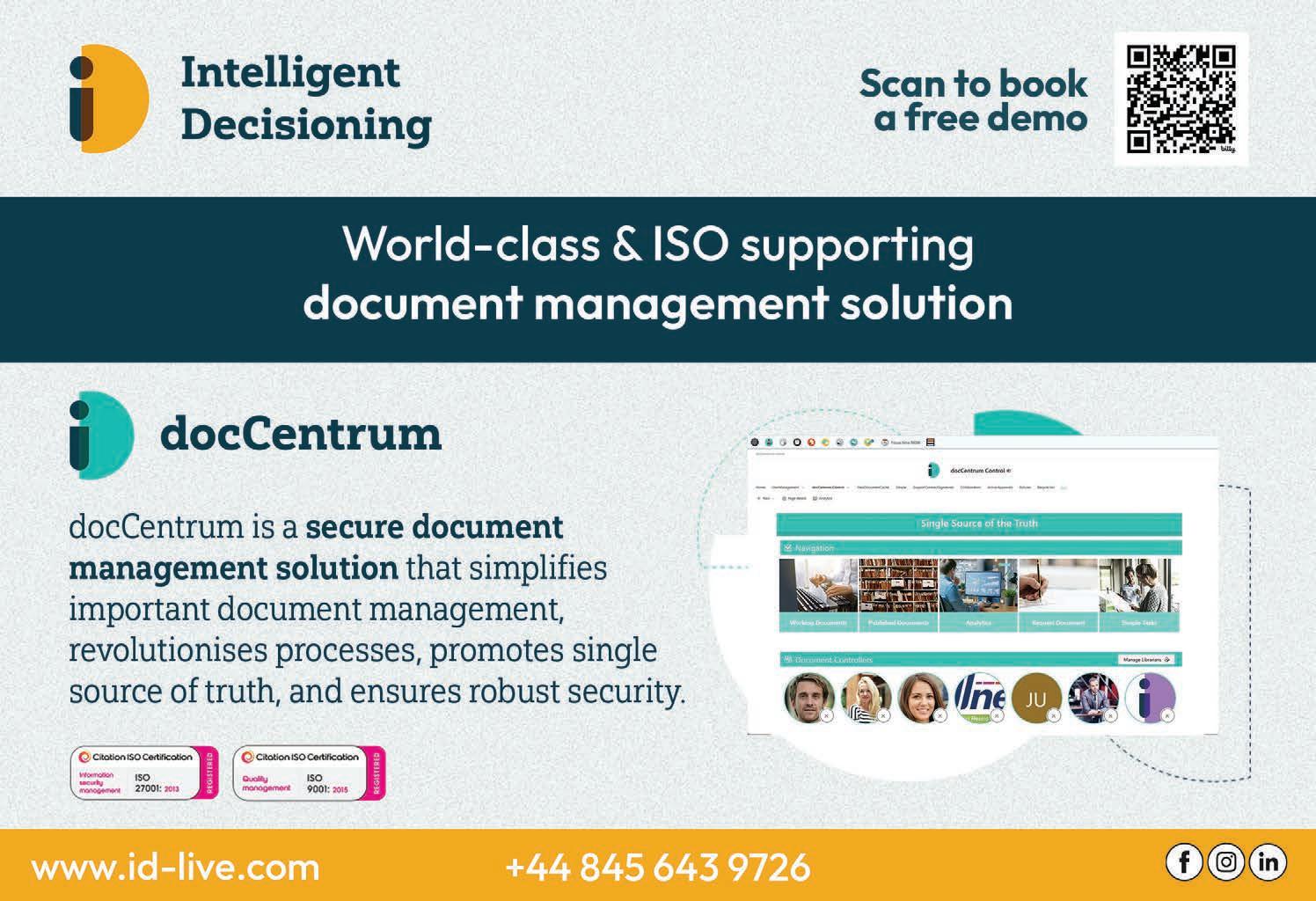
Banner Jones Solicitors has upgraded from a bronze to a silver partner at League One team Mansfield Town.
The deal forms part of the Union Street-based law firm’s ongoing commitment to supporting the communities in which it operates. The deal will also help the Mansfield Town Community Trust.
Banner Jones director and Stags fan Matthew Maiden said: “We are absolutely delighted to be once again supporting Mansfield Town FC and the wider work that the club does through the Community Trust.
“We have benefited hugely through the sponsorship deal over recent months, including attending the quarterly business networking events where we have met many great, local businesses, and we hope to further strengthen our roots in the area by becoming a Silver Partner over the coming season.”
Banner Jones employs more than 130 people, including 21 in Mansfield, and has offices in Chesterfield, Dronfield and Sheffield.
Awell-known figure in the regional law scene has joined a new firm.
Corporate lawyer Roy Botterill, who until last year headed up Shakespeare Martineau’s Leicester office, has joined Leicestershirebased pensions, tax and law specialist WBR Group as its director of law.
Roy began his legal career in the city 36 years ago at Harvey Ingram Stone and Simpson. He qualified as a solicitor in 1990 and went on to become what was then called a company and commercial solicitor.
‘I am thrilled to join WBR Group at such an exciting time in its development’
He became a partner at the firm, by then called Harvey Ingram, in 1997 and an equity partner in 1999, going on to become its head of corporate, in charge of teams in Leicester, Birmingham and Milton Keynes.
He joined Shakespeares in 2011, and less than a year later it took over Harvey Ingram. He became head of the Leicester office in 2013,
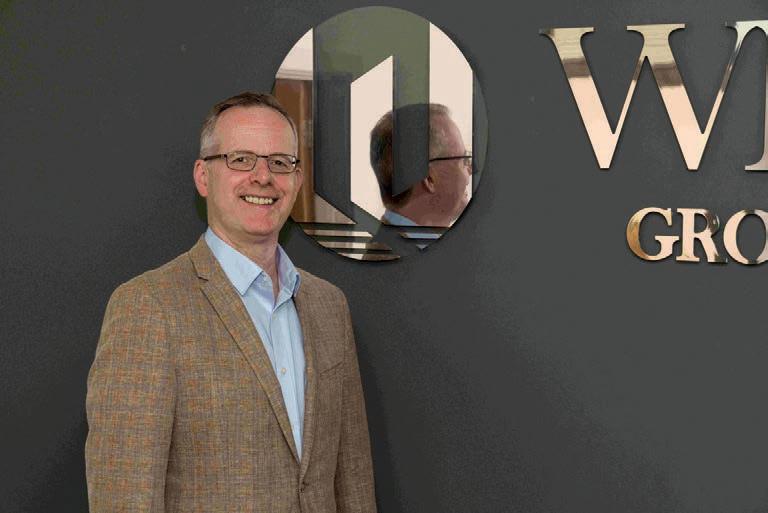
a role he held until 2023.
Roy’s commercial law expertise will be a big part of the service WBR Group offers to clients, particularly SMEs, who are seeking an exit or looking to pass the business down through the family.
He will work alongside Alan Simpson, Michael Conlon and Anne Fendt at the business, which established a legal services division called WBR Law last November. It has teams at its Leicestershire and London offices providing clients with personalised legal services.
Flint Bishop has acquired the entire volume banking & finance recoveries division from Walker Morris LLP, which has seen it welcome 34 new staff to the business.
The move marks the firm’s entry into the Leeds market and enhances its capabilities in broader litigation and recoveries work. It also gives it a springboard to building its full legal services offering across the UK.
Flint Bishop recently revealed plans for significant investments in staff, systems and technology to further expand its national presence in the bank recovery and litigation arena.
The acquisition increases the firm’s total staff to more than 280 and will see Justin Coley assume the role of head of recoveries, with Rebecca Calland and Ellen McLean both promoted to partner.
Other key figures joining from Walker Morris include banking litigation senior associates Georgina Davis and Olena Jarockyj. The firm has also recruited banking litigation

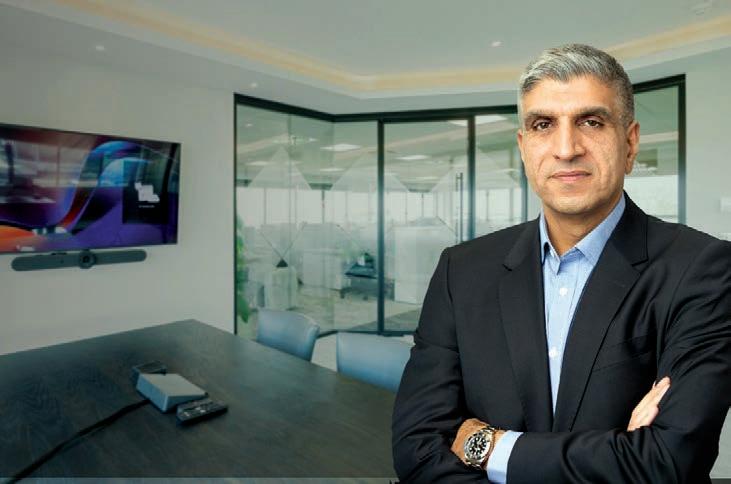
specialist Kate Hicks, from Yorkshire Building Society and formerly with DLA Piper, and Walker Morris, to lead the finance dispute resolution team, which will manage complex and contested banking litigation matters.
Niall Gilhooley, former chief executive of Ascent, a division of Irwin Mitchell, who joined Flint Bishop two years ago, will serve as
said: “I am highly committed to growing the firm across all commercial and private client practice areas, providing opportunities for all, and ensuring our full-service offering thrives across all three locations – Derby, Birmingham, and now Leeds, with other planned locations on the horizon.”
Roy said: “I am thrilled to join WBR Group at such an exciting time in its development.
“The firm’s commitment to excellence and its collaborative, client-focused approach aligns perfectly with my own values.
“I look forward to working with my fellow directors to further strengthen our service offering and to contribute to the firm’s continued success.”
WBR Group chief executive Tom Moore said: “I have known Roy for many years, and I’m delighted he has decided to join us at WBR.”
A company that provides human resources and employment law support has expanded its team to support its growing clientele, which includes firms such as Pedigree Chum and Hellmann Worldwide Logistics.
Derby-based Precept has welcomed back associate Robyn Smith, who has been on maternity leave following the birth of her baby Halle. It has also recruited Kim Ager as its head of HR.
The appointments bring the total number of staff members at the Mansfield Road business – part of the Barron McCann group of companies – to eight.
The firm, which prides itself on avoiding jargon and providing simple solutions, offers employment law support including defending employment tribunal claims, as well as training, online HR resources and outsourced HR.


Vicky Mears

The British Business Bank has appointed Vicky Mears as its new UK network director for the Midlands and north of England.
Vicky has more than two decades of banking experience in roles such as trade finance, relationship management within business banking, senior branch management in retail banking and project management. She also spent five years working with smaller businesses to support their expansion into international markets, getting to understand the issues they face when scaling up and when trying to access finance.
In her new role, she will work closely with senior network managers across the Midlands and the north to gain a deeper understanding of the small business landscape. She will also provide support to entrepreneurs looking to access the finance required to scale up and thrive.
Her appointment will support the business bank’s regional presence and commitment to supporting businesses across the north and Midlands, where access to finance has traditionally been more challenging.
She takes over from Sophie Dale-Black, who held the position for three years.
Vicky said: “Smaller businesses are critical to the UK economy, and I’ve seen first-hand the impact access to finance can have not just for each business, but also the wider economy.

“That’s what attracted me to the British Business Bank.
“It’s a purpose-led organisation that genuinely works to make a difference and support ambitious UK entrepreneurs.
“It’s no secret that market conditions for smaller businesses have been challenging over the last few years, but entrepreneurs should feel confident knowing that there are plenty of finance options and support out there to help them on their growth journey.
‘It’s no secret that market conditions for smaller businesses have been challenging over the last few years’
“Its an exciting time to be joining the bank, and I can’t wait to work with the UK network team across the north and Midlands.”
The British Business Bank is the government’s economic development bank. It was established in 2014 to drive prosperity and help with the transition to a net zero economy, by improving access to finance for smaller businesses.
The organisation’s core programmes support more than £12.4bn of finance to more than 90,000 firms.


the ability of your business to: prevent, adapt, respond to, recover, and learn from operational disruptions.
With our expert consultancy, software, learning, and toolkit solutions, we can help you navigate the complexities of:
• Operational Resilience
• Business Continuity
• Disaster Recovery
• Crisis Management
• Third-Party Risk Management
DON'T MISS OUT ON OUR SPECIAL OFFER: Use code EMC20 for a 20% discount on your purchase.
Visit www.beaconresilience.co.uk and start fortifying your business today.


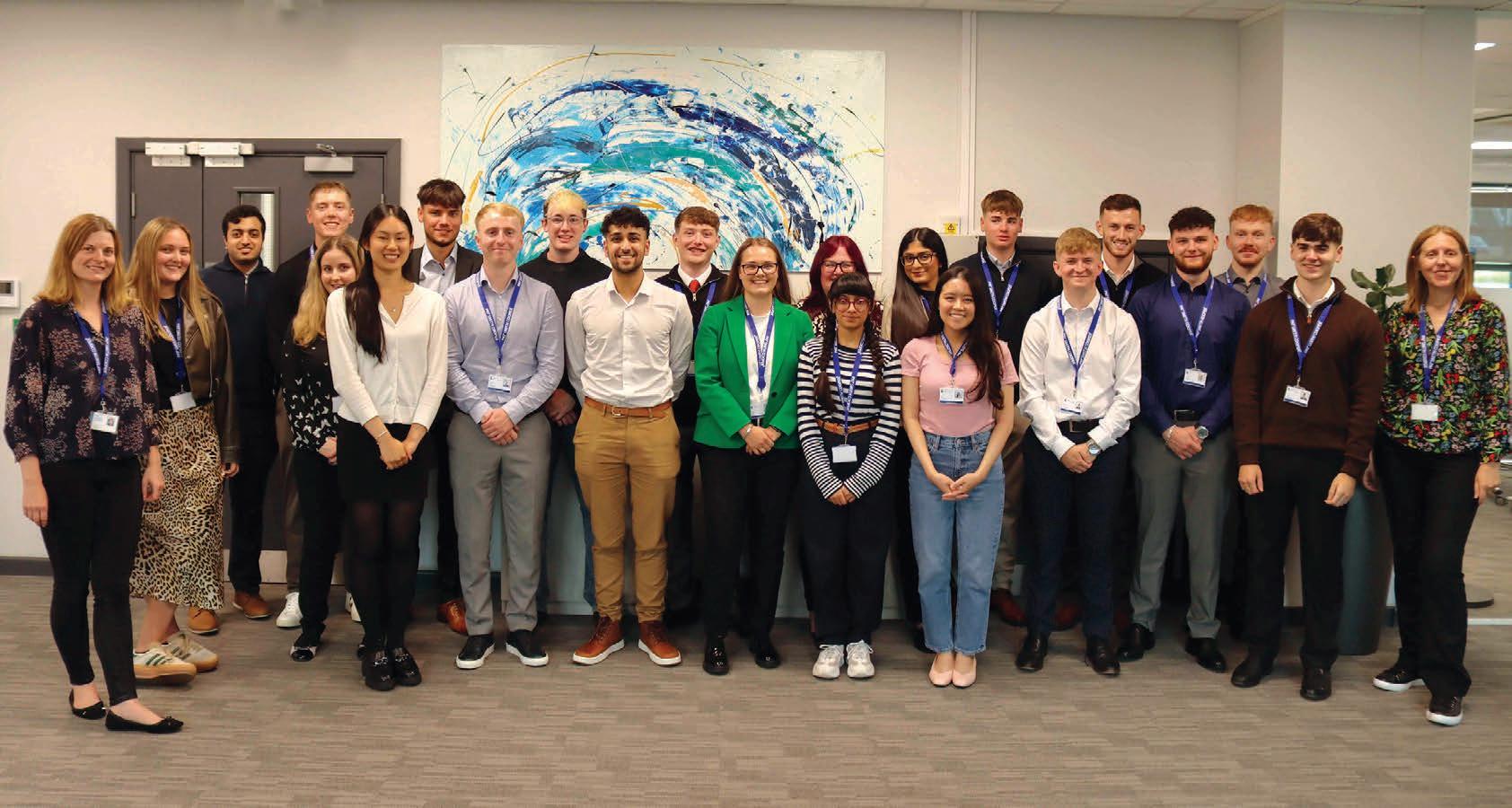
Some 21 future accountants and business advisers have joined the growing team at PKF Smith Cooper – its largest graduate cohort to date.
The latest group of university leavers will bolster the specialist teams across the firm’s Derby, Nottingham and Birmingham offices. The audit division gains 13 graduates, while the business services, corporate finance and corporate tax teams gain two each, and the employment tax and VAT teams gain one graduate each.
Among those welcoming the graduates to PKF Smith Cooper will be the firm’s dedicated learning and development team – which was strengthened with the addition of new hire Qais Hussain in August – which will work closely with
the new starters to support their training and development on the road to becoming qualified accountants.
‘Their success is a shining example to our new graduates of what can be achieved’
Managing partner James Bagley said: “We hope that many of these young people will go on to play valuable roles in the continued growth and success of our firm in the future.
“Our commitment to homegrown talent has
seen dozens of graduates reach their potential and progress through the ranks at PKF Smith Cooper over the years, with some even becoming partners of the firm.”
He also congratulated the 11 trainees that passed their ACA final exams this summer – a 100% pass rate. All but one are now fully qualified accountants.
He said: “The path to becoming a qualified accountant is rewarding but challenging, and it is great to see their hard work pay off.
“With several of these team members also starting at PKF Smith Cooper as graduates, their success is a shining example to our new graduates of what can be achieved with a strong work ethic in the space of a few years.”
A designer and entrepreneur has written a book sharing his advice on how best to become a leader in design.
Chris Johnson (pictured) has more than 25 years of international experience working for global brands, including Speedo, Berghaus, Canterbury of New Zealand, and Mitre.
He launched his own design and innovation consultancy – Chris Johnson Design – in January offering services ranging from strategy through to research, design development and production support.
He has also published his first book, called Design Lead Succeed: 48 Rules for Bridging the Gap from Designer to Design Leader
He said it was written from a practitioner’s perspective, divided into five themed sections that chart the process of becoming an outstanding design leader, and serves as a quick reference guide of rules focused on hints and tips rather than a deep dive into theory.
He said: “Whether you're taking your first steps into management, are a seasoned leader, or are building a team from the ground up, this book is your blueprint for fostering creativity within organisations.”
The Leicester and Leicestershire Careers Hub has secured funding for a two-year project to help new talent get into emerging digital sectors.

We Discover Digital will help young people across the region increase their awareness and understanding of vocational and technical routes into cyber and digital careers.
It will focus on five areas that are experiencing growth but struggling to attract young talent – artificial intelligence, cyber security, games design and animation, programming and coding, and esports.
Digital businesses are also being encouraged to sign up to provide workplace and employer-led support, which will be linked to digital apprenticeship and T Levels.
Gerarde Manley, strategic careers hub lead, said: “We are reaching out to local businesses

to support the project and inspire the future workforce. Our research shows that the digital sector is a key growth sector in Leicester and Leicestershire.
“To maximise that potential, we need to demonstrate to young people the breadth of opportunities available in the digital sector – this programme is specifically designed to do that.”
Businesses interested in taking part in the We Discover Digital programme should contact gerarde.manley@llep.org.uk
Work is under way on Leicester City Council’s first new, purpose-built children’s home for some years.
City mayor Peter Soulsby and deputy city mayor for social care Cllr Sarah Russell, joined representatives of Scope Construction to break ground on the £1.8m project.
The Braunstone scheme is being backed by £800,000 from the Department for Education
and will provide accommodation for seven children, aged between eight and 17.
The two-storey building will have five en-suite bedrooms, as well as two self-contained flats, a staff office and a staff bedroom.
There will be a communal lounge, dining area, kitchen, training room, games room and a vegetable patch, while energy-saving measures will include photo-voltaic panels on the roof and
air source heat pumps. The council-owned land has been vacant for around 10 years and the new property will also act as a training hub for social care staff, foster carers and other professionals.
Maz Patel, managing director of Scope Construction, said: “We are delighted to have been appointed by Leicester City Council to deliver their first new-build children’s home for many years.
“It is great to be breaking ground on this latest project. Scope and our local supply chain take pride in the work we do and we aim to deliver another first-class project for the client and the local community. We look forward to continuing our strong working relationship with the council.”
Leicester City Council appointed Loughborough-based Scope Construction following a tendering exercise, and it will work with Loughborough Architects A+G and Leicester-based structural engineers BSP.

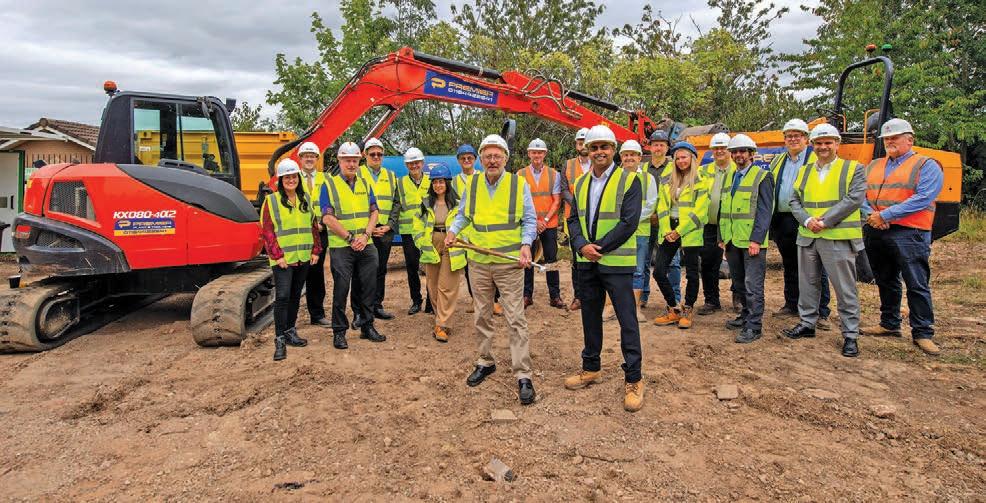
Planning permission has been granted for five new homes in Loughborough, thanks to support from planning, design and development consultancy Marrons.
The Forest Road development will be made up of a one twobedroom bungalow, two threebedroom homes, one fourbedroom home, and a fivebedroom home. Each will have photo-voltaic panels.
To help with biodiversity there will be bat and bird boxes and new hedgerows to create habitat corridors. Existing trees will be retained where possible plus 12 new ones added across the site.
Marrons planning director Sachin Parmar led the planning application with support from planner Ellen Keen.
He said: “We are proud to have achieved permission for a development that not only meets the housing needs of the community but also respects and enhances the local environment.
“Situated in a highly sustainable location, the new development will provide future residents with easy access to local services and facilities.
“The design of each plot ensures ample private amenity space, contributing to a healthy living environment. Large windows and skylights in each home will maximise natural light to promote wellbeing.”
Cllr Russell said: “The vast majority of children who can’t live with their birth families live with foster carers, but this isn’t right for everyone, and increasing demand for children’s social care services in recent years means there has been a significant rise in demand for residential children’s homes. This is the case across the country.”
Warehouse developer GLP has signed up Winvic Construction to build a 761,000sq ft unit at its vast Magna Park site in Lutterworth, south Leicestershire.
The unit, called MPN 761, will be the biggest speculative unit that the developer has erected yet.
It will also take the total size of all units built by Winvic past the 100 million sq ft mark and will be the 64th that Winvic will have constructed with Net Zero Carbon requirements.
It will be 100% PV ready and WELL Building Standard compliant, which will allow the occupier to manage their environmental impact as effectively as their operations.
The completed project is set to be handed over to GLP next June and during the build Winvic will make a

point of providing work for young people, engaging micro, small and medium businesses where possible, providing volunteers for local schools and charities and regular donations to local food banks.
Danny Nelson, managing director of industrial, distribution and logistics at Winvic, said: “I’d like to thank GLP for appreciating our industrial sector expertise and ESG credentials, and for appointing us on this next phase at Magna Park.
“The premier and historic logistics developer is widely acclaimed within the industry for setting new standards in terms of design, environmental management, sustainability, occupier efficiency and local job creation, and we’re proud to now be a part of the Magna Park story.”


Quite rightly, we are all preoccupied with potholes plaguing our roads and bumping up our car repair bills and insurance premiums.
But it’s not all doom and gloom and if you’re lucky you can find some great roads that are in pretty good condition.

I was at the wheel of one of the most exciting and interesting cars I’ve driven in a long time.
The Hyundai Ionic5N breaks rules in so many ways, not least as the first all-electric performance car –and with so many quirky features, it’s great fun, especially when you get the chance to stretch its legs on some great Derbyshire roads.
If you think EVs are boring then the 5N will have you thinking again (as long as you have more than £60,000 to spare), because Hyundai have incorporated some of the lessons learned from the World Rally Car to make a brilliant piece of kit.
The bold front end, side skirts and rear diffuser are only part of the story. Strengthening is a
(hidden) key factor here to enable the vast power output and twin electric motors to get onto the road through strengthened axles.
That comes together to propel the Ionic5N to 60 miles per hour in just over three seconds and onto a top speed north of 160 mph – some mind-boggling figures.
Not only that, but it is very well-
Journalist Nick Jones tests the Hyundai Ionic5N – the first all-electric performance car from South Korea.

MODEL: Hyundai Ionic 5N
PRICE OTR: From £62,600
PERFORMANCE: Top speed: 161 miles per hour 0-60 mph: 3.3 seconds
POWER: 650 horsepower
TORQUE: 740 Nm
RANGE: 270 miles
behaved with amazing grip and stability and feels as good as anything I’ve driven on the road, let alone on a race track. Internally it’s like the control centre of a complex flying machine, and mirror that to the active sound system, which answers the criticism that EVs are quiet and soulless with the absence of feedback from under the bonnet or exhaust.
You can set a range of simulated effects from an eightspeed manual gearbox, with burbles and throttle blips to the sound of a loud jet engine at full thrust. It’s glorious. It’s just a bit of fun... and we can all do with a bit of that on our (mostly) mundane roads.




Chamber president Stuart Dawkins reflects on trends, cycles and the issues the new government should prioritise to ensure the UK’s long-term stability and success.
Idid not expect to have a second year as president of the Chamber. In most businesses a two-year window would count as ‘medium-term’, rather than shortterm. That got me thinking about trends and cycles.
The recent landscape for business has been framed by long-term issues. The recovery from the pandemic. The re-alignment to reflect a post-Brexit Britain. The impact of the financial crisis – over 15 years ago but still influencing the economy. The war in Ukraine, with its surge in energy prices and re-thinking of supply chains and resilience. And, increasingly, the fast-ticking clock of climate change.
I have always been a fan of the Serenity Prayer. You know the one: “God, grant me the serenity to accept the things I cannot change, the courage to change the things I can, and the wisdom to know the difference”. You don’t need to believe in a deity to find it a useful way of focusing attention.
Few of us can do much to change long-term international trends. What, however, can and should we apply our ‘courage’ to?
In the run up to the General Election, businesses told the Chamber they wanted change to a more stable and predictable policy background. This overwhelming theme was backed up by specific policy requests too, as set out in the Manifesto for Growth we produced in March, and which can be found on the Chamber website.
Being Chamber president is an honour for many reasons, among these is that while, of course, one should promote and lobby for the Chamber’s overall aims, one is also encouraged to ‘be yourself’. So, as I am overlooking the Pyrenees as I write the first draft of this article, I am going to go off-piste just a little with a few thoughts (I am in the Pyrenees to cycle up mountains, not to ski down them, but I could not resist the metaphor – sorry about that).
The Chamber’s mission is to enhance communities as well as businesses. From this viewpoint there is, I think, a fairly broad consensus that change is needed in how public services are provided. From the NHS to transport


‘From the NHS to transport to energy to infrastructure to dealing with climate change, I don’t think there are many who believe that UK public services are doing just fine at the moment’
to energy to infrastructure to dealing with climate change, I don’t think there are many who believe that UK public services are doing just fine at the moment.
The new Government clearly tops the list of those who might have the courage to create change in these areas. As I write – the week before the Labour Party Conference – little substantive new policy has been announced, with much awaiting the Autumn Budget in October. The recent General Election does, however, provide the opportunity for a significant reset.
The size of the Labour Party’s majority owes much to the oddities of the UK’s voting system rather than an overwhelming change in the share of the vote for each party – nonetheless a landslide is a landslide. With such an overwhelming majority and as-yet little coordinated opposition, there ought to be the chance for a significant rethink about what we want our public services to do, what quality of services we need, and how to provide a stable framework for businesses who provide the wealth creation which ultimately funds it all.
Health, social care, education and skills, transport, local government, climate change; what might a business do when faced with such a list of things to fix? Well, I suspect it would publicly set clear and honest priorities, and then stick to them.
It would set out to its stakeholders a realistic picture of how much it is all going to cost and how long it is going to take. It would set out targets that are challenging but that it genuinely believes it can meet. It would talk confidently about the opportunities ahead, of the sun-lit uplands achieved once the transition is complete. While it would be flexible in delivering that plan, it would not mess about with key elements on a regular basis. Sadly, such an approach is rare in the rough and tumble of politics.
What priorities would I suggest? I would want a simpler and more equitable taxation system –not further tinkering to a system whose complexities reflect year after year of short-term policy priorities. Pretty much everyone, I think, would want to change business rates. I would want stable, long-term policy that provides incentives for the drive to net zero. I would want a fundamental rethink of what we, as a society, want the NHS to do and how much we can afford to pay it to do that, together with a plan to deliver that model based on targets which are achievable, not unrealistic aspirations. The same for social care.
Delivering meaningful change in any of these areas would be a considerable feat. A government setting out and delivering fundamental, long-term change is rare. Most would consider the setting up of the NHS to be one example. One might argue, depending perhaps on one’s own political viewpoints, that the Thatcher government affected long-term change, maybe the Blair too, but the list is not long.
Do I think change in all of the items in my list is going to happen? Very probably not. But I do hope that the new Government recognises the courage it needs to address at least some of them. Continued incrementalism is unlikely to improve things much.
We shall see.