
Big, bold and beautiful
Wing Drosophila


www.vineyardmagazine.co.uk
VINEYARD
Kelsey Media, The Granary, Downs Court Yalding Hill, Yalding, Maidstone, Kent, ME18 6AL 01959 541444
EDITORIAL
Editor: Rebecca Farmer vineyard.ed@kelsey.co.uk
Features: Malcolm Triggs
GRAPHIC DESIGN
Jo Legg Flair Creative Design jo.legg@flair-design.co.uk
ADVERTISING & MARKETING
Jamie McGrorty 01303 233883 jamie.mcgrorty@kelsey.co.uk
PHOTOGRAPHER
Martin Apps www.countrywidephotographic.co.uk
MANAGEMENT
DIVISIONAL MANAGING DIRECTOR: Steve Kendall
PUBLISHER: Jamie McGrorty
RETAIL DIRECTOR: Steve Brown
SUBSCRIPTION MARKETING MANAGER: Claire Aspinall
PRINT PRODUCTION MANAGER: Kelly Orriss
DISTRIBUTION
Distribution in Great Britain: Seymour Distribution Limited 2 East Poultry Avenue, London EC1A 9PT Tel: 020 7429 4000 www.seymour.co.uk
Distribution in Northern Ireland and the Republic of Ireland: Newspread Tel: +353 23 886 3850
Kelsey Media 2025 © all rights reserved. Kelsey Media is a trading name of Kelsey Publishing Ltd. Reproduction in whole or in part is forbidden except with permission in writing from the publishers. Note to contributors: articles submitted for consideration by the editor must be the original work of the author and not previously published. Where photographs are included, which are not the property of the contributor, permission to reproduce them must have been obtained from the owner of the copyright. The editor cannot guarantee a personal response to all letters and emails received. The views expressed in the magazine are not necessarily those of the Editor or the Publisher. Kelsey Publishing Ltd accepts no liability for products and services offered by third parties.
Kelsey Media takes your personal data very seriously.
For more information on our privacy policy, please visit https://www.kelsey.co.uk/privacy-policy/
If at any point you have any queries regarding Kelsey’s data policy you can email our Data Protection Officer at dpo@kelsey.co.uk
2025: UK wine industry celebrates success 13 Lyme Bay Winery
REGULARS


Matthew Jukes The range of wines at London Wine Fair alone is worth signing up for.
The agronomy diary Jobs for July.
The fungal frontier: friends and foes Vineyard Magazine is delighted to welcome Mark Crumpton as a guest writer.
Representing you WineGB Awards trophy ceremony.
Quality, reliability, and innovative
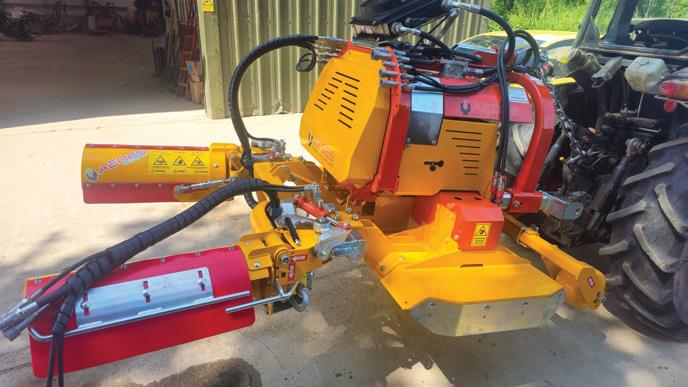
Among the list of machines offered by Aedes is the BioSystem RMF, a professional mower designed with innovation in mind.
FEATURES
Microbial control Deciding the best approach for harvest.


Customer-focused solutions It may be a relatively new player when it comes to supplying vineyard equipment, but Vitimech has made its intentions clear from day one.

CONTENTS Features

20

24

34

Exciting restaurant
The Tern restaurant in Worthing is unique. Alongside the beautiful setting the unique menu choice of serving English Wines is highlighted by the Michelin Guide 2025.
Big, bold and beautiful
The approach to Silverhand Estate has a welcoming sight of row upon row of vines. With 300 hectares of vines Silverhand is the largest single estate organic vineyard in England and Wales.
The big picture Spotted Wing
Drosophila is an invasive fruit fly first reported in the UK in 2012. It was identified at the NIAB’s East Malling site in Kent and has begun to represent an increasingly serious risk to crops ever since.
50
‘Waffle N Walk’ NP Seymour joins WineGB Midlands and North ‘Waffle N Walk’ at Rowton Vineyard.




From the editor
“I keep six honest serving-men, (They taught me all I knew); Their names are What and Why and When And How and Where and Who.”
Rudyard Kipling
Questions have been a constant theme of viticulture. The very origin of vine cultivation for winemaking is surrounded with a host of questions.
This month has seen the release of results from many competitions that have seen English and Welsh wines and spirits awarded much international praise (Pages 12-14). This is a resounding answer to the question: How good are English and Welsh wines and Spirits? The reasons why English and Welsh wines are winning ever greater accolades are not difficult to spot. In so many vineyards and wineries hard work, research and imagination combine to produce not just different solutions to problems but positive forward progress that creates new products and whole new processes such as using an acoustic data to monitor the number of invertebrates living in the soil (Page 10).
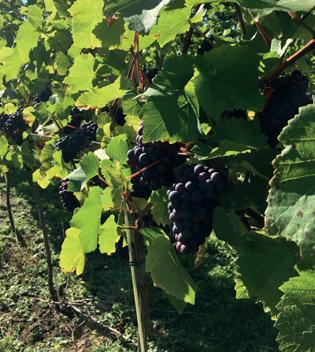
On a visit to Silverhand Estate this month it became clear that the answers to some questions are surprising. Through a variety of measures that have been implemented the biodiversity on the estate is quite breath-taking and trials are constantly undertaken to see what benefits new or different practices might bring in both the winery and the vineyard.
Some questions and answers are simple, and some require years of continuous work, still other questions have answers that are constantly adapting. Sometimes however, the most important questions are not the ones we ask others but are the ones we ask ourselves. Where can I find all the information I need, when should I make up my mind or when should I change my opinion are all questions that make up who we are.
While pondering these thoughts we do have a whole host of excellent English and Welsh wines to ease us through this selfevaluation. After all Kipling did write “after they have worked for me, I give them all a rest.”


Halfpenny Green Wine Estate uncorks stylish label redesign
Halfpenny Green Wine Estate is raising a glass to a fresh new look to complement its award-winning bottles of wine, after revealing a stylish upgrade of its label designs.
The estate’s iconic branding has been given a subtle yet sophisticated refresh, maintaining the classic look customers know and love, while introducing stylish new touches that reflect the craftsmanship inside each bottle.
The new labels, originally designed and now upgraded by The Studio in Tettenhall, blend tradition with a contemporary twist and are created to help Halfpenny Green’s bottles stand out proudly on shelves, tables, and wine racks alike. Halfpenny’s signature coin has been made more prominent, with
the same elegant look and feel remaining.
Halfpenny Green Wine Estate owner Clive Vickers said: "We’re incredibly proud of the wines we produce, and we felt it was time for the labels to reflect that same level of care and attention. This isn’t a radical redesign, but more of a subtle evolution. We’ve kept the essence of our branding, but refined the details to better express the quality and character of what’s inside the bottle.
"It’s about making a great first impression, which we know really matters. We hope our customers love the new look as much as we do."
The updated labels are now rolling out across the full range, and visitors to the estate are invited to take a closer look and share their thoughts during tastings and tours.

Explore England’s hidden wine country
Uncork your next adventure in one of England’s most surprising and scenic wine destinations: the East Midlands. From the sand and shingle beaches and rolling limestone hills of Lincolnshire to the lush green valleys and high moorland plateaus of Derbyshire, to the grandeur of Rockingham Castle in Northamptonshire, the newly launched East Midlands Wine Trail links some of the region’s most exciting vineyards in a way that allows wine lovers and tourists to explore at their own pace, choosing their own route and experiences.
Backed by the UK trade body WineGB and WineGB Midlands & North, this new trail brings together eight characterful vineyards across Derbyshire, Leicestershire, Lincolnshire, Nottinghamshire, and Northamptonshire – offering a taste of the region’s quiet wine revolution, over 50 years in the making.
Well connected via the M1 and A1 corridors, and with excellent east-west rail and road links, the East Midlands is an accessible and richly rewarding region to explore. The trail links not just vineyards, but experiences – from stylish cellar doors and tasting rooms, to vineyard walks and countryside cafés.
Whether you’re pairing wine with Melton Mowbray pork pies, Stilton cheeses, or stopping off after a stroll in the Peak District, or a day of culture and grand gardens at Chatsworth House, Rufford Abbey, the Welbeck Estate, or the Lincolnshire Wolds, the Wine Trail is a gateway to some of England’s most beautiful rural settings and charming market towns like Bakewell, Brackley, Uppingham, Southwell, and Stamford.
“This trail is a celebration of the East Midlands' landscape, heritage, and hospitality,” said Barry Lewis, founder of Amber Valley Vineyard and regional spokesperson. “It’s about showing the world that great English wine isn’t just a southern success story – we have bold, expressive wines being grown and made right here in the heart of England, and they’re waiting to be discovered. And in a part of the country where we have an embarrassment of riches when it comes to culture, landscapes, and natural beauty, which is so accessible and only an hour or so from London by train.”
Visitors can use the trail to plan a weekend getaway, a scenic drive, or even a themed tour – meeting winemakers, tasting award-winning wines, and learning about the unique terroir of each vineyard. With some vineyards having their own accommodation or having places to stay on their doorsteps, planning the journey isn’t difficult.
“I’m thrilled that we now have a shared platform to help visitors explore this lesser-known side of our region,” said Helenka Brown, owner of Hanwell Wine Estate in Nottinghamshire and regional coordinator. “We look forward to welcoming people to our vineyards and showing them what makes East Midlands vineyards and wine so special. And of course there are more fabulous vineyards keen to join and the trail will expand.”
The new website and wine trail: https://eastmidlandswinetrail.co.uk


Below-ground listening devices monitor biodiversity
A new research project funded by Growing Kent & Medway to reduce carbon and increase biodiversity in UK vineyards will use cutting-edge technology to monitor the impact of its trials.
Led by Niab, the research project will see companion plants sown between the rows of vines to deter pests and attract beneficial insects. As well as traditional sampling methods that visually count the number of insects in the plots, an acoustic data survey will capture the sounds of invertebrates living in the soils to monitor their numbers.
The research team will apply chitosan, a natural plant protection product, to the crop during the growing season to help boost the health of the soil and control plant diseases present in the vines. The team at Niab’s Wine Innovation Centre will test the impact of the companion planting and natural deterrents on the final quality of the grapes and wine.
The £50,000 research trial is one of six new projects recently funded by Growing Kent & Medway to advance sustainable innovation in UK plant-based food and farming.
Dr Belinda Kemp, who leads the Wine Innovation Centre at Niab, said: “Planting companion plants within the vineyard alleys will create beneficial associations between the flowers and the vines, enhancing the grapevines' growth, health, and productivity.
“We are taking a holistic view of vineyard management to reduce disease pressure, increase beneficial insects, decrease pests, and increase soil health in vineyards without impairing the grape juice and wine chemistry. We’re also using two types of chitosan (a mushroom-derived chitosan and one made from crustacean shells), which act as a biostimulant and biopesticide, helping to prevent vine mildew and rot vine infections.”
Carlos Abrahams, Director of Ecoacoustics at Baker Consultants, said: “By using ecoacoustic technology to 'listen in' on the soil, we can detect the presence and activity levels of invertebrates that play vital roles in soil health and vineyard resilience. This non-invasive method offers a powerful new way to assess how sustainable practices, like companion planting and biostimulant application, are influencing biodiversity below ground.
“It’s an exciting opportunity to apply cutting-edge ecological monitoring in partnership with Niab’s vineyard team – building on our previous research with growers in the Champagne region."
The trials will be undertaken at Niab’s East Malling Research Vineyard and commercial wine producers, Gusbourne Estate, and Westwell Wine Estate in Kent. Phoebe French, Communications Manager and R&D Lead, WineGB, said: “The proposal represents an important and timely endeavour that will help mitigate economic losses and increase the sustainable solutions to grape growing challenges. This could drastically reduce the need for fungicide applications to prevent diseases in grapevines, by providing an environmentally sustainable strategy to reduce yield losses and maintain crop quality to support the UK wine production industry.”
Michel Lockhart, CEO, Chitolytic, who is supplying significant in-kind contributions to the project and the chitosan product, said: “We’re excited to support this meaningful research, as it can move industry towards more sustainable standards. When we demonstrate that natural interventions, like chitosan, deliver measurable improvements in soil health, pest management, and fruit quality simultaneously, we’re moving towards solving today’s challenges by supporting nature’s intelligence instead of working against. This is critical since sustainability is no longer optional, it’s essential.”
Simon Barnes, Director, Growing Kent & Medway, who funded the trial, said: “Innovation and collaboration for the regional wine sector is a vital element for the success of Growing Kent & Medway. Through facilitating academic excellence into practical delivery, we are able to provide new knowledge to ensure a productive, resilient English wine industry. We look forward to seeing further and greater collaborations of this type with the wine industry to build on four years of partnership-driven innovation facilitated by Growing Kent & Medway.”
You can find out more about the project at this year’s Fruit Focus during the Research Vineyard tour at 12pm, 9 July 2025 at East Malling.
THE VINE POST
Scouting smarter
Staying ahead of vineyard pests and diseases.
Early detection of pests and diseases is crucial for protecting vine health. By blending tried-and-tested observation with modern technology, problems can be spotted sooner – helping vines thrive.
In viticulture, when it comes to managing pests and diseases, early detection is key. A delay in spotting threats can quickly turn a promising harvest into a compromised one with significant crop loss. Today’s grape growers face growing challenges: shifting weather patterns, new pest and disease threats, and the push towards more sustainable practices. To stay ahead, vineyards are adopting smarter ways to scout. By blending traditional field observation with new technology, growers are detecting issues sooner and responding faster – helping vines stay healthier and more resilient.
Why early detection matters
Pests like light brown apple moth, spotted winged drosophila and cutworm can wreak havoc on vines if left unchecked. Diseases like powdery mildew, downy mildew, Botrytis, and grapevine trunk diseases (e.g., Eutypa dieback, Esca) can be equally destructive. Some pests act as vectors for disease, therefore early detection matters. Traditional scouting methods such as visually inspecting vines, are effective but time-consuming and hard to manage in larger or topographically-varied vineyards. That is where smart scouting comes in. Combining human expertise with digital tools helps uncover problems earlier, enabling quicker, more targeted interventions which reduces the reliance on broad-spectrum chemical treatments.
Field observation
Even with the rise of vineyard technology, trained human observation remains invaluable. Skilled workers can spot subtle early signs of trouble – such as leaf discoloration, spotting, curling, powdery growth, lesions, cankers, or dieback – that might not show up clearly on sensors or satellite imagery. Effective scouting should be systematic and methodical, covering a representative cross-section of the vineyard. Particular attention should be paid to high-risk areas: canopy-dense zones, humid microclimates, and previous outbreak sites. Keeping detailed records of pest and disease incidence, location, severity, and vine health helps build a clear picture of seasonal trends supporting smarter decision-making in how the vineyard is managed.
Digital tools
Technology enhances – rather than replaces – traditional scouting.
◆ Drones and aerial imaging: Drones equipped with multispectral or thermal cameras can scan large vineyard blocks in minutes and spot early signs of vine stress – from changes in chlorophyll activity to heat signatures – that might indicate emerging pest issues or diseases long before visible symptoms appear.

◆ Remote sensing and NDVI mapping: Normalised Difference Vegetation Index (NDVI) and similar mapping tools measure plant vigour. Sudden drops in vine health can flag localised problems, such as root-feeding pests or fungal infections like Eutypa dieback, allowing managers to prioritise scouting in those areas.
◆ Pheromone and smart traps: While traditional pheromone traps are still useful for monitoring pest activity, smart traps (using AI and sensors) can identify and count pest species in real time. This helps manage pests, like moths and fruit flies, more effectively. It can also alert managers to disease risk when pests are known carriers.
◆ Mobile apps and digital logs: Scouting apps let workers log both pest and disease symptoms from the field, complete with GPS coordinates and images. Some platforms integrate AI that suggest likely culprits based on photos and input. Digital logging improves data consistency and team communication, turning daily observations into actionable insights.
Smarter scouting, better decisions
With real-time data, vineyard managers can make timely, targeted interventions. Whether it’s applying biological controls, scheduling fungicide sprays, or adjusting canopy management, interventions are more effective and sustainable when precisely timed. This can also minimise chemical use, reduce costs and support environmental goals.
Looking ahead
As technology evolves, we can expect even more innovation (eg, disease prediction tools, automated rovers). No matter how sophisticated the tools become, the human role remains critical. The key to success is integrating the insight of experienced vineyard workers with the precision and speed that new technology offers. By scouting smarter, vineyards aren’t just protecting this year’s harvest – they are building long-term resilience and sustainability for the future.

Vineyard scouting
Photo: © Daria Szoteck (2023)
UK wine industry celebrates success
Bride Valley Reserve Brut 2018
Dorset
Sugrue South Downs, The Trouble with Dreams
Magnum Brut 2009
Sussex


Gusbourne
Single Vineyard Commanders
Chardonnay 2022
Kent


Gusbourne
Single Vineyard
Middle Barn
Blanc de Blancs Brut 2019
Kent
All Angels
Ten Year Anniversary
Classic Cuvée Brut 2014
Berkshire


Langham Wine Estate
Blanc de Blancs NV
Dorset
Vagabond Wines
Nature Series
Cuvée Brut 2018
Sussex


Weybourne
Oriana Brut 2019
Sussex

Lyme Bay Winery
Pinot Noir 2021
Devon

Lyme Bay Winery makes history with four Trophy wins
Devon’s Lyme Bay Winery has made history today at the 2025 International Wine Challenge (IWC), becoming the first English producer to win the IWC National Trophies for the best English White Wine and best English Red Wine in the same year! The winery didn’t stop there, also winning the IWC Varietal Trophies for the same two wines. This remarkable triumph not only cements Lyme Bay Winery’s status as a leading light in English winemaking, but also highlights its unwavering ambition to craft world-class still wines from some of the country’s finest vineyards.
The IWC Trophies went to Lyme Bay Winery’s Martin Lane Chardonnay 2020 and Lyme Bay Winery Pinot Noir 2021.
Comments from the IWC judges included that The Pinot Noir has “Beautiful aromatics of autumn leaves, ripe cherries, dried herbs, and iodine. The palate reveals ripe strawberry and cranberry, with appealing spicy details. A complex, textured finish completes this elegant wine.”
The Martins Lane Chardonnay judges’ notes expressed “Burgundy eat your heart
out! Spry, toasty oak with ripe peach, melon, and apples. Wholesome fresh dry flavours of wet stones, citrus zest and a long, lingering finish. Harmonious and expressive.”
“Our direction is icon level,” commented Clem Yates MW, Lyme Bay Winery’s recently appointed winemaker consultant. “These awards reflect the exceptional work of our team, our growers, and the belief that English still wines can sit on the world stage.”
Operating from Axminster in Devon, Lyme Bay Winery has long term relationships with growers and vineyards in regions including Essex, Kent, Herefordshire, Devon, and Oxfordshire. The awardwinning Chardonnay hails from a single parcel in Martin’s Lane, Crouch Valley – a region Clem describes as “the best in the UK for still wines”. The Pinot Noir is a blend of five carefully selected parcels from Essex.
“This is a massive accolade to the wineries vision,” commented Operations Director Wolf Sieg-Hogg “The entire team has worked tirelessly to get here. It’s a huge moment for us – and for English still wine.”
As the industry continues to define what "English still wine" truly means, in an


interview with the IWC team earlier this week, Clem Yates explained Lyme Bay’s aspiration is clear “We’re not chasing Burgundy—we’re chasing excellence. Over time, a uniquely English style will emerge. But for now, our goal is simple: to make the best wine we possibly can from the best fruit in the country.”
With four IWC Trophies in hand and a growing reputation as a still wine powerhouse, Lyme Bay Winery has firmly placed itself at the forefront of English winemaking’s next chapter.
Wolf Sieg-Hogg concluded. “I am absolutely thrilled for the team to have achieved such incredible recognition through this global competition for our still wines and cellar door. We strive to make the best wines from the best grapes from the best vineyards and to do this it is an absolute team effort. Credit and thanks must go to our full team, our growers across the South of the UK and especially to our vineyard manager Duncan McNeil. Our commitment is to quality and growth and we are very excited for the future of English still wines! “

LONDON WINE FAIR’S BATTLE OF THE BUBBLES
English wines take the top and runner up spots
London Wine Fair’s Battle of the Bubbles took place on the first day of the show – with the results announced on Centre Stage. Twenty-six wines were tasted over two sessions on Monday morning by 16 judges, who comprised a cross section of the UK’s leading palates: Masters of Wine; Master Sommeliers; specialist sparkling wine writers.
The wines were tasted in pairs under exam conditions over two flights: Thirteen pairs of sparkling wines – one Champagne and one Global Sparkling. The judges scored each wine out of 100, which resulted in a grand total for each wine, and a final overall score for each group; Champagne and Global Sparkling. The retail price of each of the wines was thoroughly researched and a calculated GBP per point was awarded. The lowest GBP per point was deemed best value.
The pairings were selected by Sarah Abbott MW, MD of Swirl Wine Group and Ronan Sayburn MS, CEO of The Court of Master Sommeliers. Sarah Abbott said: “We paired the wines partly through a direct correlation of grape varieties, terroir, ageing and style. In some cases, for very distinctive wines, we paired them because they had a similar personality or structure, even if their elements were quite different.”
The results were presented on Centre Stage by Hannah Tovey, Head of London Wine Fair alongside Sarah Abbott and Ronan Sayburn.
◆ Top scoring Champagne: 2013 Cuvée Dom Perignon
◆ Top scoring Global Sparkling: 2010 Nyetimber 1086, UK
◆ Top scoring wine: 2010 Nyetimber 1086, UK
◆ Overall winner: Champagne with 15% difference
◆ Best value: NV Cloudy Bay 'Pelorus' Rosé, New Zealand
The top 10 wines were as follows:
◆ 2010 Nyetimber 1086, UK
◆ 2016 Gusbourne '51 degrees North' UK
◆ 2013 Cuvée Dom Perignon
◆ 2010 Champagne Ruinart 'Dom Ruinart'
◆ 2013 Champagne Taittinger 'Comtes de Champagne'
◆ Champagne Krug Grande Cuvée, 172ème Édition
◆ 2008 Champagne Bollinger 'R.D.'
◆ NV Champagne Egly Ouriet 'V.P Vieillissement Prolonge'
◆ NV Roederer Estate 'Quartet' Anderson Valley, USA
◆ 2019 Graham Beck 'Cuvée Clive' South Africa
As with last year’s Judgement of London, this year’s Battle of the Bubbles was designed to illustrate a section of the fine wine landscape and whether the playing field had levelled in recent years.
Sarah Abbott MW commented: “It was a thrill to select the wines, and to work with these judges. The sparkling wine category is in a very exciting place, thanks to this diversity of style and superb quality. Champagne, of course, is producing wines of exceptional depth and beauty – and all over the world, producers are expressing the beauty of bubbles through their unique varieties, land and methods.”
Ronan Sayburn MS commented: “It was a fascinating experience to taste such a wide range of high-quality sparkling wines side by side. It's terrific to see English wine do so well. Ultimately, Champagne still reigns supreme with the mature Prestige Cuvées showing their class. No wines embarrassed themselves and the best of Spain, Italy, California and Australia showed their unique characteristics which were appreciated by the judges.”

Champagnes: 2,782 points
Global Sparkling: 2,418 points
Judging in progress with Oz Clarke

The judges
Head of London Wine Fair, Hannah Tovey, commented: “Following last year’s seminal “Judgement of London”, London Wine Fair has again delivered a landmark Icon Tasting; not only showcasing the best sparkling wines from around the world but also illustrating – as with last year’s tasting – how closely aligned the best bottles are from the best territories around the world.”
The judges
The 16 judges who participated were:
◆ Elliot Awin, Partner at ABS Wine Agencies
◆ Susie Barrie MW, Writer & Broadcaster, Wine Blast podcast
◆ Sam Caporn MW, Director – The Mistress of Wine
◆ Oz Clarke, broadcaster, author
◆ Giles Fallowfield, Champagne and sparkling wine specialist
◆ Tina Gellie, Content Director of Decanter
◆ Charlotte Gordon, Wine Consultant
◆ Tom Hewson, Champagne Correspondent, Decanter
◆ Henry Jeffreys, author of Vines in a Cold Climate
◆ Alice Lascelles, Journalist at Financial Times
◆ Matthieu Longuere MS, Wine Development Manager, Cordon Bleu
◆ Jane Rakison, Editor and broadcaster
◆ Peter Richards MW, Writer & Broadcaster, Wine Blast podcast
◆ Anthony Rose, freelance press
◆ Joanna Simon, Wine writer, The World of Fine Wine
◆ Siobhan Turner MW, Wine Consultant
The scoring system
The Borda Count scoring system was used. This is a nondictatorial positional voting method which ranks the wines in order and uses a preferential voting scheme to aggregate the rankings. The result has less bias than plurality voting which can give greater weight to judges who put plenty of scatter into their scores.

From farm to flute
E-bikes and English fizz in Herefordshire.
A recent visit to White Heron Estate in Herefordshire revealed just how much the English drinks landscape is evolving – and how the lines between wine, tourism, and heritage are beginning to beautifully blur. Set on a fourth-generation family farm, this quietly ambitious estate has long been known for its blackcurrants –destined for Ribena – as well as apples for Bulmers cider. But it’s the estate’s new foray into immersive wine tourism that’s helping redefine its place on the map.
White Heron’s new e-bike tour programme gives visitors the opportunity to explore the estate’s 200 acres of orchards, blackcurrant fields, and vineyards at a relaxed pace. The 4–7 mile loop – taken on newly introduced electric bikes, offers expansive views of the surrounding countryside with glimpses of the Brecon Beacons and the Malverns on clear days. This tour provides insight into how the estate’s apples, blackcurrants, and grapes are cultivated, harvested, and transformed into products including cider, apple juice, British Cassis, and their recently launched English sparkling wine, produced using the Charmat method from Seyval Blanc, Madeleine Angevine, and Reichensteiner.
The ride culminates with charcuterie, local cheeses, and homemade chutneys, all enjoyed with glasses of Cassis and fizz as the sun set over the vines. It was a simple, relaxed experience that spoke to the estate’s wider philosophy: rooted in heritage, but open to innovation.
The estate’s new visitor programme includes regular group e-bike tours running twice
monthly until late October, priced from £50 per person. Optional add-ons include a picnic lunch or sit-down dinner, making it ideal for those wanting a fuller experience of the land and the produce. Private tours are also available on request, led by an experienced guide and including tastings and a look at the biodiversity of the surrounding landscape.
Also new this year is the White Heron Meander – a three-night guided cycling holiday that explores North Herefordshire’s quiet backroads and black-and-white villages, with stays at both the estate’s converted Victorian stable block and a nearby organic farm. With luggage portage, meals and guiding included, it’s an all-inclusive introduction to the region’s food, farming and rural rhythms.
White Heron also offers a range of selfcatering accommodation, including cottages, a Queen Anne house and the converted stable block known as The Colloquy, with space for groups of up to 23. A pool, jacuzzi and EV chargers offer added comfort, making it a practical yet luxurious countryside base.
The estate also continues to offer yearround walking tours and tastings, including visits to the Cassiserie, where British Cassis is produced. These start from £25 per person for groups of ten or more.
With the addition of e-bike tours and expanded visitor offerings, White Heron Estate is providing a multi-faceted example of how English wine producers can combine farming, hospitality, and sustainability –helping to reshape what rural tourism can look like in Britain.


Celebrating Great British Rosé Week
Now in its fifth year, Great British Rosé Week continues to go from strength to strength – and this year, I had the pleasure of celebrating at the newly opened restaurant and tasting room at Hambledon Vineyard, right in the heart of the South Downs.
English rosé is carving out a distinctive and exciting space within the UK. This week-long campaign has become a brilliant moment in the calendar to reflect on just how far the category has come, and how much promise it holds. Hambledon, with its pioneering heritage and sparkling credentials, provided the perfect backdrop.
Their brand-new hospitality space – a beautifully converted barn set among 200 acres of vines – served as a focal point for the festivities. As part of their rosé week offering, Hambledon hosted thoughtfully curated sparkling rosé flights, which brought out the elegance and depth of their cuvées. Each glass was a reminder

of the craftsmanship and ambition now synonymous with English sparkling wine. The experience extended far beyond the glass. At the helm of Hambledon’s new culinary venture is Head Chef Nick Edgar, whose background includes a Michelin star and time spent under Raymond Blanc. His menu is a celebration of the region: seasonal, produce-led, and precisely balanced. Dishes like Chalk Stream trout with beetroot and horseradish, and Hampshire venison with celeriac and juniper, paired effortlessly with Hambledon’s vibrant wines – rosé included.
Archie Patel is the founder of Wine Away the Day and the driving force behind Great British Rosé Week. What began as a grassroots passion project has evolved into a vibrant platform that celebrates and elevates the best of British rosé. The initiative brings together producers, professionals, and wine lovers to explore and appreciate the true potential of this growing category.


Alice Griffiths
Alice Griffiths is a wine communicator boosting the profile of English and Welsh Wine on social media, under the popular handle of Posing With Alcohol. Alice has worked within the agriculture industry for the past 20 years, spending time as a lecturer and a smallholder before discovering her passion for viticulture, winemaking and wine tasting. Get in touch to have your events featured: ENVELOPE Posingwithalcohol@gmail.com
Alice can be found on social media under @posingwithalcohol on Instagram.
As Archie explains: “This campaign started as a personal passion project – a way to shine a light on a style of wine that has so much to offer. Seeing producers across the country come together to champion British rosé, and now witnessing the growth of events like those at Hambledon, is incredibly rewarding. We’re building something that genuinely brings the industry and its supporters together.”
What stood out throughout the week was not just the quality in the glass, but the collective spirit across the campaign. From longstanding names like Hambledon to newer producers making their rosé debut, there’s a sense of shared momentum. English rosé is no longer an afterthought; it’s a category of intent, of innovation – and of sheer drinkability.

London Wine Fair
The range of wines alone
is worth signing up for.
Gosh, the London Wine Fair (LWF) is an odd place to tour around these days. I remember back in the Eighties, this annual festival was the single most important wine event of the year, both here and abroad. Today, it is a mere shadow of its former self, not least because the spotlight has moved to the slick, glitzy events held in other major cities around the world, which seem to attract incredible crowds and exhibitors alike.
That said, the Hatch Mansfield set-up is exemplary, and the range of wines there alone is worth signing up for the LWF!
The English zone in 2024 was buzzy and popular. This year, it was sparse and a little depressing. I imagine the cost of renting a slot here is prohibitive for most English and Welsh wineries, not least because they all seem to open their wallets in September for the WineGB event. Perhaps WineGB should move its oft-problematic event wholesale to the LWF. It would undoubtedly increase traffic and serve as a fantastic showcase for international visitors to sample our exceptional wines. Either way, there was still a hardy band of wineries who bothered to rock up, and the wines were as enticing and impressive as anything else on tasting at the Fair. I spoke to each standholder, and they were all putting on a brave

face. I do hope they managed to pour their wines for enough interested parties to make their investment worthwhile.
I found a few delicious wines, such as the 2023 Nine Oaks Bacchus (£22.50, www.nine-oaks.co.uk), a newcomer yearning to find friends and delight people’s palates with its floral, crisp, pink grapefruit-tinged wine. 2024 Williams Family Wines Rosé (£20.00, www.williamsfamilywines.com) had their first outing at the Fair, and this wine, in particular, was a beauty brimming with energy and freshness. Made from Pinot Noir and Bacchus, it deserves to sell out fast on the back of being at such a large event. I pray it does.
This month’s column features some stunning discoveries from the Fair. And this takes me back to Hatch and their stellar custodianship of Domaine Evremond. It doesn’t get better than tasting this wine, poured by Patrick McGrath’s daughter, India, and standing next to the man himself. That is why one attends a wine fair, and if the organisers, prospective standholders, and visitors recognise this, perhaps the London Wine Fair will come alive again. At the very least, it ought to be showing the very best wines from our country to the world. Surely, that’s not too much to hope for.
NV Domaine Evremond, Classic Cuvée, Chilham, Kent
Approx. £54.00
www.ampswinemerchants.co.uk
www.bbr.com www.bordeauxindex.com www.corneyandbarrow.com www.corkk.co.uk www.farrvintners.com www.thefinestbubble.com www.fenwick.co.uk www.harrods.com www.hedonism.co.uk www.selfridges.com www.frw.co.uk www.islingtonwine.co.uk www.thewhalleywineshop.com www.secretbottleshop.co.uk www.tauruswines.co.uk www.harrogatefinewinecompany.com
I missed the launch of this wine. It was very well covered in the press, and judging by the fabulous list of stockists, it is already going well.
As you will no doubt already know, Domaine Evremond is a thrilling partnership between lifelong friends Pierre-Emmanuel Taittinger (of Champagne fame) and Patrick McGrath MW (UK wine legend and founder of Hatch Mansfield). Their shared dream was to craft an exceptional sparkling wine in the wilds of the Kent countryside. Ten years in the making, the results are even more beautiful and resonant than I could have ever imagined. The stakes were high, and these visionary gentlemen confounded the critics and nay-sayers, smashing it with their very first release; I cannot recommend it enough.
I tasted it a second time, a week after the Fair, with a group of non-wine trade, and they were collectively impressed. There is something intangible and extraordinary about this wine. The interwoven stories of the families involved, the terroir, the history behind the name (look it up), the patience required, and the singular pursuit of perfection have all resulted in a magical creation. Now they can breathe a sigh of relief as they plot their next release. Hats off to Domaine Evremond.

2023 Sandridge Barton, Don’t Feed the Ponies, Billy Field Blend Light Red
£21.50 www.sandridgebarton.com £25.00 www.delli.market

The Sandridge Barton squad is a lively bunch! Laid back to the point of nearly falling over, and with an array of curios that keep one guessing, I can never predict if I will be in orbit or merely left scratching my head in disbelief when I taste their wines.
This year’s collection is the best yet, with 2022 Pinot Gris Single Barrel Series (£27.00, on sale at the end of June, www.sandridgebarton.com) a truly wondrous being. Old oak cradles the fruit beautifully, making this a hedonistic, bold, and gloriously detailed white.
2022 East Field Pinot Noir Single Vineyard Series (£35.00, www.bbr.com) brings a degree of attitude to the Pinot story, with moments of spicy oak offset by teasing bitterness, wicked stem inclusion, and topped with bold, juicy red cherry fruit.
My headliner is utterly stunning. Billy is made from Pinot Précoce, Pinot Noir and Madeleine Angevine. It is more of a dark rosé than a light red, and it is designed to be drunk chilled. This is a mind-bendingly refreshing wine that enchants the senses and tantalises your taste buds with its pristine PYO notes and pin-sharp finish. Make this incredible wine the soundtrack to your summer!
2023 Oastbrook, White Pinot Noir Approx. £23.50 www.oastbrook.com www.corkk.co.uk www.themodestmerchant.com www.lloydswines.com
I was poured this wine blind by its creator, America Brewer, and I must admit to being stumped.
I know this portfolio pretty well and have always admired America and Nick’s passion and drive. They never put a foot wrong, with each wine bringing identity, flair and accuracy to the party. When the variety was revealed, I was surprised and delighted. There is something curious and intriguing about this still Blanc de Noirs, and it requires a degree of attention and vinous experience to unravel its mysteries. The result is a wine with layers of discreet

forest fruits and uncommon silkiness, and it leaves a halo of flavour that genuine white wines cannot hope to emulate. With a light touch of alcohol (11.5%), you might expect this to be a bright, tangy style of wine, but this is so far from the truth it is incredible. By contrast, there is a luxuriousness here that brings traction, volume, and succulence, and this is why you must track it down. If I had only tasted this wine and its portfolio pals at the Fair, I would have been satisfied!

Exciting restaurant on the south coast
The Tern restaurant in Worthing is unique. Alongside the beautiful setting the bold menu choice of serving English Wines is specifically highlighted by the Michelin Guide 2025.
Johnny Stanford is the Chef and Owner of Tern restaurant which opened in July 2023. Speaking to Vineyard Magazine he explained a little more about this exciting restaurant on the south coast.

“I was already using 98% British produce on my menus, and the idea to have a completely British wine and drinks list was always in the back of my mind. When the opportunity to open my own restaurant came about, it was a now-or-never opportunity. Everything just seemed to come together naturally, so we decided to go all out and try and make Tern a completely
British produce-led restaurant and aim to be as sustainable as possible. “We completely lucked out on the location too, being at the end of Worthing pier with a panoramic view of the Sussex coastline and the South Downs. Everything just seemed to come together naturally.”
Wines at Tern restaurant
Radu Iosif is the sommelier at Tern, he told Vineyard Magazine about the wine menu and the response of guests to the bold choice of only serving English wines.
Tern are launching a crowdfunding campaign on 1 July 2025 to help the business grow and develop. Visit www.ternrestaurant.co.uk for more information

What is the ethos of Tern Restaurant?
At Tern, we’re all about celebrating British produce – both in the kitchen and on the wine list. We focus on what’s in season, and we work closely with growers, winemakers, and producers to make sure the menu feels like a snapshot of the time and place. It’s not about being fancy or trying to impress – it’s about flavour, balance, and creating something that feels honest. The food is thoughtful, but not overcomplicated. The wine is there to enhance, not overshadow. And above all, we want people to feel welcome, relaxed, and looked after.
Why did you choose to become a sommelier?
It started back in Romania, helping my grandparents harvest and press grapes –proper hands-on, barefoot-in-the-barrel stuff. That stuck with me.
Later, working in a seafood restaurant, I saw how wine could really transform a dish. It made me curious. Then, at a five-star hotel, I got more serious – did my WSET courses and started pairing tasting menus with international wines. That’s when I knew I was hooked.
Now I’m fully into British wine – it’s exciting, it’s evolving, and it fits so naturally with what we do at Tern. Pairing it with our menu just makes sense, and the guest response has been incredible.
What do you look for in a perfect food/ wine pairing?
Balance and contrast. I love it when a wine lifts a dish – cuts through richness, brightens up a flavour, or adds a little tension. One pairing I really enjoy at the moment is lobster tail with bisque sauce alongside the Poynings Grange Rosé. The wine has this really elegant red berry fruit - think wild strawberry and raspberry – with a delicate floral lift and lovely acidity. It cuts through the richness of the bisque while still complementing the sweetness of the lobster. It’s one of those combinations that just makes sense.
Balance and contrast.
I love it when a wine lifts a dish


What was the inspiration for an English wine list?

It just made sense. We’re cooking with 100% British ingredients – why not pair it with wine made on the same soil? There’s a purity and connection there that’s hard to replicate.
Plus, English wine has come so far. It’s not just sparkling anymore. We’ve got crisp whites, delicate rosés, interesting still reds – even skin-contact and pet-nats that hold their own. There’s real variety and expression now.
How do you choose the vineyards and wines?
It’s all about character – both the wine and the people behind it. I like working with producers who care about the land, who aren’t afraid to experiment, and who put quality first.
I taste a lot, I visit as many vineyards as I can, and I trust my gut. Sometimes a wine just fits the food and the mood of the room. That’s the one I’ll go for.
How does vintage variation influence the wines you choose?
It’s part of the charm. English wine is so tied to the weather – one year can be lean and mineral, the next rounder and more fruitforward. That keeps things interesting.
Rather than fight it, we embrace it. It gives us a chance to talk to guests about the wine, the year, the story behind it. It’s not about finding the “perfect” wine – it’s about finding the right one right now.

What is the demographic of your customers and how do they respond to the wines?
It’s a mix – some are foodies, some are just curious, some are out for a special night. But they all come with open minds.
Most of them are surprised by just how good English wine is. Especially when you pair it well – that’s when the lightbulb goes off. It’s always fun watching people try something local and fall in love with it.
How knowledgeable are your local customers about English wine?
More and more these days. A few years ago, most guests might have only known about one or two sparkling brands. Now they’re asking about still wines, about specific producers, even specific parcels and vintages.
That curiosity is amazing – it makes my job more fun, and it means we get to have proper conversations around wine.
How do international customers respond to the wine?
Usually with surprise – the good kind. There’s still this idea out there that English wine is all sparkling and all very traditional. When they see the range and quality, it blows them away.
And when they hear the story behind each bottle – the people, the place, the weather – it all clicks.
They go home with a completely different view of British wine.
And finally, what is your favourite wine style and why?
Right now, I’m really into aromatic whites – something with freshness, lift, and a bit of character.
There’s one we pour at Tern from Tillingham, called Endgrain – a still white blend full of elderflower, lime, gooseberry, and floral notes. It’s got this beautiful brightness that works with so many dishes on our menu.
I’m also a big fan of Davenport’s Horsmonden Dry – it’s consistent, clean, and has great structure. And when I want something to finish a meal or pair with a lighter dessert, I’ve got a soft spot for Biddenden’s Schönburger – a dessert wine with lovely texture and balance, never too sweet.
So I’d say I lean toward expressive, elegant wines that enhance food –wines that make you take a second sip and think, yeah, that’s spot on.
We’re
cooking
with 100% British
ingredients – why not pair it with wine made on the same soil?
There’s a purity and connection there that’s hard to replicate.


Big, bold and beautiful

The approach to Silverhand Estate in Kent has a welcoming sight of row upon row of vines. The many commuters who take the journey through Kent to central London each day will be familiar with the vines of Silverhand Estate. With 300 hectares of vines Silverhand is the largest single estate organic vineyard in England and Wales.
Silverhand Estate has a fascinating history. It is believed to once have been the home of Bishop Odo of Bayeaux the half brother of William the Conquerer and the man who commissioned possibly the most famous tapestry of all time.
The Grade I listed Luddesdown Court is one of the oldest inhabited buildings in England and takes its name from the ancient King Lud who may have given his name to the City of London. In fact, a statue of the (possibly mythical) pre Roman king dating from around the 14th century (and believed to be among London’s oldest statues) can

With vines spread across the three counties of Kent, Essex and Sussex, Vineyard operations manager Radu Tanderescu pointed out the vines behave differently across the sites
be found at The Guild Church of St-Dunstan-in-the-West, Fleet Street. Ironically, St Dunstan was Archbishop of London and Canterbury bringing the story back neatly to the trains that daily pass the vines in the heart of Kent carrying visitors to the city of London. With vines spread across the three counties of Kent, Essex and Sussex, Vineyard operations manager Radu Tanderescu pointed out that the vines behave differently across the sites. “The vines in Sussex are ahead of the vines in Kent for the 2025 season,” said Radu.

The original vineyard planting was on 1.6m rows and this means that the machinery operators need to be extremely skilled to navigate these narrow rows. Watching the drivers navigating the rows with something less than breathing room between the cab and the posts is fascinating.
“The newer plantings utilise a 2.2m system,” explained Radu. “There are several reasons for increasing the row width – there is not so much competition between the vines and the vines get more light, obviously it is also easier for machinery to pass down the rows,” he explained.
With so many hectares under vine Silverhand has maximised the use of the latest machinery to aid in the maintenance of the vineyard. A New Holland machine harvester is used on the site in Sussex and two leaf stripping machines are run through the vineyard in Kent after harvest.
“The vines are looking as good as ever,” said Karl Wright Operations Director at MDCV UK. The plans for the vineyard are

Radu Tanderescu
not static and as more vines reach peak production figures it is important for the tasks to be undertaken as efficiently as possible, for example there are already an unenviable six million cuts made at pruning each year so it is understandable that the vineyard needs to mechanise as much work as is possible.
The Kent site has a, unique in the UK, Vitibot fully electric undervine autonomous robot. “It can work a ten hour shift at the same job before it needs a tea break,” said Radu with a smile. He is however quite serious about the work that the robot undertakes. The constant monotonous job of undervine care of hundereds of acres of vines is not a problem for the vitibot which can work through the night if necessary. Being fully electric the Vitibot is also quiet and reduces the carbon footprint of the vineyard.

Photos: © Martin Apps, Countrywide Photographic
Karl Wright

<< At the time of our interview Radu had been involved in frost watch on the vineyard in Kent. “There can be as much as a 3°C variance from the top to the bottom of the valley. The valley can be much lower in temperature than the surrounding area,” said Radu. The vineyard has the latest in weather prediction models utilising Sencrop software “we believe in the technology and we rely on it,” he explained. There are five frost dragons at Silverhand Estate and on nights when frost is predicted these are driven through the vineyard continuously from midnight to 6am. “The site in Sussex makes use of frost fans but these are very noisy and due to the scale of the site in Kent and the surrounding neighbours they are not used here in Kent,” Radu explained.
Silverhand is part of MDCV which also has four vineyard sites in Provence. There is much that is shared across the businesses and Radu explained that the team from the UK had travelled to France
in order to train in the art of mechanical harvesting and had also shared ideas as to how to deal with the increase in disease pressure that had occurred during the 2024 season. “Since we are an organic vineyard we do not have the chemistry to play with in terms of sprays,” said Radu.
The vineyard in Kent sits on very chalky soil and Radu pointed out that iron deficiency can be one of the issues that vines suffer from on chalk. Utilising petiole analysis and regular in depth soil testing allows the vineyard team to manage any deficiencies and apply the appropriate remedies such as foliar sprays.


It is encouraging to see a large estate such as Silverhand work so hard at enhancing the environment


Not all parts of the sites are suitable for harvesting machines and small plots are hand harvested. In Kent the largest of these plots is around 21 hectares in size and Silverhand employ between 60 and 70 staff to accomplish the mammoth task of managing the vineyard. With such a large site and workforce, it is great to see that there is a friendly working environment across the team. This friendly team atmosphere was in evidence at the WineGB pruning competition when Silverhand Sussex and Silverhand Kent teams competed against each other.
With such a large site the vineyard is uniquely placed to trial new ideas. There are seven hectares that are set aside for research and development. Currently this involves the use of straw at the base of the vines which is being trialled in connection with moisture retention, heat retention and weed suppression.
It looks a little unconventional and Radu explained that once the straw was laid it then had to be rearranged a few days later as the birds decided to investigate this new material. In the past hessian matting and wool have also been trialled with soil analysis and petiole testing taking place to measure the impact of each new addition to the vine’s environment. “Of course some of the methods may work well but they also have to be commercially viable at large scale,” said Radu.
Bird predation of the grapes has been a problem at Silverhand and as with many of the issues the site has faced they have approached this systematically. Starlings in particular have been problematic with the early ripening varieties. The estate is currently trialling infrared bird
With such a large site the vineyard is uniquely placed to trial new ideas
The vineyard has also used camera traps to identify other animals that may cause issues such as pheasant and deer. The camera traps have allowed the vineyard team to identify not only the species that may be causing problems but the particular plots of vines that may be susceptible to attack.



Cristina Alves
Wildlife tower
scaring devices. Handheld versions of these devices were trialled during harvest and now the trial has been extended.



“One of the reasons it is important to identify problems correctly is that the entire estate team is keen to work with nature rather than against it,” said Cristina Alves, Conservation Assistant at MDCV UK. Cristina explained that sheep are run through the vineyards during autumn and winter. The sheep breeds are native including Kentish Romney, Hebredian and Jacob.
The estate has many wildlife towers that are out of the public eye, built in keeping with the other listed buildings on the estate and utilising flint from the site. It is encouraging to see a large estate such as Silverhand work so hard at enhancing the environment. There is a unity of thought throughout the team that the business has a responsibility to ensure the environment is improved by its existence. The wildlife towers are designed to encourage species such as owls, bats and kestrels. These species are all valuable to vineyards and Silverhand Estate has worked hard to create spaces, encourage species and enhance the landscape. Silverhand is now part of the North Kent Woods and Downs National Nature Reserve.
With hundreds of acres under vine the winery at Silverhand Estate is currently able to process 80-120 tonnes of fruit a day
Theo Cullen
Rick Friend, Assistant Winemaker
Thaya Russell
The current winery has 91 tanks, the largest of these are two tanks each of 60,000 litres
Cristina quoted some impressive figures to highlight the range of biodiversity that has been encouraged on the site. “In recent surveys it has been found that 70% of all known species of moth visit the site,” she said with pride and enthusiasm. There are also rare orchids such as the fly orchid and the bee orchid. “We are the first vineyard to be carbon negative with no offsetting,” said Emma Clark, Marketing Director of MDCV UK. This is a fantastic achievement, but Emma explained that the objectives go much deeper than simply a badge, an award or a name “it is not about reaching a target it is about maintaining those values,” she said with emotion in her voice.
This atmosphere of creating a better environment is also reflected in the opportunities Silverhand offers to those who

may be interested in working with vines and wines. The vineyard welcomes apprentices, university students, local residents and veterans to work with them “engaging with the local workforce is important,” said Karl. “Driving a local message and encouraging a local product is a central part of our business,” added Emma.
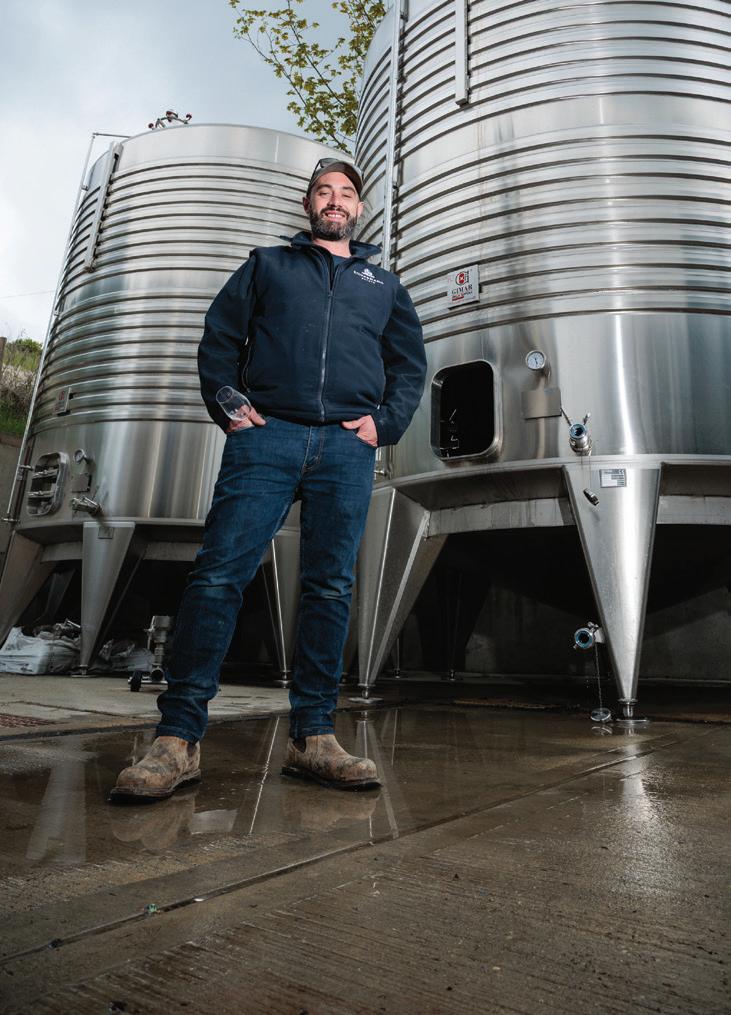
With hundreds of acres under vine the winery at Silverhand Estate is currently able to process 80-120 tonnes of fruit a day. Head Winemaker, Theo Cullen explained that the current winery has 91 tanks, the largest of
these are two tanks each of 60,000 litres. With a line that can complete 2,000 bottles an hour and the ability to complete a pallet in 15 minutes it is vital that the winery has a good circular flow. Current capacity is 1.4 million bottles a year. “Every bottle is vegan friendly,” said Theo whose family have been making wine in the Loire Valley for four generations. “We use pea proteins as fining agents,” he explained. This proves that the inclusive feel at Silverhand Estate runs through every aspect of the business and is literally passed on to the customer.
CROWN CAPS
WIRE HOODS


“We allow yeast from the vineyard to start the fermentation process and continue slow fermentation at 14°C,” said Theo. The winery processes “involve low sulphur use to preserve the terroir taste,” he continued. Whilst the large tanks for charmat method wines are impressive the winery has so much depth in terms of innovation and imagination. As Theo opened the door of tanks that looked conventional on the outside but inside held a secret he explained: “Silverhand Solaris still wine utilises tanks that are a rugby ball shape inside ensuring the lees naturally sink.”
The innovation and imagination in the winery means that Silverhand are able to offer customers searching for organic wines exactly what they want. In the tasting room Thaya Russell explained how the wines are received by those who visit not only the tasting room but The Lion pub and restaurant that is situated at the heart of the Silverhand Estate.
Whilst the large tanks for charmat method wines are impressive the winery has so much depth in terms of innovation and imagination
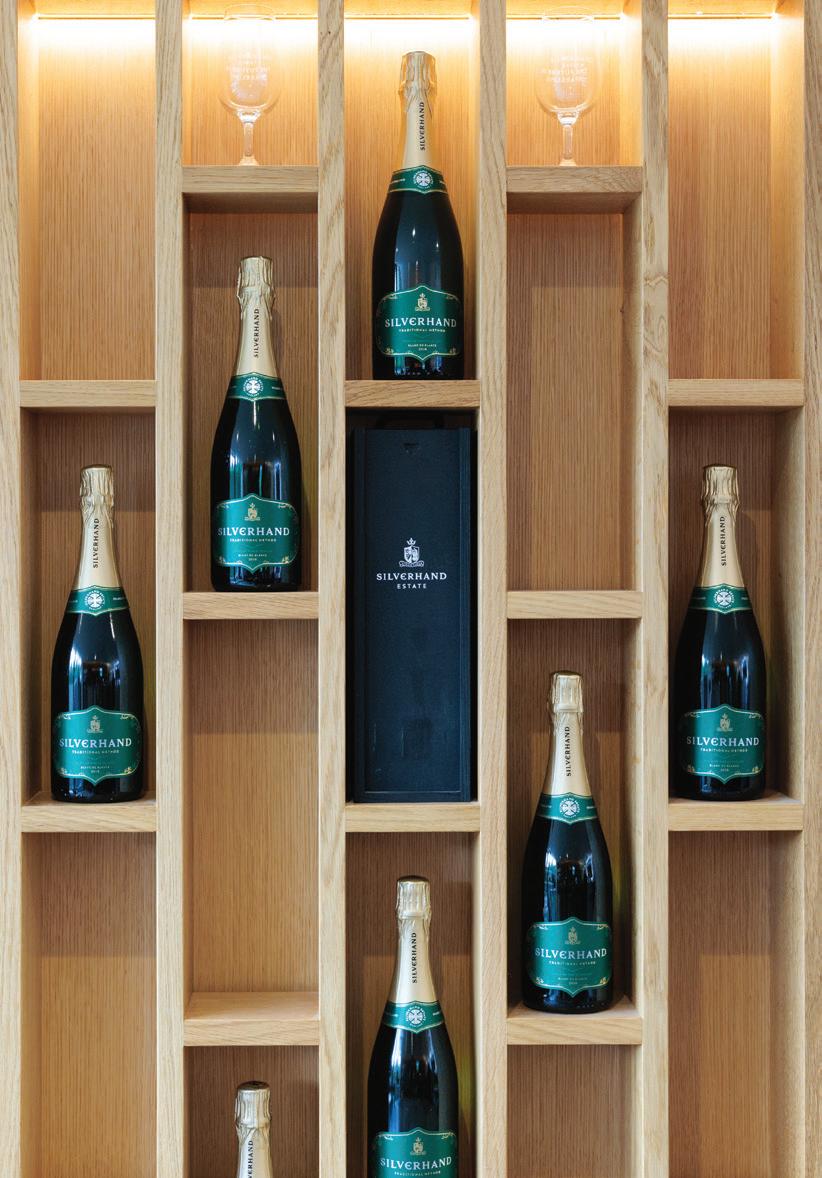
Tastings at Silverhand are able to offer visitors an in depth look at Sparkling wine
Tastings at Silverhand are able to offer visitors an in depth look at Sparkling wine. Silver Reign is produced by the tank method and is a blend of 62% Chardonnay, 19% Pinot Noir and 19% Pinot Meunier with 12.5% alcohol and a price point of £17. Thaya explained: “The wine is an easy drinking wine and very popular.” Thaya continued “We also have Silverhand Classic Brut made in the traditional method.” With 60% Chardonnay, 20% Pinot Noir and 20% Pinot Meunier with 5g dosage the wine will spend three years on lees and retails at £29 a bottle. The two wines are very different in flavour profile. With the charmat method wine having the light notes of elderflower and the traditional method having a creaminess and brioche character plus a hint of peach the tasting experience is unique. Sparkling wines can be a bit like potatoes – if you like them you usually have your favourite method of preparation, roasted, fried, boiled, sautéed or mashed, all still potatoes but surprisingly diverse.


No.
Just proven, highly effective fertilising solutions. If top winemakers, market gardeners, fruit growers, grain farmers, gardeners, landscapers, greenkeepers, and livestock breeders use and recommend OvinAlp, it’s no coincidence!




<< The wines shout their differences not just in the taste and mouth feel but also from the names and the labels. Silver Reign proudly declares itself Charmat of England on the label which is a different shape from the Silverhand Traditional Method Classic Brut. There are also still wines produced at Silverhand and the tasting room allows visitors to experience the difference between English Chardonnay and Solaris. “It is interesting for people to be able to compare the two varieties. With a balanced acidity and flavours of stone fruit and tropical aromas, Solaris is the biggest seller in The Lion,” said Thaya.
Tours and tastings are conducted Friday, Saturday and Sunday and “with three to four tours on these days most of the tour slots are full,” said Thaya. Alongside vineyard tours Silverhand Estate also offer events such as a vine and meadow walk. Educational events also feature as part of the schedule with reptiles, moths, butterflies, funghi and insects of the Downs all topics that will be covered across the spring, summer and autumn. “People realise that they can spend the day here, have a

The wines shout their differences not just in the taste and mouth feel but also from the names and the labels
vineyard tour or nature experience followed by food at The Lion and take some wine home from the shop and tasting room,” said Thaya. The wines produced are capable of getting people to talk and think about English wine. Silverhand Estate have created the perfect tool to celebrate the different styles of sparkling wines and the different varieties produced in England. The vineyard incorporates organic skills coupled with a focus on the natural environment and the local community, combining all of this with innovation and new technologies on a site that is one of the oldest in England. I’m thinking one visit may not be enough!


Jobs for July
Early signs suggest there could be some big crops this season, so Hutchinsons agronomist, Will Robinson, highlights five ways to help vines deliver on that promise over coming weeks.
1. Manage canopies
Trimming the tops and sides of vines contains excess growth and ensures adequate light and air circulation through summer, while targeted leaf stripping further aids UV light penetration, improving bunch ripening and potentially reducing disease risk.
There are two schools of thought on the best timing for leaf stripping. One is to do both sides of the vine at late flowering, exposing developing berries to UV, which improves skin thickness and resilience to sunburn. Mechanical stripping of both sides is relatively quick, however if stripping by hand, it can sometimes be more cost-effective to just do the side exposed to morning sun first, and, if time allows, return to the other side later.
Another approach is to wait until late August, when sunburn risk is declining, then expose fruit to aid ripening and anthocyanin accumulation in the skins. Maintaining a full canopy through July and August can increase humidity though, so close attention to topping, trimming, and spray applications is needed, especially if vines are growing vigorously.
2. Feed crop potential
Crop potential looks very good in many vineyards, possibly in line with 2018 and 2022, so ensure canopies can feed this. A rough rule of thumb is to aim for 50% leaf, 30% bunch and 20% gaps.
When leaf stripping, only remove enough leaf to expose the bunch, leaving sufficient foliage to ripen the full fruiting potential. Be particularly careful if grazing sheep in the vineyard, as they will eat every leaf they can reach.
Tailor nutritional requirements to the results of leaf petiole analysis done at flowering. If vines are not fed well enough via the soil, or leaf, crops may be good this year, but could have more blind buds next season because there isn’t the right nutritional balance in the
vine to support consistent yields.
Given the high yield potential, some growers with young vines may be tempted to take a harvest from second-year growth. This is still very early, but if taking a crop, limit it to one bunch per cane at most, and maintain a good feed programme to avoid compromising future vigour.
3. Control diseases
New extension growth is particularly susceptible to disease, given it has missed the protection afforded by earlier fungicides. Trimming out vulnerable material, and well-timed, targeted fungicides, is key to managing the risks.
We saw last year more Downy mildew on the laterals of primary shoots, particularly where growers stuck to a rigid two-week spray programme, so be flexible, and consider an intermediate treatment (e.g. sulphur + copper) mid-way between conventional treatments to maximise protection if risk dictates.
Some protection, and good canopy management, will also be necessary on resistant PIWI varieties in high-pressure situations.
Removing water shoots can help reduce the risk of Downy mildew spores splashing up onto the main fruiting canopy during heavy rain.
Powdery mildew pressure was high during the spring, and must be kept under control by maintaining a good programme.
Unsettled weather during flowering will increase latent Botrytis risk. Mitigate this with good light penetration and airflow,

plus a robust fungicide programme, based around actives such as pyrimethanil or fenhexamid, both of which can volatilise in warm conditions, potentially improving coverage through the bunch. Biological products, such Amylo-X also offer an alternative to synthetic chemicals.
Watch for signs of early bunch stem necrosis, as risk could be greater with large crop potential. Exact causes are unclear, but we have seen in previous dry years that extra calcium pre-flowering and post-flowering can help build cell walls and reduce risk.
4. Monitor pests
So far, it has been a high-pressure year for insect pests given the warm, dry spring, so continue monitoring for the likes of light brown apple moth, cutworm, and winter moth. Nut scale (Eulecanium tiliae) has also been increasing, but is usually pruned out, or can be easily knocked off the vine.
Vine leaf blister mite is also more prevalent, especially where growers missed the first sulphur spray. There is little that can be done once blisters have formed, as control focuses on when insects are crawling, usually from bud burst to the three-five leaf timing.
5. Plan for next year
It is worth remembering that next season’s flower initiation is influenced by sunlight penetration onto canes that are going to be saved, so ensuring those canes are in a good position and not tucked behind others will help.

The big picture SPOTTED WING DROSOPHILA
Spotted Wing Drosophila is an invasive fruit fly first reported in the UK in 2012. It was identified at the NIAB’s East Malling site in Kent and has begun to represent an increasingly serious risk to crops in England and Wales.
The winged pest, Spotted Wing Drosophila (SWD), hails from Japan and has gradually spread worldwide, targeting soft fruit crops. The transportation of contaminated fruit was the mechanism that allowed the species to cross continents and find new territories.
Unlike Drosophila melanogaster, the common fruit fly found in the UK, Drosophila suzukii is attracted to underripe fruits as well as the ripe and overripe, so it can attack crops both before and during harvest. It has been found across habitats and in a wide range of plant species, including wild blackberries, which helps to explain why it has spread so easily. It is now well established in both woodland areas and cultivated plant hosts. If SWD populations remain uncontrolled, this pesky fly can cause entire crops to be lost.
The decision was taken not to make SWD a notifiable pest in 2012. The EU Standing Committee on Plant Health agreed that due to the nature of the fly’s biology and life-cycle it was unlikely that official phytosanitary measures would help to prevent further spread.
Although different species of Drosophila larvae cannot be identified on sight, the adults have characteristics that can be seen with the naked eye or with a magnifying glass. It is worth keeping

an eye open for SWD when walking the vineyard, paying particular attention to the fruit where they land to mate or lay eggs.
Males have a large spot along the front of each wing, which is bold and distinctive. Females can be recognised by their unusual serrated ovipositor, which may need to be identified through the use of a lens. Located at the base of the abdomen, the saw-like teeth on this appendage allow them to penetrate the skin of the fruit to deposit their eggs. Other species of the Drosophila family do not have this and must lay their eggs in overripe or rotten fruit, where the skin has already been breached.
Red wine grapes are most often attacked when veraison begins, but white grape crops are at risk too, when their sugar levels are high enough. As well as damaging the fruit through piercing the skin and the action of the larvae feeding, SWD attack increases the risk of secondary infections like Botrytis and sour rot.
Population size can increase rapidly. Depending on the temperature, SWD takes a week or two to mature into adulthood, and a single SWD female can lay up to 900 eggs in her adult life. This is why early identification is paramount, and why this occasional pest may become more of a feature in our vineyards as the climate slowly warms.


Year round monitoring is important
The adult Spotted Wing Drosophila overwinters to parent the next generation in the summer. They take a different form in the winter that is better able to withstand cold weather. While the adults fly during mild periods in the winter and spring, they will only lay eggs between May and October. Populations build as the temperature warms, and if they go unmanaged they can reach a peak at the same time as the grape crop moves towards ripeness.
This lifecycle means that year round monitoring of SWD is important so that control measures can be applied swiftly and effectively whenever they are needed. Populations can be attacked and reduced in the winter. Where the flies get through to infect crops, they can be treated, as far as is practicable, to attempt to minimise the damage during the growing season.
There were reports of some fairly large-scale SWD outbreaks causing damage to a number of UK vineyards in the 2023 season, at the end of a relatively long hot summer that created the perfect conditions for their proliferation. Many growers were relieved to find that last year there was a lot less damage, but experts believe that this may be a false assurance. It is suggested that SWD populations were just as high in 2024, but with a relatively cooler summer season the same peak in activity was not observed.
Therefore, vineyard managers are warned not to let their guard down. So far we have experienced a dry, warm spring and the summer is expected to continue that trend – giving SWD just the conditions they need to proliferate again. Forewarned is forearmed, and this is where a cohesive monitoring strategy comes into its own.


Precise and targeted interventions
Spotted wing drosophila, Drosophila suzukii, commonly named SWD causes substantial economic damage to grapevines explains Rachel Turner, Scientific Officer (Entomologist), Russell IPM.
Efficient and effective monitoring provides accurate data, enabling precise and targeted preventative and curative interventions. Saving time and money, improving sustainability, and reducing pesticide inputs.
Fruit collapse and disease potential
Susceptible varieties of grapes begin to be affected during veraison. During this time, the grape skins are more vulnerable as they soften. Female SWD use their barbed ovipositor to puncture the grapes and lay their eggs just below the skin’s surface. The larvae hatch and eat the fleshy pulp within the fruit. Disease potential is increased as secondary pathogens, such as grape sour rot and Botrytis, opportunistically infect the oviposition sites. Once grapes have sour rot, they are unusable for wine production. Fruit affected by Botrytis should be separated and disposed of, requiring increased labour costs. Otherwise, the product becomes tainted.
In short, an infection of SWD can render grapes unmarketable. With this, populations are easily retained and increase in subsequent years. Therefore, monitoring for SWD is imperative.
Managing SWD with confidence
Accurate and timely information about pest populations helps determine when, where, and how to apply control measures. However, monitoring SWD can be time-consuming, costly, and error-prone. From my experience, effective monitoring can be achieved with TruePest SWD. This app enables you to take pictures of strategically placed sticky traps. The app then reports the number of male and female SWD within seconds. This information is relayed to a web portal where you can access a heat map of SWD on your farm and share the data with your team. TruePest SWD differentiates between SWD and non-target species, including other


species of Drosophila. This system allows you to pinpoint SWD and deploy timely control measures, facilitating ongoing review and improvement over time.
Prevention is key
Before veraison, precision monitor for SWD by placing traps around the perimeter of your crop in hedgerows and adjacent wild areas, 1m above ground level over wild hosts such as blackberry and ivy. This helps prevent SWD from infiltrating the crop from surrounding overwintering sites. Female SWD search for oviposition sites; preventing them from entering the crop can significantly reduce egg laying and future generations.
The MaxLure SWD kit provides the most precise mass monitoring tool for SWD. The red trap features a solar-powered light, increasing the attraction of SWD in the evenings when they are most active. Paired with the MaxLure female-biased lure, your SWD catch rate increases by 49% compared to the market standard. The femalebiased lure increases the catch rate of females by 73%, further reducing infestation risk.
Sustainability and biodiversity
It is essential to support and enhance biological control agents on your farm. You can achieve this by targeting pesticides while leveraging the knowledge gained from effective monitoring. Fullrate pesticide sprays depend on direct contact with adult flies and thorough coverage of the cropping area to target the flies effectively. However, you can implement a food bait adjuvant, such as Probandz (ADJ No. 0943). The adjuvant is mixed with pesticide and sprayed as a narrow band on the crop foliage, covering less than 10% of the plant surface. This approach reduces pesticide use and residues by over 90%, helping to preserve your farm’s biodiversity.

Eggs of D. suzukii on Carlotta Pupae of SWD on Scarlotta
Photos: Mediterranean Agronomic Institute of Bari (IAMB) 2014
Male and female SWD
Your Toolkit for Spotted Wing Drosophila


A powerful solar powered SWD light trap in combination with female biased liquid lure. against SWD. Apply the mix as a narrow band on the foliage of the crop, covering less than 10% of the plant surface.
Reduces pesticide use and residues by over 90%
Reduces spray volume and application time, saving labour and fuel costs
Equal or better SWD control compared to full rate sprays
SWD catch rate is increased by 49% vs. market standard
Female biased lure increases catch rate of females by 73%
Reduced number of traps required
Powered by advanced artificial intelligence techniques, TruePest SWD allows you or any of your staff members to identify and count SWD on sticky traps.
Clearly distinguishes between male and female SWD against non-target drosophila
Identify SWD hotspots on your farm in seconds
Deploy control methods with confidence, improving sustainability


Monitoring: Russell IPM and TruePest
Andrew Russell from Russell IPM explains how they are harnessing the power of AI to improve the quality of SWD monitoring.
Their technology, TruePest, was initially developed with soft fruit growers in mind, but it has equal application in vineyards.
How was TruePest developed?
Previously to conduct accurate monitoring a team would go around the set points using a bucket trap where they take the catch in, analyse it through a microscope and get accurate counts from it. That cost more than £500 per trap per year. To operate a team for the whole season with
the correct expertise was very expensive. We were looking at what technologies can be employed to make that identification quicker, easier and cheaper.
We were involved in Innovate projects as an industrial partner with Berry Gardens, East Malling and others over a number of years to look at different ways of improving the monitoring of SWD. One project was trying to develop a static camera type set up. And coming out of that we really thought that it wasn’t really a viable product – the
capital cost per unit at the time was just too high and it wasn’t something that you could deploy at scale on a farm.
You don’t take one soil sample out of the middle of one field, for example. You want a lot of monitoring points in order to get an accurate picture of what’s going on. So we wanted something that we would be able to deploy at scale. We took the work that Durgham Al-karawi, (Head of AI at Russell IPM) had done to develop the AI algorithm and put it into a mobile phone application.


We created TruePest, an AI driven system for monitoring SWD.
There is a lack of people who are skilled [at SWD identification] out there in the industry, and even if you have someone, you could probably employ them better than having their head in a bucket. With our system, you can give them the data and their skills can be better utilised in your organisation.
What does TruePest do?
TruePest is a combination of a mobile phone app and a modified trapping point that you deploy in the field and a web portal. The heavy capital cost bit of it is something that most people already have sat in their pockets now.
You take the reading using your phone and it will give you the count straight away in terms of males and females. It will also fire that data up to the cloud so you have got it accessible to the team and further diagnostics on the system as well.
When you start to take pictures it also gives you a GPS of where each trap is, so then you get a heat map across the whole property with green indicating a number below the threshold and red showing that levels have reached the threshold capacity you have set. We give growers the option to set their own threshold because that can be different across the different types of
crops that are grown, and it might change throughout the year as well.
If you are using the recommended type of phone, which is iPhone 13 Pro and above or Samsung S21 and above, you should achieve 90% accuracy.
How does it work in practice?
You just scan the QR code on the trap, use the lock on your camera and take a picture of the two boxes. In last year’s beta test we used a yellow trap, now we’re using a red one. We knew that red was a more attractive colour to SWD but we had not found the right shade to work well with the phone until now.
There is a dashboard on the website that shows you how many traps you have deployed in any field block and how many of those have been looked at during the last seven days. There is an average trap count available for your chosen species, so you can select male, female or total SWD. And you can keep on going down to the individual trap information.
It is quite accessible and intuitive, particularly if you are managing a team across a number of different locations, to look very quickly at what the situation is on those sites. Typically people are monitoring on a weekly basis. The system has a small lockout to stop you double scanning on the same day.
You don’t need to change the trap every time either. It has a maximum loading, so if it is not full the app will let you know that you can come back and take a reading from it again next week. Realistically at the beginning of the season they might last one to three weeks, and by the end of the season will probably need changing weekly.

Monitoring: Landseer and Trapview
Steven Tully from Landseer Ltd explains why SWD poses such a significant threat, and how trapping can help to protect your crop.
Can you explain why SWD is an issue for vineyards?
Spotted Wing Drosophila (SWD) poses a significant and growing threat to UK vineyards, especially when not actively monitored or managed. Unlike many other fruit pests, SWD lays its eggs inside ripening, soft-skinned fruit, making grapes particularly vulnerable. The resulting larval development occurs rapidly within the fruit, leading to internal collapse that often impacts cluster quality (e.g. acidity and Brix levels).
Adding to the severity of the issue is the potential for secondary infections. The puncture wounds created by SWD as they lay eggs serve as entry points for pathogens, which can lead to fungal or bacterial infections that spoil entire bunches (Botrytis). This not only compounds the direct damage caused by the pest but significantly affects both yield and fruit quality. This damage can be devastating as it typically occurs just as the fruit reaches veraison and nears harvest – potentially undoing an entire season’s work and investment in a matter of weeks.
The threat from SWD has undoubtedly increased in recent years.
The pest has now become established in much of the UK, and its populations appear to be both spreading and fluctuating year on year. Warmer growing seasons and increasingly variable weather conditions have further influenced pest pressure and grape susceptibility. Grapes, being a late-season crop, are particularly exposed when alternative food sources such as wild berries are limited, making them a prime target during peak pest activity.
How can this problem be managed?
Complicating matters further, our available tools for control are shrinking, with fewer active ingredients approved for use. This makes proactive management even more essential. Monitoring and early detection must be seen as critical components of a successful strategy. By the time visible or olfactory signs of infestation are noticeable in the vineyard, the problem is already well advanced. Implementing smart trapping systems, maintaining strict vineyard hygiene, and staying up to date with local pest pressure reports are all key to managing this increasingly problematic pest. <<





SPOTTED WING DROSOPHILA
What kinds of traps are available?
There are two main types of traps used in vineyards, manual and smart remote traps.
Manual traps
These typically consist of a cup with a liquid attractant that lures SWD. The contents are poured through a filter and then examined to identify SWD among many other insects. While effective, this method is labour-intensive, timeconsuming, and requires regular checking and specialist identification skills – often during the busiest parts of the season. Identifying SWD can be a time-consuming task. While males are relatively easy to recognise thanks to the distinctive spots on their wings, confirming the presence of females is more challenging and typically requires the use of a hand lens or microscope to detect their serrated ovipositors.
Remote, smart traps
These work on the same principle, using an attractant and a sticky plate instead of a filter. A built-in camera takes highresolution images of the sticky surface
daily, and AI technology automatically identifies and counts male SWD. This information is then relayed directly to your phone or computer, with optional alert settings to flag when thresholds are met.
Smart traps significantly reduce the time and labour needed for monitoring, allowing vineyard managers to focus on other essential tasks while staying continuously informed. They provide faster, more accurate insights, helping to make timely and effective decisions about control measures.
Ultimately, trapping – especially when automated – helps growers stay proactive rather than reactive, making it a key tool in protecting valuable crops at the most vulnerable time of the season.
Can you tell us a little more about the smart traps offered by Landseer?
When it comes to remote, smart traps in the UK, one of the most established and effective options available to vineyard managers is Trapview, distributed by Landseer. Landseer has worked with Trapview for over a
decade across other crops – particularly top and stone fruit – its use in vineyards is now growing steadily in response to the increasing pressure from SWD.
Trapview is an automated, solar-powered smart trapping system, developed in Slovenia and now used globally. It provides growers with daily high-resolution images of a sticky trap surface, which are analysed using artificial intelligence to automatically detect and count SWD. These images and pest count data are uploaded in real-time to a user-friendly web and mobile platform, giving vineyard managers photographic evidence and up-to-date insights into pest pressure.
An additional feature of Trapview is the integration of pest monitoring with microclimate data collection. Each unit includes built-in temperature and humidity sensors, enabling the platform to use population forecast modelling, including degree day tracking, to predict likely SWD activity and development. This allows for data-driven decision-making and more precise timing of any intervention.


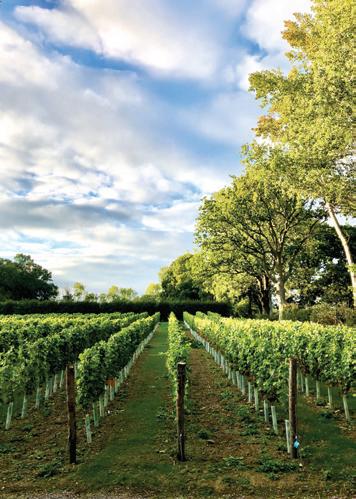
Piwi varieties: The past and future of global wine growing
In a thesis on an unpublished topic, the Italian-Brazilian historian Gil Karlos Ferri, PhD, presents the environmental history of vine genetic improvement and the future prospects of sustainability for the global wine sector.
Although the topic of viticulture and genetic improvement is recurrent in several works produced by oenologists and agronomists, in the historical field there is still a lack of solid research on the subject. Or rather, it did not exist.
Recently, the environmental historian Gil Karlos Ferri, PhD, defended his doctoral thesis entitled “PIWI varieties: viticulture in the Santa Catarina plateau (Brazil) and research on the genetic improvement of the vine from the perspective of global environmental history”, a research that articulates in a pioneering way the human sciences and natural sciences in the field of viticulture, highlighting the work for its academic originality and scientific relevance.
The general objective of the thesis was to investigate the historical and socio-environmental process of viticulture in the Santa Catarina plateau and the research on vine genetic improvement developed by researchers from the Santa Catarina Agricultural Research and Rural Extension Company (EPAGRI) and the Federal University of Santa Catarina (UFSC) with the collaboration of the Instituto Agrario di San Michele all'Adige (Edmund Mach Foundation – FEM, Italy) and the Institute for Genetic Improvement of Vine Geilweilerhof (Julius Kühn Institute – JKI, Germany). Among the various sources used, the following stand out: official documents, technical publications, oral history interviews and photographs.
The thesis presents the fact that the cultivation of Vitis vinifera in the edaphoclimatic conditions of Santa Catarina has represented an economically costly and environmentally damaging challenge, due to the need for phytosanitary treatments to combat fungal diseases. In the search for solutions to this problem, Brazilian and foreign researchers are collaborating in an international project for the genetic improvement of vines and the development of PIWI-resistant varieties (PIlzWIderstandsfähig = fungi-resistant). In this sense, the thesis aimed to present a historical narrative with data and arguments that could make the trajectory of winemaking and its developments with genetic improvement research understandable, based on current

Karlos Ferri, PhD, in front of the Palace of Research and Knowledge, Edmund Mach Foundation, Trento, Italy
discussions on sustainability, the reduction of pesticide use and the mitigation of the effects of climate change through the potential that PIWI-resistant varieties represent for a more responsible winemaking towards society and the environment in Santa Catarina and globally.
Another factor that deserves to be highlighted is the interdisciplinarity with which the thesis was developed. The research was supervised by Professor Dr Eunice Sueli Nodari, national reference in Environmental History and international coordinator of the research network in Viticulture, and co-supervised by Professor Dr Rubens Onofre Nodari, of the Postgraduate Program in Plant Genetic Resources (PPGRGV/UFSC), demonstrating that the theme crosses different and complementary areas, composing a more inclusive historical narrative in its sources and methods. The fellowship period (PDSE/CAPES, 2023/2024), under the supervision of Dr Marco Stefanini at the Edmund Mach Foundation (FEM) in San Michele all’Adige, Trentino-Alto Adige, Italy, was fundamental for understanding the research on genetic improvement in the global scenario.
Finally, the thesis presents as results the dynamism in the search for more sustainable solutions for the production of wines and sparkling wines, as in the case of the current PIWI resistant varieties. In summary, the historical information collected in this thesis can serve as a reference base for work in other fields of knowledge, such as agronomy and oenology, and to provide information to winemakers, wine professionals, sommeliers, wine tourists and other wine enthusiasts. Currently, Professor Ferri continues to conduct research on Italian-Brazilian studies, viticulture and Global Environmental History.
Gil
Photo: Samuele Scudiero
The fungal frontier: friends and foes
Vineyard Magazine is delighted to welcome Mark Crumpton as a guest writer. In the coming months Mark will cover a range of topics relating to both the vineyard and the winery.
When moving house recently, I came across my old botany books. One stood out – a 1967 copy of The Biology of Fungi by C.T. Ingold. Flicking through its pages, the hand-drawn schematics of fungal life stages reminded me just how central these organisms are to viticulture and winemaking.
These simple yet elegant illustrations revealed the complex systems fungi use to grow, reproduce, and interact with their environments. It brought to mind the physicist Richard Feynman, whose famous quote, "There’s plenty of room at the bottom," speaks to the hidden yet powerful role of the microscopic world. In vineyards, fungi operate largely unseen, influencing nearly every aspect of vine biology and wine quality. Understanding and managing them is key to sustainable grape production and quality winemaking.
Fungi play a crucial yet often underestimated role in viticulture, especially within the UK’s cool, damp climate. While some fungi can cause devastating diseases, others are essential to soil health and fermentation. Balancing this dual role is critical for effective vineyard management.
What are fungi?

Fungi represent a distinct kingdom of life, separate from plants, animals, and bacteria. Unlike bacteria, fungi have defined nuclei and feed by decomposing organic material rather than photosynthesis. In vineyards, fungi are omnipresent, inhabiting soil, leaves, grape skins, and vine tissues, often studied using advanced techniques like radioactive tracing.
Problem fungi in vineyards
Three fungal diseases pose particular concern for UK growers: ◆ Powdery Mildew (Erysiphe necator): Appears as a white powder on leaves and berries, reducing photosynthesis, delaying ripening, and impacting wine quality. Traditional sulphur-based fungicides remain effective; however, modern alternatives like potassium bicarbonate and the biocontrol bacterium Bacillus subtilis (which activates the plant’s natural defence mechanisms) are increasingly used. Effective management includes open canopy techniques, precision viticulture for optimised spray timing, grape sorting, and cold soaking to mitigate quality loss during winemaking.

Saccharomyces cerevisiae yeast
Humans and fungi: close relatives
◆ Humans and fungi share a more recent common ancestor than either does with plants.
◆ Both store energy as glycogen (unlike plants which use starch).
◆ Fungi and animals belong to the same eukaryotic supergroup: Opisthokonta.
◆ This close relationship explains why some antifungal treatments can be difficult as fungal cells resemble animal cells more than bacterial ones.
Understanding this ancient kinship reminds us that when we manage fungi in the vineyard, we’re engaging with a kingdom surprisingly close to our own on the tree of life!
◆ Downy Mildew (Plasmopara viticola): This water-loving oomycete fungus causes yellow oil spots on leaf surfaces and a white fungal growth underneath. It spreads rapidly in wet, humid conditions. While copper sprays remain highly effective, their environmental impact has led to increased adoption of biocontrol methods. Additional viticultural practices include early-season shoot removal, improved drainage, trellising for airflow, and weather-based forecasting.
◆ Botrytis (Botrytis cinerea): Known primarily for causing bunch rot, Botrytis poses a significant threat to grape quality in the UK's humid climate. While it can beneficially produce noble rot for sweet wines, uncontrolled infections result in extensive fruit rot. Preventative measures include meticulous canopy management, targeted botryticide applications, and biological sprays. Winemaking adjustments, such as using sacrificial tannins, can mitigate the oxidative impact of the enzyme laccase, produced by Botrytis. Additionally, Botrytis produces β-glucan, a glucose polymer causing haze and clogging, which can be managed using specific enzymes and careful filtration techniques.
Helpful fungi
◆ Mycorrhizal Fungi: These beneficial fungi live symbiotically with vine roots, enhancing water and nutrient absorption and reducing plant stress. Their extensive fungal networks significantly improve soil and vine health. Advances in affordable DNA sequencing are deepening our understanding of their importance. Current research strongly indicates that minimising soil disturbance and chemical inputs, especially copper, preserves their beneficial effects.
◆ Wild and selected yeasts: Fundamental to winemaking, yeasts are single-cell fungi naturally present on grape skins, becoming active once sugars become accessible. Indigenous yeasts (and bacteria) initiate “fermentation”, contributing unique aromatic complexity. While Saccharomyces cerevisiae typically completes alcoholic fermentation, growing research on non-Saccharomyces yeasts has enabled their commercialisation to enhance wine quality and reduce chemical interventions. Examples include Torulaspora delbrueckii, which enhances aroma and mouthfeel, and Metschnikowia pulcherrima, increasingly used as a biocontrol agent sprayed in vineyards and during harvest to outcompete undesirable microbes.

New and emerging fungal concerns
◆ Trunk diseases: Fungi like Eutypa lata and Phaeomoniella chlamydospora infect vine trunks, causing gradual vine decline and eventual death. Recent research highlights the effectiveness of cultural practices such as double pruning, wound protection with biological agents like Trichoderma species, and chemical applications like thiophanate-methyl. Genetic studies also aim to breed vine cultivars with enhanced resistance.
◆ Black Rot (Guignardia bidwellii): Previously rare in the UK, its incidence is increasing due to warmer, wetter climatic conditions. New research focuses on improved identification, rapid diagnostics, and disease forecasting models that enable targeted fungicide application. The exploration of resistant grape varieties and precision viticulture techniques are additional proactive measures being developed.
Biological controls and soil health
Fungi themselves can help manage vineyard diseases. Products containing Trichoderma species protect pruning wounds and suppress pathogenic fungi. Additional biocontrol agents, including bacterial sprays and nematodes, further support soil balance and overall vine health.
Conclusion
Fungi are complex yet vital members of vineyard ecosystems. Despite their potential to cause significant diseases, many fungal species actively promote plant growth, soil health, and wine quality. Enhanced understanding and management strategies can help UK growers build resilient vineyards, improve wine quality, and reduce chemical inputs sustainably. As technological advances and science progress it is fascinating to think what more there is to learn in this hidden world.
Black rot
Microbial control for harvest
Deciding the best approach.
Microbial control is one of the most critical factors in the production of quality wines. During harvest, winemakers are most interested in reducing wild yeast/ bacteria and spoilage organisms from the vineyard before alcoholic fermentation begins. Winemakers today have two main approaches to handle this: the classic approach with sulphur dioxide (SO2) and a more innovative bioprotective approach.
SO2 – classic approach
Sulphur dioxide has long been the antimicrobial and antioxidant of choice for winemakers, and it still is one of the most important preservatives used in winemaking today. From an antimicrobial standpoint, SO2 controls the growth of microorganisms that can damage wine quality. This is mainly due to its molecular form, whose concentration depends on the free sulphur content, pH, temperature, and alcohol content. SO2 is effective in controlling both yeast and bacteria by interfering with the microbes’ metabolism in many ways. Every microorganism has a different sensitivity to SO2; therefore, the quantity necessary to block growth is species-dependent.
Depending on the winemaker’s approach and fruit quality, SO2 may still be the best option. In this case, products that contain a blend of SO2 along with other antioxidant sources like ascorbic acid and gallic tannin, such as the Enartis product AST, are especially useful. These three components work synergistically to provide microbial and antioxidant control during grape transport and to remediate compromised fruit infected with Botrytis cinerea.
Alternatives to SO2 use – bioprotection approach
While it is easy to understand why sulphite additions are a useful tool, winemakers are working towards limiting their use, both in response to market demand and to expand their approaches in vinification. Another important aspect to consider is climate change; in recent vintages, there has been a trend towards higher pH levels in must and wine. This consistent rise in pH comes with lower effectiveness of SO2, requiring higher doses of sulphites. Reducing the use of SO2 has multiple benefits, and because of recent innovations in oenological products, winemakers now have the tools to combat unwanted microbes using bioprotection methods. Bioprotection includes the use of biological control agents and nature-based substances to reduce microbial populations and ensure a healthy environment for alcoholic fermentation.

Chitosan is a natural polysaccharide produced from Aspergillus niger, displaying various bioactive and antimicrobial activities depending on its activation during production. For the harvest period, Enartis offers EnartisStab Micro M, an allergen-free and vegan-friendly bioregulator containing activated chitosan and yeast hulls rich in chitin-glucan. It is specifically developed
for the treatment of turbid musts and wines. Its powerful antimicrobial activity depends on the pre-activation process used by Enartis during production. This pre-activation activity involves increasing the positively charged surface of the chitosan, which interferes with the negatively charged residues on the microorganism’s cell membrane surface and thereby alters its membrane permeability, resulting in cell death. On grapes, in the juice pan, in must, and during cold soak, EnartisStab Micro M reduces wild yeast and bacteria populations, thus limiting volatile acidity and other off-flavour production. Its use before and even during fermentation results in cleaner fermentations while also allowing winemakers to use lower SO2 amounts due to its microbial and antioxidant capacity. New from Enartis and available this harvest is another bioprotection tool that involves the use of living organisms: non-Saccharomyces yeast (Metschnikowia pulcherrima). Developed by The Centre of Excellence for Research in Microbiology (CERM), EnartisFerm Q MCK naturally protects red, white, and rosé must from microbial contamination during harvest (on grapes), pre-fermentative stages like static clarification, flotation, cold soak/extended maceration, or stabulation. In situations where winemakers have great fruit quality, it allows for the extraction of the grapes’ full aromatic and colour potential.


•
• Site clearance and demolition


Knowledge where it counts is critical to providing the right cooling system to ensure produce is kept in excellent condition during
Specialists in controlled atmosphere stores
Rapid chilling systems for soft fruit and fresh produce
Secondary cooling systems with energy efficient defrosting using air source heat pump technology
Retrofitting of existing high cost electrical defrost heaters with air source heat pumps
Electrical engineers and contracting
Refrigeration and Electrical service, maintenance, and breakdown cover
Testing and certification to NICEIC
Mains power solutions for distribution and installations
Temperature controlled wine storage solutions using DX or Secondary refrigeration with heating options
Qualified to install EV chargers
Refrigeration gas leak detection systems
F-gas compliance and record keeping
Refrigeration system controls with remote monitoring
07418 005959
+ Award winning company + Supply only or supply & erect + Construction all over the UK Contact us for a free quotation: 01269 831831 enquiry@shufflebottom.co.uk www.shufflebottom.co.uk





Representing you
Working in partnership with Vineyard magazine for a developing UK wine industry.
WineGB is the national association for the English and Welsh wine industry. WineGB represents, leads, and supports the sustainable growth of the Great British wine sector.
If you are interested in wine production in the UK find out more about WineGB and join us. Visit our website www.winegb.co.uk
WineGB Awards trophy ceremony
Join us at Southwark Cathedral to celebrate the best of British.
Join us on 17 July at Southwark Cathedral for the UK wine event of the year! From 6pm to 8:30pm we’ll announce this year’s cream of the crop at the WineGB Awards.
This year we’re thrilled to announce that the ceremony will be MC’d by Jancis Robinson MW, with a keynote speech delivered by Hugh Johnson OBE.
Taste medal and trophy-winning wines, catch up with friends, enjoy delicious canapés provided by The Clink Charity, and celebrate our industry in our new look location.
Special offer for WineGB members: buy three tickets and get your fourth free,
available until 29 June. Scan the QR code to claim your £65 discount.
Celebrate the talent within our winemaking and vine-growing community and bid a fond farewell to outgoing WineGB Chair, Sam Linter.
A big thank you to our headline sponsor Rankin, regional sponsor Riedel, best in class sponsor NFU Mutual, and our individual trophy supporters AE Chapman & Son Ltd, Campden BRI, Carling Partnership, Carpenter Box, Core Equipment, Enartis, Ferovinum, Gravetye Manor, Paris Smith, The PIG and WBC.

Claim your member discount

Non-members buy your ticket

Nominate your English Wine Ambassador
Do you work with someone in wine retail or hospitality that goes above and beyond to support your business? Do you work in the trade and have a passion for English wine? This English Wine Week we are on the hunt for 10 English Wine Ambassadors from among the UK on-trade and off-trade.
Successful candidates will receive an invitation to this year’s WineGB Trade and Press Tasting on 8 September and a bottle of English
sparkling in a presentation box. Those based 60 miles or more from London will receive £50 towards travel costs.
The 10 English Wine Ambassadors will also be entered into a draw to win a spot on a trade and press trip taking place in September. Those interested can apply or be nominated: https://form.jotform.com/251263699250057.
Entries close on 29 June.
Photo: Tom Gold Photography
DATES FOR THE DIARY
21-29 June 2025
English Wine Week
24 June 2025
WineGB Awards medallists and trophy shortlists announced
28-29 June 2025
Vineyards of the Surrey Hills Summer Spectacular
29 June 2025
Vineyards of Hampshire Fizz Fest
29 June - 13 July 2025
Plumpton College – WSET Level 2
30 June – 2 July 2025
Plumpton College –Principles of Wine Business
30 June – 2 July 2025
Plumpton College – Advanced Principles of Winemaking –Winery Harvest Operations
7-11 July 2025
Plumpton College – Advanced Principles of Winemaking, Pre-Fermentation Must Amelioration and Fermentation Operations
7-13 July 2025
Plumpton College – Principles of Winemaking Intermediate Level
15-17 July 2025
Plumpton College – Principles of Vinegrowing, Crop Protection
Share our English Wine Week Consumer Competition
For the first time, we will be running two competitions – one for consumers and one for the trade – during this year’s English Wine Week (21-29 June).
The consumer competition, run in conjunction with The PIG Hotels, offers the chance to win the ultimate English wine weekend for two. The prize comprises a two-night stay at The PIG in the South Downs complete with a wine pairing experience and a hamper of English wines to enjoy at home. The stay will also include a behind-the-scenes vineyard or winery tour at a nearby estate. Scan the QR code to enter or visit the link

below to download the assets to share with your customers: www.winegb.co.uk/wp-content/uploads/2025/06/Copy-of-English-Wine-Week-Consumer-Competition.png
17 July 2025
WineGB Awards Ceremony, Southwark Cathedral, London
8-10 August 2025
South Coast Wine Festival
2-6 September 2025
Plumpton College – Principles of Vinegrowing Intensive
8 September 2025
WineGB Trade & Press Tasting
‘Waffle N Walk’
NP Seymour joins WineGB Midlands and North ‘Waffle N Walk’ at Rowton Vineyard.
NP Seymour, a specialist Fendt and fruit and vine machinery dealership and longstanding WineGB patron, was delighted to be invited to the latest WineGB Midlands and North “Waffle N Walk” event at Rowton Vineyard, just outside Ford in Shropshire, on Friday 6 June 2025.
The gathering provided vineyards from across the Midlands and North of England with an opportunity to meet, catch up, see essential pieces of viticulture equipment, and discuss their vineyard requirements with NP Seymour’s team.
“It was brilliant to travel up to Shropshire to meet with WineGB members who can’t always make it down to our Kent and Sussex demos,” said Claire Seymour, director at NP Seymour.
“It was a valuable day for all and the perfect opportunity to catch up with familiar faces and meet newcomers to the industry in a relaxed setting. Face-to-face demos allow us to provide growers with a more rounded understanding of the machinery options, models, and manufacturers that will best suit their individual needs, far beyond what they have read in a magazine, seen on social media, or looked at in a catalogue.”
Hosted at Rowton Vineyard and making use of the newly constructed barn, the event began with tea, coffee and biscuits at 10 am,

where attendees were able to chat, take a look around the fully equipped Fendt tractor, and inspect a range of Felco manual and battery-powered secateurs.

Ian Sargent, chair of WineGB Midlands & North, welcomed guests and introduced Zoe Evans of Rowton Vineyard, before handing over to NP Seymour’s specialist salesperson, Tim Sillence.
Tim provided an overview of the key machines the team had brought up from Kent, which had been carefully chosen as they are ideally suited for vineyards of a comparable size to Rowton, with around five to ten acres.
Suitable for all growers, Fendt’s 200 V/F/P series is specifically designed for fruit and vine growers. As Tim explained, the range offers many more specification options, which are essential for those with long-term plans to expand their area under vine.
“There is nothing worse than seeing a grower struggle because their tractor does not have enough spool valves or hydraulic capability to run the machines they need to manage their orchard or vineyard efficiently and cost-effectively,” said Tim.
On show at the demo was a 100hp Gen3 210V model with front linkage and pto, suspension, four spool valves, a 3L joystick
and an additional 12’’ monitor, that gave event attendees the chance to see a wide range of optional features.
While Fendt may be considered a premium vineyard tractor option, the 200 V/F/P range has proved in trials to be more fuel efficient than competitors, and that, combined with Fendt’s reputation for strong residual values, means that the overall lifetime cost is incredibly competitive.
Rear-mounted on the Fendt was an OCLL NPA air-assisted directional sprayer. The Carrarospray range from OCLL has always been popular with growers, with the economically priced sprayers being particularly sought after by small to medium sized vineyards.
“NP Seymour has stocked OCLL since the mid-1980s, and our customers have commented on how well-built they are and how many years of reliable service they provide,” said Tim.
The air-assisted NPA model is available with tank capacities of 400, 500, or 600 litres and offers effective and efficient coverage thanks to its eight adjustable sprayer hands.
Tim then moved on to discuss the singlesided Braun Rollhacke rotary star tiller.

Growers looking for further information on the featured machines, including Fendt’s specialist 200 V/F/P tractors, OCLL Carrarospray sprayers, Braun mechanical weeders, BMV trimmers, Fischer mowers and Felco secateurs, are encouraged to contact the NP Seymour sales team via email at sales@npseymour.co.uk or by calling the office on 01580 712200.

A familiar machine to many, the Rollhacke is one of the most popular mechanical weeders on the market. Thanks to its straightforward, inertia-driven design, it has proven itself well-adapted to different soil types, is easy to adjust, and is low-maintenance.
“When the Rollhacke is mid-mounted on the tractor, to save time and fuel, operators can get their mechanical weeding done at the same time as other repetitive jobs like spraying and mowing,” said Tim. “Rollhackes can also be fitted to Braun’s other modular carrier frames with other mechanical weeding tools, like horizontal finger weeders, if a more comprehensive set-up is needed.”
Moving to the front of the Fendt, attention then shifted to the BMV E600A vine trimmer. Configurable with two to five side knives and optional top or bottom bars, this model is ideal for single-row, small-scale operations.
The front-mounted BMV E600A single-sided vineyard trimmer at the demo was the most popular set-up with four side knives and a top bar to give a 1.5m side and 0.5m top cutting or 2.0m side cutting height.
Finally, once in the vineyard, Tim also gave an overview of Rowton’s own Fischer mower. The robust and compact vari-width GL4 blade mower features swing-wing arms that are hydraulically controlled by sensors, allowing for accurate mowing right up to the base of the vine to control weeds without the use of herbicides or mechanical weeding tools.
Following Tim’s talk, event attendees moved to the vineyard to see some of the machinery operated by Sam Barnes, NP Seymour’s viticultural sales adviser and owner of the vineyard contracting firm, SJ Barnes Ltd, which freed Tim and Claire up to answer any questions the growers had.
After the demonstration, attendees gathered in the barn for updates from WineGB Midlands & North, provided by chair Ian Sargent from


Laurel Vines. Ian then handed over to Zoë, who provided an insight into Rowton Vineyard, taking attendees on another walk around the vines to discuss some of the new practices being introduced, such as gentle pruning and the use of chicken manure pellets.
“We had a fab day,” said Zoë Evans, viticulturist at Rowton Vineyard.
“NP Seymour delivered great knowledge and a great selection of kit. It was much appreciated by all.”
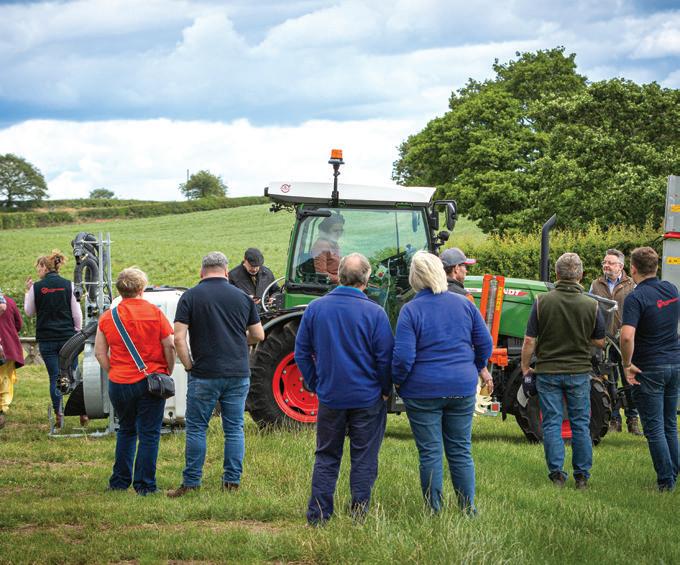


“Friday was thoroughly enjoyable and we pass on our thanks to Claire, Tim, Sam and Victoria for making it possible,” said Ian Sargent, chair of WineGB Midlands and North. “It was a brilliant event and I am sure a lot, if not all, of the members who attended will have got a lot out of the day.”
Following the event, NP Seymour would like to invite WineGB regional committees interested in hosting similar demonstration events to get in touch.
Customer-focused solutions
It may be a relatively new player when it comes to supplying vineyard equipment, but Chichester-based Vitimech has made its intentions clear from day one.
By focusing on quality machinery manufacturers such as Collard and Calvet, alongside the immensely versatile Avant range, the ‘new kid on the block’ is promising to deliver customer-focused solutions to both existing growers and new entrants to the industry.
And while Vitimech has only been around since September of last year, its close ties with long-established parent company Chichester Farm Machinery means it can also offer a wide range of other quality equipment that cuts across the groundscare/viticulture divide.
Another string to the talented team’s bow is its in-house designers who can adapt a wide range of vineyard machinery to fit the impressive Avant range of loaders which can already be fitted with around 200 pieces of kit.
The flexibility of the Avant range has inspired Vitimech to put together a package of vineyard equipment that is designed to support new vineyard owners, particularly in the first few years of vine establishment when the cash flow is only going one way.

James Brett, sales manager for the new company, said the idea was to fit an Avant 760 loader with a Collard LZP polyvalent frame that could then be used with a vine trimmer, leaf remover or pre-pruner.
“That would give the smaller vineyard all the equipment needed to establish and care for their vines, plus a flexible loader and multi tool, for about the same cost as a high-end vineyard tractor,” he pointed out.
The supplier’s impressive range of quality machinery, including mowers, trailers, compact tractors, mulchers and telehandlers, was all on display at a well-supported open day held by Chichester Farm Machinery and Vitimech at the companies’ base at Leythorne Nurseries just outside Chichester, in the heart of the South East’s wine growing area.
One visitor, long-standing customer Jack Newcombe of JN TreeCare Ltd, described his Avant as “a game changer”, adding: “I use it every day and wouldn’t be without it.” He uses the loader with a range of equipment, including a mulching head, bucket, forks, a rotating
Managing director Lewis Ramm


Sofiane Dahou from Calvet

head for tipping IBCs and a road sweeper.
Vitimech was set up in response to customers asking for replacement parts for Collard machines they had bought direct from the French manufacturer, which is based in the Champagne region and invented the world’s first vine trimmer in 1962.
“We could see a growing demand for a product of this quality in this part of the UK and so we started talking to Collard about the possibility of becoming a supplier,” explained Lewis Ramm, managing director of Chichester Farm Machinery.
With Vitimech on board as the sole UK distributor for Collard, the French manufacturer introduced James and his team to Calvet, a leading sprayer manufacturer with a well-deserved reputation for quality machinery that has a strong foothold in UK vineyards.
At the open day in early June, the company’s export sales manager Sofiane Dahou was on hand to explain the benefits of Calvet’s precision sprayer technology, particularly its drift prevention, operational precision and powerful fan.
“We are confident that the combination of Collard and Calvet, together with smaller tools from Infaco and the flexibility of the Avant range, will allow us to meet the needs of growers,” said James, who added that Vitimech was close to concluding a deal to supply vineyard cultivation equipment from a major Italian manufacturer.
In addition to the specialist vineyard equipment, Vitimech can also supply a wide range of other machinery including Teagle flails, mowers and spreaders, Bomford Turner and Kirogn hedge trimmers, Stiga ride-on mowers, Grasshopper zero-turn mowers, Iseki compact tractors and Marshall trailers, including one designed with central wheels to suit the pivot-steer Avants.


Customer Jack Newcombe with a Bomford Turner Flailbot
James Brett
Chichester Farm
Machinery sales manager
Steve Everton



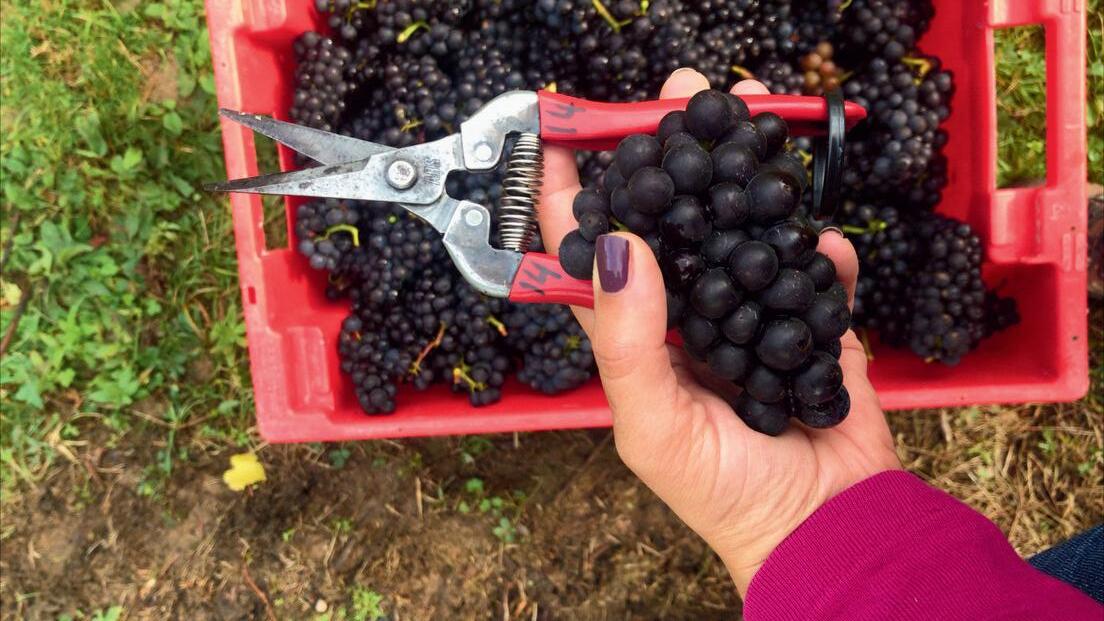


$15m raised to replace chemical herbicides
RootWave, the UK-based pioneer in electrical weed control, has successfully raised $15 million to scale its sustainable, chemicalfree solution for eliminating weeds – including herbicide-resistant varieties – using electricity.
The round was led by Clay Capital, a specialist food and agriculture venture fund, with participation from Agri Investment Fund – the investment arm of the Belgian collective Boerenbond Group – as well as vineyard-focused Xinomavro Ventures, Naruhisa Nakagawa, founder and CIO of Caygan Capital, Jorge Heraud, former CEO and Co-founder of Blue River Technology (acquired by John Deere), and returning investors V-Bio Ventures, Rabo Ventures and PYMWYMIC. The round includes $3 million in debt facilities provided by Innovate UK as part of the UK’s Future Economy initiative.
At a time when agrifoodtech investment has fallen to its lowest levels in five years, RootWave’s success underscores the urgent demand for sustainable agriculture solutions.
The $40+ billion herbicide industry is facing unprecedented challenges from herbicide-resistant weeds and tightening regulation due to safety concerns. While alternative solutions such as mechanical, laser, and thermal weeding have emerged, RootWave stands out for its unmatched combination of efficacy, cost competitiveness, and safety. Its market leading technology eliminates weeds without damaging soils or crops, with field performance rivalling that of chemical herbicides.
Untreated

12 days after treatment

RootWave manufactures tractor-mounted implements using its patented high-frequency electricity that delivers exceptional performance, achieving up to 99% kill rates in a single pass during independent field trials. Compatible with conventional, regenerative and organic farming systems, the technology helps farmers protect yields and profits while safeguarding human health and the environment. RootWave has commercial sales in the UK and has also secured international manufacturing and distribution agreements, including a partnership with leading mechanical weeding company, Garford Farm Machinery. The company is actively conducting trials with several other agrimachinery manufacturers to expand distribution across Europe, with plans to enter the US market thereafter. RootWave’s electrical weeding technology is suitable for a wide range of crops from tree, bush and vine crops, to row crops including vegetables, broad-acre, and cereals.


Kubota adds Value Line Steering to its guidance portfolio
Kubota (UK) Ltd has introduced an entry-level auto-steer package to its range of guidance solutions for agricultural and ground care machinery.
Priced from £5520 (ROI €6000), and sourced through Topcon, the kit is called Value Line Steering and is available through the Kubota dealer network. A wide choice of accuracy options are available to suit operational needs and budgets, which extend from 15cm passto-pass accuracy down to 1cm – the latter when using an RTK signal.
The Value Line Steering kit includes the XR-1 GNSS receiver with built-in gyroscope and accelerometer, XW-1 electric steering wheel and 10in, XC1 in-cab touchscreen terminal. Integral software has eliminated the need for a mechanical wheel angle sensor, simplifying installation and set-up.
“This new kit offers customers a price-sensitive package that delivers auto-steering functions to improve operational efficiency and reduce operator fatigue,” explained Jonathan Rook, Kubota
UK’s product manager for agriculture. “The Value Line Steering kit brings affordable precision to any Kubota machine equipped with a steering wheel.”
Through Value Line Steering, operators can get access to any steering pattern required, including straight, centre pivot, curved and custom guidance lines. In addition, more advanced features such as Steer-to-Boundary, Guidelock and Headland Turns are also available, along with basic ISOBUS implement control.
The EGNOS Value Line Steering kit is priced at £5520 (ROI €6000), while those seeking higher accuracy can opt for an RTK Value Line Steering kit, costing £7545 (ROI €8200). The latter requires a 12-month RTK signal subscription costing £650 (ROI €700).
While the Value Line Steering kit can be self-installed, an optional installation service is available, costing £695. The Topcon Value Line Steering kits come with two years warranty and two years customer support.

Quality, reliability, and innovative

VITIFRUIT
EQUIPMENT

Established in the 1940s, Aedes supplied building materials and agricultural equipment to customers in Northern Italy after World War II, hence the name being derived from Latin, meaning "house, temple, construction." In the 1970s, the company’s agriculture division separated in to manufacturing specialist machinery for fruit and viticulture in Italy. Today, Aedes has broadened its reach across Europe and has built a strong reputation for delivering quality, reliability, and innovative machinery.
Among the list of machines offered by Aedes is the BioSystem RMF, a professional mower designed with innovation in mind. This robust mower is engineered for grass cutting and inter-vine grass removal on both sides of the row in a single pass, buds are also removed due to the Inter-vine strimmer spinning vertically. All this is packaged into a short machine specifically designed to be easy to manoeuvre in tight headlands and available in 11 different cutting widths from 1.10m to 3.65m.
The mowing deck is driven by the tractor PTO, with power being delivered through an integrated freewheel. When the tractor PTO is

shut off the flywheel prevents inertia from the mowing deck being transferred back into your tractor, thus ultimately protecting the tractors internal PTO packs from damage. Power is then delivered through gearboxes to the cutting blades, the advantage of a Gearbox is that they do not need adjusting, are robust, can handle higher torque and speeds, and have a longer lifespan than drive belts.
At the rear of the mower, are the BioSystem inter-row arms. These hydraulically driven strimming heads are each fitted with 32 robust double-headed 6mm strimmer wires with Kevlar cores for durability. What’s more, they can be easily controlled from the comfort of the tractor cab and can be deactivated when you prefer to focus solely on mowing.
Designed for efficiency, the inter-row arms feature gas springs allowing the BioSystem strimmer head to really get in-between the vines for effective grass removal, with no damage to the stem and removing unwanted buds.
A Biosystem RMF is also available, featuring a flail cutting head that replaces the mower blades but offering all the same features and benefits. www.aedes.bz