• Farm business & estate management • Planning & development • Subsidies & grants • Land sales & acquisitions • Viticulture • Succession • Biodiversity net gain • Ecology • Natural capital • Residential and commercial property letting and management 01892 770339 www.c-l-m.co.uk Farm business consultants with our roots in the South East April 2023 Est 1982 DIVERSIFICATION The list of opportunities is almost endless SHOWS Shows return with a full livestock programme REFLECTS OPTIMISTIC START TO SPRING FLYING HIGH
Make money by planting trees
Tree planting can complement your farm business, giving you the chance to diversify, generate extra income, increase farm productivity, and enhance your land.
TIMBER




CARBON UNITS




WOODFUEL







LEISURE ACTIVITIES
IMPROVE SOIL QUALITY






SUPPORT BIODIVERSITY
NATURAL FLOOD MANAGEMENT
PROTECT CROPS & LIVESTOCK
Grants and advice available now from the Forestry Commission and our partners.
Visit gov.uk/plant-woodland

SOUTH EAST FARMER
Kelsey Media, The Granary, Downs Court
Yalding Hill, Yalding, Maidstone, Kent, ME18 6AL 01959 541444
EDITORIAL
Editor: Malcolm Triggs
Email: sef.ed@kelsey.co.uk
Photography:
Martin Apps, Countrywide Photographic
ADVERTISING & MARKETING
Jamie McGrorty 01303 233883 jamie.mcgrorty@kelsey.co.uk
GRAPHIC DESIGN
Jo Legg 07306 482166 jo.legg@flair-design.co.uk
MANAGEMENT
DIVISIONAL MANAGING DIRECTOR:

Steve Kendall
PUBLISHER: Jamie McGrorty
RETAIL DIRECTOR: Steve Brown

SUBSCRIPTION MARKETING MANAGER: Claire Aspinall
PRINT PRODUCTION MANAGER: Kelly Orriss
DISTRIBUTION
Distribution in Great Britain: Seymour Distribution Limited
2 East Poultry Avenue, London
EC1A 9PT
Tel: 020 7429 4000 www.seymour.co.uk
Distribution in Northern Ireland and the Republic of Ireland:
Newspread
Tel: +353 23 886 3850
Kelsey Media 2023 © all rights reserved. Kelsey Media is a trading name of Kelsey Publishing Ltd. Reproduction in whole or in part is forbidden except with permission in writing from the publishers. Note to contributors: articles submitted for consideration by the editor must be the original work of the author and not previously published. Where photographs are included, which are not the property of the contributor, permission to reproduce them must have been obtained from the owner of the copyright. The editor cannot guarantee a personal response to all letters and emails received. The views expressed in the magazine are not necessarily those of the Editor or the Publisher. Kelsey Publishing Ltd accepts no liability for products and services offered by third parties.
Kelsey Media takes your personal data very seriously. For more information of our privacy policy, please visit Kelsey Media takes your personal data very seriously. For more information of our privacy policy, please visit https://www.kelsey.co.uk/privacy-policy/ . If at any point you have any queries regarding Kelsey’s data policy you can email our Data Protection Officer at dpo@kelsey.co.uk.
www.kelsey.co.uk
Cover picture: Olivers ©www.kevinmilnercountryside.co.uk
FEATURES
23 DIVERSIFICATION
Diversifying your farm can involve anything from changing the actual production from your land to starting a business in a disused barn; the list of opportunities is almost endless.
31 SOUTH EAST FUTURE OF FARMING
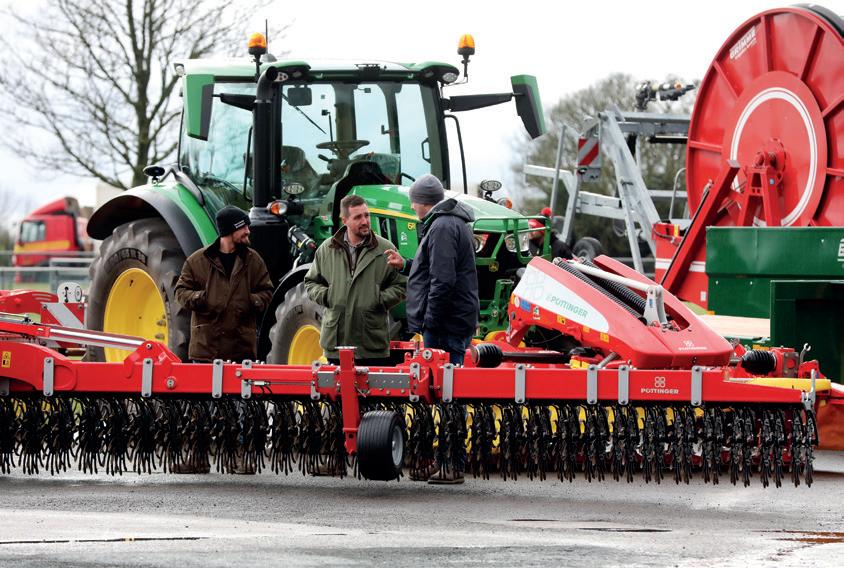
A major farming event has been announced to celebrate the opening of the exciting new AgriFood Centre at Plumpton College.
34 SHOW PREVIEWS
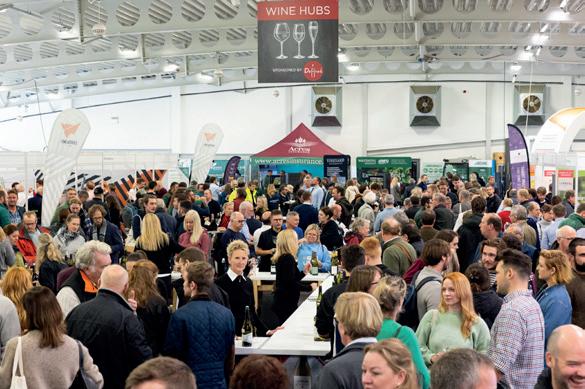
Shows across the region return with a full livestock programme.
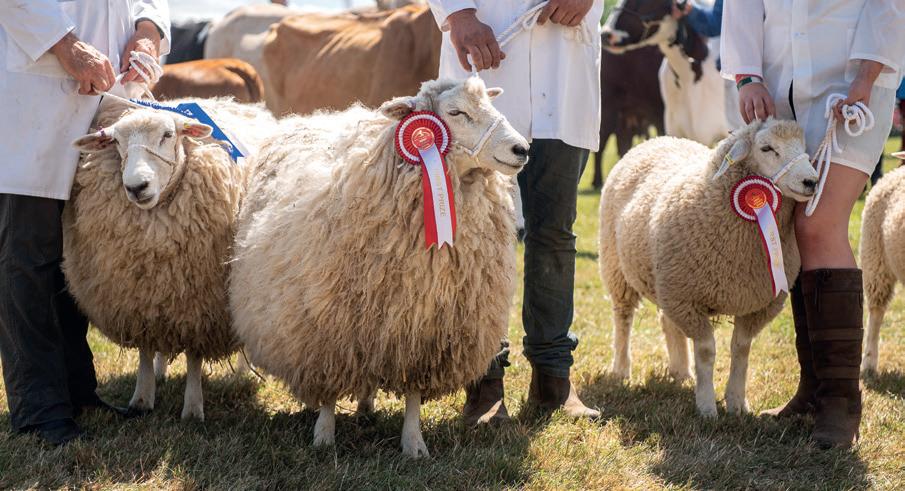
41 OLIVERS
A 200 year-old family business that prides itself on matching traditional values with a modern outlook celebrated its anniversary with an impressive open day.
69 FARM SUPPLIES
There aren’t many retailers who would ask a customer to carry out a long-term trial of a potential new product line before deciding whether or not to stock it, but that’s exactly what Farm Supplies is doing.
NEWS & REPORTS 04 Success for propagation business. 05 Pick-ups for peace. 06 UK regains wheat record. 07 Solar farms can increase biodiversity. 09 Feeling of optimism at Farm Expo. REGULARS 14 MONICA AKEHURST Dream of a new livestock building comes to fruition. 16 NIGEL AKEHURST VISITS... Nigel visits South East Marts Ltd to find out more about their ambitious plans to develop a modern, state-of-the-art market. 39 SARAH CALCUTT 53 STEPHEN CARR 55 ANITA HEAD 56 NEWS FROM THE VINEYARD 64 ADVICE FROM THE VET 65 NICK ADAMES 66 ALAN WEST 72 LEGAL 75 LAND AND FARMS APRIL 2023 CONTENTS 9 23 www.southeastfarmer.net
® 34 In association with
November 2023
Event Centre, Detling, Maidstone, Kent ME14 3JF SAVE THE DATE 2023
22nd
Kent
Sponsored by Vitifruit Equipment Sales and Hire
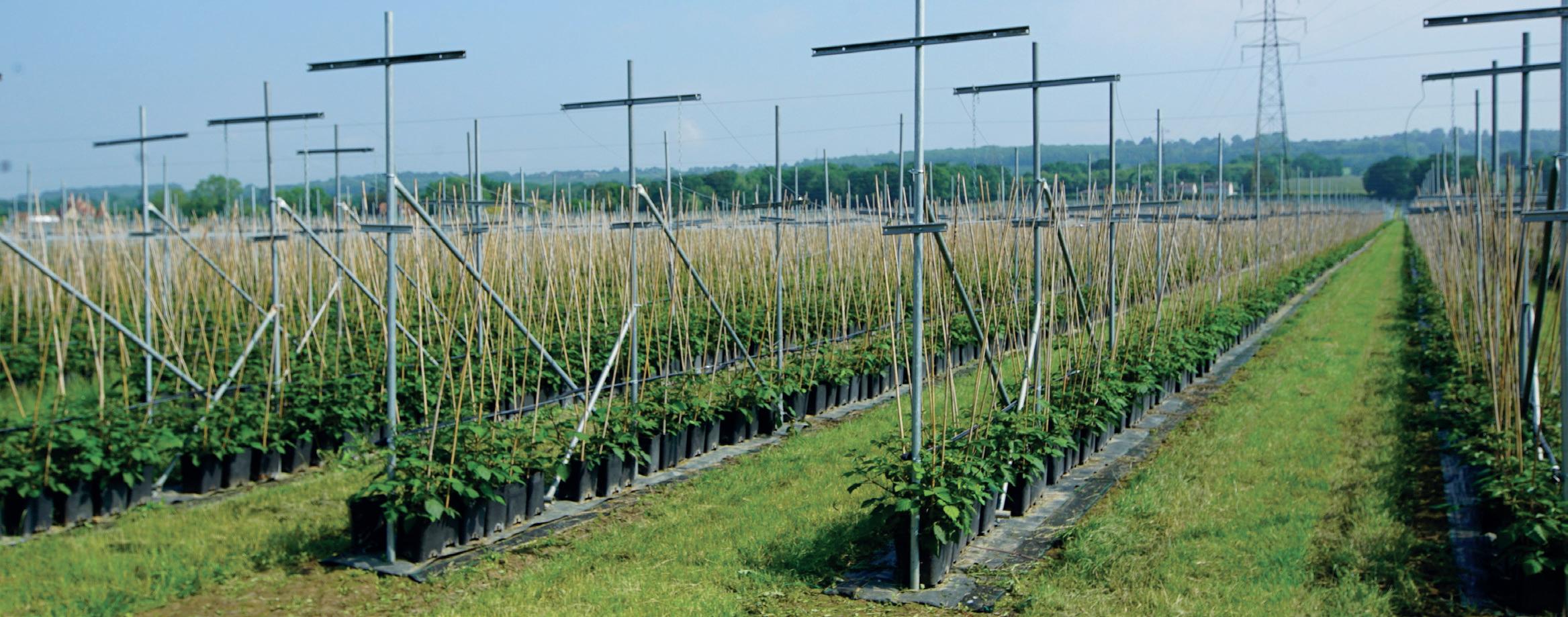
Linton Growing, the Maidstone, Kentbased containerised plant propagation business established by Clock House Farm in 2020, has joined the prestigious group of growers within the Driscoll’s Nursery network.
The deal was welcomed by Oli Pascall, managing director of Clock House Farm and Linton Growing as “an excellent start to 2023”.
Linton Growing is only the fifth company within the UK to be named as a partner nursery by Driscoll’s. It follows a stringent audit process which brought praise from the auditors regarding the nursery’s professional environment and the level of openness shown during the assessment.


Linton Growing will provide Driscoll’s with quality plants for its broad network



PRESTIGIOUS GROUP OF GROWERS
of growers, including Clock House Farm, in line with the stringent quality control and sustainable farming protocols shared by both businesses.
Using plant stock grown by Linton Growing will give Driscoll’s access to a dedicated production centre for the UK, helping to meet sustainability and plant health targets as plants will be grown locally rather than transported from the continent.
Linton Growing is currently running a test
trial for Driscoll’s relating to the growing of raspberry plants and strawberries, with a view to going into commercial production in the near future.
“We have a number of exciting plans in place to further drive the growth of the business and will be working hard to raise awareness of the significant benefits associated with sourcing quality plant stock from an established and successful UK grower,” Oli Pascall commented.
A CHANCE IN A MILLENNIUM
Students from Hadlow College enjoyed a fascinating trip to the Millennium Seed Bank and Heritage Gardens at Wakehurst Place, part of the Royal Botanic Gardens at Kew.
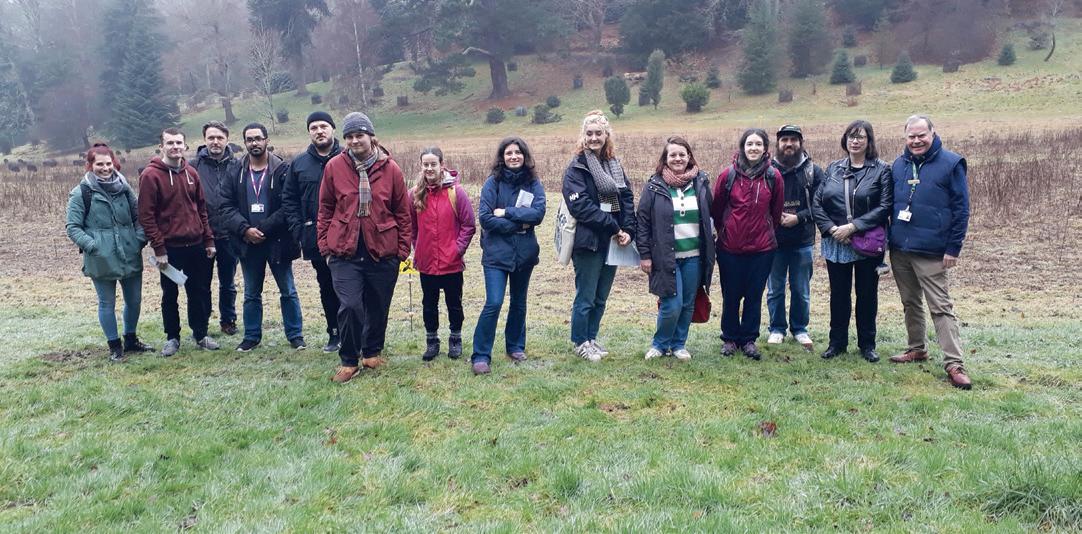
Horticulture tutors Dr Rosaland Fisher, Dr. Chantelle Jay and Dr. Howard Lee took their classes of commercial horticulture (BSc and Foundation) students on a day visit to the seed bank to hear about its role in general and commercial horticulture and in sustainability and climate change.
The Millennium Seed Bank hides an underground collection of over 2.4 billion seeds from around the world, with 38,000 species stored in an underground vault large enough to fit 38 double-decker buses.
The students were taken through the seed collection and treatment process which prepares the seeds for storage and saw several staff engaged in seed quality analysis and germination testing. They were
also taken to the reinforced, climate controlled vault, which is not accessible to the public and stores the seeds at -20°C.
Dr Fisher described it as "a fascinating visit which tied in well with the focus on sustainability in commercial horticulture which runs throughout both our Foundation and BSc degree programmes."
APRIL 2023 | WWW.SOUTHEASTFARMER.NET 4 NEWS
PICK-UPS FOR PEACE
A West Sussex vet is playing his part in a farmer-led campaign to get four-wheel drive vehicles out to support humanitarian efforts in Ukraine.
Matt Dobbs, from near Handcross, was one of the original Westpoint Farm Vets partners and has since set up Agsenze, which makes digital camera monitoring systems for livestock.
He is a friend of Vince Gillingham, who has a Ukrainian wife and is spearheading the mission to send 100 4x4s to the war-torn country alongside Mark Laird, who also has a strong connection to the country.
Around 40 drivers joined the first Pick-ups for Peace trip out to Ukraine, taking 22 vehicles to Lviv in Western Ukraine, where they are being used to ferry injured and dead soldiers from the front line to hospitals.

The vehicles, some donated and others funded by farmers clubbing together or raising money, take much needed supplies to the country but are then left there to be put to good use behind the front lines.
Matt Dobbs has played an active part in setting up the organisation, raising funds and finding drivers to help Pick-ups for Peace make its planned monthly trips to Ukraine with supplies and the vehicles themselves.
“Having seen the situation in Ukraine I felt desperately sorry for the people caught up in this conflict,” he said. “Regardless of politics it’s a humanitarian issue and I wanted to provide practical help.
“We are hugely grateful to the farming community for taking this initiative to heart and showing by their actions that they care about what has happened. I feel part of it is down to the empathy farmers here feel with the farmers in Ukraine whose lives have been turned upside down.”
Pick-ups for Peace is eager to hear from anyone who could donate an old pick-up or other 4x4 and/or money to help get the vehicles to Ukraine. Vehicles can be up to 15 years old and should have an MOT and good tyres. It costs around £1,200 to transport each vehicle and provide accommodation and transport to get the volunteer drivers back to the UK.
Volunteers on the most recent trip came from farming communities all around the UK, the youngest participant being 18 years old and the oldest 76.
Vince Gillingham said: “Ukraine is under attack, and they are desperately short of four-wheel-drive non-military vehicles which are crucial to get food and medicine to their troops. We have plenty of these vehicles in the UK.
“It is so inspiring to see the good in the people who have given their vehicles, time and money to this project. It gives you a lot of hope for the world to see an 18 year-old who has only just passed his test driving all the way to Ukraine.
“For most of our travelling companions it was their first visit, and it was remarkable to see how strong the cultural connections were. Our Ukrainian contacts could not believe that the UK farming community would do this for them. I urge anyone who can donate a vehicle or money to help us buy vehicles and pay other expenses for these missions to get in touch.”
www.justgiving.com/crowdfunding/help-cpg-ukraine






The truth is out there
Spring having sprung, at least in theory, it’s time to look forward once again to the agricultural shows that are beginning to fill the diaries of country folk and others who enjoy a (hopefully warm and sunny) day out with a vast range of attractions from which to choose.
The shows give farmers a chance to relax and chat with old friends, enjoy the atmosphere and take a day away from the pressures of making a living in these uncertain times. Equally importantly, they give the industry as a whole the opportunity to spread the word on 21st century agriculture.
While the region’s shows date back many decades, it is now perhaps more important than ever for the farming community to win the public over to its cause, building on the groundwork already laid by Jeremy Clarkson in the superb Clarkson’s Farm
At a time when former Prime Minister Boris Johnson is resorting to nuance and legalistic wordplay to fight a charge that he misled MPs over lockdown parties*, the truth feels like a fragile thing, and farmers need to make sure their ‘truths’ are shouted from the barn rooftops.
There is a huge amount of misinformation out there, with the vegan lobby adding its more recent weight to the criticisms levelled for some years by animal liberation groups and others, including in recent memory a civil servant who decided that Britain didn’t need farmers (Tim Leunig, in case you had forgotten).
The application by South East Marts to move out of its constrained, town centre site and build a purpose-built market outside Hailsham is also having to deal with misinformation, with opponents apparently suggesting that the much-needed new development would see animals being slaughtered on the site.
Whether one is generous enough to perceive that as a genuine misunderstanding or divines some more mischievous motive in the message being spread, it is something that needs to be put right, and farming events like shows and ploughing matches are the ideal place to do that. Advertise them, shout about them, use social media and do all you can to get the public there.
It was Algernon in Oscar Wilde’s The Importance of Being Earnest who pointed out: “The truth is rarely pure and never simple”, and it would be arrogant to suggest that any one of us has all the answers, but we should at least be making the case for farming whenever possible. Enjoy the summer.
*still ongoing as South East Farmer went to press.
EMAIL YOUR VIEWS, LETTERS OR OPINIONS TO: sef.ed@kelsey.co.uk or write to the address on page 3
®


5 TO ADVERTISE CALL 01303 233883
OPINION
The P4P group
COUNTING ON SUPERMARKETS
Monthly sales data is set to give growers, consumers and the industry the lowdown on which supermarkets really are supporting British top fruit producers.
British Apples & Pears Limited (BAPL) has begun publishing monthly sales figures on its website, spelling out the tonnages of 2022 harvest British apples sold by growers to British supermarkets and revealing which of the retailers is buying the most. The data will be aggregated from BAPL member returns.
“British retailers say they want to support British, and this data will reveal those retailers that really are buying British,” explained BAPL executive chair Ali Capper.

“We know from previous data that Aldi, for example, sold more British apples than any other supermarket in the year ending July 2022. We are now well into the sales year for the 2022 British apple crop and this new monthly data will give us a much more current picture of British apple sales by supermarket.”
The data will allow BAPL to announce its British apple retailer of the year at the end of the growing season.





www.britishapplesandpears.co.uk/supermarket-sales-data
UK REGAINS WHEAT RECORD


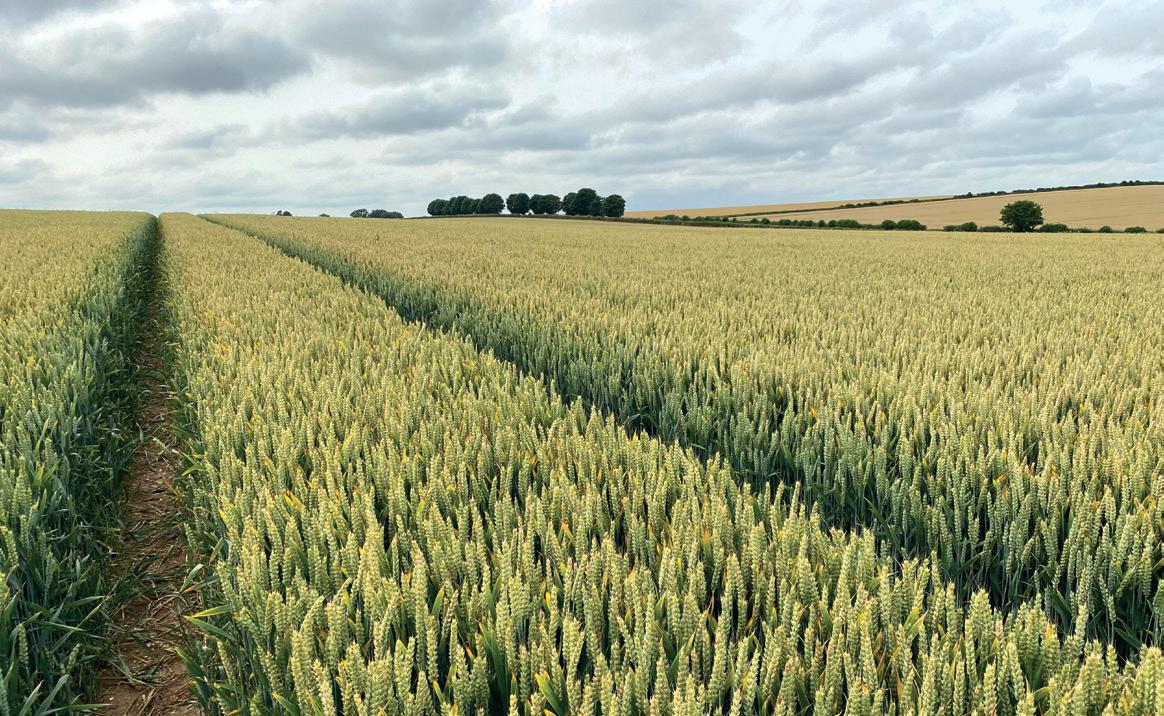
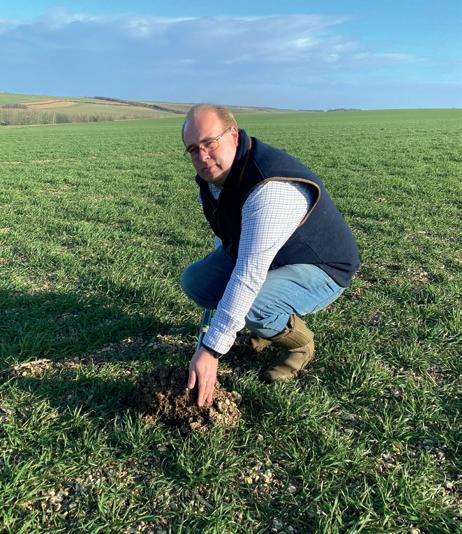
Tim Lamyman has brought the official Guinness World Record for wheat yield back to the UK with a 17.96t/ha crop of DSV Champion harvested in 2022. The crop, grown at Worlaby Farm, Lincolnshire, beat the existing 17.40t/ha world record achieved in New Zealand in 2020.


APRIL 2023 | WWW.SOUTHEASTFARMER.NET 6 NEWS
See our cattle & visit our Stand at Heathfield, Suffolk, South of England, Royal Norfolk, Kent & Edenbridge Shows and find out more about our FREE SEMEN OFFER BULLS & FEMALE BREEDING STOCK FOR SALE ON OUR WEBSITE SUSSEX CATTLE
WATER DIVINER & ARCHAEOLOGICAL DOWSER
Water Diviner covering Greater London, South East England and East Anglia. WATER DOWSING SERVICES Working for many commercial organisations I endeavour to look for underground water and if found, should be able to give some idea of depth, flow rate and potability. I can also search for ‘lost’ wells, mine shafts, pipes etc. DIVINING Water diviners/dowsers are available to try and find the best site for a bore hole, giving idea of depth and flow rate etc. Also tracing water pipes and possible leaks or searching for lost wells and foundations is available.
Baker Telephone: 01322 525975 For enquiries please email j.baker864@btinternet.com www.johnh2obaker.co.uk
SOCIETY John Baker
Professional
John
As media partner, South East Farmer sponsored this year’s Farm Expo trade stand awards (see page 9), which were won by P Tuckwell (Best Trade Stand for Machinery), the NFU (Best
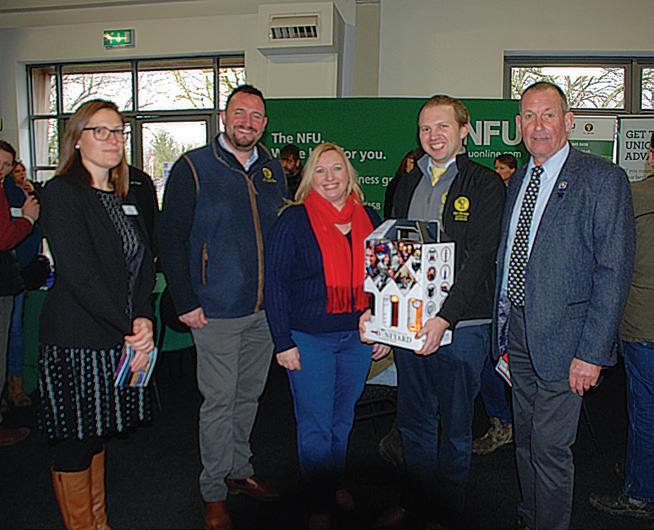
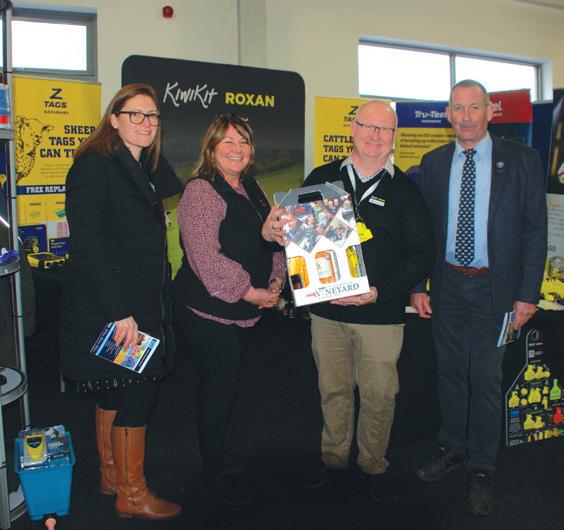

Trade Stand for Services) and Kiwikit-Roxan (Best Trade Stand for Agricultural Products). They were selected from an impressive line-up of 100 exhibitors which ranged from













large machinery dealerships to equipment and tool providers, livestock services, seed and fertiliser suppliers, land management companies, law firms and many more.



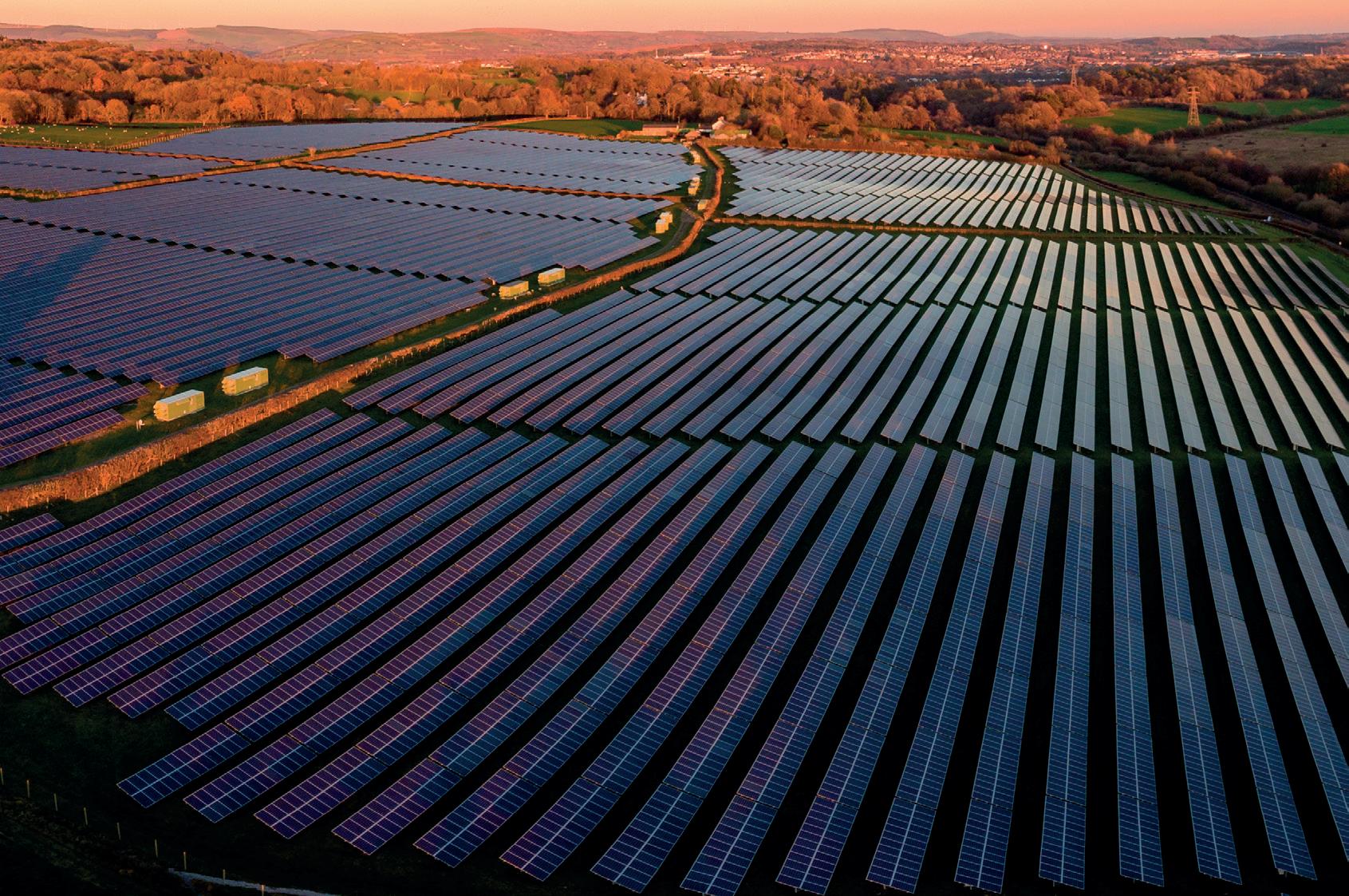
Researchers have suggested that solar farms can enhance biodiversity and help pollinators such as bees and butterflies thrive.
The research, published by trade association Solar Energy UK, comes just a few months after Prime Minister Rishi Sunak indicated increasing support for the growth of solar farms after rejecting the prospect of an effective ban put forward by his short-lived predecessor Liz Truss.
Lancaster University researchers said solar farms surveyed by ecologists showed an increase in the abundance of wildlife, especially the vital pollinators that maintain biodiversity and ecosystem stability.

They said pollinator habitats such as wildflower meadows could be established within solar farms and could increase the abundance of bumblebees by up to four times.
Key pollinator groups have declined in recent years due to the loss of suitable habitat and an increased use of pesticides, with Friends of the Earth claiming the UK has already lost 13 of the more than 1,500 pollinating insect species in Britain, with a further 35 currently at risk.
SOLAR FARMS CAN INCREASE BIODIVERSITY

With most solar farms built on ‘moderate quality’ grade 3b agricultural land which is less productive for growing crops but flat enough for solar panel installation and well positioned to allow insects to pollinate nearby crops, the industry welcomed a government change of heart in December.

Former Environment Secretary Ranil Jayawardena had floated the idea of extending planning protections that apply to high-grade farmland to this moderate grade 3b land, but his successor Thérèse Coffey ruled out that
idea before Christmas and backed “a lot more” solar generation on farms.




Neil Cockerill, founder of solar energy company Rainbow Energy, commented: “Since the lifting of the proposed ban, we have had more than four times the number of enquiries for solar from farmers. The benefits are numerous. Solar panels save agricultural businesses from paying sky-high energy prices, promote food security by keeping farms in business and encourage biodiversity, cutting carbon on the way.”

WWW.SOUTHEASTFARMER.NET | APRIL 2023 7 TO ADVERTISE CALL 01303 233883 NEWS
Kiwikit-Roxan
NFU P Tuckwell















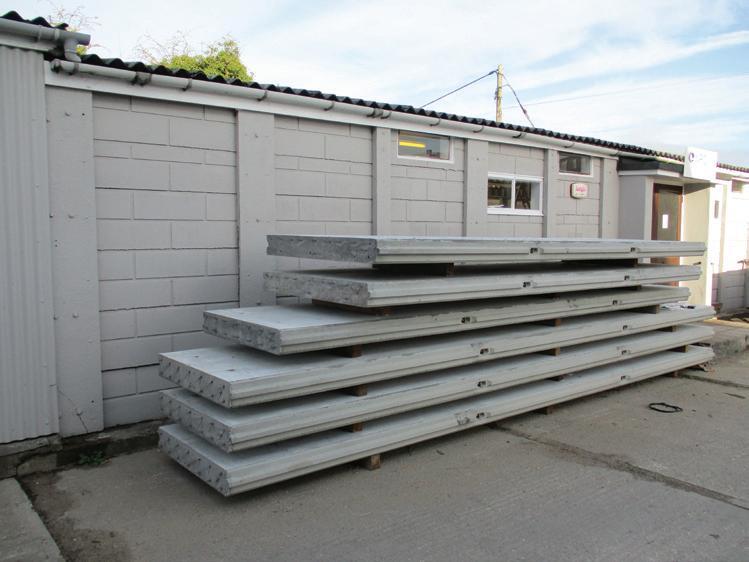
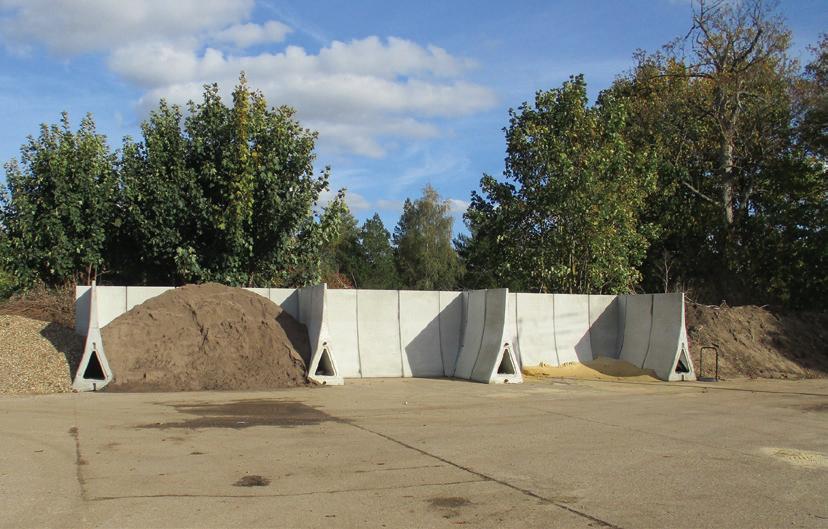

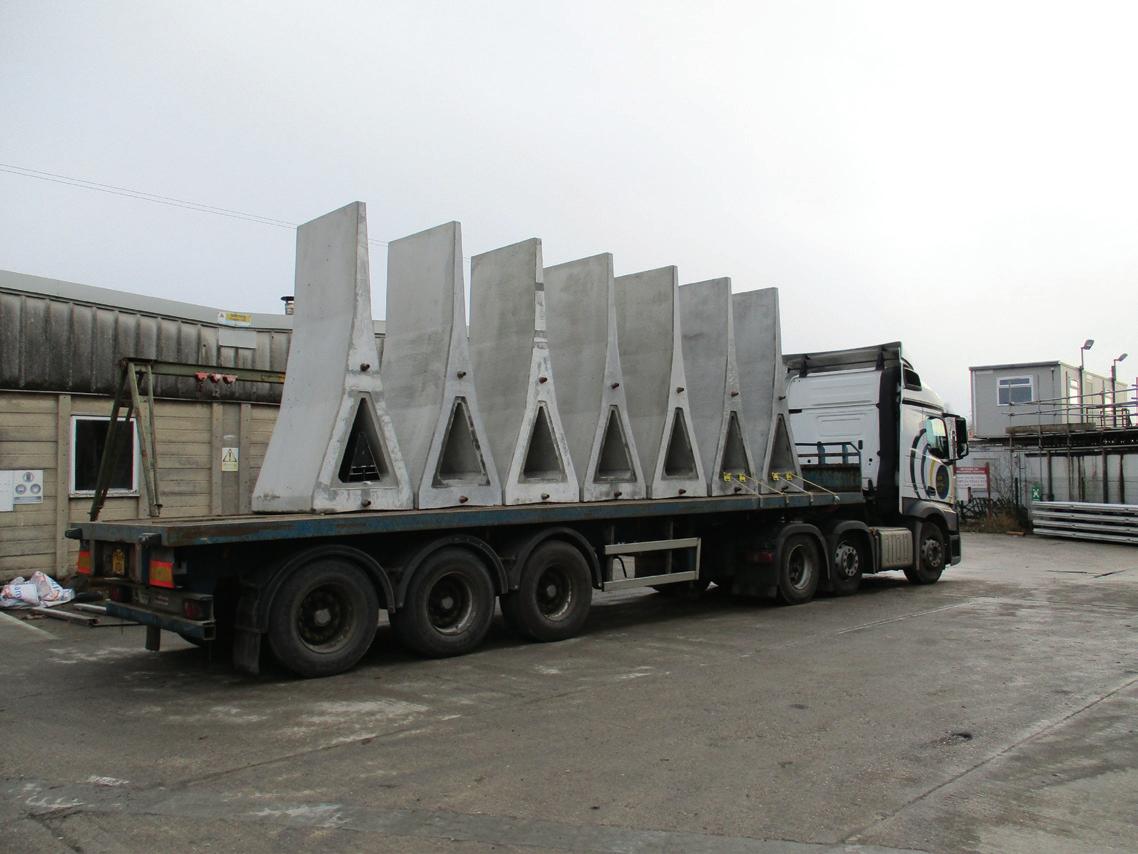
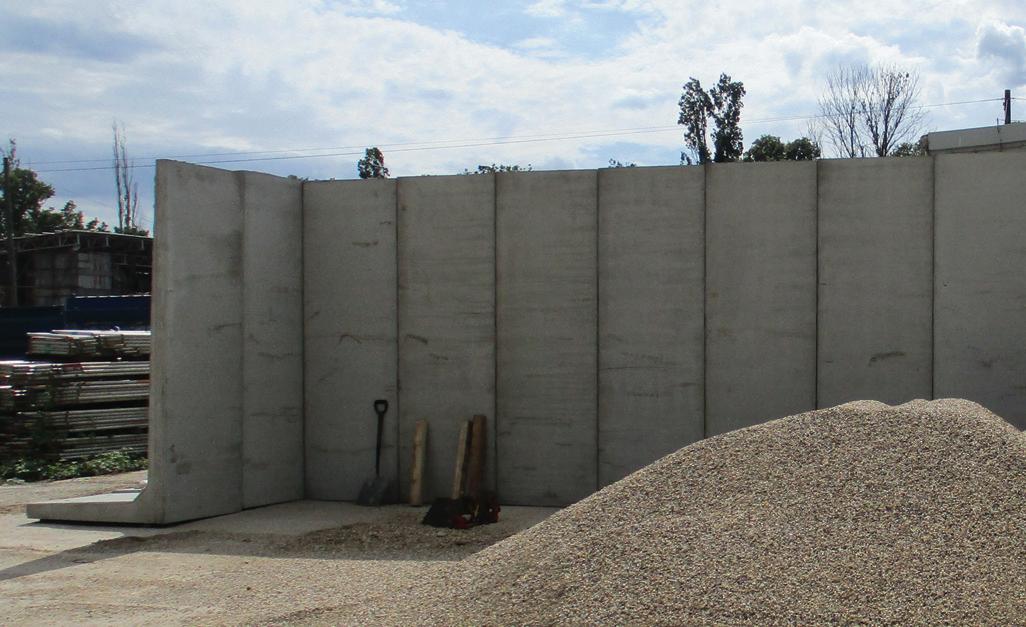

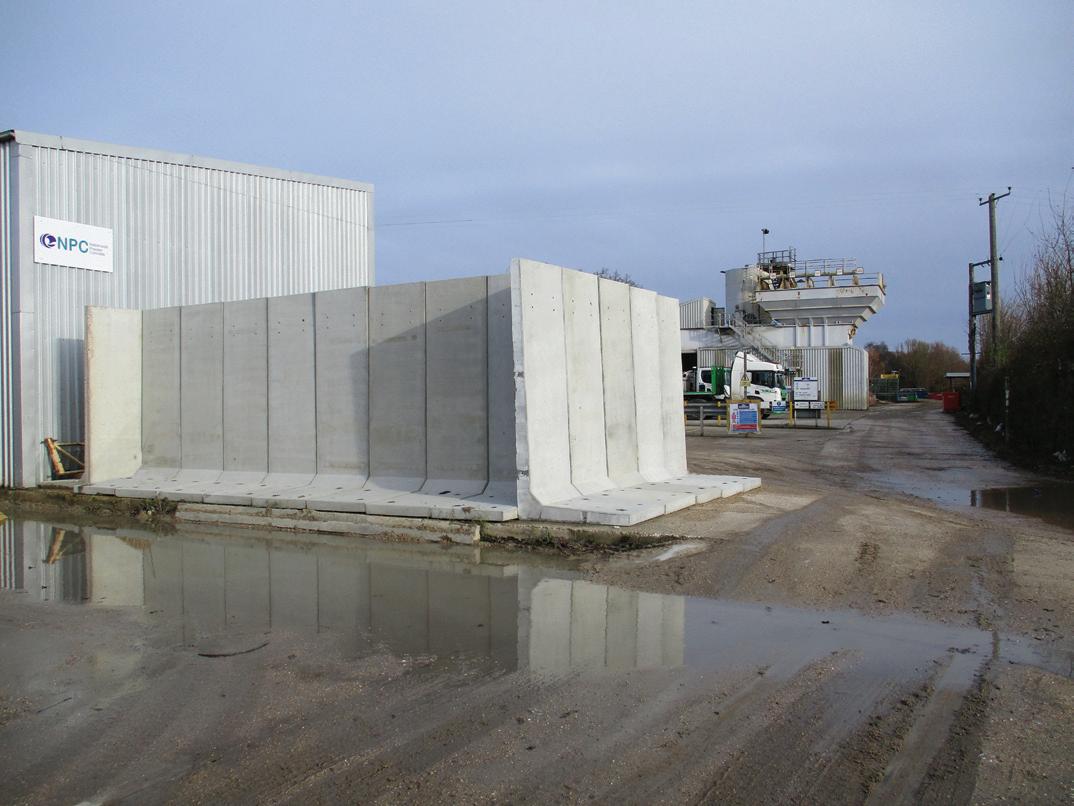

APRIL 2023 | WWW.SOUTHEASTFARMER.NET 8 Unit 6, Martells Quarry, Slough Lane, Ardleigh, Colchester, Essex CO7 7RU 01206 982260 www.npclimited.co.uk Retaining Walls
FEELING OF OPTIMISM
The buzz was back as Farm Expo welcomed more than 2,000 visitors to a show that has rapidly established itself as one of the South East’s leading farming trade shows.
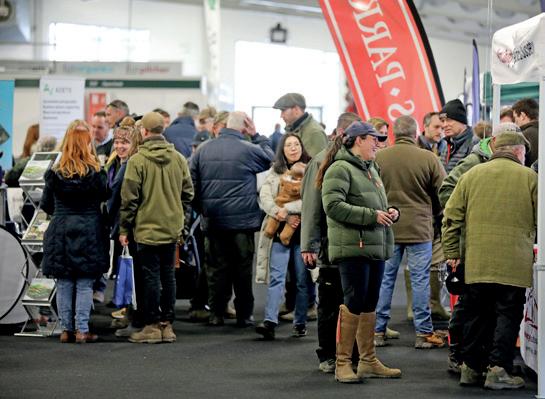
Despite the challenges facing the industry, there was a feeling of optimism in the wintry air, with the wide variety of stand holders all enthusiastic about the level of enquiries and the number of visitors at the Detling event.
Organisers the Kent County Agricultural Society (KCAS) reported a record number of visitors, while exhibitors South East Farmer spoke to were all keen to praise the success of the show, which was celebrating its fifth year.
They included Chris Durrant from longstanding machinery dealer P Tuckwell Ltd, who described Farm Expo as “a key show in the agricultural calendar” which gave dealers “an ideal opportunity to catch up with a lot of clients in one day”.


The show featured morning and afternoon seminar sessions as well as showcasing the latest in agricultural products, technologies and services and providing a platform for farmers and industry professionals to exchange thoughts and ideas.

Despite a late start to the proceedings,
launched by KCAS president William Boscowen, who reminded the audience that 2023 marked the charity’s centenary, the morning seminar session was well received by an attentive audience.
It seems that virtually every farming conference these days focuses on ‘the future of farming’, and Farm Expo chose to toe the line, with Hugo Dwerryhouse from Nonington Farms explaining the success story that James Loder-Symonds’ enterprise has become.
Assistant farm manager Hugo explained that the farm’s business model depended on “Income stacking”, making every hectare of land count by looking for as many different opportunities as possible, from environmental grants to working with water authorities and co-operating with businesses and further education establishments on research projects.
On carbon trading, Hugo said the business felt that although Nonington Farms had researched its own levels and had capacity to sell, it was too early to enter the market because of the wide range of methods being used to make carbon calculations. “If you look
at three different ways of calculating your carbon you’ll get three different figures,” he pointed out.
Hugo’s presentation was followed by an interesting talk from Roel Janssen, head of business development at Planet Farms, a vertical farming company that claims it can produce 100 times as much food from a given area of land as could be achieved using traditional agriculture.
The impressive morning session was rounded off by Colin Hall, from BTF, who updated the audience on labour supply issues and warned that some sectors of the industry were “teetering on the edge of crisis”. The afternoon seminar session featured contributions from Brachers on succession, Tesco on sustainability and Amazone on direct drilling.
Looking back on the show, KCAS Chairman Julian Barnes said: “It’s wonderful to see such support for this event. The feedback received from both visitors and exhibitors has been overwhelmingly positive, and it is clear to see there is still an appetite for these in-person events.”
WWW.SOUTHEASTFARMER.NET | APRIL 2023 9 TO ADVERTISE CALL 01303 233883
Farm Expo will be back on 6 March 2024: www.kcas.org.uk/farm-expo FARM EXPO 2023 REVIEW
LEGAL OBLIGATION

Dear Sir,
In response to the letter in the March edition of South East Farmer (“Not with our money”) concerning the transfer of funds to Horticulture Crop Protection UK Ltd, I must point out that the Agriculture and Horticulture Development Board (AHDB) has a legal obligation to use surplus reserves to the benefit of the sector.

I suspect we will never satisfy our critics on how we do this, but for your readers it’s important we provide reassurance that there has been wide discussion and agreement across the horticulture industry on the way forward.
A ministerial roundtable last spring asked industry to propose a way forward and seek out the best possible ‘extension of authorisation for minor use’ (EAMU) service provider for the future.
Some 14 grower associations wrote in support of the creation of a voluntary-funded organisation – Horticulture Crop Protection UK Ltd –to do this and requested a grant to pump-prime the initiative.


The grant of up to £1m is contingent on debt collection. It can only be spent on specific EAMU activities, for the benefit of the whole industry. AHDB will also cover the initial cost of expert staff transferred to the new organisation and ensure liabilities relating to part-finished projects are covered.
 Tim Rycroft, Chief executive, AHDB
DIG AT PEOPLE WITH A WIDER VIEW

Dear Sir, Clearly the Editor hasn’t rapped Nick Adames’ knuckles hard enough recently. He was back on his ‘neglected waterways’ yet again, along with a dig at people with a wider view than his.
‘Water rats’, newts et al are the litmus test of a healthy riverine environment, which is why they are important. Canaries and coal mines come to mind. Their absence is a sure indication that our rivers are profoundly unhealthy, courtesy of what we have done, and continue to do, via the water companies.
His neighbour’s land drains are now beneath the river silt level. Surprise, surprise. Where did all that silt come from? Yes, from field run
off and inappropriate development. Some folk just can’t stop grabbing the wrong end of the stick.
Why the BBC and the nurses, in particular, came in for his reproach in your February edition, I can’t imagine. Both political parties are each wont to blame the ‘Beeb’ for bias against them, so they must be getting the balance about right, despite Boris Johnson shoehorning a mate and loan fixer into the position of Chairman. Our national broadcaster is certainly less biased in its reporting than much of the daily press owned by oligarchs with selfish agendas.
Condemnation of nurses demonstrates a profound ignorance of their work and conditions in front line hospitals before, during and after the Covid-19 epidemic, compounded by long term under investment and mismanagement by government.
The NHS is hugely complex, administered by civil servants headed by a politician who is no expert and is moved on before he or she gets a hang of the brief. This is no recipe for success. The staff are exhausted, demoralised and not being listened to.
Nick is entering the age when heart attacks, strokes, malignancy and decrepitude keep us close company. He had better hope he doesn’t require the care of a bunch of disgruntled, burned-out nurses and doctors any time soon.
Now Nick agonizes on food supplies. Perhaps he might enlighten us on how much food he and his acres are currently producing for direct consumption.
Acres of grapes for elegant English wines, crops for biodigesters adding CO2 to keep us warm, Sitka spruce in Scotland and 20 acres of nimbyish native woodland, lest developers ruin the view. The cereals will likely feed livestock. Nothing for the local food markets might offer a whiff of hypocrisy, or will he take up Therese Coffey’s excellent suggestion and grow acres of turnips?
Michael Kettlewell, Chipping Norton
NOT SURPRISED
Dear Sir,
I can understand your columnist Monica Akehurst’s disappointment with the Government’s attitude towards food production, but surely she is not surprised. No Tory or Liberal government since the repeal of
APRIL 2023 | WWW.SOUTHEASTFARMER.NET 10 SEND YOUR VIEWS OR COMMENTS: SEF.ED@KELSEY.CO.UK twitter @SOUTHEASTFARMER facebook-square SOUTH
EAST FARMER
LETTERS Farm Waste Recycling Experts Providing waste solutions to Agriculture, Horticulture & Equestrian Collection & Recycling of... All types of Farm Plastics Workshop Wastes Veterinary Waste Waste Oil Waste Tyres Redundant Agri chemicals WasteTyresCardboard Tel 01264 736733 ian.kitson@kitsonrecycling.co.uk www.kitsonrecycling.co.uk No Membership fees Specialists in agricultural, deer and equestrian fencing and gates Top quality materials. Top quality service. T: 01622 831 781 | M: 07710 179 600 enquiries@woodchurchfencing.co.uk www.woodchurchfencing.co.uk SUPPLY & INSTALL
the Corn Laws has shown anything more than a passing interest in UK agriculture.
This attitude left the country unprepared for the wars that began in 1914 and 1939. The only British Government to take domestic agriculture seriously was the Atlee administration with the 1947 Agriculture Act. This stabilised the situation until we joined the Common Market.
Germany and France, having seen how large parts of Europe were close to starvation between 1914 and 1945, formed the Common Agriculture Policy. This produced a thriving European farming industry from which we benefitted. We have thrown this away with Brexit and will be left with little help from a weak agriculture ministry.
No wonder the supermarket shelves are full of foreign apples while English orchards are being grubbed.
Is the conflict in Ukraine a warning?
Tony Redsell, Near Faversham, Kent
FUNDRAISER THANK YOU
Dear Sir,
RABI would like to say a big thank you to readers who have donated and added their support to the crowd funding campaign started in reaction to the story of dairy farmer Emma Ledbury, featured in Clarkson’s Farm 2, on Amazon Prime. The total now stands at over £38,000.
The response has been incredible, and we are delighted that Emma has chosen to donate some of the monies raised to RABI. Our thanks also go to the fundraiser Rebecca Poole who set up the GoFundMe page.
Emma’s donation will enable us to help even more farming people.
As a charity, RABI is here to support anyone in the agricultural community with the practical, emotional and financial support they need. Whether it's the ongoing threat of disease, as is the case for Emma, extreme weather or the phasing out of subsidies, there are big challenges in farming year after year.
We also know from our 2021 Big Farming Survey that almost half of the farming community are living with anxiety because of these pressures. They simply cannot be underestimated.
RABI offers a freephone 24/7 helpline (0800 188 4444), Click and Chat (https://explore.kooth.com/rabi/) mental health support and access to professional mental health counselling to farming people across England and Wales.
Paul Pirie, Head of Fundraising, RABI
UNITED WE STAND – DIVIDED WE FALL
Dear Sir,
Let me say from the outset of this letter that I am not a member of any of the organisations mentioned and therefore not biased in any way.
I will say, however, that I do admire Minette Batters. I have heard her speak, and as a tenant farmer who has become NFU president, she is first-rate.
Sadly, this is where the compliments end. The NFU has 47,000 members and the CLA 33,000. The TFA don’t publish their membership and won’t tell you either (what’s that all about?)
Now, here is the problem…
I have no trouble understanding how and why the TFA started
and the reason for it, and even today we have had to have a report to government from Baroness Rock in an attempt to highlight the problems incurred by tenant farmers – no doubt caused by certain elements of the CLA.
All in all, the voice of the farming community looks in disarray and it is a shower. Farmers will achieve nothing like this; all these groups with their own agendas trying to talk to government just end up getting the brush off. All the groups like to tell you that they have the ear of government, which is absolute rubbish.
I don’t know how to sort it, but I do know that they all need their heads banging together and need to start singing from the same hymn sheet.
The business of ELMS is drifting on, with no urgency from government. Agricultural minister Mark Spencer is drinking the government’s tea and head of DEFRA Coffey has no idea.
So NFU, CLA and TFA, please get things moving, put aside your own agendas and please let’s have a united front before it is too late.
Steve Skinner, Dover, Kent
The TFA responds…
The Tenant Farmers’ Association was created 42 years ago to provide a dedicated service of advice, information and support to those who do not own the land that they farm. Over that time, many members of the TFA have found the help and assistance from the TFA immensely valuable.
The same passion that drove the founding fathers of the organisation continue to drive it today. A desire for fairness, respect, resilience and sustainability for the tenanted sector are the tenets of the work that we do. It would be good to look ahead to a time when the TFA will no longer be required, but for now there is a considerable gulf between good practice in the landlord/tenant sector and what we encounter daily.
While the NFU, CLA and TFA are the main organisations representing the agricultural industry there are a host of others, too. The range and diversity of organisations brings strength to the lobbying from the industry rather than weakening it.
It is often helpful to have a number of farming voices around the policy table against the plethora of other organisations that may take a less than helpful stance on farming issues. However, on a regular and ongoing basis the farming organisations do cooperate and coordinate their lobbying for the benefit of the wider industry on issues such as trade, labour, agricultural policy and fairness in supply chains, to name a few.
At the end of the day, no one is forced to join any of these organisations; it is a personal choice. Regardless of the number of members held by each organisation, the real test is whether the work of the organisation has merit and is affecting change.
I have no doubt that the landscape of the tenanted sector would look very different today, and not in a good way, were it not for the efforts of the TFA over the past more than four decades.
George Dunn, Chief Executive, TFA
And a CLA spokesman adds…
“The CLA regularly works with other organisations and stakeholders across the industry and tirelessly lobbies Government on behalf of our members to ensure the issues that matter most to farmers, landowners and rural businesses are being addressed. Recent work has included helping to improve ELMs and securing £110m in funding for rural businesses.”
WWW.SOUTHEASTFARMER.NET | APRIL 2023 11 TO ADVERTISE CALL 01303 233883 LETTERS
LAMBING MANAGEMENT WILL NEED TO BE ON THE BALL

The last of the ewes were housed as the snow blew in. We have now started lambing; this year’s increase in flock size means management will need to be on the ball to ensure optimum lamb survival. The first 50 ewes have lambed smoothly. Vaccinating for enzootic abortion this year seems to have lessened the issues which often used to affect the start of lambing.
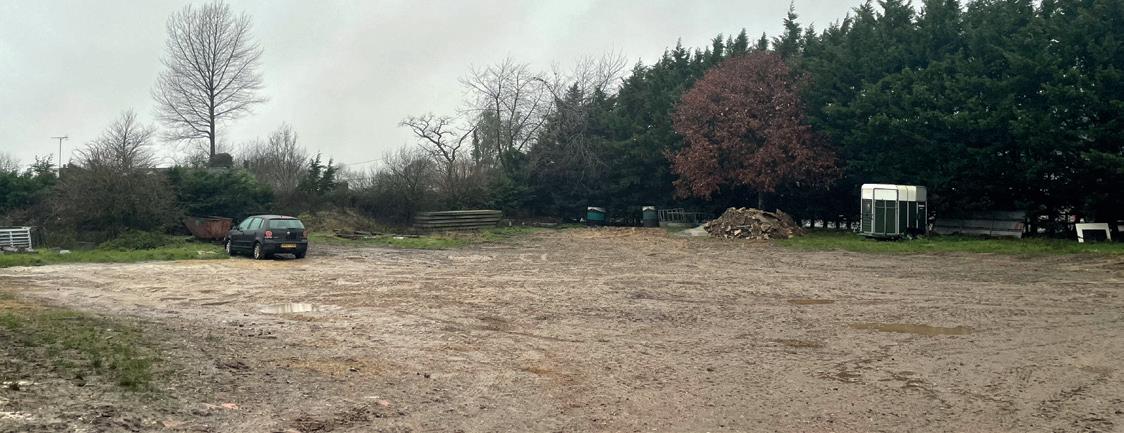
Our new shed was finished just in time for lambing. The building has made good use of an under-utilised area of the yard. It should enable straw to be kept under cover in the future, as well as providing space to increase the cattle numbers and lamb more ewes.
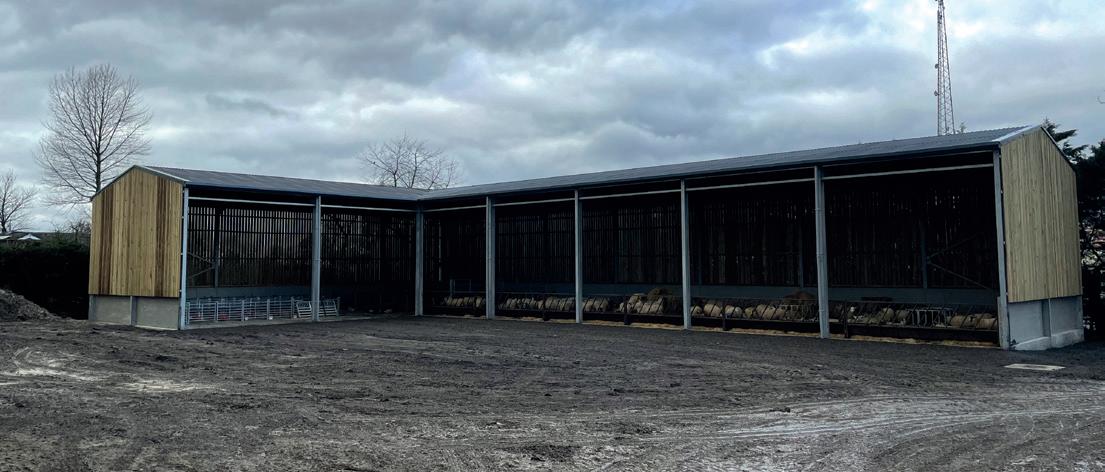
Unlike many areas of the South East, we are lucky to have supportive and understanding neighbours who have had no objections to our various farm construction projects over the past few years. I told my neighbour across the road that construction was finally going to start shortly so there might be a bit more noise than usual for a month or two and his response was: “Great news, I bloody love sheds!”
This is always a busy time of year; an annual whole herd TB test in mid-February followed by selling cattle and mucking out sheds which are then immediately filled by in-lamb ewes. The 14- to 18-month-old cattle, all sourced direct from nearby dairy farms, sold exceptionally well at Salisbury.
There seems to be high demand for Angus, Blue and Hereford stores driven by the strong finished beef price, although some of the heifers were bought for breeding. It is good to see my closest market doing so well. In both the weeks I was there selling, over 600 head of cattle were traded.
In addition to our own stock, we have taken
The calendar says spring but winter still very much has us in her grip, writes Ben Robinson who farms near Alresford.
on contract shepherding work for a nearby flock of 1,200 ewes. This flock lambs outdoors at the end of April, which means their peak labour requirements shouldn’t clash too much with those of the home flock. The arrangement will provide extra labour for them at busy times while justifying my employment of a local ex-Sparsholt student who approached me for livestock work a couple of months ago.
We drilled grazing herbal leys in late August. I thought I had best try something a bit more ‘regenerative’, seeing as there was so much positivity surrounding them in the farming press and online. The herbal leys established well through the autumn, but as it currently stands the fields with old ryegrass and clover are romping away despite the cold temperatures. Meanwhile the new herbal leys seem stubbornly sluggish to get going. The jury is out but I can’t say I’m wildly impressed so far.
I drilled the herbal leys with half an eye on ELMS and the Sustainable Farming Initiative. The shifting sands on these have been hard to keep up with for all but the most ardent DEFRA watcher. After being in a Higher Level Stewardship agreement for 11 years we are currently farming outwith the confines of any agreement. I must admit it’s wonderful.
I am in no great rush to enter a new agreement. Being outside an agreement gives us flexibility, so that if I need to pick up stock from one of my many landlords at short notice I have somewhere to put them that isn’t subject to restrictions on grazing, either by date or head of stock.
Furthermore, the idea of DEFRA paying for schemes only by ‘income forgone’ is insulting. Essentially they are saying that at best a farmer should aim to recover costs, with no profit incentive, and at far greater management hassle than simply drilling another acre of wheat or keeping another 20 ewes.








I would argue that bringing livestock back to our previously all-arable farm has had noticeable benefits for insect and birdlife. It may be unfashionable to say so, but whether I have four or six pairs of lapwings on the farm doesn’t really get me that excited. I have other things to worry about; my family, paying the mortgage, rent and wages, Southampton FCs ongoing relegation battle, whether or not the truck will pass its MOT…
Wildlife is lovely but I am not going to spend large sums of money improving it for no reward. Businesses don’t run on warm fuzzy feelings and ‘likes’ on Twitter. If the Government and population really values wildlife and biodiversity then they should fund environmental schemes to the extent that it is a sensible business decision to enter them, with scope for potential profit at a much greater level than ‘income forgone’.
APRIL 2023 | WWW.SOUTHEASTFARMER.NET 12 FROM THE FRONT LINE IN CONJUNCTION WITH
Before After
Hedging and Woodland Plants
Plant health and quality assured





























English Woodlands Tree Nursery are leading suppliers of healthy, high quality plants to landowners and farmers across the South.

• Fast quotations
• Expert advice
• Excellent service and delivery


• Full range of accessories
T. 01435 862992




sales@englishwoodlands.com
www.englishwoodlands.com
Plant Healthy certification is awarded to organisations that can demonstrate that their plant health management systems and practices comply with the Plant Healthy Standard. The scheme makes it easy for customers to identify organisations that handle plant material in a manner that promotes plant health and biosecurity. English Woodlands is among the first organisations to receive this certification, following an independent audit in 2020




WWW.SOUTHEASTFARMER.NET | APRIL 2023 13 TO ADVERTISE CALL 01303 233883
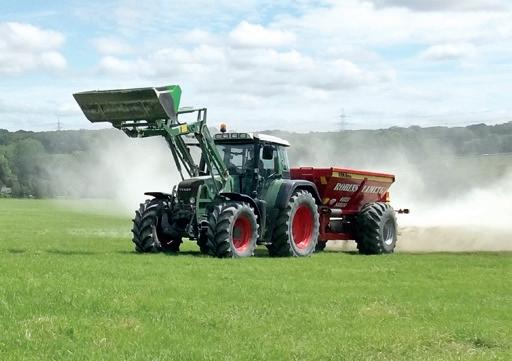
Liming Services Chilsham Lane, Herstmonceux, East Sussex BN27 4QG
Knight: 07812 171273 helen@robinsofherstmonceux.co.uk www.robinsliming.com
Soil Testing service provided
Variable Rate Spreading
Top quality lime 45%-50% NV Over 50 years experience LIME AGRICULTURAL with Robins Liming Services Robins Liming Services is a trading name of Robins of Herstmonceux Ltd 500 kg+ South East Farmer_XL launch ad_Animax_Kayt contacts_v5_Outlined_16-3-23.indd 1 16/03/2023 17:15:57
Robins
01323 833181 Derek
•
•
•
It feels like spring, with flowers blooming, the smell of the wild garlic in the woods, the skylark singing overhead as I check sheep. And yet it’s changeable weather, hopefully settled by the time you read this. It’s tricky knowing what to wear, dressed for cold but when working you’re too warm and extra clothes are cumbersome.
DREAM OF A NEW LIVESTOCK BUILDING
The reality of lambing looming hit me today when I was putting in a prolapse on a ewe scanned as a triplet. I was rewarded with a shower; the capacity of a ewe’s bladder is impressive. One triplet is one too many, in my view. I’ve already had one get on its back. I’ve separated them out and have them back at the home farm, where I can keep a beady eye on them and top them up with some hard feed. The empty ewes fetched good money in market and non-pregnant ewe lambs will need to produce something next year or they’ll be going the same way.

I’m delaying getting the main flock home as grass growth is better where they are. I’ve put out some high energy blocks, and they must be content because I’m not having to replenish them very often.


I was perplexed the other day when lookering to find one lone ewe standing on the riverbank gazing sorrowfully down into the river. I was concerned because this particular character is inseparable from her friend, always grazing side by side. I was immediately worried and expected to see her mate floating in the water. She wasn’t, however, and I made my way over to the main flock, where her friend was happily grazing. They must have had a tiff. The sad one rejoined the flock, but I’ve not seen them together since. I wonder what they fell out over.
At the market recently someone was bemoaning what a terrible start to lambing they were having. I assured them: “It’s quite normal to get problems at the beginning” and someone else chipped in with: “And at the end.” Another commented: “You get problems in the middle as well, but being tired and busy you don’t have time to realise it.” Not sure how effective this conversation was in cheering up the initial speaker. There’s one sure thing about market; if you think you’ve got it bad,
there’s always someone who can top your story. The effect is amazingly uplifting.
At home, we’ve finally achieved our dream of adding a new livestock building to the farmyard. We are now looking forward to making good use of this modern barn, which will provide better welfare accommodation for our cattle. We purchased a 120ft x 50ft building from Fowler & Gilbert, who were very efficient and soon got all the materials delivered.
Some of our older farm buildings were erected on a slope, which we’ve learnt from experience is not a good idea. We needed a level site for our building and Robins of Herstmonceux did a great job of creating this for us.
Then the rains arrived, thwarting our hope that we could get the building up before winter. Luckily the dry spell in February/early March created a window of opportunity. It was dry enough for Graham Izzard and his ace team (one being my nephew) to start on the construction. Anyway, suffice to say, the end result is one happy farmer. Just need to sort out the interior design and water harvesting tanks.
DEFRA’s objectives and priority outcomes are listed as:
1. Improve the environment, through cleaner air and water, minimised waste and thriving plant and terrestrial and marine wildlife.
2. Reduce greenhouse gas emissions and increase carbon storage in the agricultural, waste, peat and tree planting sectors to help deliver net zero.
3. Reduce the likelihood and impact of flooding and coastal erosion on people, businesses, communities and the environment.
4. Increase the sustainability, productivity and resilience of the
APRIL 2023 | WWW.SOUTHEASTFARMER.NET 14 MONICA AKEHURST AT THE KITCHEN TABLE
This ewe expecting triplets has a prolapse, which needs dealing with
I must tell the spaniels they missed one. This pheasant is keener for food than the hoggets
The collies keep a keen eye on the sheep
New barn construction started

agriculture, fishing, food and drink sectors, enhance bio security at the border and raise animal welfare standards.
All the above are very commendable, but I have a few concerns and questions. Why isn’t more being done to prevent raw sewage being discharged? On helping wildlife to thrive, deer numbers have driven us out of arable production and badgers are everywhere, which complicates preventing the spread of TB. Aim for net zero; great if the whole world had the same aspirations. It’s not a level playing field. Increasing sustainability and raising animal welfare; our government seems happy to let retailers import food that isn’t produced to the same standards as those imposed on the UK and is sold cheaply because they haven’t incurred higher costs. So environmental damage abroad doesn’t matter? Is this morally right?
UK farmers and growers who produce food to high welfare and environmental standards will undoubtedly be put under financial strain, and this is disheartening. It’s criminal to hear that perfectly good, productive apple orchards are being grubbed out. Storage costs have spiraled, there are labour shortages and it’s uneconomic for the grower who’s simply attempting to stay in business.
Selling at less than cost price is not sustainable. The supermarkets prefer to import, but hauling food around the world has an environmental cost. If there are food shortages, will these countries be so keen to export? If our farmers and growers have gone bust and our land is rewilded, what will the inhabitants of the UK eat?
Right now there’s a fraud investigation into large volumes of meat produced in South America being sold under a ‘Best British’ logo. Food security on imports needs improving. The Food Standards Authority



should be helping UK producers, not working against them as often seems the case, particularly regarding small abattoirs. Fewer food miles, shorter food chains, more transparency and easily traceable ticks all the boxes; why is the Government not preventing the erosion of agricultural infrastructure?

I suggest that the Government’s morals are not all that they portray them to be. If they care about UK food production, they should prioritise it.
Farmers often work long hours for the love of the land. I heard recently that a four-day week increases productivity. I must run that by my husband and ask if we can implement it. I’m not sure his answer will be printable.
LANDRAIS E
Do you need...

› A new building?
› To build a noise bund?
› To create a hardstanding to store silage or straw?
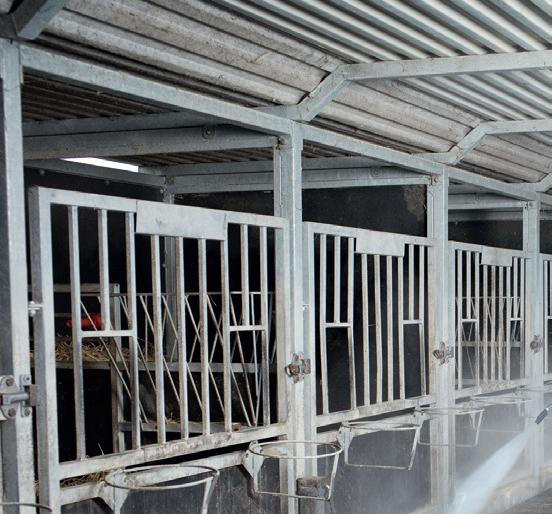

› To build up an area to prevent flooding
› To fill in an old lagoon?
We may be able to help
We can subsidise your costs by building up areas with subsoils classed as non-hazardous inert waste.
We can gain all planning permissions needed so give us an opportunity to reduce some or all of your costs on your next project or improvement. East Sussex area preferred.

WWW.SOUTHEASTFARMER.NET | APRIL 2023 15 TO ADVERTISE CALL 01303 233883
Checking on the ewes
Born overnight, this one’s not camera shy
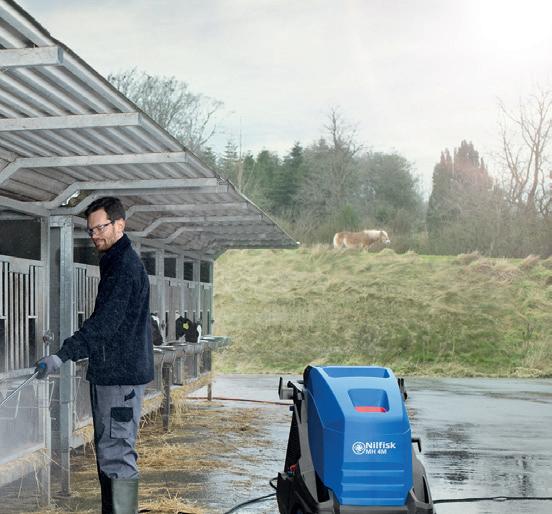
Robins of Herstmonceux (Est 1962) 01323 833181 Email: helen@robinsofherstmonceux.co.uk We are a leading supplier and an approved repair centre With 50 years trading in the cleaning industry. With our strong ties and long term relationship with the leading manufacturers 01825 705777 Unit 4, 72 Bell Lane Uckfield, East Sussex TN22 1QL enquiries@pressureclean.co.uk SALES SERVICE HIRE
RAISE THE LEVEL OF YOUR LAND
As reported in the March edition of South East Farmer, South East Marts is planning to move out of its constrained town centre site in Market Square and invest several million pounds in a new facility on the outskirts of Hailsham, with easy access onto the A22.
It’s a move that has been welcomed by livestock farmers and farming organisations across the region. East Sussex NFU chair Peter Appleton said the relocation was “essential for the long-term viability of the market” and highlighted Hailsham Market’s role “at the heart of the food supply chain” in the area.
To find out more about their plans I visited the current Market Square site to meet South East Marts auctioneer and director Roger Waters and his business partner David White, a landowner and retired commercial solicitor.

"Nearly all markets in town centres have been closed down or relocated to more suitable out-of-town locations with excellent access,” explained Roger. There are just 112 livestock markets remaining in England (down from a peak of 1,000 50 years ago).
Roger pointed out that Hailsham is the only remaining livestock market in Sussex and has
GOING, GOING, BUT NOT GONE
retained its importance for good reason.
“One advantage we’ve got here is the landscape around us. The Pevensey Levels, The South Downs National Park, The High Weald AONB and the Ashdown Forest are all dependent upon livestock grazing regimes,” said Roger, who sees a bright future for the business, which sold over 60,000 sheep and between 5,000 and 6,000 cattle last year.
He further points out that a lot of cattle and sheep reared locally are often moved to fattening locations elsewhere where cheaper arable by-products are available
“There’s always been a lot of movement of stock away from the South East and of course it’s got to be sold locally before it moves away. There’s only us, Ashford in Kent, Thame in Oxfordshire and Salisbury in Hampshire left.”
HISTORY OF THE EXISTING AND NEW SITE
Hailsham is a historic market town and there are records of a charter market dating back to 1252. South East Marts originated from Haywards Heath Market and a company called T Bannister & Co., which was founded in 1866.
APRIL 2023 | WWW.SOUTHEASTFARMER.NET 16
AKEHURST
SOUTH
NIGEL
VISITS:
EAST MARTS
This month Nigel Akehurst visits South East Marts Ltd to find out more about their ambitious plans to develop a modern, state-ofthe-art market on the outskirts of Hailsham in East Sussex.
David White, Rosie Russell and Roger Walters
In 1988 a restructuring took place with the formation of South East Marts and the joining up of Guildford, Hailsham, Heathfield and latterly Thame and Winslow Markets. In 1990 Haywards Heath Market closed, followed by the smaller market at Heathfield a few years later. In 1995 South East Marts became part of the ADM (UK) Ltd. Group, which was based in Eastbourne, East Sussex.
The livestock auction industry was not helped by the BSE crisis back in the 1990s and market closures for 12 months during the outbreak of foot and mouth disease in 2001. The substantial development of central market sites has seen both Haywards Heath and Guildford Market close. Thame and Winslow market have been sold back to the farming community.
Hailsham Market has managed to remain open but has faced repeated threats of closure from developers wishing to build a supermarket on the site.
In 1997 Sainsbury’s came forward and tried to buy the site but was defeated by a move in Parliament.
In order to buy it they had to promote an act of Parliament to close down the market,


explained David. “That went to the House of Lords on the second reading and they withdrew as it became evident that the House of Lords felt that the damage to the economy caused by closing the market without a replacement would be far greater than the benefit of having another superstore.”
Then in 2004 Aldi bought the site and tried to go forward through a planning application rather than a change in the Act of Parliament. It went through the planning process and then went to appeal. The company lost the appeal when the inspector adopted the reasoning of the earlier House of Lords decision and determined that the closure of the livestock market without replacement would cause significant and unacceptable damage to the local rural economy and landscape. After holding on to the site for another 18 months, Aldi offered the site to South East Marts.
NEW SITE AND FUNDING THE RELOCATION
Realising the limitations of the Market Square location as a long-term solution, South East Marts has explored a number of out-oftown sites over the years.
MARKET FACTS
• Livestock markets have been held on the present site since 1867.
• South East Marts has operated from current site since 1990 and is the only remaining livestock market in Sussex. The next nearest is Ashford in Kent.
• 60,000 sheep and between 5,000 and 6,000 head of cattle were sold at the site in 2022.
• It employs three full-time members of staff including Roger, with three part-time members in the office and two part-time auctioneers.
• The current market site has been under threat from developers since 1997.
• In 2011 the company secured the freehold of the existing site.


• In 2018 it exercised an option to purchase an out-of-town site.
• In 2022 it submitted a planning application to Wealden District Council to develop a new state-of-the-art market at the new site.
exit 16.00 .50 .00 18 15.50 15 15.50 .00 17.00 16 16 16.50 15 16.00 15.00 17.00 16 18.00 GY16.77 GY.77 GY16.81 16.78GY .64 GY GY 1050Ø 525Ø 750Ø Path Bushy Wood Scout Camp GL16.55 FFL17.05 FFL17 foul drainage channel FFL17.05 FFL17.05 FFL16.80 recyclingcompound attenuation pond gate gates and cattle grid one way traffic oneway traffic trailer and small rigid lorry parking calf offloading support building articulated and large rigid lorry parking vehicle wash and midden re-aligned access track effluent separator and pump overflow parking on grass for trailers access track to scout camp GTA Civils Drainage Report for details approximate existing public footpath (retained) GL17 19 7 24 9 .00+ GL17.00 85 trailer and small rigid lorry parking 9 loading offloading dock foul drainage channel surface water drainage channel 10 gate and cattle grid onlyout staffparking 11 +GL17 GL17.15 +FFL17.30 GL17 GL16.96 GL17.20 GL16 GL18.10 retaining wall GL17 GL16.54+ GL16.10 GL16.70 9 4 4 13 GL16.40 GL16.50 GL16.90 car parking tank approximate line of existing public footpath (retained) livestock building overflow parking on grass for trailers trees and T29 removed new stile retaining wall TG48 TL46 T42 T44 T45 T43 T40 T39 H41 T38 T37 T36 T35 T34 T33 T31 T28 T27 T29 T30 T26 T25 T24 TG23 T22 W21 TG09 T10 T11 T13 TG12 T14 T15 TG16 T18 T19 T20 TL01 TG02 TG02 T04 T05 H06 H07 H08 15M buffer from ancient woodland A22 A22 3 AL(p)13 6 AL(p)13 8 7 7 AL(p)13 5 existing replacement cattle grid stile field gate field gate field gate X X grassed and landscaped permeable compacted stone hardstanding bitumen macadam roadways concrete hardstanding bitumen macadam pavement new bio-security fencing see drawing AL(p)13 detail 4 proposed external surfaces GL17.00+ proposed ground levels proposed finished floor levels existing ground level contours existing tree and reference number see Lizard's Tree Constraints Plan LLD2202-ARB-DWG-001 for details indicative planting with native trees and shrubs T33 legend 0 10 20 30 40 50 M Site area used for development about 2.5 Ha / 6.17 Acres excluding access track Parking Provision hardstanding 53 cars (2.4 x 4.8 m) 3 car spaces for disabled (3.6 x 6.0 m) 105 trailers small rigid lorries (10.0 x 3.3m) 10 articulated lorries/large rigid lorries (16.5 3.6m) 5 large rigid lorries (12 3.3 m) 15 spaces on docks and vehicle wash (16.5 x 4.4 m) additional overflow parking for 50+trailers on grassed if required during occasional peak markets Relocation of Hailsham Livestock Market 2019 date August 2019LL15 1SB mail adrian@ajassociates LL15 1SB 03 A project drawn AL(p)10 planning 1: 500 @ A1 Adrian Jones Associates Proposed Site Layout and Site Section to be read in conjunction with Highway and Drainage Engineering proposals 21909 building parking planting shown public footpath shown 03 B 04 C loading/ offloading dock A22 field existing tree line proposed building fence parking parking existing tree line existing hedge line fence track 15 .00 AOD proposed planting overflow parking site section XX WWW.SOUTHEASTFARMER.NET | APRIL 2023 17 TO ADVERTISE CALL 01303 233883 >>
NIGEL AKEHURST VISITS: SOUTH EAST MARTS
In 2007 it found the site off the Diplocks roundabout, and after speaking to the council took an option to buy it (which it exercised in 2018).
“We approached Wealden Council in 2007. Initially they weren’t overly enthusiastic but at the same time they didn’t say no. It then became apparent they didn’t like the idea of commercial businesses on that side of the road. As soon as all suggestion of a commercial business other than the livestock market was dropped, they warmed up to the idea that it made good sense to get out of the middle of the town,” said David.
It’s taken a number of years to develop their plans and neither Roger nor David stand to profit from the relocation. The cost of the new market will rely on all of the funds from the sale of the existing site “and more”, said Roger.

“The trick was finding a developer who was prepared to wait - because normally a developer will not pay you a penny until he’s got possession of the site,” explained David.
Thankfully they were successful in negotiating the sale of the existing site with a retirement group (McCarthy and Stone), which is prepared to wait for South East Marts to get planning consent on the new site and build the new market.
“They get possession of the current site as


soon as we’re able to move into the new site,” said David.
<< via their websites and social media accounts.
As they won’t receive any money from the developer until they give up possession of the current site, they will be relying on a substantial bridging facility to cover the costs, which they anticipate will run into several millions of pounds.
PLANNING APPLICATION FOR NEW SITE, LOCAL OPPOSITION AND KEEPING THE COUNCIL ONSIDE
A full planning application (Ref: WD/2022/2878/MAO) was submitted to Wealden District Council in November of last year and comments closed on 21 March.

I asked how the application had been received by farmers and the wider public.
“I haven’t met a farmer who isn’t pleased with our plans,” replied Roger.



Unfortunately, though, it hasn’t all been plain sailing, with the plans receiving strong opposition from two neighbouring businesses.
Both the Bushy Wood Activity Centre (home to the Bushy Wood Scouts) and Knock Hatch Adventure Park believe that the relocation will pose a threat to the future of their businesses.
They accuse South East Marts of not consulting with them on their plans and both businesses have mounted objection campaigns
Roger and David believe a lot of the local opposition is down to simple misunderstandings, which they are eager to dispel.
“We’re told that animals are going to be slaughtered on site. No, they are not - it’s a market, not a slaughterhouse. We’re told that it’s inappropriate for children going into a petting farm to pass through a market to see animals being carried off on their final journey to the slaughterhouse. It’s that sort of emotive argument that has been used to raise concern amongst objectors,” said David.
On the lack of consultation, David said he had emails dating back to 2018 discussing the improvements to the access road with Bushy Wood Activity Centre. He accepted that they had raised concerns about the market but pointed out that they had accepted the benefit of the improved access as a potential quid pro quo.
The new improved access would give them a far safer route in and out of their site, currently accessed via a road with poor visibility, he added. The improvements will also involve widening the current single lane track through to Knockhatch into a two-lane road, which will more than compensate for market day traffic and prevent any backing up onto the A22 that
APRIL 2023 | WWW.SOUTHEASTFARMER.NET 18
presently occurs when Knockhatch holds an event.
Including the store sales, there are 72 markets a year, with no markets held at weekends when leisure facilities are at their busiest, added Roger.
During market days most of the animals are brought in between 9am and 12 noon, which is unlikely to disturb the scouts, who are sleeping overnight, said David. After the sale most of the animals are gone by 6pm; on a big day they may occasionally have them here until 8pm or 9pm at the latest.
“We’ve designed the market in such a way that we are not cutting down any trees; there is no ancient woodland being removed. We’re building on unimproved grassland, currently used for horse grazing, so there is no prime agricultural land being lost,” said David.
SUSTAINABLE STATE-OF-THE-ART DEVELOPMENT

The overall site is similar in size to the Market Square location and comprises 3,400m2 of building space, with a state-of-
the-art covered ring at its centre. Crucially, the development will provide covered pens for the animals to meet all current and future animal welfare requirements.
The architect behind the design is Walesbased Adrian Jones, who previously designed the new out of town Bryngwyn livestock market
in Monmouthshire, which opened in 2013).
The drawings show a large agricultural building with slatted sides. All the latest ‘eco’ technology will be employed, with solar panels on the roof and grey water recycling to retain water and prevent any potential flooding, Roger added. >>
PastureandProfitinProtected LandscapesProgramme
Freefarmer-ledwalks,eventsandwebinarsplusafarmer-tofarmermentoringprogrammeforfarmersintheSurreyHills, HighWealdandKentDownsProtectedLandscapes.
Whetheryouwanttomakechangeoraresimplycurious,joinus tohearfromfarmerswhohaveadopted100%pasturefed rotationalgrazingtomaketheirfarmbusinessmoreresilient, anddiscoverstepsyoucantaketoprotectyourfarmfrom cripplingincreasesinfertiliser,feedandenergycosts.
Informationandregistrationemail sarah@pastureforlife.org andvisit(pastureforlife.org/webinars/pastureandprofit).

FreemembershiptoPastureforLife,afarmer-ledknowledge exchangeandsupportnetworkforthoseinterestedinmoving towardsapasture-fedsystem,isgivenuntilMarch2024forall newmembersjoiningtheprogramme.
AprojectbyPastureforLifefundedbytheFarminginProtected LandscapesFund(FiPL)
Hailsham Livestock Market Cafe´ ventilated ridge profiled metal roof cladding vertical timber ventilated boarding pre-cast concrete wall panels double glazed metal framed windows facing blockwork galvanized steel frame 1 east elevation 15.00 DATUM ventilated ridge profiled metal roof cladding pre-cast wall panels PV solar panels open open open open open open open open penning not shown line of water tank 4 west elevation 15.00 DATUM profiled metal vertical cladding vertical timber ventilated boarding Hailsham Livestock Market 2 north elevation 15.00 DATUM profiled metal vertical cladding vertical timber ventilated boarding pre-cast concrete wall panels water tank 3 south elevation 15.00 DATUM 0 1 2 3 4 5 6 7 8 9 10 M Relocation of Hailsham Livestock Market - AL(p)12 planning 1:100 @ A1 Adrian Jones Associates Indicative Elevations description colour coated profiled matching flashings plastic rooflights profiled metal hit miss timber boarding preservative fair faced blockwork smooth faced precast legend glazed with coated metal frames galvanized B B A key plan WWW.SOUTHEASTFARMER.NET | APRIL 2023 19 TO ADVERTISE CALL 01303 233883
In addition to the main ring and covered pens, there will be associated offices and a market café, but no commercial units as featured in some larger out-of-town markets such as Bakewell (recently featured on BBC’s Countryfile).

PLANNING DECISION AND NEXT STEPS







With comments now closed, the earliest the council will determine the application at a planning committee would be June/July. Roger and David are hopeful that by early autumn they will have some indication on the decision.
As it’s a major application it has to go before committee with a recommendation from the case officer, explained David.
“The officers are never ambivalent; they’ll either come down on one side or another. They will undoubtedly be influenced by the opposition arguments that have been expressed. They will reflect on the benefits of this business and whether it has adverse effects on other businesses, in particular those involved in tourism, which is one of their objectives.
“So it’s a balance to be made and it’s a judgement to be made between the damage to the rural economy and landscape of not having a livestock market and the potential damage to other existing businesses,” he said.
If approval is granted and the retirement home planning application is also successful, they anticipate the construction of the new
market taking between 18 months and two years.
"The groundworks are quite complicated as they need to realign the roads and there’s a ditch that goes where the new road goes, so we have to engineer that out, but the building itself is relatively straightforward,” he said.
EMBRACING TECHNOLOGY AND LOOKING TO THE FUTURE

The team at South East Marts is feeling positive about the decision and sees a bright future for the business.
Roger thinks livestock numbers will remain consistent over the coming years and is embracing technology to expand the company’s audience by offering online bidding alongside the live auction at machinery sales.
South East Marts has signed up to MartEye, software for real time auctions, and successfully used it for the first time at the recent sale at Tripp Hill farm, which saw 23% of lots sold to online bidders. The project is being led by market manager Rosie Russell, who looks forward to using this technology more at upcoming farm sales.
The key to getting the software to work well is a good internet connection, said Rosie. This enables the auction to be livestreamed without any delay. The company can also upload photos and videos of items before the sale. Roger is hopeful that it will help increase bidding on larger ticket items like tractors.
NEW AUCTIONEER AND FARM COOPERATIVE
The current lineup of auctioneers includes Roger Waters, Nick Young from Watsons and Alex Moss, who also runs his own farm supplies business. Roger says they are keen to add a new auctioneer to the team, ideally someone in his or her mid to late 40s with experience.
I asked Roger and David what their long-terms plans were for ownership of the market.
“Our ultimate objective would be to have a farm cooperative run by farmers, like at Thame, as a trading entity that carries on the business of the market,” replied David.
“The site is more problematic, as there’s always a risk that if you have a small number of people controlling the site they may at some point think there’s more value in selling the site for alternative uses,” he added. To avoid this he envisages a sunset clause which basically says that if the market ceases to be a market then it goes to a charitable entity like RABI. “I don’t see this as an opportunity to make money,” he added.
As I leave the office I asked Rosie what she thought about their relocation plans.
“We’ve got to move forward with the times and a new market will enable us to serve the farming community better and be at the forefront of animal welfare,” she replied.
Let’s hope the planners agree.
APRIL 2023 | WWW.SOUTHEASTFARMER.NET 20
AKEHURST
SOUTH
NIGEL
VISITS:
EAST MARTS
<<
Auctioneers Auctioneers
FARM DISPERSAL SALES
Live Auction & Online
Thorndean Farm, Cowbeech, Nr Hailsham
Saturday 29th April 2023
’19 Case 115 with loader, M Reg Case Int. 956 XL tractors, Ifor Williams tri axle livestock trailer three tipping & one bale trailers, Lely RP202 round baler, Elho wrapper, Lely Optimo 240c mower/conditioner, Lely Lotus Stablio tedder, Lely Hibiscus 425S rake, Lely RP202 round baler, Grassland harrows, flat roller, Zetor dung spreader, Howard HK rotary harrows. Cattle equipment incl; Bateson crush, feed yokes, stockyard gates, calf creep feeders, Big bale hay and straw Also Included from R Pomfrett, Naylors Farm, Mayfield
’11 John Deere 6330 with H340 loader & fittings, bale squeeze multi grab & bale spike, D Reg Ford 4000, JD utility vehicle, Ifor Williams DP120 & P6 livestock & flatbed trailers, Marshall bale trailer, Lely Splendimo 240 mower, Lely Lotus Stabilo tedder, Lely Hibiscus 455c rake, Welgar RP425 baler, McHale 991c bale wrapper, Twose grass slitter, Marshall dung spreader, McConnel PA92 & PA50 hedgecutters, Post hole borer & sheep equipment
On the instructions of Thorndean Farms & R Pomfrett
Sale to commence at 10.15 am
Catalogues available soon from our website or by post
Fawn Farm, Wivelsfield Green, Nr. Haywards Heath Saturday 22nd April 2023
Dec’19 Manitou MLT 730-115v telehandler with multigrabs, bale squeze & bucket/road brush, ’94 MF 365 & E Reg Ford 7610 tractors, Toro grassland 4500D rotary mower, Agrimaster RV360 flail & Teagle 8 toppers, Ifor Williams livestock & big bale trailers, Protech P220 post knocker, Sub soilers, Fleming flat roller, Oxdale log splitter, Two shipping containers
Also included; Vicon RF 135 baler, Vicon CM2200 mower, Lely Lotus Stabilo tedder, Lely 425 rake, Lely Attis PT13 wrapper, Marshall bale &Fraser tipping trailers from L Watson
On the instructions of S Brookbank & others
Sale to commence at 10.15 am
Catalogues available soon from our website or by post
FUTURE SALES
FARM MACHINERY SALES – Planned for early July
Hye House Farm, Crowhurst, Nr Battle Nineteen classic collectable & commercial tractors Manor Farm, Hayshott, Nr Midhurst Tractors & arable machinery
COLLECTIVE SALES – Taking entries now
Ardingly Showground – Saturday 15th April
Lime End farm, Herstmonceux – Saturday 15th May
Osney Lodge Farm; South Godstone – Saturday 24th June
Email info@southeastmarts.co.uk for entry forms

SOUTH EAST MARTS SOUTH EAST MARTS MARKET STREET – HAILSHAM 01323 844874 – www.southeastmarts.co.uk


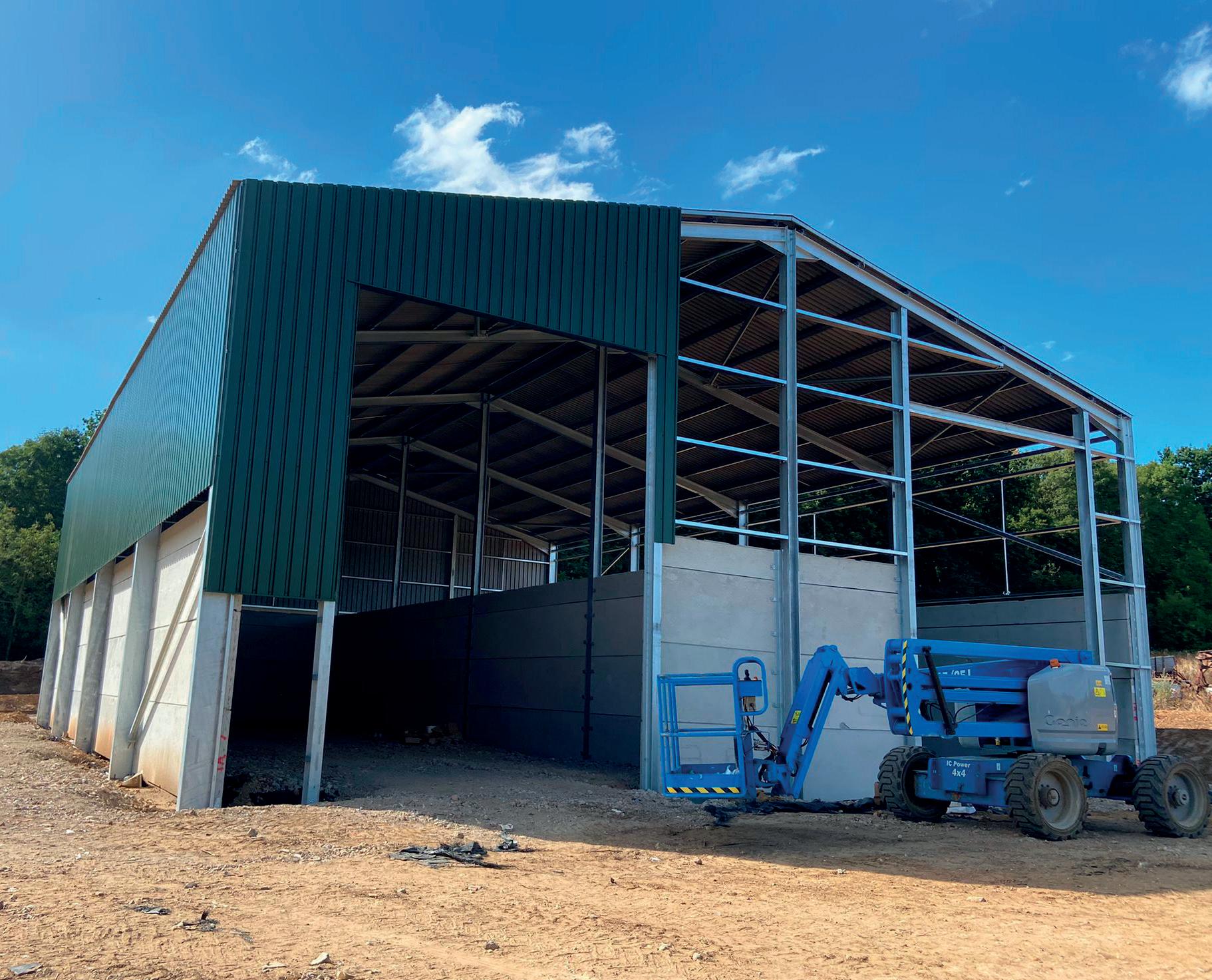
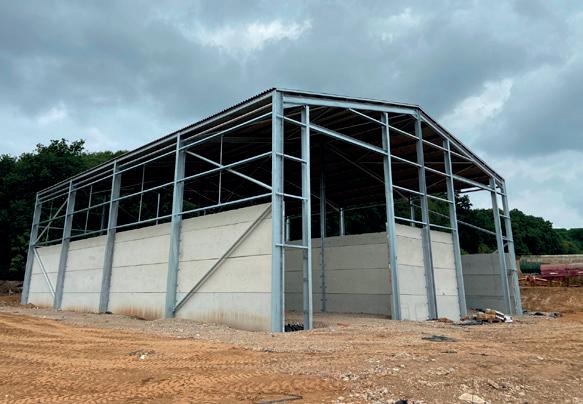
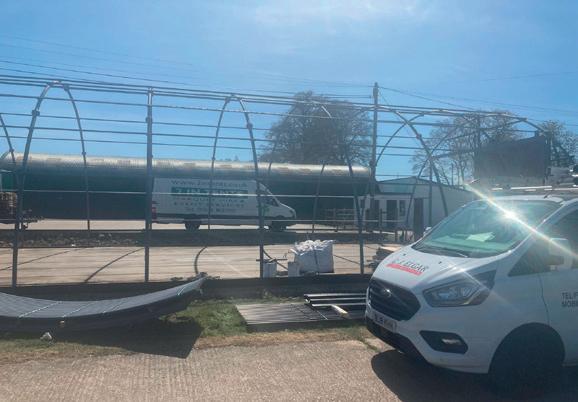
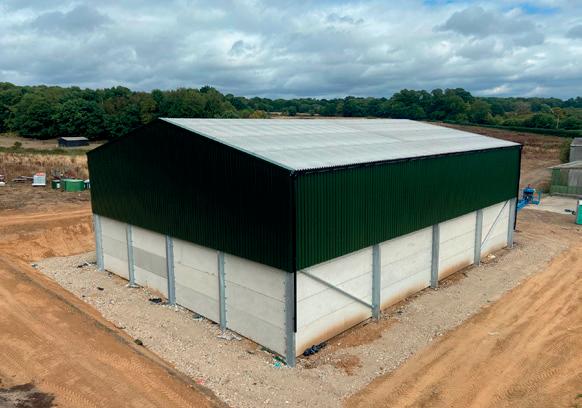
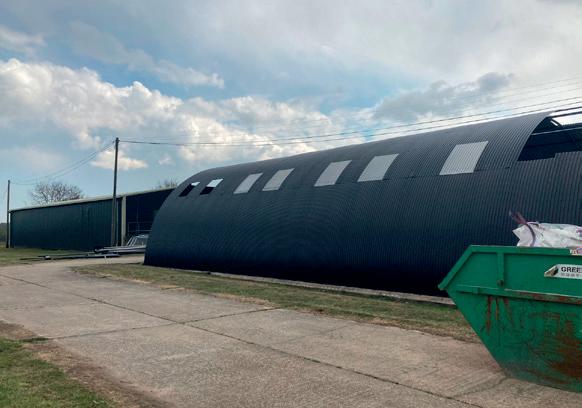
www.gjelgarconstruction.co.uk For more information contact us: t: 01233 623739 m: 07860 414227 e: office@gjelgarconstruction.co.uk • Steel frame buildings • Sheeting and cladding • Guttering and repairs • Groundworks and drainage • Demolition and asbestos removal • Refurbishment and change of use • Concrete frame and steel frame repairs • Insurance and general repairs • Concrete floor and block paving G. J. ELGAR CONSTRUCTION Ltd Before Before After After
NEW WAYS TO CREATE ADDITIONAL INCOME
Richard Shepherd-Baron investigates farm diversification, beginning with a government definition: “When a farm breaks out from traditional farming by adding money-making activities. This can be an expansion of agricultural activities into new innovations or moving into non-agricultural business types.”
Diversifying your farm can involve anything from changing the actual production from your land to starting a bed and breakfast or catering business in a disused barn or setting up some tourist or recreational activity on the land; the list of opportunities is almost endless.
There are examples across the country of farms going into the most unlikely businesses with huge success. A perfect example was in 1970 when a Somerset dairy farmer near Glastonbury, Michael Eavis, decided to have a little music event on his land (1,500 attendees; tickets £1 each including free milk from the farm) – and look what that turned into!
In these current times of ever-increasing input costs and difficulties with prices for their produce, farmers and landowners are



looking now for new ways to create additional income in order to stay in business and provide a viable future.
Diversification is considered to offer considerable scope for improving the financial stability of many farm businesses. In addition, a good number of farm diversifications can provide benefits for the wider rural economies and communities by encouraging and providing additional job and supply opportunities. Increasing numbers of the general public are becoming more passionate about “buying local” and “reducing their carbon footprint”, making this an encouragement to establish a diversification.
DEFRA has produced some statistics recently which show that 68% of farm
businesses in England had some diversified activity in 2021/22. Over the past five years, this proportion has remained fairly stable, but it represents an increase of 5% since 2011/12.
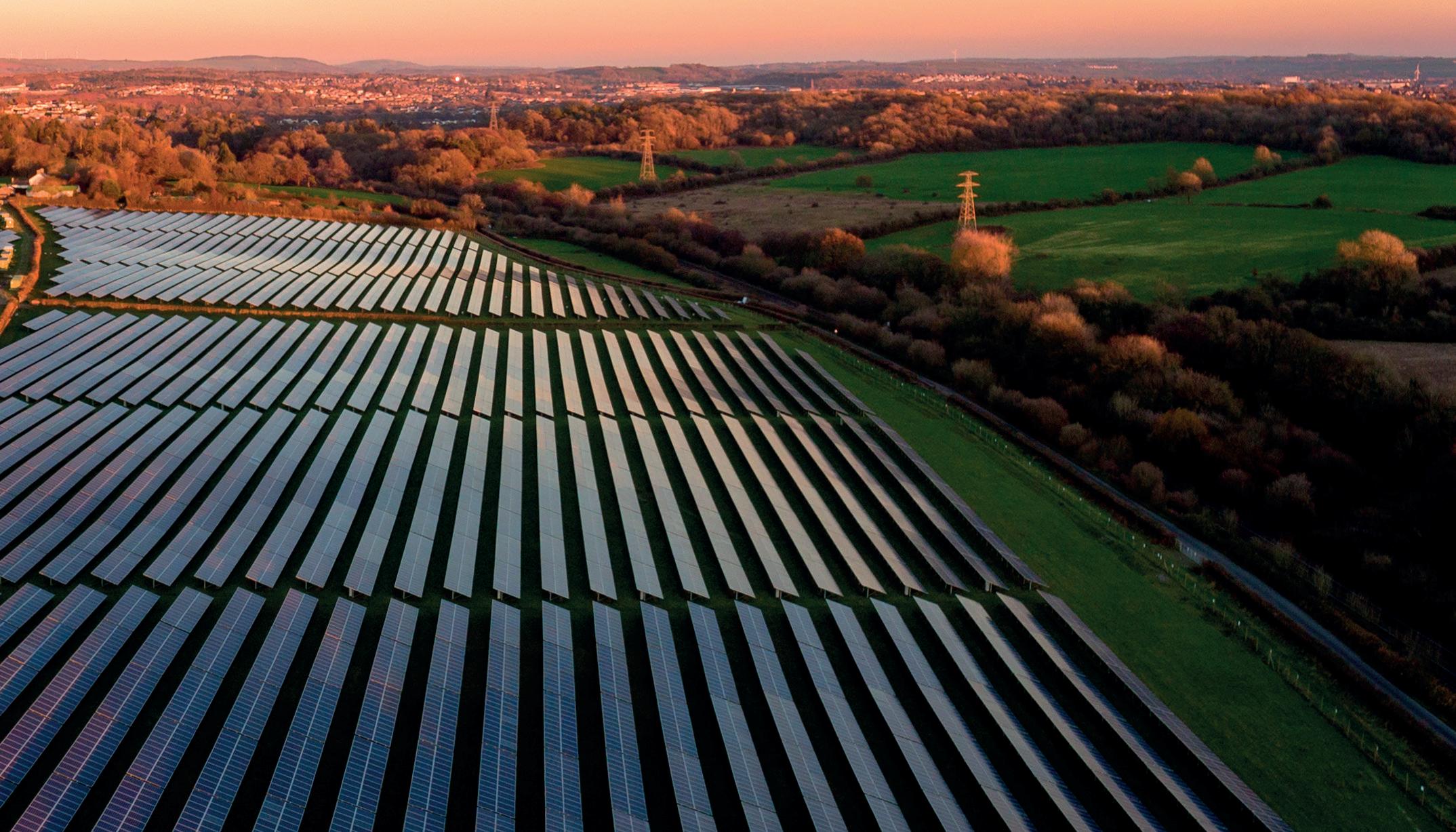
The main diversified activity is letting out buildings for non-agricultural use, with almost half (47%) of English farms engaging in this activity. The second most common form of diversified activity in England has been generating solar or wind energy, at 22% of farms in 2021/22. This, however, has not always been the case, as in 2011/12 the proportion of farms producing solar energy was only 1%. This represents an increase of 21% in ten years. This is likely the main driver in the increased variability in diversified activities. No other activity has an uptake of more than 13% to date.

WWW.SOUTHEASTFARMER.NET | APRIL 2023 23 TO ADVERTISE CALL 01303 233883 DIVERSIFICATION
>>
DIVERSIFICATION

Delving further into DEFRA’s figures, in 2021/22 farms with diversified activities had an average diversified enterprise income of £24,000, with the most profitable form of diversified activity being the letting of buildings. Tourist accommodation/catering and processing/retailing of farm produce both had a similar enterprise average income at £15,100 and £14,400 respectively.
Surprisingly, the figures show that income from solar energy was quite low at £4,900, equal to farms engaging in sports and recreation. Of course, this could be accounted for by the fact that many farms use the solar energy for their own cost reduction purposes and are not connected to the National Grid for sales.





Farms engaging in diversification have a great variation in how much they depend on this part of their business. In 34% of farm businesses with diversified activities, revenue from these accounted for at least a quarter of their income, while for 19% this income accounted for more than half their farm business income. Of course, certain types of farming (combinable crops for example) showed a rise in income last year, so this will affect the overall percentages.
The main advantages of farm diversification include taking on new activities that family members and employees are going to enjoy as well as providing an increased income and a
more secure future.
While most of us are generally resistant to change, learning new skills is a considerable benefit to mental health as well as, hopefully, the income of the farm. The new business and skills can subsidise and boost the ways in which the traditional farming activities are carried out; by expanding your activities you not only broaden your outlook but also your contacts. You become better prepared to look at other ventures which can be of benefit. In addition, you have a business that is not reliant on only one income stream, with all the risk that is involved in today’s difficult and uncertain times for farming.
Having made the decision to look seriously at diversifying your business, you will need to work out the business plan, arrange the necessary finance and investigate insurance needs, research the market as well as your sales and marketing strategies and make sure there are no planning or legal difficulties. All these things will take up a great deal of time but are vital to make sure you are on the right track.
Running a farm and setting up a new venture at the same time is not without its challenges; talking to people who have already started new ventures on their farm is very helpful, as is discussion with various planning and financial experts.
Muller Property is a leading company in


the development of farmland for various projects and Colin Muller commented recently: “Success in farming is a long-term game – as in planning, especially if on the edge of an urban area. Farmers generally don’t start early enough on planning for the land and the potential for its development – if not now, when? It’s important to engage with the planners early on, asking the right questions of the right people, as probably no one in local authorities understands farming.”
The NFU has a planning company –CT Planning – to help its members, and Chris Timothy agrees that planning applications are taking a long time to process nowadays with the shortage of staff in planning departments; he said: “The whole system is under considerable pressure.”
Many farms have a large number of unused assets in the form of buildings and, as was shown in the DEFRA figures, letting these out for storage, small industrial units, etc is a very popular way to provide additional income. Some old farm buildings can be truly attractive and are thus ripe for development into residential property, retail outlets or for catering or hospitality of one sort or another. If the farm fortuitously happens to be near a major tourist attraction, then there will already be a regular visitor stream to tap into. However, many local authorities have very firm plans and opinions on converting farm
APRIL 2023 | WWW.SOUTHEASTFARMER.NET 24
<<
premises to non-agricultural use and this is where the use of a skilled and experienced professional has huge benefits.
One way of looking at new ideas is to base them on the skills you have already in your farming business – yourself, your family or existing employees. For example, if one member of the family is heavily ‘into’ horses, then perhaps this could be a possible new business venture to use old buildings or marginal land. If somebody else is very skilled at catering then this could be the avenue to go down with hospitality – perhaps a wedding or events venue? A hobby may be collecting and restoring old farm machinery and this could be the basis for a small museum and visitor attraction with shop and catering.
Of course, the financial implications of all this are important and this is a crucial part of planning for a new venture and making it into a reality. Many farmers have said that the lack of access to finance is a potential barrier.
To start a successful diversification business, you do need to have a strong core business in the first place. If the diversification is seen as a lifeline to save a weak main business, then diversifying for the sake of it could well put the whole operation at risk. In addition, the application for funding will need to be accompanied by accounts – three years of losses is not what



Percentage of farms with diversified activities England 2011/12 to 2021/22 (a)
Farms with diversified activity
Farms with diversified activity other than letting buildings
Farms producing solar energy
banks want to have presented to them.
To help with your own financial input or that from a bank or other financial institution, from 1 April this year the Rural England Prosperity Fund (REPF) becomes available, running through until March 2025. The government has committed £110 million to help improve rural economies. This is effectively a replacement for the previous LEADER and Rural Growth programmes under
(a) The breaks in the series shown at 2012/13 and 2017/18 represents changes in the method used to assign farms to a specific farm type. Where breaks occur, the proportion has been calculated using both methods for comparability.




the Rural Development regulation that ended last year.
It will provide capital grants for a number of areas: farm diversification, including tourism enterprises; the conversion of redundant farm buildings for other uses; food processing and marketing ventures; boosting “rural connectivity” through broadband projects; community projects such as village halls, public access, etc.
70% 60% 50% 40% 30% 20% 10% 0% 2011/12 2012/13 2013/14 2014/15 2015/16 2016/17 2017/18 2018/19 2019/20 2020/21 2021/22 WWW.SOUTHEASTFARMER.NET | APRIL 2023 25 TO ADVERTISE CALL 01303 233883
DIVERSIFICATION
>>
DIVERSIFICATION
It will be operated by local authorities, which is a different approach to previous grant schemes and one hopes that they are already geared up to deal with applications.
Researching the potential market for your shiny new idea is vital. You need to be certain there is actually a market for your products or services, that you can put together the whole scheme and that you can make a profit. Again, talking to other people who have already gone down the diversification route will highlight any pitfalls and provide useful advice to help decision making on the new project.
Marketing and promoting your new enterprise needs careful thought and planning. Creating a website requires special skills and you should consider what images you use to present everything in the most attractive way, with additional details about the products or services on offer.
For potential customers nowadays, the website is very often the first thing they see about a business and it should tell them everything they want to know in an attractive, friendly and up-to-date manner – just think about the websites you use yourself and which ones you are impressed by.
In addition, it will pay to become involved with platforms such as Facebook, Instagram and TripAdvisor. NFU Mutual’s senior propositions manager, farming and commercial, Chris Walsh is clear in his advice about promoting a new venture: “Don’t forget to shout about the value and quality of your product or service. It’s vital to stand out for the right reasons. A good way to do this is to be clear about why or how your product or service is unique.
(a) Income values are for farms engaging in those activities. Farms not engaging in each activity have been excluded.
“For example, does it have a sustainability story that will engage consumers?



Understanding your typical customer can help ensure your marketing efforts are targeted. For instance, if you’d like to sell directly to customers, researching local events as promotion opportunities could be a good starting point. If you’re targeting local businesses, offer to tailor your product or service to complement their overall style or theme.”
Another area which needs thought is the location of the farm. Many rural areas have very poor road access, broadband and mobile coverage. These could be vital
for certain types of business and you do need to check that what you need is or will be available. There could also be a cost implication here, perhaps for the installation of new lines or satellite broadband. Research into what other people have done to obviate these sorts of difficulties will be of great help.
Diversifying is not for everyone, and while not every farmer or landowner has moved on into a diversification programme, those that have done this are finding that the new income streams have helped them keep their businesses secure with increased resilience in these times of financial uncertainty.
Sport and recreation Solar energy Other diversified activities Other sources of renewable energy Processing/retailing of farm produce Tourist accommodation and catering Letting buildings for non-farming use 0 5,000 10,000 15,000 20,000 25,000 30,000 APRIL 2023 | WWW.SOUTHEASTFARMER.NET 26
Income
from diversified enterprises, England 2021/22 (a)
<<
Withhigh production costs, low values obtainable at the point of sale and with agricultural transition well underway, diversification is a realistic option for many.
Get it right and diversification can be a powerful tool for generating additional income, adding value, reducing waste, creating employment (often for family members), improving biodiversity, spreading risk and much more.
There are many considerations when it comes to diversification, for example; staffing, capital investment, payback periods, how this works alongside existing revenue streams etc. However, one issue that is often overlooked is the matter of planning law and how to apply it. Without this knowledge you could find yourself spending unnecessary monies on consultants, or worse, having invested time and money in something that cannot be implemented or has to be stopped.
With this in mind, it is good advice to ascertain early on whether you need planning permission or whether you may be able to capitalise on permitted development rights. BUT, please be mindful as permitted development rights require certain criteria to be met, whilst some are only applicable where you inform the Council first.
If you are unsure on planning matters, you should engage the services of someone who is RICS or RTPI regulated and who understands and has the relevant experience of working with rural businesses. Get planning wrong and it can be difficult to unravel.

If you are thinking about how to diversify your farming operations to add value, reduce risk or capitalise on a market trend; maybe you ought to be considering diversifying your power? Making yourself more self-sufficient, more environmentally friendly, more cost effective; perhaps even money generating.

It should be no surprise that planning has a major role to play in the realities of delivery. After being told “don’t worry we take care of the planning” by renewable installers/agents make sure you ask “who is actually taking care of the planning?”, and don’t be afraid to ask for their planning qualifications. Getting the right consultant makes planning less of a burden, and you may even be able to utilise permitted development rights. Get it wrong and you may have jeopardised your renewable potential, or even limited your planning opportunities in the future.
If you’re told by your renewable representative “it’s covered by permitted development rights”, consider obtaining a Certificate of Lawfulness from the planning department. Without this, you could be looking at preparing a full retrospective application which can often require additional consultants reports (noise, landscape, flood risk, land classification, ecological assessments etc) and plans. In the worst case situation you’ll be investing monies to appeal refused applications or enforcement notices. It is dangerous to presume that because logic would appear to support renewable energy provision that your application is a sure thing – the reality is, landscape designations, site constraints, neighbours, agricultural land quality, ecology and more, all have to be weighed up. But, get planning right and you give yourself a ‘positive’ chance of being able to diversify your power.
SPECIALISING IN PLANNING ADVICE THROUGHOUT THE SOUTH EAST Kent 01892 831 600 | East Kent 01303 814 444 | Sussex 01435 873 999 info@bloomfieldsltd.co.uk | www.bloomfieldsltd.co.uk
Contact our planning professionals for expert help and advice
NUTRIENT NEUTRALITY
Farm diversification is not a new concept and, for many, diversifying to make best use of a farm’s assets and generate income makes complete sense.
Converting barns to houses, creating wedding venues and running holiday lets are all popular options, but they can be hugely demanding and they’re not attractive to everyone.
As the green agenda continues to come into ever sharper focus for the planning system, there is a real opportunity for those with available land to diversify in other ways.
One issue that has come to the fore recently is nutrient neutrality, whereby development in certain ‘catchments’ cannot proceed if it would increase levels of nutrients, a situation which leads to developers needing to offset levels elsewhere.
The concept of environmental offsetting will become increasingly popular when it comes to biodiversity net gain (BNG). This will be a requirement for most developments of larger sites from November this year, with smaller sites following from April 2024.
The intention behind BNG is to ensure that habitat for wildlife following development is in a better state than it was before development
took place. Offsetting will come into play where a development site cannot deliver BNG requirements. In these circumstances, other sites nearby can be considered as potential locations.

For landowners, this could be a good opportunity, as they can sell biodiversity units to developers who need to demonstrate net gain to get planning permission.
This might be a particularly good way of diversifying if your land is located close to a town or city where development pressures are greater, or if you are in an area which is highly constrained by a designation such as a Special Area of Conservation, Special Protection Area, Site of Special Scientific Interest or National or Local Nature Reserve. You can look for this information via the DEFRA website and through your local council’s planning pages.
If you are interested, it’s also a good idea to find out what habitats your local area needs. Some councils have action plans or management strategies in place, so knowing what they contain could give you a better understanding about what your land could offer a developer.
It is not necessarily the easiest option to pursue and there are limitations and complications to the system. For example, you are not allowed to sell units if you are already required to create or enhance habitats for other reasons such as restocking trees, environmental impact assessment compensation or marine licensing.
Units must be calculated using a specified metric, the land needs to be secured by a legal agreement, there needs to be a management plan in place and you must commit to its management for at least 30 years. These –
along with considerations around monitoring, reporting, insurance, fees and legal costs and the physical works to manage the habitat – all start to add up.

If that sounds like too much of a commitment, Natural Capital is an alternative source of income through the Government’s Countryside Stewardship Scheme, which provides financial payments to farmers for managing land in a way that provides environmental benefits. While it does not involve developers, obtaining funding comes with complications and you will be required to enter into an agreement which will contain conditions you will have to abide by.
Before going down either route, you might first want to think about whether in the future you will have a project that will need to demonstrate BNG itself, or whether development plans will need to show broader environmental benefits to satisfy the planning department. If that is a possibility, think carefully about whether going ahead now will be a limitation in the future; the land can only be offered up once for offsetting.
One way of establishing this could be through the formulation of a whole estate plan, which is already being recognised as a useful planning tool by some, including the South Downs National Park Authority. It has policies which encourage these plans, and they are material considerations in determining planning applications. They can also be used to help guide and support funding bids, future neighbourhood plan production, agrienvironment and forestry schemes and with other Natural Capital projects.
APRIL 2023 | WWW.SOUTHEASTFARMER.NET 28
DIVERSIFICATION
CIRENCESTER 01285 323200 CRANBROOK 01580 201888 www.therpp.co.uk Chartered Town Planners Image courtesy Olson Design Group
Emma Keefe is a Chartered Town Planner who is experienced in all types of rural planning matters. She has worked at a senior level at a Kent local authority and at the Department of Levelling Up, Housing and Communities.
office@therpp.co.uk
In a planning pickle... ...or just looking at development options? Don’t panic.
The professional, creative thinkers at The RPP can help.
OPPORTUNITY FOR LANDOWNERS

No housebuilder or developer will be unaware of the biodiversity net gain (BNG) requirements that will become mandatory from November 2023 under the Environment Act 2021. All planning permissions granted in England, with a small number of exceptions including general householder applications, will have to deliver at least 10% BNG, and herein lies a real opportunity for landowners.

If you are a landowner, you may well be familiar with the concept of BNG. Using areas of private land for BNG purposes to offset development elsewhere provides an opportunity to generate a new source of diversified income while managing land to higher environmental standard. Whether you have a field corner, an area of scrub or woodland, or less productive arable or grassland, it is something that certainly warrants exploring.
The market for creating BNG units on private land for offsetting development elsewhere is still in its infancy, but the early signs are encouraging in terms of future potential growth. The market for creating habitats in order to generate these new ‘biodiversity units,’ which in turn are sold to developers, is expected to be worth in the region of £135m to £274m annually. In these uncertain times, this looks set to be an opportunity worth considering for landowners of all acreages.
If you own an area of land or represent someone who does, now is the time to consider its BNG potential and what possibilities it may have for offsetting. Here at Batcheller Monkhouse we have created the ‘Environment
SCOTT SMITH MRICS AssocRTPI Batcheller Monkhouse

Gateway’, a purpose-built platform that helps you do exactly that.



The Batcheller Monkhouse Environment Gateway is an extensive group of farms, estates and parcels of land that have been registered and are being promoted to anyone in need of BNG, both here in the South East and across the UK. Our teams have the environmental and commercial skills first to establish the best scheme for your land and then to secure the right terms and payment for this transaction.
The Environment Gateway brings together the company’s well-established rural professional, planning, environmental and development teams. We are proud to have longstanding and trusted relationships with countless farmers and landowners and an enviable track record working with the largest housebuilders and key players in the residential development market.



Our unique position within the market means the Environment Gateway is an ideal platform to promote your land for BNG offsetting purposes and to give you confidence that you are securing the best deal.

WWW.SOUTHEASTFARMER.NET | APRIL 2023 29 TO ADVERTISE CALL 01303 233883 DIVERSIFICATION
Tunbridge
T: 01892 509280 E: S.smith@batchellermonkhouse.com www.batchellermonkhouse.com Scan the QR code to watch a video about biodiversity net gain
Wells

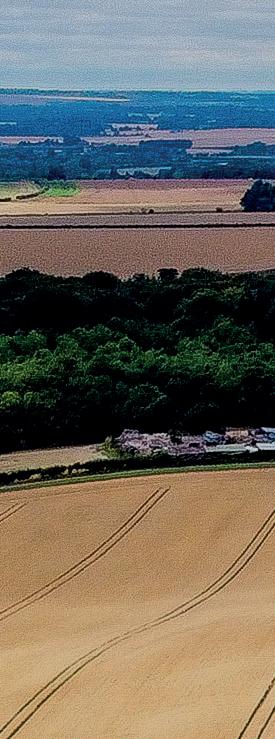




























Keynote speakers and workshops with practical based solutions for farmers & landowners. 20 APRIL 2023 3 7 PM DRIVING PRODUCTIVITY AND PROFITABILITY IN A SUSTAINABLE WAY Book your place: https://tinyurl.com/yckwjkuj
CONFERENCE WILL CELEBRATE EXCITING NEW CENTRE OPENING
A major farming event has been announced to celebrate the opening of the exciting new AgriFood Centre at Plumpton College.

The inaugural South East Future of Farming event on Thursday 20 April is being organised by the College in partnership with the Country Land and Business Association (CLA) and Virgin Money.
The keynote speakers and workshops at the event, which runs from 3pm until 7pm, will provide practical solutions for farmers and landowners with a focus on driving productivity and profitability in a sustainable way.
Jeremy Kerswell, Principal and CEO of
Plumpton College, said: “Plumpton has a pivotal role to play in the future of our landbased industries, not only through our training of new entrants but in our work with existing farmers and landowners.
“Our new AgriFood Centre has been built to be the hub the industry needs in the South East, a place where people can come together, share, learn and take away practical solutions for their own businesses. This inaugural event is the perfect launchpad, with a range of contributors all offering their own perspective on the future of British farming in these important times.”
A number of keynote speakers will be sharing their stories and bringing to life how
they have invested in technology, regenerative practices and/or people to boost productivity in a sustainable way at an event that aims to show that British farmers can be global leaders. >>
WWW.SOUTHEASTFARMER.NET | APRIL 2023 31 TO ADVERTISE CALL 01303 233883 SOUTH EAST FUTURE OF FARMING
The impressive new AgriFood Centre at Plumpton College, built by Sunninghill Construction Co Ltd
The speakers and Q&A sessions will be followed by a number of workshops offering practical, evidence-based solutions, examining the impact of investment in tech on farm productivity and focusing on skills and people.
On arrival, attendees can sign up to two of the four workshops, which will be led by:
• James and Emma Loder-Symonds –Nonington Farms
• Ian Salmon – Plumpton College
•
Smith
After the event there will be an opportunity for delegates to network and enjoy produce from the Plumpton Estate.
As construction partner with Plumpton College, we are proud to have completed the new AgriFood Centre.




W e look forward to working with Plumpton to build their new Institute of Technology




APRIL 2023 | WWW.SOUTHEASTFARMER.NET 32 SOUTH EAST FUTURE OF FARMING
• Professor Michael Lee – Harper Adams
<<
James
– Loddington Farm.
education • commercial • industrial • residential • community • healthcare • leisure • heritage W: sunninghill.co.uk T: 01444 416711 E: enquiries@sunninghill.co.uk
www.tinyurl.com/3ztr4mmf





AN IMPORTANT TIME FOR FARMING
CLA South East represents thousands of farmers, landowners and rural businesses across the region. Regional Director Tim Bamford said: “The CLA is delighted to be supporting this conference at such an important time for farming.
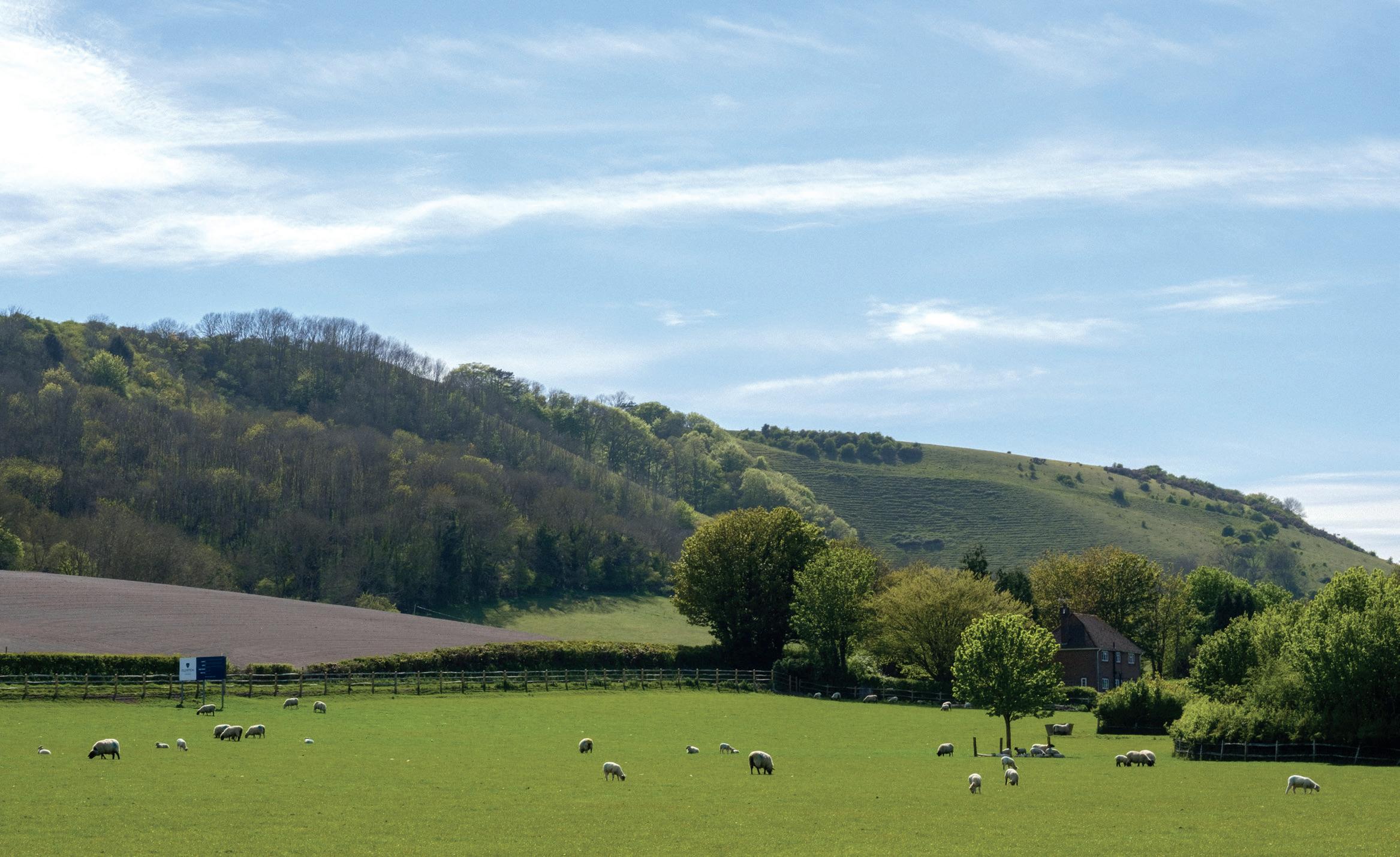
“With the industry constantly evolving, we look forward to hearing from a diverse range of experts and case studies highlighting how we can farm sustainably for the longterm health of the environment and rural economy.”
With support from Virgin Money, the AgriFood Centre has been purpose-built to host and connect rural communities and businesses across the South East for training, education, networking and events.
Brian Richardson, Head of UK Agriculture, Virgin Money said: “This is a turbulent time for the farming sector as support mechanisms change post-Brexit and the wider economy is dealing with record inflation levels.
“It’s critical for all farmers to look at how their own businesses can adapt to remain successful in the future, and the conference
and workshops will provide valuable insights on how to approach this.
“Given the central role it plays in agriculture and rural business in the South of England, it is great that we have Plumpton College hosting this event and I very much look forward to taking part.”
THE NEW AGRIFOOD CENTRE AT PLUMPTON COLLEGE
The college has long been part of the South Downs landscape and local community. Originally established in 1926, the college began by offering agricultural courses. Today, it is the leader for land and environment education in the region and has grown to offer 19 different courses, ranging from 14+ education through to college-aged courses, apprenticeships, degree courses and adult education.
The college continues to invest in its estate and is proud to announce the opening of the AgriFood Centre, which highlights its commitment to the land and environment training and education facilities for the community across the South East.
PROGRAMME
2:30PM
Registration and refreshments
3:00PM
Welcome from Emily Norton, Head of Rural Research at Savills
3:10PM
Keynote speaker: Martin Lines, Chair of the Nature Friendly Farming Network


3:30PM
Amelia McLean, Hugh Lowe Farms Ltd
3:50PM
Brian Richardson, UK Head of Agriculture, Virgin Money
4:10PM
Susan Twining, CLA Chief Land Use Policy Adviser
4:30PM
Panel Q&A hosted by Emily Norton
5.00PM

Workshops (see page 32)
6:20PM
Conclusions
6:30PM
Networking, food and drinks reception
WWW.SOUTHEASTFARMER.NET | APRIL 2023 33 TO ADVERTISE CALL 01303 233883 PLUMPTON COLLEGE CONFERENCE
Tickets for this event are free. To book your place visit:
FULL PROGRAMME OF LIVESTOCK COMPETITION




The South of England Show returns to the South of England Showground, Ardingly, on Friday 9, Saturday 10 and Sunday 11 June. This year sees another full programme of livestock competition, with 330 classes now open for entry at www.seas.org.uk.
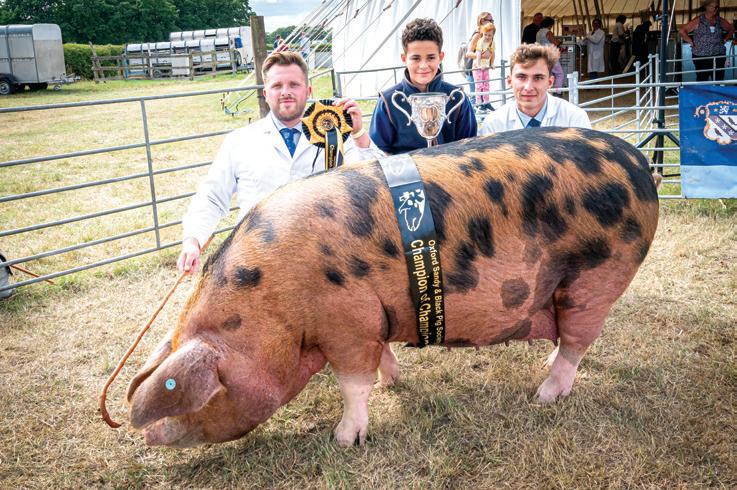

The show will also feature a full programme of equine showing and show jumping classes. The closing date for entries for livestock and equine is 21 April, with show jumping entries
closing on 27 May. With a non-stop programme of agricultural and equestrian displays, country pursuits, live entertainment, rural crafts and a variety of food, drink and shopping opportunities, the South of England Show offers people of all ages the opportunity to connect with the countryside and enjoy a great day out.
Among the other highlights of the 2023 show will be the Bold Dog Lings motocross stunt displays, heavy horses, cookery workshops,
scurry driving, the ever-popular Shetland Grand National, a garden design competition and a new vintage agricultural machinery ring with demonstrations and displays.
Visitors will also be able to experience forestry, fly casting and many more rural industries and crafts at a a show that’s sure to impress.
www.seas.org.uk


LIVESTOCK SHOWING A PRIORITY
Maintaining their commitment to farmers, the organisers of the Edenbridge & Oxted Agricultural Show are determined to keep livestock showing their priority for 2023.


The show was proud to host almost 400 cattle entries in 2022, along with more than 1,000 sheep representing more than 40 different breeds. This year’s Joint Chairs, Bill Peters and Holly Taylor, recognise that seeing quality pigs, goats, cattle and sheep up close is a huge attraction for visitors, and that while the rest of the show continues to grow and
evolve, livestock showing must always remain at its heart.
The timing of the show over the August bank holiday comes at the close of the season, making it the ideal place for exhibitors to relax a little and enjoy time off the farm with friends.
Keeping the event fresh and attractive to the public has also been a priority for Edenbridge & Oxted, with exciting displays from monster trucks to axemen on the programme for 2023.
All the usual additional fun returns, too, with working gundogs and terriers, local

food and drink, a huge showing of vintage tractors and machinery, blacksmiths, farriers, fly fishing, horticulture and an equestrian section spanning five competition rings and featuring qualifiers for the Horse of the Year Show and The London International Horse Show.



Advance public tickets are available through the website at a discounted rate, with competition schedules issued in May.
 Photos: Sean East
APRIL 2023 | WWW.SOUTHEASTFARMER.NET 34 SHOW PREVIEWS
Photo: Tim Scrivener
www.edenbridge-show.co.uk
SUSSEX CATTLE OUT AND ABOUT




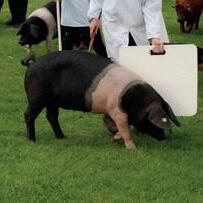
Following its success last year when the Sussex were reserve champions in the prestigious annual Burke Trophy, awarded to the best pair of cattle (male and female) of any breed, the Sussex Cattle Society has an even more ambitious programme of events planned for 2023.




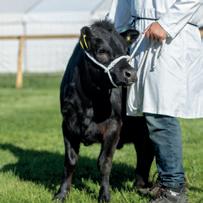


In addition to major shows in the South East – Heathfield, South of England, Kent and Edenbridge & Oxted – there will be teams of Sussex cattle competing at The Suffolk Show and The Royal Norfolk Show.


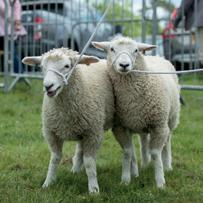
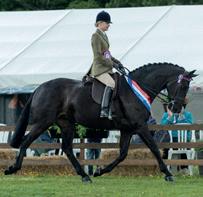
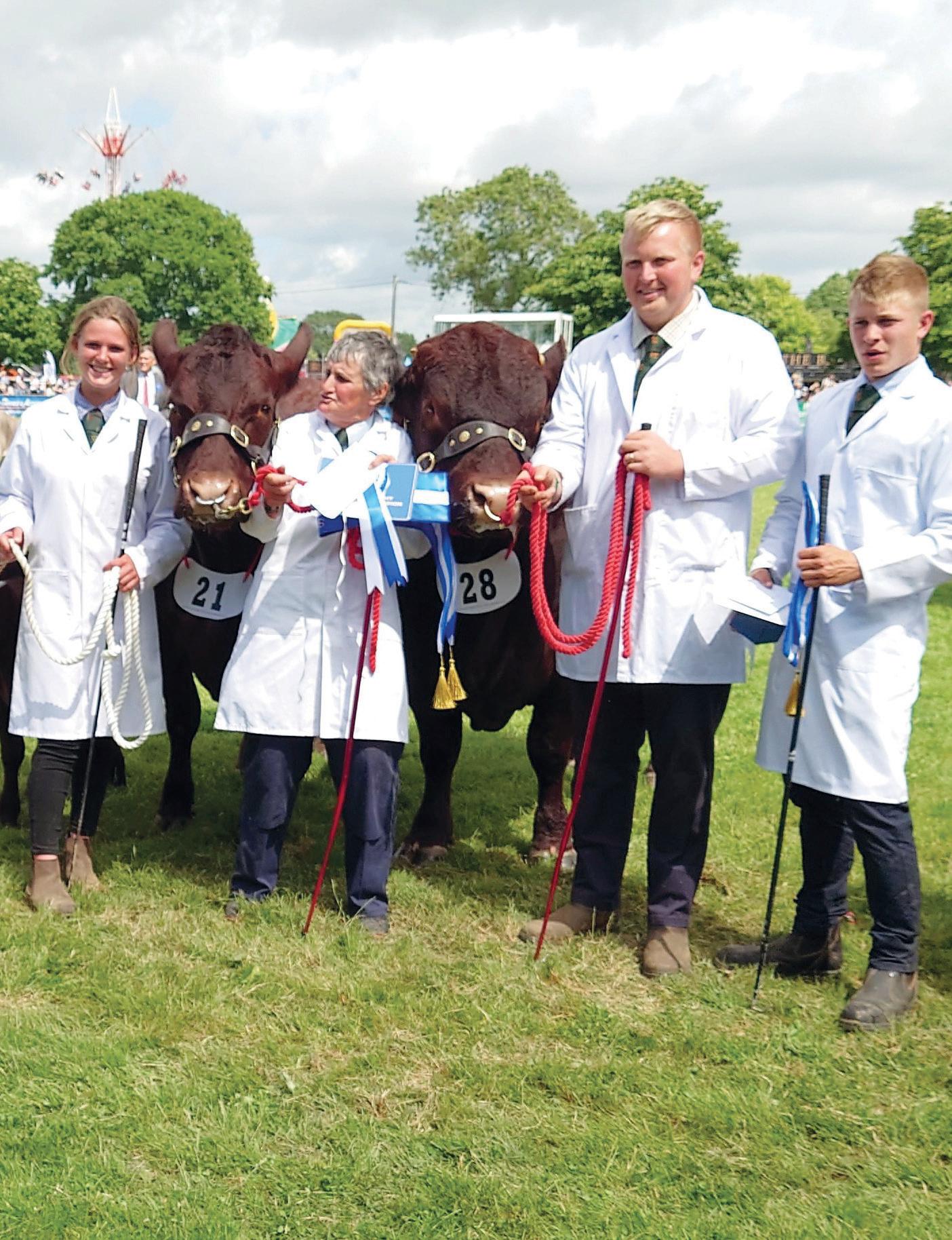
Sue Kennedy, secretary of the society, commented: “Taking live cattle outside the South East is an excellent way to promote the breed. Only by seeing modern Sussex in action can farmers who are often not familiar with the breed get a good indication of their scale and confirmation and have an opportunity to talk with some of our leading breeders.”
In addition to the cattle, the society will also be taking trade stands at these two agricultural shows and have planned a promotion intended to attract beef and dairy farmers alike by offering 50 semen straws free of charge from a selection of Sussex bulls.








































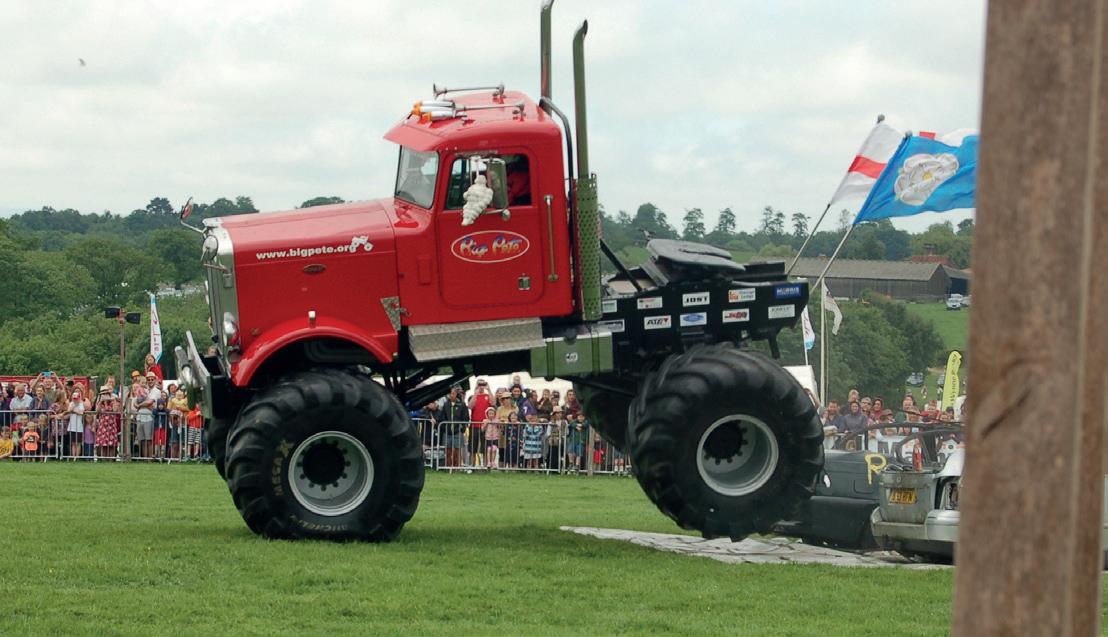
Visitors to any of the shows in Sussex, Kent or further afield are invited to visit the stand to find out more about these versatile cattle and how they can be a successful part of a farming business.


WWW.SOUTHEASTFARMER.NET | APRIL 2023 35 TO ADVERTISE CALL 01303 233883
DISCOUNTED TICKETS Visit www.heathfieldshow.org Heathfield Agricultural Show THE SOUTH EAST’S PREMIER ONE DAY AGRICULTURAL SHOW SATURDAY 27TH MAY 2023 8.30am – 5.15pm Little Tottingworth Farm, Broad Oak, Heathfield, East Sussex Livestock entries closing date: 11th April Horse entries closing date: 3rd May (online entries) Nicola Magill, Show Organiser: secretary@heathfieldshow.org #KCS2023 Tickets on sale now KIDS GO FOR £1 KENT SHOW .co.uk KENTSHOW.CO.UK LIVESTOCK CLASSES, SCHEDULE AND ENTRIES OPEN SOON SALLY HIGGINS - 01622 633057 • SALLY@KENTSHOWGROUND.CO.UK
Reserve Burke Trophy team
The Kent County Show returns on 7, 8 and 9 July 2023 during what is the 100th anniversary of the Kent County Agricultural Society, the charity organisers behind the Show.

The Kent County Show, now in its 92nd year, will acknowledge this achievement through several special displays and exhibits. The One Hundred Years of Farming display will take visitors on a journey back through time, with live re-enactments telling the story of farming throughout history. There will also be a chance to learn more about the society’s past and its charitable work.
The Shetland Pony Grand National, a popular crowd pleaser, is this year’s main ring attraction. With jockeys aged between eight and 13 and ponies no bigger than around 40 inches tall, they may be small, but they sure are mighty, and exceptionally fast.
Not only do the races make for enthralling entertainment, but the participants are competing to qualify for the Shetland Pony Grand National finale at the Olympia Horse Show later in the year. Come and cheer on your favourite horse and jockey each day in the Astor Ring.
There will be action in the skies as well as on land, with an anniversary special aerobatic display from the Pitts Special. This world-class biplane, with smoke system and unmatched acoustics, will make for a breath-taking 15-minute display each day.
Back by popular demand, the UK’s only
ONE HUNDRED YEARS OF FARMING
travelling pig stage show, the Hogg Show, will take place on all three days. Meet some of the rarest pigs from across the world with names such as Wool-i-Ham and Harry Trotter, and laugh as they show off their intelligence and amazing agility.
For the thrill seekers out there, the show jumping competitions in the Astor Ring make for exciting viewing. Once again, the show will be holding the exclusive International Trial, bringing top horses and riders from across the country to compete. Other entertainment includes the Lamb National, sheep dog and falconry displays, fairground rides and much more.
Livestock remains a core part of the show and a favourite amongst visitors. Hundreds of cows, sheep and goats of all sizes, shapes and colours converge on the showground with their handlers, competing to take home the prize for Best in Show. Get close to the animals in the livestock tents and watch exhibitors trim and preen in preparation for showing classes.
The Village Green provides the perfect sanctuary from the hustle and bustle of the rest of the show, an opportunity to rest and enjoy a
picnic or perhaps try something delicious from an array of cuisines on offer from independent catering units from Kent and beyond. Enjoy live music from great local acts at the bandstand with a glass of Pimms in hand, or head to the public bar and restaurant for refreshments and to try your hand at a round of mini golf.
The woodland area showcases the skills and crafts of the woodland and forestry industry and is the perfect place to discover more about the county’s woodlands and the work needed to maintain and conserve them. The country, game and canine area has trade stands, displays and interactive activities ideal for dog owners. Get involved with have-a-go dog agility and K9 Aqua Sports, which is returning with its popular dock diving activities.
For vehicle enthusiasts, the heritage section will boast displays of vintage vehicles and machinery. With classic cars, commercial vehicles, buses, motorcycles, tractors, steam and stationary engines, the heritage section shows the evolution of transport over time.
Book your tickets online to take advantage of the pre-show discount on general admission. Young people aged three to 15 pay just £1.
APRIL 2023 | WWW.SOUTHEASTFARMER.NET 36 SHOW PREVIEWS
www.kentshow.co.uk
THE EVOLVING ADVENTURE
























Organisers of the Heathfield Agricultural Show have been working tirelessly to put together a show to be remembered and inviting potential exhibitors to enter their horses and livestock in the showing competitions that will take place at the show on 27 May.

Online entries for the livestock classes close on 11 April and horse entries on 3 May. Visit the show website for full details and to enter the competition classes.










Now in its 76th year, the Heathfield Show continues to reflect all that is good and great about the High Weald area. Visitors without animals to enter should head over to the livestock rings early to witness the judging of the cattle, sheep and pig classes.
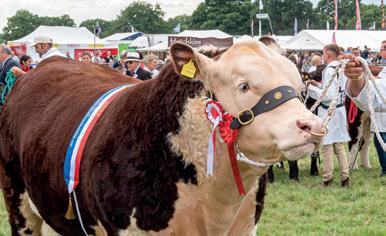


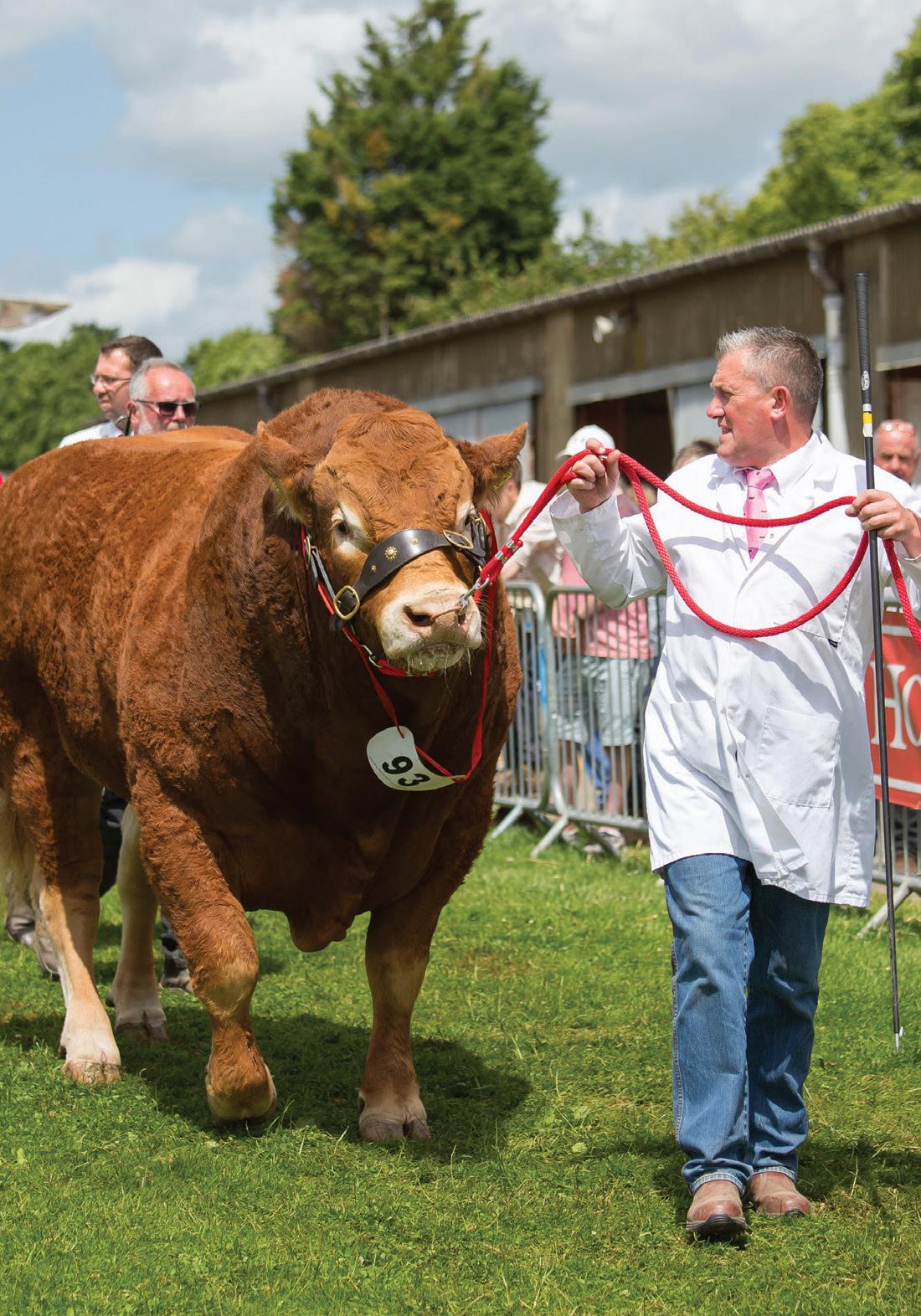

Commentators will explain what the judges are looking for in a champion showing animal, while visitors can get up close and personal to the animals in their
















stalls when judging is not taking place.
The horse competition goes on throughout the day. There are five showing rings, with the class timings listed in the glossy show programme distributed free of charge to all visitors.
As well as showcasing rural businesses, the show is about promoting the rural way of life and reminding people how they can become involved. The education marquee will house displays from Plumpton College and the Young Farmers, while South Brockwell Farm will be giving younger visitors the chance to listen to a story with live animals.
There will also be thrills and spills in the main ring. Big Peter the monster truck will be smashing his way across the ring, while the Shetland Pony Grand National will offer something very different.






Save money by purchasing entry tickets on line and in advance.









WWW.SOUTHEASTFARMER.NET | APRIL 2023 37 TO ADVERTISE CALL 01303 233883 SHOW PREVIEWS
APPLY ONLINE seas.org.uk 330 Livestock Classes 9, 10 & 11 June 2023 South of England Show #SouthofEnglandShow CLOSING DATE FOR ONLINE ENTRIES 21 April @SouthEngShows August Bank Holiday Sun 27th & Mon 28th August 2023 Lingfield, Surrey RH7 6LL (nr J6, M25) Afabulous family dayout!
STATE-OF-THE-ART TECHNOLOGY TO SUPPORT PROJECT
Hadlow College has bought a Clemens MultiClean mulching brush to carry out mechanical husbandry tasks in its vineyard and orchard with the aim of achieving higher levels of production without using chemicals.
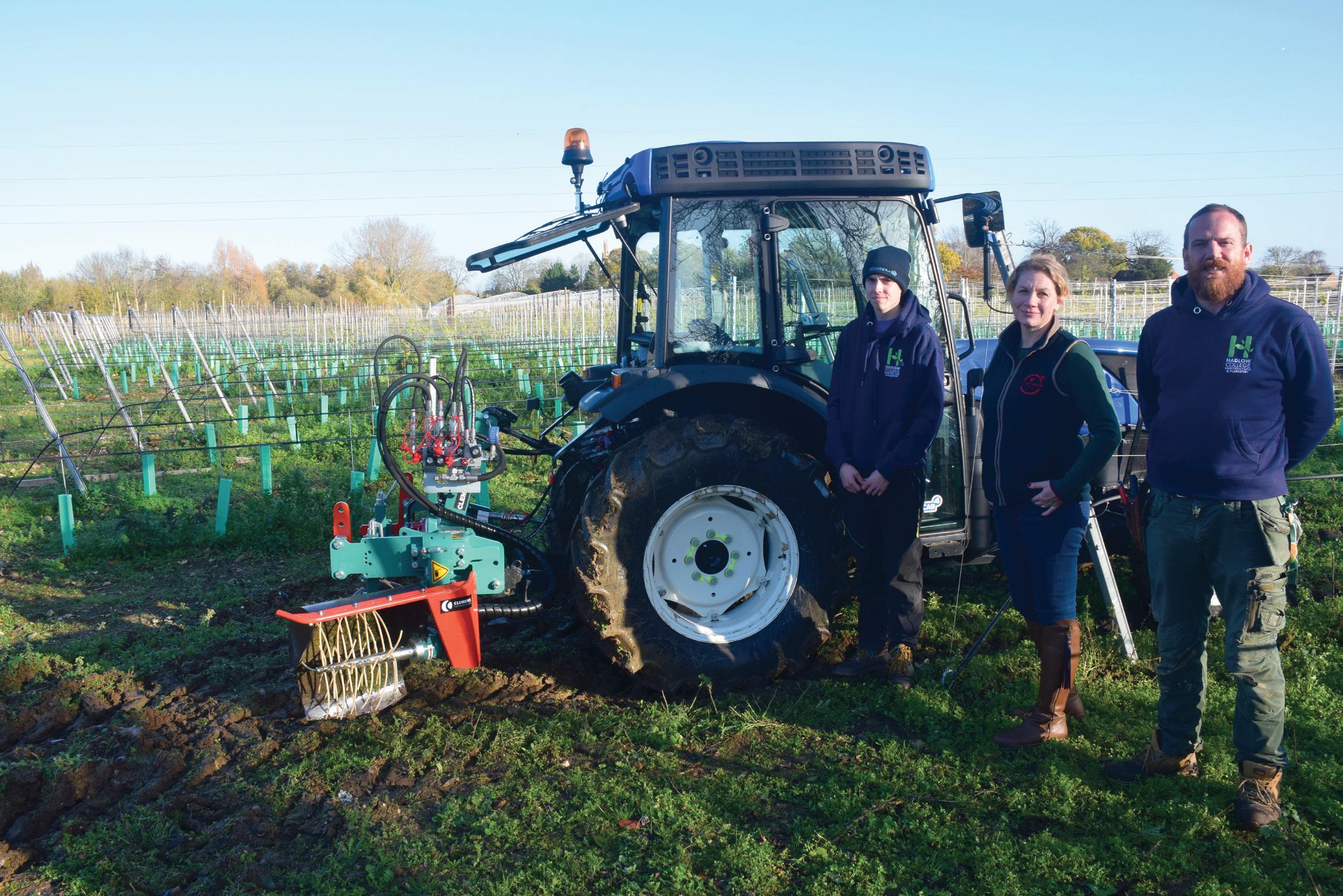
The college enjoyed the support of specialist machinery dealership NP Seymour in selecting the most appropriate equipment.
The MultiClean mulching brush allows the removal of shoots and the control of weeds in the undervine area without interfering with the soil structure. It has a particularly low level of vibration and has robust and smooth strings that are gentle on the vines. Different sized strings allow it to be used for various tasks.
Clemens representative Paul Tuteirihia visited Hadlow to help set up the MultiClean on one of the college’s own New Holland tractors and demonstrated the best way to use the equipment in the sustainable vineyard and orchard on the site.
He explained that Clemens helped growers find sustainable machine solutions for the year-round cultivation of row crops
without the use of herbicides, with a comprehensive product range geared to a wide variety of applications.
Zoe Smith, sustainability project manager at Hadlow College, said: “We have been supported by Claire and Steve from NP Seymour, who have helped us to select the most appropriate equipment for our needs. Their expert knowledge and expertise are invaluable and I’ve been impressed with their customer service.”
Claire Seymour, director at NP Seymour, the UK’s leading fruit and vine machinery dealership, said: “We are thrilled to be supporting Hadlow College with its new orchard and vineyard ventures, ensuring that staff and students have access to the best specialist equipment on the market, such as the Clemens MultiClean and mechanical weeder.”
She continued: “Viticulture is now an integral part of the agricultural landscape, not just here in the South East but across the whole UK, and it is vital that the next generation is provided with quality educational opportunities to learn about and forge lifelong careers in this sector.”
APRIL 2023 | WWW.SOUTHEASTFARMER.NET 38
www.hadlow.ac.uk/news-events/events
WILL THE INCREASE IN FREE CHILDCARE HOURS HELP FARMERS?
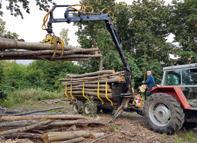
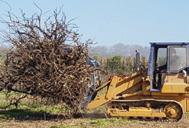


Like I suspect many of you, I listened carefully to the spring budget reports, hoping there would be assistance for the farming sector.
Green energy investment support was discussed by many agricultural economists in the run up to the announcement on the 15th, with one commentator pointing out that the agricultural sector’s potential to reach the UK’s net zero targets would require an extension on R&D and related tax reliefs on energy efficient solutions and the continuity of existing reliefs for installing wind, solar and other green tech.
Did we get this? Well kind of, though not specific to farming. There is tax relief for investment in technology by businesses, but you need to check if farming partnerships are eligible because to access the R&D relief you need to be a limited company. For those who qualify, this relief will go a little way to offset the (up to) 6% increase in Corporation Tax.
There are no direct green energy incentives, sadly, and neither has anyone found mention of horticulture gaining support through the energy relief scheme accessible to other sectors with high consumption needs. With all the empty shelves and disruptions to supply because of weather (pricing is another matter), I had hoped that there would be support that contributed to our food security and national diet.
The NFU was urging the chancellor to raise tax thresholds over concerns that keeping income tax, inheritance tax and child benefit tax allowances unchanged impacts negatively on farming family finances. With tax thresholds still held, this is increasing the impact of inflation at almost 10% and delivering very real falls in income. We still have, of course, the highest tax burden since Clement Atlee. With personal tax thresholds frozen until 2028, this will increase the four million already paying 40% income tax to eight million by then: that’s 25% of the workforce paying higher rate tax through fiscal drag.
There are just about three more fiscal event opportunities to




promote growth and cut taxes before a general election; meanwhile, the insolvency service says that the number of companies entering insolvency rose by 17.5% (year on year) in February.
The question in the title relates to an appearance on Radio 5 Live this week. With my new hat on, the change in the number of hours of free childcare is great for many families, but for fruit farmers... well, unless the nursery in question covers school holidays (or hasn’t gone bankrupt because the remuneration under the scheme hasn’t been linked to the rising cost of doing business) then probably not.
Closer to home, the new team in the National Fruit Show office is busy planning the AGM, which this year will be held on 19 April at East Malling Research, in the new Growing Kent and Medway facility.

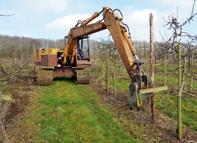
With Emily Norton, the 2023 Oxford Farming Conference chair, delivering the James Nichols lecture, we can be sure of some pithy insight into policy and the direction of travel on environmental schemes and food security. With a focus on future opportunities for the sector, this 90th year of the society is getting off to a good start.
I’m pleased to report that stand sales are buoyant for the show, this year on 1 and 2 November. There will be plenty of opportunities to celebrate 90 years of the annual gathering of all fruit growers and start our run in to centenary celebrations, something to be proud of.
WWW.SOUTHEASTFARMER.NET | APRIL 2023 39 TO ADVERTISE CALL 01303 233883 FOCUS ON FRUIT SARAH CALCUTT
SARAH CALCUTT Chair, National Fruit Show
W.H.Skinner & Sons Grubbing, timber & groundwork services • orchard grubbing • windbreak removal • timber extraction • fallen tree removal • ground contouring • land clearance • excavations • cultivations • pond dredging • reservoir construction 01622 744640 - 07711 264775 www.whskinnerandsons.co.uk
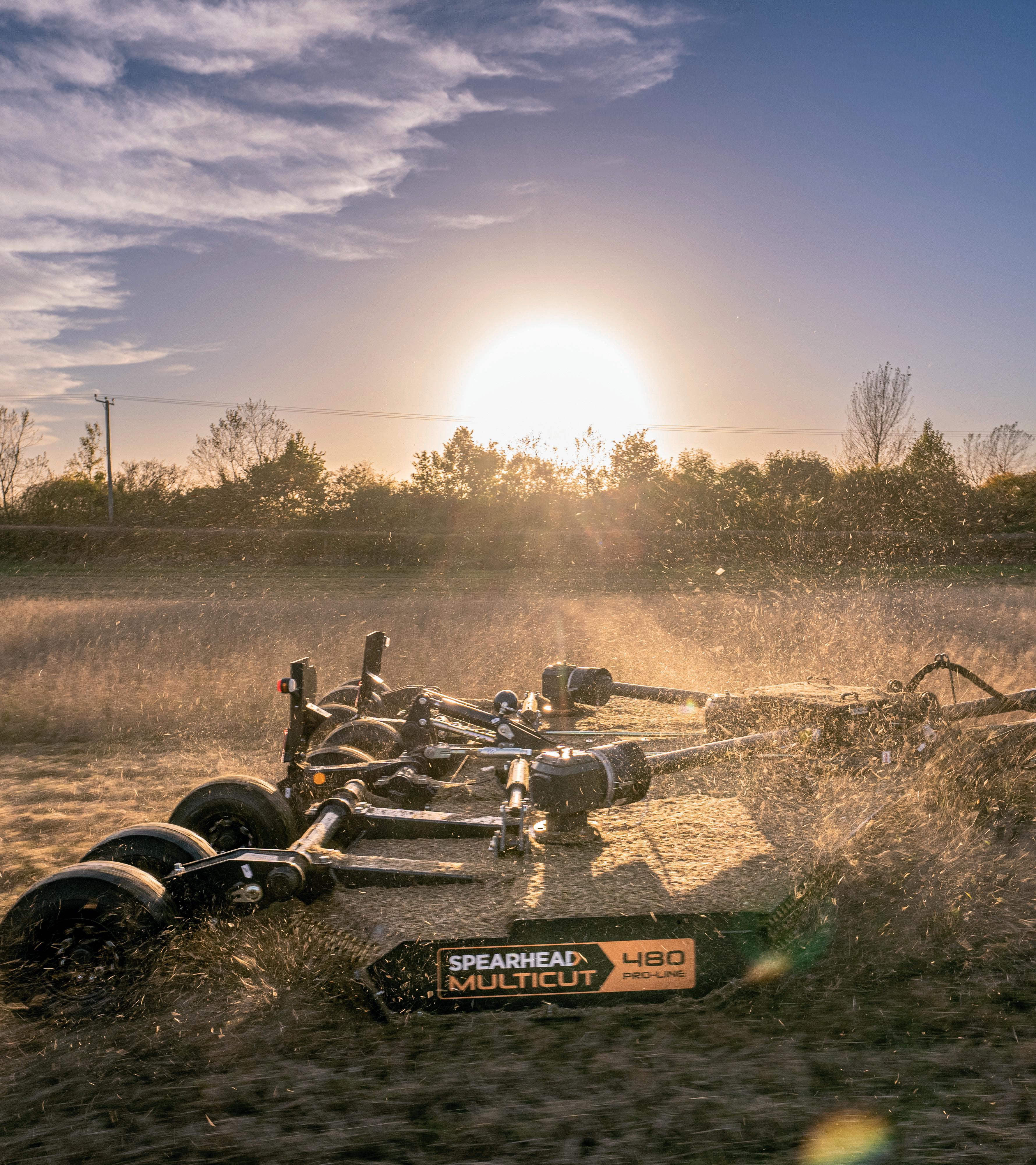
/Oliveragri @Oliveragri @Oliveragri www.oliveragriculture.co.uk OLIVERS Luton 01582 727111 OLIVERS Petworth 01798 343660 OLIVERS Reading 01189 723741 OLIVERS Tingewick 01280 848494 OLIVERS Winchester 01962 774590 SPEARHEAD DEALER OF THE YEAR 2022 NEW MULTICUT 480 AND 650 ‘FLAT TOP’ MODELS NOW AVAILABLE AT SpearheadWorld spearhead-machinery-ltd CONTACT YOUR LOCAL OLIVERS AGRICULTURE SALES MANAGER TODAY TO ARRANGE A DEMO
TRADITIONAL VALUES WITH A MODERN OUTLOOK
A 200 year-old family business that prides itself on matching traditional values with a modern outlook celebrated its anniversary with an impressive open day at its Winchester showrooms.
A T Oliver & Sons Ltd, universally known simply as Olivers, opened the doors of its impressive, modern showroom and welcomed customers old and new to a wideranging display of agricultural machinery, with harvest leaders Claas centre stage.
While Claas combine and forage harvesters are prominent in the Olivers offering, the event is likely to have been an eye-opener for anyone not familiar with the variety of equipment and machinery sold by the wellrespected dealership.
Having bought the dealerships at
Winchester and at Petworth in West Sussex from the retail business of Claas UK in 2018, Olivers has broadened the machinery range considerably, with franchises including Grange, Horsch, Spearhead, Opico, KRM, Martin Lishman, Maschio, Spread-a-Bale, MX, Tanco, Cherry Products and Bunning now fully supported.
Despite the huge increase in machinery and products on offer, sales director Russell Hallam still comes across farmers who think of the Winchester branch as a Harvest Centre focused on the tractors, combines and forage harvesters boasting the premium Claas name.
“I guess it was a Harvest Centre for 25 years, so it’s probably not a surprise, but the open day was an attempt to show farmers and landowners how much more we have to
offer since Olivers moved in,” he said. “Claas is a fantastic brand and we are very proud of the site’s history, but we now provide a full range of equipment from some of the best manufacturers out there.”
The open day also gave service manager Steve Hickin the opportunity to highlight the impressive facilities at Winchester, where the three full-size combine bays allow the sevenstrong team of engineers to get to grips with any necessary repairs or servicing.
To keep servicing costs predictable and prevent any unwanted surprises, Olivers offers its Olivercare range of bespoke servicing packages, which are priced according to the model and the expected acreage covered by the machine.
“Customers are increasingly looking
WWW.SOUTHEASTFARMER.NET | APRIL 2023 41 TO ADVERTISE CALL 01303 233883 200 YEARS CELEBRATION
>>
William Helliwell, David Jarman and Russell Hallam
at whole life machinery costs, not just the price of the machine,” explained Olivers’ aftersales director Rex Hedges. “Our service packages allow farmers to budget for the cost of keeping their tractor or combine in first class working condition – with no unexpected surprises.”



Olivers began in 1823 when Thomas Oliver set up an agricultural contracting business based at the family farm at Hatfield Hyde, near what is now Welwyn Garden City. His son founded his own business at Harpenden in 1861 and was later joined by his sons Archibald and Walter.
Through the years the business has dealt with a range of famous old names, including Marshall stationary engines, which Olivers began selling in 1866, Massey-Harris, David Brown, Field-Marshall and Case tractors, which were first sold by Olivers in 1921. The first combine harvester sold by the
Photos: www.kevinmilnercountryside.co.uk 42 200 YEARS CELEBRATION
<< Spread-a-Bale® To discuss efficient machinery solutions, contact us to arrange your consultation. Luton Petworth Newport Tingewick OLIVERS Petworth Gavin Elliott 07702 939711 Elliott Matthews 07741 272530 OLIVERS Tingewick Matt Kennedy 07739 788296 Tom Smith 07836 652826 OLIVERS Reading Peter Brown 07808 576173 Luke Ward 07774 732671 OLIVERS Winchester Russell Hallam 07919 887863 Andy Atherton 07831 723152 Philip Cole 07771 678946 MR Agri (service agents) Andy Atherton 07831 723152 OLIVERS Luton William Helliwell 07894 698202 Rex Hedges 07595 195038 Paul Green 07850 906285 James Beaton 07739 952301 Will Burman 07971 143138 www.oliveragriculture.co.uk /Oliveragri @Oliveragri @Oliveragri Tingewick Tel: 01280 848494 Winchester Tel: 01962 774590 Reading Tel: 01189 723741 Petworth Tel: 01798 343660 Luton Tel: 01582 727111
business was a trailed McCormick, supplied in 1937, ten years before the business became a Claas agent.
In 2008, the business separated into two key divisions, Oliver Agriculture to handle Claas and associated franchises and Oliver Landpower to manage JCB and Challenger, amongst others.

Oliver Agriculture now serves farmers and landowners across a large part of the south of the country, with the Winchester and Petworth depots complemented by sites at Reading, at Tingewick in Buckinghamshire and at Luton, which also serves as the company’s headquarters.
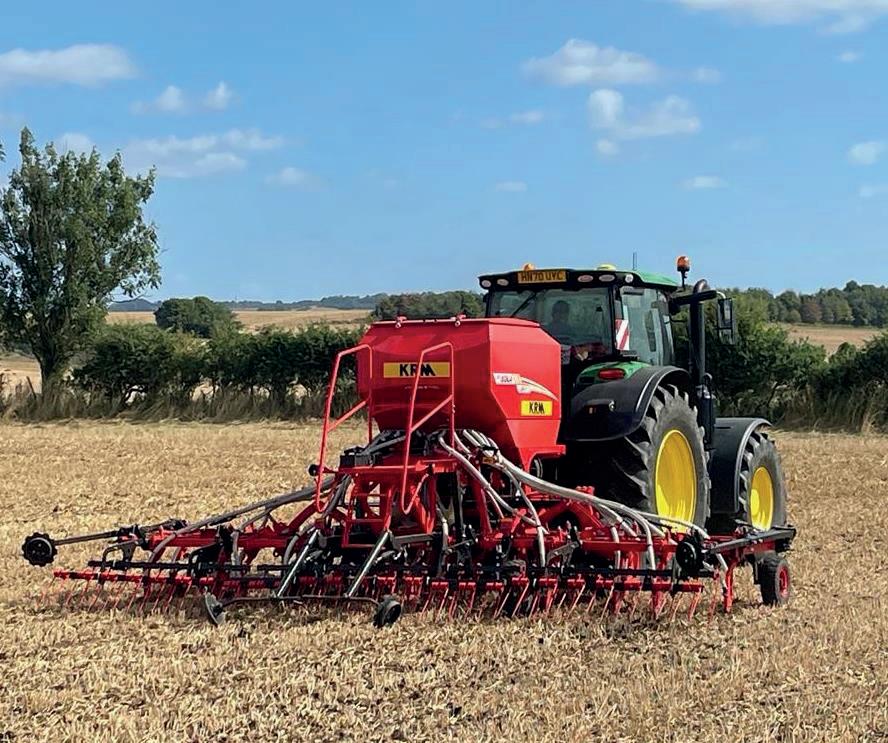


South sales director Russell Hallam’s opposite number is William Helliwell, who
looks after customers in the north of the patch, while managing director David Jarman is keen to maintain the company’s focus on serving the farming community and listening closely to the needs of customers.
“This is still very much a family business that has built up an enviable reputation for customer service through 200 years of business and now enjoys a great deal of loyalty. We are determined to continue to be worthy of that loyalty and to protect and strengthen the Olivers brand,” he commented.
While proud of its history, Olivers is also looking forward and is a keen supporter of farming apprenticeships. There are 18 apprentices currently working across the
business, mostly in service but some in the parts department. A further four are expected to start in 2023.
One area in which the sales team attempts to support customers is by ensuring a pipeline of machinery, including ordering ahead. “In the case of sprayers, for instance, we will order a machine knowing that we can change the spec up until a few months before delivery. When the next customer places their order, we tweak the already ordered model to match what they want. It means ‘their’ order is already on the way rather than only being put on the system that day,” explained Russell.
The sales team, all of whom have farming backgrounds, keep their ears to the >>
All Weather Tine Drills
WWW.SOUTHEASTFARMER.NET | APRIL 2023 43 TO ADVERTISE CALL 01303 233883
Find out more at : krm-ltd.co.uk Or call : 01423-324221
With FETF Grant Funding available, there’s never been a better time to buy a KRM Sola “all weather” tine drill. These versatile drills ensure your crops can be sown in a wide range of conditions with the benefits of less weight on the seedbed, less horsepower and less fuel used.
SLURRY MANAGEMENT SPECIALISTS






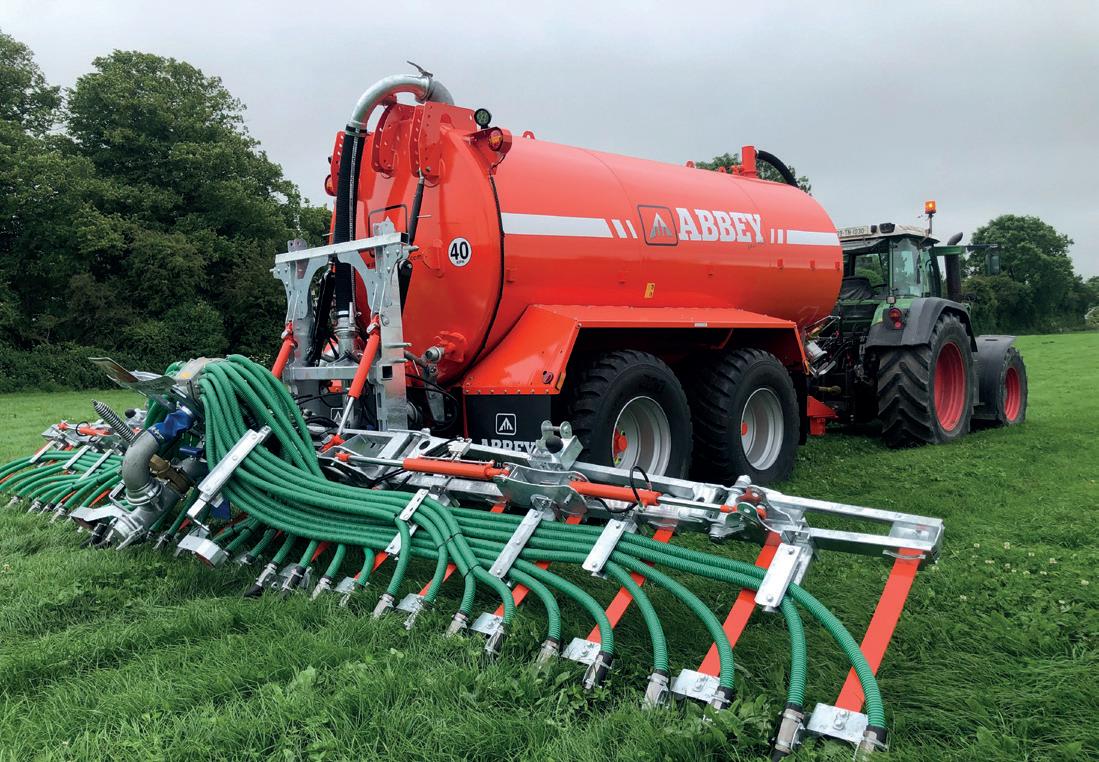
• Fully integrated chassis and tank for a longer working life
• Patented ‘Double Trap System’ for maximum pump protection
• From 1300g to 6000g (Standard, Recess, Tandem & Tridem)



• Range of LESS Applicators







UK SALES: NICK EVANS +44 (0)7557 477547 www.abbeymachinery.com



PROUD TO BE WORKING IN PARTNERSHIP WITH OLIVERS.
To help our customers turn the challenges of agriculture into opportunities, we develop innovative agricultural equipment for tillage, sowing and crop care. But only by partnering with dealers that excel in customer service can we help protect the economic future of farming. HORSCH.COM
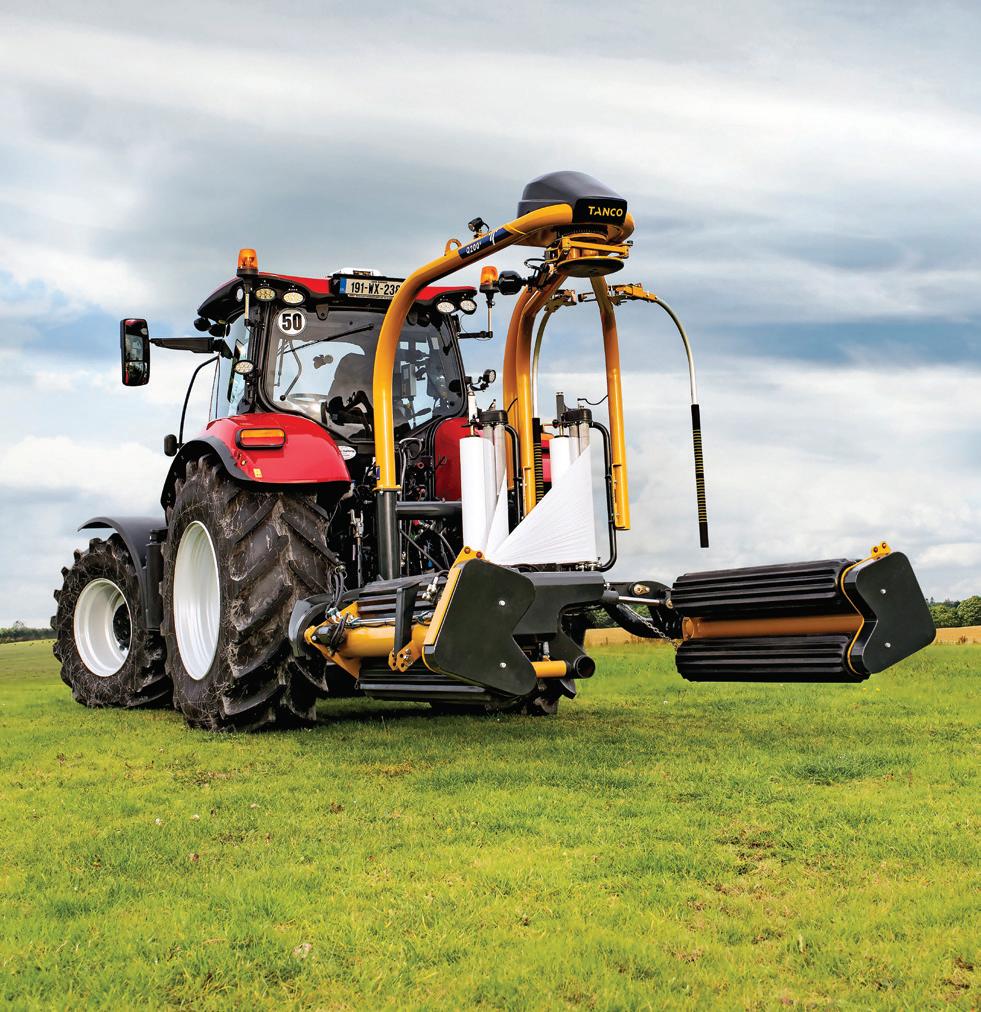
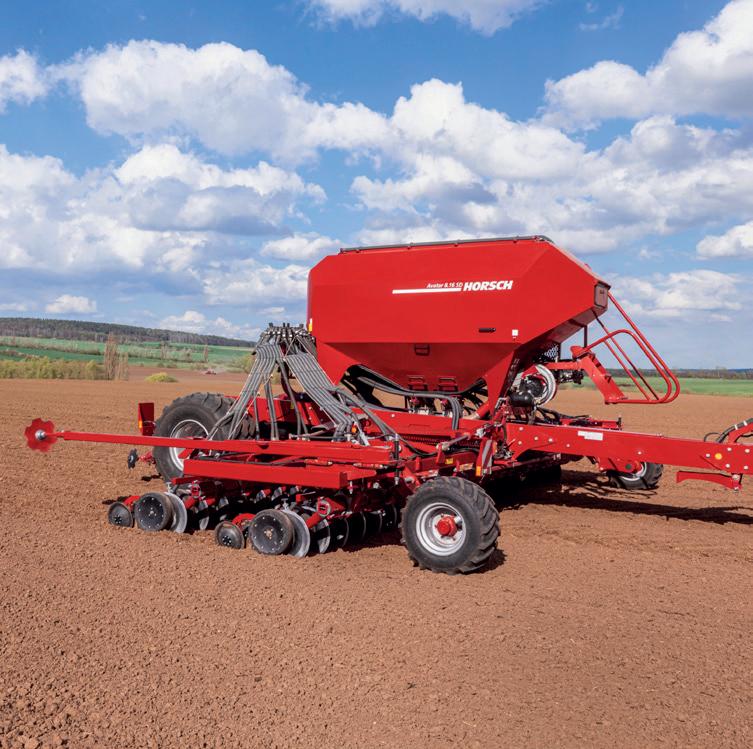
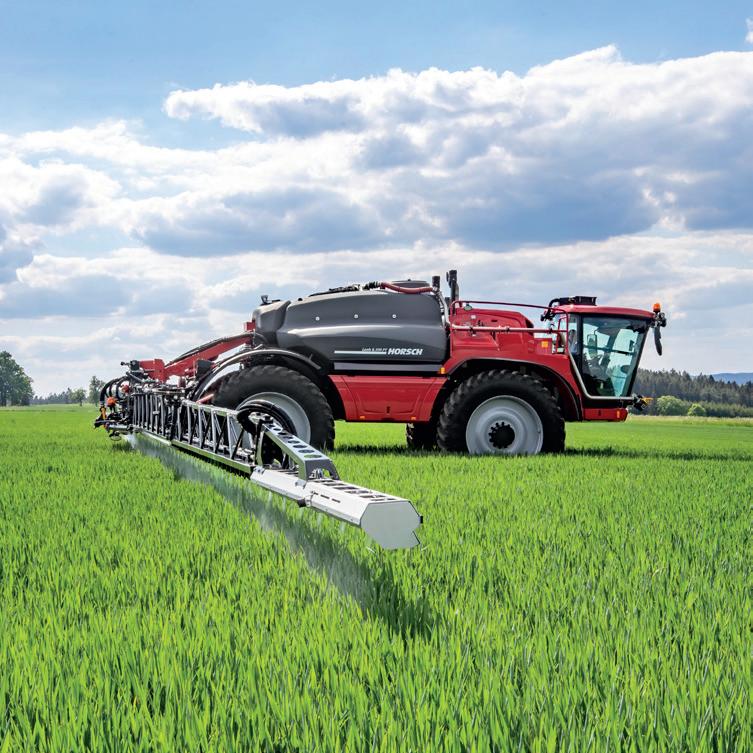
TOGETHER FOR A HEALTHY AGRICULTURE
APRIL 2023 | WWW.SOUTHEASTFARMER.NET 44
OVER O F FARMING MACHINER Y OVER O F FARMING MACHINER Y
Clonalea, Toomevara, Nenagh, Co Tipperary, E45 KX78, Ireland.
@AbbeyMachinery
ground and talk frequently to customers to make sure that their stock, and their order pipeline, reflects what the industry is focused on at that time. “We know, for instance, that customers are increasingly looking for minimum soil disturbance and so we make sure we have min-till and strip-till machinery on order,” William added.
The team also keeps on top of grant opportunities so that it can advise farmers on what is available and what machinery will tick the boxes for opportunities such as the Farming Equipment and Technology Fund (FETF).
“The specifications for the kind of equipment that qualifies for the grants, which
are currently focused on areas such as slurry management, regenerative farming and livestock handling, are specific and we are there to help farmers maximise the benefits these grant offer," said Russell. ”We also make sure we have equipment in stock that fits the bill.”
Olivers supplies a range of slurry equipment, including larger, contractorfocused kit from Samson and the more affordable range of Abbey Machinery which is ideal for smaller acreages and dairy farms. Slurryquip, Mastek and Storth accessories are another quality range that is supplied to offer complete slurry packages for any operation. When it comes to livestock handling,
Olivers stocks hurdles, fences, lamb weighers, crushes and the like from the well-respected Ritchie Agricultural range, along with creep feeders, bale trailers and slurry nurse tanks from Portequip.
Alongside Claas, Horsch is one of Olivers’ biggest sellers, accounting for 25% of the business. With grant opportunities and the rising costs of inputs pushing farmers steadily towards eco-friendly, no-till systems, the manufacturer’s Avatar drill is a big seller which has outstripped all expectations.
Available in 4m to 12m widths, the Avatar is particularly good at drilling through cover crops and can cope with a greater depth of trash than comparable machines. >>

WWW.SOUTHEASTFARMER.NET | APRIL 2023 45 TO ADVERTISE CALL 01303 233883
200 YEARS CELEBRATION
<<
PROVEN IN THE FIELD

Standard Features

• 8mm Floor and 5mm Sides (S355mc Steel).
• 10 Stud commercial axles
• Torque Arm Suspension to suit large diameter agricultural wheels.

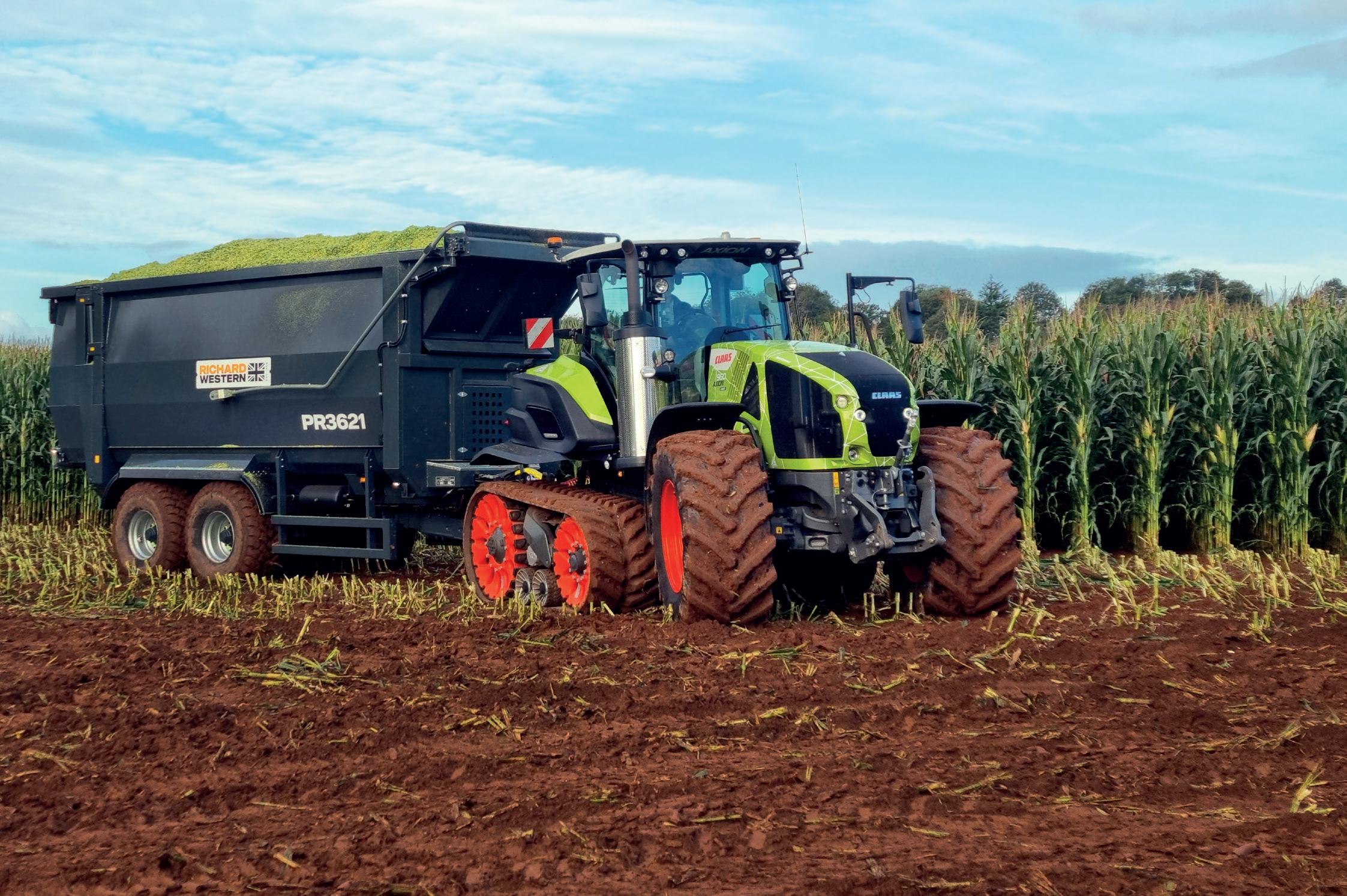
• The height adjustable sprung drawbar with Bolt-On ring hitch.
• The Sides and Floors are each made in one piece of steel.
• Sliding system is low maintenance and is supported by 4 industrial wheels.
• Pusher blade is supported on wheels to reduce friction while the seal is also made of PE1000 thermoplastic for high wear resistance.
• Stability during unloading; it can even be unloaded in a building; cargo can also be partially unloaded.

• Quick unloading cycle time.
• Locking tailboard for compressing resistance.
• Opening and locking the tailgate has a hydraulic and mechanical lock function for added security.
• Tandem axle version operates from the tractor hydraulics, Tri axle model PTO driven on board hydraulics
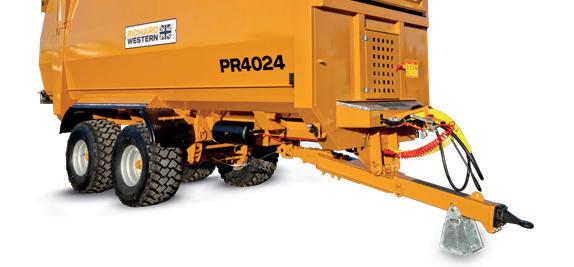
• Air or hydraulic brakes with load sensing valve.
• Control box to operate pusher ram
• Plastic toolbox

APRIL 2023 | WWW.SOUTHEASTFARMER.NET 46
www.richardwestern.com +44 (0)1728 723224 sales@richardwestern.com increase the efficiency to your forage harvester LARGE CAPACITY, ROBUST AND DURABLE
PUSHER TRAILERS
Horsch is also leading the field with a new sprayer boom that follows the contours of the field and has “taken the market by storm” in William’s words, while Olivers is also seeing big demand for its LEEB range of sprayers, including the new FT front tank model which the manufacturer describes as “an intelligent spraying technology that mounts to a tractor’s three-point linkage”.
Olivers was the first dealer in the country to stock the Grange Machinery range, including the Strip-till Preparator with hydraulic front cutting discs for trash management and the innovative LDT –or low disturbance toolbar. This boasts automatic wing folding for headlands and the facility for a second implement to be trailed behind the machine.

Another manufacturer supporting low chemical use is KRM, whose inter-row hoe offers impressive mechanical weeding and is designed to match the row spacing of Horsch’s Avatar range.
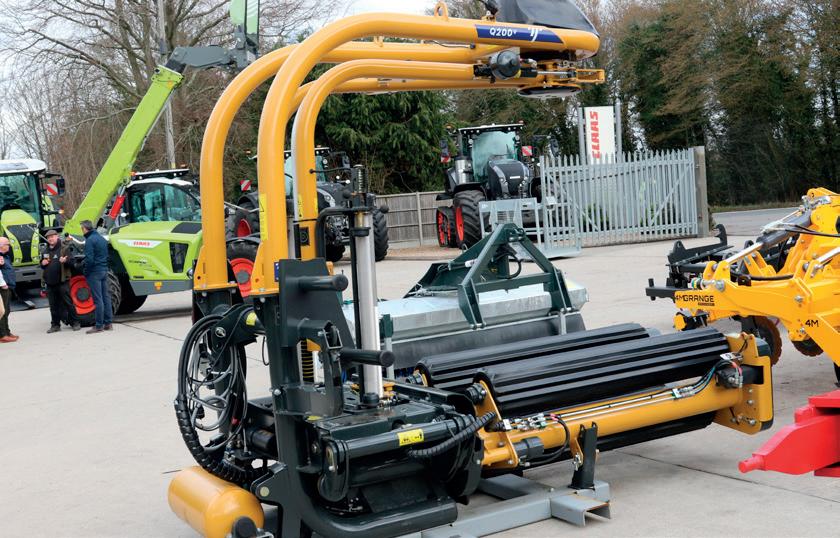

Bunning’s HBD spinning disc manure spreader represents excellent build quality and meets current legislation, as well as being able to record what has been spread, while Oliver’s partnership with leading rotary mower manufacturer Spearhead saw the dealership named its 2022 Dealer of the Year. Spearhead’s Multicut has dominated recent sales growth at Olivers, with the 480 and 650 models both benefiting
from a flat top deck, which keeps everything cleaner.
Richard Western’s HS Plus range of grain trailers benefits from full commercial axles and air brakes, while the newer models have an impressive automatic load securing system and hydraulic rollover sheets that can be operated from inside the cab.
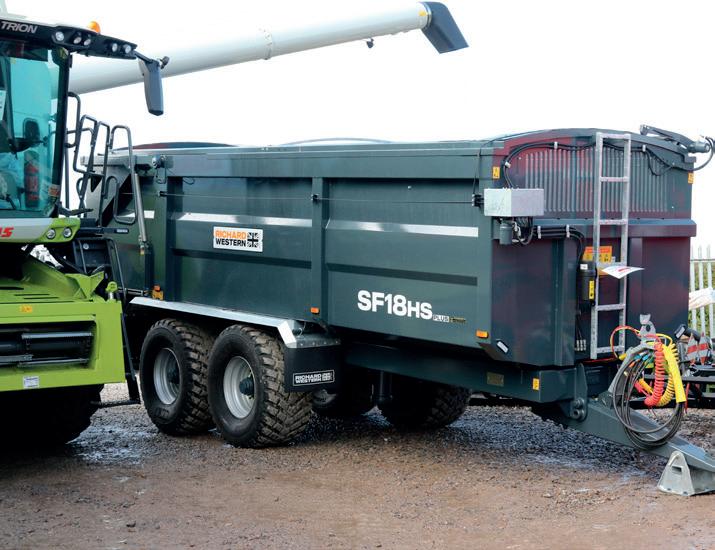
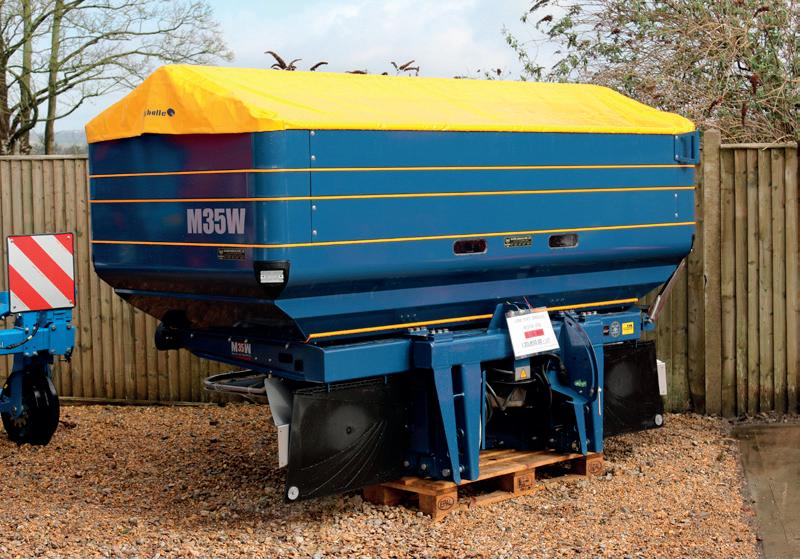
Tractor growth at Olivers has been led by Claas’s impressive CMATIC range of continually variable transmission (CVT)


>>


WWW.SOUTHEASTFARMER.NET | APRIL 2023 47 TO ADVERTISE CALL 01303 233883 200 YEARS CELEBRATION
<<
• CAT 3 & 4 Linkage Headstock
• X12 Hydraulic adjustable front cutting discs for trash management and to provide minimal disturbance

• X12 Low disturbance loosening legs at 0.5m spacing with a range of 300mm working depth all fitted with Tungsten protected points
• Automatic Headland Turning Feature – hydraulic system that folds the wings from 6m to 3m for the headland turn
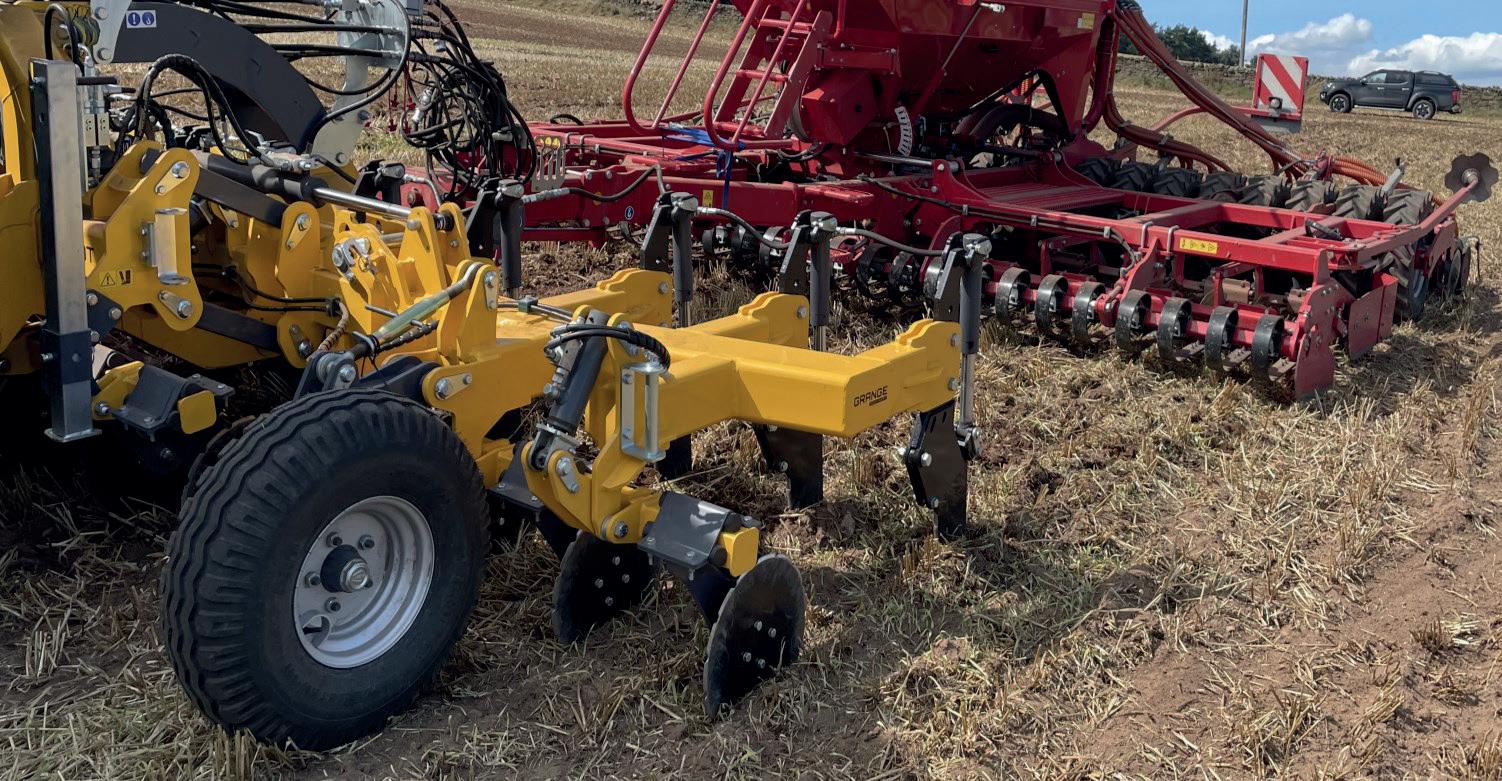
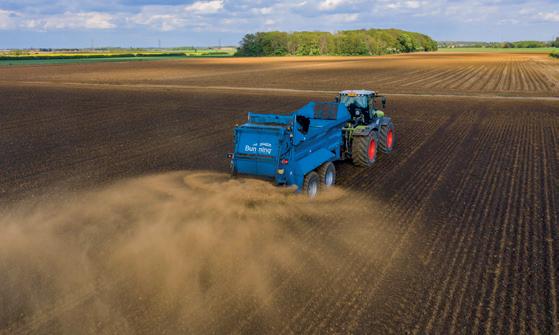


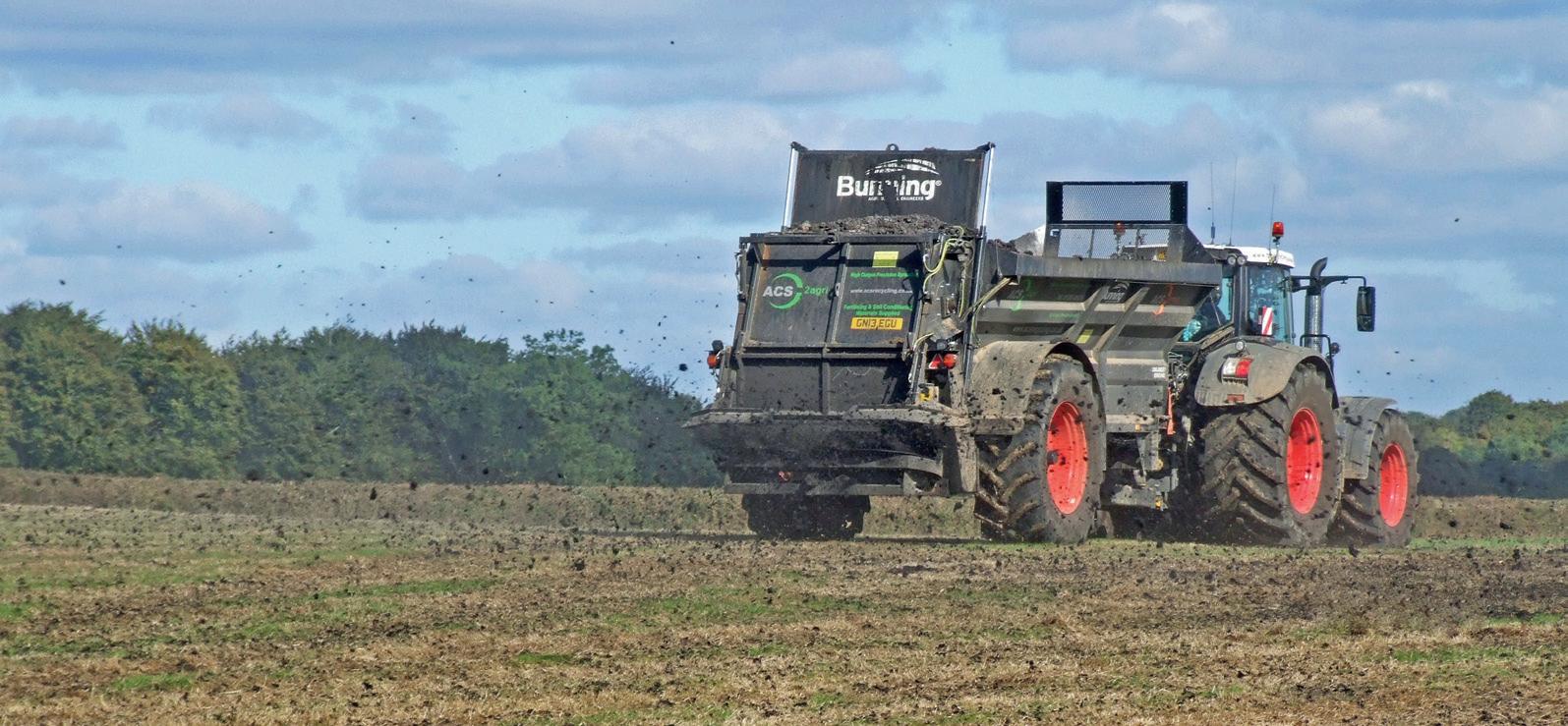
• Hydraulic services for trailing secondary implements




Twin Vertical Auger TVA | 6 – 40 tonnes

Horizontal Beater & Spinning Disc HBD | 8 – 40 tonnes




APRIL 2023 | WWW.SOUTHEASTFARMER.NET 48 Lowlander ® Manure
Spreaders
3
bunning
6m Low Disturbance Toolbar (LDT)
Year Warranty | Details available upon request www.gtbunning.co.uk
spreaders
www.grangemachinery.co.uk
Add complete versatility to your drilling and cultivation processes ….
machines which deliver just the right amount of power on demand, reducing fuel consumption and giving a smooth ride. Most popular are the Arion 660, delivering 205hp, and the Axion 870, which produces 295hp.

“Along with the more frugal transmission, the new tractors offer greater driver comfort and the reliability that farmers expect from Claas,” commented Russell.
As well as selling some of the best agricultural machinery available, Olivers offers first class follow up and backup, with sales demonstrator James Thompson ensuring that new machinery is set up properly and that additional kit like GPS or telematics equipment is connected, working and ready for action.

That attention to detail continues in to the servicing bay, where Olivers' advantages as a main dealer come into play. “Using the right diagnostic equipment, highly skilled, franchise-trained technicians and genuine parts makes all the difference when servicing or repairing complex machinery,” explained service manager Steve Hickin.
“We have open lines of communication with the manufacturers in case we need more support, and we offer fluid sampling to keep ahead of any potential issues. A machine that has been properly serviced by a main dealer will also generally benefit from a higher resale value.”
For customers who are looking for an alternative to genuine OEM parts, Olivers
has researched after-market brands it trusts, including Granit. Bourgault which makes retrofit seed coulters for drills such as the popular Horsch Sprinter drills.
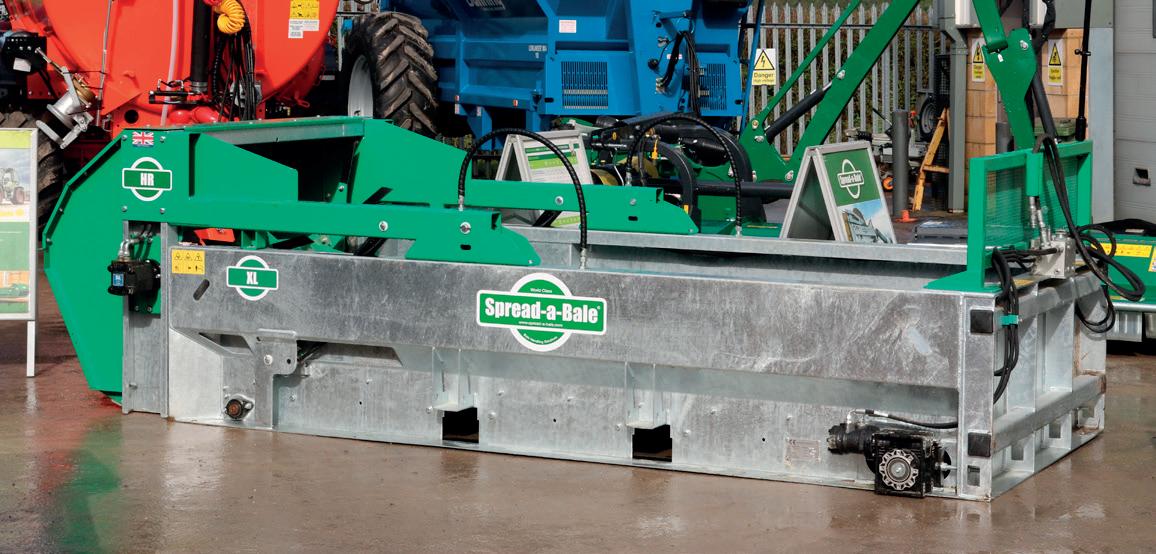
“The Bourgault range minimises soil disturbance and has a lower draft than the coulters supplied as standard, giving more even crop placement in a narrower row, something many of our farmer customers prefer,” commented Rob Bushell, Parts Manager.
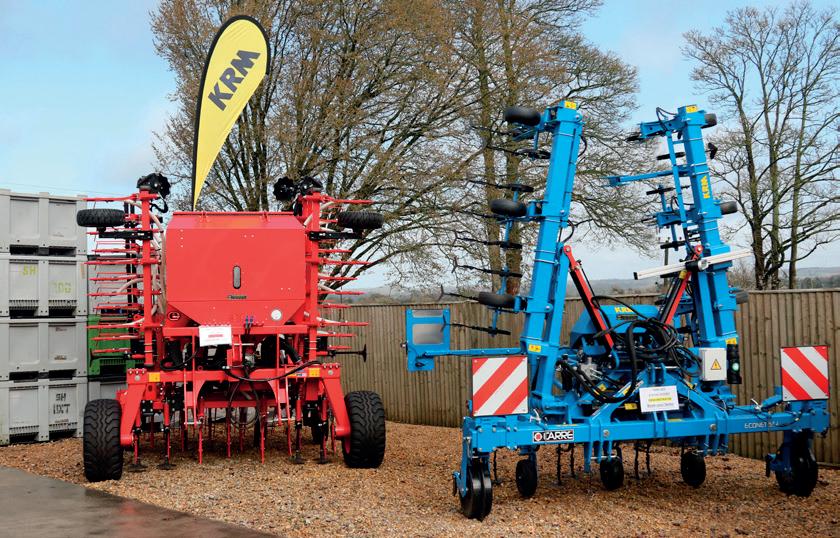

Alongside the after-market parts and usual consumables, Olivers’ Winchester depot is also now selling a range of other items, including Buckler Boots and Jack Pyke clothing, in a bid to encourage footfall and create a ‘one-stop shop’ for farmers.

WWW.SOUTHEASTFARMER.NET | APRIL 2023 49 TO ADVERTISE CALL 01303 233883 200 YEARS CELEBRATION
<<







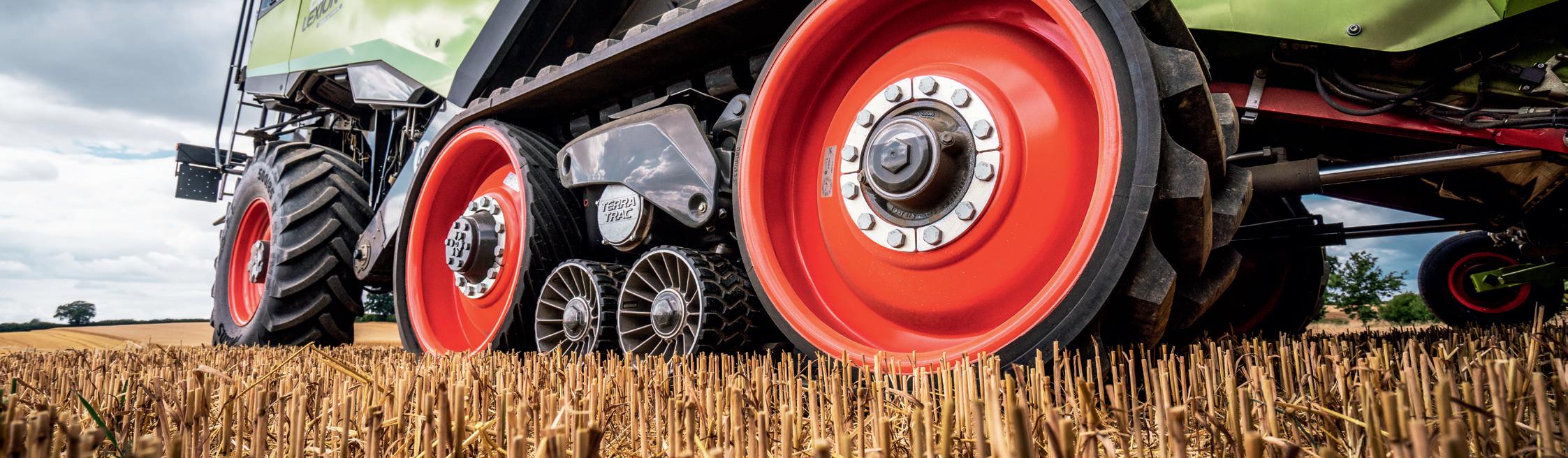




















































APRIL 2023 | WWW.SOUTHEASTFARMER.NET 50 Spread-a-Bale ® VISIT OUR WEBSITE FOR MORE INFO WWW.SPREAD-A-BALE.COM GET IN TOUCH T: 01244 394258 - Office M: Dave Bull 07904 899289 E: sales@spread-a-bale.com Tube You FOLLOW US MADE IN GREAT BRITAIN • No chopping, saves straw and lowers dust levels
Spreads any bale in under one minute
Self-loading, requires only one tractor / loader
Improves both efficiency and profitability
are very pleased to be associated with OLIVERS and offer our congratulations on reaching their 200 years milestone
CLAAS LEXION 8000/7000 408-790 hp. Up to 18,000 l grain tank. CLAAS TRION 700/600 306-408 hp. Up to 12,000 l grain tank claas.co.uk CLAAS congratulate OLIVERS on their 200th anniversary of serving the local agricultural community.
•
•
•
MAXI HR We
All
machines can be side or front end mounted, or both. The HR head can be fitted to any of our machines, delivering straw in a linear pattern up to 2m wide and up to 15m throw.
UK agricultural equipment manufacturer Spearhead named family-run dealer Oliver Agriculture its 2022 Dealer of the Year.

Spearhead has worked closely with Olivers for over three years over the Bedfordshire, Hertfordshire, Buckinghamshire, Oxfordshire, Berkshire, Surrey, Hampshire, West Sussex and Isle of Wight patch covered by the company’s five branches.
The award announcement by Spearhead pointed out: “Olivers is also a Claas dealer and it’s common for Spearhead to complement this premium brand across Europe. With Spearhead on board, Olivers provides loyal customers with hardworking attachments for vegetation management and post-combine mulching.”
It went on: “Spearhead’s Multicut has dominated recent sales growth at Olivers. The flex-wing rotary mowers are ideal for vegetation management across many farmland types and amenity spaces. Plus, as more landowners sign up for cover crop schemes, robust mulching equipment is in demand.”
To select its 2022 Dealer of the Year, Spearhead analysed annual sales growth for all dealers turning over a significant amount with the brand and then reviewed feedback from several departments to assess the shortlist.
“The Olivers team is incredibly proactive
SPEARHEAD MACHINERY CROWNS OLIVERS ‘2022 DEALER OF THE YEAR’
and we have a great relationship with them,” said Antony Prince, director of sales and marketing at Spearhead. “Managing director David Jarman and sales directors William Helliwell and Russell Hallam have worked tirelessly throughout 2022 with our area manager Simon Gurney. The results have been phenomenal, and we’re delighted to give Olivers this award.”
David Jarman responded: “We’ve thoroughly enjoyed working closely with Spearhead to drive our sales growth. Both businesses are on the same page and it’s
testament to everyone that we achieved so much last year.”
Looking forward to 2023, Olivers and Spearhead forecast further growth. Olivers has ordered stock of the two new Multicut models – the 480 and the 650. Both have a flat top deck, an important enhancement for minimal cleaning and debris transfer.
Olivers has also seen recent growth in Spearhead’s reach-arm machines and flail mowers with farmers, contractors, and amenity managers. Both product ranges will receive further focus during 2023.
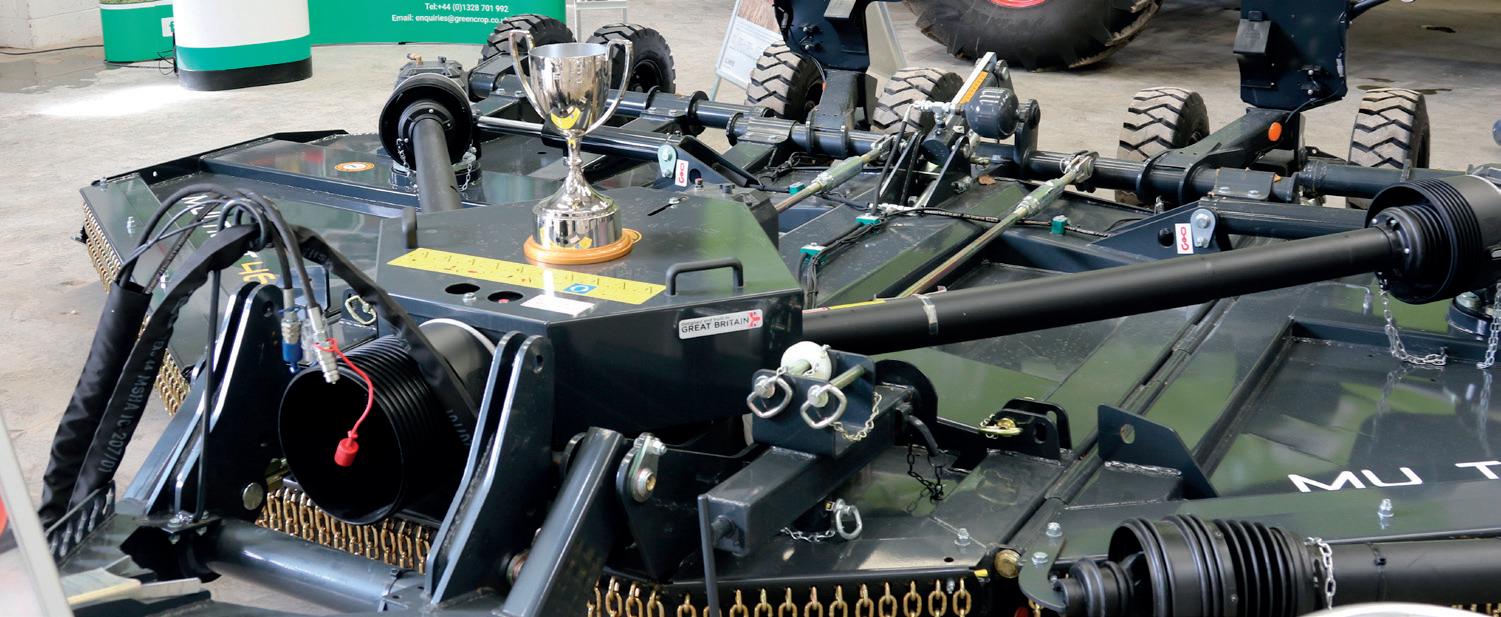
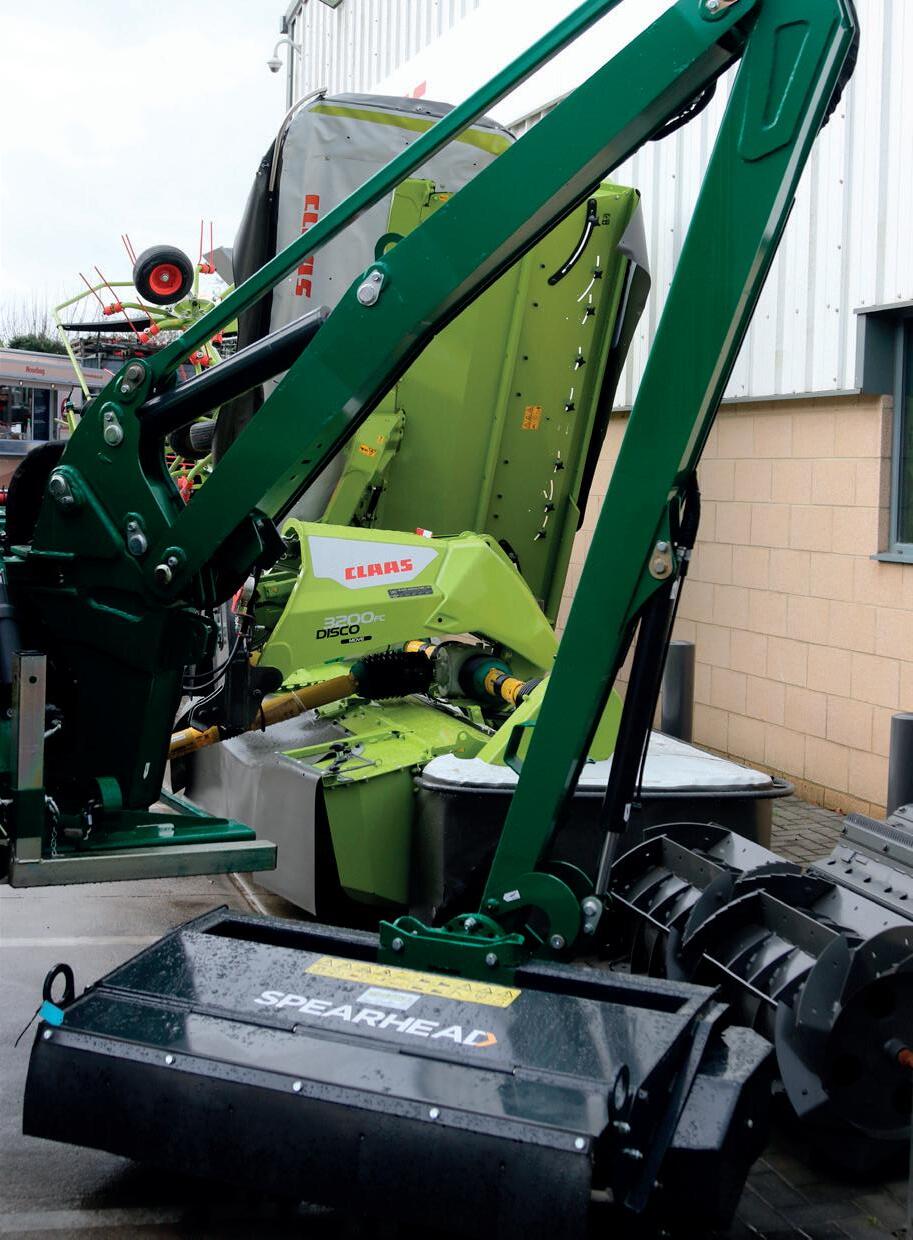
WWW.SOUTHEASTFARMER.NET | APRIL 2023 51 TO ADVERTISE CALL 01303 233883 200 YEARS CELEBRATION
ELVED PHILLIPS ARABLE NOTES





THE MOST DIFFICULT THING TO DO IS NOTHING
The Ides of March was a date in the Roman calendar which corresponds to the fifteenth of March, the day I am writing this, and was a deadline for settling debts.


By the time you read this, another deadline will have expired: the eighteenth of March, the date that the safe corridor agreement in the Black Sea ends. The rumours are that Russia will extend the agreement, but for only 60 days rather than 120. In truth Russia has been able to continue exporting about four million tonnes of grain per month anyway, a lot of which does not need the corridor.
I think the market has already discounted the price in anticipation of the corridor remaining open, so if it does, wheat should not fall anymore. On the other hand, last October, when Russia said it would close the corridor, futures spiked £15 in two days, but then collapsed afterwards when it was re-opened. It’s difficult to imagine that Russia won’t do
something to at least disrupt the trade to the west, so the market holds its breath.
Since my last report, all grain and oilseed commodities prices have been hammered, with new contract low points reached on most futures markets. Today our old crop May wheat futures are £12 lower than when the war started. However, at the end of January that was holding at £225, but when the big hedge funds bought back their wheat long, it pushed the market back up to £245 by the middle of February and since then we have lost £31.
Bearing in mind the still bullish backdrops to all this, if you wrote these events as a play or book it would be considered too far-fetched to be published. Of, course traders naturally want to trade and so the most difficult thing to do is nothing. There is still time for this slide to stop, but why should it? Well, despite the USDA seemingly willing the wheat market lower with every report it produces on world supply and demand and stocks, there are other factors to consider.
Firstly, why is it that today we have new crop November wheat futures at a £7 premium to old crop? That suggests that the concern about new crop wheat production is greater than is admitted. Already the biggest producers of global wheat this year, Russia and Australia, have flagged up that they won’t have anything like the size of crop from the 2023 harvest.
The drought problems in North and South America have been well documented. Closer to home, Spain is still dry, but the French spring barley crop has just been saved by recent rain. Like a lot of Europe, regular rain is needed to replace sub soil moisture.
I think one of the main reasons for the poor predicted wheat crop is the lack of nitrogen
and urea. Cast your mind back to last autumn, when fertiliser was £900 per tonne and most Eastern European plants were shut. That must mean that fertiliser input was cut back by 20% at least, and that’s a lot of lost yield.
Next, the UK has not stopped selling export feed wheat since the first of January; since it became cheaper, sales increased, so we remain on course to liquidate our surplus before harvest.
Then the spectre of the huge hedge funds gambling with Monopoly money remains. With less physicals left to trade they are increasing their holdings in futures. They are currently short of 15 million tonnes of old crop wheat futures, a record open position. We saw in January and February, when they reduced their short by four million tonnes, the bullish effect it had on the market. They have to buy this short back by May or June.
Lastly, we have macroeconomics back in the picture. With the recent failure of a bank, the question must be asked; if they went bust because of the high interest rates, how many more are in a similar position? Credit Suisse have just been bailed out by the Swiss National Bank. If this contagion spreads to others, we may see a wider financial crisis like 2008/09. If that happens the same big hedge funds, which are already jittery about their record wheat short, may also decide to sell off shares in banks and switch to buying commodities instead.
Right now maize and wheat futures look very cheap if these big players want to re-invest some of their Monopoly money. To misquote Winston Churchill, I am not saying that it’s the end of the downward spiral of grain prices, or even the beginning of the end, but it could be the end of the beginning.
Openfield APRIL 2023 | WWW.SOUTHEASTFARMER.NET 52
ELVED PHILLIPS
GRAIN STORAGE FERTILISER SEED T: 01264 321 595 www.openfield.co.uk
Well, that was fun while it lasted. I refer, of course, to the brief surge in grain prices that began last spring, but which has now well and truly gone into reverse. My feed wheat in store is worth £100 per tonne less than it was a year ago.
The implications of this for arable farmers at a time of continued ‘agri-inflation’ are extremely concerning. While the value of crop sales and basic payments receipts are in free fall, many growing costs like agrichemicals, machinery and labour are still rising sharply.
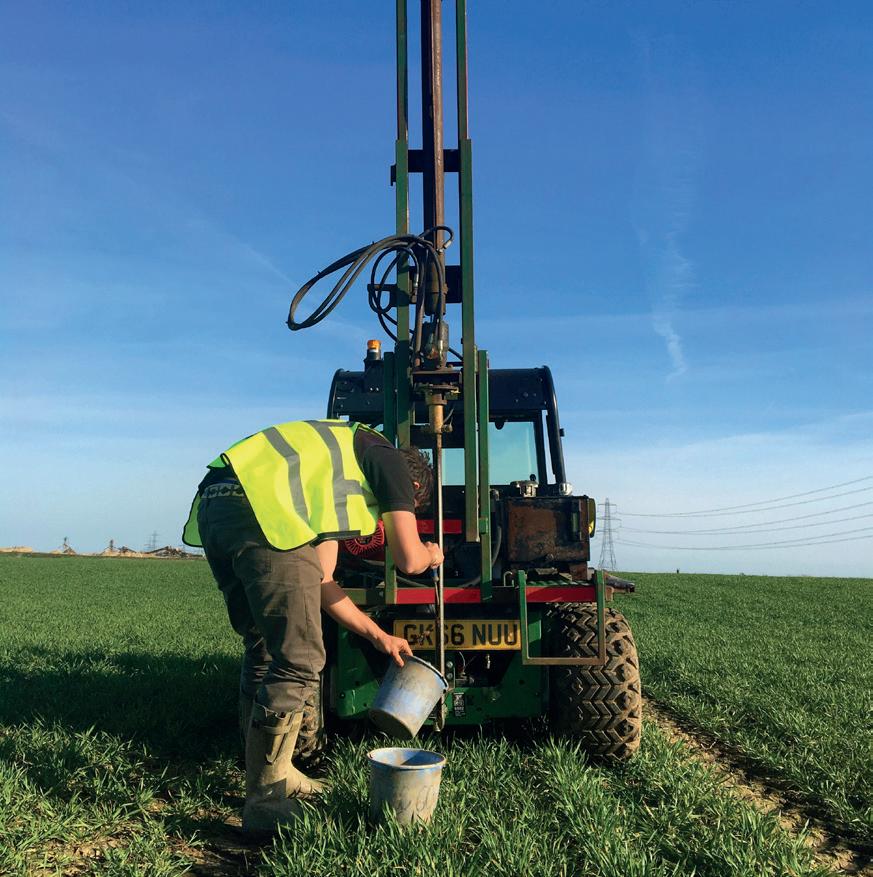
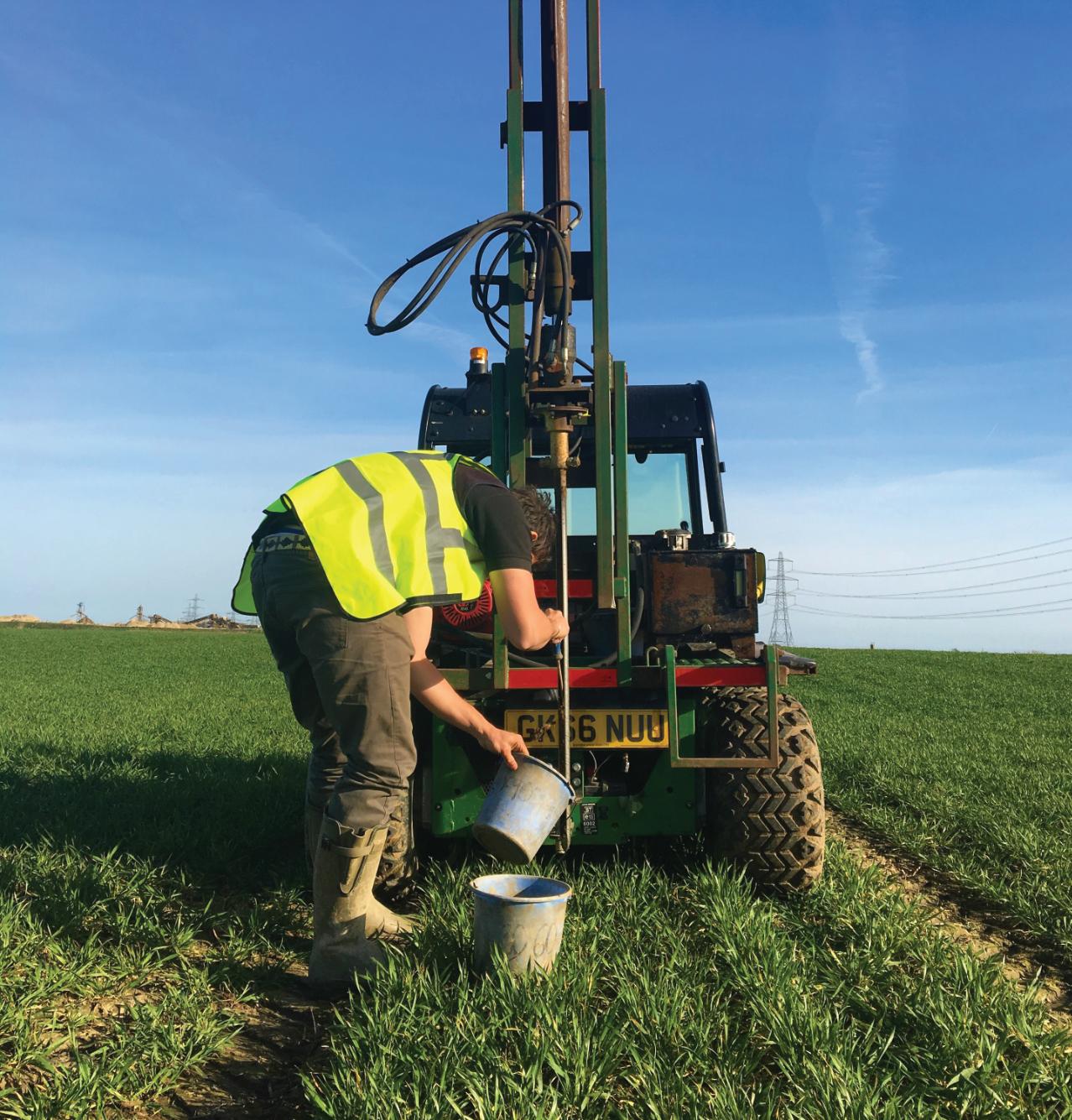
The one area of comfort is the cost of fertiliser, and particularly Ammonium Nitrate (AN). This has fallen almost as dramatically as the price of wheat but, in my case, cheaper AN won’t be of any help for this growing season as I bought all my requirements last autumn when the stuff was still poisonously expensive.
Just where does this drop in the price of grain leave arable farmers in terms of a viable future? Our first collective reaction will probably be “what goes down can also go up”, so we will not panic if grain prices don’t recover for a bit.
Some farmers will also be in a better position to ride out a difficult trading period than others. Owner-occupiers with no borrowings are obviously in a strong position, as are those on good quality land where growing costs tend to be lower and yields higher. A big factor in terms of efficiency is also the ability and personal drive of the individual arable farmer.
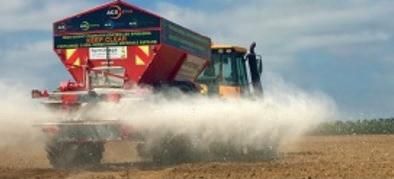
But whatever the financial strength of the individual arable farm or the levels of efficiency, a prolonged period where most and perhaps even all growers are making negative returns would be very uncomfortable for all, particularly if double digit inflation simultaneously hacks away at the value of the capital we have invested in our enterprises.






Of course, many, perhaps even most, arable farms are busy diversifying their income streams away from relying on the price of wheat, oilseed rape and barley. Alternatives include the Sustainable Farming Initiative under ELMS, contracts for carbon offsets from polluting industries or biodiversity net gain agreements with developers and builders of infrastructure like railways and roads.
But it is still the case that unless the core arable activity is profitable in its own right, the process of producing combinable crops would quickly become dispiriting, given the investment and managerial commitment required to make sure it is done efficiently.
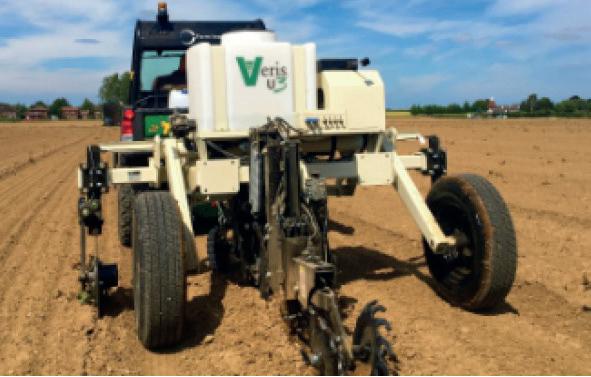
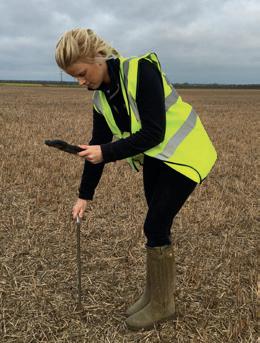
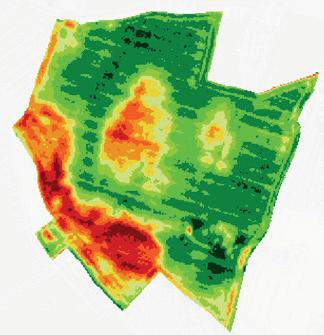

I’m sure most of us will carry on for now but, as my grandfather used to say: “There’s no taste in nothing”.
•
•

 STEPHEN CARR
WWW.SOUTHEASTFARMER.NET | APRIL 2023 53 TO ADVERTISE CALL 01303 233883 STEPHEN CARR
Arable farmer
FUN WHILE
productssupplied, andspreadtoyourfarm. Offering20years’experience insoil servicestailoredforyouand yourbusiness Soilsmartsampling,GPSprecision, Verissoilscanning,NCore,Ph,PCN 01233 740247 enquiries@farmimage.co.uk www.farmimage.co.uk • Ultimate Soil Scanning – High definition in-field scanning of major field properties including pH, Organic Matter, Electrical Conductivity and Topography
Precision Soil Sampling and Mapping
IT LASTED
•
Biomass Imagery
Standard Soil Sampling – P, K, Mg and pH
Potato/Pea Cyst Nematode Analysis (PCN)
Deep Core Nitrogen Sampling
Manure, Slurry and Product Analysis
Lime supply and variable rate application
•
•
•
•
“While colder conditions in many areas during February and early March slowed disease development, relatively few places experienced the extremes of cold needed for a significant reduction in inoculum,” James Boswell commented..
“February was quite cool and dry in general, but many places still saw intermittent rain, which helped keep Septoria and yellow rust ticking over on older leaves in the base of some crops. At the moment, at least, pressure still looks relatively high.”
A T0 fungicide, often focused on yellow rust, will have helped manage early pressure, but it is vital to continue monitoring crops closely so T1s can be adapted to the situation on the ground. James also recommends growers consider the risk factors they cannot see, and avoid being lulled into a false sense of security if disease pressure appears low.
“We have seen before how quickly Septoria and yellow rust can take off from a seemingly low base if/when conditions are conducive, so spray programmes must insure against the ‘hidden’ risks, as well as what we can see.
"For Septoria, drilling date has a big influence on underlying risk, and even if little disease is visible, it is hard to know how much is in the latent phase yet to express itself," he added.
Conversely, yellow rust is generally favoured by later drilling, although this is a very dynamic pathogen, which also makes disease risk hard to predict. “We are seeing more new races able to infect crops earlier, cycle faster and potentially erode genetic resistance.
“The T1 fungicide, as with other treatments, provides a valuable insurance policy against hidden risks, while controlling any disease that has started establishing within crops and helping to manage the overall level of inoculum carried through to T2.”
TIMING IS EVERYTHING
Traditionally, T1 fungicides are applied around growth stage 32, but it is important to ensure target leaf three is fully emerged before treating, which usually occurs between GS 31-33. “This can only really be identified with careful plant dissection, so don’t rely on calendar date.”
Two years ago, cool, dry conditions in April slowed crop growth, resulting in some T1s
RECOGNISE RISKS WHEN PLANNING T1s
With a large area of wheat sown relatively early and some high biomass crops coming out of winter, disease risk could be relatively high approaching the important T1 fungicide, according to Hutchinsons agronomist James Boswell.
going on too early in cases where growers focused more on calendar date than crop development, he noted. This compromised coverage of leaf 3 and meant spray intervals to the flag leaf application were stretched just as disease pressure surged following rain in April and May.
“Many older actives lack the curative ability they once did, so an adequate T1 is essential to avoid putting undue pressure on later applications by expecting them to control high levels of disease inoculum. This is particularly important for resistance management and protecting the future of key actives.”
PRODUCT CHOICES
Septoria is generally the focus of T1s and recent years have seen a gap develop in the potency of new chemistry such as fenpicoxamid + prothioconazole, or fluxapyroxad + Mefentrifluconazole over older SDHI/azole fungicides.
For curative Septoria control, James favours newer chemistry, although SDHI/ azole products such as bixafen and
Fluopyram + prothioconazole have been effective in trials where timed well in protectant situations.

“The challenge is identifying whether situations are truly protectant or curative, especially if disease is still in the latent phase, so close inspection and assessment of all risk factors is fundamental.”
Where rust control is required, benzovindiflupyr + prothioconazole remains the best option, while strobilurins could be included at T1 as a protectant strategy against rust.
There were variable responses from including folpet last year, possibly reflecting the conditions, but long-term experience shows the multisite chemistry is a good addition to programmes, helping manage Septoria risk, providing some effect on rust and for resistance management.
“With highly diverse isolates of Septoria and rust, it is hard to know how they will respond to fungicide chemistry, so using multiple modes of action ensures a greater chance of success and helps safeguard products for the future," James concluded.
APRIL 2023 | WWW.SOUTHEASTFARMER.NET 54
AGRONOMY JAMES BOSWELL T: 07721 888382 E: james.boswell@hlhltd.co.uk Canterbury: 01227 830064 www.hlhltd.co.uk
FARMERS AT INCREASED RISK
The clocks have finally changed and the lighter evenings have arrived. The sun will not set before 6pm until October, yippee, it seems to have been a very long winter. Fingers crossed the sun will start to shine, although I suspect Mr Grumpy won’t be happy whatever the weather situation. The fertiliser is now on and the sprayer will be busy.
The grass is growing slowly, perhaps it needs a can of Red Bull. Lambing is now in full swing, and we still have Gary the orphan goat kid. Looks like he will keep Monty’s billy company throughout the winter.

This month has been quite trying for several reasons. Our neighbouring dairy farmer Ken Ledger (aged 70) passed away in early March. Ken’s family has successfully farmed in east Kent for many generations. Ken was a dedicated farmer who also enjoyed his outdoor sports and had recently enjoyed a skiing holiday in France. Ken will be greatly missed throughout the farming industry.
Meanwhile a friend of mine was recently admitted to hospital suffering from Sepsis but is fortunately now on the road to recovery, after a long battle. Interestingly it stemmed from a very small cut on her finger while she was feeding the cattle. She thought she had a slight cold and a little bit of a sniffle until a family friend told her to go and get it checked out. She was incredibly lucky that it was caught early by a blood test.
Farmers and labourers are at an increased risk of becoming infected, so any cuts should be cleaned thoroughly and covered. Infections caused by the nature of the work with livestock and soil, combined with the isolation or distance from medicines, antiseptics and cleaning agents, are key reasons why rural workers face increased risks.
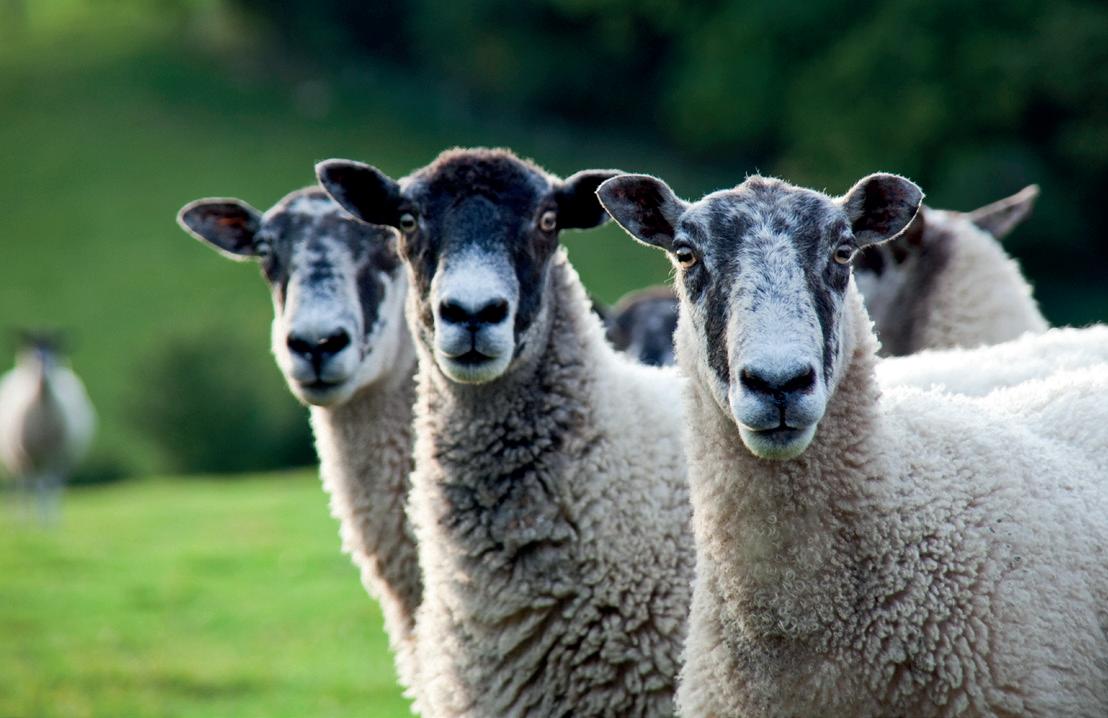
Sepsis can also be caused by injuries caused by trauma or by illness. Sepsis doesn’t discriminate between young, old, male or female. A hardhitting campaign has been launched to raise awareness of sepsis among rural workers. It encourages people to ”Be sepsis savvy – spot the signs and save lives”. It urges people in the countryside to increase awareness of symptoms and act quickly if they suspect they may be developing the disease.
The symptoms to watch out for are:
• Slurred speech or confusion
• Extreme shivering and/or muscle pain
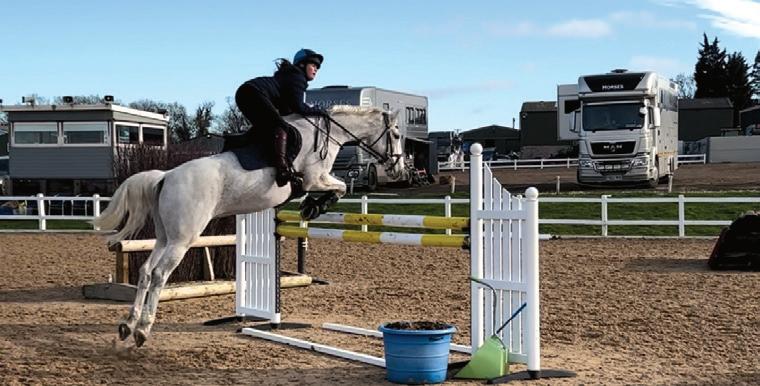



• Passing no urine
• Ill feeling
• Skin mottled, discoloured or bluish. Other symptoms can include:




• Rashes that don’t disappear when pressed
• Lethargy
• Vomiting, nausea, diarrhoea


• Fits/convulsions
• Red, painful swelling around a cut or injury. Immediate medical treatment must be sought if these symptoms
occur, otherwise potentially life changing conditions or death may result. Farmers are notoriously stubborn and don’t like to seek medical advice but if in doubt seek advice. It really could save your life.
This month also included the joys of farm assurance and crop assurance. The hours of ensuring that the correct paperwork was in place finally paid off. I find myself wondering if some of the questions are relevant; the broken needle policy that I adapted and printed out will stay in the file (unseen) for another year or until our next visit.
Personally, we have never had a broken needle left in an animal and if one is using the correct needle that is certified to medical standards it has been manufactured to bend and not break. Our vet, who is retiring at Christmas and has been practising for over 40 years, has never encountered a broken needle. Maybe we need to revisit some of the farm assurance paperwork.
Until next time stay safe and keep well.
100% Farm Vets westpoint farm vets
WWW.SOUTHEASTFARMER.NET | APRIL 2023 55 TO ADVERTISE CALL 01303 233883 ORGANISED CHAOS ANITA HEAD
ANITA HEAD Farmer
Visit www.sepsistrust.org for more information
Supporting British Livestock Agriculture Since 2000 New client visits are FREE - book yours today! Westpoint Farm Vets Dawes Farm, Bognor Road, Warnham, West Sussex, RH12 3SH info@westpointfarmvets co.uk | westpointfarmvets co.uk Our teams of experienced, highly-qualified vets are focused on driving farm efficiency and animal health across the South East Westpoint Ashford covering Kent & East Sussex 01306 628208 Westpoint Winchester covering Hampshire 01962 779593 Westpoint Chelmsford covering Essex 01306 628489 Westpoint Horsham covering Surrey, Sussex and Kent 01306 628086
VIN E YAR D
THE ANSWER LIES IN THE SOIL
Courtesy of our sister publication Vineyard Magazine we are pleased to bring you a special report on improving soil biological activity, by Laura Hadland.


APRIL 2023 | WWW.SOUTHEASTFARMER.NET 56 NEWS FROM THE VINEYARD
™ For Growers & Winemakers in Great Britain
Composted wood chip from vine pruning and willow coppice, after one year at Limeburn Hill Vineyard
Soil health is a huge subject area, and the characteristics that can impact the growth of vines are varied. The structure of the soil, its pH, nutrient and organic matter content along with bulk density, microbial diversity and respiration can all have a massive impact on the success of a vineyard’s crop.
Improving soil biology is always a current issue, but even more so now that the government has recognised the importance of encouraging activities that improve soil health. The Sustainable Farming Incentive was launched last year as part of DEFRA’s Environmental Land Management scheme. The overhaul of the EU farming subsidy system has been referred to by environmentalist George Monbiot as the “one genuine benefit of Brexit”.
The incentive pays producers who conform to certain standards – in relation to arable and horticultural soils, as well as a variety of other areas – and by doing this they acknowledge them as a public good. £1 billion will be spent “to support food production while protecting habitats and wildlife”. In 2023, more standards will be added to the scheme, including nutrient management and integrated pest management.
CURRENT RESEARCH
New ways to maximise outputs are continually being investigated. Research funded through DEFRA’s Farming Innovation Programme is ongoing to find ways to increase productivity and sustainability in UK grape growing, for example. Led by NIAB at the East Malling Research Vineyard as well as on commercial sites, the £350k project is investigating the impact of cover cropping and mechanical weeding strategies on soil health.
“It is still quite early in the project,” said root and soil biologist with NIAB, Dr Flora O’Brien.

“We are currently focussing on the importance of cover crop establishment methods; how to achieve a good cover crop stand, and its impact on soil health. Regarding sustainability, the most desirable option is to use a direct drill with little or no cultivation, however, the existing grass sward and weed population can often be problematic and outcompete the cover crops. We are looking at how to best manage this and will monitor the impact on both the vines and soil health.”
One outcome of the two-year research project will be guidance on bespoke cover crop mixes to control nematodes, alleviate soil compaction and improve soil nutrition. This will be supported by recommendations supporting the transition to net-zero carbon emissions. It is envisaged that bringing up standards of soil health will address some of the causes of inconsistent yields and low juice quality.
Cover crops and green manures that are currently in use in UK vineyards include:
◆ Beans and clover for nitrogen
◆ Mustard and phacelia for carbon storage
◆ Linseed and oats for deep rooting
◆ Daikon radish planted in the winter as the deep-rooting varieties help with drainage and compaction
◆ Vetch and lucerne help to add nutrition to the soil
◆ Cocksfoot or ribgrass are deep-rooting grasses to assist with soil structure. Identifying areas of the vineyard that perform differently and understanding why certain vines have issues with, for example, drainage or excessive growth is key to selecting the correct cover crop mix.
While cover crops are known to improve soil fertility by fixing nitrogen, suppressing weeds and preventing soil erosion, they are often ignored by commercial growers who fear that they may harbour insect pests, create more
maintenance and increase competition for nutrients and water. This research may help to provide solid evidence that the practice of cover cropping actually brings more benefits than drawbacks.
THAT WOULD BE AN ORGANIC MATTER
Increasing the organic matter content of your soil is an indisputable way of improving soil health. The manual addition of manures and composts is one way of securing those benefits for your soil.

The British Standard Institution has produced a specification for compost materials known as BSI PAS100. It applies across the UK and aims to improve confidence in composted material by helping to identify products that are safe and reliable.
“Some 15 years ago the PAS100 product landed and is now freely available from numerous suppliers,” said agronomist Julian Searle. “Several suppliers also spread in fruit row crops for a fee – FGS Agri and Bournes are two examples. Trials at NIAB-EMR with AHDB demonstrated conclusively that at a sufficient rate, spread to the rows only, water and nutrient availability was significantly improved to depth as well as providing a useful mulch against immediate water loss.”
In some areas, composted manure is available as an option, too. Julian recommends spreading every vineyard one year postplanting and, if not restricted by the NVZ regulations that control the amount spread, to the planted row only.
When applying compost or manure, there are a number of factors to take into consideration:
◆ The timing of organic amendments can affect their availability and impact on soil health. Application in the autumn or winter can allow for nutrient release before the
 Willow bed, coppiced annually to provide wood chip for compost at Limeburn Hill Vineyard
Composted grape marc after one year breaking down at Limeburn Hill Vineyard
Willow bed, coppiced annually to provide wood chip for compost at Limeburn Hill Vineyard
Composted grape marc after one year breaking down at Limeburn Hill Vineyard
WWW.SOUTHEASTFARMER.NET | APRIL 2023 57 TO ADVERTISE CALL 01303 233883
Compost tea maker, used to increase fungal and bacterial life before spraying on soil at Limeburn Hill Vineyard
<< AS FEATURED IN MAGAZINE VIN E YAR D For Growers & Winemakers in Great Britain
NEWS FROM THE VINEYARD


<< growing season. However, spring applications can also be beneficial as they enhance soil biology and provide nutrients to the vines.
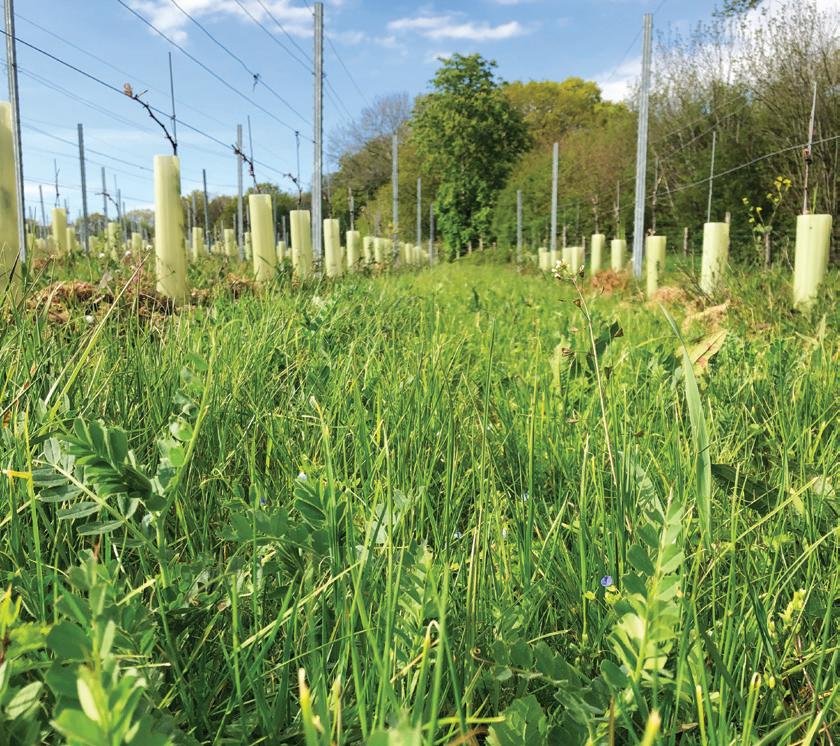
◆ The application rates and distribution are important to avoid nutrient imbalances or excesses as well as to keep within the water regulations. The application rate will be dependent on the type and quality of the amendment, and the vineyard’s nutrient needs. Even distribution is important to ensure uniform nutrient availability across the vineyard.

◆ Each type of amendment comes with its own strengths and weaknesses. Fresh manures may have a high nutrient content, but they can also contain weed seeds or pathogens. Well-aged composts provide a slow release of nutrients and enhance soil structure but may cause too much vigorous growth in the vines. Cloud Agro Ltd are specialists in soil health and crop nutrition. They work with scientific and agricultural institutions to develop laboratory
protocols and farm products that are rigorously tested and proven in field trials. Founder Ross Barclay-Beuthin explained: “Cloud Agro’s services and products make it possible for producers, for the first time, to accurately measure and effectively treat the ‘burn rate of nutrients’ exported during harvest, together with the ‘burn rate of humus’ expended during mineralisation.”
One of the products they supply is Smart Feed, a 100% natural organic fertiliser and soil conditioner, under the brand name FutureGro. It comes from the process of organic nutrient recycling, an upgrade to the traditional practice of manure and green waste application. It is six times stronger than farmyard manure and 50 times more effective than green waste. FutureGro encourages plants to grow stronger with enhanced nutrition and more balanced soils. The repeated application of the product helps nutrients become more available as the soil becomes more fertile, meaning that, over time, less chemical fertiliser is needed.
Compost spreading
Johnson Su Bioreactor (a great fungal compost) at Ham Street Wines
APRIL 2023 | WWW.SOUTHEASTFARMER.NET 58
Cover crop at Ham Street Wines
TILLAGE AND GLYSOPHATE



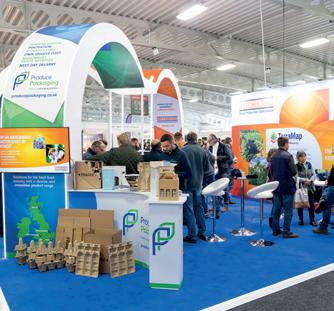
“When it comes to improving soil health, physical soil management must play a part too,” said agronomist Julian Searle. “Travelling the ground frequently means deep cultivations are important.” Breaking up the soil to depth promotes better air infiltration and drainage reducing compaction or by adding deep rooted green manure into the soil.



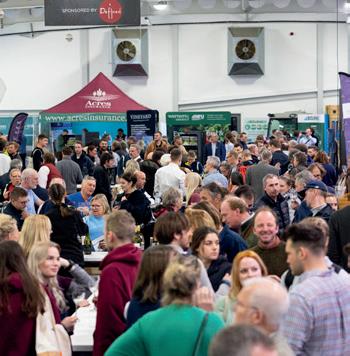
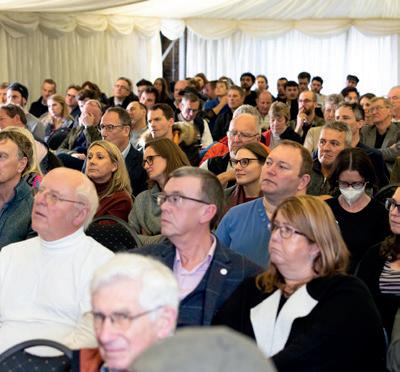
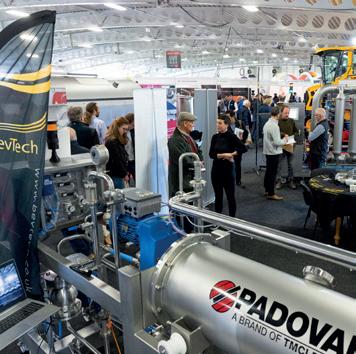
There are arguments against practices like tilling which break up the soil surface since it can lead to erosion or indeed compaction. There is also a danger of vine damage when the process is badly managed and runs too close to the trunks of the vines. The topography and soil type of a vineyard will inform whether or not these sorts of practices offer a net benefit in specific cases.
“Cultivation for weed control has become very popular following the perception that glyphosate is dangerous,” Julian explained. “The arable sector is following a ‘minimum tillage’ model allowing the soil macro and micro fauna to create a naturally fertile soil profile with significantly reduced work to the soil; it seems to me the frequent cultivation model to remove weed under perennial fruit crops works against regenerative practice in so many ways. If glyphosate can be proven benign to the eco-system, its use, say twice a year, will fit very well with modern regenerative practice. The possibility of infrequent ‘shallow’ cultivation integrated with ‘safe’ herbicide use is perhaps the ideal.”
HAM STREET WINES



“Soil health is at the heart of what we do and is an essential part of our management practices, especially as we are organic certified,” said self-confessed ‘soil geek’ Jules Phillips of Ham Street Wines in Kent. “We do this through the use of cover crops to increase plant diversity and soil structure, the use of inoculant composts such as a Johnson Su or BD500 to increase life in the soil and other composts such as PAS100 or woodchip to add carbon and organic matter to the soil.
“Paradoxically we also focus on plant health too (to improve soil health), as healthy plants will release root exudates feeding the life in the soil and boosting the soil food web; we do this through a nutrition programme informed by plant sap analysis.”
Jules and his wife Lucie are also conscious of other activities that limit soil health, such as the use of copper or compaction from machinery. They continually strive to reduce these activities wherever possible. Copper can disrupt soil structure, leading to compaction and reduced aeration which will limit root growth and nutrient intake. It can also be toxic to beneficial microorganisms in the soil and bind with nutrients, making them less available to plants. Finally, repeated use of copper can also make the soil more acidic, which may affect the balance of its chemistry.
For this reason, copper-based fungicides should be used judiciously, and in some cases alternative fungicides or non-chemical management practices may be more appropriate. Improving vineyard hygiene, employing integrated pest management strategies and using fungus-resistant grape varieties like Solaris, Rondo or Seyval Blanc may all mitigate the need to use copper regularly.
“If we can improve our soil health enough,” Jules said, “we will increase the health of the vines, quality of the fruit and mitigate the impacts of climate change, a win-win!”
WWW.SOUTHEASTFARMER.NET | APRIL 2023 59 TO ADVERTISE CALL 01303 233883
<< AS FEATURED IN MAGAZINE VIN E YAR D For Growers & Winemakers in Great Britain 2023 22nd November 2023 Kent Event Centre, Detling, Maidstone, Kent ME14 3JF Head to vineyardshow.co.uk for more information Sponsored by In association with Vitifruit Equipment Sales and Hire CLOUD AGRO LTD Organic Nutrient Recycling FUTUREGRO “Quality and yield will deteriorate if no soil amendment is done postharvest and at budburst, as every tonne of fruit produced removes vital nutrients responsible for the movement of water and energy in the plant.” THE NUTRIENT SIGNATURES FOR U.K. TOP FRUIT AND VINES www.cloudagro.uk.com (07543) 265454 SOIL HEALTH SMART FEEDTM use organic fertiliser + soil conditioner: PREPARE BEFORE PLANTING BOOST AFTER BUDBURST REPLENISH POST HARVEST
MAKING FRIENDS IN YOUR SOIL
Reducing chemical inputs into the soil generally has the additional benefit of creating an environment that welcomes a diverse population of soil microorganisms.
◆ Mycorrhizal fungi form symbiotic relationships with plant roots that improve nutrient uptake and the efficiency of water use. They can also help to suppress plant pathogens and improve soil structure. Adding organic matter to the soil and reducing the use of chemical fertilisers can help to promote their development.
◆ Nitrogen-fixing bacteria convert atmospheric nitrogen into a form that plants can use as well as suppressing pathogens and supporting soil structure. Green manures added to the soil will help to encourage their growth.
◆ Earthworms help to improve the aeration of the soil and break down organic matter more efficiently. Earthworm populations can be encouraged through reduced use of pesticides, adding organic matter to the soil and avoiding excessive tillage. Monitoring soil health over time can help identify areas for improvement and allow management practices to be adjusted as required to ensure that your vineyard is as welcoming as possible to these tiny allies.
BIODYNAMIC VITICULTURE
The first certified biodynamic wine in the UK was released by Sedlescombe Vineyard in East Sussex in 2010. At the core of biodynamic agriculture is the principle of ensuring the land is a self-sustaining organism. This includes focusing on the other plants and animals in the vineyard as well as the vines themselves. Biodynamic certification demands
that growers improve the life of the soil and that at least 10% of the land is dedicated to encouraging biodiversity.
Chemical fertilisers and soil conditioners are replaced with natural ones. The Demeter UK Standards state that “a biodynamic enterprise should aim for self-sufficiency in its manures and fertilisers", using compost, stable manure and organic wastes, for example. Strict controls are placed on where these products can be sourced from, and the situation is the same with the permitted agents for plant pest control and protection against fungal attack.
“One of the key principles of biodynamic viticulture is considering the vineyard as a self-contained, living organism,” said Robin Snowdon, the vineyard manager and winemaker at Limeburn Hill Vineyard near Bristol. “This means that we aim for self-sufficiency and closed loop cycles when considering any soil or plant treatments. In relation to soil health this could be having your own livestock and using the manure; having willow beds (perhaps to treat water) that can be chipped and transformed into fungal-rich compost; or chipping the vine prunings to be part of a fungal-rich compost that could be used for compost tea to inoculate the soil with beneficial microbes.”
There are nine biodynamic preparations that are the cornerstone of biodynamics. Seven of those focus specifically on soil health. Perhaps most well-known is the Horn Manure preparation, made from fresh cow manure buried in the ground in cow horns over the winter before being retrieved in the spring. The contents are then diluted and sprayed. “It works as a compost tea,” Robin explained. “It inoculates the soil with microbial life. We also use the Six Compost Preparations that all add

specific micro nutrients and macro nutrients to a compost which is then spread across the vineyard.”
Robin has found tangible improvements to the soil and biodiversity at Limeburn Hill since working with biodynamics. “We have noticed a slow but significant improvement in soil health,” he said. “This is evidenced by the density and diversity of soil microbes seen under the microscope, an increase in worm numbers and diversity, and the increased activity of moles (whose main source of food is, of course, earthworms). We have also noticed an improvement in surface water drainage across the vineyard which indicates an improving soil structure, plus a much greater diversity of wild flora and the resulting insect and bird life in the vineyard – we are currently at over 60 species of birds identified on the vineyard.”
For more information on the Sustainable Farming Incentive, visit www.gov.uk/government/publications/sustainable-farming-incentive-full-guidance To learn more about biodynamic certification through Demeter, access www.bdcertification.org.uk
Limeburn Hill Vineyard offers a one-day Biodynamic Winegrowing workshop for anyone wishing to find out more, and they also offer an online Biodynamic Viticulture course with the Biodynamic Agriculture College. www.limeburnhillvineyard.co.uk/events
APRIL 2023 | WWW.SOUTHEASTFARMER.NET 60 << NEWS FROM THE VINEYARD
WORKSHOP
www.learning.bdacollege.org.uk/courses/introduction-to-biodynamic-viticulture-2023
Biodynamic prep 500 in cow horns at Ham Street Wines













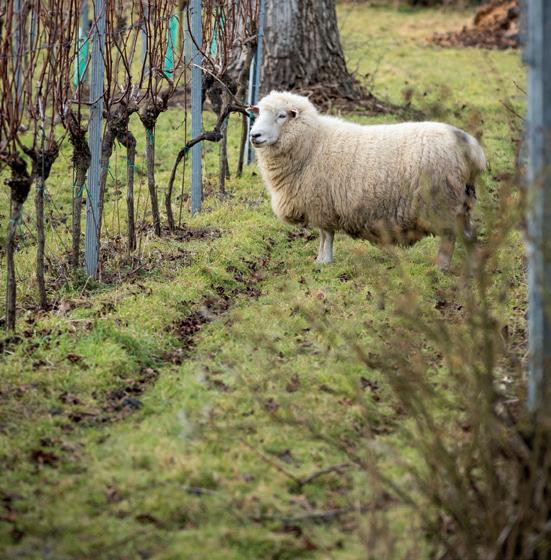






































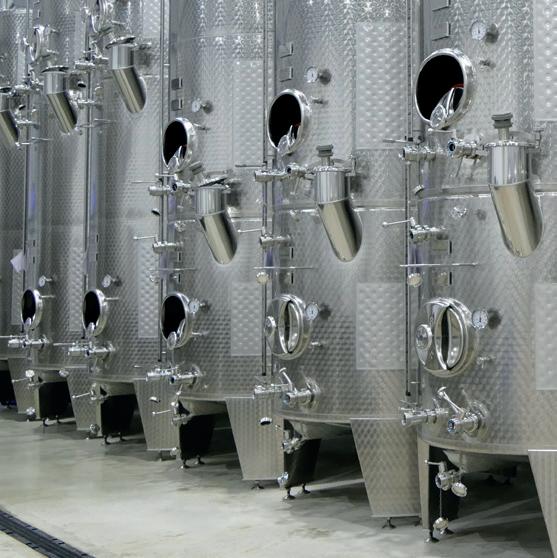



















































































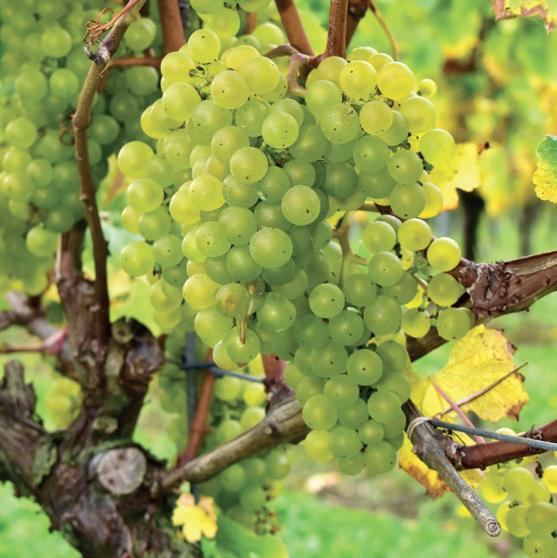





















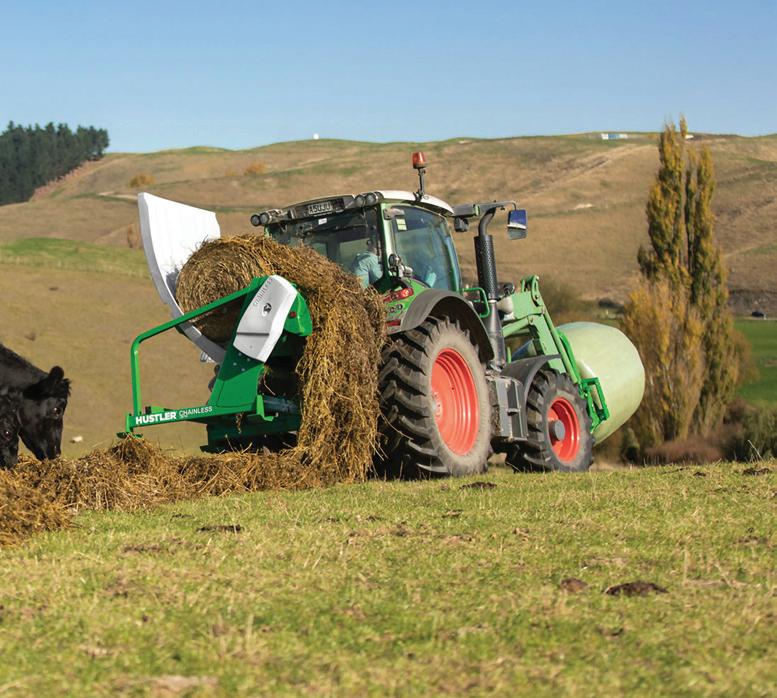
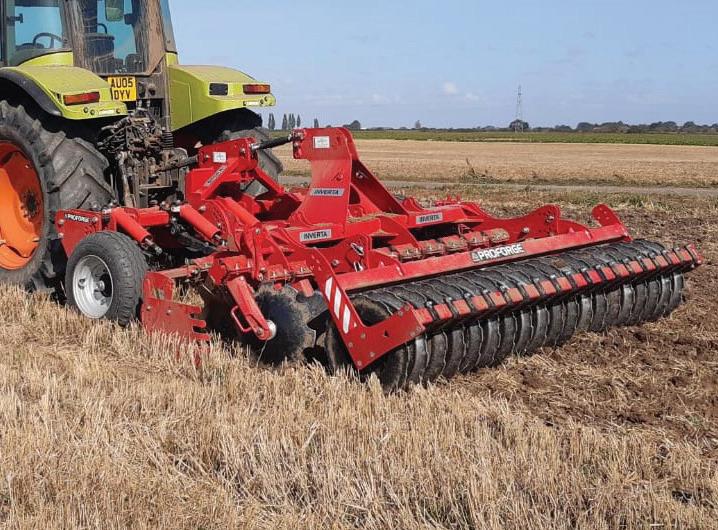
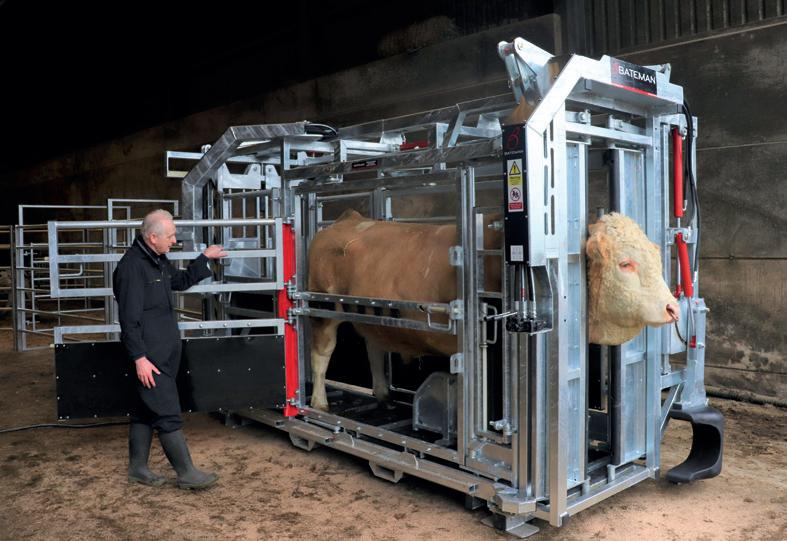
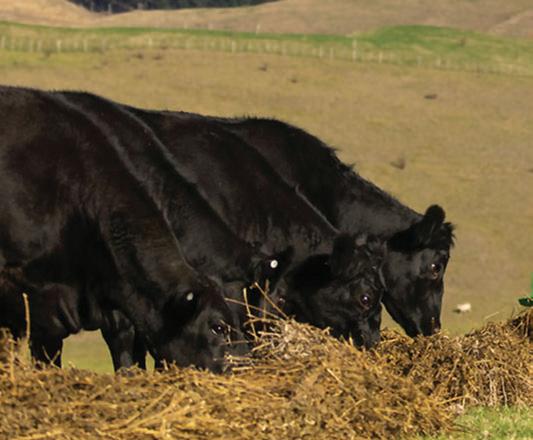
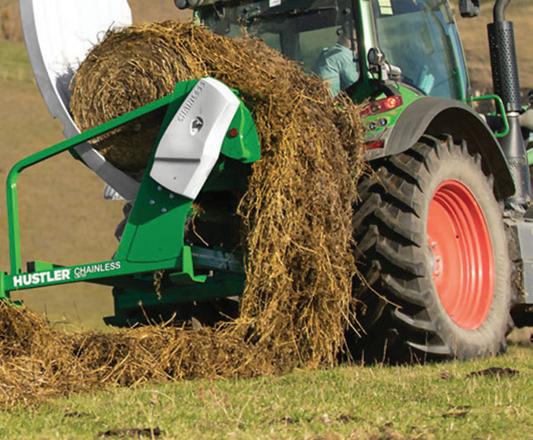









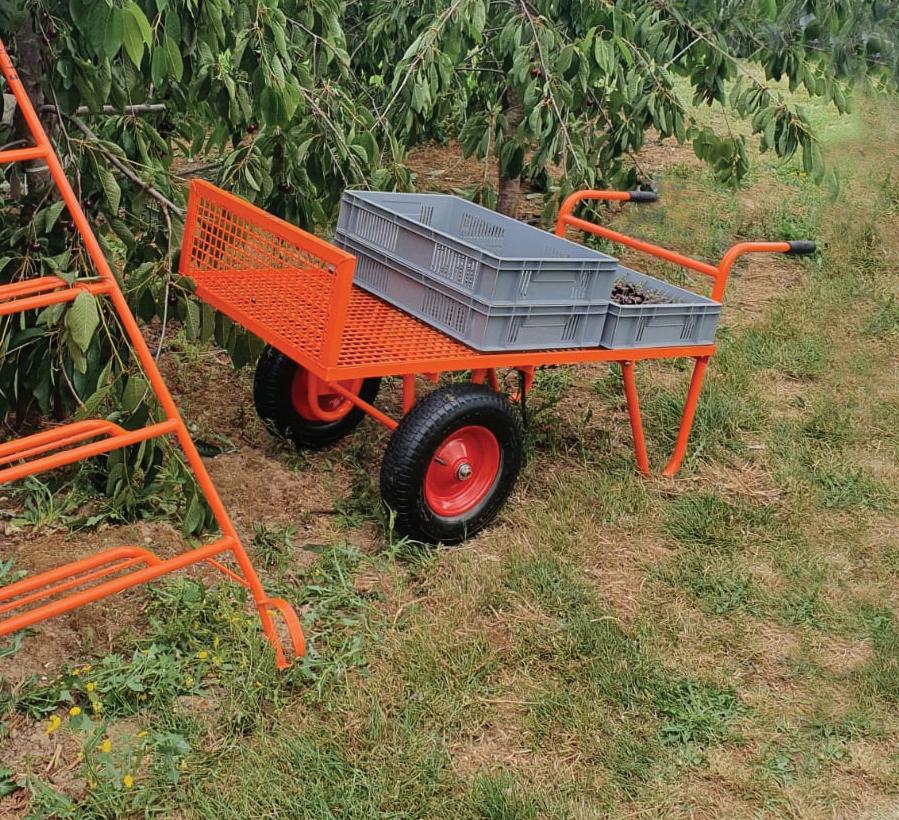


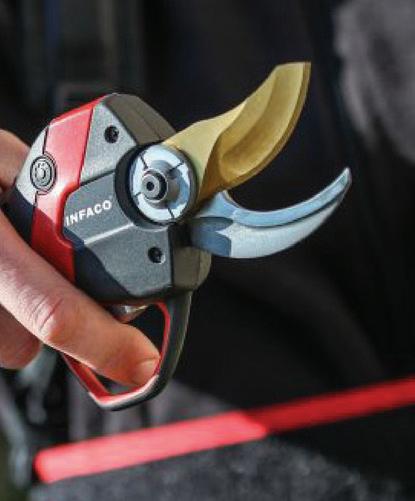

















































WWW.SOUTHEASTFARMER.NET | APRIL 2023 61 TO ADVERTISE CALL 01303 233883 THINKING OF GETTING INTO VITICULTURE? Why not subscribe to Vineyard magazine? Visit shop.kelsey.co.uk/subscription/VIN LAND & PROPERTY CONSULTANTS Expert advice for viticulture: Site-finding Sales & acquisitions Planning applications Environmental schemes & grants on 01892 Matthew Berryman 07710 matthew@c-l-m.co.uk The Mount Vineyard sits in a quaint and beautiful landscape that is a painters idyll. MARCH 2023 The art of wine INSIDE Fast track to the best equipment When fungus attacks Matthew Jukes selects three wines that use carefully chosen words VINEYARD MARCH 2023 Vineyard03Mar23.indd 1 LAND & PROPERTY CONSULTANTS Expert advice for viticulture: Site-finding Sales & acquisitions Planning applications Environmental schemes & grants Call us on Matthew Berryman matthew@c-l-m.co.uk INSIDE Event buzzing with enthusiasm Keeping ahead of the game Sampling English wine The Grange Winery in Hampshire is a place where past, present and future are inextricably linked. JANUARY 2023 Past, present and future Vineyard01Jan23.indd LAND & PROPERTY CONSULTANTS Expert advice for viticulture: Site-finding Sales & acquisitions Planning applications Environmental schemes & grants Matthew Berryman 07710 765323 matthew@c-l-m.co.uk INSIDE Frost protection Introducing our new columnists Matthew Jukes looks at some incredible wines that catch the imagination Visiting a vineyard on the site of a medieval abbey FEBRUARY 2023 Agreeable symmetry VINEYARD CONSULTANTS Vineyard sales & acquisition Planning applications Business plans Environmental schemes Grants Matthew Berryman 07710 765323 matthew@c-l-m.co.uk 38 showpagepreview CLAIM YOUR FREE TICKETS INSIDE Machine harvesters are shaking it up Matthew Jukes thinks “There’s gold in them thar hills” Deep connection At charming Mountfield Winery grapes go from vine to bo le without travelling o site. NOVEMBER 2022 Vineyard11Nov22.indd 20/10/2022 VIN E YAR D For Growers & Winemakers in Great Britain PLANTING&GROWING PLANTING&GROWING TUNNEL&SHELTER TUNNEL&SHELTER TUNNEL&SHELTER TUNNEL&SHELTER PRUNING&FRUITTOOLS PRUNING&FRUITTOOLS HARVESTING TUNNEL&SHELTER PRUNING&FRUITTOOLS PRUNING&FRUITTOOLS HARVESTING HARVESTING PLANTING&GROWING TUNNEL&SHELTER TUNNEL&SHELTER HARVESTING TUNNEL&SHELTER PRUNING&FRUITTOOLS HARVESTING TUNNEL&SHELTER PRUNING&FRUITTOOLS HARVESTING TUNNEL&SHELTER PRUNING&FRUITTOOLS TUNNEL&SHELTER PLANTING&GROWING PLANTING&GROWING TUNNEL&SHELTER TUNNEL&SHELTER HARVESTING Agricare Ltd Canterbury Kent 01304 842280 sales@agricareuk.com www.agricareuk.com HARVESTING SOLUTIONS Contact Jack Ayling Arable & Livestock Equipment jack@agricareuk.com NEW RANGES OF EQUIPMENT FOR OUR FARMERS & GROWERS Contact Ross Worsley ross@agricareuk.com Fruit Products
MOVING FORWARD
With spring now upon us, something that’s hard to believe when you look at the weather at the beginning of March, things are moving forward, with grass growing and arable crops benefiting from the first dose of top dressing.
In the livestock pens, beef animals are still very short in Colchester and many more could be sold to advantage.
The prime beef trade is some 30p/kg to 40p/kg dearer than 12 months ago and right through all classes of cattle the trade is strong. Twelve months ago 280p/kg would have been at the top of the market, but with all buyers short of requirements 300p/kg is now regularly seen. More cattle are desperately wanted to ensure buyers attend the livestock market.
With the strong demand for processing beef, the cull cattle trade is also extremely dear, and well in front of where it was 12 months ago. Best cows are regularly trading from £1,500 to £1,800 per head and the very best at more. Producers are advised to clear any cows not producing as it is unlikely this trade will improve.
With the higher price for prime cattle, the store cattle trade is also strong. Strongest demand has been seen for the more forward cattle, with longer keep cattle probably not as
much with some concerns about the future trade.
Sheep numbers in Colchester, it would be fair to say, are higher than anticipated, with the great shortage of fodder meaning many local producers had not purchased store lambs this year. However, with the strong demand in Colchester, sheep have been attracted from further afield, meaning numbers were up on the year.
Trade is also strong compared with many, with plenty of lambs trading from £130 to £150 per head most weeks, but as always quality is important and lean lambs are difficult to place; several have been taken for further feeding. With the season drawing on, the issues with regard to erupting teeth are becoming a real problem with buyers.
With Easter fast approaching, new season lambs will soon appear but there is still an enormous number of hoggets to come off stubble turnips. The hogget trade is slightly below 12 months ago, which is frustrating with the increased feed costs but certainly not a disaster.
The cull ewe trade is again extremely strong with more quality ewes wanted but fat not wanted.
The store sheep trade is certainly less than 12 months ago due to the lack of food and the high cost of hard food.
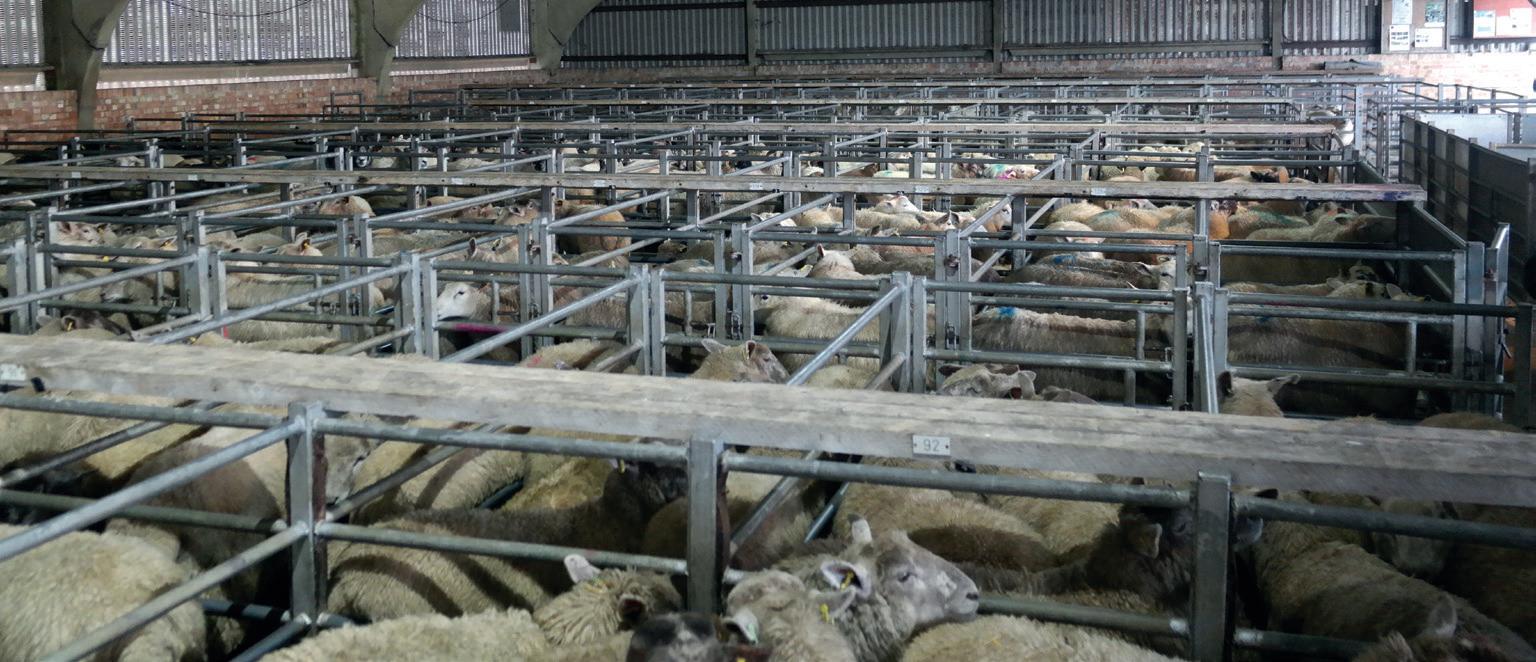
The pig trade is now at its dearest ever levels, such a difference to 12 months ago.
We are now regularly seeing finished pigs which we sell deadweight coming in at £170 plus. Probably the biggest difference is seen in the cull sow trade, where 12 months ago they were almost worthless and today one sold sow equals the same as 10 did 12 months ago, representing quite an extraordinary change around. Let us hope that trade continues.
Arable crops are looking good, with top dressings now applied to most winter cereals, spring drilling going forward and first potatoes being planted. The year moves on. By the time the next report is written in April we will be a third of the way through the year and hopefully the report will be as positive as this one.
GET READY FOR A SUCCESSFUL TURNOUT
Turning stock out to grass in spring comes as a relief to many farmers, but animal performance and health can suffer if stock are not maintained on a nutritionally balanced diet. Careful supplementation at grass can be a catalyst for enhanced animal performance and improved profitability.
Crystalyx products offer tailored supplementation throughout the grazing season. Crystalyx Cattle High-Mag helps maintain normal blood magnesium levels at times of risk, typically the spring and autumn months. Containing 10.5% magnesium from a unique blend of three different magnesium
sources, Cattle High-Mag is formulated with dehydrated molasses to ensure palatability even on lush pasture.
Incorporating a full range of essential trace elements and vitamins, Crystalyx Cattle High-Mag perfectly balances deficiencies in grass.
Independent research has shown that feeding Crystalyx Cattle Booster at grass significantly improves daily live weight gain and fertility due to a more efficient rumen fermentation. Feeding Crystalyx makes the rumen bugs work harder so they digest forages more effectively and efficiently, improving
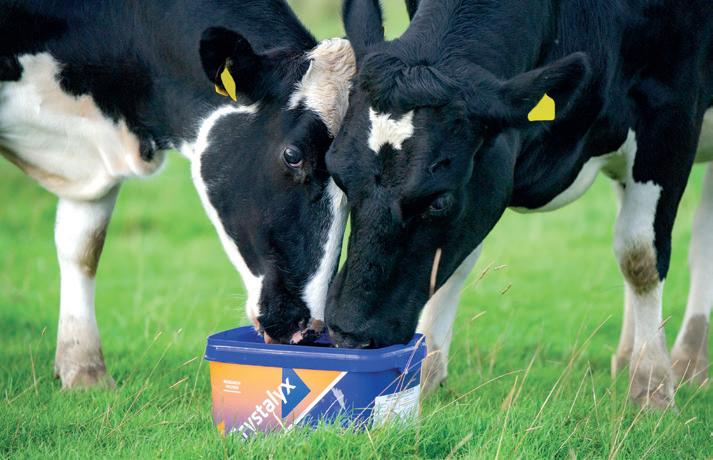
overall diet digestibility and enhancing animal performance.


Crystalyx Garlyx contains a concentrated source of garlic to ward off biting insects, together with a full complement of essential minerals, trace elements and vitamins to balance the recognised deficiencies in summer grass.

APRIL 2023 | WWW.SOUTHEASTFARMER.NET 62 AT COLCHESTER MARKET GRAHAM ELLIS FRICS FAAV FLAA For and on behalf of Stanfords T: 01206 842156 E: info@stanfords-colchester.co.uk www.stanfords-colchester.co.uk
ADVERTISER'S ANNOUNCEMENT
BEEF SECTION IN BEST PLACE
Although I have worked at Ashford Livestock Market for a little while now, some may not know very much about me.
I am a third-generation farmer. My grandfather was in the hop and beef suckler business and my father continues to work as a shepherd and herdsman. I have dabbled in most farming practices but principally as a shepherd, where my passions for sheep and training my border collies meet.
A few years back I spotted an opportunity to enter the livestock auction sector as an EID tag reader on market days. This has now developed into the position I hold as auctions administrator for Hobbs Parker Auctioneers LLP.
Farming in the modern age seems to hold more challenges every day. We as a country have a choice to face: do we risk going hungry or do we start working with our farmers in their pursuit of producing top-quality, sustainably sourced food? The mass importation of foodstuffs that we do not need is causing a multitude of problems, not only for the country but also for the planet.
Don’t get me wrong; I fully understand the need for importing food from outside our borders. We have an ever-growing population and a lack of supply at times, but this should never be to the detriment of the farmer on your doorstep who has produce to sell.
If we chose to consume a more seasonally based diet rather than rushing for convenience food, not only could we look to support local farmers and producers, but we could greatly reduce our carbon footprint. Being able to freeze meat means that we can have a yearround supply of protein at our fingertips if we change the way we source our food. Fruit and veg has seasons and the task there would be a little harder, but not impossible.
Cost is understandably a factor for most people, but with proper education we can prove that the preparation and cooking of fresh, healthy food need not be expensive if done correctly.
I would like to further emphasise what Elwyn
Davies said in last month’s column. The beef section is currently in the best place I have seen it, and there are a huge number of factors pushing these prices to record highs.

The cost-of-living crisis gripping the country is forcing people to look at consuming cheaper cuts of meat, such as mince, which is creating a need for a constant supply of processing animals.
With cull prices this favourable, farmers are more than happy to remove problematic animals at a moment’s notice. However, with more animals being killed for consumption rather than held for breeding, we could end up with a supply shortage further down the line.
Spring is on the horizon and a new farming year is about to begin. Lambing and calving mean we all try to look more closely at the beauty around us, reminding ourselves that with new life can come new hope. I know from personal experience that lambing is a hard job with long days and longer nights, but the magic and passion of it always leaves me happy.
Back to Ashford Market and this May we will be holding a spring fair. This will be an auction of rare and traditional breeds to include cattle, sheep, goats and pigs alongside our yearly ewe and lamb sale. We encourage people from the industry and beyond to view and partake in a live livestock auction and truly understand the quality of
Thomas joined our team in the summer of 2021 and his position has grown from a few hours on a Tuesday to a full-time auction administration role and he is now a highly valued member of the team.

At Ashford Livestock Market we are always delighted to offer opportunities to young and enthusiastic individuals who are interested in a career in our industry. Our business is incredibly diverse and varied, despite being somewhat frantic during our peak times. It is, though, also extremely rewarding to know we are achieving the best results for our customers.
If you, or anyone you know is interested in this industry, please do not hesitate to contact me directly at john.rossiter@hobbsparker. co.uk to discuss what positions we may have available.
animals that this beautiful country produces. We are also inviting a selection of local businesses to have a stand for the day and a selection of agricultural equipment will be available at auction.
Reporting on the auction market at Ashford T: 01233 502222 www.hobbsparker.co.uk
WWW.SOUTHEASTFARMER.NET | APRIL 2023 63 TO ADVERTISE CALL 01303 233883
AT ASHFORD MARKET
THOMAS BAKER
John Rossiter introduces Ashford Livestock Market’s auctions administrator Thomas Baker.
ADVICE FROM THE VET
The bull makes up half of the genetics of the herd, and so choosing the right bull, or selecting the right semen for your cows and system, are vital for modern productive beef and dairy enterprises. By understanding genetics and how they impact the productivity of modern livestock we can look to improve efficiencies and the sustainability of modern farming.
Is genetics a new phenomenon? Genetic improvements through selective breeding are by no means a new feat. Robert Bakewell was pioneering in the British agricultural revolution of the 18th century. Through the specific pairing of bull to cow, Bakewell was able to make very rapid improvements in the physical characteristics of his livestock, increasing slaughter weights by over 100%. Through this highly selective breeding he created a highly popular breed of cattle, the Dishley Longhorn.
How do we define genetic improvement? Genetic improvement depends on the aims of the herdsman but should broadly be defined as improving the herd average for a specific trait. That trait could be production or health related.
Rate of genetic progress is influenced by the equation at the bottom of this column.
Selection intensity is defined as what proportion of our animals we are using to breed replacements from. More specifically it is the difference in phenotype (physical characteristic) of those used for breeding replacements in comparison to the average for the population.
Using sexed semen on a smaller cohort of superior animals is one way to increase this intensity, as would selecting the best bull in the world for a desired characteristic. However, reducing the number of animals used for breeding increases inbreeding and will have the potential to hinder future rates of genetic change due to reduced genetic variation.
Inbreeding is the likelihood of a mating resulting in the inheritance of two copies of the same gene. Potential problems are the inheritance of congenital issues, poorer fertility and growth performance, along with the inheritance of fatal haplotypes (a genetic
GENETICS
condition, often fatal to the foetus while in utero). Selection accuracy is a parameter based upon expression/recording of a phenotype. We can be highly accurate for trait selection with measurable outcomes such as milk yield in litres or colour of coat, but traits such as mothering ability or calving ease are less easy or precise to measure.
Genetic variation may be viewed in terms of the heritability of a trait. The heritability is defined as the proportion of a phenotype that is determined by the genotype. Therefore a high heritability means that the environment has lesser influence on the trait outwardly displayed.
HOW DO WE MAKE GOOD BREEDING DECISIONS TO IMPROVE GENETICS?
Benchmarking our herd against others, benchmarking of individuals within the herd against one another and appropriate bull/ semen selection.
HOW CAN WE BENCHMARK?
• Production data – recording growth rates, productivity, calving ease, temperament etc. to identify areas for targeted improvement
• Use of pedigree data – related animals’ performance allows a prediction of genetic potential. The reliability of this data is low but may be improved through production data (takes time)
• Linear assessment – to objectively measure 24 linear traits in five composite areas; overall scores may then be used to rank cows by phenotype and aid breeding decisions as well as identifying areas to target with bull selection
• AHDB genetic reports – benchmarking tool for £PLI, production and health traits of milking cows and youngstock. Benchmarking can be done based on parity. This allows herd
progress to be monitored. Additional data will improve reliability and this could come in the shape of genomic testing
• Genomic testing – increases the reliability of datasets involved in benchmarking and increases accuracy of selection.
HOW CAN WE MAKE APPROPRIATE BREEDING DECISIONS?
• Breed replacements from animals based on production and health characteristics. Breed enough replacements, taking into account replacement rates, mortality data and selection to breeding.
• Selection of bulls or semen: use estimated breeding values (EBVs) as a measure of genetic potential for specific traits.
– EBVs are determined from measurements of the animal, its herd mates and relatives, with these performance parameters compared to breed averages
– They are a measure of genetic potential, remembering that half of the genetics are from the dam and half from the sire, so expecting improvement of 50% of the EBV (which is given as value above or below the population average).
WHAT DOES THE FUTURE HOLD?
As costs of reproductive technologies reduce, commercial use of embryo transfer, ovum pickup and IVF will increase. This, paired with increased use of genomic technologies, will allow not only improved accuracy of breeding decisions, but increased selection intensity for health and production parameters.
It is clear that genetics remains a complex topic to many, but there are many tools at our disposal to help us make informed decisions. Not only will this improve the productive performance of our herds in the future, but it will also improve health and welfare, with the breeding of resilience a cornerstone of modern genetic selection.
It is also apparent that recording all data is key to making appropriate decisions. Just as with Bakewell’s selective breeding programmes, modern genomics still relies upon accurately recorded data to provide and aid reliability. As vets, we often focus on disease and productivity, but we also need to remember that a key part of the future viability of any farm business comes from the breeding decisions we make today. Using all the tools at our disposal will ensure a productive and profitable future for our farm businesses.
APRIL 2023 | WWW.SOUTHEASTFARMER.NET 64
Westpoint Horsham T: 01306 628086 Westpoint Ashford T: 01306 628208 Westpoint Sevenoaks T: 01959 564383 Westpoint Winchester T: 01962 779593 Westpoint Chelmsford T: 01306 628489 If you would like to discuss anything covered in this article contact your local Westpoint practice E: info@westpointfarmvets.co.uk www.westpointfarmvets.co.uk
Asks Jack Balkham. Rate of genetic change = Selection intensity x selection accuracy x genetic variation generation interval
What have we learned in the past 300 years?
MEMORIES COME FLOODING BACK
Looking through a current dairying magazine brought things flooding back, memories of the good days in dairying and rather too many of the others! Reminders of the reasons I finally took the exit route and sold the whole herd.
It is all fast slipping into the distance now. The best times, during my involvement with milkers between the mid-1950s and the mid-2010s, were probably the years in which milk quotas were being developed, enabling established producers to earn good money to compensate for our rising costs and lousy milk prices.
Quotas gave many of us the chance to enjoy the job and only became spoiled by the complete shambles which DEFRA made of all aspects of TB, something which is only now showing signs of improvement, with research progressing on vaccinations. Their performance in administering the testing was the reason I referred to them as ‘Deathra’.
Their staff were seemingly never happier than when they could slap slaughter notices on farmers and basically disrupt farm businesses. Now my old girls are away together as a complete herd in Northern Ireland, we don’t have sleepless nights worrying about tomorrow’s test or what steps we will take if we get a failure. I had several, often with doubtful accuracy because the testing was pretty hit and miss.
Then there was the upheaval after the Milk Marketing Board was shut down by Mrs Thatcher’s government in the early nineties and we all had to make our own way, either in local groups or by putting some faith in National co-ops. We formed a comfortable group, based mainly on Sussex and Kent, which ran well for a short time until the economic pressure threatened small buying groups and we split up and went our own ways.
In my case we fell into bed with a large group whose directors, it soon transpired, were only
really interested in securing their own salaries and went bust, leaving all us members well out of pocket. “No names, no pack drill”, but I’m sure many will remember.
I think we had to move around half a dozen times before the job, and the increasing difficulty of finding good staff, made it a waste of effort. I went through from 1971 until 1994 with just the same herdsman on each herd but, from 1995 until we gave up the struggle in 2017, we had six in succession. We used a good UK-wide agency which always found staff, but they were not comparable to the earlier ones.
I tried robots for some four years but they were about as troublesome as the staff and certainly didn’t give Emma, who had joined us in 2010, many full nights’ sleep. Sleep is now easier.
Here is something quite different. What do you know about ‘ley lines’? I knew of them but learned more when that famous ‘water diviner cum mystic’ George Applegate came to the hill farm to locate the perfect site for a borehole. A quite remarkable man, George. I related some of this in one of my books and I still think of him often. He arrived at the farm, quite old and frail by then, looked around, took a piece of bone out of his jacket pocket, walked about ten yards and said to me: “Just drop that brick there, Nick.” I did so, and he pointed. “No, there” –about four inches away.
He said: “You need to get the rig set exactly there, tell them to drill down to 80 metres and you will hit the centre of a seven-inch fissure in the chalk and a perfect supply of pure water.” This we did. Then, looking around, he noticed
our village church and started talking about it being built on the ley line that he ‘sensed’ ran through the little village on a line between the Arun Valley and the Isle of Wight.
“They built that in the perfect spot,” he said. “A lucky site for the vicarage, too. If they built other cottages on those ley lines they were fated to bad luck.” He said he had been divining on a farm near Godalming earlier and had seen a house which caused him to mention this to the farmer, a man I actually knew well. The farmer told him that there had been two recent deaths in the house and it was for sale. “Well don’t buy it,” said George.
Then he started talking about these mystical ‘ley lines’ again. How birds navigate for thousands of miles by them at night and ‘put down’ by the nest site they had left the year before, or been hatched in.
Wild geese mainly, that travel from the Arctic, and most migratory birds like swallows and swifts, up from deepest Africa, arrive in April in the same garage or farm building they were born in the year before. Absolutely fascinating stuff. George Applegate features in many articles on the internet. They are worth reading by anyone who is keen to learn. Much of this is what George told me that day, but I have found out a lot since.
A couple of years later, after I had written about him in this column, he rang me and asked if there were anything he could do for the publicity it had given him. I suggested he might find me a close source of water on my home farm, which he promptly did.
He told me he had just returned from his farm in Tasmania, via the South China Seas, where he had been employed by the Chinese Government, divining for oil for days on the prow of a heaving survey boat! Perhaps that’s why the Chinese are so protective of the area. A special man.

WWW.SOUTHEASTFARMER.NET | APRIL 2023 65 TO ADVERTISE CALL 01303 233883 WEST SUSSEX DIARY NICK ADAMES
NICK ADAMES
Former dairy farmer
WHAT IS A SHEEP?
At the time of writing our lambing is well underway; a time that is judged by many to be period of fairly frenetic activity, an assumption that is not always the case. It is a time that can be busy, tiring and often rather stressful, with bursts of hectic activity, but one that is often punctuated with significant periods of relative quiet; time spent simply waiting for things to happen.
Lambing outside, my ideal is simply to turn up on one of my regular visits over the course of the day to find a ewe having done it all unaided, with a nice pair of lambs at foot, licked dry, up and suckling, but we do not live in a model world. If, on arrival, a ewe happens to be somewhere along the path to delivery I am reluctant to leave until the lambing process is completed and lambs safely delivered, particularly in adverse weather. This generally entails stepping back and monitoring progress discreetly from an appropriate distance.
Although I have always lambed outside, I do have a little shed with mothering pens, providing a useful spot and bit of shelter to retire into while waiting; that, of course, is in addition to its main function as a valuable facility for ewes and lambs to be drifted out and penned in for 24 hours or so to ensure a good ewe/lamb bonding before tagging, tailing and a return to grass.
I have never been tempted to hurry lambing; my approach has been that it is very much better to let things take their natural course, although necessary assistance will be proffered where there is a genuine concern, straightening a leg or a hung elbow or providing a bit of traction for a tight delivery etc. But, as far as I am concerned, unnecessary assistance is unwarranted interference. It has long been established that assisted lambs are more susceptible to death from infectious diseases, in fact some 20% more susceptible than those delivered unaided.
Anyway, while waiting and watching once tagging and tailing are up to date, empty pens mucked out and disinfected, there is a limit to just how much weighing out of feeds, tidying up, etc. that there is to do; as a result the mind wanders to such things as: “Why the heck am I doing this at 10.30 on a cold, wet night?” for
example. But, being one with an interest in animal behaviour, thoughts often turn to just what is a sheep – in the “what makes it tick” sort of way.
Ask any member of the general public, and some farmers, what a sheep is and most will be of the view that they possess a relatively limited cognitive capacity and are unthinking and simple creatures; a view that could not be further from the truth.
This sort of opinion has been the downfall of many a novice sheep keeper, particularly when they first discover that they have been out thought and out manoeuvred by their own ovine charges.
Part of the misconception may arise from their habit of following each other “like sheep”, often used as a derogatory term, but which is simply part of natural flocking behaviour. Even for the more experienced sheep keepers, there will be occasions when many who have dared to think they have really begun to understand their sheep are caught wholly wrong footed by some completely unexpected and atypical behaviour. It is often said that the only predictable thing about sheep is in their unpredictability.
From the ethological point of view, sheep are really quite complex characters, capable of recognising 50 or so different faces, be they other sheep or humans, with quite complex social interactions within both flocks and families. A good example of the latter occurred during this year’s lambing. We had a teg produce a lovely pair of twins one evening, and as I walked her up to the mothering pens an older ewe became quite agitated, not trying to steal a lamb, but following on and calling constantly.
I fully expected on a return visit later that night to find that the older ewe would have lambed, but not so; she didn’t lamb for several more days. In order to get some explanation for her strange, somewhat out of character behaviour, I noted her number and looked her up when I returned home, only to find that she was the mother of the teg that had lambed; motherly concern? Or is that being anthropomorphic?
In addition to recognising similarities, are sheep also able to determine differences? We

have for a number of years crossed a few of our Lleyn to a Suffolk ram, producing lambs with speckled faces which, as they grow, even though their mums are pure Lleyn, have a strong tendency to associate most readily with other cross bred, speckle faced lambs rather than with the pure Lleyn lambs. The implication (not very scientific) is that they recognise that they are different, a sign of a sense of self?
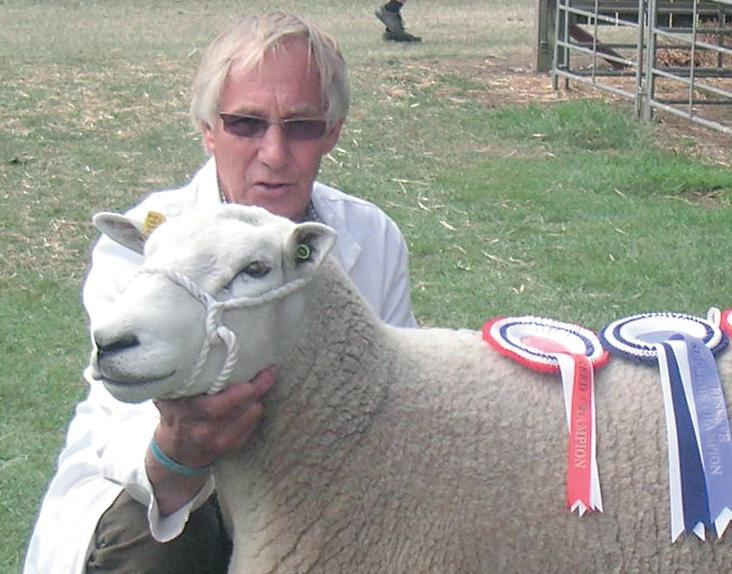
Sheep are also quick to learn, sometimes rather too quickly, particularly, as any sheep producer will attest, where food is involved. I remember how, in my lecturing days, the college ran a specialist sheep course; each year we would draw a dozen or so of the milkier Friesland x Romney ewes from the January lambing flock after weaning the lambs at six weeks, the selected ewes joining a small milking flock.
The first year it took several milkings to train the ewes to mount the milking platform of the parlour we had built, helped considerably by being tempted with a little food. In subsequent years, just as long as there were a couple of ewes with experience of the parlour from the previous year, no training was required, even with novice ewes who learnt readily from those who remembered their previous experiences; it was, for all concerned, certainly a much easier and less stressful process than training freshly calved heifers in a milking parlour.
APRIL 2023 | WWW.SOUTHEASTFARMER.NET 66 ALAN WEST SHEEP TOPICS
ALAN WEST Sheep farmer
ISABEL FIELD Cliffe Veterinary Group T: 01273 473232
 E: Isabel@cliffevets.co.uk

CAN YOU OVER SUPPLEMENT MAGNESIUM?
After a recent on-farm visit, the short answer is that yes, you definitely can over supplement magnesium.

Magnesium supplementation is a long talked over subject and is something that should be regularly discussed during herd health visits to ensure that supplementation is effective and safe and works for your farm. Why should I supplement? How should I supplement? How much should I supplement? What are the issues with over supplementing? These are some of the questions that regularly crop up.
Why should I supplement? Magnesium supplementation is an essential part of transition management on farm, and when done accurately can save a lot of money in transition cow problems. Magnesium is given to help the cow mobilise calcium from her bones and to increase calcium absorption from the gut. In mobilising calcium, we are aiming to reduce issues with transition, calving and early lactation.
How should I supplement? Magnesium can be given in many ways, including high magnesium rolls, mineralising feeds, mineral licks, magnesium boluses or by being added to the water supply. Some routes are more effective than others and every farm will have a route that suits their system better. The method in which you are supplementing is probably something best discussed with your individual vet, as there are pros and cons to each method.
How much should I supplement? As a rough guide each cow needs 30g of magnesium per day. Other parts of the diet, such as forage analysis, should be considered at the same time to make sure you are supplementing to your farm's needs.


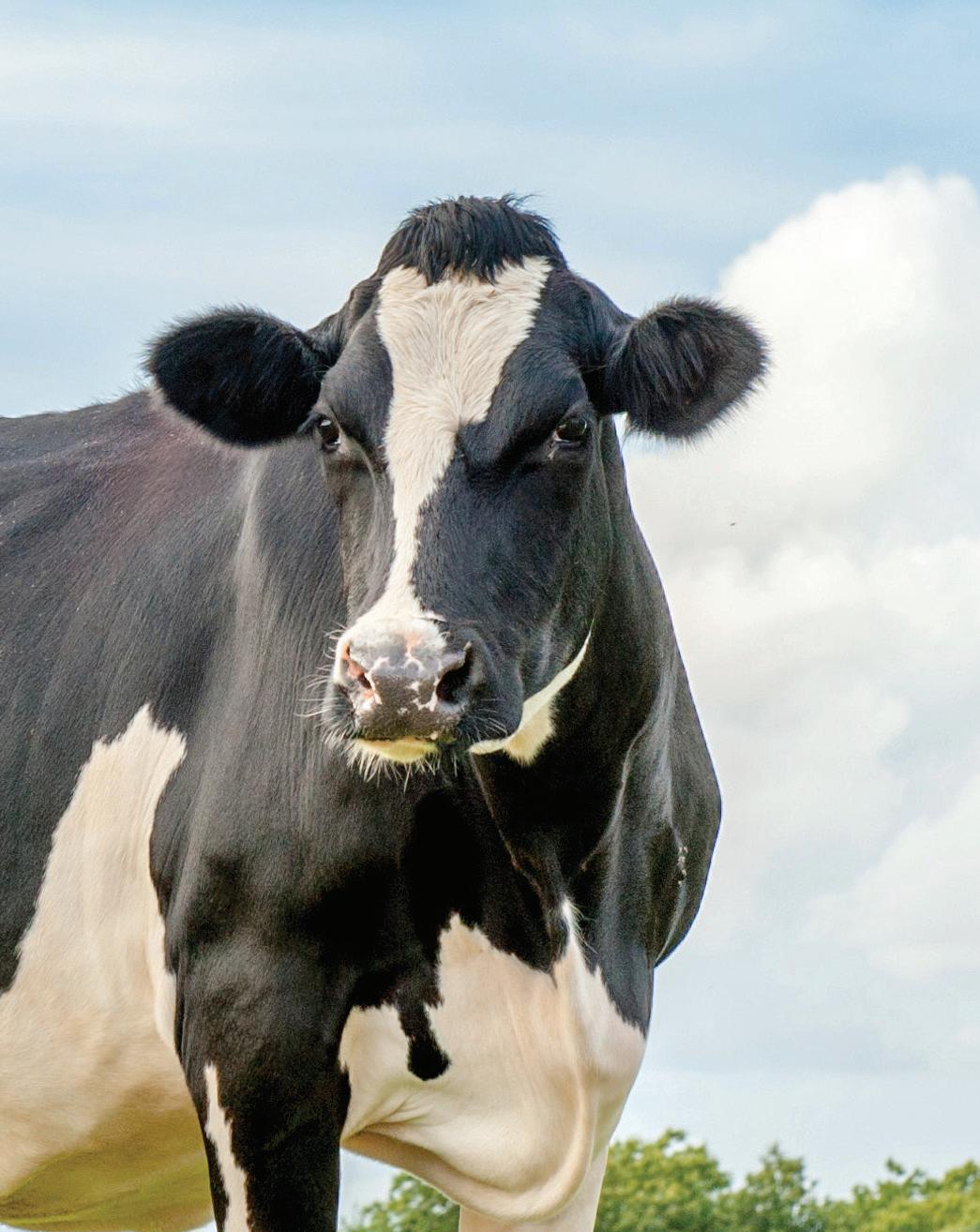

What are the issues with over supplementing? The effects of too much magnesium can be fatal. On this particular farm, the dry cows were being supplemented with magnesium flakes in the water. Following the over-supplementation, the cows presented with sudden death, recumbency, dehydration (probably from self-starvation thanks to foul tasting water), high heart rate, low temperatures and constipation that within a few days turned to diarrhoea.
Some of the cows were successfully treated with fluid therapy (oral and IV), calcium IV and lots of TLC. Unfortunately, the most severely affected cows died despite treatment. Post mortem examination of the animals that died revealed no abnormalities other than elevated magnesium. Blood samples from all live animals also showed high magnesium. A sample from the water tank, which was sent off for testing, also showed extremely high magnesium and was not recommended for animal use.
It appears that in this case the over-supplementation had occurred towards the end of calving with fewer cows in the yard and lower turnover of the tank water, but the magnesium chloride supplementation regime had not been adjusted downwards.
Top tip reminder: regularly drain, clean and refill water tanks.
WWW.SOUTHEASTFARMER.NET | APRIL 2023 67 TO ADVERTISE CALL 01303 233883
www.cliffefarm.co.uk +44 016973 32592 info@crystalyx-global.com Find your nearest stockist at crystalyx- global.com Crystalyx UK
HIGH MAGNESIUM TO BALANCE SPRING GRASS
REDUCE THE RISK OF FLY STRIKES AND INSECT BITES
GET READY FOR A SUCCESSFUL TURNOUT! CHOOSE CRYSTALYX THIS GRAZING SEASON.
IMPROVES FORAGE INTAKE AND DIGESTION FOR ENHANCED PERFORMANCE











































































































1. Teixeira AGV et al. (2014) Effect of an injectable trace mineral supplement containing selenium, copper, zinc and manganese on immunity, health and growth of dairy calves. J. Dairy Sci. 97:4216-4226. Kriptazen 0.5 mg/ml oral solution for calves contains halofuginone. Bovigen Scour emulsion for injection for cattle contains inactivated antigens: Bovine rotavirus strain TM-91, serotype G6P1, Bovine coronavirus strain C-19, Escherichia coli strain EC/17 (F5 / K99 antigens). Multimin solution for injection for cattle contains, Zinc, Copper, Manganese and Selenium. Further information is available from the product SPCs or from: Virbac Ltd. Woolpit Business Park, Windmill Avenue, Woolpit, Bury St. Edmunds, Suffolk IP30 9UP. Tel: +44 (0) 1359 243243 UK: E: enquiries@virbac.co.uk W: https://uk.virbac.com IE: E: enquiries@virbac.ie W: www.virbac.ie Kriptazen and Multimin, UK: POM-V IE: POM Bovigen Scour, UK: POM-VPS IE: POM Use medicines responsibly. www.noah.co.uk/responsible www.apha.ie DIAGNOSE PREVENT SUPPORT Ask your Territory Manager about Calf Care Solutions from Virbac Bovigen® Scour Protects against rotavirus, coronavirus and E. coli F5 (K99).
A HEALTHY HERD STARTS WITH CALF CARE SOLUTIONS
Multimin®
minerals
improve calf immunity
of diarrhoea and pneumonia.1 Speed® V-Diar 4 Simple, rapid and accurate identification of the main causes of neonatal calf scours.
Plus
lactose, vitamins, minerals and electrolytes, this palatable formula aids in the rapid recuperation of
diarrhoea.
e ective control against cryptosporidiosis.
Boosts trace
during high demand periods, to help
and reduce instances
Enerlyte®
Containing probiotics,
calves with
Kriptazen® Provides
RAPIDLY EXPANDING
Stock up for lambing, with everything you need direct from farmsupplies at Westpoint Farm Vets Ashford.
There aren’t many retailers who would ask a customer to carry out a long-term trial of a potential new product line before deciding whether or not to stock it, but that’s exactly what Farm Supplies is doing.
Approved by our dedicated farm vets, farmsupplies offer a full range of farming equipment at competitive prices From handling and weighing systems, to lamb feeders, electric fencing supplies, day to day essentials, livestock ear tags, and protective clothing, farmsupplies have got you covered
to take the salesman‘s word for how well it works,” she said. “There’s no way I can sell something in the shop that doesn’t do what it claims to do.”
The relatively new but rapidly expanding shop, situated just a short distance from Ashford Market, wants to make sure that a newly launched cattle prolapse harness does what it claims to do before putting it on the shelves, and has asked one of its beef farmer clients to put it through its paces in the real world.
If you are not local to Ashford, you can still take advantage of our products, services, and excellent deals
While the shop has close links with the Westpoint vets based in the same unit at St John’s Court in Ashford, Farm Supplies is a standalone business and supplies allcomers, not just farmers who are signed up with the well-respected practice.
Our friendly team are more than happy to assist and discuss your farm’s individual needs
Visit us between 8am-4pm or call today on 01233 743466 to see how farmsupplies can help you
The attention to detail reflects the fact that the small but well-stocked farm equipment store is part of the Westpoint Farm Vets family, and shop manager Jo Olson knows that everything she sells has to meet the high standards of the practice, itself part of the Vet Partners Group.
“This is the first piece of equipment of its kind in this country and I wasn’t prepared
“We welcome farmers and others from across Kent and we have a growing customer base that appreciates the convenient location, broad range of products and competitive prices,” said Jo.
While the friendly atmosphere in the shop sees lots of customers visiting in person, Farm Supplies will also deliver products countrywide within 24 hours, while vets can also take supplies out to clients they are due to visit.
The shop stocks a range of items, from workwear and wellies to electric fencing,

dehorners, sprays, syringes and needles, vaccines, wormers, clippers, calving aids, obstetric gel and even lamb warmers. Larger items like feed, crushes, weighing systems, Alligator trailers and hurdles can be ordered and delivered direct to the farm.
A regular newsletter highlighting current offers features contributions from John Donovan, whose name and face will be familiar to readers who miss the former Kent Wool Growers (KWG) store that served Ashford and the surrounding towns and villages for almost a century.
John, who worked for KWG for more than 50 years, is part of the story that has seen Farm Supplies follow in that much-loved retailer’s footsteps, although Jo is clear about how big a challenge that is. “Kent Wool Growers was a much-loved institution that grew over nearly a century. We’ve got a long way to go, but we share their ethos and their focus on great customer service,” she said.
WWW.SOUTHEASTFARMER.NET | APRIL 2023 69 TO ADVERTISE CALL 01303 233883 FARM SUPPLIES
Ashford Che smford Horsham|Sevenoaks|Winchester York 100% Farm Vets @westpo ntfarmvets @westpo nt vets westpo ntfarmvets co uk nfo@westpo ntfarmvets co uk
FEATURED COMPANY:
<<
They

100%
The natural colostrum solution for calves and lambs.
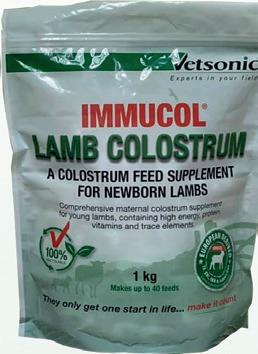


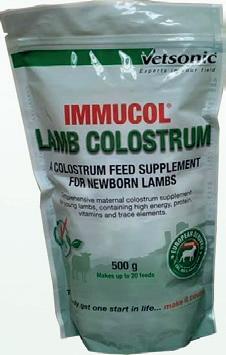

Qualit y colostrum for when they need it most.





EUROPEANDERIVE



Your calves and lambs cer tainly deser ve the ver y best star t quality colostrum and by doing so health, growth and per formance will be enhanced for the rest of their lives!







Your calves and lambs certainly deserve the very best start in life! How they are fed in those rst few hours and days after birth will be in uenced greatly by feeding a good quality colostrum and by doing so health, growth and performance will be enhanced for the rest of their lives!

Your calves and lambs cer tainly deser ve

IMMUCOL All produc ts are guaranteed TB, EBL, IBR and Johne’s free.


 Mike Van Amburgh, World Dairy Expo Seminar
All products are guaranteed TB, EBL, IBR and Johne’s free


For more information speak to your veterinar y surgeon today.
They only get one star t in life... make it IMMUCOL


With its robust and durable pump-drencher and high quality formulae, SELEKT SYSTEM provides life-saving rehydration and clinical nutrition for cows.



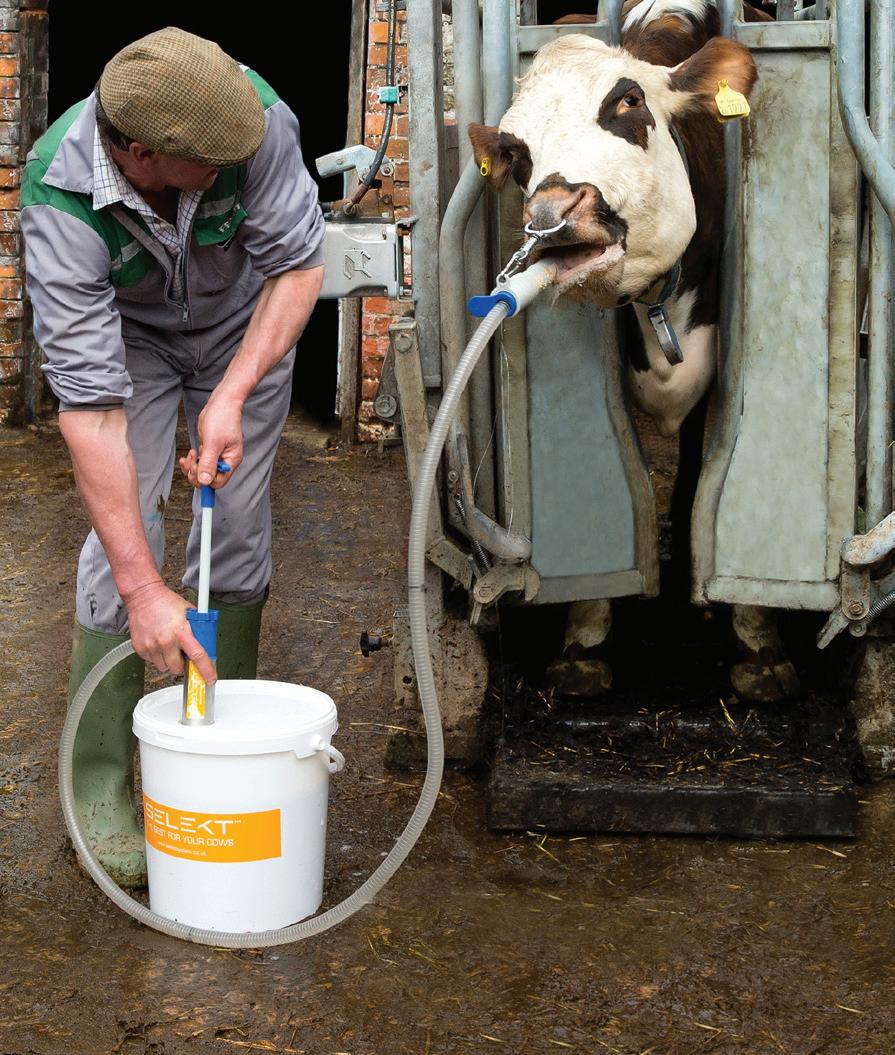
Ask your vet or call Nimrod Veterinary Products for more information on the SELEKT SYSTEM.

APRIL 2023 | WWW.SOUTHEASTFARMER.NET 70
Nimrod Veterinary Products Ltd 2 Wychwood Court, Moreton-in-Marsh, Gloucestershire, GL56 0JQ, UK T +44 1608 652593 E nimrod@nimrodvet.co.uk www.selektsystem.co.uk SELEKT® is a registered Trade Mark of Nimrod Veterinary Products Ltd. REHYDRATION SAVES LIVES PUMP • DRENCHER • CLINICAL NUTRITION
at Westpoint Farm Vets www.immucol.co.uk IMMUCOL
Available
only get one star t in life...
it
They only get one star t in life... make it IMMUCOL For more information speak to your veterinar y surgeon today. tainly deser ve the ver y best star t y doing so health, growth and or the rest of their lives! 100% natural colostrum. The natural colostrum solution es and lambs e guaranteed s free
only get one star t in life... make it IMMUCOL
make
count.
They
For more information speak to your veterinar y surgeon toda
colostrum
health,
formance
for the
Mike Van Amburgh, World Dairy Expo Seminar
natural colostrum. The natural colostrum solution for calves and lambs.
uality colostrum for when they need it most.
All produc ts are guaran TB, EBL, IBR and Johne’s free. 0 5 10 15 20 25 30 35 Provita Col-Late VolacOsmunds Pearson Procol VetcolStockcare lgG (grams) Immucol ® Immucol ® EUROPEANDERIVE D TB ,EBL , IBR & Johne’sfree BovineColostrum Ingredient
the quality
and by doing so
per
will be enhanced
rest
100%
Q
IMMUCOL
Mike Van Amburgh, World Dair y Expo Seminar
natural colostrum.
0 5 10 15 20 25 30 35 Col-Late Volac e lgG (grams) Immucol ® mmucol ® E VE D TB ,EBL , IBR & Johne’sfree BovineColostrum Ingredient EUROPEANDERIV T B ,EBL , IBR& Johne’sfree BovineColostrum ngredien
D T B ,EBL , IBR
BovineColostrum
& Johne’sfree
Ingredient
Stock up for lambing, with everything you need direct from farmsupplies at Westpoint Farm Vets Ashford.
Approved by our dedicated farm vets, farmsupplies offer a full range of farming equipment at competitive prices From handling and weighing systems, to lamb feeders, electric fencing supplies, day to day essentials, livestock ear tags, and protective clothing, farmsupplies have got you covered
If you are not local to Ashford, you can still take advantage of our products, services, and excellent deals
When KWG closed in 2017, one of the sales team approached Westpoint Farm Vets to suggest that the veterinary practice could fill the gap in the market by setting up a retail outlet.

Our friendly team are more than happy to assist and discuss your farm’s individual needs

Visit us between 8am-4pm or call today on 01233 743466 to see how farmsupplies can help you






The company agreed and brought in Jo, who had been working for KWG at the time, to oversee the process. Things grew steadily over the next couple of years, and the shop moved from its first premises at Barrow Hill to the new unit close to the market site at Sevington in 2019.
“Then along came Covid-19, which rather scuppered our plans,” Jo recalled. “We began selling products on line via the Farmacy website, and even after restrictions began to be lifted we were cautious about re-opening because we needed to make sure our vets were protected from the virus.
“In 2021 we re-opened our doors, and we have since been working hard to grow our stock levels and create a real agricultural store here in Ashford. It’s relatively small at the moment but we make sure it has what farmers need, with a focus on seasonal products, and we are determined to keep growing.”
That growth has been driven by Jo, with the help of Val Smith and the veterinary team, all of whom combine to support the day-to-day running of the practice and shop, connecting it to the very heart of the local farming community.

Clinical Director Jack Balkham commented: “Farm Supplies and Westpoint Farm Vets Ashford share the same ethos, aiming to serve the needs of Kent’s farming communities. We are going from strength to strength with the shop, thanks to the support of client and non-client customers alike.


“Jo’s enthusiasm and sales skills are superb and she always endeavours to meet the needs and requirements of our customers.”
Jo was raised on a sheep farm in New Zealand and came to the UK in 2007 after working in France for 15 years. Despite her background she had not been working in agriculture until she took on a role in the sales office at KWG. She worked closely with the buying office, which was where she made many of the contacts that she relies on today to make sure Farm Supplies meets its customers’ needs.
Jo, who helps on a sheep farm in Lenham run by a neighbour, works hard to source the right products for farmers in the county. The Udderly EZ sheep milker is a big seller at the moment, while she is also impressed with the Simcro VS Injector that includes an ink cap. “It automatically marks the animal so you know which ones have been injected without having to mark them yourself,” she said. “It’s new and it’s quickly become a best-seller.”
Access to the seven vets based in the unit in St John’s Court means that Jo can quickly ask for help if a customer wants advice on a product, although formal advice is restricted to clients of the practice. SQP (suitably qualified person) advice, though, is available to all customers.
Jo is keen to point out that while Farm Supplies has close links with the veterinary practice, it is a standalone business that has good relationships with suppliers and offers competitive prices. “Customers are often surprised by just how low some of our prices are,” she said. One in-house service that has been well received is analysis of faecal egg counts (FECs). Farmers who drop off a sample before 11.30am on a Wednesday will have their results back by 5pm that day. Until now only available to Westpoint clients, the service is now being made available to everyone.
Farm Supplies is in the process of building a website that will have full commercial capabilities, but in the meantime Jo and Jack are making great strides as they seek to expand this new agricultural store in Ashford.

WWW.SOUTHEASTFARMER.NET | APRIL 2023 71 TO ADVERTISE CALL 01303 233883 FARM SUPPLIES
<<
Romney Marsh sheep farmer James Wimble
Colin Body
Ashford Che smford Horsham|Sevenoaks|Winchester York 100% Farm Vets @westpo ntfarmvets @westpo nt vets westpo ntfarmvets co uk nfo@westpo ntfarmvets co uk
John Donovan Jo Olsen
FEATURED COMPANY:
Legal services for farmers & rural businesses
BUDGET LOOKS AHEAD TO ENVIRONMENTAL LAND TAXES
The Government is looking to explore taxation of ecosystem service markets and potentially expand agricultural inheritance tax relief to cover some environmental land management, it has been revealed.

The move, announced by Chancellor of the Exchequer Jeremy Hunt in his Spring Budget on 15 March, has been welcomed by the Central Association of Agricultural Valuers (CAAV), which brings together agricultural and rural valuers who provide professional advice and valuation expertise on issues affecting the countryside.
“This is welcome news for landowners and farmers, who may have concerns about entering certain environmental schemes in case they forfeit agricultural property relief (APR),” said Jeremy Moody, the CAAV’s secretary and adviser.
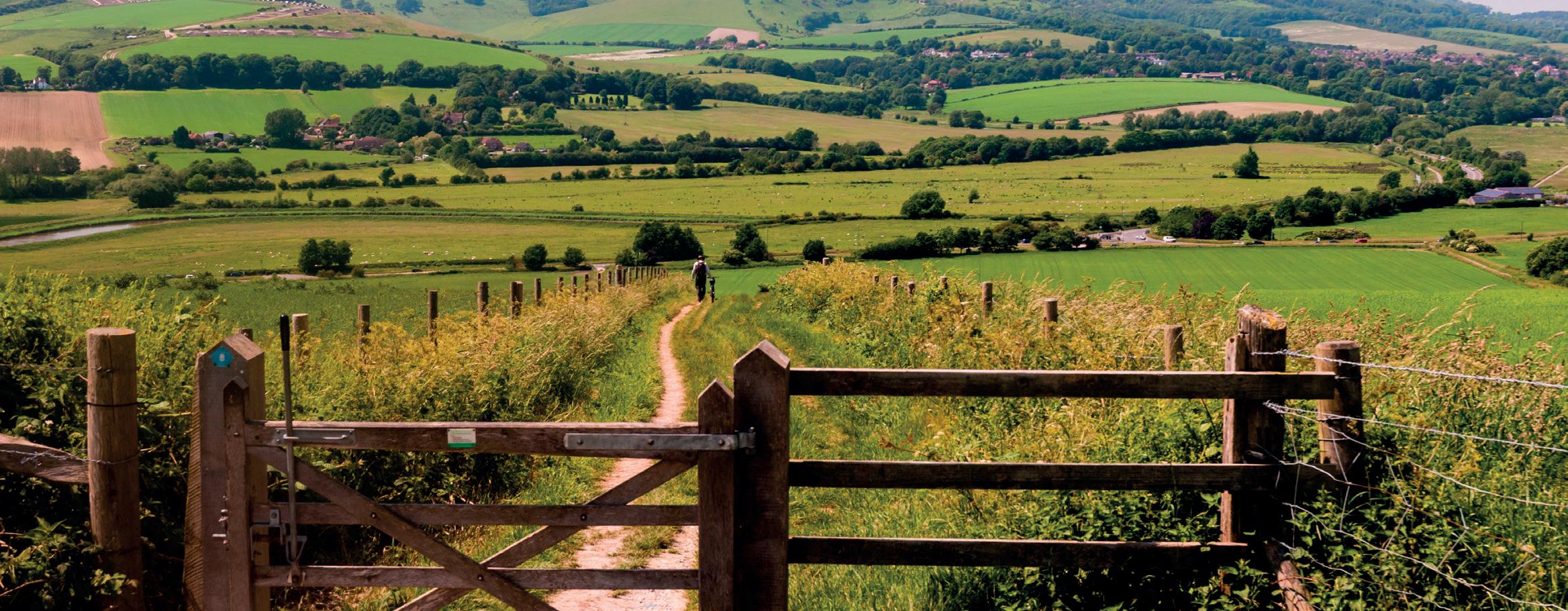
Stage one of the process is a call for evidence on the tax treatment of ecosystem service units. The aim is to understand the commercial operations and areas of uncertainty in respect of taxation.
Stage two will be a consultation about a possible extension of APR from inheritance tax to cover land in environmental land management, exploring how far APR may be a barrier to taking up environmental management options.
The call for evidence also seeks views on the Rock Review’s proposal to limit APR on let land to where it is let for at least eight years. This is a chance for all views to be considered, including the CAAV’s concerns that this could see any gains outweighed by land being let for shorter terms or not let at all. “It will not encourage anyone who is not letting to start letting,” said Mr Moody.
For investments in plant and machinery, including IT, the annual
investment allowance was affirmed at £1m. However, companies will be able to offset all investment in plant and machinery against tax in the first year, something which is known as ‘full expensing’. There will also be an enhanced research and development credit for researchintensive businesses, such as life sciences, that can benefit farming.
“We welcome the investment reliefs, but regret that sole traders and partnerships are again excluded from the benefits for companies, in this case being denied the ‘full expensing’ provision,” said Mr Moody.
And while historic houses and libraries will continue to have energy prices capped as part of the energy intensive users’ scheme, there is no such help available for the horticulture and broiler sectors which are also intensive energy users. “This exclusion is odd,” he commented.
The £20bn announced in the budget for carbon capture and storage is likely to increase demand for pipes to be built across farmland to take carbon out to sea, said Mr Moody.
The first UK carbon capture power station, Keadby 3 in north Lincolnshire, won planning permission in December. It is planned to have a generating capacity of up to 910 megawatt (MW) and to capture up to 1.5 million tonnes of CO2 a year. The plan is for carbon pulled from the air to be channelled through CO2 pipelines being built to transport emissions from industrial plants across the Humber to storage under the North Sea.
“This disruption is already happening in north Lincolnshire and it could become more widespread,” said Mr Moody. “The rhetorical focus of the budget was growth, with reliefs for investment and removing obstacles to people working. It was a budget for the wider economy, not particularly a budget for farmers.”
APRIL 2023 | WWW.SOUTHEASTFARMER.NET 72
Photos: Chester Tugwell /
Shutterstock.com
us today or visit our website: 01227 763939 furleypage.co.uk
Call
Fans of Clarkson’s Farm may have been following Jeremy Clarkson’s clashes with West Oxfordshire District Council as he attempts to breathe new life into Diddly Squat, his Cotswolds farm. In series two, the journalist-turned-farmer faced a protracted battle with the local authority over his scheme to turn a disused barn into a restaurant.
More recently, the former Top Gear presenter has launched a planning appeal over rejected plans to expand his farm shop. It’s been a tough road for the nation’s most famous motorist.
For rural land owners who are considering diversification opportunities, Clarkson’s setbacks may be disheartening. But beyond the gaze of camera crews, many farm owners are successfully repurposing their land and buildings.
Innovative schemes include transforming farmland into wedding venues, glamping sites and self-storage facilities. Such ventures can be a boon for farmers facing unprecedented challenges, including soaring input costs, the effects of climate change and price pressure on farmers by retailers.
GETTING THE GREEN LIGHT
If you are at the start of your farm evolution, commercial business consultants can offer analysis and advice on your diversification plans. As things progress, you may need specialist legal advice. The process of developing and building on rural land or making material changes in the use of land assets can be complicated by the need to obtain planning permission.
So the first question to ask is: Do I actually need planning consent? If an activity falls within the legal definition of “agriculture” then you do not need consent to put existing land or
DOES DIVERSIFICATION SOUND LIKE A PLAN?
Repurposing farm land for new business ventures can be a good way to offset the risks of traditional agricultural activities, but how you do safely navigate potential bumps in the road?
buildings to that use. Some examples include viticulture and allotments. Some activities traditionally associated with the countryside, though, will nevertheless require consent, for example equestrian uses.
If planning permission is needed, then a bewildering array of reports and surveys is often required to address the impact of the development. However, planning legislation recognises that it is not always appropriate to require farmers to go to such lengths when the building in question is essential to their agricultural enterprise. Therefore, certain types of development schemes benefit from pre-approved planning permissions, known as permitted development rights (PDRs). These rights can be relied upon to allow a development to go ahead without having to go through the full planning process.
KNOW YOUR (DEVELOPMENT) RIGHTS
For development to support your existing agricultural business there are available PDRs, which vary slightly depending upon the size of the agricultural unit, to permit operations such as:
• the erection, extension or alteration of agricultural buildings
• excavation or engineering operations
• new or replacement plant or machinery
• new or replacement sewers, mains, pipes, cables or other apparatus
• a new private way
• the provision of a hard surface.
In each case the development must be reasonably necessary for the purposes of agriculture within the agricultural unit and can still require prior approval from the council. As you might expect, local planning authorities won’t always agree with the farmer on whether the proposal is “reasonably necessary for the purposes of agriculture”. This can make for some interesting discussions and can result in appeals.
There are also PDRs to support diversification away from agriculture. These include, for example, converting buildings into a dwelling or for certain commercial uses, such as shops, financial and professional services, restaurants and cafes, business, storage and distribution, hotels, assembly and leisure or to a school or nursery.
These rights only apply in limited circumstances, though, and are also subject to prior approval by the council, so it is essential to consider and get advice on the precise details of what is proposed and where it is to happen.
There are also certain exclusions from, and limits to, the availability of PDRs, which can be tricky to navigate. A good planning lawyer can advise you on your prospects of success and the best way to put forward your case.
And if there’s one lesson to take away from Clarkson’s heroic diversification efforts: if at first you don’t succeed… you can always try again.
Lee May is a partner in Brachers’ Commercial Property team and specialises in planning law.

WWW.SOUTHEASTFARMER.NET | APRIL 2023 73 TO ADVERTISE CALL 01303 233883 LEGAL LEE MAY Partner, Brachers LLP T: 01227 949547 E: leemay@brachers.co.uk www.brachers.co.uk
Maidstone | Canterbury www.brachers.co.uk
Client feedback, Chambers and Partners and The Legal 500
A “knowledgeable and responsive” team of “excellent solicitors who know their specialisms inside out”
FROM FARM TO FORK
The team at Plumpton College is clear on the importance of students understanding the whole food chain, from planting wheat to harvesting the crop and then using it to make flour and bread.
With the college's new facilities, these aspects can be brought to life, particularly now that the college’s training kitchen is open. In addition, the butchery training facility has opportunities for both apprentices and full-time students to benefit from understanding what the products they produce on a farm can be crafted into for sale.
These skills are vital, as the consumer wants quality and traceable products that have travelled as few food miles as possible. In addition to learning at college, our students benefit from understanding the industry and the developments that continue at a rapid pace. Earlier this month, level 3 agriculture students visited the south west of England to gather evidence for their contemporary issues and diversification module. This is what they learnt:
FAYE PIERCE
We went on an educational trip to Somerset to visit three different farms with varying farm enterprises. Our first visit was to Worthy farm in Glastonbury, where the world-famous festival occurs yearly.
The second was a family-run farm where a young couple of fourthgeneration farmers have ideas to increase the farm's biodiversity and have 270 hectares of arable that they are planning to take back gradually from contractors and farm themselves.
The next day we visited Westcombe, where they make 130 tonnes of cheddar cheese per year with the country’s only automatic cheese turner called 'Tina the Turner'. The farm has also diversified into charcuterie and heritage wheat that a local baker uses and sells in London. It was interesting and has given me a lot of ideas for the future.
ISAAC ADAMS
Recently, with my classmates, I visited Worthy farm in Glastonbury. We were lucky enough to tour the working dairy farm at the festival site. The farm manager showed us around the whole unit. The farm had one of the only robot rotary parlours in the country.
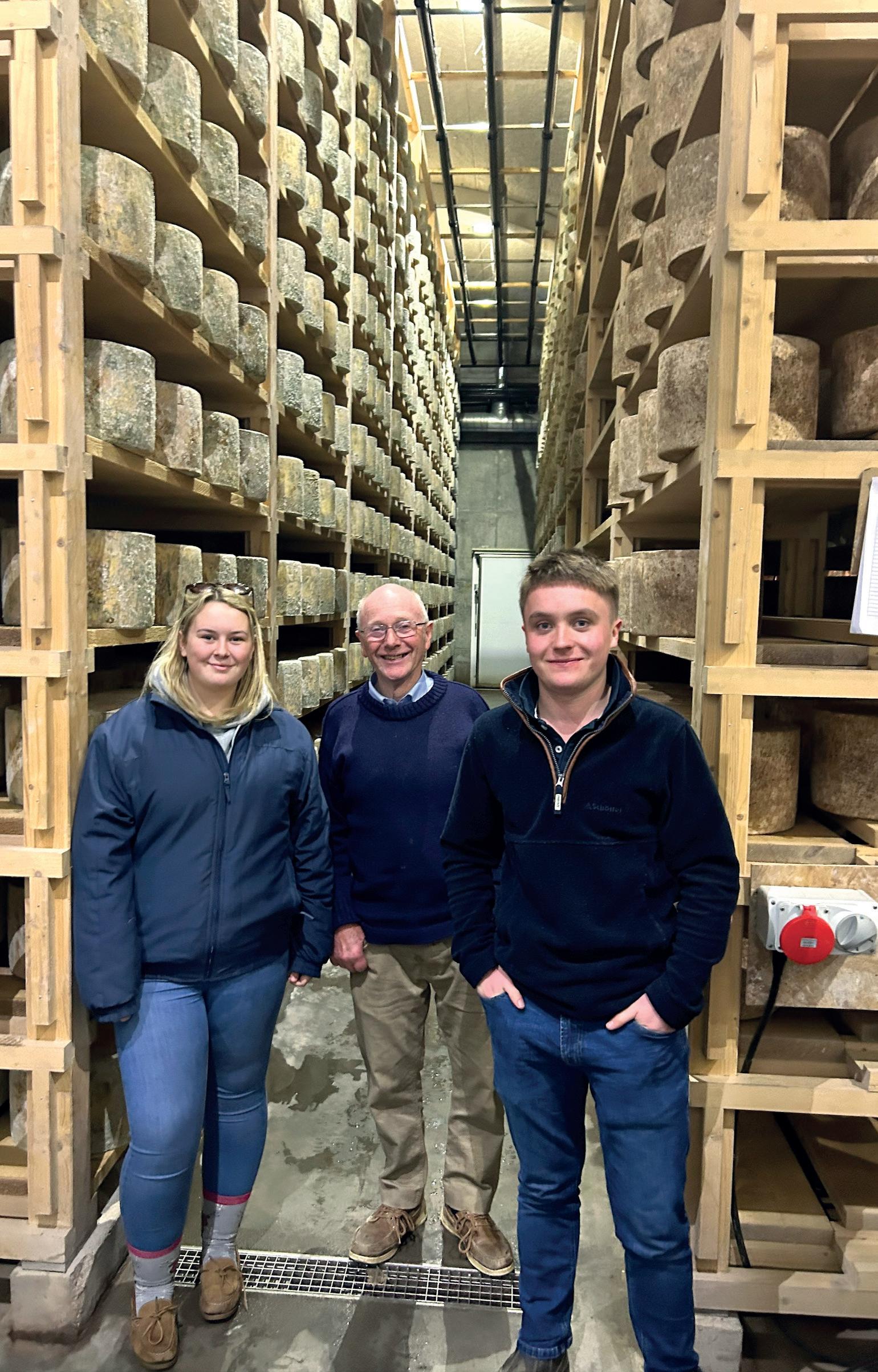
The farm was a great example of how farms in the UK can diversify. One of the main diversifications on the farm is the festival, but they had another venture also. Worthy Farm has an anaerobic digestion
Alan Johnson, Curriculum Manager reports.
plant where all their slurry gets processed to create large amounts of sustainable energy.
Solar panels are also in place to create even more sustainable energy. It was great to have the chance to spend time with the farm manager, who was forthcoming and open to questions. I look forward to discussing what we learnt further when we return to college.
Further information can be found on our website: www.plumpton.ac.uk/business-services/apprenticeships-for-employers
APRIL 2023 | WWW.SOUTHEASTFARMER.NET 74
EDUCATION
Faye and Isaac in the cheese room
The South East Farmland Market Experts
ATTRACTIVE GRADE III WEALDEN PASTURE
An attractive block of grazing land situated in a lovely location in the Weald of Kent, with former hopper huts with potential (subject to planning) is on the market with Lambert & Foster.


Kensham Farmland is located in Sandhurst Lane on the outskirts of the village of Rolvenden, a short drive from nearby Sandhurst village. The property is situated approximately five miles away from Tenterden, which offers a full range of local amenities, with further facilities available in Ashford, approximately 17 miles.
Kensham Farmland comprises 68.86 acres (27.86 hectares) of attractive Grade III Wealden pasture with a number of woodland shaws with



far-reaching views. The land is divided into a number of fenced and hedged grazing fields either side of a stream, some benefiting from field drainage. There are two ranges of former hopper huts which may have potential, subject to planning, for alternative uses.
HOPPER HUTS 1
A range of 12 hopper huts with an approximate footprint of 1,843 sq ft, with easy access located close to the lane. The larger building is of block construction with a pitched concrete fibre cement roof and concrete base. There is also the original brick cookhouse, and a dilapidated timber frame hopper hut with corrugated iron cladding.
HOPPER HUTS 2
This group of hopper huts, with an approximate footprint of 1,163 sq ft, are all of timber frame construction with corrugated iron cladding. These huts are located in an elevated position adjacent to a small woodland shaw set around the remains of the original brick cookhouse.
There is a small heritage apple orchard central to the farmland, established by the vendor's family in 1918 and which includes a number of varieties including Crimson Bramley, Beauty of Bath, Newton, Anne Elizabeth, Lord Derby, Stirling Castle and Blenheim.
iFurther details are available from: Lambert & Foster Paddock Wood office, with enquiries directed to Alan Mummery or Will Jex on 01892 832325



75 TO ADVERTISE CALL 01303
233883
LAND AND FARMS SPONSORED BY BATCHELLER MONKHOUSE
TOPPICK
GUIDE PRICE £750,000 IN ALL SOME 68.86 ACRES (27.86 HECTARES).
ROLVENDEN | KENT
WWW.SOUTHEASTFARMER.NET | APRIL 2023
ROCHESTER | KENT

GUIDE PRICE £120,000 - £130,000
APPROXIMATELY 12.04 ACRES
Lambert & Foster is offering an opportunity to purchase land extending to approximately 12.04 acres (4.87 hectares) of regenerated and managed woodland and marsh grazing.
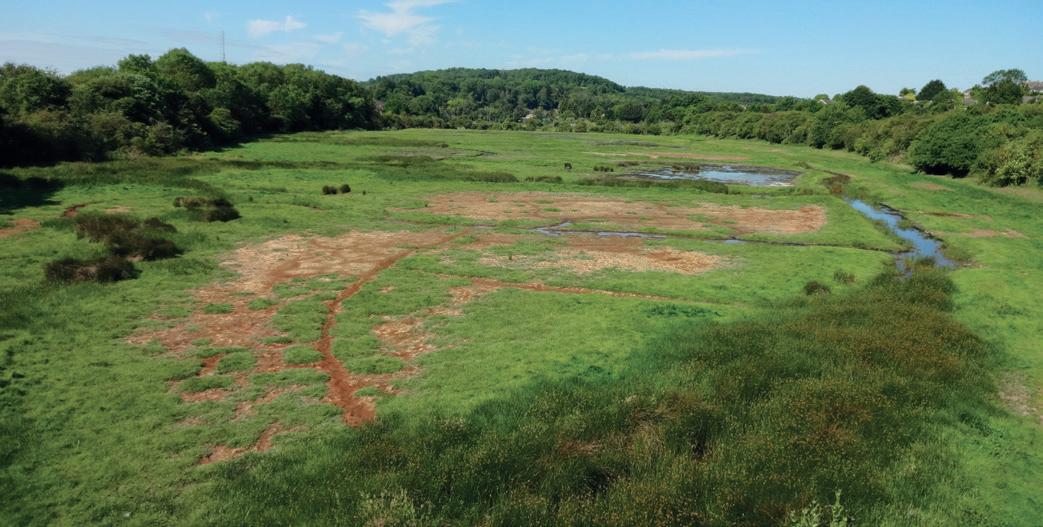
The land, which is in two linked parts, comprises an upland square shaped block of 2.09 acres (0.85 hectares) of regenerated woodland with some areas of managed planting on the boundaries, with a south easterly slope connected to a larger block of 9.95 acres (4.02 hectares) of low-lying marsh grazing.
The land extends in all to approximately 12.04 acres (4.87 hectares) and benefits from direct access off the A228 (Sundridge Hill). The land is considered to have high ecological/conservation appeal. A section of the land is located in Environment Agency Flood Zone 3.
HASSOCKS | WEST SUSSEX
GUIDE PRICE: £125,000
IN ALL APPROXIMATELY 11 ACRES

RARELY AVAILABLE WOODLAND



A rarely available block of woodland with private gated access located in a beautiful rural position on the edge of Hurstpierpoint and Hassocks has come to the market with Batcheller Monkhouse.
The woodland is located in an idyllic rural position within the South Downs National Park and is within easy reach of the picturesque village high street which offers an excellent range of local amenities. Hassocks mainline railway station is within two miles to the east and offers regular services to London, Gatwick, and Brighton and Hove. There is also
excellent access to the extensive footpaths and bridleways close by. This is a rarely available block of woodland situated in a wonderful rural position with immediate access on to New Way Lane. There is a selection of deciduous trees including oak and beech together with a bluebell wood and stream. The woodland adjoins farmland to the south and east and has easy access to numerous footpaths and bridleways close by.
In all about 11 acres with a guide price of £125,000.
iFurther details are available from: Batcheller Monkhouse Haywards Heath office: 01444 453181 - Email: hh@batchellermonkhouse.com




REGENERATED AND MANAGED TOPPICK
 iFurther details are available from: Lambert & Foster Paddock Wood office on 01892 832325
APRIL 2023 | WWW.SOUTHEASTFARMER.NET 76 LAND AND FARMS
A Hampshire fishery on the Itchen Navigation has come to the market through Savills.
Brambridge Fishery and its associated land, which extends to just under nine acres, is a popular wild trout and grayling fishery which has undergone a steady improvement since the current owners acquired the beat in 1970.
The fishing at Brambridge covers both banks along the full extent from Kiln Lane to Allbrook Road, a length of about 1,665 yards (1,522 metres). Though not currently used, planning permission has been granted for parking in the copse of the east bank land.
The original towpath runs along the eastern bank of the property and forms part of the Itchen Way footpath. In addition to The Navigation and adjacent land, which is designated as both a Special Area of Conservation (SAC) and Site of Significant Scientific Interest (SSSI), is the woodland between the right bank and railway which has been wild for over 30 years and provides good habitat for a variety of wildlife.
Geoff Jones, in the rural agency team at Savills Winchester, said: “Brambridge Fishery






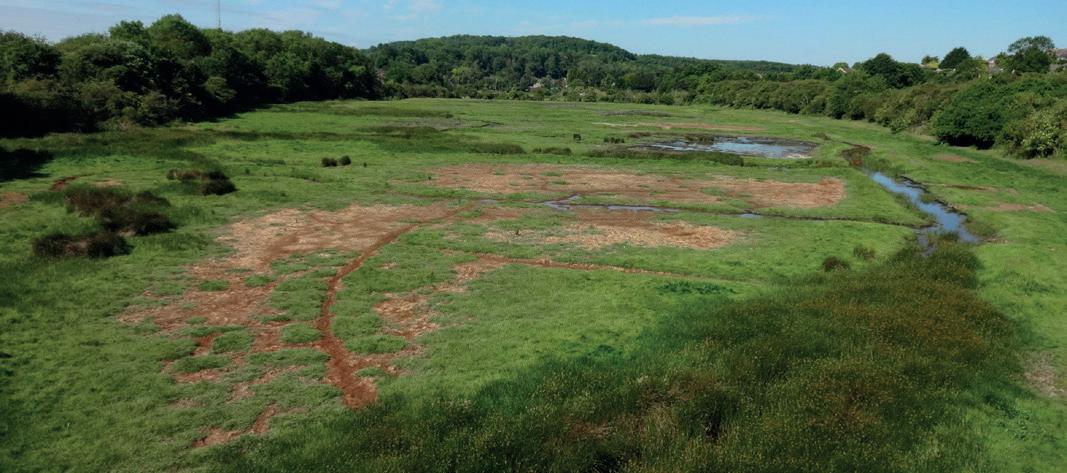
FISHERY ON FAMOUS CHALK STREAM
offers outstanding fishing and unrivalled variety on the world-renowned chalk stream. The sale presents a rare opportunity to buy prime fishing on one of the finest
chalk streams, within easy reach of both Winchester and Southampton.”

Brambridge Fishery is available as a whole, for a guide price of £500,000 or in two lots.
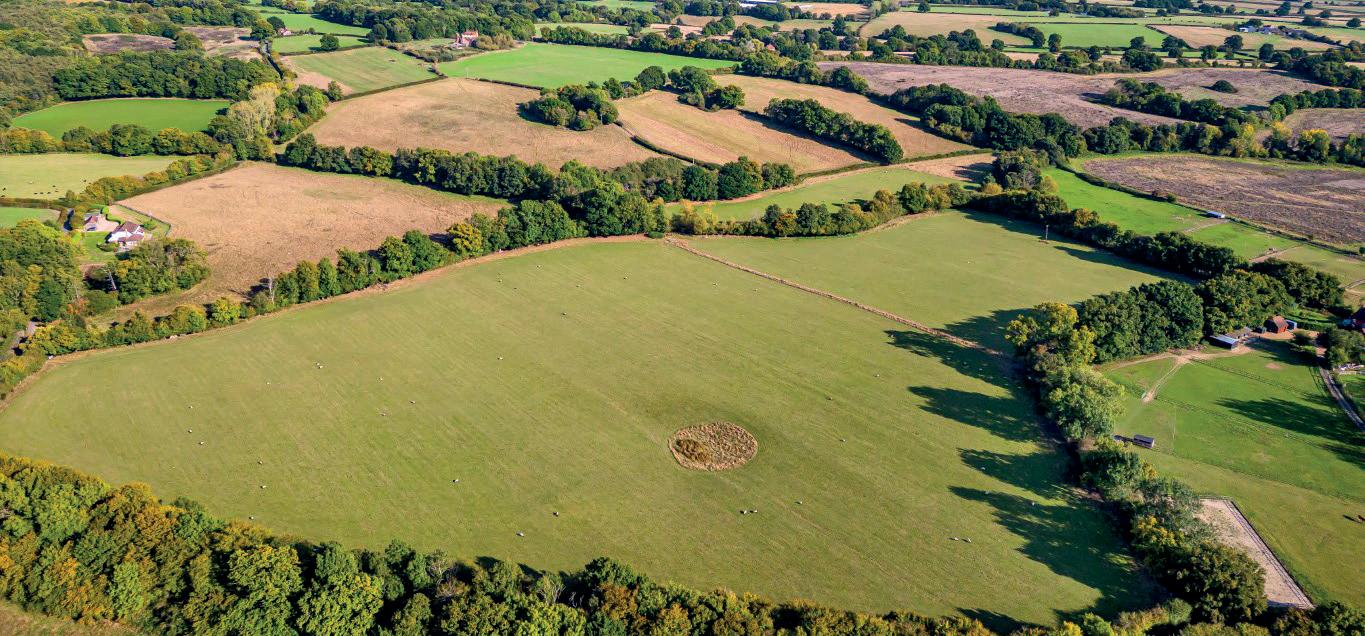
iFurther details are available from: Geoff Jones at Savills on 01962 857441
WWW.SOUTHEASTFARMER.NET | APRIL 2023 77 TO ADVERTISE CALL 01303 233883 LAND AND FARMS
GUIDE PRICE OF £500,000
BRAMBRIDGE | HAMPSHIRE



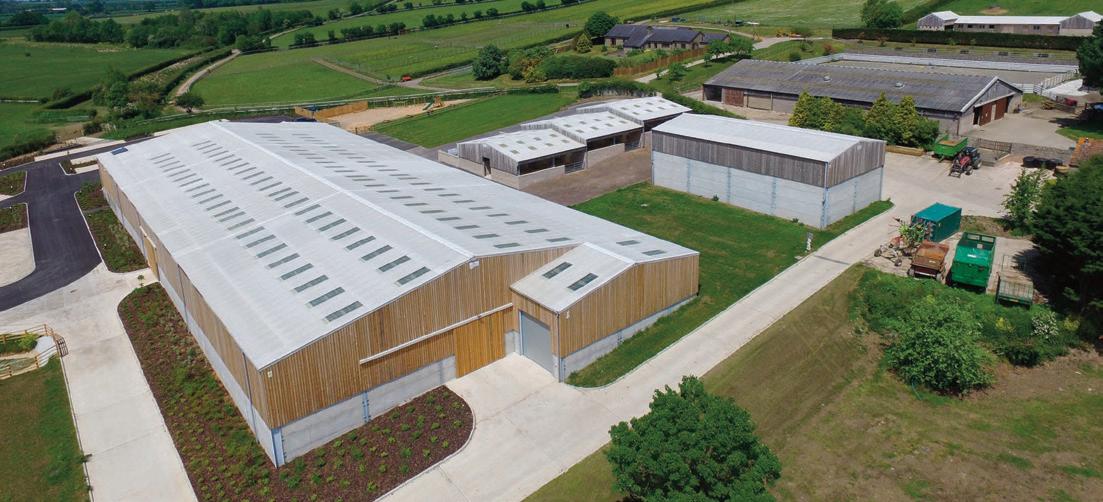
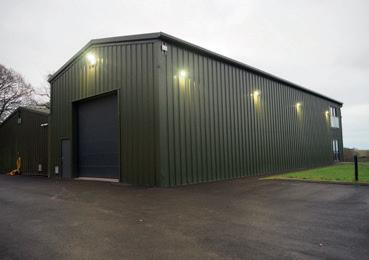
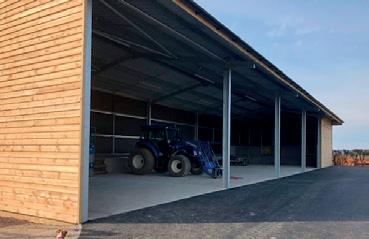
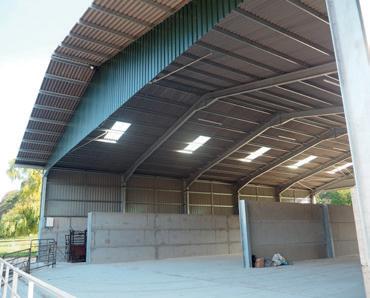
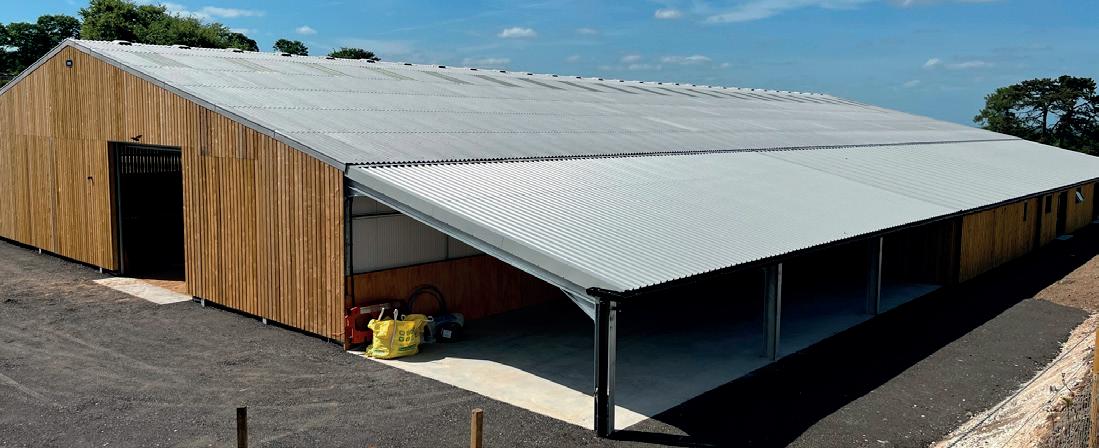

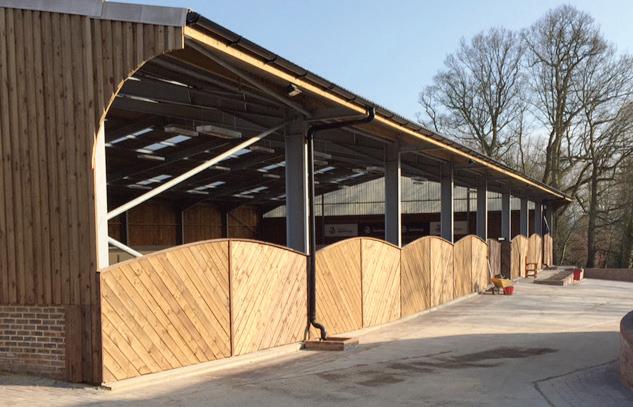

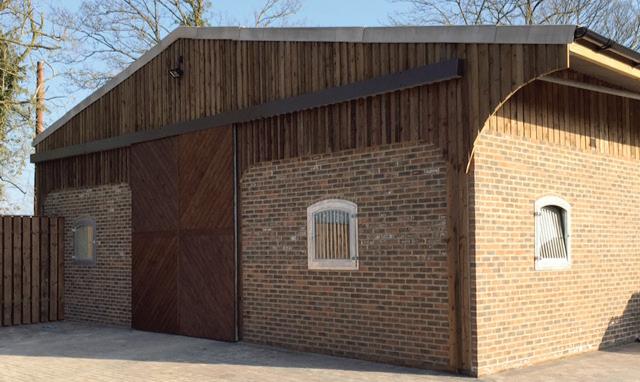



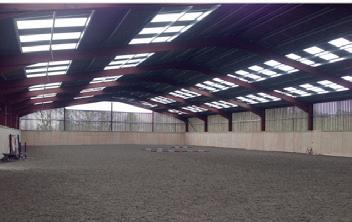

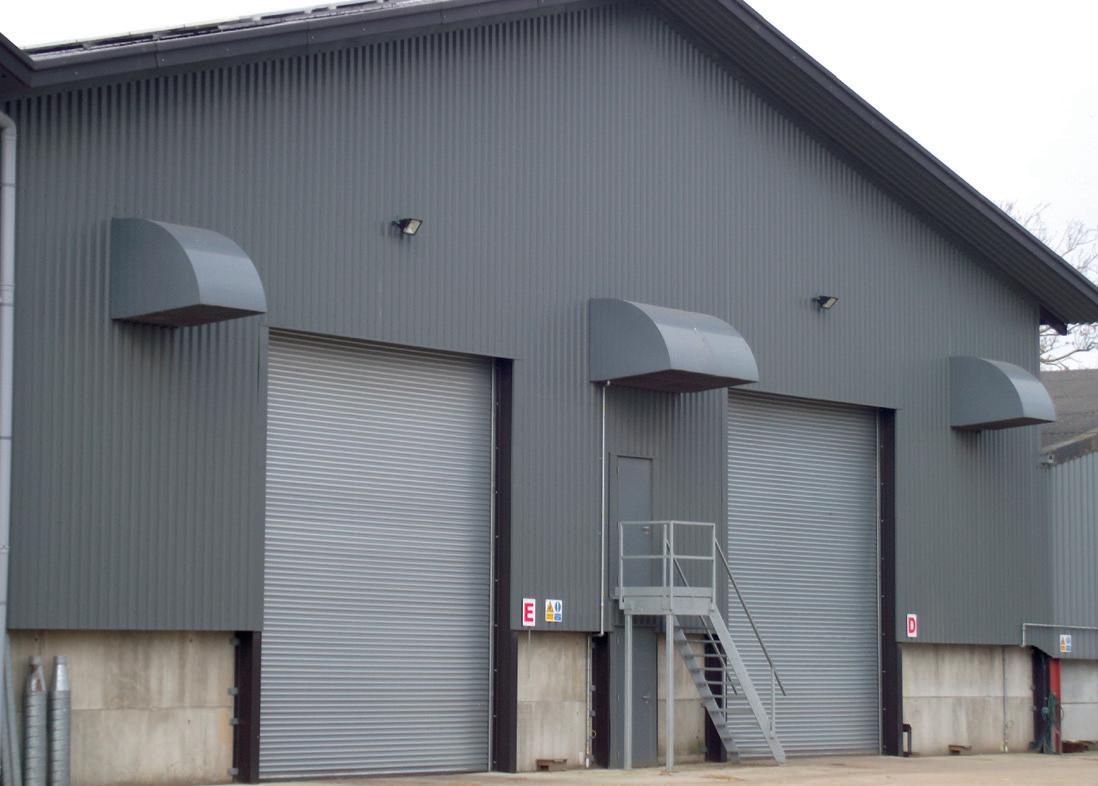
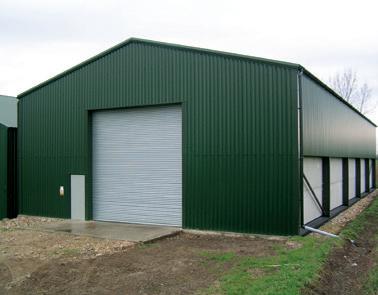
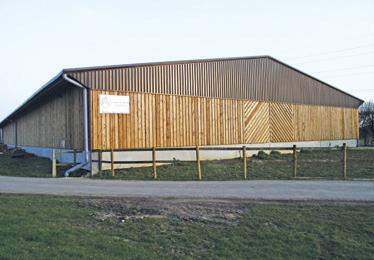


APRIL 2023 | WWW.SOUTHEASTFARMER.NET 78 CLASSIFIEDS CONSTRUCTION CONSTRUCTION Industrial & Commercial | Structural Steelwork | Agricultural & Equestrian Contact us for a free quotation 01269 831831 enquiry@shufflebottom.co.uk www.shufflebottom.co.uk Shufflebottom Ltd Cross Hands Business Park, Cross Hands, Llanelli, Carmarthenshire SA14 6RE Shufflebottom Agricultural Buildings Steel-frame buildings for your farm + Supply only or supply & erect + Construction all over the UK + Award winning company Strength, Security, Style Office 01825 371500 � info@formabuild.co.uk www.formabuild.co.uk We specialise in the supply and construction of steel framed buildings together with the repair and refurbishment of existing farm buildings. Based in the heart of Sussex, covering the South East. Sussex builders since at least 1605. Forma offer all aspects of steel framed construction and cladding together with groundworks and electrical fit out if required. formabuild.co.uk 100% British designed & built Over 35 Years experience Site visits Call to arrange a site survey All our panels are marked Gary White 07812 599679 Jason White 07941 274751 Based in Lewes, East Sussex G.E.WHITE & SONS Ltd All refurbishments & repairs undertaken. Call for a free quote today. AGRICULTURAL, EQUESTRIAN & INDUSTRIAL STEEL FRAMED BUILDINGS We supply CONCRETE PANELS – Any size to suit your needs All aspects of steel work, cladding & groundwork. Family run business with 45 years experience. “You tried the others, now try the brothers” All our buildings are marked www.gjelgarconstruction.co.uk For more information contact us: t: 01233 623739 m: 07860 414227 e: office@gjelgarconstruction.co.uk • Steel frame buildings • Sheeting and cladding • Guttering and repairs • Groundworks and drainage • Demolition and asbestos removal • Refurbishment and change of use • Concrete frame and steel frame repairs • Insurance and general repairs • Concrete floor and block paving G.
ELGAR CONSTRUCTION Ltd
J.






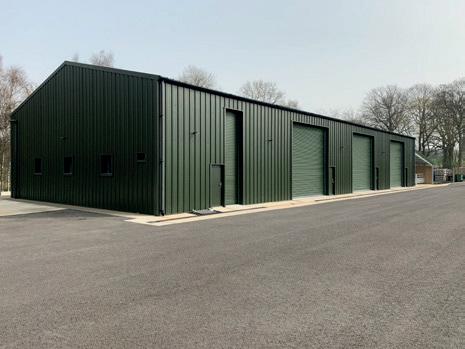
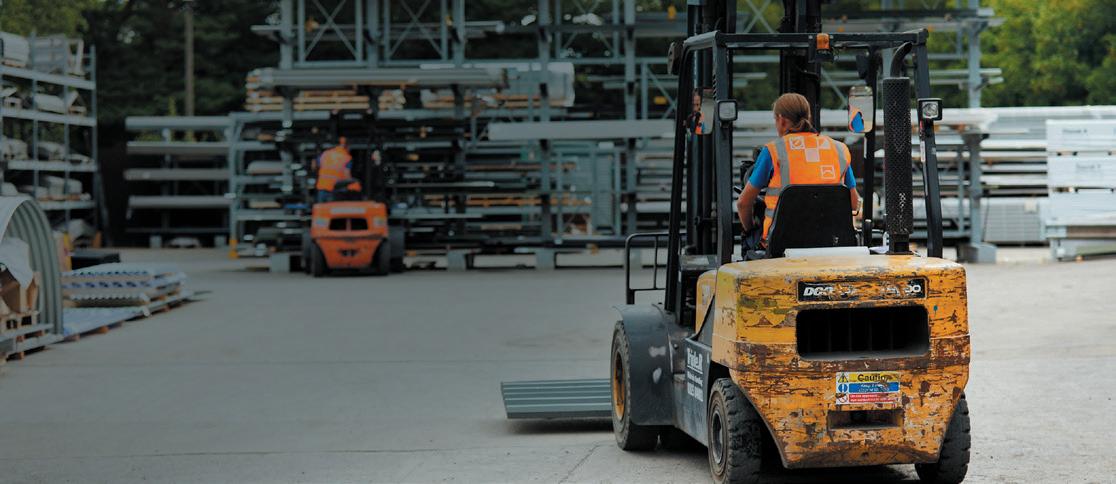
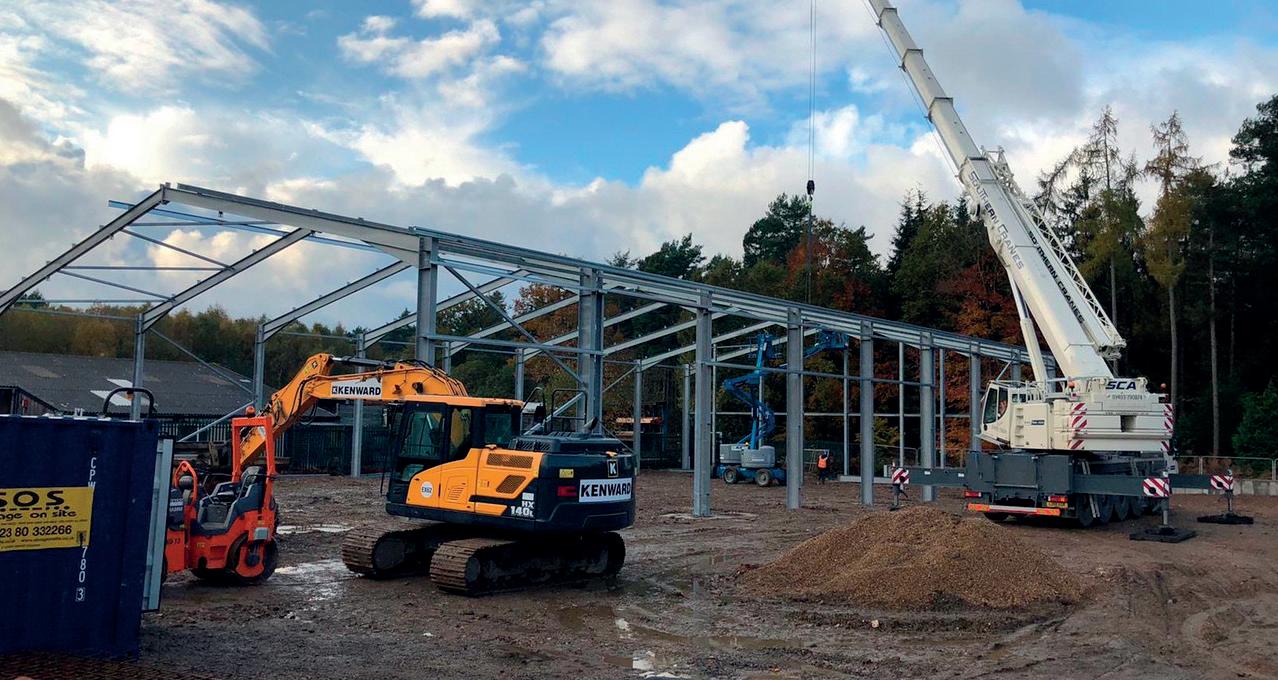


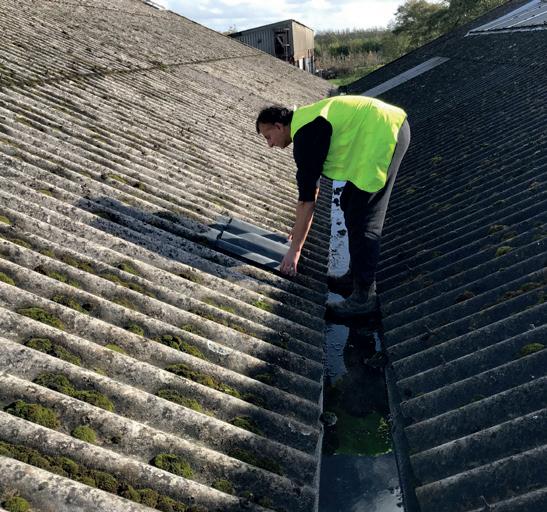
WWW.SOUTHEASTFARMER.NET | APRIL 2023 79 TO ADVERTISE CALL 01303 233883 CLASSIFIEDS CONSTRUCTION CONSTRUCTION CONSTRUCTION Agriculture ~ Cold Storage ~ Equestrian ~ Industrial ~ Waste Recycling • Agricultural Buildings • Cold Store Buildings • Equestrian Buildings • Industrial Buildings • Waste Recycling Buildings • Structural Steel • Drawing Services • Design Services • Mezzanine Floors • Custom Steelwork 01323 890403 www.danddconstruction.co.uk info@danddconstruction.co.uk To advertise in South East Farmer telephone 01303 233883 Steel frame buildings for all your farming and agricultural needs. Visit our website or find us on social media to learn more... Supplying profiled roofing products to contractors, builders and farmers visit www.southernsheeting.co.uk for our full range or call 01342 590 357 to speak to our friendly sales team Our main products off the shelf include: • Metal sheeting • Insulated panels • Fibre cement • Rooflights • Onduline • Fixings and accessories southernsheeting.co.uk NATIONWIDE DELIVERY • EXTENSIVE RANGES IN STOCK CS3152 SS SE Farmers 190mm x 133mm advert v2.indd 2 23/11/2022 15:47 Arrange a site visit with one of our contracts managers to discuss your project in more detail by emailing enquiries@kenwardgroundworks.co.uk or call 01403 210218 www.kenwardgroundworks.co.uk Kenward Construction based in Horsham, West Sussex offer a full design and build service for your next steel framed building including composite cladding, concrete panels, roller shutter doors and bespoke designs to meet individual planning conditions. Kenward Construction also offer a wide range of services offering a truly one stop shop for your next farm building project. Demolition, plant hire, access roads, drainage, sewage treatment plants, rainwater harvesting, biobed wash downs, paving, concrete foundations / slabs, walling and site landscaping. ENWARD FREEPHONE: 01233 659129 from BT land-line charlie.woodger@btinternet.com REFURBS, BIG 6 ROOF SHEETS, ROOF LIGHTS, RIDGES, VERGES, VALLEY GUTTERS, BOX GUTTERS, BOUNDARY GUTTERS, ASBESTOS, SHEETING Single Sheet To Whole Roof Roller Shutters Accidental or Storm Damage Works Demolition Refurbishments Waste Clearances CALL TO DISCUSS YOUR PROJECT! ALL WORKS KENT & SUSSEX Professional Services to the Agricultural, Industrial & Equestrian Sectors FARM BUILDING REPAIRS
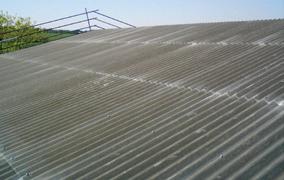
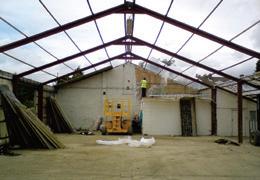
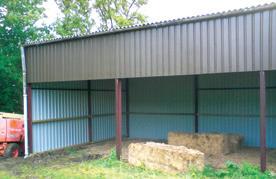
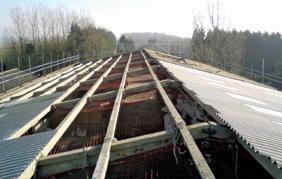
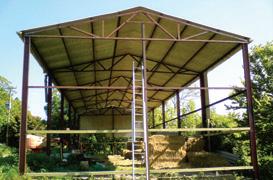
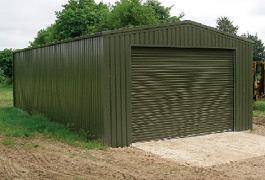

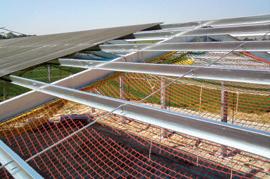
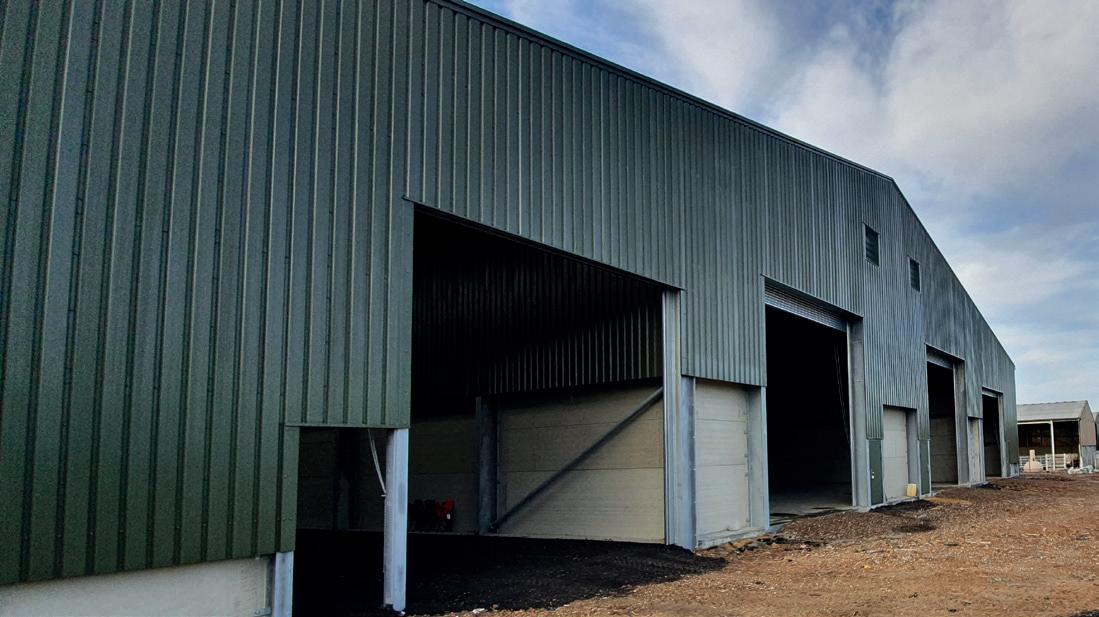
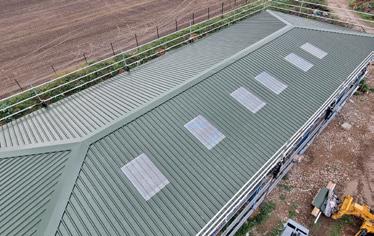

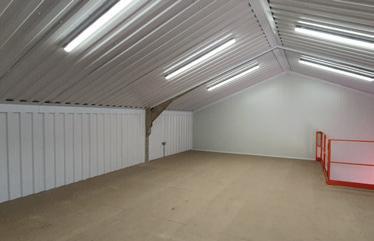

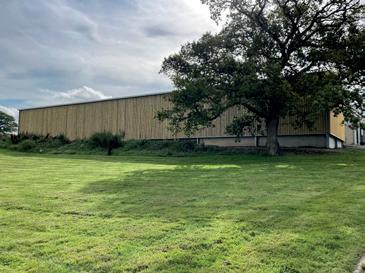



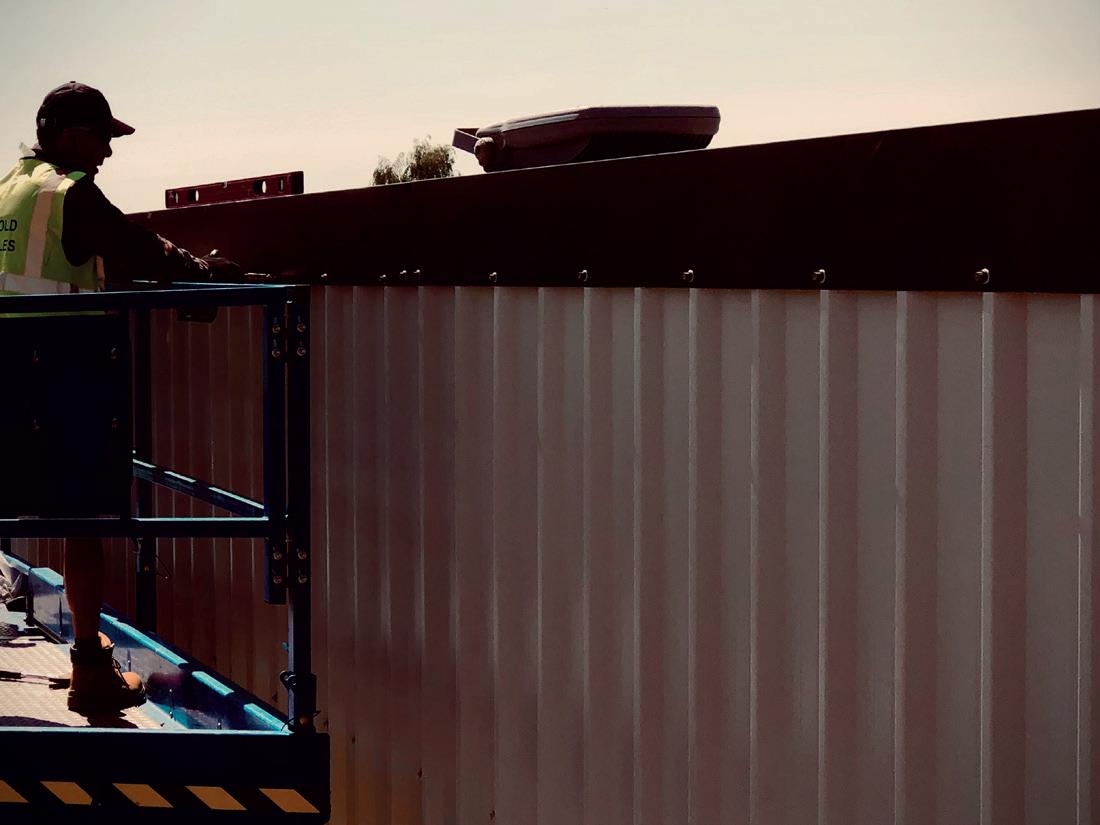






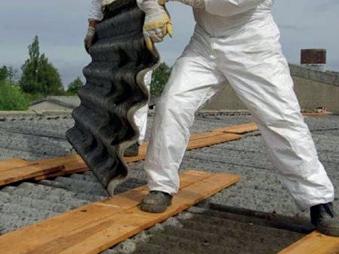

APRIL 2023 | WWW.SOUTHEASTFARMER.NET 80 CLASSIFIEDS JPR ROOFING & CLADDING… Professional Services to the Agricultural, Industrial & Equestrian Sectors ROOFING & CLADDING Including: • Sheeting & Cladding to New & Existing Buildings • Roof repairs, Replacements and over sheeting • Insulated or single skin plastic coated sheeting in a wide range of colours • Concrete fibre sheeting, Big 6 profile etc • Asbestos sheeting removal & disposal, using registered waste carrier • Valley gutters, concrete or metal, repaired or re-lined • Roof lights replaced or covered • Maintenance Programmes to avoid the problems that occur with neglect • Conversions & extensions to existing buildings • Groundworks, Access Roads, Drives, concrete bases, Drainage etc FIRE,FLOOD & STORM DAMAGE Including: • 24 Hour Call out service • Making site/building/premises safe • Structural safety assessment • Emergency clear-up operations • Emergency procedures to reduce impact on your business or premises • Demolition/site clearance • Asbestos removal/clearance & disposal, using registered waste carrier • Re-instatement works • Insurance Claims ALL WORKS GUARANTEED Specialists in: FREEPHONE: 0800 756 9886 Covering Kent, East/West Sussex and the South East from BT land-line MOBILE: 07813 142 145 CONSTRUCTION Specialists in the Agricultural, Industrial and Equestrian sectors Steel frame supply and erect or just supply. Sheeting, cladding and oversheeting. Gutter replacement, repairs and lining. Steel frame, concrete frame alterations and repairs. Asbestos removal. Roof light and sheet changes. Refurbishments and usage changes. Demolition, groundworks and site clearance. 24 hour call out in the event of fire or break in. Roller shutters, sliding and personnel doors. Condition reports and dilapidation work before solar panel installation Mezzanine floors Insurance and repair work On site welding and steel fabrication ALL WORKS GUARANTEED 01227 918723 Quality of work Reliability and honesty Unbeatable on price 07784 619603 jez@JRJconstruction.co.uk www.JRJconstruction.co.uk We are a Hampshire-based family run company specialising in the refurbishment, renovation, alteration and upgrade to the external envelope of buildings within the industrial, commercial and agricultural sectors. Our services Structural Steel Cladding Systems Roof Repairs Doors Gutter Maintenance Asbestos Removal Tel: 02380 617383 Email: info@symesindustrial.co.uk Web: www.symesindustrial.co.uk Units 6 & 7, Upper Norton Farm, Sutton Scotney, Hampshire SO21 3QF Industrial Commercial Agricultural Penfold’s commercial, agricultural and residential building specialists with over 40 years experience – Standing seam – Snaplock systems – Aluminium – Zinc – Copper METAL ROOFING – Composite cladding – Metal cladding – Fibre cement cladding – Timber cladding CLADDING – Removal – Disposal – Surveys ASBESTOS REMOVAL 07864 823 476 07889 481618 Nextgen Cladding Ltd www.nextgencladding.co.uk
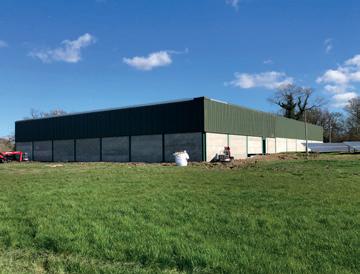





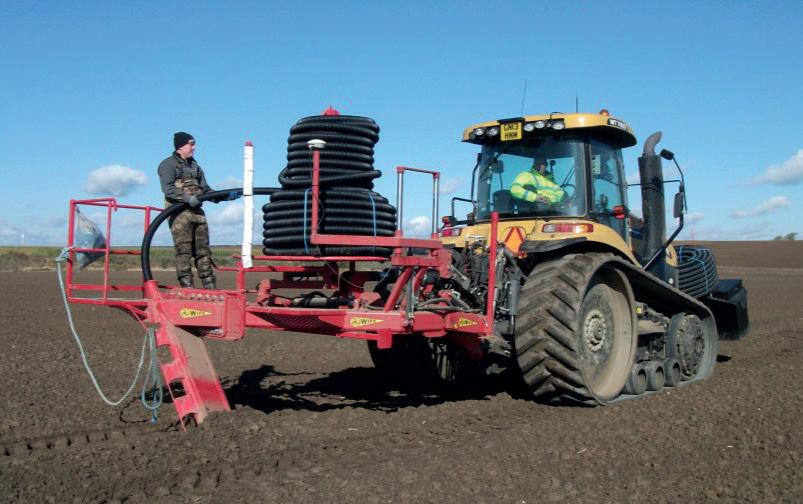
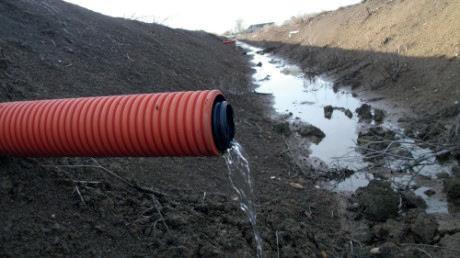
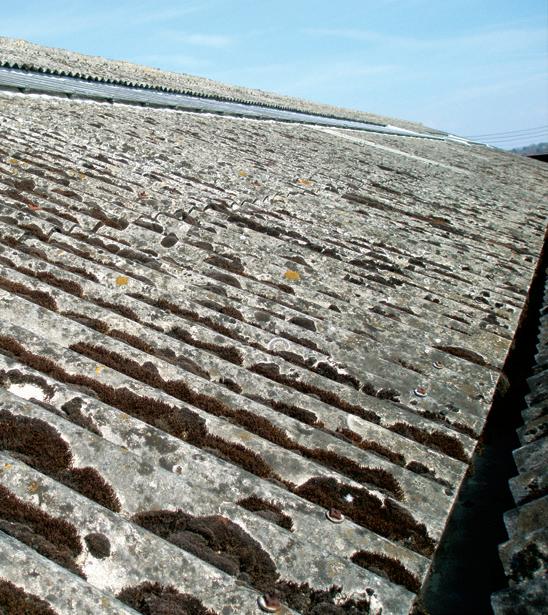
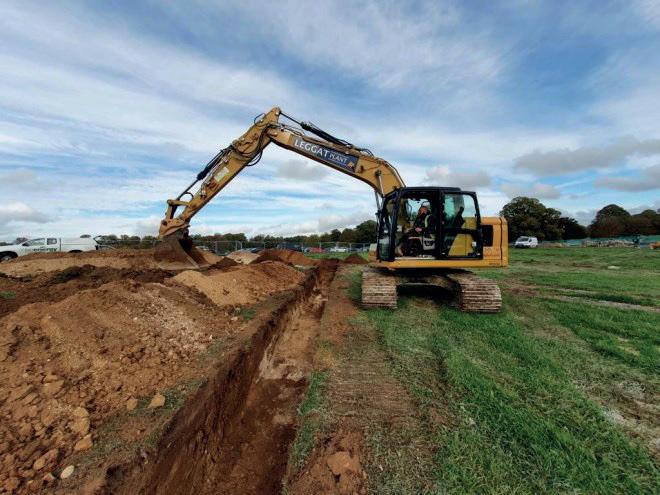
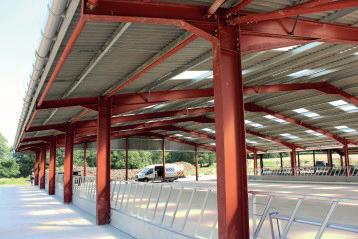

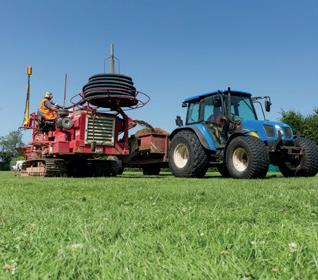
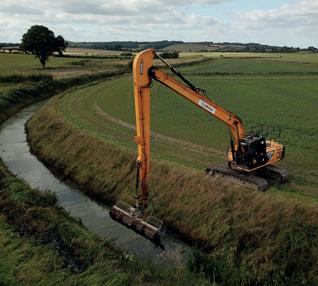
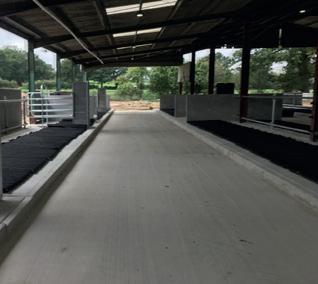
WWW.SOUTHEASTFARMER.NET | APRIL 2023 TO ADVERTISE CALL 01303 233883 CLASSIFIEDS ® CLASSIFIEDS FROM £65 To advertise in South East Farmer telephone 01303 233883 CONTRACTORS Mobile: 07976 287836 Email: sales@shortlandstructures.com www.shortlandstructures.com • STEEL FRAMED BUILDINGS • CLADDING • ERECTING • • EXTENSIONS • ALTERATIONS • CONCRETE PANELS • ROLLER/SLIDING/PERSONNEL DOORS • SHORTLAND STRUCTURES LTD ● LAND DRAINAGE ● DITCHING ● POND WORK ● WATER SUPPLIES ● SEWAGE TREATMENT PLANTS ● GROUNDWORKS ● PLANT HIRE 360° EXCAVATORS FOR ESTIMATES & ENQUIRIES (01622) 890884 G & S BROWN Drainage Contractors Working with farmers since 1947 Email: info@brownsdrainage.co.uk www.brownsdrainage.co.uk SWA SW ATTWOOD & PARTNERS • FIELD MAPPING • DRAINAGE SURVEYING • DESIGN • DRAINAGE FOR FURTHER INFORMATION OR VISIT OUR WEBSITE TOM: 01795 880441 or 07943 192383 EMAIL: james@swattwood.com S W ATTWOOD & PARTNERS LAND DRAINAGE james@swattwood.com PLEASE CONTACT US OR VISIT OUR www.attwoodfarms.com GRAIN STORAGE & LAND DRAINAGE PLANT HIRE INERT TIPPING CLAY SALES FROM £220 PER ACRE FIELD MAPPING DRAINAGE SURVEYING DESIGN DRAINAGE LAND DRAINAGE www.swjfattwood.com S W ATTWOOD & PARTNERS LAND DRAINAGE PHONE: 01795 880441 EMAIL: james@swattwood.com FOR FURTHER INFORMATION PLEASE CONTACT US OR VISIT OUR WEBSITE: www.attwoodfarms.com GRAIN STORAGE & TESTING LAND DRAINAGE PLANT HIRE INERT TIPPING CLAY SALES FROM £220 PER ACRE DRAINAGE SURVEYING S W ATTWOOD & PARTNERS LAND DRAINAGE james@swattwood.com PLEASE CONTACT US OR VISIT OUR www.attwoodfarms.com GRAIN STORAGE & TESTING LAND DRAINAGE PLANT HIRE INERT TIPPING FROM £220 PER ACRE DRAINAGE SURVEYING DRAINAGE CONSTRUCTION FREEPHONE: 01233 659129 from BT land-line charlie.woodger@btinternet.com Asbestos roof sheeting removals Asbestos encapsulation Asbestos fire damage, clearance & re-instatement works Asbestos clearance & de-contamination Asbestos disposals by licenced registered company New metal roofs installed over old asbestos roofs Roof light & sheet repairs Gutter repairs Gutter replacements & re-lining Strip & refurbishment works Change of use projects Demolition & Groundworks CALL TO DISCUSS YOUR PROJECT! Professional Services to the Agricultural, Industrial & Equestrian Sectors ALL RISKS LTD ASBESTOS ROOF REMOVALS CIVIL ENGINEERING GROUNDWORKS CONSTRUCTION BUILDING ERECTION LIVESTOCK & CROP STORAGE SOLUTIONS LAND DRAINAGE SYSTEMS NEW SERVICES INSTALLATIONS FOUNDATION EXCAVATIONS RENEWABLE ENERGY INSTALLATION & MUCH MORE! 01342 325738 | leggatplant.com sales@leggatplant.com @leggatplant @leggatplant LEGGAT PLANT LP LAND DRAINAGE, EARTHWORKS, GROUNDWORKS & CONSTRUCTION FULL LAND DRAINAGE SERVICE Sportsfields, amenity and irrigation systems using Mastenbroek trenchers PONDS, LAKES & RESERVOIRS Construction and maintenance GROUNDWORKS & CONSTRUCTION Primary excavations, aggregate sub-base, agricultural construction and concreting ENVIRONMENTAL HABITATS Water course maintenance and improvement works For all enquiries call 01233 860404 or 07770 867625 (Harvey)
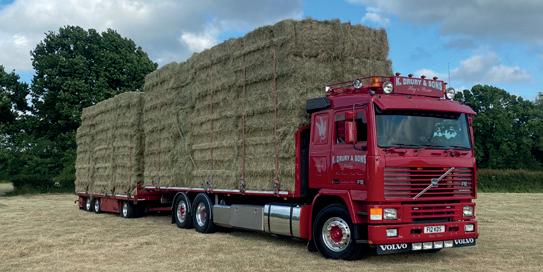

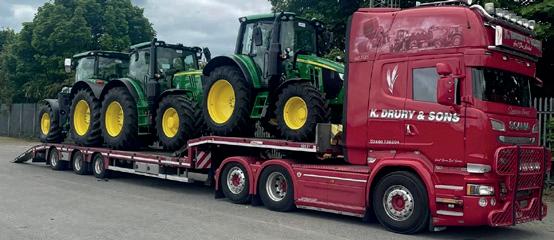
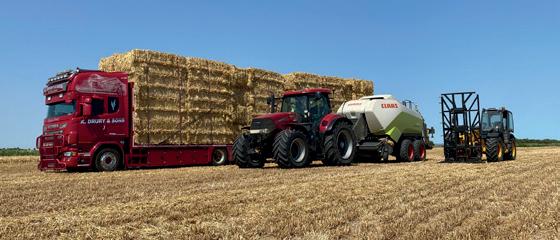

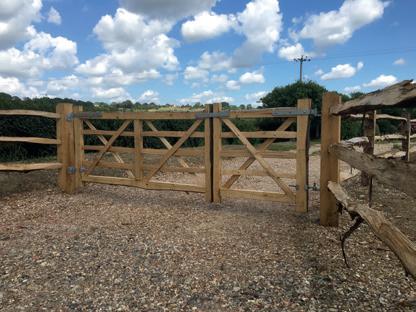
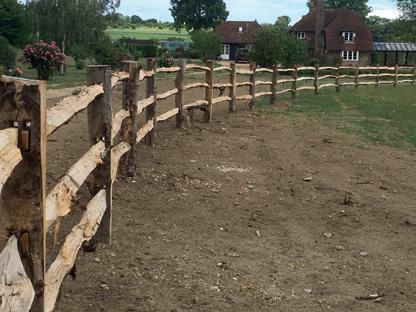
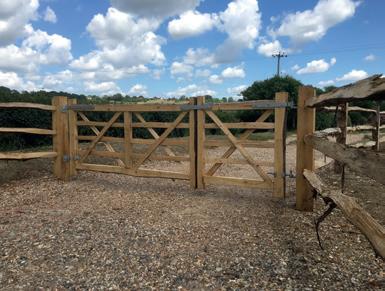
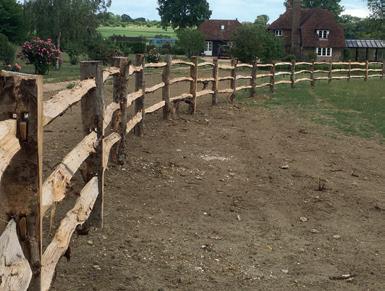


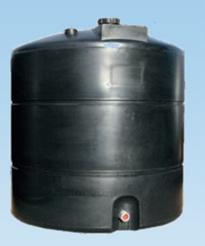
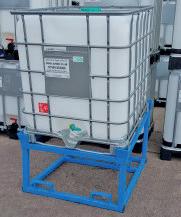
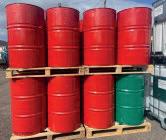
















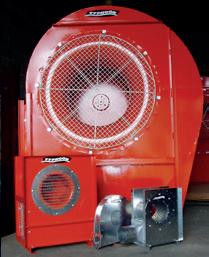













APRIL 2023 | WWW.SOUTHEASTFARMER.NET 82 CLASSIFIEDS HAULIERS CONTAINERS FENCING HAY & STRAW IN STOCK | ROUND & BIG SQUARE BALES 07860 728204 Hay & Straw Merchant | Machinery Haulage Find us on Facebook FOR HIRE CROP DRYING FOR SALE CWP fencing Tel: 07985 298221 colin@cwpfencing.co.uk Standing Sweet Chestnut Wanted Cleft post and rail Cleft field gates Fencing stakes Straining posts Chestnut fencing Tel: 07985298221 colin@cwpfencing.co.uk Standing Sweet Chestnut Wanted Cleft post and rail Cleft field gates Fencing stakes Straining posts Chestnut fencing Tel: 07985298221 colin@cwpfencing.co.uk Standing Sweet Chestnut Wanted Cleft post and rail Cleft field gates Fencing stakes Straining posts Chestnut fencing Redhill Farm Services: Fencing Division ALL TYPES OF FENCING & GATES Supplied and erected & Repairs Tel: 01737 821220 Mob: 07768 931891 Email: redhillfarmservices@gmail.com STORAGE TANKS Visit www.smdd.co.uk or call 01594 833308 Buy from stock. Visit us to collect or same day dispatch with nationwide delivery. New and recycled IBC tanks. Plastic and steel drums. Water tanks & plenty of fittings. Smiths of the Forest of Dean The Tank and Drum Experts Visit www.smdd.co.uk or call 01594 833308 Buy from stock. Visit us to collect or same day dispatch with nationwide delivery. New and recycled IBC tanks. Plastic and steel drums. Water tanks & plenty of fittings. Smiths of the Forest of Dean The Tank and Drum Experts Container Sales & Rental New & Used Guaranteed Wind/Watertight equipment 10ft, 20ft & 40ft Equipment available Crawley – viewing by appointment only Freight Container Services (FCS) 01403 268723 • 01636 616335 • 07831 142 401 sales@fcs-uk.co.uk www.freightcontainerservices.com ENT Machines E: enquiries@kentmachines.co.uk T: 01732 884 551 • Mini Diggers • Telehandlers • Forklifts • Trailers @kentmachines.co.uk for SALE @KentMachines Kent Machines Ltd www.kentmachines.co.uk www.pellcroft.com | sales@pellcroft.com | 01526 342466 PELLCROFT Manufacturers of centrifugal, low volume and portable fans, air tunnels, drive over oors, grain stirrers and gas burners Specialists in agricultural, deer and equestrian fencing and gates T: 01622 831 781 | M: 07710 179 600 enquiries@woodchurchfencing.co.uk | www.woodchurchfencing.co.uk • Toilets & Showers for hire • Large range of Temporary canteens, stores & welfare units • E uent Tank Emptying • Events also catered for with chillers & toilets FOUR JAYS GROUP Tel: 01622 843135 Fax: 01622 844410 enquiries@fourjays.co.uk www.fourjays.co.uk HIRE SPECIALISTS ACROSS THE SOUTH EAST units
COMPLETE OUR CROSSWORD TO WIN
Three bottles of Dry, three bottles of Medium and two bottles of Sweet Strong Kentish Cider

ACROSS
1 Done by breaking the law (8)
5 Wash (5)
8 Lacking in depth (7)
9 Certain (4)
11 Flair, elegance, grace (4)
12 Accurate, right (7)
13 Apple variety (7,6)
15 ------- newt (7)
17 Item of clothing (5)
20 Prickly plant (7)
23 Water bird (4)
24 Cutting tools (9)
25 Lacking compassion (9)
26 Title character in Thomas Hardy novel (4) DOWN
1 Problem (5)
2 Camelid (5)
3 Sea bird (4)
4 Not expensive (3,4)
6 Property, holding (5)
7 Bird of prey [with 21 down] (7)
10 Character in Much Ado About Nothing (4)
13 --------- bat (9)
14 Oil from tree that can be used as an insecticide (4)
16 Adjust a clock to correct time (3)
17 Guys and -----, musical (5)
18 Join with thread (3)
19 Garden pests (6)
21 Bird of prey [with 7 across] (3)
22 Removal of hair (5)
23 Bird that spends most of its time on the wing (5)
PRIZE ANAGRAM: Flowering plant (8)
To enter, simply unscramble the anagram (8) using the green squares.
Email your replies with your name, address and phone number to sef.ed@kelsey.co.uk
Correct entries will be entered into a draw which will take place on 25 April. The winner will be announced in the May edition.
As spring has sprung we are offering readers the chance to win three bottles of Dry, three bottles of Medium and two bottles of Sweet Strong Kentish Cider. For more information about the vineyards, please visit www.biddendenvineyards.com or call 01580 291726.
*Subject to availability
LAST MONTH’S ANSWERS:
Correct answer: Macrophages
LAST MONTH’S WINNER: Adrian Daniels from Folkestone, Kent
WWW.SOUTHEASTFARMER.NET | APRIL 2023 83 TO ADVERTISE CALL 01303 233883 ®
VI NE YA R DS
VI NE YA R DS
CROSSWORD
1 2 3 4 5 6 7 8 9 10 11 12 13 14 15 16 17 18 19 20 21 22 23 24 25 26 1 2 3 4 5 6 7 8 9 10 11 12 13 14 15 16 17 18 19 20 21 22 23 24 25 26 S T A R D U S T P I P S E N A M R O P A C K H O U S E G E R M S T H L D G S P I D O L I G N E O U S O C I E A U R H O D O D E N D R O N S E E A S P R E A D N O T I O N R R O S A S O A F F O R D S K I N D L F D I O B U T T E R F L Y N R C S E U E F E A T H E R S S I P S
Crossword by Rebecca Farmer, Broadstairs, Kent
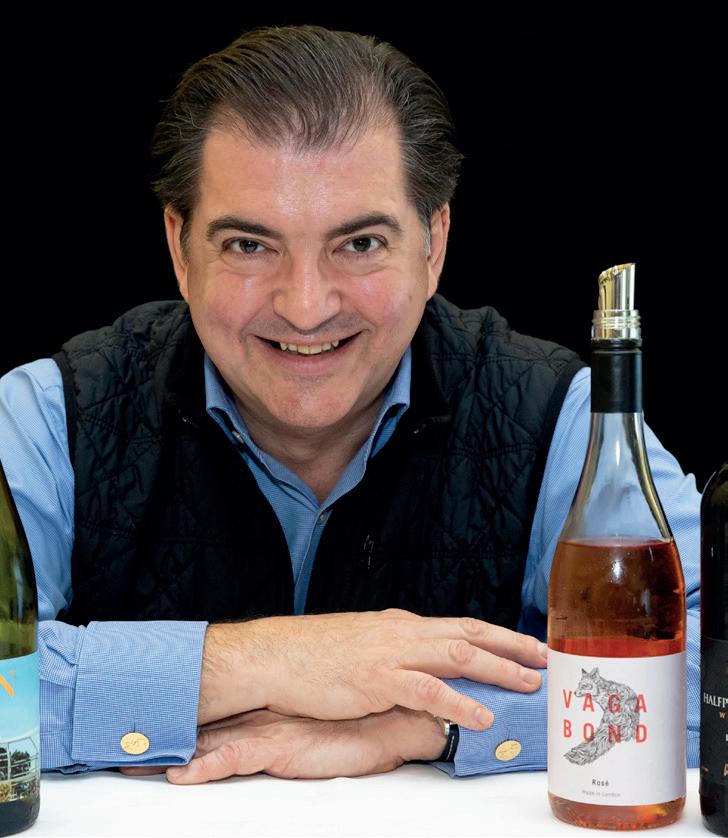

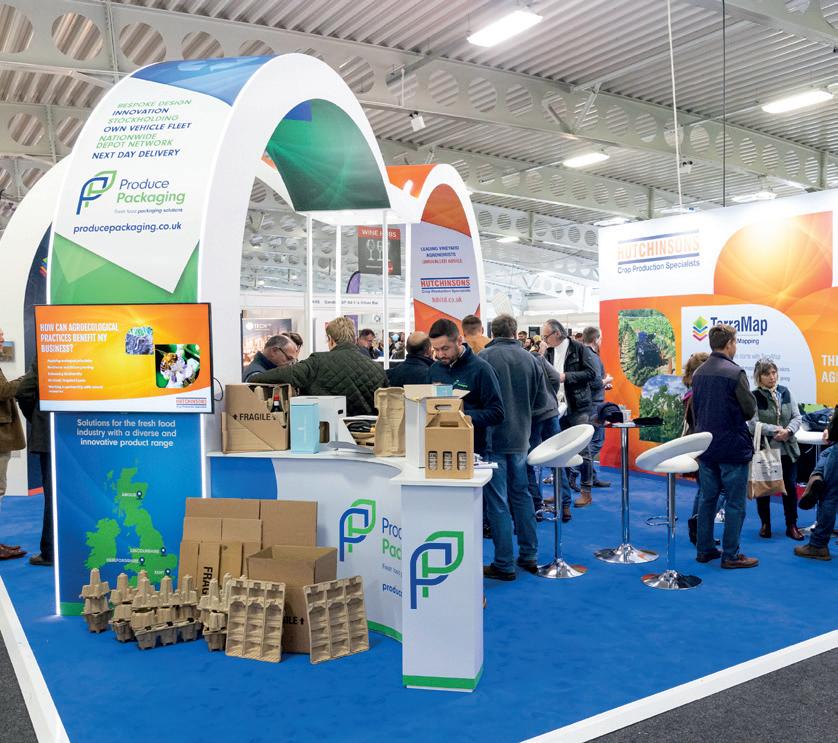

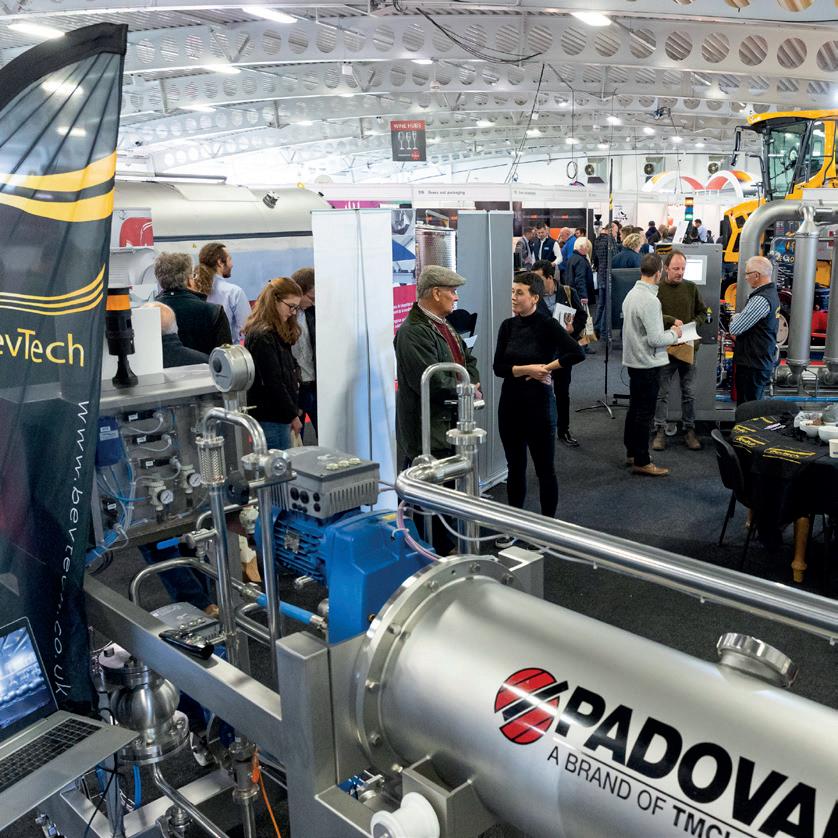
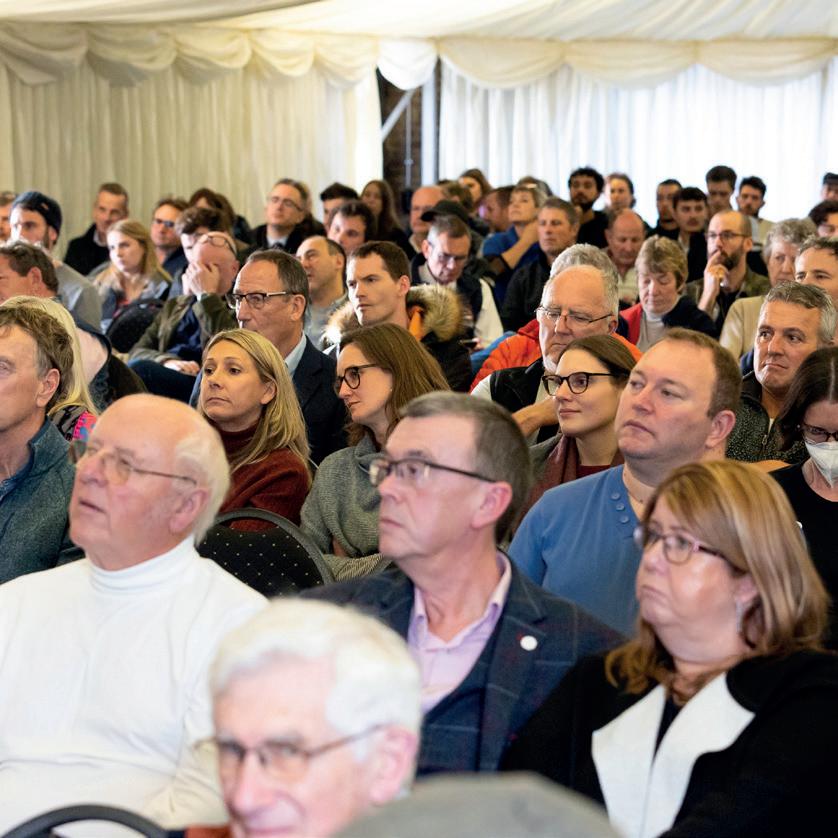
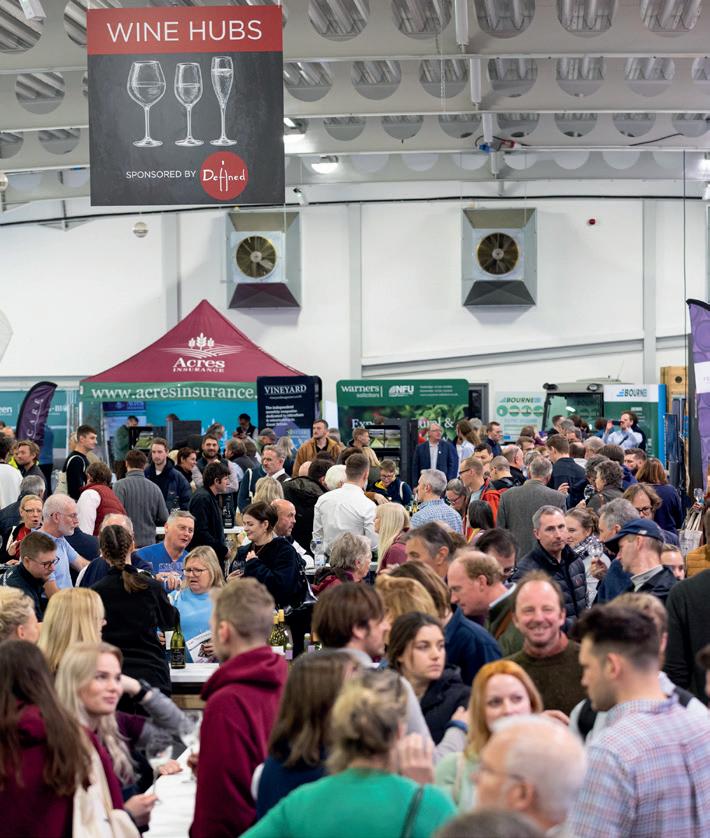



FOR GENERAL ENQUIRIES PLEASE CONTACT ONE OF THE TEAM: For viticulturists in Great Britain Booking enquiries Jamie McGrorty 01303 233883 In association with 22nd November 2023 Kent Event Centre, Detling, Maidstone, Kent ME14 3JF 2023 Sponsored by Vitifruit Equipment Sales and Hire LAST FEW EXHIBITOR SPACES REMAINING. BOOK NOW!