




























• Farm business & estate management • Planning & development • Subsidies & grants • Land sales & acquisitions • Viticulture • Succession • Biodiversity net gain • Ecology • Natural capital • Residential and commercial property letting and management 01892 770339 www.c-l-m.co.uk Farm business consultants with our roots in the South East March 2023 Est 1982 Looking to the future as BPS shrinks REPORT Flood defence in Essex PLANT HIRE BUSINESS FIRST CHOICE FOR BIG NAMES FARMING REVIEW HOGGING THE LIMELIGHT














MARCH 2023 | WWW.SOUTHEASTFARMER.NET 2 Robins Liming Services Chilsham Lane, Herstmonceux, East Sussex BN27 4QG 01323 833181 Derek Knight: 07812 171273 helen@robinsofherstmonceux.co.uk www.robinsliming.com • Soil Testing service provided • Variable Rate Spreading • Top quality lime 45%-50% NV • Over 50 years experience LIME AGRICULTURAL with Robins Liming Services Robins Liming Services is a trading name of Robins of Herstmonceux Ltd BREEDING SALE 11th April Ashford Market SUSSEX CATTLE SOCIETY Docile : Long Lived : Easy Calving : Strong Feet Excellent Converters of Forage Tel: 01580 880105 enq@sussexcattlesociety.org.uk www.sussexcattlesociety.org.uk
SOUTH EAST FARMER
Kelsey Media, The Granary, Downs Court
Yalding Hill, Yalding, Maidstone, Kent, ME18 6AL 01959 541444
EDITORIAL
Editor: Malcolm Triggs
Email: sef.ed@kelsey.co.uk
Photography:
Martin Apps, Countrywide Photographic
ADVERTISING & MARKETING
Jamie McGrorty 01303 233883 jamie.mcgrorty@kelsey.co.uk
GRAPHIC DESIGN
Jo Legg 07306 482166 jo.legg@flair-design.co.uk
MANAGEMENT
DIVISIONAL MANAGING DIRECTOR:

Steve Kendall
PUBLISHER: Jamie McGrorty
RETAIL DIRECTOR: Steve Brown

SUBSCRIPTION MARKETING MANAGER: Claire Aspinall
PRINT PRODUCTION MANAGER: Kelly Orriss
DISTRIBUTION
Distribution in Great Britain: Seymour Distribution Limited
2 East Poultry Avenue, London
EC1A 9PT
Tel: 020 7429 4000 www.seymour.co.uk
Distribution in Northern Ireland and the Republic of Ireland:
Newspread
Tel: +353 23 886 3850
Kelsey Media 2023 © all rights reserved. Kelsey Media is a trading name of Kelsey Publishing Ltd. Reproduction in whole or in part is forbidden except with permission in writing from the publishers. Note to contributors: articles submitted for consideration by the editor must be the original work of the author and not previously published. Where photographs are included, which are not the property of the contributor, permission to reproduce them must have been obtained from the owner of the copyright. The editor cannot guarantee a personal response to all letters and emails received. The views expressed in the magazine are not necessarily those of the Editor or the Publisher. Kelsey Publishing Ltd accepts no liability for products and services offered by third parties.
Kelsey Media takes your personal data very seriously. For more information of our privacy policy, please visit Kelsey Media takes your personal data very seriously. For more information of our privacy policy, please visit https://www.kelsey.co.uk/privacy-policy/ . If at any point you have any queries regarding Kelsey’s data policy you can email our Data Protection Officer at dpo@kelsey.co.uk.
www.kelsey.co.uk
Cover picture: Rhino Agricultural Services
©Martin Apps, Countrywide Photographic
22nd November 2023
Kent Event Centre, Detling, Maidstone, Kent ME14 3JF
53 NICK ADAMES
57 LAND AND FARMS
FEATURES
18 RHINO AGRICULTURAL SERVICES
It takes courage to invest more than the price of your home in setting yourself up in business, but Neil Morgan’s decision to do just that 30 years ago has paid dividends.
32 FARMING REVIEW
The UK agricultural sector is undergoing the biggest policy shake-up in 60 years with the agricultural transition well underway in England.
NEWS & REPORTS 04 Urgent action to avert crisis. 05 Ambitious plans to develop market. 06 The 63rd annual Doe Show. 07 Plans for research site. 10 Flood defence in Essex. REGULARS 14 SARAH CALCUTT 16 MONICA AKEHURST Monica is disappointed by the Government's attitude to food production. 26 NEWS FROM THE VINEYARD The art of wine. 34 NIGEL AKEHURST VISITS... Nigel visits J&H Robinson (Iford Farms) Ltd, a privately owned 1,200 hectare mixed farming business. He finds out more about the 30-year estate vision. 47 STEPHEN CARR 48 ANITA HEAD 50 ALAN WEST 52 ADVICE FROM THE VET Porcine Reproductive and Respiratory Syndrome. MARCH 2023 CONTENTS 16 34 www.southeastfarmer.net
® 06 26 In association with
SAVE THE DATE 2023
Sponsored by Vitifruit Equipment Sales and Hire
URGENT ACTION TO AVERT CRISIS
The organisation that fights for commercial apple and pear growers in the UK is looking for urgent action from supermarkets and government to help avert a crisis in the industry.
The move follows a survey that paints a bleak picture of the industry, with growers cancelling orders for new trees, mothballing orchards and exiting fruit growing altogether.
British Apples & Pears Limited (BAPL) wants supermarkets to pay more for homegrown fruit to recognise what it refers to as an “unprecedented 23% inflation in cost of production”, alongside “long-term partnerships and prioritisation of British apples and pears over imports to give growers the confidence to plant the orchards of the future with long-term contracts linked to inflation”.
Amongst other things, it wants government to add grower businesses to the Energy Business Relief Scheme’s vulnerable list to help with the cost of cold storage for fruit and bring
retailers together to discuss “the emerging crisis in the British apple and pear sector”.
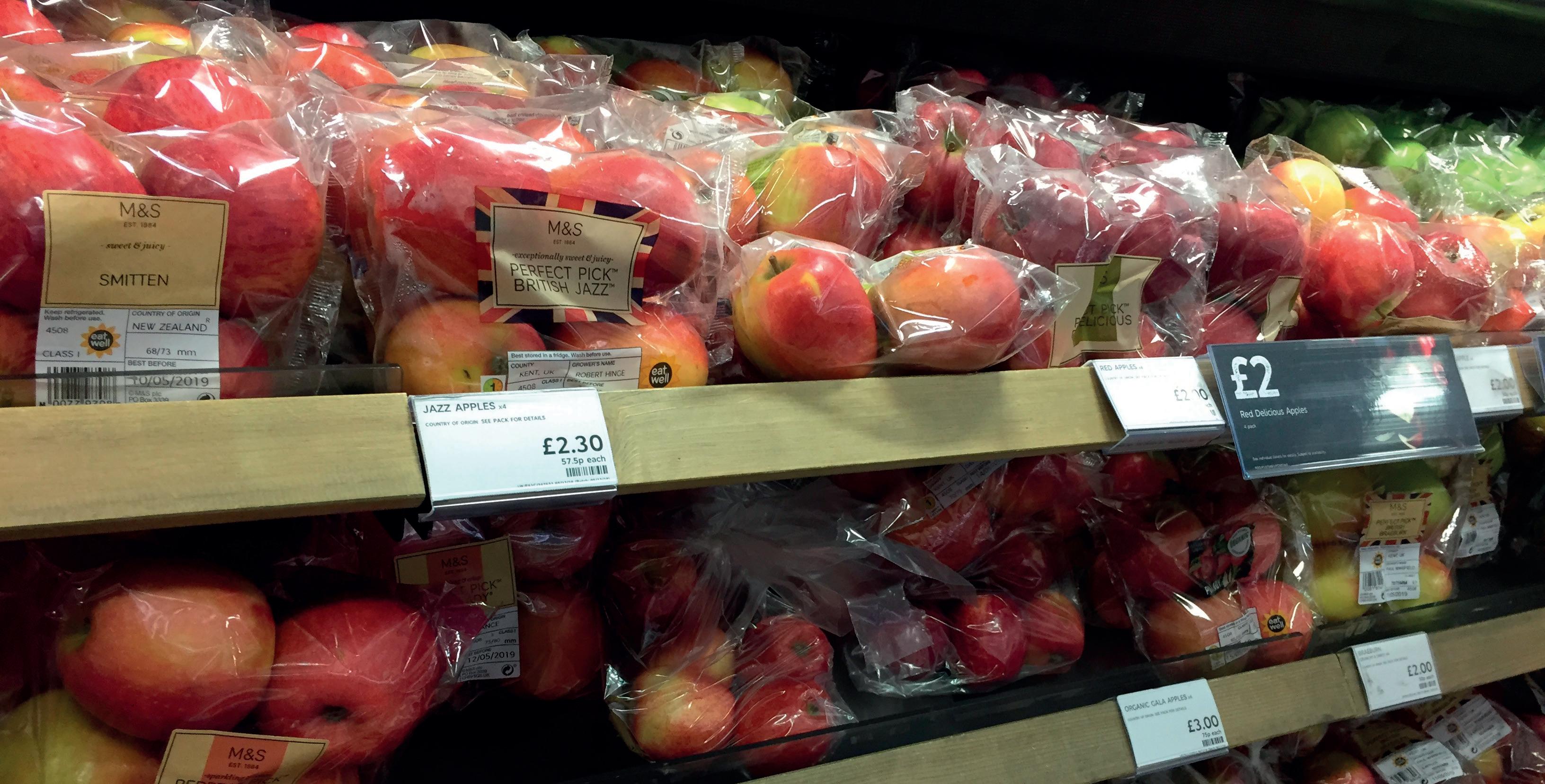
It also wants the limit on the number of seasonal workers allowed into the UK to be removed, for the permit to allow a nine-month stay and for the wage premium linked to the seasonal workers scheme to be removed. Unsurprisingly, BAPL’s message to consumers is for them to buy British apples and pears.
The crisis facing the industry was revealed by a British Grower Association survey of BAPL members conducted in late 2022.
According to the survey of growers, who together represent an estimated 80% of the British top fruit industry, 150,000 new apple and pear trees have been cancelled this season. While the grower intention had been to continue to invest in the long-term future of their orchards by planting 480,000 new trees, one third of those orders have now been cancelled.
“This is the clearest indication yet,” said
BAPL executive chair Ali Capper, “that the future of apple and pear growing in the UK is seriously in doubt. The industry is on a knife edge. Without long-term investment and new tree planting, orchards will quickly go into decline. That’s not something any of us want, least of all the British consumer.
“The key reason for the lack of investment is supermarket returns that are unsustainable,” she explained. “Increased input costs of around 23%, for example for picking, energy, haulage and packaging, are being met with almost static average fruit prices paid by retailers.
“Losing British orchards is not just an issue for our growers and UK food security,” she continued. “We’re going to lose huge biodiversity in our countryside, too. Apple and pear orchards are a sustainability success story; 83% of our growers work with local beekeepers, 62% have wildflower leys on headlands and 89% have grass orchard margins that are not cut or travelled.”
MARCH 2023 | WWW.SOUTHEASTFARMER.NET 4 NEWS
Photo: RichartPhotos / Shutterstock.com
AMBITIOUS PLANS TO DEVELOP MARKET








Ambitious plans to develop a purpose-built, state-of-the-art market on the outskirts of Hailsham in East Sussex have been submitted to Wealden District Council.


South East Marts is keen to move out of its constrained town centre site in Market Square and invest several million pounds in a new facility in a move that would be welcomed by livestock farmers across the region.
“The new out-of-town site on the A22 would give farmers much better access and allow us to build a modern market building and other facilities that are in line with current regulations and will help the business continue to grow,” said South East Marts director Roger Waters.
“The market has been in the centre of the town since 1871 and it’s inevitably becoming difficult to keep the older facilities up to scratch. This would be a positive move for the industry and we hope farmers and others will support the plan.”
The town centre site, which is owned by South East Marts, is expected to be redeveloped with retirement homes if both planning applications are successful.
The market is currently performing well, with close to 60,000 head of sheep and between 5,000 and 6,000 head of cattle sold at the site last year. “We are looking at a considerable investment to help the market continue to move forward, benefitting livestock farmers and the local community,” said Roger.
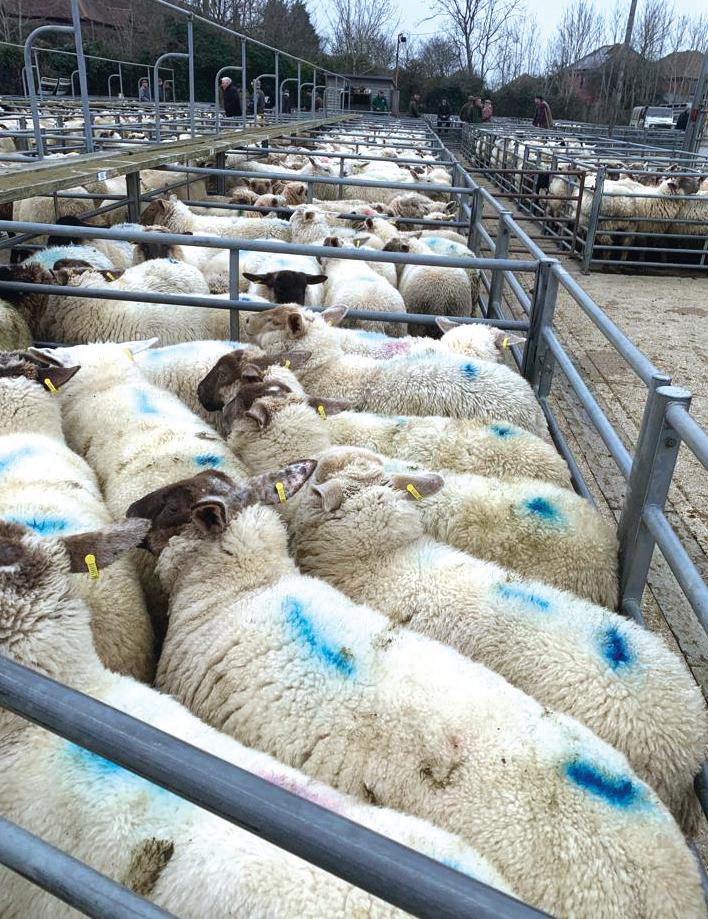
He added that the plans for the new site were available at the current market site, as well as via the district council, if anyone was interested in what was proposed. “These are exciting times, but we need support to make sure our plans come to fruition,” he commented.
The plans have been backed by the NFU, which stressed: “Relocation, with the associated improved facilities, is essential for the long-term viability of the market.”
East Sussex NFU chair Peter Appleton said the historic market was “part of a critical infrastructure that supports rural livelihoods and traditional patterns of land management in East Sussex and the surrounding counties”.
He added: “Huge investment and redevelopment of the market is necessary to comply with new legislation and that cannot be delivered on the current town centre site. Redevelopment will secure Hailsham market’s long-term future, safeguarding jobs and supporting the production of climate-friendly food for local people.”
Are better things on the way?
One solitary crocus popped its yellow head out of our front lawn a few weeks back, joining the early daffodils in hailing the near arrival of spring and warmer days, although a subsequent frost soon had the foolishly brave daffs looking a bit sorry for themselves.
Spring is always seen as a time of rebirth and fresh hope. The new year’s resolutions may have long since been abandoned, but the lambs in the fields, the buds on the trees and the increase in daylight hours give us all a lift and promise better things.
But are those better things on the way? Possibly. The Government’s fleshing out of the Sustainable Farming Initiative and its launch of Countryside Stewardship Plus seems to contain some good news, although it wasn’t universally welcomed.
On balance, though, the unveiling of 30 new ‘actions’ that will attract payments, together with more clarity on the payments themselves, seems to have been well received, with many of the objections coming from special interest groups. It was, for instance, not unexpected that the Organic Farmers & Growers group would call for further encouragement of organic farming and growing.
Countryside Stewardship Plus has picked up the ambitions planned for the Local Nature Recovery strand of the Environmental Land Management scheme (ELMS), presumably on the grounds that farmers and landowners will feel more familiar with the name.
Take up so far seems to have been encouraging, at least according to DEFRA, so perhaps this is the year that ELMS gets into its stride – and let’s face it, it needs to, given the rapidly dwindling subsidies provided by the old Basic Payments Scheme.
With BPS on the way out, ELMS has to work. There is no ‘Plan B’ – but then I’m reminded of a cartoon character in a children’s TV programme who once said: “The problem with Plan B is that if it were any good, it would be Plan A.” Wise words from the driver of The Magic School Bus.

Fingers crossed that there is more springtime good news on the horizon for livestock farmers in the Hailsham area as South East Marts crosses everything and waits for the district council to deliberate on plans to move the market to a greenfield site where it can provide modern facilities.
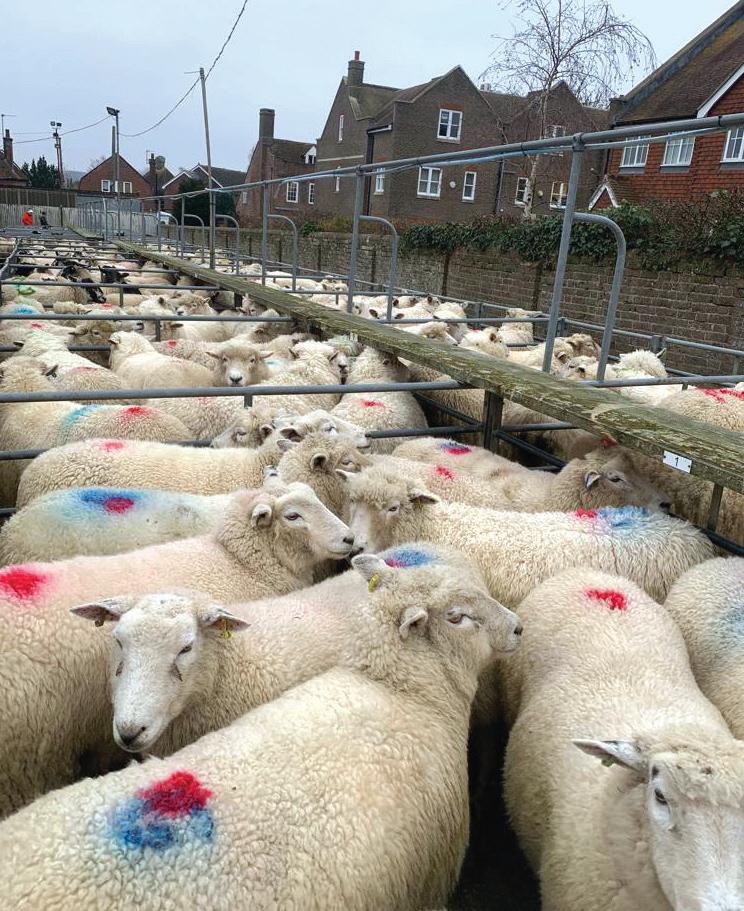
The application makes sense – let’s hope the planners agree. That would perhaps justify the optimism shown by my frost-chilled daffs.
EMAIL YOUR VIEWS, LETTERS OR OPINIONS TO: sef.ed@kelsey.co.uk or write to the address on page 3

5 TO ADVERTISE CALL 01303 233883
OPINION
®
6
THE 63RD ANNUAL DOE SHOW
Thousands of visitors flocked to Essex again in the mists of early February for the UK’s largest agricultural, construction and groundcare dealer show, with this year marking the 125th anniversary of the start of the Doe Group in 1898.
 Richard Shepherd-Barron reports
.
Angus Doe, Doe’s managing director, said: “After having to adapt the show and make provision for the impact of the pandemic, we can now have the biggest and best show ever. This year we’ve returned to the ‘priced to sell’ format with a range of ex-hire and clearance tractors, implements, groundcare and construction plant available to buy at keen prices.”
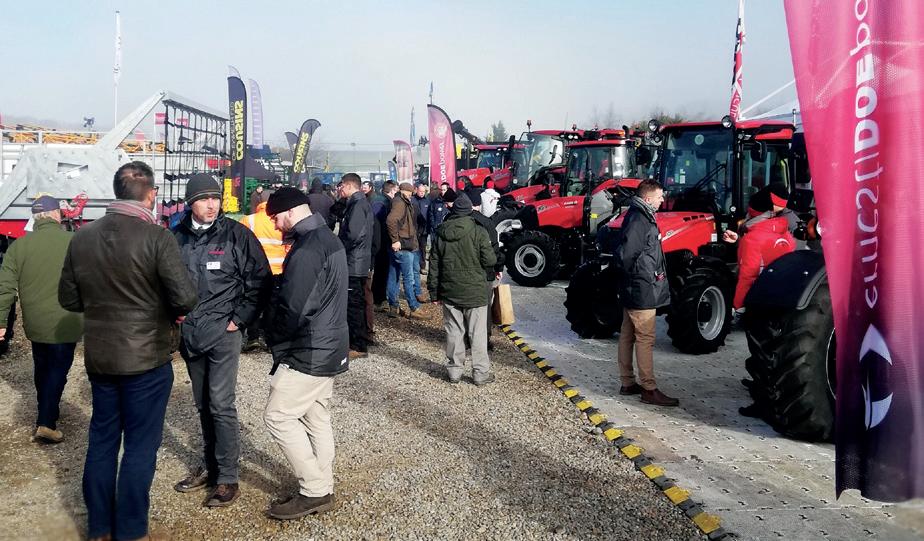
The demonstration area was a huge attraction for the visitors as the latest Case IH and New Holland tractors, with a variety of machinery, were being shown in operation on the farmland immediately adjacent to the show area.

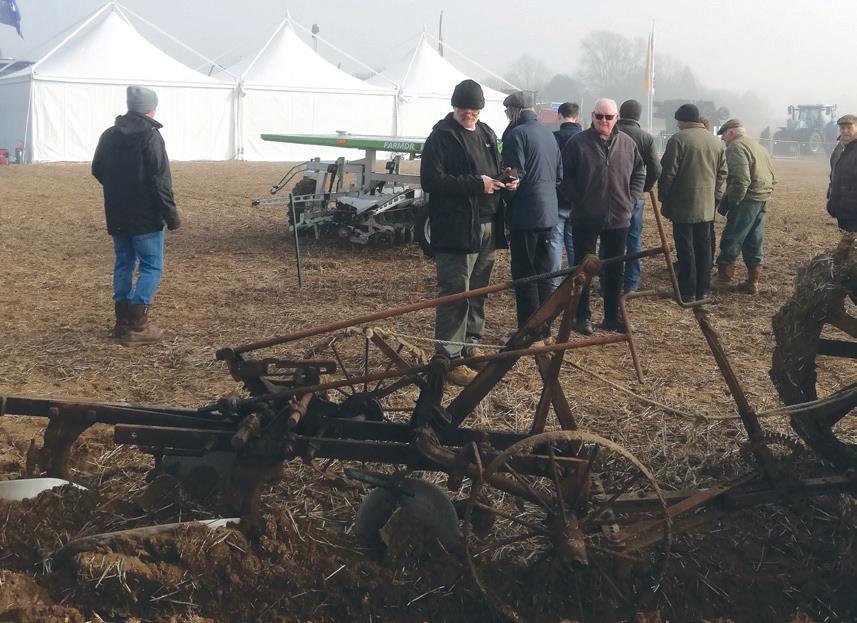
In addition, the usual display of historic tractors, organised by Paul Wylie, was impressing everyone with these beautiful machines and their drivers’ huge skill in ploughing very straight lines. A fascinating contrast was to watch a 1922 Fordson Model F with its two-furrow plough and huge skill
and concentration from its driver working alongside the Farmdroid FD20 robot running up and down demonstrating its drilling ability with no human control; the future for many farming operations?
Sam Tunnidge is Doe’s precision farming product specialist and he said there was an increasing interest from many farmers – especially vegetable growers. The light Farmdroid machine from Denmark is the world’s first sowing and weeding automatic robot; with its solar panels to provide the electric power, it weighs only 900kg so has no problems with soil compaction.
A new feature at this year’s show was the Viticulture Showcase to support this increasing area of farming diversification. Pride of place went to the New Holland Braud grape harvester – sold already to the 120-acre New Hall Wine Estate at Purleigh, near Chelmsford. Brands handled by Doe include Dondi, Ideal and Berthoud; also, naturally, the Case IH Quantum V and F series plus the New Holland T4 F/N/V series of specialised tractors.
New tractors were emphasised with the New Holland T7.300LWB on display in one of the first public showings of this new machine with its new cab and a host of new features. Not to be outshone, the Case IH display included the


new Optum AFS Connect 3-0-0 and the Puma 260CVX.
The impressive working demonstrations of Hyundai, Thwaites and Bomag equipment were featured again, and it was intriguing to learn about the new Hyundai HXA-series mini excavators (on display for the first time in the UK) and also the new, electric, three tonne Thwaites dumper.

All this new equipment, whether for farming or construction, all comes at greatly increased prices (as we are all getting so used to nowadays with virtually everything); thus the stock of lightly used machinery being offered by Ernest Doe had many attractions to those in need of replacements or additions to their operations.
As ever at the Doe Show, there was a vast range of other equipment and services for visitors to examine and buy; combines, balers, cultivating and ploughing equipment, grass cutting machines, trailers of all sizes, spraying and spreading machines, tyres and wheels, lubricants, tools, diagnostic equipment, mowers and garden machinery, along with countryside clothing. Visitors were helped by the easy availability of free hot drinks throughout the three days of chilly but bright weather.
MARCH 2023 | WWW.SOUTHEASTFARMER.NET
NEWS
The annual excavator demo
Contrast: prewar plough and Farmdroid robot
The first New Holland Braud grape harvester in the UK
PLANS FOR RESEARCH SITE
The East Malling Trust (EMT) has explained its plans for the research site after unveiling proposals for thousands of homes on farmland it hopes to sell.

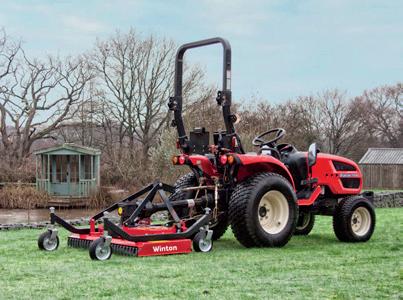

The proposal, likely to be the subject of an outline planning application to Tonbridge and Malling Borough Council this summer, would see 1,600 new homes built at Ditton and known as Bradbourne.
The community would include a new two-form entry primary school, shops and open space and cover approximately 53 hectares. The site lies between Hermitage Lane and Kiln Barn Road and sits partially within three parishes.
The land was identified as "an area of opportunity for residential development" in the last submitted version of the Tonbridge and Malling local plan, although that document was rejected by planning inspectors and has not been adopted.


While the scale of the proposed development has sparked alarm amongst local people, Dr Oliver Doubleday, chairman of the EMT, told South East Farmer that the money raised by the sale would be reinvested in the infrastructure on site as well continuing to directly fund research on the site in conjunction with NIAB and the Biotechnology and Biological Sciences Research Council (BBSRC).
He went on: “This investment is evident from the new facilities on site for which the EMT has provided match-funding in the past two years. The EMT will continue to look for such opportunities in the future. State-of-the-art facilities are needed to attract and retain excellent scientists who know that such facilities are a prerequisite for the cutting-edge research they are striving to perform."
Prof Mario Caccamo, chief executive officer of NIAB, added: “NIAB research programmes in horticulture are delivered at the East Malling site. These activities are focused on the region's advanced horticultural production industries and the enabling technologies that drive innovation and growth in the sector.
“In order to access public and private sector research funding, the site needs to be equipped with the latest plant-growing and lab facilities. The recent investments in new glass houses, for instance, have incentivised new research programmes that will support ‘climate smart’ production of high value crops such as strawberries and raspberries.
“The success of the Growing Kent & Medway project was the result of a partnership between NIAB and the East Malling Trust that has led the way for further investment from UK Research & Innovation through their agencies BBSRC and Innovate UK."


Dr Doubleday added: “At a time of energy and food insecurity the mission of the EMT – to support horticultural research – has never been more important.
“The recent investment in vine research demonstrates the EMT’s enthusiasm for investing in science to underpin the needs of the burgeoning wine sector in the South East.”


WWW.SOUTHEASTFARMER.NET | MARCH 2023 7 TO ADVERTISE CALL 01303 233883
Farm Vets westpoint farm vets Supporting British Livestock Agriculture Since 2000 New client visits are FREE - book yours today! Westpoint Farm Vets Dawes Farm, Bognor Road, Warnham, West Sussex, RH12 3SH info@westpointfarmvets co.uk | westpointfarmvets co.uk Our teams of experienced, highly-qualified vets are focused on driving farm efficiency and animal health across the South East Westpoint Ashford covering Kent & East Sussex 01306 628208 Westpoint Winchester covering Hampshire 01962 779593 Westpoint Chelmsford covering Essex 01306 628489 Westpoint Horsham covering Surrey, Sussex and Kent 01306 628086 SALES AND SERVICE M A BROWN & SONS LTD & M&A Brown & Sons Ltd, Iden Green Farm, Cranbrook Road, Goudhurst, Kent TN17 2PA info@mabg.co.uk 01580 211599 www.mabg.co.uk Comprehensive range of professional tractors from 19hp to 75hp WORLD CLASS POWER TOOLS
100%
A SERIES OF BREAKFAST MEETINGS
A series of breakfast meetings, including one in Surrey, will be hosted across Britain over the next few weeks by the organisers of the flagship on-farm event, LEAF Open Farm Sunday.
Ten regional LEAF Open Farm Sunday ambassadors are holding informal meet ups over breakfast to support, inspire and help farmers thinking about taking part in the event on 11 June.
The Surrey event is being held at Hampton Estate Farms, Seale, Farnham, from 9am to 11am on Wednesday 1 March.


The breakfast meetings are designed to give farmers, both those who have hosted events before and those thinking about getting involved for the first time, an insight into what holding an event involves, how to go about it and the resources and support available. Topics include managing visitor numbers, creative activity ideas and how to ensure visitors are safe on farm.
LEAF Open Farm Sunday manager Annabel Shackleton said: “Whether you are curious about what LOFS involves or have hosted before and want to be inspired by new ideas and approaches, these breakfast meetings are a great way to take the first step to planning your event this year.

For more information and to book: www.farmsunday.org/open-my-farm/top-tips-and-training
COVER CROPS IMPROVE NITROGEN EFFICIENCY
South East Water is helping land managers improve nitrogen use efficiency through a number of funded initiatives, including cover cropping.
The water company is sharing the advice and funding on offer to farmers in priority catchments at a series of farmer meetings.
The most recent event, held at Folly Farm, Hampshire, featured arable soil farmer of the year 2022 David Miller. He showcased how cover crops
can help reduce nitrate leaching and highlighted the results of water company-funded trials in partnership with Farming & Wildlife Advisory Group South East and NIAB.
“On the back of the trial findings, we’ve been funding cover crops since 2018 through our capital grants scheme, to try to prevent nitrate reaching the chalk aquifer,” said Mark Slater, catchment advisor, South East Water.
“In the Woodgarston catchment to the west of Basingstoke in Hampshire, more than 1,000 hectares of land has been protected by cover crops over the past three winters, with an estimated saving of 48.8 tonnes of nitrate.”
Mark added that cover cropping offered many benefits for farmers and water companies. “Farmers have a host of benefits, including increased soil health and nitrate retention, while as a water company we benefit from reduced nitrate leaching, supporting raw water quality improvements,” he said
“Other benefits include an increase in natural predators, fungi and earthworms, which in turn equates to better nutrient cycling, pest and disease resilience and water infiltration.”
The next event on 3 March will demonstrate rainwater harvesting. Visit www.southeastwater.co.uk/farmevents for information or to book.

MARCH 2023 | WWW.SOUTHEASTFARMER.NET 8 NEWS
Farm Waste Recycling Experts Providing waste solutions to Agriculture, Horticulture & Equestrian Collection & Recycling of... All types of Farm Plastics Workshop Wastes Veterinary Waste Waste Oil Waste Tyres Redundant Agri chemicals WasteTyresCardboard Tel 01264 736733 ian.kitson@kitsonrecycling.co.uk www.kitsonrecycling.co.uk No Membership fees
Annabel Shackleton
Hedging and Woodland Plants
Plant health and quality assured


English Woodlands Tree Nursery are leading suppliers of healthy, high quality plants to landowners and farmers across the South.
• Fast quotations
• Expert advice
• Excellent service and delivery
• Full range of accessories
T. 01435 862992
sales@englishwoodlands.com
www.englishwoodlands.com
Plant Healthy certification is awarded to organisations that can demonstrate that their plant health management systems and practices comply with the Plant Healthy Standard. The scheme makes it easy for customers to identify organisations that handle plant material in a manner that promotes plant health and biosecurity. English Woodlands is among the first organisations to receive this certification, following an independent audit in 2020



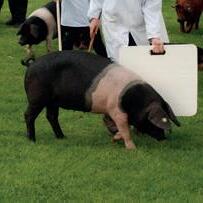
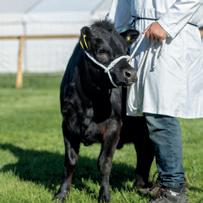
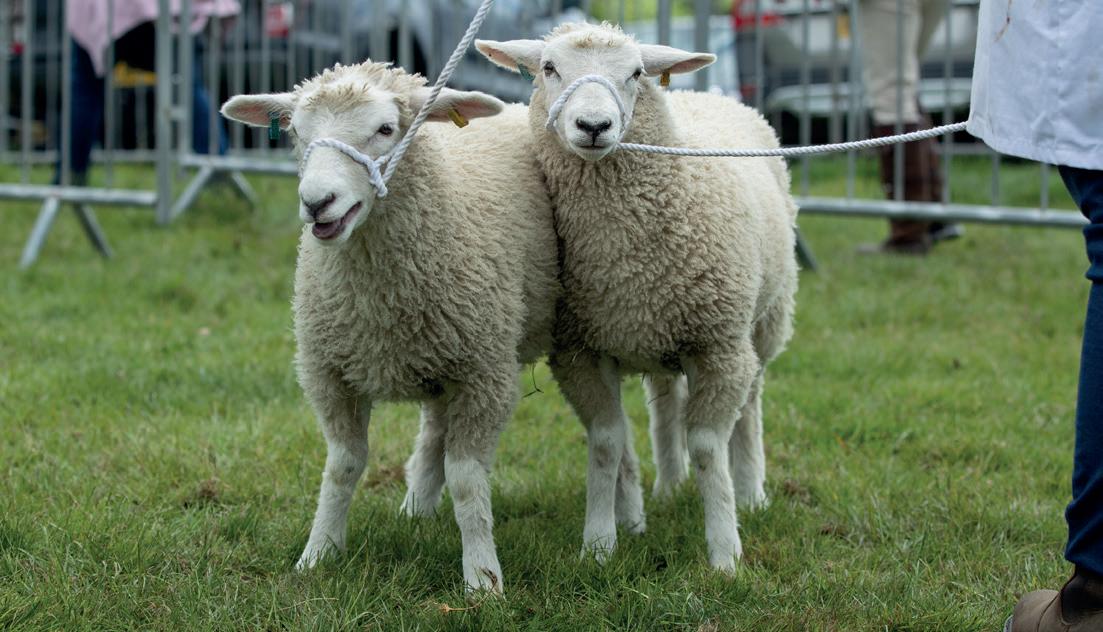
Livestock entries closing date: 11th April



Horse entries closing date: 3rd May (online entries)

8.30am – 5.15pm Little Tottingworth Farm, Broad Oak, Heathfield, East Sussex

secretary@heathfieldshow.org
20 APRIL 2023 • 3-7PM
DRIVING PRODUCTIVITY AND PROFITABILITY IN A SUSTAINABLE WAY Keynote speakers and workshops with practical based solutions for farmers & landowners.
To book a free ticket visit: www.tinyurl.com/5evvrcvh
WWW.SOUTHEASTFARMER.NET | MARCH 2023 9 TO ADVERTISE CALL 01303 233883
ENTRY
OPEN: www.heathfi
ONLINE
NOW
eldshow.org Heathfield Agricultural Show
ONE DAY AGRICULTURAL
THE SOUTH EAST’S PREMIER
SHOW
SATURDAY 27TH MAY 2023
Nicola Magill, Show Organiser:
FLOOD DEFENCE IN ESSEX

The serene and open beauty of the low-lying lands along the Essex coastal estuaries and creeks are beloved by many, but of course the farmers who make their living from this area are always worried about flooding, writes Richard Shepherd-Barron.
Many of the older farmers from earlier generations will have vivid memories of the disastrous storm surge of 1953 and the havoc, damage and deaths that ensued.

A huge amount of work has been put into improving coastal defences over subsequent years, but these sea walls require constant maintenance, particularly as a result of the Harwich Haven shipping channel maintenance dredging which has removed somewhere in the region of one million tonnes of suspended sediment transport flow, leading to saltmarsh loss.
In addition, the England Coastal Path along the clay flood banks that rely on grass cover for their surface stability will be at risk from the projected steady rise of sea levels of a metre over the next 80 years.

These issues underscore the need for cooperation between local farmers and landowners and the Environment Agency (EA) to ensure the correct usage of the £1 million General Drainage Charge that is taken from Essex farmers annually.
Andrew St Joseph, chairman and general co-ordinator of the Essex Coastal Organisation (ECO), explained recently that the organisation was established originally as a farmers’ group to look at and challenge the withdrawal of sea wall maintenance policies by the Environment Agency. Nowadays it is a much larger and more influential organisation, funded by
subscriptions and representing the majority of farmers and landowners in the Essex coastal areas.
ECO has become an important voice in promoting a close working relationship between the EA and landowners, as well as providing data on saltmarsh erosion, thus enabling the agency to use more accurate information. In addition, ECO has tested more cost-effective and efficient maintenance materials and methodology to reduce the costs of the sea defences.
One aspect of the material usage issue is the large amounts of clay (ideal for sea wall maintenance and construction) that becomes available from various building projects in Essex and that gives the contractors disposal problems. Andrew St Joseph commented: “Under perverse modern regulations, this material becomes classified as waste once dug up out of the footings on the building sites, although it can be used after a lot of arguments. There are also issues with regulators; while using waste clay to reinforce and raise existing sea defences would seem to be an obvious way forward, there are some influential parties who would wish for the existing defences to be removed and for the sea to reclaim the land.”
It is important to remember that it is the farmers’ land that is protected and ultimately they own the sea defences and are responsible for them. The EA is there to help, but the agency has many calls on its budget and is not obliged by law to carry out this work.

The economics of flood risk management along the whole of the east coast are becoming more challenging year by year. Most farmers in these regions are fully aware that they need
to be involved in maximising the defence of their low-lying land. As the impact of global warming increases year on year, it is important to remember that warm water has more volume than cold water; combine this with the fact that the east of England is sinking slowly and preparation for significant flood events needs to be in people’s minds.
MARCH 2023 | WWW.SOUTHEASTFARMER.NET 10 SPECIAL REPORT
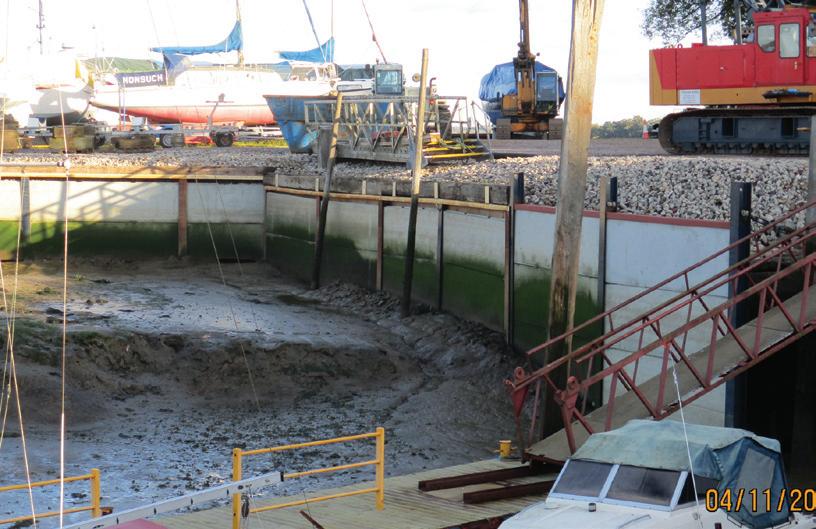
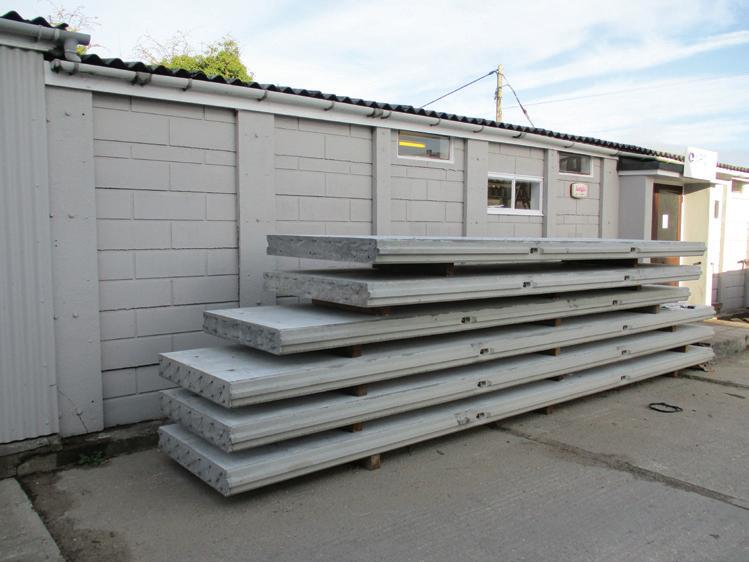
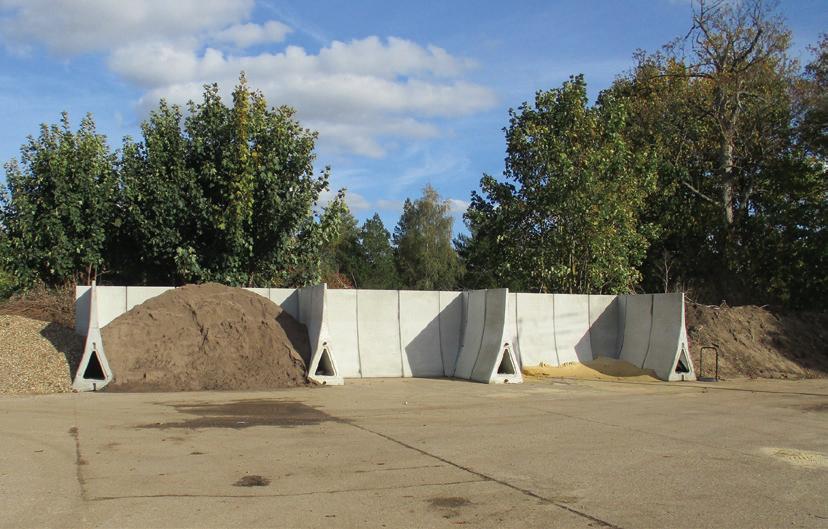
1.2 metre storm surge weakens clay seawall
Foulness Flood 1953
Two year decline at Paglesham






























































































WWW.SOUTHEASTFARMER.NET | MARCH 2023 11 TO ADVERTISE CALL 01303 233883 Unit 6, Martells Quarry, Slough Lane, Ardleigh, Colchester, Essex CO7 7RU 01206 982260 www.npclimited.co.uk Retaining Walls
UNACCEPTABLE EA BEHAVIOUR
Dear Sir,
I completely agree with both Mike Kettlewell and Nick Adames that it is unacceptable that any sewage is dumped in our rivers.
The problem lies unquestionably with the Environment Agency (EA) as it has the power firstly to compel water companies to treat any discharges with ultra violet light and secondly to charge, punitively if necessary, the water companies for any untreated discharges.
Currently the relationship between the EA and the water companies is far too cosy and neither is working in the best interest of the public.
Keith Langmead, Poling, West Sussex
NOT WITH OUR MONEY
Dear Sir,
The Agriculture and Horticulture Development Board recently announced that it intended to give around £1 million surplus resulting from the wind up of the AHDB’s horticultural sector to a newly formed start-up company, Horticultural Crops Ltd, without consulting levy payers.
We believe that this generous subsidy to Horticultural Crops Ltd will disadvantage those in the industry who have been quietly and independently getting on with the work on EAMUs (extensions of authorisations for minor use). Also, unlike existing companies doing EAMU work, this new company has no track record of either efficiency or results.
While growers are free to support such a new company if they wish, it should not be on the back of surplus levies from growers who struggled to pay under legal threat. The majority expect their monies to be paid back, which in any democratic organisation would happen. Why not with AHDB?
It is evident from AHDB’s action via its main board that they still do not accept the result of the ballot, which resulted in more than 60% of levy payers voting no to any more research or EAMUs, having lost faith in AHDB’s effect on the industry.
It is apparent that AHDB does not, and perhaps never has, understood the financial pressures horticulture has laboured under in comparison to the subsidised agriculture growers are surrounded by. We have no opposition to the voluntary action by crop associations to carry on with EAMUs – but not with our money.
Simon Redden, John Bratley and Peter Thorold
(The AHDB Petitioners)

GOVERNMENT MUST FIND ALTERNATIVES
Dear sir
The government must invest in farmers to end harmful pesticide use. Ignoring scientific evidence and allowing neonicotinoids to be used on sugar beet for the third year running, despite an existing ban, is shortsighted and wrong and shows a total lack of commitment to finding alternatives.
It is not credible to claim an exemption is temporary or an emergency measure when it is used year after year. For how many years will bans of these harmful chemicals be overridden?
This course of action is a direct threat to our endangered bee populations and other wildlife. No-one wants to see vital pollinators in danger – least of all farmers who rely on them for harvests.
These insecticides can be taken up by wild plants nearby. They directly affect bees and other pollinators and can threaten their survival. There is evidence that many bird populations may be crashing as a result of lack of food caused by the loss of insects harmed by neonicotinoid contamination in water courses. If the ban is lifted year after year, this will continue to happen on thousands of hectares of our countryside.
Farmers need better support to find solutions that work with nature. The new Environmental Land Management scheme should be used to incentivise a ‘whole-farm’ approach to protecting the environment, instead of focusing on tweaks to certain areas or practices.
Investment in farmer-led research, practical advice and peer-to-peer learning can also lead to results that are healthier for wildlife and more resilient and profitable for farmers.
Potential solutions for pest control can be explored with bodies like the Innovative Farmers network. There is, for example, a field lab running where arable farmers are using flowers to attract predatory insects as pest control.
Work to find long term solutions will be put off, though, if the Government just implements the same sticking plaster every year.
Gareth Morgan, Head of Farming Policy, Soil Association
MARCH 2023 | WWW.SOUTHEASTFARMER.NET 12 LETTERS SEND YOUR VIEWS OR COMMENTS: SEF.ED@KELSEY.CO.UK twitter @SOUTHEASTFARMER facebook-square SOUTH EAST FARMER
© Telegraph Media Group Limited 2022
INSUFFICIENT
Dear Sir,
The payments for the new agriculture schemes would soon be insufficient. The payment for the cost of scheme maintenance has to be indexed to plus inflation and cost of living
C J Paauw, farmer (by email)
FARM MACHINERY NOISE LINK TO TINNITUS


Dear Sir
Latest research suggests that one in seven adults has tinnitus, and with exposure to loud noise such as that produced by farm machinery one possible link to the condition, I am writing to offer your readers some support.
Everyone’s tinnitus is different, but it’s usually described as a ringing, hissing, buzzing, roaring or humming sound. There may be one or more sounds and the noise may be there all the time or come and go.
Tinnitus can be linked to different things, including hearing loss, exposure to loud noise such as from farm machinery, certain medications, ear or head injuries, some ear conditions and emotional stress. Sometimes, there’s no recognisable link at all.
Many people get tinnitus for a short time – for example, after being exposed to loud music, or when they have congestion because of a cold. But for some people, it doesn’t go away, and it can have a significant impact on their daily life.
Your hearing is at risk when exposed to noises measured at 85 decibels and above for extended periods of time. RNID recommend hearing protection for any activity that may exceed this, such as driving a tractor or using an electric drill or a chainsaw.

The good news is that the Royal National Institute for Deaf People (RNID) is here to help. Our free Tinnitus Guide contains information on ways to manage tinnitus, from professional support to self-help options. It also includes information on useful apps and technology, how to support a loved one with tinnitus and what to do if tinnitus is affecting your sleep.
RNID is committed to funding research to silence tinnitus, and our guide contains the latest information on our work to identify the causes of tinnitus and develop strategies to treat it. You can find all this and more by downloading our free guide at rnid.org.uk/tinnitus
Crystal Rolfe, Director of Health, RNID
NO LONGER THE FARMER’S FIRST FRIEND
Dear Sir,
As usual I head for the letter page first and look for a real farmer’s letter rather than those from organisations funded by farmers.
February has one from the CLA saying we need them, one from the CEO of Organic Farmers & Growers saying we should need them, one nice thank you from RABI and the last one from the NFU telling us how hard they work for us, but no farmer comments.
The NFU Mutual was created by farmers, and now out of our control it
boasts to the general public (as opposed to its farming founders) on TV and Radio (Classic FM) that nine out of 10 customers renew each year.
What that means is a 10% loss of customers each year to the new agricultural insurance companies that have seen how the "Mutual" is no longer the farmer’s first friend and can no longer presume on our loyalty over competitive and more comprehensive specialist agricultural insurance companies.
I would expect the NFU to appear in next month’s issue, but perhaps other farmers might give their views. I have a tough skin and was let down by my NFU insurance agent who advertises they pay 99% of all claims.
Like many other farmers in Kent my agricultural training was at Kent Farm Institute, which became Hadlow College. The past management team branched out into a multi-faceted ‘business’, buying up, among other assets, Betteshanger Park and Mining Museum.
As we know, Hadlow all but collapsed, a great loss to Kent farming, and we saw the near end of the mining museum. I was involved in the fund raising for the Betteshanger Museum and most of the money disappeared. A contributor in your magazine knows more than I about the real story and I would love for him to comment as we farmers who owe so much to the old Hadlow are owed an explanation.
I said I had a tough skin, so if I have read it wrongly, please put me and others who share my opinion right.
David Steed, Manston, Kent
The editor replies: The ‘contributor’ to whom you refer was keen to set the record straight and has responded:
The same Hadlow management rescued the college, subsequently The Hadlow Group, in 2003 from closure and bankruptcy. Tens of thousands of students received qualifications and a positive start in life due to the actions of those staff members, while the business contributed hundreds of millions of pounds annually to the Kent economy for over 15 years.
Any decisions taken by the new management after 2018 (including its insolvency) were not those of the previous leadership.
The Betteshanger site was an abandoned project until a new vision was created in 2012 by Hadlow and Dover District Council, supported by the Homes and Communities Agency, Kent County Council and the Heritage Lottery Fund and due for completion in 2019. At no time has there been any proven impropriety in any regard in relation to any of the officers of the group.
WWW.SOUTHEASTFARMER.NET | MARCH 2023 13 TO ADVERTISE CALL 01303 233883 LETTERS
Specialists in agricultural, deer and equestrian fencing and gates Top quality materials. Top quality service. T: 01622 831 781 | M: 07710 179 600 enquiries@woodchurchfencing.co.uk www.woodchurchfencing.co.uk SUPPLY & INSTALL
SARAH CALCUTT Chair, National Fruit Show

BRILLIANT ON MANY LEVELS
Farming Today… right to roam and genomes; I really hope you listen as regularly as I do. The programme is now an established part of my commute, keeping me firmly rooted in the needs of primary production as I go forth to find purpose for the food and farming industry’s millions of tonnes of waste food.
While I may watch Countryfile less than I used to, Farming Today covers more in its 15 minutes than any other current affairs programme, in my opinion. Delivered by a charming, expert and dedicated team, its first broadcast was on 20 September 1960. I can’t remember a time when I didn’t have a 5.45am wake-up call, my rather deaf father’s clock radio waking the household throughout my childhood through to the present day, when I sit on the 5.20am to London out of Marden.
Thursday’s programme was the best of the week, in my opinion. Professor Lynne Field from Rothamstead was being interviewed by Charlotte Smith about her research programme into the genome sequencing of 19 pests in partnership with Bayer and Syngenta.



The story was brilliant on many levels; firstly it was an outstanding public/private partnership with its results in the public domain, benefitting food production globally. Secondly, the 19 pests were agreed by all three partners as having global significance to food production. Thirdly, the whole research programme had dual benefits, for entomologists and for those developing specific, targeted pest control products.
The continued move away from broad spectrum controls is correct and












the development of selective compounds with zero effect on any species other than their intended target is to be applauded. The fact that this knowledge is preparing farming sciences for the advent of gene editing, looking forward to disruption systems now we know how a crop is identified and targeted by a pest species, is exciting and beneficial from an economic and environmental perspective.
The right of the general public to roam across farmland was also a hot topic this week. The debate about where people can and can’t go is back on after being raised by the Labour Party, which has stated that it will introduce a right to roam as well as wild camping throughout the Dartmoor national park.
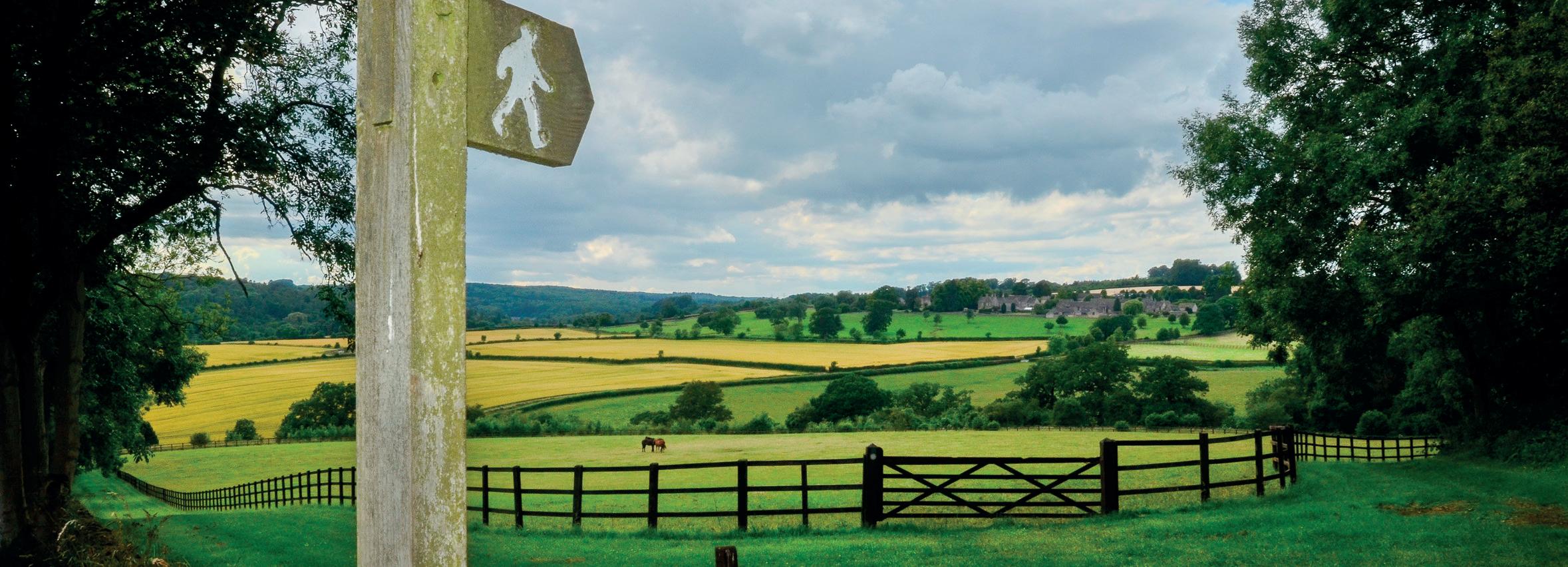
What will this mean? The practicalities are damaging. Walkers are welcome on footpaths, of course, but paths that cross crops grow ever wider in wet weather. There are serious concerns that the right to roam across all farmed land creates enormous safety challenges for both the walkers and stock kept on the land.
Responsible and careful access following the Countryside Code is being advocated by the Ramblers, but we all know that there are many who will not observe any guidance (who among us has not had challenges with dog poo in little bags hung in trees, sheep being let out or people trying to take a dog through an orchard at harvest time?). There is going to be a lot about this heading into the general election. With farming policy in disarray, this is another area that we need to keep an eye on.
And the job at the end of the commute? Well, we are now up to an average of 256,000 meals worth of food shared each week, 47% of which is produce and all of which was waste, surplus or a retailer reject. Thank you to everyone who supports our work; you make a difference every day.
MARCH 2023 | WWW.SOUTHEASTFARMER.NET 14 SARAH CALCUTT FOCUS ON FRUIT
• Toilets & Showers for hire • Large range of Temporary canteens, stores & welfare units • E uent Tank Emptying • Events also catered for with chillers & toilets FOUR JAYS GROUP Tel: 01622 843135 Fax: 01622 844410 enquiries@fourjays.co.uk www.fourjays.co.uk HIRE SPECIALISTS ACROSS THE SOUTH EAST units W.H.Skinner & Sons Grubbing, timber & groundwork services • orchard grubbing • windbreak removal • timber extraction • fallen tree removal • ground contouring • land clearance • excavations • cultivations • pond dredging • reservoir construction 01622 744640 - 07711 264775 www.whskinnerandsons.co.uk
EMPLOYERS ARE KEY TO STUDENTS' SUCCESS
The staff at Plumpton College are always working hard to improve our students' experience and welcome feedback from them and employers as part of the process. Employers have given their time and welcomed our students onto their farms to explain their systems and brought the theory into practice. We have also had employers come in to take part in class activities such as mock interviews as part of preparations for their middle year work placement. In addition, we are currently putting together the plan for additional qualifications. This is again at the request of employers and students to make them able to hit the ground running as they progress onto working in the industry for a year before they return to college for their final year.
It was National Apprenticeship Week recently, so I thought I would explain about another very employer-led opportunity for people wishing to study agriculture. Apprenticeships date back many years and allow new entrants into the industry or existing staff to access training and development while working. Employers who take on apprentices to ‘pass on’ their skills and experience are in effect growing their own staff to be very experienced in their business. It is also possible for employers to recruit a family member as an apprentice, too.
Apprenticeships provide an alternative path to learning while ensuring that professions and industries have the skilled workers they need. They have been embraced as a viable alternative to more college-based courses,
and an apprenticeship is accessible, flexible and a great alternative for both young people and employers.
An apprenticeship will last for a minimum of 12 months and combines hands-on work with the opportunity to train and obtain qualifications. It is also a paid position, so you earn while you learn with at least 20% of your time set aside for learning.
UPDATE FROM PLUMPTON COLLEGE STUDENT, ISAAC ADAMS
“This week my classmates and I were lucky enough to attend the 63rd annual Doe Show. As I’ve chosen the arable pathway as the focus for my third year, I was looking forward to seeing the wide range of both new and used machines.
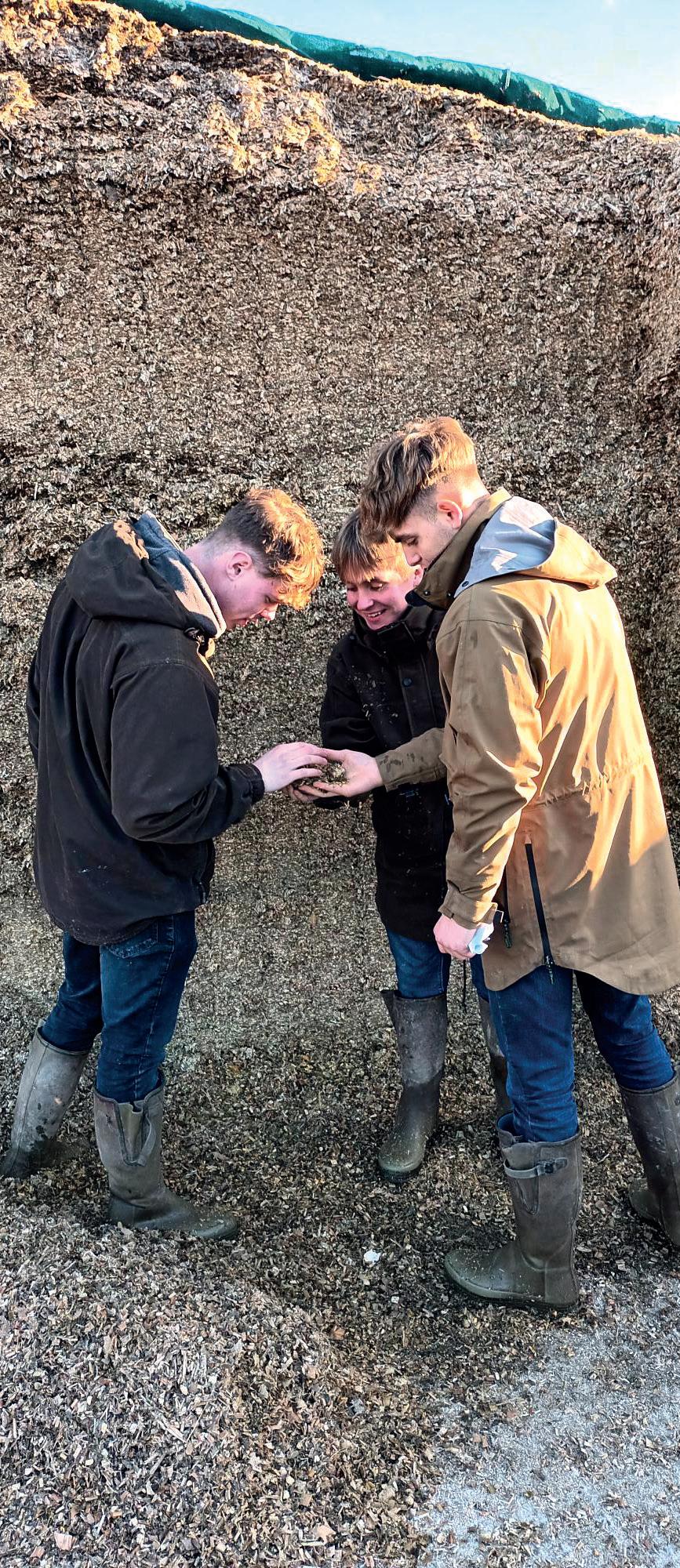
It was a real eye-opener to visit the stands and see all the kit on display. It’s amazing to see how technology continues to grow and develop with a real emphasis on sustainability. Not only were there parked machines on display, there were also live demonstrations that included loading and unloading bales off a trailer with a telehandler, loading woodchip into a trailer with a telehandler and tractors tipping woodchip. This gave a real feel of their capacity and efficiency.
It was helpful to see some of the kit that was on sale in work and not sat in the show area. I really enjoyed the day and took away a lot of information and I'm looking forward to some more educational trips coming up with Plumpton College. Our next planned trip is a visit to Worthy Farm near Glastonbury and Kingshay Farming.”
Alan Johnson, Curriculum Manager reports.
FIND OUT MORE
At Plumpton College we have apprenticeships available at level 2 and level 3, with a potential start at any time of the year, and we are currently recruiting for both levels. Talk to our team to find out more by phone or email: Business@plumpton.ac.uk
WWW.SOUTHEASTFARMER.NET | MARCH 2023 15 TO ADVERTISE CALL 01303 233883 EDUCATION Further information can be found on our website: www.plumpton.ac.uk/business-services/apprenticeships-for-employers
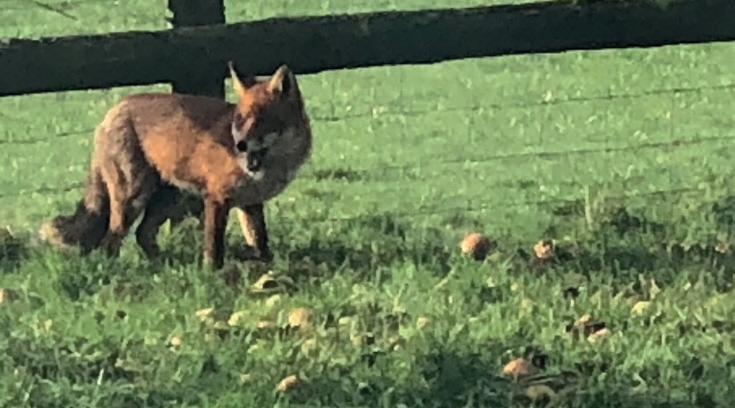
On a bright and frosty morning we were astounded to see a fine looking fox stroll into our garden and calmly begin munching on windfall apples. Our dogs would have gone ballistic had they seen him; my husband threw down his coffee and rushed off to get his gun. Luckily for the fox, it’s such a rigmarole getting keys, tackling double locks, selecting cartridges etc., that by the time other half was organised the fox had ambled off. He didn’t act like a country fox.
I think it’s cruel that wildlife rescue centres nurture ailing urban foxes back to health then release them into the countryside. A small part of me felt sorry for the fox, but when I think of the toll they’ve taken in chickens and lambs over the years this quickly evaporated. These urban foxes have no fear of humans and probably wonder where all the dustbins have gone. Several neighbouring properties were also visited by this unwelcome guest. I haven’t seen him lately, so I’m guessing someone was quicker off the mark than us. Freebie foxes are not welcomed by shepherds, especially around lambing time.
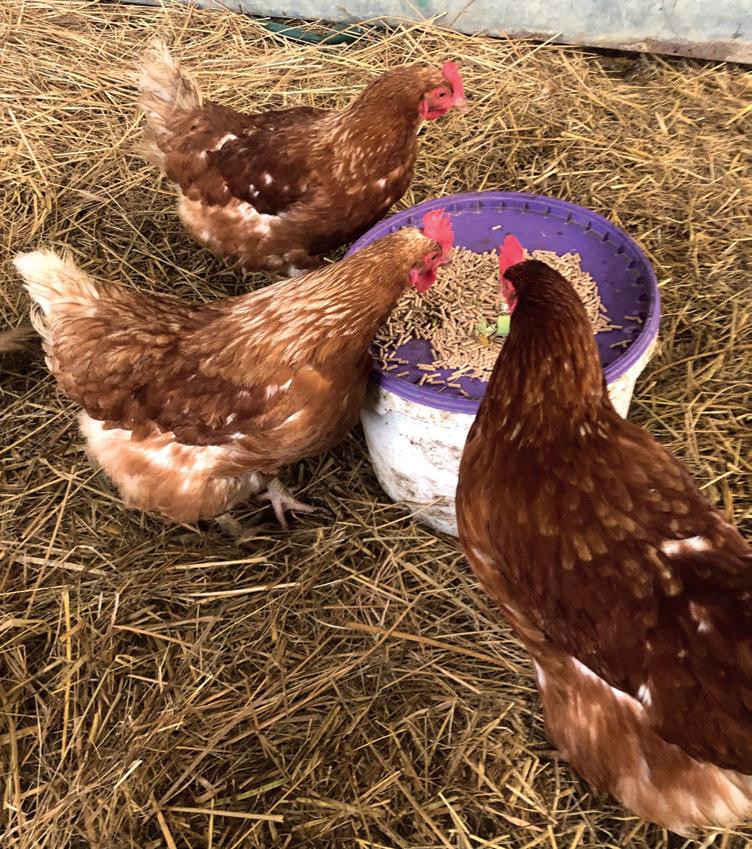
Our chickens remain confined to the shed and I have to say our eggs yolks look horribly pale. They scratch about in the straw and I occasionally throw them some greenery but it’s just not the same as hens roaming around in the paddock. Last year I didn’t harvest as many apples as usual and felt guilty about the number of windfalls, but over the winter we’ve enjoyed witnessing a wide variety of
DISAPPOINTED BY THIS GOVERNMENT’S ATTITUDE TO FOOD PRODUCTION

birds feasting on them. It’s quite entertaining, and a bird identification book now resides on our kitchen table.
We had someone from the Sussex Barn Owl Study Group look around our farmland and advise us on suitable locations for placing barn owl boxes. We purchased three and I have to admit that these have been stored during the wet weather, but with it coming drier we plan to get them up shortly. Barn owls are awesome so I would be delighted if our land could provide a home for them. I’ll keep you updated.
I expect that, like us, you’ve recently received a letter and email regarding “Environmental land management funding update”. I’ve yet to study it in detail. I’ll be reading the small print and I’m not rushing to sign up to anything. I feel disappointed by this government’s attitude to food production and horrified that they appear to be embracing cheap imports, which are neither good for the environment nor people’s health. The overload of bureaucracy further complicates an already difficult situation.




Agricultural infrastructure needs preserving. Livestock markets play a critical part in the food chain. In our area there is a lot of land which is most suited for growing grass. Stock farmers need a vibrant market within easy distance, not only for trading but also for its social role within the rural community. Hailsham Market is hoping to move to a new location just out of town. This would improve access for large vehicles and provide better parking and more up-to-date facilities for the animals. Please support this application.
My sheepdog training ground to a halt this winter; I thought the sheep looked miserable enough in muddy conditions without me letting young dogs loose on them. Now it’s drier I’ve picked out a handful of hoggets and put them in the paddock for training purposes. I was happy to discover that the youngsters had retained their skills, although a little brushing up on directions for left and right is needed both for trainer and dogs.
This week I’ve been on an egg hunt. Not the Easter variety but sheep faecal worm
MARCH 2023 | WWW.SOUTHEASTFARMER.NET 16
Nearly there, scanning in progress
MONICA AKEHURST AT THE KITCHEN TABLE
eggs. The course was run by Cliffe Vets and covered both the theory about worm control and the practical elements of the identification skills required when using a microscope. I’ve long held the ambition to be able to identify the worm burden within my flock. It’s maybe not every woman’s dream, but I’m genuinely excited about the prospect of better monitoring. It should help with early detection and I will also be able to check for wormer resistance and do some parasite mapping of our pastures. If I get it right, the end result will be better health status for our flock.
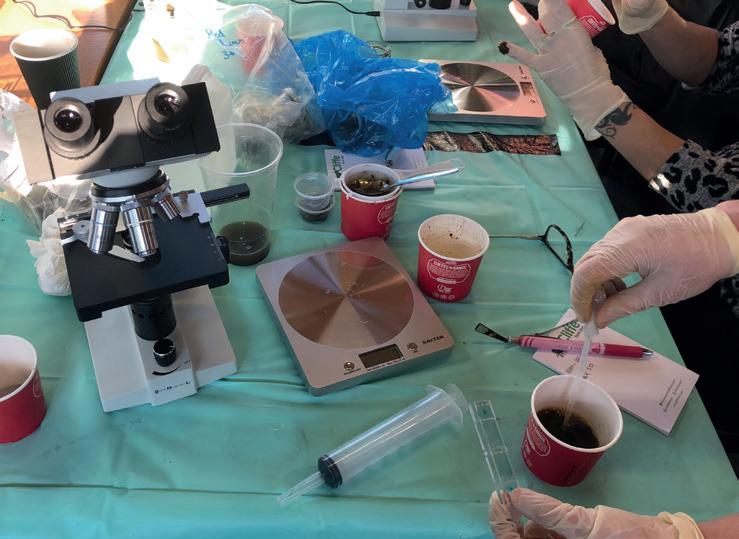
The study day meant an early start for me so that I could fulfil my farming duties, dog exercising etc. Plus we’d been requested to arrive with 10 individual faecal samples each from two separate management groups of sheep. One flock was very obliging, but the second group was unusually reluctant about supplying the course requirement. I rushed home for breakfast and unthinkingly left the young sheepdogs in the boot room along with the samples, I should have known better, although I was able to salvage some; it was a case of: “The dog ate my homework.”
The rest of the day was most informative, and I’m always happy to talk sheep. I was also able to collect my supply of Heptavac P immunisation for my ewes; I’d heard there were supply issues so I was relieved to get my requirements in hand.
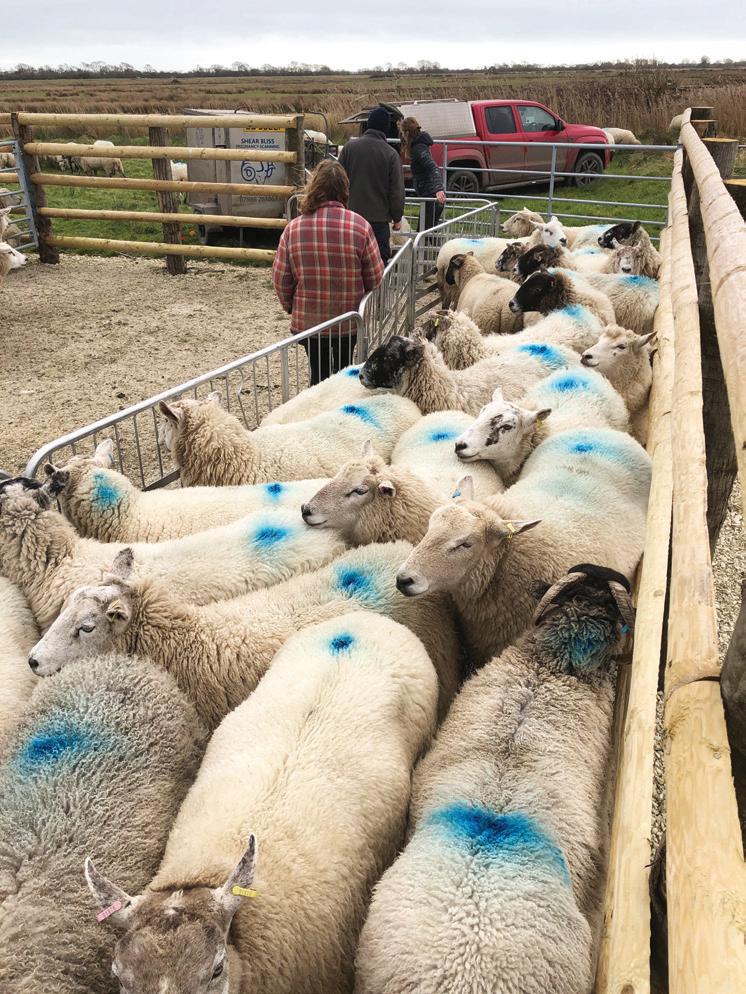
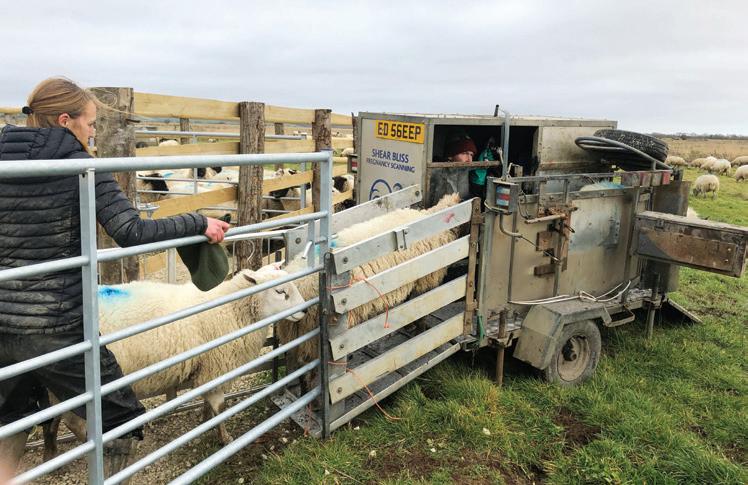
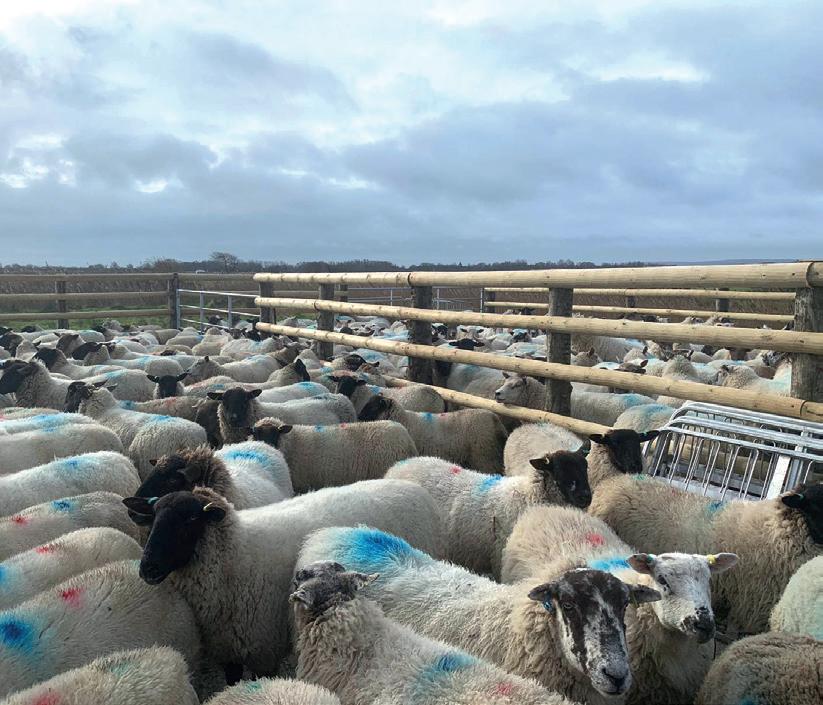
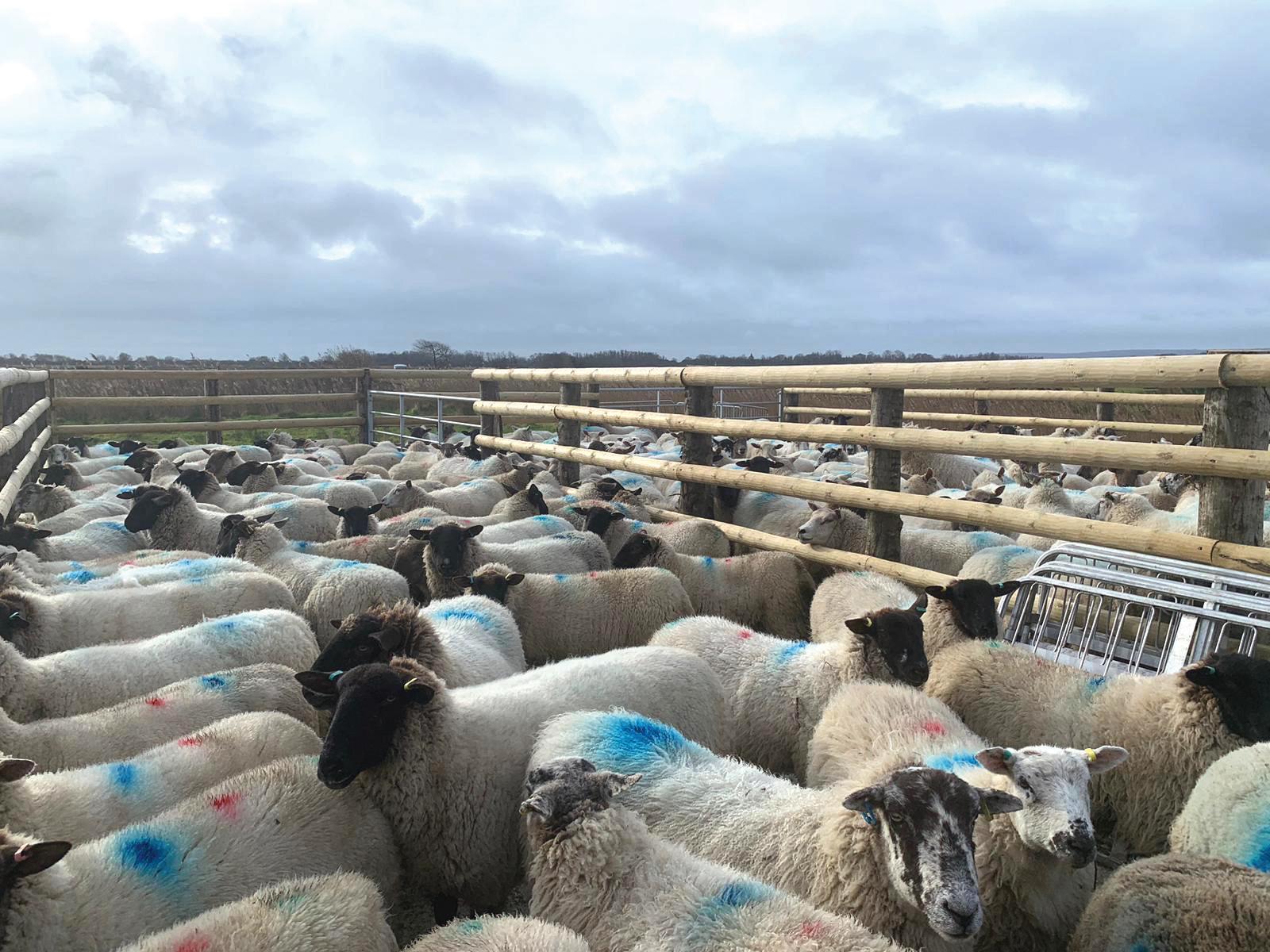
We are due to scan the ewes shortly, although there are now two fewer to scan. As I drove across the marsh I could see two microlight aircraft swooping over our ewes. Of course I can’t prove anything, but when I walked out into the field the ewes looked unsettled, and half a dozen were blackened by dyke water.
When I counted, I was two short, and started to check the dykes, and sure enough I found two drowned sheep close together. This flock has been grazing on those fields most of the winter with no problems, so something or someone had clearly spooked them. Such times are upsetting, disappointing and annoying, but best not to dwell on it. Nigel has been trying to persuade me that electronic collars are the answer. Apparently they can alert you if an animal doesn’t move; I’d probably find they were just asleep. Sounds unaffordable and too hi-tech for me.
Best of luck to all shepherds for the 2023 lambing season.
WWW.SOUTHEASTFARMER.NET | MARCH 2023 17 TO ADVERTISE CALL 01303 233883
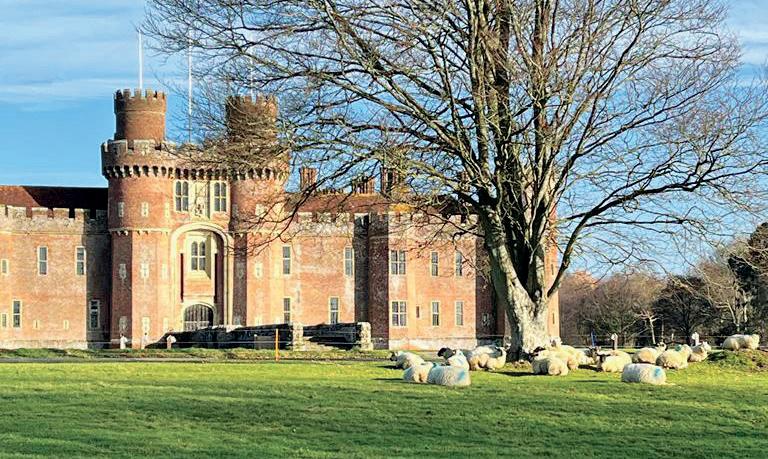
Our sheep enjoying the sunshine, taking a rest at Herstmonceux castle
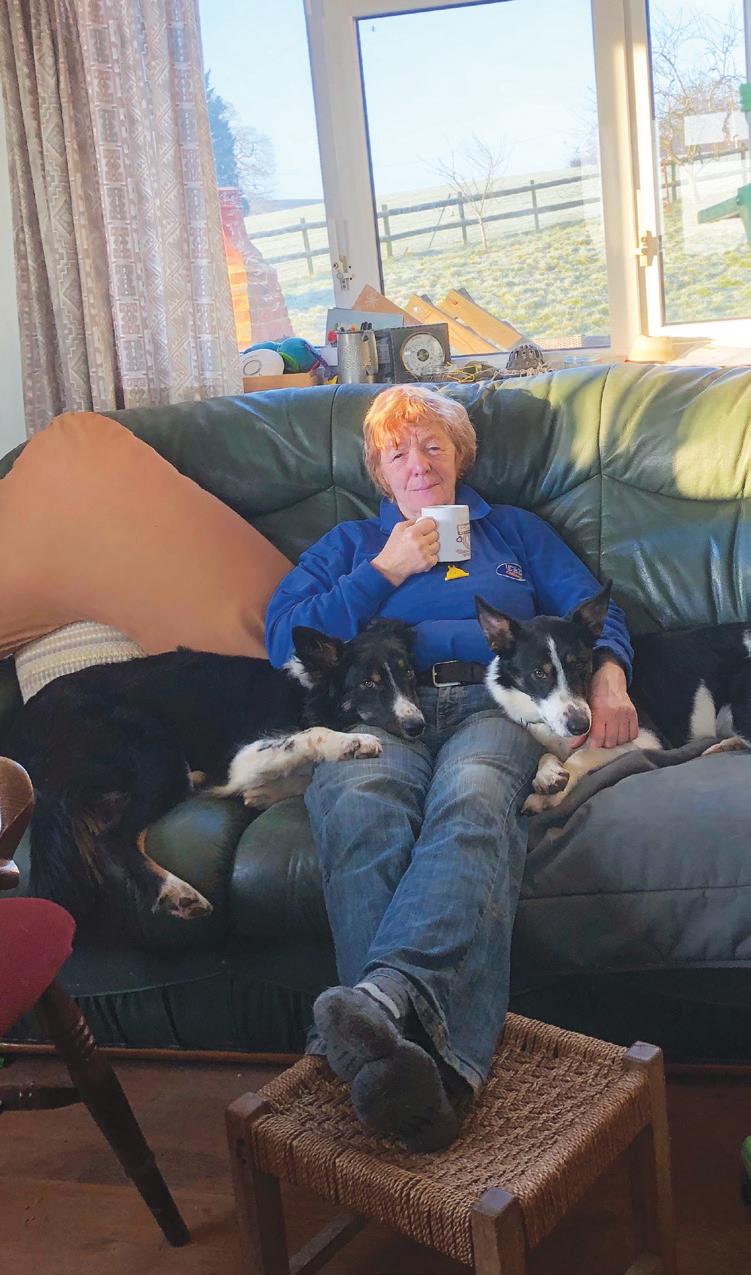
Everyone deserves a coffee break
Ladies in waiting
In the queue for scanning
Mr Fox likes eating apples
It’s not coffee in these cups! Preparing faecal samples for microscopic hunt for eggs
Chickens are missing green pastures
WELL-RESPECTED PLANT HIRE BUSINESS




It takes courage to invest more than the price of your home in setting yourself up in business, but Neil Morgan’s decision to do just that 30 years ago has paid dividends.
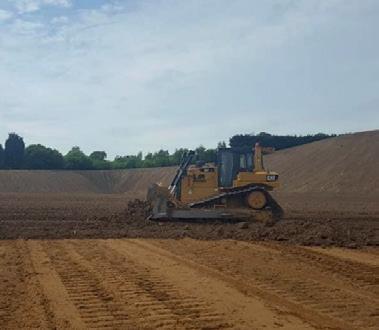
Now at the helm of Rhino Agricultural Services, with an impressive fleet of machinery at his disposal and an equally impressive client list that ranges from local farmers to the National Trust, Neil started up the business with one bulldozer and a promise of work.
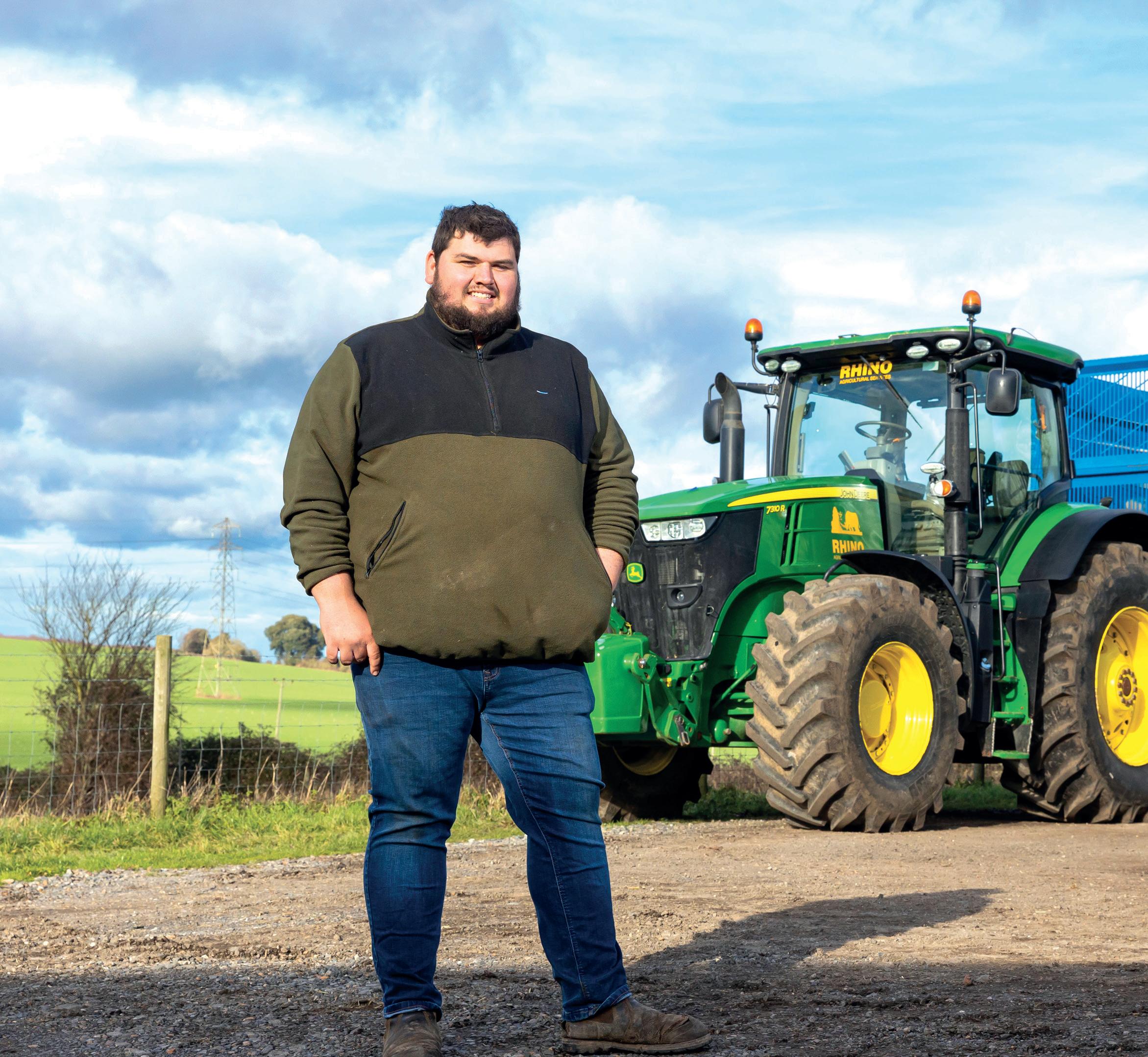
That promise came from his boss at the time and was enough to prompt Neil and his wife Kim to set up a company that now employs 12 people and has become a well-respected plant hire business serving farming, conservation and archaeology customers across Kent and beyond.
Neil met Kim at Rycotewood College in Oxfordshire, where he
qualified as an agricultural engineer, and the couple married soon after. He worked in agricultural engineering for a while, but when the recession hit in the late eighties he began working as a self-employed driver and plant operator for the Brett Group in Canterbury.
The site manager at the time, Terry Gilham, then told Neil that he was looking for someone who could provide and operate a bulldozer. The couple thought it through and went ahead, although Neil admitted: “It was a lot dearer than the bungalow we had just bought to live in.”
It is a measure of the value of the opportunity he was given that Neil is still in contact with Terry, now retired, and Rhino Agricultural Services still works for Brett, although the majority of the company’s work is in agriculture and conservation rather than industrial or commercial projects.
MARCH 2023 | WWW.SOUTHEASTFARMER.NET 18
RHINO AGRICULTURAL SERVICES
Russell Morgan
As an aside, Neil revealed the origin of the ‘Rhino’ name and logo. “It comes from the 1989 Club Biscuit advert which shows a rhino trying to knock the chocolate off the biscuit,” he said. “It seemed like a good fit for a plant hire company at the time.” Thirty years on, the ad may be long forgotten, but it still seems like a good name.
Neil and his bulldozer continued to work for Brett after setting the company up in 1993 but as his reputation spread he found himself more and more in demand from local farmers and began buying more equipment, beginning with a dung spreader.

“I was from an agricultural family, so it was a natural move for me to begin working for farmers and it allowed me to combine my farming knowledge, my engineering background and my operating experience," he said.
Neil’s grandfather and great-grandfather both farmed in the Preston area and his father David Morgan worked for Hickson Brothers at Sutton, near Dover. Not to be outdone, his mother Barbara worked on a farm at Elmstone, near Preston, where she drove crawlers.
In 2003 Rhino Agricultural Services picked up its first major contract, clearing and dredging for the River Stour Internal Drainage Board (IDB), one of a number of contracts the company still has 20 years later.
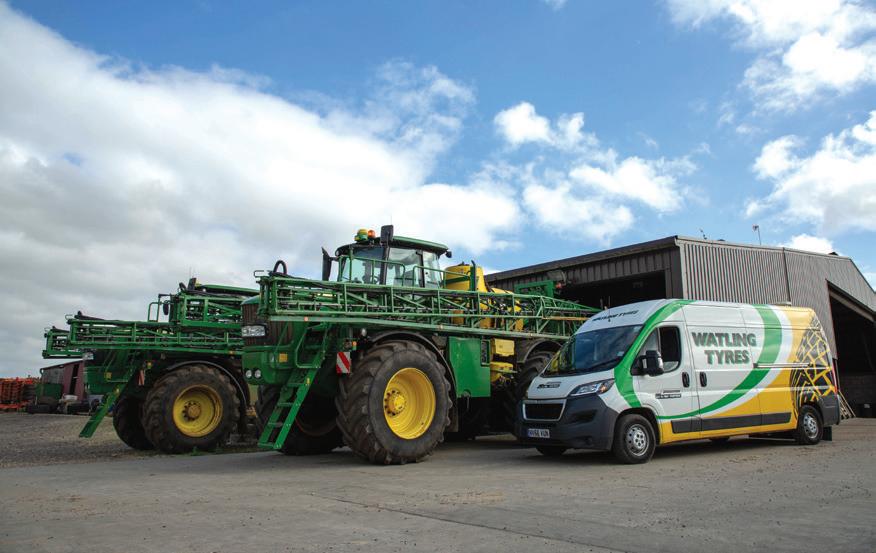


While it was Terry Gilham who gave Neil the opportunity he needed,





he is keen to pay tribute to the support he has had from local farmers over the years, both from a business and personal perspective. They include arable farmer Richard Ledger, from Little Mongeham, who Neil said had provided “much kindness and support” over the years as well as being a valued client.
Inside the business, his right-hand man is former dairy farmer Darren Godden, who joined Rhino Agricultural Services as contracts manager in 2014.
The two men’s paths first crossed when Neil provided contract baling for Darren’s family farm at Elvington Lane in Hawkinge. In 2001 Darren was forced to sell the herd and move out of dairying. “Our grassland was landlocked by arable fields so we couldn’t expand and it was impossible to continue,” he recalled.
The spare sheds at Hawkinge were put to good use by Neil as a home for the cattle herd he had begun to build after initially buying them “as a hobby”.
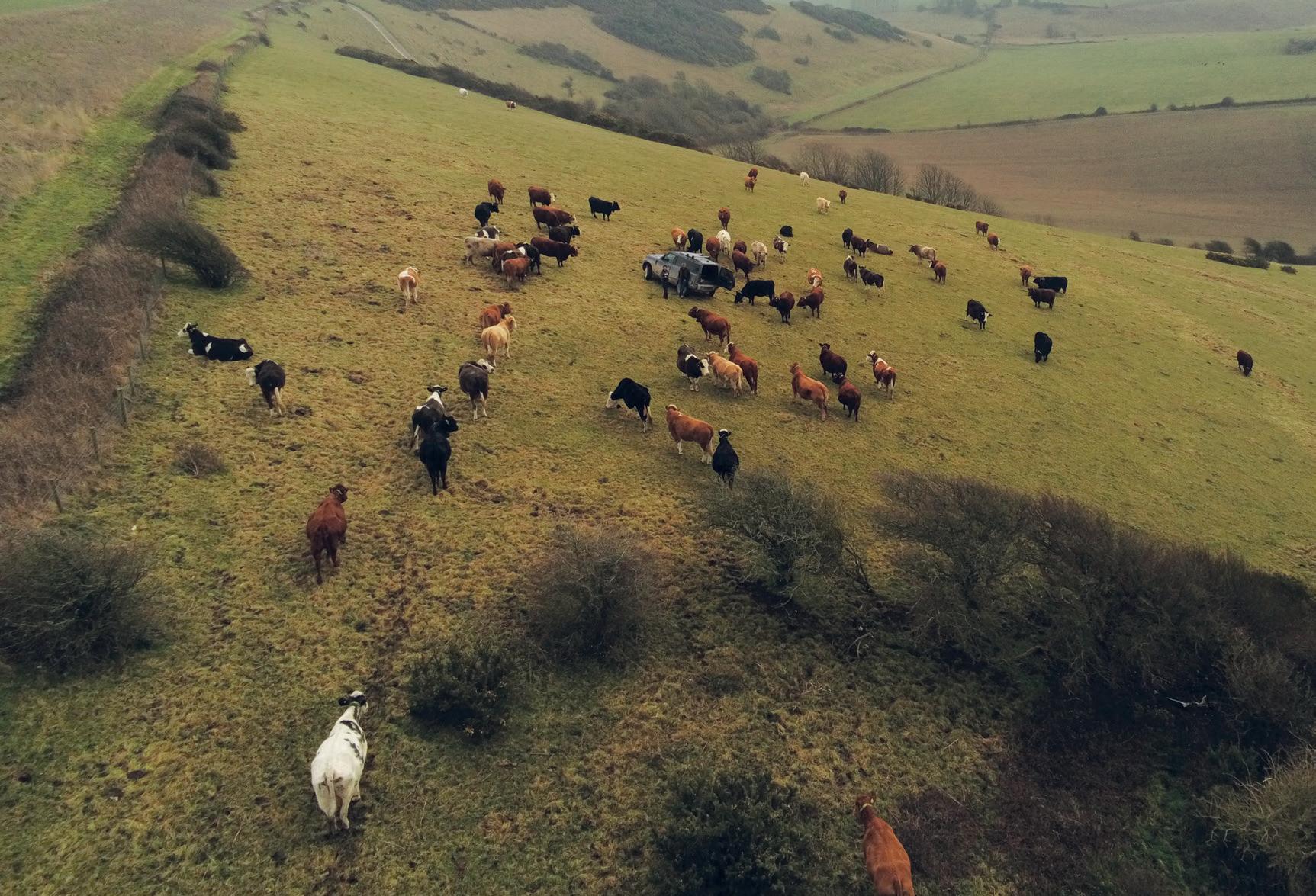
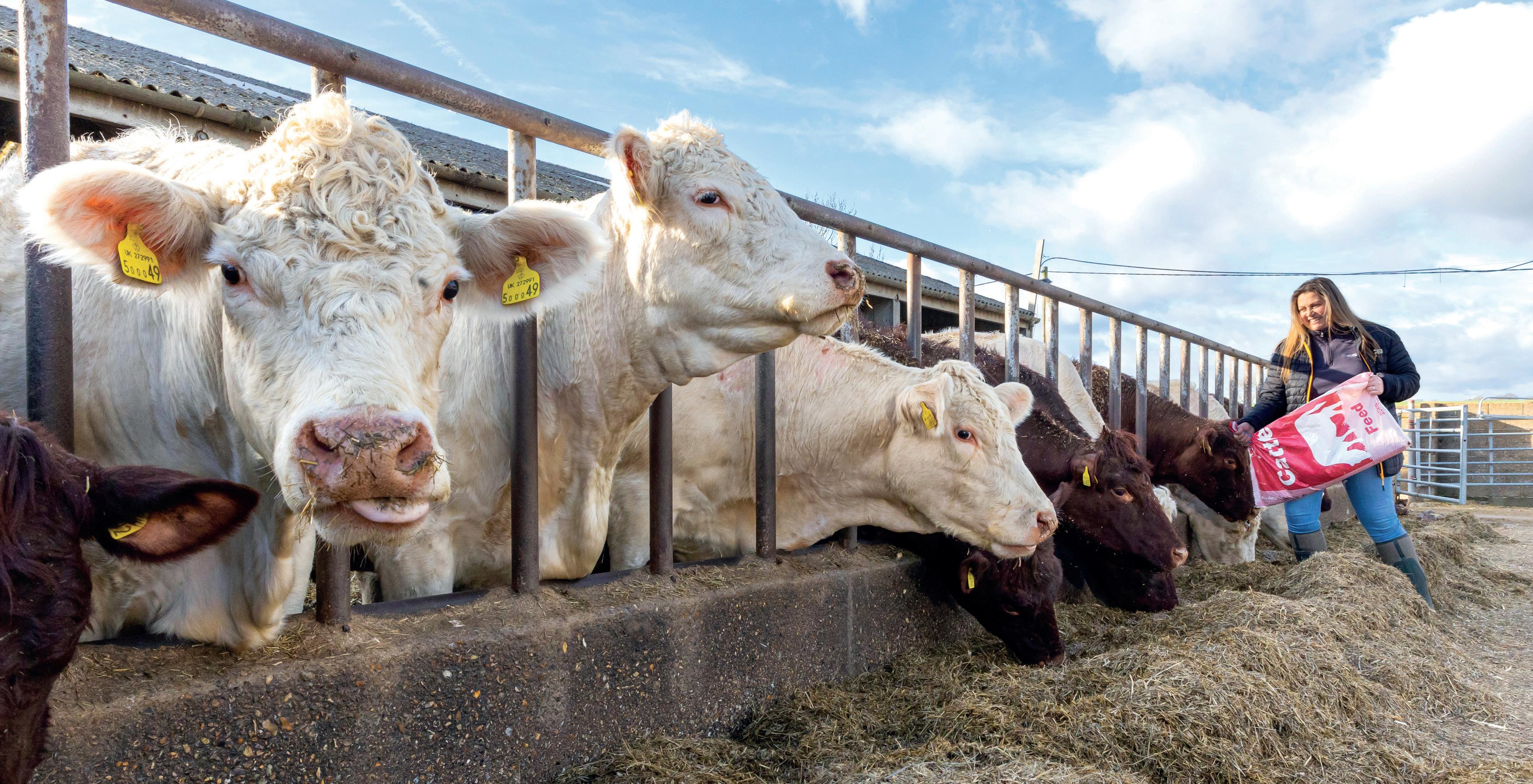
He explained: “I used to help dad with the cows and I love working with them so in 2000 I bought my first cattle because I wanted them, not as a business venture.” Since then, the White Cliffs Herd of Charolais and Pedigree Lincoln Reds, now housed at St Margaret’s at Cliffe, has grown to around 200 head.
They are looked after by Neil and his daughter-in-law Jenny Morgan, while son Russell works in the business and has day-to-day responsibility for the agricultural contracting side. Jenny and Russell also keep pigs, while Neil and Kim’s daughter Hannah and husband Jim Harmer have a herd of pedigree Shorthorns.
WWW.SOUTHEASTFARMER.NET | MARCH 2023 19 TO ADVERTISE CALL 01303 233883
>>
www.watlingtyres.co.uk Ashford 2 Victoria Road, TN23 7HJ (01233) 620599/662297 Canterbury 85 Sturry Road, CT1 1DA (01227) 464328/453966 Maidstone 1a Hope Street, ME11 2TF (01622) 764449/672952 Hastings Keats Close, TN38 0PP (01424) 422224 Northfleet Unit 2, Grove Road, DA11 9AX (01474) 327855 Medway London Road, ME8 6YX (01634) 364255 Sittingbourne St Michaels Road, ME10 3DN (01795) 472354 On Site Tyre Repair or Replacement Great service Great choice Great value since 1962 YOUR NO.1 INDEPENDENT TYRE DEALER The South East’s Agricultural Tyre Specialist Tractor, Trailer and all Agricultural Tyres at the Best Prices PROUD TO SUPPLY RHINO AGRICULTURAL SERVICES





MARCH 2023 | WWW.SOUTHEASTFARMER.NET 20 Support That Lasts a Lifetime Bell Agricultural Ltd Support That Lasts a Lifetime Ivychurch, Kent TN29 0AW www.bellag.co.uk 01797 344 688 KEEPING FARMERS FARMING MAIN DEALER The CLAAS JAGUAR forage harvester has been market leading since 1973. With 50 years of experience the JAGUAR is in a eld of its own. MANNS are proud to support our customer Rhino Plant Hire with quality products and service. Contact MANNS or visit claas-manns.co.uk Reliability with no compromises MANNS Kent Tel: 01622 892572
To complete the family links with the business, Neil’s “big sister” Deborah Whitlock has been the company’s book keeper since day one and is another vital part of the operation.
Darren, meanwhile, worked in construction after leaving dairying, but by his own admission “always loved the animals more than the machines” and was keen to get back into more of a farming-based business.


“Being given the chance to work with Neil was a great opportunity for me to combine my experience of plant and machinery with my background in farming,” he said. “It was an opportunity I couldn’t turn down and I have really enjoyed being able to contribute to the growth of Rhino Agricultural Services.”
Both Darren and Neil were quick to pay tribute to the workforce that provides the day-to-day service to the company’s broad range of agricultural and conservation clients. Long-term operators such as Andy Harrison, Andy Chidwick, Mark Hilton and Gary Norton have a huge amount of knowledge and experience between them.
That experience is particularly important with the kind of work the company does for the likes of Wessex Archaeology, another long-standing client that has used Rhino Agricultural Services for the past 15 years or more. When the archaeologists want a layer of dirt removed from a dig site, that ‘scrape’ can be as little as a centimetre and takes skilled work.
As well as the archaeology and IDB work, the company provides dyke maintenance and other clearance services for the National Trust and for the Royal Society for the Protection of Birds (RSPB).
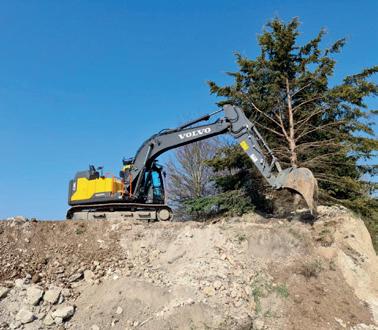
The company’s plant list is impressive. As well as a bulldozer it operates five excavators, from eight to 26 tonnes and including a 13m long reach machine, and has its own low-loader which is also hired out to other companies needing to move heavy machinery.










The long reach excavator, mounted on a pontoon that had to be assembled especially for the job, was used to raise a number of islands in a lake at the RSPB’s Dungeness reserve, where rising water levels had begun to flood nest sites.
>>
WWW.SOUTHEASTFARMER.NET | MARCH 2023 21 TO ADVERTISE CALL 01303 233883
RHINO AGRICULTURAL SERVICES
<<




MARCH 2023 | WWW.SOUTHEASTFARMER.NET 22 CONTACT Porlock Collingwood Road, St. Margarets at Cliff, Dover, Kent CT15 6EX Neil Morgan 07860 510300 Office/Fax: 01304 853289 Email: rhinoplant43@gmail.com www.rhinoplanthire.co.uk Self propelled forage harvester – Maize & grass Muck Spreading with high capacity equipment Hedge cutting River weed cutting & de-silting machinery Low loader service STG02 category Silage & hay making equipment Drilling & cultivation works Telehandler & skid steer hire 360 Excavator & bulldozer hire Bale wrapping – square or round Big square & round baling PLANT & AGRICULTURAL CONTRACTORS RHINO AGRICULTURAL SERVICES Celebrating 30 years in 2023 LOADS MORE Winchester SO21 3DN 01962 794100 Newbury RG20 7DJ 01635 281222 Horsham RH12 3PW 01403 790777 Wrotham TN15 8LW 01732 880880 Uckfield TN22 5RB 01825 841100 Great Chart TN26 1JJ 01233 822205 Haynesagri @agrimachines Haynes Agri
Rhino Agricultural Services has also worked on other large scale wetland creation schemes for the RSPB, including a 300-acre site in the Lydden Valley, near Deal. For the National Trust, it uncovered First World War sound mirrors built into the side of the cliff s at St Margaret’s at Cliffe and is currently working on the Trust’s White Cliff s site, where it is helping to reveal Second World War cross-Channel gun emplacements.
On the agricultural side, the team provides a range of services including











muck spreading, mowing, tedding, rowing, forage harvesting and drilling. It has also completed three large reservoir projects in the county.
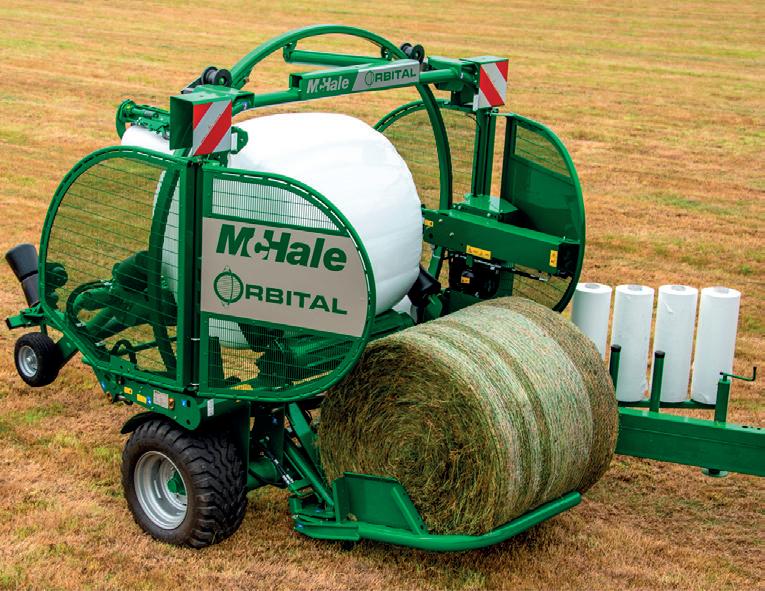
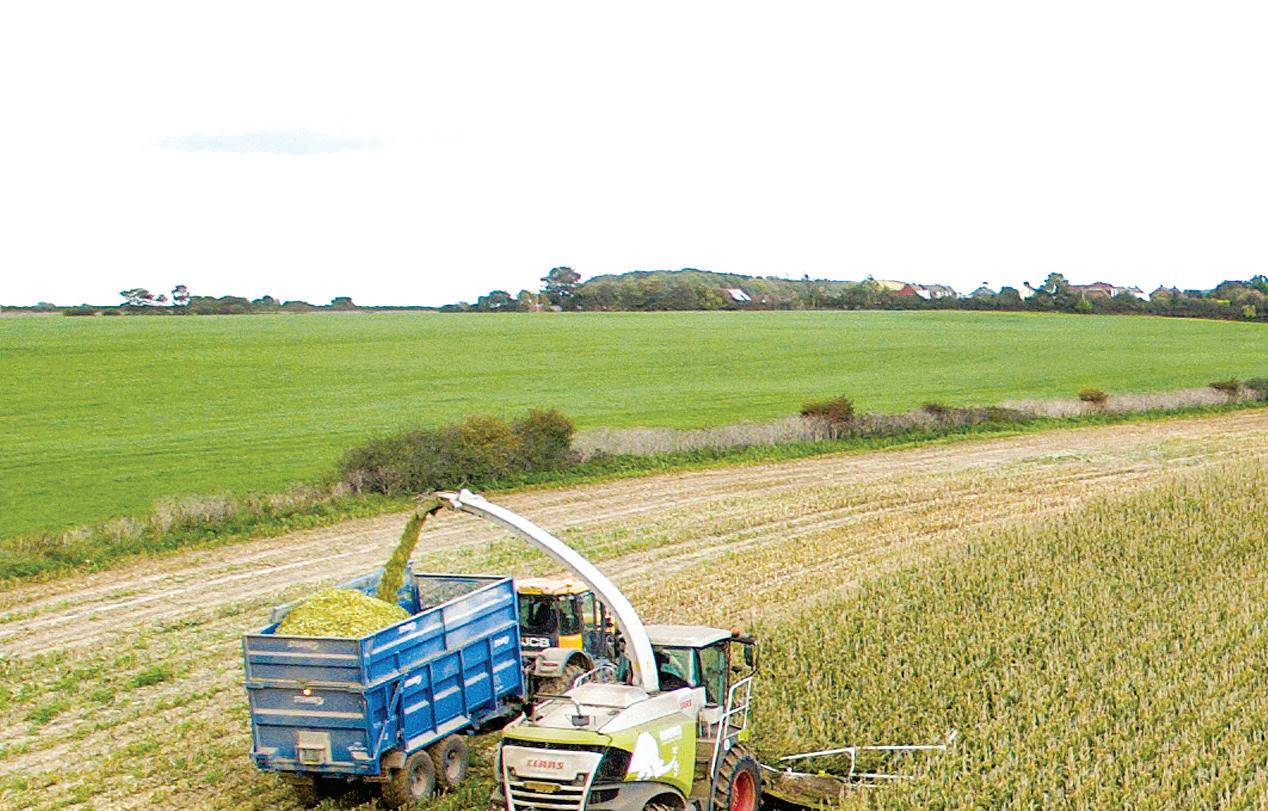
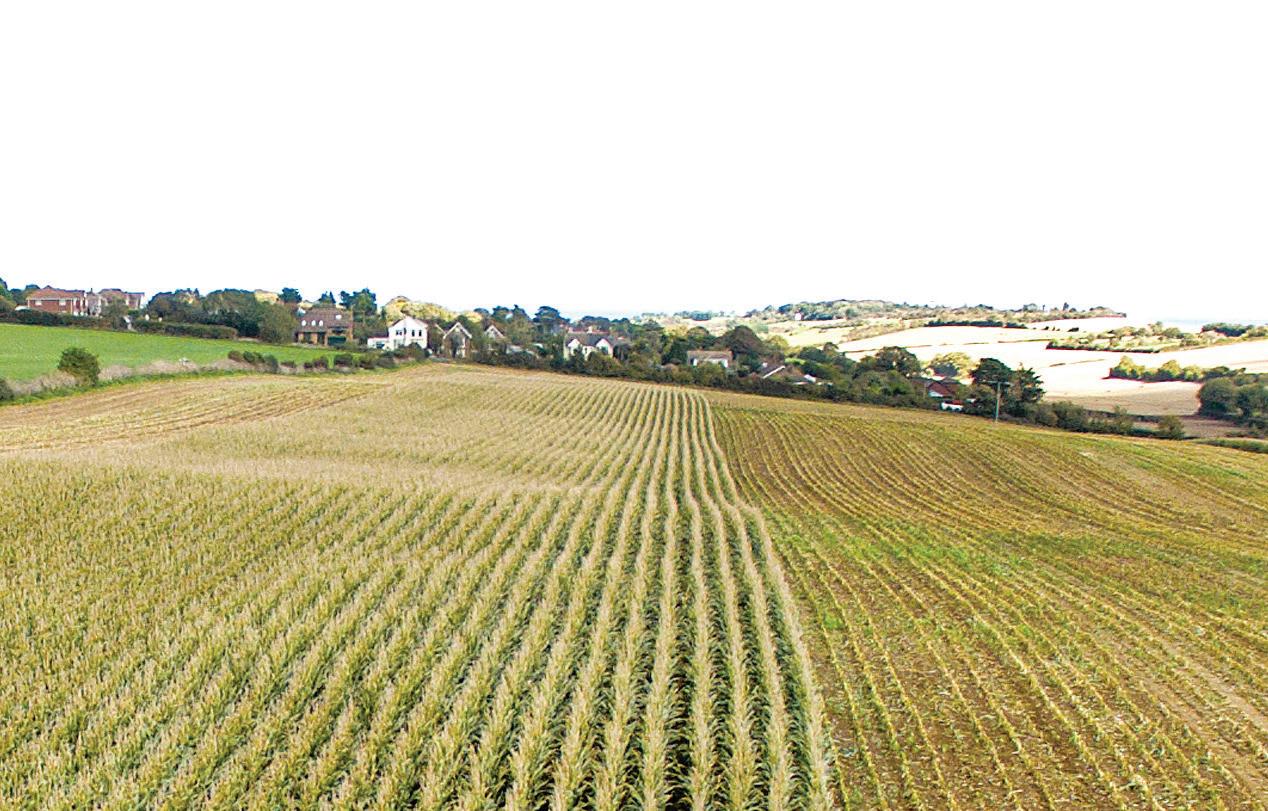
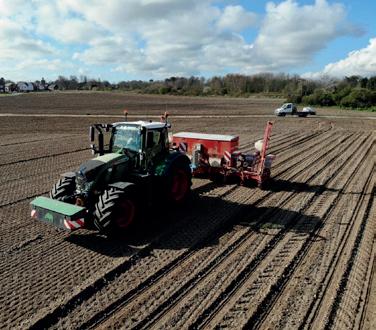
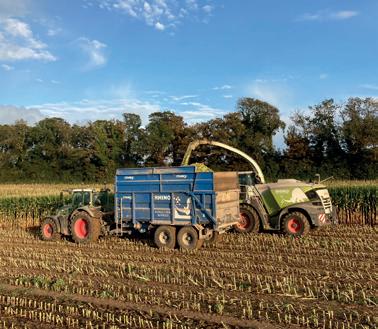
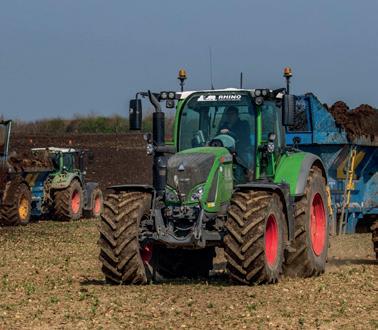
Again, the plant and machinery list is impressive, based around six John Deere tractors and one Fendt, together with a Claas forage harvester, JCB loading shovel and JCB telehandler. Two maize drills, a seed drill, round and square balers, a plough and cultivation equipment, including a 10-metre rake, complete the picture.
As well as general farming work, Rhino
Agricultural Services is kept busy by two local anaerobic digestion plants, providing everything from forage harvesting through to digestate spreading and carting. The machinery stable includes three Bunning 16-tonne Lowlanders and five Stewart trailers as well as three 30-feet bale trailers. Looking back over the past 30 years, Neil stressed that the business had been built on the quality of the equipment, the experience of the team and a focus on reliability. “We are looking forward to carrying that on into the future,” he added.
WWW.SOUTHEASTFARMER.NET | MARCH 2023 23 TO ADVERTISE CALL 01303 233883
RHINO AGRICULTURAL SERVICES <<
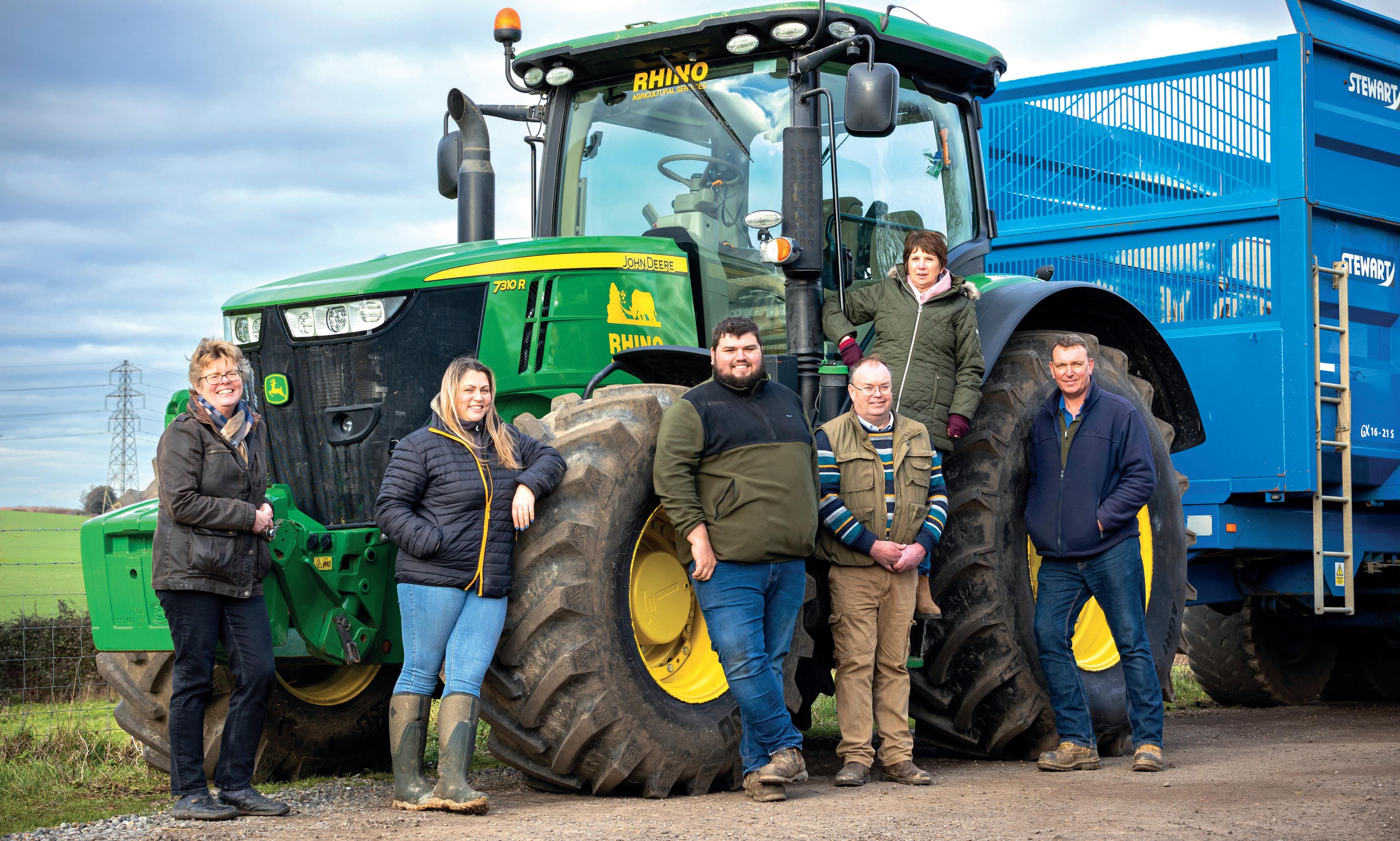
Deborah Whitlock, Jenny Morgan, Russell Morgan, Neil Morgan, Kim Morgan and Darren Godden
ENTRIES ENCOURAGED
The ever popular Heathfield Agricultural Show, to be held on Saturday 27 May this year, has launched its on line schedule for the cattle, sheep, pig and horse competitions.

The continued support of local farmers in entering their livestock in the showing classes is a very important aspect of the show, both to the visitors and farmers alike. “We are extremely lucky with the support that our local livestock and horse exhibitors give the show and we do all we can to make it easy for them to enter," said Bill Gower, show chairman.
"In 2023 exhibitors will be able to view and download schedules online. Competitors are being encouraged to enter online as well at www.heathfieldshow.org. This initiative not only helps the show save money, with the spiralling cost of postage, but also, hopefully, saves exhibitors time."
Closing dates for cattle, sheep and pig entries will be 11 April and for horse entries 14 April. Late entries can be made online for the Horse classes until 3 May. No late entries will be accepted.
Competitors are not only competing for best in breed but there are substantial cash prizes to be won. The top prize is worth £250 to the Champion, so tension round the rings can be exciting while the judge is scoring the animals.
Young Handler classes will again be run in the sheep, pig, cattle and horse sections. “We encourage entries in these classes – young people
ADVERTISER'S ANNOUNCEMENT
are the future of farming in Britain and will ensure the continuation of the farming industry in the South East into the next century,” said Bill Gower. “Additionally, entry to the show for 16 year olds and under, when accompanied by an adult, will once again be free in 2023. It is hoped that this initiative will encourage parents to bring their children to the show and enjoy a family day out together, learning about the many aspects of our rural area and opportunities that are available for the young.”
SPECIALIST RURAL INSURANCE BROKER EXPANDS ITS OFFERING IN SOUTHERN ENGLAND
McClarrons, an insurance broker celebrating 35 years in business this year, have expanded their rural team in the southern parts of England as part of their commitment to serving the farming community. They have recently welcomed Account Executive, Rachel Richardson, who is based on the South Coast, who comes with almost 20 years’ experience in the insurance industry, with over half of those spent in insurance for the agricultural sector.
Rachel joined McClarrons as she values their emphasis on client experience. Upon joining, Rachel commented: “I’ve come into a company where the focus is more on the client and the outcome for them. While McClarrons is a good size brokerage, it still feels very much like ‘one team’, which is also uncommon in this industry.”
McClarrons offers farming businesses specialist insurance solutions tailored to the needs of their operation. Whether livestock, arable, diversified, a smallholder or an agricultural machinery business, through access to specialist products and insurers, McClarrons are able to provide peace of mind for farming businesses across the country and are excited to offer this further afield from their head office in North Yorkshire. With an in-house claims team, McClarrons’ clients also benefit from their support should the worst happen; McClarrons’ team of claims experts assist in collating the information needed to support a claim, present this to insurers and negotiate on the client’s behalf to ensure a
fair
outcome is reached for them.
Through McClarrons’ and Rachel’s own experience, you can benefit from working with an insurance broker that has a true understanding of the risks you face, the concerns of the farming industry and how insurance can best assist.


For a free review of your farming insurances, or to discuss any insurance-related matter, you can contact Rachel at rachel.richardson@mcclarroninsurance.com or on 07938 486385.

MARCH 2023 | WWW.SOUTHEASTFARMER.NET 24 NEWS
RISK V REWARD
The volatility reached levels beyond living memory with the onset of the Ukrainian crisis. I hesitate to say unprecedented, as this word has been used too often in recent times, and I am sure that during other historic world crises commodity prices moved as much in percentage terms.
Nonetheless, any commodity that relied on Russia or Ukraine to supply world markets spiked in value, almost overnight. This had an instant impact on grain prices as our markets are closely aligned to world markets, which relied on the free movement of grain out of the Black Sea. The effect on other agricultural produce was far less, or non-existent. The big sting for all producers was the almost instant increase in many input prices, most notably fuel, fertiliser and feed, with electricity not far behind.
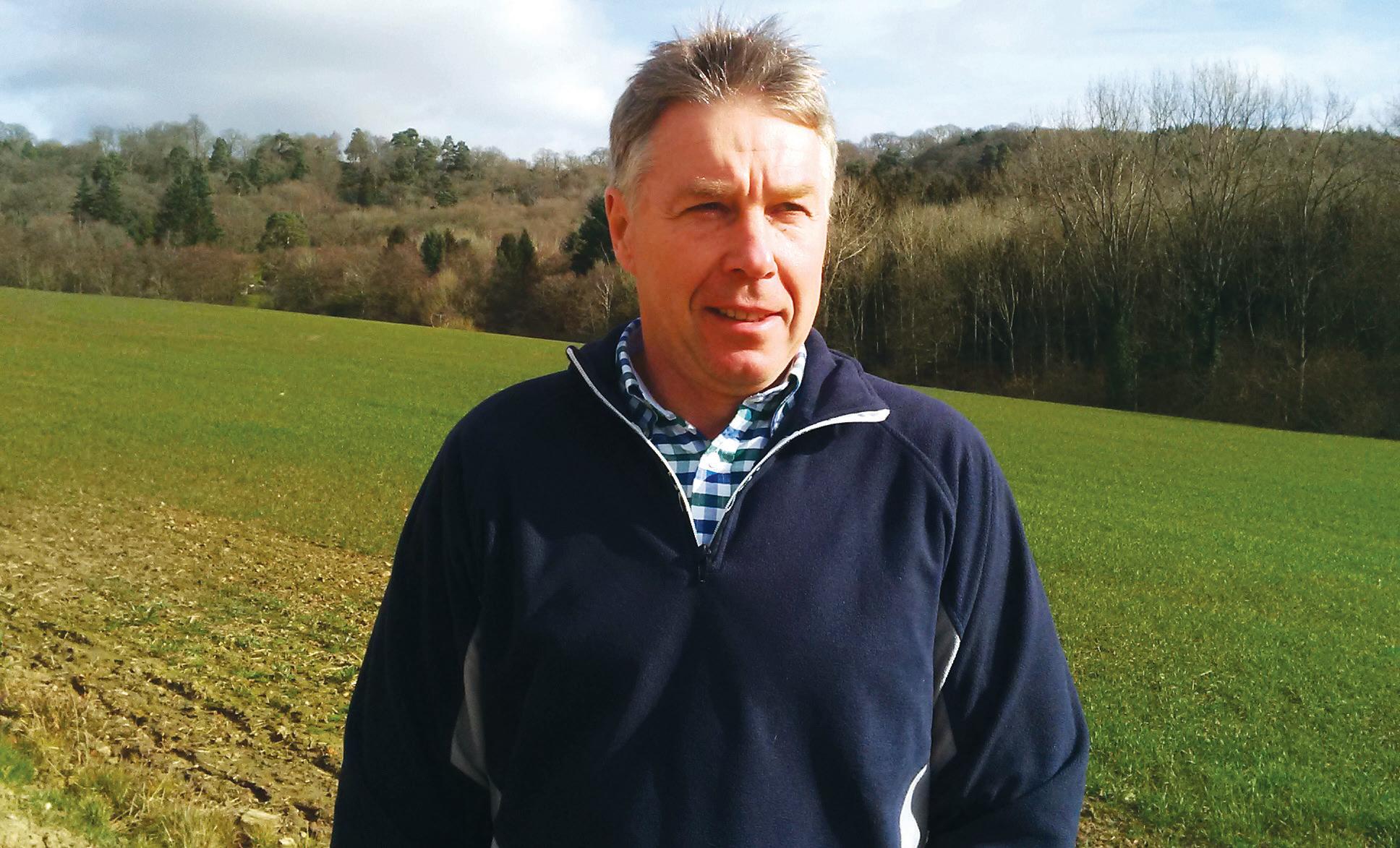
From an arable farming perspective, looking at wheat prices increasing by more in a day than they had previously done over whole seasons was both exciting and challenging. Exciting, as we were looking at forward prices we would never have dreamed of a few months earlier. Challenging, as trying to decide when to lock into a price and how many tonnes to commit when prices are bouncing about by up to £30 tonne a day is difficult.
I would far rather markets were stable without millions of people suffering as a result of the war. The upshot is that I have sold 2022 harvest wheat from £190 to £330 per tonne. Some was priced prior to drilling and I still have some to sell; the average price will finish up in the mid £250s. I leave it to others to decide if I got it right or wrong, but it is about the balance between risk and reward.
Fertiliser for the 2022 crop had been bought early, so the majority of input costs were known before the crop was drilled, as I knew the seed, fertiliser and autumn chemical cost by mid-September 2021. At this point, without any grain priced, high risk, fully exposed to market fluctuations, I priced some wheat. The
price was not great, but all things being equal with average yields I would not be going out of business.
I continued to price small parcels through to February 2022 at around £200. As we all know, from the outbreak of war prices rocketed, reaching their peak in mid-May. During that period, it was sensible to de risk and lock in rewards.
That was harvest 2022. The risks for harvest 2023 are much greater, with fertiliser purchased at much higher prices and all other inputs costing more. I have stuck with my usual grain marketing strategy, pricing some for November 2023 collection in September 2022. Forward wheat prices have drifted lower, up to £40 lower, which leaves budgeted margins much tighter than predicted back in June 2022, when fertiliser was priced and cropping plans firmed up. Harvest 2023 is shaping up to be a much riskier affair than harvest 2022.
We all have differing strategies in managing our businesses; mine is to plan as far ahead as possible, price grain sales over a relatively long period and start locking in margins once the majority of costs are known. This is a relatively risk adverse approach, and over the years it has worked
well enough to produce a fair reward. In volatile markets there are always winners and losers; selling into fast-rising markets having produced the goods with inputs purchased competitively makes us winners. But prices rarely stay high forever and managing falling prices is far more challenging, especially when buying inputs many months ahead of having product to sell. We can just as quickly become losers. We all make decisions every day based on market intelligence, advice or gut feel. Whatever decision we made it was the right one at the time. In the past 12 months or so market movements have made some decisions look brilliant and others a disaster. Grain sold for collection the same month, some at £190/t, some at £330/t and the spot price on the day £230/t. Fertiliser ordered months ago at eye watering figures only to see spot prices dropping by the day at the time of delivery.
I firmly believe a deal is a deal and must be stood by, win or lose. Contracts cannot be torn up because the market has moved against you. Just bear in mind that whoever bought £330/t wheat is more likely a loser than a winner. Remember the deals that went in your favour and don’t dwell on those that didn’t.
WWW.SOUTHEASTFARMER.NET | MARCH 2023 25 TO ADVERTISE CALL 01303 233883 FROM THE FRONT LINE IN CONJUNCTION WITH
Since the beginning of the Covid-19 pandemic, commodity markets have become more volatile as normal trade flows around the world have become disrupted, writes Peter Knight, managing director of Burgate Farms Ltd, Hambledon, Surrey.
VIN E YAR D
















THE ART OF WINE


This month we are pleased to bring you a special report on The Mount Vineyard from Shoreham in Kent – courtesy of our sister publication Vineyard Magazine. By Rebecca Farmer


Driving through the historic streets it is possible to see glimpses of the large white cross on the hillside above the village which serves as a memorial to the fallen in World War I and subsequently World War II. Like many coastal areas Shoreham Village suffered great hardship during World War II as German bombers would drop on these areas any remaining bombs they had left before returning across the sea to mainland Europe. Travelling through the peaceful village with a population of about 2,000 on a beautiful sunny day this tragic history seems a strange mixture of near and yet far away.
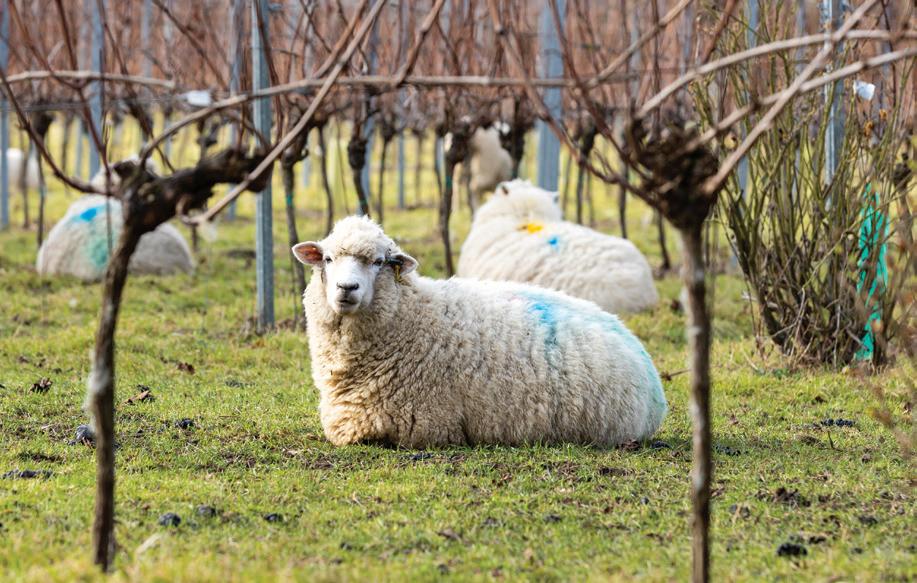
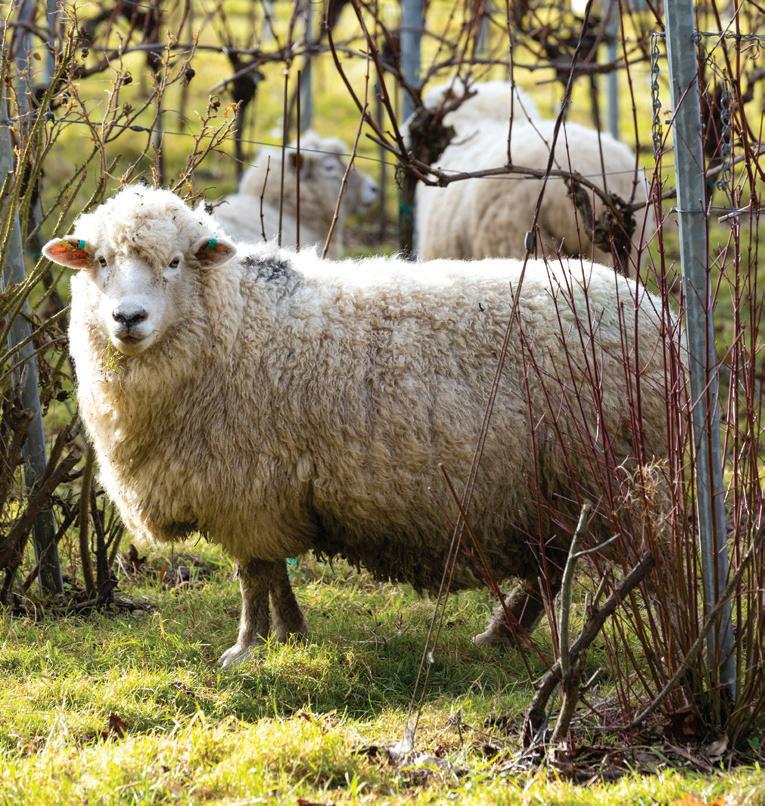
The Mount Vineyard is hidden from view by a beautiful brick entranceway. At first there is no sign of the 10 acres under vine – but the first parcel of vines soon becomes apparent. A lovely sight of sheep grazing in amongst the vines


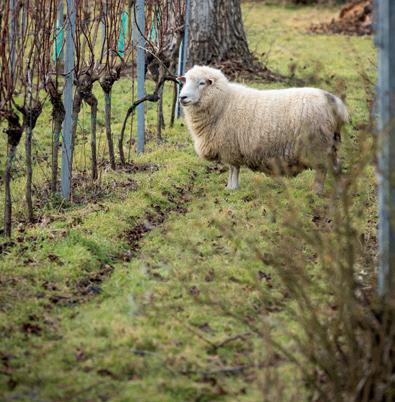
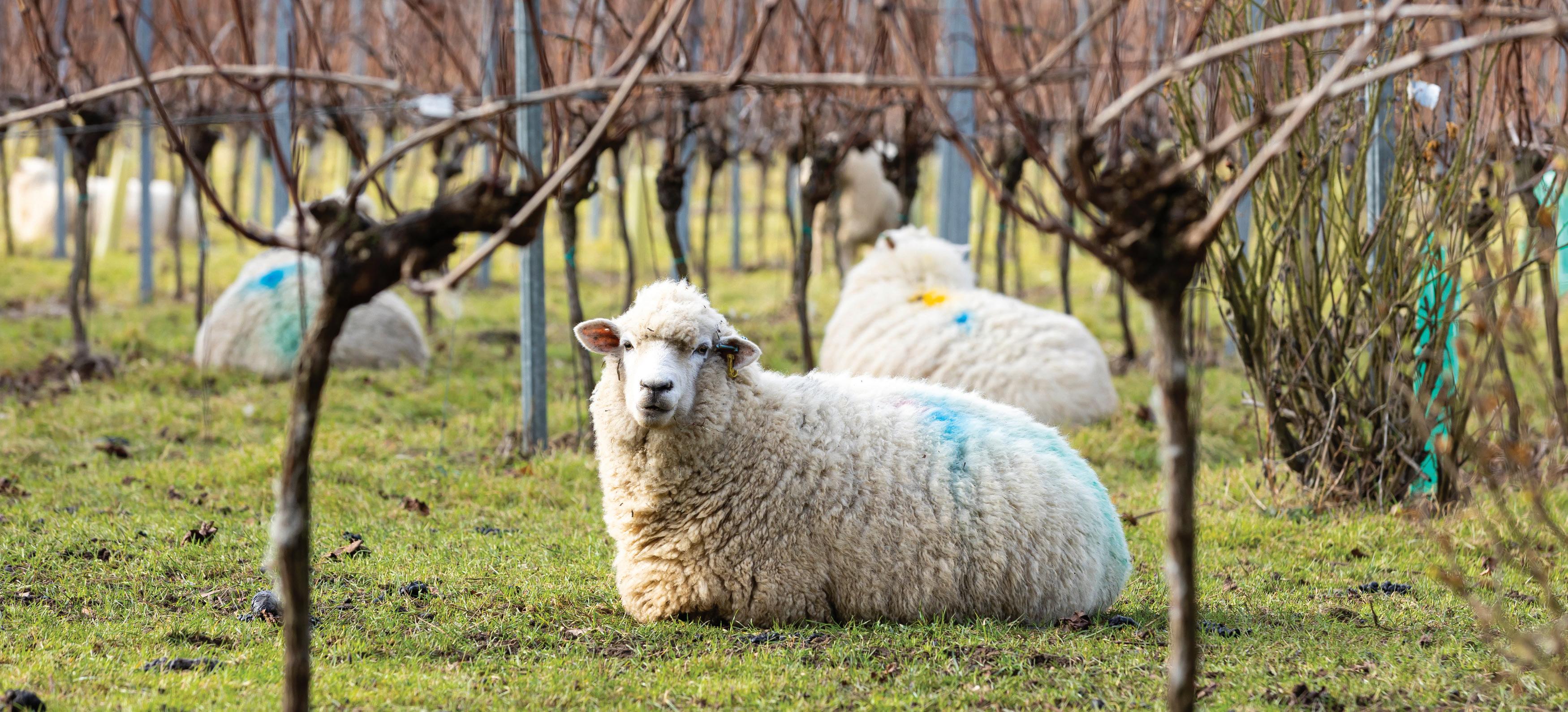
greeted us the day of our visit. Estate Manager Will Lewis later pointed out that the mixed flock includes the Romney breed. The sheep have been grazing the estate in winter for about three years and are one of many ways the estate has improved its green credentials. Simon and Sarah Greenwood live in the main house on the site built by the owner of a local paper mill in 1869. Directly attached to the main house is a courtyard restaurant with a retractable roof. Feeling like a sophisticated and modern space it still manages to hold onto the charm of the past. With a little imagination on a day which had an outside temperature near to freezing it was possible to contemplate sitting there on a summers evening drinking wine made from grapes that surround the restaurant while savouring the aroma of delicious wood fired pizza. In the depths of winter, however, with the roof firmly in place
the restaurant is cosy and warm and still has that lovely aroma of wood fired pizza. Back in 2011 Simon, who still works in finance in the city, was looking to move out of London and into a rural community. Having grown up in Rutland, the smallest county in England, Simon once again wanted to enjoy the countryside. “I was addicted to looking at property websites,” he joked. Just 40 minutes train journey from Victoria Station, Mount Estate was planted with 2,500 vines between 2004 and 2006 and was put up for sale in 2011. Simon saw the opportunity he had been looking for and purchased the estate. Simon explained: “Very quickly I fell in love with the concept of growing and producing something.” Initially with little experience, Simon sought expert help in the form of VineWorks, which helped increase the planted area by a further two acres, adding Chardonnay to the selection
MARCH 2023 | WWW.SOUTHEASTFARMER.NET 26 NEWS FROM THE VINEYARD
LAND & PROPERTY CONSULTANTS The Mount Vineyard sits in a quaint and beautiful landscape that is a painters idyll. The art of wine INSIDE Fast track to the best equipment When fungus attacks Matthew Jukes selects three wines that use carefully chosen words MARCH 2023
Photos: Martin Apps, Countrywide Photographic
™ For
Growers & Winemakers in Great Britain
of vines along with more Bacchus vines. There are now eight varieties planted with Pinot Noir, Rondo, Regent, Bacchus, Seyval Blanc, Phoenix, Siegerrebe and Chardonnay.
The estate totals 104 acres with four plots of vines planted at roughly 1,200 vines per acre totalling 10 acres under vines. “My first vintage was 2012 and I found myself becoming very aware of weather patterns,” explained Simon. Since this first vintage Simon has quickly gained a large degree of vineyard experience, but there have been other changes too. Simon met Sarah, who also works in the financial sector, and the couple now have two children. The couple got married at the vineyard in 2019 and the events team is able to offer other couples the opportunity to hold their special day at The Mount Vineyard.


Weddings are only a small part of the events held at the vineyard, with outdoor cinema and music events also taking place. Simon was keen to point out that the connection to the term ‘vineyard’ in the name The Mount Vineyard was very important and as such the vineyard offers a viticulture course that takes place on five separate days throughout the year. The course covers aspects of vineyard management and harvest including pruning. On the day of the visit Will Lewis pointed out a section of vines that had been left specifically unpruned for those on the course. Will said: “At first I was nervous about the prospect but it was a really positive experience.” The package is a popular gift but there are also those who wish to join the course with the prospect of adding to their skill set.
Sarah is very motivated by the idea of environmental sustainability and the business was recognised with a ‘Green Business Award’ at Sevenoaks Business Awards 2022. Apart from the sheep in the vineyard there are other not quite so obvious sustainable practices on the estate. The restaurant uses a biomass boiler and solar thermal panels have also been incorporated into the energy generation


WWW.SOUTHEASTFARMER.NET | MARCH 2023 27 TO ADVERTISE CALL 01303 233883
The estate totals 104 acres with four plots of vines planted at roughly 1,200 vines per acre totalling 10 acres under vines
<<
AS FEATURED IN MAGAZINE VIN E YAR D For Growers & Winemakers in Great Britain
Simon and Sarah Greenwood
NEWS FROM THE VINEYARD
<<
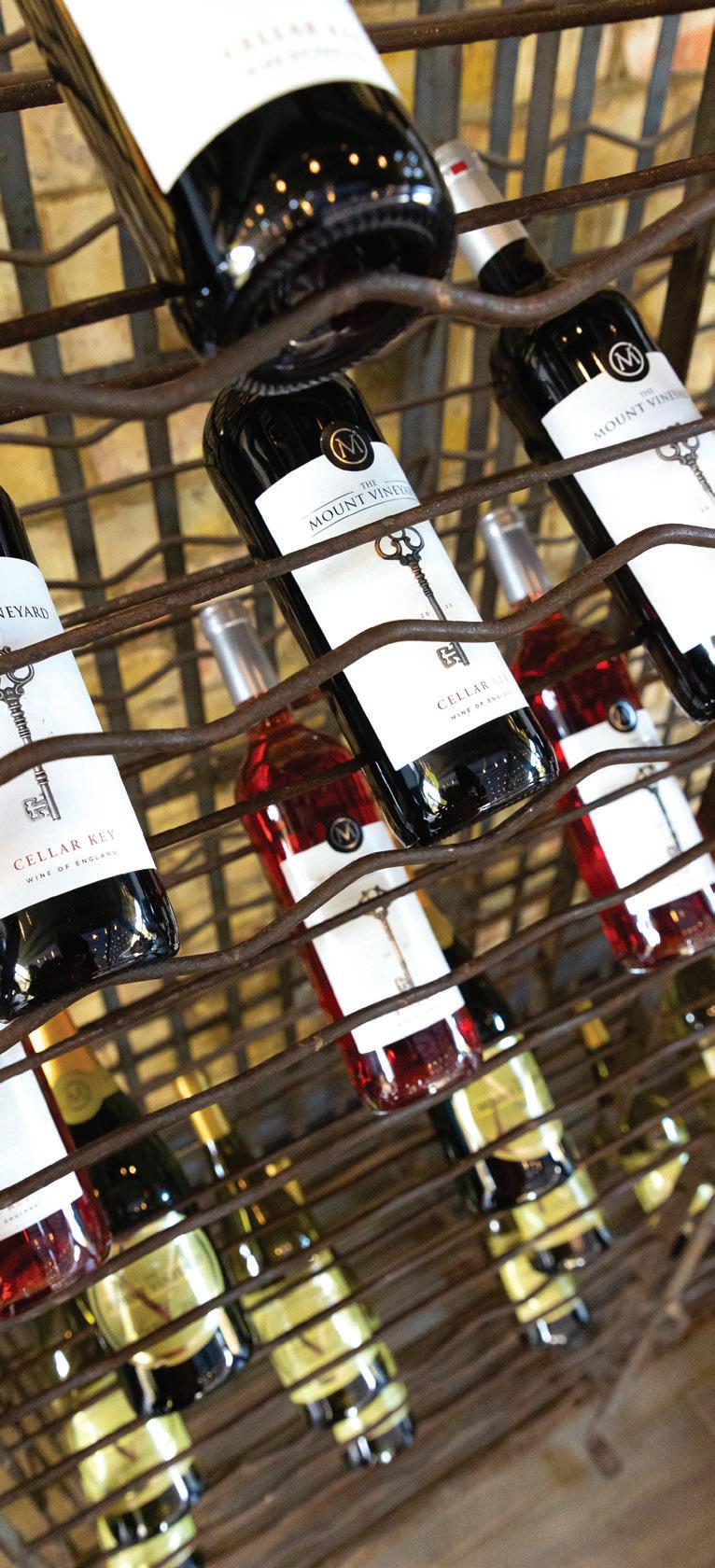
processes on the estate. One future plan is to install electric car charging points in the spacious car park adjoining the Ten Acres Shop which stocks all the various wines alongside other specialist items such as truffle oil and chocolate from local producers. The vineyard already benefits from excellent public transport links, with a train station just 13 minutes' walk away. Where many vineyards struggle with car-free access, the Victorian expansion of the railways brought people to this part of Kent and today it is easy for people to arrive by train at the vineyard. “People dress up for the tastings and can often be seen walking from the train station,” said Sarah.
This link to the Victorian penchant for travel leads to a discussion about climate. Simon explained that the vineyard has its own valley microclimate and in the summer it is possible for the estate to be around 2°C warmer than the surrounding area so the Victorian visitor (and the modern visitor) would definitely have enjoyed their summer vacation spot. Conversely the vineyard is extremely prone to frost, suffering as many as 10 frost nights in just one season. “Bougies are effective but are very
labour intensive,” explained Will. The vineyard also uses a Frost Buster supplied by N P Seymour. “Between Plot One and Plot Three there is only a distance of 300 metres but the weather stations show the temperature can differ by 1°C,” said Will. The early Chardonnay can be particularly vulnerable, but where there has been frost damage the second shoots on the Seyval have proved more fruitful than the other varieties. Simon explained that there is a plan to install a sprinkler system across the entire vineyard. After some research it was decided that heated wires were unsuitable for the site owing to the high wind chill factor experienced in the vineyard and therefore the sprinkler system was the best option.
There is 10 inches of soil before you reach chalk and “a slightly alkaline ph of 7.0 to 7.5 can mean the vines struggle to access the manganese and magnesium they need but the soil is generally nitrogen rich,” said Will. Historically the vineyard has had significant disease pressure from downy and powdery mildew so inputs are purchased upfront for the whole season from Agrii, with John Buchan as the independent vineyard advisor. Will explained that while canopy management to relieve disease pressure is very important, in recent years it has been possible to tighten the spray windows so that applications are made at exactly the right time. The number of varieties that are present in the vineyard can make this complicated, though, as some plots have been planted with half a row of Bacchus and half a row of Pinot Noir. “The timings of applications for these varieties differ, with the Bacchus
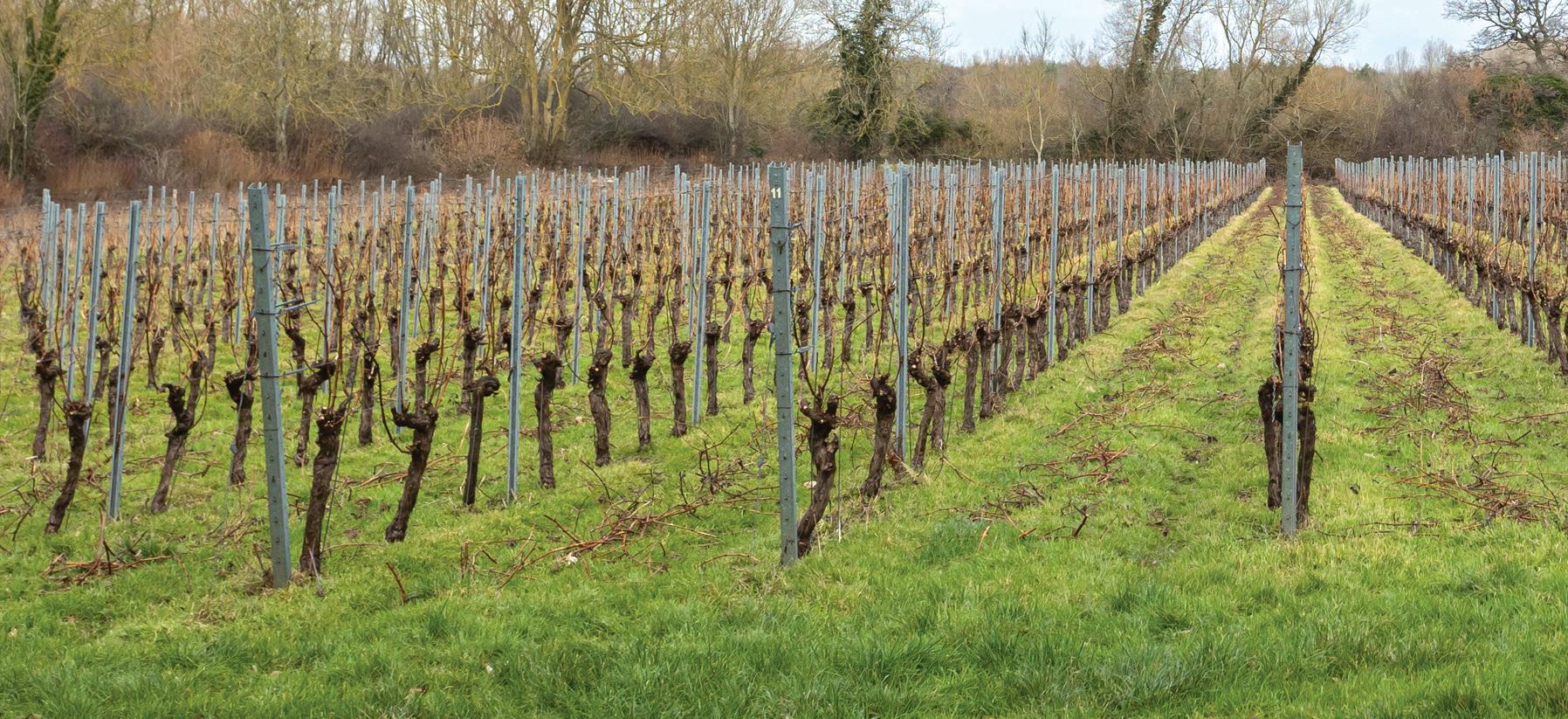
MARCH 2023 | WWW.SOUTHEASTFARMER.NET 28
The vineyard has its own valley microclimate and in the summer it is possible for the estate to be around 2°C warmer than the surrounding area
Harvest figures vary but in a good year 25 tonnes of fruit are picked usually across five days with 60-70 volunteers per day
suffering disease pressure earlier,” explained Will. This slightly unorthodox vineyard layout also presents challenges at harvest. The estate has three full time employees who supervise the harvest, which is done by volunteers. Harvest figures vary but in a good year 25 tonnes of fruit are picked, usually across five






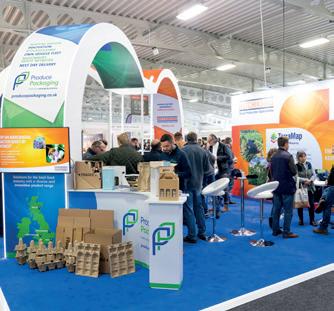


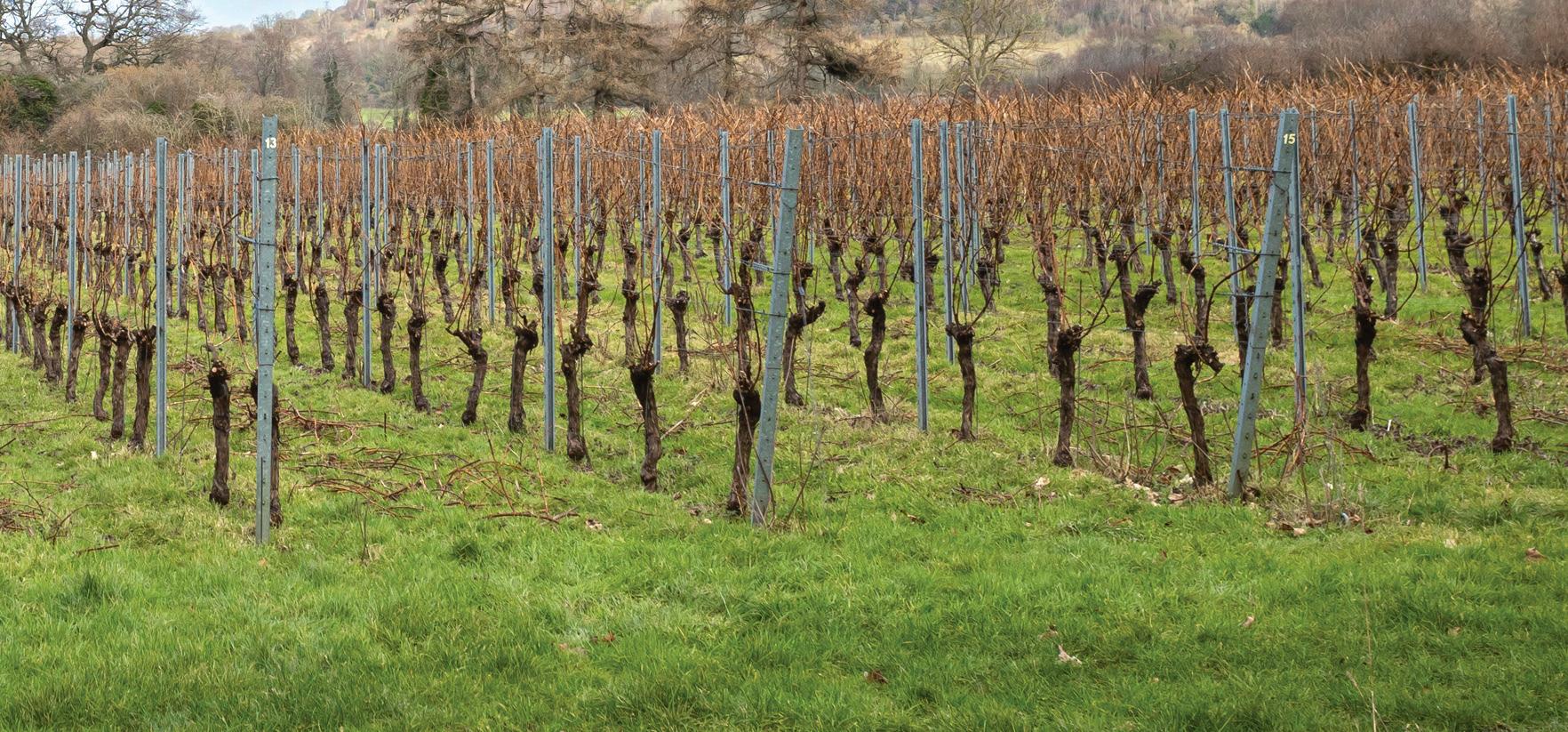
days with 60 to 70 volunteers per day. Many of the volunteers return year on year to take part and each day finishes with pizza and wine in the courtyard restaurant. “We use the white chalk that football referees use to indicate where in the row the pickers should stop as the varieties change mid row,” Will said with a smile.






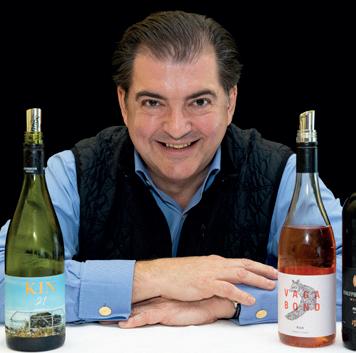


WWW.SOUTHEASTFARMER.NET | MARCH 2023 29 TO ADVERTISE CALL 01303 233883
<< AS FEATURED IN MAGAZINE VIN E YAR D For Growers & Winemakers in Great Britain
November 2023 Kent Event Centre, Detling, Maidstone,
3JF Head to vineyardshow.co.uk for more information Sponsored by In association with Vitifruit Equipment Sales and Hire CLOUD AGRO LTD Organic Nutrient Recycling
“Quality and yield will deteriorate if no soil amendment is done postharvest and at budburst, as every tonne of fruit produced removes vital nutrients responsible for the movement of water and energy in the plant.” THE NUTRIENT SIGNATURES FOR U.K. TOP FRUIT AND VINES www.cloudagro.uk.com (07543) 265454 SOIL HEALTH SMART FEEDTM use organic fertiliser + soil conditioner: PREPARE BEFORE PLANTING BOOST AFTER BUDBURST REPLENISH POST HARVEST
2023
22nd
Kent ME14
FUTUREGRO
NEWS FROM THE VINEYARD
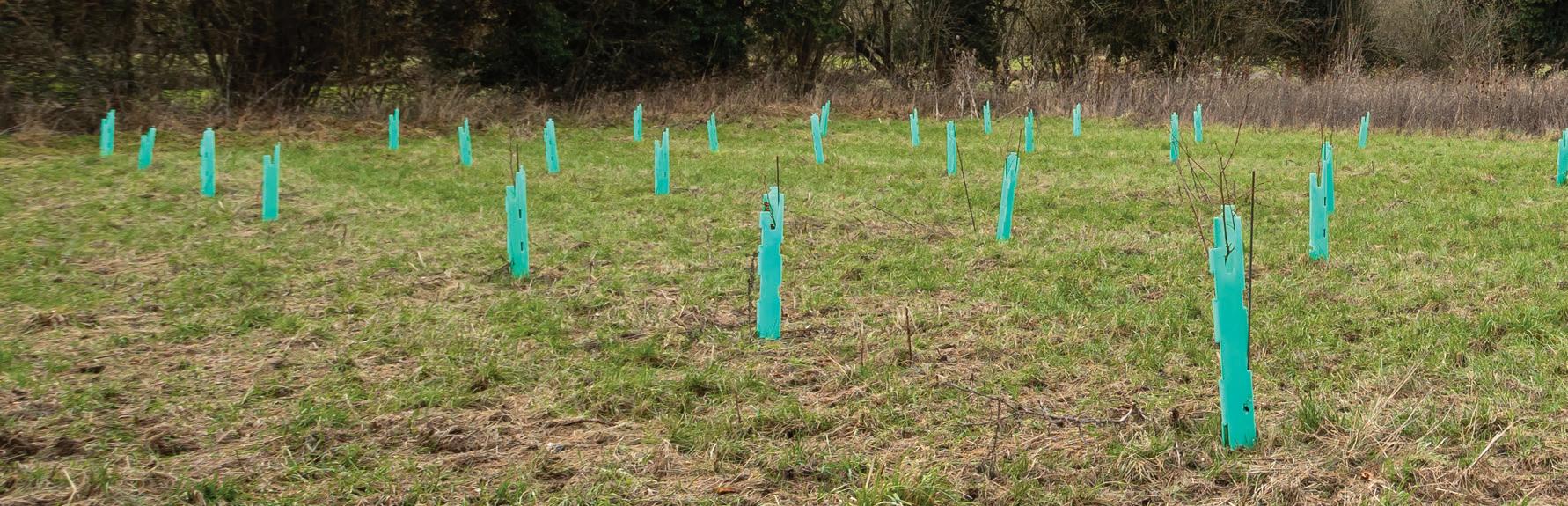
<<
The estate has very little problem with pests although the red varieties are netted to prevent predation by birds, but there does not seem to be a major threat in the area. Simon pointed to the fact that there are a number of birds of prey in the area which provide enough protection for the grapes and only one of the four plots has ever suffered from deer damage. The fruit is sent to Litmus Wines in Dorking
and the 25,000 bottles produced are all used by the estate. One of the label designs for The Mount Vineyard features a large key in the design. Simon explained: “When I bought the house I found a box of keys; some of them were modern and some were intricate and old. Some of the locks were possibly part of old outbuildings that were no longer on the estate and some were keys to doors that are still part
of the house. Keys denote all sorts of ideas and possibilities and I wanted to capture this in the label design.” Celebrating the birth of their first child Ellie, Simon and Sarah released a 2017 Rosé with a special label and other labels are now part of The Mount Vineyard offering. The estate produces a still Bacchus and a Pinot Blanc alongside traditional method sparkling. Recently both the Sparkling Red (2015) and Sparkling White (2016) were awarded silver medals at the ‘IEWA 2022’. The production of a sparkling red is a break from the norm and can be quite controversial, but Simon pointed out: “By the time it received the award the sparkling red was already sold out.”
Just a short walk from the vineyard sits a lovely local village pub. The pub, dating from the 15th century, was previously part of a large chain and had not seen much investment, so in 2020 Simon and Sarah decided to purchase the pub and after a refit covering a period of two years it reopened as The Samuel Palmer. “This is the name of a local landscape artist who was featured at the Royal Academy,” said Sarah. “The interior design of the pub has been influenced by his painting and the walls of the pub are adorned by pictures of the artist himself alongside his thoughtful depictions of the local scenery. “There is a walk that starts and ends in the village called ‘The Landscape of the Landscape Artist,’ added Simon. The pub has a lovely atmosphere and there is the possibility that in the future it could offer guest rooms but for now Sarah and Ellie really enjoy their trips to the Samuel Palmer.

Sarah, who grew up in Ireland, admitted that living on the estate is fantastic and that her dad, who is a horticulturist, always enjoys his visits and makes useful suggestions during his stay.
There are significant possibilities for the businesses to have unusual synergies. Starting

MARCH 2023 | WWW.SOUTHEASTFARMER.NET 30
small, all the wreaths used for decoration on the estate make use of the prunings from the vines, but other synergies present themselves. The orchard apples are used in the pub and restaurant menus. There is also a walnut grove, but although the grapes don’t tend to suffer from pests, protecting the walnuts from predators such as squirrels has proved a challenge, as anyone who has one of these beautiful but prone trees will tell you. There is also a recently planted hazelnut grove that has been pre-inoculated to provide truffles. “We will be able to produce and use the truffle oil































































































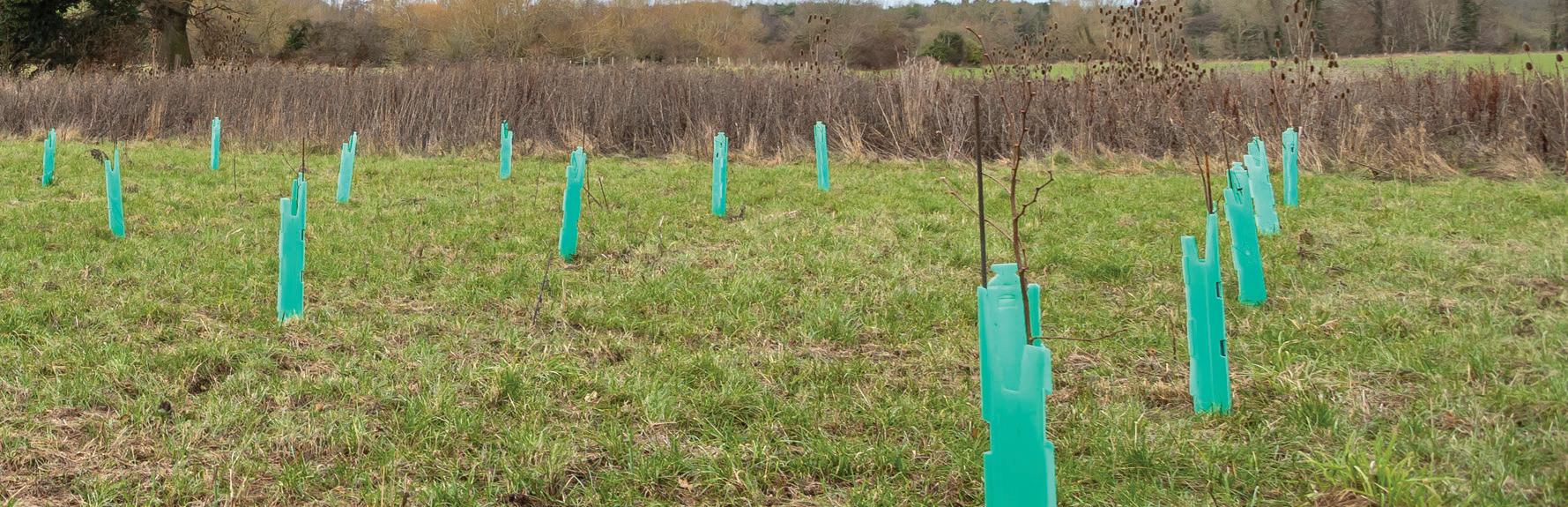
in the restaurant and pub,” explained Simon. This fascinating and unusual project will take seven years to mature but the ability to use locally sourced ingredients has become a part of the ethos at The Mount Vineyard and it will be interesting to see both this project and others develop. At The Mount Vineyard the artistry of wine dovetails with culinary creativity and, like the picture perfect backdrop, is constantly evolving whether depicted on canvas or captured and bottled. Each presents a past moment in time that can be enjoyed into the future.

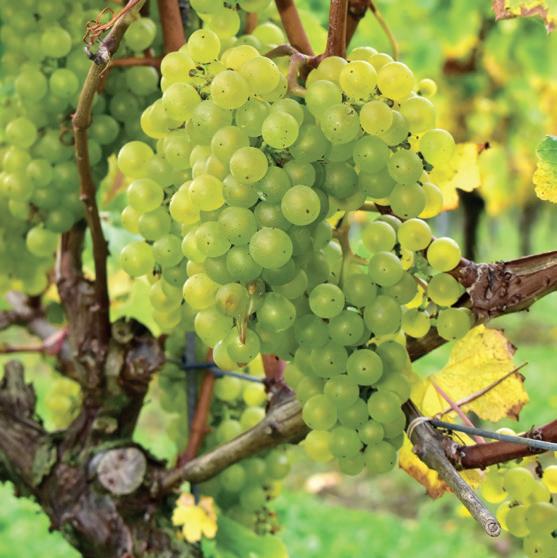

















































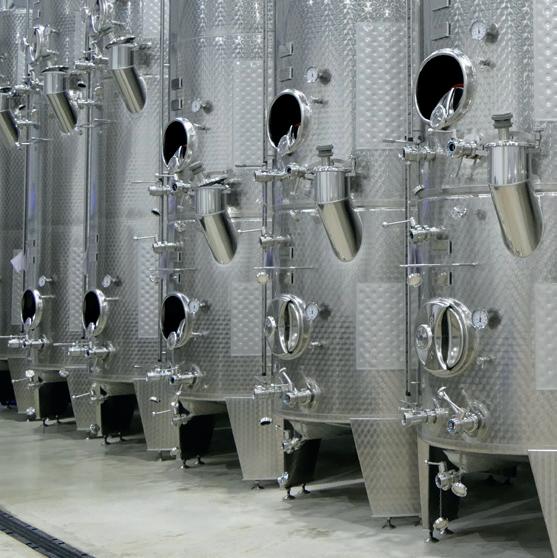




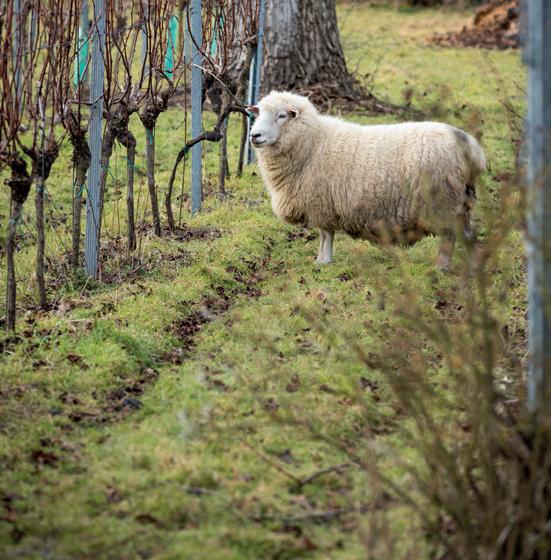









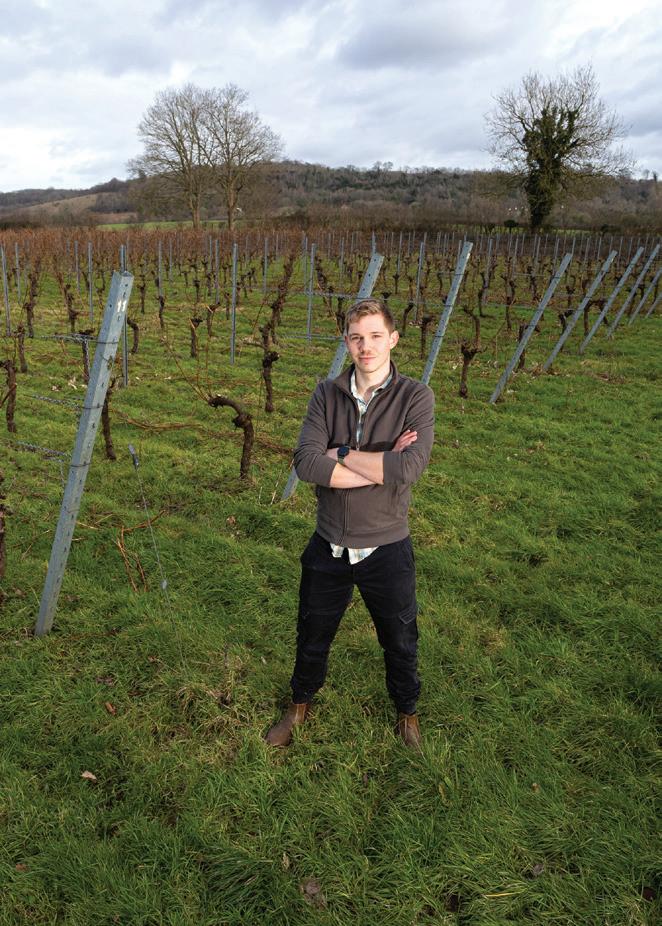
WWW.SOUTHEASTFARMER.NET | MARCH 2023 31 TO ADVERTISE CALL 01303 233883
AS FEATURED IN MAGAZINE VIN E YAR D For Growers & Winemakers in Great Britain THINKING OF GETTING INTO VITICULTURE? Why not subscribe to Vineyard magazine? Visit shop.kelsey.co.uk/subscription/VIN LAND & PROPERTY CONSULTANTS Expert advice for viticulture: Site-finding Sales & acquisitions Planning applications Environmental schemes & grants Call us on 01892 770339 Matthew Berryman 765323 matthew@c-l-m.co.uk The Mount Vineyard sits in a quaint and beautiful landscape that is a painters idyll. MARCH 2023 The art of wine INSIDE Fast track to the best equipment When fungus attacks Matthew Jukes selects three wines that use carefully chosen words VINEYARD MARCH 2023 Vineyard03Mar23.indd LAND & PROPERTY CONSULTANTS Expert advice for viticulture: Site-finding Sales & acquisitions Planning applications Environmental schemes & grants 01892 770339 Matthew Berryman 07710 765323 matthew@c-l-m.co.uk INSIDE Event buzzing with enthusiasm Keeping ahead of the game Sampling English wine The Grange Winery in Hampshire is a place where past, present and future are inextricably linked. JANUARY 2023 Past, present and future Vineyard01Jan23.indd LAND & PROPERTY CONSULTANTS Expert advice for viticulture: Site-finding Sales & acquisitions Planning applications Environmental schemes & grants Call us on 01892 770339 Matthew Berryman matthew@c-l-m.co.uk INSIDE Frost protection Introducing our new columnists Matthew Jukes looks at some incredible wines that catch the imagination Visiting a vineyard on the site of a medieval abbey FEBRUARY 2023 Agreeable symmetry VINEYARD CONSULTANTS Vineyard sales & acquisition Planning applications Business plans Environmental schemes Grants Matthew Berryman 07710 765323 matthew@c-l-m.co.uk 38 showpagepreview CLAIM YOUR FREE TICKETS INSIDE Machine harvesters are shaking it up Matthew Jukes thinks “There’s gold in them thar hills” Deep connection At charming Mountfield Winery grapes go from vine to bo le without travelling o site. NOVEMBER 2022 Vineyard11Nov22.indd 20/10/2022 VIN E YAR D For Growers & Winemakers in Great Britain
Estate Manager Will Lewis
POLICY SHAKE-UP
Farmers need to focus on what they can do to replace the income provided by BPS. Funds released by DEFRA are being redirected to a suite of new schemes and grants. Not all of them will be relevant to you, but it is important to keep abreast of what is available and whether or not it makes sense on your farm.

We already have the Countryside Stewardship Scheme (CSS), which has been given a recent overhaul with increased payment rates and additional options. The scheme will eventually replace Local Nature Recovery as part of the Environmental Land Management scheme (ELMS).
New standards will be released in June for the Sustainable Farming Incentive (SFI), with further standards due to be rolled out in 2024. The different levels have been dropped and the 'pick and mix' approach allows greater
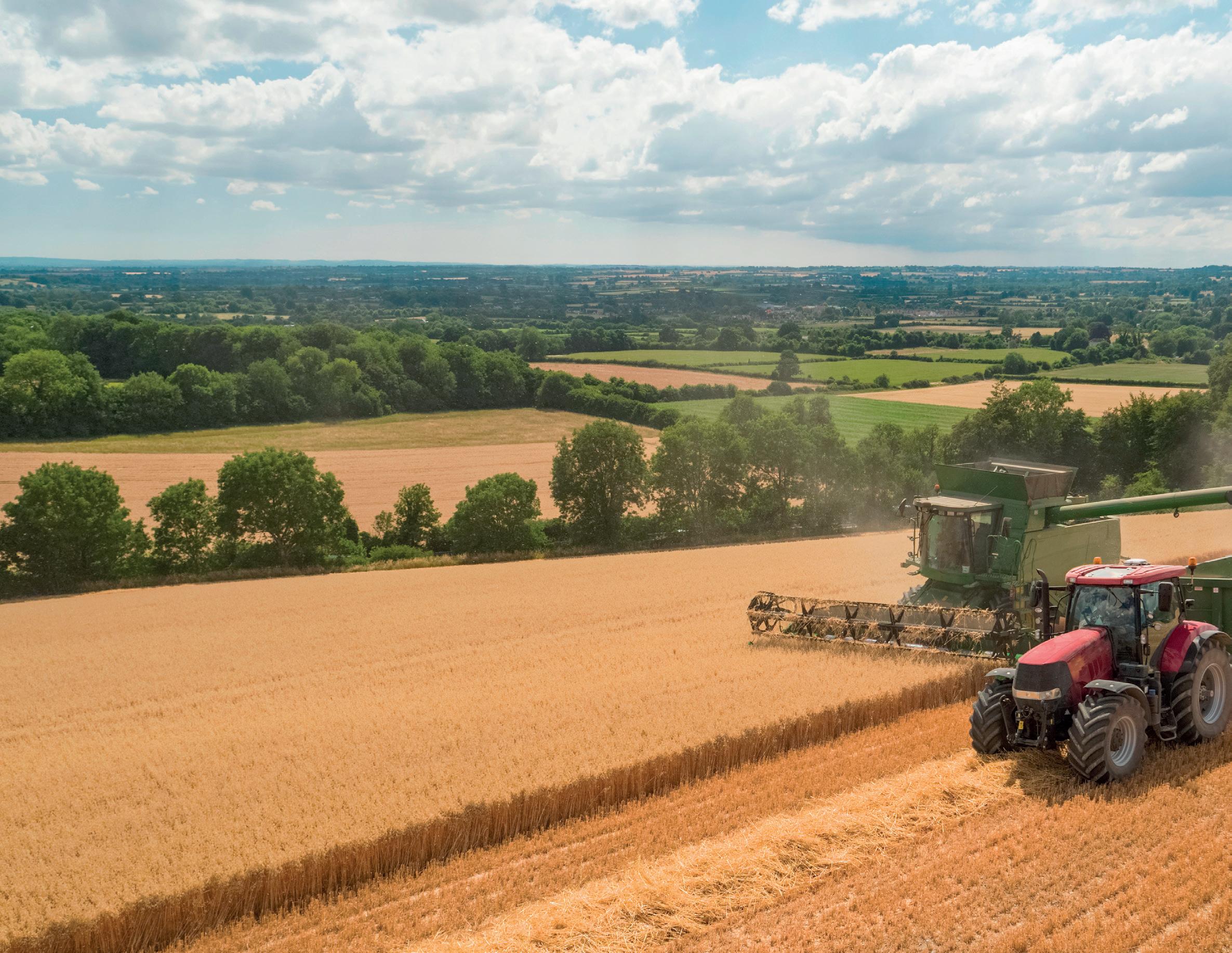
flexibility to help actions with existing farm systems and practices.


A key funding priority is improving farm productivity and grants to help farm businesses adapt to changes in legislation and aimed at improving efficient agricultural production.
Here we take a look at some of the key grants currently available and due to be launched over the coming months:
FARMING TRANSFORMATION FUND
Available as part of the Farming Investment Fund, this grant is split into four themes: improving farm productivity, water management, adding value and slurry infrastructure, each with specific aims and objectives. Grants under this scheme are for larger scale capital projects designed to aid businesses to invest for the future.

The most recent grant to be released, the Slurry Infrastructure Grant, is aimed at providing additional slurry storage on farms. We have been busy advising clients for this fund and have so far been successful in assisting clients with the initial application stage, all of whom have been invited to submit full grant applications which we are currently helping to progress. As an example, under the adding value theme we are looking at a grant for food processing facilities.
FARMING EQUIPMENT AND TECHNOLOGY FUND
For smaller items this useful grant, which is the second half of the Farming Investment Fund, provides funding for one off items including direct drills, mobile sheep handling systems, electronic identification reading equipment for sheep and heat detection
MARCH 2023 | WWW.SOUTHEASTFARMER.NET 32 FARMING REVIEW MATTHEW SAWDON MRICS FAAV Director E: matthew.sawdon@hobbsparker.co.uk THOMAS HAMPLETT MRICS FAAV Chartered Surveyor E: thomas.hamplett@hobbsparker.co.uk T: 01233 506201 www.hobbsparker.co.uk
The UK agricultural sector is undergoing the biggest policy shake-up in 60 years with the Agricultural Transition well underway in England. Next year’s BPS payments will have at least halved from their former level.
collars for cattle. Our team has been successful in obtaining many items on behalf of clients. The second round of this grant opens in late February. Additional items have been added for this round, with grants of between £1,000 and £25,000 available for eligible items.
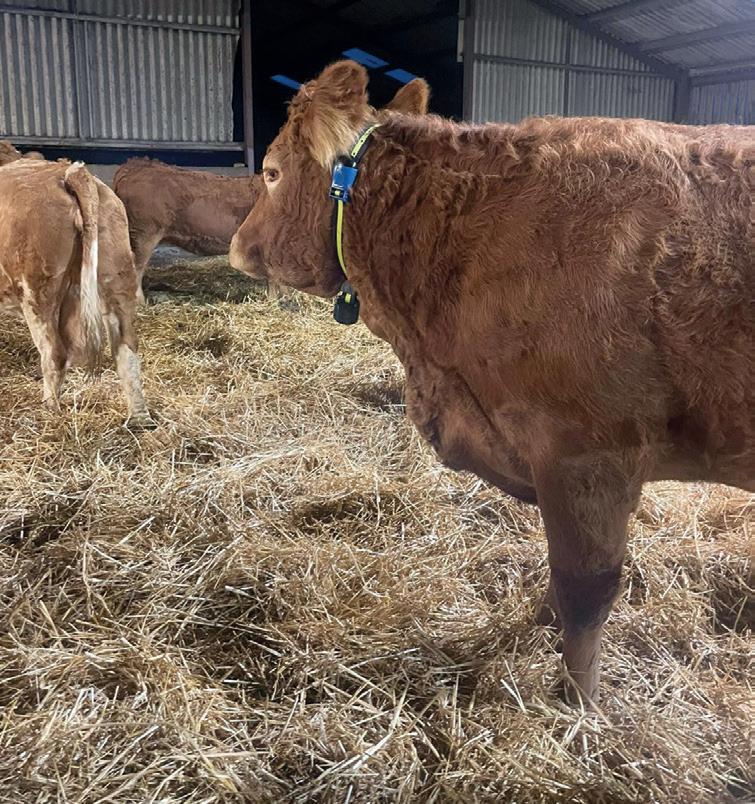
FUTURE FARMING RESILIENCE FUND

This fund was established to provide free support to farmers and land managers to assist with adapting to the changes during the first few years. The aim of the fund is to provide advice on the changes during the Agricultural Transition period, identify how your business could adapt to reflect the changes and give tailored support and advice specific to your business.
RURAL ENGLAND PROSPERITY FUND (REPF)
Diversified incomes are very much a hot topic at the moment. A useful grant will be the Rural England Prosperity Fund (REPF), which is a £110m fund to provide investment to help boost rural businesses and upgrade community facilities. The fund is likely to offer grants to convert farm buildings to visitor accommodation or event spaces. The fund will be available from April 2023 to March 2025 and will be delivered through local authorities.
FARMING IN PROTECTED LANDSCAPES
The fund will run until March 2024 and is available to farmers within AONBs and National Parks. Grants are available to support projects which help with nature recovery or climate change, provide opportunities for people to enjoy the landscape and improve existing natural features, such as hedgerows. Grants of up to 100% are available, but are generally between 40% and 80% where there is a commercial benefit.
Grants and funding are unlikely to replace income lost from BPS. Cost savings, such as ensuring your rents are in-line with market conditions, may be part of the solution. This special farming review covers other opportunities for farmers, including the emerging biodiversity net gain market, carbon sequestration, woodland grants and ELMS. With government policy announcements picking up pace and new markets emerging, we have an experienced team to assist you and your business. Please get in touch.
FARMING REVIEW
34
FINDING THE INVESTMENT TO ACHIEVE THE VISION
Nigel visits J&H Robinson (Iford Farms) Ltd, a privately owned 1,200 hectare mixed farming business. He finds out more about the 30-year estate vision.
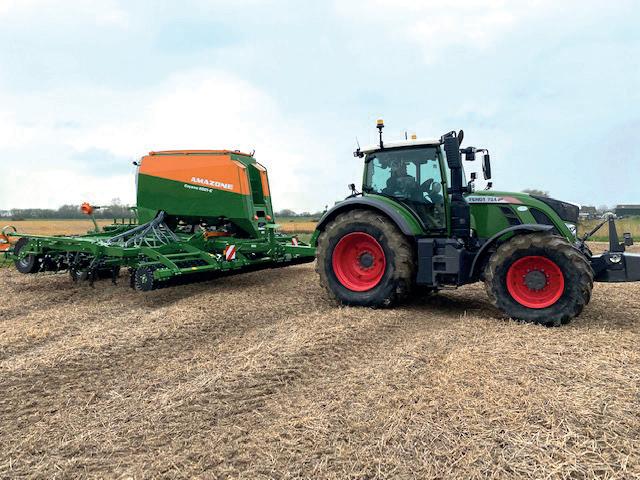
39
WOODLAND CREATION CAN HELP YOU GENERATE INCOME
There is a range of grants and support available from the Forestry Commission and its partners to help with the costs of woodland creation.
40
RENT REVIEW
Whitehead Monckton look at the ways rent reviews can be calculated
41
HOW SHOULD FARMERS REACT TO DEFRA'S ELMS ANNOUNCEMENTS?
CLM Farm and Environment Consultant Kevin Jay shares his view.
42 GO YOUR OWN WAY: FARMLAND RIGHTS OF WAY
43
SPRING CLEAN YOUR LEGAL AFFAIRS Succession planning – Brachers look at what your farming family needs to know
44
SOMETHING REALLY FUN Looking for some fun things to do with the family? Why not head to Hadlow for this year’s lambing event.
45
A DIVINE ART
Professional water diviner/dowser John Baker gives a background to this fascinating profession.
TO ADVERTISE CALL 01303 233883
33
A direct drill secured for J W Goddard & Son, Romney Marsh, under the Farming Equipment and Technology Fund
A heat detection collar secured for NC & CG Hedges, Staplecross, under the Farming Equipment and Technology Fund
FINDING THE INVESTMENT TO ACHIEVE THE VISION
This month Nigel Akehurst visits J&H Robinson (Iford Farms) Ltd, a privately owned 1,200 hectare mixed farming business set in the South Downs National Park, near Lewes. He met up with managing director Ben Taylor to find out more about the 30-year estate vision and pioneering work to become a national pilot site for BNG (biodiversity net gain).

Turning off the busy A27 to Brighton onto the winding Kingston and Piddinghoe road, I arrive at the beautiful flint-walled village of Iford, situated at the foot of the South Downs. Arriving at the main Iford farm, I turn down a narrow lane past some grain stores and park up in a lovely old flint courtyard, the location of the modern estate office.
I meet managing director Ben Taylor and owner John Robinson. After a brief chat about The Leaky Buckets (the rock band John plays guitar in) and the new cycle path along the A27 (and their own network of cycle paths at Iford), John has to shoot off and leaves the two of us to chat about the estate and its pioneering biodiversity project.
“I’d like us to be mentioned in the same breath as Knepp or the work that Jake Fiennes is doing at Holkham Estate in Norfolk,” said Ben.

“Iford is becoming one of the places that people are talking about and it’s big enough to do it. We’ve got the vision and we know what we want to do it – it’s just finding the investment to deliver that. BNG will be one route, but there will be other routes as well.”
I learn that BNG stands for biodiversity net gain and is a principle that requires development projects to leave the natural environment in a better state than before. It involves quantifying the value of biodiversity in an area before development and then ensuring that, after development, the value of biodiversity has increased.
The goal is to maintain or enhance ecosystem services and biodiversity, explained Ben, adding that from November it will be a statutory requirement for all development under the Environment Act. At the moment it is quasi-mandatory, he added, with developers beginning to purchase BNG units or think
about their pipeline for applications going forwards.




BNG is something Iford has been working on for a number of years. It all stems from a long-term vision and commitment to the landscape, a philosophy that is at the heart of Iford’s estate plan published in 2018.
“It’s the scale of BNG that’s attractive to the authorities and developers,” said Ben.


“It’s designed to make development more palatable; you’ve lost a field here but we’re enhancing the field over there and they’d much rather 1,000 trees were planted in one field than one tree planted in 1,000 fields.
“It’s about landscape-scale restoration and is all part of the vision DEFRA is working towards. There’s not a huge amount of environmental benefit from having one tree in the corner of a field – that’s what stewardship is for,” he said.
“But this whole estate, whole landscape

MARCH 2023 | WWW.SOUTHEASTFARMER.NET 34 NIGEL AKEHURST VISITS: IFORD FARMS
Ben Taylor
approach is different. When we go up on the hill you’ll see it. We farm the landscape and that’s important for BNG,” he added.
I ask how much one BNG unit is worth.
“It’s a new market, with values varying from £9,000 to £25,000 per unit,” he replied.

It’s also not a decision to be taken lightly, he warned.
“You’re committed to a 30-year term and to delivering the habitat which you’ve said you’ll deliver. If you promise to deliver chalk grassland and it’s not chalk grassland, that’s not okay, so you have to be careful not to be overly ambitious, as these agreements end up on the deeds as a restrictive covenant or section 106,” he said.
The key is your habitat management plan, he explained, where you set out your intended management over the next 30 years.
“You have scope to adjust it because, of course, over 30 years the climate is going to change, but you still have to deliver what you’ve said you’ll deliver,” he said.
Agreements are complex, and as yet no template exists, which means expensive legal agreements involving the developer and the local planning authority (LPA). There is also a lot of preparatory work and upfront consultant fees and ecologist fees, he said, though they have been lucky that DEFRA has helped fund some of it.
To develop these plans Ben has been working closely with Anthony Weston and Harrison Anton from CLM on an ongoing basis, and they are on the phone to each other most days, he added.
In addition to the baseline BNG habitat surveys to identify what areas of existing habitat there are, such as the number of hectares of arable, grasses, scrub etc, the estate has spent the past few years doing a lot
of species surveys, bird counts and bio blitzes.
The ecologist Graeme Lyons spent several days on the estate and found thousands of species, often in small pockets, he explained. In time Ben would like to create more of these types of habitat and join them up.

“I would like us to become a little reservoir of biodiversity that can then spread to our neighbours and on into the wider landscape,” he said.
To promote the project the estate has launched a dedicated website at www.ifordbiodiversityproject.co.uk where there is more information.
FARMING REVIEW
FARM FACTS
• 1,200 hectares, almost all owned plus some contract farming
• Farm Castle Hill National Nature Reserve for Natural England
• 800 hectares of arable (conventional rotation of wheat, barley, rye, oats and some peas for Birds Eye)
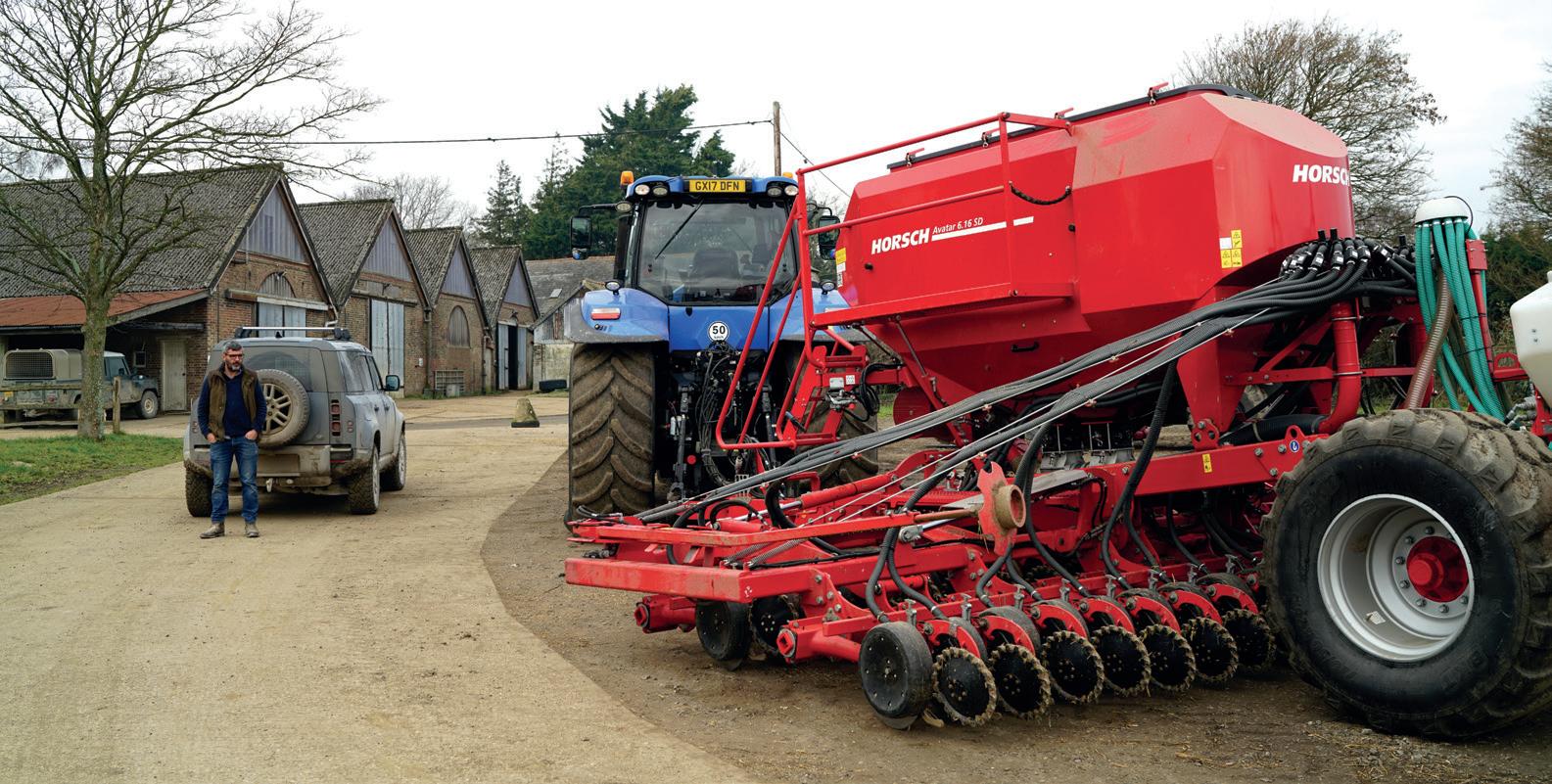
• Remaining 400 hectares is grass or wasteland of various sorts
• All the grassland is in Countryside Stewardship, some of it for breeding waders, some of it for wintering waders
• 140 cows, with No Fence collars to control grazing
• 12 self catering holiday lodges established in 2018
• Fishing lakes
• Light aircraft strip rented by aero club with 13 aircraft
• Commercial office lets, workshops and storage units in redundant farm buildings plus some houses
• Two commercial shoots
• BNG
• Four full time farm staff and 16 estate staff
WWW.SOUTHEASTFARMER.NET | MARCH 2023 35 TO ADVERTISE CALL 01303 233883
>>
NIGEL AKEHURST VISITS: IFORD FARMS
Having completed all their habitat surveys and metric calculations, the business is now in a position to offer over 3,000 BNG units in a variety of habitats, said Ben. With their habitat management plans written and final consultations with stakeholders in progress, they already have a number of promising leads with developers in the South East and aim to create an initial habitat bank of 25 hectares of grassland this spring, with further, larger tranches created as demand develops.
I ask Ben if he thinks BNG will replace the income lost from Basic Payments.
Ben thinks it will, but believes it’s important for landowners to consider what the farm's agricultural output would have been over 30 years and what the opportunity costs are of doing it.
“We struggle to budget the wheat price six months ahead, let alone 30 years. And what other crops might you be growing in 30 years’ time? It could be an 800-hectare vineyard. You have to build into the price the opportunity costs that you forego,” he said.
Another market that is beginning to open up is Environmental and Social Governance (ESG), said Ben. In the same way that corporates have to do their carbon audits, they will also now have to do their biodiversity audits, he explained.
“So rather than selling BNG units, we can sell biodiversity units, which we believe we
can measure, using metrics provided by international organisations, and then sell the uplift.”

<< were just glad of any grass, so we haven’t properly put that to the test yet,” he added.
Ultimately, there’s a lot of appetite from the private sector looking for somewhere to put money. It’s just joining the dots and getting over the line, he said.
One potential pitfall is the tax implications, which HMRC are working their way through. One big question is whether you’re still viewed as farmers or are seen as an asset manager. Ben believes that because they are still managing the delivery of the BNG they are still land managers, although this hasn’t yet been fully tested. He also said there were potential capital gains tax issues, which they are working through.
FARM TOUR
With my head spinning from a crash course in BNG and keen to get some fresh air, we jump in Ben’s new Defender and head on up the hill to see the farm’s suckler cows grazing. Ben explained that they managed to get Farming in Protected Landscape (FIPL) funding to pay for 140 No Fence collars to enable them to carry out better conservation grazing.
“In the winter we can save on electric fencing and in summer they are on the chalk grassland, where we can concentrate the grazing on the bits that are getting a bit rank and keep them off the flowery bits,” he said.

“Although last year with the drought we

With the exception of the odd one crossing the boundary but quickly coming back to its mates, they’ve never had a breakout, he said. This summer they also hope to use the collars to trial some mob grazing down on their brooks.
Ben also pointed to a rough bank, which he said had some nice chalk grassland but is too steep for the cattle. He hopes to use some funding from the Changing Chalk partnership to buy 30 sheep collars to improve the grazing this year.
Arriving at the top of the Downs, Ben points out the boundaries of their land in the far distance.
Since it’s a slightly misty day, I can just about make out the white cliffs at Lewes and the large expanse of low lying brooks (large parts of which are still underwater) in between. It’s an impressive landscape.
HISTORY
Heading back down the hill to visit some of their farm diversifications, Ben explained a bit more about the history of the estate, which was founded in 1895 by John’s grandfather Joseph Colgate Robinson, who came from a Quaker family of farmers and millers.
He became a notable breeder of pedigree Dairy Shorthorn and Guernsey cattle and was a pioneer of tubercle-free milk production.
MARCH 2023 | WWW.SOUTHEASTFARMER.NET 36
FARMING REVIEW
Joseph established a successful retail farm-bottled milk businesses in Hove and in Norbury, South London. The Dairy Shorthorn herd was the largest and best known in the country during the period from the twenties to the fifties and at one time held two world milk production records for any breed.
Over the years he gradually built up the estate, purchasing farms as they became available, and by the Second World War owned all of Iford and Rise Farm and was renting Perching Sands Farm at Fulking and Houndean Farm at Lewes.
He had also set his elder son Harris up independently at Northease Farm. In 1941 the firm of J & H Robinson’ was incorporated as J & H Robinson (Iford Farms) Ltd.

During the war his younger son Henry (HCR) was managing the farm at Perching Sands, but on his marriage in 1944 he moved to Iford to manage the farms for JCR (who had moved to live with his family in Newick in 1922).
In the period after the war there were 50 members of staff growing cereals and producing, bottling and selling milk. A pedigree bull was sold each week around the world and in the Dig for Victory campaign all the land that was ploughable on the hill was sown with cereals.
JCR died in 1962 and HCR continued modernising the farm in an effort to improve productivity and reduce labour costs. He introduced milking parlours at all four Iford dairy herds and drained all the wet marshland, known as the brooks, to grow cereals. He also upgraded from Dairy Shorthorn cattle to higher yielding Red and White Friesian cattle.
His son John (JHR) joined the business in 1970 when there were 35 members of staff. The dairy herds were continually expanded until at one point 650 cows were being milked in five units and they had the largest herd of Red and White Friesians in the country.
HCR retired in 1987, the tenancy at Perching Sands Farm was given up and Houndean Farm was bought. Ben Taylor joined the staff as a student in 1997. Dairy farming became
increasingly unprofitable during the latter part of the century and the final herd was sold in 2003.
Ben Taylor became JHR’s assistant manager in 2002 and was appointed managing director in 2008. Swanborough Farm and the business of Greenwood and Son Ltd was bought in 2014.
FARM DIVERSIFICATIONS
Ben explained that farm diversification is becoming an increasingly important part of the business and an area of expansion in the face of falling farm revenue. Their holiday accommodation site, Swanborough Lakes Luxury Holiday Lodges, has 12 lodges which opened to the public in 2018.
“It’s been a really successful venture ,”said Ben, adding that they had a year-round occupancy rate of 95%. The lodges are high spec, architecturally designed buildings which were designed and built offsite by a firm in Newhaven before being delivered to their landscaped location overlooking fishing lakes (another Iford farm diversification).

Moving on, we stop outside one of their commercial lets - an old flint farm building that has been converted into offices, just one of a number of redundant farm buildings on the estate that has been converted into offices or workshops.
Another more recent farm diversification is a modern livery barn that has recently been completed, offering both DIY and assisted horse livery. Other farm diversifications include a party field for weddings (which is managed by Ben’s wife and friend) and an airstrip which is let out to an aero club.
REGENERATIVE FARMING
On the farming front, the past few years have seen a move to a more regenerative approach. With rising input costs, they have been focusing their cropping efforts on their very best grade two land, using a no-till drill and cover crops to improve their soil health and reducing their application of fertilisers, pesticides and herbicides.
In the past few years they moved to selling store animals rather than finishing when Ben realised there were people in the midlands who were buying carrot tops or waste bread for next to nothing (often just the cost of the transport) and decided it was better to sell direct to them rather than grow their own silage and maize.
They now sell straight to finishers, depending on their TB status (they are in a TB hotspot but thankfully are clear at the moment). They are also in the process of building up their herd of Sussex cows again as they are better suited to their more extensive grazing system.
In recent years they have also created a modern farmyard with a state-of-the-art grain store and adjacent cattle yards, allowing them to continue to repurpose older barns for diversification.
Ben said a lot of the success of the estate was down to its people. There are four fulltime and two part-time staff on the farm side and 16 staff across the estate, covering everything from building maintenance to farm diversifications.
“It’s a fun place to work and I love the variety of the job,” said Ben, who originally studied chemistry before realising he didn’t want to spend his life in a lab and joined the farm as a student. He then took up an assistant manager's position to John some 25 years ago and the rest, as they say, is history.
THE FUTURE
Before heading home I ask Ben what his goal is for the future.
“We want to be known as an exemplar landscape scale nature recovery project. That doesn’t mean we are giving up farming.
“Our best land will stay as arable and the rest of it will still be farmed, but the environment becomes the main driver and the grazing of livestock is to facilitate the environmental goal,” he replied.
He paused and then added: “It’s not rewilding, but it’s becoming wilder.”
WWW.SOUTHEASTFARMER.NET | MARCH 2023 37 TO ADVERTISE CALL 01303 233883
Make money by planting trees
Tree planting can complement your farm business, giving you the chance to diversify, generate extra income, increase farm productivity, and enhance your land.
TIMBER




CARBON UNITS




WOODFUEL







LEISURE ACTIVITIES
IMPROVE SOIL QUALITY






SUPPORT BIODIVERSITY
NATURAL FLOOD MANAGEMENT
PROTECT CROPS & LIVESTOCK
Grants and advice available now from the Forestry Commission and our partners.
Visit gov.uk/plant-woodland

WOODLAND CREATION CAN HELP YOU GENERATE INCOME
Woodland creation can help you diversify your business and generate reliable revenue streams while delivering environmental benefits that support your land management goals, nature, and society.
Generating income is dependent on a variety of factors including the size, type and composition of your woodland, as well as your overall objectives and local markets. Before planning new woodland it’s important to research local markets and understand the local demand for wood products.
There is a variety of ways in which woodland creation can boost your business’ revenue:
CARBON
By registering woodland with the Woodland Carbon Code (WCC) and the Woodland Carbon Guarantee, you can sell carbon units to the Government or on the private market from as early as five years after planting and help to offset your business’ carbon emissions.
Woodland creation projects can generate a generous return, with carbon prices ranging from £10 to £30+ per unit. Typically, woodland projects can produce in the region of 100 units/ha to over 500 units/ha over 100 years, generating anywhere from £1,000/ha to £15,000+/ha through the sale of carbon units via the WCC. You can find out more in our
USEFUL LINKS
carbon factsheet (see link below).
TIMBER
Growing timber to sell to the commercial timber trade can generate a reliable short- or long-term revenue stream.
The UK boasts a strong forestry industry, with well-established markets and specialist sawmills and processors that can cater for an array of timber types.* The best quality timber can be sold for sawlogs and converted into construction materials, while small roundwood can be sold for fencing, pulp and chipwood products.
WOODFUEL
Wood for fuel can be sold to local markets in the form of logs, kindling and well-seasoned firewood. Kiln-dried hardwood logs, split, bagged and certified ‘Ready to Burn’ can fetch premium prices, alongside split and bagged kindling.
RECREATION AND LEISURE
Woodlands designed for recreation and leisure can offer new and exciting opportunities to diversify. Woodland creation can create suitable habitats for game that could generate an income from shoots. Idyllic woodland settings appeal to holiday makers looking for camping and glamping experiences as well as sporting activities.
Woodland Carbon Code – www.woodlandcarboncode.org.uk
Woodland Carbon Guarantee – www.gov.uk/guidance/woodland-carbon-guarantee
INTEGRATING TREES INTO YOUR FARMING SYSTEM
Combining trees and shrubs with crop and livestock farming systems is known as agroforestry. This management approach can increase farm productivity, support nature, enhance livestock welfare and boost soil health.
Growing trees in between crops, otherwise known as silvoarable agroforestry, is between 10% and 14% more productive than monoculture arable systems.**
Integrating trees into the same area of land as livestock is known as silvopasture agroforestry. Silvopasture can increase soil health by capturing nutrients, limit soil compaction caused by animals and increase infiltration rates.* Trees can provide shelter for livestock, resulting in improvements to animal welfare and an increase in production.*
GRANTS AND SUPPORT
There is a range of grants and support available from the Forestry Commission and its partners to help with the costs of woodland creation. Visit www.gov.uk/planting-woodland to find out more.
*Soil Association. July 2019. The Agroforestry Handbook – Agorforestry for the UK – First Edition **The Woodland Trust, Spring 2015. The role of trees in arable farming

Woods and Carbon factsheet – www.gov.uk/government/publications/the-benefits-of-woodland-creation-woods-and-carbon
Woods Mean Business factsheet – www.gov.uk/government/publications/the-benefits-of-woodland-creation-woods-mean-business
39 TO ADVERTISE CALL 01303 233883
FARMING REVIEW
FARMING REVIEW
RENT REVIEW
Rent review clauses are incorporated into the terms of many leases to enable landlords to review and potentially increase the rent payable during the term of the lease.
The rent review dates will be stipulated within the body of the document and often fall on an anniversary of the date upon which the lease commenced. These dates should be borne in mind so that you can consider taking advice on what the potential change in the level of rent payable might be and to enable you to be in a good position to negotiate with the other party to the lease when the time comes.
Rent reviews can be calculated in a number of ways, including:
• Open market – the best rent that could be gained by the landlord in the open market for the premises being let by a willing landlord to a willing tenant on the review date
• Turnover – the rent review calculation being based upon the occupying business’ turnover
• Retail prices index (RPI) – where the increase in rent is determined by any change in the index.
A significant number of reviews are based on the current market rent (open market). Reference to the “hypothetical lease” will often be incorporated into a lease. The hypothetical lease term tends to be for the same period as the unexpired term of the lease at the review date.
Whether you are a landlord or a tenant, it is sensible to ensure that the terms of the hypothetical lease are clear and are as similar to the terms of the original lease as possible, or else it could be difficult for a valuer to decide how the rent should be determined.

Often, an assumption is that the tenant has complied with all of its obligations under the lease. A common disregard is that the rent calculation will be made without considering any works carried out by the tenant, save for those that they were obliged to undertake in accordance with the terms of the lease.
This is a point for careful consideration as, of course, any works undertaken by the tenant will be at their cost. They would also not want to pay more rent because of the improvements they have made to the premises.
It is common for a lease to stipulate that the rent can be agreed between the parties. Should there be any dispute, however, it is likely that the lease will set out a process for the matter to be referred to an expert who will proceed to determine the rent review. Often, the expert will be a member of the Royal Institution of Chartered Surveyors with a certain number of years of experience in dealing with the type of premises in question.
KAYLEIGH IRELAND
Associate Legal Executive
T: 01622 698064
www.whitehead-monckton.co.uk
The rent review clause should provide details of the basis upon which the rent will be reviewed, as well as the procedure to be followed by the landlord and tenant. There are various assumptions and disregards that will be noted within the rent review clause that will be relevant when rent review calculations are made.
It is important to pay attention to the detail of a rent review clause contained in a lease to ensure that it is suitable for the type of premises, for the parties involved and to avoid any future disputes as these can be costly.
Rent reviews are recorded by way of a rent review memorandum. The completed memorandum should be annexed to the original lease for future record. It is good practice to complete a rent review memorandum, even if the outcome is that the rent will not change.

MARCH 2023 | WWW.SOUTHEASTFARMER.NET 40
HOW SHOULD FARMERS REACT TO DEFRA'S ELMS ANNOUNCEMENTS?
CLM Farm and Environment Consultant Kevin Jay shares his view.
Recent weeks have seen the Government release more details about the Environmental Land Management scheme (ELMS).
Firstly, it was the improved payment rates for the Countryside Stewardship (CS) and Sustainable Farming Incentive (SFI) schemes and, secondly, a very... very long document (91 pages, if you were to press print) setting out a clearer picture for the additional strands of SFI yet to be introduced and announcing the concept of CS Plus.
DEFRA had already announced in late 2022 the scrapping of its proposed Local Nature Recovery programme in favour of a revamped CS scheme.
This at least delivers an element of stability. CS represents a tried-and-trusted scheme, with people knowing how the options work and understanding the application process. Better to have an adapted version of this than shift to a new and unfamiliar scheme that the Rural Payments Agency would have probably struggled to administer anyway.

It will also be enhanced, with about 30 additional actions available by the end of 2024, building on the more than 250 actions farmers can take at present. CS Plus will see incentives “for land managers to join up across local areas to deliver bigger and better results”.
There have, meanwhile, been some very encouraging increases to some of the annual and capital payment rates. Livestock fencing, for example, is now funded at £7.47/m, rather than £4.90/m.
As always, however, DEFRA seems to have been inconsistent in its approach. Take the payment for species-rich grassland, for example. If you’d applied back in 2014, you’d have got £200/ha under HLS. When CS was launched in its 2015 iteration, the figure was £182/ha, but it hasn’t increased since.
The payment for ‘very low input grassland’ – an option which doesn’t have the same environmental benefit – has risen from £95/ ha two years ago to £151/ha. The species-rich rate doesn’t even take inflation into account, so DEFRA is effectively saying it’s not as important as it used to be, but that doesn’t ring true with messages about how valuable this habitat is.
In terms of the SFI, six more standards will be introduced for this year, building on the three existing standards to improve soil health and moorlands introduced in 2022, for which almost 1,900 farmers have already signed agreements.
The new standards include payments for actions on hedgerows, grassland, arable and horticultural land, pest management and nutrient management – and eligible farmers and land managers in England will be able to apply from this summer.

Those signing up are also eligible for an additional £20 per hectare management payment on the first 50 hectares of an agreement. In other words, potentially an additional £1,000 on top of the existing rates.
I certainly hadn't previously been wowed by SFI, but at least there is a little more clarity now. A shame, perhaps, that years of ‘tests


and trials’ appear to have yielded very little and DEFRA has now opted for a rehash of CS management options to deliver the SFI standards that will be launched this year.
For many, it still makes sense to get a decent CS agreement in place initially (the deadline for mid-tier schemes starting 1 January 2024, is 18 August this year and the deadline for highertier schemes starting on the same date is 28 April). After that, you can take a look at SFI and see where you can tag that on (either now or as and when more information becomes available).



Clearly a lot of people have been taking this approach, as we were inundated with inquiries about CS in the opening weeks of this year.
The NFU responded to the SFI changes by acknowledging it represented a “broader and more flexible offer”. There again, a few weeks earlier it had dubbed changes to ELMS “too little too late”.
Ultimately, it might be that both observations are correct.
WWW.SOUTHEASTFARMER.NET | MARCH 2023 41 TO ADVERTISE CALL 01303 233883 KEVIN JAY CLM 01892 770339 Kevin@c-l-m.co.uk www.c-l-m.co.uk
Legal services for farmers & rural businesses
GO YOUR OWN WAY: FARMLAND RIGHTS OF WAY
Partly exacerbated by lockdown restrictions that saw people turning to rural areas for exercise, landowners are seeing record levels of traffic on rural footpaths and farmland which can cause a particular headache for farmers when it comes to protecting their land.
Rights of way have always been a complex and contentious issue for farmers and landowners across the country.
With springtime and the warmer months around the corner, it’s important that landowners are aware of the various options open to them when it comes to managing rights of way across their property and are able to mitigate any disputes that might arise.

KNOW YOUR RIGHTS
Owning acres of land and property doesn’t necessarily mean having an exclusive right to it. In most cases other people may have a right over the land that must be observed.
A right of way is a legal right to pass over someone else’s property, whether that’s across footpaths or private land. Understandably, these can have both legal and practical issues for landowners and their families.
Erecting signposts to explain where the right of way passes through is important and allows landowners to show where people can and can’t roam.
No clear signage could lead to members of
FARMING REVIEW
the public ambling anywhere across private land and causing a disturbance. If the public is allowed to cross a certain area of land for 20 years or more, a public right of way claim can be brought forward, creating a public right of access.

Members of the public and walking associations are entitled to make an application which, if successful, could result in landowners having control over part of their land taken away from them. In recent years, associations such as the Ramblers have been seeking to register new rights across historic private ways they find on the map.
STATUTORY DECLARATION
I advise each of my landowner clients to declare Section 31 (6) of the Highways Act with the local authority to acknowledge the presence of any existing rights of way that exist across their land and, more importantly, to prevent new rights from being established. The declaration lasts for 20 years and protects farmers against additional claims for private or prescriptive rights.
This statutory declaration is particularly important for farmers who have recently acquired new land, as well as those owners whose land is already being used by members of the public, as it allows more clarity and prevents future right of way applications.
If no rights of way exist on the land at all, declaring such is equally important to maintain the land’s privacy, allowing landowners to continue about their daily business.
DISPUTES
Rural and agricultural properties and estates often have boundaries that are not
clearly defined by physical structures. Disputes arise when landowners seek to clarify their boundaries or to understand the precise extent of land for which they are liable.
To determine the precise position of a property’s boundaries, people will often look to their title plan, either as registered at the Land Registry or found within the title deeds to the property.
In the case of registered properties, where the boundaries are not stated in the title register to be “determined”, there will be general boundaries only. This means that the red line on the title plan marking the boundaries of the property is for general guidance purposes only and is not determinative of the precise position of the boundaries. This is where disputes can sometimes arise, as the red line on title plans can – subject to the scale of the plan – appear to be several metres wide, not a helpful tool if seeking certainty as to the position of one’s boundaries.
Remedying boundary disputes will often require the involvement of both legal and surveying expertise. The issues involved go beyond purely legal arguments and the process of determining the boundary is not always simple, and usually requires expert surveying input.
Landowners should seek to take appropriate legal and practical steps to ensure their rights over it are secured for the future.
42
Sarah Jordan, partner and head of the rural estate team at Moore Barlow, discusses the rights of way issues troubling landowners and how to avoid future disputes.
Call us today or visit our website: 01227 763939 furleypage.co.uk
Spring is a time for starting afresh, so it’s a good time to get a plan in place to safeguard the future of your farm and ensure a smooth transition when the time comes to hand over the reins. So what do you need to consider when planning for the succession of your agricultural business?
LIFETIME GIFTS AND TAX IMPLICATIONS

Making lifetime gifts can often be a tax efficient way of passing on your estate to the next generation. A gift made seven years before your death is treated as exempt for inheritance tax purposes on your death. Certain lifetime gifts may also qualify for agricultural property relief from inheritance tax, subject to conditions. However, in the case of assets which are likely to increase in value (e.g. land with potential for future development), gifting while the value is low is preferable, regardless of the seven year rule. This is because it is the value of the gift at the time it was made that is considered on your death, not the value that the asset went on to achieve.
Bear in mind that lifetime gifts can also have unintended adverse inheritance tax consequences. For example, if a gift of land is made but you hold some of the land to harvest standing crop, this may constitute a gift with reservation of benefit; as such, the value of the gift could be brought back into the value of your estate when you die. Similarly, you should consider capital gains tax (CGT) which is charged on the difference between the base cost and the disposal value of certain assets.

HAVING A WILL IN PLACE
You may have specific wishes for certain aspects of your business, or for the distribution and division of land. This is all very well while you remain at the helm, but in the unfortunate event of your death, the only way to ensure that your intentions are carried out is by creating a legally binding Will. It is always advisable to review your Will every few years to ensure that it still reflects your wishes and any recent changes in
SPRING CLEAN YOUR LEGAL AFFAIRS
circumstances. Your Will is also an important tool to help mitigate inheritance tax.
LASTING POWERS OF ATTORNEY
A registered lasting power of attorney (LPA) for property and financial affairs enables your attorneys to act on your behalf. This means that, in the event that you lose mental capacity, they will be able to make decisions for you in a number of transactions such as signing documents, negotiating commercial contracts, making investments and transferring land. Without an LPA, the court will decide who should make decisions about your business. This can be a costly and time consuming process. It can also cause delays, not only in the day-to-day running of your business but also ongoing transactions such as the negotiations over purchasing or selling development land.
A separate power of attorney may be created dealing specifically with business assets, so that decisions regarding your private assets or accounts and those solely in respect of the business can be dealt with by different people.
PARTNERSHIP DOCUMENTATION
Having a partnership agreement in place can help reduce the impact on your business if you were to be incapacitated or in the event of your death. An agreement provides peace of mind that, if the worst were to happen, a mechanism
is in place to help your successor take over from you. For family partnerships this is usually invaluable.
Partnerships will also need to carefully consider the exit payment provisions within the context of their existing partnership agreements and consider any unintended adverse consequences and make relevant changes.
FAMILY INVESTMENT COMPANIES
Family investment companies have become a popular choice for individuals as a useful tool for tax and family wealth planning. A family investment company (FIC) enables you to pass on wealth to future generations in a tax efficient way. It is a corporate structure, controlled by a board of directors, which operates in a similar way to a discretionary trust. Profits are extracted via dividend payments. The formation of family investment companies was driven by a change made by the government in 2006 that made trusts a less attractive option to hold investment assets. The development of FICs were a solution for people who sought a better way to protect their wealth. A good solicitor can advise on whether an FIC is suitable for you.
Professional advice should always be sought when considering succession planning in order to take into account all relevant factors including the effect of any gifts or sales on the taxation of your estate during your lifetime and beyond.
WWW.SOUTHEASTFARMER.NET | MARCH 2023 43 TO ADVERTISE CALL 01303 233883 CHRISTOPHER ERIKSSON-LEE Partner and head of Private Client T: 01622 776465 E: christophereriksson-lee@brachers.co.uk www.brachers.co.uk
Maidstone | Canterbury www.brachers.co.uk Proud
Succession planning – what your farming family needs to know.
to be recognised for our agricultural expertise in leading directories, Chambers and Partners and The Legal 500
A “knowledgeable and responsive” team of “excellent solicitors who know their specialisms inside out”
SOMETHING REALLY FUN
Looking for some fun things to do with the family? Why not head to Hadlow for this year’s lambing event?
Spring is the time of the year when sheep give birth to lambs and Hadlow College takes advantage of the opportunity to raise awareness about the importance of sustainable farming and agriculture.
Thousands of new-born lambs are expected to be brought into the world this spring and there is no better way to be part of that magical experience than by visiting Hadlow College’s Lambing Weekend on Saturday, 25 March and Sunday, 26 March at Ashes Lane (TN11 0AN).
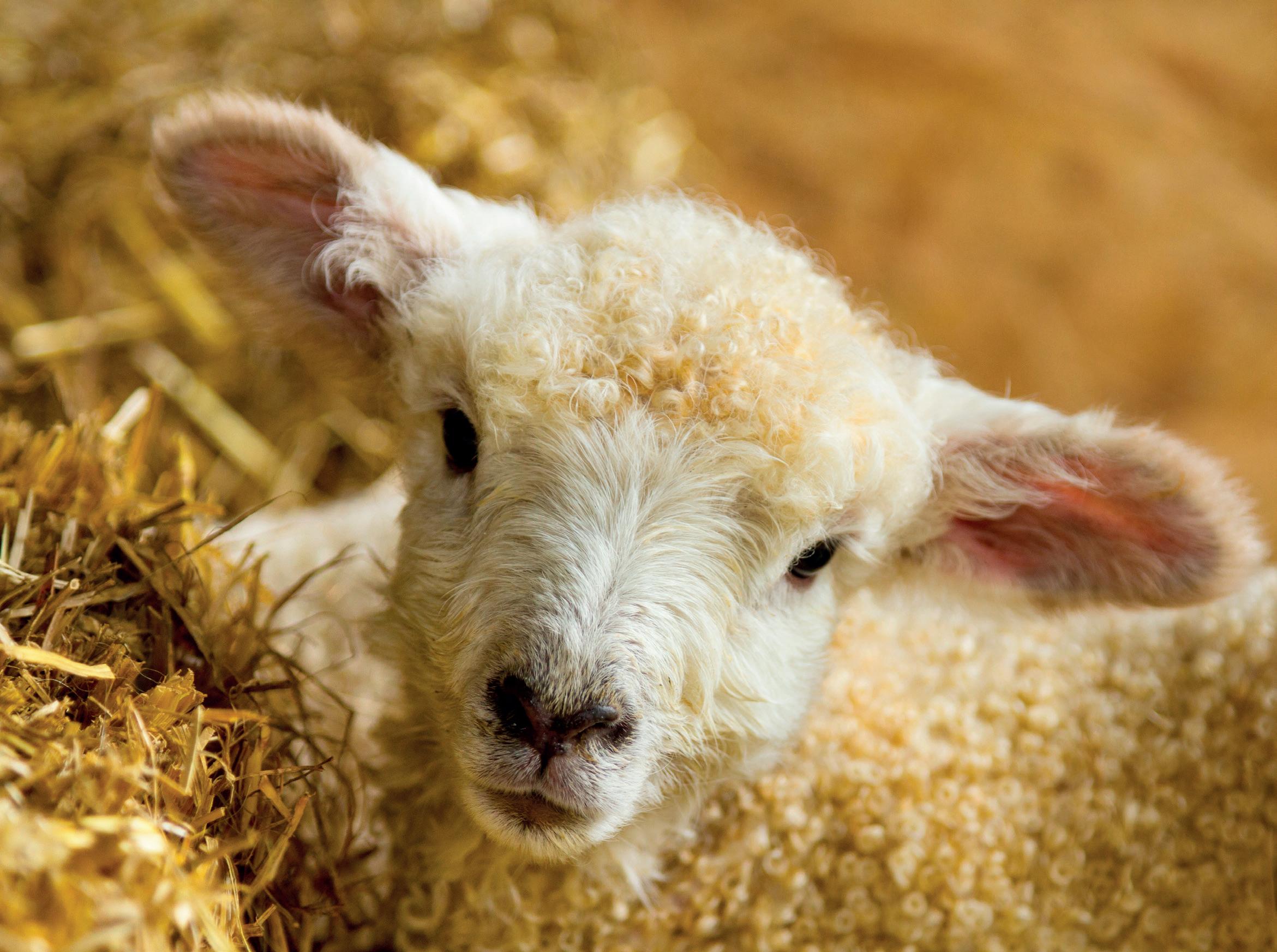
The fun-filled family event, which runs from 11am to 4pm on both days, offers a unique window into agricultural life and has a wide variety of activities in store for adults and children. Apart from the chance to witness lambing taking place, there are many other varied animals to see, as well as tractor trailer rides and digger challenges (weather dependent).
For those who enjoy seeing birds of prey and meeting llamas, pigs, ponies and goats they will all be at the event.
Hadlow College students will be conducting tours of the animal management unit and reptile welfare centre, where visitors can see reptiles, invertebrates and small animals, while lecturers will be in the lambing shed providing commentary during the day and answering any questions.
There will also be a chance to tuck into some of Kent’s best local produce at the different catering stalls selling hot and cold food.
Tickets at the gate for adults are £10 (17+). Children (two to 16 years) and concessions (over 65s and students with a valid ID) pay £5 while families (two adults and up to three children/concessions) can get in for £25. Ewe will enjoy the experience, so don’t miss out!
Please note – no dogs are allowed, except guide or assistance dogs. Pregnant women are advised not to enter the site as there is a risk to the unborn child of biological exposure from touching animals/animal faeces. www.hadlow.ac.uk/news-events/events
MARCH 2023 | WWW.SOUTHEASTFARMER.NET 44
FARMING REVIEW
A DIVINE ART
With droughts seemingly increasingly prevalent in the UK, the demand for water diviners increases every year, to the point where we are, as a group, starting to train up new people, which takes time.
Most farmers know or have heard about water divining/dowsing, but for those who are unfamiliar with the art, here are a few basic details.
We can, usually with a high degree of accuracy, give you the following information:
• Whether or not you have water under your land; not everybody does, and if we can’t find any, we have probably saved you a lot of wasted money in a search.
• The best or most likely spot(s) to investigate further.
• How deep the water is and the depth of the water flow.
• The rate in gallons per hour that the water is running through at that time.
• Whether the water is potable (potentially drinkable) or not.
Can you name a machine that can do all that and not damage the ground?
Water is becoming an expensive commodity. In the US and Australia, they actually trade water-bearing land on their stock exchanges, and in some instances farmers who need water are priced out of the market.

Finding leaks in pipes is another problem.
Despite protestations by some water companies, a lot of their operatives use it and keep dowsing rods in their vans, but of course they don’t cover private land, which is where we get involved.
Many people don’t even know where their pipes are to start with, and there are times when we go to a job only to be told that they have a leak but don’t know where, in a two mile stretch across fields, the pipe runs.
We do this work for industry, offices and even private individuals who have serious problems with their central heating; it is great fun trying to trace a leak over three floors.
People with wells that are ‘lost’ or should be there somewhere are another part of our work. Landscaping and building extensions don’t help the search. If wells are found they can they be brought back into use for watering the garden and such like.
Some people are also looking to go ‘off grid’ and know a water supply on their land would be useful. Rogue springs which just ‘appear’ often cause problems and clients sometimes need to know what can be done about them.
Basically, any professional water diviner can find anything under the ground if it’s there. I’ve been involved in looking for buried blue asbestos and, on one occasion, WWII ordnance.
Last year, after doing a complicated job, I asked the organisation if someone would write up a story from the client’s point of view, especially as I never know the thinking behind the decisions to bring me in.
Here is the start of the story:
“We are a large hospital complex and had discovered a severe problem with a costly water leak (600 gallons a day) which was getting bigger by the day. We knew that chlorine was present, so it had to be from the mains supply, but ours is a big site with playing fields and a multitude of buildings.
“Our playing fields are on a downward slope leading to a high bank which drops down to a pavement and a road. We could see water leeching from the bank but it covered a fair distance, so the real exit point was a mystery.
“The water could have been coming from anywhere and the area is so large that it would have been not only very expensive but damaging to the grounds, including mature trees, to bring in heavy machinery on a whim.
“After much discussion we decided to see if a water diviner could help. Scanning the Internet, we found one and, on agreeing terms, in due course John baker arrived on site. We had not seen a water diviner at work before, so it was going to be an experience.”
The rest of the story is on my website, together with pictures.
JOHN BAKER
T: 01322 525975
E: j.baker864@btinternet.com
www.johnh2obaker.co.uk
45 TO ADVERTISE CALL 01303 233883
Professional water diviner/dowser John Baker gives a background to this fascinating profession.
ELVED PHILLIPS ARABLE NOTES



WEAK STERLING CONTINUES TO ASSIST OUR EXPORTS





As we passed the first anniversary of the war in Ukraine, we all wondered if Russia intended to mark the event with something outrageous. A new spring offensive is expected when the weather improves, but with both sides dug into well-prepared positions, a continuing stalemate is likely. After all, Russia occupied the eastern areas of Ukraine in 2014 and they have failed to make a big push Eastwards since, so why would they now? Especially as Ukraine is much stronger now, thanks to the tactical weapons supplied by the West.
I’m sorry to say that all this is still very relevant to our grain trade. As I reported last month, we got back to price levels that were less than they were when the war started a year ago. Since then our wheat futures have regained about £20 per tonne and the world trade has carried on regardless of the war.
Russia has continued to export the cheapest wheat in the world at around four million tonnes per month using all of its ports, not just those involved with the safe corridor, but the exports using the corridor have fallen away since the corridor re-opened in November.
Whereas it used to take two days for a big boat to be inspected on the way in and out of the corridor, it’s now taking 30 days. With insurers withdrawing marine and war risk cover, it’s not surprising that Black Sea wheat is not so attractive. As I said last time, the UK is becoming a much safer supply option, certainly for destinations like Spain, Italy and Holland. This further reinforces my view that if we carry on exporting feed wheat at current rates we could run out in April or May. Of course we no longer know for sure what the UK export figures really are, but then do we even know what we started with?
We are still very early in the 2023 crop cycle. It will be six to eight weeks before most of the northern hemisphere crops emerge from winter. The now almost usual ‘Polar vortexes’ may have meant more winter kill on crops in Russia and Ukraine, lacking snow cover, but make no mistake, the war has meant that Ukraine has planted even less than its already much reduced 2022 crop.
When you examine its main grain producing areas, they are mainly in the east and south, bordering the main conflict zones, so any new offensive will make it very difficult for its large spring crop to be planted safely. I have previously highlighted the huge short wheat position taken by the hedge funds on the Chicago futures. It was 10 million tonnes; well recently they reduced that to six million tonnes short. Of course, that spiked the market, as it will when they have to buy back the rest. There is evidence that they are seeking to roll some of their short from old to new crop positions.
If any of the potential crop issues I have identified over the past three months materialise, that could be a very bad move. Weak sterling continues to assist our exports, especially as most of our wheat is being sold in Euros. UK barley remains a problem and an enigma. Even as wheat has improved in the past month, barley has gone the other way, widening the gap.
The Agriculture and Horticulture Development Board suggests that we started with a million tonne surplus, with about half of that exported by the end of December. That leaves a lot to liquidate before the new crop in July, as the largest exporter of malting barley, Openfield, has played its part, but even that market has ceased as we are much dearer than Denmark, which, like us, has a large surplus still to shift. The best hope is that when feed wheat increases in price, the greater differential to wheat will mean compounders switch back to including more barley.
On the plus side post Covid-19, China is beginning to wake up again. Its monthly soya imports have rocketed in the past two months. In December it imported 11 million tonnes; that’s 183 Panamax size boats! Their pork consumption is at a four-year high. Although the UK has no trading protocols with China, we could certainly do with them coming in to buy some big chunks of world barley.
It is ironic that Germany is reluctant to send its main battle tanks to help Ukraine. They were not so particular when their Panzers invaded Ukraine and Russia during operation Barbarossa in 1941!
MARCH 2023 | WWW.SOUTHEASTFARMER.NET 46
GRAIN STORAGE FERTILISER SEED T: 01264 321 595 www.openfield.co.uk
ELVED PHILLIPS Openfield
01825 705777 Unit 4, 72
Uckfield,
1QL
SALES SERVICE HIRE
We are a leading supplier and an approved repair centre With 50 years trading in the cleaning industry. With our strong ties and long term relationship with the leading manufacturers
Bell Lane
East Sussex TN22
enquiries@pressureclean.co.uk
FARMLAND VALUES SPIRAL
I’ve not bought or even bid for any farmland for 20 years. Throughout those two decades I’ve been convinced it’s overpriced. Could I have been more wrong?


News comes to me through a land agent that, even with interest rates edging up and making mortgages more expensive, farmland values in the South East continue to spiral upwards to quite extraordinary levels. Even more surprisingly, it is arable land that seems to be leading the way, with the price of some blocks of bare land in our region edging over £25,000 an acre.
At the same time, land agents also tell me that rents for arable land are falling out of bed (see this column in South East Farmer last month) with bids received for farm business tenancies on some land tumbling down to £50 an acre in some cases.
How long can this disconnect between arable profitability and the value of arable land continue? Increasingly the answer to that question seems to be ‘indefinitely’. The price of wheat, relative to the cost of growing it, no longer seems to bear any relevance to what arable land is worth.
The implications of this for arable farmers are deeply disturbing. Short of winning the lottery or enjoying windfall profits from development land sales, we are shut out of buying land as we simply can’t afford it. Or, if a bank will support us to purchase land at wildly inflated prices, the investment becomes a speculative one that relies on land prices continuing to rise rather than a decision based on the economics of arable farming.
Why do arable land prices keep going up? It’s certainly not due to the price of wheat, so is it roll-over capital gains tax relief? But CGT is only 20%, so the incentive to roll over is not that great. Or is it agricultural property relief from inheritance tax? Then again, given the ability to make lifetime gifts of farmland free of inheritance tax this also seems unlikely.
Or is it the monies that are being offered for renewable energy sites or carbon off setting or biodiversity net gain agreements that are driving land prices up to ever giddier heights? Probably all of these opportunities are playing a part, but the amounts being offered for these kinds of deals so far hardly seem to justify bare land prices of £25,000 an acre, particularly at a time when the BPS is rapidly being withdrawn. I’ve thought about it at length, but I remain perplexed.
How long non-farming incentives to buy arable acres will keep driving up land prices only time will tell. In the meantime, I try to take comfort from the land I bought many years ago. But every time I hear of another mind-boggling jump in prices, I curse my inability to move beyond seeing farmland as a ‘farming’ investment and see the much bigger picture.
• Ultimate Soil Scanning – High definition in-field scanning of major field properties including pH, Organic Matter, Electrical Conductivity and Topography
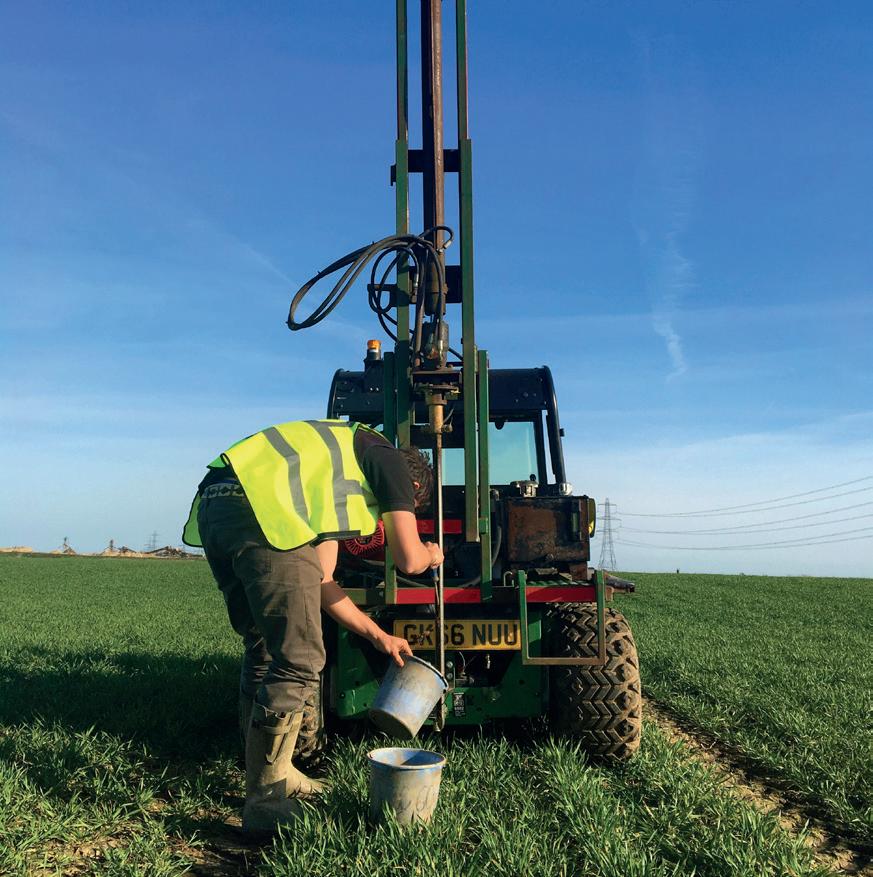
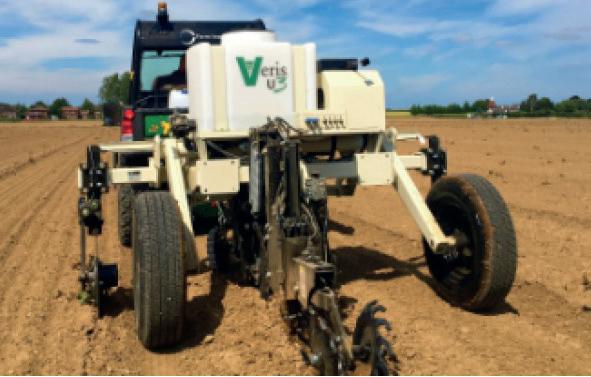
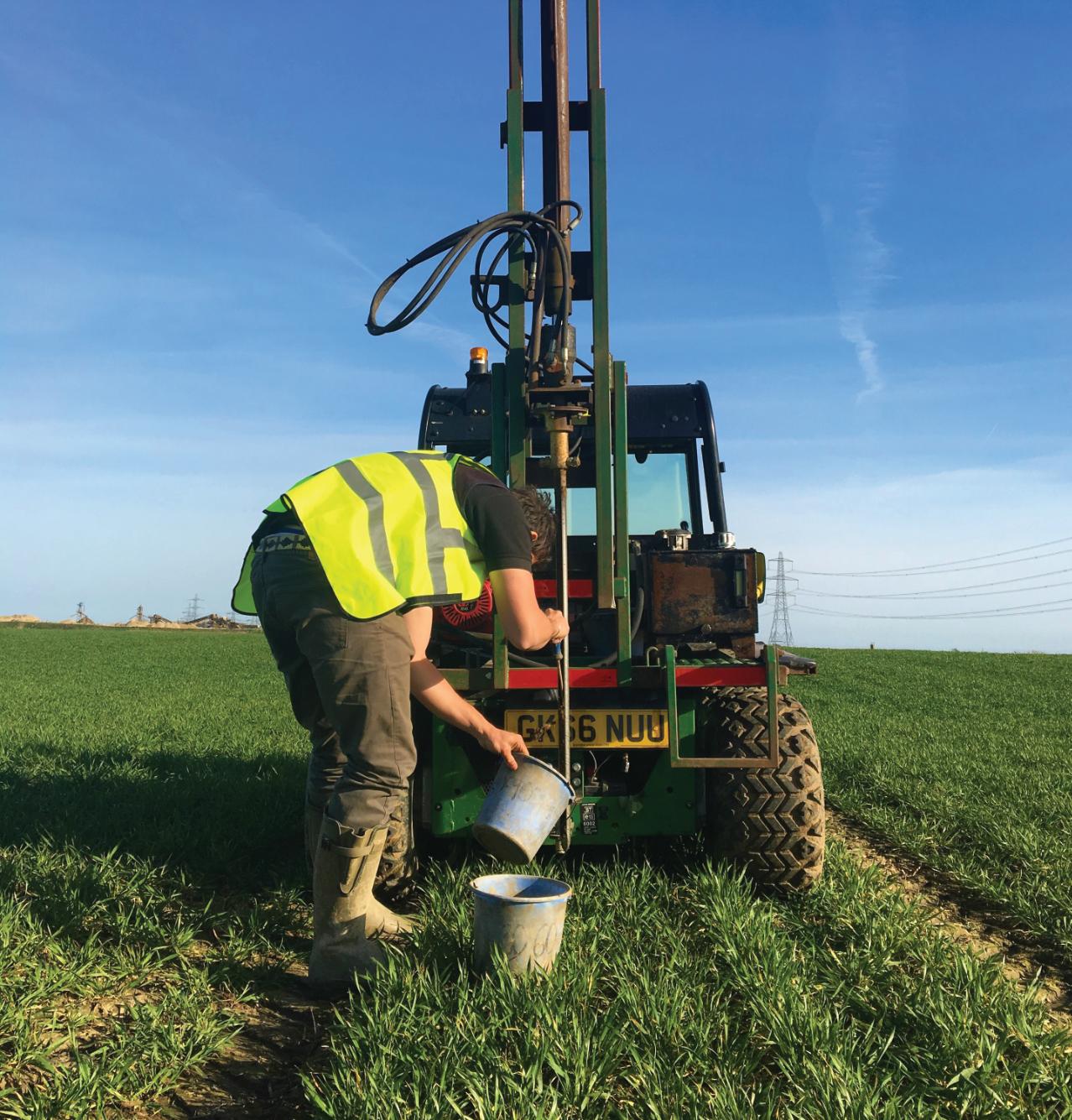
• Precision Soil Sampling and Mapping
• Biomass Imagery
• Standard Soil Sampling – P, K, Mg and pH
• Potato/Pea Cyst Nematode Analysis (PCN)
• Deep Core Nitrogen Sampling
• Manure, Slurry and Product Analysis




• Lime supply and variable rate application
WWW.SOUTHEASTFARMER.NET | MARCH 2023 47 TO ADVERTISE CALL 01303 233883 STEPHEN CARR
STEPHEN CARR Arable farmer productssupplied, andspreadtoyourfarm. Offering20years’experience insoil servicestailoredforyouand yourbusiness Soilsmartsampling,GPSprecision, Verissoilscanning,NCore,Ph,PCN 01233 740247 enquiries@farmimage.co.uk www.farmimage.co.uk
TRIAL HAS HIGH HOPES
Hooray at last some warmer weather, although I will probably have jinxed this by the time this article is published. We have had some picturesque sunrises and sunsets over the past few weeks.

I read with interest an article about trials of a cattle vaccine and a skin test called DIVA (Detecting Infected among Vaccinated Animals) for TB. A number of cows across the country have been selected for the trials. It is hoped that the combination of a cattle BCG vaccine and a skin test that can differentiate between vaccinated and infected cattle could mark the beginning of the end of the TB tests as we know it.
Obviously, the trial is in its initial stages, but they have high hopes for the future. Field trials are required to assess the vaccine’s safety and performance. It has been described by the APHA (Animal and Plant Health Agency) as “a significant milestone”. If these second stage trials are successful, we will be so much closer to vaccinating cattle against the disease.
Many years of research have gone into producing this vaccine and skin test so that the ministry can decipher if cattle have been vaccinated or carry TB. The ministry, along with farm vets, have been working hard to ensure the trial follows all the relevant guidelines and that all the cows fit the criteria. A huge amount
of time, effort and energy have gone into these trials from all concerned. Fingers crossed for exciting times ahead and possibly an end to TB testing as we know it.
Half term has been and gone. Why do the days seem to pass so quickly? So much to do and so little time before they are all back at school again. Roll on the summer holidays.
The eventing season has started and we are now gearing up for our first event of the season. Fingers crossed that the horses all stay fit and well. The goats have started to kid and the ewes will be following on shortly.
Having recently taken eight British Blue cross calves to market we realised that the calf market seems to have dropped out of bed. They were practically given away. Is this a sign of times to come? The prime beef industry seems to be on fire at the moment, but this doesn’t appear to be reflected in the price of calves.
A few weeks ago at Ashford market, records were being broken, with prime cattle from W Alexander selling at 311p (£1,925). Cull cattle also seemed to sell at a good price, although noticeably fewer dairy culls are coming through. I have always struggled to understand the calf market. One week calves sell at £250 each and similar calves sell two weeks later for £20. There wouldn’t appear to
be any rhyme or reason to it.
The ground has been drying nicely for a few days and what a pleasure it has been to have some sunshine; the evenings are drawing out and daylight hours are getting longer. It seems to have been a never-ending winter. The wind, rain and freezing temperatures (at times) have all contributed to making it rather hideous.
Fingers crossed that is all behind us now. Fertiliser is going on and, all being well, the grass will continue to grow at the rate it has been. If the weather plays the game, silaging will start by the end of April. The cows are milking as well as they have ever milked, just as the milk price starts to drop.
Until next time stay safe.
ADVERTISER'S ANNOUNCEMENT
THE NEED FOR MAGNESIUM THIS SPRING

Lactating cows and ewes are prone to hypomagnesaemia (low blood magnesium levels) or grass staggers after turnout onto lush spring grass. This is because they have an obligatory loss of magnesium in milk and faeces every day, which is up to 2½ times the level present in their blood. Because the magnesium stored within the body is not readily mobilised, they have daily need for supplementary magnesium throughout the danger period.
The availability of magnesium in spring grass is also reduced because:
• High potash levels in grass depress magnesium uptake
• A high intake of lush, wet grass increases rumen pH which reduces the efficiency of
magnesium absorption from the rumen
• A rapid rate of passage of food through the gut reduces the time available for absorption. There are three criteria for an effective magnesium supplement:
• The level of magnesium in the formulation





• Its palatability and therefore the intake realistically achievable
• The availability of magnesium to the animal.
Crystalyx Cattle High-Mag and Crystalyx Standard are formulated with dehydrated molasses to provide a highly palatable source of magnesium (due to their high sugar content) which is readily consumed, even by stock grazing lush spring grass.
Furthermore, independent research conducted at Glasgow Vet School has shown that
the magnesium source used in Crystalyx has a superior availability within the animal (so the magnesium is more efficiently absorbed) than any pure calcined magnesite source evaluated at Glasgow. This ensures that feeding Crystalyx significantly reduces the risk of staggers after turnout.
And because Crystalyx products contain the full range of essential trace elements and vitamins often lacking in grass, the risk of other nutrient deficiencies is also reduced.
MARCH 2023 | WWW.SOUTHEASTFARMER.NET 48
ANITA HEAD ORGANISED CHAOS
ANITA HEAD Farmer
AVOID PAYING TWICE FOR SFI APPLICATIONS
In some situations, such as where a land agent or consultant is handling the completion of the necessary forms, there is a risk that farmers could pay once for this process, then face further charges from agronomists with the technical expertise required to complete the necessary actions. In the case of the soils standard, this might mean completing the soil management plan or conducting soil health tests.

“The issue with other agri-environmental schemes in the past has been the lack of interaction with the agronomist, but the SFI standards are very much agronomist-led,” she said.
“You need someone with the knowledge, expertise and qualifications to have the technical discussions about the options available, assist with the application process and conduct the actions required for each standard.”
The SFI arable and grassland soils standards, for example, require soil assessments, a soil management plan and, at the intermediate levels, the inclusion of multi-species cover crops or herbal leys. Making these options work properly for individual farms invariably requires in-depth discussions about topics such as species selection, rotational impact, potential risks and benefits to following crops or options for building soil organic matter, she explained.
Furthermore, DEFRA plans for the forthcoming integrated pest management (IPM) and nutrient management standards, due to be launched this summer, will see farmers paid to take BASIS-qualified advice on IPM and get a nutrient management assessment and report
from a FACTS-qualified advisor.
“An agronomist has the technical expertise to talk through all of the options available, the actions needed and how they will all fit together in a whole-farm situation. It’s more technical than just ticking a few boxesit’s a whole-farm approach at field level,” she said.
Lizzie added that the Omnia digital farming platform, together with the Omnia Scout app, provided ideal tools for recording and completing all information necessary to meet SFI soils standard requirements in a functional and easy way. Users can also easily generate a report summarising the information required for compliance.

Omnia can also assist with nutrient planning, and the team will continue to develop the system to ensure it remains up-to-date as SFI scheme requirements change.
“If farmers get onto this now, they will be well set up for when the next standards are launched in coming months,” she added.
“I truly believe that the SFI is the right way forward; it’s hugely beneficial to the environment and to the farmer and may also allow some farmers to get the much-needed recognition for things they’ve been doing on farm for many years.
“It’s so important all farmers engage with the SFI process this year, as there will be a big drop in BPS during 2023. The SFI will go some way to helping plug that gap, either directly or indirectly through the productivity improvements that may be possible from taking up some of these options. Farmers have to engage with their agronomist to make sure everything is done properly.”
WWW.SOUTHEASTFARMER.NET | MARCH 2023 49 TO ADVERTISE CALL 01303 233883
AGRONOMY LIZZIE BATT T: 07812 771622 E: Lizzie.batt@hlhltd.co.uk Canterbury: 01227 830064 www.hlhltd.co.uk
Farmers joining the new Sustainable Farming Incentive (SFI) are being advised to make sure they do not incur unnecessary costs during the application process. Agronomist Lizzie Batt explains…
CHALLENGES OR OPPORTUNITIES
While it was good to see sensible prices for lamb and sheep towards the end of last year, the down side seems to be that weather-related tight supplies and decent prices have delivered a treble whammy.
Firstly, consumer demand dropped by some 18% on a volume basis, although higher retail prices did translate into a rather more modest drop in the total spend on lamb of about 10%. The second element, which is probably rather more concerning, is the amount of lamb sucked in from the antipodes from January to November last year. The total value of lamb imported from New Zealand increased by some 205% on 2021 figures and from Australia (although a relatively small volume compared to NZ imports) by some 264%. In part this was due to disruptions in the Chinese market because of ongoing Covid-19 issues leaving both antipodean exporters seeking alternative markets for lambs that would historically have found a ready market closer to home. This, together with some hurriedly negotiated, overgenerous and somewhat unbalanced trade deals given away almost in desperation by our government, made the UK market an obvious target.
In addition to all of this, tight grass supplies last summer had a significant impact on the ability of producers to finish lambs, resulting in a substantial increase of some 12% in the carry-over of lambs (now hoggets) into the new marketing year. With the abundant supplies of lambs now coming forward there has been an inevitable negative impact on prices at the start of 2023, although, to be fair, trade has been variable, with cull prices tending to hold up better than those for lambs.

All of this coming on top of significant increases in the costs of production over the past year is putting the sheep (and other) sector under a bit of pressure, and if this wasn’t sufficient it now seems that the Environmental Land Management scheme, now rebranded and renamed as the Environmental Improvement Plan (EIP), seems to be targeted at placing a considerable burden of the Government’s somewhat muddled green ambitions upon agriculture, which is seen as a relatively soft goal.
To add further insult to injury, the whole scheme looks to be substantially underfunded, insufficient in many cases to cover realistic costs and certainly not guaranteed to encourage participation. As far as many smaller to medium sized producers are concerned, new funding streams simply do not offer any sort of meaningful incentive and certainly fall a long way short of being an appropriate replacement for the farm subsidies that they were intended to supersede.
The cumulative impact of these is a further tightening of the cost/price squeeze facing the sheep sector; sadly, most of the issues arise from factors that are beyond producer control, with much of the price side due to global issues. Sadly, even on a local level, options for some producers to regain a little control by adding value are severely limited due to the dearth, in many areas, of local abattoir and processing facilities.
Unfortunately, sheep producers, as with most other sectors of the agricultural industry, will remain as price takers rather than price makers. On the cost side, however, there are some possible opportunities that may arise from the current challenges; opportunities that have the
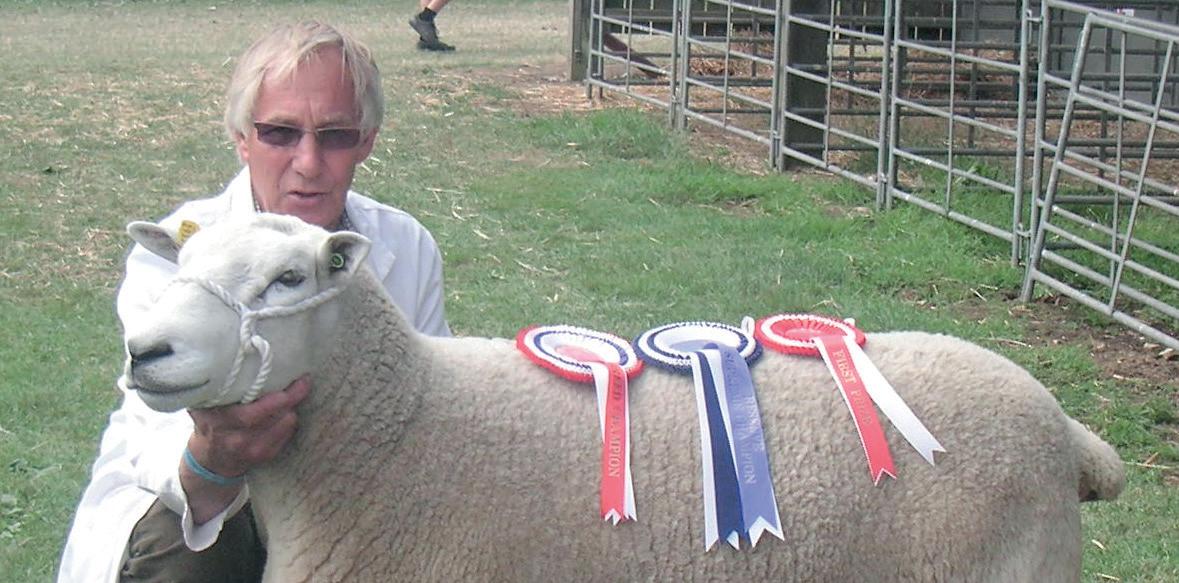
potential to tick both the environmental and productivity boxes.
For most sheep producers, feed and fertilisers constitute a major proportion of the costs of production, both of which may be significantly reduced by the adoption of rather more sustainable and (dare I say) regenerative farming practices. I’m not talking about organic; my view is that we need to retain the option to resort to some synthetics (fertilisers, sprays etc.), but on a strategic, rather than routine, basis only. There is growing evidence to support the idea that by farming in a manner that improves soil health, producers are not just able to maintain but to increase margins, particularly on mixed farms where sheep may be part of a more diverse farm business.
By and large as sheep producers we already have grass-based production systems that are, relatively, in tune with the environment and biodiversity and which, possibly with a few tweaks, can help build organic matter and soil health with the bonus of carbon capture. We principally need to explore means by which we can build on these advantages and in so doing increase production and productivity off grass (and other more diverse forages) but with reduced reliance on applied fertilisers. A major part of the latter has of course been with us for a long time; the use of nitrogen-fixing crops such as legumes, by which we would normally mean clovers, but there are lots of other species that will do the same job - tares, vetches, lucerne, sainfoin, etc. These can all constitute part of a species-rich and diverse sward for both grazing and conservation; and I haven’t even mentioned herbs, yet.
These are options that, not so many years ago, were regarded as being a bit “out there” but which are now becoming well and truly “mainstream”. There is an increasing number of producers who, with the right breeds of sheep, are producing quality lambs out of relatively high-performing ewes predominantly off highly productive, species-rich, low-input, grass-based systems with only the strategic use of purchased feeds as and when extreme conditions dictate, such as drought. On the latter point, the soil benefits arising from such swards do tend to improve drought tolerance and recovery significantly. It can be done. Such systems also tick the carbon capture box, generating a few bonus green points, a bonus that may be enhanced by reducing methane emissions from our
MARCH 2023 | WWW.SOUTHEASTFARMER.NET 50 ALAN WEST SHEEP TOPICS
ALAN WEST Sheep farmer
At the time of writing in early February, cattle prices in all sections were moving strongly forward, while sheep prices were in reverse.
The prime cattle trade is exceptional for the time of year, with numbers totally insufficient in markets. In Colchester particularly there is a great shortage of all types of cattle both commercial and the better end, resulting in excellent trade throughout which is reflected throughout the meat trade in the country.
Best cattle are trading around 280p/kg to 290p/kg with a few above and over £2,000 for the best heavy cattle seen per head. At least we are seeing a return for people who have fed the cattle with the higher feed inputs.
The cull cow trade and over 30-month trade is probably even more exceptional than the finished cattle, at levels not seen before. Any cows not meeting their criteria needed to be sold on this trade.
Store cattle numbers, as usual for this time of year, are short but seeing a fast trade. Many more could be sold to advantage as people try to refill the yards, with reducing feed prices encouraging more people to keep the stock. Let us hope this continues.
The prime hogget trade has been somewhat sticky throughout the period. In Colchester we are lucky to see strong competition for well-fed lambs every week and averages well above national returns. There has been particularly keen trade for 45 to 55 kilo lambs with meat.
Unfortunately, large numbers of underfinished lambs are coming forward on the market as fodder runs out following the dry summer and autumn of 2022. We are anticipating numbers will be desperately short by the end of March or the beginning of April and as we go through this spring period.
ovine charges.
PRIME CATTLE TRADE IS EXCEPTIONAL FOR THE TIME OF YEAR
Although Colchester averages are in line with last year, the national average is well down. More lambs could be sold to advantage, but we need to know what is coming. Best lambs are trading from £130 to £150 per head with weight. As previously stated, lighter lambs are more difficult to place.
The store sheep trade is particularly difficult, with fodder being a real problem. Feeding hard nuts is possible if returns go back to where they were 12 months ago, but there is certain resistance to that. Cull ewe numbers are coming forward in strength and seeing a steady trade throughout, the market maintaining its level in line with 12 months ago.
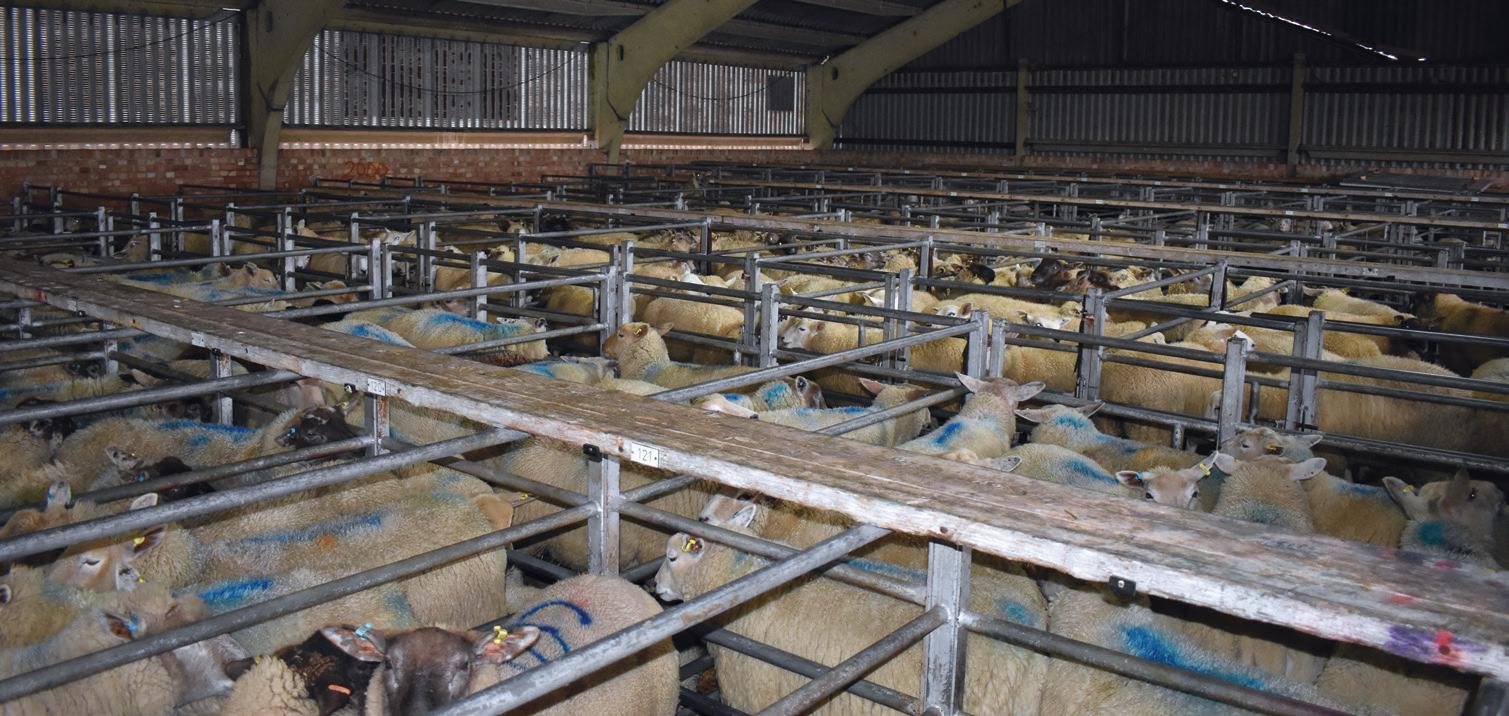
Sheep consultant Catherine Nakielny has done some good work recently looking at how improving efficiency of sheep production can generate significant positive benefits in reducing the carbon footprint. One of her key conclusions has been in recognising that both in terms of efficiency of production and of minimising methane production per kg of lamb output, it is small to medium sized, productive ewes capable of producing lambs big enough to meet market requirements that will almost always score over most of the bigger sheep that some breeders seemed to be fixated on producing.
Her key recommendations for an efficient sheep that will also reduce methane emissions are to have a ewe that will:
• lamb at 12 months old if required (opinions vary)
• rear twins as a mature ewe
The pig trade continues to increase on the deadweight; unfortunately we do not sell live pigs in Colchester. Despite this, pig farmers are still trading at a loss due to the cost of feed, with soya particularly being a problem. With a reduction in wheat and barley prices we may see pigs back to profit, but there is an enormous amount of money to make up.
With the drier, warmer period at the beginning of February encouraging growth in arable crops, prospects look good, with reducing prices for fertiliser also looking beneficial. The next four weeks is going to be very interesting for all livestock producers particularly in the sheep sector.
• weigh between 55kg and 65kg as a mature ewe
• lamb successfully for five or six years
• perform well on a grass-based diet.
This is based on the understanding that feed input to any breeding sheep will have two elements, that needed for production and that part needed for maintenance, and it is with the latter that a small to mediumsized ewe will really score highly. At any given stocking rate, a small- to medium-sized productive ewe will produce a greater output of lamb in terms of kg per ha than a larger ewe and will require less energy to do so, and will thus have a lower output of methane per unit of production. It’s not rocket science; any one can do the sums. There really is not much to argue with, is there?
By the time that this goes to press many of you will be lambing: Good luck – I hope that it all goes well.
WWW.SOUTHEASTFARMER.NET | MARCH 2023 51 TO ADVERTISE CALL 01303 233883 AT COLCHESTER MARKET
GRAHAM ELLIS FRICS FAAV FLAA For and on behalf of Stanfords T: 01206 842156 E: info@stanfords-colchester.co.uk www.stanfords-colchester.co.uk
As many readers are aware, the animal health and welfare pathway has been launched, designed to protect and enhance farm animal welfare and maintain and build on the UK’s existing world-leading standards. For each section of the pathway, there is a list of priorities to be considered and recorded during the visit with your veterinary surgeon. One such priority, for pigs, is to tackle Porcine Reproductive and Respiratory Syndrome (PRRS), which is estimated to cost the industry £52 million per year. The disease is considered of enough importance to have a dedicated global website – Global PRRS Solutions.
Not only is PRRS a focus of the pathway but it accounts for approximately 12% of all cases recorded on the APHA GB Pig Disease Surveillance Dashboard since 2020.
PRRS is a viral disease affecting pigs of any age, causing reproductive failure in breeding stock and respiratory tract illnesses in young and weaned pigs. The virus can be spread via nasal secretions, saliva, faeces, urine and by airborne transmission up to one mile. PRRS virus (PRRSv) infects all types of herds including high health status from both indoor and outdoor units, irrespective of size.
The PRRSv targets the macrophages, particularly in the lung. Macrophages are an important part of the body’s immune system that typically destroy invading bacteria and viruses – but do not destroy the PRRS virus. Instead, the virus multiplies within the macrophages, producing more viruses and destroying macrophages. Within a PRRS infected animal, up to 40% of the body’s macrophages can be destroyed, eliminating an important proportion of the pigs’ defence mechanisms and allowing other invading bacteria and viruses an opportunity to establish and cause damage.
CLINICAL SIGNS
The clinical picture can vary from one herd to another, with higher health status herds often experiencing less severe effects of disease – possibly due to fewer or better
PORCINE REPRODUCTIVE AND RESPIRATORY SYNDROME
controlled opportunistic pathogens in the pigs’ environment.
Epidemic or Acute Phase: PRRSv is characterised by extensive reproductive disorders for up to three months. Due to infection, sows will often become inappetent but may also show respiratory signs and fever. Typical reproductive disorders reported are abortion, premature farrowing, increase in stillborn piglets or foetal death (+/mummification) and weaker piglets with higher incidence of neonatal mortality. There has also been reported cyanosis (blue discolouration) of the ears, abdomen and vulva.
In weaned piglets and fattening pigs, the primary presentation is respiratory disease alongside decreased growth rates and increased mortality. PRRSv is often accompanied by secondary infections, such as EP. The severity of respiratory disease is higher in the nursery than in fattening pigs, which may suffer subclinical forms of the disease.
Endemic or Established Phase: PRRSv can persist in affected farms for years, and once endemic, reports of reproductive losses and increases in respiratory issues and poor performance of finishing pigs are very common.
Once the acute phase has passed through a breeding or finishing herd, PRRSv typically only becomes of significance in the nursery and growing periods, where respiratory disease has been reported – referred to as Porcine Respiratory Disease Complex. In these cases, there is a higher incidence of secondary infections, resulting in decreased growth rates and performance and an increased mortality. In the breeding herd, there can be an effect on reproductive efficiency where persistent increases in repeat mating, vulval discharges and abortions are seen.
DIAGNOSIS
PRRS can be suspected on clinical signs but
definitive diagnosis can be sought in discussion with your veterinary surgeon. Blood sampling, oral fluid or post-mortem tissue can all be used to isolate and identify PRRSv in the laboratory. Choice of sampling method and timing of tests is critical, as several aspects of infection and immune response can occur within specific time windows. For testing via the animal health and welfare pathway, your veterinarian will take samples of up to 30 pigs.
TREATMENT
Treatment is targeted towards preventing secondary infections, since there are no medications available to treat the virus. During the acute phase, it is essential to prevent the multiplication of opportunistic bacteria that would normally have been destroyed by macrophages. Antibiotic treatment should be given for three to four weeks, after discussion with your veterinary surgeon, immediately after the disease is diagnosed. Prompt treatment can reduce the incidence of abortions, stillbirths, mummified pigs and early farrowings caused by secondary bacteria. Piglets born during the acute phase of PRRS should be treated with long-acting antibiotics after farrowing alongside additional nursing care and extra bedding and heat.
PREVENTION AND CONTROL
Biosecurity measures and vaccination are common features in an effective control plan after a positive PRRS result. You should consult your veterinarian to construct a tailored plan that suits your farm and your business. PRRSv infection is likely to persist within the herd indefinitely, unless specific measures are taken to eliminate the infection.
OLIVER
E: Oliver.Giles@westpointfarmvets.co.uk
E: info@westpointfarmvets.co.uk www.westpointfarmvets.co.uk
MARCH 2023 | WWW.SOUTHEASTFARMER.NET 52 ADVICE FROM THE VET Westpoint Horsham T: 01306 628086 Westpoint Ashford T: 01306 628208 Westpoint Sevenoaks T: 01959 564383 Westpoint Winchester T: 01962 779593 Westpoint Chelmsford T: 01306 628489
If you would like to discuss anything covered in this article contact your local Westpoint practice GILES
If you would like more information on the Animal Health and Welfare Pathway contact Westpoint Farm Vets:
PRRS is a complicated disease that expands way beyond the scope of one article. Consult your veterinarian if you suspect or are concerned with a possible PRRS infection.
NICK ADAMES Former dairy farmer
DEFRA recently announced its proposed updating of the Government’s farm aid programmes following the almost complete ending of the old EU schemes.
Early reading must have brought some good tidings to farmers who are followers of the likes of Greta Thunberg or Mrs Carrie Johnson, but there was little good cheer for real farmers who make their living by growing real food for real people to eat.
First impression is that the main group to benefit will be employees of DEFRA itself, who have to guide those interested through the lengthy and complex rules by providing, for example, flood plain land that never dries up to ensure survival of water voles and crested newts, along with northern landowners and farmers who have to ensure unburned heather and boggy areas to encourage feeding and nesting sites for all the vermin species the Government seems so determined to encourage to breed and multiply.
There will surely be adverts for many thousands of new, well-paid posts for extra staff to train up as advisers to show farmers how to get a few pounds here and there by planting new hedges or grass mixtures to ensure the newly protected vermin species, such as magpies, are able to live off the eggs and chicks of any songbirds who are tempted to seek a nest site.
The question that occurs more and more to me is where our food is going to come from as more good arable land is put into these fancy schemes or swallowed up for new houses to provide accommodation for the thousands of newcomers arriving by inflatable from France.
I may be guilty to some extent here because we are investigating planting a 20-acre hardwood woodland to safeguard our own little hamlet as protection from the onward march of the coastal development in West Sussex.
I have had 45 separate approaches from companies big and small who seem to think our neighbours, and ourselves, are craving an estate of around 400 new build properties to bring in people who, from local and past experience, have no idea how to behave in
WHERE IS OUR FOOD GOING TO COME FROM?
rural areas. Areas such as we were but which are fast disappearing from this, and similar, farming areas
Just close to us was an area of local villages, one quite developed but the four still recognisable as villages. It was known as the ‘Five Villages’. Over the past two years, thanks to one particularly wealthy landowner who in recent years has bought up good farmland to sell to developers, these have become more like one sprawling city. Traffic is appalling and there seems to be little new infrastructure. It’s one long, four or five-mile development. Needless to say, the said landowner doesn’t live locally!
Now if you have a sense of irony, a little story with a happy ending about our bank, NatWest. A couple of months ago we received an email, as presumably did many of its business clients, concerning something called My Business Profile, threatening potential account closure.
It looked rather ‘woke’, so my hackles instantly rose, I told them quite nicely that if they expected a response, they should send a letter by post. I copied it to our area manager, since we no longer have local bank managers, and he came back to say: “You have to fill it in” and that it was in fact “a simple thing to do”.
I passed it on to my ‘trouble shooter’ Emma, who herself found it extremely complex but finally managed to get it accepted, my area manager confirmed it had passed muster and the matter was deemed closed.
Since then, I have received some six letters and as many texts (things which I seldom open and never respond to) telling me “there was a problem” and to revisit the website, which I’m not inclined to do. I was even woken at 1.31 am by one of the texts.
The really stupid thing is that one phone
call would have sorted the whole thing out in seconds, but there are no return phone numbers or email addresses provided. We have been with the bank since 1968 so there is hardly anything they don’t know about the business.

I imagine many of you may well have been suffering similar experiences. I suggest you bombard your area manager and even the bank’s CEO, perhaps writing to headquarters. A news headline recently reported the bank had been affected by ‘cybercrime’ and I think this is a knock on from that; another reason I am not too inclined to give any online info to anyone these days.
So, to close the story, I sent an email to the CEO and, within one working day, had a personal reply and then her PA on the phone. That is the sort of service we used to get from the bank, service which we could expect by phoning the local branch and speaking to someone we knew. Things seldom change for the better.
After one of the wettest spells I can remember, when just taking a tractor across a field risked getting bogged down, I was astounded in early February by how things were changing, Land which has been under water for some six or eight weeks, thanks to the Environment Agency, within a little over three days drained of almost all the flood water and was practically fit to plough.
It was the most astounding turnaround. One expects land to dry as the days lengthen and the sun gets higher, but it happened weeks earlier than we expected and brought hope of an easier spring than last year. At least the soil has had a good soaking and water tables are high, so warmth and sunshine should provide all the encouragement the new seeds need.
WWW.SOUTHEASTFARMER.NET | MARCH 2023 53 TO ADVERTISE CALL 01303 233883 WEST SUSSEX DIARY NICK ADAMES
NO TWO YEARS ARE ALIKE
It is often heard in the livestock market that no two years are alike, and how vendors take the best prices on the day.
How many times have we heard this in recent weeks? While the cattle vendors have been delighted with their returns, the sheep vendors have been disappointed.
The cattle trade has been phenomenal and has continued on its upward trajectory, with record prices seemingly broken weekly and confidence running high for all stock in need of further finish and the long-term stores.
Unfortunately, the same cannot be said about the sheep section, where prices have struggled for the first time in several years. The weather, of course, has not helped, with drought conditions through the summer followed by prolonged periods of heavy rain and unusually hard frosts towards the end of the year.
All this impacts on feed supplies, causing poor lamb growth and finishing, disorderly marketing and forced sales. To top it all, relatively subdued demand, slow sales and increased New Zealand supplies are not helping.
This time last year I reported on the high prices achieved in all the cattle sections, with returns up considerably compared to the year before. The trade has improved yet again, with prime cattle prices improving by £150 (+11%) and cull cows by £300 (37%) at Ashford Market compared to returns achieved in January 2022.
The high demand for processed meat, together with tight supplies, is thought to be behind the exceptional cull price. The supply situation is likely to continue, due to above average slaughtering last year and increased use of sexed semen on dairy cows, meaning fewer black and white slaughter bulls.
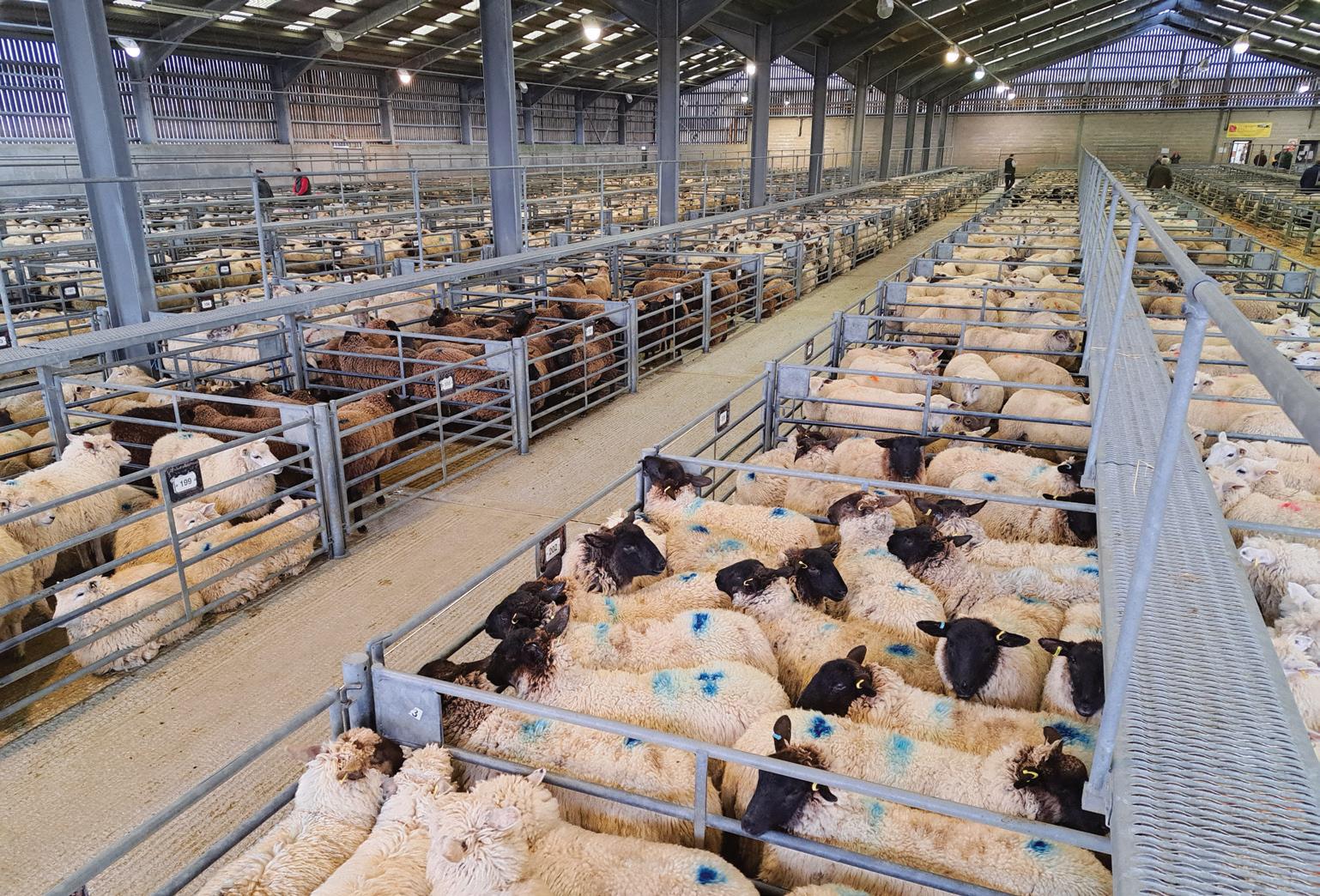
However, at recent price levels beef producers will look to cull any suitable cows, and with milk prices easing there may well be an increased number of cows culled from the dairy herds.
Despite the usual slow January and recovery after the festive period, new records have been set at Ashford Market in recent weeks. The 300p level was initially broken by W G Vant and Sons at 308p, only to be broken minutes later by D W Ferguson at 310p, both for superbly shaped Limousin heifers.
However, the greatest improvement has been in the cull cow section, where prices on average have increased by some £300 compared to the last year. With some 12 keen buyers at ringside, competitive prices are assured throughout, whether for the best slaughter cows or leaner sorts in need of further finish.
The best beef cows are now selling readily in the 200 to 250p bracket, with a superb British Blue cow from Price and Shelbourne holding the record at £2,116 (270p), while the best of the black and white are closing in on 200p, with plenty in the 150p to 180p bracket and only a few plain boners below 120p. A heavy well-fleshed Holstein cow from Appleton Farms holds the record in this section at the moment at £1,607.
The early store sales have been equally encouraging for producers, with feeders competing fiercely for all on offer in an attempt to replenish empty yards. The early indications are that demand will far outstrip supplies this spring, with prices not only reflecting the high returns available in the finished market but also the limited supplies nationwide.

The sheep market is much more uncertain, with prices easing in recent weeks due to lack of demand, greater availability and relativity cheap New Zealand lamb.
At Ashford Market, increased numbers of hoggets have been marketed early in the year (+16%) compared to last year, with producers/
ELWYN DAVIES Reporting on the sheep market at Ashford T: 01233 502222
finishers forced to sell due to tightening feed supplies at lighter weights, and with a bigger percentage of stores.
Just to reflect on the poor growing and finishing season for lambs, only around 25% are in the heavy weight bracket as opposed to 50% in a normal year. Consequently, the heavy sheep have held their value better, with the best still selling in excess of £120 and up to £140, while the overall average is back by some £20 per head at just below £100.
A relatively large number of stores have been marketed to date, with producers (quite rightly in my opinion) opting to sell as opposed to feeding concentrates at £400 per tonne. While prices have eased in line with the finished market, an overall average of £70 and the best in excess of £80 look fairly well sold considering the lack of feed and uncertainty.
As one experienced market man said: “Too dear to buy, but not enough if you are selling.”
Finishers will certainly be hoping for better news and some improvement in the trade with the upcoming festivals in March and April.
Although there are likely to be plenty of hoggs late in the season, considering the numbers of long-term stores selling at the moment, this trade could well be boosted by reduced numbers of early new season lambs due to the high cost of concentrate feed and the reported poor scanning results.
MARCH 2023 | WWW.SOUTHEASTFARMER.NET 54 AT ASHFORD MARKET
www.hobbsparker.co.uk
LIBBY KEOGHANE Cliffe Veterinary Group
 T: 01273 473232
E: elizabeth.keoghane@cliffevets.co.uk
T: 01273 473232
E: elizabeth.keoghane@cliffevets.co.uk
BIRD FLU: WHAT ARE WE DOING?
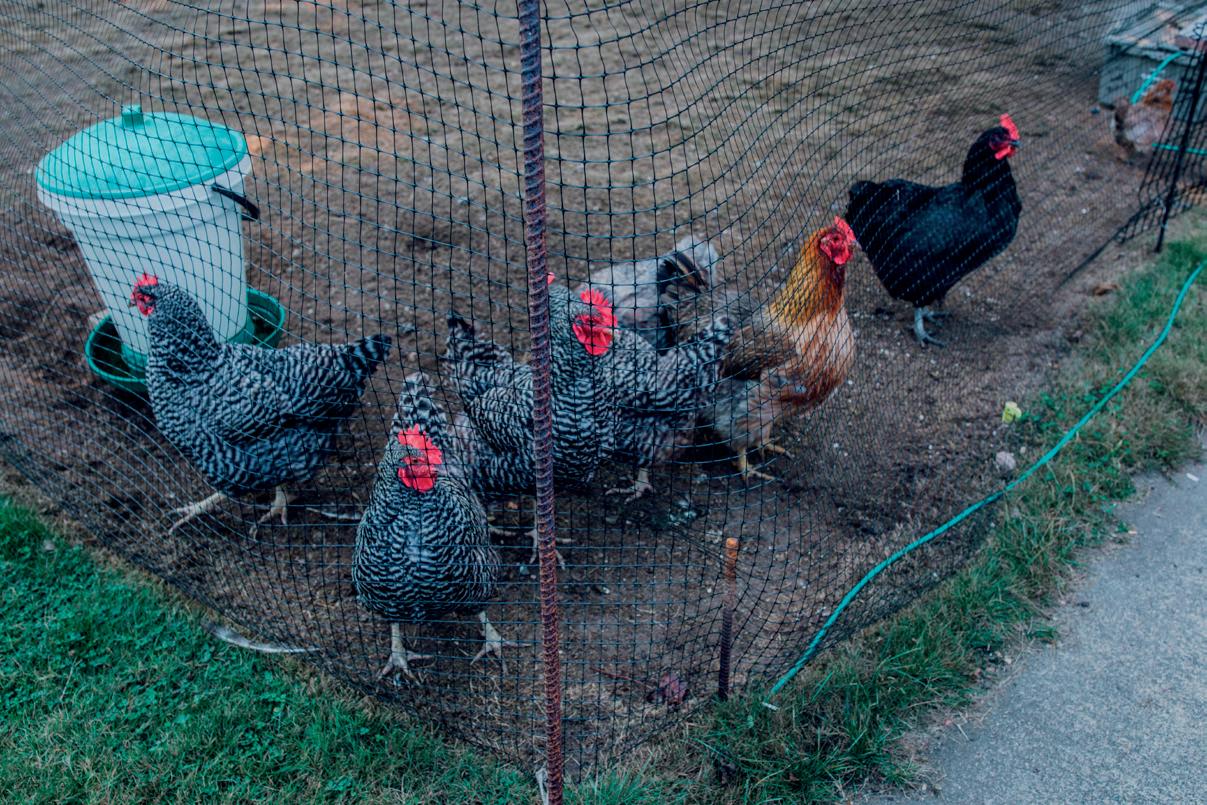
A lot of our vets’ time at the moment has been spent working alongside Animal and Plant Health Agency (APHA) on the current bird flu outbreak and attempting to contain it.
A few local outbreaks happened here in Sussex at the end of last year in Arundel, Horley and Billingshurst; the surveillance work on these is ongoing. Around Arundel and Horley there is currently a 3km captive bird monitoring controlled zone; we have been calling anyone and everyone with a chicken in their backyard to find any traces of bird flu but so far we have been unsuccessful, which in itself is a success! The Billingshurst outbreak occurred in a commercial unit and so has a much larger area for us and other vets working for APHA to cover: a 3km protection zone and a 10km surveillance zone.
As this virus edges its way further and further into Sussex, it’s important to keep an eye on any poultry you keep. It’s a “notifiable disease”, so look out for any signs of green diarrhoea, decreased egg production, swollen heads, blue wattle/comb and sudden death and report it straight to DEFRA if you notice any of these. You can reach them on their Rural Service Helpline: 03000 200 301.
At the time of writing, the virus has begun to pass over into the mammalian population here in the UK, namely otters and foxes that are thought to have eaten infected carcasses. Over in Spain, while the dominant variant cannot yet pass between humans, a mutated version has been noted to be passing mammal to mammal amongst mink with a mutation that allows it to replicate easier in mammalian tissue. This is why it’s so important for all of us, however many birds we may keep, to do our bit and report any suspicions we have, as well as keeping on top of current regulations: birds must be housed indoors at the moment, with a minimum of the roof being waterproof to prevent wild bird faeces contaminating your domestic birds.
CRYSTALYX CATTLE
HIGH-MAG/STANDARD
HIGH QUALITY MAGNESIUM FOR CATTLE AND SHEEP THIS SPRING
Crystalyx Cattle High-Mag 10.5% Magnesium suitable for lactating dairy and suckler cows

Crystalyx Standard 5% magnesium ideal for mixed grazing with lactating beef and sheep


Helps maintain normal blood magnesium levels during periods of risk
Sweet and palatable source of magnesium to ensure consistent intakes even on lush grass
Provides livestock with a valuable source of additional vitamins, minerals and trace elements needed to balance spring grass
Cattle High-Mag and Standard are both available in 22.5kg and 80kg

+44 016973 32592
info@crystalyx-global.com
Find
WWW.SOUTHEASTFARMER.NET | MARCH 2023 55 TO ADVERTISE CALL 01303 233883
www.cliffefarm.co.uk
Biosecurity measures designed to keep chickens and other poultry away from wild birds are still in force
your nearest stockist at crystalyx- global.com Crystalyx UK
Key Dates




07 Feb CS Higher Tier applications opened 14 Mar BPS applications open 21 Mar CS Mid Tier & Wildlife Offer applications open 28 Apr CS Higher Tier applications close 15 May BPS and CS revenue claims close 18 Aug CS Mid Tier & Wildlife Offer applications close
The South East Farmland Market Experts



AN INTERESTING MIX

Chatley Farm at Cobham in Surrey is being offered for sale by RH & RW Clutton and offers a wonderful interesting mix of buildings, farmland and blocks of woodland extending to just over 126 acres.

Lying immediately off the M25/A30 motorway junction, the property is offered for sale in seven lots. These include an interesting group of buildings with potential, but no current consent for change of use. Eighty-two acres of pastureland are offered in two separate lots, each with long winding river frontage to the River Mole and all it has to offer. The four lots of woodland vary in size between just over four acres and nearly 18 acres. Part ancient woodland, there are fine stands of Scots Pine and Tsuga with oak
and chestnut and a very picturesque large woodland pond. Access is good along a now closed public highway lane dividing the lots and there are no footpaths crossing over the land itself.
James Tillard said this readily accessible block of land within easy reach of so many centres offered lots of opportunities as a whole or with the lots individually. RH & RW Clutton’s East Grinstead office is handling the sale and giving a guide price of £1,900,000 for the whole.


57 TO ADVERTISE CALL 01303 233883
LAND AND FARMS SPONSORED BY BATCHELLER MONKHOUSE
TOPPICK
GUIDE PRICE: £1,900,000 FOR THE WHOLE JUST OVER 126 ACRES COBHAM | SURREY
JamesT@rhrwclutton.co.uk Tel: 01342
iFurther details are available from:
305825
WWW.SOUTHEASTFARMER.NET | MARCH 2023
ONE OF THE LARGEST HOLDINGS TO COME TO THE SUSSEX MARKET





BTF is launching its spring farmland sales campaign by offering Wheatcroft Farm near Battle.


The holding extends to about 298 acres and comprises Wheatcroft Farm on the south side with frontage to Telham Lane, and the Loose Farmland to the north with access to the Hastings Road. The two holdings were combined in 2014 and are farmed in conjunction with other land holdings in the area.

There is a four bedroom agriculturally tied dwelling with outbuildings, gardens and grounds, and this is situated a short distance from the farmyard and buildings, which have been operated as an equestrian business for many years.

The principal barn has an indoor riding
arena and 19 stables with tack rooms, and there are two more stables and feed and hay stores around the yard.

While the existing business is ceasing, there is a good opportunity for a new owner to re-establish a clientele from the excellent facilities, which include fenced grazing paddocks adjoining the yard.
The majority of the arable land, extending to around 162 acres, is at Loose Farm, on the north side of the wooded valley which runs east-west through the centre of the holding. The land is planted with spring beans following the 2022 cereal harvest.
The wooded valley and steep banks provide an excellent opportunity to establish a syndicate-driven shoot with
strategically placed cover crops.
Richard Thomas, Director at BTF Partnership, commented: “This is one of the largest holdings to come to the market in the past few years in this part of Sussex. The farm occupies an elevated position very close to the popular town of Battle, and there are mixed opportunities for the purchaser, with arable and pastureland coupled with an opportunity to re-establish the livery business in the farmyard. There are approximately 56 acres of woodland and exciting potential to establish a driven pheasant shoot, with the establishment of cover crops on the higher ground.”

The farm carries a guide of £3,000,000 and BTF is expecting interest from right across South East England.



MARCH 2023 | WWW.SOUTHEASTFARMER.NET 58 LAND AND FARMS
GUIDE PRICE: £3,000,000
ABOUT 298 ACRES BATTLE | EAST SUSSEX
TOPPICK
Further details can be found at: www.btfpartnership.co.uk i



























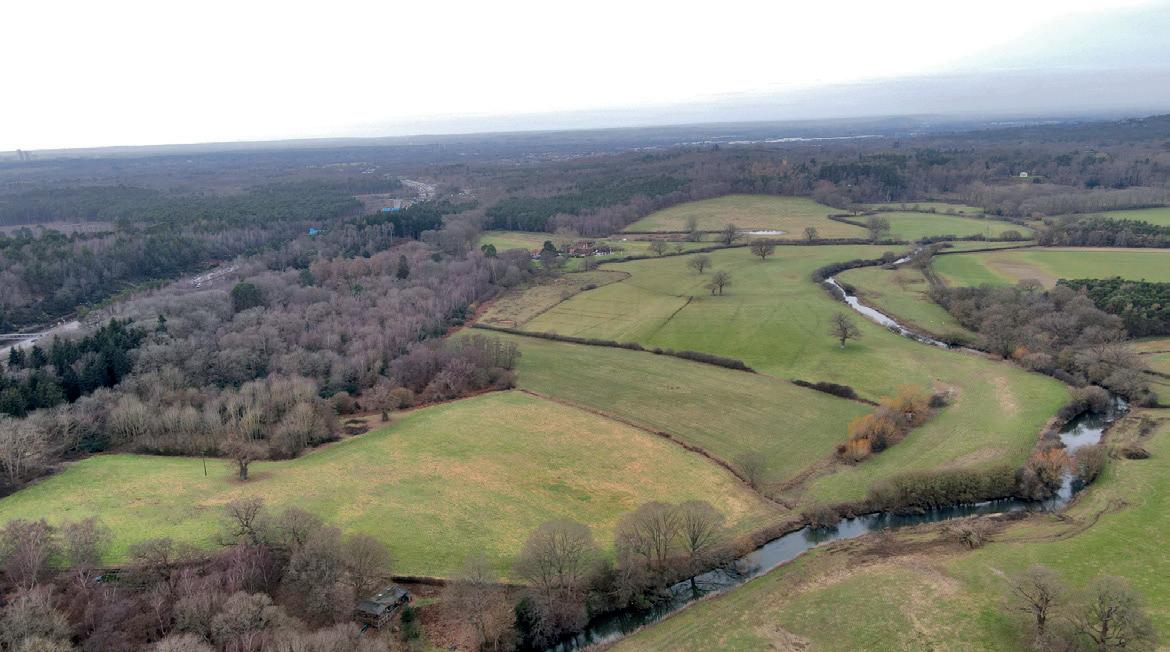










WWW.SOUTHEASTFARMER.NET | MARCH 2023 TO ADVERTISE CALL 01303 233883 The Environment Gateway is an extensive group of farms, estates and parcels of land that have registered to be promoted to anyone in need of BNG units or land with potential for BNG. Whether you are a landowner interested in promoting your land for biodiversity gain or a developer looking for BNG units or land to create units, we can help. Contact our Environment Gateway team for further details and market leading advice on 01892 509280 or email Toby Trotman at t.trotman@batchellermonkhouse.com. Did you know? From November 2023, all new development in the UK will be required to create a minimum of 10% Biodiversity Net Gain (BNG) either on or off site. RH & Follow us on : & www.rhrwclutton.com Cobham, Surrey An interesting mix of woodland, farmland and buildings with river frontage 126 acres (51,33 ha) Freehold For sale in Lots Contact: James Tillard - 01342 410122 DD: 01342 305825 jamest@rhrwclutton.co.uk East Grinstead - 01342 410122 Petworth - 01798 344554 Guildford - 01483 300233 RH & RW CLUTTON CallJamieon01303 233883oremail jamie.mcgrorty@kelsey.co.uk FOR SALE ® ATTENTION all land agents. Are you missing out? You can advertise land and farms in South East Farmer from as little as £285. A great way to create interest from serious buyers.
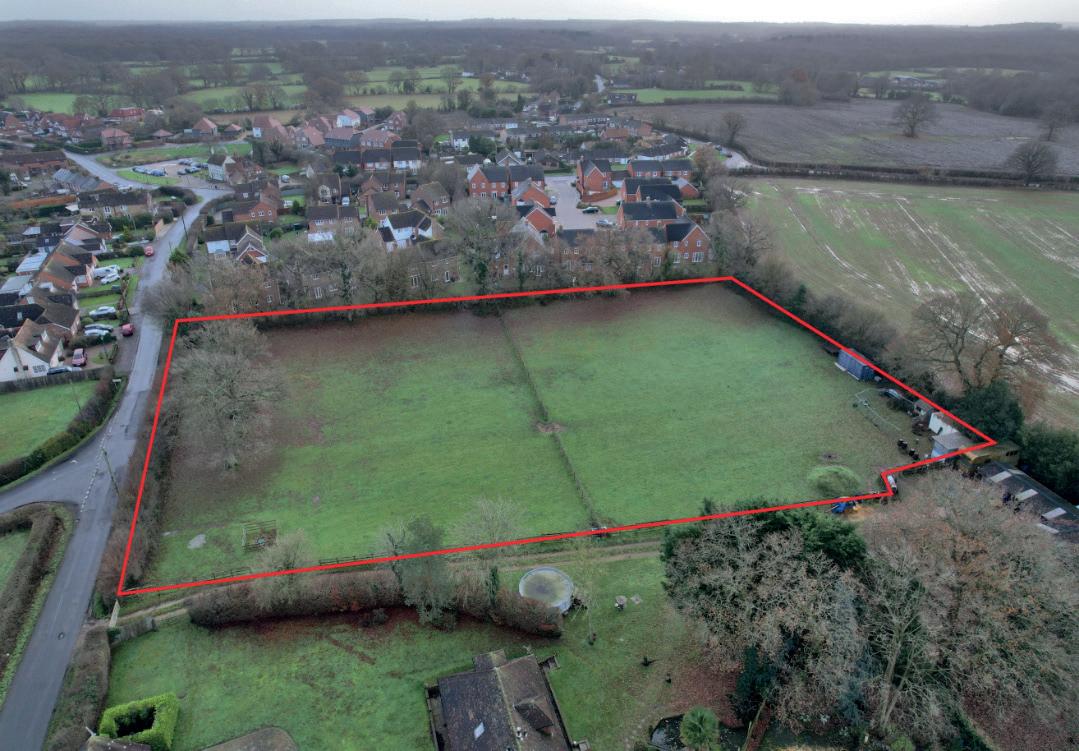
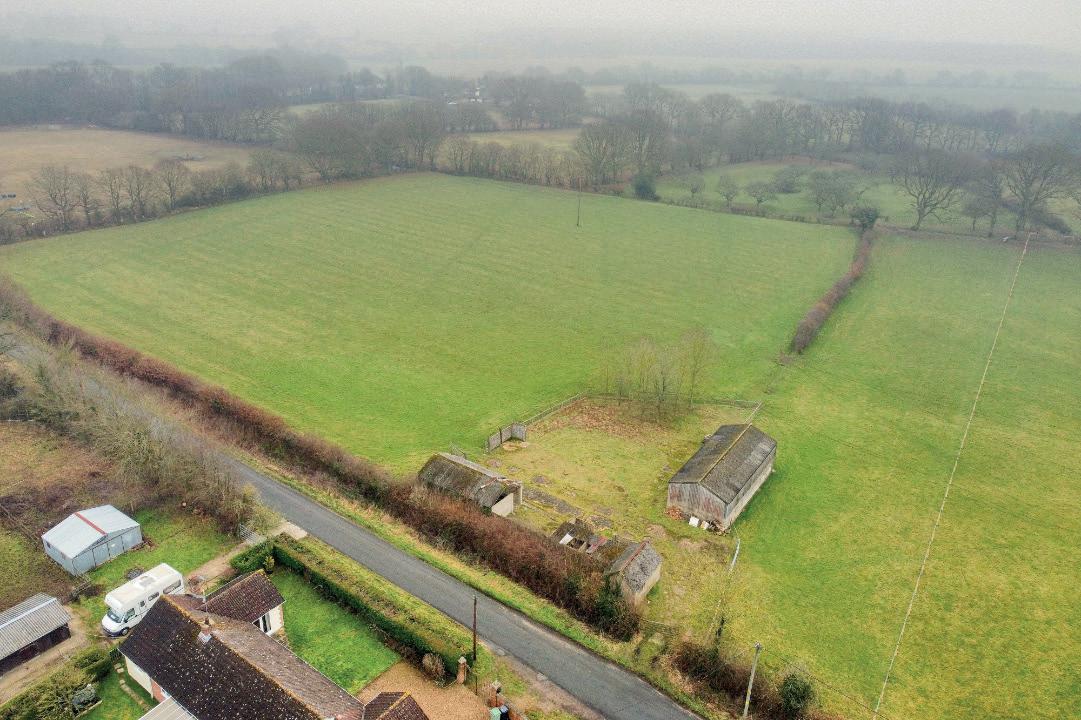
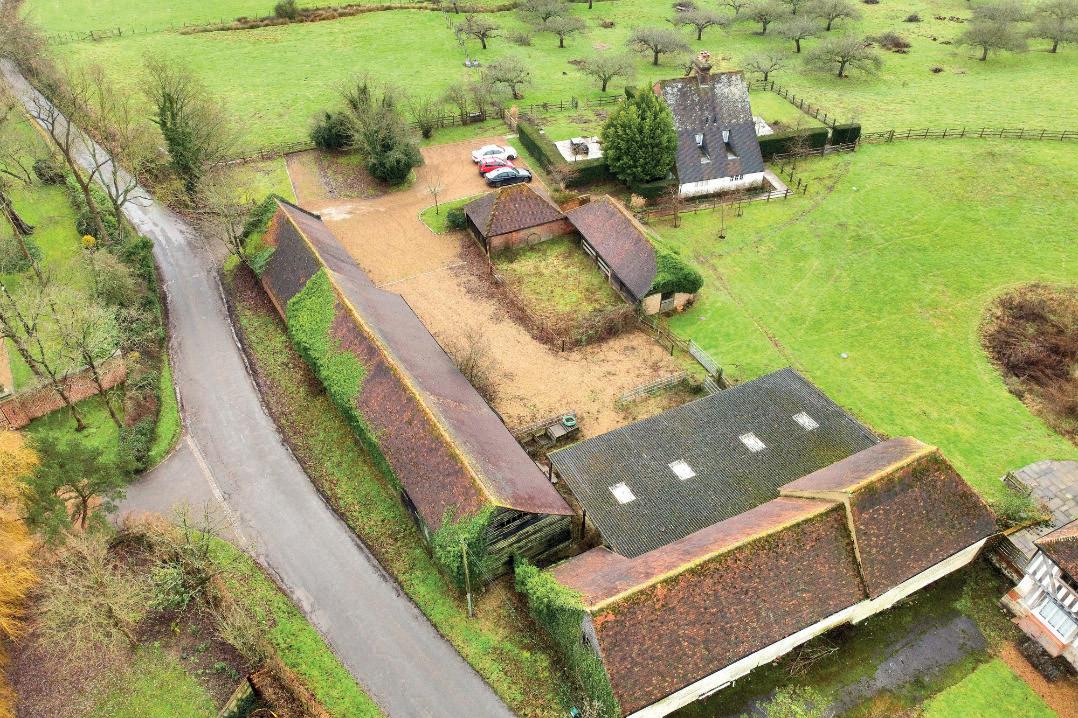
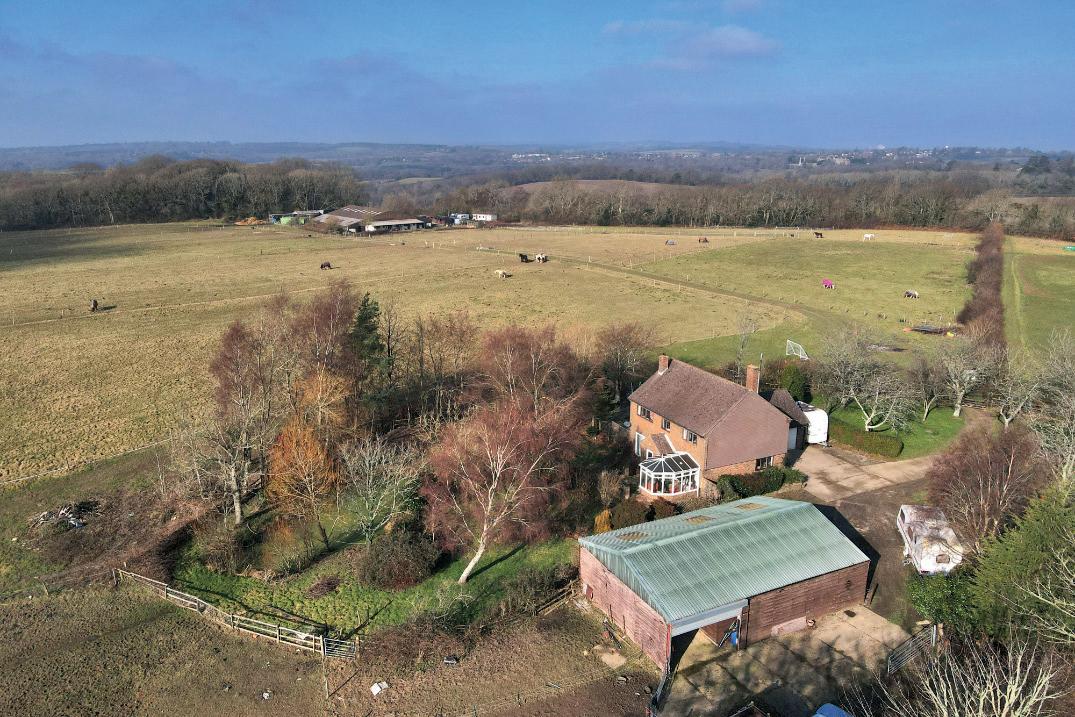
www.btfpartnership.co.uk Land&PropertyExperts FORSALE FORSALE FORSALE FORSALE EastSutton,Kent GuidePrice-£575,000 Ulcombe,Kent GuidePrice-£3,000,000 Battle,EastSussex Shadoxhurst,Kent Consentforbarnandstableconversionintotwo residentialdwellings FarreachingviewsoverTheWeald 0.24AcresInTotal ClassQconsentforbarnconversion Greatviewsandlocalamenitiesnearby 7.31AcresInTotal 300AcresInTotal 4bedroomFarmhouse(SubjecttoanAOC) ExcellentShootingPotential Developmentsitefor10dwellings PlanningPermissionGranted 1.84AcresInTotal E challock@btfpartnership.co.uk T 01233740077 GuidePrice-£1,750,000 GuidePrice-£550,000
LUMP SUM EXIT SCHEME TAKE UP COULD BOOST FARMLAND SUPPLY
The Government’s lump sum exit scheme initiative could boost the supply of farmland to buy in England, according to findings published in Savills Spotlight: The Farmland Market.
Data from DEFRA indicates more than 2,000 applications were received for the lump sum exit scheme (LSES) by its close last September, representing 2.6% of England’s farms. In terms of acreage, the analysis shows a bias towards smaller farms, which can in part be explained by the £100,000 LSES payment cap.
According to modelling by Savills research, these applications collectively cover 260,000 acres of land, which is 1.2% of England’s agricultural land area, equivalent to 20% of Lincolnshire’s agricultural land area or 50% of Hampshire’s. Put another way it’s double the area of farmland that was offered for sale publicly in England during 2022.
In order to access the lump sum, retirees must sell, let or transfer their land by May 2024, meaning realistically this year is the only marketing season available.
Chris Spofforth, Savills head of rural agency in the South East, said: “We predict the amount of farmland for sale will not increase significantly because capital taxation policy continues to encourage its long-term retention. Also in many cases the farm is the family’s long
Reasons for farm machinery sales in 2022
standing home, so ties are strong.”
Further evidence that the LSES and the agricultural transition will lead to some sales of farms and farmland are supported by Savills' analysis of the reasons for farm machinery dispersal sales. In 2022 ‘sale of the farm’ was explicitly stated as a reason for the machinery auction in 15% of cases, and higher proportions refer to retirement or a ‘change in farming policy’.
LEVEL BLOCK OF PASTURE
OFFERS IN EXCESS OF £700,000 REDHILL | SURREY



A reasonably level block of grassland fields with road frontage and two metal entrance gateways is offered for sale as a whole by Batcheller Monkhouse.
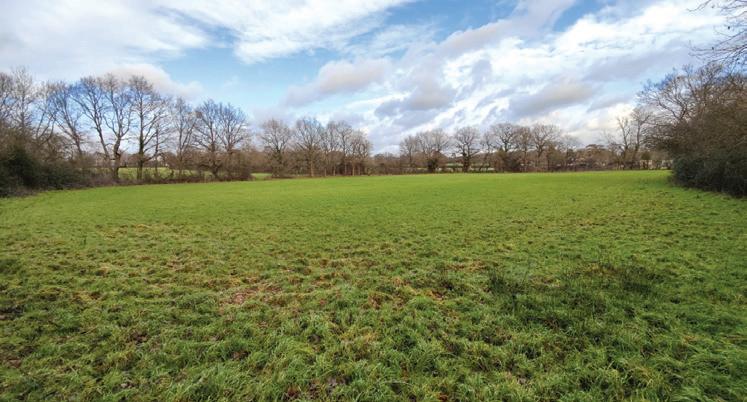
The land extends to approximately 43.75 Acres (17.71 ha). The fields are of a versatile and useful size. There is a mixture of fencing
and established hedgerow dividing them. Mature and maturing trees also help to create field borders. There is a tenant on a farm business tenancy until the end of March 2023. For an appointment to view please contact the Pulborough Office: 01798 872081
WWW.SOUTHEASTFARMER.NET | MARCH 2023 61 TO ADVERTISE CALL 01303 233883 LAND AND FARMS
Retirement 35% Change in farming policy 25% Sale of farm 15% Health issues or death 13% Surrender of tenancy 8% Financial issues 2% Machinery changes 2%
i
CIRENCESTER 01285 323200 CRANBROOK 01580 201888 www.therpp.co.uk Chartered Town Planners Image courtesy Olson Design Group In
...or
Don’t panic. The
at The RPP can help.
office@therpp.co.uk
a planning pickle...
just looking at development options?
professional, creative thinkers



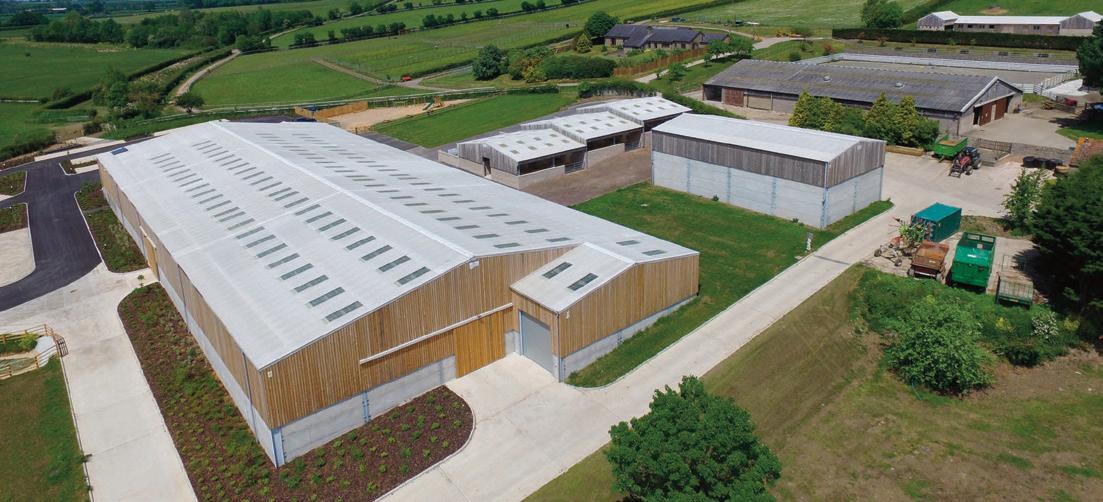
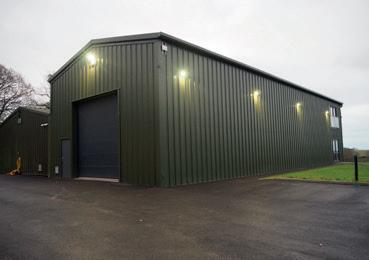
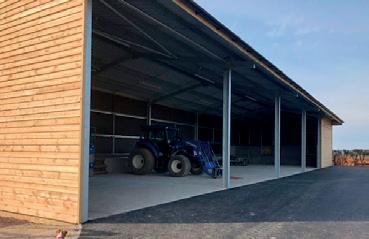
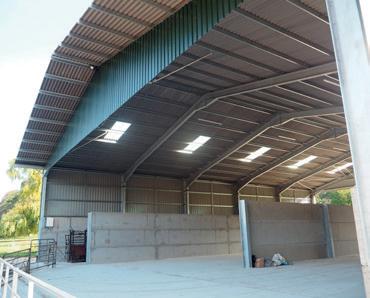
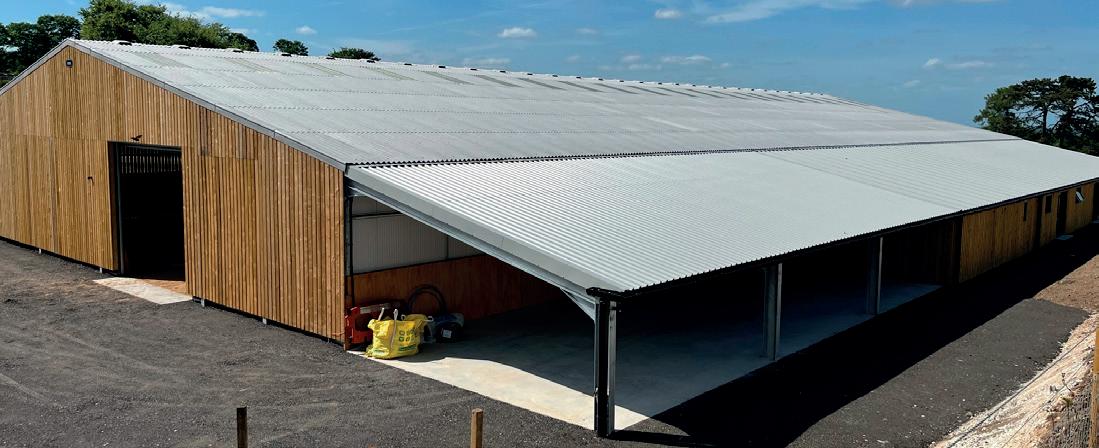

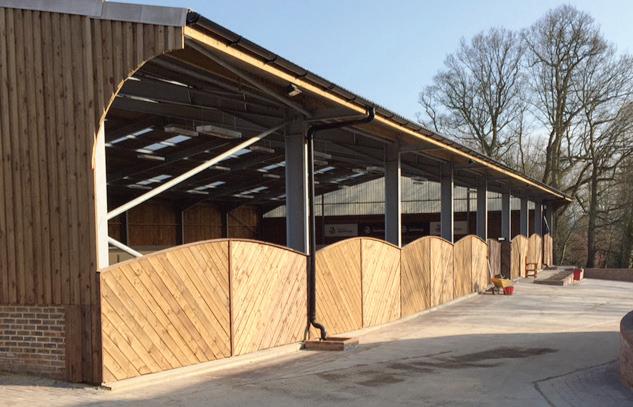

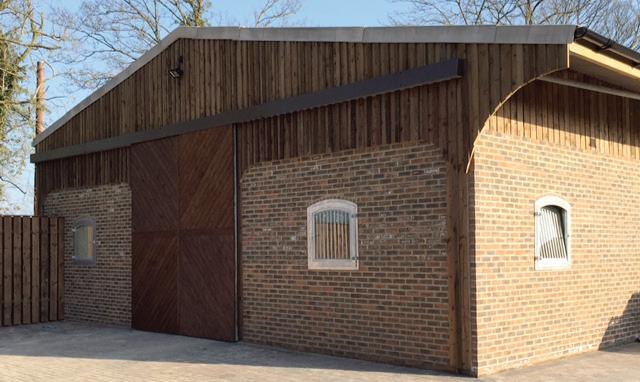





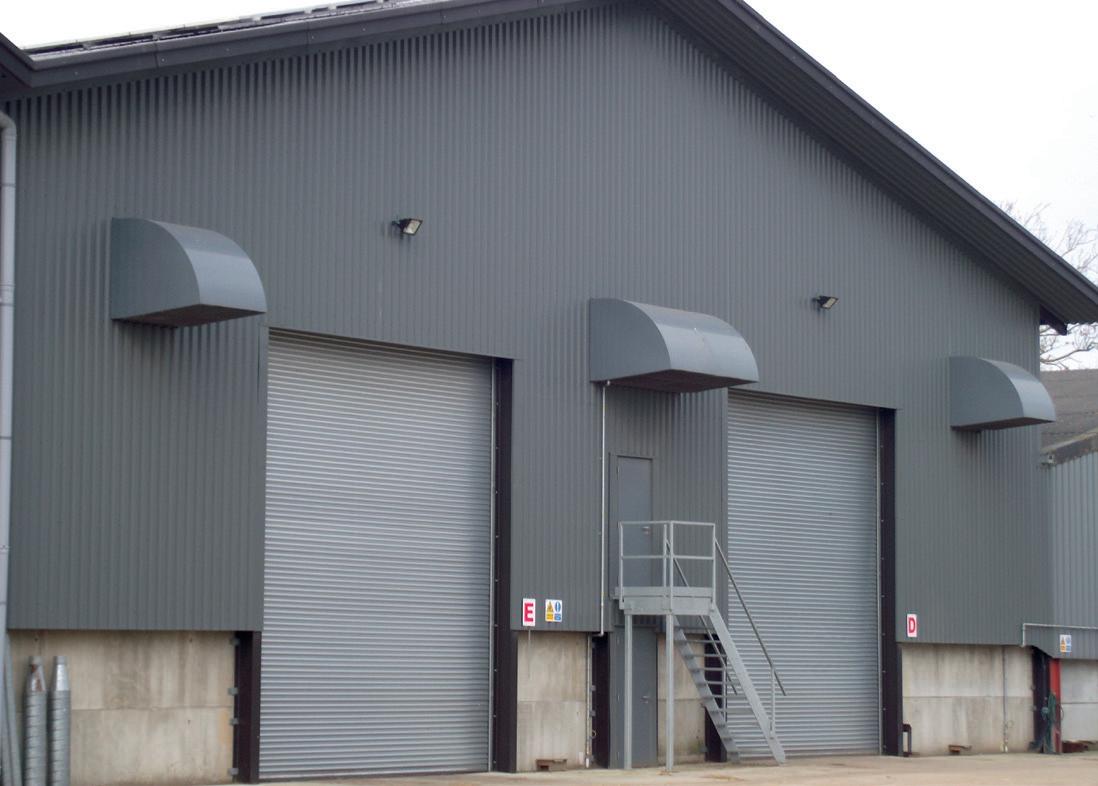
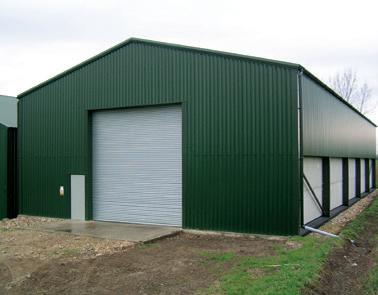
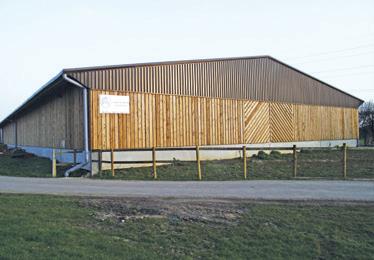


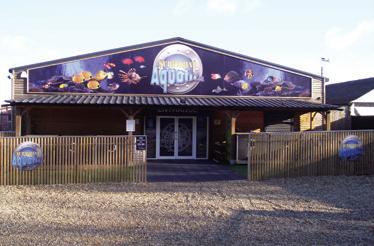
MARCH 2023 | WWW.SOUTHEASTFARMER.NET 62 CLASSIFIEDS CONSTRUCTION CONSTRUCTION Industrial & Commercial | Structural Steelwork | Agricultural & Equestrian Contact us for a free quotation 01269 831831 enquiry@shufflebottom.co.uk www.shufflebottom.co.uk Shufflebottom Ltd Cross Hands Business Park, Cross Hands, Llanelli, Carmarthenshire SA14 6RE Shufflebottom Agricultural Buildings Steel-frame buildings for your farm + Supply only or supply & erect + Construction all over the UK + Award winning company Strength, Security, Style Office 01825 371500 � info@formabuild.co.uk www.formabuild.co.uk We specialise in the supply and construction of steel framed buildings together with the repair and refurbishment of existing farm buildings. Based in the heart of Sussex, covering the South East. Sussex builders since at least 1605. Forma offer all aspects of steel framed construction and cladding together with groundworks and electrical fit out if required. formabuild.co.uk 100% British designed & built Over 35 Years experience Site visits Call to arrange a site survey All our panels are marked Gary White 07812 599679 Jason White 07941 274751 Based in Lewes, East Sussex G.E.WHITE & SONS Ltd All refurbishments & repairs undertaken. Call for a free quote today. AGRICULTURAL, EQUESTRIAN & INDUSTRIAL STEEL FRAMED BUILDINGS We supply CONCRETE PANELS – Any size to suit your needs All aspects of steel work, cladding & groundwork. Family run business with 45 years experience. “You tried the others, now try the brothers” All our buildings are marked www.gjelgarconstruction.co.uk For more information contact us: t: 01233 623739 m: 07860 414227 e: office@gjelgarconstruction.co.uk • Steel frame buildings • Sheeting and cladding • Guttering and repairs • Groundworks and drainage • Demolition and asbestos removal • Refurbishment and change of use • Concrete frame and steel frame repairs • Insurance and general repairs • Concrete floor and block paving G. J. ELGAR CONSTRUCTION Ltd






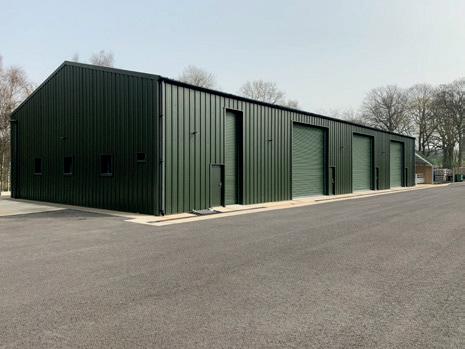


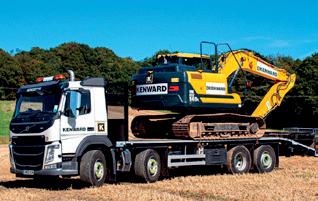


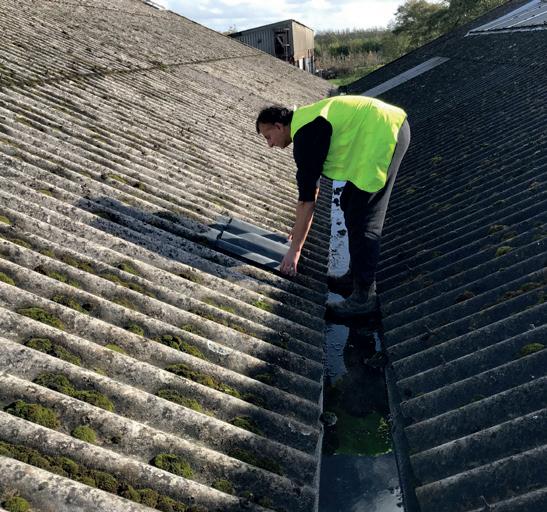
WWW.SOUTHEASTFARMER.NET | MARCH 2023 63 TO ADVERTISE CALL 01303 233883 CLASSIFIEDS CONSTRUCTION CONSTRUCTION CONSTRUCTION Agriculture ~ Cold Storage ~ Equestrian ~ Industrial ~ Waste Recycling • Agricultural Buildings • Cold Store Buildings • Equestrian Buildings • Industrial Buildings • Waste Recycling Buildings • Structural Steel • Drawing Services • Design Services • Mezzanine Floors • Custom Steelwork 01323 890403 www.danddconstruction.co.uk info@danddconstruction.co.uk To advertise in South East Farmer telephone 01303 233883 Steel frame buildings for all your farming and agricultural needs. Visit our website or find us on social media to learn more... Supplying profiled roofing products to contractors, builders and farmers visit www.southernsheeting.co.uk for our full range or call 01342 590 357 to speak to our friendly sales team Our main products off the shelf include: • Metal sheeting • Insulated panels • Fibre cement • Rooflights • Onduline • Fixings and accessories southernsheeting.co.uk NATIONWIDE DELIVERY • EXTENSIVE RANGES IN STOCK CS3152 SS SE Farmers 190mm x 133mm advert v2.indd 2 23/11/2022 15:47 Arrange a site visit with one of our contracts managers to discuss your project in more detail by emailing enquiries@kenwardgroundworks.co.uk or call 01403 210218 www.kenwardgroundworks.co.uk Kenward Construction based in Horsham, West Sussex offer a full design and build service for your next steel framed building including composite cladding, concrete panels, roller shutter doors and bespoke designs to meet individual planning conditions. Kenward Construction also offer a wide range of services offering a truly one stop shop for your next farm building project. Demolition, plant hire, access roads, drainage, sewage treatment plants, rainwater harvesting, biobed wash downs, paving, concrete foundations / slabs, walling and site landscaping. ENWARD FREEPHONE: 01233 659129 from BT land-line charlie.woodger@btinternet.com REFURBS, BIG 6 ROOF SHEETS, ROOF LIGHTS, RIDGES, VERGES, VALLEY GUTTERS, BOX GUTTERS, BOUNDARY GUTTERS, ASBESTOS, SHEETING Single Sheet To Whole Roof Roller Shutters Accidental or Storm Damage Works Demolition Refurbishments Waste Clearances CALL TO DISCUSS YOUR PROJECT! ALL WORKS KENT & SUSSEX Professional Services to the Agricultural, Industrial & Equestrian Sectors FARM BUILDING REPAIRS
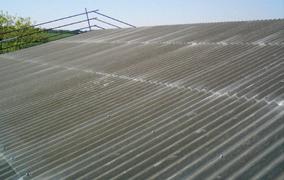
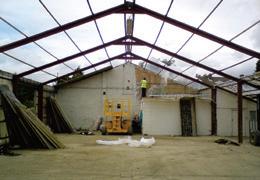
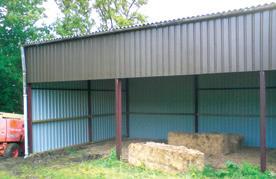
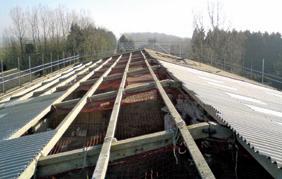
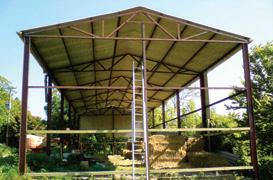
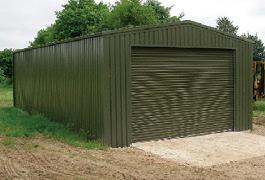

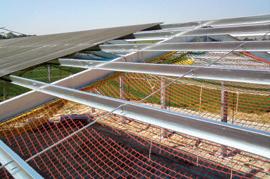
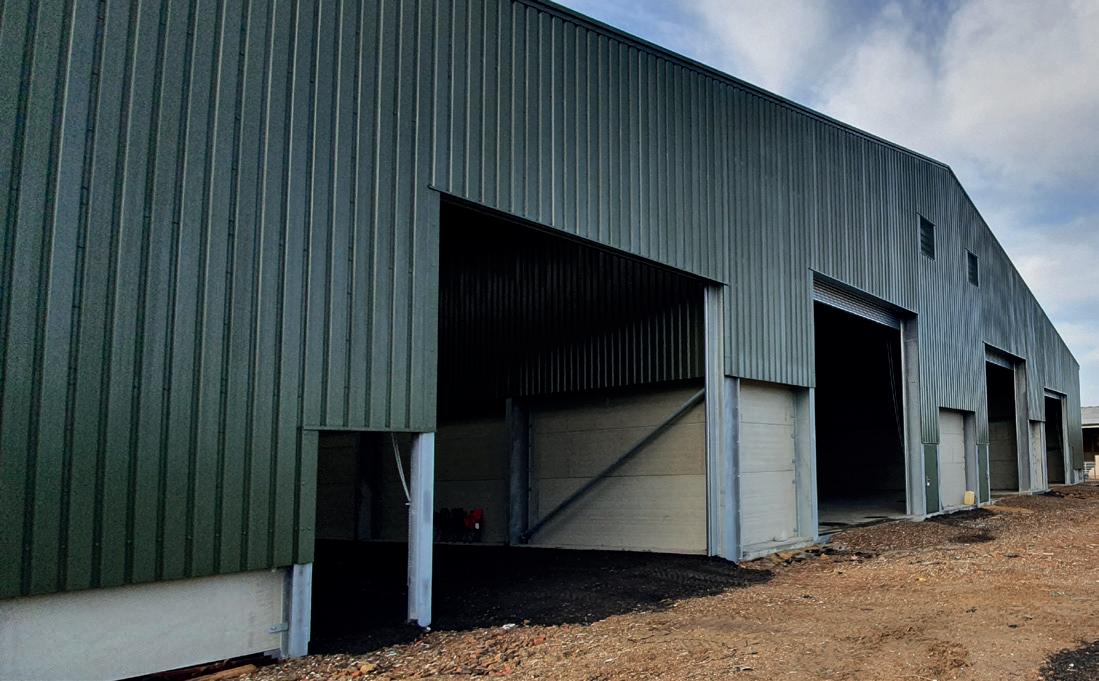
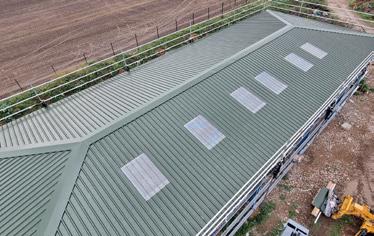






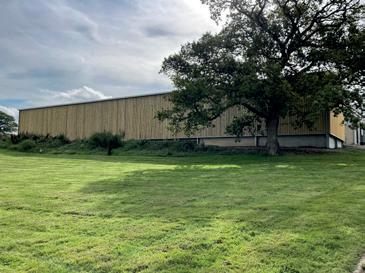



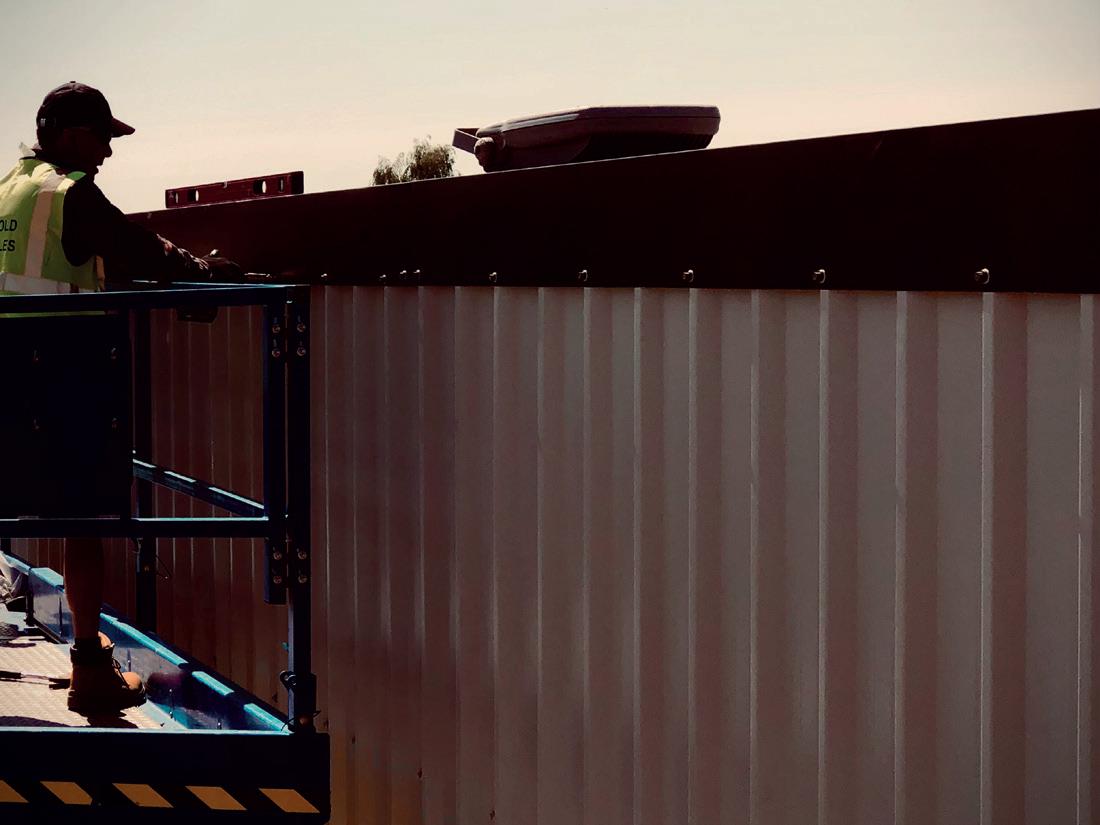






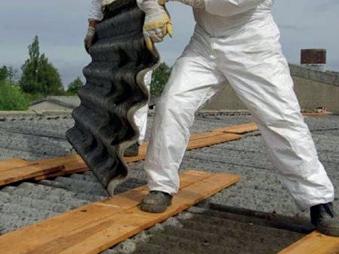

MARCH 2023 | WWW.SOUTHEASTFARMER.NET 64 CLASSIFIEDS JPR ROOFING & CLADDING… Professional Services to the Agricultural, Industrial & Equestrian Sectors ROOFING & CLADDING Including: • Sheeting & Cladding to New & Existing Buildings • Roof repairs, Replacements and over sheeting • Insulated or single skin plastic coated sheeting in a wide range of colours • Concrete fibre sheeting, Big 6 profile etc • Asbestos sheeting removal & disposal, using registered waste carrier • Valley gutters, concrete or metal, repaired or re-lined • Roof lights replaced or covered • Maintenance Programmes to avoid the problems that occur with neglect • Conversions & extensions to existing buildings • Groundworks, Access Roads, Drives, concrete bases, Drainage etc FIRE,FLOOD & STORM DAMAGE Including: • 24 Hour Call out service • Making site/building/premises safe • Structural safety assessment • Emergency clear-up operations • Emergency procedures to reduce impact on your business or premises • Demolition/site clearance • Asbestos removal/clearance & disposal, using registered waste carrier • Re-instatement works • Insurance Claims ALL WORKS GUARANTEED Specialists in: FREEPHONE: 0800 756 9886 Covering Kent, East/West Sussex and the South East from BT land-line MOBILE: 07813 142 145 CONSTRUCTION Specialist in the Agricultural, Industrial and Equestrian sectors Steel frame supply and erect or just supply. Sheeting, cladding and oversheeting. Gutter replacement, repairs and lining. Steel frame, concrete frame alterations and repairs. Asbestos removal. Roof light and sheet changes. Refurbishments and usage changes. Demolition, groundworks and site clearance. 24 hour call out in the event of fire or break in. Roller shutters, sliding and personnel doors. Drone surveys Insurance and repair work On site welding and steel fabrication ALL WORKS GUARANTEED 01227 918723 Quality of work Reliability and honesty Unbeatable on price 07784 619603 jez@JRJconstruction.co.uk www.JRJconstruction.co.uk We are a Hampshire-based family run company specialising in the refurbishment, renovation, alteration and upgrade to the external envelope of buildings within the industrial, commercial and agricultural sectors. Our services Structural Steel Cladding Systems Roof Repairs Doors Gutter Maintenance Asbestos Removal Tel: 02380 617383 Email: info@symesindustrial.co.uk Web: www.symesindustrial.co.uk Units 6 & 7, Upper Norton Farm, Sutton Scotney, Hampshire SO21 3QF Industrial Commercial Agricultural Penfold’s commercial, agricultural and residential building specialists with over 40 years experience – Standing seam – Snaplock systems – Aluminium – Zinc – Copper METAL ROOFING – Composite cladding – Metal cladding – Fibre cement cladding – Timber cladding CLADDING – Removal – Disposal – Surveys ASBESTOS REMOVAL 07864 823 476 07889 481618 Nextgen Cladding Ltd www.nextgencladding.co.uk
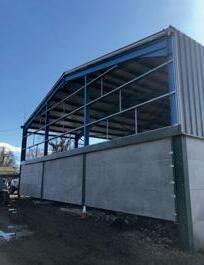
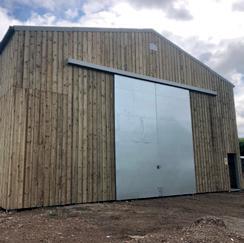






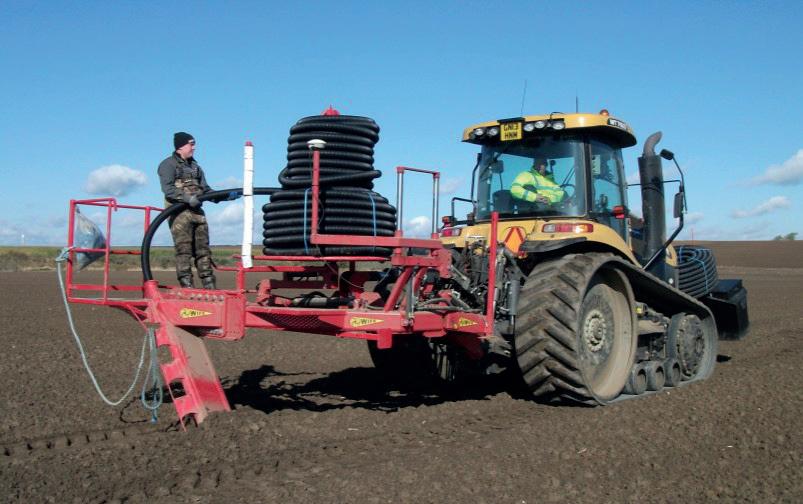
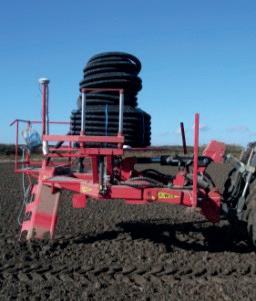
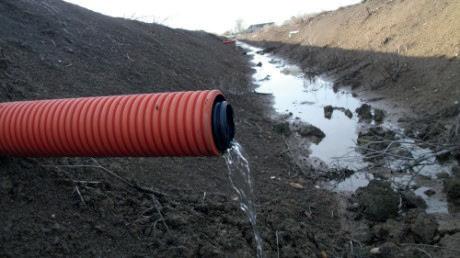
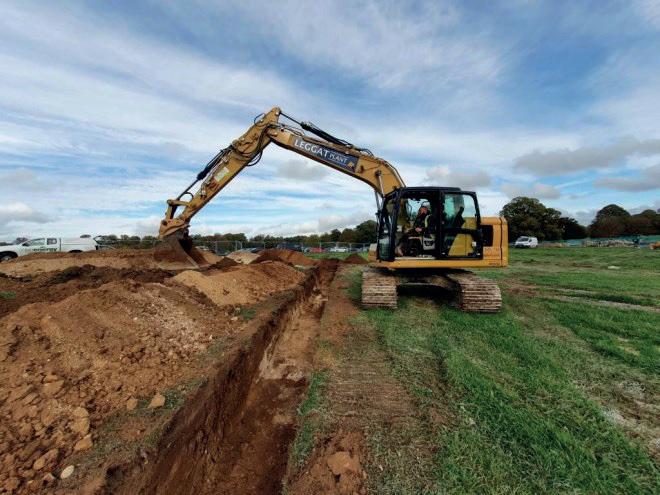
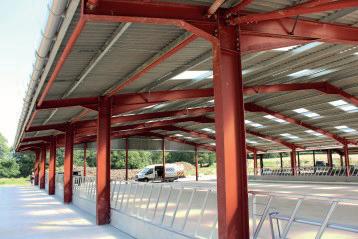

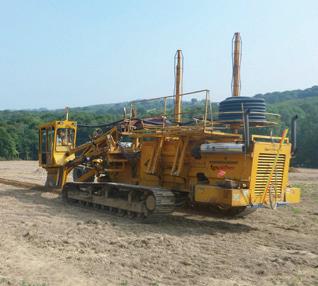
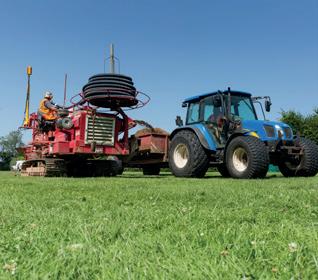
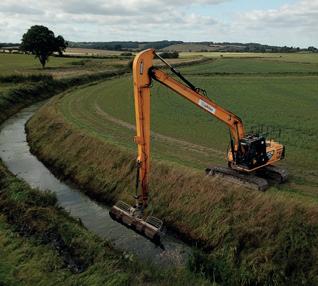
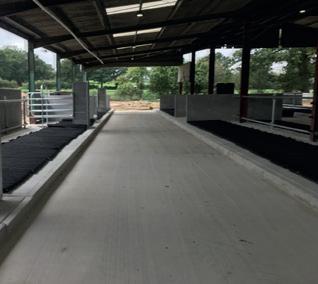
WWW.SOUTHEASTFARMER.NET | MARCH 2023 TO ADVERTISE CALL 01303 233883 CLASSIFIEDS CONTRACTORS Mobile: 07976 287836 Email: sales@shortlandstructures.com www.shortlandstructures.com • STEEL FRAMED BUILDINGS • CLADDING • ERECTING • • EXTENSIONS • ALTERATIONS • CONCRETE PANELS • ROLLER/SLIDING/PERSONNEL DOORS • SHORTLAND STRUCTURES LTD ● LAND DRAINAGE ● DITCHING ● POND WORK ● WATER SUPPLIES ● SEWAGE TREATMENT PLANTS ● GROUNDWORKS ● PLANT HIRE 360° EXCAVATORS FOR ESTIMATES & ENQUIRIES (01622) 890884 G & S BROWN Drainage Contractors Working with farmers since 1947 Email: info@brownsdrainage.co.uk www.brownsdrainage.co.uk SWA • FIELD MAPPING • DRAINAGE SURVEYING • DESIGN • DRAINAGE FOR FURTHER INFORMATION OR VISIT OUR WEBSITE TOM: 01795 880441 or 07943 192383 EMAIL: james@swattwood.com S W ATTWOOD & PARTNERS LAND DRAINAGE james@swattwood.com PLEASE CONTACT US OR VISIT OUR www.attwoodfarms.com GRAIN STORAGE & LAND DRAINAGE PLANT HIRE INERT TIPPING CLAY SALES FROM £220 PER ACRE FIELD MAPPING DRAINAGE SURVEYING DESIGN DRAINAGE LAND DRAINAGE www.swjfattwood.com S W ATTWOOD & PARTNERS LAND DRAINAGE PHONE: 01795 880441 EMAIL: james@swattwood.com FOR FURTHER INFORMATION PLEASE CONTACT US OR VISIT OUR WEBSITE: www.attwoodfarms.com GRAIN STORAGE & TESTING LAND DRAINAGE PLANT HIRE INERT TIPPING CLAY SALES FROM £220 PER ACRE DRAINAGE SURVEYING S W ATTWOOD & PARTNERS LAND DRAINAGE james@swattwood.com PLEASE CONTACT US OR VISIT OUR www.attwoodfarms.com GRAIN STORAGE & TESTING LAND DRAINAGE PLANT HIRE INERT TIPPING FROM £220 PER ACRE DRAINAGE SURVEYING DRAINAGE CONSTRUCTION CONTRACTORS FREEPHONE: 01233 659129 from BT land-line charlie.woodger@btinternet.com Asbestos roof sheeting removals Asbestos encapsulation Asbestos fire damage, clearance & re-instatement works Asbestos clearance & de-contamination Asbestos disposals by licenced registered company New metal roofs installed over old asbestos roofs Roof light & sheet repairs Gutter repairs Gutter replacements & re-lining Strip & refurbishment works Change of use projects Demolition & Groundworks CALL TO DISCUSS YOUR PROJECT! Professional Services to the Agricultural, Industrial & Equestrian Sectors ALL RISKS LTD ASBESTOS ROOF REMOVALS CIVIL ENGINEERING GROUNDWORKS CONSTRUCTION BUILDING ERECTION LIVESTOCK & CROP STORAGE SOLUTIONS LAND DRAINAGE SYSTEMS NEW SERVICES INSTALLATIONS FOUNDATION EXCAVATIONS RENEWABLE ENERGY INSTALLATION & MUCH MORE! 01342 325738 | leggatplant.com sales@leggatplant.com @leggatplant @leggatplant LEGGAT PLANT LP LAND DRAINAGE, EARTHWORKS, GROUNDWORKS & CONSTRUCTION FULL LAND DRAINAGE SERVICE Sportsfields, amenity and irrigation systems using Mastenbroek trenchers PONDS, LAKES & RESERVOIRS Construction and maintenance GROUNDWORKS & CONSTRUCTION Primary excavations, aggregate sub-base, agricultural construction and concreting ENVIRONMENTAL HABITATS Water course maintenance and improvement works For all enquiries call 01233 860404 or 07770 867625 (Harvey) T P DRAINAGE AND GROUNDWORKS Treatment Plants, slurry pits, ditches, field irrigation, concrete bays and footings, cattle grids, grubbing out hedges and trees. Call 07494 269848 Email tommypenfold24@gmail.com
Competitive Direct Drilling Service
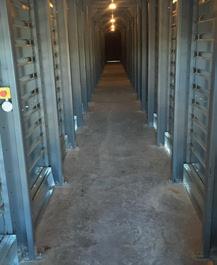

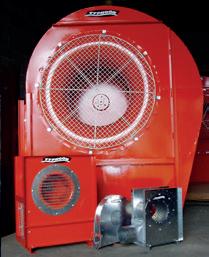




















Using our proven Simtech Aitchison direct drill we seed into all surfaces - grasses, clovers, brassicas, cereals, pulses, maize and all mixtures. The unique T-slot boot allows a perfect environment for the seeds to germinate, along its 3m sowing width with 20 rows (15cm).
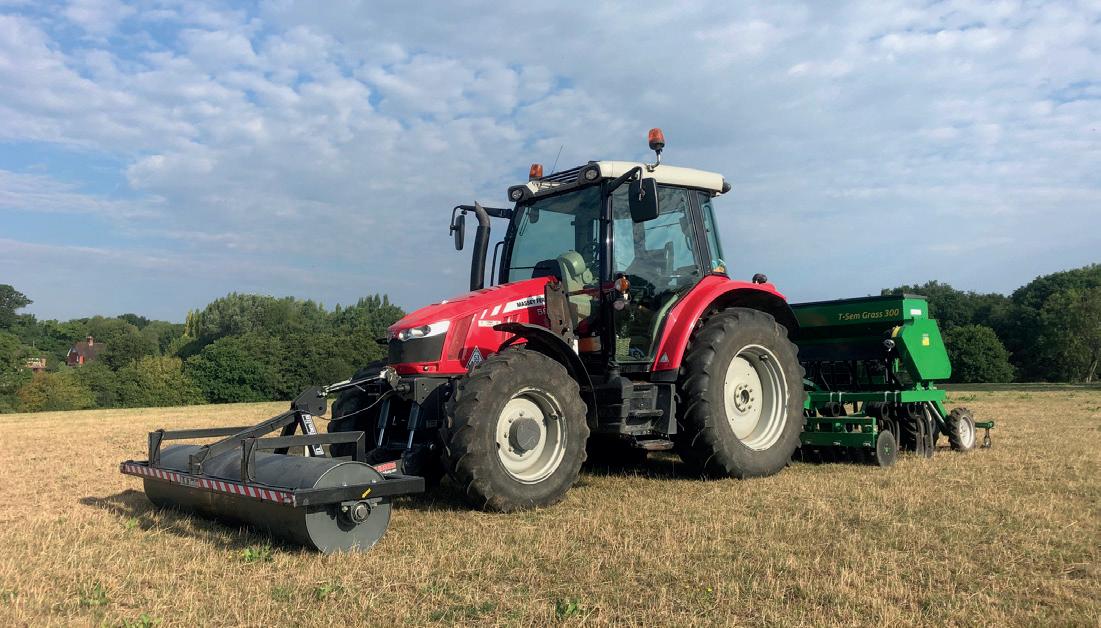



This method saves time and money compared with more traditional re-seeding methods, but is also capable of stitching and rejuvenating existing crops.


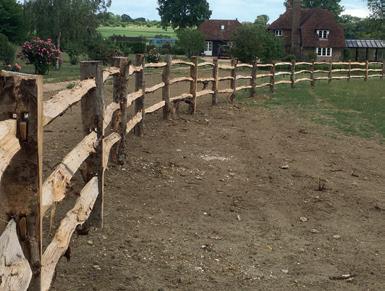
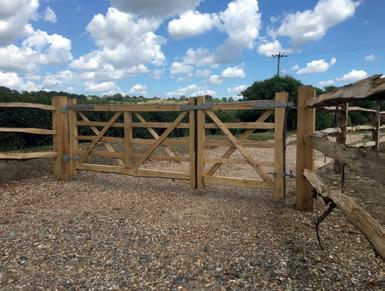
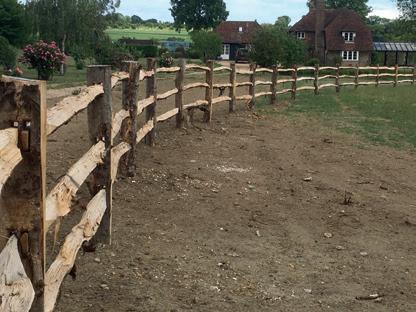
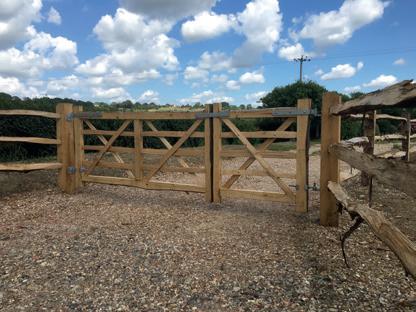

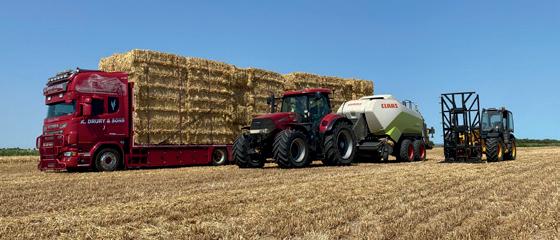
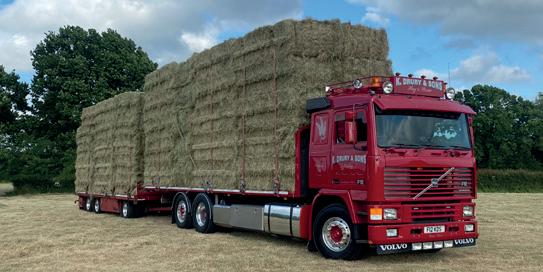
MARCH 2023 | WWW.SOUTHEASTFARMER.NET 66 CLASSIFIEDS HAULIERS CONTAINERS FENCING HAY & STRAW IN STOCK | ROUND & BIG SQUARE BALES 07860 728204 Hay & Straw Merchant | Machinery Haulage Find us on Facebook CROP DRYING FOR SALE CWP fencing Tel: 07985 298221 colin@cwpfencing.co.uk Standing Sweet Chestnut Wanted Cleft post and rail Cleft field gates Fencing stakes Straining posts Chestnut fencing Tel: 07985298221 colin@cwpfencing.co.uk Standing Sweet Chestnut Wanted Cleft post and rail Cleft field gates Fencing stakes Straining posts Chestnut fencing Tel: 07985298221 colin@cwpfencing.co.uk Standing Sweet Chestnut Wanted Cleft post and rail Cleft field gates Fencing stakes Straining posts Chestnut fencing Redhill Farm Services: Fencing Division ALL TYPES OF FENCING & GATES Supplied and erected & Repairs Tel: 01737 821220 Mob: 07768 931891 Email: redhillfarmservices@gmail.com STORAGE TANKS Visit www.smdd.co.uk or call 01594 833308 Buy from stock. Visit us to collect or same day dispatch with nationwide delivery. New and recycled IBC tanks. Plastic and steel drums. Water tanks & plenty of fittings. Smiths of the Forest of Dean The Tank and Drum Experts Visit www.smdd.co.uk or call 01594 833308 Buy from stock. Visit us to collect or same day dispatch with nationwide delivery. New and recycled IBC tanks. Plastic and steel drums. Water tanks & plenty of fittings. Smiths of the Forest of Dean The Tank and Drum Experts Container Sales & Rental New & Used Guaranteed Wind/Watertight equipment 10ft, 20ft & 40ft Equipment available Crawley – viewing by appointment only Freight Container Services (FCS) 01403 268723 • 01636 616335 • 07831 142 401 sales@fcs-uk.co.uk www.freightcontainerservices.com ENT Machines E: enquiries@kentmachines.co.uk T: 01732 884 551 • Mini Diggers • Telehandlers • Forklifts • Trailers @kentmachines.co.uk for SALE @KentMachines Kent Machines Ltd www.kentmachines.co.uk www.pellcroft.com | sales@pellcroft.com | 01526 342466 PELLCROFT Manufacturers of centrifugal, low volume and portable fans, air tunnels, drive over oors, grain stirrers and gas burners
Town Place Farm, Haywards Heath Tel: 01825 790341 Mob: 07970 621832 Email: Charlie@townplacefarm.co.uk
Specialists in agricultural, deer and equestrian fencing and gates T: 01622 831
| M: 07710 179
enquiries@woodchurchfencing.co.uk | www.woodchurchfencing.co.uk CONTRACTORS
781
600
COMPLETE OUR CROSSWORD TO WIN
ACROSS
1 Jazz song written in 1927 by Hoagy Carmichael (8)
5 Seeds (4)
7 A place where horticultural produce is processed (4,5)
8 Disease causing bacteria, virus, fungi (5)
10 Image that is worshipped (4)
11 Rocks formed when lava cools (7)
13 Woody shrubs with spring flowering (13)
15 Cover in an even layer (6)
17 Idea, belief, concept (6)
20 Have enough money to pay for something (6)
23 Epidermis (4)
24 Nectar feeding insect (9)
25 Plumage (8)
26 Take in small amounts of liquid (4) DOWN
1 A type of tank which is part of domestic sewage system (6)
2 A type of dried mild chilli (5)
3 Roald ----, author (4)
4 Smeared or blurred (7)
5 A device to extract juice (5)
6 Self important (7)
9 Cattle prod (4)
12 A thought of inspiration (4)
13 Breed (9)
14 Rodents (4)
16 Epoch, time period (3)
17 Enid Blyton character (5)
18 Tree (3)
19 Make noises in sleep (6)
21 Substance covering the bones (5)
22 Special deal (5)
23 Cavity in the facial bones (5)
PRIZE ANAGRAM: A part of the immune system (11)
LAST MONTH’S ANSWERS:
Email your replies with your name, address and phone number to sef.ed@kelsey.co.uk
Correct entries will be entered into a draw which will take place on 21 March. The winner will be announced in the April edition.
To celebrate Mothering Sunday (19 March) we are offering readers the chance to win one bottle of Gribble Bridge White, one bottle of Gribble Bridge Rosé and a bottle of Gribble Bridge Sparkling White. For more information about the vineyards, please visit www.biddendenvineyards.com or call 01580 291726.



*Subject to availability
Correct answer: Pregnancy toxaemia
LAST MONTH’S WINNER: Clive Baxter from Maidstone, Kent
WWW.SOUTHEASTFARMER.NET | MARCH 2023 67 TO ADVERTISE CALL 01303 233883 ®
VI NE YA R DS
One bottle of Gribble Bridge White, one bottle of Gribble Bridge Rosé and a bottle of Gribble Bridge Sparkling White
VI NE YA R DS
CROSSWORD
To enter, simply unscramble the anagram (11) using the green squares.
1 2 3 4 5 6 7 8 9 10 11 12 13 14 15 16 17 18 19 20 21 22 23 24 25 26 1 2 3 4 5 6 7 8 9 10 11 12 13 14 15 16 17 18 19 20 21 22 23 24 26 27 28 C O N C L U D E D S M E A R R A O Y I D E N G A G I N G E X U D E A S A S E R M O A T S M O T H E R E S I O S H O R T I C U L T U R I S T A O S T R U M P E T S L E D G E L A C D U A E T H E A T R E S N I P Q O P E T P Q U I N T U P L E R E I E L U A I N V O L V E D T O L L
Crossword by Rebecca Farmer, Broadstairs, Kent
SUNDAY TRUCKCLASSIC SHOW SEEUSATTHESHOW
DRIVECLASSICSUNDAYTRUCK INDAY
& CLASSIC COMMERCIAL SHOW
Malvern, Worcestershire, WR13 6NW
Three Counties Showground, Malvern, Worcestershire, WR13 6NW

11th & 12th March 2023
Admissions:
Sat 9am-5pm, Sun 9am - 3pm
Adult: £13.50 (advance) £16 at show
Weekend adult: £20 (advance) £25 at show




Weekend camping includes 2 adults: £65 (advance) £75 at show (advance tickets no booking fee applied)
Accompanied children 15 & under free Dogs on leads welcome
SATURDAY
Saturday from 10am
SPRING 2023 SHOW
SPRING 2017 SHOW NOW EVEN BIGGER:
4 EXHIBITION HALLS + SHOWG D Features
• Ferguson Tractor & Massey Ferguson 70th anniversary display

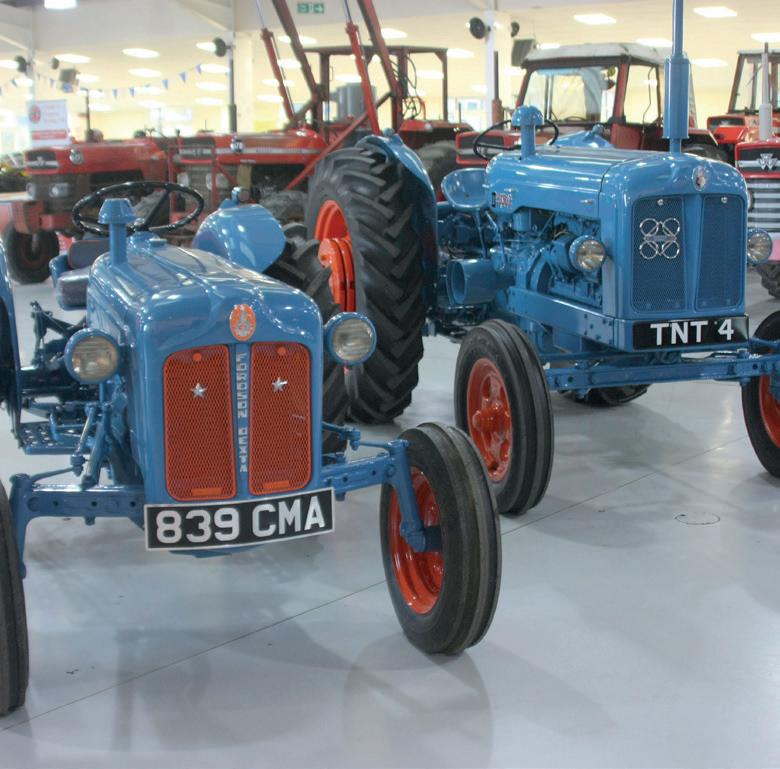
3 X EXHIBITION HALLS & SHOWGROUND



SHOW FEATURES BOTH DAYS

• Veteran, Vintage and Classic tractor displays


• Zetor and East European tractors & machinery feature






• 80th anniversary of the Ransomes Mg Crawlers and equipment
• Historic farm machinery and agricultural heritage displays and memorabilia
• Regional and National Club display stands
• Classic trucks, Land Rovers, full size and miniature steam engines

SATURDAY
Large Vintage Auction sale

Over 100 Tractors & 1500 plus lots at Pugh’s Big Spring Sale call 01531 631122 www.hjpugh.com


• Classic Commercials, Land Rovers, miniature Steamers, model and diorama displays.

• more specialist companies















• Vintage Horticultural and garden equipment & Stationary engines
•








SUNDAY
• 01531 631122 or www.hjpugh.co.uk


SUNDAY
Classic Truck and Van Display (Sun only)
Drive in Day of Classic Trucks in addition to the classic commercials on display for both days.
Vintage Sortout and Sparesday
Charity tractor road run into the Malvern hills
Online Tickets Plus Further Information
www.tractorworldshow.co.uk






Discounted Advance Tickets
Tel: 016974 51882
BUY ONLINE

www.tractor worldshows.co.uk



• The UK’s largest trade gathering of specialist vintage spares and parts companies plus model and toys, tools, work wear, books, giftware & literature


• Displays from most of the other well known makes

• equipment & classic plant
Our Sponsors
• The UK’s largest trade gathering of specialist spares and parts companies



• Model and toy retailers inc tools,

TRACTOR
Our Sponsors

S