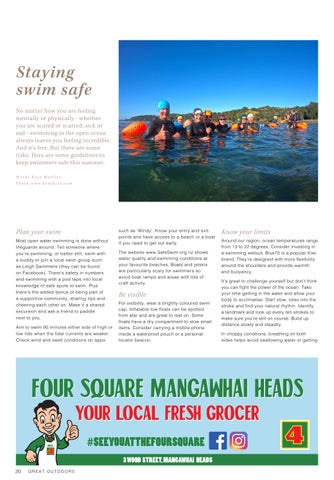
Staying swim safe No matter how you are feeling mentally or physically - whether you are scared or scarred, sick or sad - swimming in the open ocean always leaves you feeling incredible. And it’s free. But there are some risks. Here are some guidelines to keep swimmers safe this summer. Wo rd s K ay e Mu e l l e r Photo www.benthics.com
Plan your swim Most open water swimming is done without lifeguards around. Tell someone where you’re swimming, or better still, swim with a buddy or join a local swim group such as Leigh Swimmers (they can be found on Facebook). There’s safety in numbers and swimming with a pod taps into local knowledge of safe spots to swim. Plus there’s the added bonus of being part of a supportive community, sharing tips and cheering each other on. Make it a shared excursion and ask a friend to paddle next to you. Aim to swim 90 minutes either side of high or low tide when the tidal currents are weaker. Check wind and swell conditions on apps
20
GREAT OUTDOORS
such as ‘Windy’. Know your entry and exit points and have access to a beach or a boat if you need to get out early. The website www.SafeSwim.org.nz shows water quality and swimming conditions at your favourite beaches. Boats and jetskis are particularly scary for swimmers so avoid boat ramps and areas with lots of craft activity.
Be visible For visibility, wear a brightly coloured swim cap. Inflatable tow floats can be spotted from afar and are great to rest on. Some floats have a dry compartment to stow small items. Consider carrying a mobile phone inside a waterproof pouch or a personal locator beacon.
Know your limits Around our region, ocean temperatures range from 13 to 22 degrees. Consider investing in a swimming wetsuit. Blue70 is a popular Kiwi brand. They’re designed with more flexibility around the shoulders and provide warmth and buoyancy. It’s great to challenge yourself but don’t think you can fight the power of the ocean. Take your time getting in the water and allow your body to acclimatise. Start slow, relax into the stroke and find your natural rhythm. Identify a landmark and look up every ten strokes to make sure you’re still on course. Build up distance slowly and steadily. In choppy conditions, breathing on both sides helps avoid swallowing water or getting