MIAMI 2024: WHAT NOT TO MISS

SPRING FLORIDA STYLE & DESIGN ART COMES ALIVE FORCED OUT OF PARADISE THE AFFORDABILITY CRISIS
BOCAMAG.COM $6.95 MARCH 2024



when it comes to style, never settle for less designer evening wear mother of the bride special occasion day dresses resort casual accessories no appointments taken 210 n.e. 6th avenue, delray beach 561.276.5714 ninaraynor.com private parking available


Palm Beach | Miami | NewYork www.lavara.world | sales@lavara.world | +1 949 528 2729
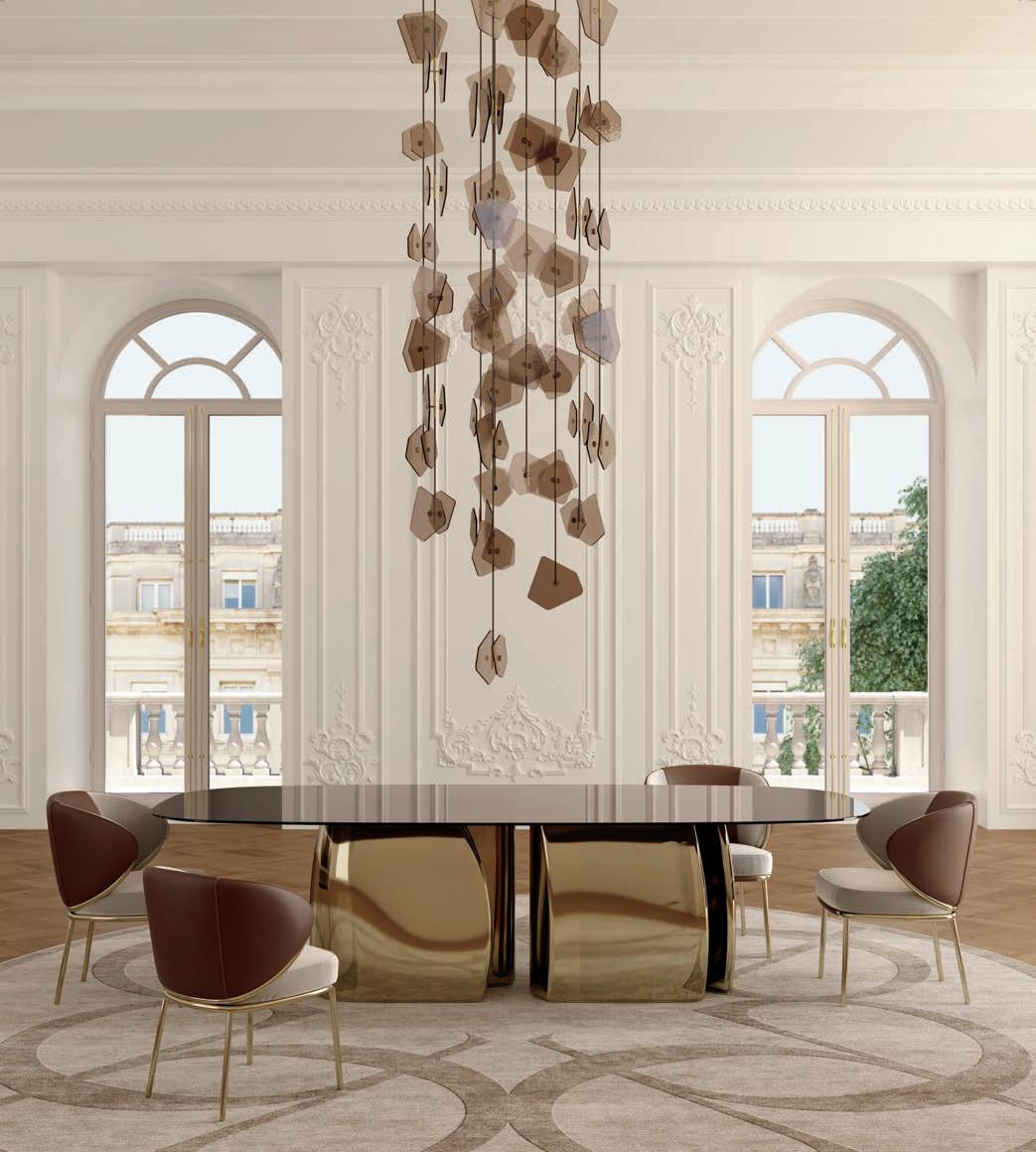
LUXURY INTERIOR DESIGN AND FURNITURE
OBSIDIAN Table, TAMARA Chairs, DIAMOND Chandelier, ECUSSON Rug
/ eliesaabmaison.com
Design
by Carlo Colombo


Experience a luxury brand, without the luxury price. Women’s Contemporary and Classic Couture. FOLLOW US for our latest styles and fashion The Reserve shopping center 9858 Clint Moore Rd. C-124 Boca Raton Florida 33496 561-990-6360 baciamimoda.com Get ready to party at our grand opening extravaganza. All the perfect clothes will be waiting inside. Date to follow. /baciami.couture/baciamimoda

TIME FAST II
L’Epée puts you behind the wheel with Time Fast, a modern table clock inspired by vintage race cars. Handmade in a limited series of 100 pieces.
4 11 E. Atlantic Avenue, Suite 200 W Delray Beach, FL 33 4 83 goldsmithandcomplications.com 561.332.37 4 7

LEON LEONFINEJEWELERS.COM 16950 JOG ROAD #112 DELRAY BEACH, FL 33446 561.908.2059 JEWELERS

And now, what’s your plan for the next 40 years?
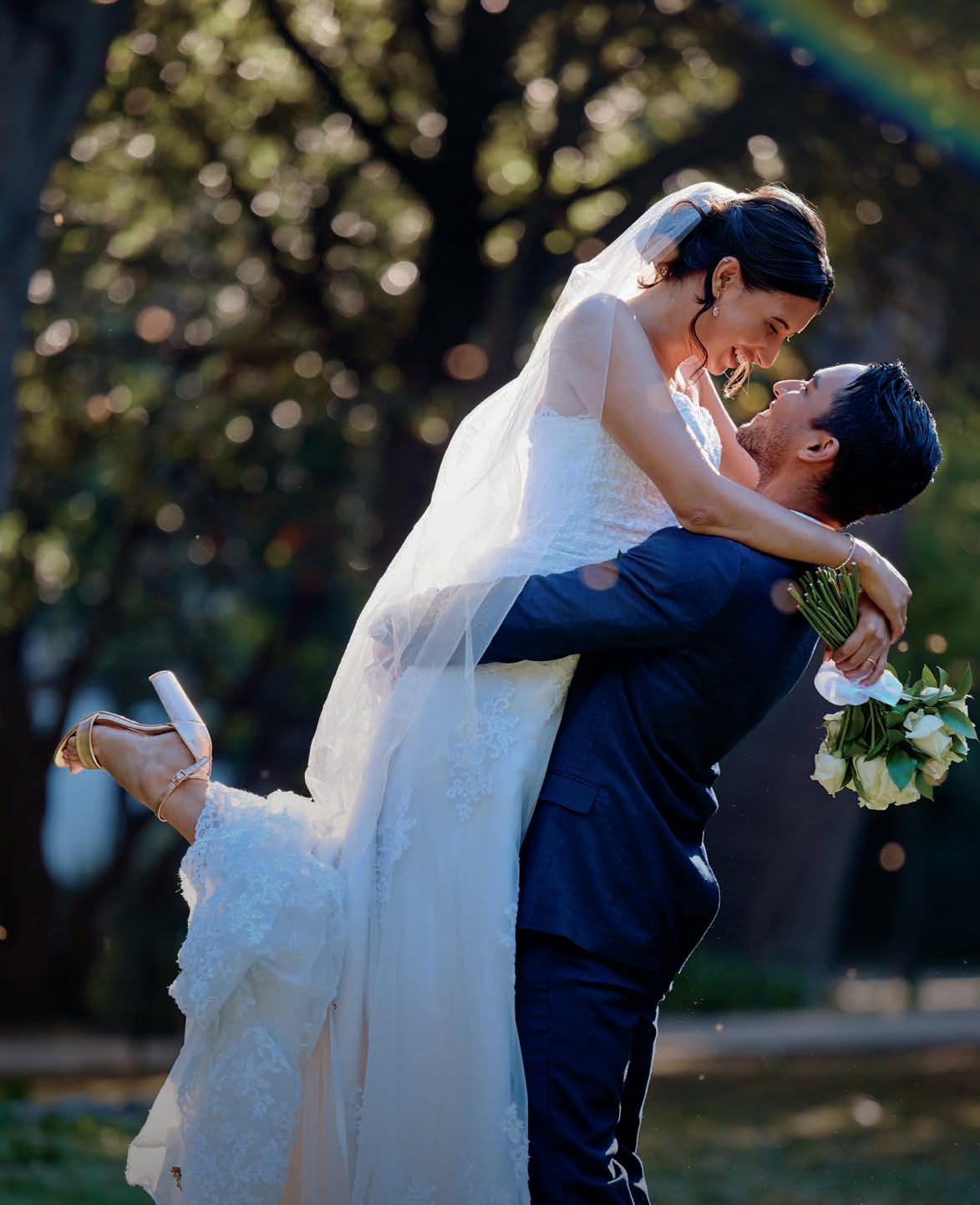
From personalized savings plans to expert financial advice, we’re here to help you build a strong foundation for a lifetime of love and prosperity. Start your happily ever after with financial confidence.
Congratulations!
Member FDIC
50 Trouble in Paradise
Everyone wants to live in Boca Raton, but fewer can afford it these days. Our investigative reporter takes a deep dive into the housing crisis, from those affected by this worrisome trend to the experts who study it and the nonprofits working to solve it.
Written by TYLER CHILDRESS
Miami’s Vizcaya Museum & Gardens
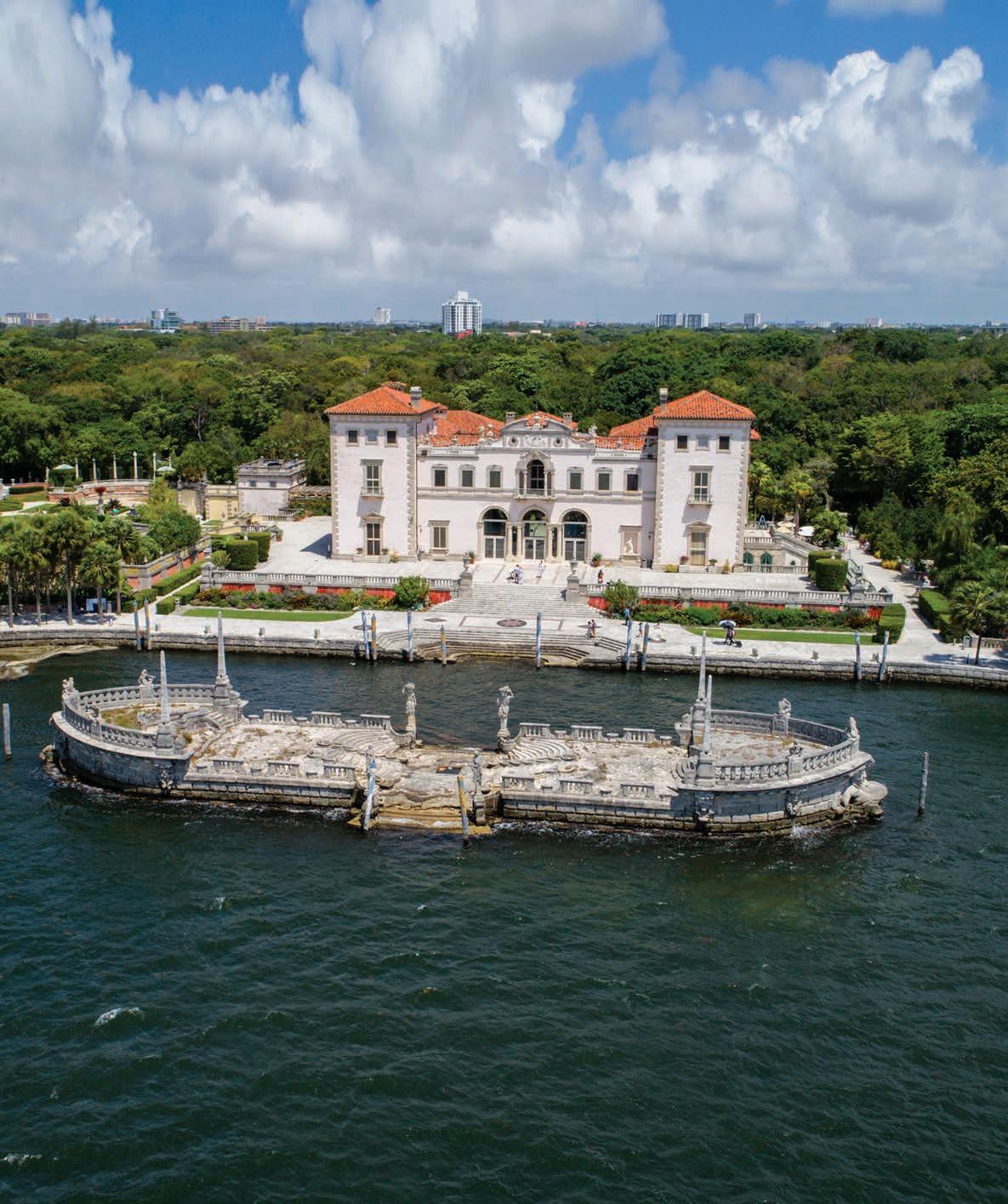
56 2024 Weekend in the 305
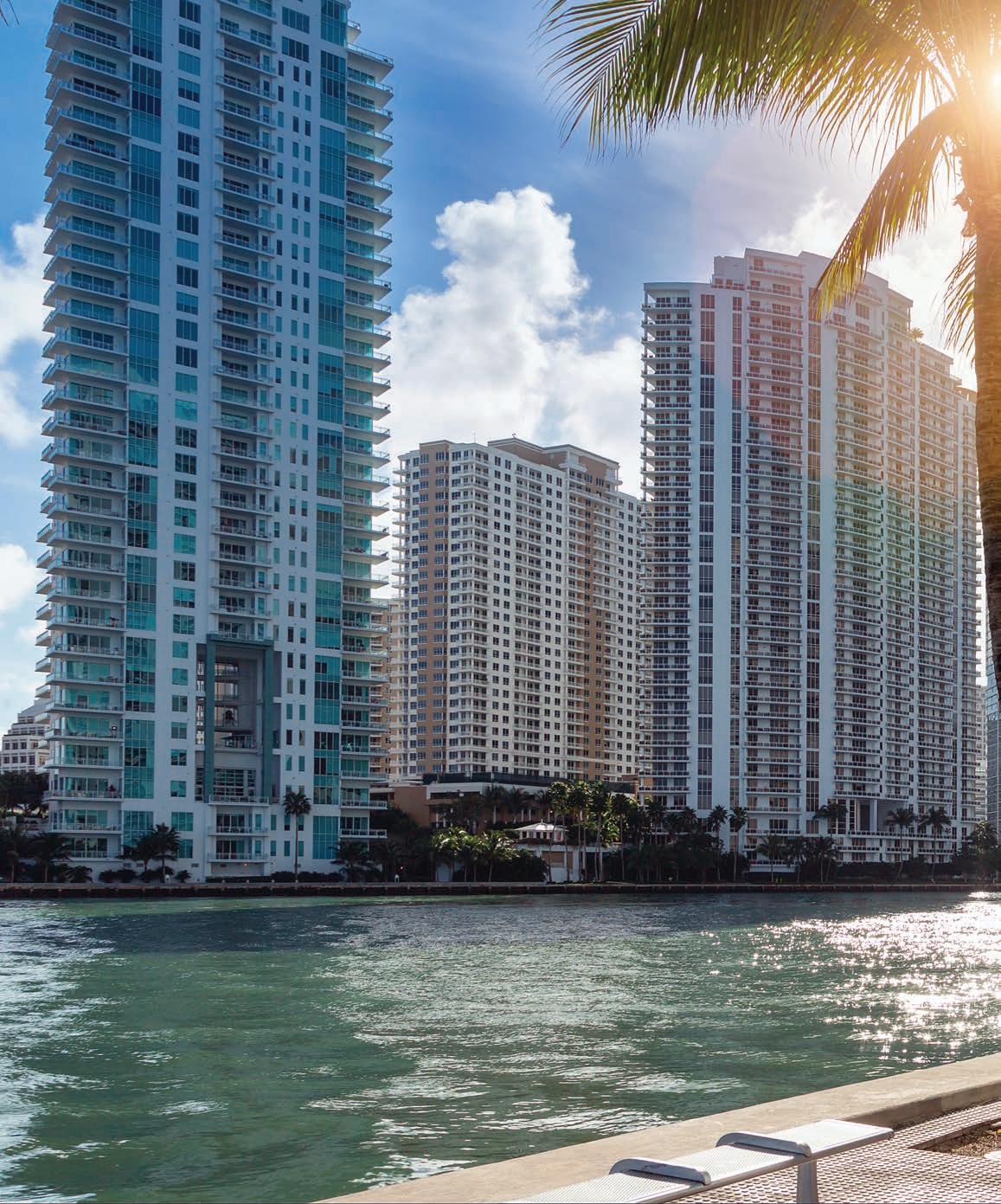
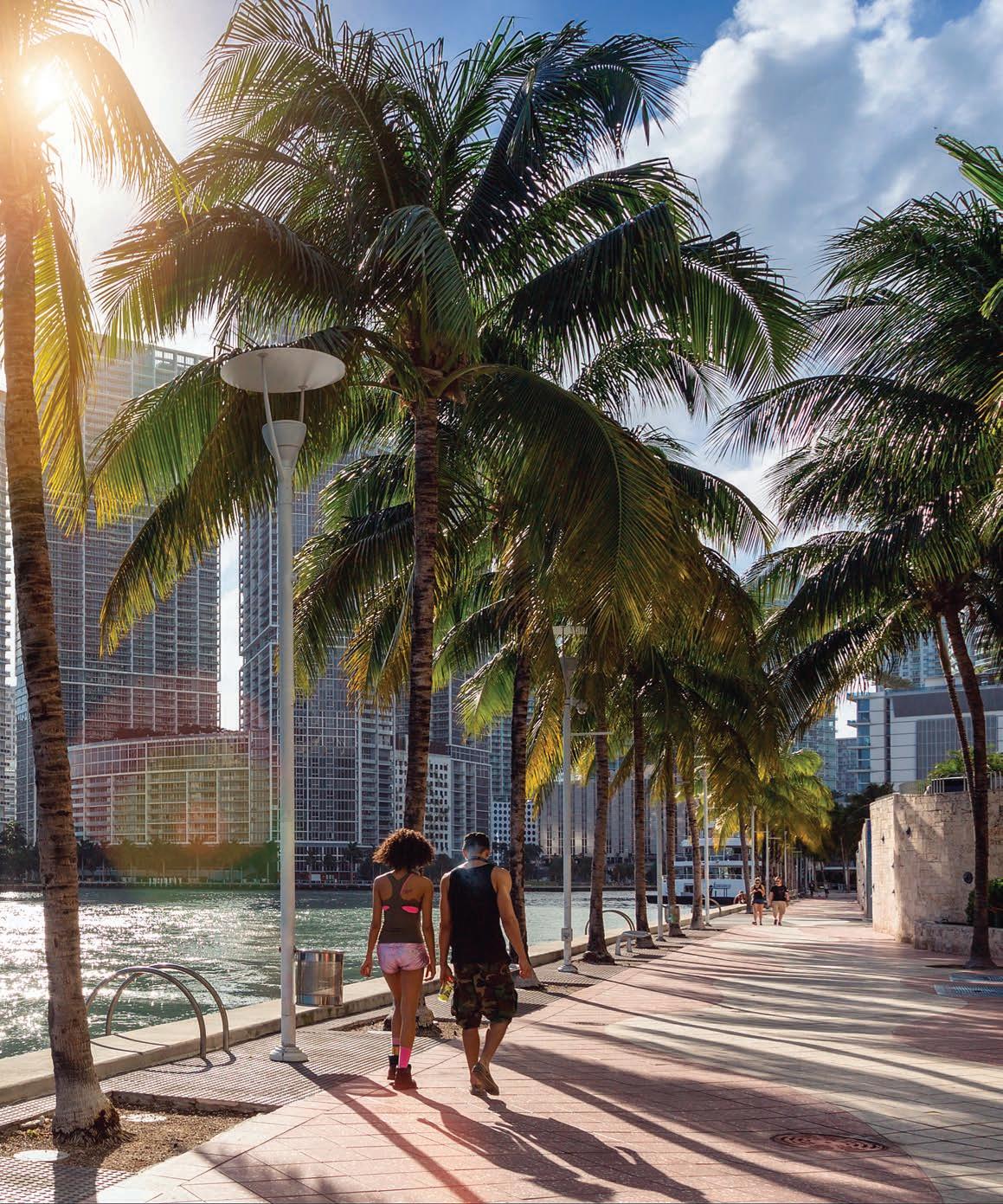
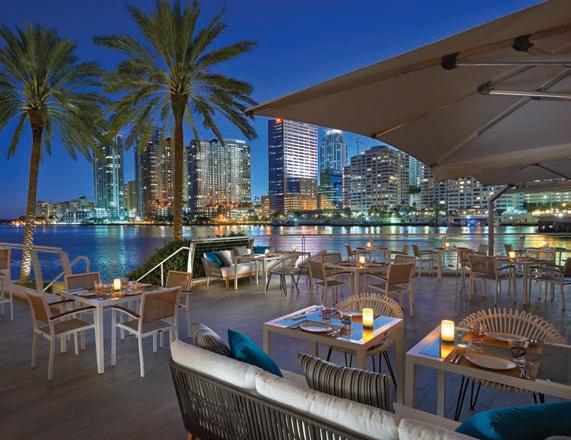
Now a brisk Brightline jaunt away, Miami continues to evolve at the speed of now, to the tune of more than $20 billion in tourist revenue in the last fiscal year. Here’s what’s new and exciting in the Magic City.
Written by CHRISTIE GALEANO-DEMOTT
67 Special Section: Florida Style and Design
See how an interior designer-turned-curator integrated a Palm Beach homeowner’s contemporary art collection into her work—with breathtaking results. Plus, let in the light with a few shining examples of sconces, globes and pendants, and explore how blue notes can add warmth to your living space.
Written by CHRISTIE GALEANO-DEMOTT
MARCH 2024 VOL. 44, ISSUE 3
24 Editor’s Letter
When even the editor’s former hippie enclave is pricing out all but the deepest-pocketed homebuyers, it’s clear that the Palm Beaches’ affordable-housing quagmire is unsustainable.
Written by MARIE SPEED
29 The Local
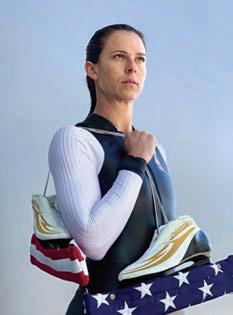
Meet the FAU hoops Hall of Famer whose pivot to speed skating has yielded Olympic glory, and a retired NFL legend who is fostering Boca’s gridiron talent in his second act. Plus, we celebrate Women’s History Month, talk springtime traditions, and catch up with a Boca police sergeant who is a “PAL” to all.
Written by TYLER CHILDRESS, MARIE SPEED and JOHN THOMASON
38 The Look
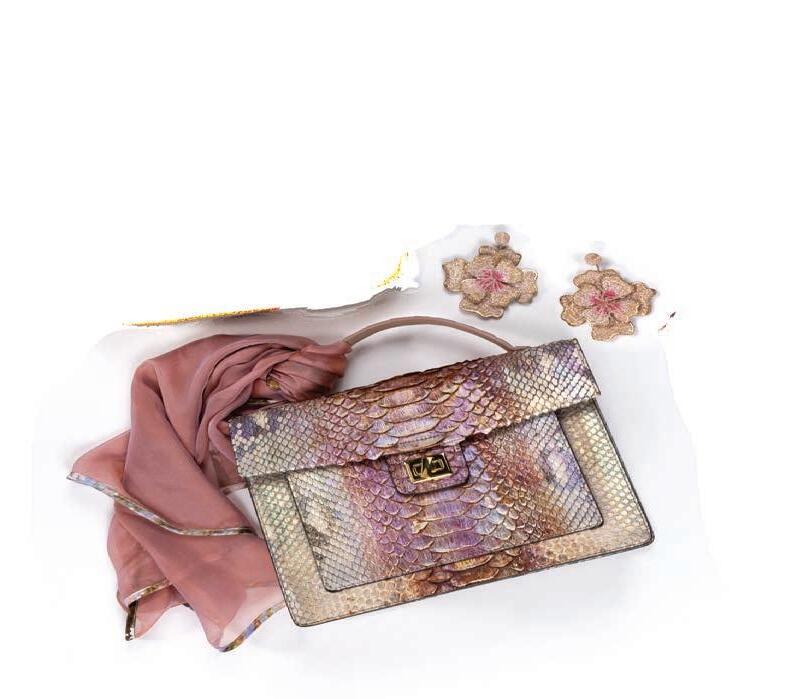
Whether textured handbags or sparkling sneakers, ballroom-ready couture or St. Paddy’s day whimsy, spring fashion is all about variety and color.
Photography by AARON BRISTOL
87 Backstage Pass
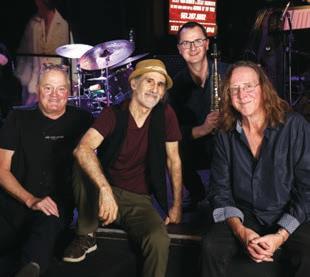
The musical mixologists of the Delray Jazz Collective have expanded beyond the genre of their name, grafting its rich heritage onto sounds marrying rock, folk, Latin music and beyond. Plus, Festival of the Arts Boca, a Tina Turner musical, Mandy Patinkin and 25+ more A&E events.
Written by JOHN THOMASON
123 Florida Table: Eat & Drink
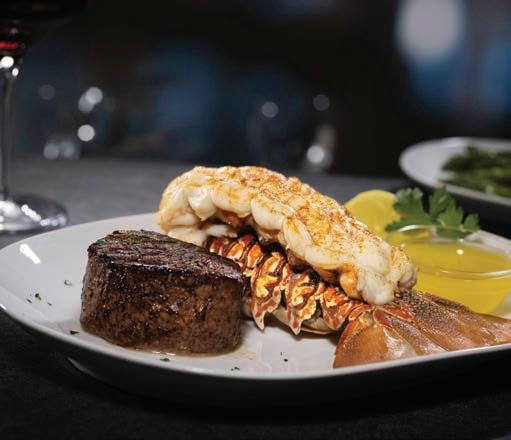
See what our food critic has to say about Meat Market and Eddie V’s Prime Seafood. Plus, top local chefs share their favorite knives and cookware, and we enroll you in a crash course on Sake 101.
Written by CHRISTIE GALEANO-DEMOTT
150 Social
The Fuller Center’s annual fundraiser was a (Wee) Dream come true, the Brice Makris Brunch brought in six figures for the Hanley Foundation, the Go Pink Luncheon hosted a record-breaking event and other community happenings.
Written by TYLER CHILDRESS
MARCH 2024 VOL. 44, ISSUE 3

160 Hometown Hero
Former nurse Holli Rockwell Trubinsky has continued to pay it forward in the health care field—along with generous contributions to the arts, education and more.
Written by MARIE SPEED
ON THE COVER:
Palm Beach home by designer Jessica Lee of Marc-Michaels Interior Design
PHOTOGRAPHY BY Jessica Klewicki Glynn
14 bocamag.com • • • • March 2024 36
123 87 38
































THEBOCARATON.COM | 855.688.7030 Naptime looks different here. Retire for the Weekend.

Web Extras
Visit bocamag.com for bonus items you won’t see anywhere else—extended stories, recipes, news and more.
ALL THAT JAZZ
Our five-way conversation with the Delray Jazz Collective (page 88) proved to be as fruitful, intelligent and lengthy as a great jazz solo. For more of the discussion, visit bocamag. com/march-2024.
KUDOS TO US
TAKE A BOWE
Three-time Olympic speed skater and FAU alumna Brittany Bowe (page 34) discusses what it was like to compete during COVID, her post-Olympic plans and more at bocamag.com/march-2024.
FIND US ON SOCIAL MEDIA
Don’t miss Boca on everything from FACEBOOK (facebook. com/bocamag) to INSTAGRAM (@bocamag) and TWITTER (@bocamag) for community news, retail trends, foodie updates and much more.
Bocamag.com was honored with the Charlie Award for best website at last year’s Florida Magazine Association awards! This is the organization’s top honor, given in recognition of the excellence of our site’s content, navigability and design. Visit bocamag. com and see why our site was voted the best!


Launched in early 2020, Boca Goes Live is still keeping you connected to the community through conversations streamed live on Facebook with a curated roster of some of South Florida’s leading officials, entertainers and innovators. Follow us on Facebook and Instagram so you don’t miss new reels and visit bocamag.com/live to see the full library of videos and watch them on demand.
Best Bites
Think our dining guide is long? You haven’t seen anything until you’ve visited our digital version. We’ve got critic-reviewed restaurants from Jupiter to Miami on the web. Visit the Dining Guide tab to view the guide.
City Watch
Boca Raton is anything but sleepy, and Randy Schultz is the go-to for all the city politics, development and business news you need to know. For updates delivered straight to your email every Tuesday and Thursday, visit the City Watch tab on our website.

16 bocamag.com • • • • March 2024
Brittany Bowe
Delray Jazz Collective
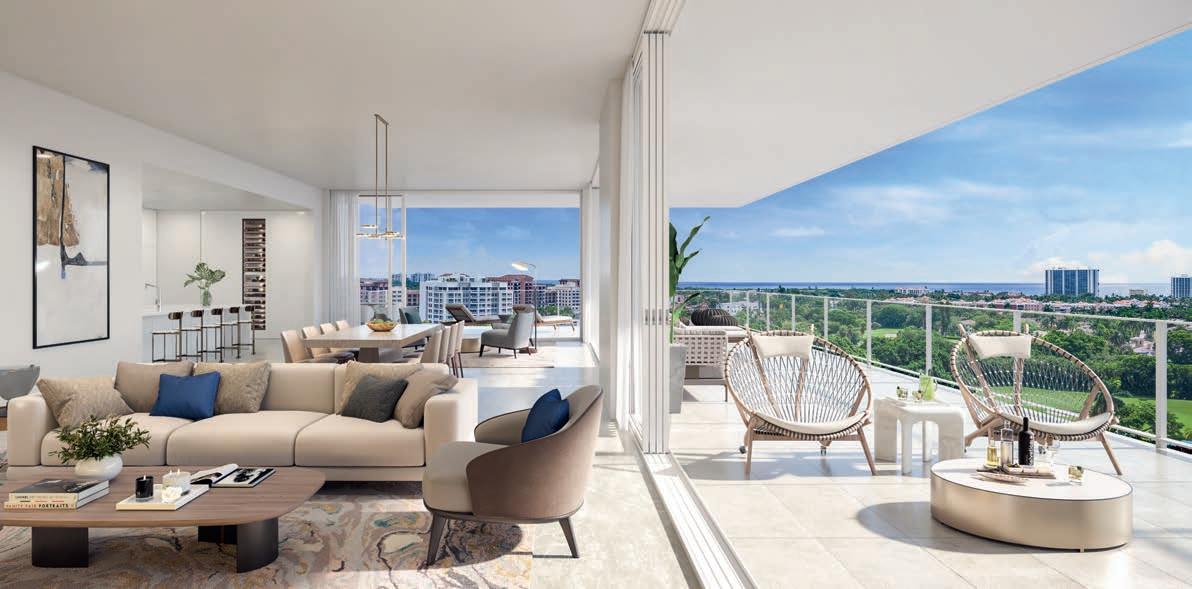
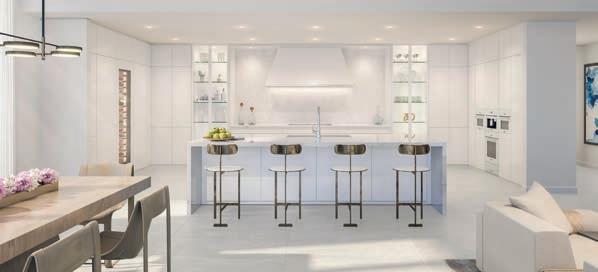
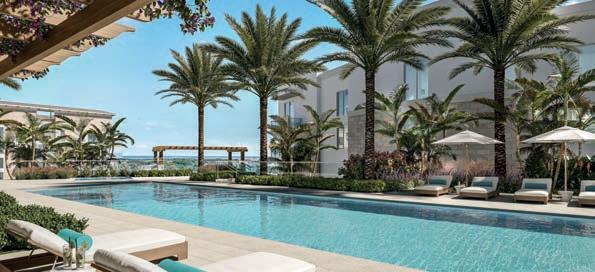
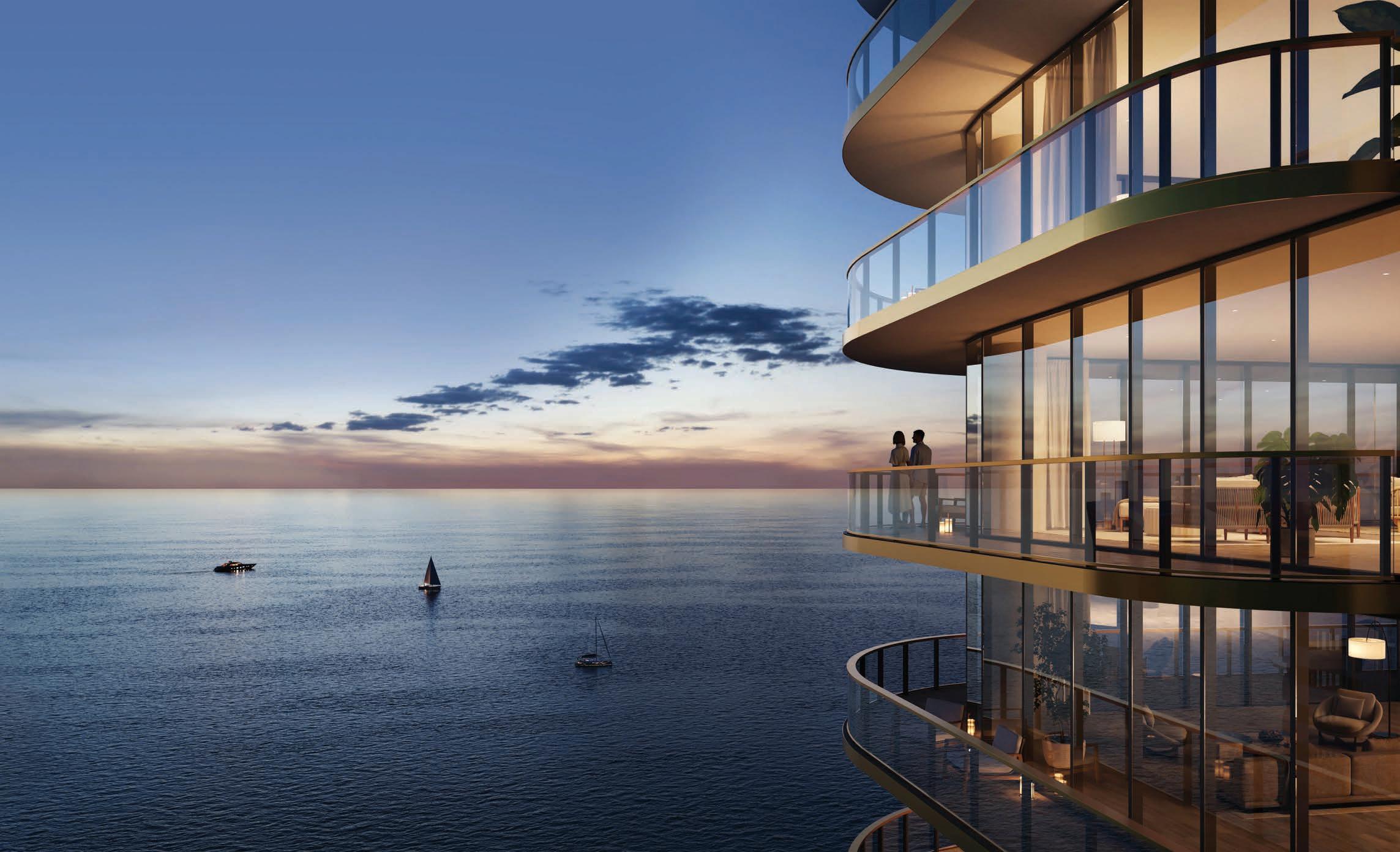
The 220 Collection elevates the quintessential Boca Raton lifestyle to the ultimate level of luxury in a limited number of one-of-a-kind residences and penthouses. Featuring expansive private terraces – all with summer kitchens and many with plunge pools – they provide an elegant setting for relaxing and dining in the fresh air with family and friends. A variety of panoramic views, including over the Boca Raton Resort & Club, downtown Boca Raton, and the Atlantic Ocean, are as inspiring from the terraces as they are from exquisitely designed and thoughtfully upgraded interiors wrapped in floor-to-ceiling windows.
DISCOVER THE 220 COLLECTION, WELCOMING RESIDENTS HOME THIS YEAR
ORAL REPRESENTATIONS CANNOT BE RELIED UPON AS CORRECTLY STATING THE REPRESENTATIONS OF THE DEVELOPER. FOR CORRECT REPRESENTATIONS, REFERENCE SHOULD BE MADE TO THIS BROCHURE AND THE DOCUMENTS REQUIRED BY SECTION 718.503, FLORIDA STATUTES, TO BE FURNISHED BY A DEVELOPER TO A BUYER OR LESSEE. THIS OFFERING IS MADE ONLY BY THE OFFERING DOCUMENTS FOR THE CONDOMINIUM AND NO STATEMENT SHOULD BE RELIED UPON IF NOT MADE IN THE OFFERING DOCUMENTS. THIS IS NOT AN OFFER TO SELL, OR SOLICITATION OF OFFERS TO BUY, CONDOMINIUM UNITS IN STATES WHERE SUCH OFFER OR SOLICITATION CANNOT BE MADE. THIS CONDOMINIUM IS BEING DEVELOPED BY EL-AD MIZNER ON THE GREEN II LLC A DELAWARE LIMITED LIABILITY COMPANY (“DEVELOPER”). ANY AND ALL STATEMENTS, DISCLOSURES AND/OR REPRESENTATIONS SHALL BE DEEMED MADE BY DEVELOPER AND NOT BY EL AD AND YOU AGREE TO LOOK SOLELY TO DEVELOPER (AND NOT TO EL AD AND/OR ANY OF ITS AFFILIATES) WITH RESPECT TO ANY AND ALL MATTERS RELATING TO THE MARKETING AND/OR DEVELOPMENT OF THE CONDOMINIUM AND WITH RESPECT TO THE SALES OF UNITS IN THE CONDOMINIUM. THE INFORMATION PROVIDED, INCLUDING PRICING, IS SOLELY FOR INFORMATIONAL PURPOSES, AND IS SUBJECT TO CHANGE WITHOUT NOTICE. IMAGES ARE ARTIST’S CONCEPTUAL RENDERING. THIS ADVERTISEMENT IS A SOLICITATION FOR THE SALE OF UNITS IN ALINA 210 BOCA RATON, A CONDOMINIUM: N.J. REG. NO. 22-04-0002. THE COMPLETE OFFERING TERMS FOR ALINA 210 BOCA RATON ARE IN A CPS-12 APPLICATION AVAILABLE FROM THE OFFEROR: FILE NO. CP22-0047. SCHEDULE A PRIVATE PRESENTATION 561.808.2557 | ALINABOCARATON.COM 200 SE MIZNER BLVD., BOCA RATON, FL 33432 ALINA 220 Collection price upon request Artist’s Conceptual Rendering Artist’s Conceptual Rendering
Conceptual Rendering
Artist’s

GROUP EDITOR-IN-CHIEF
Marie Speed
MANAGING EDITOR
John Thomason
WEB EDITOR
Tyler Childress
SENIOR ART DIRECTOR
Lori Pierino
PRODUCTION MANAGER
Rafael Quiñones
GRAPHIC DESIGNER
James Karpinen
PHOTOGRAPHER
Aaron Bristol
CONTRIBUTING WRITERS
Christie Galeano-DeMott, Margie Kaye (promotional writing), Amanda Mesa
VIDEO PRODUCTION/CUSTOMER SERVICE
David Shuff
FOOD EDITOR
Christie Galeano-DeMott



DIRECTOR OF ADVERTISING AND MARKETING
Nicole G. Ruth
DIRECTOR OF CIRCULATION AND SALES SUPPORT
Bruce Klein
SPECIAL PROJECTS MANAGER
Gail Eagle
ACCOUNT EXECUTIVES
Daisy Abreu
Karen S. Kintner
Julie Osten
Jenna Russo
Boca Raton magazine is published eight times a year by JES Media. The contents of Boca Raton magazine are copyrighted and
Raton magazine accepts no responsibility for
Raton magazine reserves the right to edit, rewrite or refuse material and is not responsible for products. Please refer to corporate masthead.
Never Boring BOCA CENTER ON MILITARY TRAIL | 561-394-5551 | GROVEOPTICIANS.COM ANNA-KARIN KARLSSON 18 bocamag.com • • • • March 2024
of
may not be reproduced without the expressed written consent of the publisher. Boca
the return
unsolicited manuscripts and/or photographs and assumes no liability for products or services advertised herein. Boca
1000 CLINT MOORE ROAD, #103, BOCA RATON, FL 33487 561/997-8683 (PHONE) • 561/997-8909 (FAX) BOCAMAG.COM MAGAZINE@BOCAMAG.COM (GENERAL QUERIES)
PRESIDENT/PUBLISHER
Margaret Mary Shuff
GROUP EDITOR-IN-CHIEF
Marie Speed
CONTROLLER
Jeanne Greenberg
JES MEDIA PRODUCES:
Boca Raton magazine
Delray Beach magazine
1926 Worth Avenue
Boca Raton Chamber Annual
Salt Lake magazine
Utah Bride and Groom
Utah Style & Design
Salt Lake Visitors’ Guide
FLORIDA MAGAZINE ASSOCIATION
BOCA MAGAZINE WINNERS
2023 CHARLIE AWARDS
CHARLIE AWARD (FIRST PLACE) best website (bocamag.com) best custom publication (1926)
SILVER AWARD
best overall magazine best editorial, opinion, commentary best department design
best custom publication (Worth Avenue) best advertorial story or section
BRONZE AWARD best in-depth reporting best advertorial story or section
2022 CHARLIE AWARDS
GENERAL EXCELLENCE magazine of the year best overall magazine
CHARLIE AWARD (FIRST PLACE) best overall writing best in-depth reporting best custom publication (1926) best advertising for a client
SILVER AWARD best feature best use of photography best advertising for a client
BRONZE AWARD best custom publication (Worth Avenue)
2021 CHARLIE AWARDS
CHARLIE AWARD (FIRST PLACE)
best public service coverage best in-depth reporting best feature best service feature best humor writing best column best photo essay/series best advertorial
best overall: digital innovator best special theme or show issue
SILVER AWARD best overall writing best public service coverage best department best use of photography best social media best custom publication (Worth Avenue)
BRONZE AWARD best traditional illustration
March 2024 • • • • bocamag.com 19



DIRECTORY
Subscription, copy purchasing and distribution
For any changes or questions regarding your subscription, to purchase back issues, or to inquire about distribution points, call circulation at 877/553-5363.
Advertising and event resources
Take advantage of Boca Raton magazine’s prime advertising space—put your ad dollars to work in the premier publication of South Florida. For more information, or to partner with Boca Raton on a community event, call 561/997-8683 ext. 300, or email nicole@bocamag.com.
Custom publishing
Create a magazine tailored to fit the needs and character of your business/organization. Ideal for promotions, special events, introduction of new services, etc. Contact Marie Speed (editor@bocamag.com).
Story queries
Boca Raton magazine values the concerns, interests and knowledge of our readers about the community. Please submit story and profile ideas by email to Marie Speed (editor@bocamag.com). Due to the large volume of pitches, the editor may not respond to all queries. Boca Raton does not accept unsolicited, ready-for-print stories.
Web queries
Submit information regarding our website and online calendar to tyler@bocamag.com.
Letters
Your thoughts and comments are important to us. All letters to the editor may be edited for style, grammar and length. Send letters to the address listed below or to Marie Speed (editor@bocamag.com).
Letter to the Editor
Boca Raton magazine
1000 Clint Moore Road, #103 Boca Raton, FL 33487
Arts & entertainment
Where to go, what to do and see throughout South Florida. Please submit information regarding galas, art openings, plays, readings, concerts, dance or other performances to John Thomason (john.thomason@ bocamag.com). Deadline for entries in an upcoming A&E section is three months before publication.
Dining guide
Our independent reviews of restaurants in Palm Beach, Broward and Miami-Dade counties. A reliable resource for residents and tourists. For more information, contact Christie Galeano-DeMott (christie@bocamag.com).
People
A photo collage of social gatherings and events in Boca Raton and South Florida. All photos submitted should be identified and accompanied by a brief description of the event (who, what, where, when). Email images to people@bocamag.com.
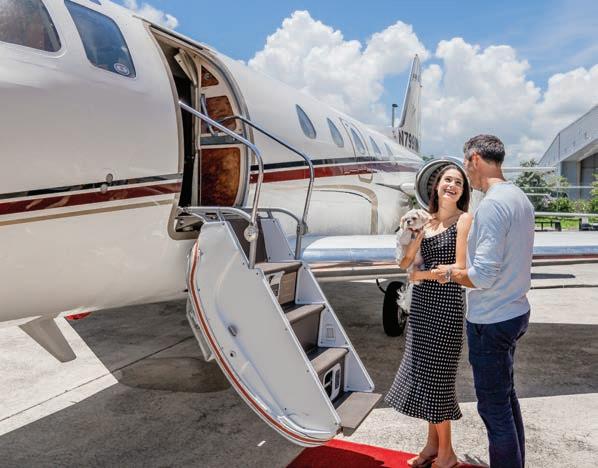
we are pet friendly elorenzo@mycorporateinc.com | www.mycorporatejetinc.com For quotes, please call: 954.361.4844 FLY SAFE, FLY PRIVATE Located in Town Center Mall Boca Raton, next to Louis Vuitton & The Galleria at Fort Lauderdale across from Banana Republic Please visit us at: (954) 766-4382 (954) 865-7644 corsettiwear.com corsetticollection sales@corsetti.shop CORSETTI COLLECTION is ideal for all resorts and beach-to-bar settings. Your confidence is everything, and our pieces were explicitly designed to make a strong impact that will stand out in your social activities. 20 bocamag.com • • • • March 2024
First issue
Boca Raton magazine is published eight times a year. If you have any questions or comments regarding our magazine, call us at 561/997-8683. We’d love to hear from you.
Missing or late issues
Once in a while, production, transportation or the postal service may delay delivery. If you don’t get an issue, or if your magazine is repeatedly late, please call and report your problem to our subscription department at 877/553-5363 or send an email to subscriptions@bocamag.com.
Questions about your invoice
If you have already paid your bill and then receive a new bill, here’s what you should do:
1. If you have paid your bill within the past four weeks, ignore the new invoice. (The computer simply has not given your account credit quickly enough.)
2. It’s most likely that your payment and our notice just crossed in the mail. Check the date on the notice to see when we mailed it.
3. If you get another bill or renewal notice, call our subscription department at 877/553-5363, or send an email to subscriptions@bocamag.com, and we will straighten out the problem.
Change of address
PERMANENT: If you are changing your address, send us your complete old address, complete new address, including ZIP code, and the effective date of the change. You can also leave us a message with your old and new address by calling 877/553-5363.
TEMPORARY OR SEASONAL: Please send us your complete permanent address, your complete temporary address and the dates that you want your issues forwarded.
Back issues
If you are interested in purchasing any back issues, please call 877/553-5363, ext. 233, indicating the issue date you would like. The cost of each issue including shipping and handling is $9.95.
Gift subscriptions
You’ll find a subscription to Boca Raton magazine makes a thoughtful and useful gift that lasts throughout the year. If you’d like more information about giving a gift subscription, please call our subscription department at 877/553-5363.
Online subscriptions
Receive additional savings by subscribing online. Visit bocamag.com for more information.
[ For any of the above services, please contact our subscriptions services department. ]
CALL TOLL FREE: 877/553-5363
EMAIL: subscriptions@bocamag.com
WRITE: Boca Raton magazine
Subscription Department
1000 Clint Moore Road, #103 Boca Raton, FL 33487

March 2024 • • • • bocamag.com 21
GARDEN SHOPS 7050 W PALMETTO PARK RD (AT POWERLINE) BOCA RATON FL 33433 (561) 447 4117 WILD AND WONDERFUL WOMENSWEAR FOLLOW US ON INSTAGRAM @ROBYNESOBEL
SUBSCRIBERS
AMERANT BANK ARENA
ARTS GARAGE 94 N.E. Second Ave. Delray Beach 561/571-8510
CRAZY UNCLE MIKE’S 6450 N. Federal Highway Boca Raton 561/931-2889
THE FUNKY BISCUIT 303 S.E. Mizner
HARD ROCK LIVE
1 Seminole Way Davie 954/797-5531
ITHINK FINANCIAL AMPHITHEATER 601-7 Sansburys Way
West Palm Beach 561/795-8883
JOHNNY BROWN’S 301 E. Atlantic Ave. Delray Beach 561/243-9911


KRAVIS CENTER 701 Okeechobee Blvd. West Palm Beach 561/832-7469
MIZNER PARK AMPHITHEATER 590 Plaza Real
SQUARE GROUPER
TIN ROOF
*Valid until 03/31/24
• body wraps / scrubs • facials • botox filler • morpheus8 • lumecca •
• jacuzzi
•
• himalayan
lounge
•
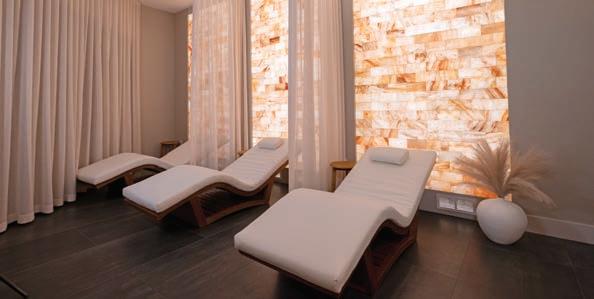
• fire cupping Buy 3 Morpheus8 sessions, and receive 3 complimentary exosomes treatments. A $360 value!* This Celebrity Favorite targets: Sagging Skin, Wrinkes and Fine Lines, Acne Scarring, and Stretch Marks. CALL FOR A RESERVATION TODAY! 954.531.0070 fiveelementsspa.com 1680 SE 3rd Court | Deerfield Beach, FL 33441 March into Spring with a radiant you! CALL NOW! for complimentary consultation VENUES 22 bocamag.com • • • • March 2024 LOCAL
LOCATIONS
massages
sauna
cold plunge
steam room
salt
reiki
acupuncture
LIVE MUSIC
1 Panther Parkway Sunrise 954/835-7000
Blvd.,
Royal Palm Place Boca Raton 561/395-2929
Boca Raton 561/393-7890
Ave.
OLD SCHOOL SQUARE 51 N. Swinton
Delray Beach 561/654-2220
1111 Love St.
561/
Jupiter
575-0252
8 E. Atlantic Ave. Delray
Beach 561/265-5310
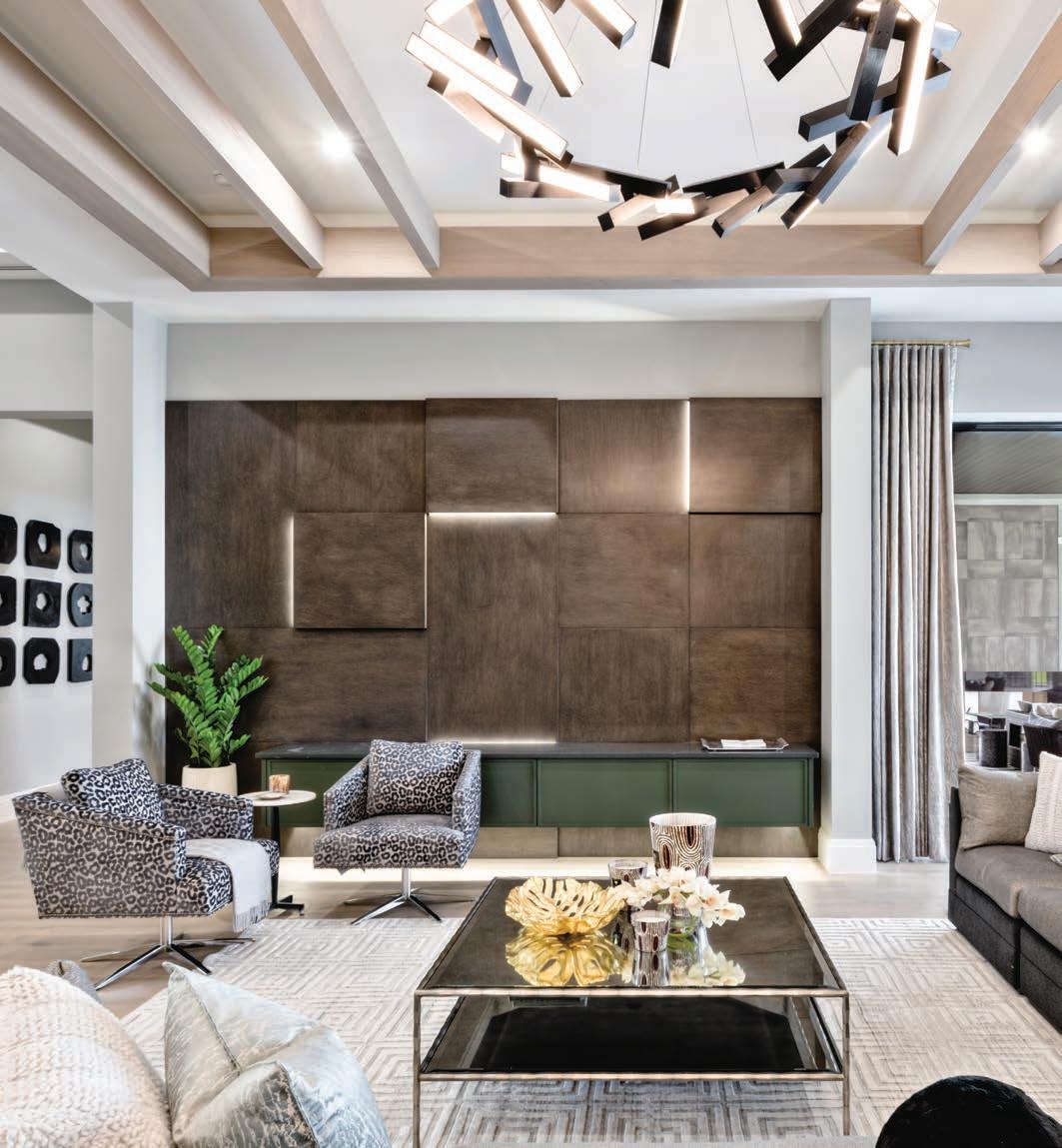



WINNER ! BEST SHOWROOM IN THE USA! 2024 WARD-WINNING | INTERIOR DESIGN | FINE FURNISHINGS A NAPLES, FL 2777 TAMIAMI TRAIL N 239.261.HOME (4663) SARASOTA, FL 3055 FRUITVILLE COMMONS BLVD. 941.900.HOME (4663) BOCA RATON, FL 1351 NW BOCA RATON BLVD 561.440.HOME (4663) FORT MYERS, FL 8650 GLADIOLUS DR. 239.944.HOME (4663) IB26001785 ✦ PREMIER LUXURY DESTINATION FOR RESIDENTIAL, COMMERCIAL AND HOSPITALITY DESIGN SERVICES. CLIVEDANIEL.COM
House Poor
Even the sleepiest of neighborhoods has been swept up in Florida’s housing price boom—and there’s no end in sight
Written by MARIE SPEED
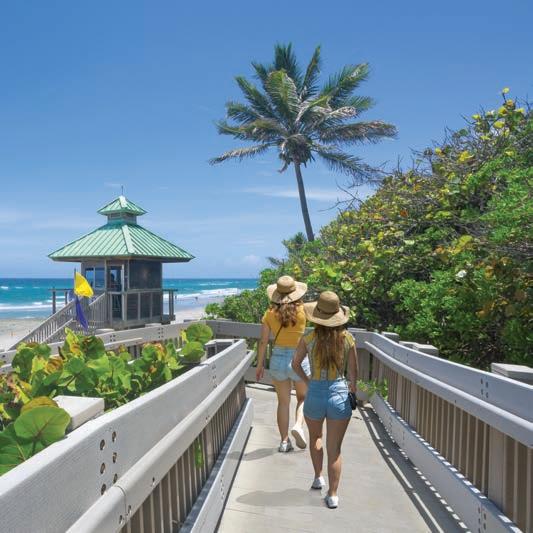
have lived in the same neighborhood so long now that I get lulled into thinking that everything is just fine. Nothing has changed. I still walk down to our scrubby little beach entrance every morning right after the sun has come up to check out the ocean. The palm tree Jerry and Gladys planted behind the bench is full-grown now; the seawall we used to sit on has been covered by sand now for years. The dune grasses we planted so long ago are thriving. These are the little changes that have slowly overtaken our shifting beach, but nothing much else is different. People have moved away or died, and the houses have been spruced up a little, but it’s the same modest boho U-shaped street east of A1A someone named the“Fruit Loop”decades ago—presumably because of all the crazy hippies who lived there.
Except that is an illusion. Houses in the Fruit Loop are worth a small fortune now. Rents at the place at the end of the street that used to be a vacation motel back in the day have skyrocketed. These are tiny houses, old houses, houses with carports if you’re lucky, some with room air conditioners and clamshell storm shutters and old awning windows. They have escalated in value to many times their intrinsic worth, the latest victims of an affordability crisis that has swallowed South Florida whole—and is not going anywhere. We take a look at this issue (page 50), and at the people who have little, if any, hopes of staying here much longer.
People on the Fruit Loop, like homeowners in many of the more modest neighborhoods across South Florida, are sitting on a Scrooge McDuck Money Bin of a house but have nowhere to go if they sell. And it’s the same with higher-income families. Between rising home values and interest rates and crazy home insurance rates, we are trapped by our own dizzying“prosperity”—in a region that is slowly expelling the very people who make it work, day in and day out. It’s alarming. It’s confusing. And it’s time to start figuring it out. Becoming our own privileged Vacationland is not an option; we need a thriving economy and people to participate in it. We need solutions, and we need to start thinking of them now. Some ideas include expanding community land trusts, which can help create affordable housing; finding new and less expensive ways of building houses (3D printing, shipping containers, modular construction, etc.); increasing access to home financing; transforming underused space like hotels or office buildings or unused lots into housing. I’m sure there are many more, and people smarter than I are already on it. But it’s become real to me now, and I hear it from everyone I know.
It’s an election year, and we’re engulfed by the noise of politics from every direction. I suggest we start turning down the noise and turning up the action to solve some of Florida’s very real problems—and the affordability crisis is right at the top.
24 bocamag.com • • • • March 2024
FROM THE EDITOR
Boca’s Red Reef Park
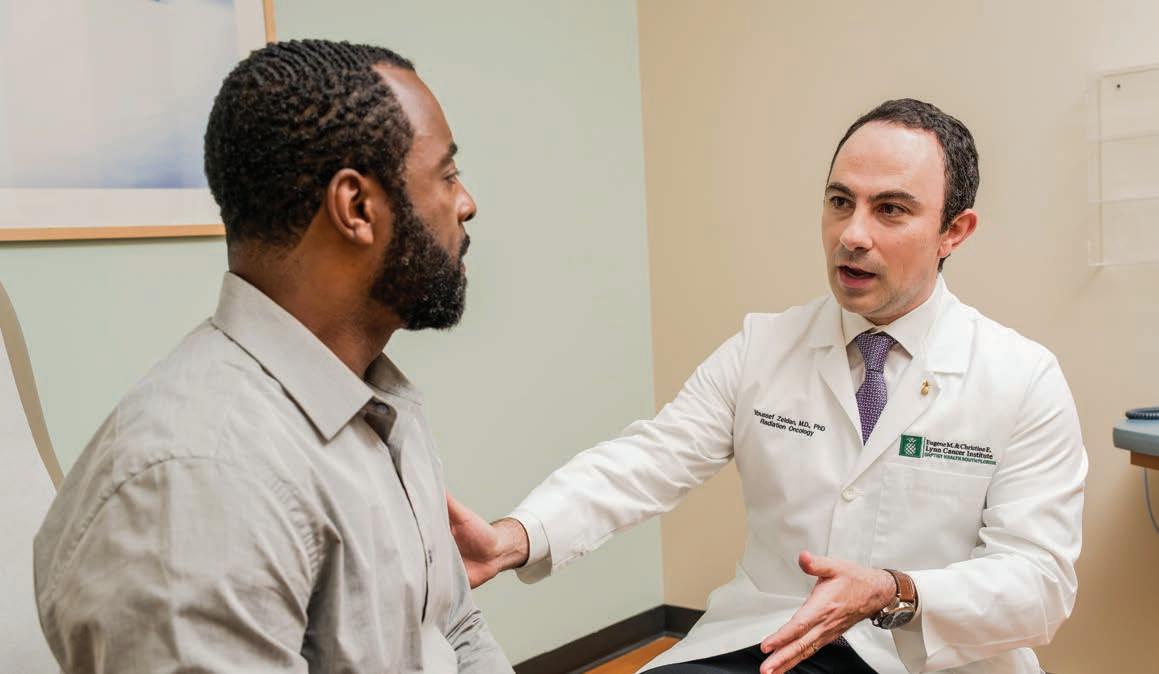
Welcome to Expert Cancer Care.
Day after day, our teams of experts focus on a single type of cancer, yours. It’s a level of expertise that gives us the upper hand in diagnosing, treating and beating your cancer. We’re devoted to getting you back to a life without cancer, because your victory is our greatest triumph.
Learn more at BRRH.com/LCI or by calling 561-955-LYNN (5966). Bethesda Hospital | Boca Raton Regional Hospital | Boynton Beach | Delray Beach















Specializing in ne new & pre-owned timepieces Diamonds ♦ Fashion & Estate Jewelry ♦ Buy-Sell-Trade Shoppes at the Sanctuary 4400 N. Federal Highway, Boca Raton, Florida 33431 (1/4 mile south of Yamato Road on the east side of the street) (561) 368-1454 ♦ (888) 755-TIME ♦ JewelsInTime.com Not an authorized agent, representative or affiliate of any watch appearing in this advertisement. All watch names, dials & designs appearing in this advertisement are registered trademarks in the U.S.A. Jewels in Time




March 2024 • • • bocamag.com 29 THE LOCAL BOCA CHATTER › 30 HOT LIST › 32 ATHLETE › 34 COACH › 36 THE LOOK › 38 DO GOODER › 48 “Moulin Rouge!”, page 32 MATTHEW MURPHY
Don’t-Miss Events
MLB SPRING TRAINING
WHEN: February 24–March 24
WHAT: The Palm Beaches are Spring Training central for the Washington Nationals, St. Louis Cardinals, Houston Astros and Miami Marlins. From superstars to rookies, this fan-friendly season is much anticipated in South Florida. LOCATIONS: Roger Dean Chevrolet Stadium, 4751 Main St., Jupiter, 561/775-1818; Ballpark of the Palm Beaches, 5444 Haverhill Road, West Palm Beach, 561/500-4487.
FESTIVAL OF THE ARTS BOCA
WHEN: March 1–10
WHAT: This annual popular festival of the arts is a cultural touchpoint in Boca, and this year promises to be just as exciting, with performances from opera diva Renée Fleming, poet Richard Blanco, a screening of “Jaws” with live orchestra and much, much more. Visit festivalboca.org or call 561/757-4762.
PALM BEACH MODERN + CONTEMPORARY
WHEN: March 21– 24
WHAT: This important contemporary and modern art fair features world-class and internationally known fine arts, emergent modern artwork, paintings, sculptures, design on fabrics, woodwork, photography and more at the Palm Beach County Convention Center, 650 Okeechobee Blvd., West Palm Beach. Visit info@artpbfair.com.
SAVOR THE AVENUE
WHEN: March 25
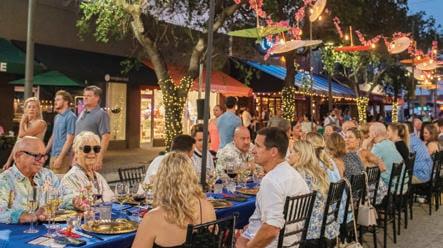
WHAT: Savor the Avenue is a signature tradition of dining under the stars in Delray (co-hosted by the Delray Beach Downtown Development Authority and Boca and Delray magazines), with a five-block table marching through the middle of Atlantic Avenue. This year’s event will feature 15 restaurants serving a four-course dinner, accompanied by music, handcrafted cocktails and plenty of great people-watching. This is a RESERVATION-ONLY event. Reservations must be booked directly with the participating restaurants which opened reservations on February 1.
Locals sound off on issues affecting our community.
What’s the most challenging aspect of living in South Florida in 2024?
“Protecting the Ag Reserve. Boca’s growth has meant we have great (and increasingly wonderful) opportunities for cultural, culinary and educational events, but these need to be weighed against the negative impacts of population growth, density and incursion into our farmlands. I think we are nearing the point where growth significantly decreases the desirability of living here.”
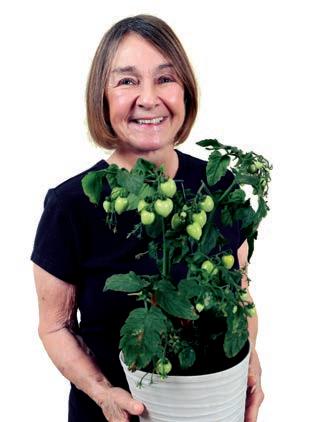
certified kitchen designer and owner, Kitchens for Cooking
“The skyrocketing cost of living … and being associated with every crazy headline that begins, ‘Florida man/ woman…’”
—Lesley Marlo, writer, editor, author advocate, principal at ExpertCopy Writing Agency

“Without question, I find the most challenging aspect of life in South Florida to be dealing with the ever-increasing traffic and lack of parking!”
—Daniel
Lichtenberger, broker, First Action Realty, Inc.

THE LOCAL BOCA CHATTER
AARON BRISTOL
Savor the Avenue
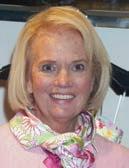
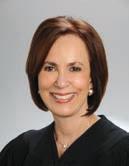
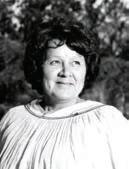
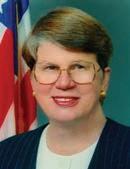
10 SOUTH FLORIDA STARS
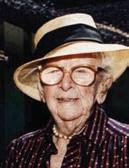
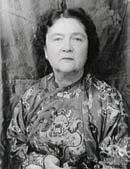
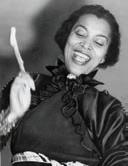
It’s Women’s History Month; here are 10 iconic South Florida inductees into the state’s Florida Women’s Hall of Fame:






CELEBRATING SPRING
In America, we might dive into spring cleaning to celebrate spring, or the vernal equinox, celebrated March 21. Which just goes to show you how boring we are. In Thailand, They have the Songkran Water Festival, which is a lot more like a big party, with everyone running into the streets with water guns, pressure hoses and buckets, drenching each other and “dancing to loud music.” In England, there is the Cooper’s Hill Cheese Rolling and Wake, in which a wheel of cheese is thrown down a hill and everyone chases after it in a race to the finish line. Not to be outdone, everyone in Bosnia celebrates Cimburijada, aka Festival of the Scrambled Eggs, by meeting down at the river and eating, yep, scrambled eggs. Northern India has Holi, when everyone throws colored powder on each other. And in Mexico thousands of people get decked out in white and climb the Teotihuacan pyramid,“thereby ‘soaking up energy’ for the year.” It’s time we lived a little.
13 million Pints of Guinness sold on St. Patrick’s Day (WalletHub)
54 Percentage of Americans who celebrate St. Patrick’s Day $5.87 billion Dollars Americans spent on parties and prep for St. Paddy’s Day in 2022

“You make me feel so young, you make me feel so spring has sprung.”
—FRANK SINATRA
March 2024 • • • • bocamag.com 31
—Gitnux
LILLY PULITZER, fashion designer and entrepreneur
BARBARA J. PARIENTE, Former Chief Justice, Florida Supreme Court
CARIDAD ASENSIO, farm worker advocate, founder, Caridad Asensio Center, providing health care to the working poor
BETTY MAE TIGER JUMPER, first female chief of the Seminole Tribe of Florida
JANET RENO, former Attorney General of the United States
MARJORY STONEMAN DOUGLAS, Everglades preservationist
ARVA MOORE PARKS MCCABE, author, filmmaker
MARJORIE KINNAN RAWLINGS, author, who won the Pulitzer Prize for The Yearling
ZORA NEALE HURSTON, folklorist, anthropologist, author
MARY MCLEOD BETHUNE, civil rights leader, educator
Holi festival
Songkran festival
“THE LEHMAN TRILOGY”
WHEN: March
15-April 14
WHERE: GableStage, 1200 Anastasia Ave., Coral Gables
COST: $35-$65
CONTACT: 305/4451119, gablestage.org
As the largest domino to fall in the subprime mortgage collapse, investment bank Lehman Brothers has gone down in infamy as one of the major instigators of the 2008 financial crisis and subsequent recession. But hey, we can’t all stick the landing. The story of this influential firm, as presented by playwright Stefano Massini, traces back to 1844, presenting a more complex legacy for German businessman Hayum Lehman and his two brothers, aspiring embodiments of the American Dream, who moved from Bavaria to Alabama, first in the cotton business and then as barons of coffee, oil, coal, electricity, railroads, comic books, movies, computing … and, yes, banking. In Stefano’s 2020 play, which typically runs a hulking but engrossing three and a half hours, three actors portray the O.G. Lehman brothers, their sons and their grandsons as they build an empire over 163 years, only to oversee its spectacular decline.
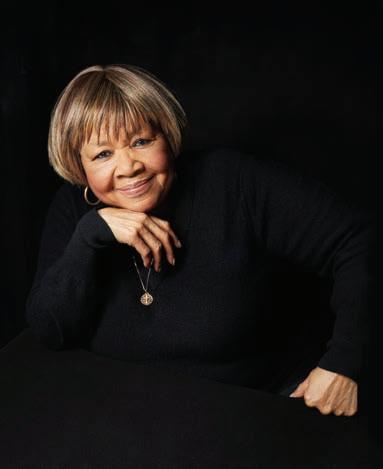
MAVIS STAPLES
WHEN: March 8, 8 p.m.
WHERE: Arsht Center, 1300 Biscayne Blvd., Miami
COST: $45-$125
CONTACT: 305/949-6722, arshtcenter.org
The last surviving member of the seminal R&B family band the Staple Singers, Mavis Staples has projected her powerful pipes from the streets to the heavens in a career that has spanned 60 years. A civil rights activist forever advocating for a more equitable world, Staples marched with Dr. Martin Luther King, Jr.; on stage, she has mastered gospel, the blues and rock ‘n’ roll—three genres for which she has been inducted as a Hall of Famer. Bob Dylan was reportedly so enraptured with Mavis that he asked her father, legendary Staple Singers patriarch“Pops,”for his daughter’s hand in marriage. (She turned him down.) Staples achieved renewed fame in the 2010s, releasing celebrated albums with collaborators from Ry Cooder and Ben Harper to Wilco’s Jeff Tweedy, a testament to her pliable, transcendent voice and industrious imagina tion. At 84, she shows no signs of slowing down, with recent set lists exploring Staple Singers classics and inventive covers from Funkadelic, Talking Heads and the Band.

“MOULIN ROUGE!”
WHEN: March 5-17
WHERE: Broward Center, 201 S.W. Fifth Ave., Fort Lauderdale
COST: $45-$121
CONTACT: 954/462-0222, browardcenter.org
Baz Luhrman’s Oscar-winning 2001 film“Moulin Rouge,”a vivid and postmodern pastiche of contemporary pop and fin-de-siècle Parisian decadence, arrived on the Silver Screen pregnant with theatrical jour de vivre. Less than a year after its release, speculation had begun about its seemingly inevitable transition to the Broadway stage. It took another 17 years, but“Moulin Rouge! The Musical”finally premiered, earning 14 Tony nominations and 10 wins, including for Best Musical. The show retains the cinematic story about a bushytailed composer from the Midwest who moves to Paris’ bohemian Montmartre Quarter during the Belle Époque and falls in love with a glamorous cabaret star suffering from consumption. But it updates the music, already a smorgasbord of anachronistic 20th century pop favorites. The musical version, on tour from Broadway Across America, contains some 70 songs, from Elvis ballads to Stones rockers to OutKast bangers.
NATIONAL GEOGRAPHIC LIVE: “LIFE ON THIN ICE”
WHEN: March 27, 7:30 p.m.
WHERE: Kravis Center, 701 Okeechobee Blvd., West Palm Beach
COST: $35-$45
CONTACT: 561/832-7469, kravis.org
As part of its“Provocative Entertainment”series, the Kravis Center’s season-wide association with National Geographic concludes with a presentation from adventure photographer Kiliii Yüyan, a Chinese-American of East Asian Indigenous ancestry who is also among the most fearless of ethnographic photographers. He is naturally drawn to the Arctic despite the risks inherent in filming there—he has fled collapsing sea ice and endured a bout of botulism while on the job—but his survivalist knowledge and boundless curiosity have paid off.“Life on Thin Ice”will illuminate the native people of the Arctic and their unique relationship to their land through stunning imagery and accompanying stories.

32 bocamag.com • • • • March 2024 THE LOCAL HOT LIST
“Moulin Rouge!”
Kiliii Yuyan photographing the Arctic KILIII
YUYAN
DANNY CLINCH
Mavis Staples
MATTHEW MURPHY

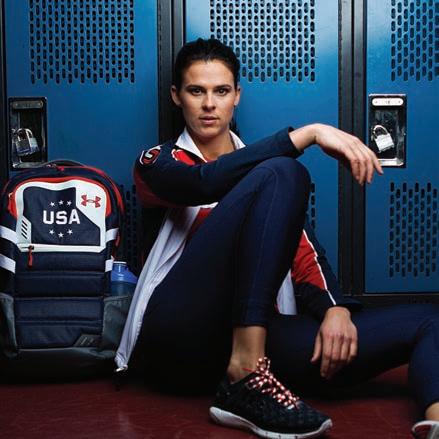
[Competing in the Olympics] is the most high-pressure situation that you ever could imagine as an athlete. The atmosphere at the Olympic games is electric.”
—Brittany Bowe
Fast Company
FAU Hall of Famer and three-time Olympian Brittany Bowe has ascended to the top of the speed skating world
Written by JOHN THOMASON
From a young age, Brittany Bowe knew what she wanted. Like most grade schoolers, the Ocala, Fla., native would often be asked, “what do you want to do when you grow up, what occupation?” she recalls. “It was always, ‘Olympian.’”
Bowe achieved that goal as a speed skater in the 2014 Winter Olympics in Sochi, and she returned to represent Team U.S.A. in the two Olympic Games since. She’s won two Olympic bronze medals, the capstone of an already illustrious career. A six-time speed skating world champion, Bowe has set four world records in her sport and secured 68 World Cup medals.
“It is the most challenging thing I’ve done mentally and physically, [but] I get to go to work and play every single day,” she says.“And I feel really blessed that I love what I do.”
Bowe lives in Utah now, but Boca Raton played a fundamental role in her journey. Born immersed in the sports world—her father coached high school basketball, and her mother taught college cheerleading—Bowe found her first calling on the hardwood.“I could dribble when I could walk,” she told a reporter in her first Olympic profile. Florida Atlantic University accepted her on a Division I basketball scholarship. She would go on to be named FAU’s Most Outstanding Female Athlete in the 2009-2010 season, and in 2023, she returned to Boca to accept her induction into the university’s Hall of Fame.
open arms from anybody that I interacted with on campus. And to be comfortable in my skin for the first time was one of the most empowering moments of my life.”
Her professional basketball aspirations would end with FAU, however. She had been competing—and winning—major inline skating competitions even before joining the FAU Owls. In her senior year, while watching the 2010 Winter Olympics in Vancouver, she decided to pivot.“I told my coach that when I graduated from FAU, I wasn’t going to continue to pursue basketball. I was going to move to Salt Lake City and become an Olympic speed skater,” she says.“Once you start to reach the pinnacle of your sport, you have to narrow down to really perfect your craft. Doing both was never an option.”
WEB EXTRA:
Bowe discusses what it was like to compete in the Olympics during COVID, the relationship between mental health and sports, her postretirement plans, and more at BOCAMAG. COM/MARCH-2024.
But it was perhaps outside the court that FAU made the biggest impact on Bowe’s life. She first began to realize she was gay in high school, when her classmates were increasingly boy-crazy and she wasn’t. But growing up in conservative Ocala, as part of a Catholic family,“being anything other than heterosexual was not discussed,” she says.“Because I was finding so much success in these other areas of my life, I just decided to keep quiet about it. … Everyone around me was so proud of everything that I was doing that I didn’t want to bring a shadow on top of that success.
“When I walked onto campus at Florida Atlantic University, one of the first things I remember is seeing diversity for the first time—seeing that there were people from different places, different ways of life, different sexual orientations. It felt like a new beginning for me. I can honestly say that I was accepted with
Preparing for the Olympics, Bowe says, is a “fulltime job”—training twice a day, six days a week.“It is the most high-pressure situation that you could ever imagine as an athlete,” she says.“The atmosphere at the Olympic Games is electric. … It’s your time to shine, and it’s your time to show the world what you’re made of.”
Winning a medal, Bowe says, is “a feeling like none other. I get asked the question all the time, ‘why are you still doing it?’ And that feeling of euphoria is just that. I’m obsessed with winning. That feeling that you get, as great as it is, lasts for just a split-second. If you don’t have your head on your shoulders, and if you aren’t surrounded by people that genuinely care about you and love you and support you, that winning feeling can get really lonely really quickly.”
At 35, Bowe is already eyeing the next Olympic Games, in Milan, knowing that it’s likely her last.
“Once you start getting into those 30s, there’s only a handful of us left,” she says.“But as long as I can remain competitive, as long as I feel a love and desire to compete and win, I’ll be shooting for the 2026 Olympic Games.”
34 bocamag.com • • • • March 2024 THE LOCAL ATHLETE
Brittany Bowe

Promise Kept And it’s
all because of you!
Gloria Drummond vowed to bring the highest quality healthcare to the residents of Boca Raton. Now 50 years later, Keeping the Promise… The Campaign for Boca Raton Regional Hospital has surpassed it’s $250 million philanthropic goal. This is the largest expansion initiative in the history of the hospital with a total $1 billion in overall reinvestments that includes a $660 million campus redevelopment. This has been made possible through the incredible generosity of the community.
Thank You to our many donors! For those who want to participate in this historic initiative, make your lasting contribution today by visiting: KeepingThePromise.BRRH.com
Cris Carter
Beyond the End Zone
Cris Carter is preparing Florida Atlantic University football players for a life of victories on and off the field
Written by TYLER CHILDRESS
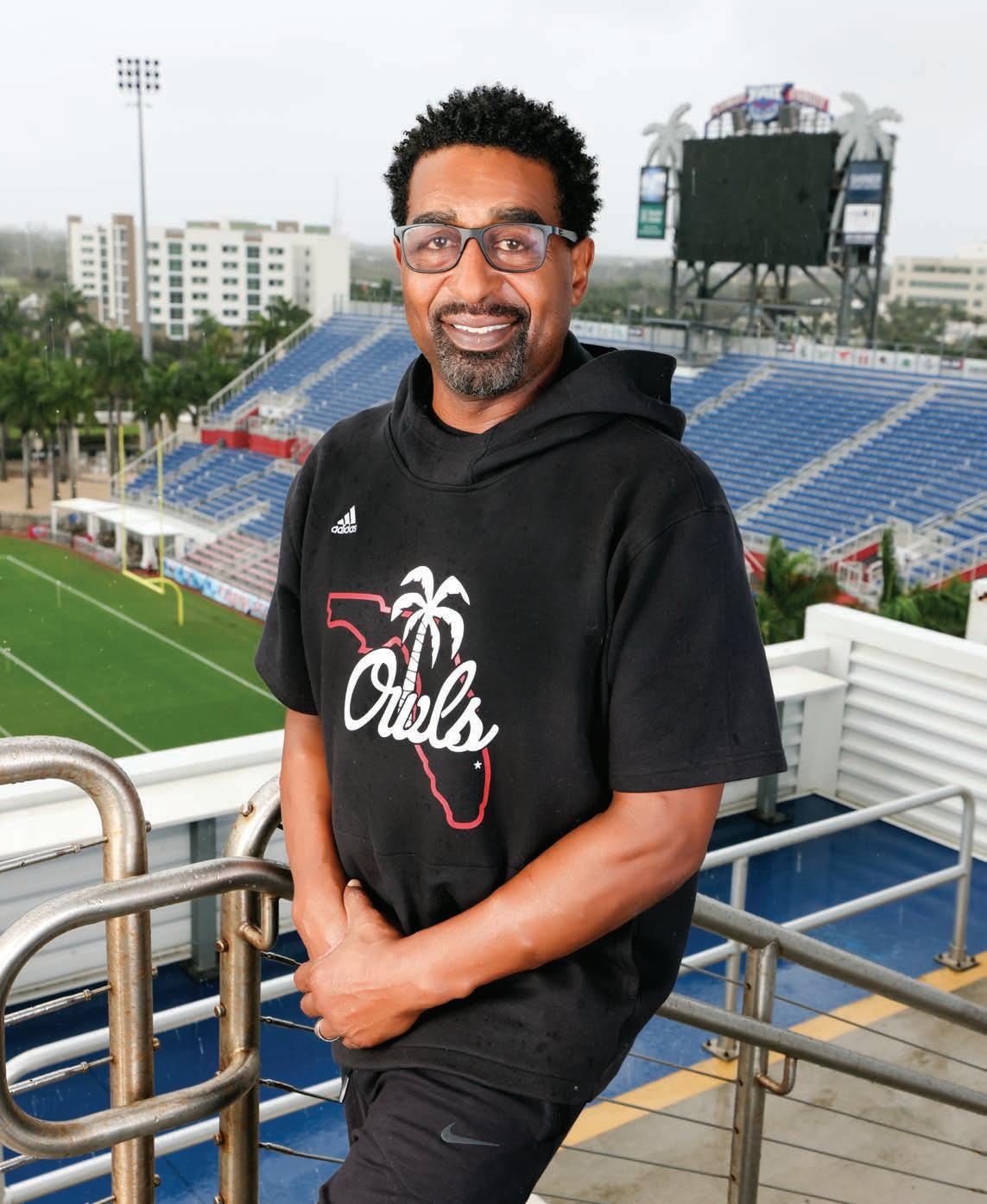
Florida Atlantic University’s (FAU) football team landed a legend last year when NFL Hall of Famer Cris Carter was brought on as executive director of player engagement. This nascent program aims to assist young players with any and everything they might face on and off the field, and there are precious few in the world who might be more attuned to the player experience than Carter.
Athletics became the center of Carter’s world at an early age. As one of seven children raised by a young mother with no father at home, Carter learned early on that sports would be his only avenue to an education. “My mom let me know that,”says Carter.“She said, ‘there’s a system out there and it’s called athletics, and it’ll pay for your education if you’re good enough.’”
the “rarest of the rare,” with only 25,000 men having competed in the league in its century-plus history. In 2013, Carter joined an even more rarified group when he was inducted into the NFL Hall of Fame, one of only 300 men to be given the honor.
Following his retirement in 2002, Carter never strayed far from the game, serving as host and analyst on several sports programs, and eventually joining the NFL’s player engagement programs, where he assisted retired players with the daunting question of what comes after football.“All athletes in all sports struggle, because what is the next move?” says Carter. At FAU, he says that they’re accelerating that question, asking players at an early age to consider their post-retirement plans.
When I grew up, sports was in me. Every book that I read was about one of my heroes. Everything that I wanted to see was about athletics.”
—Cris Carter
Carter took his mother’s words to heart with a level of conviction during childhood that many can’t muster over a lifetime.“When I grew up, sports was in me,” says Carter.“Every book that I read was about one of my heroes. Everything that I wanted to see was about athletics.”At age 12 he recalls regularly breaking into his local high school football stadium to train. Wearing a 25-pound weighted vest, he would perform leaps, bounds and sprints, a dogged regimen that would often end with him getting busted by the school janitor. “He called me every word and ran me off every day … but there was something about going there that I just wanted to do,” says Carter. Now, that stadium in Middletown, Ohio, is named after him.
Carter’s persistence, ambition and dedication landed him a scholarship at Ohio State University (one of many offers he received), where in his freshman year he broke a Rose Bowl record for receptions and yards. Carter held OSU’s school record for receptions by the time he was recruited to the NFL, where he continued to break records and cement his legacy as one of the great receivers in league history during his 16-year career. Carter says that being a player in the NFL is
“We are trying to train them that one day they’re going to take the air out of this football,” says Carter. “You’re not going to be able to play this game forever.” To answer the question of what comes next, Carter believes in a tailor-made approach for each student. “We don’t start off with ‘they’re all going to be this,’ says Carter.“We actually get it down to specifically you, at your best, what does it look like? And then that’s the goal.”
Carter’s emphasis on preparation, more than natural talent or good fortune, has arguably been what’s defined his success on the gridiron and in life.“You have more fortune if you prepare. If you don’t prepare, what’s going to happen to you? Anything,” he says. “The best athletes get themselves ready for the next move.”And for Carter, helping these young players prepare for their lives is paying back the investments that were made in him.
“I’ve been mentored the whole way. From my first little league coach to my high school coach, people have gone out of their way to make sure that Cris Carter reached his potential,” he says.“It’s what I owe the game, because the game developed me.”
36 bocamag.com • • • • March 2024 THE LOCAL COACH
AARON BRISTOL


Located in Town Center Mall, Boca Raton, next to Saks Fifth Avenue | Please visit us at jennasstudio.com 561-888-3378 Be mesmerized by the exquisite collections of world-renowned designers, one-of-a kind gowns, special occasion dresses and more… for all of life’s magical memories. See it! Love it! Wear it!
ANGELA
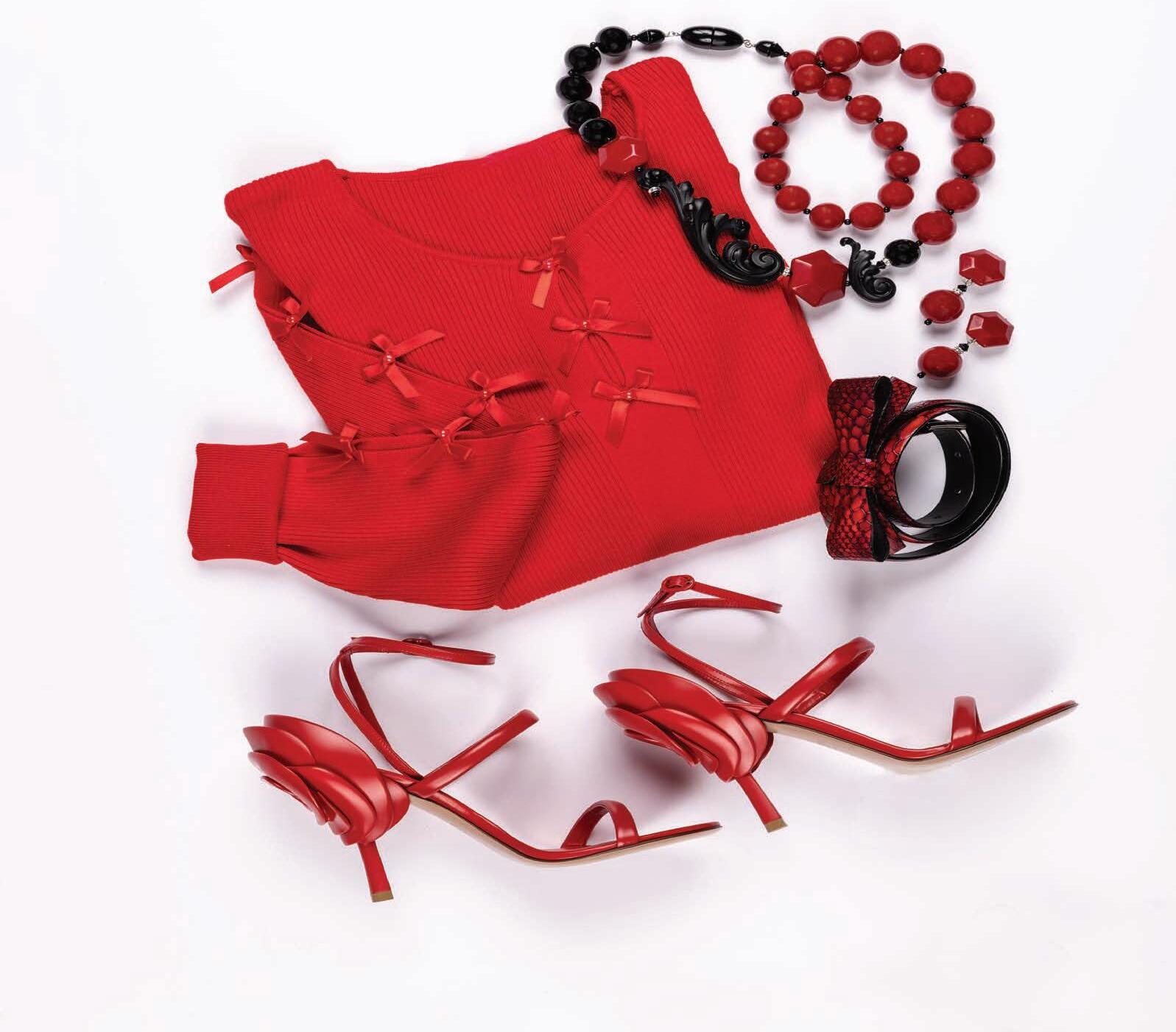
CAPUTI ITALY necklace, $195 and drop earrings, $75, both from Nina Raynor
LEO & UGO sweater, $285, from Evelyn Rolleder Boutique Belt, $130, from Filly & Colt VALENTINO sandals, $1,590, from Saks Boca
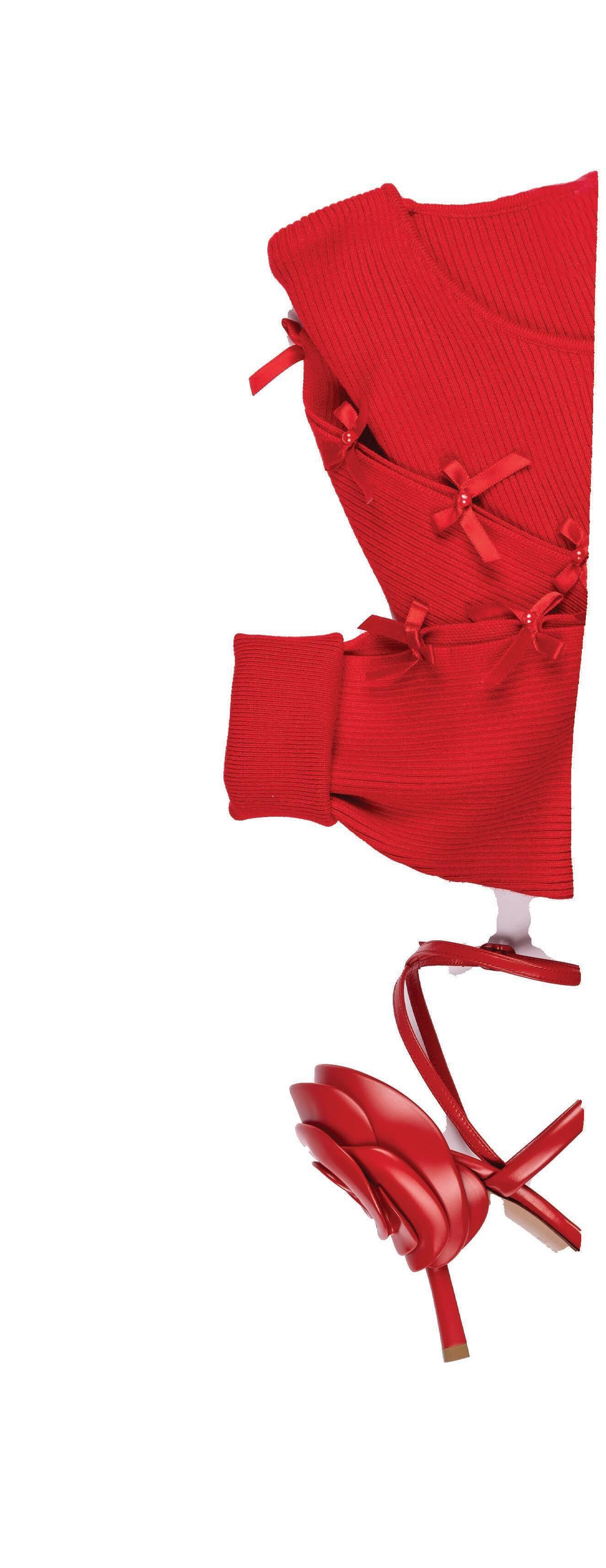
SeeingRed Fromluncheontodinner,make everyentranceadramaticone

AVENTURA | 19275 Biscayne Boulevard (One block south of Aventura Mall) BOCA RATON | Glades Road, one block west of the Turnpike BOYNTON BEACH | Corner of Boynton and Military Trail Open Tuesday - Saturday 11am-5:30pm | www.intljewelers.com Not an authorized agent, representative or allifiate of any watch or trademarked jewelry appearing in this advertisement. All watch names, dials & designs appearing in this advertisement are registered trademarks in the U.S.A. 60 jewelers under one roof If you haven’t stopped into Florida's Jewelry District with hundreds of vendors, designing, selling, repairing, trading and buying fine jewelry for over 40 years right on Glades Road… What are you waiting for?
SkinintheGame Textureaddsinterestandjusttheright touchtothisseason’saccessories
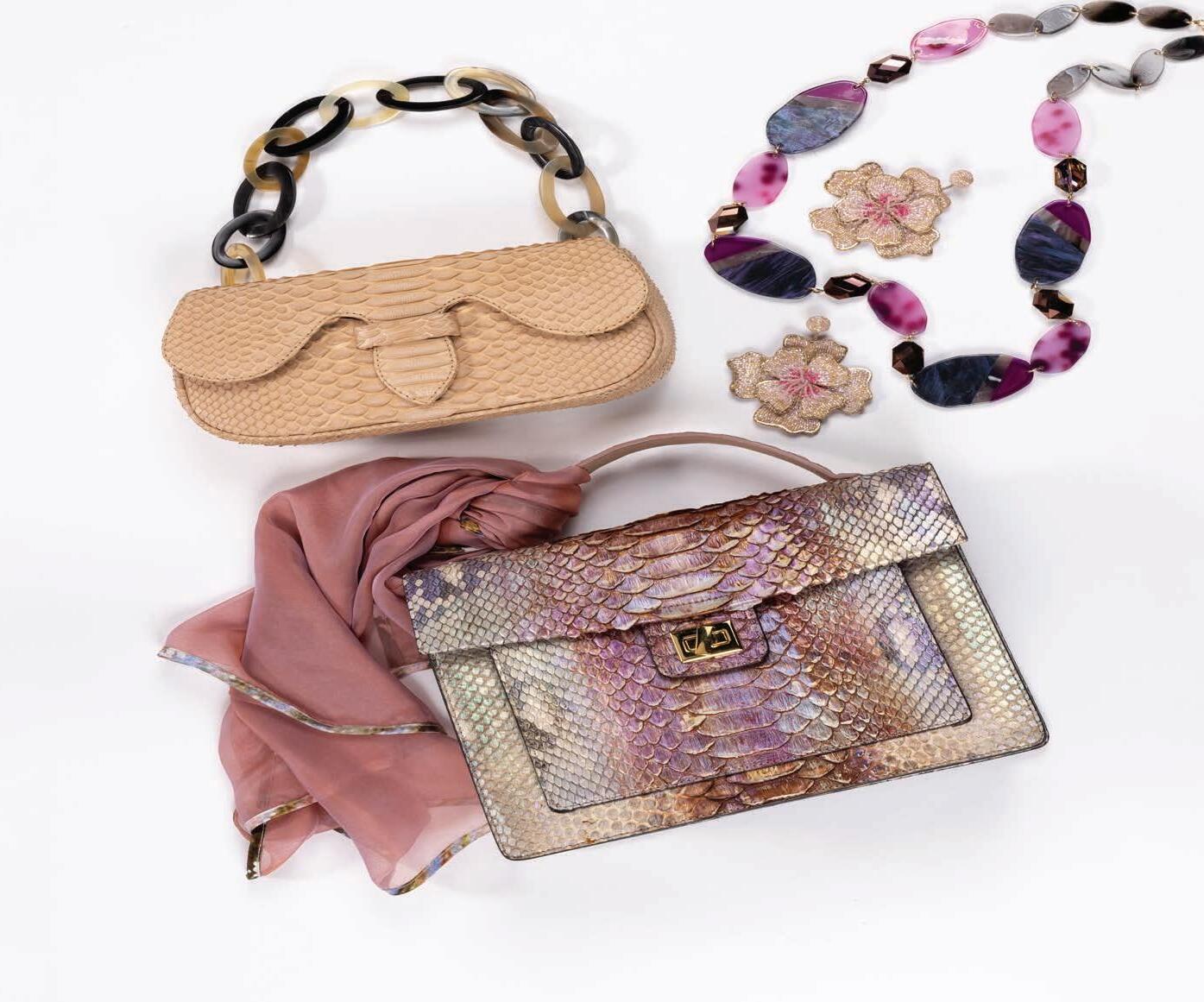 Beaded flower earrings, $450, CHRISTINA SABATH snakeskin handbag, $2,490, acrylic necklace, $150, ZONDA NELLIS scarf, $475, all from Nina Raynor
ADRIANA CASTRO snakeskin bag, $1,685, from Shari's Palm Beach
Beaded flower earrings, $450, CHRISTINA SABATH snakeskin handbag, $2,490, acrylic necklace, $150, ZONDA NELLIS scarf, $475, all from Nina Raynor
ADRIANA CASTRO snakeskin bag, $1,685, from Shari's Palm Beach
PLASTIC SURGERY OF THE FACE
creating a natural, healthy and more youthful appearance
Surgical Specialist Focused Uniquely on the Face, Neck, Eyes, Forehead Non-surgical Aesthetics
And Expert Injector of Botox® and Dermal Fillers


Board Certified Plastic Surgeon Over 20 Years Experience

with feminine artistry, grace and aesthetic sensibility
Individualized Treatment
The Doctor’s Personal Care
A Beautiful Patient Experience
DrHernandez.com 561-750-8600 4799 N. Federal Highway, Boca Raton, Florida model is an actual patient
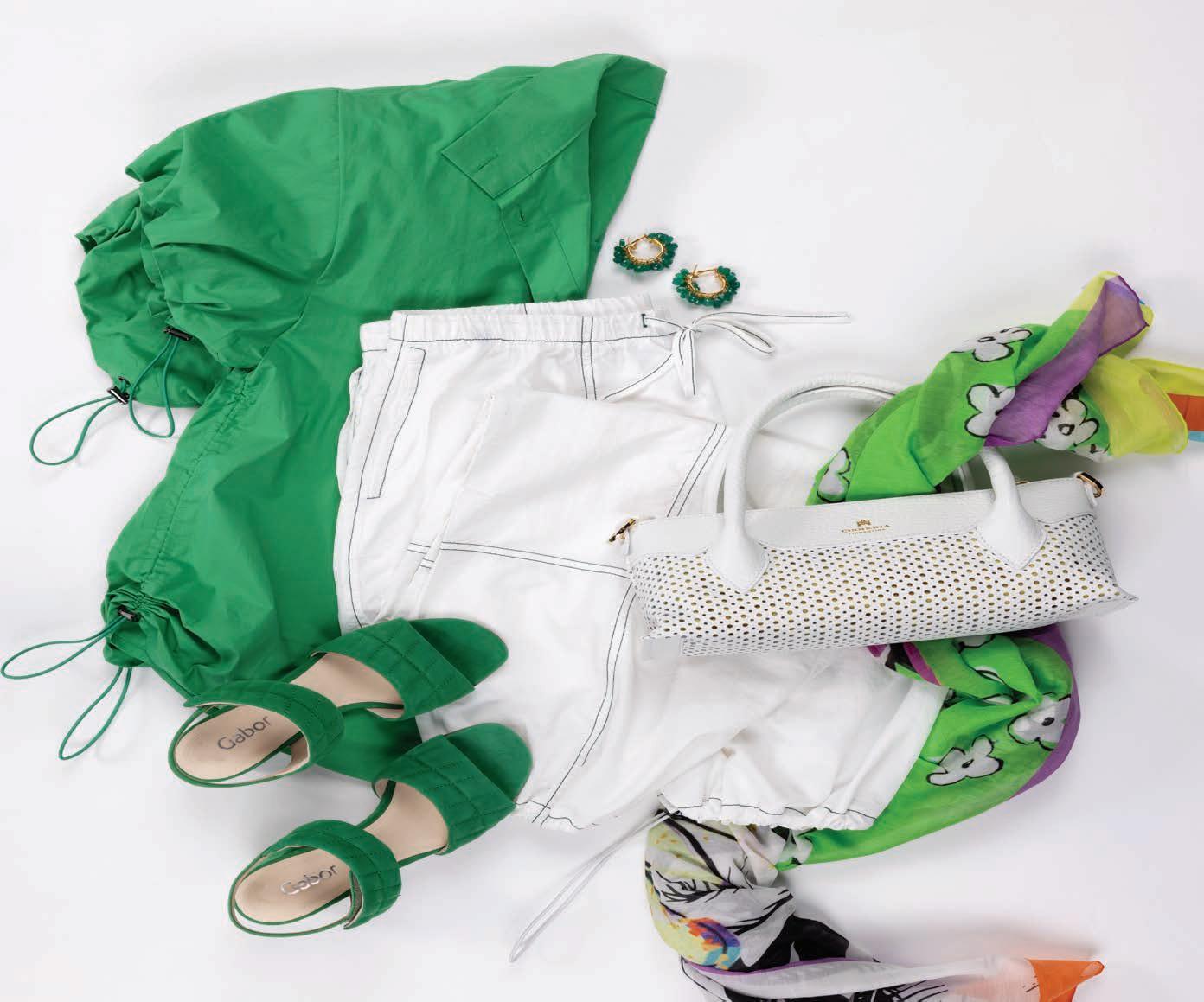
Touch O’ Green
A pop of geen says springtime — and St. Paddy’s Day
CUOIERIA white bag, $398, from Filly & Colt
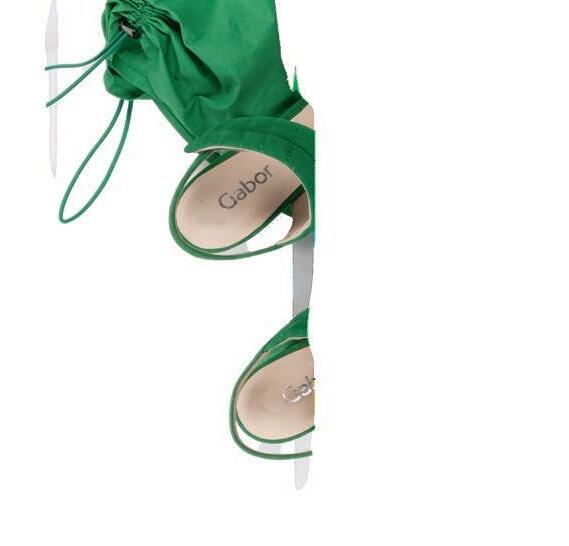
PERLAVERA scarf, $100, GABOR green sandal, $212, both from Wish & Shoes
Earrings, $150, TERRA shirt, $178, BARBARA KATZ pants, $98, all from Barbara Katz
THE LOCAL LOOK


Ranch Dressing
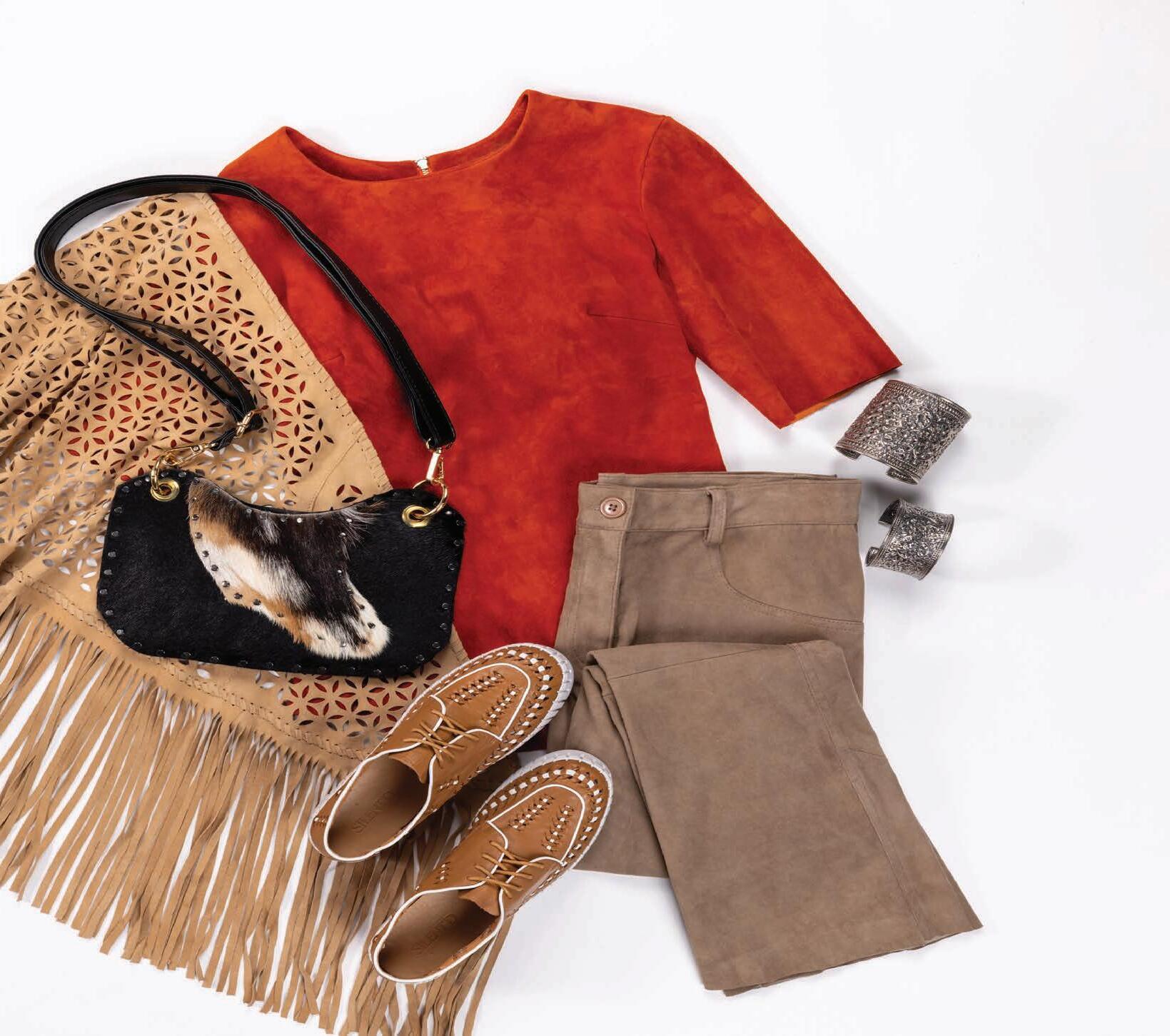
The natural charm of leather and suede offers a classic upgrade to an everyday look
THE LOCAL LOOK AARON BRISTOL
1 HIDE BAGS handbag, $415, silver cuff (large), $499, (small), $275, SILENTD leather sneaker, $170, GLEN ARTHUR suede shawl, $1,295, all from Wish & Shoes SHARI’S suede top, $1,395, and pants $1,595, both from Shari’s Palm Beach




UNWIND. BODY. MIND. 256 SE 5th Ave, Delray Beach, FL 33483 | breezespadelray.com | (561) 469-0431 | @breezespadelray Massages Facials Body Treatments Waxing Salon Services Spa Packages Wedding Packages BOOK YOUR TREATMENT TODAY. Let Aloft Delray Beach host your unforgettable events! From vibrant Bar and Bat Mitzvah to elegant weddings, our versatile spaces ensure your celebration is perfect, every moment, every memory. YOUR PERFECT EVENT VENUE NOW IS THE TIME TO BOOK YOUR SPECIAL EVENT Aloft Delray Beach | 202 SE 5th Avenue | Delray Beach, FL 33483 1.561.469.0550 | www.aloftdelraybeach.com NOW OPEN IN DOWNTOWN DELRAY BEACH. • W XYZ® bar • Splash pool • Re:chargeSM gym • Pet friendly • Re:fuel Breakfast • Steps from Atlantic Avenue CUSTOMIZABLE BANQUET SPACES & MENUS UNWIND. BODY. MIND. 256 SE 5th Ave, Delray Beach, FL 33483 | breezespadelray.com | (561) 469-0431 | @breezespadelray Massages Facials Body Treatments Waxing Salon Services Spa Packages Wedding Packages BOOK YOUR TREATMENT TODAY. Let Aloft Delray Beach host your unforgettable events! From vibrant Bar and Bat Mitzvah to elegant weddings, our versatile spaces ensure your celebration is perfect, every moment, every memory. YOUR PERFECT EVENT VENUE NOW IS THE TIME TO BOOK YOUR SPECIAL EVENT Aloft Delray Beach | 202 SE 5th Avenue | Delray Beach, FL 33483 1.561.469.0550 | www.aloftdelraybeach.com NOW OPEN IN DOWNTOWN DELRAY BEACH. • W XYZ® bar • Splash pool • Re:chargeSM gym • Pet friendly • Re:fuel Breakfast • Steps from Atlantic Avenue CUSTOMIZABLE BANQUET SPACES & MENUS
We’re low-key, but I kind of like that. There are people that have quietly donated to us tens of thousands a year, but they don’t need a big spotlight on them for doing it.”
—Lazarus Kimsal
Going to the Mat
The Boca Raton Police Athletic League has been a vital resource for underserved youth
Written by JOHN THOMASON
As president and chief fundraiser for the Boca Raton Police Athletic League (PAL), Sergeant Lazarus
Kimsal knows what it’s like to feel lost in the shuffle—to dial for dollars as one of several local law-enforcement nonprofits. “Most people, when they hear Boca Raton Police, they stop listening,” he says. “It’s the Boca Raton Police Foundation, Boca Raton Police Benevolent, Boca Raton Police Athletic League, Boca Raton Police union. They commingle everything together.
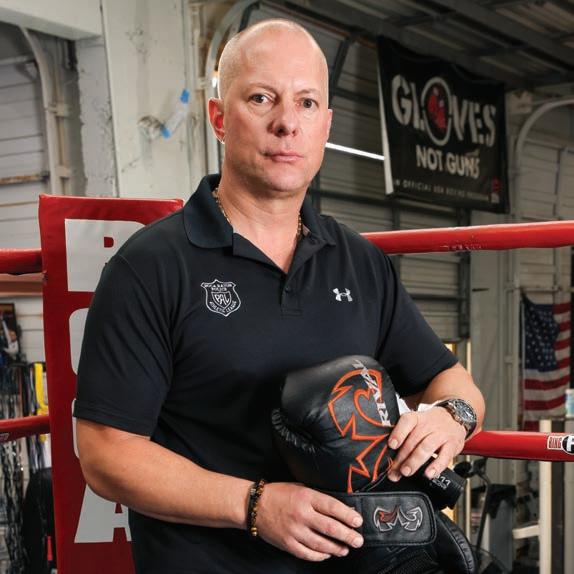
“But with PAL, we have our niche group. … We’re low-key, but I kind of like that. There’s people that have quietly donated to us tens of thousands a year, but they don’t need a big spotlight on them for doing it.”
Indeed, despite its minimal social-media presence, PAL has no shortage of supporters—from the pre-teens and teenagers who most benefit from its services, to their parents, to the investors who keep its lights on. The Boca Raton P.D. formed its PAL chapter in 1991 to provide free after-school physical fitness for all area youths, but particularly those generally described as at-risk, whether of academic difficulty, substance abuse, criminal activity or food insecurity. In the tradition of similar organizations nationwide—the New York City Police Department started the first PAL in 1935—it operates a gymnasium and offers supervised training and mentoring in boxing and weightlifting four days a week, as well as tennis instruction.
HOW TO SUPPORT THE PAL
The Boca Raton PAL fundraises through its annual Charlie McCutcheon Golf Tournament each May. To inquire about participation, call Kimsal at 561/6206144. The 501(c) (3) organization also welcomes tax-exempt donations of any amount at its website, bocapal.org.
Kimsal, a 30-year veteran of police departments in Pennsylvania and Florida whose tenure at PAL began around 2016, has seen plenty of families walk through the gymnasium doors from Boca’s lowest economic strata.“Those communities are here; we see it,” Kimsal says.“It’s not tattooed on their shirts, or their foreheads, of what their home life may be like.”
Which is why it’s so important, he says, that PAL’s programs are completely free. One of its trainers has even hosted cookouts for PAL families, and the organization has supplied gift cards for struggling parents, as a thank-you for getting their children to the program consistently and on time.“I tell parents, everything’s paid for, so the only thing they may need is sneakers. And I’ll reach into my pocket and give a parent $40 [to pay for them].”
Boxing has been the PAL’s central sport since day one; Kimsal says that it helps instill discipline, attention to detail, fearlessness and mental acuity. The PAL has produced such notable success stories as Steve Geffrard, who learned to box at the PAL gym at age 13. He went on to win the U.S. amateur triple crown in 2010 before turning pro, ultimately competing for the World Boxing Organization’s light heavyweight title in 2022.
Most PAL“graduates”simply take what they’ve gained into other aspects of life.“Some may have a learning disability or a slight physical disability, and they come to that atmosphere, and their parents don’t expect them to be on ESPN,”Kimsal says.“But they’re proud that they’re accomplishing what they’re accomplishing, which is the commitment. They come into the gym every day, which is truthfully the biggest thing.”
There’s an added benefit for the police department, too: namely the positive perception of the men and women in blue that PAL instills in its young charges.
“When I go into the gym, I’m not in uniform,” Kimsal says.“I used to go in there and work out. So they don’t know who I am. It’s more of a comfort level. There’s an intimidation of seeing someone in uniform that’s gone when you’re just in there relating to people and talking to them, particularly in that atmosphere.
“It’s a fine line,” he adds.“You don’t want them to just see you as another person; we are held to a higher standard. But you also don’t want them to see you as someone completely removed from their lives—like we’re above everybody else. Because we’re not.”
48 bocamag.com • • • • March 2024 THE LOCAL DO-GOODER
BRISTOL
Sergeant Lazarus Kimsal AARON

Inflation and the rising cost of living have left an increasing number of families unable to afford life in South Florida
Written by Tyler Childress
50 bocamag.com • • • • March 2024
PARADISE
hen
Boca
Helping
Hands (BHH) Executive Director
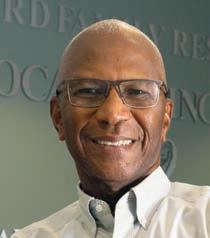
Greg Hazle visits schools to talk about the local nonprofit’s services to the community, he first asks students to perform a mental exercise. He asks,“what does a poor person look like?,” and they invariably reply with a stereotype, like a person who lives on the streets.
“What [the] statistics are saying is that, no,” says Hazle.“It’s a person who drives a car, it’s a person who has maybe one or two jobs, but they can’t pay for all of their basic needs. … It’s just a growing part of our population, the people that we see every day in the supermarkets or in the restaurants or anywhere in the service industry—that’s them.”
Joyce (who declined to use her real name) is one of “them,” a single mother of two who works in health care in Boca Raton. In 2023, she was forced to move from Delray to Boynton Beach in the face of a looming eviction when she couldn’t manage the rising rents in the area.
March 2024 • • • • bocamag.com 51
“Two to three years ago I was paying $ 1 , 500 for a two-bedroom; now for a two-bedroom, I’m paying $ 2 , 600 . ”
“With the way rent skyrocketed, it just put me behind,” says Joyce.“Two to three years ago I was paying $1,500 for a two-bedroom; now for a two-bedroom, I’m paying $2,600.”
Joyce is part of a growing part of the population designated by United Way as ALICE—Asset Limited, Income Constrained, Employed. United Way works alongside local governments, businesses and nonprofits to “boost education, economic mobility and health resources,” per its website.
What ALICE often means in practice is that an individual or household earns too much income to qualify for federal aid such as the Supplemental Nutrition Assistance Program (SNAP) or housing assistance, but earns too little to afford an area’s cost of living. According to a 2023 study from United Way, 43 percent of Palm Beach County households lived at or below the ALICE threshold in 2021; in Boca Raton, that number was 36.5 percent of households.
For Joyce, a two-week lapse between jobs was all it took to go from living paycheck to paycheck to being unable to afford rent. After leaving her apartment in Delray, she and her kids stayed with her brother in a two-bedroom apartment until Joyce could afford the deposit on the Boynton apartment where she still struggles to make ends meet.
“Jobs are paying, but they are not paying a substantial amount that will help me with my bills,” says Joyce.
The number of ALICE households increased sharply during the COVID pandemic between 2019 and 2021, and while data is not yet available for 2022 and 2023, United Way Palm Beach County Vice President of Community Impact Donna Quinlan says that the number continues to rise.
“We are seeing such an increase in the number of households that are struggling to put food on the table, and lines at these food pantries are growing,” says Quinlan.“They’re seeing new people in line that they’ve never seen before.”
While ALICE households were supported during the pandemic through expanded SNAP benefits, these benefits were abruptly cut off after the state opted to lift its COVID emergency declaration in June 2021.
“Now what you’re seeing is that the public benefits have gone back to the 2019 level, but yet the inflation is higher than wages can keep up with,” says Quinlan.
In addition to enhanced food benefits, federal rental assistance programs helped individuals and families stave off evictions. But for low-tomiddle-income earners like Joyce, the programs did little to put them ahead financially.“It [the program] helped for a nice amount of time, and I thought I was going to get caught up, but things happen, life happens,” says Joyce.
“Unexpected costs come up. … I’m trying to pay my credit
 Greg Hazle
Donna Quinlan
Greg Hazle
Donna Quinlan
card bills off. I can’t do that because this bill is due, so now it’s like I have to choose between credit or feeding my kids. Of course I’m going to feed my kids, and I’m just going to have to worry about my credit later.”
FOOD INSECURITY
The combination of slashed benefits and inflation raising the cost of goods has left many families one emergency away from not being able to put food on the table. As a result, nonprofit organizations such as Boca Helping Hands and the Palm Beach County Food Bank (PBCFB) are struggling to meet an ever-growing demand for food assistance.
PBCFB CEO Jamie Kendall says that the Food Bank has always had to purchase food, but never at the rate it is now, as inflation has caused donations from suppliers and manufacturers to dwindle.“We’ve had to pivot and dig deeper into our financial donations to actually purchase more food, and so then we’re also purchasing more food that is at inflationary high prices,” says Kendall. According to the Bureau of Labor Statistics, those prices have risen by 23.5 percent from February 2020 to May 2023.
According to nonprofit Feeding America, more than 132,000 people in Palm Beach County are at risk of food insecurity, and 37,000 of them are children. For a growing number of residents, the Food Bank has become their only source of food.
Prices have risen by 23.5% from February 2020 to May 2023.
the development of that [program] was that the crisis that they are experiencing is a job loss; it’ll pass. But that’s not the nature,” says Hazle. “My program isn’t designed to subsidize their rent forever.”
“You have parents that are skipping meals so they have enough for their kids to eat,” says Kendall.“Some of those most heartbreaking stories are coming out of our senior population. … People that are living on a pretty tight budget with retirement and pensions. … Their income hasn’t gone up, but the inflationary issues and the cost of food has gone up 24 percent in the last few years.”
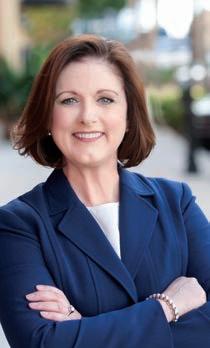
In Boca Raton, Greg Hazle says he has never, in his decade-plus of working with Boca Helping Hands, seen this level of demand not just for food, but for assistance in what is now becoming most families’ biggest expense—rent.
Boca Helping Hands’ financial program was designed as a lifeline that members of the community could use for assistance in paying rent and utilities in the event of sudden financial emergencies.
“In our mind, the basis for
When it comes to paying rent in South Florida, Florida Atlantic University professor and economist Ken Johnson says that “we’re winning a race that we don’t want to win.”According to a recent FAU study, Southeast Florida ranks as the ninth-most-unaffordable market in the country.
To rent the average unit in Southeast Florida and not spend more than 30 percent of your income on rent, you would need a household income just shy of $111,000. In Boca Raton, the median household income is $89,776. To qualify for workforce housing, a household can’t earn more than between 80 and 140 percent of the area median income (AMI), which in Boca Raton is $90,300. To qualify for affordable housing, a household must earn less than 80 percent of the AMI.
Most Palm Beach County families at these lower income levels know the rental crisis poses an ongoing threat

to their day-in and day-out housing security. Joyce says her biggest fear is “not being able to pay my rent or take care of my kids.”
WHAT PALM BEACH COUNTY IS DOING
To meet the growing demand for affordable and workforce housing, the state this year passed the Live Local Act, which would grant developers tax incentives and allow them to bypass zoning regulations and local governments for approval of housing projects that contain a minimum of 40 percent affordable units. Palm Beach County also last year approved a $200 million bond with which it aims to incentivize developers through lower-
According to nonprofit Feeding America, more than 132 , 000 people in Palm Beach County are at risk of food insecurity, and 37 , 000 of them are children.
March 2024 • • • • bocamag.com 53
Jamie Kendall
interest loan rates and assisted construction costs on affordable units. Unfortunately, these new policies have come too late.
“We missed our best opportunity to solve this crisis, starting circa 2020 to now … by doing virtually nothing circa 2012,” says Johnson.“Nobody was concerned with affordable housing, because everything was very affordable.” But now, we’re paying the price.
“Solving affordable housing is nearly impossible if not impossible at the peak of a housing cycle,” says Johnson.
In fact, Palm Beach County had the opportunity to avert a housing crisis in 2006 when it passed a workforce housing program that required developers that are building land in unincorporated areas—where nearly half of county residents live—to include at least 20 percent of units for affordable housing. After lobbying pressure from developers, county commissioners lowered that number to 5 percent just four years later. Developers also had the chance to opt out of the requirements by paying an in-lieu fee of $90,000 per waived affordable unit.
And many did.
An investigation by the Palm Beach Post revealed that between the program’s implementation in 2006 and 2022, only 1,100 of the 35,000 housing units approved by commissioners were affordable units.
The new housing bond passed by Palm Beach County last year aims to build 20,000 units in the county by 2033 by giving developers access to low-interest loan rates as well as subsidies to help cover construction costs. The bond originated from what the Palm Beach Post describes as “a housing advocacy group run in large part by developers and business leaders.”The developers that helped spur the affordable housing crisis by evading affordable unit requirements now stand to benefit from the bond. Funds from the bonds will be overseen by county commissioners and implemented by the Palm Beach County Department of Housing and Economic Development.
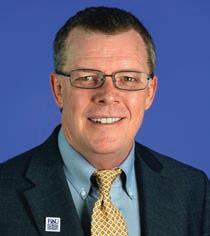
“We’re not going to necessarily pay 100 percent of those units, but we want to pay enough toward the construction cost that makes it make sense for a developer to set those units aside as workforce or affordable,” says Housing & Economic Development Director Jonathan Brown. Brown says that the locations for these
new developments have yet to be determined, but his office has been in discussions with the cities of Boca and Delray.
While these incentives help sweeten the deal for would-be affordable developments, the bond program still relies on the willingness of developers to forgo profits from luxury developments in favor of workforce units to house first responders and service and health care workers.
“Without this workforce housing, the quality of living in parts of Florida will decline, and the worry is that it goes down so far that it stops this economic expansion,” says Ken Johnson.“I don’t think that’s going to happen, but it should be worrisome enough to all of our county and city officials that they need to start building.”
Adding more strain to availability of units is the proliferation of short-term rentals in South Florida.“It's pretty clear the number of short-term rentals in this market have taken out a pretty significant number of potential properties that could either be rented or sold and owned,” says Johnson. Local governments are currently blocked from placing restrictions on the length of short-term rental stays. As of this writing, a new bill making its way through the Florida Leg-
To rent the average unit in Southeast Florida, you would need a household income just shy of $111 , 000 .
54 bocamag.com • • • • March 2024
Dr. Ken Johnson
islature, SB 280, may strip what remaining local governments have in the regulation of shortterm rentals by giving the state sole authority in enforcing any laws that pertain to vacation rentals. But there’s also a chance that the short-term rental market will naturally shrink as Florida's economy cools down.
“I think once we see our economy slow down ... a lot of these properties will go back into the long-term supply,”says Johnson.
For many, the prospect of homeownership is further hampered by the state’s skyrocketing insurance rates, which Johnson says is “like throwing gas on a fire.”Add in an inflation rate estimated at 7.8 percent by a WalletHub
study, and living in Palm Beach County has become a very expensive proposition. In fact, the cost of living in one of the most in-demand areas in the country is putting such a strain on working families that many have moved north to more affordable areas along the Treasure Coast.
For those who remain, there is little that can be done in the short term to alleviate the burden beyond the services provided by already strained nonprofit and government groups.
“We are challenged on all fronts in terms of the resources that we need to meet the demand that we’re seeing,” says Greg Hazle.“It feels like a ridiculous set of expectations
for the least-resourced organizations to solve the biggest problems.”
For those living at or below the ALICE threshold in South Florida like Joyce and her family, the next meal and the next rent payment isn’t a certainty. Like many, Joyce has started looking for a second job, which has made her postpone furthering her education.
“I know that some people don’t have what I have,” Joyce says.“There’s people that don’t have a house over their heads, so I just pray every night, and I just have to be grateful and have faith that everything will work out.”
An investigation by the Palm Beach Post revealed that between the program’s implementation in 2006 and 2022, only 1 , 100 of the 35 , 000 housing units approved by commissioners were affordable units.
43% of Palm Beach County households lived at or below the ALICE threshold in 2021.
• To donate to the Palm Beach County Food Bank, visit pbcfoodbank.org/donate.
• To donate to Boca Helping Hands, visit bocahelpinghands. org/donate.
• To donate to United Way Palm Beach County, visit unitedwaypbc.org/get-involved/give.
March 2024 • • • • bocamag.com 55
Jonathan Brown
Time to head south to yet another New Miami
Written by Christie Galeano-DeMott
Miami is having a moment. Again. Talented chefs are pushing the dining scene forward, captivating art installations adorn its streets and galleries, and exclusive luxury boutiques are calling the Magic City home. And thanks to Brightline, dreaded visions of gridlock traffic can now be replaced by breezy, comfortable and, most importantly, stress-free train rides down to our southern neighbor. While you could spend weeks in Miami and not see it all, we’re making it easy by compiling a weekend itinerary featuring two of the city’s hottest neighborhoods right now for the next time you’re craving a Miami staycation.
2024Weekend
in the 305
Don’t Miss #1: Miami Design District (MDD)
Checking In
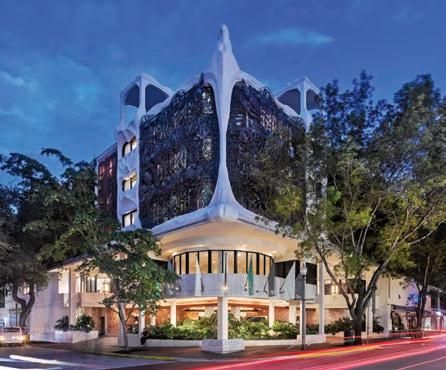
While the MDD has no hotels within walking distance, you’ll find Arlo, Wynwood’s first hotel, about a mile away. This artsy hotel embraces its creative community with its vibrant murals and unique wall art. Make a reservation at its restaurant, Marigold’s, for a memorable experience created by award-winning chef Brad Kilgore. If you’re looking for elevated luxury, the Four Seasons, Mandarin Oriental and JW Marriott Marquis hotels are stellar options a few miles south, closer to downtown and Brickell.
Retail Therapy
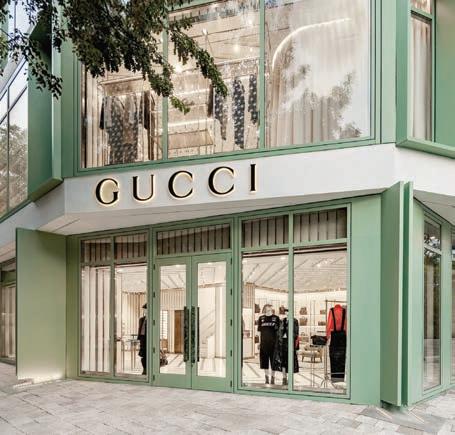
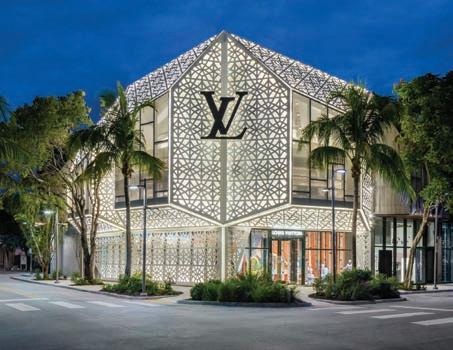
MDD is world-famous for its luxury boutiques. You’ll find only the most exclusive brands here, from men’s and women’s wear to home décor and beauty. Renowned fashion houses like Gucci, Dior and Louis Vuitton have dedicated menswear stores alongside their women’s ateliers. You’ll also find rarefied shops like Alexander McQueen (one of only 20 in the nation), FENDI Casa (its first flagship in the country), Jonathan Adler (one of nine in the U.S.) and Armani/Casa (one of two in the Americas).

58
LUIS GOMEZ
LUIS
GOMEZ

Arts & Culture
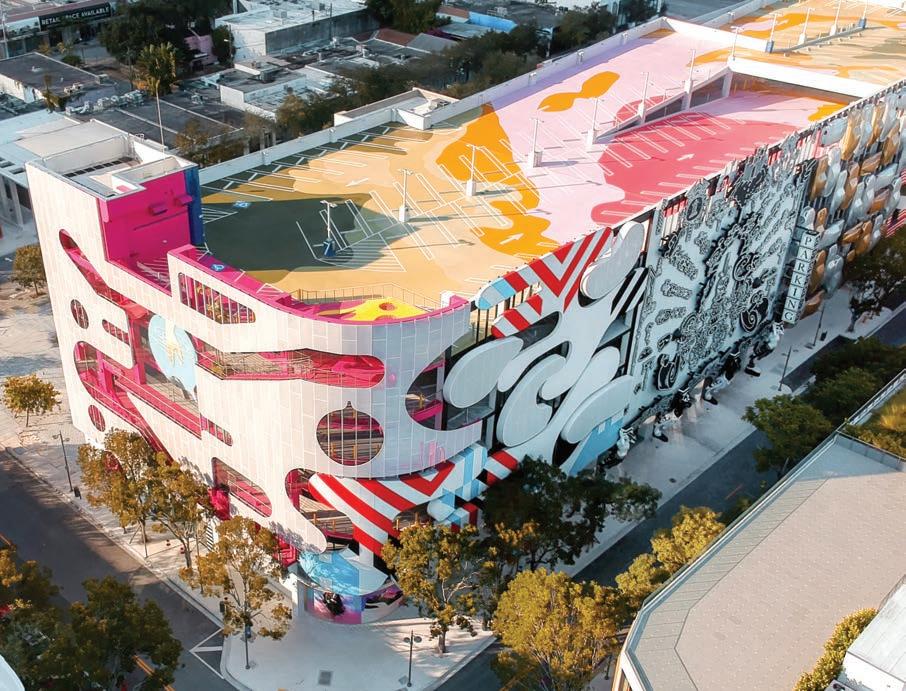
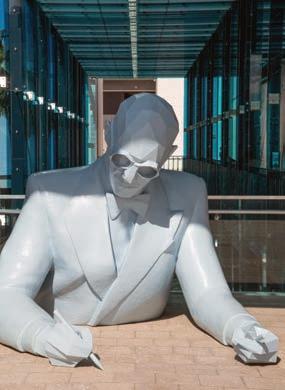
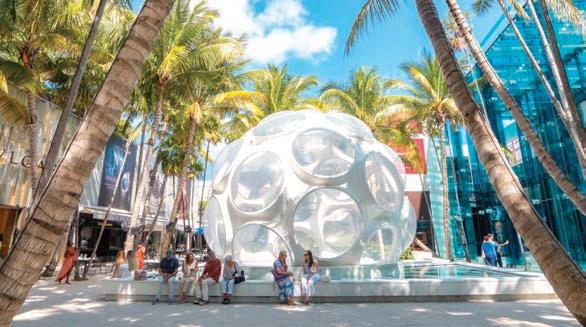
Strolling around the MDD is a favorite pastime of locals and visitors alike. While the luxury boutiques offer their own sense of wearable art from their immaculate window displays, the area also boasts several impressive public art installations. Overlooking the glitzy jewelry houses of Van Cleef & Arpels, TAG Heuer and Bvlgari within the Palm Court off Northeast First Avenue, Buckminster Fuller’s “Fly’s Eye Dome” is a central piece in MDD’s art collection. And make sure to look up while you walk around; the buildings here— even the parking garages—are bejeweled, including the Leong Leong façade on Northeast First Avenue and the Museum Garage façade on Northeast 41st Street. Some pieces invite the viewer to interact, like Xavier Veilhan’s “Le Corbusier” and the swinging chairs of Konstantin Grcic’s “Netscape,” both on the second floor of the Palm Court, and Paula Crown’s “Jokester 2” on the corner of Northeast 40th Street and Northeast First Avenue near Sephora. (miamidesigndistrict.com)
There are several galleries and museums to visit in the MDD. Three of them are on 41st Street. The de la Cruz Collection offers visitors a peek into the local family’s extensive art collection. The Cuban-born couple, who made their fortune with their family bottling and distri-
March 2024 • • • • bocamag.com 59
Clockwise, from bottom left, the Museum garage, the Mandarin Oriental, Arlo Wynwood Hotel, Gucci in the Design District, Louis Vuitton in the Design District, Buckminster Fuller’s “Fly’s Eye Dome” in Palm Court and Xavier Veilhan's "Le Corbusier"
ROBIN HILL
bution company in the Caribbean and Puerto Rico, began collecting art when they moved from Madrid to Miami in the ‘70s. Their private contemporary art collection was once partially on display at their house, but they built the 30,000-square-foot museum in 2009 so the public could enjoy it, free of charge. The couple collects pieces from around the globe, from sculptures and paintings to massive installations, including pieces by artists like Mark Bradford, Patricia Ayres, Rob Pruitt and Nate Lowman. (delacruzcollection.org)
Next door, the Institute of Contemporary Art (ICA) Miami is an imposing structure that gets even more interesting as you step inside. Depending on the installations on display, you may encounter a towering deity by artist Tau Lewis crafted out of found jewelry, leather scraps and other materials, or John Baldessari’s lifelike “Fake Carrot.”This month the museum debuts three new exhibitions, including “Denzil Hurley: In Praise of Use,”“Rose Marie Cromwell: A Geological Survey” and “Zilia Sánchez: Topologías/Topologies.”
Check its website for an updated list of installations by local and
turned into a second career after the retired IT CEO opened her collaborative artist space and studio in 2021. Her gallery is where she showcases her art alongside local and international artists, including Argentine artist Alejandra Stier, French Canadian artist Emilie Gosselin and American artist Kevin Fletcher. Her next exhibition is slated for mid-summer, and her annual group show “CHROMA” will return in conjunction with Miami Art Week in December. (luciddesigndistrict.com)
Sip & Savor
Michelin-starred restaurants await you at the MDD. Florida’s only Michelin two-star restaurant, L’Atelier, delivers an unforgettable culinary journey that only the late chef Jöel Robuchon could masterfully curate. If you’re looking for something equally as sophisticated but sexier, head to COTE for a Michelin-starred Korean barbecue experience you will dream about days after your last bite. For a pre-dinner cocktail served exclusively in Baccarat crystal, visit Baconly Boutique Bar Lounge. And for a post-dinner or even mid-afternoon spirited treat, stroll over to Aubi & Ramsa and try one of its premium wine or liquor-infused ice cream flavors.
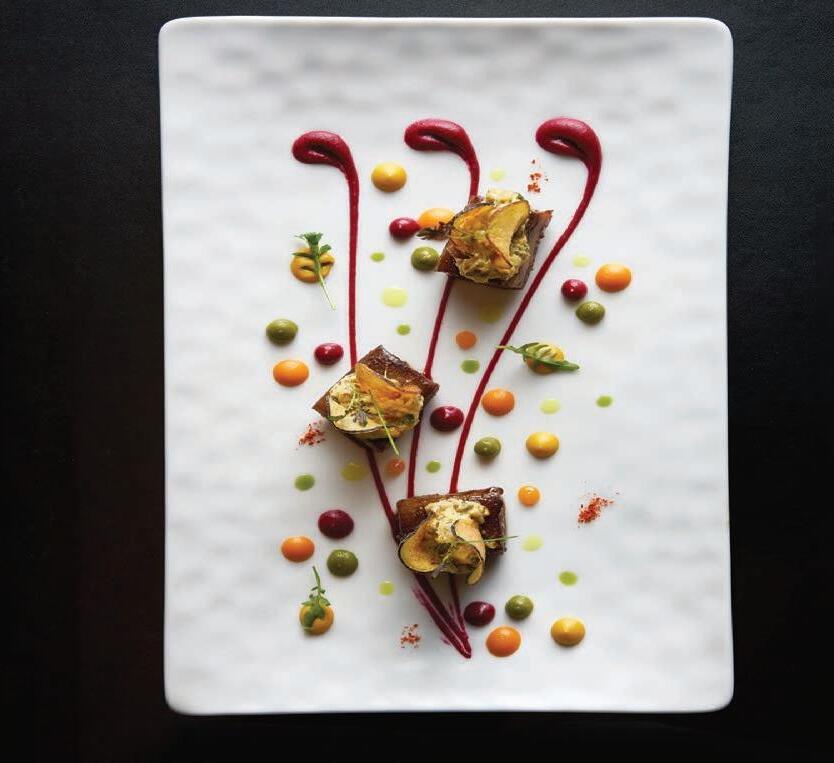
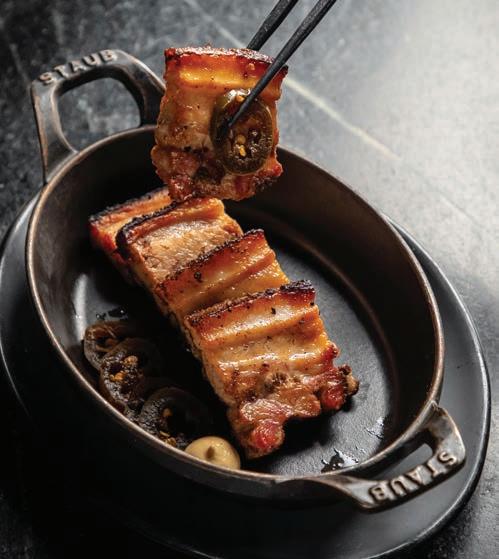 Left, the art of two Michelin stars at L’Atelier and above, bacon by Cote
GARY HE
FRANCESCO SAPIENZA
Left, the art of two Michelin stars at L’Atelier and above, bacon by Cote
GARY HE
FRANCESCO SAPIENZA
Don’t Miss #2: Coconut Grove Checking
In
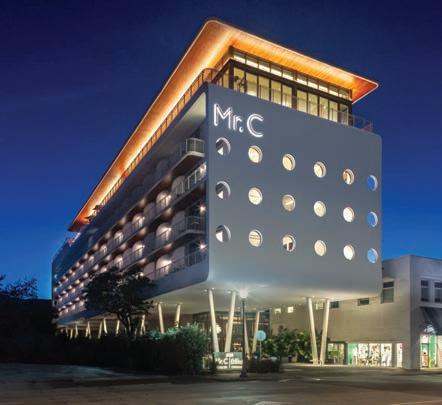
If you’re looking to stay closer to the water during your staycation, Coconut Grove has three lavish hotels. Upon entering Mr. C Miami—Coconut Grove with its sleek lines, polished woods, nautical furnishings, bronze finishes and a kaleidoscope of sea blues, you’ll feel like you’ve stepped aboard a luxury mega yacht. Head to its rooftop restaurant, Bellini, for an aperitif and Italian feast paired with sprawling bay views. The historic Mayfair House Hotel & Garden has been renovated to its former verdant glamour (think lavish greenhouse vibes) and is in the heart of the Grove. A short walk under a lush canopy, you’ll find the Ritz-Carlton Coconut Grove with its marina views.
Retail Therapy
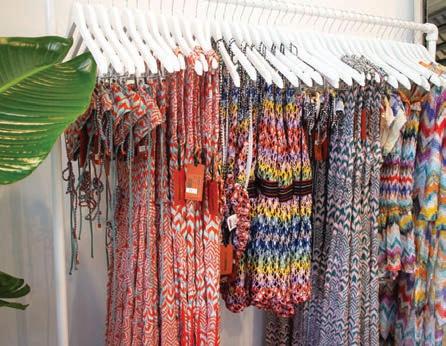
Coconut Grove is home to several lifestyle brands with exclusive luxury designers and curated lines for you and your home. At The Bazaar Project discerning shoppers will find standout art and home pieces sharing the shop with chic accessories and apparel. Stepping inside, you’re instantly immersed into its luxurious, prismatic marketplace, where you can travel the world through its collection of international brands. Grecian fashion house Pearl and Caviar’s flowy resort dresses sway neighboring Italian-based Les-Ottomans’ vibrant ceramic dishes and Mario Luca Giusti’s fabulous acrylic tableware that are a perfect addition to your al fresco dining. You’ll also find headpieces from India, bejeweled purses from New York, and even droll Seletti monkey and Qeeboo giraffe lamps. The whimsical space also doubles as a café, where you can rehydrate and replenish before continuing shopping. For darling ready-to-wear and resortwear, you’ll find exactly what you need with Sirène’s effortless transitional men’s and women’s collections that can take you from lounging to lunch. The woman-owned boutique carries exclusive global brands like ultra-luxe Eres and Missoni swimwear, airy Taj by Sabrina print dresses, modern French brand Roseanna and the heavenly, soft Le Kasha cashmere separates.
A visit to The Fashionista offers shoppers the opportunity to discover previously loved designer brand goods like Louis Vuitton duffle bags, Saint Laurent totes and Dior purses. The consignment shop carries everything from clothing and shoes to travel and jewelry accessories. Down the street, Guadalupe Design’s passion for textiles is apparent in all its handcrafted garments that are mainly sourced from India. Wearing any of its colorful playful prints—from roaring tigers to peony flowers—will ensure an instant mood lift. The store also carries a few other brands that align with its effulgent design, including Paraguayan brand Maria La Paz and its zippy printed dresses and delicate Michu satin fans.
March 2024 • • • • bocamag.com 61
From top, Mr. C hotel in the Grove, Mayfair House Hotel & Garden and Sirène
WILL PRYCE PHOTOGRAPHY
MR. C MIAMI –COCONUT GROVE
Arts & Culture
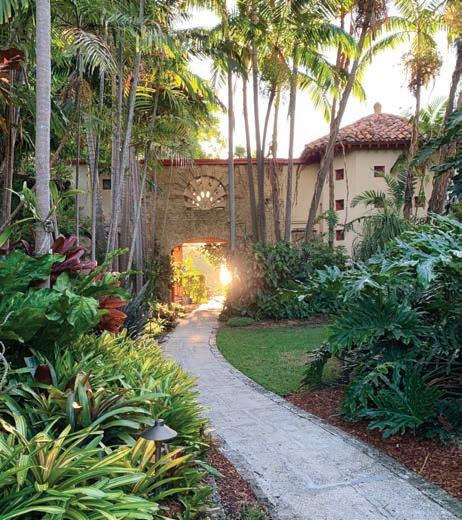
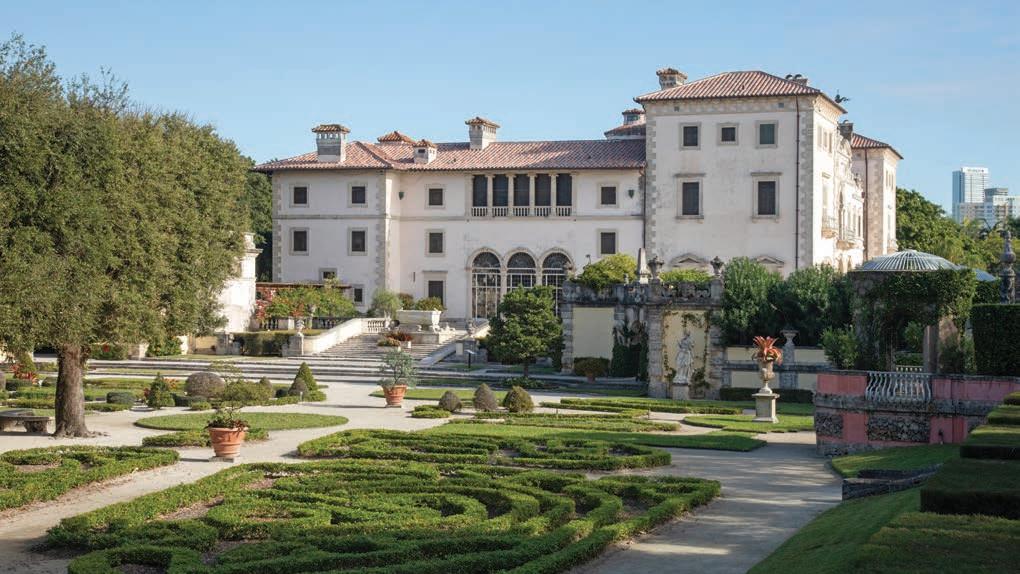
Become immersed in nature at two of the Grove’s most beautiful parks. Vizcaya Museum and Gardens transports you to a bygone era with its grandiose gardens and spectacular Italian bayfront 45,000-square-foot villa built by tycoon James Deering as his holiday home. The Kampong, one of the five gardens that comprise the National Tropical Botanical Garden, is set far back from the street, so finding it will be your first task. Once inside its gates, you’ll be rewarded with a matchless assortment of tropical plants, fruit trees and flowers. There are guided and self-guided tours throughout the week; wear comfortable walking shoes and apply sunscreen.
Sip & Savor
CocoWalk, the Grove’s cherished crown jewel, received a much-needed revamp a few years ago. Now, it is home to several craveable restaurants like El Bagel and its legendary sandwiches and Salt & Straw. This West Coast import delivers a rotating list of otherworldly house-made ice creams.
The Grove is known for its verdant landscape and bay views, so casual lunches are effortlessly paired with nature, like at Glass & Vine and Bayshore Club. The former, inside Peacock Park, offers inventive cocktails, crisp salads and satisfying sandwiches. In contrast, the latter
62 bocamag.com • • • • March 2024
Entrance to Kampong
ROBIN HILL
NATIONAL TROPICAL BOTANICAL GARDEN
Vizcaya
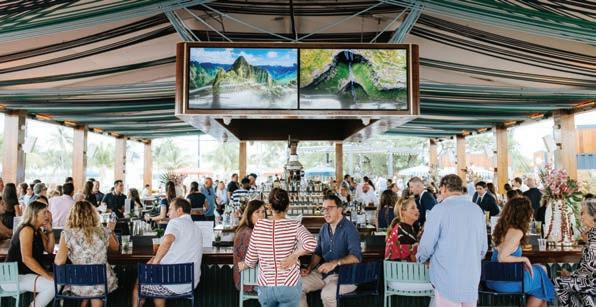
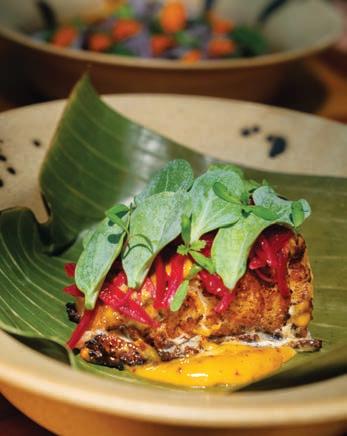
overlooks the marina and serves a coastal menu with hints of Latin flavors. You’ll find refreshing cocktails, vibey tunes and serene vistas at the adjacent open-air Regatta Grove. But don’t worry if you want to have a nosh; some of Miami’s best chefs have food stalls here. Look out for Jose Mendin’s The Piefather, Jeff McInnis’Tackle Box and Jeremy Ford’s JJ’s Guilty Pleasures.
The Grove’s bohemian, laid-back ambiance is even present in its Michelin-starred Ariete and Los Félix restaurants. Ariete is where chef Michael Beltran shines. His intrinsic dedication to details and craftmanship piques his imagination and delivers a menu blending Latin flavors, local ingredients and elevated techniques within a comfortable, welcoming setting. Los Félix celebrates Mexican cuisine by honoring ancestral cooking in its vibrant, low-key space. Its menu rotates as
as its vinyl, but regardless of what you order and what’s playing, you’re in for a memorable experience. If you saved room for a late-night treat, Fireman Derek’s Bake Shop is famous around town for its decadently rich slices of heaven.
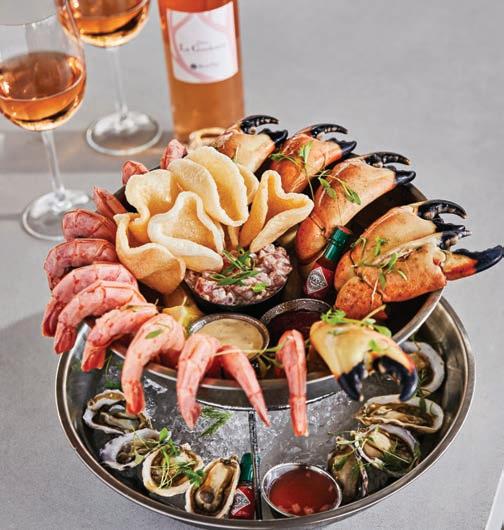
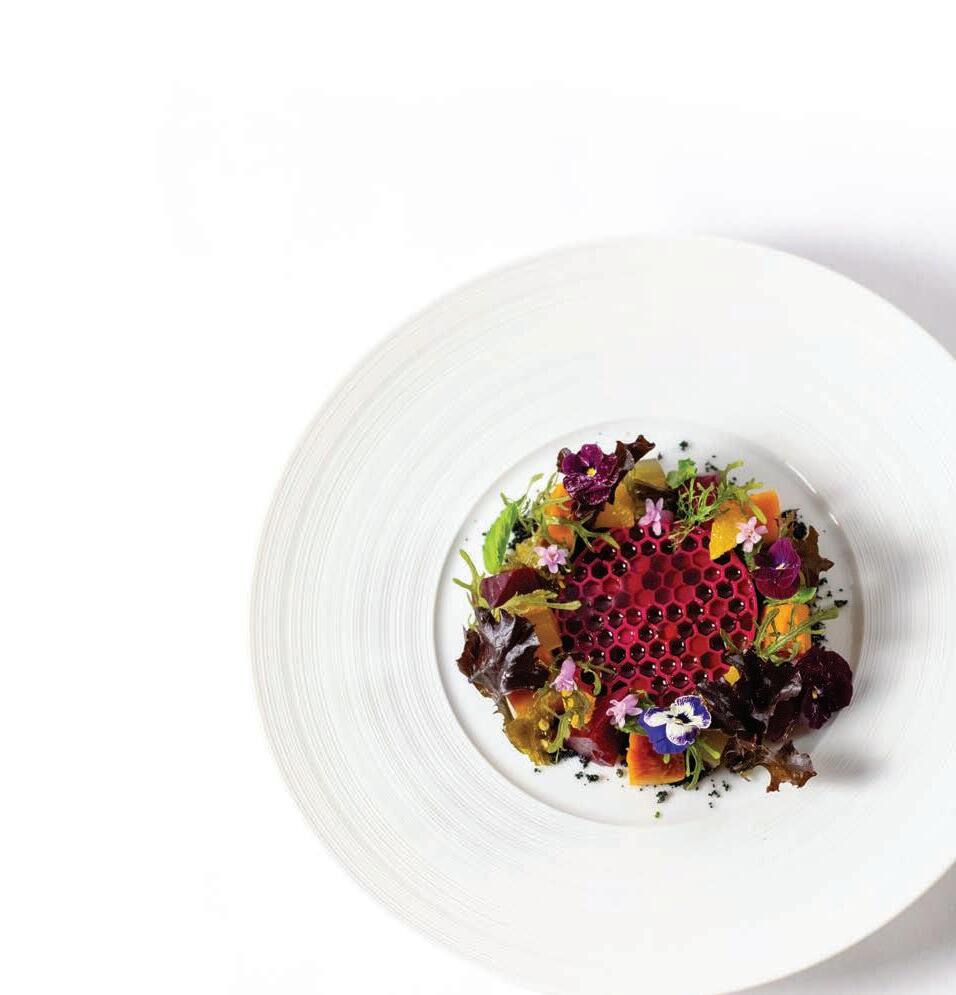 much
BREAKWATER HOSPITALITY GROUP
GROVE BAY HOSPITALITY GROUP
AMORETTO ASHLEY
VANESSA DIAZ
Above, Regatta Grove, far right, Bayshore Club seafood tower, dish from Ariete, near right, dish from Los Félix
much
BREAKWATER HOSPITALITY GROUP
GROVE BAY HOSPITALITY GROUP
AMORETTO ASHLEY
VANESSA DIAZ
Above, Regatta Grove, far right, Bayshore Club seafood tower, dish from Ariete, near right, dish from Los Félix
closet custom designed by California Closets From simple to intricate designs, California Closets systems are custom designed specifically for you and the way you live. Complimentary In-Home or Virtual Design Consultation FORT LAUDERDALE 1904 S Federal Hwy BOCA RATON 302 N Federal Hwy ©2022 California Closet Company, Inc. All rights reserved. Each franchise independently owned and operated. 954.946.2218 californiaclosets.com
Walk-in
 䴀䄀䐀䔀 䤀一 䤀吀䄀䰀夀

FLORIDA STYLE & DESIGN
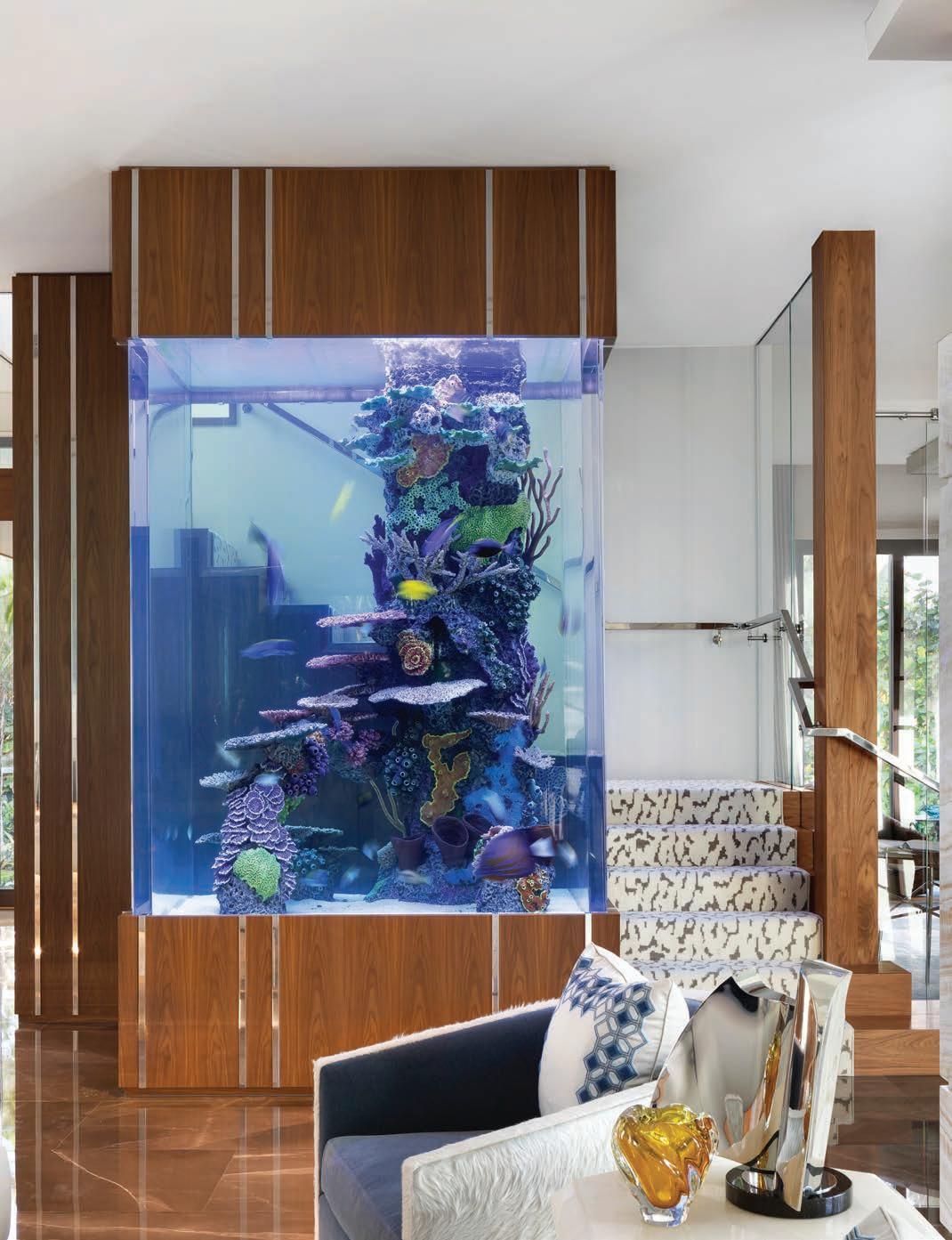
HOME TOUR › 68 PRODUCTS › 76
This Palm Beach home from designer Jessica Lee is a livable showcase for the owners’ eclectic art collection. A custom-built fish tank is seamlessly nestled into the stairwell. The white hair-on-hide Bradley chairs with blue mohair are accented with custom Holland and Sherry pillows.
JESSICA KLEWICKI GLYNN
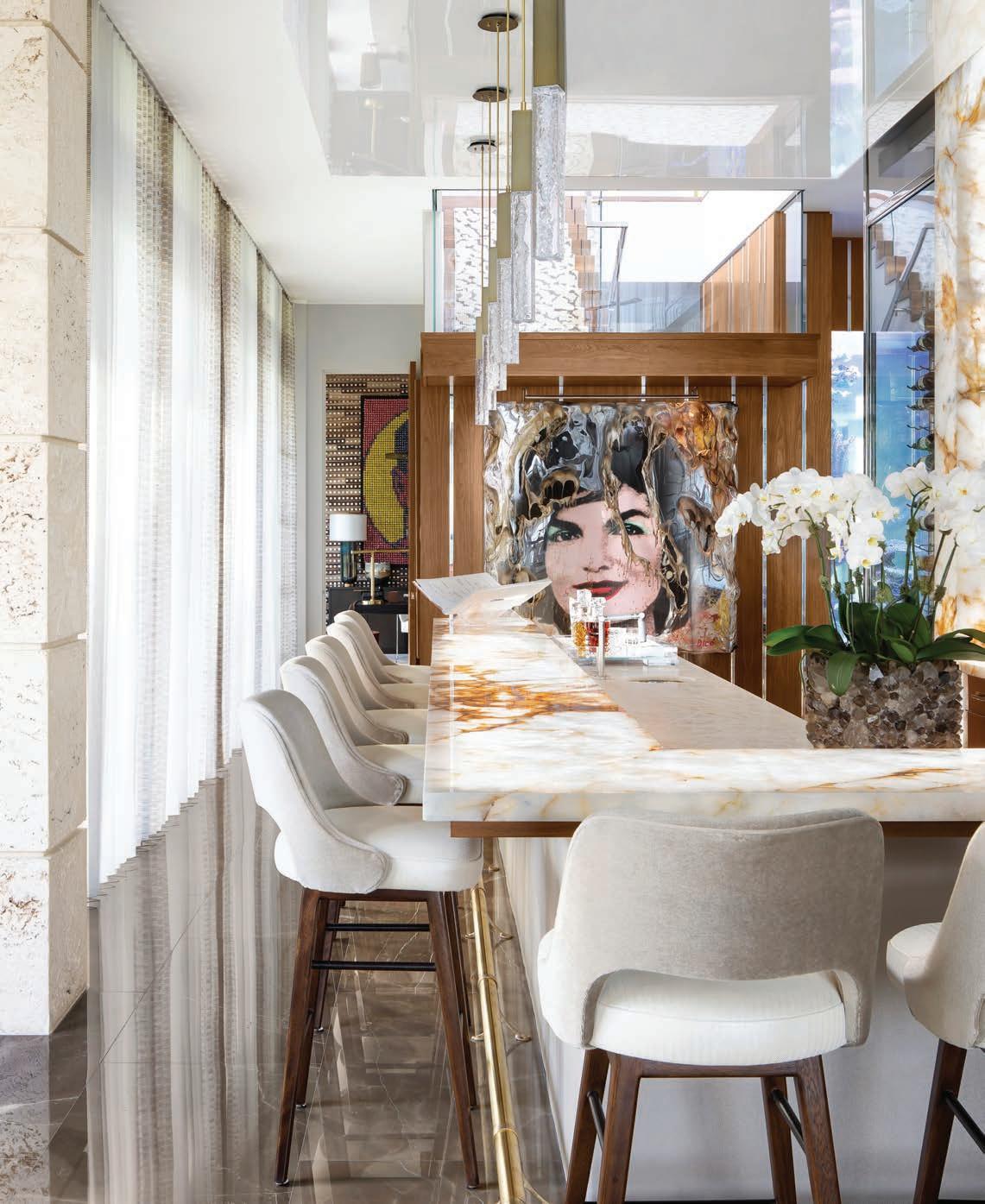
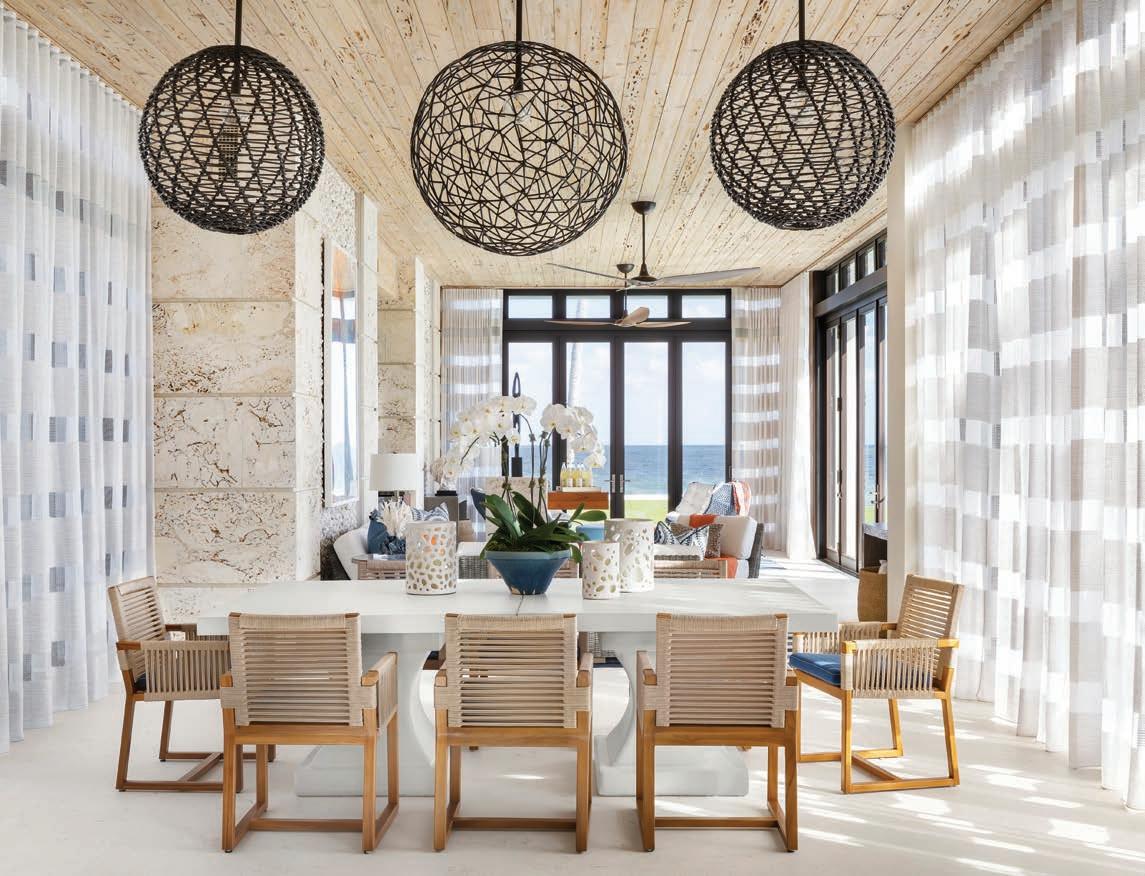
A Work of Art
When designing a home for an art collector, creating an aesthetic that accentuates the pieces without overpowering them is its own artistry.
Written by CHRISTIE GALEANO-DEMOTT
• Photography by
JESSICA KLEWICKI GLYNN
ABOVE: Sheer Holly Hunt drapery in a subtle tone-on-tone stripe adds a breezy softness that balances the room’s stone and wood elements.
LEFT: The leather-wrapped bar features plush Adriana Hoyos barstools and a brass footrail to help create the ideal setting for enjoying a chilled martini paired with seaside views.
March 2024 • • • • bocamag.com 69 FLORIDA STYLE & DESIGN HOME TOUR
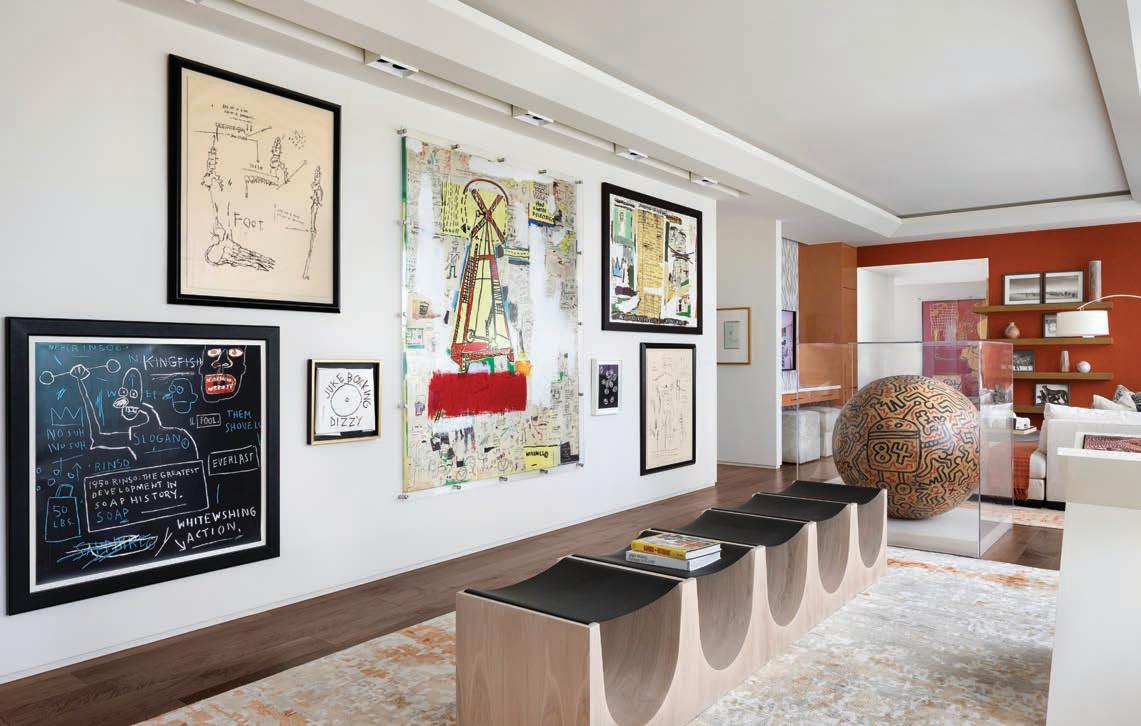
Giving a luxury home a soulful personality and visual intrigue without overwhelming its décor can be a challenge. How do you create the harmonious sweet spot between starkness and over-the-top opulence? Marc-Michaels Interior Design’s senior designer Jessica Lee did exactly that as she crafted an art-focused home that’s a haven for masterpieces—whether they’re hanging on the wall or illuminating it. Here, art goes beyond framed pieces; Lee’s choice of light fixtures, graphic countertops and unique wall treatments all take center stage. She flexes her design prowess by
animating spaces with a variety of design elements that are coherent rather than chaotic.
The 15,000-square-foot waterfront Palm Beach home was made for entertaining, so Lee wanted to design a generous bar reminiscent of an elegant lobby bar with comfortable seating. Hammerton Studio pendants sparkle above the stunning illuminated Brazilian Crystal quartz countertop and shelved wall that glamorously glow in the evenings. In the daylight, the highly reflective ceiling clad in stretch velum gives it a different luxe quality while also helping to define the space. Lee treated numerous walls
ABOVE: The long ceiling is beveled and rimmed with a light cove, giving the space an extra ambient glow.
TOP RIGHT: While the carpet adds softness to the room, Lee admits the main reason to use it was to give the LEE Industries desk chair plenty of room to roam without getting caught in an area rug.
BOTTOM RIGHT: The Vanguard bed’s upholstered panel headboard is framed in acrylic so that it doesn’t impede on the textured shimmer screen wall painted in apricot tones.
70 bocamag.com • • • • March 2024 FLORIDA STYLE & DESIGN HOME TOUR
throughout the home with special materials to deliver warmth, texture and interest to the interior. In this instance, she displayed “Jackie O” by Enrico Dico on the walnut-clad staircase wall, creating a warm and impactful visual.
In the loggia that doubles as the family room, Lee repeated the home’s exterior fossil stone inside to create a seamless transition when the doors are stacked back, and the room flows into the pool deck. Furniture and fixtures here must withstand the elements and ocean winds, so Lee selected a custom light fixture from Diospri to hang high from the cypress ceiling over the Elegant Earth stone table with teak Palecek chairs.
While oeuvres are displayed throughout the home, Lee designed a dedicated art gallery on the second floor for reflection and relaxation. Visitors can sit among Jean-Michel Basquiat originals while seated on a custom Bradley wood bench with stretched leather. A Keith Haring sculpture divides the gallery from the guest lounge, bedecked in deep orange walls and equipped with a TV and mini fridge stocked with refreshments.
Lee’s métier is playing with light while also choosing compelling, complementary textures, fabrics and colors. In the main study, a pleated ceiling and wallcovering accentuate Ossy Pri Hadash’s imposing “Superman.”And while Lee used blank and textured walls to highlight art, the home’s luminosity also plays an important role in this waterfront gallery. The study’s dropped ceiling, for example, is cove-lit for an added glow that makes the space feel cozier.
In the primary bathroom, underlit quartzite stone slab flooring creates the ultimate mood lighting, fostering a peaceful spa-
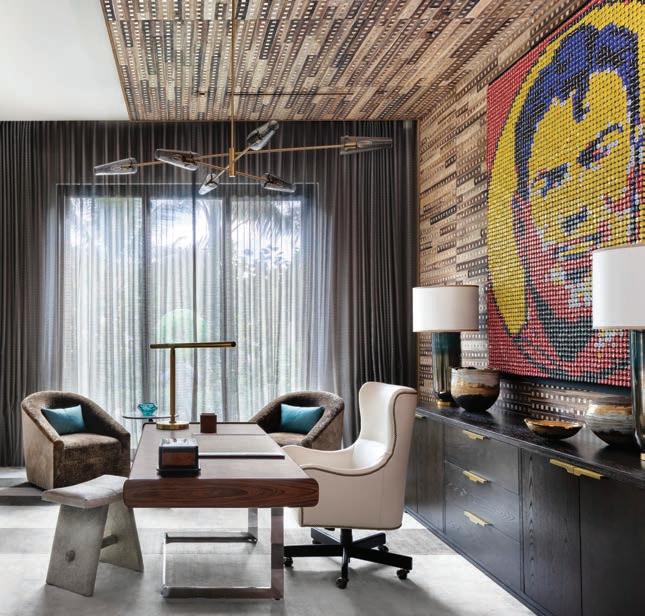


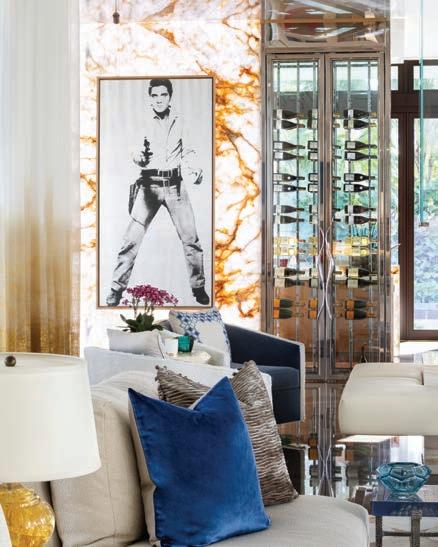
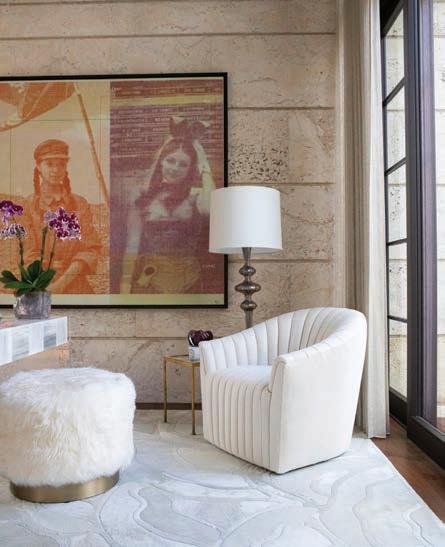
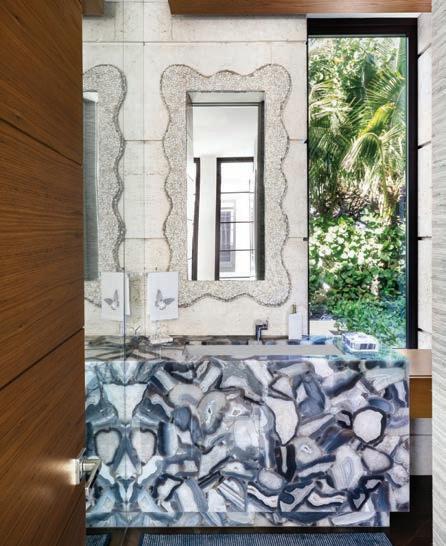
72 bocamag.com • • • • March 2024 FLORIDA STYLE & DESIGN HOME TOUR
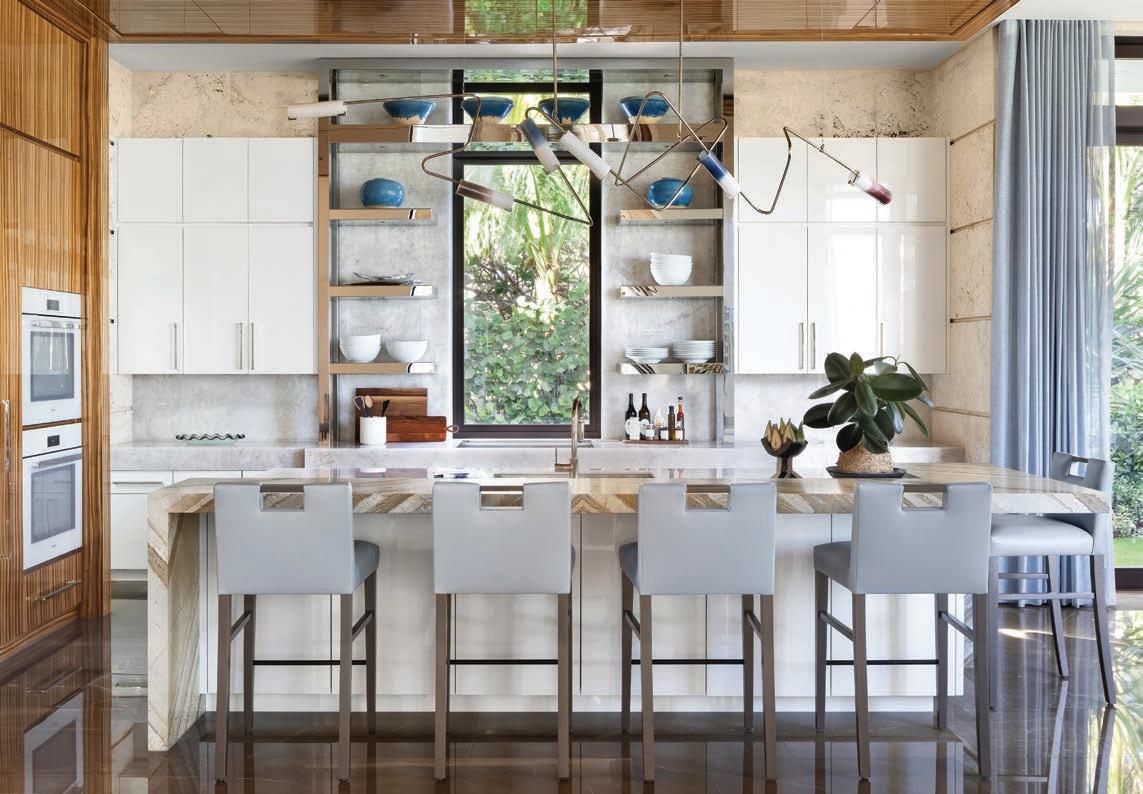
like setting. And while lighting can be delightfully subdued, it can also be eye-catching, like the living room’s illuminated wall that it shares with the bar. Upon entering the home, guests are instantly drawn in and greeted by “Elvis,” an Andy Warhol original. Lee knew this piece deserved a place of prominence, and she bookended it with 288-bottle wine cabinets. She also added to the home’s artsy aesthetic by choosing light fixtures that aren’t just a source of light, but are also sculptural and
interesting, like the office’s airy CTO pendant, a gorgeous guest-bedroom Palecek white coco-beaded chandelier, and the kitchen’s custom Diospri light fixture that gives way to sprawling ocean views by not being visually heavy.
In both the second office and one of the three powder bathrooms on the first floor, Lee once again brought the home’s exterior fossil stone inside. In the office, she balanced the stone with a soft Kyle Bunting rug inset into the floor, making it
March 2024 • • • • bocamag.com 73
LEFT PAGE
TOP LEFT: Victor Vasarely’s geometric piece adds to this game room’s playfulness.
TOP RIGHT: A shaggy LEE Industries ottoman pairs with a plush Weiman Home lounger chair.
BOTTOM LEFT: Lee chose neutral tones for the larger upholstered pieces while bringing in subtle pops of color with other elements. The main living areas are defined by a blue color story, while other rooms have their own personality and color directions.
BOTTOM RIGHT: Walnut doors add warmth and softness to the first floor.
ABOVE: Lee kept most of the walls and furniture light and neutral, so the first floor’s mocha marble floors ground the rooms. As its subtle veining picks up those colors, it adds to the spaces’ cohesiveness while filling them with sunlight with its reflective quality.
WHAT THE PRO KNOWS
Lee’s designer tips for integrating art into your home.
1 DON’T COLOR-COORDINATE
As a collector, don’t worry about choosing art that reflects a room’s color story. A piece doesn’t need to match the room, and it feels more authentic if it doesn’t.
2 HANG FROM THE CEILING
If you don’t have a spare wall for your art but you do have a nonimportant window, hang it from the ceiling on cables in front of the window. It’s a great way to bring art into a room.
3 PERFECT THE SCALE
Make sure the art’s scale relates to its setting correctly. Don’t hang a tiny piece on a massive wall.
4 GET THE HEIGHT RIGHT
Knowing how high (or low) to hang art is critical. A rule of thumb is that the center of the piece should be at eye level.
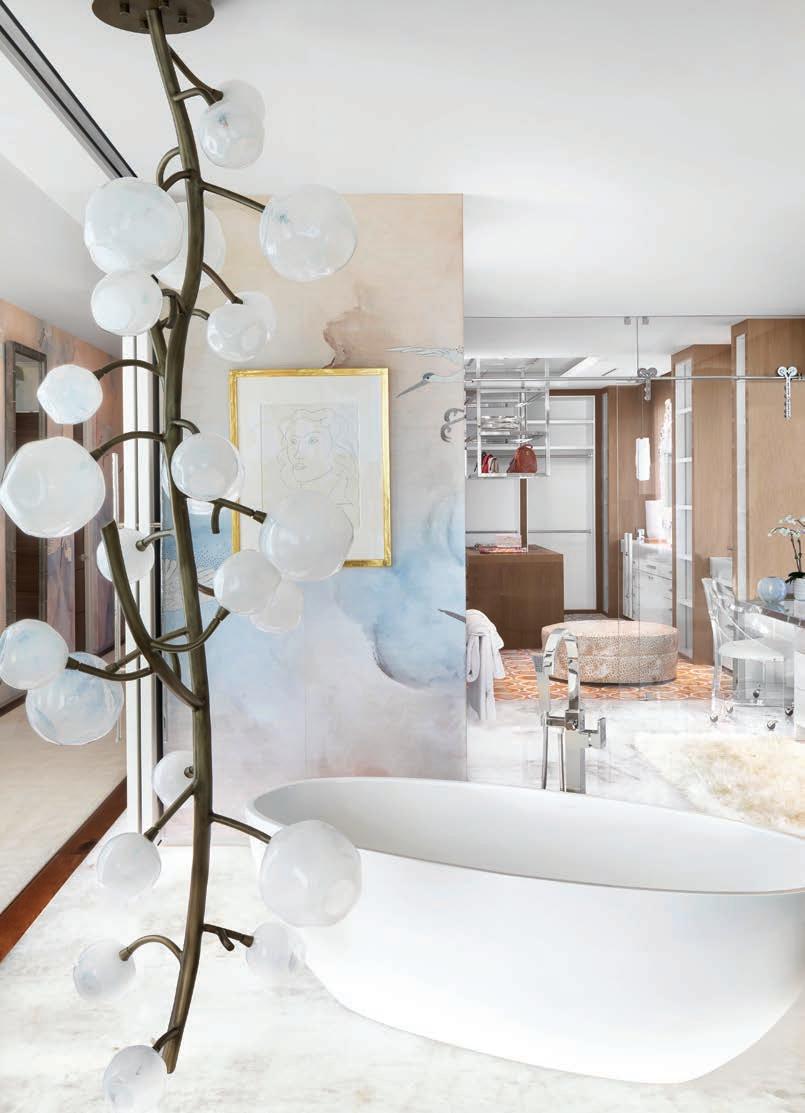
74 bocamag.com • • • • March 2024 FLORIDA STYLE & DESIGN HOME TOUR
RIGHT: The impressive floorto-ceiling chandelier adds to the room’s whimsy. It was designed for this specific corner and custom-made by LUXE Lighting.
flush with the walnut wood flooring. A shaggy LEE Industries ottoman pairs with a plush Weiman Home lounger chair. In the bathroom, she added depth and contrast with a captivating semi-precious agate slab and shelled mirror.
For wine collectors, the home features a basement-level (yes, a basement in Florida) 350-bottle wine cellar. The kitchen’s waterfall island—a tranquil area to enjoy a glass of wine—is made from Corteccia marble and complements the refrigerator’s high-gloss veneer detailing that seamlessly runs across the ceiling. Lee introduced quieter quartzite as a second countertop material for the perimeter and the back of the polished stainless steel shelving unit that flanks the sink.
The expansive second-floor primary suite boasts a private oceanfront balcony, fireplace, hot tub and sitting area. The bedroom embraces asymmetry with hints of sophisticated glamor, from its original Picasso and sparkling ceiling to its off-centered bed and unmatched nightstand lamp and hanging pendant. Tipping her hat to the art-collecting homeowners, Lee

It’s a private retreat where they can feel like they’re living in a delicate watercolor—an art lover’s dream brought to life.
 designed dual bathrooms swathed in a pastel Phillip Jeffries wallcovering flaunting a whimsical cloud-andbird pattern.
Senior Designer, Jessica Lee Senior Detailing Designer, Rachel Ortiz Architect, Affiniti Architects Builder, Mark Timothy
TOP RIGHT: Lee drew inspiration from the room’s sea views when adding pops of blues with the Baker platform bed’s accent pillows.
BOTTOM RIGHT: The headboard wall’s custom Holly Hunt upholstered panels are carried through to the adjacent sitting area, where they are broken up with leather panels and metal strips.
designed dual bathrooms swathed in a pastel Phillip Jeffries wallcovering flaunting a whimsical cloud-andbird pattern.
Senior Designer, Jessica Lee Senior Detailing Designer, Rachel Ortiz Architect, Affiniti Architects Builder, Mark Timothy
TOP RIGHT: Lee drew inspiration from the room’s sea views when adding pops of blues with the Baker platform bed’s accent pillows.
BOTTOM RIGHT: The headboard wall’s custom Holly Hunt upholstered panels are carried through to the adjacent sitting area, where they are broken up with leather panels and metal strips.

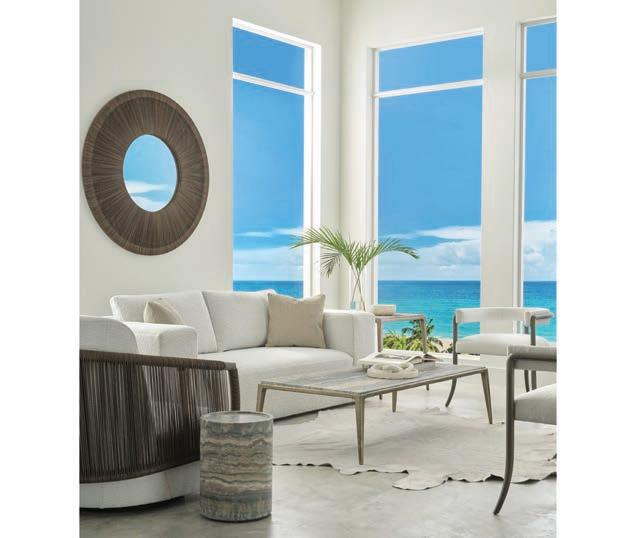


GOING FULL CIRCLE
Soften your living spaces with spherical silhouettes and rounded edges, from globular light fixtures to carved medallions and circular prints.


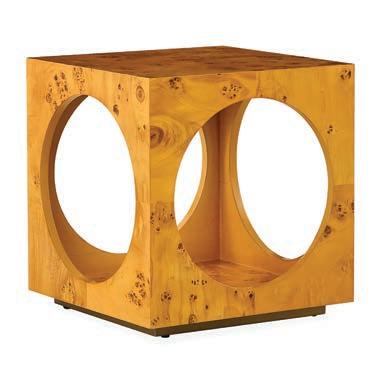

FLORIDA STYLE & DESIGN PRODUCTS
Brennan Umbrella Stand by Ralph Lauren, $795, Nordstrom, Boca Raton, nordstrom.com; 5. Tiny Round Accent Lamp, $419, Hive, Palm Beach, hivepalmbeach.com; 6. Zola Lounge Chair, $945, Jonathan Adler, Miami, jonathanadler.com; 7. Bond Cube Accent Table, $665, Jonathan Adler, Miami, jonathanadler.com; 8. West Whitewash Cane Bar Cabinet by Leanne Ford, $2,249, Crate & Barrel, Boca Raton, crateandbarrel.com
PHOTO COURTESY OF BAKER FURNITURE
1. June Floor Lamp, $995, Jayson Home, jaysonhome.com; 2. Spinnaker Mirror, to the trade, Maui Spot Table, to the trade, Baker Resort Collection by Baker Dania Beach, Dania Beach, bakerfurniture.com;
3. Southampton Dining Table, $2,698, Serena & Lily, Palm Beach, serenaandlily.com.


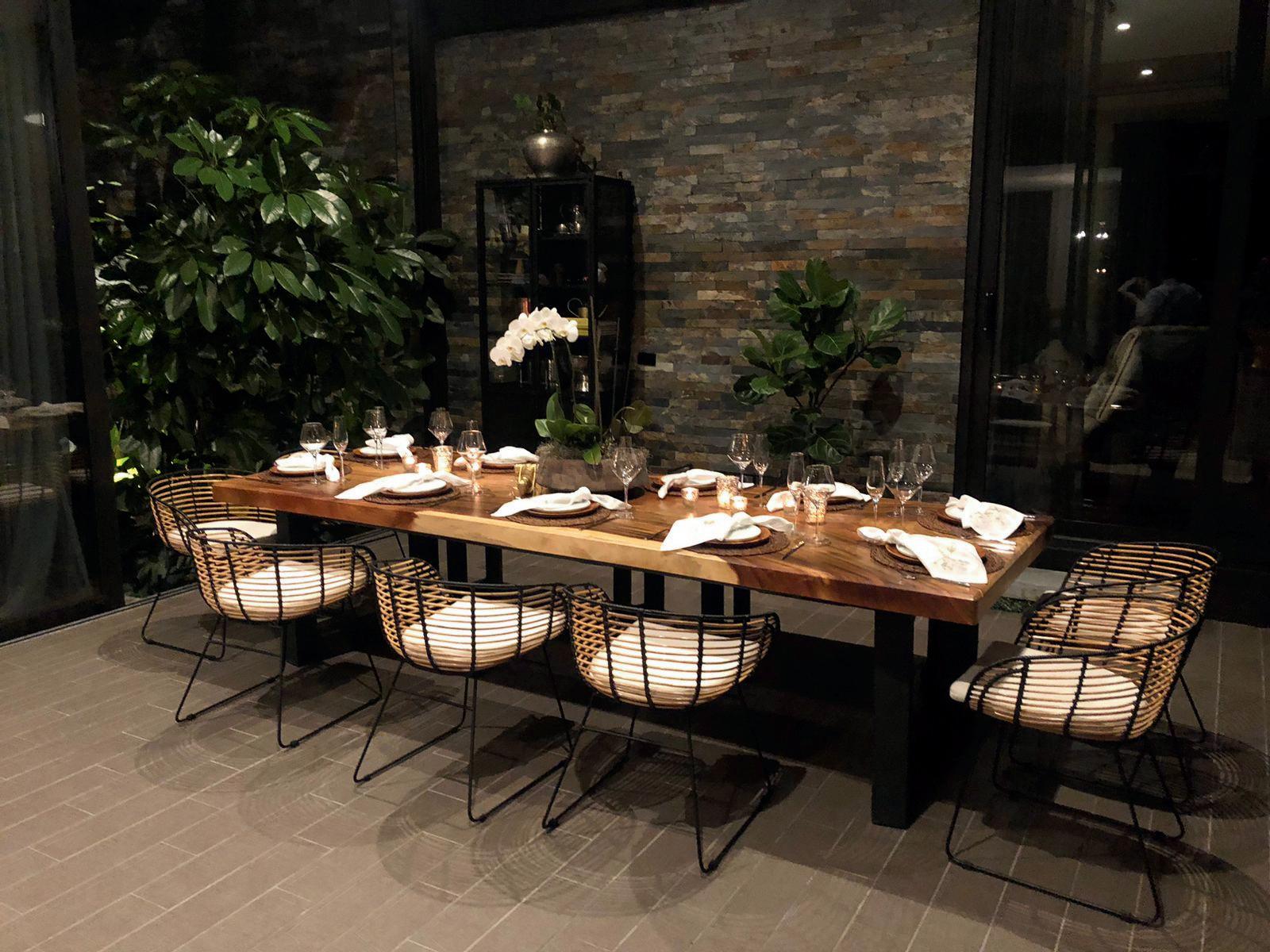
In a world driven by mass production and fleeting trends, there exists a hidden gem that encapsulates the essence of craftsmanship and heritage.
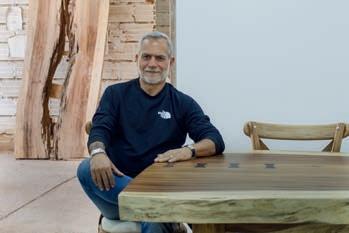

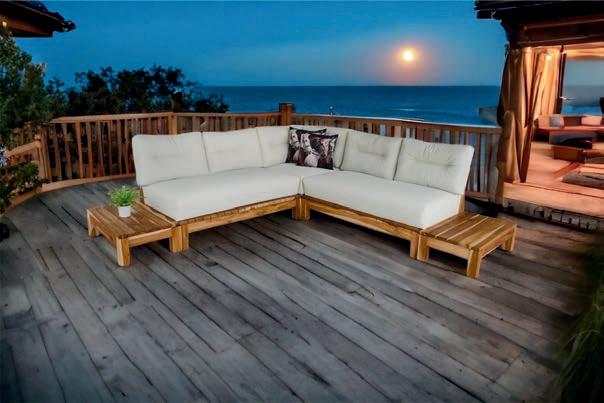
Muebles Castano Furniture Factory by Castano Living stands as a beacon of excellence, preserving the artistry and craftsmanship of yesteryear. With a dedication to tradition, sustainability, and innovation, it continues to inspire and create furniture that becomes a heirloom. True heritage lies not just in the wood itself, but in the hands and hearts of those who bring it to life. (Argiro Castano).
Mon-Sat 10:00AM - 6:00PM
Sunday 11:00Am - 5:00PM
PH: (561) 990 7182
boca@castanoliving.com
2882 N Federal Hwy, Boca Raton FL, 33431
@castanoliving @castanoliving @castanoliving @castanoliving



RHAPSODY IN BLUE
Imagine a color palette of calming cobalt, soothing sky and classic navy for chic beach-house vibes or a crisp nautical aesthetic.




1. Le Creuset Dinner Plates in Ink Blue and Chambray Blue, $80 for a set of four, crateandbarrel.com; 2. Toaster in pastel blue, $150 and $280 (respectively), Williams-Sonoma, Boca Raton, williams-sonoma. com; 3. Winn Hand-Knotted Rug, Morningside Pillow Cover, Pescadero Tiered Chandelier, Serena & Lily, Palm Beach, serenaandlily.com; 4. Bluebird Arrowhead Relief Pillow, $500, Hive, Palm Beach, hivepalmbeach.com; 5. Massoud Glenwick Accent Chair, $2,700, Neiman Marcus, Boca Raton, neimanmarcus.com; 6. Tillie Grande Swivel Chair, $1,499, Crate & Barrel, Boca Raton, crateandbarrel.com; 7. Muntz Velvet Ottoman, $398, Anthropologie, Dania Beach, anthropologie.com

FLORIDA STYLE & DESIGN PRODUCTS
PHOTO COURTESY OF SERENA & LILY
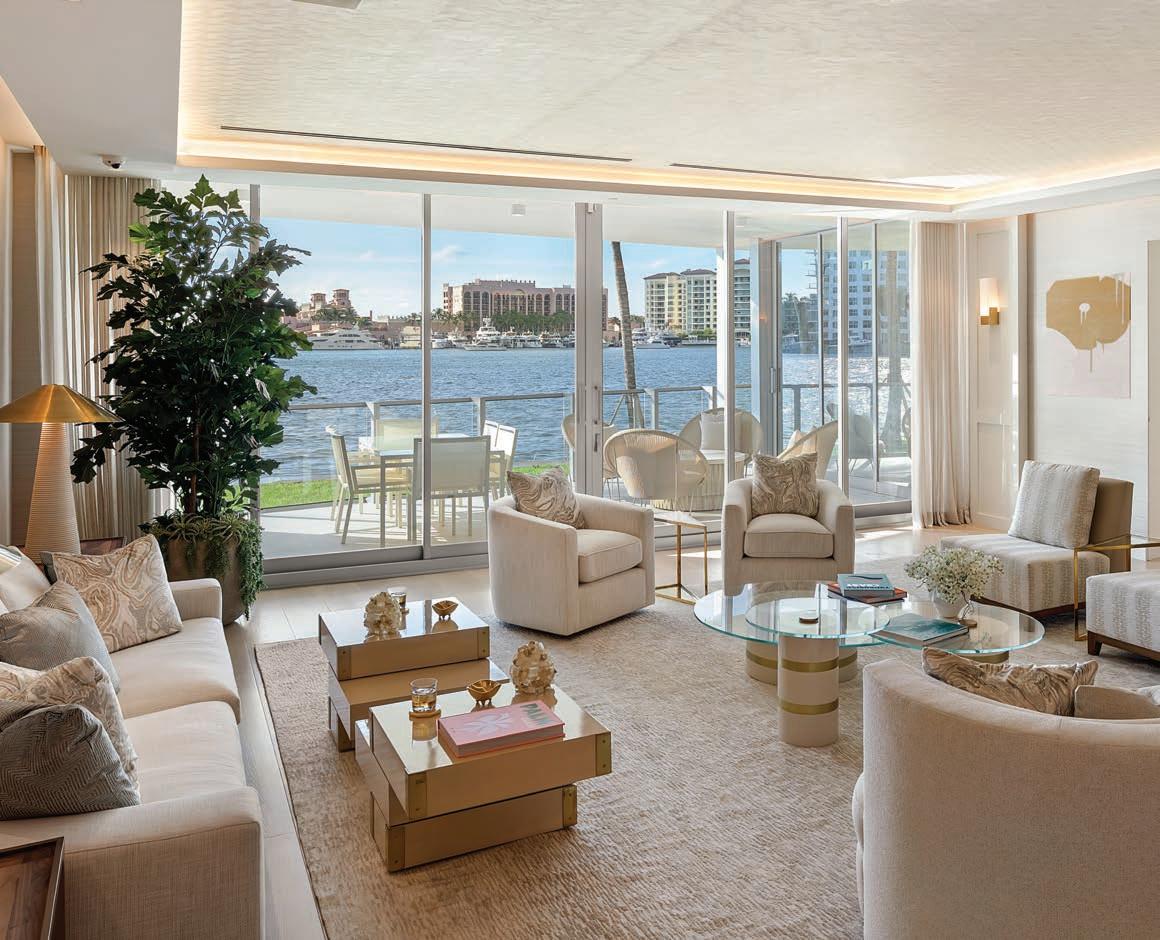
LINDARUDERMAN.COM INFO@LINDARUDERMAN.COM SOUTH FLORIDA 561-565-5002 NEW YORK 877-730-8311 GREENWICH 203-552-9700
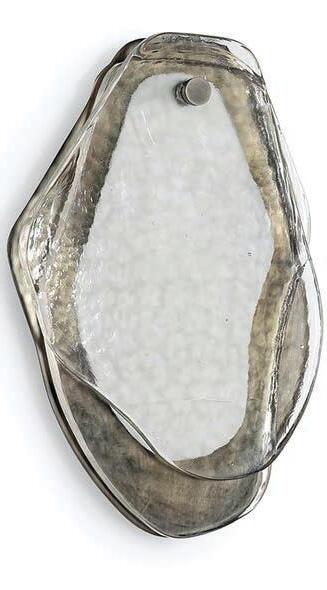

LIGHT THE WAY
Pendant lights and chandeliers aren’t the only game in town. Today’s sculpture-like wall sconces and unique lamps shed light while making surprising statements of style.

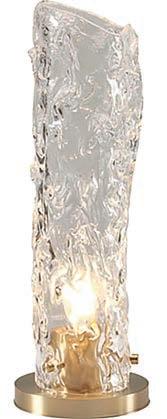



80 bocamag.com • • • • March 2024 FLORIDA STYLE & DESIGN PRODUCTS
Vega Sconce, to the trade, Palecek, palecek.com; Stella Sconce, to the trade, Baker Dania Beach, Dania Beach, bakerfurniture.com 3. Ova Sconce, $820, Arteriors, Designer’s Mark, Boca Raton, arteriorshome.com 4. Sanibel Sconce, $678, Serena & Lily, Palm Beach, serenaandlily.com
Vela Small Table Lamps, to the trade, Baker Dania Beach, Dania Beach, bakerfurniture.com 6. Cannes Gilded Table Lamp, $809, Hive, Palm Beach, hivepalmbeach.com; Petra Lamp, $550, Jayson Home, jaysonhome.com





Custom Made For You In The USA Proudly
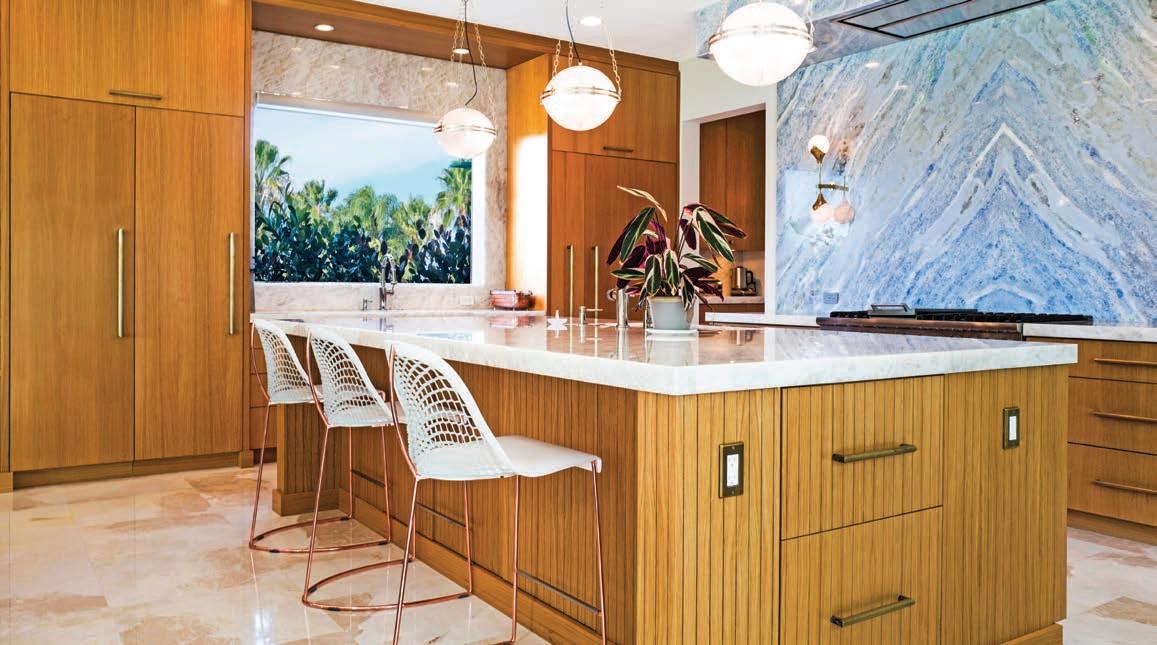
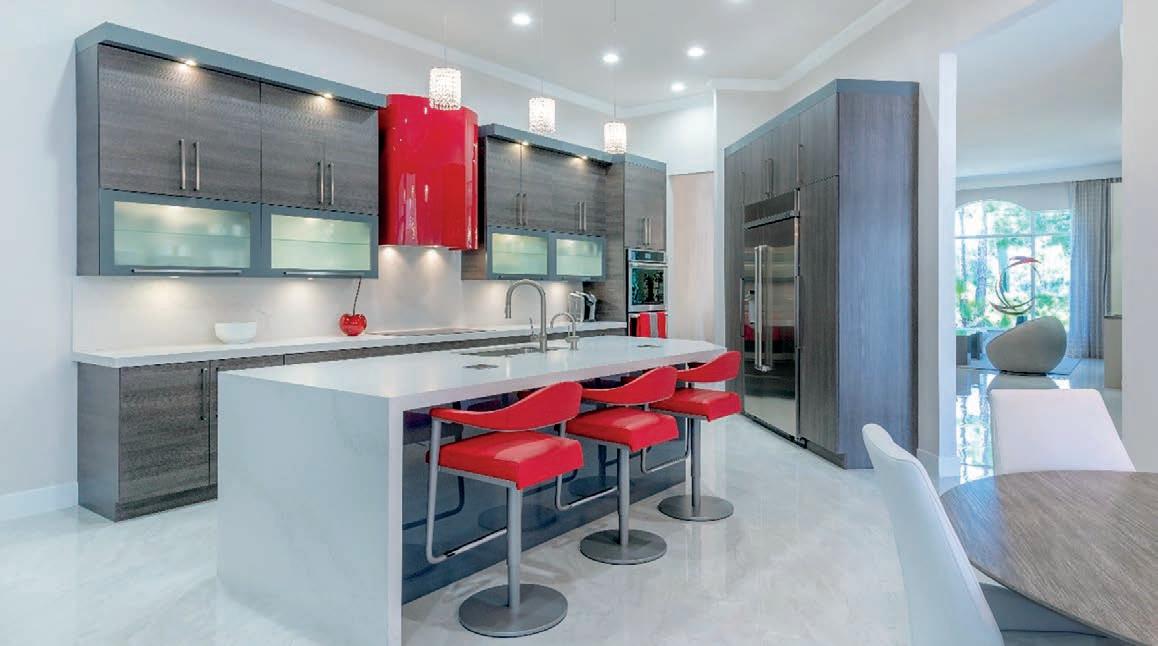
CUSTOM MANUFACTURING AND SHOWROOM LOCALLY 2880 NW Boca Raton Blvd., Suite 100, Boca Raton, FL 33431 561-750-3177 • canamcabinet.com




• Elegant Sun protection • Perfect for any Lani or back yard • Florida Hurricane rated • Contact for a Free Estimate SERVING ALL OF FLORIDA Boca Raton (561) 286-7060 envisionpergola.com WE BRING YOUR LIVING SPACE OUTDOORS! of Coral Springs & The Palm Beaches Owner Operated Since 1981 Casual Elegance... For Your Outdoor Living Specializing in One of The Best Selections of Quality Name Brand Furniture With Low Prices 7355 Sample Rd. Coral Springs 954.752.0161 1.4 miles west of 441/State Road 7 11268 Legacy Ave. Palm Beach Gardens 561.776.9980 Legacy Place Shopping Center Open Mon-Sat 10AM - 5:30PM • Sunday Noon to 5PM www.patioshoppes.com




















On Thursday, April 4th At Better Me Medical Spa & Wellness Center Discover The Latest Beauty & Wellness Hors d'oeuvres & beverages A chance to win GREAT prizes Special event pricing Mingle, make new friends (561) 759-7250 3011 Yamato Rd, #A13, Boca Raton, FL 33434 Info@BetterMeMedSpa.com Register To Win A $1,000 Gift Card SCAN QR CODE
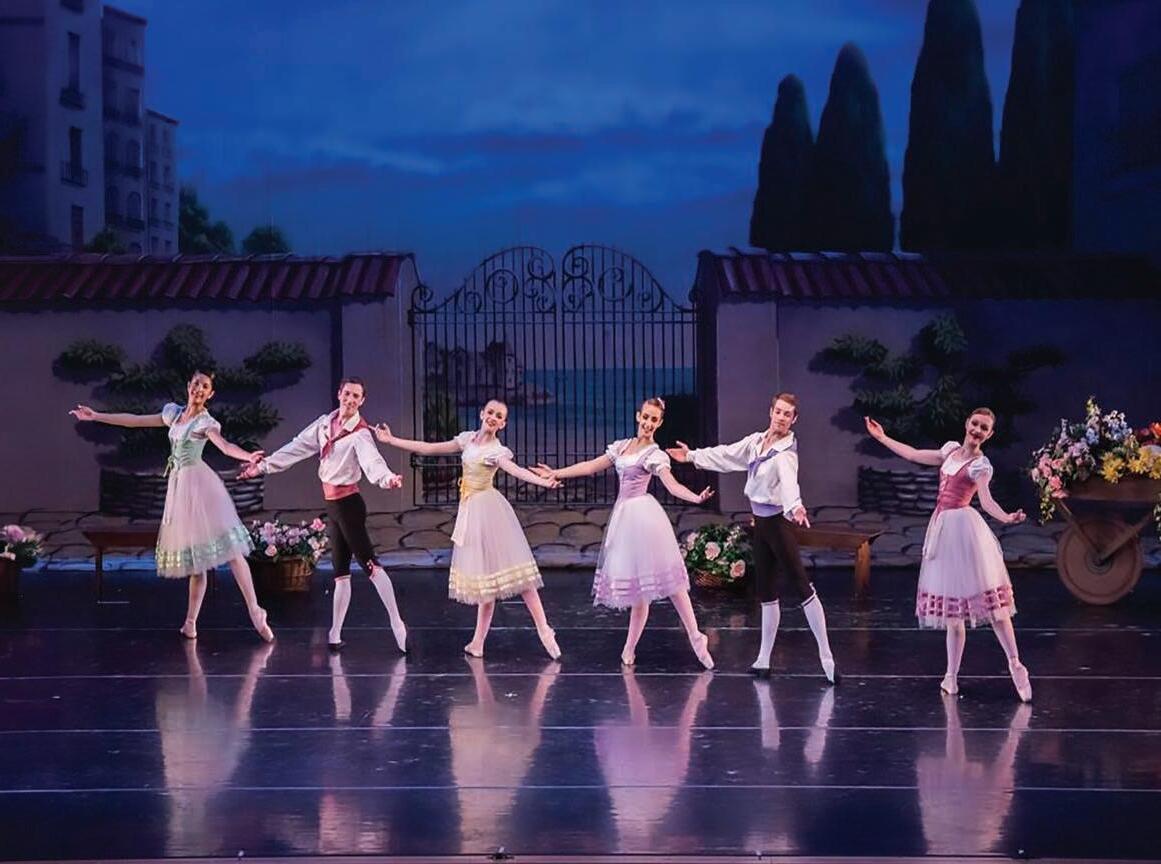



For Tickets 561.995.0709 bocaballet.org Venue: Countess de Hoernle Theatre at Spanish River High School 5100 Jog Road • Boca Raton, FL
artist subject to change. a mixed repertory concert part of the Cornelia T. Bailey Foundation 2023-24 Season of Dance Artistic Directors: Dan Guin & Jane Tyree Cornelia T. Bailey Foundation Chastain Charitable Foundation Boca Ballet Theatre presents Spring Menagerie April 20 – 7:30pm & April 21 – 2:00pm The Kettering Family Foundation Edith & Martin Stein Family Foundation
Guest


BACKSTAGE PASS Step Afrika!, performing March 11-12 at Kravis Center SANDI HORVAT PHOTOGRAPHY March 2024 • • • • bocamag.com 87
It’s not just, we can play Coltrane, we can play Beatles; no, they can blend. You can find the funk that’s inside the jazz; you can find the Latin that’s inside the rock.”
—Tom Regis
Delray Jazz Collective
This enterprising group is expanding the definition of America’s oldest musical art form
Written by JOHN THOMASON
The Delray Jazz Collective (DJC) started, like so many musical origin stories, as an informal jam session. It was the summer of 2022, and the entertainment world was gradually emerging from its pandemic hibernation. “Things were really slow. I was like, wow, I need some work,” recalls veteran pianist Peter Primamore. “So let me call [drummer] Tom [Regis], see what he’s doing. He said, ‘it’s slow for everybody, but I’ve been jamming with [saxophonist] Ben Sparrow, and maybe you’d like to come over.’”
These early sessions in Regis’ Delray Beach home inspired a project that continues to flourish. In its year and a half, the DJC, which eventually added bassist Hugh Burrows, has played the Kravis Center and landed monthly gigs at Northwood Music & Art Warehouse in West Palm Beach and Rudy’s Pub in Lake Worth Beach.
In November 2023, I caught the band’s debut performance at Boca Black Box (this has become a monthly residency too), a tribute to Joni Mitchell featuring new arrangements of the folksinger’s material. The concert traversed balladry to hard-driving jazz-rock fusion. The quartet’s take on “Blue” was funky and earthy; its “Woodstock” exploratory and adventurous, in the improvisatory tradition of John Coltrane’s small bands. Primamore’s animated keyboard playing—sometimes caressing the notes, other times stabbing at them a la Thelonious Monk—served as its own show within the show.
If a jazz concert dedicated to the work of an acoustic guitarist and singer-songwriter seems unorthodox, then the DJC has done its job. “We try to offer a course in music appreciation and history,” Regis said between songs, and for this big-eared group, that means all kinds of music.
Why is the word “collective” important in your name, as opposed to “band?”
Primamore: Collective implies cooperative. … We had these four guys from varied backgrounds coming together and creating music together and seeing where that would go, without being constricted to the four of us all the time. We can bring other people in and out and create even more unique stuff.
Your official logo has Delray Jazz Collective at the center, but countless other genres—rock, salsa, folk, country— surrounding it. Tell us about that.
Regis: That just happens to be what we were born into. We were deeply exposed to classical music, jazz, the Beatles, the Rolling Stones, Allman Brothers, blues, R&B, Latin music. Not every generation was able to get deep into that stuff. Somehow we bring it to the forefront. That’s part of the responsibility and beauty of what we’re doing.
How do you communicate, musically, onstage?
Sparrow: I just try to look at the other musicians. And if I’m really looking at them, it brings my attention to what they’re playing, so that whatever I play can be complimentary to whatever they’re playing. For me,
that’s where spontaneity can happen, because if I’m in the moment with what they’re playing, then I can try to figure out, in the moment, a way to respond musically.
Peter, you seem to be going on a journey while you’re improvising. Does the music take you to unexpected places?
Primamore: What I’m trying to do, without sounding oobie-doobie, is I’m trying to destroy thought when I play. … I want to find a place of pure flow, where it just happens, and the analytics behind what I might be doing are not present at that moment. … I want to be in a place of pure spiritual experience and feeling. That manifests itself physically; sometimes I probably look a little ridiculous here and there.
Why has jazz become such a niche in music, and how do you expand its audience?
Regis: We’re doing jazz, but we’re presenting it in a way that does entertain the audience. There’s Monk’s famous quote when asked what are the three most important things in jazz: swing, swing, swing. Everything can just groove like crazy—rock music, dance music. And we don’t have to try to do that; it just happens, and that’s the beauty of this chemistry of people that we have here.
88 bocamag.com • • • • March 2024 BACKSTAGE PASS TAKE 5
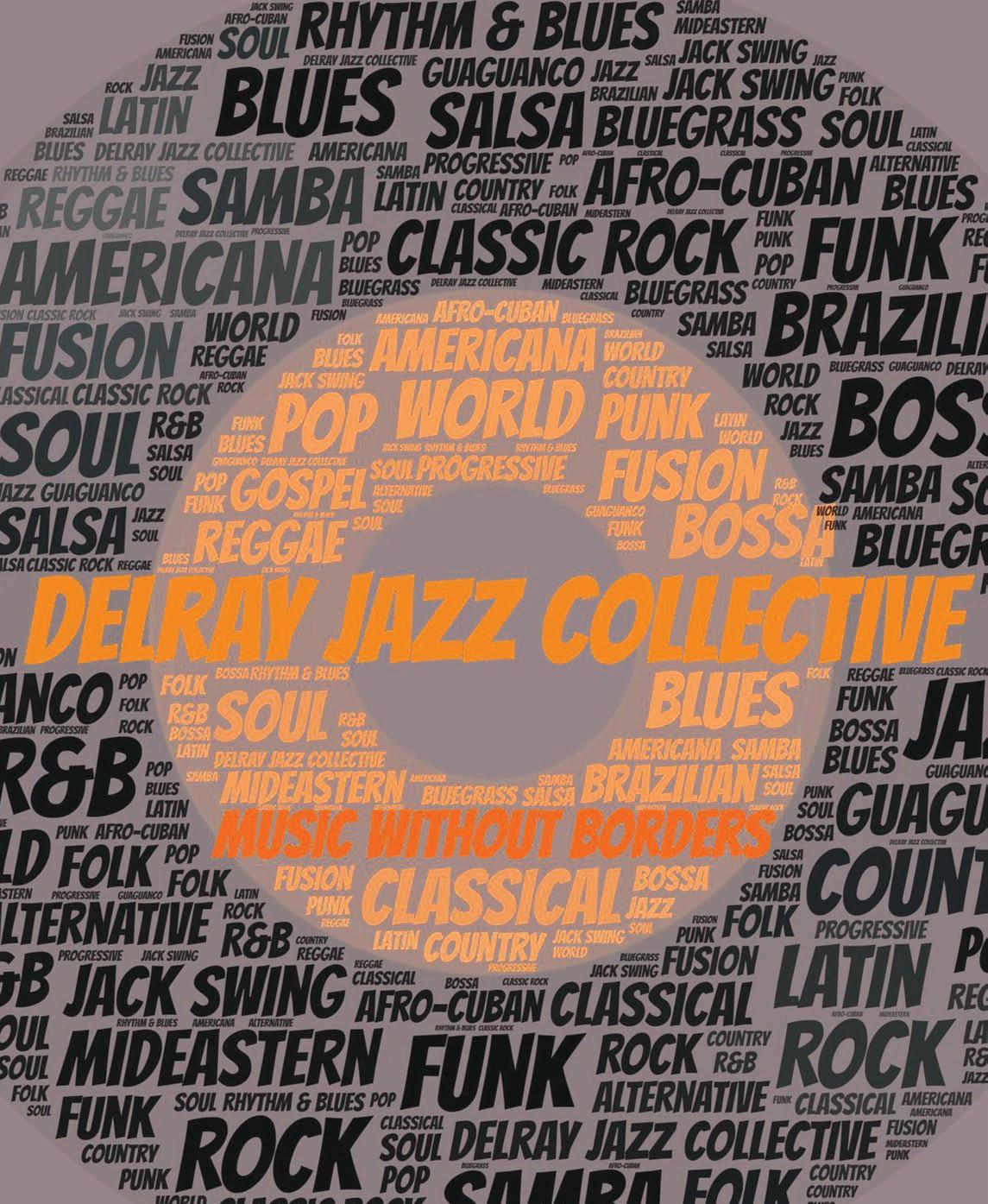
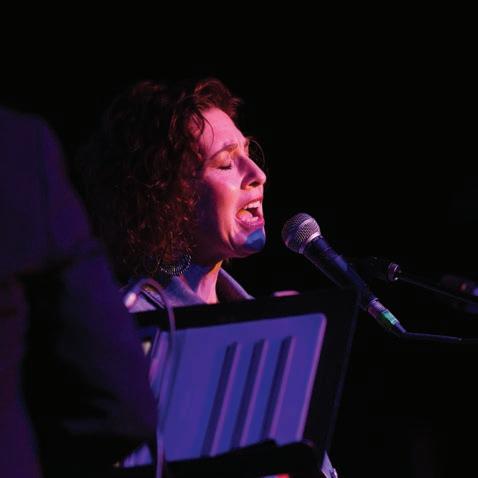

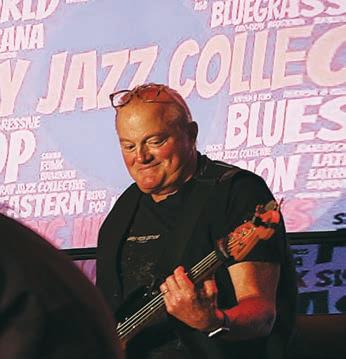
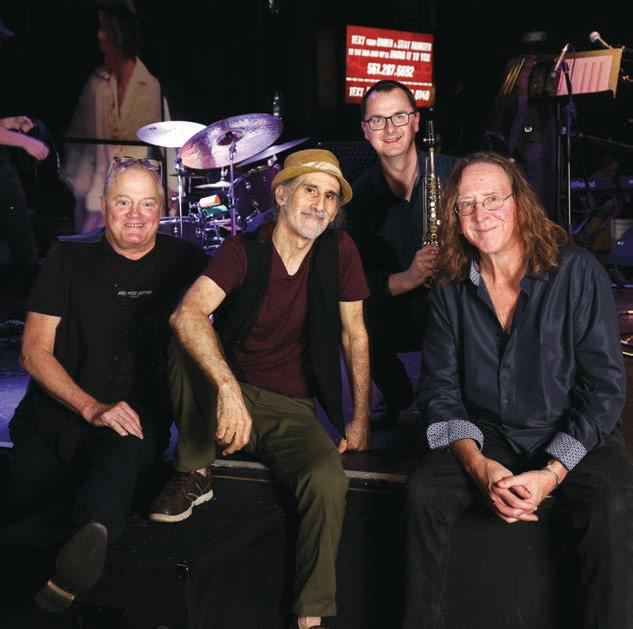
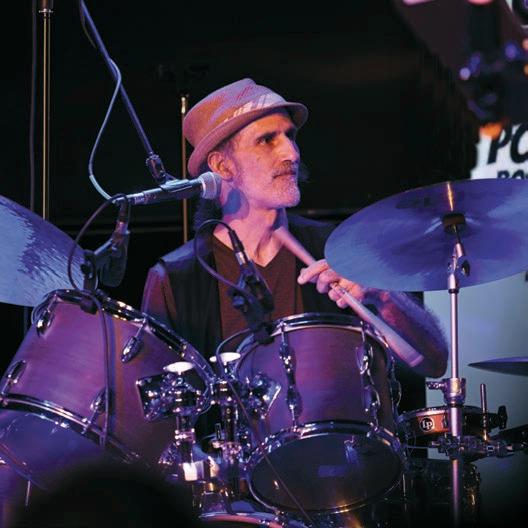
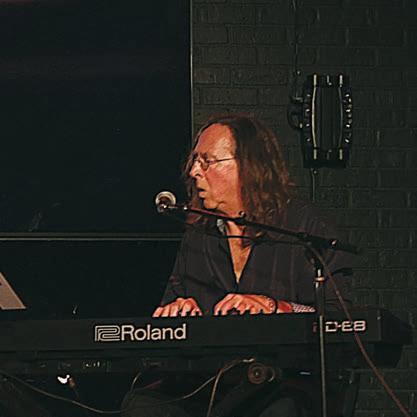
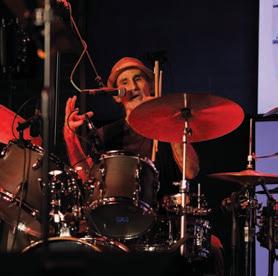
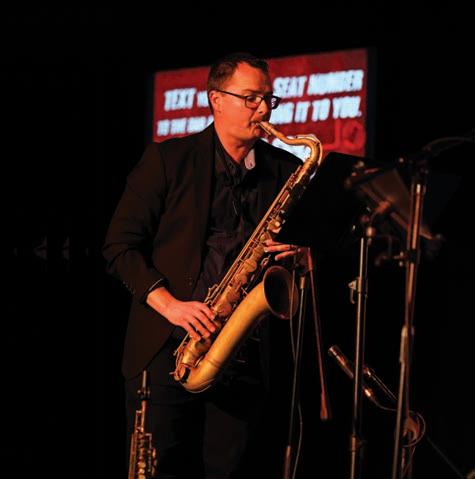
AARON BRISTOL
Toprightphoto, theDelrayJazzCollective’score quartet,fromleft:bassistHughBurrows,drummer TomRegis,saxophonistBenSparrowandpianist PeterPrimamore,plusphotosofthebandin actionatBocaBlackBox
March 2024
Through-March 24:
“Carousel” at the Wick Theatre, 7901 N. Federal Highway, Boca Raton; various show times; $94; 561/995-2333, thewick.org. Rodgers and Hammerstein’s second collaboration is one of their most enduring musicals, with its mix of imaginative choreography, carnival ambience and impeccable songcraft, centering on a carousel barker whose love affair with a local millworker threatens both of their jobs.
Through April 4:
“Stories on the Planet: Jewelry of Asagi Maeda” at Morikami Museum and Japanese Gardens, 4000 Morikami Park Road, Delray Beach; $9-$15 museum admission; 561/9950233, morikami.org. Maeda is a metalsmith whose creations often resemble Rube Goldberg structures, apartment interiors, even entire cityscapes, while doubling as rings, necklaces and earrings. It’s worth bringing a magnifying glass to examine every detail of her wearable sculptures.

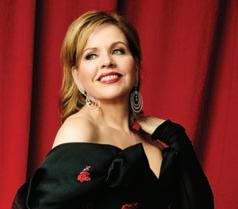
Through April 14:
“ Smoke and Mirrors: Magical Thinking in Contemporary Art” at Boca Raton Museum of Art, 501 Plaza Real, Boca Raton; $12-$16 museum admission; 561/392-2500, bocamuseum. org. The museum’s high-season exhibition explores magical thinking in dual contexts—as the fodder for ostensibly innocent stage illusionists and as the pernicious calling card of professional charlatans— asking us, rightly, to question everything.
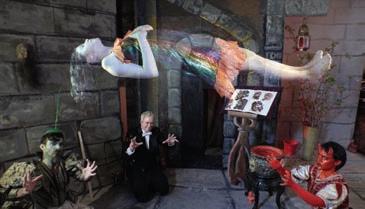
March 2:
“Jaws” with Live Orchestra at Mizner Park Amphitheater, 590 Plaza Real, Boca Raton; 7:30 p.m.; $20-$115; 561/757-4762, festivalboca.org. For the first time ever, Steven Spielberg’s pioneering summer movie blockbuster will screen with live orchestral accompaniment. Festival Orchestra Boca, composed of top-shelf South Florida musicians, will perform John Williams’ Academy Award-winning score, complete with its iconic two-note ostinato representing the shark.
March 3:
Renée Fleming at Mizner Park Amphitheater, 590 Plaza Real, Boca Raton; 7 p.m.; $40-$250; 561/757-4762, festivalboca. org. In her only South Florida performance this season, the five-time Grammy-winning soprano will perform a recital as one of Festival of the Arts Boca’s signature headliners. One of the few international eminences of opera and musical theatre alike, Fleming’s roles include “The Magic Flute,” “Carmen” and, most recently, “Nixon in China.”
March 5:
Mandy Patinkin at Kravis Center, 701 Okeechobee Blvd., West Palm Beach; 7:30 p.m.; $35-$115; 561/832-7469, kravis.org. Patinkin, a Tony- and Emmy-winning triple-threat talent whose range includes Sondheim musicals, adventure films and prestige dramas like “Homeland,” performs his solo cabaret show “Being Alive” accompanied by Juilliard-trained pianist Adam Ben-David.
90 bocamag.com • • • • March 2024 BACKSTAGE PASS CALENDAR
Renee Fleming “Smoke and Mirrors”
“Jaws” with Live Orchestra
ANDREW ECCLES/DECCA
Through April 14:
“Alphonse Mucha: Master of Art Nouveau” at Flagler Museum, 1 Whitehall Way, Palm Beach; $26 museum admission; 561/655-2833, flaglermuseum.us. Born in what is now the Czech Republic, artist Mucha moved to Paris in the late 1800s and quickly became a figurehead of the burgeoning art nouveau movement. This revealing exhibition showcases his mastery of the sinuous, harmonious style, as well as the heady milieu from which it sprung.

March 6:
Nicholas Thompson: The Wired Future at Mizner Park Amphitheater, 590 Plaza Real, Boca Raton; 7 p.m.; $40; 561/757-4762, festivalboca.org. Thompson, CEO of The Atlantic and former editor-in-chief of Wired magazine, discusses the promises and pitfalls of artificial intelligence, addressing why good journalism and vigilance are required in the age of ChatGPT and smart everything. A Q&A with the audience will follow.
Through April 28:
“Nora Maité Nieves: Clouds in the Expanded Field” at Norton Museum of Art, 1450 S. Dixie Highway, West Palm Beach; $15-$18 museum admission; 561/832-5196, norton.org. Nieves, a New York resident by way of Puerto Rico, is the Norton’s 20232024 Artist in Residence. Her innovative, multidisciplinary work consists largely of abstracted visual motifs of architectural details, and includes paintings, sculptures and video, some of which will be created during her Norton residency.
Through May:
“Reimagining Palm Beach” at Cornell Art Museum, 51 N. Swinton Ave., Delray Beach; free, but donations accepted; 561/654-2220, downtowndelraybeach.com. Painter Serge Strosberg focuses his distinctive and eye-popping style—a hyperreal combination of expressionism and naturalism—on the titans and eccentrics who helped transform swampland into an upscale playground, including Solomon Spady, Henry Flagler and Addison Mizner.

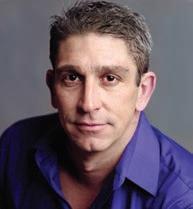
March 1:
“Henry Mancini at 100” at Mizner Park Amphitheater, 590 Plaza Real, Boca Raton; 7:30 p.m.; $30-$115; 561/757-4762, festivalboca. org. Festival of the Arts Boca opens with a big-band, multimedia salute to the composer of “Moon River,” the “Pink Panther” theme and other timeless works from the American Songbook. The composer’s Grammy-nominated daughter, vocalist Monica Mancini, will join the Frost School of Music’s Henry Mancini Institute Orchestra.

March 6:
Simon Phillips Protocol at Funky Biscuit, 303 S.E. Mizner Blvd., Boca Raton; 7 p.m.; $45-$55; 561/3952929, funkybiscuit.com. The longtime drummer for Toto, Phillips’ impressive resume includes session work behind the kit for Jeff Beck, Tears for Fears, Judas Priest and the Who. His occasional project Simon Phillips Protocol, now five albums deep over 35 years, finds the eclectic bandleader combining his bebop roots with a rock-forward jazz fusion approach.
March 7:
Richard Blanco at Mizner Park Amphitheater, 590 Plaza Real, Boca Raton; 7 p.m.; $40; 561/757-4762, festivalboca.org. Prizewinning poet Blanco broke several ceilings when he performed his work at the second presidential inauguration of Barack Obama, becoming the first gay person, first Latinx person and first immigrant to do so. In this appearance, the Madrid-born Miamian will read from his latest collection, Homeland of My Body
March 8:
Barcelona Flamenco Ballet: “Luxuria” at Mizner Park Amphitheater, 590 Plaza Real, Boca Raton; 7:30 p.m.; $30-$115; 561/757-4762, festivalboca.org. Proud ambassadors of Catalan flamenco dance, the choreographers and performers of “Luxuria” blend the traditions of flamenco with classic and modern jazz music and a narrative pulse—in this case the movement-filled story of an affluent playboy who falls in love with a rebellious and independent woman who may well be his savior.
March 2024 • • • • bocamag.com 91
Simon Phillips
“Henry Mancini at 100”
Nicholas Thompson
Richard Blanco
EVA SUTTER
March 2024
March 8:
Ulysses Owens Jr. & Generation Y at Arts Garage, 94 N.E. Second Ave., Delray Beach; 8 p.m.; $45-$50; 561/450-6357, artsgarage.org. A complex and fiery drummer, bandleader and educator in the style of Art Blakey, Owens has laid the rhythmic foundation for such luminaries as Wynton Marsalis, Christian McBride and Joey Alexander. On this tour, he leads his own outfit, a group of “young lions” dedicated to preserving and expanding the jazz tradition.

March 13-24:
“Visiting Mr. Green” at Levis JCC, 21050 95th Ave. S., Boca Raton; various show times; $25-$40; 561/558-2520, levisjcc.org. In this touching dramedy by playwright Jeff Baron— which has been performed in 49 countries and translated into 23 languages—a young corporate executive nearly hits an elderly Manhattan widower with his car, and his reckless-driving sentence includes weekly visits to the senior’s derelict apartment, where they reopen old wounds and strike an unlikely bond.
March 9:
An Evening With Isaac Mizrahi at Mizner Park Amphitheater, 590 Plaza Real, Boca Raton; 7:30 p.m.; $30-$115; 561/7574762, festivalboca.org. Well known as a clothing designer and judge of “Project Runway All Stars,” this multihyphenate entertainer’s range extends beyond fashion. A gifted singer, comedian and storyteller, Mizrahi will express all three in this one-man work of performance art, in which he’ll interpret tunes by Madonna, Billie Eilish, Cole Porter and more.
March 10:
“Black Angels Over Tuskegee” at Arts Garage, 94 N.E. Second Ave., Delray Beach; 7 p.m.; $50; 561/450-6357, artsgarage. org. Writer and director Layon Gray’s acclaimed and inventively staged historical drama follows six members of the pioneering Tuskegee Airmen, a group of award-winning fighter pilots who broke color barriers in World War II, despite suffering the indignities of discrimination and segregation in the Jim Crow-era South.

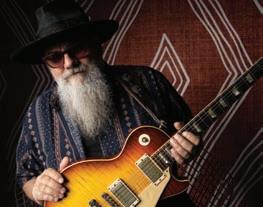
March 15-16:
The Bronx Wanderers at the Studio at Mizner Park, 201 Plaza Real, Boca Raton; 7:30 p.m.; $50-$60; 561/203-3742, thestudioatmiznerpark.com. This father-and-sons family act has been entertaining audiences, and winning awards, from its Las Vegas residency since 2016. The Four Seasons-style vocal performances feature music-industry anecdotes and tunes from Dion, Billy Joel, Tony Orlando and others.
March 22:
Jimmy Vivino Band at Arts Garage, 94 N.E. Second Ave., Delray Beach; 8 p.m.; $45-$50; 561/450-6357, artsgarage.org. Impressively bearded blues guitarist Vivino spent 26 years as Conan O’Brien’s dedicated musical director, guitarist and bandleader. It was the most public facet of a nearly five-decade career that has included collaborations with Bob Weir, Keith Richards, Elvis Costello and a laundry list of others. He brings his stellar blues-rock trio to Arts Garage.
92 bocamag.com • • • • March 2024 BACKSTAGE PASS CALENDAR
“Black Angels Over Tuskegee”
Jimmy Vivino
Isaac Mizrahi
GREGG RICHARDS
March 10:
Pink Martini with China Forbes at Kravis Center, 701 Okeechobee Blvd., West Palm Beach; 7:30 p.m.; $35$115; 561/832-7469, kravis. org. China Forbes sounds like a femme fatale in a pulp novel, but she follows a classier muse, singing with Pink Martini, the self-described “little orchestra” founded in Oregon in 1994. The 13-piece symphony performs music in 22 languages and traverses pop, jazz, lounge music, Latin and classical.
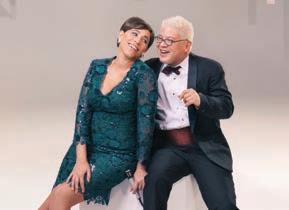
March 11-12:
Step Afrika! at Kravis Center, 701 Okeechobee Blvd., West Palm Beach; 7:30 p.m.; $35$45; 561/832-7469, kravis. org. Celebrating its 30th anniversary this year, the dance troupe Step Afrika! will honor this achievement by returning to its roots: performing in the African-American “stepping” tradition with South African gumboot dance, while adding its own percussive instruments for a rousing polyrhythmic drum symphony.

March 23-24:
Miami City Ballet: Spring Mix III at Kravis Center, 701 Okeechobee Blvd., West Palm Beach; 2 and 7:30 p.m. Saturday, 1 p.m. Sunday; $40$229; 561/832-7469, kravis. org. The centerpiece of MCB’s spring program is Balanchine’s “Agon,” a demandingly athletic work inspired by selections from a 17th century French dance manual, and set to a majestic and intense Igor Stravinsky score. The program also features choreographer Alonzo King’s “Following the Subtle Current Upstream,” and a world premiere from Miami choreographer Ricardo Amarante.
March 12-17:
“TINA—The Tina Turner Musical” at Kravis Center, 701 Okeechobee Blvd., West Palm Beach; various show times; $34-$119; 561/832-7469, kravis.org. This jukebox musical charts the tumultuous journey of Tennessee-born Anna Mae Bullock, later christened Tina Turner by Ike Turner, the showman and bandleader who discovered her, married her and abused her. The songs are a marvelous assemblage of 20th century rock and soul, including “Let’s Stay Together,” “Proud Mary” and “Private Dancer.”

March 24:
Chris Duarte at Funky Biscuit, 303 S.E. Mizner Blvd., Boca Raton; 7 p.m.; $30-$35; 561/395-2929, funkybiscuit. com. Establishing himself in the cutthroat music capital of Austin, Texas, blues rocker Duarte has built a dedicated underground following for his ferocious style of playing, which he dubs “punk blues,” to the tune of some 150 dates a year. The veteran protégé of Stevie Ray Vaughan is supporting his 16th LP, 2023’s Ain’t Giving Up
March 27:
Fred Astaire West Palm Beach: “Dance Fantasy” at Society of the Four Arts, 102 Four Arts Plaza, Palm Beach; 7:30 p.m.; $40; 561/6557227, fourarts.org. Ten performers from this gold standard of classical dance in the Palm Beaches present an illuminating journey through the many corners of ballroom and Latin dancing, stepping and swaying through waltzes, tangos, foxtrots and more under the direction and choreography of Mykhailo and Anastasia Azarov.
March 13:
Pierre Bensusan at Boca Black Box, 8221 Glades Road, Suite 10, Boca Raton; 8 p.m. Fri., 7 p.m. Sat.; $37.50-$42.50; 561/4839036, bocablackbox.com. A virtuoso of the acoustic guitar, French-Algerian musician Bensusan has established his bona fides as a global ambassador of song, combining Celtic, folk, new age, chamber jazz and classical into a style all his own— and earning praise from guitarists as varied as Mark Knopfler, Tommy Emmanuel and Larry Coryell.
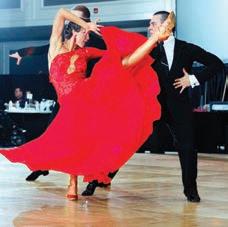
March 29-April 14:
“Death of a Salesman” at Palm Beach Dramaworks, 201 Clematis St., West Palm Beach; $89; 561/514-4042, palmbeachdramaworks.org. Arthur Miller’s seminal tragedy plumbs the fractured consciousness of traveling salesman Willy Loman, the ultimate unreliable narrator, who is increasingly unable to separate his illusions and memories with contemporaneous events. A blistering account of the withering American Dream, the play won a Tony and Pulitzer upon its 1949 debut.
March 2024 • • • • bocamag.com 93
Pink Martini Step Afrika!
Fred Astaire West Palm Beach “TINA—The Tina Turner Musical”
NORTON CENTER FOR THE ARTS MANUEL HARLAN

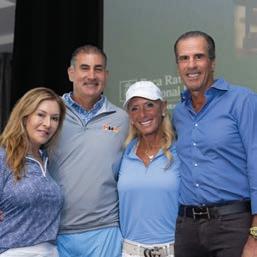
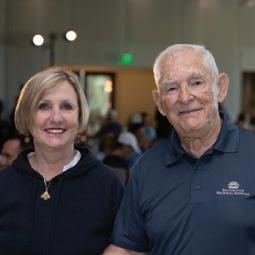
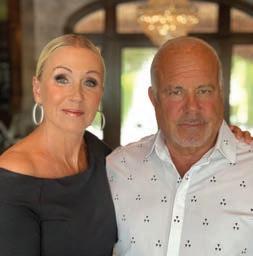
Join us on the Links to Celebrate The 25th Anniversary of Benefiting the Ron and Kathy Assaf Center for Excellence in Nursing On Three Championship Courses at Boca West Country Club Monday, April 15, 2024 For more information, please contact Terrie Mooney at 561-955-6634 or terrie.mooney@baptisthealth.net
Amy and David Eisen
Amy and David Ross Golf Chairs
Foundation Tournament
Pamela and Rob Sands Sands Family
Sponsor
Exclusive Media Sponsor Tournament Sponsor
Kathy and Ron Assaf Honorary Golf Chairs
Medical SPOTL GHT
Joseph Purita, MD
Medical
Director
& Regenerative Medicine Pioneer
PUR-FORM
3600 FAU Boulevard, #101 Boca Raton, FL 33431
561-368-1880 purformhealth.com
Your journey to find a healthier, stronger and more vibrant version of yourself starts at PUR-FORM, under the direction of Joseph Purita, MD, a pioneer of orthopedic regenerative cell and platelet-rich plasma (PRP) treatments.
“We’re not just a medical spa,” Dr. Purita points out. “We’re a medical and wellness center. We devote ourselves to the study of science and how we can improve people’s health and looks with a comprehensive approach.”
More specifically, PUR-FORM activates the anti-aging pathways in the body that lead to health and increase your health span. With a cutting-edge medley of treatments, he and his staff eliminate certain toxins in the body and improve the health of their patients from a mitochondrial level.
“Other facilities may just have the capability to do one—they don’t have the ability and knowledge to make these modalities work more efficiently like we do,” Dr. Purita explains.
Empowering patients with the first-class tools and cutting-edge treatments they need to function at their highest level, his team of experts works with them to personalize their whole-body health experience.
“For example, we fight chronic inflammation, brain fog, fatigue and a host of other conditions with the power of EB02, a highvolume blood filtration and ozone therapy protocol,” says Dr. Purita. “We do a lot of cellular therapy for arthritic joints. Even though I’m also an orthopedic surgeon, these treatments are an alternative to surgery.”
The staff at PUR-FORM—which includes an aestheticpracticing physician’s assistant—takes seriously the credo, “Cells, not doctors, heal patients.” Dr. Purita enthusiastically adds: “We don’t just practice regenerative medicine; we define and teach it.”
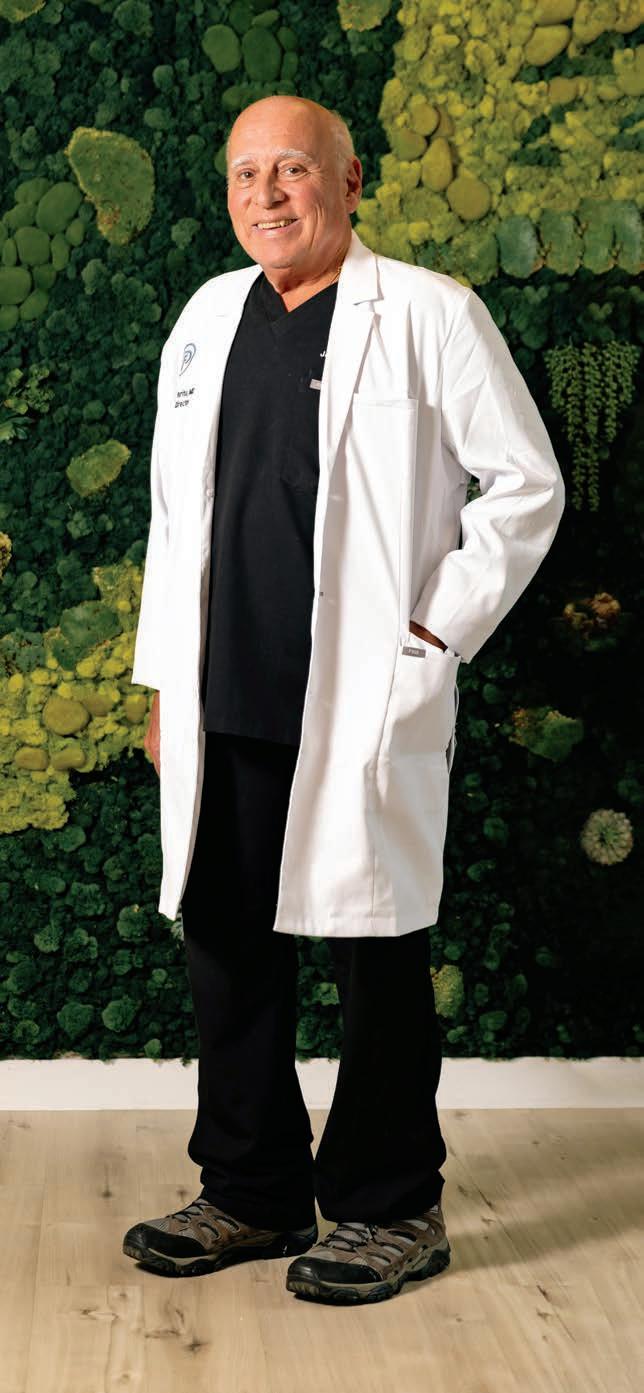
SPONSORED CONTENT



Where Function Meets Form Clinical & Cosmetic Dermatology Board-Certified Dermatologists • General Dermatology • Skin Cancer Surgery • Comprehensive Cosmetic and Laser Center • Full Facial Aesthetics • Spa Treatments 561.750.0544 www.rendoncenter.com 1001 NW 13th St, Suite 100, Boca Raton, FL 33486 At Rendon Center our team of Dermatologists combine all aspects of their experience to deliver an unmatched level of comprehensive care. By marrying years of clinical knowledge and artistic elegance, our seasoned group of skin experts provide the the best solution for the dermatologic needs of Boca Raton every day.
Lisa Tack, PA-C
Christina Smitley, APRN, FNP-C
Chere Lucas Anthony, MD
Ann Mazor Reed, DO
2024 2024

From passions turned into thriving professions, to creative outlets and corporate callings, these BEST of Women in Business make a living doing what matters most to them.
Get to know a bit about this successful bevvy of the BEST at what they do, and how their expertise and excellent work product may just be your BEST new resource!
sponsored content
THE BEST OF WOMEN IN BUSINESS
Jan Patterson OWNER
BOCA RATON BRIDAL
Jan Patterson said “I do” to the bridal business when an opportunity arose to buy an existing boutique. Her background included a fashion marketing degree and years of corporate management work for Target and Coke. Ready for a change, she went into small retail and found the perfect marriage of her skill sets.
After 19 years as owner of Boca Raton Bridal boutique, she knows how to make brides happy, heard and understood each step of the process. “I’ve seen and done it all,” she laughs, and attributes the secret to her success as the largest bridal boutique in Florida to being there for her clients, 24/7.
With thousands of designer gowns and accessories from around the world to choose from, women are immersed in a wonderland of possibilities. The Boca Raton location specializes in couture designer collections, and the smaller Coral Springs location features a more moderate selection and price point.
Jan and her expert team work harmoniously with the brides to be, guiding them through the realization of their dreams. “My staff is not on commission, so there is no pressure to sell anything that doesn’t make sense or compliment the bride. We create the feeling and experience to go with the perfect gown,” she explains.
“I love what I do, and I truly care. I am invested in my brides—to answer questions, hold their hands, find solutions to whatever issues arise and share in their memories for years to come.”
561-447-6541
gowns@bocaratonbridal.com
 MICHAEL CONNOR PHOTOGRAPHY
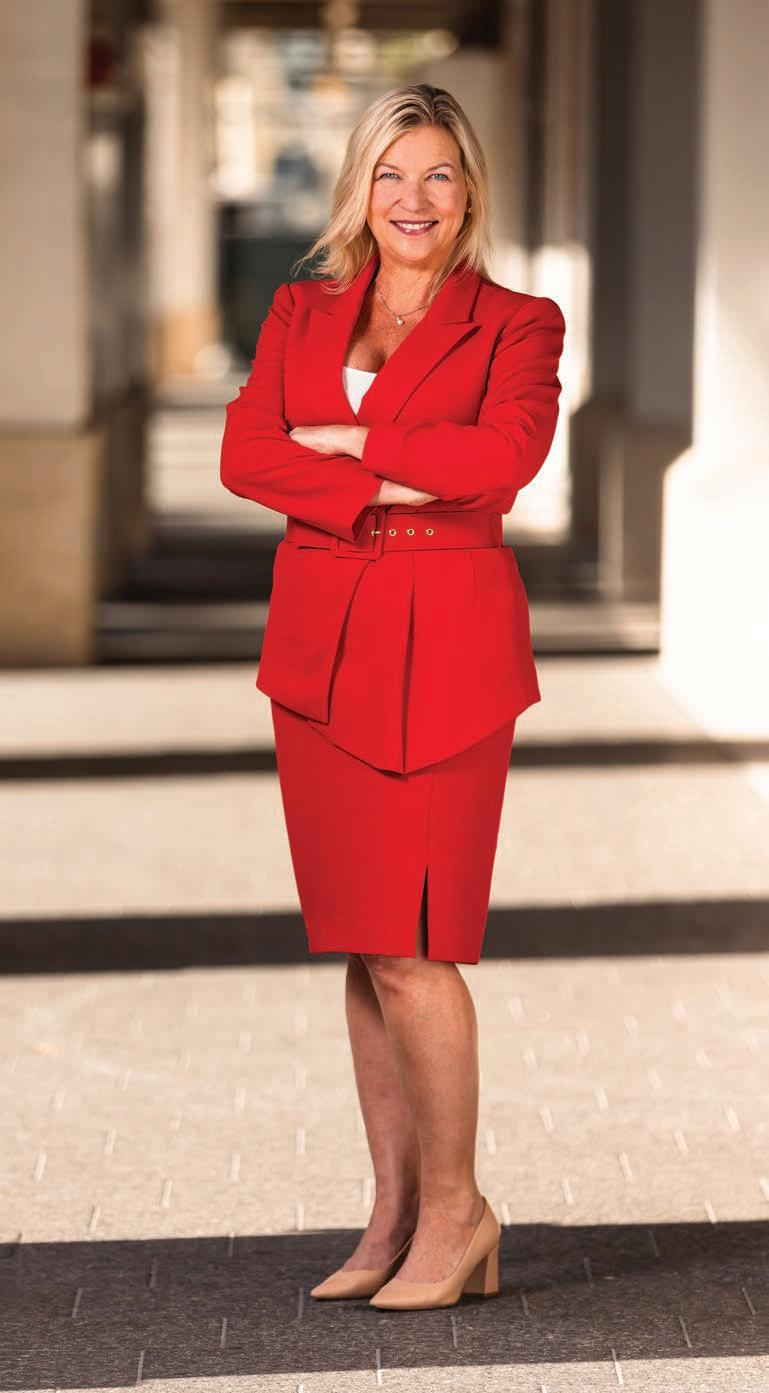 Laurie George, Ph.D
PRESIDENT & CEO
Laurie George, Ph.D
PRESIDENT & CEO
UNITED WAY OF PALM BEACH COUNTY
Laurie George was the first female elected to the role of President and CEO of United Way of Palm Beach County in 2013. Known for her careerspanning history of nonprofit organization management, she is highly respected for her competency, collaboration and thoughtful ability to lead with kindness and inspiration. A strong business development professional, she is skilled in nonprofit organizations, program evaluation, volunteer management and public engagement.
Across the footprint of Palm Beach County, from the Glades to Jupiter and down to the Boca Raton area, Dr. George studied what the needs were in those different pockets for necessities including, food, shelter, education and access to health care.
“We are fortunate to have generous corporations and local companies who are committed to their social responsibility goals, so it’s really about what we see as the needs in the community, what it is that the company is looking to accomplish, and how we marry those together. We don’t provide a direct service. We’re more of the facilitator who finds the different nonprofit agencies that can facilitate the programs,” she explains.
“After earning a Ph.D. focused on Child Development & Family Relationships from the University of Texas at Austin, I thought I would end up teaching at the university level, but once I saw what existed in the nonprofit community, I really fell in love with it,” says Dr. George, who describes her day-to-day responsibilities at United Way of Palm Beach County as an opportunity to live life with an absolute sense of purpose, making the world a better place.
WOMEN IN
THE BEST OF
BUSINESS
MICHAEL CONNOR PHOTOGRAPHY
561-375-6600 UnitedWayPBC.org
Elizabeth M. Bennett, MBA
PRINCIPAL AND CERTIFIED FINANCIAL PLANNER™
INTERCOASTAL WEALTH PLANNING
Certified Financial Planner™ and Certified Financial Fiduciary Beth Bennett advises that women must be empowered and involved in their financial plans and understand where all of their assets are and what they are used for. As a mother and a woman who has been through a divorce, Bennett is constantly working toward her own financial future. She advises her clients to do the same, and be in control of their finances, not leaving that responsibility to someone else.
“It is imperative to know and understand the types of investments that you have, the log-ins for your accounts, and to share that information with your spouse/significant other, if applicable. Being aware of your spending habits and where all of your money is going, whether you are single or married, is also very important,” she says.
In the midst of tax season, Bennett shares a few helpful hints: “Make sure that you’re taking advantage of all of the deductible retirement account contributions that you can make, and remember that up until April 1, you can make a prior year contribution to your IRA or your Roth IRA, so don’t miss out on that opportunity.”
Bennett adds, “In the new year, and always, it’s important to keep your financial house in order with someone you can trust. I am here for you.”
561.210.7339
intercoastalwealth.com
Securities
WOMEN IN BUSINESS JASON NUTTLE
THE BEST OF
offered through Registered Representatives of Cambridge Investment Research, Inc., a broker dealer, member FINRA/SIPC. Advisory, Insurance, and Tax Services offered through Bay Financial Planning and Tax Services, DBA Intercoastal Wealth Planning LLC, a Registered Investment Adviser. Cambridge and Bay Financial Planning and Tax Services, LLC are not affiliated.
Aileen Grossmann
BROKER & OWNER LOTUS REALTY
Aileen Grossmann’s real estate clients rave about her firstclass service combined with her extensive knowledge and constant communication throughout every transaction. Through her comprehensive knowledge and experience as a specialist in the acquisition, marketing and negotiation of residential and luxury homes, co-ops and condominiums, Grossmann’s expertise and accurate assessment have become her calling card and competitive edge.
Grossmann attributes her upbeat energy and get-it-done work ethic to her New York roots, where she honed her skills in the television industry before embarking on a real estate career. From making her mark in the Big Apple at the beginning of her career in 1997, to establishing her own Boca Raton firm, Lotus Realty, in 2017, Grossmann has been committed to providing the most comprehensive and distinguished real estate services.
Specializing in Palm Beach, Broward and Miami-Dade counties, she excels at facilitating a smooth sale and financially rewarding experience for her clients. As she proves time and again, her understanding of the current regional trends provides her clients with excellent opportunities, whether they are interested in a small one-bedroom or a $25 million luxury property.
“I consider myself a matchmaker for real estate. I love exploring every kind of property, discovering exactly what my clients are looking for and making the perfect connection for them. Now, I just need to do that for my dating life,” she laughs.
917-750-7580
aileen@lotusrealtyfl.com
THE BEST OF WOMEN IN BUSINESS
MICHAEL CONNOR PHOTOGRAPHY
Dr. Janet Allenby FOUNDER & OWNER
ALLENBY COSMETIC DERMATOLOGY & BODYSQUAD
Dr. Janet Allenby’s journey in dermatology began with a deep appreciation for the aesthetic aspects of the field. Her passion for every facet of dermatology, particularly its ability to bring happiness through aesthetics, set her on a unique path. With more than 30 years of experience and recognition on a global scale, Dr. Allenby’s innate artistry has set apart as a true innovative leader in cosmetic dermatology.
Driven by a problem-solving mindset, she excels in guiding patients to optimal outcomes, whether it involves correcting previous procedures or helping them discover their best selves. Dr. Allenby views each patient’s concern as a puzzle to solve, exploring various approaches for the most effective solutions.
Dr. Allenby takes her patients on an aesthetic journey. She offers not just treatments but also the tools and candid advice needed for graceful aging—both physically and mentally. Included in her scope of offerings is BodySquad, which is wholly dedicated to non-invasive BodySculpting services including CoolSculpting, CoolTone, Morpheus8, and Resonic. From permanently reducing stubborn pockets of fat to building muscle, Allenby’s specialists are adeptly trained to help patients reach their goals without resorting to surgery or enduring downtime. The clinic is especially excited about its newest offerings, semaglutide and tirzepatide, both safe and effective weight loss solutions.
Staying at the forefront of her field, Dr. Allenby’s commitment to continuous learning takes her around the world, where she gains insights from areas deeply immersed in aesthetics and forward-thinking practices. Her philosophy reflects a holistic approach to patient care, emphasizing the importance of exploring diverse perspectives for the benefit of her patients.
561-499-0299
AllenbyDermatology.com

THE BEST OF WOMEN IN BUSINESS
MICHAEL CONNOR PHOTOGRAPHY
Andrea Karabatsos
OWNER & DESIGNER JENNA STUDIO
“
Time surely flies when you’re having fun … and making dreams come true,” says Andrea Karabatsos, as she prepares to celebrate the one-year anniversary of her elegant gown and special occasion emporium, Jenna Studio in Town Center Boca Raton. After 25 years of designing for her discerning clientele in Quebec, clients worldwide have found their new destination for the fashion experience of a lifetime.
Andrea’s welcoming aura and aweinspiring physique and sophistication has every woman “at hello,” as they are warmly greeted upon entering her magical boutique. Clients quickly feel at ease, sharing the intricate details of their dream gowns, and all the reasons why finding that perfect look, up until now, has been daunting. Without pressure or hesitation, the ladies are instantly engaged with Andrea in a fashion therapy session. To complement her phenomenal artistic eye, Andrea is blessed with the power, perception and inspiration to guide her clients. They respond gratefully, and the design process begins.
The choices are endless, crafted with fine silk fabrics, boned and lined for a flawless modern and elegant fit, and with embellishments ranging from crystals and pearls to dimensional petals and ostrich feathers. From the drawing board to the fitting room, and off to Canada where Andrea’s dedicated seamstresses hand-assemble the garments, the anticipation mounts until the final fitting sends hearts aflutter.
“I want all women to feel inspired the second they walk in our door, and with every step they take in their custom creation on that milestone day. That feeling is an extension of my raison d’être; super powerful,” Andrea assures.
561-888-3378
Jennasstudio.com
THE BEST OF WOMEN IN BUSINESS
MICHAEL CONNOR PHOTOGRAPHY
THE BEST OF WOMEN IN BUSINESS
Geri Penniman
ESTATE AGENT
PREMIER ESTATE PROPERTIES
Atop-tier agent with Premier Estate Properties, Geri Penniman is ranked among the top 1 percent of real estate professionals nationally—and highly respected for her inside knowledge of some of Boca Raton’s most exclusive estate enclaves, including Royal Palm Yacht & Country Club. The reasons are quite simple.
Geri provides her esteemed buyers and sellers with the value of experience accrued over more than 30 years. While Geri has achieved well over $400 million in career sales, and just recently closed an additional four sales in six weeks alone, she is never about volume. Her focus is highly personal, very one-on-one.
Geri explains it this way: “My role is that of a trusted resource for luxury real estate. I help my buyers and sellers effectively navigate a complex market and guide them in key decisions to ensure that they derive the greatest possible benefit, the highest return on investment. My relationships with my clients go well beyond closing, and may even include tax and legal referrals. Many of them I have worked with time and again.”
Perhaps that is because Geri’s micromarket analytics and insights, her level of discreet concierge service, proven program of results-driven marketing, national and international connections through Premier Estate Properties’ Incomparable Global Network, and her artful negotiating acumen all work to create such a seamless experience for her valued clientele— one that is every bit as stellar as her commitment to helping each of her clients achieve the very best result.
561.212.3888
geripenniman.info
Brittany Wright AAMS®, CLTC®
LPL FINANCIAL ADVISOR
PENCE FINANCIAL GROUP
Brittany Wright is a financial advisor with Pence Financial Group, a prestigious wealth management firm supported by LPL Financial, the largest independent broker-dealer in the nation.*
Beyond her professional prowess, Brittany’s personal journey, marked by the challenges of divorce, the loss of her mother in a tragic accident, and stepping into the role of caregiver for three stepchildren fuels her dedication to guiding others through similar life transitions.
“Financial challenges are not unique to women, yet many statistics support the notion that when it comes to financial planning, women often face more obstacles than men. From juggling responsibilities for both children and parents to taking on increased custodial duties post-divorce and facing limited access to financial education and resources, women navigate a complex landscape,” she says. “Prepare for your financial future now.
Procrastination can be detrimental. Waiting until a life-altering event, like divorce or the sudden financial responsibility thrust upon you by the passing of a loved one, is a risk you don’t want to take. Get involved in your finances, formulate a plan and prioritize yourself,” cautions Brittany. “Often, women tend to prioritize the needs of others before their own, leading to reduced earnings, job loss, and diminished social security benefits.
“Given how many roles and responsibilities women often juggle, you deserve to have an advisor who has your best interests at heart and wants to help you successfully traverse life’s unexpected twists and turns.”
BEST OF WOMEN IN BUSINESS
THE
561-680-2636 pence.financial/bocaraton Securities and advisory services offered through LPL Financial, a Registered Investment Advisor, Member FINRA/SIPC. *As reported by Financial Planning magazine, 1996-2022, based on total revenue.
MICHAEL CONNOR PHOTOGRAPHY
THE BEST OF WOMEN IN BUSINESS
Donna Ennis
CO-FOUNDER
ENNIS PLASTIC SURGERY
Donna Ennis, ARNP, of Ennis Plastic Surgery in Boca Raton, has mastered the art of creating aesthetic beauty—and applies that skill to her patients each and every day.
Known as “The Gentle Injector” due to her gentle touch and comfort when providing treatments, Donna is a double-boardcertified family nurse practitioner and expert in non-surgical laser and injectable procedures, as well as weight loss. For more than 25 years, she has used her clinical experience to help patients look and feel their best.
“I specialize in injectables for the lips and face, and my patients are always really blown away by how painless and safe these injectables are,” Donna points out. “We take our time with our patients—we get to know them and listen to their needs and goals. We can provide whatever they need, whether surgical or non-surgical.”
Donna and her husband, L. Scott Ennis, MD, FACS, a board-certified plastic surgeon, founded Ennis Plastic Surgery with the intention of offering patients a family-like experience with a welcoming boutique-style office that looks more like a 5-Star hotel than a doctor’s office.
“Scott and I grew up in Alabama and knew each other in high school, but didn’t start dating until college,” Donna expresses. “We fell in love with South Florida and now live and work in Boca Raton.”
561-266-4344
donna@ennismd.com
 MICHAEL CONNOR PHOTOGRAPHY
THE BEST OF WOMEN IN BUSINESS
Lizabeth Olszewski
FOUNDER/CEO
CORE GROWTH, LLC & HORSES HEALING HEARTS
Lizabeth Olszewski, founder/CEO of Core Growth, LLC, in West Palm Beach, goes beyond her role, serving as coach and consultant. With a mission to help individuals and corporate teams discover and live their purpose, Liz draws inspiration from her childhood challenges with alcoholic parents. Her determination to rise above and make a difference led to the creation of Core Growth, LLC, building on her experience with Horses Healing Hearts (HHH), a charity she’s operated since 2009.
HHH combines counseling, horsemanship and riding to equip the kids with essential tools for a healthy and successful life. Liz attributes her success with Core Growth to overcoming childhood challenges, which culminated in her tenacity, resilience and determination.
A resident of West Palm Beach, Liz reflects on her journey, saying, “Working with more than 10,000 adults in recovery over the last decade through one of the HHH programs has allowed me to understand the root of the challenges many face— primarily centered around connection and discovering their authentic selves.”
Motivated by gratitude for transformative blessings, Liz founded HHH to pay it forward. The unique charity gained recognition on MSNBC’s Morning Joe in November 2023 and in the August 2023 issue of Woman’s World. It also played a central role in the movie “Without Wings.”
561-713-6133
coregrowthpb.com
MICHAEL CONNOR PHOTOGRAPHY
THE BEST OF WOMEN IN BUSINESS
Linda Ruderman
PRESIDENT AND OWNER
LINDA RUDERMAN INTERIORS
Linda Ruderman has created awardwinning interior designs for residential and commercial properties throughout the United States for more than 30 years. Linda’s formal education was bolstered with independent study courses in architecture and the history of furniture as well as lecture study tours around the world. She has traveled extensively for her business and own pleasure.
With strong expertise in classical interiors, Linda prides herself on her attention to detail and ability to interpret classical models for today’s lifestyles. Her professional success is due to her seemingly uncanny ability to make a design look as though it has always been in its environment. She is equally adept at both classic and contemporary design and is equipped to handle any challenge.
While space planning is one of Linda’s greatest assets, creating improved living spaces is her greatest passion. Her approach to interior design is distinctly a holistic one. She primarily creates the background that will showcase and incorporate her clients’ most valued belongings, artwork and furnishings, and then relishes in connecting each significant detail with one vision to develop a harmonious feel.
From the initial entry to the living spaces, color, lighting, geometry of furniture and the combination of textiles, it is her passion to ensure they are all interconnected. LRI has worked on projects ranging from the design and decoration of newly built construction to the complete restoration and renovation of historic landmark structures nationwide. “We have also been commissioned to acquire and assemble important art and antique collections for many clients,” Linda says.
561.565.5002
Lindaruderman.com
 MICHAEL CONNOR PHOTOGRAPHY
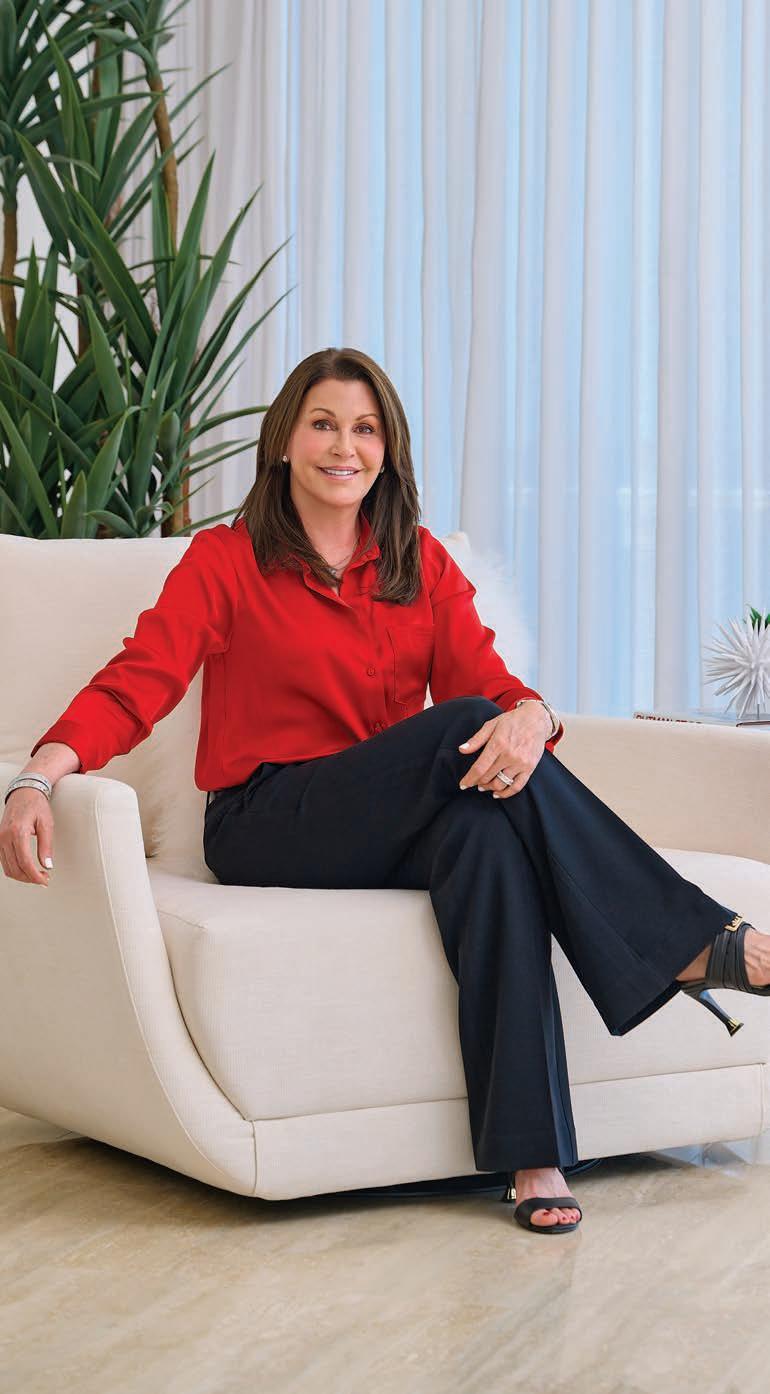
Jackie Feldman
GLOBAL REAL ESTATE ADVISOR
ONE SOTHEBY’S INTERNATIONAL REALTY
Jackie Feldman lives by the credo that loving what you do for a living is a blessing. As a Global Luxury Estate Advisor with One Sotheby’s, her grateful clients will attest to that sentiment as they are on the receiving end of her tireless dedication and the invaluable benefits they receive.
With an impressive portfolio of properties on the market, including two spectacular units in the Boca Beach Residences; a 32-unit, unique, one-of-a-kind boutique building gracing the enclave of Lake Boca Raton, Jackie finds herself consistently filled with excitement each and every day as she works to make her clients’ real estate dreams come true.
“I recently had the privilege to represent a residential destination for the elite; The Four Seasons Surf Club in Surfside. This magnificent property escalates the Four Seasons brand to new heights with unparalleled amenities. The trustees of the property desired to work with a firm that mirrors the high standards their brand is known for, so I was honored to represent ONE Sotheby’s and find the most distinguished buyer for the magnificent $28 million property.
ONE Sotheby’s enables me to network with clients locally, nationally, and internationally. Their global reach has literally opened a whole new world to me. We consistently promote our properties all over Europe, reaching high-net individuals whose standards are aligned with the lifestyle that exists with each spectacular listing. Along with our marketing initiatives and technology, the camaraderie that exists in the company allows all agents to amicably network and share off-market properties. I have gained tremendous expertise from the caliber of clients I am fortunate to represent and the high-end properties I am able to deliver.”
561-400-2156
Jfeldman@onesothebysrealty.com
THE BEST OF WOMEN IN BUSINESS
THE BEST OF WOMEN IN BUSINESS
Nina Presman FOUNDER
ANTI AGING CENTER OF BOCA
Everyone wants to feel confident and like what they see in the mirror! Nina Presman turned this desire into her life’s journey. She initially focused on her own body and face sculpting when she started the Anti Aging Center of Boca, and created the revolutionary technology that reversed the signs of aging on her face and body
AGELESS technology is exclusive to Anti Aging Center of Boca and was developed to replace the traditional plastic surgery. The Face & Neck lift treatments replace the facelift at a much more affordable price with permanent and immediate results that are seen immediately after the procedure. “I look better at 60 than I did at 37!” she proudly says. “Nobody should have to hide their age, because now we can finally be truly AGELESS!”
“We remove crepey skin on the arms and legs, all the loose skin around the waist and abdomen, and all the fat that adds unwanted inches. An average person loses 3 to 6 inches of fat per treatment with measurable results before they even leave,” Nina states, adding that she is so confident in the results of these treatments that Anti Aging Center of Boca has adopted the policy, “If you don’t lose, you don’t pay!” This means that if there are no visible results right after the treatment, the client will not be charged: “Our clients can’t believe how great they look afterwards,” she adds.
561-654-0177
antiagingcenterofboca.com
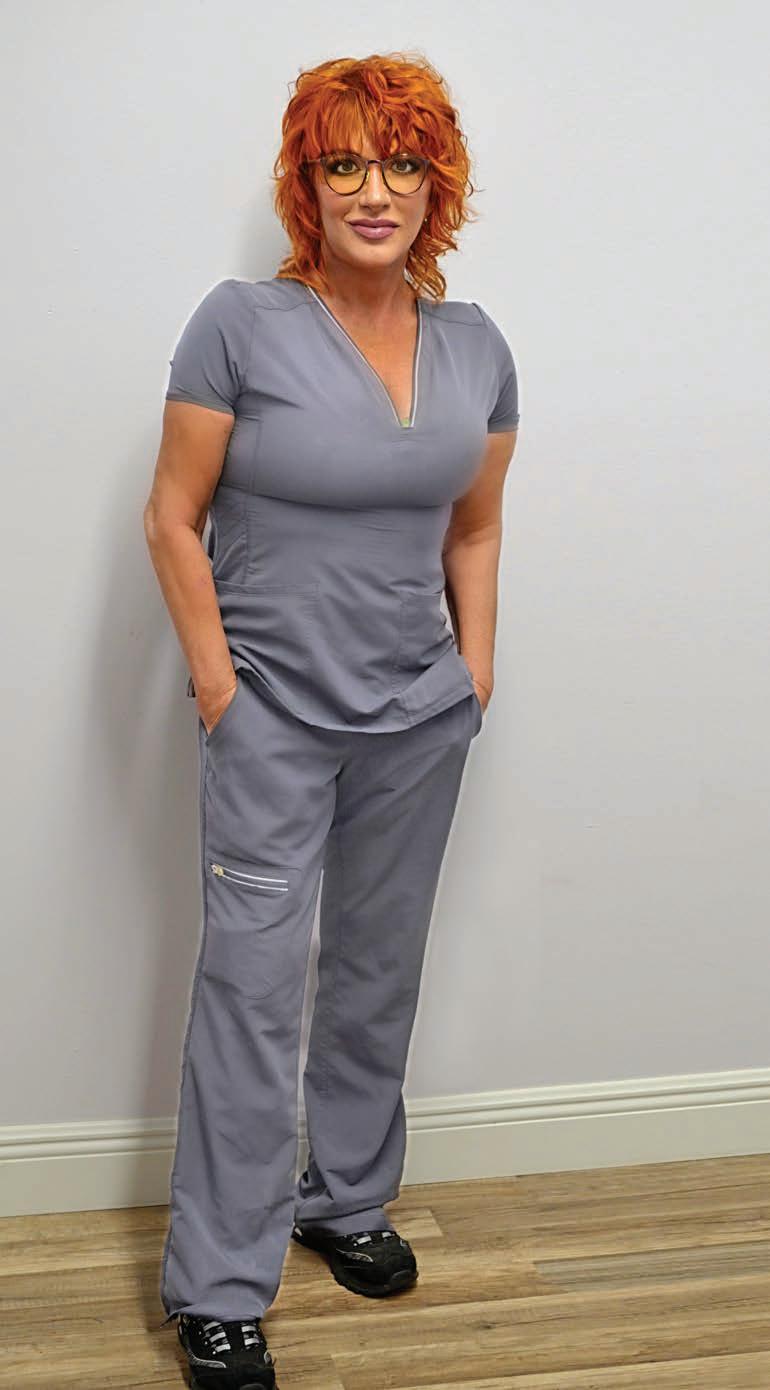






Please join us for our Thirteenth Annual




Grand Awards Celebration
Our members will gather and vote on which nonprofit finalists will receive our multiple high-impact $100,000 grants.
Luncheon at Boca West Country Club
Tuesday, April 30, 2024
10:00 AM Mimosa Reception
11:30 AM - 1:15 PM Program
Marta Batmasian
Presenting Sponsor

Media Sponsor
Impact 100 Palm Beach County connects, engages, and inspires women to improve our community by collectively funding multiple $100,000 grants to nonprofits that implement high-impact initiatives in southern Palm Beach County.
We fund grants in each of five focus areas: Arts, Culture & Historic Preservation; Education; Environment & Animal Welfare; Family; and Health & Wellness.
RSVP required by April 22, 2024 at www.eventbrite.com
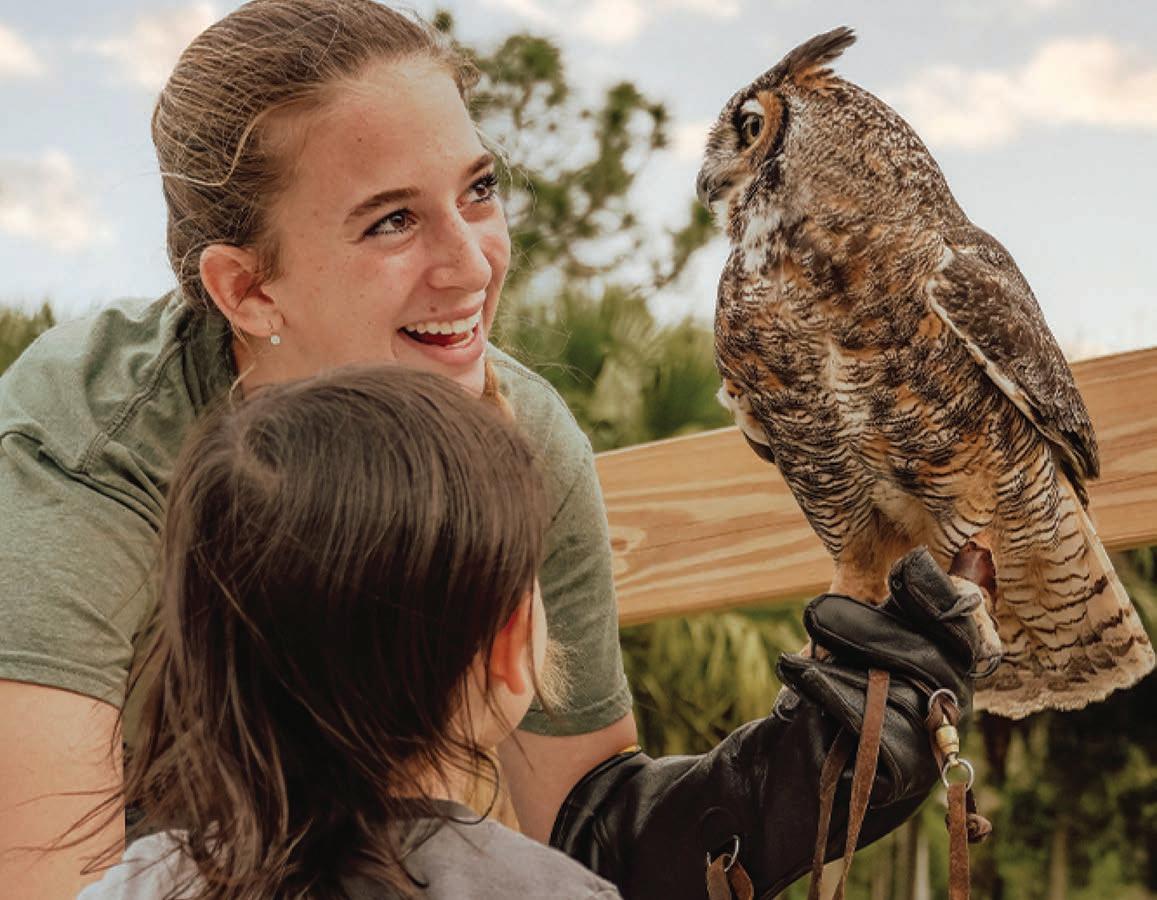

NEW CAMPUS NOW OPEN! NONPROFIT WILDLIFE REHABILITATION CENTER & SANCTUARY OPEN TO THE PUBLIC 7 DAYS A WEEK 10:00AM - 4:30PM 17855 ROCKY PINES ROAD, JUPITER, FL 33478 • WWW.BUSCHWILDLIFE.ORG • 561.575.3399

private education camp guide 2024
The following section presents helpful information provided by prominent private schools and camps in Palm Beach County.
All listings include a brief synopsis of the programs’ achievements, curriculum highlights, and many more important details families look for when choosing the best fit for their children.
This comprehensive guide is designed to help you make informed decisions at a glance.
DIVE INTO ADVENTURE
At Levis JCC Marleen Forkas Camps, summer is all about friendship, laughter, and FUN! Don’t miss this chance to give your children a summer filled with the best activities, adventures, entertainment, and so much more!
• Indoor and outdoor facilities including Marleen Forkas splash pad and pools on a 100-acre gated, secure campus
• Unique activities for all ages, including go karts, trapeze, archery, sports and art




plus sPeciAlTy CAMPs: eArly Childhood • TheATer KAvod (sPeciAl needs)
leAders in TrAininG Counselor in TrAininG
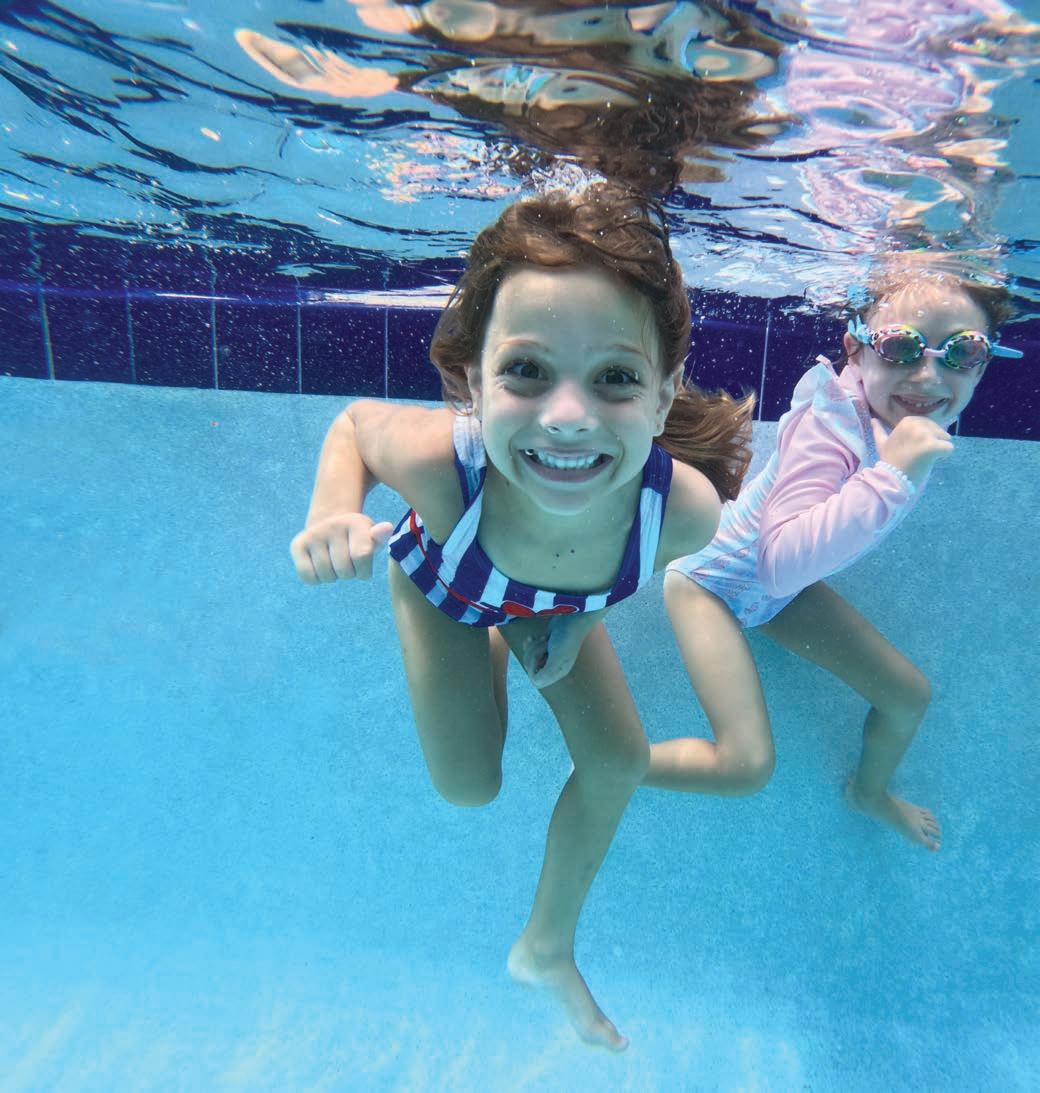

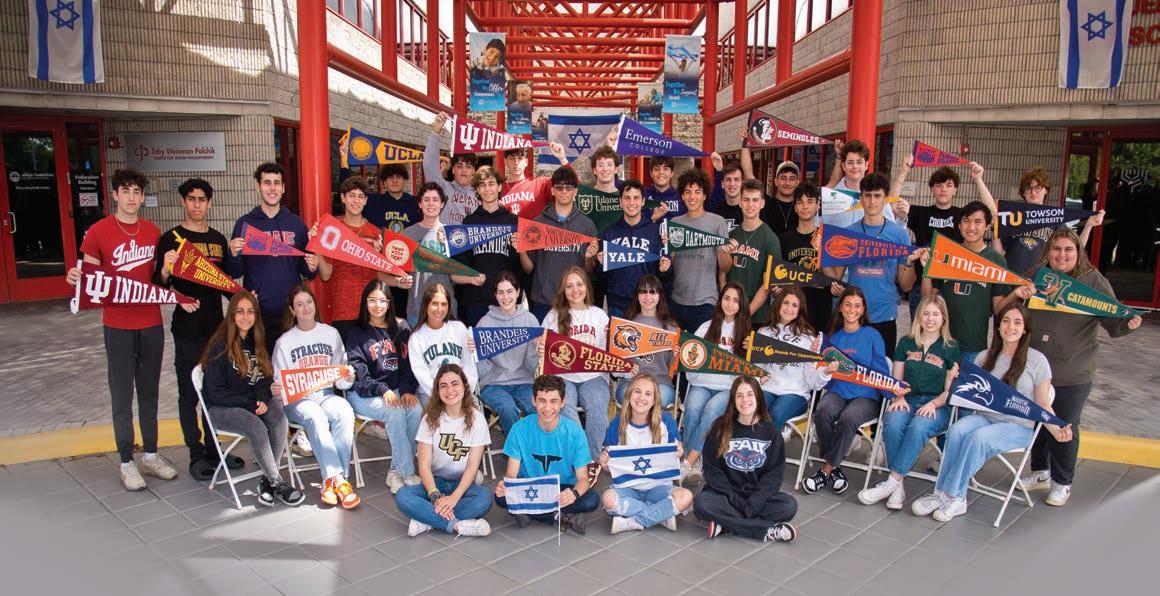
We Welcome campers from all backgrounds @CAMP_AT_The_J @levisjCcsuMmerCAMP CAMP AT The J - MArleen ForkAs CAMPs AT The Adolph & rose levis Jewish CoMmuniTy CenTer ToBY & leon CooPerMAn CAMPus • 21050 95Th Avenue s. • BoCA rATon, FloridA 33428 561-852-5090 • levisjCc.org/CAMP
LEVISJCC.ORG/CAMP FIND OUT MORE AT
It’s Nice to Be Recognized!

SCHOOL IN FLORIDA
Being ranked as the top Jewish school in Florida and #3 in the nation is a prestigious recognition.
It also underscores what our families and alumni already know — DKJA provides an exceptional K-12 college preparatory education. Our comprehensive dual curriculum of rigorous academics and character-building Judaic studies prepares students for admission to the best colleges and universities and instills the wisdom to navigate a complex world.
Email admissions@dkja.net to schedule a personal tour and discover all DKJA has to offer.
9701 Donna Klein Blvd., Boca Raton, FL | K-12 | 561.852.3310 | DKJA.net No1
JEWISH
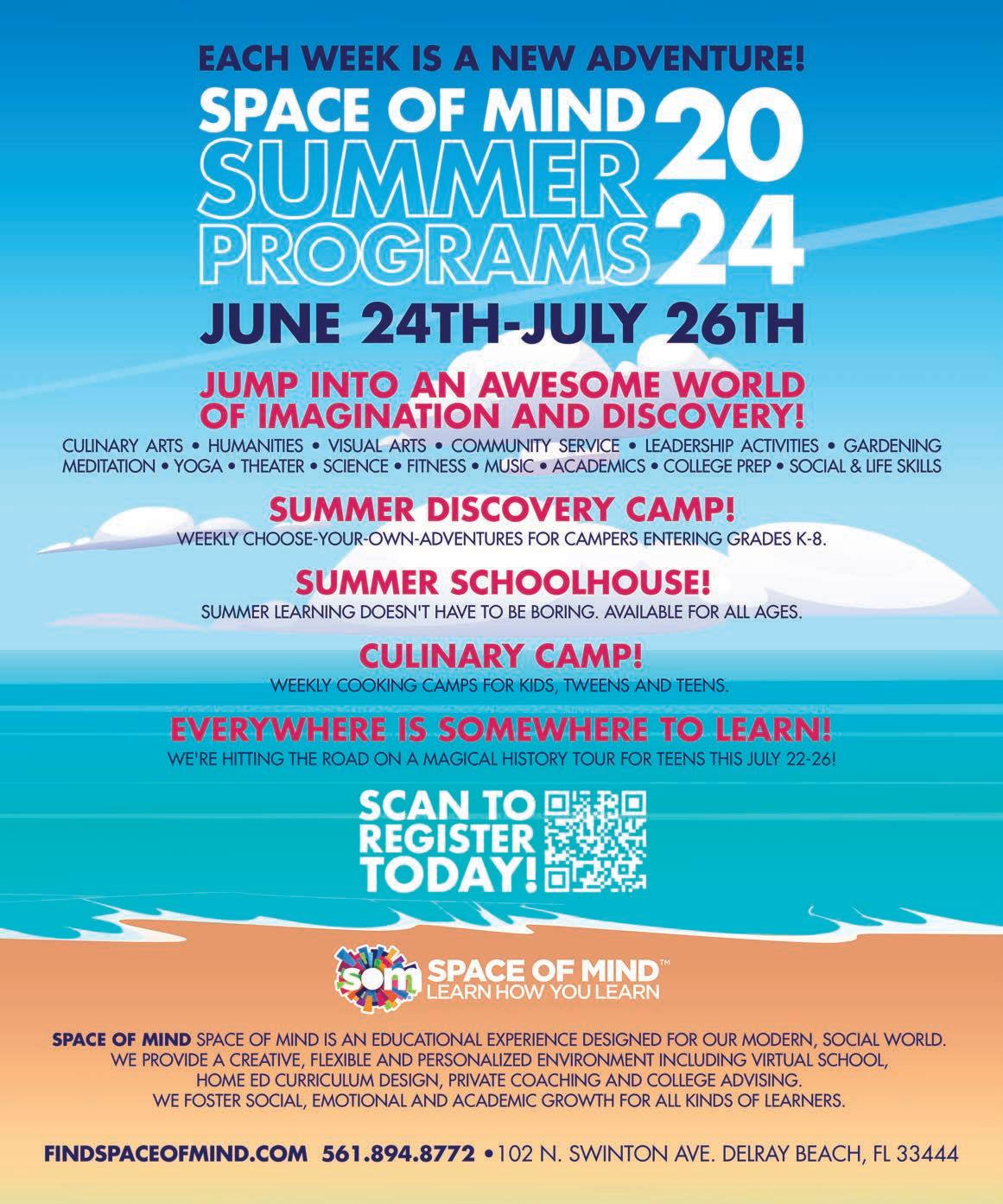


Private Education & Summer Camp Guide 2024 LET THE GAMES BEGIN Ignite the flame of FUN this summer at South Florida’s coolest camp! CAMP TWISTERS 2024 Gymnastics Games Bounce house Arts & crafts and more for kids ages 5+ Helping to build happy, healthy, responsible kids for over 25 years. TWISTERGYMNASTICS.COM • @TWISTERGYMNASTICS CALL NOW - Space is limited and camp fills fast Boca (561) 750-6001 • Coconut Creek (954) 725-9199

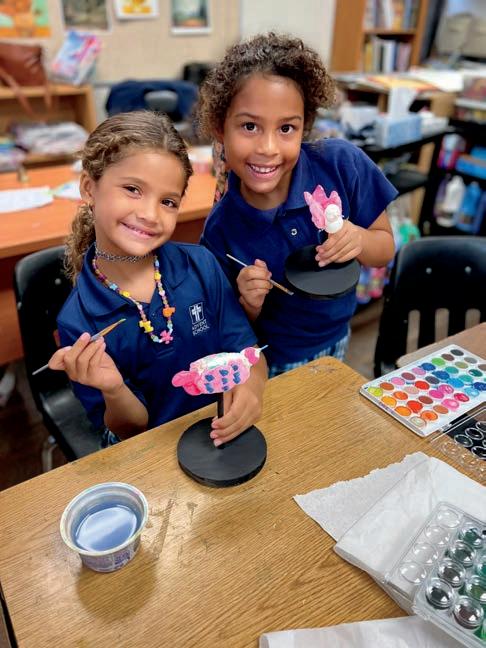


Private Education & Summer Camp Guide 2024 Early Childhood Elementary & Middle School AdventSchoolBoca.org | 300 E. Yamato Road Boca Raton | 561-395-3631 Creating Confident, Capable Christian Leaders CATHOLIC LASALLIAN COLLEGE PREP 600 Students 9th-12th Grade 14:1 Student /Teacher Honors/AP/Dual 99% College Accept $16,000 Tuition Live by the Spirit of Faith Saint John Paul II Academy 561.314.2100 www.sjpii.net 4001 N. Military Trail Boca Raton Est. 1980 k-8 full immersion bilingual program providing the best of american and european education. IB WORLD SCHOOL offering PYP (Primary Years Programme) (561) 479-8266 2500 NW 5th Ave. Boca Raton, FL 33431 www . faisbr . org “Prepare your child for a global future”






Private Education & Summer Camp Guide 2024 Trinity Delray is a Cambridge International School. Our students develop thinking and learning skills –ready to tackle the demands of tomorrow’s world, capable of shaping a better world for the future. We encourage students to become confident, responsible, innovative, and engaged- equipped for success in our fast changing modern world. 400 N. Swinton Avenue, Delray Beach, FL 33444 561.276-8458 trinitydelray.org TRINITY DELRAY LUTHERAN SCHOOL CONFIDENT RESPONSIBLE REFLECTIVE INNOVATIVE ENGAGED Ages 1 through 8th Grade, Schedule your private tour today! 2024 Private Education and Summer Camp Guide CALL for pricing: 561-997-8683 Ext. 300 SUMMER 2024 ISSUE MAY/JUNE 2024 APPEARING IN: Make sure your prominent private school and summer camp is recognized! 561-843-0481 WAVESSURFACADEMY.COM WAVES SURF ACADEMY SURF CAMPS - SURF LESSONS - SWIM LESSONS - HIRE A LIFEGUARD SERVING THE PALM BEACHES & BEYOND SPRING & SUMMER SURF CAMP DAILY & WEEKLY RATES AVAILABLE MARCH 18TH - MARCH 22ND JUNE 3RD - AUGUST 23RD TWO LOCATIONS: DELRAY BEACH & BOYNTON BEACH TIMES: 9:00AM-2:30PM AGES:5-15 REGISTER FOR SURF CAMP 2024
Private Education & Summer Camp Guide
ADVENT SCHOOL
- Grades: Infants - 8th - Tuition Range: $5,000 - $15,000
- Students: 450
- Student-Teacher Ratio: Varies by class
- Denomination: Christian
At Advent, your child will become a CONFIDENT, CAPABLE, CHRISTIAN LEADER making a difference in the world! Advent combines rigorous academics with leadership development in a safe environment. Innovative programs include Elementary & Middle School STEM enrichment, 1:1 technology, Spanish for K -8 th grade as well as Dual Language and Emergent Reader groups in the Early Childhood School. Advent also provides opportunities in spiritual growth, fine arts, robotics and athletics. Aftercare and camp programs offer engaging extra-curricular activities. We accept VPK vouchers and state scholarships (FTC, FES-EO and FES-UA). Need based tuition assistance is available. Advent serves Infants to 8th Grade – you can grow with us!
300 E. Yamato Road • Boca Raton • 561.395.3631 • AdventSchoolBoca.org
FRENCH AMERICAN INTERNATIONAL SCHOOL
- Grades: K - 8th - Tuition: $12,500
- Students: 100
- Virtual Classes: Optional
- Student-Teacher Ratio: 16
- Denomination: Non-sectarian, Co-educational
The French American International School (FAIS) offers a bilingual dual curriculum, satisfying American and French academic standards. As an International Baccalaureate (IB) World School, FAIS offers the PYP to all primary school students. Students not only become proficient in a second or third language but have access to an array of enrichments courses. Call us for a visit: (561) 479.8266. Merci!
2500 NW 5th Avenue • Boca Raton • 561.479.8266 • Faisbr.org
LEVIS JCC MARLEEN FORKAS CAMP AT THE J
- Ages: 2-16 (entering 10th grade)
- Price Range: $580 - $7,200
- Counselor/Camper Ratio: 1:5
- Dates: June 10 - August 2
The Levis JCC has been providing children of all ages with unforgettable summers since 1986. Our dedicated, caring team is committed to making the camp experience the best it can be for every child, every summer. Our full-day camp program offers exciting activities, convenient schedules and experienced staff. We provide kids the freedom to learn and grow while developing skills that prepare them for future success. With a culture built on universally accepted moral ideals as well as strong Jewish values, we incorporate respect, honor, good sportsmanship and teamwork into all that we do. Campers from all backgrounds are welcome.
21050 95th Avenue S. • Boca Raton • 561.852.5090 • Levisjcc.org/camp
PINE CREST SCHOOL FORT LAUDERDALE
- Grades: PreK - 12th - Tuition Range: $35,245 - $44,880
- Students: 1,842
- Virtual Classes: No
- Student-Teacher Ratio: 9:1
- Denomination: Independent
True to tradition and inspired by innovation, Pine Crest School offers a researchbased, challenging curriculum complemented by arts and athletics. We believe that building social and emotional competencies in a safe, secure, and inclusive learning environment is fundamental to our students’ success. Pine Crest classrooms foster creativity and innovation, giving students opportunities to practice ethical thought leadership and to become curious, adaptable learners. Our goal is to send our graduates out into the world as leaders who know their strengths and who have the courage to challenge norms, break barriers, and move forward with confidence. #PCFutureReady
1501
DONNA KLEIN JEWISH ACADEMY
- Grades: K - 12th - Tuition Range: $27,800 - $31,500
- Students: 680
- Student-Teacher Ratio: 7:1
- Denomination: Jewish
Donna Klein Jewish Academy (DKJA) provides an education of extraordinary power and purpose for each of its students through a rigorous curriculum designed to meet the individual needs of a diverse student population. DKJA offers a wide variety of extracurricular activities including JV and Varsity sports, and an extensive fine arts program including music, dance, drama, and visual arts. Our students are provided with the skills and knowledge required for success in college and beyond.
9701 Donna Klein Blvd • Boca Raton • 561.852.3310 • DKJA.net
GRANDVIEW PREPARATORY SCHOOL
- Grades: EC 3 - 12th - Tuition Range: $16,900 - $28,300
- Students: 350
- Virtual Classes: Yes
- Student-Teacher Ratio: 8:1
- Denomination: Independent
Grandview Preparatory School is an independent private school committed to the philosophy that education is a personal endeavor. At Grandview, we are not simply preparing students to be great students, but rather extraordinary individuals who are curious, confident, and have the social and emotional skills to navigate the modern world in a healthy and enriching way. Our students have ample opportunities to engage in real-life experiences on and off campus that prepare them for life beyond school. Nestled in a residential neighborhood in Boca Raton located on Spanish River Boulevard, east of Florida Atlantic University, west of the Atlantic Ocean, we welcome you to visit with us and experience our community.
336 Spanish River Blvd. NW • Boca Raton • 561.416.9737 • Grandviewprep.net
PINE CREST SCHOOL BOCA RATON
- Grades: PreK - 8 - Tuition Range: $35,245 - $41,280
- Students: 857
- Virtual Classes: No
- Student-Teacher Ratio: 9:1
- Denomination: Independent
True to tradition and inspired by innovation, Pine Crest School offers a researchbased, challenging curriculum complemented by arts and athletics. We believe that building social and emotional competencies in a safe, secure, and inclusive learning environment is fundamental to our students’ success. Pine Crest classrooms foster creativity and innovation, giving students opportunities to practice ethical thought leadership and to become curious, adaptable learners. Our goal is to send our graduates out into the world as leaders who know their strengths and who have the courage to challenge norms, break barriers, and move forward with confidence. #PCFutureReady
2700 St. Andrews Boulevard • Boca Raton • 561.852.2800 • pinecrest.edu
SAINT JOHN PAUL II ACADEMY
- Grades: 9th - 12th - Tuition Range: $15,250 - $16,000
- Students: 600
- Student-Teacher Ratio: 14:1
- Denomination: Catholic Based
Saint John Paul II Academy, located in Boca Raton, Florida, is a Catholic coeducational college preparatory school in the Diocese of Palm Beach following the tradition of Saint John Baptist De La Salle and the Brothers of the Christian Schools. Saint John Paul II Academy provides a rigorous academic curriculum designed to prepare students for success in college and in life. Our faith-based learning community fosters excellence in all programs and enables the spiritual, academic, artistic, and physical development of each student. Dedicated faculty and staff instill the Gospel values of tolerance, concern for the poor, justice, peace, and responsibility while welcoming students of all beliefs and backgrounds.
4001
2024
NE 62nd Street • Fort Lauderdale • 954.492.4100 • pinecrest.edu
Military Trail • Boca Raton •
• sjpii.net
N.
561.314.2100
Private Education & Summer Camp Guide 2024
SPACE OF MIND
- Grades: K - 8th - Tuition Range: $0 - $35,000
- Students: 45
- Virtual Classes: No
- Student-Teacher Ratio: 3:1
- Denomination: None
Space of Mind (SOM) is a boutique educational experience, designed for our modern, social world. We provide a creative, flexible and personalized educational environment that fosters social, emotional and academic growth for all kinds of learners, including children, parents, adults, families and educators.
SPANISH RIVER CHRISTIAN SCHOOL
- Grades: PreK3 – 8th - Tuition Range: $5,244 - $13,881
- Students: 540
- Student-Teacher Ratio: 14:1
- Denomination: Presbyterian
Preschool for 3- and 4-year-olds. Academic program K-8th with high quality, challenging academics enhanced by robust technology innovation in the classrooms; leadership skill building; strong fine arts and performing arts programs; critical thinking and project based learning. High school-level honors Algebra 1, Geometry, and Spanish I for middle school students. Accredited by CSF and MSA. Before and after-school programs. Interscholastic Sports program. After school enrichment. State-of-the-art technology, including 3-D printing, video productions, coding. Competitive robotics. Stanford Achievement Test. Lunch program. Clinic with full-time nurse. Uniforms required. Parent-Teacher Fellowship. Summer Camp. New STEM Lab, Art Studio, and Dance/Exercise room opening at the start of the 2024-25 school year.
102 N. Swinton Ave. • Delray Beach • 561.894.8772 • findspaceofmind.com
ST. PAUL LUTHERAN CHURCH & SCHOOL
2400 Yamato Rd • Boca Raton • 561.994.5006 • Spanishriverchristianschool.com
THE STUDY LOUNGE SUMMER CAMP
- Grades: 5th - 9th - Pricing: Starting at $275/Week
- Students: 410
- Grades: PS3-8th - Tuition Range: $5,220 - $13,630 - Student-Teacher Ratio: Varies
- Denomination: Lutheran
Since 1962, St. Paul has been an accredited traditional Christian school in East Boca Raton. We offer leveled reading and math groups, art, music, band, advanced technology, physical education, Spanish, as well as STEM in grades 6-8. Our nurturing Early Childhood program is developmentally appropriate and offers flexible days and times. After care and summer camp are available. Our Parent Teacher League offers many opportunities for parents to be involved. Contact us for a tour or more information.
A Family Fostering a Foundation for the Future!
701 W. Palmetto Road Park Road • Boca Raton • 561.395.8548 • stpaulbocaschool.com
TRINITY DELRAY LUTHERAN SCHOOL
- Grades: Age 1 – 8th - Tuition Range: $5,000 - $12,500
- Students: 450
- Student-Teacher Ratio: Varies
- Denomination: Lutheran
Trinity Delray, Excellence in Christian education since 1948. For over seventy years, Trinity Delray Lutheran School has been providing academic excellence in a Christ-centered environment. Trinity Delray is committed to providing the best instructional environment for students. Trinity Delray is a Cambridge International School. Cambridge International helps students become confident, responsible, reflective, innovative, engaged, and ready to tackle the demands of tomorrow’s world, capable of shaping a better world for the future. We offer class sizes that give students the opportunity to have curriculum differentiated to their needs. Trinity Delray students develop critical thinking skills that are needed to be successful after elementary and middle school.
400 N Swinton Ave • Delray Beach • 561.276.8458 • Trinitydelray.org
WAVES SURF ACADEMY
- Camp Type: Surf Camp - Camp Rate: $350 Weekly / $100 Daily / M-F
- Camp Ages: 5-15
- Camp Times: 9:00 A.M -2:30 P.M.
- Camp Dates: Spring Break Mar. 18th - 22nd • Summer Break Jun. 3rd - Aug. 23rd
Waves Surf Academy Surf Camp is located at The Delray Breakers on the Ocean Hotel in Delray Beach,FL. This location offers spring & summer surf camp programs. The camp provides surf instruction for all levels. Camp activities include surfing, paddle boarding, boogie boarding, snorkeling, swimming in the pool, beach games, marine biology lessons, water safety lessons, arts and crafts & much more! The camp is located on a private beach with a kids club room which is ideal for weather shelter in case of weather anomalies. All instructors are lifeguard certified and background checked. Don’t miss another wave - register online today!
561.843.0481 • Delray Beach • wavessurfacademy.com
- Students: 20
- Dates: June 10th - Aug 2nd
Dreading the screentime summer brings? Time to put phones down and turn the creativity up! Join us as The Study Lounge becomes The SUMMER Lounge! The day is filled with crafts, cooking, STEM activities and so much more! Field trips every Friday in the Marketplace (arcade, bowling, movies) and in-house escape rooms! Camp runs from 9-3:30 with before and aftercare available. Rates start as low as $275/week. Bring a friend and get a discount or come make new friends that will last a lifetime! Enroll by May 1st to save an extra 15%!
9089 W. Atlantic Ave Unit 112 • Delray Beach • 561-822-6018 • thestudylounge.com
TWISTERS GYMNASTICS BOCA RATON
- Ages: 5th - 10th - Pricing: From $476/Weekly
- Dates: Beginning June 3rd
- Denomination: Gymnastics
Whether your child spends a session, a day, a week or the whole summer at Twisters, their time here will be filled with loads of fun! Our professional and safety certified staff will lead your children in gymnastics instruction, games, organized activities, fitness, arts & crafts, and supervised play in our fun, clean, safe, and fully air conditioned facility! Dates may vary at each location.
3100 NW Boca Raton Blvd #308 • Boca Raton • 561.750.6001 • Twistergymnastics.com 6805 Lyons Technology Circle • Coconut Creek • 954.725.9199

2024 PRIVATE EDUCATION AND SUMMER CAMP GUIDE LISTING CALL for pricing: 561-997-8683 Ext. 300 SUMMER 2024 ISSUE MAY/JUNE 2024 APPEARING IN:

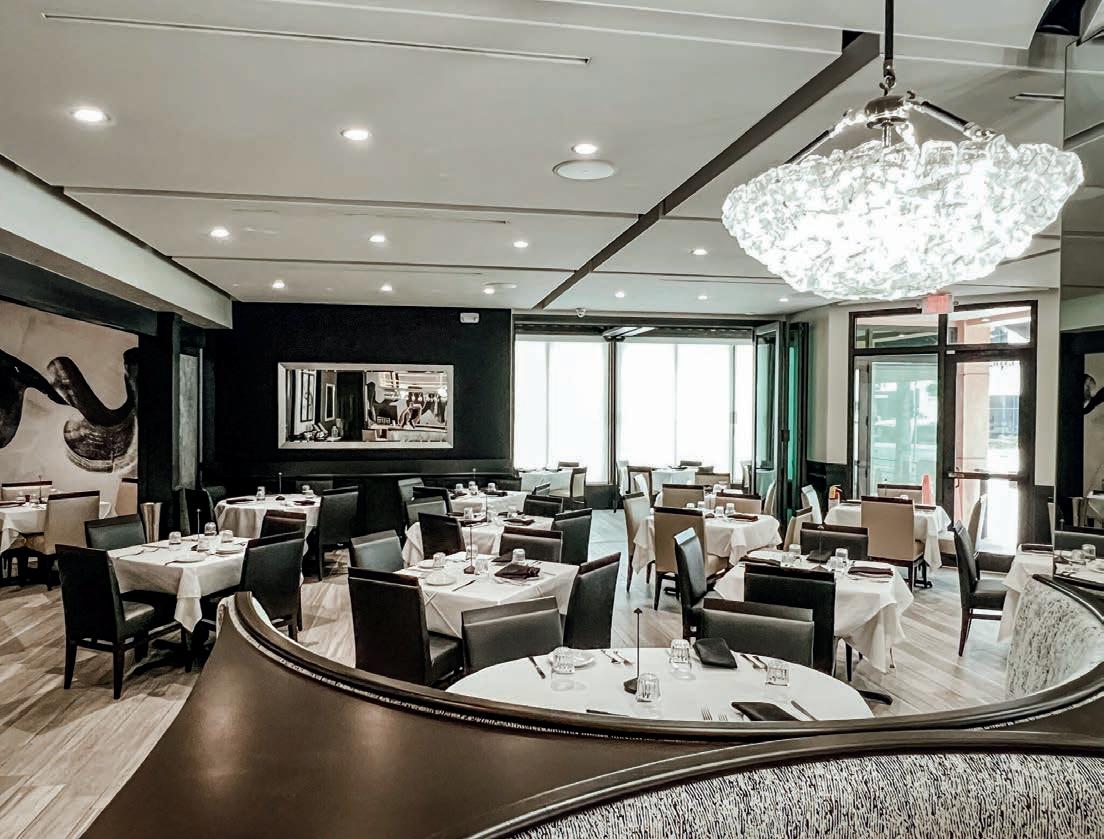
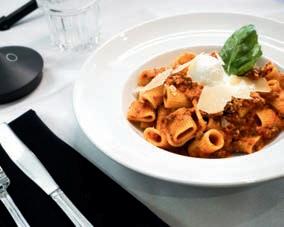
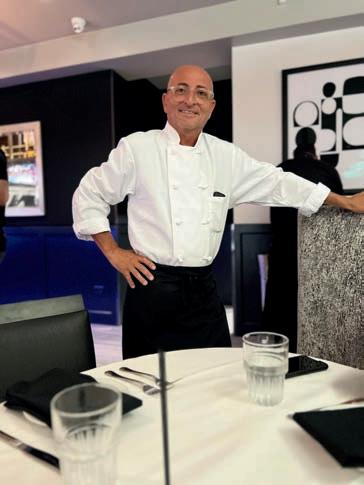
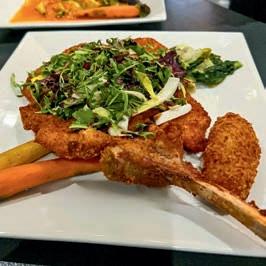

39 SE 1st Avenue, Boca Raton, FL 33432 www.rinosofboca.com Call For Reservations Authentic Italian Cuisine From Angelo’s of Mulberry Street and Ponte Vecchio in Bay Ridge, Brooklyn, Rino’s brings fine Italian fare and a lively atmosphere to downtown Boca Raton. Chef Rino Aprea brings Brooklyn to Boca Raton 561-244-8282 Live Music Daily Open Mon-Sun 4pm to 10pm
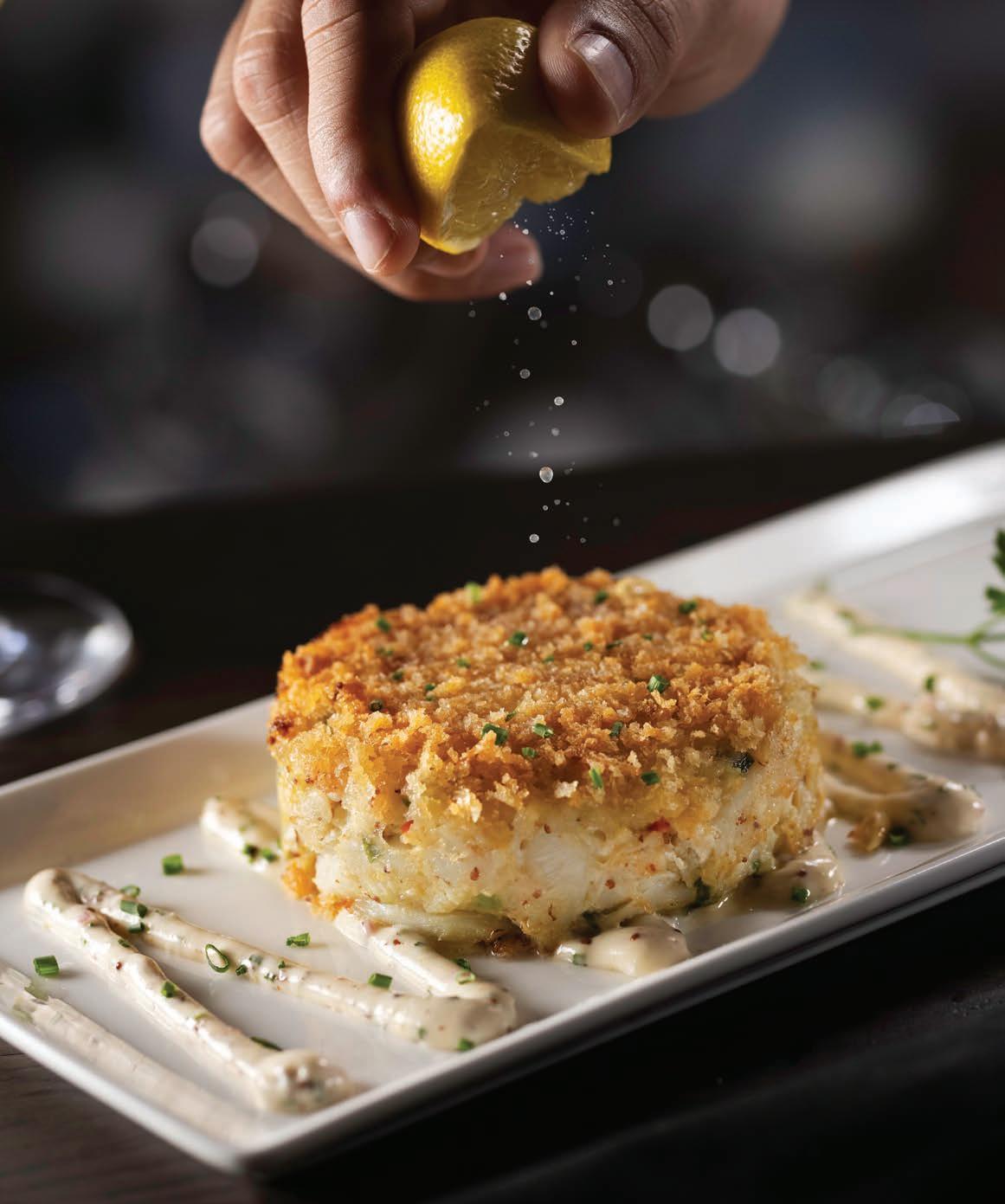

EAT & DRINK MEAT MARKET REVIEW › 124 EDDIE V’S REVIEW › 126 DISCOVERIES › 130 TABLE TALK › 136
Jumbo lump crab cake from Eddie V’s
DOUGLAS SCAETTA
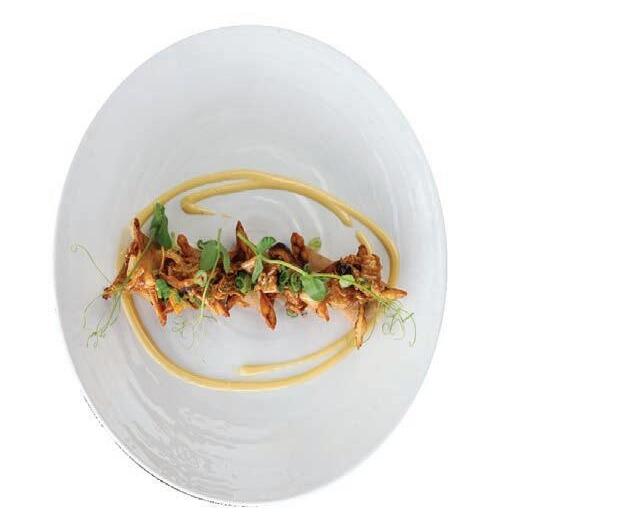
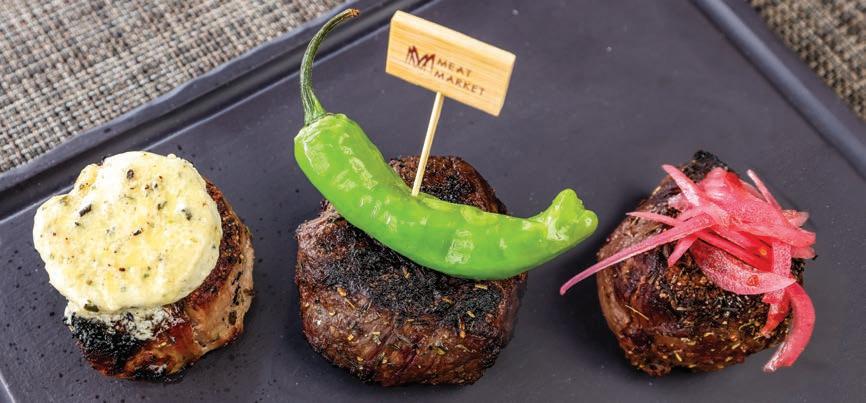
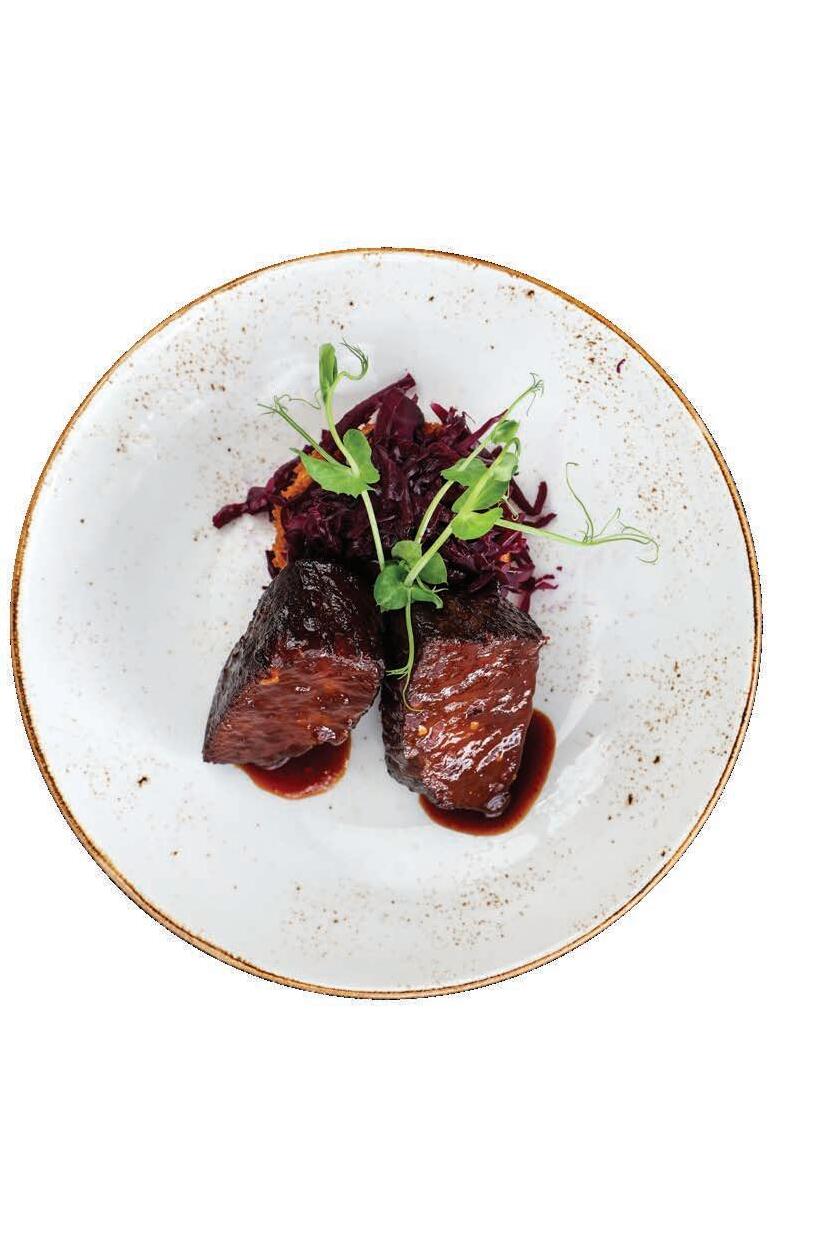
IF YOU GO
PARKING: Valet
HOURS: Sun. – Wed., 5 – 11 p.m.; Thurs. – Sat., 5 p.m. –12 a.m.
PRICES: $14 – $150
WEBSITE: meatmarket.net
Meat Market
2000 N.W. 19th St., Boca Raton; 561/245-6777
CHRISTIE GALEANO-DEMOTT
eat Market has infused Midtown Boca Raton with Miami-inspired sexiness and glamour. While other steakhouses may give off a more traditional, classic and perhaps even subdued feel, this steakhouse is all about posh interiors, high energy and a diverse menu that doesn’t dictate your only option is a basic cut of red meat (gasp!).
While many tripped over themselves to get into other trendy Miami steakhouses in the aughts that I won’t name, I have been a fan of Meat Market since its flagship Lincoln Road location opened on South Beach in 2008. Although that concept closed quietly during the pandemic, the brand successfully opened Tampa, Palm Beach and San Juan, Puerto Rico locations before landing in Boca Raton. Corporate Chef Sean Brasel has been with the company since its inception, and his passion for creating new dishes is reflected on the menu’s daily specials. So, while your visit to Meat Market may be driven by your craving for a steak, don’t sleep on Brasel’s other handiwork.
On the midweek evening I visited, the bar scene was reflective of a Miami nightclub, with glitterati dressed to impress and sipping on martinis and Old Fashioneds. The concept’s sleek design continues to endorse the brand’s sexy aesthetic, with polished gold chains separating the bar and dining room, and intimate booths and plush fabrics throughout. Plus, it has three bars—a relaxed outdoor bar, a sultry indoor bar and lounge area, and a poolside bar. And if you’re looking for a unique private dining experience,
reserve its wine cellar for a memorable evening.
We started with the crispy rice tuna ($35), Wagyu beef dumplings ($14) and roasted escargot ($17). The tuna was on the daily special menu, but if you like crispy tuna rice and it’s on the menu when you visit, order it—the dish delivered with a brushstroke of spicy mayo. But the dumplings and escargot missed the mark. The beautifully plated dumplings—more crunchy angular pockets than fluffy pillows—lacked flavor, and the escargot needed more garlic and more than the two small crostini provided with it.
The steak trio ($70) was a juicy sampler of cuts that included a petit picanha, petit kimchi marinated New York strip, and petit buffalo tenderloin topped with marrow butter—all adorably tiny and expertly cooked and enjoyed down to the last bite. If you’re starving, this isn’t the dish for you. The prime confit short rib ($28) was a big hit at the table. The ultra-tender beef from California’s Niman Ranch was cooked in a rich barbecue sauce and served with braised purple cabbage and a crispy polenta cake that was soft on the inside and crunchy on the outside. Our side of Gouda tater tots ($10) was a blast from the past, reminiscent of a childhood snack that went to college.
For its location and price point, a couple of details fell short—our wine glasses sat empty a few times, and the check was hastily placed on our table without a check presenter. That being said, as a longtime fan, I’ll chalk it up to growing pains and look forward to my next Meat Market meal.
124 bocamag.com • • • • March 2024
AARON BRISTOL
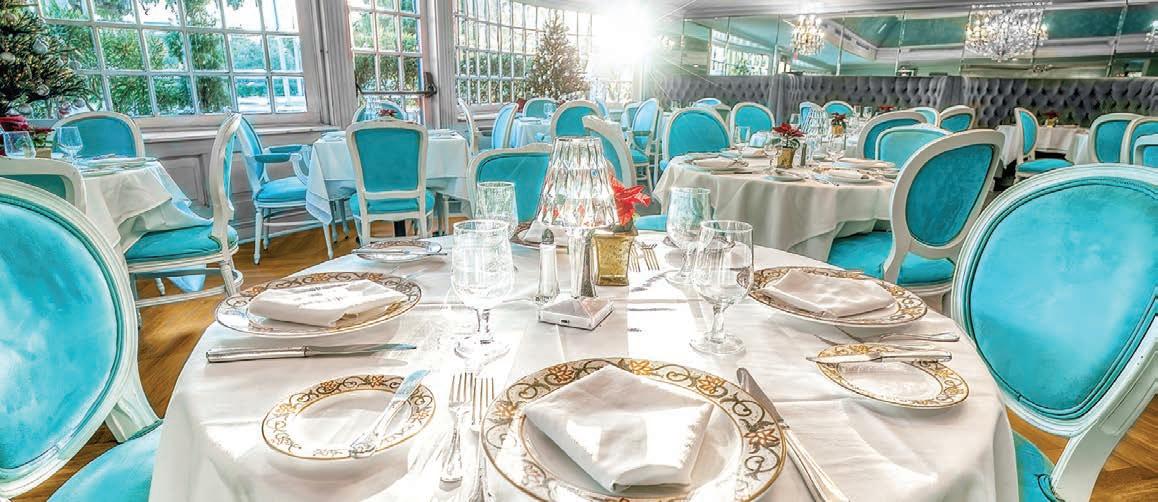
Executive Chef / Restauranteur Steven Botta has added the former Kathy’s Gazebo to his portfolio of high end restaurants. The 40 year tradition of excellence continues in a newly reimagined and newly renovated space.
The name and decor may have changed but the menu has all the old menu favorites with some exciting new ones which will delight the palate. From the moment you arrive you will quickly realize that you have entered a restaurant where old world service is still the norm rather than the exception.
A throwback to the days when where guests become family and a place to make new memories while reminiscing about past ones. Come join us and see what all the excitement is about. We look forward to seeing you. Yevette, Steven and Anthony.
Yevette, Steven and Anthony
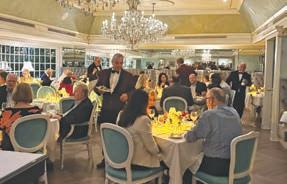
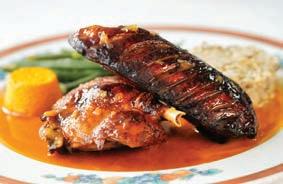
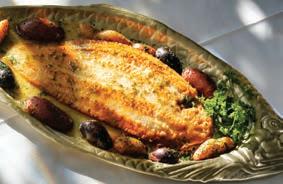
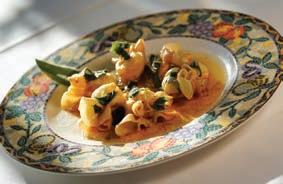
4199 NORTH FEDERAL HIGHWAY, BOCA RATON, FLORIDA 33431 561-395-6033 | thefrenchgazebo.com MARTINI MONDAYS: 50% OFF YOUR FAVORITE MARTINIS & NO CORKAGE FEE
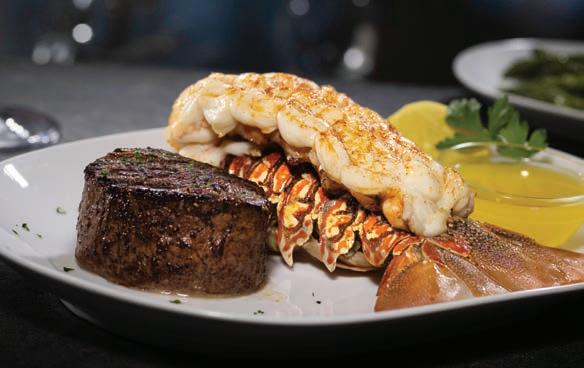
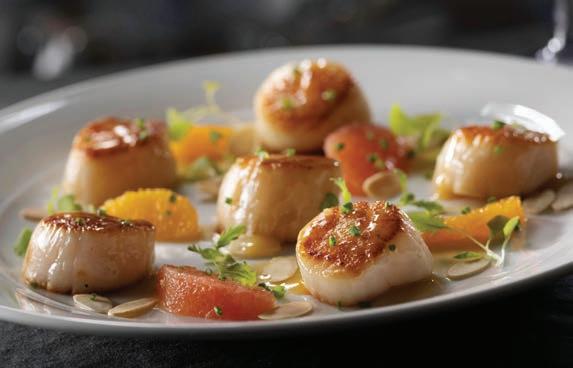
Eddie V’s Prime Seafood
201 Plaza Real, Boca Raton; 561/237-0067
Written by CHRISTIE GALEANO-DEMOTT
Iheard the sultry jazz before my eyes were able to fully appreciate the vibrant scene that greeted me at the door. The bustling bar’s eruption of clinking glasses and merriment drew me in as the jazz ensemble’s soulful notes filled the room. It was vibey, and I loved it. Few restaurants in the area bestow the gift of nightly live music to their guests, but Eddie V’s does. The music and lively crowd instantly set the mood—you’re in for a fun evening if nothing else. But don’t worry, there’s more.
Eddie V’s opened in the former Jazziz and, most recently, Ouzo Bay location in Mizner Park last fall after a complete renovation. The bar’s lounge and dining room are separated by an impressive wine collection that towers over white-linen tables and cozy banquettes lit by dazzling chandeliers. This is the brand’s fourth outpost in Florida, which Darden Restaurants owns. The Orlando-based company also counts LongHorn Steakhouse, The Capital Grille, Seasons 52, Bahama Breeze Island Grille, Ruth’s Chris Steak House, Yard House and Olive Garden among its portfolio of restaurants.
IF YOU GO
PARKING: Valet, parking garages, street parking
HOURS: Sun., 4 – 9 p.m.; Mon. – Sat., 4 – 10 p.m.
PRICES: $14 – $112
WEBSITE: eddiev.com
The black napkin exchange is a much-admired detail I rarely see at restaurants. The tables are set with white napkins, but when a hostess sat me and handed me a black napkin to spare my black pants the agitation of a white lint explosion on my lap, I was impressed by the courtesy. After we settled in, another pleasant surprise arrived in the form of a petite icy shaker that delivered an impeccably portioned dirty vodka libation into the empty martini glass with a tableside flourish.
We started with the jumbo lump crab cake ($27) and Maine lobster tacos ($27). It was one crab cake but a sizable portion, enough for us to share. It’s a hearty amount of crab with minimal filling, with a toasted breadcrumb top that adds a layer of crunch, and it’s served on a spicy chive remoulade. The tacos were the hit of the evening. Hulky lobster pieces are placed over house-made tortillas and then topped with avocado, crunchy grilled sweet corn and pico de gallo for an overall incredible bite.
Eddie V’s is famous for its seafood and premium steaks (hand-carved daily by the in-house butcher), so we opted to try the Georges Bank scallops ($46) and a 10-ounce center-cut filet ($57) with a side of crab fried rice ($19). The well-cooked scallops were neither spongey nor chewy and had a balanced buttery and bright flavor thanks to the sauteed citrus fruit and brown butter, while the Marcona almond slivers added a crunch. The steak was tender with a delightful, seared crust, and was perfectly cooked. I also appreciated that the kitchen sliced it for us for easy sharing. The rice was the only dish I would pass on; it was fried rice topped with lump crab, but nothing about it was memorable.
This restaurant has perfected the art of entertaining—from that first impression with the live jazz to the end of the meal with a tableside flambéed Bananas Foster dessert show that left us excited to come back for another fun, effortless night out. And isn’t that what you need every once in a while?
126 bocamag.com • • • • March 2024 EAT & DRINK REVIEW
Left, center-cut filet mignon and South African lobster tail; right, Georges Bank scallops
DOUGLAS SCAETTA


$100M - 10 Years
Our commitment to the abused, neglected, abandoned, trafficked, and homeless children and families of the Palm Beaches and the Treasure Coast counties remains resolute. Preparing for 2024 and beyond, we find annual operations and capital improvements comprise most of our financial needs. Establishing a significant endowment would provide for long-term care and program model security. Our ownership of debt-free real estate for planned expansion is truly unique and ensures sustainability.
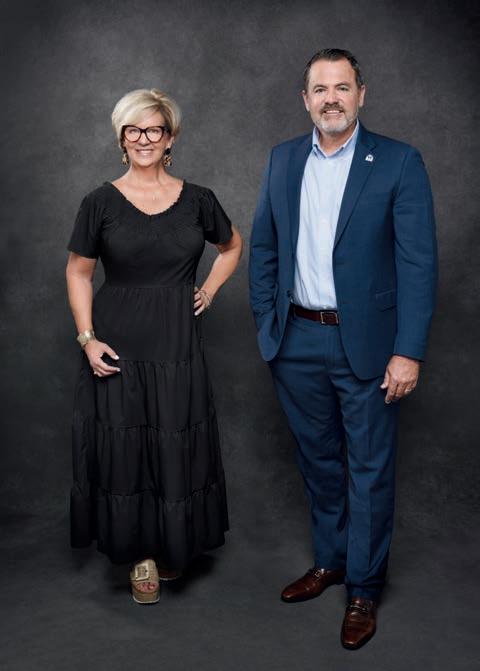
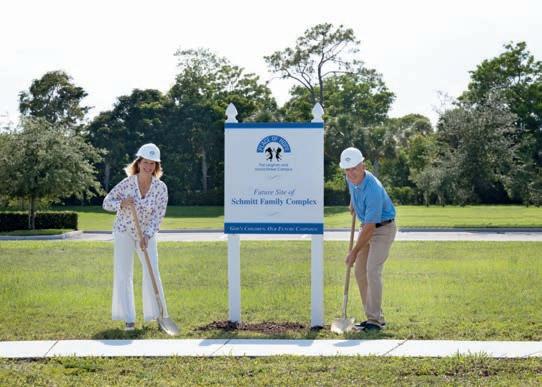
In early 2023, Dru and Debbie Schmitt committed the lead gift to build the second transitional housing complex on our Leighan and David Rinker Campus within our Marshall and Vera Lea Rinker Village in Boca Raton. With the beginning of construction underway, this complex will provide affordable, transitional housing and support services for up to 16 aging-out foster youth, homeless youth, families in transition, single mothers with dependent children, and human trafficking survivors.
Place of Hope at The Leighan and David Rinker Campus 21441 Boca Rio Road, Boca Raton, FL 33433 561-483-0962 | placeofhope.com
Top: Lisa McDulin, Director of Advancement & Charles Bender, Founding CEO Bottom: Debbie & Dru Schmitt Photos by Warner-Prokos Photography
FLORIDA TABLE Dining Guide
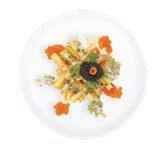
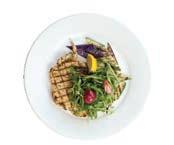
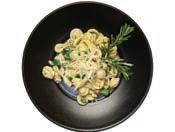
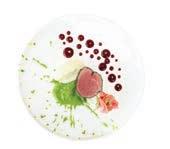
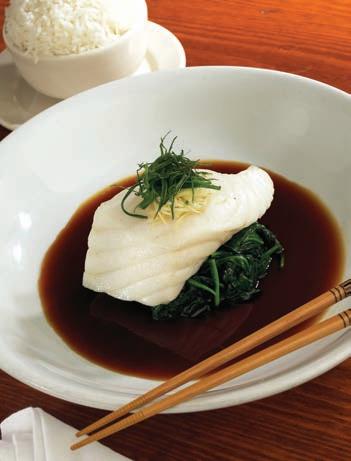
Palm Beach County BOCA RATON
Abe & Louie’s —2200 Glades Road. Steakhouse. All Americans are endowed with certain inalienable rights, among them the right to a thick, juicy, perfectly cooked steak. At this posh, comfortable (and expensive) meatery, the USDA Prime steaks are indeed thick, juicy and perfectly cooked, also massively flavorful and served in enormous portions. Don’t miss the New York sirloin or prime rib, paired in classic steakhouse fashion with buttery hash browns and ubercreamy creamed spinach. Chased with an ice-cold martini or glass of red wine from the truly impressive list, it’s happiness pursued and captured. • Lunch Mon.-Fri., dinner nightly. Brunch on Sat. and Sun. 561/447-0024. $$$$
AlleyCat—297 E.Palmetto Park Road. Japanese. Chef Eric Baker’s Japanese izakaya, or a casual spot for drinks and bites, is serving up dishes like sushi, dumplings and fried rice that have an unexpected whimsical element. Here you’ll find king crab tacos and hot fried chicken alongside the hamachi ponzu and spicy scallop roll. And to deliver the freshest sushi in town, he has partnered with celebrated sushi chef David Bouhadana of Sushi by Bou. • Dinner Tues.-Sat. 561/353-5888. $$
Arturo’s Ristorante —6750 N. Federal Highway. Italian. Arturo’s quiet, comfortable dining room; slightly formal, rigorously professional service; and carefully crafted Italian dishes never go out of style. You’ll be tempted to make a meal of the array of delectable antipasti from the antipasti cart, but try to leave room for main courses like the veal shank served on a bed of risotto. • Lunch Mon.–Fri. Dinner nightly. 561/997-7373. $$$
Burtons Grill & Bar —5580 N. Military Trail.
New American. Known for its reliable food as well as its non-gluten, Paleo and “B Choosy” kids menu, the first Florida location for this restaurant is deservedly crowded, so make reservations. Don’t miss the General Tso’s cauliflower, the pan-seared salmon (Paleo), the crab cakes or the Key lime pie. Popular half-portions are available, too. • Lunch and dinner daily. 561/465-2036. $
The Capital Grille —6000 Glades Road. Steaks. This is one of more than three dozen restaurants in a national chain, but the Boca Grille treats you like a regular at your neighborhood restaurant. Steaks, dry-aged if not Prime, are flavorful and cooked with precision, while starters from the pan-fried calamari to the restaurant’s signature spin on the Cobb salad (lunch only) are nicely done too. Parmesan truffle fries are crispy sticks of potato heaven; chocolate-espresso cake a study in shameless, and luscious, decadence. • Lunch Mon.–Fri. Dinner nightly. 561/368-1077. $$$
Casa D’Angelo —171 E. Palmetto Park Road. Italian. Chef Rickie Piper, who has mastered the menu and cuisine of this fine-dining staple for more than a decade, knows when to say when with both plating and ingredients. His dishes, including the sides and accompaniments, are visually appetizing and aromatic. A grilled veal chop easily 3 inches thick proved tender and juicy, and the wild mushrooms served alongside in a marsala added earthiness. • Dinner nightly. 561/996-1234. $$$
DINING KEY
$: Under $17
$$: $18–$35
$$$: $36–$50
$$$$: $50 and up
Basilic Vietnamese Grill —200 S. Federal Highway. Vietnamese. This popular restaurant offers satisfying food and reasonable prices. Plus, there’s bubble tea. Opened in 2014, it has a wide range of Vietnamese favorites, such as cha gio tom heo, fried shrimp and pork Imperial rolls, all kinds of pho, noodle bowls, chicken curry and more. • Lunch and dinner six days a week; closed Tuesdays. 561/409-4964. $$
Bluefin Sushi and Thai—861 N.W. 51st St., Suite 1. Sushi/Thai. Arrive early for a table at this Asian hot spot—it’s popular with no reservations for parties fewer than six. Don’t skip the tempura lobster bomb, big in both size and taste. The ginger snapper will impress both Instagram and your stomach. Try the chicken satay and pad Thai. Bluefin offers a variety of dishes from multiple cultures, all well done. • Dinner daily. Lunch Mon.-Fri. 561/981-8986. $$
Casimir French Bistro—416 Via De Palmas, Suite 81. French. Take a trip overseas without leaving the city and enjoy excellently prepared traditional French dishes, such as duck l’orange or beef bourguignon, or go with Cajun chicken and veal Milanese. The comfortable dining room is a Parisian experience, as is the apple tarte tatin. This is a local favorite, and may we add they have what is as close to real French bread as anyplace in Boca? •
Lunch and dinner Mon.-Sat. 561/955-6001. $$$
Chez Marie French Bistro —5030 Champion Blvd. French. Marie will greet you at the door of this nicely decorated, intimate, classic French restaurant tucked in the corner of a strip shopping area. This feels like an intimate neighborhood bistro and is a welcome discovery. From escargot encased in garlic butter, parsley and breadcrumbs to a tender duck a l’orange to an unforgettable crepe Suzette, you’ll be in Paris all evening. Voila! Also on the menu: pan-seared foie gras, tasty onion soup, coq au vin, rack of lamb, salads and more desserts. French food in an unassuming atmosphere.• Dinner Mon.-Sat. (closed on Mon. in summer) 561/997-0027. $$
EAT & DRINK RESTAURANT DIRECTORY 128 bocamag.com • • • • March 2024
Sea bass from Chops Lobster Bar
Chops Lobster Bar —101 Plaza Real S., Royal Palm Place. Steak, seafood. There is nothing like a classic chophouse every now and then for a special dinner. At this upscale downtown restaurant, steaks are aged USDA Prime— tender, flavorful and perfectly cooked under a 1,700-degree broiler. There’s all manner of fish and shellfish, but you’re here for the lobster, whether giant Nova Scotian tails flash-fried and served with drawn butter or sizable Maine specimens stuffed with lobster. Let’s face it: Trendy menus come and go, but a great steakhouse is a win-win on all occasions. • Dinner nightly. 561/395-2675. $$$$
Corvina Seafood Grill —110 Plaza Real S, Boca Raton. Seafood. The seafood-centric menu incorporates South Florida’s varied Latin and Caribbean culinary influences into it. Peruvian and Honduran ceviches share the menu with Brazilian fish stew. You’ll also find plantain crusted corvina in a Creole curry sauce alongside Jamaican jerk chicken and island spiced pork ribs. With a focus on sourcing local ingredients, the menu spotlights several daily specials so look out for those. Then there’s the indoor/outdoor bar that invites you to come in and stay a while, especially during its daily happy hour. • Dinner & Sunday Brunch. 561/206-0066. $$
Cuban Café —3350 N.W. Boca Raton Blvd., Suite B-30. Cuban. One thing Boca needs more of is coffee windows—and real Cuban restaurants. Part of the charm of South Florida is its melting pot of Latin cultures, and Cuba is the granddaddy of them all. Which is undoubtedly why diners pack this traditional Cuban restaurant for lunch specials that start at $10.95, including slow-roasted pork served with white rice and black beans. Other highlights include the Cuban sandwich, the media noche and (on the dinner menu only) lechón asado. Full bar. • Lunch Mon.–Fri. Dinner Mon.–Sat. 561/750-8860. $
Dorsia—5837 N. Federal Highway. Continental. The simple pleasures of the table—good food, personable service, comfortable ambience—are what this modestly stylish restaurant is all about. The menu has a strong Italian bent, evidenced by dishes like a trio of fried zucchini blossoms stuffed with an airy three-cheese mousse, and a cookbook-perfect rendition of veal scaloppine lavished with artichoke hearts, sun-dried tomatoes and a tangy lemon-white wine sauce. • Dinner nightly. 561/961-4156. $$
Farmer’s Table —1901 N. Military Trail. American. In the pantheon of healthy dining, Farmer’s Table is a standout in Boca, one of the first restaurants to elevate natural foods to fine dining. Fresh, natural, sustainable, organic and local is the mantra at this both tasty and health-conscious offering from Mitchell Robbins and Joey Giannuzzi. Menu highlights include flatbreads, slow-braised USDA Choice short rib and the popular Ramen Bowl, with veggies, ramen noodles and shrimp. • Breakfast, lunch and dinner daily. 561/417-5836. $$
Gary Rack’s Farmhouse Kitchen —399 S.E. Mizner Blvd. American. Natural, seasonal, sustainable. You’ll enjoy the varied menu, and won’t believe it’s made without butters or creams. Try the too-good-to-be-true buffalo-style cauliflower appetizer, the seared salmon or buffalo burger, and have apple skillet for dessert. Healthy never tasted so good. • Lunch and dinner daily. 561/826-2625. $$
The French Gazebo —4199 N. Federal Highway. French. Formerly Kathy’s Gazebo, this space has been a staple in our community for 40 years, but its new owners updated the design while keeping the same French classics on the menu like escargots, crêpes, dover sole and duckling. Its vintage character still reigns but now with an airier, contemporary undertone. Dinner Mon.-Sat. 561/395-6033. • $$$
Everyday Favorites
For an affordable bite at any time, consider these durable chains and homegrown Boca favorites— where the attire is understated and reservations are rarely necessary.

Biergarten—309 Via De Palmas, #90. German/Pub. Part vaguely German beer garden, part all-American sports bar, this rustic eatery offers menus that channel both, as well as an excellent selection of two-dozen beers on tap and the same number by the bottle. The food is basic and designed to go well with suds, like the giant pretzel with a trio of dipping sauces and the popular “Biergarten burger.” • Lunch and dinner daily. 561/395-7462. $$
Bonefish Grill—9598 Glades Road. Seafood. Market-fresh seafood is the cornerstone, like Chilean sea bass prepared over a wood-burning grill and served with sweet Rhea’s topping (crabmeat, sautéed spinach and a signature lime, tomato and garlic sauce.) • Dinner nightly. Lunch on Saturdays. Brunch on Sundays. 561/483-4949. (Other Palm Beach County locations: 1880 N. Congress Ave., Boynton Beach, 561/732-1310; 9897 Lake Worth Road, Lake Worth, 561/9652663; 11658 U.S. Highway 1, North Palm Beach, 561/799-2965) $$
The Cheesecake Factory—5530 Glades Road. American. Oh, the choices! The chain has a Sunday brunch menu in addition to its main menu, which includes Chinese chicken salad and Cajun jambalaya. Don’t forget about the cheesecakes, from white chocolate and raspberry truffle offerings. • Lunch and dinner daily. 561/393-0344. (Other Palm Beach County locations: CityPlace, West Palm Beach, 561/802-3838; Downtown at the Gardens, Palm Beach Gardens, 561/776-3711). $$
Nick’s New Haven-Style Pizzeria—2240 N.W. 19th St., Suite 904. Italian. Cross Naples (thin, blistered crust, judicious toppings) with Connecticut (fresh clams and no tomato sauce), and you’ve got a pretty good idea of the pies coming out of Nick Laudano’s custom-made ovens. The “white clam” pizza with garlic and bacon is killer-good; Caesar salad and tiramisu are much better than the usual pizzeria fare. • Lunch and dinner daily. 561/3682900. $$
P.F. Chang’s—1400 Glades Road. Chinese. There may have been no revolution if Mao had simply eaten at the Boca outpost of P.F. Chang’s—the portions are large enough to feed the masses—and the exquisite tastes in each dish could soothe any tyrant. We particularly like the steamed fish of the day, as well as the Szechuan-style asparagus. • Lunch and dinner daily. 561/393-3722. (Other Palm Beach County location: 3101 PGA Blvd., Palm Beach Gardens, 561/691-1610) $$
The Sandwich Shop at Buccan—350 S. County Road, Palm Beach. Takeout stop. Like big sister Buccan Italian restaurant, the Sandwich Shop is full of flavor and builds your favorite sandwich with just a touch of delicious creativity you won’t find elsewhere. Owned by celeb chef Clay Conley and partners, the menu has hot or cold sandwiches, salads, sides and drinks (both alcoholic and non). Good-sized portions mean the Italian and prosciutto subs include leftovers if you have some willpower.• Lunch daily. 561/833-6295. $$
Shake Shack—1400 Glades Road. American. We’re not sure there is really any such thing as a bad burger joint and when you have a really good one—like Shake Shack— there’s a little piece of heaven just a short order away. Shake Shack in University Commons has great all-Angus burgers, non-GMO buns, and a frozen custard that makes grown men weep. Throw in some crinkle-cut fries and life is the way it should be. And the outdoor patio is a definite bonus in these times. • Lunch and dinner daily. 561/932-0847. $
Tap 42 —5050 Town Center Circle, Suite 247. Gastropub. This hugely popular nouveau-Industrial gastropub is not for the faint of eardrums when packed, but don’t let that discourage you. The kitchen here executes the hell out of a short, simple all-day menu. Grilled salmon chopped salad with tomatillo ranch dressing is delightful, as is guacamole studded with fat chunks of bacon and charred corn. Same goes for decadent shrimp mac-n-cheese. The wicked-good chocolate bread pudding with salted caramel sauce would be the envy of any Big Easy eatery. • Lunch Mon.-Fri. Brunch Sat.-Sun. Dinner nightly. 561/235-5819. $
Fries to Caviar —6299 N. Federal Highway. Contemporary American. Going one better than soup to nuts defines this Boca restaurant, an easygoing, affordable bistro that really does offer fries, caviar and more. Four varieties of fish eggs are
shown off nicely crowning a quartet of deviled eggs, while the thick-cut fries complement a massively flavorful, almost fork-tender hanger steak in the classic steak frites.Try the seasonal soups as well. • Dinner Tues.-Sun. 561/617-5965. $$
March 2024 • • • • bocamag.com 129
Cutting Edges
Local chefs reveal the essential kitchen knives and pots for home cooks
Written by CHRISTIE GALEANO-DEMOTT
Home cooks enjoy slicing, dicing, simmering and sautéing until their raw ingredients transform into a final plated meal. They find solace and relaxation within the confines of their kitchen, among the heat, steam and sporadic sizzling. Home cooks need essential workhorse items in their culinary arsenal, including dependable pots and razor-sharp knives. But with so many on the market these days, how do you decide which ones are the crème de la crème? Fortunately, our community of talented chefs is here to share their favorites.
CHEF EMERSON FRISBIE
Lionfish Delray
POTS: Made In Cookware (1)
They hold heat evenly and don’t warp. These pans are perfect for searing fish or steaks.
KNIVES: Kikuichi (2)
I’m a huge fan of Japanese-styled knives. I prefer an 8-inch knife over a 10-inch for versatility. A thinner blade helps with filleting fish and breaking down chickens.
APPLIANCE: Small immersion blender
It’s great for salad dressing, vegetable purée, soups, and making foams. It is a great little tool.
CHEF FABIO TRABOCCHI
Fiolina Pasta House
POTS: Agnelli
Made in Italy, these pots and pans come from a century-old manufacturer that understands the needs of chefs and creates top-ofthe-line products for us and home cooks.
KNIVES: SHUN (3)
These Japanese-crafted knives are light and perfectly balanced.
APPLIANCE: Weber Kettle Grill (4) I do everything on it.
CHEF BRANDON SALOMON
Four Seasons Hotel and Residences Fort Lauderdale
POTS: Made In Cookware (5)
This brand uses quality materials and construction techniques to create a thoughtful, versatile design. The pots offer superior performance and durability, and are enjoyable to use.
KNIVES: Togiharu Korin (6)
Created with the user in mind, they are produced by a highly respected knife maker in Japan. Their expertise in combining metals and hand-forging techniques makes these blades incomparably sharp and easy to maintain.
APPLIANCE: Ninja air fryer (7)
It offers a healthier, convenient and versatile cooking option that fits modern, health-conscious and fast-paced lifestyles well. Brussels sprouts become crispy on the outside and tender on the inside. Their natural bitterness is reduced, and they develop a nutty, sweet flavor. Also, cooking pizza in an air fryer combines convenience with superb cooking results, especially for those who appreciate a crispy crust and evenly cooked toppings. CHEF
Sushi by Bou, Sunset Sushi, AlleyCat
POTS: Yoshikawa Japanese pots, a staple in Japanese cookware for hundreds of years, are versatile and easy to stack. Plus, they feature a stainless-steel cooking squeeze clamp you can keep in your apron pocket.
KNIVES: Masamoto’s (8) stainless-steel blades from one of the oldest knife makers in Japan offer exquisite control, and every sushi chef has at least one in their collection.
APPLIANCE: Rice cooker (9) (for obvious reasons!)
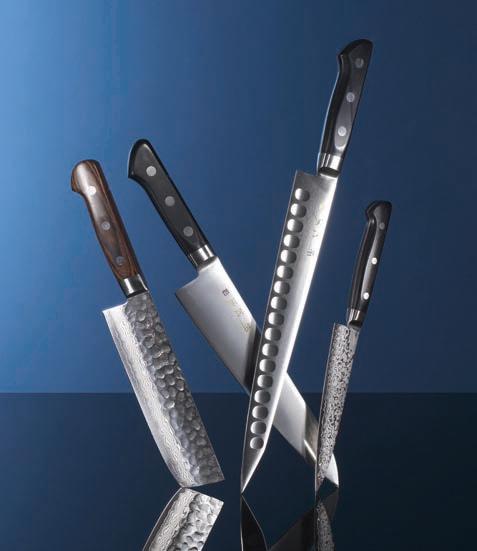







130 bocamag.com • • • • March 2024 EAT & DRINK DISCOVERIES
DAVID BOUHADANA
6 3 1 4 5 7 8 9
EAT & DRINK RESTAURANT DIRECTORY
Gallaghers Steakhouse —2006 N.W. Executive Center Circle. Steakhouse. At this chophouse, the staff is laser-focused on service, the bar pours stiff drinks, and the kitchen dishes out perfectly cooked steaks—a pure embodiment of what you’d expect from a steakhouse. While Gallaghers proved itself a master of its craft, don’t overlook the other items on the menu, like the stuffed shrimp and veal chop. • Lunch and dinner daily. 561/559-5800. $$$$
The Grille On Congress —5101 Congress Ave. American. Dishes at this longtime favorite range from tasty chicken entrees and main-plate salads to seafood options like Asian-glazed salmon or pan-seared yellowtail snapper. • Lunch Mon.–Fri. Dinner Mon.–Sat. 561/912-9800. $$
Houston’s —1900 N.W. Executive Center Circle. Contemporary American. Convenient location, stylish ambience and impeccable service are hallmarks of this local outpost of the Hillstone restaurant chain. There are plenty of reasons why this is one of the most popular business lunch spots in all of Boca, including menu items like Cajun trout, the mammoth salad offerings and the tasty baby back ribs. • Lunch and dinner daily. 561/998-0550. $$$
Il Mulino New York Boca Raton —451
E. Palmetto Park Road. Italian. From the four pre-menu bites to the after-dinner coffee from freshly ground beans, this is a white-tablecloth venue that delivers on its upscale promises. Try the langostino, the red snapper, the risotto, the pasta, or go for the ceviches, caviars and seafood tower. Save room for dessert and complimentary lemoncello. Make a night of it. • Lunch and dinner daily. 561/338-8606. $$$
Josephine’s —5751 N. Federal Highway. Italian. Tradition trumps trendy, and comfort outweighs chic at this Boca favorite. The ambience is quiet and stately but not stuffy, and the menu is full of hearty dishes to soothe the savage appetite, like threecheese eggplant rollatini and chicken scarpariello. • Dinner nightly. 561/988-0668. $$
Kapow Noodle Bar —402 Plaza Real. Asian Kapow delivers an effervescent ambiance that makes you want to relax and stay a while. Its varied menu has something for every craving, from crispy rice and tacos to rolls and even Peking duck. Up your dinner game by reserving a seat at the separate omakase bar serving chef-curated bites that aren’t on the regular menu. And if you’re looking for a memorable night out, book one of the three karaoke rooms.• Lunch and dinner daily. 561/567-8828. $
Ke’e Grill —17940 N. Military Trail, Suite 700. Traditional American. In this busy dining scene for more than 30 years, you will find a lot of seafood (fried calamari, blue crab cakes, yellowtail snapper Francaise and lots more), a few steak, chicken, lamb and pork options, and a quality house-made apple crisp. Your traditional choices are baked, fried, breaded, grilled, broiled, sauteed. With Provencal, Francaise, maple mustard glaze, toasted macadamia nut pesto and piccata twists. A consistent crowd for a consistent menu. • Dinner nightly. 561/995-5044. $$$
Kousine Peruvian Asian —1668 N. Federal Highway. Peruvian/Asian. Chef and owner Danny Kou shares his Peruvian heritage with a curated menu of dishes that accurately represent his country’s famous ceviche while introducing patrons to unique dishes that are just as tempting. Kousine’s space is bright and modern, with exposed industrial ceilings complemented with warm woods and greenery. Lunch and dinner daily. 561/430-3337. $$





March 2024 • • • • bocamag.com 131 204 E. Atlantic Ave., Delray Beach, FL 33444 • 561.272.6654 1185 Third Street South, Naples, FL 34102 • 239.643.8900 Mashpee Commons, Cape Cod, MA 02649 • 508.477.3900 UNIQUEBOUTIQUEJEWELRY.COM TRUNK SHOW with Gabriel Ofiesh Friday, March 1 & Saturday, March 2 • 10am-5pm APPOINTMENTS AVAILABLE UPON REQUEST
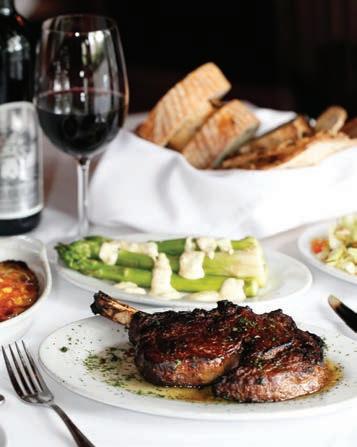
La Condesa —3320 Airport Road. Mexican. Mexico’s bold, colorful and lively culture is reflected in its cuisine, and it’s evident at La Condesa. This family-owned restaurant’s take on Mexican fare offers a sizable menu with a wide selection of popular drinks and dishes like margaritas, nachos, street tacos and burritos. You can also opt for less mainstream dishes like the mole cazuelitas, and you won’t be disappointed. Lunch and dinner daily. 561/931-4008. $
La Nouvelle Maison —55 E. Palmetto Park Road. French. A dining experience at a French restaurant is never just about satiating your hunger. It’s about the entire experience, and La Nouvelle Maison embraces that joie de vivre from the moment you step inside. Whether you delight in the garlic-infused escargots, steak tartare or beef Bourgogne, none of the classic French dishes disappoint here.• Dinner nightly. 561/338-3003. $$$$
La Villetta —4351 N. Federal Highway. Italian. This is a well-edited version of a traditional Italian menu, complete with homemade pastas and other classic dishes. Try the signature whole yellowtail snapper encrusted in sea salt; it’s de-boned right at tableside. Shrimp diavolo is perfectly scrumptious. • Dinner nightly. (closed Mon. during summer). 561/362-8403. $$$
Le Rivage —450 N.E. 20th St., Suite 103. French. Don’t overlook this small, unassuming bastion of traditional French cookery. That would be a mistake, because the dishes that virtually scream “creativity” can’t compare to the quiet pleasures served here—like cool, soothing vichyssoise, delicate fillet of sole with nutty brown butter sauce or perfectly executed crème brûlee. Good food presented without artifice at a fair price never goes out of fashion. • Dinner nightly. 561/620-0033. $$
Loch Bar —346 Plaza Real. Seafood. This sister restaurant to Ouzo Bay includes fried oysters, moules frites and Maryland crab cakes. The bar offers literally hundreds of whiskeys, a noisy happy hour crowd and live music most nights. • Lunch and dinner daily. 561/939-6600. $$
Los Olivos Bistro —5030 Champion Blvd. Argentine. The family-owned bistro’s menu honors familial Argentine roots with typical crave-worthy dishes like empanadas and plenty of red meat. Still, it also honors the cuisine’s Spanish and Italian influences with its standout paellas and housemade pasta. • Lunch and dinner Mon.-Sat. 561/756-8928. $
Puff Piece
Morton’s The Steakhouse’s raspberry and Grand Marnier Souffle, a limited-time dessert with a cult following, recently made its triumphant return to the menu.
Louie Bossi’s —100 E. Palmetto Park Road. Italian. This jumping joint serves terrific Neapolitan pizza (thin crust), but don’t miss the other entrées. Start with a charcuterie/ cheese plate and grab the amazing breadsticks. All breads and pastas are made on the premises. Other faves include the carbonara and the calamari, and save room for housemade gelato. Unusual features: Try the bocce ball court included with the retro Italian décor. • Lunch and dinner daily, weekend brunch. 561/336-6699. $$$
Luff’s Fish House —390 E. Palmetto Park Road. Seafood. A renovated 1920s bungalow houses this shipshape restaurant, in addition to two large, outdoor deck and patio areas. It’s known for familiar dish names with new tweaks: smoked fish-hummus dip, falafel fish fritters, crab guacamole, mussels in coconut curry broth, plus the paella on Sundays only. Don’t leave without the enormous slice of the Key lime pie, topped with meringue on a graham cracker crust. • Lunch and dinner daily. 561/609-2660. $$
Maggiano’s —21090 St. Andrews Blvd. Italian. Do as the Italians do, and order family-style: Sit back and watch the endless amounts of gorgeous foods grace your table. In this manner, you receive two appetizers, a salad, two pastas, two entrées and two desserts. The menu also includes lighter takes on staples like chicken parm, fettuccine alfredo and chicken piccata. • Lunch and dinner daily. 561/361-8244. $$
Mario’s Osteria —1400 Glades Road, Suite 210. Italian. This popular spot features rustic Italian fare in a sleek environment. Signature dishes like the garlic rolls, lasagna and eggplant “pancakes” are on the new menu, as are butternut squash ravioli and thick, juicy rib-eye served “arrabiata” style. • Lunch and dinner daily. 561/239-7000. $$
Matteo’s —233 S. Federal Highway, Suite 108. Italian. Hearty Italian and Italian-American food, served in giant “family style” portions, needs no reinventing. Though there is no shortage of local restaurants cooking in that genre, it’s the details of preparation and service that make Matteo’s stand out. Baked clams are a good place to start, as is the reliable chopped salad. Linguini frutti di mare is one of the best in town. • Dinner nightly. 561/392-0773. $$
Max’s Grille —404 Plaza Real. Contemporary American. After 24 years in Mizner Park, This modern American bistro is a true local classic. The food and decor are both timeless and up to date, and the ambience is that of a smooth-running big-city bistro. Service is personable and proficient. The menu is composed of dishes you really want to eat, from the applewood bacon-wrapped meatloaf to the wickedly indulgent crème brûlèe pie. • Lunch Mon.–Fri. Brunch Sat–Sun. Dinner nightly. 561/368-0080. $$
Medi Terra —301 Via de Palmas #99. Mediterranean. Embracing western Mediterranean cuisine, the menu is seasonal and revolves around what the owners can freshly source, so make sure to wait for the specials before making any final decisions. The father-son duo bought Ristorante Sapori in Royal Palm Place and redesigned it to reflect their passion for Mediterranean cuisine. Lunch and Dinner Mon.Sat. 561/367-9779. $$
Morton’s The Steakhouse —5050 Town Center Circle, Suite 219. Steakhouse. There’s seemingly no end to diners’ love of huge slabs of high-quality aged beef, nor to the carnivores who pack the clubby-swanky dining room of this meatery. While the star of the beef show is the giant bone-in filet mignon, seasonally featured is the American Wagyu New York strip. Finish off your meal with one of the decadent desserts.• Dinner nightly. 561/392-7724. $$$$
New York Prime —2350 N.W. Executive Center Drive. Steakhouse. This wildly popular Boca meatery Monday, Monday packs them in with swift, professional service, classy supper club ambience and an extensive wine list. And, of course, the beef—all USDA Prime, cooked to tender and juicy lusciousness over ferocious heat. The bone-in rib-eye is especially succulent, but don’t neglect the New York strip or steak-house classics like oysters Rockefeller, garlicky spinach and crusty hash browns. • Dinner nightly. 561/998-3881. $$$$
Patio Tapas & Beer —205 S.E. First Ave. Spanish. Be transported to the Iberian Peninsula with a variety of tapas. Chef Bryant Fajardo, who trained under celebrated chef José Andrés, specializes in one of Spain’s most traditional and iconic cuisines and delivers both classic selections like Manchego cheese and anchovies alongside premium nibbles like seared duck and foie gras. • Lunch and dinner daily. 561/419-7239. $
EAT & DRINK RESTAURANT DIRECTORY
132 bocamag.com • • • • March 2024
Bone-in rib steak from New York Prime
Buzz Bite I
Wellington Bacon & Bourbon Fest
Du ring our winter season’s countless events, one stands out for those who are bourbon connoisseurs and pork patrons. Wellington’s Bacon & Bourbon Fest returns on March 23-24 with more than 30 bourbon distilleries and a wide variety of bacon-infused treats. The 10th-annual event is a free, family-friendly celebration held at the Village of Wellington Town Center Promenade that also features local artisans and a few bacon and bourbon pairing seminars if you want to take your passion for the two headliners to another level. For more information, visit baconbourbonfest.com.
—Christie Galeano-DeMott
Prezzo —5560 N. Military Trail. Italian. A reincarnation of a popular 1990s Boca venue, this version has updated the dining room, kept the yummy oven-baked focaccia bread slices, and added a 21st-century taste to the menu. Don’t miss the tender bone-in pork chop, thin-crust pizza and seafood specials. Vegetarian and gluten-free choices are on the menu, too. • Lunch Mon.-Fri. Dinner nightly. 561/314-6840. $$
Rafina —6877 S.W. 18th St. Greek. If you find the ambience of most Greek restaurants to be like a frat party with flaming cheese and ouzo, this contemporary, casually elegant spot will be welcome relief. Food and decor favor refinement over rusticity, even in such hearty and ubiquitous dishes as pastitsio and spanakopita. Standout dishes include the moussaka, the creamy and mildly citrusy avgolemono soup and the precisely grilled, simply adorned (with olive oil, lemon and capers) branzino. • Lunch and dinner daily. 561/409-3673. $$
Red Pine Restaurant & Lounge —1 Town Center Road. Chinese. The menu is designed to be enjoyed family-style, with substantial portions of classic dishes like house-made vegetable eggrolls, fried rice and General Tso’s chicken, to name a few. The space is bright and lively, with floorto-ceiling windows, an expansive bar, and several dining spaces accentuated with crimson banquettes. • Dinner Tues-Sun. 561/826-7595. $$
Ruth’s Chris—225 N.E. Mizner Blvd., Suite 100. Steakhouse. Not only does this steakhouse favorite emphasize its New Orleans roots, it also distinguishes itself from its competitors by just serving better food. The signature chopped salad has a list of ingre-
dients as long as a hose but they all work together. And how can you not like a salad topped with crispy fried onion strings? Steaks are USDA Prime and immensely flavorful, like a perfectly seared New York strip. The white chocolate bread pudding is simply wicked. • Dinner nightly. 561/392-6746. (Other Palm Beach County locations: 651 Okeechobee Blvd., West Palm Beach, 561/514-3544; 661 U.S. Highway 1, North Palm Beach, 561/863-0660.) $$$$
Seasons 52 —2300 Executive Center Drive. Contemporary American. The food—seasonal ingredients, simply and healthfully prepared, accompanied by interesting wines—is firstrate, from salmon roasted on a cedar plank to desserts served in oversized shot glasses. • Lunch and dinner daily. 561/998-9952. (Other Palm Beach County location: 11611 Ellison Wilson Road, Palm Beach Gardens, 561/625-5852.) $$
SeaSpray Inlet Grill —999 E. Camino Real. American. Unobstructed views of Lake Boca Raton, soaring palm trees and coastal décor peppered with fringed umbrellas all set the mood for a relaxing experience that will make you feel as if you’re on vacation. The menu accommodates different dietary preferences with gluten-free, vegetarian and vegan options. Don’t sleep on the pear tortellini pasta starter; it’s a star item. Portions are hearty and can be easily shared. • Breakfast, lunch and dinner daily. 561/226-3022. $$
Six Tables a Restaurant—112 N.E. Second St., Boca Raton. American. The dimly lit chandeliers, burgundy velvet curtains and smooth Sinatra lyrics set the mood for a memorable evening that’s dedicated to fine dining without pretention. With a seasonal menu that’s ever changing, you can rest
March 2024 • • • • bocamag.com 133
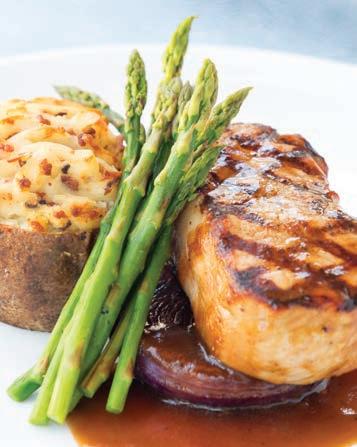
assured that whatever husband and wife chef-proprietors Tom and Jenny Finn prepare for you, it will truly be special and made with love. • Dinner Thurs.-Sat. 561/347-6260. $$$$
Taverna Kyma —6298 N. Federal Highway. Greek/ Mediterranean. Hankering for a traditional Greek meal, and a menu that offers just about everything? This is where you want to try the meze plates (cold, hot, seafood, veggie), saganaki, grilled entrees and kebobs. From the taramosalata to the branzino and pastitsio, servings are generous and good. Don’t forget dessert. • Lunch Mon.-Fri. Dinner nightly. 561/994-2828. $$
Trattoria Romana —499 E. Palmetto Park Road. Italian. This local mainstay does Italian classics and its own lengthy list of ambitious specials with unusual skill and aplomb. The service is at a level not always seen in local restaurants. Pay attention to the daily specials, especially if they include impeccably done langostini oreganata and the restaurant’s signature jumbo shrimp saltimbocca. • Dinner nightly. 561/393-6715. $$$
Twenty Twenty Grille —141 Via Naranjas, Suite 45. Contemporary American. You’ve probably licked postage stamps that are larger than Ron and Rhonda Weisheit’s tiny jewel box of a restaurant, but what it lacks in space it more than makes up for in charm, sophistication and imaginative, expertly crafted food. Virtually everything is made in-house, from the trio of breads that first grace your table to the pasta in a suave dish of tagliatelle with duck and chicken confit. Don’t miss the jerk pork belly and grilled veal strip loin. • Dinner nightly. 561/990-7969. $$$
Villagio Italian Eatery —344 Plaza Real. Italian
The classic Italian comfort food at this Mizner Park establishment is served with flair and great attention to detail. The reasonably priced menu—with generous portions—includes all your favorites (veal Parmesan, Caesar salad) and some outstanding seafood dishes (Maine lobster with shrimp, mussels and clams on linguine). There is a full wine list and ample people-watching given the prime outdoor seating. • Lunch and dinner daily. 561/447-2257. $$
Vino —114 N.E. Second St. Wine Bar/Italian. An impressive wine list of some 250 plus bottles (all available by the glass) offers a multitude of choices, especially among Italian and California reds. The menu of “Italian tapas” includes roasted red peppers with Provolone, as well as ricotta gnocchi with San Marzano tomatoes. • Dinner Tues.–Sat. 561/869-0030. $$
Roll Call
With nearly 50 rolls to choose from, Skyfin Asian Bistro’s selections go beyond just raw fish, with sweet potato, fried fish and shrimp cucumber among the diverse offerings.
Yakitori —271 S.E. Mizner Blvd. Asian. This Japanese restaurant that has sat for nearly a decade in Royal Palm Place is still welcoming devoted diners and delivering consistent, premium dishes. Sip on one of its refreshing cocktails like the lychee martini or green tea mojito before perusing the vast menu that offers everything from sushi and sashimi to fried rice, ramen and entrées from the robata grill. • Lunch and dinner daily. 561/544-0087. $$
WEST BOCA
Boon’s Asian Bistro —19605 N. State Road 7. Japanese/Thai. This is one of two Boon’s (the other is in Delray Beach), and it’s where the rush to eat excellent sushi started. The fast-moving staff is choreographed to deliver dishes such as shrimp pad Thai that’s light, delicate and happily filled with shrimp. The Thai fried rice is unusually delicate too, with lots of egg, and is some of the best around. The sushi rolls are as fresh and inventive (try the Daimyo roll) as they are beautifully presented. Go early or call for a reservation. • Lunch Mon.-Fri. Dinner nightly. 561/883-0202. $$
Chloe’s Bistro —6885 S.W. 18th St. Italian. One of the few venues that’s on the water, with food to match the view.
Try the seafood linguine, the large snapper filets in Marechiara sauce, and the desserts to end on a sweet note. House-made pasta and a good wine list ensure a pleasant, satisfying meal. • Lunch and dinner daily. 561/334-2088. $$
City Fish Market—7940 Glades Road. Seafood. A multimillion-dollar remodel of the old Pete’s has turned it into an elegant seafood house with a lengthy seafood-friendly wine list, impeccably fresh fish and shellfish cooked with care and little artifice. • Lunch Mon.–Fri. Dinner nightly. 561/487-1600. $$
Ditmas Kitchen —21077 Powerline Road. Contemporary kosher. This west Boca restaurant is named after a Brooklyn avenue in a district known for its food. Here you’ll find very good casual food, and no dairy products are used. Try the Hibachi salmon, all-kale Caesar salad, the shnitzel sandwich. • Dinner Sun.-Thurs. 561/826-8875. $$$
DVASH —8208 Glades Road. Mediterranean. The menu, a collection of Mediterranean fusion dishes with a variety of daily specials, caters to an array of diets, including vegan, vegetarian and gluten-free. The Cohen family, who previously owned Falafel Bistro & Wine Bar in Coral Springs for more than a decade, now welcomes diners to this West Boca restaurant that’s tucked away in the Publix Greenwise strip mall. • Lunch and dinner Tues.-Sun. 561/826-7784. $$
Oli’s Fashion Cuisine —6897 S.W. 18th St. Modern American. With the unusual name comes a menu sporting lobster risotto to tuna tacos, grilled mahi and more. There are Italian, vegetarian, steak, flatbreads, salads and desserts, all pleasing to the eye and palate. Inside is a bit noisy, so try the outdoor, lakeside patio for a quieter meal. • Lunch and dinner daily, breakfast weekends. 561/571-6920. $$
Oliv Pit Athenian Grille —6006 S.W. 18th St. Modern Greek. The owners’ goal of bringing together the best of Greek cooking under one roof, much like the melting pot that is Athens, is covered here in an extensive menu. The best way to enjoy the food is to share it: the Pikilia trio with tzatziki, spicy feta and eggplant spread is a starting place. Try the mix grill platter and the hearty red Greek wine. End the night with a unique, velvety frappe cappuccino. • Lunch and dinner daily. 561/409-2049. $$
Skyfin Asian Bistro —8221 Glades Road. Asian. After nearly a decade of dishing out elevated Beijing cuisine at MR CHOW inside the posh W South Beach, chef Aden Lee left his sous chef position to venture out on his own. Here, you’ll find both playfully named sushi rolls and fresh sashimi alongside protein-rich house specials, fried rice and noodles. Don’t miss the Toro Roll and Tangerine Peel Beef. • Lunch and dinner daily. 561/556-1688. $$
Villa Rosano—9858 Clint Moore Road. Italian. You can be forgiven for imagining yourself in some rustic Italian hill town as the smells of garlic and tomato sauce waft through the air. Start by sopping up the house olive oil with slices of crusty bread, then move on to a stellar version of clams Guazzetto and delicate fillets of sole done a la Francese. • Lunch Mon.-Sat. Dinner nightly. 561/470-0112. $$
BOYNTON BEACH
Driftwood —2005 S. Federal Highway. Modern American. Take food combos that sound unusual (popcorn sauce, avocado chocolate ice cream) but that taste wonderful and you’ve got Chef Jimmy Everett’s ideas on the table. They don’t last long, because they taste terrific. Try the smoked swordfish, the lobster with pickled okra, ricotta dumplings, the burger with gouda, the grilled octopus and pastrami’d chicken breast with roasted cabbage. • Brunch Sun. Dinner Tues.-Sun. 561/733-4782. $$
EAT & DRINK RESTAURANT DIRECTORY
134 bocamag.com • • • • March 2024
Entree from Twenty Twenty Grille
AARON BRISTOL
Josie’s Italian Ristorante—1602 S. Federal Highway. Italian. Famed chef and South Florida culinary godfather Mark Militello is back at Josie’s after a brief stint at Boca’s Prezzo, and his magic in the kitchen of this cozy, old-school Italian restaurant is duly noted. His influence is evident in the daily specials, but old favorites like beefy short rib meatballs, an upmarket version of the classic San Francisco cioppino, and Josie’s signature veal Bersaglieri (veal medallions with artichokes, olives and roasted peppers in lemon-white wine sauce) don’t fail to satisfy either. • Lunch Mon.-Sat. Dinner nightly. 561/364-9601. $$
Prime Catch —700 E. Woolbright Road. Seafood Waterfront restaurants are few and far between in our neck of the woods, and those with good food are even more rare. Prime Catch, at the foot of the Woolbright bridge on the Intracoastal, is a best-kept secret. The simple pleasures here soar—a perfectly grilled piece of mahi or bouillabaisse overflowing with tender fish. Don’t miss one of the best Key lime pies around. • Lunch and dinner daily, Sunday brunch. 561/737-8822. $$
Sushi Simon 1628 S. Federal Highway. Japanese
It’s been called “Nobu North” by some aficionados, and for good reason. Local sushi-philes jam the narrow dining room for such impeccable nigirizushi as hamachi and uni (Thursdays), as well as more elaborate dishes like snapper Morimoto and tuna tartare. Creative, elaborate rolls are a specialty. • Lunch and dinner daily. 561/731-1819. $$
DELRAY BEACH
50 Ocean—50 S. Ocean Blvd. Seafood. The former Upper Deck at Boston’s on the Beach is now the more upscale, seafood-oriented spot. The menu ranges from familiar to slightly more inventive, from a classic lobster bisque and crisp-tender fried clam bellies to rock shrimp pot pie and baked grouper topped with blue crab. The cinnamon-dusted beignets are puffs of amazingly delicate deep-fried air and should not under any circumstances be missed. • Lunch Mon.-Sat. Dinner nightly. Brunch Sun. 561/278-3364. $$
800 Palm Trail Grill—800 Palm Trail. American. This contemporary space is serving up American fare and classic cocktails. The menu has a steak-and-seafood-house feel to it but without any stuffiness. Instead, you’ll find dishes that entice the palate, like the loaded baked potato eggrolls and Wagyu boneless short rib. • Lunch and dinner daily, with patio dining. 561/865-5235. $$$
Akira Back —233 NE Second Ave. Japanese Chef Akira Back’s Seoul restaurant earned a Michelin star a few years ago and now he’s showcasing his talented take on Japanese cuisine at his namesake restaurant inside The Ray hotel. Born in Korea and raised in Colorado, Back blends his heritage with Japanese flavors and techniques he has mastered to deliver dishes that are unique to him. With plates made to be shared, the menu is divided into cold and hot starters followed by rolls, nigiri/sashimi, robata grill, mains and fried rice. Dinner. 561/739-1708. $$$$
Amar Mediterranean Bistro —522 E. Atlantic Ave. Lebanese. From the moment you step inside, there’s a familial feeling, a hidden gem that everyone is drawn to. Amar is a quaint bistro amidst the buzzy Atlantic Avenue that serves Lebanese food. But this isn’t your typical hummus and pita joint. Here, the proprietor’s family recipes take center stage alongside Mediterranean favorites that have been elevated with slight tweaks. • Dinner nightly. 561/865-5653. $$
Angelo Elia Pizza • Bar • Tapas — 16950 Jog Road. Italian. Nothing on the menu of Angelo Elia’s modern, small plates-oriented osteria disappoints, but particularly notable are the meaty fried baby artichokes stuffed with breadcrumbs
March 2024 • • • • bocamag.com 135
Cheers to Sake!
Sake is a staple on menus around town, but how much do we really know about this Japanese drink made from fermented rice? We tapped Vaughan Dugan, owner of Kapow Noodle Bar and certified sake sommelier, to share his knowledge of this ancient beverage.
Written by CHRISTIE GALEANO-DEMOTT
It all starts with the rice, but this isn’t your usual table rice. Sake rice is larger and has a starch-rich center. That center dictates the quality of the sake, so once the rice is milled, it is polished. The more of the rice that is polished away to get to that starchy core, the better the sake. It will be smoother and more delicate. Polishing is also time-intensive, thus yielding a higher price point. The rice polish ratio (RPR, or seimaibuai in Japanese) refers to the percentage of grain that remains after polishing, so sake with a 60 percent RPR means 40 percent of the outer layer has been polished off. An ultra-premium sake can have a polish rate of 30 percent, while table sake can have 70 percent.
Percentages can get confusing, so if you’re going to remember just one thing, make sure to look for Jumani on the label. It translates
to “pure,” so you’re guaranteed it wasn’t enhanced with additional alcohol or additives. Dugan’s best advice is to keep trying different types of sake.“There is no right or wrong answer. Stick with what you love. Drink what you like.”
FUN FACTS
• It’s pronounced sock-ay, not sa-key
• Don’t call it wine. It’s not. It’s actually closer to beer, if anything. It’s brewed, not distilled (like liquor).
• About 100 varieties of rice are specifically grown to make sake.
• It’s made with only four ingredients: water, rice, yeast and koji mold.
• Sake is gluten-free and sulfite-free.
• ABV ranges from 14-16% (compared to wine’s average 12% and beer’s 5%).
• It is meant to be consumed when it’s young (for the most part).

• It’s referred to as the national beverage of Japan, but don’t call it sake there. It’s called nihonshu.
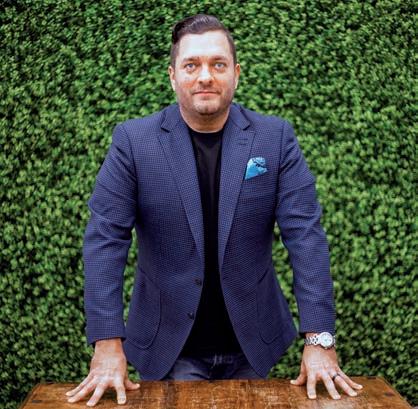
• The U.S. brews sakes too, and some are worth checking out.
ADVICE FOR NOVICES
• SAKE’S PRICE REFLECTS ITS QUALITY: higher price, better quality (generally). The Japanese have integrity in their art form, so if they spend time polishing it and making it, they charge accordingly. But that doesn’t mean you can’t find good sake at an affordable price. Search out deals and small brewers. (See below for suggested brands.)
• It should always be served slightly chilled.
• Don’t pour your own sake. The host will always pour for guests, and then the last person will pour for the host.
• Never fill your cup to the rim.
• Don’t shake the bottle.
• KNOW HOW TO READ THE BOTTLE: the sake meter value (SMV) +5 means the sake is very dry, while at the opposite end, -5 means it’s very sweet. (And 0 is neutral.)
• On menus, look for the milliliters to know how big the bottle will be. Usually, it’s either 300 or 720.
BRANDS
INTRO ($): Soto (it’s approachable and goes well with everything)
INTERMEDIATE ($$): Shimizu-NoMai (Pure Snow or Pure Dusk)
WORTH THE SPLURGE ($$$): Dassai (23 Otter Festival)
CATEGORIES EXPLAINED
JUNMAI DAIGINJO – ultra-premium (50% or more of rice coating is removed)
JUNMAI GINJO – super premium (40% of coating removed)
JUNMAI – premium (30% of coating removed)
FUTSU-SHU – table sake (less than 30% removed; this also includes hot sake and nigori (unfiltered cloudy sake).
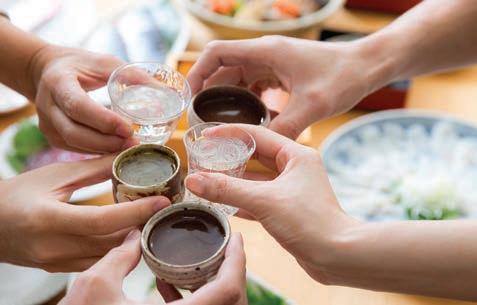
136 bocamag.com • • • • March 2024 EAT & DRINK TABLE TALK
Vaughan Dugan
EAT & DRINK RESTAURANT DIRECTORY
and speck, delicate chicken-turkey meatballs in Parmesan-enhanced broth, and Cremona pizza with a sweet-salty-earthy-pungent mélange of pears, pancetta, Gorgonzola, sun-dried figs and mozzarella. • Lunch Tues.-Sun. Dinner nightly. 561/381-0037. $
Atlantic Grille—1000 E. Atlantic Ave. Seafood/Contemporary American. This posh restaurant in the luxurious Seagate Hotel & Spa is home to a 450-gallon aquarium of tranquil moon jellyfish and a 2,500-gallon shark tank. Savor inventive cuisine that takes the contemporary to the extraordinary. Bold flavors, inspired techniques and the freshest ingredients make every meal a culinary adventure. • Lunch and dinner daily. Brunch Sat.–Sun. 561/665-4900. $$
Avalon Steak and Seafood—110 E. Atlantic Ave. Seafood/Steakhouse. The enticing reasons we all go to a steakhouse are present here—boozy cocktails, a diverse wine list, dry aged steaks, prime cuts, rich accompaniments, decadent sides and more. The menu is then enhanced with a selection of seafood like a raw bar medley of oysters, shrimp and crab alongside the customary octopus, fish, scallops and lobster. Don’t miss Avalon’s signature dish, the Angry Lobster. • Dinner nightly. 561/593-2500. $$$$
Bamboo Fire Cafe —149 N.E. Fourth Ave. Caribbean. The Jacobs family joyously shares its Latin and Caribbean culture through food that’s bursting with bright island aromas and flavors. Tostones, plantain fries and jerk meatballs share the menu with curry pork, oxtail and conch. A quintessential Delray gem. • Dinner Wed.Sun. 561/749-0973. $
Bar 25 Gastropub —25 S.E. Sixth Ave., Delray Beach. American. Taking inspiration from the Northeast, the menu boasts staples like Philly cheesesteak, Rhode Island clams, pierogis, Old Bay fries and plenty of mootz (aka mozzarella). Loyal to its gastropub DNA, dishes here aren’t complicated or complex but satisfying, interesting takes on the familiar without being boring. • Lunch and dinner daily, weekend brunch. 561/359-2643. $
Beg for More Izakaya —19 S.E. Fifth Ave. Japanese Small Plates. The large sake, whisky and beer menu here pairs beautifully with the small plates full of everything except sushi. No sushi. And that’s fine. Try the takoyaki (octopus balls), the crispy salmon tacos and anything with the addictive kimchi, such as the kimchi fried rice. There are pasta, teriyaki and simmered duck with bok choy dishes—or 16 varieties of yakitori (food on skewers). You’ll be back to beg for more. • Lunch and dinner daily. 561/5638849. $$
Brulé Bistro —200 N.E. Second Ave. Contemporary American. The regular menu of this Pineapple Grove favorite always has satisfying dishes. Its specialties include crab tortellini with black truffles, chicken meatballs with coconut broth and cashews, plus signature dessert pistachio crème brùlée. Spirits and house cocktails steeped in speakeast style are paired with an ever-changing menu. Outside tables offer the best option for conversation. • Lunch and dinner daily. 561/274-2046. $$
Burt & Max’s —9089 W. Atlantic Ave. Contemporary
American. This bastion of contemporary comfort food in west Delray is approaching local landmark status, forging its own menu while borrowing a few dishes from Max’s Grille, like the hearty chopped salad and bacon-wrapped meatloaf. Other dishes are variations on the comfort food theme, including a stellar truffle-scented wild mushroom pizza. • Dinner nightly. Sunday brunch. 561/638-6380. $$
Cabana El Rey —105 E. Atlantic Ave. Cuban tropical. Little Havana is alive and well in Delray. The menu is a palette-pleasing travelogue, including starters like mariquitas (fried banana chips) and main courses such as seafood paella (think mussels, shrimp, clams, conch, scallops and octopus). • Lunch and dinner daily. 561/274-9090. $$

March 2024 • • • • bocamag.com 137

Caffe Luna Rosa—34 S. Ocean Blvd. Italian. This multiple Delray Beach-award winning restaurant has sparkling service, comfort food taken to a higher level, and a setting just steps from the Atlantic. A success from day one, they dish up big flavors in a tiny space, so call for reservations. Try the calamari fritto misto, then the rigatoni pomodoro and leave room for dessert. Or come back for breakfast. • Open daily from breakfast through dinner. 561/274-9404. $$
Casa L’Acqua Ristorante Italiano —9 S.E. Seventh Ave. Italian. Casa L’Acqua is touted as a fine-dining establishment, and correctly so; diners can expect white tablecloths, tuxedoed staff and attentive service. The wine list is Italian-focused but does offer a variety of bottles from around the world, and each dish is expertly prepared with sizable portions. The main dining room, with its vibey bar and wine cellar, is cozy, and so is its fully enclosed patio in the back. • Dinner nightly. 561/563-7492. $$
City Oyster —213 E. Atlantic Ave. Seafood. This stylish mainstay of Big Time Restaurant Group serves up reasonably priced seafood that never disappoints, such as shrimp and grits with a jumbo crab cake. This is the place to see and be seen in Delray, and the food lives up to its profile. • Lunch Mon.–Sun. Dinner nightly. Outdoor dining. 561/272-0220. $$
Coco Sushi Lounge & Bar —25 N.E. Second Ave. Asian. Local hospitality veterans Tina Wang and chef Jason Zheng continue to grow their restaurant empire with this concept. The extensive menu caters to any palate, dietary restriction or craving and features both traditional and creative dishes. Soups and salads lead into sushi selections and appetizers divided into cool and hot. Cooked and raw rolls are followed by rice, noodle, land and sea entrée options. • Dinner Mon.-Sat. Sunday brunch. 561/908-2557. $$
Costa By OK&M—502 E. Atlantic Ave. Contemporary American. Costa takes chef/owner Coton Stine’s dedication to farmto-table fare to an elevated level with its seasonal menu. Working closely with local farms and vendors, Stine curates deliciously healthy dishes that tempt your palate while fueling your body. For those with dietary restrictions, the dishes are clearly labeled gluten-free or vegan, which adds a sense of ease to the experience. The corner space is comfortable and embraces natural elements with its wicker chairs, lanterns, greenery and expansive sliding doors. • Breakfast, lunch and dinner daily. 561/501-6115. • $$
the waterfront location just seems to make everything taste better. • Lunch Mon.–Fri. Brunch Sat.–Sun. Dinner nightly. 561/665-8484. $
Drift —10 N. Ocean Blvd. American . Inside the Opal Grand Resort & Spa, the restaurant’s coastal décor is polished with warm woods, textured stone walls, rope detailing and living walls. The bar is spacious, and several nooks overlook the ocean and the buzzy Atlantic Avenue. The all-day menu covers all the bases. You’ll find easy dishes to snack on after the beach, or if you’re craving an extended Happy Hour experience, enjoy the cheese board, hummus, baked oysters and poke alongside casual burgers, flatbreads and salads. The entrées offer something for everyone, including chicken, steak, lamb and fish. Lunch and dinner daily. 561/274-3289. $$
Eathai —1832 S. Federal Highway. Thai. If you’re craving approachable and affordable Thai food, put Eathai at the top of your list. While you can expect to find curries, noodles, soups and fried rice on the menu, the dishes here aren’t the typical ones you’ll find around town. Indulge in the Thai Chicken French Toasted or Crispy Duck Breast with Lychee Curry Sauce or Oxtail Basil Fried Rice to savor the true talent of owner and chef Sopanut Sopochana. • Lunch and dinner daily, except Tuesday. 561/270-3156. $
El Camino —15 N.E. Second Ave. Mexican . This sexy, bustling downtown spot is from the trio behind nearby Cut 432 and Park Tavern. Fresh, quality ingredients go into everything from the tangy tomatillo salsas to the world-class fish tacos clad in delicate fried skin, set off by tart pineapple salsa. Cinnamon and sugar-dusted churros are the perfect dessert. And check out the margaritas, especially the smoky blend of mezcal and blanco tequila. • Lunch and dinner daily. 561/865-5350. $$
Elisabetta’s —32 E. Atlantic Ave. Italian. An ornate Italian spot, with classically prepared dishes including spiedini shrimp, burrata de prosciutto bruschetta, costoletta di vitello (veal), a guanciale pizza, cacio e pepe pasta, malfadine Amatriciana and gemelli puttanesca. Portions are large and that, thankfully, goes for the homemade gelati, too. The best seating outdoors is the second-floor balcony overlooking Atlantic Avenue. • Lunch and dinner daily; weekend brunch. 561/650-6699. $$
Salon Culture
The Salon, the newest addition to The Grove, is the restaurant’s private and exclusive event space, customizable for everything from boisterous parties to buttoned-down wine tastings.
Cut 432 —432 E. Atlantic Ave. Steakhouse. Hipper decor, a more casual vibe and an inventive take on steak-house favorites make this sleek restaurant just different enough to be interesting. Starters such as ceviche (prepared Peruvian style) and ultrarich oysters Rockefeller are first-rate, while the wetaged beef is appropriately tender and tasty. • Dinner nightly. 561/272-9898. $$$
Dada—52 N. Swinton Ave. Contemporary American. The same provocative, whimsical creativity that spawned Dada the art movement infuses Dada the restaurant, giving it a quirky charm all its own. The comfort food with a moustache menu has its quirky charms, too, like shake-n-bake pork chops with sweet-savory butterscotch onions, and a brownie-vanilla ice cream sundae with strips of five-spice powdered bacon. The wittily decorated 1920s-vintage house-turned-restaurant is, as they say, a trip. • Dinner nightly. 561/330-3232. $$
Deck 84 —840 E. Atlantic Ave. Contemporary American. Burt Rapoport’s ode to laid-back tropical dining is like a day at the beach without getting sand between your toes. Though the restaurant is casual, the kitchen takes its food seriously, whether the stellar flatbreads, the thick and juicy 10-ounce special blend burger or homey seasonal cobbler. And
The Grove —187 N.E. Second Ave. Contemporary American. The Grove, which has been tucked inside the tranquil Pineapple Grove district for nearly a decade, continues to surprise diners with its vibrant dishes. The upscale but casually comfortable nook has an international wine list that spans the globe and a seasonal menu that’s succinct and well thought out. • Dinner Tues.-Sat. 561/266-3750. $$
The Hampton Social —40 N.E. Seventh Ave. American. The Hampton Social is known for its “rosé all day” tagline, but it doesn’t just slay its rosé; its food is equally as tempting. It does a standout job of incorporating its casual coastal aesthetic into not just its décor but also its menu, from its seafood-centric dishes to its droll cocktail names like the vodka-forward I Like It a Yacht. • Lunch and dinner daily, weekend brunch. 561/404-1155. $$
Henry’s —16850 Jog Road. American. This casual, unpretentious restaurant in the west part of town never fails to delight diners. Expect attentive service and crisp execution of everything—from meat loaf, burgers and fried chicken to flatbreads and hefty composed salads. • Lunch Mon.–Sat. Dinner nightly. 561/638-1949. $$
EAT & DRINK RESTAURANT DIRECTORY
138 bocamag.com • • • • March 2024
Cookie Spree from Eathai
AARON BRISTOL
Buzz Bite II
Celebrating St. Patrick’s Day
Th is year, the annual celebration falls on Sunday, March 17. Historically a day to observe the death of Patrick, the patron saint of Ireland, the fête has transformed into a lively celebration of all things Ir ish. Whether you love a meaty (and creamy) shepherd’s pie, a hearty corned beef and cabbage, a malty Guinness draught or indulgent Irish coffee, this is the day to savor every bite and sip. And if you’re looking for authentic Irish dishes to re-create at home, try a colcannon recipe for a cabbage and mashed potatoes dish or Irish bacon with a boxty, or crispy potato pancake. Catch all the festivities and delicacies at one of the several Irish pubs around town. Three of our favorites are listed below. Sláinte!
THE IRISHMEN
1745 N.W. Second Ave.; 561/368-1129; irishmenpub.com
O’BRIAN’S IRISH PUB
51 S.E. First Ave., Boca Raton; 561/3387565; obrianspub.com
O’CONNOR’S PUB
210 N.E. Second St., Delray Beach; 561/330-0022
—Christie Galeano-DeMott


“Before you and your staff from Boca Nursing Services started taking care of Helen and I, we existed; now we are living again! Thank you, Rose.”
$$
March 2024 • • • • bocamag.com 139
-Dr. K.D. Rose Glamoclija, R.N. Founder and Administrator Serving Broward, Palm Beach, Martin & St. Lucie Counties Lic#HHA20196095 342 E. Palmetto Park Rd., Suites 1 & 2 Boca Raton, FL 33432 (561) 347-7566 Fax (561) 347-7567 255 Sunrise Avenue, Suite 200 Palm Beach, FL 33480 (561) 833-3430 Fax (561) 833-3460 Offering Quality Private Duty Nursing Care and Care Management Services Since 1993 Available 24 Hours a Day It’s The Personal Touch That Makes The Difference • Registered Nurses • Licensed Practical Nurses • Certified Nursing Assistants • Home Health Aides • Physical Therapy • Companions • Live-Ins • Homemakers • Speech Therapy • Occupational Therapy Il Girasole —2275 S. Federal Highway. Northern Italian. If you want Northern Italian in a low-key atmosphere, and nobody rushing you out the door, this is your spot. Start with something from the very good wine list. Try the yellowtail snapper, the penne Caprese and the capellini Gamberi, and leave room for the desserts. Reservations recommended. • Dinner Tues.–Sun. 561/272-3566.
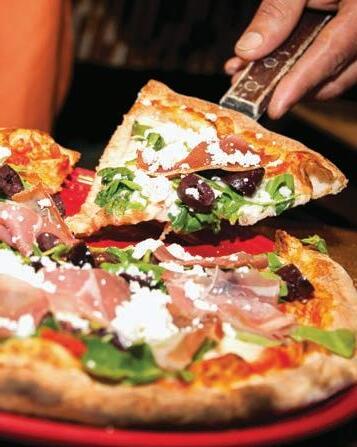
J&J Seafood Bar & Grill —634 E. Atlantic Ave. Seafood. This local favorite on Atlantic Avenue—owned by John Hutchinson (who is also the chef) and wife Tina—serves up everything from burgers and wraps to a menu brimming with seafood options. Don’t forget to inquire about the stunning array of 10 specials—every night. This is is a bona fide local go-to spot that never disappoints. • Lunch and dinner Tues.–Sat. 561/272-3390. $$
Jimmy’s Bistro —9 S. Swinton Ave. International. Jimmy’s Bistro is a casual neighborhood concept serving consistently delightful dishes from a diverse menu that can transport diners to Italy with house-made pasta or Asia with its delicate dumplings and tender duck. • Dinner nightly. 561/865-5774. $$$
Joseph’s Wine Bar —200 N.E. Second Ave. Mediterranean-American. Joseph’s is an elegant, comfortable, intimate nook in Delray’s Pineapple Grove, and an ideal place for a lazy evening. This family affair—owner Joseph Boueri, wife Margaret in the kitchen, and son Elie and daughter Romy working the front of the house—has all tastes covered. Try the special cheese platter, the duck a l’orange or the rack of lamb. • Lunch Mon.–Sat. Dinner nightly. 561/272-6100. $$
La Cigale —253 S.E. Fifth Ave. Mediterranean. Popular venue since 2001, with Greek and Italian dishes and more. Highlights are seafood paella, roasted half duck and grilled jumbo artichoke appetizer. Lots of favorites on the menu: calf’s liver, veal osso buco, branzino, seafood crepes. Nice outdoor seating if weather permits. • Dinner Mon.–Sat. 561/265-0600. $$
Latitudes —2809 S. Ocean Blvd. Modern American. You should come for both the sunset and the food. This oceanfront restaurant is a gem tucked inside the Delray Sands resort. From the airy, bubbly interior to the raw bar, the décor is soothing and fun. Try the lobster and crab stuffed shrimp, the miso-glazed Skuna Bay salmon, the branzino or the veal Bolognese. • Breakfast, lunch and dinner daily. 561/278-6241. $$$
Dress to Impress
Le Colonial is one of the few modern restaurants to require a dress code, with prohibitions on athletic wear, beach wear, hoodies and hats.
Le Colonial 601 E. Atlantic Ave. Vietnamese French. Le Colonial radiates classic elegance that is as sophisticated as it is comfortable. Created to showcase Vietnamese cuisine and its French influences, Le Colonial has a standout method of curating classic Vietnamese dishes that appeal to various palates, from meat lovers and pescatarians to vegetarians. The space immediately transports you back to Saigon’s tropical paradise of the 1920s. Lush birds of paradise and palms line the halls that lead into intimate dining nooks throughout the 7,000-square-foot restaurant.• Lunch (on weekends) and dinner daily. 561/566-1800. $$$
Lemongrass Bistro —420 E. Atlantic Ave. PanAsian. Casually hip ambience, friendly service, moderate prices and a blend of sushi and nouveau pan-Asian fare make this a popular destination. The quality of its seafood and care in its preparation are what gives Lemongrass its edge. • Lunch and dinner daily. 561/278-5050. (Other Palm Beach County locations: 101 Plaza Real S., Boca Raton, 561/544-8181; 1880 N. Congress Ave., Boynton Beach, 561/733-1344). $
Lionfish —307 E. Atlantic Ave. Seafood . Focusing on sustainable and locally sourced ingredients, Lionfish’s menu is diverse while its coastal décor is both stylish and comfortable. Choose from oysters, octopus, specialty sushi rolls, fresh catches and, of course, the namesake white flaky fish in a variety of preparations including whole fried and as a bright ceviche. Make sure to save room for the Key lime pie bombe dessert. • Dinner nightly, brunch weekends. 561/639-8700. $$$
Lulu’s—189 N.E. Second Ave. American. Lulu’s in Pineapple Grove offers a relaxed ambiance with unfussy, approachable food. The quaint café is open every day and serves an all-day menu including breakfast until 3 p.m. and a selection of appetizers, sandwiches, salads and entrées that are ideal for an executive lunch, lively tapas happy hour, casual dinner or late night snack (until 2 a.m.). • Breakfast, lunch and dinner daily. 561/453-2628. $
MIA Kitchen & Bar—7901 W. Atlantic Ave., Delray Beach. Contemporary American. Owner Joey Lograsso and chef Jason Binder have curated a balanced choreography of fascinating yet approachable dishes. The menu travels the world from Italy to Asia and showcases Binder’s formal training with elevated dishes that are exceptionally executed. It’s vibey with a great playlist, and the design, reminiscent of a cool Wynwood bar, is industrial with exposed ducts, reclaimed wood and sculptural filament chandeliers. It’s a place that amps up all your senses. • Dinner Tues.-Sun. 561/499-2200. $$$
The Office —201 E. Atlantic Ave. Contemporary American. Your office is nothing like this eclectic gastropub, unless your office sports more than two dozen craft beers on tap and a menu that flits from burgers and fries to mussels. Don’t miss the restaurant’s winning take on the thick, juicy Prime beef burger and simply wicked maple-frosted donuts with bacon bits and two dipping sauces. • Lunch and dinner daily. 561/276-3600. $$
Papa’s Tapas —259 N.E. Second Ave. Spanish. This family-owned restaurant will make you feel welcomed, and its cuisine will satisfy your craving for Spanish tapas. Start with a few shareable plates and then enjoy a hearty paella that’s bursting with a selection of seafood, chicken or vegetables. Lunch and dinner Mon.-Sat., dinner Sun. 561/266-0599. $
Park Tavern —32 S.E. Second Ave. Contemporary American. Check out the high-top seating or bar stools during an excellent happy hour menu that includes deviled eggs, pork sliders, chicken wings and a happy crowd. Entrees are generous and well executed. Try the fish and chips, one of six burgers, fish tacos and more. • Dinner nightly. Brunch Sat.-Sun. 561/265-5093. $$
Racks Fish House + Oyster Bar —5 S.E. Second Ave. Seafood. Gary Rack, who also has scored with his spot in Mizner Park, certainly seems to have the restaurant Midas touch, as evidenced by this updated throwback to classic fish houses. Design, ambience and service hit all the right notes. Oysters are terrific any way you get them; grilled fish and daily specials are excellent. • Lunch and dinner daily. 561/450-6718. $$$
Rose’s Daughter—169 N.E. Second Ave. Italian. While not your traditional Italian trattoria, it is a place to find new favorites and revisit old standards updated with delicious ingredients and high standards. Try the Monet-colored lobster risotto, or house-made pasta, pizza, bread and desserts. From the mushroom arancini to the tiramisu, you will be glad Owner/Chef Suzanne Perrotto is in the kitchen. Indoor and outdoor seating. • Dinner Wed.-Sun. 561/271-9423. $$
Salt7—32 S.E. Second Ave. Modern American. All the pieces needed to create a top-notch restaurant are here: talented chef, great food, excellent service. From the pea risotto to the crab cake to the signature steaks and a lot more, this is a venue worth the money. Thanks goes to Executive Chef Paul Niedermann, who won TV’s notorious “Hell’s Kitchen” show, and his talent is displayed here on the plate. • Dinner Mon.-Sat. Brunch Sunday. 561/274-7258. $$$
Sazio —131 E. Atlantic Ave. Italian. This long-lived venue on crowded Atlantic Avenue is a reason to sit down and take a breath. Then take up a fork and try the linguine with white clam sauce or the ravioli Sazio or grilled skirt steak or pretty much anything on the menu. Prices are reasonable; leftovers are popular. • Lunch and dinner daily. 561/272-5540. $$
EAT & DRINK RESTAURANT DIRECTORY
140 bocamag.com • • • • March 2024
Rustico pizza from Terra Fiamma
CRISTINA MORGADO
EAT & DRINK RESTAURANT DIRECTORY
Taki Omakase —632 E. Atlantic Ave. Japanese. Taki Omakase, a shining example of omakase done right, has opened not one but two locations in our community (the other is at 1658 N. Federal Highway, Boca Raton). It is pricy—an experience is more than $100 per person—but it’s worth it, with one caveat: You must enthusiastically love eating raw fish. Every night is different because it prides itself on importing fish, meat and seasonal ingredients from Japan that arrive daily. So, if you do pine for the delicacies of the sea, buckle in and get ready for the talented chefs at Taki Omakase to guide you through a culinary journey unlike anything else.• Dinner nightly, lunch hour Fri.-Sun. 561/759-7362. $$$$
Terra Fiamma—9169 W. Atlantic Ave. Italian. The pleasures of simple, well-prepared Italian-American cuisine are front and center here. Enjoy the delicate, pillow-y veal meatballs in Marsala sauce; lusty chicken Allessandro with mushrooms, spinach and artichoke hearts; and a finely crafted tiramisu that’s as satisfying as it is familiar. • Lunch and dinner daily. 561/495-5570. $$
Tramonti —119 E. Atlantic Ave. Italian. In a world where restaurants chase trends with the relentlessness of Casanova in full Viagra heat, Tramonti stands out as a classic outpost of authentic Italian cookery. Not trendy hardly means stodgy, however, as evidenced by expertly crafted, robustly flavorful dishes like the signature spiedini di mozzarella Romana, spaghetti al cartoccio and braciole Napoletana. Torta della nonna is a triumph of the highly refined simplicity that lies at the heart of true Italian cuisine. • Lunch Mon.–Sat. Dinner nightly. 561/272-1944. $$$
Veg Eats Foods —334 E. Linton Blvd. Creative Vegan
This is comfort food for everyone; the dishes will impress carnivores, too. Smell the fresh coconut vegetable curry soup, which tastes as good as it sounds. Try the grilled brawt sausage, the Ranch chixn, the banh mi and a Ruben—all from plant-based ingredients that will fool your taste buds. • Lunch daily. 561/562-6673. $
Vic & Angelo’s —290 E. Atlantic Ave. Italian . People watching is a staple ingredient here, a complement to the Italian fare. The wine menu is robust, mainly grounded in Italy but with choices from around the world. Larger than personal pies, thin-crust pizzas are family-friendly, while you won’t want to share the Quattro Formaggi Tortellini, fluffy purses filled with al dente pear and topped with truffle cream. For a protein, try the traditional chicken parmigiana, a hearty portion of paper-thin breaded chicken breast topped with a subtly sweet San Marzano sauce under a gooey layer of fresh mozzarella, and a substantial side of linguine pomodoro. If you have room for dessert, the classic sweets include cannoli and tiramisu. • Dinner nightly; brunch weekends. 561/2789570. $$
LAKE WORTH BEACH
Paradiso Ristorante —625 Lucerne Ave. Italian. A Tomasz Rut mural dominates the main dining room, and there is also a pasticceria and bar for gelato and espresso. Chef Angelo Romano offers a modern Italian menu. The Mediterranean salt-crusted branzino is definitely a must-try. Plus, the wine list is a veritable tome. • Lunch and dinner daily. 561/547-2500. $$$
LANTANA
The Station House —233 Lantana Road. Seafood. If you’re hungry for Maine lobster, plucked live out of giant tanks and cooked to order, this modest replica of a 1920s train station is the place to go. Lobsters come in all sizes (up to 6 pounds) and are reasonably priced. • Dinner nightly. 561/547-9487. $$



SERVICING MIAMI DADE, BROWARD & PALM BEACH FREE QUOTE 800-208-3050 AFFORDABLEMARBLERESTORATION.COM WE SPECIALIZE IN • Granite • Marble • Limestone • Onyx • Travertine • Terrazzo • Mexican Tile • Concrete • Slate • Saturnia • Cleaning Grinding, Polishing, Honing, Sealing • Grout Cleaning, Grout Color Sealing, Re Grout • Pavers Pressure Cleaning And Sealing FULLY LICENSED & INSURED WE OFFER HIGH-END NATURAL STONE RESTORATION SERVICES IN SOUTH FLORIDA Replacing the old copper phone lines that power your business systems could save you MILLIONS. Call 866-902-6765 to learn more. March 2024 • • • • bocamag.com 141
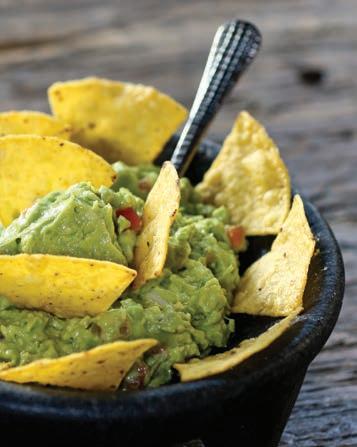
PALM BEACH
Bice —313 Worth Ave. Italian. Bice continues to hold the title of favorite spot on the island. The venerable restaurant offers a marvelous array of risottos and fresh pastas and classic dishes like veal chop Milanese, pounded chicken breast and roasted rack of lamb. The wine list features great vintages. • Lunch and dinner daily. Outdoor dining. 561/835-1600. $$$
Buccan —350 S. County Road. Contemporary American. Casual elegance of Palm Beach meets modern culinary sensibilities of Miami at the first independent restaurant by chef Clay Conley. The design offers both intimate and energetic dining areas, while the menu is by turn familiar (wood-grilled burgers) and more adventurous (truffled steak tartare with crispy egg yolk, squid ink orrechiette). • Dinner nightly. 561/833-3450. $$$
Café Boulud —The Brazilian Court, 301 Australian Ave. French with American flair. This hotel restaurant gives Palm Beach a taste of Daniel Boulud’s world-class cuisine inspired by his four muses. The chef oversees a menu encompassing classics, simple fare, seasonal offerings and dishes from around the world. Dining is in the courtyard, the elegant lounge or the sophisticated dining room. • Dinner nightly. 561/655-6060. $$$
Café L’Europe —331 S. County Road. Current International. A Palm Beach standard, the café has long been known for its peerless beauty, the piano player, the chilled martinis and the delicious Champagne and caviar bar. Try one of its sophisticated classics like wiener schnitzel with herbed spaetzle, grilled veal chop and flavorful pastas. • Lunch Tues.–Fri. Dinner nightly (closed Mon. during summer). 561/655-4020. $$$
Echo —230A Sunrise Ave. Asian. The cuisine reverberates with the tastes of China, Thailand, Japan and Vietnam. The Chinese hot and sour soup is unlike any other, and the sake list is tops. This offsite property of The Breakers is managed with the same flawlessness as the resort. • Dinner nightly (during season). 561/802-4222. $$$
and inventive steakhouse but there’s no dissonance in its food, service or ambience. Multiple cuts of designer beef from multiple sources can be gilded with a surprising array of sauces, butters and upscale add-ons. Whole roasted cauliflower is an intriguing starter, while a meaty Niman Ranch short rib atop lobster risotto takes surf-n-turf to a new level. Cast your diet to the winds and order the dessert sampler. • Dinner nightly. 561/354-9800. $$$$
Renato’s —87 Via Mizner. Italian with continental flair. This most romantic hideaway is buzzing in season and quietly charming all year long with Italian classics and a Floridian twist— like the sautéed black grouper in a fresh tomato and pernod broth with fennel and black olives and the wildflower-honey-glazed salmon fillet with crab and corn flan. • Lunch Mon.–Sat. Dinner nightly. 561/655-9752. $$$
WEST PALM BEACH
Austin Republic —4801 S. Dixie Highway. Barbecue. The casual backyard atmosphere sets the scene for chef James Strine’s unpretentious barbecue with a unique Mexican flair. The menu isn’t extensive, but all the barbecue greats are there alongside its Mexican counterparts. Brisket, ribs and pulled pork share the space with tacos, burritos and enchiladas. And don’t sleep on the chicken sandwich. Trust us. • Dinner Tues.-Sat. $
Banko Cantina —114 S. Olive Ave., West Palm Beach. Northern Mexican. Start with the Adelita cocktail and don’t look back. The bacon-wrapped shrimp, the Al Carbon steak tacos and the house guacamole add up to a full-flavor dinner. The west-facing rooftop bar is a nice sunset option, and the Pan de Elote (homemade sweet cornbread with vanilla ice cream and berries) is a delightful end to the evening. • Dinner daily. 561/355-1399. $$
Not Just For Weekends ... Brunch is a daily option at Henry’s Palm Beach, with specialties like lemon ricotta blueberry pancakes and filet mignon and eggs available from 11 a.m. to 3 p.m.
Henry’s Palm Beach —229 Royal Poinciana Way. American Bistro. Part of The Breakers’ restaurant properties, this venue opened in 2020 and is an elegant addition to The Island. Try the pigs in a pretzel dough blanket, beer can corn, the lobster roll, butter crumb Dover sole and chicken pot pie. All comfort food with a Palm Beach twist, and it’s all delicious. • Lunch and dinner daily. 877/724-3188. $$$
HMF—1 S. County Road. Contemporary American. Beneath the staid, elegant setting of The Breakers, HMF is the Clark Kent of restaurants, dishing an extensive array of exciting, inventive, oh-so-contemporary small plates. Don’t depart without sampling the dreamy warm onion-Parmesan dip with housemade fingerling potato chips, the sexy wild boar empanaditas, chicken albondigas tacos and Korean-style short ribs. The wine list is encyclopedic. • Dinner nightly. 561/290-0104. $$
Imoto —350 S. County Road. Asian Fusion/Tapas. Clay Conley’s “little sister” (the translation of Imoto from Japanese) is next to his always-bustling Buccan. Imoto turns out Japanese-inspired small plates with big-city sophistication, like witty Peking duck tacos and decadent tuna and foie gras sliders. Sushi selection is limited but immaculately fresh. • Dinner nightly. 561/833-5522. $$
Meat Market—191 Bradley Place. Steakhouse “Meat Market” may be an inelegant name for a very elegant
Café Centro —2409 N. Dixie Highway. Modern American. A cornerstone in the Northwood neighborhood, this venue draws because of a complete package: food, drinks and great nightlife and music. Take some char-grilled oysters, add shrimp pesto capellini or a marinated pork chop with polenta, plus local singing fave Tessie Porter, and you have a fun and delicious night out. • Lunch Mon.–Sat. Dinner nightly. 561/514-4070. $$
French Corner Bistro & Rotissorie
4595 Okeechobee Blvd. Classic French. It’s France in a tiny venue, with big-taste dishes that include all the faves: beef bourguignon, rack of lamb, duck à l’orange, frog legs Provencale, veal kidneys, tender branzino and simple desserts to end the meal. Reservations are mandatory for dinner. • Lunch and dinner Mon.Sat. 561/689-1700. $$
Grato —1901 S. Dixie Highway. Italian. “Grato” is Italian for “grateful,” and there is much to be grateful for about Clay Conley’s sophisticated yet unpretentious take on Italian cookery. Anyone would be grateful to find such delicate, crispy and greaseless fritto misto as Grato’s, ditto for lusty beef tartare piled onto a quartet of crostini. Spinach gnocchi in porcini mushroom sauce are a revelation, so light and airy they make other versions taste like green library paste. Don’t miss the porchetta either, or the silken panna cotta with coffee ice cream and crunchy hazelnut tuille. • Dinner nightly. Sunday brunch. 561/404-1334. $$
Leila —120 S. Dixie Highway. Mediterranean. Flowing drapes and industrial lighting complete the exotic decor in this Middle Eastern hit. Sensational hummus is a must-try. Lamb kebab with parsley, onion and spices makes up the delicious Lebanese lamb kefta. • Lunch Mon.–Fri. Dinner Mon.–Sun. 561/659-7373. $$
EAT & DRINK RESTAURANT DIRECTORY
142 bocamag.com • • • • March 2024
Guacamole from Tacos Al Carbon
Marcello’s La Sirena —6316 S. Dixie Highway. Italian . You’re in for a treat if the pasta of the day is prepared with what might be the best Bolognese sauce ever. • Dinner Mon.–Sat. (closed Memorial Day–Labor Day). 561/585-3128. $$
Pistache —1010 N. Clematis St., #115. French. Pistache doesn’t just look like a French bistro, it cooks like one. The menu includes such bistro specialties as coq au vin and steak tartare. All that, plus guests dining al fresco have views of the Intracoastal Waterway and Centennial Park. • Brunch Sat.–Sun. Lunch and dinner daily. 561/833-5090. $$
Planta —700 S. Rosemary Ave. Vegan. For those who savor every juicy, tender and flavorful bite of a well-prepared burger, patronizing a vegan establishment may seem like a sacrilegious act. But what if a restaurant served up plant-based dishes that surprised your taste buds with exploding flavors? Here vegans don’t have to worry about ingredients making the cut, and non-vegans can enjoy approachable and appetizing plant-based dishes that won’t make you yearn for a steak. • Lunch and dinner daily. 561/208-5222. $$
Rhythm Café —3800 S. Dixie Highway. Casual American. Once a diner, the interior is eclectic with plenty of kitsch. The crab cakes are famous here, and the tapas are equally delightful. Homemade ice cream and the chocolate chip cookies defy comparison. • Dinner Tues.–Sun. 561/8333406. $$
Rocco’s Tacos —224 Clematis St. Mexican. Big Time Restaurant Group has crafted a handsome spot that dishes Mexican favorites, as well as upscale variations on the theme and more than 425 tequilas. Tacos feature house-made tortillas and a variety of proteins. • Lunch Mon.–Fri. Dinner nightly. 561/650-1001. (Other Palm Beach County locations: 5250 Town Center Circle, Boca Raton, 561/416-2131; 110 E. Atlantic Ave., Delray Beach, 561/808-1100; 5090 PGA Blvd., Palm Beach Gardens, 561/623-0127) $
Table 26°—1700 S. Dixie Highway. Contemporary American. Take a quarter-cup of Palm Beach, a tablespoon of Nantucket, a pinch of modern American cookery and a couple gallons of the owners’ savoir faire, and you have Eddie Schmidt’s and Ozzie Medeiros’s spot. The menu roams the culinary globe for modest contemporary tweaks on classically oriented dishes. Try the fried calamari “Pad Thai.” • Dinner nightly. 561/855-2660. $$$
Tropical Smokehouse —3815 S. Dixie Highway. Barbecue. When you take the distinct tastes of Florida/Caribbean/Cuban dishes and pair them with barbecue, you end up with a place you visit a lot. Local celeb chef Rick Mace smokes the meats himself, and his recipes include all kinds of citrus in tasty spots (sour orange wings, pineapple carrot cake); you’ll discover new favorite flavors. Don’t miss the BBQ pulled pork, brisket and ribs. Try the hot and sweet hushpuppies or the homemade chorizo queso in this very casual spot that we can happily say is also unique—there’s nothing else like it. • Lunch and dinner Tues.-Sun. 561/323-2573. $$
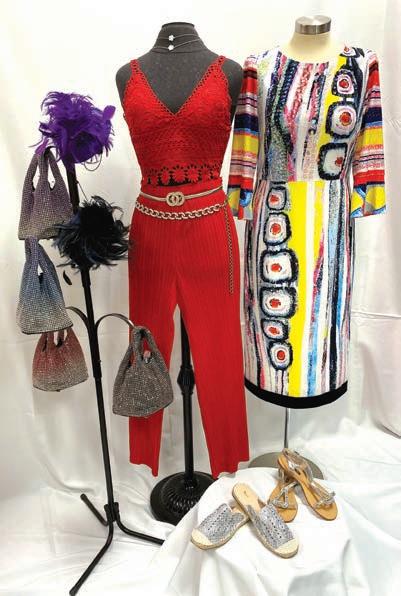
Voyage Boutique has been sharing authentic French Fashion with South Florida for over 20 years.
Buzz Bite III
Savor the Avenue
At lantic Avenue’s signature event is back on Monday, March 25, a nd it’s ready to jettison any Monday blues away with its collection of standout restaurants. The 15th-annual Savor the Avenue brings our community’s best restaurants together for a four-course starlit dining experience directly on the Ave. Embrace our comfortable winter weather with this al fresco event. Restaurants will also compete to win the “Best in Show” table décor contest: Will Salt7 reclaim its first-place title, or will another local restaurant shoot to the top? You’ll have to make your reservation with your favorite restaurant directly to find out. For more information, visit downtowndelraybeach.com/savortheave.
—Christie Galeano-DeMott
Voyage Boutique may be tucked away from the bustling Avenue, but it stands out as a pinnacle of fashion. Whether you’re in search of casual wear, attire for a special occasion, or an elegant ensemble for a soiree, you’re guaranteed to discover it within our unique boutique.
When embarking on international travels, setting sail on a cruise, or preparing for the holiday season, your search ends here. Allow us to elevate your wardrobe with style and a touch of ‘je ne sais quoi.’
Voyage Boutique also serves as your European haven for handbags, belts, shoes, gifts, and more. We cater to all sizes, ranging from XS to 3X, and offer in-house alterations for a perfect fit.
Come join us for a shopping experience that transcends the ordinary and when you do, don’t forget to mention that you found us in Boca Mag.
March 2024 • • • • bocamag.com 143
400 Gulfstream Blvd, Delray
33444 10:00 am to 4:30
Mon-Sat 561-279-2984
Beach FL
pm
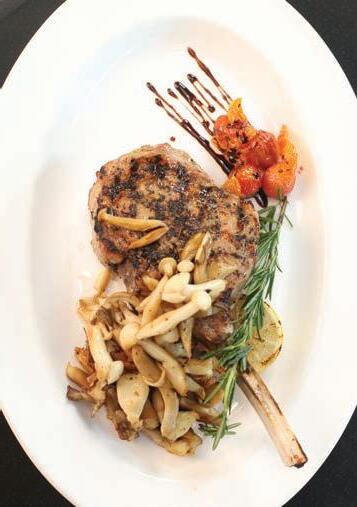
Broward County DEERFIELD BEACH
Chanson —45 N.E. 21st Ave. Contemporary American/ French. A little bit of Palm Beach, a little bit of Italy comes to Deerfield Beach in the form of this elegant, sophisticated restaurant in the oceanfront Royal Blues Hotel. Service is as stellar as the views from the cozy, modestly opulent dining room, notable for the 1,500-gallon aquarium embedded in the ceiling. Consistency can be an issue with the food, but when it is good it is very good. • Breakfast and lunch daily, dinner Tues.-Sat., brunch Sun. 954/857-2929. $$$
Oceans 234—234 N. Ocean Blvd., Deerfield Beach. Contemporary American. One of the only oceanfront (as in, on the beach) options in South Florida, this familiar-with-a-twist venue is fun to both visit and eat. Try the Infamous Lollipop Chicken Wings, a starter that could be an entrée. Seafood is definitely top-shelf, as are the desserts. A true Florida experience. • Lunch and dinner daily. 954/428-2539. $$
Tradition —626 S. Federal Highway. French. This is a petite place with a large following, for good reason. Owners Eric and Anais Heintz start meals with an amuse-bouche and a menu that spans the length of France. Order a creamy Caesar salad with a light anchovy-based dressing. Try the coq au vin (sauce cooked for two days), and if you like calves’ liver, this is the best you’ll find in the area. End with a Grand Marnier soufflé (worth the 15-minute wait), and make your next reservation there before going home. • Dinner Mon.-Sat. 954/480-6464. $$
LIGHTHOUSE POINT
Cap’s Place 2765 N.E. 28th Court. Seafood. Eating here requires a boat ride, which is very SoFla and terrific for visitors. This is one of—if not the only—family-run, old-Florida seafood restaurants you’ve never heard of, open since the 1920s. The heart of palm salad is the best and purest version around. Seafood abounds; fish can be prepared nine ways and much more. (There are non-seafood dishes that are done well, too.) Go for the short boating thrill and for the food. • Dinner Tues.-Sun. 954/941-0418. $$
Le Bistro —4626 N. Federal Highway. Modern French. The menu is modern and healthy—98-percent gluten-free, according to chef Andy Trousdale and co-owner Elin Trousdale. Check out the prix-fixe menu, which includes pan-roasted duck to beef Wellington. • Dinner Tues.–Sun. 954/946-9240. $$$
Seafood World —4602 N. Federal Highway. Seafood
This seafood market and restaurant offers some of the freshest seafood in the county. Its unpretentious atmosphere is the perfect setting for the superb king crab, Maine lobster, Florida lobster tails and much more. Tangy Key lime pie is a classic finish. • Lunch and dinner daily. 954/942-0740. $$$
New for 2024
In January, Casablanca Cafe unveiled new menu items, including Moroccan lamb meatballs, truffle lobster mac & cheese, and steak salad.
POMPANO BEACH
Calypso Restaurant—460 S. Cypress Road. Caribbean. This bright little dining room and bar (beer and wine only) has a Caribbean menu that is flavorful, imaginative—and much more. Calypso offers a spin on island food that includes sumptuous conch dishes, Stamp & Go Jamaican fish cakes and tasty rotis stuffed with curried chicken, lamb or seafood. • Lunch and dinner Mon.–Fri. 954/942-1633. $
Darrel & Oliver’s Café Maxx —2601 E. Atlantic Blvd. American. The longstanding institution from chef Oliver Saucy is as good now as when it opened in the mid1980s. Main courses offer complex flavor profiles, such as the sweet-onion-crusted yellowtail snapper on Madeira sauce over mashed potatoes. Parts of the menu change daily. • Dinner nightly. Brunch Sunday. 954/782-0606. $$$
COCONUT CREEK
NYY Steak —Seminole Casino Coconut Creek, 5550 N.W. 40th St. Steakhouse. The second incarnation of this Yankees-themed restaurant swings for the fences—and connects— with monstrous portions, chic decor and decadent desserts. The signature steaks are a meat lover’s dream; seafood specialties include Maine lobster and Alaskan king crab. • Dinner nightly. Brunch Sun. 954/935-6699. $$$$
FORT LAUDERDALE
15th Street Fisheries —1900 S.E. 15th St. Seafood. Surrounded by views of the Intracoastal, this Old Florida-style restaurant features seafood and selections for land lovers. We love the prime rib. • Lunch and dinner daily. 954/763-2777. $$
3030 Ocean —Harbor Beach Marriott Resort, 3030 Holiday Drive. American. Now led in the kitchen by Adrienne Grenier of “Chopped” fame, the new-look 3030 has a farm-to-table focus, along with an emphasis, as always, on locally sourced seafood. • Dinner nightly. 954/765-3030. $$$
Bistro 17—Renaissance Fort Lauderdale Hotel, 1617 S.E. 17th St. Contemporary American. This small, sophisticated restaurant continues to impress with competently presented food. The menu is surprisingly diverse. • Breakfast, lunch and dinner daily. 954/626-1748. $$
Bistro Mezzaluna —1821 S.E. 10th Ave. Italian. The bistro is all Euro-chic decor—mod lighting, abstract paintings. It also has good food, from pastas to steaks and chops and a wide range of fresh seasonal fish and seafood. Don’t forget the phenomenal wine list. • Lunch and dinner daily. 954/522-9191. $$
Café Martorano—3343 E. Oakland Park Blvd. Italian. Standouts include crispy calamari in marinara sauce and flavorful veal osso buco. Our conclusion: explosive flavor, attention to all the details and fresh, high-quality ingredients. Waiters whisper the night’s specials as if they’re family secrets. • Dinner nightly. 954/561-2554. $$
Canyon —620 S. Federal Hwy. Southwestern. Billed as a Southwestern café, this twist on regional American cuisine offers great meat, poultry and fish dishes with distinctive mixes of lime, cactus and chili peppers in a subtle blend of spices. The adobe ambience is warm and welcoming, with a candlelit glow. • Dinner nightly. 954/765-1950. $$
Casablanca Café —3049 Alhambra St. American, Mediterranean. The restaurant has an “Arabian Nights” feel, with strong Mediterranean influences. Try the peppercorn-dusted filet mignon with potato croquette, Gorgonzola sauce and roasted pepper and Granny Smith relish. • Lunch and dinner daily. 954/764-3500. $$
WEB EXTRA: check out our complete tri-county dining guide only at BOCAMAG.COM
EAT & DRINK RESTAURANT DIRECTORY
144 bocamag.com • • • • March 2024
Grilled veal chop from Casa D’Angelo
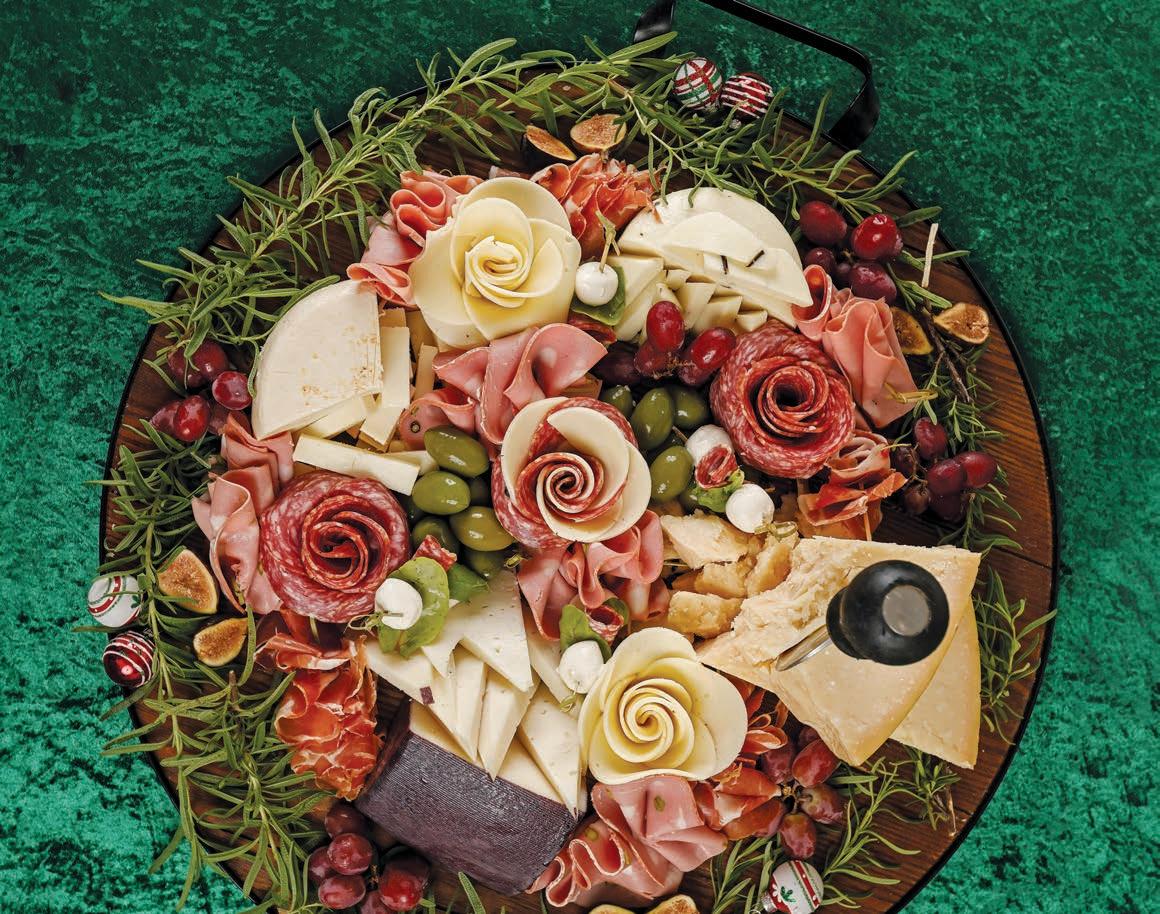
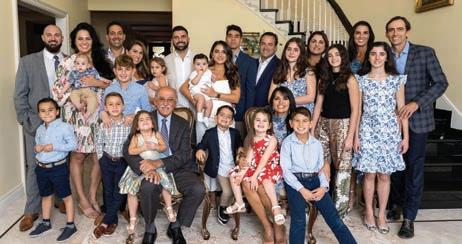

6750 North Federal Highway, Boca Raton 561-997-7373 www . arturosrestaurant . com Celebrating our 41st year serving Authentic Italian Cuisine

SUPPORT
Our Federation has been and will continue to be the cornerstone of Jewish life in South Palm Beach County. As a community of doers, we are focused on providing support, solidarity and critical funds to our partner agencies in Israel, at home and around the world as they come to the aid of our families and friends.
Federation was designed for moments like this. With you, we can organize, repair, advocate for and rebuild the pillars of Jewish life.
Our impact is only possible with your investment in Federation, which creates positive change and a pathway forward, here, in Israel and around the world.
Donate today. Visit jewishboca.org/donate

With Special Entertainment
by Darius Rucker
Ball Chairs
Amy and Mike Kazma
Honorary Chairs
Christine E. Lynn, Barbara Schmidt, Stanley Barry, Richard Schmidt

Thank you to all of the attendees and sponsors of the 61st Annual Hospital Ball!

Boca Raton Regional Hospital and Foundation are proud to announce that this extraordinary evening raised over $2.7 million to benefit, enhance, and advance patient care services at our facilities.
Physician Honorees
Debra Becker, MD
Jeremy Breit, MD
Howard Brenker, MD
Jessica Eichler, MD
Michael Fleischer, MD
Evan Goldstein, MD
Jason Golub, MD
Larry Hirschfield, MD
Michael Kasper, MD
George Khoriaty, MD
Joseph Kleinman, MD
Aryeh Pessah, MD
Jane Rudolph, MD
David Taub, MD
Charles Toman, MD
Anthony Salvadore, MD
Ari Silverstein, MD
Ari Wirtschafter, MD
Exclusive Media Sponsor Exclusive Retail Sponsor
Special thanks to our Ball Host Committee
Kathy Adkins
Erica Bachow
Freyda Burns
Alisa Cohen
Barbara D. Cohen
Terry Fedele
Diane Feldman
Emily Grabelsky
Anne Green
Michelle Hagerty
Anne Jacobson
Lauren Johnson
Judi Larkin
Debbie Leising
Cristina Lewis
Debbie Lindstrom
Alejandra Lippolis
Phyllis Liss Melman
Tracy Louv
America Mendez
Jo Ann Procacci
Holli Rockwell Trubinsky
Maggie Rosenberg
Linda Rosenkranz
Carrie Rubin
Dr. Gail Rubin-Kwal
Rebecca Rubinstein
Judi Schuman
Margaret Mary Shuff
Pat Thomas
Joan Wargo
Dana Weiss
Nancy Zalta
Special thank you to our sponsors of the 61st Annual Hospital Ball
ABA Centers of Florida
Mary and Rocco Abessinio
Barbara and Dennis Adama
Kathy and Paul Adkins
Allegiance Home Health
Rosie and Joe Martin
Karen and Lawrence Altschul
Jill and John Anderson
Baptist Health
Marilyn and Stan Barry
Abbe and Steven Becker
Sue and Douglas Benach
Tiffany and Mark Berch
Kristi and Mark Bergquist
Anne Blank
Renee and Kenneth Blatt
Brian and Sherri Blechman
Kelly and Doug Britt
Susan and Peter Brockway
Edward and Freyda Burns
Enhanced Living Initiative
BV Group - Ed Ventrice
Ted Campbell
Toby and Leon Cooperman
Dugan Crotty
Robin and Charles Deyo
Mary and William Donnell
Eastham Capital
Matthew Rosenthal, Eric Silverman and Rob Cohen
E-Med, L.L.P.
Falk Waas
Diane and Lawrence Feldman
Deborah and Edward Fitzgerald
Florida Atlantic University Foundation
Florida Blue
Kara and Josh Freedman
Frezza Family Foundation
Sheila and Robert Furr
GEO Group Foundation, Inc.
Robert Giaquinto
Doris and Neil Gillman
Joan and Jerold Glassman
Nicole and Jeffrey Goldberg
Sandee Goldberg
Jayne and Steven Goldman
Audrey Goodman
Lori and Arthur Greenfeder
Judith and Naren Gursahaney
Barbara C. Gutin
Michelle and Michael Hagerty
Darcy and Jeff Hollander
Lisa Jenyns
JM Family Enterprises, Inc.
Nancy and Michael Kanterman
Amy and Mike Kazma
Julie and David Kirschner
In Honor of Barbara Schmidt
Dr. Michael and Cynthia Krebsbach
Harriett and Edwin Levine
Christine E. Lynn
Dr. Karen Mashkin
Leticia Messinger
Wanda and Jim Moran
Tamara and Richard Morgenstern
Barbara and Peter Norden
Keith O’Donnell/Avison Young
Claudia and Warren Orlando
Lois Pope
Jo Ann and Philip Procacci
Lisa and Michael Puder
Robins and Morton
Holli Rockwell Trubinsky and Joseph Trubinsky
Maggie and Kenneth Rosenberg
Linda and Jay Rosenkranz
Carrie Rubin
Marvin Rubin
Susan and Mark Rubin
Lisa Ruth
In Loving Memory of Chip Ruth
Dr. Charles and Donna Safran
Sands Family Foundation
Diane and Steven Scaggs
Lorrie A. Scaggs
William G. Scaggs, Jr.
Irina and George Schaeffer
Barbara Schmidt
SCHMIDT FAMILY FOUNDATION
Jennifer and Nick Schneider Global Wings
Gisele and Joe Schueller
Diane and Jim Schurman
Susan Greenberg Scimeca and John Scimeca
Dr. Warren and Jennifer Selman
Alan and Dollie Serinsky
Debbie Lindstrom and Bob Sheetz
Myrna Skurnick
Mason Slaine and Daniele Schachter
Rhonda Small
Stoops Family Foundation
Aubrey and Sally Strul
Karen and Robert Sweetapple
Harcourt M. and Virginia W. Sylvester Foundation
Deborah and Richard Tarrant
TD Wealth
Sandy Tobias and Cathy Weil
Julia and Joseph Vassalluzzo
Elizabeth Pankey-Warren and Chris Warren
Shirley Weisman
Nancy and David Zalta
Denise Zimmerman
WEE DREAM BALL
WHERE: Boca West Country Club
WHAT: The Fuller Center’s signature annual fundraiser once again decked the halls of Boca West Country Club to benefit the organization’s mission of providing critical resources to underprivileged families and children to help them reach their full potential. Attendees were welcomed by Fuller Center Board President and Chairman and Wee Dream Ball “Bernie Award” recipient Simone Spiegel, who gave special thanks and acknowledgement to all who had made the Fuller Center the powerhouse nonprofit that it is today. Following a hopeful message by Fuller Center CEO Ellyn Okrent on the community’s power to overcome a growing number of challenges, Fuller Center Board Member and Wee Dream Ball honoree Dr. Tina Westine took to the stage and spoke poignantly about her family’s experience with the organization. “My mother was able to thrive and succeed as a successful businesswoman because of the support she received from the Fuller Center,” said Dr. Westine. “The Fuller Center planted the seed of hope in me and my family that inspired us to pursue the American Dream.” Sponsors included Sam and Simone Spiegel Family Foundation, Schmidt Family Foundation, Christine E. Lynn, E. M. Lynn Foundation, Boca magazine and more.
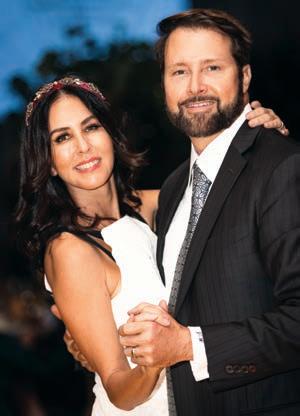
SOCIAL 150 bocamag.com • • • • March 2024
3 2 4 5 1
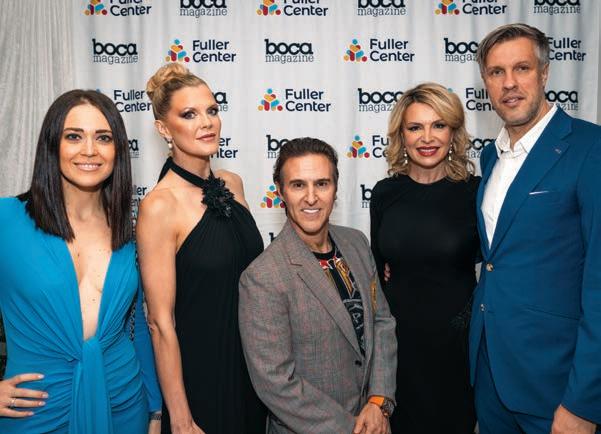
1. Tom Mersch, Esq., Dr. Patricia Anastasio, Simone and Sam Spiegel
2. Jay Weaver, Cecilia Tylinski, Jessica Pagano, Ryan Harrold
3. Dr. Tina and Dr. John Westine
4. Gail Wasserman and Ellyn Okrent
5. Jo Ann and Phil Procacci, Deputy Mayor Monica Mayotte
6. David and Jessica Gussak, Michael Okrent
7. Maureen and Kenneth Torrence
8. Lauren Johnson, Carrie Rubin, Dena Stein
9. Christy Maltman, Dr. John Cottrell, Terri Shaw
10. Dr. Svetlana Faktorovich, Kayla Benning, Howard Panes, Senada Adžem, Marcus Schweitzer
March 2024 • • • • bocamag.com 151
7 6 9
8
10
MICHAEL CONNOR PHOTOGRAPHY
THIRD-ANNUAL BRICE MAKRIS BRUNCH
WHERE: Boca West Country Club
WHAT: The Hanley Foundation’s Brice Makris Brunch celebrated its third year with a record-breaking event that brought in more than $250,000 to benefit the organization’s lifesaving treatment scholarships and addiction prevention programs. The event was chaired by Hanley Foundation Board Member John Makris and his wife Michelle, whose son, Brice, tragically died from an overdose at 23 years old. Honorary guests included Marty Haberer, Tina Polsky, Jan Savarick, Troy McLellan and honorary chair Dave Aronberg. During the brunch, Erica and John Garwood, founders of the Mark Garwood Foundation, were honored with the Hanley Foundation Community Spirit Award in honor of Brice Makris. The Garwoods also experienced the loss of a child to drug addiction, and their organization has raised more than $435,000 for educational scholarships for individuals in recovery. Sponsors for the event included MDVIP, Hanley Family Foundation, April Lewis and many more.
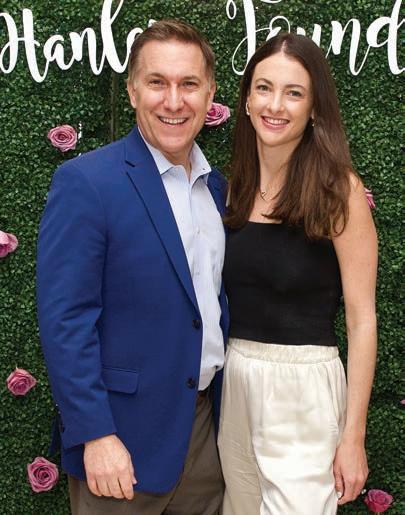

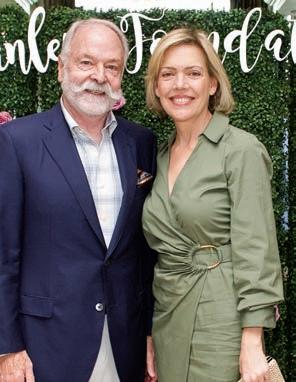

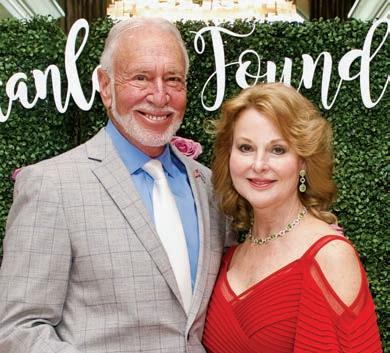
SOCIAL 152 bocamag.com • • • • March 2024
5 1 3 6 4 2
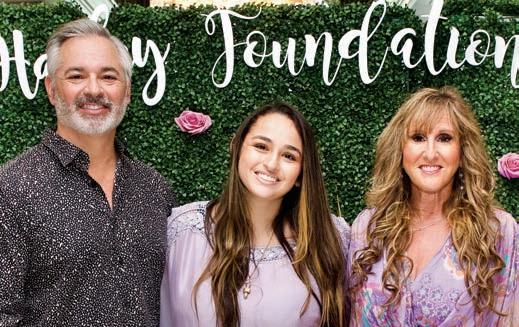
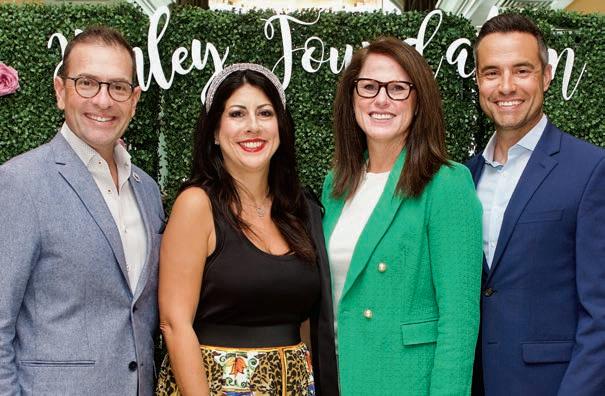
1: Pamela Polani, Arlene Herson, Sharon DiPietro
2: Chip James and Rachel Docekal
3: Craig Williams and Liz Quirantes
4: Bruce Spizler and Kim Champion
5: Dave Aronberg and Sasha Kraver
6: John and Erica Garwood, Rachel Docekal, Michelle and John Makris
7: Todd and May Rosenzweig, Dana and Steve Clarfield
8: Doug and Marcia Mithun, Keli Toli and Stuart Fife
9: Amy Gottlieb and April Lewis
10: Greg, Jazz and Jeanette Jennings
11: Marc Wigder, Yvette Drucker, Tina Polsky, Andy Thomson
March 2024 • • • • bocamag.com 153
7 9 11 10 8
19TH-ANNUAL GO PINK LUNCHEON
WHERE: The Mizner Center at The Boca Raton
WHAT: The Boca Raton’s Mizner Center got a pink makeover for the 19th-annual Go Pink Luncheon and raised a record-breaking $2 million to benefit the Eugene M. & Christine E. Lynn Cancer Institute and the Christine E. Lynn Women’s Health & Wellness Institute. The sold-out crowd of more than 1,300 was treated to a delectable luncheon that they enjoyed while immersed in a stunning array of pink decor, from oversized pink flowers to the Pink Daisy Prize Wall. The luncheon also included a live fundraiser by Neil Saffer, a touching video featuring breast cancer survivors, and a poignant speech by actress, designer and breast cancer survivor Jaclyn Smith, who shared her story of battling breast cancer.
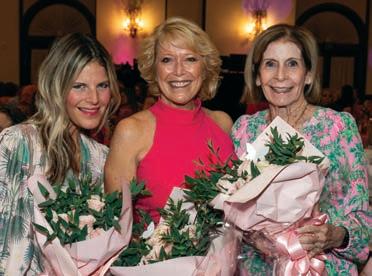

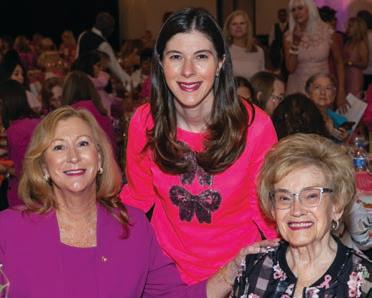
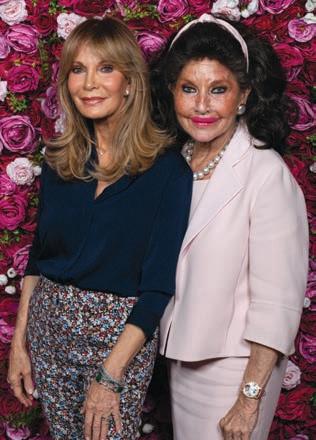
March 2024 issue. Vol. 44, No. 3. The following are trademarks in the state of Florida of JES Media, and any use of these trademarks without the express written consent of JES Media is strictly prohibited: Savor the Avenue; Tastemakers of Delray; Tastemakers at Mizner; Florida Style and Design; Delray Beach magazine; Boca Raton , South Florida At Its Best; bocamag. com; Florida Table ; Boca Raton magazine. Boca (ISSN0740-2856) is published 8 times a year (September/October, November/December, January, February, March, April, May/June and July/August) by JES Media. Editorial, advertising and administrative offices: 1000 Clint Moore Road, Suite 103, Boca Raton, FL, 33487. Telephone: 561/997-8683. Please address all editorial and advertising correspondence to the above address. Periodicals postage paid at Boca Raton, Fla., and additional mailing offices. Subscriptions: $24.95/8 issues, $34.95/16 issues (shipping fee included for one- and two-year rates). Single copy $6.95. No whole or part of the content may be reproduced in any manner without prior written permission of Boca magazine, excepting individually copyrighted articles and photographs.
POSTMASTER: Send address changes to Boca magazine, P.O. Box 820, Boca Raton, FL 33429-9943.
SOCIAL 154 bocamag.com • • • • March 2024
1: Lindsay Raphael, Meghan Clary, Cassie Gantor, Robyn Raphael Dynan, Danielle Rosse
2: Debbie Lindstrom, Beverly Altman, Anne Green
3: Jaclyn Smith and Christine E. Lynn
4: Lainie Jones, Robin Deyo, Sue Hobbs
5: Laura Grazioli, Abby BernsteinHenderson, Venita Litvack
2 4 1 5 6 3
6: Melissa Durbin, Haroula Norden, Thea Stoneman

Doug Mithun I Marcia Mithun I Linda Petrakis I Maurice Plough I Dr. Ron Rubin I Bruce Spizler
Mark Swillinger I Barry Siegel I Bob Tucker I Jeff Weber I Gale Wechsler I Linsey Willis
Thursday, April 3, 2014
Broken Sound Club
information please visit www.rotarydowntownbocaraton.org
TIFENEBEHT
11:30 A.M.
contact: Alan Kaye at (954) 558-8058, Alan@kayecig.com, or Jon Kaye at (561) 756-3097, JKaye@KComPR.com
HelenM.BabioneMedicalScholarshipFund


www.rotarydowntownbocaraton.org



PROCEEDS BENEFIT THE HELEN M. BABIONE MEDICAL SCHOLARSHIP HONOR YOUR DOCT R Luncheon The 26t h Anniversary PRESENTED BY THE ROTARY CLUB DOWNTOWN BOCA RATON FUND MARCH 27, 2024 BOCA WEST COUNTRY CLUB
Boca W. Drive,
FL 33434 RECEPTION 11:00 AM I PROGRAM 11:45 AM-1:30 PM
&
2024 Co-Chairs
Honorary
Dr.
Honorary Advisors COMMITTEE
20583
Boca Raton,
Alan Kaye
Jon Kaye I
Janice Williams I
Chair
Jeffrey Miller, Dr. Jeffrey Stein & Dr. David Taub I
Ann Brown I Kim Champion I Ingrid Fulmer I Gwen Herb I Arlene Herson I Dr. Allen Konis
Presents the 24th Annual Honor Your Doctor Luncheon
March 30, 2022 Boca West Country Club Guest Arrival Time: 11:30 a.m. • Program: Noon Completion: 1:30 p.m. Social distancing will be observed at this event. To Benefit The HELEN M. BABIONE MEDICAL SCHOLARSHIP ROTARYCLUBDOWNTOWNBOCARATON PRESENTSTHE 16th Annual
Wednesday,
Honor Your Doctor Luncheon
ROTARY CLUB DOWNTOWN BOCA RATON FUND QUALIFIES AS A CHARITABLE ORGANIZATION UNDER SECTION 501(C)(3) OF THE INTERNAL REVENUE CODE. A COPY OF THE OFFICIAL REGISTRATION, NO. 46-0790021 AND FINANCIAL INFORMATION MAY BE OBTAINED FROM THE DIVISION OF CONSUMER SERVICES BY CALLING TOLL FREE 1-800-435-7352 WITHIN THE STATE OR VISITING WWW.FLORIDACONSUMERHELP.COM. REGISTRATION DOES NOT IMPLY ENDORSEMENT, APPROVAL, OR RECOMMENDATION BY THE STATE. For
PROUDLY SPONSORED BY The Boca Raton Tribune Your Closest Neighbor
or
Boca Raton Insider

PALM BEACH BOOK FESTIVAL
Florida Atlantic University presents the Palm Beach Book Festival, featuring Anne Hull (Through the Groves), David Finkel (An American Dreamer), Lauren Groff (The Vaster Wilds), Barry Sonnenfeld (Barry Sonnenfeld, Call Your Mother) and Joyce Carol Oates (Zero-Sum). The festival will take place on Saturday, March 16, from 11 a.m. to 4 p.m.
777 Glades Road, Boca Raton FL 33431
561-297-6124
Fauevents.com
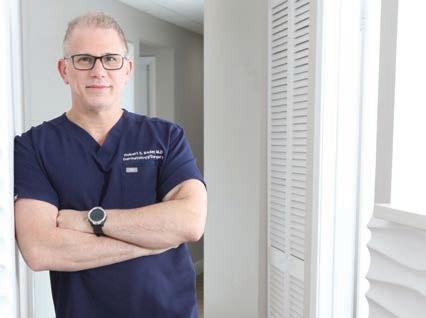
PATIO SHOPPE
The Gala collection is true statement seating made for the outdoors. Its contemporary silhouette is a magical blend of straight lines and hard corners with a graceful wrap-around back that represents the joining of arms in dance. The pair of vertical tubes featured on the back panel support the seat frame as if it were effortlessly floating - bringing an airy lightness to the collection’s refined look.
To learn more, visit www.patioshoppes.com
7355 Sample Road 11268 Legacy Ave. Coral Springs, FL 33065 Palm Beach Gardens, FL 33410 (954) 752-0161 (561) 776-9898


R.S.B. DERMATOLOGY ROBERT S. BADER, MD
Dr. Bader has been a leader in his field and has served our community for more than 20 years. RSB Dermatology is a fullservice dermatology practice, offering skin cancer screenings, growth removal, advanced skin cancer detection, both surgical and non-surgical treatments for skin cancer, growth removal, and cyst removal, in addition to the many cosmetic services offered. Dr. Bader is fellowship-trained in Mohs’ micrographic surgery and Dermatologic Plastic Surgery. We asked Dr. Bader what he enjoys most about his practice. “What has been most rewarding over the years is the relationships that I have forged with my patients,” says Dr. Bader.
1500 E. Hillsboro Blvd., Suite 204 Deerfield Beach, FL 33441 561.421.3200
Drbader.com
ADVERTISING • PROMOTIONS • EVENTS SPONSORED SECTION
BOCA HELPING HANDS

& CASINO NIGHT
APRIL 13 2024 AT THE ROYAL PALM YACHT & COUNTRY CLUB

Join Boca Helping Hands as we enjoy an exciting evening of music, auctions, casino gaming, cocktails, and dinner. Tickets start at $250, sponsorships available.
MONOPOLY EVENT SPONSOR
JM FAMILY ENTERPRISES, INC.
RAILROAD SPONSOR
GARY PETERS FAMILY FOUNDATION
JACKPOT AUCTION SPONSOR
CHRIS & YVETTE PALERMO, FAMILY FOUNDATION


For more information please contact Karen Swedenborg at Karen@BocaHelpingHands.org




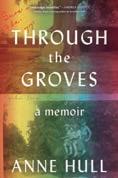



Toby & Leon Cooperman Campus • 21050 95th Avenue S., Boca Raton, FL 33428 561-558-2520 • levisjcc.org/sandler Lyonel Fils-Aime: A Day at the Opera Sunday, March 31, 2:00 pm
Fils-Aime is a charismatic and versatile singer, songwriter and record producer. He has performed with the Palm Beach Opera, St. Paul Episcopal Church and has toured in solo concerts throughout the country. He will be performing the great operatic arias with piano accompanist. Adolph & Rose Levis Jewish Community Center Phyllis & Harvey Sandler Center Call 561-922-8287 or visit levisjcc.org/performingarts NEW YORK TIMES BEST-SELLING AUTHORS March 16 | Florida Atlantic Dorothy F. Schmidt College of Arts and Letters Tickets & Information fauevents.com UNIVERSITY THEATRE, Boca Raton
Lyonel
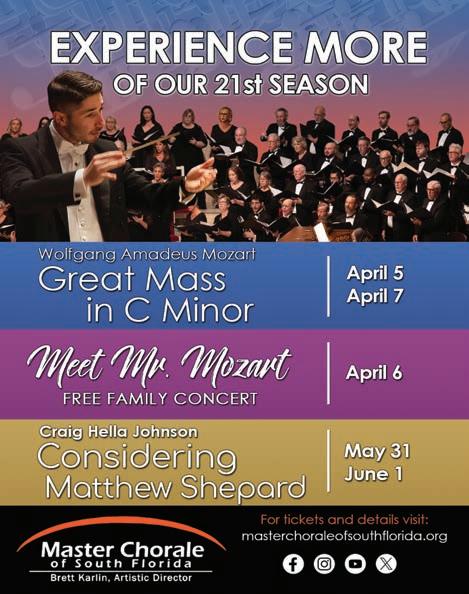

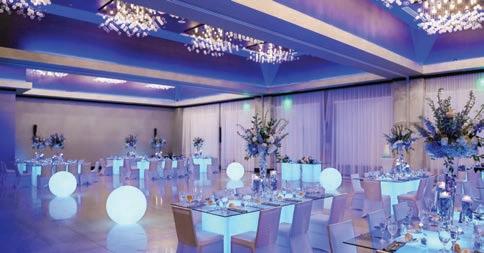

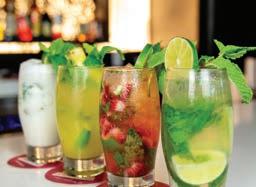

FOR A GREAT CAUSE GREAT GOLF JOIN US FOR RUTH & NORMAN RALES JEWISH FAMILY SERVICES MONDAY, MARCH 18, 2024 Registration Begins at 11:00 a.m. ST. ANDREWS COUNTRY CLUB 17557 Claridge Oval West Boca Raton, FL 33496 CO-CHAIRS Larry Blair Arnie Friedman Bernard Friedman Amy Ross FOR MORE INFORMATION, VISIT WWW.RALESJFS.ORG CONTACT JILL WALDMAN AT (561) 852-5013 OR JILLW@RALESJFS.ORG SPONSORSHIP OPPORTUNITIES NOW AVAILABLE Celebrate in style in Downtown Delray Beach in our sleek and savvy banquet space. Come check out our beautiful and spacious pool deck and terrace for outdoor events. 1.561.469.0550 www.aloftdelrayevents.com Aloft Delray Beach 202 SE 5th Avenue Delray Beach, Florida 33483 THE PERFECT EVENT BEGINS HERE ADB-Cultural-Ad-2023.indd 1 9/29/23 12:15 PM
It is enormously rewarding to help make somebody’s life a little bit easier when they are going through a difficult time. I think it’s about having the caring gene. ... Once you have that caring gene and you see what a rewarding life that is ...”
—Holli Rockwell Trubinsky
Holli Rockwell Trubinsky
This longtime health care advocate has given tirelessly to Boca Raton’s medical and educational sectors
Written by MARIE SPEED
It was more than 40 years ago when Holli Rockwell Trubinsky and her late husband Herbert decided to leave Miami, where their business was. They took out a map and started plotting locations about an hour way. “We looked at Boca Raton, and we saw an up-and-coming, lovely community with two universities,” Holli says. “And since education was my late husband’s passion, that was an incentive. And, of course, the health care at Boca Raton Community Hospital. We came here, we looked around, we saw what we liked and we decided to move here, and I’ve never regretted it. There are wonderful people here.”
Raton’s Walk of Recognition.
In 2013, Holli married Joseph Trubinsky; the couple recently donated an estate gift of $10 million to the Christine E. Lynn College of Nursing to name its deanship.
WHY IS HEALTH CARE SUCH A PASSION FOR YOU?
This page is a tribute to community citizens who have demonstrated exemplary service and leadership to the city of Boca Raton and is in memory of John E. Shuff.
In the intervening years, Holli has made an indelible mark on her adopted city, with a philanthropic outreach that extends to many of Boca’s key institutions. After her husband’s death in 2008, she established the Herbert and Holli Rockwell Endowed Scholarship at Lynn University; she also named the terrace garden at Wold Performing Arts Center. Her community involvement includes an early membership in the Sword of Hope Guild of the American Cancer Society, lead donor of the Rockwell Suites at Boca Raton Regional Hospital, Boca Ballet Theatre, and a board membership of the Caring Hearts Auxiliary of the Louis and Anne Green Memory and Wellness Center on the FAU campus as well as the Christine E. Lynn College of Nursing at FAU. She has been nominated for the Woman Volunteer of the Year Award and has been inducted into Boca
In my younger years I was an RN; once a nurse, always a nurse. … I always wanted to continue to be involved on some level. ... It is enormously rewarding to help make somebody’s life a little bit easier when they are going through a difficult time. I think it’s about having the caring gene. Maybe it doesn’t happen to everyone, but once you have that caring gene, and you see what a rewarding life that is ... it becomes one of the motivations I’ve always had.
ONE OF YOUR FIRST GIFTS TO BOCA RATON REGIONAL HOSPITAL WAS FOR THE ROCKWELL SUITES. WHAT CONTINUES TO INSPIRE YOU TO GIVE TO THE HOSPITAL?
I’m very proud of the Rockwell Suites. Patients and loved ones of patients have come to me and said, ‘Oh, I stayed in the Rockwell Suites, and it made our stay so much nicer under a difficult situation.’... Boca Raton Regional Hospital is up-and-coming, it’s expanding, it’s rising in the ranks. It’s no more a sleepy community hospital. There’s wonderful technology. I love being involved. It’s just about making it better all the time.
WHY DO YOU THINK IT’S IMPORTANT TO GIVE BACK?
I’m not for an ostentatious lifestyle;
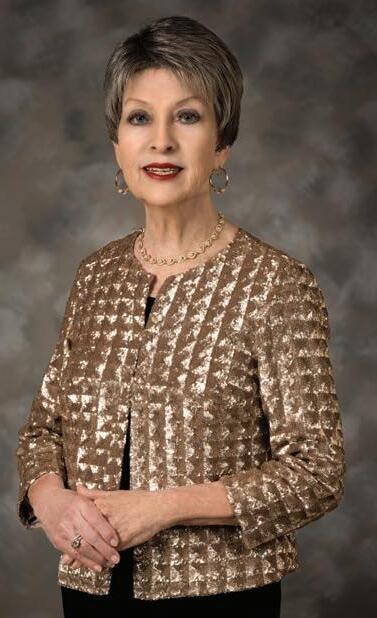
I live very simply. But I’m blessed to live in a wonderful place and have the resources to help other people. That is important to me. One of the joys is to receive letters from my scholarship recipients both at Lynn and FAU and to see how so little can mean so much to these students who have financial needs. That’s the ultimate reward: to see that you are doing some good in the world and helping young people to get ahead and to build their lives.
YOU COULD HAVE GONE ANYWHERE. WHY DID YOU STAY IN BOCA RATON?
Boca has a lot of great things culturally and educationally. And good health care. It is a beautiful city with many wonderful people who give back to society.
JEFFREY THOLL
160 bocamag.com • • • • March 2024 HOMETOWN HERO
Holli Rockwell Trubinsky

• Luxury Fleet - All New SUVs & Sedans • Locally Operated; Serving the World • Seamless Service in 1,00 Cities • 24/7 Customer Care • 40 Years Strong PALM BEACH 561-939-8315 BROWARD 954-771-3464 MIAMI DADE 304-917-7777 TEXT OPT (561) 622-2222 • A1A.global GLOBAL GROUND Luxury Transportation PERSONAL ASSISTANCE 800-330-4762 MORE THAN A RIDE IT’S AN EXPERIENCE.