S m a l l T o w n L i v i n g S m a l l T o w n L i v i n g Small Town Living in Gibson County, IN PRSRT STD ECRWSS U.S. POSTAGE PAID EDDM RETAIL F r e e ! F r e e ! Free! Local Postal Customer March 2024 Shane Minton Financial Advisor 100 S. Hull Street Ft. Branch, IN 47648 > edwardjones.com Member SIPC t: 812-753-3893 c: 812-403-0004 Your money shouldn’t stop working when you do. A Country View & More from Top of the Hill





When Spring Arrives - BE READY! Prices good until June 16, 2024 OPEN 7 DAYS A WEEK • “WE SERVICE WHAT WE SELL.” MEMMER’S MEMMER’S Hwy. 41 N. at Lyles Station Rd., Princeton, IN 812-385-2641 Mon - Fri 7am-6pm Saturday 7am-5pm Sunday 10am-4pm Hardware and Outdoor Power With Savings From AVAILABLE STIHL HEDGE TRIMMER HSA 60 $29999 Rotating handle for a precision trim Is it Time for a Tune-up or to Shop for New? STIHL STRING TRIMMER FSA 57 $17999 STIHL BATTERY PUSH MOWER RMA 460 $37999 STIHL BATTERY TRIMMER HSA 50 $20999 STIHL STRING TRIMMER FS 56R c-e $19999 Lightweight and easy to use battery trimmer that’s perfect for maintaining yards Featuring double-sided blades that cut in both directions Straight-shaft, loop handled, low emmission gas trimmer that’s ideal for heavy grass in hard to reach places SAVE On These Select Items $$50 50 NOW NOW NOW NOW NOW Get ready for Spring with an annual tune up. Come in for service kits and parts - oils, filters & blades available. The performance of a gas engine without the hassle. You Can Count on Our Service Department Call to Schedule a Drop off or Pick up!
Small Town Living Welcome Back to .

Happy almost St. Patrick’s Day and “almost spring”. The countdown is on to not only better weather, but the solar eclipse as well. For those who are not into science and weather, this is a big deal because it won’t happen again for 130 years. For this special occasion, Southern Indiana will be one of 15 states in the path. It’s possible that a multitude of people will influx our county for the big event, so fill up your gas tanks early just in case. To be fair, it is Southern Indiana, so it’s a 50/50 shot of having any of the four seasons within four days. Look for the events throughout this issue. As Mayor Wright said, “It could be like the County Fair or Woodstock, who knows?”
On the cover, we have a new country venue with a beautiful view that’s bound to be an asset to our community. Read the history and details of Shinnyville Hill. With St. Patrick’s Day on the horizon, the Cooking Corner offers an Irish version of mashed potatoes that is easy, rich and filling.
Take a break, grab a glass of tea and see what’s been going on with your friends and neighbors. As always, shop and support local.
 Jancey Smith



Brought to you by -





Small Town Living March 2024 Page 1 InsideVeterans Voice - pg. 11 Business Updates - pg. 12-13 Cooking Corner - pg. 16 Backyard Birds - pg. 18 Local Events - pg. 20-21 As the Vets Says - pg. 22 Solar Eclipse Events throughoutlook for . . .
copyright 2024 Small Town Living in Gibson County assumes no responsibility for guest writers or submitted material. Signed articles are the opinion of the columnist and do not necessarily reflect those of the publisher.
Jancey Smith and friends Contact us - by mail at 427 N. Hart St., Princeton, IN 47670
by email at jancey@ smalltownlivinggibsoncounty.com by phone at - 812-664-1082
S m a l l T o w n L i v i n g S m a l l T o w n L i v i n g
. . in Gibson County Shane Minton Financial Advisor 100 S. Hull Street Ft. Branch, IN 47648 t: 812-753-3893 c: 812-403-0004 > edwardjones.com | Member SIPC How much will you need to retire? Let's review your strategy.
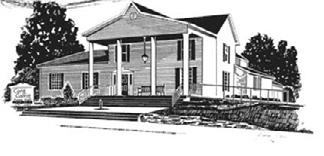
A Dream View from the Hill
Just between the boundary of Fort Branch and Owensville sets a knoll known as Shinnyville Hill. Its history dates back to the 1820s, when panthers and Indians lived on the land. Settlers like John Gibson and Purty Old Tom Montgomery brought with them changes to our area of Southwest Indiana.

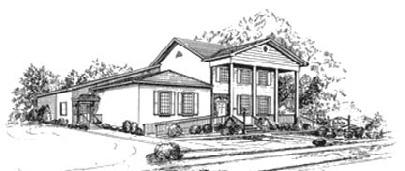
Over time, dirt roads were built for the invention of a new horseless carriage - a vehicle called the Model T. During the early automobile days of the 1920s and 1930s, it was a test for cars to see who had enough horse power, to make it up the hill. Those who couldn’t drive up the hill, had to “shinny up it” backwards to reach the top.
Over the years, the name stuck and it became known as Shinnyville Hill. It has become an Owensville landmark. Debbie Lamey remembered, “We had fun

there as kids sledding in the winter.”
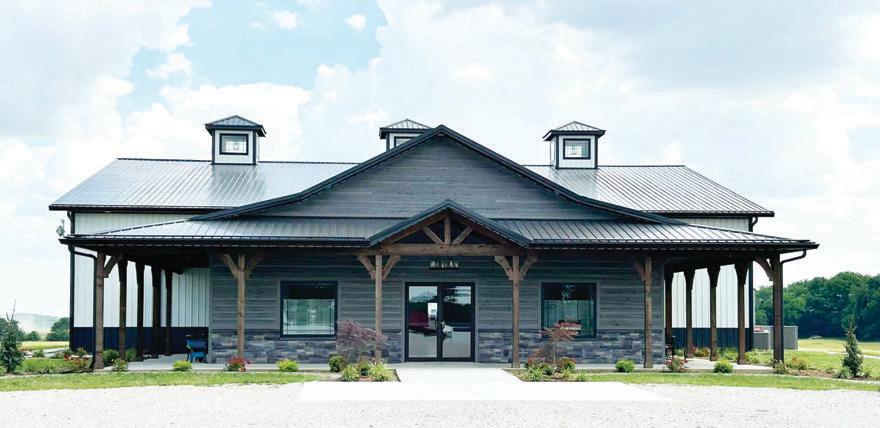
Todd and Sonya Teel of Owensville, who live just a few miles away, purchased the hill from Phyllis Hurt in 2005. The Teels both like helping people and a memorable way to help someone is by offering them a unique event experience. While many use the building as a wedding venue, it’s so much more than just for weddings. They have hosted baptisms, graduations, birthdays, anniversaries as well as large meetings and company dinners.
The original vision was for a part farm shop and part
#1 Real Estate Team in Gibson







Small Town Living March 2024 Page 2
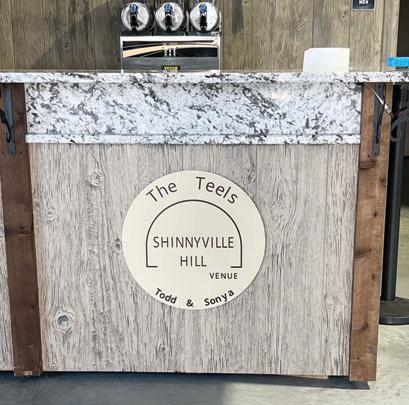
On the front cover: The view from the bottom of Shinnyville Hill. Top left: The outdoor wedding chappel. Above: The front of the venue. Above right: The Teels’ logo on their bar. Photos provided
1105 S Main Street, Princeton IN 47670 F.C. Tucker/EMGE REALTORS® Anita 812.664.7202 Grant 812.664.7270
Closed 207 transactions with sales of over Independently Owned & Operated Work with the Waldroup Team for the best experience and results!
County

retail space for Sonya to sell her coffees and chocolates, or even a living space if needed. They wanted something that was multifunctional and adaptable.
The business plan was for a wedding and event venue, with a winery to be added on at a later date. This would offer a tourist destination and venue for Gibson County and the surrounding area. It has a capacity of 300 which is one of the larger venues in the county.
Sonya ran Teel’s Coffee and Chocolates in Princeton, at first on the square, and then for more space and parking, she relocated to a shopping mall across from Walmart on the west side of Princeton. After the end of a five year lease, Sonya closed shop and started planning a better way to do it herself.
Todd and his brother Tim took over the family farming which goes back over 200 years in Owensville. The Teels don’t go as far back in the area as the Montgomerys do, but having a family history that goes back to 1815 says a lot. They have about 1,000 acres on which they plant corn, wheat and soybeans.
The Teels established Shinnyville Hill LLC on Todd’s birthday, July 3rd, 2020. After considerable planning and discussion, they started building in January of 2022. After a year of work, dedication and modification, they opened the venue March 2023.
arch and seating.
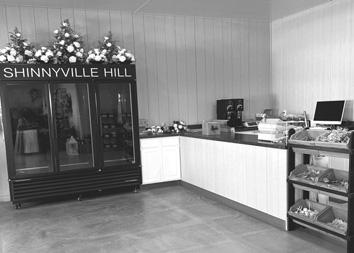
Throughout the interior of the building is almost every amenity that one could want. There are dressing rooms for both bride and groom, a bar, warming kitchen, large TV’s, chandeliers, and much more. The front of the building is home to Sonya’s chocolate and coffee shop that can supply sweets for any occasion. To make it a one-stop event full service floral, there is a selection of silk and fresh flowers in coolers also available.

Their unique venue offers a view on top of the hill with three large garage-like doors that open to see the surrounding countryside. At sunset it’s especially scenic. There is also a pond with a fountain on the east side that makes for a relaxing space. The south side of the exterior offers a place for weddings complete with an
The actual construction of the building was a learning process. As with any commercial construction job there is a myriad of rules, regulations, and hoops to jump through. There’s always something you just didn’t see coming or plan for. Well, that also comes with additional expense - a lot of it. Building on a site without existing infrastructure is an expensive choreplumbing, electrical, and heating all provide a challenge.
On the good side, their contractor, Phil Stoll from Montgomery, was great to work with and there were many conversations, plans and adjustments made along the way. He was able to save them room in their floor plan for the groom’s prep area by installing a tankless water heater. Little tips and tricks like this made a world of difference and the Teels were so appreciative.
Todd and Sonya, with the help of their five daughters, hope to keep the history of Shinnyville Hill alive and continuing, so that other people can enjoy their own memories to pass down, too.


Small Town Living March 2024 Page 3
The front area where Sonya sells her chocolates
Part of the bridal prep area
www.corncolvinfuneralhome.com Directors Mark R. Walter, Richard D. Hickrod and John W. Wells Colvin Funeral Home 425 North Main Street Princeton, IN 47670 812-385-5221 Corn-Colvin Funeral Home 323 North Main Street Oakland City, IN 47660 812-749-4021 Funeral Directors: Richard D. Hickrod - Mark R. Walter - Brandi Macer - Jayanna Macklin www.colvinfuneralhome.com www.corncolvinfuneralhome.com As Always, Locally Owned & Operated
The floral work station
Tall covered tables
Duke Energy Foundation Helped with Food for Seniors
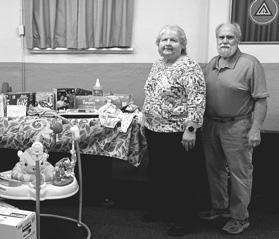
A Duke Energy Foundation $10,000 check was awarded to the Gibson County Council on the Aging. The funds will be used to replenish and revamp the Senior Center Food Pantry and help with the high cost of serving meals to the Seniors.
Organized in 1973, the notfor-profit has supported Gibson County senior citizens for over 60 years.
Camp Carson Got Cold for Campers

A few weeks ago, YMCA Camp Carson held their 5th annual polar plunge, with 50 plungers participating. Each year this event is held to raise money for camp scholarships. The Gibson County CEO group combined to raise over $,1000 for this community project.
It was a cold and windy winter day, but there was a nice crowd to support the cause. Eight individuals have participated each of the five years. Many youngsters will appreciate their efforts.
Eastern Star Showered True Hope
Members of Golden Fleece #176 Chapter of the Order of the Eastern Star recently hosted a “baby shower” to benefit True Hope Pregnancy and Family Center.
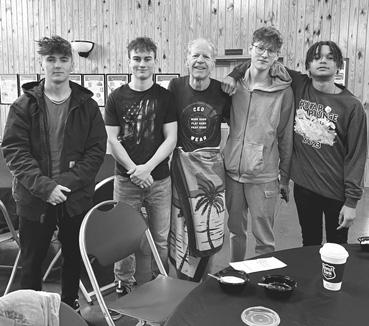





 Coleman, Talan Hanks & Dae Riley. Participating but not pictured: Jacob Henry & Tristen Lawson.
March 2024 Page 4 Small Town Living
Right: Kayla Dant of Springs Valley Bank & Trust, which helped sponsor the event, came prepared for the cold.
Photo: provided
Pictured L-R: Kurt Phegley of Duke Energy, Ronda Colbert Executive Director, and James Leatherman, Transportation Director.
Photo: Jancey Smith
Photo: provided
Worthy Matron and Worthy Patron Pat and Cecil Scott.
Appliances, Home Furnishings & More! NEW ITEMS ARRIVING WEEKLY 100 Days Same as Cash 12 months no interest with qualifying credit! (see associate for details) 1607 W. BROADWAY, PRINCETON, IN 812-385-5757 • Owned and Operated Debra Walker HOURS: Monday thru Friday 10AM to 6PM Saturday 9AM-5PM • Sunday Closed NEW Location - 1023 W. Broadway, Princeton (The old Familiy Dollar across from CVS) Where Service Can’t Be Beat! We’re MOVING! #1Hometown Business of the Year We’re so excited about our new move! Follow us on Facebook for updates. Call if you need our help during this transition. We’re here for you. Same Quality Items • Same Great Service
New Faces at the Soil & Water Conservation District
The Gibson County Soil & Water Conservation District have added two local community members to their team. Marrissa Whetstone and Stephanie Young have both started helping their efforts.

Marissa Whetstone graduated from Princeton Community High School in 2020 and received an associates in Environmental Science and Natural Resources from Vincennes University in 2022. She started working for Gibson County Soil and Water Conservation District at the beginning of December 2023, as their District Resource Specialist. She does a lot of fieldwork including taking soil samples, checking landowners’ farms that are enrolled in grants with us, and putting together workshops that help educate the community about conservation efforts.

Stephanie Young, a 1999 Gibson Southern High School graduate of Owensville, also started working with SWCD in December as District Coordinator. She handles the financials, coordinates monthly meetings with the board, and helps organize activities to educate the community about agriculture. Stephanie took this position in hopes of learning more about agriculture and helping Gibson County farmland continue to thrive.
Breakfast - Lunch - Dinner
Annual Beef Preview Filled the Fairgrounds
Photos: Jancey Smith

Above: Lauren Peddycord placed well with her Angus heifer.
Right: A young and slight Layla Shelton had her hands full showing her heifer in the show, but still did quite well.

Mon.
During the weekend of February 9th-11th, the Gibson County Fairgrounds hosted the annual Beef Preview. It wasn’t as cold as usual and plenty of folks with cattle showed up. There were cows and trailers throughout the pavilion area.

~ Recycle Tips ~
Greetings, Gibson County!

We already have nearly two months of 2024 in the rear-view mirror! Spring is on its way. Gibson County Solid Waste will have a busy month in April—Please save the following dates: Household Hazardous Waste Day will be held on Saturday, April 6th from 8 am to 12 noon. All Gibson County residents may dispose of most hazardous chemicals, pesticides, paints, fluorescent bulbs, drugs and narcotics, for free on April 6th. This event will be held at the Toyota Family Medical Center. Additional information will be posted on our website and FB page as it becomes available.
Also, on the April Calendar, is Gibson County Clean-Up Day. GCSW will again make available clean-up packets for those organizations/individuals pledging to clean-up/pick-up litter at public sites around our county. This event will be Saturday, April 13th. Visit our website or our FB page for information on both of these upcoming events. Thank you for helping to keep Gibson County clean.remember to Reduce~Reuse~Recycle!
For more information visit us on our Facebook Page: Gibson County Solid Waste OR http://www.gibsoncountysolidwaste.com

March 2024 Page 5 Small Town Living
Photos: provided
Stephanie Young (center) with her daughters and husband Shawn, the owner of Young’s Auto Body shop in Princeton.
Marissa Whetstone
Call In •Take Out • Dine In Hwy. 65 in Union 812-354-2919 S u l l i v a n ’ s G r o c e r y S u l l i v a n ’ s Sullivan’s G r o c e r y Grocery
- Sat. 5 am - 9 pm Sunday 6 am - 8 pm TryUnionthe Hoagie










•
•
•
•
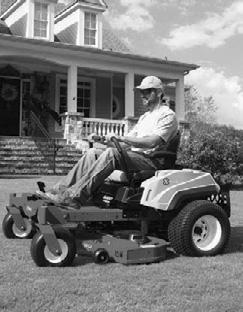
Visit exmark.com or dealer for complete details OUR FAMILY OF ZERO-TURN MOWERS. QUEST E-SERIES GOING ON NOW ATTRACTIVE RETAIL FINANCING XT2™ LX42 LAWN TRACTOR WITH FABRICATED DECK
20 HP†† Kohler® 7000 HD V-twin engine
•
42" AeroForce™ fabricated twin-blade deck
Tuff Torq® foot-controlled hydrostatic transmission (K46) Ultima™ ZT1 54 ZERO-TURN MOWER WITH FABRICATED DECK
24 HP†† Kohler® KT 7000 V-twin OHV engine
54" AeroForce™ fabricated tripleblade deck
Dual Hydro-Gear® EZT-2200™ transmission PRO Z 560 S KW PROFESSIONAL ZERO-TURN MOWER
•
•
•
•
27 HP†† Kawasaki® FX850v engine (852cc)
60-inch commercial-grade fabricated deck
Fully welded 7-gauge deck shell with 7gauge top and bottom reinforcements M.R.K. Equipment Co. 1605 E. Broadway, Princeton, IN 812-385-4876 www.mrkequipment.com Hours: M-F 7:30-5 & Sat. 7:30-Noon REBATES ON SELECTED MODELS FULLY STOCKED & READY TO MOW!! FULLY STOCKED & STOCKED & R READY TO READY TO M MOW!! MOW!!

Soar with Eagles During the Gibson County Eclipse Celebration
Gibson County Visitors and Tourism is happy to announce Hotel California, the original Eagles tribute band, will headline the 2024 Gibson County Eclipse Celebration with a concert Sunday, April 7, 2024, at 7:00 p.m. CT. The concert, made possible by Toyota Indiana, will take place at the Gibson County Fairgrounds and is set to be the standout event leading up to the total solar eclipse on Monday, April 8th.
For over three decades, Hotel California has been recreating the legendary sound of The Eagles and thrilling audiences all over the world. The hallmarks of the band include incredible lead vocal similarity, intensely accurate instrumental work, soaring harmonies, and top-flight live performances.
“When the opportunity arose to have a concert the night before the eclipse, we were thrilled to help out. At Toyota, we pride ourselves on giving back to the community where we live, work, and play. This is one of those opportunities to provide the community with a night of great music and fellowship,” said Tim Hollander, President of Toyota Indiana.
In addition to the concert, the Gibson County Eclipse Celebration, which runs April 5 – April 8, will feature fireworks, a student art and science fair, educational sessions, music, carnival rides, vendors and
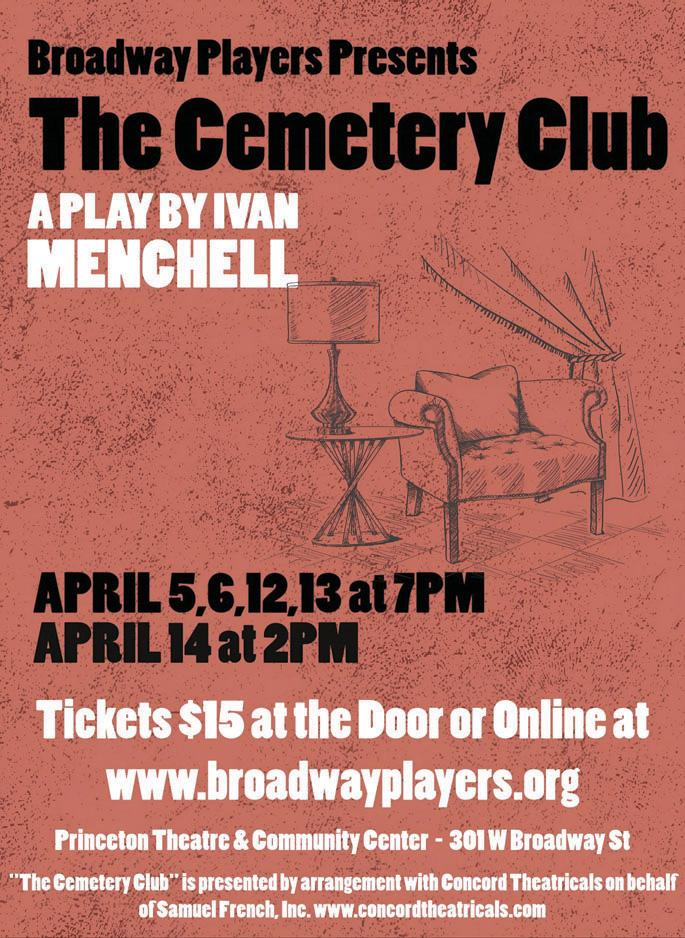
food trucks throughout the weekend culminating with guided viewing of the total eclipse process in real time on Monday, April 8th.

“We invite everyone to join us for this incredible weekend, celebrating both the musical legacy of the Eagles and the natural wonder of being in the path of totality during a total solar eclipse,” added Eric Heidenreich. “The 2024 Gibson County Eclipse Celebration is an opportunity for our community to come together and create lasting memories.”
Advanced reserved seat tickets for the concert are available now at gibsoncountyeclipse.ticketspice.com/tickets or in person at the Gibson County Visitors and Tourism Bureau located at 702 West Broadway, Princeton, IN. Gates open at 3 pm CT.
Two advanced purchase options are available: $15 reserved seat concert ticket or $75 VIP Eclipse Package. The $75 VIP Eclipse Package is an allaccess package to the 4-day Eclipse Celebration and includes: eclipse glasses, entrance to the
Continued next page -


March 2024 Page 7 Small Town Living
Photo: provided
Christian G Burch, CFP®, CRPC® Financial Advisor Doug Lane 403 East Broadway Princeton, IN 47670 812-386-6857 > edwardjones.com | Member SIPC Want to become a more tax-efficient investor? Learn about investment strategies that could potentially lower next year’s tax bill. Talk to a financial advisor today to learn how.
Concert continued -
fairgrounds April 5-8, VIP parking, reserved seats for the Sunday night Hotel California concert, exclusive access to the VIP Eclipse Lounge on Monday, April 8th during the eclipse with complimentary food and drinks. General admission concert tickets will be included with the gate entry fee on the day of the concert, Sunday, April 7, for $5 per person.

Please note: This is an outdoor venue. In the event of inclement weather, the concert will be moved to the fairgrounds pavilion and reserved seating will not be possible. No refunds will be issued.
Please visit gogibson.org for additional details and information about other eclipse events happening in Gibson County.
Journey Tribute Band Added to the Gibson County Eclipse Celebration
(PRINCETON, IN) - The Journey tribute band, Resurrection, has been added as the opening act for the Gibson County Eclipse Celebration concert on April 7, 2024 at the Gibson County Fairgrounds. The concert will now be a two-for-one, with Hotel California, the original Eagles tribute, taking the stage following the Resurrection performance. Resurrection - A Journey Tribute, considered to be ‘The Gold Standard’ by which all Journey tributes are measured, faithfully recreates the experience of a 1980’s Journey concert. This dynamic band has featured some of Nashville’s hottest musicians, many of whom have performed, written, or recorded with the biggest names in the music industryincluding Journey and Steve Perry.
The Journey tribute band performance is being made possible by the City of Princeton while the Hotel

California performance is made possible by Toyota Indiana. The City of Princeton is also sponsoring free fireworks on Friday, April 5th at the Gibson County Fairgrounds. The Gibson County Eclipse Celebration, April 5 – April 8, will also include a student art and science fair, educational sessions, live local entertainment, carnival rides, vendors and food trucks throughout the weekend culminating with guided viewing of the total eclipse process in real time on Monday, April 8, 2024.



March 2024 Page 8 Small Town Living
Photo: Jancey Smith

RV with hook up @ New Lake - $350.00
Tent camping - $150.00 RV no hook up - $250.00 Space suit for pictures all weekend Times below are Central Time
Friday, April 5th
4:00 – 8:00 pm Music by Gad-a-bouts @ car show
4:00 - ??? Food Trucks & Vendors
8:00 pm or dark Movie @ dark @ Trinity Church
Saturday, April 6th
7:00 – 10:00 am All you can eat breakfast @ American Legion
8:00 am Wiffle Ball @ East Gibson Youth Field
12:00 – 6:00 pm Beer Garden @ American Legion
12:00 pm Food Trucks & Vendors @ New Lake & Wirth Park
1:00 pm Cornhole Tourney @ American Legion
1:00 pm Mobile Scavenger Hunt (golf carts or ATVs) $10.00 a vehicle
Bounce Houses @ New Lake
4:00 pm Rodney Watts @ New Lake
6:00 – 8:00 pm Bingo – Community Center
Tri Kappa

Solar Eclipse Events in Oakland City Crystal
10:00 am Golf Scramble @ Oakland City Golf Club
8:00 am Disc Golf @ New Lake, Sponsors at $800.00, $5.00 a person
10:30 am Community Church Service @ Wirth Park
12:00 pm Bounce Houses @ Wirth Park

Astronaut Jerry Ross
12:00 pm Food Trucks & Vendors @ both locations open & American Legion
12:00 pm Lions club Baseball Throw @ Wirth Park
2:00 -4:00 pm Conquers @ Wirth Park outside stage
2:00 pm set up for Movie, Photos, and concessions.
4:30 Simulated Space Shuttle Launch
4:30 pm – 7:30 pm Jerry Ross (Astronaut) book signing @ Community Center
7:30 pm Space Movie @ Community Center
Monday April 8th
7:30 am - ??? Breakfast @ Community Center OC Lions Club
9:00 am –12:00 pm Jerry Ross (Astronaut) Book signing @ Community Center
12:30 pm –3:30 pm Solar Eclipse



March 2024 Page 9 Small Town Living C a m p i n g f o r 3 d a y s - p a y i n a d v a n c e - n o n r e f u n d a b l e
u n d a y A p r i l 7 t h
S
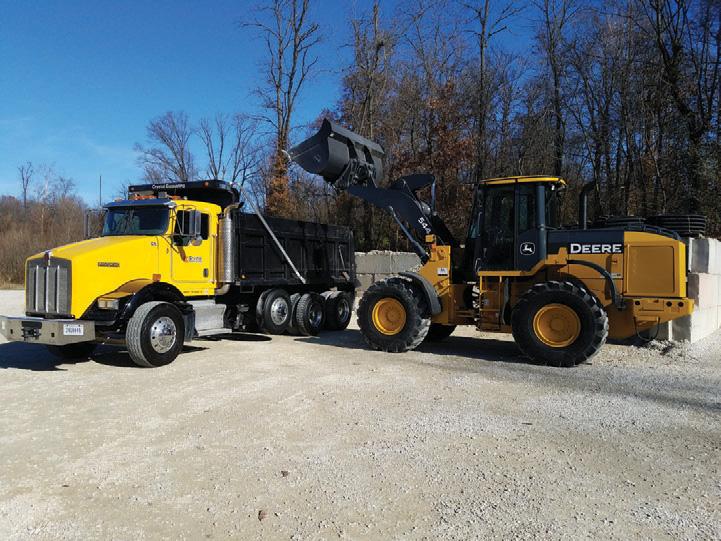
Excavating, LLC. 812-664-0095 Rock Yard Located in Owensville, IN Delivery & Pick-Up Availability Call for an appointment Delivery With Tri-Axle Dump Truck Competitive Pricing



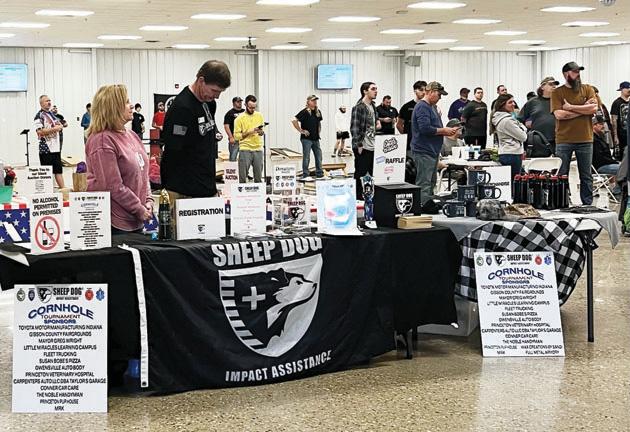
On February 3rd, Sheepdog Impact Assistance held a cornhole tourney at the Fairgrounds. There were 36 teams that helped raise over $4,000 for the non-profit group that encourages veterans and first responders to be active in community projects and assist during disasters.




Small Town Living March 2024 Page 10
J.
C.
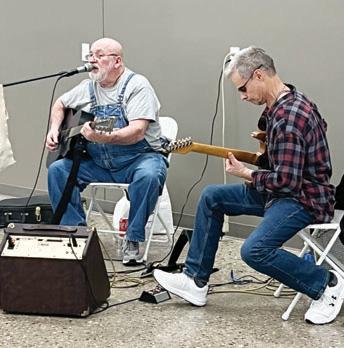
Stone & Larry Cadell provided music.
Sheepdog Impact Hosted Cornhole Tourney
Photos: Jancey Smith
1109 W Broadway St. • Princeton, IN 812-635-0160 (Located Next to Dairy Queen) Store hours: 21 & Older Only Mon. – Sat.: 9 am – 8 pm & Sun.: 11 am – 5 pm Come See What’s New at NEW Flavors NEW Inventory NEW Novelties NEW Discounts & PREMIUM CIGARS With A Drive Thru For Your Convenience THE BEST PRICES IN TOWN! Visit our website at stodghillfuneralhome.com 812-753-4601 500 E. Park St., Fort Branch, IN Serving Gibson County for Over 50 Years Pre-planning Services Available
From left: Jody Puro helped Chris MacKay at the registration table.
Veteran’s Voice
George Pickersgill - Gibson Co. Veterans Service Officer, 812-385-4522


Let me take just a minute and try to explain one of the most difficult things for veterans to understand - the system of combining disability ratings or, as it is affectionately known to veterans, “VA math”. When we’re done here, my hopes are that you will understand why 50 and 50 do not equal 100.
U.S. law requires that a veteran be compensated for any chronic injury, illness, or medical condition that was incurred while serving on active duty. While there are certainly some obscure exceptions, suffice it to say that this is the rule. The disability rating corresponds to the severity of the issue and likewise to the impact it has on the individual’s ability to work and maintain a normal life. These ratings are spelled out in rating tables established under United States Code of Federal Regulations (CFR). They are relatively easy to understand and apply, until the rating involves combining multiple, individually-rated issues into a single rating. This is where the headache begins.
Start with the largest rating first. In our imaginary scenario, the veteran has two 50% ratings that must be combined so we start with either one. Once that rating is applied, our veteran is being compensated for 50% and that portion of him, in theory, no longer exists. Only 50% remains of the original veteran. All new disability ratings are applied only to the remaining portion (50%) and not that portion that has already been compensated. So, if


50% now remains, and we apply the second of the two 50% ratings, the new effect on the veteran is compensation for half (50%) of the remaining half (50%) or 25%. Compensation for the new 25% is then added to the original 50%, making our vet 75% disabled. The VA only pays in 10% increments, therefore our end result (in this case 75%) is rounded up or down (in this case up) to the nearest multiple of 10. When we’re all done here, our veteran will receive a combined rating of 80%. Remember, any new ratings after this follow the same pattern and are only applied to what remains of the original veteran (in this case 25%).
When your head stops hurting and you feel like you need another explanation, please call me. I’d be happy to help you in any way I can.
George Pickersgill




March 2024 Small Town Living
Is Your House • Termite Control • Household Pests • Rodents • Bedbugs • Mosquitoes & More BUGGED? P e s t s A s i d e P e s t C o n t r o l P e s t s A s i d e P e s t C o n t r o l Pests Aside Pest Control Certified in Pest Control in the State of Indiana Call Steve Snodgrass of 812-664-7523•812-640-0630 Guns & Ammo Hours-Closed Sun. & Mon. Tue.-Fri. 10-6 & Sat. 10-4 (812) 385-4741 2178 S. Old Hwy 41 Princeton, IN Keep Your Equipment Updated! Rifle Scopes Red Dots Binoculars Spotting Scopes Tripods Mounts Customized Firearms Repair & Service Bow Tech & Gunsmith on Staff We Buy Firearms Local Postal Customer ECRWSS SmallTownLiving GibsonCounty,IN Inside-heCookingCorner BusinessToday SportsInsider ebruary CountryConnections BehindtheScenes Eateries andMuchMore! The Princeton Theatre Then & Now Postal SmallTownLiving nGibsonCounty,IN nsideLheCookingCorner SportsocalTalentSpotlight Insider arch BCountryConnections ehindtheScenes Eateries andMuchMore! Gib so n Co u n t y B a r n Q u ilt Tr a il U p d at e Gib so n Co u n t y Gibson County B a n Q u ilt Tr a il Barn Quilt Trail U p d at e Update Small Town Living check our website for all issues as digital flipbooks www.smalltownlivinggibsoncounty.com in Gibson County, IN
Brass Ring Welcomes New Owners
As of February 1st, the Brass Ring in Haubstadt is under new ownership. Rick and Monica Smith handed over the reigns of this local gathering place to Lauren and Lance Alston. Lauren was once the spirit behind a bar and grill in Fort Branch.

They plan to be open seven days a week and offer food daily. Their popular burgers and wings will continue, as well as the newly developed pizza kitchen, which also offers sandwiches and mookie bread. Plans for the future include a family room, live entertainment monthly and dining specials. Follow their Facebook page for updates. Welcome back to the business community!


Attractions Adds New Faces
There are two new smiling faces who have joined the team at Attractions Beauty Salon. In early February, they welcomed Kari Long as a new stylist and Lilli Minnis will bring her esthetician skills to the group. Kari recently relocated from Madison, Indiana, and brings with her 24 years of experience.
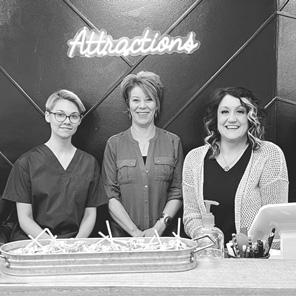
Lilli recently graduated from the Salon Professional Academy in Evansville, and specializes in skin care.
New Pest Control Comes to Town

Gibson County has a new pest control option. Pestbusters, owned and operated by Tyler Bolen and Bradley Black, has an office on E. Broadway, Princeton, which is part of the Edward Jones location of Christian Burch. The new business offers residential, commercial, and industrial services that covers Gibson County and the surrounding area. They offer many types of pest, bug, and critter control.



B u s i n e s s U p d a t e s B u s i n e s s U p d a t e s Business Updates Page 12 March 2024 Small Town Living
Photo: Jancey Smith
Owners Tyler Bolen and Bradley Black.
Laren and Lance Alston.
Contact information & pre-orders Call 812-385-9219 • M-F • 9am - 4pm Or contact any Auxiliary Member Deadline for preordersMarch 21st Deaconness Gibson Auxiliary Annual Geranium Sale April 15th &16th, 9am - 4pm - LOCATIONPrinceton Public Library (East Entrance) Pink Hot Pink Walk-Ins Welcome! $650each White Red Salmon Langham Piano Service Jonathan Langham 352 S. 180 E., Princeton, IN 304-670-7904 jonathan.langham123 @gmail.com langhampianoservice.com
Attractions Beauty Salon owner Paula Allen (center) welcomes esthetician Lilli Minnis (left) and stylist Kari Madison (right).
Their popular burger & fries. Photo provided.

Goodbye Holiday Inn, Hello Hucks
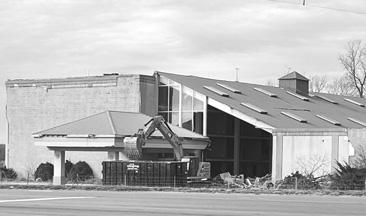
On February 7th, demolition of the old Holiday Inn from the 1980’s began. Within days it was reduced to piles of rubble and is now being cleared away. A Huck’s service station will be in its place.
OC Eagles Welcome New Home
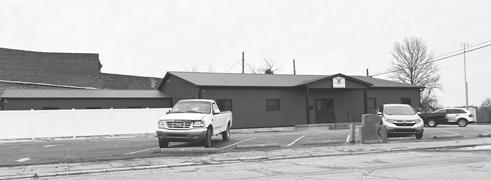
The Oakland City Eagles Aerie #4288 has moved into their new building. It opened on Monday, January 22nd, and has a banquet room, kitchen, pool table, and is very large with a capacity of 270.
They plan to have a grand opening on March 23rd at 6-7 pm with a band to follow.
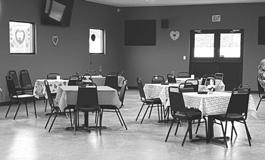
The new location is on the corner of Main St. and East Harrison.
Downtown Princeton Has Solar Plans
On Sunday, April 7th, Downtown Princeton and the Isaiah 1:17 Project have partnered to bring these events to the square. The backup location will be the Princeton Community Center on Broadway.

A logo for the event was created by Chips, Inc.
Photos: Jancey Smith
Gibson County Animal Service Kicks off Building Campaign
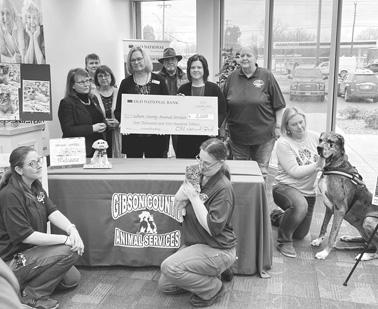
At the end of January, Old National Bank helped the Animal Services by opening a building fund account for the public to make donations to go toward the new animal shelter. It will be located south of the Highway Garage on CR 175.
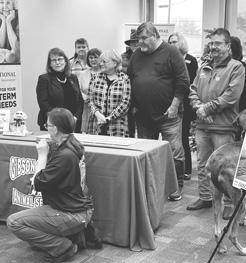
Animal Services board members accept a donation from the Princeton Eagles

DPI Solar Eclipse Market
April 7th, 10am - 3pm will include: food trucks, vendors, face painting, and photo booth. Rock the Block
April 7th, will support the Isaiah Project’s Walking for Dreams Campaign and will include: Collective church service, Bounce houses & kids activities, Booths from local churches & organizations, Live speakers & music, Pet pageant, Cake walk, and Half pot.
What began as a beauty shop at 203 S. Indiana St.., Hazleton, in 2021 has grown into much more. Cari Turpin offers holistic care as a path to wellness for the mind, body and spirit. The Green-Eyed Cat also has a line of CBD/THC Hemp products that are legal in all states and essential oils. There are also 100 herbs in stock in dry form, tinctures, glycerites, and other forms of extracts, along with basic “magical” supplies, such as sage sticks and crystals.

B u s i n e s s U p d a t e s B u s i n e s s U p d a t e s Business Updates Page 13 March 2024 Small Town Living
In front - Jennifer Luttrull and Piper Blackard
Looking For a Job? Need Employees? C a l l T o d a y ! C a l l T o d a y ! Call Today! Modern Personnel Services (812)386-5627 104 N. Third Avenue • Princeton, IN
Back from left: Sharon Werne, Teresa Seitz, Judy Hudson. Ann Hyneman, Brad Stott, Katie Ellis, Mary Essary, Jamie Dillon
The Green Eyed Cat Expands Services

IRA?


Wood Girls Basketball Gets Well Deserved Recognition
The Oakland City Council was proud to honor the Wood Memorial Middle School girls’ 8th grade basketball team for their success. This was the first time in 12 years that the lady Trojans brought home the Blue Chip Conference Championship. The County and your hometown is quite proud of you. Also many congrats go to Wood Memorial and Gibson Southern’s High School ladies on their basketball seasons.
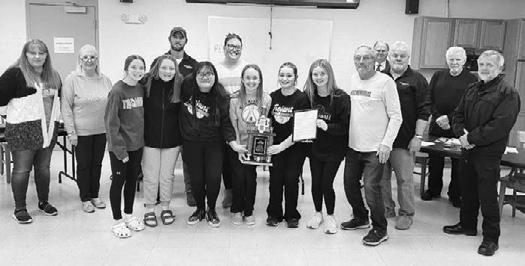
Not pictured Payton Crews and Emma Pierce.
From left: Megan Tapley, Sally Duncan, Chloe Schoonover, Presley Heichelbech, Brady Egdroff, Cirra Lemeron, Bethany Brwer, Chloe Stolz, Savannah Craney, Carly Schoonover, Coach Alan Schoonover, Jim McDonald, Mayor Deffendall, Charlie Cochren and Mike McGregor.
March 2024 Page 14 Small Town Living
Photo: provided
Fast, Friendly, Dependable Tax Preparation Get MOORE & Pay LESS • Bank Products Available Hours: M-F 9-5 • Sat by Appt Vicki Dunning E.A. (Accountant) Moore Tax Service LLC 411 N. Embree ~ Princeton 812-385-3232 www.mooretaxplus.com > edwardjones.com | Member SIPC
Learn
you can contribute more. Let's talk about your options.
how
Met the Mayor
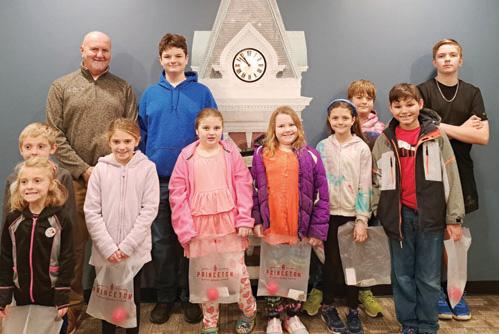
Recently, local homeschool and virtual learning students were given a tour of city hall by Princeton’s Mayor Greg Wright. He spoke with children 4 to 13 years old on what it means to be a mayor, discussing the challenges and rewards of serving in the office. The mayor also walked students through a brief history of Princeton’s downtown including a slide show, sharing his passion for local history and hopes for the future. The students were able to ask the mayor questions and see his office along with the interactive maps used for local utilities. The Homeschool and Virtual Learning Families thank Mayor Wright for his time and the awesome gift bags including a Princeton commemorative coin.
All homeschooling and virtual learning families are invited to join our local group which organizes events via the Facebook group or email at mailto:gibsoncountyhomeschool@gmail.com.
ROGERS


March 2024 Page 15 Small Town Living Photo: provided
Local Home School Students
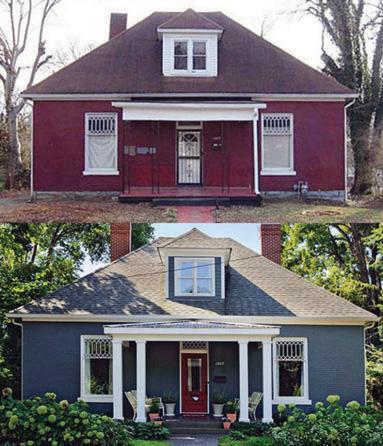
HOME EXTERIORS In business for over 40 years; providing home improvements to Southern Indiana and Illinois SPECIALIZING IN: VINYL WINDOW • VINYL SIDING • METAL SIDING • SEAMLESS GUTTER • ASPHALT ROOFING METAL ROOFING • DOOR INSTALLATION • PORCHES & DECKS - BOTH WOOD & COMPOSITE ROGERSHOME@OUTLOOK.COM • ROGERSHOMEEXTERIORS.COM MAKING YOUR HOME ALL YOU WANT IT TO BE LIFETIME WARRANTY REPLACEMENT WINDOWS REPLACE YOUR WOOD WINDOWS WITH NEW WHITE VINYL, DOUBLE INSULATED WINDOWS; TILT-IN DOUBLE SASHES FOR EASY CLEANING, DOUBLE GLASS, LOCK, AND SCREEN ANY SIZE UP TO 3-FT WIDE X 5-FT TALL FOR ONLY $3 0 PRINCETON 812-385-3304 • MT. CARMEL 618-263-4907 • DAVE 812-760-4419 BEFORE AFTER
The Cooking Corner
Story & photos
Jancey Smith
Irish Potatoes -Spud Fun!
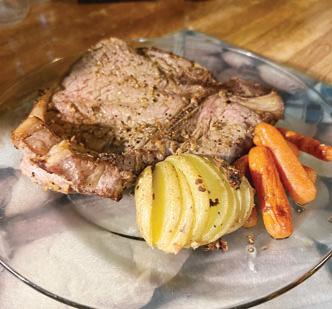
In March, our Irish citizens get one day to recognize their culture. Much like Cinco de Mayo in May, for our Mexican friends, St. Patrick’s Day highlights all things Irish. Thanks to our Irish ancestors, we’ve been given items like Irish Stew, Guinness, Corned Beef and Cabbage, soda bread, and my favorite Bangers and Mashed. One food that’s most tied to the Irish is the potato. It’s almost a food group in Ireland, and in the U.S., we love our spuds, too.
Hasselback potatoes
In the 1800s, many Irish were tenant farmers as a colony of Great Britain, and their dairy products and other staples were exported as a national product. That left potatoes as a nutritious, calorie-dense, hardy


diversity, and the love of the potato.
I’d planned on doing a potato recipe for St. Patrick’s Day, so I began experimenting early. After discovering a garlic Parmesan “smashed potato” recipe, I gave that a try. It was simple enough, tasted all right, but nothing special and was not pretty at all. Therefore, I moved on to another experiment to share. This time I tried a version of Hasselback potatoes. I see folks online doing this often. It’s where you take a spud, slice it very thinly, but not all the way through. It’s then baked and often has cheese stuffed in between the slits. I did get this variation to taste and look good, but the cooking time just seemed off. Three small Yukon gold potatoes should not take 45 minutes baked at 400 degrees. It was a head-scratcher.

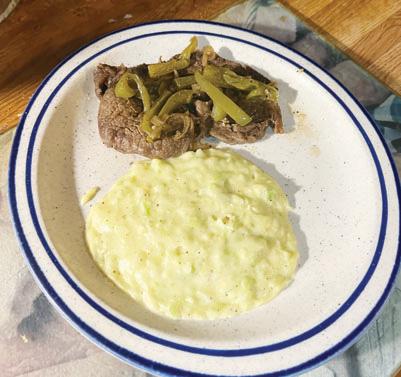
girl. She’s not only cooked Irish cuisine and has been to Ireland, but is a true spud lover as well. I asked for a simple potato recipe that the folks in our German heritage county would like, and she responded with Colcannon. It’s basically an Irish way of making mashed potatoes and cabbage. With few ingredients and simple


Page 16 Small Town Living March 2024
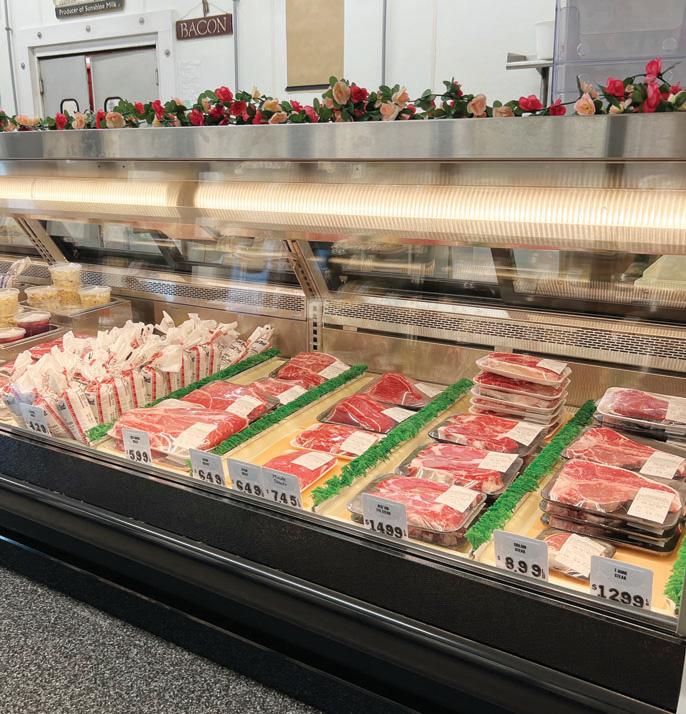
Hours -Mon.-Fri.8 -5:30 •Sat.8 -2 pm 9204 W.State Rd.165,Owensville,IN 812-724-2333 Follow us on Facebook for updates & specials T A X T I M E S P E C I A L Invest In Your Freezer With Our T A X T I M E S P E C I A L TAX TIME SPECIAL LOCAL Gibson County Grain-Fed Beef! K e n n y D e w i g M e a t s K e n n y D e w i g Kenny Dewig M e a t s Meats CertiGiftAvaificates lable 1/2 Beef-approx.380 lb.-$4.29 lb. Hind Quarter -approx.190 lb.-$4.49 lb. Front Quarter -approx.190 lb.-$4.49 lb. Cut, Wrapped & Frozen *1 lb.packages* Susa n Bobe’s Pizza Susa n Bobe’s Pizza Susan Dine-In~Carryout~Delivery 8 1 2 - 3 8 5 - 2 5 5 4 8 1 2 - 3 8 5 - 2 5 5 4 812-385-2554 Limit One Coupon Per Customer Expires 3/31/2024 Susan Bobe’s Pizza Limit One Coupon Per Customer Expires 3/31/2024 Susan Bobe’s Pizza 14” Pizza with up to 2 Toppings, 12 Wings 1 Breadsticks 1 2-Liter Soda March MarchSpecialsMadness SpecialsMadness 20” Pizza with up to 2 Toppings, 12 Wings 2 Breadsticks 2 2-Liters Soda ONLY $49.95(Plus Tax) Bring in completed basketball bracket BY MARCH 19TH to be a part of SUSAN BOBE’S BRACKET CHALLENGE for a chance to win FREE food! See Facebook for details ONLY $32.80(Plus Tax) Tue-Thur 10-9 • Fri & Sat 10-10 • Sun 10-9 • Closed Mon 101 W. Broadway, Princeton, IN Breakfast Pizza Buffet Sunday 10-2pm Pizza Buffet Daily 10-2pm & Wednesday Nights 5-8pm
directions, I decided to give that a shot. It was surprisingly easy and very rich. Now to be fair, she sent me the instructions but not the ingredient list portions, so I had to wing it.
At first, the mashed potatoes were so thick the mixture would have made great spackle for mudding dry wall holes. However, with enough liquid (heavy cream) and by adding the cabbage which always has a lot of water included, this turned out interesting and tasty. Best of luck to ya!
Tips - I tend to cook potatoes with the skin on, since that’s where so many nutrients are, but in this case, I peeled them and cut into chunks for quicker cooking time. I’m not a patient person and the goal in this recipe is smooth and creamy, no skins included. Also, since this is a very simple dish with few seasonings, feel free to add more than a few shakes of salt and pepper to ramp up the flavor. Even though I was tempted to sauté the cabbage in bacon fat for flavor, I did stick to the recipe and boil it, which was smart. The cabbage softly fell apart and blended well with the potatoes. What a way to sneak in some green veggies.
Colcannon (Irish Mashed Ptatoes)
Ingredients-
5-6 medium/small Yukon gold potatoes, peeled and quartered
1/2 stick Irish butter
1/2 cup heavy cream
salt and pepper
small head of cabbage, quartered, core removed, sliced fine
3 scallions, sliced thin Preparation -
In a large pot of cold water add 1-2 Tablespoons of Kosher salt.
Add peeled and quartered potatoes. Boil 20 minutes until soft. Drain.
Return potatoes to pot and add butter, salt and pepper. Whip with mixer and or hand mash. Slowly add heavy cream and mix well until smooth and creamy. In a pot of boiling salted water, add cut cabbage and cook 3-4 minutes until soft. Drain well.
Mix cabbage into mashed potatoes and mix well. Add more salt and pepper and sliced scallions. Blend well and serve warm.
Serves 4.






March 2024 Small Town Living Page 17
Let’ s TalkHom e s F.C. TUCKER EMGE VICKI TOWNSEND REALTOR ® VickiTownsendSells.com 812.677.2838
Backyard Birds -
Come On Spring!
Are we inching our way out of winter and closer to spring? Sometimes it seems as though spring will never arrive. Cabin fever sets in, and we lose our patience. We start thinking we just can’t take winter any longer. We find ourselves looking for signs of spring. Rest assured, spring will definitely arrive but, just to show us who’s boss, mother nature will be teasing us with the occasional nice day. The warmer day will pop up now and then until eventually the days will get a little nicer, longer and warmer.
There are certain spring clues that I listen and watch for when determining the arrival of spring. As I walk around in the yard I notice my tulips are beginning to pop through the ground. I notice large buds forming on the maple trees which leads to the eventual release of their helicopters only to clog our rain gutters. It won’t be long and we will notice daffodils in full bloom showing their pretty yellow blooms along the roadsides and the landscaping areas of lawns.

Art by Ms. Addison Potts, 6th grade own calendars and while not exact, from year to year, they give us clues as to what their plans are. By watching them they give us clues to what their plans are. I’ve already noticed several clues from this past weekend.
As bird watchers, we can find our own clues for the arrival of spring. Our fine feathered friends have their




On Sat. Feb 10th, I saw 9 Robins bouncing about in my lawn hunting for a worm or two for their hungry winter tummies. They will feed in groups with a few feet between each other. By feeding in groups the robins have more eyes looking for a food source as well as more eyes watching for predators. Also, this same Saturday I was listening to a distant male Cardinal calling for a mate. Usually I can hear Red-Wing blackbirds about midFebruary and this year was no different. Another sign on Feb 10th was I had an Eastern Bluebird pair investigating their favorite nestbox. I’m sure it was a quick clearing of cobwebs and the suitcases were unpacked. Actually, my bluebirds have been hanging around all winter. I left several nest boxes out for them over the winter. Just in case they needed a place to get out of the harsh weather the boxes were available. As spring arrives the bluebird will choose a permanent nest box for raising their young and start defending it against other species as well as other bluebirds. Most birds are still in their winter plumage at this time however it seems the male goldfinches appear to be a little more yellow than just a few weeks ago. I look forward to a hopeful second nesting of a Baltimore Oriole.
Purple Martins arrived in this part of Indiana last year around March 10th. As of this writing they are just a few weeks away barring any sudden weather changes at that time. As the days get a little longer the grass will start to green up a little more and we all know what that means. Purple Martins are my main birding hobby and as always, I am looking forward to their return.
Spring”.


By Guest Writer, Shawn Keith
March 2024 Page 18 Small Town Living 1198 S. Kiesel Dr. Princeton, IN 8125-386-6580 C o u n t r y C l i p p e r X LT C o u n t r y C l i p p e r X LT Country Clipper XLT 333 S 2nd Ave Princeton, IN rpmtool.com 812-385-8509 THANK YOU! For Being a Great Small Business Partner
Pets and the Solar Eclipse
All of Gibson County is preparing for the upcoming solar eclipse on April 8, 2024, but how should we prepare our pets—and how should we expect them to behave?
Primarily, just treat this event as you would any holiday involving fireworks (and who knows—we may hear/see some of those) and either keep Simba and Maverick safely inside at home, on a leash, or crated if you take them with you to a viewing event. If you leave them at home, crate them or make sure that the shades and curtains are safely drawn. Be aware that the excitement of a crowd may agitate them, so they do need to be restrained if you take them with you.
We don’t have to worry about our pets staring at the sun during the eclipse since they instinctively don’t look at the sun on regular days. However, if you plan or having your pet with you to view the eclipse, you can try to put protective glasses on them (this may be possible with Maverick, but Simba may not oblige).
Scheduling a walk at least half an hour before or after the eclipse would help your pup, keeping him out of any noisy celebration or group of people. Maverick may not notice the eclipse, but he would notice a crowd.
Some pets become confused during the eclipse, starting their nighttime routines, pacing, or asking for cuddles and reassurance. As long as we remain calm, they should as well. However, giving them a yummy treat or a distracting toy may help them during the brief time. Inside pets may not even notice that the eclipse has taken place since they are used to being in rooms where the lights are turned off.
Cats are least likely to be affected by the solar eclipse itself, but changing their routine might. They have a natural aversion to bright light, so Simba may squint but otherwise may not respond.
If they are well-adjusted and used to being left alone inside, you shouldn’t have anything to worry about. If Simba and Maverick have separation or social anxiety, then consider staying home with them or keeping them with you. No matter if they stay home or go with you, make sure they wear their collars and identification tags.
Those out in the country may witness some interesting behavior from farm animals and wildlife.
Farm animals may exhibit a variety of reactions. They may be confused and think it is bedtime. Cows, horses, and goats may head back to the barn while chickens may huddle together. Wild birds may start chirping, heading back to their nests. Frogs may ribbit, and ants may simply stop, remaining motionless until the
sun reemerges.
Submitted

Nocturnal animals such as fox, opossums, and raccoons, emerge, mistakenly thinking night has fallen. Bats and owls make their appearance, while diurnal animals such as Rocky the Squirrel and Bambi display hyperactive behavior during the eclipse and after for a few hours (especially Rocky…).
Zoo animals will be most affected by the solar eclipse, demonstrating erratic behavior. During one of the last eclipses, a giraffe swayed his body back and forth during the eclipse, only returning to normal when the light returned. Chimpanzees will likely climb up to face the sun.
GCAS evemts and fundraisers - We hope you enjoyed the Pre-Super Bowl Puppy adoption at the Fort Branch VFW on February 11th as much as our pups did—and all of us at GCAS (including the pups). Thank you for your support. We at GCAS are TEAM PUP!
All of us with Gibson County Animal services (GCAS) appreciate the support of our community and look forward to seeing you in May at the Court House for the DPI festival. We’ll have pup treats! On April 20th, we’ll be at the Camp Carson Archery Event. Please support this event which raises funds for children to attend summer camp and visit with some of our adoptable pets. Don’t forget to polish up those cars, motorcycles, and even tractors for our yearly car show in June!
Hungry? Susan Bobe’s Pizza will be hosting a give back and adoption event for GCAS in April.
We should be hopping at the courthouse gazebo for the annual Princeton Easter egg hunt.
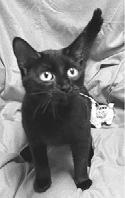
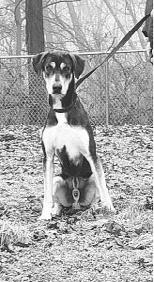
These are some of the pets available for adoption at GCAS. Please come visit us and maybe one of our cats or dogs will choose you as their new family. We may not have the Irish Pot of Gold our pets can cuddle and look at you with loyal, loving eyes.



for GCAS by Clair Juenell Owens
Photos provided
Small Town Living March 2024 Page 19
Gibson County AnimalServices 3840 South County Road 175 E, Princeton, Indiana Call (812)386-8079 Visit our website: https://www.gcasonline.org
Adoptable
~
Pets
Shari Hooch
What’s Happening!!
March 1st - Princeton Knights of Columbus, 4:30-7pm, 2 pc meal $10 or 3 pc meal $12, with 2 sides, slaw or applesauce, hush puppies & dessert
March 1st - St. James, Haubstadt, 4:30-7:30 pm, fish, potato salad, beans, slaw, & more
March 15th - St. James, Haubstadt, 4:30-7:30 pm
March 16th - Mt. Olympus Lions Club & Community Center, 4:00-7:00 pm, Fish, 2 sides, dessert & drink, $12 adults, $6 kids 7-12
March 22nd - Princeton Knights of Columbus, 4:30-7pm (see March 1st above)
March 22nd - Haubstadt Knights of St. John, 4:30-sold out - CARRYOUT ONLY
March 29th - Oakland City Lions Club, Hometown IGA parking lot, 10:00-4:00 pm CSTFish sandwich, burgers & chips available
~ Easter Bunny Events ~
Owensville - Saturday, March 30th, 1 pm Owensville Library Square
Princeton - Saturday, March 30th, 9 am Courthouse Square
Oakland City - Saturday, March 16th, 1:00 pm, Wirth Park

Fil-Am Easter & Potluck - Saturday, Mar. 23rd, 3pm, Lafayette Park Shelter House #4
Paw Paw Patch Shop with the Easter Bunny
- Saturday, Mar. 23rd, 10am-2pm, 4962 S 550 E Francisco
Patoka Presbyterian Church - Saturday,
Saturday, Mar. 9th
Deaconess Gibson Foundation Gala, Toyota Event Center buy tickets in advance
Friday-Monday, Apr. 5th-8th
Ag Breakfast & Political Forum
KofC, 313 W Broadway Princeton
Saturday, Mar. 16th
Breakfast: 6 am - 10 am, Forum: 8 am
Presented by Farm Bureau & the Gibson County Chamber
Steak Night
Fort Branch VFW #2714
Check Facebook for details, Call for reservations
Kitchen open Tue., Wed. & Fri. Call for info after 3 pm 812-457-1480
Spaghetti Dinner
Sponsored by Susan Bobes
Senior Center, 218 S. Richland Creek Dr. Princeton
Saturday, Mar. 16th 4-7pm , $10 ticket
Eat in or carryout
All welcome Call 812-385-2897
- Senior Center Activities -
Monday: 8:45 Breakfast
9:30 am - Bingo
12:00 pm - Card Players
Tuesday: 9 am - Exercise Class 11:30 - Lunch Noon - Crocheting (3/12, 3/19, 3/26)

Numerous events for the solar weekend check website: gibsoncountyfair.com




Wednesday: 11 am - Quilters
Thursdays: 10 am - Bible Study 1 pm - Art Class/Painting 1 pm - Sewing 3/21

Friday: 9 am - Tone & Stretch 9:45 am - Line Dancing 11:30 - Lunch --------------------------------
Men’s Breakfast - Thursday March 7th, 8:30
St. Patrick’s lunch & games Mar.15th
Susan Bobe’s Spaghetti Dinner, Mar.16th, 4-7pm, Carryout available, $10 Closed for Good Friday, Mar. 29th
Call for info 812-385-2897

Page 20 Small Town Living March 2024 F u n a t t h e G i b s o n
o u n t y F a i r g ro u n d s
u n a t t h e G i b s o n Fun at the Gibson
o u n t y F a i r g ro u n d s County
C
F
C
Fairgrounds
Like us on Facebook @AlterationsandMore219 Jenny 812.582.4335 “For the Perfect Fit . . . Come See Jenny” Alterations and More 123 E. State Street • Princeton, IN Prom Dress Alterations, Sewing, Mending, Repairs, and More HOURS: Tues., Thurs. & Fri. 10am-6pm Broadway & 5th Ave. Princeton • 812-386-7664 Watch for Lent Specials in the Deli & Frozen Departments Featured Deli Meals Tuesday - Salmon patties Breaded Shrimp 5 pc Cod Sandwiches & Dinners Friday - Catfish filets HOMETOWN ~ Community Fish Fries ~ SAVE THE DATE:Solar Eclipse Party, April 8th, 1-4 pm
What’s Happening!!
~ Help with Food in the Community ~
Souled Out
Saturday
Oasis Church, Princeton
1st Saturday monthly
Sign in - 7-10:30 am
Breakfast - 7:30-8:30 am
Food Pantry - 8:30-11am
Shopping - 8-10am
Haubstadt Food
Pantry
New Life House of Prayer
208 S. West St, Haubstadt
1st and 3rd Wednesdays
4:30 - 5:30 pm
Salvation Army Free Food Give Away
Gibson St., Princeton
Tuesdays, Mar. 5th, 12th, 19th, & 26th, 9am-10am
Fridays, Mar/ 8th & 22nd
9:00am - 10:00 am
Hillside Delivers
Dinners
Archer Rd., Princeton
Monday, Mar. 11th Call 812-385-2910 by 2:30 pm on Mar. 8th, to reserve a meal
Lord’s Pantry
Vine St., Fort Branch
Every Wednesday
9 am - 11 am
East Gibson Food Pantry
Oak Grove Church, 805 W. Morton St.
Every Wednesday
9 am - noon
Food Pantry for Seniors
The Senior Center, Princeton, Wed. Mar. 13th & 27th Thur. Mar. 14th & 28th 1 - 3 pm
Owensville Food Pantry
303 Church St.
Tuesday & Thursday 8-12 & 1-4 pm
Salvation Army Food Pantry
Gibson St., Princeton
Monday, Mar. 4th, 11th, 18th & 25th
Wednesday, Mar. 6th, 13th, 20th & 27th 9-11:30 am & 1-3 pm
Lord’s Table Food Give Away
Greater Holy Temple, 202 E. Pinkney, Princeton
Saturday, Mar 9th, 11am - 2 pm
Please bring a box/bags
Mackey Salem Church Community Meal
Third Tuesday monthly
11 am - 12:30 pm proceeds go to E. G. food pantry
Mt. Olympus Lions Club
Meetings 2nd & 4th Mondays
Monthly at Mt. O Community Center, 7 pm
Collecting old cell phones, hearing aids and glasses
Amer. Legion #256
Oakland City
1st Saturday each month
All-you-can-eat breakfast
7 am - 10 am, $10 for biscuits & gravy, eggs, sausage, fried potatoes & pancakes
Amer. Legion Post
#25 Breakfast
Broadway, Princeton 2nd & 4th Saturdays
8 - 10 am
Sausage Grind
K of C, Princeton
Saturday, Mar. 9th, 6 -11 am, pick up after 9:30 Call 812-385-5732 & order by Wed. Mar. 6th
Karaoke Night
Princeton Moose Lodge
Saturday, Mar. 16th, 8 pm



K of C Bingo
Open to Public every Thursday
Princeton K of C, 6 pm
Patoka Methodist Men’s Breakfast
Saturday, Mar. 16th, 7 am
203 Spring St., Patoka
Third Saturdays monthly
Blood Drive
K of C, Princeton
Monday, Mar. 11th, 2 - 6 pm Call for appointment 1-800-733-2767
Chicken Dinner
Fort Branch VFW #2714
Saturday, March 16th
Carryout Available 812-457-1480
Texas Hold Em
Princeton Moose Lodge
Saturday, Mar. 23rd, 6 pm
VFW #2714
Breakfast
Fort Branch
2nd Saturday, Mar. 9th
Breakfast, 7 am - 10 am, Sausage, biscuits & gravy, eggs, hash browns & drink
All welcome. For carryout call 812-753-4161
Come early, last month SOLD OUT!
Fridays!

March 2024 Page 21 Small Town Living
OPEN 4AM • 2PM TUE. • SAT. CLOSED SUN. & MON. 124 W. STATE ST., PRINCETON, IN 812-635-9500 FOLLOW US ON FACEBOOK FOR LUNCH AND DESSERT SPECIALS Lunches below include hushpuppies and 2 sides • Catfish Platter • 2 Salmon Patties • 6 Butterfly Shrimp Basket SEAFOOD PLATTER: Catfish Filet, Salmon Patty, 3 Butterfly Shrimp
Seafood
SERVING YOUR LOCAL FAVORITES
As the Vet Says -

Top 10 Pet Poisons
We often get calls from people who think their pet has been poisoned by something or someone. Truth be told, actual poisoning cases (like, your neighbor feeds your dog something poisonous) are pretty rare. The more common poisonings we see are from normal foods in your kitchen or household products that our pets get into while we aren’t looking. Here are the top 10 pet poisons that were reported to the Pet Poison Helpline in 2022, and why they can be so nasty.
1. Chocolate can cause hyperactivity, vomiting, diarrhea, and heart problems.

2. Grapes and raisins can cause kidney failure.
3. Xylitol is a sugar substitute found in some sugarfree products. It can cause your pet’s blood sugar to drop very quickly, which can cause seizures and potentially death.


4. Ibuprofen (Advil, Motrin) can cause stomach upset, vomiting and diarrhea, and even kidney or liver failure.
5. Bromethalin is a type of rat poison – it can make your pet look drunk and requires immediate emergency care.
6. Marijuana will make your pet look high – a dazed expression, glassy eyes, slower movements, and incoordination. This is usually not dangerous (unless your dog ate a lot of marijuana), and takes time and supportive care to fix.
7. Anticoagulant rat poisons cause internal bleeding, a few days to a week after your pet ate the poison. This can be easily treated if caught early.
8. Vitamin D3 (also called cholecalciferol) is another ingredient in some rat poisons. An overdose of vitamin D3 can cause kidney failure within 2-3 days. It can be treated if caught very quickly.
9. Onions, garlic, chives, and any other members of the Allium family can cause stomach upset and damage to your pet’s red blood cells. It can be difficult to treat if not caught quickly.
10. Carprofen (Rimadyl) is a common medicine that we prescribe to dogs for arthritis and pain control. If your dog or cat eats too much at one time (they grab the bottle off the counter, for example), it can cause stomach upset and kidney problems.
If you know (or even think) that your dog or cat got into any of these items, or something else that is not part of their normal diet, call us or your regular veterinarian immediately. Depending on the type of animals, what they got into, and how much they consumed, your veterinarian will have advice for you. Most of these poisonings can be treated, but for many of them your veterinarian needs to know what your pet got into, and treatment needs to be started very quickly.
If you have any questions, think your pet might have gotten into something it shouldn’t have, or need to get your pet’s physical exam and vaccinations up to date, give us a call! Princeton Veterinary Hospital always accepts new patients, is available to see your pets same-day with no appointment needed, and has a veterinarian on call for emergencies. Call or text us at 812-385-2733 or find us on Facebook. We are here to help!

-Dr. Marybeth Feutz, Princeton Veterinary Hospital 725 E. Broadway, Princeton, IN CALL TODAY! 812-385-2733 princetonvet.net/ We are always accepting new patients! C o m p a s s i o n a t e c a r e f o r a l l a n i m a l s , L A R G E a n d s m a l l C o m p a s s i o n a t e c a r e f o r ompassionate care for a l l a n i m a l s , L A R G E all animals, LARGE a n d s m a l l and small
Andy Griffith quiz answers: 1. C, 2. D, 3. A
Looking to reach everyone in Gibson County with your product or service? Look no further. Call 812-664-1082 and be a part of Small Town Living! Small Town Living March 2024 Page 22






Small Town Living March 2024 Page 23 812-385-4431 Walter Arnett CPA,PC 102 N.First Ave.-PO Box 7 Princeton,IN 47670 walterarnettcpa.com walter@walterarnettcpa.com 812-385-4431 WE CAN HELP! End oftheYearDetailsGetting You Down? WE CAN HELP! Accounting Services Business Consulting CERTIFIED PUBLI C ACCOUNTANT Tax Returns forIndividual& Businesses Trusts & Estates NEW CLIENTS WELCOME Appointments Available forTax Planning and Consulting Including Quarterly Filing and W2 PREPARATION Payroll Services: GREENWELL AUTO BODY Our goal is to restore every vehicle to its original condition. Painting is done in an EPA approved ventilated Brewco paint booth, guaranteeing an original factory paint finish. 903 S. Main, Princeton 812-386-7411 • Hours: M-F 8-5 joedy.greenwellautobody@gmail.com Joedy Greenwell Owner • Almost 40 years of experience • Nearly 28 years at this location • Best equipped shop in Gibson County • Down draft baked paint booth • Works with all insurance companies Commitment to Quality Complete professional body repair, frame straightening and factory matched painting. Call office at 812-795-2708 for info
Cultivating a Bounty: A Guide to Planting
Cool-Weather Vegetables
As the seasons change, so do the opportunities for growing a variety of vegetables. Cool-weather vegetables thrive in lower temperatures, making them ideal for planting during the fall and early spring. Cultivating these veggies not only adds diversity to your garden but also provides a fresh harvest for your table. In this guide, we’ll explore the benefits of planting cool-weather vegetables and offer tips for a successful harvest.
Benefits of Cool-Weather Vegetables:
Extended Growing Season:
Cool-weather vegetables can be planted well before the last frost in spring or after the first frost in fall. This extended growing season allows you to enjoy fresh produce for a more extended period.
Optimal Growing Conditions:
Less Pest Pressure:
Cool-weather crops often face fewer pest issues compared to summer vegetables. The cooler temperatures discourage the proliferation of certain pests, making your gardening experience more enjoyable.

These vegetables prefer cooler temperatures ranging from 40°F to 75°F. In these conditions, they thrive, resulting in better flavor and texture compared to their warm-weather counterparts.



Top Cool-Weather Vegetables to Plant:
Leafy Greens:
Varieties like spinach, kale, and lettuce flourish in cooler temperatures. They are rich in nutrients and can be harvested multiple times during the season.
Cruciferous Vegetables:
Broccoli, cauliflower, and Brussels sprouts are excellent choices. These vegetables not only thrive in cooler weather but also provide a wealth of vitamins and antioxidants.
Root Vegetables:
Carrots, radishes, and beets are well-suited for cool weather. The chilly conditions enhance the sweetness and crispness of these root crops.
Alliums:
Onions, garlic, and leeks are cool-weather staples. Planting them during fall ensures a robust crop with vibrant flavors for your culinary creations.
Tips for Successful Planting:
Start Early Indoors:
Begin by germinating seeds indoors a few weeks before the last frost date. Transplanting seedlings into the garden once the soil is workable provides a head start.
Choose the Right Location:
Pick a sunny spot for your cool-weather vegetable garden. While these crops can tolerate some shade, they generally thrive in full sunlight.
Well-Drained Soil:
Ensure your garden soil is well-drained and enriched with compost. Good soil quality is crucial for the healthy development of cool-weather vegetables.
Mulching:
Apply a layer of mulch around your plants to regulate soil temperature and retain moisture. Mulching also helps control weed growth, providing a conducive environment for your vegetables.
Planting cool-weather vegetables is a rewarding endeavor that offers a bountiful harvest and a diverse range of flavors. By following these tips and selecting the right vegetables for your garden, you can enjoy a thriving plot that provides fresh, nutritious produce throughout the cooler seasons. Happy gardening!
Small Town Living March 2024 Page 24
Article submitted by the Gibson County Master Gardeners
W-B Ai r & Water W-B Ai r & Water Serving Gibson County Since 1996 Heating (installation and service most models) Air Conditioning (installation and service most models) Plumbing Electrical 812-749-9600 Jay Wilkins - Owner ✓ ✓ ✓ ✓
Photo: Ritter’s lettuce by Jancey Smith
News from Lyles Station, Indiana
Spring is just around the corner, I hope. Sometimes Mother Nature does not follow our calendars though. These past few months I have been receiving a lot of seed catalogs, and advertising about the new plants, new seeds, new tips and tricks in the garden. Just imagine what Mr. And Mrs. Grier did during those frigid months after Christmas in the late 1700s and 1800s. No catalog, no computers, just word of mouth about new seeds or new plants. They came to Lyles Station grounds from a southern State, probably brought seeds with them, starts of plants, herbs, and vegetables. But remember growing conditions from one State to another are altogether different. Every farmer/gardener goes through periods of “trial and error” with emphasis on the “error” part.
In the early 1840’s the settlers were able to go to the local General Store to order seed that was then delivered by mail on the train, stagecoach or by steamboat. With the three rivers (Wabash, White and Patoka) near Lyles Station, packages could be picked up easily. In the 1850’s in Patoka, Indiana Gordon Byron Bingham started a trading store. After his marriage in 1858 he started a general store, flour mill, packing house and a distillery. Settlers from Lyles Station could have traveled by buggy or horseback to purchase from Mr. Bingham at that time. Lyles Station later had their own general store in their community.
The most common crops in the 1800s were corn, wheat, and potatoes. Wheat and pigs were the cash crops; potatoes were considered a staple for the family. A kitchen garden (first called dooryard garden) was always located close to the front door. The gardens were always planned to help supplement food items for the family. The herbs were harvested and hung to dry during the winter months. Herbs were used to make salves or teas. That would include herbs that could be used for cooking and aromatic herbs for air fresheners or used for the burial of deceased family members. Most common vegetables also included beans, beets, asparagus, rhubarb, radishes tomatoes, onions, pumpkins, cabbage, squash, and turnips. Vegetables were usually pickled and used later, never served fresh.
In closing as our community gets ready for April 8, 2024, the solar eclipse, it made me wander about the eclipse history in the 1880’s. During the period of 1801 to 1900 there were 242 solar eclipses, 87 were identified as partial, 77 were annular, 63 were total and 15 were considered hybrids. In 1805, there were a total of five solar eclipses, In January 1805, there were two, and in December 1880, there were two listed. Imagine the hysteria if the settlers didn’t knowing what was happening, although old farmers know the weather better than most.
An annular solar eclipse occurred on February 12,

1831. That eclipse was instrumental in the planning of a slave uprising led by Nat Turner. Nat Turner took the solar eclipse as a sign he was called by God to deliver his people from slavery. He began purchasing muskets and gathered over 70 freed and enslaved men to help him lead the revolt that took place in Virginia, August 1831.
On February 12, 1850, the solar eclipse was a relatively long eclipse, lasting 8 minutes 35 seconds. A solar eclipse is an educational opportunity every time it happens. The Moon passes between the Sun and the Earth, casting a shadow on Earth that either fully or partially blocks the Sun’s light in some areas. Many locations in our community are preparing for the April 8, 2024, Solar Eclipse. Mark your calendar and join the Lyles Station Historic School and Museum for the Solar Eclipse. Wear eye protection, be safe!













submitted by the
of the
Small Town Living March 2024 Page 25
Article
Jodi Meier
Green Thumb Club.
A photo of the moment of totality.
Wednesday - Friday from 8:00 A.M. - 5:00 P.M. Saturday from 9:00 A.M. - 4:00 P.M. Storewide Sale Includes La-Z-Boy, Flexsteel, and Restonic Bedding. Don’t forget Lamps, Silks etc. * 1 year free financing to qualified buyers! * No discount on closeouts or prior sales HUGE SAVINGS!!! Come in during Luck O’the Irish Sale 104 N. Main Street Owensville, Indiana 47665 812-724-3501 • 800-440-4888 www.holdersfurniture.net 10%-50% OFF Place your orders NOW! 1 0 4 N . M a i n S t . 104 N. Main St. O w e n s v i l l e Owensville 8 1 2 - 7 2 4 - 3 5 0 1 812-724-3501 8 0 0 - 4 4 0 - 4 8 8 8 800-440-4888 w w w. H o l d e r s F u r n i t u r e . n e t www.HoldersFurniture.net
Photo by Charles Kiesel, program specialist at the Princeton Public Library.
Library Program Features Solar Experience
Story & photos: Charlie Kiesel
Programs at the Princeton Public Library in March will provide a preview of the Total Solar Eclipse that will occur above Princeton, Indiana, and the surrounding area on April 8th, 2024.
The sun will be darkened by the moon for approximately four minutes during the eclipse of the sun. It will be a once-in-a-lifetime event for Gibson County residences with no need to fly or travel to other locations to see this exciting event.
I will discuss during my program different ways to view the eclipse safely, both during, before and after totality.
I will share my experiences of seeing the total eclipse sun in 2017 from Hopkinsville, Kentucky. This will include the sights and sounds (many photos and several videos) of the August 21st, 2017, solar eclipse as I experienced it, at the Bruce Convention Center just south of Hopkinsville, Kentucky .
There is a video of the spontaneous reaction of the crowd at the moment of totality. Photos I will share include the sunlight of a sunrise/sunset on the surrounding horizon, 360 degrees around the convention center. Dusk-to-dawn lights outside the convention center came on during the eclipse. You will see photos of images on the ground that occurred pre- and posttotality during the eclipse as the sunlight shines through the spaces between the leaves creating a pinhole camera effect projecting sun images on the ground. I also have a photo of the planet Venus which was visible

the Princeton, Indiana, area the planets Jupiter and Venus may be visible.
A partial eclipse of the sun gives a preview of what a total eclipse of the sun is like but is not really comparable. A partial solar eclipse is by no means as impressive as a total eclipse of the sun. The moon only covers a part of the sun during a partial eclipse. The comparison between the two types of eclipses is like the difference between day and night.
Wednesday - March 6th at 10:00 am
Saturday, March 23rd at 2:00 pm
Wednesday - March 20th & 27th at 6:00 pm
The Center for Seniors Plans Solar Party

educational program, games, prizes, food, and live music by Scott Mason and Brian Lynch. The event will be Monday, April 8th, between 1- 4pm. Glasses will be available.




Small Town Living March 2024 Page 26
Photo: Jancey Smith
Program Dates and Times
Let us work out life’s kinks…join the thousands of others that have been helped HOURS: Mon and Wed 7:30a.m.-5:50p.m. Tues and Thur 12-7p.m. Blue Cross/Blue Shield and Medicare participating provider. Most insurance welcome. FAMILY CH ROPRACTIC Alka Family Chiropractic Center Dr. Kay Lynn Alka 618-262-4994 2103 West 9th St., Mt. Carmel, IL HEAD PAIN BACK PAIN NECK PAIN
was
of 2017, in Hopkinsville, KY. It should be visible again during the April 8th total eclipse at the time when the sun is completely blocked by the moon and is the ONLY time it is safe to view without solar safe glasses.
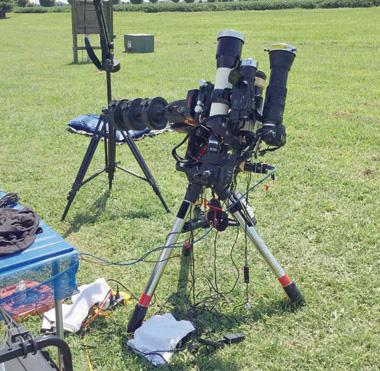
Right: Many solar filtered cameras on site to record the event.
Venus
visible during the eclipse
the
and
Bring your lawn chairs to the Senior Center (212 Richland Creek Dr.) for
Eclipse
enjoy an
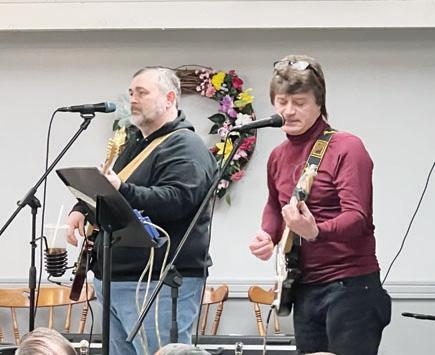
Brian Lynch and Scott Mason perform for the seniors.

Gibson County Rotary Welcomes Members Of The Community

The Gibson County Rotary Club meets twice monthly at Dick Clark’s restaurant and is welcoming new members to the group. During the meetings, a variety of community members from the area visit to share their business experiences and provide information on various organizations. Past visitors have included Susan Carey of North Gibson Foundation, Julie Kiefer of True Hope Pregnancy Resource Center, and Barb Abell of the Ronald McDonald House Charities. The guest speaker on March 14th will be Jonathan Pope, the CEO of YMCA Southwest Indiana. Feel free to ask about joining the group at noon and check out their Facebook page.

True Hope Pregnancy & Family Resource Center of Gibson County Received 30th Anniversary Grant
(Princeton, Indiana) True Hope Pregnancy & Family Resource Center of Gibson County recently received a $3,000 grant from the Gibson County Community Foundation through the Celebrating 30 Years of Supporting our Communities Grant Program.
In celebration of Gibson County Community Foundation’s 30th Anniversary, the Celebrating 30 Years

of Supporting our Communities Grant Program allows advisory board members to recommend $3,000 grants to local nonprofit organizations. The Community Foundation’s most recent grant recommendation was made by advisory board member Rachel Adamson.
True Hope was established in Gibson County in 2023 and is a pregnancy and family resource center serving Gibson County Indiana, which offers specialized programs and services to anyone who is experiencing an unplanned pregnancy or difficult life circumstances. Some of the services offered by True Hope are pregnancy testing and consulting, infant supplies through their life skills program, life skills mentoring for men and women, and healthcare and community resource referrals. To learn more about True Hope, visit their website at https://truehopeprc.org/ or their office at 112 N West Street, Princeton, Indiana.
 Pictured (from right): Rachel Adamson, Community Foundation Advisory Board Member, Julie Kiefer, True Hope, Executive Director, and Julie Woodman, True Hope, Board President
March 2024 Page 27 Small Town Living
Gibson Southern School Superintendent, Dr. Bryan Perry, updated the group on the southern school district.
A replica of Alonzo Fields from Lyles Station came to visit Rotary to promote an upcoming play about his life as the White House Butler to four presidents.
Photo provided
Photos: Jancey Smith
Balance Workshop Coming to Ft. Branch Library
A Matter of Balance (MOB) is an evidence-based, nationally recognized fall prevention program that focus on training older adults to reduce their fear of falling and increase their activity levels while socializing with their peers. It is based on Fear of Falling: A Matter of Balance © 1995 Trustees of Boston University. It was developed by a grant from the Administration on Aging.
The program is taught by two trained lay leaders and is available at no cost to the participants. Pre-registration required.
Program specifics: Tuesdays at 1:00, April 23rd through June 11th
• (8) 2-hour sessions, held weekly
• Minimum of 8, maximum of 12 participants per class
110
• Curriculum includes worksheets, group discussion, videos, lecture
• Sessions 3-8 include 30-minutes of facilitator-led chair exercises.
Program Objectives is that attendees will learn to:
• View falls as controllable
• Set goals for increasing activity
• Make changes to reduce fall risks at home
• Exercise to increase strength and balance
Who Should Attend?
• Anyone concerned about falls
• Anyone interested in improving balance, flexibility and strength
• Anyone who has fallen in the past
• Anyone who has restricted activities because of falling concerns. Call or email Angie with questions or to register: 812-385-3491 or adcrabtr@purdue.edu.
Owensville Carnegie Public Library

www.owensvillelibrary.org
Fb.com/owensvillecarnegiepubliclibrary
Page 28 March 2024 Small Town Living
S. Main Street
812-724-3335 Owensville, IN 47665
Valentine’s Vendor Market was Held at Wirth Park

Photo: Jancey Smith
On Saturday, February 10th, a group of nearly a dozen vendors gathered at Wirth Park’s shelter house to offer a variety of goods for those shopping for Valentine’s Day.
Jeremy Boberg brought his assortment of freeze dried candies and other edibles.

@FBJTPL
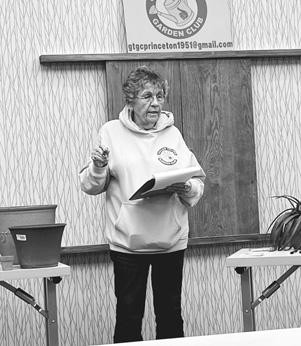
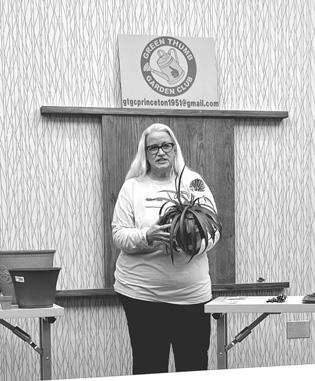
One of the many programs at the Princeton Public Library in February aimed at helping gardeners get ready for spring. Members of the Green Thumb Garden Club gave a presentation and tips to help plan for spring flowers.

by
Mikala Sisson,
Saturdays at Fort Branch only.
Fort Branch Creation Station: Open Creative Time Mon & Wed, 3-6 pm Fri, 3-5 pm
S.T.E.M. Activities (Sign-up Required)
3:30 - 5:00 PM
K-2nd Grade: TUE, Mar. 5th OR 12th
3rd-5th Grade: THU, Mar. 7th OR 14th
6th-8th Grade: TUE, Mar. 19th
BOOKS & BREWS:
CLASSIC BOOK CLUB:
Meet at Haubstadt
Town Hall Meeting Room at 6 pm.

MARCH EVENTS
Senior Game Day Adult Game Night


Oscars Movie Trivia CHANGE CLOCKS Guest Speaker Kent Scheller
Senior Activity
Teen Advisory Board
tropical plants.
Jancey Smith Page 29 March 2024 Small Town Living The Green Thumb Club Gave Gardening Tips
Photos:
www.fortbranchlibrary.com
Grab
Go
&
Kids Craft
Have
a SUPER Spring Break! CLOSED for Good Friday
Meet at Fort Branch Library in the Lois Kissel Room at 6 pm. Library Staff Member
OUR HOURS:

124
March 2024
Monday-Thursday: 9am-8pm
Friday & Saturday: 9am-5pm Sunday: Closed
www.princetonpl.lib.in.us S Mon Tue Wed Thu Fri Sat
SEPTEMBER 2015
Reminder: Scents or Sensibility at our front desk lets you smell and enter guesses for a chance to win a prize.
3 4 Art with Steve Johnson 1pm & 6pm Bob-Ross-styled art painting. Nature scenes
Family Movie Night 5pm
Lyle Lyle Crocodile Rated PG
Fiber Fanatics 6pm
Knit, crochet, & needlepoint! All fiber based crafting welcome
Sewing with Susan 6pm
Sewing with Susan Matthews & friends. Machine sewing for beginners & intermediate skills
1 0 11 Family Craft Night 5pm
Crafting with Miss April that the whole family can enjoy!
Fiber Fanatics 6pm
Knit, crochet, & needlepoint! All fiber based crafting welcome
Sewing with Susan 6pm
Machine sewing for beginners & intermediate skills
1 7 18 Fiber Fanatics 6pm
Knit, crochet, & needlepoint! All fiber based crafting welcome
Sewing with Susan 6pm
Machine sewing for beginners & intermediate skills
2 4 25 Intro to ASL (American Sign Language) 6pm Beginning course to learn ASL. If you aren’t sure where to start, meet us in the gallery. For those who do not know sign language or very little
Fiber Fanatics 6pm
Sewing with Susan 6pm
3 1 1 Apr Art with Steve Johnson 1pm & 6pm Bob-Ross-styled art painting. Nature scenes
Family Movie Night 5pm
Strange World Rated PG
Fiber Fanatics 6pm
Sewing Class 6pm
5 Story Time 10am
Geared for kids who have not yet started kindergarten: Spring Rainbow crafts
Teen Tuesday 4pm Rainbows shine!
12 Story Time 10am Geared for kids who have not yet started kindergarten: Frogs Jumping into Spring
Teen Tuesday 4pm Day of Green!
6 Chats with Charlie 10am
TOTAL SOLAR ECLIPSE 2024! Make sure you’re prepared for our April 8th event! See photographs from the last Solar Eclipse in 2017 & learn about what you can expect this time around
Adult Craft Night 6pm Puzzle piece wall decor
7 Euchre Players 1:30pm
Games Club 4pm
Don’t be bored!
Play board games!
Recommended for grade levels 3rd & up
Fit Club 6pm
All ages and body types welcome
8 9 Family LEGO Saturday 24pm LEGO Building fun designed for all ages!
19 Library Board Meeting 4pm Open to the public
13 Adult Craft Night 6pm
Did you miss a craft you wanted to do? Well, here’s your chance to make it up! A variety of left over crafts will be set out for you to select
Books & Breadsticks 6pm Meeting at Susan Bobe’s Pizza to discuss Remarkably Bright Creatures
20 Adult Craft Night 6pm Homemade Rope Vases
Chats with Charlie 6pm
TOTAL SOLAR ECLIPSE 2024! Make sure you’re prepared for our April 8th event! Encore presentation
26 Today is the first day you can come to the library to get a pair of free solar eclipse glasses! No more than 2 pairs per person & while supplies last!
2 Story Time 10am
Teen Tuesday 4pm
Welcome to tweens and teens grade 6+
27 Adult Craft Night 6pm Adult coloring day
Chats with Charlie 6pm
TOTAL SOLAR ECLIPSE 2024! Final presentation
14 Euchre Players 1:30pm
Games Club 4pm
Fit Club 6pm
All ages and body types welcome
15 Lucky Bingo 4pm Lucky Bingo at the library! You might just win a prize!
16
3 Adult Craft Night 6pm
Did you miss a craft you wanted to do? Well, here’s your chance to make it up! A variety of left over crafts will be set out for you to select
21 Euchre Players 1:30pm
Fit Club 6pm
All ages and body types welcome
28Euchre Players 1:30pm
Games Club 4pm
Don’t be bored!
Play board games!
Fit Club 6pm
4 Euchre 1:30pm
Games Club 4pm
Fit Club 6pm
22
23 Chats with Charlie 2pm
TOTAL SOLAR ECLIPSE 2024! Encore presentation
29 30 World Pencil Day We are once again celebrating Pencil Day by handing out free pencils!
5 Eclipse Programs all weekend! See social media & flyers for details
6 Eclipse Programs all weekend! See social media & flyers for details
Page 30 March 2024 Small Town Living
South Hart Street Princeton, IN 47670
812-385-4464
Eclipse Programming all weekend long April 5th-April 8th! See flyers and our social media for details!



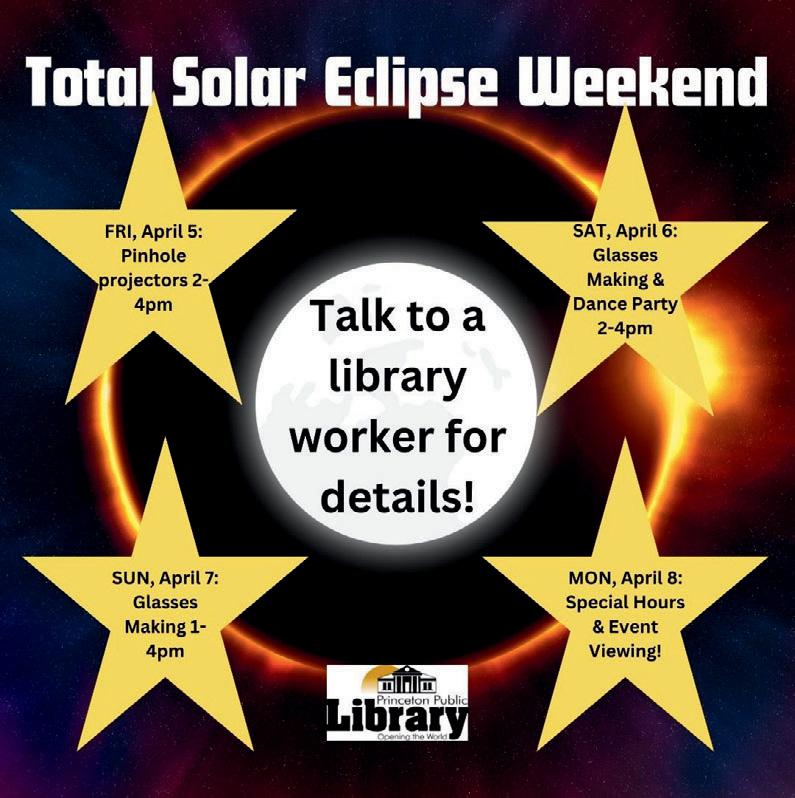
Page 31 March 2024 Small Town Living
Shinnyville Hill Hosted Bridal Expo
On Saturday, February 17th, the new venue, Shinnyville Hill in Owensville, hosted a bridal expo. It was a cold day after a snowfall, but visitors still came to see the country setting, try samples of goodies and visit with vendors. There were prizes, samples and enough snacks for a light lunch with a variety of desserts.
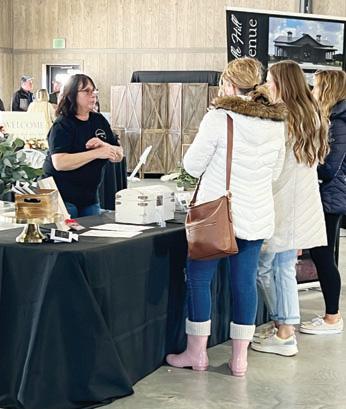
~ Andy Quiz ~
1. What was the prize at the church social?
A. Portable radio
B. Can opener
C. Portable TV
D. Wooden spoon
Mardi Gras Came to St. Joseph School
The annual Mardi Gras dinner and auction for St. Joseph School was held Saturday, February 17th. A lively crowd enjoyed the dessert auction and dinner. There were both silent and live auctions as ways to donate. Derek McGraw was the auctioneer and the meal was catered by The Fine Swine
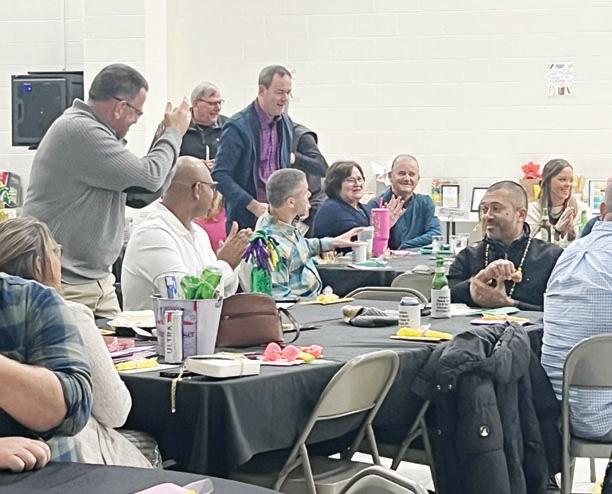
2. Otis sings, _____ _____ _____ _____ _____ _____ _____.
A. The Street Is Wet and Slippery Tonight
B. My Horse Is Really a Big Cow
C. Let Me Have the Jail Cell Keys
D. That’s the Way the Dipsy Doodle Works
COUNTRY 98.1
3. Barney pats his stomach and says, “The _____ has really grown” after eating Sunday dinner.
A. Corporation
B. Tummy
C. Gut
D. Association

For answers see page 22

Small Town Living March 2024 Page 32
Photo: Jancey Smith
Sheriff Bruce Vanoven applauds Dr. Michael Clark for his winning bid in the dessert auction.
to the Bridal Expo.
98.1 94.3
Photo: Jancey Smith






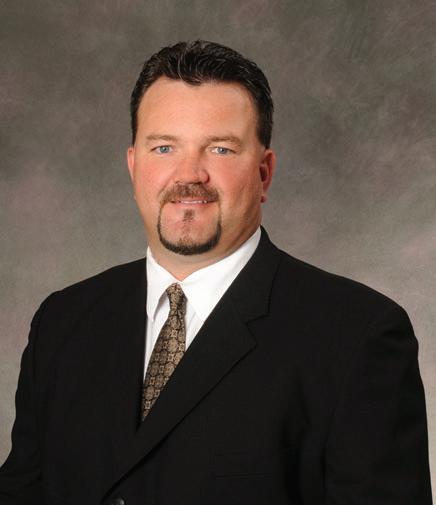
We’re your Shield. We’re your Shelter. ShelterInsurance.com Agent Address Agent City, State Zip Agent Phone No. AUTO • HOME • LIFE ® David Cordray Cordray Insurance Agency LLC 201 E State St, Princeton, IN 47670 812-386-8495 DCordray@ShelterInsurance.com Outstanding in our Field No one puts their money where our mouths are like the American farmer. We see the results of your hard work and commitment three times a day. We depend on it. You can depend on the folks at Shelter to take the same pride in our performance as you do in yours.