FA L L
2020
Member Appreciation
ZOO-A-THON SAVING FRINGED ORCHIDS MEMBER NIGHT GROWING WATERMELONS
W ild is published quarterly for the members and friends of the Jacksonville Zoo and Gardens
Catch them while you can. The Time Tunnel will close in November. Hurry in for all-new dinos, larger-than-life experiences, and ROARING surprises! Member-only price of $5 or upgrade to Total Experience which includes train, carousel, 4D, and animal feedings.* PRESENTED BY
*Feedings as available with giraffes, lorikeets, and stingrays.�
Caribbean Flamingo photo by John Reed
TABLE OF CONTENTS 2 Garden Highlight
14 Pet Popsicles
26 Caribbean Flamingos
4 Who's Who
17 Heart of the Zoo
28 Summer Sweetness
6 Painting with Penguins
18 Social Spotlight
30 Saving Fringed Orchids
8 Asian Small-clawed Otter
20 Member Appreciation Month
31 Snapshot Society
10 What's New
21 Member Night
32 Spooktacular
12 Mandrill Family
24 ZOO-A-THON
SENIOR MANAGEMENT Tony Vecchio—Executive Director Teresa Kennedy—Chief Operating Officer Dan Maloney—Deputy Director of Animal Care & Conservation Holly Ellis—Chief Financial Officer Leanne White—Director of Education Nikki Smith—Director of Development Kelly Rouillard—Director of Marketing & Sales Paula Shields—Director of Human Resources EXECUTIVE COMMITTEE William Rowe—Chair Martha Baker— Past Chair Susan Welsh—Secretary Jordan Elsbury—Mayoral Appointee Ann Harwood-Nuss—VC Animal Care & Conservation Chuck Ged—VC Finance Lucia Lindsey—VC Gardens & Art John McIlvaine—VC Marketing & Development Kelly Coker-Daniel —VC Education Janna McNicholas —VC Governance Carl Cannon —VC Capital Campaign John Hayt—Advisor Kerri Stewart— VP Special Projects Karen Estella Smith
GENERAL BOARD Scott Chamberlayne Asher Chanan-Khan Krystyn Collier LeAnna Cumber Mayor Lenny Curry Anne Marie Cushmac Jessica Fowler Margaret Hicks Rene Kurzius Barney Lane George Mikes John Naugle Pamela Phillips Ju’Coby Pittman Paul Sandler Kerri Stewart Joel Swanson Darryl Willie Scott Witt HONORARY BOARD Ivan Clare Dano Davis Lenore McCullagh Elizabeth Petway Herbert Peyton
Clifford Schultz Frank Surface Janet Vaksdal Weaver HONORARY PAST CHAIRS COUNCIL J.F. Bryan Howard Coker Charles Commander Jed Davis Matt Fairbairn Joseph Hixon J. Michael Hughes Lewis Lee David Loeb Richard Martin Frank Miller John A. Mitchell Thomas Schmidt Carl "Hap" Stewart James Stockton Penny Thompson Courtenay Wilson Editors: Liam Major, Sarah Hiers, Morgan Purvis Art Direction: Kelly Rouillard, Jen Morgan Graphic Design: Mark Sheppe
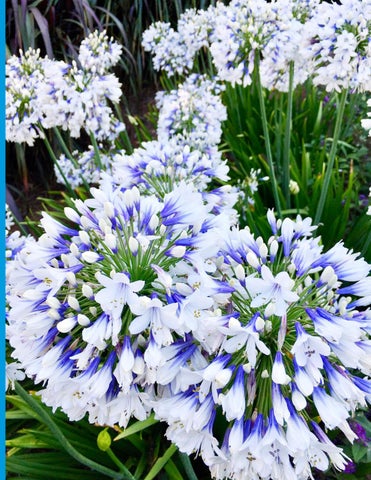
GARDEN HIGHLIGHT
Indigo Frost Agapanthus Location: African Forest We love to try new varieties of plants throughout our Gardens! In the spring of 2019, we planted Indigo Frost Agapanthus in the middle garden of African Forest. Last year's bloom was good, but this year was spectacular!
2
WILD MAGAZINE • FALL 2020 • JACKSONVILLE ZOO AND GARDENS
PHOTOS: MORGAN PURVIS (TOP) AND CHRIS DAILEY (BOTTOM & RIGHT)
WHO'S WHO AT THE ZOO
Larkin Johansen By Liam Major, Membership Coordinator
As our primary penguin keeper, Larkin Johansen spends most of her days at Tuxedo Coast cleaning, feeding, and training our penguins and aardvarks. She also works with the southern cassowary in our Australia Loop and develops conservation project proposals to present to our conservation committee. Larkin has been with the Zoo and Gardens since 2013 and has almost always been employed in the animal care field. Her passion for protecting wildlife and their natural habitats led her to earning a BSc degree in Marine Science from Jacksonville University. From her hometown in New Orleans to Florida where she has lived most of her life, that passion for animals is something that her parents instilled in her at a young age. Her deep appreciation for our natural surroundings is the reason why she is most proud of the conservation projects
PHOTOS: MORGAN PURVIS
she has had a hand in launching here and the amazing training successes she has had with some notoriously difficult animals to work with. Of all of the forward-thinking exhibits at the Zoo, Larkin enjoys the mixed taxa and mixed species habitats the most. It is the thought, time, and dedication that the animal care and horticulture teams put in that make these biomes so special. Her three favorite animals are the penguins, cassowaries, and vultures. To her, “Penguins are ocean sentinels, cassowaries are a keystone species, and vultures are literally the heroes of the ecosystem for their unique ability to dispose of carcasses and devastating diseases.” In her free time, she enjoys tending to her vegetable garden, relaxing by the pool, and spending quality time with her toddler.
WILD MAGAZINE • FALL 2020 • JACKSONVILLE ZOO AND GARDENS
5
MEMBERS ONLY
Painting with a Tuxedo Twist Jacksonville Zoo and Gardens’ Magellanic penguins undisputedly love a handful of things: fish, their chicks, human admirers, and painting! A fun enrichment activity, painting allows the participating penguins free-choice in color selection and painting style to create a unique piece of artwork. Painting with Penguins is an exciting and relatively new conservation fundraising event reserved just for our Members. While guests paint background colors onto the canvas, they enjoy a charcuterie board of delicacies with wine, beer, or other beverages, and a presentation put together by the primary penguin keeper on our Zoo's approach to penguin conservation. After the presentation, our special penguin artists join the Members and the painting portion of the event begins. Guests delight as penguins stomp, step, and slip through paint. They mark their unique footprints and tail swipes across the guests’ painted canvases. Afterward, Members can interact with the penguins and talk with the keepers to learn more about our penguin colony, the penguin artists, and the plight of their wild counterparts.
PHOTOS: MORGAN PURVIS
By Larkin Johansen, Senior Herp/Bird Keeper
A portion of the proceeds from the event goes to the Southern African Foundation for the Conservation of Coastal Birds (SANCCOB), a non-profit rehabilitation, conservation, and research center in South Africa that we have partnered with to help save injured, ill, and orphaned seabirds. Keep your eyes peeled for the next time we are Painting with Penguins! This event is truly special as it gives Members the rare experience to be up-close with our charismatic penguins and a treasured keepsake to take home. For the penguins, it enriches their lives and provides the essential funding to help preserve this critically endangered species from extinction in the wild.
WILD MAGAZINE • FALL 2020 • JACKSONVILLE ZOO AND GARDENS
7
ANIMAL HIGHLIGHT
Asian Small-clawed Otters Location: Land of the Tiger
8
WILD MAGAZINE • FALL 2020 • JACKSONVILLE ZOO AND GARDENS
PHOTOS: MARK SHEPPE
PHOTOS: MARK SHEPPE
WILD MAGAZINE • FALL 2020 • JACKSONVILLE ZOO AND GARDENS
9
WHAT'S NEW
Births
Hatchings Acquisitions
By Donna Bear, Curator of Species Management
Anthony’s Poison Arrow Frog (Epipedobates anthonyi) Found in Ecuador and Peru, Anthony’s poison arrow frogs are Near Threatened under the IUCN Red List, though no local status is listed yet. These frogs are diurnal (active during daytime) and breed during the rainy season. They lay 15-40 eggs in the leaf litter, and the male provides parental care for up to two weeks until they hatch. The male moistens the eggs and carries the tadpoles on his back to a nearby stream or pool where his job is considered done. The tadpole’s metamorphosis is about 60 days. The adults eat arthropods, mostly small insects. They have skin toxins like other poison arrow frogs but are less toxic than others of the species, derived from their diet. The skin secretions have been used in medical research as a non-opioid pain killer.
Waldrapp Ibis (Geronticus eremita) Also known as the northern bald ibis, the Waldrapp ibis was historically present in the European Alps, Northern Africa, and the Middle East. Today, there are only two remaining populations in Morocco and Turkey. Ninety percent of the world population can be found in Morocco. The birds are found in the semi-arid desert steppe regions and breeds in a small area in Syria. The population was thought to be extinct in the wild until it was found again in 2002. Since that time, reintroduction has occurred. These birds are monogamous and only have one mate during their lifetime. In the wild, this species typically lives 10-15 years; however, they can live up to 40 years in captivity. Considered Critically Endangered by the IUCN, this is the first breeding for the Waldrapp ibis at the Jacksonville Zoo. We are proud to contribute to this species as a whole.
10
WILD MAGAZINE • FALL 2020 • JACKSONVILLE ZOO AND GARDENS
IBIS PHOTO: MARK SHEPPE
Mandrill (Mandrillus sphinx) Mandrills are found in southwestern Cameroon, western Gabon, Equatorial Guinea, and southwestern Congo. They reside in the rainforests and are adapted to live on the ground. They are the largest of all monkeys. Mandrills are omnivores that live in troops headed by a dominant male with multiple females and offspring. Ushindi, the father of our newest mandrill offspring, was born at the Zoo in 2002. He was sent out on loan to Zoo New England and then the Houston Zoo and recently
returned to us in 2018 as our breeding male. There have been 19 mandrills born at Jacksonville Zoo and Gardens from 1954 to present. Mandrills are considered Vulnerable with IUCN, Appendix I with CITES, and Endangered with the USFWS. There has been a drastic decline in mandrill populations due to habitat loss and human consumption in the bushmeat trade.
April–June, 2020 Births & Hatchings
0.0.14 ............... *Anthony’s Poison Arrow Frog
LEGEND: 0.1.2
0.0.381............................................ Striped newts
0.0.2........................................................ Inca Tern
0.0.3............................................. Black-faced ibis
0.0.6........................................ Roseate Spoonbill
0.0.4........................................ Blue-bellied roller
0.0.5 ..........................................*WALDRAPP IBIS
• • • • •
0.0.7 ................................................ Cownose Ray
0.0.3 ...................................Eastern Indigo Snake
First digit male. Second digit female Third digit sex unknown Two digits only represent male and female CAPS = Endangered Species * (Asterisk) = First time at the Zoo
0.1.0......................................................... Mandrill PHOTO: JOHN REED
WILD MAGAZINE • FALL 2020 • JACKSONVILLE ZOO AND GARDENS
11
ANIMAL HIGHLIGHT
Mandrill Family Location: African Forest
12
WILD MAGAZINE • FALL 2020 • JACKSONVILLE ZOO AND GARDENS
PHOTOS: JOHN REED
Pet Enrichment: Pet Popsicles On a hot summer day sometimes we freeze special treats for our animals—you can do the same at home for your pets Materials Needed: • •
• •
Cup or tub that can be frozen Pieces of dry pet food, or any kind of special treat that your pet can eat Water Freezer
1
2
14
•
Dog friendly foods include: Cooked chicken, peanut butter, cheese, carrots, yogurt, salmon, tuna, shrimp, pumpkin, eggs, apples, watermelon, cooked sweet potato, broccoli, unsalted and unbuttered popcorn, and plain bread
Put some pieces of dry pet food into the bottom of the cup that is freezer safe. Add just enough water so that the food is covered. Then put the container in your freezer.
Check the container after about one hour. If the water has not frozen yet, put it back in the freezer and check again in another hour.
WILD MAGAZINE • FALL 2020 • JACKSONVILLE ZOO AND GARDENS
3
4
After the first layer is frozen, take the container out of the freezer and add something else for a second layer. Add a little more water, again so that the food is just covered by liquid. Put the container back into the freezer.
Repeat the freezing and layering process as many times as you wish. When the last layer has frozen solid, remove the treat from the container. Helpful Tip: you can set the tub in a bowl of warm water for a minute so that the ice begins to thaw, and the treat will slip out of the container easier. You can set the tub in a bowl of warm water for a minute so that the ice begins to thaw, and the treat will slip out of the container more easily.
Give the treat to your pet and watch what happens Does your pet sniff or lick it first? Does your pet bat it around with a paw? How long does it take your pet to get to the treats inside?
WILD MAGAZINE • FALL 2020 • JACKSONVILLE ZOO AND GARDENS
15
Who gets frozen treats too? Ali the Elephant
16
WILD MAGAZINE • FALL 2020 • JACKSONVILLE ZOO AND GARDENS
We love our Heart of the Zoo Society Members! This Member Appreciation Month, we want to recognize our nearly 200 Heart of the Zoo Society members for their commitment and passion to the Zoo’s mission of conservation and education.
Membership levels for Heart of the Zoo Society start at $500 and include a Family membership in addition to benefits that vary by level, such as complimentary General Admission tickets, Behind-the-Scenes opportunities, and exclusive event invitations and discounts. For more information, call (904) 757-4463, ext. 196 or email development@jacksonvillezoo.org.
Heart of the Zoo Society members Beth and Mark Brockelman and Matt Brockelman enjoying the Zoo during our member re-opening in May WILD MAGAZINE • FALL 2020 • JACKSONVILLE ZOO AND GARDENS
17
SOCIAL SPOTLIGHT
kvol30
ryanw_photo
mydosdads
Tag your posts with #jaxzoomember for a chance to see your photos here! 18
WILD MAGAZINE • FALL 2020 • JACKSONVILLE ZOO AND GARDENS
amandatheauqaris
John Reed
photobywendy11
tythenikonguy
WILD MAGAZINE • FALL 2020 • JACKSONVILLE ZOO AND GARDENS
19
JUST FOR OUR MEMBERS
Member Appreciation Month
By Morgan Purvis, Public Relations Representative
Member Lounge
As our most valued guests, we hope you enjoyed Member Appreciation Month. Thank you for your continued support as you have helped us to carry out the important work of caring for the animals and plants at Jacksonville Zoo and Gardens—and in the wild! With your help, we have dedicated over $1.75 million in the past six years to more than 45 conservation projects around the world.
Member Lounge 20
WILD MAGAZINE • FALL 2020 • JACKSONVILLE ZOO AND GARDENS
We were more than happy to offer Members dedicated parking, early access to the Zoo with Member Mornings, a Members-Only Lounge, and a Dinosauria add-on throughout August. Being a Jacksonville Zoo and Gardens Member is something special! What is your favorite part about membership? Share your story on social media and use #jaxzoomember.
Dinosauria Activity at the Member Lounge PHOTOS: JOHN REED
JUST FOR OUR MEMBERS
Member Night
PHOTOS: MORGAN PURVIS
WILD MAGAZINE • FALL 2020 • JACKSONVILLE ZOO AND GARDENS
21
JUST FOR OUR MEMBERS
Member Night
22
WILD MAGAZINE • FALL 2020 • JACKSONVILLE ZOO AND GARDENS
PHOTOS: MORGAN PURVIS
PHOTOS: MORGAN PURVIS & KELLY ROUILLARD (TOP RIGHT)
WILD MAGAZINE • FALL 2020 • JACKSONVILLE ZOO AND GARDENS
23
development By Ausu Anaraki, Major Gifts Officer
Support Your Zoo to Help Us Raise $250,000
Despite re-opening to the public in May, Jacksonville Zoo and Gardens continues to recover from the financial loss of closing our doors for two months and operating under restrictions due to COVID-19. Recuperating these funds will not happen overnight, but with your help (and some fun), we can continue to get closer, and hopefully surpass, our budget requirements through our ZOO-A-THON. Beginning now through September 20, our goal is to raise a minimum of $250,000 to go toward maintaining and advancing our efforts as a great recreation, education, and conservation resource for the community. Not to mention, these funds will help us continue to feed and care for over 2,000 animals and over 1,000 plant species. Stay tuned to our social media and check our website at JacksonvilleZoo.org/ZOO-A-THON to learn how you can participate. Then, mark your calendar for Sunday, Sept. 20 to watch Jacksonville Zoo and Gardens LIVE on WJXT Channel 4 for the one-hour grand finale at 6:30 p.m. It is up to you to help us meet our goal! For more information or questions on how to support this campaign, email development@jacksonvillezoo.org
24
WILD MAGAZINE • FALL 2020 • JACKSONVILLE ZOO AND GARDENS
PHOTO: JENNIFER MCCABE
PHOTOS: MARK SHEPPE (TOP) & MORGAN PURVIS (BOTTOM)
WILD MAGAZINE • FALL 2020 • JACKSONVILLE ZOO AND GARDENS
25
ANIMAL HIGHLIGHT
Caribbean Flamingo Location: Main path, just past Range of the Jaguar
26
WILD MAGAZINE • FALL 2020 • JACKSONVILLE ZOO AND GARDENS
PHOTOS: KELLY ROUILLARD (TOP), MARK SHEPPE (BOTTOM)
PHOTOS: JOHN REED
WILD MAGAZINE • FALL 2020 • JACKSONVILLE ZOO AND GARDENS
27
gardener's corner By Scott Koll, Senior Horticulturist
Summer Sweetness S y n o n y m o u s w i t h s u m m e r, w h a t i s m o r e wonderful than a sweet slice of watermelon? Watermelons have a distinguished history. Believed to be native to Africa, watermelons h a v e l o n g b e e n c u l t i v a t e d i n t h e N i l e v a l l e y. Watermelon seeds were even found in the tomb of King Tut! These melons have grown in Florida since the 16th century after they were brought to the new world by Africans and Europeans. Watermelons require a long growing season and rich, sandy, well-drained soil, so cultivation is well-suited for the deep South. If you decide t o s t a r t g ro w i n g t h e m , m a k e s u re y o u h a v e plenty of room! Vines will quickly overwhelm a small garden. Here at Jacksonville Zoo and Gardens, we water our watermelons close to the stem with micro-irrigation, which keeps the leaves more dry and cuts down on disease. Although the fruit requires drainage, they also are heavy feeders and drinkers. Be sure to amend your soil with compost, fertilizer, and plenty of water. Knowing when to harvest this fruit at the peak of delicious ripeness is an art. Some folks swear by thumping the skin and searching for a hollow sound. I prefer another method: check the bottom of the fruit, where it rests on the ground. I choose to harvest when the skin on that spot becomes more yellow then white, sometimes with slight stripes. Watermelon is a very healthy fruit, loaded with vitamins and lycopene (the same chemical that makes tomatoes red), which battle free radicals in the body and helps to prevent many cancers. They are also full of fiber and relatively low in calories. We once grew a large variety called “Carolina Cross” at our Zoo and Gardens. We had one fruit measure in at 140 pounds! We most often grow a variety called “Georgia Rattlesnake,” a heritage variety known for its sweet flesh and pronounced stripes on the skin. Many of our animals, from elephants to apes, love them as a tasty treat to supplement their diets.
Georgia Rattlesnake Watermelon
28
WILD MAGAZINE • FALL 2020 • JACKSONVILLE ZOO AND GARDENS
PHOTOS: SCOTT KOLL
Asian Small-clawed otters
Carolina Cross Watermelon
WILD MAGAZINE • FALL 2020 • JACKSONVILLE ZOO AND GARDENS
29
science and conservation By Houston Snead, Plant Conservation Officer
Fringed Orchids on the Fringe of Existence Habitats of many plant and animal species across the developed world have changed so much that they can no longer live in the places they have been for thousands of years. Reduced natural wildfire frequency plays a large part in the loss of quality habitat across the Southeastern United States, allowing too many trees and shrubs to grow up in what used to be open, sunny grassland. The extra shade created by this change in habitat does not allow for the growth of plants in need of more direct sunlight. In other places, destructive forestry practices and human development have pushed species further and further into the last remaining spaces suitable for their needs. Powerline and roadside right-of-ways are becoming some of the last places we find one of Florida’s endangered orchids, Platanthera chapmanii (Chapman’s fringed orchid). Jacksonville Zoo and Gardens has worked since 2016 to search the historical range, and monitor populations of Chapman’s fringed orchid in the wild. We have found that this is not the only beautiful plant growing in these small areas, but many wildflowers native across the southeast are being pushed to the fringes of their habitat. The mowing of roadsides has kept the habitat open and sunny for native diversity, but mowing too often results in large losses of seed production. Unfortunately, the use of herbicide in these areas is also on the rise and can completely wipe out the remaining populations in a region. Jacksonville Zoo and Gardens works with roadway and land managers to create solutions in areas where we find endangered plants. We are finding that when we reduce mowing to one time a year and stop spraying herbicide, native plants can thrive. You can also take action to conserve native wildflowers in your region. Call your county public works office, the state department of transportation, and other land managers to tell them how important native plant diversity is to you and advocate for reduced mowing and limited to no use of herbicide in right-of-ways. Chapman's Fringed Orchid
30
WILD MAGAZINE • FALL 2020 • JACKSONVILLE ZOO AND GARDENS
snapshot society By John Reed, Photography Volunteer & Snapshot Society Teacher
Tips for Everyday Zoo Photos There is no doubt Members enjoy their visits to Jacksonville Zoo and Gardens, as evidenced by their photographs. It is wonderful to see how many people commemorate their visit with photos they share on the Zoo’s Facebook page and other social media platforms. That is one of the reasons I enjoy leading the Snapshot Society events and sharing tips for all photographers.
The sun plays a critical role in taking photographs at the Zoo and how it casts light on subjects.
Look at the difference of the lion's mane in these two pictures and how the sun had an impact on the pictures.
Lighting is an important element to beautiful photos, so here are a few tips to capture the perfect photo in sunlight. First of all, if it is a sunny day, pay attention to the location of the sun. If you are looking toward the sun (into the light), that can often confuse your camera's light measurement system. Your subject will often come out too dark, depending on the background. Try to avoid these situations unless you have an adjustable camera and know how to correct for this issue. If the sun is behind you, that is the situation the camera will handle best and give great photos as far as how bright or dark the subject will be. The problem here is that the photo may not have enough detail, which is called a "flat" image. These can still be good images though, so fire away.
To get that detail, such as in fur or feathers, try to have the sun at your side. This directional light creates subtle shadows allowing all that fine fur and feather detail to show up, making for a much more interesting photo. Compare the mane in these lion images: left is a sidelight and right is head-on and “flat.” Of course, if it is an overcast day, there is no direction from the light, and the camera will handle that well. Just make sure you do not include too much of the gray or white sky. I hope this helps you take stunning photos during your next visit to the Zoo. If you ever see me around, please feel free to say hello and ask me any questions you may have.
WILD MAGAZINE • FALL 2020 • JACKSONVILLE ZOO AND GARDENS
31