
INTERNATIONAL UNION OF PURE AND APPLIED CHEMISTRY Implementing Data Sharing Policies Making Global Green Connections The News Magazine of IUPAC International CHEMISTRY October-December 2022 Volume 44 No.4 IUPAC Top Ten Emerging Technologies in Chemistry
The News Magazine of the International Union of Pure and Applied Chemistry (IUPAC)

All information regarding notes for contributors, subscriptions, Access, back volumes and orders is available online at www.degruyter.com/ci
Managing Editor: Fabienne Meyers
IUPAC, c/o Department of Chemistry Boston University Metcalf Center for Science and Engineering 590 Commonwealth Ave. Boston, MA 02215, USA E-mail: edit.ci@iupac.org Phone: +1 617 358 0410
Design/Production: Stuart Wilson
Chemistry International
Chemistry International (ISSN 0193-6484) is published 4 times annually in January, April, July, and October by De Gruyter, Inc., 121 High St., 3rd Floor, Boston, MA 02110 on behalf of IUPAC. See https://iupac.org/what-we-do/journals/chemistry-international/ or https://www.degruyter.com/ci for more information.
ISSN 0193-6484, eISSN 1365-2192
© 2022 International Union of Pure and Applied Chemistry. This work is licensed under a Creative Commons Attribution-NonCommercial-NoDerivatives 4.0 International License.
Cover: One of this year’s IUPAC top ten emerging technologies in chemistry ventures into virtual reality (VR) where computational chemistry connects in the metaverse. Through virtual spaces, researchers explore interactive collaborations that enhance the possibilities of computational chemistry and molecular dynamics. These innovative interactions with molecules reinforce researchers reasoning, as well as improve their understanding of quantum chemistry. Nanome is a US company which is already commercializing VR-based chemistry platforms. See feature p. 4.
CHEMISTRY International
Vice President's Column
The Chemist’s Oath By Ehud Keinan 2
Features
IUPAC Top Ten Emerging Technologies in Chemistry 2022 4 by Fernando Gomollón-Bel
Implementing Data Sharing Policies at De Gruyter by Lyndsey Dixon, 14 Agnieszka Bednarczyk-Drag, and Katharina Appelt
Behind the Scenes: Stories of the Global Women’s Breakfast 18 by Francesca M. Kerton

IUPAC Wire
Vivek Polshettiwar is Awarded the 2022 IUPAC-Chemrawn VII 26 Prize For Green Chemistry
IUPAC Announces the 2022 Top Ten Emerging Technologies 26 in Chemistry
IUPAC International Award For Advances In Harmonized 28 Approaches To Crop Protection Chemistry—Call For Nominations
2023 IUPAC-Solvay International Award For Young Chemists— 28 Call For Applicants
2023 Distinguished Women in Chemistry/Chemical Engineering 29 Award—Call for Nominations
IUPAC Elections for the 2024–2025 Term 29 NAO Forum 29
Project Place
Bioavailability and Significance of Endocrine Disruptive 32 Compounds in Ecosystem IUPAC Projects’ Contributions to the UN Sustainable 35 Development Goals: Past, present, and future Bookworm
Multi-Scale Biogeochemical Processes in Soil Ecosystems: 38 Critical Reactions and Resilience to Climate Changes Green Chemistry and Sustainable Development 38

Conference Call
International Year of Basic Sciences for Sustainable 39 Development (IYBSSD)


Making Global Green Connections: The Importance of Green 42 Chemistry Summer School for Sustainable Development International Polymer Characterization 48
51
Contents CHEMISTRY International October-December 2022 Volume 44 No. 4
Index
Vice President's Column
The Chemist’s Oath
by Ehud Keinan
the COVID-19 pan demic will continue affecting every aspect of our life, it seems that we have crossed the worst phase and have gradually resumed all pro fessional and personal activities of pre-COVID times. International travel is back, and academic activities and scientific meetings are back to in-person mode. I feel fortunate to serve IUPAC as Vice President during this biennium of revamping period. I wish to share my observations and potential opportunities for IUPAC, and I’ll appreciate your help and response.
IUPAC’s Enthusiastic Volunteers
Following IUPAC Bureau’s request to assess how the pandemic affected the Union’s activities, our Evaluation Committee conducted a survey in March 2022. As the Committee Chair, I’ve sent a questionnaire to 425 IUPAC volunteers, including all members of Divisions, Committees, and NAO delegations. The short survey included questions answered by numerical values, allow ing for statistical analysis. Remarkably, we achieved a high response rate of over 28% within 24 hours.
The survey results I presented to the IUPAC Bureau and Council this year provided valuable insights. The critical conclusion relates to the apparent change in conference culture. When attending scientific confer ences during the pre-pandemic times, most people divided their time between lectures, posters, mingling, networking, social events, receptions, exhibition, and other activities. By contrast, participants of virtual conferences focus on formal presentations. For exam ple, participants of the 2021 IUPAC World Chemistry Congress (WCC) attended lectures, and very few visited the poster sessions. The time-zone variability adversely affected the participants’ involvement.
Most survey responders miss the face-to-face inter action, and too many admitted that they may skip the 2023 WCC and Council meetings if held online. Activities of all Divisions and Committees suffered greatly during the pandemic without in-person gatherings. The same trend was observed with most projects whose progress slowed down significantly.
Nevertheless, it was encouraging to see that the volunteers’ enthusiasm, motivation, and entrepreneurial spirit remained high. We sensed the desire for increased
involvement by young people, as indicated by sugges tions to expand their engagement and representation in the Divisions and Committees activities.
AlthoughInterestingly, we received mainly positive com ments when asked about IUPAC. Very few offered some criticism, mainly concerning missed networking and in-person activities. Most people are happy with the Divisions and Committees’ activities, the WCC, General Assembly, Symposia, and projects. Many people like IUPAC’s global initiatives, such as the Global Women Breakfast, the International Year of Periodic Table, and the Top Ten Emerging Technologies in Chemistry.
COVID taught us a fundamental lesson about the need for personal contacts, which is essential to all our activities. Although IUPAC is a scientific organization, its human component and personal relations are crucial to motivating our thousands of volunteers.
IUPAC Restructuring

The special Council meeting of 4 June 2022 marked a significant milestone in the Union’s history. With a sweeping majority, the Council approved the proposed restructuring scheme, which will equip IUPAC with bet ter organizational tools and mechanisms to address our challenges and opportunities in leading the global world of chemistry. It took nearly three years to crystallize the changes to the Statutes, Bylaws, and Standing Orders, first by the IUPAC Organizational Structure Review Group, then by the IUPAC Bureau and the Executive Committee, and finally by the National Adhering Organizations (NAOs).
The key restructuring element was reshaping the Union’s leadership Boards, replacing the 103-year-old Bureau and Executive Committee structure with an Executive Board and a Science Board, thus separating administrative matters and science issues.
The Executive Board would be responsible for deci sions and execution of the administrative matters of the Union, overseeing adherence to the IUPAC Statutes and Bylaws, and ensuring efficient administrative and finan cial operations. The Science Board would be responsible for the scientific direction, activities, and contributions of the Union, setting the scientific priorities and strategic vision, facilitating collaboration among the Divisions and Standing Committees, and reviewing their work regard ing projects, conferences, and publications.
Another important restructuring element is the establishment of new Forums for communication and interaction with IUPAC’s stakeholders. The NAOs Forum is a yearly virtual meeting with NAO representatives to provide an opportunity to discuss matters of interest with IUPAC leadership. The Presidents Forum, an annual
2 Chemistry International October-December 2022
meeting with the leaders of global chemical societies, provides a strategic opportunity for IUPAC to lead and coordinate international initiatives.
Other significant components of the restructur ing act are establishing a new Standing Committee on Ethics, Diversity, Equity, and Inclusion (CEDEI) and the Centenary Endowment Board. Altogether, these changes award IUPAC with robust organizational tools that render it more efficient, agile, and fast in respond ing to challenges and opportunities.
Expanding International Basis
Most global challenges are chemical problems by nature, including climate changes, food for everybody, the race for sustainable energy, water quality, dwin dling raw materials, and health problems. Consequently, humankind can meet these challenges through the chemical sciences and global cooperation. Chemists are good at solving complex problems, working together across borders and disciplines despite different political systems and cultural diversity. And IUPAC should take a global leadership position to help meet the global chal lenges. This is only one of the reasons for why IUPAC should invest much effort in adding less represented countries, mainly in Latin America, Africa, and Asia. Over the past several decades, IUPAC has included primarily the economically and scientifically developed nations. Although the 54 national members represent most of the world’s chemical sciences and industry, they consti tute only one-quarter of its countries. IUPAC should not stay a club of the wealthy but become more inclusive and take proactive measures to expand its membership worldwide.
The Chemist’s Oath
The Hippocratic Oath, taken by new physicians for more than two millennia in a traditional White-Coat ceremony, has become a document of professional eth ics that describes a medical doctor’s obligations and professional behavior to their patients and society. In its original form, the oath requires a new physician to swear to uphold specific principles of medical ethics, including medical confidentiality and non-maleficence. It is enshrined in the legal statutes of various jurisdictions, such that violations of the oath may carry criminal or other liability beyond the oath’s symbolic nature.
As the archaic language of the Hippocratic Oath from circa AD 275 is too long, several new versions have recently become popular in American schools of Medicine. Although the various versions reflect nearly two dozen different values, they all include a commit ment to social responsibility, social justice, and essential
ethical values. Thus, Hippocrates’ legacy endures in most new versions through four fundamental values from the ancient oath: respecting patient confidential ity, avoiding harm, respecting teachers, and upholding the profession’s integrity.
I propose considering a Chemist’s Oath to be taken by all chemistry graduates worldwide. I wish that all new chemists would pledge to pursue truth and the principles of science and use their power to sustain life rather than end life, e.g., refrain from developing chemical weapons and lethal injections. This pledge stands in line with an Italian Chemical Society initia tive of 2007 (https://www.soc.chim.it/sites/default/ files/chimind/pdf/2007_5_154_ca.pdf), the Hague Ethical Guidelines of 2016 (https://www.opcw.org/ hague-ethical-guidelines), and a set of policy guide lines currently being finalized at IUPAC by the newly established CEDEI.
As is the case for the Hippocratic Oath, the Chemist’s Oath would have a moral value rather than a legally binding commitment. It would enhance the newly grad uated chemist’s ethical behavior and professional pride. The following text of 61 words is my proposed draft of the Chemist’s Oath. Believing in collective wisdom, I invite you to offer modifications to the text while keep ing it clear and concise.
By what I hold most sacred, I solemnly swear that I will pursue scientific truth and expand knowl edge ethically and responsibly. I will endeavor to promote diversity, equity, inclusivity, and mutual respect for all. As a member of society at large, obligated to all my fellow human beings, I will use my chemical expertise to sustain life and protect the environment.
With your help, I wish to crystallize the final version and offer it as an experimental pilot among the 2023 chemistry graduates in one or two countries before pro posing it through IUPAC to the global community.
I look forward to serving the global chemistry community at exciting times for IUPAC. I’ll appreciate any comments, fresh ideas, and proposals on how to strengthen IUPAC. Please send your messages directly to me at <ekeinan@iupac.org>.
Ehud Keinan has been IUPAC Vice President and President-elect since January 2022. He is a Professor of Chemistry and previous Dean of Chemistry at the Technion – Israel Institute of Technology. Since 2009 he has served as President of the Israel Chemical Society, Editor-in-Chief of the Israel Journal of Chemistry, and Head of Israel’s dele gation to IUPAC. He is a former member of the EuChemS Executive Board, a current member of the FACS Executive Committee, and Editor-in-Chief of the FACS maga zine, AsiaChem. Since 2008 Keinan has been leading the Chemistry Education in Israel as Chair of the Chemistry Advisory Council at the Ministry of Education.
3Chemistry International October-December 2022
IUPAC Top Ten Emerging Technologies in Chemistry 2022
Discover the innovations that will transform energy, health, and materials science, to tackle the most urgent societal challenges and catalyse sustainable development.
by Fernando Gomollón-Bel
In2019, IUPAC launched the “Top Ten Emerging Technologies in Chemistry Initiative.” [1] This proj ect, nowadays consolidated and recognised by experts worldwide, highlights the value of chemical sciences in the transition to a green economy and a more sustainable world, in line with the United Nations’ Sustainable Development Goals (SDGs) [2]. Moreover, in 2022 we join the celebration of the International Year of Basic Sciences for Sustainable Development (IYBSSD), a United Nations (UN) resolution to reaffirm and emphasise the importance of basic sciences, chemistry among them, to attain the ambitious SDGs by 2030.
According to the UN, basic sciences will help us attain sustainable development and improve quality of life. In fact, this very UN document stresses the impor tance of emerging technologies, since they “respond to the needs of humankind […] increasing the health and well-being of individuals, communities and societ ies” [3]. Last year, the world faced the consequences of the climate crisis in an unprecedented way—deadly heatwaves devastated India and Pakistan in spring, and Europe faced similar challenges during the hottest summer on record. Moreover, we’re still enduring the COVID-19 pandemic and new contagious variants, as well as the consequences of war in Ukraine—among them oil prices skyrocketing. Therefore, this year’s technologies delve into innovative medical solutions and efficient energy sources. The panel of experts convened by IUPAC has examined a pool of recom mendations from chemists around the world and selected the most promising proposals. As usual, these emerging technologies hover between experimental endeavours and commercial realities, but all hold great promise to transform our world.
Sodium-ion batteries
An abundant, affordable alternative to lithium
We need better and more affordable batteries. Without inexpensive energy storage, renewable sources of energy, such as solar and wind, will never become mainstream. That’s why, already in previous editions of this selection, IUPAC had identified battery technologies beyond the ubiquitous, Nobel-winning

lithium-ion batteries, which, interestingly, were first conceptualised during another oil crisis. This year, IUPAC experts wanted to highlight the potential of another alkaline metal—sodium. It presents several advantages. First, it is a more abundant element, and therefore reduces our reliance on depleted lithium reserves. Additionally, sodium-ion batteries do not rely on cobalt, commonly considered a conflict mineral because of the high-risk mining practices in Congo [4]. Instead, their cathodes contain iron and manganese, both bountiful first-row metals.
Although sodium-ion solutions still suffer when compared to lithium in terms of shelf life and energy density, they offer interesting opportunities in terms of sustainability and circular economy, since their materials and components are easily disassembled, reconditioned, and recycled [5]. Moreover, economic analyses have envisioned the advantages of sodi um-batteries, especially in scenarios of scarcity of cobalt and lithium minerals. Most of these arise from adopting aluminium, not sodium itself. Aluminium replaces copper in the anode, offering a cheaper, lighter, and more resistant alternative. Aluminium also avoids the problems derived from excessive discharge, associated with oxidation and eventually thermal run away and flammability in lithium-ion batteries. Overall, sodium-ion batteries seem safer, thus reducing the costs and dangers of transportation and storage [6]. An interesting approach towards the design of more efficient sodium-ion batteries comes from computa tional chemistry. The development of cost-effective quantum chemistry models, machine learning, and the surge of supercomputers have pushed materials discovery forward. In the field of batteries, these com putational methods have helped design new mixtures for electrodes and electrolytes, as well as contributed to a better understanding of the materials’ behaviour and the prediction of properties. Researchers expect these techniques will accelerate applications [7].
4 Chemistry International October-December 2022
Sodium-ion batteries are already attracting industrial interest. In fact, the world’s biggest manufacturers of lithium-ion batteries, Chinese company CATL, recently unveiled their first-generation commercial battery based on sodium, and aims at hybrid sodium-lithium solutions to revolutionise the electric vehicle sector. Other companies, such as HiNa Battery and Faration, have attracted investments and developed working pro totypes and products, while Natron Energy and Altris, based in the US, will launch massive manufacturing plants in 2023. Definitely, sodium-ion is another alterna tive towards efficient energy storage, another tool in the chemists’ kit to tackle the climate crisis.
Nanozymes
Combining the power of natural and artificial catalysis
Nanotechnology was key to the development of COVID-19 vaccines. The possibilities of the nano-world for healthcare and biomedicine have become evident, and many other technologies have attracted the atten tion of researchers and our experts at IUPAC. Among them are nanozymes, nanomaterials with the charac teristics of natural enzymes, and some supplementary properties. Because nanozymes are human-made and designed in the lab on-demand, they present several advantages in terms of stability, recyclability, and cost. Unlike natural enzymes, which only operate at specific ranges of temperature and pH, nanozymes withstand combative conditions and allow durable, secure, and stable storage.
The field of nanozymes emerged almost twenty years ago. In 2004, Italian researchers functionalised gold nanoparticles to catalyse phosphorylation reac tions and, a few years later, Chinese investigators discovered that certain nanoparticles naturally exhibit enzyme-like activity [8]. Both events triggered the exponential growth of a whole new field, which has since achieved very significant progress, including some pioneering commercial ventures in the US, Europe, and Asia. Another advantage of nanozymes comes from the possibilities in customization. Chemists attach all sorts of molecules to modify the properties of nanozymes beyond classic catalysis capabilities. The nano-world offers unique possibilities in terms of surface area, and allows multi-functionalisation—with applications in bioanalysis, diagnostics, therapy, sensing, water treat ment, and much more [9]. One of the most attractive approaches in the nanozymes arena is the development of novel point-of-care diagnostics with the potential to fulfil the most critical calls from the World Health Organisation (WHO). For WHO, point-of-care devices

should address the ASSURED criteria—Affordable, Sensitive, Specific, User-friendly, Rapid, Equipmentfree and Delivered. Nanozymes could provide these properties for many different testing techniques, including electrochemical, fluorescent, colorimetric, and immunological assays. Furthermore, they ensure miniaturisation and long-term stability, both important improvements when compared to current state-of-theart technologies. Moreover, nanozymes have shown good biocompatibility, which ensures safe integration in healthcare applications—including bioimaging and the detection of pathogens [10].
Additionally, nanozymes have found uses in thera peutics, mainly because they catalyse the elimination of reactive oxygen and nitrogen species—linked with aging, inflammation, infertility, neurodegenerative diseases, and cancer. In some preliminary studies, nanozymes have shown protective properties against all these problems, and also have promoted the growth of stem cells, which is useful for tissue engineering and other therapies. Besides biomedicine, nanozymes have materialised as useful solutions for water treatment and pollution removal, in line with the United Nations’ SDGs 6, 14, and 15, all related to cleaner environments. An interesting aspect of this particular application is the recyclability of iron-based nanozymes, derived from their magnetic properties. After decontaminating polluted media, it is easy to extract the nanozymes back from the solution with magnets, for subsequent treatment and reutilisation. Researchers have also designed logic gates based on gold, cerium, platinum, and mercury nanozymes—all of which could catalyse the miniaturisation of computers [11]. By solving some of the issues of both natural and artificial enzymes, and providing some promising new features, nanozymes could soon become an attractive alternative in many different applications.
5Chemistry International October-December 2022
Top Ten Emerging Technologies in Chemistry 2022
Aerogels
The lightest materials for thermal insulation Aerogels are ultralight porous materials. They are derived from gels, but the traditional liquid compo nent—the dispersed phase—has been replaced by gas, nevertheless keeping a stable structure. Although technically the first report of aerogels dates back to 1932, a more thorough work on these materials started in the 1980s, when researchers developed new syn thetic methods to accelerate their production. Ever since, the publications on aerogels have grown almost exponentially [12].
Aerogels are amongst the lightest solids known, however polymer-based aerogels have great strength and tear resistance. Another key property derives from their low density and porosity—they are very good thermal insulators, therefore have found many inter esting applications in aerospace technology. In fact, NASA counts on a dedicated research team investigat ing this type of materials, and already tested some of them as thermal insulators in their Mars rovers, among other spacecraft [13]. Aerogels provide outstanding thermal insultation with half the thickness of conven tional insulating materials.

Perhaps unsurprisingly, such space technologies have led to more down-to-Earth applications of aero gels. And many align with the goals of the IYBSSD and the SDGs—including efficient catalysts, supercapac itors, drug delivery systems, and water purification. The latter—and other applications in environmental remediation—have been extensively explored and
have shown great promise. In particular, aerogels suc cessfully remove pollutants, such as volatile organic compounds (VOCs) from the air, as well as toxic sub stances from water. With different processes, chemists tailor the surface of the aerogels to modify their sorp tion capabilities, and tune their selectivity. Among the most attractive applications are the removal of heavy metal ions from wastewaters and the effective cleaning and treatment of oil spills. Additionally, some researchers have suggested using the vast surface areas of aerogels to tackle one of the most challenging environmental problems of our generation—the high concentration of atmospheric carbon dioxide. They compete with other porous materials, such as zeo lites and metal-organic frameworks (MOFs), in terms of capacity and working temperature, and therefore some adsorbent aerogels have already been commer cialised for this purpose [14].
Furthermore, the tuneability of the aerogels’ surface has led to ground-breaking applications in biomedical technologies and sensing. And the combi nation is even more interesting. For example, aerogels biocompatibility could lead to implantable devices to monitor physiological constants. Biocompatibility and biodegradability have triggered uses in energy gen eration and storage, providing greener solutions than other available alternatives. Made of glucose, cellulose, graphene, and other environmentally-friendly materi als, aerogels have improved the properties of batteries, supercapacitors, and even flexible electronics. But maybe the most interesting application comes, once
6 Chemistry International October-December 2022 IUPAC
Image courtesy of NASA
IUPAC Top Ten Emerging Technologies in Chemistry 2022
again, from aerogels’ thermal properties. Different studies have demonstrated how aerogels improve the efficiency of solar thermal plants, ie. energy harvesting platforms that concentrate the sun’s heat to generate steam, move turbines, and generate electricity. Thus, aerogels also provide interesting tools to fight the ongoing energy crisis [15].
Film-based fluorescent sensors

A tuneable, versatile alternative for miniaturised detectors
Fluorescence is a fundamental tool in chemical and biological sensing, mostly due to its sensitivity and selectivity. Because of their tuneability and ver satility, film-based fluorescent sensors have become a widespread tool. In these devices, fluorescent mol ecules are immobilised on suitable surfaces, forming either 2D or 3D films that react upon external stimuli. One advantage is portability; Film-based fluorescent sensors have sizes under one centimetre, which allows the miniaturisation of analytical tools. Film-based fluo rescent sensors have interesting properties beyond the small size, such as power efficiency and easy operation. In the past few years, different Film-based fluorescent sensors have been developed to detect diverse spe cies, particularly contaminant gases such as ammonia, NOx and VOCs. Moreover, these films also detect more complex chemicals, including pesticides, nerve agents, and explosives such as trinitrotoluene (TNT) [16].
More recently, researchers designed an film-based fluorescent sensor-based “chemical nose” to detect nicotine with extremely high sensitivity [17]. These results hint at the vast possibilities of Film-based fluorescent sensors in environmental remediation applications, since they could play a key role in the detection, identification, and quantification of different pollutants. More recently, researchers have demon strated the potential of Film-based fluorescent sensors to detect pathogens, in particular foodborne Listeria
monocytogenes, the deadly bacteria behind many food poisoning cases [18]. All this, combined with recent advances in ultraviolet-range laser technologies, could lead to miniaturised pollution detection devices and biomedical devices, with many possibilities in the deployment of interconnected monitoring networks— through the internet-of-things, for example—and applications in the field of wearable electronics and portable sensors [19].
Despite their great promise in the lab, film-based fluorescent devices still await commercialisation; so far only conceptual detectors and prototypes have been reported. The films provide a great platform for sensing, but other developments need to follow to implement them into real-life devices. Maybe modern manufacturing will bridge the gap between academia and industry. Some of these sensors allow roll-to-roll fabrication, which enables the combination of different functionalities in single arrays, as well as high-through put production. This, combined with sensitivity, selectivity, miniaturisation, and reusability, could pro vide the right push to this emerging technology [20].
Nanoparticle megalibraries
High-throughput synthesis and screening arrive to the nano-world
Big-data and high-throughput screening have driven the discovery of new chemicals for years. Nanoparticle megalibraries somehow translate these techniques into the materials’ world. By creating arrays with millions of nanoparticles, which vary in composi tion and structure, scientists have devised a powerful tool to personalise properties and applications.
Researchers build these megalibraries using a nanoparticle deposition technique known as polymer pen lithography. Different metal salts are dissolved into polymeric inks, which are carefully deposited onto a surface using thousands of microscopic soft tips—the force and pressure determine the size of the droplet, thus the scale of the particles. Afterwards, applying heat eliminates the polymers and reduces the salts, leaving the metal nanoparticles ready to catalyse chemical reactions [21]. It is equivalent to manufactur ing millions of tiny reactors, condensed onto a simple microscope slide [22].
Although very new, this technology has already led to interesting discoveries. For example, in 2018, nanoparticle megalibraries were used to identify potential catalysts for the formation of single-walled carbon nanotubes (SWNTs). From hundreds of thousands of different nanoparticles, with varying proportions of gold and copper, Raman spectroscopy
7Chemistry International October-December 2022
IUPAC Top Ten Emerging Technologies in Chemistry 2022
studies determined the ideal recipe to manufacture SWNTs – Au3Cu, an alloy that hadn’t been previously identified as an active catalyst for this reaction. In a single experiment, they produced more inorganic nanoparticles than had ever been made before, researchers explained [23]. Further studies have explored the potential of different metal combinations as heterogeneous catalysts for industrially-relevant reactions, such as the reduction of carbon dioxide and water splitting—closely related to SDGs 7, 12, and 13, and important tools to tackle the climate crisis.
Such a deep understanding of metal nanoparticles and their properties could lead to the discovery of the so-called “materials genome.” This map could help chemists and materials scientists better understand how unique atomic compositions affect the properties of matter at the nanoscale, and potentially envision new applications in many different fields. Because of the vast amounts of data generated with nanoparticle megalibraries, researchers have started using Machine Learning algorithms to accelerate the analysis, even help identify new catalytic combinations beyond the experimental enclave [24]. Computational chemistry also helps expand the possibilities of synthesis, and the study of more complex combinations. Nowadays, com panies such as TERA-print and Stoicheia in the US, look into commercialisation opportunities for both the syn thesis of nanoparticles megalibraries, and their analysis using Artificial Intelligence. They share an ambitious goal: finding new materials faster than anybody else.


Fibre batteries
A new form of energy storage, ready for wearables
As mentioned before, the world needs better bat teries to tackle the energy crisis. And it is surprisingly hard to store energy efficiently with current technol ogies. Indeed, running your household electrics on battery power would triple your energy bill and take up tremendous amounts of space, according to estima tions from the US Energy Information Administration [25]. Fibre batteries provide yet another interesting solution, and at the same time open up possibilities in the world of wearable electronics.
The configuration of fibre batteries is totally dif ferent from traditional alternatives, usually based on stacked electrodes and components—much like the original design by Italian chemist Alessandro Volta. Instead, fibre batteries exhibit an almost one-dimen sional design, with intertwined wires as electrodes. The structure is protected with a polymeric coating, which also seals the electrolyte within the battery. Similarly, a modified version of this design yields supercapaci tors—energy storage solutions that deliver their charge quickly, for example in photographic flashes [26]. Overall, fibre batteries present a series of advantages over other solutions; they are flexible, robust, and safe. Moreover, woven fibres lead to battery “fabrics,” adaptable to many different shapes and applications. Some studies suggest that battery fabrics are soft and breathable, thus ideal for applications in wearable electronics. They also appear to withstand washing without any loss in energy density [27]. Other methods, such as thermal drawing, allow the fabrication of fibre batteries from electroactive gels, while simultaneously the electrodes get protected with flexible, waterproof cladding. This strategy has achieved the continuous production of fibres up to one hundred forty metres long and showcase similar discharge capacities [28].
8 Chemistry International October-December 2022
IUPAC Top Ten Emerging Technologies in Chemistry 2022
More recently, researchers developed new methods to produce high-performance woven fibre batteries, based on lithium-ion technology. The energy density of these devices is eighty times better than the first fibre battery prototypes; furthermore, they retain 90% of their capacity after five hundred recharge cycles, which is comparable to most commercial cells. Among the proof-of-concept applications, scientists studied the possibilities to charge smartphones wirelessly, as well as the integration of the woven battery with a tex tile display and an interactive jacket, used to monitor different bodily constants. The process is also scalable, as it is optimised to work with standard industrial equipment, including widespread machinery in the textile industry such as rapier looms. In ideal settings, the batteries could cost less than 0.05 US dollars per metre [29]. Companies such as Samsung and Huawei are investigating the potential of fibre batteries, a mar ket that’s expected to grow alongside products like wearable devices and printed electronics.
Liquid solar fuels
A strategy to “bottle renewables” and make greener chemicals

Plants use photosynthesis to convert carbon dioxide and sunlight into glucose. Similarly, chemists created “artificial photosynthesis” to mimic this process, and produce energy-rich substances, with applications as fuels. Normally, researchers seek carbon-based mol ecules, such as alcohols and low-molecular weight hydrocarbons, to replace the ubiquitous oil-derived fuels with a less pollutant alternative. However, some
classifications also include fuels such as hydrogen, ammonia and hydrazine, as long as the main source of energy used in their fabrication is fully-renewable— mostly solar and wind [30]. Like batteries, solar fuels provide new opportunities to store intermittent energy. That is why some experts call this strategy “bottling renewables” [31].
Nowadays, pilot solar fuel factories have started emerging around the world, and funding bodies in the US, Europe and Asia push strongly towards the estab lishment of consortia and collaborations in this field. In the meantime, researchers focus on solving some of the hurdles ahead. For example, although copper cat alysts catalyse the formation of small hydrocarbons, it is still challenging to synthesise longer chains. Now, nickel electrocatalysts seems to offer an interesting alternative. Although the proportion of long-chain hydrocarbons is limited, initial results suggest further modifications could extend the synthetic scope of sus tainable fuels [32].
Photocatalysis also offers great opportunities. By directly using sunlight to activate and accelerate reactions, chemists save steps and simplify the overall process. Many consider photocatalysis the ideal method to convert solar energy into energy-rich products, such as fuels. Currently, many groups worldwide are work ing towards solving the problems of this process. Even plants, after billions of years of evolution, only manage maximums of 4% efficiency in energy conversion. Some of these solutions come from pairing human-made catalysts with natural structures, such as enzymes or even bacteria. Among other advantages, these coupled
9Chemistry International October-December 2022
IUPAC Top Ten Emerging Technologies in Chemistry 2022
systems provide access to interesting commodity chemicals, such as acetic acid [33]. Other groups dream about photocatalytic processes that work at night, and have connected catalysts to capacitors and batter ies, which store energy during illumination and start releasing it in the evening. The concept of “persistent photocatalysis” could curtail intermittence, improving the process’ performance [34].
Moreover, many efforts focus on the design of devices for industrial implementation. Among them, some tackle an all-in-one approach, directly combining the light-harvesting technologies with electrolysers to minimise losses. Now, further investments should stim ulate the scalability of solar fuel synthesis [35]. It is the first step towards the decarbonisation of our economy and, in the future, it could provide access to commod ity chemicals without the need for oil and gas.
Textile displays
Fibre-based light-emitting diodes for flexible screens

Screens have become omnipresent in our lives. Moreover, it’s estimated that 80% of our external environmental perception comes directly through our eyes, making vision the most crucial and complex sense of all. Now, with the emergence of high-speed communications and connected devices, namely the internet-of-things, researchers are starting to explore the field of textile displays. Such devices will transform our daily electronics, as well as how we interact with them, and catalyse the commercialisation of new wear able devices and smart fabrics.
Traditionally, wearables have relied on thin-film displays, stuck onto the surface of fabrics and textiles. The approach of textile displays is utterly different, in fact, it is quite similar to the abovementioned fibre batteries. Researchers directly develop fibres capable of emitting light, and then intertwine them to form
flexible fabrics as displays. This strategy solves many problems: first, it increases the breathability, which traditional screens would hinder; second, it makes wearables softer, more similar to actual clothes; and third, fibres flex freely; deformations don’t affect emis sion as much as in thin-film screens [36].
Researchers have investigated many different materials to manufacture textile displays. For exam ple, organic light-emitting diodes (OLEDs)—usually planar, sandwiched structures—have been reshaped into coaxial fibres. Alternatively, polymer light-emit ting diodes (PLEDs) increase flexibility. The polymers used have electroluminescent properties, and support popular production processes. Because some combine little bits of OLEDs with PLEDs, a new nomenclature has emerged to define these light-emitting devices: fibre LEDs (FLEDs). Other approaches use light-emit ting electrochemical cells, which combine cathode and anode materials with electrolytes, or dispersions of powdered luminescent materials (usually sulfide salts) into fibres. The former has enabled novelties such as colour tuneability, while the latter, despite its lower brightness, shows advantages from the production point-of-view, because fabrication allows traditional weaving processes, thus enabling metre-long fibres and high-surface displays [37].
In this sense, researchers now explore the possi bilities of large-scale textile displays. While normally applications focus on wearable devices, big screens could find spaces in the homes of the future, as well as uses in advertising and promotion. Recently, engineers demonstrated the fabrication of a forty-six inch (117cm) smart textile display with many possibilities beyond its size. For example, it’s easily coupled with touch sen sors and wireless power transmitters, which provides new ideas for interaction and, potentially, powerful possibilities within the interconnected world of the internet-of-things. This brings the applications of this emerging technology even closer and we could enjoy textile displays sooner than originally expected [38].
Rational vaccines with SNA
Spherical nucleic acids to reshape and restructure vaccine technology
The COVID-19 pandemic has emphasised the importance of vaccines. In fact, the IUPAC “Top Ten” initiative has also repeteadly recognised the value of emerging and established technologies in this field, such as mRNA vaccines and the scalable synthesis of nucleic acids [39]. Now, in this edition, our experts elected yet another interesting innovation in vacci nology: spherical nucleic acids, usually abbreviated
10 Chemistry International October-December 2022
IUPAC Top Ten Emerging Technologies in Chemistry 2022
company Exicure seeks approval and commercial isation of SNA-therapies, and has already started collaborations with Allergan, Dermelix and Ipsen to develop different drugs. Definitely an emerging tech nology, SNA will likely change how we tackle diseases in the future [44].

VR-enabled interactive modelling
Computational chemistry connects in the metaverse
simply as SNAs. Originally developed in 1996, these structures star strands of nucleic acids attached to different kind of nanostructures. First came gold nanoparticles, but other materials—silica, polymers, proteins, micelles, MOFs— soon followed, providing a powerful versatility [40].
The chemical and biological properties of SNAs differ from linear nucleic acids, even when they share the same sequence of nucleotides. The three-dimen sional arrangement promotes passage into the cells, which happens more rapidly and in higher quantities. Additionally, such an organisation yields properties that the individual components lack separately. Indeed, initial studies suggest therapeutic antigens and adju vants that previously failed in clinical trials could showcase an increased activity when incorporated into nano-engineered SNA treatments [41].
SNA vaccines have proven useful protecting against infectious pathogens such as SARS-CoV-2, the coro navirus that causes COVID-19. When challenged with a lethal dose of the virus, mice that had previously received the vaccine survived, which demonstrates the protective potential of SNA generating good immune responses. It is remarkable how this particular design did not need the whole structure of the spike protein to work. The DNA-covered liposomes enclosed smaller antigens of the receptor binding domain, simplifying both the synthesis and adaptability of this type of vac cine. Moreover, SNA formulations remain stable at room temperature, which could facilitate access to vaccines in remote locations, in line with SDGs 1, 3, and 10 [42].
Spherical nucleic acids have also shown promise in cancer immunotherapy, in particular against mela noma, ovarian and prostate cancers. In one study, the treatment with SNA vaccines successfully eliminated tumours from 30% of the mice, which motivated tran sition to human clinical trials [43]. In fact, currently six human clinical trials test SNA-related products for immunotherapy and gene regulation. Biotechnology
In the year of the metaverse, IUPAC “Top Ten” ven tures into virtual reality (VR). Through virtual spaces, researchers explore interactive collaborations that enhance the possibilities of computational chemistry and molecular dynamics. Thanks to these innovative interactions with molecules, researchers reinforce their special reasoning, as well as improve their understand ing of quantum chemistry.
Instead of interacting with computers through key boards and mice, VR-enabled platforms allow researchers to enter an imaginary room populated with giant mole cules, and “touch” them thanks to synchronised wireless controllers in their hands. Once in there, they poke atoms, move them, introduce modifications and func tional groups—all while the virtual molecule is simulated and rendered in real time by external computers. Since intermolecular interactions are intrinsically three-di mensional, working in these virtual spaces improves our understanding of chemical reactions. The immersive experience, vastly used in other settings such as surgery rooms and animation studios, accelerates results and reduces errors. When working with VR, chemists com plete molecular modelling tasks up to ten times quicker than using traditional interfaces [45].
Far from fantasy, this strategy has already offered real-life results. For example, VR-settings helped researchers generate protein-ligand docking poses effi ciently, using both experts and non-experts to explore diverse positional possibilities. This model worked to design different antiviral drugs, which included mod ifications implemented by users “on-the-fly,” as they identified atoms and functional groups that could bet ter bind the proteins’ active sites [46]. Furthermore, researchers used a similar strategy to design inhibitors for one of the main targets of SARS-CoV-2, a prote ase called Mpro. All of these studies were run under an open-source framework, Narupa, which runs with most commodity VR sets in the market [47]. Another perk of these studies comes from the comprehensive collection of data during the demonstrations. After proper processing, this information instructs Machine Learning algorithms and neural networks, which
11Chemistry International October-December 2022
IUPAC Top Ten Emerging Technologies in Chemistry 2022
predict the properties of molecules more accurately than alternative approaches.
VR-modelling also creates new possibilities in chemical education, in line with SDG 4 and the core values of IUPAC. The students’ feedback when using these VR-enhanced tools, in particular a programme dubbed Manta, is much more positive than traditional techniques. The students’ understanding of macro scopic and microscophic phenomena seems to be as well, thanks to direct observation of atoms and mol ecules. Moreover, digital tools open possibilities for remote education, thus enabling teachers to share their lessons with virtually anybody, anywhere, pro vided they have an internet connection and access to VR-sets [49].
Some VR-based chemistry platforms have already reached the market: Nanome is a US company that commercialises this technology [50]. Among other selling points, they highlight the huge opportunities of VR for remote and cross-country collaboration. Nanome has also explored the educational potential of their platform in education, both in undergradu ate classrooms and commercial company settings. The latter, a partnership with Novartis, demonstrated immersive environments helped researchers better understand the structural features and chemical prop erties of drugs and targets [51]. Often overlooked, VR brings some advantages to the chemical sciences, and could become a basic tool in all laboratories.

An established initiative
Present and future of the IUPAC “Top Ten Emerging Technologies in Chemistry”
This year marks the fourth edition of the IUPAC “Top Ten” initiative, now recognised within the chem istry community as a catalyst for a better world [52]. The technologies above reshape full fields, from energy
storage and materials science to drug discovery and education—once again showcasing the considerable capability of chemistry to interconnect the sciences, as well as fundamental aspects of our everyday lives. Furthermore, as this project grows, so does its close connection with sustainability and societal challenges. In particular, while we celebrated IYBSSD 2022, IUPAC wanted to highlight advances with a true potential to provide solutions to real-world problems, such as the scarcity of materials, the energy crisis, the increased risk of new diseases, and of course climate change.
Acknowledgements
Michael Dröscher (Chair), Jorge Alegre Cebollada, Javier García Martínez, Ehud Keinan, Rai Kookana, Christine Luscombe, Zhigang Shuai, Natalia P. Tarasova, and Bernard West. Many thanks to Bonnie Lawlor, for her detailed proof reading of this manuscript.
References
1. F. Gomollón-Bel. Chem. Int. 2019, 41 (2), 12, https://doi. org/10.1515/ci-2019-0203
2. United Nations (2015). “Sustainable Development Goals”. https://sdgs.un.org/goals
3. United Nations (2021). “Resolution adopted by the General Assembly on 2 December 2021.” https://bit. ly/3b6AM1x
4. (a) T.C. Frankel. “The Cobalt Pipeline”. Washington Post, 30 September 2016. https://www.washingtonpost. com/graphics/business/batteries/congo-cobalt-miningfor-lithium-ion-battery/ (b) N. Niarchos. “The dark side of Congo’s cobalt rush”. The New Yorker, 24 May 2021. https://www.newyorker.com/magazine/2021/05/31/thedark-side-of-congos-cobalt-rush
5. N. Tapia-Ruiz et al. JPhys Energy, 2021, 3, 031503, https://doi.org/10.1088/2515-7655/ac01ef
6. C. Vaalma et al. Nat. Rev. Mater 2018, 3, 18013, https:// doi.org/10.1038/natrevmats.2018.13
7. Y. Liu et al. Energy Storage Mater 2020, 31, 434,
12 Chemistry International October-December 2022
IUPAC Top Ten Emerging Technologies in Chemistry 2022
https://doi.org/10.1016/j.ensm.2020.06.033
8. (a) F. Manea et al. Angew. Chem. Int. Ed 2004, 43 (45), 6165, https://doi.org/10.1002/anie.200460649. (b) L. Gao et al. Nat. Nanotech. 2007, 2, 577, https://doi. org/10.1038/nnano.2007.260
9. M. Liang and X. Yan. Acc. Chem. Res 2019, 52 (8), 2190, Https://doi.org/10.1021/acs.accounts.9b00140
10. B. Das et al. Nano-Micro Lett 2021, 13, 193, https://doi. org/ 10.1007/s40820-021-00717-0.
11. K. Wang et al. Inorg. Chem. Front 2016, 3, 41, https:// doi.org/10.1039/C5QI00240K
12. A. Du et al. Mater. 2013, 6 (3), 941, https://doi. org/10.3390/ma6030941
13. NASA (2011). “Aerogels: Thinner, Lighter, Stronger.” https://go.nasa.gov/3J3Qozi
14. H. Maleki. Chem. Eng. J 2016, 300, 98, https://doi. org/10.1016/j.cej.2016.04.098
15. M.T. Noman et al. Gels, 2021, 7 (4), 264, https://doi. org/10.3390/gels7040264
16. R. Miao et al. Mol. Syst. Des. Eng 2016, 1 (3), 242, https://doi.org/10.1039/C6ME00039H
17. K. Liu et al. ChemComm, 2019, 55, 12679, https://doi. org/10.1039/C9CC06771J
18. R. Huang et al. Aggregate, 2022, e203, https://doi. org/10.1002/agt2.203
19. Y.-H. Shin et al. J. Electrochem. Soc. 2021, 168, 017502, https://doi.org/10.1149/1945-7111/abd494
20. Q. Liu et al. Sens. Diagn. 2022, 1, 120, https://doi. org/10.1039/D1SD00016K
21. F. Huo et al. Science 2008, 321 (5896), 1658, https://doi. org/10.1126/science.116219
22. P. Patel: “Episode 11: Nanoparticle megalibraries enable materials discovery”. MRS Bulletin Materials News Podcast, 12 June 2019. https://mrsbulletin.buzzsprout. com/244633/1269643
23. (a) E.J. Kluender et al. Proc. Natl. Acad. Sci. 2018, 116 (1), 40, https://doi.org/10.1073/pnas.1815358116. (b) G. Graziano. Nat. Rev. Chem 2019, 3, 66, Https://doi. org/10.1038/s41570-019-0075-5
24. C.B. Wahl et al. Sci. Adv. 2021, 7, 52, https://doi. org/10.1126/sciadv.abj5505
25. B. Gates: “It is surprisingly hard to store energy.” Gates Notes, 22 February 2016. https://www.gatesnotes.com/ energy/it-is-surprisingly-hard-to-store-energy
26. J. Ren et al. Adv. Mater 2012, 25 (8), 1155, https://doi. org/10.1002/adma.201203445
27. Y. Zhang. Pure Appl. Chem. 2019, 92 (5), 767, https:// doi.org/10.1515/pac-2019-1003
28. T. Khudiyev et al. Mater. Today, 2022, 52, 80, https:// doi.org/10.1016/j.mattod.2021.11.020
29. J. He et al. Nature, 2021, 597, 57, https://doi. org/10.1038/s41586-021-03772-0
30. Department of Energy (n.d.). “DOE Explains...Solar Fuels.” https://bit.ly/3S30jcG
31. Bottling renewables. Nat. Energy, 2019, 4, 721, https:// doi.org/10.1038/s41560-019-0473-4
32. Y. Zhou et al. Nat. Catal 2022, 5, 545, https://doi.
org/10.1038/s41929-022-00803-5
33. (a) K.P. Sokol et al. Nat. Energy 2018, 3, 944, https:// doi.org/10.1038/s41560-018-0232-y. (b) Q. Wang et al. Nat. Catal 2022, 5, 633, Https://doi.org/10.1038/s41929022-00817-z
34. (a) J.Y.Y. Loh et al. Nat. Sustain 2021, 4, 466, https:// doi.org/10.1038/s41893-021-00681-y. (b) X. Yang and D. Wang. ACS Appl. Energy Mater 2018, 1 (12), 6657, https://doi.org/10.1021/acsaem.8b01345.
35. T.N. Huan et al. Proc. Natl. Acad. Sci 2019, 116 (20), 9735, https://doi.org/10.1073/pnas.1815412116
36. Z. Wang et al. Natl. Sci. Rev 2022, nwac113, https://doi. org/10.1093/nsr/nwac113
37. (a) H. Yang et al. ACS Nano, 2012, 6 (1), 622, Https:// doi.org/10.1021/nn204055t. (b) X. Shi et al. Nature, 2021, 591, 240, https://doi.org/10.1038/s41586-02103295-8. (c) Z. Zhang et al. Nat. Photon 2015, 9, 233, https://doi.org/10.1038/nphoton.2015.37
38. H.W. Choi et al. Nat. Commun 2022, 13, 814, https://doi. org/10.1038/s41467-022-28459-6
39. (a) F. Gomollón-Bel. Chem. Int. 2021, 43 (4), 13, https:// doi.org/10.1515/ci-2021-0404. (b) F. Gomollón-Bel. Chem. Int. 2020, 42 (2), 3, https://doi.org/10.1515/ ci-2020-0402
40. Northwestern University (n.d.) “Mirkin Research Group: Nanomedicine”. https://bit.ly/3vlnQMh
41. M. Teplensky et al. Adv. Healthc. Mater 2021, 10, 2101262, https://doi.org/10.1002/adhm.202101262.
42. M.H. Teplensky et al. Proc. Natl. Acad. Sci 2022, 119 (14), e2119093119, https://doi.org/10.1073/ pnas.2119093119
43. (a) S. Wang et al. Proc. Natl. Acad. Sci., 2019, 116 (21), 10473, Https://doi.org/10.1073/pnas.1902805116. (b) L. Qin et al. Front. Immunol. 2020, 11, 1333, https://doi. org/10.3389/fimmu.2020.01333
44. Z. Huang et al. ACS Cent. Sci. 2022, 8 (6), 692, https:// doi.org/10.1021/acscentsci.2c00227.
45. M.B. O’Connor et al. J. Chem. Phys., 2019, 150, 220901, https://doi.org/10.1063/1.5092590
46. H.M. Deeks et al. PLoS ONE, 2020, 15 (3), e0228461, https://doi.org/10.1371/journal.pone.0228461
47. H.M. Deeks et al. J. Chem. Inf. Model., 2020, 60 (12), 5803, https://doi.org/10.1021/acs.jcim.0c01030
48. S. Amabilino et al. J. Chem. Phys. 2020, 153, 154105, https://doi.org/10.1063/5.0015950
49. R. Zhao et al. J. Chem. Ed. 2022, 99 (4), 1635, https:// doi.org/10.1021/acs.jchemed.1c01040.
50.
S. Lemonick: “Getting up close and personal with molecules in virtual reality.” Chemical and Engineering News, 12 July 2021. https://cen.acs.org/physicalchemistry/computational-chemistry/Video-Getting-upclose-and-personal-with-molecules-in-virtual-reality/99/ web/2021/07
51. L.J. Kingsley et al. J. Mol. Graph. Model 2019, 89, 234, https://doi.org/10.1016/j.jmgm.2019.03.010
52. F. Gomollón-Bel and J. García-Martínez. Nat. Chem. 2022, 14, 113, https://doi.org/10.1038/s41557-021-00887-9
13Chemistry International October-December 2022
Implementing Data Sharing Policies at De Gruyter
by Lyndsey Dixon, Agnieszka BednarczykDrag, and Katharina Appelt
Research as a whole is moving towards a greater openness. This no longer only refers to the articles published; the building blocks on which articles are based, the research data, are increasingly becoming the focus of attention.
When researchers make their research data public they demonstrate the robustness and validity of the research presented in an article through enabling others to reproduce and interrogate their findings and to reuse data for teaching and further research. It builds integ rity and openness as part of the fabric of the research. For the researcher there are multiple benefits, including increasing exposure to their research Indeed, promot ing future collaborations and sharing can increase the impact of research, eventually by boosting the number of citations by as much as 50 % [1-5].
By direct citation of primary or secondary data as support for findings, just as literature is cited, the value of the data is recognized, ensuring credit to those who generated the data. Moreover, by collecting information on accessibility of the research data upon submission, publishers provide scientists with a strong handle to claim originality of their work. As of 2019, 22 % of funders are mandating or encouraging data sharing to maximize the impact of the research they fund by encouraging or requiring data sharing [6]. Improved reliability, reduced duplications and costs: sharing data may pave the way for “more open, ethical, and sustainable science” [7-9].
In February 2022 the National Institute of Health (NIH) announced that NIH funded researchers would be mandated to share their data in future [10]. What exactly this looks like in practice is not yet entirely clear.

De Gruyter has been collaborating with researchers, institutes, funders, repositories and other stakeholders in the research data infrastructure to make data shar ing the new normal. As a member of the STM Research Data Group “2020 Research Data Year” initiative we are participating in the drive to achieve the harmo nization and standardization of the research data ecosystem that is crucial for user-friendly processes and good data management [11-12].
To achieve this, we are following the guidelines of the 6-policies framework developed by the Research Data Alliance (RDA) that provides maximum flexibility in adapting the level of commitment to the require ments of the publication [13-14].
In this way, De Gruyter intends to help authors and journals to comply easily with funder mandates, to
increase the visibility and connectivity of their articles and data, and to improve reader and author service with more consistent links to data.
In brief, the six types of research data policy consist of research data policy features (14 in total), with the type 1 policy being the most relaxed, recommending provision of article data and type 6 the most stringent, mandating data sharing which will be peer reviewed as part of the submission process.
The De Gruyter journal portfolio is comprised of approximately 430 titles of which about 25% are Gold Open Access. Our portfolio ranges across 29 sub ject areas which is significant to mention as it is very important when talking about data to recognise that data means vastly different things to researchers and Editors depending on the subject. Across the portfolio “data” can range from primary and secondary sources, from pieces of art through to 3D models, from inter view transcripts to gene sequences: when we talk about data, it is diverse and disparate and a lot of the time, very disorganised. Chemists have a long history of curating and working with data, but for many other disciplines, this is a relatively new undertaking for many involved, so ensuring that there is shared under standing across all stakeholders is paramount.
In the adoption of policies De Gruyter has been closely collaborating with the Editors of our journals to understand the needs of the research communities in which we work, collecting their feedback and ques tions, and determining an appropriate policy together, what would be the norm, what would be exceptions, what policy and therefore processes could the journal realistically take on.
When considering the policy to adopt it is
14 Chemistry International October-December 2022
Figure 1: 14 journal research data policy features arranged as 6 policy types (tiers) (reproduced from [14]).

imperative to consider all the necessary resources to fully implement the policy, including the people, the communications, and the technology. Adopting higher tier policies may provide more benefits, enhance reader and user experience, increase the reusability of the data and visibility of the articles, and thus lead to more trans parent research, but it also involves more technological needs, operational complexity and costs, and more involvement from the authors, editors, and reviewers.
To successfully implement a policy it needs a joined-up approach across the functions of journal publishing from editorial, to production to digital to communications. Technical steps are needed to be able to ensure that the data sharing policies achieve true sharing and aren’t just data dumping.
For example, to ensure that data citations are cor rectly captured, and the author receives credit for the data that they have generated and shared, the data set needs to have a Digital Object Identifier (DOI) or a Compact Identifier associated with data references. The data citations should include a Permanent ID (such as a DOI) and should ideally include the mini mum information recommended by DataCite and the FORCE11 data citation principles. The production department and its vendor(s) must ensure all data citations provided by the author in the reference list are processed appropriately using the correct XML tags. All references need to be delivered to and regis tered with Crossref. By sending these data citations to Crossref, they become available in a Scholix compliant
15Chemistry International October-December 2022
Implementing Data Sharing Policies at De Gruyter
way (http://www.scholix.org/) to ensure that the researcher is getting recognition for where their data is cited through the ScholixExplorer.
Similarly, the policy must specify what license is applied to research data published in the journal itself. It must also specify that copyright in research data is not transferred to the publisher. The preference is for Open Data conformant licenses (such as Creative Commons Attribution License, CC BY, Creative Commons Public Domain Waiver, CC0) to try to make the data accessible and reusable.
The Data Availability Statements (DAS) are a core component of making sure that the data is findable, so we’ve endeavoured to make them as useful as possible by providing templated text for use. One of the issues is that the DAS are sometimes included as part of the main body of the article, so these statements must be made findable - within the production process they need to be identified, processed, tagged, and con verted to a separate document. This information also needs to appear alongside the metadata of the article in front of any paywall should there be one.
What have we achieved?
Our first learning is that this takes time to imple ment. In fact, getting up to speed took the best part of eight months to get the policies rolled out and the operational side of things fully- functioning.
So far policies have mainly been introduced for approximate 70 journals, and policy texts have been put on all individual websites. The majority of policies adopted are tiers 1 or 2. We elected not to adopt tiers higher than tier 4 given the requirements on techno logical and operational developments.


Aside from the process changes needed, the most important element to get right was the communication of the whys, the hows, and the whats. This commu nication and education is two-way with us—learning from the Editors as well as explaining the benefits of undertaking this effort. Responses were mixed, with some Editors nervous that this is complicating the pro cess for authors, whereas others were adamant that for the good of research we should be adopting the most stringent policies. On the whole, we’ve erred on the side of caution to start slowly and work up, being mindful of the subject norms and what researchers will be used to across other publishing outlets in their field. The more we can automate the better, but at the moment there is additional workload for the higher policies, particularly on the part of the peer reviewers. The more this practice becomes prevalent, the more
normal this will become, but currently it requires edu cation and explanation.
There are a few barriers to a rapid expansion. First, internally, we are creating a central repository of information to provide easy access to the policies to facilitate quicker adoption. Second, there is a lack of suitable automated workflows for capturing Data Availability Statements (DAS) or links to data sets in submission systems. To this end, the STM Association is in talks with a number of system providers, includ ing Editorial Manager and ScholarOne, to provide a potential solution to the problem. Third, the ethics standards, best practices, guidelines, or recommen dations for data publications are currently not well established. The Committee on Publication Ethics (COPE) is collaborating with the FORCE11 Research Data Publishing Ethics Working Group to develop
16 Chemistry International October-December 2022
Figure 3: The policy tiers adopted by De Gruyter Journals
Figure 2: De Gruyter journals which have adopted a data sharing policy
Implementing Data Sharing Policies at De Gruyter
relevant documentation, resources and workflows, and we are monitoring this process and will introduce their recommendations.
At De Gruyter, we continue to gather feedback from this community-driven initiative, working within the frameworks established, with our authors and editors on the relevance, usefulness, and uptake of these policies and once the issues above have been resolved, we will move on to full-scale roll-out across the portfolio.
References
1. Piwowar HA, Day RS, Fridsma DD. Sharing detailed research data is associated with increased citation rate.
PLoS ONE 2007; 2:e308; https://doi.org/10.1371/journal.pone.0000308
2. Dorch B, Drachen T, Ellegaard O. The data sharing advantage in astrophysics. Proc Int Astron Union 2015; 11:172-175; https://doi.org/10.1017/S1743921316002696.
3. Drachen TM, Ellegaard O, Larsen AV, Dorch SBF. Sharing data increases citations. LIBER Quart 2016;26:67–82; https://doi.org/10.18352/lq.10149
4. Christensen G, Allan D, Edward M, Moore DA, Rose AK. A study of the impact of data sharing on article citations using journal policies as a natural experiment. PLoS One 2019; 14:e0225883; https://doi.org/10.1371/journal.pone.0225883
5. Colavizza G, Hrynaszkiewicz I, Staden I, Whitaker K, McGillivray B. The citation advantage of linking publications to research data. Arvix 2019; https://arxiv.org/pdf/1907.02565.pdf
6. Lucraft M, Baynes G, Allin K, Hrynaszkiewicz I, Khodiyar V. Five Essential Factors for Data Sharing. figshare. Journal contribution. 2019; https://doi.org/10.6084/m9.figshare.7807949.v1
7. Ioannidis J, Allison D, Ball C, Coulibaly I, Cui X, Culhane AC et al. Repeatability of published microarray gene expression analyses. Nat Genet 2009; 41:149–155; https://doi.org/10.1038/ng.295.
8. Hardwicke TE, Mathur M, MacDonald K, Nilsonne G, Banks GC, Kidwell MC et al. Data availability, reusability, and analytic reproducibility: evaluating the impact of a mandatory open data policy at the journal Cognition. R Soc Open Sci 2018; 5:180448; https://doi.org/10.1098/rsos.180448
9. Figueiredo AS. Convert Challenges into Opportunities. Front Public Health 2017; 5; https://doi.org/10.3389/fpubh.2017.00327
10. Kozlov M, NIH issues a seismic mandate: share data publicly, Nature 602, 558-559 (2022) https://doi.org/10.1038/d41586-022-00402-1
11. Naughton L, Kernohan D. Making sense of journal research data policies. Insights 2016; 29:84–89; http://doi.org/10.1629/uksg.284
12. https://www.stm-researchdata.org/
Data-Sharing Seminzar Series for Societies.
Societies have a unique role in bringing awareness of developing practices and supporting the necessary discussions within disciplines to bring their voice to the larger community. In 2021, IUPAC co-hosted monthly seminars that brought speakers discuss topics specific to society engagement to help with data sharing, credit, transparency and more. Recordings are resources are available at https://wesharedata.org/
13. https://www.rd-alliance.org/
14. Hrynaszkiewicz I, Simons N, Hussain A, Goudie S. Developing a research data policy framework for all journals and publishers. Data Sci J 2020; 19:5; http://doi.org/10.5334/dsj-2020-005
Further background reading:
The Coalition for Publishing Data in the Earth and Space Sciences commitment statement http://www. copdess.org/enabling-fair-data-project/commitmentto-enabling-fair-data-in-the-earth-space-andenvironmental-sciences/
STM Research Data program: https://www.stm-researchdata.org/ Data Citation : https://www.force11.org/datacitationprinciples Crossref : https://www.crossref.org/community/linking data/ Scholix: www.scholix.org
Wilkinson M, Dumontier M, Aalbersberg I, Appleton G, Axton M, Baak A et al. The FAIR Guiding Principles for scientific data management and stewardship. Sci Data 2016; 3:160018; https://doi.org/10.1038/sdata.2016.18
Facts and Figures for open research data https:// ec.europa.eu/info/research-and-innovation/strategy/ strategy-2020-2024/our-digital-future/open-science/ open-science-monitor/facts-and-figures-open-researchdata_en
For more information, contact at De Gruyter: Agnieszka BednarczykDrag (Agnieszka.Bednarczyk-Drag@degruyter.com) or Katharina Appelt (Katharina.Appelt@degruyter.com). Lyndsey Dixon (Lyndsey.dixon@ degruyter.com ) (ORCID https://orcid.org/0000-0002-4747-5295 )
Headquartered in Berlin, Germany, De Gruyter is an international, inde pendent academic publisher. Operating for over 270 years, the company publishes more than 1,300 new book titles each year and over 430 journals in the humanities, the social sciences, medicine, mathematics, engineer ing, computer sciences, natural sciences, and law. The company also offers a wide range of digital media, including open access journals and books. www.degruyter.com
17Chemistry International October-December 2022
Behind the Scenes: Stories of the Global Women’s Breakfast
by Francesca M. Kerton
TheIUPAC Global Women’s Breakfast (GWB2022) was celebrated at over 400 events around the world on February 16, 2022. By all metrics, it was more successful than ever before but how are those measurements mirrored in individual experi ences? During this International Year of Basic Sciences for Sustainable Development, the place of all peo ple within science to make an impact will continue to be celebrated and we invite all scientists to join GWB2023 on February 14.

In February 2022, 407 ‘breakfasts’ took place around the world in 78 different countries – including 12 first-time countries (Bangladesh, Burkina Faso, Cameroon, Honduras, Iceland, Kuwait, Mauritania, Moldova, Namibia, Poland, Trinidad and Tobago, and Uzbekistan). As with many events, we used a survey to ask organizers and attendees how the event has impacted their lives. After GWB2022, they responded that the breakfast “resulted in increased attention to diversity issues in my organization,” “allowed for more open discussions on the need for more diversity in my organization,” “led to new connections between groups,” and “provided leadership opportunities for women.” Even though surveys can provide a good overview of what everyone experiences at the GWB events, as a member of the project task group for GWB I wondered what the individual experiences were for attendees and organizers around the world. Therefore,
I reached out to some participants to get their personal stories from behind the scenes. Thank you to all who took time out to answer my questions. On behalf of the Global Breakfast Project Task Group (www.iupac. org/project/2020-010-2-020), we hope that these sto ries will encourage everyone (women and men) to get involved with GWB2023.
Teamwork and leadership as a group of PhD student organizers
The person I reached out to first was a recent PhD graduate from my own group, Juliana Vidal, who is now a postdoctoral fellow at McGill University, Canada. She helped me to organize the GWB2019 event at my uni versity and did so much of the work (e.g. prepared the poster, set up and ran our Twitter account @MUNGWB) that I realized perhaps I didn’t need to run the GWB events myself in future years. I asked her what she got out of being a local GWB organizer? She said “Little did I know that organizing a theoretically simple event would open my mind to new perspectives while rec ognizing challenges and making me want to step up for them. The idea of organizing an event to connect the chemistry community in my university seemed interesting. And there would be food (cinnamon rolls!), what else could go wrong!? I left my supervisor’s office thinking like this when she first introduced me to the IUPAC Global Women’s Breakfast in 2019. Together with two of my friends, Stephanie Gallant and Silvana Pereira, and with the support of the faculty and staff
18 Chemistry International October-December 2022
the world since 2011.
of our Chemistry Department, the organizational team for GWB2020 of Memorial University of Newfoundland was born (Figure 2).
While organizing the event, I started to think less and less about cinnamon rolls. There was a huge commotion from different universities in Canada and around the world to create connections, celebrate and highlight the achievement of women in STEM, and empower the next generations. During our first GWB, we had the chance to participate (live!) in the break fasts organized by Saint Mary’s University (Halifax, Canada), Cape Breton University (Sydney, Canada), and—believe it or not—Federal University of Minas Gerais (Brazil!). Besides meeting some amazing peo ple, organizing the GWB also allowed me to put some of my leadership skills (that I did not know I had) in practice, and meet so many amazing women that keep inspiring me to be a better person! One example is
Deborah Nicoll-Griffith, who was the 2019 President of the Canadian Chemistry Society. Although our first interaction involved getting funds for our 2020 break fast so we could have more cinnamon rolls in our GWB, a friendship was born, and today Deb and I see each other at least once a month (in person or virtually). She is a great mentor and sponsor as I continue my chemistry career. Steph, Silvana, and I also became huge friends, and I miss our GWB organizer meetings. The GWB also inspired me to keep acknowledging and talking about the issues around women in science, with the hopes and efforts that all human beings, one day, can also see and understand the beauty and power of diversity in STEM and in our society as a whole.”
In 2022, as Juliana had graduated from my University, a new generation of graduate student scien tists stepped forward and organized a very successful virtual event for GWB2022 including online discussions

Figure 2. Poster and event schedule from @MUNGWB 2019.

19Chemistry International October-December 2022
Figure 1. Timeline of GWB events
around
Behind the Scenes: Stories of the Global Women’s Breakfast
- University of Sao Paulo, was kind enough to answer my questions. She told me, “I’ve been participating in the Global Women’s Breakfast since the first edition (Figure 4). I think this is a topic of such importance not only for women, but for the progress of world sci ence. And, every year I’ve seen the topic of women in science from a different angle, from choosing the right companions in life, how important personal support is for women, how maternity leaves affect mostly women, etc. I became professionally bolder, and personally more empathetic.”
“Joining the Global Breakfast will bring you important information and statistics about gender imbalance in science. If we want to achieve equal ity, we need to know the real current status to plan for changes. I am the secretary of the International Younger Chemists Network (IYCN-IUPAC), which is also committed to gender balance with the Equity, Diversity and Inclusion committee. Also, as a member of the Younger Chemists of the Brazilian Chemical Society (JP-SBQ), I am happy to join GWB since its beginning. One of the objectives of these committees is to promote leadership and representation of young researchers of all genders and ethnicities in the scien tific community of chemistry.”
Figure 3. Memorial University GWB2022 poster to pro mote the virtual breakfast and a women in STEM bingo card

What was happening on the other side of the world?
and women in STEM bingo (Figure 3). By mentoring students in organizing GWB events from 2019-2022, I realized what an enormous impact the GWB had on scientists locally, so I continued my conversation with organizers around the world.

Staying in the Americas
Marilia Valli, a postdoctoral researcher in Medicinal Chemistry at Institute of Physics of Sao Carlos
Hooi Ling Lee (Universiti Sains Malaysia, Malaysia), another member of the GWB project task group, pro vided a Malaysian perspective on the events (Figure 5). She described how she had become involved with the GWB, “It started with the IUPAC Today Welcomes Tomorrow program in 2019 at the IUPAC World Chemistry Congress in Paris. I was one of the panellists during that time. After that encounter, Mary Garson and Laura McConnell invited me to be part of the team to organize GWB in 2020. I have never looked back since then. I enjoy working with such a passionate team. I have organized GWB for the third time and even plan for next year’s GWB in 2023. Now, I am more involved in the organization of GWB by being part of the GWB Speed Networking working group.” She also shared her thoughts on how GWB had impacted her life, “Before GWB, I am not such a strong advocate of gender equity and equality. I am just voicing my disagreement when gender equality is not practiced. Since the involvement of GWB, I believe we should always preach the concept as part of the awareness and education process. Professionally, I am reminding myself to be fair and equal to all genders in the workplace. At the same time, I hope to be a good
20 Chemistry International October-December 2022
Behind the Scenes: Stories of the Global Women’s Breakfast

Figure 4. Photographs from in person (2020) and virtual (2021) GWB events organized at the University of Sao Paulo

role model for my female students to be bold and dare to pursue their passions, especially in STEM. This is my personal goal for myself.”
As a member of the project task group behind the scenes of GWB, I asked if she had any advice for those interested in GWB2023: “The website of GWB has a lot of resources, especially for the first timers who wish to organize GWB events. There are coordinators’ names on the website and do reach out to them. The registration is very simple, and it is as easy as ABC. To get more ideas, do look out for past archives pictures. The breakfast event can be done online, physically, or hybrid. Do reach out to GWB working group team members for more ideas. We are always happy to lend our helping hands!” She also reminded me “GWB is no longer about breakfast for women. Its purpose is to encourage gender equity among us. Men can take part and even become an organizer. Do encourage
your colleagues to participate in one of the largest global scientific gatherings, which stretches from New Zealand to Hawaii. In fact, in 2023, GWB will cover all sciences and not only chemistry-related organizations. It is going to be a breakthrough year!”
Staying in Asia, I was able to hear from three researchers at the Institute for Chemical Research (ICR) of Kyoto University about their experiences at GWB2022 (Figure 6). They were: Amano Patino Midori, an Assistant Professor (originally from Mexico), Lingling Xie, a Research Student (starting the PhD program, originally from Inner Mongolia) and Makino Momo, first year Masters Student (from Japan). They said “Our research area is solid-state chemistry and materials chemistry. In Japan, Mexico, and China, women tend to be a minority in this field. Therefore, we felt highly motivated to be part of an international event that celebrates our participation in science.
21Chemistry International October-December 2022
Behind the Scenes: Stories of the Global Women’s Breakfast


“During the event, we had the chance to listen to the stories of two incredible science women (in industry and academia). They shared their journey and their role in the work they do every day. And in the context provided by this type of event, topics, ques tions, and concerns that are not so easily discussed in our everyday context were tackled. For example, we talked about the difficulty in producing papers during maternity leave or when women need to be at home for their families. Generally, the standards for judging scientific output are the same for women and men. However, the needs of different individuals in particular
circumstances are not considered. Moreover, many times it is thought that conditions of absolute equality will solve the problem, but specific needs are left aside. We learned that the latter is what is meant by equity and that the two concepts, equality and equity, need to be distinguished.”

“Discussing between us, we agreed that the opportunity of getting to meet women who are doing what we dream of (both as speakers and attendees), and being surrounded by a supportive community also comprised of men who care, gave us a boost of confidence. And for sure, being able to broaden our

22 Chemistry International October-December 2022
Figure 5. Promotional posters for GWB events in Malaysia 2020, 2021 and 2022, and a photograph of attendees at the in person GWB2020
Behind the Scenes: Stories of the Global Women’s Breakfast
horizons and think together about the bigger picture, we felt involved and included.”
Francesca Pincella (ICR), who was an organizer of this event led by Kyoto University, told me that the 2022 event was held online with 48 attendees. 42 participants joined from Japan and 6 from outside Japan. From a survey she conducted, the partici pants represented scientists across many disciplines: biochemistry, biology (several subfields), polymer science, marine science, physics (several subfields), solid state chemistry, organic chemistry, catalysis, bio informatics, medicine, dentistry, nuclear engineering, sensors, organic electronic materials, spectroscopy, food science, etc. This meant a broad representation of different backgrounds was present and hopefully this reflects the possibility of equity and diversity in the scientific endeavor. Despite the online format, Francesca believed they did their best to truly connect with other participants from all over Japan, as well as the ones abroad.
And across to Europe
Italy has been home to some of the largest and most successful GWB events in the world (Figure 7). Therefore, I was happy to get feedback from Elisa Carignani on her experiences. I asked her why did you become involved in GWB? She said “I was selected as IUPAC Italian Young Observer in 2021, and Silvia Borsacchi, member of the Italian NAO committee and
now associate member of CHEMRAWN, talked to me about the GWB project. I found it a great idea from the first moment and, together with Alessandra Sanson, member of the Italian NAO committee and associate member of Div II (Inorganic Chemistry), we decided to organize a Breakfast. The timing was important since by starting to think about the GWB2022 event in July ’21, we had the chance to invite the President of Italian National Research Council (CNR), the first woman to hold this office, and many eminent international chem ists. We decided to focus our breakfast on discussing how to empower both gender and cultural diversity in chemical research, and we invited young women from different countries, working in chemical research, who have crossed Italy on their way, to share their experi ences during the event.”
In response to the question on how the GWB has impacted her life, she said “Organizing an IUPAC GWB gave me the opportunity to contact women and men with fascinating stories and top-level careers in Chemistry. During the organization stage I learned a lot from co-organizers. Sharing ideas was stimulating and I came to know best practices to manage contacts, to advertise the event and to lead a round table. I am sure that these skills will be very useful in my career. From a personal point of view this experience was inspiring. First, I thought about the importance of taking time to think about big themes like guaranteeing equal oppor tunities to all regardless of gender, culture, or social

23Chemistry International October-December 2022
Figure 6. Promotional poster for GWB 2022 organized by Francesca Pincella (Kyoto University) and Preeti Yadav (OIST)
Behind the Scenes: Stories of the Global Women’s Breakfast
background. This project gave me the opportunity to view things from a different perspective and listen to opinions of expert scientists and hear about real-life experiences.”

She had the following words of advice and inspi ration for those interested in getting involved in 2023. “I strongly encourage you to organize and participate in GWB. Don’t be scared, any idea is good, and no big event is required. I know we always think that we don’t have time. Our lives as chemists, researchers, profes sors… are very crowded and we must run. But the time dedicated to think and talk about inclusion, (hidden) gender stereotypes, cultural diversity, etc. is an invest ment. Not only does it enrich your person, but it will be extremely useful in many aspects of your professional life, for example working in or leading a multicultural research group.” She added, “About the contents of breakfast, there is plenty of room for creativity. From my experience, storytelling is a great way to talk about general themes. Starting from a personal experience will enrich discussion and help to be focused on real life problems. The GWB event gave me inspiration and enthusiasm. Feeling connected with people all over the world is amazing!”
A Younger Chemist’s Perspective from Africa
Bianca Davids is a PhD student at the University of the Witwatersrand, South Africa. She told me that “GWB has become an integral part of my postgraduate
journey and is an event that I look forward to each year. From attending my first GWB, it has become a passion of mine to advocate for women in science and to edu cate young chemists about the gender gap within the STEM community. The community of women involved in the GWB here in South Africa, and globally has inspired me to be more active in building a network of allies.”
She mentioned that “When I started my PhD in 2019, I moved institutions and felt a bit lost as I didn’t know anyone, and I was struggling to adjust to a new environment. The following month was the first GWB that I attended, and it was the first experience I had as a new postgraduate student where I felt welcomed and included. Since then, I have been involved in the organisation of GWB events (Figure 8) which have helped me grow both my personal and professional network with GWB being a stepping-stone for me to make lasting friendships that have encouraged me and helped me grow as a young chemist.” She also said “I would encourage more young chemists to get involved in GWB. We as postgraduate students tend to get so wrapped up in our work that we don’t build healthy relationships outside of the lab, especially relation ships that want to see you succeed and grow. GWB is not just for those with an established career but should also focus on the issues that young female scientists face on their journey.”
24 Chemistry International October-December 2022
Figure 7. The thank you message from the italian NAO's virtual GWB2022 event.
Behind the Scenes: Stories of the Global Women’s Breakfast
Figure 8. Screen shot of virtual GWB2021 event in South Africa.

Looking forward to GWB2023
From the personal feedback provided by chemists around the world regarding their GWB involvement, these events are clearly formative experiences, which increase everyone’s awareness of gender equity and struggles scientists face as they pursue their careers. They help everyone to feel connected and motivated in their scientific lives. Through the United Nations Sustainable Development Goal 5 “Achieve gender equality and empower all women and girls”, we all have a collective responsibility to ensure that all who want to work in science can do so safely, with equal pay and achieve leadership roles. As the current year is the International Year of Basic Sciences for Sustainable Development (IYBSSD), we are excited for GWB2023 on 14 February 2023 and we encourage everyone in sci ence to get involved. GWB2023 will be a major global event for IYBSSD and will include all basic science areas (e.g., physics, math, biology, social sciences). The theme for 2023 is “Breaking Barriers in Science.” We hope that our global map of breakfasts will be busier than ever as we aim to get a minimum of 1000 break fasts happening in as many countries as possible next year. The global task group is here to help, we have developed a first-time organizers guide and mentoring opportunities alongside our inventory of photos and ideas available on the GWB website. Please join us in celebrating GWB2023 and women in STEM—save the date, 14 February 2023 and register your event online. Everyone is welcome!
Acknowledgements
IUPAC thanks Bayer Crop Science, the American Chemical Society, Chemistry Europe, the Royal Society of Chemistry, the New Zealand Institute of Chemistry, the Royal Australian Chemical Institute for their finan cial support of the 2022 GWB event series. We also thank: Elisa Carignani (ICCOM-CNR, Italy) https://orcid. org/0000-0001-5848-9660, Bianca Davids (University of the Witwatersrand, South Africa) https://orcid.org/0000-0001-9525-9151, Hooi Ling Lee (Universiti Sains Malaysia, Malaysia) https://orcid.org/0000-0002-9637-0617, Francesca Pincella (Kyoto University, Japan) https://orcid. org/0000-0001-8171-4272, Marilia Valli (Institute of Physics of Sao Carlos - University of Sao Paulo) https://orcid.org/0000-0003-1106-183X, Juliana Vidal (McGill University, Canada) https://orcid. org/0000-0001-8755-7220 for their feedback on GWB, and
Fatima Mustafa (Coordinator of IUPAC GWB Task Group) https://orcid.org/0000-0001-6754-7375.
Francesca Kerton is a Professor of Chemistry at Memorial University of Newfoundland, Canada. She is the current Chair of both the Canadian National Committee for IUPAC and IUPAC’s CHEMRAWN committee. She is a member of the GWB Project Task group.(orcid.org/0000-0002-8165-473X)
https://iupac.org/gwb
25Chemistry International October-December 2022
IUPAC
Vivek Polshettiwar is Awarded the 2022 IUPAC-Chemrawn VII Prize For Green Chemistry
Vivek
Polshettiwar (India) has been awarded the 2022 IUPAC-CHEMRAWN VII Prize for Green Chemistry in recognition of his outstanding contributions to the field of green chemistry.
Professor Vivek Polshettiwar (Tata Institute of Fundamental Research, Mumbai, India) works on the development of novel nanomaterials for catalysis, solar energy harvesting, and CO2 capture-conversion to tackle climate change. With his group, they have developed next-generation green nanocatalysts via the morphological control of nanomaterials, den dritic fibrous nanosilica (DFNS) whose uniqueness is high surface area resulting from the fibrous structure instead of the formation of pores, making the large surface area easily accessible (Nature Protocol. 2019, 14, 2177-2204). DFNS is now being used for various applications, such as catalysis, photocatalysis, CO2 capture-conversion, RNA extraction from viruses, energy harvesting and storage, drug delivery, etc.
For example, by using the techniques of nanotech nology, Polshettiwar has transformed DFNS-based yellow gold to black gold by changing the size and gaps between gold nanoparticles. Similar to real trees, the developed black gold acts like an artificial tree that uses CO2, sunlight, and water to produce fuel. This work on “Black (nano)Gold” is one-of-itskind and a way forward to develop “Artificial Trees” which captures and converts CO2 to fuel and other valuable chemicals (Chemical Science, 2019, 10, 6694-6603). His group also showed how coopera tivity in defects sites of DFNS convert CO2 to fuel (Proc. Natl. Acad. Sci. USA 2020, 117, 6383) and how DFNS can be converted to green solid-acid for waste plastic degradation (Nature Commun. 2020, 11, 3828)
The research field of “Green Catalysis using Fibrous Nanosilica” which Polshettiwar has developed, is now explored by more than 150 groups worldwide (Accounts Chem. Res. 2022, 55, 1395). Polshettiwar is now trying to commercialize these technologies for solar energy harvesting, CO2 capture and conversion to green fuels and chemicals.
The CHEMRAWN VII Prize was first announced in August 2008 and since, has been awarded every two years at the IUPAC International Conference on Green Chemistry. The Prize of USD 5000 is granted to a young
Vivek Polshettiwar, (right) received the 2022 IUPACCHEMRAWN VII Prize for Green Chemistry, from Pietro Tundo, founding chair of the IUPAC ICGCSD.
investigator (less than 45 years of age) from an emerg ing region who is actively contributing to research in Green Chemistry. The 2022 CHEMRAWN VII Prize was presented to Professor Vivek Polshettiwar at the 9th IUPAC Conference on Green Chemistry that will be held 5-9 September 2022, in Athens, Greece.

The IUPAC CHEMRAWN VII prize has previously been awarded to Noureddine Yassaa (Algeria) in 2010, Rashimi Sanghi (India) in 2012, Vania G. Zuin (Brazil) in 2014, Ali Maleki (Iran) in 2016, Mirabbos Hojamberdiev (Uzbekistan) in 2018, and to Huizhen Liu (China), and Banothile Makhubela (South Africa) in 2020.
IUPAC Announces the 2022 Top Ten Emerging Technologies in Chemistry
IUPAC
has released the 2022 Top Ten Emerging Technologies in Chemistry. The goal of this initiative is to showcase the transformative value of chemistry and to inform the general public about the potential of chemical sciences to foster the well-being of Society and the sustainability of our planet. The Jury*—an international panel of scientists with a var ied and broad range of expertise—reviewed and discussed the diverse pool of nominations of emerging technologies submitted by researchers from around the globe and selected the final top ten. These tech nologies are defined as transformative innovations in between a discovery and a fully-commercialized technology, having outstanding potential to open new opportunities in chemistry, sustainability, and beyond.
26 Chemistry International October-December 2022
Wire News and information on IUPAC, its fellows, and member organizations. See also www.iupac.org/news
https://iupac.org/what-we-do/awards/chemrawn-vii-prize/
The 2022 finalists are (in alphabetical order):
• Aerogels
• Fibre batteries
• Film-based fluorescent sensors
• Liquid solar fuel synthesis
• Nanoparticle mega libraries
• Nanozymes
• Rational vaccines with SNA
• Sodium-ion batteries
• Textile displays
• VR-enable interactive modeling
IUPAC President, Professor Javier García Martínez, said that “the role of chemistry is central to finding and implementing innovative solutions that enable a more sustainable future. With this initiative, IUPAC informs policy and industry leaders, granting agencies, and the general public about technologies that are already creating new opportunities and opening new avenues for research and industry. The importance of this ini tiative is emphasized by the generous sponsorship of the International Year of Basic Sciences for Sustainable Development (IYBSSD-2022) and the Federacíon Empresarial de la Industria Química Española (feiQue) for which IUPAC is deeply grateful.”
The 2022 Top Ten Emerging Technologies in Chemistry are further detailed in a feature article pub lished in this issue of Chemistry International (CI) [see page 4]. Fernando Gomollón-Bel, the author of that feature has said, “This project, recognized by experts worldwide, highlights the value of the chemical sciences in the transition to a green economy and a more sustain able world, in line with the United Nations’ Sustainable Development Goals (SDGs). This year IUPAC joins the celebration of the International Year of Basic Sciences for Sustainable Development (IYBSSD), a UN resolution to reaffirm and emphasize the importance of basic sci ences, chemistry among them, to attain the ambitious SDGs by 2030. Each of the technologies gives us a glimpse of what chemistry can achieve and how creativ ity and commitment for a more sustainable future can
yield the solutions we so urgently need.”
The first selection of the Top Ten Emerging Technologies in Chemistry was released in 2019 as a special activity honoring IUPAC’s 100th anniversary. The results were published in the April 2019 issue of Chemistry International, 41(2), pp. 12-17, 2019 (https:// doi.org/10.1515/ci-2019-0203). The results of subse quent editions and the related articles in CI can be accessed at: https://iupac.org/what-we-do/top-ten/

The search for the 2023 Top Ten Emerging Technologies in Chemistry has already begun and is being led again by Michael Droescher.
*The following comprised the panel of judges for the 2022 Top Ten Emerging Technologies in Chemistry: Chair, Michael Droescher, (German Association for the Advancement of Science and Medicine), Jorge Alegre-Cebollada (Centro Nacional de Investigaciones Cardiovasculares, Spain), Christine Luscombe (Okinawa Institute of Science and Technology, Japan), Javier García Martínez (Universidad de Alicante, Spain), Ehud Keinan (Technion, Israel), Rai Kookana (CSIRO Land & Water, Australia), Zhigang Shuai (Tsinghua University, China), Natalia P. Tarasova (D. I. Mendeleev University of Chemical Technology, Russia), and Bernard West (Life Sciences Ontario, Canada).
IUPAC International Award For Advances In Harmonized Approaches To Crop Protection Chemistry—Call For Nominations
TheIUPAC International Award For Advances In Harmonized Approaches To Crop Protection Chemistry recognizes individuals in govern ment, intergovernmental organizations, academia, and industry who have exercised personal leadership for outstanding regulatory, public policy, and/or educational contributions supporting international har monization of crop protection chemistry. The award is administered by the IUPAC Advisory Committee on Crop Protection Chemistry, a IUPAC subcommittee of Chemistry and the Environment Division, and is pre sented on a biennial basis.
The next award will be presented as part of the Agrochemicals Division program for the Fall 2023 American Chemical Society meeting in San Francisco, USA, during August of 2023. Awardees receive an honorarium plus travel and per diem reimbursement to attend the award presentation ceremony.
27Chemistry International October-December 2022
https://iupac.org/what-we-do/top-ten/
Nominations for the 2023 award are due by 1 December 2022 and should be sent to Dr. Laura McConnell <laura.mcconnell@bayer.com> and will consist of:
• A nomination letter including a description (2001000 words) of the reasons why the nominee should receive this award, stressing the individu al’s major accomplishments toward international harmonization of crop protection chemistry.

• A curriculum vitae of the candidate that includes places and names of employment, professional affiliations, committee and working group assign ments, and listing of relevant regulatory guidance documents, reports, and/or publications. IUPAC acknowledges Corteva Agriscience for pro viding continued corporate sponsorship of this award.
Past Awardees:
• 2019 – Mark R. Lynch (posthumously), Department of Agriculture and Food, Ireland
• 2016 – Daniel L. Kunkel, IR-4 Project, Rutgers, NJ, USA
• 2014 – Árpád Ambrus, National Food Chain Safety Office, Budapest, Hungary
• 2012 – Lois A. Rossi, Office of Pesticide Programs, Environmental Protection Agency, Washington, DC, USA
• 2010 – Denis J. Hamilton, Animal and Plant Service, Queensland Department of Primary Industries, Brisbane, Australia
2023 IUPAC-Solvay International Award For Young Chemists—Call For Applicants
The
IUPAC-SOLVAY International Award for Young Chemists is intended to encourage out standing young research scientists at the begin ning of their careers. The awards are given for the most outstanding Ph.D. theses in the general area of the chemical sciences, as described in a 1000-word essay. The award is generously sponsored by Solvay.
In 2023 IUPAC will award up to five prizes. Each prize will consist of USD 1,000 cash award and up to USD 1,000 towards travel expenses to attend the 2023 IUPAC Congress in The Hague (18-25 Aug 2023; see iupac2023.org). In keeping with IUPAC’s status as a global organization, efforts will be made to ensure fair geographic distribution of prizes.
The awards will be presented at the 2023 IUPAC Congress. Each awardee will be invited to present a poster on his/her research and to participate in a ple nary award session, and is expected to submit a review article for publication in Pure and Applied Chemistry.
Complete applications must be received at the IUPAC Secretariat by 15 February 2023.
https://iupac.org/2023-iupac-solvay-international-award-for-youngchemists-call-for-applicants/
2023 Distinguished Women in Chemistry/Chemical Engineering Award—Call for Nominations
IUPAC
is pleased to announce the call for nominations for the IUPAC 2023 Distinguished Women in Chemistry or Chemical Engineering Awards. The purpose of the awards program, initiated as part of the 2011 International Year of Chemistry celebrations, is to acknowledge and promote the work of women in chemistry/chemical engineering worldwide.
On 2 August 2011, 23 women were honored during a ceremony held at the IUPAC Congress in San Juan, Puerto Rico. At each of the subsequent IUPAC Congresses, 12 women received this recognition; in Istanbul, Turkey in 2013, in Busan, Korea in 2015, in Sao Paulo, Brazil in 2017, in Paris, France in 2019, and vir tually (in Montréal) in 2021. A similar award ceremony will take place during the 2023 IUPAC Congress in
28 Chemistry International October-December 2022 IUPAC wire
<https://iupac.org/what-we-do/awards/>
IUPAC wire
August 2023 in The Hague, The Netherlands. Awardees will be selected based on excellence in basic or applied research, distinguished accomplishments in teaching or education, or demonstrated leadership or managerial excellence in the chemical sciences. The Awards Committee is particularly interested in nom inees with a history of leadership and/or community service during their careers.
Nomination
Each nomination requires a primary nominator and two secondary nominators who must each write a let ter of recommendation in support of the nomination. A CV of the nominee is required. Self-nominations will not be accepted. Nominations should be received by 1 November 2022.
Presentation
Awardees will be honored at the 2023 IUPAC World Chemistry Congress in The Hague, The Netherlands during a celebration in their honor and a symposium. Each awardee will receive a certificate of recognition.
For additional information on the IUPAC 2023 Distinguished Women In Chemistry Award, contact Fabienne Meyers at <fabienne@iupac.org>.
https://iupac.org/2023-women-in-chemistry/
Everytwo years, IUPAC holds an election for its officers and committee members. About 120 individuals are to be elected or reelected either as Titular Members, Associate Members, or National Representatives. Information concerning the voting process and the role of each kind of member is con tained in the Union bylaws (see https://iupac.org/ who-we-are/organizational-guidelines/).
Any qualified individual who is interested in being nominated is invited to contact his/her National Adhering Organization (NAO) and/or the current com mittee officers. The election will cover a two-year term that will start in 2024. Every division committees and standing committees will have vacancies. As part of the nomination procedure, NAOs are invited to sub mit curriculum vitae for each nominee to the IUPAC Secretariat no later than 1 February 2023.
Elections for each committee will take place during the second trimester of 2023 and the 2024–2025
memberships for all committees will be finalized during the next IUPAC General Assembly in August 2023.
Individuals interested in becoming IUPAC officers or members of the IUPAC Executive Board or Science Board should contact their NAOs. Nominations for offi cers have a different timeline and can only be made by an NAO. Officers elections will take place at the Council Meeting during the next General Assembly in The Hague.
Expected duties and qualifications
Each member of an IUPAC body (Division, Standing Committee, or Commission) is expected to become an active participant in the work of the body in helping to decide on the program and in reviewing proposals for projects. These duties require the members to have expertise in the relevant disciplinary area and also to be able to exercise sound scientific judgment. Much of each Committee’s work is conducted by e-mail correspondence.
In a concerted effort to improve membership diver sity, nominations for well-qualified female chemists, “younger” chemists with the required expertise, and industrial chemists are encouraged. Each nomination for consideration for membership on a Division or Standing Committee or Commission must identify the intended Committee or Commission and must be accompanied by a curriculum vitae. Each nomi nee will be considered for all vacant positions on the Committee unless otherwise specified. Nominations will only be accepted through the online form.
Contact information for all NAOs and division and standing committee officers is available on the IUPAC website, or upon request at the IUPAC Secretariat; e-mail <secretariat@iupac.org>; tel.: +1 919 485 8700; fax +1 919 485 8706; www.iupac.org https://iupac.org/iupac-elections-2024-2025
NAO Forum
IUPAC
Holds its First NAO Forum to Foster Internal Communication and Engagement within its Stakeholders
Only one month after IUPAC held a Special Council Meeting in which the changes to the Statutes, Bylaws, and Standing Orders were approved by 137 votes out of 162, IUPAC President Javier García Martinez con vened the first NAO Forum in two different sessions on July 13 and 14 to allow representatives from all National Adhering Organizations (NAOs) to join. As he
29Chemistry International October-December 2022
IUPAC Elections for the 2024–2025 Term
A fraction of the NAO Forum session held on 13 July 2022.
indicated in his letter sent to NAO representatives on June 7, the approval of the changes to the organiza tional structure “marked an important milestone but is only one more step in the building of a more effective, agile, and impactful organization.” In the same letter, he also invited all NAO representatives to join the first online NAO Forum.
The NAO Forum is a new communication channel, suggested by the IUPAC Review Group, which is now part of thenew Statutes (IUPAC Statutes, S5.2, “There shall be at least one National Adhering Organization forum, preferably by videoconference, held in interme diate years”) that aims at facilitating and promoting communication between the IUPAC leadership team and our NAOs. In brief, the NAO Forum is an online con versation between IUPAC main stakeholders, convened by the IUPAC President at least once every biennium, preferably in those years where there is no General Assembly. During this online conversation, there are no reports from the Division, Standing Committees, or the Union’s Officers nor are there any motions that need to be voted on. Those topics that the President considers appropriate for the occasion are discussed and ample time is given for question, suggestion, or concerns. The NAO Forum’s objective is to create a more fluid, direct, and agile communication between the IUPAC leader ship team and the NAOs, which until now only met once every two years, during Council meetings. This new communication channel makes use of low cost online technologies, while bringing many options for direct participation and the open exchange of ideas.
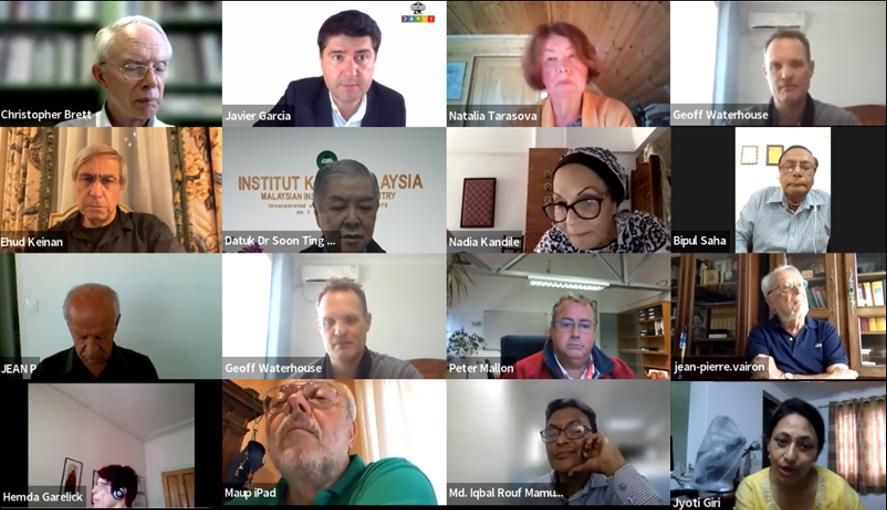
The two sessions of the NAO Forum began with a brief presentation by the President about the transition
period that the IUPAC leadership team is working on to implement the approved organizational changes. (See Chem Int April 2022, vol. 44, no. 2, pp. 34-37. https:// doi.org/10.1515/ci-2022-0228)
The President informed the Forum attendees that the IUPAC Executive Committee has already met to work on the design of the implementation plan of the changes approved in the June 4 Special Council meet ing. The IUPAC vice president, Ehud Keinan, is chairing the working group in charge of conceiving and ulti mately executing the changes. He also informed the NAOs´ representatives about the Opening Ceremony of the International Year of Basic Sciences for Sustainable Development (IYBSSD) that was held a few days prior, in the UNESCO Headquarters, in Paris, France, on July 8. He reported on the financial resources secured from chemical organizations and companies to support our activities during the IYBSSD and encouraged all NAOs representatives to communicate in their respec tive countries about the opportunity that the IYBSSD represents. The NAOs were encouraged to organize activities that contribute to raising awareness of the role of chemistry in the construction of a more sus tainable future and the achievement of the Sustainable Development Goals. IUPAC has a leading role in the IYBSSD, among other reasons, because the Global Women Breakfast 2023 will be one of the flagship activities of the IYBSSD.
After a couple of questions by the NAO represen tatives, Javier García Martinez gave a brief update on some of our most relevant current activities including the update of the IUPAC Gold Book, the significant progress made by Digital IUPAC, the status of the
30 Chemistry International October-December 2022 IUPAC wire
2023 World Chemistry Congress and IUPAC General Assembly and the possibility of taking part in the sci entific program of this major congress through the call for Focus Sessions, and the new Global Conversation on Sustainability in partnership with the International Younger Chemists Network (IYCN).
After this, the forum was opened for questions and discussion. Some of the topics covered in some detail included the Union new organizational structure. The IUPAC Secretary General, Richard Hartshorn, explained in detail how the first members of the Executive Board and Science Board of the Union will be elected. Finally, some NAO representatives informed the participants about the various initiatives they are carrying out in their respective countries and invited the attendees to join many of them.
The two sessions of the first NAO Forum were a success both in terms of the number of participants and the variety and relevance of the topics discussed, as expressed by several NAO representatives at the end of each session, when a brief evaluation this new initiative was discussed, proposing ways of improv ing it, and suggesting topics for future editions. The attendees made clear that they enjoyed this new chan nel of communication and very much welcomed the possibility of having more direct and frequent interac tion with the IUPAC leadership team and of influencing in the activities of IUPAC between Council meetings.
Through the NAO Forum, IUPAC leadership team aims at improving and promoting a more direct and agile communication with stakeholders to better serve the chemistry community while delivering on IUPAC vision, mission, and core values.


The President thanked everyone who made the NAO Forum possible, and especially the representa tives of NAOs for making time in their busy schedules to join this online conversation.
For questions, ideas, or concerns, contact jgarcia-martinez@iupac.org
31Chemistry International October-December 2022 IUPAC wire
<https://iupac.org/iupac-first-nao-forum/> The next search for the Top Ten Emerging Technologies in Chemistry is on. The deadline for nomination is 31 March 2023. https://iupac.org/ what-we-do/top-ten/
Project Place
Bioavailability and Significance of Endocrine Disruptive Compounds in Ecosystems
by Yehuda Shevah, Bradley W. Miller, Diane Purchase, Dror Avisar, Elke Eilebrecht, Ester Heath, Hemda Garelick, Kerstin Derz, Pawel Krzeminski, Willie Peijnenburg
Conventional treatment plants of domestic waste water (WWTP) are one of the key point sources for micro-pollutants including low levels residues of Endocrine Disruptive Compounds (EDCs) and their derivatives that are detected in the discharged sec ondary and tertiary effluent. The EDCs residues that reach the recipient environment and the ecosystems can be subjected to uptake and bioaccumulation in soil and groundwater in aquatic and terrestrial organisms, and/or human body.
To avoid risk, further treatment in a form of acti vated carbon adsorption and ozone-based advanced oxidation process (AOP) prior to chemical or UV disinfection are being considered before disposal of the effluent to water bodies or recharged to aqui fers. Such techniques are extensively tested and even used on a commercial scale, adding the "fourth treatment step." While the technical and the cost of the additional treatment are apparent, the threat to the ecosystems and public health which may derive from the minute quantities of the EDCs residues that escape tertiary treatment is not evident to justify the additional cost which may restrain water reuse, a vital source of water for irrigation and food security in arid and semi-arid regions, boosted by UN SDGs, 2030, which endorse water reuse and circular economy.
To assess and evaluate the various aspects of the EDCs residues and their impact on the ecosystems, an IUPAC project lead under the Chemistry and the Environment Division was constituted to review the current literature (2015-2022), as well as the experi ence gained by leading countries which promote the fourth treatment step of effluent, focusing on:
• Tertiary effluent and reclaimed water reuse and associated monitoring and regulation.

• Health and ecosystems impact of EDCs residues and derivatives, sourced to tertiary domestic effluent.
• Costs barriers to universal water reuse.
The preliminary findings and conclusions of the review are briefly summarized in the present interim report, pending the completion of the final report, in progress.
Resistance to Biological Degradation and Potential Health Impact
Residues of pharmaceutical and similar com pounds, being recalcitrant to biological degradation may go through the wastewater treatment process almost unchanged, ranging from 7 to 23 %, for sub stances such as Carbamazepine (CBZ) and Diclofenac. Tertiary effluent recharged to groundwater aquifers forming a barrier against seawater intrusion and or pumped back as reclaimed water for use for irrigation or direct potable reuse (DPR), after further treatment, were found to contain EDCs residues and derivative that are detected in the recipient environment in soil and groundwater (Paz et al., 2016), in aquatic and terrestrial organisms, and human body. Their likely uptake by the food crops poses potential hazard for food safety and human health risks (Ribeiro et al., 2016).
However, the fate of the EDCs residues in the recipient soil is regulated by adsorption and leachate, biodegradation, photodegradation and hydrolysis processes, which alleviate their bioaccumulation in soil, groundwater and uptake by plants and the food chain based on the chemical-physical properties of the residues, the molecule’s charge and soil characteristics (Avisar and Ronen-Eliraz, 2017).
32 Chemistry International October-December 2022
Information about new, current, and complete IUPAC projects and related initiatives. See also www.iupac.org/projects
Photo by Ivan Bandura
To date, uptake and accumulation of such residues, typically within the ng/ gr range, in edible crops, as potential route for human exposure via dietary inges tion was reported to be insignificant to pose a health risk (Compagni et al., 2019). In addition, possible addi tive “cocktail” effects from the combined presence of many EDCs and other chemicals in the environment and the underlying mechanisms of the minute residues of EDCs on the ecosystems, the wildlife, and humans are still not fully understood, as well as and their tox icological impact on larger organisms. Furthermore, their occurrence in minute quantities can be an ana lytical challenge. This state of affairs attracted the initiation of the EU funded program, combining eight research projects, assigned to carry out a comprehen sive study of the EDCs, being an innovation program and the largest public funding of this type of research in Europe (EURION, 2020).
Tracing of EDCs Residues
The Endocrine Disruptive Compounds show similari ties with hormones and enzymes compounds regulating metabolic functions of living organisms. But, the variety of the EDCs substances constitutes one of the main challenges to assess and control their residues in the environment. Tracing EDCs residues in the environ ment and the ecosystems is carried out using indicator pharmaceutical compounds such as the CBZ (Hai et al., 2018). A survey of CBZ contents, in raw wastewater and in effluent before and after groundwater recharge, now in its fifth year, shows very little change and the con centration remain at the range of 500 ng/ L−1, while the level of CBZ at the adjacent natural water is very low ( 0.011 ng/ L−1 ) (Aharoni et al., 2019).
Water Reuse and Regulation
Effluent after tertiary treatment is widely used for crops irrigation, especially in water scarce regions where water reuse is the major alternative for edible food production essential for human consumption. Israel leads the world in reuse of the generated waste water (85 %), recycling about 500 million cubic meters annually, substituting 40 % of potable water used for irrigation, nationwide. Other water scarce countries are following suit (Shevah, 2019).
In the absence of clear evidence, indicating irre versible ecological and functional damages to health, the occurrence of EDCs in the reclaimed water used for irrigation is not regulated by law. The current legal impli cations in the European Union do not clearly enforce the control of the micro-pollutants in the aquatic environ ment and unrestricted irrigation with tertiary treated
effluent is allowed, enabling agricultural production and food supply for the population in arid zones and drought prone regions. However, the need to address the impacts of EDCs on human health and the environment is highly relevant to the public and the issue of pharmaceutical residues cannot be ignored, in line with the EU directives on EDCs linked to water reuse and endocrine disruptors (Mara-Ceridono, 2020) and the inclusion of two EDCs (beta-estradiol and nonylphenol) in the watch list of emerging compounds in drinking water.
EDCs Residues Removal Technology
Increasing micro-pollutant residues in the European surface water have urged leading countries including Switzerland, Germany, Netherlands and others to ini tiate work, targeting the removal of pharmaceuticals and personal care products (PPCPs), EDCs and other contaminants of emerging concern from urban waste water. The advanced treatment step referred to as the “fourth treatment step” comprises of membrane ultrafiltration (UF), bio-filter using powdered activated carbon (PAC) and granulated active carbon (GAC) and catalysts like ozone and titanium in combination with UV-light. As found necessary, sand filtration is used to remove any toxic biodegradable transformation products formed during ozonation and small PAC par ticles (Prasanna et al, 2020). Other techniques include advanced nanofiltration (NF), hollow fiber direct NF and reverse osmosis (RO) membranes designed to achieve higher removal rates (above 99 %) for targeted compounds. RO is used in the USA, especially for treat ing effluent intended for direct potable reuse.
Costs of the Fourth Treatment Step
A comparative study of costs for three different techniques (powdered activated carbon dosing to activated sludge systems (PACAS), ozone com bined with a sand filter and GAC filtration) and three scales of treatment plants revealed that the removal of EDCs residues would amount from € 0.22 to € 0.29/m3 for small treatment plants and € 0.16 to € 0.26/m3 for large scale plants (STOWA, 2019). In terms of water reuse, prices for indirect potable standard water are in the range of €0.26 to €0.35/m3
Global Experience in EDCs Regulation, Monitoring and Residues Removal
The experience gained in treatment and removal of EDCs in leading countries, in Europe, USA, Australia, Singapore and Israel focus on advanced treatment technologies, with emphasis on micro-pol lutants removal and the likely impact on wastewater
33Chemistry International October-December 2022
Project Place
reclamation and reuse, considering OECD Policy which advises governments to opt for a life-cycle manage ment of PPCPs production, prescription and use, prevention and healthy life-style rather than cure and treatment to prevent pharmaceuticals from ending up in water bodies. To contribute to the economic sus tainability of the healthcare sector, employing a Green Deal to convince doctors to reduce unnecessary use of pharmaceuticals, re-engineering the products and making them more environmentally friendly.
Preliminary Conclusions
Wastewater reuse is a valid and a vital policy to increase the availability of water resources, prevent ing a severe pollution of various aquatic environments by discharge of wastewater and more important to alleviate droughts and water scarcity in drought prone regions. Nowadays, over 2 billion people live in countries with high water stress and lack of sani tation, and about 4 billion people experience severe water scarcity due to local pollution and droughts. The situation may get worse due the impact of the climate change.
However, despite the widely accepted assumption that the environmental and public health impact of minute EDCs residues are inconclusive (Compagni et al., 2019), not waiting for conclusive results, leading countries who have the technical and the financial means, have introduced, or are considering, the Fourth Treatment Step designed for effective removal of EDCs and minimization of micropollutants residues in effluent (STOWA, 2019).
Such excessive and expensive treatment, not affordable by all, is fast developing, creating a barrier to the global water reuse, especially in the develop ing world, unable financially to embark on large scale water reuse, despite the vital need for recycled water for food production and food security. To avoid a set back in water reuse, a minimum standard for reclaimed water quality and compliance monitoring are recom mended so that farmers can safely use reclaimed water for crop production, learning from the experi ence gained in countries, which have been successfully reusing water for decades. In parallel, in-depth risk analysis, and research filling the knowledge gaps as initiated by EU shall be intensified, to ensure that any EDCs residues are not causing irreversible ecological and functional damages to health.
The reported preliminary review of the current knowledge and impact of EDCs residues reaching consensual recommendations by the wide group of experts comprising the Working Group including
missing research will be further elaborated and pre sented in a forthcoming Report.
References
1. Aharoni, Avi, Ido Negev, Efrat Kohen, Dov Sherer, Noam Bar-Noy And Arbel Berezniak Oded Orgad, Lilach Shtrasler, Yehuda Shevah, 2019. Dan Region WWTP and Third Line Project, 2020, 2019 Annual Report (in Hebrew with English Summary) https://wold.mekorot. co.il › WastewaterDocsYearly./pdf
2. Avisar, D., Ronen-Eliraz, G., 2017. Irrigating with effluents- what to watch out for? Ecology& Environ, j. sci and environ policy. (4), 48–55.
3. Compagni, R., Gabrielli, M., Polesel, F., Turolla, A., Trapp, S., Vezzaro, L., Antonelli, M., 2019. Risk assessment of contaminants of emerging concern in the context of wastewater reuse for irrigation: An integrated modelling approach. Chemosphere
4. https://doi.org/10.1016/j.chemosphere.2019.125185
5. EURION. European Commission’s Horizon 2020. European Cluster to Improve Identification of Endocrine Disruptors (EURION). Call SC1-BHC-27-2018 (https://eurion-cluster.eu/).
6. Hai, F.I. 1, Yang, S., Asif, M.B. Sencadas, V. , Shawkat, S. Sanderson-Smith, M., Gorman, J., Zhi-Qiang Xu and Yamamoto, K. 2018. Carbamazepine as a Possible Anthropogenic Marker in Water: Occurrences, Toxicological Effects, Regulations and Removal by Wastewater Treatment Technologies. Water 2018, 10, 107; doi:10.3390/w10020107
7. Mara-Ceridono, 2020. Endocrine Disruptors: EU legislation and policy EURION CLUSTER meeting, 5 February 2020, Paris. European Commission, DG Environment, Sustainable Chemicals Unit. https:// eurion-cluster.eu/wp-content/uploads/2020/03/1.-EDsEU-Legislation-Policy-Mara-Ceridono.pdf
8. Paz, A., Tadmor, G., Malchi, T., Blotevogel, J., Borch, T., Polubesova, T., Chefetz, B., 2016. Fate of carbamazepine, its metabolites, and lamotrigine in soils irrigated with reclaimed wastewater: sorption, leaching and plant uptake. Chemosphere 160, 22–29.
9. Prasanna, L. Mamane, M. Vadivel, V. K. and Avisar, D. 2020. Ethanol-activated granular aerogel as efficient adsorbent for persistent organic pollutants from real leachate and hospital wastewater. Hazardous Materials, 384,121396
10. Ribeiro, C., A.R. Ribeiro, and M.E. Tiritan. 2016. Priority substances and emerging organic pollutants in Portuguese aquatic environment: A review. In Reviews of environmental contamination and toxicology, ed. P. de Voogt, 1–44. Cham: Springer.
11. Shevah, Y. (2019). Impact of Persistent Droughts on the Quality of the Middle East Water Resources. In: Satinder Ahuja(Ed.) Evaluating Water Quality to Prevent Future Disasters. Separation Science And Technology Volume 11. Academic Press and Elsevier Inc. pp. 51-84.
34 Chemistry International October-December 2022
Project Place
12. STOWA, 2019. Tackling Micropollutants in Wastewater— Approaches on Implementation and Innovation in Europe and the Netherlands. https://aquatechconnect. rai.amsterdam/aquatechamsterdam/app/session/79352
See IUPAC project https://iupac.org/project/2018-013-2-600/
IUPAC Projects Contributions to the UN Sustainable Development Goals: Past, present, and future
by Pietro Tundo and Jane Wissinger
Development of truly Green and Sustainable Chemistry is key to delivering many of the United Nations Sustainable Development Goals (UN SDGs) [1]. To effectively address the huge challenges faced globally, scientists must understand the wider context of Sustainable Development.
On 8 July 2019, the Interdivisional Committee on Green Chemistry for Sustainable Development (ICGCSD) organized a special symposium, “Chemistry Addressing the UN-17 Sustainable Development Goals,” at the IUPAC World Congress in Paris. The pur pose of the Symposium was to link together research and industry with exchange of ideas on this significant issue of the future.
This half-day symposium included invited lec tures and expert panel discussion and was organized by Pietro Tundo (Chair IUPAC ICGCSD), Christopher Brett (IUPAC President Elect), Janet L. Scott (Secretary of the ICGCSD), and Fabio Aricò (IUPAC Division VIII -Chemical Nomenclature and Structure Representation- Representative). Invited speak ers, including Michael Greatzel, Kris Matyjaszewski, Haoran Li, Natalia Tarasova, Klaus Kümmerer, and Mary Kirchhoff, provided perspectives on science, policy, regulatory, societal and business strategies that could enable more rapid movement towards realizing the “shared blueprint for peace and prosperity for peo ple and the planet, now and into the future” [2] that the SDGs are designed to realize. The role and the connection of IUPAC with international organizations was emphasized. In all cases, topics included aspects of science policy or green and sustainable chemical research that support these strategies.
With this symposium, attended by about 200 per sons, ICGCSD’s intentions were to open a dialogue on Green Chemistry and Sustainability with relevant inter national industries and chemical organizations. Initial collaborations involved chemical industries that were
willing to develop the best practices in appropriate man ufacturing fields (chemicals, processes, products, etc.).
Project Aim
For over a century, IUPAC has been a world leader in global issues involving the chemical sciences and their societal impact. Nowadays, this work is primar ily conducted through a project-driven system where proposals are peer-reviewed from within the Union and its 13 divisions and committees, as well as from the broader academic and industrial chemistry enter prise. In 2000, IUPAC’s mission was revised to “assist the chemistry community in collaborating with sci entists in other fields, engineers, technologists, and policy makers to solve critical world problems.” [3] These strategic initiatives were thus incorporated into many of the IUPAC projects conducted in the last 22 years with a focus on the application of the chemical sciences for the “betterment of humankind”; in other words, a sustainable future.
There is arguably no more prominent roadmap for a sustainable future than that defined in 2015 by the United Nations Sustainable Development Goals [1]. To illustrate IUPACs leadership in achieving the SDGs, even before their publication, Pietro Tundo initiated a project (2020-011-2-041) with the aim of assessing the contri butions of IUPAC projects to the achievement of the 17 SDGs [4]. This article describes progress to date on this project and potential opportunities for dissemination.
Towards that end, IUPAC projects were reviewed between 2000-2021 and 262 were selected across all divisions and committees for critique on their rel evancy to the 2030 goals. A master spreadsheet was prepared by Aurelia Visa (ICGCSD) and a representa tive from each division and committee was tasked with identifying a primary SDG for each project. However, it quickly became evident that most projects included multiple targeted outcomes with many having a Quality Education (SDG 4) and/or Partnership for the Goals (SDG 17) component. Therefore, both primary and secondary UN SDG targets were assessed. Further refinement to consider alignment with the 169 UN SDG Targets provided the most accurate representation of project goals. (For references to the 17 SDGs and spe cific Targets, see ref [1])
Preliminary Results
Committee representatives’ reviews of the initial 262 projects identified 253 projects as having a primary relationship to one of 12 of the 17 SDGs. As illustrated in Figure 1, 78 % of the primary goals were classified within four major SDGs areas with further association
35Chemistry International October-December 2022
Project Place
Figure 1. Primary categorization of IUPAC projects to 12 UN SDGs, with the most prevalent being SDG 3, SDG 4, SDG 12, and SDG 17.
with the goals visible in 32 specific SDG targets cited.
It is well worth diving deeper to read the SDG targets to see the full impact of an individual IUPAC projects. For example, Project 2014-031-600, “The Environmental and Health Challenges of E-waste and its Management: An emerging 21st Century Global Concern” had aims to: a) examine current research on the chemical nature of e-waste and its global distribu tion; b) evaluate its environmental and health impact of e-waste and related risk management tools and mod els; c) identify short-comings in present regulations and management strategies as well as future challenges; and d) develop a set of specific recommendations for management approaches that are science-based and globally informed [5]. A primary goal was identified as SDG 12, Responsible Consumption & Production. However, more specifically, the goals of the project align with the specific SDG targets below:
SDG Target 12.4: By 2020, achieve the environmentally sound management of chemicals and all wastes throughout their life cycle, in accordance with
agreed international frameworks, and significantly reduce their to air, water, and soil in order to min imize their adverse impacts on human health and the environment (sdgs.un.org/goals/goal12)
SDG Target 12.5: By 2030, substantially reduce waste generation through prevention, reduction, recy cling and reuse
This project also has strong connections to SDG 17, Partnerships for the Goals, with the Target 17.7 a specific initiative of the project.
SDG Target 17.7: Promote the development, transfer, dissemination and diffusion of environmentally sound technologies to developing countries on favorable terms, including on concessional and preferential terms, as mutually agreed


Since many IUPAC projects target the development and dissemination of educational materials through courses, publications, symposia, and teacher workshops in green and sustainable chemistry, a common thread in the parent SDG 4 is best described by Target 4.7.
Figure 2. Secondary categorization of IUPAC projects to 15 UN SDGs.
36 Chemistry International October-December 2022
Project Place
SDG Target 4.7: By 2030, ensure that all learners acquire the knowledge and skills needed to promote sus tainable development, including, among others, through education for sustainable development and sustainable lifestyles, human rights, gender equality, promotion of a culture of peace and non-violence, global citizenship and appreciation of cultural diversity and of culture’s contribution to sustainable development
A recent IUPAC project exemplifying Target 4.7 can be found in project 2020-014-3-050, “Systems Thinking for Sustainability: Toward 2030 and Beyond (STCS 2030+)” [6]. A description of this project was recently published in the 2021 Issue 4 of Chemistry International [7].
While exploring IUPAC project contributions to the UN SDGs it becomes evident that these efforts reach beyond the chemistry/scientific expertise shared by the Union to strategies for advancing diversity and equity (i.e. societal) and economic benefits through sustainable practices. This observation is highlighted by the selection of the secondary goals for 175 of the projects that expand the scope of connections to the SDGs to 15 of the 17 goals. In this assessment stage, three additional SDGs are cited as contributions from projects. These include SDG 8 (Good jobs & Economic Growth), SDG 10 (Reduced Inequalities) and SDG 15 (Life on Land). Representation in SDG 13 (Climate Action) and SDG 9 (Innovation and Infrastructure) were also referenced frequently.
Sample Targets represented in the secondary goals by IUPAC projects include:
• SDG 3 (Good Health and Well-Being) | Target 3.9
By 2030, substantially reduce number of deaths and illnesses from hazardous chemicals in air, water and soil pollution and contamination
• SDG 6 (Clean Water and Sanitation) | Target 6.1
By 2030, achieve universal and equitable access to safe and affordable drinking water for all
• SDG 7 (Affordable and Clean Energy) | Target 7.a
By 2030, enhance international cooperation to facilitate access to clean energy research and technology, including renewable energy, energy efficiency and advanced and cleaner fossil-fuel technology, and promote investment in energy infrastructure and clean energy technology
Project Plans
The recent report by the Intergovernmental panel on climate change is one example of the urgency facing humankind to address the grand challenges of sustainability [8]. The project described herein, project
2014-031-3-600, presents a portfolio of IUPAC’s con tributions the last twenty years to the SDGs and demonstrates IUPAC’s leadership in global stewardship towards these goals. Refinement and future sharing of the data collected through an online database platform is envisioned including participation in the International Year of Basic Sciences for Sustainable Development. [9] Furthermore, a roadmap forward for new IUPAC projects will be designed so that, when appropriate, each project proposal and resulting web page will identify associated SDGs as a commitment to IUPAC mission to foster sustainable development through chemistry.
References (all web accessed 2022-05-25)
1. United Nations, Department of Economic and Social Affairs, Sustainable Development, https:// sdgs.un.org/goals
This page provides access to details of the 17 Goals and 169 Targets.
2. United Nations, UN Office for Sustainable Development, Sustainable Development Goals, https://unosd.un.org/content/sustainabledevelopment-goals-sdgs
3. IUPAC Strategic Plan, https://iupac.org/who-weare/strategic-plan/
4. IUPAC project, Assessment of the Contributions of IUPAC Projects to the Achievement of the United Nations Sustainable Development Goals, https://iupac.org/project/2020-011-2-041
5. IUPAC project, The environmental and health challenges of e-waste and its management: an emerging 21st century global concern, https:// iupac.org/project/2014-031-3-600
6. IUPAC project, Systems Thinking in Chemistry
for Sustainability: Toward 2030 and Beyond (STCS 2030+), https://iupac.org/ project/2020-014-3-050
7. Mahaffy, P.; et. al., Chem. Int., Oct 2021, vol. 43, no. 4, pp. 6-10. https://doi.org/10.1515/ci-20210402
8. United Nations, Climate Change Report 2022, Impacts, Adaptation and Vulnerability. Working Group II Contribution to the IPCC Sixth Assessment Report (released 28 Feb 2022), https://www.un.org/en/climatechange/reports and https://www.ipcc.ch/report/ar6/wg2/
9. International Year of Basic Sciences for Sustainable Development https://www.iybssd2022.org
See IUPAC project https://iupac.org/project/2020-011-2-041
37Chemistry International October-December 2022
Books
Books
Bookworm
Bookworm
Multi-Scale Biogeochemical Processes in Soil Ecosystems: Critical Reactions and Resilience to Climate Changes
The book published by Wiley in March 2022 (ISBN: 978-1-119-48034-1) is an up-to-date overview of recent research in soil bio geochemical processes and applications in ecosystem management. Organized into three parts, the text examines molecular-scale processes and critical reactions, presents eco system-scale studies of ecological hotspots, and discusses large-scale modeling and prediction of global biogeochemical cycles. Part of the Wiley–
IUPAC Series on Biophysico-Chemical Processes in Environmental Systems, this authoritative volume
• Provides readers with a systematic and inter disciplinary approach to sustainable agricultural development and management of soil ecosys tems in a changing climate
• Features contributions from an international team of leading scientists
• Examines topics such as soil organic matter stabilization, soil biogeochemistry modeling, and soil responses to environmental changes
• Discusses strategies for mitigating greenhouse gas emission and improving soil health and ecosystems resilience
• Includes an introduction to working across scales to project soil biogeochemical responses to climatic change
Multi-Scale Biogeochemical Processes in Soil Ecosystems: Critical Reactions and Resilience to Climate Changes is essential reading for scientists, engineers, agronomists, chemists, biologists, academic researchers, consultants, and other professionals whose work involves the nutrient cycle, ecosystem management, and climate change. This book is the outcome of IUPAC project 2016-047-1-600.
See IUPAC project https://iupac.org/project/2016-047-1-600

org/10.1002/9781119480419
Green Chemistry and Sustainable Development


A special issue of Chemistry Teacher International Vol 4, Issue 2, June 2022 Guest editors Bipulbehari Saha, Francesca Kerton and Hemda Garelick
In many chemistry curricula Green Chemistry has become a feature. In introductory chemistry courses in higher education more and more attention is given to the principles of green chemistry as well as the ideas of sustainable development (UN Sustainable Development Goals). This includes design principles like ‘cradle to cradle’, ‘cradle to grave’ as well as life cycle analysis.
The number of concrete examples to illustrate these principles that are used in education at this moment is limited, even though there are many recent examples. Within chemistry education it is important for students to understand the role chemistry plays in society. One of these roles is to apply chemical knowledge to design processes that implement the principles of Green Chemistry and help in Sustainable Development. In order to demonstrate the role of chemistry more information for teachers is needed, so they can use this information and share this with their students.
In total 9 articles are published in a special issue of CTI (Vol 4, Issue 2, June 2022) <https://www.degruy ter.com/journal/key/cti/4/2/html>, most of them describing interesting experiments that can easily be used by teachers to introduce and illustrate the princi ples of green chemistry. Some of the experiments were used and designed to be carried out at home. This was caused by the lockdowns occurring during the covid pandemia.
Reproduced in part from the Introduction by Jan Apotheker, CTI, vol. 4, no. 2, 2022, pp. 117-119. https://doi.org/10.1515/cti-2022-2001
38 Chemistry International October-December 2022
and publications hot off the press. See also www.iupac.org/what-we-do
and publications hot off the press. See also www.iupac.org/what-we-do
or https://doi.
Edited by YU YANG MARCO KEILUWEIT NICOLA SENESI BAOSHAN XING MULTI-SCALE BIOGEOCHEMICAL PROCESSES IN SOIL ECOSYSTEMS Wiley-IUPAC Series in Biophysico-Chemical Processes in Environmental Systems Nicola Senesi and Baoshan Xing, Series Editors CRITICAL REACTIONS AND RESILIENCE TO CLIMATE CHANGES 8.5 x 11 in
Conference Call International Year of Basic Sciences for Sustainable Development
by Chris Brett
The International Year of Basic Sciences for Sustainable Development (IYBSSD) Opening Ceremony took place in UNESCO headquarters in Paris, France on 8 July 2022 in hybrid (in-person and virtual) format. After the official opening talks, panels and talks included the role of basic sciences in decision making, strengthen ing science, technology, engineering and mathematics education, the role of basic sciences in developing soci eties, basic sciences and the Sustainable Development Goals and around the Globe. Recording of the opening is available on IYBSSD YouTube channel. IUPAC was represented by the IUPAC President, Javier GarciaMartinez, IUPAC Past President Christopher Brett and IUPAC former President Nicole Moreau (2010-11). The IUPAC Global Women Breakfast 2023 was announced in the Opening Ceremony exhibition, and recognized as a flagship IYBSSD event (see below for further information)
IYBSSD background
The IYBSSD was proclaimed by the United Nations on 2 December 2021, and is taking place from July 2022 until the beginning of October 2023. The UN

Prof. Javier García Martinez (left), current IUPAC President, Prof. Nicole Moreau (center), former IUPAC President, and Prof. Chris Brett, IUPAC Past President at the UNESCO Headquarters during the IYBSSD Opening Ceremony.

resolution was submitted by the Republic of Honduras, seconded by Vietnam, and supported by a number of other nations; the vote for proclamation by the UN General Assembly was unanimously in favour.
The purpose of IYBSSD is to emphasise the crucial role of the basic sciences in underpinning key techno logical achievements that address and will continue to address the sustainable development goals and contribute to making our world a better place. Such objectives mirror closely IUPAC’s strategic plan, vision and mission and objectives. An improved understand ing of the basic sciences by society at all levels, all ages and in all countries, should be a significant aid in enabling a better inclusion of science in public deci sion-making processes.
There have been various international years related to chemistry in the past decade since the International Year of Chemistry (IYC) in 2011, a celebration of chem istry which was coordinated by IUPAC. The last of these was the International Year of the Periodic Table of the Chemical Elements, IYPT (2019), organized by IUPAC with the collaboration of several other inter national unions and was a huge success with many events worldwide. The aim was to demonstrate the importance of and benefits arising from the chemi cal elements and their properties in our society and also celebrating the 150th anniversary of Mendeleev’s
39Chemistry International October-December 2022
Periodic Table. The enthusiasm demonstrated by all sectors of society, especially young people, demon strated that basic sciences are indeed appreciated by all. Other International Years since 2011 have included the International Year of Crystallography (2014), of Light (2015) and of Glass (2022).
IYBSSD proposal and proclamation
The proposal for IYBSSD was led by the International Union of Pure and Applied Physics (IUPAP). The year 2022 was chosen to coincide with IUPAP centenary and the proposal led by Michel Spiro, at that time president designate, and now IUPAP President. IUPAP and IUPAC have strong collaborations, the most widely known being the confirmation and naming of new ele ments in the Periodic Table of the Chemical Elements. IUPAC is a founder partner of the IYBSSD. An IYBSSD Steering Committee was formed with representatives of all International Unions and Organisations that are partners, and as of August 2022, there are 50 Partners and 112 science academies and networks. As with all International Years, a process had to be fol lowed and which included the submission of a proposal for an International Year to the UNESCO Conference of States Parties in 2019. The premise for the International Year was that science is needed to achieve the Sustainable Development goals, their transformation into innovations, and its methods of cooperation. There are many examples of how basic sciences have contributed to making our current world better. Just a few are the Web that was invented owing to the need for global collaboration for experiments in fundamen tal physics, discovery of DNA structure that has led to
revolutionary advances in medicine (genome project, vaccine development, HIV and AIDS treatments etc.), GPS, the invention of the transistor, statistical methods for artificial intelligence, green chemistry and methods for reducing environmental impact.
There was also important support from UNESCO International Basic Sciences Programme (IBSP) and its Scientific Board, whose chair in 2019 was Nicole Moreau (IUPAC President 2010-11), to convince the member states of the importance of an International Year. IBSP emphasized science as a global public good in all countries, developing and developed, looking towards more harmonious development and recog nizing that to solve the world’s challenges everybody is needed. The resolution for the proclamation of an International Year of Basic Sciences for Sustainable Development in 2022 was unanimously adopted by the UNESCO Executive Board in October 2019 and by the UNESCO General Conference in November 2019, and then submitted to the UN General Assembly.


40 Chemistry International October-December 2022 Conference Call
Ms Shamila NairBedouelle, Assistant Director-General for Natural Sciences, UNESCO, gives her welcome address.
Conference Call
The role of basic sciences
The commonly accepted meaning of basic sci ences, such as mathematics, physics, chemistry, life and social sciences, are that they are curiosity-driven but that have also fundamental roles in our lives. They are the base for understanding that leads to the devel opment of the necessary means and tools to address global socio-economic and environmental challenges that we hear about almost every day: climate change, extreme events, the water crisis, depletion of natural resources and loss of biodiversity. The basic sciences are a source of disruptive innovations.
There are many stakeholders that need to be con vinced of the crucial role of basic sciences who include policy-makers, business and industry, international organizations, philanthropic foundations, universities, teachers and students, media, and the broader public. One of the important tasks is educating the younger generations to enable them to take the right deci sions, informed by science and undertaking capacity building. UNESCO’s Recommendation on Science and Scientific Researchers, revised in 2017, embodies the importance of such education. The challenges are likely to get harder.
Cross-cutting themes for IYBSSD have been identi fied by the steering committee as:
• Basic Sciences and Multicultural Dialogue
• Basic Sciences, Education and Human Development
• Basic Sciences and Women (figures, empowering women, role models)
• Basic Sciences, Innovation and Economy
• Basic Sciences, Health and Life Sciences
• Basic Sciences and Global Challenges
IYBSSD events and IUPAC
Key IUPAC engagement activities with the IYBSSD themes are described on the webpage https://iupac. org/iybssd2022/ a summary of which is
• Strengthening the presence and the visibility of women > GWB Global Women’s Breakfast
• Basic sciences as sources of international dia logue and peace > Hands-on capacity building of chemistry instructors
• Science as a global public good > Systems
Thinking: linking sustainability goals to chemistry education through the Planetary Boundaries framework
• Innovation and economic development > annual Top10 Emerging Technologies in Chemistry
• Education and human development > Periodic Table Challenge
• Meeting global challenges > Global Conversation to raise awareness
They illustrate fully how ongoing and planned IUPAC activities are involved in the themes of IYBSSD. It is no accident that many of these are legacy activi ties from IYPT and demonstrate the clear connection between the chemical elements, the basic sciences and sustainable development.
In 2023, the GWB, Global Women’s Breakfast is being organised by IUPAC as an IYBSSD flagship event. The reach of the annual GWB will widen into a global event across all the basic sciences at the world level with the theme “Breaking Barriers in Science”. It will take place on 14 February 2023, just a few days after the International Day of Women in Science (11 Feb), and is open to all, regardless of gender; registration is already open, see https://iupac.org/gwb/
IYBSSD worldwide
Other IYBSSD flagship events are being organised, approximately one per continent, the first two of these took place in Vietnam and in Serbia, in September 2022 on “Science, Ethics and Human Development” and on “Basic Sciences for Sustainable Development,” respectively. Next year, 2023, will see flagship events in Africa, in Rwanda in May 2023 in Arab countries, and on “Open Science” in the Honduras, programmed for June 2023.
Several characteristics of the basic sciences illus trate why they are necessary and need to be promoted. Basic sciences are the foundations of science produc ing a pool of knowledge that can be used by future generations in applications, often as yet unknown. Research is curiosity driven, a source of disruptive knowledge and innovations.
IYBSSD events register and the future
The legacy from the International Year needs to continue after its end and plans for a decade of the basic sciences as follow-up are already being discussed.
All are invited to take the opportunity to organise events that show the importance of basic sciences at the forefront of research and training in the basic sciences at an international, national, regional or local level. Please register your events, chemistry or basic sciences that may already be scheduled to take place during the year on https://www.iybssd2022.org/en/ add-an-event/ or https://www.iybssd2022.org/en/ your-proposal-for-the-program/
Please take the opportunity to initiate and foment
41Chemistry International October-December 2022
Conference Call
collaborations with physicists, mathematicians and biologists that will last beyond the International Year. The planet faces many problems and we can all con tribute to attenuating the impact that we have on the planet and educating the younger generation to be better equipped with full support from knowledge of the basic sciences to deal with the challenges that we are facing and will continue to face.
The closing ceremony of IYBSSD will be at CERN in Geneva, Switzerland on 6 October 2023.
https://www.iybssd2022.org/en/about-us/ https://www.unesco.org/en/year-basic-sciences/launch
Christopher Brett is IUPAC Past President, Member of the Steering Committee of IYBSSD, and UNESCO IBSP Scientific Board Vice Chair.
Making Global Green Connections: The Importance of Green Chemistry

Summer School for Sustainable Development by Akwaowo Inyangudoh, Beatriz Chícharo, Giovanna Mazzi, Seyyed Emad Hooshmand, Gizelle van Niekerk, Lyvia Menezes, Fábio G. Delolo, Amy Naylor Randles, Fabrizio Politano, María Luz Tibaldi Bollati, Zikhona Tywabi-Ngeva, and Zikhona Tshemese
The chemical industry, backed by chemistry research has always played a vital role in economic development through problem-solving and the provision of societal needs. In tackling today’s climate change, energy, food, and water crises, the role of chemistry can be re-vital ized based on green chemistry principles [1]. The birth
of green chemistry has over the years challenged and opened up new opportunities to chemists globally both in academia and industry. These opportunities include capacity building and education in Green Chemistry. The brightest example is the formation of the Green Chemistry Postgraduate Summer School (GCPSS) which has been actively promoting Green Chemistry Education and training young green chemists from around the globe. The contributors of this report were all attendees in the 2022 Summer School.
The very first edition of the GCPSS was held at the San Servolo island in Venice (Italy) and organized by the Consorzio Interuniversitario Nazionale “La Chimica per L’Ambiente” (Interuniversity Consortium “Chemistry for the Environment”, INCA) in 1998 [2]. The GCPSS targeted young chemists (under the age of 35) from Europe and was funded by the European Commission’s IV Framework Program, United Nations Educational, Scientific and Cultural Organization (UNESCO), the North Atlantic Treaty Organization - Advanced Science Institute (NATO-ASI) as well as the Training and Mobility of Researchers (TMR) program [3-5]. Nine editions that followed after this (until 2008) were all organized and managed by the INCA [2,3]. The 11th edition of the GCPSS was taken to the African continent (Dar es Salaam, Tanzania) and was organized by the IUPAC Interdivisional Committee on Green Chemistry for Sustainable Development (ICGCSD) [6]. In 2020, the world was impacted by COVID-19 pandemic and as a result, the 12th edition was held online for the first time. The online program had a total of 180 participants from 42 countries; the highest number recorded in the history of the GCPSS. This 12th edition was held in col laboration with ICGCSD and organized by the Green Sciences for Sustainable Development Foundation
Demographic distribution of students at the 14th GCPSS.
42 Chemistry International October-December 2022
Conference
(GSSDF) [7,8]. Organized also by the GSSDF, the 13th edition took place from 4-9 July 2021 in a hybrid for mat. The online and onsite student attendees summed up to 130 (15 onsite and 115 online) from 39 different countries [9].

This year, the 14th GCPSS was held again in Venice, from 3-8 July 2022. Besides the resonance of this event witnessed by all participants that joined from all over the world, this edition felt special because it counted with overwhelming onsite attendance after lockdown. The founder of the GSSDF, Pietro Tundo, expressed many times his deep joy in seeing all the people gath ered there to exchange ideas and share knowledge on Green Chemistry for Sustainable Development. Moreover, Prof. Tundo, together with the organizing committee consisting of Fabio Aricò, Aurelia Visa, and Mirabbos Hojamberdiev, decided to also maintain the online platform, to maximize students’ attendance and participation, particularly to those from Global South. The event had 161 student participants (50 in-person and 111 online), from 45 different countries with 5 % from South America, 1 % from North America, 46 % from Africa, 19 % from Europe, 28 % from Asia, and 1 % from Oceania, as shown in Figure 1. Insightful lectures at the 14th edition of the GCPSS were delivered by 24 outstanding teachers (11 online and 13 in-person), from diverse backgrounds with one goal in mind: to
emphasize the importance of green chemistry and cutting-edge topics in this regard to the younger generation. Some of the hot topics discussed include continuous-flow reactions to produce pharmaceutical products, synthesis of biopolymers from waste, com putational chemistry to develop greener chemical solutions, photochemistry, catalysis in carbon diox ide for biomass conversion, supramolecular dynamic chemistry, metal-organic frameworks, green process for green hydrogen production, and many others. The daily activities of the 14th GCPSS were updated on the IUPAC website in the form of a daily brief [10].
All students were given the opportunity to share their own research work with a 5-minute poster pre sentation with the aim to widen green chemistry knowledge and allow students to actively participate and interact. To recognize outstanding research works of attending students on green chemistry, PhosAgro, a long-time sponsor, generously provided 4 grants of 500 € each to award the best in-presence posters. In addition, the GSSDF gave 5 more prizes— an original reprint of Venice—to recognize the excellent research works of attending students who made the best online/in-presence participants. More information on the winners of both awards can be found in the brief post [10].
Since one of the major goals of the 14th GCPSS
43Chemistry International October-December 2022
Call
Group photo of in-person attendees of the 14th GCPSS and lecturers after the boat trip to the fascinating islands of Torcello and Burano.
Conference Call
was to allow young chemists to build an international network, many activities on the agenda were planned to encourage mutual sharing; from the welcoming event to the boat trip, all of them allowed students and lecturers to know each other’s realities, traditions, and points of view. The social events were indeed cat alysts to build new connections between students and lecturers from the same field, with different valuable experiences, which could lead to future collaborations and mutual help between colleagues.
It is worthy to mention that green chemistry is critical to young researchers at the beginning of their careers, considering its framework for a sustainable future. The program helps to educate young minds regarding the importance of their work for the future generation. Therefore, some of the in-presence attend ees openly share their excitement, satisfaction, and delightful feedback about the 14th GCPSS.
Fábio G. Delolo (Brazil)


More than develop ing and promoting the concepts of green chem istry, the 14th GCPSS was a way to connect people who are concerned about the future. These connections can amplify and catalyze the green transformation that our society needs. There is noth ing nobler than global problems to be solved through collaboration. But in addition to collaborators, during the event, it was possible to build not only work-re lated collaborations but also friendships connected for a purpose. Together it seems that the challenges can be overcome and a long-awaited sustainable develop ment can be reached.
Giovana Mazzi (Italy)


I didn’t know what to expect, I had never participated before in something similar. I was a bit anxious but thor oughly curious. Day by day the brilliant lectures opened my eyes to the incredible and limitless applications of green chemistry. But what I felt the most was a growing
connection with students from various places, and diverse realities, all gathered there for seeking new knowledge on green chemistry. I felt their pride and satisfaction while presenting their research to other young chemists, feelings that I experienced too for the first time during this 14th GCPSS. Sharing cultures, traditions, ideas, and hopes, tightened this interna tional network and led to an amazing week. The 14th GCPSS gave me the immense opportunity to dive into an international scientific environment and to grow, as a young green chemist, as a student, and as a person.
María Luz Tibaldi Bollati and Fabrizio Politano (Argentina)
Our continent, South America, benefits from rich natural resources, a big agricultural sec tor, and a diversified industrial base. In under developed countries, industrial development is crucial for our prog ress. We believe that the development of new chemical procedures provides an effective way of using basic science to address several issues in a profitable manner; but we are convinced that the only way to reach those goals has to be linked with sustainable, environmentally friendly ideas. The development of green chemistry in Latin America is strongly engaged with education. The new generations of scientists need to be trained in methodologies, techniques, and principles that are aligned with green organic synthesis. Our participation in the 14th GCPSS allowed us to improve our expertise toward a green chemistry philosophy and expanded our research network, giving us the chance to discuss potential international collaborations. We could pres ent our research in front of professors and students from all continents, being a golden opportunity for our professional development. The scholarships for less advantaged countries offered by the Organizing Committee and Sponsors, granted our participation in Venice, otherwise impossible, due to the travel cost from such a remote region. We bring home a lot of
44 Chemistry International October-December 2022
Conference Call
new experiences, friends and knowledge, and we are convinced that we will contribute as ‘green chemistry ambassadors’ in our countries to encourage more stu dents to participate in such a wonderful event in the incoming years.
Beatriz Chícharo (Portugal)
I strongly and heart edly believe that the week of the 14th GCPSS in Venice changed my perspectives for the future. As a newly graduated Master of Bioorganic Chemistry, I jumped at the opportu nity to attend an event of this dimension that allowed me to learn from pioneers of green chem istry and to share the work I have been doing for the past 7 months. Not only did the summer school enable me to gain a greener mindset for future work but also increased my network of contacts within our field. I’m firmly convinced that this type of event is imperative to educate young green chemists and prepare them for the inevitable battle they will have to fight for a greener future.
Gizelle Roque van Niekerk (South Africa)

As a 1st-year MSc student from the devel oping country of South Africa, I am grateful to Pietro Tundo for see ing potential in me as a young scientist by selecting me to attend the in-person event on scholarship. The 14th Green Chemistry Summer School was a life-changing expe rience and instrumental to my future career as a chemist. It was an honor to present my research at such a prestigious international summer school. The opportunity reinforced my belief that green chemis try solutions are a fundamental course of action for sustainable development in the Global South. It was a privilege to engage with postgraduate students from a broad spectrum of countries and I found the talks given by highly influential scientists very inspiring.


Networking with people who share the same common goal encouraged me to fervently continue my pursuits in the ground-taking field of green chemistry.
Seyyed Emad Hooshmand (Iran)
It was a secondto-none opportunity to share my research concerning multi-com ponent reactions at the 14th GCPSS in Venice, Italy. Featuring 161 attendees from 45 countries worldwide, this was a tremendously amazing event about various green chemistry topics. It was also great to learn and interact with distinguished lecturers, for instance, Prof. Anastas, Prof. Matyjaszewski, Prof. Kappe, and Prof. König, who gave insightful lectures concerning green chemistry, ATRP, microfluidic sys tems, photocatalyst, respectively. Last but not least, I firmly believe that despite their minimal differences, humans are full of similarities. Sincere meetings of a substantial number of young green chemists from 45 countries of the world, regardless of nationality, color, religion, language, etc., demonstrates that science is a universal language
Akwaowo Imoh Inyangudoh (Nigeria)
The week-long 14th GCPSS was intrigu ing and impactful! It has shaped my think ing about my future research to always consider a greener approach. Towards a sustainable future, this program has achieved three interesting things: (a) diversity and inclu sion; it helps to level up the science around green chemistry, especially that of low economies; (b) tar geting and recognition of young scientists from all over the world as the driving force and future impact makers; and (c) putting the principles of green chem istry on our minds and making us see their relevance in achieving the UN Sustainable Development Goals. Furthermore, the social event created an excellent atmosphere for networking and future collaborations.

45Chemistry International October-December 2022
Conference Call
Our special thanks go to the organizing team and the Summer School sponsors.
Lyvia Nara Barroso Menezes (Brazil)
I’ve always dreamed about being part of an IUPAC meeting and in 2019, during the World Congress in Paris, I heard about the Green Chemistry Summer School, and to be part of the 14th edition was a dream come true. I had the opportunity to know chemists from all over the world who share the experience and love for science. Like many scientists from low-income countries, I finished my post-gradu ation after my 30’s and I was a part-time student. The 14th GCPSS embraced me and gave me the fantastic opportunity to reconcile the desire to advance my career as a researcher and seek innovative environ mental solutions. This is an essential steppingstone to making me an actor in charge of spreading global ideas and innovation on sanitation and waste-based biofuels production and applying green chemistry principles. IUPAC is concerned about the gender gap and this event made me feel enthusiastic about leaving a legacy of excellence for black women, particularly in the field of Green Chemistry.
Amy Naylor Randles (United Kingdom)

I was lucky enough to travel from the University of Nottingham to the 14th GCPSS in Venice with 7 of my fellow CDT colleagues, funded by the ESPRC CDT in Sustainable Chemistry. This opportunity allowed us to engage with other young green chemists from a pleth ora of countries, where we were able to discuss global and regional sustain ability challenges and green chemistry project ideas. The many poster sessions and social events provided a platform for these detailed discussions. Two of my colleagues were given the opportunity to present their
first poster titled ‘A greener route to the synthesis of monoarylphosphinic acids’. It was a privilege to present to a diverse range of young green chemists and this led to the development of many new ideas. The rest of the 14th GCPSS was filled with inspiring talks from some of the most prestigious green chemists from around the globe, including Professor Paul T. Anastas, alongside lots of good food, drink, and sunshine!
Zikhona Tywabi-Ngeva (South Africa)


I found the 14th GCPSS to have been amazing and enlight ening. I started working on nanotech nology/nanomaterial research since 2015, but I was not really clued up on how to go about applying innovative solutions to the different industries through nan otechnology. I found the lecturers and their journeys in nanotechnology to be very inspiring and I’m feeling delighted to have been able to be a part of the 14th GCPSS. The content shared by the various lecturers was interesting and thought-provoking in a positive way. The 14th GCPSS also afforded the potential for nanotech research project collaborations, start-up col laborations, and postgraduate student supervision.
Conclusions
This GCPSS was held both in Venice and online, celebrating the end of uncertainty surrounding COVID19-related travel restrictions. 161 postgraduate students attended (50 in-person and 111 online) from 45 different countries. Scientific lectures and other presentations from sponsors and invited speakers delivered engag ing talks and motivated participants to do their part in promoting a sustainable future. Postgraduate students exchanged their knowledge through high-quality posters, which revealed their commitment to design ing innovative green solutions. Students from diverse backgrounds were able to learn from each other and returned to their home countries inspired to advocate for the achievement of the United Nations Sustainable Development Goals. It was a great opportunity to net work with people from a variety of cultures and speak the common language of science. The 14th GCPSS successfully brought together like-minded scientists from around the world who all share the same goal of promoting the field of green chemistry. Hence, we
46 Chemistry International October-December 2022
Conference Call
believe that the GCPSS successfully achieved another goal set for the 14th edition. Therefore, the GCPSS must continue in the years to come to tirelessly train young green chemists. So that the world will one day have more science leaders and science advocates with green chemistry minds for building a sustainable society. Wholeheartedly, we were a few young green chemists who got lucky enough to have the opportunity to attend the 14th GCPSS. However, there are thou sands, if not millions, of young chemists from around the globe, who still wait to have this once-in-a-lifetime opportunity. Therefore, we hope that more sponsors will join Green Sciences for Sustainable Development Foundation (GSSDF), IUPAC Interdivisional Committee on Green Chemistry for Sustainable Development (ICGCSD), IUPAC, Organization for the Prohibition of Chemical Weapons (OPCW), PhosAgro, Zhejiang NHU Co., Ltd., BRACCO Group, SASOL, and GreeNovator in the future to support the attendance of more young green chemists, particularly from the Global South, to join the next editions of the GCPSS.
Acknowledgments
The authors would like to thank Dr. Mirabbos Hojamberdiev for his encouragement and discussion during the preparation of this article.
On behalf of all the students who attended the 14th Green Chemistry Postgraduate Summer School, we would like to thank Prof. Pietro Tundo (Chairman) and the members of the Organizing Committee: Prof. Fabio Aricò, Dr. Aurelia Visa, and Dr. Mirabbos Hojamberdiev for organizing this remarkable Summer School on Green Chemistry.
The 14th GCPSS was organized and managed by the Green Sciences for Sustainable Development Foundation (www.gssd-foundation.org), a non-profit Foundation based in Venice, Italy. The event was endorsed by IUPAC, the International Young Chemists Network (IYCN), Ca’ Foscari University of Venice, the Italian National Commission for UNESCO Roma, the Ministero della Tranzizione Ecologica, the International Year of Basic Sciences for Sustainable Development (IYBSSD) 2022, Consiglio Nazionale delle Ricerche, Yale and the Patrocinio Regione del Veneto. The 14th GCPSS was sponsored by the Organization for the Prohibition of Chemical Weapons, PhosAgro, Zhejiang NHU Co. Ltd., BRACCO Group, SASOL, and GreeNovator.
References
1. Anastas, P. T.; Warner, J. C. Green Chemistry: Theory and Practice; Oxford University Press: New York, 1998; p. 30
2. First Postgraduate Summer School on Green Chemistry, Venice, Italy. Perosa, 1, s.l. : Green Chem., 1999, Vol. 1, pp. G25-G27.
3. INCA. Collection of Lectures of the Summer Schools on Green Chemistry. [ed.] P Tundo, L Clemenza and A. Perosa. 3rd. Venezia : Consorzio Interuniversitario Nazionale la Chimica per l’Ambiente, 2004. pp. 14-15. 88 88214 13 5.
4. Anastas, P. T et. al. Changing the Course of Chemistry. Washington, DC: ACS Symposium Series; J. Am. Chem. Soc., 2009. pp. 1-18.
5. Green Chemistry Education in the Middle East. L. Kolopajlo. [ed.] M. A. Benvenuto. Green Chemical Processes: Development in Research and Education. Boston: Walter de Gruyter, 2017, 3.
6. Postgraduate Summer School on Green Chemistry: 12-19 May 2019, Dar es Salaam, Tanzania. Africa, Chem. Int., vol. 41, no.1, 2019, p. 53; https://doi.org/10.1515/ ci-2019-0128.
7. GSSD. Green Chemistry Summer School: 6th-10th July 2020. Green Sciences for Sustainable Development Foundation. [Online] Green Sciences for Sustainable Development Foundation. [Cited: 23 July 2022.] https://www.gssd-foundation.org/summerschool-2020/.
8. Visa, et al. Green Chemistry Postgraduate Summer School Online: Chem. Int., vol. 43, no. 1, 2021, pp. 47-51; https://doi.org/10.1515/ci-2021-0130
9. Hojamberdiev, et al. Green Chemistry Postgraduate Summer School. Chem. Int., vol. 44, no. 1, 2022, pp. 46-48. https://doi.org/10.1515/ci-2022-0127
10. IUPAC. Brief from the 2022 Summer School on Green Chemistry. [Online] International Union of Pure and Applied Chemistry. [Cited: 05 August 2022.] https:// iupac.org/brief-from-the-2022-summer-school-ongreen-chemistry/
Akwaowo Inyangudoh (https://orcid.org/0000-0002-0378-4336) < akw aowoinyangudoh20@gmail.com> is from the Int’l Centre for Energy and Environmental Sustainability Research (ICEESR), University of Uyo, Nigeria; Beatriz Chícharo (https://orcid.org/0000-0001-7888-6882) <b.chicharo@ campus.fct.unl.pt> is from the Department of Chemistry, Nova School of Science and Technology, Faculdade de ciencias e Tecnologia, Caparica, Portugal; Giovanna Mazzi ( https://orcid.org/0000-0002-4131-241X ) < giovanna. mazzi97@gmail.com> is from the Department of Molecular Sciences and Nanosystems (DSMN), Ca’ Foscari University of Venice, Italy; Seyyed Emad Hooshmand (https://orcid.org/0000-0001-5573-5539) is from the Department of Chemistry, Faculty of Physics and Chemistry, Alzahra University, Vanak, Iran; Gizelle van Niekerk (https://orcid.org/0000-0001-9383-0094) is from the Department of Chemistry, University of Pretoria, Hatfield, South Africa; Lyvia Menezes (https://orcid.org/0000-0002-3164-0110) is from the Laboratory of Materials and Fuels, University of Brasilia, Brazil;
47Chemistry International October-December 2022
Conference Call
Fábio G. Delolo (https://orcid.org/0000-0001-7968-9506) is from the Departamento de Química, Universidade Federal de Minas Gerais, Belo Horizonte, Brazil; Amy Naylor Randles (https://orcid.org/0000-0003-0350-1006) is from the School of Chemistry, Faculty of Science, University of Nottingham, United Kingdom; Fabrizio Politano (https://orcid.org/0000-0003-0134-9581) and María Luz Tibaldi Bollati (https://orcid.org/0000-0002-7931-0639) are from INFIQCCONICET and IMBIV-CONICET, Departamento de Química Orgánica, Facultad de Ciencias Químicas, Universidad Nacional de Córdoba, Argentina; Zikhona Tywabi-Ngeva (https://orcid.org/0000-0002-5290-6942) is from the Department of Chemistry, Faculty of Science, Nelson Mandela University, Port Elizabeth, South Africa; and Zikhona Tshemese (https://orcid.org/0000-0003-4855-1541) is from the Department of Chemistry, Durban University of Technology, Durban, South Africa.
<https://iupac.org/event/xiv-postgraduate-summer-school-ongreen-chemistry/>
International Polymer Characterization
by Chin Han Chan, Sven Henning, and Holger Schönherr
POLY-CHAR [Halle-Siegen] 2022 is an International Polymer Characterization Conference organized by Fraunhofer IMWS and Universität Siegen and under the auspices of the POLY-CHAR Scientific Committee. This was an IUPAC-endorsed conference and was sponsored by Groupe Nutriset.
With the purpose of unrestricted worldwide par ticipation in times of global uncertainty regarding travel restrictions due to the COVID-19 pandemic, POLY-CHAR [Halle-Siegen] 2022 was organized as a live digital event from 22 to 25 May 2022. The con ference’s topics included polymer synthesis, polymer characterization, polymer physics, theory and simula tions, circular economy of polymers and sustainable applications, polymers for biomedical applications, biopolymers, biomedical materials and biotechnology, biopolymers in nutrition and health, elastomers and amorphous materials, nanomaterials and smart mate rials, the economics of polymeric materials, mechanics of polymers, adhesives and coatings, advanced hybrid materials etc.
The scientific and organizing committees of POLYCHAR were extremely grateful for the participation of more than 100 interdisciplinary participants from all five continents, who shared their research findings ranging from theoretical to experimental and funda mental to applied aspects of polymers. The program’s
areas of competence were diverse.
A total of five plenary speakers, 24 invited speakers, 66 oral speakers, nine poster presenters from 28 coun tries participated in POLY-CHAR 2022 [Halle-Siegen].
The POLY-CHAR Short Course was held on the first day of the conference. Eight prestigious researchers delivered graduate-level tutorial presentations on the following topics:
• Analysis of polymer nano environments with AFM and time-resolved fluorescence methods – Holger Schönherr
• NMR for testing materials – Bernhard Blümich
• X-ray scattering in polymer science – Paul Topham
• Starch and glycogen: Two complex glucose poly mers of importance to human health – A polymer science perspective – Bob Gilbert
• Polymer phase diagrams and what we can learn from them – Natalie Stingelin
• Random phenomena - Jean-Marc Saiter
• Advanced electron microscopy – Sven Henning
• Development in semiconducting polymer synthe sis – Christine Luscombe
Outstanding researchers were honored with the POLY-CHAR awards, which are named in honor of three distinguished Nobel Laureates: The Richard Robert Ernst Award went to Jianyong Jin, The University of Auckland, New Zealand; the Jean-Marie Lehn Award went to Zheng Li, Peking University, China; and the Pierre-Gilles de Gennes Award was awarded to José Luis Gómez Ribelles, Universitat Polìtècnica de València, Spain.
Three POLY-CHAR prizes for the Best Oral Presentations were awarded to:
• Ana Iglesias-Mejuto for the work on 3D-printing of methycellulose aerogels for bone regenerative medicine
• Max Müller for the work on Chitosan-based nanogels for improved selective detection of pathogenic bacteria
• Giulia Guidotti for the work on New poly(bu tylene succinate)-based polyesters for cardiac tissue engineering: From synthesis to cell differ entiation on scaffolds
Three IUPAC Awards for Best Student Posters were presented to:
• Bruna Frugoli Alves for the work on Production and characterization of EVA:palygorskite and EVA:montmorillonite nanocomposites and their evaluation as pur point reduces for waxy systems
48 Chemistry International October-December 2022


49Chemistry International October-December 2022 Innovation IN CHEMICAL SCIENCES: FROM DISCOVERY T O COMMERCIALIZATION THEME: Ibom ConferenceE-LibraryCentre Uyo, Akwa Ibom State, Nigeria June 4 – 8 2023 On-site -- & -Virtual AMERICAN CHEMICAL SOCIETY Nigeria International Chemical Sciences Chapter 8th Annual Symposium 2023 Deadline for submission of abstracts: March 1, 2023 Prof. Ruth O. Adelagun CALL FOR ABSTRACTS KEYNOTE SPEAKER PLENARY SPEAKERS EARLY CAREER SCIENTISTS AND STUDENTS WORKSHOP Climbing the Science Career Ladder: Initiation, Propagation, Impact and Legacy TOPIC : Covenant University, Ota, Nigeria Prof. Nsikak U. Benson LEAD SPEAKER Dr. Edmond Sanganyado Northumbria University, UK Dr. Sadhna Mathura University of the Witwatersrand, South Africa Dr. Emmanuel E. Essien University of Uyo, Uyo, Nigeria Mr. Chidiebere S. Ibe Forbes Featured Medical Illustrator & Former President, University of Uyo ACS International Student Chapter PANELISTS: SYMPOSIUM REGISTRATION INFO BANK: GTBANK - AMERICAN CHEM. SC. ASSOC. OF NIG. - 0239048782 (NGN); 0239048799 (USD) CA TE GO R Y RE G I S TR A TI O N TY P E ACS Members Non-ACS members Foreign Participants Students (UG/PG) Accompanying Persons CONTACTS
plane shear
POLY-CHAR Prize for the Best Student
the work on Self-healing
from poly(buty
thiol-terminated
Imrie for the work on Mechanical property
of
networks via
Xu for the work on Strong emission of excimers realized by dense packing of pyrenes in
Bola-amphiphile
coming POLY-CHAR
being
POLY-CHAR
Zealand, in January 2023
POLY-CHAR
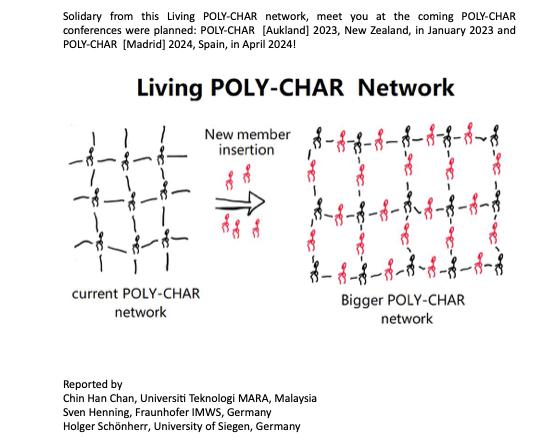
en 2019 lors de l'Année internationale du tableau périodique. Depuis 2019, le Global Women’s Breakfast (GWB) est devenu un événement annuel en février en soutien de la Journée des Nations Unies pour les femmes et les filles de science.

L'objectif est de créer un réseau de femmes et d'hommes de scientifiques pour soutenir la réduction des inégalités entre les femmes et les hommes dans le domaine scientifique.
En 2022, plus de 30 000 personnes ont participé à 400 petits déjeuners dans 75 pays.
Nous invitons femmes e hommes de toutes les disciplines scientifiques à organiser des petits déjeuners le 14 février 2023 dans le cadre de l'IYBSSD.

Allez sur iupac.org/gwb pour enregistrer votre événement dès aujourd'hui.


50 Chemistry International October-December 2022 Conference Call • Raffaelo Longo for the work on Differences between materials produced via coaxial and monoaxial electrospinning for biomedical application • Vladimir A. Kolupaev for the work on Optimized specimen for in
test on polymers Three
Posters were awarded to: • Warunnya Ussama for
polyester networks prepared
lene-co-butylene itaconate) and
polyether containing disulfide linkages • Patrick
modification
“living”
PET-RAFT photopolymerization • Pan
tailored
nanoassemblies The
conferences are
planned already and will be
[Aukland] 2023, New
and
[Madrid] 2024, Spain, in April 2024. <https://iupac.org/event/poly-char-2022/> The IUPAC Global Women’s Breakfast was born during the International Year of Chemistry in 2011, and it was reborn in 2019 during the International Year of the Periodic Table. Since 2019, the GWB has grown into an annual event in February of each year in support of the United Nations Day of Women and Girls in Science. The goal is to build a network of women and men in support of closing the Gender Gap in Science. In 2022, more than 30,000 people participated in 400 breakfast events in 75 countries. We invite women and men from all science disciplines to organize breakfast events on 14 February 2023 as part of the IYBSSD. Go to iupac.org/gwb to register your event today. Le petit déjeuner mondial des femmes de l'IUPAC est né lors de l'Année internationale de la chimie en 2011, et réétabli
Bookworm
Cheminformatics: Data and Standards 36(3)
Chemistry Teacher International Enters Fourth Year 37(1), Corrigendum 25(2)
Green Chemistry and Sustainable Development 38(4)
Multi-Scale Biogeochemical Processes in Soil Ecosystems: Critical Reactions and Resilience to Climate Changes 38(4)
Systematic Nomenclature of Organic, Organometallic and Coordination Chemistry. Chemical-Abstracts Guidelines with IUPAC Recommendations and Many Trivial Names reviewed by Molly Strausbaugh, Edwin Constable, Andrey Yerin, and Ture Damhus 39(3)
Conference Call
CHEMRAWN XXII E-waste in Africa—a boost to take strong actions for a better future 48(2)
Congress of the Slovak & Czech Chemical Societies 48(1)
Environmental Chemistry and Sustainability 45(2)
Green Chemistry Postgraduate Summer School 46(1)
InChI Open Meeting 42(3)
International Polymer Characterization 48(4)
International Year of Basic Sciences for Sustainable Development (IYBSSD) Opening 39(4)
IUPAC/CCCE 2021—Montréal, Canada 38(2)
Making Global Green Connections: The Importance of Green Chemistry Summer School for Sustainable Development 42(4)
The 53rd International Chemistry Olympiad in (Virtual) Japan 49(1)
The Role of IUPAC in Global Affairs 39(2)
Features
Artificial Intelligence and Chemistry: How do we shape the future? What are the critical issues to be addressed by IUPAC? by Jeremy G. Frey 6(2)
Behind the Scenes: Stories of the Global Women’s Breakfast by Francesca M. Kerton 18(4)
Benign by Design: The search for biodegradable drugs by Anthony King 12(3)
Downstream by Jesse Smith 10(1)
Hidden HERstory—Helen Stevens by Marina Wells 14(2)
Implementing Data Sharing policies at De Gruyter by Lyndsey Dixon, Agnieszka Bednarczyk-Drag, and Katharina Appelt 14(4)
IUPAC from A Young Chemist’s Perspective by Yvonne Choo Shuen Lann 2(2)
IUPAC Top Ten Emerging Technologies in Chemistry 2022 by Fernando Gomollón-Bel 4(4)
Key points to succeed in Artificial Intelligence drug dis covery projects by Quentin Perron, Vinicius Barros Ribeiro da Silva, Brian Atwood, and Yann GastonMathé 19(1)
Not just Good Chemistry by Klaus Kümmerer and Vânia G. Zuin-Zeidler 12(3)
Physical Organic Chemistry in the 21st Century: A Q1 Progress Report by Ian H. Williams 10(2)
The 2021 IUPAC World Chemistry Leadership Meeting: A Global Conversation on the Use of Artificial Intelligence in Chemistry by Jeremy Frey, Bonnie Lawlor, Leah McEwen, Christopher Ober, and Antony William 8(3)
The Garden Party at Wiltzangk by Jorrit Smit 4(3)
The Role of Artificial Intelligence in Drug Discovery and Development by Michael Liebman 16(1)
Tiny nanopesticides promise big gains to farmers by Sophie Schmidt 22(1)
TSAW—a lifelong challenge or simply an unsolved mys tery? by Thomas Prohaska 19(3)
Young chemists voice in support of the SDGs by Janine Richter and Emiel Dobbelaar 6(1)
Internet Connection
Online Chemistry Simulations to Intrigue, Engage and Attract 21st Century Science Students 42(1)
IUPAC Provisional Recommendations
Terminology for Chain Polymerization 36(1)
Specification of International Chemical Identifier (InChI) QR Codes for Labels on Chemical Samples 33(2)
IUPAC Wire
2022 CHEMRAWN VII Prize for Green Chemistry—Call for Nominations 20(2)
2022 Franzosini Award—Call for Nominations 28(1) 2022 IUPAC-Solvay International Award for Young Chemists—Call for Applicants 29(1) 2023 Distinguished Women in Chemistry/Chemical Engineering Award—Call for Nominations 26(3), 29(4) 2023 IUPAC-Solvay International Award For Young Chemists—Call For Applicants 28(4) 8th Polymer International-IUPAC Award Goes to Zachary Hudson 26(3)
Asymmetric Organocatalysis—A Game Changer 25(1) Chemistry In Japan 21(2)
Grand Prix de la Fondation de la Maison de la Chimie—2022 Call for Nominations 28(1) GWB2023 Sponsorship Opportunities 27(3) Hanwha-TotalEnergies IUPAC Young Polymer Scientist Award 2022 24(3)
Happy 100th birthday HIST! 22(2) In Memoriam 30(1), 23(2)
INCHI Outreach 29(1)
Interview with Tsuyoshi Minami 29(1) IUPAC Announces the 2022 Top Ten Emerging Technologies in Chemistry 26(4)
IUPAC Blue Book 29(3)
IUPAC Centenary Endowment Board—Call for members 29(3)
IUPAC Elections for the 2024–2025 Term 29(4) IUPAC Emeritus Fellows 22(2), 30(3)
IUPAC International Award For Advances In Harmonized Approaches To Crop Protection Chemistry—Call For Nominations 27(4) Laudatio Professor Jung-Il Jin 3(2) Mei-Hung Chiu elected on the ISC board 28(1) Metrology in the Digital Era 21(2) Michael E. Jung is awarded the 2022 IUPAC-Richter Prize 19(2)
NAO Forum 31(4)
Paul Anastas wins Volvo Environment Prize 2021 27(1) Professors Balzani and Oganessian to Receive the First
51Chemistry International October-December 2022
Index 2022 page(issue)
UNESCO-Russia Mendeleev International Prize in the Basic Sciences 26(1)
Scientific Editor for Pure and Applied Chemistry—Call for Nominations 29(3)
SDGs for the Benefit of Society—Video from IYCN sym posium 29(1)
Solvay awards Science Prize to Katalin Karikó 19(2)
The International Year of Basic Sciences for Sustainable Development proclaimed by the UN for 2022 18(2)
Vivek Polshettiwar is Awarded the 2022 IUPACCHEMRAWN VII 32 Prize For Green Chemistry 26(4)
Winners of the 2022 IUPAC-Solvay International Award for Young Chemists 24(3)
Making an imPACt
A unified pH scale for all solvents: part I—intention and reasoning 35(1)
Did you say PFAS ? 33(2)
Emerging Technologies and New Directions in Chemistry Research 33(2)
Feasibility of multifunction calibration of H+-responsive glass electrodes in seawater 36(1)
Glossary of terms relating to electronic, photonic and magnetic properties of polymers 31(2)
Glossary of terms used in physical organic chemistry (IUPAC Recommendations 2021) 34(3)
Henry’s law constants 31(2)
Methods to evaluate the scavenging activity of antiox idants toward reactive oxygen and nitrogen species 31(2)
Metrological and quality concepts in analytical chemistry 35(1)
Seabed mining and blue growth: exploring the potential of marine mineral deposits as a sustainable source of rare earth elements (MaREEs) 33(3)
Standard atomic weights of the elements 2021 33(3)
Structure-based nomenclature for irregular linear, star, comb, and brush polymers 35(1)
Synthesis design using mass related metrics, environ mental metrics, and health metrics 35(3)
Terminology and the naming of conjugates based on polymers or other substrates (IUPAC Recommendations 2021) 34(3)
Mark Your Calendar
See https://iupac.org/events/
Officer’s Columns
Bonding the Chemistry Community by Javier GarcíaMartínez 2(1)
Ethics, Diversity, Equity and Inclusion by Mary Garson 4(1)
The Chemist’s Oath by Ehud Keinan 2(4)
Wir schaffen das! by Wolfram Koch 2(3)
Project Place
Bioavailability and Significance of Endocrine Disruptive Compounds in Ecosystem 32(4)
Chemistry Education and Cultural Heritage—CTI Special Issue 28(2)
Conceptualization of definition and classification for humic substances 26(2)
Digital Representation of Units of Measurement 31(3)
Educational Workshop in Polymer Sciences 2022 28(2)
IUPAC Green Book—Update and More 32(3)
IUPAC Projects’ Contributions to the UN Sustainable Development Goals 35(4)
Minimising Environmental Impacts of Tyre and Road Wear Particles 27(2)
NPU codes for characterizing subpopulations of the hematopoietic lineage, described from their Clusters of Differentiation (CD) markers 27(2)
Safety Training Program e-learning 29(2)
Solubility data of alkanoic acids 30(2)
Terms for Mechanisms of Polymer Growth 31(3)
Up for Discussion
An Organizational Structure for the Future 34(2)
Royal Society of Chemistry Provides Guidelines for Censorship to its Editors by Anna Krylov, Gernot Frenking, and Peter Gill 32(1)
Where 2B&Y
POLY-CHAR [Halle|Siegen] 2022 52(1)
MACRO 2022, the 49th World Polymer Congress 52(1) Global Women Breakfast (GWB2023) 3(3), 50(4)
Feature Articles Wanted
Contact the editor for more information at <edit.ci@iupac.org>.

52 Chemistry International October-December 2022
Index 2022 page(issue)
I U P A C
FOR THE BENEFIT OF MANKIND
The International Union of Pure and Applied Chemistry is the global organization that provides objective scientific expertise and develops the essential tools for the application and communi cation of chemical knowledge for the benefit of humankind and the world. IUPAC accomplishes its mission by fostering sustainable devel opment, providing a common language for chemistry, and advocat ing the free exchange of scientific information. In fulfilling this mission, IUPAC effectively contributes to the worldwide understanding and ap plication of the chemical sciences, to the betterment of humankind.
President
Prof. Javier García-Martínez, Spain
Vice President
Prof. Ehud Keinan, Israel
Past President
Prof. Christopher Brett, Portugal
Secretary General
Prof. Richard Hartshorn, New Zealand
Treasurer Dr. Wolfram Koch, Germany
NATIONAL ADHERING
Australian Academy of Science (Australia)
Österreichische Akademie der Wissenschaften (Austria) Bangladesh Chemical Society (Bangladesh)
The Royal Academies for the Sciences and Arts of Belgium (Belgium) Bulgarian Academy of Sciences (Bulgaria) National Research Council of Canada (Canada)
Sociedad Chilena de Química (Chile) Chinese Chemical Society (China) Chemical Society located in Taipei (China)
LANOTEC-CENAT, National Nanotechnology Laboratory (Costa Rica) Croatian Chemical Society (Croatia)
Czech National Committee for Chemistry (Czech Republic) Det Kongelige Danske Videnskabernes Selskab (Denmark)
National Committee for IUPAC (Egypt)
Finnish Chemical Society (Finland)
Comité National Français de la Chimie (France) Deutscher Zentralausschuss für Chemie (Germany) Association of Greek Chemists (Greece) Hungarian Academy of Sciences (Hungary) Indian National Science Academy (India) Royal Irish Academy (Ireland)


Israel Academy of Sciences and Humanities (Israel)
Consiglio Nazionale delle Ricerche (Italy) Caribbean Academy of Sciences—Jamaica (Jamaica)
Science Council of Japan (Japan)
B.A. Beremzhanov Kazakhstan Chemical Society (Kazakhstan)
Korean Chemical Society (Korea)
Kuwait Chemical Society (Kuwait)
Institut Kimia Malaysia (Malaysia)
Nepal Polymer Institute (Nepal)
Koninklijke Nederlandse Chemische Vereniging (Netherlands)
Royal Society of New Zealand (New Zealand)
Chemical Society of Nigeria (Nigeria)
Norsk Kjemisk Selskap (Norway)
Polska Akademia Nauk (Poland)
Sociedade Portuguesa de Química (Portugal) Colegio de Químicos de Puerto Rico (Puerto Rico)

Russian Academy of Sciences (Russia)
Comité Sénégalais pour la Chimie (Sénégal)
Serbian Chemical Society (Serbia)
Singapore National Institute of Chemistry (Singapore) Slovak National Committee of Chemistry for IUPAC (Slovakia)
Slovenian Chemical Society (Slovenia)
National Research Foundation (South Africa)
Real Sociedad Española de Quimíca (Spain) Institute of Chemistry, Ceylon (Sri Lanka)
Svenska Nationalkommittén för Kemi (Sweden)
Swiss Academy of Sciences (Switzerland)
Department of Science Service (Thailand) Türkiye Kimya Dernegi (Turkey)
Royal Society of Chemistry (United Kingdom)
National Academy of Sciences (USA)
PEDECIBA Química (Uruguay)
Version 7/2022, last updated 1 Feb 2022
ORGANIZATIONS ADVANCING THE WORLDWIDE ROLE OF CHEMISTRY
INTERNATIONAL UNION OF PURE AND APPLIED CHEMISTRY

SAVE THE DATE 18 – 25 August 2023, General Assembly 20 – 25 August 2023, World Chemistry Congress World Forum The Hague, The Netherlands Stay informed Please visit the website and leave your contact details for updates on IUPAC | CHAINS 2023 www.iupac2023.org “I look forward to welcoming you to the Netherlands in 2023!”
Ben
Feringa, Honorary Chair CONNECTING CHEMICAL WORLDS INTERNATIONAL UNION OF I U P A C PURE AND APPLIED CHEMISTRY
