(16th april - 14th september) from monday to sunday from 8:00 am to 8:00 pm REST
from monday to sunday from 8:00 am to 4:30 pm


























600 EXHIBITORS AND 700 BOATS PRESENTED IN WATER AND ON LAND




































(16th april - 14th september) from monday to sunday from 8:00 am to 8:00 pm REST
from monday to sunday from 8:00 am to 4:30 pm
CEO (Creative Enthusiastic Owner) Jens Oomes
Design Rex4media
Accounts & Admin Marlot Cathalina
Office Manager Natalie Tempelers
Editor Jens Oomes
Writer Melanie Winters
Writer Anja Eckart
With thanks to our contributors
Sales
Jens@theislander.online
Editorial Contributions & Press Releases
Editor@theislander.online
*Creative Enthusiastic Owner
September and October will be brimming with activity. So much that it would be pretty much impossible for one person to attend all of the events. There will be the spectacular Maxi Yacht Rolex Cup early in the month in Porto Cervo which overlaps with the Vela Classica in Barcelona. Of course, in Barcelona everything overlaps with the event of the year: The 37th America’s Cup which has already kicked off and will go on until the Match Race Finals between 12 and 27 October! Meanwhile, from 10 September, the French Riviera will be the place to be for those who trade in the yachting industry. As you will see in the preview in this issue, the Cannes Yachting Festival promises to be an impressive one with some 600 boats of all sizes on display. But this event too overlaps with another important yacht show, the Southampton Yacht Show from 13 until 22 September. If you somehow decide to attend the whole show there, you will arrive late at the Genoa show which by then has started and will go on until the 24th. This leaves just enough time to travel west and be at the Monaco Yacht Show the very next day.
Just like you want to avoid being overlapped near the mark by your regatta competitors, it seems like the regatta organisers have done what they can not to make the events overlap either. Instead they are strung very tightly together!
The Ibiza Joysail from 19 till 22 September has a complete entry list, as you’ll read further in the Islander Life section of this issue. Organisers IPM have wisely moved the event forward in the calendar so it doesn’t coincide again with the Monaco show. Should any of the contestants want to compete in the Régates Royale as well, though, they’d have to fight against time to make it to Cannes the day after! Then, less than 24 hours after the prize giving of the Régates Royale, the orange flag will be hoisted a few miles down the coast to signal the start of Les Voiles de St Tropez! Some race crews might end up with a very busy schedule and will have to resist the temptation that comes with the great social events around these regattas which can literally cause a great headache! There might be time to rest before the Rolex Middle Sea Race, starting in Valletta on 19 October. The Valencia Boat Show (2327 October) will definitely be worth a visit this year and leaves you
time enough to prepare for the transatlantic flight taking you to the Fort Lauderdale International Boat show starting on the 30th of October.
Of course, July and August weren’t only about relaxed cruising. For this issue, Anja Eckart wrote a wonderful report about the Copa Del Rey which was, once again, an undivided success.
In between the shows and regattas, I hope to see you soon at one of our monthly Islander Network and Inspiration Parties (INIPs). They always take place on the first working day of the month. Make sure to subscribe to our newsletter via www.theislander.online to make sure you don’t miss out on any of these events.
I wish you a wonderful end of summer!
9. Note from the CEO 12. INIP reports 14. Judged by the cover
22. Cannes Yachting Festival 2024
28. Williams’ first boat ‘Jade’ returns to her birthplace
30. Race to zero-emission: the transformation of S/Y Galaxie
32. "Special One" is ready to set sail
38. The wonders of two worlds: The intersection of sailing and architecture
40. Starlink’s impact on maritime connectivity
48. Chef's chat
52. Meet the crew: Debela Savimakideckhand
56. Enhancing communication and listening skills.
58. Ship to shore: Emma Bainbridge
62. The controversy of confidentiality
64. Captain Jason Chambers
68. Cashmere care
70. Maintaining mental and physical health on board
72. Choose evolution as your agent for VAT exempt refit
74. Aye Aye Doctor…The importance of Telemedical (TMAS) Support
78 . Escape to paradise discover the charm and luxury of Jumeirah Mallorca
80. The creation of the first underwater archeaological centre in Formentera
82. Ibiza Joysail’s registration closed with maximum entries!
84. Copa del Rey Mapfre 2024
88. JoyRon Foundation
90. Historical gem Portopí: Spain´s second oldest lighthouse
92. Stunning Andaman Islands cruising
96. Lower revs for a safer and thriving Mediterranean
100. Discover Zulu Coworking
104. Toftevaag’s journey to Ithaca
106. Brokerage
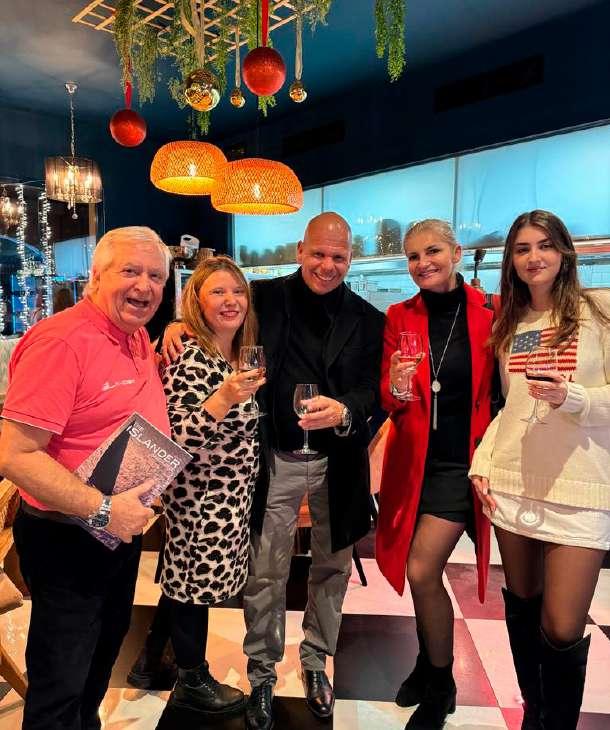
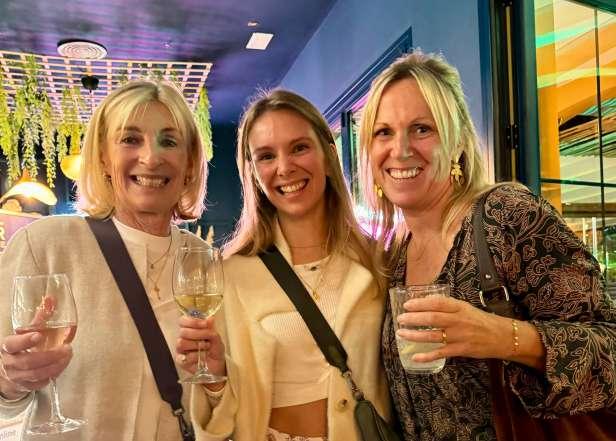
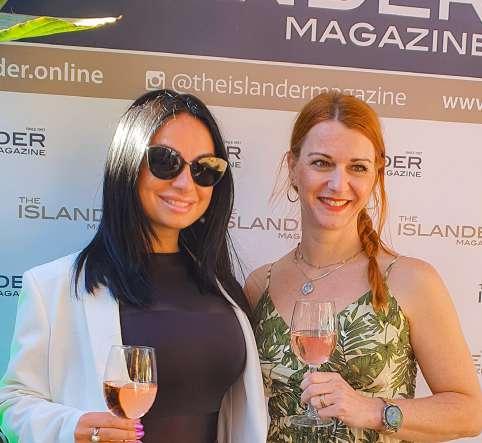
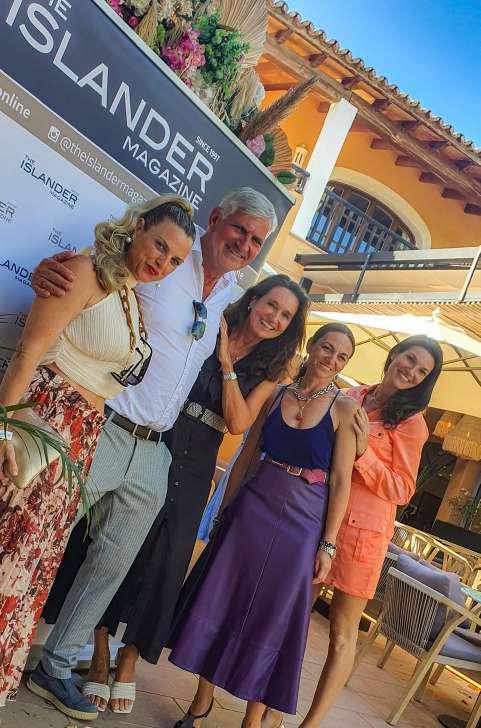
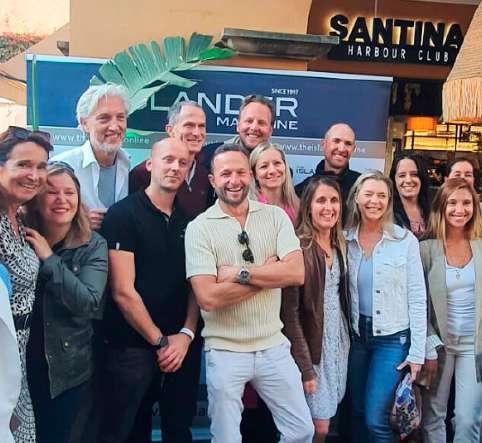
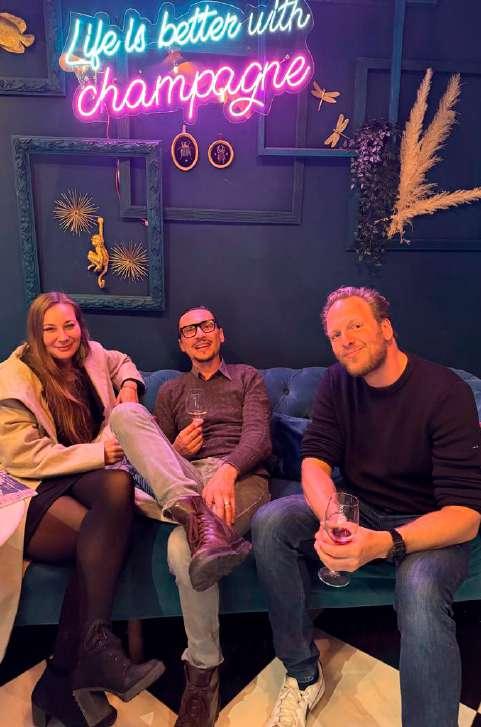
By the time you are reading this issue we have started our '24-'25 INIP season again after a two month summer break. The Islander Network & Inspiration Party (INIP) is where our members and advertisers meet in a relaxed manner. Islanders are people who have deliberately chosen to live and work under the Mediterranean sun, whether in yachting or any other sector. This common thread is what makes our network events such a laid-back and yet productive affair. The INIP's also serve as a platform for our advertisers to showcase their products or services and share their knowledge.
Our events take place with the support of Santina Brunch. All of last season’s INIPs took place at Santina Harbour Club, Puerto Portals. This coming season, we will also have events taking place at their Santa Catalina location, always on the first working day of the month! Make sure to subscribe to our newsletter via www.theislander.online to stay informed about the exact timing and location. We welcome everybody who is interested in yachting and the Mallorca lifestyle! ◆
YOUR GATEWAY TO YEAR-ROUND YACHT ENJOYMENT
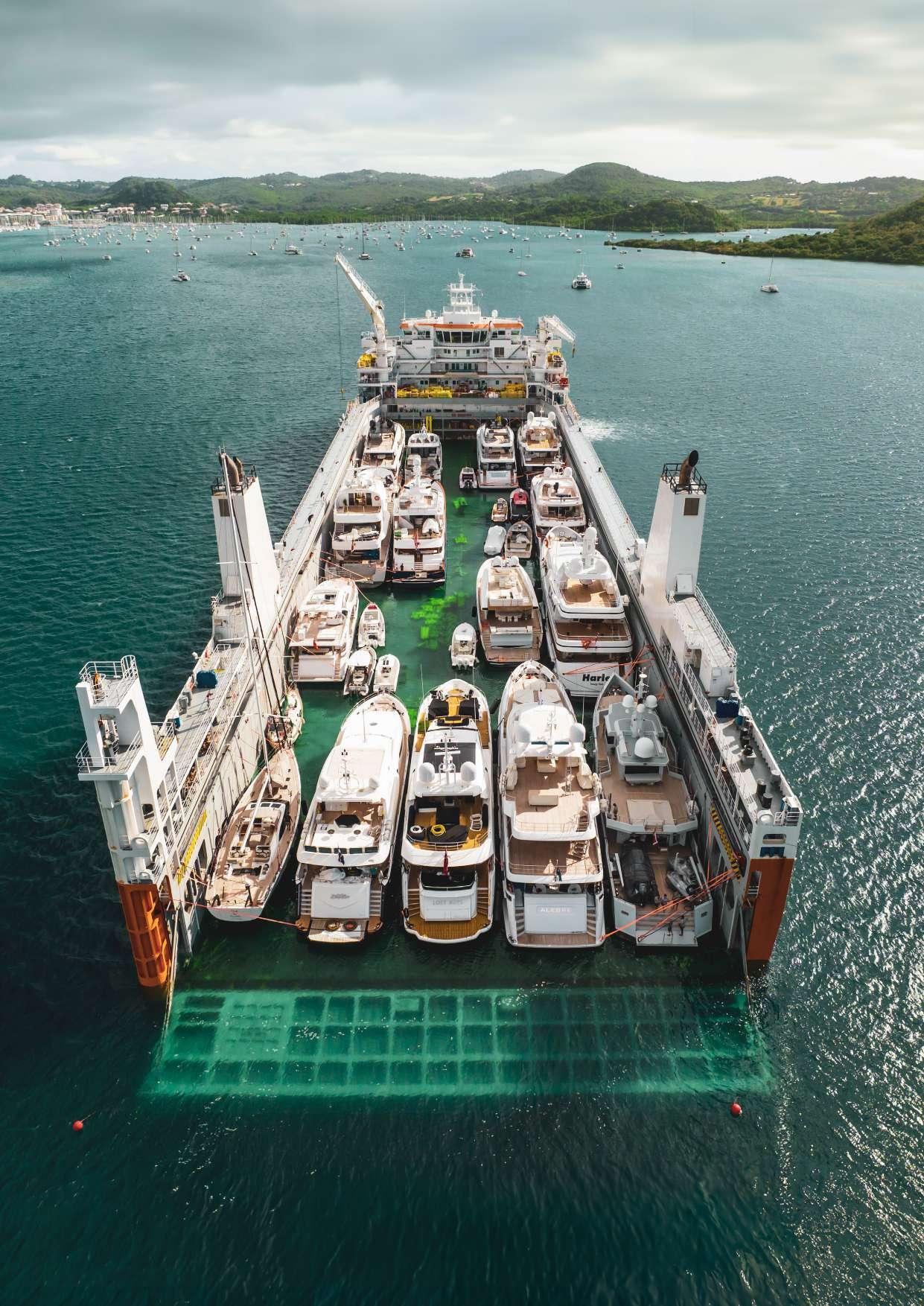
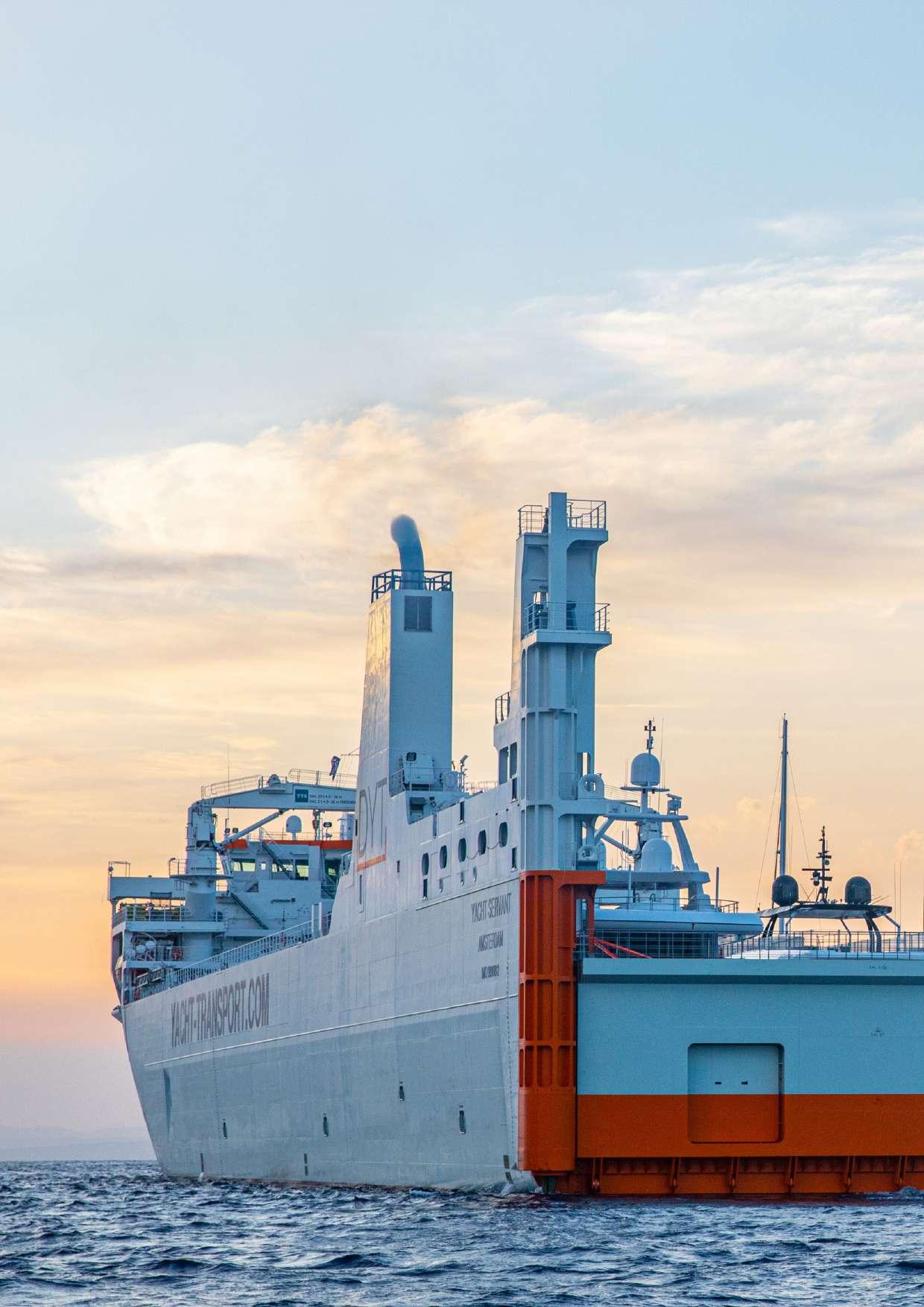
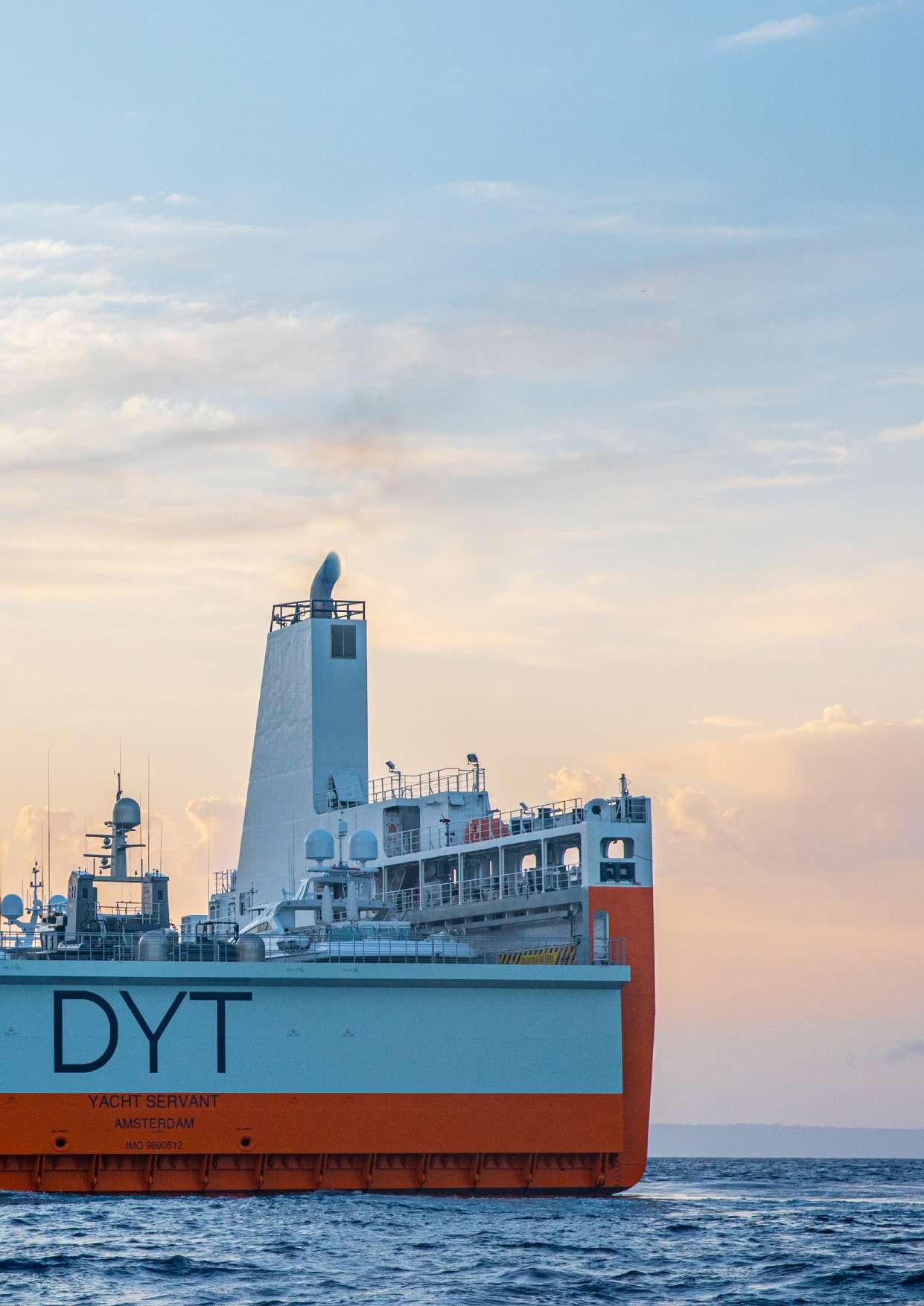
Pictures by DYT Yacht Transport
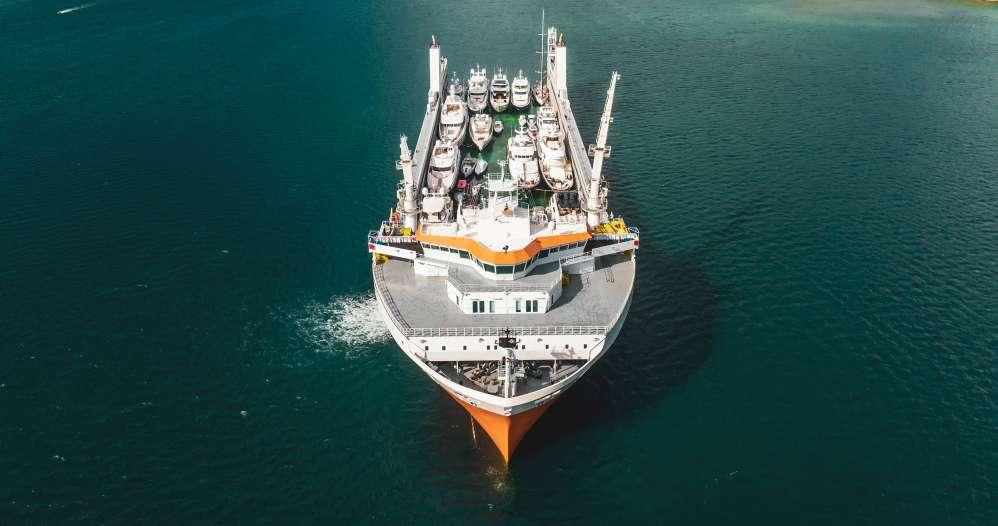
Embracing seasonality with DYT yacht transport
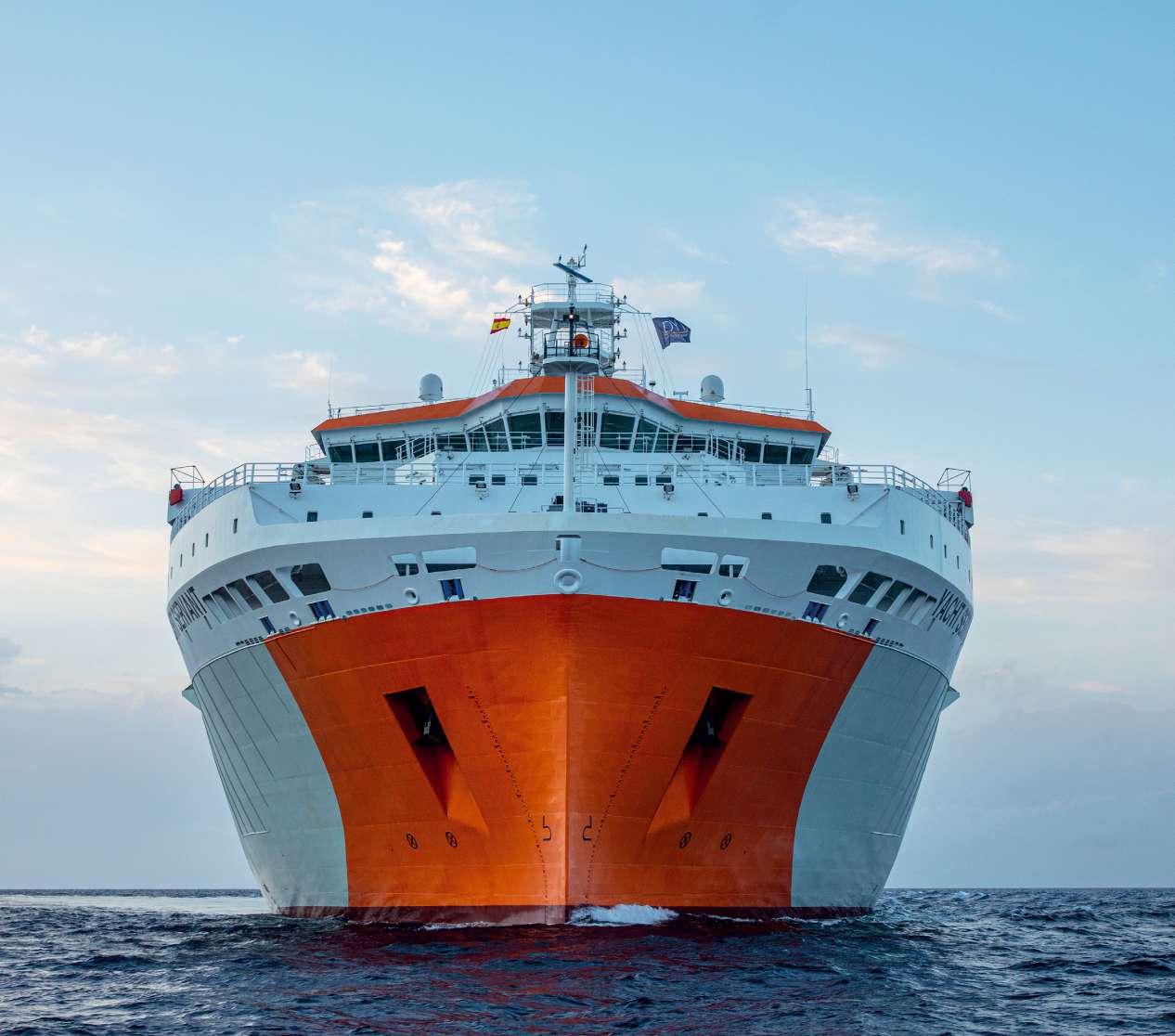
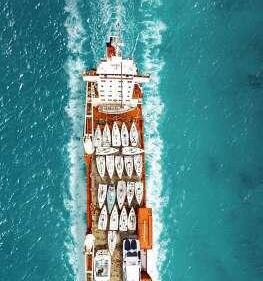
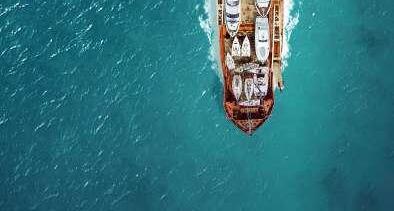
Yacht ownership brings unparalleled freedom and luxury, allowing owners to explore the world’s most beautiful waters at their leisure. However, enjoying yachting yearround, especially in the most desirable locations, presents logistical challenges. That’s where DYT Yacht Transport comes in. With its fixed sailing schedules and two dedicated float-on/float-off yacht transport vessels, DYT enables yacht owners to maximize their investment and enjoy their yachts across multiple seasons.
The essence of seasonality in yachting
Yachting enthusiasts know that weather patterns and regional climates dictate the prime yachting seasons. The Mediterranean shines brightest from late spring to early autumn. Particularly the Balearic Islands, is a hotspot during the summer months, attracting yacht enthusiasts with its crystal-clear waters.
As autumn approaches, the Mediterranean season winds down, making way for the prime yachting seasons in the Caribbean and Florida. The tropical climates of these regions provide warm waters, steady winds, and vibrant cultures that are perfect for winter yachting.
Enjoying the best of both worlds
Imagine starting your year cruising the serene waters of the Balearic Islands, exploring the secluded coves of Ibiza, the historic charm of Mallorca, and the natural beauty of Menorca. As the Mediterranean yachting season winds down, you can seamlessly transition to the Caribbean or Florida.
The Caribbean, with its crystal-clear waters and diverse islands, becomes the ultimate winter escape. From the Bahamas to the British Virgin Islands, each location offers unique experiences, from secluded anchorages to vibrant
festivals. With its extensive coastline and sophisticated marina facilities, Florida provides another excellent winter yachting option. Discover the colorful coral reefs of the Bahamas, the luxury marinas of Miami, or the tranquil bays of the Virgin Islands without missing a beat.
DYT’s efficient transport services allow you to follow the sun, extending your yachting adventures into the winter months. So you make the most of your yacht year-round.
Beyond the traditional yachting hubs of the Mediterranean and the Caribbean, the Pacific offers unparalleled opportunities for yachting enthusiasts. Australia and New Zealand, with their stunning coastlines, rich marine life, and unique cultures, are becoming increasingly popular yachting destinations.
The yachting season in Australia typically runs from November to March. The Great Barrier Reef, Whitsundays, and Sydney Harbour are just a few highlights that offer spectacular cruising grounds. The warm weather and calm seas provide ideal conditions for both relaxation and adventure.
Just across the Tasman Sea, New Zealand’s yachting season aligns with Australia’s. From December to February, you can explore the breathtaking fjords of the South Island, the beautiful Bay of Islands, and the vibrant city of Auckland, known as the "City of Sails." The pristine waters and diverse marine life make New Zealand a yachting paradise.
DYT’s solution: Seamless seasonal transitions
DYT Yacht Transport understands the importance of being in the right place at the right time. With a fixed sailing schedule, DYT allows you to plan your yachting calendar with precision. Plus, with DYT, you never miss out on
any of the major events that make the yachting lifestyle so exhilarating. From the F1 Monaco Grand Prix to the starstudded Cannes Film Festival. From the Fort Lauderdale International Boat Show to the Miami Yacht Show, DYT makes sure your yacht is perfectly positioned for every key moment.
With over 30 years of experience, DYT has perfected the art of yacht transport, offering a unique float-on/floatoff service that ensures the utmost care and efficiency in moving yachts across the globe. The semi-submersibles are exciting vessels and have an average transatlantic delivery time of 15 days while carrying yachts up to 165m (541ft), loaded in impressive numbers on the carrier’s dock.
Float-on, float-off, how does it work?
DYT’s innovative float-on/float-off technology is a gamechanger in the yacht transport industry. It allows yachts to ‘drive’ into a submerged carrier under their power and onto yachts' custom-built cribbing. The process is straightforward and regarded as the safest form of yacht transport.
Upon arrival, the vessel is prepared for semi-submersion. Ballast tanks are flooded and the DYT team is submerging the ship to the required depth in preparation for your yacht’s loading. The specific amount of necessary ballast is carefully calculated based on the maximum yacht draft and cradle height.
Once loading is complete, the vessel’s stern door is closed and DYT divers enter the water. They check all cradles to be ready to receive their respective yachts. When inside the carrier, the ballast tanks pump the water from the deck, and the yachts are safely stowed between the yacht carriers’ spray covers, protecting them from the elements.
In the world of yachting, seasonality is a key factor in maximizing enjoyment and value. DYT Yacht Transport stands out as a reliable partner, offering the expertise, technology, and dedication needed to facilitate year-round yachting. Contact DYT today to discover how their services can enhance your yachting experience and keep you sailing smoothly through every season. ◆
www.yacht-transport.com susanne@yacht-transport.com +31 619340203
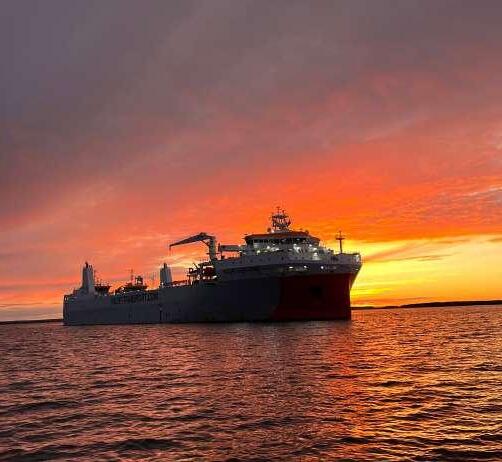
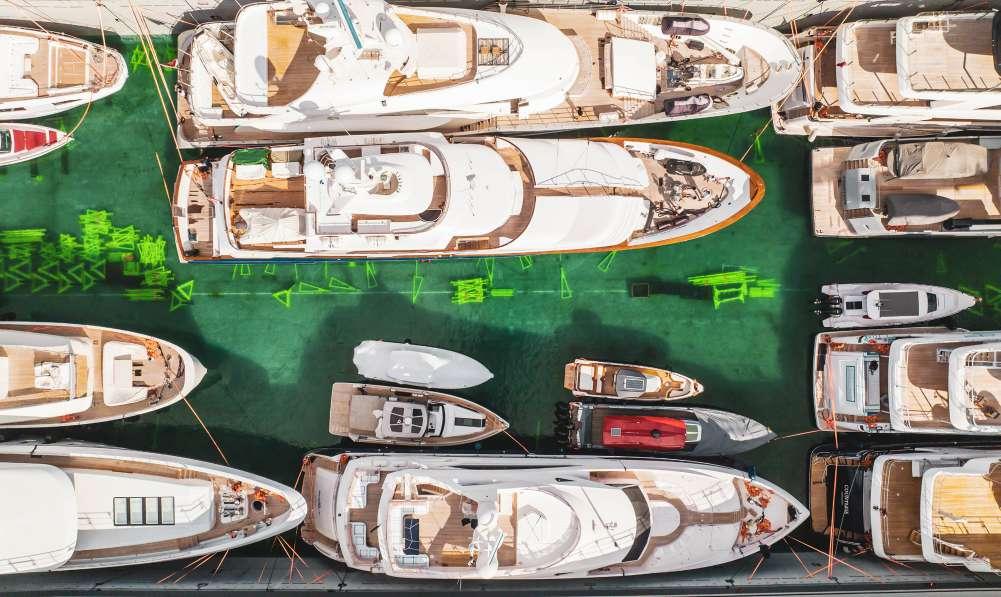

With our fixed sailing schedules and dedicated float-on/float-off yacht transport vessels, you can rest assured that your yacht is on time where it needs to be, which gives you the time to relax, enjoy, or reunite. We offer dedicated sailings to the most sought-after destinations and events.


SCHEDULE 2024/2025
OCTOBER | NOVEMBER | MARCH
Palma Port Everglades
OCTOBER | MARCH | MAY
Port Everglades Palma
OCTOBER | MARCH
Palma St. Thomas
NOVEMBER
Palma Le Marin
JANUARY
Papeete Auckland Brisbane Palma
FEBRUARY
Ensenada / Golfito Palma
Explore all our sailings






22. Cannes Yachting Festival 2024
28. Williams’ first boat ‘Jade’ returns to her birthplace
30. Race to zero-emission: the transformation of S/Y Galaxie
32. "Special one" is ready to set sail
38. The wonders of two worlds: The intersection of sailing and architecture
40. Starlink’s impact on maritime connectivity



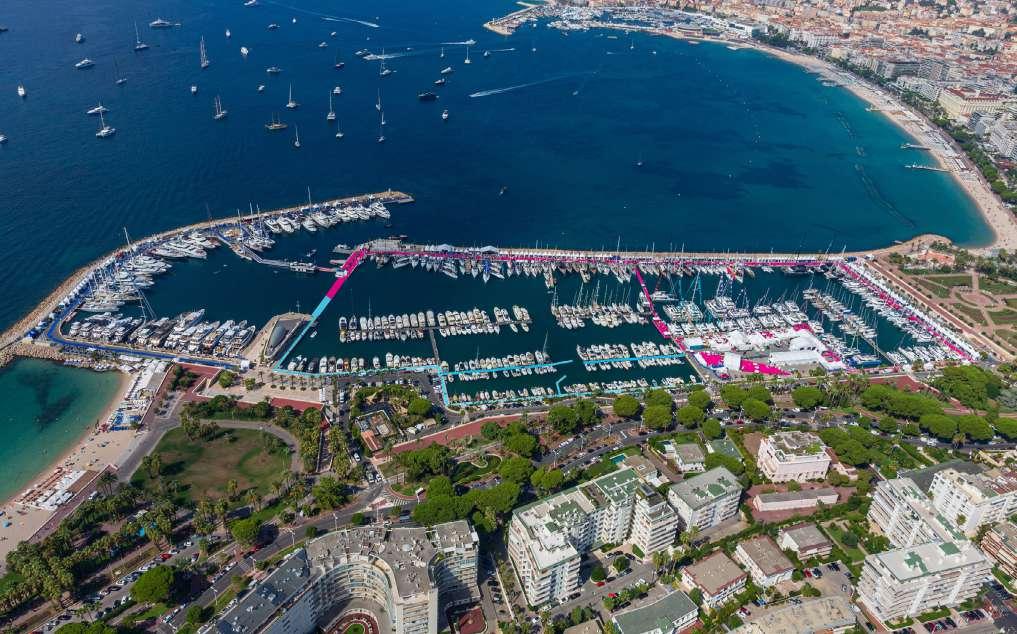
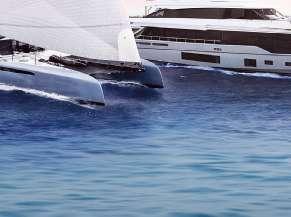
The 47th edition of the Cannes Yachting Festival, Europe’s largest in-water boat show and the season’s premier sailing event, is set to take place from September 10 to 15, 2024, in the heart of the French Riviera. Stretching from the Vieux Port to Port Canto, the festival will feature a new 2,000 m² marina and showcase over 160 new products and world premieres. With 600 exhibitors from around the globe presenting nearly 700 boats— ranging from 5 to 50 meters in length—the event promises an unparalleled display of the latest in the international boating sector.
This year, a significant addition is the new Power Boat Marina at Port Canto, which will display approximately 350 boats, rivaling the number at the Vieux Port. For the first time, visitors can circumnavigate Port Canto in a 2.5 km loop, featuring dedicated quaysides for various types of boats. The new marina will house 170 motor boats, including both in-water and onshore exhibits, alongside a selection of outboard engines.
Additionally, Port Canto will host 120 new sailboats over 10 meters long and around 50 previously-owned large yachts in its Sailing and Yacht Brokerage areas. Visitors will enjoy convenient access between these areas and sea trials via traversantes—pontoons with motorized central sections. The Power Boat Marina will also feature a new dining area with 130 tables overlooking the boats, and a VIP Club on the roof of the Harbour Master’s Office, offering a panoramic view of Port Canto. Sixty exhibitors will be present in this marina, showcasing the latest in boating technology and design.
In the city’s heart, the Vieux Port remains the central hub for the motor boat industry. It will display 350 new boats from 10 to 50 meters in length, including monohulls and multihulls with both rigid and semi-rigid hulls. Notable enhancements include:
• A new main entrance near the famous Film Festival steps and the Croisette.
• Engine manufacturers exhibiting along the beach
opposite the Palais.
• A new entrance at the Pantiero, accessible to visitors, journalists, and exhibitors.
Sylvie Ernoult, director of the Cannes Yachting Festival, highlights the significance of this year’s event: "2024 represents a year of adaptation and new opportunities for the Cannes Yachting Festival. With the works on the Vieux Port underway, we have redesigned the organisation of certain areas to replace them with other different and innovative spaces, such as the creation of a new large marina in Port Canto. The exhibition teams have risen to the challenge, and I am very enthusiastic and proud of the next edition we will be offering our exhibitors and visitors. Once again the Cannes Yachting Festival will be a magnificent setting for all these jewels of the seas and will highlight the unique craftsmanship and experts in boat building."
Innovation and sustainability at the forefront
The 2024 festival will also feature an "Innovation Route," highlighting environmentally friendly and groundbreaking nautical technologies. This initiative will showcase advancements in engines, propulsion, waste management,
eco-design, and innovative materials, emphasizing the industry’s commitment to sustainability.
"Like all the others, the marine industry cannot avoid environmental challenges, and has understood that it has to evolve to meet the sector’s decarbonisation needs and the new requirements of boaters," Ernoult explains. "It seemed vital to us to make our contribution to the effort by recognizing the efforts our exhibitors are making and the energy they are putting into building the future of the nautical sector." ◆
Practical information
Location: Vieux Port and Port Canto, Cannes
Dates: Tuesday, September 10 to Sunday, September 15, 2024
Opening Hours:
• Tuesday to Thursday: 10 am to 7 pm
• Friday: 10 am to 10 pm (Night-time)
• Saturday: 10 am to 7 pm
• Sunday: 10 am to 6 pm
For more details: cannesyachtingfestival.com
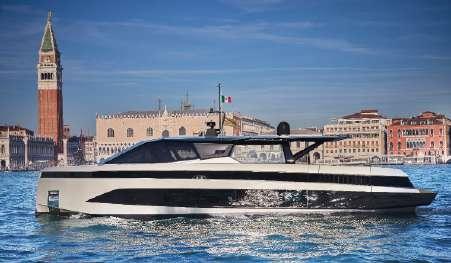
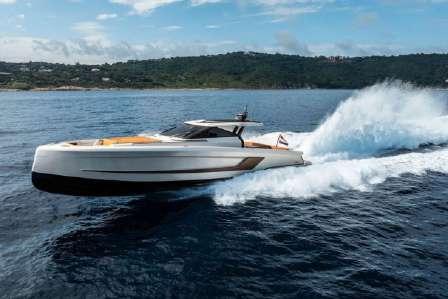
TRIALS AVAILABILITY Slot 1: Tuesday, September 10 h5pm Slot 2: Thursday, September 12 h5pm RSVP: otam@sandpeoplecommunication.com
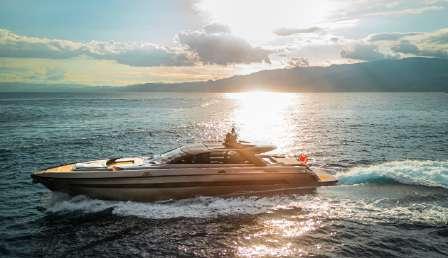
PRESS PRESENTATION
Wednesday, September 11th - 11.30am on board WiderCat 92 in Vieux Port SYE021 RSVP: wider@sandpeoplecommunication.com
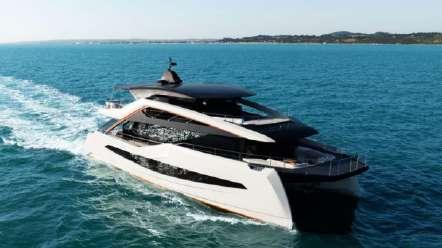
PARDO GT75 MEDIA PRESENTATION
Wednesday, September 11th - 9am on board Pardo GT75 at Vieux Port PAN207 RSVP: cantieredelpardo@sandpeoplecommunication.com
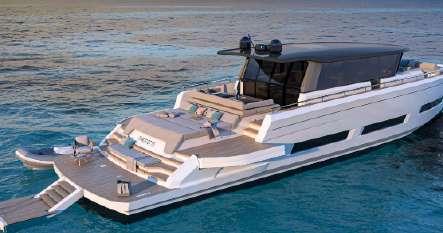
GT75 - Position: Vieux Port
MEDIA PRESENTATION
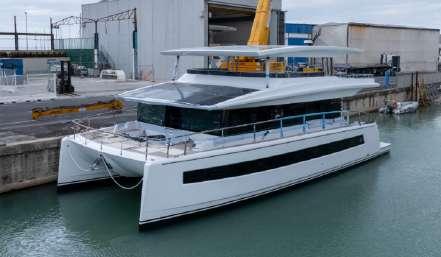
Tuesday, September 10th - 4.30pm on board Silent 62 3-Deck at Vieux Port QML009
RSVP/ SEA TRIAL: silentyachts@sandpeoplecommunication.com
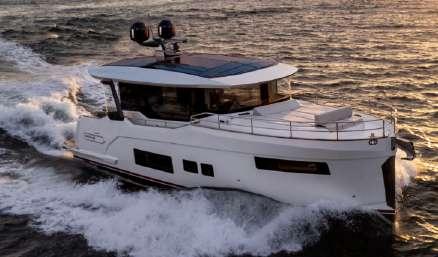
Thursday,
RSVP: hpwatermakers@sandpeoplecommunication.com

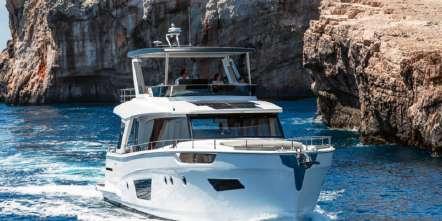
RSVP: greenlineyachts@sandpeoplecommunication.com
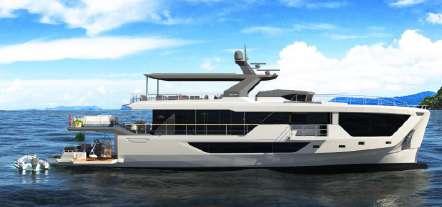

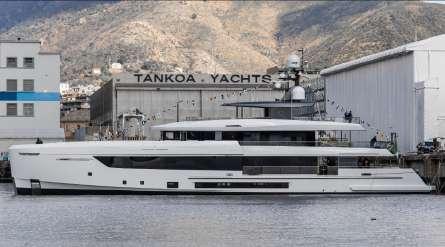
Thursday, September 12 h3pm
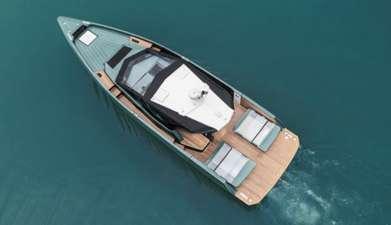
RSVP: tankoa@sandpeoplecommunication.com
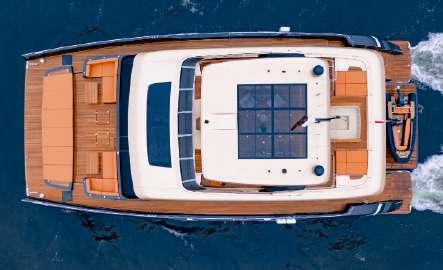
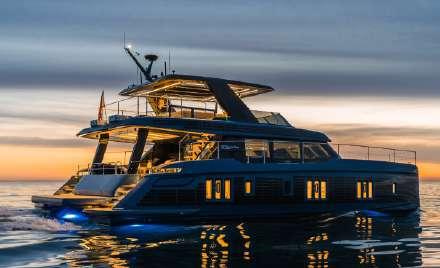
RSVP: sunreef@sandpeoplecommunication.com






















































































































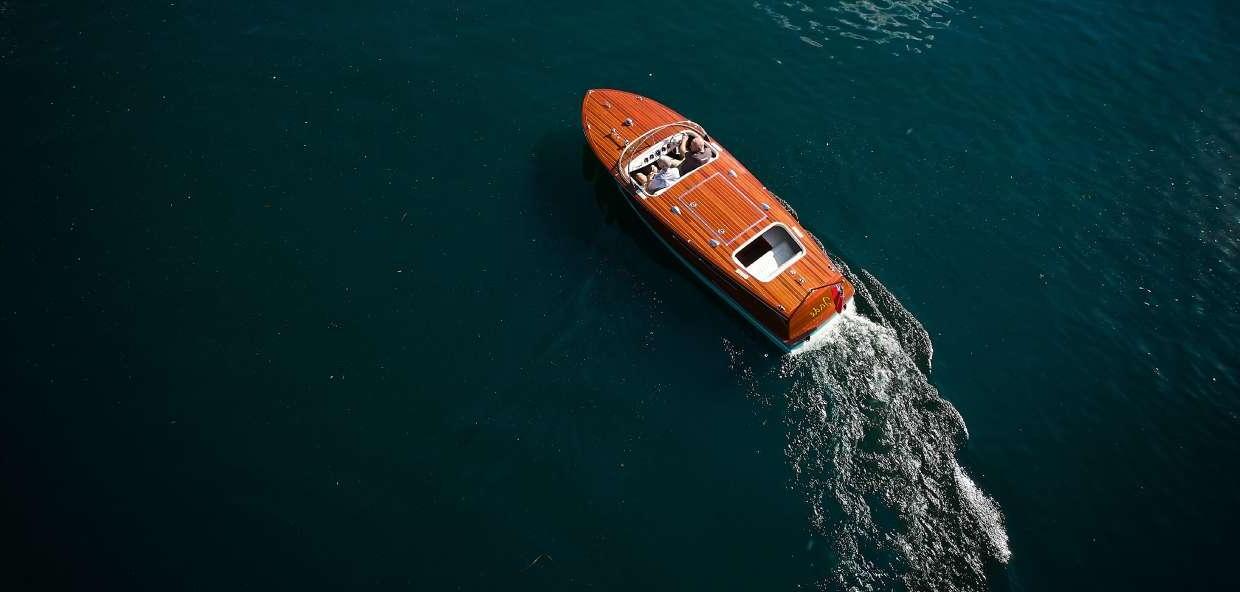
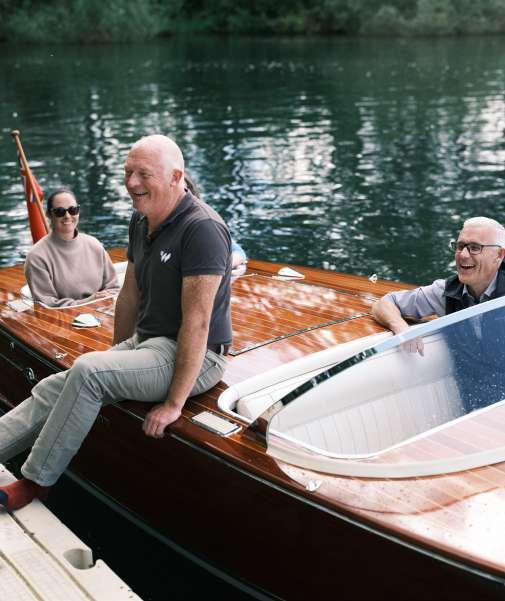
In a heartfelt celebration marking Williams Jet Tenders’ 20th anniversary, founders Mathew and John Hornsby were astonished and elated by the unexpected return of their very first hand-built wooden boat, Jade, after 25 years. The surprise reunion took place at their factory in Oxfordshire, where the brothers were moved to see Jade in pristine condition, a testament to their enduring craftsmanship.
"We were both very shocked and absolutely delighted, particularly with how amazing she looked," said Mathew Hornsby. "The standards are exactly the same as when we last saw her and I remember every single piece of wood, even from 25 years ago."
Built in 1997, Jade measures 20ft with a mahogany hull, and mahogany and maple decks and is powered by a V8 260HP engine. Her journey began in the family’s garden workshop where Mathew and John dedicated countless hours, working seven days a week and often 10-12 hours a day, while holding part-time jobs to sustain their budding venture. Their hard work paid off when Jade debuted at her very first inland waterways show, marking the beginning of their remarkable journey.
Adding to the emotional reunion, Jade’s original owner and their first customer, Mike, surprised the brothers by arriving at the factory. "The quality is still right up there, and that has been the foundation of our business," commented John Hornsby. "When we built Jade, we were used to that quality, and that’s burnt into the creation of our jet tenders today."
The Hornsby brothers took Jade out for a spin on the lake, reminiscing about their first adventure on the River Thames and cherishing memories of perfecting their woodworking skills alongside their father.
"Jade is very different from what Williams Jet Tenders makes today," noted Mathew. "She was a classic mid-engine straight shaft with a single prop – very different from the water propulsion products we produce today. We took inspiration from Riva back then, and now we proudly supply our tenders to Riva."
In its 20th year, Williams Jet Tenders is celebrated for its innovative and high-quality water propulsion products. Now producing more than 1,200 tenders per year, the return of Jade serves as a powerful reminder of its roots and the enduring legacy of craftsmanship and quality that defines Williams Jet Tenders. ◆
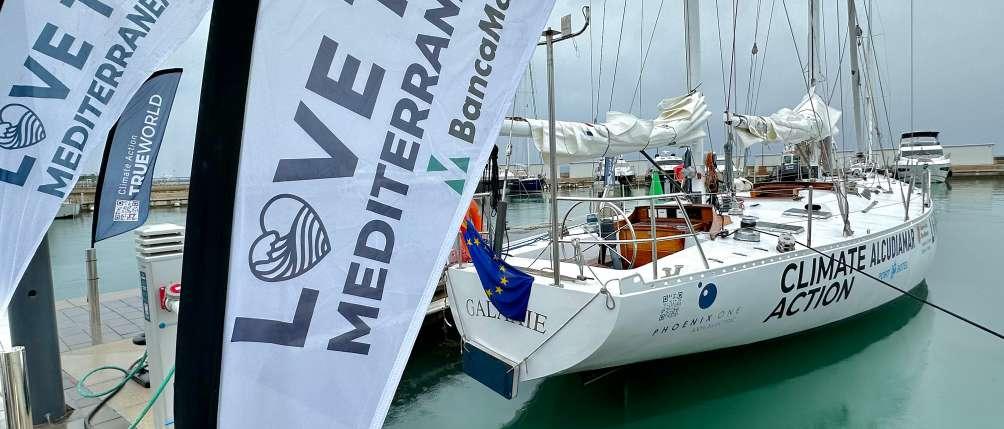
Imagine a future where yachts sail the seas without a trace of pollution, powered entirely by clean energy. This future is now embodied by S/Y Galaxie, a 22-metre ketch sail yacht that has been revolutionised to become a symbol of eco-conscious navigation.
From disadvantage to opportunity
Since 1992, the Foundation Joves Navegants has touched the lives of thousands of disadvantaged young people through unforgettable sea trips on S/Y Galaxie. Sadly, the pandemic and limited resources brought this noble mission to a halt in 2022. But where one chapter ended, another began.
The green revolution
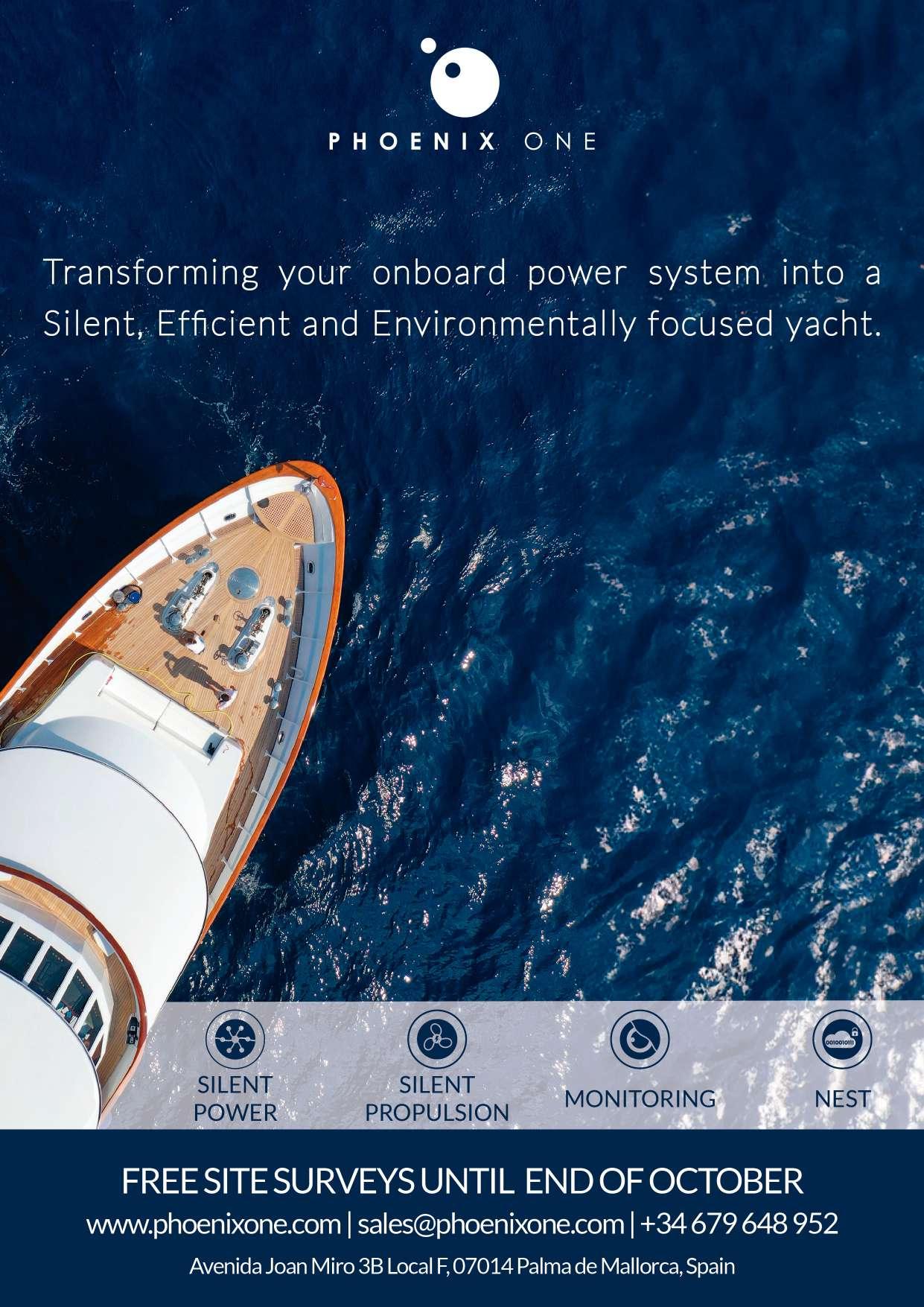
In 2023, TrueWorld stepped in to give S/Y Galaxie a new lease on life as part of their ‘Love the Mediterranean’ initiative. Teaming up with Phoenix One, a pioneer in electric vessel transformation, they embarked on a mission to make the yacht emission-free. By integrating advanced technologies, energy storage, power management systems, hybrid propulsion, and sophisticated monitoring systems, Phoenix One transformed S/Y Galaxie into a state-of-the-art vessel, ready to set sail into a sustainable clear blue future.
The rebirth of S/Y Galaxie stands as a powerful testament to the synergy between innovation and conservation. The yacht, along with the ‘Love the Mediterranean’ initiative, is now showcased at prestigious events such as the Iberostar Princesa Sofia, Mapfre Copa del Rey, Alcudiamar - Projecte Home, and the 40th Palma International Boat Show (PIBS), drawing attention to the possibilities of sustainable sailing.
The Mediterranean Sea is a vital resource, rich in ecological, economic, social, and food security benefits. However, it faces severe threats from climate change, overuse, and pollution. TrueWorld’s ‘Love The Mediterranean’ (LTM) initiative is a bold response to these challenges. By leveraging science and innovation, LTM aims to restore the bond between humans and nature, promoting health, knowledge, and environmental rights through targeted education and awareness campaigns.
Phoenix One’s expertise was critical in this transformation. They replaced the old 800 kg Volvo Penta diesel engine with a powerful 50 kg electric motor and installed two battery banks, each containing sixteen LFP batteries. This retrofit guaranteed hours of silent, zero-emission sailing, demonstrating the incredible potential of sustainable technology.
Emission-free voyages
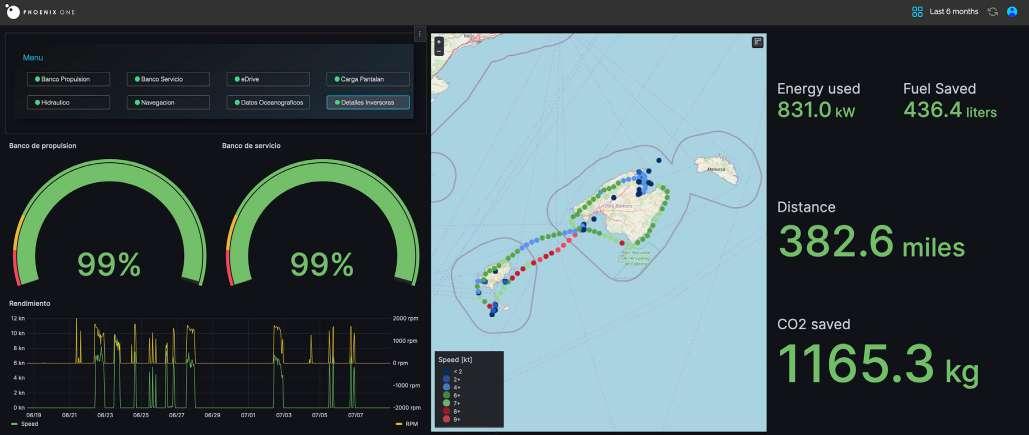
Consider the recent journey of S/Y Galaxie: they went from Alcudia to the Palma International Boat Show (PIBS), then on to Ibiza and Formentera for a project tracking ghost nets and sea trash, and then returned to Alcudia. This voyage covered a total of 382.6 nautical miles at an average speed of 7-10 knots, with the yacht avoiding emitting 1,165.3 kg of CO2 or the equivalent weight of 17 washing machines, 15 boat anchors, or 4 small recreational boats!
At AlcudiaMar, S/Y Galaxie’s home port, recharging is done exclusively with renewable energy, ensuring zero fossil fuel use and no direct greenhouse gas emissions. In cases where
renewable energy is unavailable, TrueWorld measures emissions meticulously and offsets them by purchasing carbon credits from certified UN projects. This commitment ensures S/Y Galaxie maintains its zero-emission status at all times.
Phoenix One’s advanced Centralised Monitoring for Enhanced Safety and Transparency (NEST) offers unparalleled safety and efficiency. This cloud-based platform provides real-time and historical data on battery performance, allowing for proactive improvements. As S/Y Galaxie cruises the Balearic Islands, this system provides the crew with essential insights, ensuring swift responses to any issues and maintaining optimal performance.
S/Y Galaxie now sails the seas with whisper-quiet propulsion, free from the noise and emissions of traditional engines. This transformation breathes new life into the yacht and sets a new standard for eco-friendly practices in the maritime industry. Thanks to the visionary efforts of Phoenix One and TrueWorld, S/Y Galaxie is embarking on a new chapter, leading the way in sustainable sailing. With her silent cruising and dedication to environmental preservation, she proves that sustainability and adventure can coexist harmoniously at sea.
Join the sustainability journey
Phoenix One’s mission is driven by three groundbreaking solutions: Silent Power, Hybrid Propulsion Monitoring, and NEST cloud storage. These innovations enhance the yachting experience while minimising environmental impact.
Ready to transform your yacht and join the Green Revolution? Contact sales@phoenixone.com Embark on a journey where every sail is a step towards a sustainable future.
S/Y Galaxie not only inspires you to sail with purpose but also helps protect our precious oceans. ◆
Check out the Phoenix One’s online demo:


"SPECIAL
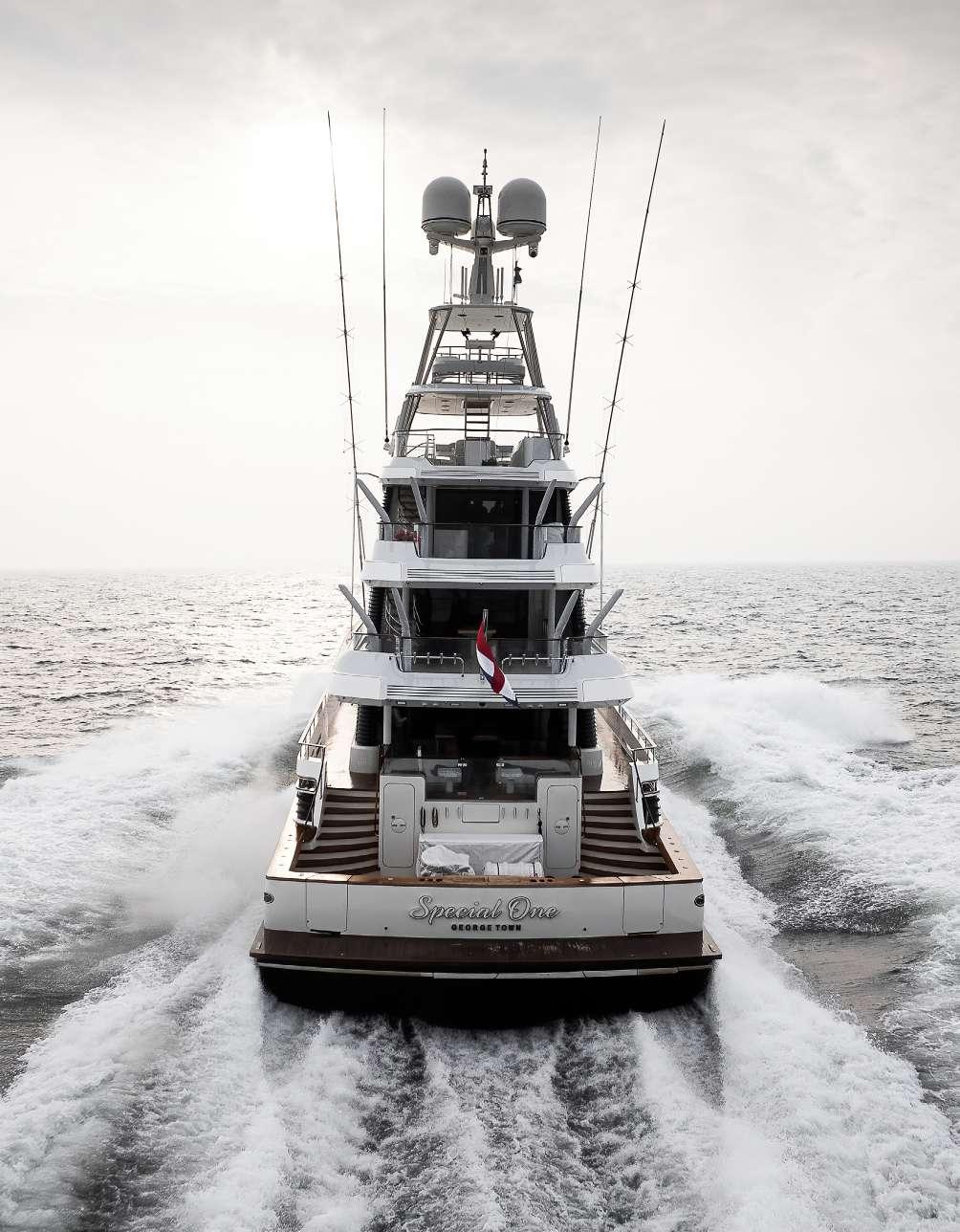
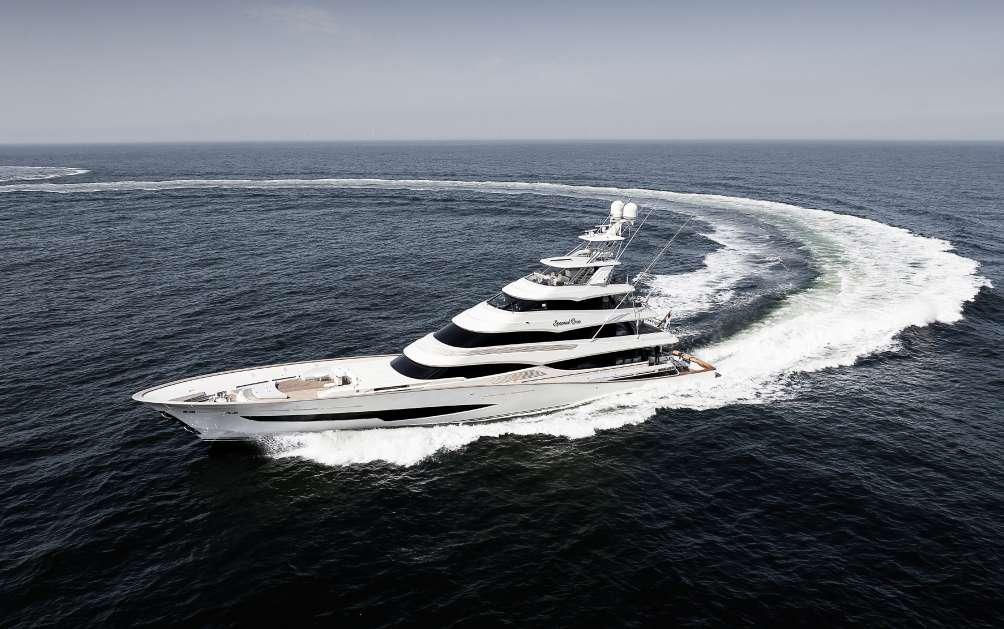
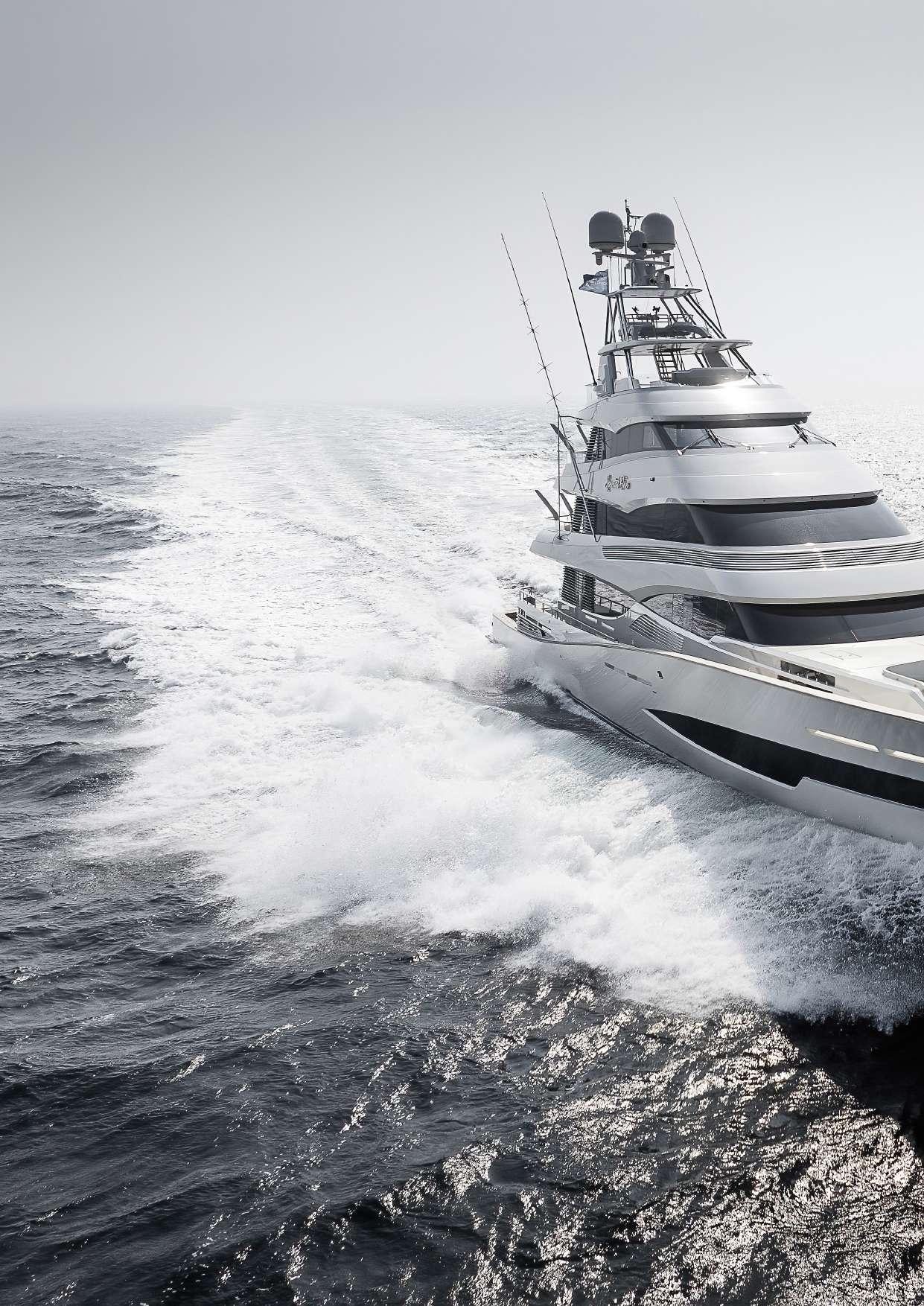
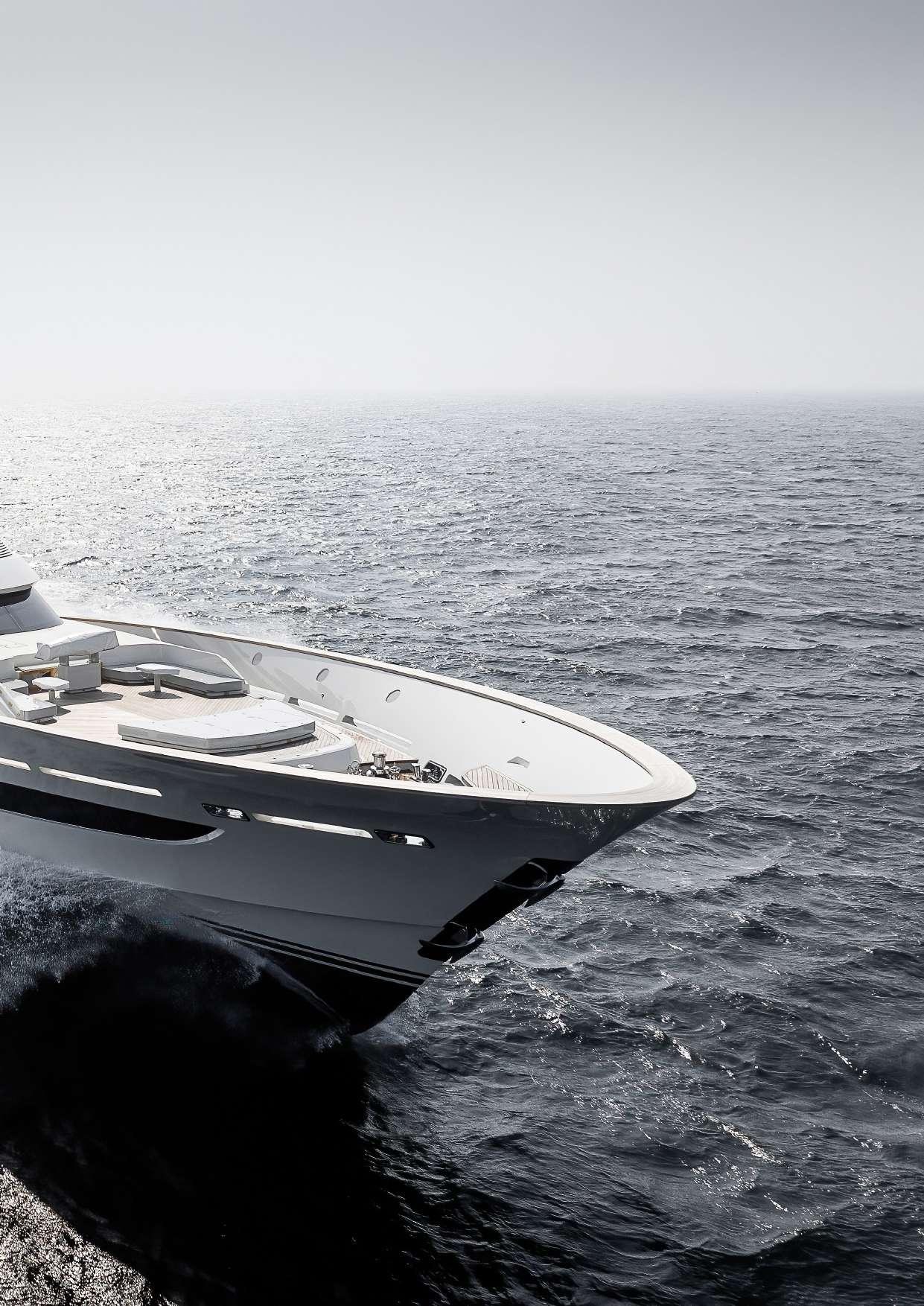
Royal Huisman proudly announces the successful delivery of milestone Project 406, "Special One." This extraordinary and bespoke motor yacht is set to depart from the shipyard in the Netherlands on her maiden voyage, marking a new milestone in superyacht building.
"Special One" is an exceptional Alustar® aluminum motor yacht that represents, without compromise, the pinnacle of custom superyacht engineering and construction. She features six decks of the highest standards of luxury and comfort, combined with technological advancements and the ability to sail at 30+ knots, as demonstrated during recent extensive testing and trials on the North Sea.
Measuring 52m / 171ft, "Special One" is the world’s largest true sportfish yacht and a unique vessel in many respects. She is tailored to meet the specific brief of her experienced owner, who has a deep passion for sportfishing.
The naval architecture, exterior and interior design are courtesy of Vripack Yacht Design Studio. Her design is
extremely distinctive, with a long bow and high bulwarks sweeping through a clear sheer to a low and uncluttered cockpit aft. The high tower offers outstanding views with a downward angle on the water for specialized fishing. Apart from its practical function, the tower also offers a superb viewing platform for guests, who can follow all the action below.
This sportfish superyacht underscores Royal Huisman's position at the forefront of the superyacht sector, continually pushing the boundaries of what is possible. Jan Timmerman, CEO of Royal Huisman, adds: "The delivery of Project 406 is a testament to our commitment to delivering unique and bespoke superyachts. The individual aspirations and challenges of our motor yacht milestone projects were well outside the comfort zone of other yards. This motoryacht project showcases our ability to create custom solutions that perfectly align with our client's vision. We are excited to see 'Special One' embark on her journey and provide unforgettable experiences to her owner: the ultimate expression of personal freedom.”
THE
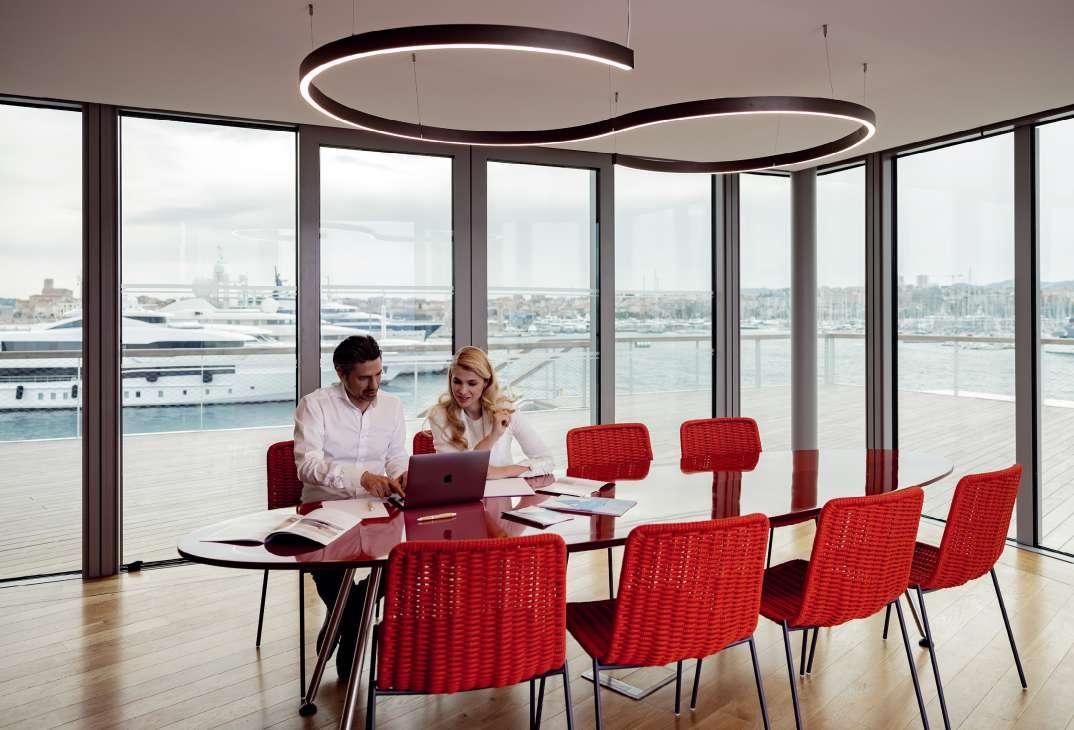
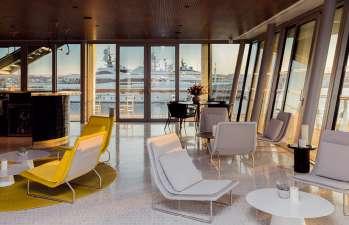
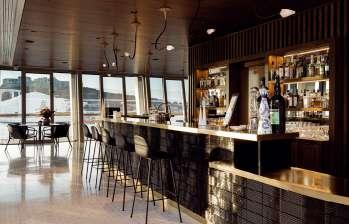
Nestled in the heart of the French Riviera the International Yacht Club of Antibes welcomes its esteemed members in search of confidentiality and prestige in breathtaking settings.
• Exceptional antifouling performance
• Less fuel, more speed
• Reduced emissions
• Reduced marine environment impact
• Suitable for all waters and usage

Hempaguard® X7, a truly unique fouling defence system delivering best-in-class antifouling protection combined with reduced fuel consumption and fewer emissions. Minimize the impact on the environment whilst maximizing the performance.

Written by By Sailing Architect Ltd. a company founded by Willem Jan Landman
by © Doña Francisca - Sailing Architect Yacht Marketing
Sailing Architect
Exploring the wonders of the world is where the best of Willem Jan’s worlds come together, born from his professions as a Professional Sailor and Architect.
Professional sailing
Sailing Architect collaborates with (super) yachting professionals through its expertise in Yacht Marketing, Sponsor Management, and Project Management.
Super yacht marketing
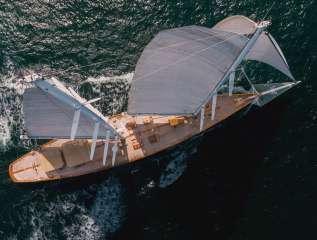
Sailing Architect has been involved in several Yacht Marketing projects since 2023. A very special and unique project is the collaboration with the owner of the 172 ft. SY Doña Francisca, Mr. Juan Carlos Lopez Mena, and the team of Sailing Architect Yacht Marketing. The Doña Francisca, a full carbon schooner, was commissioned in 2013 by Juan Carlos and built in Montevideo, Uruguay, with a team of leading experts in the Super Yacht Business, designed by Naval Architect Javier Soto Acebal.
Sponsor management
Between 2016 and 2023, Willem Jan supported the Foundation Holland Ocean Racing as their chairman and operational manager, in collaboration with VOR skipper Hans Bouscholte. To keep a foundation running and a 60 ft. Volvo Ocean Racer in the best shape to sail, sponsor management is a key aspect. Bolsius International was attracted as the main sponsor, and several other companies as sub sponsors, to support the team.
Since 2023, Sailing Architect has continued supporting professional sailing teams, sailing foundations, and charities with sponsor management. They are setting the next step towards a successful campaign and team effort in races like the Ocean Race.
Project management
Sailing Architect is involved in the project management of several foundations. One of these foundations is Sail4Earth, which aims to unite the sailing community to support the mission of Union of Nature, the overarching foundation that protects and preserves nature m2 by m2.
Sail4Earth was pre-launched on Saturday, July 13th, during the Colin Archer Memorial Race 2024 from Lauwersoog, the Netherlands, to Stavern, Norway. Sailing Architect became a sponsor partner of this biennial regatta for cruisers and racers with 49 entries this year from the Netherlands, Germany, Canada, and Norway. In the race, Sail4Earth was represented by a team that Willem Jan had the privilege to skipper, sailing the 60 ft. Colin Archer SY ‘Atmos of Amsterdam’.
In 2025, Sail4Earth will be officially launched at the maritime Tall Ships event Sail Amsterdam, and the Sail4Earth Rally to COP30 in Belém, Brazil, will start from there to raise awareness for protecting our planet m2 by m2.
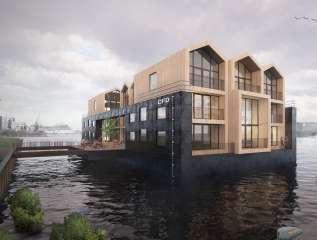
Circular Floating Districts is a Real Estate Developer with a unique vision for off-the-grid future floating projects. Willem Jan co-founded the companies Circular Floating Districts Ltd. and VLOAT Ltd. with his associate Michiel Zwart, a Naval Architect by profession.
The concepts of VLOAT® involve re-using former offshore barges and dry docks and constructing modular wooden homes. Due to worldwide climate change, rising sea levels, droughts, flooding, and the need for housing, they believe VLOAT® is the answer to future Circular Floating Districts.◆


Written by Hamish Goddard Pictures by Starlink

The Palma docks are relatively quiet, and most vessels are out for what we all hope is a good and busy season, reflected in the fact that, with the 2023 season under their belts and the Starlink system proven as a game-changer, usage has been higher this year as vessels install the service and appreciate its groundbreaking (an unusual adjective for a satellite system...) capabilities. There seems to be little let-up in requirements for new systems and whilst many vessels have Starlink installed – in some form – already, there are many that don’t!
What now for RV/ROAM?
As ever, Starlink continues to develop their offering and in line with these developments, are now showing signs of tightening up various aspects of the service. Those days of unlimited access on an RV/ROAM antenna in the middle of the Atlantic look firmly to be over.. It’s difficult to tell if this original laissez faire approach was intentional or not, although it was extremely successful in developing huge interest in the system across our sector. The continuing developments are primarily to ensure that the correct systems are used for the purposes intended, i.e. Starlink Maritime for maritime users, rather than ocean-going RVs and in some cases, even Residential systems..
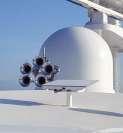
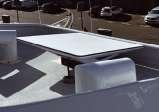
All Starlink systems - whether RV/ROAM, maritime or residential - provide superfast speeds and low costs compared to older VSAT services. Starlink are understandably keen to make sure each user enjoys optimum performance and
user-experience. What is of growing importance to them is ensuring that their network is being utilised correctly.
GEO fencing
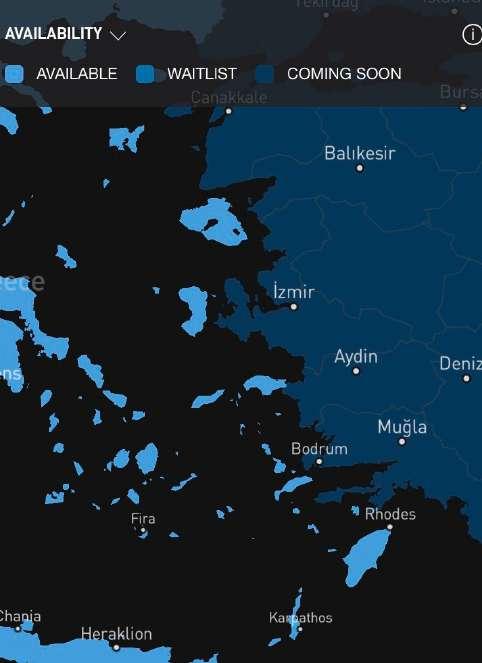
With this in mind, we are seeing that Starlink have started to prune their network to also ensure that usage is available in specifically-authorised areas – a rapidly developing dynamic that has the potential to cause some issues in certain-well-cruised areas, taking the Turkish coast as an example during Med-summer 2024.
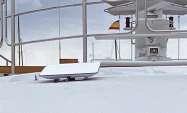
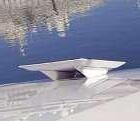
The geo-fencing capability of the LEO network allows Starlink to continue to refine very clear boundaries on where the service can (and cannot…) be used. In authorized regions, these boundaries have been set cell-by-cell, with each cell a hexagon-shape approximately 20km across - and in the context of ‘land cell coverage whilst at sea’, broadly following an authorized area’s coastline.
Up until July, a cell covering the sea but also touching just 1% of the land would be classed as a land cell, thus extending land coverage to around 20km out to sea (and in some cases further). This distance from land was not exact, as it depended on where the cell touched the land and in some cases, the distance might actually be less than 20km offshore.
Priority data and mobile data – understanding the difference
This was an important feature for early Starlink adopters, because it meant that users of the RV/ROAM service could
connect via Starlink quite far out at sea - and also enjoy Mobile Data at sea when their Priority Data bundle was used up, as they effectively remained within land cell coverage. If they were planning to venture outside of this land cell, they could additionally Opt In to Priority Data (coverage offshore, outside of land cells) on a pay/GB basis, and then Opt Out once they were back in a land cell for continuing unlimited Mobile Data connectivity. ‘Mobile Data’ can be slightly misleading in the context of usage at sea, as it primarily refers to an RV on land - which is of course mobile!
This has now all changed. Starlink have used their geo-fencing to adjust the way the cells work, with the following new structure.
Authorised countries (eg. Spain, Italy, France etc) will now be geo-fenced at 22km offshore. This will be a relatively straight line, rather than the haphazard cell structure and associated variables that were in place before. This means that RV/ ROAM services will work within this area and be able to use free and unlimited Mobile Data once their Priority Data has run out.
However, they will no longer be able to Opt In to Priority Data once the 22km geo-fence has been crossed and the RV/ ROAM service will no longer work until you are within the 22km of the coast. This will have significant consequences for the many RV/ROAM-equipped vessels operating further offshore and for crew-only delivery trips across the Med although even in retrospect, it remains a good deal to have done for those early RV/ROAM adopters.
In combination with this new structure, unauthorized countries (eg. Turkey, UAE, Montenegro) will be geo-fenced so that ALL services (both Maritime and RV/ROAM) will stop once they are within 500 metres of the land. Once you get outside of 500m, the Maritime service will work again, whilst RV/ROAM services by design should not work at all until you travel back to within 22km of a specifically authorised region.
Until recently, it seemed that although Turkey was an unauthorized region for Starlink, as it still worked in parts of the south-west although less so in the north. However, vessels have been reporting to us that they are now experiencing the 500m cut off exactly as described above - so the implementation of the new geo-fencing is firmly up and running in Turkey specifically, with other regions to follow.
So this is not the end of the geo-fencing story. At present, there are many islands of the Caribbean that remain as un-authorised areas and whilst newly authorised countries are being added on a weekly basis, the implications of this on dual-season vessels visiting the Caribbean for this forthcoming winter 24/25 season could be significant.
e3 Systems, as an official reseller of the Starlink Maritime system, have had to keep closely on top of these developments,
knowing that a deeper dive into what appears to be a relatively simple geo-fencing, pricing structure - and the ability to ‘get away with an RV for the moment’ - is quite a bit more complicated than at first thought.
Please give us a call if you need to understand it further - as there are all manner of contingency and back-up options that can be tailored to a vessel’s specific agenda and related connectivity needs.
As this goes to press, the fantastic 2024 Paris Olympics will have had their closing ceremony, and this will be followed by the next world class event – right on our doorstep in Barcelona.
With apologies to the many egg-sucking grannies that I feel sure are out there, the America’s Cup is a match racing sailing regatta (just one boat against another in a one-on-one duel) that takes place between the existing holder (New Zealand) and whoever is the winning challenger amongst all the competing challenger syndicates - decided through the Louis Vuitton Cup.
It is also the oldest trophy in international sport, dating back to 1851 when the visiting schooner America challenged 15 yachts from the Royal Yacht Squadron for a race around the Isle of Wight - and whipped them all, taking the 100 Guinea Cup as it was then known, back to the New York Yacht Club on 44th Street, Manhattan, where it remained bolted to a plinth for 132 years.
The Australians were the first country outside America to win it again, back in 1983 when the Australian Prime Minister of the time, Bob Hawke, famously said “Anyone who sends people to work tomorrow is a bum!” and that old maverick Alan Bond turned up at the New York Yacht Club with his gold-plated spanner and took the Cup back to Freemantle, Western Australia - since when it has also been won by both the Swiss and the Kiwis, the current holders.
Held every three to four years, many people regard the 1920s and 30s as the Cup’s heyday, when various industrial barons of the age - Liptons, Sopwiths, Vanderbilts etc - competed in the magnificent J-Class yachts of which, having disappeared almost completely, there are now no less than nine on the water - three restored originals and six reproductions of boats that were either designed at the time but never built, or were scrapped during the austerity during and after WW2.
However, the America’s Cup remains the absolute pinnacle of yacht racing and the latest design for the class is the AC75 in which this year’s Cup will be contested – 75’ hydro-foiling monohulls capable of bursts of over 50 knots or nearly
100km/h. Otherwise, competing in the Cup remains the money-pit of old and the domain of the super-rich, with budgets from $80 - $200m spent on a well-funded campaign.
It will be a spectacular event this year, starting in late August with the final race between New Zealand and the winner of the Louis Vuitton Cup from the 12-27th of October, with a host of other racing built around the main event, including for the first time, an America’s Cup competition for women and youth in the AC40 class.
e3 Systems has been working with one of the teams and thus far, they have now purchased three Starlink systems for their Chase Boats 1 & 2 and their new hydrogen-powered chase boat. These chase boats follow the yacht, collecting data from the 100s of sensors on board and sending this data in real time via our Starlink panels back to their base in Port Vell so that it can be analysed, also in real time.
The racing is carried live on YouTube - and in Spain on TVE, TV3 and Barcelona TV. ◆
• Stock available in yachting locations: Mallorca, Barcelona, Antibes, Monaco, Fort Lauderdale
• Immediate delivery
• Installation, Integration and 24/7 support from Yacht experts
• Client portal for data monitoring and alerting



G E T C O N N
C
E D W I T H
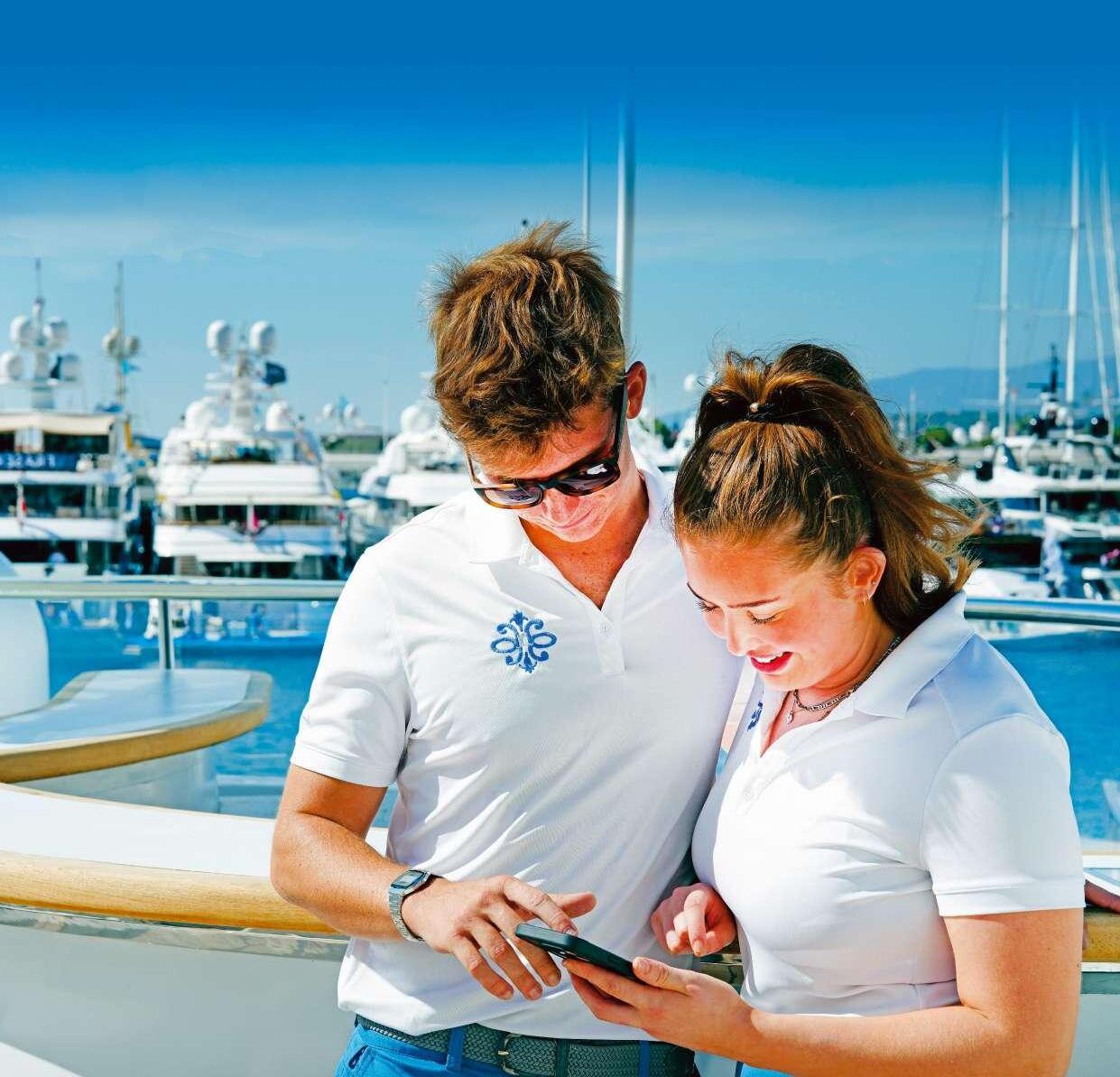
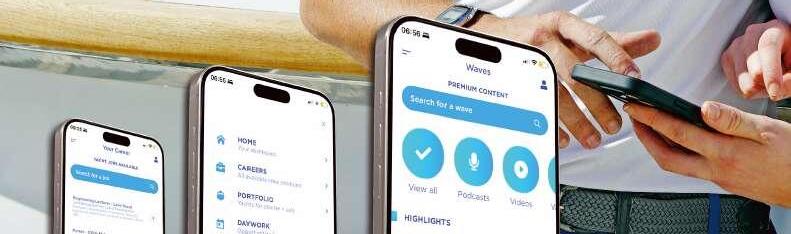
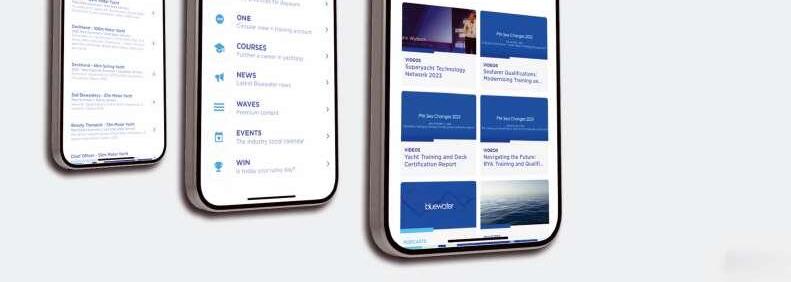
H E B L U E W A T E R A P P D e s i g n e d W i t h Yo u r N e e d s I n M i n d
T h e B l u e w a t e r A p p i s y o u r g a t e w a y t o u n l o c k i n
m
e l e v a t e y o u r y a c h t i n g c a r e e r t o n e w h e i g h t s .

48. Chef's chat
52. Meet the crew: Debela Savimaki - deckhand
56. Enhancing communication and listening skills.
58. Ship to shore: Emma Bainbridge
62. The controversy of confidentiality
64. Captain Jason Chambers
68. Cashmere care
70. Maintaining mental and physical health on board
72. Choose evolution as your agent for VAT exempt refit
74. Aye Aye Doctor…The importance of Telemedical (TMAS) Support
Written by Barry D'Arcy of Ocean Earth Chefs
English born yacht chef James Temple started his cooking career at the age of 13. His mother had a friend who was a head chef in the local pub. James went in, cooked some vegetables and dessert, and fell in love with the fast paced kitchen environment. And now that he's 35, he says it's been his passion ever since.
What is your cooking background?
I started at a Michelin-starred restaurant for work experience and then worked at a Jamie Oliver restaurant for 3.5 years. Another 3.5 years were spent in a bakery. But it was when I was working in a 2 rosette restaurant in the south of England that I fell in love with fine dining cuisine. I worked my winter ski seasons in Austria, France, and Switzerland and private villas in Mallorca, France, and Portugal. For the last 5.5 years, I have been on yachts of up to 50m.
What is your cooking style?
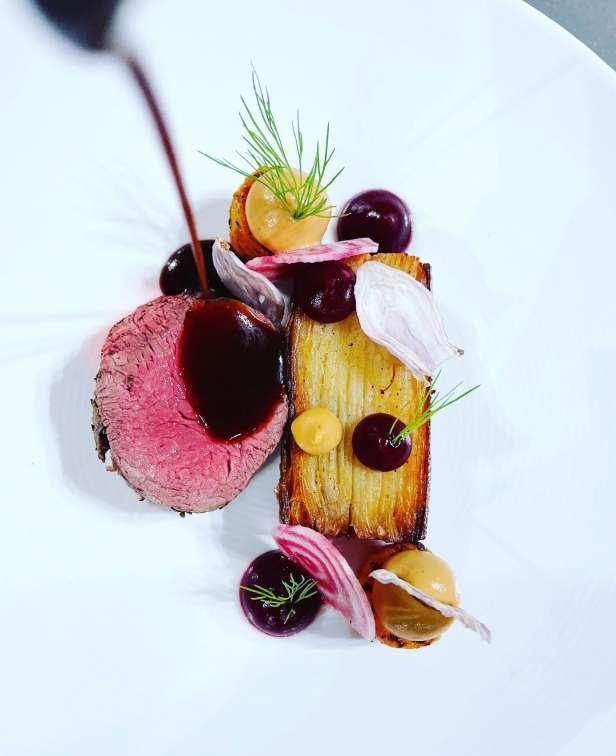
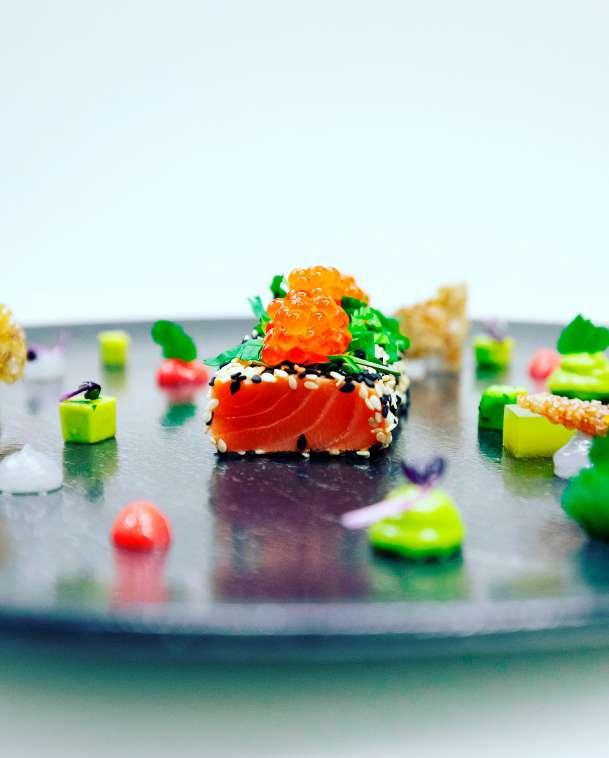
I like guests to eat with their eyes. So my style is bright, colourful dishes, full of flavour and different textures.
What was your best place to work?
It has to be Jeremys and Cafe El Vira. I was there on and off for 4.5 years. It was a 2 rosette restaurant and countryside cafe. Everything was fresh and homemade, and it was where I discovered my passion for cooking and where I learned the majority of my cooking skills. Service time was full on, but It was such a lovely place to work.
What are your favourite things to cook?
I like to cook everything, but my favourite is pastry.
What is your best place for produce?
In the South of France, Cannes, St Tropez, Nice, and Antibes. All these places have amazing fresh daily markets with a real hustle and bustle feeling. It's great to start your morning with a coffee, a fresh pastry, and provisioning in the best markets.
What chef inspires you?
I would say Gordon Ramsay. A remarkable chef, he came from nothing and worked so hard to get where he is today.
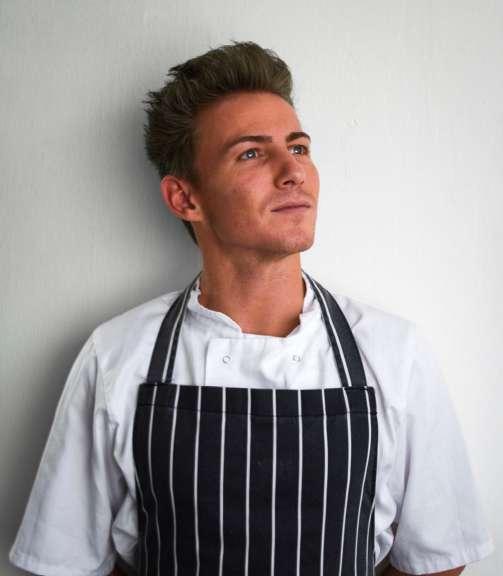
Has your food style changed over the years?
It hasn't changed much, but I would say it's more refined, and my plating presentation has gotten better with more experience.
What are your three favourite cookbooks?
Under Pressure by Thomas Keller
The French Laundry by Thomas Keller Salt, Fat, Acid, and Heat by Samin Nosrat
Worst moment as a yacht chef?
Looking in the mirror and seeing how tired I look. I look like that all the time.
What do you like about being a yacht chef?
You get to travel the world, using the best ingredients and getting the opportunity to cook many different cuisines and styles depending on the guests.
Best moment as a yacht chef?
Would be cooking for my family and then seeing how far I have come as a chef.
What are the most difficult things about being a yacht chef?
You can't just pop out to the shop and grab whatever you need. You have to be incredibly organised and prepared for when guests change their minds at the last moment.
What is the best advice given to you as a chef?
Don't be sorry, be better. I will never forget this!
What is your most challenging moment as a chef?
I was working for a private family in Portugal. It was a demanding role, and I could not prep until 30 minutes before service due to the produce losing its nutritional value. Everything had to be made fresh and instantly on a daily basis.
What keeps you going on the long days in the galley? It would have to be the smiles of the guests when they try my food. It magically makes everything worth it, even on those 20-hour days.
Best advice to a young chef.
Go and work in a Michelin star or rosette star restaurant. Get your experience and knowledge and become a fantastic chef. Then, travel and experience different cuisines and ways of
life. I then suggest getting onto yachts, travelling the world using the best ingredients, and meeting great people along the way.
Your favourite places to eat.
You can't go wrong with a good burger or pizza. Otherwise, I like eating at Michelin star restaurants. Eating at The French Laundry is definitely on my bucket list.
How do you spend your free time?
I like to explore; I don't like going out and getting wasted; I like to be up nice and early and have time off exploring the amazing places we visit. And any sort of adrenaline sport, I am there.
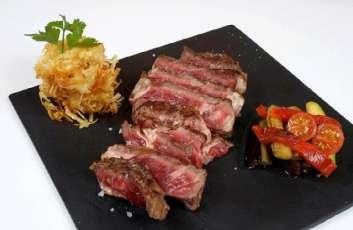
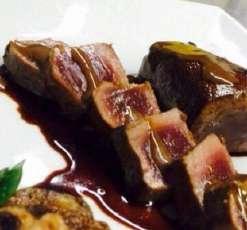
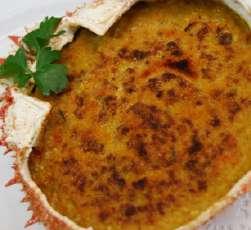
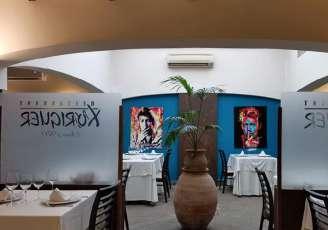
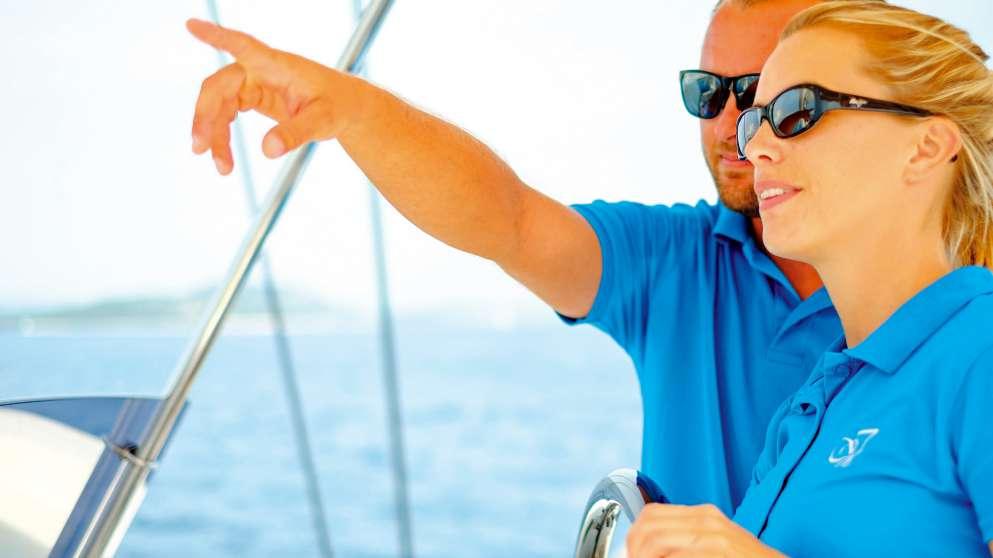


https://wops.teachable.com/p/how-to-work-on-pocket-superyachts
Written by Melanie Winters
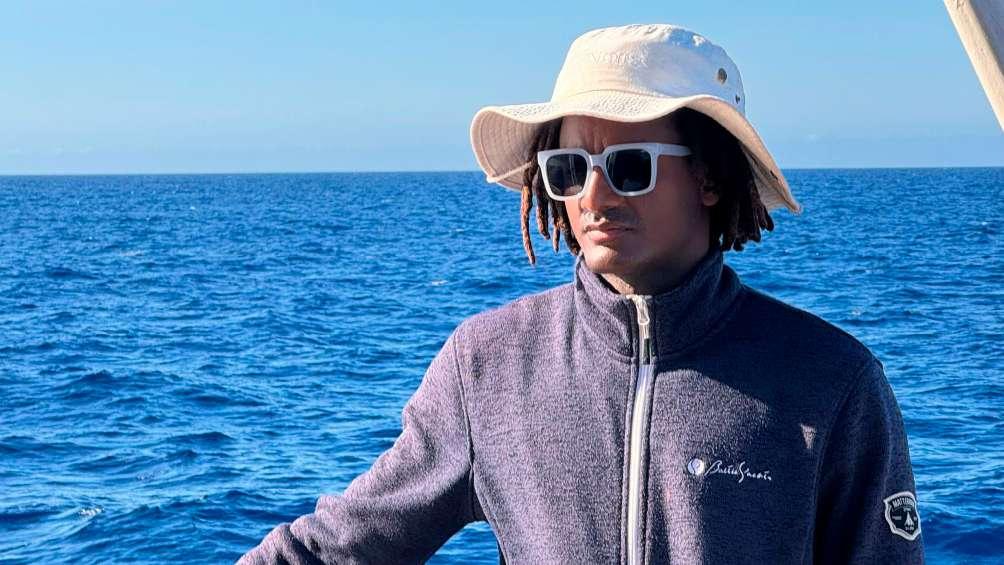
Ihad the pleasure of sitting down with Debela Savimaki, whose life story reads like an adventure novel. Debela was born in Ethiopia but was adopted at the age of four because sadly, both his parents died of tuberculosis. His brother and sister were also adopted by the same family. They were incredibly fortunate to be able to stay together. Despite such tragic circumstances, their young lives were about to change forever as Australia was soon to become their new home.
Debela threw himself into sports with the enthusiasm of a puppy chasing a ball. He quickly reached national level in track and field for the 100, 200 and 400 meters, with some of his records still standing today. However, despite his love of athletics his heart truly belonged to the sea, as shortly after arriving in Australia, he started surf lifesaving to learn swimming. This seemingly innocuous start led to his love of surfing, the board and the open ocean, and has opened countless doors in many different spheres and, most importantly, has resulted in led to lifelong friendships. When he looks back on those early days he remembers fondly that, “the Sunshine Coast became my playground, and I couldn’t have imagined a better place to call home. It was like winning the childhood lottery!”
Now 25, Debela is working as a Deckhand and although his yachting journey is only just beginning, he is delighted to share with us the highs and lows, what it means to be a
part of this wonderful industry and to offer advice for anyone wanting to follow in his footsteps.
Before we dive in, I want to know a little of Debela’s work background before yachting. “Before finding my calling in yachting, I explored a variety of jobs. I dabbled in construction as a chippy, but that only lasted a few months. Then I tried my hand at painting, which turned out to be as exciting as literally watching paint dry! After that, I worked in retail for about two and a half years, hoping it would help me transition into real estate. However, the job I enjoyed the most was as a Dogman/Rigger, guiding cranes on construction sites. It was an overwhelming experience at first, seeing the size of the cranes and the construction sites. There is a lot of pressure on you. You can’t rig anything wrong as you can kill people, not to mention wipe out an entire site! It took me months to get used to it, but I finally settled down with Universal Cranes and began to get my bearings. It was tiring but incredibly rewarding. With a great team by my side, I grew more confident in my abilities, plus, I got to wear a hard hat…and as the saying goes, tradies get the ladies!”
Debela’s yachting career all began in the Caribbean, specifically the yachting hub we all know and love, Antigua. The years 2022-23 had been particularly challenging for him along with many others, so he arrived feeling under a lot of pressure. But quick as ever to find his feet he began his first job on ‘Sea Owl’ and then later on ‘Odessa 2’. But he is eager
to tell me that it was crew on Sea Owl, who taught him a lot about hard work and gave him valuable advice.
However, Debela explains that, “it was on Odessa 2 where everything changed for me. My yachting epiphany so to speak! My crew was incredibly supportive, making me feel like part of the family. They supported me throughout the season, watching me grow and became my first real yachting family!”
Apparently choosing a favourite boat was like choosing a favourite child for Debela (not that he has any just yet). But Odessa 2, Obsidian, Adix and Rhea are all top contenders.
"Odessa 2 showed me how good life can be with the right crew. Obsidian was the first boat I worked on that made me feel like a real deckhand. The crew was awesome too and we spent a lot of our free time hanging out at the beach and exploring the island. Adix is a beautiful three-mast schooner and was a real learning-experience for me. And then Rhea gave me my first charter and Atlantic crossing from Antigua to Horta, then onto La Linea. The boat then had a week-long charter cruise between Spain and Morocco. Shortly after, we travelled to Palermo. I learned so much about sailing and the working life on a boat. I also loved interacting with the guests on board. I will be forever grateful for that trip!”
Crew do get lots of perks working in yachting and I’m interested to know what he likes best about this job. “Yes, working on board has many perks.
The food is incredible, thanks to the chefs who could probably win ‘MasterChef’ blindfolded! The friendships I have are priceless, forged in the shared struggle of finding work and surviving on board. We all miss the friends we have back home so it’s always good to see the ones before us
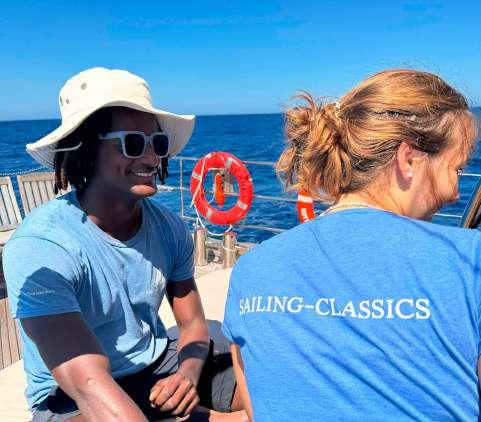
succeed. It’s what makes yachting so amazing and rewarding! …and travelling the world…” he laughs, it’s like living in a National Geographic documentary, minus the voice-over!”
To keep sane on long trips, Debela discovered that eating good meals together sets the right morale for the crew. A delicious lunch and dinner always works wonders. But it’s not singularly about the crew obviously, spoiling the owners and guests can involve taking them off the boat to explore their current location with a few surprises along the way, and this also adds to boat harmony. “It’s all about creating Instagram-worthy moments that they will treasure forever!”
The downsides? Debela is not alone in realizing that there are drawbacks. “Not having working air conditioning was torture. Smelly toilets and broken doors are also a nightmare, but what really grinds my gears is when crew members don’t clean up after themselves or constantly complain without offering any solutions.” He rolls his eyes, “It’s like, "Do you want some cheese with that whine!?"
As for favourite yachting destinations, Debela admits he is still very green to the industry, but Horta and Morocco are currently at the top of his list. However, he does not intend for it to stop there as Debela’s bucket list includes the small goal of exploring the entire world!
I ask if he could share with us any funny or embarrassing moments he’s experienced on board. “One of the funniest moments was during a night watch on Rhea. Instead of rolling up the flag on the pole, I wrapped it around my arm while tying the rope. A sudden gust of wind blew it into the harbour! The captain was cool, although he did have a good laugh at my expense. Lesson learned: always think twice before doing something silly!”
I’m eager to know what Debela is most proud of so far. “I’m proud of the friends I’ve made in this industry and completing my first Atlantic crossing.”
I’m also keen to know, if he could travel back in time and give his younger self some valuable advice, what would it be?
“Trust yourself and your judgements. Always back yourself, even when no one else does. People will support you if you’re giving it your all, even if you feel you’re failing, people have your back.”
For anyone considering a career in yachting, Debela offers the following advice. “First of all, if you think it’s like an episode of Below Deck…it’s not! This industry requires a lot of sacrifice. If you’re family oriented, then you may suffer mentally. Network like your life depends on it! This industry rewards those who put themselves out there! This can come
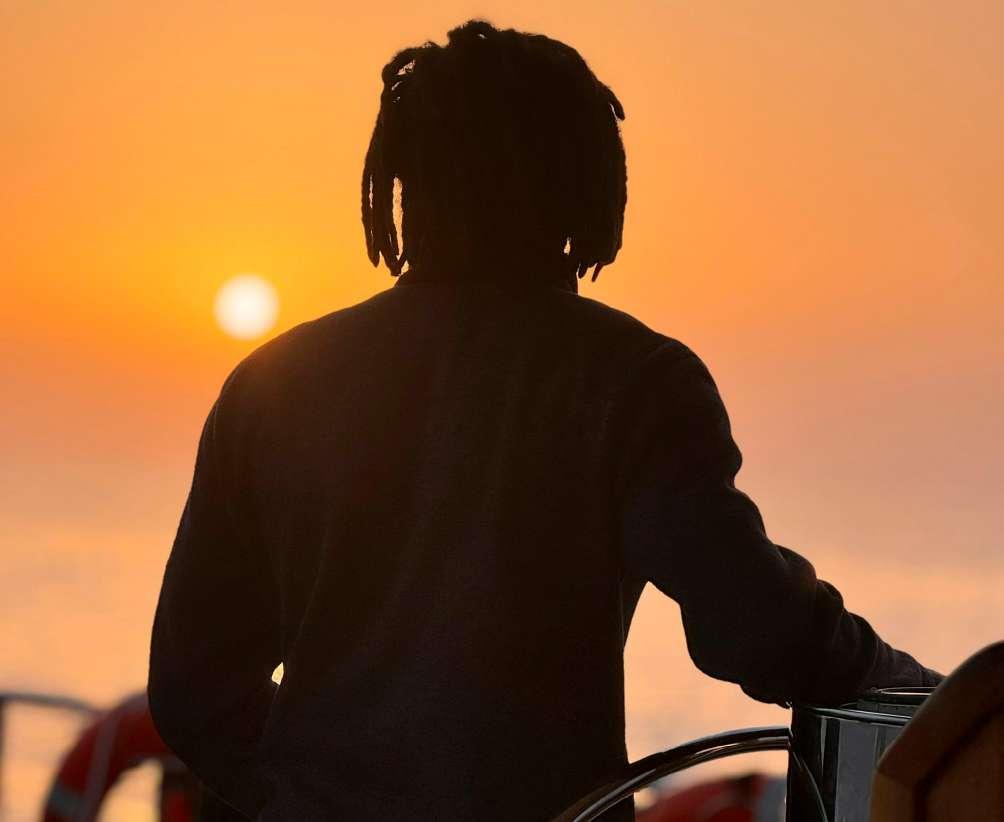
in the form of dock walking or talking to as many people at crew bars as possible. You really need to step well-beyond your comfort zone to be on the radar. Make sure you have all the necessary visas, and always have enough money to survive in pricey places like the South of France and the Caribbean.”
Debela makes another good point. “Always save as much money as you can so that you can quickly implement a plan C when you’re still rolling with plan B! I can’t emphasise this enough, you can never be too prepared! Do your homework. It’s also very important to keep your mental health in check. This job can be stressful, so when you do get time off, go and
explore the places you are lucky enough to find yourselves in. Find the time to realign. Whatever you do, be safe, have fun and enjoy the journey, it’s one hell of a ride!”
And finally, what does the future hold for Debela? “My main goal for the future is to secure my first full-time gig, continue earning my tickets and certifications and enjoy my life as much as possible!”
This is just the beginning of Debela’s epic yachting adventure and we wish him the best of luck for his future! ◆
Written by Karine Rayson
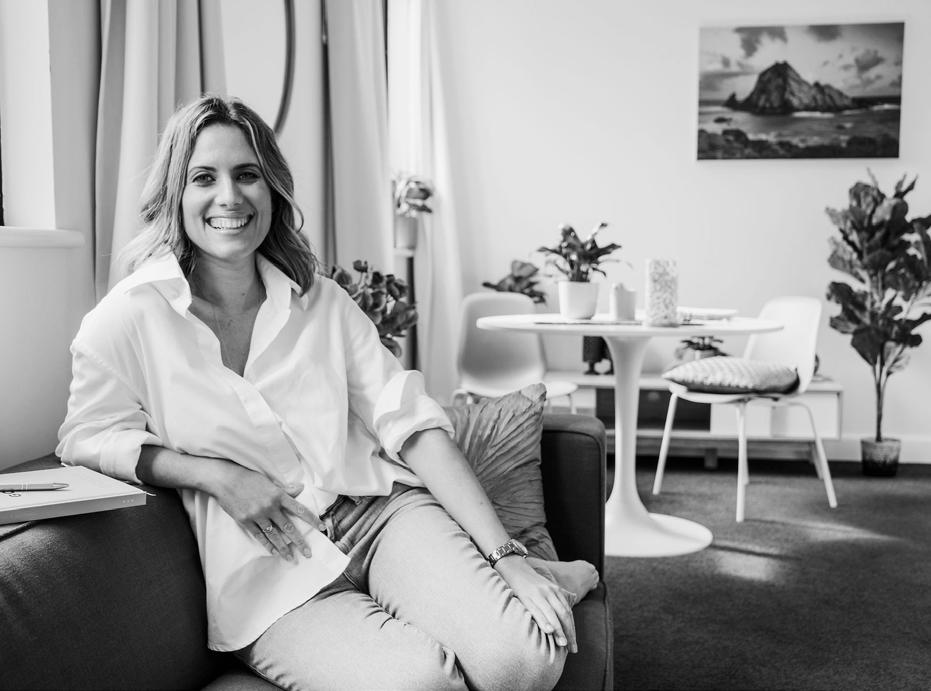
Effective communication and active listening are pivotal skills in both personal and professional spheres. They underpin productive collaboration, positive relationships, and successful teamwork. In this article, I will teach you how to gain more respect and confidence when working with your Crew. These strategies will significantly improve your communication and listening skills and, in turn, make you a credible leader.
The power of effective communication
Effective communication isn't just about conveying information; it's about doing so clearly, concisely, and with empathy. Here are some strategies to enhance your communication skills so that you can build a more harmonious team:
• Practice clarity: Be clear and specific in your communication and void jargon, and cultural-specific terminologies.
• Active listening: Actively engage in conversations by listening attentively to the speaker. This involves maintaining eye contact, nodding, and providing verbal cues (e.g., "I see," "I understand") to show that you are tuned in.
• Empathetic communication: Put yourself in the shoes of the person you're communicating with. Understand their perspective and acknowledge their feelings and concerns. Empathy can foster trust and rapport.
• Ask questions: Don't hesitate to ask clarifying questions if something isn't clear. This not only demonstrates your interest but also helps prevent misunderstandings.
• Tailor your message: Customise your communication style to suit who you are talking to. What works with one colleague may not be effective with another. Adapt your approach accordingly.
• Effective feedback: When offering feedback, be constructive and specific. If someone has made a mistake, explain or show them how you would like it done. Avoid criticism for criticism's sake.
• Non-verbal communication: Be mindful of your body language, facial expressions, and tone of voice. These non-verbal cues can significantly impact how your message is received.
The art of active listening
Listening is just as crucial as speaking when it comes to effective communication. Here's how you can hone your active listening skills:
• Give your full attention: When someone is speaking, give them your undivided attention. Minimise distractions, put away your phone, and focus on the speaker.
• Avoid interrupting: Resist the urge to interrupt or interrupt your thoughts before the speaker finishes. Let them complete their point before responding.
• Practice patience: Sometimes, people need time to gather their thoughts or express themselves. Allow for pauses and moments of reflection.
• Reflect and clarify: After the speaker has finished, summarise what you've heard to ensure you've understood correctly. Ask clarifying questions if needed.
• Empathise:Again, show empathy and understanding towards the speaker's emotions and concerns. This validates their feelings and fosters a sense of connection. Incorporating these communication and listening techniques can not only promote mutual respect but can help foster a positive working environment. We have found that in our Advance Leadership Course has significantly helped Crew improve their communication and listening skills. By practising clear, empathetic communication and active listening, you can build stronger relationships, resolve conflicts more effectively, and ultimately promote success for all onboard.
But our readers are very much alive! As a publication we are bringing together the community of like-minded people who make brave and inspirational decisions. Decisions such as giving up land-based life to go and work on yachts, or moving country to live under the sun, or starting a business, or choosing island-life over rat-race.
We are rewarding you through:

Free access to our monthly network events
Free access to our crew events
Rewards with Islander partners
Receive invitations to unique experiences
Win unique prizes
Expand your quality island network
For the price of one ‘plato del dia’ per month you can join!
Scan to join:


Written by Melanie Winters
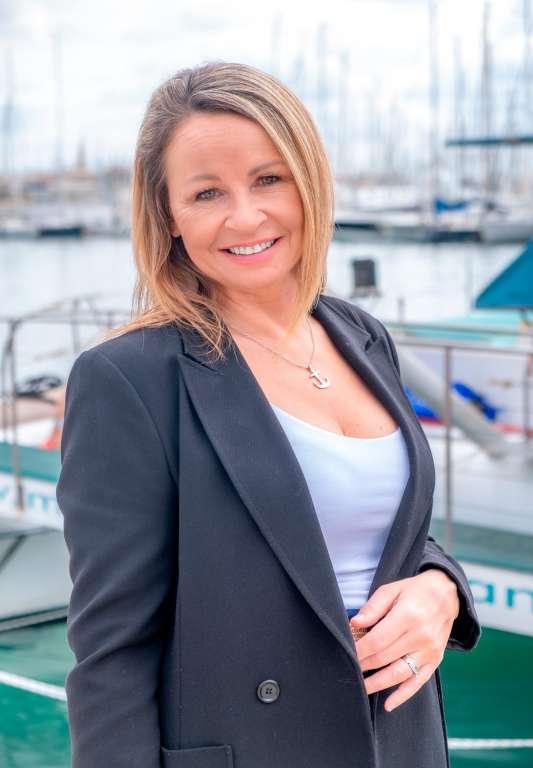
Emma Bainbridge’s life has been an epic saga, brimming with adventure and glamour, set against the backdrop of the high seas. Now, however, she has chosen a slightly more tranquil road and lives in the quieter, though no less bustling, town of Grimsby, UK, with her husband and two boys, aged 12 and 8. She’s here today to tell me tales of her extraordinary journey from yacht crew to land-based professional.
Emma’s journey began at the age of 24, when she embarked on a career that would span 13 years, taking her from humble beginnings on a small yacht in Fort Lauderdale to the grandiose decks of world-travelling superyachts. Her first captain, an American with a keen eye for potential, advised
her to aim high, to set her sights on the big yachts that sailed the globe. He wasn’t just her captain, but her mentor, pushing her ever onwards towards her destiny. And Emma, with her characteristic enthusiasm, embraced the challenge wholeheartedly.
Starting as a stewardess on a 60-metre superyacht, Emma quickly demonstrated her skills and determination. Her rise through the ranks was rapid, eventually becoming the Purser on what was then the largest yacht in the world. This role, she talks about with pride, “It was the highlight of my career being promoted to Purser. It was an incredible honour. My job was very demanding but one I absolutely relished!” Her adventures on what she describes as floating palaces were, to her, the stuff of dreams. Emma reminisces about climbing volcanoes in Italy, but not for her personal thrill, instead to ensure that the terrain was safe for the guests. On another trip she got to explore remote Indonesian islands where Komodo dragons roamed, a task both exhilarating and slightly terrifying. She laughs, “It’s not every day you find yourself face-to-face with a creature that looks like it stepped out of a prehistoric era.”
Emma’s yachting days were filled with helicopter rides, swinging in hammocks while sailing across oceans and hosting lavish parties for the rich and famous in glamorous locations. Dining at the world’s most beautiful restaurants was a regular occurrence, and was always accompanied by her fantastic crew, who quickly became lifelong friends.
“The list of highlights is never-ending,” she tells me, “from extravagant parties to serene moments on deck, every day brought something new and exciting.”
But life at sea wasn’t without its challenges. Emma vividly recalls a particularly stormy night when they discovered a missing plug in the beach club area of the yacht. “Water began flooding in, and one of the engineers had to abseil outside in the midst of the storm to make a temporary fix.”
She admitted “It was pretty scary, but we managed to keep things under control until we reached the next port.”
The long hours were gruelling, but Emma, then in her twenties and full of energy, took it all in her stride. “The occasional accidents on board were also part of the job, though thankfully nothing too severe ever happened.”
But it wasn’t just the perils of the sea that sometimes were cause for concern, “The guests, with their often impossible demands, provided their own set of challenges. For example, trying to secure a table at a fully booked restaurant at the last minute was always a test of my persuasive skills, but somehow, we always managed to pull it off.” She smiles at the memories.
Eventually, the call of motherhood made Emma reconsider her seafaring life. “I loved my job, but if I wanted to become a mum, it was time to think about a transition to land.” The decision, though the right one, wasn’t easy for Emma.
She explains that, “The most difficult part was finding something that could keep me as engaged and excited as my yachting career had. And, of course, matching the excellent salary was also a significant hurdle.”
Emma’s first foray into land-based work was a provisioning business. However, Brexit threw a spanner in the works, making it difficult for her and her business partner, both with young families, to continue. It was then that Emma stumbled upon Virtual Pursers on LinkedIn. Founded by Bec McKeever and Dominique Smit, the business provides a way for ex-pursers like Emma to continue their maritime careers from the comfort of their homes.
Bec and Dom worked together all the way back in 2015 and were already starting to plan what their next step was after their yachting journey’s ever came to an end. After years of thought, the timing was ironically perfect during COVID! In 2020, they decided they wanted to extend their yachting careers and what better way than doing what they already knew and loved. Virtual Pursers was born and it has been an exciting journey ever since!
Intrigued, Emma got in touch with them. “I thought it sounded like an amazing idea,” she recalls. After a few months of discussions, she joined the team, which had been growing steadily alongside their client base.
Fast forward to today and Emma is full of excitement as she explains that “We handle everything from crew HR and travel, to accounts and port clearance. We have a really great, strong core team at the moment but often have vessels needing our help for just a season or a particular period, so we have a network of fantastic ladies all over the world!”
The team has extensive experience working for an impressive array of yachts all over the globe. With expert industry experience working on-board, we provide a truly professional service built on the foundations of practical knowledge and understanding. Our innovative and adaptable approach allows us to build long lasting, meaningful relationships with clients through trust and consistency where communication is key. We aim to provide yacht administration support to all
vessels, no matter what size of the yacht or the extent of the need. Virtual Pursers act as a bridge between the crew on board and their shoreside counterparts.
Despite her successful transition, Emma often finds herself reminiscing about her days at sea. “I miss the travel, the beautiful locations and the serene moments on the ocean,” she confesses. “And long-haul flights alone were a luxury I didn’t fully appreciate at the time!”
She laughs, recalling her insistence on taking boat trips whenever she goes on holiday now, trying to capture a bit of the magic she once lived daily.
Most of all, Emma misses the camaraderie of the crew. “They were like family,” she explains. “The banter on the bridge, the shared experiences, and the close-knit relationships were irreplaceable. And, of course, having a chef and someone to do my laundry were perks I didn’t realise I’d miss so much!”
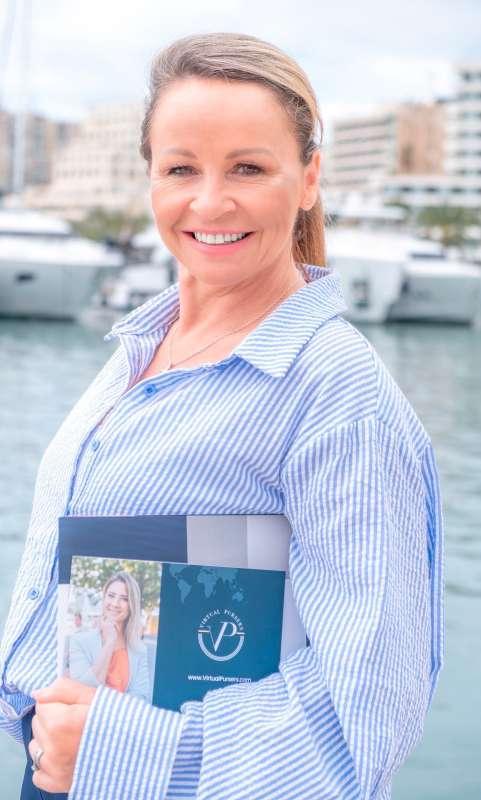
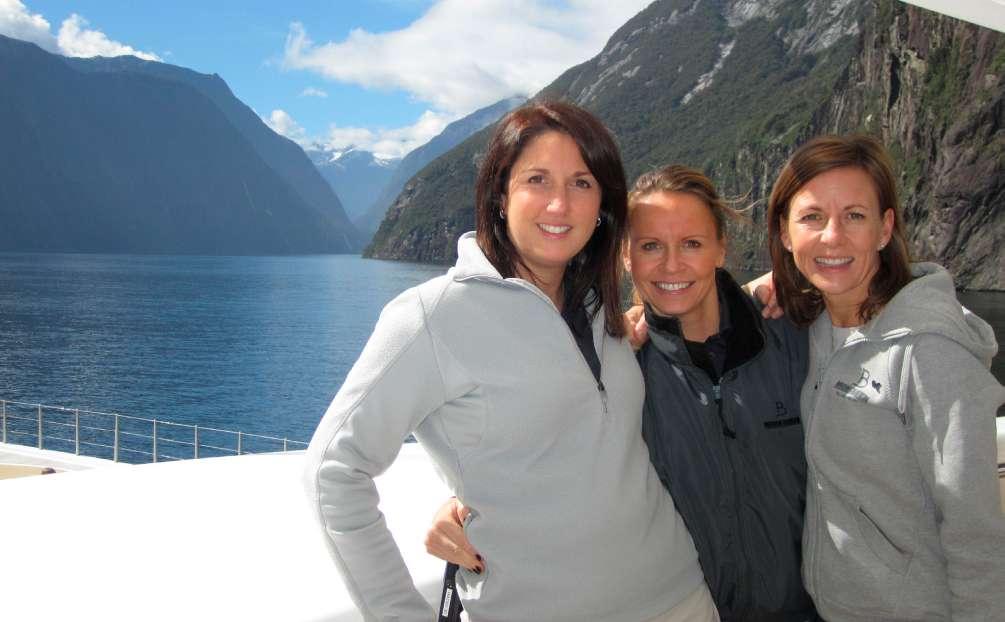
For those considering a move from sea to land, Emma offers this advice. “Enjoy it while you’re there. Save your money wisely and connect with others who’ve made the transition.”
Emma also emphasises the importance of financial planning, advising against spending all earnings on luxuries like fancy handbags. “You can earn enough to set yourself up for the future. I can’t emphasise enough the importance of being smart with your finances.”
Emma also highlights the value of connecting with fellow ex-yachties. “These days, there are groups on Instagram and other platforms where you can find support and advice.” When she left, such resources weren’t as readily available, but now, they provide a lifeline for those navigating the tricky transition to land-based life.
Reflecting on her journey, Emma sees her time at sea as an irreplaceable chapter of her life, filled with unique experiences and lifelong friends. Her transition to land, while challenging, has opened new doors and opportunities, allowing her to continue her career in a different yet equally fulfilling way. Through Virtual Pursers, she’s found a way to stay connected to the maritime world she loves, while building a stable, rewarding life on land.
Emma Bainbridge’s story is a testament to the adventurous spirit of those who work at sea and the adaptability required to transition to a new way of life. Her journey from the decks of superyachts to a successful career on land serves as an inspiration, proving that with the right mindset and a bit of humour, it’s possible to navigate any change life throws your way. ◆
Written by Virtual Pursers
In the yachting industry, maintaining strict confidentiality while respecting the privacy of crew members is a significant challenge. The personal use of social media by crew members, who live and work in close quarters, raises concerns about potential breaches of client privacy and operational security. Navigating this fine line requires a nuanced approach that respects the rights of crew members while protecting the confidentiality integral to the yachting experience.
Crew members have the right to personal privacy and freedom of expression. Social media serves as an essential outlet for staying connected with family and friends, showcasing professional experiences, and advancing their careers. Recognizing this, yacht management must implement policies that respect crew members' personal rights while ensuring confidentiality.
Unrestricted social media use by crew members can pose significant risks:
• Accidental Disclosure: Harmless posts can reveal the yacht's location, details about guests, or specifics of onboard events, leading to security threats and privacy breaches.
• Reputational Damage: Inappropriate content posted by crew members can harm the reputation of the yacht, its owners, or the management company.
• Security Risks: Real-time posting can expose the yacht to security threats, such as theft or unwanted attention from paparazzi.
To manage these risks while respecting crew privacy, yacht management companies typically implement several strategies:
• Clear Guidelines: Establish social media policies that outline acceptable behavior, with a focus on client confidentiality and security.
• Non-Disclosure Agreements (NDAs): Require crew members to sign NDAs that legally bind them to confidentiality and include specific clauses on social media use.
• Education and Training: Conduct regular training sessions to educate crew members about social media risks and the importance of confidentiality.
• Limited Device Use: Implement restrictions on personal device use during working hours or in certain yacht areas, reducing accidental disclosures.
• Monitoring and Enforcement: While monitoring may be necessary, it should be transparent and ethical. Crew
members should be informed about the extent of monitoring and its reasons.
Monitoring social media use by crew members raises ethical and legal concerns:
• Transparency: Monitoring policies should be transparent. Crew members must be informed about what is monitored and why, ensuring they understand the importance of these measures.
• Proportionality: Monitoring should be proportionate to the risk. Excessive surveillance can lead to mistrust and an unhealthy work environment. Policies should balance necessary oversight and personal privacy.
• Consent: Obtain consent from crew members for monitoring, clearly outlining terms in the employment contract.
• Data Protection: Ensure collected data is stored securely and used strictly for outlined purposes. Adhere to relevant data protection laws to protect crew privacy.
Balancing crew privacy with the need for confidentiality in the yachting industry requires thoughtful policies. By establishing clear guidelines, providing education and training, and ensuring transparency in monitoring practices, yacht management can protect both their clients' and crew's interests. This approach fosters a respectful and professional environment, maintaining the discretion that is the hallmark of the yachting experience. It also respects the individual rights of those who make that experience possible. ◆
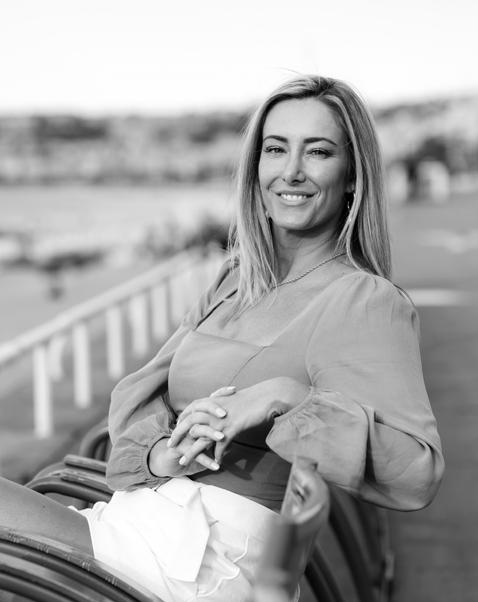

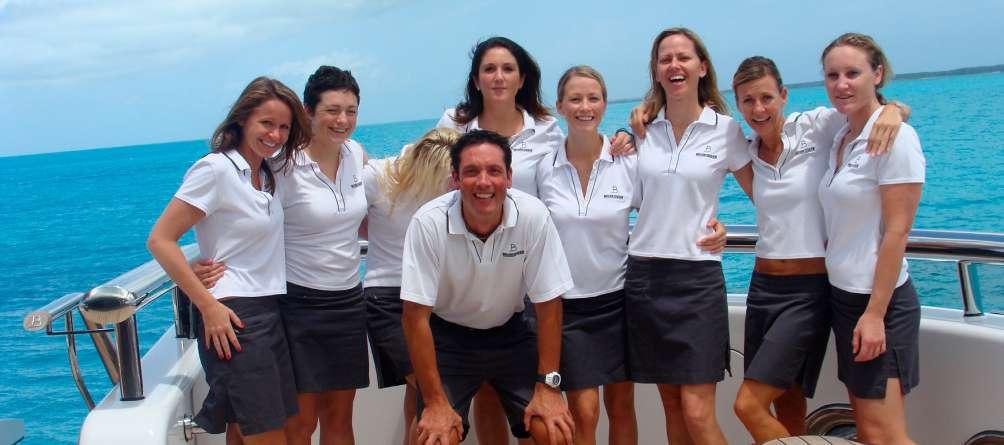
Virtual Pursers co-founders, Bec McKeever and Dominique Smit provide yacht administrative assistance to all vessels, no matter the size of the yacht or the extent of the need.
Written by Becky Roberts Pictures by PADI
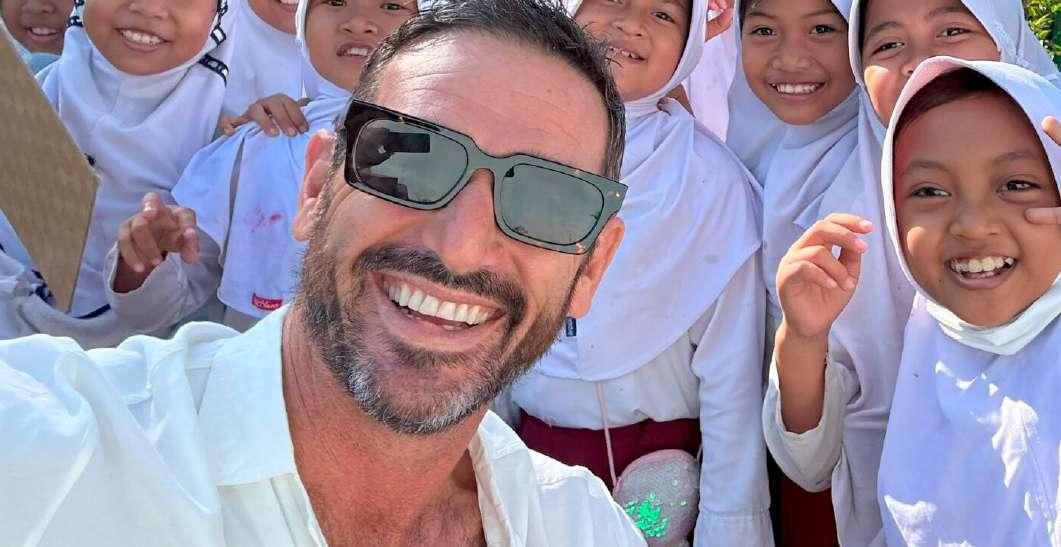
Becky Robertson talks to Captain Jason Chambers, known from reality TV show Below Deck. He has been involved in several conservation projects and PADI has now appointed him as one of their Ambassadivers.
Congratulations on being appointed as one of PADI's AmbassaDivers for 2024! What does this involve and how do you plan to use this platform to inspire others, especially within the superyacht community?
It's an incredible honour and a great opportunity. The role primarily involves advocating for ocean conservation and promoting diving as a way to connect with and protect our oceans. I plan to use this platform to highlight dive locations and PADI dive centers that are actively engaged in ocean conservation projects. By visiting these sites, I aim to educate myself and share this knowledge with others.
This journey is also a chance for me to ignite my daughter's passion for underwater awareness and conservation. By involving her in these activities, I hope to inspire the next generation to care and protect our oceans.
Superyacht crew with PADI Pro certifications can experience the destinations they visit from a new perspective enhancing their personal experiences while opening up intriguing conversations with fellow crew members and guests, making their travels even more engaging and memorable.
You've mentioned that diving and being underwater provides the ultimate escape. Does diving help you balance the high-pressure demands of being a captain and do you feel a sense of wellbeing beneath the surface? Diving to me is a form of appreciation, it allows me as a Captain to be better aware of my surroundings and adds a stronger element to my discussions with crew and guests to give them confidence in their Captain. Sharing dive experiences with guests is a conversation that goes on well into the evening, and brings guests and crew together.
How and where did you originally get into diving?
My first experience was in the Bahamas with my chef and engineer some 20+ years ago. From there I’ve been fortunate to cruise very remote locations in Indonesia, Papua New Guinea and of course The Great Barrier Reef.
As a PADI Rescue Diver, what personal encounters or experiences have fuelled your passion for ocean conservation?
My passion for ocean conservation is deeply fuelled by personal experiences, especially those shared with my daughter. When we snorkel together, she often discusses what she's learning about marine life and the environment at school. These moments are incredibly inspiring and drive me to deepen our shared experiences as she grows older. It's something we can bond over, making our vacations more meaningful through PADI Club adventures.
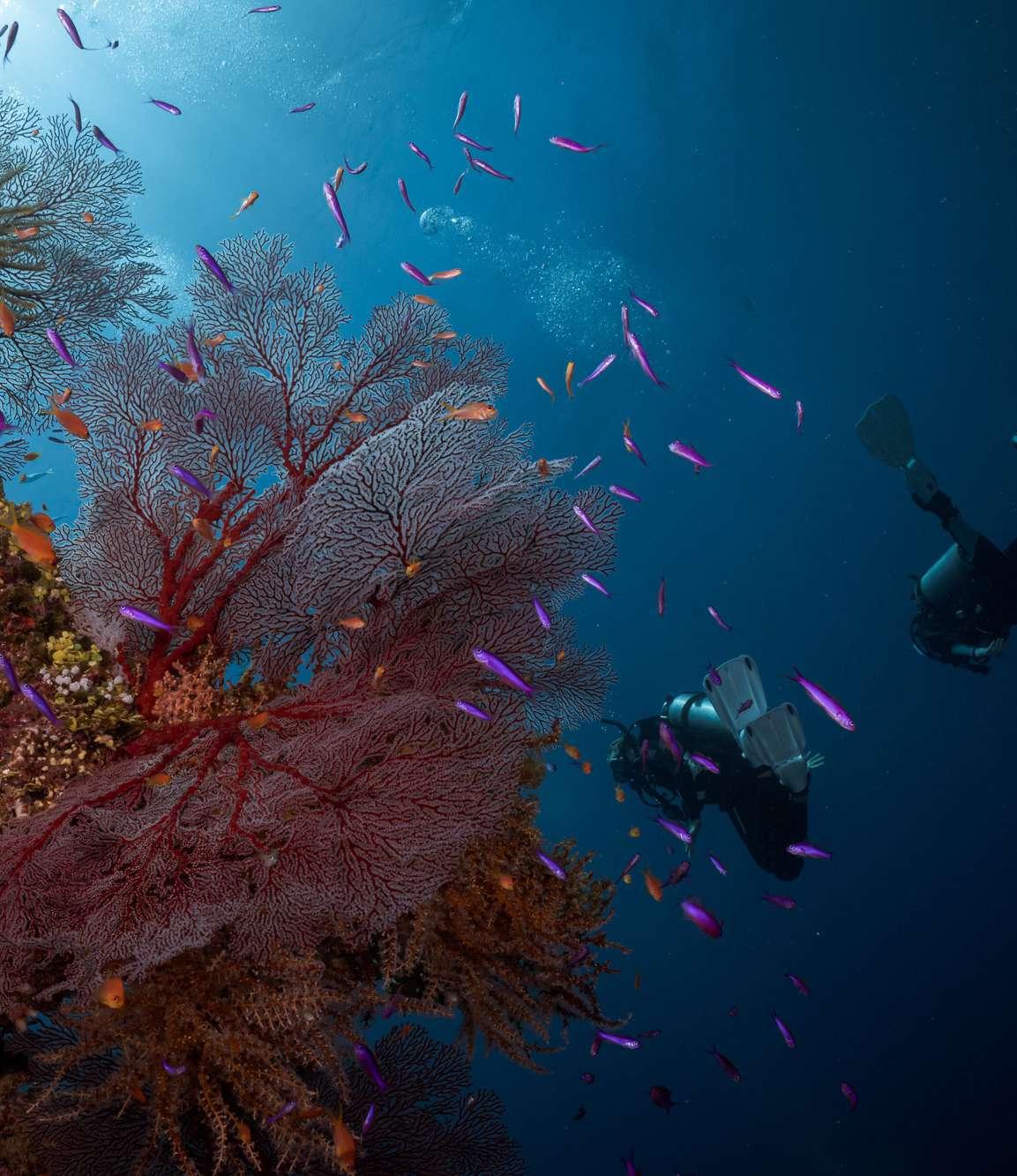
Additionally, my involvement with various Foundations I work with focused on plastic waste projects has heightened my commitment to conservation. Seeing my daughter take an interest in these issues, knowing how passionate I am about them, reinforces my dedication to protecting our oceans.
Beyond your role on Below Deck, you've also been involved in projects like Classroom of Hope. Tell us a bit about this.
Over the last 10 years I’ve taken over a project to build a small resort in the Philippines. Noticing seasonal dumps of plastic waste washing up on the beach, we did our best to find ways to reuse this. I came across The Classroom of Hope - Wow what a concept! They are working towards creating 400 schools, with 100 already completed. These schools feature 100% plastic waste systems and are built to be earthquake proof within 6-8 weeks.
They don’t stop there; they work with the community leaders to educate and increase the culture of reusing waste. More importantly, they are helping to instil the importance of gaining an education among a younger generation, especially giving hope to the young females highlighting that education will give them the tools to make them the bread winner.
How do you balance your roles as a father, TV actor, professional athlete, and now a PADI AmbassaDiver?
The show has given me the opportunity to spend more time with my daughter, which is incredibly important to me. I leverage this platform to support my Foundations and focus on my health and personal growth. Rather than using this visibility to promote multiple products, I aim to use this time to learn, share knowledge and inspire others.
For superyacht crew members looking to enhance their skill sets, what advice would you give on the benefits of becoming a PADI Pro and delving into the world of diving?
The more you advance with your skills, the more confident you will become as a leader, and it increases your understanding of safety procedures and your ability to deliver clear and effective instructions in diverse situationsan essential skill when managing a team or guiding guests.
In what ways do you see the superyacht industry evolving in its approach to ocean conservation?
Every yacht should know what’s around them, what’s under them and what’s important to preserving our oceans. I believe the industry should align itself with a global group that funds and supports local projects, such as coral restoration and marine parks, ensuring that Superyachts’ crew and guests not only enjoy the beauty of the oceans but also contribute to their preservation and restoration.
Looking ahead, what is your vision for a more sustainable future, both within the superyacht industry and on a global scale, and how do you see diving contributing to this vision?
My vision involves everyone making small, manageable changes. I believe that if each person commits to a 1% change in their behaviour or practices, collectively, we can achieve significant positive impacts.
Once you've experienced the underwater world, it's impossible not to become more conscious about waste, coral restoration, and the importance of marine life. Diving fosters a deep appreciation for our oceans, encouraging people to think twice about their actions and their environmental impact.
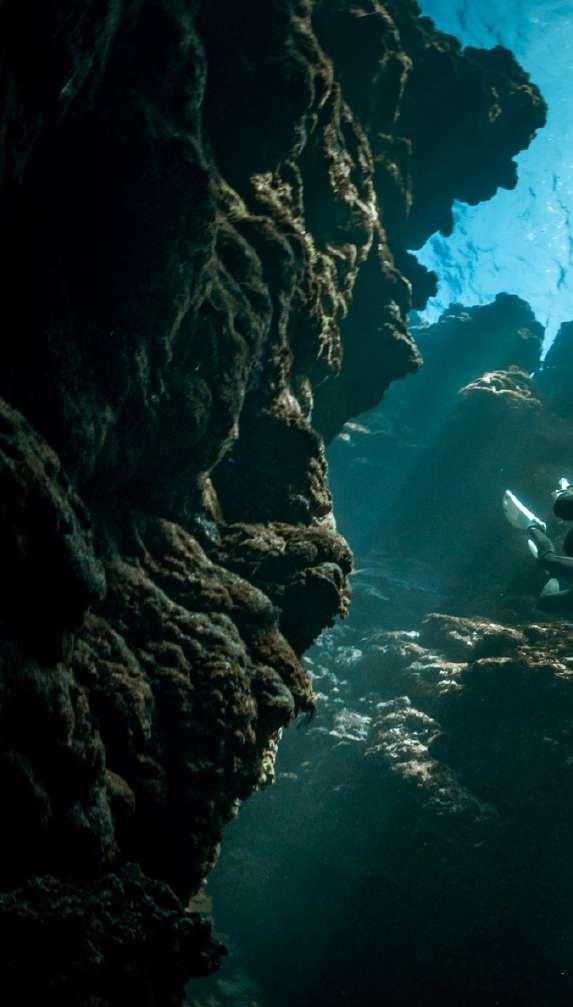
Are there any other exciting projects you are working on in 2024?
I am excited to be working with the Mares Foundation, which operates out of the USA. This organisation focuses on bringing marine conservation education to children in Latin America through creative initiatives such as city murals and literature. The projects aims to help children who may not have the opportunity to see the ocean firsthand to still appreciate and understand its importance. By engaging with these communities, we hope to inspire a new generation to value and protect our marine environments. ◆
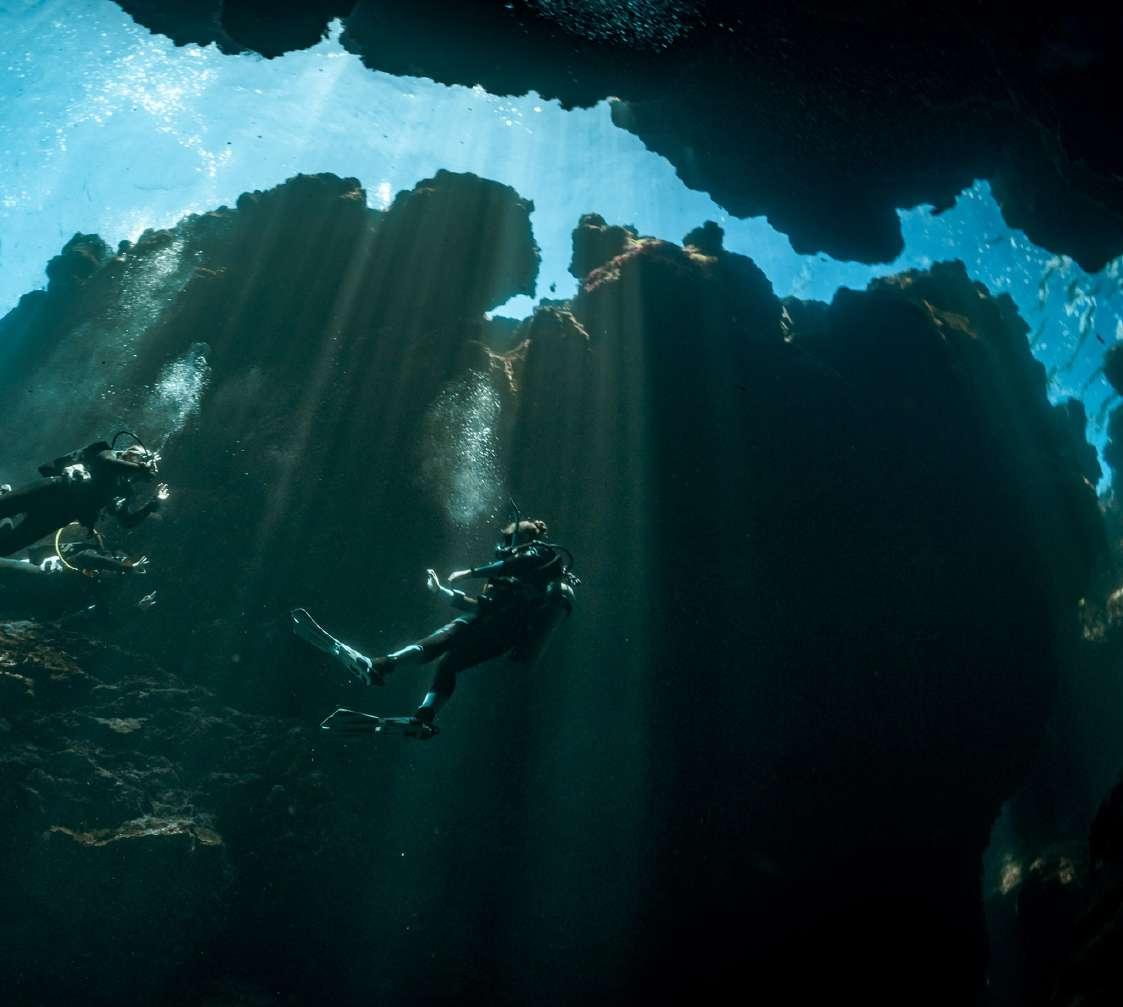
Written by Clair Minto

Cashmere is one of the most luxurious fabrics in the world and is beautifully soft to wear but what happens when madame casually hands you her cashmere top or something gets spilled on that ultra expensive throw that takes pride of place in the salon?
Don’t panic – it is possible to clean it without the need for dry cleaning (although if that is an option it may be the easiest bet!)
Firstly, unless the label specifically says so, do not put cashmere in the washing machine. Hand wash with a specialist product or if in a pinch a drop of baby shampoo.
Make sure the water is only lukewarm and don’t leave your item soaking for more than 30 minutes or so. Don’t wring out but rather gently squeeze out any water and then roll it up in a towel to get rid of as much moisture as possible. Dry the item flat as placing it on a hanger will weigh it down and could cause it to lose its original shape.
It’s also possible to treat small stains as washing Cashmere too often is also bad for its health!
When the item is ready to be returned, again don’t hang it as this will weigh it down. Fold items carefully and if they are going to be stored for some time a cotton or linen bag as well as some cedar balls or rings will stop any moths or other nasties from making it their home.
Some other tips:
• Washing items inside out will also help to reduce pilling or bobbling but, if there is any, you can use a razor or cashmere comb to remove these.
• Steaming will quickly take any creases out and is safer than ironing.
• Lavender sachets will also keep moths away.
Caring for cashmere is not as daunting as you may think, it has been around for centuries, and fun fact Cashmere is about 3 times warmer than wool despite being lighter in weight. This is due to the finer fibres and the way they trap heat more effectively. ◆
Clair Minto
info@chiefstewshop.com (+44) 781 667 8634
www.chiefstewshop.com
IG: @chief_stew_shop






Life aboard a ship presents a unique set of challenges for maintaining both mental and physical health. In an environment where space is limited, social isolation is common, and access to healthcare resources is restricted, preserving overall well-being becomes essential yet complex.
The most important message, is that we must understand that everything is interconnected. To maintain good emotional health, we must also maintain good physical health, and vice versa. Our lifestyle, what we eat, how we sleep, our social relationships, and how we nourish ourselves are all directly related to our emotional wellbeing.
1. Regular exercise
Physical exercise is fundamental to maintaining health in any setting, but it becomes even more critical onboard a ship, where movement space is constrained. Crew members are encouraged to establish a daily exercise routine that includes cardiovascular, strength, and flexibility activities. Exercises such as push-ups, squats, stretching, and the use of resistance bands can be performed in confined spaces. Exercise not only enhances physical health but also serves as a powerful tool for reducing stress and anxiety.
2. Balanced nutrition
In an environment where food options may be limited, it is crucial for crew members to be mindful of the importance of a balanced diet. This includes consuming fresh fruits and vegetables, lean proteins, whole grains, and healthy fats. Additionally, staying hydrated is key, especially in marine environments where dehydration can occur rapidly. Moderation should be emphasized in the consumption of processed foods, refined sugars, and alcohol.
3. Adequate sleep
Quality sleep is vital for mental and physical recovery. However, onboard conditions can make it challenging to achieve restful sleep. Crew members should be educated on sleep hygiene practices, such as maintaining a consistent sleep schedule, creating a sleep-friendly environment with blackout curtains and earplugs, and limiting caffeine intake and screen time before bed.
4. Social interaction and support
Encouraging regular social interaction among crew members is essential to combat feelings of loneliness and depression. Structured activities, such as team-building exercises and social events, can foster a sense of community and mutual support.
5. Mental stimulation and continuous learning
Encouraging crew members to pursue personal interests, whether through learning a new language, reading, or engaging in hobbies, can be beneficial for mental health.
6. Stress management techniques
Practices such as yoga, meditation, and deep-breathing exercises should be integrated into daily routines to help manage stress and improve focus and mental clarity.
Beyond Psychology, in addition to having a specific department to assist the crew with physical or mental issues, has also developed a training and intervention course for the crew. This one-day course provides both theoretical and practical instruction on how to stay healthy while on board. ◆
www.beyondpsychology.es

Rebalance your Mind, Body, & Spirit.
Special health programs designed for professionals who has worked as crew, and understands the unique challenges we face while working on a yacht.
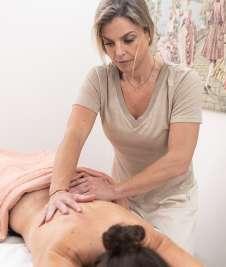
The finest health clinic for women in Palma
We specialize in providing 5 stars luxury services in the field of emotional & physical health . Discover our exclusive and one-of-a-kind health experiences.

Written by Evolution Yacht Agents
Spain, a heavenly and versatile destination thanks to its climate with pleasant temperatures all year round. The ease and excellent connections between cities facilitate access to a wide variety of cultural and gastronomic offerings. During summer season, sailing along the Spanish coasts enjoying the essence of the Mediterranean it’s a must. However, during winter, Spain becomes one of the preferred destinations for superyacht to perform maintenance and refit work, due to the extensive Spanish coastline there is a plethora of well-equipped ports to facilitate these duties. Although the most popular service is Inward Processing Relief, better known in Spanish as TPA.
What does the concept of TPA mean TPA is a customs process that allows the temporary importation of non-European vessels for repairs, maintenance and refit, with the possibility of VAT exemption.
One of the requirements for being subject to this regime is to have a flag that does not belong to the European Union, as well as the owner of the vessel, who cannot belong to the European Union either. There are also other requirements, which their agents must previously check with the ship’s official documentation to be eligible for Inward Processing Relief.
If the above requirements are met, they can start with the TPA process. In Spain, there are no shortage of cities in which it is possible to access the benefits of the Inward Processing Relief (TPA), they must simply comply with the characteristic of being considered as a customs port. These can include: Palma de Mallorca, Barcelona, Tarragona, Vilanova, Valencia, Alicante, Cartagena and Málaga amongst others.
Main advantages of TPA
Vessel will be able to save 21% VAT on all repair, maintenance and refit supplier invoices, including Spanish and foreign companies. In addition, shipment of any imported parts related to TPA will be eligible for this regime avoiding the payment of VAT and customs duties.
When the vessel is under TPA process, it doesn’t consume the 18-month temporary import time for non-EU vessels to remain in the EU, which is a major added advantage. During
this process, Evolution will be able to assist you directly without intermediaries.
In addition, this process saves the vessel time and costs avoiding the need to clear in a non-EU port.
Such process is quite complex and requires special attention to ensure that all requirements are fulfilled. There are three possibilities to close the TPA process.
• Sail offshore up to 12 nautical miles and once exceeded the vessel can return to the port.
• To visit any other Spanish customs port in transit.
• Conclude the TPA by exporting the vessel to a non-EU country, for instance, Gibraltar.
Why evolution for TPA
Evolution is an officially registered customs agent with over 25 years’ experience in the superyacht industry. As an Authorised Economic Operator, Evolution is in constant communication with Customs to ensure that all legal requirements are properly with an in-house legal team ensuring complete guidance without intermediaries.
With over 500 TPAs successfully managed, Evolution is able to open your TPA as well as guide captains, crew, managements and contractors through the entire process, ensuring that Spanish tax and customs requirements are met at the time TPA process is taking place by simplifying the process in several Spanish ports, providing transparency and an unwavering commitment whenever you need it.
This winter choose EVOLUTION to handle your TPA processes and enjoy an exceptional service with personalised and efficient attention. ◆
Contact their expert team at:
tpa@evolutionagents.com +34 971 400 201
Written by Sara Paterson (MSOS)
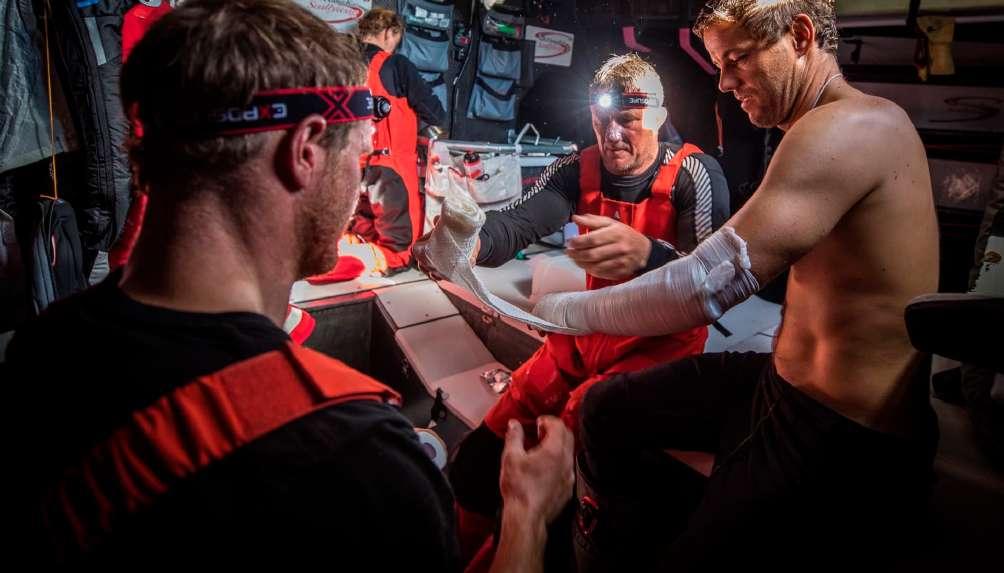
Photo by MSOS
As a prior yacht nurse and current MSOS yacht medical trainer, I have always thought that a captain of a vessel being required to take full charge of all medical care onboard is a very difficult requirement.
A doctor will have 7-15 years of continuous training, a nurse or paramedic 3-7 years, and then years of daily real patient experience, ensuring training has turned into excellent medical skills.
Training is knowledge, experience is wisdom as they say.
A captain will have a 4.5-day course repeated every 5 years, a few good medical drills in between, maybe annual training with a professional yacht medical trainer, and hopefully no actual real patient experience onboard…
This is not to say that with a cool head and well-trained crew support, a captain cannot deal with most straightforward medical issues onboard competently.
But the IMO does state the following
‘In the absence of a doctor on board (which is most often the case), the captain is responsible for medical care. However, any medical training he has received is not such as to allow him to treat a patient unaided. That is why telemedical advi-
ce may enable him to provide a good standard of treatment and make the best use of the compulsory medicine chest’
They follow up with the following statement on telemedical support (TMAS)
‘The overall objective of a system of medical assistance at sea is to try to provide seafarers with medical care as nearly as possible equivalent to the care they would receive ashore’
‘MEDICAL ASSISTANCE AT SEA’ INTERNATIONAL MARITIME ORGANIZATION (IMO) MSC/ Circ.960 20 June 2000
When getting someone to shore is a few hours or days away, a good maritime doctor at the end of the phone via a TMAS service is vital to a good outcome, and speedy recovery.
Here are a few ways your telemedical support service can help you and your crew
Prevention
As an example when cruising the tropics, early symptoms of dengue fever in a crew member are minor and can look like a flu or gastrointestinal bug, however on day 3-7 after contracting dengue, severe dengue can occur, which is unsurvivable at sea.
A call to your TMAS for an assessment of a crew member’s fitness to go to sea will help to prevent avoidable harm and the need to provide complex medical care, or worst case, a death at sea.
Assessment
A good TMAS service will cover both physical and mental health in one service, a call for a review of a crew member with some behavioural changes could be life-saving, and provide a good plan of action on how to best support that crew member.
Safety
The strong medications in the maritime medical kits can, if given in a few mls of the wrong dose, be fatal. A TMAS service provides recommendations that take into account allergies, the patient’s normal medications, and the signs and symptoms to determine whether to administer medications, and if so, in the correct dose and at the right time, minimizing risk.
Harm
All medications and treatments can have severe side effects.
For example, some antibiotics can cause changes to the skin's surface, which, if one is working on deck, can result in severe sunburn.
TMAS doctors can determine the safest option or combination of treatments based on the patient’s profile during a medical incident and provide information on how to take the medications safely while managing any side effects that may occur.
Privacy
A TMAS service will ensure continuous documentation of the case, recording all calls and providing a case report for medical services if required. This ensures secure patient data and better care through thorough record-keeping.
Logistics
A maritime TMAS team will have links with worldwide support services and can assist a captain in organising a rescue, whether that be to another vessel, a heli-vac service, or advise to keep the patient onboard and reroute to a better medical
facility. An assessment by a TMAS doctor can also identify patients who appear well but have less obvious conditions, such as a detached retina, which requires urgent evacuation despite the patient appearing to walk and talk normally.
What you can do to support the TMAS doctor
• Speak clearly and slowly when calling, move away from noise, and ensure you can hear and be heard accurately. This might mean moving to another room away from the medical incident and not using speakerphone.
• Know your medical kit inside and out. The better you understand the location and use of the equipment, the quicker the patient will receive treatment.
• Make pre-season, pre-arranged drill calls to build confidence among all crew members using the TMAS service.
At MSOS, all our doctors are consultant-level professionals with many years of experience in telemedical support, giving them the unique skill of making decisive treatment plans for patients without seeing or touching them in person - a challenging task!Our doctors are also selected for their unique maritime experience and knowledge, giving them a deep understanding of common injuries and illnesses at sea, and the complications of providing medical care on a moving vessel with limited space.
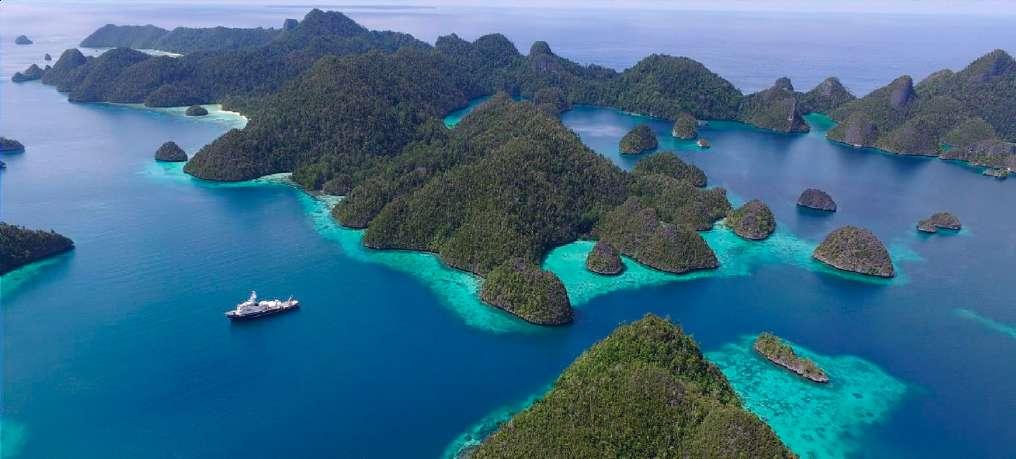
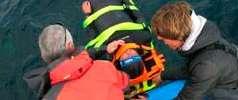
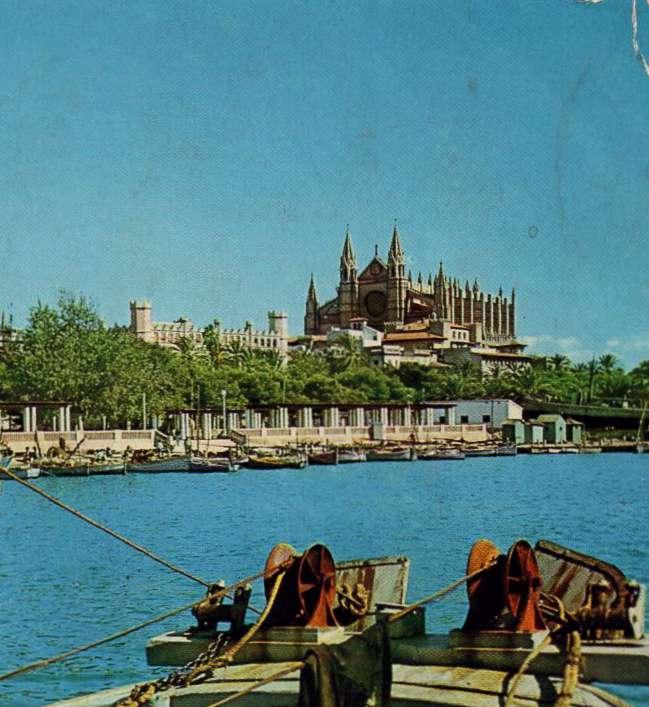
78 . Escape to paradise discover the charm and luxury of Jumeirah Mallorca
80. The creation of the first underwater archeaological centre in Formentera
82. Ibiza Joysail’s registration closed with maximum entries!
84. Copa del Rey Mapfre 2024
88. JoyRon Foundation
90. Historical gem Portopí: Spain´s second oldest lighthouse
92. Stunning Andaman Islands cruising
96. Lower revs for a safer and thriving Mediterranean
100. Discover Zulu Coworking
104. Toftevaag’s journey to Ithaca
106. Brokerage
Written by Anne Nicholson
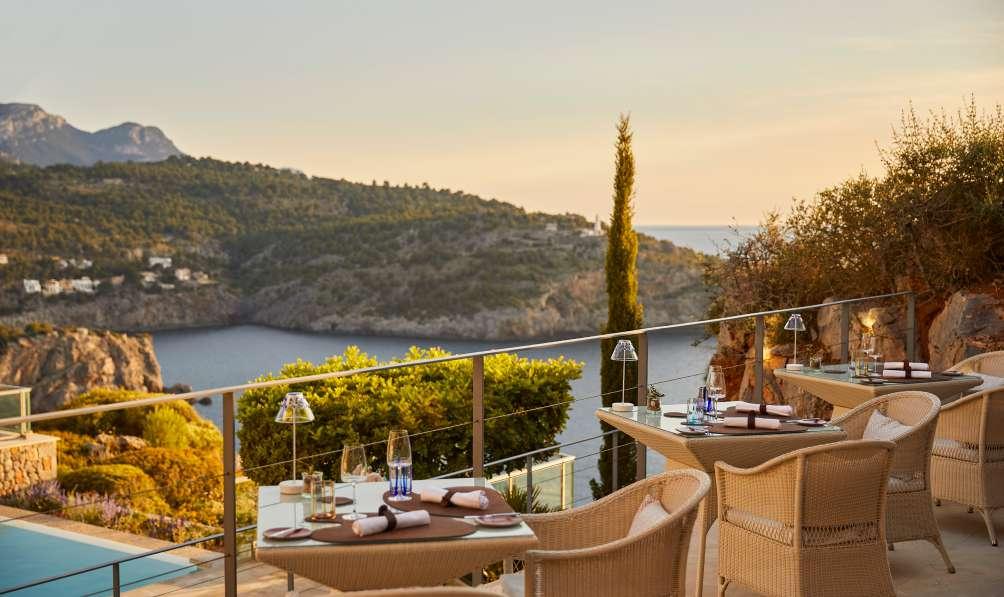
Set high above Port de Sóller on the unspoilt northwest coast of the island, Jumeirah Mallorca is a secluded sanctuary near the magnificent UNESCO Heritage Serra de Tramuntana. An emblem of Sóller Valley’s exclusivity, the hotel is the most desirable setting for a serene escape.
Stylish and tranquil, the hotel offers 121 bright and spacious sea- and mountain-facing rooms covering 18,000 square metres and featuring recently refurbished suites. Each room is perfectly designed for home-from-home living with private terraces providing expansive views of the Mediterranean or the Tramuntana range. There are three Signature Suites at the hotel, the appropriately named Lighthouse and Observatory suites, plus the multi-level Mar Blau Villa with its own private entrance.
To begin the customer journey, as you enter the hotel lobby, you will be engaged by the striking art installations, including a sculpture by internationally renowned local artist Francesca Marti and an overall collaboration with Palma’s iconic Gerhardt Braun Gallery.
The award-winning and majestic Talise Spa and Fitness provides a sanctuary for anyone seeking rejuvenation, featuring extensive amenities and expert therapists. It is the only Spa on the island with a dramatic view from the hydropool and loungers right across the Tramuntana. Open to non-hotel guests for treatments and day passes, seasonal memberships are also available.
The hotel hosts five restaurants including signature dining at Cap Roig Brasserie, Es Fanals Restaurant, and Nikkei inspired cuisine at Sunset Lounge, each offering panoramic vistas over the azure blue waters, that create the perfect photo for the Instagrammers amongst us. All restaurants are available to book by non-hotel guests.
Perched on the cliffs overlooking the serene Port de Sóller, Es Fanals is redefining luxury in the dining experience, marrying breathtaking views with exquisite cuisine. The restaurant's location provides a stunning backdrop of the Tramuntana mountains and the Mediterranean Sea, enhancing every moment spent here.
The restaurant is a true clifftop retreat, an oasis of tranquillity and elegance and a far cry from the city-based fine dining venues in Palma. The ambience is sophisticated yet inviting, perfect for a special treat. The decor wonderfully complements the natural beauty surrounding the restaurant, making it a perfect spot for a romantic dinner or a special celebration.
On 22nd June, 40 guests saw Executive Chef Javier Lopez combine his creative genius with the culinary mastery of Jumeirah Capri Palace and Jumeirah Burj Al Arab’s two-Michelin-starred Executive Culinary Chef Andrea Migliaccio. A whole host of unforgettable gastronomic moments were experienced as guests sampled a unique tencourse tasting menu with a carefully curated wine pairing. Highlights included the tagliolini al limone with red
prawns, burrata cheese, oyster leaf and glasswort paired with a Sicilian white from the soils of Mount Etna.
Recently listed by the Michelin Guide Spain, the restaurant’s philosophy is to elevate the authentic flavours from the Balearic Islands to the centre stage and champion local, seasonal ingredients. The tasting menus available from Tuesday to Sunday until November are a culmination of the freshest local fish and seafood, artfully prepared and presented by expert chefs and overseen by Javier Lopez. Dining at Es Fanals is not just about the food; it's about the entire experience. The stunning views, exceptional cuisine, and top-notch service make it a must-visit for anyone in Port Sóller. Whether you are celebrating a special occasion or simply looking to indulge in a memorable meal, Es Fanals is redefining luxury and will exceed your expectations.
The most central base for exploring the region of the northern coastline is the hotel, so although it is tempting to squander days in the clifftop infinity pool, gazing at the horizon and enjoying the hospitality, the mountainous UNESCO World Heritage–listed coast is riddled with hiking and cycling trails. The hotel serves as the perfect gateway to an array of unforgettable experiences - why not stay at the hotel and have the Concierge team curate an unforgettable excursion? You can cruise or sail from Port de Sóller on a superyacht and discover secret coves and crystalline waters that you have not dropped anchor at before. As the sun dips low, casting an ethereal glow across the rugged landscape, nature's daily masterpiece unfolds. The sunsets, whether experienced from the hotel’s Sunset Lounge or from a yacht nearby, are truly unforgettable. And, if you have never visited one of the island’s orange orchards, then taste the sweetness of Soller's local orange fields at Sa Vinyassa, an expansive 18,000-square-metre orchard.
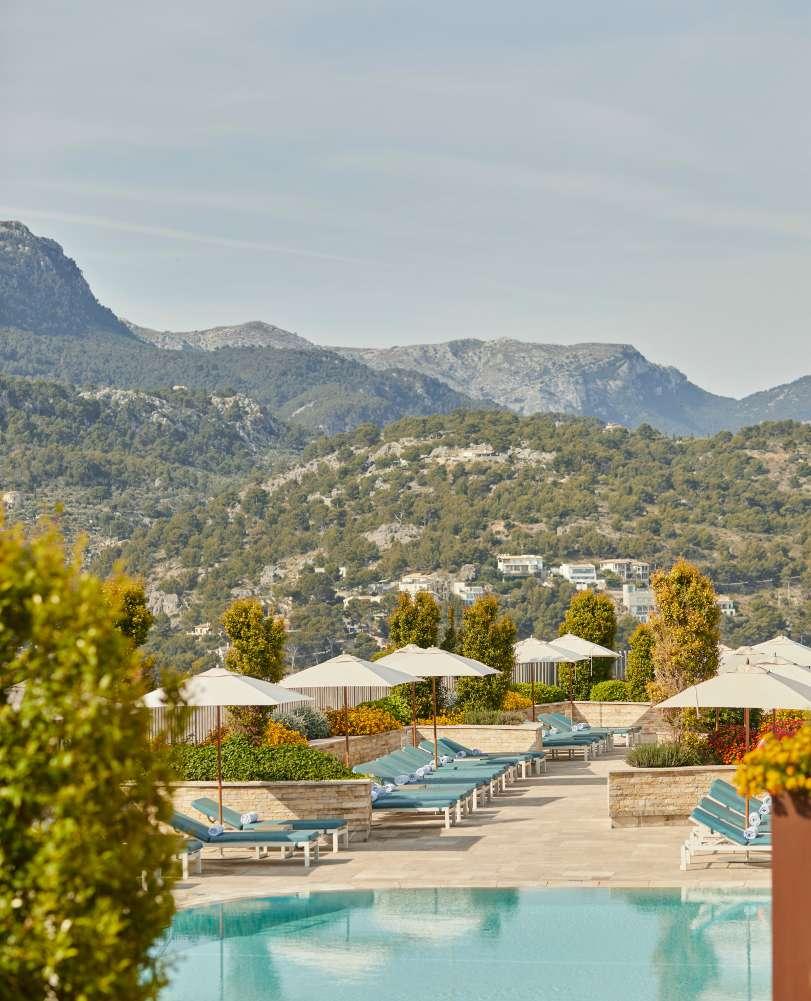
Overall, sink into the rhythm of island life, where Jumeirah's warm hospitality enriches the allure of this destination within a destination. ◆
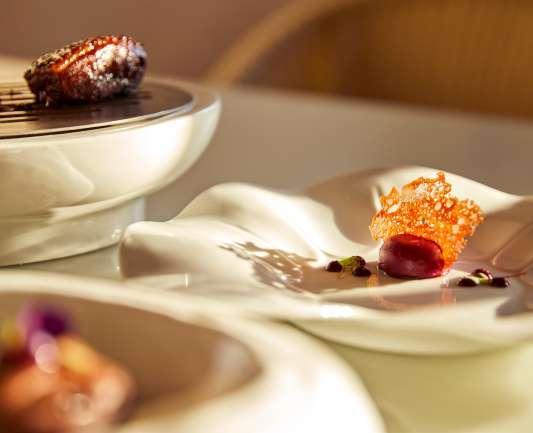
Written by IPM Pictures by IBEAM
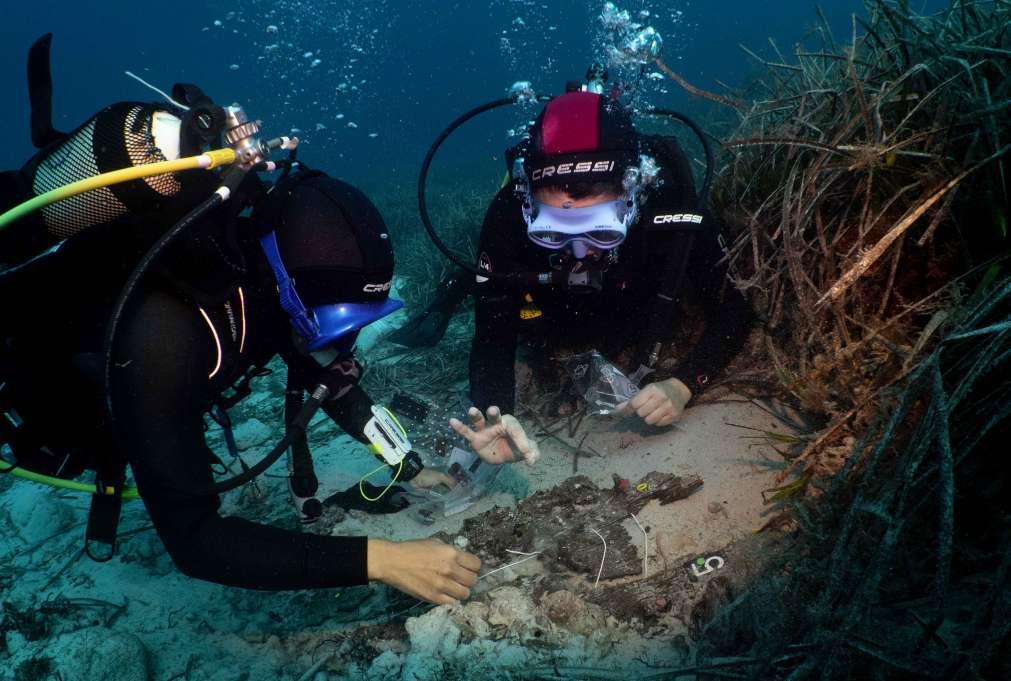
Marina Ibiza and Trasmapi are supporting IBEAM (Balearic Institute of Maritime Archaeology Studies) in the creation of the first underwater archaeological centre at the Port of Savina, Formentera.
The Balearic Institute of Maritime Archaeology Studies (IBEAM) is committed to the conservation and optimisation of the underwater archaeological remains found in the Balearic Islands.
IBEAM has been working hard since 2015 to enhance these submerged treasures, which, together with the natural heritage, make up underwater seascapes that are as impressive as they are fragile.
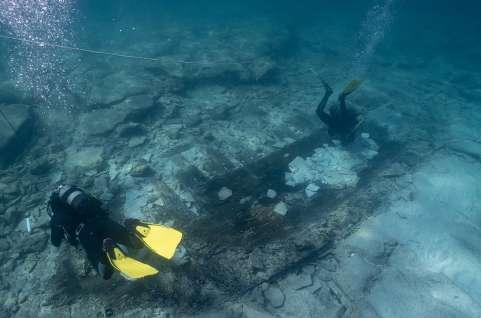
As a result of this work, the first Underwater Archaeology Centre in the Balearic Islands is planned to open this year, at the Port of Savina in Formentera.
This venue will be the epicentre of all actions geared towards researching, protecting and enhancing the maritime cultural heritage of the islands, and will have a conservation laboratory and its own boat.
Partnerships with the companies Trasmapi and Marina Ibiza will help this project become a resounding success. Together, they are actively supporting the conservation and awareness of the historical and cultural wealth that lies in the depths of the Balearic Sea.
Javier Rodríguez, Project Director at IBEAM, says that "this centre is more than a physical space, as it reflects the commitment of Ibiza and Formentera to work towards more sustainable islands that are aware of their rich maritime history".
Meanwhile, Enrique Aragón, Scientific Director at IBEAM, explains that "this trailblazing scientific venue will share knowledge through research and awareness-raising projects and will work closely with the business world and the local community to address one of the main problems that we're currently facing: the disappearance of our underwater cultural heritage due to looting". ◆

Written and Picture by IPM GROUP
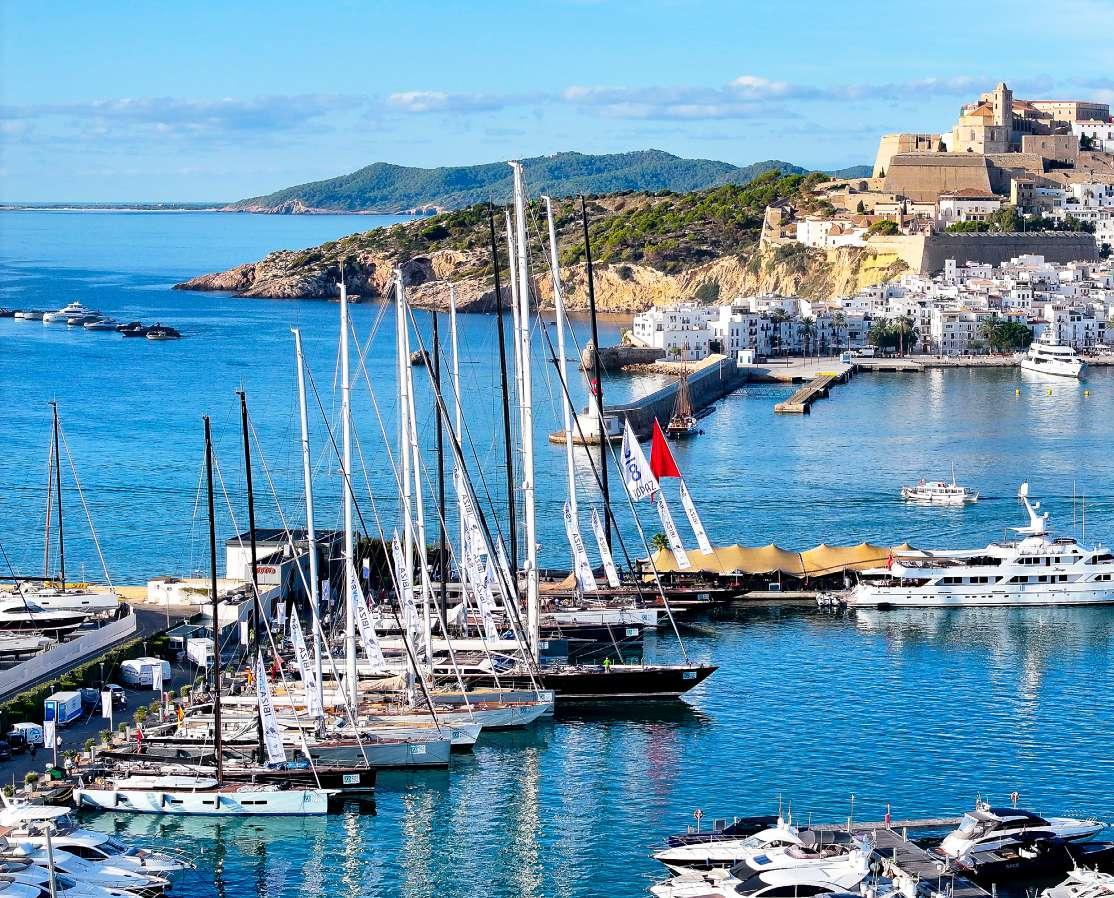
The 2024 Ibiza JoySail regatta is set to be a spectacular showcase of superyacht prowess as the event reaches its maximum capacity of twenty high-performance vessels.
Scheduled to grace the waters of Marina Ibiza from September 19th to 22nd, the exclusive gathering promises a thrilling blend of competition and camaraderie.
Since its debut in 2021, Ibiza JoySail has rapidly established itself as a must-attend event for the world's elite yacht owners and crews. This year's edition boasts an exceptional fleet, featuring a diverse range of cutting-edge yachts. From the newly launched 194-foot Frers ketch, Maximus, to the iconic Nautor's Swan 115, Moat, the lineup is a who's who of the superyacht world.
A notable highlight is the presence of three brand-new Baltic 68 Café Racers, set to battle it out in a thrilling three-way duel. The Southern Wind fleet is also strongly represented, with six yachts confirmed, including the recently launched Liberty.
As the countdown to the starting gun begins, anticipation is building among competitors and spectators alike. Ibiza JoySail promises to be a memorable event, combining worldclass sailing with the vibrant spirit of the Balearic Islands. ◆
https://ibizajoysail.com
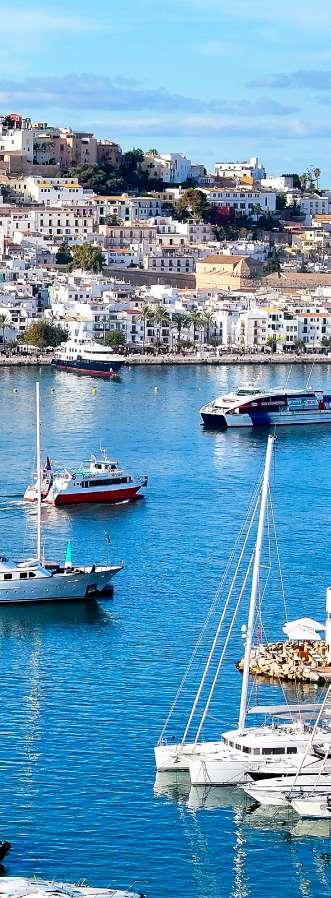
ALARIFE CIEN CUSTOM 99 BARCOS DEPORTIVOS
ALL SMOKE S WRP 90 SOUTHERNWIND
AMMONITE SW 96 SOUTHERNWIND
AURELIUS DYKSTRA 111 J.O.M. HOLLAND BLISS DUBOIS 120 YACHTING DEVELOPMENT
DARKHORSE SWAN 80
NAUTOR’S SWAN
GANESHA CAFÉ RACER BALTIC YACHTS
GELLICEAUX SW108 HYBRID SOUTHERN WIND GITANA DUBOIS 147 FITZROY YACHTS
KIBOKO SW 105 SOUTHERN WIND
L’HIPPOCAMPE SWAN 100
NAUTOR’SSWAN
LIBERTY SQUARED SW 96-05 SOUTHERN WIND
MAXIMUS FRERS VITTERS
MOAT SWAN 115
NAUTOR’S SWAN
MORGANA NAUTARP 100 SOUTHERN WIND
NOSTROMO DUBOIS100 PENDENNIS
OPEN SEASON CAFÉ RACER BALTIC YACHTS
PINK GIN CAFÉ RACER BALTIC YACHTS
WIN WIN BALTIC 108 BALTIC YACHTS
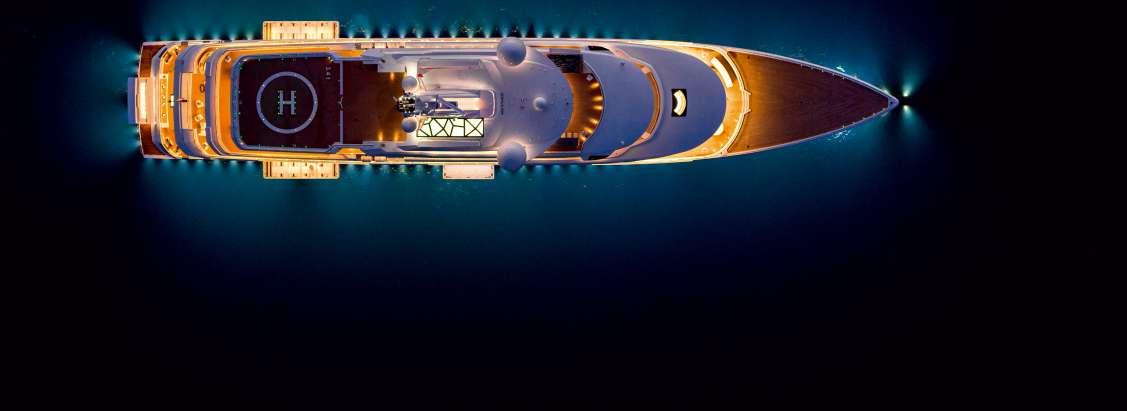
The most iconic regatta in the Med takes place at Palma's RCNP attracting best sailors from around the globe
Written
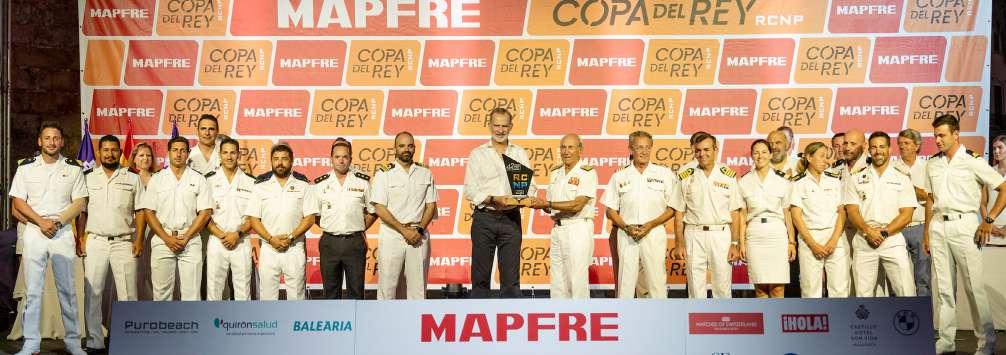
The 42nd edition of the prestigious COPA DEL REY MAPFRE traditionally takes place at the end of July and the first week of August at the Real Club Náutico de Palma. Renowned for its very competitive racing, steady winds (embat) and high level of social events.
King Felipe VI himself competes aboard the Spanish Navy's yacht, Aifos, highlighting the event’s importance. The regatta began with an intense race and fierce competition in the ORC 0 class between AIFOS and Teatro Soho Altavista, owned by Javier Banderas. AIFOS clinched victory in the inaugural race, setting a competitive tone for the event.
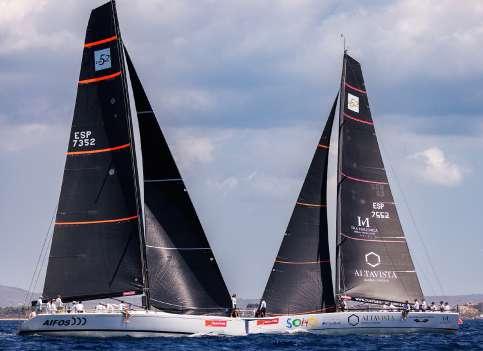
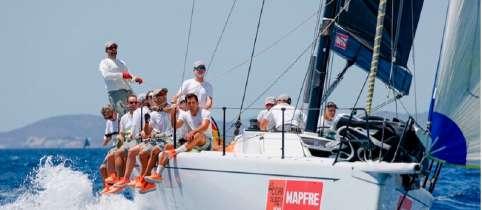
Over 120 yachts from 25 countries gather for this week of intense competition in several ORC and One Design classes like CS50, CS45, J70, and Womens Cup.
The most international class is Odilo ORC 1, with 12 countries racing and 22 boats registered. Due to the ORC Rating, the classes open up to different boats being able to compete against each other.
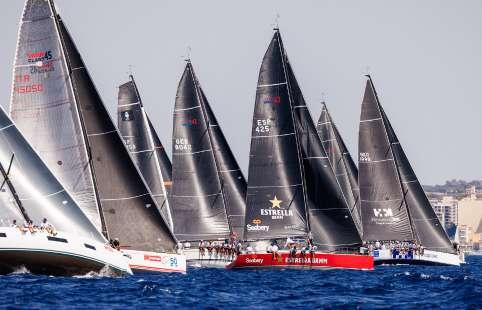
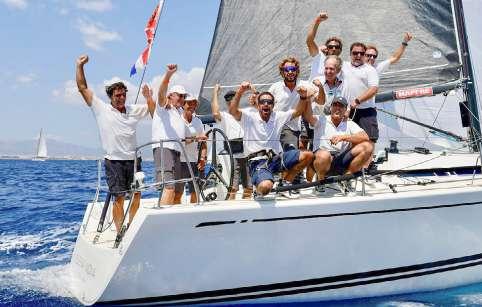
Swan 42 Owner of Elena Nova Christian Plump: The Copa del Rey is so special because it is so hard to win. We have been sailing here for over 11 years and have only won twice, as the regatta format is very demanding. It is no coincidence that the Copa is considered the unofficial European Championship.
The Race Committee here is extremely good, the jury is excellently staffed, and the courses are very precisely set. That is why in 2025, the ORC European Championship will also be held here together with the Copa del Rey. We prefer to sail in the ORC because of the high number of participants, and we enjoy racing in much larger fleets against a wide variety of competitors.
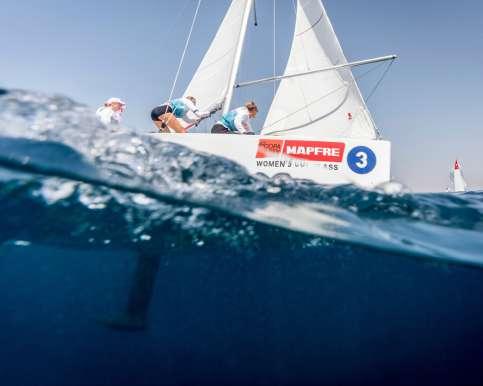
For the first time since the inauguration of this class five years ago, the number of teams in this One Design class has exceeded 14, including a women’s team from YC Monaco. This year's Women's Cup features a different competition format. Teams compete for the title in a 'Round Robin' – where all teams face each other – followed by several elimination rounds leading up to the Grand Final.
First-time participant Anne Schouten from YC Monaco: We love sailing here; it is an amazing opportunity for us. Our female team here consists of five nationalities, with members ranging from 17 to 62 years old. In Monaco, we have the Pink
Wave sailing team, which allows all female sailors in our YC to compete. Normally, we sail the J70 or the classic William Fife Tuiga D3. Next time, we'll bring our J70 because we will definitely be coming back!
Portugal’s three-time Olympian and Ocean Race sailor Diogo Cayolla: The Copa del Rey is an iconic event not to be missed. It perfectly combines intense sailing with vibrant social events, like a summer gathering with friends in a fantastic environment. Last year was particularly memorable for us: we won the overall regatta on Italia Yachts 11.98 Scugnizza, triumphing in all our races. That was truly exceptional.
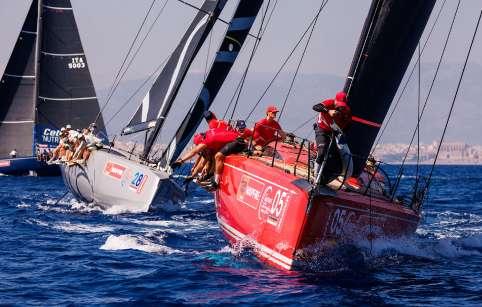
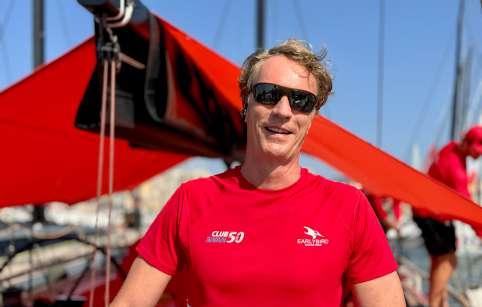
CS 50 Earlybird owner Hendrik Brandis:
For me, the Copa del Rey is one of the most remarkable events of the year, both onshore and offshore. The club organizes it exceptionally well, and the consistent wind conditions between 8-18 knots, thanks to the thermal winds, are as certain as amen in church. We were able to sail two races every day, which was simply perfect. Over the last 17 years, we have only won five times, the first being when Don Juan Carlos was still sailing. That remains one of my best memories.
The CS 50 is an unparalleled one-design class, a competition for sailors just like in the Olympics. It's a very well-managed class—sailing doesn't get better than this in the world. We will be back soon for the CS50 World Championship with 15 boats starting on October 20th.
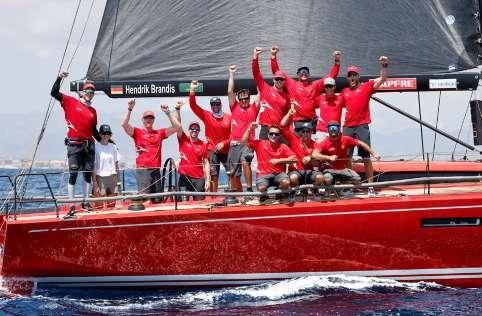
Watches of Switzerland ORC 0 Teatro del Soho Altavista
Odilo ORC 1 Elena Nova
Altavista ORC 2 Katara
Balearia ORC 3 Fala Pouco
ClubbSwan 50 Earlybird
ClubSwan 42 Pez de Abril
Sandberg Estates J70 Kimpton Hotels Les Roches
Women’s Cup Class Citanias RCN Vigo
Save the date for the 43rd edition of Copa del Rey and the ORC European Championships 2025: 26.07.25 - 02.08.25
Exciting until the last second:
The Copa del Rey MAPFRE consists of a Preliminary Series and a Final Series.
The Preliminary Series consist of six races in the first three days, the Final Series is made up of four races for ORC and ClubSwan monotypes.
The novelty with respect to previous editions is, that the total Preliminary score of each boat sums of all her points, discarding her worst score. The races of the Final Phase are not discardable and have a coefficient of 1.5.
The 42nd Copa del Rey MAPFRE is the most sustainable edition ever. For several years, this event has been dedicated to reducing its carbon footprint. It was one of the first regattas to collaborate with the Cleanwave Foundation, providing free drinking water to avoid single-use plastics. In collaboration with TrueWorld and supported by MAPFRE, this event plays a pioneering role in the fight against climate change and works tirelessly to protect the oceans.
The Copa del Rey MAPFRE is not only renowned for its competitive sailing but also for its unique social events. Each evening after the regattas, there is a crew party by the pool, creating a relaxed atmosphere perfect for catching up with old friends and fellow sailors while enjoying a cold drink and good music from a DJane.
La Copa is the most important regatta in Spain and almost the entire Mediterranean. It is an iconic event. The presence of the royal family, with the king as a member of the navy, has given the Copa even more visibility. We sail with His Majesty the King, who integrates into the team as just another member of the navy and does his job very well. It will be a week of fierce competition in ORC0.
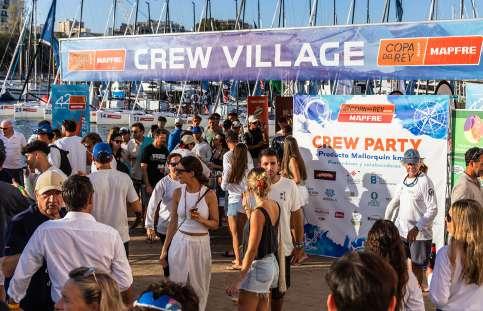
Adding to the festivities, Jaime Anglada, a renowned Mallorcan musician who is also an avid sailor in ORC1 and a close friend of King Felipe VI of Spain, performs live at the after-party. His attendance at these events, where he shows his support and captures moments on his phone, adds to the unique charm of the gatherings.
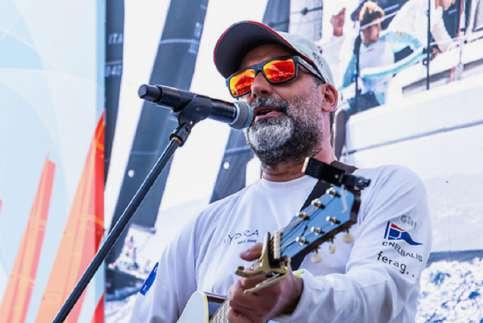
One of the highlights is the traditional White Party, held every year on Thursday night for yacht owners and sponsors. This event is celebrated as the best networking opportunity at one of the most beautiful locations. It is a very well-organized event featuring delicious food and entertainment by the well-known Spanish band, La Unión. The night is further enlivened by a talented DJ, accompanied by percussionists and saxophonist, who kept the dance floor buzzing.
French Tunisian Restaurant
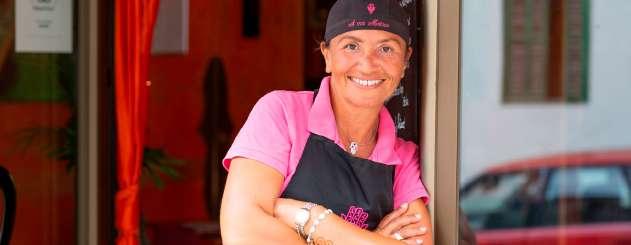
Discover the French Tunisian cuisine, prepared with fresh ingredients Saloua offers you a menu del día and in the evening a surprise menu
¨lt's like visiting a friend's place and you have no idea what they prepared for you
A ma Maison
French Tunisian Restaurant
Calle Soler 18 a, 07013 Palma +34 971 919 697 / +34 634 906 941 www.tiasaloua.com
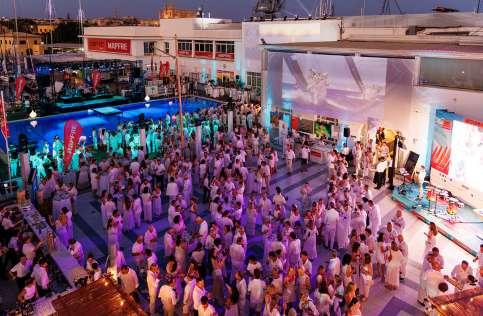
This is the team that makes it all happen: from setting the regatta courses to live broadcasting, organizing the social events, and the prize giving ceremonies. Thank you RCNP Crew! ◆
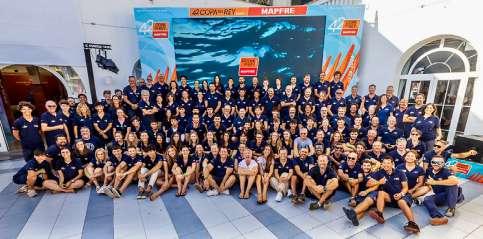
White Canvas Arts Events
Muse is a 300 m2 space available for exclusive hire. This is not just any space - it's a white canvas events space, meaning that it's designed to be a blank canvas for your creativity
Whether you ' re looking to showcase your art or host a corporate event, Muse offers endless possibilities for customization and personalization Think of lunches and dinners, photo shootings, a promotion, a theatre or a lecture

MUSE PALMA
White Canvas Arts Events
Calle General Ricardo Ortega 48, 07006 Palma +34 634 906 941
www.muse-palma.com
Written and photo credits by JoyRon
The April to June period has been somewhat hectic in fund raising activity. Hence there are some THANK YOU’s due. Firstly thank you to Superyacht Charities UK for their donation to JoyRon Foundation of euro 10,616, being part of the proceeds they raised from their fifth Superyacht Charities Seafarers Supper that took place on April 26th at Can Eduardo Restaurant. Secondly, thank you to all artists and companies that supported the JoyRon 2nd Innovation and Art Expo held in May, which resulted in some euro 4,500 raised. Thirdly, thank you to WineYes for sponsoring all the wine consumed at our Mid-Summer Night Charity Dinner and White Party on June 22nd, also staged at Can Eduardo Restaurant which raised some euro 13,900. The Foundation is now working on different community service initiatives, supporting Children in Need in order to spend wisely the euro 29,616 raised during this period.
Provisional Booking, please contact Ronald as per contact details below.
Upcoming JoyRon foundation fund raising events
Friday 13th September 2024 – Sandberg Estates Santa Catalina Palma will be organising a Charity Golf Tournament and have very kindly offered to donate the proceeds of the event to JoyRon Foundation in support of Children in Need in the Baleares. Any keen golfers interested to participate please contact the foundation via the JoyRon e-mail below or contact Sandberg Estates direct.
Sunday 13th October 2024 – JoyRon Foundation in collaboration with E-Touch Systems based in the STP, will holding their 3rd Family Fun Day and Go Kart Racing Event at Magaluf Race Track. Delighted to advise, that all 18 race team slots have been taken, but we have established a reserve list for any teams interested, should any teams registered withdraw. Anyone interested in entering a six person go-karting race team, please contact the foundation via the e-mail below or contact Jamie Brown at E-Touch Systems direct at e-mail jamie.brown@e-touchsystems.eu
In addition to the Go-Kart racing the event incorporates aspects of a Family Fund Day with Children’s ActivitiesBouncy Castle, Face Painting, Clowns etc etc, Plus DJ, Bar Service and Food Catering etc etc. Admission to the venue is free. Hope to see you there.
Saturday 5th April 2025 – The 2025 JoyRon Michelin Star Gala Dinner at Finca Son Mir is booked. Every year has been a sell out. Very much an event not to be missed. Anyone requiring advance details and/or make an advance
Two new initiatives
a) JoyRon can currently issue Spanish Tax Deductible Donation Certificates for corporate and individual financial donations. JoyRon is currently setting up similar for other countries. Belgium and Germany have just been approved. France, Italy, Switzerland and United Kingdom in process of set up. Hopefully all will become operational during September 2024.
b)Also in process of setting up local JoyRon Activity Teams in Pollensa, Alcudia and Santanyi to raise funds in the local community for the benefit of children in need in that local community. Interested in being involved? If YES just contact us. THANK YOU. ◆
To help the many children in need in the Baleares who are under privileged, in need and require support. Interested in event sponsorship? Financial Corporate of Individual Donation? or Provide an Auction Item or Raffle Prize?
Please contact us. Together we can make it happen.
Send an e-mail to info@joyronfoundation.org
or call Ronald at +34 608-531-211.
www.joyronfoundation.org
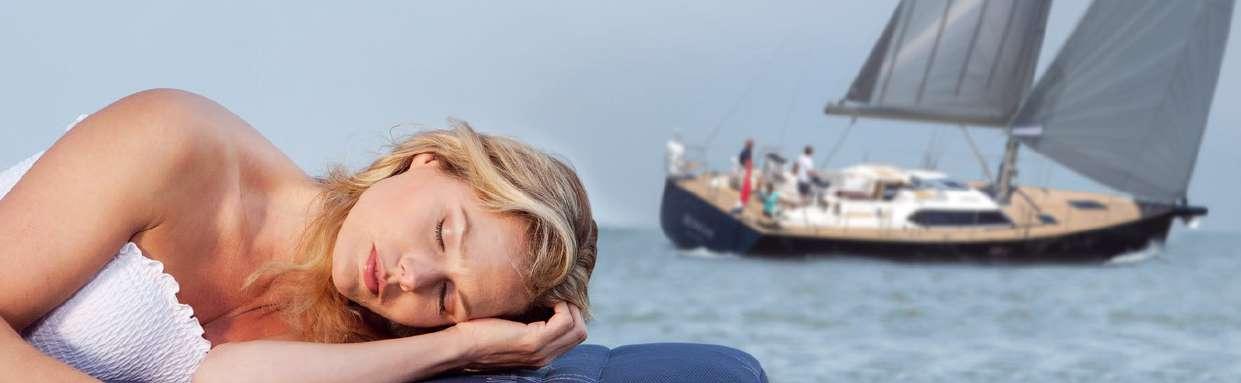










Whether enjoying a leisurely cruise or some serious sailing, a good night’s rest is as essential on water as on dry land.
Approximately 30% of your time on board will be spent sleeping and we feel that’s too long to tolerate any discomfort. Having produced premier mattresses for new and refitted yachts of all sizes since 1992, Neptune specialises in high quality mattresses, slat systems and bespoke bed linen. We can provide bespoke advice on the exact product that best suits your needs. All mattresses and bed linen are hand-made in the Netherlands and represent the finest quality in terms of materials and craftsmanship. We deliver directly to owners or yacht builders, anywhere in the world.



Head Office and Production: Graanmarkt 4, Zwaagdijk-Oost, the Netherlands, T +31 228 562 045, info@neptune.nl
Sales & Advice Balearic Islands, Palma de Mallorca: M +34 646 897 378 / +34 627 844 229, mallorca@neptune.nl
Sales & Advice Spain, Alicante: T +31 228 562 045, info@neptune.nl
Visit www.neptune.nl


Written by Marlot Cathalina
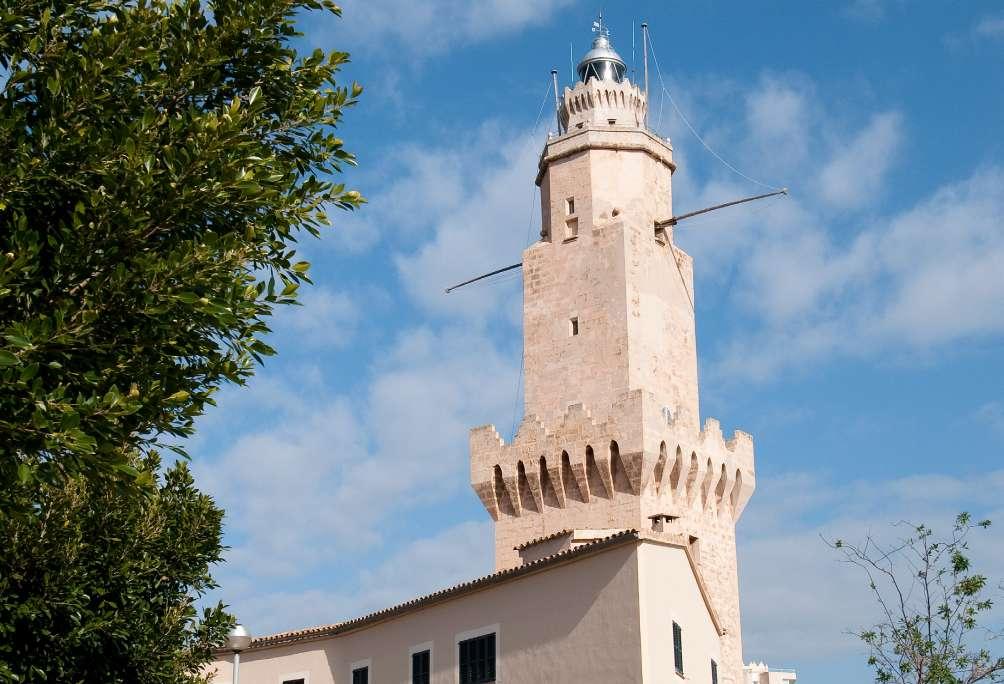
If you are an Islander, you have probably passed by this historical gem at least once while leaving the bay of Palma by sea. However, not many people know that El Far de Portopí is Spain’s second oldest operational lighthouse. Even fewer are aware that this sight is home to one of Europe´s finest maritime signal exhibitions. Join Islander reporter Marlot as she explores this emblem of Mallorca’s heritage.
A brief history of Portopí lighthouse
Situated next to the busy ferry terminal, in front of Palma´s port, the lighthouse of Portopí has been a silent witness to centuries of maritime history. The first reference of the lighthouse dates back as far as the year 1300. In a document, King Jaume II of Mallorca entrusted his successors with the maintenance of the lighthouse, which was then located at the current site of Fort Sant Carlos. The lighthouse appears on Pere Niçard's painting of Saint Jorge at the end of the 15th century, on which can be seen what the bay of Palma de Mallorca must have been like during that time.
The lower part of the tower was originally used as a signal tower, hence the original name ´Torre de Senyals´. In 1613, the upper part was relocated, and its height was increased,
transforming it into a lighthouse. In 1983, it was declared a national historic monument, and to this day, it´s emitting its characteristic two flashes of light every 15 seconds.
Visiting the lighthouse of Portopí
Visiting Portopí is not exactly obvious as it's one of those spots you must know about (which is why The Islander is happy to inform you!). The lighthouse is situated in a restricted area next to the military naval of Palma. To visit the museum, you must make an appointment. From the meeting point at the Nautical School, a minibus will take you to the lighthouse. Note that you won't visit the lighthouse tower. Instead, you'll enjoy a 1,5-hour guided tour in the building next to it through the exhibition of Maritime Signals, which doesn’t disappoint.
Exposition of maritime signals
The permanent exhibit tells the history of maritime signals and the lighthouses on the Balearics, of which currently 34 are operating. After years of gathering and restoring installations and equipment from lighthouses throughout the islands the exhibition opened its doors in 2004.
The impressive collection contains various lightning technology systems over the years. From the 14th century, when olive oil was used to light the lantern, to the weightdriven mechanics used to "wind up" the lighthouse, like a clock. All the optics on display have been in service, including the largest one, which was used on the island of Dragonera (and moved by helicopter, with the help of the North American Navy in 1985).
The life of the lighthouse keepers
The lighthouse keepers, called ‘fareros’, and their families lived remarkable lives in the most remote corners of the Balearics. Despite its romantic allure, being a keeper was a challenging. Without phones or internet they could be cut off from the outside world for weeks, especially when enduring bad weather. Their duties involved risky tasks, such as hoisting acetylene cylinders at cliff edges on the islet of Toro, which was done by the keepers of the lighthouse of Cala de Figuera.
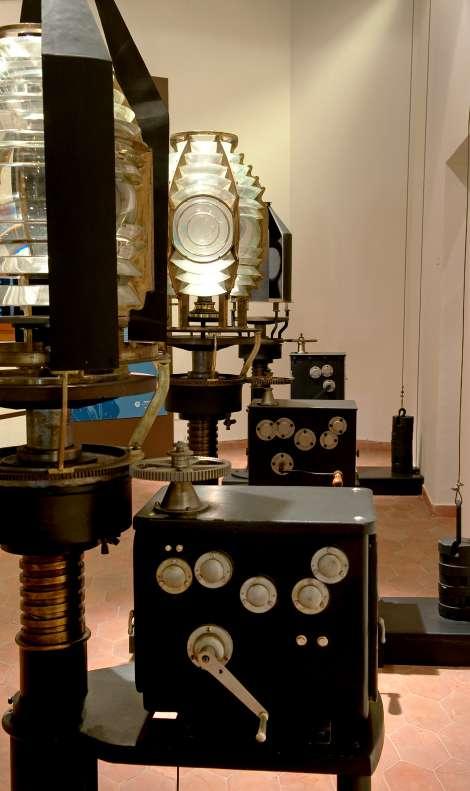
Other – heroic – anecdotes include lighthouse keepers rescuing shipwreck victims, such as at the lighthouse of Punta de la Avanzada, Pollença, where in 1909 the tower
keeper´s youngest sun reported a sinking felucca with two sailors of which they could only rescue one, and about a keeper's wife who kept the lighthouse running for days after her husband passed away.
More stories are to be explored…
The museum provides an in-depth look into Mallorca’s history, which has always been intertwined with the sea. Thanks to record books kept by the lighthouse keepers, much is known about this fascinating past. This article offers just a glimpse into what Portopí has to offer, but there are many more stories to be explored. We can only highly recommended visiting this historical gem. ◆
More information and reservations on www.farsdebalears.com
• Lighthouse Portopí is the third oldest operating lighthouse in Europe, after the Tower of Hercules in A Coruña and the ´Linterna´ in Genoa.
• Olive oil was used to lit the Portopí Lighthouse until the 19th century, when it was replaced by Scottish paraffin in 1859, and eventually by electricity in 1918.
• Built in 1852 on Sa Dragonera’s highest point, Na Popia was Spain’s tallest lighthouse at 351 meters. Frequent fog led to its closure in 1910 and replacement by two lighthouses at the island’s ends.
• The area around Portocolom’s lighthouse is known for numerous shipwrecks. For example, in 1882, keepers rescued the entire crew of a ship from the Miguel Estela company, which was carrying liquor and other goods.
• 'El Far del Port de Palma' operated from 1909 to 1982 and now serves as the offices for the 'Autoridad Portuaria de Baleares,' who also use it as their logo.
• In 1969, Margalida Frontera Pasqual from Mallorca became Spain’s first female lighthouse keeper.
Source: www.farsdebalears.com
Written by Linda Cartlidge Pictures by Asia Pacific Superyachts
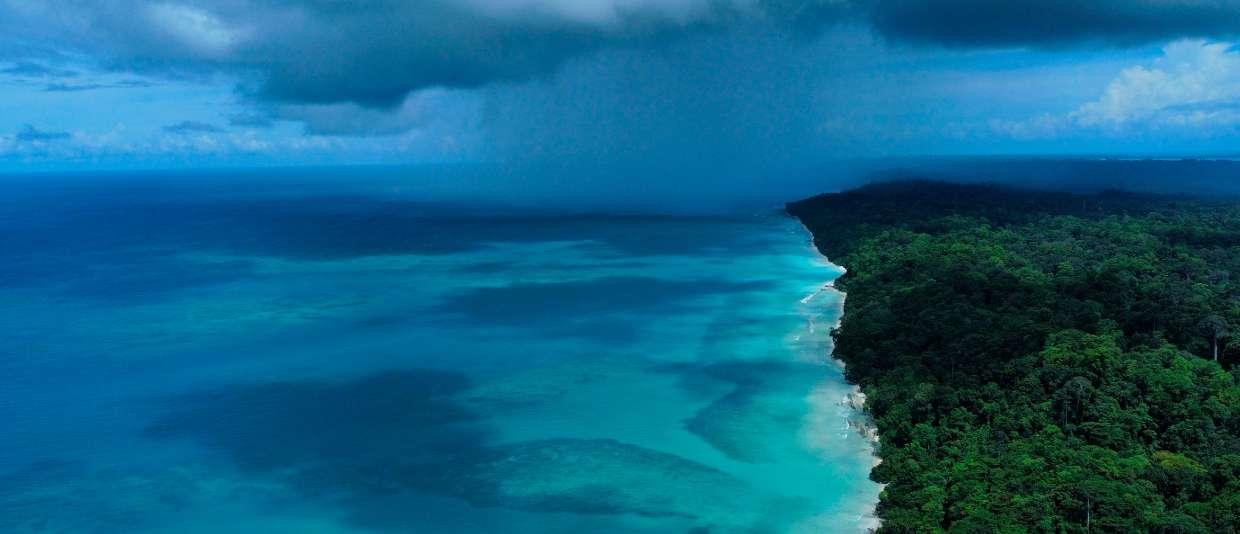
Asia Pacific Superyachts (APS) Andaman Islands is excited to share news with owners and captains of yachts and superyachts that the Port Blair Sea Port is now a designated entry port for e-visa holders.
This news is a game-changer for yachts and superyachts in the Andaman Islands. The new designation will have a significant impact for those looking to cruise the clear waters around the Andaman Sea’s enchanting islands. “In the past the Indian Embassy in South East Asia would issue visas for the residents and nationals of that particular country. All others would have to apply for a visa in their home country, which was not possible for many yachts, thus they were skipping visiting the Andamans”, reports APS India director, Mr. R. Rathnam.
“In applying for the regular visa before this change, the form would have to be completed online followed by an appointment visit to the visa application centre with a passport submitted for at least 5 days. This involved a lot of expense, time and other hassles and with the passport at the embassy, the applicant could not travel elsewhere, creating a frustrating experience. Now you can visit the official website https://indianvisaonline.gov.in and go through the online 4-step application process with the e-visa status communicated by email within 72 hours. You can then enter Port Blair with a copy of the approval.”
Thailand’s Phuket is an excellent departure for Skippers to cruise the 400 NM to Port Blair in the Bay of Bengal, India,
now made so much easier with the new change of Port Blair as a designated e-visa entry. Friends and family can fly or sail down from either Phuket or Langkawi, Malaysia to the entry port of Port Blair located at 11º40.3'North x 92º44.2' East. Arrival and departure procedures along with visas, health and security needs can be professionally and efficiently handled by APS, providing the guidance necessary prior to and during the journey. This includes advice on navigational hazards and berthing/ anchoring along with options for quality accommodations, special island visits, vehicle hire, air travel and helicopter transport.
Prior to arrival your agent will advise on berthing and anchoring and submit the detailed itineraries and required twice daily radio check-ins, which ensures the authorities know where the vessel is at all times. Guide books provide some indication for an itinerary, however they invariably omit some of the best spots. Your agent will tailor your itinerary drawing on extensive knowledge that will include advice on navigational hazards and berthing, along with anchoring, options for quality accommodation, special island visits, vehicle hire, air travel and helicopter transport.
Port Blair
Port Blair is the capital of this union territory and well connected to mainland India, with Kolkata in the East of India and Chennai in the south of India serving as primary gateways. As procedures and paperwork are completed under the eagle eye of the director and his team yacht visitors can enjoy the unique sites and wonderful activities
in and around Port Blair, a port steeped in British tradition and holding many delights.
Surrounded by tropical forest and rugged coastline, the Andamans' lively provincial capital is a vibrant mix of Indian Ocean inhabitants – Bengalis, Tamils, Telugus, Nicobarese and Myanmarese. Port Blair’s fascinating history warrants exploration while you are in town, with the unique ‘Cellular Jail’ a main attraction, along with its sound and light show. A bit grim yet inspiring at the same time, this is one of the most exciting places to see in Port Blair, especially if you are a history buff.
Serving as a prison for Indian political prisoners during the pre-Independence period, ‘Kala Pani’ or Cellular Jail now serves as a monument in honour of those freedom fighters. When taking a walk around the complex, make sure you pay attention to the plaques detailing the complete history of the place, along with the architecture of the jail. You can plan your trip in such a way that you can visit the jail during the day, spend some time shopping and around the Corbyn’s Cove (beach), then catch the Cellular Jail’s sound and light show in the evening. Other enticing day trips can be made to Mahatma Gandhi Marine National Park and Chidiya Tapu and much more.
While the yacht is being readied for the upcoming journey, owners and guests can be entertained by a fantastic cultural event on board the yacht arranged by the vessel’s agent.
The Andaman Islands of India are the jewels in the crown of the Bay of Bengal, delivering adventuresome cruising and pure blue waters with a temperature of 28º with cool nights and good sailing winds with a paradise of anchorage options.
Together with the Nicobar Islands to the south, the Andamans serve as a maritime boundary between the Bay of Bengal to the west and the Andaman Sea to the east. Most of the islands are part of the Andaman and Nicobar Islands, a Union Territory of India, while the Coco Islands and Preparis Island are part of the Yangon Region of Myanmar.
Offering unique and irresistible underwater attractions and sea adventures, vessels will find peaceful anchorages, virgin beaches, an active volcano, uninhabited islands, and superb snorkeling, sports fishing and scuba diving – truly a unique voyage for yachting/sailing enthusiasts. In the well-charted sea, the islands hold a promise of an enthralling holiday and adventure voyage, opening onto a secret world of tropical jungles and rare lush rainforests with serene pristine beaches scattered throughout much of the archipelago. International yacht visitors will find miles of seclusion; drift diving over coral gardens, soft sandy beaches.
While experiencing the natural beauty of India’s most remote state, visitors will find a temperature of 28º and cool nights with good sailing winds and a paradise of anchorage options. Situated more than 1,000 km off the east coast in the middle of the Bay of Bengal, the archipelago is thickly covered by deep green tropical forest that supports a profusion of wildlife, including some extremely rare species of birds.
Much of the archipelago’s attraction lies in the beaches and exploration, along with diving and snorkeling in the pristine reefs that ring most of the islands. A not to be missed visit is to the Barren Island volcano, which may be at least 1.8 million years old, about 135 km NE of Port Blair. It is the only historically active volcano along the N-S-trending volcanic arc extending between Sumatra and Myanmar.
Exciting and adventuresome island cruising accessible only by boat includes islands with the unlikely names of Long Island, Inglis Island, Rutland Island, Ross Island, Tarmugli Island, Inglis Island, Cinque Islands, North Sentinel Island, Neill Island, Kyd Island, Havelock Island, John Lawrence Island, Henry Lawrence Island, Outram Island, North Passage Island and Barren Island.
Most head to the more isolated islands, offering stunning marine scenery and experiences. Through the Diligent Strait, Peel Island and Henry Lawrence Island offer secluded anchorages for snorkeling and interesting coastal outcrops to explore.
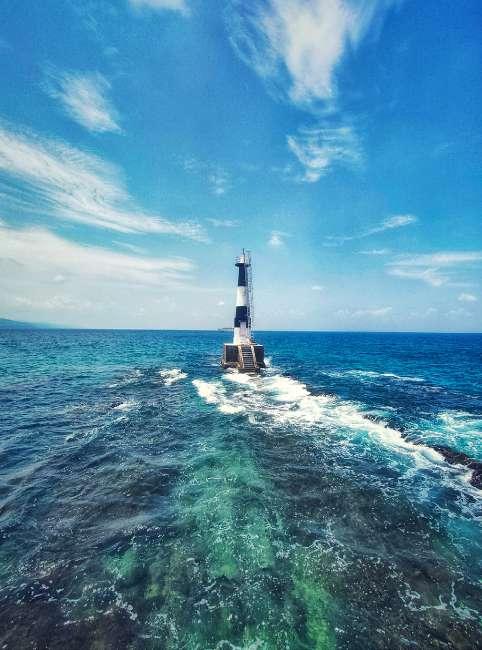
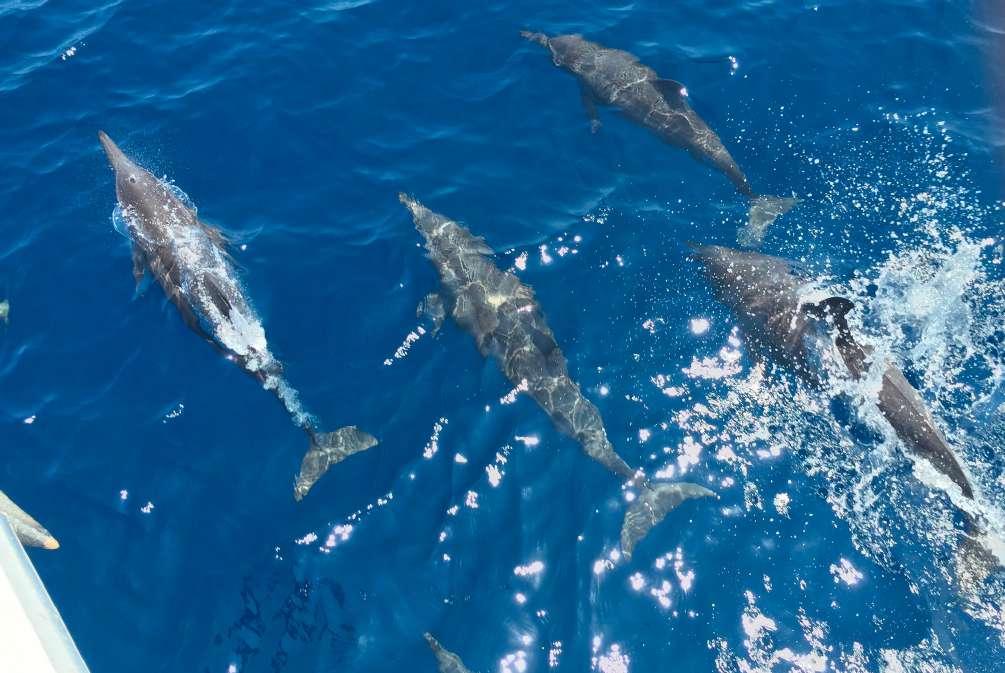
A typical 5-day itinerary from Port Blair will include leisure activities such as snorkeling, kayaking, barbecue on the beach or on board, diving and island excursions. The most popular locales for casual diving are Neil Island, Sir Hugh Rose Island and Havelock Island. For the more experienced divers, head to Cinque Island, Passage Islands and Sister Island.
Best times to visit
APS advises the Andamans climate and weather can be described as normal for tropical islands of similar latitude. It is always warm but tempered by pleasant sea breezes, though it can be very hot when the sun is northing. The rainfall is irregular but usually dry during the north-east monsoon and very wet during the south-west monsoon.
The peak time to visit is between December and March. Once the festival of Sankranti ends around January 15th the weather turns warm. With no rain-bearing clouds and no winds to stir up the sea, the clear blue skies and serene cool seas can be enjoyed while cruising and anchoring.
Looking at a broader time range, October, the start of the season, until mid-June is the best season for visitors in general to visit Andaman Islands. The heavy southwest monsoon showers are over by September and the entire area looks decked up in fresh greenery after the rain, with each of the islands looking beautiful and ready to welcome the festival season. The weather remains temperate thanks to the intermittent rains. Happy with rain-assured bountiful crops, the local people begin to get ready to celebrate the festival season and welcome visitors.
When the monsoon season is over the scuba diving season starts with waters turning calm, clear and flat. Underwater coral reefs and marine life put up a great show offering a memorable visit for scuba diving and snorkelling enthusiasts. Yachts can head north or south from the capital, viewing stunning islands along the way with the best anchorages easily reachable.
February & March are the best months to explore the exhilarating marine life. For scuba enthusiast, choose a time to visit between February and March to head north to visit the Havelock Islands. Here you are assured of excellent and exhilarating views of under-sea marine life – thanks to a flat and smooth sea with no wind and near-perfect visibility.
Due to the Northwest monsoon, moisture-laden breeze and intermittent rains keep the temperature pleasantly cool throughout November, December and January with mild sun during the day and evenings a little cooler.
“Generally there are fewer visitors during June, July and August”, notes Rathnam, adding, “This is one of the best times and seasons to enjoy the bountiful showers from the monsoon. The rain-drenched highlights of the Islands, its pristine coastline and the abundant green cover will surely captivate, these are the monsoon’s best gifts to the Andaman Islands.”
www.asia-pacific-superyachts.com

Written by Save de Med
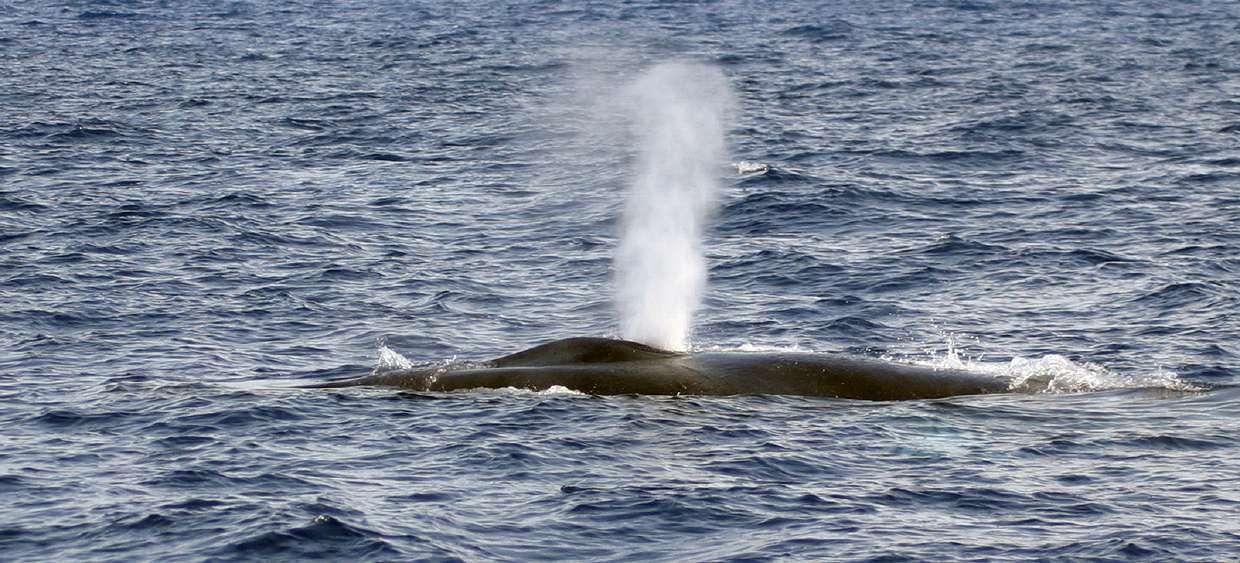
In the thirty-first edition of the Vuelta a Sa Dragonera that took place recently, the Xarxa Dragonera Blava, supported by the Els Voltors Sports Group, issued an urgent call to address the issue of maritime traffic and the speed of boats in the Freu de Sa Dragonera, one of the most pressing problems for the coastal community of Andratx.
According to data from the Vesselfinder platform, 7,553 vessels with Automatic Identification Systems crossed the Freu de Sant Elm between 2022 and 2023. This number could triple if all vessels were taken into account.
Celebrated for 31 years, the Vuelta a Sa Dragonera in kayak is a nautical event that has become increasingly popular. It stands out for its non-competitive nature, where the goal is community rather than being the first to finish. It is an exciting event that combines nature and sport, enabling the safe enjoyment of the sea in an engine-free and festive atmosphere. "We are taking advantage of this event, the largest kayak gathering at sea in Spain, to call for stricter vessel speed and traffic regulations in Es Freu de Sa Dragonera. This area is designated as a marine reserve, and its existing regulations need to encompass additional factors such as vessel speed, with greater commitment from institutions and navigators." stated the Xarxa Dragonera Blava manifesto.
Thanks to this mobilisation and the demand from the local population, the Andratx City Council has approved a motion urging the Government of the Balearic Islands to
limit navigation speed in the Sa Dragonera Marine Reserve. The aim is to limit the speed of boats passing through Es Freu de Sant Elm to protect the marine and terrestrial ecosystems of Sa Dragonera and Sant Elm. The maximum speed will be between six and ten knots.
Reducing speed to protect the ecosystem
It is important to note that 82 percent of these crossings occur during the summer months, which have negative effects on the marine ecosystem.
Limiting vessel speed decreases CO2 emissions, black carbon, and other atmospheric pollutants, as well as the noise that affects underwater ecosystems, according to two studies commissioned by the Belgian Ministry of the Environment, the International Fund for Animal Welfare (IFAW) and OceanCare.
Both reports, prepared by the independent research group TNO for the Brussels government, analysed actual maritime traffic in the North Sea and concluded that limiting vessel speed to 75% of their design speed would reduce the emission of gases such as carbon dioxide, sulphur oxides, nitrogen oxides, and black carbon by 10%.
The analyses also indicate that this reduction in speed would lead to a significant reduction in underwater noise, resulting in quick action to achieve healthy oceans.
This speed limit is easy to implement and monitor, and
creates a level playing field so that all types of vessels from different sectors would apply the same measures without anyone being unduly penalised.
Sharon Livermore, Director of Marine Conservation at IFAW, stated in a press release that this is a cost-effective solution that can be applied immediately with many collateral benefits for the ocean, the climate, and whales, which depend on sound for their survival.
In fact, this measure "would also reduce the number of whales killed in collisions with ships," she noted.
Concerning the speed of boats in the Freu de Sa Dragonera, which in addition to being a marine reserve provides a space for regulated artisanal fishing, biologist Yaiza Santana, coordinator of the Sa Dragonera Blava project, notes that vessel speed is a significant stress factor for the marine ecosystem: "It has been shown that it can affect behaviours such as reproduction, foraging, etc. This can contribute to reducing the population of fish of fishing interest.”
In the same vein, OceanCare spokesperson Carlos Bravo has called for "ambitious interventions and studies, similar to those carried out by Belgium," for the Mediterranean Sea, "one of the seas with the highest maritime traffic intensity in the world." ◆
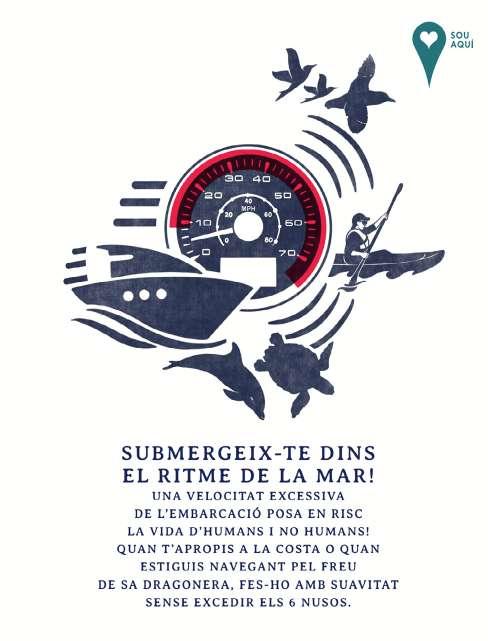
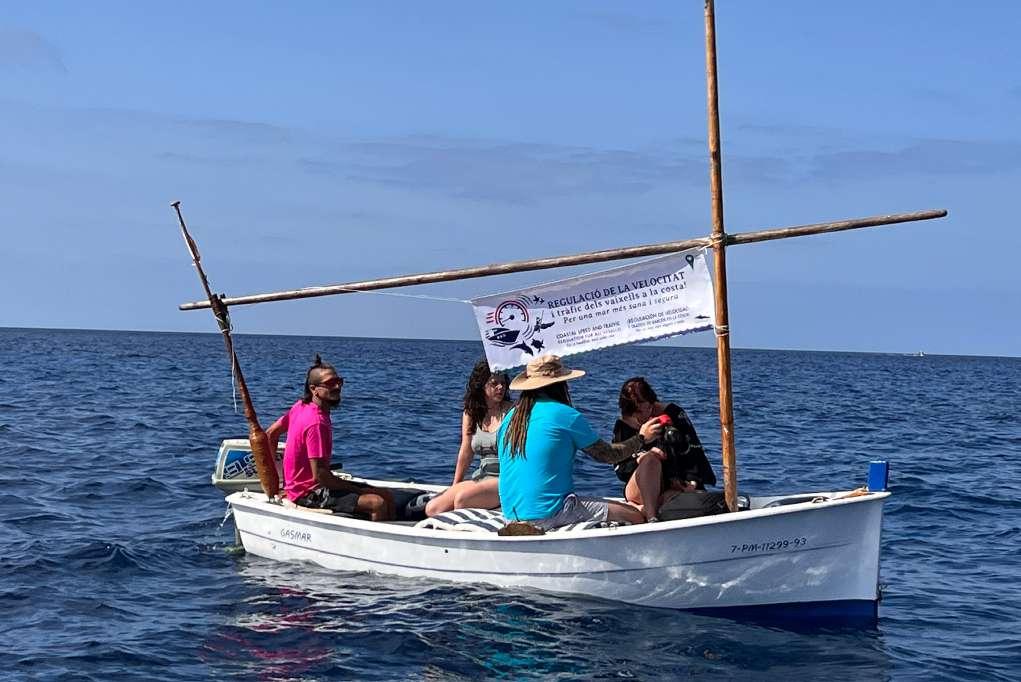

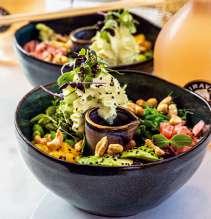
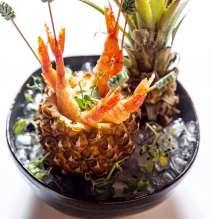


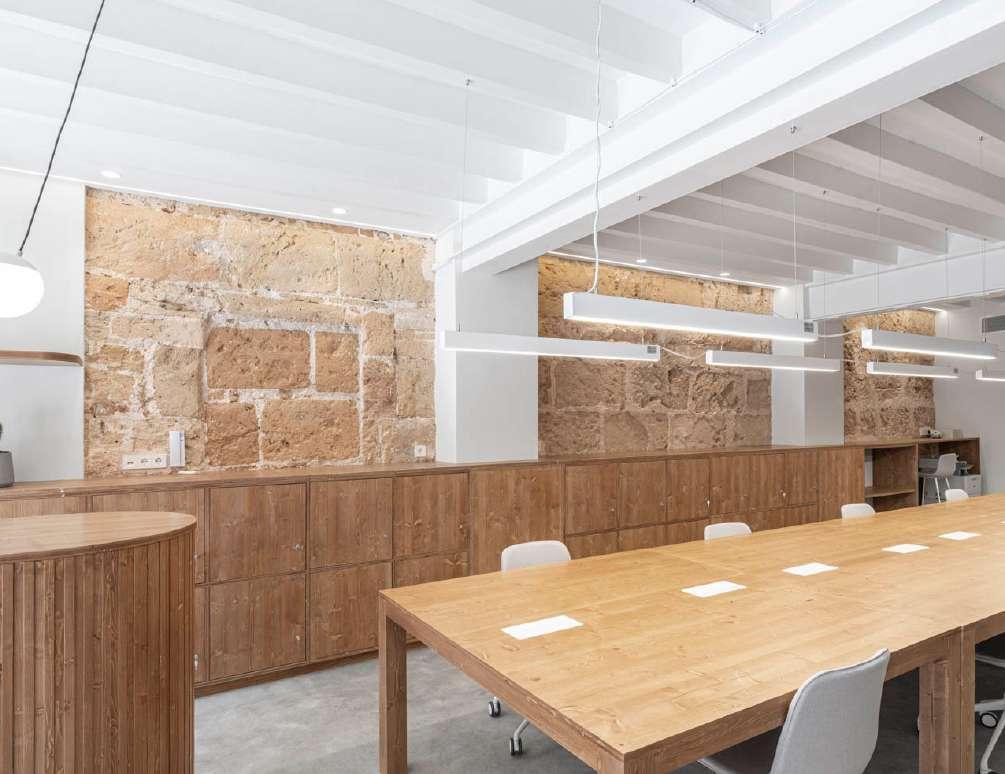
An ideal location for Zulu Coworking
Located at Calle Sant Magí 72, your coworking space benefits from all the advantages of this vibrant neighborhood. The cultural richness and inspiring atmosphere of Santa Catalina create a perfect setting for professionals seeking to balance work and social life.
The ambiance blends rustic charm with modern aesthetics. A pleasant scent of wood and an abundance of natural light and (mares) bricks (original stone from Mallorca) make this space a truly welcoming workplace.
Zulu Coworking understands that each professional has unique needs, which is why a variety of workspace options are offered. The workspace includes a long table where each workstation is 150 cm wide, providing ample space for comfortable work. Lockers are available to all clients at no additional cost. For those who prefer to work standing or sitting on high stools, these options are also available. The ergonomic furniture ensures optimal comfort during long hours, enhancing productivity and well-being.
Zulu Coworking is equipped with cutting-edge amenities designed to make your workday as smooth as possible. You can easily book your workspace online. You can access the offices conveniently with your digital key, depending on the chosen and prepaid plan. You will be able to use our APP to open the door directly from your mobile phone.
Privacy during calls and virtual meetings is paramount at Zulu Coworking. The space features two soundproof phone booths and a meeting room with a large touch screen, ensuring the privacy and space needed for quality meetings..
The space offers high-speed internet, a printer and scanner, professional address services, and mail management. The reception team is always ready to assist with any requirements, providing a warm welcome and excellent service that makes everyone feel at home from the very first moment.
A fully equipped kitchen and a peaceful courtyard Kitchen is at your disposal, with coffee, tea, and filtered water, included. You'll find everything you need, such as a microwave, refrigerator, freezer, and dishwasher for your convenience. An outdoor courtyard with plants offers a serene environment for refreshing breaks.
Pet-friendly environment
Is also pet-friendly, allowing your furry friends to join you in the workspace.
Networking opportunities and community
One of the greatest advantages of coworking spaces is the opportunity to meet like-minded professionals from various fields. Zulu Coworking regularly organizes events and conferences, fostering a sense of community among its members.
Location and accessibility
Located in Santa Catalina, Palma de Mallorca, Zulu Coworking is easily accessible by public transport, and parking is very convenient during the day, even in summer!
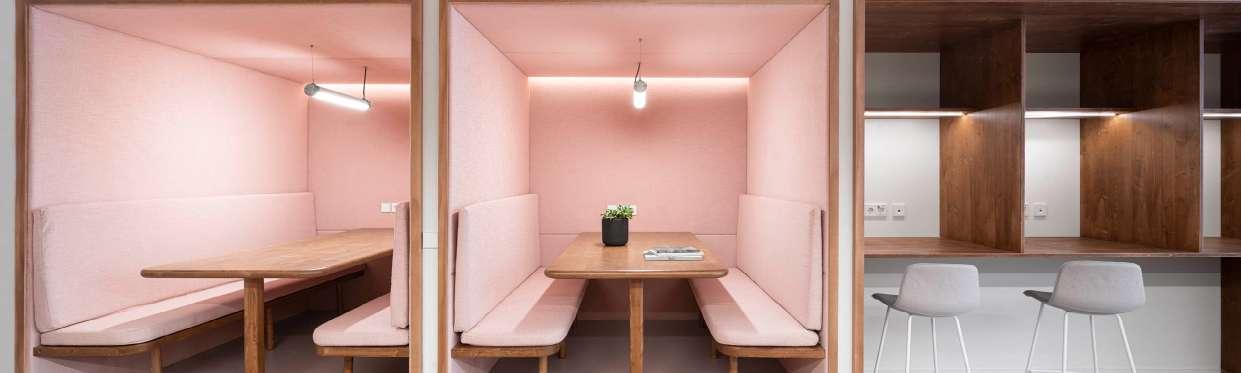


The beautiful fishing port of Cudillero will be the home of Toftevaag during the next six months.
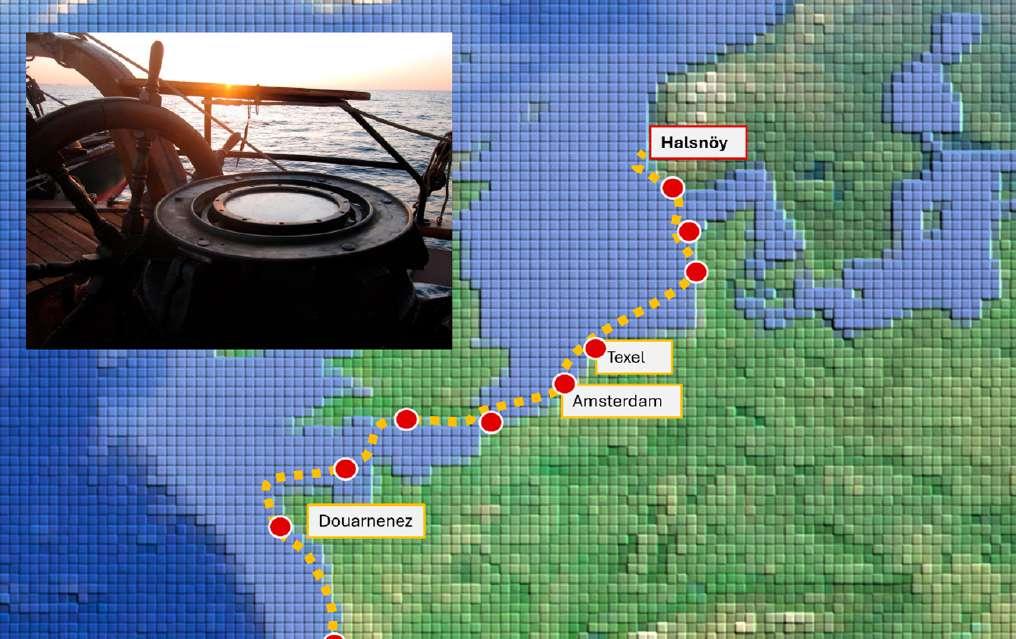
Combining cetacean and seabird surveys in the Cañón de Aviles MPA with restoration work, the WildSea Cantabrian programme is keeping Toftevaag busy yet another year.
At the end of June, Toftevaag participated in the local fisherman festivities. She became part of the beautiful scenery of Cudillero, and the crew was enjoying the amazing local foods and cider.
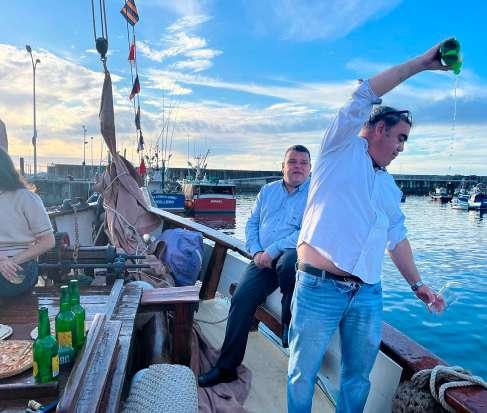
The journey north began in May with a week-long celebration at the Pasaia Itsas Festibala, a maritime festival held in the port of Pasaia; “Pasaia Itsas Festibala”. The event was hosted by the town of Pasaia itself, the Basque Government, and the Albaola Faktoria project. This Basque-Canadian project, dedicated to building a replica of the whaling ship "San Juan", has significantly boosted maritime cultural activities in Pasaia.
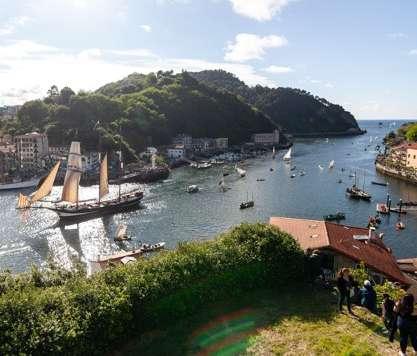
Fête Maritime de Douarnenez 2025 – July
Until mid-July, the Toftevaag sailed in Brittany and participated in the Fête Maritime de Douarnenez. Once again, the vessel visited another of Europe’s most beautiful and authentic fishing ports. These maritime festivals were not solely about gathering old boats. During those days, the entire village transformed into a vibrant hub of maritime culture, offering boating competitions, flea markets, music, food, and fun.
After Douarnenez, Toftevaag sailed along the coastline of Brittany and Southern England, with a stop in Dunkirk, Belgium, just before entering the locks of IJmuiden towards the canal to Amsterdam, for the Sail Amsterdam event.
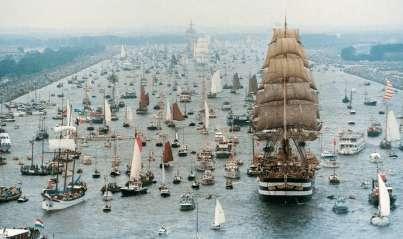
Due to the Covid-19 crisis, “Sail Amsterdam 2020” had to be cancelled. So Sail Amsterdam 2025 was one of the most amazing maritime culture celebrations of the century, where Toftevaag was present as well.
What’s up next for Toftevaag
One of the main restoration tasks for next winter, will be the reconstruction of Toftevaag’s wheelhouse, an essential element for sailing back in the cold northern waters of Norway.
SAVE YOUR SPOT ONBOARD!
The next part of Toftevaag’s journey north will start in May of 2025, and we have three unique milestones on the way that require planning ahead. ◆
For more information and registrations, send an email to: alnitak1414@gmail.com
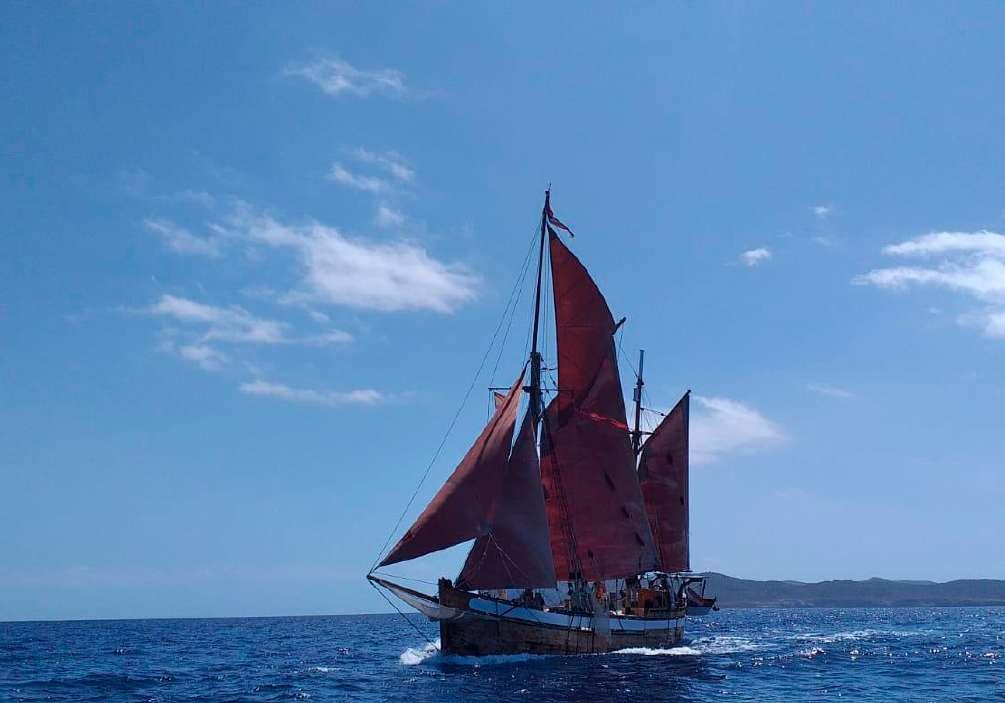

(+34) 971 402 911 palma@devalk.nl www.devalk.nl
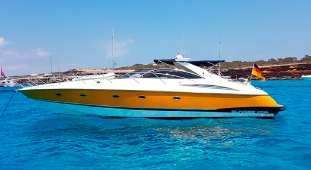
Enjoy the summer breeze with this Sunseeker Camarque 50 (2000). This first-class sports cruiser rides naturally level and has a very soft ride offshore. The hardtop with sunroof lets you cruise for views in fair weather and foul and change the ambience from dayboat to champagne cruiser at the flick of switch. The 50-footer has other big-boat features: a garage for the jet-powered RIB, a superyacht radar arch, and an amenities center along the entire starboard side of the cockpit. Accommodation at either end of the boat and twin heads make for a private boat for two couples.

info@arrivalyachts.com www.arrivalyachts.com
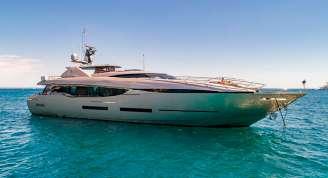
FUSION offers a sleek and exciting profile, yet tremendous entertaining areas and accommodation for 10/12 guests in 5 cabins. Metallic gold exterior paint with carbon detailing and a contemporary luxurious interior, blended with composite construction and practical design. TRAC STAR fins, 2 x MTU 2600hp give up to 25 knots, huge aft garage for tenders and toys, hard top and jacuzzi to flybridge. Built to RINA and MCA coded, successful charter history.
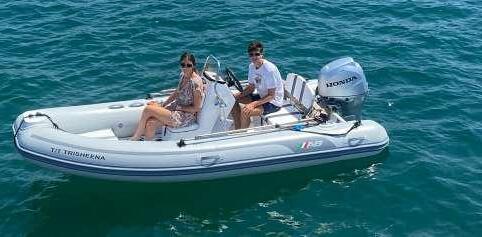
Location: Palma de Mallorca Phone 00 44 7711 055 711 AB 14 ALX 2021 € 22,000
Rib for sale with Honda 50hp, bimini, radio / speakers Immaculate, very little used , kept in storage 11 months of the year.
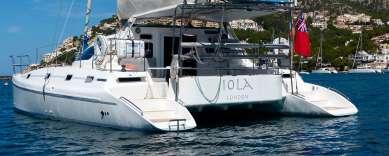
IOLA is a strongly built, elegant Catamaran prepared for blue-water cruising. The owner has recently upgraded her to include replacing the engines, installing new standing rigging, updating the sails, new steering rudder bearings etc. Full list of maintenance and upgrades available. The boat has been polished, antifouled, and serviced ready for summer 2024.
She is owned by an accomplished marine engineer who has prepared her for the upmost comfort and reliability. For anyone planning long stays aboard, and who want minimal work and maximum peace of mind, this is the boat for you.