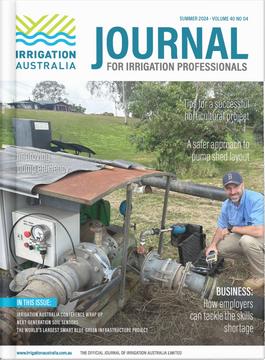
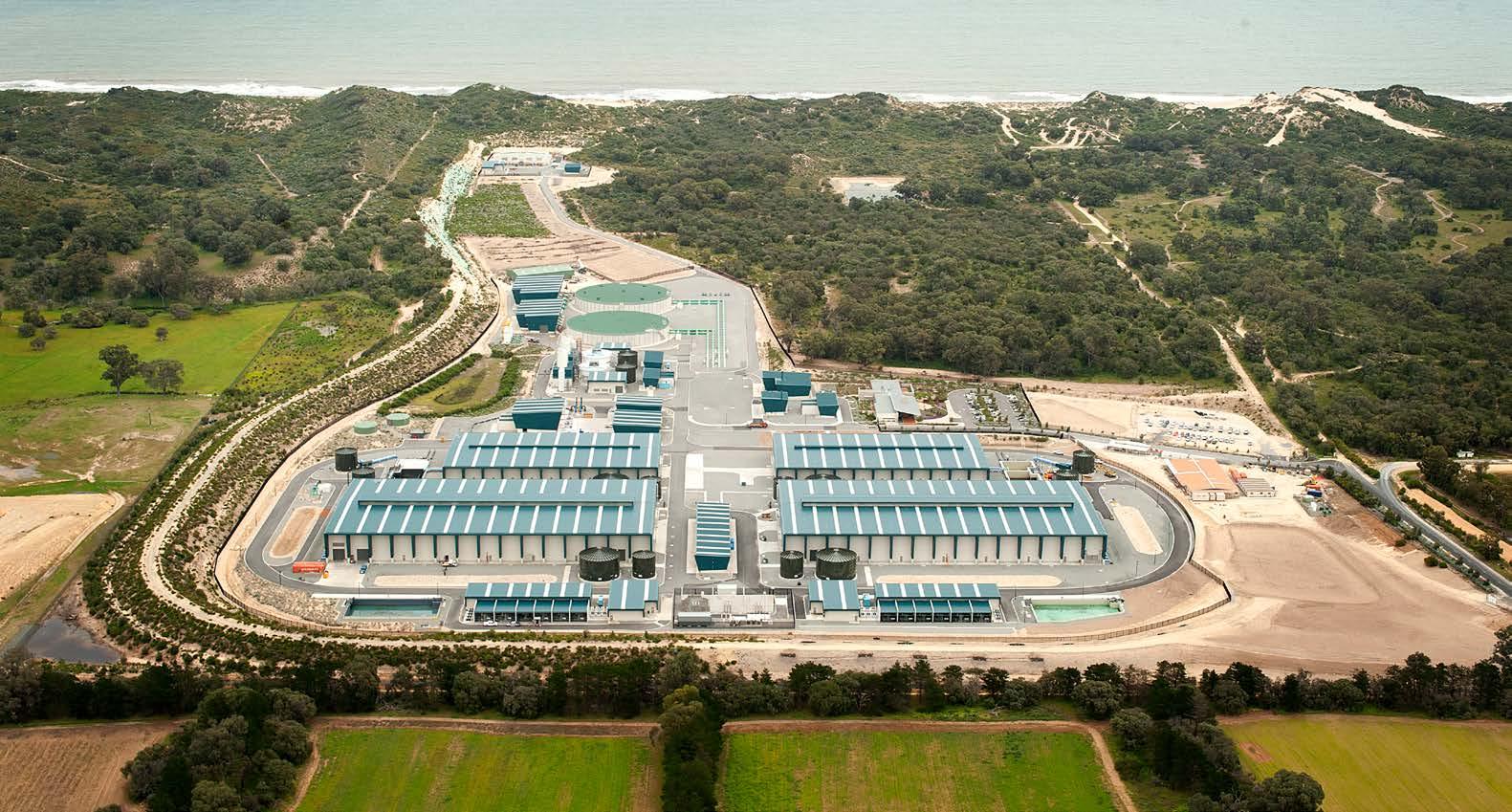
Brookton Project: Sustainable water solution with solar City of Bayswater tackles water resource challenges
Water management critical to Collie’s future Iron and manganese fouling in groundwater bores
Case Study: Yarra Yarra Golf Club
Q uarterly Publication of Irrigation Australia (WA Region)
Gain access to the members only portal on the Irrigation Australia website Through the portal you can manage your Irrigation Australia membership, register your staff/employees for training, and access members only documents, presentations, and other materials
TRAININGDISCOUNTS
Receive significant member dis nationally accredited irrigation t and qualifications delivered by Irrigation Australia in city and regional areas and virtually
Receive significant discounts on advertising in the The Irrigation Journal and The Overflow These publications are distributed each quarter to all members and industry contacts
CERTIFICATIONDISCOUNTS
Receive significant member discounts on the joining fee and renewal fee to the Certification Program administered by Irrigation Australia
Irrigation Australia's e-knowledge repository has significant resources of technical papers, conference papers, publications such as The Irrigation Journal and The Overflow, and FAQ's available only for members
Irrigation Australia hosts a number of regional events and site visits across Australia This is a great opportunity for members and industry colleagues to come together to network, and discuss new challenges and technologies INVITATIONSTO
CONFERENCE,TRADESHOW &EXPODISCOUNTS
Receive member discounts on attending and exhibiting at the Irrigation Australia International Conference & Exhibition, as well as regional Expos
DISCOUNTSONWATERWISE ENDORSEMENT
Receive member discounts on the Waterwise endorsement programs, relevant for domestic irrigation contractors, installers, landscapers and retailers.
Benefit from Waterwise marketing and merchandise to promote yourself as a Waterwise Irrigation Professional to the community
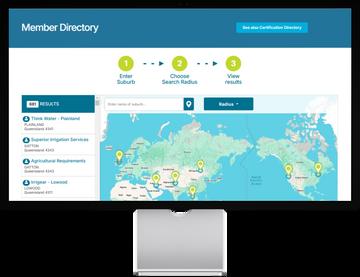
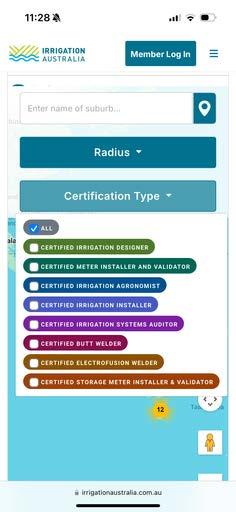
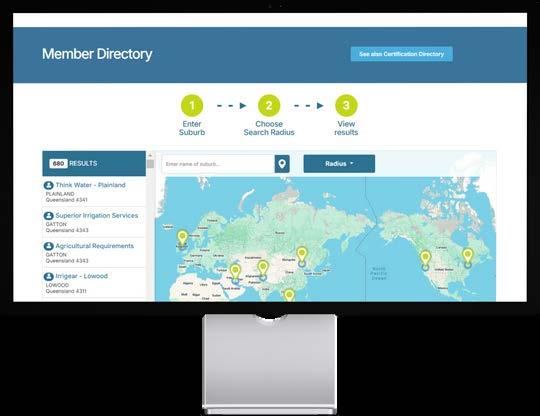
List your business on our Member Directory on the Irrigation Australia website (available to company memberships and certification holders only)
Chairpersons Report
Irecently heard a live band cover the iconic song ‘Rain’ by Dragon. It was a fitting tribute and a surreal experience standing amongst a crowd singing in unison, ‘it’s been raining for so long, don’t you go out in the rain, don’t go out in the pouring rain’. We have just had record-breaking rainfall for the past few months, and I think how different it was back in spring 2024, when we had to turn the reticulation on as of 1 September. The unseasonal growth results in season creepout and affects scheduled maintenance. Reticulation scheduling and maintenance are likely the last things on the mind when weather conditions have been so wet. I had a squiz through the BOM website and found some interesting stats, even 125 years of plotted rainfall. (https://www.bom.gov.au/climate/history/ rainfall/). These conditions this Djilba season mean a season stretch of late spring and possibly a long, hot summer. With all this rain, there is a real concern about fire mitigation, and DFES is issuing an early warning to the public to start early to prepare for this fire season.
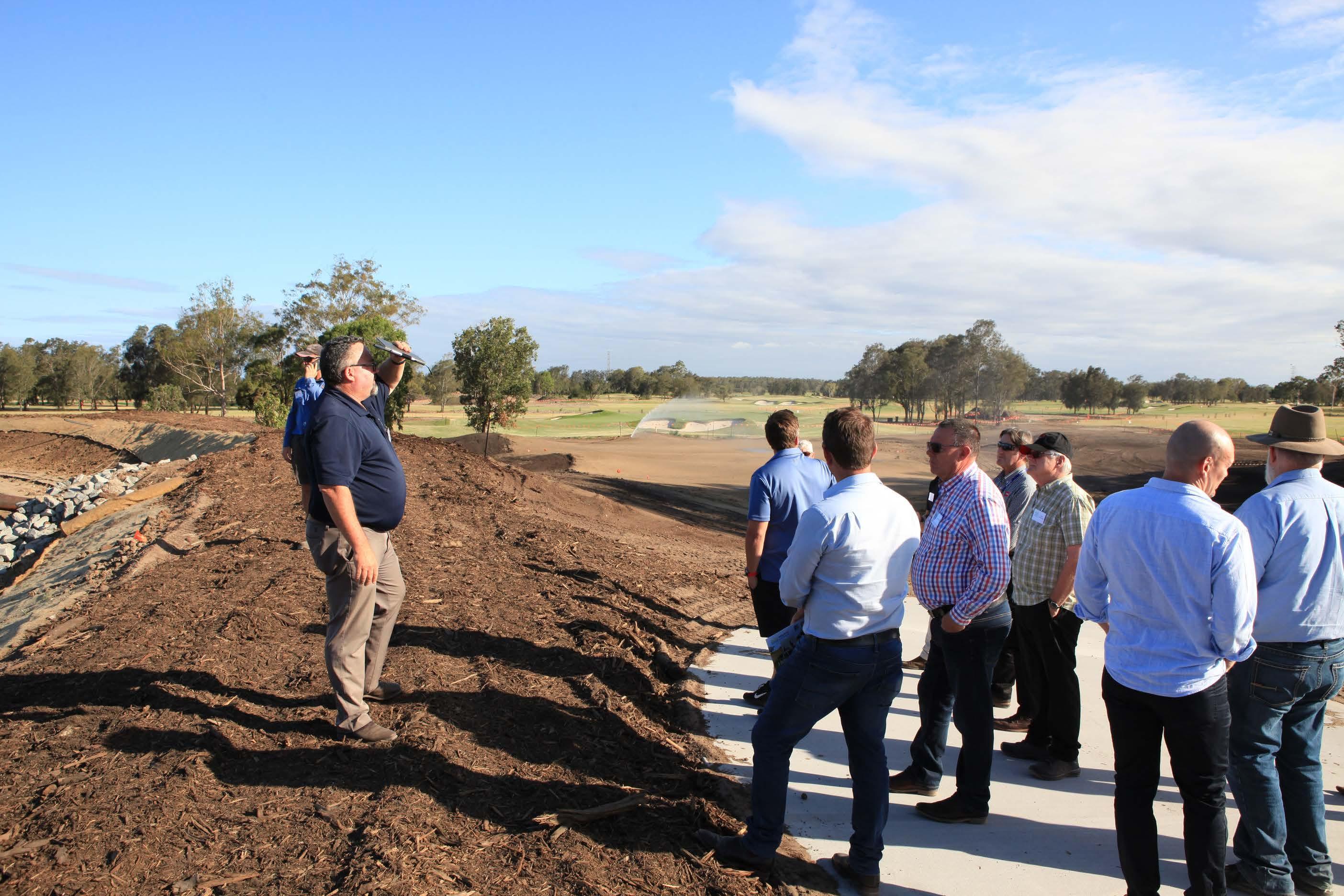
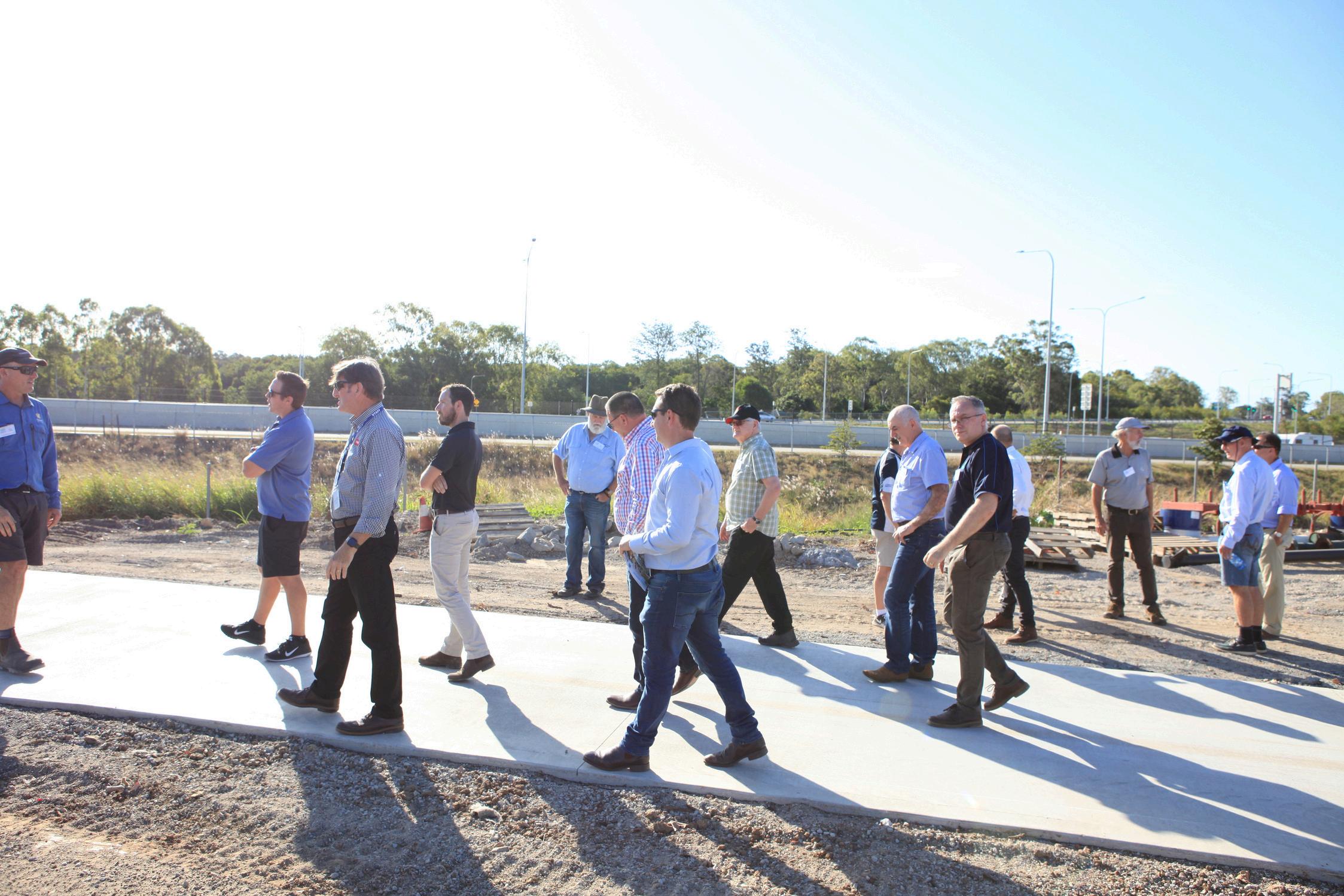
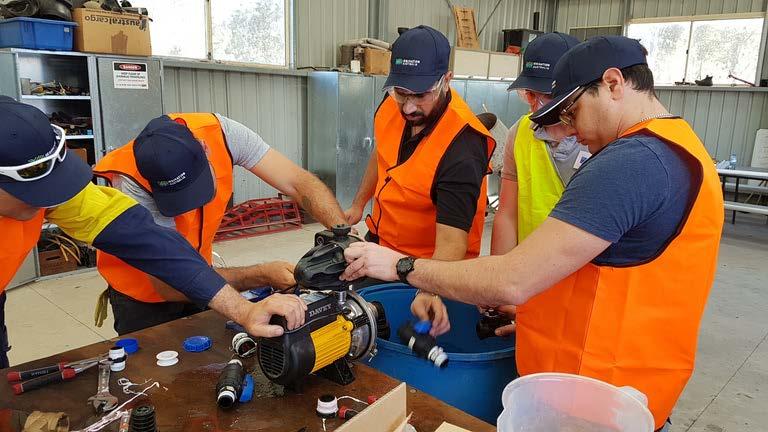
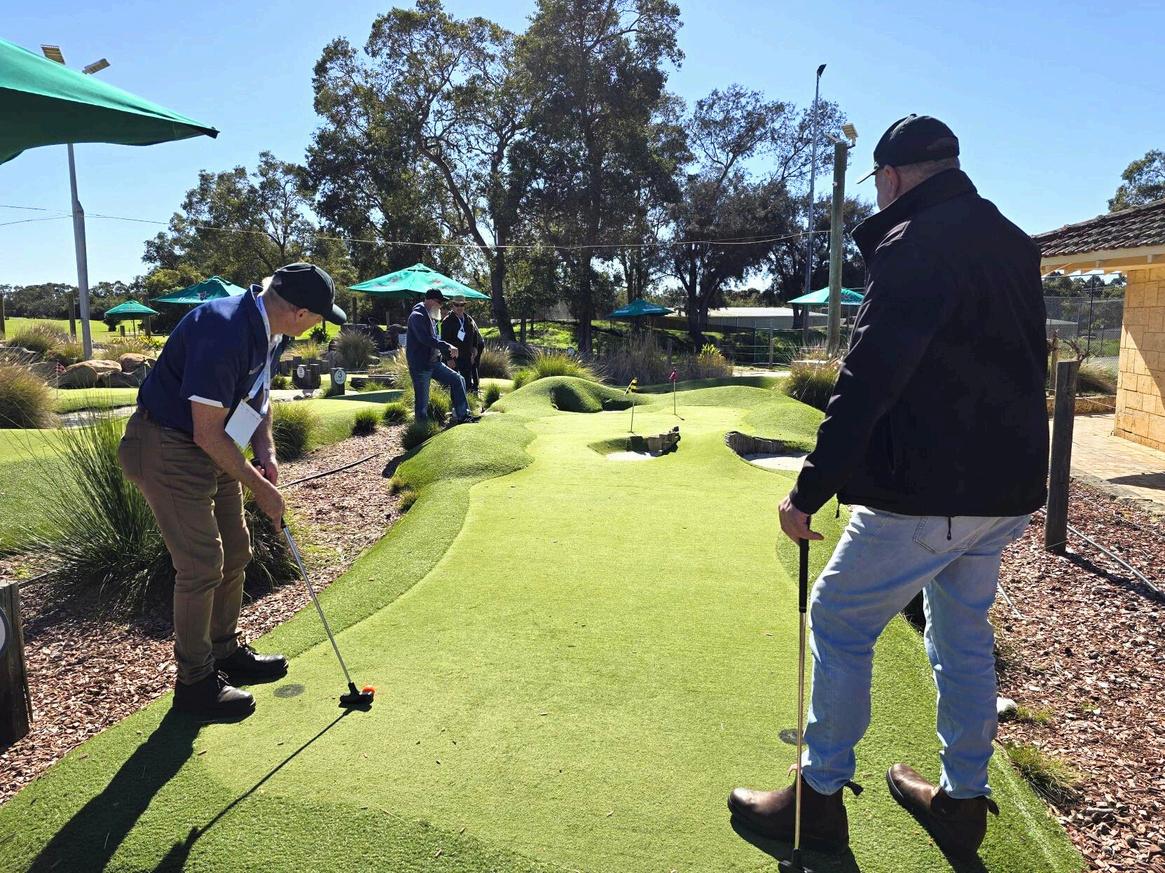
Thank you to all of those who came to the Waterwise Irrigation Expo, group leaders who volunteered, trade show participants and delegates. It was a fantastic day with lots of great displays, learnings from The Vines Golf Course irrigation upgrade and pump house case study and who could forget the competitiveness on the mini golf competition. I managed to see 4 hole-in-ones in a row. It was amazing to see the thirst in the industry for technology and learning. I think we should rename it to ‘sucesspo’ as it was such an epic event. Congratulations to the Waterwise winners for some great examples of businesses and technology out there who are kicking some key goals and are great leaders in the industry, showcasing best practice.
I’d like to acknowledge the tireless work of Bec New and the committees in order to make the day a great success. A mountain of work was conducted to make it all happen, and it really paid off on the day.
The agreement between Irrigation Australia and Water Corporation has been signed and endorsed, which outlines the KPIs and targets for both parties to achieve working together over the next 12 months.
Best of luck with the upcoming reticulation maintenance season. I’m sure our customers are starting to think about firing up their systems, so no doubt the enquiries will come thick and fast. Shoutout to the stores that supply all our parts and are likely to be opening 6 days a week and long hours to meet demand.
Finally, I’d like to acknowledge the hard work Dave Cameron has done within Irrigation Australia over the past three years. He would join our meetings so he could understand what we do in the West, and he was always impressed by how connected and progressive we are in the water management field. He pioneered a lot of online training and connected many leads with the federal government in the training space to help futureproof our industry.
Alison Waters
Irrigation Australia (WA) Industry Chairperson
We would like to extend our sincere appreciation to the following leading irrigation companies which sponsor our Irrigation Futures initiatives. Their invaluable support, which often includes financial contributions and the provision of modern equipment and facilities for our students, plays a vital role in shaping the future of our industry
Regional Update
A RUNDOWN OF WHAT’S BEEN GOING ON IN THE WA REGION, BY
IRRIGATION AUSTRALIA’S NATIONAL MEMBERSHIP MANAGER, REBECCA NEW
Welcome to the Spring edition of The Overflow.
It has been a remarkable season in WA, with Perth experiencing its wettest winter in nearly three decades. While soil moisture is sitting above average across much of the State, forecasts now point to a drier spring ahead—quite a contrast to the rest of Australia, which is expected to see above-average rainfall. Against this backdrop, Irrigation Australia has been busy, with highlights including the success of the Waterwise Irrigation Expo, the launch of Water Corporation’s Waterwise Irrigation Rebate, and the rollout of the new Australian-led Certified Irrigation Designer Program.
LEADERSHIP TRANSITION AT IRRIGATION
AUSTRALIA
Irrigation Australia advises members and stakeholders that Dave Cameron will conclude his term as Chief Executive Officer on Thursday, 11 September 2025. Over the past three years, Dave has provided strong leadership through a period of meaningful change, and we thank him sincerely for his dedication and commitment to the Association. His efforts have positioned us well for the next stage of our journey.
We are also pleased to confirm that Naomi Carragher has been appointed as General Manager of Irrigation Australia. Naomi has been a valued part of the organisation and brings deep knowledge, experience, and passion for the industry. The Board and staff look forward to supporting her as she transitions into this leadership role and continues to drive the Association forward.
Looking ahead, Irrigation Australia remains focused on strengthening membership, expanding training and certification programs, and increasing value to members. With your ongoing support, we are confident in building a stronger voice for the irrigation industry, fostering innovation, and championing sustainable practices that benefit our members, partners, and the broader community.
SHAPE THE FUTURE OF IRRIGATION IN WA –COMMITTEE NOMINATIONS OPEN
Nominations are now open for the WA Regional Committee of Irrigation Australia Ltd for the 2025/26 term. The Committee plays a vital role in shaping industry initiatives, representing members, and guiding our work across training, technical support, Waterwise programs, and rural engagement. If you are passionate about strengthening our irrigation community, now is the time to put your hand up.
We extend our sincere thanks to the Committee members who have contributed their time and expertise over the past year—their dedication has made a real difference. We hope to see many of you renominate for the year ahead, alongside new voices keen to contribute.
For WA nominations, please review the Regional Committee Charter and complete the Nomination Form by Friday, 17 October 2025. The virtual election meeting will be held on Tuesday, 28 October 2025 via Microsoft Teams, with links sent to all nominees.
And for our members in other states: nominations for your Regional Committees are also open. Please visit the Regional Committee page on the Irrigation Australia website to find out more and get involved in shaping the future of irrigation in your region.
“Irrigation Australia has been busy, with highlights including the success of the Waterwise Irrigation Expo, the launch of Water Corporation’s Waterwise Irrigation Rebate, and the rollout of the new Australian-led Certified Irrigation Designer Program.”
NEW CERTIFIED IRRIGATION DESIGNER PROGRAM IS LIVE!
We are pleased to share that the new Australian-led Certified Irrigation Designer (CID) Program is now live. This program has been fully updated to align with Irrigation Australia standards, offering refreshed learning resources and a streamlined application process through our online platform, Ammonite. All exams are conducted online, applicants must nominate a supervisor for each step to maintain integrity, and applications can be submitted at any time. Both Stage 2 (Pre-Qualification) and Stage 3 (General) exams are now open, with Stage 4 (Expertled Tutoring & Practical Application) scheduled for release in early 2026.
The CID credential is designed for irrigation professionals who want to demonstrate advanced knowledge, practical capability, and commitment to industry best practice. Whether you work in landscape and turf, agriculture and horticulture, sports fields, public open space, consultancy, or technical supply, CID certification provides a recognised point of difference. Customers and employers regard Certified Irrigation Designers as trusted professionals who deliver efficient and sustainable solutions.
Becoming a CID is more than just achieving a certification – it is about positioning yourself for leadership roles, tender success, and enhanced credibility in the marketplace. Candidates are supported with Australian-aligned study materials, practice quizzes, and guidance from Irrigation Australia’s certification team. Certification is maintained through annual CPD points and renewal, ensuring skills remain current and industry standards are upheld.
For more information on the program, including eligibility, pricing, and key policies, visit the Certification section of the Irrigation Australia website or contact our team at certification@ irrigation.org.au.
FROM TRAINEESHIP TO APPRENTICESHIP: BUILDING SKILLS FOR THE FUTURE
Irrigation technicians are the backbone of sustainable farming, thriving urban green spaces, and water-efficient landscapes across WA. Yet with only 283 technicians statewide—and demand continuing to grow across agriculture and urban development—we face a critical workforce shortage.
Training with Irrigation Australia
Qualifications
Short Courses
Virtual and face-to-face options
Nation-wide opportunities
Practical training approach
Specialised content
Self-paced online training options
Industry-recognised certifications
Expert trainers
Click here to browse our extensive range of upcoming courses for the new financial year or email training@irrigation.org.au!
To address this, the Food, Fibre and Timber Industries Training Council, together with industry, has submitted a proposal to transition the Certificate III in Irrigation Technology from a traineeship to a recognised trade apprenticeship. This change would strengthen the profession’s standing, provide deeper practical skills training, improve career pathways, and support workforce development in regional areas. The submission is currently with the State Training Board, and the approval process is expected to take several months. We will continue to keep you updated as developments occur, and we thank everyone who has contributed to this important project so far.
WATER CORPORATION’S WATERWISE IRRIGATION REBATE
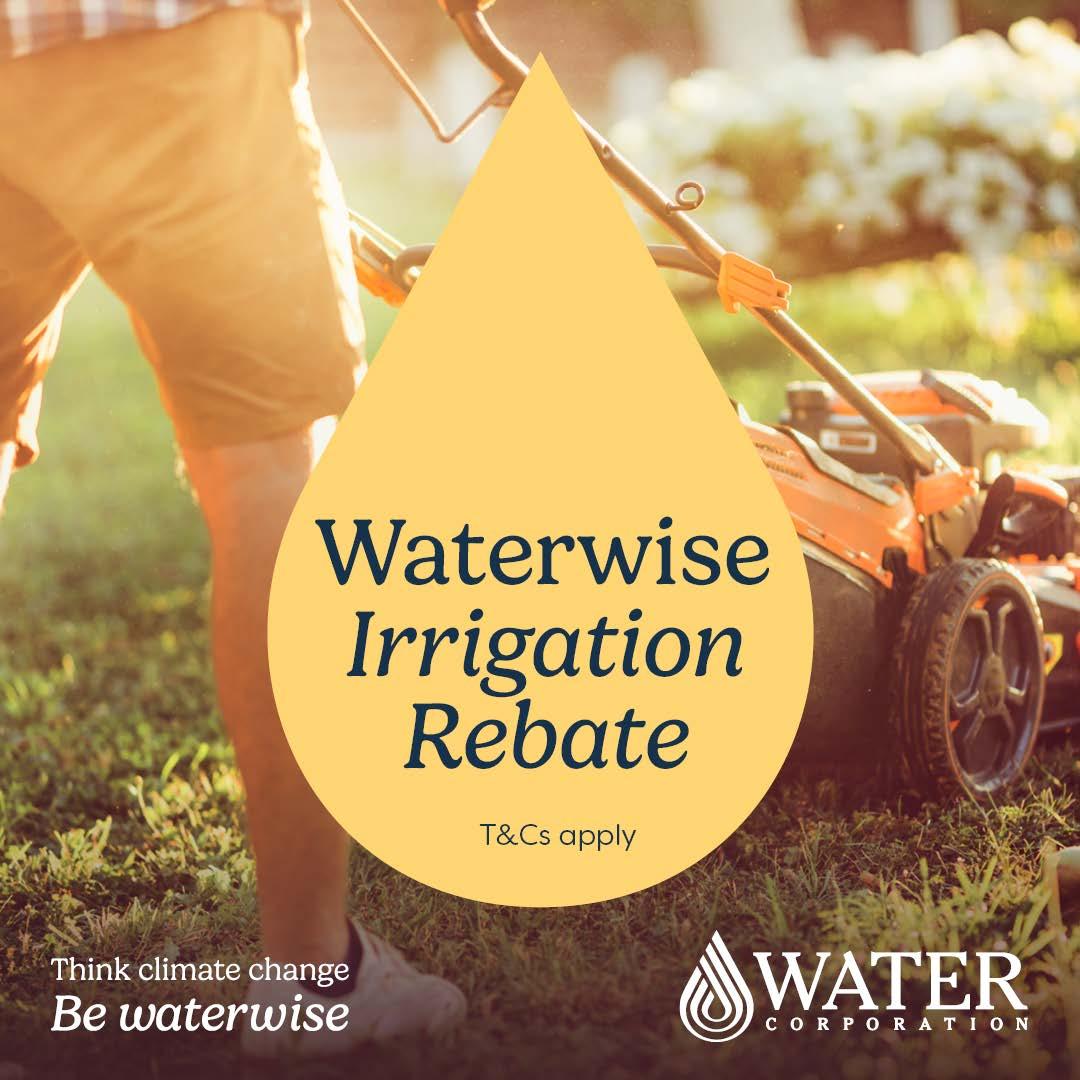
More than a quarter of household water is used on lawns and gardens, so keeping irrigation systems efficient can make a significant difference to water savings. Customers in Perth and Peel can now claim up to $200 through the Waterwise Irrigation Rebate when they engage a participating Waterwise Garden Irrigator to repair leaks or faulty solenoid valves. Each service also includes a check and adjustment of the automatic controller, helping households reduce water waste and improve system performance. This limited rebate is available for eligible services completed between 1 September 2025 and 31 May 2026, or until allocations are exhausted.
This initiative is exclusive to members of the Waterwise Garden Irrigator Program, highlighting the value of being part of the network. If you would like to participate in future programs and initiatives like this, we encourage you to contact Irrigation Australia to learn more about joining.
Brookton Project: Harnessing Solar Power to Deliver Smart, Sustainable
Water Solutions
BACKGROUND
In Brookton’s dry landscape, where the sun is abundant, but water is scarce, one local farm faced a challenge that many in WA’s agricultural regions know all too well: an insufficient water supply.
This wasn’t just a case of needing “more water.” The issue was deeper: a low-producing site, unpredictable bore yields, and a farm that needed water not just now but reliably and efficiently for years to come.
BD Water was called in to design, manage, and deliver a holistic water system that tackled the bore yield issue and futureproofed the operation using solar technology. When water is precious, every drop matters.
PLANNING WITH PRECISION: FROM DESKTOP TO DRILL SITE
Every successful water solution starts with a solid plan — and BD Water’s Brookton project was no exception. The client, a private farm operator, needed a reliable, off-grid water source
to support irrigation and livestock. The goal? A system that would run itself, deliver consistent flow, and reduce reliance on external power.
BD Water kicked off the project with a desktop hydrogeological assessment, reviewing nearby bore data, aquifer maps, and regional geology. The site itself was low-yielding, typical of the Brookton region.
This was followed by an on-site inspection, where our team evaluated soil types, elevation gradients, and access points. We identified 3 potential bore locations, each with distinct characteristics.
The final location was selected in consultation with the client, balancing:
• Distance to existing infrastructure
• Optimal soil and rock types
• Elevation and topography
• Property lithology and aquifer potential
The chosen site sat above a fractured rock zone — a geological sweet spot in the Brookton region. These zones often contain productive aquifers above the bedrock shelf, with water-bearing fractures in intrusive rock types like basalt, dolerite, and gabbro. Our team noted that the base bedrock typically sits around 50–60 metres, making it ideal for a bore targeting deeper, more reliable water sources.
DRILLING THE BORE: FAST, FOCUSED, AND FIT FOR PURPOSE
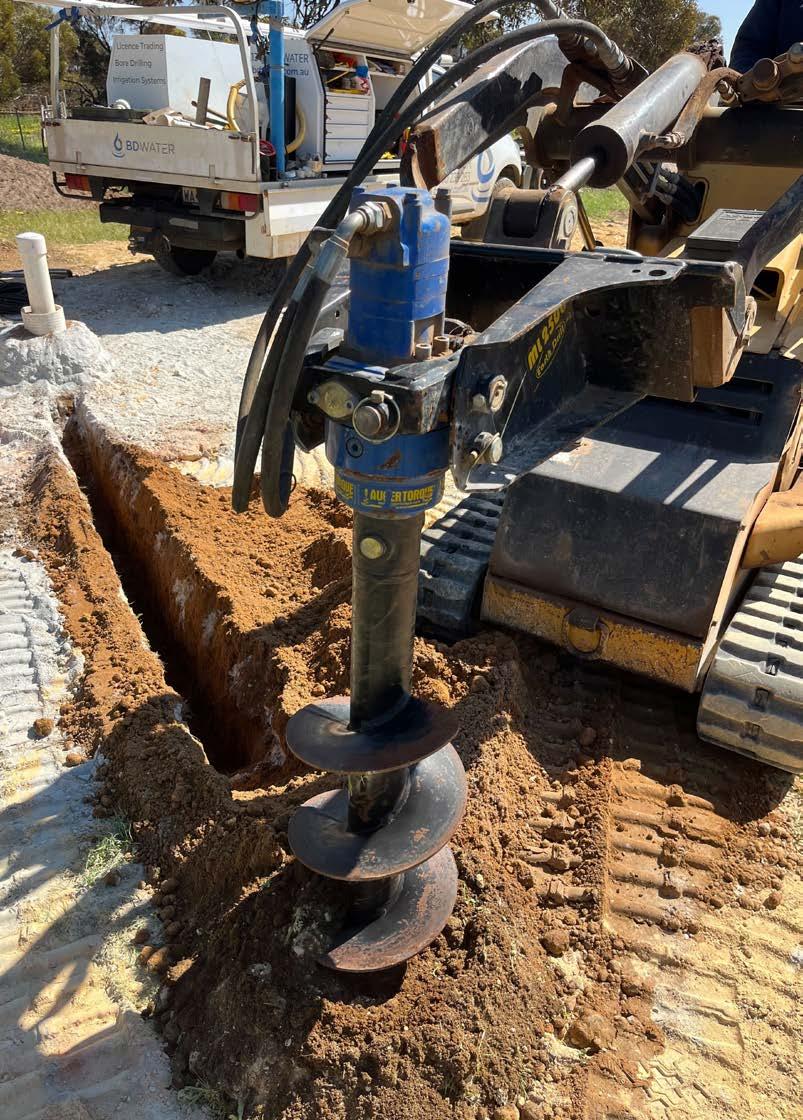
With the location locked in, BD Water mobilised its drilling team. The bore was drilled to 80 metres in a single day, showcasing our efficiency and experience in rural WA conditions.
The bore was drilled through hard granite – no easy feat – but with our custom-designed rigs and experienced crew, the job was completed efficiently and safely. Dual screens were installed at the best-yielding depths, allowing us to optimise the flow from this low-producing aquifer.
Here’s the bore construction breakdown:
• Drilled to 80m, targeting fractured rock aquifers
• Reamed to 4” (177mm) for optimal casing fit and flow
• Pre-collaring to 27m to stabilise the upper bore section
• 177mm slotted collar (6m) installed for water intake
• 4in Class 9 PVC casing and screens installed to BD Water specifications
The fractured rock zone proved productive, confirming our pre-drill assessments. With flow rates and bore construction data in hand, we moved into the next phase: designing the solar pumping system.
The result was approximately 10 to 15 litres per minute, with a salinity of 800ppm – a strong result for the region and well within the usable range for agricultural purposes.
Key takeaways
> BD Water delivered a fully off-grid solarpowered groundwater system for a farm.
> Bore drilled to 80m in fractured rock.
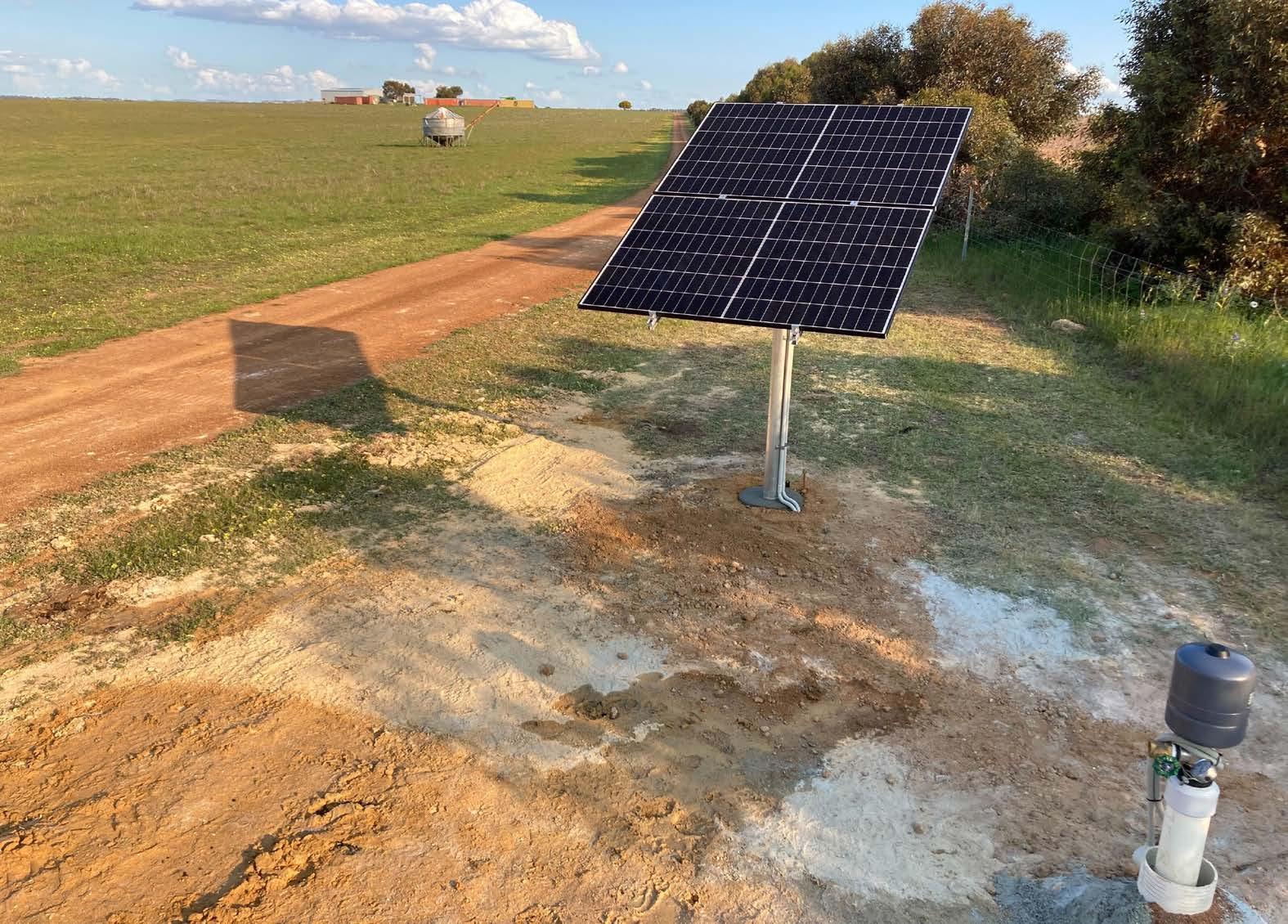
A 0.8kW solar pump system, pumping water along 300m to an existing 20,000L tank.
> Automated pressure-based start/stop system.
> Integrating hydrogeology, bore drilling, solar and rural irrigation infrastructure.
> Long-term benefits include sustainability, reliability, and reduced operational costs.
SOLAR-POWERED SIMPLICITY: PUMPING WITH PRECISION
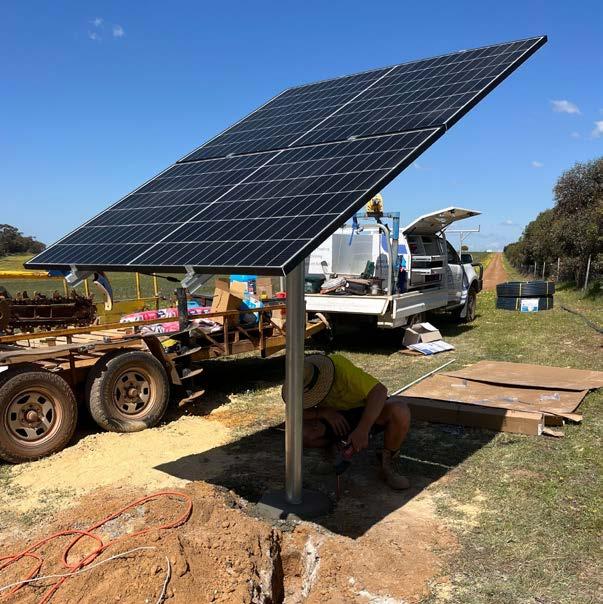
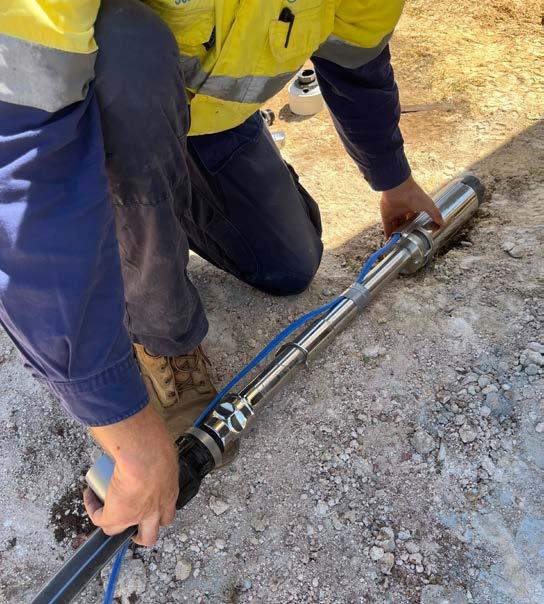
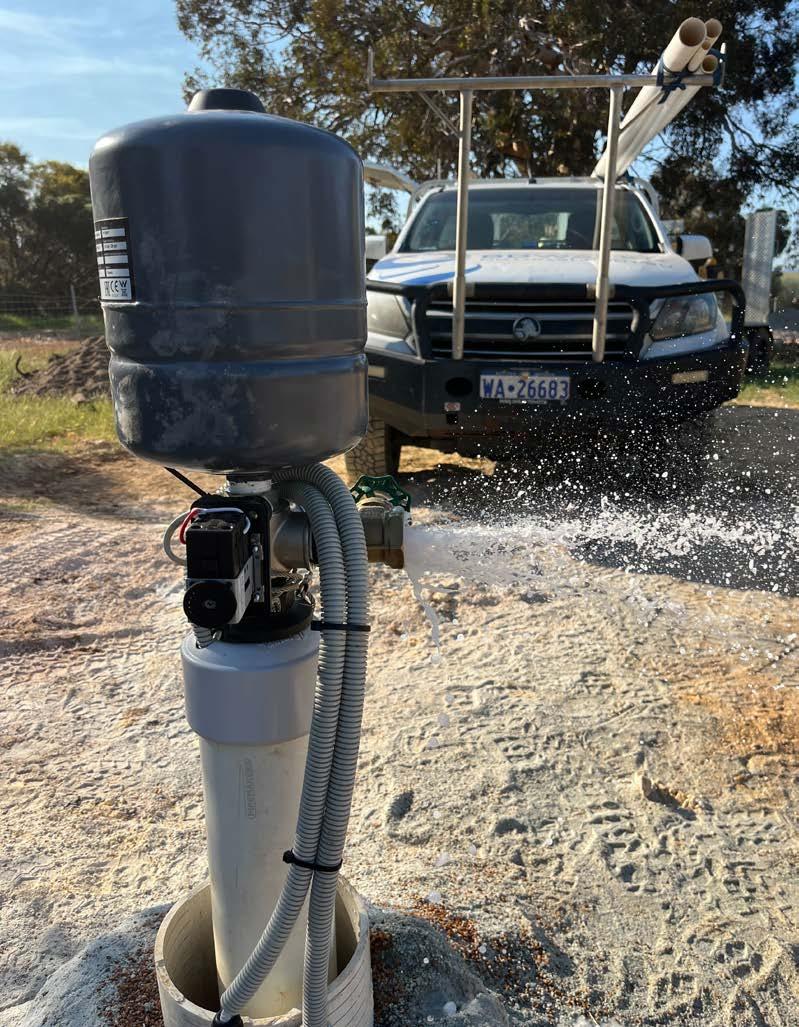
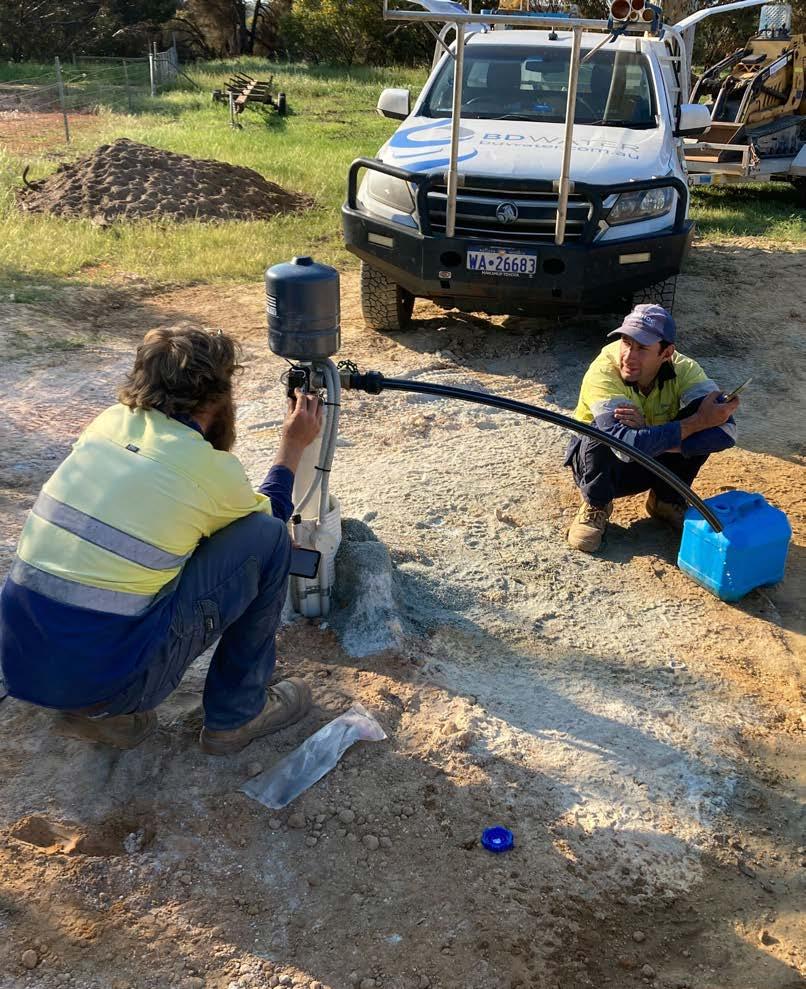
Two weeks after drilling, our team returned to install the solar pump system — a compact yet powerful setup tailored to the site’s needs. The system was designed based on actual bore performance, ensuring optimal pressure and flow.
SYSTEM COMPONENTS
A fully solar-powered pumping system designed to deliver a consistent, steady flow throughout daylight hours:
Pump:
• 0.8kW Nastec NERA 01/02H
• Operating specs: 10L/min at 900kPa to 73m
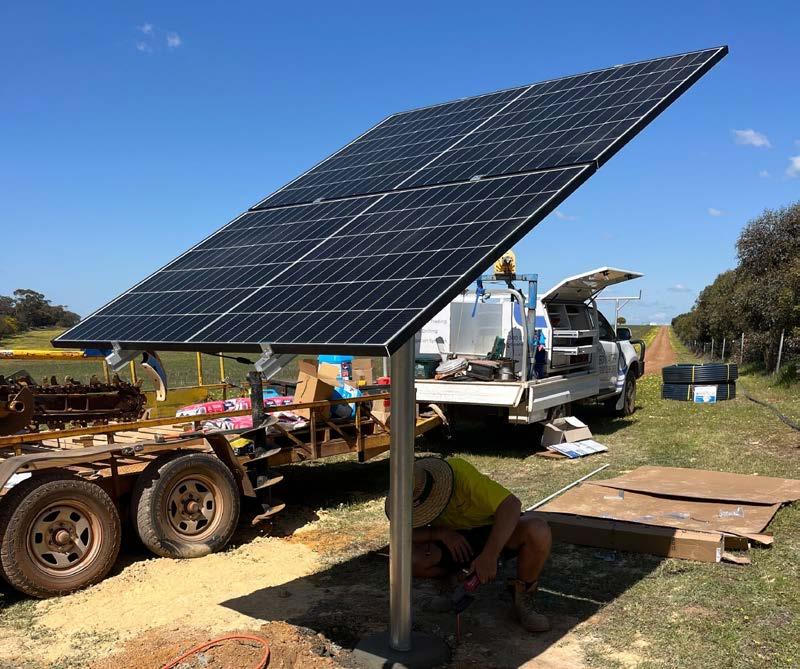
Solar Array:
• 2x 415W Trina panels
• Pole-mounted frame for optimal sun exposure
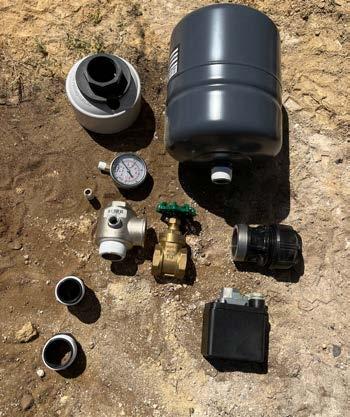
Infrastructure:
• New headworks, rising main, cabling, and control valves
• Automated pressure-based start/stop system
• Commissioning and performance testing
The pump delivers water along a 300 metre pipeline to an existing 20,000L tank, with a gentle elevation gradient across the property. The system is designed for low maintenance and high reliability — ideal for remote farming operations.
This system pumps water gradually into an existing 20,000L tank, making the most of every minute of sunlight. It’s simple, sustainable, and built to last.
DELIVERING SOLID, RELIABLE RESULTS
The client is getting a consistent 10 LPM with smooth performance with the system now live. It’s not a high-yield bore, but thanks to our integrated approach, the water is captured steadily throughout the day and stored efficiently for ondemand use.
There is no need to worry about power outages, costly diesel pumps, or constant system monitoring. It’s the kind of quiet, reliable solution that just works – day in and day out.
And for regional farms like Brookton, that peace of mind is worth its weight in gold.
AUTOMATION THAT WORKS WHILE YOU DON’T
One of the client’s key goals was automation — and BD Water delivered. The pressure-based control system ensures the pump starts and stops automatically based on tank levels and demand. No manual switching, no guesswork. Just reliable, consistent water delivery.
This “set and forget” approach means the farmer can focus on managing crops and livestock while the system quietly does its job in the background. It’s a perfect example of how smart water infrastructure can simplify rural operations.
BD Water prides itself on delivering fast, efficient installations — and Brookton was no exception.
Day 1: On-Site Assessment and Preparation
Day 14: Bore drilled to 80m, casing and screens installed
Day 28: Solar pump system installed over 2 days
Day 30: System commissioned and operational
This rapid turnaround minimised disruption to farm operations and ensured the client had access to water as quickly as possible.
Benefits That Flow: Short-Term Wins and Long-Term Value
Short-Term Benefits
> Immediate access to groundwater for irrigation and livestock
> Off-grid water delivery with $0 electricity costs
> Minimal disruption during installation
Long-Term Benefits
> Sustainable water supply with reduced carbon footprint
> Low-maintenance infrastructure designed for longevity
> Increased farm resilience during dry seasons
> Scalable system — additional tanks or irrigation lines can be added later
> Reduced operational costs and improved water security
CHALLENGES AND CLEVER SOLUTIONS
No project is without its quirks — and Brookton had a few.
We navigated the site’s geology with care. The presence of intrusive and volcanic rock types — basalt, dolerite, gabbro — was a positive indicator for water-bearing fractures. Our team’s understanding of local lithology helped guide both the bore location and construction method.
The fractured rock zone required careful drilling to avoid collapse, which we mitigated with pre-collaring and casing. The site’s elevation and distance to the tank also required precise pump sizing to ensure adequate pressure and flow.
By waiting until the bore was drilled to finalise the solar system design, we ensured the pump matched the actual bore yield and depth — not just theoretical specs. That’s BD Water’s way: design informed by data, not guesswork.
WHY BD WATER?
This project showcases what BD Water does best:
• Integrated water solutions tailored to each site
• Deep expertise in groundwater, solar, and automation
• Proven experience delivering reliable outcomes
• Innovative thinking that turns challenges into opportunities
• Client-centric service that makes every step easy
Whether it’s a farm in Brookton or a large-scale infrastructure project, we bring the same energy, expertise, and commitment to every job.
BD Water is your integrated water solutions provider – every step of the way.
Click HERE for more information.
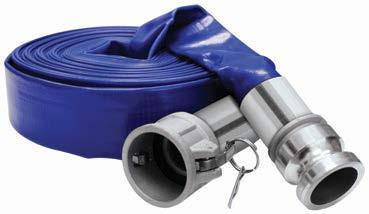
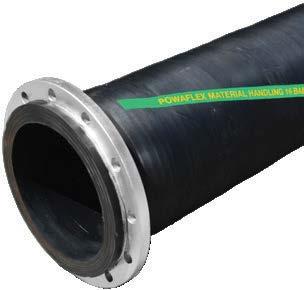
FIRST CHOICE FOR QUALITY HOSE, VALVES, AND FITTINGS FOR THE IRRIGATION INDUSTRY
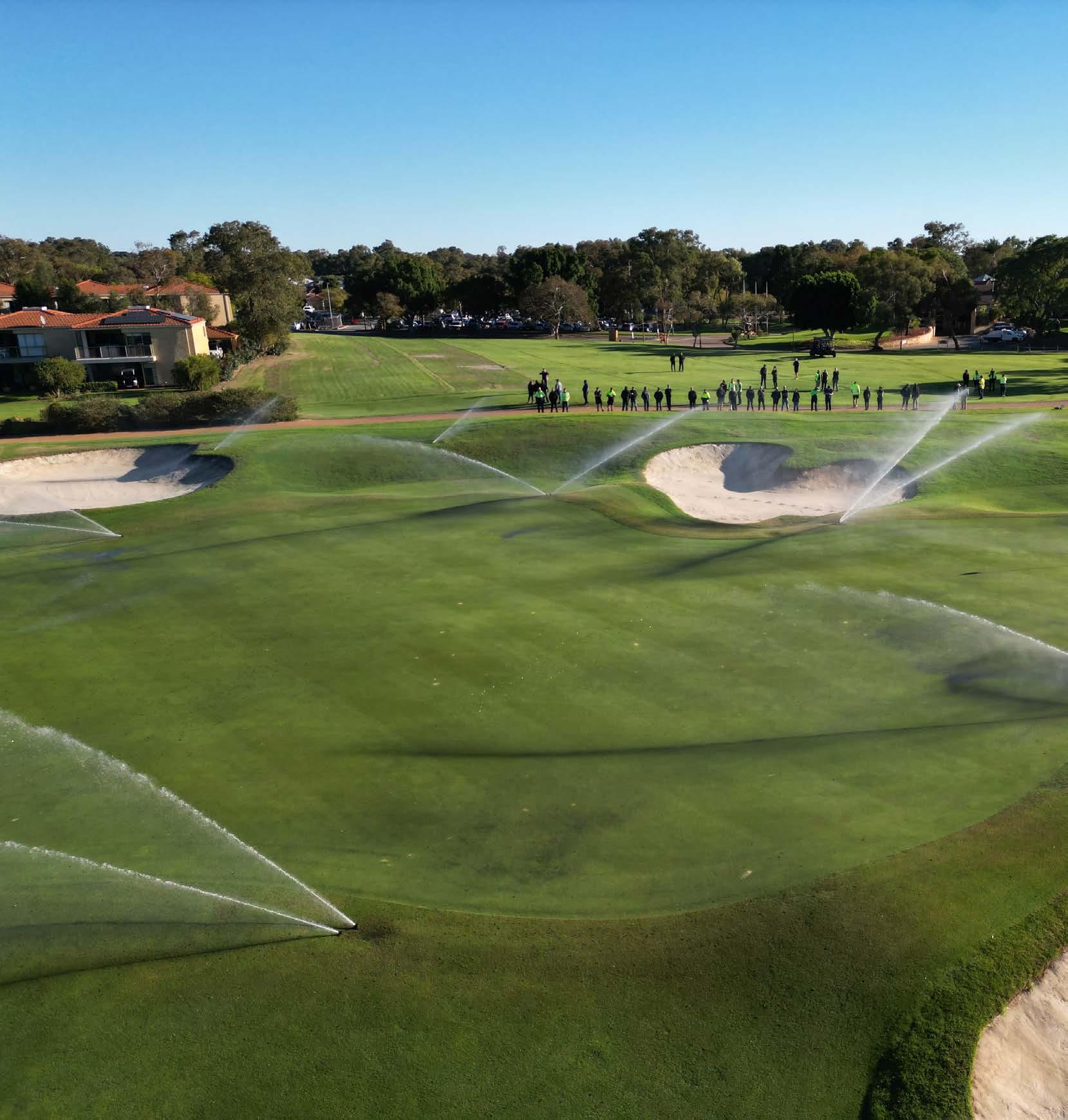
Smart Scheduling Helps Bayswater Save Water
OPTIMISING SPORTS TURF IRRIGATION IS EASIER THAN YOU THINK!
WHY COUNCILS NEED TO ACT NOW
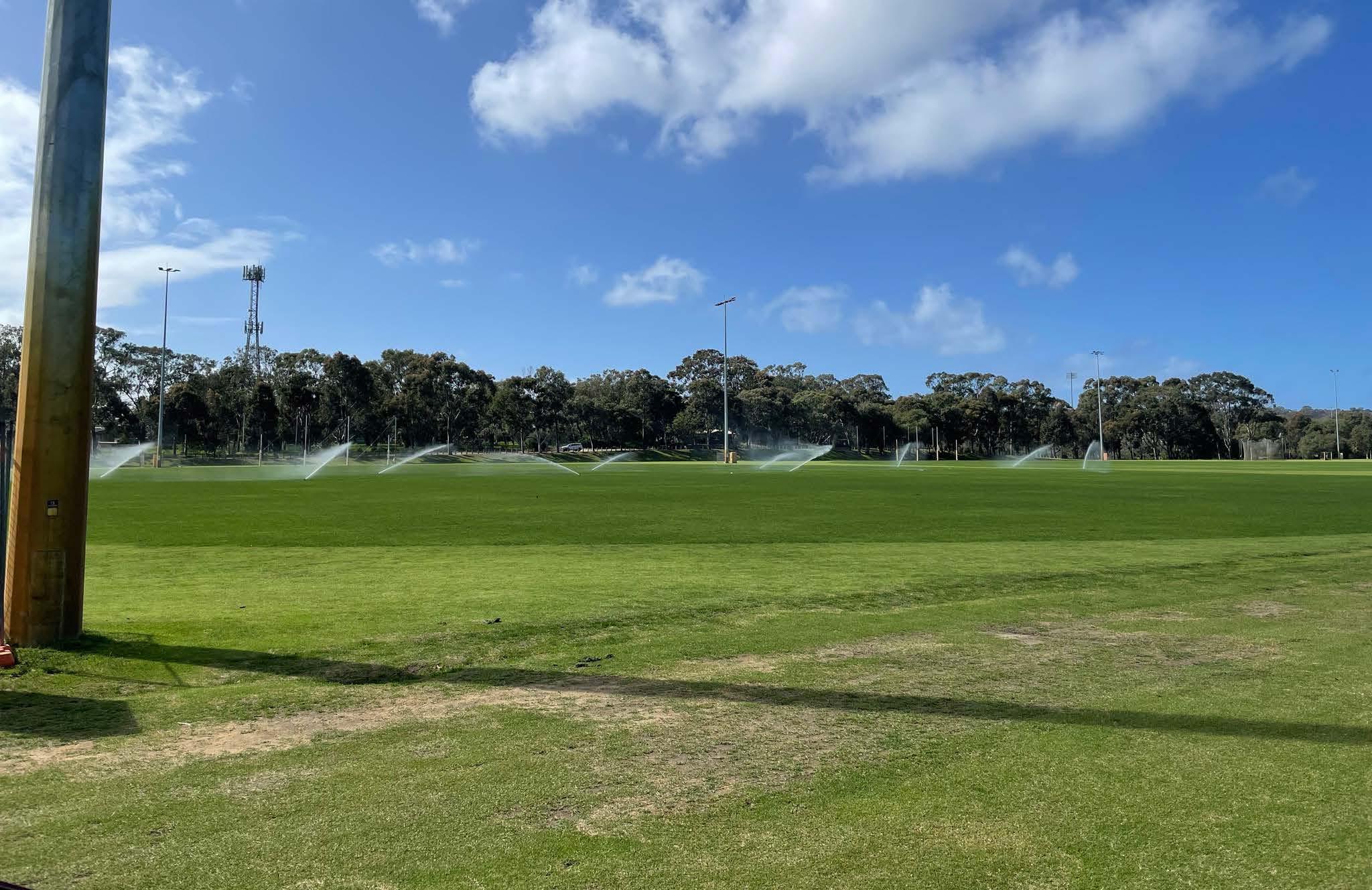
Councils play a key role in maintaining green spaces in cities.
Irrigation is essential for keeping these areas healthy. But Perth’s water supply has been under pressure for years. Declining rainfall, urban growth, and heavy use of groundwater have all added stress. The Gnangara aquifer has been hit the hardest.
As part of efforts to protect groundwater, councils north of the Swan River will see a 10% cut to water allocations by 20281. This means they must keep parks and sports fields attractive and fitfor-purpose while using less water.
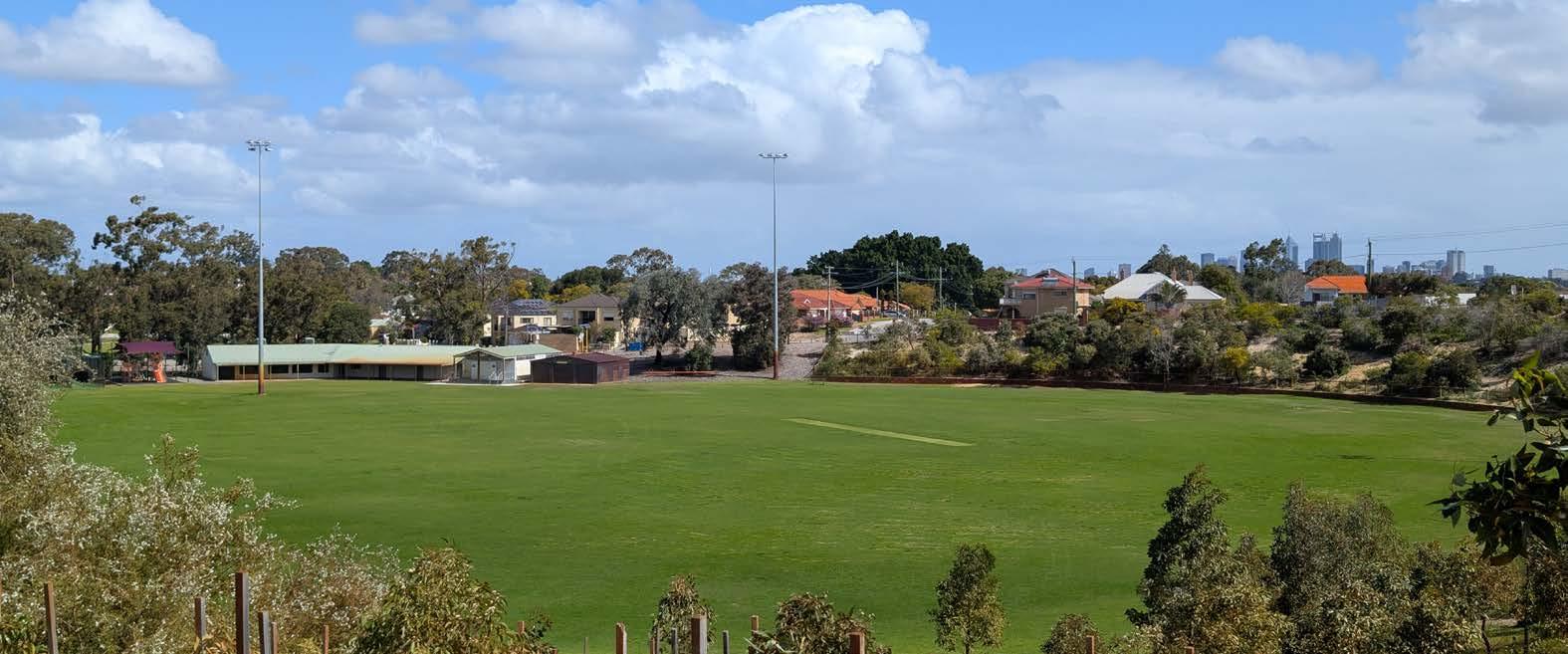
This article looks at how the City of Bayswater is tackling this challenge. They used SWAN Systems software with their Aquamonix Rainman controllers to optimise irrigation schedules and save significant amounts of water.
WATER ALLOCATIONS: A TIGHTENING BUDGET
Water licences for public green spaces in Perth usually allow 7,500 kL/ha. These areas include sports fields, parks, gardens, and street verges. Councils have some flexibility with how water is used within a licenced area. For example:
• A premium oval might need 10,000 kL/ha
• A shaded park could do well with less than 5,000 kL/ha
This approach makes it possible to water each type of space properly without going over the allocation.
But the coming cut to an average allocation of 6,750 kL/ha in 2028 will make things tough. Councils will need better infrastructure, smarter water management, or both.
FINDING POTENTIAL WATER SAVINGS
The first step to knowing if water savings are possible is knowing when and where water is used.
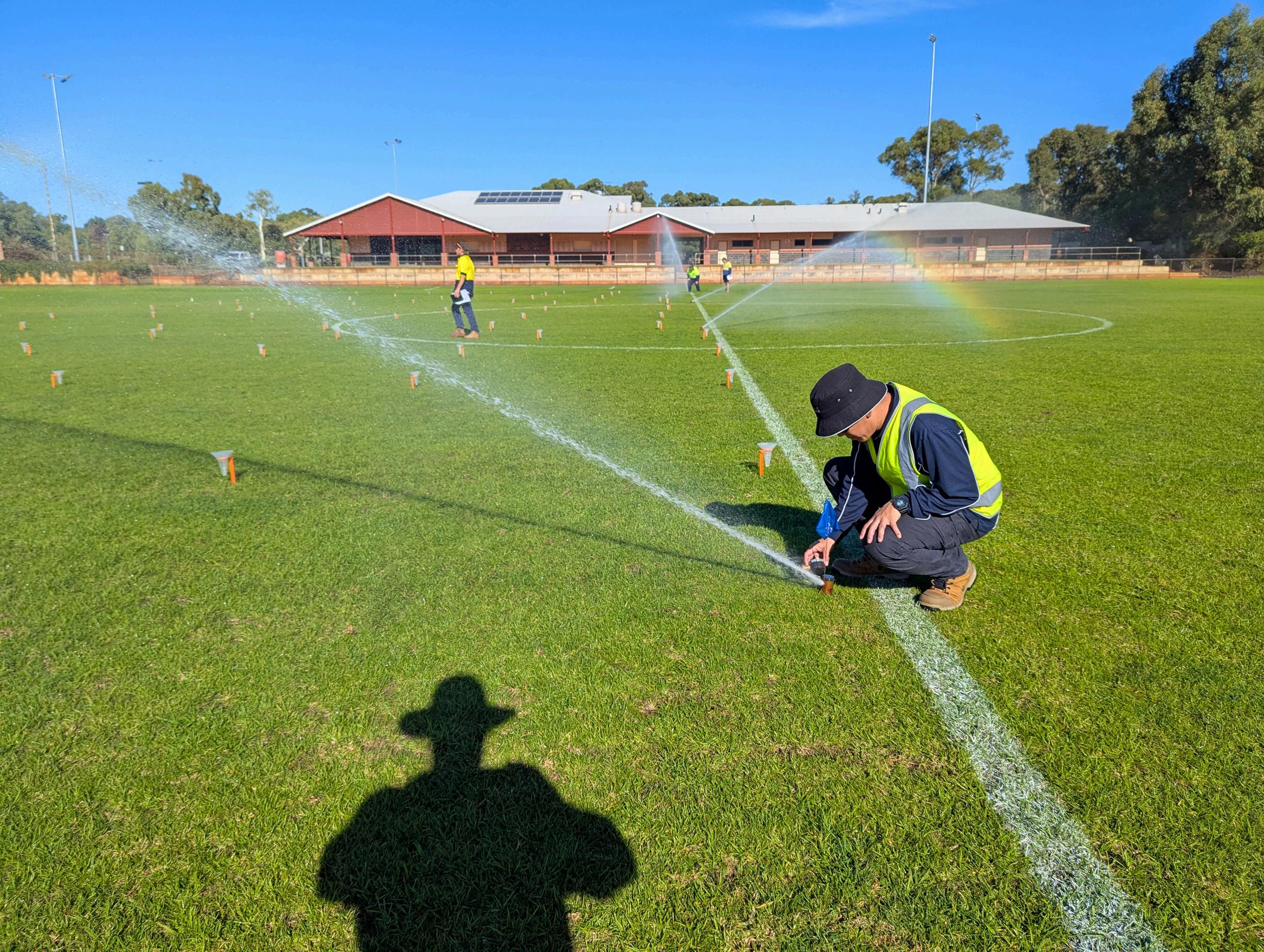
The City of Bayswater irrigates many sports fields using Aquamonix Rainman controllers. Since 2018, they’ve used SWAN Systems to collect controller data on 15 ovals. SWAN automatically collects and analyses irrigation and weather data, tracks changes in soil moisture and compares irrigation applied to actual turf water demand over time.
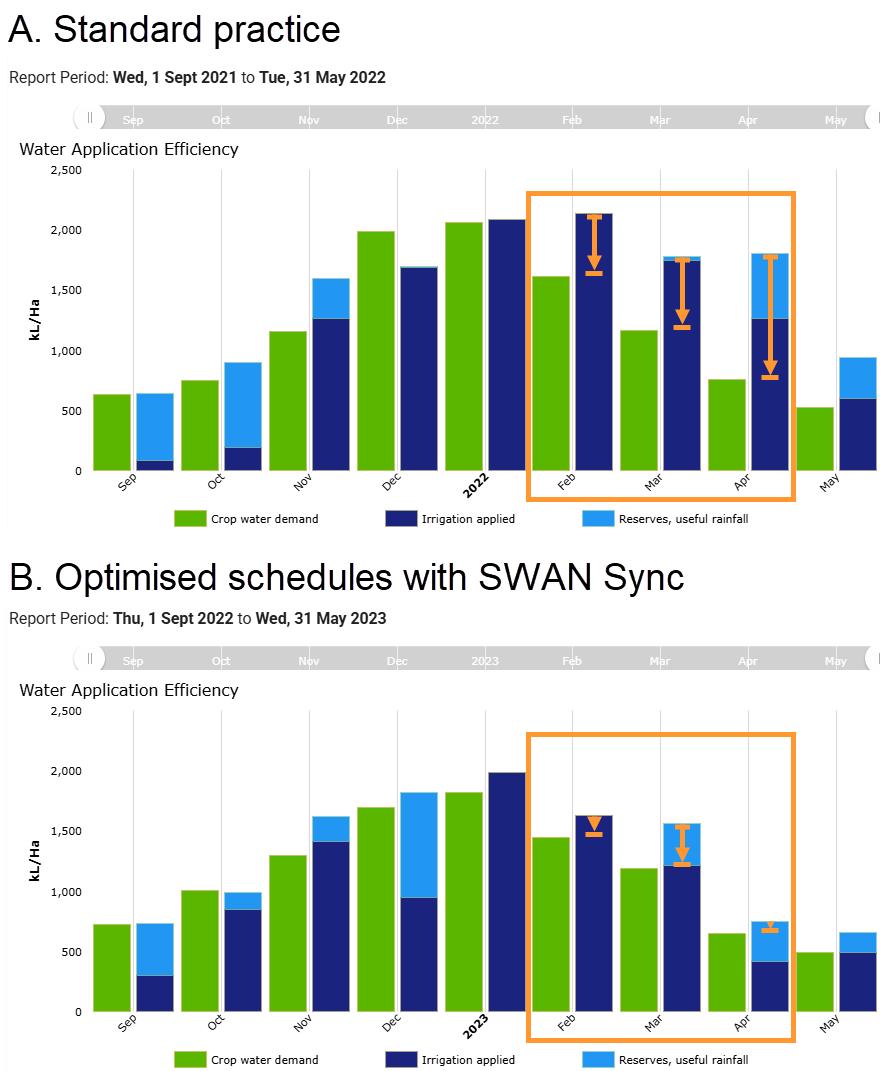
These data provided some important insights (Figure 1A):
• Irrigation usually started at the right time in September
• Watering ramped up correctly through spring and early summer
• But irrigation stayed too high late in summer and into autumn
So, February to April became the clear target for savings. Soil moisture readings confirmed this: The sports fields stayed wet longer than needed.
THE SHOULDER SEASON PROBLEM
The data show that autumn offers the biggest chance to save water. But this can be tricky. The weather changes a lot, and turf managers are busy. Even if they check soil data, adjusting irrigation schedules may not be straightforward. They must decide how much to cut back or increase watering, all the while watching for rapidly changing weather conditions. Because of this, managers may keep irrigation high in autumn as a “safety net” against sudden heat. This is where SWAN Sync comes in.
SMART SCHEDULING WITH SWAN SYNC
SWAN Sync lets SWAN send optimised irrigation schedules straight to controllers. SWAN predicts how much water the turf will need each day over the next week using weather, irrigation and soil moisture data, along with rainfall and evapotranspiration forecasts.
The process is simple:
1. In SWAN, click “optimise”
2. Review, approve and save the schedule
3. The system sends it to the controllers automatically
This takes about 15 minutes, once or twice a week. It means irrigation aligns with current conditions, saving water without extra effort.
DOES IT SAVE WATER?
Yes. Starting with the 2022-23 season, Bayswater added SWAN’s schedule optimisation with SWAN Sync to two ovals –Emberson and RA Cook. Comparing the years before and after implementing SWAN Sync:
• In 2019, 2020, 2021 and 2022, water use was between 3040% above turf demand from February - April
• In 2023, 2024 and 2025 the excess for the same period dropped to under 10% (an acceptable buffer against underirrigating)
A comparison of irrigation patterns before and after implementation of SWAN Sync at Emberson Reserve is shown in Figure 1. This shows irrigation matched turf needs much better after using SWAN Sync (Figure 1A).
HOW MUCH WATER CAN BE SAVED?
Every season is different. For example, 2023-24 was one of Perth’s hottest and driest years, with almost no rain from September to May2. Turf needed about 15% more water in 202324 than average. This illustrates the challenge of comparing between years to determine whether savings have been made.
However, if a consistent excess of irrigation applied relative to actual crop demand is mitigated by a change in practice, then it’s clear that water savings have been achieved. SWAN Sync has improved annual water application efficiency at the two ovals:
• Emberson Reserve: at least 20% more efficient
• RA Cook Reserve: about 15% more efficient
This equates to an average of 1,500 kL/ha saved for these high-use ovals. Published scientific research shows smarter scheduling can often cut water use by 20% or more. Importantly, there was no loss of turf quality due to the water saving. This was monitored by satellite imagery (NDVI) that showed greenness was maintained through the periods of optimised scheduling and SWAN Sync.
Testimonial
The introduction of SWAN Systems into the City’s irrigation monitoring tools has significantly enhanced our approach to predictive scheduling.
The SWAN Sync Trial has highlighted the potential for more efficient water use, and we intend to expand this trial by incorporating three additional grounds with differing characteristics to the current sites. We look forward to analysing the results of this expansion.
The moisture sensor data collected from the current sites often aligns closely with the calculations from SWAN Systems, creating a synergistic relationship that boosts our confidence in our irrigation strategies.
Our field staff, already well-versed in the specific needs of the various grounds, are responsible for programming the irrigation systems. The insights provided by SWAN Systems serve as a valuable reference tool, further assisting them to make informed decisions on irrigation management. Together, these tools will enhance our ability to optimise water usage while maintaining healthy landscapes.
WAYNE PEACE, CITY OF BAYSWATER
Figure 1. Monthly turf water demand (green bars) vs. irrigation applied (dark blue bars) at Emberson Reserve. A. Sep 2021 – May 2022 (before SWAN Sync): Irrigation was scheduled using accepted standard practice, with monthly budgets based on historical average evapotranspiration3. The highlighted months (Feb–Apr 2022, orange box) show periods of excess irrigation compared to actual turf demand. The arrows indicate potential water savings.
B. Sep 2022 – May 2023 (after implementing optimised irrigation scheduling with SWAN Sync): The highlighted months (Feb–Apr 2023, orange box) show a marked reduction in excess irrigation, with application much closer to turf water demand.
Because of this success, Bayswater will roll out SWAN Sync at three more ovals in 2025.
THE DATA IS ALREADY AVAILABLE - LET’S USE IT TO SAVE WATER!
Councils do their best with limited time and, often, aging infrastructure. Continuous data analysis is the only way to provide actionable decision support that drives immediate improvements in water efficiency. Fortunately, most councils already collect this data. They just need to use it! By combining SWAN’s data analysis with SWAN Sync-enabled controllers, irrigation managers get an easy, push-button solution to improve irrigation efficiency and cut water use.
Contact SWAN Systems for more info: e: info@swansystems.com p: 1300 12 12 50
REFERENCES
1 Rebalancing our groundwater | Western Australian Government
2 Australian Bureau of Meteorology climate summaries archive
3 Barton et al. 2020, Agricultural Water Management 230: 105957
The critical role of water management in securing Collie’s future
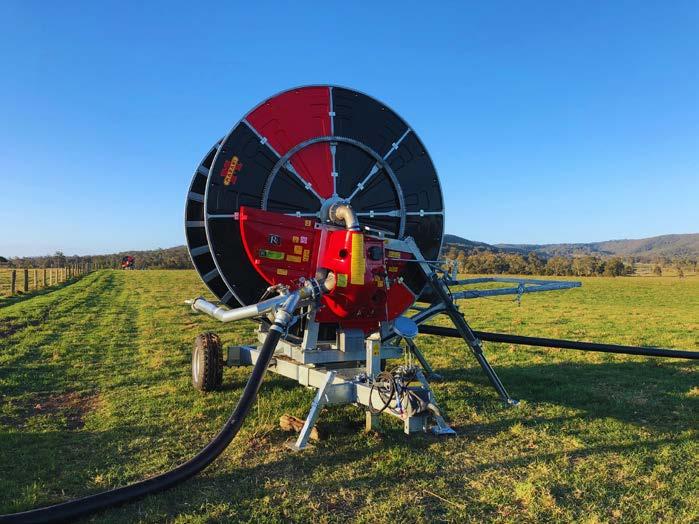
Built for performance and reliability, Marani Hard Hose Irrigators offer over 50 models to suit a wide variety of irrigation needs Whether you ' re managing gardens, sporting fields , or large-scale agricultural areas , Marani delivers robust European engineering designed to endure tough conditions and deliver consistent results
Collie is a regional centre in Western Australia, celebrated for its rich heritage as the state’s source of coal power for over 140 years. Today, the town is emerging as a lively community with growing tourism, a vibrant arts scene, and new economic opportunities.
As the State Government leads a transition away from coal, effective water planning is more critical than ever to support Collie’s future.
The Department of Water and Environmental Regulation (the department) continues to play a key role in guiding sustainable water use and protecting water-dependent values through evidence-based planning and collaboration.
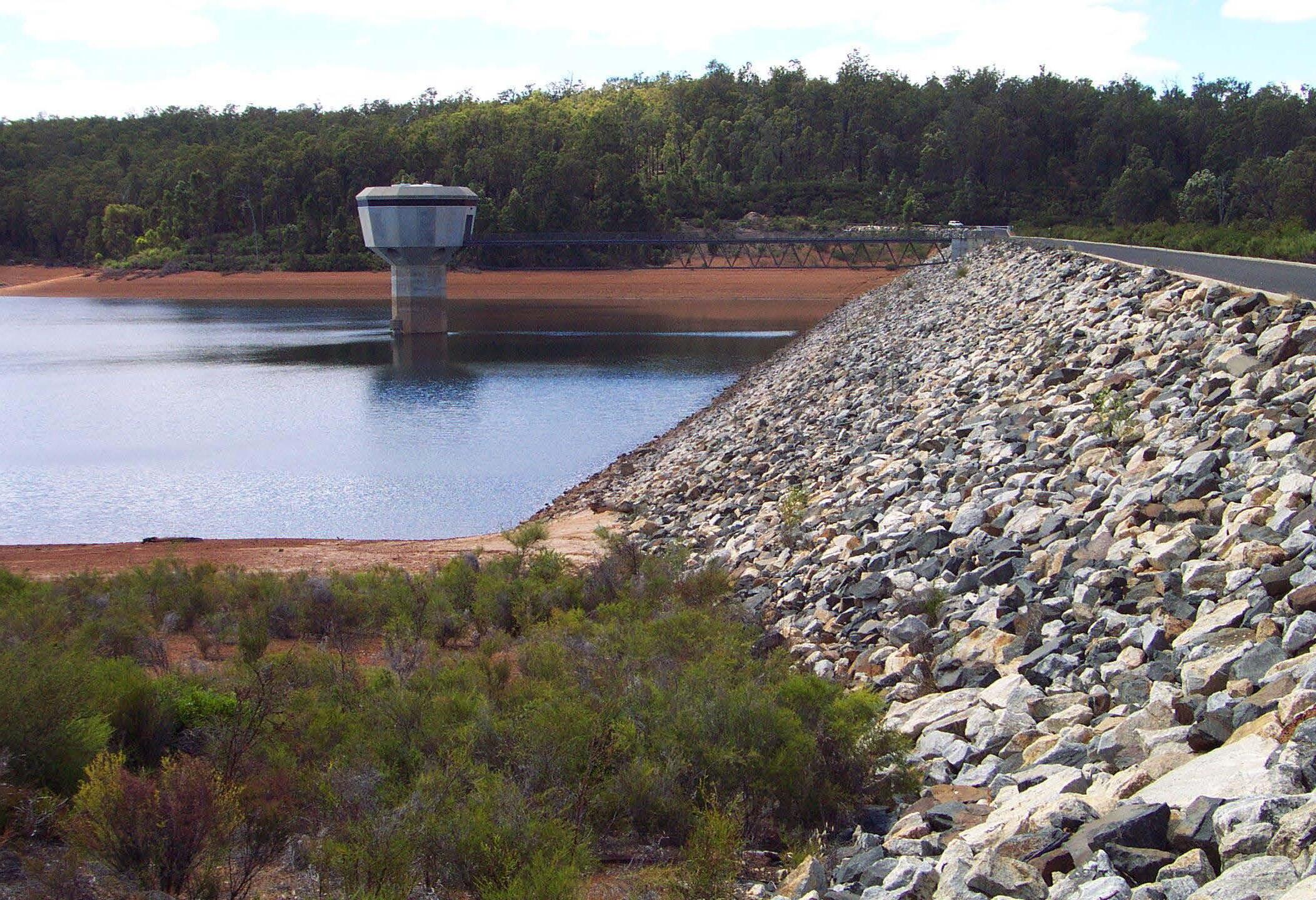
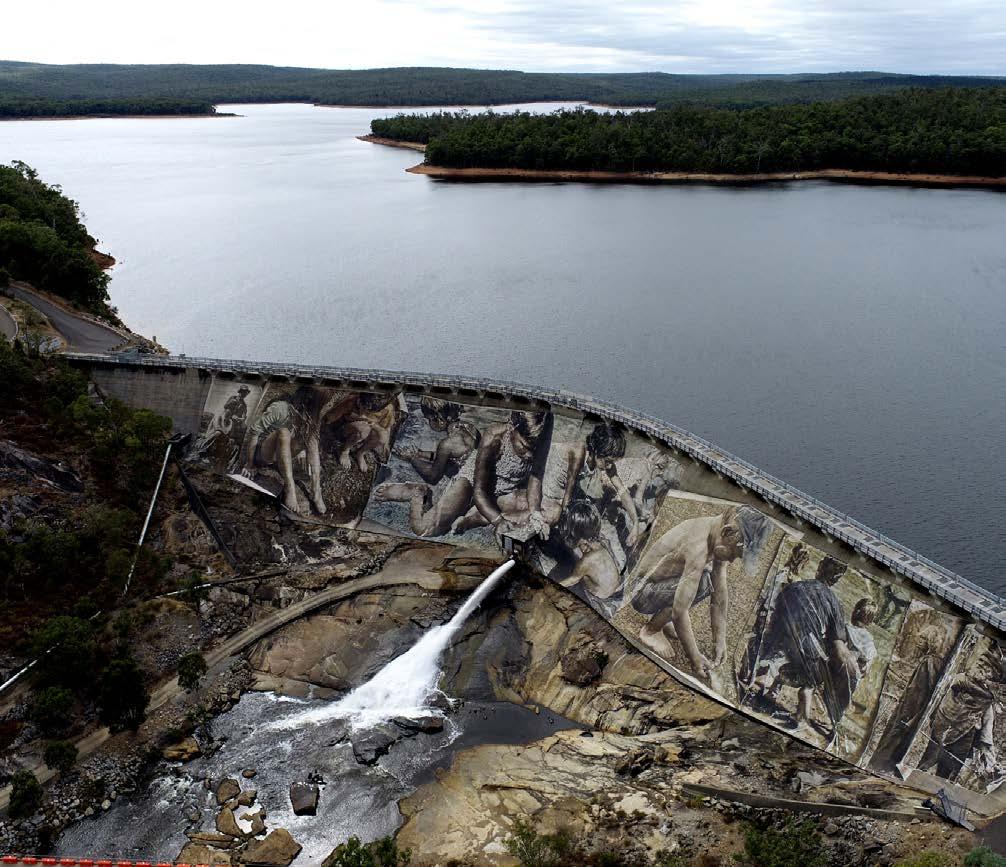
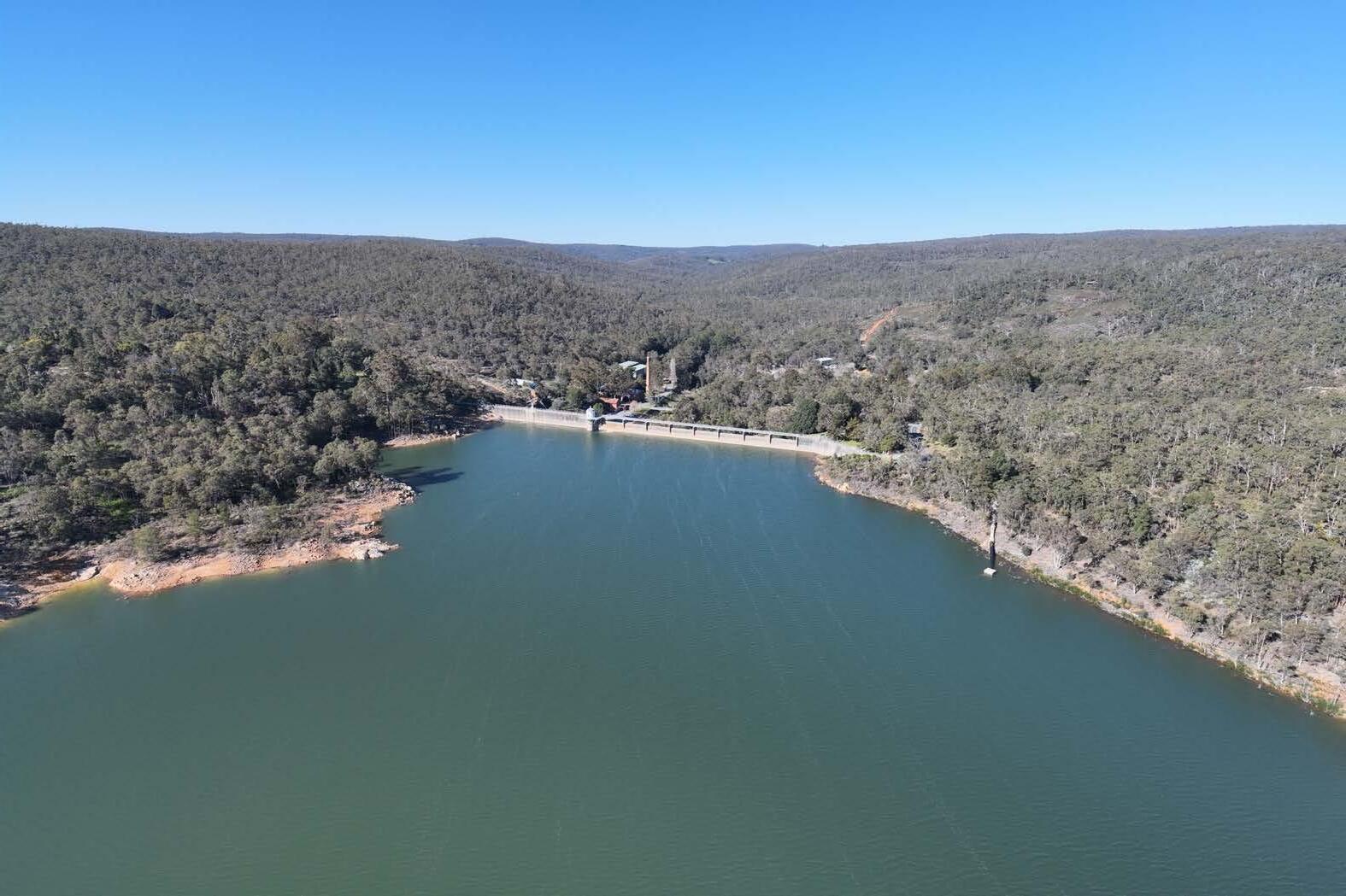
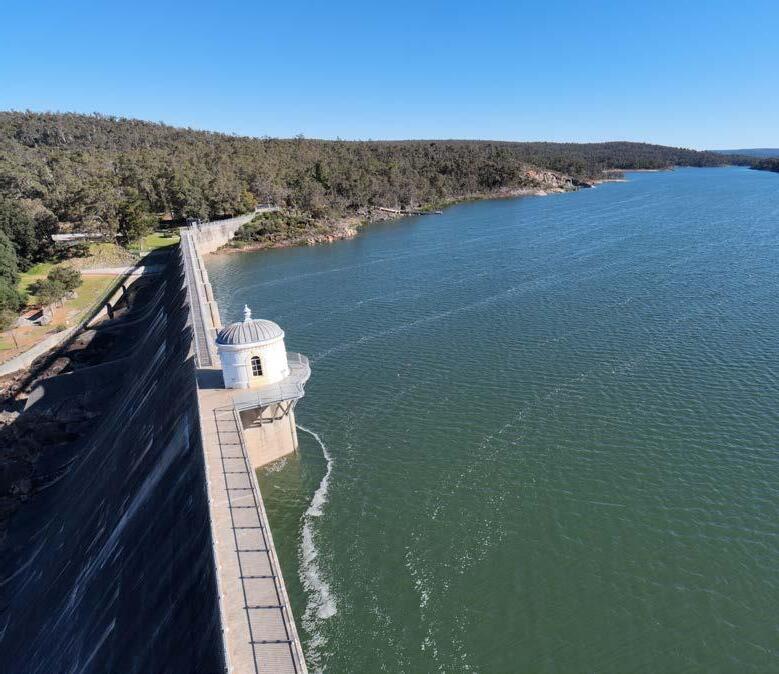
Groundwater and surface water resources in the Collie Coal Basin and the Collie River catchment, including the Wellington Reservoir, are managed by the department through the Upper Collie water allocation plan 2009.
The area covered by the allocation plan features a unique and contrasting landscape. It includes areas of natural beauty, such as the Collie River Valley, and an emerging tourism sector – all set against a backdrop of farming, coal mining, and power generation.
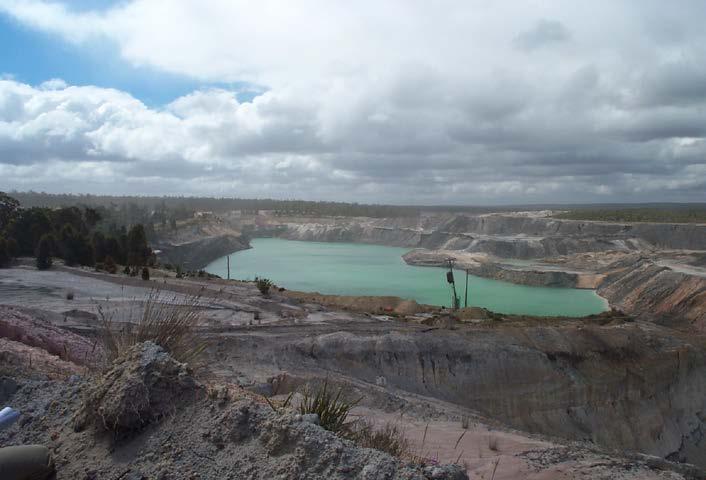
However, over a century of coal mining to support the state’s power demands has altered the scientifically complex water resources in this area, against the backdrop of climate change.
The area covered by the allocation plan features a unique and contrasting landscape. It includes areas of natural beauty, such as the Collie River Valley, and an emerging tourism sector – all set against a backdrop of farming, coal mining, and power generation.
In July 2025, the department published the second plan evaluation showing how the allocation plan has performed against its water resource objectives between 2018 and 2024. The evaluation shows continued progress towards some of the plan’s objectives. However, abstraction above allocation limits to support coal mining under State Agreements and the ongoing warming and drying climate have also raised challenges for managing water in the region.
This evaluation highlights the importance of adapting to ongoing climate change and managing overallocation to progress the allocation plan’s objectives. The Collie area is currently undergoing a significant industrial transition through the Collie Just Transition plan. This will provide new priorities for water management in the Upper Collie and further opportunities to adapt to changing rainfall, streamflow, and groundwater recharge as the climate changes.
The department is proactively conducting technical studies and collaborating with multiple agencies, including the Department of Energy and Economic Diversification, the Department of the Premier and Cabinet, and the Department of Primary Industries and Regional Development to support future economic and environmental outcomes in the Collie Coal Basin. The department will also consider updating the current water allocation plan in line with State Government priorities and findings from monitoring and scientific investigations, such as the State Groundwater Investigation Program - Collie project.
Collie’s transformation presents both challenges and opportunities for water resource management. As the region shifts toward new industries and adapts to a changing climate, the State Government is laying the groundwork for a resilient future, where water continues to support Collie’s evolving landscape, economy, and community values.
Start your journey in irrigation today
Enrol in one of our self-paced online courses!
Ready to kickstart your journey in the irrigation industry? Irrigation Insights - Induction Course is a free online learning resource, designed as the ultimate introduction for newcomers.
Offering a comprehensive overview of the industry, this course is the perfect starting point for those exploring career options, gaining work experience, or looking to onboard new employees.
Are you ready to upskill your team and stay ahead in irrigation? For just $660 incl. GST, our 12-month unlimited company subscription gives your staff year-round access to self-paced online training, covering everything from irrigation basics to advanced ag and landscape systems.
Join the many teams across Australia already levelling up with easy, flexible, and costeffective training!
STRENGTHENINGTHE IRRIGATIONWORKFORCE
We're proud to introduce several new partnerships that reinforce our commitment to strengthening the irrigation workforce: NEWINITIATIVESANDPARTNERSHIPS
IntroducingtheIrrigationAustraliaTalentHub
In collaboration with GoHeadhunt, we are launching the Irrigation Australia Talent Hub - a smart platform connecting skilled professionals with leading employers in irrigation, water management, and landscaping
Benefitsforjobseekers:
Access exclusive job opportunities
AI-powered recruitment tools
Personalised career support and mentoring
Direct connections with top employers
More details on this partnership will be shared soon!
Access to a curated talent pool
Smart hiring tools for streamlined recruitment
Featured job postings for increased visibility
A cost-effective recruitment solution
ExpandingemploymentpathwayswithatWorkAustralia
We are also beginning an engagement process with atWork Australia, a national employment services provider offering tailored workforce solutions across the country
This collaboration provides employers with access to a diverse pool of job-ready candidates, financial support for accredited training, and government wage subsidies of up to $10,000 By working together, we aim to enhance workforce planning, reduce hiring costs, and create meaningful employment pathways within the irrigation industry Your regional committee is also working hard on a new trial 'Launch into Work' project supported by the Department of Employment and Workplace Relations
In late 2024, we collaborated with Education Services Australia to elevate our industry’s profile on myfutureAustralia's national career information service myfuture supports career planning, pathways, and transitions by providing insights and resources for those guiding career choices We're excited to announce that Irrigation Careers has been added the the myfuture site as a helpful industry website under select occupation profiles!
Iron and manganese fouling in Australian groundwater bores
ARTICLE BY DAVID BENNETT
Snapshot
> Groundwater bores across Australia often face performance issues caused by the accumulation of iron and manganese deposits.
> Iron deposits are widespread across Australia, while manganese is prevalent in the east.
> When pumped to the surface, these dissolved metals oxidise and precipitate out, forming crusts, slimes, and nodules that interfere with bore efficiency and pump operation.
> Iron forms reddish slime and crusts that are moderately difficult to remove, while manganese creates stubborn black biofilms that require specialised cleaners and careful treatment to prevent rapid regrowth.
> Best practices for bore treatment and performance include regular monitoring, mechanical and chemical cleaning, disinfection and flushing.
Groundwater bores across Australia often face performance issues caused by the accumulation of iron and manganese deposits. These naturally occurring minerals can foul pumps, clog screens, and reduce water yield – particularly in agricultural and industrial wells. Understanding the differences between iron and manganese fouling is key to managing and treating these problems effectively.
UNDERSTANDING THE PROBLEM
Iron and manganese are present in many Australian aquifers, especially in regions with low-oxygen conditions underground. When pumped to the surface, these dissolved metals oxidise and precipitate out, forming crusts, slimes, and nodules that interfere with bore efficiency.
Over time, this buildup can drastically reduce flow rates, increase maintenance costs, and even lead to premature pump failure. Manganese is particularly troublesome due to its tenacity and complex chemistry, especially in areas like Eastern Australia, where it’s known to be prevalent.
FEATURE IRON FOULING
Distribution Widespread across Australia
Colour of deposits
Oxidation speed
Fouling type
Removal difficulty
Cleaning agents
Regrowth potential
Reddish-brown
Rapid in the presence of oxygen
Slime (iron bacteria), hard crusts
Moderate
Acid-based cleaners, oxidisers
High – if not fully removed
TABLE: IRON VS MANGANESE FOULING IN AUSTRALIAN BORES
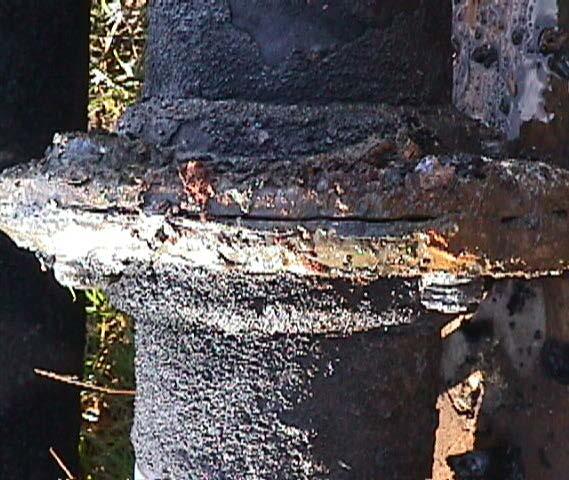
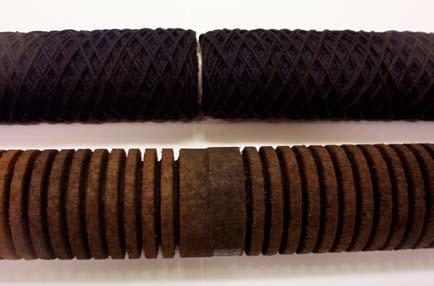
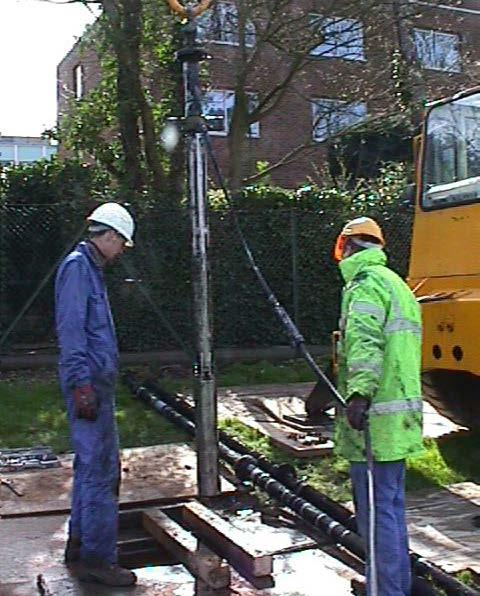
Above & right: It was interesting to look at the pre filters before the holding tank. One clearly catching mostly manganese and the other iron oxide
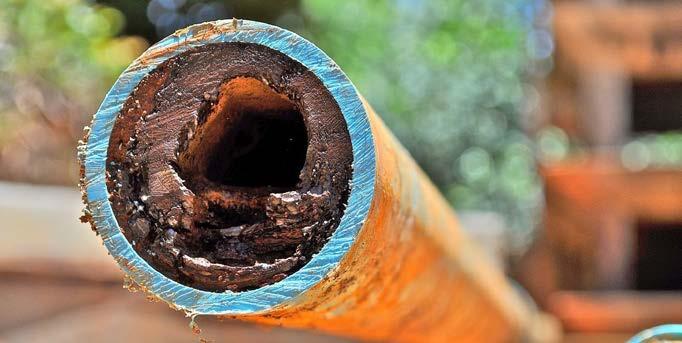
Above: The pipe with the clogging was from a nursery from NSW that wanted a solution to clean out many kilometres of clogged pipelines. It was apparent that simply replacing the pipe was the most economical option and then following a regular maintenance treatment every six months to keep the new pipes clean.
BEST PRACTICES FOR TREATMENT AND PREVENTION
1. Regular monitoring
Keep logs of bore yield, drawdown, and water quality to catch early signs of fouling.
2. Mechanical cleaning
Wire brushing, surge blocks, or airlift pumping can remove much of the biofilm and mineral buildup before chemical treatment.
3. Chemical cleaning
Use targeted cleaning agents such as BoreSaver Ultra C for iron, or MultiKleen/EZECO for manganese issues.
MANGANESE FOULING
More common in Eastern Australia
Black or dark brown
Slower, can remain in solution longer
Sticky black deposits, biofilms
More difficult to remove
Specialised products like MultiKleen or EZECO
Very high – often returns rapidly if untreated properly
4. Disinfection
Chlorination or hydrogen peroxide dosing helps control iron and manganese bacteria.
5. Follow-up flushing
Always pump the well thoroughly after cleaning to remove residues and loosened debris.
SUMMARY
Iron and manganese fouling is a persistent issue for many well owners and operators across Australia. Understanding the difference between the two and tailoring your treatment methods accordingly, can help restore and maintain well performance for the long term. Proactive maintenance and the right combination of tools and chemicals are your best defence against recurring problems.
About the Author: Based in Western Australia, David Bennett is Managing Director of Aquabiotics Pty Ltd. For nearly three decades, he has been conducting research, design and the manufacture of specialised cleaning solutions targeting iron oxide clogging in groundwater bores and wells.
Wet winter belies true impact of declining streamflow to Perth dams
With recent rainfall across Perth and southern WA, it’s easy to assume our dams are full to brim. But the connection between rainfall and dam levels isn’t so simple.
In fact, just 35 billion litres of runoff – or streamflow – has flown into dams along the Darling Scarp this year, despite it being Perth’s wettest winter in 30 years.
That’s a far cry from the pre-1970s average of 420 billion litres of streamflow, and around half the 76 billion litres averaged annually since 2010.
Water Corporation General Manager of Assets Planning, Evan Hambleton, said the decline was due to repeated years of below average rainfall in autumn and spring leaving dam catchments increasingly thirsty.
“Dam catchments are like massive sponges, and it’s only once the ground is saturated down to the groundwater or bedrock we start to see meaningful streamflow,” Mr Hambleton said.
“Prior to 2000, we needed around 100mm of rain to generate 10 billion litres of streamflow. Now we need closer to 500mm for the same yield.
“Historically, we had much more consistent rainfall throughout the year, especially in the shoulder seasons of autumn and spring. Increasingly, however, the only material rain comes in winter.
Since the mid1970s, a 15–20% rainfall reduction has led to an 80% decrease in streamflow.
“Because our catchments are drier for longer, streamflow begins later and ends earlier - reducing the amount of drinking water we receive from natural runoff.”
Since the mid-1970s, a 15–20 per cent rainfall reduction has led to an 80 per cent decrease in streamflow. Today, rainfall makes up just 10-15 per cent of drinking water supplies, while most water in our dams actually comes from groundwater and desalinated seawater.
Climate-independent desalination is a particularly important part of our supply mix, but it will never replace the need to be waterwise, according to Mr Hambleton.
“Desalination is such a vital source because it doesn’t rely on rainfall, however, that doesn’t mean we can get complacent in how we use water,” he said.
“Overwhelmingly, Western Australians heed the waterwise message. Since the early 2000s, average annual household water use across WA fell by 22 per cent. But lately, consumption has risen.
w
“It’s crucial we don’t view desalination as a licence to waste water. While it’s a vital part of our water supply strategy, it will never replace the need to be waterwise.”
To reinforce this message, Water Corporation has launched a new campaign urging people to “break up” with their water-wasting habits ahead of summer. It is underpinned by research revealing one in five people are unaware of sprinkler rosters, while 64 per cent don’t know showers should be under four minutes.
“A longer shower or watering the garden outside of rostered days might seem insignificant at a household level, but it has a big impact to collective water supply,” said Mr Hambleton.
“Western Australians know the waterwise message better than most. But it’s time to be honest and ask ourselves if we’re still living that message every day.”
“It’s crucial we don’t view desalination as a licence to waste water. While it’s a vital part of our water supply strategy, it will never replace the need to be waterwise.”
Transform gardens with easy-to-install landscape solutions, offering efficient watering options for both small and large gardens.
UWA Sports field Effluent and Bore Water Irrigation System
PROJECT OVERVIEW AND INTRODUCTION
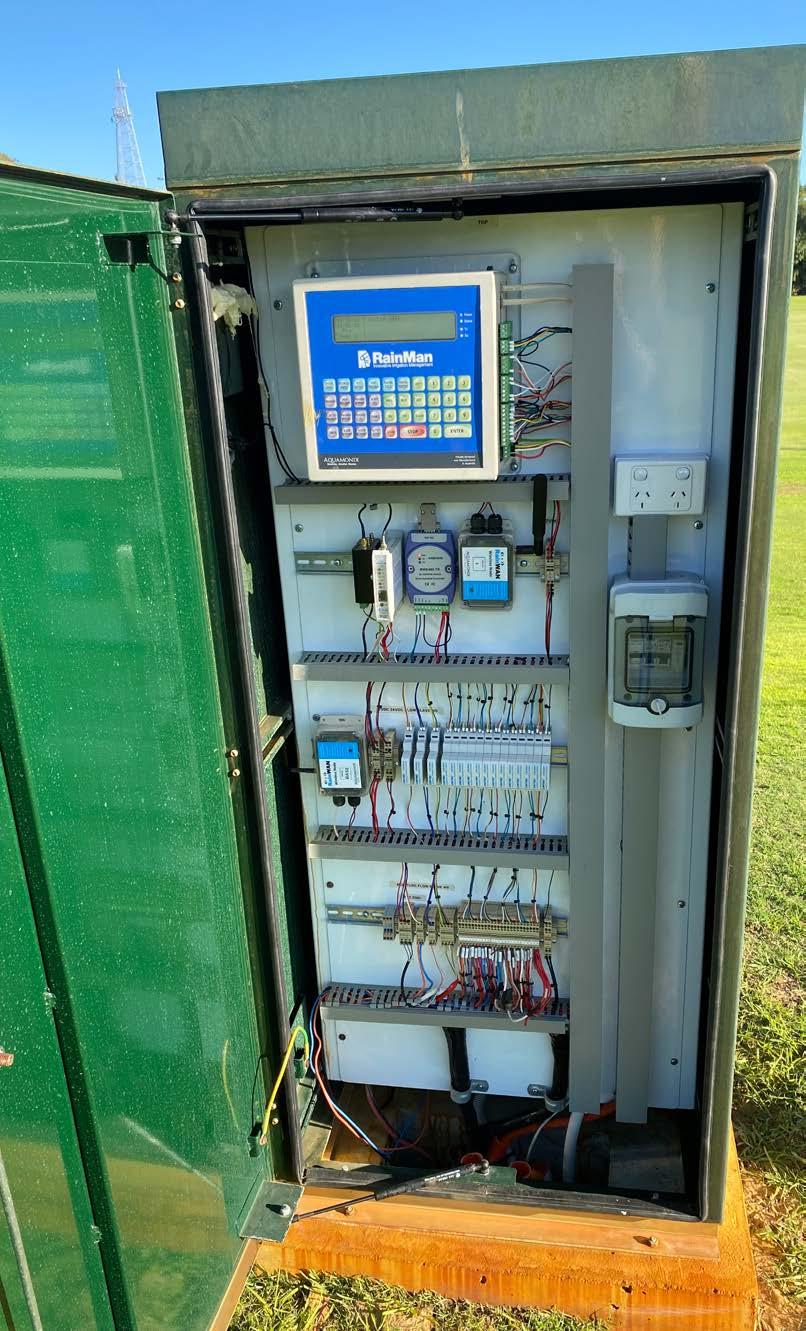
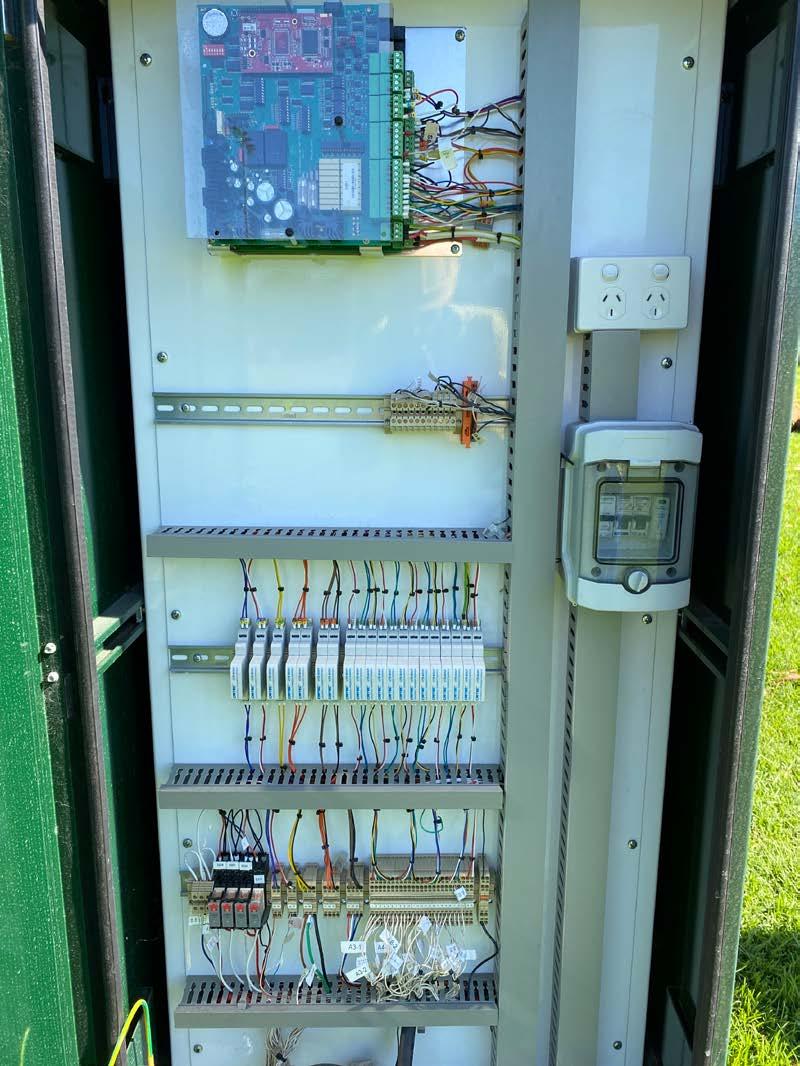
We were brought in on the project early by Western Irrigation as we do really well at more challenging systems as well as centralised irrigation systems, the flexibility of the Rainman system and our ability to customise when needed means there’s not too many situations where we cannot deliver a solution.
This project focuses on the sustainable irrigation of The University of Western Australia (UWA) sports fields using a combination of treated effluent and bore water. The initiative supports water conservation, environmental stewardship, and long-term cost savings while maintaining high-quality turf conditions for sporting activities.
SCOPE, PLANNING, OBJECTIVES, AND BENEFITS
Scope
• Full control system design and integration.
• Installation of new infrastructure for Rainman Control System
• Wireless communication network for bore integration.
• Design and installation of an integrated irrigation system using effluent and bore water. Recycled water supplied by the treatment plant down the road and the 3 bores that are spread around the site.
• Infrastructure upgrades including cabinets, control systems, and bore control. One improvement requested was more integration with the bores, the previous system only had a pump start signal to the bore cabinets. The challenge with this is that the bores start was run over existing cabling and running new cables for the extra signals would have been very expensive. So we added a wireless IO network across the site that connects all the bores cabinets to the controller. This is a standard Rainman feature and allowed us to bring back fault signals, read the existing bore flow meters and send a reset signal if needed.
• Integration with Water Corporation Wastewater system.
• Weather station for automatic irrigation scaling in response to ET and Rainfall measurements
• Soil Moisture – multi depth probe that shows water penetration through the soil profile
• Central control system – full management is available from the PC in the office, view alarms/events recorded by the system.
Objectives
Improve system reliability and ensure uninterrupted irrigation: Reduce reliance on potable water. The previous system would run either the recycled water OR the bores for the program; the problem was that sometimes the recycled water would start or say that it was ready but then wouldn’t deliver and the whole cycle would be missed. At a high-profile site like this with events happening all the time, it’s difficult to catch up if the watering is missed.
Seamlessly manage multiple water sources: Improve irrigation efficiency and field performance. Automatically switch to the bores if the recycled water failed to deliver. This is trickier than it seems as there is a capacity mismatch between the water sources – the Recycled water system has almost twice the flow capacity of the bores. This was a major challenge of the design. It needed to be a custom program feature in the controller.
First off, we couldn’t rely on the Water corp telling us that the recycled water was available. So to know for sure, we installed a new pressure sensor on the recycled water line, if the pressure is too low for too long that triggers the switch to the bores, this way it works is that when it needs to switch from the recycled water to the bores, it automatically runs the program for longer with less stations per group with the bores and ensures each station will runs for its full runtime.
This works because the controller has a feature that will automatically runs the required number of bores based on the flow requirement of the current group. So, it can switch and run seamlessly.
• Ensure compliance with environmental and health standards.
• Enhance monitoring and control capabilities.
• Minimise disruption during installation and commissioning.
Long-term: Cost savings, sustainability, and enhanced resilience to drought conditions. Automation and remote management from Computer or Phone
DESIGN PARAMETERS AND CONSIDERATIONS
• Dual water source management: recycled effluent and three bores.
• Automatic switching logic based on real-time pressure/flow sensing.
• Flow capacity mismatch mitigation between recycled water and bores.
• Wireless I/O network to avoid costly cabling upgrades.
• Integration with Water Corporation’s strict operational requirements. Flow rate and pressure requirements.
• Zoning and coverage for sports field irrigation.
• Integration with existing infrastructure and future expansion capability.
• Compliance with Department of Health and environmental regulations.
• Remote Bore monitor and control like bore fault alarms and remote reset.
Scope of Works
Infield System: Installation of new cabinets and wiring the existing stations and pump signals.
Cabinet: New control cabinets with modular Rainman controllers.
Bores: Integration of existing bore infrastructure with fault monitoring and flow feedback.
Controllers: Smart irrigation controllers with remote access and scheduling. Central control system – full management is available from the PC in the office, view alarms/events recorded by the system.
App: App for testing and checking faults.
Pumps: Efficient water delivery and pressure control based on the number of stations required to run.
Sensors: Pressure sensors, soil moisture probes, and weather station.
INSTALLATION SCHEDULE AND TIMELINES
For us the project started late 2017, we were asked to propose a design for the control system. It was 4 years and 5 proposals later that the project got the go ahead.
We developed the control system for the project, supplied, installed, integrated all the new equipment, fit out the new cabinets, and developed the custom control features. The control system for this project is extensive.
Project Timeline
2017–2021: Design development and proposal iterations.
2021–2022: Approval and mobilisation.
2022–2023: Infrastructure upgrades, cabinet fit-outs, and system commissioning.
2023–2024: Final integration, testing, and handover.
Ongoing: Integration Completed. Pending testing with Water Corp wastewater system due to safety and non-watering season. Need to complete the testing to finalise the automatic switching of bores and waster water system. Pending UWA approval for testing.
INSTALLATION METHODS
• Western Irrigation carried out the infield installation, weather station, moisture sensors.
• Electrical Installation and integration
• Commissioning of communications and remote mobile apps
KEY OUTCOMES AND LESSONS LEARNED
• Successful integration of dual water sources with automated control.
• Importance of early stakeholder engagement and regulatory consultation.
• Need for flexible design to accommodate future upgrades and seasonal variations.
• Integration with external systems (e.g., hockey field irrigation) achieved via signal-based coordination.
• Water Corporation compliance achieved through multilayered safeguards and electrical lockouts.
• Wireless bore integration enabled fault monitoring and remote resets without new cabling.
ONGOING MAINTENANCE, TROUBLESHOOTING, AND CHALLENGES
Controller split in 2 – half the stations are connected to each cabinet – sensors connected to both cabinets. Easy to do with the modular nature of the Rainman system, split the controller in half using the comms link between the cabinets.
• One of the bores is shared with a separate system that runs irrigation over at the hockey fields nearby. The hockey system sends a signal to the Rainman controller to start which runs that bore and opens the master valve for that part of the line. The system then logs when this is activated, and they can be sure that it is operating within its assigned window.
• Water Corp integration requirements were very extensive and a major challenge – they need 3hr preparation warning, 20 inhibits on their system to protect against misuse, and on our side we have an electrical lockout as a failsafe for the recycled water.
• Other challenges faced by the project include construction of the new pavilion, upgrades of bores cabinets, wiring identification, locating valves, minimising disruption, high profile project with many stakeholders, COVID lockdowns.
• Support with the SCADA and App maintenance.
• Controller faults and remote diagnostics.
• Regular monitoring of recycled water pressure and bore flow rates.
Challenges
• Pavilion construction and site access constraints.
• Bore cabinet upgrades and wiring identification.
• Valve location and mapping.
• COVID-related delays and stakeholder coordination.
FUTURE PLANS AND NEXT STEPS
• Expansion to additional fields and facilities.
• Enhanced analytics and reporting via central control system.
• Integration of predictive irrigation scheduling based on weather and soil data.
• Data logging and analytics for performance optimization.
• Continued collaboration with UWA sustainability and grounds teams.
Cut Costs and Time Without Cutting Hardscape
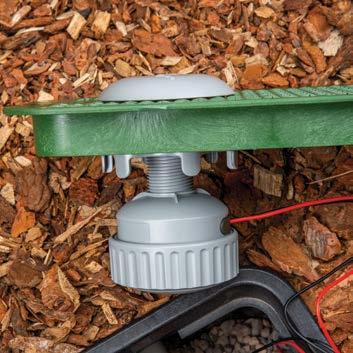
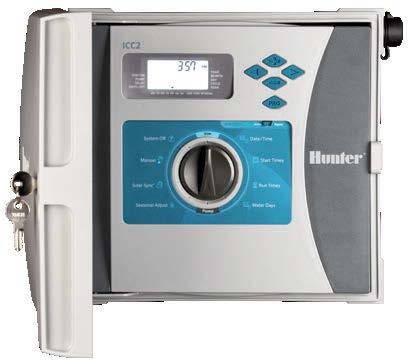
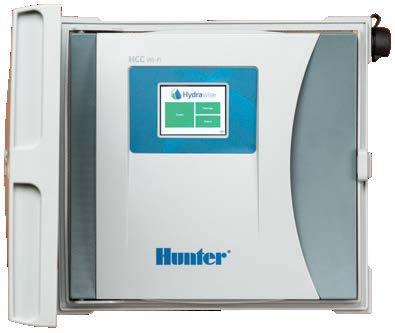
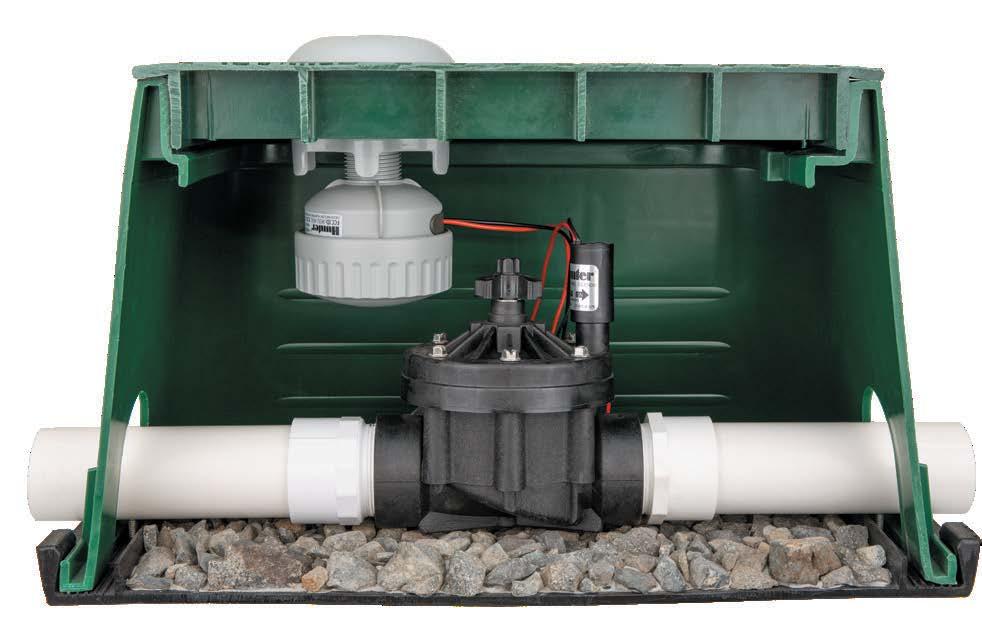
Go wire-free with the Wireless Valve Link! Using advanced radio technology, this innovative system makes it easy to connect valves without running wire or cutting into hardscape. Designed for Hunter ICC2 and HCC Controllers, it saves time and money with simplified installation, quick station expansion, and reduced maintenance. When complex landscapes pose a challenge, go wireless!
To learn more, visit hunter.info/ WVLem
National Free Call: 1-800-HUNTER
Toll-Free Fax: 1 -800-651-680
www.hrproducts.com.au hrsales@hrproducts.com.au
LANDSCAPE IRRIGATION | Built on Innovation® Learn more. Visit hunterirrigation.com
50 Lynch Street Hawthorn, VIC 3122, Australia Tel: 61-3-9562-9918
Growing StrongWATERWISE IRRIGATION PROGRAMS
FOLLOW US ON SOCIAL MEDIA
We post endorsed member spotlights, tips and tricks and any upcoming events weekly on Facebook and LinkedIn
We encourage you to like, follow and share our posts throughout your network!
systems to communities. The commitment to ongoing learning, however, can result in significant stress when combined with daily professional responsibilities and personal life demands.
To manage we need to reflect regularly on our balance: Are our goals clear, or do we find tasks accumulating without a structured approach on how we will deal with them?
Effective time management involves setting realistic milestones and keeping focus on all those high-priority tasks. By scheduling structured breaks throughout the day, we can revitalise our energy levels. Brief, intentional breaks will refresh our mental energy and enhance our concentration resulting in a boost to overall productivity.
Additionally, it’s essential to communicate your workload and stresses clearly to your support network partners – colleagues, mentors, family, and friends. Being in a place where we can share openly about our professional demands helps reduce anxiety and creates a supportive environment that fosters greater understanding and assistance.
ADAPTABILITY AND EMOTIONAL INTELLIGENCE –EMBRACE IT!
As Irrigation Professionals we often face continual shifts in technology, regulatory frameworks, and those ever-changing environmental conditions, making our adaptability essential. We need to stop and ask ourselves: How comfortable am I with change?
Emotional intelligence (EI) is the ability to understand, use, and manage emotions positively. EI plays a critical role in helping us to navigate our way through workplace challenges and personal transitions.
We
need to stop and ask ourselves: How comfortable am I with change?
Developing emotional intelligence involves finding our emotional triggers, empathising with others, and proactively managing stressors. Consider reflecting regularly on how effectively you engage with colleagues during challenging situations.
Are you empathetic, supportive, and clear in your communication? Cultivating EI not only enhances our adaptability but also significantly strengthens workplace relationships and teamwork.
RECOGNISING
AND PREVENTING BURNOUT
Burnout is increasingly common in high-demand fields such as our Irrigation Industry, characterised by seasonal fluctuations in workload intensity, and high expectations when critical farm infrastructure has broken down.
Let’s grab a moment to reflect: Are you experiencing persistent fatigue, lacking enthusiasm, or increased irritability towards tasks and interactions?
Early detection of burnout is crucial in preventing severe consequences. Taking structured, planned breaks helps – giving us time to check in with ourselves.
Creating firm professional boundaries is one of the most effective preventive measures in preventing burnout. Clearly delineate your work and personal lives, ensuring adequate rest and downtime. Incorporating healthy lifestyle practices – including regular physical exercise, balanced nutrition, and consistent sleep patterns – will substantially bolster your mental and physical resilience.
MINDFUL NETWORKING AND AVOIDING SOCIAL FATIGUE
Networking events and industry gatherings play a significant role in career advancement. They provide opportunities to build connections, gain new insights, and for some of us, find new opportunities to further our career. However, frequent social engagements can lead to significant mental fatigue, and physical exhaustion.
Evaluate your social and networking habits: Do you typically leave events feeling exhausted rather than energised?
To avoid social fatigue, approach networking deliberately and strategically. Set clear goals before attending events and focus on building fewer, deeper connections rather than numerous superficial interactions.
LEADERSHIP WITH EMOTIONAL INTELLIGENCE
Effective leadership within the Irrigation Industry demands more than technical ability. It requires a deep understanding of emotional dynamics within teams. Leaders who regularly self-reflect by asking, “How am I impacting my team’s wellbeing and performance?” significantly enhance workplace culture and productivity.
INDUSTRY COMMITMENT TO MENTAL HEALTH
Irrigation Australia has actively promoted mental health through initiatives like the “Let’s Talk About Mental Health” series and regular articles in the e-news. These initiatives underscore a sustainable commitment to enhancing awareness and fostering supportive workplace practices across our industry.
Self-reflection for mental wellbeing
Self-reflection will allow for faster recognition of issues and prompt corrective action.
Consider the following reflection points:
• Am I consistently managing my professional and personal boundaries effectively?
• How satisfied am I with my workload and overall responsibilities?
• Am I keeping lifestyle habits that actively support my physical and mental wellbeing?
• Have I recently experienced signs of burnout or prolonged stress?
• Do my industry interactions and relationships generally energise or exhaust me?
• Am I struggling to maintain professional development?
Using a journal or digital app can make this process more effective and systematic, allowing you to track patterns and check progress over time. Regular self-reflection ensures you stay aware of your mental health status and can help you quickly respond to any issues.
SELF-REFLECTION AND PERSONAL RESILIENCE PLAN
Cultivating mental resilience requires ongoing conscious effort and reflection. Establishing a structured approach for regular self-check-ins will greatly enhance your chances for long-term resilience. Find a timeframe for self-reflection that works for you – Monthly is a good place to start and is particularly beneficial, some of us need to check in more frequently like weekly, others, well it varies on where they are at with their personal EI journey.
Mental resilience is integral not only for individual professionals but also for the health and sustainability of the broader Irrigation Industry. By prioritising personal mental wellbeing, engaging with industry support systems, and committing to ongoing reflective practice, you ensure a career that is rewarding, sustainable, and fulfilling.
Case Study
Yarra Yarra Golf Club Drives Down Energy Costs with HES Motor Package
Project Overview
Client: Bore Down Drilling / Yarra Yarra Golf Club
Industry: Drilling and Pump Installation / Golf Course Management
BACKGROUND
Bore Down Drilling is a trusted driller and pump installer in Victoria, working closely with clients to provide tailored water management solutions. One such client is Yarra Yarra Golf Club, one of Melbourne’s prestigious sandbelt courses, known for its commitment to maintaining premium turf conditions yearround.
THE CHALLENGE
Faced with rising energy costs, Yarra Yarra Golf Club needed a solution that would allow them to maintain existing water flow levels without further straining their operational budget. The key challenge was gaining board approval for a more advanced pump system, which came with upfront costs – despite the promise of long-term savings.
OBJECTIVES
The primary goal was simple: retain the same water flow output while reducing annual energy costs. With a baseline power expenditure of $35,239 per year, the team set out to significantly lower this figure without compromising performance or reliability.
THE SOLUTION
Having already experienced strong performance and longevity from Franklin Electric’s bore pumps, Yarra Yarra Golf Club was open to exploring further improvements. Franklin Electric, in collaboration with Bore Down Drilling, proposed an upgrade to the High Efficiency System (HES) motor.
This recommendation was driven by the system’s proven energy-saving capabilities. To further enhance value, the club added remote access functionality and bore level monitoring –providing greater visibility and control over water management.
IMPLEMENTATION
The solution was rolled out in a structured and collaborative process:
• A site inspection was conducted to assess the existing bore pump system
• A detailed proposal and quotation were prepared and presented to the board
• Once approved, the system was installed within six weeks of order placement
The partnership between Bore Down Drilling, Franklin Electric and the club’s board was instrumental in ensuring a smooth transition and successful deployment.
RESULTS
The benefits were immediate and measurable. The club’s annual running cost dropped from $35,239 to $27,586 – delivering a saving of $7,652 per year. With these savings, the cost of the upgraded system was recouped in under 12 months.
The club’s annual running cost dropped from $35,239 to $27,586 – delivering a saving of $7,652 per year. With these savings, the cost of the upgraded system was recouped in under 12 months.
Since then, the club has expanded the program, upgrading two additional bores with the HES Package. Combined, these upgrades are delivering approximately $17,000 in annual energy savings.
CONCLUSION & FUTURE PLANS
Through smart investment in high-efficiency technology, Yarra Yarra Golf Club has achieved impressive energy savings while continuing to maintain their high turf standards. With three bores now upgraded and future-focused water management tools in place, the club is well positioned to manage costs and performance well into the future.
• Smart controllers with the latest tech
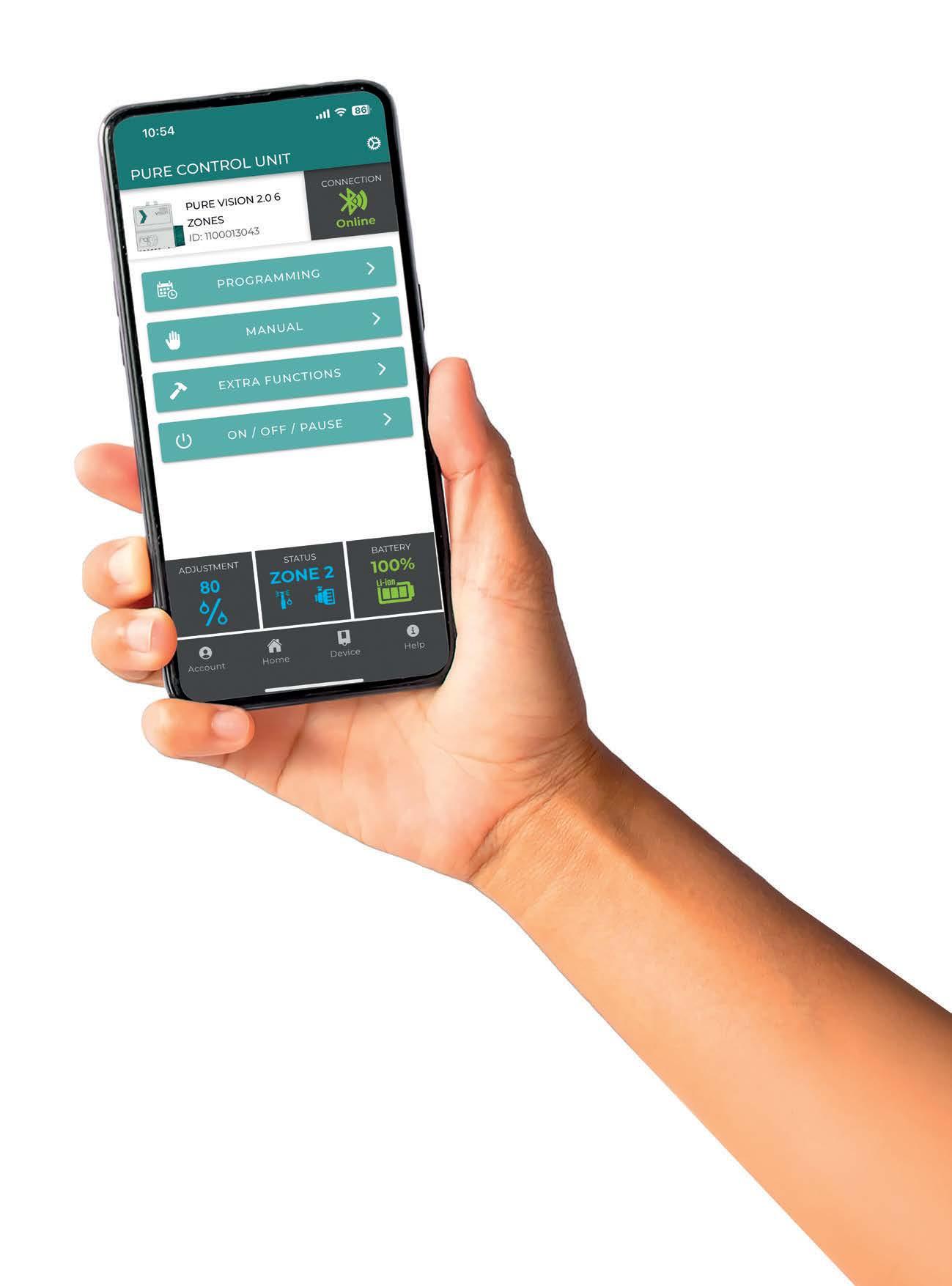
• Battery controllers that can recharge themselves!
Waterwise Irrigators working with Water Corporation to help save water
Irrigation Australia members are once again helping Water Corporation deliver the Waterwise Irrigation Rebate. With more than a quarter of household water being used on lawns and gardens, ensuring household irrigation systems are running efficiently can result in big water savings.
Launched at the start of spring, this water efficiency program offers customers a rebate of up to $200 when an eligible Waterwise Garden Irrigator repairs leaking irrigation pipes or broken irrigation valves. Our Waterwise members do a fantastic job educating customers on how to use their irrigation controllers more efficiently – helping them save water and improve garden performance.
Water Corporation and Irrigation Australia have a long history of working together through our Waterwise Irrigator and Waterwise Design Shop programs to improve the efficiency of residential irrigation systems across Western Australia. Over the past four years, we’ve delivered more than 11,000 irrigation services to
Water Corporation customers through these programs – saving millions of litres of water.
For more information or to apply for a rebate, visit watercorporation.com.au/irrigationrebate
Irrigation Australia encourages irrigators to join the Waterwise Garden Irrigation Member Program, run in partnership with Water Corporation. For more information about how to join, visit https://www.waterwiseprograms.com.au/become-a-waterwisegarden-irrigator
Perth Region
Water Update
TRAININGWITHIRRIGATIONAUSTRALIA
Takeactiontodayandbetheexpertyourindustryneeds!
Learn from the best with Irrigation Australia! Our range of expert-led training is hands-on, practical, and designed to get you job-ready through a unique blended learning experience.
PROFESSIONAL DEVELOPMENT
Qualifications
Certificate III in Irrigation Technology AHC32424 (18 - 24 months duration)
ShortCourses
Certified Meter Installation & Validation (3 full-days face-to-face or 4 half-days virtually)
Introduction to Irrigation - Part A (approx 4 hours)
Introduction to Irrigation - Part B: Landscape (approx. 6 hours)
Introduction to Irrigation - Part B: Agricultural (approx 5 hours)
Click here to get access to all Part A & B online courses in one convenient bundle!
WhyShouldYouBecomeCertified?
Certification is more than a title It represents your skill, credibility, and hard-earned expertise
As Australia’s leading irrigation association, Irrigation Australia is proud to represent and support professionals across the irrigation industry. In addition to delivering high-quality training, we are committed to fostering lifelong learning through our nationally recognised Certification Programs
ExploreOurCertificationPrograms
Certified Irrigation Meter Installer & Validator (CMI)
Our redesigned, Australian-led Certified Irrigation Designer (CID) Program better reflects the realities of modern irrigation system design With tailored exam content, enhanced resources, and a more streamlined, accessible certification pathway, this updated program marks a new era of locally driven certification - one that responds to the unique needs and challenges of Australia’s irrigation landscape. Click here to apply now!
DO YOU NEED HELP WITH YOUR IRRIGATION SYSTEM ?
Be Wise ... Choose Waterwise
The Waterwise Garden Irrigator Program is a joint initiative of the WA Region of Irrigation Australia and Water Corporation, with a goal of optimising water-use efficiency of domestic irrigation systems in Western Australia. Endorsed Waterwise Garden Irrigators are fully trained in water efficient practices and can design, install, repair and maintain home garden irrigation systems.
FIND A WATERWISE SPECIALIST
Search our endorsed Waterwise Members Directory for expert help near you.