www.irrawaddy.org TheIrrawaddy November 2014 Vietnamese Food in Elegant Setting
Lim Chin Tsong’s Lavish Palace
WHOSE NEWS? Information wants to be free LET IT BE DR. SAI SAM HTUN LOOKS AHEAD NAGA HILLS: FORGOTTEN FRONTIER
Taunggyi Festival: Magic and Loss


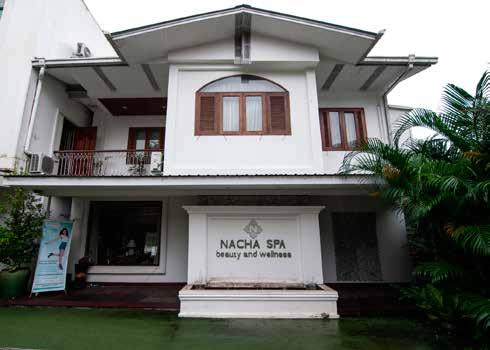

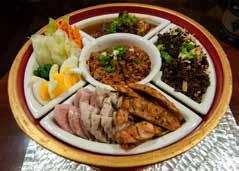
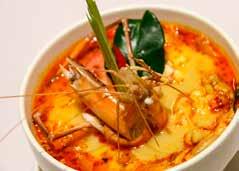
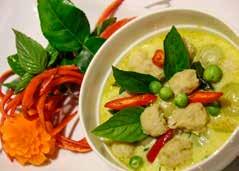
No.86/A, Shin Saw Pu Road, Sanchaung Township, Yangon. Tel. 09 450013761 E-mail : info@lanacha.com www.lenacha.com Nacha Restaurant Nacha Spa Opening Hour 10 am. to 10 pm. beauty and wellness Authentic Thai foods by a Thai chef Relax your mind, your spirit, and your body and embark on a journey of well being. ......... .........
 Irrawaddy

Feel the superior boutique-style living, which blends modern and oriental culture, together with a peaceful atmosphere in the heart of Chiang Mai. On Sirimangkalajarn Road, Soi 1, near the shopping, business and art district around Nimmanhaemin Road, our facilities include a swimming pool with a saltwater chlorination system, fitness, a green area and parking. S Condo is the perfect choice for a convenient lifestyle.
Feel the superior living of boutique style which blended Modern with Orientral culture. The charm of peaceful atmosphere in the heart of “Chiang Mai” at Sirimangkalajarn Rd. Soi 1, nearby attractions shopping, business and art district at “Nimmanhaemin Rd.” A perfect choice for convenient lifestyle. Loose your self in our facilities swimming pool with salt clorinated system, fitness, green area and 100% parking.




672 4214 / +66 (0) 53 219 300



4 TheIrrawaddy November 2014 +66
www.scondocm.com
(0)81
scondosales@gmail.com
Sales
at
Soi.11
Sirimangkalajarn Soi.1 Chiang Mai “ S CONDO” Residential Condominium Project Owner: Prattana Properties And Healthcare Co.Ltd. Registered Capital : 50,000,000 Baht. Managing Director : Mr. Surat Leenasirimakul Type of Project : 1 building, 7 storeys with 48 Residential units Location : 7 Sirimangkalajarn Rd. Soi.1 Suthep , Muang District, Chiang Mai 50200. Land Title Deed No: 19774 Approximate Land Area : 1-0-79 Rai. Construction Permission: 305/56 Construction Begins : November 2013 Expected Completion : July 2015. The Project will be registered as a residential condominium upon completion. Swimming pool , fitness , car park are common property of Condominium Juristic Person Regulations. The owner of each condominium unit will pay for common area and sinking fund expenses as stated in the Condominium Juristic Person Regulations.
Gallery
Nimmanhaemin
–
THAILAND CHIANG MAI
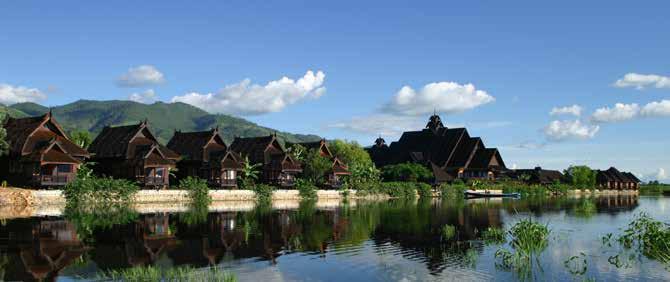

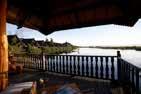



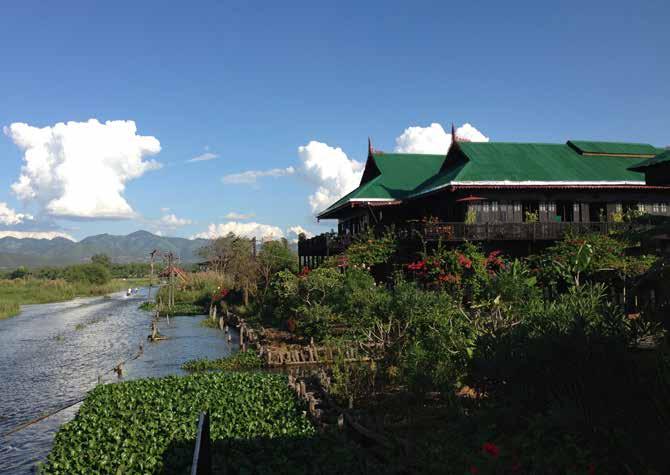




5 November 2014 TheIrrawaddy Magyizin Village, Inle Lake, Shan State, Myanmar Tel & Fax: +(95-81) 209055/ 209364/ 209365/ 209412 Mobile : (95-9) 525 1407, 525 1232 A restful retreat to nature on Inle Lake surrounded by Shan Hills Preserving our heritage to transmit to the future generation as received from ancestors Inpawkhon Village, Inle Lake, Shan State, Myanmar. Reservation: +95 - 9 4931 2970 Mobile: +95 - 9 528 1035 Email: intharheritage@gmail.com ADVERTISEMENT
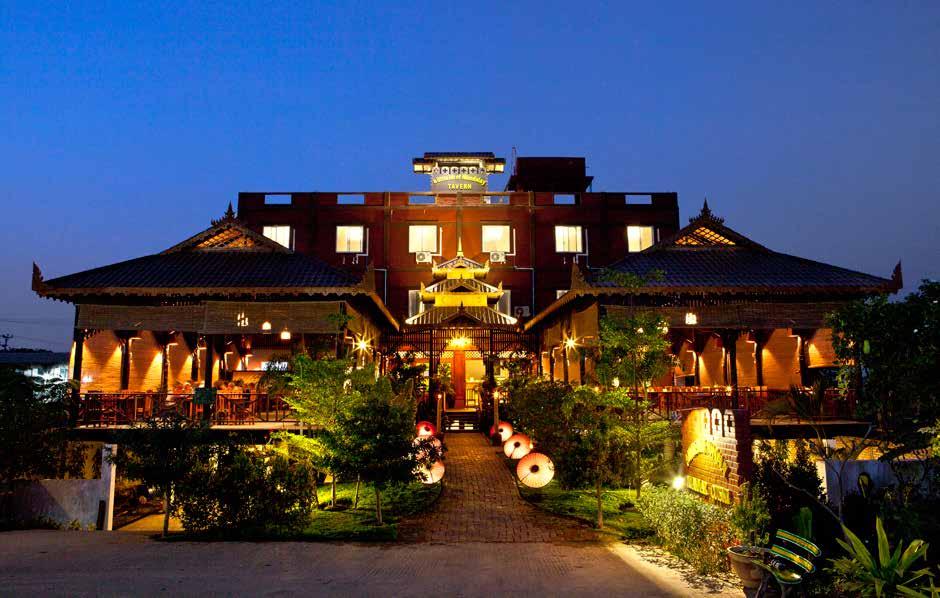






November 2014 No. 1-A / 3, 28th Street, Between 52nd x 53rd Streets, Mandalay. (One block away from Rupar Mandalar Resort) Tel: 09-910 48506, 09-500 2151 www.littlemandalay.com E-mail: littlemandalay@gmail.com ...truly Mandalay ...simply quaint... 2014 Winner of ‘Certificate
Excellence’
TripAdvisor ‘A little bit of Mandalay’ Tavern + Restaurant Try the taste that makes “A little bit of Mandalay” the right choice in Mandalay. • Restaurant since 2002 • Tavern with 24 Twin Rooms • Restaurant capacity 180 Pax • Myanmar and Chinese Cuisines • Home-cooked curries & more • Packed Lunch Boxes available for Cruises & late flights.
of
by
 Irrawaddy
TheIrrawaddy
The Irrawaddy magazine has covered Myanmar, its neighbors and Southeast Asia since 1993.

EDITOR-IN-CHIEF: Aung Zaw
EDITOR (English Edition): Kyaw Zwa Moe
ASSOCIATE EDITOR: Sandy Barron
COPY DESK: Paul Vrieze; Andrew D. Kaspar; David Kay; Feliz Solomon
CONTRIBUTORS to this issue: Aung Zaw; Kyaw Zwa Moe; Kyaw Phyo Tha; Bertil Lintner; Zarni Mann; Christopher Ian Smith; Kyaw Hsu Mon; Andrew D. Kaspar; Ma Set Hsu; Marie Kesavatana Dohrs; Dani Patteran; William Boot
PHOTOGRAPHERS : JPaing; Sai Zaw; Hein Htet; Steve Tickner.
LAYOUT DESIGNER: Banjong Banriankit
SENIOR MANAGER : Win Thu (Regional Office)
MANAGER: Phyo Thu Htet (Yangon Bureau)
REGIONAL HEADQUARTERS MAILING ADDRESS: The Irrawaddy, P.O. Box 242, CMU Post Office, Chiang Mai 50200, Thailand.
YANGON BUREAU : Building No 170/175, Room No
806, MGW Tower, Bo Aung Kyaw Street (Middle Block), Botataung Township, Yangon, Myanmar.
TEL: 01 388521, 01 389762
EMAIL: editors@irrawaddy.org
SALES&ADVERTISING: advertising@irrawaddy.org
SUBSCRIPTIONS: subscriptions@irrawaddy.org
PRINTER: Chotana Printing (Chiang Mai, Thailand)
PUBLISHER LICENSE : 13215047701213
8 TheIrrawaddy November 2014 Contents 10 | In Person Dr. Sai Sam Htun 12 | Quotes and Cartoon 14 | News Highlights 16 | In Focus 18 | Viewpoint The parachute effect LIFESTYLE 55 | Festival Of Joy And Loss The spectacular floating fire balloons of Taunggyi 60 | Tech: Gaming With A Side of Culture A determined team of videogame developers is creating games with a distinctly local edge 64 | Books: Hanging on, Just In search of some of Asia’s leastunderstood indigenous people 66 | Restaurant: Vietnamese Class An atmospheric eatery serves fresh, traditional fare in a sophisticated setting 68 | Backpage: A Movie for Our Times ‘‘The Monk’’ enjoys continued success
Vol.21 No.10
ILLUSTRATION : Bagyi Lynn Wunna 2014
www.irrawaddy.org TheIrrawaddy November 2014 Vietnamese Food in Elegant Setting
Loss WHOSE NEWS? Information wants to be free LET IT BE
Lim Chin Tsong’s Lavish Palace Taunggyi Festival: Magic and
DR. SAI SAM HTUN LOOKS AHEAD
NAGA HILLS: FORGOTTEN FRONTIER
FEATURES
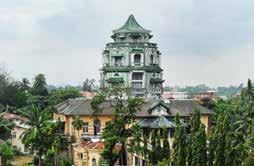
20 | History: The House on an Island
A flamboyant Chinese tycoon left behind a lavish colonial-era palace
24 | Border: The Forgotten Frontier
On the Myanmar-India border, a history of insurgency and regional rivalry continues to resonate
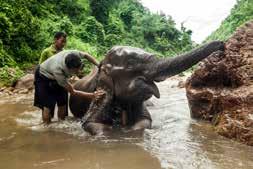
28 | Society: Elephants of the Valley
A compassionate couple have created a lush green sanctuary for former working elephants
32
|
Environment: Old Ways of the Future
The traditional practices of Kayin villagers in northern Thailand could be part of the solution to a very modern problem, a study finds
36 | COVER Whose News?
The government's plan to keep the state as a dominant player in daily newspapers does not match the nation's democratic aspirations
BUSINESS
45
|
Automobiles: Too Many Turns
Frequent policy changes are hurting the car industry, says Dr. Soe Tun of the Farmer Auto Showroom
48 | Energy: Kyaukphyu SEZ
Winners of special economic zone contracts could decide fate of grand project
50 | Signposts: Boost for Rice Exports
REGIONAL
52 | Malaysia: Royals Flex Political Muscle
The role of the sultans goes beyond the ceremonial

9 November 2014 TheIrrawaddy
P-20
P-28 P-55 P-60
‘The Only Way Is Forward’
As Coca-Cola and PepsiCo roll into Myanmar, one of the country’s most powerful beverage companies is busy strategizing its own next move. Loi Hein, a Yangon-based company that dominates the local purified water market with its popular Alpine brand and which is also behind Blue Mountain soft drinks, expects its annual revenue to grow more than five times over the next decade, in part thanks to partnerships with multinational firms.
Its chairman, the physician turned entrepreneur Dr. Sai Sam Htun, tells Irrawaddy reporter Samantha Michaels how he’s dealing with foreign competition and why he’s supporting a football club that’s losing US$1 million a year, while also sharing his thoughts on politics and refuting any suggestion that his success is linked with cronyism.
Let’s start with some numbers. What sort of profits does Loi Hein bring in?
Our business is growing dramatically— it’s moving quite fast in 2014, we’ll reach $100 million in revenue this year. For profit margins, we usually have about a 10-15 percent net margin from revenues.
What’s your market share in the beverage industry?
Gradually in 10 years’ time our market share in the water business has increased to 60-65 percent. But during the past two years, a lot of people have come to play in the water market—not big [companies], but some small and medium ones—so we had to give up about 5 percent of market share in water. Still, my business overall is growing. Water is growing about 25 percent [annually], soft drinks about 40 percent, energy drinks about 50 percent, and we are optimistic because we expect [greater] spending power from Myanmar’s middle class, which is currently only 2 million people, compared with Thailand’s middle class of about 25 million people.
With the lifting and suspension of economic sanctions, CocaCola and PepsiCo have come to Myanmar. How are you dealing with the competition?
They’re still building up their own infrastructure, building up their own brands, so it hasn’t had much impact on our soft drinks. In the future if Pepsi and Coca-Cola fight each other, maybe that will have an impact on us, but we don’t know. If they really come, they may stay in the premium sector, like A and B [upper and middle class consumers], so we will go into the rural areas, staying in the C and D sector [working class consumers]. That’s what we’re planning for the future, if they really come, because they are so powerful that they can paint the whole country in blue and red, so we have to prepare for that.
Would you ever consider partnering with one of these beverage giants?
We were discussing this, but their requirements and our requirements are not the same. Coca-Cola came
and wanted everything of us, which is impossible because my water business has already partnered with Nestlé. They wanted us as one unit, but by that time it was too late.
You already sell drinking water, energy drinks, soft drinks and juices. What’s next?
Since we partnered with Asahi [a Japanese brewery and soft drink company], we will automatically go into beer, either manufactured in Thailand and brought here, or manufactured here. We are also going into dairy: fresh milk and maybe yogurt.
Is there anything missing in the local beverage market?
Nobody is manufacturing natural juices in Myanmar. A lot of drinks come from Thailand, some from China, but we can do import substitution. That’s why we are building a new factory at the moment, which may produce natural juices in 2014 as a substitution for Thai imports. If we finish according to schedule, I think it will be the first [factory] for natural juices in Myanmar.
What are your company’s growth targets?
Since our middle class is growing and the country is opening up, we expect our market size to grow 10 times over the next 5-10 years for our water, soft drinks, energy drinks and other beverages. For revenue, in five years’ time we must go to about $350 million. In 10 years, we can expect about $600700 million.
I heard that once you hit a certain target, you might hold an initial public offering?
I’m still not sure whether an IPO is good for growing our family business—I’m undecided.
Are you planning to expand into banking, insurance or property development?
Maybe microfinance—a purely financial
IN PERSON
10 TheIrrawaddy November 2014
company, but not a bank, so we can finance other companies. We are trying to get a license.
You’re also involved with Myanmar’s national football league, as the owner of the Yadanarbon club. The games are televised, but are you making any money?
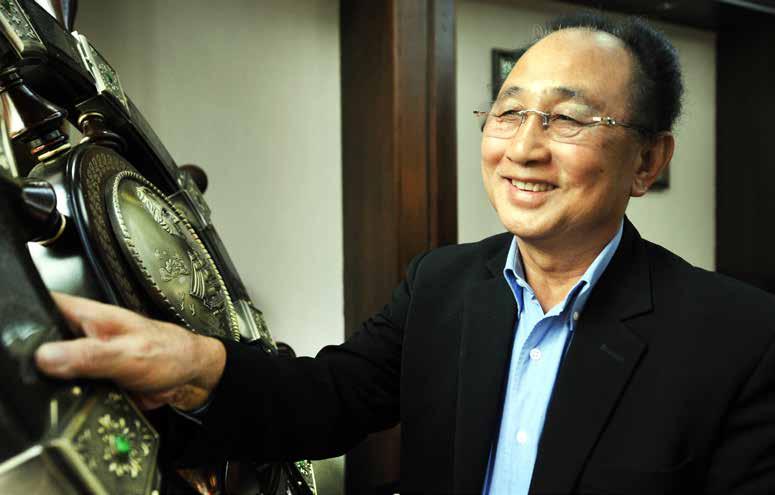
We lose about $1 million a year. It [the league] has been going since 2009, and we keep losing money. We charge $1 for tickets but people don’t come to watch. In foreign countries you pay $30 to go to the football stadium. One day if our people can afford it, we will charge $3, and if foreign brands come it won’t be difficult to get $1 million sponsorships to do their branding. Right now is the beginning of multinational [firms] flowing into Myanmar, but we expect one day we will get a sponsorship, TV rights and spectators, and we will break even or make a profit.
But if you’re losing so much now, why stick with it? Is it a personal interest? Are you a football fan?
I should say yes, it’s a personal passion. It’s spending money, it’s just a passion, it’s not about making money.
Lets talk politics. What election results in 2015 would be most beneficial for businesses?
I honestly think a coalition [government] would be best at the moment. For the stability of the country, we need this compromise and a coalition for the next five years. If you take the example of a neighboring country for democracy, when parties fight each other there is no positive result: In Thailand, ultimately the same thing happened [there was another military coup this year]. We don’t want our country to go back the same way.
Loi Hein was very successful under the former government, which may lead people to assume you had a connection with officials to start your business. Has this been a problem?
Not at all, my conscience is very clean … I don’t make money from the government.
I don’t sell products or machines to the government, I don’t sell arms to them. I develop a product, create the market and make money out of the market, and that’s why my conscience is very clear. Also, [my company’s] growth under the military was quite small, but growth during the past three years [under the current government] has been very fast, especially in 2013 and 2014 because of the entry of multinational [companies].
What are your views of the current economic outlook?
The Myanmar economy is quite exciting. Everyone says there is big potential. Whether it is real or not, we have to judge. A lot of investors are quite positive because of the developments in oil and gas, the special economic zones, foreign banks coming in. Many people may have a negative view, and they can have that view. But because of all these things, we are positive. Our country has only one way to go, and that is to grow business. So, we are optimistic, we are excited. There will be some challenges, but we will go forward, there is no choice.
PHOTO:
11 November 2014 TheIrrawaddy
Dr. Sai Sam Htun places a hand on the ornate ship’s steering wheel that sits in his office.
STEVE TICKNER / THE IRRAWADDY
“The President told Prime Minister Prayuth that the Myanmar government accepts that one has to respect Thai law when in Thailand, but he stressed that the Thai government must ensure truth, justice and objectivity in the investigation, to which the Thai premier agreed.’’

—U Zaw Htay, director of the President’s Office, referring to the arrest of two Myanmar migrant workers for the murder of two backpackers on Koh Tao in Thailand.
“We want to make the point that members of the LGBT community should be proud, and we wish to correct wrong messages being spread by popular media.”
—U Hla Myat Tun of the Colors Rainbows civil society group.

“The Myanmar army need to push DKBA troops out of areas near the dam site in order to start [construction] work. They also need to clear KNLA [Karen National Liberation Army] Brigade 5.’’
—Paul Sein Twa of Salween River Watch, which has claimed that a planned dam is behind recent conflicts in eastern Kayin State.

ILLUSTRATION:
THU YEIN CARTOON 12 TheIrrawaddy November 2014 Err... Um
QUOTES
KYAW

Thai Murder Probe Criticized
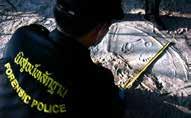
allegedly beaten and threatened with electrocution after refusing to confess to the murders during a police interrogation. Several other Myanmar migrant workers on Koh Tao who were among those questioned by Thai authorities also alleged police abuse.
Prisoners Released
A small number of political prisoners were among thousands of people granted amnesty by the Myanmar government in October.
A statement by the President’s Office, released on Oct. 7, announced that 3,073 prisoners would be granted freedom on account of their “good manners” and in accordance with the Constitution.
The Thai police investigation into the murders of two British tourists on Koh Tao in southern Thailand in September was roundly criticized after allegations emerged of the torture and illtreatment of Myanmar suspects.
Two Myanmar migrants, Ko Zaw Lin and Ko Win Zaw Htun, are suspected of murdering Hannah Witheridge, 23, and David Miller, 24, on Koh Tao in Thailand’s Surat Thani province on Sept. 15. Their pre-trial hearing began on 14 October.
The two migrants were
In a statement released on Oct. 7, London-based rights group Amnesty International called on Thai authorities to “ensure an independent and thorough investigation into mounting allegations of torture and other ill-treatment by the police, and respect the right to a fair trial” for the two Myanmar suspects.
President U Thein Sein reportedly asked for “justice and fairness” in handling the case during his meeting with Thai Prime Minister Prayuth Chanocha in Naypyitaw on Oct. 9. — Saw Yan Naing, Kyaw Kha and Reuters
Among the thousands released were 3,015 Myanmar nationals and 58 foreigners, the statement said.
The release came just over a month before Myanmar hosts a summit of leaders from the Association of Southeast Asian Nations that US President Barack Obama and other world leaders are expected to attend.

At least three political prisoners were among those released as well as at least eight former highranking military intelligence officials jailed after a 2004 purge that followed the ousting of former spy chief Khin Nyunt by then-Snr.-Gen. Than Shwe.
The Myanmar group, Assistance Association for Political Prisoners, said about 73 political prisoners are believed to still be in detention. —
Zarni Mann and Reuters
NEWS HIGHLIGHTS ADVERTISEMENT 14 TheIrrawaddy November 2014
PHOTO: REUTERS
Police measure footprints near the murder scene on Koh Tao.
Karen Cooperation Agreement Heralds Uncertainty
commander of a small Karen splinter group, the KNU/ KNLA Peace Council, also joined the agreement.

Irrawaddy Founder Among Press Freedom Awardees

In mid-October, commanders of different Karen armed groups vowed publicly to begin military cooperation in the face of growing government army operations in southeastern Myanmar.
On Oct. 14, Karen National Liberation Army (KNLA) Vice-Chief of Staff Gen. Baw Kyaw Heh and Karen National Defense Organization (KNDO) leader Col. Nerdah Mya signed an agreement with Gen. Saw Lah Pwe, the head of the Democratic Karen Benevolent Army (DKBA), in which they pledged to cooperate militarily. Col. Tiger, a
However, the following day, Saw Roger Khin, chief of the KNU department of defense, sought to distance the organization’s political leadership from the agreement. He said in a statement that the KNU leadership was not involved and that the agreement “was signed by the KNLA vice-chief of staff and the commander of the KNDO… through their own ideas.”
The agreement was potentially significant as it would further cooperation between the KNU and the DKBA. The latter is a Buddhist Karen group that broke away from the KNU and joined the government in 1994 after falling out with the KNU’s predominantly Christian leadership. —Nyein Nyein
Aung Zaw, the founding editor-in-chief of The Irrawaddy, was among four international journalists awarded the Committee to Protect Journalist (CPJ)’s 2014 International Press Freedom Award. The award is an annual recognition of courageous reporting and acknowledges the work of journalists who have faced imprisonment, violence, and censorship. This year’s other awardees were journalists from Iran, Russia and South Africa.
CPJ Executive Director Joel Simon said “the journalists that CPJ will honor with the International Press Freedom Award are undeterred and unbowed. They have risked all to bring us the news.” The CPJ noted that The Irrawaddy, like other Myanmar media, “still comes under pressure from the current Burmese government.”
Just days after the award was announced, The Irrawaddy’s website was defaced by hackers calling themselves the “Blink Hacker Group.” The Irrawaddy’s home page was replaced with a message accusing it of supporting “jihad and radical Muslims.”
The cyber attack was linked to The Irrawaddy’s coverage of nationalist Buddhist monk U Wirathu’s trip to Colombo to attend a convention organized by a controversial Sri Lankan Buddhist group. —The Irrawaddy
Thai PM on Two-Day Trip to Myanmar
Thailand’s newly installed Prime Minister Prayuth Chan-ocha visited Myanmar on Oct. 9-10, his first official overseas visit since assuming the top job.
The recently retired general met with President U Thein Sein in Naypyitaw, where the two leaders discussed pushing ahead with the stalled Dawei Special Economic Zone (SEZ) project in southern Myanmar, migrant labor issues, and plans to develop economic zones in border areas.
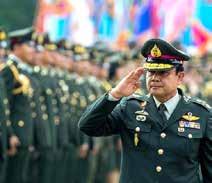
Slated as Southeast Asia’s biggest industrial estate, the Dawei SEZ,
which also includes a deep-sea port and highway, railroad and oil pipeline routes to Bangkok, has faced numerous challenges—not least of which are local grievances over forced evictions and the project’s heavy environmental impact.
A handful of Myanmar activists in Yangon turned out to protest during the Thai prime minister’s two-day trip against the arrest of a pair of Myanmar migrants accused of murdering two British tourists on southern Thailand’s Koh Tao in September. —Yen Snaing
15 November 2014 TheIrrawaddy
A soldier from the KNLA [right] greets a DKBA counterpart at a military base in 2011.
PHOTO: THE IRRAWADDY
PHOTO: THE IRRAWADDY
Thailand’s Prime Minister Prayuth Chan-ocha salutes members of the Royal Thai Army after a handover ceremony for the new Royal Thai Army Chief in Bangkok last month.
PHOTO: REUTERS
The Irrawaddy’s founding editor-in-chief, Aung Zaw.
16 TheIrrawaddy November 2014
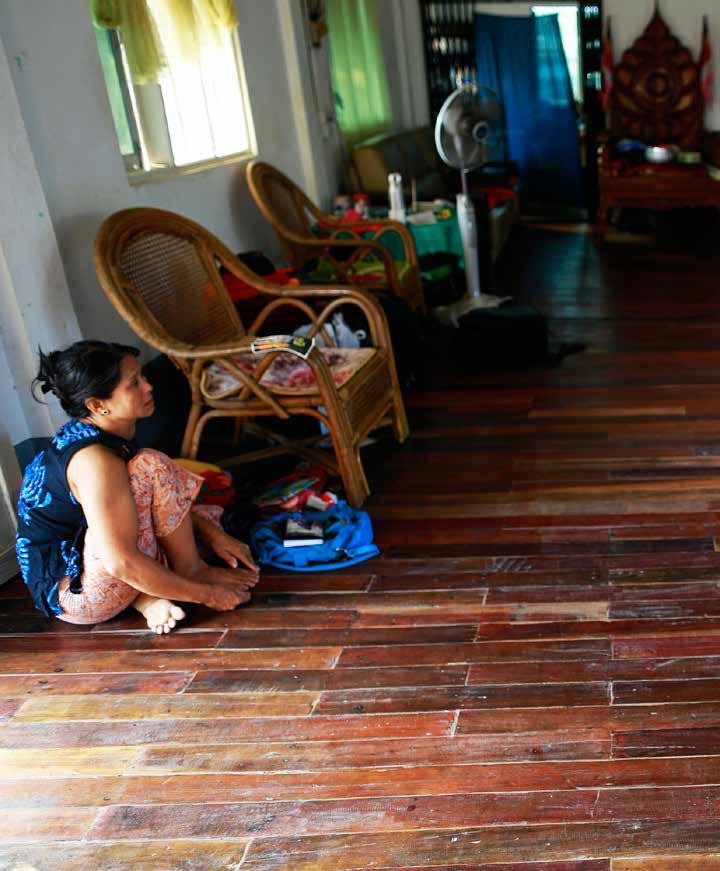
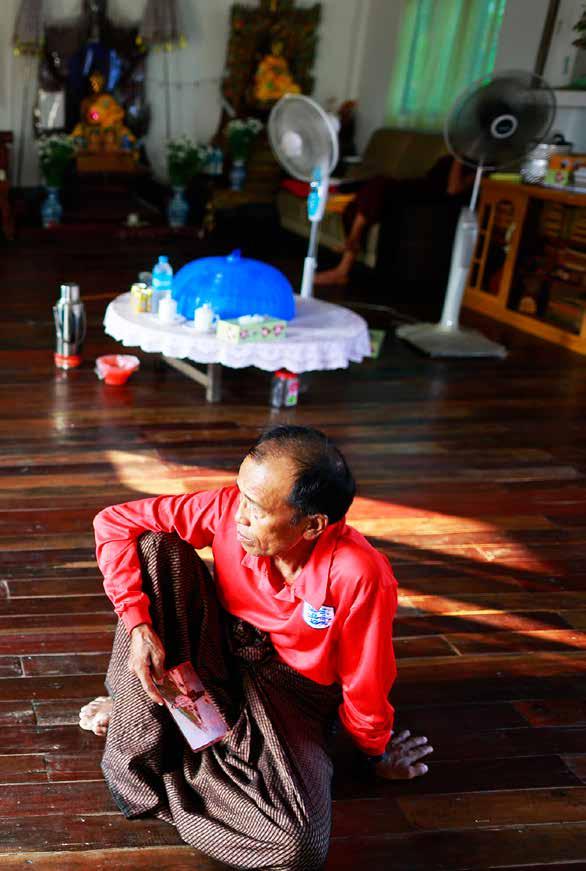
Worried Parents
Daw May Thein, left, and U Tun Tun Htike, parents of Ko Win Zaw Htun, one of two Myanmar workers suspected of killing British tourists in Thailand, pass the time at a monastery outside Yangon on October 16. Relatives of the two Myanmar suspects who were arrested in Thailand's beach island Koh Tao for killing two British tourists said on October 16 that their sons had been arrested unjustly by Thai police. They were planning to travel to Thailand to meet their sons.
IN FOCUS
17 November 2014 TheIrrawaddy
PHOTO: REUTERS
From Top Brass to a Bureaucratic Class
Decades of military appointments to key positions in government have left Myanmar’s administrative apparatus in tatters
 By KYAW ZWA MOE / YANGON
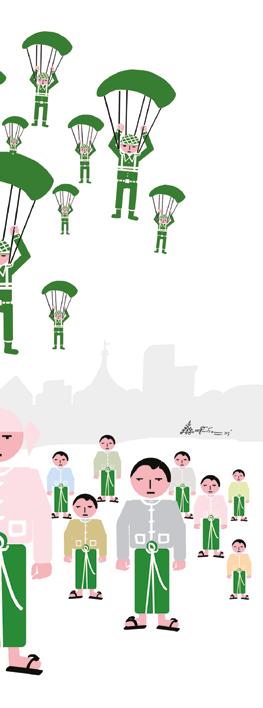
Gen. Ne Win died 12 years ago, but the dictator’s disastrous legacy lingers on in Myanmar. One of the worst aspects of his decades-long rule: a “parachute policy”—so called in Myanmar for the way in which high-ranking military officers are dropped in from above to preside over ministries and other administrative departments—that has destroyed the administration of government in the country.
If this particular policy had not been so assiduously implemented over the years, Myanmar might not have been dragged into the political, economic and social abyss that has left the country one of Asia’s poorest.
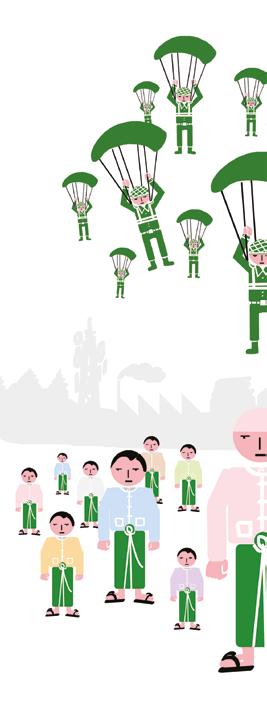
The appointment of active and retired military officials to various positions of power, from low-ranking ministerial bureaucrats all the way up to the presidency, is a rare practice in governance globally—with good reason.
When Gen. Ne Win staged a coup in 1962, he came to power determined to reorganize the whole administrative structure, which had been a largely civilian-dominated system since the country’s independence in 1948.
When Myanmar’s inaugural government took the reins of the former British colony in January 1948, the country’s first premier U Nu formed an overwhelmingly civilian cabinet. Out of 19 cabinet ministers,
only three were active or former military officers. Nearly 85 percent of the cabinet was occupied by civilian ministers.
In 1952, after the country’s first parliamentary election, U Nu’s party won again and his newly formed government was comprised of 22 cabinet ministers. This time, among them were only two former military officials.
VIEWPOINT
18 TheIrrawaddy November 2014
From 1948 to 1962, a similar ratio of civilian and military officers in governments was maintained—the exception being a two-year spell from 1958 to 1960, when U Nu handed over power to Gen. Ne Win’s interim government.
As a result of this civilian rule, the cabinets were diverse, and skillful professionals and administrators predominated. The governments of
this era also appointed many ethnic ministers in respective ethnic regions of the country.
But Gen. Ne Win’s 1962 coup brought about a U-turn. As chairman of the Revolutionary Council regime, he formed an eight-member cabinet comprised of seven high-ranking military officials and one civilian, U Thi Han, who was responsible for the ministries of foreign and labor affairs.
From then on, Gen. Ne Win’s cabinets would be dominated by military men. At times, his government lacked a single civilian minister. Even after a constitution was approved in 1974, active and retired military officials occupied every key position of government.
This is not to say that governments over this period were rotten to their cores. Professional and competent administrators existed, but always working under active or retired military personnel who had little or no knowledge of their respective areas of responsibility. You can imagine the morale problem this would breed. You can imagine why good brains would leave the country for better opportunities abroad.
The 2013 book “Strong Soldiers, Failed Revolution” found that from the mid-1970s to the end of the 1980s, 94 percent of cabinet ministers in Myanmar were active or retired military officers. The Japanese author Yoshihiro Nakanishi compared the country with Thailand, where military appointees constituted roughly 25 percent of the Cabinets during those years.
Nakanishi estimated that between 1972 and 1978, the military transferred about 2,000 of its officers to various ministries as well as to the powerful local People’s Councils of the Burma Socialist Programme Party, which was founded by U Ne Win.
“The decreased influence of the civil service in Burma [Myanmar] was inextricably linked with the increased influence of the military officers,” Mr. Nakanishi writes.
U Ne Win systematically destroyed Myanmar’s civilian administrative apparatus and in its place entrenched a military alternative that held back
the country’s progress for nearly half a century. All successive regimes, up until 2011, followed his model.
Perhaps even more troubling, the incumbent U Thein Sein’s quasicivilian government has effectively still been applying this policy. In today’s “reformist” administration, active and retired military officials continue to hold key ministerial posts and other high-ranking positions of power.
When U Thein Sein formed his quasi-civilian government in March 2011, he appointed 29 active or retired military officials as ministers in his 36-member cabinet. It was not surprising, but the decision was proof positive that U Thein Sein has continued to apply U Ne Win’s “parachute” policy.
Although the general-turnedpresident has reshuffled his cabinet several times over the past few years, at least 29 former generals and highranking military officials still occupy key ministry posts.
This interference in politics by the military for decades has brought about the systematic gutting of the country’s administrative apparatus.
U Thein Sein seems to have no intention of overhauling this failed policy for the preferable alternative— appointing the right people to the right places, without favoring those from his military clique. He has had ample time over the past three years to do this.
Parachute appointments in governments of Myanmar are likely to continue, not only for cabinet ministers but also even for the country’s top job. No one doubts that U Thein Sein became president in 2011 with the blessing of his boss, ex-supremo Snr-Gen. Than Shwe.
Though Myanmar has opened up to some extent since 2011, the government largely remains a cabal of military leaders dressed in civilian costumes.
As long as this parachute policy remains in effect, Myanmar is unlikely to be steered by its leadership toward the good governance and democratic rule that many have fought for decades to attain.
19 November 2014 TheIrrawaddy ILLUSTRATION:
Kyaw Zwa Moe is the editor of the English-language edition of The Irrawaddy.
BAGYI LYNN WUNNA 2014
The House on an
HISTORY
Island
A flamboyant Chinese tycoon left behind a lavish colonial-era palace
By AUNG ZAW / YANGON
When the writer and former British civil servant Maurice Collis decided to return to Myanmar in 1937 to visit Shan State in the north, he first stopped in Yangon where he was invited to stay at a “house on an island.” In his book “Lords of the Sunset,” Mr. Collis described enjoying excellent paintings by famous Myanmar painter U Ba Nyan in a house with porcelain, Persian carpets, bronze drums, a waxed floor and a white poodle. The house was built by the wellknown Chinaman Lim Chin Tsong, the author briefly noted.
Lim Chin Tsong was a Chinese tycoon who successfully built a business empire on rubber cultivation, textiles and the oil, rice trading, mineral mining and banking sectors. He was the son of a Chinese Hokkien migrant from Fujian province in China. His father, Lim Soo Hean, came to Yangon in 1861 and began trading rice and selling agricultural products.
Lower Myanmar was then ruled by the British who were preparing to take over the upper part of the country still ruled by King Mindon. In British-ruled Yangon, business was competitive and Lim Soo Hean soon discovered his main limitation: a poor education. He was unable to communicate in English with foreign merchants—either Indians or Europeans.
He then sent his 16-year-old son, Lim Chin Tsong, to St Paul’s College in Yangon to study but did not live to see his beloved son take over his work and build one of the most successful businesses in Southeast Asia.
21 TheIrrawaddy
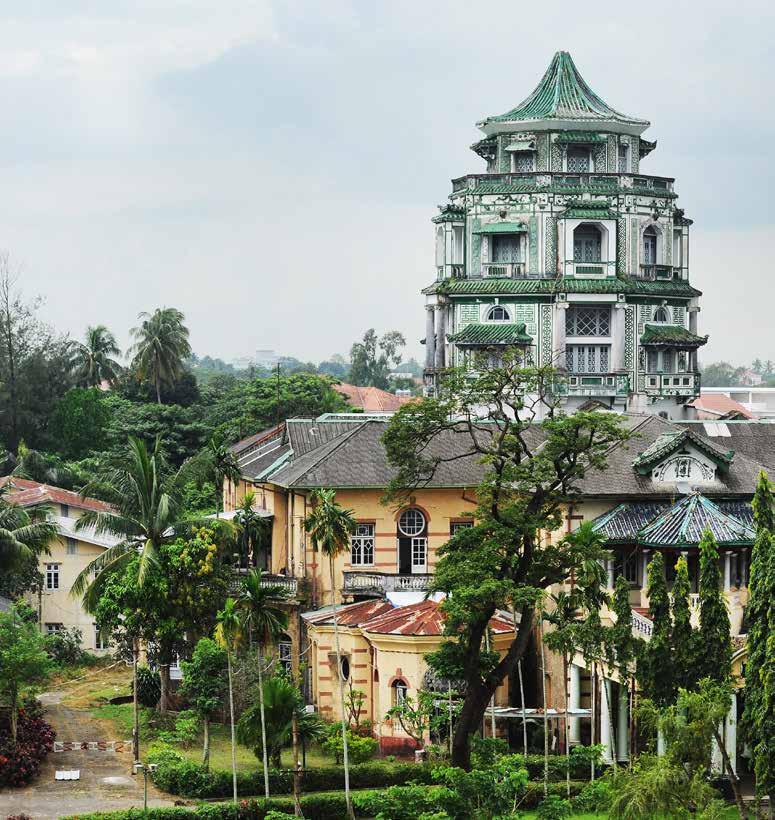
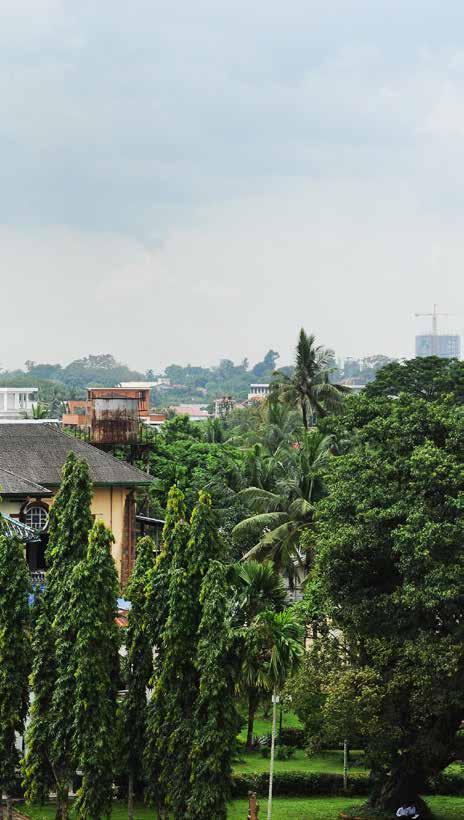
The palace left by Lim Chin Tsong features a mix of Eastern and Western architectural styles.
PHOTO: STEVE
TICKNER
At 18-years-old, Lim Chin Tsong assumed his father’s business after Lim Soo Hean passed away in 1885— the year British troops marched into the grand Mandalay Palace and detained the king and queen before sending them into exile. The whole of Myanmar was then under British control.
The young and energetic Lim Chin Tsong began to grow the business empire, buying ocean-going vessels, exporting rice and expanding his shipping business to Singapore, Penang, Hong Kong, Guangdong, and Amoy (now known as Xiamen).
Among businessmen of that era, the Chinese tycoon was regarded as talented and strategically minded, using the trademark “Xie De” to denote many of his business ventures and products. He soon managed to secure a deal with Burma Oil Corporation (BOC), a large oil company based in the United Kingdom, and was appointed as the exclusive product agent for the region. His involvement in the oil industry saw his wealth flourish and he became one of the richest Chinese tycoons based overseas.
Lim Chin Tsong was flamboyant and showy but he was also known to be generous in his philanthropy projects, donating money to establish schools for students to learn English and to build a hospital for women in Yangon.
In 1905, he and his business partners established Anglo-Chinese Boys’ and Girls’ Schools in Yangon. Two years later, he built his own school officially known as the Lim Chin Tsong School.
One is delighted to learn of the Chinese tycoon’s genuine efforts to upgrade education at the time, particularly when many in Myanmar today learn only about the exploitative practices of greedy Chinese businessmen in the country.
The Lim Chin Tsong School, located in downtown Yangon, employed teachers from England on decent salaries and produced many Englishtrained graduates, some of whom were Chinese students from Hong Kong and Macau pursuing their education in Yangon, according to some historical records.

Lim Chin Tsong also served as a member of the Legislative Council of Myanmar. In 1919, he was awarded the Order of the British Empire for his fundraising efforts during World War I. He was also a prominent member of the Rangoon Turf Club and the Lim Chin Tsong Polo Cup endured even after his death.
In 1917, Lim Chin Tsong began to build a magnificent and lavish residence in Yangon near Kokkine Road, now Kaba Aye Road. The fivestorey structure of red bricks and
green tiles was built to resemble the Fu Xiang pavilion in the Yihe Yuan (Summer Palace) of Beijing but in fact, the building featured a blend of Eastern and Western architectural designs. It took more than two years to build at great cost—some reports suggested a figure of around 2 million rupees.
Materials and craftwork for the
November 2014
PHOTO: THE BURMAH OIL CO LTD.
HISTORY
As the palace approaches one hundred years old, its potential future as a heritage building is being discussed.
residence were imported from China and Italian designers, as well as famous British painters, were invited to design the interior. Ernest Procter, an English designer, illustrator, painter and husband to the artist Dod Procter, were among those invited to decorate the residence.
The opulent house was then known
as the Lim Chin Tsong Palace and among locals it was called “Chin Chaung Nan Daw” or Chin Chaung palace. There were no records of how many fancy parties were thrown at the palace but when Georges Benjamin Clemenceau, a French statesman, visited Southeast Asia, including Myanmar, in 1920, Lim Chin Tsong was known to have
entertained him at the residence.
Lim Chin Tsong’s success hit a speed bump when in 1921 the British government banned the sale of rice, except to India, and soon the market collapsed. Some also suggested that his flamboyant ways caused the BOC to withdraw his exclusive agent rights, which incited him to seek ways to undermine the company. Suddenly, he was broke. He sold his possessions— even his Rolls Royce cars—and began borrowing money from friends. In his final days, the once rich Chinese tycoon was a broken man. In 1923, three years after the inauguration of the Chin Tsong residence, he passed away.
The palace first went to a Japanese creditor (under Japanese rule in Myanmar from 1941-45, the residence housed the All Burma Broadcasting Station), then to Indian businessman and then to the Myanmar government in 1950 when it was turned into a state guesthouse named Kanbawza Yeiktha. Currently, the Fine Arts Department under the Ministry of Culture maintains an office and an arts school within the building.
The house that saw Lim Chin Tsong’s downfall, and many ups and downs in the country, has stood throughout the decades. Now children who live in the area play nearby and stray dogs harass the odd curious visitor. Some nervous officials at the Ministry of Culture would not allow visitors to take pictures. Inside the hall and on the second floor, one can no longer see paintings and other decorations that have perhaps been removed. Lim Chin Tsong’s former residence seems ready for a genuine facelift.
Recent news suggests that the Ministry of Culture will grant Chin Tsong Palace heritage status and renovate the building as it approaches its 100th anniversary, Kyaw Nyunt, director of Yangon Region’s Archaeology, National Museum and Library Department, recently told The Irrawaddy.
The late Lim Chin Tsong who made a significant contribution to colonial Myanmar, not least through some outstanding education projects, would be delighted to learn of the recognition.
23 November 2014 TheIrrawaddy
PHOTO: THE BURMAH OIL CO LTD.
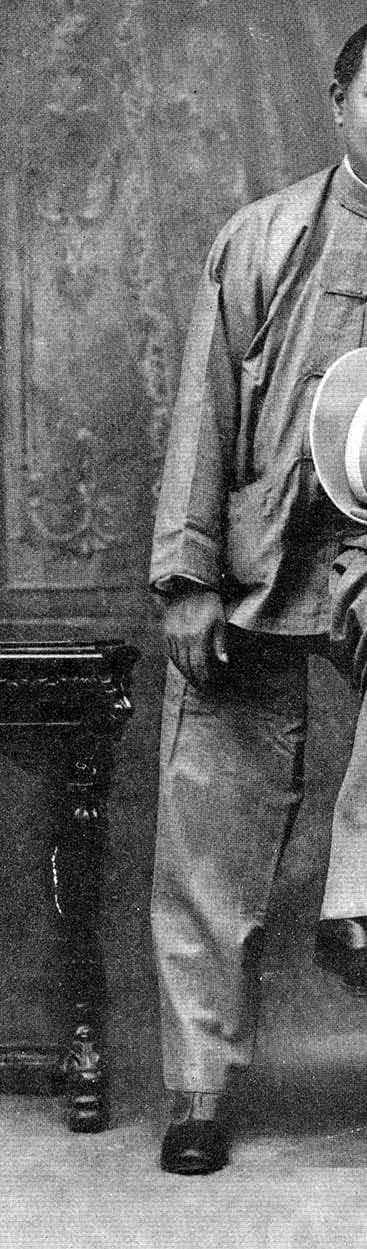
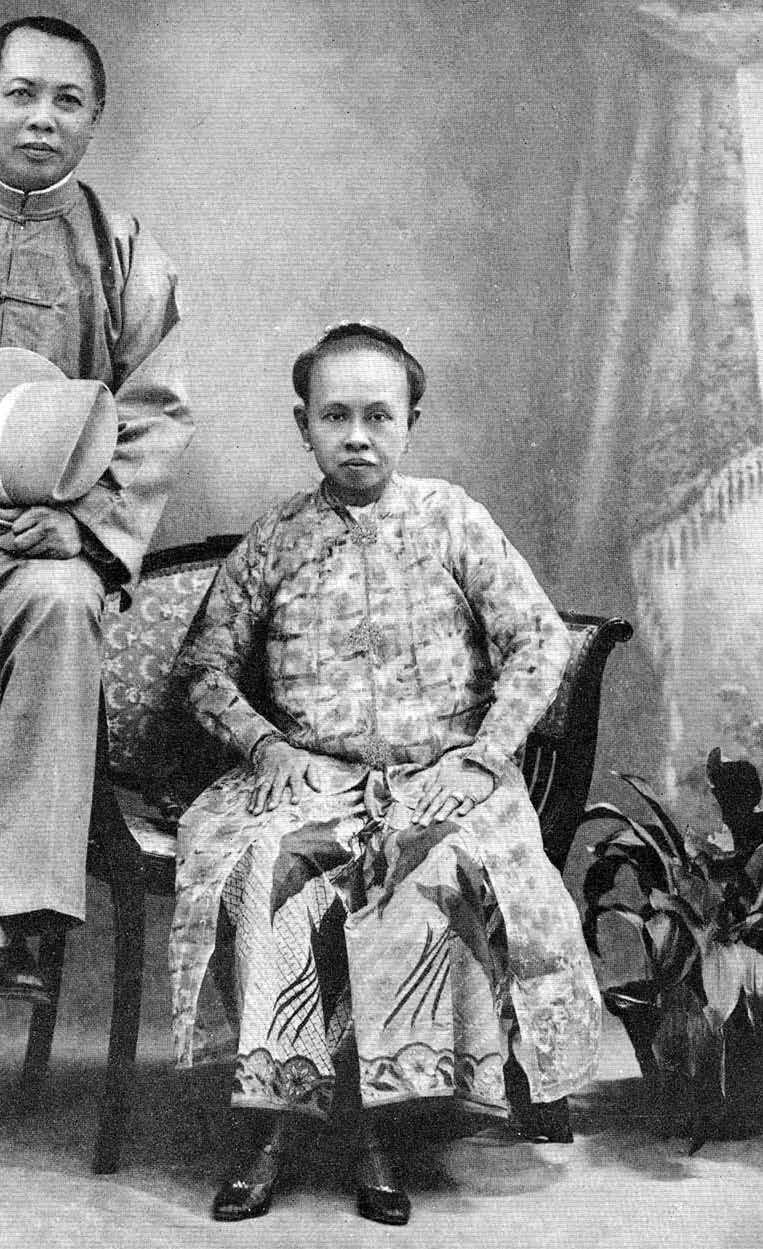
Lim Chin Tsong and his wife, Tan Guat Tean (Daw Po U), in Colombo, Sri Lanka, in 1920.
The Forgotten Frontier
There is no shortage of coverage in local as well as regional media of the ongoing armed conflict in Myanmar’s Kachin State in the north, the activities of the heavily armed United Wa State Army (UWSA) in the northeast or the still volatile situation in areas of Kayin State along the border with Thailand. However, hardly a word is written about the host of armed rebel groups that are active in some of the country’s wildest and most remote mountain ranges which form the more than 1,600 kilometre-long border with India. Yet, this is where the rivalry between Myanmar’s two mighty neighbors, India and China, has often played out and where there is potential for even more trouble in the future.
In the mid-1950s, a rebellion broke out among ethnic Naga tribesmen in India’s northeast. Being a predominantly Christian tribe of Mongol stock, they did not feel that they belonged to India and demanded independence. Not surprisingly, they received support from India’s archenemy Pakistan and training facilities were provided in what was then East Pakistan, now Bangladesh. But more significantly, much more aid came from China.
In 1959, the Dalai Lama fled to India after a failed uprising against the Chinese who had invaded his homeland, Tibet. Asia’s two giants were on a collision course and, three years later, China attacked India and a short but fierce war was fought along a disputed border in India’s northeast.
From 1967-76, nearly 1,000 Naga rebels trekked from northeast India through northern Myanmar to China,
 By BERTIL LINTNER
where they received military training. They were sent back to India equipped with assault rifles, light machine-guns, rocket launchers and other modern Chinese weapons. The Naga were escorted by rebels from the Kachin Independence Army (KIA), which, in return for their services, kept some of the Chinese weapons.
Various other insurgent groups in India’s northeast also sought Chinese
assistance. In the early 1970s, about 200 Mizo rebels—a tribe then fighting for self-determination in what is now the state of Mizoram—were trained in China; in 1976, a group of insurgents from the Indian state of Manipur made it to Tibet, where they received political training and some military instruction; and in the late 1980s, rebels from the state of Assam attempted to reach China through northern Myanmar, but
Soldiers from the former National Socialist Council of Nagaland (NSCN) in Naga territory in Myanmar in 1985.
On the Myanmar-India border, a history of insurgency and regional rivalry continues to resonate
24 TheIrrawaddy November 2014 BORDER
PHOTO: HSENG NOUNG LINTNER
ended up staying in areas controlled by the KIA—which trained some of them in guerrilla warfare.
It was clear the rebellions in India’s northeast were not solely an internal affair and that Myanmar, the land in the middle of the two regional powers, would inevitably be drawn in. This became even more evident in the 1970s when the Indian army managed to drive the Naga rebels out of their bases on the Indian side of the border. They regrouped in the rugged Naga Hills of the northern Sagaing Region. There, beyond the reach of the Indian army, they could launch cross-border raids into India.
Myanmar’s military, preoccupied with ethnic insurgencies elsewhere in the country, paid little attention to the Indian Naga who linked up with a group of Naga in Myanmar led by S.S. Khaplang. Manipuri as well as Assamese rebels also sought sanctuary on the Myanmar side of the border.
The only fall-out came in 1988 when the Naga from Myanmar, simply tired of being treated as serfs by their Indian cousins, drove them out of the area. The National Socialist Council of Nagaland (NSCN) then split into two factions: the National Socialist Council of NagalandKhaplang (NSCN-K), led by Khaplang, and the National Socialist Council of Nagalim Isak-Muivah (NSCN-IM), the Indian faction led by Isak Chishi Swu and Thuingaleng Muivah which adopted the name Nagalim, a new term for a “greater Nagaland” encompassing the state of Nagaland as well as most of Manipur, a chunk of Assam, and the Naga Hills of Myanmar. In July 1997, the NSCN-IM entered into a ceasefire agreement with the Indian government and in 2001, the NSCN-K did the same. In April 2012, NSCN-K also struck a ceasefire deal with the Myanmar government, making it the only insurgent group to have ceasefire agreements with the governments of two sovereign states.
But none of this means that the conflicts are over. Hundreds of rebels from various outfits in Manipur as well as the once powerful United Liberation Front of Asom [Assam] (ULFA) are based at Khaplang’s headquarters at Taka near the Chindwin River, north of

25 November 2014 TheIrrawaddy
A female soldier is one of hundreds of rebels from different separatist groups who are based at Taka camp, the headquarters of the National Socialist Council of Nagaland-Khaplang, near the Chindwin River north of Singkaling Hkamti in northern Sagaing Region.
PHOTO: RAJEEV BHATTACHARRYA
Singkaling Hkamti in Sagaing Region. As late as December 2011, the Indian journalist Rajeev Bhattacharyya, who had trekked to Taka, observed ULFA forces taking delivery of a major consignment of weapons that most probably had been smuggled to the base from China. According to other sources, there is a booming trade in weapons acquired along the SinoMyanmar frontier that are smuggled via Mandalay and Monywa to the Indian border. Old stocks from the UWSA’s vast arsenal of weapons and other military equipment have also been found in areas along the IndoMyanmar border.
In late 2012, it emerged that the Myanmar army had obtained Swedishmade 84mm Carl Gustaf rocket launchers most probably supplied by India and intended for use against the
ULFA and other Indian insurgents. They were instead employed against the KIA and a major scandal ensued during which questions were raised in Sweden’s parliament and the Indian ambassador in Stockholm was summoned by the Swedish foreign ministry for an explanation. Ultimately, India submitted a report stating that the weapons, which according to their serial numbers had been delivered by Sweden to India, had not been transferred to Myanmar through conventional channels, and New Delhi promised the Swedes that it would not happen again. For years, India has urged Myanmar to close down the camps that insurgents have established inside Myanmar’s Sagaing Region, but to no avail. It is clear that fighting India’s rebels is not a priority for Myanmar’s military.

And China? When ULFA commander Paresh Barua is not inspecting his troops at the Taka camp, he is in China. Obtaining weapons there does not seem to be a problem. Beijing appears to reason that if India can shelter one of its main enemies, the Dalai Lama, then Barua is welcome to stay in China. The situation promises to become even more entangled as the NSCN-IM continues to express frustration over the direction that 17-year-long negotiations with Indian authorities are headed. Barred from entering Khaplang’s area, NSCNIM cadres in October this year were reported to have been scouting the hills east of Manipur for potential new sanctuaries in anticipation of a breakdown in talks.
New Delhi, of course, wants to see peace established along its entire border with Myanmar so it can implement its so-called “Look East Policy”—aimed at linking India with the booming economies of Southeast Asia. Myanmar’s Wild West may be almost forgotten in today’s discussions about the country’s ethnic issues, but the number of armed groups in the area with conflicting agendas makes it the country’s messiest frontier.
“It is clear that fighting India’s rebels is not a priority for Myanmar’s military.”
caption
26 TheIrrawaddy November 2014
PHOTO: HSENG NOUNG LINTNER
BORDER
A hill-top village in the Naga Hills in northern Sagaing Region was the headquarters of the former National Socialist Council of Nagaland in 1985, and is now thought to be abandoned.

Elephant FEATURE
A compassionate couple have created a lush STORY and PHOTOS CHRISTOPHER
Elephant Valley
green sanctuary for former working elephants
IAN SMITH / KALAW TOWNSHIP, SHAN STATE
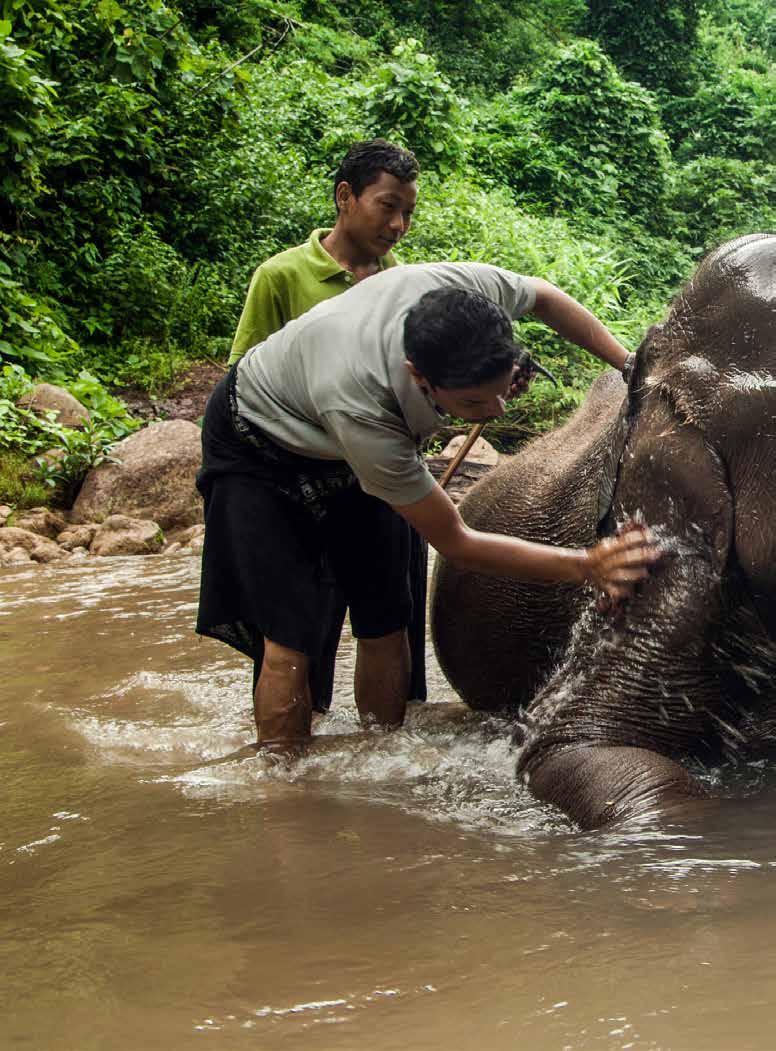
Five-year-old elephant Ko Chit toots his trunk in happiness while receiving a bath from Ko Puri and a mahout.
ALL PHOTOS: CHRISTOPHER IAN SMITH
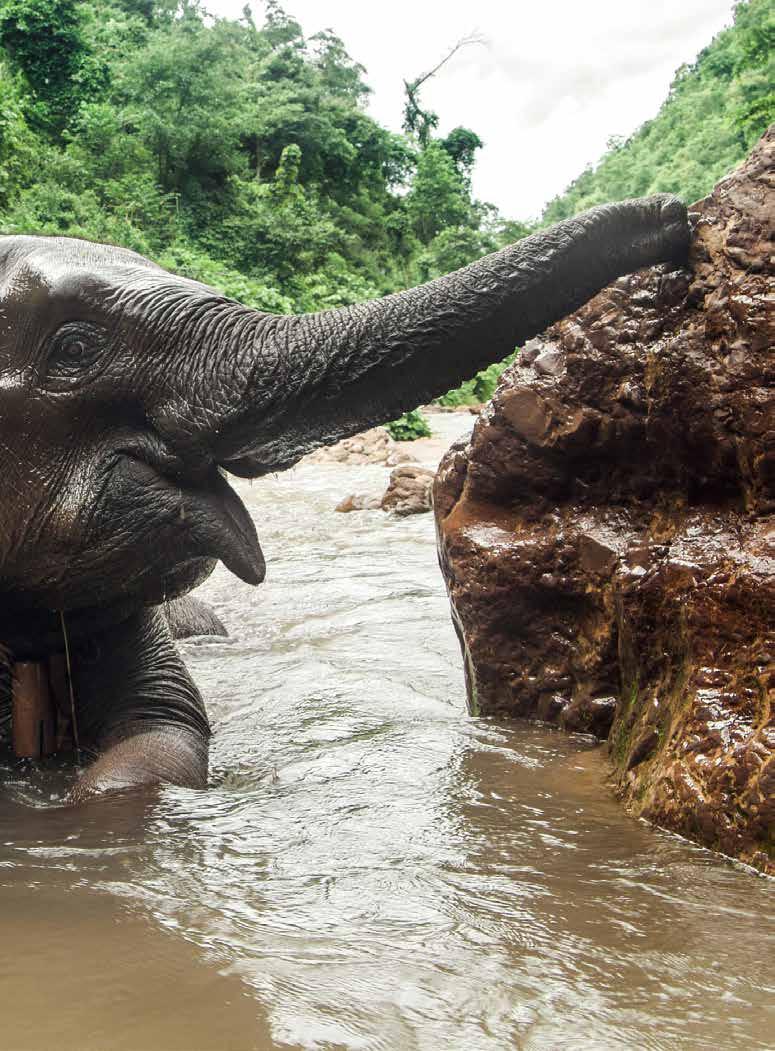
Far out of earshot of the honking vehicles that wind their way down the teak-tree-lined Golden Highway, deep in southern Shan State’s Green Hill Valley, the river is almost all I hear as it rushes past. That is until Ko Chit, the youngest of the bunch at the Green Hill Valley Elephant Camp lifts his trunk out of the water and lets off a few loud toots.
“He’s happy,” smiles Ko Puri—who takes care of the elephants at the camp across from Magwe, a village in Kalaw Township— before rattling off a seemingly unending stream of elephant facts, statistics and history. I turn back to the four-ton bull and take advantage of his calm demeanor to get a close look at his aged and smooth tusks.
Ko Chit has a lot to be happy about. He’s been dubbed the luckiest elephant in Myanmar by U Ba Kyaw Than, the camp’s veterinarian. Trappers hunting for a white elephant in northern Myanmar accidentally snagged Ko Chit instead, and, under U Ba Kyaw Than’s supervision, relocated him to Green Hill Valley. Soon after arrival, one of the older
female elephants adopted him as her own, and at a mere five years old, Ko Chit will never have to work a day of hard labor in his life.
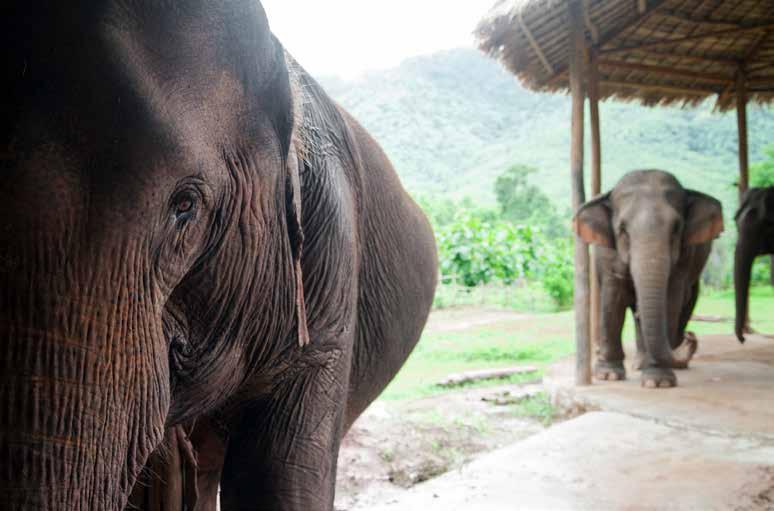
Aside from Ko Chit, Green Hill Valley Elephant Camp’s six other elephants are all retired loggers. In 2011, U Ba Kyaw Than’s niece Ma Tin Win Maw and her husband Ko Htun Htun Wynn opened this camp with ethical treatment of animals as their top priority. Having worked in the tourism industry for decades as tour guides, they had seen firsthand the physical, political and tourism changes that were shaping Myanmar.
From the patio of their solar-powered, ecofriendly community cooperative camp and replantation center, Ko Htun Htun Wynn explains how, with the opening of the country, lots of different kinds of tourism will become available in the coming years. He believes that there’s lots of room for different sectors to grow and operate in a variety of different ways, but if the country is really going to benefit, then it is essential for the industry to adopt ethical and sustainable
30 TheIrrawaddy November 2014
FEATURE
Aged from 5 to 65, most of the elephants at Green Hill Valley are retired loggers and need special medical care.
“The ethical treatment of animals is the sanctuary's top priority”
standards. The Green Hill Valley Elephant Camp hopes to show how adhering to these standards is possible in Myanmar, with the aim of ultimately influencing the tourism industry as a whole.


It’s an ideal that is welcome, as recent cutbacks on the amount of logging permitted in Myanmar will leave a growing number of elephants unemployed. It is assumed that NGOs and the private sector will move to fill the gap by creating elephant sanctuaries and other acceptable alternatives for these elephants, but these efforts are currently far smaller and more isolated than the illegal animal-trafficking industry. The trade is particularly active along the Myanmar’s border with Thailand, as was highlighted by a recent report from wildlife campaign group TRAFFIC.
Since many elephant camps in Thailand have faced criticism for their own ethics and the living standards of their animals, Ko Htun Htun Wynn strongly believes there is a need for Myanmar authorities to closely monitor the companies and organizations that will be starting up camps in the coming years.


“We won’t use elephants as entertainment. We will not do demos or have them play football or paint things…. We invite people to participate in giving care to the elephants. They can feed and bathe them, have a short ride on their back from the river, even hug and kiss them, but no circus things,” explains Ko Puri.
Besides trying to influence future elephant tourism, the camp is taking a more direct approach to addressing environmental issues by asking each visitor to plant a tree. The replantation is not for the purpose of a future harvest, but rather to establish a secondary forest. This is all very fitting, since in 1975 U Ba Kyaw Than worked for the Myanmar Timber Enterprise, which in the past employed more than 20 elephants to heavily log this exact area. The camp administration believes there’s no more appropriate place for reforesting than the land they’re working on and which they call home.
Teak and silver oak sprout in the center’s nursery, just down the stony path that leads to housing for mahouts. Since 2011, more than 6,000 trees have been replanted in the area. Ko Htun Htun Wynn also talks about how the small village of Magwe has taken notice. With 350 villagers living at the base of the camp’s entrance, the potential for local gains from the tourism industry was clear from the beginning, when the elephant camp donated a school to the village.
Like the camp, the school has been growing, and Ko Htun Htun Wynn hopes this will show how ethical practices can benefit not only the business side, but also the community. He also hopes the ideas of conserving and protecting the environment will spread with a cultural exchange. When the villagers see foreigners from around the world planting trees, it helps to emphasize the need to take care of the land, the community and Myanmar’s future.
The ultimate hope is that businesses across all industries, fueled by a coming tourism boom, will see the same sustainable benefits both in terms of profits and nurturing the country.
November 2014
Old Ways of the Future
The traditional practices of Kayin villagers in northern Thailand could be part of the solution to a very modern problem, a study finds
 By ANDREW D. KASPAR / YANGON
As climate change becomes a growing global concern, the quest for new ways to use land resources more sustainably is gaining in urgency. What many researchers are discovering, however, is that some of the best answers can be found in practices that have existed for centuries.
This was the conclusion of a June report from the Indigenous Knowledge and Peoples Network (IKAP), based in Chiang Mai, Thailand. Based on a study of the farming and forestry techniques
practiced among some ethnic Kayin in northern Thailand, the report documents a way of life that is helping to mitigate climate change, reduce soil erosion, and protect biodiversity.
For many in Thailand and other parts of Asia, these findings fly in the face of conventional wisdom, which has long characterized “hill tribes” as poor stewards of increasingly scarce resources. In particular, the slashand-burn method of clearing land for cultivation practiced in many remote regions has been blamed for releasing
vast quantities of carbon dioxide into the atmosphere and producing a sometimes deadly haze that afflicts urban centers and less-populated areas alike.
What the IKAP report found, however, is that traditional practices, rooted in the Buddhist and animist beliefs of Kayin residents of the village of Ban Mae Lan Kham in northern Thailand’s Chiang Mai Province, are often ideally suited to ensuring the long-term preservation of forests, while also providing sustainable livelihoods.
32 TheIrrawaddy November 2014
Rotation of labor: Kayin villagers cooperate to share the hard work of cultivating many useful species among the hill paddy.
ENVIRONMENT
PHOTO COURTESY KESAN
Among the customs that the report highlights are rotational farming, the protection of forests situated between mountains to aid the journeys of spiritual beings, and the sparing from the ax of trees wrapped with the umbilical cords of newborns (the latter practice is said to protect the offspring to whom the umbilical cords once served as lifelines). Areas that house ancient ruins are also left undisturbed, as are burial grounds and other spaces considered sacred.
For the 658 Pgaz K’Nyau, or Kayin, inhabitants of Ban Mae Lan Kham studied in the report, these TajDuf, or constraining rules, serve to “guide the people’s every life practice in utilizing or taking care of the ecological system in suitable and balanced ways.”
The report, based on research conducted from October 2012 to October 2013 in a village tract that covers an area of about 3,100 hectares, finds that these traditions “have proven to be sustainable and in line with climate change adaptation and mitigation strategies even though communities

are not aware or conscious of ‘climate change’ causes and effects.”
A centerpiece of these sustainable land management practices is an eightyear crop-rotation cycle that avoids the soil erosion, nutrient depletion and ecosystem damage that result from more intensive use of the land.
Although slash-and-burn is still a part of this cycle, the study found that the Kayin system maintains the balance between carbon storage and carbon emissions, and also has an added advantage: By giving trees a chance to grow large enough that the timber can be harvested for construction purposes, villagers are able to profit from their conservation.
Indigenous people’s traditional forest knowledge is increasingly viewed as one front in the battle to reduce carbon emissions on a warming planet. A 2007 report from the United Nations Intergovernmental Panel on Climate Change found that indigenous knowledge is “an invaluable basis for developing adaptation and natural resource management strategies in
response to environmental and other forms of change.”
Could Myanmar also benefit from the wisdom of its indigenous approaches to land use? That depends.
According to Saw Paul Sein Twa, director of the Thailand-based Karen Environmental and Social Action Network (KESAN), many of the values held by the Kayin studied in the IKAP report are shared by their ethnic brethren on the Myanmar side of the border.
“The beliefs are the same because culturally we are attached,” he said, adding that recognition of customary land tenure rights was essential to the survival of traditional Kayin agroforestry practices.
“Without that, surely there will be big problems in the near future. I don’t know how well [Myanmar’s] reforms will go, but we can see that more and more development projects and government expansion of its administrative areas is really competing for land with local communities.”
33 November 2014 TheIrrawaddy
ADVERTISEMENT

Whose News?
The government’s plan to keep the state as a dominant player in daily newspapers does not match the nation's democratic aspirations
 By KYAW PHYO THA / YANGON
ILLUSTRATOR: BAGYI LYNN WUNNA 2014



On a sunny late monsoon day in September, Myanmar’s Information Minister U Ye Htut was taking questions from local journalists and international media observers who packed the Chatrium Hotel’s ballroom in Yangon.
Many in the audience on the opening day of the two-day “3rd Conference on Media Development in Myanmar” expressed skepticism over the government’s plan, first canvassed in 2012, to transform state-owned daily newspapers into public service media. The state-owned Myanmar Radio and Television (MRTV) is also to be transformed into a public service broadcaster.
When one gentleman said that “there is no public service print media in other countries,” the former lieutenant colonel responded: “No, what you said is not true. They exist but are just not successful. But here in Myanmar, we are determined to make it a success.”
However, independent media representatives, including the country’s Interim Press Council, have raised concerns over the newspapers plan and have labeled it unnecessary. They see it as a way to keep the military regime-era propaganda papers afloat, and they seriously doubt the minister’s intentions.
After five decades of strict media censorship since Gen. Ne Win staged a military coup in 1962, Myanmar’s Ministry of Information (MOI) abolished pre-publication censorship of the press in 2012. A year later, the ministry also allowed the publishing of private daily newspapers, while it kept publishing its state-run dailies.

At present, there are three stateowned dailies: two in the Myanmar language—Kyemon (The Mirror) and Myanma Alinn—and one in English, The Global New Light of Myanmar. The English-language paper was
relaunched as a joint-venture with Myanmar firm Global Direct Link in October. All three papers are under the control of the MOI.
A Bad Legacy
In the past the papers made no disguise of their role as government mouthpieces, especially during the period of
the former military dictatorship that ran the country for more than two decades after 1988. Until U Thein Sein took office in 2011, the papers were known for their uninhibited views on political matters. Sustained media salvos were launched against political dissidents and armed ethnic rebels who were portrayed as “destructive elements” that were trying to “disintegrate national solidarity and the Union.”
38 TheIrrawaddy November 2014
COVER STORY
Unsurprisingly, thanks to Daw Aung San Suu Kyi’s rising popularity at home and abroad after 1988, the Myanmar democracy leader was frequently personally attacked. For a time, serialized articles about her appeared almost daily in the papers. In an example of how petty things could get, in a July 7, 1996 story about the opposition leader that appeared in Kyemon, the author, Sein Jittu, refused to use the Nobel Laureate’s full name. She was referred to only as “Daw Suu.” “She is not entitled to use her father’s name,” the author contended, contrasting how Gen. Aung San fought for the country’s independence from Britain, while his daughter went on to marry a British man.
In another article published the same month, Daw Aung San Suu Kyi was addressed as “Myo Pyat Ma” (meaning a woman who causes disgrace and has no loyalty to her race) in reference to her marriage to a foreigner. Another writer said that “she has become part kalar [a derogatory term for foreigners, especially those of Indian descent] by marrying a kalar, joining his family and behaving like a kalar.”

Ethnic armed groups were also a top target of the military government’s propaganda attacks. For three straight months in 1995, following Myanmar army attacks against the Karen National Liberation Army (KNLA), the military wing of the Karen National Union (KNU), the state-run newspapers published cock and bull stories under the title “What is KNU?” A total of 33 stories hammered out the standard message that ethnic armed struggle was undermining national solidarity and would lead to the disintegration of the Union of Myanmar. Then KNU leader Bo Mya was addressed as “Nga Mya.” Nga is an archaic Myanmar prefix that was mostly used by Myanmar kings and high-ranking officials in the old days to denote a “servant” or “slave.”
Beyond these propaganda articles, readers found few informative stories in the state-run papers. Front pages were often splashed with bland
39 November 2014 TheIrrawaddy
Readers’ patience was sorely tested by ‘news’ stories featuring long paragraphs listing only the names of officials.
PHOTO: JPAING / THE IRRAWADDY
articles on humdrum events such as opening ceremonies for schools, roads and bridges by high-ranking military officials. Readers’ patience was sorely tested by long paragraphs in which every official in attendance was named. As a result, many people tuned in to the Myanmar services from the BBC or VOA and exiled Myanmar media for alternative news. The staterun papers were useful mainly to check the “Obituary” section to learn of the death of friends.


A Bumpy Beginning
Aproposed Public Service Media (PSM) bill was published in state-run dailies in May 2013. The then Deputy Information Minister U Ye Htut said that the proposed bill was drawn up with the support of international organizations including the UN Educational, Scientific and Cultural Organization and other local and foreign experts. Though the draft covered both print and broadcast media, it was the proposals regarding state print media that have most come under fire, especially from international media watchdogs, journalists and Myanmar’s Interim Press Council.
In a June 2013 statement on Myanmar’s PSM draft, London-based freedom of expression advocacy group ARTICLE 19 said there was no justification for spending public money on public service newspapers, since the aim of enabling a diversity of opinion and information would be better achieved by ensuring that newspapers operated freely.
Myanmar expert Bertil Linter told The Irrawaddy that the PSM model that the MOI seems to be following is that of Singapore, where the government controls news through its own paper, The Straits Times. “No country in the world with a free press has ‘public service newspapers,’ - that’s just a euphemism for a governmentcontrolled press,” said the Swedish journalist, before adding that those international organizations helping the ministry, once infamous for its

40 TheIrrawaddy November 2014
PHOTO: HEIN HTET / THE IRRAWADDY
PHOTO: HEIN HTET / THE IRRAWADDY
COVER STORY
PHOTO: HEIN HTET / THE IRRAWADDY
press censorship, to draft the PSM bill were “naïve and don’t know what they are doing.”
Members of Myanmar’s Interim Press Council have rejected the PSM bill’s stipulation that 70 percent of funding for public service media outlets would be derived from public funds (the other 30 percent is slated to come from advertising, assistance
from development organizations, newspaper sales and donations). They also disagree with the inclusion of print media in the PSM draft, as they say there are few, if any, public service newspapers funded by governments in other countries.

“We don’t need ‘public service’ newspapers,” said U Thiha Saw, a member of the council. “It [creates]
unfair competition because 70 percent of the budget is from the government, while private newspapers are struggling from their own pockets.”
Since privately-owned dailies hit newsstands, most have struggled to stay afloat. Some have even shut down, thanks to high production costs, low advertising demand and smaller market-share compared with the state-funded government dailies of today. Government newspapers also have nationwide printing presses that allow them to distribute their papers to remote parts of the country. In contrast, private dailies are mostly restricted to selling papers in the main cities. The three state-run dailies have a combined circulation of more than 320,000 while the more popular private newspapers only sell about 80,000 copies per day, the Associated Press reported earlier this year.
U Pho Thauk Kyar, a veteran journalist and vice-chairman of the
41 November 2014 TheIrrawaddy ADVERTISEMENT
Since privately-owned daily papers hit the newsstands, most have struggled to stay afloat.
Interim Press Council, said statefunded public service newspapers were inappropriate for a country like Myanmar with a fledgling democracy.
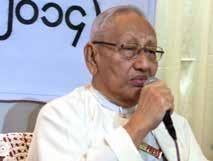
“The government should cooperate with private dailies to promote press freedom. Instead, they are now trying to compete with them. It’s totally wrong,” he said. “If they want to create public service media, they could do it with broadcast media, like in other countries.” Establishing public service broadcast media could be a positive development, the vice-chairman added, as these outlets could air content such as educational programs that private outlets often ignore.
Serving the People?
Despite the criticism, the MOI submitted the PSM bill to parliament in March this year, but it still hasn’t been discussed. A separate draft law, the Television and Radio Bill, which paves the way for public service broadcasting only, was approved by the Parliament’s Upper House in midOctober and is now due to be debated in the lower house.
In defense of public service newspapers, U Ye Htut said during the media development conference in September that state-run papers have been in a process of change for
the last three years and now cover a wider range of topics, including social issues such as labor disputes and HIV. Sometimes they even do a somewhat better job than private dailies, he claimed.
“Let me tell you frankly, when we uncovered a suspected Ebola case in Yangon in recent months, did any private newspapers report the health warning from the Ministry of Health for three days as we [the state-run newspapers] did?” the minister asked rhetorically.
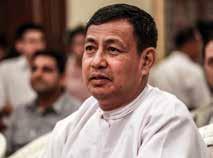
Although U Ye Htut has trumpeted the state-run papers’ capacity to serve the people, the papers have yet to be seen to fully follow some tenets of the government’s own “Code of Ethics for Public Service Media,” compiled by the government-appointed five member PSM overseeing body— the “Newspaper Governing Body”— established in October 2012. In particular, the government dailies appear to be falling short in their responsibility to “timely and accurately inform the public of the matters occurred in the human society,” as described in the code of ethics.
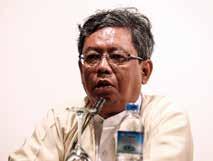
In late August, when the Yangon Regional Government announced that its multi-billion dollar city expansion plan was to be led by a little-known Chinese company, the MOI-owned newspapers remained silent. It was only after the plan drew broader media criticism that the papers published a story, seven days later, which said that the project would reopen for tender. When the project was suspended on Sept. 26, this news was nowhere to be found in the state-owned newspaper editions published the following day.
When local and international controversy arose over Myanmar migrant workers’ alleged involvement in the killing of two British tourists on Koh Tao in southern Thailand in September, all three governmentowned papers were late to weigh in on a story that had become a hot national issue.
Though the Irrawaddy made repeated attempts to contact U Ye Htut, the presidential spokesman was unavailable for comment.
42 TheIrrawaddy November 2014
“Though there have been changes, they are still putting out news that comes from upstairs.”
—U Thiha Saw
PHOTO: SAI ZAW / THE IRRAWADDY PHOTO: JPAING
/ THE IRRAWADDY PHOTO: JPAING / THE IRRAWADDY
U Pho Thauk Kyar
U Ye Htut
COVER STORY
U Thiha Saw
Skepticism
UYe Htut’s vow to transform the state-owned papers has failed to impress many journalists.

U Pho Thauk Kyar said such a transformation was impossible, even if U Ye Htut were the president. “Make no mistake, Myanmar people have lost faith in state media as it has cheated and pushed people into the information dark ages since 1962. Given their past coverage, does [anyone really] think the MOI could change it in the next 50 years?” asked the 83-year old, who has spent the better part of his life as a journalist.
“I explain this to the country’s president as well as to the Parliament speakers from both Houses whenever we meet,” U Pho Thauk Kyar added, referring to the Interim Press Council’s frequent meetings with the country’s top leaders.
U Thiha Saw said that, looking at the current coverage in the state-run newspapers, it seems they are writing for the government rather than the people. “Though there have been changes, they are still putting out news that comes from upstairs.”
That take was perhaps borne out in the way Myanmar’s state media reported on the recent pro-democracy protests in Hong Kong. In the early days of Hong Kong’s Occupy Central protests, the government dailies ignored the story. When an article finally appeared after public criticism, the piece was merely a compilation of pro-Beijing reportage under the headline “Critics Slam Unlawful Protests in Hong Kong.”
Responding to online commenters who questioned the way state media was portraying the protests, U Ye Htut acknowledged on his Facebook page that he had issued a directive to state media organs on Oct. 2 that the
news must be presented sensibly and in accordance with journalistic ethics. Part of that code of ethics was that news reporting must not interfere in the internal affairs of other countries.
U Pho Thauk Kyar said that if the government wanted to develop public service newspapers, the aim was mainly to present its own point of view. “Don’t forget what they said in the past: fight the media by the media,” he said, referring to the former military government’s mission to publish propaganda articles attacking unwanted international reportage on Myanmar.
ARTICLE 19 has recommended that the state-owned print media be privatized and that the PSM bill be reformed to only provide for a public service broadcaster. U Thiha Saw agrees. “What the government should do is to return the papers to the people. They were all private dailies before they were nationalized after 1962.”
43 November 2014 TheIrrawaddy
ADVERTISEMENT

Business

Frequent policy changes are hurting the car industry, says Dr. Soe Tun of the Farmer Auto Showroom
 By KYAW HSU MON / YANGON
ALL PHOTOS: SAI ZAW / IRRAWADDY
AUTOMOBILES ENERGY SIGNPOSTS ENERGY: Kyaukphyu SEZ's uncertain future
Yangon — Import restrictions under the previous military government ensured car prices in Myanmar were among the highest in the world. Now, under the current quasi-civilian government which took power in 2011, restrictions have eased and car prices have fallen dramatically. Legislation has, however, often been less than clear, as car import policies have been frequently changed. The Irrawaddy’s Kyaw Hsu Mon spoke with Dr. Soe Tun, director of Farmer Auto Showroom and a member of the Automobile Dealers Association, on the state of the country’s car industry.
What was the car industry like before recent policy changes?
Before the new government allowed the opening of automobile showrooms in Myanmar, the price of imported cars was incredibly high. Car prices in the country should have been noted in the Guinness World Records as the most expensive.


How have government policies on imported cars changed?

Within two years after the government allowed car imports to Myanmar, import policy has changed about 10 times. The changes in policy have led to losses for people [importers and consumers]. If we calculate the amount, there may have been more than 1 billion kyat [roughly US$1.008 million] lost due to changes in import policy.

Import policies have had many steps. First, car owners who owned models that were more than 20-years-old were allowed to import newer models. Then the government allowed everybody to import cars. Now, cars over 20-yearsold are being taken off the road [for safety].
What is the state of the market today?
There are a lot of imported cars on the market, but only in Yangon. Beyond Yangon, there are only low-cost automobiles for use in rural areas. Import taxes are also still ensuring the price of imported cars remains high.
46 TheIrrawaddy November 2014
BUSINESS INTERVIEW
PHOTO: JPAING / IRRAWADDY
Is it true that the government will only allow left-hand drive vehicles to be imported to Myanmar soon?
It has been more than two years since the Ministry of Industry and the Myanmar Engineering Society began drafting the Myanmar Automobile Act, said to be submitted to parliament soon. Our Automobile Dealers Association representatives also participated in drafting the act. Through our discussions, we have concluded that the government should only allow imported cars that comply with the traffic rules in Myanmar.
Have you heard about some car brokers importing badly damaged cars?

I heard that there were some brokers [who did this]. Three brokers imported badly damaged cars last year and the government took action against them. They were unable to uncover some
of the individual importers but the registered companies involved were blacklisted. Now there are almost no damaged cars being imported.
What types of imported cars are the most expensive in Yangon and what are the most in demand?
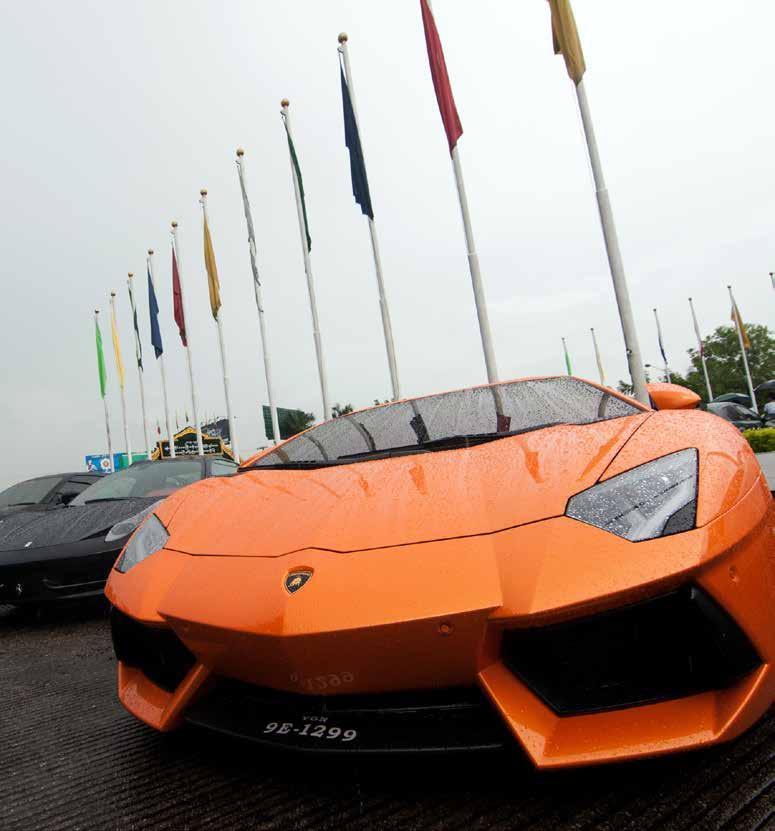
In Myanmar, there are two kinds of people in the market to buy a car, the middle class and the elites. The elites are used to buying a variety of expensive cars such as Rolls-Royces. But at present, sports cars are not permitted to be imported.


Are used Japanese cars still in strong demand? What about other well-known international models?
South Korean, Japanese, American, German and Chinese car dealers have recently opened showrooms in Yangon. Only 1,000 new cars have been imported among the 300,000 to
400,000 cars imported to Myanmar so far. Importers of brand new cars are mainly targeting government ministries to buy their models. Recently, the South Korean brand KIA has been leading the new car market. These cars have been granted some tax exemptions and therefore they can sell at lower prices. Actually, international automobile companies are not yet coming to invest in Myanmar. Only dealers and subdealers are entering the market. As long as the basic wage of most people remains low, the market for brand new cars will not grow in Myanmar.
For people wanting to buy a good second-hand car, what should they buy?
For Yangon use only, I would recommend a Honda Fit or a Toyota Vitz which both consume less fuel. For rural use, it seems the Daihatsu Hijet trucks and the Suzuki carry trucks are in high demand.
47 November 2014 TheIrrawaddy ADVERTISEMENT
Kyaukphyu SEZ: Economic Reality or Pipedream?
Winners of special economic zone contracts could decide fate of grand project
By WILLIAM BOOT / YANGON
The development of a special economic zone (SEZ) around Kyaukphyu in Myanmar’s Rakhine State could move closer to reality before the end of the year with the naming of the winners of tenders to develop factories, new housing and infrastructure.
Twelve foreign and domestic firms have been shortlisted by the SEZ development committee, which failed to name any of them in a supposedly open process, but which sources said include Chinese, Singaporean and Indian businesses.
China continues to be seen as pivotal to the successful development of the Kyaukphyu SEZ, despite cooling business relations between Naypyitaw and Beijing.
First, President U Thein Sein’s suspension of the massive Myitsone dam on the Ayeyarwady River upset China and, more recently, negotiations have broken down over the construction of a railway line from Kunming in southwest China’s Yunnan Province across Myanmar to Kyaukphyu.
China and Singapore were the target of recent roadshows seeking to
attract investment in the Kyaukphyu SEZ. The promotion included a sixminute video extolling the virtues of Kyaukphyu, currently an undeveloped backwater where promises by China National Petroleum Corporation (CNPC) to provide 24-hour electricity supply to the local population remain unfulfilled, said the Rakhine Social Network Information Center, a local NGO.
CNPC has built crude oil and gas pipelines running from Kyaukphyu through Magway Region, Mandalay Region and Shan State to China, as well as an oil transhipment terminal for tankers docking with oil from Middle East and African suppliers.
Arakan Oil Watch, an NGO which monitors developments around Ramree Island where the terminal is sited, believes Kyaukphyu could become a base for a marine services sub-industry to provide engineering, supplies and maintenance support for the numerous offshore oil and gas exploration blocks recently awarded to a clutch of international companies.
The SEZ promotional video said that the Kyaukphyu SEZ will provide an important Indian Ocean link for China, northeast India and some countries of the Association of Southeast Asian Nations (ASEAN).
PHOTO: SOE
/
48 TheIrrawaddy November 2014
MYINT
THE IRRAWADDY
BUSINESS ENERGY
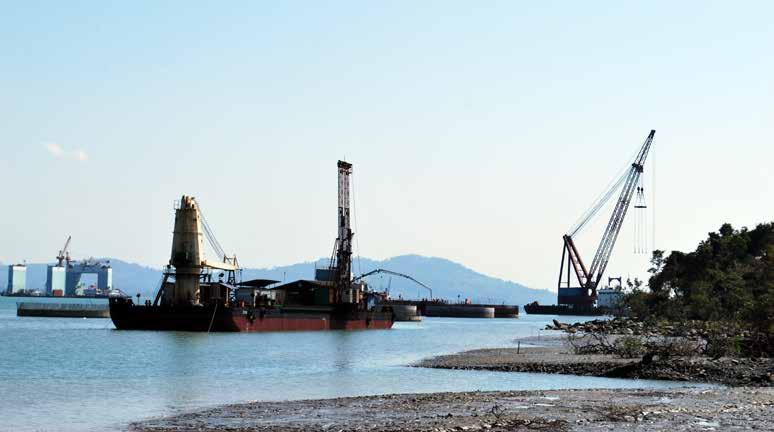
Construction on Yanbye (Ramree) island in late 2012
“Kyaukphyu is uniquely positioned to serve as a trade corridor connecting these three economies with a combined population of 3 billion people,” the video said. “It will play a vital role in unlocking the potential of the [Myanmar] hinterland.”
A Chinese state-owned firm heads a partnership appointed in March to promote, advise and coordinate the Kyaukphyu SEZ. Naypyitaw named a group led by CPG Corporation of Singapore, however, this firm was bought in 2012 by China Architecture Design and Research Group, China’s largest state-owned engineering design and services company.
Kyaukphyu is seen by China’s strategic planners as a key element of the so-called BCIM Corridor, for Bangladesh-China-India-Myanmar. The BCIM is a pet project of Beijing’s and was promoted by China’s President Xi Jinping on a state visit to India in September.
A pivotal place in the BCIM corridor would be Mandalay, linking Kunming in Yunnan Province with northeast India and on into Bangladesh. But observers also see the BCIM idea as instrumental in facilitating Chinese access to the Indian Ocean.
The BCIM is a grand plan for China to “gain access to multiple coastal zones that are considered crucial for the next-generation Chinese economy,” commented India’s Telegraph business newspaper.
Economists and foreign policy
analysts are divided over whether a Kyaukphyu SEZ is viable in the near term. Meanwhile, work progresses on the country’s first SEZ, with Japanese investment, at Thilawa adjacent to Yangon.

An SEZ around Kyaukphyu would need considerable investment in basic infrastructure such as electricity and new road, rail and port communications.
One Western economist who knows Myanmar well told The Irrawaddy, on condition of anonymity, that a Kyaukphyu SEZ might be plausible in the long term but foreign investment should be focused on Thilawa until it is completed and operational.
Yun Sun, a China foreign policy analyst with the Washington-based non-profit think tank the Stimson Center, believes the SEZ and a new railway linked to China’s Yunnan Province could go ahead with reduced Chinese involvement.
She argues that a YunnanKyaukphyu railway remains of strategic importance to China as a key component of China’s trans-Asia railway network and in “developing a southwest strategic corridor to the Indian Ocean, a route for crucial imports that bypass the congested Malacca Strait and hotly contested South China Sea.”
“However, China is not the only investor available in the case of Kyaukphyu,” Yun Sun told The Irrawaddy. “I expect investment from
Southeast Asia to play a big role in many of the related fields. [Myanmar] remains a key link in China’s BCIM, South Asia and Southeast Asia strategies. I doubt that China will completely abandon its strategic plan. The Chinese will be involved in the Kyaukphyu SEZ.”
The development of Kyaukphyu would be divided into three sections, a deep-water port, an industrial estate, and a housing district. The planners are targeting textiles, construction materials, food processing and general manufacturing for the industrial estate. Myanmar’s Ministry of Electric Power is planning to award a contract to build a 50 megawatt gas-fuelled power station at Kyaukphyu, although power industry analysts say this would be inadequate to supply sufficient electricity to fuel the envisaged SEZ.
Another Western economist who has been an active, long-time observer of Myanmar thinks a Kyaukphyu SEZ is a non-starter for the foreseeable future. “I continue to believe this project is not going anywhere, despite some movement in establishing a management company, as well as the power [plant] proposal,” Sean Turnell, a professor at Macquarie University in Australia, told The Irrawaddy.
“Neither the politics nor the economics of the Kyaukphyu SEZ are plausible as yet,” added Mr. Turnell, who is also co-editor of Burma Economic Watch.
Whichever companies win contracts to develop the SEZ, they may have to contend with a hazard that was not mentioned in the promotional video: mud volcanoes. The area around Kyaukphyu is noted for this natural, destructive phenomenon, also known as mud pots, in which warm mud and methane gas spew to the surface from subterranean fault lines. One such incident occurred at the end of August near the village of Shauk-Chaung on the edge of the SEZ and engulfed about 100 acres of land, said the Rakhine Social Network Information Center.
On that occasion no one was hurt and only rice paddy was destroyed. But next time, perhaps, it could be factories and other expensively installed infrastructure.
49 November 2014 TheIrrawaddy
PHOTO: SOE MYINT / THE IRRAWADDY
The gas pipeline during construction phase in late 2012
Boost for Rice Exports
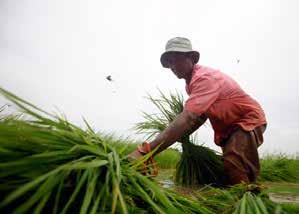
Thailand Probes Dawei Gas Conduit
BANGKOK - Thailand’s state oil and gas company PTT and electricity distributor EGAT are investigating the feasibility of building a large liquid natural gas (LNG) receiving terminal on Myanmar’s southeast coast near Dawei.
The terminal would reformat LNG, shipped from the Middle East, to pump by pipeline into Thailand, reports said. Pipelines currently pumping gas to Thailand from production fields in the Andaman Sea come ashore near Dawei.
The terminal would need to have an annual processing capacity of 5 million tons, PTT’s chief operating officer Nuttachat Charuchinda told Reuters.
YANGON — Myanmar and India were putting the finishing touches on a major rice export deal in October which will facilitate the sale of about 20,000 metric tons of Myanmar rice into northeast India every month for the coming year.
India earlier opened bidding for a rice sales contract to supply parts of Mizoram and Manipur, two remote northeastern states that border Myanmar.
According to the Myanmar Rice Federation (MRF), Myanmar’s main independent rice industry oversight body, two Myanmar companies asking for US$800 per ton were the only bidders. The Indian government then approached the MRF to negotiate a counter offer at half the price.
U Chit Khine, chairman of the MRF, said that MRF has agreed to a sale price of $400 per ton, but that sellers will only transport the commodity to the border station, from which Indian buyers will have to arrange pick-up and transport to their local warehouses.
Myanmar sellers said that their initial prices were high because of difficult and expensive transport conditions, as well as an uncertain political atmosphere in northeast India. The area has long struggled with minority insurgencies and political upheaval that often takes the form of bandhs, a popular form of protest whereby huge territories are immediately cut off by blockading one of the region’s few main roads.
“PTT operates one LNG terminal of 5 million tons annual capacity at Map ta Phut on the [Thai] coast at the head of the Gulf of Thailand and is building a second one in the same location, due to be completed in 2017,” Asia Oil & Gas Monitor reported.
However, a receiving base on the [Myanmar] coast facing the Indian Ocean would be more convenient than shipping through the Malacca Strait at the southern tip of Malaysia, the monitor said, also quoting Nuttachat.
Myanmar gas fuels about 25 percent of Thailand’s electricity generation. –William Boot
Andaman Gas Field to Get Chinese-Built Platforms
A major Chinese state-owned oil company has been awarded a US$367 million contract to build well-head platforms for the Zawtika gas field in Myanmar’s Andaman Sea.
The contract from field operator PTT Exploration & Production, the Thai state-owned oil firm, went to China Offshore Oil Engineering Company (COOEC), said industry newspaper Upstream.
COOEC is a subsidiary of China National Offshore Oil Corporation (CNOOC).
The Chinese firm has been commissioned to build four platforms, and these will be constructed at COOEC’s shipyard in the southern Chinese port city of Qingdao, said Upstream.
The platforms are contracted to be completed by April 2016 and will be towed to the Zawtika field by sea.
The Chinese company “will be responsible for design, construction and offshore installation of four wellhead platforms, along with corresponding subsea pipelines,” Offshore Energy Today magazine said.
None of the work will be carried out in Myanmar.
Hsu Mon
Once the agreement is signed, Myanmar will begin legal rice exports to India for the first time. China currently takes the bulk of Myanmar's outbound rice, but cross-border rice sales between the two are still technically illegal. Chinese officials are working with MRF to establish quality control facilities and regulations, and MRF anticipates that China will soon become a long-term trade partner once they secure a legal contract. –Kyaw
Zawtika is PTTEP’s biggest gas production project outside Thailand. It has been estimated to hold at least 50 billion cubic meters of gas, 80 percent of which will be piped to Thailand under the terms of an agreement made with the former Myanmar military regime. –William Boot
50 TheIrrawaddy November 2014
A farmer plants rice seedlings in a paddy field on the outskirts of Yangon.
BUSINESS SIGNPOSTS PHOTO: REUTERS
Yangon Tax Dept Completes Evaluation

YANGON — Yangon Region’s Internal Revenue Department has completed its annual evaluation of real estate prices as part of its new property sales tax system, a department official said in mid-October.
U Myo Min Zaw, the department’s assistant director, said the department had brought its estimation of the value of properties in Yangon in line with market prices.
“From this year onward, we’re going to set the property values annually following market prices. If market prices go down, our estimates will go down too,” he said.
The Revenue Department’s survey found that land prices remain high in Myanmar’s largest city, which has been experiencing a property boom following the introduction of reforms by President U Thein Sein in recent years.

U Myo Min Zaw said the highest land prices were found in Bahan Township, an area known locally as the Golden Valley where many wealthy Myanmar own homes, with land on sale for about US$400 per square foot. Similar price levels were found on prime locations in downtown townships of Kyauktata, Botataung, Pazundaung, Pabedan, Latha, Lanmadaw, as well as in Dagon and Mayangon townships.
In October 2013, the government introduced an improved property valuation method in order to estimate the value of sales on Yangon’s booming property market and tighten tax controls.
The government also reformed and lowered its property sales tax in order to encourage more buyers and sellers to register transactions. –Kyaw
Hsu Mon
Corporate Transparency Praised
YANGON — Newly disclosed corporate data prompted an international advocacy group to label Myanmar as a “world leader” in transparency.
Transparency watchdog Global Witness published a 30-page breakdown of 25 foreign and domestic oil and gas companies operating in Myanmar that have—upon being solicited by the group—published full or partial information about their “ultimate beneficial ownership,” which has been defined as the individual person or persons “right at the very top of the chain.”
“This is a global first in one of the places you might least expect it,” Global Witness analyst Juman Kubba said in a statement. “All over the world, corrupt politicians and crooked businessmen hide behind secret companies to steal oil, gas and mineral wealth. If Myanmar is to turn the page on a history of cronyism and corruption linked to natural resources, it has to crack this problem.”
Global Witness urged the government to maintain pressure on industry stakeholders as the country moves toward achieving global standards. Meanwhile some argued that labeling the nation as a success story may be premature.
“It is too early to say whether the Myanmar government is taking the lead on the issue of transparency,” said U Wong Aung, director of the advocacy group Shwe Gas Movement, which has devoted several years to promoting fairness in the gas and oil sector. “They have made promises, but we are still waiting for them to prove that they are committed to overcoming institutional challenges.” –Feliz
Solomon
51 November 2014 TheIrrawaddy
People drive near the construction site of a pipeline built to transport Myanmar gas to China, outside of Pyin Oo Lwin in 2012.
PHOTO: REUTERS
A bank and office buildings are seen in downtown Yangon. Companies are struggling to find affordable office space in Myanmar's biggest city, with property in short supply and rental prices high.
PHOTO: STEVE TICKNER / THE IRRAWADDY
Malaysia’s Royals Flex Political Muscle
The role of the sultans goes beyond the ceremonial
By ANURADHA RAGHU and STUART GRUDGINGS / KUALA LUMPUR
Malay kingdoms—goes beyond the ceremonial. They wield real power as the official guardians of Islam and can withhold consent for the dissolution of state assemblies and appointments of chief ministers. Many, including the sultans of Johor in the south and Selangor, Malaysia’s richest state, have built up large business interests.
The Johor and Selangor palaces declined to comment on the issues when contacted by Reuters. The prime minister’s office also declined comment, but some of his ministers have publicly expressed their support for the Sedition Act and Malay royalty.
The sultans also make up a Conference of Rulers, which can block changes to the federal constitution affecting the special status held by majority Malays over minority Chinese and Indians.
At the murky shore of a fishing village on the Malaysian side of the Singapore Strait, Ghazali Malik cleans out the mud and small stones tangled in his boat’s fishing net.
He says his daily catch of fish, prawns and crabs has slumped since land reclamation work began this year on a controversial 2,000-hectare man-made island called Forest City, a project between the Sultan of Johor and a Chinese developer.
“My net used to last years, but nowadays I have to replace it after three months,” said the 24-year-old fisherman.

The mammoth project, which has drawn concern from Singapore and environmental groups over its impact on the narrow channel, is a sign of what critics say is the increasing political and business influence of Malaysia’s traditional rulers, the sultans.
A decline in support for the longruling coalition, led by the United Malays National Organisation (UMNO), at the last two general
elections has left a power vacuum. Analysts say that the country’s nine traditional rulers have stepped into the void, with the tacit support of the government.
“If the national opposition front were the ruling government in Putrajaya [Malaysia’s seat of government] this would not have happened,” said Abdul Aziz Bari, a constitutional law expert. “… It shows that UMNO is so desperate to cling on to power.”
A government crackdown on dissent has coincided with a flurry of cases involving allegedly seditious remarks against the traditional rulers. Out of more than a dozen prosecutions under the colonial-era Sedition Act this year—most against anti-government activists or opposition politicians—five have centered on comments voiced about the sultans or their powers.
Mr. Aziz Bari is currently being investigated under the Sedition Act over comments he made about a sultan.
The role of the sultans— descendants of centuries-old ethnic
52 TheIrrawaddy November 2014 REGIONAL
Perak Crisis
Many commentators trace the recent assertion of royal power back to 2009, when the then Sultan of Perak state declined the opposition’s request for fresh state elections after it had lost its majority. The sultan allowed the ruling coalition to form the state government.
The Perak crisis came a year after the opposition made sweeping gains in a national election, handing the now 57-year-old ruling National Front its worst-ever election setback.
“The reason they [the sultans] are asserting themselves is the change in the political scenario in the country,” said Azmi Sharom, a law professor at Universiti Malaya, the country’s oldest university. “That is not necessarily a problem as long as they work within the
constitution. However even pointing out what their constitutional limits are you put yourself at risk for sedition.”
A few days after speaking to Reuters, Mr. Sharom was charged under the Sedition Act for saying that “what happened in Perak was legally wrong” and the result of a “secret meeting.”
In September, the Selangor sultan appointed a new chief minister who had not been formally proposed by the opposition coalition, in what analysts said was an unprecedented royal snub of the established democratic process.
The sultan, Sharafuddin Idris Shah, said in September that some politicians had misunderstood his role as only ceremonial. “Politicians come and go ... but my position as sultan and ruler of Selangor will continue until the end of my days,” he was quoted as saying
by Malaysian media.
The sultans’ powers were pegged back under the 22-year-rule of Prime Minister Mahathir Mohamad, who in 1993 passed constitutional changes ending their immunity from prosecution.
The then leader of UMNO tapped into rising concern about errant royal behavior and extravagance. Although neutral arbiters in theory, the sultans have traditionally been seen as closer to the ruling party than to the opposition due to their shared role as guardians of ethnic Malay power.
Royal Business Empire
Johor Sultan Ibrahim Ismail’s role in the state’s booming property market and attempts to gain more policy clout have raised concern from politicians and some investors.
“Hopefully he doesn’t go overboard, because it could affect the economy,” said one Johor property investor, who asked not to be identified because of the subject’s sensitivity.

However, a member of the ruling UMNO defended the sultan’s right to pursue business interests. “If it’s approved by the state and federal government, what is the issue?” said Sharir Samad, a member of parliament from Johor. “It’s not an issue where he is taking somebody’s land, and depriving business or an individual of his right to property.”
This year, a proposed bill that would have given the sultan broad powers over a new state Housing and Property Board was revised amid crossparty opposition to say that the sultan could only act on the advice of the chief minister.
But some are not convinced the changes are enough to limit the sultan’s ability to influence policy in the Iskandar economic zone, an international hub of property development and tourism named after his father.
“The question is whether the chief minister dares to advise him,” said Hassan Abdul Karim, the vice chairman of the main opposition PKR party in Johor. “This is not good for the democratic system in our country.”
Reuters
53 November 2014 TheIrrawaddy
A laborer unloads a truck full of water drainage material used in soil consolidation at the entrance of the Forest City coastal land reclamation site off Tanjung Kupang, southern Johor, in September.
PHOTO: REUTERS










54 TheIrrawaddy Body Spa & Jacuzzi Swedish Aromatherapy Massage Traditional Massage Facial (Dermalogica®) Nails (OPI) Waxing & Threading Hair Wash Scalp Spa & Hair Spa Experience the finer things in Myanmar No 45, Pyay Road, Taw Win Center (Level-3) (4022/23), Dagon Township, Yangon. Tel: 09 3155-1844 Email: contactus@paragon-globalgroup.com www.facebook.com/shangrila.yangon
Lifestyle
FES TIVAL OF Joy and loss
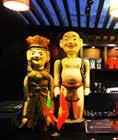
The magical atmosphere at the floating fire balloon festival in Taunggyi comes at a price
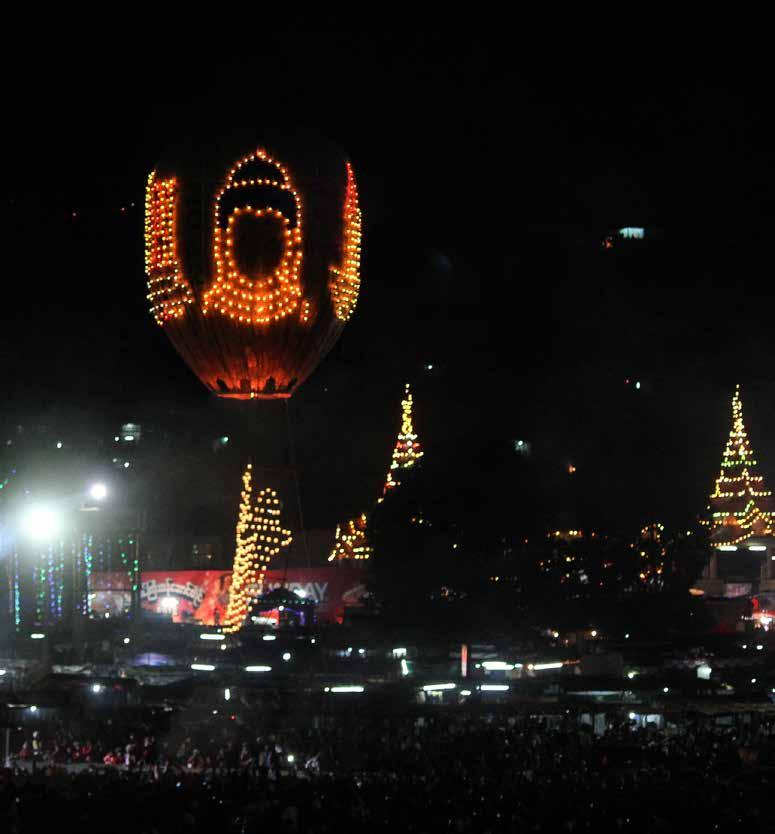 By ZARNI MANN / TAUNGGYI, SHAN STATE
The spectacular floating fire balloons in Taunggyi
By ZARNI MANN / TAUNGGYI, SHAN STATE
The spectacular floating fire balloons in Taunggyi
DESTINATIONS TECH BOOKS FOOD Food: Vietnamese class
/ THE
PHOTO: JPAING
IRRAWADDY
Floating fire balloons and colorful fireworks will light up the skies of the Shan State capital Taunggyi this month during the annual eightday Tazaungdaing festival which runs from Oct. 30 to Nov. 6.
Tens of thousands of spectators will flood into the town from near and far to see the fire balloon competition, the main attraction of this unique event, also known as the Festival of Lights. Each year, more than one hundred fire balloons of various shapes, sizes and designs are floated

up into the sky to mark the end of Kahtein, where robes are offered to Buddhist monks.
The wonderful spectacle is not without its critics, who cite the millions of kyat spent on homemade fire balloons and fireworks as wasteful. It can also be seriously dangerous, with falling balloons and stray fireworks often causing fires that send onlookers scrambling for safety. Most accidents occur, however, during the making of the fireworks. In one tragic incident two years ago, four people lost their lives.
A few days before the 2012
festival, Sai Aung Myo and five of his friends gathered at his home to prepare fireworks using gun powder, sulfur, magnesium, paper and bamboo sticks. Most of the fireworks were to be installed on the bamboo frame at the base of the fire balloons. Another friend was testing a small rocket, their homemade creation, outside the house. When the rocket was lit, instead of heading skyward, it veered directly into a room where Sai Aung Myo’s five friends were working, igniting the gun powder and other incendiary materials.
“It was so fast. No one knows how the rocket entered the room through a very narrow opening of the door. The

November 2014 LIFESTYLE |
DESTINATIONS
PHOTO: JPAING / THE IRRAWADDY
PHOTO: HEIN HTET / THE IRRAWADDY
fire broke out after a small blast and the house was burned down. All five of our friends were rushed to hospital with serious burns,” 26-year-old Sai Aung Myo recalled.
Four of his friends died, day after day, one by one, after several days in hospital. The only survivor, who suffered burns to almost 80 percent of his body, is still receiving medical treatment.
Sai Aung Myo, who was a balloon master and leader of the Hnin Thauk team, faced trial over the deaths but was spared from imprisonment. He remains grateful for the kindness and understanding of the families of the deceased, the fire balloon festival
committee and local authorities.
“I have to thank them all for understanding that the incident was just an accident and not intentional,” Sai Aung Myo said. “We were so saddened after losing our friends in this tragedy that we decided not to do another balloon,” he added, his eyes wet with tears.
However, the former team leader who, like many other Taunggyi residents, remains passionate about fire balloons, returned to the festival in 2013 as a jury member, assessing the designs of competing balloons.
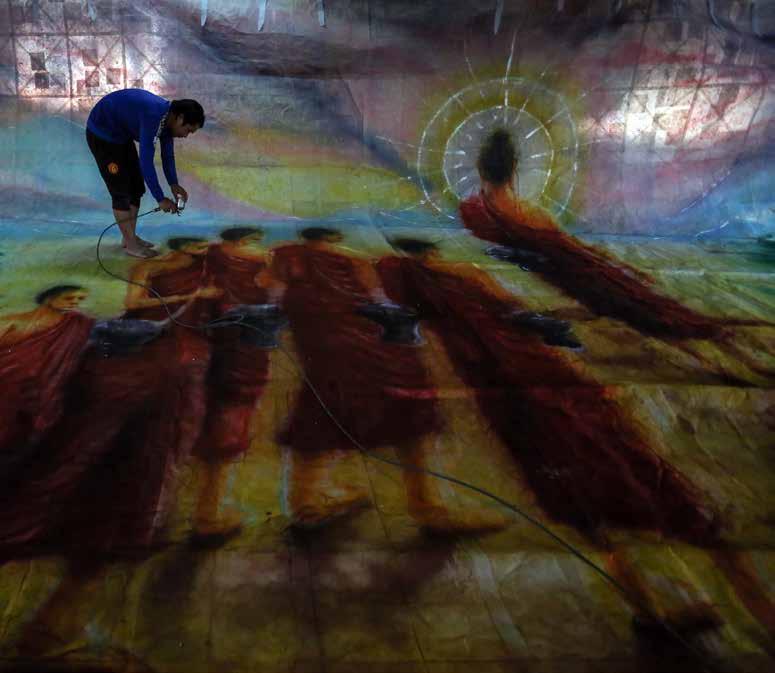
“I have no energy to build a fire balloon without my friends. I still feel bad for [them] and still
remember their suffering faces. In the meantime, the jury committee invited me to participate… Since I still can’t break [from my passion for] fire balloons, I decided to be part of the jury team,” he said.
Accidental fires often occur before the festival, when teams are preparing homemade fireworks. About seven years ago, balloon master Sai Kyi Thein’s garage caught fire while some of his team members were preparing fireworks.
“Suddenly there was an explosion and the person who was mixing chemicals was lifted off the ground due to the force of the explosion. His brother and others who were close
57 November 2014 TheIrrawaddy
A man puts the finishing touches to a fire balloon
to him received serious burns. The brother survived but two others sadly died after a few days. The house was left intact but the garage remains a pile of ashes,” said Sai Kyi Thein, now a balloon master on the Nga Pyin team.
“Ko Naing, whose arms and chest were burned, gave up fire balloons because they reminded him of his younger brother. However, he does visit the festival ground, enjoys the fireworks and always encourages us to be careful,” he added.

Ko Nyan Lin, a balloon master with the Ozone, Thudanu and Sidawgyi teams, lost a child due to a fire balloon-related accident. His second child, who was just a few days old, died two years ago due to lead poisoning.
“We used lead to create silver colored fireworks. My wife was heavily pregnant when we prepared those fireworks and when my

son was born, he died after a few days. The blood test showed a high content of lead in his blood,” Ko Nyan Lin said.
A lack of research and knowledge about the making of fireworks is partly to blame for a string of deadly accidents. Young people, who are practicing the traditional way of mixing chemicals to create homemade fireworks, primarily rely on information passed down to them or obtained from the Internet.
“If we are allowed, we would like to have a small lab in which we could test and research the [different] chemical reactions. Then we would be able to prevent accidents and the traditional techniques for creating fireworks would be improved in the future,” Ko Nyan Lin said.
The fire balloon competition has three categories in which balloons

are launched both during the day and night. During the day, huge balloons called ‘Ayoke’ adorned with colorful animal figures are released. At night, balloons are decorated with fireworks (Nya Mee Gyi) and with candlelit lanterns (Sein Na Pan).

The latter are a favorite among spectators and earn the highest rewards. This year, first prize for the Nya Mee Gyi balloons category is 45 million kyat (roughly US$45,380). But when the cost of making one of these balloons varies from at least 30-80 million kyat, it’s not about the money, but the beauty of their creation and design.
“Since the festival is all about offering the light to Buddha and the Sularmani pagoda, which is said to be built in heaven, we made these balloons to offer the best we have [with our] skills, time and money,” Ko Nyan Lin explained.
58 TheIrrawaddy November 2014
PHOTO: JPAING / THE IRRAWADDY
PHOTO: JPAING
/ THE IRRAWADDY
PHOTO: JPAING / THE IRRAWADDY
PHOTO: JPAING / THE IRRAWADDY
Fireworks during the Festival of Light
Preparing for take-off
These days, the fire balloons of Taunggyi have become increasingly popular and some other towns and cities across the country hire the teams from Taunggyi to make the Nya Mee Gyi fire balloons for certain Buddhist religious festivals.


Some teams from Taunggyi have travelled to Pyin Oo Lwin, a hill station town near Mandalay, to participate in the town’s famous pagoda festival, which falls at the same time as Taunggyi’s Tazaungdaing. However, the teams complained that the atmosphere of the town was lacking and the festival less lively than in Taunggyi.
“It was all about winning the prize and the money,” said Ko Nyan Lin, who once competed at the festival in Pyin Oo Lwin. “In Taunggyi, where the festival committee is completely under the control of the town’s elders…


the competition is all about unity, friendship, love and peace. We never fight but always help the other teams since we are preparing the fire balloons three months before the festival.”
For the fire balloon lovers of Taunggyi, nothing can overcome their passion for the making and viewing of these homemade balloons. “Sometimes, we feel sad after the accidents and health problems. But our minds are so focused on the fire balloons that the sorrows in losing our homes and loved ones spectacularly fade away. The passion over the fire balloon is deeply rooted in us like a virus,” said U Than Zaw, a veteran fire balloon master and a jury member whose home was burned down in 2010. “This virus, the love virus over the fire balloons festival, the Tazaungdaing virus, will die only after we die.”
59 November 2014 TheIrrawaddy
PHOTO: HEIN HTET / THE IRRAWADDY
PHOTO: HEIN HTET
/ THE IRRAWADDY
A balloon decorated with fireworks and candlelit lanterns
Fireworks being prepared before the festival
Gaming With a Side of Culture
A determined team of videogame developers is creating games with a distinctly local edge
 By ZARNI MANN / YANGON
60 TheIrrawaddy
LIFESTYLE | TECH
ALL PHOTOS COURTESY TOTAL GAMEPLAY STUDIOS
Ateam of videogame developers in Myanmar has hit upon a novel idea: using technology to help preserve the country’s cultural traditions and revive its historical heritage. Often viewed negatively in relation to its effect on time-honored customs, technology, for this team, is a tool.

“Our main mission is to promote Myanmar culture in this age of technology,” said Ko Myint Kyaw Thu, chief technical officer at Total Gameplay Studio, an eight-member team of tech-savvy Myanmar entrepreneurs who have created more than five videogames and mobile apps, and are in the midst of producing their most ambitious effort yet.
“We believe we can maintain the Myanmar culture by creating such games for youngsters in the digital age,” Ko Myint Kyaw Thu said. “Moreover, we want to create games owned by Myanmar people, and to distribute these games to the world.”
In 2013, their first effort to bring Myanmar’s traditions to gamers produced “Chinlone,” an app allowing users to play a simulated version of the popular pastime that, in real life, involves a simple rattan ball and some deft footwork.
Their “Maung Pein” app, in which gamers play a trishaw driver of the same name as he indulges in Thingyan water festival revelry, has already received many “stars”—in the world of apps, an indicator of popular approval—from users. The famous Myanmar cartoon character Thamain Paw Thut also gets a dedicated app, with users facing down bad guys as the heroic—and sometimes comical— ancient warrior.
61 TheIrrawaddy An
image from
“The Age of Bayintnaung”
Their latest effort, “The Age of Bayintnaung,” is a strategy combat game in the mold of genre classics such as “Clash of Clans” and “Age of Empires,” and is due out next year. The game will feature one of Myanmar’s most powerful monarchs, King Bayintnaung, and the Siamese King Naresuan, who was taken hostage by Bayintnaung as a boy but would later go on to rule what is modern-day Thailand. Bayintnaung reigned during Myanmar’s Taungoo Dynasty, which established Southeast Asia’s largest empire in the 16th and 17th centuries.
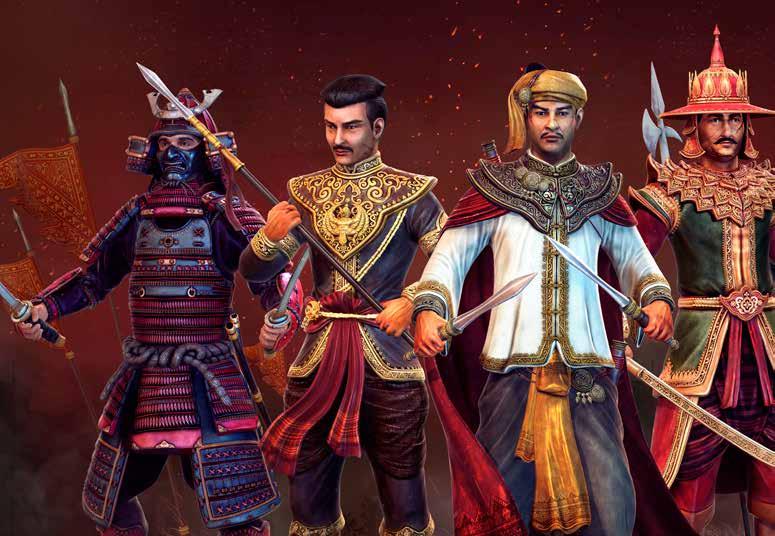
Technologically Challenged
For millions of gamers worldwide, the title may appear as just one more addition to a saturated marketplace.
But for the developers, the launch of “The Age of Bayintnaung” will mark a major milestone for a team that has for years struggled to program videogames in a country where limited access to Internet and frequent blackouts pose perennial challenges.
The largely self-taught young developers have been turning out games from their Total Gameplay Studio office in Yangon, where they acknowledge conditions for techies are not ideal.
“We do not have special equipment and have to work with just ordinary computers. When there was limited access to Internet, it was very difficult for us to find the required technical information for our games, not to mention the blackouts,” said Ko Zaw Ye Myint, Total Gameplay Studio’s CEO, recalling the days back
“We do not have special equipment and have to work with just ordinary computers.”
62 TheIrrawaddy November 2014
in 2006 when they created their first ever turn-based strategy game, “The Mastermind.”
Members of the team, all graduates with bachelor’s degrees in computer science, spent some of the last 10 years learning about traditional arts and designs from veteran Myanmar artists, an effort that shows through in the intricately detailed digital renderings of the Taungoo-era characters.

“The Age of Bayintnaung” attracted the attention of publishers from Thailand and Malaysia, during gaming conventions in Tokyo earlier this year and Kuala Lumpur last month. According to the team, Thai and Malaysian businessmen have expressed interest and made offers to help promote and distribute the game.

“The foreign developers and businessmen said it was a wonder that we could create these games with just eight developers, right from Yangon. We are so proud that we made it and we could show off the talent of our Myanmar developers,” Ko Myint Kyaw Thu said.

Total Gameplay Studio is also in the process of developing “Range of Rama,” a multiplayer strategic combat game based on the Hindu epic Ramayana.

All the games that have already been released are available for both iOS and Android mobile operating systems and can be downloaded for free at www.tgpsdownload.com.
“Range of Rama” and “The Age of Bayintnaung” will also be available on PlayStation 3.
“We are currently trying to improve ‘The Age of Bayintnaung’ to get it ready before the launch. We are hoping to expand our market to Southeast Asia as well,” said Ko Zaw Ye Myint.
“We also want to encourage the Myanmar youth who are interested in programming and game developing to work hard and work smartly. If we try without giving up, we can surely take it to the international level,” he added.
63 TheIrrawaddy LIFESTYLE | TECH
Ko Zaw Ye Myint Ko Myint Kyaw Thu
PHOTO: HEIN HTET / THE IRRAWADDY
PHOTO: HEIN HTET / THE IRRAWADDY
Deep in the jungles of North Sentinel Island, off the coast of the largest Andaman Island, live an indigenous people known as the Sentinalese. The outside world knows very little about them—no one even knows what they call themselves. They are fiercely private, hostile towards visitors, and have been known to mock gifts and even attack and kill intruders with their arrows and spears.
And not without reason. This particular tribe is something of a “control group” for the few remaining groups of “Negrito” people across Asia—historically referred to as such because they resemble small Africans—because the Sentinelese have successfully survived in isolation, having never been contaminated or taken advantage of by outsiders.
Many of the other “Negritos” have not been so lucky, as they grow more and more marginalized on the outskirts of modern society.
“The Wind in the Bamboo: A Journey in Search of Asia’s ‘Negrito’ Indigenous Peoples” is Edith Mirante’s third book, following 1993’s “Burmese Looking Glass” and “Down the Rat Hole,” published in 2005.
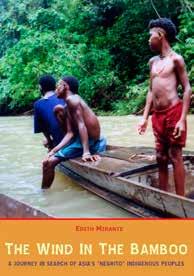
Like the first two, this book is a meandering story of adventure, as she
Hanging On, Just
Edith Mirante journeys far and wide in search of some of Asia’s least-understood indigenous people
By MARIE KESAVATANA DOHRS
takes us on her 2007-2008 journey through Malaysia, the Philippines, and the Andaman Islands to seek out and learn about these ancient and mysterious people.
While this journey is perhaps less dangerous and thrilling than her previous accounts of treks into closed-off Myanmar—no warlords or cyclones or Thai jail stints here— Mirante leads the reader along with insight and humor and the same down-for-anything attitude as ever.
As she quietly befriends the different “Negrito” peoples, Mirante affords us a sensitive and educated perspective into the lives of the indigenous people, in contrast to the tourists who peer in on them from outside the fishbowl.
The “Negritos”—a vaguely derogative term which Mirante rejects, and on principle uses only in quotes throughout the book—have been a source of anthropological fascination for centuries.
Scientists and researchers have measured and tested their skulls and bones, their blood, the proportions of their bodies, and, more recently, their DNA, in order to determine how these diminutive, dark-skinned, curlyhaired people came to be in Asia and how they have survived, hidden in the forests of countries inhabited by people with drastically lighter skin and straighter hair.
Mirante offers us periodic insight into this intrusive and objectifying research history, but she’s not
interested in delving further into the ancient roots of the “Negritos” or why they exist, but rather how they live and survive today.
Her findings are complex and fascinating but wholly unsurprising, as we learn in this dense, thoroughly researched, and beautifully written book, illustrated with historical paintings and photographs interspersed with photos taken by Mirante herself.
The plight of indigenous people the world over is a tale as old as colonialism, and the “Negritos” are no exception as they resist and concede to attempts to civilize, settle, convert, educate, assimilate, scam, and push them off land that is rightfully theirs.
Misunderstood and different, they are often a source of ridicule in mainstream culture, viewed as primitive, ugly, dirty, and lazy; “honored” in horrifying displays of blackface and tribal appropriation while their human rights are largely ignored.
As Mirante gets to know the “Negritos,” she discovers many strange and intriguing similarities among the different groups separated by seas and time, suggesting that the tribes are not so far removed from one another after all—they are nomadic peoples who build leanto houses, gather roots and fruits and hunt monkeys and lizards with blowpipes, do not farm but have an acquired taste for rice, display a penchant for one-shoulder sarongs
64 TheIrrawaddy November 2014
LIFESTYLE | BOOKS
and the color red, practice fluidity in gender roles, and believe in spirits of nature and that thunder erupts from the earth.
At each stop, Mirante passes around photos of “Negritos” in other parts of Asia, and they grasp this validation of their existence in the world with excitement and wistful recognition.
Mirante’s experience with the “Negritos” is not an anthropologist’s account of living among the “savages” like those published over the centuries by many of her predecessors, but rather something a bit more melancholy; instead, we see peaceful old-world exotica being swallowed in the din of commercialism.
As the outside world creeps in, the “Negritos” slowly lose their culture and land; grow dependent on rice, plastic goods, and the tourism industry; and acquire cell phones, ID cards, and college diplomas. These nomads are increasingly held captive
in the conventions of modern society, and Mirante takes us through the appropriate emotions of sympathy, outrage, and plaintive longing for the “Negritos” to simply be left alone.
Like Mirante’s first two books, “The Wind in the Bamboo” is titled after a classic children’s tale of adventure. This time, however,
it’s not a Lewis Carroll novel, but Kenneth Grahame’s story of friendship on the leafy river’s edge, "The Wind in the Willows."
It’s not difficult to see why: the “Negritos” are akin to the elusive Badger, who lives deep in the Wild Wood and would prefer to be left in seclusion; while modern society is not unlike the boisterous and destructive Toad. Badger recognizes that Toad must be protected from himself and tries to reason with him, but the warning falls on deaf ears. In the end, Toad realizes the error of his selfish and impulsive actions, and finds ways to make amends for his wrongdoings.
As we leave the “Negritos,” Mirante leaves us wondering if we, too, will be able to make amends before it is too late—or if the opportunity has already passed.
The Wind in the Bamboo by Edith Mirante is published by Orchid Press in Bangkok.

65 November 2014 TheIrrawaddy
ADVERTISEMENT
The plight of indigenous people the world over is a tale as old as colonialism...
VIETNAMESE CLASS
An atmospheric restaurant serves fresh, traditional fare in a sophisticated setting

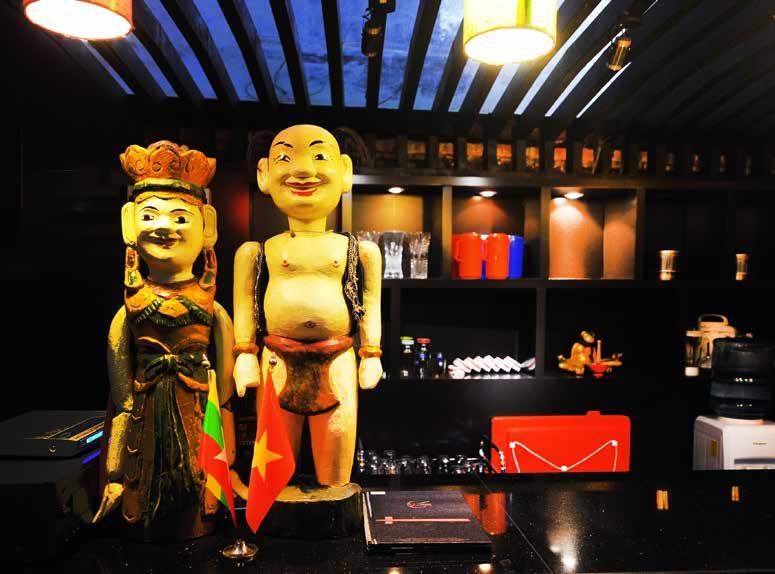 By DANI PATTERAN / YANGON
Oriental lanterns hang from a high roof, casting light onto an open courtyard where diners sit nestled amongst bamboo plants and dark wooden beams. A newcomer to Yangon, Vietnamese restaurant “The Vietnam Kitchen,” boasts a carefully designed, pared-back setting that creates a tasteful atmosphere with an Asian twist.
Open since May, the family-run restaurant is seeking to fill the gap in high-quality Vietnamese food in Yangon. Dedicated to serving dishes that are as authentic as possible, they regularly fly in from Vietnam those herbs, vegetables and spices that are unavailable in Myanmar. The proprietor (who asked to remain anonymous for this article) explained that the restaurant takes care to only use fresh ingredients, avoiding any frozen meat or seafood.
“The food is cooked by the feeling of the chef… We focus on the balance of the food—meat, vegetable, rice, soup,” he said. “We try to keep the original taste [so] we try to use more vegetables and fresh ingredients.” With
three Vietnamese chefs in the kitchen, it seems they are off to a strong start.
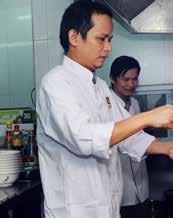
The menu features a hefty selection of both northern and southern Vietnamese dishes, as well as seasonal juices and the distinctive Vietnamese coffee—served as individual drip-filters, as strong and black as sin. Old favorites such as spring rolls and beef noodle soup (pho) grace the menu, alongside more unusual dishes such as Vietnamesestyle pork leg; grilled beef wrapped in vine leaves; and tiger prawns steamed with coconut. Prices are mid-range, from 800 kyat for spring rolls, to upwards of 7,000 kyat for larger main dishes.
Known as the healthier of the Southeast Asian cuisines, Vietnamese dishes commonly use fresh herbs and a delicate combination of flavours—hence the emphasis on fresh ingredients makes a big difference. The beef pho tastes clean
November 2014
LIFESTYLE | RESTAURANT
ALL PHOTOS: STEVE TICKNER / THE IRRAWADDY
and flavorful, without any cloying aftertaste of MSG. The proprietor explains that the stock is simmered for over 12 hours to get the right depth of flavor. It is served as it is in Vietnam—steaming hot with a large plate of cilantro, basil, limes and beansprouts.
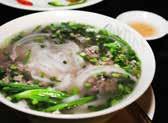
The fried spring rolls, stuffed with pork, herbs and veggies, have a nice hearty flavour that is well finished with a crisp, light batter; while the healthier raw spring rolls are a fresh, crunchy appetiser—though benefit from the accompanying spicy dip to give them a stronger kick.
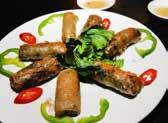
Featuring a range of vegetable and
tofu dishes, the restaurant is a good location for vegetarians or vegans (though watch out for some of the sauces, which contain fish sauce or pork). Helpings are generous and good to share, including the large hotpots or the enormous plates of steamed vegetables.
With its open-air, atmospheric setting, it is easy to imagine The Vietnam Kitchen as a place of choice for a quiet romantic date, but the versatile courtyard also allows for large groups and the proprietor explains that the restaurant can cater for up to 200 people. Three large dining rooms built discreetly into
the side of the building are also an attractive alternative for those hosting private parties.
Tucked just behind Chatrium Hotel on Pho Sein Road, the restaurant’s central location is easily accessible and a great place to finish up after a sunset stroll around Kandawgyi Lake or the botanic gardens.
It would be nice to see some dessert options on the menu, and the inevitable onslaught of mosquitoes can be a drag, but these small gripes aside, The Vietnam Kitchen has succeeded in providing exactly what it sets out to achieve—quality, wellcooked and traditional Vietnamese food for a reasonable price, in a relaxed and stylish setting.
THE VIETNAM KITCHEN is open from 8.30 am until 10 pm
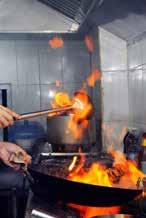
Address: 1A Pho Sein Road, Bahan Township, Yangon.

Tel: 09-2542 82468
Website: www.vietnamkitchen.info
67 November 2014 TheIrrawaddy
ADVERTISEMENT
Chef Phan Van Pluioc at work
a movie for our times
“The Monk,” a film about a novice weighing the choice between monastic and lay life, has earned several awards as it continues on the international film festival circuit. Director The Maw Naing, 42, talks to The Irrawaddy’s Ma Set Hsu.

in Singapore. I’m looking forward to the show in Singapore because there are many Myanmar there and I would like to hear their feedback
Q: What kind of feedback do you think you will get from Myanmar audiences?
LGBT stories get an airing
YANGON — Myanmar’s first ever film festival devoted to lesbian, gay, bisexual and transgender (LGBT) issues takes place in the commercial capital this month.
Question: Why did you direct “The Monk”?
Answer: I’m more interested in art film than entertainment film. As I read more books on art films, I decided to create an art film as my first work. There are many, many nonsensical and ridiculous things taking place in Myanmar. Those are resources for us. I would like to show the international community what is happening. If we don’t do so, who will? The media do talk about what is happening in Myanmar, but their focus is on information. In the arts, it is not just about information.
The majority of Buddhist monks, who are respected a great deal in our society, are leading very hard lives. Again, I would like to communicate the message that most youth [in Myanmar] do not know exactly what they want to be, and many let their dreams fade away.
Q: In which countries will “The Monk” be screened next?
A: It will be shown at the Busan [International] Film Festival in Korea; in Poland; India; in Qatar’s Doha; in New York and, in December,
A: There will be criticism, for sure. For example, I write a poem about something and readers may think it is about something different. That’s their right. The way they understand it may be different from one another.
We have lived in a locked-up society. Those who grow up in a locked-up society are different from those who grow up in open societies. Those who grow up in a locked-up society are somewhat abnormal. We are not frank with each other. We dare not complain even when we are right. Since this has been going on for a long time, misunderstandings have emerged. Myanmar people have fear, since they were not allowed to think freely. Most people who have watched the entire film like it when they grasp the essence of it.
Q: How can the living conditions of the monkhood be improved? What is your assessment as an ordinary person, not as a director?
A: It is quite clear. It is all because of the military dictatorship. Things will get better gradually when there is no military dictatorship and everything is fair. You can’t build Rome in a day. It is common knowledge that many problems remain unresolved in Myanmar.
The “&Proud LGBT Film Festival” will be held Nov. 14-16 at the French Institute in Sanchaung Township, and will feature about 30 films, discussions with filmmakers and an art exhibition. All screenings will be free of charge.

The organizers, including Colors Rainbow, YG Event, Equality Myanmar and several other gender-oriented organizations, said that the main purpose of the event is to increase awareness and tolerance of sexual identity issues.
“We hope that the festival will help the public to change their views about the LGBT community, or at least give them ideas that those views can be changed,” said U Hla Myat Tun of Colors Rainbow. One of the difficulties for Myanmar’s LGBT community, he said, is negative representation in popular culture. Alternative gender and sexual identities are often portrayed insensitively in movies, magazines and other popular media.
“We want to make the point that members of the LGBT community should be proud,” he added.
The organizers said there will be a diverse line-up of films from mainly Asean countries, including Cambodia, Malaysia and Thailand. At least five films will be from Myanmar.
A program of three short films made by 10 young members of Myanmar’s LGBT community will premier at the event. —San Yamin Aung
PHOTO
ONE POINT ZERO
COURTESY
68 TheIrrawaddy November 2014 BACKPAGE
A scene from “The Monk”