Where technology meets innovation & impact. Our Services: •Production Print solutions •Large Format Printers & Scanners •Managed Print Services •Enterprise Content Management •Managed Voice Services •Multifunction Printers & Copiers The right technology, in the right place, for the right job. 573.499.5300 columbia@sumnerone.com Welcome to the one place where www.SumnerOne.com


6 INSIDE COLUMBIA MAY/JUNE 2023
The First Step for Lasting Success
Before land becomes a shopping center, a school, or a roadway, McClure surveyors are there, using state-of-the art technology, and gathering critical data that becomes the foundation for achieving your vision.

With a high-tech approach to surveying, McClure uses state-of-the-art technology and remote sensing to conduct a wide variety of construction, design, and pipeline surveying projects for clients of all sizes. This includes land, drone, and bathymetric surveys.
For the replacement of the U.S. 40 bridge in Howard County and pedestrian bridge on the Katy Trail, McClure performed a topographic survey, engineering design services, and construction layout. “The topographic survey involved a dive into history as we aimed to identify where the old rail rightof-way intersected a levee district boundary,” says Tim Devaney, Survey Team Leader. McClure also performed survey and structural services for the Columbia Farmers Market structure.
These projects show the on-going development of surveying technology, which Devaney says is undergoing a revolution that is changing how data is collected. “We no longer collect data using only sequential angle and distance measurements,” he says. Instead, there’s
a fusion of data types, including drone-based, digital photogrammetry, and mobile scanning, all of which help create high resolution photomaps. “In a matter of minutes, we are able to gather enough data to create 3D renderings of actual site conditions, and this is just the
Josh Doughan, Vice President of Survey, says these types of technological advancements are causing more companies to expect more high-resolution imagery and drone-based solutions. It’s also becoming a draw for people to enter the surveying industry itself. “Many new surveyors are entering this field specifically for the ability to use these new tools and be involved in state-of-the-art data collection and design,” Doughan says.
No matter what your project needs are, McClure surveys will start you out right by analyzing the data and delivering it in traditional, plan-view survey drawings, complex BIM models and renderings, and even drone animations, and time-laps videos of construction sites.

The information you receive at the start informs every decision you make along the way. Trust McClure for surveying expertise that ensures the safety and success of your project.


8 INSIDE COLUMBIA MAY/JUNE 2023
573.814.1568 mcclurevision.com At McClure, we engineer your vision to reality. Sometimes it’s solving a challenge before it becomes an obstacle. Sometimes it’s helping you navigate opportunities,
it’s
value and
what’s possible. We’re
even funding and selling the job throughout the process. Always
adding
imagining
engineers, yes – but also visioneers, driven to make lives better.
Scan and apply now


Join our team and start your career today.


HISTORY AND GHOST TOURS

A CONSTANT DEDICATION


DOUG PERRY TOWING MAINTAINS COMMUNITY COMMITMENT AFTER MORE THAN 40 YEARS
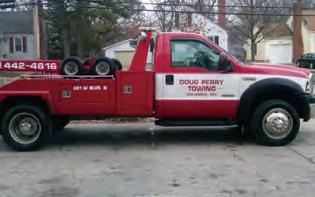
From its roots as JP Perry’s Wrecker Service to its work today as Doug Perry Towing, one thing has remained constant over the more than 40 years of dedication to the Columbia community: top quality customer service.
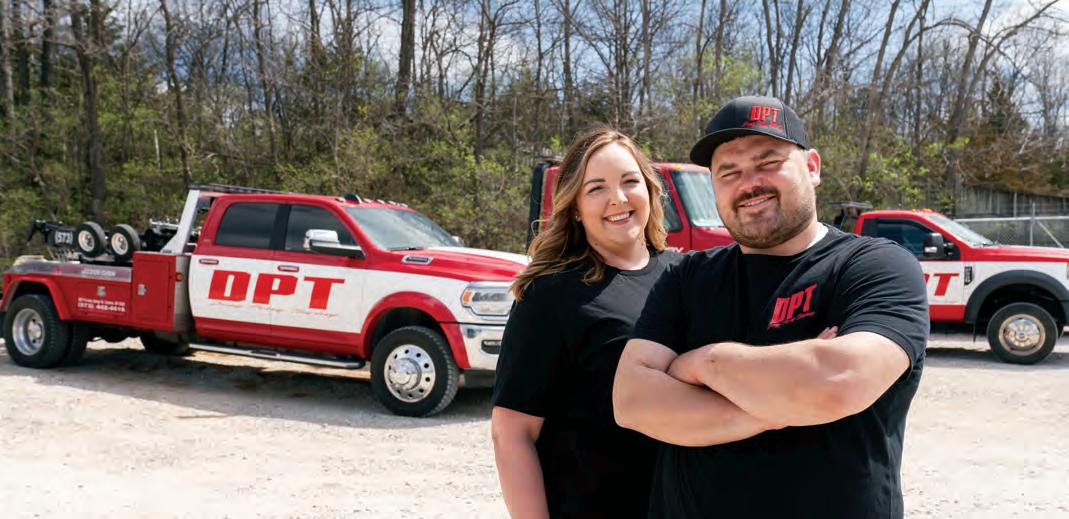
The team at Doug Perry Towing knows
that consistency matters, making sure to provide great service to each customer from that first call to dispatch until the job is complete. “We want to help make the process as smooth as possible, whether they are calling from an accident scene or locked their keys in their car,” says Ashley
Perry. “Most of the time when they call us, they are already having a bad day so any time we can help them turn it around is a win for us!”
The original business was founded by JP Perry in 1980 on West Boulevard. Having worked for other towing

1980 1998
companies in the past, JP was ready to strike out on his own when he purchased the small service station and tow truck he needed. He oversaw operations until 1998, when his son, Doug, took over.





Doug’s son, Tyler, grew up riding along on calls with his grandfather and father. As an adult, he mostly worked as a mechanic in the shop until 2018. That’s when Doug was in a motorcycle accident and Tyler stepped up to fill his father’s shoes in managing and driving the tow trucks.
In 2022, what had become Doug Perry Towing changed hands once again as Doug retired and Tyler was ready to take the helm with his wife, Ashley. “We are honored to be the third-generation owners,” Ashley says. “We would not be here today if it weren't for our loyal customers.”
As the business moves forward, the Perrys know that the most challenging aspect of the industry is staying up to date as vehicles advance with new technology. Technological upgrades have also had an impact on the way some vehicles are towed or accessed, and it’s important to stay on top of those changes.







In continuing the family business, Ashley and Tyler take great pride in their work and strive to provide excellent service based on the same fundamentals with which JP first founded the company. And that includes a dedication to the community. Doug Perry Towing is always looking for ways to give back, working
closely with Love Columbia for any towing needs and donating cars to help people get back on their feet. The team especially loves to help children in the community, whether its sponsoring local teams or assisting with accident scenes for local schools in an effort to prevent



future drinking and driving.
Doug Perry Towing is also committed to supporting other local small businesses, even if it means paying a little bit more for goods or services. “We know how much it means to support businesses in our community.”

2022


features CLEARING THE CLUTTER TIPS TO ORGANIZE YOUR HOME features Inside Columbia CONTENTS 120 117 STEP INTO THE SUN SEE A SELECTION OF SUNGLASSES FLOWER POWER PUT TOGETHER THE FLORAL DESIGN OF YOUR DREAMS 112 ADVENTURE AWAITS FIND YOUR NEXT THRILLING EXPERIENCE IN COLUMBIA 122

INSIDE COLUMBIA MAY/JUNE 2023 19 May/June 150 30 CONTENTS In every issue 20 FROM THE EDITOR 2 4 ONLINE INSIDER 30 ENCOUNTERS Turning a Passion into a Profession 32 BOOKSHELF The Tale of the Trung Sisters 35 SPOTLIGHT Cycling Toward a New Adventure 36 CALENDAR LIFE 41 HEALTH & WELLNESS Using Strength Training to Help Prevent Osteoporosis 44 ROBINSON’S RAMBLINGS Finding Treasure Within the Trash 47 WEDDINGS Columbia Couple Exchanges Vows 48 ULTIMATE WATCHLIST Finding New Shows to Make You Smile FLAVOR 150 DINING OUT A Good Day to Head to the Market 152 FOUGERE’S FAVORITES A Meal Fit for the Patio 154 COOKING WITH BROOK Fire Up Your Cooking with Open Flames 159 COCKTAIL Craving a Spring Cocktail VIEWS 163 DUELING DJS 165 ON THE TO WN 171 A NEW VIEW 172 DARKOW DRAWS 174 THE FINAL WORD
from the editor MADELEINE LEROUX

Seasonal Sneezing
APRIL SHOWERS BRING MAY FLOWERS … AND ALLERGIES.
Idon’t have a green thumb. My house has never been filled with flowers. And though I love to be outside on a beautiful spring day, it has never been uncommon to find me inside, deep in a Benadryl coma thanks to my unrelenting allergies. But things are changing.
Thanks to a local allergist and ongoing treatment (as well as my slightly nagging coworkers — said with love! — for pushing me to go to said allergist), spring is no longer a season filled with Benadryl for me. I can now safely stop and smell the flowers without sneezing and breaking out into hives.
And while this doesn’t change my total lack of a green thumb, it does mean I can safely keep flowers in my home. (You know, the kind other people grow.) So we decided to seek out advice from an expert on how to create your own arrangement, from large centerpieces to smaller bouquets meant to simply add a pop of color to a room. You can check out these tips on pages 117-119, then get to work creating your own vibrant arrangement.

Of course, you’ll need a good place for those beautiful new florals. And if your home is in need of some spring cleaning, you’ll want to read about the five steps one local professional organizer uses to clear the clutter on pages 112-116.
Madeleine Leroux Editor | mleroux@mailzimmer.com Inside Columbia
After all, spring is the season of renewal, the time to start fresh and maybe even try new things. Ready to get adventurous? Then flip to pages 122-127 to learn about a few different ways you can get your adrenaline pumping in midMissouri. From hitting the heights in a hot air balloon to strapping on skates for roller derby, we’ve detailed some of the area’s best thrill-seeking activities and tips for getting started in each.
So get outside this season and try something new!
20 INSIDE COLUMBIA MAY/JUNE 2023
magazine
Madeleine
CHIEF EXECUTIVE OFFICER
Carla Leible carla@mailzimmer.com
FOUNDER & PUBLISHER EMERITUS
Fred Parry fred@mailzimmer.com
PUBLISHER
Melody Parry melody@mailzimmer.com
EDITOR
Madeleine Leroux mleroux@mailzimmer.com
ASSOCIATE EDITOR
Zola Crowder zcrowder@mailzimmer.com

CONTRIBUTING WRITERS
John Robinson, John Darkow, Sara Fougere, Brook Harlan, Mason Stevens, Frances Harvey
ART DIRECTOR
Tim Flanner tflanner@mailzimmer.com
PHOTO EDITOR L.G. Patterson lg@mailzimmer.com
GRAPHIC DESIGNER
Madelyn Jones mjones@mailzimmer.com
22 INSIDE COLUMBIA MAY/JUNE 2023
On the cover
how to create your own floral arrangement on page 117.
Inside Columbia Staff
Learn
Photo by L.G. Patterson






INSIDE COLUMBIA MAY/JUNE 2023 23 Friendly, Reliable Lending Services Tailored to You! Loan Production Office 2415 Carter Lane, Ste 1, Columbia, MO 65201 573-615-2343 | midambk.com By Appointment Only Give Brad a call today to talk about financing options for your business.
what’s online...
Inside Columbia Staff
ADVERTISING COORDINATORS
Bre Smith bsmith@mailzimmer.com
Kalie Kramel kkramel@mailzimmer.com
MARKETING REPRESENTATIVES
Cathy Atkins catkins@mailzimmer.com
Josh Arnold jarnold@mailzimmer.com
Karolina Arbova karbova@mailzimmer.com
Tyler Morrison tmorrison@mailzimmer.com
OFFICE MANAGER
Becky James rjames@mailzimmer.com
DISTRIBUTION ASSOCIATE

Steve Leible
INSIDE COLUMBIA MAGAZINE
Zimmer Strategic Communications 3215 Lemone Industrial Blvd., Suite 200, Columbia, MO 65201 www.InsideColumbia.net Office: 573-875-1099
Inside Columbia is published by Zimmer Strategic Communications, 3215 Lemone Industrial Blvd., Suite 200, Columbia, MO 65201, 573-875-1099.
how you’re enjoying the outdoors and post it on Instagram using #insidecolumbia by May 30. We’ll pick from the submissions and award the winner a FREE one-year subscription to Inside Columbia!

Copyright Zimmer Communications, 2023. All rights reserved. Reproduction or use of any editorial or graphic content without the express written permission of the publisher is prohibited. Postage paid at Columbia, Mo. Not responsible for omissions or information, which has been misrepresented to the magazine.

24 INSIDE COLUMBIA MAY/JUNE 2023
/InsideColumbia.net /InsideColumbia @Inside_Columbia InsideColumbiaMagazine
additional digital content on our website and social media.
Enjoy







INSIDE COLUMBIA MAY/JUNE 2023 25 JUNE 7th Come celebrate Global Running Day with Fleet Feet at The Big Run 5K Presented by Michelob Ultra. Open to runners and walkers of all abilities, this free event offers you a chance to connect with your local Fleet Feet community, get outdoors and cross the finish line with a smile on your face. Inquire about our free training group that leads up to the run in store or training@fleetfeetcolumbiamo.com SIGN UP TODAY! thebigrun.fleetfeet.com
Details
SUBSCRIPTIONS
Subscription rate is $15 for 1 year. Call 573-875-1099 to place an order or to inform us of a change of address, or subscribe at www.InsideColumbia.net.
For bulk subscription rates, contact Becky James at 573-875-1099.

ADVERTISING
Inside Columbia is the best way to reach Columbia’s upscale consumers. Information about advertising is available online at www.InsideColumbia.net or by calling 573-875-1099.
NEWS RELEASES & EVENT NOTICES
Contact editor at 573-875-1099, or email to editor@insidecolumbia.net.

ON THE TOWN
Send your photos with the event description and subject names for captions to mleroux@mailzimmer.com, or mail to 3215 Lemone Industrial Blvd., Suite 200, Columbia, MO 65201. Not all photos received will be published.
LETTERS TO THE EDITOR
Send letters to 3215 Lemone Industrial Blvd., Suite 200, Columbia, MO 65201 or email to editor@ insidecolumbia.net. Inside Columbia reserves the right to publish any letter to the editor.
CUSTOM PUBLISHING
Let us publish a specialty magazine exclusively for your company or organization. Call Melody Parry at 573-875-1099 or email melody@mailzimmer.com
REPRINTS
Want to reproduce an article you’ve seen in Inside Columbia? We can provide reprints and customize them on glossy stock for your promotional needs. Minimum quantity is 500 copies. Call Melody Parry at 573-875-1099 or email melody@mailzimmer.com.
26 INSIDE COLUMBIA MAY/JUNE 2023 /InsideColumbia.net


INSIDE COLUMBIA MAY/JUNE 2023 27





2450 Trails W Ave, Columbia, MO 65202 Rost Landscaping Superior Garden Center Superior Irrigation (573) 445-4465 (573) 442-9499 (573) 875-5040 ROSTLANDSCAPING.COM Quality ineveryaspect. THREE DIVISIONS, ONE GOAL
FLAG FORM
As a day meant to honor all those who have died while serving in the U.S. military, Memorial Day has its own set of flag rules. To comply, anyone flying a flag should raise it briskly to full-staff at sunrise then slowly lower it to half-staff to honor all those who have fallen in the line of duty. At noon, the flag should be raised briskly to full-staff to salute all who have served.
CONTENTS
30 Dream Job
32
Literature Legend
35 Wheely Fun
36 Calendar
Inside Columbia insider
A Paw-fect Fit
STEPHANIE LANHAM TURNS PASSION FOR ANIMALS INTO A CAREER.
BY ZOLA CROWDER · PHOTOS BY L.G. PATTERSON
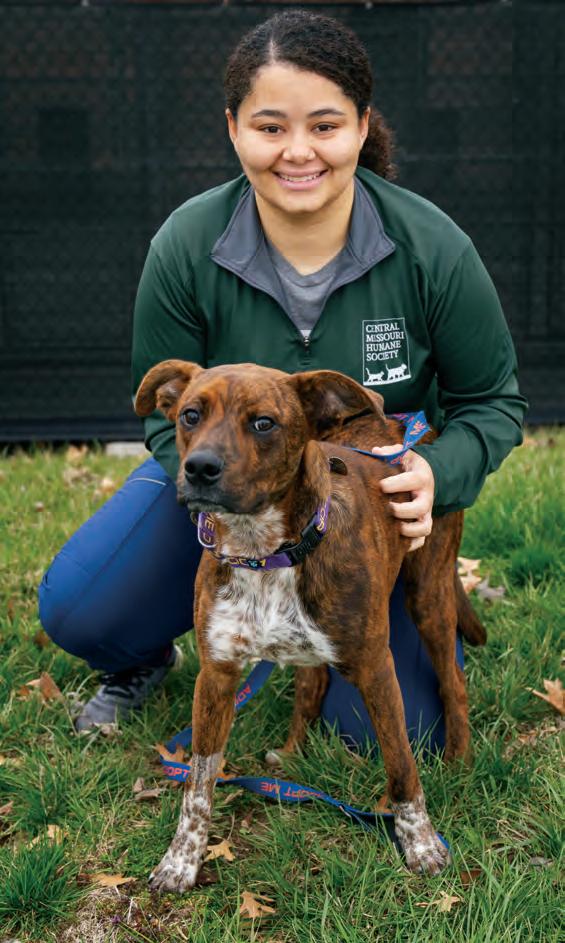
While her love for animals has always been there, Stephanie Lanham did not always plan to work at an animal shelter. Now the operations manager at the Central Missouri Humane Society, Lanham stumbled upon her dream job just after graduating from the University of Missouri in 2008. “I was looking for a part-time job and I saw an opening at CMHS,” she says. “It unexpectedly turned a passion into my career.”
Throughout the years, Lanham’s
favorite part of the job has been seeing all kinds of animals transform and blossom. “It is amazing to watch them go from start to finish and get into a place where they are well loved and taken care of,” she says.
When Lanham began her career, there was a 50% placement rate at CMHS, meaning that “only half of the animals that came in got out of here alive. But we have made a lot of changes over the last 14 years,” she says.
In 2014, CMHS shifted its focus to primarily Boone County, only taking in animals from other areas if space allowed. Before then, Lanham
says the organization was taking in animals from all over the state and beyond. Then, in 2016, the behavior modification program (now known as the Pawsitive Support Program) was created, which helped prevent some animals with behavior issues from being euthanized.
During the pandemic, CMHS focused on getting animals into foster homes as people weren’t allowed to go into the shelter itself. “For the first time in our organization's history, all adoptable dogs and cats were in foster, and our kennels were empty,” Lanham says. And even now, CMHS has kept

30 INSIDE COLUMBIA MAY/JUNE 2023 insider ENCOUNTERS
the kennels closed for walk-throughs as she says the staff noticed a stark decrease in stress levels for the animals without the added people. “Instead, we focus more on one-on-one time with potential adopters and a matchmaker (staff member) so we can create better matches,” Lanham says.
And while the organization’s community services were once limited to low-cost spay/neuter and vaccine clinics, Lanham says that changed in 2021, when it began offering expanded emergency veterinary care on a limited basis, while partnering with other local agencies to help care for the pets of homeless people.
Thanks to those changes, the humane society now has a 97% placement rate. In 2022 alone, CMHS society took in nearly 2,500 animals, with more than 2,100 of those pets getting adopted and nearly 180 lost pets being reunited with their owners. “It’s been really cool to see the organization make a huge turn around,” Lanham says.
While the placement rate has improved and programs have grown, CMHS is in need of a new facility as the current one is outdated and falling apart, especially as it celebrates its 80th anniversary. Lanham says the plan is to upgrade soon, as they are currently in the process of searching for a new building.
While it can seem like the job must be filled with furry snuggles and lots of love, Lanham knows that some days, you could walk in and see something devastating, like the day someone brought in a crate containing five starving puppies. “This is a very mentally draining job on some days, and you need to find a good work/life balance,” Lanham says. “We try to focus on the positive here, but there are days
when it is super sad.”
Though there are many lows that can come with the job, Lanham also gets to experience many highs, the best of which is seeing animals find their forever home.

“It is a hard job sometimes but is very rewarding at the end of the day,” she says.
you’re seeking, Lanham says CMHS will do its best to find the perfect pet for you. “Even if we don’t have something right now for you, we might have something in the future,” she says. “You never know what will walk through these doors.” Lanham herself recently lost her cat to
MAY/JUNE 2023 31
insider ENCOUNTERS
“It is a hard job sometimes but is very rewarding at the end of the day.”
“
The Power of Women
LOCAL AUTHOR TACKLES ANCIENT VIETNAM LEGEND IN THE BRONZE DRUM.
BY MADELEINE LEROUX · PHOTO BY L.G. PATTERSON
Phong Nguyen has known for a long time that he wanted to tell the story of the Trung sisters.
Well, at least a version of it.
The story of the Trung sisters is well known in Vietnamese culture. It tells the true tale of ancient warrior sisters, Trung Trac and Trung Nhi, who in A.D. 43 raised an army of women to fight against the Han Chinese and ruled as kings for two years.
In The Bronze Drum, Nguyen seeks to build on the historical account of the sisters, as well as what has grown into a national myth in Vietnam, while humanizing them through his historical fiction. “It has one foot in history and one foot in myth,” Nguyen says.

The Bronze Drum is Nguyen’s third novel. While he’s always had the idea of writing a book based on the Trung sisters, he says he also knew it couldn’t be his first book. “It’s a large canvas story and it’s an epic sweep,” Nguyen says. “In order to tackle such an ambitious project, I needed to know that I could just get to the finish line of a novel. I couldn’t have imagined writing this as my very first
novel, even though I wanted to write it since I was younger.”
When he first decided it was time to tackle the tale, Nguyen struggled with research. When it comes to the sisters,
Chinese perspective, in which they’re demonized, and there’s the Vietnamese perspective, in which they’re sanctified,” Nguyen says. “I needed to have a third route where I was humanizing them, not portraying them as all good or all bad, as flawed individuals.”
Starting to research the story also presented another issue for Nguyen — the lack of material from before the mid20th century. “I found wall-to-wall, floorto-ceiling books on the Vietnam War, but only two books about the origins of Vietnam,” he says. One of those books, The Origins of Ancient Vietnam, was written by an anthropological archaeologist, Nam C. Kim, who Nguyen began to correspond with. From there, he knew he would be able to gather what he needed to write the book.
there are two versions of their story: what has become the national myth of Vietnam and the contemporaneous historical account written by Ma Yuan, which is from the Chinese perspective. “So it’s the
The book starts with the Trung sisters’ lives prior to the revolution, which was important for Nguyen for a couple of reasons. One was the chance to show the complexity of their lives and the depth of feeling and relationships, the chance to show each sister as a complete person outside of the legend. But the other was the chance to tell a story set in Vietnam
32 INSIDE COLUMBIA MAY/JUNE 2023
insider BOOKSHELF
that wasn’t about the Vietnam War. “Too often we think about Vietnam in the context of an unfortunate episode in the history of America, as opposed to a thousands-year-old culture that has its own prerogatives and its own trajectory, its own history and its own beloved figures,” Nguyen says. “It was very important to me not just to tell a story from Vietnamese history but to tell a story from Vietnamese history that only a part of which concerns a war.”
While today, it’s easy to put the story of the Trung sisters within the modern, patriarchal lens, Nguyen says those types of ideas were still being negotiated. The ideas of Confucianism, which helped establish a patriarchal family structure, had been introduced in the area, but hadn’t taken hold among the people, he says. “The rise of the twin sisters to become kings in ancient Vietnam was not unprecedented,” he says. “But it flew in the face of what the Han Chinese had tried to introduce.”
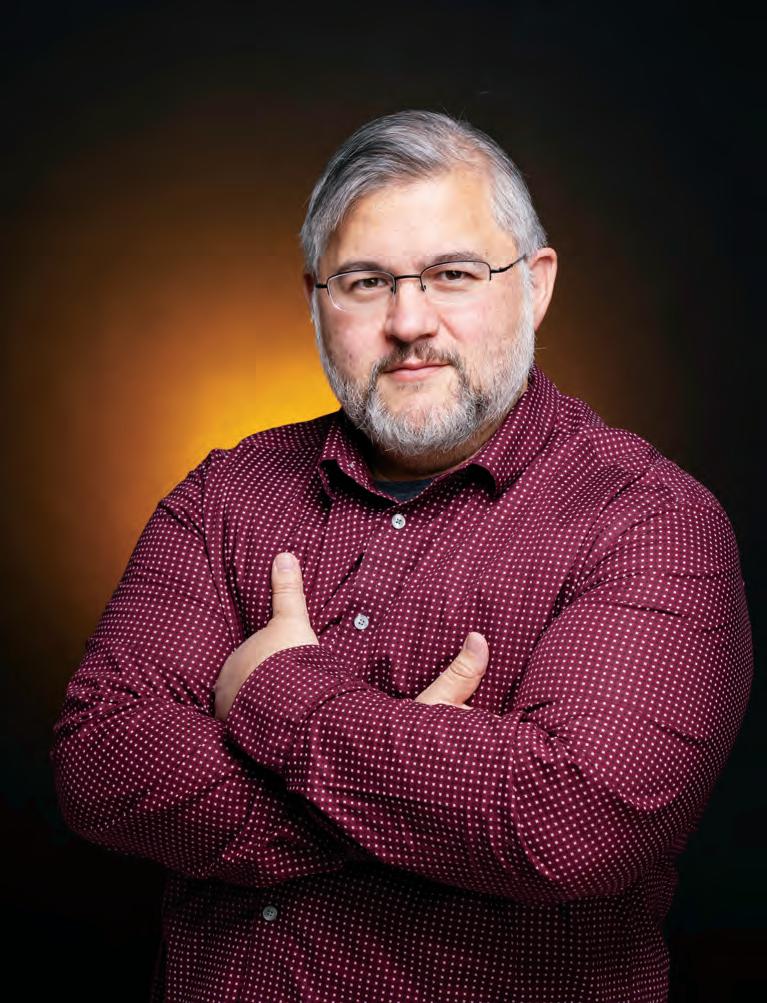
And it goes back to another goal of Nguyen’s in taking on the story — showing that feminism is nothing new and was not born from the patriarchy itself. “I do think, by default, we tend to assume that because of the modern Western tradition of feminism that the empowerment of women is entirely a Western innovation. But actually, throughout history, there have been examples of women leaders, women in power,” Nguyen says. “The power of women is nothing new.”
The Bronze Drum can be found online and in bookstores, including Skylark Bookshop in downtown Columbia. But Nguyen wants people to know that it is also available on audiobook, which he describes as really lovely. It’s also a nice way to enjoy the book for those who may be intimidated by trying to pronounce the Vietnamese names, he says.
INSIDE COLUMBIA MAY/JUNE 2023 33
insider BOOKSHELF
“
The rise of the twin sisters to become kings in ancient Vietnam was not unprecedented. But it flew in the face of what the Han Chinese had tried to introduce.


Putting the Pedal to the Medal
PEDALER’S JAMBOREE RETURNS ON MEMORIAL DAY WEEKEND.
BY ZOLA CROWDER · PHOTOS BY NOTLEY HAWKINS
Ready, set, go! It’s time to gear up for the Pedaler’s Jamboree 2023. This bicycle and music festival, which started with just 400 riders in 2009, is expecting more than 2,000 riders for this year’s event, says event director Mike Denehy.
The ride is an overnight weekend event May 27-28 covering more than 32 miles each day. It starts in Columbia at Flat Branch Park, goes to Boonville at Kemper Park, then back to Columbia.
Riders will get to make stops in different towns, experience new food and enjoy local music along the way. “It’s a slow rolling party with old and new friends,” Denehy says. “Just kick back and enjoy the migration from start to finish.”
Throughout the weekend-long event there will be bands playing at different routes, which Denehy hopes will encourage people to “discover something new. The whole adventure is taking new adventures as they come.”
Over the years, Denehy says the riders
have become friends, and each year is “like a reunion of riders.” But don’t be intimidated if you’ve never attended before or haven’t been in a while, as Denehy says new friendships are always encouraged. “It’s a community of riders,” he says. And it doesn’t matter if you are an experienced rider or a novice, as all ages and abilities are welcome. “You don’t have to be the best athlete, just keep a positive attitude,” Denehy says.
Once the riders get to Boonville on May 27, there will be hotel and motel accommodations, or registered riders are welcome to camp for free. On May 28, riders will pack up and prepare for their journey back to Columbia, but don’t worry as more music and food stops will be part of the trek home.
If you want to participate without having to make the more than 32-mile venture every day, people can purchase different passes for different parts of the festivities.
For non-riders with ticket passes to the
Details
INSIDE COLUMBIA MAY/JUNE 2023 35 insider SPOTLIGHT
Branch Park
27-28
$25-$85 WEBSITE pedalersjamboree.com
Boonville festivities, gates open at 4 p.m. May 27. Free street-side parking will be located nearby.
WHAT Pedaler’s Jamboree WHERE Flat
WHEN May
COST
What’s Going On
THE EVENTS YOU NEED TO KNOW.
Dates and events are subject to change. Please visit the event website for the most up-to-date information.
May
host more than 150 vendors outside and 560 vendors inside the antique mall.
MAY 6
THE BIG DERBY PARTY
COUNTRY CLUB OF MISSOURI
Experience the pageantry and the festivities of the Kentucky Derby right here in mid-Missouri, while supporting a local nonprofit. Enjoy signature food and drinks, bidding opportunities and more, all while supporting Big Brothers Big Sisters of Central Missouri.
3-6 p.m.; $100-$3,000; bigsofcentralmo.org
MAY 13
BRIGHT EYES: A SUMMERFEST CONCERT EVENT
ROSE PARK
Celebrate all things summer with live music from Bright Eyes, an indie rock band originally formed in the mid-1990s that released a comeback album in 2020.
7:30 p.m.; $35-$40; rosemusichall.com
MAY 14-20
BIKE, WALK & WHEEL WEEK
THROUGHOUT COLUMBIA
Take part in a fun week filled with biking, walking and wheeling to celebrate being active in Columbia. This year will include new events, as well as beloved favorites.
Hours and events vary; free; pednet.org
MAY 20
MIDWAY ANTIQUE MALL OUTDOOR
MARKET & CRAFT SHOW
MIDWAY ANTIQUE MALL
This major outdoor flea market and craft show will
9 a.m.-4 p.m.; $50-$150 to register; facebook. com/midwayantiquemall
June
JUNE 3-4
ART IN THE PARK
STEPHENS LAKE PARK
Take part in this year’s oldest and largest fine arts festival in mid-Missouri. The festival is filled with artists from across the United States, displaying paintings, drawings, photography, pottery, jewelry and more.

10 a.m.-5 p.m.; free; columbiaartleague.org
JUNE 3-4
MARECK DANCE: ALICE’S ADVENTURES IN WONDERLAND
JESSE AUDITORIUM
Take a trip down the rabbit hole into the fantasy land first imagined by Lewis Carroll. Enjoy sensational costumes, innovative choreography and your favorite outlandish characters.
7:30 p.m.; $28-$48; concertseries.missouri.edu
JUNE 10
HOPE FOR HEROES 5K
COSMO PARK AND GOLD STAR MEMORIAL IN JEFFERSON CITY
Enjoy this run/walk event hosted by The Food Bank for Central & Northeast Missouri, which benefits
The Food Bank’s veteran programs.
7:30 a.m.; $35; sharefoodbringhope.org/ hope5k
JUNE 16-17
JUNETEENTH CELEBRATION FOR SMALL BUSINESSES
ARMORY SPORTS AND RECREATION CENTER
For the second year, celebrate Juneteenth with small businesses and support their crafts and products. This event is hosted by Florence Sanders and sponsored by the Columbia African American Business Alliance.
11 a.m.-8 p.m.; free; visitcolumbiamo.com
JUNE 17
COMO JUNETEENTH CELEBRATION 2023
LOCATION TBA
Enjoy the third annual COMO Juneteenth Parade and Celebration commemorating the emancipation of enslaved African Americans. The parade will start at 9 a.m. at the Progressive Baptist Church of Columbia on Banks Avenue. Other details for the celebration were still being set as of mid-April.
10 a.m.; free; facebook.com/comojuneteenth
JUNE 25
COLUMBIA AGRICULTURE
PARK FIELD DAY
COLUMBIA CENTER FOR URBAN AGRICULTURE
Enjoy a day of workshops, speakers and tours where you get to learn how to up your smallscale farming skills and even take part in a used tool exchange.
10 a.m.-3 p.m.; free; columbiaurbanag.org
36 INSIDE COLUMBIA MAY/JUNE 2023


Product availability differs by store; please contact your local Good Day Farm Dispensary for more details. Promos and discounts cannot be combined. Good Day Farm reserves the right to alter or cancel any promotion at any time. Discount code is valid for one use per patient. Offer valid 05/01/23–05/31/23. Medical decisions should not be made based on advertising. Consult a physician on the benefits and risks of particular medical marijuana products. MENTION THIS AD & RECEIVE 15% OFF A PURCHASE OF $75 OR MORE *Before tax. See disclaimer for details. Good Day Farm – Columbia | 573-355-9346 | 1400 Forum Blvd, Ste 12 | Columbia, MO 65203 with exclusive discounts for new patients, industry workers, low-income patients, students, seniors, veterans & active military. good days start here Scan to shop now!
CLEANSE CORRECTLY
Ever been interested in trying a cleanse? While experts agree that extended cleanses or detoxes can be detrimental to your health, a three-day cleanse done correctly can help you reset some bad habits and get you reaching for a carrot instead of a cookie. Just remember a few things before you start.
First, blending will keep the fiber content of your ingredients more than juicing. Second, make sure to include a protein source if you’re looking to replace meals. And third, if your body is telling you that you need to eat, listen. Don’t put your health at risk.
life CONTENTS
41 Benefit Your Bones
44 Trashed or Cherished?
47 Local Love
48 Have a Laugh
Inside Columbia

May is National Osteoporosis Awareness Month, which means this is a great time to discuss all things bone health. Are you familiar with the definition of osteoporosis? What about osteopenia?
Most folks know that these conditions have something to do with bone strength, but not everyone understands what this means for health and function.
According to the Bone Health and Osteoporosis Foundation, 54 million Americans are affected by weak bones. Research suggests that as many as one in two women over the age of 50 will break a bone as a result of osteoporosis. Similarly, one in four men of the same age will break a bone. These breaks can seriously limit the ability to perform everyday
activities. Additionally, in about 20% of individuals with osteoporosis, a fracture can lead to death within a year.
To define osteoporosis, it helps to first understand that bones are living organs. It may seem like bones are a solid mass, but they are actually a semi-hollow tissue. The inside of a bone looks a lot like a honeycomb structure.
Osteopenia is a condition where that mass inside the bone is low, but not low enough for bones to break easily. The more severe diagnosis is osteoporosis. This is a disease that is characterized by significant loss of bone mass and an increased risk of fractures. The wrist, spine and hip are especially vulnerable to breaks.
Whether diagnosed with osteopenia or osteoporosis, the first step is to create a treatment plan with your physician and health team. Treatments typically include a combination of medication,
dietary changes and specific weight bearing and strength training exercises.
The best exercise programs for bone health include a focus on resistance training and balance exercises. Resistance training is beneficial because of how it directly increases bone density, but also because of what it does to strengthen muscles and joints. Muscle and joint strength are essential for healthy, functional movement. Strong bodies are far less susceptible to falls.
One thing to keep in mind is that while it is great to begin strength training of any kind, not all resistance programs are created equal. When it comes to strengthening bones, muscles and joints, heavier strength training is best. Stressing that honeycomb bone mass with heavy weights will cause the bones to start breaking down. This may sound like a bad thing, but when bones are loaded heavy enough, that
INSIDE COLUMBIA MAY/JUNE 2023 41
breakdown stimulates growth. The appropriate amount of stress is what makes bones denser, stronger and less likely to break.
If you have osteoporosis, you may be wondering what is the appropriate amount of stress? How do I load my bones enough to make them stronger without causing a facture?
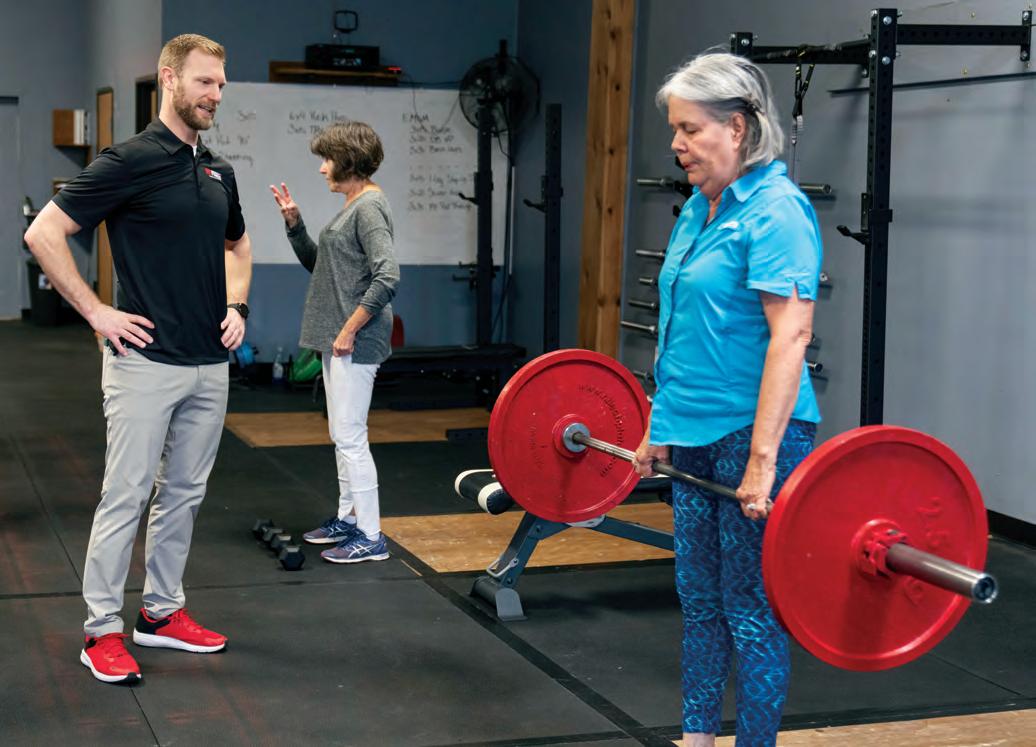
Safe and effective exercise programs involve gradually progressing weight over time. It is important to begin with higher reps and lower weight while making form and technique the focus. One of the best ways to avoid injury is to begin with proper alignment and form. Once a foundation of strength training has been established, then weights can be systematically increased. Eventually
progressing to a maximal effort within three to eight repetitions is what will give bones the stress they need to become their strongest. Lastly, while you’re making your bones stronger, think about strengthening your balance too. Falls are the most common cause of a fractures for those with osteoporosis. To improve balance and reduce falls, start simple. A good bone health program will begin with easier stationary exercises like standing with the feet together. Much like strength training, progression over time is the key. Working up to single leg balance, standing on unstable surfaces and dynamic balance exercises like heel-totoe walking is the eventual goal.
If all of this sounds a bit intimidating, don’t feel bad. These recommendations are probably new to a lot of readers. The best place to start is always with a conversation with your health care team. Then consider working with an exercise professional that is knowledgeable about osteoporosis, heavy lifting and safe exercise progressions.


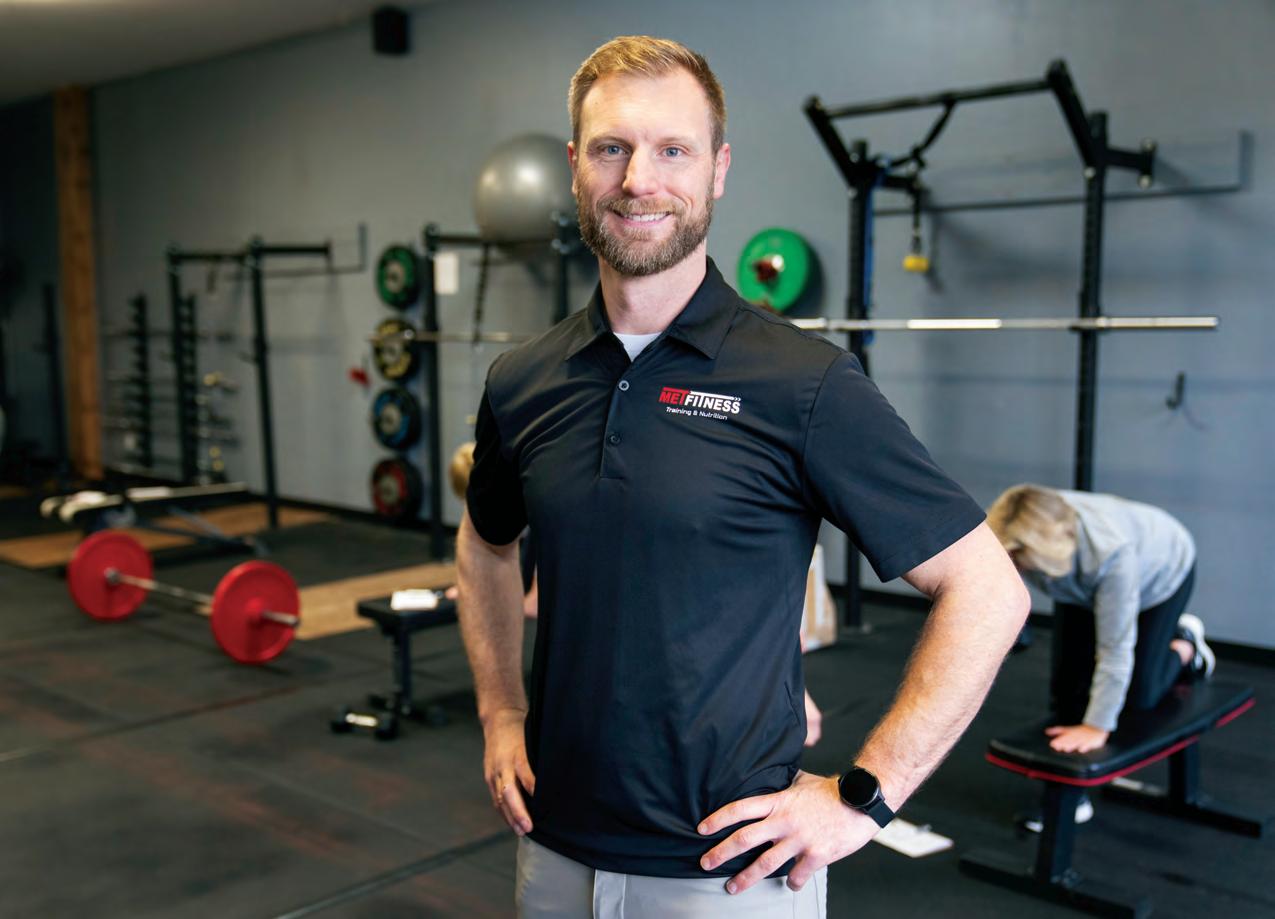
Mason Stevens is owner and exercise physiologist at MET-Fitness in Columbia. He has his bachelor’s in nutrition and fitness, and has more than 10 years of experience in sports conditioning, coaching and fitness.
42 INSIDE COLUMBIA MAY/JUNE 2023 life HEALTH AND WELLNESS
When it comes to strengthening bones, muscles and joints, heavier strength training is best. Safe and effective programs involve gradually progressing over time, starting with higher reps and lower weight while making form and technique the focus.
LOOKING FOR UPSCALE, RURAL LIVING IN COLUMBIA?


Oak Hill Estates has everything you’re looking for! This prestigious, new development located off Route N in southwest Columbia is a perfect example of a luxury neighborhood with plenty of natural beauty. With over 160 acres of gorgeous Missouri landscape thoughtfully planned and designed into 47 estate sized lots, you can rest assured that each property comes with both privacy and beautiful views. Plus, its location near Rock Bridge State Park and U.S. 63 ensures year-round beauty, as well as quick access to recreation and one of the most desired school districts in Columbia.
Scan QR to See Available Homes


Take advantage of a more upscale, rural living experience while staying minutes from some of the best shopping and restaurants Columbia has to offer!

BIG ENOUGH TO SERVE, SMALL ENOUGH TO CARE!

INSIDE COLUMBIA MAY/JUNE 2023 43 HEALTH AND WELLNESS
What is Junk?
FINDING THE DIFFERENCE BETWEEN RELICS AND RUBBISH.
It’s a good bet you have a place in your house for storage, where you keep things you haven’t used in many years.
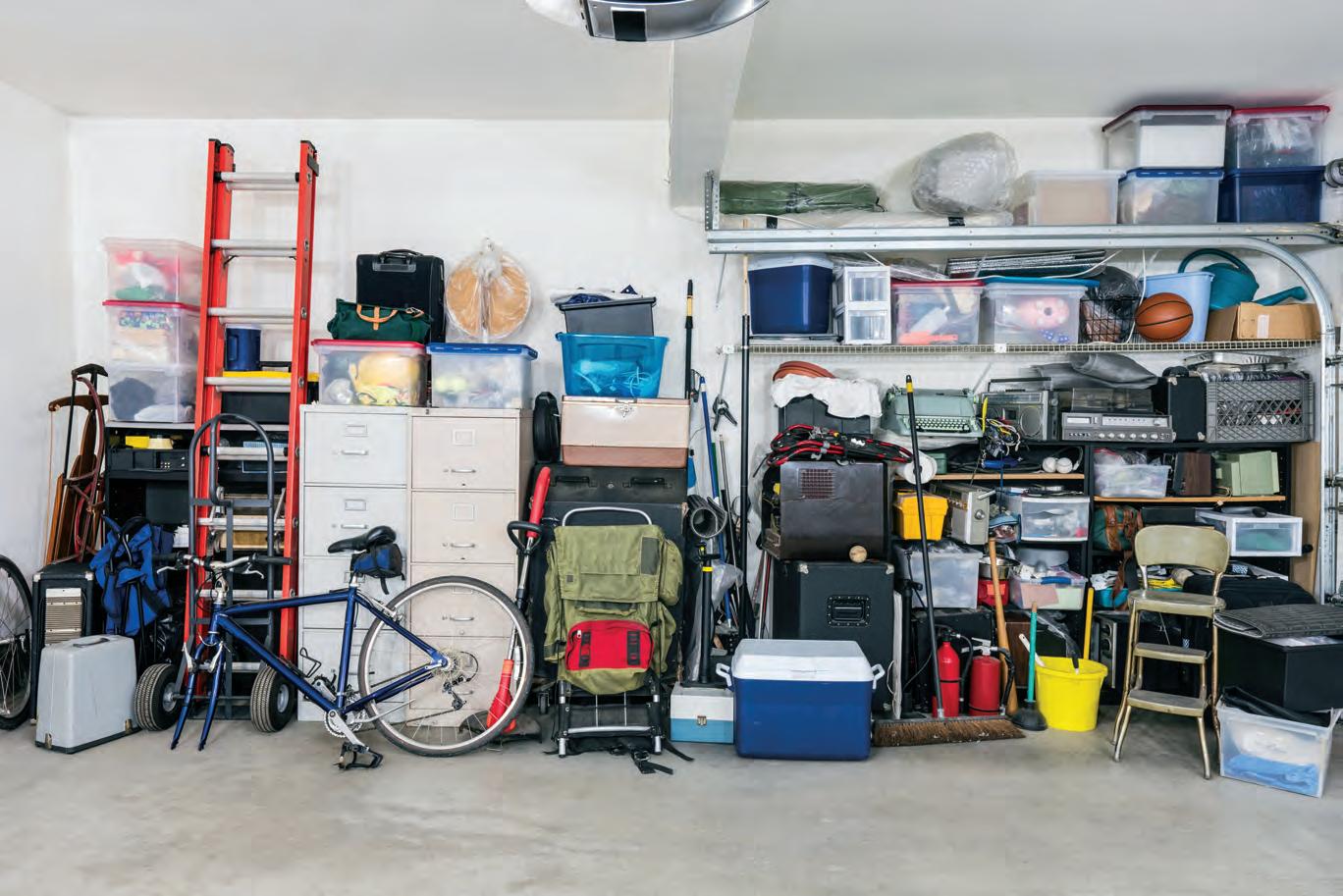
It could be in your garage or your basement, maybe a back room or a shed. Mixed into the stacks and piles are items that have fallen from everyday use: the old dining room table, an exercise bike, that blender you finally replaced. (You keep it because your husband pleads that it still works, ready to pitch in if you invite the neighbors for margaritas.)
Many storage items defy a category, so they’re lumped together. But they’re things somebody in your household is just not ready to lose.
If you begin to see yourself in this picture, you're not alone. Elsewhere on these pages, you'll get better advice on how to organize your household. And such plans almost always require you to
curb your junk.
But is it junk?
My wife thinks so. I say, “Not so fast. Beauty is in the eye of the beholder.”
Our storage spot is in the basement of our old house, an octogenarian perched on the abundant clay in the central west end of Columbia, where over the years the onslaught of runoff water has not been kind to its foundation. When we finally decided to have our foundation rejuvenated, the contractor shook his head and said, “You have a lot of things to move.”
Guilty.
We have accumulated several lifetimes worth of uncategorized keepsakes. Our parents left us whole households to sort. While we gave away or auctioned many of their possessions, we also kept many that joined our growing piles in the basement. In a way, it’s a chronicle of our
BY JOHN DRAKE ROBINSON
lives, and of our parents, as well as a pair of siblings who passed way before their time. Yearbooks. Diaries. Elvis records. And boxes of photos.
Like a glacier, the piles grew slowly. Eventually, the basement became a maze, a labyrinth of pathways between mountains of boxes and stacks of stuff, a dusty museum of neglect.
But things were about to change. We signed a contract, and the jackhammers and backhoes would show up in a month.
So, I began the move. Charging down the basement steps like the befuddled Teddy Roosevelt character in “Arsenic and Old Lace,” I waded into a sea of sealed see-through bags of colorful comforters and 100 wicker baskets of every shape and size. There were racks of clothing that somehow didn't make it to Goodwill, items we hadn't worn in 30 years. I thought maybe they would come back
44 INSIDE COLUMBIA MAY/JUNE 2023
into style. Cheryl shook her head.
We had accumulated a dozen functional broilers and pots and pans. And cups, cups, cups. Boxes of old work papers. Old tools and toys and bikes and sleds and camping gear, just in case.
To haul the old museum up the basement stairs, I enlisted two strong backs, my oldest grandsons, who I enticed by promising they could keep anything they liked.
As the basement emptied, the main floor of the house swelled with junk piles and heirlooms in transition. Much of the overflow ended up on the back deck. Dusty shelves. Half empty paint cans. (Well, from my perspective, half full.)
Cheryl waded into the glacier too and brought out armfuls, most of which she decided to liquidate. She stood over the
rest of us, urging one recurrent theme: “Get rid of that.”

But it’s hard to part with old friends.
I suggested a yard sale. “Knock yourself out,” Cheryl said. “But I'm not going to help organize it.”
Well then.
One grandson said I had some valuable things strewn amongst the junk. An old 1980s Apple computer. A beautiful French door. And he took some heirlooms: antique silver trays and serving sets, blackened by oxidation. He will polish them, bring them back to life.
Cheryl was ready to get rid of most of the stuff. It was tougher for me. I tossed an old VCR and an IBM Selectric typewriter. But I secretly rescued a pair of hand-held vacuum cleaners.
The foundation workers came and
went. I descended into an empty basement and scrubbed it cleaner than it has been since we moved in 40 years ago.
For reasons of marital harmony, my perspective has evolved to a “cut it loose” mentality. We've shipped a lot of usable household stuff to organizations like Habitat for Humanity. Still, a few piles remain in the purgatory between keepsake and “dump it, for God's sake.”
In the meantime, our daughters can breathe a sigh of relief, knowing that we have purged and slimmed down our household to prepare for the inevitable transition.
John Drake Robinson is a former director of the Missouri Division of Tourism. Read more of John's rants at johndrakerobinson.com/blog.
INSIDE COLUMBIA MAY/JUNE 2023 45
life ROBINSON'S RAMBLINGS
• THEBROADWAYCOLUMBIA.COM
1111 E BROADWAY | COLUMBIA MO 65201 • 573.875.7000



A Special Celebration
COLUMBIA COUPLE TIES THE KNOT AFTER MEETING AT A TIGER TAILGATE.
BY MADELEINE LEROUX
Though Zane Jacoby and Kate Peiffer both attended the University of Missouri, it wasn’t until after college that the pair met while supporting their alma mater at a Tiger tailgate.
Fast forward to December, when Zane and Kate officially tied the knot in an elegant winter ceremony at Emerson Fields. The ceremony itself was officiated by Anthony Alphin from the Crossing Church. “Zane and I had such a fun day from start to finish,” Kate says.

For Kate, one of the best moments happened before the ceremony, when the couple did their first look. “We both stood out on the dock at Emerson Fields and then Zane turned around to see me in my dress for the first time,” she recalls. “It was very special because it was just the two of us out on the dock. Then we each got to read a letter that we wrote to each other.”
To make the celebration even more special, Zane’s sister was able to attend all the way from Italy, where her husband is stationed as a member of the U.S. Air Force. Kate’s two sisters served as bridesmaids and her younger brother was able to be a groomsman. He “even read a verse during the ceremony, which was unique and special for me,” Kate says.
To submit your wedding for consideration, send information and photos to mleroux@mailzimmer.com. Include your and your spouse's names, occupations, wedding date, location and your photographer's name.
INSIDE COLUMBIA MAY/JUNE 2023 47 life WEDDING
Photo by Brooke and Jacob Photography
Kate Peiffer and Zane Jacoby were married Dec. 10 at Emerson Fields.
A Laugh Riot
5 ENTERTAINING SHOWS THAT ARE SURE TO SUCK YOU IN.
BY MADELEINE LEROUX
WELCOME TO OUR ULTIMATE LISTS! In each issue, you will find a curated selection of things to listen to or watch, put together by either an on-air talent from Zimmer Communications or a member of the Inside Columbia staff. For this issue, Editor Madeleine Leroux has shared her ultimate watchlist for shows to make you laugh. Scan the QR code on this page to see more about each show. Enjoy!

I love comedy. To me, there’s nothing better than coming home from a long day, settling in on the couch with a snack and something I know is going to make me smile. After all, life is stressful enough on its own, so when it’s time to disconnect, I don’t want anything that’s going to raise my anxiety levels. (Trust me, they don’t need the help.) So the next time you need a laugh, check out one of these delightful comedies.
“Bob’s Burgers” — Hulu

This is a standard go-to for me whenever I need a little joy. Created by Loren Bouchard (one of the brilliant minds behind another adult animated comedy I love, “Home Movies”) and powered by some fantastic voice actors like H. Jon Benjamin, “Bob’s Burgers” features endless great storylines surrounding the Belcher family and their perennially underperforming restaurant. Now in its 13th season, it’s already been renewed for a 14th and 15th season. While new episodes air on Fox, you can find every episode streaming on Hulu.
“The Marvelous Mrs. Maisel” — Prime Video

I’ve been hooked on this period comedy-drama since the very first episode. Now that the final season has been released, those unfamiliar with the endearing and talented Midge Maisel can watch her journey from typical ‘50s housewife to aspiring comedienne from start to finish. The incredibly well-done series sparkles from dialogue to costumes with that fast-talking trademark of creator Amy Sherman-Palladino, who also created “Gilmore Girls.”
“Quick Draw” — Hulu
This short-lived improvisational comedy was nothing short of pure gold, in my opinion. Created by Nancy Hower and John Lehr for Hulu, it was set in 1870s Kansas, where a new sheriff, played by Lehr, rides into town and repeatedly assures everyone that he’s got this because he went to Harvard. Unfortunately, it only lasted two short seasons before being unceremoniously canceled, but it still has a cult following and for good reason. Try to make it through the opening scene of the pilot episode without laughing — I dare you.
“Cunk on Earth” — Netflix
This hilarious mockumentary follows Philomena Cunk, played by Diane Morgan, as she explores the history of the world through interviews with experts. Fans of comedic news styles are sure to enjoy Cunk’s deadpan delivery as she takes us through the best and worst of humanity. Here’s a tip for those who have already enjoyed the five episodes offered on Netflix: There’s an older series from 2018 called “Cunk on Britain” that aired on the BBC and is just as great.
“Better Off Ted” — Hulu
Time for a great workplace comedy, and one of my personal favorites. Another unfortunately short-lived series that was canceled after two seasons on ABC, this hilarious series follows Ted Crisp, played by Jay Harrington, the head of research and development at a fictional corporation that embodies everything you think of when you think of a soulless, greedy company. Some of my favorite parts are the ridiculous fake ads for the company itself. It’s a different take on the workplace comedy that I think really works
48 INSIDE COLUMBIA MAY/JUNE 2023 life ULTIMATE LIST
SCAN TO DOWNLOAD THE PLAYLIST
The Marvelous Mrs. Maisel
Courtesy of Prime Video and Philippe Antonello
INSIDE COLUMBIA MAY/JUNE 2023 49 CALL TODAY 800-479-2091 © 2023 Mediacom Communications Corporation. All Rights Reserved. Today’s business landscape is more challenging than ever. But there’s a window of opportunity, if you know where to look. Fast, reliable, gigabit internet from Mediacom Business offers a true solution that’s helping businesses pivot to a brighter future of innovation, sustainability and growth. OPEN TO A BETTER WAY OF DOING BUSINESS?
2023 FACES OF COLUMBIA
When we interact with a business, we’re connecting with a person, maybe several people, who then serve as the “Face” of that local company. It’s through that face that we are able to get a personal connection between the business and the community it serves. In the following special section, you’ll learn about a variety of local businesses and the face, or faces, behind them. We hope you’ll take a moment to get better acquainted with some of the people behind these successful businesses that make our community a great place to live and work. Learn more about their stories and why they are eager to serve you.
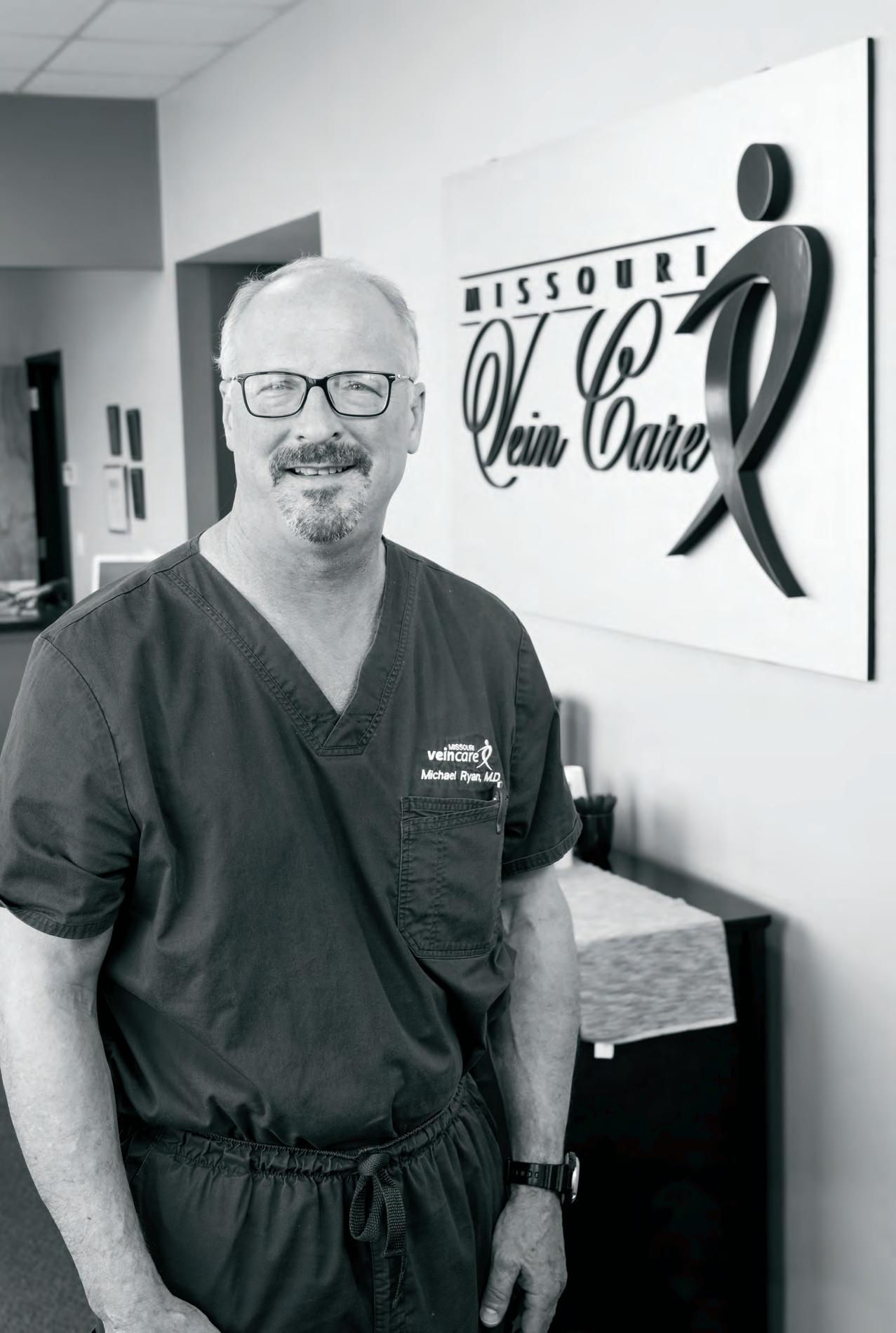
After living with his own vein condition, Dr. Michael Ryan, cardiovascular surgeon and vein care specialist at Missouri Vein Care, truly understands the relief that can be felt after receiving vein treatment. “I lived with my own vein condition for 20 years and knew how much pain and discomfort is associated with it,” he says.
Ryan says it’s incredibly rewarding to be able to help people understand the very treatable source of their symptoms. “The look on their faces when they realize
that we can help; it’s worth a million dollars,” Ryan says. “Taking time to talk to people and understand them as a human being is as important to the process of healing as the procedure.”
Outside of improving the lives of the Columbia community Ryan maintains a strong interest in aviation as a pilot. He is co-owner of Comp Air Enterprises, LLC, an airplane kit manufacturer based in Florida.
2023 FACES OF COLUMBIA
MISSOURI VEIN CARE | 4004 PEACH COURT, SUITE E, COLUMBIA MO 573-449-2273 | MISSOURIVEINCARE.COM THE FACE OF VEIN CARE MISSOURI VEIN CARE
2023 FACES OF COLUMBIA
THE FACE OF SOLAR
For Dan Shifley, working in the solar energy field allows him to solve problems every day. As the owner of Dogwood Solar, Shifley is able to assist people with high energy bills who want to improve our environment. “We get to help solve these problems, and it is gratifying,” he says. “Clients are excited to talk about solar and what it can do for them.”

Shifley founded Dogwood Solar in January 2010 to promote solar energy alternatives and provide both homeowners and business owners with sustainable options. “I love that we can put equipment outside in the sun to create energy,” he says, noting the self-reliance and technology that go into solar projects. “It ranges from super simple, like charging a phone, to complex, like powering an entire neighborhood with solar and batteries without a utility connection.”
Shifley says the solar industry is poised for tremendous growth over the next five years, noting that the federal tax credit for solar projects was increased and extended in August 2022. That move only further helps homeowners and business owners to see a great return on their investment. Plus, he says, the credit is now available to nonprofits, which receive a check for 30% of the total project cost. Shifley says he also is seeing an increase in electric vehicle charging station installations at homes and businesses.
Shifley says one of the more memorable projects he’s worked on was for Boone County Lumber, where Dogwood Solar made installations on two buildings and lighting upgrades in six buildings. “It was a fastpaced project to complete in their fiscal year,” he says. “However, they were great to work with. The result was a happy client saving money and making a difference in
the environment.”
Throughout his years working in the solar energy field, Shifley says he’s learned a few valuable lessons. “Always check your multimeter before testing,” he says. “Ask questions until you understand what a client wants. And zero pressure, consultative sales processes are valuable for my clients and me.”
Outside of work, Shifley is committed to serving in Columbia and abroad, supporting Habitat for Humanity, Be The Change Volunteers and Global First Responder, a nonprofit that seeks to improve humanity worldwide through mission trips that focus on health care delivery, health education and improvements in community infrastructure. Shifley’s first trip with Global First Responder was in the aftermath of Hurricane Maria, a Category 5 hurricane that devastated portions of the Caribbean, including Puerto Rico, in 2017. “The devastation and destruction were immense,” Shifley recalls. “However, helping people in the aftermath was incredibly rewarding, and I met wonderful people. That trip permanently changed my mind about what is truly important.”
Working with organizations like Global First Responder also allows Shifley the opportunity to come that much closer to achieving his personal goal of installing solar on every continent. “It doesn't have to be a large installation, but I want to experience solar everywhere,” he says. “I love to travel.”
At home, Shifley describes himself as “a proud girl-dad” with three daughters he shares with his wife, Maigan. And he has one key piece of advice to share: “Be kind, be interested and do what you love,” Shifley says. “We have one planet we call home, and I'd love to see us all thrive.”
DOGWOOD
573-447-6527
SOLAR | 1501 CREEKWOOD PARKWAY, SUITE 110, COLUMBIA MO
| DOGWOODSOLAR.COM
DOGWOOD SOLAR
2023 FACES OF COLUMBIA
Have you ever known someone who was struggling with a mental illness? There are many levels and types of clinic-based care available. For individuals with serious and persistent mental illnesses, getting support may look a bit different. In fact, they may be eligible for a unique program that Burrell Behavioral Health provides in central Missouri: Community Support Services.
Much like its name suggests, these services occur primarily outside of a traditional clinic setting, taking place in the client's home or in the community. Burrell's Community Support specialists work with individuals


to practice skills needed to meet goals for independent living and community integration.
Just a few of the many faces that make Community Support Services possible are: Jessica Obuchowski, senior director, Community Services; Tyler Davis, program coordinator, Edenton Ridge; Alexa Summers, director, Youth Services; and Cara Crumley, director, Adult Community Services. They and their teams know that supporting our neighbors can lead to a healthier, stronger and more productive community.
BURRELL BEHAVIORAL HEALTH | 3401 BERRYWOOD DRIVE, COLUMBIA MO 573-777-8300 | BURRELLCENTER.COM THE FACE OF MENTAL HEALTH BURRELL BEHAVIORAL HEALTH
At Christian Chapel Academy, it’s all about molding young minds. As Principal Rebekah Jouret says, “hopefully, they in turn would make a difference in the world they live in." For Vice Principal Nicole Messimer and Brent Messimer, Director of Ministry Advancement, the work has always been about the wellbeing of children and ensuring that each child receives a quality education in a safe environment. That genuine family-like bond is what attracts more and more parents
to the school. “Today's private school looks more like what parents experienced growing up, it's that experience bringing them to CCA,” Brent Messimer says. At Christian Chapel Academy, families can expect rigorous academics, small class sizes and individualized attention, Nicole Messimer says. At CCA students, parents and teachers are a family, “We laugh together, cry together, we help each other through trials, and we celebrate victories together,” Jouret says.
2023 FACES OF COLUMBIA
CHRISTIAN CHAPEL ACADEMY | 3300 S. PROVIDENCE ROAD, COLUMBIA MO 573-874-2325 | CCA-COLUMBIA.COM THE FACE OF PRIVATE EDUCATION CHRISTIAN CHAPEL ACADEMY
2023 FACES OF COLUMBIA

Helping small local businesses think big is Nic Parks' favorite part of his newest endeavor. It’s the focus of the business incubator he founded, Parks Ventures. This new coworking space, located in downtown Columbia, offers members business consulting, access to venture capital and a cozy office space they can be proud to call their own.
While the business is only a couple of months old, Parks says the idea had been on his mind for a while. “Opening a business incubator was on my five-year todo list, however, when this space became available, I had to fast track my plans,” he says.
The goal was to create affordable office space in Columbia since it can be difficult to find. “I decided to do my part to help change that,” Parks says.
Parks says his new company is the perfect spot for entrepreneurs to jumpstart their business. “Success is colorblind, gender neutral and has no age limits,” Parks says. It’s all about finding opportunities and working hard to reach your goals. “If you think you are going to fail because of some limiting factor, you will,” he says. “If you think you are going to succeed against all odds, you will.”
This rings especially true for Parks as he followed his
dreams when studying at the University of Missouri and decided to switch his major from education to business. Now, Parks gets to use his entrepreneurial skills while re-sparking his love for teaching and mentoring aspiring entrepreneurs. “Entrepreneurism in Columbia continues to grow,” he says. “Columbia has a real chance to be the Silicon Valley of the Midwest if we continue to invest in supporting local entrepreneurs.”
Even after starting this new business, Parks says he is continuing to figure out what his long-term goals look like. “I still do not know what I want to do when I grow up,” he says. “There’s a chance I end up as a business professor.”
While Parks is the founder, his gives a lot of credit to his wife, Brooke, for all his success. “She is an amazing partner,” he says, who helps him keep a healthy worklife balance so he can be sure to, “Not miss any of my kid’s dance recitals, school performances or games.”
Parks Ventures has a prime location on Ninth Street, fitness area, kitchenette, bathrooms, a conference room with downtown views, silence booths and monthly networking events.
If you are looking to join Parks Ventures, memberships start as low as $99 a month.
PARKS VENTURES | 4 S. NINTH ST., COLUMBIA MO 573-818-4750 | PARKSVENTURES.COM
VENTURES
THE FACE OF ENTREPRENEURSHIP PARKS
2023 FACES OF COLUMBIA
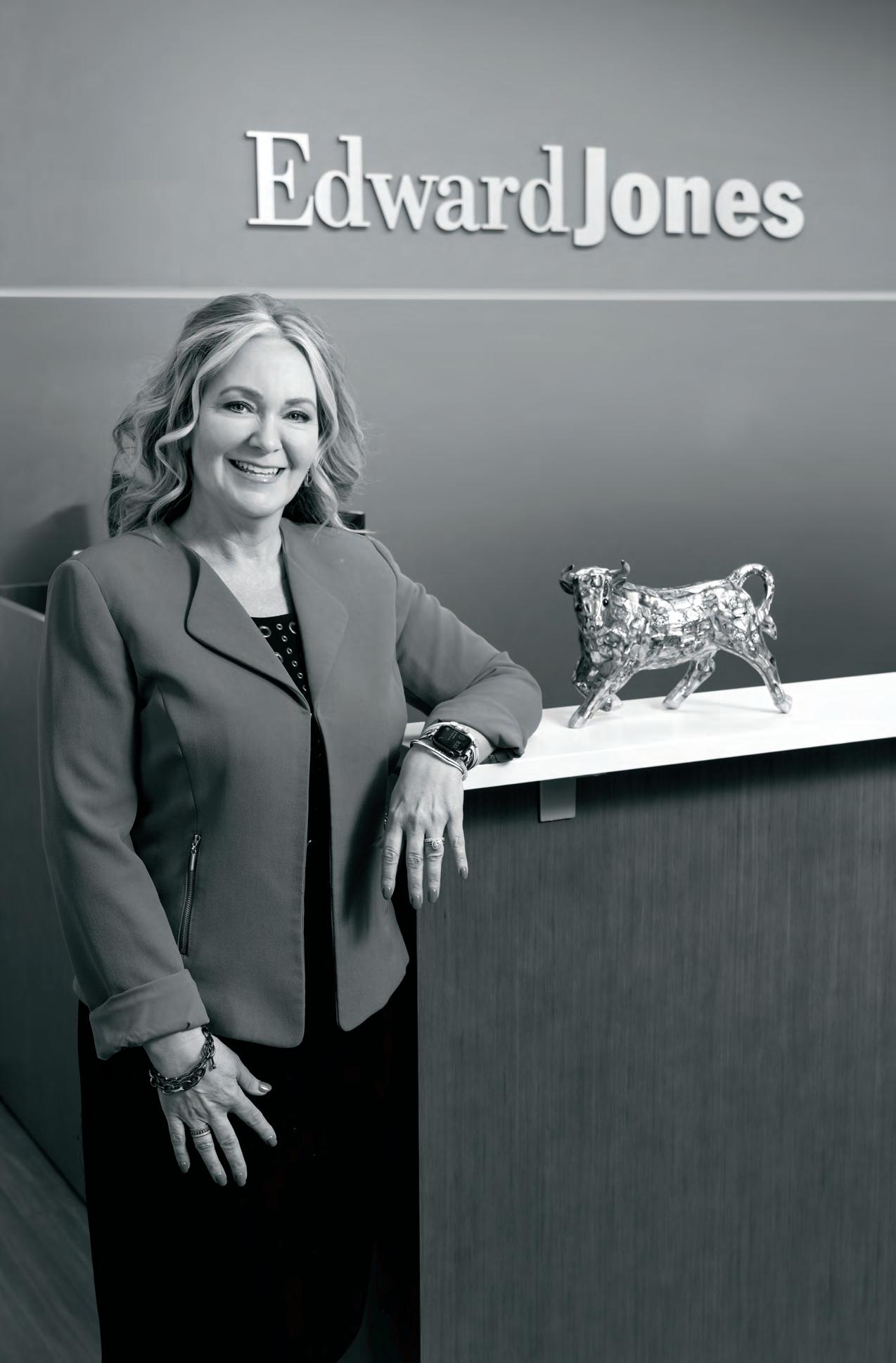
At Ai Painting Plus, they know the importance of a good paint job. Because when done well, the right paint can help provide joy through the visual transformation of a cherished space.
“Our mission is to ‘paint joy into people’s homes’ and that’s our favorite part about doing what we do,” says Lacie Ilsley, who owns the business with her husband, Austin. “We are artists by nature, creating joy in the form of a newly painted home exterior, a beautiful
fresh coat of paint on your walls inside or a complete transformation of your cabinets.”
The team at Ai Painting Plus is proud to be at the forefront of initiatives meant to improve the experiences of clients while providing a path to personal growth for team members. And when it comes to their careers, Ai Painting provides a training program to help employees reach the next level.
AI PAINTING PLUS | 6991 S. SINCLAIR ROAD, COLUMBIA MO 573-529-2128 | AIPAINTINGPLUS.COM THE FACE OF RESIDENTIAL PAINTING AI PAINTING PLUS
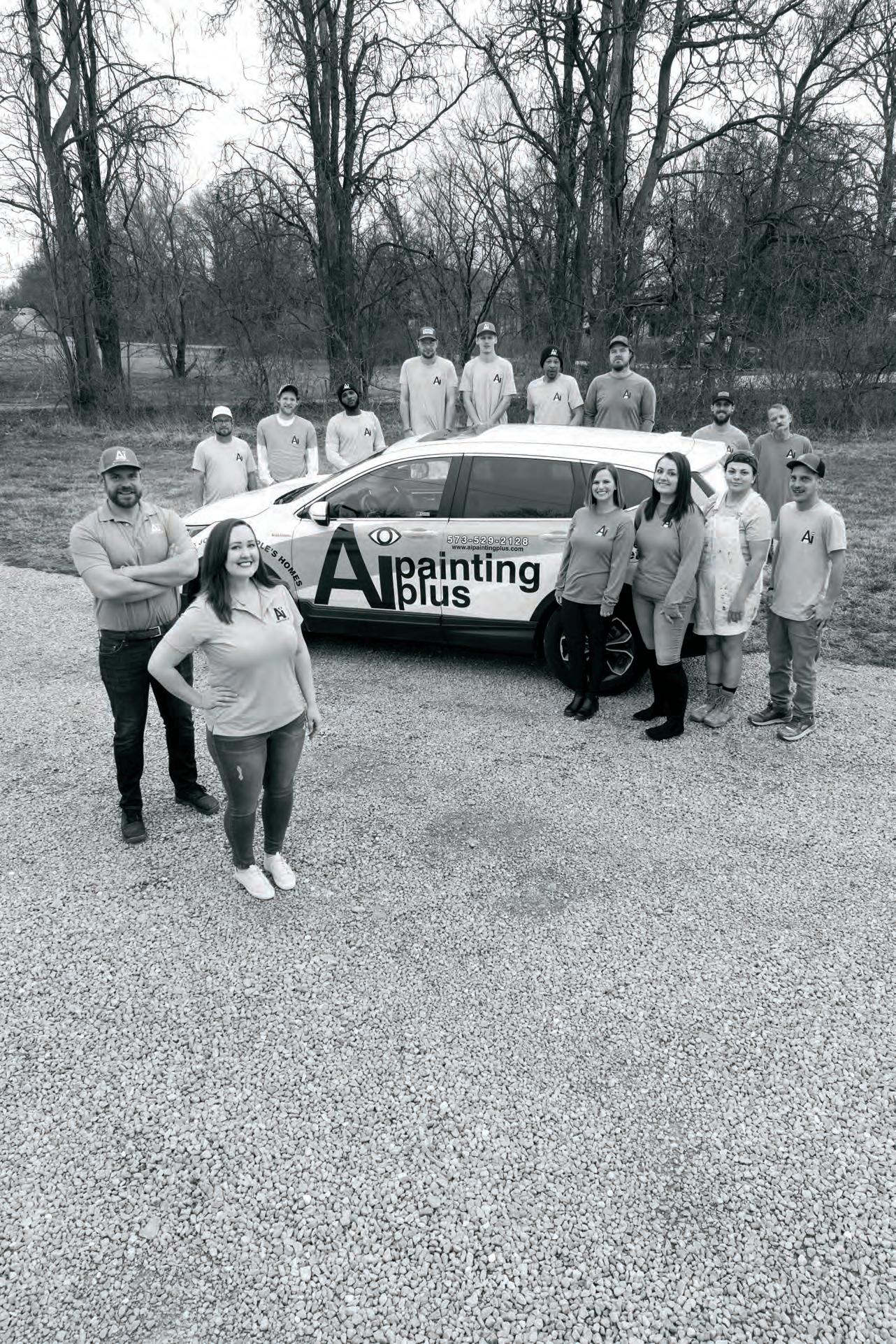
Gina Mauller-Crane, CFP®, has always been passionate about helping others. It’s what led her to become a financial advisor and what keeps her driven with each new day. “I wake up every morning excited,” she says. “I get to solve problems and puzzles daily.” Knowing that she is helping multigenerational families reach their financial dreams gives Mauller-Crane immense gratification.
As a CERTIFIED FINANCIAL PLANNER™ professional, Mauller-Crane knows that a significant amount of wealth and assets are going to be passed
down as baby boomers increasingly age and retire. Plus, she says, more and more women are managing their finances and living longer than ever. “They're seeking a trusted professional they feel comfortable with to help them navigate those decisions and manage their wealth,” Mauller-Crane says. “As a woman in a maledominated industry, I am confident I bring the perfect mix of knowledge, experience, skill sets, passion and empathy to help clients reach their dreams today — and for generations that follow!”
2023 FACES OF COLUMBIA
EDWARD JONES - GINA MAULLER-CRANE | 11 S. FAIRVIEW ROAD, SUITE 109, COLUMBIA MO 573-445-7671 | EDWARDJONES.COM/GINA-MAULLER
THE FACE OF WEALTH MANAGEMENT
Member SIPC The content of this article was sponsored by the
EDWARD JONES - GINA MAULLER-CRANE
local Edward Jones office of Gina Mauller-Crane.
Getting to help people improve their daily lives is one of the driving factors behind Dr. Justin Kendall’s passion for optometry. The combination of medicine and personal interaction is what first drew him to the field and it’s what keeps him motivated to stay up to date on new developments and processes. “Having had issues with my vision in the past, I knew how rewarding it could be to help those who are struggling with their sight,” Dr. Kendall says.

Dr. Kendall uses that passion every day as the optometrist at Performance Eyecare, an independent eye care clinic that prides itself on its high-tech exams that are painless, thorough and precise without using dilation or air puffs. Instead, the office uses optomap retinal screening that allows for a state-of-the-art view of the back of the eye, allowing for early detection of glaucoma, macular degeneration, hypertension and more. To replace air puffs, the office uses an eyedrop that then helps the doctor determine eye pressure while looking through a microscope. It is painless and more accurate than the air puff method. Performance Eyecare also can take a 3D image of the glands in eyelids to determine if patients suffer from dry eyes and test the pigment level in retinas to determine if they are at a higher risk for degenerative disorders.
Optometry is advancing rapidly to meet the needs of the evolving world. As more and more time is spent using cellphones, computers and tablets, Dr. Kendall says there will be a growing need for visual correction
in young people. “Our ability to limit the amount of nearsightedness and eye strain via blue light filtering glasses and myopia controlling contact lenses will be crucial to keeping future generations from debilitating eye issues,” he says.
In his career, Dr. Kendall has learned the value of being a good listener and how important it is when it comes to patient care. “Our patients have a variety of needs that we need to meet on a daily basis,” he says. “I have learned to take the time to listen to their needs while developing the best plan help their eyecare needs.”
Dr. Kendall has spent the past year working at the clinic in Columbia and he says it has been an amazing experience. “We have such a unique, diverse population of people here with different needs, and trying to establish Performance Eyecare as a leader in the eyecare community has been incredibly rewarding,” Dr. Kendall says. “I look forward to continuing to provide high tech eye exams to our patients for many years to come!”
If he wasn’t an optometrist, Dr. Kendall says he would have wound up in the kitchen, either in the restaurant business or trying to brew beer professionally. “I love to experiment with trying new cuisines and whipping up new recipes in the kitchen, and have taken to home brewing recently,” Dr. Kendall says.
When he’s not working, Dr. Kendall can be found spending time with his wife and their sheepadoodle puppy, Somer. Dr. Kendall also serves as the president of the Central Missouri Optometric Society.
PERFORMANCE EYECARE | 30 E. SOUTHAMPTON DRIVE, SUITE 109, COLUMBIA MO 573-874-3937 | PERFORMANCEEYECARE.COM/LOCATIONS/COLUMBIA-MO-OPTOMETRIST THE FACE OF
EYE EXAMS PERFORMANCE EYECARE 2023 FACES OF COLUMBIA
HIGH TECH
As a third-generation home builder, Zack Girard continued his family legacy when he founded Girard Homes. Nine years later, Girard continues to bring his clients' ideas to life. “We get to work with some really great clients to help them and figure out how to make their dream home a reality,” he says.


Throughout the years, Girard’s favorite part of the job has remained showcasing the latest design trends in his model homes. It’s through those showcases that he gets
to see “how people react when they take a tour of it for the first time.”
One trend Girard is starting to see accelerate is the use of relaxation rooms in new homes. This is a space dedicated to reading, wine, crafts, yoga or music.
When adding new features to a home, Girard says problems can arise but remember that “every problem has a solution, you just have to be creative to figure it out.”
2023 FACES OF COLUMBIA
GIRARD HOMES | 800 CHERRY ST., SUITE 201, COLUMBIA MO 573-250-8117 | GIRARDLUXURYHOMES.COM THE FACE OF CUSTOM HOMES GIRARD HOMES
At Girard Realty Team, the entire focus is making each client’s dream into a reality.
Joan Wilkerson spent 30 years in retail sales before finding her calling elsewhere. For more than two years now, Wilkerson has been enjoying the one-onone relationships she builds with her clients as a real estate agent.
Suzanne Kelley couldn’t agree more, noting that her work as a real estate agent allows her the chance to get to know people and help them achieve their goals.
“It's so rewarding to work side by side with someone to accomplish one of the biggest goals/purchases in their life,” Kelley says.
Inga Kokic, new home build representative, licensed real estate agent and remodel sales representative, says real estate has always been her passion. “I truly believe this was my calling,” she says. A day doesn’t go by without starting her day with a smile on her face, “because this is not a job for me, this is what makes me happy.”
GIRARD REALTY TEAM | 800 CHERRY ST., SUITE 201, COLUMBIA MO 573-529-0174 | GIRARDREALTYTEAM.COM THE FACE OF RESIDENTIAL REALTY GIRARD REALTY TEAM 2023 FACES OF COLUMBIA
2023 FACES OF COLUMBIA
Gary Wheeler always knew he wanted to work for farmers. But when he began working for a nonprofit, his passion grew deeper as he realized how he could really help them. “I had the realization of how policy and education can really move the needle for the very folks that grow our food supply,” Wheeler says.
Now the CEO and executive director of Missouri Soybeans, Wheeler continues to feel an unwavering amount of love toward his position. “Working for farmers has been so rewarding and humbling at the same time,” he says. “This job has been the pinnacle of my career to date.”
Missouri Soybeans is dedicated to ensuring farmers across the state have the tools and customers they need. “With the power of two complementary organizations supporting them, farmers can be assured their soybeans are being marketed, researched and advocated for,” Wheeler says.
Throughout his time with Missouri Soybeans, Wheeler has focused on partnerships and used the power of forward-thinking to successfully lead the state’s soybean organizations through significant operational and strategic challenges. “My job requires me to be an inch deep but a mile wide and it’s different every day,” he says. Even though the work can be tough, Wheeler says it’s incredibly humbling to work daily with a team of experts to provide a direct impact on the soybean industry.

Soybeans are not just a food, as it is used as feed, fuel and fiber. Soybeans are low in cholesterol while being
high in protein and other nutrients, meaning soy foods can be a part of a healthy diet.
Soybeans produce many byproducts as well, including biodiesel which is made from excess soybean oil. As a renewable ingredient, soybeans are also used in many consumer goods including shoes, tires, sealants and much more.
With limitless opportunities, Wheeler has learned the importance of building the right team that will deliver “for the people you work for.” That means surrounding yourself with people who are smarter and more capable than yourself, he says. “Find your top three strengths and hire for the rest,” Wheeler says. “Stay humble and always remember where you started.”
Wheeler earned his bachelor of science degree in agricultural business from Murray State University and his master’s in business administration from William Woods University. Prior to working at Missouri Soybeans, Wheeler served the Missouri agricultural industry in roles with the Missouri Department of Agriculture, Missouri Corn Growers Association and Missouri Corn Merchandising Council. Wheeler also served in the Missouri Army National Guard for more than a decade.
But after more than eight years in his current role, Wheeler says he couldn’t imagine doing anything else. “I love my job, so it’s hard to think of an alternative,” he says.
Outside of work, Wheeler enjoys spending time with his family, golfing, hunting and reading.
MISSOURI SOYBEANS | 734 SOUTH COUNTRY CLUB DRIVE, JEFFERSON CITY MO 573-635-3819 | MOSOY.ORG THE
SOY MISSOURI SOYBEANS
FACE OF
THE FACE OF RETIREMENT PLANNING
ROCK BRIDGE FINANCIAL ADVISORS
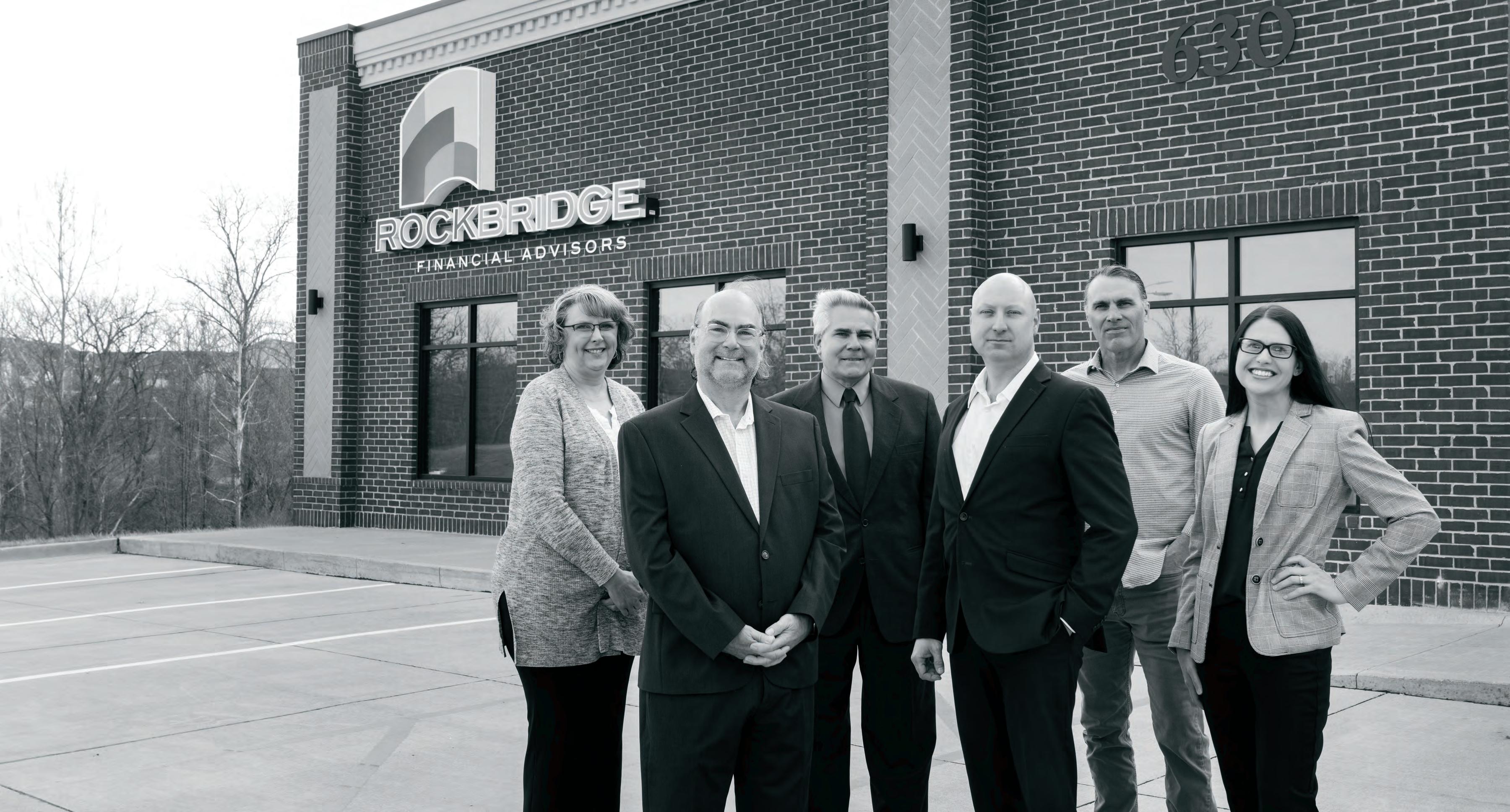
At Rock Bridge Financial Advisors, the focus is always on finding the right solution for you. When it comes to finding a financial advisor, Michael McCuistion emphasizes two things about the firm where he has been owner and principal since 2005: “We have the client’s best interests at heart, first and foremost. And we are experienced and competent professionals, focused on addressing client needs, wants, and wishes.”
The opportunity to help enact positive change in someone’s life is a driving factor for the entire team, as they know that the right financial advice can truly make a difference. “I value the opportunity to help others on their unique financial journey,” says James Henderson, investment advisor representative.
Helping clients save and invest through strategies created especially for them means advisors have been able to share special moments that may not have been otherwise possible. Sandy Dorson, investment advisor representative, says nothing makes her happier than helping a client plan for retirement and other huge life events. She also says one goal for every advisor should be telling a client they can retire early.
In fact, a comfortable retirement can be achievable for almost anyone through the right strategies and timing, says Brian Pulliam, investment advisor representative. “It may not be as huge of an obstacle or deep hole as you might think,” Pulliam says.
Pulliam says he sees the financial services industry
progressing more toward retirement income planning over the next five years. More and more clients will be looking for help as they try to fit assets together for less risk and make a plan that keeps pace with inflation, he says. Henderson says he believes financial technology will continue to evolve as clients communicate what areas are important to them. “Our job is to talk openly with our clients and anticipate how we can stay on top of their changing needs and what tools can help us do that,” Henderson says.
For anyone interested in starting a career in the financial services industry, Brian Heydn says Rock Bridge Financial Advisors is the perfect place to begin. “The technological tools and resources available provide a strong foundation for those who may be interested,” says Heydn, administrative assistant who also handles marketing. “The growth ceiling is high.”
And the work is always rewarding, as McCuistion knows all too well. "It has been very rewarding to have served a number of our clients for 20 years or more. Our clients come to us seeking beneficial recommendations to address financial goals and plans for their future," McCuistion says. No matter where you are in your retirement planning journey, McCuistion says it’s important to remember that there are only three things you can do with a dollar: “Spend it, save it, or give it away. You get to choose which you do with every single dollar you have.”
Michael McCuistion, Sandy Dorson, James Henderson, and Brian Pulliam are registered Representatives offering securities and advisory services through Cetera Advisor Networks LLC, member FINRA/SIPC, a broker/dealer and Registered Investment Adviser. Cetera firms are under separate ownership from any other named entity.
ROCK BRIDGE FINANCIAL ADVISORS | 630 E. GREEN MEADOWS ROAD, COLUMBIA MO 573-875-8005 | ROCKBRIDGEFA.COM 2023 FACES OF COLUMBIA
2023 FACES OF COLUMBIA
Allison Widener is passionate about the healing potential of cannabis and was overjoyed when Missouri passed its first medical marijuana laws. Driven by her deep appreciation for the cannabis plant and years of retail management experience, she found a new career path at Good Day Farm Dispensary that combines her passion and expertise. Now, Widener enjoys rolling out innovative products that make a real difference in people’s lives.

“I have met some of the most amazing people and
heard story after story of their ability to have health and mobility that they’ve never seen before,” Widener reflects.
As the cannabis industry continues to evolve, Widener sees excellent strides to come in education, research and product development. She anticipates that “there will be less stigma around cannabis use.” The future looks promising as cannabis becomes further integrated into society, creating an exciting wave of opportunities with economic and social advantages.
GOOD DAY FARM | 1400 FORUM BLVD., SUITE 12, COLUMBIA MO 573-355-9346 | GOODDAYFARMDISPENSARY.COM/GOOD-DAY-FARM-COLUMBIA THE FACE OF CANNABIS GOOD DAY FARM
For Rachel Rave, interior design has always been in her blood. “Ever since I was a young girl, I would have my father take me to open houses so that I could check out the design details,” says Rave, now an interior designer for Rave Homes. Through her job, Rave is able to create a comfortable space for people to make very important decisions about their home. “The home, in my opinion, is the most important place there is,” she says. “That’s why I like to curate every detail.”

When it comes to design, trends are constantly changing, which can keep things interesting, especially for Rave. But what she really enjoys is seeing how each client incorporates their own style. “That’s why I love when clients simply go with what they love,” she says. “Trends may come and go, but your individual style can always shine through and that’s something that is timeless.”
2023 FACES OF COLUMBIA
RAVE HOMES | 5507 CLYBOURNE COURT, COLUMBIA MO 573-355-4368 | RAVEHOMESMISSOURI.COM THE
OF BUILDING AND DESIGNING CUSTOM HOMES
HOMES
FACE
RAVE
The pandemic was difficult for nearly every business, many of which are still working to recover. Joel Eisleben, CPA, employee retention tax credit specialist for S&E Consulting, wants to make sure businesses are aware of the funds available to them. “Hardly anyone expects to receive money back for what they lost the past few years, so sharing this information with small business owners is what keeps me energized,” he says. The funds are available through the employee retention
tax credit, which is a credit that reimburses businesses for the payroll tax they paid in during the pandemic to retain their employees.
Eisleben says S&E Consulting has been focusing efforts this year on helping nonprofits obtain the tax credit. “Nonprofits give so much to our community and provide so much for our citizens,” he says. “I want to use my skills and expertise to help small businesses and nonprofits in Columbia obtain the credit.”

2023 FACES OF COLUMBIA
S&E CONSULTING | 2216 FORUM BLVD., SUITE 101, COLUMBIA MO 573-239-3554 | SECONSULTING.GROUP THE
OF EMPLOYEE RETENTION
S&E CONSULTING
FACE
TAX CREDIT
THE FACE OF COMMERCIAL INTERIORS
Figuring out how to fill a commercial space can be overwhelming with so many options available. At CI Select, the goal is to help clients work through space planning and furniture selections to help create a meaningful space. Jessica Ayllon, business development manager, and Sammie Boman, interior designer, both jumped into the commercial furniture world to help create beautiful spaces.
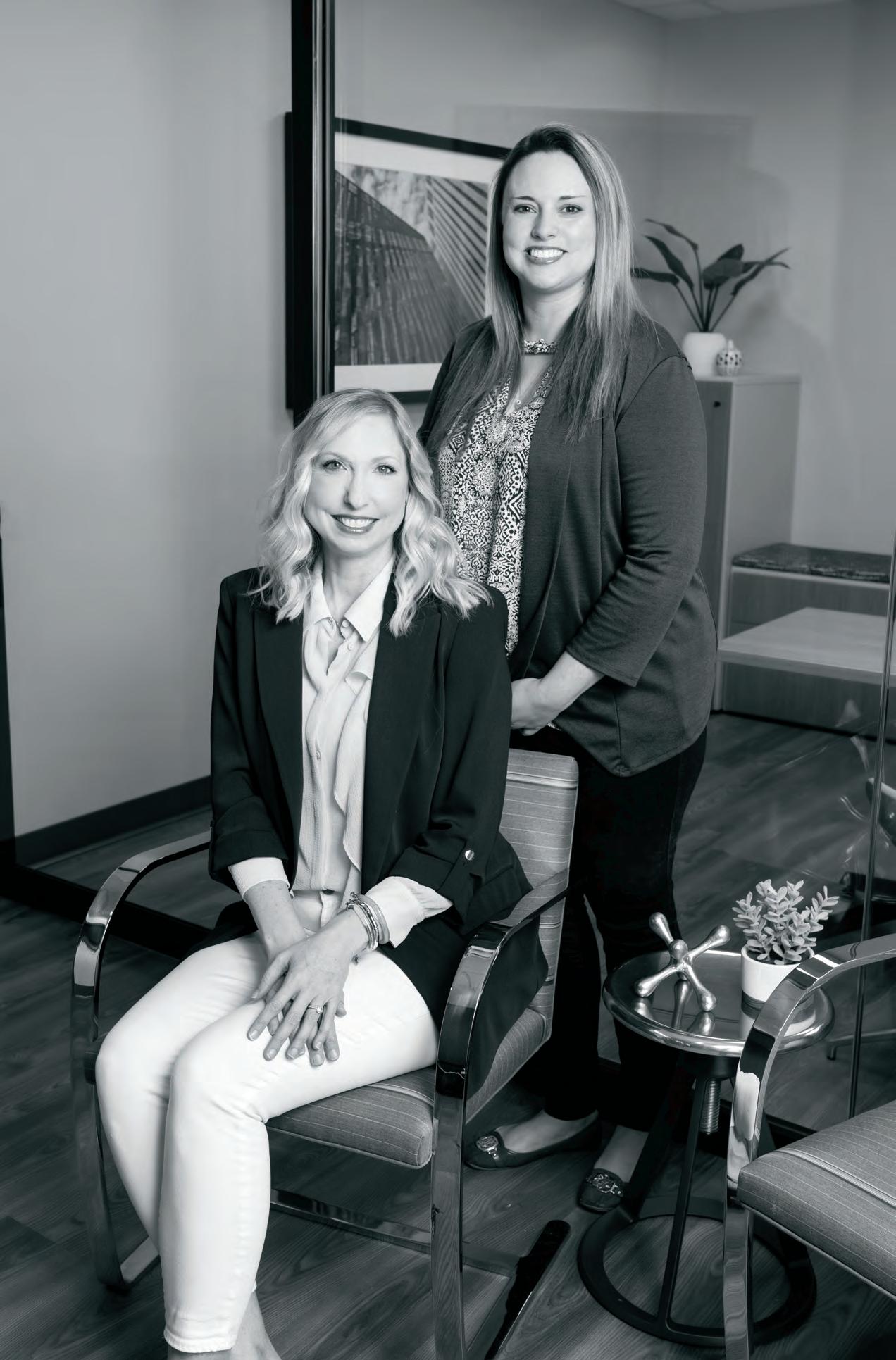
With expertise in commercial, education, health care and nonprofit, CI Select has the resources to create a harmonious environment, perfect for your needs. “We value our industry partnerships,” Ayllon says. So much
so that CI Select opened the location in Columbia with Reinhardt Construction.
Ayllon says working with Christian Fellowship Church on the Chapel Hill Campus Church has been one of her most memorable projects. “We enjoyed collaborating with them to select furniture and finishes that bring to life their organizations’ personality.”
Whatever the project, it’s important to remain genuine throughout the process, which Ayllon and Boman say fits right in with CI Select’s core values: “Give it our all, enjoy doing it, inspire confidence and grow together.”
2023 FACES OF COLUMBIA
CI SELECT | 2511 BROADWAY BLUFFS, SUITE 102, COLUMBIA MO 573-808-4489 | CISELECT.COM
SELECT
CI
Helping seniors is something Kari Vogt has always been passionate about. As a CERTIFIED FINANCIAL PLANNER ™ and licensed agent for Senior Benefit Services, Vogt wanted to help fill the void she saw as many retirees have questions about Medicare and get overwhelmed by the process without many resources to guide them.
Since joining the SBS team nearly four years ago, Vogt says hearing stories from her clients and learning about their lives is the best part of her job. “I love hearing about their careers, retirement plans, travel plans and their family,” she says. “They all have so many wonderful stories to tell!”
Vogt knows that while retirement can be exciting, it also can be scary for a lot of people. “The fact that I can take one of the stressful parts of retiring off their plate and assist them with their Medicare and Social Security decisions fills my cup,” she says.
After turning 65, people are faced with all kinds of new decisions and choices that will forever affect their future, including health care. “Health insurance is one of their biggest worries as they retire,” Vogt says. “I want to guide them through the process.”
While assisting seniors with Medicare, Vogt would frequently get asked questions about retirement and Social Security benefits. This motivated her to get her Registered Social Security Analyst ® designation at the beginning of the year. “I wanted to be more knowledgeable about Social Security benefits as well
to better assist my clients, since 96% of people are not maximizing their benefit,” she says. The overall goal for Vogt is to be the expert that anyone can feel comfortable calling or reaching out to when confronted with these large life changes.
Throughout her years of working with seniors, Vogt says she’s learned the importance of being kind to people, as it’s impossible to know what they might be going through. Many clients reach out with recent diagnoses or anxiety about leaving the workforce, she says. Other times, it’s the children reaching out looking for information on their declining parent. “All of these situations are very delicate, stressful and life changing, so it’s just so important to be genuine and kind,” Vogt says.
The best part is all Medicare services are free, Vogt and her team just want to make sure people are getting all the benefits and savings available.
SBS represents more than 50 of the top-rated life and health insurance companies with which you may already be familiar. It is Vogt and her team’s purpose to ensure every client and their family receives the service and ease of mind that should come with proper insurance coverage. While plans, needs and situations might change, SBS is committed to walking with you through all of it.
While working with seniors is Vogt’s life’s passion, she enjoys spending time outside of work with her husband and two children, and also enjoys baking.

SENIOR BENEFIT SERVICES | 801 GRAY OAK DRIVE, COLUMBIA MO 800-627-2768 | SBSTEAM.NET/KARIVOGT
MEDICARE SENIOR BENEFIT SERVICES
THE FACE OF
2023 FACES OF COLUMBIA
2023 FACES OF COLUMBIA
As more and more people are able to work from home, having a comfortable outdoor space has become more important than ever. That’s where Kretch’s Custom Exteriors comes in. Owner Drew Kretzschmar knows how to create or revitalize your outdoor oasis.
The team at Kretch’s, which includes Kretzschmar’s wife, Michaella; William Walters and Kretch’s red heeler, Red, use their expertise to see every project through from start to finish. They know each project is an opportunity to make dreams into reality.

“There are many moments that stand out for each of us, but we all agree that seeing our customers reaction to the final project is the most rewarding experience,” Kretzschmar says. “We strive for perfection and excellence, always ensuring that our customers are satisfied.”
Customer satisfaction is always a priority at Kretch’s as the team knows the business wouldn’t be what it is today without each and every person who has given them support throughout the past four years.

KRETCH’S CUSTOM EXTERIORS | 12100 E. OWENS SCHOOL ROAD, HALLSVILLE MO 573-219-6011 | KRETCHSCUSTOMEXTERIORS.COM THE FACE OF CUSTOM EXTERIORS KRETCH’S CUSTOM EXTERIORS
At The Trust Company, each team member works to provide clients with peace of mind, anticipating their needs and understanding their aspirations and priorities.
It’s that mission of helping people that attracted Tennille Lester to the field. Now working as assistant vice president and trust officer at The Trust Company, Lester says she’s able to help guide people and make dreams come true. “We learn about our clients’ lives, background, career, family, goals and dreams,” says
Lester, CERTIFIED FINANCIAL PLANNER™. “I love that we are able to meet clients where they are in their walk of life.”
Jenny Hayes, account administrator, finds comfort when clients can cross goals off their list. “We are there to cheer them on when those financial goals and life milestones are achieved,” Hayes says.
That’s because at The Trust Company each client is considered part of the family.
2023 FACES OF COLUMBIA
THE TRUST COMPANY | 4210 PHILIPS FARM ROAD, SUITE 109, COLUMBIA MO 573-876-7000 | THETRUSTCO.COM THE FACE OF YOUR FINANCIAL LEGACY THE TRUST COMPANY
2023 FACES OF
Jennifer Clark and Kristen Richter are extremely passionate about what they do. As nurse anesthetists, both Clark and Richter have spent their careers in health care and have seen the limitations of traditional medicine, which is what led the pair to found Morpheus IV Hydration & Infusion Center. “That’s why we’re here,” Clark says. “We’re here when the western medical system fails them or when they’re looking for a more natural route to treat their issues.”
It’s an extremely personal cause for Clark, who became passionate about starting a local ketamine clinic after her own treatment. About nine years ago, Clark began to suffer from daily headaches that quickly became debilitating. She spent one year going to a neurologist before being told there was nothing they could do for her pain. “Over the next five years, I was hospitalized for months at a time,” she says. “I would’ve tried anything.”
That’s when she first heard about ketamine treatments. Ketamine infusions have been shown to have positive results when dealing with chronic health conditions such as chronic pain, migraines, treatment-resistant depression and post-traumatic stress disorder. After she began treatment, Clark says everything was different. “It literally changed my life,” she says, noting that she went from taking a dozen medications to two. “I came back to Columbia and thought, ‘I could help so many people with this.’”
That’s when she approached Richter about potentially starting a clinic locally. Richter had her own passion for IV infusions and had been wanting to start a clinic as well,
so the pair combined the two ideas and quickly secured a location. At first, only hydration infusion therapy was offered while they perfected their own proprietary formulas for other infusions. And because they create their own formulas, Clark says they are able to provide completely customized drips to address specific issues. “You come in with a complaint, we can address it directly,” Clark says. “That’s why we have a lot of return customers. Because it works.”
That customizable option has led Morpheus to see a number of patients suffering from long-haul COVID symptoms who have been able to improve from the infusions. “We’re literally able to change people’s lives,” Clark says. “It really doesn’t get much better than that.”
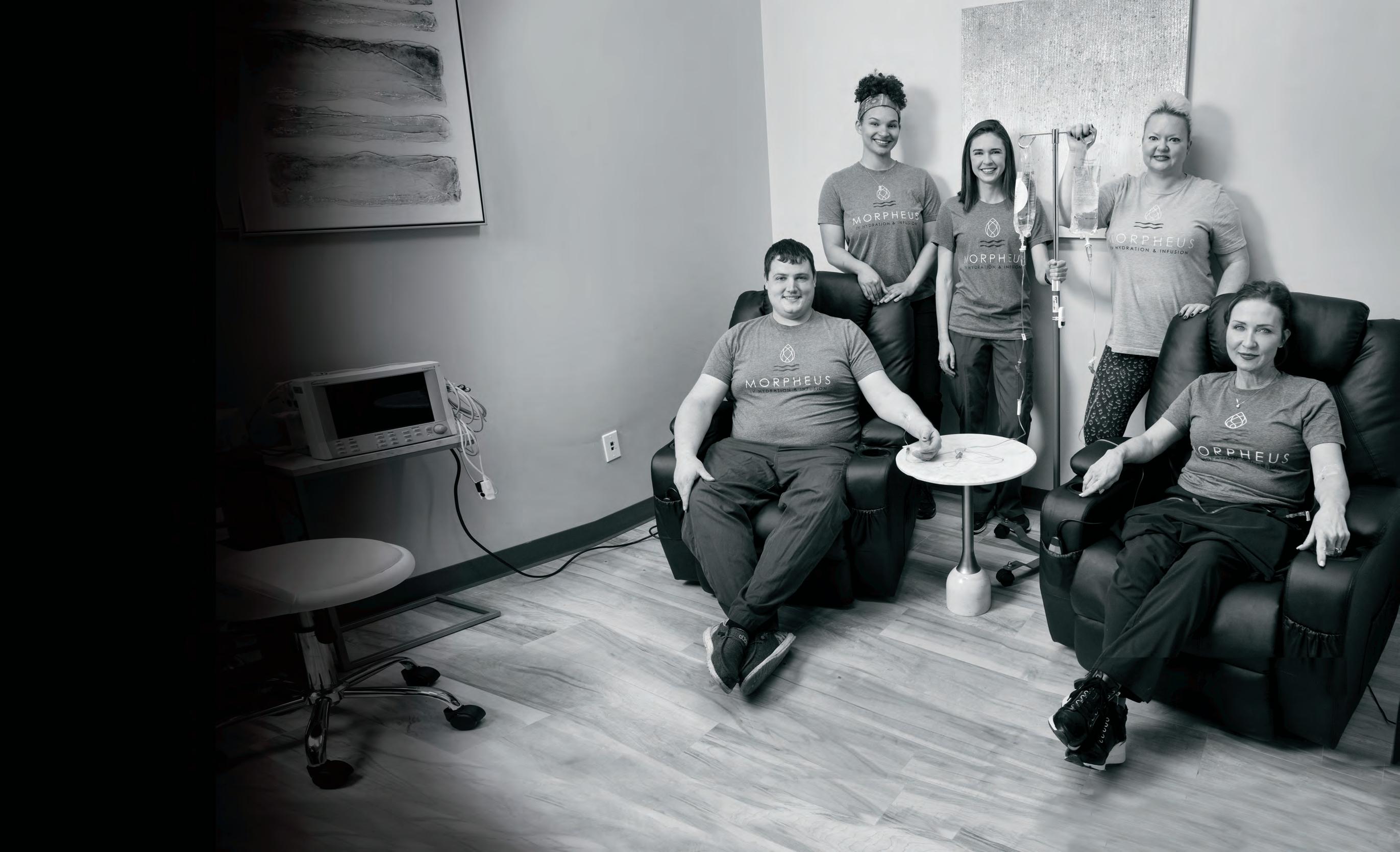
Clark says the ketamine portion of the business is doing so well that they are now doing consults for people all over the country.
In the next five years, Clark sees only growth for ketamine and infusion clinics. Currently, ketamine therapy is not covered by insurance, which she foresees changing as more and more people see the benefits. As that shift takes place, Clark says the country as a whole will see an expansion of non-traditional medicine, including the use of substances like psilocybin, the active ingredient in hallucinogenic mushrooms. “I see ketamine staying, but I also see other therapies emerging,” Clark says. “I really see a shift because western medicine has its limits.”
In addition to the clinic, Morpheus also has a mobile option for infusions. The clinic also offers other treatments, including Botox and dermal fillers.
MORPHEUS IV HYDRATION & INFUSION CENTER | 3700 MONTEREY DRIVE, SUITE K, COLUMBIA MO 573-507-6580 | MORPHEUSIV.COM THE FACE OF IV HYDRATION AND DRIP THERAPY MORPHEUS IV HYDRATION & INFUSION CENTER
COLUMBIA
Experiencing great trauma can cause immense stress, and the last things you should have to think about are medical bills or other financial burdens. Luckily, the partners at Sticklen & Sticklen Law Firm are here to help you.
Both Charles Sticklen Jr. and Sarah SticklenMcDonnell were inspired to get into the legal profession by family. Sticklen’s older brother is a long-time Columbia attorney, while Sticklen-McDonnell found her passion while watching her father, Sticklen. “The truth is I’ve never met another lawyer who enjoys his job more than my dad enjoys his,” she says.
Now, Sticklen-McDonnell is able to find her own enjoyment in the field, which she does every time she is able to assist someone in the community. “I like meeting new people, I like helping my clients, I like making money for my clients and I like fighting big insurance companies on behalf of other people who can't fight for themselves,” she says.
Sticklen agrees, saying his job sometimes makes him feel like a modern-day Robin Hood. “I love that this is what I do for a living: Representing injured people against insurance companies,” he says.
While helping people is a main part of the job, it doesn’t come without a fair share of difficult and emotional cases. Sticklen-McDonnell says her first multimillion-dollar case involved the wrongful death
of a motorcyclist, where she represented the decedent’s family. “Our young motorcyclist had an infant daughter as one of his survivors and she would now grow up without her dad,” she says. “I really wanted to do right by the family.”
No matter the circumstance, Sticklen & Sticklen is here to help. They know that there always will be a need for their services and today’s technology allows the firm to help people regardless of location. “Our services are available to people no matter where they live, the extent of their injuries or their ability to get to a law office in person,” Sticklen-McDonnell says.
Since 1991, the attorneys at Sticklen & Sticklen have worked exclusively with accident victims as they are one of the pre-eminent car accident, workers’ compensation and personal injury law firms in the region. Since the firm’s founding, Sticklen & Sticklen has earned over $150 million in settlements and judgments for their clients.
Sticklen and Sticklen-McDonnell are both graduates of the University of Missouri School of Law and continue to support the local law school. “My husband and I can often be found at law school functions and judging various law school competitions,” SticklenMcDonnell says.
And another Sticklen soon will be headed to study there, as Sticklen’s youngest son, William, will start in the fall.

STICKLEN & STICKLEN | 1001 CHERRY ST., SUITE 104, COLUMBIA MO 573-303-3848 | STICKLENINJURYLAW.COM
INJURY STICKLEN & STICKLEN
THE FACE OF PERSONAL
2023 FACES OF COLUMBIA
John Jones has only ever wanted to design and build homes. And after nearly 30 years of doing just that, he launched J Jones Homes to continue his work of building dream homes for years to come. “I love running into former clients when I am out and realizing how many lives I have touched over the course of 30 years,” he says.
With the help of office manager Lisa Fredette and superintendent/operator Randy Kanatzer, Jones works to provide clear, honest communication with clients
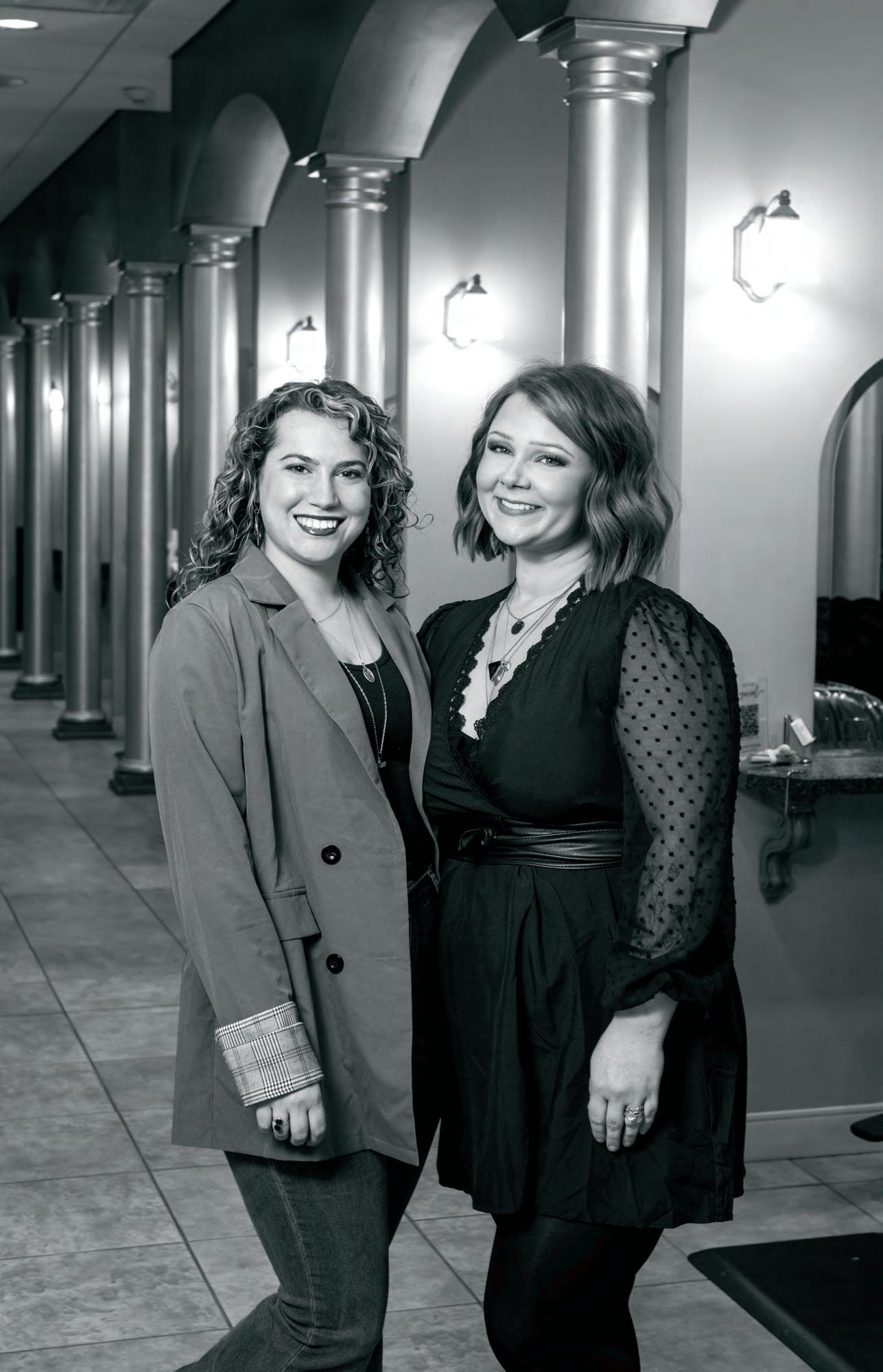
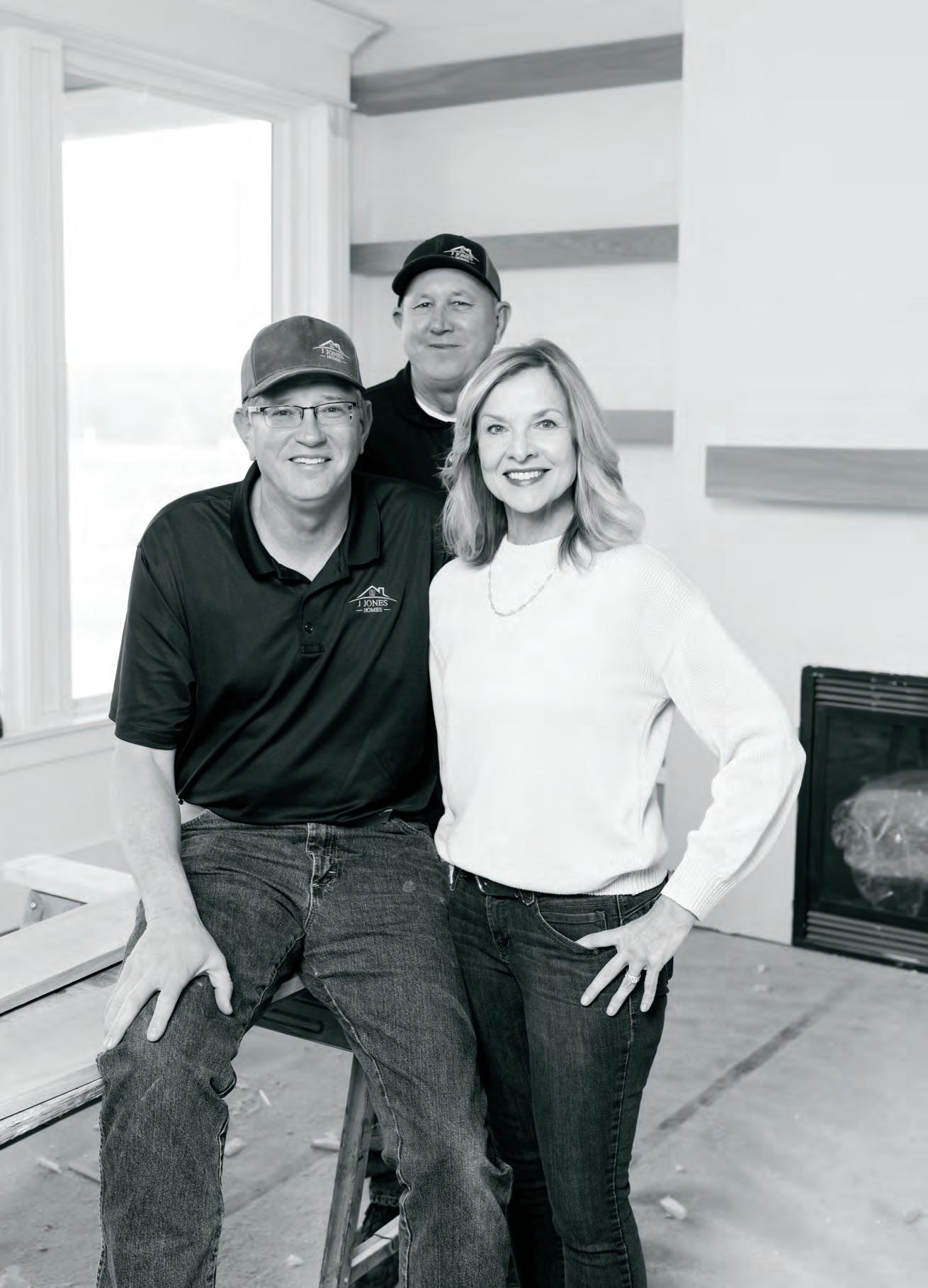
in order to ensure the final product is everything they hoped. That can mean “meeting frequently on the job site to stay ahead of problems, questions and changes that might arise,” he says.
This one-on-one interaction leads to a strong bond between Jones and his clients. “My clients become family,” Jones says. “We spend a lot of time designing and building their dream home. It doesn’t end when we give them the keys.”
2023 FACES OF COLUMBIA
J JONES HOMES, LLC | 1402 COACHLAMP COURT, COLUMBIA MO 573-219-2631 | JJONESHOMESMO.CO THE
OF DESIGN BUILT DREAM HOMES J JONES HOMES, LLC
FACE
Having a place for customers to relax, unwind and feel safe is a top priority for Regeneration Salon & Spa. Coowner Samantha Woolridge says it’s important for guests to not only feel comfortable, but also confident. “You get a chance to make a difference with each guest that sits in our chair,” she says. “We never know what someone is dealing with in their personal lives and being able to lend a listening ear and make them feel more confident is very rewarding.”
Helping people daily at the salon fulfills a lifelong childhood goal for co-owner Kaitlyn Nolte. “I help them feel better on the inside by achieving their goal look on the outside,” Nolte says.
As Regeneration grows its clientele, Nolte says she hopes to see it become more prominent in the community. “We would love for everyone to feel welcomed and relaxed,” she says.
2023 FACES OF COLUMBIA
REGENERATION SALON & SPA | 3301 W. BROADWAY BUSINESS PARK COURT, SUITE H, COLUMBIA MO 573-234-1560 | REGENERATIONSALONSPA.COM THE
REGENERATION SALON & SPA
FACE OF BEAUTY
2023 FACES OF COLUMBIA
Dr. Travis Arndt has never imagined himself as anything other than a veterinarian. Now the medical director at My Zoo Animal Hospital, he spends his days helping solve problems that allow each pet to be healthier and live better. “There is usually more than one way to treat an illness,” he says. That’s why he’s open minded to “finding a way that works for both the pet and the client.”
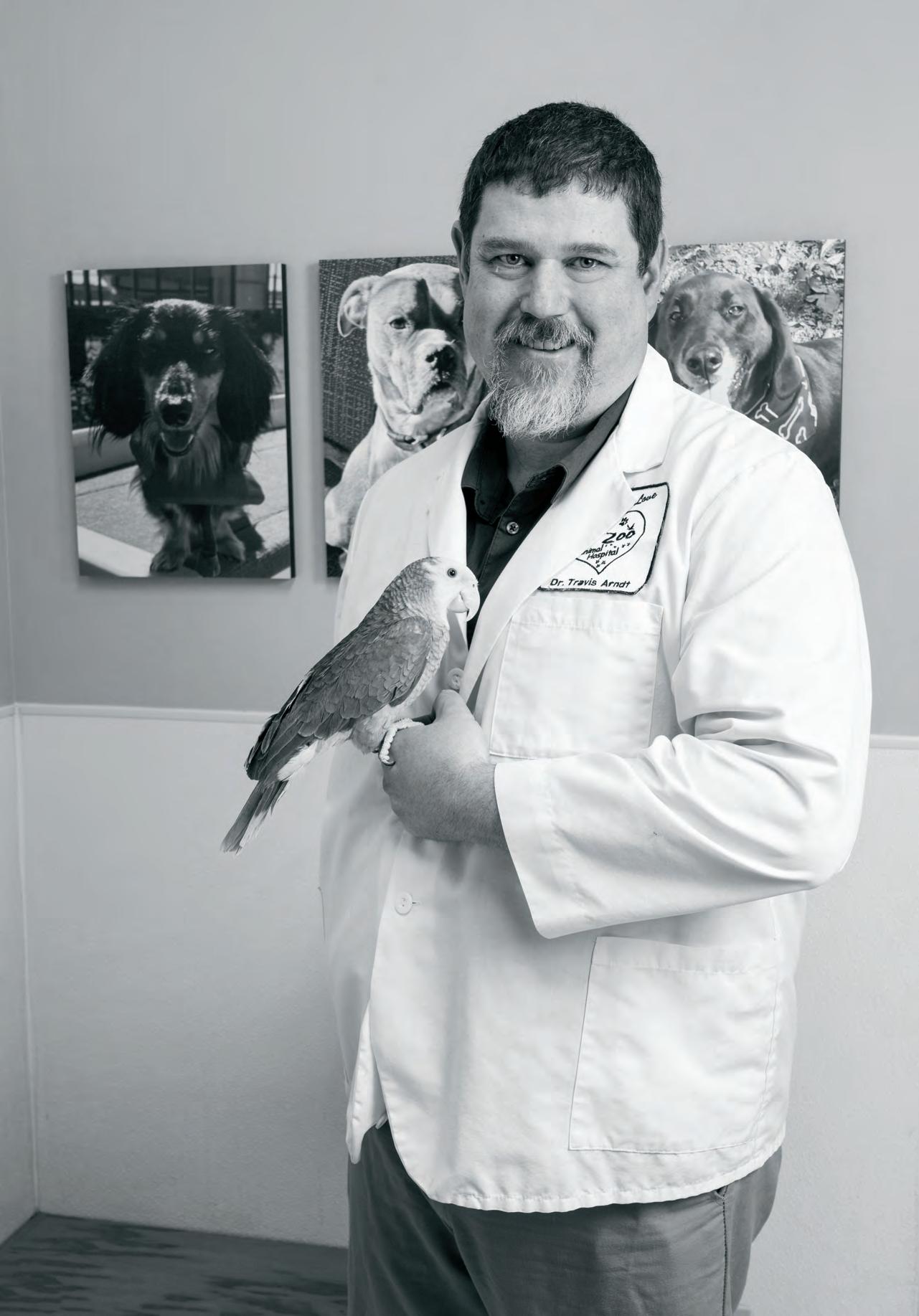
As more and more treatments are developed to fight disease and help pets live longer, Dr. Travis says the
cost is outpacing people’s ability to pay. In the next five years, he sees third party health insurance becoming more common and more necessary to help pets receive treatment.
No matter what the issue, My Zoo will ensure each pet has access to the best treatment options. It’s all part of being a full-service veterinary hospital. “We strive to individualize the treatment options which fit your pet best,” he says.
MY ZOO ANIMAL HOSPITAL | 1300 E. BOONE INDUSTRIAL BLVD., COLUMBIA MO 573-875-3647 | MYZOOANIMALHOSPITAL.COM THE FACE OF HEALTHY PETS MY ZOO ANIMAL HOSPITAL
Being able to change people’s lives is something Phyllis Nichols is able to do on a daily basis as a State Farm Insurance agent. Whether someone is going through a tragedy or just needs a personalized quote, Nichols will give customers the support they need.
To have someone that you can trust in a variety of situations is an invaluable asset.
After watching a family lose their insured home to a
fire, Nichols got to see just how vital her job can be when one child turned to her and said, “thank you for giving us a place to sleep tonight and clothes to wear.”
Working in insurance is all about being flexible and doing your best no matter the circumstance because someone’s life or livelihood may depend on it. “Each day is unique, and I have the opportunity to be in someone’s corner.”
2023 FACES OF COLUMBIA
STATE FARM INSURANCE | 1006 WEST BLVD. N., SUITE 102, COLUMBIA MO 573-443-8727 | PHYLLISJNICHOLS.COM THE FACE OF HOMEOWNERS INSURANCE STATE FARM INSURANCE
2023 FACES OF COLUMBIA

Timothy Devaney, team leader at McClure, has always enjoyed science, history and the outdoors. Growing up in Boone County, Devaney and his brothers would spend their time exploring and learning together on the family farm. That’s when his passion for the outdoors sparked.
“Surveying is a profession that allows for me to combine these fascinations daily,” Devaney says.
Before land becomes a shopping center, a school, or a roadway, McClure surveyors are there, using state-of-the art technology, and gathering critical data that becomes the foundation for achieving your vision.
While working at McClure, Devaney has been part of many fascinating projects involving the newest surveying technology, which uses a combination of tools, including drones and terrestrial scanning. “The processing of this data has become a passion of mine,” Devaney says.
“In order to take such an incredible amount of data, combine it and refine it into a usable end product, we must develop some complex and fascinating workflows.”
Using that technology, Devaney has captured drone data of wind farms to scanning structures in Florida. He has been involved in large scale energy projects and in the construction layout of more than 40 state and county bridges across Missouri.
Surveyors will analyze the data and deliver it in traditional, plan-view survey drawings, complex BIM models and renderings or through drone animations and time-lapse videos of construction sites.
Throughout all of his projects, Devaney continues to follow the three rules of surveying: “check, check, check.” Surveying involves accuracy and precision, and the new surveying technology is no exception to those rules. “We must use proper methods to validate our data and perform redundant measurements for statistical confidence,” Devaney says.
For the past six years at McClure, Devaney says the industry has radically changed, leading to a shortage of surveyors, engineers and technicians. And as technology continues to advance, the demand for skilled individuals will only increase, making McClure focus heavily on recruitment and training. “We put forth great effort to encourage young people to explore surveying as a career,” he says.
McClure focuses on its people, incorporating its five core values of integrity, kindness, innovation, commitment and fun into everyday work, rewarding creativity, professional responsibility, and personal growth.
Throughout his time at McClure, Devaney says he has been given many amazing opportunities to grow and learn, while never losing sight of his roots. “I am fascinated with the way our industry is headed and look forward to the future of surveying,” he says.
To this day, Devaney enjoys spending his free time working on his family farm, raising and caring for the beef herd, working on an apiary of honeybees and tending to his family’s large garden.
MCCLURE | 1901 PENNSYLVANIA DRIVE, COLUMBIA MO 573-814-1568 | MCCLUREVISION.COM
McCLURE
THE FACE OF ENGINEERING
With more than 20 years of experience in the graphics field, Shawn Christal became the perfect fit to take over Dsport Graphics in Columbia. “It was a great opportunity to take a long-standing business in Columbia and bring it to the next level,” he says of purchasing the existing local business with his family. The business is owned and operated by Shawn and his wife, Carmen. But the family ties don’t stop there as their daughter, Taylor Mountjoy, is also involved as a customer service representative. While the trio purchased the business in 2015, Dsport has been around since the 1970s when it primarily focused on sporting goods. It was only later that the business switched its focus to custom printing. Now Shawn and his family serve the Columbia community providing all kinds of options for custom items. Since taking over the business, the Christals have overseen an expansion of Dsport Graphics to better accommodate the growth in both the customer base and the types of services it provides. Shawn feels like one of the most important keys to success is: “Always try to keep up with the latest trends and technology. The newly remodeled nearly 10,000-square-foot space has afforded a massive showroom depicting the latest trends,” he says. The additional space has also allowed for additional updated production equipment, making processes easier. Dsport Graphics also instituted a website so customers can
order and create designs from the comfort of their own home. “We see more and more of our customers ordering products through our online stores, so it is very important to have a user-friendly website.”
While working with his family is a big perk, Shawn’s favorite part of the job is seeing the faces of his customers “light up when they see their products after we decorate them.” At Dsport Graphics, customers can choose from screen printing, heat press or embroidery on apparel, engraving on awards and specialty items, signs, banners, and promotional products. Shawn says customizing promotional products can help with business branding, event sponsorships or giveaways. Whether the budget is $10 or $10,000, Dsport Graphics has a vast array of products to choose from to accommodate any need.
One of Dsport Graphic’s most memorable projects, include a job for Marching Mizzou. Shawn says Dsport Graphics printed a 40-foot-by-60-foot banner, along with other large banners that were unfolded at the halftime performance celebrating the St Louis Blues Stanley Cup victory.
When not working, Shawn and Carmen Christal enjoy riding motorcycles, seeing the beauty of this country and cycling on the Katy Trail. Their daughter, Taylor Mountjoy, enjoys quiet time with her two dogs, Thunder and Honey Bee and a cat named Kitty.

DSPORT GRAPHICS | 19 BUSINESS LOOP 70 E, COLUMBIA MO 573-449-8018 | DSPORTGRAPHICS.COM THE
DSPORT GRAPHICS
FACE OF PROMOTIONAL PRODUCTS
2023 FACES OF COLUMBIA
2023 FACES OF COLUMBIA
It was the fast-paced nature of the towing business that first drove Tyler Doyle and his wife, Jenny, to purchase Tiger Towing in October 2021. And since then, they’ve enjoyed being able to help people who need their vehicles towed at a reasonable price.

The Doyles say they're proud of two things in particular about their new company: “We are a familyowned business, and we’re honest and trustworthy

people.” They hope these two strengths will help them become highly successful. Their goal over the next five years is simple: “We would love to be the best company in Columbia that everybody knows about.”
The couple’s favorite way to relax is — ironically — in a vehicle! “We live in Jefferson City so that 30-minute drive home is quiet and gives us plenty of time to unwind.”
TIGER TOWING | 414 NEBRASKA AVE., COLUMBIA MO 573-449-3754 | TIGERTOWING.COM THE FACE OF TOWING TIGER TOWING
At BLUSH Boot Camp, fitness is a way of life. Kinsley Judd, club manager and head trainer, spends her time showing clients just how life changing fitness can be. “You realize how many years you can add to your life, or throw away, based on your lifestyle,” she says. “How you work out, how you eat, how you talk to yourself and those around you all work together.”
BLUSH Boot Camp is a trainer-led gym that focuses on empowering women through fitness and nutrition
in a safe and encouraging environment. For trainers Paige Sellers, Valerie Call and Kayla Fallis, more women prioritizing their health means a new generation of strong, empowered women.
Sellers, who also serves as a nutrionist, says her goal is to help women find that confidence to improve physical and mental health. “I’m here to help every woman and girl-boss find her way into a stronger, healthier version of herself,” Sellers says.
2023 FACES OF COLUMBIA
BLUSH BOOT CAMP | 3709 S. PROVIDENCE ROAD, SUITE A, COLUMBIA MO 573-239-6228 | FACEBOOK.COM/BLUSHBOOTCAMPCOLUMBIA
FITNESS BLUSH BOOT CAMP
THE FACE OF WOMEN'S
2023 FACES OF COLUMBIA
For everything from traffic offenses to criminal defense, Robin D. Winn is ready to work hard to get the best possible result for her clients.
Winn, a graduate of Southern University Law Center in Baton Rouge, Louisiana, and a St. Louis native, started the Winn Law Firm in Columbia in 2017.
Since then, Winn has become known as a wellrespected lawyer in criminal defense, traffic law, business law, trademarks, family law and personal injury. She has built a reputation for her zealous and skilled representation, which is present in every case she takes on.
“Regardless of how challenging a case can be, you can always count on me to yield the best possible outcome for you,” Winn says.
When Winn takes on a client, she guarantees the case will be handled with the utmost care. She promises full commitment to each case, along with factual honesty, a dedication to justice and outstanding results. No matter the type of case, from traffic law all the way to murder
cases, Winn guarantees high quality representation to each client, consistently delivering the gold standard in the legal industry. “The consequences of criminal cases can be hefty and change the course of your life forever,” Winn says. “With me as your legal representative, I will make sure that your case is put in the best light possible.”
Throughout her years of experience, Winn has become known for her leadership, authenticity and unparalleled ability to solve complex cases, handling each one with extreme care and dedication.
Winn is a member of Delta Sigma Theta Sorority and serves on the executive committee of the NAACP, as well as the Missouri Bar’s Leadership Academy team. She earned the NAACP’s keeper of the flame award in 2019, which recognizes those who have made significant contributions to racial equality and fairness in labor, and display outstanding leadership qualities.
Outside of work, Winn enjoys tailgating, reading nonfiction books and traveling.
WINN LAW FIRM | 303 N. STADIUM, SUITE 200, COLUMBIA MO 573-234-5442 | THEWINNLAWFIRM.COM THE
LAW FIRM
FACE OF CRIMINAL DEFENSE WINN
2023 FACES OF COLUMBIA
Life can feel like an endless barrage of surprises, and the last thing you want to worry about is how to recover after an auto accident. Stacey Page, Owner and Agent at Kasmann Insurance Agency, says her team is ready to help protect everything that is important to you. “My job is helping people plan for and recover from losses, whether to their auto, home or business,” she says. For the past century, Kasmann Insurance Agency has been serving mid-Missouri, supporting families and
businesses through all types of surprises. Page says that during her tenure, the most important lesson she has learned is to “always, always, be honest. It truly is the best policy.” She says she has loved having the opportunity to serve Columbia, which has been an amazing place to call home. “I have been in Columbia over 20 years now. Purchasing a business here and choosing to spend the rest of my working years here really speaks to how special this community is,” Page says.
KASMANN INSURANCE AGENCY | 116 N. GARTH AVE., COLUMBIA MO 573-442-1105 | KASMANNINSURANCE.COM THE
OF AUTO INSURANCE STACEY PAGE AT KASMANN INSURANCE AGENCY, INC.
FACE
Linette Beaman and Dawn Vaughn feel they’ve been fortunate to work with a great group of staff and residents, making the environment at The Terrace feel more like family. “We’ve been told many, many times from visitors what a friendly and warm feeling they get when visiting," says Vaughn, manager at The Terrace.
Beaman, director of sales and marketing, could not agree more. “When you walk through the front doors, you will feel a special atmosphere and find a one-of-a-
kind community,” she says.
Vaughn and Beaman both love being able to interact with residents at The Terrace, listening to their stories and hearing about their different lives and experiences.
“I learn something new every day,” Beaman says. Vaughn says the residents always show true compassion and gratitude for all that is done for them. “I enjoy helping them with whatever I can,” Vaughn says. The Terrace lifestyle is retirement living at its best.
2023 FACES OF COLUMBIA
THE TERRACE RETIREMENT COMMUNITY | 1408 BUSINESS LOOP W., COLUMBIA MO 573-875-2538 | TERRACERETIREMENT.COM THE FACE OF RETIREMENT LIVING THE TERRACE RETIREMENT COMMUNITY
2023 FACES OF COLUMBIA
THE FACE OF WILDLIFE MANAGEMENT CRITTER CONTROL OF CENTRAL MISSOURI
For as long as he can remember, Peter Riney has wanted to work with animals. “I’ve always had an affinity for wild animals and knew from an early age I wanted to do something that would allow me to work with them,” he says.
Now the owner and operating manager of Critter Control of Central Missouri, Riney is pursuing his passion while helping the community. There’s nothing quite as rewarding as being able to fix each client’s unique problem, all while being able to interact with some of his favorite species. “What keeps me engaged in this career is helping clients solve their issues,” Riney says. One of his more memorable moments came when he had to remove a
7-foot-long carpet python from inside of a local duplex. “Snakes are my favorite animal, and we don't typically have large snakes in Missouri, so this call was especially exciting and rewarding for me,” Riney says.
While large snakes are more of a rare sight, Riney says the more common animal issues in mid-Missouri homes stem from bats, squirrels, raccoons, birds, and moles.
Critter Control of Central Missouri, which was founded in 2005, was purchased by Riney and his family in 2009. The company solves wildlife problems while working to prevent issues from popping up down the road.
The first step in the process is to get an inspection of the area, to figure out the type of animal we are dealing with,
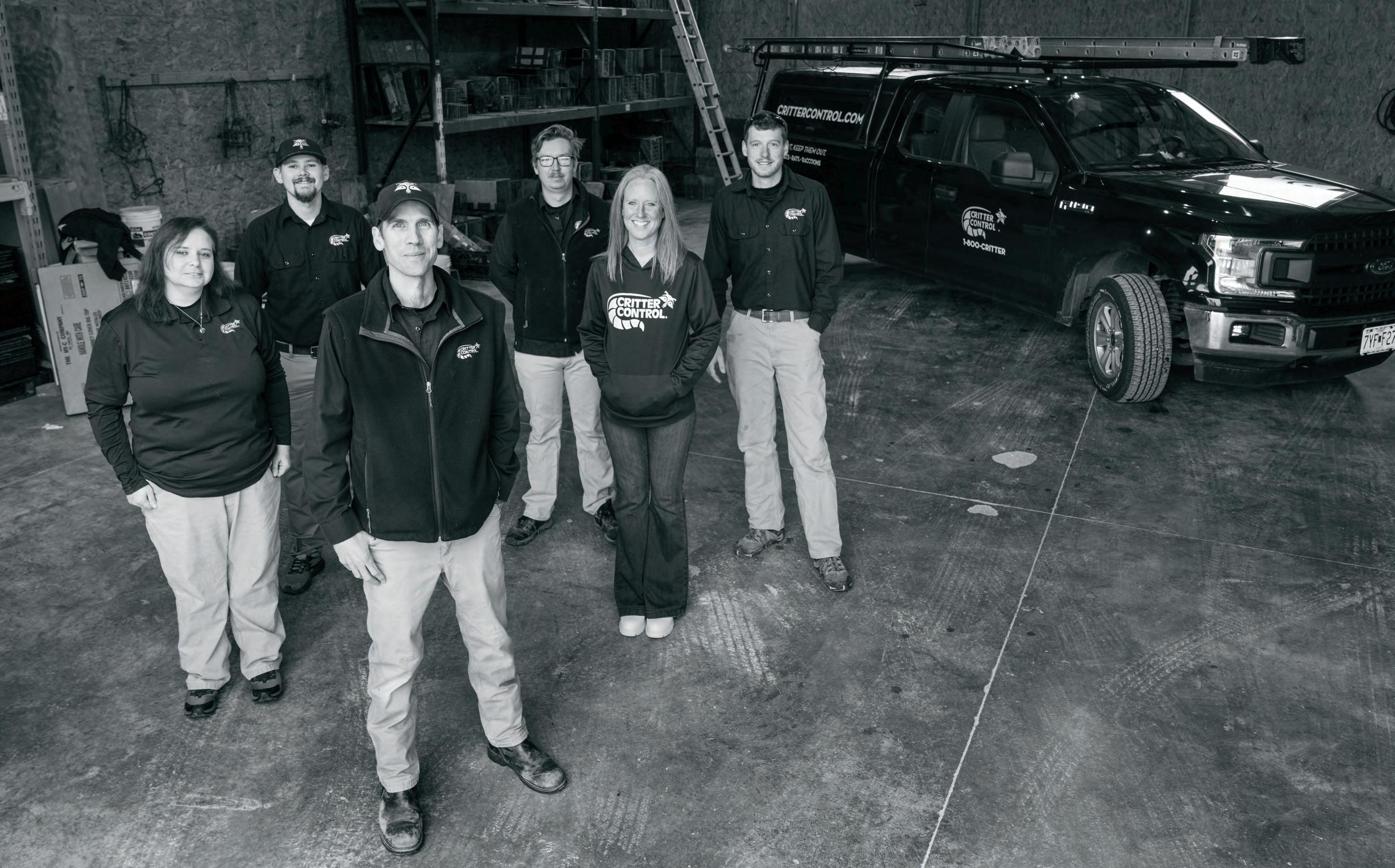
where they are located and how they got in. The second step is removing the animals using several humane methods. Finally, the third step is finding a long-term solution to nuisance wildlife, creating barriers to prevent animals from coming back into a home.
Dealing with animals every day might not be a goal for everyone, but Riney has never questioned whether it’s truly for him or not. “My dream job was to be a wildlife/nature photographer,” he says. “I wanted to get close to nature and animals.” And while he isn’t exactly a nature photographer, Riney is getting to live out his dream in a different capacity, giving him an opportunity to “do something that feels less like work. I have never gone to work a day in my life thinking, ‘Wow, I really hate my job.’ And I do not take that for granted.”
After working in the community for 18 years, Riney says a
critical part of his role is to be empathetic. “Being able to put yourself in someone else’s shoes is as important as anything I’ve learned during my career,” he says, emphasizing the importance of being reasonable and showing understanding to others.
Outside of work, Riney and his wife of 18 years spend much of their time with their children, who are involved in theater, music, and dance. Those activities keep the Rineys involved in the community by supporting local theaters, sporting programs and volunteer programs, including Meals on Wheels.
To see if you need the help of Critter Control, check for running, walking, or scratching noises in the attic or walls, and small droppings that continue to accumulate even after being removed. No matter the issue, Critter Control is ready to help with quality work that will leave each customer satisfied.
CRITTER CONTROL OF CENTRAL MISSOURI | 2000 E. BROADWAY, #136, COLUMBIA MO 573-441-0060 | CRITTERCONTROLCENTRALMISSOURI.COM
2023 FACES OF COLUMBIA
For 45 years, Missouri Furniture has been a trusted name in quality home furnishings across Missouri. This familyowned business was founded by Neil Faiferlick in 1977 in Lake of the Ozarks, where his son, Dave, started working in the business at 10 years old, learning the ropes from his father and developing a passion for furniture. Dave now leads the company and has carried on the tradition of exceptional customer service and unbeatable value into the second generation, expanding the business from furniture and mattresses to also appliances and hot tubs. Dave’s wife, Karen, works alongside him and their sons, Connor and Grant, are also instrumental in the family business, ensuring that Missouri Furniture will continue
the tradition of providing the best in home furnishings for years to come.
Together, the family is dedicated to the founding principles Neil had for the business: quality products, breadth of options, exceptional client service, and great value. The Faiferlicks believe in giving back to the community and support many local charities and foundations across the state.
At Missouri Furniture, customer satisfaction is always the number one goal, and the Faiferlick family is committed to helping their neighbors love where they live by providing the very best selection of quality home furnishings.

MISSOURI FURNITURE | 8050 INTERSTATE 70 DRIVE SE #7044, COLUMBIA MO 573-346-7400 | MISSOURIFURNITURE.COM THE FACE OF QUALITY FURNITURE MISSOURI FURNITURE
Entering the field of distilled spirits was exciting for Maury and Melissa Allen.
The owners of Six Mile Ordinary say they were attracted to the industry five years ago, eager to take on the opportunity to create high quality products at a reasonable price. But there’s much more to it than that. “Ultimately, for us, the attraction to the distilled spirits industry lies in the ability to combine creativity, passion, manual get-your-hands-dirty labor and business acumen to produce a product that brings joy and pleasure to
consumers,” Maury Allen says.
Operating a distillery allows the Allens the chance to hone new skills, while connecting with the community through tastings and tours. And the business is growing, with distribution in six states already.
It’s incredibly satisfying for Maury and Melissa Allen, who recall the anxiety felt when the first 8,000-gallon tank being delivered. “It was so big it required a crane,” Maury Allen says. “I remember thinking, ‘There’s no going back now.’”
2023 FACES OF COLUMBIA
SIX MILE ORDINARY | 700 FAY ST., COLUMBIA MO 573-554-1662 | SIXMILEORDINARY.COM THE FACE OF DISTILLERIES SIX MILE ORDINARY
2023 FACES OF COLUMBIA
Chiropractic care is healthcare that can benefit everyone. Dr. Taylor Sirois, owner of Restoration Chiropractic, says that now more than ever, people are seeking natural methods when it comes to healthcare and wellness. “As people continue to seek healthier lifestyles, chiropractic care is going to be more sought after,” he says. “Having a healthy spine is the foundation of having a healthy lifestyle because the rest of the body cannot function to its full potential if the spine is not healthy.”
As a third-generation chiropractor, Dr. Taylor has seen the benefits of chiropractic throughout his life and knew it was in his blood to continue the family tradition. He loved watching his parents work in their practice and seeing the impact they made in people’s lives and the overall community. “They inspired me to pursue this amazing health profession and I feel very blessed to be a part of it,” he says.
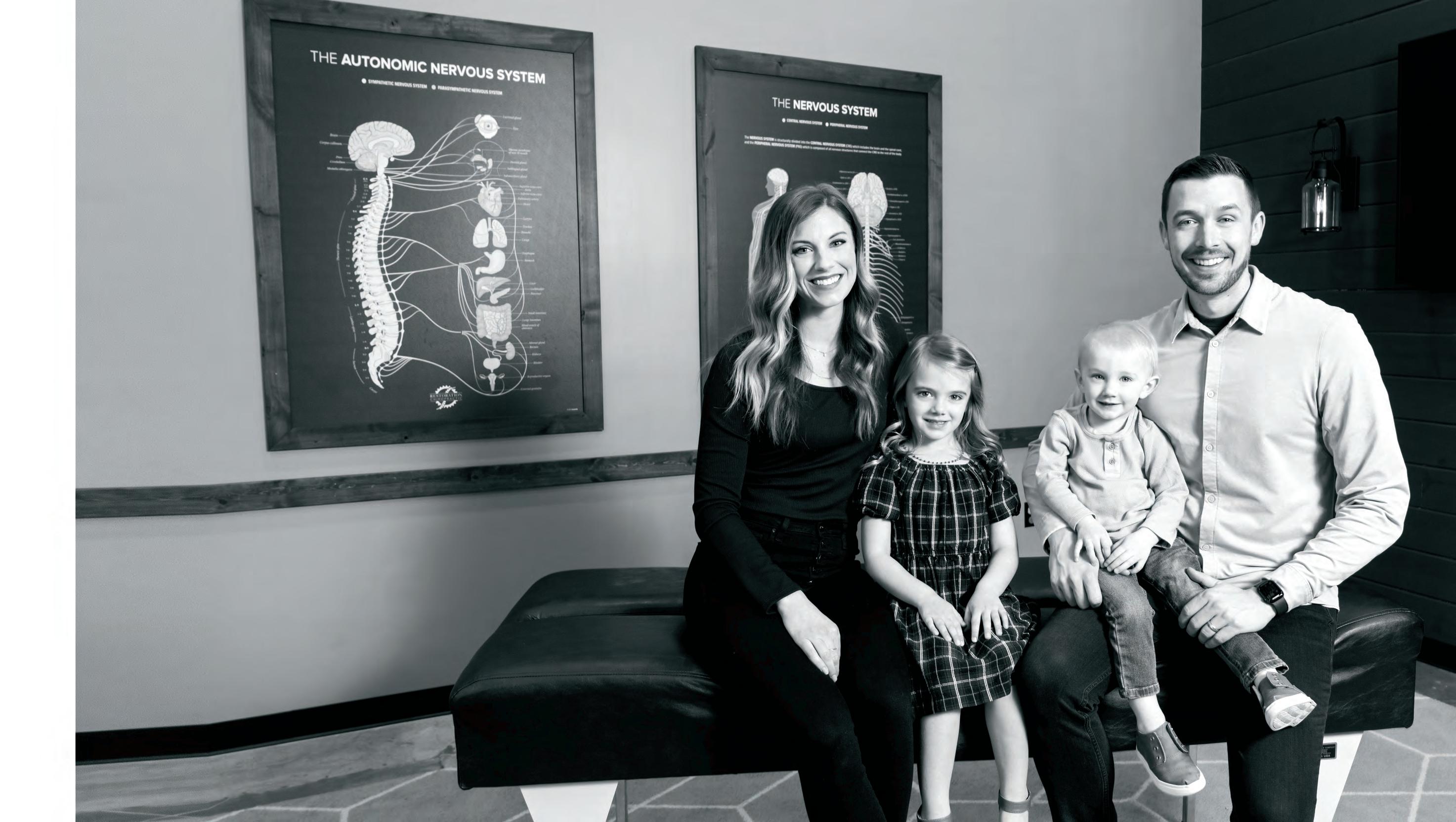
For Dr. Taylor, the most important part now is to educate the community about chiropractic care and the positive impact it can have in a person’s life. “Everyone has a spine; that means everyone can benefit from the gentle and specific chiropractic care that we provide,” Dr. Taylor says. That includes pregnant women, people who have had surgery, and even babies.
However, the problem is most people don’t know chiropractic care is even an option for them or that it can be used as preventative care. In fact, one of Dr. Taylor’s favorite parts about working in the industry is seeing the impact chiropractic care can have when started at a very young age and maintained throughout the years. “When someone is able to live a healthy lifestyle and stay that way, they can do more of what they love and enjoy life to the fullest with their family and loved ones,” he says.
At Restoration Chiropractic, Dr. Taylor Sirois, alongside Dr. Amanda Alcamo and Dr. Keenan Thomas, use the torque release technique which involves using the integrator, a torque and recoil release adjusting instrument that automatically discharges when a predetermined contact pressure is reached.
This allows for a very specific and gentle chiropractic adjustment to correct the misalignments of the spine and remove any nerve interference.
While serving the community is one of the best perks of this position, Dr. Taylor says getting to work with his family is the most memorable aspect of his job. His wife, Leah, works as the office manager and his son and daughter enjoy pretending to make phone calls and do adjustments in the office.
The hope is for his own children to continue the family tradition one day if that’s what they want to do. The family atmosphere is obvious when visiting Restoration Chiropractic, where everyone is meant to feel at home. “From families, with babies, kids, and parents, to college students and young professionals, to the seniors in our community, we want to be a place that anyone can come and feel comfortable and loved, and ultimately find healing and wellness,” Dr. Taylor says.
New patients are first given an office tour, followed by a one-on-one consultation to discuss health concerns and future goals. Then, there is an exam by the doctor, a neurological assessment, and X-rays, along with a brief orientation to know exactly what to expect in the office. The doctors then recommend a customized corrective care plan that will lay out the road to recovery and a true healthy wellness lifestyle.
RESTORATION CHIROPRACTIC | 1413 GRINDSTONE PLAZA DRIVE, SUITE 109, COLUMBIA MO 573-476-1000 | CHIRORESTORATION.COM
CHIROPRACTIC
THE FACE OF FAMILY CHIROPRACTIC RESTORATION
2023 FACES OF COLUMBIA
THE FACE OF RESIDENTIAL ELECTRICAL SERVICES
WITHROW ELECTRIC, INC
Since 1996, Withrow Electric has been providing electrical solutions for communities throughout mid-Missouri. With more than 90 years of combined electrical experience, you can rest easy knowing that this family-owned business will work with you to manage needed electrical services.
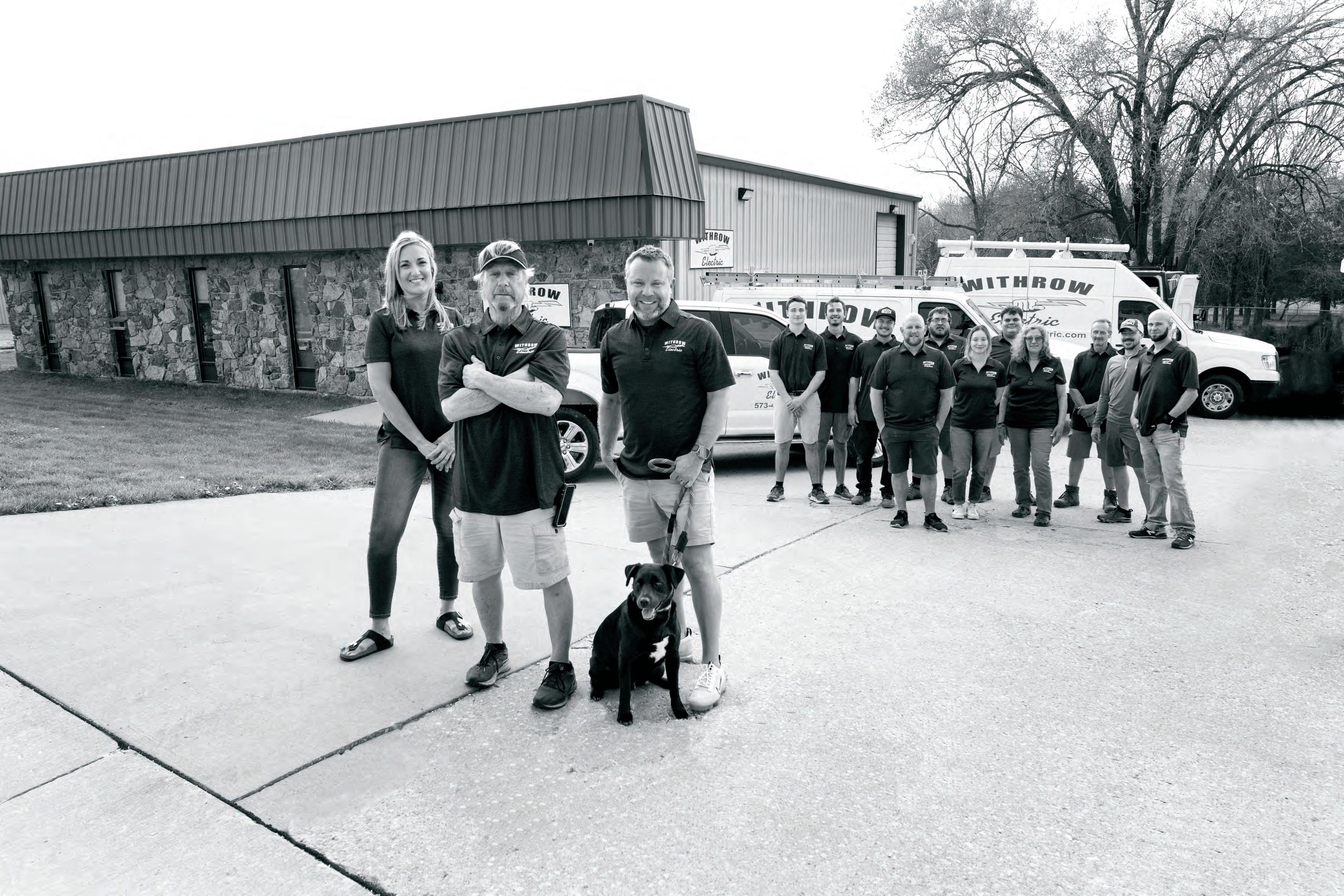
Owner Rich Withrow says the electrical industry is the most rewarding trade. “Our work is meaningful and important,” Withrow says, noting how much he loves being able to point to a finished project at the end of the day and know he accomplished that.
Withrow’s insured electricians have the experience needed to handle any type of job, whether installing a new lighting
fixture in your dining room or rewiring the entire house. From the moment Withrow’s electricians arrive at your home, the priority will be to identify any problem. But even if the issue cannot be solved on the spot, Withrow will never leave you hanging. Electricians will provide a cost estimate and schedule a time to return with the proper parts to finish the job. Withrow Electric will always bring your wiring up to code, ensuring that you can live or work safely in your new space.
Withrow knows his company is only as strong as his employees, so he appreciates each person’s continued hard work and dedication. “The core of our employees has been with us for a long time, and they are our family,” he says. “I take
pride in knowing that they have chosen to work at Withrow for so long.” And his dedication to showing how much he values not only employees, but customers too, is why Withrow’s business has been so successful. “Kindness matters. Respect and kindness toward employees and customers go a long way,” Withrow says. “I feel fortunate that we have been able to survive the ups and downs, not only for our family, but for our employees.”
Withrow says he doesn’t anticipate any large changes for the industry over the next five years as he’s found Columbia to be recession-resistant, especially when it comes to construction. Even during the pandemic, most construction-related businesses in the area were able to thrive, he says, and he doesn’t see that being any different for Withrow Electric.
While Withrow Electric has had many accomplishments
over the years, Withrow says the most memorable was reaching the milestone of 25 years in business. “Not many businesses can say that,” he says, noting that it’s an even more rare feat for small, family-owned and operated businesses.
Withrow Electric is a true family business, with Withrow’s son and daughter-in-law, Paul and Keri Showers, having worked for the business for more than 20 years. Withrow himself is a Columbia native who enjoys spending his time outside of work with his wife, son, daughter and four grandchildren. The Withrow family likes to stay involved in the community by supporting various charity events throughout the year. “My involvement in the community has always been simple, but meaningful,” Withrow says. “If you see someone in need, and you can help them in some way, then by all means do so.”
Withrow Electric serves all of Mid Missouri.
WITHROW ELECTRIC, INC | 500 BIG BEAR BLVD., COLUMBIA MO 573-445-8086 | WITHROWELECTRIC.COM
2023 FACES OF COLUMBIA
FACE
LUXURY HOME BUILDING
Kari Green knows from experience how to create a pleasant home buying experience. Now the area sales manager for Lombardo Homes, Green knows that selling a new home means getting to know the clients very well. “As new home sales professionals, we have to wear so many different hats,” she says. “We are educators, good listeners, designers and even therapists sometimes.”
For Holly Lillis, working as a custom home consultant
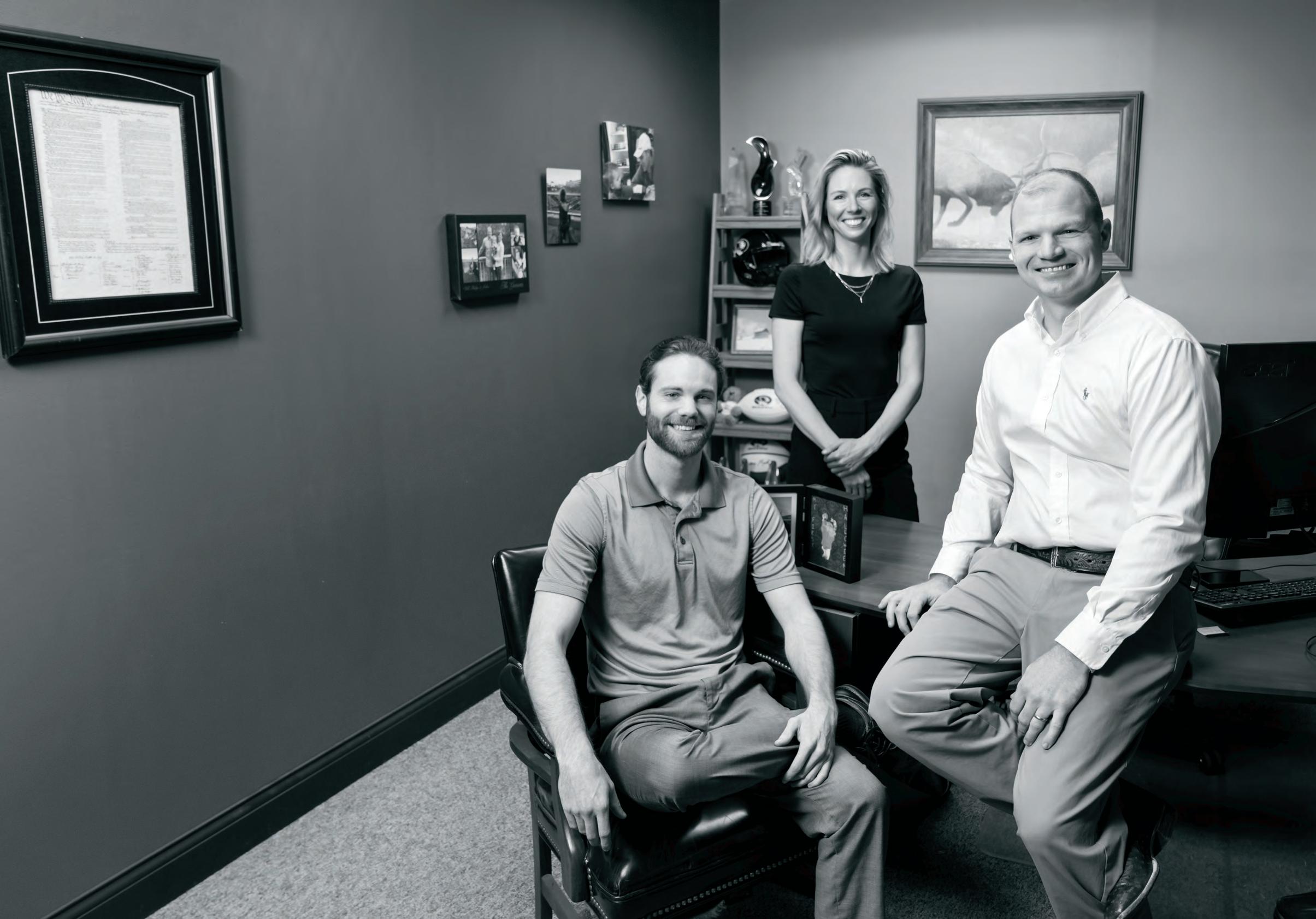
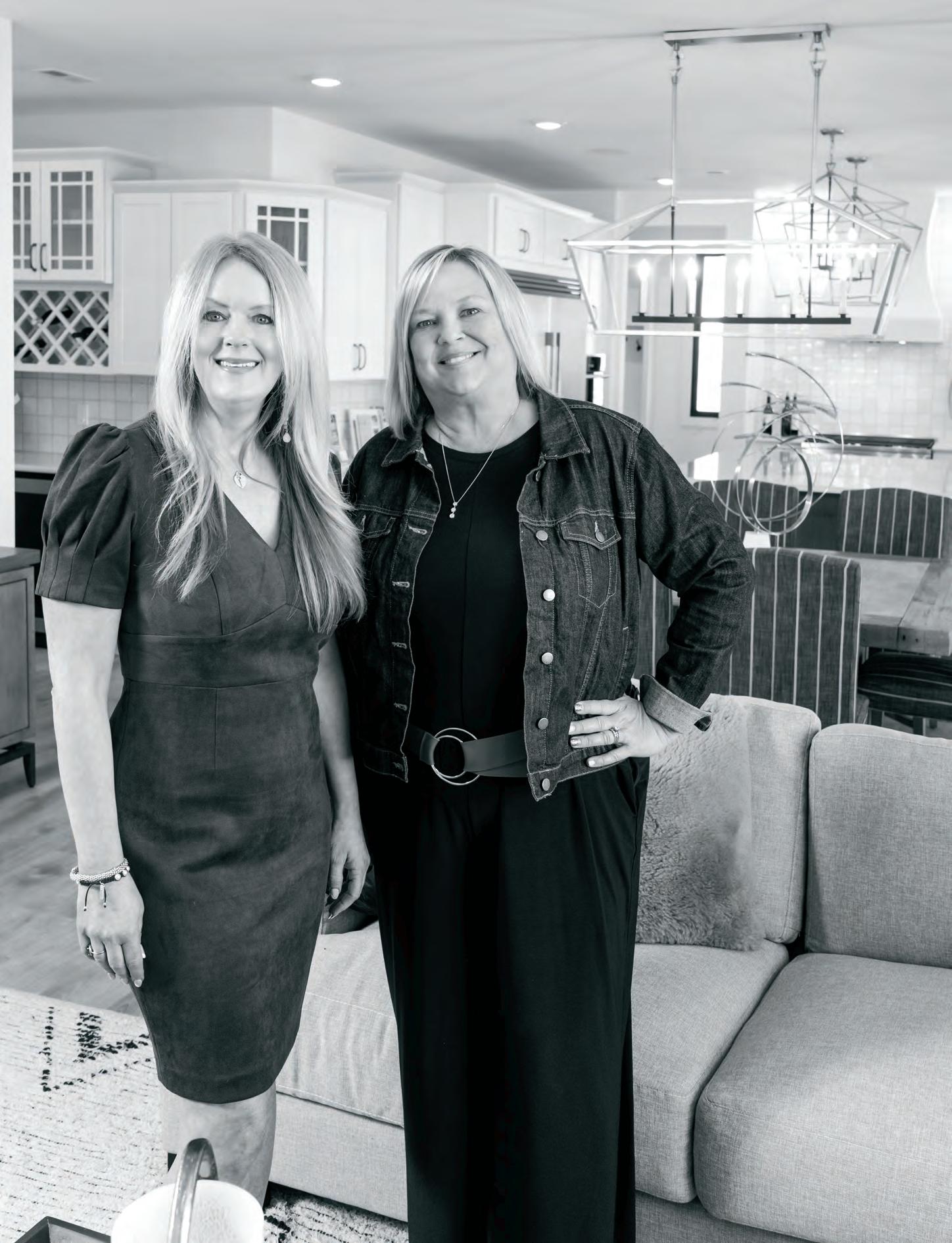
LOMBARDO HOMES | 2817 CLOPTON COURT, COLUMBIA MO | 6380 GATEWAY ARCH WAY, ASHLAND MO
LOMBARDO HOMES OF COLUMBIA
THE
OF
Will Garrett’s passion for helping others combined with his love for meeting people made him a perfect fit for the insurance industry. Now an agency sales manager with Missouri Farm Bureau, Garrett gets to spend his days meeting new people and helping them understand their insurance options.
As the industry progresses over the next five years, Garrett sees customers shifting away from online companies and back toward local firms. “I believe people are frustrated with the insufficient and impersonal
customer service these companies offer,” he says. “One of the benefits of local insurance companies is having an ally when things go wrong. Your agent is able to advocate for you.”
Garrett knows the importance of having a good agent in your corner. “It’s just as important as having the right people to support you at home. Having someone who will go to bat for you when you have a claim matters the most,” Garrett says.
2023 FACES OF COLUMBIA
MISSOURI FARM BUREAU INSURANCE - THE WILL GARRETT AGENCY | 2415 CARTER LANE, SUITE 2, COLUMBIA MO 573-514-8000 | AGENTS.MOFBINSURANCE.COM/MO-COLUMBIA-WILL-GARRETT THE FACE OF LIFE INSURANCE MISSOURI FARM BUREAU INSURANCE - THE WILL GARRETT AGENCY
2023 FACES OF COLUMBIA

At Extraordinary Complete Clean, the Clean Team understands that a person’s mood and motivation level can be affected by the state of their home or work environment. That is why this team works to not only clean your space but also provide a stressfree environment for productive living and working. “Cleaning is not just cleaning,” says Olivia Wright, owner. “It is also compassion, caring and understanding how this service provides health benefits and relief to our clients.”
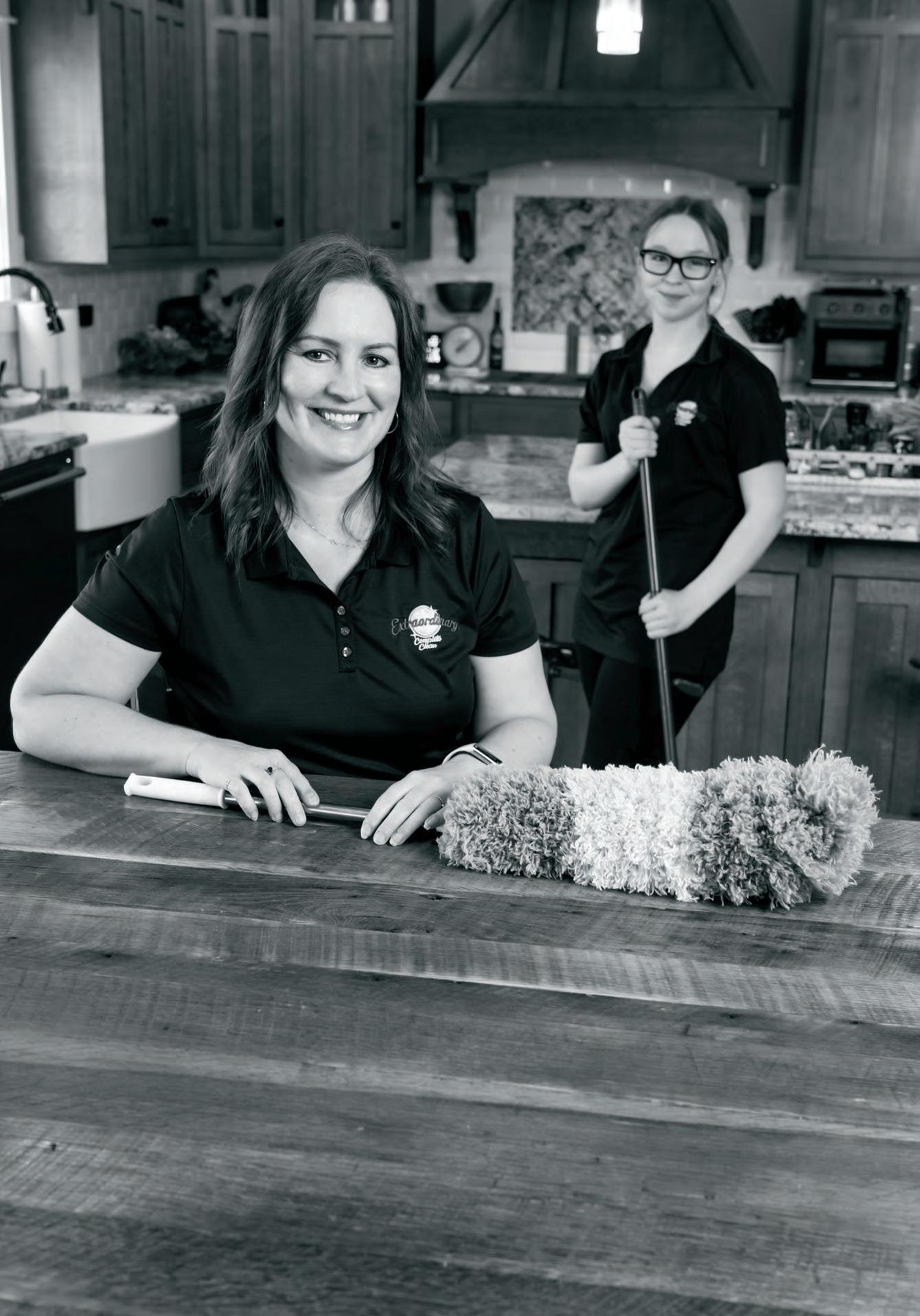
The Extraordinary Complete Team allows for flexibility and modifications to the client’s cleaning checklist to
ensure all needs are met while also incorporating “the little things” like a fancy toilet paper fold. “We want to leave each home with a sparkle and shine. We look forward to the moment our client arrives and breathes in the clean of their home or office,” Wright says.
Wright says when cleaning residential and commercial environments, she finds personal motivation in bringing satisfaction to clients and knowing that an exceptional service has been accomplished. “I find great satisfaction in going above and beyond the client’s expectations to give them that extraordinary and complete clean,” she says.
EXTRAORDINARY COMPLETE CLEAN | 573-881-4048 | EXTRAORDINARYCOMPLETECLEAN.COM THE FACE OF CLEAN ENVIRONMENTS EXTRAORDINARY COMPLETE CLEAN
Moving can be a stressful experience, so it makes all the difference to have professionals who can be relied upon. That’s why Levi Alldredge founded Tiger Moving LLC in spring 2020. Alldredge knows how hard moving can be and seeks to provide the highest level of service to give customers peace of mind.
“Moving alone is stressful; moreover, the reason why people move is often times more stressful than the move itself,” he says. “Every day, my team and I are
given the opportunity to lift the spirits of our customers by providing expert level moving services and excellent customer service.”
In such an “old school industry,” Alldredge says it doesn’t matter how much technology evolves as a top tier moving company should rely on its competence, strength and hard-working movers. “Hard work and preparation are the keys to success,” he says.
2023 FACES OF COLUMBIA
TIGER MOVING LLC | 2100 E. BROADWAY, COLUMBIA MO 573-999-7821 | TIGERMOVINGSERVICES.COM THE FACE OF MOVING TIGER MOVING LLC

Society lives off signs. Whether it’s a business sign, a road sign or a digital sign, each serves an important purpose. It’s why David Goodson is proud to be president and CEO of Impact Signs Awnings Wraps, Inc., where the mission is to help businesses thrive. “It gives me a sense of pride that our company can help them with their visual communication and branding needs, so that their businesses can grow and succeed,” Goodson says.
Impact Signs Awnings Wraps, Inc. offers a wide variety of products and services, ranging from custom in-house design, fabrication and installation of custom signs, decals and electronic displays, as well as a full line of printed products and custom wraps.
While Impact Signs Awnings Wraps, Inc. is the fastest growing, most trusted service provider throughout the central United States, Goodson says technological advancements will only help the company grow further throughout the next five years. These changes will “allow us to bring better quality and more value to our customers with the products that we manufacture or produce,” he says.
For Goodson, helping others flourish is just one reason why his work often feels more like an enjoyable hobby. “As the saying goes, ‘If you love what you do, you will never work a day in your life,’ and I think that certainly rings true for me,” he says.
Goodson also enjoys getting to know new businesses and members of the community, whether they are
business owners, managers, executives or other professionals. Regardless of their background, Goodson knows the importance of treating each customer well in order for a business to succeed. “It's all about people,” he says. “The way you should interact and treat everyone with dignity and respect. Knowing that my word and handshake have value and integrity.”
While there are several projects that stand out in his 26 years, Goodson says the Columbia Mall pylon sign on Stadium has been particularly memorable as it has become “such an icon in the Columbia skyline.”
Impact Signs Awnings Wraps, Inc. is customerfocused and results-driven, leading to great results for a customer’s brand and image. “We take pride in providing our mid-Missouri clients with unmatched customer service and signage products of the highest quality standard,” Goodson says.
In 2022, Goodson was inducted into the Sign Industry Hall of Fame for his work contributing to and bettering the sign industry for customers, employees and vendors. Throughout the past 15 years, he also has served as president, vice president, treasurer, board member and adviser for the Tri-State Sign Association.
Outside of work, Goodson is happily married to his wife, Julie, who is executive vice president and coowner of Impact Signs Awnings Wraps, Inc. Together, they have two children who both work in the business.
IMPACT SIGNS AWNINGS WRAPS | 1602 OLD HIGHWAY 40 E., COLUMBIA MO 855-829-4800 | IMPACT4800.COM
IMPACT SIGNS AWNINGS WRAPS
THE FACE OF SIGNS
2023 FACES OF COLUMBIA
There’s no greater accomplishment for Michelle Hopkins, Amanda Bracken, Sarah Smith and Sarah Cary than helping people communicate better. Being audiologists at Missouri Ear, Nose, and Throat Center is a rewarding profession that makes taking care of patients all worth it when you notice the difference you’ve made in one’s life. “We wanted to help people communicate better with their loved ones,” Bracken says. “We love hearing from patients about the changes they notice in their lives after seeing us.”
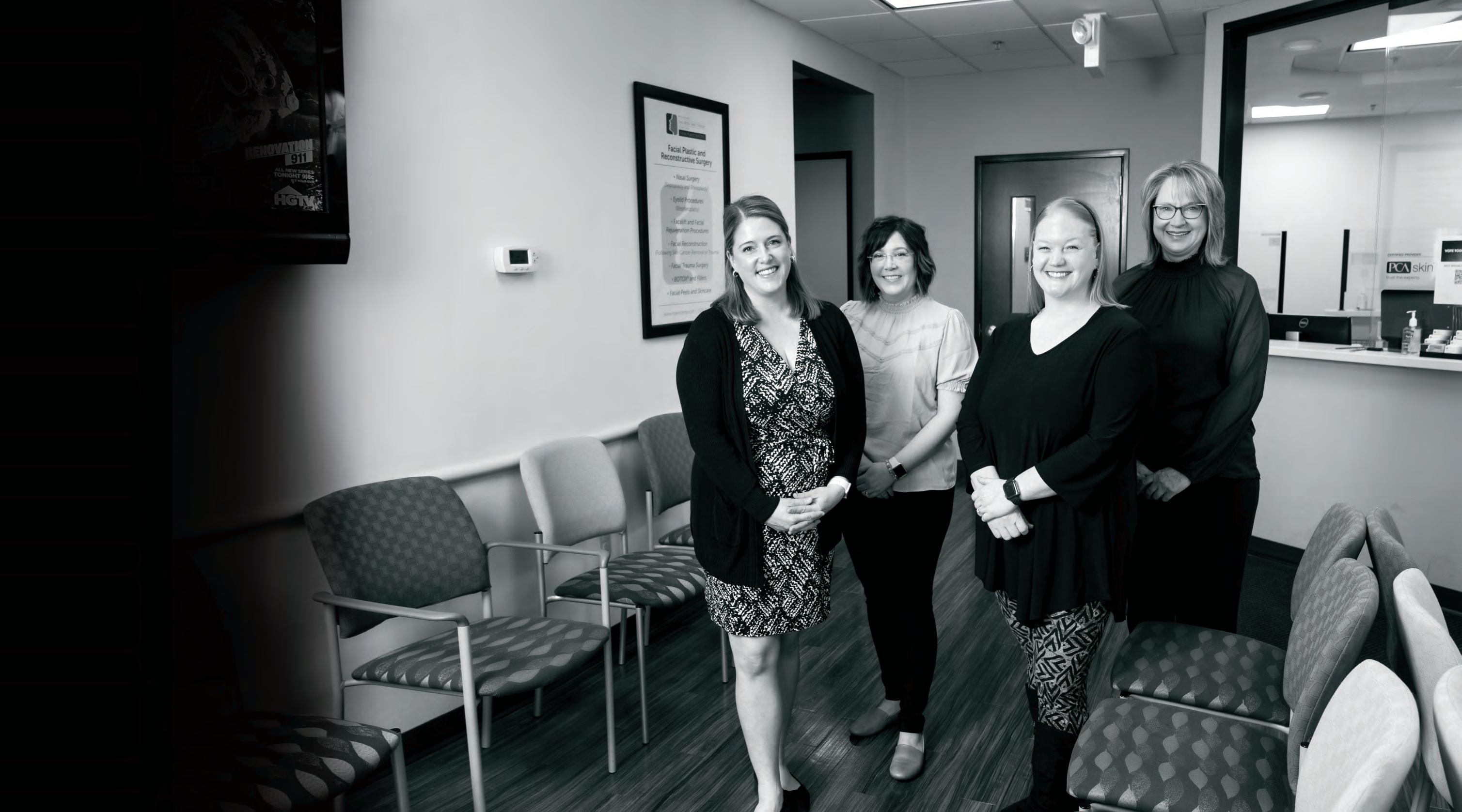
With patient care being the top priority, having the capability and willingness to change and adapt for patients is one of the most important aspects of the job. “We have a strong collaborative environment, which allows us to evaluate how we run our practice and adjust based on needs and demand,” Hopkins says.
Missouri Ear, Nose and Throat started in June 2008 and has been providing the highest level of service possible in the treatment of disorders of the ears, nose and throat ever since. The team offers a wide variety of services, from diagnostic hearing evaluations, hearing aid and cochlear implant services to central auditory processing disorder evaluations and therapy, tinnitus management and more.
Each day, patients are meant to feel like part of the family, getting the treatment needed to improve their daily lives. For many patients, this starts with a comprehensive evaluation to determine the source of the problem. Whether you are dealing with an ear infection
or hearing loss, the audiologists will work with you to achieve your optimal health.
Over the last 10 years, technology for treating hearing loss has drastically improved, and Smith predicts there will be even more advancements made in the near future. “We are so excited to see what new innovations will be available to our patients,” she says.
Hopkins, Bracken, Smith and Cary all have put down roots in mid-Missouri and enjoy what Columbia has to offer, but they didn’t all grow up here like Hopkins. Bracken joined the team nearly 12 years ago, Smith joined about 11 years ago and Cary, one of the newest members, joined nearly one year ago. “We all look forward to taking care of you in the future,” Cary says.
When not helping patients improve their communication skills, the audiologists at Missouri Ear, Nose, and Throat spend time giving back to their community. Every year, the staff adopts a family at Christmas through the Voluntary Action Center, donates canned goods to The Food Bank for Central & Northeast Missouri and donates supplies to local elementary schools.
If you’re looking to improve your communication skills and live a healthier life, Missouri Ear, Nose, and Throat audiologists are here for you. They are committed to listening to patients, earning the trust and respect of patients, exceeding your expectations, ensuring a creative, challenging and compassionate professional environment, and striving for continuous improvement.
MISSOURI EAR, NOSE, AND THROAT CENTER | 1000 W. NIFONG BLVD., BUILDING 3, SUITE 100, COLUMBIA MO 573-214-2000 | MOENTCENTER.COM
MISSOURI EAR, NOSE, AND THROAT CENTER
THE FACE OF HEARING HEALTH CARE
2023 FACES OF COLUMBIA
Farmland Consultants, LLC prides itself on matching key investors with the right property owners to create a mutually beneficial transaction. Owner Matt Wear, along with his local team, including David Hollenberg, Marty Canterbury, Ryan McAllister, Shannon Akin and Justin Nichols among others, have a passion for real estate, specifically land. “We’ve been fortunate enough to have sold over a billion dollars in gross sales in just a few short years.,” Wear says.
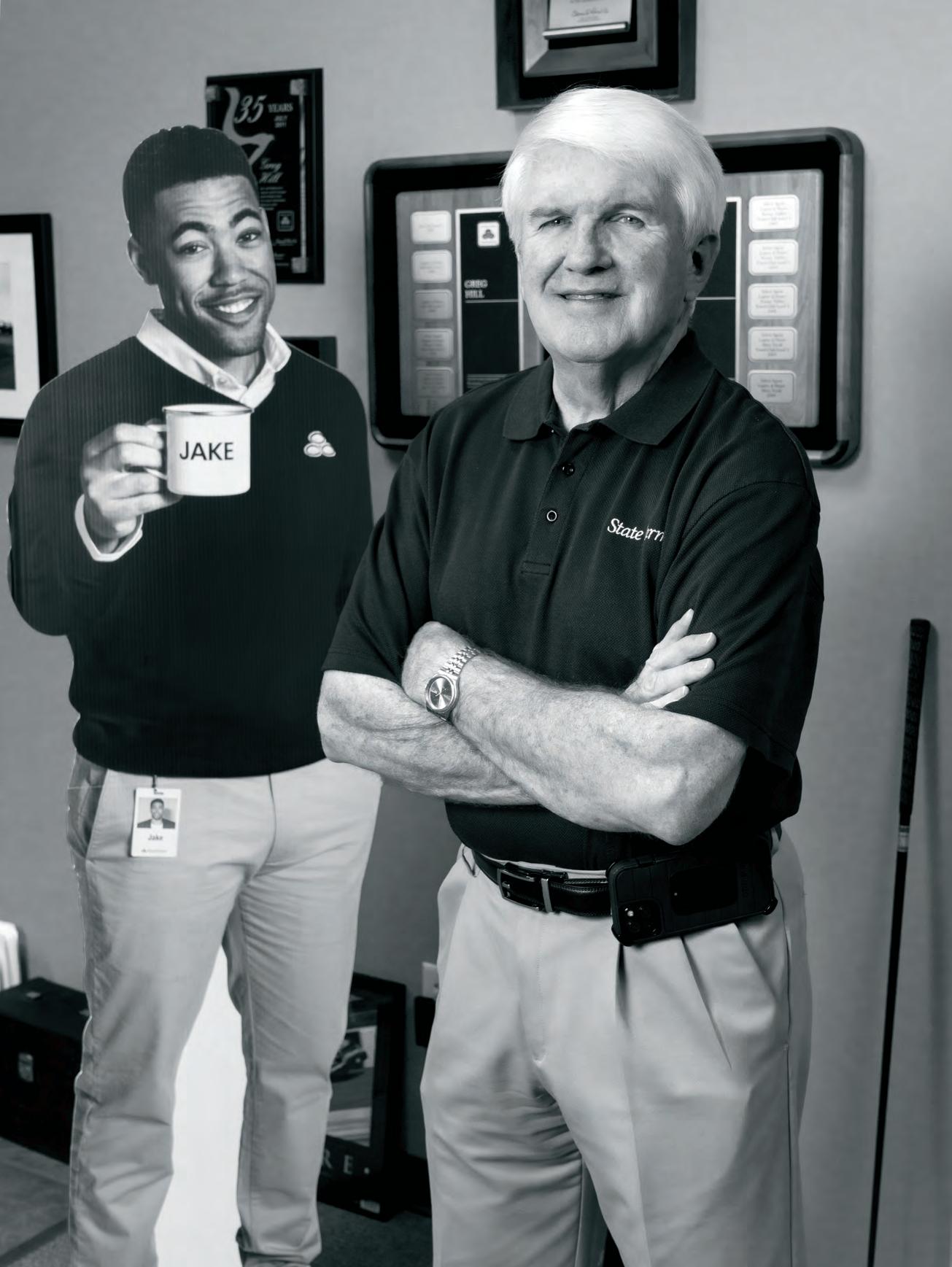

While the team focuses on land sales, it’s not only the stand-alone land assets they focus on. Farmland has
vertically integrated platforms, natural resource assets, water related assets, ag and water tech, alternative energy and more. “We can structure sales to fit about any scenario. This flexibility allows us to cover about any type of real estate opportunity,” Wear says.
Even though the job can be a constant challenge to find the right opportunities for investors, Wear says seeing the results be a success is incredibly fulfilling. “It’s extremely rewarding when everything comes together, and all parties are happy at the end of the day.”
2023 FACES OF COLUMBIA
FARMLAND CONSULTANTS, LLC | 1000 W. NIFONG BLVD., BUILDING 4, SUITE 201C, COLUMBIA MO 573-673-9291 | FARMLANDCONSULTANTS.COM THE FACE OF PAIRING PROPERTIES WITH INVESTORS FARMLAND CONSULTANTS, LLC
After nearly 50 years working with State Farm Insurance, Greg Hill has enjoyed working so closely with clients that many are now considered friends. It’s one of the benefits of continuing to provide personal service in the era of automation. “I see more and more clients happy to have an agent they can deal with personally, instead of an 800 number,” Hill says. “I feel many people find it important to develop a good relationship with their agent!”
Hill has particularly enjoyed providing life insurance for clients and being able to provide some solace when they are faced with loss. Throughout his career, Hill has learned the value of providing excellent customer service to each client, ensuring that he’s there when needed.
Outside of work, Hill has enjoyed serving the community through a variety of organizations, from Daniel Boone Little League to Special Olympics Missouri.
2023 FACES OF COLUMBIA
GREG HILL — STATE FARM INSURANCE | 1609 CHAPEL HILL ROAD, SUITE A, COLUMBIA MO 573-234-2886 | GREGHILLSF.COM THE FACE OF JUST IN CASE GREG HILL — STATE FARM INSURANCE
Finding freedom

from Chaos
Get Organized with these Five Steps to Clear the Clutter.
By Zola Crowder | Photos by L.G Patterson
Having an organized space can make or break your productivity, stress level and overall well-being. But knowing where to start can be a challenge.
Bonnie Hudson, founder of Beyond Organized MO, LLC, says organizing a space not only creates balance, but it allows people to regain control of their lives. “You will be more focused on what you want to achieve, you can manage time more effectively. You might even have more energy and enthusiasm once you have achieved freedom from chaos,” she says.
But how do you find that freedom? Hudson uses a simple acronym to assist people in their organizing journey. The five-step SPACE method is meant to help someone tackle any organizational project.
INSIDE COLUMBIA MAY/JUNE 2023 113
SORT
Start with removing everything from your target area. Once the room or space is completely empty, start sorting items into piles, which could be as simple as putting shoes in one pile and belts in another. “Your goal is simply to empty your target area and sort every single item into general categories,” Hudson says.
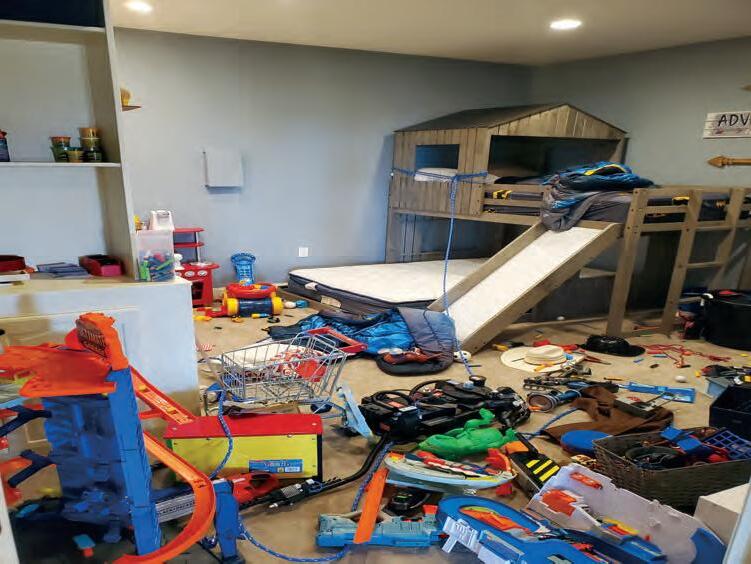
PURGE
This is typically the hardest step for most people. It’s during this step that you will decide what items will stay in the original target area, which items you will keep somewhere else, what will go in the trash, what you will donate and what items you might be able to sell. For someone with an emotional attachment to items, it could be difficult to say goodbye to something you have held onto for a long time, and Hudson says that’s OK. “We don’t ever want to make someone get rid of something,” she says. “We just want to find a way to organize things that they want to keep.”
Step SPACE Method for Organizing Your Home

S P A C E
SORT – Empty out your target area and sort items into piles.
PURGE – Determine which items to keep, trash, donate or sell.
ASSESS – Identify what should be stored together, where and how.
CONTAIN – Gather some organizing supplies to contain your items and put things away.
EMBELLISH – The final step is completely optional. Embellish your newly organized space with liners, labels and other decorative touches.
BEFORE
Six Habits of Staying Organized ASSESS
Now that you’ve emptied and sorted the items in your target area, this step should be pretty simple. This is the time to identify what items should be stored together, as well as where and how to store them. “Pay close attention to all the remaining items and put them back in a way that not only fits and makes the most of the space you have, but also leaves each item functional and accessible,” Hudson says. You might ask yourself, what was previously working or not working? What items fit best? What items do you commonly use? All these questions will help you be able to picture where each item should go in a way that makes the most sense for you.
CONTAIN
This is when you’ll put that assessment plan into action and begin to see real results. “You will really start to see your efforts pay off,” Hudson says. As you start to finally put items away, make sure the picture you had in your head is functional in real life and that you like the way it looks. If not, make any needed adjustments before moving on to the final step.
Keep it simple.
Develop routines.
Have a place for everything and put everything in its place.
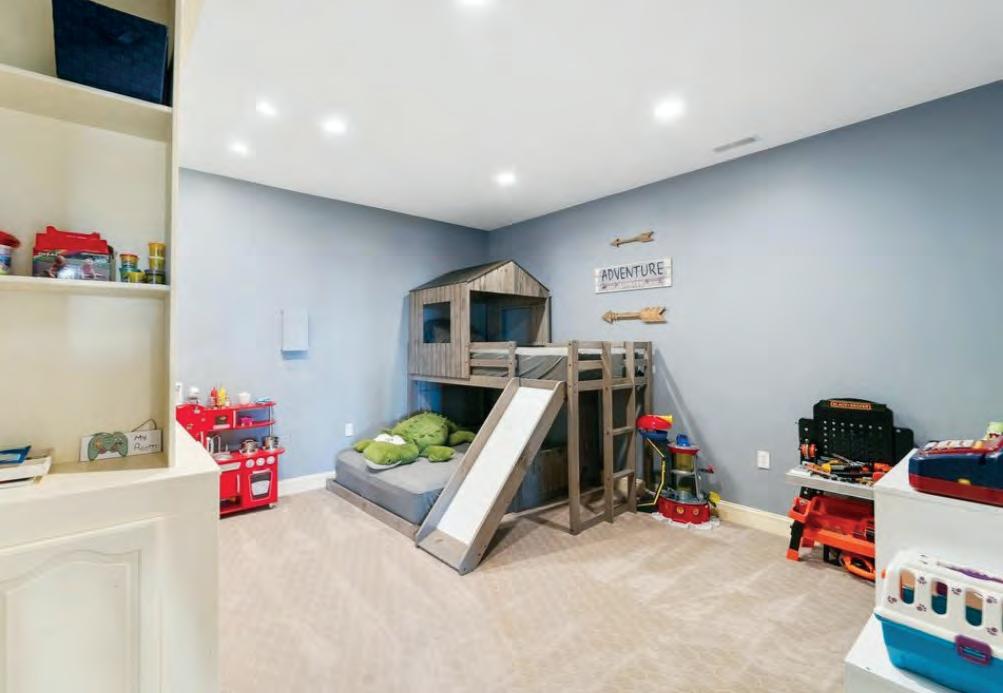
Keep a current and detailed todo list.
Don’t get bogged down by perfectionism.
Toss things daily and purge routinely.
INSIDE COLUMBIA MAY/JUNE 2023 115 AFTER
EMBELLISH
This step is completely optional and is just meant to add the finishing touches to your already beautifully organized space. This is when you’ll add liners, labels or any other decorative touches to bring your organization to the next level and get that look you’ve been dreaming of.

STAYING ORGANIZED
Don’t forget that the work is not over after one day. You want to make sure you make proper habits to stay organized for the long haul. That means showing the new method of organizing to each member of the household, Hudson says. The goal is to keep it simple and develop routines. That way, you have a place for everything, and everyone knows where it is.
Make sure to keep a detailed to-do list and don’t get bogged down by perfectionism. And remember to toss and purge things routinely.
When you’re ready to start your next organizational project, Hudson has one other piece of advice: Make it fun. Put on your comfy clothes, turn on your favorite music, maybe even pour yourself a cocktail and make a day of it. Hudson lives by this, even when working with her own clients. “The conversation is typically fun, and we are just laughing with our clients. It’s important to make it fun,” Hudson says.
And there’s always the option of hiring a professional to help with those really daunting projects. “We operate on zero judgement,” Hudson says. “We know life gets in the way for everybody and we also know that people have different strengths.”

116 INSIDE COLUMBIA MAY/JUNE 2023
Melissa Vanderploeg (left) and Bonnie Hudson (right) are founders of Beyond Organized MO, LLC.
By Madeleine Leroux | Photos by L.G. Patterson
How to Create an Arrangement Like a Pro.
Nflowers. Whether it’s a centerpiece meant to grab attention or a simple tableside arrangement to add a pop of color, flowers can make all the difference in any room.
Sherie Rodekohr has spent her entire career in horticulture, with more than 30 years teaching at Columbia Public Schools. She currently teaches floral and plant design at the Columbia Area Career Center, where she helps students learn the basics behind creating a beautiful arrangement.

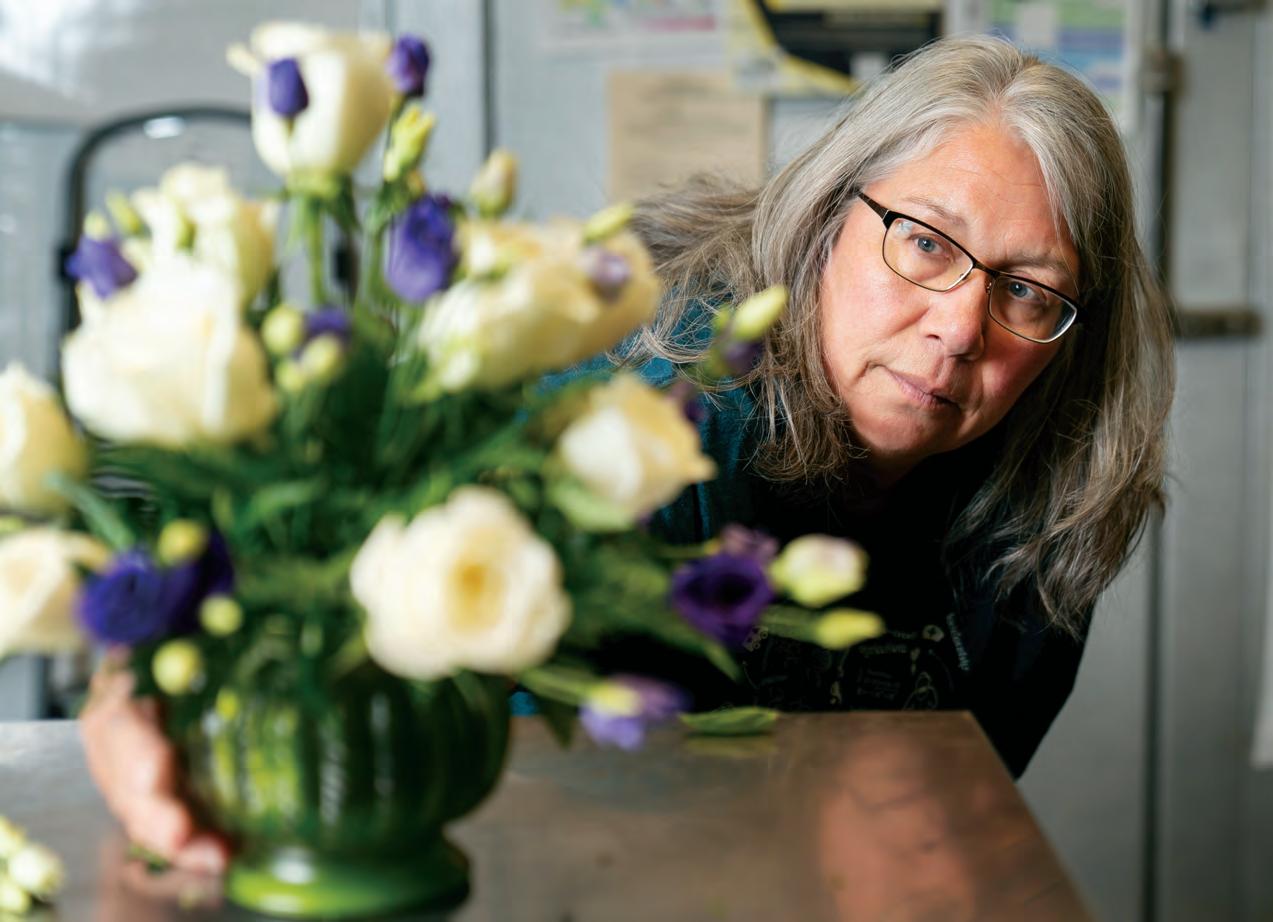
If you’d like to try your hand at creating your own arrangement, there’s a few things you need to keep in mind. Rodekohr says there are four basic categories of flowers — line, form, mass and filler. Line flowers help establish the skeleton of the design, including its
focal points and are often the most unique and distinctive flowers. Mass flowers fill in the bulk of the design for the arrangement and fillers are used, as the name implies, to fill in any leftover gaps.


To start, you need to have an idea in mind of what you want the finished product to look like. Rodekohr uses what she calls the spring break analogy with her students: If you’re going on spring break, the first thing you’re going to do is look at a map to decide where you’re going and how you’ll get there. But even Rodekohr knows that that can be a very difficult task. “Sometimes coming up with that idea is the hardest part,” she says.
If you’re struggling to come up with your concept, start by considering whether it will be
118 INSIDE COLUMBIA MAY/JUNE 2023
a horizontal or vertical arrangement. Think about the purpose of the arrangement and any color scheme or theme that should be incorporated. And if you still need inspiration, turn to the internet for any number of examples.
Once you’ve got your design, you can get your flowers and start putting it all together. But don’t stress if it’s not coming together exactly like you envisioned. Rodekohr says if your design isn’t working out, just adjust as needed. “It could be that you can redo that design and just make it smaller or you need to go in a completely different direction,” she says. “Sometimes that’s when the best ideas come.”
No matter what type of arrangement you want to try, Rodekohr says just go
for it. “Don’t be afraid to try new things,” she says. “It’s intimidating, I think, for new people to cut those stems off.” And while it’s true that you can only cut once, you can always adjust your original vision to come up with something beautiful in the end.
“Don’t be afraid to try new things. It’s intimidating, I think, for new people to cut those stems off.”
Sherie Rodekohr
floral and plant design instructor at Columbia Public Schools
Grab Some Shades

1 2 3 4
Find Sunglasses to Suit Your Style.
STYLED BY MADELYN JONES AND DIAHANN BIESER | PHOTOS BY L.G. PATTERSON
Longer days, warm weather and sunny skies — combine all three and you get the perfect conditions for some outdoor fun in mid-Missouri. But before you head out into the sunlight, make sure you’re ready with right accessories. This selection of sunglasses from local retailers is not only cute and trendy but provides much needed eye protection in the bright light of spring and summer. And for those of you who wear prescription glasses, there are still options. Several of our examples came from Andrew Stone Optometry, where the final price will depend on your prescription and lens needs, as well as any applicable insurance coverage. So grab some shades and get outside!
1. Etnia Barcelone Trento Sun in gray Andrew Stone Optometry
2. Powder Limited Edition Leilani sunglasses in rose The Tin Roof Monogram & Gift $52
3. DIFF Eyewear Gia in cream tortoise grey Kelly Fields Boutique $88
4. Vuarnet VL2003 in tortoise/pink Andrew Stone Optometry
5. DIFF Eyewear Carson in Andes tortoise and polarized Kelly Fields Boutique $98
6. Powder Limited Edition Nora tortoiseshell sunglasses The Tin Roof Monogram & Gift $52
5 6 7
7. Z Supply Out of Office polarized sunglasses in champagne Kelly Fields Boutique $88

Get Moving with a New, Exciting Experience
By Madeleine Leroux and Ava Kitzi
Photos by Ava Kitzi
There’s nothing quite like getting your adrenaline pumping. Suddenly, you’re completely in the moment as a mix of fear and anticipation takes over.
For some people, this particular rush is beyond addicting. So they seek it out in a variety of ways, from scary movies to thrillseeking activities designed to get your adrenaline going.
If you’ve never been an adrenaline junkie, you may not know that there are a wide variety of ways to get that rush right here in mid-Missouri. Whether you’re eager to try something new or just looking for something to cross off your bucket list, we’ve rounded up just a few of the ways you can seek out the thrills around Columbia.
Just remember, safety first!
MOUNTAiN BiKiNG
Trails to Try

Woodpecker Hollow at Hinkson Valley
Nature Preserve; Rock Bridge Memorial State Park trails like Deer Run and Karst
Mid-Missouri has so many trails to choose from, whether you’re looking for a leisurely walk or a more intense journey. If you’re ready to try something a little bumpier, it may be time to give mountain biking a shot.

If so, the first thing you’re going to need is a proper mountain bike, says Angela Peterson, co-founder of the CoMo Dirt Dames, a local mountain biking group for women and nonbinary people. It’s important to get a bike that is made for that type of terrain so it can handle it better. “They have suspension in them,” Peterson says. “It absorbs obstacles and bumps on the trail, so it makes it a lot smoother


Helmets are required.”
Then it’s time for some basic skills instruction, and that can be done in a variety of ways. One way is to get professional coaching, which Peterson offers through her business, Rainbow Shred Mountain Bike Coaching. Or you can simply learn the basics from another rider so you can get out and try, starting slow and building up. That can be done with friends
which Peterson says can make all the difference. However you’re able to get started, Peterson says it’s simply important to get the basics down so that you can enjoy the ride. “This is how you can bike safely and confidently, and also learn trail etiquette,” Peterson says, like when to hold off on using the trails.
124 INSIDE COLUMBIA MAY/JUNE 2023
How to Try Skyview Balloons, Aerial Advantage, BalloonStormers


When the conditions are right, it’s not uncommon to see a hot air balloon moving across the sky over Columbia. For many people, it’s a once-in-a-lifetime opportunity. But for Ben Humphreys, it’s just another day at work. The owner of Skyview Balloons began flying at the young age of 12 and became certified to carry passengers at the age of 18. “It’s not like flying anything else,” he says. “This is so much calmer
Hot air balloons can fly anywhere from treetop level to thousands of feet in the air, depending on wind and weather. The experience offers unique views and open air flying unlike almost
For first-time fliers, Humphreys’ biggest piece of advice is pretty simple: Be patient with the weather. “It takes pretty particular weather to fly a balloon,” he says. “Just trust the person who is taking you for the flight and telling you when the weather is best to do it.”
While balloons can be flown year-round in Missouri, it is extremely weather dependent, right down to the launch and land points. Humphreys says he often advises people that while they can fly at the time/date of their choosing, it would be better to wait in order to get the best possible experience. “There’s just better days to wait for,” he says. “Make it really special.”
INSIDE COLUMBIA MAY/JUNE 2023 125
Hot airballooning
rock climbing
How to Try COMO Rocks or any beginnerlevel climbing wall available
Whether inside the gym with 2 feet of squishy mat to fall back on or out in the wilderness with a harness, rope and chalk to keep suspended, rock climbing can give people an exhilarating rush (and a killer arm workout). Daxton Gautreaux, former president of the University of Central Missouri climbing club, has become passionate not just about climbing but about bringing the sport to beginners.
“All these people, they’ve come in and they’re from all different backgrounds, all different states, different majors but they’ve been able to come together at the rock wall and create friendships and I think that’s super cool,” Gautreaux says.
Mid-Missouri is well equipped with both indoor climbing at facilities like COMO Rocks, which opened last summer, as well as scenic outdoor routes at Capen Park and farther south on the Katy Trail.
While rock climbing can be intimidating, especially for people who have a fear of heights, Gautreaux says that all equipment is tested for strength and stability before it reaches the market. Plus, outdoor climbing involves a belay system, in which another person is tied to and suspends the climber in the air to keep them from falling.

Nevertheless, any fear you encounter when first starting out can only be remedied by trying, Gautreaux says.
“Just be prepared to get out of your comfort zone," Gautreaux says. “It’s going to be a little scary at first, and that’s OK, but anybody can do it.”

What to Know Before You Go
BEFORE TAKING ON ANY ACTIVITY THAT MIGHT BE DANGEROUS, REMEMBER TO BE AS SAFE AS POSSIBLE.
Do research before you go. Make sure it’s something you definitely want to try and look for others to try it with you or help you learn the ropes. If you’ve had health issues in the past, consider checking with your primary care provider before taking on a thrill-seeking activity to ensure it’s safe for you to try.


Remember to be realistic with your own abilities and fitness level. Know your limits and don’t put yourself, or others, in danger by overestimating what you can do.
Make sure to check and use any provided safety equipment and follow instructions from the professionals — they’re there to keep you safe.
And if you’re going anywhere remote, like with mountain biking, consider bringing an emergency first aid kit just in case.
roller derby
How to Try
Any beginner skate class
online or attending a local bout. And Bean recommends at least starting out with kneepads, wrist guards and helmets, though she notes that the roller derby team typically wears more protection than that.
Bean says anyone can be part of roller derby because they can teach anyone to skate. What can’t be taught is the desire to be part of a team and, in particular, what Bean calls the CoMo Roller Derby’s “group of weirdos.” Plus, she says, there’s a role in roller derby for skaters of every fitness level and body type.
“We are definitely a community,” she says. “Do you need a tribe?”
The CoMo Roller Derby will host a beginners program in September where the fundamentals of skating and roller derby will be taught. To learn more about the eight-week program, visit comoderbydames.org.

INSIDE COLUMBIA MAY/JUNE 2023 127


CHECK OUT THE LATEST EDITION



What Goes into a Retirement “Paycheck”?

DDuring your working years, you generally know how much money you’re bringing in, so you can budget accordingly. But once you’re retired, it’s a different story. However, with some diligence, you can put together a “paycheck” that can help you meet your income needs.
Where will this paycheck come from? Social Security benefits should replace about 40% of one’s pre-retirement earnings, according to the Social Security Administration, but this figure varies widely based on an individual’s circumstances. Typically, the higher your income before you retire, the lower the percentage will be replaced by Social Security. Private pensions have become much rarer in recent decades, though you might receive one if you worked for a government agency or a large company. But in any case, to fill out your retirement paycheck, you may need to draw heavily on your investment portfolio.
Your portfolio can provide you with income in these ways:
Dividends – When you were working, and you didn’t have to depend on your portfolio for income to the extent you will when you’re retired, you may have reinvested the dividends you received from stocks and stock-based mutual funds, increasing the number of shares you own in these investments. And that was a good move, because increased share ownership is a great way to help build wealth. But once you’re retired, you may need to start accepting the dividends to boost your cash flow.
• Interest payments – The interest payments from bonds and other fixed-income investments, such as certificates of deposit (CDs), can also add to your retirement income. In the years immediately preceding
their retirement, some investors increase the presence of these interest-paying investments in their portfolio. (But even during retirement, you’ll need some growth potential in your investments to help keep you ahead of inflation.)
• Proceeds from selling investments –While you will likely need to begin selling investments once you’re retired, you’ll need to be careful not to liquidate your portfolio too quickly. How much can you sell each year? The answer depends on several factors — your age, the size of your portfolio, the amount of income you receive from other sources, your spouse’s income, your retirement lifestyle, and so on. A financial professional can help you determine the amount and type of investment sales that are appropriate for your needs while considering the needs of your portfolio over your lifetime.
When tapping into your investments as part of your retirement paycheck, you’ll also want to pay special attention to the amount of cash in your portfolio. It’s a good idea to have enough cash available to cover a year’s worth of your living expenses, even after accounting for other sources of income, such as Social Security or pensions. In addition, you may want to set aside sufficient cash for emergencies. Not only will these cash cushions help you with the cost of living and unexpected costs, but they might also enable you to avoid digging deeper into your long-term investments than you might like. You may be retired for a long time — so take the steps necessary to build a consistent retirement paycheck.
ADVERTISEMENT
This article was written by Edward Jones for use by your local Edward Jones Financial Advisor.
Gina N Mauller-Crane, CFP®, Financial Advisor 11 South Fairview Road, Suite 109 Columbia, MO 65203 573.445.7671 | EdwardJones.com | bd • Retirement Savings Strategies • Business & Employer Retirement Plans • Estate, Legacy & Wealth Strategies • Intergenerational Planning • Socially Conscious Investing • Education Savings Plans • Annuities • Protection Strategies (Life, Disability, and Longterm Care Insurance) Member SIPC
staff
publisher’s note

In this issue of Boom!, we can’t wait to introduce you to Columbia’s Dr. Mark Adams, an orthopedic surgeon and former team physician to the United States Olympic team who has been improving the performance of athletes for decades.
Adams was selected to travel to the 1996 Atlanta Games and 2000 Sydney Games, accompanying Team USA. Not only has he been instrumental to the Olympic teams, he also was the team physician for the U.S. Soccer Women’s National Team, where he helped celebrate the 1999 World Cup victory. In addition to his full-time responsibilities at Columbia Orthopedic Group, he has been improving the performance of MU Athletic Department athletes for the past 32 years. Adams and his wife, Carole, have been more than mere sports fans, putting together their love of people and sports.
In this issue, you can also read about another avid fan. Nathan “Shags” McLeod shares his passion of fishing with his love of accumulating and appreciating antique and collectible fishing gear. In particular, McLeod has an affection for antique lures, their design and function. For the past six to seven years, he’s filled his house with a growing collection of vintage fishing gear.
Do you want to know a great location to relax beside a clear mountain lake where you can use the fishing gear you’ve been collecting? Our writer Kimberly Blaker has researched a beautiful national forest spanning northern Georgia that might be a perfect trip to take with the grandkids. Fort Mountain is about a two-hour car ride from Atlanta. What you’ll find are amazing views of nature and sweeping mountains. You’ll also find short scenic nature trails, waterfalls, a stone lookout tower and a sandy beach — what’s not to like?
You’ll find these articles and more in this issue of Boom! magazine. I’d love to hear your feedback on our publication that’s geared for the prime of your life!
Melody
Publisher
Chief Executive Officer
Carla Leible
Founder & Publisher Emeritus
Fred Parry
Publisher & Managing Editor
Melody Garnett Parry
Associate Editors
Madeleine Leroux
Zola Crowder
Art Director
Tim Flanner
Graphic Designer
Madelyn Jones
Photo Editor
L.G. Patterson
Advertising Coordinators
Bre Smith
Kalie Kramel
Marketing Representatives
Cathy Atkins
Josh Arnold
Kari Arbova
Tyler Morrison
Office Manager
Becky James
Distribution Associate

Steve Leible
Contributing Writers
Jack Wax
Kimberly Blaker
132 BOOM MAGAZINE PUBLISHER’S NOTE
Parry
me at melody@mailzimmer.com SPRING 2023
Email
CALL TODAY 800-479-2091 © 2023 Mediacom Communications Corporation. All Rights Reserved. Mediacom Business delivers powerful internet solutions. Secure, reliable Gigabit broadband fuels efficiency and pushes the envelope on productivity. It’s the technology that gives your business the momentum it needs to keep moving. SPEED. SECURITY. RELIABILITY. WITH GIGABIT INTERNET SPEED
good stuff
137 Taking Off In Style
The new Columbia Regional Airport terminal is three times the size of the previous terminal. Get a glimpse of the new project and see what kind of upgrades travelers can expect.
140 Not Staying On The Sidelines

Orthopedic surgeon Mark Adams has made a lifelong commitment to treating athletes. Read about his experiences as a physician for the U.S. Olympic team in Atlanta and Sydney.
good life
138
Reeled In
Nathan “Shags” McLeod has gotten hooked on collecting vintage fishing items, especially old lures. Find out what enticed him to start collecting the hand carved, wooden lures.

144
It’s Time To Travel
Have you considered taking a family wilderness adventure? We’ve got just the spot. Chattahoochee National Forest spanning northern Georgia will keep your family captivated and entertained.
in this issue 140 138

134 BOOM MAGAZINE
2023
SPRING
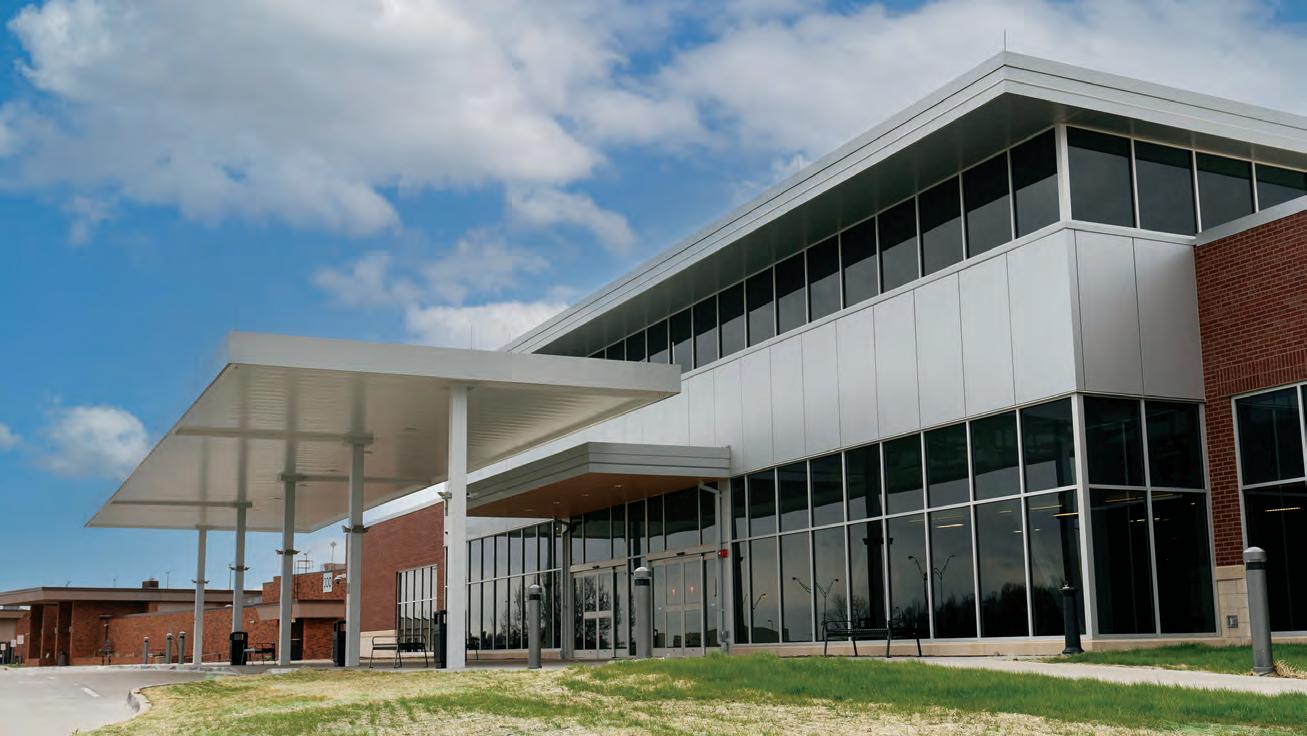

Love At First Flight
New Columbia Regional Airport Terminal Improves Local Air Travel
BY ZOLA CROWDER | PHOTOS BY L.G. PATTERSON
Five years after the Columbia City Council first gave support for the project, Columbia Regional Airport’s new and improved terminal is ready for use.
The new 52,000-square-foot facility is three times the size of the previous terminal, with several upgrades to improve air travel for people in midMissouri. It features four gates with three passenger boarding bridges, more comfortable seating, increased charging outlets, workstations for business travelers, a mother’s room, a sensory room and an interior service animal relief area. Plus, a restaurant and bar are in the plans for the near future.
“We now have a terminal that better reflects our region and is more welcoming to those visiting our area, creating that critical first impression,” says Amy Schneider, director of the Columbia Convention & Visitors Bureau.
Work began on the terminal in May 2020 and was completed in October 2022. The first flights out of the new terminal began on Oct. 26, 2022.
Currently, passengers can only fly daily to and from Dallas-Fort Worth and Chicago; however, according to city officials, the plan is to add a twicedaily service to and from Charlotte, North Carolina, once the demand for
"COU will play a key role in securing our region's economic future," says Stacey Button, director of economic development for the city of Columbia. "The new airport terminal will help existing businesses grow as well as drive the development of new economic opportunities in Columbia and throughout mid-Missouri."
BOOM MAGAZINE 137
A Lure All Its Own
Antique Fishing Gear Collection Continues to Grow
 By Madeleine Leroux | Photos by L.G. Patterson
Nathan “Shags” McLeod’s collection of antique fishing gear started 20 years ago. That’s when a family friend gave him a couple of old penn reels that sat in storage for years. That is, until McLeod really started collecting a few years ago.
“In the past six or seven years, it’s kind of exploded,” he says. That’s when he began going to more auctions and estate sales to supply an antique booth he used to run at Midway Antique Mall. McLeod started coming across more items he liked to add to what became a growing collection now displayed throughout his house. “I’ve got lures and reels and things everywhere,” he says.
So what’s the lure? (Pardon the obvious pun.) Antique lures were made from wood, with some being hand carved, and painted with beautiful designs and colors. They came from individual
mom-and-pop shops all over the country, leading to a wide variety of unique pieces. “There’s just something about the old lures that I think is super cool. Just the design,” McLeod says. “A lot of it is the artwork on the boxes. It’s just incredible. They’re little pieces of art.”
Nowadays, lures are mass produced and often made of plastic. And while they may be more effective when actually fishing, they just don’t compare to the beauty of the unique, old wooden models, McLeod says.
Going for the Gold
A Columbia Physician’s Legacy Includes the Success of World-Class Athletes
 By Jack Wax
MAGAZINE 141
Photos by L.G. Patterson
quickly they can rush patients in and out of their examining room, Mark has a different approach. He spends so much time talking with his patients that on many days he runs behind schedule. But he doesn’t mind. “What I enjoy most is being around people. I really enjoy my patients and athletes, and that’s why I’m still practicing,” he says.
Sarah Reesman, a founder and
months — the burden of taking care of the kids all fell on Carole,” Mark says. “She always kept the home fire going.”
With four kids in school, Carole only occasionally was able to meet — or at least see — her husband while he was on the sidelines of fields around the world. Even if she flew in for a quick visit, there were obstacles.
One time, she brought the kids
“Caitlin would get on the phone a few minutes, and thinking Mia was calling just to talk to her, would thank her for calling before Mia would ask for me,” Mark says.
Although Olympic and World Cup athletes are an elite breed of individuals, Mark provides the same level of care and concern to high school, college or recreational teams. Bryan Blitz, who
current board member of Columbia’s Women’s Intersport Network, (WIN) has known Mark for years. Like most people who know him well, she considers him a friend. “He’s just one of those people who you feel comfortable with right away. His abilities as an orthopedic surgeon are as highly valued as is his compassionate manner of relating to people,” she says. WIN in Columbia recently presented Mark with the Ken Heitholt Memorial Award, recognizing his contribution to women’s sports.
Mark and Carole describe their family as a “sports family.” Not only do they love watching sports, but when their four children were still in school, Carole assumed the role of family chauffeur, driving kids to sporting events around town and to other cities. “There were times when I felt I had little time for anything other than getting the kids to and from practice,” she says. Because their children were on various select teams, they might need rides to four different cities on the same day. Scheduling who took who to where required a lot of coordination with other parents while Mark was away. “When I was gone — and I might be in Russia for six weeks or Australia for a couple
with her to visit Mark at an Olympics practice in Orlando, Florida. She and the kids hadn’t seen Mark for six weeks and because of security measures, Mark and the team spent their nights in a heavily guarded area. As Carole approached the field, a couple of FBI agents swooped down on her. “They had huge guns,” Carole says. “I told them I was there to see my husband, but they wouldn’t let me through. I was able to wave to Mark, but that’s all.”
Mark wasn’t always isolated under such a high level of security, and one of Carole’s favorite memories was going to after-parties where she and the kids met the World Cup Women’s Soccer team and their families. “They were really down to earth — people just like you and me,” she says.
When their daughter, Caitlin, was 9 years old, Carole and Mark planned a weekend in Chicago where she could spend some time with Mark. When the Women’s Soccer Team learned that his daughter was coming for a special weekend, they insisted that Caitlin spend the night with the team. In the weeks that followed, Mia Hamm, star forward of the team, called their home in Columbia a couple times to check with Mark about some training issues.
coached Mizzou’s women soccer teams for 25 years, relied on Mark’s expertise to care for his student athletes. Over the years, the two became close friends, professionally as well as personally. Blitz admires Mark’s unassuming approach to life. “His skill as a surgeon and in sports medicine is recognized all over the world — but he’s the humblest person you’d meet. He doesn’t like to talk about his accomplishments.”
For Mark, being a team physician brings two of his favorite things together — people and sports. “When you’re on the sidelines, you’re there in a double capacity,” he says. “First, you’re there working, trying to make sure nothing bad happens, and if there is an injury, you can evaluate it immediately to determine whether the athlete can keep playing or not. And you’re also there as a sportsman, loving what you do.”
There’s much more to sports medicine than treating torn ligaments or other injuries. At high-stakes competitions, such as the Olympics, even an upset stomach can set off an alarm for team physicians. “You’re at DEFCON 5, most of the time,” Mark says. “Once the roster is set, you don’t get to easily replace players listed on that roster. A pre-game stomachache
142 BOOM MAGAZINE
"
His skill as a surgeon and in sports medicine is recognized all over the world — but he’s the humblest person you’d meet. He doesn’t like to talk about his accomplishments.
Bryan Blitz, former Mizzou women soccer coach
may require you to rule out worse issues, such as appendicitis.”
Traveling with teams to developing nations brought another layer of complications to Mark’s role. First thing after he would land, he would check out the local hospital to determine whether the facility was one where he could confidently send an injured athlete. If it didn’t meet his standards, he’d make backup arrangements for an airlift to another more modern facility.
At some games, he’d be part of a team of health care professionals that included a physical therapist, family practitioner and others. But there were plenty of times when he was the only physician, which meant that he’d have to attend to all the medical needs of the athletes, whether that was a cold, flu or travel-related digestion problems.
In addition to his work with athletes, Mark supports many local nonprofits, such as WIN in Columbia and the Missouri Sports Hall of Fame. Carole also takes an active role in the community, whether through her church work, her years of volunteering at schools or through helping at Room at the Inn. Bob Stull, former head coach of the MU Tiger football team, is a longtime friend and former neighbor of the couple. “They are both so involved in the community that they know everyone. If you go to a restaurant with them, you might have to wait a half hour to sit at your table because they are talking with everyone on the way from the door to the table,” Stull says.
Both Mark and Carole were born and raised in Sikeston, Missouri. Although they went to the same high school, they didn’t meet until Mark was already a doctor. Mark, playing on a fast-pitch softball game in Sikeston, noticed her on an adjoining field. He liked the way she swung; she liked his thoughtful, easygoing personality. Before long, they married.
Throughout their 42-year marriage, they have enjoyed taking part in various sports. Mark golfed for many years, but hasn’t been on a golf course for a while as he recovers from a back injury. He also hunts and works out at the gym.

Carole formerly enjoyed water and snow skiing, but a shoulder injury and knee problems have stopped her from enjoying those activities.
From his early days in Sikeston as a high school football player and St. Louis Cardinals fan, Mark has gone on to improve the lives and performance of athletes throughout the world. He’s one of a handful of sports medicine doctors to have been inducted into the Missouri Sports Hall of Fame. “Without sports medicine and doctors like Mark, so many people wouldn’t make it out of high school still able to compete, not to mention all the college athletes or professionals who recover from injuries,” says Jerald Andrews, former CEO and executive director of the Missouri Sports Hall of Fame in Springfield.
It’s no coincidence that Mark has had such a long history with Mizzou athletic teams. He earned his medical degree at MU before going on to his orthopedic residency in Baltimore at Johns Hopkins Hospital, followed by a sports medicine fellowship at Massachusetts General Hospital/ Harvard University in Boston. Along the way, he has never lost sight of the value of sports in society. “It’s a great feature of life that helps us not only with health but also our mental health,” he says. “Obviously, this is a kind of tough world out there, and people need happy, healthy distractions.”
If gold medals were given out to people who make the world a place that’s a little less tough, Mark would have earned a place on the winner’s stand.
BOOM MAGAZINE 143
Avid sports fans, Mark and Carole Adams have had opportunities to connect with athletes playing at all levels, from recreational teams all the way up to the Olympics.
Fort Mountain Fun
A Family Wilderness Adventure in the Chattahoochee National Forest
BY KIMBERLY BLAKER | PHOTOS COURTESY OF GEORGIA STATE PARKS
If you're looking for a relaxing, outdoorsy getaway with lots of awesome sight-seeing and fun for you and the grandkids, look no further. The beautiful 749,268-acre Chattahoochee National Forest spanning northern Georgia is the place to go. Its wondrous rolling mountains and brilliant colored foliage will keep your family intrigued for days. The Cohutta Wilderness area offers recreation for the whole family and accommodations for everyone's taste.
Accommodations for every style
If you like roughin’ it, you’ll love
camping at Fort Mountain State Park. This modern campground resides at the top of the 2,800-foot high Fort Mountain. Amenities include electricity, water, clean shower houses with flush toilets, gravel sites with scenic views and more. The nearby Amicalola Falls State Park, with a smaller campground, offers similar amenities.
If camping isn't your style, yet you'd still like to experience wilderness living, Fort Mountain and Amicalola Falls State Parks offer spacious cottages in a variety of scenic settings. Cottages are available with one to three bedrooms
and include baths. Cabins also can be found in nearby private parks.
Don't want to give up the conveniences of modern living? Then try a room with a panoramic view in a lodge nestled in the mountains at Amicalola Falls or atop Fort Mountain. Lodges offer casual dining and other hotel services.
Plenty of wilderness fun and adventures
Every activity in the Chattahoochee Forest offers awe-inspiring views creating a new appreciation for nature. Fort Mountain provides several miles of hiking trails from short ½-mile nature

144 BOOM MAGAZINE
trails to an 8-mile trek for more experienced hikers. Wind through the mountainous forest, across streams, along a small waterfall and up to a stone lookout tower. For the more adventurous, take a hike around the mountainside (if you don't mind steep, deep cliffs along a narrow trail) where you'll find overlooks for breathtaking views.
The grandkids also will get a kick out of listening for the commonly heard barred owl, easily distinguished by its "Who cooks for you?" call.
There is also a small mountain trail leading to an 855-foot-long rock wall
Can’t Get Away?
Enjoy One of These Staycation Ideas
Unfortunately, traveling for vacation isn't always realistic if money's tight, you have time restrictions or there are unusual circumstances such as during a pandemic. Despite such obstacles, there are plenty of ways to enjoy a refreshing break and memorable staycation with your grandkids.

from which Fort Mountain derived its name. The mysterious wall is listed on the National Register of Historic Places. There are several theories why ancient Native Americans built it; the most prevalent that it was made for ritual ceremonies.
For the adventurous family, horse rentals are available for one-hour trail rides or longer excursions. Bike rentals and helmets are also available so you and the grandkids can enjoy Fort Mountain's 32 miles of mountain biking trails.
When your family’s ready for some relaxation, a clear mountaintop lake
Camp out or make a fort
Who says you have to head to the mountains to camp out? You can easily recreate the camping experience in your own backyard (or living room, if you prefer). Just pitch a tent or make a blanket fort using a clothesline and stakes. Grab lots of pillows and blankets to make it cozy! Build a campfire in a fire pit or fireplace. If that isn't an option, light a few big candles for ambiance. Plan and cook a special camping meal, and don't forget to roast marshmallows for yummy s'mores.
BOOM MAGAZINE 145
offers fishing, boat rentals, swimming and a sandy beach.
Enjoy the magnificent Amicalola Falls, only a scenic hour's drive away. Amicalola's tiered, 729-foot falls are the tallest east of the Mississippi River and can be viewed from both above and below. While you're there, Amicalola Falls State Park offers 12 miles of scenic hiking trails, including an 8-mile trail that leads to the southern end of the Appalachian Trail.
Grandkids also will enjoy the park office with its live exhibits and nature displays. The park offers special events, as well as fun and educational weekend nature programs.
At a nearby resort, treat your grandkids to a horse-drawn carriage or wagon ride. Dinner wagons are available as well.
Although it isn't likely, if your family does begin to crave civilization, cruise down Fort Mountain to Chatsworth and visit the Chief Vann House, a state historic site. This mansion was the first brick home within the Cherokee Nation and is decorated with hand carvings.
Also not far away is the New Echota Cherokee Capital Site, which houses several original and reconstructed buildings from the historical Cherokee capital. New Echota was once the headquarters of the Cherokee Indian Nation that covered a vast region, including northern Georgia.
These are only some of the things you can see and do in the Chattahoochee National Forest and surrounding area. So pack your bags, grab your grandkids and go!

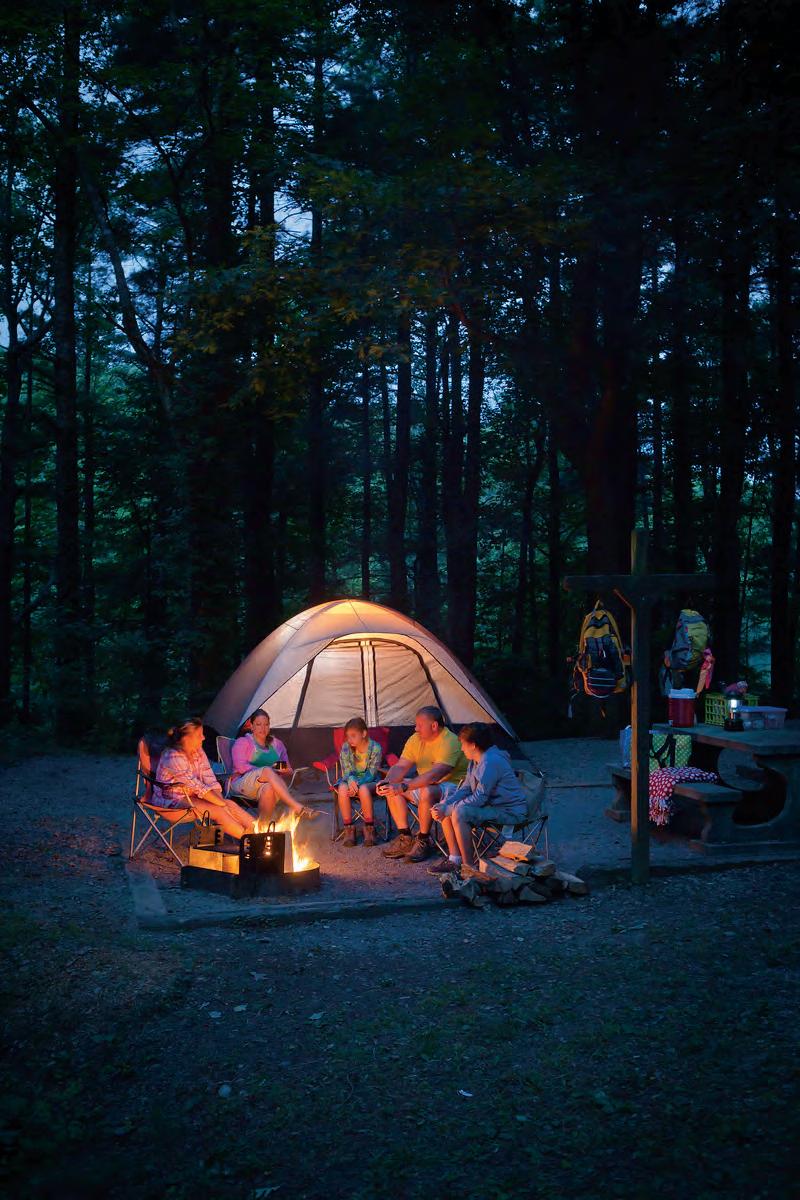
If you go…
Fort Mountain is about a two-hour drive from Atlanta, Georgia, or an hour and 10 minutes from Chattanooga, Tennessee.
For more information about Fort Mountain, Chattahoochee National Forest, camping and cottage rentals, go to gastateparks.org/FortMountain or call Georgia State Parks at 800-864-7275
For private cabin rentals, go to wildernessviewcabins.com or call 706-5178810
146 BOOM MAGAZINE
Camp out or make a fort
Travel into a book

Who says you have to head to the mountains to camp out? You can easily recreate the camping experience in your own backyard (or living room, if you prefer). Just pitch a tent or make a blanket fort using a clothesline and stakes. Grab lots of pillows and blankets to make it cozy! Build a campfire in a fire pit or fireplace. If that isn't an option, light a few big candles for ambiance. Plan and cook a special camping meal, and don't forget
Is there a particular time or place you'd love to travel to? In books, the universe is the limit. You can visit imaginary places such as Treasure Island and enter its world of pirates or go to Hogwarts with Harry Potter. You could experience growing up in Kabul in The Kite Runner. Have you ever wanted to live in Denmark? Pick up a copy of We, The Drowned. How about living with chimps? Try Next of Kin by Roger Fouts. Want to visit Africa? Read Dark
of the book. Read part, or all, of it together or watch a movie based on the book.


Take a trip 'round the world
Take a trip 'round the world
If you'd like to travel to a different country or a particular place, have a theme day or week. You could even travel the world and tour a different area each night. Just don't forget your (homemade) passports. To prepare for this staycation, learn about the place and the culture, and research what unique things there are to do, see or eat. Print out pictures of the location you choose and the landmarks you'd like to see. Research the type of regional or international eats you'd find there. Then prepare one, or even a day's worth of meals, snacks and beverages to bring the experience to life. Or order carryout from a local restaurant that serves the fare. Don't
If you'd like to travel to a different country or a particular place, have a theme day or week. You could even travel the world and tour a different area each night. Just don't forget your (homemade) passports. To prepare for this staycation, learn about the place and the culture, and research what unique things there are to do, see or eat. Print out pictures of the location you choose and the landmarks you'd like to see. Research the type of regional or international eats you'd find there. Then prepare one, or even a day's worth of meals, snacks and beverages to bring the experience to life. Or order carryout from a local restaurant that serves the fare. Don't forget to play the music that's traditional to your area of travel. Also, learn a new game that's popular there, flip through tour books and watch travel videos or movies that were filmed there.


BOOM MAGAZINE 147 Nature’s best hope starts in your yard with native plants from Missouri Wildflowers Nursery. Native plants bring nature home. View our plants online or visit the nursery at Brazitio, just south of Jefferson City. 9814 Pleasant Hill Rd, Jefferson City, MO 65109 | 573-496-3492 | mowildflowers.net











- SEASON SPONSORSAnd More in our 2023 Season The Addams Family Jun 9 - Jun 18 Jul 21 - Jul 30 Sep 8 - Sep 17 Jun 30 - Jul 9 Aug 18 - Aug 27 Sep 29 - Oct 8 Find out more! COMING SOON LyceumTheatre.org 660-837-3311 114 High Street, Arrow Rock, MO
MARSHMALLOW PERFECTION
The warmer weather means it’s time for campfires and the perfect summer treat: a roasted marshmallow. Next time you’re ready to break out those roasting sticks, remember to wait until the fire dies down a bit before bringing out the marshmallows. A raging fire is sure to burn up your treat and while there are those who enjoy a charred mallow, it’s not the best option. Instead, wait until the fire is mostly glowing coals. This will help ensure the inside gets cooked along with the outside for the perfect melty marshmallow bite.
A Full Belly
LOCAL MARKET AND ROTISSERIE TAKES OVER COLUMBIA STAPLE.
BY ZOLA CROWDER · PHOTOS BY L.G. PATTERSON
Food is part of so many traditions. It helps us celebrate love and loss, and fills your belly with comfort after a long day.
That’s the goal of Belly Market & Rotisserie in south Columbia.
Benjamin Hamrah and Amanda Elliot, co-owners of Belly Market, created a onestop-shop for people to enjoy food for any occasion, whether it’s a quick stop after work or a longer relaxing evening. “A big part of this place is having the patio and
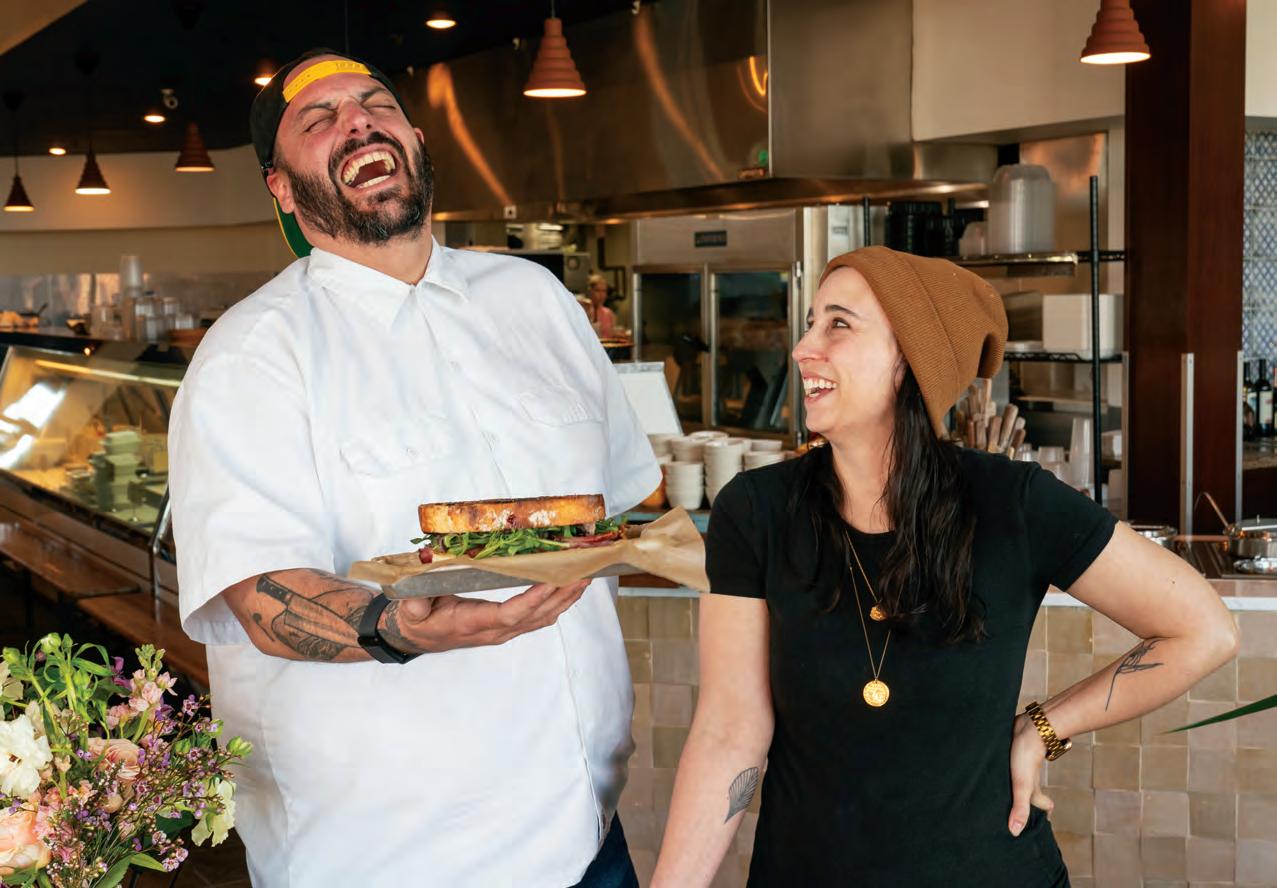
this space on the south side of town that people can come and enjoy after work or just on the way home,” Hamrah says.
“But we also want people to stay and hang out,” Elliot adds.
Hamrah and Elliot opened Belly Market in July, taking over a core Columbia spot, Hoss’s Market and Rotisserie. For nearly two decades, Hoss’s served the Columbia community, and Hamrah says the initial transition was a little rocky. “When you come into a place that has been a staple for almost 20 years and make any kind
of changes there is going to be a little pushback,” he says.
But Belly has kept some of Hoss’s traditions alive by providing some familiar items on the menu, “so the people who came in and got used to certain selections could come get those things.” Hamrah says this helped the community get used to the change and now customers have started to show their love for Belly’s salad, sandwich and hot case specials. “It’s been very welcoming,” Hamrah says.
While there are all kinds of menu items
150 INSIDE COLUMBIA MAY/JUNE 2023
to choose from, Hamrah and Elliot both recommend choosing a fresh specialty item or anything from their hot case. “People can come in and enjoy items that have just come out of the oven or the pan; it’s ready to grab and go,” Hamrah says.

But he says you also can’t go wrong with a classic pastrami sandwich, made with house-cured pastrami, Swiss cheese and Dijon mustard served on rye bread.

Hamrah and Elliot both have a deeprooted passion for creating delicious dishes to enjoy. Elliot grew up in midMissouri but found her passion at a culinary school in New York City before finding her way back to Columbia. “I needed family support from here, so I moved back here, and found my business partner,” Elliot says. Hamrah similarly grew up in mid-Missouri surrounded by the Columbia restaurant scene, thanks to his parents. In 1996, his father opened Peachtree Catering, which Hamrah and Elliot now run together.
The duo also own Beet Box, a Middle Eastern restaurant in central Columbia. “We are lucky that we have a really great clientele through Peachtree and Beet Box, so we are seeing a lot of them come over to the south side,” Hamrah says.
All three businesses use locally sourced ingredients, which is one of Hamrah’s and Elliot’s greatest passions. “Keeping as many buying dollars as we can within our community, that’s something we take to heart in all of our businesses,” he says. And that fell right in line with the business Hoss’s had built, supporting local farmers and products in the community, knowing that people can really feel the difference when eating organic and local.
As for where the name Belly came from, Hamrah says the pair was joking and combined his first name with her last name to create Belly. That, along with the pork belly tattoo on Hamrah’s arm and a ‘90s movie they both love, “Belly,” made the name seem like a perfect fit.
Belly Market is located at 1010 Club Village Drive. The market is open from 10 a.m.-8 p.m. Monday, Tuesday, Thursday and Friday, from 10 a.m.- 3 p.m. Wednesday and from 10 a.m.-2 p.m. Saturday. For more information, visit eatbellymarket.com.
INSIDE COLUMBIA MAY/JUNE 2023 151
flavor DINING OUT
A Patio Perfect Recipe
QUICK, FRESH SALAD COMBINES FRUIT AND VEGGIES FOR EASILY ADAPTABLE DISH.
BY SARA FOUGERE · PHOTOS BY L.G. PATTERSON
Afew days ago, I was enjoying the early spring weather, walking our family dog, Brady, and wondering how soon we may be able to have dinner on the deck.
I love al fresco dining. It takes the most ordinary food and makes it feel like a celebration.
Snacks and drinks? Absolutely. Brunch or dinner? Yes.
It even makes doing the dishes more enjoyable, and that’s saying a lot.
We often have dishes like this broccoli, fruit and poppy seed salad during the outdoor dining season. I love fruit and vegetables together, and this salad comes together quick.
Plus, it can be tailored to any kind of meal. Grill up some chicken and it’s a lovely side dish. A scoop or two on a lettuce salad makes a nice light lunch. And it travels well to picnics, baseball tournaments or reunions.
I’m giving you the recipe with apples, but I know you’d love it with grapes and extra berries as well. If you see me out walking Brady this spring, pull over and let me know how you liked it!
Enjoy!

152 INSIDE COLUMBIA MAY/JUNE 2023 flavor FOUGERE'S FAVORITES
flavor FOUGERE'S FAVORITES
Broccoli Salad with Berries & Poppy Seeds

INGREDIENTS
Poppy Seed Dressing:
• 1 cup plain Greek yogurt
• ¼ cup honey
• 2 tablespoons lemon juice, fresh
• 2 teaspoons apple cider vinegar
• 1 teaspoon salt
• ½ tablespoon poppy seeds






• Zest of one lemon
Salad:
• 1 ½ pounds broccoli florets
• 1 cup fresh blueberries
• 1 apple diced
• 1 cup grapes, cut in half

• ½ to 1 cup feta cheese
• Toasted nuts (optional)
Mix together all the dressing ingredients and set aside. In a large bowl, mix together broccoli, blueberries, apples and grapes. Toss with dressing. Let marinate in the refrigerator for at least an hour before serving. Toss in feta and nuts, and mix well.
INSIDE COLUMBIA MAY/JUNE 2023 153 flavor
FAVORITES Tour • Taste • Dine stonehillwinery.com | 800-909-9463 | Hermann, MO
FOUGERE'S

A Return to the Fire Pit
LIVEN UP YOUR NEXT COOKING EXPERIENCE BY TAKING IT OUTSIDE.
BY BROOK HARLAN · PHOTOS BY L.G. PATTERSON
Sometimes you need more variety than what’s offered by cooking on the four-burner range in your kitchen. With the arrival of warmer weather, it’s finally appropriate to cook outside and you can use a fire pit or barbecue to liven up your cooking experience.
No matter the menu, you just have to think a little outside the four-burner box. Although it may require some additional skills and push you out of your comfort zone, the excitement of cooking over an open flame can be worth the effort and you will see improvement with each experience.
FIREWOOD
Firewood is an essential element of outdoor cooking, but it’s important to use the right kind. Hardwoods such as fruit and nut trees (apple, cherry, pecan, etc.), as well as hickory, oak and mesquite are the most common and safe to cook with. Some less common ones you may encounter that also are safe are mulberry, lilac, ash, birch or alder.
Avoid softwoods like pine, cedar, fir, spruce, redwood, sycamore and elm. These typically have an unpleasant flavor from the sap as they burn and can even be toxic. Also, avoid leftover lumber scraps as it is hard to tell what type of wood it is and how it has been stored, painted, stained or treated (whether pressure treated or using other chemicals).
PAN
If you have a cast iron pan, you can cook over logs. You can easily rest your cast iron pan on some smoldering logs and cook just about anything you want. This imparts a little smoke or a heavier char. You may need to wait until the logs cook down to coals for cooking over a lower heat, but you can sear a steak in minutes with heavily burning logs.
FLAME
Creating a non-flammable makeshift tripod or structure to span over your whole fire pit is essential for safety. Making either a tripod or hanging structure from a tree is easy to do with baling wire (the same wire used to make hay bales) because it is strong, flexible and can be found at almost any hardware store. It is best to rub the wire with a little oil and then you can create loops, truss your items or use it to make your hanging structure.
In a pinch, a coat hanger can be used to secure your item. Just about anything can be roasted in this manner; a chicken can take one to two hours, while a steak might be done in half that time. Attach the wire in a way that you can raise and lower the item that’s cooking to give yourself more control.
Season or marinate your meats with ample time for the seasoning to
penetrate the center. Chickens may take 12 to 24 hours to season, while smaller items may only take a few hours. Items like pineapples and other fruit may not need any seasoning, but other preparation such as removing thick skins or scoring may be necessary.
GRILL
You can swipe your grate from the barbecue grill or buy one for your firepit. Depending on what you’re cooking, you may want logs that are at a raging burn (like for searing a steak), or you may want to wait until the logs have burned down to coals (for a slow char of fruit or vegetables, or cooking a chicken breast).
As you cook, you will notice hotter and cooler parts of your grill. You can move and adjust the items as needed to get the job done. Once finished, don’t forget to brush your grate and oil before returning it to its proper storage place.
SAFETY
Remember, safety comes first. Clear the area around the fire, getting rid of items that may ignite, such as brush or combustible material.
When you are done cooking, if the fire is still hot or it is still on fire, you may need to use water to fully extinguish it. Have a fire extinguisher handy, as well as a thermometer, as it is easy to be rushed and not adequately cook your food.
INSIDE COLUMBIA MAY/JUNE 2023 155 flavor COOKING WITH BROOK
PROPER FOOD TEMPERATURES TO REMEMBER:

Chicken: 165 degrees
Ground meats: 155 degrees
Whole meats: 145 degrees (pork, lamb, fish or beef, which also can be cooked to desired temperature if deliberately undercooking)
ROASTED PINEAPPLE
Cut the skin off a pineapple, hang it over the fire cooking over medium heat until evenly coated in a slight char. Serve as dessert, with a salad or as a part of chutney with meat. The heat will intensify the sugar and give it a wonderful smoky flavor.



GRILLED POUND CAKE

This works best cooked on a grill over wood but would also work great with a small amount of fat in a pan. It is great served with other components as dessert. Cooking over the fire will give it a great crust as a texture contrast to the outside and bring out more of the flavor.


ROASTED CHICKEN
This may be one of the longer items to cook but it is worth the wait. The long cook time allows for the skin to render and crisp nicely, while also having a nice even cook that prevents it from drying out. Once the chicken has reached 165 degrees (check in the thickest part of the thigh and breast), rest for about 10 minutes and carve.
CHARRED RED ONION
Cut the top and bottom of an onion before cutting it in half and put it directly into a dry pan or onto the grill over medium heat. You can set it on the grill and forget about it for a bit. Let more color develop than you are comfortable with. Once you remove the onion and slice, the inside has a gorgeous contrast of texture. It’s great to use in a salad or as a vegetable side dish. Season with a bit of oil, salt and pepper, and you are good to go.
CHARRED PEAR
This has a similar process as the red onion. Cut it in half and core (you only have to worry about the stem at the top and the core at the base). Place it on the fire and char. The inside will be creamy while the outside will have a bitter and crisp texture. Another item that’s great in a salad or as a component in a dessert.
CHARRED LETTUCE
I know this one seems a bit strange, but high heat and a short amount of time can create some wonderful flavors on the grill. Cut the lettuce in half or quarters (a wedge salad with charred lettuce is amazing). Drizzle with a little oil, salt and pepper. Place directly onto the grill on the fire. Cook for two to three minutes until a char forms and the lettuce starts to wilt, then rotate to the other cut side. Remove, cool and use for a wedge salad or cut up and use in a tossed salad.
156 INSIDE COLUMBIA MAY/JUNE 2023


INSIDE COLUMBIA MAY/JUNE 2023 157


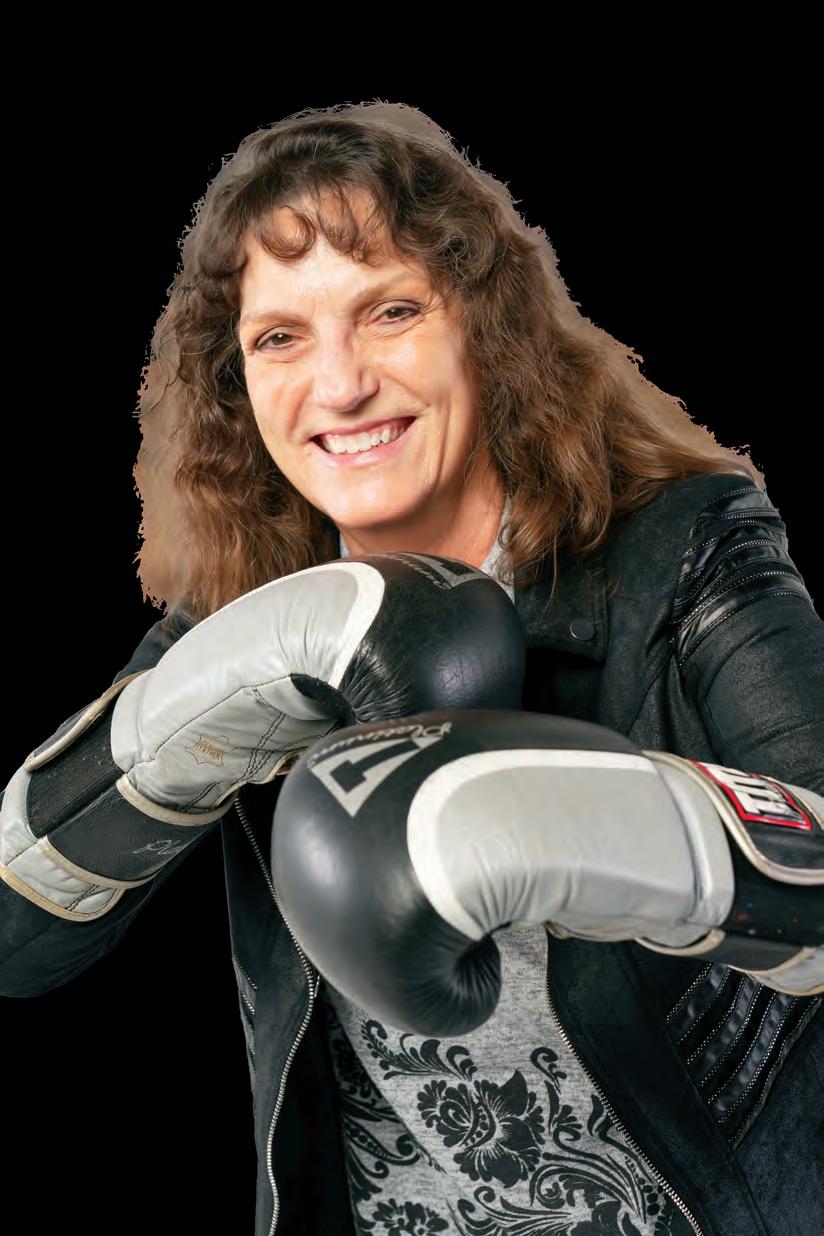
Phyllis Nichols, Agent 1006 West Blvd N | Columbia, MO 65203 573-443-8727 | phyllisjnichols.com | HOME · AUTO · LIFE · BUSINESS · HEALTH · PET · PROPERTY car insurance Don’t get caught being UNDERINSURED.
Enjoy a Springtime Sip
THE KURO NEKO MAKES FOR A DELIGHTFUL DRINK.
BY FRANCES HARVEY · PHOTOS BY L.G. PATTERSON
When the days get warmer, I crave a patio cocktail.
This season, I’m switching things up at Barred Owl by adding “The Kuro Neko” to the cocktail menu. Translating to "The Black Cat," I start by adding mezcal and sherry to one of my favorite Japanese spirits, Nikka gin.
“The Kuro Neko” is my way of enjoying some of the best flavors with a springtime spin. Have a sip the next time you’re ready to sit out on the patio!
Frances Harvey is the bar manager at Barred Owl Butcher & Table.
The Kuro Neko
INGREDIENTS
1.5 ounces Malibu
1 ounce Nikka gin
1 ounce La Luna mezcal
TO MAKE THE DRINK:
3/4 ounces Carpano Antica vermouth

3/4 ounces Barbadillo sherry
1/4 ounces agave
Combine all ingredients in a mixing glass and stir. Strain into a coupe or Nick and Nora glass. Enjoy!
INSIDE COLUMBIA MAY/JUNE 2023 159
flavor COCKTAIL





Sold over $75 million 2021- 2022 Creative, tenacious & trusted professionals Over 60 years of Columbia area experience Sel li ng 1 property every 3 days! Tracy, Beth and Bennett Arey TracyArey.com | 573-489-7146 Q @sellingCoMo | E @TracyAreyRealEstate
TRAFFIC TURMOIL
If you’ve driven down Broadway in the downtown area recently, you’ve likely noticed a significant lane change when traveling west. The change, made in the fall, makes the right westbound lane just west of College Avenue into a right-turn only lane that ends in front of the Broadway Hotel. The left passing lane, which previously turned into a left-turn only lane, is now the only way to continue on Broadway into downtown. City officials say the change helps with traffic congestion. What do you think? Was this a change for the better or is it only creating chaos?
views
CONTENTS
163 Dueling DJs
165 On The Town
171 A New View
172 Darkow Draws
174 The Final Word
Inside Columbia
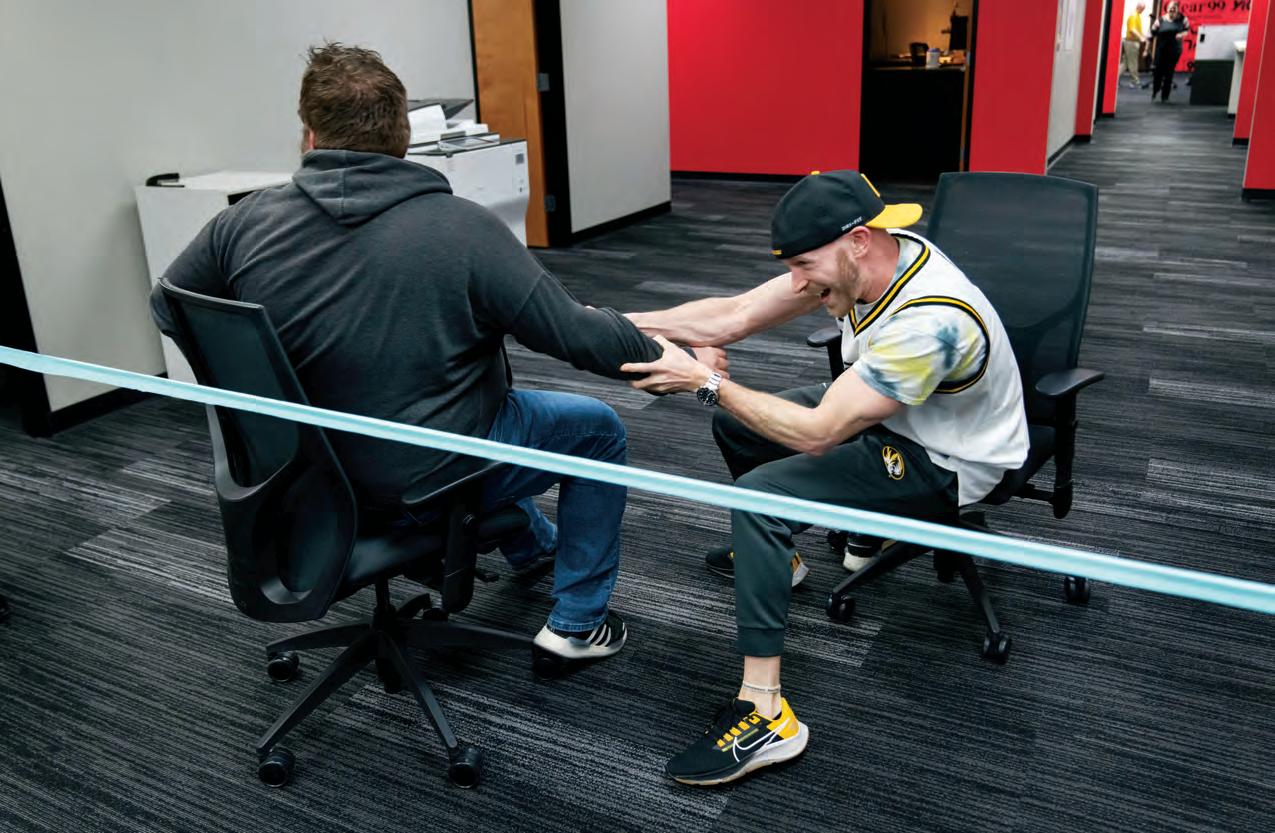

Sitting at the Edge of Success
WHOSE CHAIR CAN GET UP TO SPEED?
Each issue, two on-air talents from two different Zimmer Communications’ stations will take on a seemingly simple challenge to see who comes out on top. This issue, Josh Ryan from Clear99 and Joe Lose from 98.3 FM The Dove battled to see who could win an office chair race. Make sure you visit insidecolumbia.net to see video of the full challenge!
THE CHALLENGE
Each contestant must mount a Zimmer office chair and make his way from one end of the hallway to the other at the starting countdown. First person to cross the blue finish line wins!
THE CONTENDERS
Josh Ryan from Clear99 was reluctant to take on the challenge at first but pushed through his fears to take on the coffee connoisseur, Joe Lose from The Dove. Joe brought his quiet yet excited spirit and prepared for the challenge of a lifetime.
THE OUTCOME
As soon as the countdown ended, Josh and Joe were off, wheels turning as they focused on quickly moving backward through the hall. Joe initially took the lead as the hallway narrowed, but Josh used his strength to take hold of Joe and pull ahead (or, as Josh described it, “cheating”). This tactic proved successful until Joe started to catch up and the two grappled once more nearing the finish line. While he caught up with speed, Joe was no match for Josh’s fighting tactics, ending the race on the floor and Josh being declared the winner.
I cheated, and if you aren’t cheating you aren’t trying.
That’s right, and I just lost.
-Josh -Joe
INSIDE COLUMBIA MAY/JUNE 2023 163
" ” " ”
views DUELING DJS
Knowingyou'repreparedforlife'sadventuresletsyoufocusonwhatmatters
Annuities
LifeInsurance
DisabilityIncomeInsurance

Long-TermCareInsurance
MedicareSupplementInsurance
CriticalIllnessInsurance
EmployeeBenefitPlans
IRAs
WallyPfeffer
910NCollegeAveSte5 Columbia,MO65201 573-449-0359
walter.pfeffer@mutualofomaha.com

InsuranceproductsandservicesareofferedbyMutualofOmahaInsuranceCompanyoroneofitsaffiliates.Homeoffice:3300MutualofOmahaPlaza,Omaha,NE68175. MutualofOmahaInsuranceCompanyislicensednationwide.UnitedofOmahaLifeInsuranceCompanyislicensednationwide,exceptNewYork.UnitedWorldLifeInsurance CompanyislicensednationwideexceptConnecticut,NewYorkandtheVirginIslands.CompanionLifeInsuranceCompany,Hauppauge,NY11788-2934,islicensedinNewYork. OmahaInsuranceCompanyislicensedinallstatesexcept:AL,CA,CO,ID,IL,LA,NC,NH,NV,NY,PR,RI,VI,VTandWI.Productsnotavailableinallstates.Eachunderwriting companyissolelyresponsibleforitsowncontractualandfinancialobligations.IndividualmedicalcoverageavailablethroughMutualofOmahaMarketingCorporation,andis underwrittenbyvariousinsurers.RegisteredRepresentativesoffersecuritiesthroughMutualofOmahaInvestorServices,Inc.aRegisteredBroker/Dealer.MemberFINRA/SIPC. InvestmentadvisorrepresentativesofferadvisoryservicesthroughMutualofOmahaInvestorServices,Inc.,aSECRegisteredInvestmentAdvisoryFirm. MutualofOmahaAdvisorsisadivisionofMutualofOmahaInsuranceCompany.
456006
164 INSIDE COLUMBIA MAY/JUNE 2023
are the products and services I offer: WhatMatters MosttoYou?
Here
Ronald McDonald House Charities of Mid-Missouri 2023 Red Shoe Gala







The Red Shoe Gala was held Feb. 23 at The Atrium on Tenth, celebrating the Ronald McDonald House’s 40th anniversary of serving Columbia. Nearly 300 guests enjoyed a cocktail reception, followed by dinner, a robust live auction and entertainment by Jack n’ Diane’s dueling pianos. More than $220,000 was raised to help provide compassionate care and familycentered services to children and families at the Ronald McDonald House. Last year, the organization served 382 families from 63 Missouri counties for 4,908 nights.
Date
Feb. 23
Location
The Atrium on Tenth
Photos by Justin Kelley
INSIDE COLUMBIA MAY/JUNE 2023 165
Paul and Dasi Schlup
views ON THE TOWN
Taylor Freeman, Emily Spain, Evie Allen






166 INSIDE COLUMBIA MAY/JUNE 2023 AS DAYS GROW LONGER, SO DO THE WEEDS! Whether your yard needs sprucing up once a year or once a week, our experienced landscape maintenance technicians will leave your yard weed-free and beautiful! Schedule a free consultation at 573-289-4609, or sue@riverhillslandscaping.com Phone: 573-289-4609 | Email: sue@riverhillslandscaping.com
Boy Scouts of America Great Rivers Council 2023

Patron Breakfast
The Boy Scouts of America Great Rivers Council held its annual patron breakfast Feb. 24 at the Holiday Inn Executive Center. The emcee was University of Missouri President Mun Choi and the featured guest speaker was Ron Young, an Eagle Scout, reality TV show contestant and former prisoner of war during Operation Iraqi Freedom.


Date Feb. 24
Location Holiday Inn Executive Center
Photos by Wally Pfeffer, mizzouwally@compuserve.com
INSIDE COLUMBIA MAY/JUNE 2023 167
Brian Toohey and Dennis Lynch
Stacey Johnson and Darlene Johnson
David Coil and John Hall
Casey Buckman and Brian Yearwood
Jeff Guinn and Michael Grote
views ON THE TOWN
Connie Leipard and Tom Schauwecker
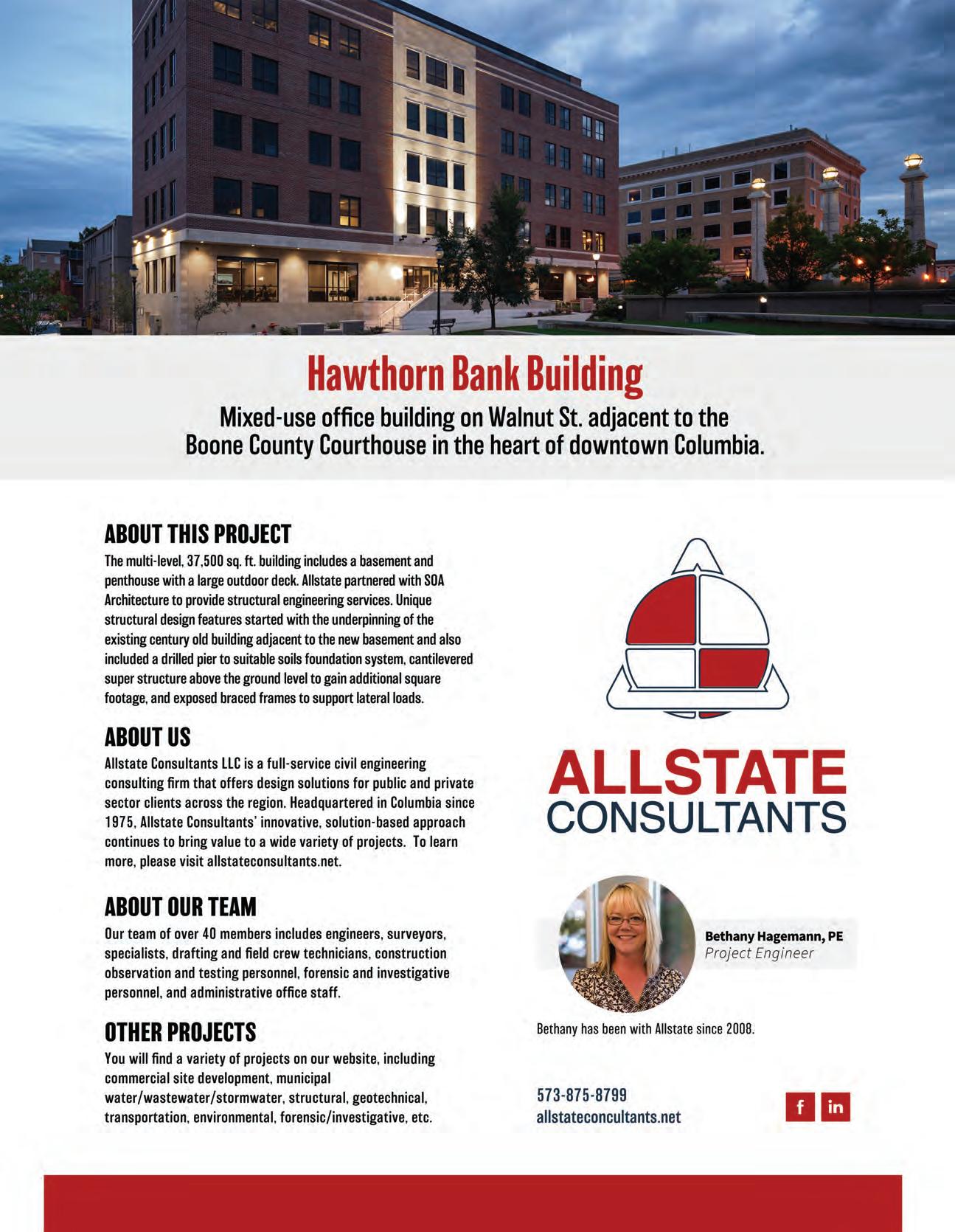
MFA Oil Rootin’ Tootin’ Chili Cookoff

The 17th annual MFA Oil Rootin’ Tootin’ Chili Cookoff, presented by JES Holdings, was held Feb. 25 at the Holiday Inn Executive Center. Dozens of teams participated, serving up their best chili to more than 1,500 attendees while raising more than $80,000 for the Boys & Girls Clubs of Columbia.


Date
Feb. 25
Location
Holiday Inn Executive Center
Photos by Nancy Toalson and Wally Pfeffer, mizzouwally@compuserve.com


INSIDE COLUMBIA MAY/JUNE 2023 169
Team from the Boys & Girls Clubs of Columbia
Team from Columbia Safety and Supply
Team from First State Community Bank
Team from Veterans United Home Loans
Team from The Callaway Bank
views ON THE TOWN
Team from Mediacom

A New View
BEING A PHOTOGRAPHER, I HAVE ACCESS TO SOME UNIQUE POINTS OF VIEW IN THE COMMUNITY
Assignment:

Flower Arranging

The Location: Columbia Area Career Center
While working on my University of Missouri class schedule my junior year, the late great Walter Johnson insisted that I take two specific classes offered by the university.
The first was Shakespeare. I took his advice, and it surprised me how much I enjoyed reading Shakespeare’s plays and sonnets. It turned out to be one of my top five favorite classes during my years as a Tiger.
The second class he insisted I take was flower arranging. Johnson explained that the class would teach me about color and three-dimensional design. I had my doubts, but I made an effort to get into the class. However, it never meshed with my schedule and I graduated without learning the art of flower arranging.
Flowers were a theme for me
throughout college. My aunt got me a job as a part-time delivery driver for Allen’s Flowers and I spent several Valentine’s and Mother’s days driving all over the city, brightening people’s days. It was fun to step behind the curtain at the shop and watch the florists pull flowers from the cooler to create amazing masterpieces.
I was reminded of those days when I walked into Sherie Rodekohr’s cooler at the Columbia Area Career Center, where we made this image of roses in a bucket on the floor. Now, I regret not trying harder to get into the class Johnson suggested. Though I do find it curious that he didn’t insist I take his famous econ 51 class.
L.G. Patterson
INSIDE COLUMBIA MAY/JUNE 2023 171
views A NEW VIEW
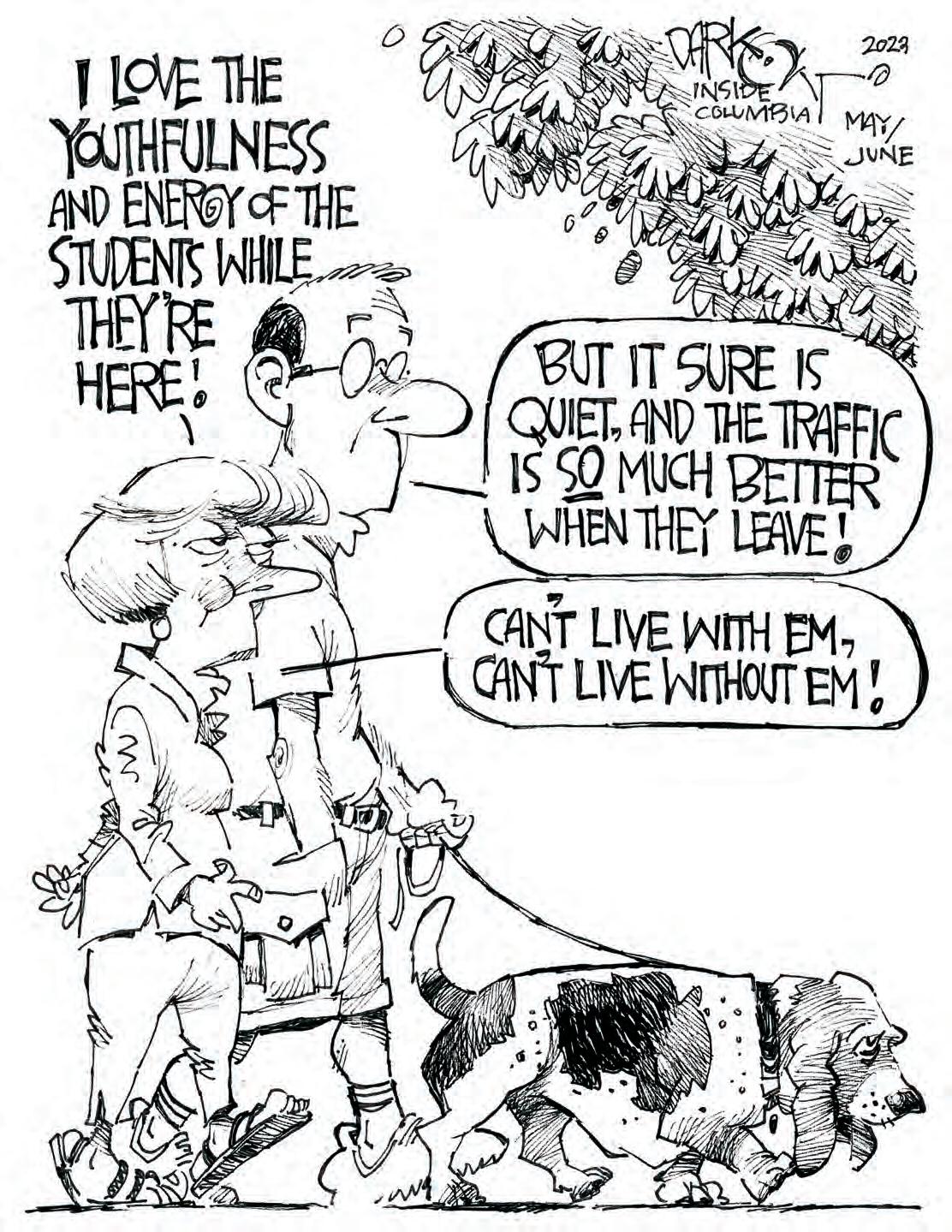
172 INSIDE COLUMBIA MAY/JUNE 2023 views DARKOW DRAWS
INSIDE COLUMBIA MAY/JUNE 2023 173 ADVERTISING INDEX Ai Painting Plus 21, 58 Aire Serv .................................................................. 25 Allstate Consultants LLC ..................................... 168 Arrow Rock Lyceum Theatre 148 Bank of MO 170 BLUSH Boot Camp-Columbia 89 BMW of Columbia 6 Boone Health 5 Broadway, A Doubletree by Hilton .................... 45 Burrell Behavioral Health ..................................... 54 CC’s City Broiler 2 Christian Chapel Academy 55 City and Regional Magazine Association 157 Clip Joint 23 Compass Chiropractic 40 Corporate Interiors Inc ......................................... 71 Critter Control of Central Missouri ................... 94 D Sport Graphics ................................................... 86 Delia’s Mexican Grill 34 Dogwood Solar, LLC 52 Doug Perry Towing 14 Edward Jones-Gina Mauller 59, 131 Estates of Columbia .............................................. 135 Extraordinary Complete Clean, LLC .................. 104 Farmland Consultant LLC .................................... 110 Fleet Feet Sports Columbia 25 Genesis Company 7 Girard Homes 62 Girard Realty Team 63 Good Day Farm ...................................................... 38, 68 Hawthorn Bank ...................................................... 176 Impact Signs Awnings Wraps Inc ...................... 106 Inside Columbia magazine 26, 147 J Jones Homes LLC 80 Jefferson City Convention & Visitors Bureau 10 Jillian Kate LLC 27 Joe Machens Ford Lincoln 3 Kasmann Insurance Agency Inc ......................... 92 Korte Tree Care ...................................................... 18 Kretch’s Custom Exteriors 74 Las Margaritas ....................................................... 12, 136 Lombardo Homes of Columbia ........................... 102 McClure Engineering Company 8, 84 Mediacom 49, 133 Mid America Bank 23 Missouri Ear, Nose and Throat 108 Missouri Furniture 96 MO Soybean Association .................................... 64 MO Vein Care ........................................................ 51 MO Wildflowers Nursery 147 Morpheus IV Hydration & Infusion Center 76 Mutrux Automotive, LLC 37 Mutual of Omaha 164 My Zoo Animal Hospital ...................................... 82 Parks Amusements ............................................... 46, 56 Performance Eyecare ............................................ 60 Platinum Paws ........................................................ 16 Rave Homes 43, 69 Regeneration Salon & Spa 27, 81, 160 Restoration Chiropractic ...................................... 98 River Hills Landscaping 166 Rock Bridge Financial Advisors .......................... 66 Rost Landscaping & Superior Gardens ............. 28 S&E Consulting ...................................................... 70 Senior Benefit Services-Kari Vogt 72 Six Mile Ordinary 97 Socket Telecom, LLC 175 State Farm Insurance - Greg Hill 111 State Farm Insurance - Phyllis Nichols ............. 83, 158 Sticklen & Sticklen Law Firm ............................... 78 Stone Hill Winery .................................................. 153 SumnerOne ............................................................. 4 Terrace Retirement Community 93, 130, 157 Tiger Moving 105 Tiger Towing 88 Tracy Arey Real Estate 160 Trust Company ...................................................... 75 Will Garrett - MO Farm Bureau .......................... 103, 162 Winn Law Firm 90 Withrow Electric 100
The Loss of Civility
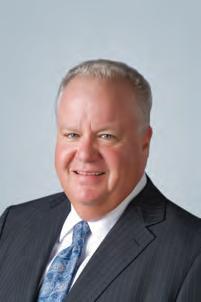
ONE PERSON'S COURTESY MAY BE ANOTHER'S IDEA OF OPPRESSION.

Iremember growing up in the 1970s and watching the popular “Point/ Counterpoint” segment that would run every Sunday evening at the end of the “60 Minutes” television broadcast. Over the course of three short minutes, Shana Alexander and James J. Kilpatrick would debate the issues of the day.
As a kid, I thought that the debates were spirited and, for the time, even a bit spicy. No matter how contentious the topic, however, the exchange between Alexander and Kilpatrick was always respectful and never personal. This weekly feature became so popular that it was eventually spoofed by “Saturday Night Live” comedians, Dan Aykroyd and Jane Curtin.
A lot has changed in 40 years. No matter where you turn, there seems to be a degree of hostility and resentment in every corner of the universe. Beyond just differences over political ideologies, there is a palpable rancor in our society over everything from the type of vehicle you drive, where you go to church and the gender with which you identify.
Until somewhat recently, we lived in a world where each of us could simply “agree to disagree” with those who had a different worldview and go our separate ways. Today, the expression of your personal beliefs could easily lead you to being canceled, boycotted or physically attacked. Civility, as we once knew it, is a relic belonging to a bygone era.
I suppose there are many causes for this dramatic change in our culture and the ways in which we treat one another.
The most often blamed source of this polarization is politics and, more importantly, the politicians who find themselves in the spotlight of our nation’s decaying mass media.
The worst offenders may be former President Donald Trump and Congresswomen Maxine Waters, Marjorie Taylor Greene and Sheila Jackson Lee. Until recently, most of what these politicians
BY FRED PARRY
would say on a daily basis would not have risen to the standard of what is considered newsworthy. As “tension” has evolved into the most important ingredient in a news story, these bad actors have been allowed to set the tone for the national narrative on political discourse.
The diminished influence of the mass media is also to blame. There was a time when we could rely on media outlets to be the arbiters of truth. There was a time when news networks fulfilled the vital role of watchdogs for the common good.
With the media’s decline came the rise of social media, which introduced a much lower standard for truth-telling. Almost overnight, opinions became facts and Americans began to rely on the musings of anonymous sources, hiding behind their computer screens, for their perspective on the world. Today, truth is nothing more than a lofty and optional goal for the outlets where most Americans get their news.
Of course, there are many other factors contributing to our current state of incivility. As a society, we are stressed out. We’re worried about our economic standing, our schools and the decay of social structures that once were the backbone of American culture. This looming sense of uncertainty in so many aspects of our lives has us on edge. As a result, we’re irritable and punchy.

Complicating matters is the emergence of a generation with an inflated sense of self-worth. We’ve raised a group of kids who received participation trophies no matter how hard they played life’s games. As they become leaders in our communities and in corporate America, their sense of entitlement and perceived injustice has greatly altered their worldview and clouds their decision-making processes.
Then there are the generational differences in the definition and meaning of civility. For many, it’s the benchmark standard for the level of respect we give,
unconditionally, to the people we encounter. There’s a level of common courtesy extended to others no matter what the circumstances. If there are differences of opinion, we engage in an honest debate and agree to keep working together toward a common goal that benefits society as a whole.
For others, civility is nothing more than an act of oppression. Being civil to one another is all about maintaining the status quo. When we are civil to each other, we don’t focus on the inequalities that exist in the world today. The best way to change society is to storm the Capitol, burn buildings and interrupt lectures and governmental proceedings with bullhorns, angry chants and pumping fists. Maintaining any sense of decorum or abiding by mutually agreedupon rules and guidelines has become an affront to the injustices that have been baked into our culture.
It’s been said that the United States is as close to a Civil War as it was when the last one ended in 1865. We’ve lost our ability to find common ground, debate honestly and extend a modicum of respect to those with whom we disagree.
The only hope for our nation is to find leaders who can embrace a new brand of civil discourse where we can leverage our differences into something productive.
Whatever the outcome, we all must be more diligent in thwarting extremists on either side of an issue and come together by focusing our energies on the things that unite us rather than those things which clearly divide us.
It’s a tall order but one worth pursuing.
Fred Parry Founder & Publisher Emeritus fred@insidecolumbia.net
174 INSIDE COLUMBIA MAY/JUNE 2023
views THE FINAL WORD
“Hawthorn Bank had faith in us.”
“Bringing

“Hawthorn
–
Member FDIC NASDAQ: HWBK ©2023, Hawthorn Bank Find out more at HawthornBank.com Rob Patrick Vice President, Commercial Lending (573) 449-9933 NMLS #1240407
a rock climbing gym to Columbia was a dream of ours, and we wanted to work with a local bank to build it. Rob took a detailed look at what we had worked on for years. He seemed to understand immediately what we needed.”
was not only the best option; they were excited to work with
and
pretty special.”
us
that felt
INSIDE COLUMBIA Zimmer Strategic Communications 3215 Lemone Industrial Blvd., Suite 200 Columbia, MO 65201 PRSRT STD U.S. Postage PAID
David McGee & Wil Palmieri COMO Rocks