TUTANKHAMUN’S REIGN OF TERROR


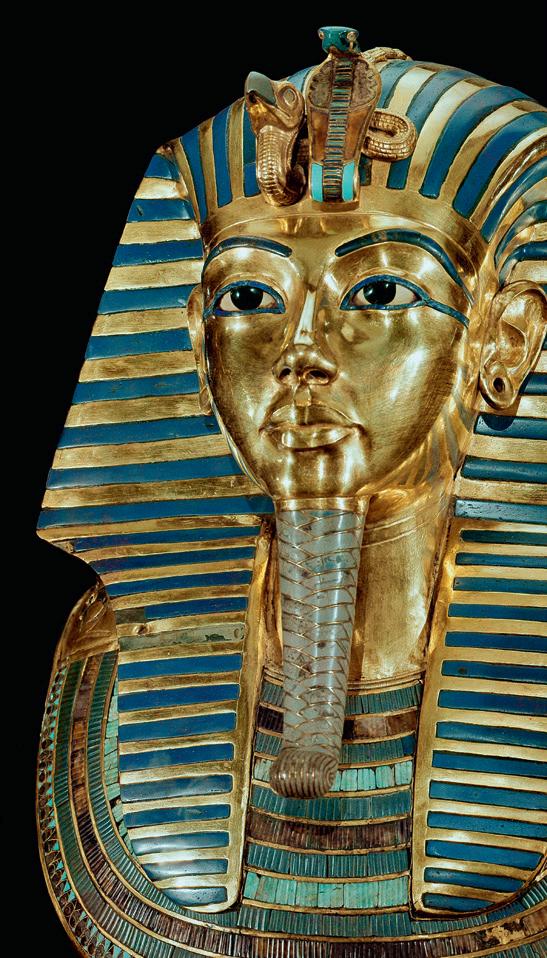
The brutal realities of life in Egypt’s golden age PLUS
Who really discovered the boy king’s tomb?
www.historyextra.com MAGAZINE BRITAIN’S BESTSELLING HISTORY MAGAZINE
The brutal realities of life in Egypt’s golden age PLUS
Who really discovered the boy king’s tomb?
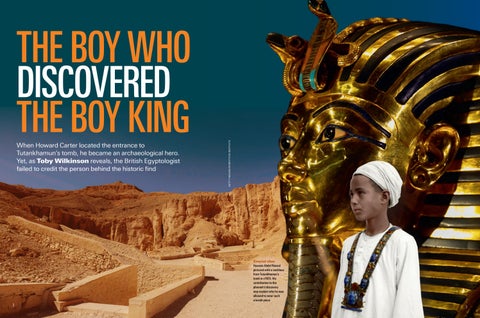
When Howard Carter located the entrance to Tutankhamun’s tomb, he became an archaeological hero. Yet, as Toby Wilkinson reveals, the British Egyptologist failed to credit the person behind the historic find
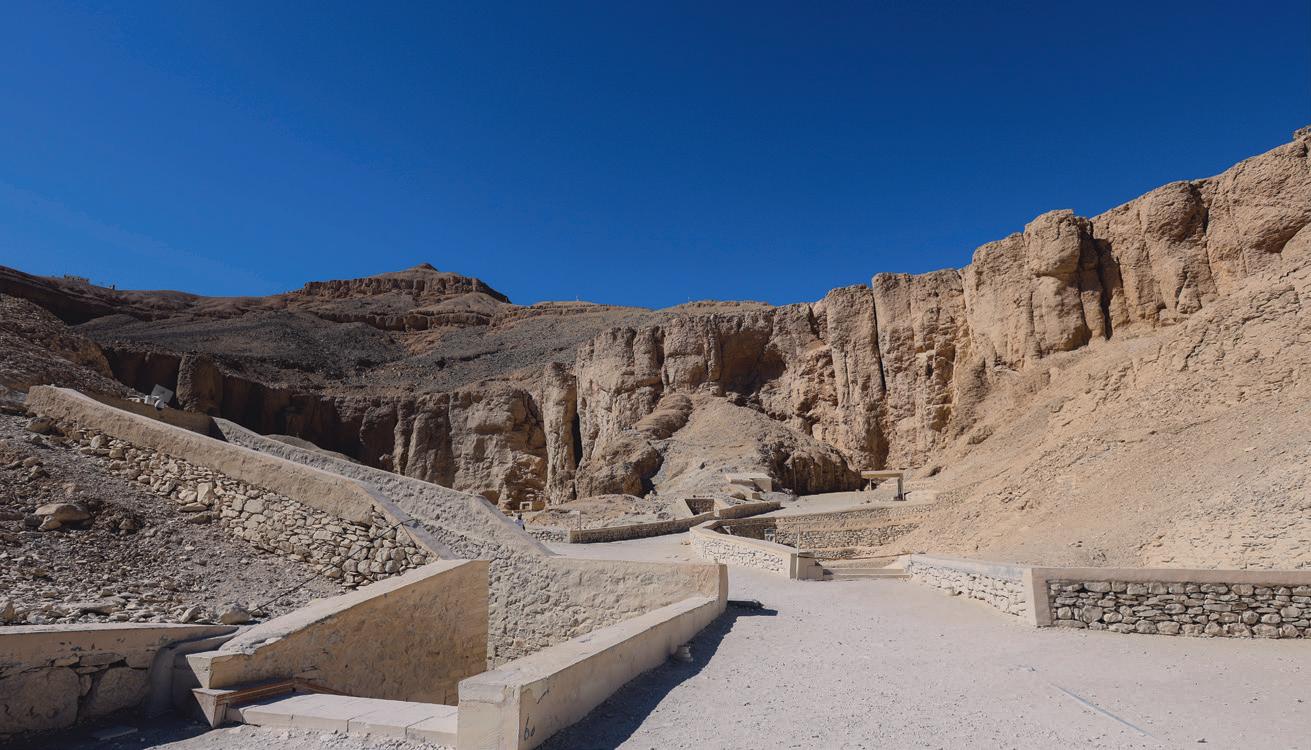
One hundred years ago, on 4 November 1922, an excavation in Egypt’s Valley of the Kings, directed by the British archaeologist Howard Carter, uncovered a step cut into the valley floor. Over the next two days, clearance revealed a descending staircase, terminating at a rubble wall that blocked further access. This was the moment for which Carter and his aristocratic patron, Lord Carnarvon, had been toiling for 15 long years in the heat and dust. Carter immediately sent a telegram to Carnarvon, who was 2,500 miles away at Highclere Castle, his stately home in the south of England: “At last have made wonderful discovery in valley. A magnificent tomb with seals intact. Re-covered same for your arrival. Congratulations.”
When Carnarvon arrived in Luxor on 23 November, he and Carter looked on anxiously as the rubble wall was cleared, revealing a plastered doorway. Now there could be no doubt what they had found: “On the lower part the seal impressions were much clearer, and we were able without difficulty to make out on several of them the name of Tut.ankh. Amen.” In due course, the blocked doorway was dismantled, only to reveal a sloping tunnel, filled from floor to ceiling with limestone chippings. As workmen struggled in the confined space to clear the tunnel, they encountered a second doorway, likewise covered with sealings naming Tutankhamun. At four o’clock on the afternoon of 26 November, archaeologist and patron gained access to the royal tomb itself. Peering into the darkness with a lighted candle, Carter could not believe his eyes: “At first I could see
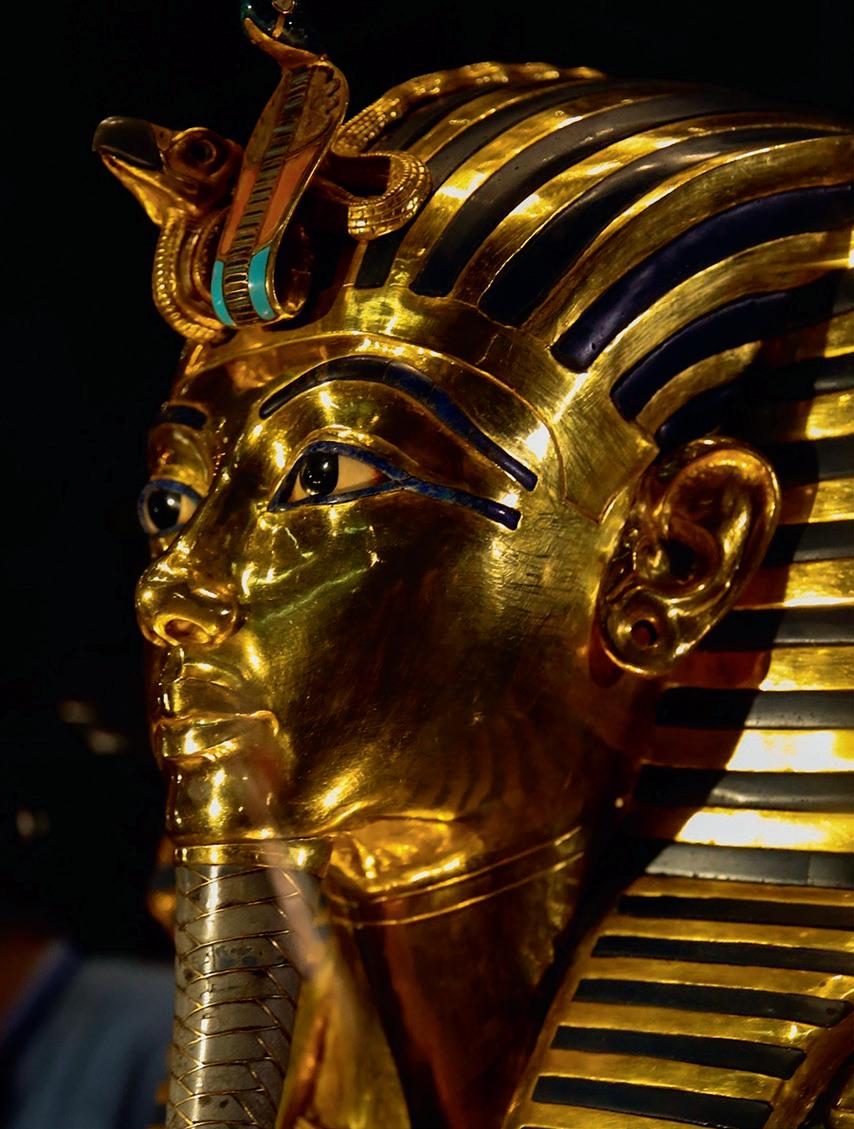
Crowning glory
nothing, the hot air escaping from the chamber causing the candle flame to flicker, but presently, as my eyes grew accustomed to the light, details of the room within emerged slowly from the mist, strange animals, statues and gold – everywhere the glint of gold. For the moment – an eternity it must have seemed to the others, standing by – I was struck dumb with amazement, and when Lord Carnarvon, unable to stand the suspense any longer, inquired anxiously, ‘Can you see anything?’, it was all I could do to get out the words: ‘Yes, wonderful things’”. The discovery of the tomb of the boy-pharaoh Tutankhamun – the greatest archaeological find of all time – has passed into legend. But the story as told by Carter and Carnarvon, and perpetuated in countless retellings since, is not quite the whole truth.
Throughout the excavation and clearance of Tutankhamun’s tomb, Carter kept a detailed digging diary and journal. Preserved in the Griffith Institute at the University of Oxford, these precious documents provide a wealth of first-hand information about the archaeological campaign in the Valley of the Kings. But there is one striking omission: nowhere does Carter give credit to the Egyptian labourers who carried out the backbreaking clearance – over six long seasons – of the 200,000 tonnes of rubble and limestone chippings that overlay the entrance to the tomb. Instead, in his account of “years and years of dull and unprofitable work”, the first-person plural is used, without further comment: “We had now dug in the Valley for several seasons, with extremely scanty results.”
In the same vein, Carter recounts the breakthrough that indicated the presence of a



Tutankhamun took an array of objects with him to the grave. Here’s a selection of eight of the most unusual
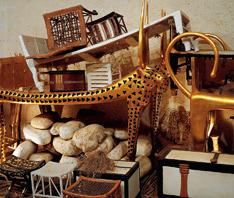
Tutankhamun’s burial equipment contained a range of ritual and practical tools to assist him in the afterlife. One toolbox contained 16 chisels, each of them made from a nugget or nuggets of meteoric iron weighing no more than four grams. The ancient Egyptians exploited their natural resources, but meteoric iron from the Libyan desert was a rare commodity: their word for “iron” was biayt, which also meant “miracle” or “wonder”.
previously undiscovered tomb: “Hardly had I arrived on the work next morning (4 November) than the unusual silence, due to the stoppage of the work, made me realise that something out of the ordinary had happened, and I was greeted by the announcement that a step cut in the rock had been discovered.”
On closer reading, this description – with its unselfconscious use of “I” and “me” – reveals an aspect of the dig that is generally overlooked: it was the habit of Carter’s Egyptian workmen, headed by a trusted foreman, to begin work as soon as the sun had risen, before the archaeologist arrived to oversee operations. The discovery of that crucial first step was made by one of the workers, not by Carter. Piecing together the evidence, we can identify that unsung hero.
The forgotten boy
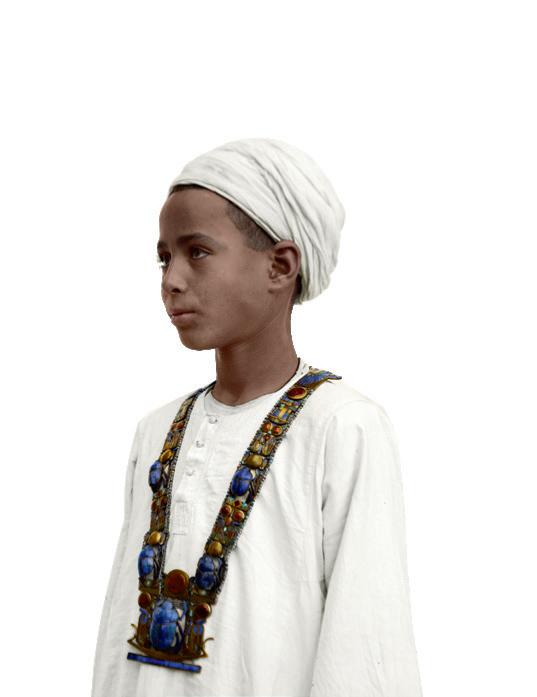
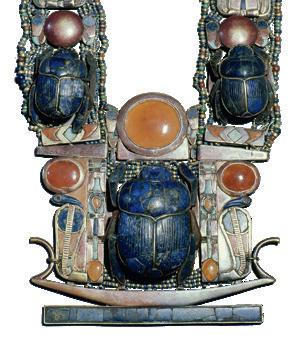
One of the reasons why the discovery of Tutankhamun’s tomb created such a stir around the world was the series of stunning black and white photographs taken by Harry Burton, who was the staff photographer of the Metropolitan Museum of Art in New York. Burton’s images of the tomb and its contents are striking for their large format, fine detail and dramatic lighting. Among the hundreds of images from the time is one of an Egyptian boy, aged between nine and 12, wearing a plain white linen galabeya (a traditional loose-fitting robe) and headcloth. Suspended around his neck is one of the most lavish and dramatic pieces of jewellery from Tutankhamun’s tomb: a heavy pectoral (a large necklace worn over the chest), chain and counterpoise featuring a series of large scarab beetles carved from lapis lazuli. Why should such an important object from the tomb have been given to an Egyp-
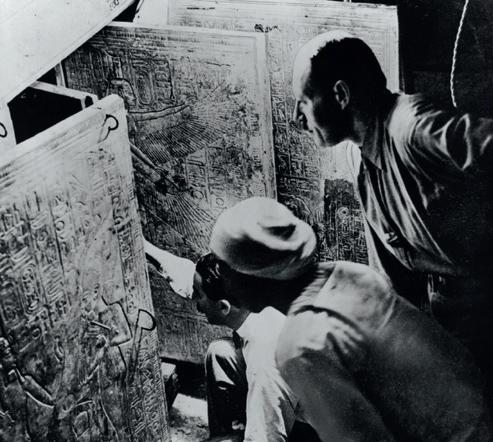
Door to the past Howard Carter (left) and his assistant Arthur Callender (right) open the entrance to the innermost golden shrine in Tutankhamun’s tomb. The third figure is an Egyptian worker, who was left unnamed in western accounts
The potency of the cult of Osiris, god of the underworld and fertility, is expressed in one of the oddest grave goods: a nearly 2-metre-long wooden frame shaped to resemble the mummified Osiris with his twin-plumed headdress. Before the king’s burial, the frame was filled with moist Nile silt and scattered with grain. The seeds germinated in the tomb, symbolising the resurrection of god and king alike.
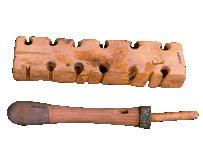
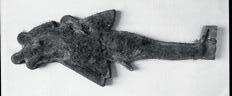
As an alternative to a flintstone, the ancient Egyptians used a fire drill. Shaped like a bodkin, the drill was rotated by means of a bow; grooved sides aided traction and the fire stick was detachable. The accompanying fire stock is a rectangular piece of wood, 20cm long, with six circular notches along each side to hold the tinder. Friction from the drill produced the spark.

tian boy to model? The answer, omitted from Carter’s account, may be that the boy in question, Hussein Abdel Rassul, had discovered the tomb.
The Abdel Rassul family were longstanding and somewhat notorious residents of western Thebes. In the 1870s, one of their number had discovered the cache of royal mummies hidden in the cliffs at Deir elBahri, behind the Valley of the Kings, when a stray goat disappeared down a partially concealed tomb shaft.
Fifty years later, young Hussein Abdel
Among the first objects to be glimpsed by Carter were 48 two-piece boxes. Most of them were roughly egg-shaped, giving little clue as to their contents. They were found to contain joints of meat – mostly from oxen, but also a goose. The sycamore-wood boxes had been waterproofed and sealed on the inside with hot resin, and the meat showed a remarkable degree of preservation.
Ancient Egyptians had a limited range of garments to choose from.
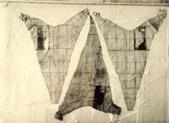
Most fundamental was a triangular loincloth, worn by people of every rank. Although the Egyptians used other fibres, including sheep’s wool and palm leaf, linen was the most common. It could be made in a range of grades, from coarse to fine, and Tutankhamun’s loincloths are of the finest type of linen, almost akin to silk.
Why should such an important object from the tomb have been given to a young Egyptian boy to model?
Tutankhamun’s tomb
Rassul was employed by Carter as a water boy, responsible for bringing water by donkey from the Nile to the dig site in the Valley of the Kings. The water jars had pointed bases, so shallow holes had to be dug in the ground to stop them toppling over. It was while he was digging such a hole, on the early morning of 4 November 1922, that the boy revealed a flat stone step in the floor of the valley. And the rest is history.
The story of the water boy who discovered the tomb first came to Egyptologists’ attention in a book published in 1978 by Thomas Hoving, the director of the Metropolitan Museum of Art in New York. Hoving quoted an unpublished memoir by Howard Carter’s own agent, Lee Keedick, who claimed that Carter himself had revealed the truth.
Erased from the narrative
The subsequent whitewashing of the water boy’s contribution from the official account of the discovery exemplifies the near invisibility of the Nile Valley’s inhabitants from the annals of Egyptology. As early as the 1820s, in the aftermath of the Napoleonic expedition to Egypt, 44 Egyptian students were sent from Al-Azhar in Cairo to Paris to learn modern skills; they were led by an imam named Rifa’a Rafi el-Tahtawi, who went on to become a major figure in his country’s 19th-century renaissance. In 1868, he published the first account of ancient Egyptian history in Arabic. Today, he is all but forgotten.
In the 1880s, when scientific methods of excavation and recording were first brought

Entrenched views
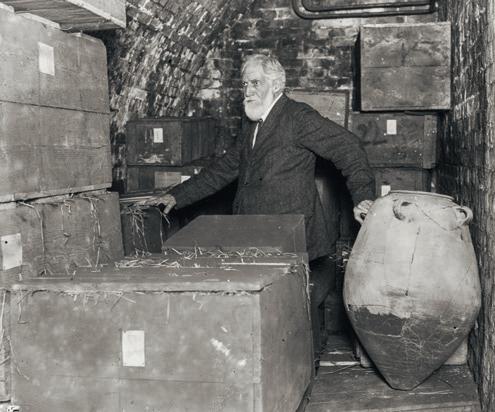
Sir Flinders Petrie, pictured here in a cellar filled with artefacts in c1930, brought scientific method to archaeological excavation in the 1880s. His writings reveal his colonial approach to Egypt and its people
working in Egypt; “Qifti” is common parlance among Egyptologists for a skilled site foreman. Yet rarely, if ever, were the Qiftis or their compatriots acknowledged in the publications of Egyptian digs.
Did a hippopotamus kill Tutankhamun?
Listen to our recent podcast series about the boy king at historyextra.com/tag/tutankhamun-podcast-series
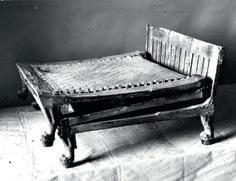
Tutankhamun’s tomb contained the only camp bed to survive from ancient Egypt. Made of lightweight wood and 179cm long, it folds twice for ease of transport and storage. The legs are shaped like lions’ feet, and the footboard is panelled. It was originally painted with limewash to deter termites.
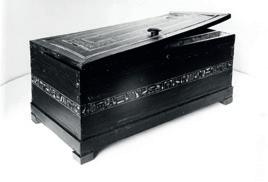
Tutankhamun was around nine years old when he came to the throne and little more than 18 when he died, so it seems appropriate that one of the artefacts buried with him was his toy chest. It contained a random selection of objects, including a game board and a pair of slings. In his toys, we perhaps come closest to the real-life Tutankha mun. Even a boy king had time for play.
to the Nile Valley, the British archaeologist Flinders Petrie was working at the site of Qift in Upper Egypt when he made a discovery that surprised him (with his entrenched colonial attitudes): “Among this rather untoward people we found however, as in every place, a small percentage of excellent men; some half-dozen were of the very best type of native, faithful, friendly and laborious, and from among these workmen we have drawn about 40 to 60 for our work… they have formed the backbone of my Upper Egyptian staff, and I hope that I may keep these good friends so long as I work anywhere within reach of them.”
The men from Qift (“Qiftis”) whom Petrie trained passed their skills to their descendants, some of whom are still employed as professional diggers by archaeologists
Faced with a barrage of debilitating and deadly diseases, the ancient Egyptians had recourse to prayers, magic spells and protective amulets, but also practical medicine. Somewhere along this spectrum is Tutankhamun’s first-aid kit. A rounded box of ebony and cedar, it contained different sized bandages, a finger stall (like a thimble), a protective linen gauntlet and a crystalline limestone armlet. This odd assortment of items would have been good for preventing and treating cuts and bruises, but not much more.
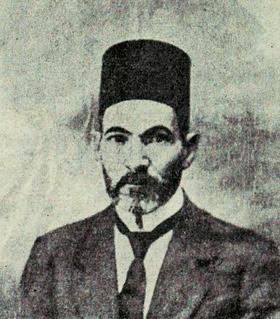
Following the British invasion and occupation of Egypt in 1882, the colonial authorities allowed an Egyptian called Ahmed Kamal to establish a school of Egyptology for Egyptians, but this pioneering move lasted only three years. Kamal was later promoted to assistant curator at the Egyptian Museum, becoming the first Egyptian to be employed in a substantive position there. His appointment was followed shortly afterwards by that of Ahmed Najib as chief inspector of antiquities, but these were token gestures. Generation after generation of western archaeologists were happy to take the credit for a succession of great discoveries, while barely acknowledging the indigenous labourers who made it possible.
Carter was no exception. Early on in his archaeological career, before he teamed up with Carnarvon, he worked at Thebes for the American philanthropist Theodore Davis. Together, they found the longest and deepest tomb in the Valley of the Kings, created for the female pharaoh Hatshepsut (six generations before Tutankhamun). The whole tomb, from entrance to burial chamber, was filled with stone chippings, rubbish and bat droppings. Clearing it was hot, dirty and dangerous work, carried out by an army of poorly paid Egyptian workmen, but Davis barely acknowledged them in his publication, other than to reassure readers that “happily the work was so well watched and conducted that no accidents occurred, though many of the men and boys were temporarily overcome by the heat and bad air”.
In the subsequent discovery of Tutankhamun’s tomb, Carter was thus only the latest in a long line of Egyptologists to downplay the role of his workers in the published account. Furthermore, despite professing a scientific approach, he was not immune to gilding his narrative when it suited him. The famous phrase “wonderful things” was a later embellishment; Carter’s journal from the day of the discovery is more prosaic: “When Lord Carnarvon said to me ‘Can you see anything?’ I replied to him, ‘Yes, it is wonderful.’”
Writing in the year of the water boy’s chance find, another British Egyptologist, Arthur Weigall, epitomised the condescending western attitude towards other peoples alongside a grudging acceptance of their right to self-determination that
Ancient wonders
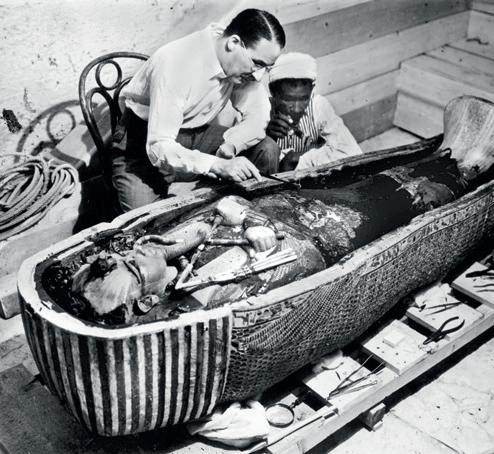
Howard Carter and an unnamed Egyptian worker clean one of the three golden coffins found nested inside the sarcophagus of Tutankhamun
Egyptian Egyptologist Ahmed Kamal (1851–1923). He worked as assistant curator at the Egyptian Museum, a rare example of the colonial authorities recognising a native archaeologist
characterised colonial attitudes towards Egypt in the years that followed the First World War: “In Egypt, where scientific excavations are conducted entirely by Europeans and Americans, one has to consider… one’s duty to the Egyptians, who care not one jot for their history, but who, nevertheless, as the living descendants of the pharaohs should be the nominal stewards of their ancient possessions.”
It is hardly surprising that the discovery of Tutankhamun’s tomb fed a growing sense of Egyptian nationalism: after 1922, the people of the Nile Valley wished to be masters of their future, as well as of their past. As the world marks the centenary of the discovery, it is high time to acknowledge the significant contribution of Egyptians to the story of Egyptology, not least the boy who discovered the boy king.
Toby Wilkinson is an Egyptologist and author. His latest book, Tutankhamun’s Trumpet: The Story of Ancient Egypt in 100 Objects, was published by Picador in hardback in May 2022
An episode of the BBC Radio 4 series The Birth of Now explored the discovery of Tutankhamun’s tomb bbc.co.uk/sounds/play/m0013zhs

Western archaeologists were happy to take the credit, while barely acknowledging their indigenous labourers
From the colossal temples of Luxor to Tutankhamun’s golden death mask, the pharaohs of ancient Egypt’s golden age created some of history’s greatest treasures. Yet, writes Guy de la Bédoyère, behind the glittering facade lay a society built on brutality, inequality and staggering levels of corruption
On 26 November 1922, when Howard Carter reported what he could make out in the gloom of a dusty chamber in the Valley of the Kings, a new phase of Egyptomania began. For more than 100 years, since Napoleon’s Egyptian campaign at the turn of the 19th century, Europeans and North Americans had been enthralled by the architecture, art, design and dress of this ancient civilisation. Carter’s discovery was different, though. “Everywhere the glint of gold!” he famously recalled of the moment he first saw the wonders of Tutankhamun’s tomb. The scene was set for an international fixation with this gilded young pharaoh who presided over a glittering court of fabulous wealth. Tutankhamun seduced the world, further sensationalising the popular image of Egypt at its height during the 18th Dynasty (c1550–1295 BC). Monuments such as the temples at Luxor and Karnak in southern Egypt had already stunned visitors and archaeologists alike. They spoke of a Bronze Age imperialist state possessed of astonishing confidence, led by chariot-borne pharaohs firing off a fusillade of arrows at their cowering foes. Yet look beyond the dazzling architecture, the power and the riches, and there’s a darker tale to be told about ancient Egypt’s so-called golden age. It’s a story of wealth, glory and political power being monopolised by a tiny, spectacularly self-entitled elite, while everyone else was left to scrabble around in the dirt.
The 18th Dynasty was born out of an episode of disorder known today as the Second Intermediate Period. Around 1550 BC, a warrior king called Ahmose I emerged from
Amenhotep III’s Sun Court at the temple of Luxor. Sites such as this wowed later visitors and archaeologists who were dazzled by Egypt’s golden age
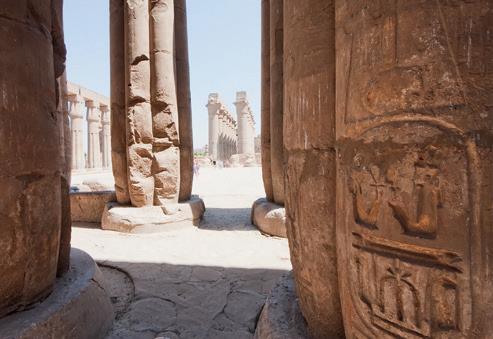
obscurity to expel the Asiatic Hyksos from the Nile Delta region. Adapting the Hyksos’s horse-drawn chariot, Ahmose transformed Egypt’s army into a dynamic force that tore through the near east and Nubia (north-east Africa). He also created the Egyptian royal liberation myth that legitimated the dynasty’s hold on power, posing as the protector of maat (truth and harmony) from the forces of chaos.
Ahmose and his successors diverted Egypt’s resources into self-glorification and the magnificence of temples to the gods who backed their power. No wonder most of them claimed to have been sired by the king of the gods, Amun himself. Indeed, Amun’s temple at Karnak became a state within a state.
The kings were gleefully backed by the elites, who were on the make just as much as their rulers. Take Ahmes, son of Ibana, a brilliantly successful soldier – or so he claimed –under the first three kings of the 18th Dynasty: Ahmose, Amenhotep I and Thutmose I. His tomb biography itemises his derring-do, recounting how his admiring kings handed him shares of booty, slaves and land, as well as promoting him to the highest position in the armed forces. “I have been rewarded with gold seven times before the entire land, and also with male and female slaves. I have been endowed with many fields,” he bragged.
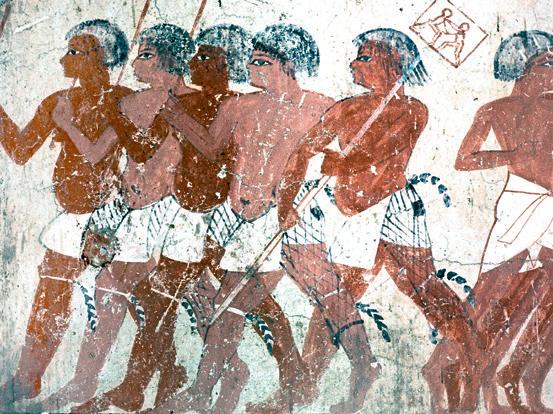
Eight of the most powerful figures of Egypt’s golden age
Ahmose I
ruled c1555–1525 BC
The dynamo who founded the 18th Dynasty led Egypt’s armies in expelling the Hyksos rulers of northern Egypt, reunifying the nation and legitimising his dynasty’s hold on power. Ahmose was adaptable and innovative – he modernised Egypt’s army by adopting the Hyksos chariot – and set the nation on the path to regional dominance.
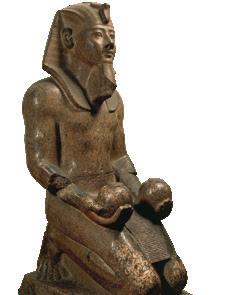
Hatshepsut
ruled c1473–1458 BC
Widowed when her husband (and halfbrother) Thutmose II died young, Hatshep sut acted as regent for her nephew, Thutmose III, until she declared herself king, the chosen one of Amun. Today she is best known for her magnificent memorial mortuary temple in western Thebes.
Thutmose I was equally boastful. A typically tendentious stela inscription from one of his Nubian wars claimed that so many of the enemy archers had been killed that the valleys were “flooded with their innards”, and all of the local birds were unable to carry off the body parts. This was routine pharaonic bombast: inscriptions always portrayed the king as a dynamic superhero, and his hapless Nubian or Asiatic foes as witless cowards led by imbeciles.
War profits were mostly spent on conspicuous waste, but helped create an illusion of permanence. State vanity building projects were designed to glorify the regime as part of that mirage. Take as an example the works of Hatshepsut, daughter of Thutmose I. Widowed after the death of her husband (also her half-brother) Thutmose II in 1479 BC, she acted as regent for her half-nephew, the child Thutmose III, before declaring herself king alongside him. Because Egypt had no concept of the queen regnant, she had to redefine their role as a composite king and queen.
Exulting in her power and wealth, Hatshepsut commissioned her vast terraced mortuary temple in western Thebes (now Luxor), designed by her steward and admirerin-chief, Senenmut. At Karnak she erected several obelisks, including two that towered over the temple, tipped with glittering electrum. These honoured Amun, her divine father, who had chosen her – so she claimed – to be king. Inscriptions on them record her musing: “My imagination runs riot, wondering what the common people who see my monument in the years to come will say.”
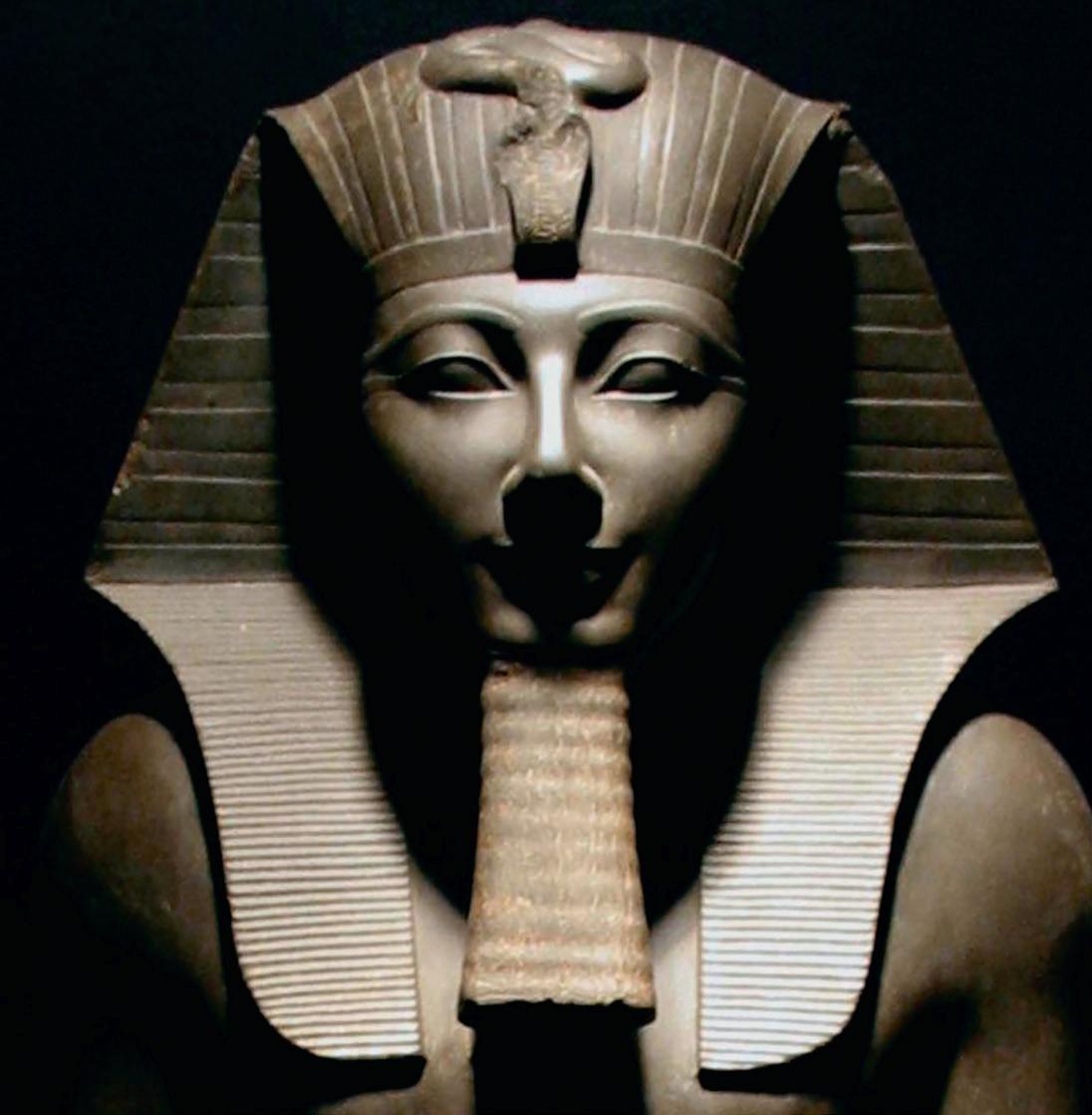
Following her death in 1458 BC, the nowadult Thutmose III roared into action with a vigour that left the near-eastern kings shaking in their sandals. Leading his army with bravado and recklessness, Thutmose conquered more territory than any other pharaoh.
Thutmose III’s Annals, inscribed on a wall at Karnak, comprise a triumphant account of systematic brutalisation and greedy acquisi-
Amenhotep II
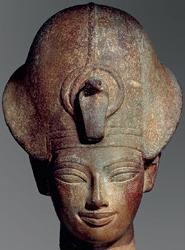
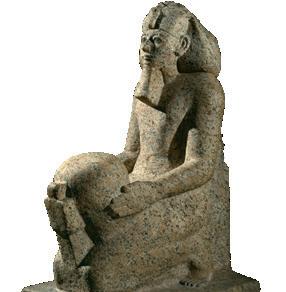
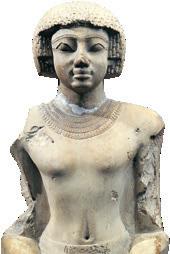
ruled c1425–1400 BC
Under Amenhotep’s rule, the trope of the chariot-borne king firing off arrows at his hapless Asiatic and Nubian foes was refined, copied by his successors as the defining image of Egyptian royal power in the New Kingdom. A brutal man, he presided over atrocities including the immolation of captives.
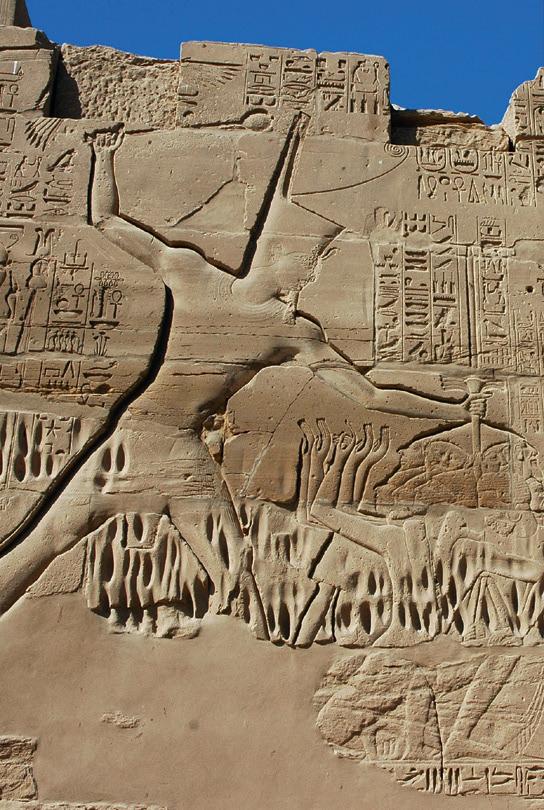
tiveness, itemising his booty with covetous precision. In the first year of conquest alone, the haul included 924 chariots from the enemy army and allied princes. Livestock seized included 20,500 sheep, and he also took several thousand slaves and a “silver statue with a golden head”. The detailed inventory lists everything from knives to “one large jar of Syrian workmanship” and 207,300 sacks of wheat. Year on year, more piled in, along with several trophy wives for Thutmose’s harem.
During this period, Egypt’s only interest was profiteering, backed by a constant threat of violence. Nothing was done to create a sustainable system of provincial government. Instead, a teetering hierarchy of avaricious, nepotistic officials and priests squabbled over position and power. They poured their kickbacks into tombs and chapels to memorialise themselves and advertise their families’ greatness, much like the “prodigy houses” of Elizabethan England 3,000 years later.
One such official was Rekhmire, vizier to Thutmose III and his son Amenhotep II. This swaggering bigwig (who indeed wore a big wig to prove his status) built himself an extravagant memorial chapel at Thebes. Scenes inscribed there depict the great man lording it over his underlings as they slaved on various projects, and tribute bearers from foreign lands carrying in epic quantities of goods for the Egyptian state.
Texts at his chapel boast how “greatly loved” and “greatly respected” Rekhmire was, and that he was the beneficiary of royal favour. This chapel was an extravagant monument showcasing his status, paid for out of the profits of high office, legitimate or otherwise. It was later desecrated, suggesting that he fell from favour – a fate that befell more than a few major officials. In the superheated context and bitter rivalries of a Bronze Age superstate court, the stakes were enormous. One gets the measure of these pompous martinets from a letter sent by Sennefer, another high official under Amenhotep II, to
Amenhotep III
ruled c1390–1352 BC
With his domineering and powerful wife, Tiye, Amenhotep III presided over Egypt at its wealthiest, when indulgence and extravagance reached new heights. He ruled his domain from his vast palace and temple complex in western Thebes, showcasing Egypt’s power in jubilee celebrations attended by foreigners handing over endless tribute.
The pharaohs diverted Egypt’s resources into self-glorification and temples to the gods who backed their power
a farmer, demanding that food and flowers be made ready for his visit. “Do not let me find fault with you concerning your post,” he ranted. “Do not have it lacking in good order… You shall not slack, for I know that you are sluggish and fond of eating lying down.”
Theft was endemic, a consequence of the staggering inequality pervasive in Egypt at the time. Of course, there’s no point in judging a Bronze Age nation by the standards of today, but in Egypt the gap steadily widened as the elite abused its power. Egyptian kings and high officials happily took from other nations and even from each other. Kings purloined or demolished their predecessors’ monuments, absorbed their achievements, and sometimes even helped themselves to grave goods.
Egypt’s downtrodden underclass were also fully aware of the spoils waiting for those courageous enough to raid graves, often helped or even commissioned by corrupt officials. Tomb-robbing really took off in the centuries following the 18th Dynasty, but two break-ins at Tutankhamun’s tomb soon after his burial in c1327 BC show that gangs were already at work then. All were prepared to risk the brutal punishments meted out to criminals, including mutilation and impalement.
Many of the kings of the 18th Dynasty were young adults or even infants when they succeeded to the throne. So it was with Amenhotep III (ruled c1390–1352 BC), great-grandson of Thutmose III, who was still a child when he became king. Yet so embedded was the system and the divine myth with which the royal line had surrounded itself that such young kings ruled unchallenged. The otiose Amenhotep III and his fiercely dominant wife, Tiye, presided over a culture of solar worship, with the king as the supreme mortal. His reign reached new heights of extravagance. Most foreign nations handed over tribute rather than risk conflict. Surviving diplomatic correspondence shows that Amenhotep III’s
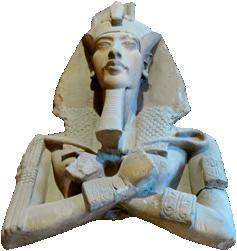
Akhenaten ruled c1352–1336 BC
As Amenhotep IV, this pharaoh could have followed his predecessors in promoting the cult of Amun and indulging in yet more grandiose projects in Thebes. Instead, he changed his name to Akhenaten and, with his queen, Nefertiti, moved the whole court north to found a new cult centre to the solar disc, Aten.
Nefertiti ruled c1338–1336 BC
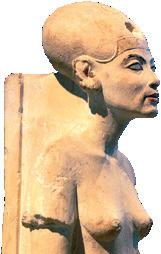
Nefertiti was a highly visible part of Akhenaten’s religious revolution. Together they provided the supreme example of the composite male-female Egyptian royal identity. Nefertiti became a joint king with her husband and may even have ruled on her own briefly after his death.
neighbours constantly sought his friendship and benevolence. They took infantile pleasure in receiving evidence of his approval and good intent in the form of letters and gifts. And they grew petulant and worried if these seemed in any way to devalue their conceits about their standing in his eyes.
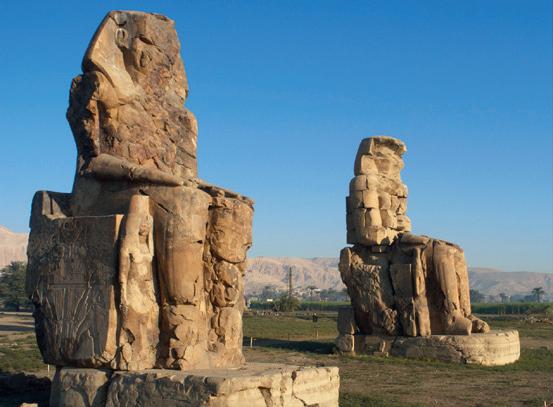
Amenhotep III built a sprawling palace complex on the west bank of the Nile at Thebes, and a memorial mortuary temple nearby, with courts and pylons fronted by colossi depicting himself. The temple was filled with slaves, and accommodated “the children of the princes of all the countries of the captivity of His Majesty”. It was also surrounded by “settlements of Syrians, colonised by the children of princes”, showcasing Amenhotep’s power. The temple’s two front statues, the socalled Colossi of Memnon, still stand. In his dedication speech, Amenhotep mentioned the “great rejoicing because of their size”. These vast statues, each more than 18 metres high and weighing perhaps 700 tonnes, were carved from blocks of stone brought from near the site of modern Cairo. They were far from accurate depictions, though. If the mummy believed to be his has been correctly identified, Amenhotep was a man barely over 5ft tall, afflicted with rotten teeth, obesity and
his inbred dynasty’s congenital overbite. Such figures were designed to show that the king was bigger and more powerful than anyone else, but also to trumpet the capabilities of the Egyptian state. The creation of such statues, and most of the gigantic monuments, palaces and temples, involved startling levels of labour and danger for ordinary Egyptians and foreign slaves. Most of these projects were never finished; perhaps going slow was one way for the workers to fight back.
Aten’s agents on Earth
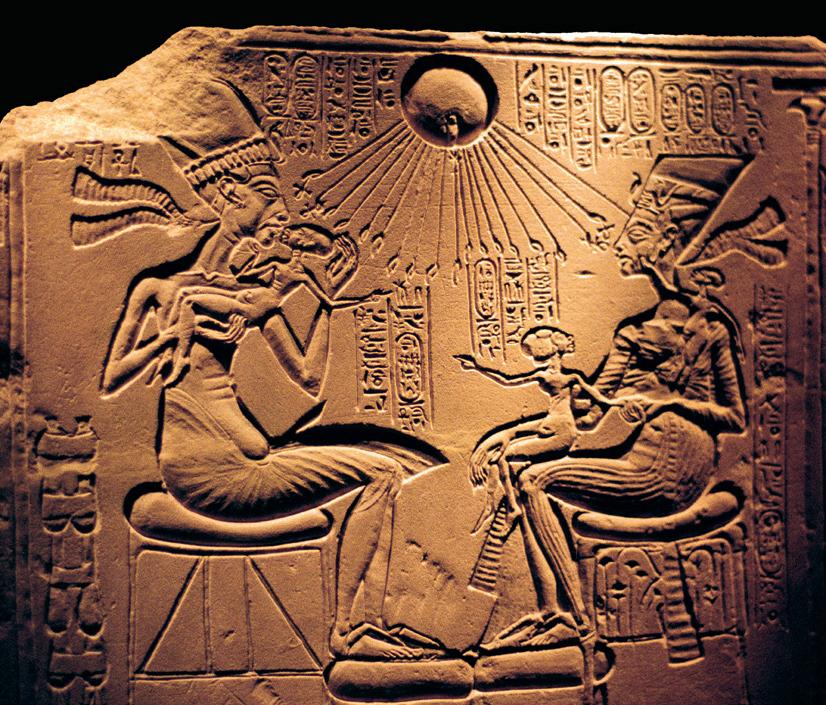
Akhenaten, son of Amenhotep III and Tiye, and his queen Nefertiti launched a religious revolution. He famously shut down the cult of Amun and that of most other gods, supplanting them with worship of the Aten, the solar disc. The Aten was not new, but the idea of putting it centre stage was. Akhenaten and Nefertiti were the Aten’s agents on Earth –
The Colossi of Memnon, huge statues of Amenhotep III, guarded the pharaoh’s funerary temple, which was filled with slaves and captive children
the supreme medium through which the Aten’s powers could be accessed. A huge Aten complex was built at Karnak using forced labour. In the face of resistance from established interests, though, around 1348 BC Akhenaten and Nefertiti abandoned Thebes and moved the whole court north to the site now known as Tell el-Amarna (or simply Amarna), on the Nile roughly midway between Luxor and Cairo. Here they established a new city, Akhet-aten (“Horizon of the Aten”), with palaces and temples where they could indulge their ecstatic cult, bathed in the rays of the Aten. They cruised down the Amarna strip in their chariots, substituting themselves for the old cult statues and posing in tableaux vivants as the intermediaries between ordinary mortals and the gods. The complex theology of Atenism was built on an idealised state of affairs epitomised in Akhenaten’s “Hymn to the Aten”. “You rise
Tutankhamun ruled c1336–1327 BC
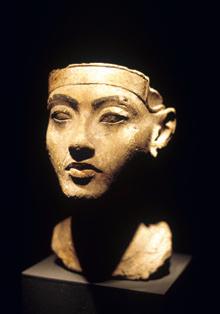
A sickly child, Tutankhamun succeeded around the age of nine and reigned barely a decade while his officials undid Akhenaten’s revolution. He was later cut out of the records, along with Akhenaten. His tomb was forgotten, and saved for posterity.
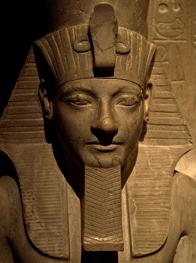
A commoner with a brilliant career as a general under Tutankhamun, Horemheb became king once the royal line had died out. His programme of reforms went some way to rectifying the abuses of power perpetrated by his predecessors.
The creation of huge statues and monuments involved startling levels of labour and danger for ordinary EgyptiansWar booty Thutmose III grasps Asiatic prisoners on the seventh pylon at Karnak. His campaigns reaped vast quantities of plunder
in perfect beauty from the sky’s horizon, the living Aten who begins life”, Akhenaten said, comparing night to death, and musing on how sunrise brought renewal and triggered life in a mother’s womb.
Theirs was one of the most outrageous conceits in history, possible only in a system where the word of the king was unquestioned. For all the bizarre mystery of Atenism and the artistic revolution over which Akhenaten presided, his dreams came at a terrible price for his people (see box, right). The general stress under which the Amarna population lived resulted in an adult population unusually short in stature for dynastic times, when compared to studies from other sites and periods. Men averaged just 5ft 4ins (1.63 metres) in height, and women only 5ft (1.52 metres). And for all their religious idealism and utopian vision, Akhenaten and Nefertiti had little to offer most of their people. They relied on the existing social structure and the traditional acceptance by those lower down the ladder of their position in the hierarchy.
It’s possible that Nefertiti ruled briefly as king after Akhenaten’s death, but their religious revolution was soon abandoned as fast as it had begun. The dynasty foundered with Tutankhamun, who was probably Akhenaten’s son and married that king’s third daughter, Ankhesenamun. Tutankhamun and Ankhesenamun’s childless, decade-long reign, and the sickly king’s premature death, left the royal line in a tight corner. Foreign powers – especially the rising Hittites – spotted Egypt’s weakness and began to muscle in.
For a few years after Tutankhamun’s death, an elderly career official called Ay –who was also possibly a relative – wielded power before being displaced in 1323 BC by a remarkable figure called Horemheb. Though believed to be of lowly origins, Horemheb had forged a brilliant military career that brought him fame and fortune under Tutankhamun. He then became king, largely because there was no one else left to take the throne. However, Horemheb could not manufacture a myth of being fathered by Amun in the guise of a predecessor. Instead, he claimed to have been chosen and reared by Amun, and embarked on undoing what he called the “storm” of Akhenaten’s regime.
Horemheb understood the responsibilities of power and the transaction between a king and his people. He overturned abuses (or claimed to), and it’s thanks to his reform programme that we know about some of the ingrained corruption of preceding regimes.
Soldiers had become accustomed to brutalising poor people, ripping them off on the pretext of collecting legitimate dues for

the royal harem. Royal officials helped themselves to ordinary people’s slaves, putting them to work on their own projects. They took the best of the vegetables from poor people, too, claiming they were “for the impost [tax] of pharaoh”. Such abuses, detailed in a text known as the Great Edict of Horemheb inscribed on a stela at Karnak, dated back at least as far as Thutmose III’s time.
Horemheb ordered grievous punishments for those who abused their power. If a soldier was found guilty of extortion, “his nose shall be cut off”. Those caught stealing hides were to be subjected to “a hundred blows, opening five wounds”. Horemheb also warned members of local judiciary panels not to accept bribes. In the middle of Egypt’s Bronze Age, he was the first enlightened despot.
Horemheb also played the part of a traditional pharaoh. He built monuments at Karnak, usurped those of his predecessors – especially Tutankhamun and Ay – and completed the demolition of Akhenaten’s first Aten temple
Nefertiti and her husband, Akhenaten, bask in the rays of the solar disc, Aten. Using forced labour, they built an entire new city based around the worship of Aten
at Karnak. But he left no heir. Horemheb was the last ruler of Egypt’s 18th Dynasty. The despots and dreamers of that dynasty had run an international imperialist state protection racket. They brought Egypt security, stability and a sense of superiority. But those benefits came at an enormous price.
The Egyptian people were controlled through the opiate of cult and ritual that dominated society. There was no political representation, and no mechanism of protest or reform. This was arguably the first great historical era of conspicuous inequality. Egypt’s glory days were built on a hierarchy with gold-bedecked kings at the top and the broken bodies of labourers, including children and prisoners of war, at the bottom.
Guy de la Bédoyère is a historian and author. His latest book, Pharaohs of the Sun: How Egypt’s Despots and Dreamers Drove the Rise and Fall of Tutankhamun’s Dynasty was published by Little, Brown in July
Delve further into the experiences of ordinary Egyptians, from pets to dental care. historyextra.com/daily-life-ancient-egypt
Excavations of one of ancient Egypt’s great cities reveal how the underclass paid for a pharaoh’s indulgences
Standing on the east bank of the Nile, the city of Akhet-aten (today known as Tell el-Amarna) was one of the jewels of Egypt’s late 18th Dynasty. Built in the 14th century BC by the pharaoh Akhenaten as his great capital, where he could give full expression to his devotion to the solar disc, Aten, it was abandoned just a few years after his death in c1336 BC.
We now know there was a darker side to this city of temples and palaces. That’s because excavations of Akhet-aten’s cemeteries in recent years have provided some of the most graphic evidence for the price Egypt’s underclass paid for pharaonic indulgences. Malnutrition was rife, as was scurvy. Stunted growth was common, along with bone and muscle conditions including injury and degenerative joint disease – the latter evident in more than three-quarters of adult bodies. Two-thirds had fractured
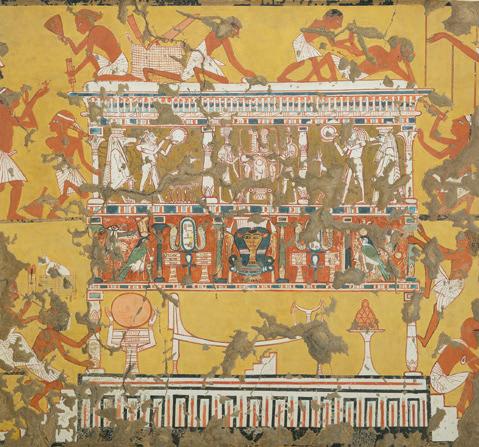
bones, consequences of accidents and carrying heavy loads during the construction of Akhenaten’s vanity project. A medical papyrus from the Old Kingdom (c2575–c2130 BC), with its itemised guidance for the examination, diagnosis and treatment of injuries, shows that Egyptian doctors had long been familiar with the physical consequences of such work. And the tomb of Ipuy at Deir el-Medina in western Thebes illustrates the industrial accidents that even befell those making tomb furniture, including eye injuries and damaged limbs.
Many found at Amarna died young. In one study, more than half of the bodies examined were aged 7–14; more than a quarter of these had suffered fractures of some sort. Few of the adults were older than their mid-twenties at death. None were mummified – they lacked the means even for the most basic process.
Egyptians were controlled through the opiate of cult and ritual that dominated their society, with no political representation