Community Solar Culture

Champions
Top Talent
IGS
SOCIAL IMPACT REPORT 2022
Meet
CEO Scott White PASSION PLAYER

It’s my privilege and a source of great joy to serve on a team engaging in so much positive change. And 2022 was a standout year for new initiatives at IGS Energy.

This magazine is a highlight reel of the inspiring impact made.
In an engaging Q&A, you’ll get to know IGS CEO Scott White— his entrepreneurial spirit, his dedication to helping people, his humble warmth and accessibility, and his belief that IGS has a responsibility to advance positive change by creating a sustainable energy future for a healthier planet.
You’ll also learn how part of that greener future just might involve recycling cow manure. You’ll read why we’re so excited about community solar. You’ll meet some of the incredible team members who make our culture one people are passionate about.
And you’ll see Scott’s innovative thinking and our company values in action in many ways—including how we’re reimagining investing in talent through workforce development. For example, through our Clean Energy for Everyone grants, we’re supporting two nonprofits near our Central Ohio home to train classes of solar installers. The students are neighbors looking for new careers— people who never may have considered renewable energy. It’s a pipeline of talent we have not accessed in the past that is now within reach. Similarly, we’re embracing students from the Columbus Promise program, which gives Columbus City Schools students up to six semesters of tuition-free education at Columbus State Community College. Scott wants to lay the foundation for more equitable and inclusive hiring practices by encouraging us all to rethink the need to require four-year college degrees for certain jobs. Following that kind of lead is energizing and exciting not just for our team, but also for our entire community.
As we grow, change has come at us fast in recent years, and the need to reinvent and revitalize is constant. That can be stressful. But with compassionate executive leaders dedicated to investing in employees first, we’re able to stay on course, letting IGS’s northstar priorities guide us.
Our purpose of creating a sustainable energy future sounds lofty, and we love that. We’re playing the long game. We hope you will, too.
Enjoy the stories and stay inspired.
Jen Bowden, Vice President, Brand & Social ImpactWe’re playing the long game. We hope you will, too.”


3,492,691 Customers served*
*Residential Customer Equivalents

1,300 Employees serving those customers
40 Weeks every employee spends developing through Positive Foundry program
4
$2,057,160 Donated to nonprofits

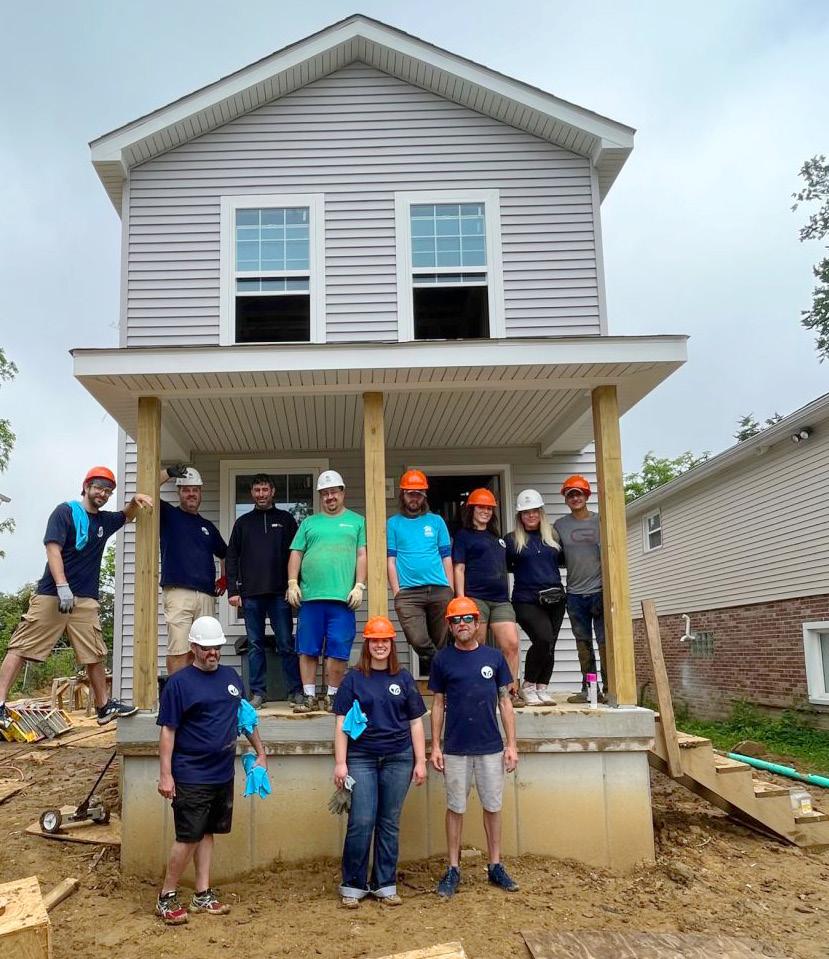
6,778 Hours volunteered by employees
Diversity, Equity, Belonging & Inclusion Communities, our version of employee resource groups, that launched
165 Nonprofits supported


47,261 Carbon-neutral natural gas enrollments
301,072
Acres of forest this is equivalent to sequestering carbon in one year
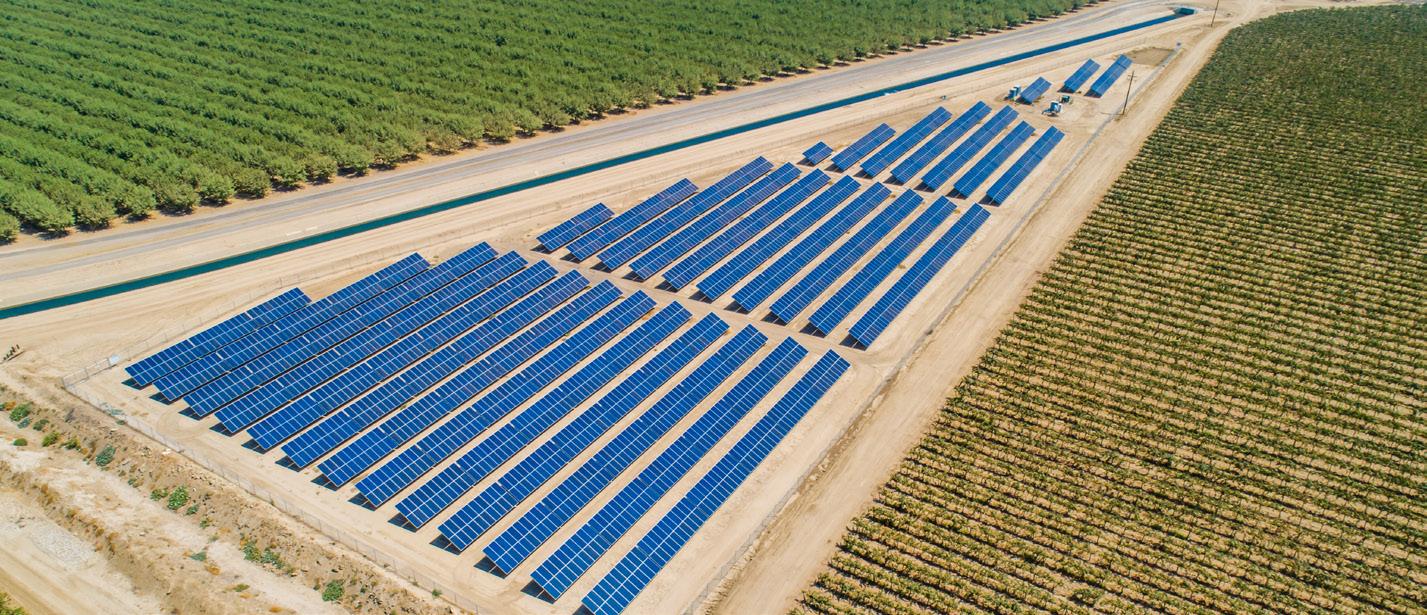
54,360 kW of total solar energy installed by IGS Solar
3 Projects underway as part of the Ohio State University Sustainability Institute, of which we are a founding member

1,000+
Ohio State students participating in a dormitory study we’re teaming on to monitor and understand how energy is consumed
Residential
34,647 kW Commercial
21,413 kW
1,490 Community Solar enrollments



585,090 Pieces of paper saved by going paperless

60,727 New green electricity enrollments
15,996 Tons of waste that this is equivalent to recycling in the 1st year of operation alone
71 Trees saved this year

21,273 Garbage trucks of waste this is equivalent to recycling


New ways to power our homes, businesses, schools and places of worship are key to unlocking the sustainable future IGS Energy envisions. To that end, in 2022, IGS launched its purpose-aligned community solar program with the commitment that renewable energy is for everyone.
Community solar gives people the opportunity to use solar power whether they own property or not. In this form of energy-sharing, community members sign up to reserve a portion of the energy that is produced from a local solar array and then receive credits from their utility and guaranteed savings. This form of electricity generation and use doesn’t require people to have the startup costs, rooftops or land upon which to build solar arrays. They just need electricity accounts.
IGS launched its community solar program in Illinois, and it plans to go to Maryland and New York next. Places that make good candidates for community solar have strong state-level support for the program.
There are 41 states, plus Washington, D.C., with at least one community solar project, with a combined 4.9 gigawatts installed through Q2 2022.
IGS COO Brandon Childers is hopeful about what this can mean for the future.
“The introduction of community solar to our offerings helps us achieve two major goals for our business— customer growth and the expanded access of clean, sustainable energy,” he says.

Companies called solar developers build utility-scale solar arrays—think three football fields of solar panels, enough to power 400-600 homes.
People in a local community subscribe to a community solar array, offsetting some of their electricity use with credits for energy produced from the array.

Providers like IGS attract and manage the relationships with subscribers— signing them up and then providing account management and customer service. IGS has created a software system, Community Solar 360, to manage these functions, and its existing field sales network is well-positioned to engage new customers.
Thanks to state and federal incentives for solar, subscribers get discounts on the price they pay for energy.
The introduction of community solar to our offerings helps us achieve two major goals for our business— customer growth and the expanded access of clean, sustainable energy.”
— BRANDON CHILDERS, IGS COO


As IGS moves to fulfill its purpose to build a sustainable energy future for a healthier planet, it’s committed to introducing renewable energy to the mix when and where it makes sense.
That’s how it came to have a CEO and executive leadership team excited about cow patties. With IGS Energy’s natural gas compression experience, its pipeline access and its network of CNG (compressed natural gas) stations, it’s planning to transform the biogas generated by dairy farms into fuel for heavy trucks starting in late 2023.
The environmental impacts of methane, which manure generates, are welldocumented. The gas is one of the primary greenhouse gases, believed to be responsible for about 30% of global warming, according to United Nations Environment Programme. The biggest driver? Agriculture, followed by fossil fuels.
Natural gas has 25% less carbon than diesel, and when you source that natural gas from a landfill or other renewable source, it has even less carbon imapact. Some sources even have a net negative carbon impact—like processing cow manure to create a useable form of natural gas that powers heavy trucks.

IGS has entered into the biogas space by building, owning and operating technology that will capture methane from large-scale dairy farms in Ohio and Indiana. IGS will process the manure onsite and truck the cleaned pipeline quality gas to a central pipeline injection site, where it will be nominated for use in the transportation sector.
The manure digesters are 20 feet tall and can hold over 2 million gallons of liquid.
“We’re using our expertise and our capital to partner with dairy farmers who are busy tending to their herds and trying to get the milk to market,” IGS CEO Scott White says. “We’re inserting our technology into the existing farm’s process in order to generate additional value from the waste product. And because the farmer is a critical part of this process, they also share in the value that is created.”
In other words, the work is a win-win, as it benefits the environment and farmers, White says.“It’s about what are we good at, what is our skill set, and how we can apply that in ways that might serve a purpose that matches our vision—building sustainable projects.”
30% Amount of global warming that methane, which manure generates, is believed to be responsible for
7 Dairy farms with 1,000+ cows each where IGS will begin methanecapture work
2 million Gallons of liquid cow manure that IGS digesters can hold
4 million Pounds of stone and concrete being hauled into each dairy farm site to create the roads and foundation for the digesters
100+
Data points that will be monitored per site with various sensors—pressure, flow, temperature and more

wants to use business as a force for good. Here, he gets personal on topics from meditation to why he’ll never go public.
IGS Energy was founded on challenging the status quo to make the world a better place.
Marvin White—who led utility giant Columbia Gas as chairman and CEO—was a champion and pioneer of Ohio’s energy choice program, helping open the door to something like a competitive market for utility services. But when he retired, he didn’t settle into a beach house and relax. Instead, he founded IGS Energy with his son, Scott, and daughter, Cathy. It was 1989, and the industry was dominated by big utility companies, as it is today. But the independent IGS set out to make its mark as a natural gas supplier with ethos.
At every point of disruption in the story of modern utility services in the United States, IGS embraced evolution—especially through deregulation and the rise of renewables. It’s paid off, as IGS—which Scott White leads as president and CEO—has become the fourth largest energy retailer in the country.
Now, as the effects of climate change become more dire, energy companies have a responsibility to lead the way to a sustainable energy future, White says.
In his own words, White shares why innovation and compassion are the business pillars that drive him and power IGS in everything the company does.
You just developed a new purpose statement, and you’re all in on creating a sustainable future.
This is a family enterprise that’s been around for 30 years, and we’re trying to set that north star by creating a purpose
that guides us in how we make changes and decisions on our business. I’m really excited about this purpose, because it gives us a very long-term focus.
The truth is, we’re heavily dependent on fossil fuels today. And that isn’t going to change overnight. We are in the fossil fuel business, because we are a natural gas retailer. We don’t apologize for that, because people use our natural gas to heat their homes and cook their food and run their businesses.
But we’re also mindful that as there’s more awareness around the impact of climate change, we need to come up with alternative ways to serve our energy customers that are reliable, affordable and, over time, reduce our carbon footprint.
The most predominant would be solar, which the company got into in 2014. There are different ways of commercializing solar. We do solar on residential rooftops. So people who want to self-serve their electricity and reduce what they take from the grid can do that. And we think rooftop is maybe the best form of solar because you’re not taking up the land. It’s a tangible experience for a consumer to see the panels on the roof, and then see the impact on their electric bill that they would have paid to the grid. We aren’t yet commercializing any batteries, but when you add a battery component at home, then you’re getting the benefit of being more self-reliant and independent from the grid. And we like that. I like it personally.
Our core business that we started over 30 years ago was about moving away from
We’ve always had this ‘change the status quo’ type of behavior.”
the utility being the only option when you purchase your natural gas. So from the very beginning, we’ve always had this “change the status quo” type of mentality, and it’s my entire approach to business. It started with natural gas and not having the regulated price as the only option but being able to offer an alternative to the regulated price. The deregulated markets have been a huge success, resulting in a competitive marketplace that gives you the ability to negotiate your own price and have a better understanding, awareness and control of what you’re paying for your natural gas. We’re taking that same concept and applying it to this idea that you don’t have to buy all your power from the electric utility, you can generate your own power on the roof and have control over that. That goes for our residential as well as our commercial
customers. We’re finding more opportunities for commercial customers to get solar power at a price that’s competitive to what they would get from the grid.
Another alternative we’re investing in is how we source CNG, compressed natural gas, for heavier trucks and buses and trash vehicles, that takes the place of diesel. (IGS has a network of 15 CNG stations across Ohio and surrounding states.) We’re starting to source that gas from the local landfill—so it’s not the natural gas that comes from oil and gas wells; it’s from landfills where you can create a usable form of natural gas. Credits are available for pairing the landfill gas with CNG, and that helps incentivize more trucks to go to CNG, reducing the carbon emissions by 25%.

“Human social organizations are created and guided by leaders— people who see a path and inspire others to travel along the path. Conscious Leaders focus on creating value for and harmonizing the interests of the business stakeholders. They recognize the integral role of culture and purposefully cultivate Conscious Culture.”
That’s conscious leadership as defined by Conscious Capitalism. Here are examples of how it’s lived out at IGS Energy:
We don’t do corporate jargon. We keep information transparent—we share financial performance on a quarterly basis with employees.
Employee engagement, investing in our employees’ health and wellbeing, and DEBI (diversity, equity, belonging and inclusion) are at the top of our strategic focus. We set aside time to invest in helping our employees build their emotional intelligence.
Building a learning organization Leaders within the organization can access tools like StrengthsFinder, DISC personality and other work style assessments. We encourage personal development and demonstrate it from the top through our deep involvement with the Stagen Institute, in which all Executives and VPs are sent through an intensive, one-year program.
We believe in work-life balance, and our leaders take PTO and encourage their teams to take PTO. We talk about “recalibrating”— taking a minute to catch a breath, reset, practice mindfulness. The company provides the Headspace meditation app to all employees.
You’re also really amped about working with dairy farmers on a project that is breaking ground soon.
We are going to be using manure from cows, which there’s a lot of, and that’s a problem because it creates methane (the second-largest source of greenhouse gas after carbon dioxide). So we’re taking the manure and processing it to make a usable form of natural gas that we can put into the pipeline and transport to our CNG fueling stations, where trucks are using it.
You’re going from using diesel to using renewable natural gas from dairy cow manure, and that process is said to carry a net-negative carbon footprint.
These projects are worth pursuing, even though they can carry risk. And it’s possible not all of them are going to work. But I think that’s the beauty of entrepreneurialism—the opportunity to take these risks and the excitement of wow, what if we could make that work?
That’s why we will never go public or take outside money: We don’t want to be influenced by a shareholder mentality that is in conflict with our vision and how we want to run the business.”

You’re a founding member of the Columbus chapter of Conscious Capitalism. What does Conscious Capitalism mean?

The four pillars of Conscious Capitalism are purpose, stakeholder orientation, conscious leadership and conscious culture.
Purpose: The idea is that companies should be guided by a purpose higher than profit. IGS’ is to create a sustainable energy future for a healthier planet.
Stakeholder orientation: The recognition that a business needs to create value for its customers, employees, vendors, investors
and communities—not just its shareholders in the form of profit.
Leadership: Leaders should engage in conscious leadership to inspire others inside and outside the company to rally around its higher purpose. Conscious leadership is values-based and requires the leader do their own personal growth and learning in order to show up more effectively for their teams.

Culture: Conscious companies intentionally create a culture that reflects and drives their values and purpose. Conscious cultures are built on trust, transparency and care.
Shareholder mentality, you know, is focusing on just the financial results, just the valuation, and it tends to drive to shorterterm durations. Then you start to ignore the key important pieces that I think drive longterm success.
I think we’ve done quite well financially. I think our shareholders are very happy. And I think the reason we do it well, and it’s sustainable, is because along the way, we’re taking care of our employees, our customers and our business partners. And those are very important stakeholders to us. We measure our success over longer time periods, and we aren’t going to make short-term decisions to maximize quarterly earnings.
That’s why we will never go public or take outside money: We don’t want to be influenced by a shareholder mentality that is in conflict with our vision and how we want to run the business.
At its core, Conscious Capitalism believes that business is a force for good. I think business can be a force for good. Corporations today have created a negative connotation with the younger generation— there is lack of trust and a perception that businesses are bad actors. I can understand their point of view, because unfortunately there are many examples of business leaders and corporations that don’t conduct themselves well. They may deceive their customers, produce faulty products, treat their employees poorly and in some cases outright violate regulations and laws. When businesses seek only to maximize profits and don’t take into context the way that they do that, then that ultimately is bad for the image of business and capitalism in general. It’s my hope that bad actors are brought to justice and that good companies, ones that think long term and conduct themselves with integrity, will thrive and earn back the trust of future generations.
Positive Foundry is a Columbus-based company founded by business leaders
Laura Cooke, Chris Cooke and Doug Smith. It has developed a 40-week training program centered around positive psychology and emotional intelligence. All IGS Energy employees go through the training, which takes just 20 minutes a week to help develop science-backed wellbeing skills.
The result, according to Positive Foundry? Higher productivity, lower absenteeism and higher profits.
The 12 Skills to Flourish by Positive Foundry include:
• Build positive emotions
• Master your stories
• Foster positive relationships
• Grow your EQ
• Discover your purpose
• Practice gratitude
• Learn optimism
• Manage energy
• Embrace forgiveness
• Lead with mindfulness
• Develop resilience
• Succeed with goals and habits
It’s my belief that by creating a value, you make a profit. It’s not the other way around. We ask what do our customers need? And how can we provide that? So that goes back to business as a force for good and Conscious Capitalism.
What did you learn from your dad?
My dad was an ethical person who worked hard. He didn’t work just to make money. He worked to do something. It was about, What is the why?
I think business can be a force for good.”
He spent 40 years at Columbia Gas, and then he retired as chairman, president and CEO. And the reason we started IGS after that was he didn’t want to just stay at home and not do anything.
When we started the company, he simply did it as a hobby. He’d already had his whole career. He didn’t have to work. He could stay home and watch TV. But he didn’t want to do that.
So he taught me the joy of getting up and putting in a good day’s work doing something that you love to do. He taught me to think about, Why do you do something? Is it just about the money? Or do you actually enjoy what you’re doing?
When I was in my 20s, he would set up meetings out of town at 8 a.m. and say I’d have to meet him at 5 a.m. so we could drive to Alliance, Ohio. There was a strategy there. He was telling me to start the day early. I would not have done that—it would not have been my choice (laughing).

How old are your kids now?
My kids are 27, 25 and 21.
Do they work in the business?
No. I guided them to choose to work somewhere else for a couple of years. And then I said, “If you feel like you’d want to pursue a career here, you’ll have more credibility and be able to bring good value. You may love what you’re doing. If you go somewhere else for two years and love what you’re doing, then why would you come back here? But if you have an interest, I think you’ll be more successful going somewhere else at first.”
I have two nephews who work here, and they did that—they worked elsewhere first and developed some skills. Now I think that’s going to be our family policy guidance, because the company is also owned by the families of my brother, two sisters and Doug Austin—not just me.
One of the commitments IGS has made publicly is working to help everyone—not just people from certain backgrounds—have a chance to succeed. How are you doing it?
As a community, we’re successful and we’re thriving, but not all segments of the community are thriving, and some are being left behind. That’s not something I can solve on my own. But what can we do? Well, we offer employment in the community. So how do we connect those job opportunities to areas of the community that we’re not reaching?
We’re looking at the universities we typically recruit from, and those demographics are somewhat skewed. Not everybody can get a four-year college degree—it’s expensive. So we’re rethinking our criteria for hiring and are starting to introduce a skills-based mindset when it makes sense.
We’ve identified a few ways to find talent that might otherwise have been overlooked. That’s using our position as an employer to help solve a social issue. That’s being a leader and using our good fortune for positive social change.

Summary: Columbus author Doug Smith was the CEO of Kraft Foods Canada, chairman and CEO of Borden Foods and chairman and CEO of Best Brands Corp. Then, a terminal cancer diagnosis changed his life. He set out on a path to discover what truly makes people happy.
Scott says:“This book really impacted me in a positive way. It’s just an incredible real-life story. It’s like a roadmap to be happy. And I agree with what (author Doug Smith) says: ‘I’ve got good news and bad news: Anybody can be happy, but you have to work at it.’”
Summary: This bestseller has inspired businesspeople around the world, selling more than 40 million copies. Its advice: Be proactive. Begin with the end in mind. Put first things first. Think winwin. Seek first to understand, then to be understood. Synergize. Sharpen the saw.
Scott says: “I have read and re-read this book to put it into practice.”
Summary: This bestseller sold 4 million copies and features the stories of 11 companies that made it to “great.” It’s regarded as one of the top books on management.
Scott says: “It’s hard for a good company to become great because you’re already good. So why bother, right? That challenges me to say, ‘OK—how can we be great?’”
Several of our job postings now don’t require a four-year college degree, where before they did.
We’re also thinking about the training piece. Could we teach people how to do this, if they have an interest and a willingness to learn? Can we then give them an opportunity and then teach them the job? Maybe that’s a little bit more work on our end. But maybe that’s how you break out and reach segments of a talent pool that exists that we otherwise wouldn’t reach. It pushes us to think differently and act differently.
Along those lines, you’ve given grants to a couple of nonprofits to support job training in the energy field, and you’re starting an internship program for students from under-resourced schools.
We’ve identified a few ways to find talent that might otherwise have been overlooked. At the same time, we can help address some of the economic disparity that we’re seeing in the community—that many communities are experiencing.
As communities succeed, sometimes not everybody succeeds. I feel passionately about this. Columbus is succeeding at an incredibly high rate. How can we do better at creating a rising tide for everyone in this community? How can we contribute to reducing social problems by finding meaningful employment for people?
It doesn’t mean we’re not going to hire people from four-year institutions. It just means we’re going to add room for other ways of finding talent. That’s using our position as an employer to help solve a social issue. That’s being a leader and using our good fortune for positive social change.
Speaking of positive change, you have an interest in meditation and mindfulness. Tell us about it.
I don’t know if I’m an expert at it, but I have been meditating. I try to be aware of my emotions in real time. I’m a big advocate for emotional intelligence. That’s a key piece in one’s success, so I read a lot about that. And I try to practice being more present and more thoughtful.
You have to engage. You can’t just read something and say OK, I read it, now I got it. You have to practice. I try to find ways to put things into practice.
(Columbus-based consultants) Positive Foundry created a great program that all of our employees go through for 40 weeks. The program identifies an emphasis for the week, and you do it every week for 20 minutes, so you develop positive habits that reinforce each other. These are very simple things that your doctor would tell you—you know, get a good night’s sleep, take care of yourself physically and mentally, and have control of your emotions.
I don’t practice perfectly, but I try. I love to read, but I haven’t made time for the last couple of years, because I’ve been busy. So I made an intention this year that I’d like to be done with television at 8 and start to get ready for bed and read from 8:30 to 9. I’ve probably done that only five times in this first month. Hopefully next month it’s maybe 10 times. I’d be happy with two or three days a week. That’s two

or three days more than if I didn’t have any intention around it. It’s not that I’m not going to watch Netflix—but instead of two hours of Netflix, how about one hour?
What value do you hope, someday when you’re gone, that people will say you brought to the world?
We’re a capitalist society, right? And I grew up thinking capitalism was good. So how can we demonstrate that? It’s not new—this is the way it used to be done. You run an ethical business, you do it in a way that’s successful, and you do it in a way that’s not just about maximizing profits. And it’s sustainable.
I’d like to help re-instill some of the virtues of capitalism. We need to be a role model, come in and do what we do, and do it the right way. And demonstrate that capitalism can be a good thing.
My greatest hope is that when I’m gone, the company will continue to do the same things we do now. That the people who I leave here to take over will continue to do that.



People first—that’s the IGS Energy way. And this year, the company launched four internal Communities to foster Diversity, Equity, Belonging & Inclusion. Here, meet our four DEBI Communities and the champions leading them.
In her first professional leadership role outside of college, Donielle Abbott, who is African American, was the only woman and the only woman of color on her team. She felt she had no voice and eventually left.

She’s been with IGS Energy since 2012 and says she’s found her support network at the company.
“I have been supported not just by people of color but by people that do not look like me,” says Abbott, who works in operations leading a remote team that supports departments across the company. “They stand up for me, speak up for me in rooms where I’ve not been able to speak up.”
Now, Abbott is helping a group of 50 people of color across the IGS footprint feel supported and encouraged as part of Melanin Moments, IGS Energy’s new Community for employees of color.
Melanin Moments has become a force for good within the company, holding monthly meetings, planning activities for Black History Month and Juneteenth, and creating T-shirts. For example, they delighted people by bringing in celebrated chef and writer Michael W. Twitty for Juneteenth 2022 to speak about the history of food and slavery (see sidebar).
There’s a leadership structure within the Community that offers roles for event
It takes a lot of courage for you to walk into those conversations and to engage in them.”
— DONIELLE ABBOTT MELANIN MOMENTS LEADER
planning, marketing and mentorship as well as board positions including secretary, assistant secretary and treasurer.
The group meets on IGS Energy’s virtual work platforms for formal meetings and informal chats. They share information about job opportunities and plan lunchand-learns about topics from financial planning to mental and physical health. They plan to get together in person at a companywide gathering in July.
Melanin Moments gives team members visibility they might not otherwise feel they have, Abbott says.
“Yes, you are a part of a great company, but sometimes you may not have felt seen,” she says. “(The group) also gives you the opportunity to share, because being a person of color, just the journey from home to the office when you’re driving, or going to the grocery store, you have experiences that others don’t have. (The group is) a safe space where other people know what I’m going through. It’s a connectedness.”
She commends IGS leadership and especially CEO Scott White for championing the DEBI initiative for employees.
“It gives those of us in Melanin Moments the chance to facilitate and encourage those hard conversations,” she says. “It takes a lot of courage for you to walk into those conversations and to engage in them.”
For Juneteenth 2022, Melanin Moments wanted to bring attention to the importance of the historic day through a lunchand-learn for all IGS Energy employees. Carol King, a member of the IGS Juneteenth Planning Committee, recruited nationally known chef Michael W. Twitty to deliver a talk on the impact of Juneteenth on the lives of African Americans.
It was a resounding success: The event drew 116 employees who shared overwhelmingly positive feedback about the experience.
Michael W. Twitty is an African American and Jewish chef, a noteworthy author and the winner of the 2018 James Beard Foundation Book Award for The Cooking Gene. His blog, Afroculinaria, explores the history of African American food culture. Twitty also founded the Southern Discomfort Tour, which raises awareness about the impact of racism on Southern cuisine by taking participants through the experiences of enslaved people picking cotton, chopping wood, working in fields and cooking in plantation kitchens. Twitty also gave a TED talk called “Gastronomy and the social justice reality of food.” His second book, Kosher Soul, published in 2022.
The gender-specific pronouns society traditionally calls people by—she, her, he, his—aren’t a fit for a lot of people, for a lot of reasons, and all of them matter deeply to those people. Some people prefer not to use gendered pronouns, but simply to go by their names and they/them pronouns. To honor and respect others, we can learn to use their preferred pronouns. Here’s how:

I can be who I am authentically.”
— JOE ANDRION-ROBBINS, PRIDE CO-LEADER
Long before official IGS Energy’s DEBI Communities were born, IGS inbound solutions center specialist Joe Andrion-Robbins was gladly marching with coworkers in the Columbus Pride Parade. They would wear matching T-shirts and make their way through the city, where as many as 750,000 people gather every June for one of the largest Pride celebrations in the nation.
Five years ago, when marketing operations specialist Matt Olms asked IGS leadership for official parade support, he got an unequivocal yes. The IGS marketing department created giant magnets with an IGS Pride logo for the company van, made a banner with the logo in rainbow colors and armed the group with swag and balloons.
So when the DEBI Communities initiative began to roll out in 2022, the IGS Pride Community had a solid start. AndrionRobbins became the Pride Community co-leader along with Katie Williams, an
account executive with IGS’ JadeTrack.
IGS Pride is now a 47-member group that includes people who identify as LGBTQIA+ and many allies. The group comes together for virtual coffees, happy hours and service. In 2022, for example, in an event organized by Corey Gordon, members spent a day at the Kaleidoscope Youth Center in downtown Columbus to support young people in the LGBTQIA+ Community or those who may be questioning their identities. The group also marks occasions such as Trans Visibility Day and HIV LongTerm Survivors Awareness Day, and they attend the Human Rights Campaign dinner.
Andrion-Robbins has been out since before high school, where he was bullied for being gay. IGS, he says, is the first place where he feels he’s appreciated.
“There’s genuine love and concern for me,” he says. “I can be who I am authentically and bring that to work every day.”
How someone looks is not an indication of the pronouns they would like to be called.
People may include their preferred pronouns in their email signature or a nametag, or they may be wearing a button.
Introduce yourself with your own pronouns. “Hi! I’m Anne, and I use she/her pronouns.”
Just ask Get comfortable asking people what their preferred pronouns are. It’s OK if you don’t know at first. How would you?
When addressing groups, use gender-neutral language instead of ladies, gentlemen and “you guys.” Friends, neighbors, colleagues, folks and y’all are great choices.
Sources: GLSEN (Gay, Lesbian and Straight Education Network) and GLAAD (Gay & Lesbian Alliance Against Defamation)
Lucy Farrimond is definitely a people person: For years, she helped IGS Energy customers navigate their natural gas plans as a team lead in the customer solutions center, and it was perfect for her personality.
That congeniality extends to her role as the leader of IGS’ Living La Vida Latinx employee Community. She’s passionate about getting to know the people in the group and helping create a safe space for people of Latinx descent to gather at work.

Born in Mexico City and raised five hours north of there in San Luis Potosí, Farrimond came to the United States after graduating high school to be with her parents, who had emigrated years earlier.
Like many public-school students in Mexico, Farrimond had taken English classes, and she supplemented them with after-school lessons. But when one doesn’t use language skills on a regular basis,
fluency is a challenge. One of Farrimond’s foundational experiences in Columbus was taking English classes for New Americans at the old North High School in Clintonville. There, she met people from African, Asian and Latin countries.
“It gave me that opportunity to meet people without feeling out of place,” Farrimond says, “because they were in the same position I was.”
She says with so many more people of Latin descent in Columbus, it can be easy for people to stay in their comfort zones around others speaking Spanish. But outside of that comfort zone, she knows, is where growth happens. So she got uncomfortable.
The Living La Vida Latinx Community at IGS brings together people from diverse backgrounds who share Spanish as a native tongue. The 29 members hail from Mexico, Puerto Rico, Dominican Republic, Peru, Colombia, Bolivia and Cuba.
“We have a space where we can share struggles, strategies, or just hang out,” she says.
Members are in Columbus, Colorado, Texas, Delaware, South Carolina and Chicago, and they stay connected via a group chat.
For 2022’s Hispanic Heritage Month, which runs from mid-September to midOctober, the group invited a speaker to talk about the history of the Latinx Community in the United States. More than 50 IGS employees attended.
“For me, being a Latina, instead of it being something that I have to adapt to, I use it to help me,” Farrimond says. “One of the things that I love about IGS is that we embrace that. And I want our people in the Latinx Community to feel they can embrace their Latin side, and that they can use it as a strength to grow within the company.”
Grouping the diverse Spanish-speaking diaspora into one ethnicity with a term such as Latino or Hispanic came about in the United States in the 1970s after groups lobbied the U.S. government to represent them in Census counts. Here’s what different terms mean:
Latino The masculine term used in English, Spanish and Portuguese to refer to United States residents with cultural ties to Latin America. Can include Brazilians, Haitians and people of Spanish descent.
Latina The feminine term used in English, Spanish and Portuguese to refer to United States residents with cultural ties to Latin America. Can include Brazilians, Haitians and people of Spanish descent.
Hispanic A term referring to Spaniards, or people of Spanish descent, but not to people with ethnic ties to Central and South America.
Latinx A gender-neutral way to refer to U.S. residents of Latin American cultural or ethnic identity that has grown in popularity with advocates for gender fluid and non-binary individuals in recent years. Plural: Latinxs.
Latine A synonym for Latinx Latin@ A synonym for Latinx
Sources: Pew Research Center, Rosetta Stone, Mic, Wikipedia
I want our people in the Latinx community to feel they can embrace their Latin side, and that they can use it as a strength to grow within the company.”
— LUCY FARRIMOND, LIVING LA VIDA LATINX LEADER
Cindy Bissette is a different person from the one she was 11 years ago.
Quiet and reserved, she was promoted to a leadership position in a call center, but she felt alienated by the company’s culture. So she decided to leave, landing a job as a supervisor in the solution center at IGS Energy.
“I was really kind of blown away by the environment,” she says. “It just felt very positive.”
Eleven years and three promotions later, Bissette is a senior manager who supports customer operations and collections teams totaling 60 people. And she’s the leader of the IGS Women’s Network, the newest iteration of a Community that she’s been involved with since it started in 2017.

These days, it’s more likely you’ll find Bissette publicly sharing her story and leading encouraging conversations with colleagues than fading into the background.
“When I think about who I was 11 years ago and compare that person to who I am today, it’s like that person doesn’t exist anymore,” Bissette says. “IGS really has played a massive role in who I am today, in a very positive way. I feel like I have been given a space at IGS to get uncomfortable and to really grow as a leader—and as a person.”
She credits her boss Karen Rizzo, senior director of the solutions center, with playing a big role in her development.
Bissette is passing on that support to others through the IGS Women’s Network,
which was formerly known as WIGS, or Women of IGS.
“The idea of giving women a voice and allowing them to connect and share personal experiences really resonated with me,” she says.
A core team of five women works together to plan events, create opportunities for connection and gather feedback. There’s a book club, a mentoring and accountability partner network, and small group discussions on topics such as leadership and supporting moms.
An event in 2022 called Stronger Together presented talks given by women on how to support each other in the workplace, followed by discussion groups. The gathering drew women, men and others who showed up as allies.
The group makes a point to acknowledge and celebrate all the intersectional identities women bring with them to work, using its platforms to amplify Black History Month, Hispanic Heritage Month, Trans Visibility Day and others.
“I think it’s important that we recognize the diversity in women,” Bissette says. “The more we learn from each other and share stories with each other, the stronger we are.”
The IGS Women’s Network held a virtual event in 2022 that brought people together for a curated selection of talks given by women followed by breakout group discussions. These four highlighted talks make for great conversation.
The Likability Dilemma for Women Leaders by documentary filmmaker Robin Hauser “Women, unlike men, are rarely perceived to be both competent and likeable.”
How to Break Down Barriers and Not Accept
Limits by NCAA champion and two-time Olympic gold medalist Candace Parker “Inside I scream, ‘I am so much more.’”
4 Ways to Redefine Power at Work to Include Women of Color by corporate refugees and coaches Rha Goddess and Deepa Purushothaman
“Women of color are corporate America’s greatest underutilized resource, and yet we could be your greatest competitive advantage.”
Want to Truly Succeed? Lift Others Up While You
Climb by ACLU Chief Equity Officer Amber Hikes
“When you climb that ladder and you get to the top, you can take a moment to enjoy the view, but you must be principally concerned with using all of your might to throw the ladder back down for those who are coming behind you.”
The more we learn from each other and share stories with each other, the stronger we are.”
— CINDY BISSETTE, WOMEN’S NETWORK LEADER


IGS Energy is not just fully committed to creating a sustainable energy future—it also wants to advance diversity, equity, belonging and inclusion with skills-based hiring along the way.
Enter IGS Energy’s renewable energy workforce development programs.
The company is nurturing partnerships with nonprofits to train people to become solar installers and connect them with jobs at IGS or elsewhere.
Work to align its business purpose and philanthropic investments manifested in the company’s Clean Energy for Everyone grant program, which launched in 2021. IGS pledged $1.2 million in funding for 10 nonprofits with projects helping create an equitable clean energy economy.
Grant applications called for three major outcomes: increasing the overall share of renewable energy, increasing access to energy education and creating job mobility through careers in the renewable or cleaner energy sector.
Two Columbus nonprofits, IMPACT Community Action and the Mid-Ohio Food Collective, were granted $175,000 each over two years.
The IMPACT CA EMPOWERED! Program trains students in weatherization, solar installation and EVs, leading to energy industry certificates and connections with employers and jobs. A third 12-week-long class for solar installers is planned for the spring of 2023.
The Mid-Ohio Food Collective’s new ReadySkill program has a mission to provide job training to under-resourced individuals. It kicks off its 18-week solar installation training in summer of 2023 for 25 students, who will be able to earn a certificate through the North American Board of Certified Energy Practitioners.
Both programs provide wraparound support for students to remove barriers that may otherwise prevent them from pursuing new
learning opportunities, offering help from rent stipends to childcare.
The pipeline of graduates can pursue job opportunities with Ecohouse Solar, a Central Ohio solar installer acquired by IGS.
Clean energy jobs paid 25% more than the national median wage in 2019, according to the American Council on Renewable Energy. However, the profile of the typical renewable energy worker does not reflect the community at large: Just 20% are women, and less than 10% are Black.
IGS leaders are leaning into the partnerships, offering to review resumes, do mock interviews and host students for internships or co-ops. They say they’re very willing to consider students without four-year college degrees.
IGS CEO Scott White has been vocal about his commitment to removing workforce barriers with skills-based hiring.
“We’re challenging, being disruptive and thinking about how are things done? And how could we do it differently?” he says. “We’re looking at our jobs and saying, are there some jobs that people could do that don’t need a college degree? Today, our application might say degree required. Why?”
IGS Energy is a proud financial partner in Columbus Promise, a program that offers Columbus City Schools graduates six semesters of tuitionfree education at Columbus State Community College. Beyond its financial support, however, IGS is prepared to welcome a handful of Columbus Promise students for internships, co-ops or other engagements. The idea is to connect them with careers in the energy sector that they may never have considered but might find fulfilling.
IGS Energy is creating new pathways into the clean energy space by tapping into new talent


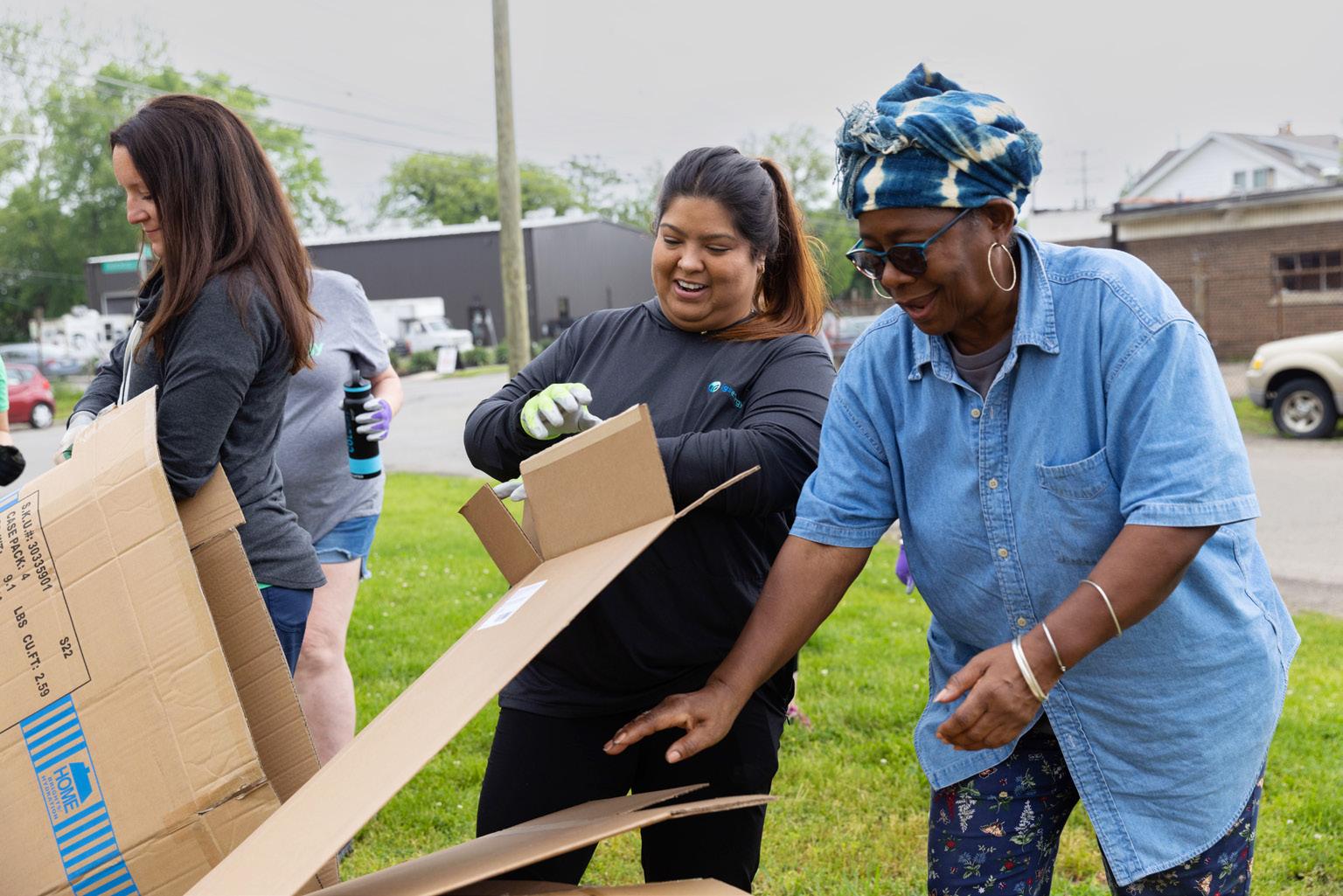
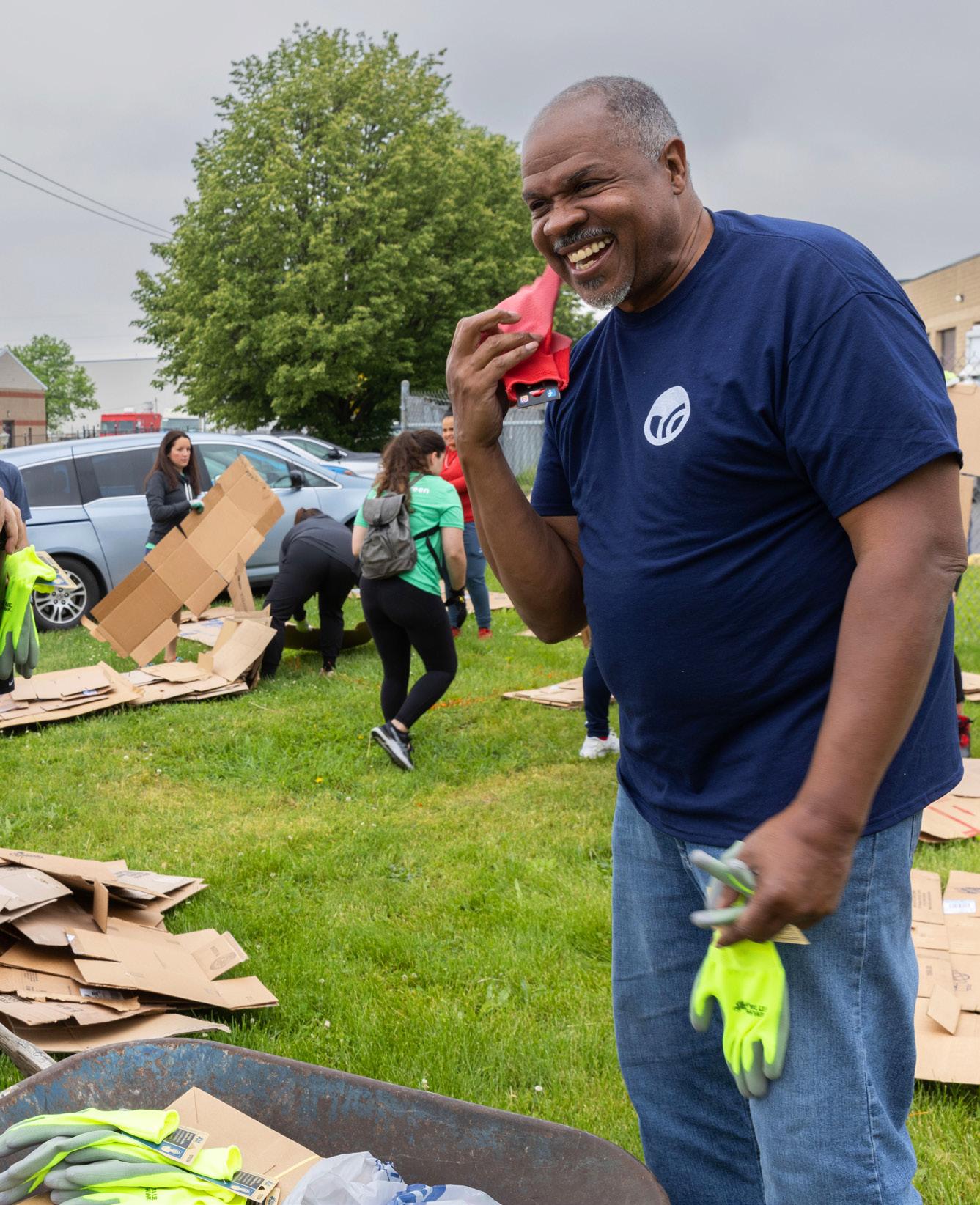
IGS Energy is powered by 1,300 creative, resourceful professionals from a variety of backgrounds—all united in providing value and service to the company’s 3 million+ customers and driving a pragmatic approach to purposeful change. They say IGS’s “People are Why” philosophy manifests in a supportive culture that starts with leadership and spreads throughout the organization. More than a list of guiding principles stenciled on an office wall, IGS actually puts money into its goal to create a happy, productive workforce. This commitment is evident through its generous benefits, flexible work schedules, Positive Foundry program, DISC personality tools and mindfulness app subscriptions for all employees. Team members also relish being part of what they see as an authentic, purpose-driven company with a mission to work for environmental sustainability. Here’s why a handful of them said they’re passionate about using their talents here.
“The talent, ability to work across teams, friendliness and humor make each day feel like more than work. It’s the sense of a community of fantastic people and leaders that I’m lucky enough to call not just colleagues, but often friends.” —Wayne
Edens“IGS’ers are authentic and are empowered to be themselves (which often leads to many laughs!). Relationships matter here, families matter here, mental health matters here. Contributing to our communities matters here. It’s not often a company lives up to its values a nd holds up the ‘people-first’ mentality, but I continue to see it guide our decisions daily.” —Nicole
Berger“It’s hard to explain to other people how much we all truly care about each other and want each other to succeed. (And) leadership cares about the employees and invests in us. IGS is investing in every employee by sending us through the Positive Foundry program. They truly care.” —Andrea
 Wilkins
“IGS Energy is a great place to work because it embodies an environment where everyone is welcome. It reminds me of the pay-it-forward concept—when one of us wins, we all win.” —Michika

 Davis
Davis
“I’m not sure I can put into words why IGS Energy is such a great place to work. The people I get to hang out with every day make this place amazing. They’ve been around to congratulate some of my family’s greatest moments, and they’ve also been there to give me a hug when we’ve had our lowest moments.” —Jason
Richards“I think IGS Energy is a great place to work because of the way they invest in and care about their employees. IGS considers us to be people—thinking and feeling individuals— and the company takes great steps to acknowledge that. I’m very happy to be part of an organization that considers every angle of what makes success possible in the industry that we work in.” —Carter
TyreIGS is the most proactive, forwardthinking, and progressive company I’ve ever been a part of.”
—CLAY VANSICKLE
“IGS is a great place to work because I get to work with people who challenge me each and every day. We are all truly empowered to be ourselves and build toward becoming the best versions of ourselves. It is awesome getting to work somewhere that really makes an impact for our customers. There is a family feel at IGS that is truly unique, and it’s one of those feelings that only strengthens the longer you’ve been here.”
—Lusiano Guerrero“Every team and group at IGS Energy is friendly and extremely helpful. Pair that with the company’s technology, forwardthinking culture and awesome sustainability goals, and you have the best place I’ve worked at.” —Eric
Hale“This company is so supportive of its employees, and the culture here enables coworkers to become family. When my husband had some serious health problems, this work family stepped in and took care of us, providing dinners and even LEGOs for my kids to keep them occupied while their dad was in the hospital. The impact IGS has had on my family is immeasurable, and I can’t be more happy to be a part of this place!” —Adrienne
Pietropaolo“IGS Energy is a great place to work because I feel that my workplace is an extension of my family. The quality of my relationships with colleagues is on another level!” —Neha

 Sharma
“IGS is a great place to work because I have a team and company that support me personally and professionally. I’ve experienced a lot of big life changes while at IGS—buying a house, getting married and having a baby. My team has been there to cheer me on and celebrate, whether it’s my counterparts in HR or those I support in the business. They also lift me up when life has been stressful. It really means a lot to me when I can have those relationships and it’s not strictly about business all the time. In addition, IGS focuses on what we should do for employees, not just what we have to do. Being able to take a completely paid maternity leave was a relief. I was able to focus on my son and not worry about having a paycheck coming in. I was able to be flexible with my schedule as I returned. These aren’t always offered at other companies, but IGS does because it’s the right thing to do.”
Nash“IGS Energy is a great place to work because my peers and leaders are invested in my development and growth, both at and outside of work. I also love IGS’s commitment to sustainability and consciousness of our environmental impact. All in all, I get to have fun working for a company whose mission I believe in, and I get to do it alongside some pretty great people!” —Luke
Ackerman“IGS is a great place to work because the company and team members are the most positive, kind and supportive people that I’ve ever encountered. I love how IGS encourages me to do better and be better, both at work and in my personal life. I used to love being in my comfort zone, but I was never growing there. IGS is constantly evolving, and that has pushed me to evolve and grow as well. IGS has helped me in so many ways, and I will forever be grateful to work for such an amazing company.”
—Jenna Majernik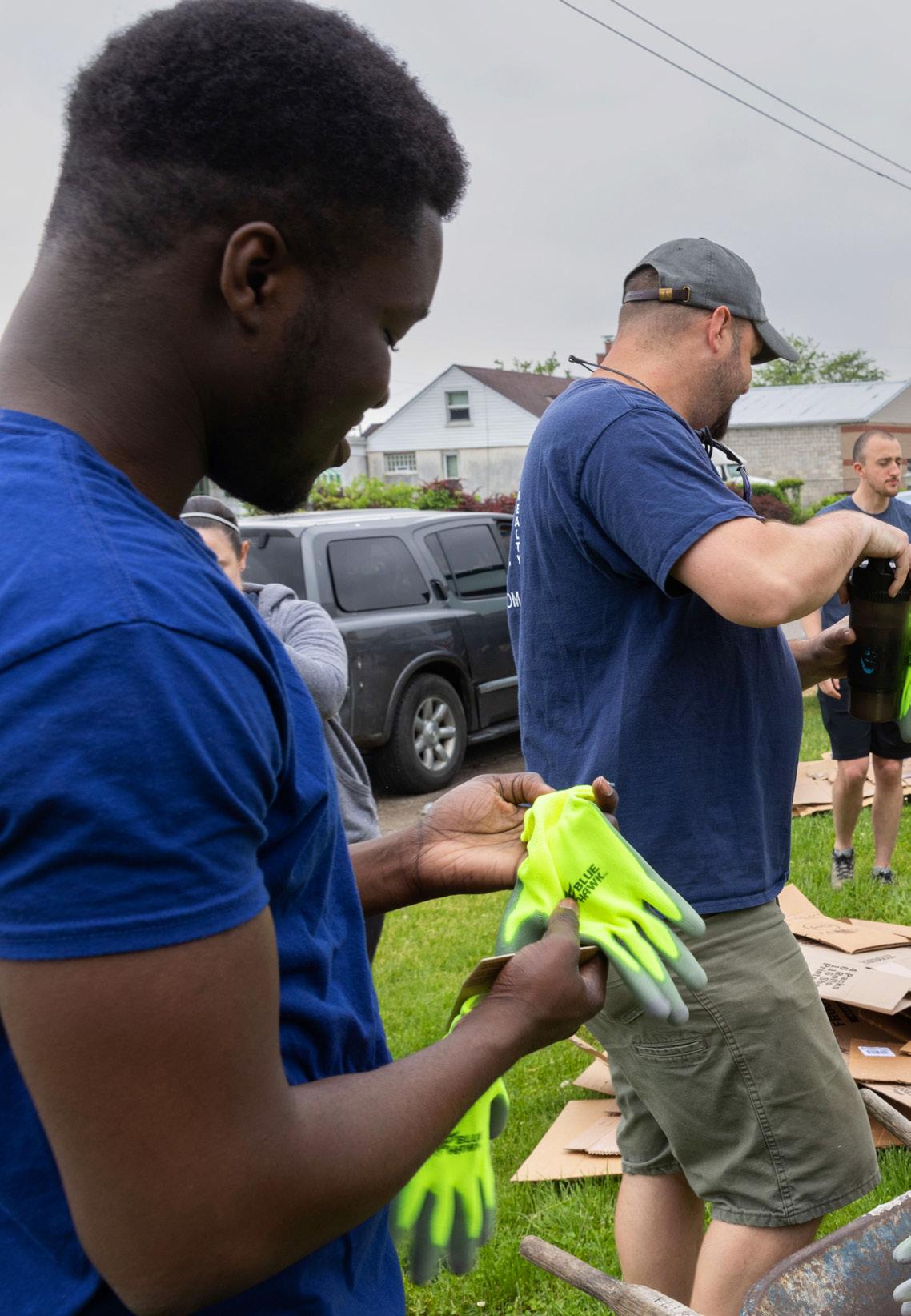
Not a day goes by that I wake up and think, ‘Dang, I have to go to work today.’
The part I enjoy most about my job is my customers. They are the No. 1 reason I come to work with a smile. IGS is all about family, and I love this about my job.”
—TONJA VINCENT
“IGS is a great place to work because we are intentional about the environment and going green. We are intentional with the way we support one another both inside and outside the office. We are intentional about providing tools to improve our physical, mental and overall wellbeing. We are intentional in maintaining a warm, friendly and caring culture. And we are intentional about doing the right thing.”

 —Taylor Larr
“IGS Energy is a great place to work because, when it comes down to it, there is no place I’d rather be. Coworkers are part of my extended family. We support each other through challenges and celebrate each success and life change together. When your daughter comes home from school and tells you that she put in a request to be the President of IGS Energy during BizTown, you know some of that great ‘energy’ is rubbing off!”
—Melissa Minerd