A Magical Journey to the Stage with Aladdin, ينربقت
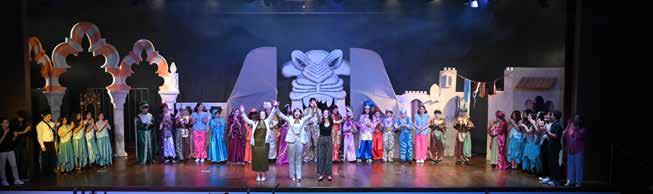
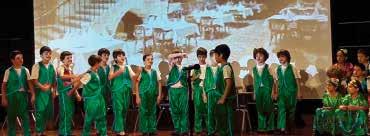
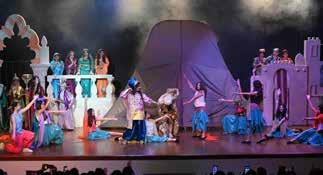
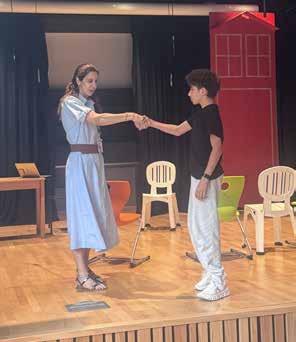
On May 21 and 22, the Irani Auditorium came alive with the Middle School production of “Aladdin, يــنربقت
”.
Presented by the Middle School Drama Club and Dance Club and performed by students in Grades 6 through 9, the production reimagined the beloved tale of Aladdin through the humor, warmth, and vibrant spirit of Lebanese culture.
From the opening scene, audiences were captivated by the students’ energy, enthusiasm, and stage presence. Far more than a traditional school play, the production blended acting, dance, live singing, technology, and imaginative storytelling into a dynamic and memorable theatrical experience. The students’ confidence, creativity, and commitment shone through in every performance.
Directed by Remi Moussaly, with musical direction by Theresa Harfouche and choreography by Rajana Veda Malaeb, the show came to life in a colorful and engaging way. The lively musical performances, expressive choreography, and strong performances of the cast kept audiences entertained throughout the evening.
Equally striking were the production’s visuals. Vibrant costumes, imaginative set designs, and carefully crafted scenes transformed the stage into a magical oriental world infused with a contemporary Lebanese touch. Innovative AI elements added a modern twist, creating an even more immersive experience for the audience.
Behind the scenes, the success of the production reflected the dedication and collaboration of the Activities Department, chaired by Riad Chirazi, alongside many
members of the Middle School faculty and staff. Students also contributed significantly to the creative process, demonstrating how teamwork and passion can bring a shared vision to life.
More than just a school play, “Aladdin,
” was a celebration of creativity, collaboration, and student talent. The production left audiences inspired, entertained, and deeply proud of the remarkable work accomplished by the entire cast and crew.
The cast included: Lilia Karaki, Raya Dandan, Vera ElKhalil, Tia Fawaz, Zia Chehade, Karma Fakhoury, Karim Majzoub, Karim Mansour, Khaled Karl Yassine, Mohamad Tarhini, Abdulrahman Saghir, Ghassan Jason Al Amin, Raya Nathalya Kanj, Nala El Masri, Yara Mansour, Gabriel Karam, Taym Abraham, Karim Nassar, Ezel Mahmoud, Celine Haroun, Sally Bou Hamdan, Yara Hajj Ali Barada, Julia Ajouz, Leyla El Hashem, Andrew Sagherian, Layal Maalouf, Nay Moukalled, May El Zein, Haya El Hage, Julia El Zein, Ziyad Salam, Mohamad Shihab, Christopher Chaccour, and Malek Salam.
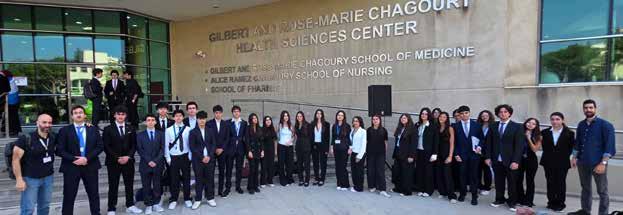
LAU MUN, MAL, and NDU MUN Conferences
The Ras Beirut High School and Middle School MUN Clubs proudly participated in the LAU MUN, MAL, and NDU MUN conferences. We are pleased to recognize the following students for their outstanding achievements: Middle School – LAU MUN Conference
• MUN Position Paper Award: Sirine Wehbe
• MUN Position Paper Award: Sarah Maria Abdallah High School – LAU MUN Conference
• MUN Position Paper Award: Nader Sakr
• MUN Diplomacy Award: Anthony Aoun High School – MAL Conference
• MAL Position Paper Award: Ghadi Abi Rafeh
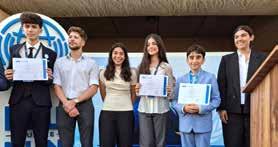
Congratulations to all our delegates for their hard work, dedication, and outstanding representation of our school.
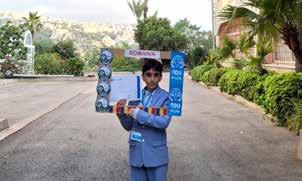
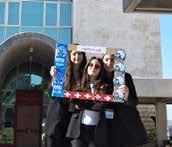
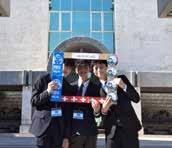
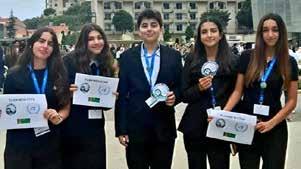
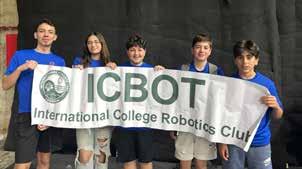
IC Ain Aar NDU MUN delegation proudly representing Romania and Switzerland at the final conference ...
Edwin Bakhos, Best Delegate Award
IC Ain Aar LAU MUN delegation proudly representing Turkmenistan at the final conference
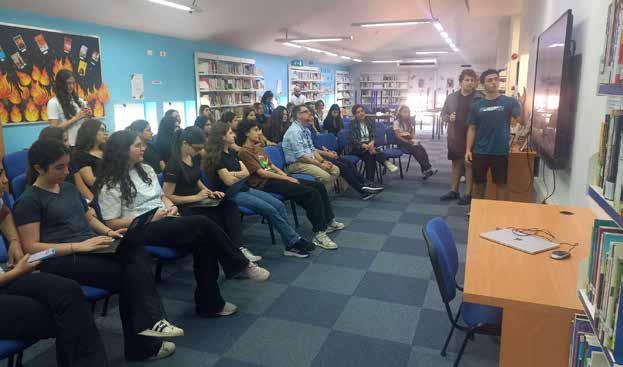
IC’s COP30: Rethinking Waste, Inspiring Change
The IC COP30 project brought together Seconde students along with the High School’s group of écodélégués (Sustainability Advocates) in a dynamic and inspiring simulation of an international Climate Conference, transforming environmental education into meaningful action. Through a collaborative process inspired by real COP negotiations, from diagnosis and research to debate, negotiation, commitment, and implementation, students explored the challenges of waste management and sustainable practices within their own school community. Focusing specifically on waste sorting in the Secondary School, students identified inefficient waste management and the lack of effective recycling practices as a real environmental challenge within their daily school life, making it the central issue addressed throughout the COP30 project. Working in commissions, conducting waste audits, analyzing data, meeting with experts, and participating in debates and a final roundtable discussion that took place today, students developed critical thinking, communication, cooperation, and leadership skills while embodying active global citizenship.
Friday May 15, 2026 marked the culmination of this ambitious journey, as the IC COP30 conference officially
took place in an atmosphere of engagement, dialogue, and collective responsibility. Through student-led presentations, debates, negotiations, and the sharing of innovative solutions, participants transformed months of reflection and collaboration into concrete environmental solutions for a more sustainable school.
More than a school project, IC COP30 reflects the IC mission of empowering young people to become responsible changemakers capable of turning ideas into meaningful impact.
Planting, Learning, Caring
As part of their Unit of Inquiry “Sharing the Planet,” MS and KG1 students embarked on a rich and meaningful exploration of the world of plants. They investigated the characteristics and essential parts of plants while developing an understanding of their fundamental role in sustaining life on Earth.
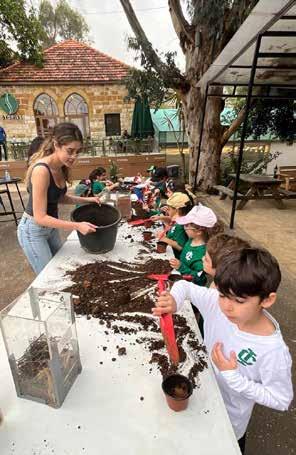
To deepen their learning, students visited Nature by Marc Beyrouthy, an educational botanical garden where they observed how plants contribute to maintaining healthy ecosystems. During their visit, they engaged in hands-on activities: exploring a botanical garden, planting seedlings, creating compost, and learning about the interdependence between plants, animals, and the essential role of insects.
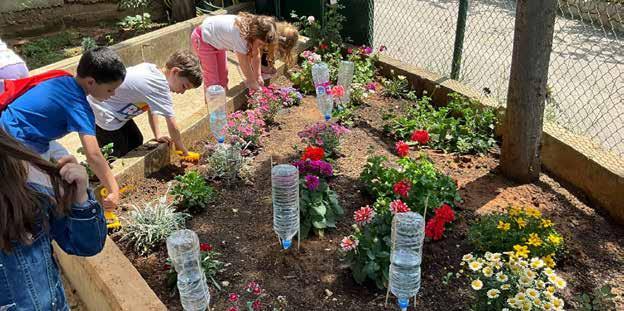
Taking their learning a step further, our inquirers translated their knowledge into action by creating a small garden planted with different flowering species. But they didn’t stop there. These reflective learners went beyond initial understanding and began thinking critically about how to sustainably irrigate their garden. Using their design thinking skills within STEAM, they created a sustainable drip irrigation system out of reused plastic bottles, applying creativity and problemsolving to real-life environmental challenges.
Through this experience, students not only deepened their understanding of plant life and ecosystems but also developed responsibility, initiative, and
environmental awareness by transforming learning into meaningful action.
Supporting Species Lifecycles
As part of their Unit of Inquiry “Sharing the Planet,” CP and Grade 1 students explored the fascinating life cycles of plants and animals, discovering the processes of growth, transformation, and renewal that all living things experience. Through their inquiry, they developed an understanding of the interdependence among living organisms and the delicate balance that sustains life on Earth.
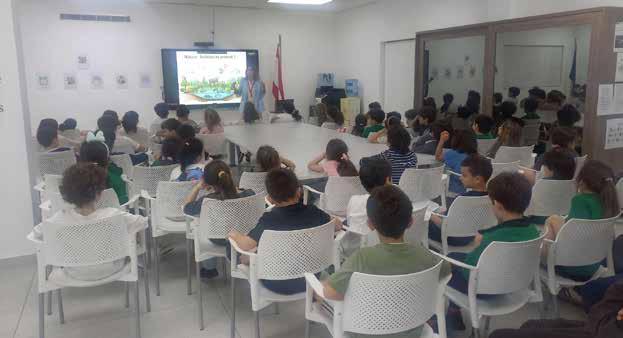
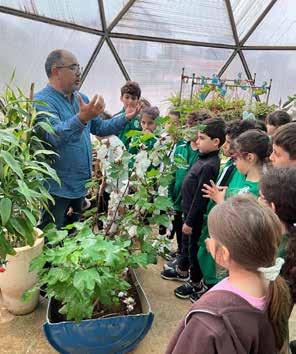
To enrich their learning, Ain Aar students visited Nature by Marc Beyrouthy, where they explored the life cycle of the silkworm, as well as those of plants and animals, through hands-on workshops and activities. They also welcomed guest speaker Mrs. Mireille Chnaniir, Manager of the Chnaniir Nature Reserve, who shared insights on the importance of protecting forest ecosystems to sustain species lifecycles.
As a culminating action, students will raise funds to support the Chnaniir Nature Reserve in its conservation efforts. Stay tuned to see the students in action!
Sustaining Water Resources
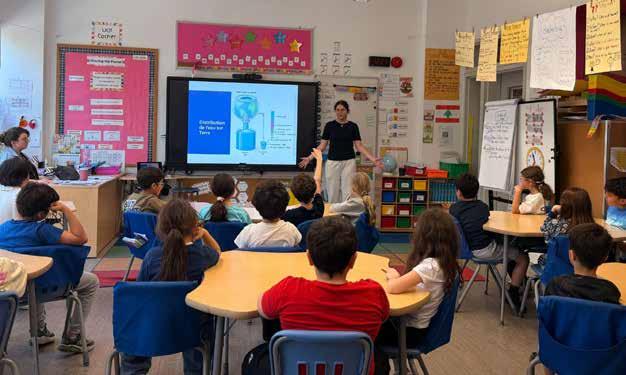
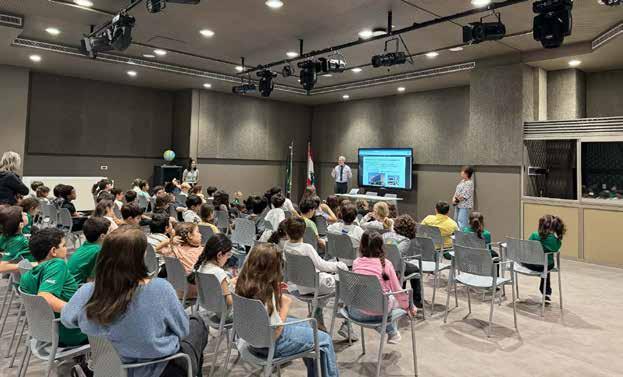
As part of their Unit of Inquiry “Sharing the Planet,” CE1 and Grade 2 students explored how human choices can support the sustainability of water. They investigated the properties and states of water, as well as its availability and distribution, gaining insight into the factors that affect both its quantity and quality. To deepen their understanding, students welcomed High School Sustainability Advocates (éco-délégués), who shared their knowledge and raised awareness about the importance of preserving water resources. Inspired by this exchange, students are now ready to take action.
Stay tuned to discover their next steps!
Designing Sustainable Cities
As part of their Unit of Inquiry “How We Organize Ourselves,” CE1 and Grade 2 students explored the concept of cities, focusing on how sustainable urban environments can be designed. They inquired into the characteristics of cities and the important role individuals play in shaping them. An enriching highlight of their learning was an intervention by Mr. Richard Bampfylde, IC’s Director of Outreach, who
introduced students to the concept of sustainable cities and inspired them to think critically about urban development and environmental responsibility. Building on this knowledge, students are now becoming active citizens who advocate for sustainability within their communities. Through this initiative, they are taking meaningful action and discovering that every city is shaped by the people who care for it.
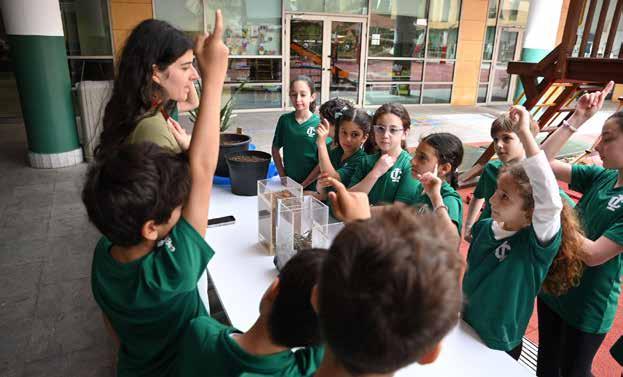
Understanding and Protecting Ecosystems
As part of their Unit of Inquiry “Sharing the Planet”, CE2 and Grade 3 students embarked on an enlightening journey to understand the vital importance of maintaining healthy ecosystems to support life on Earth. Through their exploration of the intricate components of ecosystems, they investigated the dynamic interactions between living organisms and non-living elements, and how these relationships sustain balance within natural systems. Recognizing the fragility of this equilibrium, students reflected on the impact of human actions
and their own responsibility in preserving ecological harmony. To deepen their learning, students welcomed the Nature by Marc Beyrouthy team on campus and engaged in hands-on workshops focused on planting, composting, species life cycles, and the importance of maintaining healthy ecosystems. This experience also turned into meaningful action, as students actively participated in planting and creating compost, applying their learning in a real and impactful way.
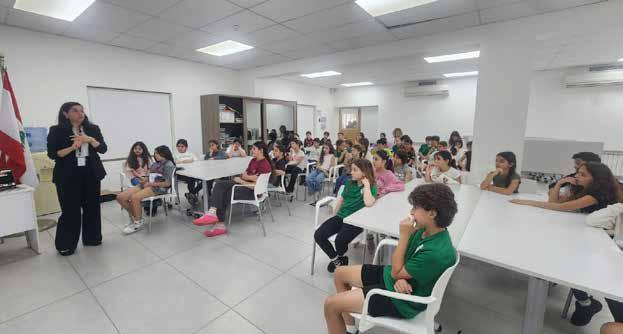
Sustaining Natural Resources
As part of their Unit of Inquiry “Sharing the Planet,” CM1 and Grade 4 students explored different types of natural resources, their importance, human uses, and the threats they face. They welcomed Mrs. Rita Hajj, IC’s Sustainability Program Chairperson, who highlighted the vital role of natural resources in meeting human needs and the impact of human activities on their depletion. This inspired students to recognize their responsibility for the sustainable use and preservation of these valuable resources.
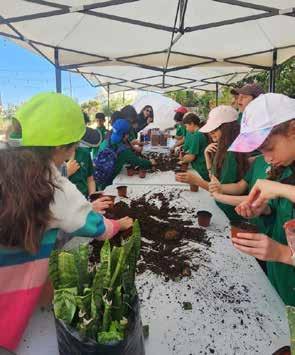
To deepen their learning, students visited Nature by Marc Beyrouthy, where they participated in workshops focused on conservation practices such as planting, composting, and plant life cycles. This experience reinforced their understanding of responsible resource management and empowered them to become active stewards of the environment.
They are now ready to take their learning one step further and implement a meaningful action. Stay tuned…
Save the Forest: A
Legacy of Action and Impact
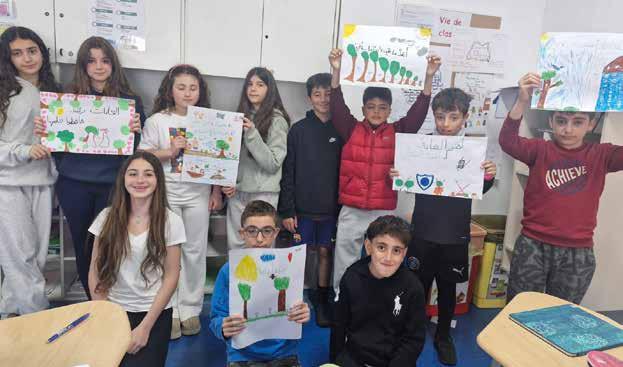
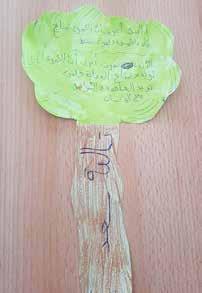
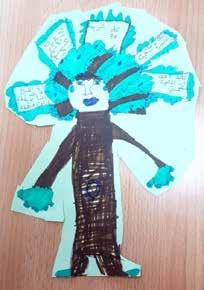
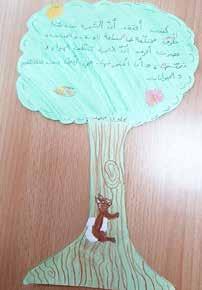
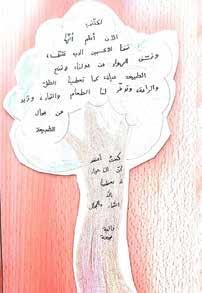
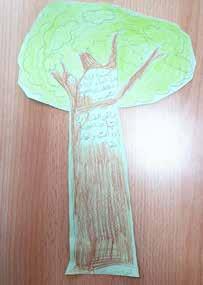
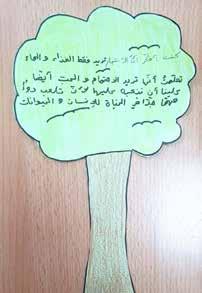
Save the Forest, our flagship project and enduring legacy in environmental sustainability, has been implemented since 2022 and has steadily evolved into a sustainable, interdisciplinary initiative. Over the years, it has grown beyond the classroom to become a well-established project widely recognized and appreciated by our external partners and community. It continues to serve as a reference in environmental sustainability, fostering awareness, responsibility, and concrete action among students. This year, the final disciplines to conclude their contribution to the project were Arabic (6ème / Grade 6) and FLE (Grade 6). In Arabic, students read the book “
” and reflected deeply on the importance of forests, before creating impactful slogans to promote forest conservation and environmental responsibility. In FLE, students explored the theme of sustainable cities, with a particular focus on the essential role of integrating green spaces into urban planning to ensure healthier and more livable environments.
The strength and continuity of this project have also enabled us to extend its impact beyond the school, leading to its submission to the International Okayama
ESD Award 2026. This prestigious award recognizes long-term educational initiatives implemented over at least 3 to 4 years that demonstrate meaningful and measurable impact on the environment, society, and economy. It is a recognition of both the consistency of our approach and the collective engagement of our students and teachers over time. As we await the results of the award, fingers crossed as we continue to celebrate the journey and the collective commitment behind this project.
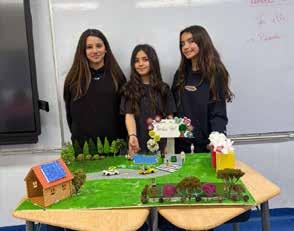
Sorting for a Better Future
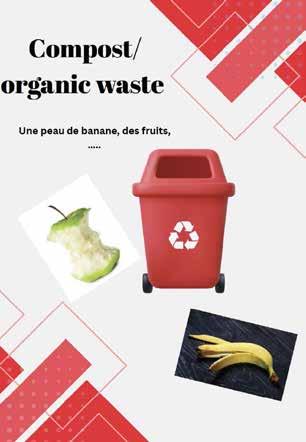
As part of their FLE unit “Recyclons,” Grade 6 students at Ain Aar took on an engaging challenge: designing new sorting posters to improve recycling practices across the campus.
Working in groups, they created clear, attractive, and impactful posters aimed at encouraging the entire school community to sort waste more effectively. The
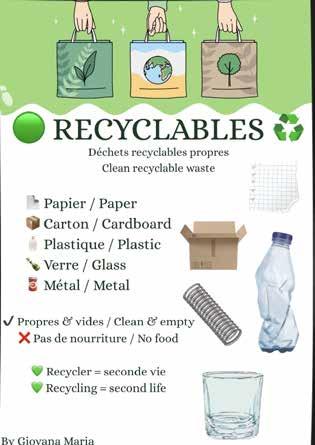
best designs will now be selected, printed, laminated, and displayed above the recycling bins across the Ain Aar campus.
Through this initiative, students transformed awareness into action, turning their creativity into a real tool for environmental change.
When Students Uncover Nature’s Hidden Fragrances
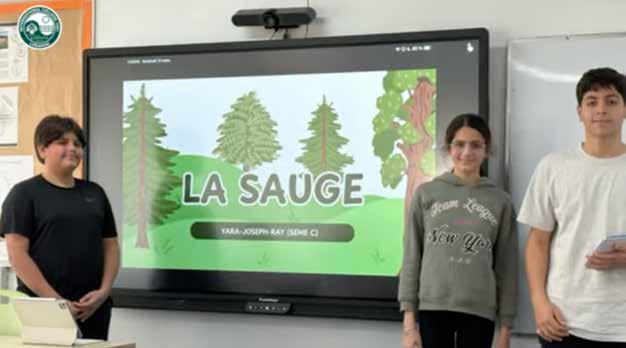
Through Science and STEAM, 5ème students at IC Ain Aar participated in the pioneering performance task “Essences du Liban” (The Essences of Lebanon), exploring Lebanon’s wild plants and investigating how local natural resources can be transformed into sustainable products through research, experimentation, and hands-on inquiry. They applied the principle of distillation learned in chemistry to create aromatic waters using mint, thyme, sage, and rosemary, while also using design thinking to develop logos and packaging for their products.
This rich learning experience was embedded in a meaningful inquiry cycle that combined research, hands-on activities, design technology, experimentation,
and trial and error. Students moved from asking questions and investigating ideas to designing, testing, improving, and presenting a final product, developing their critical thinking, creativity, and problem-solving skills throughout the process. More importantly, it helped them understand that learning is not only about finding answers, but also about exploring possibilities, reflecting on challenges, and persevering through the learning journey, while deepening their appreciation of Lebanon’s natural heritage.
Watch this video for a glimpse into the students’ inquiry journey and the different stages that brought this meaningful project to life.
Echo-Logical Voices
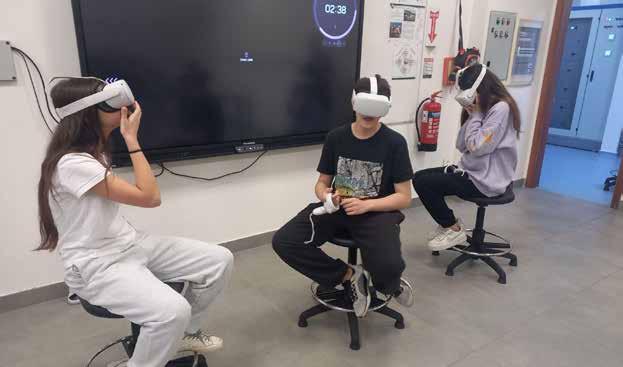
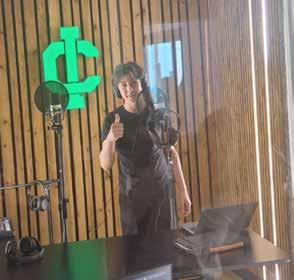
As part of their Biology courses, Grade 9 and 3ème B students embarked on an engaging Ecology Project that combined inquiry, collaboration, research, and creativity to better understand the major environmental challenges threatening our planet. Through a series of interactive learning stations including Virtual Reality (VR), Augmented Reality (AR), simulations, ecological calculators, maps, graphs, tables, images, article excerpts, statistics and more, students explored topics such as deforestation, pollution, climate change, invasive species, overpopulation, and overexploitation, collecting information, discussing ideas, and reflecting on the impact of human activity on ecosystems. Building on their learning, students are currently creating the documentary “Echo-Logical Voices”, where nature speaks through echoes of the past, present warnings, and hopes for the future. Dividing responsibilities between research, scriptwriting, filming, editing, and awareness campaign design, students are engaging in an authentic inquiry journey that transforms learning into meaningful advocacy. This interdisciplinary project also integrates studio recording and educational technology skills, allowing students to strengthen
their communication, media production, collaboration, and digital storytelling abilities while using technology as a tool for environmental awareness and action. Stay tuned to watch the “Echo-Logical Voices” documentary during its official avant-premiere screening on June 2, 2026.
Championnat des jardins pédagogiques
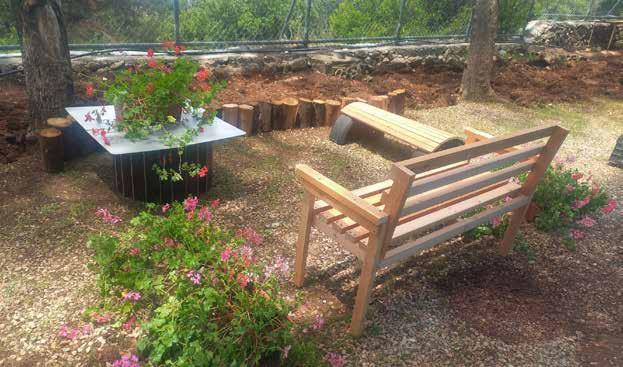
As part of their STEAM curriculum, all 3ème and Grade 9 students successfully designed and developed a section of the school’s Wellness Garden on the Ain Aar campus, an interdisciplinary project that began two years ago when they were in Grade 7. This year, students transformed an underused outdoor area into a creative and educational space dedicated to wellbeing, biodiversity, and hands-on learning, while leaving room for future generations to continue expanding and enriching the garden in the years to come.
Using the STEAM Design Thinking process, students conducted field studies, explored sustainable practices, and collaborated to imagine spaces that promote
relaxation, creativity, and environmental awareness. Students contributed to the garden through a variety of hands-on creations, including upcycled garden elements and wooden furniture. More than a landscaping project, the Wellness Garden became a meaningful example of sustainability, collaboration, and student engagement in action.
The project was completed successfully and proudly submitted to the AEFE “Championnat des Jardins Pédagogiques,” highlighting IC students’ creativity, innovation, and commitment to building more sustainable and inspiring learning environments.
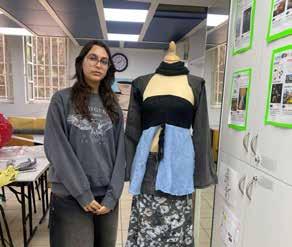
Upcycled Fashion: When Creativity Meets Sustainability
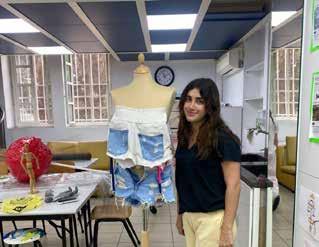
As part of their Art curriculum, IBDP1 students collaborated with the Modern Fashion Academy over several weeks to design and create upcycled fashion items. This enriching project focused on developing sewing techniques, sustainable fashion design skills, material exploration, and the creative reuse of textiles. Throughout the process, students experimented with
transforming discarded materials into original wearable art pieces, combining creativity with environmental responsibility. In doing so, they developed practical skills in sustainable fashion, explored innovative design approaches, and produced unique upcycled creations that reflect both artistic expression and conscious consumption.
COMMENT TRANSFORMER NOTRE ÉCOLE EN UN ESPACE PLUS ÉCOLOGIQUE ?
Aujourd’hui, les enjeux climatiques ne sont ni lointains ni abstraits Ils sont là, sous nos yeux, dans notre vie quotidienne Chaque bouteille de plastique jetée, chaque déchet mal trié, chaque hésitation devant une fontaine à eau sont autant de petites échelles qui participent à un problème global
Pour notre projet de la COP 30, nous nous sommes posé la question suivante : Comment diminuer la pollution et améliorer l’environnement dans notre école, tout en modifiant les comportements des élèves ?
Une enquête menée auprès des élèves nous a permis de mettre en lumière des problèmes concrets liés aux déchets, au recyclage et à l’utilisation du plastique. Et surtout, nous avons découvert que derrière ces problèmes se cachent des peurs, des doutes et un vrai potentiel de changement
Notre enquête met en lumière une réalité inquiétante
D’abord, 40 % des élèves utilisent encore des bouteilles en plastique, bien qu’il y ait des fontaines à eau Pourquoi ? La réponse est éloquente: la majorité ne croit pas à l'hygiène de l'eau Les élèves de l’AUB sont mieux lotis, grâce à un certificat qui garantit la qualité de l’eau, mais dans notre école, on hésite, on doute, et on préfère le plastique
Ensuite, le problème du tri est encore plus significatif De nombreux élèves ignorent à quel type de déchet correspond telle ou telle couleur Résultat : 60 % mettent leurs déchets dans des poubelles mixtes et plusieurs élèves hésitent à jeter leurs déchets, de peur de se tromper
Cette confusion crée une situation paradoxale : les élèves veulent bien agir, mais ils ne savent pas comment
Enfin, même si 60 % des personnes possèdent une bouteille réutilisable, celle-ci n’est pas toujours utilisée Cela prouve que la question n’est pas seulement matérielle mais psychologique et éducative
Une prise de conscience : des élèves prêts à changer
Malgré ces difficultés, une chose nous a marqués : beaucoup d’élèves pensent que le tri peut fonctionner
Cela montre qu’ils ne sont pas indifférents et qu’ils se sentent concernés par l’environnement
Cependant, cette motivation est freinée par : le manque d’informations, le manque de confiance (surtout concernant l’eau), et un environnement qui ne facilite pas les bons gestes
Les élèves veulent agir, mais ils ne sont pas assez accompagnés
C’est justement là que notre projet devient important
Des solutions concrètes pour une école plus durable
Réduire le plastique
Encourager l’utilisation de bouteilles réutilisables
Diminuer progressivement le plastique à l’école
Rétablir la confiance dans l’eau
Installer des fontaines modernes
Afficher des certificats prouvant la qualité de l’eau
Améliorer le tri des déchets
Installer des poubelles de tri colorées
Ajouter des affiches simples expliquant le tri
Sensibiliser davantage
Créer des affiches “chocs” sur les conséquences des déchets
Organiser des concours de recyclage entre élèves
Innover avec la technologie
Utiliser une intelligence artificielle pour reconnaître les déchets
Afficher les résultats du recyclage pour motiver les élèves

Le problème des déchets et de la pollution dans notre école n’est pas une fatalité : cela traduit tout simplement un manque d’information, de confiance et d’organisation
Mais derrière ces obstacles se cache une réalité encourageante : les élèves sont prêts à agir
Avec des solutions adaptées, visibles et motivantes, nous pouvons faire de notre école un modèle écologique Ce projet ne se limite pas à répondre à la COP 30
Cela prouve que le changement commence ici, avec nous
Car protéger l’environnement, ce n’est pas une notion lointaine
C'est un devoir quotidien! ENVIRONNEMENT MAI 2026
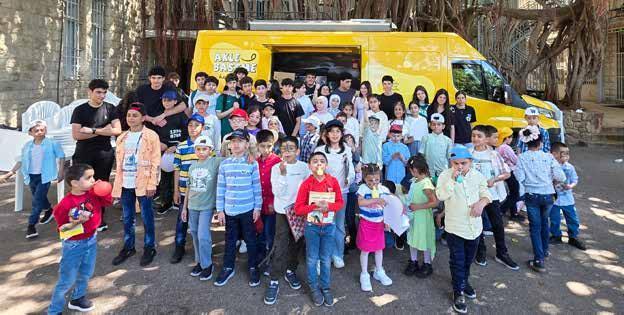
Akle W Bassme: Serving the Community with Compassion
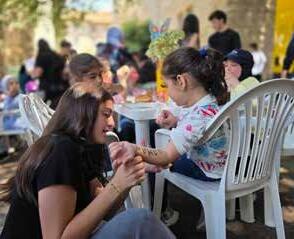
Students of Seconde C, D, and E actively participated in the Akle W Bassme Project, a series of meaningful civic commitment activities aimed at supporting less privileged members of society. The first event took place in Sin El Fil in collaboration with Rifaa El Dareb and in partnership with Lakkis Farm, while the second was organized in Achrafieh alongside Caritas and in partnership with Socrates catering. During both events, students helped serve meals and interact with community members, spreading kindness and solidarity through simple yet impactful gestures.
The third initiative welcomed around 70 children from Dar El Aytam to International College for a joyful day filled with activities and care. The children enjoyed playing in the elementary playgrounds before sharing lunch. IC students later entertained the children through engaging activities and distributed storybooks to encourage reading and foster a love for learning.
Through these experiences, students demonstrated empathy, responsibility, and active citizenship, embodying IC’s vision of empowering learners to become global citizen leaders committed to serving their communities.
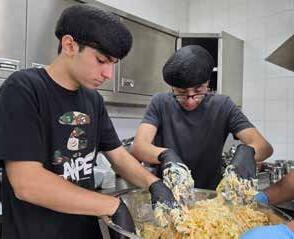
Bake Sales Events in Support of Civic Commitment Projects
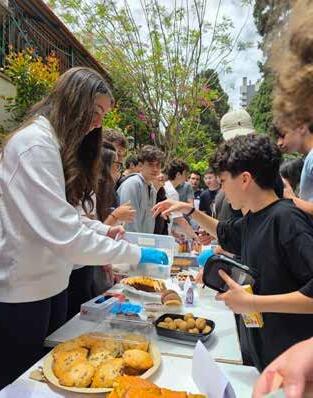
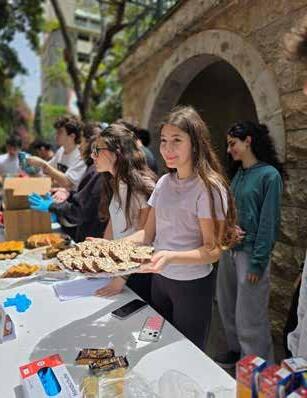
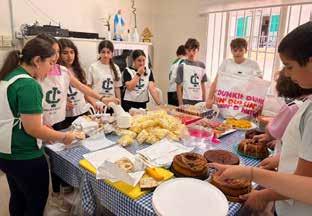
The students of 1ère 1 and 1ère 2 demonstrated remarkable initiative and community spirit by organizing two successful bake sales in both the Middle School and High School divisions. Through their teamwork,
creativity, and dedication, the students prepared and sold a variety of homemade treats to raise funds in support of diverse Civic Commitment and Service Learning projects.
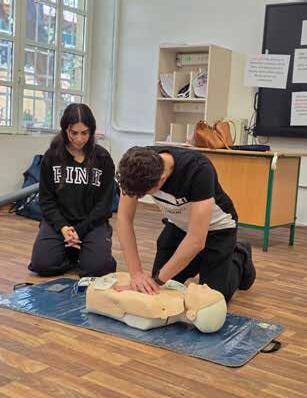
First Aid Training: Empowering Future Global Citizen Leaders
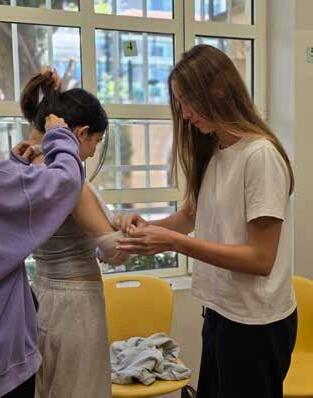
The final series of first aid training sessions for Grade 10 students, conducted in collaboration with the Lebanese Red Cross, took place on Saturday. Students attended the sessions and actively participated in the activities, gaining essential skills in responding to emergencies. Through hands-on training, students learned how to ensure safety, alert emergency services, manage
choking, CPR, and AED use, severe bleeding, burns, wounds, bites, and trauma cases.
All Grade 10 students from both the Lebanese and French programs will receive certificates from the Lebanese Red Cross in recognition of their participation in the workshop and their acquisition of essential first aid skills.
Promoting Education Through Service
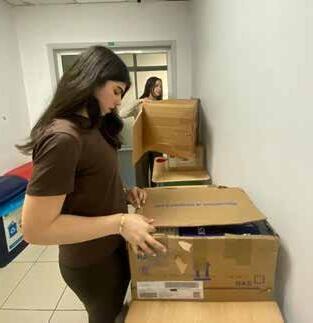
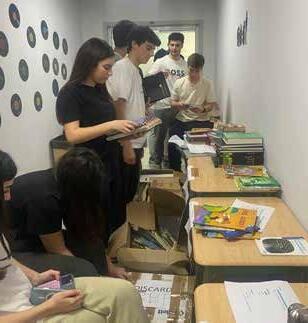
Students of 1ère 3, 1ère 4, and 1ère 5 took part in a book-sorting activity as part of their Civic Commitment and Service Learning engagement. The books, donated by the school, were organized collaboratively by students, who categorized hundreds of them according to language and reading level in preparation for distribution to public schools with limited educational resources.
Through this project, students helped improve access to books for less privileged children, supporting reading development and academic learning. The activity reflected a sense of responsibility and engagement, while enabling students to make a positive contribution to the wider community.
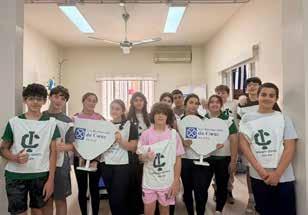
Grade 7 C in Resto du Coeur
Ain Aar Grade 7C visited Resto du Cœur to put the IC core values into meaningful action through service, empathy, and community engagement. A touching testimony from Mrs. Rizk reminded us of the impact our students can have: she shared that the very first initiative started with IC and Ms. Marie-Hélène, and
because of the success and the positive experience with our students, Resto du Cœur expanded its program and now welcomes several schools throughout the week. Once again, this experience highlights how IC continues to be a pioneer in empowering students to become active and caring contributors to society.
Tom Young Visits IBDP1 Students
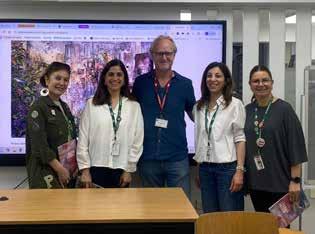
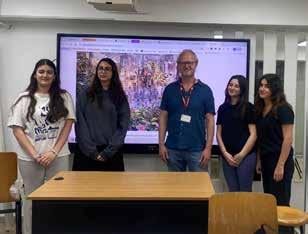
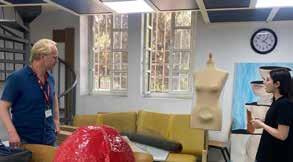
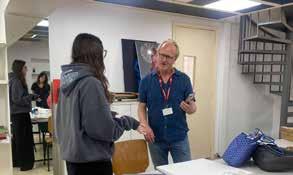
This week, the IBDP1 Visual Arts students had the wonderful opportunity to meet renowned British artist Tom Young, who visited the school to speak about his work and artistic journey.
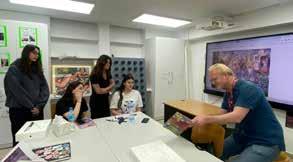
During the session, Tom generously shared insights into his creative process, experiences as a working artist, and the realities of the art world. Students and attending Art teachers engaged enthusiastically, asking thoughtful questions to which he responded with honesty and encouragement.
The students also presented their own projects and artworks, receiving valuable guidance, opinions, and constructive feedback from the artist. The exchange was both inspiring and enriching, offering students a rare and meaningful chance to connect directly with a professional artist.
To make the experience even more memorable, Tom kindly signed a copy of his exhibition booklet for each student.
This fruitful encounter reminded us how special and impactful it is for young artists to meet and learn from established professionals — an opportunity that does not happen frequently.
A special thank you goes to Richard Bampfylde for making this collaboration and inspiring visit possible.
IC Athletics - Season 3
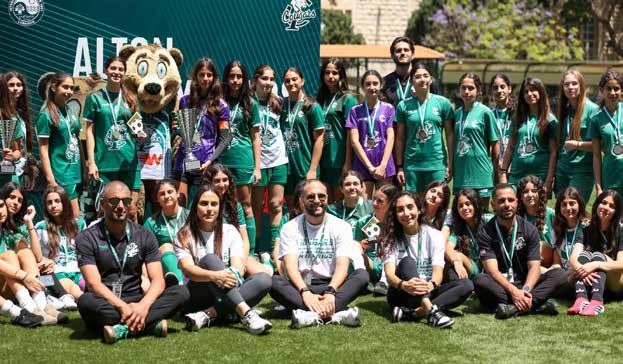
Despite the challenges at the start of Season 3 due to the situation in the country, we were able to resume Athletics, providing our student-athletes not only with a platform for sports, but also with a sense of normalcy amid the uncertainty and chaos.
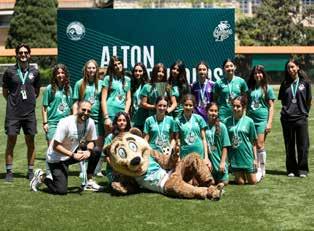
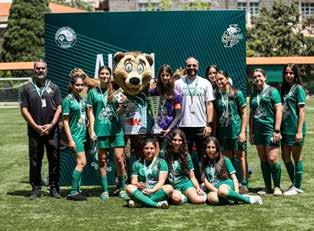
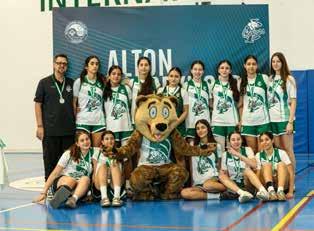
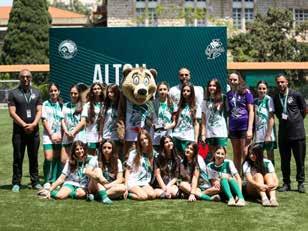
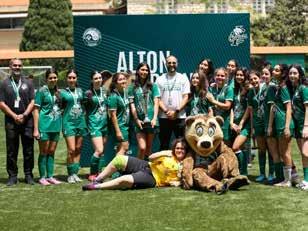
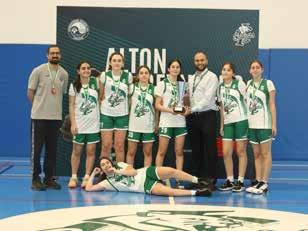
Alton Reynolds Tournaments 2026
Although organizing and hosting the Alton Reynolds Tournament within such a short timeframe was no easy task, we once again delivered the same high standard of organization and competition throughout two full weeks of action.
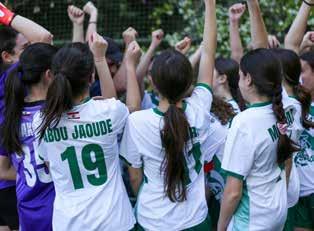
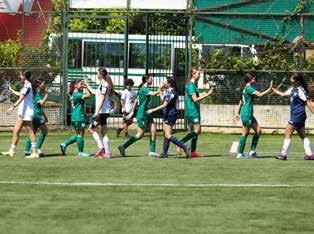
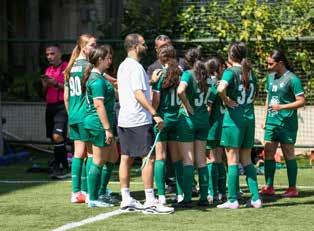
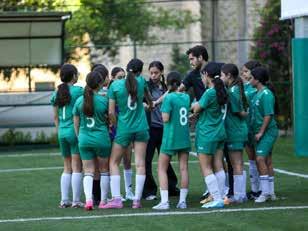
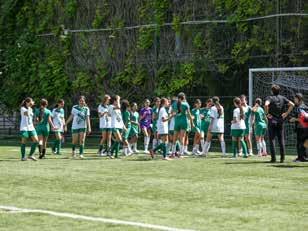
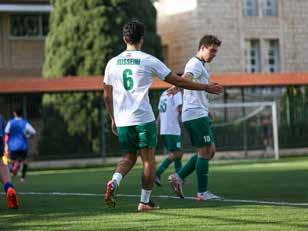
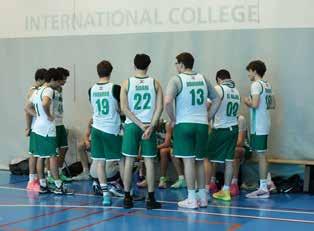
This season, we successfully hosted 134 Basketball and Soccer games, with both tournaments running simultaneously across our three basketball courts and soccer field.
From start to finish, our campus was filled with exciting matchups, competitive spirit, and nonstop athletic energy.
Alton Reynolds Highlights/Results:
- Basketball:
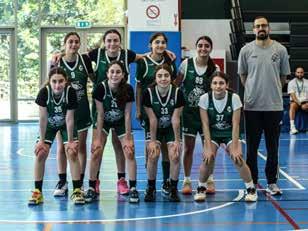
1st Place - Varsity Boys / Back to back champions
2nd Place - JV Boys
2nd Place - RB JV Girls
3rd Place - AA JV Girls
- Soccer:
1st Place - JV Boys / back to back champions
3rd Place - JJV Grade 8 Boys
1st Place - JV RB Girls
2nd Place - JV AA Girls
3rd Place - Varsity Boys
1st Place - Varsity Girls / back to back champions
This year’s edition of the Alton Reynolds Volleyball Tournament kicks off this week, bringing together 9 competing schools across the 4 JV and Varsity categories.
With close to 50 games scheduled, the tournament promises days filled with energy, teamwork, and exciting competition on the court.
Elementary and Middle School Tournament
We are also excited to kick off the 2nd edition of the Elementary and Middle School Tournament in both Soccer and Basketball, starting on May 20, 2026.
Hosted across both the Ras Beirut and Ain Aar campuses, the tournament will feature more than 100 games in the two sports, bringing together young athletes in an atmosphere of teamwork, sportsmanship, and friendly competition.
More than just competition, this tournament is designed to give our students the opportunity to grow, gain confidence, and most importantly, enjoy showcasing their talents in a positive and respectful environment.
LES Basketball Championship
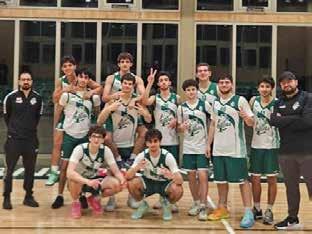
Our Varsity Boys Basketball team once again delivered strong performances throughout the tournament, dominating play and earning the Championship title for the second consecutive year.
Fantasia Lebanese Schools Basketball Championship (Boys)
Our Varsity Boys Basketball team continues to deliver strong performances at the Fantasia Basketball Championship, securing wins in two challenging games against Saint Famille, Champville, and Notre Dame de Louaize.
We were also proud to host the first two games of the opening round at our Ain Aar campus, showcasing our facilities and competitive spirit.
With the qualification rounds still ahead, the team remains focused and determined as they continue their campaign in the tournament.
KIRI Lebanese Schools Basketball Championship (Girls)
Our Varsity Girls participated in the KIRI Schools Basketball Championship and delivered strong performances on court.
Although they did not advance to the qualification stages, they demonstrated the true IC spirit through their dedication, resilience, and sportsmanship both on and off the court. We are proud of their effort and commitment throughout the tournament.
Ain Aar Friendly Games
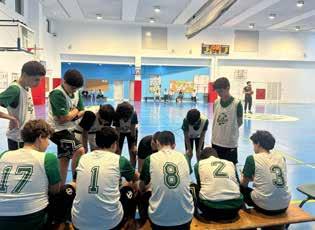
Cubs and JJV student-athletes from the Ain Aar campus participated in friendly basketball games against
Brummana High School, fostering sportsmanship, competitive growth, and positive, respectful competition.
Jr. NBA X LAU:
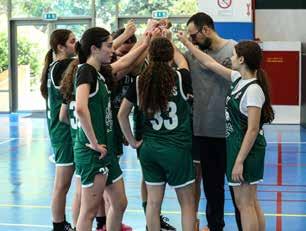
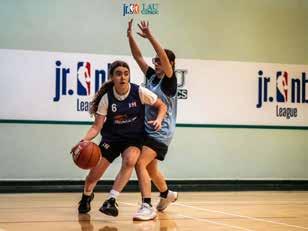
After a long pause due to the situation, the Jr. NBA League is back up and running, with our teams returning to competition with renewed energy and determination.
The Girls team is more motivated than ever as they aim to defend their title. They continue their journey, with their next game scheduled against the Minnesota Lynx (NDA) on Saturday, May 23, at the LAU Beirut Campus.
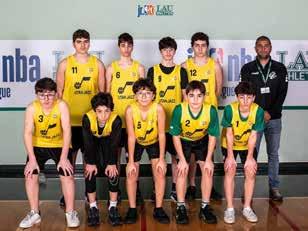
Meanwhile, the Boys team played their final game on Sunday, May 17, against the Portland Trail Blazers (ISC Choueifat), where they demonstrated strong work ethic and true fighting spirit. They embodied the ICougars’ values through high levels of positive competition and sportsmanship, both on and off the court. We are proud of their performance and commitment throughout the league.
Combined Track & Field Training & Soccer Fun Competitions
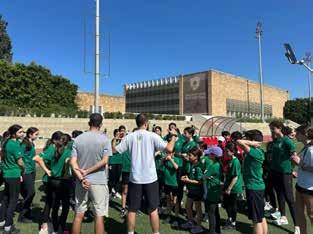
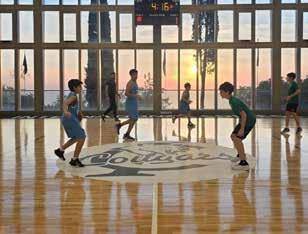
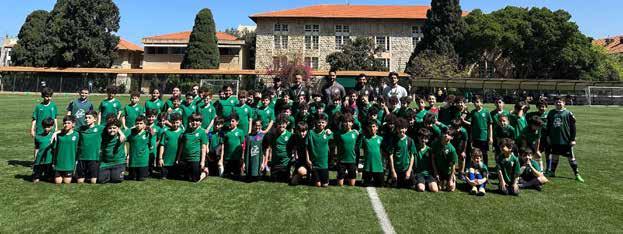
Our middle and elementary school student-athletes from the Ain Aar campus (Cubs and JJV) joined forces with our Ras Beirut teams for a combined Track & Field training session on a great Saturday morning.
In addition, our JCubs Soccer teams from both Ras Beirut and Ain Aar enjoyed a morning filled with fun competitions and engaging games.
Through friendly relays and team activities, students strengthened their skills while building connections and fostering bonds of friendship between both campuses.
Friendly ACS Badminton Meet
Our JV and Varsity badminton student-athletes will be participating this Sunday, May 24, in a friendly badminton meet organized by ACS.
This event offers a great opportunity for our athletes to compete, gain experience, and continue developing their skills in a positive and competitive environment.
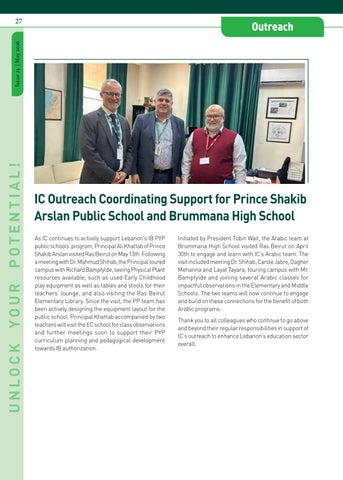
IC Outreach Coordinating Support for Prince Shakib Arslan Public School and Brummana High School
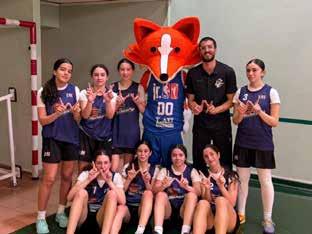
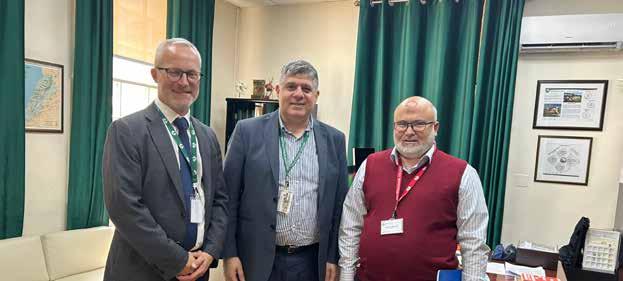
As IC continues to actively support Lebanon’s IB PYP public schools’ program, Principal Ali Khattab of Prince Shakib Arslan visited Ras Beirut on May 13th. Following a meeting with Dr. Mahmud Shihab, the Principal toured campus with Richard Bampfylde, seeing Physical Plant resources available, such as used Early Childhood play equipment as well as tables and stools for their teachers’ lounge, and also visiting the Ras Beirut Elementary Library. Since the visit, the PP team has been actively designing the equipment layout for the public school. Principal Khattab accompanied by two teachers will visit the EC school for class observations and further meetings soon to support their PYP curriculum planning and pedagogical development towards IB authorization.
Initiated by President Tobin Wait, the Arabic team at Brummana High School visited Ras Beirut on April 30th to engage and learn with IC’s Arabic team. The visit included meeting Dr. Shihab, Carole Jabre, Dagher Mehanna and Layal Tayara, touring campus with Mr. Bampfylde and joining several Arabic classes for impactful observations in the Elementary and Middle Schools. The two teams will now continue to engage and build on these connections for the benefit of both Arabic programs.
Thank you to all colleagues who continue to go above and beyond their regular responsibilities in support of IC’s outreach to enhance Lebanon’s education sector overall.
Learning Flows Across Grades
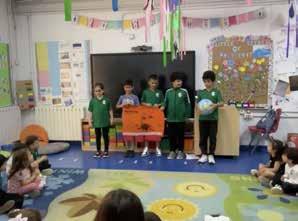
The PreK students recently welcomed the Grade 2 students for a meaningful and engaging collaboration connected to their Unit of Inquiry on water. Throughout the unit, PreK students have been exploring where water comes from, its many uses, the properties of water, and the importance of caring for and conserving this valuable resource. Meanwhile, Grade 2 students have been deepening their understanding of the properties and states of water, the water cycle, and how human choices impact water conservation around the world.
To bring their learning to life, the Grade 2 students visited the PreK classes to share their creative presentations about the water cycle. They confidently explained each stage — evaporation, condensation, precipitation, and collection — while the younger students listened with excitement, curiosity, and wonder. The PreK students eagerly asked questions, made connections to their own discoveries, and enjoyed learning from their older peers.
This collaboration beautifully reflected the spirit of the IB Primary Years Programme through student agency, communication, and shared inquiry. It was a wonderful opportunity for students to learn from one another, build confidence, and strengthen their understanding through authentic peer interaction and meaningful learning experiences.
Voices, Verses, and Creativity at the Grade 5 Poetry Café
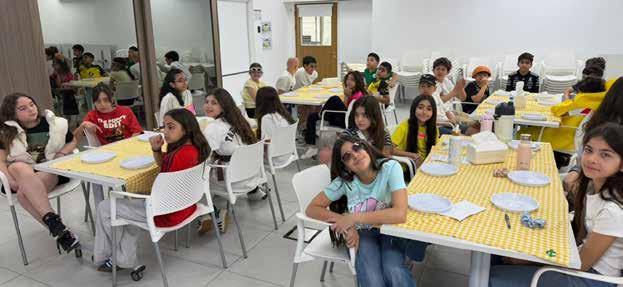
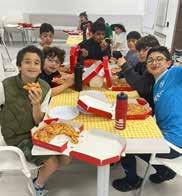
The Grade 5 students recently participated in a special Poetry Café experience, where they proudly shared the poems they had been thoughtfully crafting and developing in class. The event transformed the learning environment into a warm and welcoming space filled with creativity, expression, and student voice.
Through this engaging experience, students had the opportunity to strengthen their writing skills while exploring the power of language, rhythm, and imagination. As they presented their poems to
their peers, students also developed their reading fluency, presentation skills, and confidence in public speaking.
The Poetry Café encouraged students to express their thoughts, emotions, and ideas in meaningful and creative ways, while fostering communication, collaboration, and an appreciation for literature and the arts. It was a wonderful celebration of student creativity and a memorable experience that highlighted the joy of learning through selfexpression.
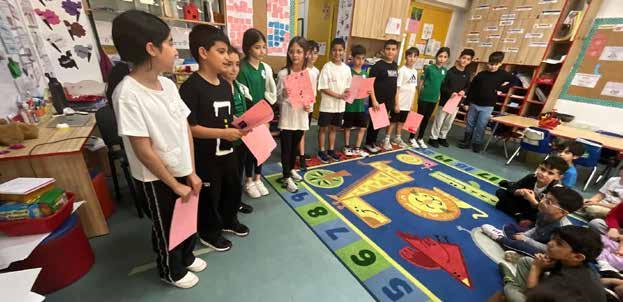
Sharing Voices and Raising Awareness Through Writing
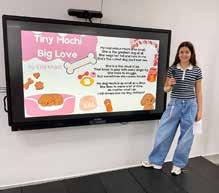
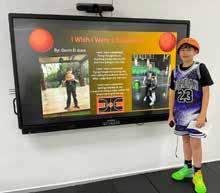
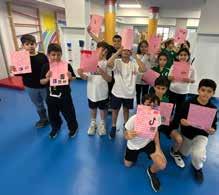
The Grade 3B students recently visited the KG2 class to share and read the articles they had written during their Writing Workshop sessions. Their writing was connected to their Unit of Inquiry, How We Express Ourselves, with a focus on media awareness and the impact of screen time and social media on our daily lives.
During the visit, the Grade 3 students confidently presented their work, demonstrating strong communication, creativity, and presentation skills.
The KG2 students listened attentively, eagerly participated in discussions, and showed great curiosity as they learned from their older peers.
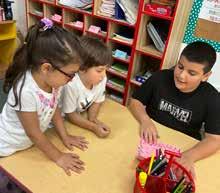
The session created a meaningful opportunity for collaboration and shared learning between the two grade levels. Through thoughtful conversations and reflection, students discussed the importance of maintaining healthy habits and balancing screen time with other activities. Many students shared that spending too much time on screens is not beneficial for the brain and overall well-being, highlighting the importance of reading books, playing, staying active, and making healthy lifestyle choices.
The experience was both educational and enjoyable, fostering awareness, communication, and reflection while strengthening the sense of community and collaboration among students.
Crossroads of Science and STEAM
The integration of STEAM within our students’ curriculum is becoming increasingly visible, and this is no coincidence. It is the result of intentional planning and a shared commitment from all the teachers.
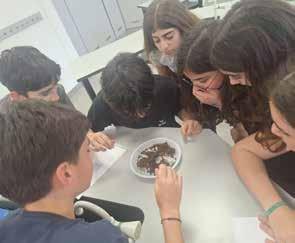
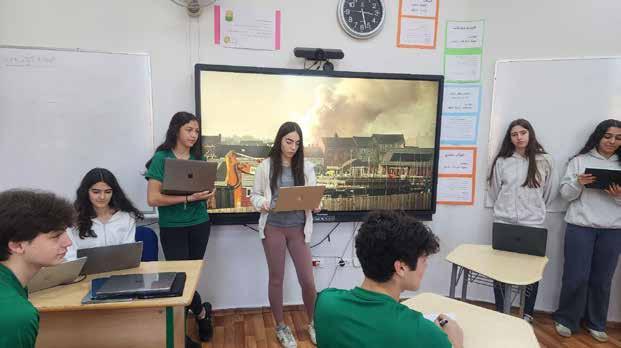
A recent example that beautifully reflects this approach is the Grade 6 Science project on plant and animal cells. Through research and oral presentations, students designed and created their own cell models, bringing together their scientific understanding, artistic skills, and mathematical precision to represent the size and structure of the organelles. The result was not only visually impressive, but also deeply meaningful as a culminating task for the unit.
Students across other grade levels have likewise been participating in meaningful STEAM experiences that foster creativity, collaboration, and critical thinking.
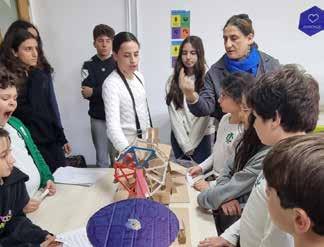
Recently, the Makerspace came alive with creativity as Grade 8 Middle School students presented their amusement park mechanism projects, developed as part of a STEAM learning experience.Using wood, cardboard, and simple electrical circuits, students designed and built working models inspired by amusement park rides, exploring how forces and mechanisms create movement while applying the design thinking process. The project also became an opportunity for cross-grade collaboration.
Our inquisitive and curious Grade 3 students expressed interest in discovering the
creations and prepared thoughtful questions about forces, mechanisms, and how the systems worked, demonstrating strong student agency and curiosity.
During the visit, Grade 8 students presented their projects, explained their design and construction process, and demonstrated how their mechanisms functioned. The exchange fostered an environment of respect, collaboration, and shared learning, where older students developed confidence in explaining their ideas while younger students engaged as active learners.
This experience highlighted the STEAM lab as a collaborative learning environment, where students not only design and build, but also exercise agency, respect one another’s ideas, and inspire curiosity across grade levels.
Building on this spirit of collaboration and student agency in the STEAM Lab, another interdisciplinary project brought students together to apply problemsolving, and teamwork to real-world challenges through Design and Technology.
In Social Studies with Ms. Sherry Atta, students explored how civilizations like Ancient Rome used innovation and engineering to support growing communities. A key focus was on Roman aqueducts: remarkable systems that transported water across long distances using gravity, careful planning, and precise engineering. Students examined how these structures supported urban life, agriculture, and public health, helping civilizations thrive.
Middle School - Ain Aar
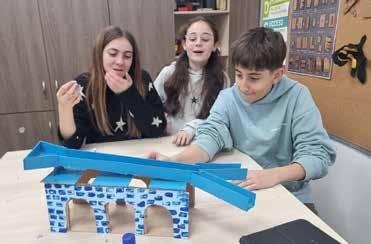
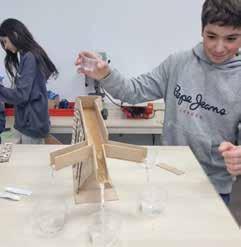
Building on this historical foundation, Ms. Zina Mufarrij guided students in STEAM to take on the role of engineers. Their challenge: design and construct working aqueduct models capable of transporting water efficiently. Using a variety of materials, students tested gradients, adjusted structures, and problemsolved in real time as they worked to make their designs functional.
The classroom quickly transformed into a hub of experimentation and collaboration. Students experienced firsthand the design thinking process: the trial-and-error process that ancient engineers would have faced refining their designs, learning from
setbacks, and celebrating small successes along the way.
This project is part of a larger interdisciplinary initiative centered around the school garden, where students are exploring how systems - both natural and human-made - support sustainable communities. By connecting past innovations to present-day challenges, students are developing a deeper understanding of how knowledge across subjects can come together in meaningful ways.
Through this collaboration, students didn’t just learn about history; they experienced it, applied it,and reimagined it.
La Francophonie en projets au collège
Les poètes francophones à l’honneur en 4e
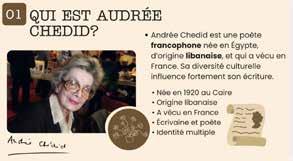
Dans le cadre du Mois de la Francophonie, les élèves de 4e ont embarqué pour un voyage poétique et littéraire à travers les voix du monde francophone. Par groupes, ils ont découvert des poètes tels qu’Aimé Césaire, Léopold Sédar Senghor, Nadia Tueni ou encore Gaël Faye.
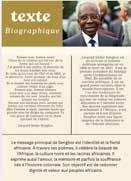
À travers des exposés créatifs mêlant vidéos, lectures expressives, images et musiques, les élèves ont exploré des thèmes forts comme l’identité, l’exil, l’amour ou l’engagement. Certains ont même accompagné leurs poèmes d’ambiances sonores et de mises en voix originales.
Ce projet a permis aux élèves de développer leurs compétences orales tout en découvrant que la poésie peut encore aujourd’hui parler du monde, des émotions et des combats humains.
Une belle célébration de la langue française, placée sous le signe de la créativité et du partage.
Carnets de voyage : escale dans le monde francophone en 5e
Dans le cadre d’un projet autour de la Francophonie, les élèves de 5e ont réalisé un “Carnet de voyage francophone”, mêlant écriture, imagination et découverte culturelle.
Chaque élève a choisi un pays francophone et a imaginé un voyage sous la forme d’une page de journal de bord. Du Sénégal au Canada, en passant par le Maroc ou Haïti, les élèves ont décrit des paysages, des spécialités culinaires, des traditions locales et de petits imprévus
qui rendaient leurs récits vivants et intéressants.
Pour rendre leur carnet plus réaliste, certains ont ajouté des cartes, des billets d’avion, des dessins ou encore des phrases inspirées de la culture du pays choisi.
Ce projet a permis aux élèves de développer leur expression écrite tout en découvrant la richesse et la diversité du monde francophone. Une belle manière de voyager… sans quitter la salle de classe !
Découvrez les projets des élèves en appuyant sur ces liens: Padlet 1 Padlet 2
Un projet littéraire et créatif autour de Faux arcsen-ciel en 3e
Dans le cadre de l’étude du roman autobiographique Faux arcs-en-ciel de Elie Hayek, les élèves de 3e ont participé à un projet original mêlant lecture, analyse littéraire et créativité numérique.
Après avoir lu et étudié plusieurs extraits du roman, les élèves ont découvert l’univers intime de l’auteur, ses souvenirs, ses émotions ainsi que les thèmes marquants de l’œuvre. À travers des discussions et des activités d’interprétation, ils ont réfléchi à la manière dont l’écriture autobiographique permet de transmettre des expériences personnelles tout en touchant le lecteur de façon universelle.
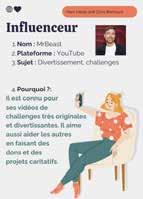
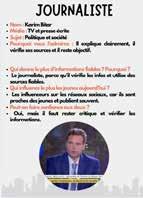
Pour prolonger cette immersion dans l’œuvre, les élèves ont ensuite imaginé et créé une page Instagram fictive de l’auteur. Inspirés des passages étudiés, ils ont conçu des publications, des légendes, des stories et des commentaires représentant les pensées, les souvenirs et les moments importants évoqués dans le roman. Chaque groupe a tenté de respecter la sensibilité de l’écriture d’Elie Hayek tout en adaptant son univers aux codes des réseaux sociaux actuels.
Middle School -
Spelling Bee Competition in 5ème
Excitement filled the auditorium as our 5ème students took part in this year’s Spelling Bee Competition!
The journey began with two competitive rounds held within each class, 5ème A, 5ème B, and 5ème C, where students showcased their spelling skills, concentration, and perseverance. From these rounds, finalists were selected to compete in the grand final held in the auditorium.
The final competition kept everyone on the edge of their seats, proving that in a Spelling Bee, one wrong letter can cost the win! Students demonstrated remarkable focus, confidence, and determination throughout the event.
Congratulations to our winner, George Abed (5eme C), for this outstanding achievement, and well done to all participants for their courage and effort.
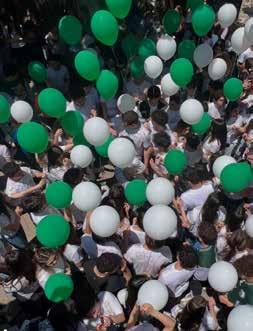
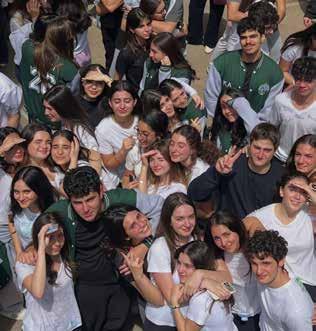
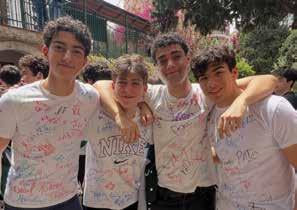
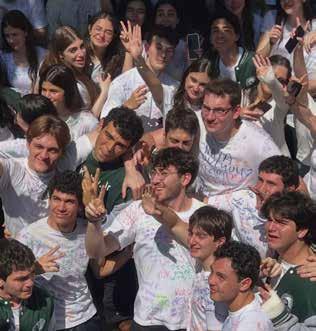
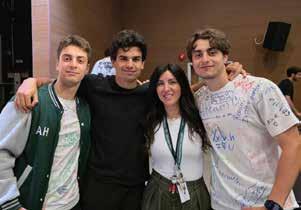
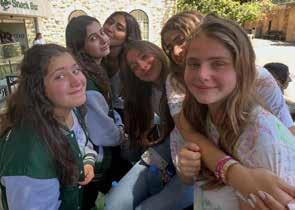
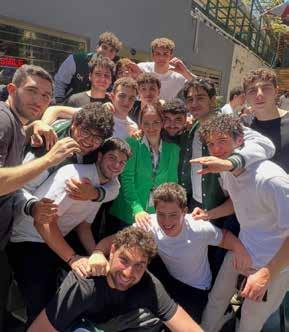
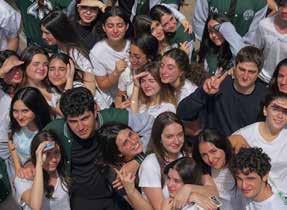
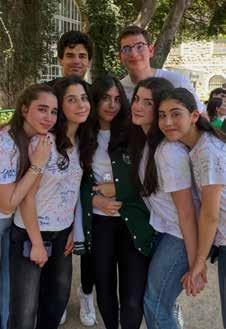
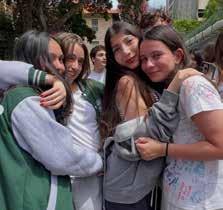
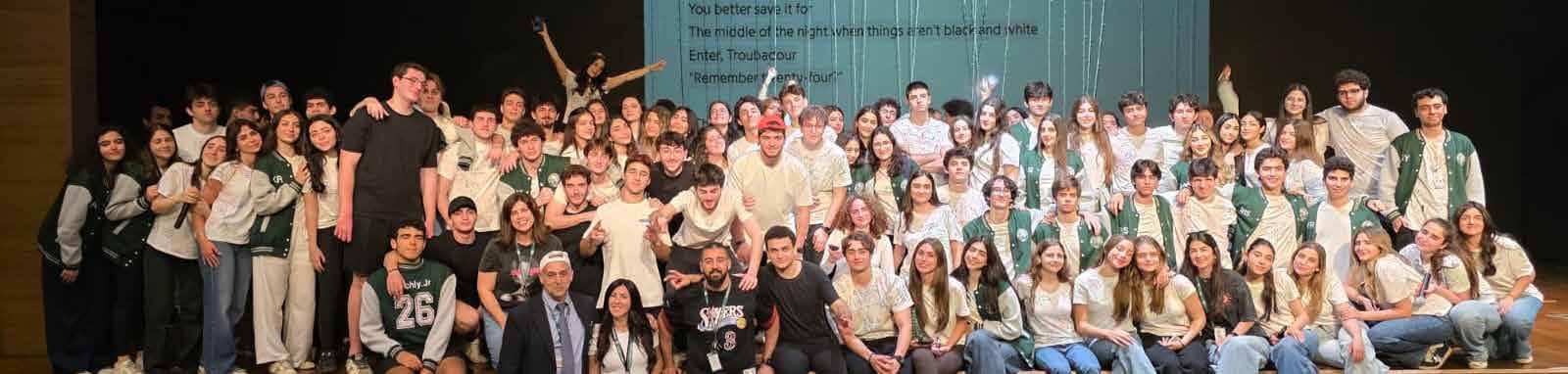
Home Will Always Be IC
STEAM in Action: Building Through Collaboration
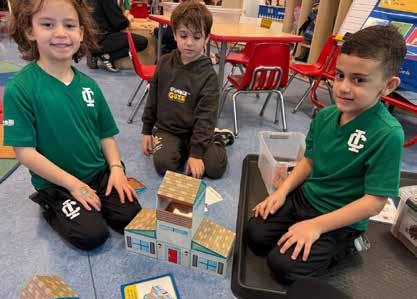
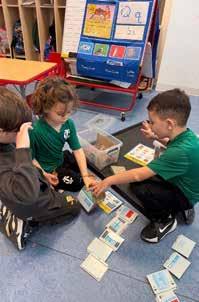
In KG2A, students engaged in a STEAM activity using an architecture construction set. Working together, they carefully observed, read simple instructions, and followed step-by-step visuals to assemble a model house.
Throughout the process, students demonstrated key learner profile attributes. They were thinkers, solving problems and making decisions; communicators, sharing ideas and listening to one another; and caring collaborators, supporting each other and taking turns.
They also showed confidence as risk-takers by trying different solutions and learning from mistakes.
This hands-on experience encouraged students to connect literacy, math, and design while developing important skills such as teamwork, perseverance, and critical thinking.
In KG2A, learning goes beyond completing a task; students are building not only structures, but also the foundations for lifelong learning.
Early Chilhood - Ras Beirut
Scientists at Work: Using Our Senses to Observe and Collect Data
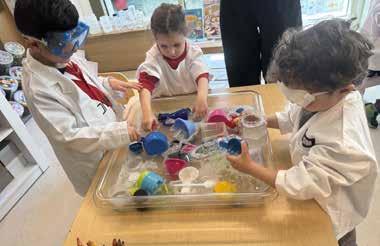
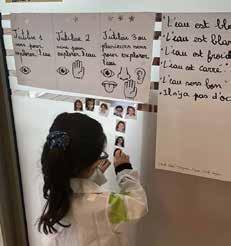
PS engaged in an inquiry experience around using their senses to collect data like scientists. The learning was presented within a story context in which the children became “scientists” who explored and discovered water through their senses. The experience was intentionally designed with clear microprogressions that helped break down the learning into manageable steps, allowing students to understand the process of observing, documenting, and communicating their discoveries.
These microprogressions supported the students in becoming more assessment-capable, as they were able to recognize what they were learning, understand the purpose of each step, and become more aware of their own progress throughout the experience. The microprogressions also supported teacher clarity
around the objective and the assessment process by making the intended learning visible and observable at each stage of the experience.
During the lesson, explicit modeling was used to demonstrate how scientists observe closely, take notes, and record findings through drawings and writing. Purposeful language such as “Scientists can draw,” “Scientists can write,” and “Scientists use their senses to collect data” was intentionally embedded throughout the experience to strengthen students’ understanding of scientific practices and vocabulary. The teacher’s modeling provided students with a clear example of what observation and documentation could look like, while also supporting language development and conceptual understanding.
The PYP Exhibition: A Journey of Inquiry, Collaboration, and Student Agency in Progress
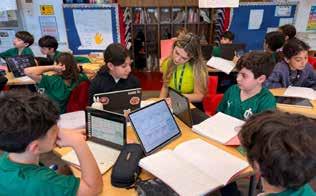
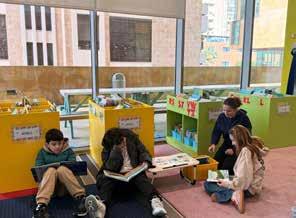
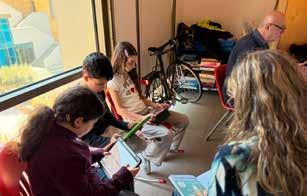
Our ESRB Grade 5 / CM2 students are currently deeply engaged in their PYP Exhibition journey, a culminating experience of the Primary Years Programme that celebrates student voice, inquiry, and action. This process is not a single event, but a rich and evolving learning journey that is unfolding over time.
Pre-Exhibition Phase: Connecting to Global and Local Issues
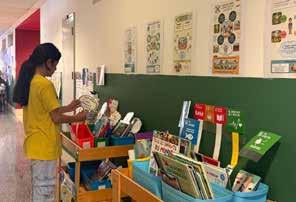
The journey began with students exploring global and local issues linked to the United Nations Sustainable Development Goals (SDGs). This important preexhibition phase helped students develop awareness of real-world challenges and identify areas of personal interest and concern.
Students then used Toddle AI Tutor to deepen their understanding of their selected SDGs through guided inquiry.
As a final step in this phase, students completed a Google Form indicating their top three choices and related subtopics.
Student Grouping Process: Balancing Voice and Structure
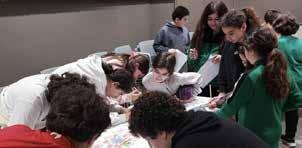
Based on student choices, learners were grouped according to shared interests while ensuring a fair and balanced learning environment.
Final groupings were carefully reviewed and adjusted by the PYP leadership team in collaboration with classroom teachers to ensure fairness, balance, and meaningful learning opportunities.
We also recognize that group work can present challenges. These moments are seen as valuable learning opportunities, and students continue to be
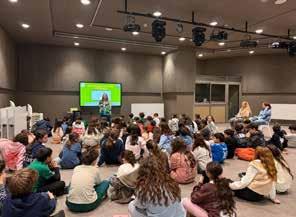
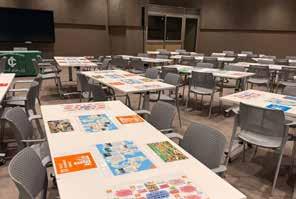
supported in developing collaboration, communication, and problem-solving skills throughout the process.
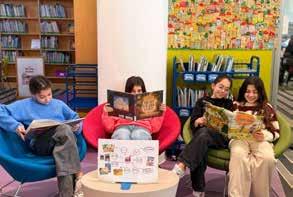
Elementary School - Ras Beirut
The Inquiry Process Students Are Engaged In
Following grouping, students moved into the active inquiry phase of their Exhibition journey.
They began by:
• Exploring their selected SDGs in greater depth
• Identifying more focused subtopics within their chosen areas
• Refining their lines of inquiry and central ideas
• Engaging in guided research using digital tools, including Toddle AI Tutor
Students are now continuing to deepen their understanding through research, discussions, and emerging analysis of information.
They are also beginning to:
• Conduct interviews with relevant individuals
• Design and analyze surveys
• Develop their Canva presentations
• Start planning their oral presentations
• Explore meaningful forms of student action
Throughout this process, student ownership remains central. Learners are encouraged to take initiative, make decisions, and reflect on their learning as they progress.
Mentor and Teacher Support
Mentors and teachers continue to play a key guiding role in this journey. Weekly updates are shared to ensure alignment and clarity on expectations, while
maintaining strong student agency.
Above all, this process continues to emphasize voice, choice, and ownership, empowering students to take responsibility for their learning.
Looking Ahead: Exhibition Presentations
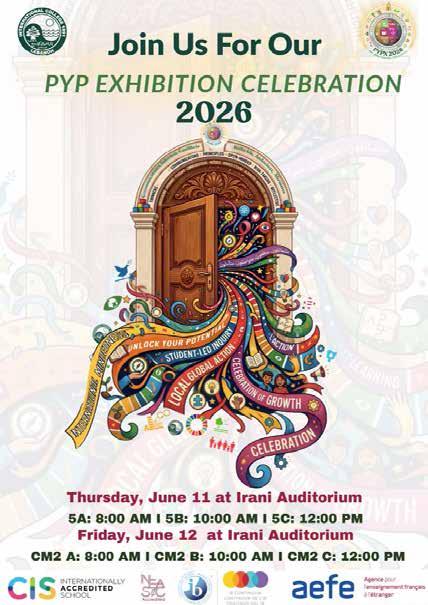
We are excited to announce the upcoming PYP Exhibition presentations, which mark the celebration of this important learning journey:
June 11: English Stream
June 12: French Stream
We warmly invite all members of our school community
Elementary School - Ras Beirut
to join us on these dates to celebrate our students’ learning. These events will showcase the depth of inquiry, creativity, and collaboration that our Grade 5 / CM2 students have developed throughout this meaningful journey.
We look forward to welcoming families and community members as we celebrate student voice, action, and growth.
Arabic Learning Journey
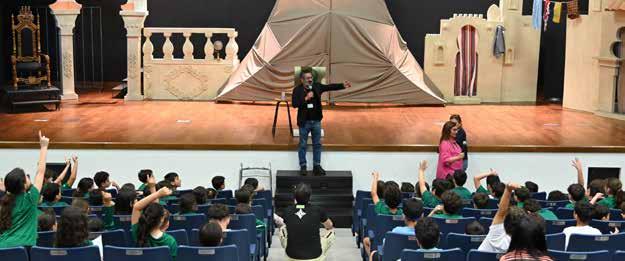
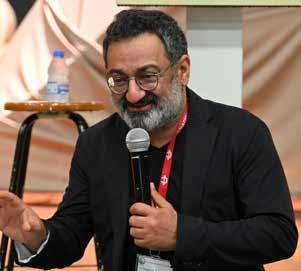
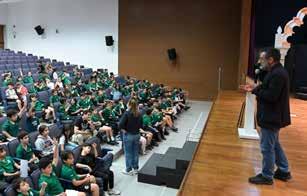
As part of their Arabic learning journey, the Grade 3 students explored the inspiring biography of the renowned Lebanese actor, playwright, and artist. Throughout the unit, students discovered important moments from his childhood, his educational journey, his deep passion for theater, and the remarkable path that led him to become one of Lebanon’s most celebrated artists. To bring this learning experience to life in a truly meaningful and authentic way, the Arabic teachers organized a very special visit and invited Mr. Khabbaz to the school stage on Tuesday for an engaging question-and-answer session with the students. Filled with excitement and curiosity, the students eagerly asked thoughtful questions about the different stages of his life, the challenges he faced, his love for theater, and the journey behind his success. The session created a wonderful atmosphere of inspiration, joy, and admiration as students had the unique opportunity to meet him in person, listen to his stories firsthand, and interact with him directly.
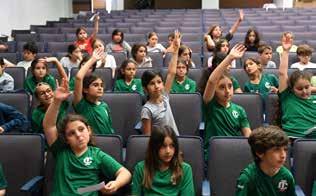
This unforgettable experience not only enriched the students’ learning but also encouraged them to dream big, persevere, and appreciate the power of passion, creativity, and dedication.
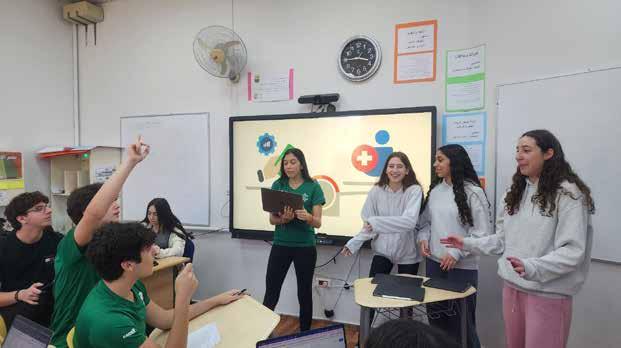
Celebrating Scientific Curiosity and Literacy in Middle School: Science Zap & Whizz Competitions
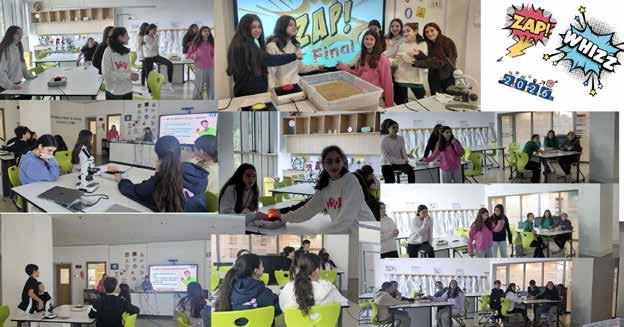
The Science Department is proud to highlight the active and enthusiastic participation of our Middle School students in two enriching scientific competitions: Science Zap (French section) and Whizz (English section). These events provided a meaningful platform for students to engage with science beyond the classroom and to strengthen essential academic skills.
At the heart of both competitions lies a key scientific competency: scientific reading literacy. Students were challenged to carefully read age-appropriate scientific articles, extract relevant information, understand key concepts, and respond accurately to questions. This process required focus, precision, and the ability to make sense of scientific content—skills that are fundamental in developing independent, critical, and informed learners.
What made this experience particularly valuable is that it encouraged students to interact with real scientific texts, fostering not only comprehension but also curiosity about the world around them. By engaging with topics from various scientific fields, students expanded their knowledge while building confidence in their ability to learn through reading.
We would like to sincerely congratulate all participants for their commitment, discipline, and positive attitude throughout the competitions. Their involvement reflects a strong willingness to learn and an appreciation for the importance of scientific culture in everyday life.
We extend our special recognition to the winners in both French and English sections, who distinguished themselves through their outstanding comprehension skills, accuracy, and perseverance.
Science Zap – French Section
First Prize: Karma Fakhoury, Aya Dandan, Lara Houssami
Second Prize: Kay Saad, Mia El Nahhal, Judy Jamil, Inji Dimassi
Whizz – English Section
First Prize: Karam El Rahim, Mohamad Fouad El Kalash, Ryan Salloum, Ali Charif
Second Prize: Zia Chehade, Brian Nasr, Nour Staitieh, Ahmad Kharoubi.
These achievements are a testament to the students’ efforts and to the importance of nurturing scientific literacy from an early age. We encourage all our students to continue developing their reading skills, to remain curious, and to embrace every opportunity to explore science through thoughtful inquiry and discovery. By strengthening their ability to understand and interpret scientific information, our students are building a solid foundation for future learning—and becoming the thinkers and innovators of tomorrow.
Histoire, environnement, action : le parcours d’apprentissage des élèves sur le développement durable
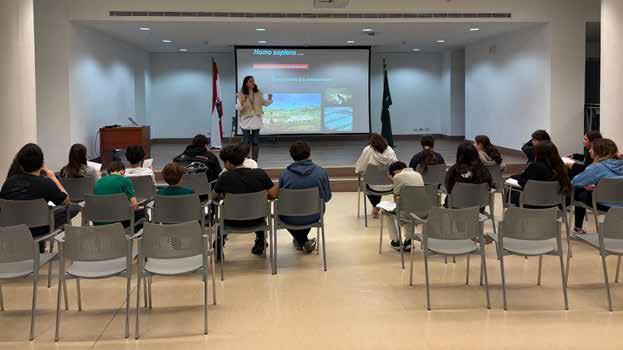
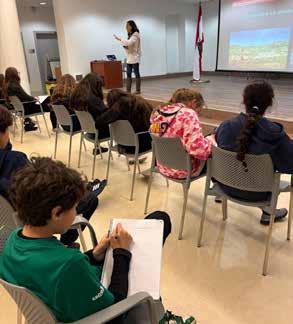
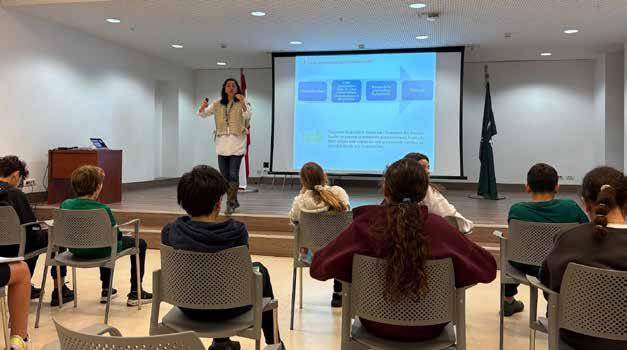
Dans le cadre du chapitre consacré aux Objectifs de Développement Durable, les élèves de 5ème A, B et C ont assisté à une intervention enrichissante de Mme Rita El Hajj Sawaya, la responsable du Développement Durable à l’IC.
Au cours de sa présentation, Mme El Hajj Sawaya a d’abord retracé les origines des Objectifs de Développement Durable (ODD), adoptés par l’ONU en 2015. Elle a expliqué que ces objectifs constituent aujourd’hui un cadre mondial visant à concilier développement économique, justice sociale et protection de l’environnement.
Les élèves ont découvert que le concept aujourd’hui appelé « développement durable » était autrefois désigné sous le nom d’« écodéveloppement ».Ils ont pu approfondir leur compréhension de la nécessité du développement durable en explorant son contexte historique. Ils ont découvert la période des « Trente Glorieuses » (1945–1975), caractérisée par une forte croissance économique, une industrialisation rapide et une amélioration notable du niveau de vie. Cependant, ils ont appris que ce modèle de
développement reposait largement sur l’exploitation intensive des ressources naturelles, notamment le pétrole. La crise pétrolière de 1973 a constitué un tournant majeur : les élèves ont compris comment cet événement a révélé la dépendance excessive aux
ressources non renouvelables et les limites d’un système basé sur une croissance illimitée.
À travers cette étude, les élèves ont pris conscience des dangers de la monoculture, pratique agricole consistant à cultiver une seule espèce sur de vastes surfaces, qui fragilise les écosystèmes et détruit la biodiversité.
Ainsi, les élèves ont intégré le principe fondamental que tout modèle de développement fondé sur l’exploitation excessive de ressources non renouvelables ou sur des
pratiques destructrices de l’environnement est, par définition, non durable.
En conclusion, les élèves ont compris que les Objectifs de Développement Durable représentent aujourd’hui des solutions concrètes et structurées pour répondre à ces défis mondiaux. Ils ont appris que ces objectifs constituent une feuille de route permettant d’assurer un avenir plus équitable, plus responsable et plus respectueux de la planète.
Middle School - Ras Beirut
Middle School - Ras Beirut
Le blues d’un enseignant
Les années se succèdent mais ne se ressemblent pas. Une année scolaire, encore une, qui touche à sa fin et les mêmes questions, toujours les mêmes, nous reviennent à l’esprit. Avons-nous pu réaliser nos objectifs? Avons-nous pu “toucher” nos élèves?
Qu’avons-nous pu leur transmettre? Ces questions sont d’une actualité brûlante parce que l’enseignant subit depuis un certain nombre d’années, la concurrence de plus en plus farouche de la machine qui, à travers les écrans, ouvre aux jeunes une fenêtre sur un monde presque interdit aux adultes. Ce monde propose aux jeunes un langage qui ne nous est pas familier si bien que la communication entre les générations devient de plus en plus problématique. Face à l’écran, le jeune est complètement absorbé, ses yeux brillent de mille étoiles, son sourire révèle le bonheur qu’il y goûte.
L’arracher à ce monde qui l’engloutit n’est pas un défi facile à relever. Alors nous essayons de ruser, de proposer nous aussi des activités sur des plateformes numériques. Nous avons l’impression d’avoir réussi
mais notre réussite n’est que ponctuelle. Dans le domaine digital, les élèves ont toujours une longueur d’avance sur nous.
Mais avons-nous dit notre dernier mot ? Non, pas vraiment. Nous disposons d’une arme qui restera supérieure à toutes les intelligences artificielles réunies. C’est l’arme de l’affection, des sentiments, de la compréhension, de l’empathie qui nous anime et que rien ne pourra remplacer.
Quel bonheur de rencontrer certains de nos anciens élèves en cour de récréation, qui courent vers nous à grandes enjambées pour nous saluer bruyamment ! Quel bonheur lorsque certains nous surprennent en nous enlaçant affectueusement ! Cette chaleur qu’ils manifestent vaut toute la fatigue et l’inquiétude que nous aurons endurées.
Et c’est pour cela qu’il ne faudrait peut-être pas trop s’inquiéter l’intrusion de la machine dans le monde d’aujourd’hui.
Middle School - Ras Beirut
Middle School - Ras Beirut
Middle School - Ras
Middle School - Ras Beirut
A VR Journey in Grade 6
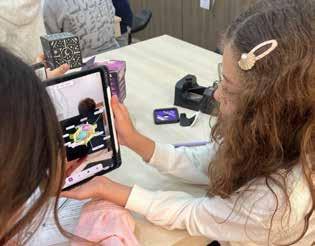
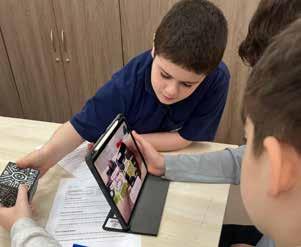
In an engaging and immersive learning experience, Grade 6 science students explored the fascinating world of cells using MERGE Cube Virtual Reality (VR) technology. This innovative activity allowed learners to interact with a 3D model of a cell, bringing abstract scientific concepts to life in a meaningful and memorable way.The use of interactive VR tools created a positive and stimulating classroom environment where students felt motivated, curious, and confident. By encouraging exploration and discussion, the activity supported students’ emotional well-being, helping them feel comfortable sharing ideas and learning collaboratively. Students moved beyond memorization to deeper understanding by strengthening critical thinking and
helped students build strong conceptual foundations in biology to help them excel academically. Throughout the activity, students demonstrated leadership by collaborating effectively in groups, listening to diverse perspectives and taking initiative during discussions and problem solving. Learners showed responsibility for their own learning while supporting their peers which further promotes championship leadership. This activity reflects our commitment to integrating technology with inquiry-based learning, ensuring that students not only learn science but also experience it. Through tools like MERGE Cube, we continue to inspire curiosity, innovation, and a lifelong love of learning.
College and Career Counseling: Medicine
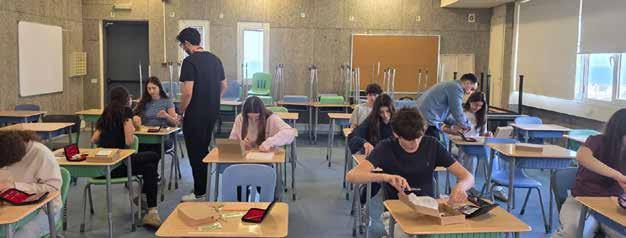
On Wednesday, April 29, the college’s counseling department welcomed a group of medical professionals for an enriching session designed for Grade 10 and 11 students aspiring to pursue medicine. The afternoon began with an informative presentation covering medical systems around the world, outlining the academic and professional trajectory students can expect depending on where they choose to study, including admission requirements, licensing processes, tuition costs, and the accreditation bodies that govern medical practice in different countries.
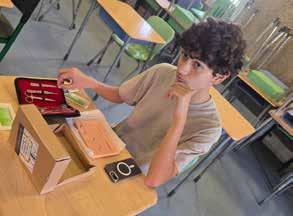
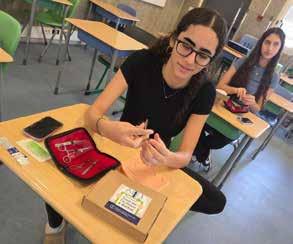
Students then rolled up their sleeves, quite literally, for a hands-on suturing workshop led by licensed doctors and surgeons. Participants were introduced to fundamental wound closure techniques, including simple interrupted, continuous, and knot tying methods, practicing on professional-grade simulation kits. Beyond the technical skills, the session cultivated precision, hand-eye coordination, and confidence: qualities at the heart of any surgical environment. Perhaps most meaningfully, the experience proved clarifying in ways no classroom lesson could. Some students left with a deeper certainty that medicine is their calling, while others gained the equally valuable insight that it is not — and in both cases, that clarity is exactly what a session like this is meant to provide.
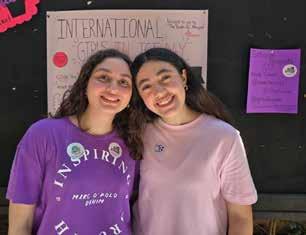
IB Girls in ICT
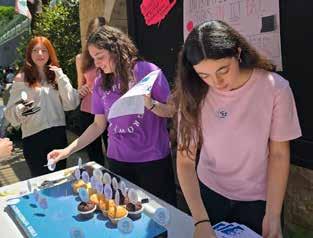
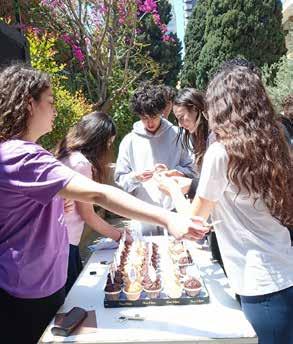
IBDP1 student Hala Sharafeddine brought energy and purpose to campus through a creative and engaging trivia activity. Centered around International Girls in ICT Day, Hala invited students to test their knowledge with questions highlighting the role and achievements of girls in the field of Information and Communication Technology.
Adding a fun twist, participants who answered correctly were rewarded with cupcakes, creating a lively and interactive atmosphere for all involved.
This initiative is part of the Youth GC Project club, which aims to celebrate international days and raise awareness on meaningful global themes. Hala’s effort reflects the spirit of student leadership and the power of small actions in sparking curiosity, conversation, and awareness within our school community.
Well done to Hala for this thoughtful and impactful initiative.
Celebrating Creativity: Nour Merhi Wins at the Fabriano Award
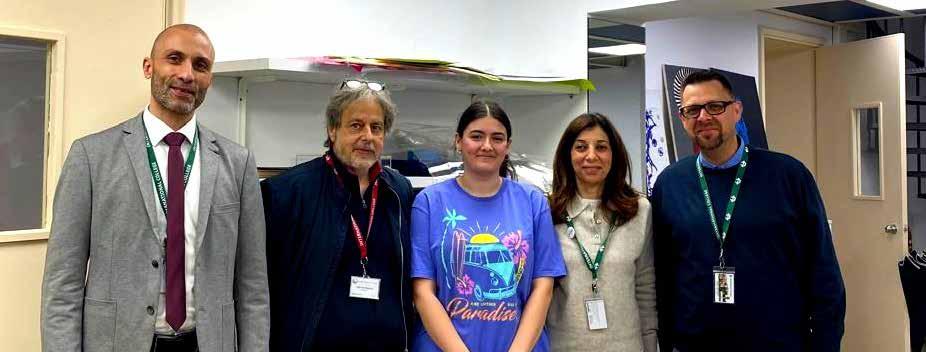
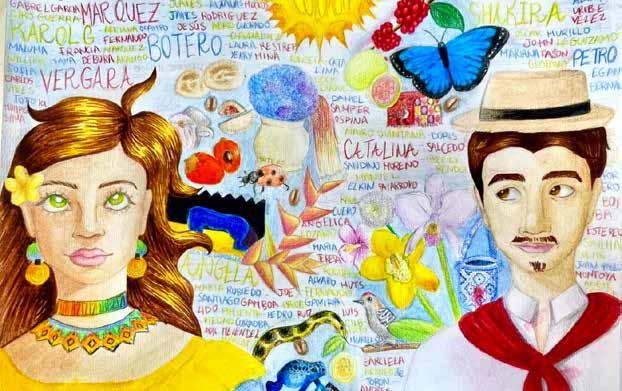
We are proud to share some wonderful news! Our talented student, Nour Merhi (IBDP1), has won 2nd place in Category 4 at the Fabriano Competition, under the theme Columbia—an achievement that reflects both dedication and thoughtful artistic expression. Her artwork was also exhibited at the Corm Museum, adding a meaningful layer of public recognition. Experiences like this go far beyond competition. They give students the opportunity to explore ideas, take creative risks, and see their work within a broader
artistic context—something that can be incredibly motivating and inspiring. Events like the Fabriano Award remind us, as educators, how important it is to continue supporting artistic opportunities in our school—encouraging all students to explore their creativity, whether through drawing, painting, music, writing, or any other form of expression, as art helps them discover themselves and connect with others in ways that words sometimes cannot. Congratulations, Nour!
Campus Exploration
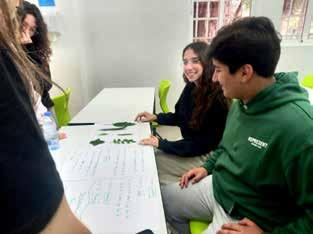
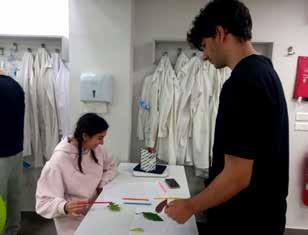
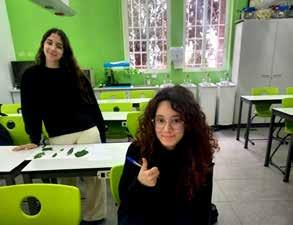
IBDP Biology students recently explored the school campus to collect and observe a variety of leaves as part of their study of classification and biodiversity. Using their observations, they created dichotomous keys to identify and distinguish between the different plant samples based on their characteristics.
High School
Theory of Knowledge Exhibition Showcasing Critical Thinking and Conceptual Understanding
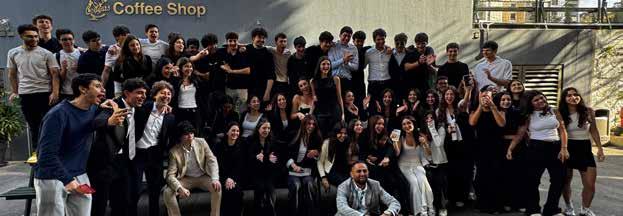
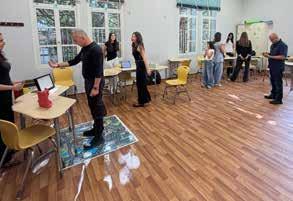
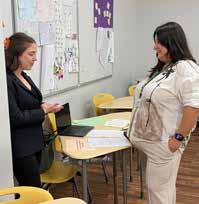
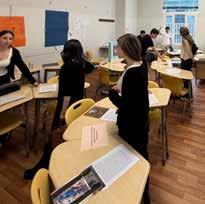
The TOK Exhibition is an annual event organized by the entire IBDP1 cohort each spring, serving as a meaningful demonstration of the skills students develop during their first year of the IB Diploma Programme, particularly through the Theory of Knowledge course.
In this exhibition, students engage with an openended prompt that requires higher-order thinking, critical reflection, and conceptual understanding. They respond to this prompt by selecting three carefully chosen objects, each acting as a tangible entry point through which abstract ideas can be explored, questioned, and justified. In doing so, the exhibition highlights students’ growing ability to move beyond simple description toward analysis, evaluation, and synthesis of knowledge across different contexts. It also reflects their developing capacity to connect lived experience with theoretical concepts, demonstrating how knowledge is constructed, interpreted, and communicated. This process ultimately showcases
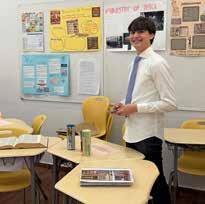
not only critical thinking skills, but also intellectual independence and conceptual maturity.
A sincere thank you is extended to Mr. Moussa Bashir, working alongside Mr. David Lanza, IBDP History Coordinator and Teacher, as well as to IBDP Coordinator Mr. Sevag Atamian, for their valuable support and collaboration in coordinating and facilitating the logistics of this event.
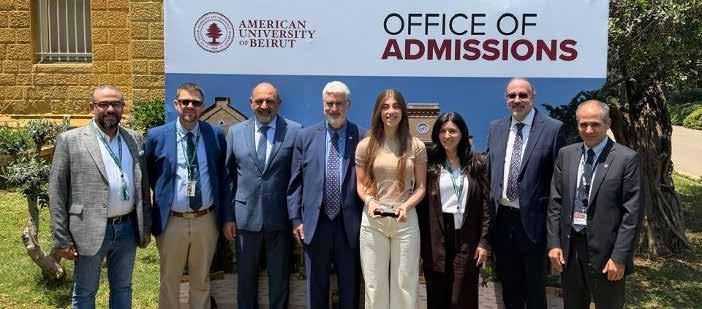
AUB Presidential Award
Sirine Chebaro, Terminale Française, an outstanding scholar at IC with an exemplary academic and disciplinary record, was recognized by the American University of Beirut for her exceptional academic achievement and granted the President’s Merit Scholarship, an honor given to only a select number of undergraduates each year per faculty. Scholars are selected based on academic distinction as well as substantive evidence of leadership and impact in both their schools and communities. This full scholarship reflects her distinguished performance, disciplined work habits over the years, and commitment to the pursuit of excellence for the greater good.
Sirine’s strong sense of discipline, consistency, and commitment has distinguished her throughout her
time at IC. In her own words, she has “always sought to connect my love for STEM with meaningful community impact,” maintaining a 19.5/20 average throughout her academic journey.
AUB held a ceremony for the selected recipients where these students were inaugurated into an Honors Society whose mission is to empower merit scholars, celebrate academic distinction, and forge networking opportunities across careers and continents, bringing together a growing community of like-minded citizen leaders who are altruistic, highly accomplished, and share an abiding commitment to using their talents to make a difference and effect positive change, both during their university years and well beyond.
A special thanks to all those who contributed to writing the articles
Elie Hayek
Ghina Shihab
Grace Badine
Joey Kdeissy
May El Hariri
Nisrine Habib
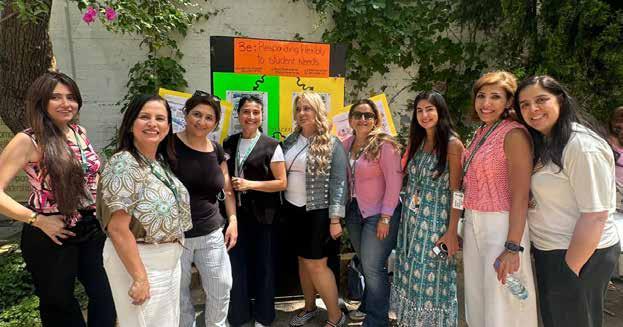
A Year of Collaborative Growth and Reflection
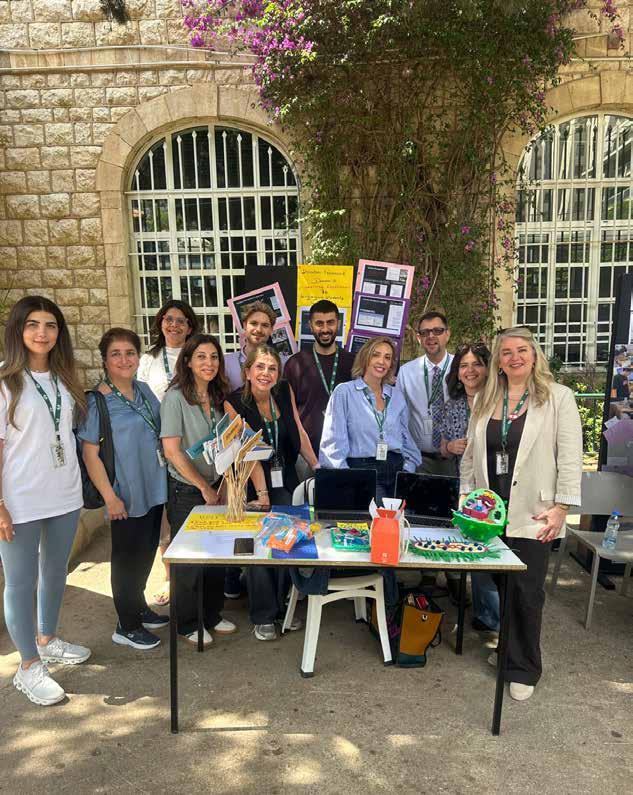
The High School Faculty worked collaboratively throughout the year in teams to research, implement, and assess the impact of strategies aligned with goals connected to the Danielson Framework for Teaching.
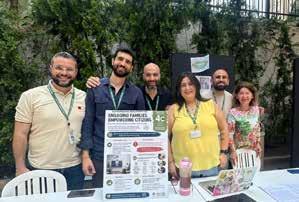
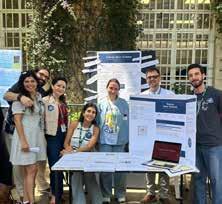
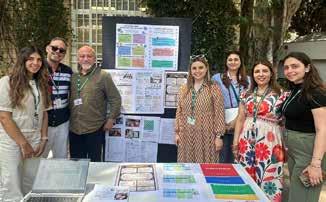
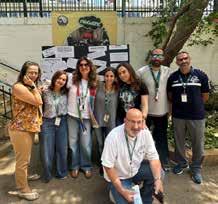
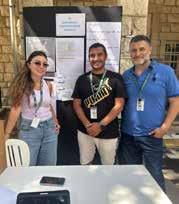
At the end of this academic year, they showcased their work, highlighting a year of reflection, growth, and continuous improvement in teaching and learning.