
V.32 AUGUST 2023 VOLUME THIRTY-TWO 2023 Summer Issue H ydro V isions o fficial P ublication of t H e G roundwater r esources a ssociation

ISSN 2837-5696
HYDROVISIONS is the official publication of the Groundwater Resources Association of California (GRA).
GRA’s mailing address is 808 R Street. Suite 209, Sacramento, CA 95811. Any questions or comments concerning this publication should be directed to the newsletter editor at hydrovisions@grac.org
The Groundwater Resources Association of California is dedicated to resource management that protects and improves groundwater supply and quality through education and technical leadership.
EDITOR
Rodney Fricke hydrovisions@grac.org
EDITORIAL LAYOUT
Smith Moore & Associates
EXECUTIVE OFFICERS
PRESIDENT
R.T. Van Valer
Roscoe Moss Company
Tel: 323-263-4111
VICE PRESIDENT
Christy Kennedy
Woodard & Curran
Tel: 925-627-4122
SECRETARY
Erik Cadaret
West Yost
Tel: 530-756-5905
TREASURER
Rodney Fricke
GEI Consultants
Tel: 916-631-4500
DIVERSITY, EQUITY AND INCLUSION OFFICER
Marina Deligiannis
Lake County Water Resources
Tel: 707-263-2213
HIMMEDIATE PAST PRESIDENT
Abigail Madrone
West Yost Associates
Tel: 530-756-5905
ADMINISTRATIVE DIRECTOR
David Garrison
Groundwater Resources Association of California
dgarrison@grac.org
Jena Acos
Brownstein Hyatt Farber Schrek
Tel: 805-882-1427
Murray Einarson
Haley & Aldritch, Inc.
Tel: 530-752-1130
Yue Rong
Los Angeles Regional Water Quality Control
Tel: 213-576-6710
Abhishek Singh
INTERA
Tel: 217-721-0301
Clayton Sorensen
Balance Hydrologics, Inc.
Tel: 510-704-1000 x206
John Xiong
Haley & Aldritch, Inc.
Tel: 530-752-1130
Roohi Toosi
APEX Environmental & Water Resources
Tel: 949-491-3049
Moises Santillan
Water Replenishment District
562-275-4279
To contact any GRA Officer or Director by email, go to www.grac.org/board-of-directors
The statements and opinions expressed in GRA’s HydroVisions and other publications are those of the authors and/or contributors, and are not necessarily those of the GRA, its Board of Directors, or its members. Further, GRA makes no claims, promises, or guarantees about the absolute accuracy, completeness, or adequacy of the contents of this publication and expressly disclaims liability for errors and omissions in the contents. No warranty of any kind, implied or expressed, or statutory, is given with respect to the contents of this publication or its references to other resources. Reference in this publication to any specific commercial products, processes, or services, or the use of any trade, firm, or corporation name is for the information and convenience of the public, and does not constitute endorsement, recommendation, or favoring by the GRA, its Board of Directors, or its members.


A big thank you to Yue Rong, GRA Board Member and Environmental Program Manager at the California Environmental Protection Agency, Los Angeles Regional Water Quality Control Board for obtaining the ISSN number from HydroVisions to the Library of Congress for HydroVisions.
ISSN 2837-5696


Wow! The second quarter was absolutely phenomenal thanks to the amazing efforts of many at GRA as well as our collaborations with other organizations. In collaboration with WRD and SWMOA we kicked off the month of April with an outstanding event called the Water Industry Career Workshop at the Albert Robles Center for Water Recycling and Environmental Learning. Students were able to get in front of industry professionals, learning directly about their respective fields while experiencing hands-on trainings, and receiving general career advice for their future in the groundwater industry. These professionals were not just potential employers, but great hosts who put the next generation of water professionals through mock interviews and resume review sessions. The over 65 attendees raved about the event that was carefully constructed by Moises Santillian, Yue Rong, and the Southern California Branch.
In May, the Board of Directors met at West Yost for our annual Board Meeting and Strategic Planning Session. While the board meeting was very informative and efficient, my favorite part of Day 1 was seeing our newer board members collaborate and bond over some great Dos Hermanas Mexican food and a few margaritas. Both Past President Abigail Madrone and I discussed how the future of GRA is in great hands with this talented group of young leaders. Day 2 was our Strategic Planning Session with the outstanding David Garrison, who graciously facilitated the event. David, who leads planning sessions all over the state, created an amazing document, currently under review by the Executive Committee, that will help us navigate the next three years of GRA’s future. I am truly excited to see how this meeting and this document will help develop the future for this wonderful organization. These great two days helped propel us into the month of June where we had two incredible events.

To kick off June, Lisa Porta and Adam Hutchinson joined forces with Trevor Joseph and Soren Nelson, representing the Association of California Water Agencies, and overhauled the original GSA Summit to create the SGMA Implementation Summit. The event was an overwhelming success and was SOLD OUT – a first in GRA’s 31-year history. The events space at the Kimpton Sawyer was first class and the only thing better was the exceptional content in the 2-day event. I can’t thank everyone involved enough for all of the time spent to make this one of the best events in GRA history.
Then, only two weeks later, thanks to our marvelous SMA Team, we hosted our annual Law and Legislation Forum. In collaboration with our friends at Brownstein Hyatt Farber Schreck, we created another interactive day of learning and engaging discussions around the most current legal and legislative issues affecting California groundwater. It was amazing to share the Elks Tower Event Center with such incredible decision makers from the capital like Senate President pro Tempore Toni Atkins, Natural Resources Secretary Wade Crowfoot, and Senator Anthony Portantino, along with many other fabulous minds in groundwater like Paul Gosselin, DWR, and Adel Hagekhalil from Metropolitan Water District who was our title sponsor for the event. These Law and Legislation events have been such an amazing staple of our organization and if you haven’t been to one, I sincerely encourage you to go to the next one as they are truly an awesome experience.
This quarter we have also had hundreds of attendees at both our GRACasts as well as our branch meetings. I am truly excited about the expanded reach of GRA and I love that we continue to grow as an organization. Even tomorrow, my very own Roscoe Moss Company will be hosting an event for the Southern California Branch to provide tours to see how our casing and screen are made right here in beautiful Los Angeles. The opportunities GRA can provide seem endless, with the great work of all of our members.
Many of those amazing opportunities will be found at the 6th Annual Western Groundwater Congress in Burbank California on September 12th – 14th. Clay Sorenson and his team have done a phenomenal job putting together the agenda that is packed full of outstanding content, networking opportunities, and some really cool sponsorship opportunities. It is difficult to highlight just one, however I want to point you to our newest opportunity which is the DE&I Scholarship, which makes the WGC accessible to those who may not normally be able to attend. Marina Deligiannis and the DEI Committee have worked diligently to create this scholarship and I am proud of GRA for recognizing this opportunity and constantly striving to do their best to further push our vision of “Sustainable Groundwater for All.”


I look forward to seeing many of you at the Western Groundwater Congress and ending the year (my last as President) on a
R.T. Van Valer
The 2023 SGMA Summit, held at the gorgeous Kimpton Sawyer Hotel in the Downtown Commons of Sacramento, just across from the iconic Golden1 Arena, drew an impressive crowd of 200+ attendees. The 2-day event proved to be a resounding success, fostering meaningful discussions, interactive panels, and a captivating Conflict Resolution Workshop. Organized by dedicated professionals and supported by esteemed sponsors like our Title Supporter, INTERA, and Partnering Organization, the Association of California Water Agencies (ACWA), the SGMA Summit played a pivotal role in advancing the implementation of the Sustainable Groundwater Management Act.
The summit's first day witnessed interactive panels featuring prominent leaders from the California Department of Water Resources and the California State Water Resources Control Board. Attendees were immersed in discussions focused on the progress made in SGMA implementation, emphasizing the significance of collaboration among various communities. Key topics included the latest updates on Groundwater Sustainability Plans (GSP) during the first 5-year period of implementation, inter-connected surface water and depletions, and upcoming regulatory requirements.
The panel discussions shed light on the challenges faced by various regions in California and the innovative strategies being employed to achieve sustainable groundwater management.


The summit's organization and seamless execution were led by exceptional chairs, Lisa Porta and Adam Hutchinson with support from Trevor Joseph, ACWA’s Groundwater Committee/SGMA Implementation Subcomittee chair, and Soren Nelson, ACWA’s Groundwater Committee liaison. Their dedication, vision, and tireless efforts were evident throughout the event, creating an enriching and productive experience for all attendees.
As California continues its journey towards sustainable groundwater management, the insights, knowledge, and relationships forged during the SGMA Summit will undoubtedly play a crucial role in shaping a more watersecure future for the state.


The second day of the summit featured an engaging and celebrated Conflict Resolution Workshop, skillfully led by the renowned Léna Salamé. Participants were actively involved in role-playing water conflicts, simulating real-world scenarios and decision-making processes. The results were nothing short of fascinating, as attendees gained a deeper understanding of the complexities and intricacies involved in resolving water-related disputes.
The workshop was a highlight of the SGMA Summit, encouraging participants to think critically and empathetically. This exercise provided a platform for attendees to learn from each other's experiences, brainstorm solutions, and develop effective conflict resolution strategies that can be applied in their respective regions.
The success of the 2023 SGMA Summit would not have been possible without the generous support of the sponsors, particularly the Title Sponsor, INTERA, and the esteemed partner, the Association of California Water Agencies. Their commitment to advancing sustainable groundwater management in California deserves special recognition.


 by Emery Coppola1, Roohi Toosi2, Mary Poulton1, Ferenc Szidarovsky1, and Suna Cinar1
1NOAH Global Solutions 2APEX Environmental & Water Resources
by Emery Coppola1, Roohi Toosi2, Mary Poulton1, Ferenc Szidarovsky1, and Suna Cinar1
1NOAH Global Solutions 2APEX Environmental & Water Resources
Introduction
As we discussed in the first article, AI is a powerful tool for achieving accurate predictions like groundwater elevations and water quality conditions1,,2,3. These “data-driven” models learn complex and even highly dynamic groundwater behaviors directly from easily measurable variables like groundwater elevations, weather conditions, and pumping rates. Consequently, AI models typically do not require difficult-to-estimate physical parameters like hydraulic conductivity and specific yield, which are not directly measured but commonly derived from analytical and field methods or laboratory tests. Furthermore, a limited number of derived values may not adequately represent the natural spatial variability (i.e., heterogeneity) of the system. AI offers other advantages, including its mathematically proven ability to accurately simulate highly non-linear systems, and unlike traditional numerical models, AI-based models can be initialized to real-time conditions. Furthermore, AI modeling is ideal for integration with real-time data streams and formal optimization models.
In this second article of the series, we present three examples of real-world AI applications in groundwater prediction and management. The examples represent common, yet challenging groundwater problems that decision makers are increasingly confronted with due to the extreme effects of climate change and increasing water demand, among other factors. In all three cases, AI prediction models were trained with real-world data. The three case studies collectively illustrate the use and utility of AI for improved groundwater management. The benefits of AI models include providing accurate predictions, a deeper understanding of the physical system, improving data collection strategies, and supporting formal multi-objective optimization for improved decision making.
An Artificial Neural Network (ANN) model, a commonly used AI structure of interconnected nodes, was developed to accurately predict highly transient groundwater elevations at multiple locations in a complex multi-layered groundwater system near Tampa Bay, Florida4. High-capacity production wells for a public supply wellfield withdraw groundwater from a semi-confined limestone aquifer, separated from the unconfined sedimentary aquifer by a low permeability clay layer. In order to prevent dewatering of nearby wetlands that may be caused by pumping induced drawdowns, the water utility must not violate regulatory imposed groundwater elevation targets at select monitoring well locations.

The ANN inputs included initial groundwater elevations in both aquifers, weather conditions, pumping rates of numerous high-capacity production wells, and the length of the stress period (time interval with constant inputs) to yield the output of groundwater elevations at the end of a stress period. Before the ANN was developed, the water utility invested significant resources in developing and calibrating a numerical groundwater flow model for the unconfined and semiconfined aquifers. The model was used to identify pumping rates that do not violate the regulatory imposed groundwater elevation constraints over two-week management periods.
Figures 1A and 1B compare ANN predictions to numerical model predictions for the two aquifers over an identical 71-day prediction period. The depicted data period was used solely for model validation. The “ANN” time series depicts groundwater elevation predictions in which the ANN model was initialized with the actual measured groundwater elevations at the beginning of each one-week stress period, effectively making it a one-week ahead prediction. The “ANN-Cont” time series depicts the AI predicted groundwater

elevations in which the AI model was continuously reinitialized with its own predicted values. Thus, this ANN model simulated the entire 71-day period using its own predicted values as input for the initial conditions for each subsequent 1-week prediction. The numerical model predictions during the validation period are post-predictions that were run retroactively using the actual weather and pumping data for each prediction period to further assess its predictive capabilities, identical to the manner in which the ANN models were validated. Therefore, as the numerical model also used the actual historical weather and pumping data for each validation event, the presented results provide a fair comparison of prediction accuracy.
Figure 1A. Comparison of ANN and Calibrated Numerical Groundwater Flow Models for Validation Period for the Unconfined Aquifer
Figure 1B. Comparison of ANN and Calibrated Numerical Groundwater Flow Models for Validation Period for the Semi-Confined Aquifer

For both aquifer units, the ANN models, including the ones that were repeatedly re-initialized with their predicted groundwater elevations for each subsequent prediction, accurately reproduced the highly variable groundwater elevations, significantly outperforming the numerical groundwater flow model. Through a sensitivity analysis that quantifies the dependence of model prediction accuracy on individual input variables, the ANN identified important cause and effect relationships. For example, while the regulatory agency required the water utility to achieve strict groundwater elevation targets in the unconfined aquifer on a weekly basis, or face severe penalties, the ANN sensitivity analysis demonstrated that weather, and not pumping, is the factor most responsible for weekly groundwater elevation changes in the shallow groundwater system.
ANN models were developed to predict salinity in a coastal aquifer subject to salt-water intrusion for various prediction periods, including a 46-month simulation period using monthly stress periods5. Model inputs included the initial conductance value at the beginning of the simulation period and the representative weather and pumping conditions over the duration of the simulation period. The ANN model reinitialized itself with its predicted conductance value for each subsequent prediction for the extended testing simulation period.
Figure 2 shows that the ANN model accurately reproduced the highly variable conductance values for much of the time period, including the first three months and last 17 months of the period. In contrast, a linear regression (LR) model generally did not provide accurate conductance predictions but did track the seasonal highs and lows of the measured values and the ANN values. Note that measured conductance values were not available for comparison for all time periods, but valleys and peaks correspond with higher and lower pumping periods that are driven by seasonal variations in demand.
Malta, one of the most freshwater scarce nations in the world, derives almost all its potable water from two sources; deep limestone aquifers 400 feet below ground, and three reverse osmosis plants that desalinate Mediterranean seawater. Malta authorities recognize the need to identify the proper balance between its use of RO and groundwater for meeting both present and future needs.

An ANN model was developed to accurately predict highly transient chloride concentrations in a major water source gallery located in a limestone aquifer. The gallery consists of numerous lateral tunnels extending 1,000 meters in length that radiate outward from a central vertical shaft, like spokes on a wheel. The ANN supported a multi-objective optimization model, including 1) minimizing energy consumption, 2) minimizing drawdown to limit salt-water upconing, and 3) optimizing final blended water quality for the RO and groundwater sources. Three objectives were simultaneously optimized to delineate a trade-off surface presented further below. Conceptually, this surface depicts how each of the three objective outcomes improve or diminish as the relative trade-off changes. For example, lower energy consumption in the trade-off space increases salt-water upconing and decreases blended water quality (i.e., higher chloride concentrations) as energy intensive RO will be used proportionately less and groundwater more for meeting the required water demand.

With more than 600 private wells and 50 public supply wells in the study area, the ANN model utilized a combination of groundwater extraction rates, weather, and monthly measured chloride concentrations over a 5-year period. Despite a lack of correlation between the gallery’s total monthly extraction and its single measured monthly chloride value, the ANN achieved relatively accurate prediction performance for most of the events (Figure 3), including ones that exhibited large monthly increases or decreases in chloride concentrations.

Given the temporally and spatially limited chloride data for this complex and dynamic system, the ANN model did not accurately predict the chloride concentration for some events. This lower performance for some events is not unexpected, as a single chloride measurement taken at the end of the month will not always capture the spatial and temporal variability of this parameter within the gallery over the monthly prediction period. Despite this data limitation, and given the system complexity, the ANN model performed remarkably well. On the basis of the results and NOAH’s recommendations, Malta decision makers have implemented a more rigorous salinity monitoring system that includes instrumentation for continuous high frequency conductivity measurements at numerous locations.

Combining the ANN with a multi-objective optimization model, the delineated trade-off surface for decisions for the three objectives is presented in Figure 4.
article continues on next page
Mathematically, the trade-off surface defines the set of nondominated solutions; that is, any single solution within the surface is not inferior to any other, and they all satisfy the imposed constraints. Outside of the trade-off surface is an infinite number of inferior solutions that are eliminated from consideration. The normalized trade-off surface can be transformed into its non-normalized space to obtain the optimal RO production and groundwater extraction rates for any single trade-off solution in the delineated space. The single optimal solution can be identified using any combination of rigorous mathematical methods, even including the preferences and priorities of the different stakeholders as explicitly accounted for by the decision makers.
Therefore, the single optimal solution will depend on the overall relative importance of the three objectives, which may change over time. For example, lower energy consumption may be prioritized during higher energy cost periods that are common during colder months, while aquifer protection may be deemed more important during higher groundwater extraction periods typical of warmer months. The advantage of this multi-objective optimization analysis is it eliminates inferior solutions, and provides decision-makers with a rigorous framework for identifying the optimal solution that reflects real-time conditions and preferences.
Conclusions: As demonstrated by the three case studies, AI offers a number of important benefits for significantly improved water management. AI can generate accurate predictions, even in real-time, for critical and highly dynamic aquifer conditions, like groundwater elevations and water quality. AI often provides new and important insights into system behavior, thereby improving data collection, data analysis, modeling, and management strategies. The mathematical structure and ability to learn directly from more easily measurable variables offer some important prediction and operational advantages over traditional physics-based numerical models. For example, “data driven” AI models can be directly integrated with real-time data streams for continuous learning and updating, including initialization to real-time conditions. The models can also be directly integrated with formal management optimization models, which can identify superior management solutions for highly complex systems, complicated by numerous decision variables, constraints, objectives, and stakeholders with conflicting interests.
The increasingly severe world-wide water problems, magnified by higher costs and constraints, require innovative technologies for the 21st century. The data-rich water industry has been slow to adopt the mathematical power and operational flexibility of data-driven AI technology. However, as AI continues to prove its unique computational abilities, and a new generation of IT-savvy water professionals come of age, AI will undoubtedly become a common decision-making tool for improved water management solutions.
References:
1. HydroVisions. V.32, Volume 33, April, 2023
2. Coppola, E., A. Szidarovszky, and F. Szidarovszky. “Artificial Neural Network Based Modeling of Hydrologic Processes”. Handbook of Engineering Hydrology. (CRC Press), March 2014.
3. Muhammed Sit et al. “A comprehensive review of deep learning applications in hydrology and water resources”. Water Science & Technology. Vol 82, Issue 12, August 2020.
4. Coppola, E., F. Szidarovszky, M. Poulton, and E. Charles. (2003). Artificial Neural Network Approach for Predicting Transient Water Levels in a Multilayered Groundwater System Under Variable State, Pumping, and Climate Conditions. Journal of Hydrologic Engineering, 8, no. 6: 348-359.
5. Coppola, E. C. McLane, M. Poulton, F. Szidarovszky, and R. Magelky (2005). Predicting Conductance Due To Upconing Using Neural Networks, Journal of Ground Water, 43, no 6: 827-836.


The winter of 2023 will be remembered by Californians for record shattering precipitation and snowfall. A series of atmospheric river (AR) events from December to March built an extreme snowpack, topped off reservoirs, and filled natural and engineered waterways that recharge depleted groundwater throughout the state. Much like 2017, this wet year broke a 3-year dry spell that severely stressed water availability. Such erratic weather patterns over the past decade may be forcing water managers to change their practices as surface water supplies become less reliable and groundwater overdraft remains untenable. The winter of 2023 could ultimately be looked back on as the year that managed aquifer recharge (MAR) became an integral part of the water portfolio across the state.
For many, seeing water surging through the Delta, flooding the ancestral Tulare Lake area, and overtopping levees, it was clear that more water is available in the wettest years than can be currently stored. In the face of continued extreme wet and dry climate cycles, reducing flood risk and recharging groundwater supplies in wet years is essential to sustainable groundwater management. With several basins in the State continuing to experience groundwater overdraft, the following three strategies remain foundational to sustainable water management: (i) increase supply, especially through
alternative sources like treated wastewater and desalination; (ii) decrease demand and promote conservation; and (iii) increase water storage. Given the cost, regulatory challenges, and limited site availability for surface storage projects, the biggest opportunity to increase storage in the State is to utilize subsurface storage through MAR. California’s groundwater basins can hold more than 850 million acre-feet (AF), far exceeding the 50 million AF of storage capacity in existing surface water reservoirs.1
Recent state plans and funding reflect the importance of expanding MAR. Governor Newsom’s 2020 Water Resilience Portfolio and 2022 Water Supply Strategy laid out a master plan for drought resiliency with a focus on MAR. California Department of Water Resources (DWR) funded the Drought Resiliency program in 2021 and 2022 to increase water management and the reliability of water supply. On March 10, 2023, Governor Newsom issued an executive order suspending regulations and restrictions on permitting MAR projects, enabling water agencies to divert flood stage water for the purpose of recharging groundwater. MAR also has significant potential to help achieve ecosystem goals required by numerous existing funding sources, as it can often provide habitat for endangered and threatened species like salmon and migratory birds.
While groundwater recharge is a statewide mission, this article highlights three areas that are at the forefront of MAR: Orange County, Sonoma County, and the San Joaquin Valley.
The Orange County Water District (OCWD) is a water wholesaler that provides groundwater to cities and agencies in north and central Orange County. OCWD’s water portfolio includes three sources for groundwater recharge: natural water flows in the Santa Ana River (SAR), advanced treated wastewater, and imported water. Recent drought led OCWD to purchase above-average amounts of imported water, but water year (WY) 2023 was different due to above-average precipitation. Over the last 20 years, OCWD has captured SAR flows and recharged, on average, 50,000 acre-feet per year (afy), which represents approximately 20% of the groundwater supplies in the basin. Much of this recharge is made possible by the capture of stormwater behind Prado Dam, owned and operated by the US Army Corps of Engineers (USACE). OCWD coordinates with the USACE to store stormwater in the Dam’s conservation pool while also achieving its primary objective of mitigating flood risks. Controlled releases from Prado Dam into the SAR are diverted to OCWD’s recharge ponds to increase groundwater storage. In 2023, ARs brought intense precipitation that required the USACE to release water for flood management. Forecast Informed Reservoir Operations (FIRO), the next generation of reservoir operations management relying on state-of-the-art storm monitoring and forecasting tools, would allow USACE to capture more stormwater, increase the water conservation pool, thus providing more water to OCWD for recharge even during intense periods of state-wide precipitation. OCWD continues to work with USACE to implement FIRO to increase the conservation pool storage through a multi-phase program to apply FIRO at Prado Dam by year 2028.
Communities in Sonoma County rely on a variety of water supply sources and projects which are impacted to varying degrees during drought periods. Water from the Russian River system is the primary water source for communities and growers in the northern portions of the county and urban users in the south. Critically low rainfall and record low water levels in the region’s two primary reservoirs (Lake Mendocino and Lake Sonoma) resulted in the State Water Resources Control Board issuing significant curtailments and conservation requirements on the region’s water rights holders in 2021 and 2022. Sonoma Water, along with the USACE and researchers at the Center for Western Weather and Water Extremes, have been collaboratively advancing FIRO at Lake Mendocino and Lake Sonoma. During the relentless string of ARs in WY 2023, improved precipitation forecasts and monitoring of inflows and reservoir levels allowed retention of nearly 30,000 AF of additional water in the two reservoirs while still preventing downstream flood impacts. This additional stored water will help provide a buffer for future dry years and help reduce the impact of future droughts on water users and the environment.
Groundwater serves as the other primary water supply within the region and advancing MAR programs represent another key water supply strategy for Sonoma Water and its partners, the groundwater sustainability agencies (GSAs) managing the Petaluma Valley, Santa Rosa Plain and Sonoma Valley groundwater basins/subbasins. Sonoma County communities were awarded more than $31 million for projects through DWR’s 2021 and 2022 Drought Resiliency program, with approximately half of that funding going towards several MAR projects. These projects include:
• Sonoma Water adding aquifer storage and recovery (ASR) capacities to existing wells to recharge, store, and recover Russian River water in the Santa Rosa Basin.
• City of Petaluma and Valley of the Moon Water District developing ASR in the Petaluma Valley and Sonoma Valley Subbasins, respectively, and

• Dry Creek Rancheria of Pomo Indians and vineyard owners partnering on an On-Farm Recharge project in the Alexander Valley to divert and recharge winter Russian River flows onto dormant vineyards and agricultural fields.
Once completed, these recharge projects will take advantage of future wet periods to bolster the region’s resiliency to drought.

Groundwater basins within the San Joaquin Valley (SJV) are most impacted by groundwater overdraft in the state and would benefit considerably from MAR. Based on the Public Policy Institute of California (PPIC) review of the SJV 2020 Groundwater Sustainability Plans (GSPs), groundwater overdraft in the region is estimated to be approximately 1.8 million afy with agencies planning to reduce overdraft by 2.2 million afy by 2040 (Figure 1). The GSPs lay out projects and management actions that increase supply 79% and decrease demand 21% to achieve their goals. The plans state that about half, or almost 1 million afy of new supply will be from groundwater recharge.
One way that MAR is expanding in the SJV is through a DWR initiative called Flood-MAR, where wet season flows (in excess of instream needs or requirements) are applied to working lands including pasture, orchards, vineyards, and annually rotated fields to recharge the Basins. Flood-MAR has shown promise for storing large volumes of groundwater, benefitting natural ecosystems, and having minimal impacts to crops or groundwater quality. A large-scale Flood-MAR demonstration project is being implemented by the Merced Irrigation District and the DWR in central San Joaquin Valley with plans to convey 15,000 to 46,000 afy of floodwater from the Merced River to working agricultural lands. Given that the Merced River is just one of 13 major rivers in the Basins, Flood-MAR has significant untapped potential for enhancing MAR in the state.
The recent storms and flooding in the SJV emphasized the need for more coordinated flood management and MAR, both to recharge the overdrafted groundwater basins and to manage and mitigate flood risks. At the writing of this article, thousands of acres of farmland, houses, and roads are submerged under the resurgent Tulare Lake in southern SJV. This flooding could be attenuated by robust MAR operations along the eastern flanks of the SJV subbasins that discharge to Tulare Lake.
California’s feast or famine hydrology has made MAR a critical tool in addressing groundwater overdraft and improving the resilience of the State’s water resources. Governor Newsom’s 2020 Water Resilience Portfolio and 2022 Water Supply Strategy identified MAR as a critical step towards groundwater sustainability.
Agencies across the state are investing in projects and infrastructure to enhance groundwater recharge. In addition to groundwater recharge activities, regional water banks (such as the Kern Water Bank in Kern County) allow water users to leverage regional groundwater storage facilities to exchange and trade water. The DWR has stated a goal to increase groundwater replenishment capacity by 500,000 afy. GSAs have collectively proposed a total of 340 recharge projects. DWR is investing $12 million in Prop. 68 funding to conduct aerial electromagnetic (AEM) surveys to understand the most suitable locations for groundwater recharge. In 2021 and 2022, DWR awarded $68 million to 42 MAR projects providing nearly 117,000 afy of potential recharge capacity. Additional grants will be made available in 2023 based on available funding.
The State Water Board has streamlined permitting for MAR to make water more accessible in WY 2023. As of May, the State Board approved eight 180day and one 5-year temporary permits for groundwater recharge. A total of 65 diversion reports from 10 counties were submitted by late April WY 2023, equating to approximately 90,000 AF of water diverted for MAR.

Implementing MAR projects at the scale necessary for groundwater sustainability and effective flood control will require substantial investments in conveyance infrastructure, regulatory permitting, and coordination between numerous agencies. However, once implemented MAR has promise to significantly advance water resiliency and sustainability at both the local and state levels.
1. https://www.gov.ca.gov/wp-content/uploads/2023/03/RefillingCalifornias-Underground-Reservoirs.pdf?emrc=5ae60b
2. https://www.gov.ca.gov/wp-content/uploads/2023/03/RefillingCalifornias-Underground-Reservoirs.pdf?emrc=5ae60b
3. https://www.gov.ca.gov/2023/03/10/governor-newsom-issuesexecutive-order-to-use-floodwater-to-recharge-and-storegroundwater/#:~:text=WHAT%20TO%20KNOW%3A%20As%20 storms,to%20boost%20groundwater%20recharge%20storage.
4. https://www.ppic.org/blog/whats-the-plan-to-end-groundwateroverdraft-in-the-san-joaquin-valley/
5. https://water.ca.gov/-/media/DWR-Website/Web-Pages/Programs/ Flood-Management/Flood-MAR/Merced-River-Flood-MARReconnaissance-Study.pdf
suGGested Procedures for a successful well deVeloPMent ProGraM
by David W. Abbott, P.G., C.Hg., Consulting GeologistThe installation and construction details of the water well should be thoroughly reviewed before going into the field to implement well development (WD), well rehabilitation (WR), and/or pumping tests. WD is completed immediately after the construction of the well; while WR is similar and conducted after the well has been in service or inactive for a number of years. In addition, this review should include any adjacent and accessible observation wells which can help to evaluate initial aquifer responses/parameters and the effectiveness of the WD-program. If well construction details are unknown, then conduct a down-hole video survey prior to conducting any fieldwork to determine the subsurface structure of the well. Well construction details (usually found on the Well Completion Report submitted to the State and County in CA) include well and boring diameters, filter pack characteristics and depth intervals, total depths of the boring and completed well, screen lengths and depths, type of construction materials, recorded water levels, geologic materials encountered, drilling methods, and well seal depth intervals. Other helpful information includes a sketch of the well profile and an understanding of the geologic setting. These parameters set the basic framework for designing and planning WD-programs. Note that, if applied properly, WD-programs can provide significant clues in designing a successful pumping test program.
The hydraulic parameters and well specifications that should be measured during WD include: (1) water levels (WL); (2) estimated discharge from the well; (3) the depth to filter pack; (4) the volume of sand/silt (debris) that is removed from the well; and (5) field water quality parameters (i.e., turbidity, temperature, electrical conductivity, sand production, etc.).

An Imhoff cone1can be used to quantify the amount of material in the water at start of the WD-process. The depth to water (DTW), the completed depth (CD) of the well, and the filter pack depth should be verified before any work begins on the well. The initial DTW and CD of the well should be marked on the sand line2 of the development rig3; often a modified cable tool drilling rig or a pump rig that can also be used for these methods before setting the test pump. Alternatively, total depth of the well and the filter pack can be measured using depth sounding techniques with a heavy weight on the end of a rope, tape measure, or other tools. The stick-up (SU) is the height of the casing above ground surface and should also be measured to allow direct comparison from ground surface if the casing SU changes through the life of the well or during the WD-program. DTW measurements are collected from an accessible and permanent reference point (RP).
The frequency and rigor of WL measurements during WD by mechanical methods (bailer, swab blocks, air-lifting, or test pump) will depend upon a variety of factors: (1) site and WD-logistics and -methods; (2) well design, including type of screen (perforations versus wire-wrap and their aperture sizes); (3) available drawdown (dd); (4) how much development is needed;(5) aquifer characteristics; and other parameters. Methodical measurements during WD can be extremely useful in selecting the appropriate test pump that will be installed to complete WD by vigorous overpumping and back-washing and to conduct formal pumping tests to determine well efficiency and aquifer parameters (Transmissivity and Storativity). Note that Storativity can only be determined from changes in the WL in an observation well(s). The test pump should be a line-shaft turbine so that
groundwater can be pumped to the ground surface where pumping is interrupted to allow water in the pump column to fall down into the well to “push” out into the gravel pack and aquifer to create a backwashing effect on fine-grained materials.

WD should begin with the least aggressive methods (i.e., loosely fitting single swab block or bailer) and progress to more aggressive methods (i.e., tighter fitting double swab block, airlift pumping, jetting, adding chemicals, or other methods). This approach may avoid any unintended consequences that may damage or destroy the well beyond repair. WD should begin at the top of the screen interval and methodically worked downwards to the bottom, while measuring the amount of debris that enters the well during each swabbing cycle. The amount of debris for each cycle can be measured by “tagging” the total depth of the well with the development tool or by other means. Starting WD at the bottom could “lock” the development tool in the well if excessive amounts of sand enter the well from above and accumulate on top of the tool.
The objective of WD is to: (1) remove drilling mud from the borehole wall and aquifer that accumulated during the drilling phase, and (2) remove fine-grained sediments within the aquifer adjacent to the well screens to minimize future clogging of the screen. Successful WD will allow groundwater to flow with less “friction” from the aquifer to the well and contribute to a higher well efficiency (typically 70 to 80% obtainable). The preferred methods of development include a double surge block since water flows out of the screen on a downward stroke and into the well during an upward stroke4 and cyclic pumping. These processes break up the bridging of particles within the gravel pack and nearby aquifer since unidirectional flow (i.e., one directional pumping) can promote bridging and clogging of the screen.
If WD appears to be incomplete or ineffective with the least aggressive method then, more aggressive methods are required to complete WD. The goal should be to remove as much fine sand and silt as possible during WD so the completed well produces the least amount of sand during operations. A short-term bailer test can be conducted to evaluate the initial well response to active withdrawal of water. During the bailer test, WL measurements typically cannot be made but, after the last bail is removed from the well, the driller can usually identify when the bailer reaches the “pumping” WL by marking the sand line attached to the bailer at that depth and then later manually measuring the distance from the non-pumping WL to the WL marked on the sand line. These measurements and the volume of bailed water can be used to determine an initial Specific Capacity (SC). The discharge during the bail test can be estimated from the volume of the bailer and number of bailer loads removed from the well during a unit of time. After the last bailer is removed, recovery WLs can be measured in order to estimate Transmissivity (T-value) which can be compared to the SC5. WLs can't be measured while airlifting a 2- or 4-inch diameter well because the well, itself, is used as the eductor. However, large diameter wells would utilize a separate eductor/inductor piping arrangement and WLs can be measured in the well. The pumping rate is more difficult to measure during airlifting due to the cyclic production of water. However, often the water pumped from the well can be actively diverted with ditches and small “levees” to a single discharge point and measured with a weir or container.
article continues on next page
All WL measurements should be collected from the same RP during WD. Whenever any fieldwork (e.g., WLs or water quality information) is measured, frequently record the date and time of each activity in the daily diary of the WD-program. Measurements should be made with an engineers’ tape (preferred) in feet (ft) to an accuracy of 0.01 ft to facilitating plotting of the data. A carpenters’ tape (feet & inches) can be used but the conversion to decimal feet is cumbersome. The WL responses during WD recovery typically form a straight line on semi-log paper (log-time versus arithmetic WLs). Hence, WL measurements should be recorded frequently early in a pumping (or recovery) cycle or during the change in pumping rate.

During WD, WL measurements can be challenging and sometimes logistically impossible, so at a minimum, measure WLs at consistent time intervals. This information is used to evaluate the SC, which decreases with increases in pumping time, and also decrease with higher discharge rates in a well unless a recharge boundary is encountered by the cone of depression. The comparison of SC for different discharge rates at a consistent time interval will help identify a pumping rate for a long-term pumping test. SC is related to the permeability or T-value of the aquifer4 so low SC values are associated with small T-values, and high SCs with high T-values. Plotting discharge rate versus drawdown can help to determine the well performance (see Figure 1), which is affected by the well efficiency.
Finally, and very importantly, plot and evaluate the data (WL/ discharge/water quality) while WD is in progress in order to evaluate the performance of the well; the effectiveness of the WD- procedures; and, if possible, to determine preliminary aquifer parameters before departing the well site. A discharge versus drawdown (or DTW) graph can help to evaluate whether WD should stop or proceed to more aggressive methods6
References:
1. Abbott, David W., Winter 2013, Wells and Words: Tools in the Hydrogeologist’s field kit – The Imhoff Settling Cone, published by GRA in Hydrovisions, p. 15-16.
2. The sand line is a winch cable on the rig derrick that is used to move objects (joints of drill pipe, larger bits, etc. around the rig floor area; a wire used to run in and out of the well with a bailer, etc. from NGWA, 2003, Illustrated Glossary of Ground Water Industry Terms: Hydrogeology, Geophysics, Borehole Construction, and Water Conditioning, 69 p.
3. A rig is the machinery used in the construction or repair of wells, source see Endnote 2.
4. Roscoe Moss Company, 1990, Handbook of Ground Water Development, published by John Wiley & Sons, New York, 493 p. (see Appendix J, p. 452).
5. Driscoll, Fletcher G. (editor), 1986, Groundwater and Wells, published by Johnson Division, St. Paul, MN, 1089 p. (see Appendix 16.D p. 1021).
6. Helweg, Otto J., V.H. Scott, and J.C. Scalmanini, 1984, Improving Well and Pump Efficiency, published by American Water Works Association, Denver, CO, 158 p.

The 2023 Law and Legislation Forum, co-presented by the Groundwater Resources Association and Brownstein, Hyatt, Farber Schreck convened at the picturesque Elks Tower in Downtown Sacramento. This exceptional gathering brought together over 80 individuals, including experts, policymakers, and advocates, to address the pressing challenges of drought, aquifer recharge, public engagement, and legislation affecting water in California. The event featured distinguished guest speakers, such as Senator Anthony Portantino, Senate President pro Tempore Toni Atkins, Natural Resources Secretary Wade Crowfoot, Paul Gosselin with the Department of Water Resources, and many more. Let's delve into the highlights of this remarkable forum and the impactful discussions that unfolded.
The Law and Legislation Forum showcased the dedication of California's leaders to find sustainable solutions for the state's water challenges. Keynote speakers Senator Anthony Portantino and Senate President pro Tempore Toni Atkins demonstrated their commitment to addressing water issues. Their insights and proposed legislative efforts set the tone for meaningful discussions throughout the event.
One of the most compelling aspects of the forum was the diverse range of speakers and panelists who contributed their insights and expertise. Natural Resources Secretary Wade Crowfoot, along with Paul Gosselin from the Department of Water Resources, shared valuable data on the current state of water resources in California and offered potential strategies to ensure long-term sustainability.
California has historically faced periods of drought, and it continues to be a pressing concern in recent years. The forum provided a platform for participants to discuss the latest drought challenges and potential strategies for managing water scarcity.


An essential pillar of sustainable water management lies in public engagement and education. The forum emphasized the significance of engaging communities and raising awareness about water conservation and efficient water use. Attendees explored ways to foster collaboration between government agencies, NGOs, and local communities to collectively address water challenges.
The forum provided an ideal setting for lawmakers and policy experts to present and discuss legislation affecting water in California. Attendees had the opportunity to analyze existing policies and explore new legislative measures to enhance water resource management, ensure environmental protection, and support sustainable growth.


The success of the 2023 Law and Legislation Forum was made possible by the overwhelming support of sponsors, supporters, and partners like Brownstein. Their commitment to the cause of sustainable water management and their dedication to hosting such impactful events deserve commendation.
This important event showcased the determination of California's leaders to address water challenges proactively. The event's success was a testament to the collective dedication of advocates and leaders in creating a water-wise and resilient California.


GeoH2OMysteryPix is a fun addition to HydroVisions that started in Fall 2022. The idea is simple; I share a question or two, some cool supporting geology and/or water resources photo(s) along with a hint, and readers email their guesses to me.
In a future issue of HydroVisions, I will share the answer(s) along with some brief background/historical information about the photos and acknowledge the first person(s) to email me the correct answer(s).

GRA looks forward to your enthusiastic participation in GeoH2OMysteryPix
What is this? Where is it Located? Hint: It is not the foundation excavation for a mega dam in the western US.
Unfortunately, no one was able to correctly answer the Spring 2023 GeoH2OMysteryPix. However, this amazing and historical geological site is none other than the Gladding-McBean (Lincoln) Clay Pits, located east of SR-65 in Placer County, CA. Charles Gladding, along with Peter McGill McBean and George Chambers, established the Gladding-McBean Company clay pits in 1875. The original product was clay sewer pipe. By 1883, the company had grown to 75 employees, and evolved into a major manufacturer of architectural terra-cotta. As one of the oldest companies in California and a pioneer in ceramics technology, the company "contributed immeasurably" to the state's industrialization. Stanford University hosts many buildings with terra-cotta roof tile sourced from these clay deposits. Today, Gladding McBean is thriving with a proven clay reserve to assure operations for decades to come.

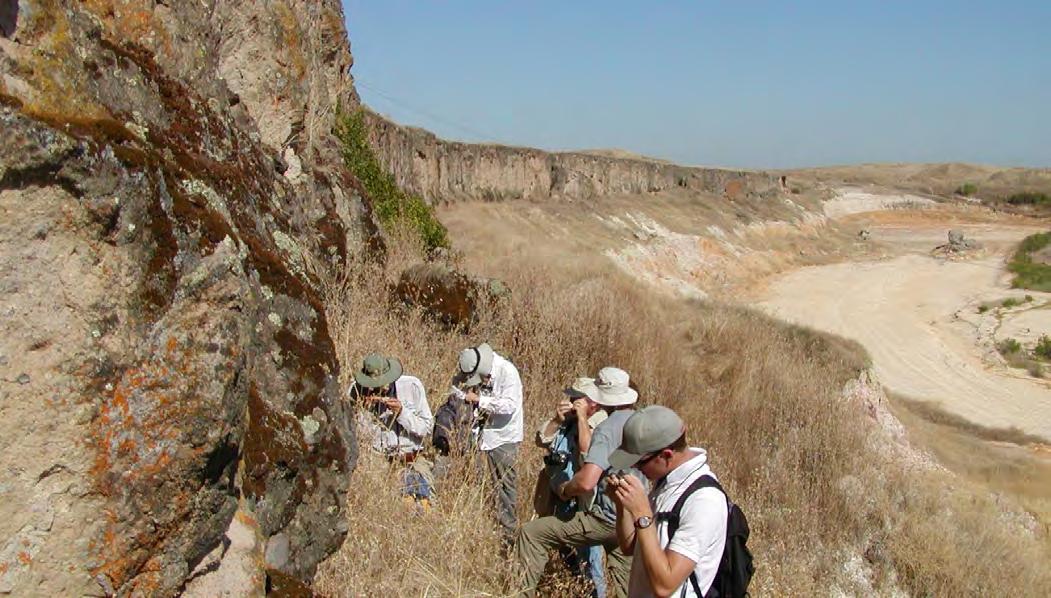
The near vertical cliff face in the above left side photo is a resistant lahar (volcanic mudflow) deposit of the Mehrten Formation, which overlies the Ione Formation clay which forms the excavation slope. The Ione Formation is Eocene in age and extends for over 200 miles along the western edge of the Sierra Nevada (Figure 1). The Ione Formation at Lincoln consists mostly of multi-colored kaolinitic clay with some areas of quartz-rich sand, which are a distal facies formed in a deltaic to shallowmarine depositional environment under a tropical climate. It is worth noting that the “Auriferous Gravels” found higher up in the Sierra Nevada comprise proximal facies of the Ione Formation formed in a fluvial depositional environment in a tropical climate.
What is this? Where is it Located? Hint: You might call this one an overachieving firecracker!


Think you know what this is and Where it is Located?
Email your guesses to Chris Bonds at goldbondwater@ gmail.com


 by Kait Palys/INTERA, Lisa Porta, Montgomery & Associates, Abhishek Singh/INTERA
Introduction/Background
SGMA Planning hit key milestones when all Groundwater Sustainability Agencies (GSAs) submitted their Groundwater Sustainability Plans (GSPs) by their respective deadlines - 46 GSPs for the critically overdrafted basins were submitted by January 31, 2020, and 65 GSPs in high/medium priority basins were submitted by January 31, 2022. The California Department of Water Resources (DWR) released their review of the 2020 GSPs in late 2021 and early 2022. Of these GSPs, five were approved and 13 were deemed incomplete [see table]. A Spring 2022 HydroVisions article summarized key takeaways from these reviews1. The incomplete GSPs had 180 days to re-submit their revised GSPs to correct deficiencies identified by DWR in their determination letters. In early 2023, DWR released their determinations on the re-submitted GSPs2, six of which are now considered inadequate and could go under State intervention, overseen by the State Water Resources Control Board (State Board) under SGMA.
In this article, we take a look at the current status of GSP determinations for the re-submitted GSPs and what key technical deficiencies still need to be addressed according to DWR’s review of the GSPs. We also summarize next steps for the “inadequate plans” and how the State Board might intervene in these basins.
The key themes from the approved re-submitted GSPs are summarized below:
• Intra-basin coordination: The approved subbasins were ostensibly more coordinated than most of the inadequate subbasins, both in methodology and report format. Five of the six approved basins submitted a single GSP. The approved Kings Subbasin submitted multiple GSPs that maintained a consistent report format and singular methodology for water budgeting and Sustainable Management Criteria (SMC).
• Consideration of impacts to drinking water: DWR’s prior evaluation of the 2020 GSPs emphasized the minimum thresholds (MTs) for chronic lowering of groundwater levels did not sufficiently consider domestic wells in the inadequate GSPs. The recently approved re-submitted GSPs made notable improvements to their stakeholder outreach and data inventory to refine MTs that minimize, avoid, or mitigate impacts to domestic wells.
• Consistent and quantitative SMC methodology: The approved re-submitted 2020 GSPs made significant updates to their measurements of sustainability, notably clarifying how the quantitative metrics consider potential significant and unreasonable impacts to beneficial users. In some cases, this update required the subbasins to significantly change their SMC methodology and MTs and measurable objectives to be more protective of the beneficial users that are most vulnerable to the chronic lowering of groundwater levels.

It is important to note that DWR’s guidance document for evaluating depletions of interconnected surface water has yet to be published. For this review, DWR offered comments related to corrections needed for addressing depletions of interconnected surface water, but was more lenient in its determination for the related SMC, due to the SGMA clause that GSAs need to “provide the specific methodology to quantify stream depletion, including the location, quantity, and timing of depletion of interconnected surface water” by 2025 (DWR, 2022). This consideration provides a bit more time for all GSAs to work through their data gaps related to this indicator and integrate DWR guidance (when published) into future GSP updates.
The recently approved GSP determinations included a new item related to the Governor’s Water Supply Strategy of 2022. Since the adoption of GSPs, climate change conditions have advanced faster and more dramatically, as evidenced by recent “weather whiplash” throughout the State. According to DWR, “it is anticipated that the hotter, drier conditions will result in a loss of 10% of California’s water supply”. Therefore, DWR recommended that as California adapts to a hotter, drier climate, GSAs should consider how their SMCs, projects, and management actions may need to be adapted to current and future drought conditions and ongoing climate change.adoption of GSPs, climate change conditions have advanced faster and more dramatically, as evidenced by recent “weather whiplash” throughout the State. According to DWR, “it is anticipated that the hotter, drier conditions will result in a loss of 10% of California’s water supply”. Therefore, DWR recommended that as California adapts to a hotter, drier climate, GSAs should consider how their SMCs, projects, and management actions may need to be adapted to current and future drought conditions and ongoing climate change.
The five major technical aspects of the DWR’s inadequate determinations may be summarized as follows:
1. Demonstrating that SMCs avoid significant and unreasonable impacts on beneficial users and property interests
The process for assigning MTs requires multiple phases of evaluation, starting with the identification of beneficial use and users, evaluation of potential significant and unreasonable impacts, establishment of quantitative MT to be protective of beneficial use and users, and the establishment of an effective representative monitoring network to evaluate minimum thresholds and the presence of any undesirable results. DWR commented that many of the inadequate basins were unclear in how their MTs were set to measure and avoid undesirable results due to significant and unreasonable impacts on beneficial users from adverse groundwater conditions.
2. Addressing interrelationships between multiple sustainability indicators and SMCs
Another prevalent theme of the inadequate GSPs was the insufficient consideration of one sustainability indicator (or associated SMCs) impact on other sustainability indicators within the basin. In particular, minimum thresholds for chronic lowering of groundwater levels did not clearly consider avoidance of significant and unreasonable effects related to land subsidence.
It is no surprise, that most of the basins receiving inadequate determinations were also in areas with the greatest vulnerability to ongoing land subsidence. DWR commented on the need for SMCs for different sustainability indicators to be consistent and coherent to ensure that the SMCs work together to be protective of beneficial use and users, land use, and property rights within the basin.

Four of the six basins with inadequate determinations submitted multiple revised GSPs. The development of multiple GSPs requires additional coordination to ensure that water budget and SMC methodologies are consistent across the subbasin and account for groundwater conditions and undesirable results at the basin scale. A single GSP is not required to achieve sustainability or obtain DWR or SWRCB approval; however, coordination is a vital and necessary component to success. Effective leadership, facilitation support services, standardized report format, functional improvements, and adherence to coordination agreements can improve a subbasin’s ability to remain consistent, and ease the review process for DWR, SWRCB, and interested stakeholders. Moreover, SMCs established for different GSAs and management areas need to consider SMCs and potential impacts on neighboring GSAs and management areas.
Some combination of water supply projects and demand reduction measures were included in the GSPs to achieve sustainability by the end of the implementation period (2040). Hence, the future sustainability of the subbasin would depend on the feasibility of these projects and management actions to eliminate future overdraft and associated undesirable results. Several GSPs cited projects that increase surface water supplies via new water rights permits. With the recent history of overallocations of California’s surface water supplies and extreme droughts, DWR questioned whether these water rights permits could be secured, or the surface water reliably allocated to address the conjunctive use offset needed.
5.

DWR commented on the 2020 GSP evaluation that well mitigation plans (WMP) were needed to address instances of well failures induced by improper management of the basin during GSP implementation. Although several basins did develop WMP frameworks and/or functioning WMPs, they were not completed by the re-submittal of the GSPs during 2022. The inadequate basins are expected to continue the development and/ or improvements to their WMPs and advance their stakeholder outreach, alongside the efforts listed above.
article continues on next page
The overall path for the six basins with inadequate GSPs is shown in the timeline figure below. These basins are now under SWRCB purview and need to continue implementation of their GSPs while making revisions to address DWR’s comments on deficiencies to avoid or pass a probationary hearing. Based on the GSAs’ implementation actions and revisions to the GSPs, SWRCB may recommend to their 5-member Board to put the subbasin back into the purview of DWR and not go to the probationary hearing. If the revisions do not adequately address DWR’s comments prior to a probationary hearing, then the 5-member Board can vote for SWRCB intervention based on SWRCB’s review of GSP inadequacies and the basins’ response (which may differ from DWR’s list) and on public comment before or during the hearing. If the basin moves towards a probationary hearing, the Board will provide a 90-day notice to Cities and Counties and a 60-day notice to known well owners.

The SWRCB’s overarching goal for probation is to help local GSAs address deficiencies in their plans so they can sustainably manage their groundwater resources as soon as possible. The Board may develop an Interim Plan (which may be based on one or more of the existing GSPs within the basin) to implement various actions such as monitoring, metering, demand management, and physical solutions necessary to sustainably manage the basin’s groundwater. Most groundwater pumpers in probationary basins will be required to report monthly extractions and the SWRCB may require the use of flow meters to quantify monthly extraction volumes. In addition to the costs of metering and reporting extraction volumes, groundwater users will also be expected to pay registration fee and volumetric pumping fees3.
SWRCB has started its coordination with the inadequate GSP basins, and DWR is present during the proceedings. In June 2023, the SWRCB released a draft probationary hearing schedule that prioritized basins with the greatest challenges related to subsidence and drinking water impacts. The SWRCB process, involvement, and policy positions are evolving as they transition into their new role of SGMA enforcement.
1. Key Technical Aspects of DWR Reviews on Submitted 2020 GSPs, Hydrovisions Article, Spring 2022. https:// issuu.com/hydrovisions/docs/2022_spring_issue_-_ hydrovisions?fr=sMzYwMDQ3NzczNjU
2. https://sgma.water.ca.gov/portal/gsp/status
3. Small public water suppliers that provide water to disadvantaged communities and low-income extractors can have the base filing fee and volumetric fee waived; however, they are still subject to the reporting requirements and late fee (if applicable). Pumpers that extract less than 2 acre-feet/year (domestic) are exempt from monitoring, reporting, metering, and fee requirements.
Environmental engineering and consulting. Providing innovative water quality solutions throughout California for over 40 years.

Davis 530.753.6400
Berkeley, San Diego, Santa Monica, Seattle, Ventura
www.lwa.com
WATER RESOURCES
ENGINEERING SERVICES INCLUDE

Infrastructure Design: Canals and Pipelines
Control Structures
Pump Stations
Wells Facility Rehabilitation
Groundwater Recharge & Banking

Studies and Modeling:
System Master Planning
Water Conveyance
Water Budgets
Subsidence
Water Quality www.provostandpritchard.com

Regulatory efforts for enforcing assessment and cleanup on PFAS-impacted sites peaked recently when, on March 14, 2023, the United States Environmental Protection Agency (USEPA) proposed draft National Primary Drinking Water Regulation (NPDWR) standards or maximum contaminant levels (MCLs) for perfluorooctanoic acid (PFOA) and perfluorooctanesulfonic acid (PFOS) at 4 nanograms per liter (ng/L, or parts per trillion) for both. The MCLs are based on non-enforceable MCL goals (MCLg) for PFOA and PFOS of zero, indicating no concentration in drinking water is considered safe in terms of known or expected health risks (Read More on MCLg). In addition to health risks, the MCL also considers practical, economical, and technological limitations such that the MCL is higher than the MCLg. The USEPA also introduced the Hazard Index (HI) for four other common PFAS as the regulatory limit. The HI must be below 1 to be compliant with the regulation. The public comment period for this proposed ruling ended on May 30, 2023, and USEPA plans to finalize the rule by 2024 (Federal Register Document). This article describes the HI and how it is calculated, along with a brief discussion on implications of these proposed MCLs and HI on public water systems and permitting groundwater discharges through National Pollutant Discharge Elimination System (NPDES).
The USEPA is proposing the HI approach to establish MCLs for four PFAS compounds: perfluorononanoic acid (PFNA), perfluorohexane sulfonic
acid (PFHxS), perfluorobutane sulfonic acid (PFBS), and hexafluoropropylene oxide dimer acid (HFPO-DA, also known as GenX). The USEPA is proposing the HI to account for toxicity in a dose-additive manner for exposure to low levels of multiple PFAS, which are not likely to be toxic below their individual threshold levels but, when combined in a mixture, are expected to have adverse health effects. To calculate the HI, a ratio called hazard quotient is calculated for each of the four compounds by dividing the measured concentration by their respective Health Based Water Concentration (HBWC) for each individual compound. The four individual hazard quotients are then summed to yield the HI. If the HI is equal to or greater than 1, the water quality exceeds the new MCL.

The HBWC for each compound was determined by USEPA, based on three considerations: 1) a toxicity assessment performed by the federal Agency for Toxic Substances and Disease Registry, 2)the “No Observable Adverse Effects” concentration, and 3) an additional safety factor for uncertainty. The HBWCs are 9 ng/L for PFHxS, 10 ng/L each for PFNA and HFPO-DA, and 2,000 ng/L for PFBS.
Calculation of the HI can therefore be summarized with the following figure:
where [GenX], [PFBS], [PFNA], and [PFHxS] are the concentrations (in ng/L) of each compound in a water sample.

To determine HI compliance, water systems are required to calculate the running annual average (RAA) concentration of each quarterly sample (typical) collected in the past year. (If the sampling frequency is different from quarterly, then the average is calculated in a different manner, depending upon the sampling frequency according to the proposed NPDWR for calculation). If the RAA is greater than 1.0, the water system is in violation of the proposed HI MCL and public notification is required within 30 days.
The USEPA presented their PFAS Roadmap through listening sessions and informational meetings. In March 2023, USEPA held two informational webinars about the proposed PFAS MCLs. On May 4, during the public comment period, the USEPA held a virtual public hearing on the proposed PFAS MCLs to obtain verbal comments from the public. The USEPA planned to transcribe the verbal comments and treat them as if they were submitted in writing.
Although not specific to the proposed PFAS MCLs, the USEPA also held two listening sessions in March 2023 for the designation of PFOA and PFOS as hazardous substances under the Comprehensive Environmental Response, Compensation, and Liability Act (CERCLA). It is important to consider that even if these CERCLA designations are not adopted, final adoption of the proposed PFAS MCLs would result in de facto designation of PFOA and PFOS as hazardous substances. The CERCLA listening sessions focused on the USEPA planned enforcement policy related to responsible parties’ financial obligations pertaining to response actions for PFAS contamination. The session recordings and additional information can be found on the USEPA website. The USEPA is currently working to add seven other PFAS compounds to the CERCLA list. During the listening sessions, USEPA indicated that they do not intend to pursue PFAS enforcement under CERCLA for the following entities: community water utilities and publicly owned treatment works (POTWs), publicly owned and operated municipal solid waste landfills, farmers that
applied biosolids on their lands, state/tribal/municipal airports, and tribal/local fire departments. Instead, the USEPA intends to focus their enforcement efforts on PFAS manufacturers, federal facilities, and other parties whose actions have resulted in the release of significant amounts of PFAS to the environment. The USEPA indicated they may choose to not take CERCLA action against certain entities and may settle and provide CERCLA contribution protection to select parties. This enforcement discretion policy is limited to CERCLA and is contingent upon a party’s cooperation. Inclusion of PFOA and PFOS on the CERCLA hazardous substances list is expected by 2024.
The nexus between the USEPA proposed PFAS MCLs and the proposed listing of PFOA and PFOS as CERCLA hazardous substances is evolving and will undoubtedly have implications for the disposal of groundwater and possibly treatment media generated during the installation, development, and performance of pumping tests for well projects. In December 2022, the USEPA issued guidance1 to States and USEPA Regions on how to use the NPDES permitting program to monitor and restrict the discharges of PFAS at their sources along with steps to reduce discharges where detected. Since 2021, the California Regional Water Quality Control Boards have required testing for PFAS in temporary NPDES discharges of groundwater from well development activities. The adoption of federal PFAS MCLs and CERCLA designation will allow the Water Boards to further establish state-specific testing and discharge criteria for these routine groundwater discharges from wells in California.
article continues on next page

Since August 2019, water utilities in California have been under Division of Drinking Water (DDW) Notification and Response Level requirements (NL and RL) established by the State Water Resources Control Board (State Water Board). NL and RL are considered advisory and non-enforceable but carry obligations like notification requirements and/or corrective actions. State requirements were developed more quickly than enforceable MCLs with no economic consideration requirements. On the other hand, the recent USEPA proposed PFAS MCLs were developed considering economic impacts. As presented during the USEPA March 2023 webinar, 66,000 water systems in the U.S. will be subject to the rule with 3,400 to 6,300 water systems anticipated to exceed one or more MCLs. The annual cost to public water systems (including capital, operation, and maintenance) will be approximately $772 million to $1.2 billion2.
The proposed rule is targeted to be published by 2024 and the Safe Drinking Water Act allows a 3-year compliance period after final rule adoption. In the Orange County Water District service area, 58 drinking water wells were taken off-line and are now at various stages of implementing full-scale wellhead treatment under the State’s advisories. If the USEPA proposed PFAS MCLs are adopted without changes, preliminary estimates indicate that 45 additional wells would require treatment in the near term. The State Water Board and DDW are closely monitoring the USEPA actions for PFAS and will be required to adopt MCLs at least as strict as the USEPA MCLs. Nevertheless, water purveyors must still comply with existing State regulations until USEPA finalizes their MCLs.
References:
1. https://www.epa.gov/system/files/documents/2022-12/NPDES_PFAS_ State%20Memo_December_2022.pdf
2. https://www.epa.gov/sdwa/and-polyfluoroalkyl-substances-pfas


GRA’s Southern California Branch hosted its 1st Annual Careers in the Water Industry Student Workshop in partnership with the Water Replenishment District (WRD) and the Southwest Membrane Operators Association (SWMOA). This Workshop was held on April 8, 2023, and was hosted at WRD’s newest facility, the Albert Robles Center for Water Recycling and Environmental Learning (ARC), in Pico Rivera, CA.
The workshop consisted of a student-focused Q&A session with a panel composed of industry professionals of various technical backgrounds, tours of the ARC facility (advanced water treatment plant, education center, and monitoring

well), mock interviews, and resume review sessions. The goal of the Workshop was to make a positive impact on students by connecting students with working professionals and potential water industry employers.

A total of 56 students from 15 distinct educational institutions attended the Workshop. Over a dozen sponsors also attended and presented at the Workshop. GRA leaders were well represented at the event and served in various capacities, including as panel members, tour facilitators, and volunteers.
GRA is thrilled to have led such a successful event and plans on hosting similar Student Workshops throughout the state in the future!

GRA would like to thank WRD and SWMOA for their partnership and all event sponsors for their support. In addition, GRA would like to thank and acknowledge the dozens of event volunteers and event subcommittee members Monica Sijder (WRD Sr. Public Affairs Representative), Kimberly Badescu (SWMOA Board member), Jory Lerback (UCLA Postdoctoral Fellow), Irvin Matamoros (CSUF graduate student), and Hayley Bricker (UCLA Ph.D. student) for all their hard work and dedication to making this Workshop a success!


The 2023 Western Groundwater Congress promises to be an unparalleled event, bringing together experts, professionals, and enthusiasts from the groundwater industry. With an impressive lineup of over 80 speakers and four concurrent tracks, this premier congress offers a unique opportunity to delve into critical topics such as Sustainable Groundwater Supplies & Storage, Groundwater Management, Contaminant Assessment and Remediation, and other unique challenges and new opportunities. If you haven't registered yet, now is the time to secure your spot for an unforgettable experience!
With four concurrent tracks running throughout the event, attendees have the freedom to tailor their experience and focus on the topics most relevant to their interests and professional goals. Whether you are a seasoned groundwater professional or just starting your journey, you will find relevant sessions and engaging discussions that suit your needs.

Networking is a cornerstone of any successful industry event, and the Western Groundwater Congress excels in this aspect. During receptions and breaks, participants will have the chance to connect with peers, share ideas, and forge meaningful connections with like-minded professionals from across the industry.
At the Western Groundwater Congress, we recognize the importance of overall well-being. Join the Darcy Dash morning run to kickstart your day with an energizing exercise or participate in the 5-Minute Workouts sponsored by EKI during breaks to stay active throughout the day. The yoga meditation room sponsored by GEI offers a serene space to find balance and tranquility amid the bustling event.
In addition to the core program, the congress will feature five special workshop/panels, each delving into captivating water-related content. These specialized sessions will provide participants with unique perspectives and deeper insights into specific aspects of groundwater management and its broader implications.
The 2023 Western Groundwater Congress presents a remarkable opportunity for education, networking, and creating lasting memories. Register today to secure your place at this premier event and join us as we collectively embrace the future of groundwater. Don't miss out on this chance to learn from experts, engage in meaningful discussions, and connect with industry professionals in a vibrant and inclusive environment.
We look forward to welcoming you to an enriching and inspiring congress that will leave a lasting impact on your groundwater journey.





Photograph of perennial Salt Creek, the Salt Creek Hills, and Photograph of the Trinity River and ultramafic rocks downstream of Mount Eddy, the highest peak in the Trinity Mountains (a range of the Klamath Mountains System) of northwestern California. The Trinity River flows through steep canyons and picturesque river valleys and is the primary tributary to the Klamath River.
Though seemingly a long way from the Central Valley, construction of a system of dams, reservoirs, tunnels, and powerplants that started in the 1950s resulted in the interbasin transfer of most of the flow from the Trinity River watershed to the Sacramento River to supply irrigation water for farmers and for hydropower production.
Large populations of salmon and steelhead have used the river for thousands of years. Water infrastructure and diversions have altered the environment for these highly prized fish. Restoration efforts, including court decisions on flow regimes, have been underway since the 1990s to help restore the structure and function of the Trinity River and its watershed.

The largest area of ultramafic rocks in North America is associated with the tectonically active Klamath-Siskiyou Mountains. The genesis of this area in northwestern California and southwestern Oregon is directly linked to ancient accretion events marking multiple collisions of oceanic crust
against continental crust. Some of the oldest accretion events in these mountains date back to the Paleozoic Era about 440 million years ago.
Depending on the mineralogy and the physical or chemical conditions, the broad classification of ultramafic rock can be divided into two rock types: serpentinite and peridotite. Serpentinite results from intense deformation and fracturing, caused by the force of crustal movement as well as hydration of upper mantle rocks, that changes their mineralogy. In contrast, peridotite is composed primarily of unaltered olivine and pyroxene. The ultramafic rocks along the Trinity River record a complex mantle history involving plastic deformation, partial melting, recrystallization, reaction with silicate melts, and hydration processes.
Photographed in early July 2019 along USFS route 42N17, several miles east of Highway 3. Information for planning a trip to the Shasta-Trinity National Forest is available at: https://www.fs.usda.gov/stnf


R.T. Van Valer has worked for Roscoe Moss Company, a leading manufacturer of water well casing, screen and water transmission pipe, since 2001. R.T. currently serves as the Product Manager and Director of Human Resources for the company. In his 11th year with GRA, R.T. has previously served in multiple executive offices, chaired committees and twice chaired the Western Groundwater Congress.
David W. Abbott, P.G., C.Hg., Consulting Geologist, is a Geologist with 45+ years of applied experience in the exploration and development of groundwater supplies; well location services; installation and design of water supply wells; watershed studies; contamination investigations; geotechnical and groundwater problem solving; and protection of groundwater resources.
Chris Bonds is a Senior Engineering Geologist (Specialist) with the California Department of Water Resources (DWR) in Sacramento. Since 2001, he has been involved in a variety of statewide projects including groundwater exploration, management, monitoring, modeling, policy, research, and water transfers. He has over 30 years of professional work experience in the private and public sectors in California, Hawaii, and Alaska and is a Professional Geologist and Certified Hydrogeologist. Chris received two Geology degrees from California State Universities. He has been a member of GRAC since 2010, a Sacramento Branch Officer since 2017, and has presented at numerous GRAC events since 2004.
Dr. Abhishek Singh is a Principal Engineer with more than 20 years of experience and is President of INTERA’s Water Resources & Supply Line of Business (LoB), where he leads and manages operations, business development, strategic planning for the lob across the United States. He has authored several technical publications and journal articles on groundwater modeling and calibration, stochastic optimization techniques, uncertainty and risk analysis, climate change, and emerging contaminants. Dr. Singh is also the chair of the GRA technical committee and serves on the GRA board of directors.
President & Principal Engineer at APEX Environmental & Water Resources Mr. Roohi Toosi, PE is a Board Director and a member of several committees at GRA. Mr. Toosi established APEX Environmental & Water Resources, LLC to utilize his accumulated experience for serving the clients more efficiently and cost-effectively. His background in petroleum engineering has equipped him with a broader knowledge of porous media and tools to solve subsurface complex issues. His expertise encompasses all aspects of environmental engineering and hydrogeology, with emphasis on subsurface investigation and remediation. Over the course of his career, Mr. Toosi has conducted and managed projects for utilities, school districts, municipalities, military bases, private developers, contractors, farmers, water districts, and large consulting firms.
Kait Palys is a Water Resources Scientist involved in the nexus of technical analyses and policy implications related to California’s water management. Since 2016, Kait has dedicated her career to assisting Groundwater Sustainability Agencies and their stakeholders find mutual solutions and achieve regulatory compliance of the Sustainable Groundwater Management Act (SGMA). Outside of work, Kait enjoys serving as the Founder and Co-Director of Central Valley Water Professionals - a passion project with the mission of connecting perspectives from different corners of the CA water world across the San Joaquin Valley.
Lisa Porta, PE, is a senior water resources engineer and California Water Strategy Lead with Montgomery & Associates, in Sacramento, CA. She has more than 15 years of groundwater modeling and integrated water resources planning experience in California and the Western United States. She specializes in SGMA implementation and supports local water agencies with navigating the increasingly complex regulatory environment with using appropriate data and tools.
Moises Santillan is a California registered Professional Geologist (PG) and works as an Associate Hydrogeologist at the Water Replenishment District (WRD). He serves as a GRA Board member and GRA Southern California Branch President. He received a B.S. in Geology and MPA with a specialization in Public Works from California State University, Long Beach.
John Karachewski is a geologist for the California EPA (DTSC) in Berkeley. He is an avid photographer and often teaches geology as an instructor and field trip leader.
President and Principal Hydrologist at NOAH Global Solutions
Dr. Coppola is a co-founder of NOAH Global Solutions, a company that specializes in the application of AI and formal optimization to water management problems. A pioneer in this area, he has consulted to nations in Europe, Asia, Africa, Australia, and North America. His real-world AI groundwater applications include saltwater intrusion forecasting, groundwater elevation forecasting, and optimally balancing wellfield extraction with contaminant vulnerability to a nearby plume. His first application was optimizing management of the Parkway Wellfield, made famous by the Pulitzer Prize winning book “Toms River,” which led to NOAH’s patented AI-based decision support system.
Vice President and Director of AI Modeling at NOAH Global Solutions
Dr. Poulton is a NOAH co-founder and co-developer of their patented decision support system. The former head of the Department of Geological and Mining Engineering at the University of Arizona, she has spent more than 35 years researching and developing neural network applications. She is an expert in AI architecture, algorithms and both proprietary and open-source software, which advances NOAH’s advanced AI modeling solutions. Her wide diversity of applications includes water resources, petroleum, and geophysics. Her research projects have taken her to many places around the world, including China, Mongolia, Australia, Peru, Chile, Mexico, Russia, Malta, and Canada.
Vice President and Director of Operations Research at NOAH Global Solutions
Dr. Szidarovszky is a NOAH co-founder and co-developer of their patented decision support system. He is an internationally renowned mathematician and economist with seminal contributions in both areas, as reflected by his extensive collaboration with Dr. Vernon Smith, co-recipient of the 2002 Nobel Prize in Economics. His work is not exclusively limited to theory, rather his methods have been applied to a large diversity of real-world problems, including water resources modeling and management. A former full professor at the University of Arizona with joint appointments in other departments, he develops advanced mathematical methods to support continued development of innovative methods and products for NOAH.
Suna Cinar
Dan Bryant, Ph.D., P.G., is the Emerging Contaminants National Practice Leader for Woodard & Curran. Dan has 26 years of experience in the fields of geochemistry, in-situ remediation, contaminant fate and transport, and hydrogeology. Dan holds bachelor’s and master’s degrees in Geology from the University of Florida and a Ph.D. in Geoscience from Columbia University.
Rob Wilhelm is a California professional geologist, working for Tetra Teach, and is a Key Client Program Manager specializing in environmental remediation of complex sites, including PFAS contamination, focused within the aerospace market. I assist remediation clients manage their environmental liabilities to achieve regulatory compliance and successfully restore and re-purpose contaminated properties consistent with their business goals.
Heather Gosack, RG is a Senior Geologist and Account Manager at Tetra Tech with 16 years of diverse environmental consulting experience. She has extensive experience managing sites requiring PFAS investigation and providing PFAS technical support to colleagues managing PFAS projects across the U.S.
Marcus Trotta is a California professional geologist and a certified hydrogeologist working for Sonoma Water since 2008.
Azita Assadi. P.Geo. is a technical committee member at the GRAC. She is a Hydrogeologist with over 20 years of consulting experience in water resources and soil/groundwater management in the US, Canada, and internationally. She is currently working as a Geologist at A-Tech Consulting Inc. in the field of subsurface investigation and water resources management.
Pete Dennehy, PG, CHg is a hydrogeologist at Montgomery and Associates in Sacramento. He specializes in hydrogeologic investigations for sustainable groundwater resources management and water supply.
Jim Strandberg is a Senior Hydrogeologist/Project Manager at Woodard & Curran in Walnut Creek, CA. Jim is a member of the firm’s national emerging contaminants team and leads PFAS projects across the state.
Manmeet “Meeta” Pannu, Ph.D., is a Senior Scientist in the Research and Development (R&D) Department of Orange County Water District (OCWD) at Anaheim, CA. Meeta is currently completing research at OCWD related to PFAS. These projects include evaluation of GAC, IX, and alternative adsorbents to remove PFAS from groundwater during wellhead treatment and managed aquifer recharge via in-situ adsorption and alternative methods to measure total PFAS in water samples.


THE FUTURE OF GROUNDWATER IS YOU!


