
Truck Week 25
Week-long festival of all things trucking

Australia’s Biggest Trucking Festival
Truck Week 25
Week-long festival of all things trucking
Australia’s Biggest Trucking Festival
The All New DAF XG and XG+


















To keep your truck performing at its best, only trust Isuzu-backed parts, which include Isuzu Genuine Parts, Isuzu Best Value Parts & Isuzu Approved Parts. To find out more, see your nearest Isuzu Truck Dealer or visit parts.isuzu.com.au




Mark your calendar, gather your team and make your way to Brisbane for the world-class 2025 Brisbane Truck Show. We can’t wait to see you there!
Get ready for an unmissable event that will set the stage for the future of the transport and logistics industry – the 2025 Brisbane Truck Show.
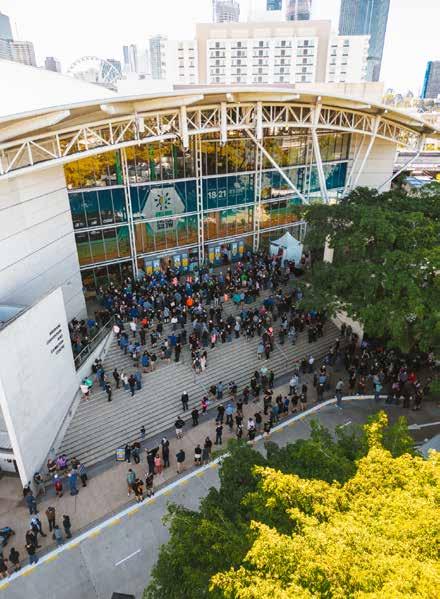
Held at the Brisbane Convention and Exhibition Centre, this premier event is returning bigger and better than ever, bringing together the best brands, cuttingedge technology and the brightest minds in the trucking world.
Whether you’re a seasoned industry professional, a fleet manager, or simply a truck fan, the Truck Show promises an unforgettable experience that will captivate and inspire.
Innovation takes centre stage
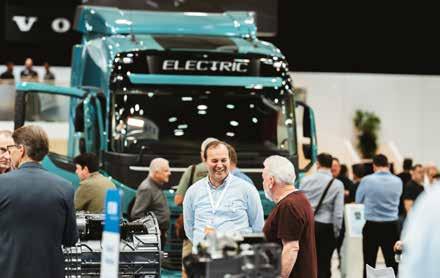
The Brisbane Truck Show is the ultimate showcase for the latest innovations in trucking technology. All the major brands are back and will unveil their newest models, equipment and technological breakthroughs that are shaping the future of the industry.
From advancements in electric vehicles and automation to next-generation safety features and fuel efficiency solutions, you’ll witness first-hand the innovations that are setting new standards for the transport sector.
This is your chance to connect with the people behind the technology and see,
touch and test the products that will define the next decade of trucking.
The Depot – a live showcase of skills
This year, we are excited to introduce
The Depot activation – a free, high-energy, hands-on experience located at the TAFE lawns directly adjacent to the BCEC.
This thrilling activation will spotlight the skills and expertise that drive the trucking industry, featuring live demonstrations and interactive displays. Whether you’re looking to learn about truck maintenance, the latest diagnostic tools or the incredible skill of professional drivers, The Depot is the place to be.

“The Truck Show promises an unforgettable experience that will captivate and inspire.”
Truck Week – a week full of celebrations
But the excitement doesn’t stop at the BCEC. The Truck Week brand has expanded, with major activations happening all around Brisbane, including the first-ever National Show ‘N’ Shine Championship at Little Stanley Street showcasing dozens of stunning custom rigs on display.
There’ll also be a showcase of Australia’s best amateur and professional boxers at South Bank Piazza as part of the Premier Boxing Series and, beyond the immediate precinct, the Heavy Equipment and Machinery Show at the RNA Showgrounds. At this exciting new venue, you’ll find the latest in heavy equipment, machinery and earthmoving technology. This activation highlights the connection between trucking and the broader logistics and construction sectors.
The Heritage Truck Show at Rocklea
Showgrounds is a must-visit for anyone with an appreciation for the rich history of the trucking industry, featuring classic rigs and vintage trucks showcasing the evolution of the industry over the years.
The ultimate trucking experience
The Truck Show is more than just an industry exhibition – it’s a celebration of everything that makes the trucking industry great.
With so much to see and do, and major activations happening all week long, this is an event you won’t want to miss.
Whether you’re here to discover new technologies, celebrate the community, or simply experience the power and beauty of trucks, the Brisbane Truck Show has something for everyone. Mark your calendar, gather your team, and make your way to Brisbane for this world-class event.
We can’t wait to see you there!
The Queensland Government is proud to support Truck Week as a one-stop transport shop which is the biggest event of its kind in the southern hemisphere.
This is an opportunity to visit an awesome range of events including Brisbane Truck Show, Heritage Truck Show, National Show ‘N’ Shine Championship, Heavy Vehicle Equipment and Machinery Show, and The Depot careers hub at the TAFE Queensland South Bank campus.
The week is a showcase for the best in heavy vehicle industry developments, featuring manufacturers and suppliers, the latest equipment, and innovations to drive technology forward for fleet executives and purchasers from the road transport, agriculture, retail, mining, construction, infrastructure, services, trade and local government industries.
With the key themes including innovation, advanced manufacturing, road safety, sustainability, education, careers and workplace health and safety, there is something for everyone.
Truck Week provides great entertainment at the Brisbane Convention and Exhibition Centre and throughout the city for a thrilling family day out, with more than 40,000 visitors expected at the Brisbane Truck Show alone.
Queensland is at the forefront of the heavy vehicle industry, and the events and displays will highlight its commitment to advancing the industry through technology, innovation and safety. Enjoy all that is on offer at Truck Week.
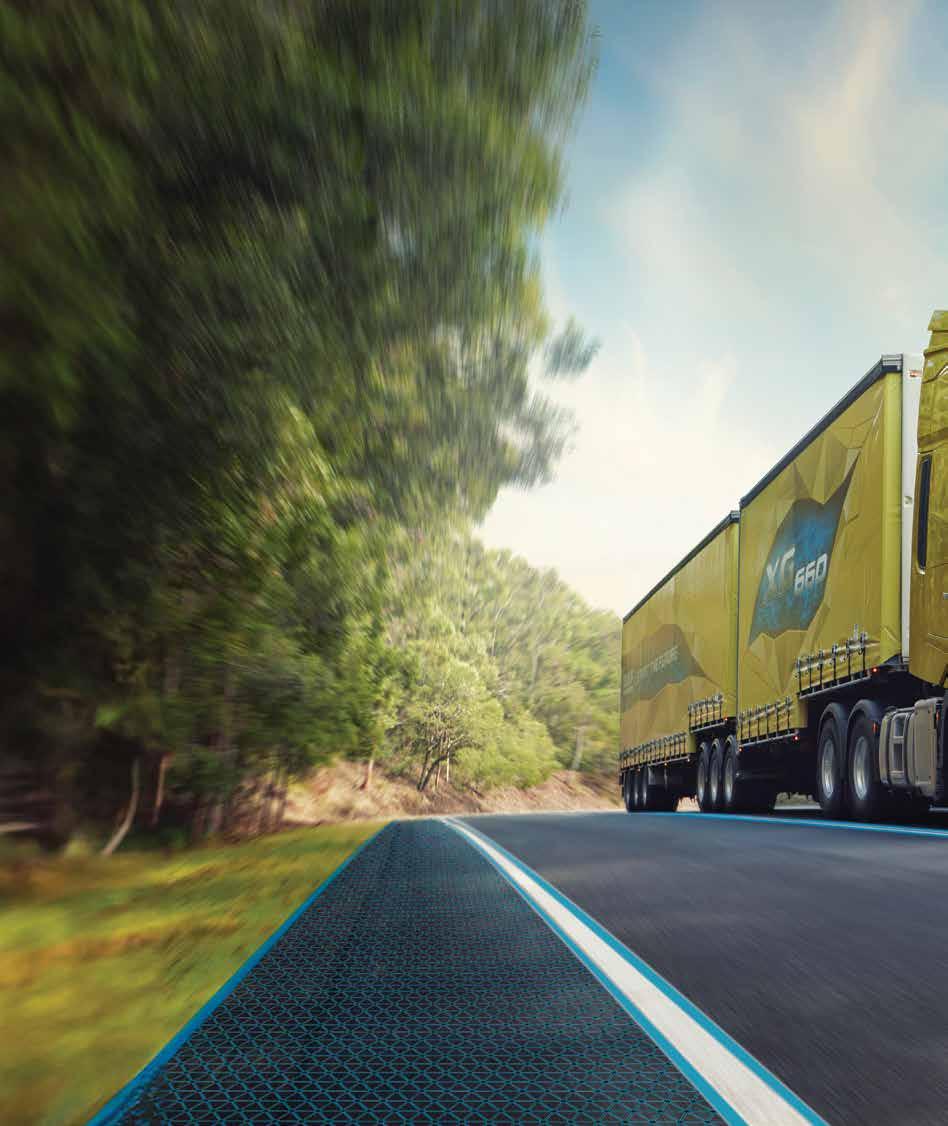
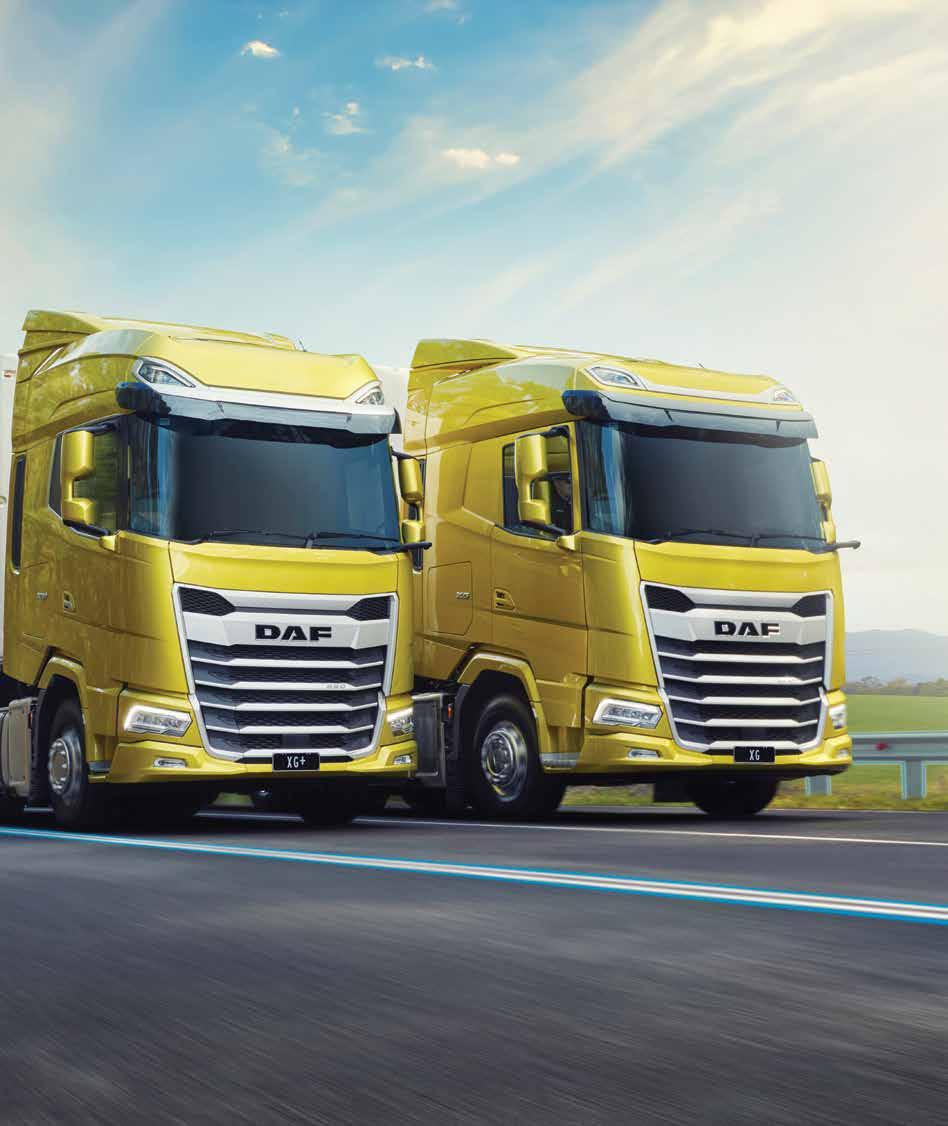

Start the Future POWERFUL 15L, 660HP ENGINE + SUPERIOR SAFETY + THE PINNACLE OF COMFORT, SPACE & PRODUCTIVITY
Mark your calendar, gather your team and make your way to Brisbane for the world-class 2025 Brisbane Truck Show
Bettering the “best-ever” 2023 show is a huge challenge, but one the HVIA team is up to with an array of new activations planned
Truck Week 25 will boast a raft of activations across Brisbane, including the National Show ‘N’ Shine Championship
From career path exploration to hands-on driving experiences, The Depot will be an unforgettable part of next year’s show
Australia’s best custom trucks will be on display at the first-ever National Show ‘N’ Shine Championship to held at Truck Week 25
The Premier Boxing Series at South Bank Piazza will showcase Australia’s best amateur and professional boxers
The Euro 6 models set to be on display at next year’s show cut fuel use and emissions beyond what was thought possible
Get along to the Heritage Truck Show to see the history of transport showcasing trucks from the 1920s to the 1990s
Collaboration is key to resolving the complex problems involved in the transport industry’s drive to a zero-emission future
The 2025 Heavy Equipment and Machinery Show will feature more than 100 exhibitions of the latest heavy machinery

There’s a growing realisation high-productivity trailers equate to less trucks, less trips and less emissions
It’s time to take advantage of the special rates negotiated for a raft of hotels and apartments by our partner Ozaccom+
The 2025 Brisbane Truck Show will offer an in-depth look at the latest e-axle technologies from around the world
Brisbane boasts a rich offering of bars and eateries, from fine dining through to amazing pubs and bars
Telematics providers are harnessing the unparalleled processing power of AI to take fleet management into the future
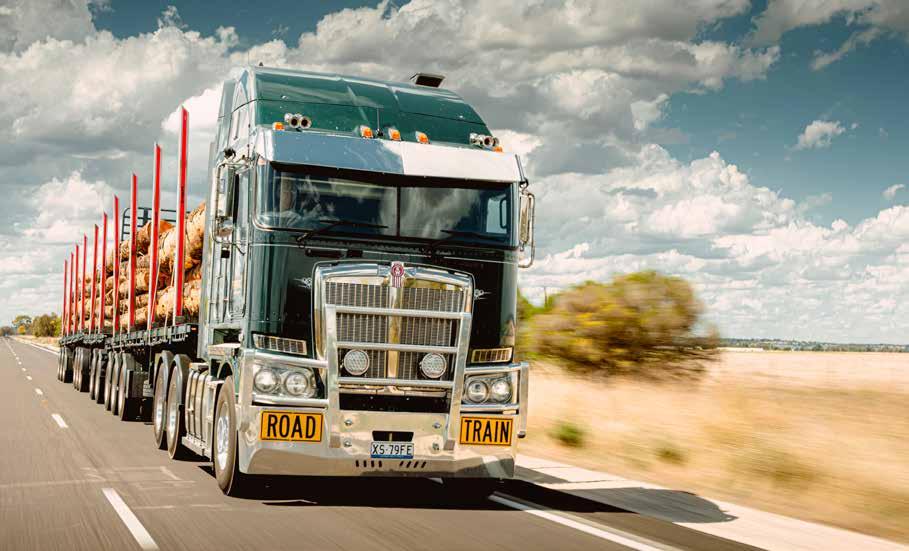
Leading exhibitors reveal a huge line-up of new product launches planned for the upcoming Brisbane Truck Show
Digital mapping and way-finder solution MappedIn will be back for the 2025 show with a raft of enhancements
Check out more than 30,000 square metres of exhibitors who will showcase their wares at the 2025 Brisbane Truck Show

EDITORIAL
Editor
Graham Gardiner P: 0411 722 684
E: g.gardiner@hvia.asn.au
Contributors
Cobey Bartels
Harrison Hunkin
Steve Power
DESIGN & PRODUCTION
Art Director
Andrew McLagan
Andrew McLagan Design
E: andrew@andrewmclagandesign.com
MARKETING & COMMUNICATIONS
HVIA Communications, Marketing & Projects Officer
Vanessa Finnerty P: 07 3376 6266
E: v.finnerty@hvia.asn.au
EVENTS
National Events Manager
Kay Marco P: 0409 827 185
E: k.marco@hvia.asn.au
National Events – Production
Noelene Bradley P: 0407 892 001
E: n.bradley@hvia.asn.au
National Events Coordinator
Jenny Wilson P: 0493 994 094
E: j.wilson@hvia.asn.au
CORPORATE
HVIA CEO
Todd Hacking P: 0438 066 441
E: t.hacking@hvia.asn.au
HVIA Board Of Directors
John Drake – President
Miles Crawford – Vice President
Tony Clark – Director
Rod Cunningham – Director
Craig Lee – Director
Roy Lombardi – Director
Rob Smedley – Director
Daniel Whitehead – Director
Shay Chalmers – Director
Heather Bone – Director
Heavy Vehicle Industry Australia
2/115 Bluestone Circuit
Seventeen Mile Rocks
Queensland 4073 P: 07 3376 6266
E: hvia@hvia.asn.au
W: www.hvia.asn.au
PRINTING
IVE Group
37-49 Browns Road, Clayton VIC 3168
Truckline offers Australia’s largest range of over 70,000 parts and accessories for North American, Japanese and European trucks and trailers. Our knowledgeable team delivers the expert service you deserve, ensuring you get the right parts, Australia-wide.
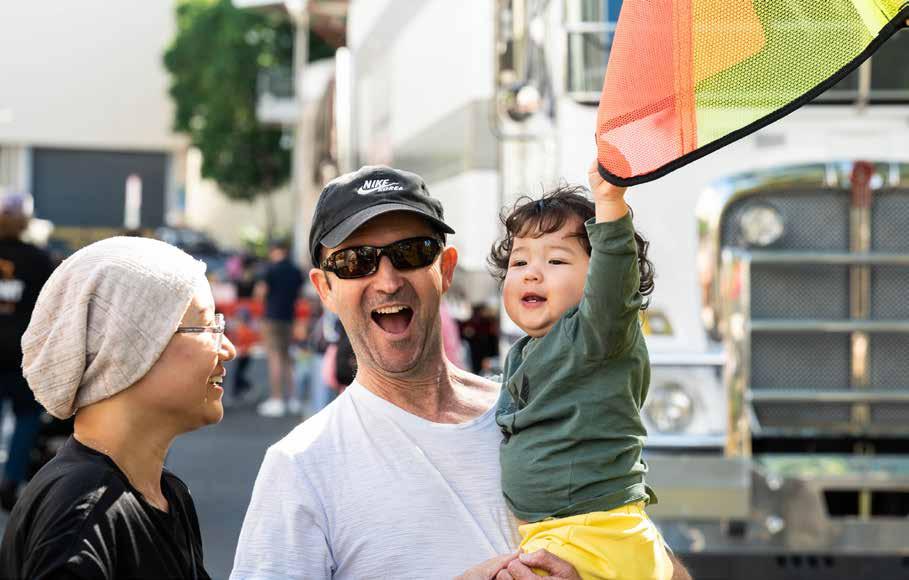
Bettering the 2023 Brisbane Truck Show – widely acknowledged as the best-ever –is a huge challenge, but one the HVIA team is up to with an array of exciting new activations already announced – and more to come!
If the size of our second-ever show preview magazine is anything to go by, then the 2025 Brisbane Truck Show is shaping up to be every bit as good as the 2023 event lauded as the best-ever in the show’s 56-year history.
At a record 164 pages, up from the inaugural issue’s 132 page count, the special show precursor has attracted enthusiastic support from exhibitors, both small and large.
Aimed at creating awareness, anticipation and excitement about the upcoming event, the magazine provides a comprehensive preview of the 2025 show,
including analysis of the big-picture trends driving equipment and technology developments likely to be on show next year – as well as a sneak peak of some of the key new products set to be unveiled at the event.
And with the entire exhibition space sold out well ahead of the show, attendees are in for an amazing showcase of the latest products from all the big truck, trailer, parts and accessories brands.
All up there’ll be more than 30,000+ square metres of exhibitors showcasing their wares at the 2025 show, led by an impressive 22 truck and engine brands
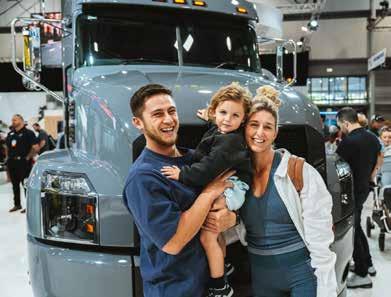
– including Swedish brand Scania which returns to the show after a brief hiatus!
As we reveal in this bumper preview, the big truck brands will have a slew of new products on show, some publicly for the first time, including DAF’s new flagship XG and XG+ models, Scania’s revised V8 range and its all-new 13-litre six-cylinder ‘Super’ engine family, and Volvo’s just-released FH Aero range featuring impressive on-road refinement and energy efficiency (see pages 42-56).
After taking the show by storm in 2023, low- and zero-emission vehicles will again feature heavily, with Scania to debut the next generation of fully electric zero tailpipe emissions BEV trucks, in the shape of the 40 BEV, and Hyundai confirming plans to debut the XCIENT hydrogen fuel cell-powered heavy-duty truck at the event (see pages 62-73).
Not to be left behind, 34 world-class trailer and body manufacturers and importers will be showcasing their latest innovations at the show, including the
Brisbane Truck Show, BCEC: 9:00am-5:00pm
Thursday-Saturday; 9:00am-2:00pm Sunday
The Depot, TAFE QLD South Bank Campus: 9:00am-5:00pm Thursday-Saturday
Heavy Equipment and Machinery Show, Brisbane Showgrounds: 8:00am-4:00pm
Thursday-Saturday
Heritage Truck Show, Rocklea Showgrounds: 8:00am-3:00pm Saturday-Sunday
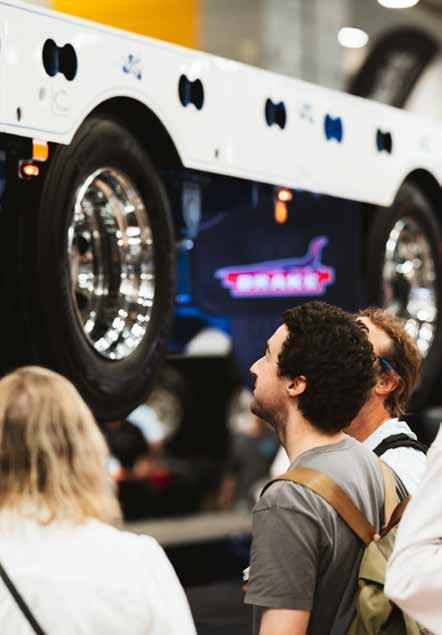
just-released Freez-R refrigerated trailer offering from Freighter Group (formerly Maxitrans) developed in collaboration with Schmitz Cargobull.
What’s more, Hammar Australia will be flexing its muscles with the Australian debut of its new flagship model, the Hammar 500, which boasts a 45-tonne lifting capacity and can uniquely stack containers weighing up to 17.1 tonnes two rows deep, achieved with an incredible six-metre reach (see page 142).
Connecting it all together, a record number of parts and accessories suppliers, and technology providers, will be showcasing a raft of product advances that are playing an increasing role in delivering on the Brisbane Truck Show’s key themes of innovation, safety, sustainability and knowledge (see pages 98-110).
Continuing the show’s evolution into a weeklong festival of all things trucking, the event will continue to extend beyond the walls of the Brisbane Convention and Exhibition Centre into the nearby South Bank Parklands, TAFE Queensland South Bank Campus and right across the city.
With the support of Tourism and Events Queensland, Brisbane City Council and South Bank Corporation, Truck Week 25 – formerly known as Australian Heavy Vehicle Industry Week – will feature an array of new activations, including the first-ever National Show ‘N’ Shine Championship at Little Stanley Street featuring as many as 28 of the best custom trucks from around Australia (see pages 32-34).
In an epic new activation, Truck Week 25 will also include a new careers precinct at the TAFE Queensland South Bank Campus just opposite the main BCEC entrance on Glenelg Street.
Staged in collaboration with TAFE Queensland, The
1968 First Queensland Truck Show held at Haulmark Trailers’ premises at Ipswich Road, Rocklea
1968 21 exhibitors formed the Commercial Vehicle Industry Association of Queensland
1970 Truck Show moved to the Rocklea Wool Stores
1979 Since 1979 the show has run every two years
1983 Relocated to the RNA)where it remained for almost 30 years as the Queensland Truck, Trailer and Equipment Show
2011 Moved to its current world-class home at the Brisbane Convention & Exhibition Centre. Now known as the Brisbane Truck Show
2015 CVIAQ became Heavy Vehicle Industry Australia (HVIA)
2017 50th anniversary Brisbane Truck Show hosted almost 300 industry exhibitors, and attracted over 33,000 visitors over four days
2019 Expansion into a week-long festival incorporating activations and entertainment precinct in nearby South Bank Parklands
2019 Named ‘Australia’s Best Corporate Event and Best Exhibition, Trade or Consumer Show’ at Australian Event Awards
2021 Named ‘Best Live or Hybrid Congress, Conference or Exhibition’ at Australian Event Awards
2023 Association Event of the Year, 2023 Queensland Meetings & Events Australia Awards
2023 Attracts an all-time record attendance of 42,855
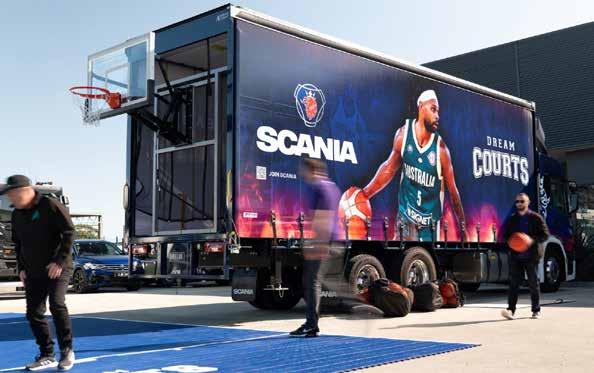
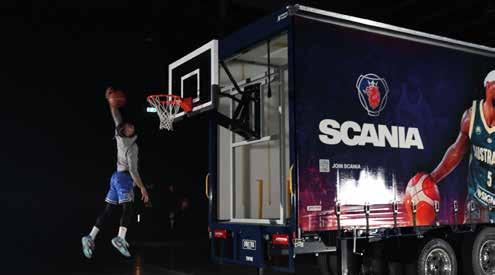
Depot will showcase dynamic career opportunities in Australia’s heavy vehicle industry including hands-on and virtual interactive displays such as a truck driving simulator and the uber-cool Scania Dunk Truck boasting a half-size basketball court (see pages 26-28).
For those who like a bit of rough and tumble, Truck Week 25 will also incorporate the Premier Boxing Series at the South Bank Piazza on the Friday and Saturday nights (see pages 36-38).
Staged in conjunction with leading fight promoter, Ace Boxing, the Premier Boxing Series will feature six professional bouts each night, with a healthy card of
elite professional and amateur boxers – crowned by an Australian or regional title bout on each evening.
Following its success in previous years, there will also be an abundance of activities and entertainment in the South Bank Parklands, supported by the precinct’s retailers waiting to welcome visitors with a plethora of great drinking and dining options (see pages 112-116).
Beyond South Bank, Truck Week 25 will also incorporate the Heavy Equipment and Machinery Show at the Brisbane Showgrounds from Thursday to Saturday (see pages 76-78); and the incredibly popular Heritage Truck Show, which will be at the Rocklea Showgrounds from May 17-18 with a breathtaking array of classic trucks and machinery on offer (see pages 58-61).
HVIA CEO Todd Hacking says what started back in 1968 as an event to connect members with their customers has become much more than that –a week-long festival of all things trucking.
“Amazingly, it now ranks as Australia’s largest business-to-business event and there are so many other events that run alongside the Truck Show that make it a compelling opportunity for everyone to get together in Brisbane every two years,” he says.
“A few years ago, we created Australian Heavy Vehicle Industry Week – now Truck Week – to capture the events taking place alongside the show.
“The Queensland Government have been our major partner in that initiative. Brisbane Economic Development Agency is also key to opening doors and breaking down barriers.
“And this evolution will continue in 2025 – plus some new exciting additions we can’t wait to reveal in due course!”

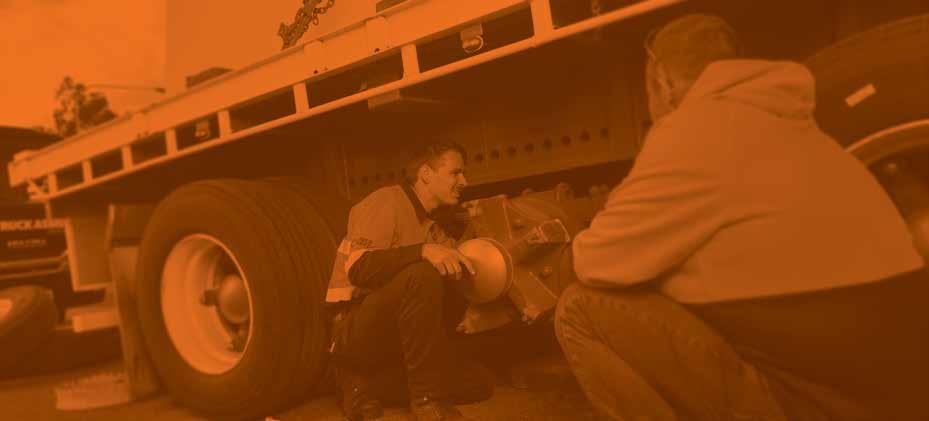
At NTI we’ve always been successful in finding new ways to keep our customers truckin’, shippin’ and diggin’.
Alongside the Brisbane Truck Show, Truck Week 25 will boast a raft of new activations throughout South Bank and right across Brisbane, including the firstever National Show ‘N’ Shine Championship and The Depot careers hub
Truck Week 25 – formerly known as Australian Heavy Vehicle Industry Week – will feature an array of epic new activations in and around the 2025 Brisbane Truck Show, from the Premier Boxing Series to a display of Australia’s best show ‘n shine trucks and The Depot, a new careers and entertainment precinct.
Continuing the show’s evolution into a week-long festival of all things trucking, in 2025 the southern hemisphere’s largest transport industry event will extend well beyond the walls of Brisbane Convention and Exhibition Centre into the nearby South Bank Parklands, TAFE Queensland South Bank campus and right across the city.
With the support of Tourism and Events Queensland, Brisbane City Council and South Bank
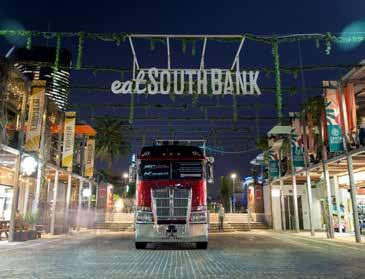
Corporation, Little Stanley Street will again be closed to traffic to showcase the best show ‘n’ shine trucks from around Australia.
The show ‘n’ shine display will replace the previous truck and trailer display at Little Stanley Street, with these vehicles to be showcased at various locations throughout Brisbane.
Curated by custom truck guru Warren Aitken, the Truck Week 25 National Show ‘N’ Shine Championship will feature as many as 28 customised prime movers drawn from the winner’s circle of the top community-based show ‘n’ shine events held around the country in 2023-24.
As well as getting to check out these amazing works of art first-hand, Brisbane Truck Show attendees will also have the chance to vote for what they believe is the best truck on show – the National

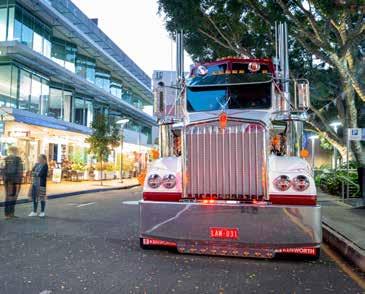
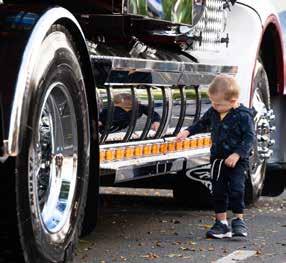
Show ‘N’ Shine People’s Choice Champion 2025. A panel of experts will also judge the National Show ‘N’ Shine Champion of Champions 2025 award.
In an exciting new activation, Truck Week 25 will also feature a new careers precinct at the TAFE Queensland South Bank campus just opposite the main BCEC entrance on Glenelg Street.
Staged in collaboration with TAFE Queensland, The Depot will showcase dynamic opportunities in Australia’s heavy vehicle industry.
The hub will feature more than 31 apprenticeship and certificate-based career paths including hands-on and virtual interactive displays such as the Brisbane Driving School simulator – boasting a giant wraparound screen, Roadranger gearbox, and heaps of different vehicles and driving scenarios.
Also on show will be the Scania Dunk Truck which features a very cool half-size basketball court that
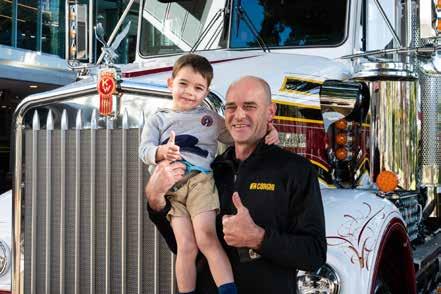
aims to promote the teamwork necessary in the transition from school to work.
There’ll also be music, entertaining and informative commentary, great interviews and presentations offering students a behind-the-scenes look at Australia’s vital heavy vehicle industry.
And for the big kids at heart, The Depot will include food and beverage offerings for show attendees to enjoy a debrief after a day at the show!
For pure entertainment, boxing fans will be in for a huge treat with Truck Week 25 teaming up with Australia’s leading fight promoter Ace Boxing to stage its Premier Boxing Series at the South Bank Piazza on the Friday and Saturday nights.
Boasting a variety of national and regional champions under its banner, each night the Premier Boxing Series expects to feature six professional bouts, with a healthy undercard of elite amateur boxers. The main event for each night will contest Australia’s elite athletes for title bouts.
While the fight card will not be revealed until closer to the event, Premier Boxing Series CEO Glenn Hosking says Ace Boxing and Premier Boxing Series have promoted several rising talents and household names throughout its time, including current IBF Super-Lightweight World Champion Liam Paro.
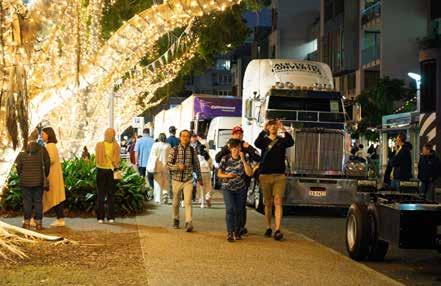
Truck Week 25 will also showcase Australia’s world-class truck and trailer combinations throughout South Bank and across Brisbane
“The National Show ‘N’ Shine Championship will feature as many as 28 of Australia’s best customised prime movers.”
• 60% less ash than conventional API CK-4
• Extends DPF maintenance period
• Maximises fuel economy
• Prolongs oil change interval
Let’s go further®
“The Depot will include hands-on and virtual interactive displays such as the Brisbane Driving School simulator.”
“Premier Boxing is excited to partner with Truck Week 25 and showcase the very best local professional boxing talent in fan-friendly, evenlymatched fights,” he says.
“We’re going to deliver a high-energy show, with plenty of lights, music and boxing action. Get ready to rumble at Truck Week 25!”
Beyond South Bank, Truck Week 25 will also incorporate the Heavy Equipment and Machinery Show at the Brisbane Showgrounds, which will again run alongside the Truck Show from Thursday to Saturday.
The show, which is held in conjunction with Civil Contractors Federation Queensland, claims the title of Queensland’s biggest civil construction expo and will feature the latest in heavy equipment and machinery.
In 2023, the show attracted more than 6,000 attendees and in excess of 80 exhibitors.
From contemporary to classics, the 2025 Brisbane Truck Show will again incorporate the incredibly popular Heritage Truck Show.
Staged by Heritage Truck Association Australia, the event will be held off-site at the Rocklea Showgrounds from May 17-18, 2025 with a breathtaking array of classics on offer.
After returning to its inaugural home of the Rocklea Showgrounds – just 15 minutes’ drive from the

Brisbane Convention and Exhibition Centre – in 2021, the classic hit-out has grown in size and popularity.
“We got around 160 trucks last time, with around 2,000 people through the gate, which is just huge,” says HTAA President Mark Plunkett.
“It is looking to be even bigger because we got so much positive feedback last time, with visitors coming from all over Australia and overseas.
“They came to the Brisbane Truck Show, but they could jump on a bus to come out and see our show too.”
What’s more, there will also be an abundance of activities and entertainment in the South Bank Parklands, supported by the precinct’s retailers waiting to welcome visitors with a plethora of great drinking and dining options.
HVIA CEO Todd Hacking says the response to the show’s strategic expansion into a week-long trucking festival has been “fantastic”.
“All of that success is a reflection on the leadership shown by so many of our exhibitors who did such an amazing job of showcasing the values of their companies and our industry to the broader community,” he says.
“The opportunity to showcase our industry in this spectacular location provides the perfect opportunity to share our story with the community in a tangible and lasting way.
“We are extremely grateful to the Queensland Government and the City of Brisbane for coming on board to enable this initiative to come to life.
Truck Week 25 will also offer an abundance of activities and entertainment in the South Bank Parklands, supported by the precinct’s retailers
“They recognise that the Brisbane Truck Show is a vital Queensland business, tourism and cultural asset, recognised internationally amongst the world’s leading industry business events.”



As a global leader in IoT and connected transportation, Geotab processes and analyses data from over 4 million connected vehicles, generating over 75 billion data points per day. It’s a huge amount of data, and it is most powerful when we have the right tools to securely and efficiently manage it. That’s why we have partnered with Google to leverage Google Cloud’s data analytics and machine learning solutions.
This partnership will pave the way for a new era in fleet management and urban transportation solutions. By using Google’s platform, Geotab is able to provide Al-driven recommendations, benchmarking and performance assessment, while simultaneously allowing customers to optimise, streamline and scale their fleet’s data.

For more information, visit geotab.com/au/

By partnering with Google Cloud, Geotab is creating solutions that help move rapidly towards reducing emissions and carbon footprint, boost road safety, and enable the expansion of electric vehicle (EV) infrastructure.
Geotab has been awarded two Google Cloud Customer Awards for its achievements in the transportation sector. Recognition in both the Cross Industry and Sustainability categories underscore Geotab’s successful use of Google Cloud’s analytics to innovate and drive sustainable practices in fleet management.
Kirsten Kliphouse, the President of Google Cloud Americas says that the Awards are an opportunity to recognise the most innovative, technically advanced, and transformative cloud deployments across industries globally built on their platform.
In her congratulatory message to Geotab, she acknowledged Geotab’s role in “serving as an innovator for the industry”, which also highlights Geotab’s innovative integration of data to revolutionise the transportation sector, leading to transformative impacts across organisations and customers around the world.

As the world’s premier EV telematics provider, Geotab has demonstrated its commitment to reducing emissions through its Electric Vehicle Self-Assessment (EVSA) tool, which won Google Cloud’s Award for Sustainability. The tool provides tailored EV recommendations to support businesses and governments in transitioning to electrified fleets.
For two consecutive years, Geotab was also identified as a Cross-Industry winner, underlining its innovative approach, technical distinction and impactful transformation, all of which were facilitated by Google Cloud. The award also acknowledges the launch of the Intelligent Transportation Systems (ITS) and its flagship transportation analytics platform Altitude.
Powered by Google Cloud, Altitude has been pivotal in supporting government agencies like the Southern California Association of Government (SCAG) and NYC DOT by offering actionable, privacy-conscious data insights for city planning and transportation network enhancements.

As a valued partner in the Google Cloud Ready - Sustainability validation program, Geotab plays a crucial role in accelerating sustainability programs and informing strategic decisions for future developments.
Geotab’s collaboration with Google Cloud delivers significant benefits, including real-time improvements in driver safety and behavior, advancement of sustainability goals, enhanced productivity and significant cost savings.
This partnership not only redefines fleet management standards but also illustrates the impactful role of technology in fostering a more sustainable and efficient transportation industry.

Geotab’s partnership with Google demonstrates the company is at the forefront of leveraging data analytics and machine learning to enhance fleet management, drive sustainability and create safer transportation systems worldwide.
By integrating Google Cloud’s advanced analytics with its telematics expertise, Geotab is confident of continuing its lead in the development of sustainable transportation solutions, demonstrating the profound impact that innovative technology can have on the transportation system today.
From career path exploration and hands-on driving experiences to engaging in teamwork activities and empowering women in the industry, The Depot promises to be an unforgettable part of next year’s show
story Steve Power I images supplied


The 2025 Brisbane Truck Show is not just about showcasing the latest in truck technology and innovation. Next year, we are thrilled to introduce The Depot –an interactive zone designed to engage, educate and entertain. Here’s a sneak peek into just some of what The Depot has to offer.
For attendees of the 2025 Brisbane Truck Show, The Depot is the perfect place to unwind and de-brief after exploring the show’s 30,000+ square metres of vehicles, technology and equipment.
Just across the road from the Brisbane Convention and Exhibition Centre’s main entrance, The Depot will feature a licensed beer garden perfect for relaxing, networking and discussing your day at the show.
Enjoy the sunshine, grab a refreshing beverage and connect with fellow attendees in a casual and inviting setting.
HVIA, through its partnership with the Queensland Government, aims to host more than 2,000 students from over 50 schools across South-East Queensland to see for themselves the amazing array of career paths available in the heavy vehicle industry.
The students will take part in a variety of activities at The Depot before being wow-ed by the impressive displays filling the halls of the Brisbane Truck Show.
The Brisbane Truck School and Commercial Simulators will combine to set up cutting-edge simulators including a full motion rig with a giant wrap-around screen and full Roadranger gearbox. The simulators offer a variety of vehicles and driving scenarios, providing a realistic and immersive driving experience. Whether you’re a novice or an experienced driver, the simulator will test your skills and provide valuable insights into safe driving practices.
The Scania Dunk Truck half-court basketball set-up is not just about shooting hoops; it’s a metaphor for teamwork. Transitioning from school to work can be daunting, but knowing you’ll be part of a supportive team makes it more palatable. Engage in some friendly competition, learn about the importance of teamwork and have fun while you’re at it. This unique set-up is designed to show how collaboration and camaraderie play a crucial role in the workplace.
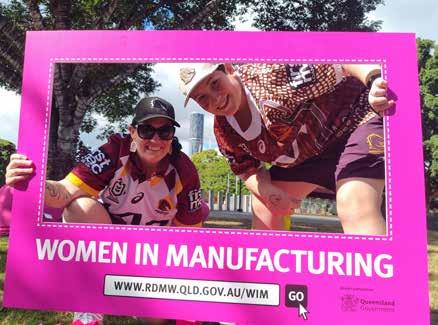
HVIA is proud to collaborate with Women in Manufacturing Queensland to highlight the significant contributions of women in the automotive industry. The program will inspire and empower women to pursue careers in manufacturing and beyond. But it isn’t just about encouraging more women
“The Depot at the 2025 Brisbane Truck Show is set to be a vibrant hub of activity, offering something for everyone.”
to join manufacturing; it’s a celebration of their integral role in shaping the future of our industry. It’s about fostering a work environment where inclusion and equity ignite innovation and improve outcomes across the board.
And most importantly, it’s a testament to women: to their hard work, their passion and their indomitable spirit.
Exploring career paths with TAFE QLD TAFE Queensland will showcase a wealth of opportunities. Attendees can explore over 30 career paths, with a blend of hands-on and virtual interactive displays.
These displays are designed to give a taste of the skills and knowledge needed to excel in the heavy vehicle industry.
For students exploring career possibilities, professionals seeking to upskill, or anyone ready to jump on board Australia’s vital heavy vehicle industry, TAFE Queensland’s offerings at The Depot are a must-visit.
Conclusion
Open Thursday-Saturday from 9:00am to 5:00pm, The Depot is set to be a vibrant hub of activity, offering something for everyone.
From career path exploration and hands-on driving experiences to engaging in teamwork activities and empowering women in the industry, The Depot promises to be an unforgettable part of this year’s show.
Be sure to stop by and make the most of what it has to offer!
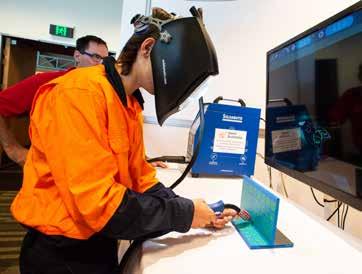
The Depot attendees can explore over 30 career paths, with a blend of hands-on and virtual interactive displays

Know your height. Plan ahead.
Australia’s trucking culture is best described as passionate. That’s evident every two years when 40,000+ people walk the floors of the Brisbane Convention and Exhibition Centre for the world-class Brisbane Truck Show.
Pick a random from the crowd and strike up a conversation about trucks and you’ll be up at the Detroit Plaza Terrace chatting away over a drink before you know it.
Unlike sport (which certainly has passionate fans), for many Australians trucks are more than just a hobby. They combine a passion with a livelihood; allowing many Aussies to make a living from their love of trucks, and we believe that extra motivation is one of the reasons why our trucking culture is so special.
In line with the Brisbane Truck Show’s ongoing quest to provide more for families, showcase a wider offering of trucks, and highlight the fantastic workmanship and passion for the trucking industry, we decided to do what any good truck show does –host an epic show ‘n’ shine.
But not just any show ‘n’ shine – we’re going full throttle with the first-ever National Show ‘N’ Shine Championship.
A key activation of Truck Week 25, the National Show ‘N’ Shine Championship will be staged at Little Stanley Street on the edge of the South Bank Parklands and feature as many as 28 customised prime movers drawn from the winner’s circle of the
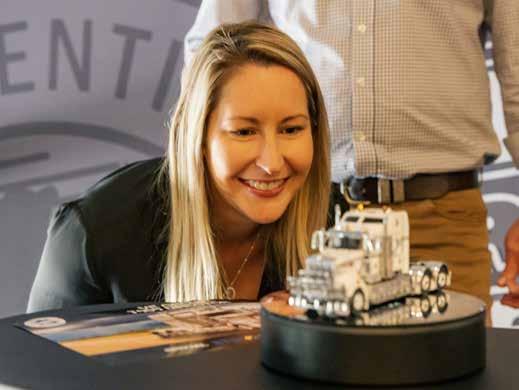
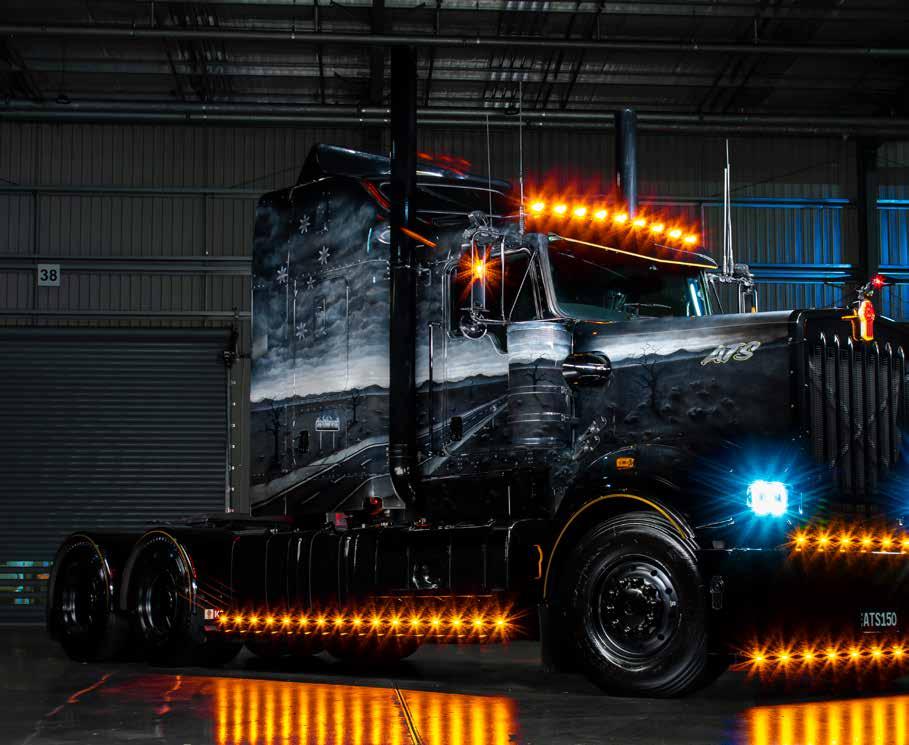
On the invitation list are recent winners of some of Australia’s top show ‘n’ shine events, including (left) Auswide Transport Solutions’ T909, ‘Karma’, which was 2023 Best of the Rest at Alexandra Truck Show; and (bottom right) Mactran’s 100-year Superliner, which was 2024 Rig of the Show at Brisbane Convoy for Kids
top community-based show ‘n’ shine events held around the country through 2023 and 2024.
As well as getting to check out these amazing works of art first-hand, Brisbane Truck Show attendees will also have the chance to vote for what they believe is the best truck on show – the People’s Choice Champion 2025. A panel of experts will also choose the Champion of Champions 2025 award for what they judge to be the best truck on show.
Over the next few months, the Brisbane Truck Show events team, along with esteemed transport photographer and writer Warren Aitken, will be piecing together the “grand final” of show ‘n’ shines.
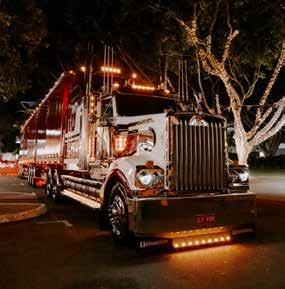
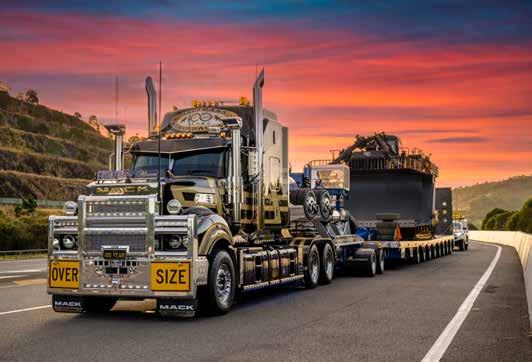
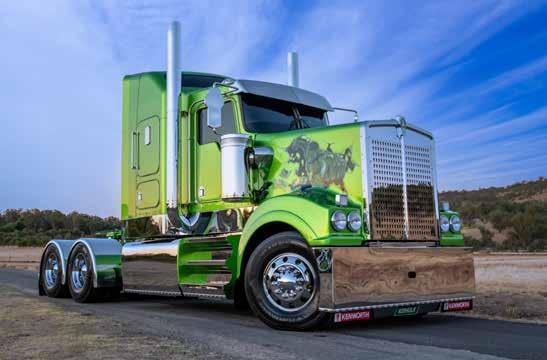
On the invitation list are recent winners of some of Australia’s most successful show ‘n’ shine events, including Alexandra Truck Show, Koroit Truck Show, Castlemaine Truck Show, Casino Truck Show, Brisbane Convoy for Kids, WA Mack Muster, Matty Hillcoat’s Truckie’s Day Out and Bathurst Truck Show.
A custom truck fanatic, Warren says he’s “stoked” to be part of the team bringing the inaugural National Show ‘N’ Shine Championship to life.
“I’ve spent most of my life surrounded by trucks, either driving, shining or photographing them, and I know the pride drivers take in their rides.
“Being able to celebrate and acknowledge the quality of eight regional shows by inviting their champions to the National Show ‘N’ Shine Championship is a great recognition for all those shows,” he says.
“The exposure for the owners and drivers of these amazing rigs will be second to none,” he adds.
“They will all be stepping up their game when it comes to preparing these ‘King Rigs’, meaning the general public and all those attending the Brisbane Truck Show are in for a heck of a display.
“The top 28 will be an elite club, made up of the best of the best and mark my words, the competition for the 2025 National Show ‘N’ Shine Championship will be intense.”
HVIA CEO Todd Hacking says the inaugural National Show ‘N’ Shine Championship is more than just an impressive spectacle of bling, chrome and exhaust stacks.
“In a way these trucks, and their incredibly passionate owners, are ambassadors for the industry,” he says.
“They are the front line of what is great about the industry and most importantly, the reason they exist.
“They will all be stepping up their game … meaning the general public and all those attending the Brisbane Truck Show are in for a heck of a display.”
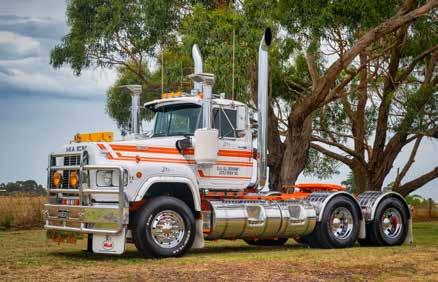
Attendees will also have the chance to vote for what they believe is the best truck on show – the People’s Choice Champion 2025. Could it be Bandana Earthmoving’s Hulk T904 (top), which won Truck of the Show at the 2024 WA Mack Muster; or Andrew Durham’s Mack Valueliner (above), which was named 2023-24 Rig of the Show at the Koroit Truck Show?
“These amazing, award-winning trucks are a visual reminder of the hard work that is put in for our community to have access to fresh produce, shelter, schools and universities, access to first-grade medical equipment and other necessities of life, and we are excited to have them take part in next year’s Truck Show festivities.
“Trucks are essential to a modern, clean, civil society, and their operators are needed to ensure that tasks are done safely and efficiently,” he adds.
What’s more, Todd says the inaugural National Show ‘N’ Shine Championship is also a celebration of the amazing regional and rural truck shows and show ‘n’ shine’s held right around the country who do a fantastic job of spreading the passion and love for the transport industry.
“They’re pillars of many communities and the inspiration for our new addition to the Brisbane Truck Show,” he says.
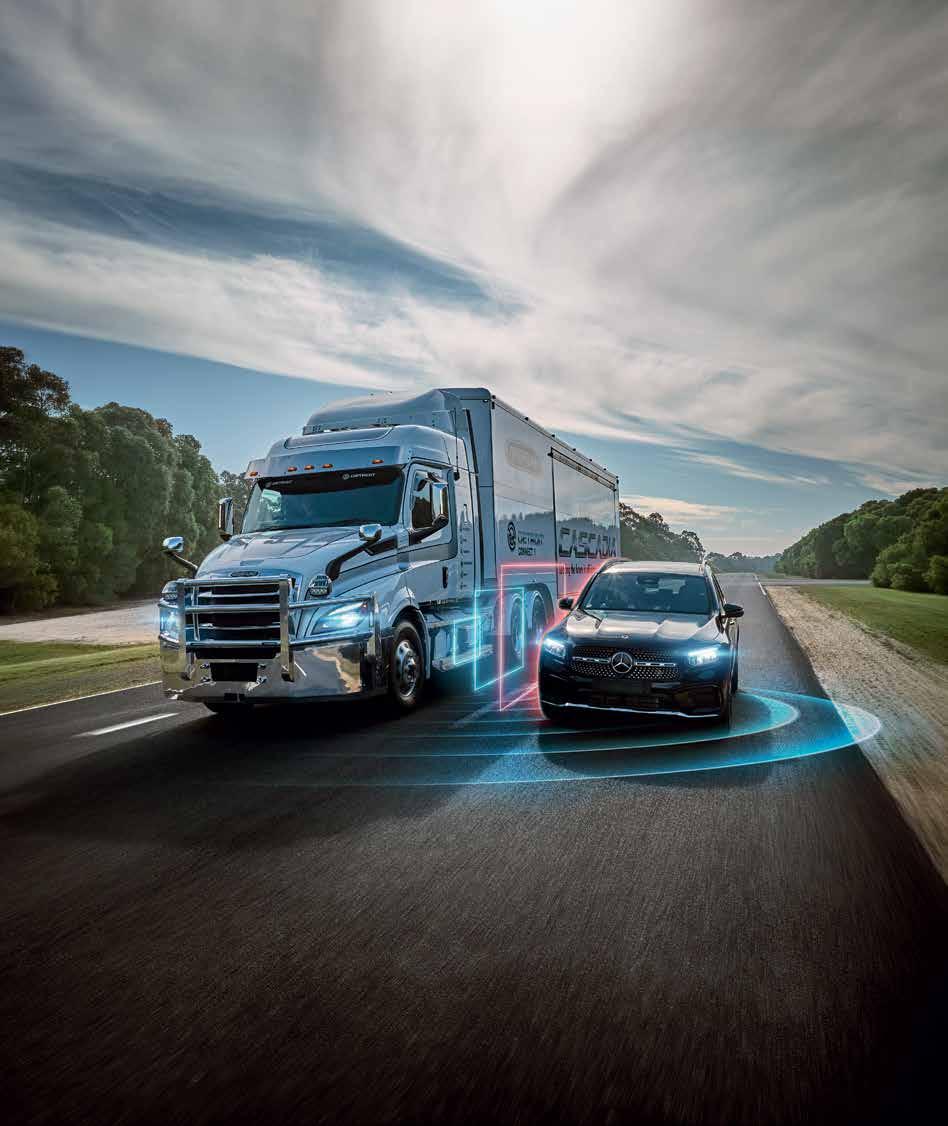
FREIGHTLINER IS SERIOUS ABOUT SAFETY.
Every Cascadia comes with a complete suite of connected technology and fully integrated safety features to help you get on with your work.
Equipped with a driver airbag, Side Guard Assist, forward-facing camera that automatically sends footage for incident reports, and Active Brake Assist capable of detecting moving pedestrians, the Cascadia sets a new standard for safety.
Scan for video demo



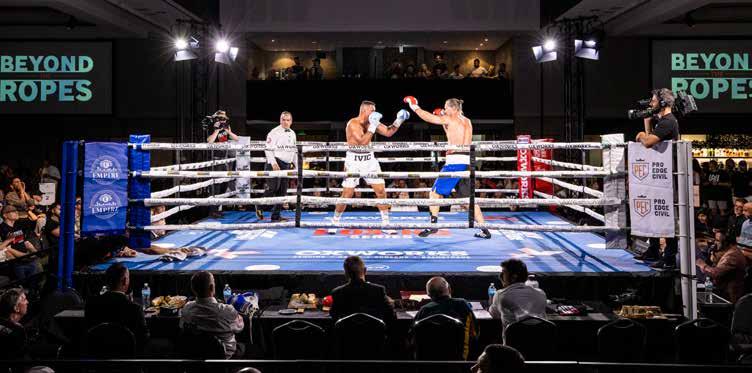
Truck Week 25 will feature the Premier Boxing Series at the South Bank Piazza, showcasing Australia’s best amateur and professional boxers including at least one title bout on the Friday and Saturday nights
story Graham Gardiner I images Premier Boxing Series
Boxing fans are in for a huge treat with the 2025 Brisbane Truck Show teaming up with Australia’s leading fight promoter Ace Boxing to stage its Premier Boxing Series at the South Bank Piazza on the Friday and Saturday nights of the southern hemisphere’s largest trucking festival.
Established in 2001 by Angelo Di Carlo, over the past 23 years Ace Boxing has become synonymous with exciting 50/50 match-ups and crowd-pleasing action.
Ace Boxing launched the Premier Boxing Series in 2024, alongside its weekly panel show, Beyond the Ropes. In partnership with Channel 7, the deal sees boxing content return to free-to-air TV weekly between March and December.
Boasting a variety of national and regional champions under its banner, each night Premier Boxing expects to feature six professional bouts, with
a healthy undercard of elite amateur boxers. The main event for each night will contest Australia’s elite athletes for title bouts.
While the fight card will not be revealed until closer to the event, CEO Glenn Hosking says Ace Boxing and Premier Boxing Series have promoted several rising talents and household names throughout its time, including current IBF Super-Lightweight World Champion Liam Paro.
Ace Boxing and Premier Boxing Series prides itself on guiding many home-grown athletes to top15 world rankings and World Title opportunities, including Paro, Mark Flanagan, Floyd Masson, Demsey McKean, Taylah Robertson, Jacob Ng and Jalen Tait.
Premier Boxing Series will be staged as part of Truck Week (previously known as Australian Heavy Vehicle Industry Week), a week-long festival of all things trucking anchored by the Brisbane Truck Show.
“Premier Boxing is excited to partner with Truck


“We’re going to deliver a high-energy show, with plenty of lights, music and boxing action! Get ready to rumble Truck Week!”
Week and showcase the very best local professional boxing talent in fan-friendly, evenly-matched fights,” Hosking says.
“We are passionate boxing fans at heart, and we’re excited for the attendees at Truck Week 25 to experience these explosive fights, and the sportsmanship and respect displayed by fighters after the final bell.
“Boxing in Australia is undergoing a renaissance and it’s exciting to have the Sport of Kings showcased at South Bank in front of big crowds.
“We’re going to deliver a high-energy show, with plenty of lights, music and boxing action. Get ready to rumble Truck Week!”
A full announcement as well as ticketing will be released eight weeks from the event. Keep an eye on the Brisbane Truck Show website and socials as more details are revealed!
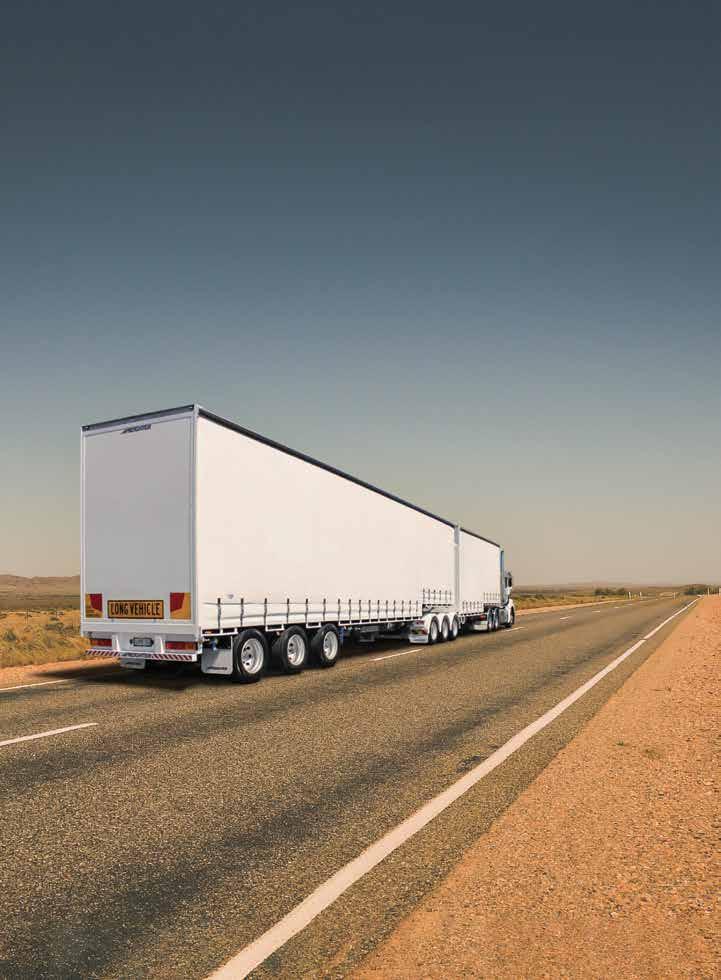
MaxiTRANS has changed its name to Freighter Group.
The new Freighter Group stands for something more powerful than ever before. It stands for being ready.
Ready to push boundaries, deliver excellence and to help you go further. Be part of a new era in transport.
freighter.com.au
A changing world commands action. At Volvo Group Australia, we’re accelerating the transformation. With our sustainable transport solutions and industry leading expertise, we are your trusted partners for a cleaner future.
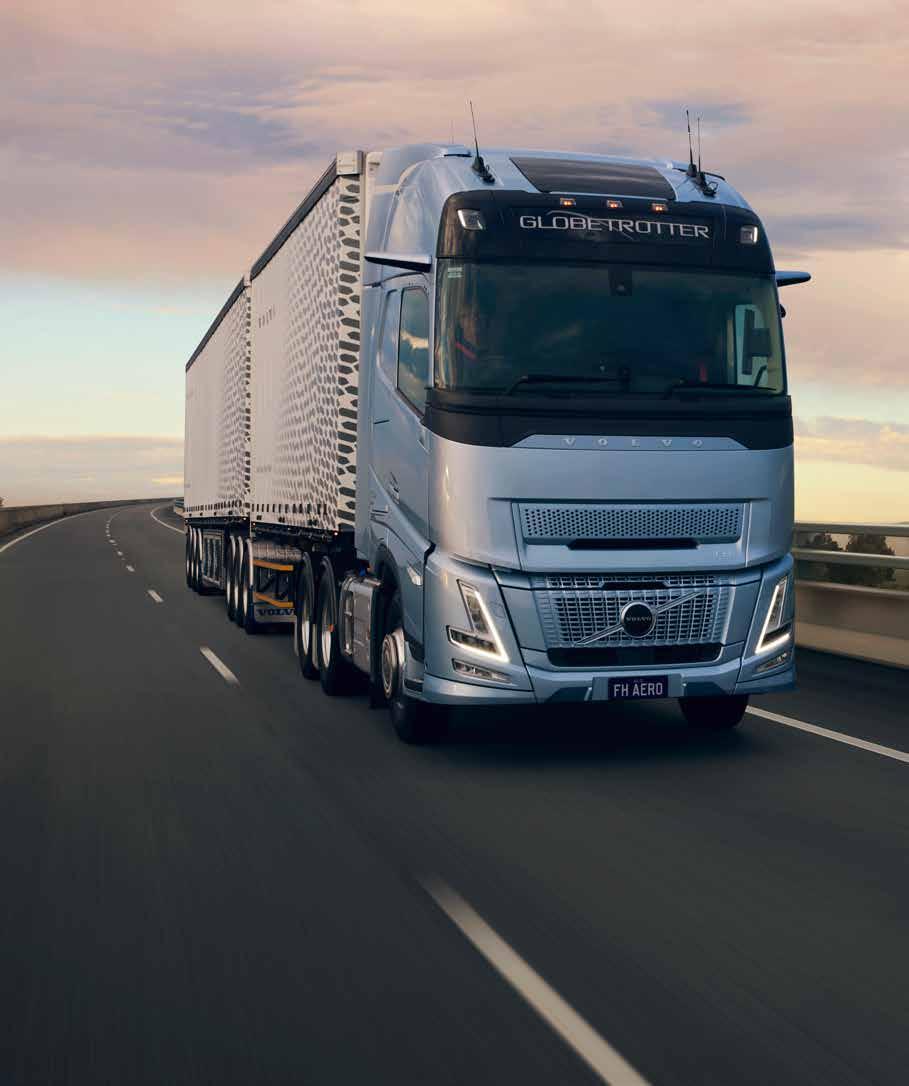
With ICE trucks set to play a key role in long-haul transport well into the future, squeezing every last bit of efficiency from the 130-year-old diesel engine is key. The latest Euro 6 models set to be on display at next year’s show cut fuel use and emissions beyond what was thought possible just a couple of decades ago
Until recently, diesel trucks were the only option and despite what you might be hearing about zeroemission replacements entering the market, they still rule the roads.
However, there is a clean shift coming, from the widespread move to Euro 6 to the use of renewable fuels, which visitors can expect a taste of at the 2025 Brisbane Truck Show.
There are just shy of 800,000 registered trucks on the road in Australia, tackling a freight volume of more than 220 million tonnekilometres each year, with two-thirds of that shifted by articulated trucks. With this number expected to increase by around 50 per cent between now and 2040, the role trucks play can’t be understated.
While the booming light-duty segment is electrifying at a rate of knots, it’s big bangers that shift much of the nation’s freight by highway and, for serious work, diesel is the dominant fuel source.
Even major players like Daimler Truck and Volvo Trucks, which both produce a range of battery-electric trucks, are vocal about the need for a mixed fuel approach on the way to net zero, which will include internal combustion engines (ICE), biofuels, hydrogen and battery power.
Global manufacturers are in agreement that efficient ICE trucks,

which will use a mix of biodiesel, liquid hydrogen, liquefied natural gas and conventional diesel, are suited to long distances in the short-to mid-term, while hydrogen and battery-electric models will eventually take the reins.
A big piece of the ICE puzzle, in the interim, is squeezing every last bit of efficiency from the 130-year-old diesel engine, reducing fuel use and emissions beyond what was thought possible just a couple of decades ago.
The wave of Euro 6 trucks has well and truly landed here in Australia, but many are still on the way. As you walk the halls of the 2025 Brisbane Truck Show though, you’ll be hard pressed to find a Euro 5 power plant.
The good news for Australian operators is that the latest Euro 6 trucks are not only cleaner than ever, but they’re more powerful too. Modern turbocharger technology and precise fuel delivery means flatter torque curves, which ultimately improves productivity.
The horsepower on offer continues to jump too, despite contracting emissions regulations, with up to 780hp now available with Volvo’s new powerhouse D17 engine.
Let’s take a look at what some of the leading truck manufacturers are doing to clean up the diesel engines of tomorrow.
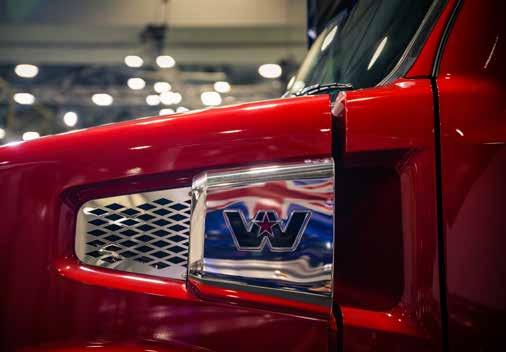
“Customer testing of the latest Detroit Diesel Gen 5 engines has seen between six and eight per cent fuel savings compared with older models.”
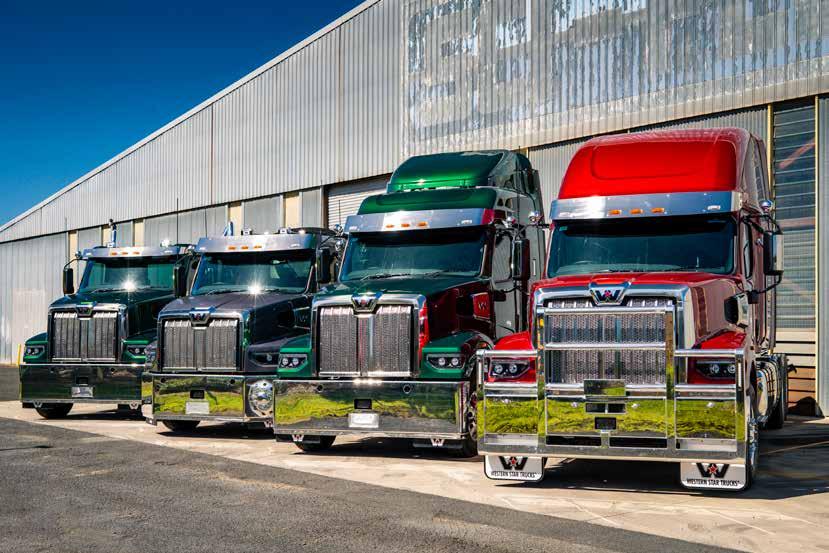
Penske’s latest Western Star X-Series line-up and MAN TGX range of heavy-duty trucks bring Euro 6 efficiency across a range of powertrain options, with some of the best safety equipment in the game.
On the Western Star side, the X Series has showcased the latest Detroit Diesel Gen 5 engines since the range launched back in 2022. The 13-litre DD13 and 16-litre DD16 engines are both US EPA-10 emissions compliant, while also satisfying the Euro 6-equivalent ADR 80/04 regulation.
The Gen 5 DD13 in particular is a fuel-saving star, with outputs ranging from 450hp right up to 525hp, designed for longevity and economy rather than outright grunt.
According to Business Manager of Detroit at Penske Australia and New Zealand, Bob Gowans, customer
testing of the new engines has seen between six and eight per cent fuel savings compared with older models.
The engine also uses less Ad-Blue than ever, freeing up chassis space while allowing operators to complete a trip without refilling.
“The DD16 is generally three to five per cent and DD13 tends to sit around five per cent (Ad-Blue use), as a percentage of fuel used,” he says.
Volvo has long been a leader on the sustainability front, offering Euro 6 options across its 11-, 13- and 16-litre models for half a decade, as well as pioneering the battery-electric space in Australia.
However, it’s the truck maker’s willingness to continue to push the envelope that makes its latest
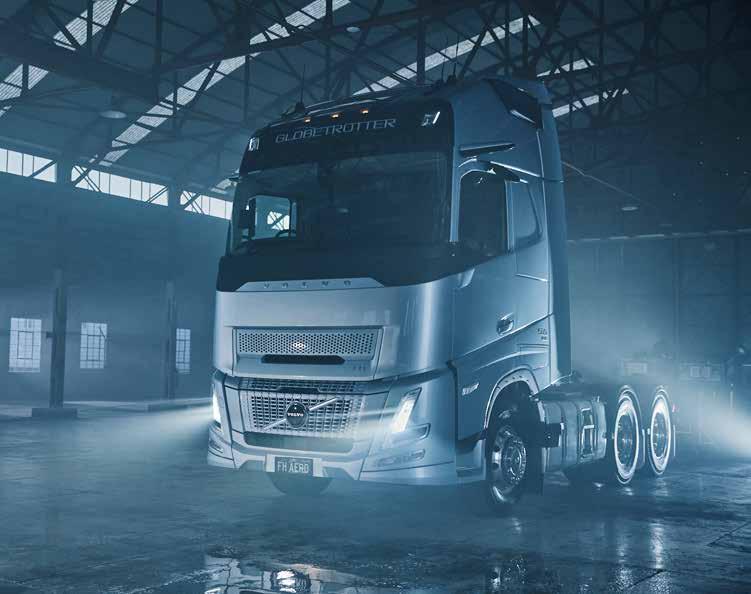
“The latest Volvo Trucks lineup boasts serious horsepower, efficiency, aerodynamic and safety improvements across models – especially the FH16.”
Euro 6 range so impressive. The latest Volvo Trucks line-up boasts serious horsepower, efficiency, aerodynamic and safety improvements across models – especially the FH16 top dog.
Volvo also recently introduced the new 17.3-litre D17 engine, which is now the most powerful truck engine on offer in Australia. Based on the proven 16-litre engine, but with a larger cylinder bore, the Euro 6 D17 produces up to 780hp and a gargantuan 3,800Nm.
Keeping the D17 clean, Volvo opted for a new fuel injection system, low-friction cylinder liners and wavetop pistons for optimal combustion. On the exhaust side, the D17 features both exhaust gas recirculation (EGR) and selective catalytic reduction (SCR).
Despite bumping power by 30hp, with the top-spec D16 – not offered in Australia due to cooling concerns – producing a maximum of 750hp compared to the D17’s 780hp, Volvo Trucks claims a fuel-use saving of around five per cent and the new engine is lighter too.
Combine this with Volvo’s slippery FH Aero cab,
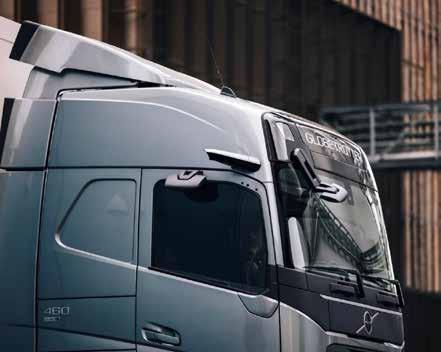
which it says offers an 11 per cent improvement over the last model, and energy consumption drops further.
Of course, by extension Mack Trucks also gains the 780hp powerhouse – albeit rebadged as an MP11. The engine offers unparalleled efficiency for heavy haulage applications, able to run a final drive that offers serious highway economy without sacrificing pick-up.
The best part? Volvo Group Australia says all power ratings of the D17 are HVO compatible and it is even planning to factory fill every new truck with renewable diesel from the end of this year.
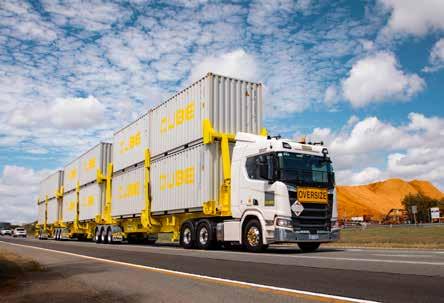
Australia pioneered the use of high-productivity truck and trailer combinations, dating back to the birth of the iconic outback road train in 1945, the now ubiquitous B-double in 1984, and more recently combinations like B-triples, A-doubles and AB-triples.
When the Performance Based Standards (PBS) scheme was devised by the National Heavy Vehicle Regulator (NHVR) back in 2007, the number of innovative combinations and trailer types exploded, allowing Australian operators to cart more freight with less trucks — completing fewer trips and of course, burning less diesel.
As the array of high-productivity combinations continues to grow, alongside the introduction of Euro 6 engines and renewable diesel, Australia leads the way in the efficient use of ICE trucks.




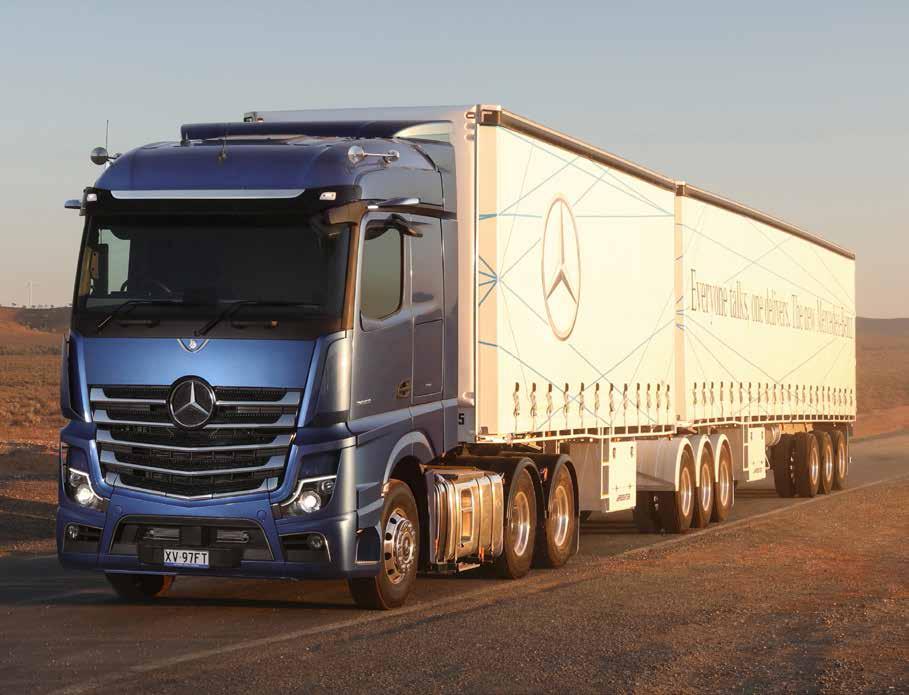
Mercedes-Benz has remained ahead of the emissions curve, launching its second-generation Actros range back in 2016 with various Euro 6 engine options (eight-, 11-, 13- and 16-litre) and more safety technology than operators had seen in a heavy vehicle.
At the time, autonomous driver aids were found in high-end passenger cars, but few trucks featured technology like lane-keep assist, so the Actros revolutionised the concept of advanced safety systems in heavy vehicles.
Onboard technology aside, the Euro 6 engines and ultra-smooth Powershift AMT transmissions won the applause of media and customers and continue to deliver.
Another major update in 2020 saw more revolutionary technology introduced like ‘MirrorCam’, which does away with traditional side mirrors in place of A-pillar-mounted cameras that have a far less detrimental effect on the aerodynamics.
Other high-tech features like Active Drive Assist, which is a car-like Level 2 autonomous safety system offering more proactive assistance, were also rolled out.
At the 2023 Brisbane Truck Show punters were given a look at the latest Mercedes-Benz 13-litre engine, which claimed fuel use savings of up to four per cent compared to the old model, slotting in between the 11-litre and 16-litre engines. The engines continue to get cleaner, but Mercedes- Benz isn’t stopping there.
“The result of all of the aerodynamic efforts? Around three per cent in fuel savings, according to Mercedes-Benz, which when coupled with its latest Euro 6 engines, will make it the most efficient ICE-powered Actros ever.”

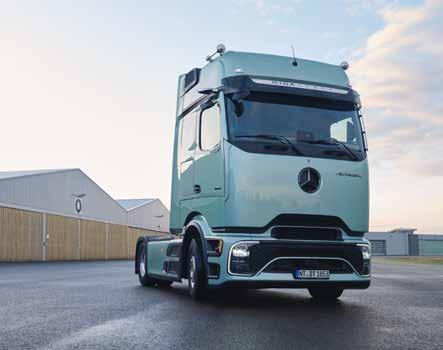
More recently the truck maker lifted the curtain on its futuristic Actros L model in Europe, which brings a new design and new active safety systems. Despite sharing its sleek ProCabin cab with the allelectric eActros, diesel power will also be offered for the Actros L as it takes ICE efficiency to new heights.
The Actros L is a case study in aerodynamic design, from the pre-spoiler on the roof that sits before, you guessed it, the actual roof spoiler, to the various extended wind-deflecting flaps and panels around (and under) the cabin. Mercedes-Benz even extended the front of the cab by 80mm to allow it to cut through the air more efficiently.
Keen-eyed readers will notice the absence of a front grille, so how will the latest-generation 15.6-litre
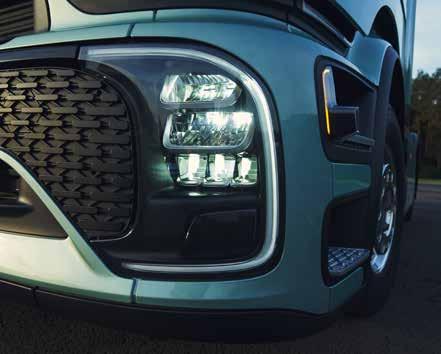

Mercedes-Benz Trucks was an early adopter of Euro 6 engines and has pioneered fuel-saving innovations such as the ‘MirrorCam’, which does away with traditional side mirrors in place of A-pillar-mounted cameras that have a far less detrimental effect on aerodynamics
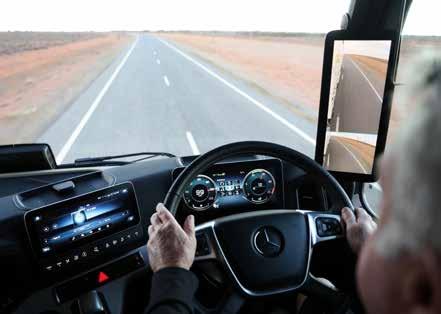
OM 471 stay cool? Mercedes-Benz says the engine compartment is ‘decoupled’ from external airflow using a range of seals, which improves aerodynamics, presumably funnelling air in via a less traditional path. The result of all of the aerodynamic efforts? Around three per cent in fuel savings, according to Mercedes-Benz, which when coupled with its latest Euro 6 engines, will make it the most efficient ICEpowered Actros ever.
Combine the four per cent fuel use saving of the revised 13-litre and the aerodynamic benefits of the ProCabin, and Mercedes-Benz could manage a total seven per cent fuel use saving with its latest ICE offering.
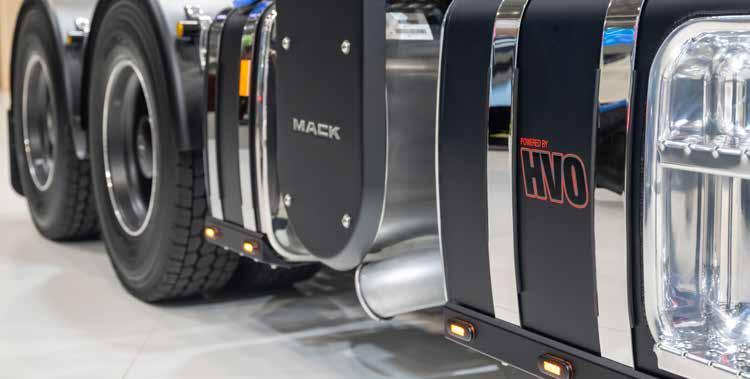
Hydrotreated vegetable oil (HVO) is a renewable fuel you have probably heard about by now, as many of the latest Euro 6 engines are marketed as HVO-compatible. The reality is, HVO can be safely used in any modern diesel engine, but getting the tick of approval from your truck’s manufacturer is advised. HVO is made by saturating lipids, like vegetable oil, with hydrogen in a process that results in a chemically similar fuel to diesel. The fuel source has a high Cetane Number, promoting cleaner and more efficient combustion. Plus, it won’t solidify in
extremely cold weather like traditional diesel. Biodiesel, on the other hand, known as fatty acid methyl ester (FAME), needs to be blended with diesel – much like ethanol has long been blended with petrol – but provides greater emissions reductions.
Renewable HVO offers virtually identical performance to conventional diesel, while reducing Co2 emissions, from source to exhaust, by up to 90 per cent.
The catch? Emissions of NOx and particulates are only marginally reduced due to slightly less impurities than your average tank of diesel. It’s the whole-of-life CO2 emissions that count with HVO.





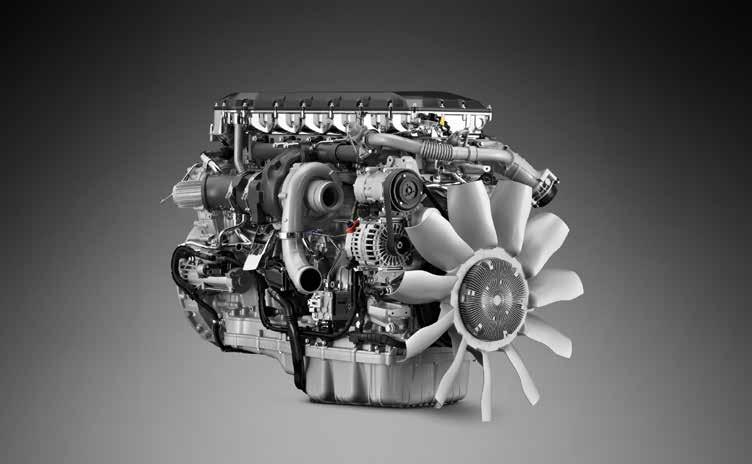
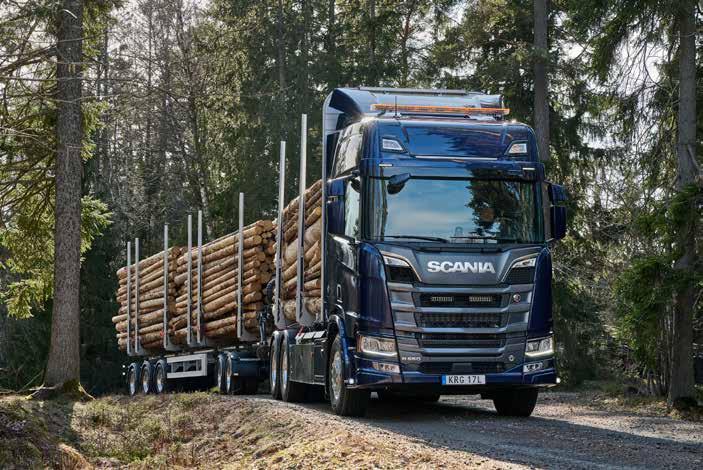
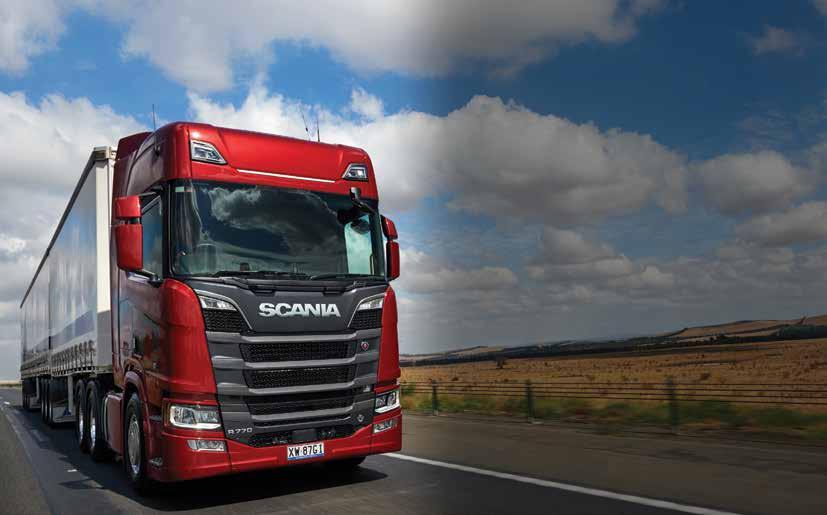
Scania is best known for thumping V8 engines and mountainous horsepower ratings, but the Swedish manufacturer’s latest range of Euro 6 engines is also incredibly clean as it aims to extend the life of its diesel trucks – and that mighty V8.
The all-new 13-litre six-cylinder ‘Super’ engine was rolled out in 2021, before making its way to Australia in 2023, featuring double overhead camshafts (DOHC) – which is a first for the truck maker – offering fuel use savings of up to eight per cent.
Scania’s ‘Super’ six is available with 420hp, 460hp, 500hp or 560hp, with up to 2,800Nm available in top spec guise, and it’s mated to the latest-generation Opticruise transmissions designed to squeeze maximum fuel efficiency out of the 13-litre engine.
According to Scania, the DOHC four-valve cylinder head technology, coupled with the company’s Twin-SCR system, offers serious engine braking performance and more precise emissions control.
For those wanting a couple of extra cylinders and a
soundtrack to match, Scania’s latest 16.4-litre V8 range made its way to Australia in 2021 and has since proven itself as a serious high-horsepower workhorse with up to 770hp/3,700Nm on tap.
Scania redesigned the iconic V8 engine with a compacted graphite iron block, reduced internal friction, higher compression ratios, improved engine management and taller final drive gearing to achieve fuel savings of up to six per cent.
The brand is no stranger to clean engines, with the first Euro 6 Scania models touching down in Australia back in 2014 before being put to work by forward-thinking carrier TNT Australia around Victoria.
However, its new V8 and ‘Super’ six-cylinder engines are proof the Scania diesel has a long life ahead of it.
Like its fellow Swedish truck maker, Volvo, Scania Australia has marketed its entire Euro 6 range of trucks as HVO compatible but the manufacturer also offers FAME biodiesel compatible engine options capable of reducing CO2 emissions by as much as 80 per cent from well to wheel.
“Scania’s new 13-litre six-cylinder ‘Super’ engine features double overhead camshafts offering fuel use savings of up to eight per cent.”
Scania’s latest range of Euro 6 engines are incredibly clean as it aims to extend the life of its diesel trucks –and that mighty V8!


“Further
enhancing the K220’s clean credentials, Kenworth was able to improve aerodynamic efficiency by four per cent using a new ‘wind cheating’ roof profile.”
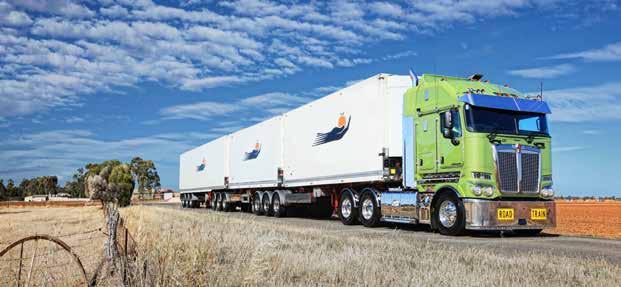
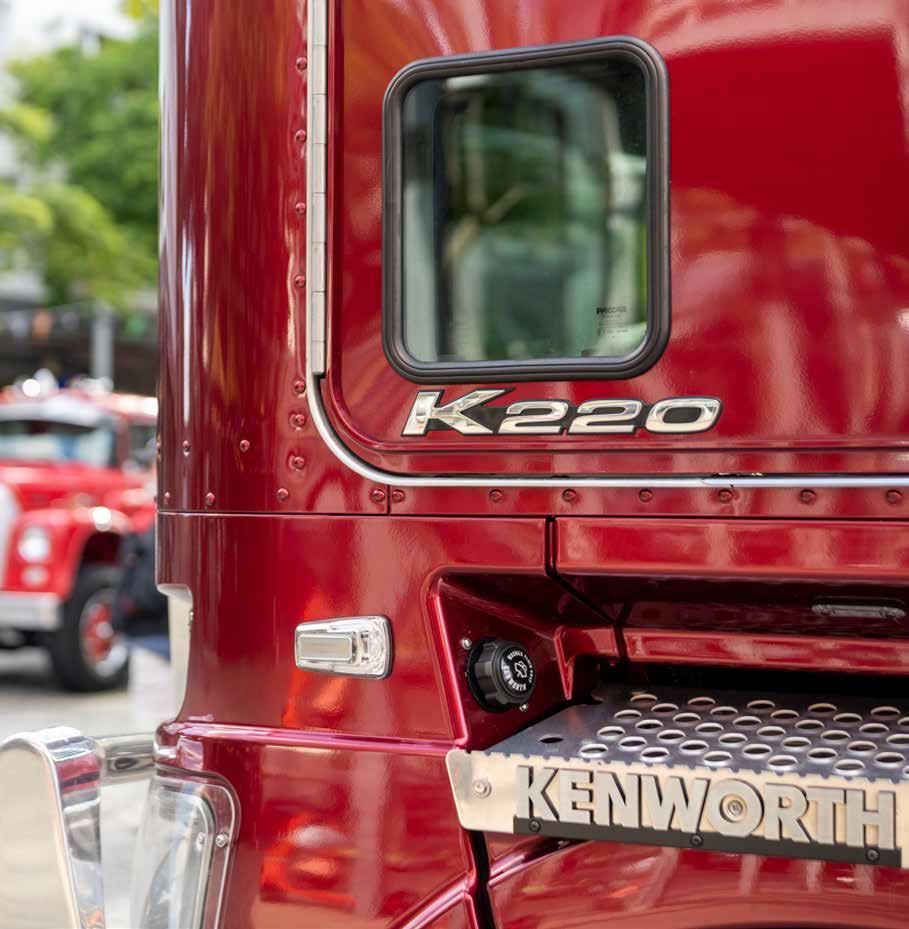
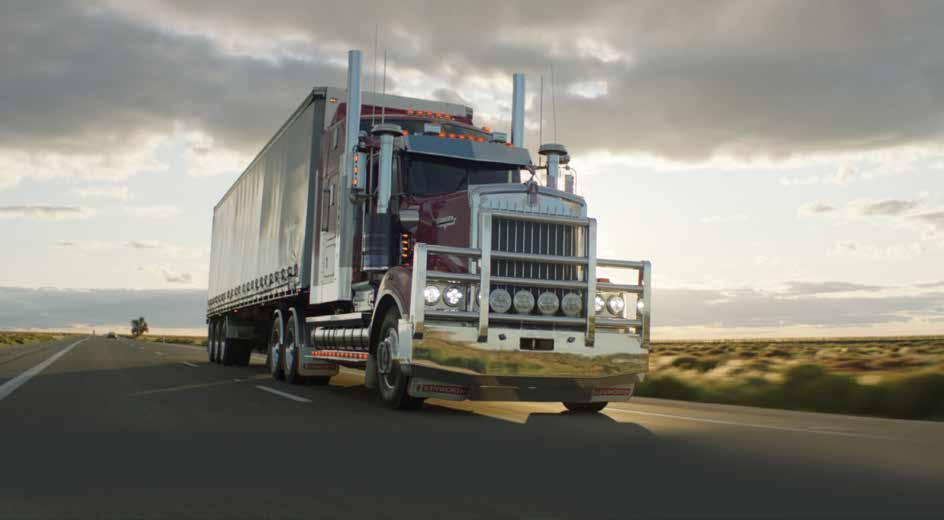
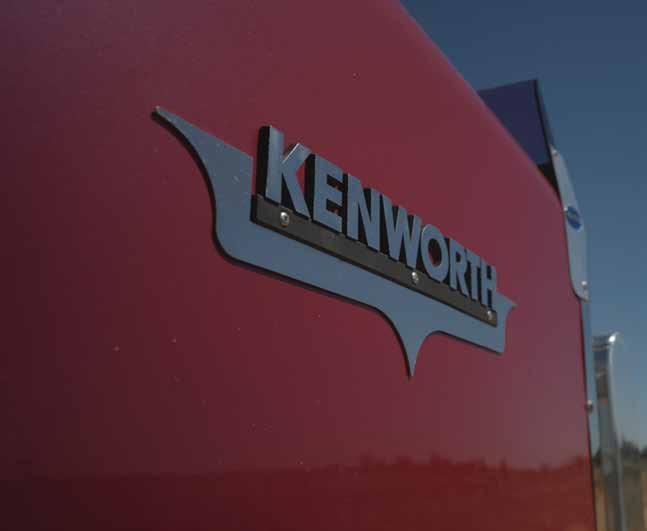
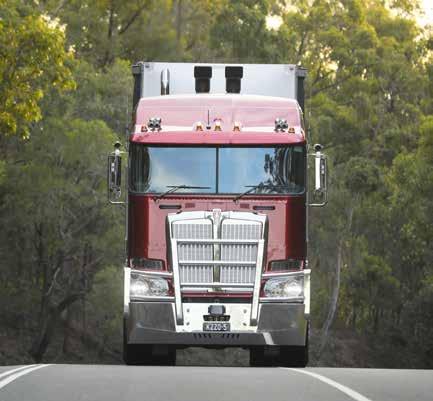
Kenworth’s K220 cabover launched back in 2022 comes with the option of a Euro 6 Cummins X15 15-litre engine coupled to the latest 18-speed Endurant XD Pro automated transmission
The king of ‘old-school cool’, Kenworth, is taking a newage approach to its trucks despite offering style that still ticks the box for long-time lovers of the brand.
Kenworth’s K220 cabover was launched back in 2022 with the option of a Euro 6 Cummins X15 15-litre engine coupled to the latest 18-speed Endurant XD Pro automated transmission, for operators chasing more efficiency and reduced emissions.
Further enhancing the K220’s clean credentials, Kenworth was able to improve aerodynamic efficiency by four per cent using a new ‘wind cheating’ roof profile designed using computational fluid dynamics.
Of course, Kenworth offers the Euro 6 red engine in its other models, like the popular T610 and big banger T909, but don’t worry – the clean diesel engine options don’t require any of the trademark Kenworth ‘bling’ to be removed!
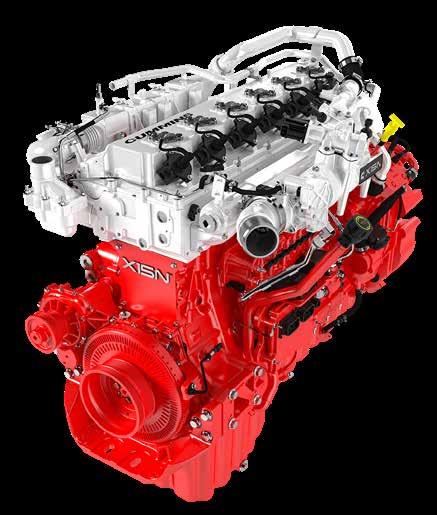
Global powertrain manufacturer Cummins is gearing up to roll out a fuelagnostic heavy-duty engine range capable of running on advanced diesel, hydrogen and natural gas.
The HELM range, an acronym that stands for ‘higher efficiency, lower emissions, multiple fuels’, will feature the industry’s first big-bore natural gas engine, a clean-diesel option capable of using renewable biodiesel blends up to 20 per cent, and a pure hydrogen-powered model.
Cummins’ next-generation range is based on the popular X15 15-litre architecture and will retain the high-horsepower and torque outputs of up to 605hp/2,800Nm that operators expect from a large-capacity ‘red engine’.
According to Cummins, the range is designed to meet US EPA and CARB 2027 regulations – which at this stage are even more stringent than proposed Euro 7 standards.
Much like mild-hybrid setups found in passenger cars, the nextgeneration X15 HELM engines will feature a 48-volt alternator to run accessories, plus an after-treatment heater solution to meet increasingly stringent emissions standards of the future.
The X15 has been around since 1998 and is proof that if it isn’t broken, why fix it? Instead of starting from scratch, Cummins is taking development of its 15-litre range to the next level, offering an agnostic engine platform that will help truck manufacturers meet incoming regulations.
Traditionally, truck buyers have chosen an engine and power rating best suited to their transport task but never (since the early petrol days) have they been offered the choice of various fuel types. In the not too distant future, customers will be able to choose between clean diesel, gas or hydrogen ICE engines based on their transport task and emissions goals.
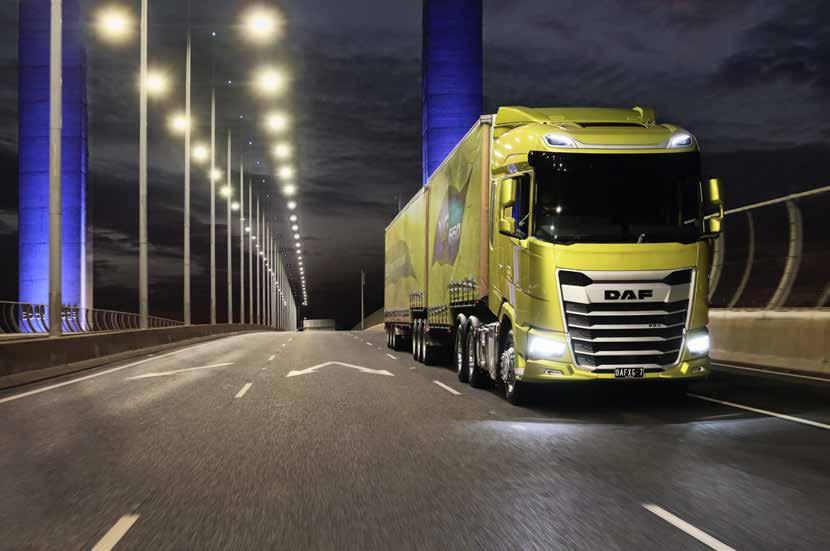
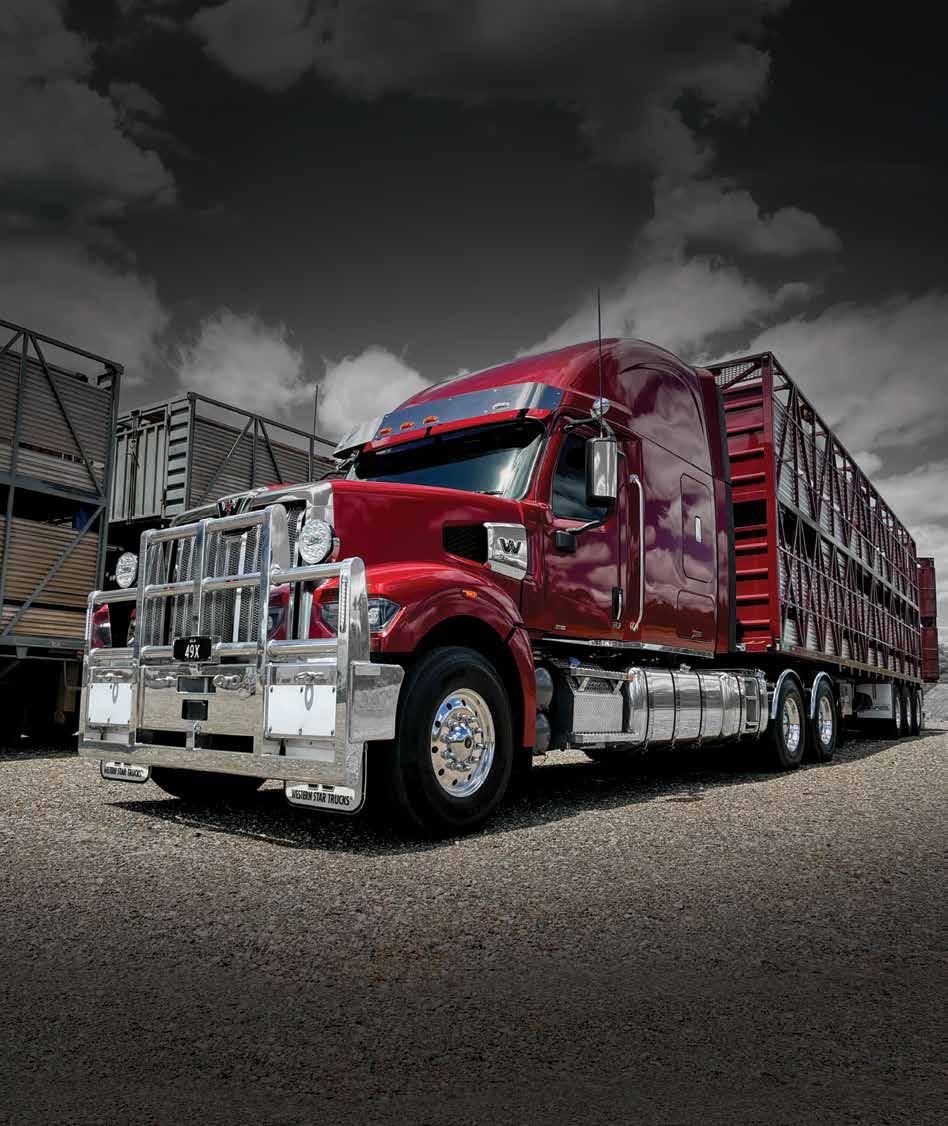
“DAF Trucks Australia’s new flagship models, the XG and XG+, are powered by the PACCAR PX-15 which sets a new standard for performance and efficiency.”
Launched in late October, DAF Trucks Australia’s new flagship models, the XG and XG+, are powered by the PACCAR PX-15 which sets a new standard for performance and efficiency.
The Euro 6-compliant new generation engine platform with a sculpted, ladder frame style block, significantly enhances the performance levels of the 15-litre engine. The PX-15 patented architecture allows it to operate at higher cylinder pressures, resulting in impressive performance – 660hp at 1,800rpm and 3,200Nm torque between 900-1,400rpm.
This exceptional performance leads to reduced fuel consumption, optimised efficiency, enhanced durability and improved driveability.
To harness the high torque output from the PX-15 engine, the Australian XG and XG+ are equipped with the ZF TraXon 16-speed automated gearbox. Locally developed calibrations for high productivity combinations ensure that the perfect gear is always available, making both flagship trucks a dream to drive.
What’s more, the new models are the first to leverage updated European regulations on cab
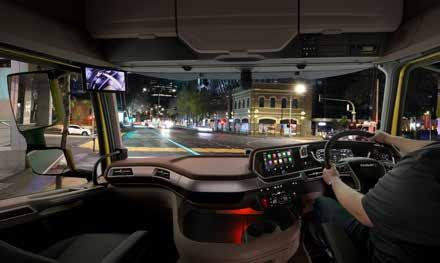
DAF’s new flagship models, the XG and XG+, feature a Euro 6-compliant engine which significantly enhances performance levels from the 15-litre power plant
dimensions and feature a redesigned front grille for improved cooling and aerodynamics, 220-litre toolboxes on both sides, and easy access with three evenly spaced steps.
It seems then that the future of road transport in Australia will still reverberate with the familiar hum of a diesel engine, but the trucks will be quieter, cleaner and safer than ever before. Bring it on!

Get along to the 2025 Heritage Truck Show to see the history of transport showcasing trucks from the 1920s through to the 1990s, including the meticulously restored Mean Machine B-Model Mack drag truck from the ‘70s
story Cobey Bartels I images Warren Aitken
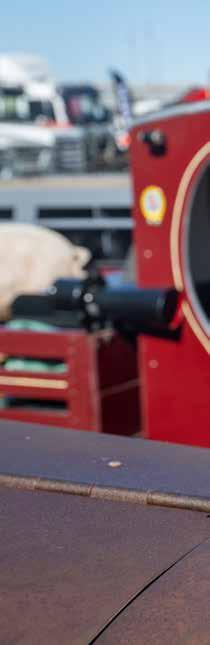
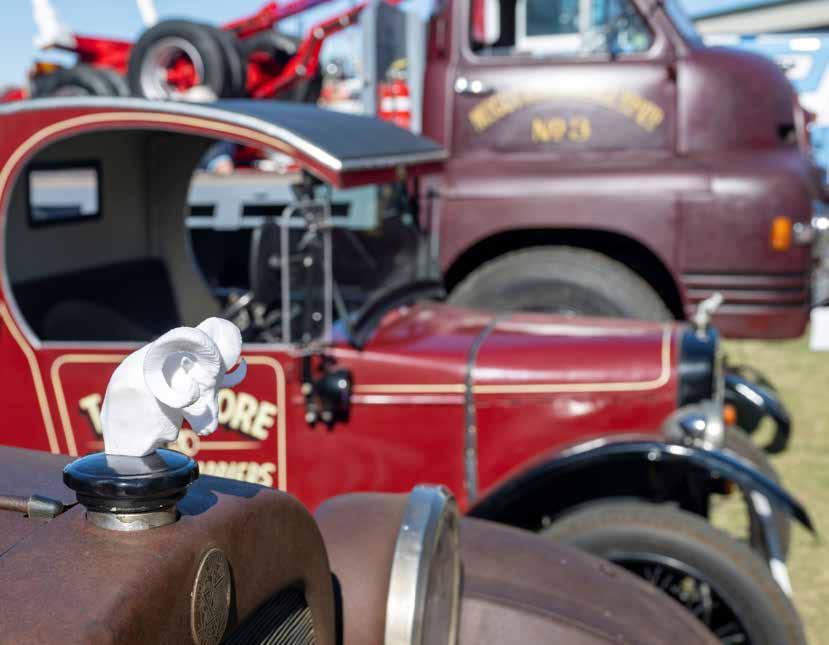
The Heritage Truck Association Australia’s annual Heritage Truck Show will again run alongside the Brisbane Truck Show, held off-site at the Rocklea Showgrounds on May 17-18, 2025 with a breathtaking array of classics on offer.
After returning to its inaugural home of the Rocklea Showgrounds – just 15 minutes’ drive from the Brisbane Convention and Exhibition Centre (BCEC) – in 2021 the classic hit-out has grown in size and popularity.
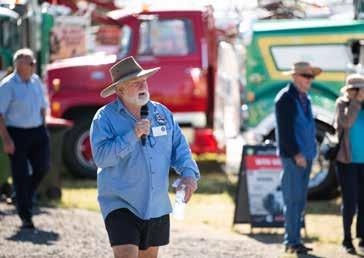
“We got around 160 trucks last time, with around 2,000 people through the gate, which is just huge,” says HTAA President Mark Plunkett.
“It is looking to be even bigger because we got so much positive feedback last time, with visitors coming from all over Australia and overseas.
“They came to the Brisbane Truck Show, but they could jump on a bus to come out and see our show too.”
A huge drawcard at the 2023 show was the Mack display, which celebrated 60 years of the marque
Down Under, with iconic (and rare) models from each decade on show in a touching tribute to the ‘Bulldog’.
“That brought a lot of Mack trucks in and the display itself got a lot of interest across the weekend – we’d certainly like to do more like that because it got a lot of attention,” Mark says.
While new trucks represent the future, heritage models offer a fascinating look at where the Australian transport industry all began, and Mark says the interest in classic trucks is steadily growing.
“People are taking a real interest in the older trucks because a lot of them remember either their dad driving one or their uncle driving one – they want to relive that in a lot of ways,” he says.
“So many times I hear people say ‘I used to drive one of those’, or they take a look inside and reminisce about sleeping across the seats, or on the ground while dad slept across the seats! That’s what brings people back to these older trucks – the memories.”
Nostalgia is a major driver for people like Mark, who enjoy reliving their time on the road through
old trucks – right down to the smell of the seats.
“There’s a lot of nostalgia, like my truck for example – a Mercedes-Benz 2233 – I bought when I had the opportunity because I loved it when I was out on the road,” he says.
“When I hop into that truck, the smell of the interior is exactly what it was like in the one I used to drive – it’s the fabric in the seats or something, but it’s a distinctive smell and I just love it.”
According to Mark, the HTAA is growing with more than 500 members now and it’s showing no signs of slowing – proving there is a serious appetite for the classic trucks that once ruled the roads.
“It’s been growing fairly well for the last couple of years and while you do lose some people as the older guys drop out of the club or sell their trucks, new ones come through,” he says.
“We even have people who never really had trucks but they fall in love with them. It’s like a GTHO Falcon, you may have never had one but geez you want one.”
A highlight for Mark is seeing the faces of
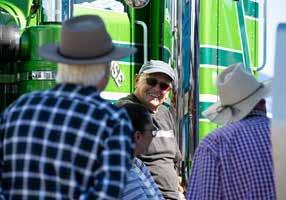
children light up as they get to see, smell and hear the old bangers fire to life – particularly the old GM ‘bird scarers’!
“You should see them when you start the trucks up, particularly the old GMs, they make a lot of noise and the kids just love it,” he laughs.
It’s the camaraderie that makes the HTAA and its annual show a special occasion though, Mark says, forming a fantastic excuse for old mates to catch up and recount stories from their time on the highway.
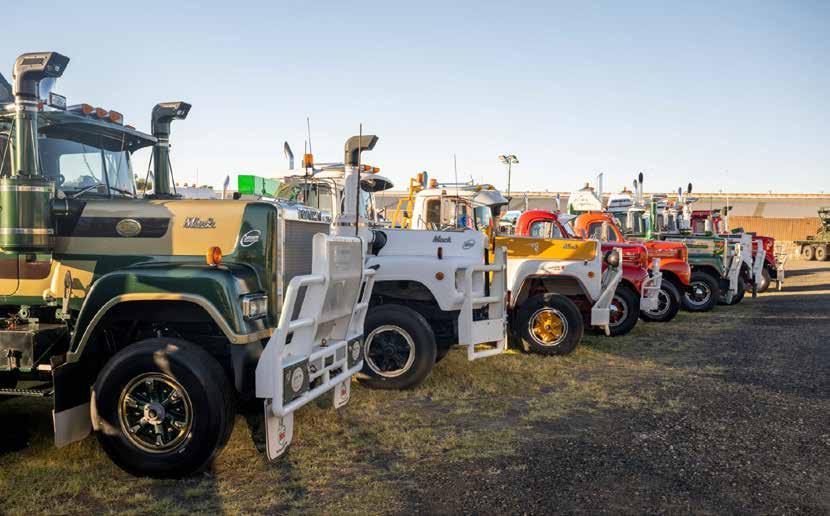
“That’s what brings people back to these older trucks – the memories.”
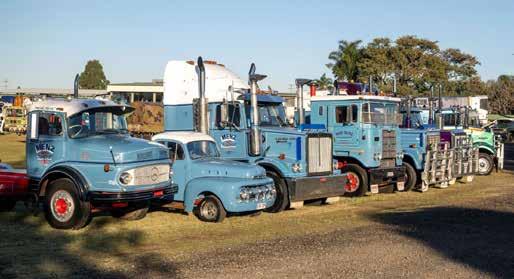
“You get a lot of mates who come each year to display their vehicles from down south or up north and you all get to catch up, which is a really good thing,” he says.
“We then get to travel a lot of miles in the bar, where we no longer travel them on the roads! It’s all about catching up with old mates.”
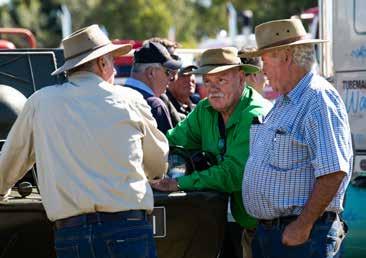
Whether you know a lot or a little about old trucks, Mark says it won’t be hard to find a HTAA member to talk to about a particular make or model.
“Lots of our members bring their vehicles and then hang around to chat about them,” he says.
“If there’s a particular truck somebody wants to look at or chat about, we’ve got people there that can do that. It definitely won’t be hard to find somebody!”
While he wouldn’t give too much away, Mark hinted at some recent restorations that are set to roll into the show. Among them is the iconic Mean Machine B-Model Mack drag truck from the ‘70s, which has been meticulously restored by owner Bernie Tobin.
“There are some really outstanding restorations that are coming along, and we will have the Mean Machine there which is a really iconic truck,” he says.
“Come along and see the history of transport; we’ve got trucks from the 1920s all the way through to the 1990s, so there’s something for everyone.”
Alongside the incredible show at Rocklea, the HTAA will also have an array of its members’ trucks parked up at South Bank’s Little Stanley Street Plaza, as part of the Truck Week 25 festival that will take over Brisbane! Get on down to see the old-school rigs up close – they may even fire them up for you!
$0 ongoing card fees with Mobil Card. Sign up today and start saving.

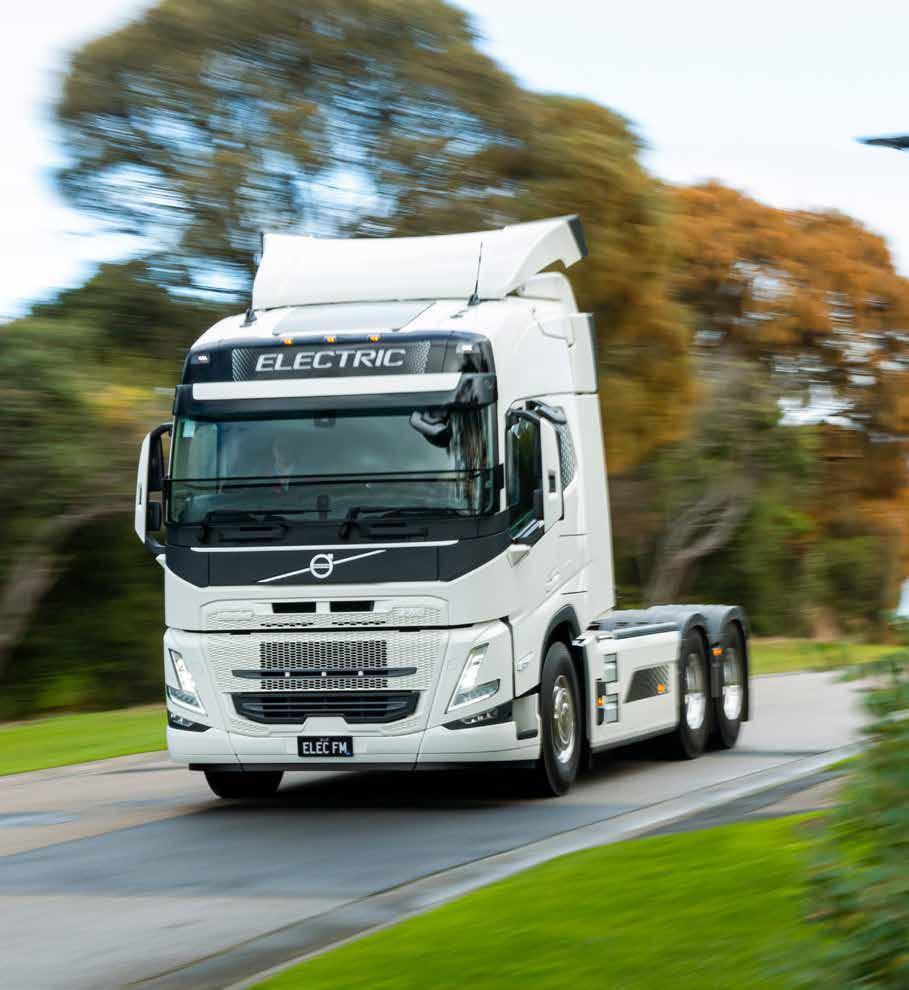
While there are still complex problems to solve as the road transport industry drives towards a zero-emission future, the key requirement is collaboration; between manufacturers, industry, regulators and governments
story Cobey Bartels I images Alastair Brooks / supplied

The road transport industry is a critical cog in Australia’s economic engine room, responsible for keeping the country running – quite literally. Without the wheels of our transport industry turning, supermarket shelves are stripped bare and entire sectors shudder to a stop.
However, the transport industry is also a major source of emissions, expected to surpass the energy sector as the nation’s largest emitter by 2030. The pressure is on to decarbonise Australia’s road transport sector and action is needed now.
Thankfully, OEMs, technology providers and aftermarket accessories suppliers are working tirelessly to develop, validate and roll out suitable low- or zero-emission vehicles (LZEV) and a range of light-, medium- and heavy-duty electric trucks are already operating in major cities around Australia.
Unsurprisingly, the bulk of electric truck sales have been light-duty options, consistent with the wider market’s strong light truck sales and an everexpanding last-mile freight task.
Last year, though, the light-duty segment, which has long accounted for the largest share of truck market volume, was outdone by the heavy-duty segment which accounted for a staggering 36.8 per cent of total truck sales.
Heavy-duty electric truck options remain limited, but European players like Volvo Trucks, MercedesBenz and Scania have zero-emission prime movers on the ground right now. Can they tackle around-theclock B-double work or heavy haulage? Not yet, but inner-city semi-trailer and rigid duties are well suited to the heavy battery-electric trucks (BEVs) available.
The reality is most manufacturers are either trialling or already selling zero-emission truck options, whether locally or abroad. Take, for example, Kenworth’s allelectric T680e – also being trialled in hydrogen fuel cell form in the United States – and its sister company DAF’s hydrogen internal combustion XF model, which are likely candidates for Australia in the future.
“What we’re really seeing at the moment is that we’ve got a patchwork set of concessions for zero-emission vehicles that only exist at the state level.”
It seems then that the question is not whether the technology exists, but whether it will be made viable in Australia given the increased upfront costs, compliance hurdles and infrastructure requirements.
As industry representatives covered in detail at the inaugural TruckShowX transport decarbonisation summit in May 2024, Australia’s decarbonisation journey will be a long and complex one, with several possible pathways to net-zero and a range of issues that need addressing – sooner rather than later.
Compliance reliance
Battery-electric trucks, and hydrogen fuel-cell examples too, are heavier and in some cases wider than traditional diesel models.
In Europe the width limit for heavy trucks is 2.55 metres and in North America it’s 2.6 metres, which
Heavy-duty electric truck options remain limited, but European players like Mercedes-Benz, Volvo and Scania have zero-emission prime movers on the ground right now are regions where many of the electric trucks on offer are designed and manufactured. The cost to redesign trucks for a market like Australia is not feasible.
The same applies for the steer axle limit, which in Australia for heavy-duty trucks is capped at 6.5 tonnes, which means heavier battery-electric trucks are limited in their carrying capacity. This might not affect rigid trucks, but semi-trailers and multi-trailer setups are seriously hindered.
In Australia these encountered axle mass and width limit issues until recently when the transport industry and regulators pushed through concessional mass and width limit increases for ZEV models that qualified.
Lobbying efforts resulted in an increased width limit of 2.55 metres and steer axle weight limit of up to eight tonnes, with New South Wales and Queensland the most lenient states. However, the increases are
only permitted on certain roads, with the industry calling for harmonisation across state lines.
According to Daimler Truck Australia Pacific Head of Vehicle Homologation and Future Mobility, Romesh Rodrigo, the regulatory issues and lack of harmonisation predominantly affect large electric trucks that cross borders on a daily basis.
“Trucks do not see borders as the freight task takes them all over the country,” he says.
“This mass/dimension standardisation specifically affects larger trucks as they generally have the greater specification in their hardware already, but for the sake of efficiency of the freight task this standardisation is key.”
As hydrogen fuel cell vehicles (HCFV) become available, similar compliance concerns have been raised due to the additional weight of the ‘hydrogen stack’.
“Incentives to stimulate commercial electric vehicle uptake should target delivery drivers, who may only own one or two vehicles.”
Rodrigo points out, however, that fuel cell trucks are typically lighter due to smaller onboard battery systems.
“It is interesting, HFCV are actually lighter than their BEV counterparts,” he adds.
“This is linked to the fact that the HFCV does not have a large mass concentrated in the form of a battery, because whilst they do have batteries on board – circa 60 to 90kWh – the fuel cell itself is very similar in mass to an internal combustion engine.
“As such, the BEV in theory represents the worst-case example, so if we can make these work effectively it will cover HFCV.”
According to HVIA Chief Technical Officer Adam Ritzinger, more needs to be done to implement the regulatory changes across all states and territories, which will need to include buy-in from road managers who are yet to approve the increased dimensions.
“What we’re really seeing at the moment is that we’ve got a patchwork set of concessions for zeroemission vehicles that only exist at the state level – so we’ve got South Australia, Victoria, New South Wales and Queensland on board at the moment,” he says.
“At the moment they have only given those actual concessions for the road infrastructure, but they are for the state-owned roads. That’s the problem, because most of Australia’s road network is actually owned by local councils and none of them are on board yet.”
HVIA Chief Advocacy Officer Dr Adele Lausberg believes a mix of leadership and collaboration between state ministers is needed to achieve true harmonisation.
“I think what is needed at a national level is some leadership and direction and there are avenues for that to happen,” she says.
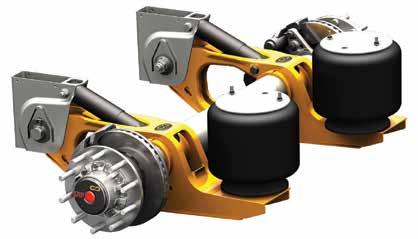
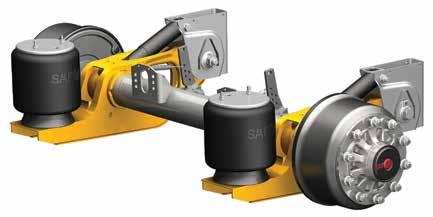
No Ubolts
More uptime
Low maintenance
Patented composite rotor
Long life disc brake technology
Frame bracket symmetry - no shocker bracing needed
SAF drum brake with quick release spherical anchor
1 MILLION KM OR 6 YEARS*
On-road warranty on bearings, shock absorber & pivot bushes
OFF-ROAD WARRANTY 3 YEARS / 500,000KM*
*WHICH EVER OCCURS FIRST


“There’s an infrastructure and transport ministers meeting, where all the relevant state ministers gather, and that would be the setting. We have been encouraging governments to do that, just to get that alignment, and we will continue to encourage it.”
Ritzinger makes it clear that policy alone has the potential to “profoundly accelerate” the decarbonisation efforts of the road transport sector, calling on governments to work with industry to solve compliance hurdles.
“The industry is on its decarbonisation journey, and we will decarbonise to the greatest extent of our capacity within the constraints that we have,” he says.
“What we can achieve alone is a fraction of what we can achieve with the right government regulatory policy settings in place.
“We will keep doing everything that we can to decarbonise and move along the decarbonisation transition, but we could do so much more if we had the right settings in place to enable us to do that –it would accelerate us.”
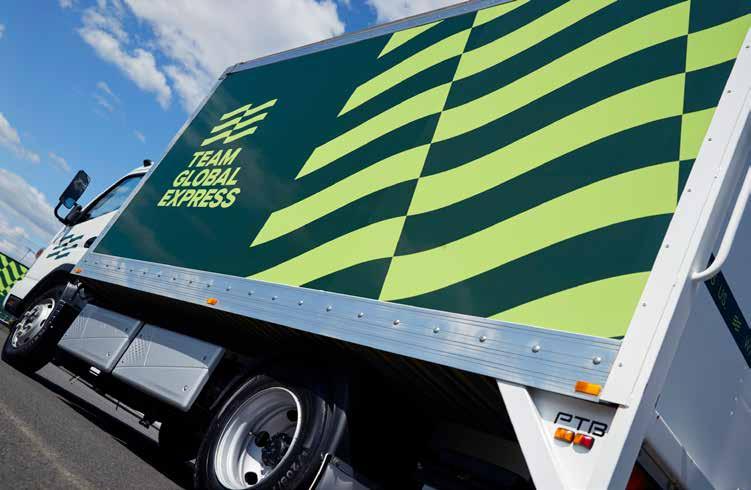
Major Australian transport companies like Team Global Express, Centurion, Linfox, Followmont and supermarket giant Woolworths are all on the electric offensive, but few did it without the help of funding from the Federal Government-backed Australian Renewable Energy Agency (ARENA).
ARENA is tasked with supporting the nation’s
transition to net-zero emissions, using its $500 million Driving the Nation fund to support the transport industry’s clean future, and so far the agency has made serious headway.
The fund was set up in 2022 and it builds on the earlier Future Fuels Fund, with four key focus areas: national charging network expansion; a hydrogen highway initiative; a dealership and repairer program; and a Driving the Nation program.
Leading the charge in Australia is TGE, with Director of ESG (Environmental, Social and Corporate Governance) Heather Bone kickstarting the company’s decarbonisation journey with a five-year trial dubbed ‘Project Cobra’, to be conducted around metro Sydney – as the entire transport industry watches on.
ARENA provided $20.1 million in funding to TGE for its broader $44.3 million Project Cobra undertaking, with the transport company committed to providing learnings to the agency across the fiveyear trial period.
“As part of our partnership with ARENA, we will be sharing the knowledge we gain from the trial with other industry providers to benefit the entire sector,” TGE Chief Executive Christina Holgate says.
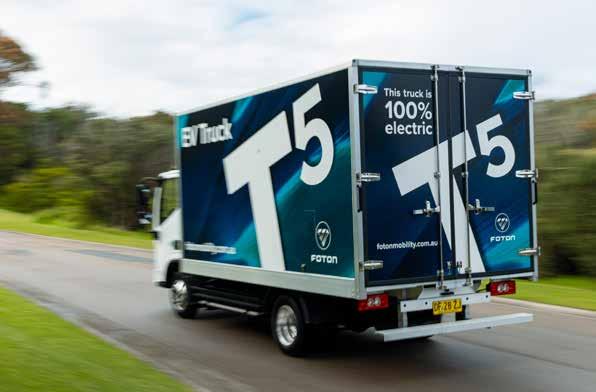
So far, TGE has taken delivery of 43 electric trucks, with another 17 on the way, consisting of Volvo eFLs and Fuso eCanter models.
In preparing for the fleet of zero-emission trucks, TGE converted its Bungarribee site into what it calls ‘The Depot of the Future’, fitting a one-

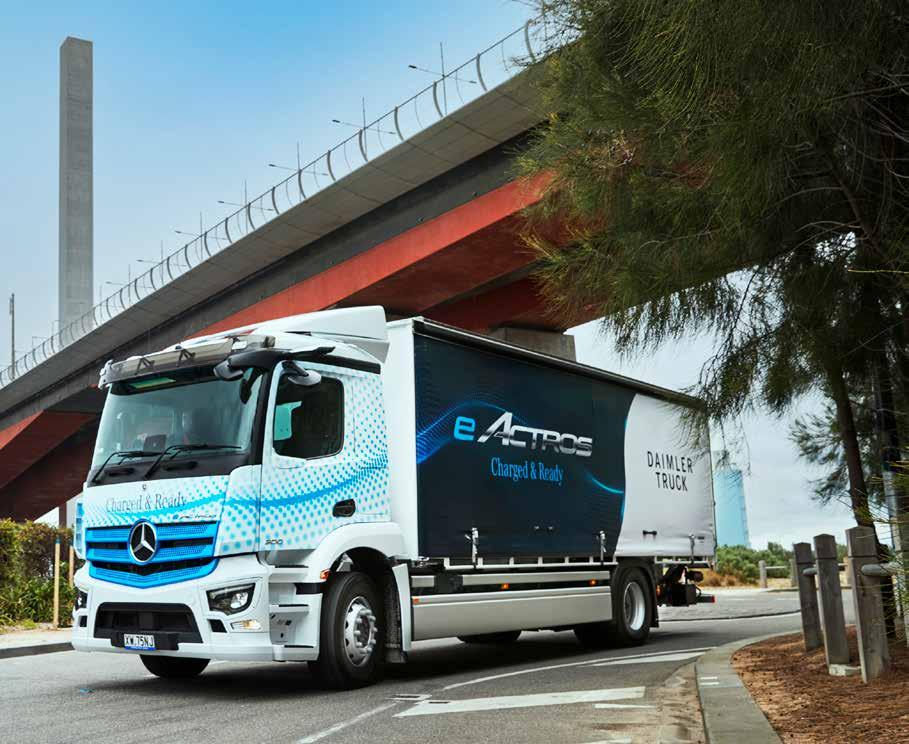
With ARENA support, WA-based transport operator Centurion is investing in a solar and battery set-up that will allow renewable charging for a fleet of 30 Mercedes-Benz eActros trucks
megawatt battery energy storage system (BESS) fed by 400kW of solar.
While not entirely ‘off-grid’, the Bungarribee set-up reduces the company’s reliance on grid power and, according to Bone, the BESS saved an incredible $7,300 in energy costs within its first hour of operation.
Another pioneer is WA-based operator Centurion, which received $15.8 million from ARENA to part-fund its $29 million decarbonisation project. The Centurion investment includes a solar and battery set-up that will allow renewable charging for a fleet of 30 Mercedes-Benz eActros trucks.
The Centurion operation will include four
“What we can achieve alone is a fraction of what we can achieve with the right government regulatory policy settings in place.”
megawatts of rooftop solar with an off-grid BESS capable of powering 15 DC chargers at its Hazelmere depot in Western Australia, and the company expects to have the first of its zero-emission trucks up and running early next year.
“Operating a real zero-emissions Mercedes-Benz eActros truck fleet from off-grid solar and battery is a significant step in supporting the energy transition,” says Centurion CEO Justin Cardaci.
“For most of our operations, the zero-emissions heavy transport technology won’t be ready for several years. However, battery-electric trucks are now ready for operations across the wider
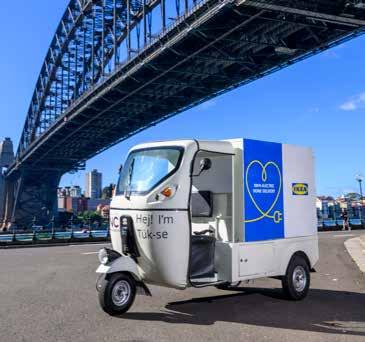
Access to charging infrastructure suitable for electric trucks, both large and small, is one of the major barriers to industry decarbonisation,
“In July 2024, 41 per cent of IKEA customer orders across Australia were delivered by a zero-emission vehicle.”
metropolitan area and it’s great that Centurion has the capacity to bring this technology into our fleet.”
Meanwhile, major retailer IKEA Australia believes the lack of suitable charging infrastructure and incentives for commercial vehicles is slowing the uptake of ZEVs, as the company rapidly decarbonises its delivery operation.
“Incentives to stimulate commercial electric vehicle uptake should target delivery drivers, who may only own one or two vehicles,” says IKEA Australia Zero Emission Delivery Lead, Alexandra Kelly.
“The incentives should be easy to access – they don’t need to be any different to passenger vehicle incentive programs.
“Then we come to charging infrastructure. When contemplating the decision to go electric, last-mile delivery drivers consider the accessibility of charging
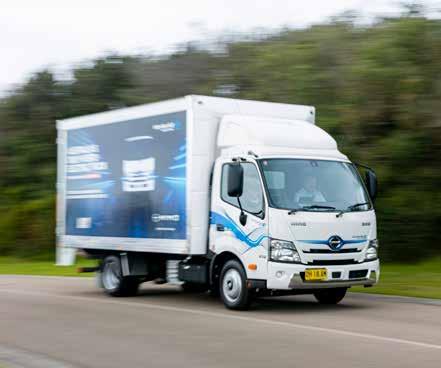
infrastructure and how they would charge their commercial electric vehicle.”
The issue with the current charging network, Kelly explains, is that it has been designed for passenger cars and not larger commercial vehicles, which don’t physically fit within the charging bays at existing sites.
“We could immediately electrify a significant portion of last-mile delivery without having to wait for new charging technology, however, there is no dedicated network for electric vans and lightmedium duty trucks and these vehicles present their own unique challenges,” she says.
In an attempt to increase the uptake of ZEVs within its network of delivery partners, IKEA Australia invested $4.5 million in its own charging infrastructure – and it’s working. As of July this year, Kelly says almost half of all customer orders were delivered by a ZEV.
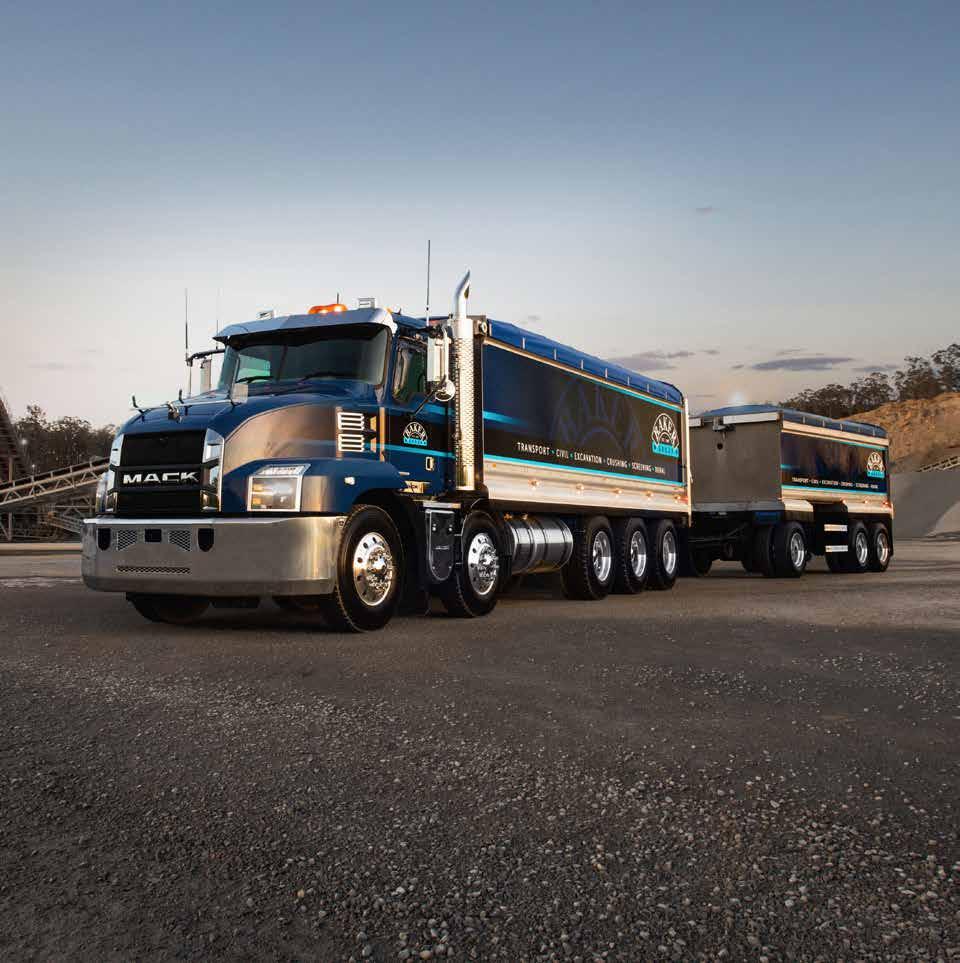
PBS (Performance Based Standards)
Heavy & light vehicle design
Vehicle certification, compliance & imports
Vehicle validation & testing
Part & assembly design with validation
Reverse engineering & 3D scanning
Simulation of structures & assemblies
Failure root cause analysis
Mechanical equipment design
Plant layout, pipework equipment & accessways
Fabrication & structural steel detailing
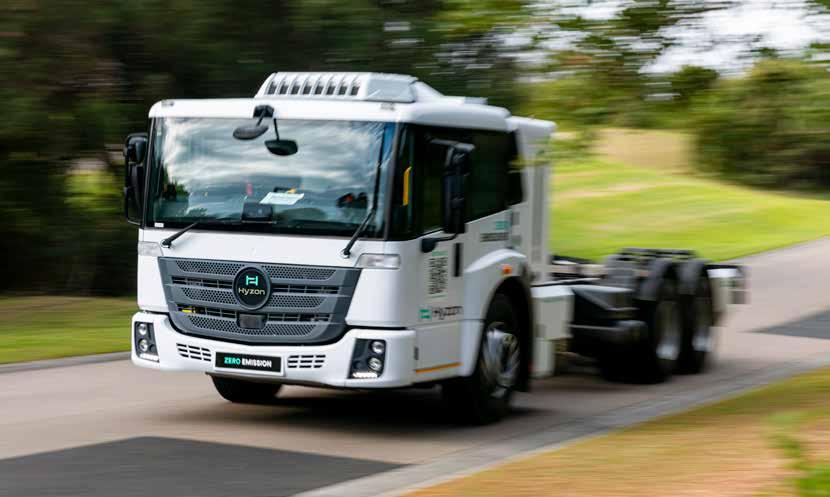
“To accelerate and bridge the gap in the public network for our delivery service, IKEA Australia is investing in its own charging infrastructure for our delivery partners and their drivers nationally,” she says.
“In the past 12 months we’ve achieved exponential growth on our ambition, and in July 2024 41 per cent of IKEA customer orders across Australia were delivered by a zero-emission vehicle.”
Collaboration is key
The adage ‘necessity drives innovation’ is typically used when discussing war-time progressions in technology, knowledge and infrastructure. It may now, however, be just as suitable when discussing decarbonisation, as entire industries work together in the race to reduce emissions.
Innovation requires collaboration, which manufacturers know all too well. Major OEMs are partnering to commercialise emerging low- and zeroemission technology, amidst decarbonisation efforts sweeping the globe.
A notable example of cross-brand collaboration is the Cellcentric joint venture between Daimler Truck and Volvo Group, founded in 2021 with the aim of developing, producing and commercialising fuel-cell systems for use in heavy-duty trucks.
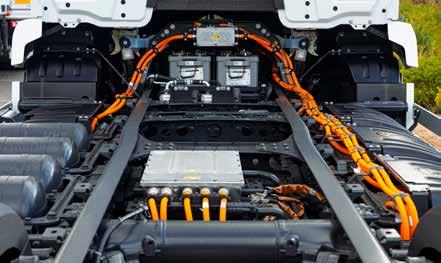
The 50:50 agreement has Daimler and Volvo equally invested in Cellcentric, but the companies will still develop their own methods of integrating the resulting fuel cell technology into road-going trucks.
On an even grander scale, Daimler Truck, IVECO, Shell, Volvo Group and others are all collaborating on the H2Accelerate project, which aims to accelerate the uptake of green hydrogen for transport industry use.
The multi-brand initiative will fund the deployment of 150 fuel cell trucks across Europe before the end of the decade, with various stakeholders backing the
fuel source as a potential solution for zero-emission long-haul transport.
Alongside major truck makers, battery manufacturers and charging infrastructure providers are collaborating with the wider transport industry to accelerate zero-emission vehicles and their uptake.
Daimler even acquired a 10 per cent stake in hightech German machinery manufacturer Manz back in 2022, with the two companies forming a strategic partnership to develop next-generation battery and electric-drive technology.
“This industry collaboration is definitely a positive and it shows the maturity and commitment of the large OEM’s to deliver solutions to the industry,” Rodrigo says.
“This technology is expensive to develop and needs the broader expertise of the wider industry to develop and deliver economical, reliable products to the market.”
While there are still complex problems to solve as the road transport industry drives towards a zeroemission future, the key requirement is collaboration; between manufacturers, industry, regulators and governments. Together, though, the industry can solve the problems of tomorrow – today.
The 2025 Truck Show will provide a closer look at just how far zero-emission technology has come since the last show, and the sheer pace of change has to be seen to be believed. Don’t miss it!
“This industry collaboration is definitely a positive and it shows the maturity and commitment of the large OEM’s to deliver solutions to the industry.”
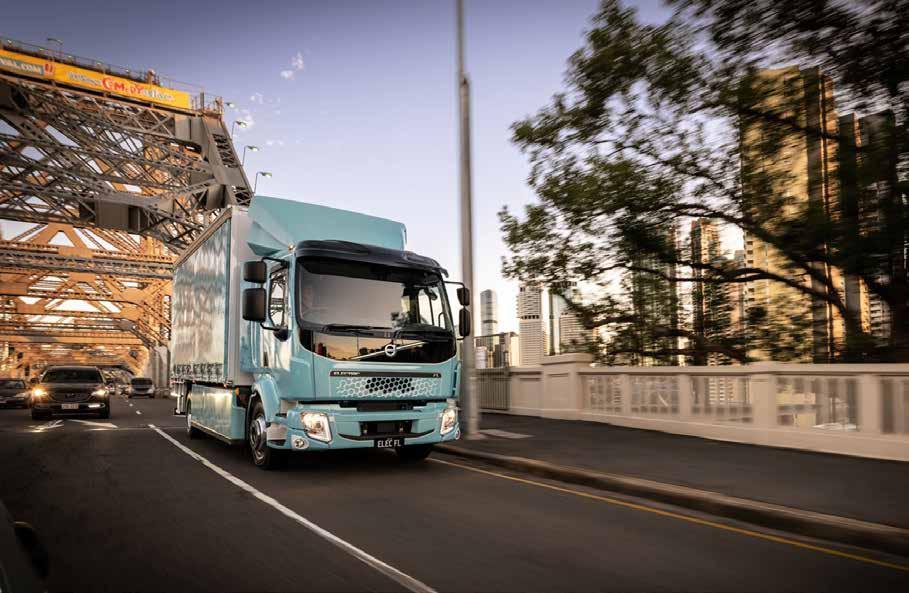

Whether you’re diving into the pristine waters of the Great Barrier Reef, soaking up the sun on the golden beaches of the Sunshine Coast, or sailing through the breathtaking Whitsundays, Queensland is a holiday destination that ignites adventure for every kind of traveller. Explore World Heritage-listed sites and endless stretches of sparkling coastline that invite you to embark on journeys filled with natural wonders and rich culture.




Escape to the Sunshine Coast, just an hour north of Brisbane, where golden beaches meet lush rainforests. Whether surfing at Noosa, hiking the Glass House Mountains, or visiting Australia Zoo, this coastal paradise offers a perfect mix of adventure and relaxation for every traveller.
Dive into the vibrant world of the Great Barrier Reef, where crystal-clear waters reveal stunning marine life. Swim among colourful corals, encounter sea turtles, and explore hidden coves. Whether snorkelling, diving, or cruising on a glass-bottom boat, every moment here is extraordinary.
Sail into paradise in the Whitsundays, a stunning group of 74 islands in the Coral Sea. With powdery white sands and aquamarine waters, this idyllic spot is where luxury meets adventure. Lounge on Whitehaven Beach, snorkel vibrant reefs, or sail sun-drenched skies - every moment in the Whitsundays feels like a postcard come to life.
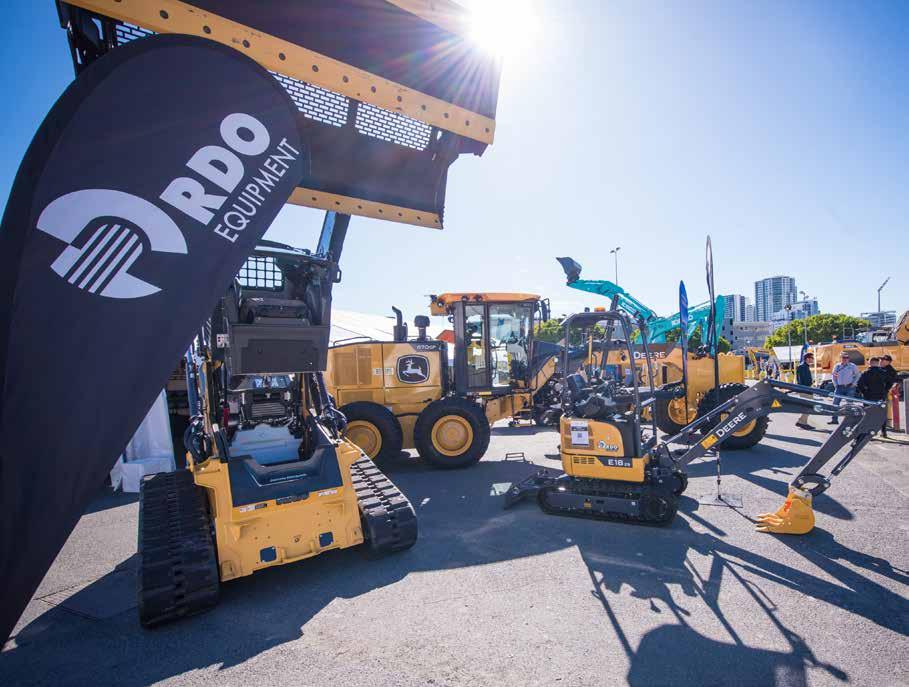
Staged alongside the Brisbane Truck Show, the 2025 Heavy Equipment and Machinery Show is on track to be bigger and better than ever with more than 100 exhibitions of the latest and greatest heavy machinery plus plenty of giveaways!

Tickets are on sale for the 2025 Heavy Equipment and Machinery Show to be held alongside next year’s Brisbane Truck Show from May 15-17 at the nearby Brisbane Showgrounds.
Ticketing options range from single-day entry ($25 for adults, $20 for concession card holders) to multiday passes valid for all three days ($60 for adults, $50 for concession card holders).
To be held for the fourth time, organiser Civil Contractors Federation Queensland (CCF QLD) expects the 2025 event will be bigger than ever before after drawing a record crowd in 2023.
The show has become one of the nation’s largest displays of all-things earthmoving, offering something for everyone – from diggers to dozers and, of course, plenty of giveaways.
“We have been holding this event, originally called the Civil Construction Field Days, since 2019 and we are thrilled with the growth of this event in such a short time,” CCF QLD CEO Damian Long says.
“It is fantastic to be able to provide the heavy equipment element of the show in conjunction with Brisbane Truck Show, allowing attendees to see the latest and greatest machinery across the week!”
The Queensland Truck, Trailer and Equipment Show – which was renamed the Brisbane Truck Show in 2011 – was always closely intertwined with the earthmoving and construction sectors, featuring a popular machinery show that ran from the early ‘80s until 2009.
When HEMS was born in 2019, it marked a return for the popular machinery show, and it has grown in popularity ever since with no signs of slowing down.
“The 2023 event really cemented the show’s popularity with a massive 5,500 people coming to check out the latest and greatest from the heavy equipment and machinery world,” Damian says.
“It’s phenomenal to see how far it has come, considering that we had just 900 people join us for HEMS in 2019! This year we anticipate we will get more than 7,000 people based on past growth.”
In 2025, HEMS will have 101 exhibitor sites across the expansive showground, with a range of displays and experiences for operators, families and of course the little ones.
“The show is tailored to the business-to-business market, with many of the latest innovations on display, but we know how much families love visiting so there will be plenty for everyone to see and experience,” Damian says.
“Last year the technology and simulators from exhibitors like Hastings Deering and SITECH Construction Systems were a huge hit, as was the live on-site Pickles Industrial auction. We are excited to build on that in 2025!”
Damian’s advice is to dedicate a few hours to come and check out HEMS, urging Truck Show attendees to capitalise on the reciprocal ticketing and free shuttle bus from the BCEC.
“Make sure you allow a good amount of time to come and check out the incredible array of exhibitors
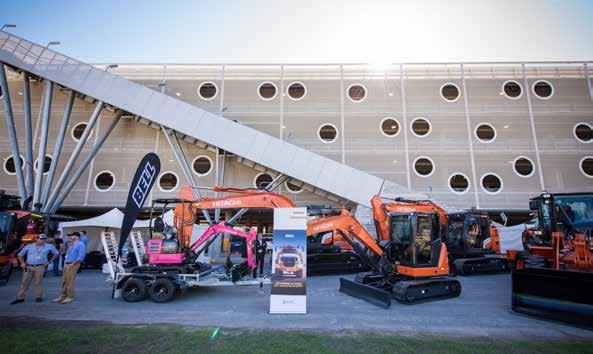
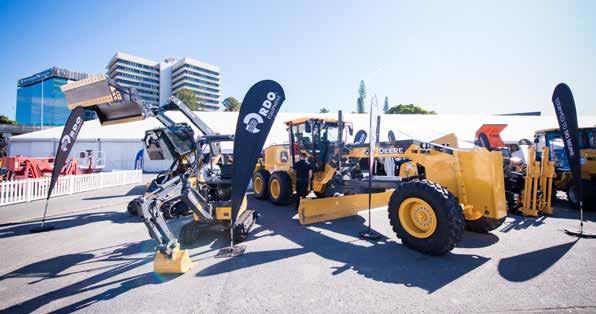
“It is fantastic to be able to provide the heavy equipment element of the show in conjunction with Brisbane Truck Show.”
because there is just so much to see and do,” he says.
“Of course, there will also be delicious food, drinks and entertainment across the day, including a chance to enter the draw for the HEMS25 giveaway that we’ll be announcing soon!”
Damian urges students and those wanting to join the industry to also come along to the show to find out about the various employment pathways for the Queensland civil construction industry.
Alongside the many exhibitor attractions, CCF QLD will host its annual State Conference on Thursday, May 15, and there will also be a new Members’ Marquee with happy-hour drinks, networking and entertainment each afternoon.
The 2025
Equipment and Machinery
will feature a range of displays and experiences for operators, families and of course the little ones
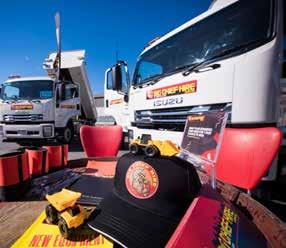
“Members can come and enjoy happy hour at the marquee, but we also encourage non-members to come and find out more about what we do at CCF QLD,” Damian says.
If you work in the civil construction industry, or simply like big machinery and want to see what the future of construction looks like, come on down to HEMS in 2025.
“Ultimately, the show offers industry an opportunity to come together and see the latest equipment and technologies to help make the construction of Australia’s infrastructure more productive, affordable and effective,” he says.
“Catching up with industry colleagues is a major perk, too! Many truck operators also own machinery, so it’s an incredible opportunity to host HEMS alongside the BTS – the two shows go hand in hand.”
To find out more about the 2025 Heavy Equipment and Machinery Show, visit the official website at heavyequipmentshow.com.au.
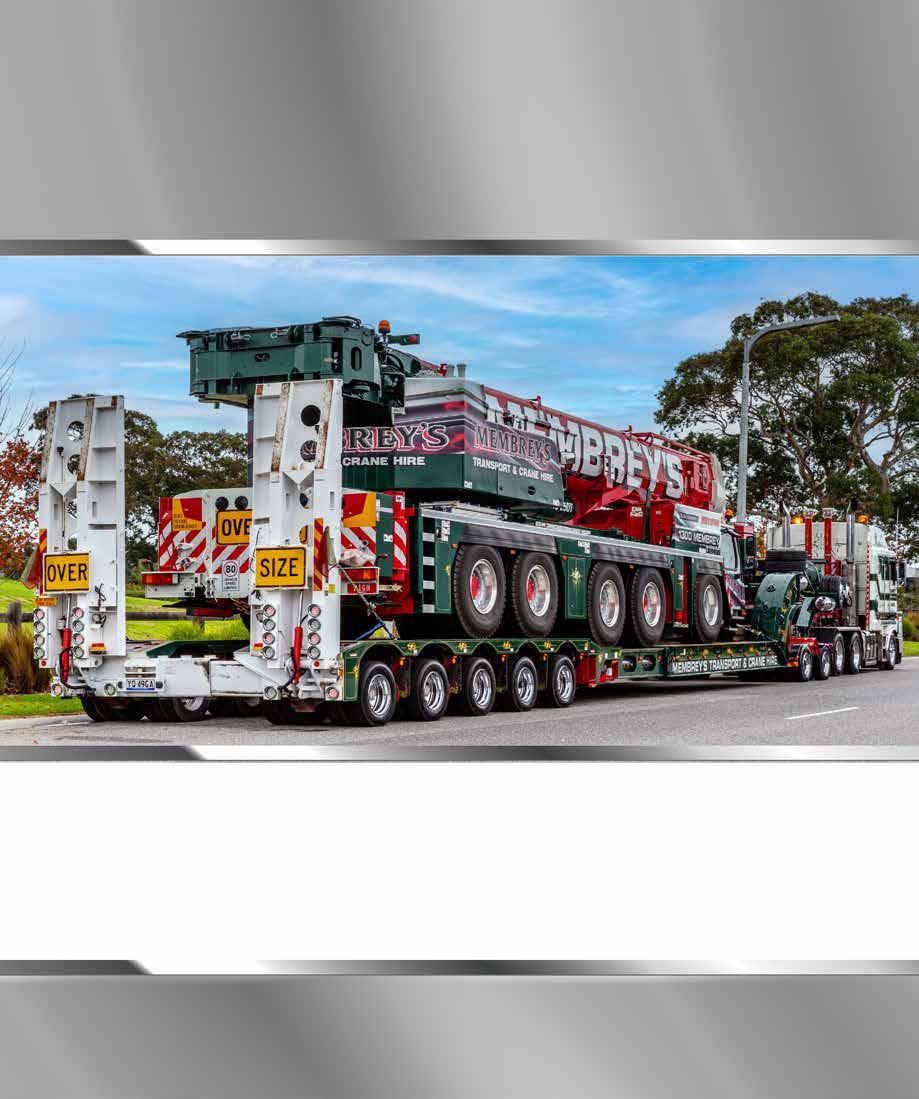





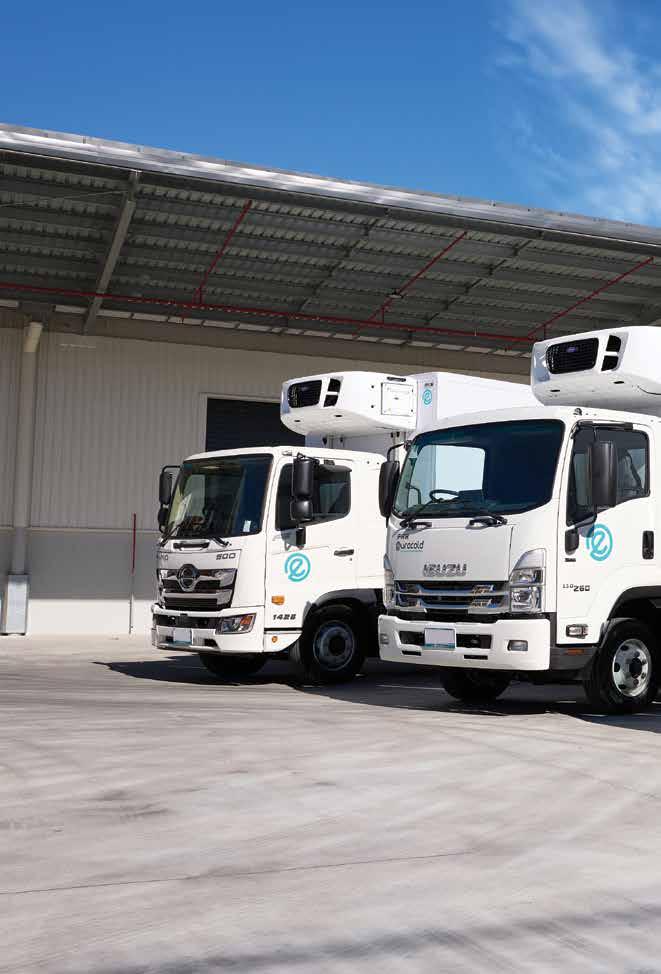
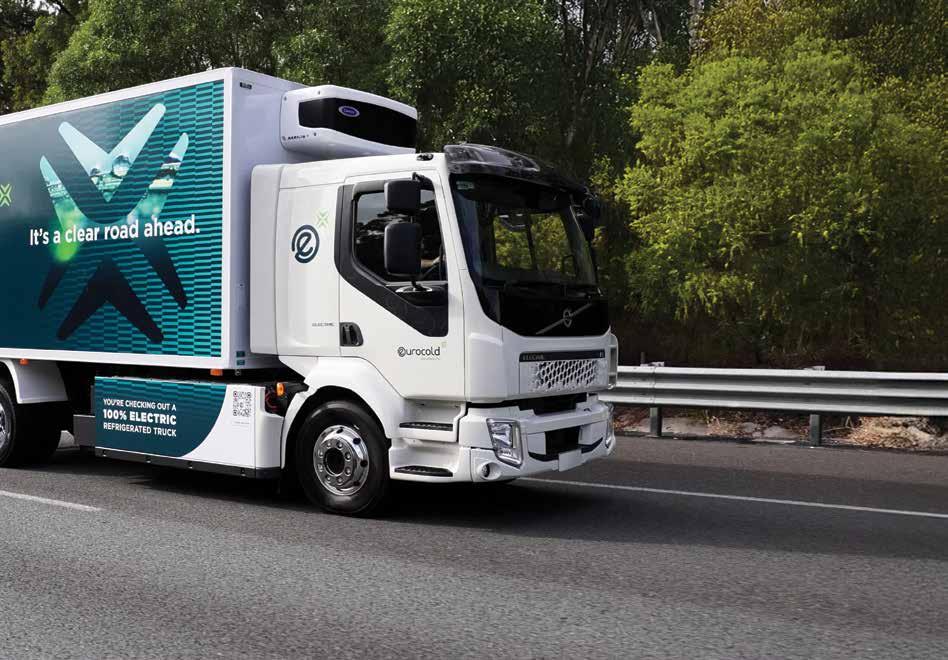

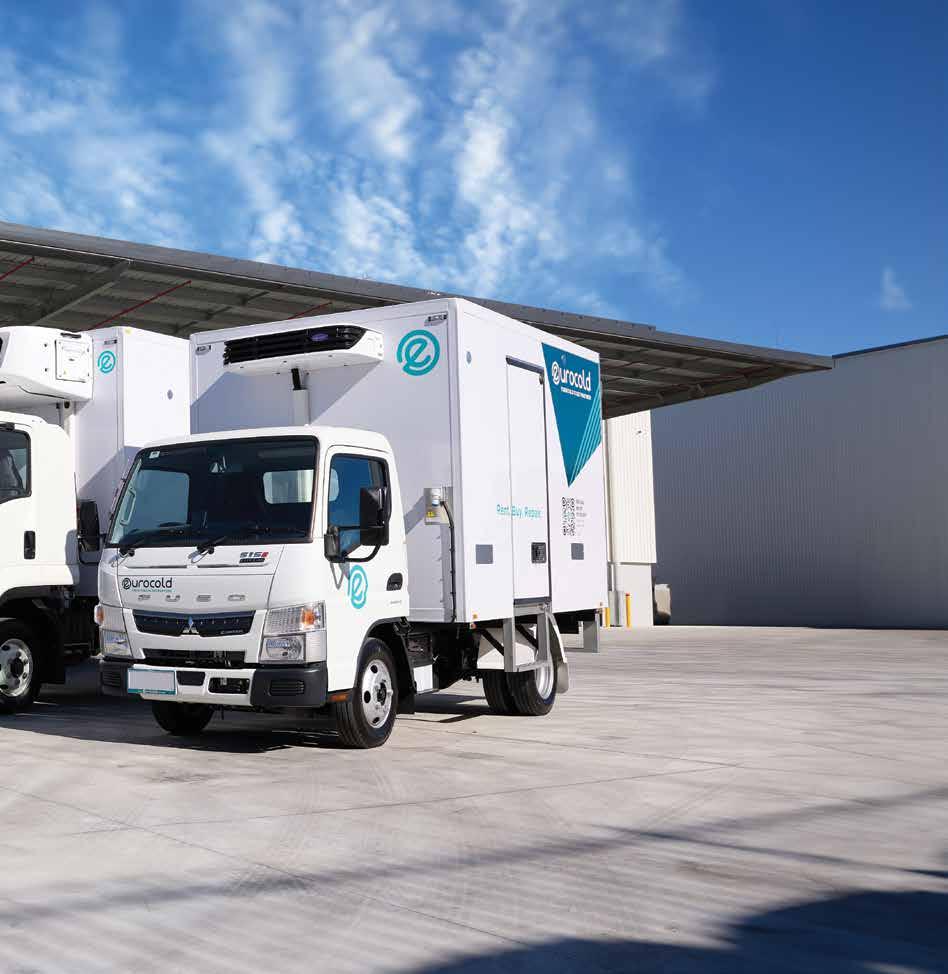
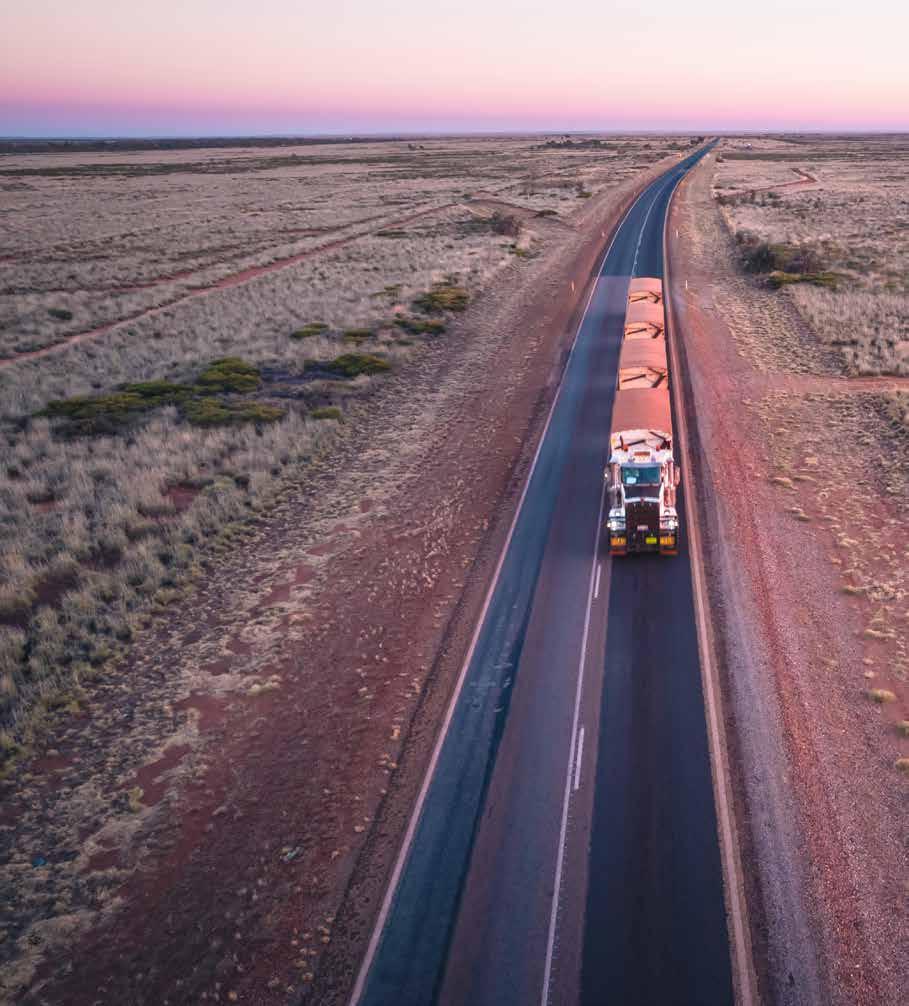
In the drive to decarbonise transport there’s a growing realisation by governments and regulators that highproductivity truck and trailer combinations equate to less trucks, less trips and by extension less emissions
story Cobey Bartels I images ROADBOSS Magazine

As transport operators push to improve their sustainability credentials, the obvious solution is a cleaner truck. But let’s not forget that Australia has some of the world’s most revered trailer designers and manufacturers, and is arguably the best at finding ways to make a single prime mover more productive.
Australian operators pioneered the use of multitrailer combinations, dating back to the birth of the outback road train in 1945, the iconic B-double in 1984, and countless three- and four-trailer set-ups in more recent years.
High-productivity trailers equate to less trucks, less trips and by extension, less emissions. They’re typically safer too, thanks to rigorous engineering standards and second-to-none build quality. Australia has a long history of creating innovative combinations that can not only cart more freight, but can do so safely, without impacting the ageing road network.
Since the Performance Based Standards (PBS) scheme dreamed up by the National Heavy Vehicle Regulator (NHVR) came into play in 2007 the number of approved combinations out on the roads has skyrocketed.
The PBS creations have been taken to the extreme in recent years, too, with examples like O’Phee’s ‘London’ trailer, which can carry up to 12 20-foot containers – representing a 100 per cent increase on what was possible for a container truck before its inception.
At the last Brisbane Truck Show in 2023, pandemicrelated supply chain setbacks were still plaguing the
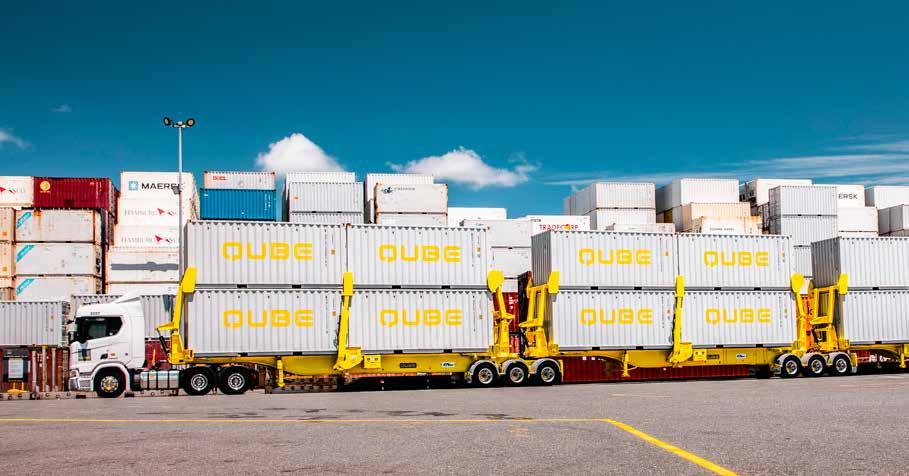
trailer industry, but in 2025 it’s all systems go as the industry continues to innovate with the combinations of the future.
Now, regulators and governments are pushing harder than ever to get high-productivity combinations on the road, carting more freight with less diesel burned.
It’s a win-win, and plays into Australia’s longstanding strengths as a global trailer innovator.
The road transport industry is growing, with freight volumes expected to increase by 35 per cent between now and 2040, as online shopping becomes the norm for Australian families and imported goods flood ports around the country.
But trailer registrations are also growing, outnumbering trucks, with the ratio of trailers to prime movers increasing from 2.3 to 2.6 across the past decade.
Data from ARTSA-i shows that multi-combination trucks now make up 45 per cent of all heavy vehicle registrations, up from 39 per cent a decade ago, highlighting a focus on maximising productivity.
Truck registrations are up around 80 per cent for the same period too, with more than a million heavyand medium-duty vehicles now paying road user fees in Australia each quarter. The growth, ARTSA-i
Trailers cart more freight with less diesel burned
says, was relatively flat until 2020 when heavy vehicle registrations soared.
“When also viewed as a total for all new heavy vehicle registrations above 4.5-tonne GVM, the growth in new registrations since 2020 is running at some 11.6 per cent per annum compared with a growth figure of under two per cent in previous years,” a recent ARTSTA-i report states.
Trailer registrations also spiked during the COVID-19 pandemic, with a growth rate around four times that of pre-2020 numbers, sitting at a 14 per cent increase per annum with no signs of slowing down.
That equates to around 3,000 new trailers being registered each quarter.
“Trailers have led the growth trend with semitrailers being just over 60 per cent of total new trailer registrations across the 10 years,” the ARTSTA-i report states.
“Dolly and lead trailers have more than doubled their typical quarterly new registrations since 2020, reinforcing the trend to multi-combination vehicles.”
As transport companies push to reduce their carbon footprint, the importance of highproductivity multi-combination set-ups can’t be understated.
If an operator is able to cart two, or even three times as much freight using a single prime mover, the emissions benefits are clear.
“Trailers have led the growth trend with semi-trailers being just over 60 per cent of total new trailer registrations across the 10 years.”
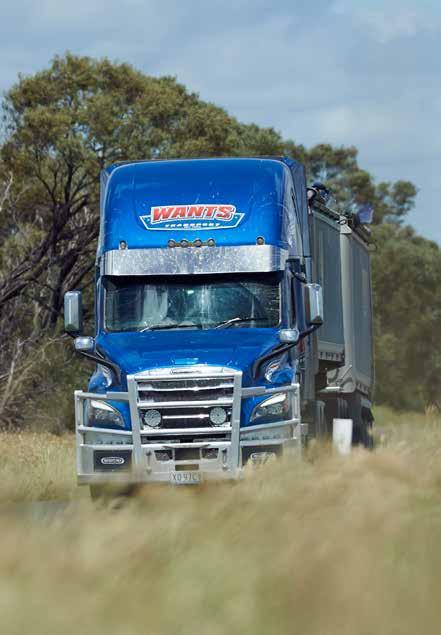

STEMCO is changing the game on wheel ends again!
With the Auto-Torq axle fastener, installation has never been easier
• Maximizes Bearing Life - Auto-Torq applies optimum clamp load setting the wheel end in optimum bearing adjustment & minimizes bearing wear resulting in longer service life.
• Easy Installation - Auto-Torq technology takes the guesswork out of axle fastener installation by eliminating complex procedures & specialty tools, NO TORQUE WRENCH REQUIRED!
• Offers Peace of Mind - No clips, washers, keepers, snap rings or screws involved, Auto-Torq eliminates most variables so you can rest assured that installation is performed correctly.
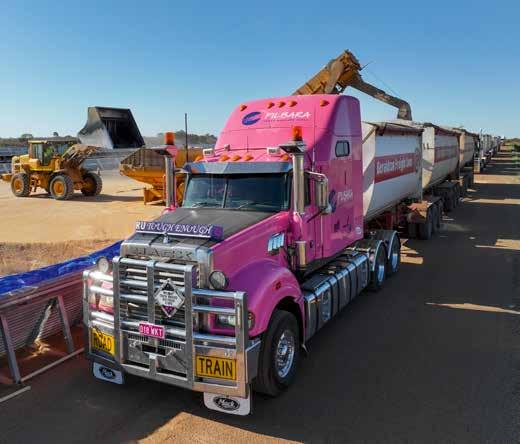
As the freight task continues to grow, governments and regulators are turning their attention to higherproductivity trailer combinations as a logical alternative to simply adding more prime movers to the national truck parc.
Transport for NSW (TfNSW) is one state government body pushing to enhance the productivity of the wider industry, as outlined in its refreshed Heavy Vehicle Access Policy draft that was released for consultation in May 2024.
The draft policy represents a clear shift towards improving productivity, across five distinct pillars: road network infrastructure; heavy vehicle configurations; access; telematics and data; and partnerships.
A key consideration was the acknowledgement that improving productivity, safety and sustainability will require expanded road network access for highproductivity vehicles, which is an approach that could be adopted nationally.
Road managers around the country have been focused on the preservation of infrastructure, limiting weights, total number of truck movements and access for high-productivity vehicles.
The draft policy, though, suggests road managers
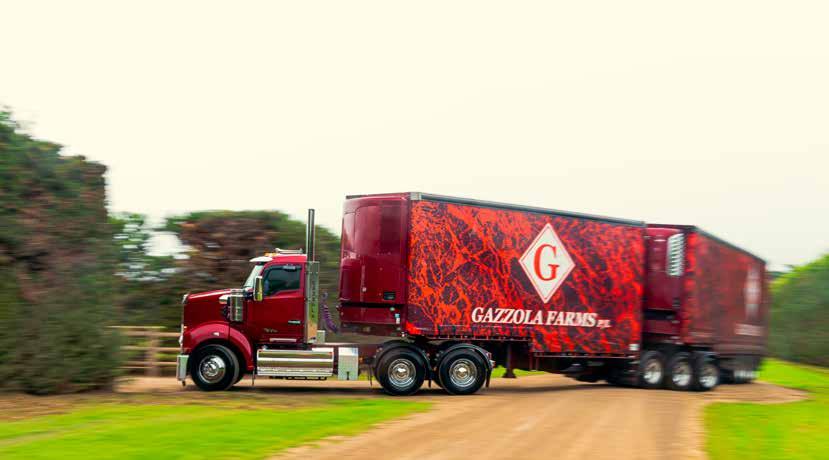
“Dolly and lead trailers have more than doubled their typical quarterly new registrations since 2020, reinforcing the trend to multi-combination vehicles.”
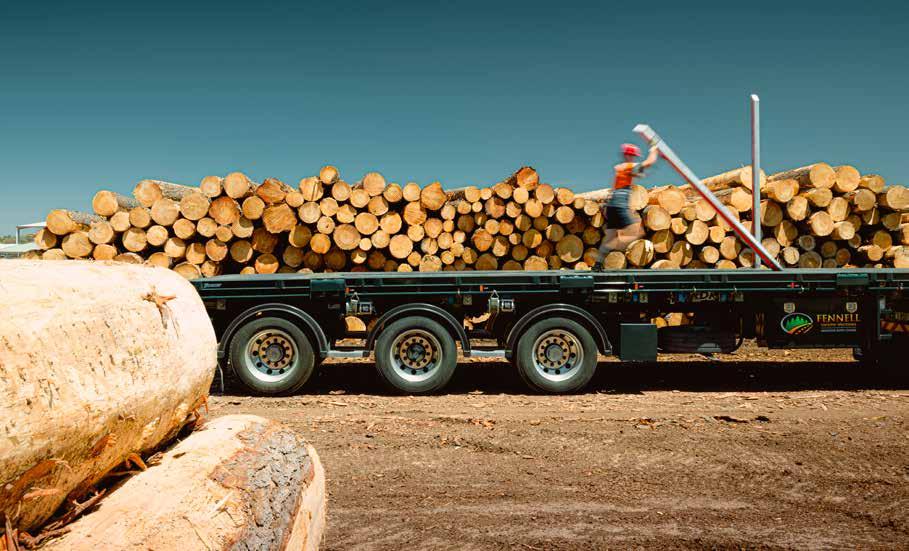
are shifting from an attitude of preservation to optimisation, looking at ways to best utilise the road network by using higher-productivity truck and trailer combinations to maximise transport efficiency.
“The development of agile and resilient networks requires a shift in focus from network preservation to optimisation,” the draft policy says.
“This means that the basis for access decisionmaking must move from preserving assets to optimising the use of those assets by safe, productive and sustainable vehicles whilst minimising the impact of ageing and polluting vehicles on those assets.”
Among the proposals are 16 high-productivity vehicle design templates that would simplify the PBS process, catering to the general freight, livestock, logging, refrigerated and container sectors, which include B-doubles, A-doubles, B-triples and a BAB-quad.
Addressing end-to-end access will be key, as Australian operators move to higher-productivity trailer set-ups, and the policy draft discusses streamlining the process by moving from permits to access by gazettal.
South Australian operator Fennell Forestry is employing AB-triples that measure up at 36.5 metres and are rated for an operating weight of 110 tonnes, which the company claims boast emissions savings of 60 per cent compared with single-trailer logging set-ups
However, as anyone in the transport industry will know, the sheer number of gazettes, notices and permits to contend with is overwhelming. In NSW alone, there are almost 30 Heavy Vehicle National Law (HVNL) notices and the NHVR’s website lists almost 40 notices.
Improving access for high-productivity vehicles will therefore require a smoothing of the processes, in line with the approach of ‘making it easiest for the safest, most productive and sustainable vehicles to access the network’ outlined in the report.
Governments and road managers are shifting towards a productivity mindset, which is a step in the right direction for the transport industry, and is certainly good news for the trailer industry.
The NHVR wrote the high-productivity playbook with the PBS scheme, but now nearly 20 years on the scheme is overdue for an update. For that, the regulator is calling on the Government to take a more collaborative approach to high-productivity trailers.
In the ‘Removing Roadblocks to Reform’ paper
the NHVR calls for amendments to the HVNL, to move proven and popular PBS combinations to the prescriptive fleet, allowing greater access to highproductivity trucks.
“Right now in Australia, the safest, most productive and lower emission heavy vehicles face more barriers to get on the road than a standard ‘prescriptive’ heavy vehicle and, as a result, we are seeing higher emissions, loss of productivity benefits and most concerningly, more fatalities,” says NHVR Chief Safety and Productivity Officer, David Hourigan.
“We need to modernise the PBS scheme, and to do this we must change the Heavy Vehicle National Law.
“We seek to work with Government and industry to reset the PBS scheme’s policy settings and update the PBS standards.”
Hourigan explains that while the PBS scheme has led to countless innovative combinations, it is no longer promoting the use of the latest technology or trailer designs.
“Rather than allowing for new truck designs, it is dominated by more or less the same vehicles,” he says.
“Of more than 20,000 PBS combinations on Australia’s roads, almost half consist of one vehicle type – the truck-and-dog combination.”
However, despite the large numbers of ‘ordinary’ combinations joining the PBS fleet, there are still genuinely game-changing examples finding their way onto Australian roads.
None is more impressive than The Drake Group’s ‘London’ trailer, which was the brainchild of O’Phee Trailers’ founder Mick O’Phee and Qube Logistics General Manager of Operations Darren Fuller, dreamed up over a conversation and brought to life by an A-team of innovators that included regulators and The Drake Group employees.
The double stack container super B-double skel trailer, similar in nature to the double-decker buses that operate in London (hence the code name),
Super- and ultra-quad trailer combinations such as those below used by WA-based bulk haulage operator MGM Bulk measure up to 60 metres in length and can carry more than 100 tons of iron ore
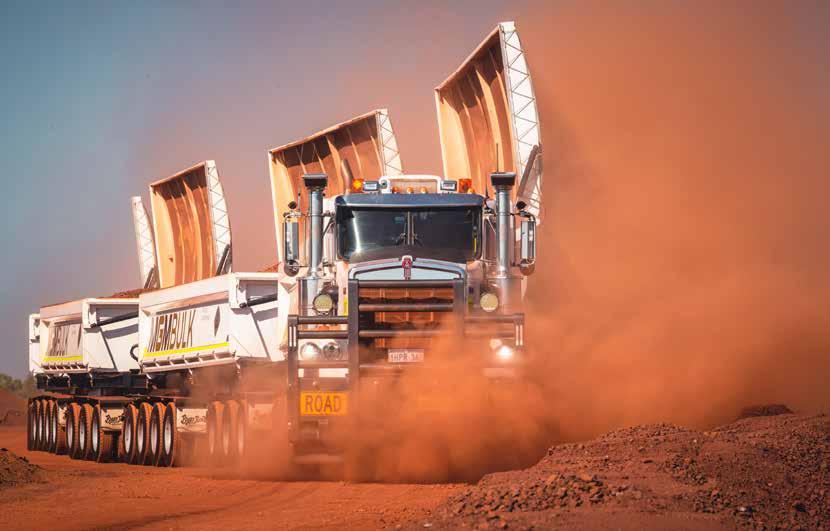
“Improving productivity, safety and sustainability will require expanded road network access for high-productivity vehicles.”
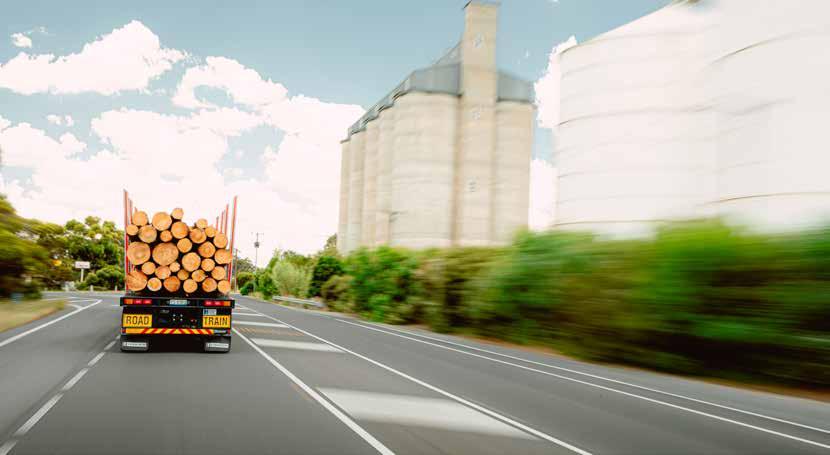

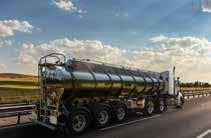
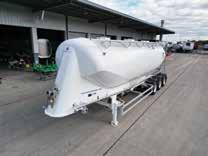
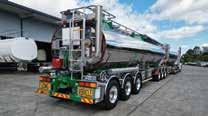
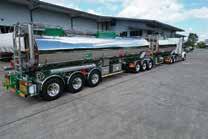
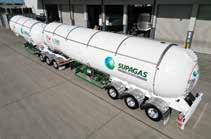
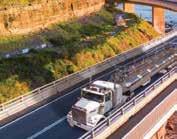

Australian Owned and Operated with over 70 years of expertise, we specialize in bulk liquid transportation solutions. From fuel, bitumen, and LPG to dry bulk, chemicals, and ammonium nitrate emulsion, our transport solutions are designed to go the distance. Discover our range at the Brisbane Truck Show 2025, where innovation meets durability. Whether you’re in need of reliable fuel transport or advanced chemical and gas solutions, we’ve got you covered.
Visit us at the Brisbane Truck Show and let’s talk about how we can drive your business forward!
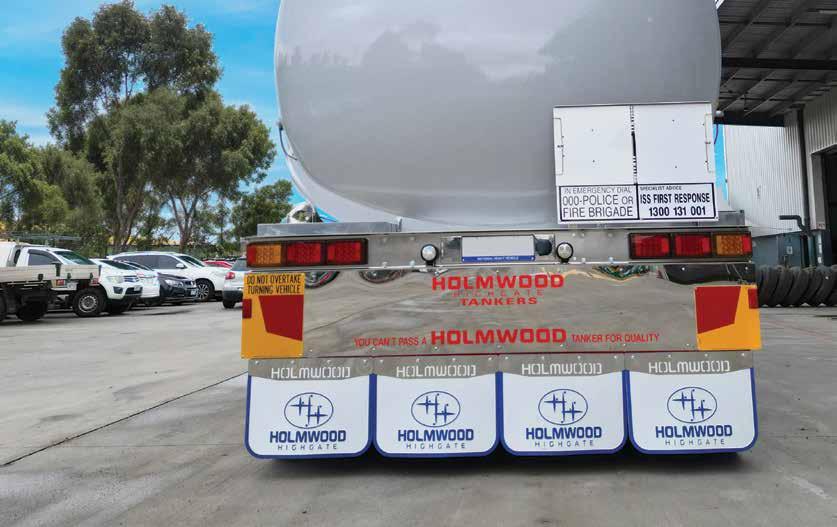

“The basis for access decision-making must move from preserving assets to optimising the use of those assets by safe, productive and sustainable vehicles.”
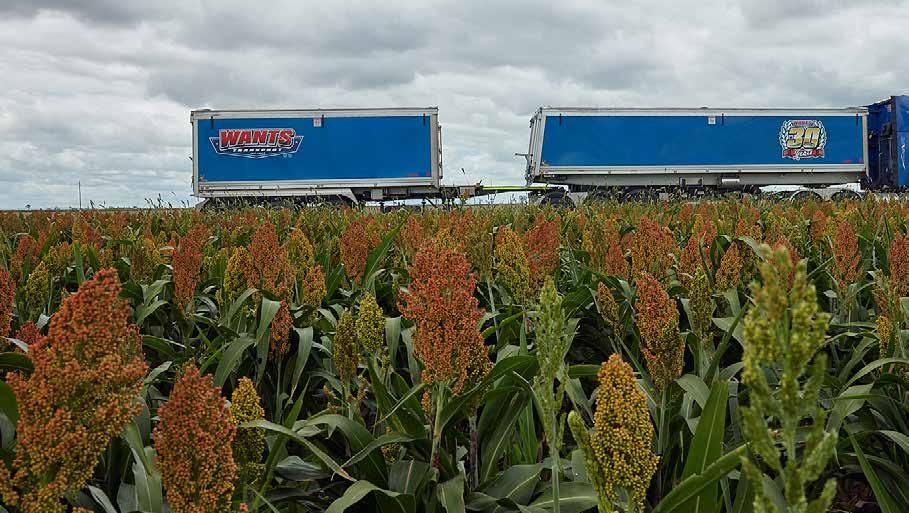
required out-of-the-box engineering solutions and significant regulator support.
“We went to the regulator and made sure they would back it because a lot of the Performance Based Standards criteria didn’t apply – this wouldn’t be overtaking, for example, but once they agreed, we moved forward,” Mick O’Phee says.
The unique double-stack trailer was one-of-akind and had never been done before, so required innovation at every stage – right down to the unique hydraulic load-restraint system.
“We had no idea how we were going to do the load restraint, but we had some ‘far out’ ideas,” he adds.
“We thought, let’s just put some containers on a triple skel to show what it will actually look like, and then when we get to stage two we’ll work out how we’re going to do this!
“All inventions happen this way, because it’s never been done before.”
Following speed and stability testing with the NHVR, which included computer simulations and physical tilt tests, the ‘London’ trailer began its realworld trials at the Port of Brisbane in 2023.
Unsurprisingly, the trailer was named 2023’s most innovative product at the HVIA National Awards,
representing a leap forward for Australia’s trailer manufacturing industry.
The ‘London’ trailer represents the level of innovation capable under the PBS scheme, and an overhaul of the current standards will drive further productivity improvements by encouraging the industry to dream up and design the combinations of the future.
The road ahead
Australia’s net-zero ambitions pose a serious challenge for so many industries, but road transport is among the most affected as operators push to decarbonise their fleets.
Right now, higher-productivity trailer combinations can reduce whole-of-fleet emissions by carrying more freight with less total trips.
Government and regulator support is critical because Australia’s trailer manufacturers are among the best in the world, and are well and truly up to the task.
Visitors can expect to see the latest trailer innovations at the upcoming 2025 Brisbane Truck Show, from heavy-haulage low loaders to energyharvesting refrigerated units, and everything in between.
Higher-productivity trailer combinations can reduce whole-of-fleet emissions by carrying more freight with less total trips
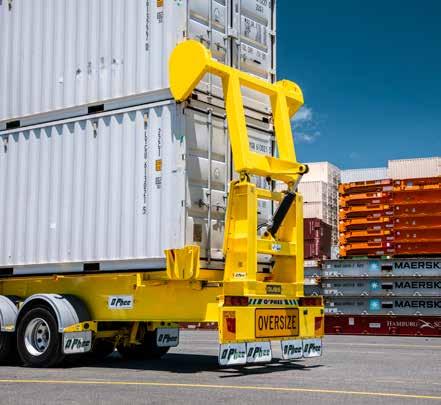
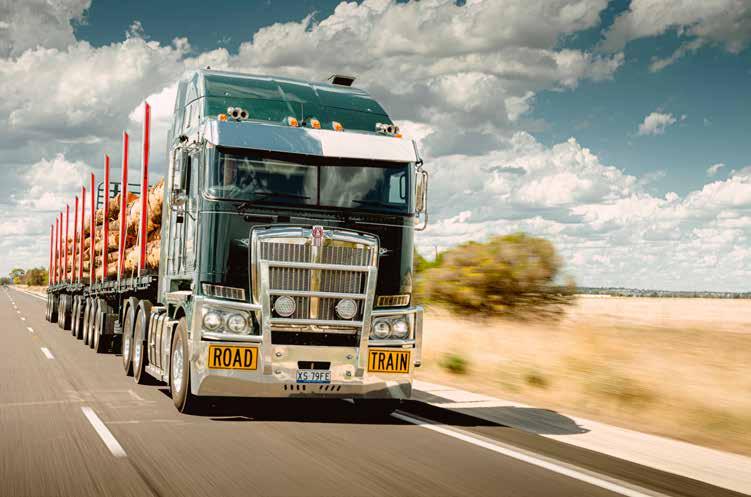

Spider Path now combines NHVR network maps, swept path analysis and high-resolution aerial imagery.
Planning trips is easier than ever - route optimisation automatically calculates the maximum gross weights across bridges for your vehicle combination, you can visualise alternate routes and check access with swept path analysis.
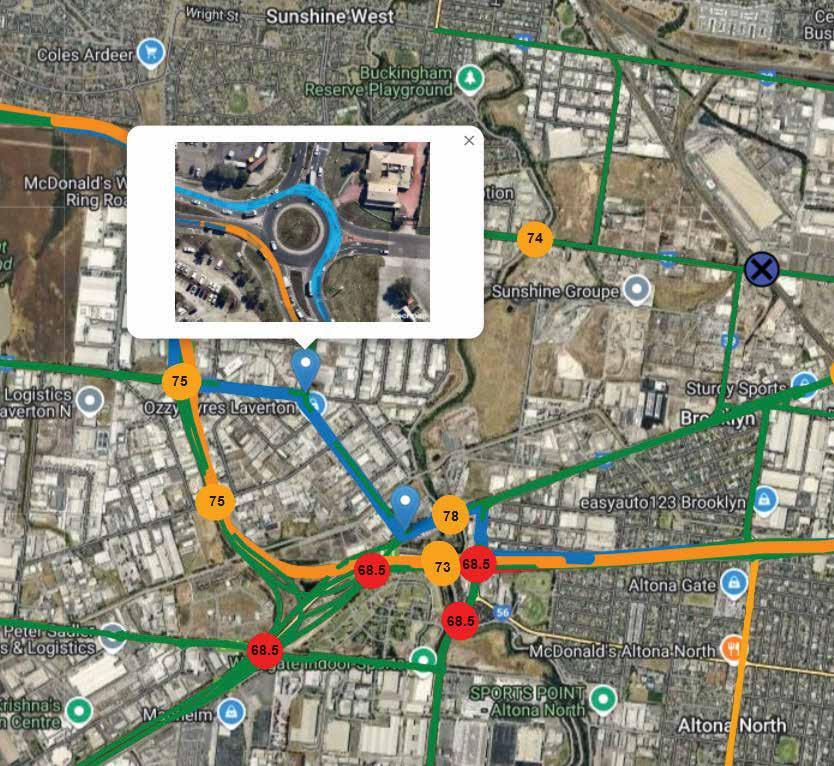
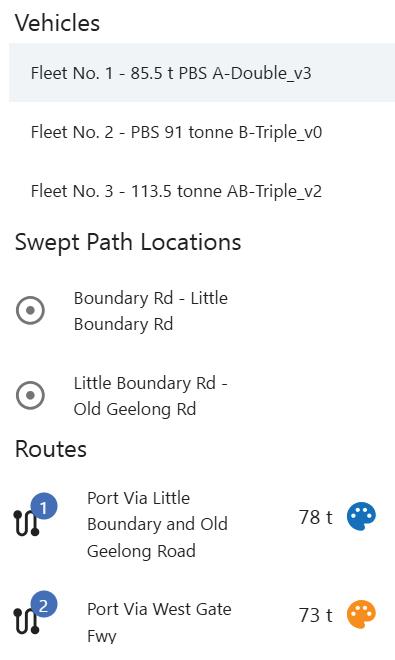
Tiger Spider’s engineering team provides professional design and structural analysis services, using advanced computer modelling, simulation, and testing capabilities. Contact Tiger Spider to optimise your vehicle component’s weight, compliance and reliability.
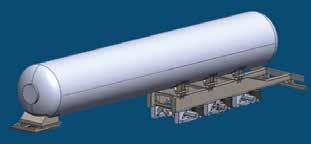

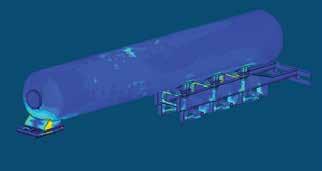

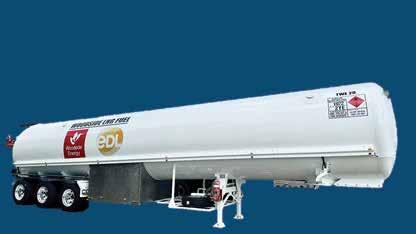
“Tiger Spider demonstrated outstanding professionalism, delivering strong yet lightweight skid plate and subframe designs. I strongly encourage anyone seeking turn-key services to reach out to Tiger Spider.”
Kevin Gao AMG Cryogenics
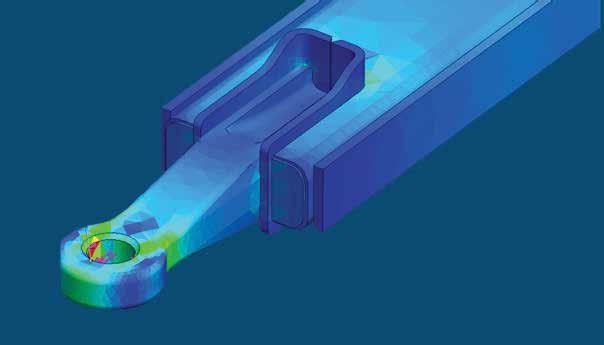
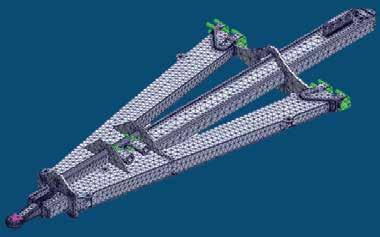
“Tiger Spider were able to deliver a robust and comprehensive extendable drawbar analysis. We highly recommend Tiger Spider and were impressed by their ability to assess the performance of heavy vehicle components.”
Cameron Harris Domett Truck and Trailers



With the show just five months away, now’s the time to book your accommodation. Head to the Brisbane Truck Show website to take advantage of the special rates negotiated for a raft of hotels and apartments by our accommodation partner Ozaccom+
Variety is a speciality of Brisbane, particularly when it comes to where to lay your head after a long day (and night) at the 2025 Truck Show.
Accommodation of all types is spread across the city, with a raft of self-contained apartments and four- and five-star hotels dotted along the edge of the river, from the CBD across to South Bank, South Brisbane and West End.
See below the top places to stay in Brisbane, hand-picked based on their proximity to the Brisbane Convention and Exhibition Centre and suitability to all tastes and budgets.
1. Emporium Hotel, South Bank
Emporium Hotel features 143 luxuriously appointed suites with all the comforts you could ask for, from rooms for two up to the 786-square-metre ‘Parklands Suite’ accommodating as many as eight people. Exquisitely finished with handcrafted
touches, each suite boasts the latest in-room automation and entertainment technology. The hotel also incorporates a rooftop pool, sauna and steam rooms, gym with breathtaking views over Mount Coottha, and a selection of bars and restaurants, including the Terrace rooftop bar, Signature restaurant and Belle Époque patisserie.
2. Mantra, South Bank
Whether you’re in Brisbane for business, arts or entertainment, the Mantra South Bank is at the heart of it all. The Mantra offers a variety of hotel rooms, studios, and self-contained one- and two-bedroom apartments. The best part? The heated lap pool, fully equipped gym and epic South Bank restaurants at its doorstep.
3. Rydges, South Bank
Rydges South Bank is located in the heart of Brisbane’s arts and entertainment precinct, with plenty of things to do and only minutes away from South Bank Parklands


and the BCEC. It boasts a variety of rooms and suites, with state-of-the-art features and amenities, including complimentary wi-fi, mini-bar, iron/ironing board, LCD TV, workspace and digital safe. Recreational facilities encompass a pool, gym, spa and sauna – plus a poolside cocktail bar, awardwinning restaurant and casual café/bar.
4. Atlas Apartments, South Brisbane
Located 600m from BCEC, Atlas Apartments by CLLIX boasts the ultimate in luxury serviced apartments. Its oversized, fully self-contained studio, one-, twoand three-bedroom apartments feature

kitchens, laundry facilities, and private balconies – with the two-bedders including separate lounge areas. Atlas Apartments also offer a fully equipped gym, swimming pool, BBQ area, undercover parking and wi-fi.
5. Ivy & Eve Apartments, South Brisbane
The ultimate South Brisbane accommodation, the Ivy and Eve Apartments by CLLIX complex offers showgoers two towers of modern and spacious self-contained apartments. The complex’s resort-style atmosphere and outstanding facilities include a recreational deck overlooking the CBD, pool, heated spa, BBQ facilities and games room. The self-contained one-, two- and threebedroom apartments offer wide balconies, fully equipped kitchens and laundries, quality décor, open-plan living areas and complimentary wi-fi.
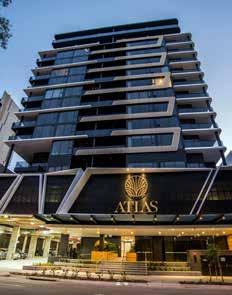
6. Brisbane One, South Brisbane
Located in the heart of South Brisbane, these apartments feature world-class amenities, amidst a prime location. Whether you’re after a swim in the heated pool, a workout at the on-site gym or simply wish to relax in the rooftop recreation area, Brisbane One Apartments by CLLIX offer premier living at its best. The apartment complex offers a variety of room types, from compact studio and one-bedroom apartments, to large twobedroom apartments with one or two bathrooms, expansive indoor and outdoor spaces, kitchens, laundry facilities and complimentary wi-fi.
7. Arena Apartments, South Brisbane
Nestled between South Bank Parklands and West End, Arena Apartments by CLLIX offer fully self-contained studio, one-,


two- and three-bedroom apartments with fully-equipped kitchens, laundry facilities, and private balconies. The one- and twobedroom apartments feature separate lounge areas. Arena Apartments by CLLIX also offers guests a fully equipped gym, free undercover vehicle parking and unlimited wi-fi.




8. Adina Apartment Hotel, CBD Housed in a beautiful heritage-listed building, this hotel features contemporary studios and apartments ranging from onebedroom studios up to three-bedroom penthouses with three bathrooms, two kitchens, two separate lounge/dining areas, washing machine and dryer. A mere 15-minute walk to South Bank, the serviced apartment complex also includes a gym, pool, and beautiful restaurant and bar.
9. Oaks Brisbane Casino Tower Suites, CBD Situated opposite the old Treasury Casino, the Oaks offers spacious one- and twobedroom serviced apartments with city or river views – plus a three-bedroom apartment with two bathrooms, kitchen and spacious living area capable of accommodating six. A short walk across the river to the BCEC, it also features a heated lap pool and spa, gym and sundeck.
10. Oaks Brisbane Festival Suites, CBD Oaks Brisbane Festival Suites is located right in the heart of the CBD and boasts an on-site gym, 25m heated lap pool plus
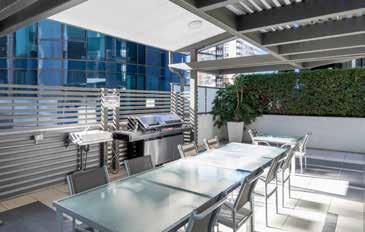
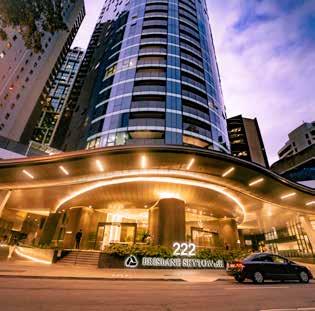
plunge pool, sundeck, spa, sauna and BBQ facilities. Serviced by a 24-7 reception, its beautifully appointed one- and twobedroom apartments feature expansive balconies and sweeping city views, deluxe kitchens, separate living and dining areas, and modern conveniences, including wi-fi and TV streaming capabilities.
11. Oaks Brisbane Margaret Suites, CBD Mix the best of both worlds at Oaks Brisbane Margaret Suites, combining a city centre hotspot adjacent to the Botanical Gardens. With an outdoor pool and fully equipped gym, the one-, two-, three- and four-bedroom apartments include private balconies, separate bedroom and living areas, kitchenettes, laundry facilities, inclusive wi-fi and TVs with streaming capabilities. A luxury two-storey penthouse offers the pinnacle of facilities, services and uninterrupted views, including four bedrooms, three bathrooms and fully equipped kitchen.
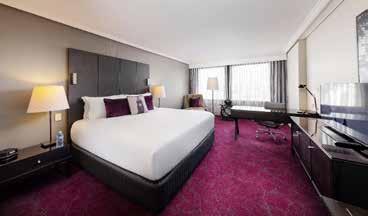
12. Brisbane Skytower, CBD
Offering breathtaking views from the river to the city and beyond, Brisbane Skytower by CLLIX boasts a new level of luxury selfcontained one-, two- and three-bedroom apartments, including full kitchen, laundry and separate lounge with dining area. Facilities include fully equipped gym, indoor swimming pool, BBQ facilities and unlimited wi-fi.
13. Sofitel Brisbane Central, CBD
Comprising 416 luxury rooms and suites, this five-star hotel boasts views over ANZAC Square and the city skyline. Accommodation ranges from rooms with one king or two double beds, bathrooms with bath and shower, desk, mini-refrigerator, LCD TV, and tea and coffee-making facilities, through to suites with separate lounges, bedrooms, bathrooms and in the case of the ‘Prestige’ and ‘Opera’ suites, dedicated dining rooms. The Sofitel also offers multiple bar and restaurant options, including the jewel in

the crown, Privé, presenting classical French fare; and 11 conference rooms.
14. Voco Brisbane City Centre, CBD
Conveniently located at North Quay on the banks of the river, voco’s position delivers premium yet unstuffy accommodation. Just a hop, skip and a jump across the river to the BCEC, its 194 rooms – from standard and premium rooms to suites with separate bedroom and living areas – feature cushy bedding, vibrant art, smart in-room technology and bathroom amenities. Voco also features a rooftop pool area, fitness room equipped with the latest machines, and lobby café/dining space serving up craft brews, local wines and cocktails.
Hotel Indigo Brisbane City Centre is located at North Quay, where local creatives, curious explorers and discerning business travelers come to work and play. The hotel is peppered with hand-painted artworks,

sculptures and suspended overhead installations that reflect the city’s bold beginnings, and lead to 212 strikingly designed guest rooms, including standard and premium rooms and suites. For those looking to entertain, celebrate or simply indulge, its restaurant Izakaya Publico offers a delicious Japanese dining experience. Nearby is 1603 – a contemporary speakeasyinspired bar offering local beer, wine and signature sake cocktails with a twist.
16. Hope St Apartments, South Brisbane
Arise on Hope Street by CLLIX – comprising 378 one-, two- and three-bedroom apartments – is located just a short walk from the BCEC and the heart of the CBD. The complex is designed to offer guests the ultimate in terms of lifestyle, location and finishes – and features a five-star lobby, gym, swimming pool, and BBQ and dining areas. All rooms include private balconies with city and/or mountain views, modern furnishings and spacious living areas.

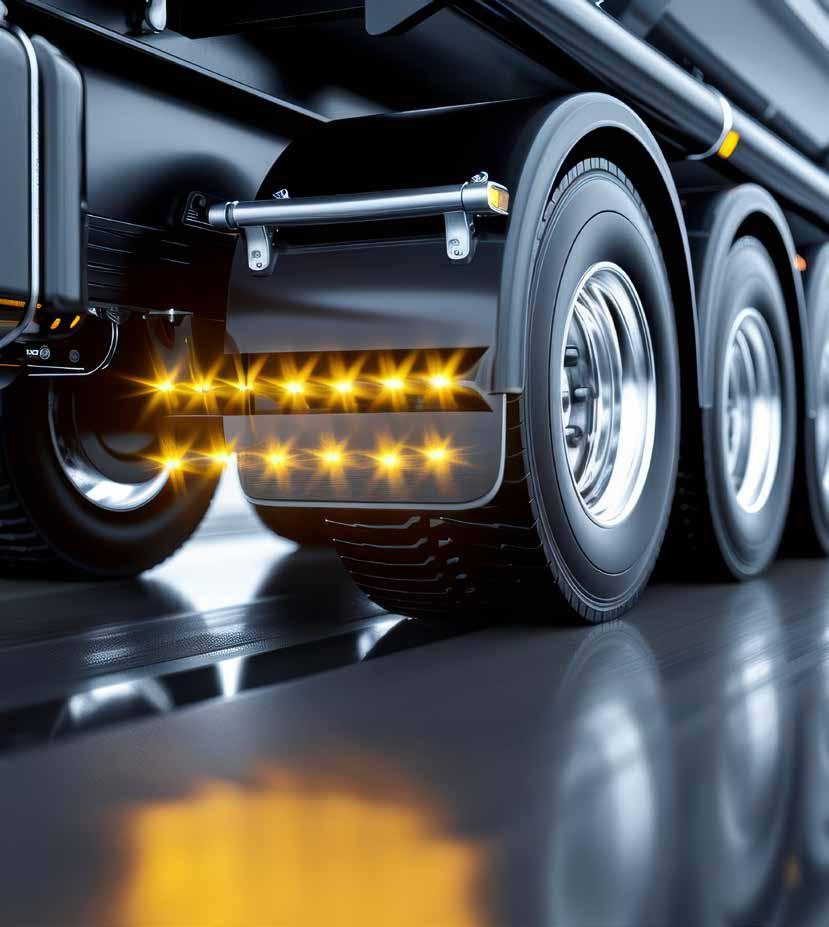

The 2025 Brisbane Truck Show will offer an in-depth look at the latest e-axle technology from around the world, so don’t miss out on the opportunity to discuss the potential efficiency benefits for your fleet
story Cobey Bartels I images supplied
The 2023 Brisbane Truck Show saw axle manufacturers shine, with an impressive array of electric axle (e-axle) options that are capable of powering up the sustainability benefits of truck and trailer combinations into the future.
While many come to the show to check out the latest trucks and trailers on offer, the array of parts and accessories on show is world class, as the biggest brands roll out their latest innovations – in many cases, for the first time.
At the last show, an emerging theme was regenerative e-axles for use on trailers, with some examples already being put to work in trials around the country.
E-axles are typically geared towards one of two things; providing drive assistance and/or harvesting energy in the form of electricity. Both options have their place and offer serious efficiency benefits, but only regenerative, or energy harvesting axles, are permitted so far with limited driven-axle trials underway in Europe but none locally.
An example that drew large crowds in 2023 was SAF-Holland with its TRAKr e-axle, featured on a McDonald’s fridge trailer built by FTE, which is already operating on Australian roads.
“The concept of a ‘powered trailer’ stems from the idea to add either regenerative energy and/or motive power capabilities to a heavy goods trailer.”
The TRAKr e-axle acts as a regenerative braking system, harvesting kinetic energy and converting it into electricity that can be stored in a lithium-ion battery and used to power accessories like a fridge unit, lifting platform or crane.
Interestingly, the TRAKr unit doesn’t feature rareearth minerals or even copper, adding to its clean credentials, and according to SAF-Holland it can generate up to 20kW of power – eliminating the need for diesel generators to run auxiliary systems.
Dana had its Spicer eS9000r e-Axle at the 2023 Brisbane Truck Show too, which consists of an electric motor, power system and transmission all built into a drive axle suitable for GVMs up to 10.6 tonnes.
The eS9000r e-axle produces 237kW and up to 9,000Nm of torque (yes, you read that right), while weighing just 370kg, allowing it to be retrofitted in place of an existing truck axle group to provide serious assistance.
Another electric axle system on display was BPW Transpec’s ePower Axle, which is a regenerative unit that uses two generators to double power and reliability, and the manufacturer says it can lead to fuel savings of up to 4,000 litres per year in certain applications.
BPW says intelligent energy management ensures the battery reserves are carefully controlled, even in heavy traffic or during long journeys, and it has its
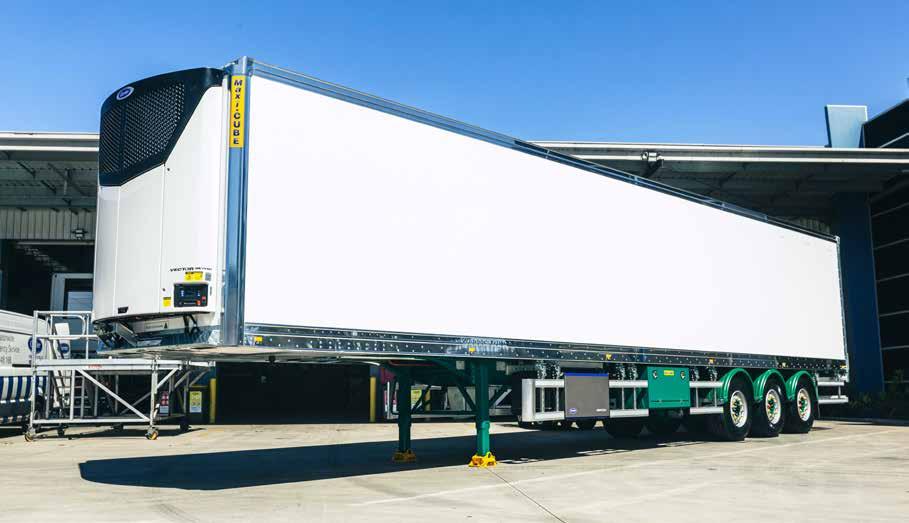
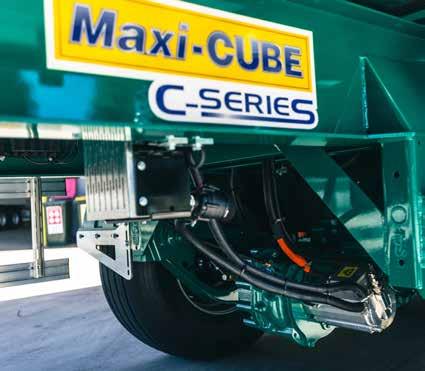
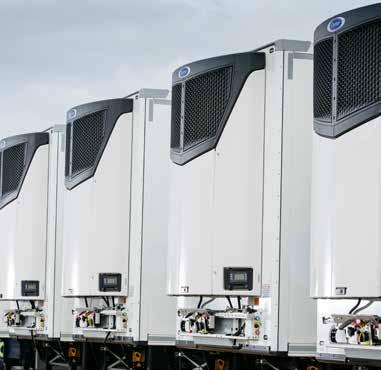
CELEBRATING THE ROAD
Nothing beats the pride of seeing your rig gleaming with chrome wheels and stainless steel accessories, turning heads wherever you go. At Armoury Group, we’re dedicated to making trucks and drivers shine, supporting the industry with products that elevate both style and performance.
JOIN US AT STAND 65 TO CELEBRATE WHAT MAKES TRUCKS – AND THE PEOPLE BEHIND THEM – TRULY LEGENDARY
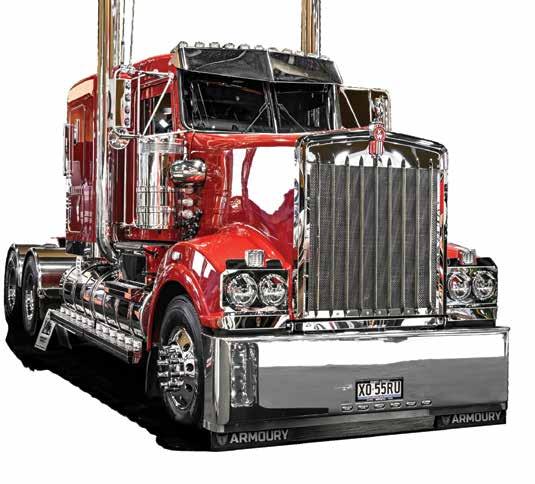

An example that drew large crowds in 2023 was SAF-Holland with its TRAKr e-axle, featured on a McDonald’s fridge trailer built by FTE
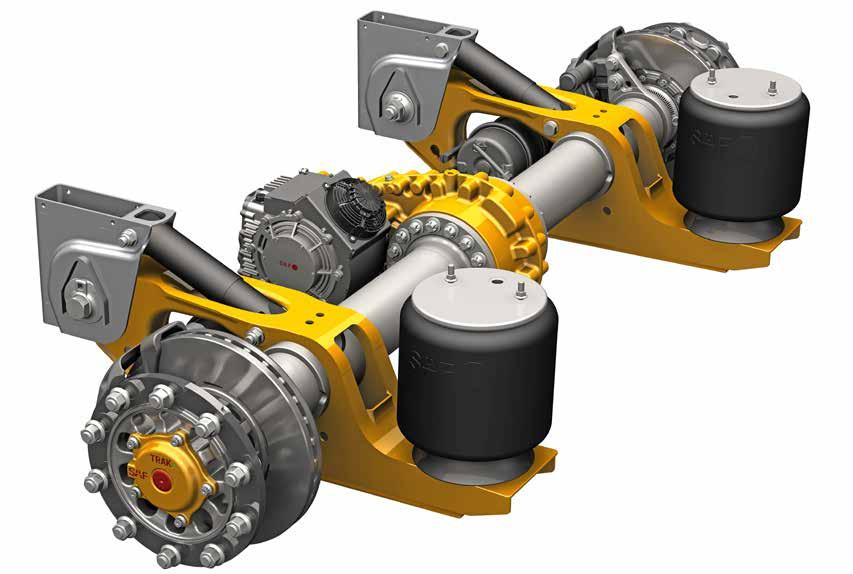
“It is an incredibly innovative and exciting freight transport decarbonisation opportunity that has recently emerged from within HVIA’s member base.”
own cooling system to further enhance efficiency and longevity.
VE Motion is a local innovator that showed its powered trailer technology at the inaugural TruckShowX 2024, sharing its plans for both its e-trailers and a parallel hybrid system that can be retrofitted to diesel trucks.
The company is made up of Arends Trailers, which specialises in light-weight aluminium semi-trailer design and manufacturing, and Vibe Energy, which focuses on grid-connected generation assets.
VE Motion’s hybrid truck system works much like the parallel or ‘closed loop’ hybrid systems in passenger cars, placing an electric motor and battery between the transmission and driveline. The e-trailer on the other hand utilises a fully-integrated e-axle.
Both the powered trailer and hybrid systems aim to reduce diesel fuel use by up to 50 per cent while retaining the range benefits of an internal combustion engine (ICE) truck.
More recently, Move Engineering Group revealed its ground-breaking powered trailer concept that claims a 58 per cent reduction in diesel use and 50 per cent less emissions, showcasing the clear benefits of powered axle groups for heavy combinations.
The West Australian-based group describes its team as ‘visionary futurists’ for the heavy freight transport and mining sectors, as it pioneers highly efficient powered trailers.
“The concept of a ‘powered trailer’ stems from the idea to add either regenerative energy and/or motive

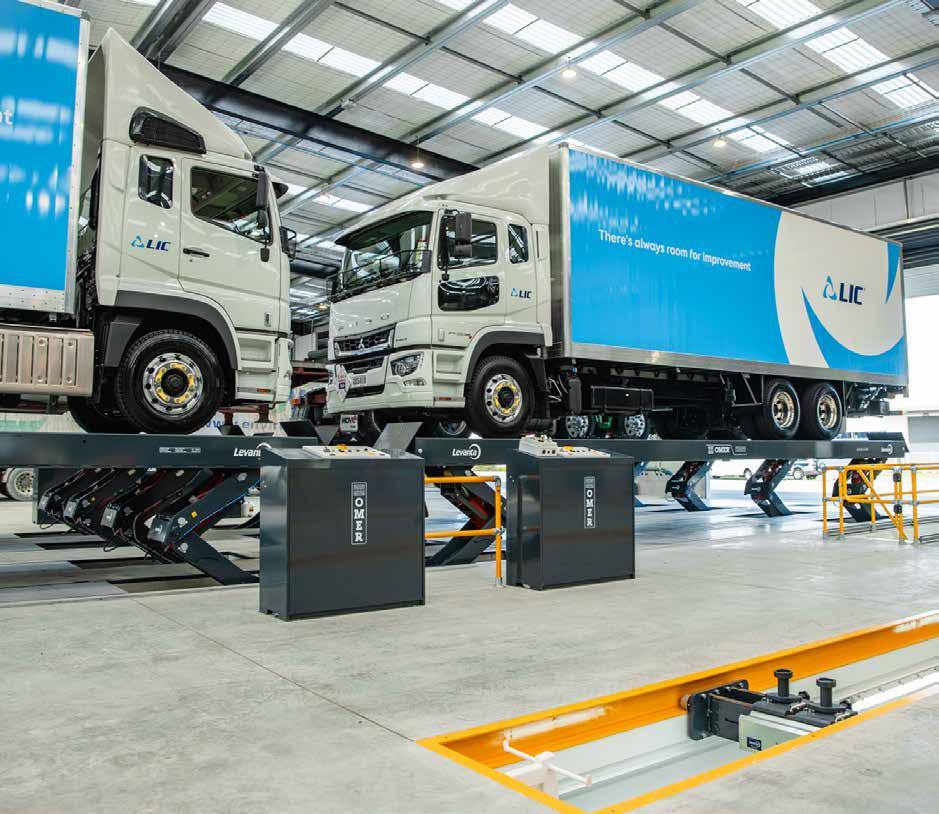
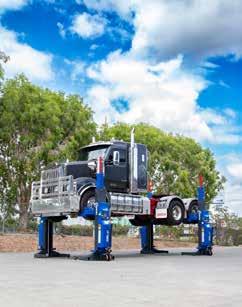
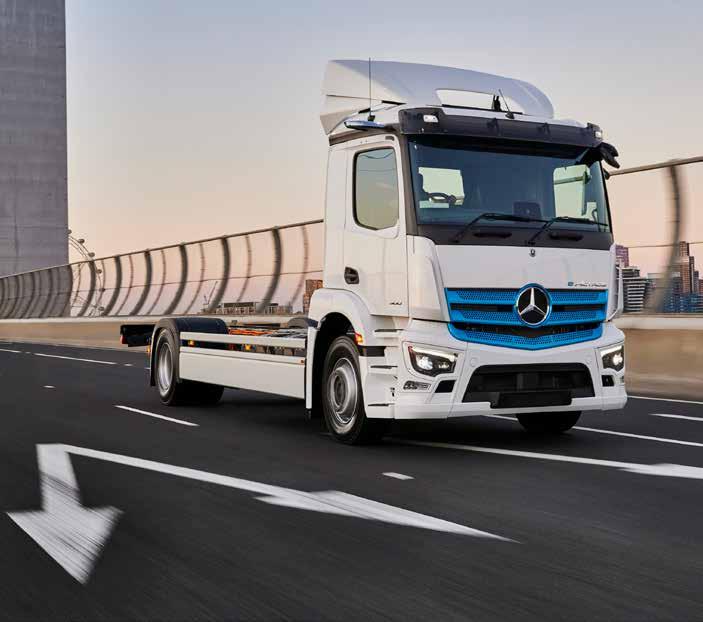
“If you’re in stop-start traffic in a metropolitan area, you’d be able to get away with regeneration only under braking or deceleration.”
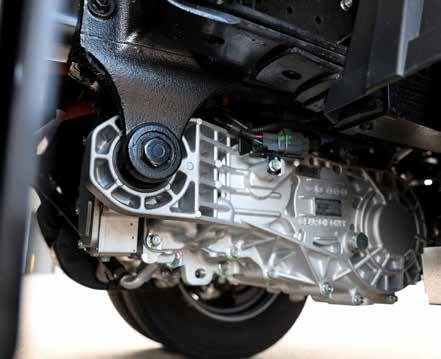
power capabilities to a heavy goods trailer,” says HVIA Chief Technical Officer, Adam Ritzinger.
“It is an incredibly innovative and exciting freight transport decarbonisation opportunity that has recently emerged from within HVIA’s member base.
“It is exciting and inspirational to witness the application of ingenuity, engineering and design expertise to a truly new transport endeavour, right here in Australia.”
Ritzinger recently visited innovative European manufacturer Van Eck Trailers at its headquarters in the Netherlands after the 2024 IAA Transportation show, to take a closer look at its prototype powered dolly. After seeing it in action, he believes the technology could be applied successfully in Australia.
“What we saw at Van Eck was an impressive display of engineering design and innovation in action, that could offer an interesting avenue for transport decarbonisation in Australia,” he says.
“Given the engineering expertise that exists on our

shores, similar solutions could be readily developed by HVIA members for our local market, once HVIA’s work in solving the regulatory roadblocks progresses.”
But how viable are e-axles right now in Australia?
While trials of powered, or drive axles, are yet to take place in Australia, the use of regenerative axles is underway right now. As Managing Director and Senior Engineer at Smedley’s Engineers, Robert Smedley, points out, though, it’s all about pairing the right e-axle to a specific truck and trailer combination.
“They are all different; some are twin motors, some are single motor, some use a gearbox, some are aircooled, some are water-cooled, and some are only doing recuperation under deceleration and braking while others are recuperating all the time – even under acceleration,” he says.
“So there’s some very different approaches to the problem, and the reality of that landscape is those
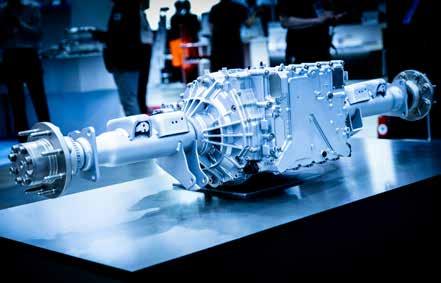
The world of e-axles is one riddled with lingo, so what does it all mean for operators? This brief guide should help
Motors types: E-axles use either synchronous or asynchronous motors, both offering distinct pros and cons. Synchronous motors are simpler, cheaper and run at a fixed speed. Asynchronous motors, on the other hand, are more complex but offer greater efficiency due to their variable speed. The simpler synchronous motors do generate drag, but the asynchronous don’t when not recuperating.
Number of motors: Single motor e-axles typically allow for a larger unit, but require a differential or geared drive to each hub. Dual-motor options, on the other hand, can be direct drive and are therefore more efficient. Both have their place, depending on packaging and energy requirements. Drive style: E-axles are either direct drive or geared, and that usually comes down to whether they use a single electric motor or multiple units. A single motor solution requires a geared arrangement, which is less efficient due to losses in the gearbox and differential, but provides an opportunity for a larger motor to be packaged.
Cooling options: Much like engines and other mechanical systems, the option of air, oil or water cooling is available. While water cooling may improve durability and thermal efficiency, it weighs more and adds complexity to the system. Air-cooling on the other hand reduces cooling efficiency, which often requires a motor to run at a lower output. Of course, complex cooling systems also add to the cost of an e-axle.
Energy recuperation methods: Energy can be recuperated in a number of ways, but typically it is generated during braking or deceleration efforts.
There are, however, e-axle options that generate electricity during all forward motion, which increases drag and requires more ‘energy in’, but suits scenarios where a vehicle maintains a constant speed for prolonged periods and isn’t operating in stop-start scenarios.
Recuperation ratings: The rate that the electric motor is rated to generate – ranging from 20kW right up to 80kW – is measured in kilowatts (kW).
Rates higher than 20kW require brake blending in Europe, due to the strong braking forces generated.
solutions will all work differently in practice because each fleet has a unique use case. What works for some fleets may be different to what works for other fleets.”
The advice for fleets looking to incorporate e-axles into their trailers, Rob Smedley says, is to shop across various brands rather than opting for the same axle manufacturer they have always used.
“They should be going and asking a lot of questions around how this solution is unique and beneficial to their use case, rather than using the same brand they typically always buy,” he suggests.
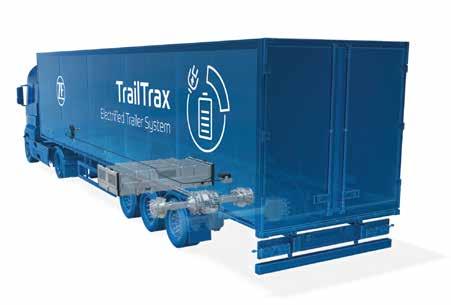
While it’s critical to establish just how much energy generation is required for a particular application, it is equally important to consider the energy recuperation method.
“We’ve done a few now, so we did some work on the FTE trailer for McDonald’s and A-doubles that
are running e-axles, and also have a cycle analysis tool that can tell us the power usage required for a route – so how much power a combination will require and how much regeneration is possible on that route right down to a specific route, truck make and combination type,” Smedley notes.
“Then if you’re running line-haul and almost never
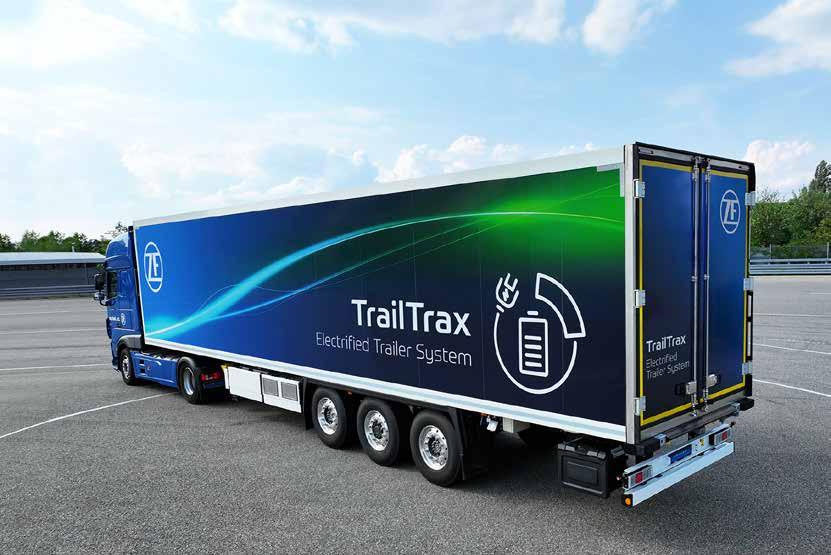
“So there’s some very different approaches to the problem, and the reality of that landscape is those solutions will all work differently in practice because each fleet has a unique use case.”

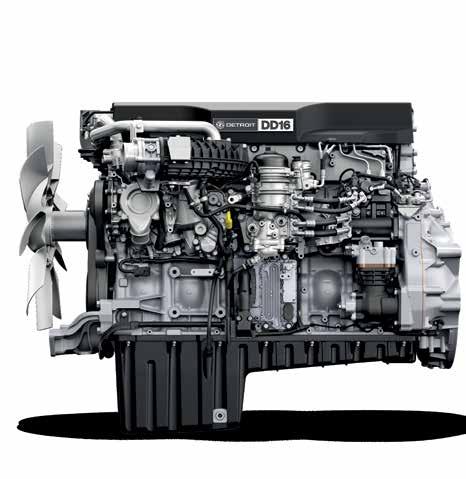
Detroit’s
This
This
When

touching your brakes, you would want a system that offers constant regeneration to power your fridge. But if you’re in stop-start traffic in a metropolitan area, you’d be able to get away with regeneration only under braking or deceleration.”
The solution, he believes, is to talk to your preferred engineer or an industry body like the HVIA about the best e-axle option for your specific vehicle configurations.
“My one concern is that fleets need to get themselves fully informed on the differences in technology that are available, because I’d hate for an operator to buy an e-axle that isn’t suited to their needs,” he says.
“Reach out to the HVIA or an engineer to work on
the right e-axle set-up for your needs. That’s the main piece of advice I’m giving operators.”
Full steam ahead
While the prospect of a fully-powered trailer might seem unlikely, the concept is already being trialled overseas. However, it’s energy harvesting axle solutions that can offer real efficiency benefits – today.
“Regenerative e-axles can definitely be used right now to improve efficiency in some applications,” Smedley says.
“The number-one use case at the moment is refrigerated vehicles, regardless of whether it’s highway or local, and the reason for that is they no longer need to spend the money on diesel to run the fridge.”
Many of the e-axle options require the use of super-single tyres, Smedley’s Engineers Robert Smedley explains, which coincidentally also provide a fuel-use saving of up to eight per cent. In Australia, though, operators face a payload penalty if they choose to run ‘singles’.
“The conversation has moved beyond just high-productivity trailers in Australia, to now looking at things like aerodynamics and axles, but one thing that’s going to have to happen in order for e-axles to be widely adopted in Australia is the move to super-single tyres,” he says.
“The reality is that most of the world moved to super-single tyres at equivalent masses a long time ago, yet Australia hasn’t and that’s something that needs to be addressed.
“The only roadblock at the moment isn’t science, it isn’t engineering – it’s the state governments.”
While e-axles promise to offer fuel use savings of up to 10 per cent, Smedley points out that the efficiency benefits of supersingle tyres are similar.
Combining super-single tyres with e-axles, then, could offer a cumulative fuel-use saving of nearly 20 per cent.
“You also get a reduction in rubber use, tyre life is generally longer as well, so there’s a whole lot of other sustainability benefits on top of fuel efficiency,” he says.
The reality is, current laws and regulations do not contain provisions for powered trailer axles, which comes down to how new the technology is – at least in Australia where no comprehensive trial has been undertaken.
“We’re actually working on that as an industry association,” Ritzinger adds.
“It was around a year ago when a couple of our members started making noise about powered e-axles, so we immediately
axle, pictured below right, which is a regenerative unit that uses two generators to double power and reliability and can lead to fuel savings of up to 4,000 litres per year
formed a working group and developed a discussion paper, and since then interest in the topic has rapidly accelerated.”
The HVIA team has been working on removing the regulatory roadblocks standing in the way of powered e-axles, but Ritzinger says the process will take several years to finalise.
“We’ve been working behind the scenes on two things,” he says.
“Our first project is short-term, and will develop a set of guidelines approved by road managers that industry can use to undertake small-scale field trials of powered trailers featuring driven axles. We expect to have those guidelines approved and ready to go during 2025.
“Our second project is long-term, and will work with regulators to investigate and reform the regulations that need revision in order for powered trailers to eventually operate normally on Australian roads.”
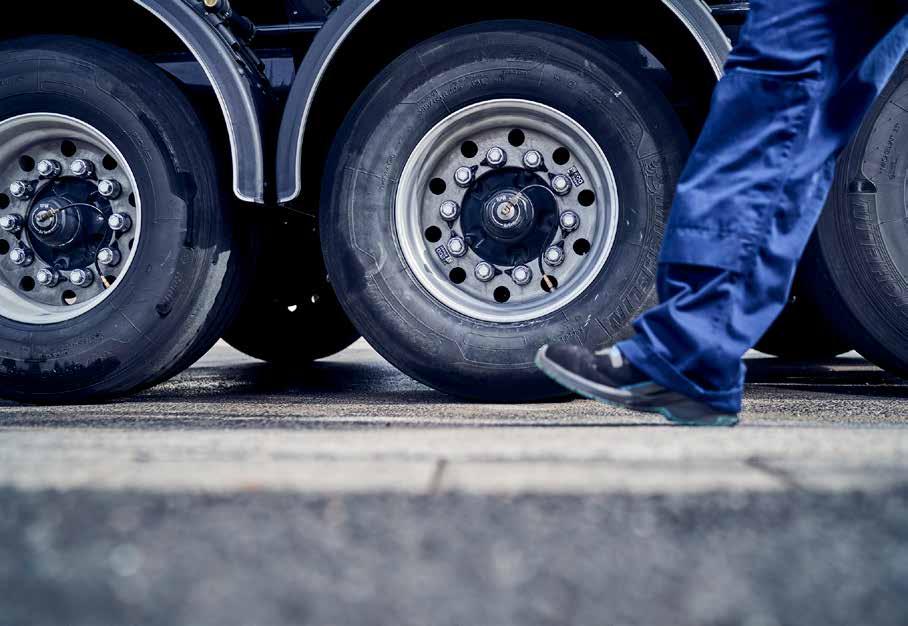
“If you’re running line-haul and almost never touching your brakes, you would want a system that offers constant regeneration to power your fridge.”
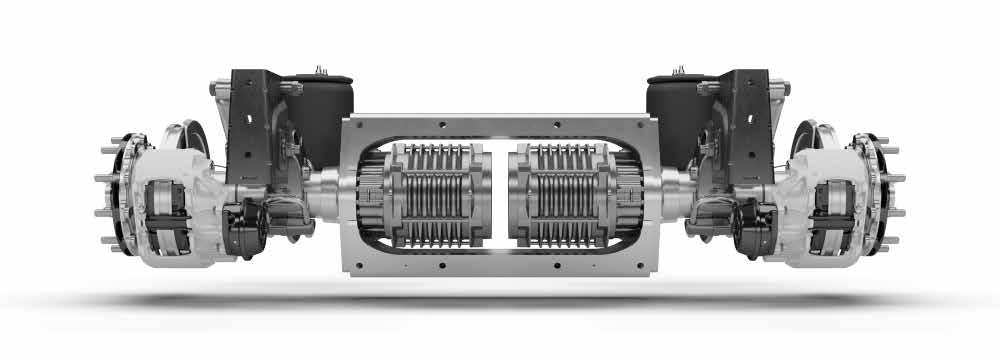
“Regenerative e-axles can definitely be used right now to improve efficiency in some applications.”
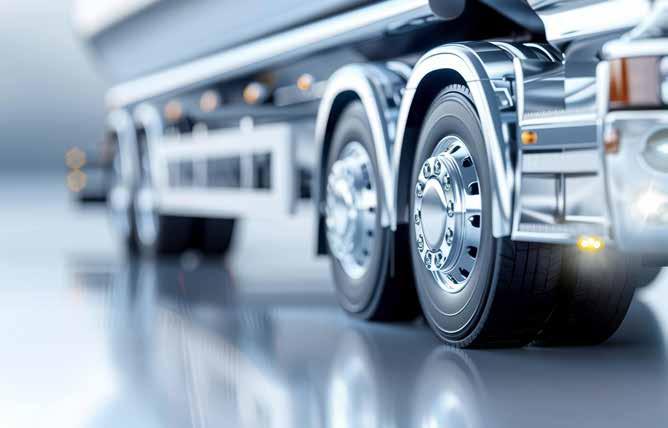
While regenerative axles can be used right now, their powered counterparts require various changes to Australian Design Rules (ADRs), Road Vehicle Standards Act (RVSA) and Heavy Vehicle National Law (HVNL).
The way forward
As Australia’s transport industry scrambles to decarbonise, operators will be required to factor in efficiency benefits across their entire vehicle – from the powertrain to aerodynamics, and of course axles.
E-axles offer serious sustainability benefits without the need for a new prime mover, and with one of the world’s most innovative trailer manufacturing
industries Ritzinger thinks Australia is in a good position to lead the way.
“We’ve always had a huge amount of innovation in trailer design here in Australia, so there’s absolutely no reason that our own trailer builders in our own industry cannot figure out the most optimal use of this technology,” he says.
“So we certainly have the expertise and innovation on our shores to be able to make this technology work as we strive to decarbonise the transport industry.”
The 2025 Brisbane Truck Show will offer an in-depth look at the latest e-axle technology from around the world, so don’t miss out on the opportunity to discuss the potential efficiency benefits for your fleet.





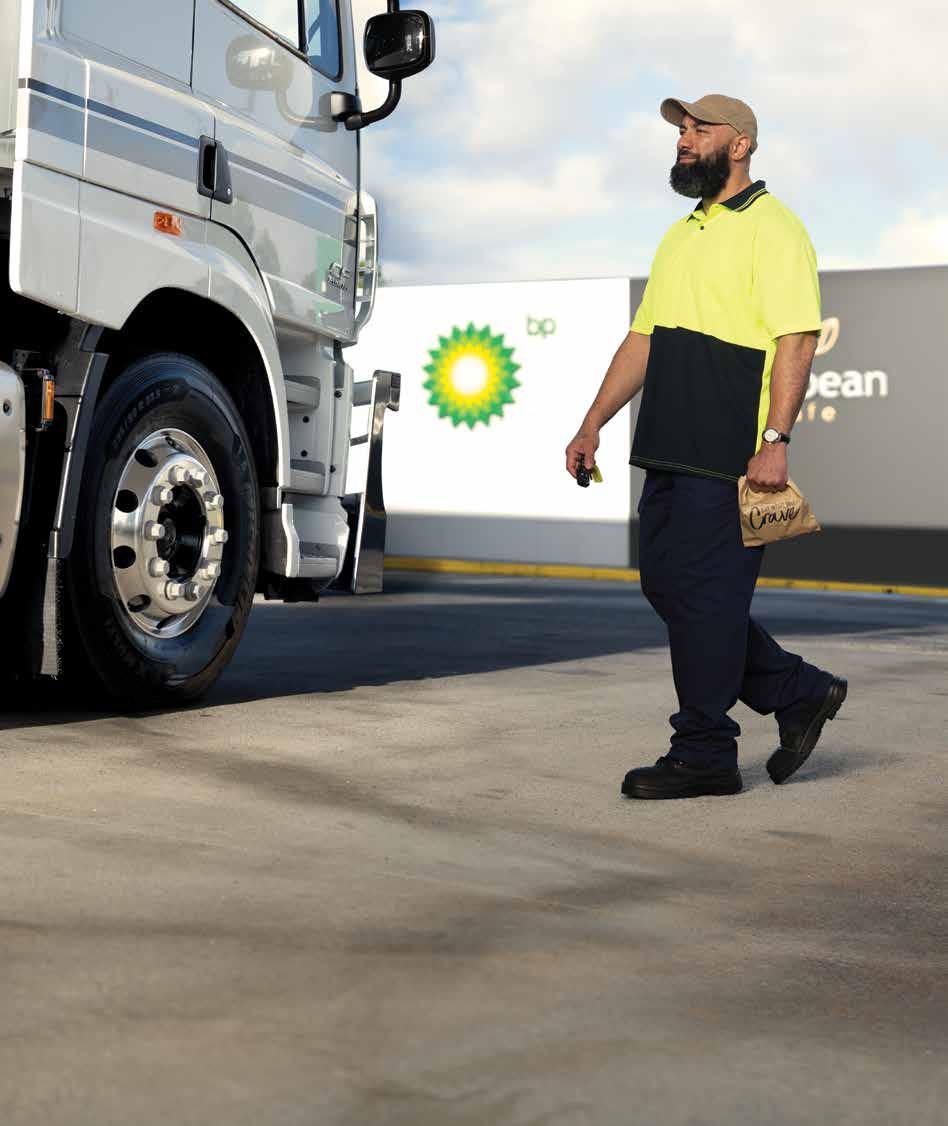

Brisbane is the ‘in’ place for dining and drinking, with the River City boasting a rich offering of bars and eateries to suit all budgets, from fine dining through to amazing pubs and bars
story Harrison Hunkin I images supplied
Brisbane’s dining scene has recently been described by a national newspaper as “In Overdrive”, which naturally had my ears pricked.
While definitely nothing to do with transmissions, many of these restaurants are within a stone’s throw of the Brisbane
Truck Show’s host venue. Top that with the amazing pub and bar culture in and around the South Bank area and it’s safe to say the fun continues once the show doors close for the day.
Here is a local expert’s guide to the best restaurants and bars nearby the 2025 Brisbane Truck Show.
Next year will mark 10 years since the opening of Otto, one of Queensland’s most-accomplished restaurants.
Set a few blocks from the Brisbane Convention and Exhibition Centre along the beautiful Brisbane River, Otto is one of the amazing fine-dining restaurants you must

Brisbane offers show attendees an amazing choice of fine-dining restaurants as well as an incredible pub and bar culture in and around the South Bank area
visit when in town for the show. Italian is the cuisine, and spectacular is what you’ll get.
If you’re a classy trucker, and looking for the best Brisbane has to offer, Head Chef Will Cowper’s seasonal and produce-driven menu will certainly have you licking your lips.
But for something a little more low-key Otto Osteria (same location) is the perfect place to enjoy a more casual bite to eat and drink while taking in our river city.
River Quay, Sidon Street, South Brisbane
Poca Madre, South Brisbane
The new kid on the block, Poca Madre has quickly become one of South Bank’s hottest spots to dine and sip.
This Mexican-inspired oasis is bringing bold flavours, modern twists and tasty margheritas to the precinct and is receiving rave reviews.
Did you know Poca Madre actually means awesome or impressive in Mexican slang?
A bit like the Brisbane Truck Show … Mexican food has never been more popular, and this joint’s classy twist on the much-loved cuisine is certain to become a place to visit come the 2025 Brisbane Truck
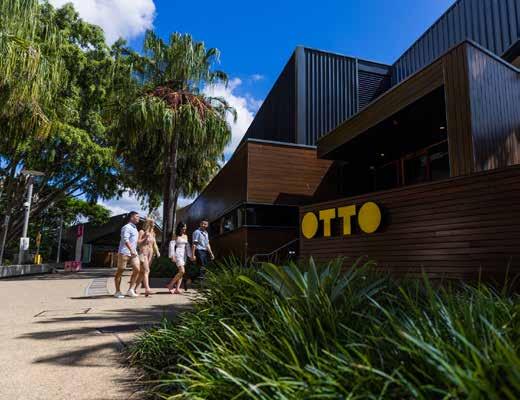
Show. The sharing plates are epic! 14 Little Stanley Street, South Brisbane
Tippler’s Tap, South Bank
Brisbane loves its craft beer. Independent pubs are plenty and micro-breweries are scattered around the city and surrounding neighbourhoods.
A quick search online shows an incredible 92 craft beer bars are in Brisbane, but none like Tippler’s Tap.
Here you’ll find 18 self-service craft beer and cocktail taps.
Equipped with the fully certified and RSAcompliant PourMyBeer system, patrons have the freedom to try whatever they wish and only pay for what you pour!
Apparently, this trend is becoming common in America, but this is one of the first brew-pubs of its kind in Queensland to offer this technology.
For beer-aficionados, Tippler’s Tap is located towards the end of Little Stanley Street in South Brisbane, amongst our epic National Show ‘N’ Shine Championship event.
3/184 Grey Street, South Brisbane


Calida, South Bank
You’re truckies, so you’re probably wondering where you can sink your teeth into a good steak, right? Well, Calida is a good spot to start.
Upmarket yet humble, this Argentinianstyled steak house is where you should go if you’re looking for something more than a pub feed.
Vegetarians beware, you’ll struggle to find something that isn’t Queensland beef on the menu … it even offers a mouth-watering tomahawk steak for the hungrier showgoers. Wash it down with a bottle of wine from its fantastic collection (try a Malbec), and that could be a perfect post-show meal.
164C Grey Street, South Brisbane
Julius Pizzeria, South Brisbane
Julius Pizzeria makes the list again because simply, it’s one of the best pizza joints in the country.
Classy, bustling, tasty and inventive, Julius Pizzeria will make you think again about buying from the big chains.
You can find Julius tucked away down Fish Lane, South Brisbane’s bustling ‘foodie’ precinct, just a few hundred metres up the street from the Brisbane Convention and Exhibition Centre, home of the Brissy Truck Show.
You can’t go wrong with a staple like Margherita (but done really, really well) or the Number 1. But trust us when we say
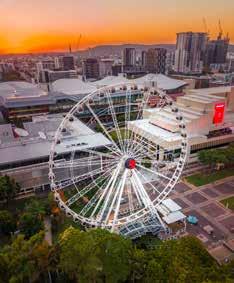
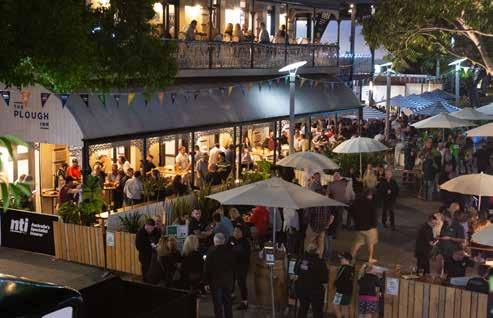
tiger prawns or roasted potatoes DO go on pizza. Extremely popular among foodies, so make a booking if you’re looking to dine in, though takeaways back to the hotel room will treat you just the same.
77 Grey Street, South Brisbane
Pig ’N’ Whistle, West End
Keen to wind down after a long day of buying trucks and trailers? Looking for a classic pub with hearty food and a good atmosphere? Then step across Merivale Street to the rear of the Brisbane Convention and Exhibition Centre and enjoy the Pig ‘N’ Whistle.
The iconic British-styled pub has a few
locations around Brisbane, but the one near the Truck Show is probably the best.
Good for watching a footy game, feasting on classic pub-grub (Beef and Guinness pie is a winner) and a refreshing pint, the Pig ’N’ Whistle is winner if you’re after that no-fuss kind of night.
Merivale Street, South Brisbane
Rose & Crown, South Brisbane
Tucked between the impressive Emporium Hotel and Southpoint Tower is the equally impressive Rose & Crown Gastro-Pub.
This heritage-listed Queenslander has been lifted and spectacularly renovated into one of the area’s most spectacular pubs.




















































Like the Pig ‘N’ Whistle, the Rose & Crown is British-inspired but with a posh twist.
Motivated by decades in the UK, owners Alex and Bella Derricks wanted to create the feel of a good British pub where regulars love bringing friends to their local and staying up later than they should.
Impressively, it’s the only pub in Queensland to offer traditional hand-pulled traditional ale direct from the cask.
Pop up to its amazing balcony for its Sunday roast.
275 Grey Street, South Brisbane
The Charming Squire, South Bank A Brisbane Truck Show favourite, the Charming Squire brewhouse is a must-visit if you’re new to show.
Serving the well-known line of James Squire beers, the Charming Squire’s stunning fit-out and large entertaining space makes for a popular venue to host a function.
Winner of eatSouthBank’s 2024 foodie award for best bar, you can find the Charming Squire right at the front of the Truck Show venue’s doors on Grey Street, making it one of the closest establishments to the venue.
Get in early to find a table, because it’ll be one of the busiest venues in town (rightfully so).
3/133 Grey Street, South Brisbane

Brisbane boasts an amazing pub and bar culture in and around South Bank
The Plough Inn, South Bank
What makes the Brisbane Truck Show special is how the trucking world takes over the city. Once the doors shut, South Bank and the nearby suburbs come alive with the transport industry.
Iconic Brisbane pub, The Plough Inn, knows how to embrace the transport industry. Year after year, people flock to the pub post-show to take in the atmosphere it provides. Street parties, corporate functions, live music and a venue situated in
the heart of the South Bank Parklands, the iconic The Plough Inn is one of the River City’s most iconic watering holes.
Established in 1864 and placed on the World Heritage list in October 1992, this beautiful pub delivers a beloved historical charm with the modern extensions and comfort.
Like the Charming Squire, expect to see familiar faces, as this is a popular venue for truckies attending the show.
29 Stanley Street Plaza, South Brisbane
Brooklyn Depot (172 Grey Street, South Brisbane)
– Ripper burger joint
Chu the Phat (111 Melbourne Street, South Brisbane)
– One of the city’s best restaurants
Ramen Danbo (52 Merivale Street, South Brisbane)
– A fantastic spot for Ramen across the street from the BCEC
Southbeach (30aa, Stanley Street Plaza, South Brisbane)
– Hotspot for socialising, eating and enjoying a drink next to the famous South Bank beach
The Ship Inn (Sidon Street, South Brisbane)
– One of the oldest pubs and prettiest in Brisbane, beautiful spot along the river
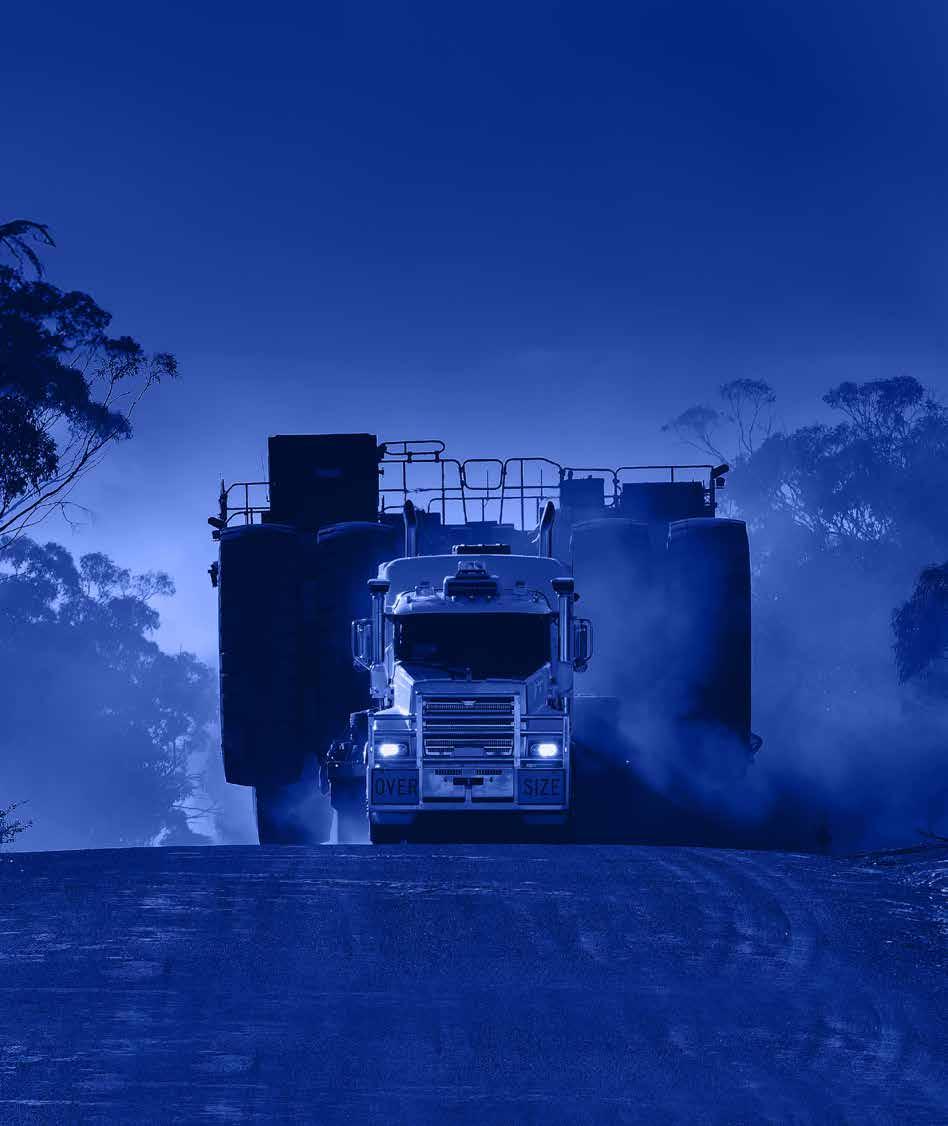

AI has come a long way since the last Truck Show and platforms like ChatGPT and Google’s equivalent Gemini have popularised the technology. Now, leading telematics providers are harnessing the unparalleled processing power of AI to take fleet management into the future
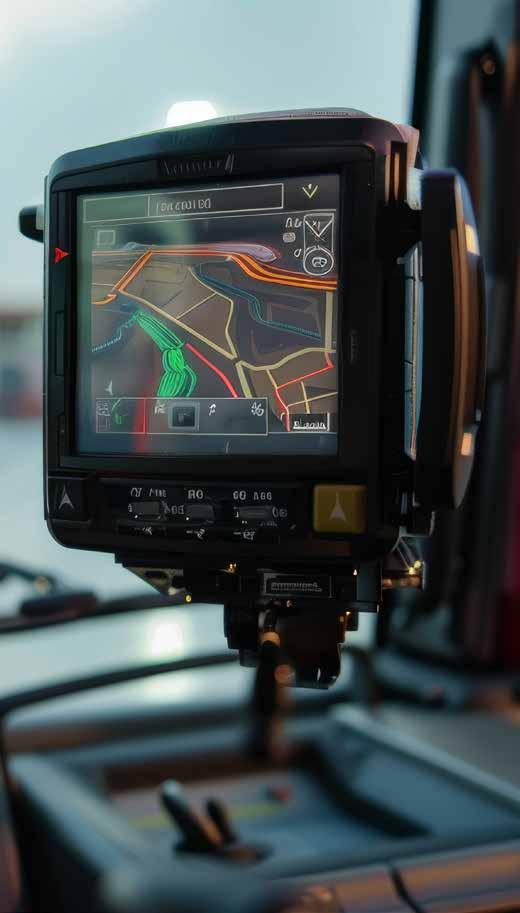
The 2023 Brisbane Truck Show was the first ever to feature artificial intelligence (AI) on a number of stands, which promised to capture and interpret large amounts of data to improve efficiency, safety and overall fleet management.
However, AI has come a long way since the last show and platforms like ChatGPT and Google’s equivalent Gemini have popularised the technology.
Now, leading telematics providers are harnessing the unparalleled processing power of AI to take fleet management into the future.
A major shift is coming, explains Webfleet Marketing Manager for Australia and New Zealand, Scott Elkington, that can be likened to that which occurred during the ‘dot-com’ boom.
Imagine being able to unlock the hidden secrets lurking within your fleet’s data, improving safety, productivity and ultimately profitability – all with the click of a mouse.
“Do you remember when Google came along? This is like the next Google,” he suggests.
“It changed the scope of things, being able to use Google to find things out. AI is going to be like that. It’s not going to replace people, but fundamentally we’ll do whatever we can to save time and make our jobs easier and better, which is where AI comes in.”
The biggest change for fleet managers across the past decade is the incredible amount of data being collected. Running a successful fleet has never been a more complex undertaking, but AI promises to unlock the true potential of telematics by giving an average fleet manager more computing power than the entire nation had a decade ago.
“Do you remember when Google came along? This is like the next Google.”

“Back in the day we were looking at fuel efficiency and how people drove the truck, but now there’s so much data being collected – how do you make sense of it all?” Elkington asks.
“Well, AI can come in and say, ‘these are all the things that we’ve noticed over three months that you can improve’ and it can make suggestions as well. It will look at the data on how people drive and all those sorts of things, and you might get another three per cent here or another 10 per cent there in terms of fuel savings or other efficiencies – it all adds up.”
In simple terms, Elkington explains that the technology allows fleet managers to “stay a mile wide and an inch deep”, while AI trawls and analyses massive quantities of data collected out on the road.
“There is all this data coming in from all these different places, so AI lets you, as a person, stay a mile wide and an inch deep – but the AI will then go a mile deep for you,” he says.
“So with our AI Assistant that we launched recently, which is similar to something like ChatGPT but inside the Webfleet platform, you can ask it questions. You could say, ‘give me the driver with the highest average speed across the last month’, and it’ll pull that data for you from all of the data available. It’s enabling you to track more without having to track more things, if that makes sense, so you’re not having to pore over data sets.”
The job of the fleet manager will therefore become focused on higher-level decision making, while AI
handles the data analysis side of things. The advice Elkington is giving fleets, though, is to get in early to start taking advantage of the technology.
“It’s just there to make your life easier and it’s going to become a major part of how we do things,” he says.
“So you may as well get in at ground floor and set some good rules around how you use AI.”
While driver monitoring systems, in various forms, have been around for a decade or more, AI will unlock the ability to monitor more than ever – using large amounts of data to inform safer, more fuelefficient driving.
“You can only improve what you can measure, and there’s now so much you are able to measure,” Elkington says.
“Originally telematics was just vehicle tracking –‘where’s my truck, it’s here, brilliant’. Now it’s about who’s driving, how they’re driving, whether they are harsh braking, steering or accelerating, excessively idling, and things like mobile phone use or distracted driving.
“That’s where AI starts to help, because it can measure and monitor so many of these things over a long period of time – we’re just not capable of processing it all as people.”
It isn’t just transport companies that stand to gain from the AI smarts in the latest telematics systems either; road managers will soon be able to utilise data to assess routes, upgrades and asset management.
“With any Webfleet-connected vehicle we can look at the commercial journeys through a given area,” Elkington says.
“Let’s say you’re a local government area (LGA), you could take the anonymised dash-cam footage from the 40,000 vehicles that drive through there each day and run it through AI road condition monitoring to identify potholes or deteriorating surfaces.
“It’s really useful for anyone who does a lot of off-road, councils or mines where they have private roads. We can also look at things like crash hotspots too. You just couldn’t get a human to analyse 10,000 hours of driving footage each day, but this technology gets rid of all those human hours and lets the human do the executive function.”
Data sharing is a point of contention as telematics providers gather and store large quantities of sensitive information. Many of the standard AI platforms don’t offer the level of data sovereignty required by transport fleets, because the various ‘AI engines’ learn from and then share the information fed to them.
“As fleet managers or operators, we handle some very sensitive data like customer addresses, goods


• Woven Rolls
• Moulded Rolls
• Disc Rotors
• Brake Drums
• Clutch Facings
• Riveting Machines
• Disc Pads
Truck, Bus and Commercial Vehicle
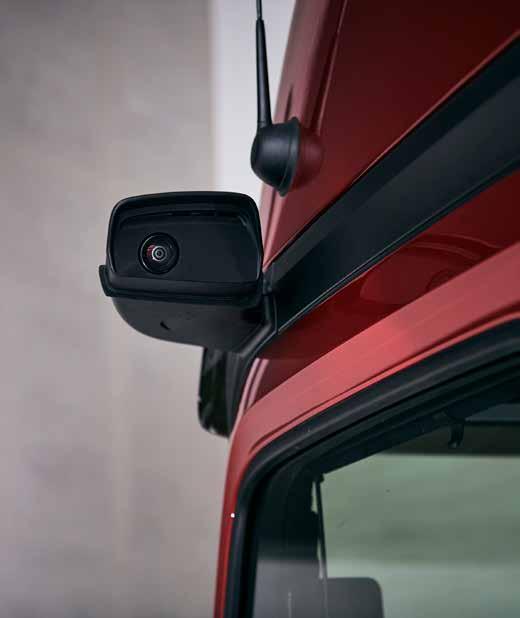
transported, all the commercially sensitive stuff,” Elkington says.
“If you put anything into ChatGPT for example, to summarise something or produce a report, you breach your data policy immediately. People need to understand that while these AI models are available and they’re becoming increasingly used in general business, there’s a massive risk to every operator’s data sovereignty.”
The solution, Elkington explains, is to choose an AI platform that is ‘locked down’ and does not share information externally – which many of them don’t.
“Our system is locked down, like a walled garden, which helps you maintain control of your data,” he says.
These aren’t technologies of the distant future,
“It’s not going to replace people, but fundamentally we’ll do whatever we can to save time and make our jobs easier and better, which is where AI comes in.”
Fleet managers now have access to a massive amount of data being collected via a range of technologies, including in-cab and outside-cab camera systems
with various AI-powered solutions available right now in Australia. So what AI-powered systems can you use to supercharge your fleet, today?
Webfleet
Bridgestone Mobility Solutions has rolled out a portfolio of AI-powered systems, with its Webfleet (formerly TomTom) telematics solution forming the centrepiece of its futuristic fleet offering.
Webfleet is a cloud-based suite of fleet management software and while it is already the market leader in Europe, the company is gaining traction in Australia with its comprehensive solution – monitoring everything from mileage to driver distraction.
“So Webfleet is the entire solution, with dashboards that have AI-powered reporting, and if a vehicle’s onboard systems doesn’t have the data, we have devices like dash cams or accelerometers,” says Elkington.
“We have AI in devices already, our dash cam most notably, plus a lot of our data processing within the fleet management solution runs through AI and machine learning models. We also have driver-aids and apps linked in – vehicle apps, logbooks and POD terminals.”
An exciting addition to the Webfleet functionality is a new AI Assistant, which Elkington says will be available by the time Brisbane Truck Show rolls around.
“We recently launched the AI Assistant within our cloud solution, which is currently in beta testing with customers, but by Brisbane Truck Show it’ll be available for everybody to use,” he says.
“It’s an incredibly powerful search engine that you can use like you would ChatGPT, but the key is that it’s actually inside your Webfleet so you have a lot of data protection.”

According to global research from Webfleet, Australia is among a handful of the most AI-curious countries with 60 per cent of fleet managers claiming they already use or intend to use AI. It’s no surprise then that Webfleet is bringing its latest AI-powered solutions to the 2025 Brisbane Truck Show.
Teletrac Navman
At the 2023 Brisbane Truck Show Teletrac Navman showed its revolutionary AI-powered dash cam, the IQ Camera, which monitors driver behaviour by analysing a series of metrics in real time.
The IQ Camera watches for behaviour like mobile phone use, erratic movements and concentration on the road ahead, using AI to help drivers remain
focused. It also watches the road ahead, looking at things like following distance and lane adherence. While the camera watches for a range of behaviours, its ability to continuously monitor fatigue indicators like eye closure, head position and other signs of drowsiness makes it a seriously powerful safety companion.
“By seamlessly integrating driver positioning, facial and physiological measurements, alongside driver assistance metrics that analyse and detect outwardfacing actions like following distance, lane adherence and harsh manoeuvring, these devices provide real-time alerts and insights to reduce the likelihood of incidents and promote the well-being of drivers,” says Teletrac Navman Chief Product Officer, Andrew Rossington.
The IQ Camera can offer fleets a competitive edge, Rossington says, using AI and real-time video data to improve overall fleet performance.
“Fleet managers gain real-time footage alongside data insights and are empowered to protect their drivers and gain a competitive edge to win new business,” he says.
Teletrac Navman has since combined AI-powered natural language processing with real-time video and sensor data to unlock the full potential of telematics through its T360 platform.
The TN360 system now offers an AI-powered natural language search function that is able to provide key insights on productivity, safety, maintenance and overall workflow – all from a laptop.
Geotab
Geotab is a global telematics powerhouse, connected to more than 3.5 million vehicles with more than 55 billion data points gathered each day – but it’s also a key player in the AI arena.
The company recently unveiled its Geotab Ace generative AI copilot, which is integrated into the MyGeotab telematics platform, capable of processing immense quantities of data to produce predictive safety analytics, predictive maintenance, trip data, exception events and more.
“Geotab Ace represents not just an evolution in fleet management, but the next step in harnessing the power of trusted data,” Geotab VP of Data and Analytics, Mike Branch, says.
“By bringing the intuitive simplicity of conversational AI directly into the Geotab platform, we are transforming the way fleets interact with their
AI-powered dash cams monitor driver behaviour by analysing various metrics in real time and alert fleet managers to take action when required
“It’s an incredibly powerful search engine that you can use like you would ChatGPT, but the key is that it’s actually inside your Webfleet so you have a lot of data protection.”
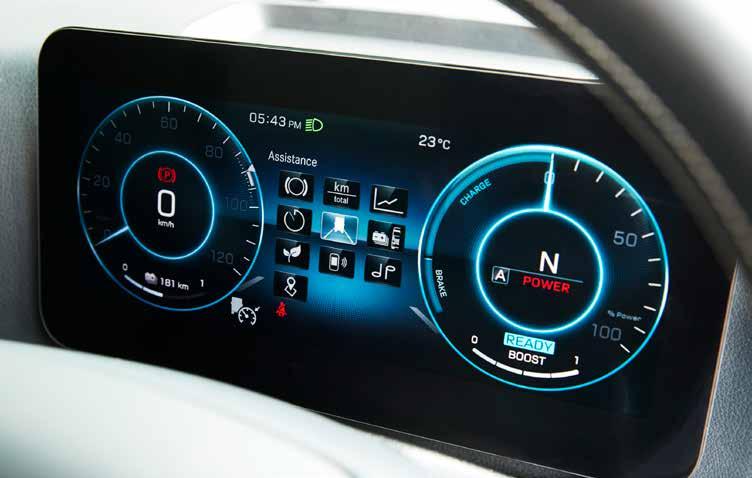
data, crafting a future where insights are immediate, intelligent and instrumental to success.”
The Geotab solution is also compatible with thirdparty AI-powered dash cams, which allow the system to predict imminent collisions and send instant in-cab feedback to drivers – before an incident occurs.
Many of the age-old problems facing the transport industry can be solved using AI, which can be likened to having a world-class team of data scientists ready to work for your business at the click of a button. It will, however, be critically important to use closed-loop AI systems that don’t breach data security or introduce cyber threats to your operation.
The 2025 Brisbane Truck Show will provide the most technologically advanced showing of solutions yet, and the exciting part is that much of the technology is available to your fleet now.
At the next show, consider how AI can work for you and your transport operation behind the scenes – 24 hours a day, seven days a week – harnessing the technology of tomorrow.


Australian road transport companies want to become more sustainable and more efficient, but how and where should they start the journey? The answer is telematics
story
David Brown I images supplied
The automotive industry is a major contributor to global greenhouse gas emissions. In Australia, the transport sector is the thirdlargest source, contributing 21 per cent of national emissions in 2023.
Since 2005, transport emissions have risen by 19 per cent and are projected to become the largest source by 2030. Heavy vehicles are significant contributors to this total.
The Australian government aims to reduce greenhouse gas emissions to 43 per cent below 2005 levels by 2030 and achieve net-zero emissions by 2050.
Australian businesses will be expected to do their part, particularly in the transport sector. But sustainability is an opportunity for many fleet managers, because a more sustainable approach could also improve the bottom line.
The path to fleet sustainability If you ask people what “sustainability” means to them, you often get different answers. But there’s a clear set of goals when it comes to fleet sustainability. The aim is to reduce the environmental impact of fleet vehicles and in particular emissions.
Companies want to become more sustainable, but how and where should they start? The answer is telematics.
Leveraging Geotab’s connected vehicle technology helps fleet managers support their sustainability goals in a variety of ways.
Businesses can use data insights to set fuel economy standards across their fleets, which they can benchmark to similarsized fleets in their area. Vehicle tracking allows for route optimisation, which helps businesses reduce fuel costs.
Telematics can also help reduce idling and determine the right-size vehicles for the job,
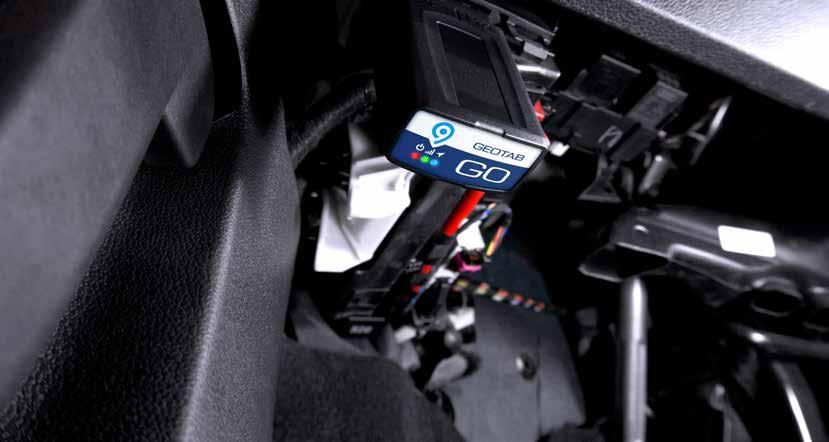
Geotab’s connected vehicle technology helps fleet managers support their sustainability goals in a variety of ways
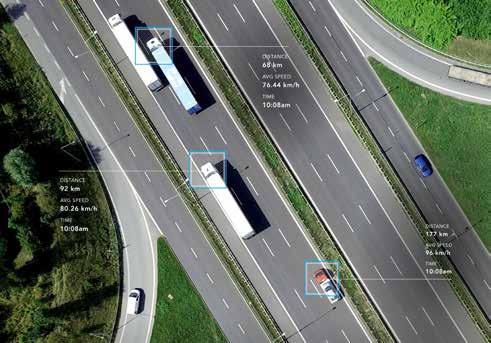
so larger vehicles that use more fuel aren’t deployed unless they’re needed. With telematics, businesses can set and enforce driver behaviour standards, set speed restrictions and practice preventative maintenance, all of which further increase efficiency.
These initiatives don’t just help the environment, they also help businesses manage their costs. The fuel economy of a vehicle plays a significant role in the overall operating costs of a fleet, accounting for approximately 60 per cent of the total.
A key part of addressing emissions is making the switch to electric vehicles (EVs). EVs have dramatically increased in popularity in recent years. According to the International Energy Agency, almost 14 million new EVs were registered globally in 2023, bringing their total number on the roads to 40 million. This is more than six times higher than in 2018. So far, most of these are light vehicles. Trucks currently lag far behind, but uptake is expected to grow significantly over the coming years, especially for short-haul, pick-up and delivery trucks, which do short distances and can be recharged at the depot at the end of the day.
Governments, who have emissions targets to meet, recognise the role that a reduction
in transport emissions could play. For this reason, many are offering incentives to make the switch. Businesses also see the advantages.
In addition to being emissions-free, EVs are also cheaper to operate. As a rule, charging an EV costs less than filling up at the bowser, and the maintenance costs are generally lower too because they have fewer moving parts.
Before you can start adding EVs to your fleet, it’s important to understand your needs. Using telematics will provide access to the fleet’s driving data points and help determine where it makes sense to electrify. It provides vehicle recommendations based on the models available in your region, as well as the projected cost savings and avoided CO2 emissions.
In practical terms, fleet managers don’t switch over entire fleets at once. They tend to consider switching to EVs when they retire a vehicle. Telematics can help, making it easier to choose which vehicles need to be replaced and which EVs are the best replacements.
Geotab even has a telematics solution that enables fleet managers to benchmark EVs against those in similar roles in their area.
Fleet managers are often under pressure to reduce costs and increase efficiency. The great
advantage of pursuing a sustainability strategy is that it tends to tick both of these boxes.
Sustainability-focused telematics solutions make the switch better still, because they can be packaged with other solutions that help businesses save and operate more efficiently.
For example, if a business operates heavy vehicles they can use Geotab’s fuel management options as well as partner Logmaster’s electronic work diary, which can help to improve safety and reduce compliance costs.
Geotab’s fuel solutions can be paired with a solution from KPMG that helps calculate fuel tax credits. For some businesses, these rebates can run into hundreds of thousands of dollars, and on their own can save more than the cost of any telematics solutions.
And that’s before factoring in the cost of time needed to calculate fuel tax credits.
“Businesses can use data insights to set fuel economy standards across their fleets, which they can benchmark to similarsized fleets in their area.”
Get ahead of the curve
The urgency of climate change and the need to reduce emissions makes it more important than ever for businesses to start their sustainability journey. Sustainability isn’t just a win for the environment. With telematics it can be a win for business too. Businesses should act now. By integrating advanced analytics with telematics expertise, companies can develop sustainable transportation solutions while also driving business efficiencies.
For more information on this topic visit: geotab.com/au.
*
David Brown is Associate Vice President, APAC, Geotab.
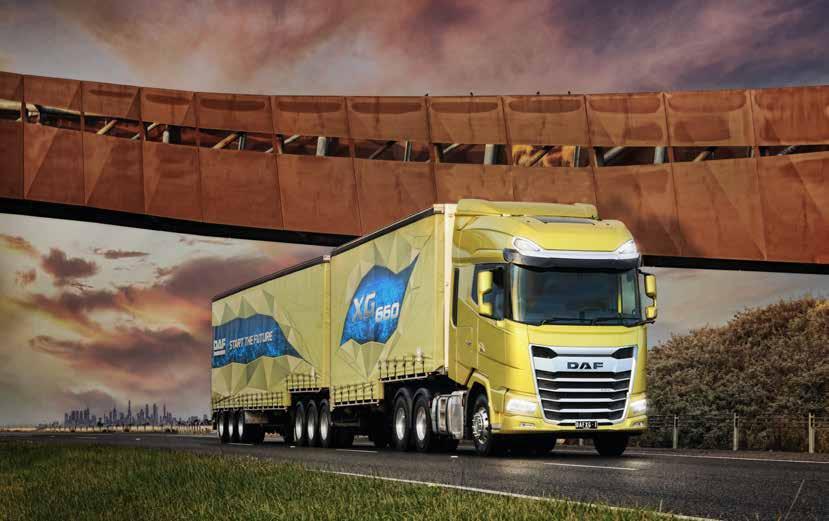
Driven by quality, inspired by proven technology and forged in the fires of the most comprehensive validation program in PACCAR Australia’s history, the all-new DAF XG and XG+ offer a future without compromise. The future starts now!
DAF Trucks Australia’s new flagship models, the DAF XG and XG+, are likely to take centre place at PACCAR Australia’s 2025 stand.
The all-new models come equipped with the powerful 15-litre PACCAR PX-15 engine delivering 660 horsepower.
The models are the result of an Australian-led project, working with global PACCAR engineering teams and industryleading supplier partners.
Driven by the ambition to create the most productive line-haul truck possible, the team has combined the superior safety, luxury and aerodynamics of an all-new
cab with a next-generation engine that delivers the power and torque Australian applications demand.
Ross Cureton, Director of Product Planning, says throughout development PACCAR was eager to extend the truck’s capability to suit high-productivity applications that make Australian transport so unique.
“Through PACCAR’s global powertrain partnerships, we identified the perfect combination to deliver a step forward in performance, fuel economy and durability, while preserving the outstanding comfort, safety and refinement of this nextgeneration DAF,” he says.
Brad May, Chief Engineer, adds, “It was critical for this project to be led by an Australian team that has decades of experience engineering products in our market. It’s about so much more than just the cab and engine.
“Putting all this together without diluting our design for other markets is the secret to making the XG greater than the sum of its parts, and that’s something PACCAR Australia has been doing for over 50 years.”
Revolutionary cab technology
DAF has taken a pioneering step with its latest-generation cab design, being the first
manufacturer to leverage updated European regulations on cab dimensions.
The cab features a redesigned front grille for improved cooling and aerodynamics, 220-litre toolboxes on both sides, and easy access with three evenly spaced steps.
Both the XG and XG+ showcase elongated, aerodynamic cabs that not only enhance driver visibility but also significantly improve comfort and space.
The tapered cab narrows vertically at the front and widens gradually towards the back, enhancing aerodynamic performance, efficiency and fuel consumption.
This efficiency is further enhanced by innovative features such as closed wheel arch covers, the design of the side mirrors and an extensively curved windscreen.
The interior of the DAF XG and XG+ reflect a luxurious vehicle aesthetic, with highquality materials and finishes throughout.
Drivers will enjoy the high-end feel and convenience of the modern steering wheel, which can operate the various functions of the premium 12-inch central screen. To the left of the steering wheel, there is a 10-inch display that provides access to the Infotainment System featuring Apple CarPlay, Android Auto, navigation and more. They feature exceptional soundproofing, along with enhanced front suspension and damper design that minimise vibration in driveline, seats and steering.
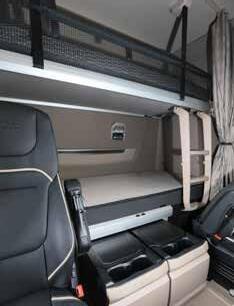
The new-generation cabs provide excellent accommodation, with sizable room to stand upright and plentiful space behind the wheel and throughout the cab. The rear cab area features a generously proportioned lower bunk.
The extended length and flat floor of the new cabs also contribute to greater driver comfort and freedom of movement. Both boast standing heights of over two metres.
Integrated into the dashboard is a retractable table perfect for working or enjoying a meal. There is also a generous storage tray for documents – as well as plentiful storage in the roof console, on top of the dashboard and in the door pockets.
Inside the sleeping area, the XG+ boasts dual underbed refrigerator drawers, while the XG features one refrigerator drawer and one storage drawer. Both the XG and XG+ also offer generous space for a microwave and TV, along with additional provisions for phone storage and charging.
The rear wall panel is a multi-functional control centre to manage lighting, temperature, windows and roof hatch from the bed.
Both models come equipped with an 800mm by 2,220mm fully rectangular lower bunk for a restful night’s sleep. The XG+ takes it a step further with its lower bunk featuring a electric adjustable bed.
Additionally, the XG+ includes an added top bunk and air suspended passenger seat ideal for two-up driving.
The PACCAR PX-15 sets a new standard for performance and efficiency. The Euro 6-compliant engine platform with a sculpted, ladder frame-style block significantly enhances the performance levels of the 15-litre engine. The PX-15 patented architecture allows it to operate at higher cylinder pressures, resulting in impressive performance – 660hp at 1,800rpm and 3,200Nm torque between 900-1,400rpm. This exceptional performance reduces fuel consumption, enhances durability and improves driveability.
To harness the high torque, the Australian XG and XG+ are equipped with the ZF TraXon 16-speed automated gearbox.
The new-generation trucks offer the most extensive range of active and passive safety features ever provided by DAF.
Both models feature a 285-degrees corner view camera that reduces blind spots on the passenger side and front of the vehicle.
The new models come with DAF’s full suite of safety systems as standard, including vehicle stability control, adaptive cruise control, lane departure warning and an advanced emergency braking system.
After an extensive validation program, the XG and XG+ are available to order now, for production from January 2025 onwards.
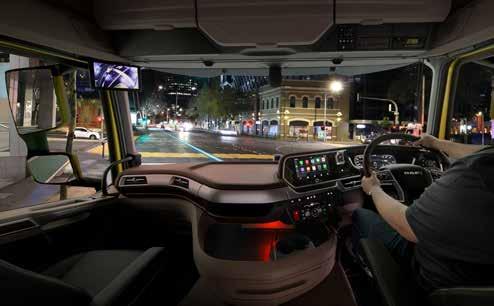
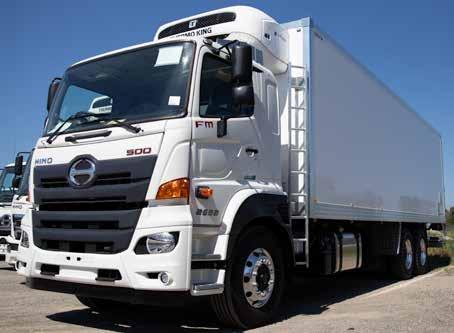
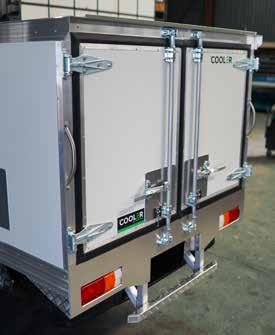
Ahead of its participation in the 2025 Truck Show, the Cooler team provide a low-down on the pros and cons of Fiberglass Reinforced Polymer versus Cold Room Panels for refrigerated truck bodies
Material selection for refrigerated truck bodies can significantly impact operational efficiency, cost and longevity. Fiberglass Reinforced Polymer (FRP) and Cold Room Panel (CRP) have distinct advantages and disadvantages. This analysis aims to guide decision-making in panel material selection.
Fiberglass Reinforced Polymer
Advantages
1. Thermal efficiency: FRP panels excel in thermal performance, largely influenced by high-quality foam, making them ideal for temperature control and energy efficiency.
2. Durability and impact resistance: FRP’s resilience to minor scrapes and impacts leads to reduced repairs and a longer lifespan for the truck body.
3. Internal space: Thinner FRP panels provide increased space, accommodating wider cargo.
Disadvantages
1. Higher initial investment: The upfront cost
of FRP is greater than that of CRP, which can be a factor for cost-conscious clients.
2. Repair costs: Repairs are often more expensive and time-consuming, leading to higher costs and extended downtime.
3. Mass considerations: While lightweight, FRP panels may still be heavier than CRP panels, potentially impacting payload efficiency.
Cold Room Panels
Advantages
1. Cost-effective: CRP’s affordability makes it appealing for businesses with limited budgets.
2. Ease/cost of repairs: CRP panels are quicker and cheaper to repair, minimising operational disruptions and reducing ownership costs.
3. Lightweight: Lighter CRP panels enhance vehicle performance and fuel efficiency.
4. Speed to market: CRP panels are more readily available, allowing for quicker deployment.
Disadvantages
1. Thermal insulation: CRP panels offer
effective, but inferior thermal insulation compared to FRP.
2. Durability: CRP panels can be slightly more susceptible to minor damage, though this can be mitigated with protective surfaces.
3. Space efficiency: The thicker nature of CRP panels decrease internal space.
Conclusion
Choosing between FRP and CRP depends on specific operational need, budget constraints and performance requirements.
Generally, we recommend FRP for vehicles over six-pallet size. However, CRP panels offer effective thermal performance at a lower cost and can be manufactured quickly.
Evaluating these factors will help businesses select the most suitable material for their refrigerated transport needs. Contact the team at www.cooler.au or 07 3848 6979 for guidance on your build; we have vast design and manufacturing experience to support anyone with a fit-for-purpose asset.
Designing and building for our customers specific needs for over 40 years.
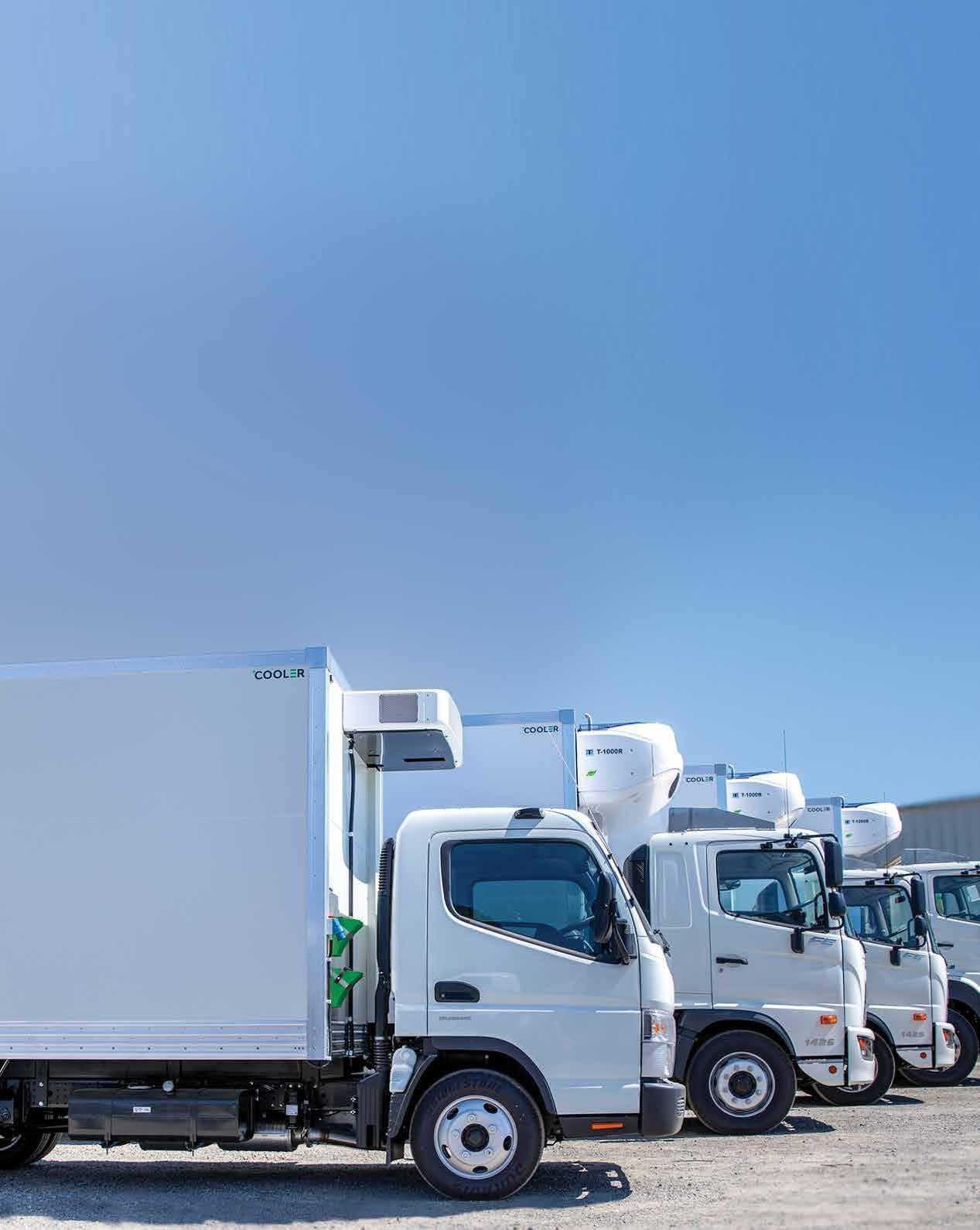
Cooler is Brisbane’s most comprehensive Transport Refrigeration manufacturer and service provider, supporting cold chain logistics. Our Certified Technicians, Chartered Engineers and advanced facilities ensure the best service and builds.
Call us on 07 3848 6969 to discuss your needs or visit www.cooler.au for more details.
• Utes to 16 Pallet
• Heavy Rigids
• Van Conversions
• Mobile Cold Rooms
SERVICE
• All Transport Refrigeration, from Utes to Semi-Trailer repairs
• On-site service
• All Fridge Brands
• Mitsubishi Specialists
REPAIR
• Any Truck Body
Knorr-Bremse
As the global leader in braking systems and critical safety solutions for commercial vehicles, KnorrBremse is set to make a significant impact at the 2025 Brisbane Truck Show.
Building on the momentum from the recent IAA Transportation show in Germany, the company’s booth will feature groundbreaking technologies aimed at enhancing road safety and efficiency.
At the heart of the display will be wheel end and brake control systems, Advanced Driver Assistance Systems (ADAS), air supply
and treatment systems, as well as innovative trailer products for wheel end, driver assistance and chassis control.
Innovations such as the award-winning iMass Smart On-Board Mass system, which provides industry-leading accuracy of combination mass data in real time, are designed to enhance safety and efficiency for Australian fleets and will be on display.
Visitors can look forward to interactive


exhibits showcasing the latest products and next-generation solutions.
Come and visit the team at KnorrBremse’s stand to explore how its safety solutions can transform Australia’s commercial vehicle industry – and engage with its multimedia displays and learn more about its extensive service partner network that ensures proper maintenance of vehicles.
truck.knorr-bremse.com/en/au/

First launched at the 2023 show, Airtec will showcase several new time-saving developments of its ground-breaking AXS SmartOBM
It’s been almost two years since Airtec unveiled its ground-breaking AXS SmartOBM technology at the 2023 Brisbane Truck Show and the innovation continues to gather momentum.
Designed to meet the evolving needs of fleet managers and drivers, the AXS SmartOBM units have revolutionised efficiency and ease of use in the industry.
Responding directly to customer feedback, Airtec has introduced several new time-saving developments. The AXS units now feature enhanced plug-and-play capabilities, ensuring quicker installation and operational readiness.
According to Director David Hewett, “The demand for our AXS system prompted us to develop a nearly seamless installation
solution, enhancing customer satisfaction through significant cost and time savings”.
Beyond hardware enhancements, Airtec has invested in refining its TruckOBM App, empowering drivers to manage and monitor weights conveniently from their cabs.
New features such as adjustable target weight indicators and device settings customisation enhance user experience and operational efficiency.
Airtec has responded to the industry’s shift toward using its tech to help operators improve safety and maximise payloads. This means fewer trips, making it a win-win for businesses looking to reduce costs and emissions.
In addition to product and technical
upgrades, Airtec has significantly expanded its local Australian support network, with a dedicated sales team now operating out of NSW.
Along with OBM’s, Airtec remains the leading supplier of digital tyre inflation solutions, offering a range of products to meet all needs – from heavy vehicle tyre maintenance in workshops to high-flow systems designed for OTR requirements on the job.
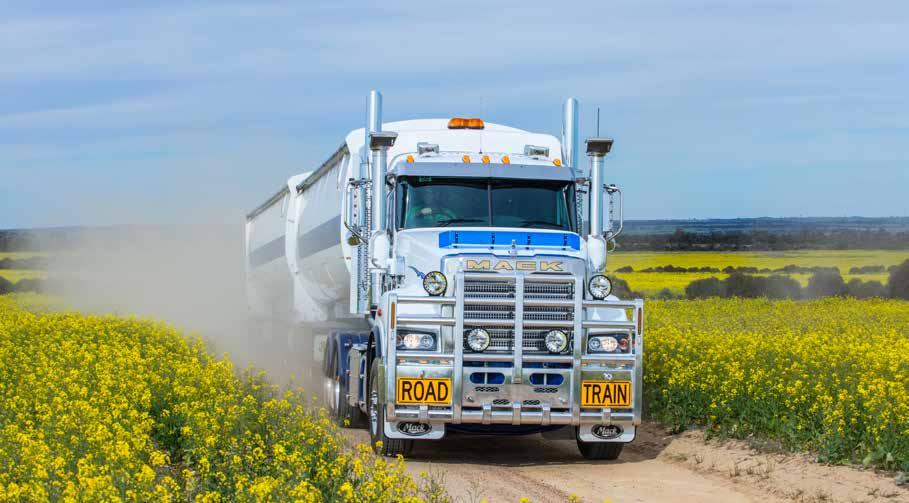
Volvo Group’s leadership in the race to decarbonise the transport sector will be on show at the 2025 Brisbane Truck Show, with new fuel-efficient ICE models on display alongside its growing range of zero-emissions battery-electric trucks
When it comes to decarbonising Australian road transport it’s very clear that there’s no silver bullet!
Volvo Group both globally and locally has been very vocal about its commitment to decarbonising transport, adopting Paris Agreement targets of net zero by 2050. The company’s more immediate task is to reduce its own emissions by 50 per cent by 2030, no small task indeed.
Volvo Group know that trucks generate about seven per cent of the world’s carbon emissions, and transport buyers are demanding cleaner transport solutions. By offering a range of solutions on the path
to a fossil-free future, Volvo Group Australia is aiming to offer a range of real-world lowemissions and eventually fossil-free solutions across all three of its brands.
However, the first step on the path to a sustainable future is to burn less fuel in the first place.
The recently launched Euro 6 Mack Anthem with the fuel-saving MP8HE engine is a great example. This truck offers a real-world step towards harnessing a combination of turbo compounding and aerodynamics to reduce fuel burn.
For long-haul cab-over customers the new Volvo FH Aero also tackles drag reduction with a sleeker, slipperier take on the Volvo
flagship which features drivelines from electric to high-horsepower diesel.
The arrival of a new high-horsepower Euro 6 17-litre engine, the D17 for Volvo and the MP11 for Mack, might seem to fly in the face of a discussion regarding fuel efficiency. However, having a prodigious amount of power and torque on tap for heavy loads also opens the door for taller gearing, reducing cruising rpm on the open road and making another contribution towards reducing fuel burn and emissions.
For the shorter haul, the dependable UD Quon has long been ahead of the curve in the emissions game having featured a drivetrain that has exceeded Euro 6
“The first step on the path to a sustainable future is to burn less fuel in the first place.”
emissions regulations since 2017. The GH11 engine now features redesigned wave top pistons and low-drag cylinder liners to increase fuel efficiency even further.
Another step available for operators wanting to start their decarbonisation path sooner rather than later is the emergence of biofuels. All ICE-powered vehicles from the VGA stable are able to run on HVO100, a renewable biofuel. In fact, all trucks featured on the VGA stand at the 2023 Brisbane Truck Show were fuelled by HVO100.
One of the attractions of HVO100 is that it can run in most modern diesel vehicles, and it knocks out up to 90 per cent of wellto-wheel emissions. It can also be run as a blend as well.
This makes HVO100 a great starting point, however, it’s worth noting that while it is a biofuel it still creates emissions when burnt in an internal combustion engine, which makes it a stop on the emissions journey rather than a destination.
From December 2024 all Mack and Volvo trucks built at VGA’s Wacol Qld factory will be first-fill HVO100. They will be delivered to customers with biofuel in their tanks.
Another important audience in the emissions conversation is input from the drivers that are operating the vehicles. According to VGA’s Driver Development team, improvements of 20 per cent or
more in fuel efficiency can be achieved by spending time with drivers and demonstrating the features and benefits of modern vehicles.
From understanding terrain-reading cruise control to letting engine torque do the hard work when hauling, these all have a significant impact on how much fuel any given vehicle will use. Getting buy-in from the person behind the wheel is a vital part of transport decarbonisation. This will become even more important with the arrival of alternative drivelines in the future.
With more and more electric trucks hitting Australian roads in a variety of applications, focus has also shifted towards the wider transport task.
Momentum is gathering within the 34 per cent of the Australian transport task that operates in urban areas, however, that
leaves another 66 per cent of the task to be dealt with.
Australia’s long distances and heavy loads may make fossil-free transport seem like a pipe dream. However, having a range of options for longer-haul transport in the pipeline will help that ambition become reality. Bio-fuels, gas, electric, hydrogen along with hydrogen ICE will all have a significant part to play in a low-emissions transport industry.
Volvo Group Australia is determined to be a leader in the transformation to a more sustainable future. It has a long heritage as an environmentally-conscious organisation committed to innovation.
By putting zero emissions and sustainable practices front and centre, the company is driving positive change for both customers and the environment.
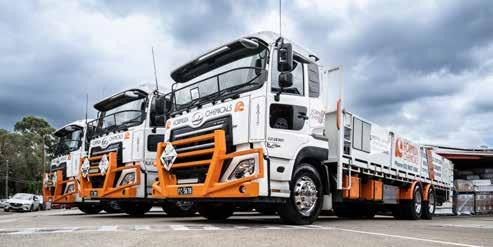
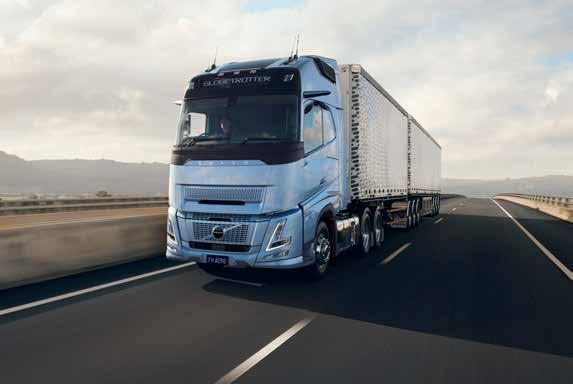
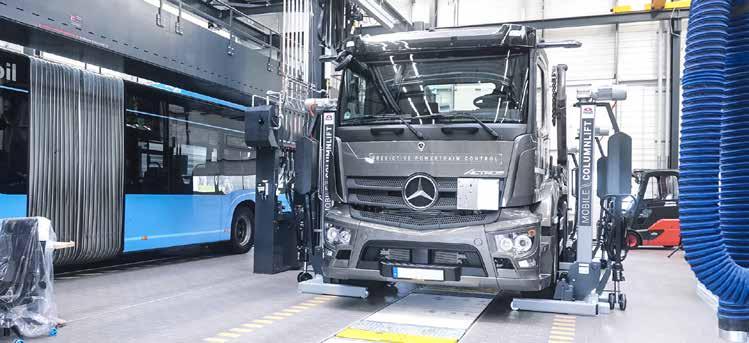
MAHA Australia will debut its new cutting-edge mobile column lift at the upcoming Brisbane Truck Show
MAHA Australia has chosen the 2025 Brisbane Truck Show to debut its new mobile column lift boasting cutting-edge features designed to enhance efficiency and performance.
In today’s competitive environment, workshops need to invest in smart equipment to stay ahead – and the new column lift delivers just that, says Mick Lauster, Managing Director of MAHA Australia, New Zealand and Pacific Islands.
“We’ve chosen the 2025 Brisbane Truck Show as the debut event for this innovative column lift in the Pacific region,” he adds.
“This mobile column lift empowers us and our customers to step into a digital future.”
Advanced features
The C_RGA mobile column lift combines smart connectivity with proven technology.
A lithium-ion battery, now standard, ensures more lifts with fewer recharges, while also reducing the lift’s weight
and size for greater mobility. Its double antenna system guarantees interferencefree operation, even in busy workshop environments.
Simplified pairing
The lift’s in-built LED control panel allows for operation of the columns individually, in pairs, or as a group.
Data is transmitted wirelessly with zero interference, and for larger workshops up to 16 columns can be linked via optional connecting cables.
Daisy-chained charging cables ensure continuous use without interruption.
Thanks to its electro-mechanical drive and maintenance-free worm gear motor, the lift offers precision height control without overrun.
Its oil-free operation creates a cleaner workshop environment and requires less maintenance.
Additionally, the lift’s slim design (just 180mm per column) and optimised chassis allow for easy manoeuvrability within tight spaces.
And its hydraulic dolly offers ground clearance of up to 85mm, making it ideal for all surfaces.
Safety is a priority for MAHA. The new lift features H-profile beams for mechanical rigidity and in the event of a load failure, independent locking devices engage automatically.
The universal lifting carriage accommodates wheel diameters from 550mm to 1.5 metres, making this lift suitable for a wide range of vehicles, including trucks and heavy-duty vehicles.
With a 7.5-tonne capacity, the new MAHA mobile column lift is designed to meet the needs of modern workshops, offering a combination of durability, safety and smart innovation.
Haulmark Trailers is returning to the southern hemisphere’s largest truck and trailer show for the first time since 1999
Haulmark – the host of the first-ever Truck Show back in 1968 – is returning to the southern hemisphere’s largest transport industry event in 2025.
It will mark the first time the specialist trailer manufacturer, which recently celebrated its 60th anniversary, has exhibited at the show since 1999 when the event was held at the RNA Showgrounds.
Prior to that it exhibited at every show from its inception in 1968 when the company – along with 20 other exhibitors – staged the first event at Haulmark’s premises at Ipswich Road, Rocklea.
National Sales and Marketing Manager Mark Johnston says it is looking forward to returning to the “phenomenal” event.
Sparking its return, he says, is the desire to showcase two new products with broader market appeal than its traditional range.
Over the past six decades Haulmark has built a reputation as a manufacturer of highquality trailers targeted at the livestock, earthmoving, mining, construction and general freight sectors.
“You evolve as you go and we have now got new products that we want to get out there and the Brisbane Truck Show is the best way to spread the news and connect with potential customers,” he says.
Among the new products is a live bottom floor trailer developed in conjunction with Canadian company Gincor.
Constructed with Hardox 450 wear-
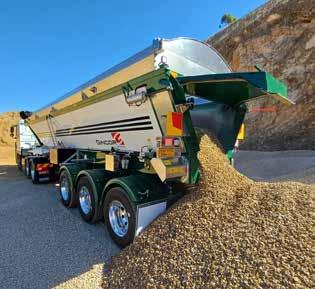
resistant steel plate and premium fibrestrand, moisture-resistant insulated walls, the units are ideal for asphalt/hot mix as well as other bulk products.
“We’ve got some [of the trailers] out there already but we’re now trying to ramp things up,” he says.
NEPEAN Transport Equipment will showcase its Australian-made brake testing and workshop equipment at the 2025 show
NEPEAN Transport’s clients rely on its Australian-made equipment to ensure safe and compliant operations, avoiding the risks associated with overheating components.
Two of its long-standing workshop units, with nearly a million combined truck movements, are due for a well-earned “brake”. These units have been in full-time operation for 10 years, working six days a week.
Recently, NEPEAN Transport clients upgraded to its latest in-ground brake testers. The swap-out is seamless, with the update completed in hours.
Both clients have trusted NEPEAN
Transport’s equipment across multiple sites for over 25 years – a testament to its commitment to high-quality, Australian-made brake testing and workshop equipment.
Speaking of brakes, NEPEAN Transport is excited to welcome new clients like Pat from 10 Four Trucks Repairs. Pat has taken delivery
of a custom vehicle inspection trailer which will expand his service capabilities.
After touring NEPEAN Transport’s factory and witnessing the craftsmanship behind its products, Pat reserved a production slot, and the company got to work building his customised unit. We’re thrilled to have Pat as a valued NEPEAN Transport customer.
NEPEAN Transport is proud to support businesses with reliable equipment, ensuring safety and success.
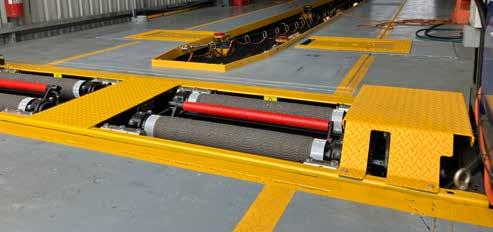
02 4647 6868 nte.team@nepeantransport.com nepeantransport.com.au
Australia’s leading automated wheel polishing, suspension and brake roller testing equipment for trucks, buses and trailers
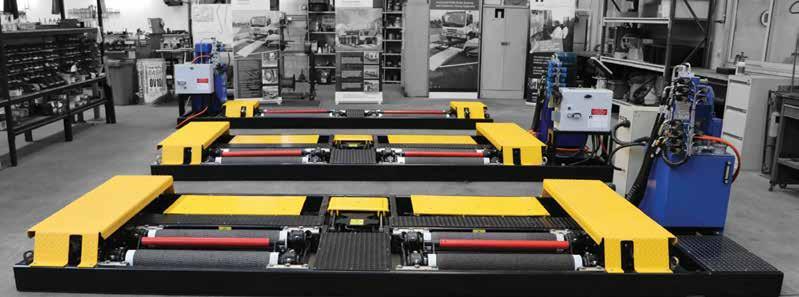
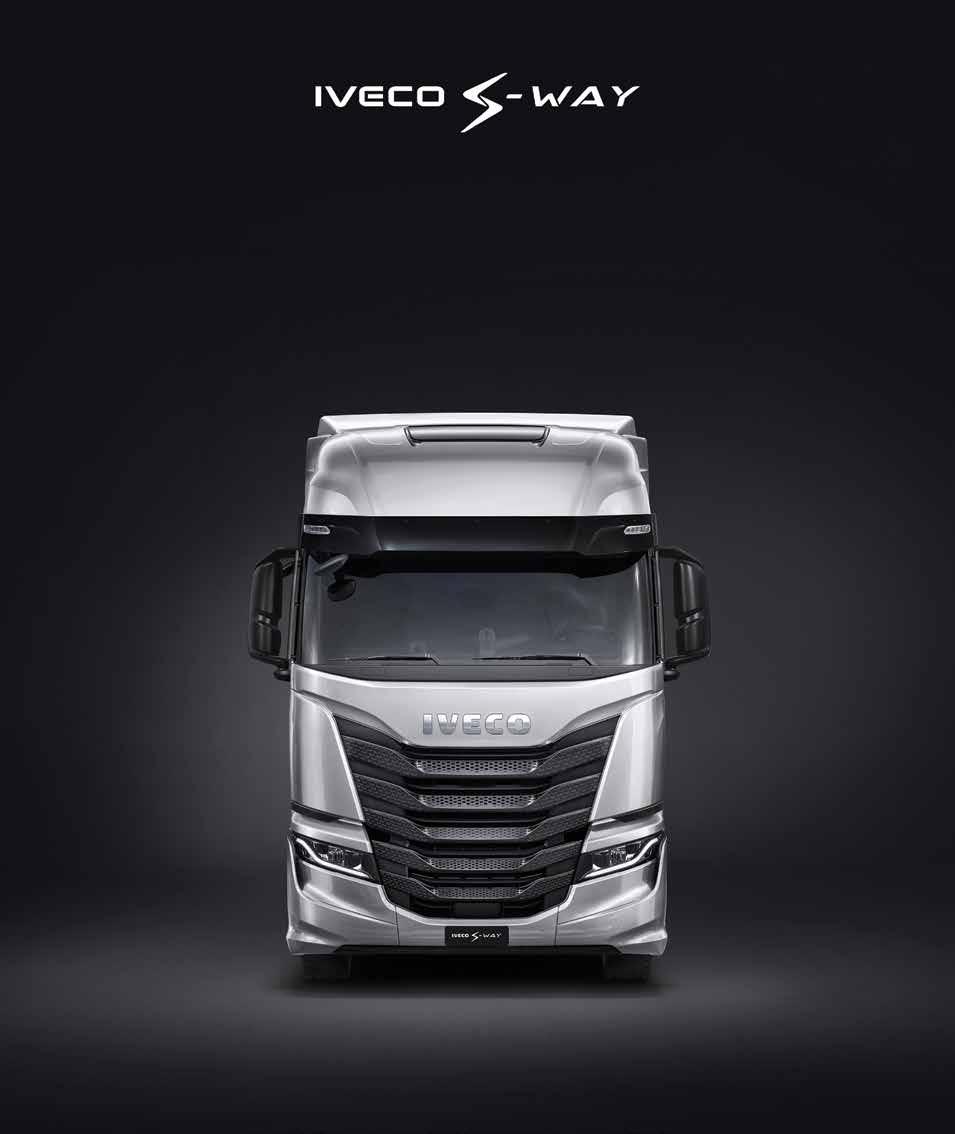


The support structures that keep truck wheels turning and generating revenue – including its premium aftersales experience, Isuzu Care – will be a key feature of Isuzu Trucks’ stand in 2025
With so much change afoot in the Australian transport sector, industry gatherings such as the upcoming 2025 Brisbane Truck Show couldn’t be timelier.
The opportunity to come together as a sector, and importantly, connect with the end-users of products, is super important for OEMs such as Isuzu Trucks.
Whilst the focus of such an event is weighted towards existing and emerging onand off-road product technology, it’s also a ripe opportunity to apply the microscope to a brand’s complete offering.
A truck is a tool of the trade for most, but most critical to an efficient transport operation is the framework behind the curtain – the support structures that keep the wheels turning and generating revenue.
Since entering the Australian truck market in the early 1970s, Isuzu Trucks has worked by the mantra of ‘continuous improvement,’ with a storied history leading the industry when it comes to the quality and enduring nature of its products.
This extends to Isuzu Trucks’ premium aftersales experience, Isuzu Care, which has been designed to place customers first
and anticipate their needs. The vast range of parts and accessories supplied through the Isuzu Dealer Network and Authorised Service and Parts Outlets is also part of this all-important aftersales equation.
There are no less than 35,000 individual line items available from Isuzu’s National Parts Distribution Centre in Melbourne.
This state-of-the-art facility is one of the largest truck parts and component sites in the southern hemisphere and a strategic asset in Isuzu’s meticulous planning for efficient parts turnaround, helping keep trucks on the road and out of the workshop.
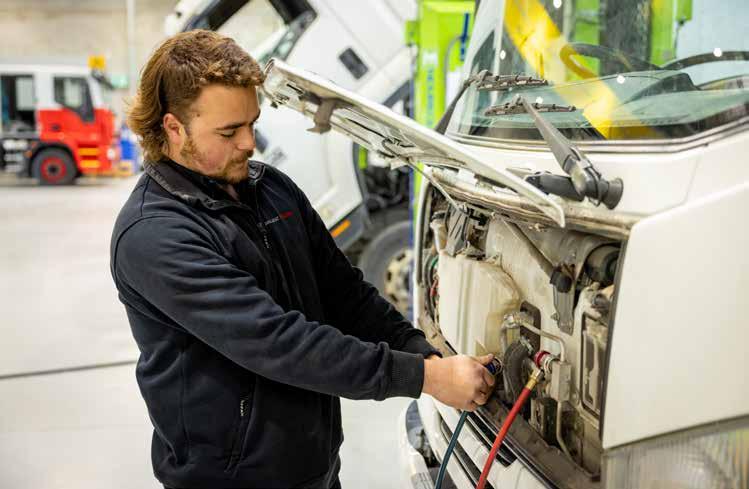
From fleet managers to owner-operators, the value of specifying genuine parts pays dividends when it comes time for scheduled service and preventative maintenance.
Regular servicing and preventative maintenance, carried out by skilled technicians, is regarded as the first step in keeping trucks in premium condition with many long-term operational benefits.
Building on that, utilising genuine products is key to maintaining fleet and operating standards. Genuine parts are far more than a sticker price; they support truck uptime and have the longevity and quality standards to perform to specification, every time.
Designed, engineered and manufactured exclusively for the OEM in question, specifying genuine parts should be a nonnegotiable for savvy operators who demand performance, productivity and who have compliance obligations in mind.
In the case of Isuzu Trucks, genuine OEM parts are also backed by a range of warranty provisions, which provide peace of mind for customers, alongside the knowledge of dedicated aftersales support and customer service.
The Isuzu Genuine Parts range is designed for Isuzu Trucks and engineered for Australian conditions. Given Australia’s diversity of environment and climate, parts fitted to trucks down under must be able to meet these unique challenges, whilst also delivering longevity and reliability.
In the case of Isuzu Trucks, constant improvement of componentry at the cutting edge of technology complements world-renowned Japanese design and
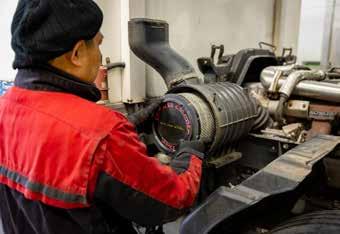
engineering. Adding to this mix is Isuzu’s rigorous testing regime, which ensures that every genuine Isuzu component, fitted by trained Isuzu technicians, will operate to the highest standards, under just about any level of pressure.
By comparison, some aftermarket or nongenuine parts are manufactured without the benefit of OEM engineering expertise or testing requirements.
In most cases, the short-term cost saving of opting for non-genuine parts will not reduce the whole-of-life cost of the asset in the long run.
“Since entering the Australian truck market in the early 1970s, Isuzu Trucks has worked by the mantra of ‘continuous improvement’.”
Compatibility can be a genuine issue in this instance, meaning some non-genuine components have the potential to wear out faster or even fail, potentially contributing to performance issues impacting efficiency and the ability of capital equipment to do the job it’s been engineered to do.
Isuzu offers a generous three-year warranty on its Genuine Parts range when fitted to Isuzu trucks through its network
The vast range of parts and accessories supplied through the Isuzu Dealer Network and Authorised Service and Parts Outlets is a crucial part of the all-important aftersales equation
of dealerships and ASPOs. This also covers workmanship conducted on the vehicle.
A 12-month (unlimited kilometres) warranty is applied if operators opt to purchase over the counter and have parts fitted to their Isuzu vehicle away from the dealer network. The 12-month warranty also applies to other brands of vehicles fitted with Isuzu Genuine Parts.
Current research shows workshops across the country are selecting Isuzu Genuine Parts for other truck brands, illustrating the suitability of these parts for a range of vehicles.
It is also a testament to the availability of parts from Isuzu’s huge National Parts Distribution Centre, which has a vast range of stock on hand and ensures the Isuzu Dealer Network is always well-supplied.
Understanding the role genuine parts play in truck maintenance, uptime and wholeof-life cost is clear from recent industry studies, which reveal the vast majority of major repair work being done within the Australian truck parc is being undertaken by OEM truck dealerships, as opposed to thirdparty workshops or on-site arrangements.
Australian operators want lasting repair solutions, and in turn, reduced downtime and improved operational efficiencies. They expect technical and product-specific know-how, overall product knowledge, and the assurance that parts will be available when the need arises.
For Isuzu Australia, this is a challenge that has been accepted – backed by more than three consecutive decades of experience at the top of the Australian truck market.
The first showcase of the Hammar’s new flagship model, the Hammar 500, will be at the 2025 Brisbane Truck Show
This year marks 50 years since Bengt-Olof Hammar developed the first Hammar sideloader and founded Hammar in Sweden – and the company is marking the occasion with the launch of two new models.
Hammar Maskin AB was founded in 1974 and the first Hammarlift was built in the same year. Fifty years since manufacture, it still can be operated and lift heavy containers!
“Performing the first lifts with the first sideloader I built is one of my strongest memories during my 50-year journey with the company,” says Bengt-Olof Hammar, CEO and owner.
“We are proud of its history and what it says about Hammar.
“It demonstrates the principles we stand behind, high quality and satisfied customers.”
Hammar’s singular focus on sideloaders has seen it grow into a global player at the forefront of the industry, with an estimated 65-70 per cent share of the global sideloader market.
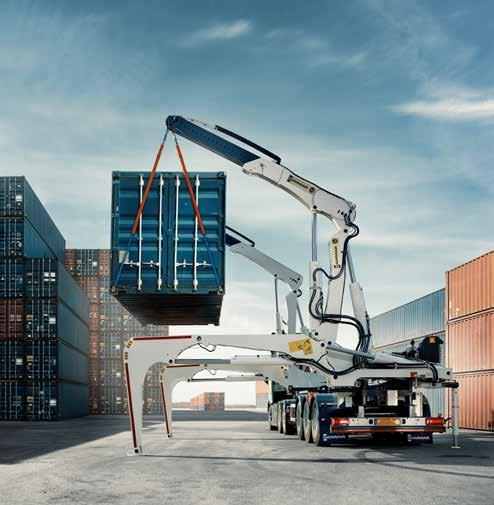
With five subsidiaries and more than 50 service stations worldwide, Hammar sideloaders have been sold into more than 122 countries, and can today be found on all continents, including Antarctica.
Today, Hammar continues its focus on further growth.
To mark its 50-year anniversary, the company has unveiled the Hammar 550, the world’s first sideloader with a 50-tonne safe working load, and the new flagship model, the Hammar 500.
The Hammar 550 model comes with a world-first 50-tonne safe working load (CE-marked) and is the world’s strongest sideloader model.
Initially developed for handling large cable drums, the design is usable for many more applications.
Another major innovation is Hammar’s new flagship model, the Hammar 500, which is based on a range of proven technologies that have been merged and optimised.
For the Hammar 500, no load is too challenging with the sideloader boasting a 45-tonne lifting capacity.
The 500 model is unique in its ability to stack containers weighing up to 17.1 tonnes two rows deep, achieved with an incredible six-metre reach.
The Hammar 500 is built on the foundation of tried-and-tested Hammar technology, ensuring reliability and longevity.
Its capabilities push the boundaries of what’s possible for sideloaders, making it a unique offering on the market.
“Hammar’s 50th anniversary is just the beginning of a new chapter in the company’s history,” says Bengt-Olof.
“We very much look forward to continuing to be the driving force in the industry, with a focus on service, innovation, quality and sustainability.”
The first showcase of the Hammar 500 in Australia will be at the 2025 Brisbane Truck Show.
Join Hammar at stand 77 in the Great Hall to experience first-hand how its advanced design and features, including extended crane reach and innovative stabilizers, improve heavy-duty lifting!

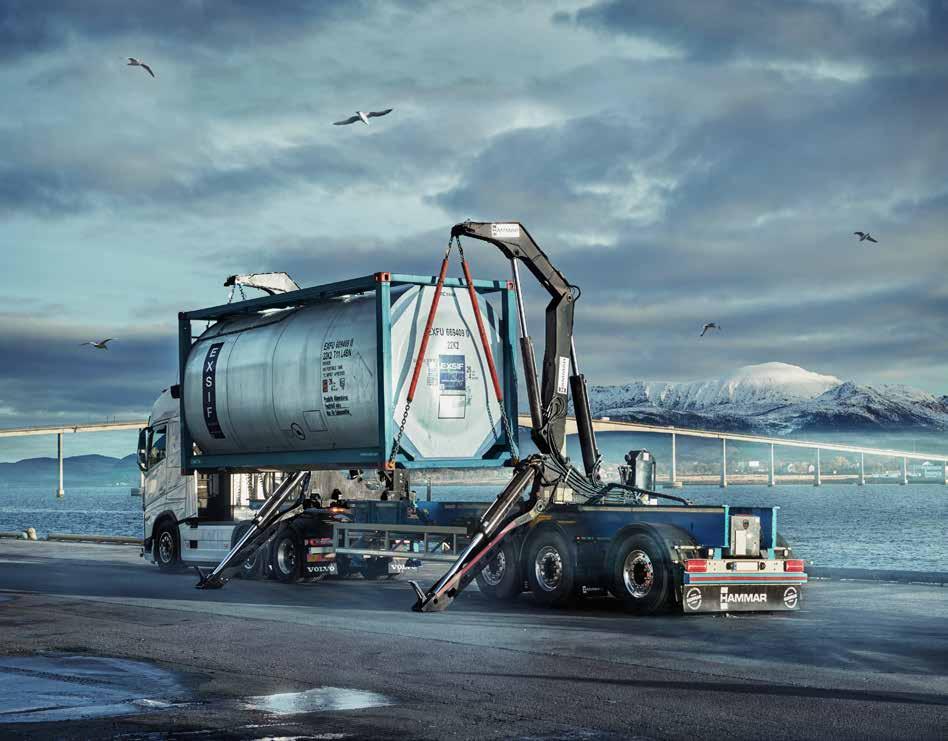
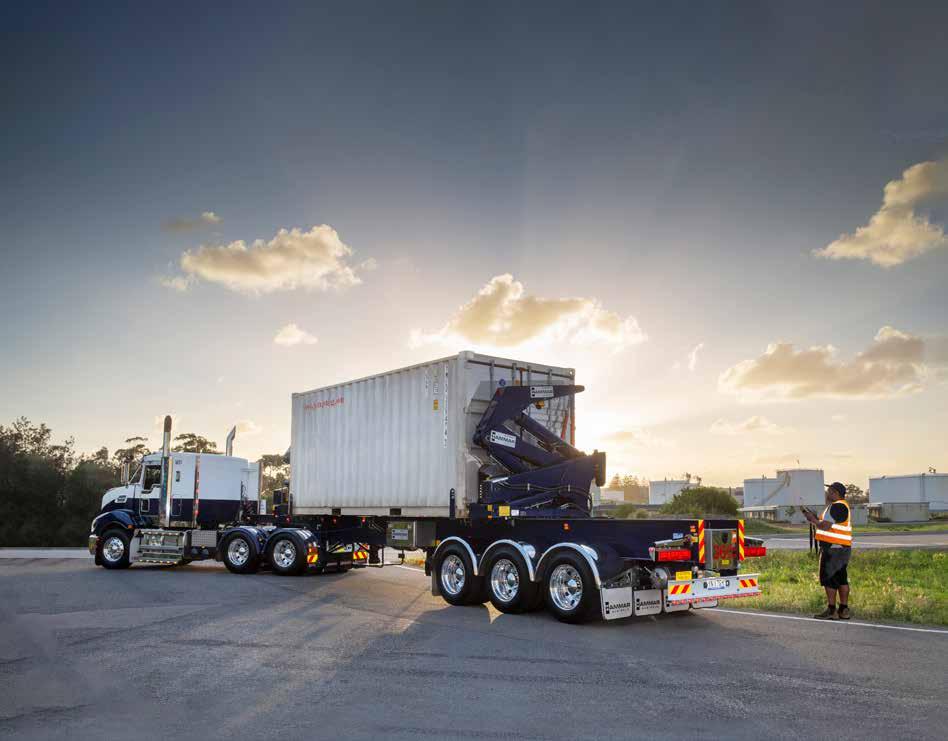
Hammar is the world leading manufacturer of Sideloaders, self-loading vehicles for containers and more. We combine Swedish quality with Australian components and expertise, resulting in a powerful, quality solution that’s built to last. With a focus on efficiency and precision, Hammar Sideloaders are designed to streamline your container handling needs.
+ Made in Sweden since 1974, delivered to more than 123 countries world-wide
+ Lift, transport and transfer up to 50 tonnes
+ Increase safety and efficiency with grounded containers
+ One vehicle, one driver, anywhere, anytime
The MIGHTY Electric will be on display at the 2025 Brisbane Truck Show, alongside the new Hyundai XCIENT Hydrogen Truck
Accelerate the decarbonisation of day-to-day operations with the zero driving emissions MIGHTY Electric truck – driving a cleaner, quieter and greener future, hand in hand with your business. With a range of up to 200km when fully laden, this is the ideal truck for urban
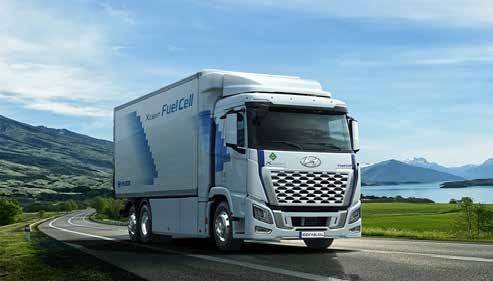
operations and deliveries, featuring instant torque, delivered by the 120kW/320Nm electric motor for a more confident drive when loaded.
Whatever your assignment, the MIGHTY Electric can be customised to fit the job. Available as a bare cab chassis, tipper and refrigerator Pantech, the MIGHTY Electric can be fitted with a Hyundai Genuine Accessories aluminium tray.
The MIGHTY EV offers a 7,300kg GVM requiring an LR licence, with a 4,495kg GVM available for C-class licence holders.
The MIGHTY Electric will be on display at the 2025 Brisbane Truck Show, alongside the new Hyundai XCIENT Hydrogen Truck.
The XCIENT makes its debut in Australia at the show, exemplifying the world’s first commercialised hydrogen fuel cell heavyduty truck.
Alongside the MIGHTY Electric, the XCIENT showcases the evolution in Hyundai’s alternative fuel source heavy-duty trucking solutions. Make sure to discover and learn more about the XCIENT on display at the Hyundai stand come next year.
Michelin will showcase the latest advancements shaping the future of transportation, from cutting-edge tyres to sustainable practices
Michelin, a trusted partner for professionals in the transportation industry, consistently leads the way in tyre innovation and sustainability.
With decades of experience, Michelin has built a reputation for supporting businesses in overcoming challenges and thriving in a competitive market.
At the upcoming Truck Show, Michelin will showcase its latest advancements that are shaping the future of transportation.
From cutting-edge tyre technology to sustainable practices, Michelin’s solutions are designed to meet the evolving needs of the industry. Its commitment to innovation ensures businesses can operate more efficiently, reduce their environmental impact and improve overall performance.
Michelin’s expertise extends beyond just products; it offers comprehensive support and services that help businesses navigate the complexities of transportation. Whether it’s through tyres to advance data analytics, predictive maintenance or eco-friendly initiatives, Michelin provides the tyres, tools and knowledge necessary for success.
Visitors will have the opportunity to see how Michelin’s innovative solutions are making a difference. It will highlight how its dedication to tyre innovation, sustainability and technological advancement is paving the way for a more resilient and prosperous future for the industry.
Join Michelin at the show to discover how its cutting-edge solutions can help your business stay ahead of the curve.
Eurocold is set to redefine partnership at the 2025 Brisbane Truck Show, with the launch of a progressive new full-service offering as well as its new Balanced Range of refrigerated trucks
Eurocold, Australia’s cold fleet partner, will make its Brisbane Truck Show ground floor debut in 2025, just as it enters a time of unprecedented change for the refrigerated transport sector.
In the dynamic world of cold chain transport, Eurocold is the partner businesses need to navigate the future. With a global perspective and a deep understanding of the industry and the Australian market, Eurocold partners with its customers to achieve lasting success.
Shaping a sustainable tomorrow
Eurocold, renowned for its robust refrigerated truck bodies with marketleading insulation, experienced a surge in
demand during the COVID lockdowns as transport operators struggled to maintain cold chain integrity amidst extraordinary disruption and increased volumes.
It didn’t simply react to the crisis; it anticipated the future and embarked on a journey of transformation, evolving from a refrigerated body builder to Australia’s comprehensive cold fleet partner.
This evolution began with a commitment to sustainability. Recognising the industry’s shift towards environmentally responsible solutions, Eurocold set its sights on leading the net-zero transition for refrigerated transport. This commitment was realised with the launch of its innovative Revora EV trucks at TruckShowX in 2024.
Offering a range of configurations, including refrigerated vans and three- and eight-pallet trucks, these electric vehicles represent a significant stride towards a greener cold chain.
Eurocold’s transformation continued with a strategic expansion from its Queensland base to establish a national presence, opening depots in Sydney, Melbourne and Perth. These depots serve as one-stop shops for transport operators, providing a full suite of services, including short- and long-term rentals, new and used truck sales, and comprehensive body repair services.
CEO Avraam Solomon captures the essence of this evolution: “We’ve evolved from a body builder to fleet partner. Our
story is just like our customers’ – it’s about the resilience, adaptability and progress of everyday business.
“Change is not just part of our journey; it’s something we can embrace together.”
This forward-thinking philosophy, combined with a dedication to customercentric solutions, explains why Eurocold is becoming the preferred choice for businesses across Australia.
112 years of expertise comes to Australia Eurocold’s partnership with Petit Forestier, a company with a 112-year history of coldchain stability and innovation, highlights a shared commitment to shaping the future of refrigerated transport in Australia. This alliance sends a clear message: Eurocold is here to stay and lead the way in providing reliable and forward-thinking solutions.
Petit Forestier is a global force, operating in two dozen countries and employing thousands of people dedicated to ensuring the safe transport of essential goods.
With over 80,000 refrigerated trucks in the group fleet, its commitment to cold expertise translates to a comprehensive approach that covers every stage, from manufacturing to maintenance.
This global reach is matched by a local touch, as Eurocold remains deeply committed to its Australian identity, understanding the unique needs and challenges of the local transport industry.
By combining Petit Forestier’s global insights with its own local expertise, Eurocold is uniquely positioned to develop solutions tailored to the Australian context.
Powering the future with bold solutions Eurocold is set to redefine partnership at the 2025 Brisbane Truck Show, with the launch of a progressive new full-service offering. This bold move signifies a new era of collaboration with customers.
While specifics are under wraps, Eurocold understand this solution is designed to keep customers moving and thriving.
Chief Commercial Officer, Kanani Draper, explains: “We’ve been working with our customers to understand their unique challenges and develop a solution that truly empowers them. This is more than just a
Eurocold view BTS25 as a platform to engage, educate and empower the industry to strive for a better future – one where cold goods move more efficiently, food waste is minimised and net-zero emissions become a reality
product; it’s a partnership that will redefine how businesses manage refrigerated fleets.”
Eurocold’s dedication to customers suggests this new offering will provide a hassle-free experience, taking care of everything from maintenance and compliance to operational continuity.
Eurocold isn’t just focused on redefining partnerships; it remains committed to delivering best-in-class products.
True to its “stop waste” ethos, Eurocold is also launching its new Balanced Range at the show – a thoughtfully engineered line of refrigerated trucks designed for optimal performance, longevity and costeffectiveness.
This new range demonstrates Eurocold’s commitment to expanding its relevance across the market, catering to a wider range of business needs and buyer types.
As Avraam Solomon explains, “We’re not just building trucks; we’re building solutions. The Balanced Range reflects our dedication to providing Australian businesses with a diverse selection of high-performing, costeffective and sustainable refrigerated trucks.”
The next evolution in cold transport Since its beginnings, Eurocold has impressed with its bold moves and dedication to helping customers “keep their cool”. Like any successful company, Eurocold thrives on the strength of its team and its partnerships.
Eurocold view the show as a platform to engage, educate and empower the industry to strive for a better future – one where cold goods move more efficiently across Australia, food waste is minimised and netzero emissions become a reality.
“We’re eager to collaborate, explore new possibilities and embark on a shared journey toward a sustainable and efficient future. We believe that by working together, we can shape the industry and achieve incredible things,” Kanani Draper says.
This shared journey is about fostering a collaborative spirit and recognising the interconnectedness of the cold-chain sector. Eurocold understands progress is fuelled by partnerships, shared knowledge and a collective commitment to excellence.
Visit Eurocold at BTS25 and be a part of this movement.
A local manufacturing base enables Ambassador Industrial to provide customers with a reliable supply of high-quality rubber and PVC products
Ambassador Industrial is a familyowned and operated rubber and PVC manufacturing and supply business, established in the 1980s from a modest storefront in Blackburn, Victoria. Over the decades, the company has evolved significantly, now boasting three pivotal operational sites: the primary manufacturing and supply facility in Hallam, Victoria; an additional manufacturing base in Malaysia, welcomed in 2012; and a warehouse and fabrication centre on the Gold Coast, established in 2022.
Australia’s rubber manufacturing sector has long been a cornerstone of its industrial landscape, providing essential components for a wide range of industries. From transport and construction to mining and marine, rubber products play a crucial role in driving economic growth and innovation.
Ambassador Industrial specialise in both custom-engineered and standard rubber and PVC profiles which highlights its commitment to meeting the diverse needs of its clients. Whether it’s a unique component for a particular project or a standard part for a mass-produced item, the company possess the expertise and capabilities to deliver high-quality solutions.
• Custom and standard rubber profiles: Designed for a variety of manufacturing applications to meet specific needs.
• In-house die design and manufacturing: Allows production of custom materials for numerous non-standard applications efficiently.
• Diverse market expertise: Serving industries such as mining, marine, heavy transport, petrochemical, fluid handling, construction, defence and more.
• ISO 9001 accredited: Adhere to lean, precise and practical systems, guaranteeing exceptional customer service and quality.
• Nationwide supply agreement: Ensuring a large volume of stock and minimal delivery times.
• Dedicated team: Consultative approach allows Ambassador to understand and address the complexities of customer’s projects, delivering exactly what they need.
• Well-equipped facilities: Capable of shipping products directly to customers or warehouse, ensuring timely and efficient delivery.
Australian manufacturing has been a foundation of the economy for generations.
As Australia continues to evolve its manufacturing landscape, the importance of supporting Australian manufacturers cannot be overstated. In a globalised world, supply chains can be disrupted due to various factors beyond our control.
By supporting local manufacturers, Australia can reduce its reliance on imports and ensure a reliable, quality supply of
rubber for industries where delays can have significant consequences.
Ambassador Industrial has a proud history of manufacturing for over 30 years. Despite the industry facing a challenging economic climate, Ambassador Industrial has demonstrated its resilience and adaptability. By proactively addressing challenges and seizing opportunities, the rubber industry can continue to be a vital contributor to Australia’s economy and infrastructure.

Kenworth’s latest accessories catalogue for the mighty K220 cabover is brimming with kit that enables transport operators to transform their truck and stand out from the crowd
From light bars to mudguards, wheel nuts to seat covers, and sunvisors to cab steps, Kenworth’s K220 Accessories Catalogue has it covered when it comes to making your rig stand out on the road.
Released in 2022, the latest iteration of the renowned K Series cabover range, the K220, is already one of the most instantly recognisable trucks on the road and the latest range of accessories are designed to highlight its new sleek design lines.
It’s also one of the most customisable trucks on the market thanks to the wide range of Kenworth Genuine Accessories developed specifically for the K220.
“With the growing number of K220s now on the road in different customer configurations, we felt the time was right to release a more comprehensive list of accessories for the truck,” says PACCAR Parts Australia Aftermarket Engineering Product Manager, Brenton Campbell. Included in the 20-page catalogue are
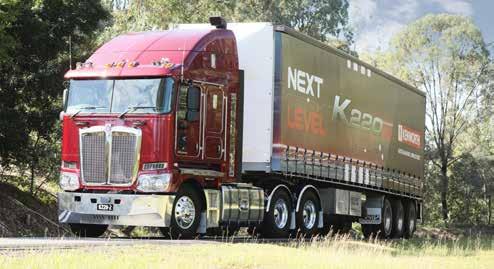
popular and essential K220 accessories like driving lights, radios, cameras and aerials, along with interior accessories such as dash mats, seat covers and floor mats.
“The list of accessories fall into two main categories, the first being those for functional applications,” says Brenton.
“For instance, if the truck is going to be doing a lot of overnight work, the operator will want to make sure it has fantastic lights. Similarly, things like bull-bars and other protection accessories are often fitted with a view to the type of road conditions the truck will be operating in.
“The second category are for those people who take extra pride in their
truck. This group often fit accessories which can include functional components like sunvisors and mudguards, but also accessories like grille bars and exhaust stacks which are more about giving a truck its own distinctive look and feel.
“Grille bars, sunvisors and fuel tank straps are expected to be among the most popular stainless-steel accessories, while nine-inch round driving lights and lights bars are perennial electronic favourites, with a wide range of options available in both light configurations,” he adds.
The accessories are available at dealerships nationally. View the brochure at paccarparts.com.au/k220-accessories.


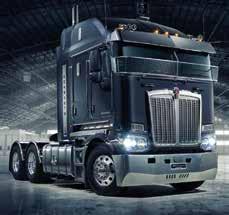
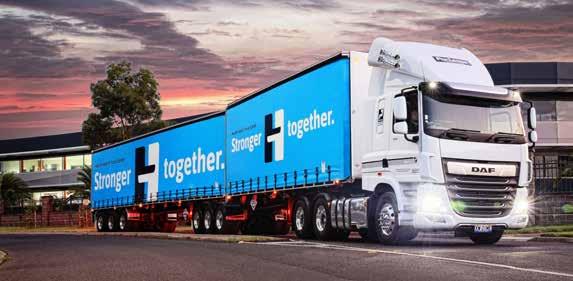
Since its inception, PacLease has become a trusted partner for businesses across the country, delivering tailored rental, leasing and fully maintained fleet solutions that meet the diverse needs of the Australian market.
Founded in August 2015, PacLease Australia quickly established itself as a leader in truck leasing and rental. The first location opened in Laverton at the Kenworth DAF Melbourne dealership, offering a range of prime mover and rigid PACCAR trucks for rent. Over the next 10 years, PacLease has expanded across Australia, with the most recent rental location opening in Bairnsdale in early 2024.
PacLease currently boasts more than 800 quality Kenworth and DAF trucks in its fleet. Whether the transport task involves liquid fuels, compressed fuels, bitumen, semitippers, milk tankers, interstate, intrastate
or distribution, PacLease’s truck rental and leasing solutions cover a multitude of applications.
Leasing a truck from PacLease presents a number of advantages for businesses. Customers can choose from a quality fleet of Kenworth and DAF trucks, ensuring both reliability and high performance.
The flexible leasing options allow companies to select terms that fit their operational needs and financial situations, often resulting in lower upfront costs.
Moreover, comprehensive maintenance services minimise downtime and repair expenses.
Leasing also grants access to the latest truck models equipped with advanced technology, boosting both efficiency and safety.
At the heart of PacLease Australia’s success is a steadfast dedication to
customer satisfaction. The company is built on strong relationships with its clients by offering personalised support, flexible leasing options and comprehensive maintenance services.
The success of PacLease Australia is also attributed to its committed team. With a wealth of industry experience and a passion for excellence, employees have been instrumental in delivering high-quality services.
As PacLease Australia celebrates this significant milestone, the company is passionate about the future.
Plans for continued expansion, investment in technology and customer-centric solutions are in focus.
In recognition of this milestone, PacLease Australia will host a series of events throughout 2025 highlighting the company’s journey, showcasing its vast achievements, and reinforcing the relationships that have been cultivated with customers over the years.
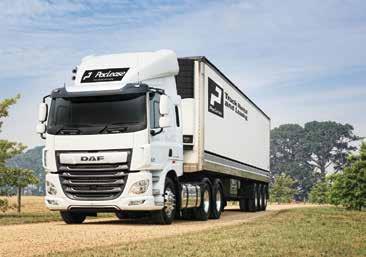
Robuk Engineering will showcase its range of bespoke tippers and trailers at next year’s show
Founded in 2020 by James Yerbury, Robuk Engineering has rapidly become a key trailer manufacturer in the bulk commodity, dangerous goods, waste and mining industries.
Based at Port of Brisbane, this familyowned company focuses on building bespoke light-weight aluminium-end tippers, side tippers and moving floor trailers.
Robuk has earned a reputation for designing and building premium quality low-tare weight trailers that meet the tough demands of the Australian environment.
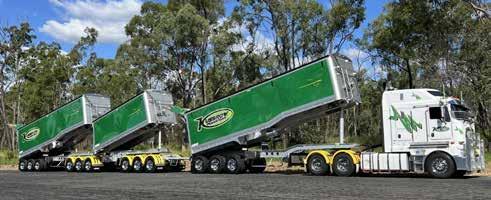
The company’s fast growth is fuelled by its skilled craftsmen, industry experience and customer satisfaction.
At last year’s Truck Show, Robuk stole the spotlight with its PBS A-double Melbourne Storm-themed truck and trailer owned by S&J McMahon Transport. The drop-deck chassis tipper showed off Robuk’s patented pressed tailgate and low-tare designs.
Innovation is at the core of Robuk’s approach. It is focused on refining its designs to minimise maintenance needs and enhance user-friendliness for operators.
Robuk engineers collaborate closely with customers to tailor trailers to their specific applications. The rules around PBS are often
TMC will showcase its range of trailer axles at next year’s show, with a focus on extended service intervals, less down-time and lower life-cycle cost.
The display will include both the well-proven “preset” bearing system from ConMet and a full range of locally developed “unitised” hub models for both drum and disc brakes to suit all wheel sizes.
The 17.5-inch drum brake axles are now
available with outboardmounted brake drums, which allow servicing of the foundation brake without disturbing the (factory-set) hub/bearing torque setting.
changing and the Robuk team are highly experienced at interpreting legislation to give its customers the technical advantage.
This year has seen new faces join Robuk’s management and engineering team in an effort to innovate systems and processes within the manufacturing facility. This means each trailer now has a greater level of documented information throughout the build process. Any issues or defects are captured early and reported to management where they are addressed and resolved. Robuk’s dedication to its customers is well known. It offers comprehensive after-sales service and support, ensuring customers get the most out of their trailers for years to come.
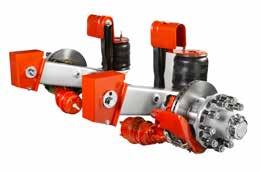
Also on display will be TMC’s easy-to-fit airbag suspension modules with ride heights from 150mm to 500mm and lay-forward or
TMC Australia Pty Ltd 78 Star Crescent, PO Box 5028, Hallam, Victoria 3803 Ph: 03 8786 3688 Fax: 03 8786 3699 Email: info@tmcaus.com.au
HALL 2 stand
vertical shock absorbers. Besides TMC’s traditional offering of fixedbeam LMV and LMVS suspensions, the models on show also include the SL10 single-leaf and TL12 twin-leaf versions.
With its manufacturing base in Victoria, TMC has the ability to produce axles for all types of on- and off-road applications.
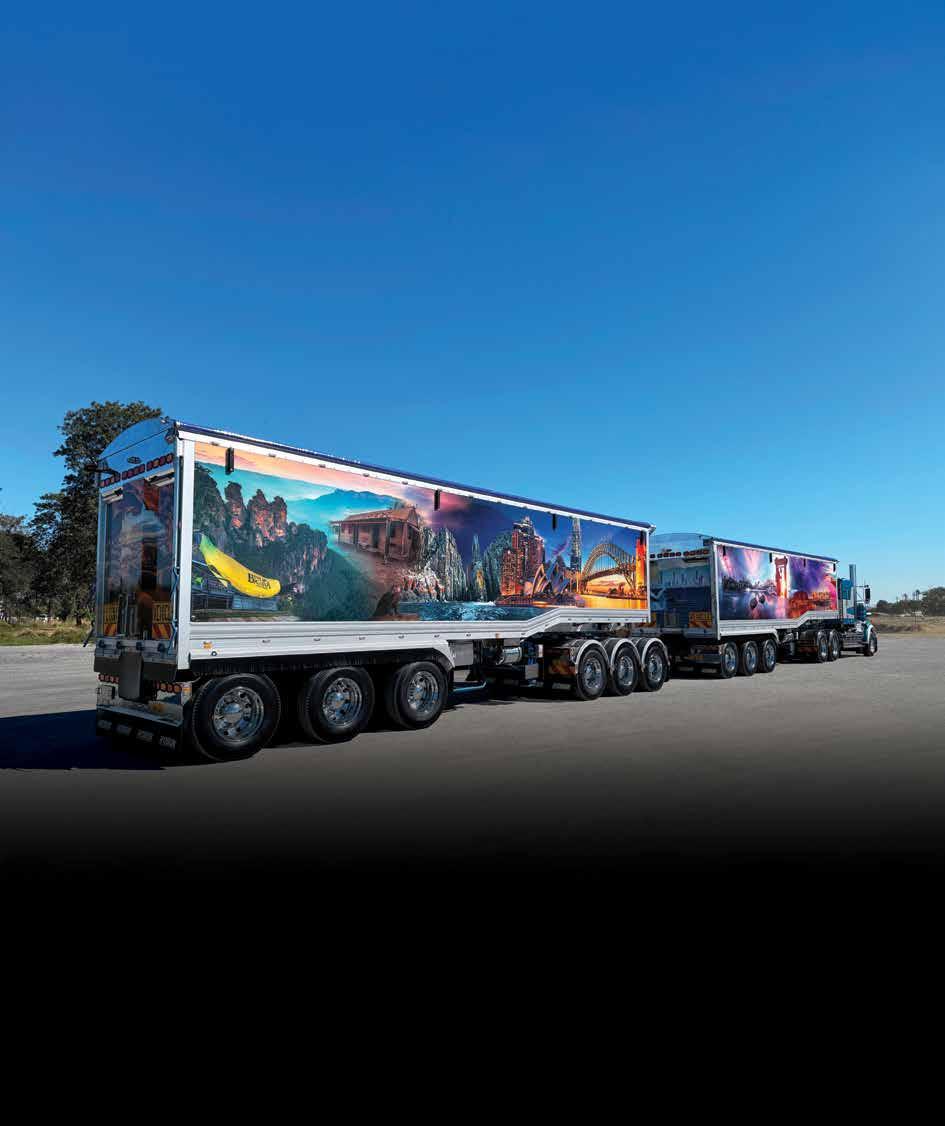
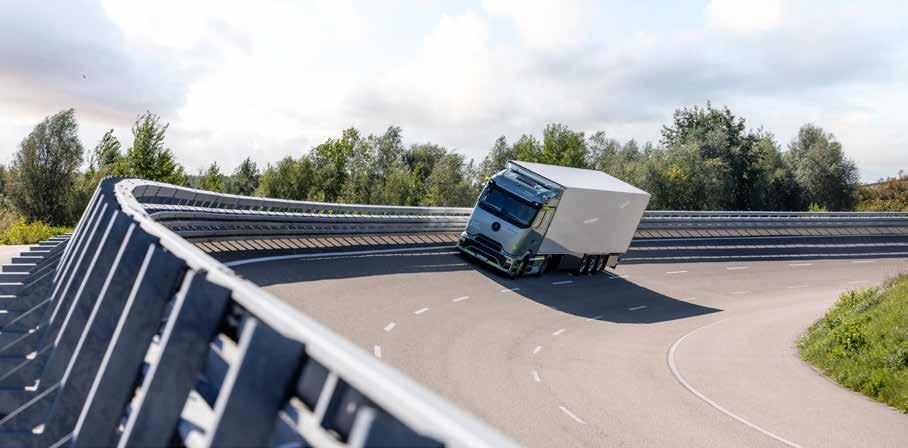
Daimler Truck is keeping the lid on what it’ll show on its stand in Brisbane in May, but you can bet there will be a mixture of current and future models to excite showgoers
Daimler Truck’s global innovation will be front and centre at the 2025 Brisbane Truck Show.
Mercedes-Benz Trucks, Freightliner and Fuso bring together the latest technology from Europe, North America and Japan. This ensures its Australian customers can get the right truck whatever the application from the same dealer.
It’s too early for Daimler Truck to reveal what it will have on its stand in Brisbane in May, but you can bet that there will be a mixture of current and future models to excite showgoers.
Daimler Truck spends billions of dollars on research and development every year, which means it is always at the cutting edge with the latest technology.
Some of the most interesting new tech has just been revealed in Europe, where
Mercedes-Benz Trucks has taken the covers off a bold new cab design for its heavy hauling Actros models. It’s called the ProCabin.
You might have noticed the ProCabin made its debut with the eActros 600 model that was launched in Europe in late 2023.
The ProCabin is the new cab for the large Mercedes-Benz Actros models. It’s currently available in Europe and can be expected in Australia in 2025.
The new cab was designed from the ground-up with aerodynamic efficiency in mind. Designers introduced a rounded-off shape in order to guide the air around the vehicle with as little drag possible.
There are virtually no gaps or spaces left in order to optimise airflow, while maintaining cooling effectiveness.
Designers also added extended cab
deflectors to better help push the wind around the truck.
All in all, the design changes result in fuel savings of up to three per cent, which is significant when you are doing a lot of kilometres.
All new Actros models are gaining the latest active safety technology that exceeds the new European General Safety Regulation standard. Daimler Truck has introduced a new electronics platform that can process data 20 times faster so the truck’s safety systems can react faster.
The Actros has four new radars, in addition to the existing centrally mounted front radar and windscreen-mounted camera. This enables a 270-degree view around the vehicle and means engineers could further improve the clever Active Sideguard Assist system. It now monitors both sides of the
vehicle and covers an even greater area than before. It can even stop the truck when it is turning (up to 20km/h) if it detects a hazard.
Daimler Truck continues to develop its diesel offerings, recently upgrading the 13-litre OM471 engine with a raft of design changes that boost reliability and drive down fuel consumption.
Additionally, Mercedes-Benz has introduced a full stable of fully electric trucks to help freight companies progress along their sustainability journeys.
While the just-released eActros 600 is now on sale in Europe, the eActros 300 rigid and eActros 300 prime mover are available in Australia, together with the eEconic rigid, which is specially-made for waste industries.
Mercedes-Benz is not the only Daimler Truck brand that is likely to have electric trucks at the Brisbane Truck Show. The Fuso eCanter will be making its fourth appearance at the event, something that shows how far out in front Fuso has been with its electric light truck.
This eCanter is the second-generation model to appear in Australia and it is the
perfect demonstration of just how quickly electric truck technology is advancing.
The Mercedes-Benz e-trucks and the eCanter are the only trucks to feature smart e-axle technology, which incorporates an electric motor (or motors) in the axle. This means there is no need for a driveshaft which boosts efficiency and saves weight.
The recently updated Canter range is likely to be at the show. The core parts of the truck remain the same, which means its tare weight advantage and class-leading service intervals are still there, but the trucks have a fresh new design.
The design concept of the refreshed truck is described as ‘black-belt’ by Fuso and features new LED headlights that are 30 per cent brighter than the lights they replace.
The interior has been left alone, except for a big upgrade of the eightinch multimedia unit. Taking on customer feedback, Fuso has added wireless Apple and Android connectivity, removing any need for cables and adaptors.
The multimedia unit has upgraded processing and memory performance and
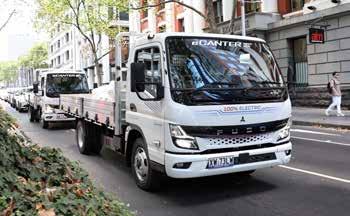
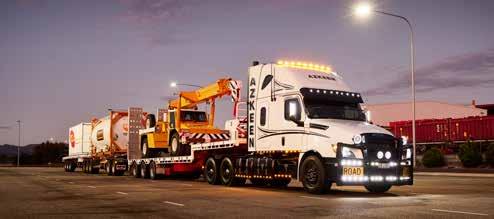
“All in all, the design changes result in fuel savings of up to three per cent, which is significant when you are doing a lot of kilometres.”
integrated accessory capabilities. It displays the footage from the reversing camera that comes standard with all Canter models, while footage from up to five additional cameras can also be shown on the screen.
Fuso has recently shown off some interesting trucks in Japan, with the most eye-catching being the next-generation Shogun (called Super Great over there). This is the new heavy-duty truck that sits at the top of the tree in the Fuso line-up. This new model sports a brand-new look and a raft of other improvements including additional power and torque, which is always welcome.
Additionally, the new Shogun comes with even more advanced safety features you would expect from a heavy hauler that is part of the Daimler Truck Group.
Freightliner has long been a crowd favourite with its big and bold Cascadia trucks. The 16-litre 126 model with gleaming bullbar and cavernous 60-inch cab is always popular.
While it is not ready to reveal what it will show in Brisbane, Freightliner has recently confirmed an upgrade to its class-leading safety package. It has now upgraded its Detroit Connect advanced safety suite to incorporate video capture of critical incidents to help chain-of-responsibility compliance and provide driver training opportunities.
The 30-second clips can be viewed by fleet managers, along with vehicle data, and can be viewed or downloaded through the Detroit Connect portal for up to 30 days. This footage is captured using the truck’s existing forward-facing camera, eliminating the need for an aftermarket dash-cam.
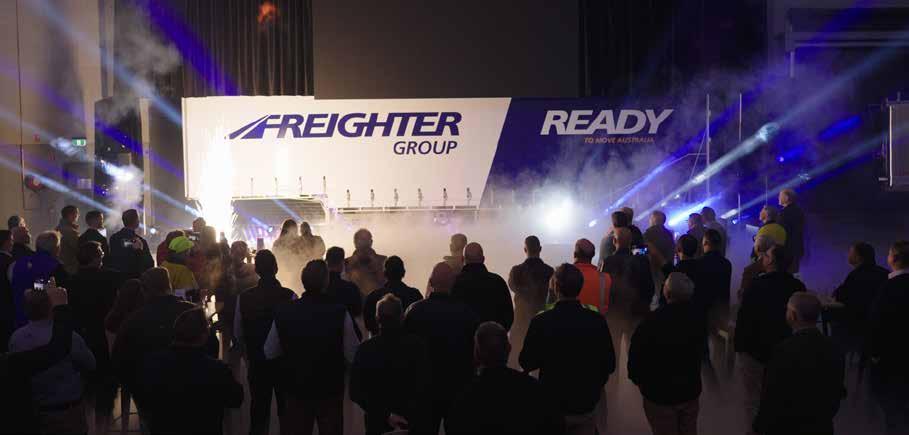
A new name, new logo and a raft of new products will be on show at leading trailer manufacturer Freighter Group’s 2025 Truck Show stand
Freighter Group – previously MaxiTRANS – will showcase its brand-new range offering at the 2025 Brisbane Truck Show.
In early October the company announced a comprehensive rebrand of its business, including a change in name to Freighter Group and a new logo and visual identity designed to reflect its expansive history, transformation journey and future vision.
Executive Chairman Greg L’Estrange says the rebrand marks a significant milestone in the company’s history. Since the business was purchased by a group of local private investors in September 2021, the focus has remained on setting the business up for long-term sustainability.
“We set about embarking on a significant transformation journey when we purchased the trailer business, with the aim of creating a new era for the future of the company and the trailer manufacturing industry in Australia,” he says.
“The journey started with a $50 million investment into our Ballarat site. This investment has seen the introduction of a range of state-of-the-art equipment and
an expansion of the overall footprint of the facility, transforming it into a modern manufacturing environment.
“The completion of the upgrade puts the business in a position to be able to continue to evolve with the changing needs of our customers long into the future.”
L’Estrange says “changing the business’s name to Freighter Group better reflects who we are as a business and our vision for the future”.
“As the pre-eminent trailer brand in Australia, Freighter has a rich history with origins extending back to 1946 and has continued to build a strong reputation within the industry since its introduction,” he adds.
“The Freighter Group name not only connects our rich heritage, but importantly it connects with our vision of ‘Freight it for Life’, which is our total commitment to supporting our customers for the life of our product.”
Additionally, Freighter Group announced it is now offering spare parts for all its products following the end of its agreement with MaxiPARTS – as well as a new spare parts brand, Hitcher Parts.
“All these announcements lead into the
message that Freighter Group is all about being ‘ready’,” L’Estrange says.
“Ready for customers to perform through products that are meticulously designed, manufactured and supported. Ready for anything customers need, through extensive product knowledge and industry experience. Ready to assist when needed, with a national dealer, service and mobile support network.”
Freighter Group also unveiled a new Ready Range of trailers, a pre-engineered product designed to take out the guess work and streamline the ordering process.
“With almost 80 years of experience in the Australian market, we have developed the Ready Range which consists of specifications suited for a wide array of applications, delivering a more competitively priced product, streamlined ordering process and shorter lead times.
“Freighter Group is ready for the future and we are looking forward with great excitement for the 2025 Brisbane Truck Show where visitors will get to experience first-hand all the significant changes we have been making across our business,” he says.
As well as an information hub, Healthy Heads in Trucks & Sheds’ Truck Show stand will be a chance to engage, meet the team and walk away with tangible resources to support yourself and your team
The 2025 Brisbane Truck Show is shaping up to be the biggest and best yet, and Healthy Heads in Trucks & Sheds (Healthy Heads) cannot wait to be a part of it.
The not-for-profit foundation’s presence at this prestigious event is not just about showcasing its commitment to mental wellbeing; it’s an invitation for everyone in the industry to join it in fostering a healthier, more supportive work environment.
Healthy Heads – which is the show’s Official Charity Partner – is dedicated to addressing the mental health challenges faced by individuals working in the trucking, warehousing and logistics sector.
Healthy Heads understand that the pressures of long hours, isolation on the road and the demands of the job can take a toll on
mental well-being. Its goal is to break down the stigma surrounding mental health and to provide practical resources that empower individuals to seek help and support.
At its dedicated stand, the team will be eager to engage with as many attendees as possible. Team members will be on hand to welcome everyone – whether you’re a driver, operator or an industry stakeholder.
Healthy Heads believe that open conversations have the power to spark change and encourages visitors to stop by, share their experiences and learn about its many initiatives.
The stand will be more than just an information hub, however. Healthy Heads is excited to reveal that there will be a range of engaging activities on offer, created to not only
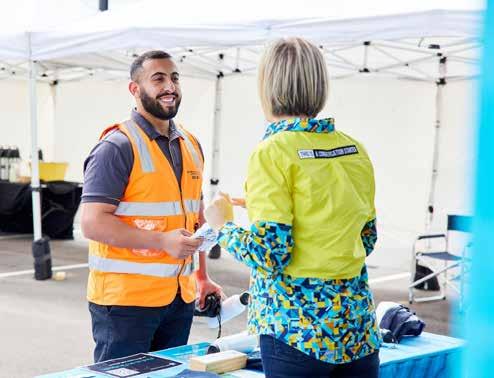
inform but also entertain. Its goal is to create the liveliest space possible, where everyone feels comfortable and included, and walks away not just with knowledge, but with a sense of community and connection.
In addition to engaging activities, Healthy Heads will be distributing exclusive merchandise, designed to both raise awareness and serve as a conversation starter long after the show has come to an end. These items are more than just giveaways; they are meaningful symbols of its commitment to improving mental health in the industry.
Moreover, the Healthy Heads team will guide visitors through a range of resources tailored to meet their needs. Whether you’re an individual looking for personal support or part of an organisation aiming to enhance workplace mental health initiatives, the foundation has tools and information designed specifically for you, crafted to empower both employees and employers alike.
Next year’s Brisbane Truck Show is a fantastic opportunity for it to amplify the message and mission of Healthy Heads –and invites everyone to come and meet the team, learn about its resources and engage in meaningful conversations that can lead to positive change. Only together can we ensure that those working in our industry thrive, both on and off the road.
“Only together can we ensure that those working in our industry thrive, both on and off the road.”
MappedIn, a dynamic digital mapping and way-finder solution, will be back for the 2025 show with a raft of enhancements to make it the ultimate guide to making the most of every moment at the event
The Brisbane Truck Show is not just a display of cutting-edge trucks and equipment –it’s an immersive experience that spans multiple venues, activities and attractions.
At the last show, we introduced MappedIn, a dynamic digital mapping and way-finder solution, sponsored by TransVirtual. For the 2025 show, we’re excited to bring it back with even more enhancements to ensure you don’t miss a thing.
From the bustling exhibition halls to the vibrant streets of South Bank, MappedIn connects every part of your experience, ensuring you have all the information you need at your fingertips.
You don’t need to download an app – just click the link (or scan the QR code) and the map will open on your phone. Search the list or tell the guide who or what you want to see and where you are and it will layout your route.
If you are looking for a particular exhibitor – easy! Not only can MappedIn take you directly to their display, you can check out each exhibitor’s profile and follow links to their web pages.
But maybe even more useful is highlighting the category that you are keen on checking out – that could be trucks or trailers, technology or components or even merchandise.
It will also guide you to the cafes, bars, bathrooms and much more.
Alongside the 2025 Brisbane Truck Show, there are numerous other Truck Week 25 events taking place at South Bank and across Brisbane, including the National Show ‘N’ Shine Championship and The Depot careers and entertainment hub. MappedIn will incorporate detailed, interactive maps of all these activations.
Additionally, it will also integrate with local pubs and entertainment venues as well as pick-up and drop-off points for the free bus shuttles running to the Heavy Equipment and Machinery Show and the Heritage Truck Show.
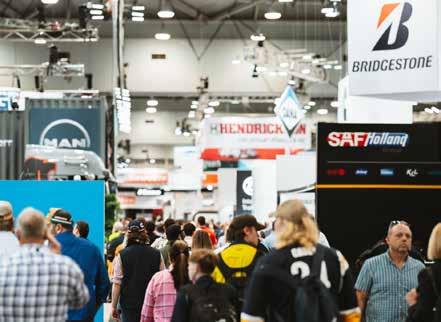
Building on the success of BTS23, we’ve made several improvements to MappedIn, including:
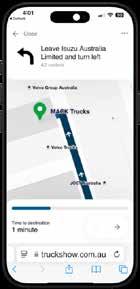
• An updated interface which is more intuitive, allowing users to navigate with ease and find information quickly.
• Real-time updates on events, shuttle schedules and any last-minute changes.
• Exhibitor directory including all the details you need to connect with every exhibitor either at or after the show.
• Outside maps covering the streets around the venue and down to all the Truck Week 25 venues and events at South Bank Parklands.
• Self-guided tours: We have created a whole bunch of extra categories to make it easier to find the displays you want to see most. You’ll be able to visit MappedIn from links in our e-newsletters, the BTS25 website, the Official BTS25 Program and by scanning signage all around the show. There will also digital kiosks at various points around the venue.

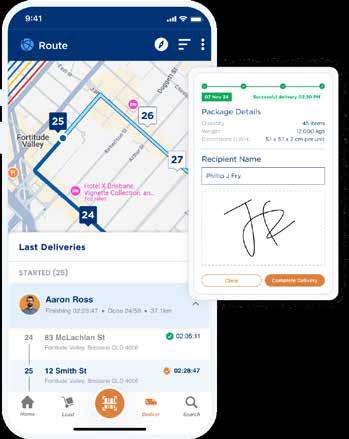



ASSOCIATIONS / UNIONS / GOVERNMENT / TRAINING / MEDIA
122 National Heavy Vehicle Regulator Great Hall
229 Austroads Plaza
229 Transport Certification Australia Plaza
231 NatRoad Plaza
241 ANCAP Safety Plaza
253 Healthy Heads in Trucks & Sheds Plaza
255 Big Rigs Plaza
389 Brisbane Convoy for Kids Plaza
BUSINESS SERVICES
5 Smedley’s Engineers Concourse
193 BTT Engineering Consulting Mezzanine
223 Edwards HR Mezzanine
251 NTI Plaza
252 Truck Assist Plaza
332 Truckworld.com.au Plaza
DRIVELINE / AXLES / BRAKES / SUSPENSION / COUPLINGS
7 Air Brake Systems Concourse
12 D’Angelo Engineering Concourse
18 Tranzmile Concourse
22 Corghi Australia Concourse
28 Air Brake Services & Trailquip Concourse
35 Rogers Willex Concourse
67 Transport Engineering Solutions Great Hall
76 Knorr-Bremse Australia Great Hall
82 SAF-Holland Hall 1
85 ZF Services Australia Hall 2
87 Dana Australia Hall 2
88 Hendrickson Hall 2
91 Jost Australia Hall 3
93 Eaton Vehicle Group Hall 3
96 Allison Transmission Hall 3
108 BPW Transpec Hall 2
110 TMC Australia Hall 2
162 FUWA K Hitch (Australia) Hall 3
188 Australian Truck & Trailer Parts Mezzanine
200 Tru-Shu Mezzanine
226 Australian Clutch Services Mezzanine
239 Brandlines Plaza 270 Taro Distributors Plaza
Bendix Plaza
Sampa Australia Plaza foyer
Watts Transport Spares Plaza
FUEL / OILS / LUBRICANTS / GREASING SYSTEMS
6 A-FLO Equipment Concourse
Ampol Limited Concourse
Viva Energy Australia Concourse
Gulf Western Oil Concourse
Mobil Oil Australia
Alemlube Great Hall 75 BP Australia Great Hall
Groeneveld-Beka/Timken Hall
Mezzanine 186
Mezzanine 189
Mezzanine
Mezzanine
Mezzanine
201 McNaughtans Mezzanine
206 Hydrosteer Mezzanine
207 Jonair Workshop Equipment Mezzanine
208 Spitwater Mezzanine
210 UES Hardware Mezzanine
212 Tegral Transport Equipment Mezzanine 218 Cablecraft Australia Mezzanine
221 Aussie CTI Systems Mezzanine
225 Ambassador Industrial Mezzanine
228 Integrated Vehicle Solutions Mezzanine 230 E-Max Plaza
308 Capral Plaza foyer
320 National Automotive Equipment Services Plaza
322 Rhino Guards Plaza
327 PT Blueboys Plaza
328 Sleeco Wheel Handlers Plaza
333 Enviroclean Warthog Parts Washers Plaza
338 SKF Australia Plaza
340 Inca Lift and Transport Wash Systems Plaza
342 Precision Automotive Equipment Plaza
346 CSC Group Australia Plaza
348 Evolving Workshop Technologies Plaza
350 Hartex Engineering Plaza
360 Natrad HDS Plaza
366 Truckmate Australia Plaza
367 Lelox Australia Plaza
375 Carmate Electronics Plaza
376 Bartlett Equipment Plaza
385 PainPod Australia Plaza
M1 Mack Workwear Mezzanine
M7 Sullivan Sketching Mezzanine
M14 NXT Journey Mezzanine
M16 Little Spurs & Co Mezzanine
M20 Drake Collectibles Mezzanine
TECHNOLOGY
1 Trucksales.com.au Concourse
30 Teletrac Navman Concourse
135 Tramanco Great Hall
184 Active Fleet Mezzanine
187 Whitelaw Hydraulics Mezzanine
192 Diverseco Mezzanine
194 Ofload Mezzanine
195 JET Charge Mezzanine
199 AerOx Mezzanine
202 V-DAQ Mezzanine
216 HVMS Australia Mezzanine
217 Hubfleet Mezzanine
224 FreightTracker Mezzanine
232 MyTrucking Plaza
233 Freight Cyber Plaza
256 SafeTstop Plaza 260 Bustle Technology Plaza
vWork
Autoparts Mezzanine
Tempe Tyres & Wheel Centre Mezzanine
Consolidated Tyre Company Plaza

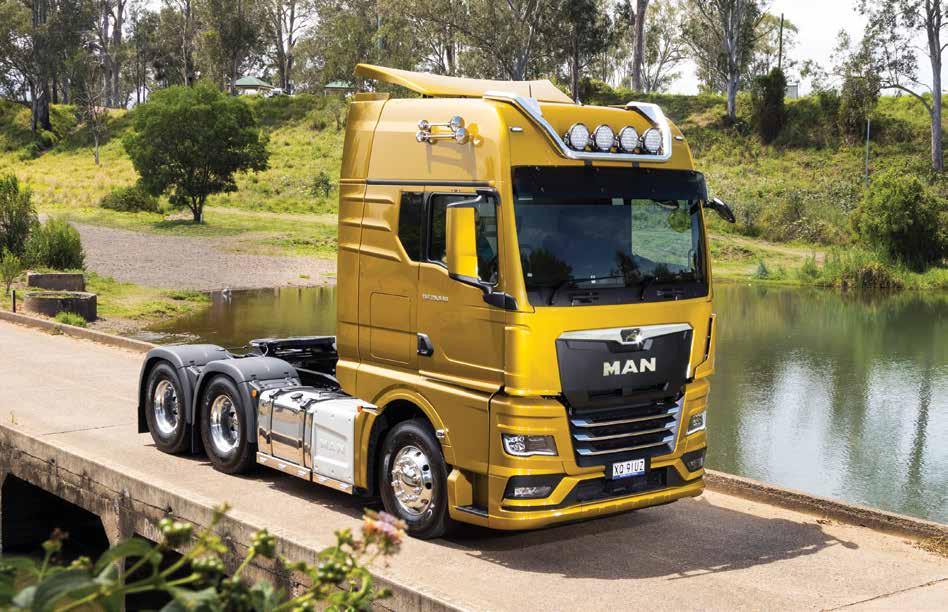
MAN’s powerhouse, the TGX with 26 t GVM powered by MAN’s mighty 15 L 640 hp D38 engine, comes in a range of cabins including the GX cabin, the largest in the range.
Excellent in line haul, roadtrain and heavy haulage applications, the TGX 26.640 with GX cabin is MAN’s premium offering. With a class-leading 840 hp engine braking capability, no load or terrain is too challenging.
Scan here to find out more.