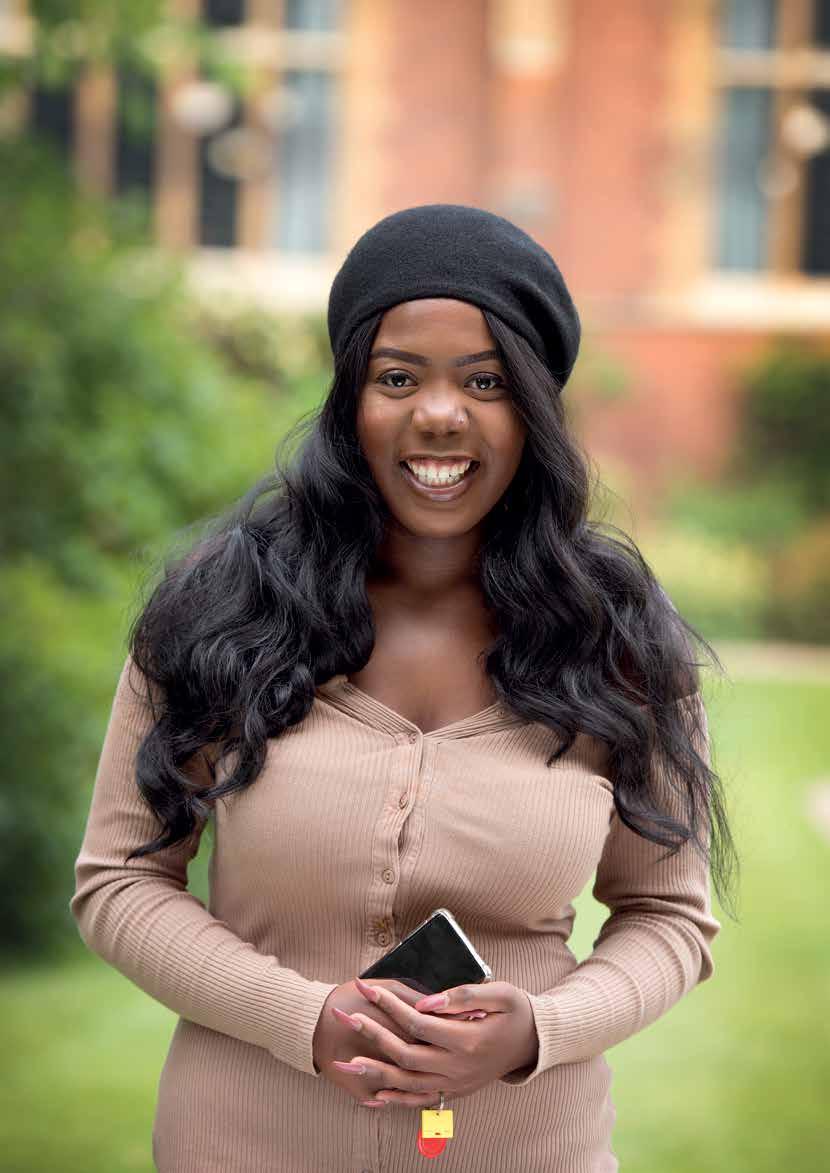
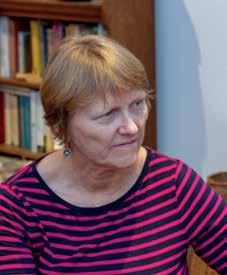
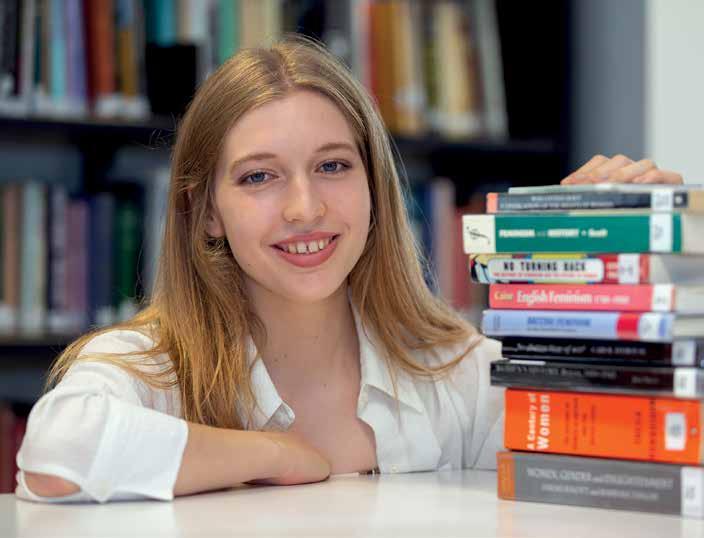
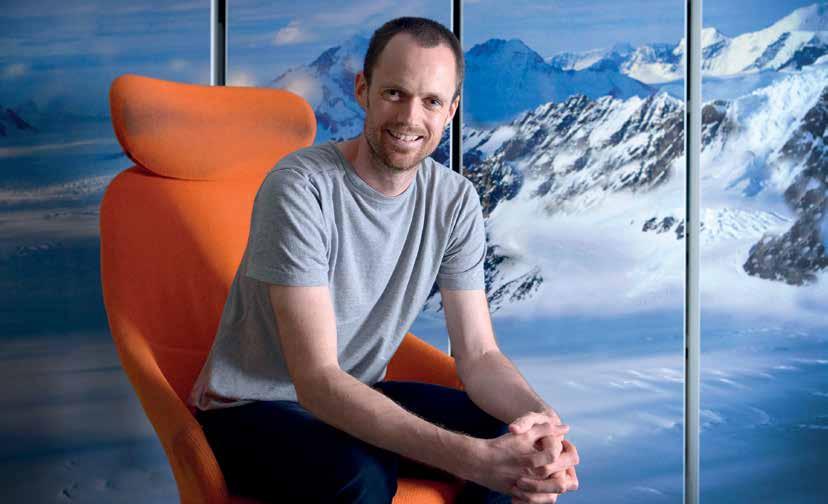
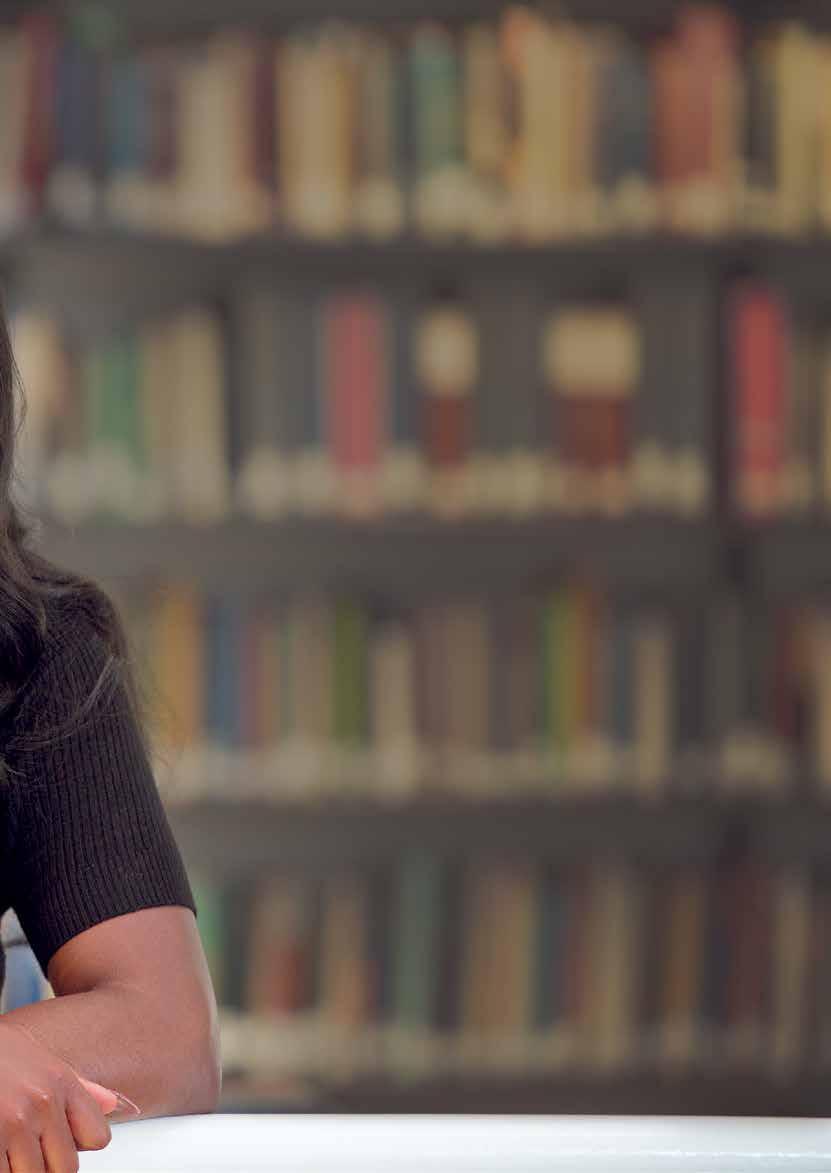
Chiedza Matsvai brings Homerton to a YouTube audience
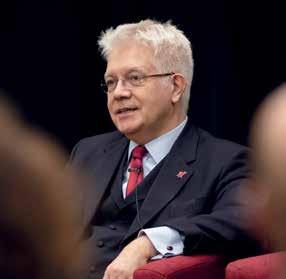
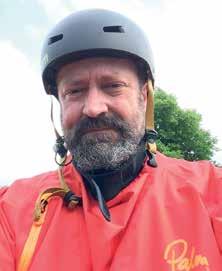
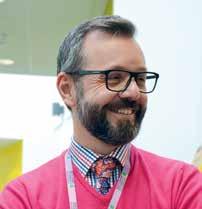
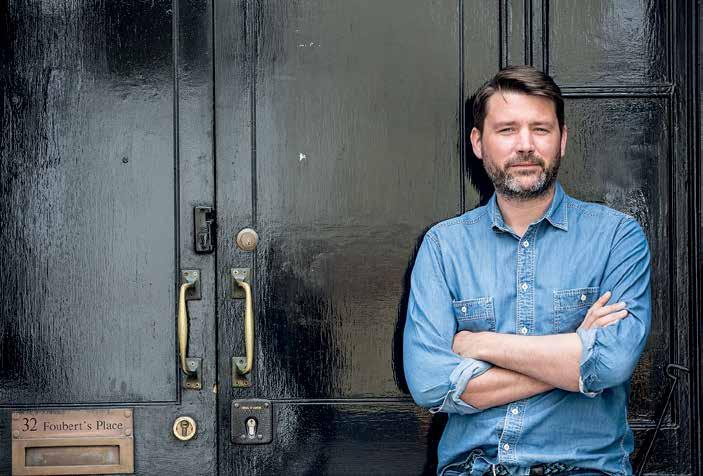
Catching up with The Crown director Benjamin Caron
Homerton College Alumni Magazine
The articles in this year’s Homertonian tell quite a story – and that’s wholly appropriate, because story-telling is a common theme. Homerton people, it seems, love connecting meaningfully with others.
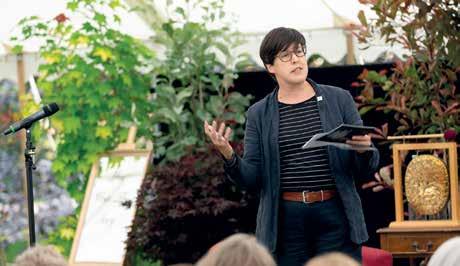
For some, the act of communication is itself the goal: Benjamin Caron’s CV as a producer and then director for TV (p.28) is a list of stories artfully told, and the three Homerton comedians profiled on p.14 aim to entertain, and to make a point, through their medium. Student Chiedza Matsvai (p.24) has a very clear audience in mind for the YouTube stories she tells about Cambridge life: young people who might benefit from Cambridge but aren’t yet thinking of applying.
Homertonians’ burning desire to make a positive difference is celebrated in this edition too. Refugees in Greece, street children in Pakistan, and primary schoolers in North-West Cambridge have reason to be grateful to Homertonian talents and energies, skilfully directed.
This edition is the first to be compiled by Laura Kenworthy, Alumni Relations Manager, and I hope you’ll agree she’s done a superb job. As always, putting together this publication reminds us what an amazing bunch you are.
Finally, for those looking for details of this year’s Alumni Reunion Weekend… Respice Finem!
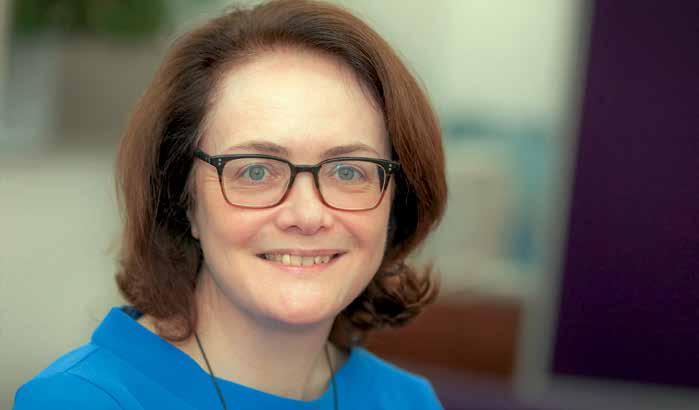
Matthew Moss Director of External Relations and Development
The Homertonian is Homerton College’s alumni magazine. It is published once a year. Contact us in the Development Office on Telephone 01223 747066 or Email alumni@homerton.cam.ac.uk with feedback, news or letters. All our publications are available to read online on the Homerton College website: www.homerton.cam.ac.uk/alumni/benefitsandevents.
Thank you to all of our contributors and to those who supplied images. The views expressed in this publication do not necessarily represent the views of Homerton College, Cambridge. Cover photograph: Stephen Bond. Design and print management: H2 Associates, Cambridge.
PRINCIPAL’S WELCOME
Iwas never much good at Maths. Algebra was Greek to me, Geometry worked in a way that my mind didn’t. What saved me from ignominy at school, and has come in handy since, is a basic dexterity in mental Arithmetic. Armed with this skill, I am able to assure you that whereas Homerton College was 250 years old last year, next year we will be 10. Last year we celebrated the College’s origins in the dissenting movement with a series of events, many of them open to the public, on burning questions for today’s increasingly unstable world: questions about the future of healthcare, what it means to be human, and how we can work for positive change. Next year will mark the first decade of Homerton’s existence and evolution as a constituent College of the University of Cambridge.
Progress has been good by any measure. The number of would-be student applicants naming Homerton as their College of choice has risen by a startling 100% in the last two years. This is an increase across the board, not focused on certain subjects only. And the board itself is getting bigger; from October we will offer Veterinary Medicine, with Architecture joining our portfolio a year later. I am proud to say that from 2021 Homerton will be one of only 10 Colleges in Cambridge to offer the entire range of undergraduate Triposes. Those applicants, who have faith in us to give them the best education possible, deserve only the best facilities when they get here. To that end we are building a second dining hall, new accommodation, and an auditorium built to the highest acoustic specifications as well as better practice rooms for our fantastic musicians.
Speaking of music, we will share our 10th anniversary with that of the Ligeti Quartet, now approaching the end of their time as our resident ensemble. Together we will mark the occasion with a day of contemporary music for Cambridge’s newest College.
The student experience at Cambridge includes the opportunity to compete in extra-curricular activity at very high levels, most definitely including sport. We were delighted to applaud the achievement of Homerton postgraduate David Bell, one of the winning men’s Blue Boat in this year’s Oxford and Cambridge Boat Race. I am sure he will join me when we unveil our new boathouse, a collaboration with City of Cambridge Rowing Club and St Mary’s School. We have also entered into an agreement with St Mary’s over shared sports facilities including an athletics track, which will mean that in two years’ time Homerton will have the best such facilities in collegiate Cambridge. These things are not just for the champions, but for the students unwinding at the weekend who want to kick a ball about, or go for a run. In that same spirit, while we are delighted that our Charter Choir are to record a second CD and that they continue to tour internationally, we are also going to revive the Homerton Singers for those who like to exercise their lungs, but have less time to practise.
Extra-curricular activity can be as important as the scholarly curriculum, even in as high-achieving a university as Cambridge. Studies have shown that excelling in a regular activity like sport is statistically more likely to accompany high marks, than to lower them. I was about as
good at sport as I was at Maths, and as a student of English Literature rarely lifted anything heavier than the Complete Works of Shakespeare. While the study of poetry encouraged me towards an academic career, I gained a special excitement from organising poetry workshops and stapling magazines containing mine and my friends’ own work, which was of equal importance in the long run. Colleges are unique in their ability to assist with this extra dimension, and there are only two universities that have a truly collegiate system – one is Cambridge and I forget the name of the other.
More seriously, we are coming to realise that, to survive and thrive in tomorrow’s world, our students are going to need to learn life-skills today. We have just inaugurated Homerton Changemakers, an optional, extra-curricular programme that will help bring out the best in our students as they prepare for the world of work. Knowing oneself, selling an idea, handling stress, negotiating ambiguity, thinking critically and independently… These are just some of the kinds of fluency and resilience that Changemakers will catalyse through its ambitious programme of workshops, speakers and events. You will find more about Changemakers in this issue of the Homertonian, as you will find other instances of our students excelling not just in class but as ambassadors, advocates, and entrepreneurs. Homerton trained ministers, then teachers, growing to a point where we will soon offer all the possible disciplines and courses. This is a place where leaders learn.
Professor Geoff Ward Principal
PROFESSOR MARY DIXON-WOODS DELIVERS HARVEIAN ORATION
Professor Mary Dixon-Woods, Homerton Fellow in Public Health and Director of THIS Institute (The Healthcare Improvement Studies Institute), delivered the Harveian Oration at the Royal College of Physicians on 18 October 2018.
Established by William Harvey, the first person to accurately describe the human circulatory system, in 1656, the Harveian Oration provides a prestigious opportunity for a leading doctor or scientist to speak on their field of work. Professor Dixon-Woods spoke on the challenges to improving quality and safety in healthcare, and asked why it is so difficult to answer the question ‘does quality improvement actually improve quality?’
2018 marked a significant milestone for both Homerton and the Royal College of Physicians, as our 250th anniversary coincided with their 500th year.
In May 2019 Professor Dixon-Woods was recognised for her ongoing contributions to the field of healthcare improvement research with Honorary Fellowship of the Royal College of General Practitioners.
THIS Institute collaborates with NHS patients and staff, as well as with academics and the public, to produce relevant and scientifically rigorous evidence on healthcare improvement. Its aim is to create a world-leading scientific asset for the NHS, through which to improve quality and safety in healthcare.
Professor Mary Dixon-Woods
When an organisation sponsors both the UEFA Champions League and student scholarships, it would be a wasted opportunity not to combine the two.
Fortunately, Santander didn’t let the chance go by.
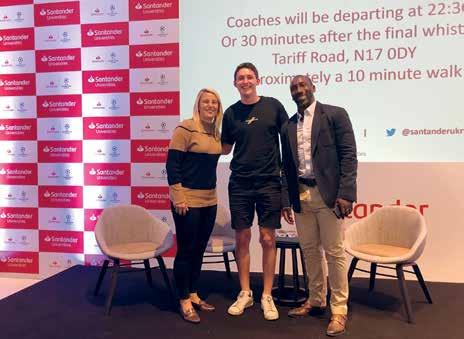
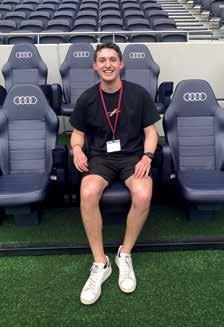
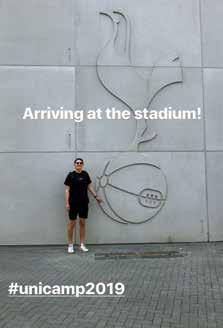
George Boughton, (BA Geography, 2016), who has been a stalwart supporter of Homerton’s access and outreach work, was delighted to be invited to a special screening of the Champions League final at the new Tottenham Hotspur Stadium on 1 June, hosted by the Santander Universities programme.
“We were lucky enough to be given a tour of the stadium, completed this year, before returning to the main event space for an insightful talk from former England cricketer Jeremy Snape,” says George. “This set the tone for the rest of the event with further talks from former Chelsea footballer Dennis Wise, and a Q&A session with former professional footballers Tanya Oxtoby and Jimmy Floyd Hasselbaink; compered by Seema Jaswal.
When the final, between Tottenham Hotspur and Liverpool, eventually kicked off over 65,000 fans were in attendance and the atmosphere was electric. Whilst the result may not have been the outcome those thousands had hoped for (Liverpool beat Spurs 2–0), I had enjoyed a fantastic day and my thanks go to both Homerton College and Santander Universities for giving me the opportunity to experience the Champions League final in such a fantastic venue.”
A SNEAK PREVIEW OF TOTTENHAM’S NEW HOME
When John Wroe (BEd 1983) was studying at Homerton, his three great loves were his girlfriend Jo, football and working with children.
Three and a half decades later, the three are still at the centre of his world, and have combined to extraordinary effect to change other people’s lives.
THE BEAUTIFUL GAME
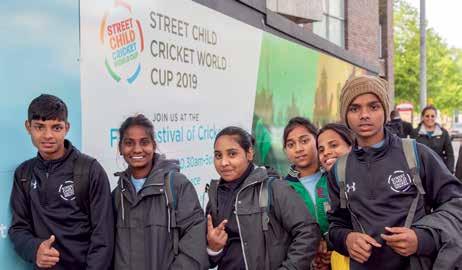
John is the founder of Street Child United, a programme which supports children living on the streets in countries ranging from the Ukraine to Tanzania, through the unlikely method of enabling them to compete in their own World Cup.
The charity was inspired by a family visit to Durban in 2007, which the Wroes made with their two daughters, then teenagers, to a charity working with street children. The FIFA World Cup was scheduled to take place in Durban three years later, and a throwaway comment from a child they met on the visit, “Why can’t there be a World Cup for street kids?” inspired John to investigate the possibilities.
At the time, children living on the streets of Durban were being rounded up in order to sanitise the city’s image during its time
in the international spotlight. Thanks in part to the intervention of the Wroes, the round ups ceased, and street-connected children from eight countries competed in their own football tournament.
“It’s a way of keeping the issues around street children in the public eye,” explains John. “If you can change the way they’re seen, you can begin to change the way they’re treated.”
The charity now employs a small core team operating from offices in London, expanding in the lead up to an event. It runs a parallel tournament in conjunction with each FIFA World Cup, and this year branched out into cricket.
“The MCC got in touch and said ‘you’re having an amazing impact with football, but cricket’s so much bigger in Pakistan
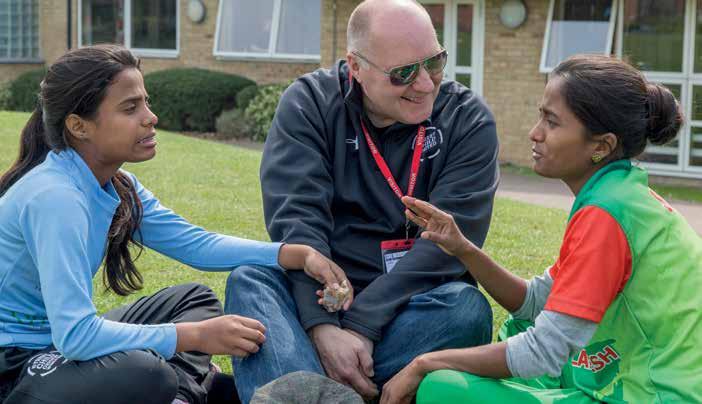
John Wroe with Street Child United participants
and India,’” John recalls. As a result, 10 teams of children travelled to the UK to compete at Lord’s, the international home of the game.
“We thought we’d be on the nursery pitch, but we were on the main pitch, where all the international test matches happen, and the children used the same dressing rooms as the international players. The Keeper of the Records at Lord’s said it was his proudest moment in 35 years.”
Street Child United works by identifying collaborative organisations who can provide the necessary support to the intensely vulnerable young people they work with on their return home. Most of the children involved have little to no identifying documentation, and the charity works with lawyers to secure birth certificates, passports, and, therefore, a lasting legitimacy for the participants. It also provides social workers to manage the extraordinary disconnect between the experience and the children’s daily lives.
“It’s not just the first time they’ve been on a plane – for some of them it’s the first time they’ve slept in a bed,” says Jo
(also BEd 1983), now John’s wife and an award-winning educational publisher and creative writing supervisor at Lucy Cavendish College.
The programme’s impact is not just in its ability to offer children a lifetransforming experience, but also in its potential to highlight the harshness of their lives to their own governments, leading to potential change. The recognition has been immense. In Tanzania the National
Assembly was suspended in order to welcome the competitors home, while Pakistan conducted its first ever census of street children as a result of the charity’s involvement.
For the participants, the realisation that there are others in a similarly desperate situation, all over the world, is oddly reassuring. “It was the first time I realised that being on the streets wasn’t my fault,” one child told John.
JUSTICE WITHOUT ETHICS?
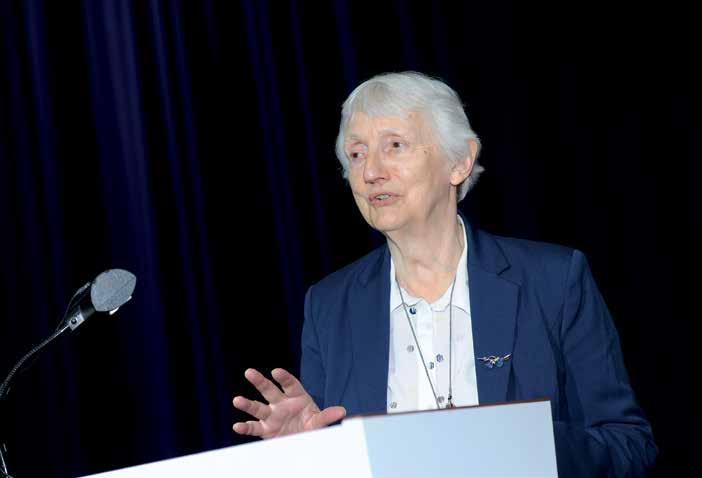
On Thursday, 9 May, Baroness O’Neill of Bengarve, Professor Emerita of Philosophy at the University of Cambridge, delivered the third annual Kate Pretty Lecture.
The third annual Kate Pretty Lecture brought some big questions to the Homerton auditorium, as an audience of students, academics, alumni and members of the public pondered the principles of justice, ethics and human rights.
Onora O’Neill, Professor Emerita of Philosophy, former President of the British Academy and a former Principal of Newnham, who now sits as a cross-bench member of the House of Lords as Baroness O’Neill of Bengarve, delivered the lecture, entitled ‘Justice Without Ethics: A 20th Century Innovation?’ on Thursday, 9 May.
Baroness O’Neill explored the idea that justice and ethics have become
increasingly divergent concepts, with ethics seen more and more as a matter of personal conscience or cultural habit, rather than as a set of absolutes.
She also examined the impact that failure to adhere to a shared ethical code can have on human rights.
The lecture series honours Dr Kate Pretty CBE, Principal from 1991 to 2013, under whose direction Homerton made the transition to full College of the University. It provides a platform for high-profile speakers from across the academic spectrum, demonstrating the breadth of study and research now undertaken at Homerton.
Baroness O’Neill of Bengarve
From the Dining Hall to the Boat House, Homerton’s physical footprint is expanding. The Bursar, Deborah Griffin OBE, explains the latest plans.
ESTATES STRATEGY
We are now half way through the College’s Estates Strategy 2014–2024 – at least in time! As the original strategy was based on assessment of needs it was good to report to College Council in February that with the building of Morley House, refurbishment of Queen’s Wing and the building of the Griffin bar and offices some of the most immediate needs – student accommodation, offices for fellows, gym and social spaces – have been met. We have also been able to provide a new archive, additional high-tech supervision rooms and a small reception space in Macaulay.
Three projects under construction or due to start this year will mean that by mid2022 we will be an estimated 85% of the way through the strategy.
North Wing will provide a new auditorium and guest bedrooms to support the conference business, which is critical to our financial sustainability, and two large airy music rooms. This is due to be completed by April 2020. Planning permission has been achieved for the new Dining Hall and we hope to start construction by the end of this year. This is the largest project in the strategy and will provide not only a space for catering
ESTATE STRATEGY 2014
Approximate time
Projects
Student accommodation
Student facilities
• Sport
• Music
• Art
• Faith
Archive space
Special collections
Catering
Small reception
Study spaces
Finance office
Academic office spaces
Porters’ Lodge
Fellows/staff housing
JRF housing
Completed In planning Phase 3
for our increased number of students but also an exemplary working environment in the new kitchens, a large modern servery area and a new Buttery allowing the current
Professor Geoff Ward,
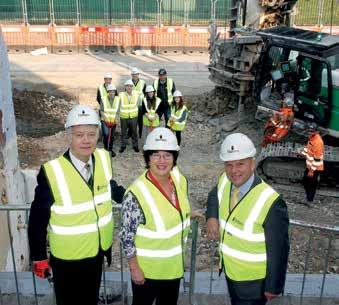
Deborah Griffin and Mark Hart, Joint Managing Director for Barnes Construction
JCR to become a dedicated social space for our undergraduates. Both these projects will benefit from Ground Source Heat Pump technology and have been designed with future environmental needs very much to the fore.
Since writing the strategy we have been able to take advantage of two opportunities: to build first class sports facilities on Long Road which are scheduled to be completed in 2020, and to invest in a new Boat House with City of Cambridge Rowing Club which will be ready this summer.
Knowing how long planning takes in the City, once the Dining Hall and sports facilities are under construction we will turn our minds to planning for Phase 3: a Porters’ Lodge with consideration of space for exhibitions and special collections (specifically Children’s Literature) and the reconfiguration of the area around the Great Hall to provide first class facilities for music and drama.
FELLOW IN FOCUS
Dr Bill Foster
Born in Louisiana, USA, and educated in Switzerland, where his geologist parents were working, Dr Bill Foster has been part of the fabric of Homerton since 2007. Director of Studies in History, he is coming to the end of his stint as Vice-Principal, which he will mark with a well-earned sabbatical.
How long have you been affiliated with Homerton?
For 12 years now. After studying at the University of Pennsylvania and Cornell, I was appointed Keasbey Research Fellow at Selwyn from 2001–3, the last year spent serving as an assistant University Lecturer in the History Faculty. My wife, daughter and I then returned to the States, but Cambridge gets in your blood. It’s like dog years – one year of experience in this system is like seven in any other for sheer intensity.
When I applied to the opening for a College Lectureship in History at Homerton, I received a very compelling pitch from [former Principal] Kate Pretty, [former Senior Tutor] Peter Warner, and [Admissions Tutor] Steve Watts, describing the role as an opportunity to help build a Cambridge College. Which was hard to turn down!
What do you think makes Homerton special?
The undergraduate students. Like all in Cambridge, they are brilliant. There is as well the unique quality of the Homertonian – a kind of frontier, pioneering, self-reliant spirit. This is a formidable combination, and one that I admire.
Equally distinctive is the Fellowship. In addition to the impressive new generation of Fellows engaged in Biomedicine, Medicine, Engineering and other fields, there is a core of senior College teaching officers with long institutional memories who have devoted their careers to working with the College leadership (the Principal, Senior Tutor, Bursar and Development Director) to get things done. This kind of commitment is essential within a College. In this age of institutional centralisation, it is important to remember that Cambridge Colleges are not glorified halls of residence. We are instead self-governing academic institutions in our own right. While our links with other Colleges and the University are inextricable and mutually supportive, at the end of the day we in the College are responsible for ourselves, and for one another. Being part of that kind of devoted community is very special.
You’re about to pass on the baton of the Vice-Principalship to Dr Louise Joy. How have you found that position?
The Vice-Principal’s role is what you make of it. The Principal, the Senior Tutor and the Bursar all have very defined roles, while the Vice-Principal floats around a bit more. In addition to the obligation to deputise for the Principal when necessary, I have seen the office as a resource to support the Fellowship. This is expressed in such ways as serving as chair of the Research Committee, which supports the Fellows’ research activities.
Louise will be a brilliant V-P!
What research are you currently engaged in?
I’ve always been a historian of war, at first writing about frontier warfare in colonial North America and now dealing almost exclusively with events after 1945. I am currently writing a book called Why the
Cold War Never Ended: Seven Lessons in Understanding Modern Power. There will be a lot there about strategy and leadership, but it is also a meditation on nations more generally and the stories people feel they need to tell each other about conflict. In this case I am asking the question about why the language of ‘victory’ and ‘defeat’ was so often used after 1989, when the reality was (and remains) much more nuanced and ambiguous. The ‘Cold War’ was of course about far more than a US-USSR rivalry. It was instead a global network of interrelated conflicts. If we can understand something about that I think we are in a far better position to understand what is going on today.
What does a lifetime’s immersion in warfare do to your perception of humanity?
It’s an intellectual challenge but it is in a sense emotionally demanding as well. Part of my job, as I said previously, is to be a friendly supporter of my colleagues and students.
But every day in the supervision teaching format I endlessly discuss humanity at its worst. In a typical day I will try to explain something about the Holocaust, the Gulags, and fight the Vietnam and/or FrenchAlgerian Wars two or three times.
At the end of the day though, I feel it’s all urgently necessary. For most of the students I teach, the experience of war is very distant indeed. But these students will soon go into, for example, the civil service, the military, journalism, or other kinds of public service where they will be eyewitnesses to humanity at its most desperate. They will then need to find something inside themselves to make a difference. If I can help them start this learning process, it’s worth it.
So what do you do to clear your head?
I’m trying to learn kayaking. My wife is an expert white water kayaker and is taking up sea kayaking as well (plus my daughter was
formerly a Team GB white water rafter). I am just trying to catch up with all this and have fun. In recent years we have enjoyed islandhopping in sea kayaks off the Croatian coast. And in terms of white water river-running, last summer I managed to (barely) survive an encounter with the Soča river in Slovenia. Great fun!
CREATING CHANGE
Educational access and gender equity are shared passions for alumna Susan Durston and current student Helena Trenkić 45 years apart, both have seen the United Nations as the route to driving change.
Now working as an independent consultant, Susan’s career at UNICEF culminated in the role of Global Head of Education. Helena was supported by Homerton to attend the UN’s Commission of the Status of Women in New York this spring, at which she had been invited to represent the National Council of Women.
Susan Durston (BEd 1972) followed her time at Homerton with a stint training teachers in Papua New Guinea as a volunteer with VSO. Although she then worked briefly as a primary teacher in the UK, her experience overseas had sparked an interest in development and global education which was to shape the rest of her career.
An MA in Educational Planning in Developing Countries at the Institute of Education led to 10 years of teaching in the Overseas Education Unit at the University of Leeds. Susan then travelled to Uganda, supported by UNICEF, to work with the Ministry of Health, before working with DFID in Zambia and as an educational advisor in Malawi.
She then managed the EU’s support to the education sector in Nepal, before taking a regional post with UNICEF in Kathmandu, overseeing the organisation’s work in Afghanistan, Bangladesh, Bhutan, India, the Maldives, Nepal, Pakistan and Sri Lanka. She subsequently worked as Global Head of Education at UNICEF New York, and now works as a consultant and as a trustee of Child-to-Child.
Mostchallenges to providing equity of education are in the human mind. Valuing all people and their rights, irrespective of gender, race, ability, caste or origin is the first step. We need a curriculum in schools that does that. Secondly, the lack of universal early childhood education needs addressing. If we could achieve both of these, then other issues could be solved. I was appalled recently to see a Christmas card sold in aid of education which read “it only costs $25 a year to send a child to school.” That is less than a pair of shoes or a new toy in the Global North. What makes us think that education should be cheap for some children and not others?
The world has moved on, although there is still a lot to do. Resistance to access in education of girls is sometimes systemic, but exists in pockets in every country, where traditional attitudes prevent girls from accessing or completing education. Educational access is only the start: discriminatory attitudes within school, or facilities which are either absent or not girl-friendly can seriously affect attendance and learning.
One of my career highlights was being present in Kabul at a ceremony on the first day Afghan girls were allowed to enrol back in school. It was nothing to do with me, but I felt such a sense of solidarity.
After the tsunami hit Asia in 2004, I found that there was no ready-to-go package for education in emergencies (UNICEF has a pledge to get children back into school quickly under the Core Commitments for Children), so I signed up a consultant who developed a package and trained UNICEF staff and government counterparts. It formed the basis for UNICEF global work gathering existing guidelines and resources in one place for use when an emergency hit.
Homerton taught me to put children at the centre of education, not subjects. Thus it was a natural shift to the Human Rights-based approach used by UNICEF. The ethos of the College was so inclusive, and my tutors remain with me in spirit as role models. They were committed to education, vastly experienced, exceptionally human and good fun.
Helena Trenkić (BA History 2017) has been working to improve gender equality since school, where she was a member of the sixth form Feminist Society. The society was supported by the National Council of Women of Great Britain (NCW), which Helena joined after leaving school. She took an active role from the beginning, proposing a resolution on improving Relationships and Sex Education in British schools, which became part of the Council’s 2018–19 Annual Resolutions with which to lobby the Government.
As a result of this engagement, Helena was invited to represent the NCW at the UN’s Commission on the Status of Women (CSW) in New York in March 2019.
Iwentto CSW with one firm goal in mind: to ensure that a commitment to providing Comprehensive Sexuality Education was on the agenda for as many people as possible. I ensured it was in the UK Youth Statement that I was given the honour of drafting, and that it was highlighted in the CSW Youth Statement. I lobbied the Government Equalities Office every night with details I think the UK could do better on, and networked with others who want to achieve the same aim.
While at CSW I also attended daily information events on a huge number of issues including Violence Against Women in Politics, Female Genital Mutilation, child marriage, the gender pay gap, ensuring women’s legal and inheritance rights are upheld, and many more.
The sheer amount of people working towards a better world was inspiring, and I met women and men with incredible stories and contagious passion.
I don’t believe that I ever had a eureka moment where one particular issue led
me to recognise the inequalities that do still remain in all societies, however big or small they can be. As someone whose parents never imposed strict gender norms on me, and encouraged me to do whatever I wanted, I simply didn’t see gender as something which would dictate a life experience. When I saw that it did, through restrictive suggestions of how women should behave, I knew that I didn’t think it was right. When I first read the definition of the word ‘feminist’, I knew that it clearly applied to me, and I didn’t think twice about using it thereafter.
I focused in on Relationships and Sex Education because although there are many new advances in ensuring all girls receive quality education, education about relationships and sex is still lacking and stigmatised in most countries, and it is needed to protect the next generation. No one person can fix everything. It’s far more efficient to follow one particular issue which really burns a fire inside you.
FINDING HOMERTON’S FUNNY BONE
Cambridge’s comedic heritage is well-documented. From Monty Python to Mitchell and Webb, Beyond the Fringe to Fry and Laurie, the University’s impact on British comedy is hard to overstate.
With a longstanding reputation for Drama, Homerton is well placed to contribute to Cambridge’s entertainment output. We caught up with three Homertonians who, in different ways, are making laughter their business.
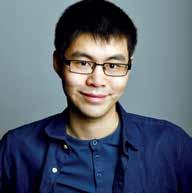
Ken Cheng studied for the first year of a BA in Mathematics in 2007-8, before leaving to pursue a successful eight-year career as a professional poker player. His recreational interest in comedy gradually took over, and he reached the final of the BBC New Comedy Award in 2015. In 2017 he was awarded the prize by public vote for the funniest one-liner of the Edinburgh Fringe for his take on the redesigned currency: “I’m not a fan of the new pound coin, but then again, I hate all change.”
In 2018 Ken presented a four-part Radio 4 series entitled Ken Cheng: Chinese Comedian. His live show Best Dad Ever toured the UK earlier this year.
Were you involved in comedy while you were at Homerton?
No I wasn’t, I never discovered it. I didn’t know anything about it, even though I grew up in Cambridge. It’s quite a middle-class thing. I know people who grew up in Cambridge and saw comedy like David Mitchell and Robert Webb in the 1995 Footlights panto when they were 10, but my
mum never took me to those shows.
I started doing it in 2010, two years after I left, when I was still living in Cambridge. I got the advantages of the Cambridge student scene without having to do any of the work!
How did you first discover that comedy was something you were good at?
I think at school. I was always shy in school, that’s why I’d never really gravitated towards comedy, but once in a while I’d say something really funny that the class would all laugh at. That was definitely a buzz for me, and I probably started to chase that feeling more in conversation as I grew more confident.
How does the buzz feel?
Unbelievable. It’s like pure, unrefined, positive validation. It’s so personal,
and such a direct connection with the audience.
Political comedy seems to be on the rise. What kind of wider social issues does your comedy touch on?
I talk about race a lot. I think it’s very important, especially now that Twitter is so big, and people want that kind of exchange of new ideas and social progress. Female comedians and comedians of colour get lots of traction on social media because they’re reaching people who have been unreached by television. The white, male voice has been the dominant voice for so long, and it’s not the only thing that people want any more. People think there are cynical reasons why women and BME comedians are doing well, but they gain traction because they’re funny.
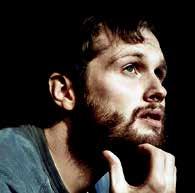
Liam Williams (BA English 2006), was the runner-up in the So You Think You’re Funny competition at the Edinburgh Fringe in 2010, and was nominated as best newcomer at the Edinburgh Comedy Awards in 2013. His semi-autobiographical radio show Ladhood was broadcast on BBC Radio 4 in 2015, followed by the radio comedy Perimeter in 2017. Liam appeared in the first episode of This Time With Alan Partridge in February of this year.
Were you involved in comedy at Homerton?
I found it all very daunting to begin with. My parents were very into comedy and I was aware of the Footlights heritage of a lot of the people we watched when I was growing up. But when I actually got to Cambridge, there was a student panto in my first term, and I was too intimidated to even go and watch.
FBut one night I’d been at the bar with a friend for a couple of beers, and we saw the audition posters for a student production of Romeo and Juliet on our way back to West House. We decided to go along, and he ended up playing Benvolio, while I, slightly less glamorously, played several minor characters, including a bed post. But it started to look more achievable.
I threw myself into Footlights, did the panto, started a sketch group, started to do stand-up and took a show to Edinburgh. I did my first ever stand-up in the Great Hall. The great thing about Homerton was the feeling that you could give anything a go.
Did you take much advice from other comedians as you were progressing?
Oh, very much so. I can see that Footlights probably has a lot of institutional privilege, but being part of a supportive collective and watching people grow was so valuable. And
at Edinburgh you get the same thing on a larger scale. You get to see people develop their talents, and everyone provides feedback to everyone else. Comedians have a reputation for being very competitive with each other, but they’re generally very mutually supportive.
How does it feel to have an audience really respond to your work?
When it’s going well it’s a real buzz. But I don’t do the live stuff so much any more. I find it too unpredictable. I prefer the level of control you have when creating material for radio or television.
What has been your career highlight so far?
This year, a series which I wrote for radio has been recommissioned for television, so I’m working on the rewrite. That’s pretty exciting.
ran Bushe completed a PGCE in Education with English and Drama in 2011-12, having previously trained as an actor. She then taught A Level Drama for five years, while maintaining a sideline as a stand-up comic. She now teaches sketch comedy, while writing for herself and other performers. Her solo show, Ad Libido, exploring the topic of female sexual dysfunction, had a sold-out run at the Edinburgh Festival, where it was chosen as one of the Guardian’s best shows, and transferred to London’s Soho Theatre in May this year.
Were you involved in comedy at Homerton?
No – I was doing teacher training, which is very full-on, so there was no time to get very immersed in anything else. You’re always out on placement and the rest of your life goes a bit on hold.
You trained as an actor, and then as a drama teacher. How did the move to comedy come about?
When I was working as an actor, I found the waiting for work quite hard. You can go to workshops etc between roles to keep your skills polished, but you spend a lot of time not really feeling like an actor. I started to write my own stuff to fill the gaps between work, and found that I loved it.
As I was going into teaching, a friend set me a dare – by this time next year you have to have done a stand-up set. I joined a course at the Soho Theatre, as a result of which I formed a sketch group, did three Edinburgh shows and gigged all over London. I was teaching all day, doing a gig in the evening, and then going home and doing my marking.
What’s the appeal of comedy for you?
We watch so much through screens, but there’s something about the unpredictability of life theatre, and of comedy in particular, which is really special.
There’s a particular moment in my show which usually gets a laugh, but sometimes there’s a groan, or sometimes it can even seem sad. The weather, the song that’s playing as they come in, what’s happened over the rest of the day – everything can affect the audience’s mood and their response to what they’re watching. It feels like a different dialogue every night, and you can’t just fall into a pattern.
THE CHARTER CHOIR CROSSES THE CHANNEL
Dr Daniel Trocmé-Latter Director of Music
Question:
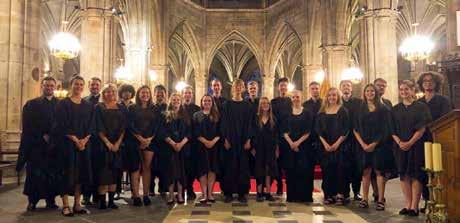
What’s the carbon footprint of flying a choir 500 miles? Answer: Too much to think about, and we tried to avoid having to think about it by instead travelling entirely by train and coach on our tour this year. This summer the Charter Choir sped off at 300km/h by Eurostar for a short (somewhat regimented yet nevertheless leisurely) tour of the Auvergne region from 11 to 16 July.
Arriving late on the Thursday night in Clermont-Ferrand we were welcomed at the station by Homerton’s former Lay Chaplain, Fabienne Bonnet, who since leaving Cambridge has settled in the region. Friday was mostly a day of recovery, albeit with wine-tasting, swimming, and guided tours among the offering. A successful concert in the gothic parish church of St Gènes-les-Carmes on the Saturday evening kicked off our short series of performances. Accompanied by our recently-graduated Organ Scholar, Chris Baczkowski, we sang a programme of music from across the Christian liturgical year.
The following morning we were the guest choir at Mass in Notre-Dame de Chamalières, before departing on a threeand-a-half-hour coach journey up into the hills to the town of Le Chambon-sur-Lignon, a community with which my family has historical links. The pastor of the Protestant church, Esther Wieland-Maret, greeted us with open arms and refreshments as we
stepped off the coach. There was just about time to enjoy a bite to eat before beginning our rehearsal, then launching almost straight into our concert, before being swept away by our host families to enjoy the Bastille Day celebrations.
Part of what makes this place so special is that the entire population has been collectively honoured as Righteous Among the Nations by the Yad Vashem Holocaust Museum in Jerusalem. Indeed, the morning after our concert, the choir received a very moving tour of the Lieu de Mémoire museum, dedicated to the thousands of Jews who during the Second World War were hidden from the Nazis by the town’s leaders, including a certain Pastor André Trocmé and his wife Magda. Then the whirlwind tour continued and we were back on the coach for another – even longer – journey to Moulins-sur-Allier, where the cathedral awaited us, and where our performance of Louis Vierne’s complete Messe
Friday 15 November, 7pm: Fauré Requiem, St Martin-in-the-Fields, London
Sunday 1 December, 6pm: Advent Carol Service
Tuesday 3 December, 6.30pm: Homerton Carol Service
solennelle (accompanied on two organs) was received rapturously.
So, was travelling by train rather than plane worth it? Given the revelation in June that Eurostar had sneakily reduced its luggage alcohol allowance to one bottle of wine or four beers, this was the deciding factor for a number of choir members. Never mind! My thanks go to Fabienne Bonnet and to Max Goodall for their generous assistance in organising this very enjoyable tour.
But there’s more! On our return to Cambridge we launched into our newest commercial endeavour. Recorded at St George’s Church, Chesterton, this album of Christmas music will be released later in the autumn (those attending the Alumni Reunion Weekend can expect a taster from the choir then). A celebration at the residence of the Director of Music completed this choral fortnight… with just enough alcohol to placate those who felt hard done by Eurostar’s luggage restrictions.
Alumni are always welcome at Charter Choir services and concerts. The Charter Choir website (www.homerton.cam. ac.uk/charterchoir) contains full details of sung services as well as clips of the choir performing. The website also contains biographies, and details of tours and recordings. Alumni are also encouraged to follow the Charter Choir on its Facebook page, at www.facebook.com/ homcharterchoir.
Research Associate Dr Jakob Thyrring has witnessed how climate change is already reshaping communities in coastal Greenland.
Climate change has finally, in the past year, achieved a sense of urgency in the public imagination. We may be no closer to action or consensus on how to address it, but the combined efforts of Greta Thunberg, David Attenborough, Extinction Rebellion and record-breaking global temperatures have made it impossible to ignore.
For Homerton Research Associate Dr Jakob Thyrring, the issue’s rise up the global agenda can’t come quickly enough. Born and educated in Denmark, Jakob came to Cambridge in 2018 on a five-year Fellowship funded by the Independent Research Fund Denmark and the European Commission Marie Skłodowska-Curie actions.
With a focus on the impact of climate change in Greenland, which dates back to his PhD, Jakob’s fieldwork has allowed him to witness the tangible effects already being felt.
“Greenland is the canary in the coalmine,” he explains. “The ice melt has increased sixfold since the 1980s – that’s in my lifetime.
OVER THE EDGE
That’s changed the salinity of the sea, and caused sea levels to rise, and we just don’t know what will happen as a result.”
Greenland’s coastal communities are hugely reliant on fishing, a way of life whose basis is threatened by the increasing environmental changes. Already, as the surrounding waters become more temperate, new species are moving north which were never previously found in the area.
“It opens up new fisheries, which in the short term can be seen as an opportunity,” says Jakob. “But from a biological point of view it’s quite scary that these species are that far north. And as more large predators move north, it risks tipping the whole ecosystem.”
Jakob spends one to three months in Greenland each summer, splitting his time between West Greenland, where the human population of 56,673 is concentrated, and the unpopulated east, where a research station is maintained and food supplies are delivered by annual boat.
This year’s research trip will present a new challenge, in the shape of Jakob’s baby son, who will remain at home in Cambridge.
“A baby makes you very aware of the future suddenly,” he says. “I want to be able to tell my son that I actually tried to do something to make a difference.”
For the rest of the year Jakob is based in Cambridge, working on research at the British Antarctic Survey, and with a collegiate affiliation to Homerton. He also aims to do more public-facing work, building awareness of the growing threat.
“It’s so obvious that things are already changing, but politicians are only worried about growth,” he laments.
“But younger generations are more aware of the dangers. We can stop things from getting worse, but it needs to be now.”
Dr Jakob Thyrring
EDUCATION IN FOCUS BACK TO SCHOOL
Homerton alumnus
Dr James Biddulph heads the University of Cambridge Primary School, which aims to be both “a brilliant primary school” and a focal point for educational research and training.
Cambridge, as alumni returning after a time lag cannot fail to notice, is a profitable place to be a builder these days. New houses, new developments, and wholesale new towns are multiplying throughout and around the city, and one of these has provided the opportunity for a quietly inspirational experiment in primary education.
Eddington, a new neighbourhood in north-west Cambridge, has been built on University-owned land with the purpose of providing housing for University employees and easing the pressure on the local housing market more generally. Required to build a school to cater for the new community, the University took the plunge and decided to take a closer than usual interest.
“When the development was planned, there was a planning requirement to build a school,” explains head-teacher and Homerton alumnus Dr James Biddulph (PGCE 2000, MEd 2007, PhD 2010). “The University was not obliged to run it, but at the time Michael Gove (then Secretary of State for Education) was busy saying universities should be more involved in
primary and secondary education, and it seemed an amazing opportunity to start with a blank canvas.”
The result was the University of Cambridge Primary School, which opened in September 2015 on a striking site at the heart of the development. As a free school, it receives its funding from central government without the involvement of the Local Authority and has no other sources of funding, including from the University. As the first and only Primary University Training School (its legal designation) it has been liberated to try out its own ideas, and to maintain a relationship with the University which would not usually be possible.
The school’s links with the Faculty of Education and other departments mean that, in addition to those student teachers who spend time at the school on placement, the entire PGCE cohort visit as a group to discuss topics such as approaches to classroom discipline, or how to make the most of their NQT (Newly Qualified Teacher) year. As the school is not yet fully populated with pupils, empty classrooms provide the opportunity for student teachers to try out different ways
caption
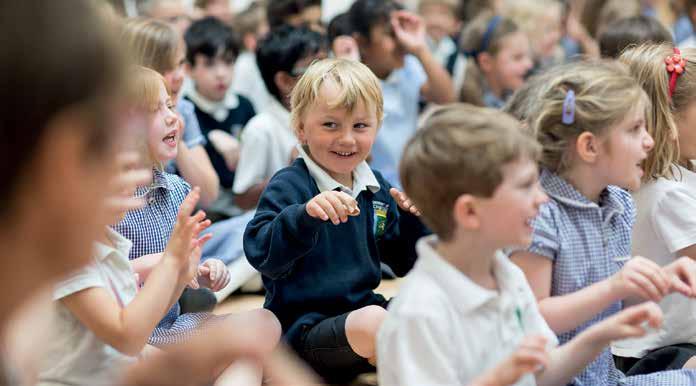
Pupils at University of Cambridge Primary School
of using the space – a practice which has proved so useful that Dr Biddulph hopes to retain an empty classroom for the purpose even when numbers are up to full strength. “A key benefit of working with the staff from UCPS is that the trainees have excellent role models to learn from,” says Jane Warwick (BEd 1983), Homerton Bye-Fellow and Programme Manager for the Primary PGCE. “All staff are examples of highly professional, reflective and competent practitioners who constantly strive to meet high expectations and are keen to draw on evidence to improve teaching and learning.”
But it is in its relationship with educational research that the school has been able to be particularly innovative. Described by Dr Biddulph as both “research generating and research informed”, the school acts on the results of the latest educational research both in Cambridge and in a global context. In turn, its experiences feed back into the conversation had by researchers at the Faculty of Education, and inform educational recommendations made worldwide.
“We see ourselves as releasing children’s potential, rather than filling their deficits. Lots of free schools seem to make their point of difference from other schools all about imposing more discipline and formality – the whole zero tolerance culture which is in vogue. We are trying a different approach – to open up possibilities and to enable children to access the curriculum fully with their voices loudly heard.”
Dr Biddulph studied English and Music at Durham University before teaching experience in Nepal led him to a PGCE, MEd, and eventually a PhD (completed while working as an assistant head-teacher in London) at Homerton. He believes that a crucial aspect of his role is to be the “head learner – I should always be one step ahead on new ideas”. To that end, he is actively engaged with the Faculty of Education on a daily basis, working with the PEDAL Centre (the Centre for Research on Play in Education, Development and Learning) on how play can be foregrounded in primary education, as well as collaborating with researcher Julia Flutter on a series of research-informed
books for teachers entitled ‘Unlocking Research’, to be published in early 2020; and serving as a member of the Partnership Standing Committee, which guides the development of the Primary PGCE course.
“James’ expert leadership skills and commitment to the partnership continue to drive and improve this relationship and through this, trainees see a whole school commitment to teacher education,” says Jane Warwick. “James also has regular, much valued informal discussions with course managers about current issues.”
The fact that the building of the school was funded by the University rather than by government is reflected in its generous outdoor provision. As well as vegetable gardens (“We tried to grow our own food for the school kitchen, but the children got sick of eating pumpkin every day for a week because we harvest in September!”), play equipment and sports fields, each classroom has access to its own outside area. The classrooms are door-less, opening directly onto wide corridors which themselves are active spaces filled with book corners, papier-mâché dragons and a medieval banqueting table.
Dr Biddulph is keen to make clear that the use of space is the result of careful thought.
“This is not a throw-back to 1970s open plan classrooms, but rather an intellectually robust decision in which transfer of sound has been calculated and tested.”
Teachers are encouraged to experiment with the layout of the classrooms, sitting children in traditional, forward-facing rows for some purposes, and in collaborative groups or without tables altogether for others, depending on the learning intended.
But while the award-winning, lightfilled building certainly helps, it is not the infrastructure alone that makes this school feel special. Touring the site with Dr Biddulph – tall, bearded, and looking every inch the authority figure in a threepiece pinstriped suit – small children rush up to tell him what they had for lunch, boast about what year group they’ll be in come September, or to admit to failure in having tried to mend his bike. There is an atmosphere of cheerful collaboration, and a commitment to the idea that learning should be fun, which is palpable.
The school has been nominated as one of the best primary schools in the country by the Times Educational Supplement, and the head is clearly delighted by the recognition. But when asked what he’s proudest of he doesn’t hesitate.
“I’m proud of my superb staff. There are so few positive stories about education, and our teachers, learning coaches and administration team are aware of that and want to be part of the solution. But schools are subject to this constant governmental tinkering, and if people are frightened that their job might be on the line, they’re not going to be visionary. We have developed the confidence of being part of an 800 year-old institution, and the freedom to take risks. In line with the University’s mission to have an impact on social change, we’re committed to improving education for all children, everywhere.”
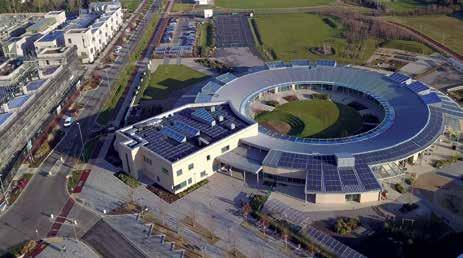
An aerial view displays the school’s innovative architecture
CHANGEMAKERS
Homerton already occupies a unique position in the line-up of Cambridge Colleges. As the newest College, yet with a 250 year heritage, the largest student population in the University, and a long expertise in teacher training, we have an opportunity to do things differently. That line of thinking has led Homerton to create a ground-breaking new extra-curricular programme, which takes advantage of the intimate scale and sense of community of the collegiate set-up to shape the Cambridge experience of our students.
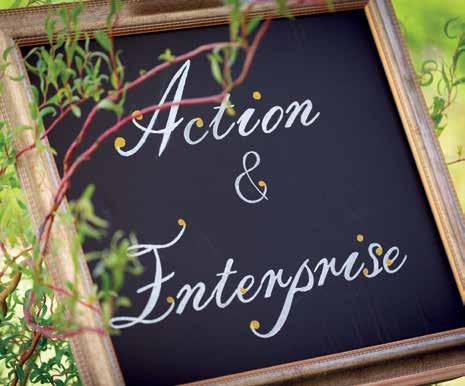
Launched on 17 June 2019, Homerton Changemakers provides a counterpoint to the academic side of life, a way for students to grow and develop beyond their knowledge of their subject. Offering workshops, lectures, summer schools and challenges, it aims to foster four essential qualities: Responsibility, Resilience, Action & Enterprise, and Leadership.
Dr Alison Wood, appointed as Academic Director of Homerton Changemakers in October 2018, has been central to the programme’s creation.
“The world is changing fast. Technological and social contexts increasingly demand people who are proactive and knowledgeable, who listen as well as act, who are open as well as confident, who can think both deeply and broadly. Cambridge offers an outstanding academic education. Changemakers goes beyond that, to build the foundations essential for success. More than a transferable skills programme or path to employability, Changemakers will help all Homerton students truly find their stride.”
“Students aren’t at Cambridge just to get a degree,” adds Miranda Hewkin Smith, President of the Homerton Union of Students from 2017 to 2019. “It is here that they discover themselves, and decide to make a difference in the world.”
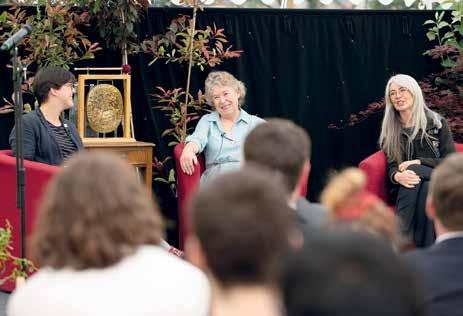
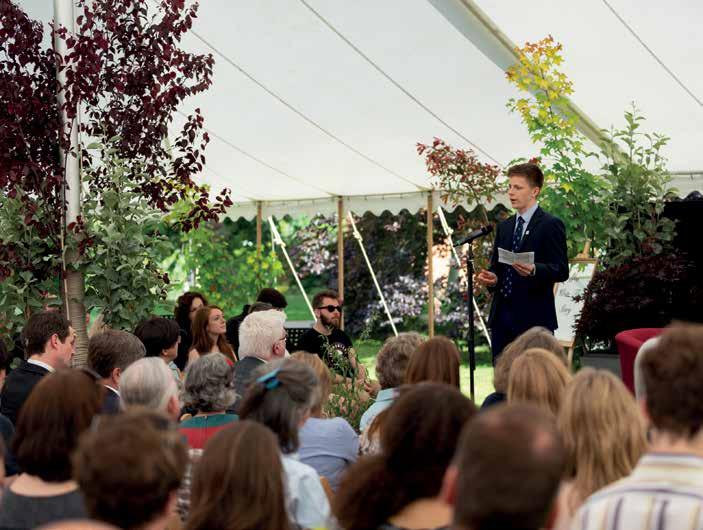
The official launch provided a first opportunity for the Changemakers concept to be unveiled to the wider world. Glorious sunshine, a tree-filled marquee, glasses of fizz and vegan street food all helped to welcome 150 guests, including donors, alumni, students, and colleagues from across collegiate Cambridge and beyond. The Principal, Senior Tutor and Academic Director spoke about the purpose and
Dr Alison Wood, Ann Cotton OBE and Dame Evelyn Glennie
ambitions of the programme, while current student Julius Mex (Natural Sciences 2018) gave a powerful endorsement of the Taster Day provided last term.
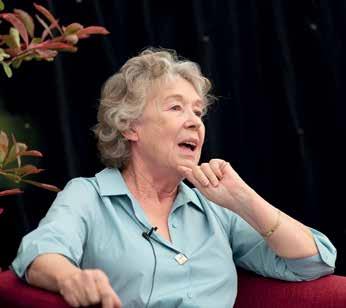
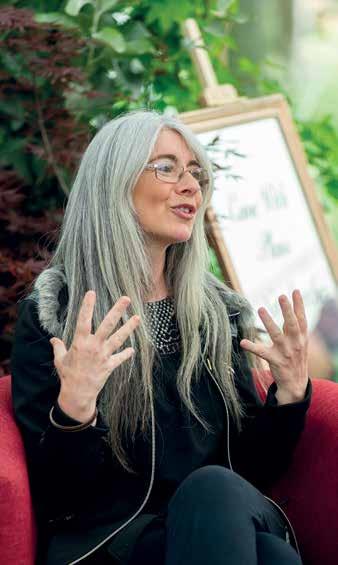
Honorary Fellows Ann Cotton OBE, founder and trustee of the girls’ education charity CAMFED, and Dame Evelyn Glennie, world-renowned percussionist, joined Dr Wood in conversation to explore the motivations behind the project and their own personal journeys. Both spoke deeply movingly about their backgrounds and trajectories, as well as the importance of the skills Changemakers aims to inculcate.
“Although academic study is important, we can go beyond these disciplines to reach a greater understanding,” said Mrs Cotton.
Students have been enthusiastic to sign up for the first two-year Changemakers programme which begins this September with a week’s summer school.
Dr Wood will present on Changemakers as part of the Alumni Reunion Weekend (see page 35).
Changemakers
also provides alumni with an opportunity to be part of an exciting and innovative new venture. We are currently seeking financial support to ensure the programme has the foundations it requires. We would be delighted to hear from any former students who would like to donate to help current Homertonians expand their horizons.
Dr Alison Wood
Ann Cotton OBE
Dame Evelyn Glennie
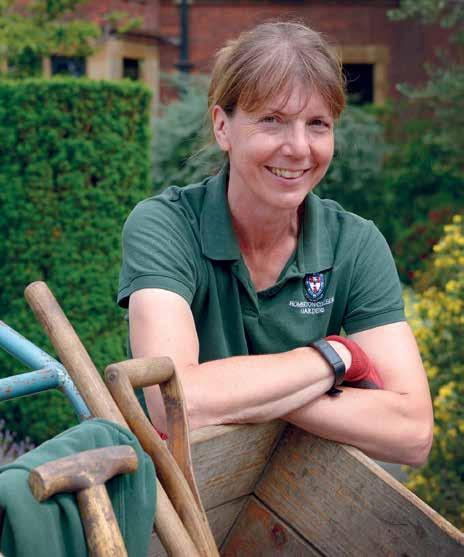
Homerton’s location gives it the luxury of space which, combined with the absence of ‘keep off the grass’ signs, makes the gardens a favourite with students, staff and Fellows. Head Gardener Helen Andre Cripps takes us behind the scenes.
A DAY IN THE LIFE OF… HELEN ANDRE CRIPPS
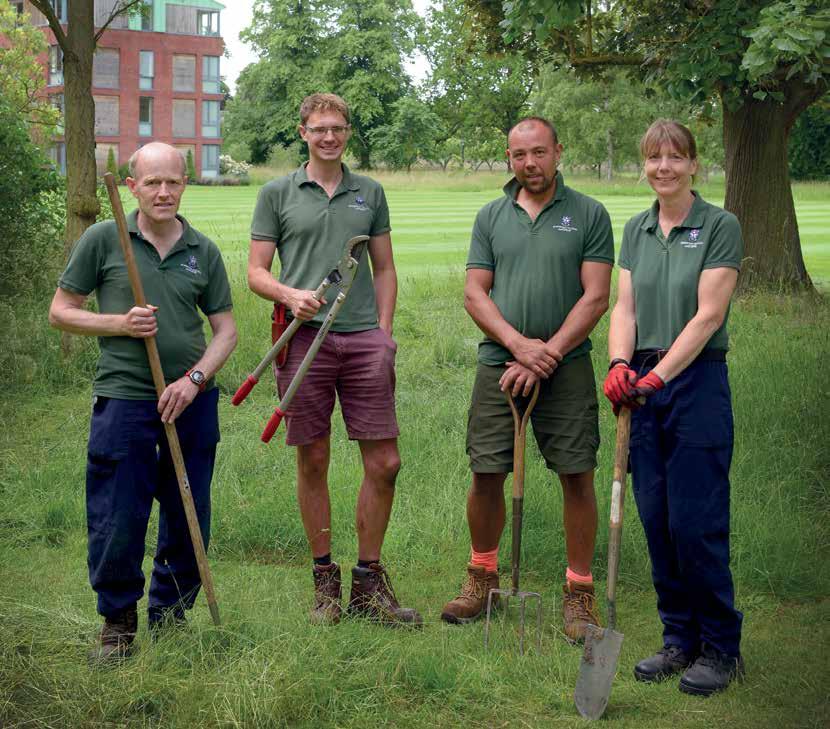
The gardening team
5.30am
My alarm goes off at 5.30am, to give me time to go and muck out my horse before getting into work, along with the rest of the team, at 7.30am. I bring a coffee in a thermos, and might bring a sandwich to keep me going.
7.30am
We have a team meeting first thing every day, to sort out who’s doing what. There are four of us in the gardening team – me, Robert, Matt and Jonathan (who’s been here 40 years this year!) and we are recruiting for a fifth member. I tend to just say “these are the jobs that need doing – it’s up to you how you get them done.” So people can be by themselves if that suits them, or work together if they prefer to have someone to chat to. We’re always bumping into each other though, and if someone needs a hand we’ll help out, or we’ll catch up when we stop for a cup of tea and a chat.
8.30am
I’ll check my emails and reply to anything urgent, such as requests from the Development Office, or notification that there are branches down which need tidying up. I also tend to process invoices first thing, but it’s very weather dependent – I store up non-urgent paperwork for miserable weather when it’s harder to work outside.
9.30am
If the tree surgeons are on site I might have to oversee that, or just have a walk around and see what needs tidying up. One of the things I love about Homerton is that it’s access-all-areas. The whole point for me is for the gardens to be enjoyed and appreciated, and to feel that we’re helping the students to relax. The sunny courtyard outside the Great Hall is so varied, and has some amazing specimen plants, and I love the orchard because it’s so peaceful.
10.30am
I know some people aren’t very hands-on when they get to be head gardener, but I don’t know what I’d fill my day with if I delegated it all to the team, and besides, I love gardening! So I still spend most of the day getting my hands dirty. Obviously what actually needs doing is very seasonal, but it might be pruning, mowing – which increasingly needs doing all year with milder winters – edging, weeding or leaf clearance.
12.30pm
We have lunch in the Great Hall and enjoy the chance to catch up with staff from other departments. Homerton’s the fourth College I’ve worked in and is by far the friendliest. There’s so much sense of community, and I really enjoy the ability to mix with other staff. The catering team in particular are brilliant – they bring us bottles of water in hot weather, and offer us hot drinks in winter. The porters are great at looking out for us too.
1.30pm
If we need to replant we mostly order plants online, but sometimes if it’s just a few bits and pieces we’ll go to the nursery in person. That’s always dangerous though as we’ll come back with 20 extra plants that we have been tempted by, and Jim, the College Accountant, will tear his hair out! In the winter we do all the big planning – any big moves, or refreshing a border etc. We’ll usually do tree planting in the autumn too.
2.30pm
I’ll talk to the team several times a day, and always include them in the thought process about any new plans so they have ownership of them. Consulting with each other is how we get our ideas, and it’s very much a joint effort; everyone pitches in. We have a large amount of creative freedom, which is lovely and fairly unusual in Cambridge Colleges. Anything major I’ll run past College Council, but now that I’ve done two or three things which the Principal and the Bursar have liked, they tend to let me get on with things.
4pm
We finish at 4pm and in the winter it’s pretty much dark by then. I don’t mind the weather – I’d rather be outside than in a stuffy office. The wind is the worst, because you feel battered, but rain and snow don’t bother me, I just wear lots of layers and good waterproofs. If you’re raking all day you get boiling hot anyway! After I finish I head back to the stables and go for a ride.
Helen Andre Cripps
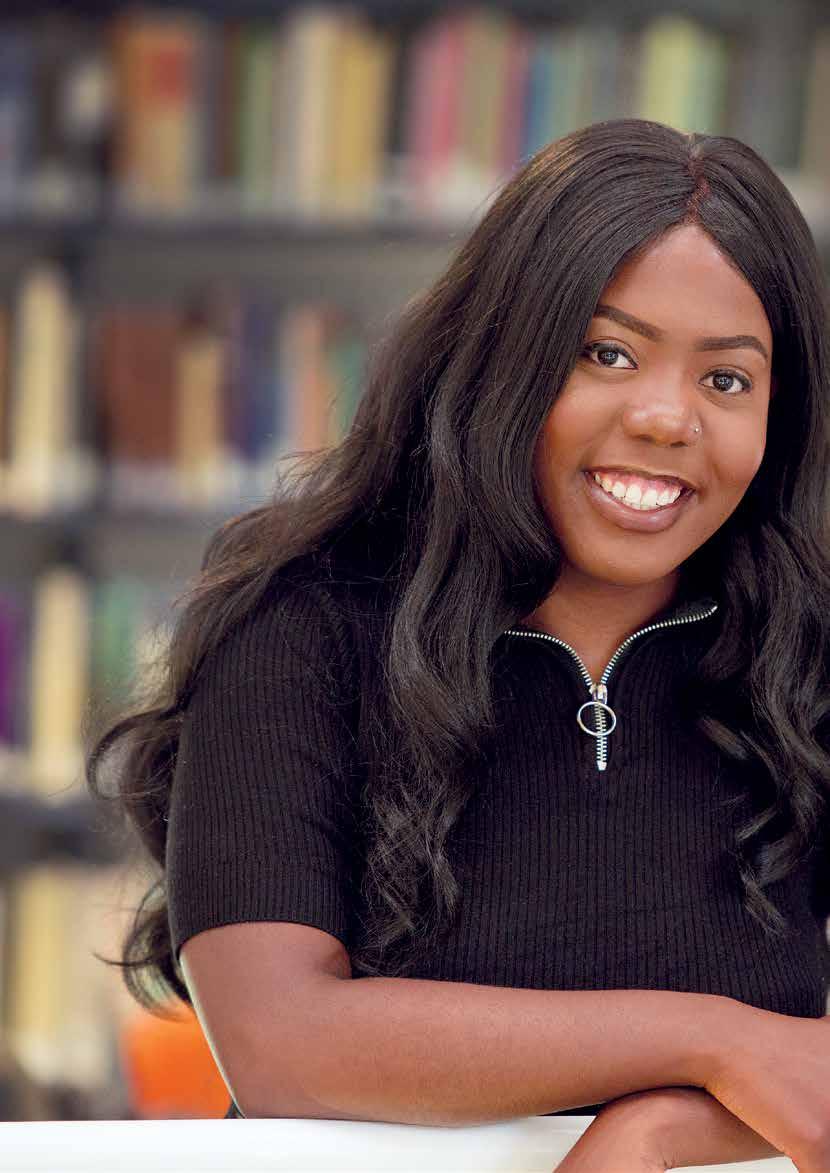
CHIEDZA MATSVAI
Chiedza Matsvai is a second year English student. She spoke to us about YouTube, the power of positive representation, and what Homerton is getting right.
When I was in Sixth Form in Hounslow, West London, I was just starting to think about applying to Cambridge. Three students in the year above me had got into Oxbridge, but that was a record high for the school – it wasn’t somewhere which sent students here every year. My teachers were very supportive, and went through the whole process with me, but I also found myself looking for interview advice on YouTube.
I stumbled across a vlogger (video blogger) called Nissy Tee (Nissy Nsilulu, BA English, 2014), who like me was a black woman from London, and who was studying English at Homerton College. I couldn’t believe it! I sat my whole family down and made them watch it. Although I’d been looking for practical tips, her video was much more lifestyle focused, and it really clarified in my mind that Homerton was where I wanted to be.
The moment I saw Nissy’s channel, everything changed. It felt like permission, seeing that she was a black woman here, doing English. It’s not just about seeing people like you represented on a prospectus, but knowing that people like you can flourish.
When I actually got my grades I relapsed – I suddenly felt maybe it wasn’t for me after all, that I wouldn’t fit in. But when I arrived it hugely exceeded my expectations. I thought it would be very segregated, that people would socialise with people like themselves, but there was such a welcoming atmosphere. You learn that there are differences between people but that they don’t define how you interact with each other. I now have friends from all over the country.
Academically, I had such a narrow view of literature, and it’s such a privilege to be somewhere where you’re academically challenged and broadened. English is such a visceral subject, it’s difficult not to explore your identity through it. I love the course, but it has sometimes felt like the things we study which are related to writers of colour have been shoehorned in at the last minute. I wanted to write part of my course-work on three black writers,
but was told it would be too narrow – a criticism I felt would never have been made of an essay on three white writers. It helps to remind yourself that change is a process and you’re part of that. My Director of Studies, Dr Louise Joy, has been amazing, and so influential in my growth.
I had started making my own YouTube videos in Year 10, and then stopped when work got in the way. But when I got to Homerton I realised that lots of people saw the application process as a maze, so I started posting videos to talk them through it. I get lots of messages from students saying they don’t know how to navigate the system. The comments I’ve received have reinforced the need, both for a demystification of admissions, and for reflections of students from diverse backgrounds. The more people see that we can flourish here, the better.
I spoke recently to a group of girls at a school in Hackney, and one student mentioned afterwards that she probably wouldn’t apply. It turned out that it was because she was black, which I just found heart-breaking. I try to present the full picture through my videos – it won’t always be straightforward or glamorous, and you may well feel imposter syndrome (though that applies to white students too). The experience of students of colour is part of how the University is evolving. It may not always be where it needs to be, but it is changing.
I don’t know what approach Homerton has taken, or whether it’s just the environment here, but having heard people’s negative experiences in other Colleges I find myself regularly saying “that would never happen at Homerton.” In terms of how supportive our Directors of Studies are, or the lack of competitiveness in supervisions, or just the small everyday interactions which make it special, Homerton’s getting things right. It’s redefining what it means to be a Cambridge College, and I really feel that Homerton is the new blueprint.
THE POWER OF PRINT
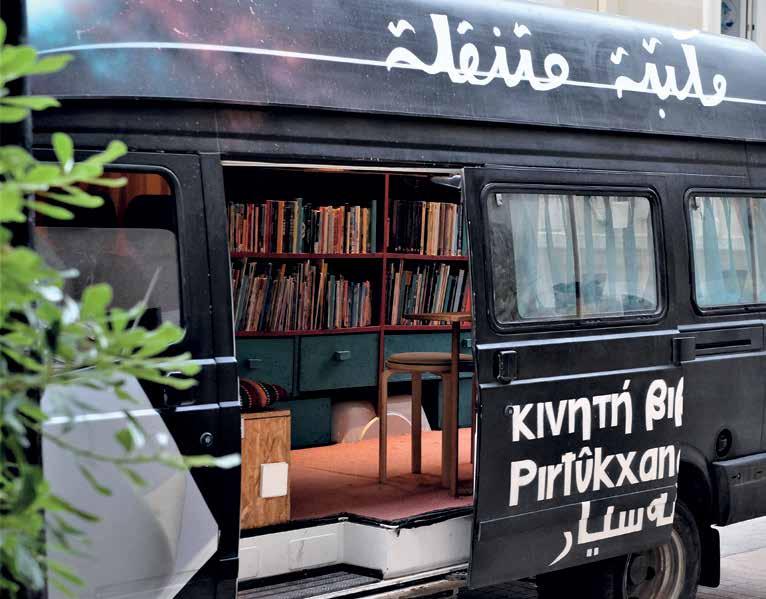
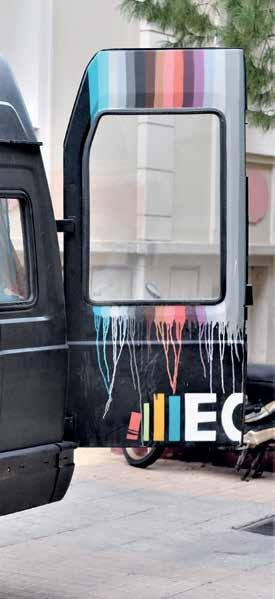
Keira Dignan (HSPS, 2015) and Megan Yates (HSPS, 2014) are working to bring books, resources and support to migrant communities in Greece, through the grassroots organisation ECHO – Education, Community, Hope, Opportunity.
How did you first get involved with ECHO?
MEGAN: I was working with RCK (Refugee Community Kitchen) in Calais for a few months and wanted to better understand the situation across Europe. I researched various projects in Greece before settling with ECHO. I wanted to work with a social project, educational and integrative, in order to understand the long-term difficulties and solutions for asylum seekers, immigrants, streetconnected people, and also the international grassroots movement.
KEIRA: At Cambridge I read HSPS (Human, Social and Political Sciences) and studied the border crisis, global inequality and the forced movement of people. I knew Megan from Homerton and saw a post of hers about ECHO during my post-graduation summer. She was looking for a support volunteer and so I got in touch and haven’t looked back since.
Had you been active volunteers while at Homerton?
MEGAN: Honestly, no – at Homerton I had my head down most of the time.
KEIRA: Yes - I volunteered throughout my time at Cambridge for NightLine, the student run active listening service - which feels funny to tell you as it had to be a secret throughout my time with them to preserve its anonymity. I was also involved in student activism with Zero Carbon, who campaign to get the University to divest from fossil fuels, and spent some time helping out at a kids’ club with Student Community Action.
It’s quite a leap to go from a summer voluntary role to staying on and running the project – how did that come about?
MEGAN: I took on a co-ordinator position from the beginning and took on more responsibility over time as others left.
KEIRA: Megan was feeling pretty burnt out by the end of last year, so I’d been supporting her co-ordinating (especially after her laptop was stolen!). So when she
decided it was time for her to step back, she looked to me to keep the project going.
Where does ECHO get the resources it supplies?
MEGAN: Books are donated, language learning resources are produced by individuals or NGOs and printed by us, games and occasional stationery are paid for by us. We’re funded by a combination of crowdfunding and grants. We are incredibly lucky with how much people care for the project; we’re really kept going by others’ generosity.
Can you talk me through how it all works in practical terms/what you’re trying to achieve?
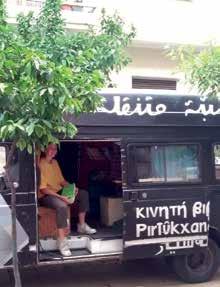
MEGAN: Our goals are dynamic and motivated towards what the communities we serve need or want. We are a pop-up community space, we aim to advocate time as a resource for learning and relaxation, and not just an expanse of waiting for a decision or a piece of paper. We support language learning and reading, active child play, music and conversation. Practically this involves a library van, a driver, a load of amazing volunteers, books and learning resources in appropriate languages, and a lot of organisational and juggling skills!
KEIRA: We aim to work in solidarity with the communities that we serve. This means using our access to resources (through grants and donations) to work with refugees and migrants to foster education and community through books. We pitch up, put out the table and the rugs, and borrowers come and bring back their week’s book and browse the shelves for a fresh read. Meanwhile our volunteers (many of them residents of the communities) read with the kids and teach lessons, such as guitar. Each session lasts a
couple of hours and these days we’re busier than ever, packing two or three sessions into our average day to get the library to as many people as possible.
The communities that we visit often have very limited access to educational resources or even somewhere for families and communities to learn together. Cramped, windowless rooms and stuffy tents in thirty degree heat are the norm – and this is all in an unfamiliar country where you don’t know the language. Large, authority-run camps often foster uncaring environments where people don’t know each other. We try to be somewhere where this fragmentation and isolation can be overcome. Aren’t books and community what all the best libraries are about?
Do you have a sense of how long you might stay?
MEGAN: I’ve been in Athens for over a year now, and it’s reached the time for me to earn some money and gain a little more experience back in the UK. But I’m planning on coming back to Athens in a couple of years; this is where I want to be.
KEIRA: I’ll be running the library until the end of the year at least.
Has the experience changed your career ambitions or plans
for the future?
MEGAN: I’ve never thought in terms of career ambitions, and my time here has only reinforced that. I’ve learned a huge amount with the library and I plan to keep on learning. It’s taught me that communication, resilience and calm are fundamental to working in a distressing setting, as well as keeping an eye on your own wellbeing. I never planned to live in Greece so I suppose it’s totally changed my plans for the future.
KEIRA: I never thought I’d live in Greece either! I guess sometimes you choose things in life and sometimes they choose you. I’ve met a lot of inspiring people out here, and I hope I will take these perspectives with me through life. I’ve learnt that however much authorities and states may try to keep people out and push people down, caring communities will fight back with love. What with the planet heating up and a lot of poorer nations set to become uninhabitable, mass migration is only going to increase. I will certainly never feel comfortable with borders again.
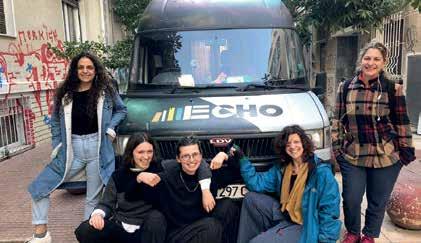
Members of the ECHO team, including Keira (front left) and Megan (front centre)
BENJAMIN CARON
Benjamin Caron (BEd Education with English and Drama, 1995), discovered his taste for the director’s chair while at Homerton, and has spent the past 20 years building a successful career in television. He is currently the director of the hugely popular Netflix series The Crown, the third season of which will be broadcast later this year.
You were at Homerton at a time of transition – it was an ‘Approved Society’ of the University of Cambridge, but not yet a full College. What was it like at that time?
It was a brilliant place to be. At the time, you had to pay for a lot of drama courses, as opposed to academic degrees, which were free. So I couldn’t believe it when I saw Education with English and Drama listed as an option at Homerton College, Cambridge. I drove to my interview, in the days before sat-nav, got hopelessly lost and arrived with two minutes to spare! I met Peter Raby, we bonded over Oscar Wilde and all seemed to be going well. Then they said “Now it’s the Education interview”. Ah. Not only had I not prepared for that bit, I hadn’t even known about it. Suddenly I was being asked questions like “How would you decorate your classroom?” I completely
winged it, convinced myself over the course of the interview that I’d always wanted to be a teacher, but was sure I must have blown it. They told me to give them a ring that afternoon for a decision, so I went for a walk around Cambridge to while away time and was completely blown away. I went for a pint at the Eagle and then finally, went to ring the Admissions Office from a pay phone. They had decided to offer me a place.
Did you make your peace with the Education aspect of the course?
In the end, although I’d signed up to the course for the Drama element, it felt like a good balance. There are so many skills in teaching that are directly applicable to all kinds of careers, but particularly to directing. If you can stand up in front of 30 kids, you can stand in front of a bunch of actors.
Benjamin Caron
I had a wonderful time at Homerton. I was on the Boat Club Committee and the May Ball Committee, as well as being heavily involved in acting and directing and taking part in the National Student Drama Festival. I enjoyed working with actors but realised I wasn’t going to be one of the best. Film directing didn’t even feel like it was an option, but theatre directing felt like something I could aim at.
What was your post-Homerton career trajectory?
Shortly after graduation, I met a producer working on The Big Breakfast, who suggested I apply for graduate trainee schemes in television. Having made my way to London, I started at a production company making light and factual entertainment programmes. Whilst there, I began doing the odd bit of directing. It was really eclectic – I was making everything from music videos, to documentaries and commercials.
After a good stint, I decided to go freelance and began working with the illusionist Derren Brown on a Channel 4 special called The Heist. It did rather well, winning a few awards and such like, and so off the back of that I was able to get myself an agent. Of course, like any director, I wanted to work out how to get into feature films and the general consensus was that you had to do your time in television drama first.
I moved up to Liverpool, where I directed a few episodes of Hollyoaks, which at the
time was quite good at enabling young directors to earn their stripes and get some experience. I then made a few episodes of Casualty in Bristol and Scott & Bailey in Manchester. Gradually, more industry folk became aware of me and I went on to direct an episode of Skins and a show of which I’m very proud; My Mad Fat Diary, starring Sharon Rooney and Jodie Comer of Killing Eve fame. Following that, I joined Left Bank Pictures, where I directed a single film for TV about Tommy Cooper, and the final three episodes of Kenneth Branagh’s Wallander
You’re now working on The Crown, which has had an extraordinary global reception. Did you think it was going to be as big as it has been?
No, absolutely not – you never know. We knew it was extremely well written, we knew we had an amazing cast, but it’s just impossible to tell what will grab an audience’s attention.
What do you think The Crown gets so right?
We have an amazing writer, Peter Morgan, who continuously mines for moments in history that resonate today, so that the drama shines a light on things happening now, as well as the past. It’s not about lookalikes, and it’s not a documentary but what we are always trying to do, is get to the truth of the characters.
We also have an amazing team of
researchers working alongside Peter. We can’t make it up too much – although the conversations are obviously imagined, I think we’ve got the essence of what people thought about each other. And because we don’t necessarily choose the obvious points of historical focus, you get Google spikes after each episode, with people wanting to find out what Suez, or Billy Graham were all about.
In the earlier series the history was slightly more at arms-length, whereas the next one takes us from 1963 and the election of Harold Wilson to 1977 and the Queen’s Silver Jubilee. It’s still just before my time; or at least, I get born right at the end of the series!
The past decade has seen a huge shift in how television drama is perceived. Do you still see television as a stepping stone to feature films, or does it now offer more exciting opportunities in its own right?
I will definitely make a film at some stage, but I want to make sure it’s a film worth seeing – I don’t want to make it until I have something to say.
But yes, the television landscape has completely changed. The Crown, as with other shows such as Game of Thrones, has a decent budget, which allows you to almost treat each episode as though it were a film in its own right. And because of the long-form format of television, you have the ability to delve into characters’ back stories and to do so much more than there would ever be room for in a film. In that way it’s much more novelistic. The way people access and watch television now is completely different from when I started out. You have the ability to reach so many more people.
We’re very excited at Homerton that we now have two connections to The Crown, in the shape of you and Olivia Colman. What a coup to have signed her up just before she took the world by storm and won every award going…
Absolutely, we’re very lucky to have her. We actually overlapped at Homerton, though we never met. She’s a wonderful, instinctive actress. Some actors do all their preparation ahead of time, whereas Olivia instinctively feels it. She’s always so self-effacing and as I said, absolutely brilliant!
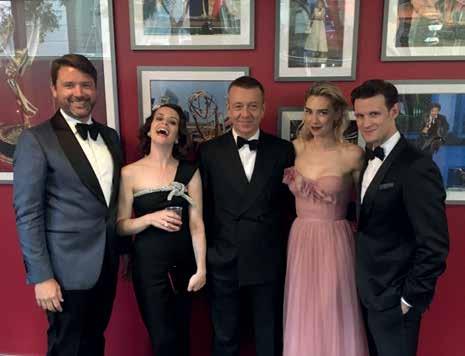
Crowning around: Benjamin Caron, Claire Foy (the Queen), Peter Morgan (writer), Vanessa Kirby (Princess Margaret) and Matt Smith (Prince Philip)
OUR DONORS
1 July 2018 – 30 June 2019
The Principal, Fellows, students and staff of Homerton College wish to thank alumni and friends who have generously made donations to the College over the last year. Every effort has been made to ensure this list is accurate; do contact us if you believe we have made an omission.
Key: (d)* = deceased
Mrs Margaret Kent
1943
Mrs Kathleen Hayward
1945
Miss Nancy Dunning
1946
Mrs Zoe Coombe
1947
Ms Christine Andrews Lady (Dorothy) Franklin
1948
Mrs Janet Farley
Miss Elizabeth Rainsbury
1949
Mrs Mary Dowse
Mrs Margaret Eedle
Mrs Coral Harrow
Mrs Molly Payne
1950
Mrs Mavis Blow
1951
Mrs Sheila Duncan
Mrs Patricia Stockdale
Mrs Joan Watcham
1952
Mrs Shirley Haslam
Mrs Heather Jemson
Mrs Evelyn Parker
1953
Dr Alison Littlefair
Mrs Margaret Trow
Mrs Elizabeth Tunnicliffe
1954
Mrs Pauline Curtis
Mrs Carol Hammerton
1955
Mrs Wendy Darr
Mrs Christine Grainge
Mrs Gillian Hewin
Mrs Doreen Hobbs
Miss Gwendoline Lancaster
Mrs Rachel Lewington
Mrs Jane Matthews
Mrs Wendy Oakley
1956
Mrs Marguerite and Mr Norman Donkin
Mrs Patricia Hubbard (d)*
Mrs Alice Severs
1957
Mrs Julia Davis
Mrs Gillian Figures
Mrs Christine Lincoln
Mrs Gillian Reitsma
Mrs Josephine Sutton
1958
Mrs Ann Banner
Mrs Christine and Mr Philip Carne
Mrs Diana Hadaway
Mrs Jill Hicks
Mrs Beryl Izzard
Mrs Wanda Kielbinska
Mrs Rachel Macdonald
Mrs Judy Manson
Mrs Elizabeth McVean
Mrs Cynthia Rumboll
Mrs Patricia Stott
Mrs Dorothy Waite
1959
Mrs Dora Beeteson (in memory of Fran Essen)
Mrs Carole Nolan
Mrs Gwendolyn Williams
1963
Mrs Jean Addison-Fitch
Mrs Andrea Caish
Dr Anthea Cannell
Mrs Christine Macpherson
Mrs Catherine Ryder
1964
Mrs Celia Jones
Mrs Mary Maycock
Mrs Margaret Meredith
Mrs Pamela and Dr Anthony Metcalfe
Ms Christine Purkis
Mrs Susan Rescorla
Mrs Jill Taylor
Ms Marjorie Thorley
Mrs Janet Woodford
1965
Mrs Christine Frost
Mrs Ruth Jerram
Mrs Diana Lucas
Mrs Annmarie Mackay
Miss Doreen Rogers
1960
Mrs Rosemary Allan
Mrs Sylvia Avgherinos
Mrs Jacqueline (d)* and Dr Norman Bardsley
Mrs Patsy and Mr John Blythe
Mrs Jean Clarke
Mrs Susan Dickinson
Mrs Jenifer Freeman
Mrs Rosemary Hill
Mrs Valerie Johnson
Mrs Christine Kershaw
Mrs Jennifer McKay
Mrs Christine Parkyn
Mrs Rosemary Rees
Mrs Jacqueline and Mr Martin Rupp
Mrs Jacqueline Swegen
Mrs Janet Valentine
Mrs Hillary Young
1961
Mrs Janet Campbell
Mrs Frances Clare
Mrs Anne Hulse
Mrs Joy Kohn
Mrs Susan Lovett
Mrs Susan McFarland
Mrs Caroline Sykes
Mrs Jean Thorman
1962
Mrs Carol Bowen
Mrs Diana Dalton
Mrs Lynn and Dr Jonathan Dowson
Mrs Marion Foley
Mrs Carole Girdler
Mrs Robyn Mitchell
Mrs Lynne Parsons
Mrs Penelope SpencerChapman
Mrs Marilyn and Mr Derek Stansfield
Mrs Alison Syner
1969
Mrs Eileen Coombes
Dr Victoria McNeile
Mrs Merilyn Parker Armitage
Ms Anne Reyersbach
Ms Hilary Stokes
Mrs Sarah Taylor
1970
Mrs Patrica Bradley
Ms Fiona Cook
The Rev Sheila Crowther
Mrs Cynthia Garvey
Ms Claire Heald
Miss Sue Bates
Dr Patricia Cusack
Mrs Wendy Dunnett
Mrs Judith Hitchcock
Mrs Annie Illingworth
Mrs Dorothy Nicholls
Mrs Anne Perrin
Mrs Susan Pinner
Lady (Ann) Ricketts
Mrs Ruth Watkin
Mrs Janet Webb
Mrs Dilys West
1966
Mrs Ann Bates
Mrs Elaine Beale
Mrs Jean Carnall
Mrs Susan Carter
Mrs Margaret Crowe
Mrs Wendy Farmer
Lady (Marilyn) Fersht
Mrs Margaret Funnell
Mrs Sally Gibbons
Mrs Judith MartinJenkins
Mrs Judith Queripel
Mrs Margaret Robbie
Mrs Sheila Stephens
Mrs Cheryl Trafford
Miss Joyce Welch
Mrs Linda West
Mrs Janet Wilkinson
1967
Mrs Marjorie Caie
Mrs Miriam France
Mrs Avril Growcott
Mrs Marion Pogson
Mrs Patricia Saxton
Mrs Annette Smallbone
Mrs Althea Stevens
1968
Mrs Valerie Hart
Mrs Constance Marriott
Mrs Glenys Lambie
Mrs Mary McCosh
Mrs Denise Mitchell
Dr Rosslyn Sendorek
Mrs Denise Shakespeare
Mrs Helen Wood
Mrs Mary Wyatt
1971
Mrs Patricia Darke
Mrs Denise Few
Mrs Sally Mabon
Mrs Marilyn Reid
Ms Helen Sandle-Baker
Ms Anne Sparrowhawk
1972
Ms Catherine Beavis
Mrs Sarah Flynn
Mrs Margaret Howell
Mrs Fiona and Mr Michael Karlin
Ms Anne Kennedy
Ms Jane Lewin Smith
Mrs Helen and Mr James Malcolm
Mrs Caroline Melrose
Mrs Valerie Mills
Mrs Anne and Mr Timothy Ryder
Mrs Angela Swindell
Mrs Marilyn Thomas
Mrs Maureen and Mr Neil Weston
1973
Miss Stephanie Beardsworth
Ms Jane Bramhill
Mrs Jill Fish
Ms Ruth Ludewig-Welch
Mrs Sheila Martin
Mrs Elizabeth McLean
Mrs Dilys Murch
Mrs Susan Rodford
Mrs Heather Wilkinson
1974
Mrs Jennifer Little
Mrs Elizabeth Rose
Mrs Vera Sklaar
1975
Mrs Alyson Baker
Mrs Judith Davidson
Mrs Helen McRoberts
Mrs Ruth Saunders
1976
Mrs Judith Clarke
Mrs Joan Gibson
Ms Jill Grimshaw
Ms Sarah Jacobs
Miss Amanda James
Mrs Ann Kirkby
Mrs Ann Muston
Mrs Joanna Newman
Mrs Alison Roberts
Mrs Zena Tinsley
1977
Miss Sheila Berry
Mrs Helen Draper
Ms Jane Edwards
Mrs Elizabeth Harding
Mrs Ann Jackman
Mrs Helen Mitchell
Mrs Louise Mursell
Mrs Clare Myers
Mrs Jane Pearson
Mrs Elizabeth Thomas
1978
Mrs Victoria Addey
Mrs Marianne Billitt
Mrs Ruth Briant
Mrs Sandra Burmicz
Mrs Annette Cameron
Mrs Clare Danielian
Mrs Mary Powles
Mrs Elizabeth Thomas
1979
Mrs Oyinkansola Ade-Ajayi
Mrs Jane Bishop
Mrs Jane Bishop
Mrs Elizabeth Bond
Ms Elizabeth Dickinson
Ms Joan Hicks
Mrs Deborah Moss
Ms Karen Ready
Mrs Amanda Renwick
Mrs Brenda Thompson
1980
Ms Victoria Brahm Schild
Mrs Joanne Broughton
Mrs Catherine Hicks
Mrs Sarah Holmes
Mrs Ruth Pavey
1981
Miss Anna Chapple
Mrs Amanda and Mr Timothy Edwards
Mrs Cordelia Myers
Mr Graeme Plunkett 1982
Mr Mark HanleyBrowne
Mr Brian Howarth
Mrs Alison Brinklow
Mrs Joan Kedward
Mrs Karen Miranthis
Miss Emma Rawson
Mrs Frances Surridge
Ms Alison Mesher
Dr Kirsty Byrne
Mrs Karen Coombs
Mrs Julia Harker
Ms Sally Jaspars
Mrs Anna Williams
1986
Mrs Keren Cooke
Ms Nansi Ellis
Mrs Virginia Eves
1987
Mrs Alison Allen
Mrs Kim Chaplin
Mrs Michaela Khatib
Mr James Thomson
1988
Mr Phil Coldicott
Mr Arjun Kumar
Mrs Katherine Mayne
Mr Andrew McNeil
Mrs Sarah McWhinnie
Ms Phillipa Rushby
Mr Giles Storch
Miss Jennifer Svrcek
Miss Lucy Bradley
Dr John Dodsworth
Mr Carl Howarth
Mrs Charlotte and
Mr Matthew Irving
Mrs Penelope Lee
The Revd Wendy Wale
1990
Mrs Naomi Baynes
Mrs Karen George
Mrs Fiona Gruneberg
Mr Ian Hodgson
Mrs Sharon Holloway
Mrs Sophie Morley
Dr Susanna Pinkus
1991
Mrs Joy Bensley
Mr David Chapman
Miss Claire Corkran
Miss Helen Diggle
Mrs Elizabeth Sartain
Miss Lisa Tiplady
1992
Mrs Claire Brooks
Mr Simon Camby
Mr Ian Derwent
Mrs Sarah Haines
Mrs Louise Hawksley
Miss Caroline Mander
Mrs Nicola Pitzey
Mrs Diane Rawlins
Miss Wendy Smith
Julius Mex (BA Natural Sciences 2018) addresses the crowd at the Changemakers launch
1993
Dr Steven Chapman
Miss Manjit Hayre
Mrs Helen Morgan
Mrs Jane Riordan
1994
Mrs Marion Durnin
Mrs Victoria TrueBhattacharyya
Mrs Emma Vyvyan
1995
Mrs Carol Carlsson Browne
1996
Mr Ian Bettison
Dr Andrew Holder
Mrs Serena O’Connor
Mr Christopher Shephard
1997
Councillor Parvez Akhtar
Mr Matthew Buck
Mrs Elizabeth Fryer
Mrs Amy McDonnell
1998
Mr Alastair Chipp
Mrs Elisabeth Hackett
1999
Ms Erin Bond
Dr Neil Hennessy
Mr Paul Jones
Mrs Shamsa Khokhar
Mrs Laura Penrose
Mrs Louisa Shipp
Miss Lydia Williams
Mrs Zoe Yeomans
2000
Mrs Susan Aldred
Ms Angela Clark
Mrs Abigail Deeks
Mrs Maria Della Maestra
Miss Katharine James
Dr Thomas Kitchen
Mrs Cheryl Smith
2001
Mrs Grace Baines
Mr Laurence Ball
Mrs Lesley-Anne and Mr Gareth Crooks
Miss Lidia Fesshazion
Mrs Amy Fleming
Mr James Frecknall
Dr Robert Fulford
Mr Andrew Jenner
Mrs Catherine and Dr Tom Kitchen
Mrs Nadine Lloyd
Mrs Judy Moore
Mrs Sandra Stapleton
2002
Ms Rachel Ayres
Mr Sam Farmer
Mr Sutherland Forsyth
Mrs Carys Gladdish
Miss Katy Johnson
Mr Christopher Kellaway
Dr Rajalakshmi Lakshman
Mr David Lawrence
Miss Sian Mawditt
Mr Remi Moynihan
Miss Krista Pullan
Ms Alison Richman
Mr Timothy Scott
Dr Lisa Sessions
Mrs Angela Woodruffe
Mrs Rhiannon WynneLord
2003
Mrs Rachel Bardon
Ms Susanna Bellino
Miss Katherine Bluck
Mr Raymond Cilia
Mr Gregoire Hodder
Mrs Anne Howell
Mr Jonathan Levine
Mr Can Liang
Dr Feilong Liu
Mrs Elizabeth Mansfield
Mr Daniel Roberts
Dr Tovah Shaw
Mr Jean-Paul Skoczylas
Mr Tristan Stone
Miss Stephanie Tillotson
Mr John White
2004
Mr Jingdong Chen
Mr Simon Cooper
Mrs Emily Davies
Mrs Bridget Donovan
Miss Natasha Gray
Mr Richard Hopkins
Mr Ravi Raichura
Mrs Nina Sever
Miss Jennifer Sneyd
2005
Dr Enyinnaya Anosike
Miss Stephanie Baxter
Mr Nicholas Bebb
Mr Nicholas Clark
Mrs Janice Frankham
Mrs Lisa and Mr Fabio Galantini
Mr Andrew Gard
Dr Scarlett Gard
Mr Wenjie Ge
Miss Casta Jones and Mr Mark Littlewood
Mr Daniel Martin
Mrs Rebekah Perry
Dr Oliver Rupar
Mrs Elizabeth Sharp
Mrs Jessica Shingfield
Ms Nadia Syed
Mrs Emma Turner
Mr Chong Zhang
2006
Miss Aniko Adam
Dr Theresa Adenaike
Mr Andrew Blackburn
Mrs Eliza de Uphaugh
Mr Thomas Dix
Miss Hannah Drew and Mr Mark Shepherd
Mr Vladimir Hanzlik
Mrs Christine Kelby
Miss Esther Mulholland
Miss Chloe Orchin
Mrs Dawn Pavey
Mrs Lynne Richardson
2007
Mrs Claire Byrne
Miss Jessica Dewes
Mrs Tracey Harjatanaya
Mr Thomas Horn
Mr John Keene
Miss Xiajuan Li
Mr Michael Lynch
Miss Nicola Pollard
Mr Joseph RandallCarrick
Mrs Chikako Woodgate
2008
Mr Thomas Baker
Mr Justin Bynum
Mr Luke Clarke
Mrs Heather Coleman
Mr Michael George
Mr Christopher Grey
Mr Matthew Linsell
Mr James Lugton
Ms Elaine Mo
Miss Amy MunroFaure
Mr Ikenna Obiekwe
Mr Gershwinder Rai
Mrs Emily and Mr Siȏn Roberts
Mr David Rosenberg
Mr Kenichi Udagawa
Mr Roger Willis
2009
Mr Adarsh Bala
Mr Nigel Beckford
Dr Tumas Beinortas
Miss Sophie Bell
Mr Daniel Beresford
Mr Bhavin Bhatt
Ms Shruti Chaudhri and Mr Iain Cameron
Mr Jonathan Edge
Miss Alice Esuola
Dr Jack Euesden
Miss Christine James
Mr Christopher Morgan
Mrs Susan Morley-Souter
Dr Jonathan Rackham
Mr Paul Shewell
Mr Michael Thorp
2010
Ms Kannal Achuthan
Mr Henrique Barbone
Miss Emma Bowell
Mr Nahum Clements
Miss Alexandra Courage
Mr Richard Craven
Mr Gabrielius Glemza
Mr Paul James
Miss Sian Jones
Miss Rosie Keep
Miss Suzannah LangdonShreeve
Dr Dirk Mersch
Dr Shawn O’Donnell
Mr Richard Peach
Mrs Jessica Taylor
Miss Megan Trimble
Miss Rebecca Tron
2011
Mr James Chicken
Miss Kathryn Dillon
Mr Rafe Fletcher
Mrs Deborah Giveen
Mr Jack Hooper
Mr Edward Levermore
Miss Helen Lyttle
Mrs Cordelia North
Miss Charlotte Pearson
Mr Laurence Pritchard
Mr Thorben Schaefer
Miss Angela Stevens
Mr George Sykes
Miss Abigail Thurgood-Buss
Mr Syed Wafa
Mr Rune Webb
2012
Mr Amjad Ali
Mr Joshua Cozens
Mr Henry Fieldman
Ms Louise Holyoak
Mr Tim Hubener
Mr Sylvester Juwe
Ms Samantha Kellow
Ms Eleni Leontidou
Miss Danielle Poole
Mr Douglas Porter
Mr Theepan Tharmarajah
Mr Dmytro Tupchiienko
Miss Krisztina Zaborszky
2013
Mr Marc-Jullian Hensel
Mrs Marian Mahoney
Mr Hachimi Maiga
Mr Edmond Tam
Ms Sarah Tiffin
2014
Mr Nigel Ironside
Mr Edward Kent
Mrs Andrea Saunders
2015
Mr Hamid Abbasov
Mr Adam Dobson
Mr Vincent English
Miss Sarah Witkowski-Baker
Dr Zamir Zulkefli
2016
Miss Mille Fjelldal
Mr Mitchell Hayden-Cook
Mr Bonbien Varga
2017
Ms Olivia Coffey
Friends of Homerton
Mrs Julie AbramsHumphries
Dr Roger Ali
Mrs Alexandra Annett
Mr Dominic Barber
Mrs Frances Barrett
Ms Caroline Bell
Mrs Gill Blissett
Mr Colin Campbell (d*)
Mr Winston Carnall
Professor Clive Carter
Miss Patricia Cooper
Dr Constance Counts
Dr Alan Davidson
Sir Michael Franklin
Mr Peter Freeman
Mr Michael and Mrs Ingrid Goodall
Mr Roger Green
Mr Nathan Grundy
Mr Andrew Gruneberg
Dr Richard Harker
Mrs Laura Harnak
Dr Stephen Hart
Mrs Clare Harvey
Mr Brian Heald
Dr Lesley Hendy
Dr John Hulse
Mr Mark Hunting
Mr John Iliffe (in memory of Mrs Dorothy Iliffe)
Ms Jessica Jennings
Mr Frank Kershaw (d*)
Mr Rafil Khatib
Mrs Leslie Lemonick
Mr Duncan Loweth
Mr Constantinos Miranthis
Mr Ian Mitchell
Mr Anthony Mitton
Mr Roger Morley
Mr Matthew Moss
Mr Alan Newman
Dr Andrew North
Mrs Helen O’Hara
Dr Simon Pain
Mr George Pearson
Dr Simon Powles
Ms Susan Prytherch
Dr Peter Raby
Dr Jessica RandallCarrick
Mr Duncan Reid
Miss Dorothy Richardson (d*)
The Robinson family –The Bridget Robinson Studentship
Mr Martin Rupp
Dr William Saxton
The Revd Dr Anthony Swindell
Dr Robert Thomas
Mr Nigel Thomas
Mr Melvyn Thomas
Ms Marilyn Tullys
Dr Peter Warner
Mr Victor Watson
Professor Stephen Weis
Dr David Whitebread
Dr Philip Wilkinson
Ms Rhiannon Williams
Ms Margaret Wood
Dr John Woodford
Mr Stephen Wyatt
Trusts and Corporations
Backstage Trust
The Plowright Charitable Trust
The Roger and Miriam Pilkington Trust Santander
Cavendish Circle
The Cavendish Circle recognises alumni and friends of Homerton who make an annual gift of £1000 or more to the College.
Mrs Jacqueline (d)* and Dr Norman Bardsley
Dr Constance Counts
Ms Victoria Brahm Schild
Mrs Sally Gibbons
Mrs Annie Illingworth
Mrs Sophie Morley
Macaulay Circle
We are grateful to those who have indicated they intend to leave a gift to Homerton in their Will.
Miss Patricia Cooper
Mrs Coral Harrow
Miss Gwendoline Lancaster
Mrs Karen Miranthis
Mrs Merilyn Parker Armitage
Mrs Catherine Ryder
Dr Peter Warner
Mrs Dilys and Mr Peter West
1768 Society
The 1768 Society recognises alumni and friends of Homerton who are regular donors to the College, making a gift of at least £17.68 a month.
Mrs Victoria Addey
Mrs Rosemary Allan
Dr Enyi Anosike
Mr Henrique Barbone
Ms Catherine Beavis
Mr Nigel Beckford
Miss Shelia Berry
Mr Ian Bettison
Mr Andrew Blackburn
Mr Matthew Buck
Mrs Sandra Burmicz
Dr Kirsty Byrne
Mrs Claire Byrne
Mr Simon Camby
Mrs Janet Campbell
Mrs Kim Chaplin
Dr Steven Chapman
Nr Nicholas Clark
Mr Phil Coldicott
Miss Patricia Cooper
Mr Joshua Cozens
Mrs Pauline and Mr Godfrey Curtis
Mrs Diana Dalton
Mr Patrick Derwent
Mr Adam Dobson
Mrs Marguerite and Mr Norman Donkin
Mrs Lynn and Dr Jonathan Dowson
Mrs Sheila Duncan
Miss Alice Esuola
Dr Jack Euesden
Mr Sutherland Forsyth
Mr Wenjie Ge
Mrs Karen George
Mr Michael George
Mrs Carole Girdler
Mrs Christine Grainge
Miss Nathasha Gray
Mr Roger Green
Mrs Fiona Gruneberg
Mr Mark Hanley-Browne
Mrs Ceri Harding
Mrs Julia Harker
Miss Manjit Hayre
Dr Neil Hennessy
Mrs Jill Hicks
Mr Gregoire Hodder
Mr Ian Hodgson
Mr Richard Hopkins
Mr Brian Howarth
Mr Carl Howarth
Mrs Anne Howell
Mrs Ann Jackman
Mr Paul James
Mrs Celia Jones
My Sylvester Juwe
Mr John Keene
Miss Rosie Keep
Ms Samantha Kellow
Mr David Lawrence
Mr Jonathan Levine
Ms Jane Lewin Smith
Miss Teresa Li
Mr Can Liang
Mrs Susan Lovett
Mrs Diana Lucas
Mr James Lugton
Mrs Christine Macpherson
Mrs Jane Matthews
Mr Andrew McNeil
Mrs Helen McRoberts
Mrs Sarah McWhinnie
Mrs Margaret Meredith
Mrs Karen Miranthis
Mr Matthew Moss
Mr Remi Moynihan
Miss Amy Munro-Faure
Mrs Ann Muston
Miss Nicola Pollard
Mr Gershwinder Rai
Mr Ravi Raichura
Mrs Diane Rawlins
Miss Emma Rawson
Mrs Rosemary Rees
Lady (Ann) Ricketts
Mrs Susan Rodford
Miss Doreen Rogers
Mrs Elizabeth Rose
Mrs Catherine Ryder
Mrs Cheryl Smith
Mr Tristan Stone
Mrs Lesley Thomas
Mrs Brenda Thompson
Mr James Thomson
Ms Sarah Tiffin
Miss Rebecca Tron
Mr Dmytro Tupchiienko
Mr Bonbien Varga
Mrs Dilys and Mr Peter West
Mr John White
Dr David Whitebread
Ms Rhiannon Williams
Mrs Helen Wood
Dr Zamir Zulkefli
We are also very grateful to those friends and supporters who give up their valuable time in support of the College, those who have made gifts of artworks and books, and all donors who wish to remain anonymous.
ALUMNI REUNION WEEKEND
FRIDAY, 27 TO SATURDAY 28 SEPTEMBER 2019
This year, bookings will close on Monday, 9 September. Please do ensure that we receive your booking and payment by this date. The best way of booking for the Reunion Weekend is via our Alumni Events page on the College website. Alternatively, please get in touch with Laura Kenworthy, Alumni Relations Manager, at alumni@homerton.cam.ac.uk, or by phone on 01223 747066.
We look forward to welcoming you back to the College in September!
PROGRAMME
Friday, 27 September
6.30–7.30pm Donor Reception (By invitation)
7.30 for 8pm Drinks in the Combination Room followed by Dinner in the Great Hall
Saturday, 28 September
9.30–10.30am Registration
10.30–11am Welcome address
11.15am – Anniversary Group meetings
12.15pm Tea and coffee in the Combination Room
Annual General Meeting of the RSMA (RSMA members only)
12.30–2pm Lunch in the Great Hall
2.30–3.30pm Talk by Dr Alison Wood, Academic Director of Homerton Changemakers
Tour of the College Buildings and Gardens
St John the Evangelist, Hills Road: opening of the new community space, with musical contribution from the Charter Choir
4.15–5.15pm Charter Choir performance
4–4.30pm Unveiling of blue plaque to Dame Leah Manning
4–5pm Tour of the College Buildings and Gardens
5–6pm Afternoon Tea in the Great Hall
7pm for Drinks in the Combination 7.30pm Room followed by Dinner in the Great Hall
CAN’T MAKE THE ALUMNI REUNION WEEKEND?
Join us for informal Alumni Drinks in London on Thursday, 17 October 2019. Booking details will be available on the College website.
ALUMNI BENEFITS
As a lifelong member of Homerton and the University of Cambridge you are entitled to a number of benefits. You are very welcome to visit Homerton and use the College Library, Buttery and Bar, and to dine at Formal Hall. Subject to availability, you can also book overnight accommodation at preferential rates and book function rooms for private dinners and events. For more information email alumni@homerton.cam.ac.uk
You can take advantage of great deals at a number of Cambridge hotels, bars, restaurants and retailers by using your CAMCard (issued by the University). You will also receive automatic membership to the University Centre and free entrance into most of the Cambridge Colleges.
To request a CAMCard visit https://www.alumni.cam.ac.uk/benefits/camcard
Visit the College website for full details of our alumni events, local branches and alumni benefits. You can read College publications online and update your contact details when you move house or job. You can also read about the College’s current fundraising priorities and make a donation to Homerton online.
By email
Have you been receiving our email newsletter? If you haven’t seen an eNewsletter recently, send us an email at alumni@homerton.cam.ac.uk to make sure we have your current contact details.
Social Media
‘Like’ Homerton College on Facebook to keep up to date with what’s going on. Visit www.facebook.com/HomertonCollegeCambridge
Follow us for the latest news and updates @HomertonCollege
We are on Instagram. Check us out @homertoncollege
You can also connect with Homerton on LinkedIn. Simply search for ‘Homerton College’
Groups of Homertonians meet in local branches throughout the country and around the world. All alumni are welcome to attend their events. If you would like to get involved, please contact the branch leaders below. You can find the University of Cambridge Worldwide Branch Directory at www.alumni.cam.ac.uk/getinvolved/ find-an-alumni-group if there isn’t a Homerton Branch in your area.