


GOOD? looking GOOD feeling www.ruhsmedia.com @ruhsmedia high tide ht March 17, 2022 Vol. CIII Edition 8 Redondo Union High School Redondo Beach, CA Appearances and gender play an immense role in shaping teenagers' self-esteem, leaving deep efects on their mental health and experiences ILLUSTRATION BY I. LANGA Model UN won several top awards while competing at an international conference in New York Although makeup can be self-expression, at its core it can never be truly empowering "The Last of Us" TV show adaption is easily one of the best video-game adaptions yet 13 entertainment 11 opinion 4 news
IN MEMORIAM
RBPD service dog K9-Meredith (2015–2023) passed away on Feb. 14
by Victor Simoes
K9 Meredith, beloved member of the Redondo Beach community, passed away from an aggressive mast cell tumor on Feb. 14. Meredith worked as a facility dog, providing emotional support and service dog assistance at educational, medical or community sites. Her uplifting spirit and comforting memory will be cherished for many years to come.


Born on Sep. 17, 2015, Meredith was brought to Redondo Beach by Keith Kaufman, the chief of Redondo Beach Police Department (RBPD) at the time, and began working for the RBPD as a facility dog in 2017.


Facility dogs and their handlers live together to become accustomed to each other’s body language and signals. As a result, Sharon Rose, Meredith’s handler, became more familiar with her personality than most people did.
job,” Rose said. “People did ask me a lot ‘What's her job?’ Well, they were watching it!”
high tide staf
editors-in-chief
Katarina (Haven) Beches
Ruby Crosthwait
Elise Haulund
online manager
Zelia Lerch
news editors
Erika Glass
Sara Miyake-Singer
features editors
Mia Dowdell
Emilie Takahashi
Marley Van Pelt
opinion editors
Scarlett Mische
Romi Riss
Anytime something happened where people were really under a lot of stress or pressure, Meredith would help. If there was a tragedy, she would be there to be help people cope. Students loved being
“Meredith was a party girl. When she came into the room she was like, ‘Yeah! I'm here!’ Big excitement, she loved seeing everybody. It was actually a little bit hard to keep her quiet because her personality was so big,” Rose said.
Adapting to the role of facility dog took a while, but Rose and Meredith eventually settled into a routine that included visiting RBUSD schools and helping school staf and community members there.
“Her job was to be adorable and spread as much dog hair as she possibly could, which I think she kind of excelled at, honestly. She wasn't your typical canine that went out and got bad guys, snifed out drugs and found bombs. She was just there to be adorable, and she did a pretty good
Mental Health and Wellness Counselor Rachel Andrews remembers frst working with Meredith during the 2018–2019 school year at Parras Middle School, where Meredith was a part of a relaxation tutorial during Mental Health Week. Andrews’ contact with Meredith continued when she moved to the RUHS Wellness Center, where Meredith was invited often. There, she helped to cultivate a relaxed atmosphere and impact the students.
“Anytime something happened, where people were really under a lot of stress or pressure, Meredith would be there. If there was a tragedy, she would be there to help the people cope. Students loved being with her,” Andrews said.
At RUHS, Meredith could be seen outside of the Wellness Center during events such as ASB Frosty’s Winter Festival. There, senior Brooke Pollock managed Meredith’s kissing booth where candy canes, photo cards and kisses from Meredith were available.
“She made an impact on a lot of Redondo students because people love animals, and she was a very gentle dog,” Pollock said. “She was an animal that you could spend time with and get to know. She could help you deal with your emotions and feel calm.”
Meredith had a strong infuence on the wider Redondo Beach community, joining people at Seaside Lagoon, COVID-19 vaccine clinics and RBPD events such as Coffee With a Cop. Meredith was famous for her “high tens” and frog legs pose. Fans of Meredith could acquire Meredith trading cards and stufed animals of Meredith wearing her uniform.
“Nobody knew my name, and that was perfectly fne. I didn't care because I’d hear people yelling ‘Meredith!’ as I walked down the street and I would think, ‘That was amazing,’” Rose said.
Meredith loved rolling in the grass, meeting other dogs, and being pet (but not so much on the head). Meredith was raised by trainers who lived in San Diego, and after spending her whole life by the coast, she especially loved the beach.
“We went to Seaside Lagoon when they weren't open to the public and she would run in the water. She loved the ocean, but
hated swimming, so she had to have her feet touching the ground. She liked the crashing waves. Oh my god, she lost her mind; she loved the beach,” Rose said.
Meredith’s infuence and service stretched outside of Redondo Beach, as she visited both the Long Beach 911 call center and the Delta Airlines Terminal at Los Angeles International Airport.
Some of her most serious work involved support at the Thousand Oaks Memorial Service following the Borderline Bar and Grill shooting, comforting victims providing testimonies at court and hospice care at
entertainment editors
Allie D'Amato
Sydney Lamich
sports editors
Ethan Chi
Ty Soria
copy editors
Marin Cantrell
Cristina Couch
Stavyah Naveen
Zoe Rossi
writing editors
Lauren Greene
Ethan Lerner
Simra Zargar
online editors
Cristina Couch
Lucy Davis
Rena Felde
Lauren Greene
Ria Lopresto
Stavyah Naveen
Troy Nevil
Kat Otey advisor
Kerri Eastham
staf writers
Ariya Anvari
Ava Anzivino
CaraMia Leal
Felix Lerch
Valentina Masoni
the Torrance Memorial Hospital. Her work led her to be featured by the Los Angeles Times in a story on police facility dogs.
Many in the community were disheartened by the news of Meredith’s passing. However, her reputation remains celebrated as Meredith’s bright memory brought comfort, with interviewees expressing how Meredith could brighten their day.
“We’d go someplace, and someone was having a bad day. It was perfect timing. You never know what people are going through, and Meredith always seemed to be just at the right place at the right time. It was just enough to make someone smile and make them feel better and move on with their day,” Rose said.
Luca Artiga
Danielle Bellamy
Calvin Bonn
London Carbone
Nicholas Car-
rozza
Lauren Choy
NyAire Davis
Charlene Elam
Izzie Escobar
Yasmeen Ford
Daniella Gross
Scarlett Kindt
Isabella Kohler
photographers
Marin Cantrell
Olivia Flanders
Jazmine Jimenez
Pete Paguyo
Sascha Perdue
Lilliana Romero
Rebecca Schima
Ingrid Sommerer
Andrew McKenna
Summer Puter-
baugh
Amina Raïss
Priya Ramcharan
Avery Rapoport
Aaliyah Roberson
Victor Simoes
Sadie Simmons
Aidan Tseng
Claudia Turner
Sofa Villanueva
Malina Young
advertising, circulation & distribution manager
Nicholas Tomsio
illustrators
Esperanza Carolipio
Allie D’Amato
Lola Diehl
Kaitlyn Hodac
Bella Langa
Scarlett Mische
news 2
with her."
“
RACHEL ANDREWS WELLNESS COUNSELOR
Meredith helped a lot of kids get through the day. To have a dog, to just make them smile. You never know what’s going on in somebody’s life, so it’s nice to be able to provide something that’s easy with no strings attached."
“
SHARON ROSE MEREDITH'S HANDLER
1 4 3
1,3 Meredith at her favorite place: the beach. PHOTOS COURTESY OF SHARON ROSE
2. Meredith with her badge, on-duty in 2022.
2
PHOTO COURTESY OF SHARON ROSE
4. Meredith laying on grass on the RUHS campus. PHOTOS COURTESY OF SHARON ROSE
AROUND Redondo
Students give their best confdence tips
 by Romi Riss
A: “Don’t care about what others think. At the end of the day, you should only value what you think of yourself. If you start believing you are worth something, everybody else will start believing it too, you just have to believe it frst.”
Getting a Taste of RUHS
RUHS clubs sold culinary goods at the Club Food Fair on March 8
 by Elise Haulund
A: “Focus on the parts of yourself that you like most such as your principles, your values and skills. Work on fxating on what you really like about yourself, whether it be a sport that you’re proud of your performance in, your dedication to school, or whatever it is that you already value. Grow and nourish those skills and be- come even more confdent in what you already have."
On only one day a year can students sample vegan cookies, California rolls, homemade macarons and Spam musubi all within 35 minutes and 35 steps. Students stafed a circle of booths in the Student Union at ASB’s Club Food Festival on March 8 to raise funds and share a taste of what their clubs are all about.
Two booths down, French Honors Society, which meets on Fridays in room 808, also used a family recipe to make food items for the larger RUHS family. The club sold raspberry and chocolate macarons at $2 for one and $5 for three. Junior Nadia Hoang, who started taking French in eighth grade, helped run the booth.

Overall, the consensus on the Club Food Fair was resoundingly positive, as evidenced by the customers happily snacking and all of the clubs present selling out within the lunch period.
A: “Don’t worry about what you are doing because people don’t really care as much as you think they do. If people have an issue with how you present yourself, you shouldn’t surround yourself with them in the frst place. The best way to gain confdence is to do things even if you are nervous and em- brace the things that make you unique.”
With the ambience of Rihanna music playing over the sound of students making transactions, eight clubs sold a range of foods.
Asian Cultures Club, which meets on Tuesdays at lunch in room 610, sold the most options, selling egg rolls, pan-fried dumplings and California rolls.

A: “Learn from your mistakes, but don’t put too much weight on them. Don’t become overly concerned with what you do wrong. You’ll bar yourself from what you could do right. Appreci- ate what you can do and expand on your abilities.”
“It feels great, especially with the amount of sales that we got and how many people were at our booth. I thought it was really cool to see people coming to actually buy Asian foods,” co-president and junior Serena Daley said.
All of the foods sold by Asian Cultures Club were homemade by the mothers of the three students running the booth.
“It is important to spread culture, especially with food because food is such a big part of identity in your culture,” co-president and junior Michelle Ngo said. “Spreading that in a school where a lot of people don't really know about [Asian cultures] is cool because you get to see people get interested in a part of your identity.”
“This [Club Food Festival] is a great idea. It's a really good experience to get everyone involved and have everyone enjoy something that everyone likes,” Hoang said. “We are able to express the French culture and show everyone what the club can offer.” Each club plans to use their proceeds to different ends. Animal Rights Club hosts bake sales regularly and donates all profts to local animal sanctuaries and shelters.
“For us, it’s a direct impact, which is really cool. We want to support animals in all of our club’s decisions,” club president and senior Carly McGuinness said.

The impact goes beyond the money: a self-proclaimed “passionate vegan,” McGuinness was “stoked” to have the opportunity to gain support for her club through plant-based baked goods, and on account of junior Caitlyn Cisneros, the vegan cookies were efective in doing so.
“It tastes really good even though it's vegan. You'd think it wouldn't, but it's good,” Cisneros said.
“If we held events like this more often at school, more people would defnitely be interested [in joining clubs]. It's good promotion because I didn't even know the club name until after I made the purchase,” Cisneros said. “It's like, ‘Oh, wow, that's cool that these clubs exist.’”


high tide march 17, 2023 news 3
Lucas De La Torre, 9
Olivia Duchouquette, 12
Maya Bader, 10
Adric Stedman-Sweet, 11
French Honors Society sold homemade chocolate and raspberry macarons that sold out within minutes.
PHOTO BY MARIN CANTRELL
It is important to spread culture, especially with food because food is such a big part of identity and your culture. Spreading that in a school where a lot of people don't really know about [Asian culture] is cool because you get to see people get interested in a part of your identity.
MICHELLE NGO JUNIOR
“
1. Asian Cultures Club sold homemade egg rolls, pan-fried dumplings and California rolls.
2. Luke Chambers, senior, sold chocolate chip cookies and homemade rice krispy treats for Geocaching Club.
1 2 PHOTOS COURTESY OF EACH STUDENT
PHOTOS BY MARIN CANTRELL
Highlight of the MUNth
by Sara Miyake-Singer
Model United Nations takes home fve awards in New York for multi-national conference

world in the committee which was cool.”
Langa’s eforts were rewarded when she and Bonn won an individual award. This came with giving a minute long speech on the committee’s debate at the closing ceremony in front of 3000 people. Notably, other members Romel Kassaye and Jack Raynor were honored with an Award of Excellence, as well as club president Katarina (Haven) Beches.
than in that moment. We were all so excited, and it was a really good experience,” Ngo said.
MUN had fun in New York City where from March 9-13, they participated in the National High School Model United Nations (NHSMUN). The 17-member delegation won four individual awards along with the delegation Award of Distinction, the highest recognition of the conference. They were one of six teams out of hundreds to win.
This trip was the team’s frst East Coast travel conference since 2020 and their second time overall at NHSMUN (National High School Model United Nations Conference). This year, NHSMUN drew over 3000 delegates from 70 diferent countries as, according to advisor Nicholas Sklarenko, NHSMUN is “one of the biggest and most famous conferences in the country.”
“It was really cool to give those kids that, for the most part, had Zoom conferences their whole MUN careers the chance to be in-person. So, for them to meet kids from Portugal, Italy, Japan, Peru, China and the Middle East, to name a few, was really special,” Sklarenko said. “A big part of diplomacy is those personal connections that you make. It's hard to do via a screen, and I was so proud to see making those connections on such a big scale.”
The delegation represented Turkey
by Stavyah Naveen
As sophomore Mia Cielak walked through the streets of Los Angeles for a community outreach activity where she donated essential provisions to unhoused people around the city, she encountered both a military veteran who was unable to fnd housing and a pregnant woman living in a tent on the side of the road. Harboring feelings of “empathy” towards the homeless community, Cielak’s participation in the outreach project was “eye-opening,” as it exposed her to how diverse the homeless community is.
Cielak is the only RUHS member on The Giving Spirit Youth Council, an organization aimed towards providing “tangible aid and [education] on how workable solutions informed by direct community engagement…can alleviate and ultimately end homelessness,” according to their website. The Youth Council’s upcoming community service project, which starts March 22, focuses on assisting unhoused high school students in making the transition from a school environment into the workforce or into higher, collegiate education. This fundraiser is aspiring to raise enough money on GoFundMe and on The Giving Spirit website to purchase at least 10 Chromebooks for at least 10 unhoused students in the Los Angeles Unifed School District (LAUSD), a minimum of $1500.
“Every Chromebook matters,” Angela Liu, USC student and moderator of The Giving Spirit Youth Council, said. “I think all of the Youth Council students are very committed to just putting in their best ef-
across several committees simulating real international agencies where they debated issues ranging from migrant abuse to free speech rights. The team prepared by individually researching their topics for several weeks. In total, every member participated in at least 20 hours of debating with one session lasting for eight hours straight.
Because this was such a big conference, junior MJ Langa prepared intensively. Knowing they would represent Turkey, Langa and her partner, junior Calvin Bonn, strategically picked the International Organization for Migration (IOM) because Turkey has the most immigrants worldwide and a favorable position towards them. Although she felt a bit of pressure since the 2019 team had won a Distinction award, Langa was “more relaxed” at NHSMUN as she was incorrectly told there were no individual awards. She believes this lessened pressure aided her performance.
“I was a lot less stressed out about trying to speak and went a lot more with the fow. [Calvin and I] would speak at every opportunity available, and I think having individual awards out of our minds allowed us to be calm, speak more eloquently and be more open to meeting people and having fun. I got to meet people from all over the
“It was a huge honor, and we were really happy because [Calvin and I] really didn’t expect it,” Langa said. “But, it was kind of nerve-wracking because we were told a day before and had only ten hours to prepare [the speech.] Because we were so busy, we worked on the speech until 1 AM. Even though we were nervous, I think we did well.”
Another award recipient was junior Michelle Ngo who, with her partner, junior Serena Daley, won an award of Excellence in the Commission on the Status of Women.
“[Daley and I] went to the bathroom and we weren’t really sure why but our moderator tried to prevent us from leaving. When we came back to the room, we got a huge round of applause, and I thought, ‘Wow, everyone must really like us!’ Then, they announced we got an award, and we were really shocked,” Ngo said.
Despite their individual awards, Ngo and Langa were really excited when the team won their award as both stated that it was unexpected. According to Ngo, this resulted in everyone “jumping up and cheering.”
“They did the awards in order from lowest scores to highest, and I didn’t think we scored that high so when they hadn’t announced us, I was kind of down and lost hope. I then laid my head on the club president's [Katarina (Haven) Beches’] head, and they announced Redondo Union won. I don’t think my head ever popped faster
Although, according to senior and Director of Training Maddie Toth, the team’s days were flled with “MUN, MUN and a lot more MUN,” they still got to sightsee around New York City. Langa cites that the delegation “managed a good combination of working and enjoying New York” due to the team’s prior preparation.
“Mr. Sklarenko is the best. He made sure we got to see everything we wanted and that we took advantage of our time in New York City,” Langa said. “We weren’t one of those teams that stayed in a hotel room and studied the whole time. But it came at the cost of our sleep schedule, and we averaged three to four hours a night which made all of us exhausted. “
One of the team’s stops was a trip to the actual United Nations (UN). There, they sat in the General Assembly room and listened to Iraqi-American poet Ahmed M. Badr as he read his poetry and spoke of refugee crises.
“I’m not sure if I was really awake enough to process that we were in the UN. It was really cool to be in such an exclusive room. I felt like a world leader,” Ngo said. “I loved the speaker. He was young, very articulate and just really easy to listen to. I was really captured by his poem.”
Moments such as these helped make NHSMUN fun and a success. But “it’s kind of a bummer” for Toth as for her and the other four seniors on this trip, this was their last high school conference.
“I’ve been in this club since I was a sophomore so this trip was a culmination of everything I’ve done in MUN for three years,” Toth said. “I’m glad, proud and incredibly grateful the team won an award but it’s sad because there’s no more [MUN.] It’s bittersweet.”
forts with that goal in mind.”
The entirely teenage Youth Council solely determined the premise and purpose of this upcoming fundraiser, inspired by their goal of representing and aiding under-resourced people within the Los Angeles community. In order to inspire ideas, Liu invited guest speakers to oversee the Youth Council as the students completed self-guided research and gave presentations on a particular interest of their choice regarding the homeless community, including homelessness in Asia, Africa, pregnant women in homelessness and similar topics.
“It became apparent very early on that the Youth Council students this year were particularly interested in helping students who experience homelessness or poverty,” Liu said. “One speaker who came in was a woman who had come out of the foster care system and spoke about her difculty facing both the system and homelessness whilst being a student.”
When refecting on the speaker, Cielak mentions that it was a very “surreal experience,” seeing as she and her fellow Youth Council members never thought about homelessness from the perspective of a foster student. The speaker had been sexually assaulted, an attribution to how her situation as an underprivileged youth increased her vulnerability. According to Cielak, this reveals just how “deeply rooted the problem of homelessness is.”
Initially, the project was intended to directly provide supplies (including Am-
azon wishlists, hygiene products, etc.) to help the students until Liu and other Youth Council advisors began coordinating with LAUSD to plan the fundraiser.
“We have deep connections with LAUSD,” Liu said. “In the past, The Giving Spirit has held events with LAUSD to create backpacks of school supplies for unhoused youth, and they are currently working on an initiative to donate USB thumb drives to those youth and their families. So when we talked with LAUSD about creating an event to assist students in homelessness or poverty, we really just had to work on funding technology for them because LAUSD was already open to this idea.”
Between editing the pamphlets and creating informational blurbs regarding how the fundraiser is going to help the students, Cielak has put “many” hours into the community efort, and ultimately hopes to see the Youth Council get their message out and see that “people are actually paying attention and empathize with unhoused students.”
The idea for this fundraiser was backed by the rationale that Chromebooks are taken away from all students, prior to graduation, which contradicted the necessity of technology in the pursuit of higher education or entry into the workforce. Considering the existing fnancial burdens on unhoused students, the Youth Council hopes that the access to a funded computer removes some of that fnancial burden, allowing them to “succeed in higher education,” according to Liu.
“Since we are all students ourselves, I think there was just a personal connection that we, the [Youth Council], had to this project,” Cielak said. “And we can defnitely understand what supplies or necessities those students might need because we are all in high school, and we can relate to each other.”
Cielak, who has participated in community outreaches led by the greater Giving Spirit organization for almost 10 years, appreciates the general impact that the Youth Council has on her developing empathy towards parts of society that don’t always receive kindness. Cielak describes the events and outreaches organized by the Youth Council and The Giving Spirit organization as a way of connecting with repressed and “disillusioned” parts of society.
“It's a great feeling to help other people,” Cielak said. “And being on the council has given me that exposure to the world that I think a lot of kids do need."
As a member of The Giving Spirit Youth Council, sophomore Mia Cielak helps plan a fundraiser to provide unhoused students with Chromebooks
4 news march 17, 2023 high tide
HOW TO DONATE: Website: thegivingspirit.com GoFundMe: "Fund Laptops for High Schoolers"
The MUN team posing after they won the highest award possible, the Award of Distinction, out of three thousand delegates from 70 plus countries. PHOTO COURTESY OF KATARINA (HAVEN) BECHES
Michelle Light gets creative doing 3-D art by taking classes at SCROC
by Ariya Anvari
When it comes to 3-D animation, everything is made of code, making it “changeable” and “complex” in its nature. During the COVID-19 quarantine, sophomore Michelle Light found art as a new hobby. They started of with digital art on the free animation program FlipaClip but transitioned to 3-D animation.
Transitioning from digital art and paper sketches to 3-D modeling is not simple, as it depends on code and vector animation. Vector animation is art composed of multiple reference points and curves instead of pixels, allowing the image to be resized without distorting or ruining it. Despite starting out with no experience in art, Light enrolled in SCROC: the Southern California Regional Occupational Center that offers classes in more specialized felds outside of what RUHS ofers.

Initially, Light planned to take a 2-D animation program at SCROC in freshman year, but they couldn’t attend as too few people signed up. This year, they were able to take 3-D animation classes at SCROC, causing Light’s interest to shift more towards learning 3-D modeling using Blender, a popular 3-D animation program.
“3-D modeling is one of those skills in the animation industry that's good to have. 3-D modeling in general is not easy,” Light said. “There's a lot more efort you have to put in to actually make anything work. But it also gives you a lot more freedom to
work with in animation rather than trying to draw everything, so I thought it would be really cool to do that.”
Light’s after-school classes are on Mondays and Wednesdays from 5–7 p.m. Even
uncharted territory for them, which can be challenging.
“When I started taking the class, I thought it was cool because it's difcult and it is a challenge,” Castellanos said. “Trying to keep up with the teacher is kind of difcult because he does something and then you're trying to fx something that you're doing on the model and by the time you look at the screen, he has done 10 other
Aside from the fast pace, the both have niques, such as lava mating explosions and creating realistic textures. Through consistent practice, over time Light has grown as an artist, according to Michelle Light’s father, Hal
“It's blown my mind how they’ve improved as an artist in the last couple of years. They've been using all kinds of diferent media, which is interesting and great,” Hal Light said. “With respect to this class alone, they seem to be developing really well in that regard.”
Light.
“To be a well-rounded person, it's helpful to do things outside of school and sometimes even outside of your comfort level that you wouldn't necessarily think to do. When you try something new or diferent, that will stimulate your brain and the way you view the world,” Hal Light said. “Art is something that makes [Michelle Light] happy and that's one of the reasons why I'm a big fan of them taking this class. They are taking an interesting step away from what they have at [RUHS], and it's something that I think is going to be good.”
Despite their current interest in art and plans to take art classes in the future, Michelle Light plans to pursue a diferent career path more based in scientifc research, but will continue to do art as a hobby.

ing programs’ complexity is
Light pursues diferent types of art, practicing painting, digital drawings, paper sketches and now 3-D modeling. Succeeding in felds beyond academics has helped Light to gain diferent perspectives in diferent aspects of life, according to Hal
“Art is one of those things that I’ve had to work to be good at. I feel really good about seeing myself improve in art,” Michelle Light said. “That's something I didn't see as linearly as with other subjects in school. I don't feel that improvement when I do math, but I do feel that when I look at art from this year versus four years ago.”
Dylan Curtis's goal to beat the pole vaulting jump of 17"3' has come from a love of track and valuting
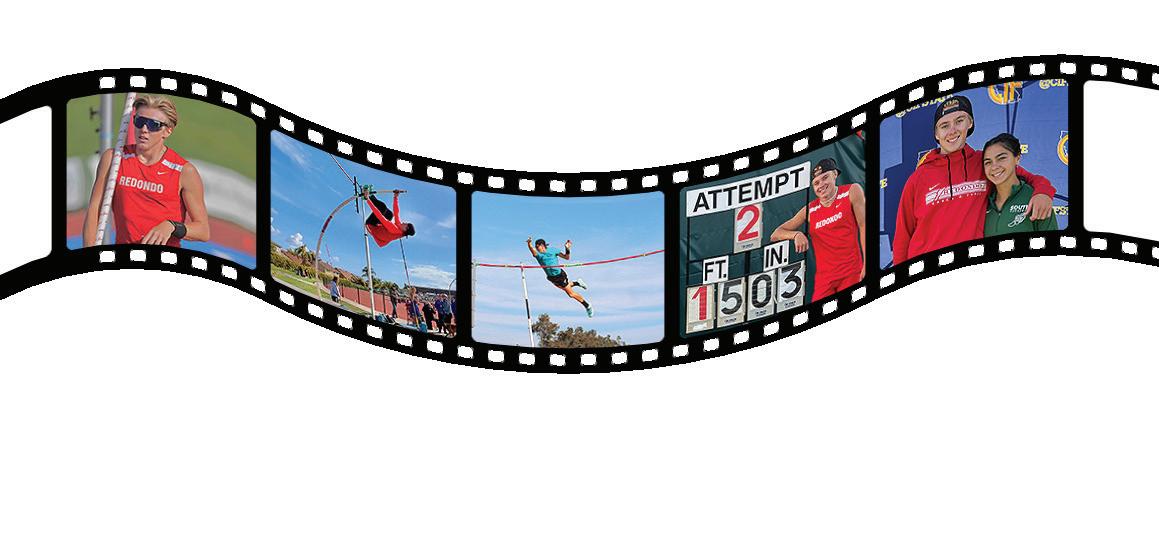
Sprinting across the runway, planting the pole in the slideway, launching yourself in the air, all to feel the high of falling through the air
each week.
by London Jolie
“[This sport] takes dedication, never taking a break and knowing to always keep going. I've left a lot of my friend groups and started to focus on track and pole vault
vaulter, especially because she could help mold him from the way she already knew him while he was growing up.
“I've been able to tailor everything and teach him the right progression steps for his body type so he will succeed as quickly as possible,” Stately said. “Having the abil
in fulflling his dreams as he continues with the sport.
“He's been overcoming adversity and tiny little things delaying plans. The only thing that could hinder something would be losing sight of the ultimate goal,” Stately says. “Even if something bad happens, he just needs to stay focused and keep grinding it out [until he succeeds].”
Curtis recognizes these standards he must focus towards in or -
to be his best and fulfll all his goals. His stepmom will always be there to guide him
der to have any sort of future success. He has followed them for the past two years helping him to prepare him for what lies ahead
“My junior year was when things got serious. I opened third in the state and came back towards the end of the year, went to all the big meets, and ended up tenth or eleventh overall. It was a huge success and now going into this year, I’m currently number one.” Curtis said. “It’s always been ‘go, go, go' forever, and now I’m going to keep going until I make the world team. That's the goal this year, to make the Junior World Team.”
features 5
life.
enthusiasm shows in
current four-to-fve hour practices six days
has in his
His
his
Having Stately as a coach was one of the best and biggest resources to have as a Stately, after his vaulting event last season. PHOTOS COURTSEY OF BRYSUN STATELY
1. Light posing wearing a halloween costume.
2. 3-D animation project making motor bikes. PHOTOS COURTSEY OF MICHELLE LIGHT
1 2 3 4 5 1 2
I fnally understood what it meant to truly glide, it got so much easier and was super exciting. I want to make kids feel like how I felt when I was younger,” Ongun said.
According to Ongun, assistant coaching has been a “memorable” experience, allowing her to form meaningful bonds with both her fellow teen instructors and her young students. She tries to act as a positive role model for her students to look up to, similar to how she looked up to her teen coaches when she was their age.
“I love working with little kids because they’re so funny and some of them have even started to like me. They’re always coming up to me and hanging around me. I just love that and fnd it so cute. It’s also rewarding to watch them progress throughout our sessions knowing that I [contributed] to that,” Ongun said.
Helping her students progress has also contributed to Ongun’s personal growth as a skater. Repeatedly coaching basic


Ice Ice Baby


Junior Kayla Ongun's passion for fgure skating extends to her
by Summer Puterbaugh
ly encourage them to tweak minor things.
I fnd that I’m a lot more tient now when ing to achieve results, both outside ice break ev into sim not only for and
nication with most of her students is “smooth,” Ongun claims the most chal lenging part of her job comes from miscommunications with parents, especially those who pressure their hesitant children onto the ice.
“There are some kids that clearly don’t
to attend personal lessons before
“It’s really hard to have to skate after school knowing I still have homework to come back to when I get home and get it done [quickly] enough go to bed at a sonable hour. spending most of my time skating, but I do wish I could hang out with my friends more and go to bed [earlier]. I just want more balance in my schedule,” Ongun said.
Participating in level tests and skating competitions has also “gotten in the way”
of Ongun’s social life and mental health. In order to advance, she must take part in “Moves in the Field,” a skating evaluation where skaters learn a certain set of moves and perform them in front of Olym- pic-level judges. Currently ranked at junior level, Ongun sees herself advancing in the future but fnds her anxiety often gets in the way of her progress.
“Skating is all about forcing yourself to do what you don’t want to do. You have to push everything out of your mind and force your body to do [difcult moves]. If you stumble when you’re younger, you fall down only four or fve feet, but since I’m a teenager, there’s a bigger [risk] in falling. I have more fears and anxiety that occasionally hold me back,” Ongun said.
Despite the challenges of ice skating, Ongun still fnds it to be a “beautiful” sport that she plans on continuing in the future.
“Skating has become such a big part of my identity. There's never been a time when I haven’t been skating or doing anything related, so I can’t imagine quitting,” Ongun said. “It’s rigorous, but I love it.”
Seniors compete in a student-run game for a cash prize of 421 dollars
by
Seconds before the fnal bell, seniors still in the game don their goggles and foaties, trying desperately to avoid being eliminated. At the same time, they watch their friends eliminating their classmates in ways ranging from disorienting their target with car horns to hiding in trees. For a prize of $412, it’s worth it.
Senior assassin is a game run by students in which a senior and their partner, another senior, are assigned a pair to eliminate from the game. To do this, they shoot their targets with water guns while avoiding being shot themselves, as another pair is tasked with hunting them.

These are the rules: no attacking during school hours, no attacking during work and actions that are against the law are still against the law, so no breaking into people’s houses.
According to senior Camila Gamboa, that doesn’t make it less scary.
“Last night, the people that are [targeting] me circled my house twice at 10 at night,” Gamboa said.
Part of the competition is that all players have to have their Snap Map on Snapchat turned on, which tracks their location in real time. This is to provide a way for assassins to gain information on their targets when they have no common connections. However, that doesn’t help much when Gamboa’s target lives far away.
“You’re burning gas for a 20-minute drive just for your target to walk in their
house right as you get there,” Gamboa said. “It’s frustrating.”
Players ambush their targets in common places like stores and restaurants , which changes after school plans for some students.
“After school, I’m al- ways going to Starbucks,” Gamboa said. “I can’t even sit in peace in Starbucks anymore. I have to mobile order, throw my goggles on, pick up my order and get out.”
For senior John Doe, the only sacrifce is his time. Doe asked that he remain anonymous as he wants to avoid the
spotlight as much as possible, as a key strategy to winning the prize.
“My main strength right now is that no one who’s playing the game really knows who I am,” Doe says. “When people see how aggressively I’ve been playing - looking for loopholes and waiting for hours outside people’s houses - they will see I’m actually trying, and therefore a threat.”
For Doe, Senior Assassin has been acting as a de-stressor.
“I would have anx- iety anyways because of college appli - cations, and [the game] gives me a chance to put my anxiety into something more productive,” Doe says.

Senior Mele Corral-Blagojevich wanted to make the game unique, so she added in a few quirks. For example, the pairs system is only in place for the frst three weeks.
The "bounty" system encourages players to move the game along. Pairs that fail to take out their targets by the end of the week can be eliminiated by anyone for the weekend. The only way to get of the "bounty list" is to eliminate someone else on the list by the end of the weekend, otherwise risking disqualifcation. Additionally, immunity items like foaties and goggles are rendered useless for those "on bounty."
“Each school has its own set of rules for Senior Assassin. Part of what will make [the Redondo student’s] game unique is that it’s being played by Redondo students,” Corral-Blagojevich said.
She also has to build in safeguards to keep the game from going overboard.
“We do try to build being respectful into the rules,” Corral-Blagojevich said. “We make safe spaces, like school grounds during school hours. We want to respect the learning environment.”
At the end of the day, according to Corral-Blagojevich, it’s just a game.
“We’re trying to be respectful of people’s lives,” Corral-Blagojevich said. “I just hope that everyone enjoys it and has a good time.”
Nicholas Carrozza
6 features march 17, 2023 high tide
PHOTOS COURTESY OF KAYLA ONGUN AND FREEPIK
POWER TO THE PEOPLE
by Daniella Gross
As sophomore Hannah Bazo spoke of how she had been told to “go back in hiding” and “go back to the gas chambers” in elementary school, snickers from the left and the right could be heard from nearby peers. Her face dropped, but she hid behind a smile for the remainder of my interview questions. Bazo’s experience in Washington D.C. speaking with Congress about antisemitism and mental health was eye-opening. But while sharing the exciting details, RUHS students displayed exactly what Bazo spoke against.
From Feb. 24–27, Bazo was asked by her rabbi and temple to go on a trip to Washington D.C. with her rabbi and a close friend from South High School in Torrance to speak with Congress about mental health in teens and ways to combat antisemitism.

“It was very comforting going through the whole trip because not only were
for Jewish people, was held on the frst night that Bazo arrived. After the meal and prayers, everyone participated in an activity.
“A homeless man came in and talked about how the government did nothing to help or support him and how he became homeless to begin with. It was a heart-toheart conversation, and after his speech, we did an activity where we were given a role [to play] and we had to try and ‘feed our families.’ Those two hours brought up a lot of feelings for many because the questions were intimate, and it was all very moving.” Bazo said. When Bazo was asked to choose a topic to speak with Congress about, she chose mental health because she could relate to it.
89% of American high school students have experienced or witnessed antisemitism at school
INFORMATION FROM THE JEWISH COMMUNITY RELATIONS BUREAU


“Seeing myself and other students sufer from mental health and sometimes not get the help they need at school brought to my attention that kids might need help and are afraid to ask for it from their parents or their educators,” Bazo said. “So knowing that we can better the system and hopefully make kids feel more comfortable was important to me.”
Bazo’s congregation, Temple Beth El, partnered up with another congregation, Willshire Boulevard Temple, which spoke about gun laws. The stories shared gave Bazo new insight into others' personal experiences.
Both congregations sat down with California representative Ted Lieu and presented their speeches.
“We [talked about] a quote from the Torah about a man seeking help from God and we also talked about the Mi Shebeirach, which is a prayer for healing the soul. We related this back to mental health, because if the Torah mentions nor malizing mental health long ago, then it should be recognized as a human thing today,” Bazo said.
Unfortunately for Bazo, people criticizing her for her religious beliefs and customs has taken a toll on her mental health.
During elementary school, Bazo encountered many children that called her names, made cruel re marks about her reli gion, and minimized
Sophomore Hannah Bazo traveled to Washington D.C. to speak with Congress about her experience with antisemitism and mental health
her self-worth.
“There were always a couple of kids that would tell me to go back into hiding or say that my relatives were Anne Frank. Some would [reference] Hitler and tell me to go back to the gas chambers. Throughout my life, I've been called these things and an apology note doesn’t stop it from happening,” Bazo said. “At one point in my life, I was ashamed to say that I was Jewish, and I stopped wearing my Star of David necklace.”
Even in high school, Bazo still comes across people disrespecting her for being Jewish. Even while Bazo was sharing her sensitive and personal experiences as a child, students from RUHS overhearing her interview laughed at Bazo.
“I ask myself why they inval idate my stories. They have no idea what it was like, which makes me feel like maybe as a Jew I deserve that. This shouldn’t be normalized, but it has become this way, which is why I don’t let it afect me anymore,” Bazo said.
At school, Bazo has found a safe space with the Jewish Culture Club. There, she can connect with more Jewish kids her age and not feel embarrassed, but rather embrace who she is. Hannah Bazo’s older brother, Jacob Bazo, has seen Bazo gain more self-confdence in recent years. The four-day trip also provided Hannah with the opportunity to be empowered by oth ers' speeches and made new friends along the way.
“From the beginning of sixth grade until now, I’ve seen a huge diference in how Hannah feels [towards Judaism]. She’s more supportive, more into it and has made me want to join more things in the temple congregation,” Jacob Bazo
41%

has become so normalized to me that I just let it slide at this point because if you say something, [people] don’t do anything about it,” Hannah Bazo said. “But seeing a bunch of teens get together to make a diference [in Washington D.C.] showed me that we have a voice
of Jewish students report being the target of antisemitism at school
INFORMATION FROM THE JEW-
1
features 7 high tide march 17, 2023
Hannah Bazo stands with her friend, Sarah Gill from South High School, outside U.S. Representative Ted Lieu's ofce. PHOTO COURTESY OF HANNAH BAZO
ISH
BUREAU
COMMUNITY RELATIONS
The pressure of beauty standards on high schoolers afects self-esteem and confdence
 by Lauren Greene
As she stares in the mirror, she searches for a single feature that she likes about the girl staring back. She fails. This is one of the daily struggles of anonymous sophomore Jane as she aspires to ft societal beauty standards that will determine her self worth.

“I've never had very high self esteem,” Jane said. “People always say, ‘Fake it ‘till you make it,’ but it's really hard to fake it when every day you're looking in the mirror, and you just can't stand what is looking right back at you."
According to licensed marriage and family therapist Jessica Taylor Vara, the pressure teens face to conform to social standards stems from “unhealthy messaging around body image and diet” both at home and on social media. The “non-stop fowing of strong opinions” allows younger generations to doubt themselves without a protective flter for “incorrect information.”
“I think it's a survival mechanism. As humans, we strive to ft in and feel like we're supported in part of a group community so that we're not standing alone. There is this desire to feel loved and valued and import ant,” Vara said.
Since she was in third grade, Jane has struggled with her self-image, learning to tie her self-worth to her appearance in the belief that she will be treated better if she gets “pretti er and prettier.” Society also plac es pressure on individuals to ft a beauty standard based on race, labeling traditional white features as the norm, according to junior Jade Thomas.
“I'm Black and Asian, and in a place like Redondo that is predominantly White, I can see how a lot of minority girls can feel very unseen and not the prettiest. They're so used to [comparing themselves to] all these white girls who have light eyes and perky chests,” Thomas said.
Jane believes that it is important to have more representation of women and individuals of diferent ethnicities in media. In doing so, many young girls from minority backgrounds won’t be left to wonder why they were born with such features that make them feel “worthless.”
“I'm half Asian, and growing up, I’ve been told that I have a wider nose and a shorter nose bridge, and that’s engraved in my mind,” Jane said. “I also always feel like I'm never feminine enough. I’ve heard a lot of comments about my small chest and I feel like it takes away the femininity in me.”
A lack of social acceptance re garding appearance can destroy one’s self-esteem. As a young girl, senior Brooke Talbott would force herself into uncomfortable clothes to “ft in with popular trends,” while today she continues to feel “apprehensive” when she wants to post images that may not be deemed as socially acceptable.
“If you're bigger, you're not supposed to be wearing tank tops or bikinis in beach photos. You're supposed to cover up be cause you're not what society has deemed as ‘pretty,’” Talbott said.
Jane recognizes that she falls into a perpetual state of wanting to alter aspects of her own appearance in or der to achieve beauty.
“I think, ‘If I get rid of my glass es and get contacts, I'll be pretty. If I grow my hair out, I'll be pretty. If I lose weight, if I get rid of my acne, I'll
be pretty. But after all of that, I still feel like I'm not enough,” Jane said.
According to Thomas, girls’ self esteem comes not only from their own self-perceptions, but also the comments they hear from others, especially boys, whom she has overheard make “nasty, hateful comments” about girls’ bodies.
“Society tells us to ‘Let boys be boys’ and do whatever they want. So, they often think it's okay to be mean when they don't have a positive feeling towards something,” Thomas said. “But we need to change the way they talk about girls’ bodies, if at all.”
Teenagers see a large gap between societal pressures for wom -
and men. According to sophomore Westley Reese, the appearance expectation for guys is more “simple” than that for girls.
“The expectation for guys is to look strong and not look out of shape. You have to work out and have a [specifc] diet. At school, every kid is going to think about [their body image] because [they are exposed to ftness] through P.E., weight training or a sport they play,” Reese said.
In addition, Talbott believes that there are diferences in the way men and women are treated if they don’t conform to traditional social standards.
“Boys struggle with their body image as well, but I think it's so much more focused on young girls and women. If a boy isn't meeting expectations, people are going to make more excuses for him. But if young girls aren't following so cietal expectations, it’s because they're doing something wrong,” Talbott
Vara, however, believes that the division between gender expecta tions may not be as wide as it
“Even though women are more vocal about it, men also struggle internally be cause there's not a lot of openness or validity,” Vara said. “It’s not accepted as easily coming from men because they have grown up not talking about things that bother them and not having emotion. There are nega tive views of self and body image in both men and women.”
Reese be lieves that in ternal pressures often stem from self-comparison to others. For guys, this may create obsessive behaviors in order to achieve a phy sique that is simi lar to or better than those around them.
“Someone who creates their entire personality around going to the gym and trying to look like an other [person] does not really leave time for themselves to be a human. They are so focused on being perfect that they are more like a shell of a human,”
Talbott fnds it important to follow infuencers and spend time with people who make her feel seen and understood. “I want to surround myself with people who make me feel confdent. I know what size I am. I know what clothes are going to make me feel comfortable and I'm not walking into PacSun anymore trying to ft
into Brandy Melville because I just know it's unrealistic,” Talbott said.

Jane, on the other hand, often struggles to fnd a way to cope with insecurities, unable to ease the aching sense of unworthiness.
“There's people that I consider perfect, but those people still have things they don’t like about themselves. In the end, looks fade and what's on the inside really is all that's important because that's what stays as you age. I can see beauty in everybody, and if I can see that in everybody, somebody's got to see that in me,” Jane said.
To begin to change toxic societal standards, according to Talbott, more representation of girls of diferent shapes and sizes are needed throughout media and television. Progress toward body acceptance is slow, Vara says, but “we are on the right track as a society.”
“It’s an individual process that then causes the bigger change. [It’s important to ask yourself,] ‘What am I following on social media? What kind of messaging am I contributing to? Is it universally supportive, or am I breeding micro-aggressive hate and negative viewpoints?’” Vara said. “Once we stop following and spreading misinformation and focusing more on the body positive accounts, the gender afrming accounts, the intuitive eating accounts, that shift will slowly happen and the focus will start to change.
While students continue to struggle with the mental health ramifcations of external and internal appearance-related pressures, individuals such as Talbott are still able to step back and refect on the future they hope to create for themselves.
“At the end of the day, I'm still graduating from high school in three months. Don’t let moments where you're having bad days or bad thoughts hold you back. Go to the beach with your friends. Treat yourself to that ice cream. Don't let hard moments stop you from enjoying your life,” Talbott said.
8 high tide march 17, 2023 in-focus
Someone who creates their entire personality around going to the gym and trying to look like another does not really leave time for themselves to be a human."
“
WESTLEY REESE SOPHOMORE
There's people that I consider perfect, but those people still have things they don't like about themselves."
“
JANE ANONYMOUS JUNIOR
ILLUSTRATIONS BY ESPY CAROLIPIO IPHONE GRAPHIC BY ETHAN LERNER

Technology enables photo editing that feeds into unrealistic beauty expectations
by Simra Zargar
Photoshoots with friends, birthday posts, profle pictures. All taken in moments of joy, but anonymous senior Mia can’t help but notice every single faw. Unsatisfed, Mia remembers: she is only a simple touch-up away from perfection.
In ninth grade, Mia frst started using the app Airbrush to add a creative touch to her photos. Adding glitter backgrounds and unique settings seemed like a fun hobby, until this seemingly naïve and playful tool turned into a dangerous and unhealthy obsession.
“Over quarantine, my skin got really bad, and I realized I could use Photoshop. I’d touch up all my pictures, especially my skin,” Mia said. “I wouldn't post without the app, which was so toxic. Looking back at my pictures during that time, I see the pictures that I posted and I see how much I changed them from the originals. I feel bad for the younger me thinking that [my skin] was something that needed to be edited.”
Stuck at home during quarantine, Mia became engulfed in her social media feeds and her perception of beauty became “warped” by social media standards. She became “nitpicky” over small imperfections on her body and her mindset morphed into the mentality that “there’s always something to be fxed.”
“You start retouching one small [imperfection] and then you start to notice other details that no one else would have ever noticed; it becomes a downward spiral, like a loophole that’s hard to escape,” Mia said. “If all I saw was what was on my Instagram or TikTok feed, naturally I started to compare myself. Knowing people were looking a certain way on my feed, I felt the need to edit my own photos to match.”
According to anonymous senior Anika, the media often favors Eurocentric features—specifcally fair skin and lighter hair—that exclude features of other ethnicities. Instead of cherishing her natural Indian features, Anika faced a great deal of “insecurity,” around her fgure and her ethnic traits, as having “fairer skin and less body hair” is promoted by the media as the ideal appearance standard.
“Having those ideals pushed at you on social media can be harmful. You can easily get rid of your body hair by editing it out and you can easily lighten your skin tone. These flters and enhancements make it seem like body hair or dark skin is abnormal when you go on Instagram and see that no girl has them. It allows people to achieve that image more easily and further projects that you must meet that standard,” Anika said. “These flters, from a cultural perspective, are really harmful because you're forced to question your features: ‘Is it horrible?’ ‘Is it acceptable?’”
Small waists and light hair, fair-skinned women with sharp faces and clean-shaven legs: seeing characteristics unlike her own being popularized throughout the media compelled Anika to question her own worth and beauty.
“By taking in all of these other Instagram accounts, people from our school or random accounts, by comparing myself, that led me to a really difcult place of trying to grapple with with [the questions] ‘Am I beautiful?’

‘Am I worthy?’ ‘Am I pretty enough?’” Anika said. “It was just kind of a trickle-down effect. And beauty flters and all that enhancement done on people, really propel stereotypes and mindset in younger kids.”
The push for having Eurocentric features infuenced how both Mia and Anika perceived their bodies. Although beauty standards across the world difer, the media refects and wrongly indoctrinates a certain, at times unattainable, image of how a woman should look. Chasing these dominating idealistic standards, Mia says, becomes a “pursuit of perfection for the per fect body,” regardless of culture. Striving for a fawless face blinded her not only from valuing her own beauty but also from valuing the moment in her pictures.
“A smaller nose, smaller waist, longer hair and prettier eyes—it’s all a competition of who can try to be more perfect. This threw me of so much because I would see a picture of me with my friends laughing and the idea of someone being able to capture a picture of us having fun should have just been perfect the way it was. But I wasn’t able to see the beauty of the moment for what it was,” Mia said.
Seeing edited photos causes body-image awareness to sur face in athletes and people who workout, as well. Junior Kai Lucas, a wrestler, edits his photos in the gym to adjust lighting to better defne his muscles, however, he feels going any further would instill a sense of dishon esty towards how he perceives his and others’ bodies. As an athlete, wrestling infuencers food his social media feed, yet the problem is that their bodies don’t always mirror reali ty—and, according to Lucas, this warped reality leaves viewers vying for an unrealistic athletic, muscular body type.
“A lot of people, when they see unnatural infuencers that claim to be natural, get a false sense of hope that one day they can be just like them, but it actually causes them to go into states of dieting or overworking them selves to the point where they end up hurting themselves,” Lu cas said.
Though there’s a lot of in ternal and external pressure to maintain a muscular fgure, so cial media “motivates” Lucas to
work harder.
“Now that I'm older, I focus on my own achievement instead of comparing my achievement to other people's. Other people's achievements tend to motivate me. When I see people on TikTok, especially guys my age or my weight, it motivates me to improve myself in a positive light,” Lucas said. When Photoshop was frst introduced in 1987, its original purpose was to help create digital graphics. Since then, it’s been adopted by thousands of people on social media. The countless features the software possesses, such as being able to manipulate colors and sizes and sharpen features have left people obsessing over the fawless, edited version of themselves. Its popularity has increased in the years, and in 2021, an astonishing 90% of women were reported to have edited their photos prior to posting, according to ScienceDaily, to present themselves as perfect as possible in the media.
With two years of experience, Mia is able to notice subtle edited faws in images and can tell small
wiggles or warps in the photos. But, Mia started to realize the extent to which people get “absorbed” into photoshop, that “they don't realize the drastic changes they're making,” which for Mia, conjured some harsh feelings.
“I used to be judgmental of it, which was hypocritical of me, even when I was doing it at the same time. I would just be mad being like, ‘Oh, she photoshopped that, she's making people think she actually looks like that.’ But I realized I was angry at her for what she was doing because we both were victims of the same unrealistic beauty standards,” Mia said. “I was just channeling my anger at her, but it's not anyone's fault. It's just an idea of beauty that's been here and prevalent for so long. Everyone is going to fall victim to it at some point.”
For Anika, being pressured by beauty standards and feeling unhappy in her own body drove her to want to change her appearance by imitating social media trends, such as wearing “specifc shoes and clothing, or products”. She felt forced to shop at places for clothes she didn’t want to wear or attempt to ft into an unattainable, unhealthy body type before coming to terms with herself.
“When I'm on social media, I tell myself that I don't need to have everything that everybody else has. I just remind myself that I’m perfectly fne just the way I am. And that is a blessing,” Anika said.
While she does believe social media has been key to inviting all cultures and allowing for exposure to diferent ethnicities, she worries that flters continue to overlook diferent body types and facial characteristics, according to Anika, which she believes are all unique, beautiful and equal.
“Filters force this standard upon you that you have to look a certain way; it pushes this idea that you're just not what society wants,” Anika said. “Social media would be a more beautiful place if we celebrated everybody's perfections and imperfections without categorizing what is perfect and what is not.”
Despite the brimming levels of toxicity that result from editing, according to Mia, the process of editing minuscule details became exhausting and when her mom fnally removed the app from her phone, it allowed her to take a step back and become more accepting of herself.
“Now, instead of being resentful of what I saw, I can look at these pictures and be a little easier on myself. If you love a picture and want to post it, but there’s something holding you back, if it takes Photoshopping for you to just feel a little bit better, do it because it will make you happy,” Mia said. “But there will also come a time when you realize that you don't need it and that's a really important and beautiful lesson you can learn. You just have to go through it to come out on the other side.”
march 17, 2023 high tide 9 in-focus
by Aidan Tseng
he 2022-2023 National Basketball Association (NBA) season has seen its highest scoring averages since 1970. Over 50 years ago in the 1970 NBA season, Kareem Abdul Jabbar was playing his frst NBA season and Jerry West—whose silhouette is used as the NBA logo—led the league in scoring in a 14-team league without a three-point line. Today, the NBA’s scoring infation promotes a game full of skill as opposed to physicality, which helps the league as a whole.

Points are being scored at a historic pace this year as teams, regardless of who is winning, are averaging 114.4 points per game according to Basketball Reference.
One of the reasons for this increase in scoring can be attributed to an overall increase in feld goals attempted. As of March 6, 2023, NBA teams are shooting the ball 88.1 times per game. 10 years ago, NBA teams shot the ball 82 times per game, and scored 98.1 points per game. Since teams are shooting the ball more times every game, naturally they will score more. Seeing more shots fy is good for television rating as it allows the NBA to display the accuracy and touch their best shooters possess.


But the NBA’s scoring infation lies deeper than just statistics. Some players believe that the game has strayed away from physicality on defense, as referees are calling more defensive fouls. As an eight-time all star and fourtime all-defensive team member, basketball player Paul George is known for his scoring and his elite defense. He recently said on a podcast when asked about defense in today's NBA: “It’s killing the game…We can’t defend as
Soaring Scores
Twell as we used to. [Everything’s] a foul now. You could be physical, aggressive [before.] You can’t do that now. The ofense has the advantage now.”
Since ofciating has favored ofenses, it is more difcult to play defense without fouling, making it easier for ofenses to score. George’s point has merit. In the 2012–2013 season, teams committed, on average, 19.8 fouls per game and shot 22.2 free throws per game (which are rewarded after a foul). This year's fouls have increased and teams are now shooting 23.7 free throws per game.

As a basketball fan and frequent watcher, I have to agree with George. More and more, referees are penalizing legal, good defense by calling fouls. Not only does this allow the ofense to shoot more free throws, but it also forces players to be less aggressive on defense, which makes it easier to score. If a player has to stand fve feet away from the ofense as opposed to two feet, it puts less pressure on the offensive player, making it easier for them to shoot an open shot and score.
Having referees skew ofensively isn’t a bad idea for the NBA. It is easy to argue that having more scoring makes for a better end-product for fans and for television. The more the NBA promotes high-fying, high-scoring games that showcase the incredible skills and athleticism that its players possess, the more entertaining the game becomes, which ultimately means more money for the NBA. In 2002, teams scored 95.1 points per game on average. That same year, the NBA signed a television deal worth about 765
million dollars per year. In contrast, in 2016, teams averaged 105.6 points per game and the NBA negotiated a television deal worth 2.66 billion dollars annually. More points means more money for both the league and its players.
Another reason the NBA’s scoring has increased is due to the increased reliance on the 3-point shot. A decade ago, teams only took about 24% of their shots from 3-point land and now, that number has risen to nearly 39%. In 2012-2013, Stephen Curry—leader of the league's 3-point revolution—attempted a league-high 7.7 threes per game, this year he takes 11.5 threes per game. Centers have also caught on with the trend. Centers are known for being tall and using their height to shoot close, high-percentage shots. Ten years ago, the league's highest-scoring center shot two 3-pointers that year, this year, as of March 14, he’s taken 328. Centers that threaten to shoot from the post are a pain for defenders, as they cannot only guard close to the basket and will have to follow their assignment out into the open court. With centers shooting more shots away from the basket, the NBA loses some of its more physical matchups in the paint that made former players such as Hakeem Olajuwon and Shaquille O'Neal a force. By losing this beloved element, the NBA relies on fnesse as opposed to force to drive up ratings.
As an avid fan of defense and physical basketball matchups, the league’s scor - ing rise isn’t the most appetizing to me, but it has done undeniable wonders for the league as business. With ofensively-skewed ofciating and increased number of threes per game, the NBA is scoring like never before.
letters to the editor
The High Tide encourages greater input of perspectives from both students and staf. If you have an opinion about one of the articles, letters can be sent to the editor at hightideonline@gmail.com
by Sam Schwartz
It’s a 3-2 count, the bottom of the ninth inning, bases-loaded, tie game and everyone on their feet anticipating the pitch. STRIKE THREE, but wait, there was no pitch thrown. The batter was called out because he didn’t look at the pitcher in a certain amount of time. The pitch clock is one of three new rules Major League Baseball (MLB) has added to supposedly make the games quicker, more exciting and safer.
The new pitch clock brings a certain amount of time for the pitcher to pitch the ball and for the batter to be ready to hit. Because this is new, major leaguers are having trouble getting ready in the ffteen seconds they are given to pitch. In early spring training, multiple pitchers and batters have experienced the penalty for taking too long to pitch and get ready to hit. As a pitcher, if you take the ffteen seconds you will be given an automatic ball, and as for the hitter, if not ready by seven seconds, they are charged with a strike.
Personally, I love the new pitch clock, and so far, despite the rules imposing more pressure upon the players, I am all for these great additions to the game. This is mainly because data already shows the clock shortens the length of the game time by 25 minutes compared to last season, which didn't have a pitch clock. This is a great thing because it allows for players to have more energy, as a 162game season can probably get tiring. However, I do believe that there is one downside: I feel that in the eighth and ninth inning, the pitch clock will just put even more pressure on the pitcher and batter, to not choke or screw up. Also, a world series champion pitcher, Luis Garcia, has always had a very long and complex pitching routine, which he will not be able to do because of the limited time. Now because of this, Garcia’s pitching will probably get worse along with others with long routines. However, overall, I believe that the pitch clock allows for more exciting games.
The pitch clock is not the only new addition to the league that I don’t discourage. As MLB decided to make
the bases bigger to reduce players’ injury rates, the injury percentage dropped by 13%. I don’t see anything wrong with this new addition, and I think that seeing teams’ star players stay healthy will make games more exciting and better to watch. In MLB, in past years, we have seen players overstep the bases and wind up tearing an ACL, but with the larger bases it is probable that this won’t happen as often as it used to.
The fnal rule MLB added is putting shift restrictions into the game. A shift is when the infeld moves to one side of the infeld to lower the hitter's likeliness of getting a hit; if the hitter has a tendency to hit the ball to the right side, the shortstop, second baseman and the frst baseman will all be on the right side of the infeld, and the third baseman will be alone on the left side. This is vice versa for a hitter with a tendency to hit it to the left side. The new rule calls for the separation of the two sides of the infeld, two positions on the right side of second base and the left side so
We reserve the right to edit for content, grammar and space constraints. Letters must be signed and are not guaranteed to be printed. Please keep letters to a maximum of 250 words. Longer guest opinions are also accepted.
voice column
The High Tide aims to share the voices of a wider swath of the RUHS student population, beyond just our staf members. If you have a story to share, a unique outlook on something, or a personal opinion, fll out the form linked at the QR code.


now the hitter has easier places to hit the ball. This is meant to raise the batting average and make the game more exciting by putting more runners on base.

I believe this is a great rule change, seeing as sometimes I’ll be watching a game in crunch time and a player will hit a ground ball up the middle, which should be a hit. However, with the shift there is always an infelder standing there, just waiting for the ball, turning a hit into a routine ground ball. The restriction on shifts in the game of baseball will lead to better averages, more clutch hits and more baserunners, leading to more excitement within the games.
Overall, I believe the new rules are benefcial in many ways, when it comes to adding more excitement to a so-called “boring game.”
opinion 10
The new rules implemented by MLB makes stereotypically "boring" baseball games more engaging
The NBA's recent score infation promotes a more interesting game which helps the league as a whole
Voice column: Accomodations Needed
 by an anonymous student
Have you ever seen someone who is “of” compared to everyone else? Maybe they aren’t using popular social media platforms like Tiktok. Maybe they are drifting of by themselves and wandering around campus. Maybe they have an adult aide with them, and maybe they are avoiding small talk for what seems like no reason.
If you’ve encountered anyone with most of these attributes, chances are you’ve seen a special education (special ed) kid or someone with a mental disability. I was one of these people all the way up until eighth grade, and until this year I didn’t need an instructional aide and my parents changed my IEP to a 504.
The issue I am trying to point out, however, is that students with mental disabilities (like I have), are not being understood enough and are (in our perspective) being unfairly treated by the school.
One example of this disregard towards SpEd students is the expectations of most students after school (from what I remember), which is hanging out for what seems like a few hours and maybe having an extracurricular activity, then not getting home until around 20:00 or 21:00, then having to do quite a bit of homework and not get to bed until 23:00, 0:00 or even 1:00, then oversleeping until around
made
up!
This year, I began wearing makeup. Not a lot, just a little concealer, a little eyeshadow. Eyeliner, maybe. Mascara, certainly. Though I have tried to resist their weaseling ways since middle school, for better or for worse, my powders and products and brushes and blenders have settled comfortably into my morning routine.
All this to say, I am not anti-makeup; in fact, I quite enjoy the 15 minutes or so that I spend with my supplies and myself each morning. If I can do something that provides me more confdence as I move through my day, I see no reason not to. For no shortage of reasons—creativity, gender validation, artistic expression, relaxation and sheer enjoyment, to name a few— choosing to wear makeup can be positive for many people. In addition, the makeup industry has expanded greatly in terms of inclusivity—creating more diverse defnitions of beauty.
Nevertheless, our choices don’t exist in a vacuum. It is inherently contradictory to paint the action of painting our faces as an embodiment of self-confdence and empowerment. The beauty industry’s recent messaging that cosmetic products constitute self-care is laughable.
Elise Haulund
er to girls, who understand before they can even spell out P-R-E-T-T-Y that prettiness is a path to happiness. When Anne Hathaway adorns eyeshadow and straight hair in “The Princess Diaries,” she gains social currency and confdence among her peers. When Cinderella transforms from a homely maid into a glittering princess, she gains access to an opulent palace and marriage to Prince Charming.
As girls age out of the impermanence of their childhood faces, they develop a keen sense of what is “wrong” with how they will look for the rest of their lives. These insecurities don’t simply threaten their vanity, but threaten their success. In a study by the Pew Research Center, men and women consistently ranked “physical attractiveness” as the trait that society values most in women, versus “honesty” in men. Beauty isn’t a bonus for women; it’s an expectation. Lack thereof could cost women in numerous aspects of their lives, from workplace respect to their love lives.
feeces not only women’s pockets, but their mental space as well.
The nagging voice in our minds to constantly curate our appearance, to evaluate ourselves from the third person—is my smile too big? is my hair knotted? is my mascara smudged?—inhibits us from reaching our full potential in classrooms, workplaces and social events. Whether we are conscious of it or not, it is distracting. Society’s historical overemphasis on women’s beauty has always been a means of suppressing women.
7:30 (6:30 for Zero Period).
However, I myself don’t choose to hangout with people after school because of my anxiety to get everything done before any extracurricular activity I have (and yes, I am juggling 3 days of them at the moment), afterward spending the rest of my day just goofng of and researching random topics that grab my interest (not a bunch of creeps shaking their arses to earworms) before getting to bed by 21:00 and waking up at 5:30 (and no, I don’t have a Zero Period this year). I know this is just one example, but an afternoon routine of a SpEd kid is harder to fgure out than someone’s NordVPN password.
Another issue that most SpEd kids are running into is having to do their work a certain way. I had to deal with this for two years in middle school and 5th grade with Eureka Math, which [I think] is complete rubbish.
So what can you do to help students like me?
If you see someone wandering and you want to approach or socialize with them, do so quietly and in a way that doesn’t disturb them. If they simply do not want to socialize with others during breaks, leave them alone and don’t disturb them.
If you are a teacher, you can try to give them more information on how to do a question if they are struggling. Consider giving them a few breaks during class and seating them away from anyone who would bother them during class.
You can also opt to give them sticky notes to write any questions they urgently need to ask, which would be responded to near the end of class, and even set an alarm for right before the end of class so that if the SpEd student is scared of being late, they’ll know they’ll be on time.
Although makeup is open to everyone, there is no denying the pervasive and damaging implications it has for women and teenage girls. Market research agency Mintel found that over 50 percent of 12–14-year-olds use mascara, eyeliner and eyebrow pencils, on top of the 45 percent that also use foundation and concealer on a regular basis. Furthermore, the age that young girls start wearing makeup is ever-sinking: Glamour magazine reports that the average age dropped from 14-years-old to 11-years-old over the last decade alone.
Makeup is, essentially, a means of editing your appearance. This is an especially enticing pow -

No matter how fun and artistic makeup is, the beauty industry could not exist without thriving of of girls’ low self-esteem. For companies to sell concealer, girls must frst believe there is something that demands concealing. To sell color corrector, something that warrants correcting. Who profts most from these perceived shortcomings?

I’ll give you a hint: it’s not the women forking out hundreds of dollars at Sephora.
Not to mention, many of the most prevalent beauty standards—big bright eyes, rosy cheeks, cute button noses, long curly eyelashes—stem from racism and the exaltation of whiteness. Despite progression in the industry, women are encouraged to strive for features that still often align with European standards of beauty. Again, who sets these standards of beauty? And who profts of of them?
Men shoulder their fair share of insecurities, but men are not indoctrinated into exalting the importance of their appearance like women. Masculinity is something men can wake up with, whereas femininity is a tricky foating target that women must painstakingly work for. Beauty is pain, right?
These days, beauty is also expensive. Men face harmful standards, but they are not expected to spend extravagant amounts of money on products to meet said standards. Women, to receive respect, are expected to spend time and money to make their appearances decent. The double standard of attractiveness for men and women
Beauty culture isn’t harmless. Data released this February by the Centers for Disease Control and Prevention revealed that nearly three in fve teenage girls felt persistent sadness in 2021, double the rate of boys. According to the American Academy of Child and Adolescent Psychiatry, as many as 10 in 100 young women sufer from an eating disorder, especially anorexia nervosa and bulimia, which are devastating at best and life-threatening at worst. Teenage girls are in a mental health crisis, and it is not nonsensical to draw a line between this fact and inescapable pressure to perform an act of beautifcation. Certainly, people can empower them-
selves through makeup. I do not aim to tell you what’s right and wrong. Choosing to do something that makes you feel that bit more confdent throughout the day is wonderful. Indulging in your femininity is worth celebration. Exploring diferent forms of gender expression is invaluable. Women, as do people of all genders, deserve the right to choose whether or not to wear makeup without judgment either way.
But, it is not lost on me that each morning, as I hide my acne scars with concealer, drag out my eyelashes with mascara, feign a good night’s rest with some shimmer in my eyes’ inner corners and create ruses with my rouges, I don’t really feel all that great about myself.
high tide march 17, 2023 opinion 11
Although makeup can be valuable self-expression, its roots in self-alteration contradict its advertising as true empowerment
its
PHOTOVIA FREEPIK
all
Society’s historical overemphasis on women’s beauty has always been a means of suppressing women."
“
ELISE HAULUND SENIOR
PHOTO
VIA FREEPIK
Students with mental disabilities (like I have), are not being understood enough and are (in our perspective) being unfairly treated by the school."
“
ANONYMOUS STUDENT
High on Rock n' Roll
"Daisy Jones and the Six" sparks intrigue, yet falls short of the book's complexity
by Lucy Davis
There is hours. As an author, Jenkins thrives in the swirl of glamor and gray space of bygone Hollywood eras. This is where the series delivers: aesthetically, it’s a wonder. There are rich jewel tones, neon montages, iconic cars and dresses and geometric architecture. Like any good period piece, the production design is immersive, working with direction and editing to recreate rock n’ roll Los Angeles. Not only is the show gorgeous, but it’s smart. As someone who has already read the book, I can tell that each creative team worked together to build the plot, and the attention to detail is so validating. And–thank God–I couldn’t have picked a better cast if I had done it myself. Riley Keough is Daisy, not only with her ginger hair and blue eyes, but her mannerisms, her laughter, her voice. Her chemistry with Sam Clafin is so electric that I felt like I was intruding just watching them sing together. And though I’m not used to watching Clafin play darker characters, his Billy is heartbreakingly complex, expressive and conficted. Nabiyah Be is the perfect best friend as Simone. I was a little sad that Tom Wright’s Teddy wasn’t British, but hey, you can’t win them all. Most importantly, every member of the band sings and plays their own instruments, which the casting team didn’t have to make a priority, but they did. The cast even spent fve weeks at a “band camp,” according to an Associated Press article, learning or relearning each instrument. Which is why my heart breaks at the changes they made to the script.
Part of what makes “Daisy Jones” a compelling read is the fact that their characters are redeemable: Billy overcomes his demons for the sake of his family and stays true to Camila (his wife), Camila trusts Billy even when the tabloids spread rumors about his involvement with Daisy, Daisy is brilliant but clearly self-absorbed. By changing formative moments in each character’s arc, the writers sacrifced their integrity.
If you’ve seen the trailer, you’ve seen what I mean: Camila is caught up in doubt about the dynamic between Billy and Daisy, kept halfway in the dark when the emotion between
them is palpable. The writers make her jealous, and they change Billy’s actions to justify her jealousy. There are further complications, of course, but what is supposed to make Camila so diferent from the members of the band is that she isn’t driven by emotion–she’s Billy’s calm in the storm. Adding payof between Billy and Daisy allowed the show to exploit the plotline by pitting Daisy and Camila against each other, which didn’t sit right with me at all. That’s not who Camila is.
The other big problem I have with the show’s writing is its inability to handle its larger themes responsibly. Jenkins wrote Daisy as a lost artist who lost herself further in addiction–she doesn’t shy away from shining light on the consequences addiction has on its users and those closest to them. In the series, Daisy popping pills and putting the band in jeopardy is brushed of–it’s a problem, but it's not destructive like Billy’s addiction. Her spiral is supposed to be tightening, but the camera never sits with her long enough to explore it, much less understand it.
On another level, there are stark dif-
ferences in the music of the book and that of the series. Throughout the novel, Eddie (the bassist of The Six) complains that he doesn’t want to be in a soft-rock, pop-adjacent band. Yet every song from the series sounds like something he would hate–including “Aurora,” which is supposed to be the band’s “Bohemian Rhapsody.” If you’re expecting iconic guitar flls, big drum solos and quintessential 70’s production, “Daisy Jones” will only disappoint. There’s no rawness. No boldness. But “Honeycomb” is good.



Here’s the big asterisk: the show isn’t fnished yet. At the time of my writing this, only six of the ten episodes are available to watch. Daisy is on her way to Italy for a holiday, and the band has yet to embark on their “Aurora” tour. The story isn’t over, and while my criticisms still stand, the show has time to deliver an ending worthy of its original work.
Book-to-screen adaptations are fckle. Sometimes you hit cinematic gold, like Greta Gerwig’s adaptation of “Little Women,” or use it as an opportunity to improve upon the source material, like “The Summer I Turned Pretty.” Other times it’s a dumpster fre (ahem, 2010 “Percy Jackson”). “Daisy Jones and the Six” is good, great even, but I’m a reader frst–and as a reader, I’m as disappointed as I am thrilled about this adaptation. Maybe that’s just rock n’ roll.
entertainment 12
PHOTOS FROM AMAZON, RADIO TIMES, AND THE NEW YORK TIMES
Astonishingly Alive
For both newcomers and fans of the original, HBO's adaptation of the popular video game “The Last Of Us” provides a stunning standalone series that expertly delivers the original's incredible storyline.
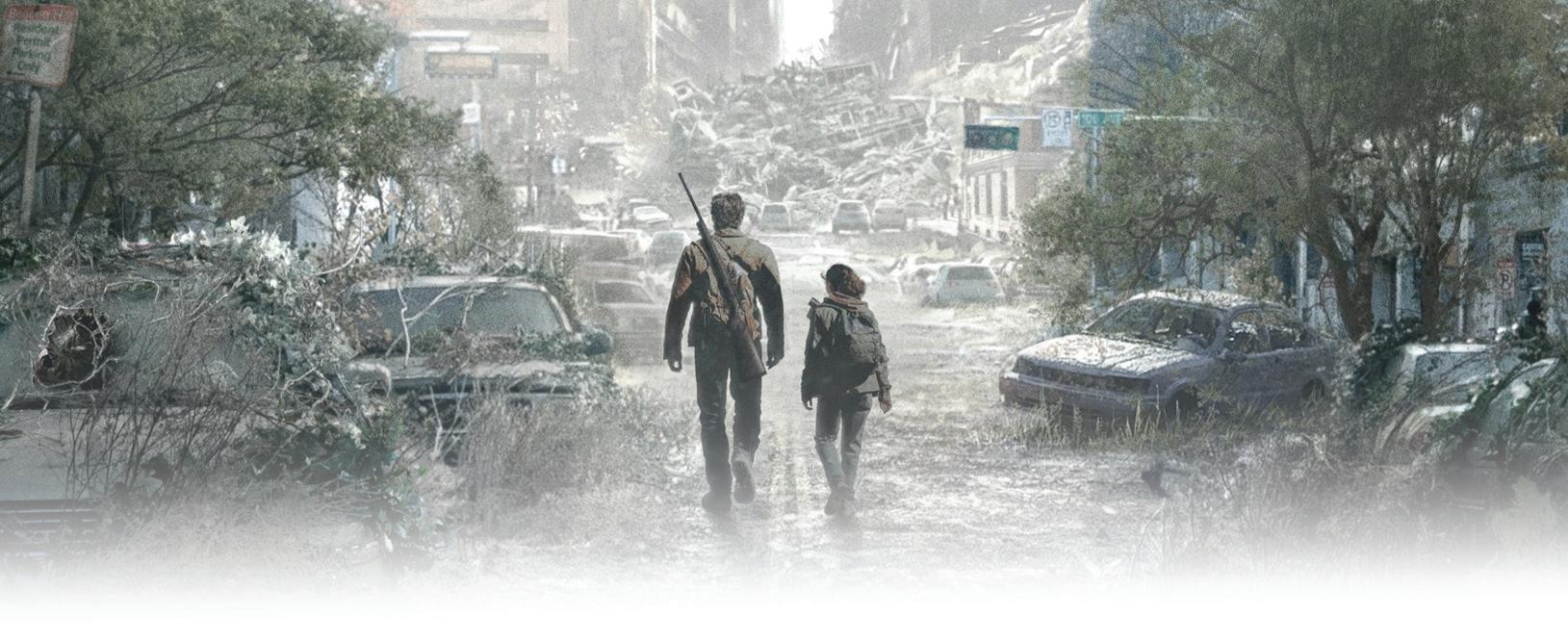
Based on the video game released almost ten years ago, the show follows the journey of Joel Miller (Pedro Pascal), a smuggler living in a post-apocalyptic zombie-flled world, hardened and reluctant to form emotional connections after the death of his teenage daughter, Sarah. Twenty years after the beginning of the disease outbreak, Joel now lives with his companion and smuggling partner, Tess, in one of the multiple quarantine zones (or Q.Z.s) around the U.S. The Q.Z.s, ran by FEDRA (Federal Disaster Response Agency), are the remains of what was the U.S. military. After Joel's brother Tommy fails to contact him and Tess after a communication attempt, they set out to rescue his younger brother from potential harm. While attempting to locate Tommy, the two run into Marlene (Merle Dandridgde), the leader of a revolutionary militia group called The Firefies, whose primary goal is to end FEDRA's widespread control. Marlene ofers a deal: sneak Ellie (Bella Ramsey), a 14-year-old girl immune to the disease, across the country in exchange for a working truck. Easy enough, right?
Co-showrunners Craig Mazin and Neil Druckmann (the video game's original cre-
ator) had lots to lose when developing the series adaptation. The video game itself, released in 2013, won several prestigious awards, including Game of the Year, Best Design, Best Narrative and Best Voice Actor and Actress for the depiction of Joel and Ellie (Troy Baker and Ashley Johnson). Critics were not the only ones captivated by the intriguing storytelling and fawless execution, as the game was a massive success amongst video gamers worldwide. Mazin and Druckmann knew the risk that came with converting this best-selling game into a TV show. Still, by removing areas the game lacked but keeping the signature essence and niche, both showrunners produced an exceptional TV show adaptation.

In “The Last of Us,” the world is swarmed with infected "zombies" that progress in stages. However, these zombies aren't your typical mindless brain eaters, as they're still human (or retain some of their human qualities). The infected can think and form broken speech, but as time goes on and the disease takes over, they begin to take on diferent stages. The most notorious in the franchise are known as Clickers, infected individuals with fungus covering their heads, forcing them to use rudimentary echolocation to navigate.
Unlike most zombie franchises, the infection is not a virus or bacteria, but a mutated strain of a fungus in the real world called cordyceps, existing in insects. Thankfully, the human body is too warm to
host cordyceps, but, as the show explains, if the world were to get warmer suddenly, cordyceps could evolve and thrive in hotter temperatures found in our bodies. The show connects the already disturbingly designed zombies to our world, making the infected even creepier than in the game.
Contrasting to the game, the show explores the depth of numerous "side characters” implemented throughout Ellie and Joel's expedition, giving needed backstories to illustrate that these—often disregarded—characters were anything but insignifcant. The show's adaptation also hired various voice actors of the characters from the original game to play diferent roles in the show. The voice actor for Joel himself, Troy Baker, plays a minor side part, and the actress of Ellie in the game plays Anna (Ellie's mother) in the show, providing context on how Ellie becomes immune. While some aspects of the show stray from the game, the stunning scenery and ambient melancholy soundtrack remain, contributing to creation of the best TV show adaptation of a video game I’ve ever watched.
However, the show simply could not provide the same engagement and immersion as the video game. This part was expected, as in the game, you are in control and can roam and explore the world freely, engaging in stealth and combat to complete objectives. That itself makes you feel as if you're Joel, set only on fnding a cure, eliminating all threats while protect-
Pedro Pascal does it again for "The Mandalorian" season three
by Calvin Bonn
Three minutes in and I was a little worried. Sure, the start of the third season of “The Mandalorian” was interesting, with a jump scare (and of course, Mandalorians) but there was no sign of the show’s true star. Finally, after seven minutes and 27 seconds of anticipation, the adorable green ears of Grogu peaked out of the cockpit, accompanied by the titular Mandalorian–phew!
Fortunately, the show had much more to ofer than just Baby Yoda content. The action-packed and beautifully crafted beginning of the third season of “The Mandalorian” hooked me in from the start, efciently developing its plot for its fan-favorite characters, recognizing the original appeals of the Star Wars franchise.
The last time audiences saw Din Djarin, aka Mando (Pedro Pascal), and Grogu, aka Baby Yoda, together was in “The Book of Boba Fett” last year, which ended with Grogu reuniting with Din, who was recently exiled from his clan of Mandalorians for removing his helmet. This is all summarized in the must-watch recap for viewers who, like me, likely forgot all of the frst season connections in the complex tangle of the “Star Wars” universe.
With audiences caught up, the frst episode of the new season picks up where this plot line left of. We follow Din as he seeks help in his quest to return from exile by visiting the sacred waters of his decimated home planet, Mandalore.
Immediately, a dramatic fght scene breaks out, forcing viewers on the edge of their seats. This fast-paced and eventful standard is met throughout the rest of the initial episode as viewers get a taste of creature attacks, a blaster fght and a spaceship battle, among other surprises. The blaster shootout in particular characterizes the traditional space-western vibe of the original “Star Wars” movies, with the cowboy-esque standof and cinemagraphic focus on the twitches of the characters’ fngers towards their guns building tension throughout the scene. Thankfully, “The Mandalorian’s” quick plot pace does not slow in the second episode, unlike other “Star Wars” shows like “Andor.”
The many diverse planets where Din and Grogu visit adds to the quintessential adventure of a good Star Wars show. In just the frst two episodes, the duo travel to at least fve planets, each with unique lighting and music. The attractive colors, wide angle shots and hopeful scores introduce the audience to the new and improved Navarro, a planet recovering beautifully from the Empire’s rule. Contrast this with the exceedingly dark mines of Mandalore, where Din’s fashlight is sometimes the only source of illumination and tense, foreboding music plays in the background. While suspense is readily built in Mandalore’s atmosphere, it is difcult to follow some of the subterranean fght scenes. Regardless, the set choices capture the versatility of the
“Star Wars” universe and is appreciable to general audiences in addition to the fans.
Die-hard “Star Wars” fans have nothing to wor ry about either. The show rises to the occasion and contains many referenc- es to the larger franchise. Popular characters from the original seasons return, such as ex-bounty hunter turned High Magistrate, Greef Karga (Carl Weathers), and Tatooine repair-woman Peli Motto (Amy Sedaris).
Fellow Mandalorian Bo-Katan Kryze (Katee Sackof) also returns, landing a recurring character credit this season, as she takes on an increasingly important role in season three. Subtle connections to other “Star Wars” projects are also seen, such as the debut of “purrgil” in live-action, which are space whales whose shadows are briefy seen by Grogu outside of Din’s ship, a nod to the “Star Wars Rebels” series.
More connections to the previous “Mandalorian” seasons were seen through the development of Din and Grogu’s characters as they explore their father-son relationship. Besides just seeing Din Djarin as the talented and fearsome fghter or the begrudging babysitter, we now get to see him as the parent, educating his adopted son in the skills needed to survive and nav-
ing humanity's last hope, a 14-year-old girl named Ellie. Whether your enemies are fungus-covered zombies or bandits who will stop at nothing to take both your life and belongings, the game allows you to see the world of "The Last of Us" through Joel's lens and perspective, something the show cannot mimic.
Although my preference leans towards the game rather than the show, both are exceptional and one-up each other in certain categories. The series precisely captures the raw emotion and depth of Ellie and Joel throughout their journey of fear, anger and loss. Ramsey and Pascal's chemistry, both on and of set, contributed to their phenomenal performances, something I didn't doubt after watching their roles in the drama series "Game of Thrones." Whenever I heard an iconic voice line from the game in the show, I cheered Joel and Ellie on, as Ramsey and Pascal's delivery and ability to portray the complex father-daughter relationship between the two main characters was unmatched.
“The Last of Us” is brutal and inevitably tragic. But despite violent rampages and gory fesh-eating infected, Joel and Ellie's relationship shines bright even in the darkest of times, defying all odds. While most video games are untouched by any remakes, “The Last of Us” TV show adaptation is a defnite must-watch for anyone looking for a series that will leave them speechless and craving for more (pun intended).
Even though Din guides Grogu, he actually gains more independence this season, cooperating and respecting Din more than in the past. In addition, Grogu’s time spent with Luke Skywalker seems to have had its efect, as he is now much more capable in the Force, and can even fip—somewhat comically—in and out of the cockpit.
This crucial familial relationship is one that anchors the plot of “The Mandalorian” and the fantastical “Star Wars” galaxy in general. With bizarre creatures, space fghts and breathtaking planets, these relatable characters allow the audience to connect to the otherwise outlandish sci-f universe. Luckily, the new paternal role of Din Djarin and the iconic face of Grogu are up to that challenge as the frst few episodes of the “The Mandalorian’s” new season prove to be a stimulating addition to the series and universe.
high tide march 17, 2022 entertainment 13
"The Last of Us" TV show adaption easily becomes one of the best video-game adaptions yet
by Yasmeen Ford and Felix (Quinten) Lerch
PHOTO VIA STARWARS.COM
PHOTO VIA TECHRADAR
One Run and Done
Softball beats Culver City 1-0 in pitching showdown, maintaining 7-5 record
by Ethan Chi
Redondo won their frst league game with a pitch-perfect defense, despite coming of a loss to Centennial High School in the previous tournament. Redondo bounced back on March 8, winning 1-0 against Culver City High School.
Even though the girls were disappoint ed they couldn’t pull through against Cen tennial, beating Culver and winning Bay League is the team's new mission.
“The frst league game is defnitely im portant because it sets the tone for the rest of the league. Coach Dessert had said as soon as other teams fnd out we beat Culver, it sets the tone for what they expect the outcome of the league to be,” ju nior catcher Kayla Roe said.

Redondo’s win against Cul ver was “a great win," according to Roe, a tight match that was “neck and neck.” When Re dondo faced Culver previ ously they mercied them 8-0, but this time the girls knew it wouldn’t be that easy.
“Last game they didn’t have their ace pitcher and we knew this time they would, so we were just pre paring for how to hit of her,” Roe said.
Culver's pitcher, Tay lor Peacock, proved to be a tough opponent for the girls, setting the tone in the frst two innings by throwing consistent fast balls and not allowing Redondo a hit.
“We struggled a little
bit at the beginning. I mean, she is a very overpowering pitcher, and you know, she's intimidating,” sophomore pitcher Bailey Murray said.
Peacock swiftly struck out Redondo’s frst three to bat, leaving the girls in des-

and “refused” to let up.
“Even though it took us a while to get settled in, soon after that we started getting a couple walks, a couple hits, not necessarily producing multiple in a row, but defnitely making progress,” Roe said. With Redondo putting the pieces together, senior Annie Maden fnally got on base and patiently waited for every opportunity to advance bases. With Redondo deadlocked at 0-0, Maden on second base and Roe on her second strike, the team was looking to get ahead on this next swing. Roe hit a fastball down the middle allowing Maden to slide home, giving the girls a well-earned
This one run was pivotal in building up Redondo’s confdence and morale going into the next inning according to Roe.
“As soon as we got the run we realized this pitcher is not unbeatable, and we can do this,” Roe said.
The girls held onto their slim lead by continuing to play strong defense. The girls minimized their errors and capitalized on Murray’s pitching ability, striking out Culver’s heavy hitters, according to Roe. Their strong outfeld came in clutch when bases were loaded in Culver's favor.
“I would defnitely say one of the game savers for sure was the catch by Annie Maden in center feld. If she didn’t save us, it would have been three to one, so just for her to come up with that catch even though the sun was beaming down saved the game,” Murray said.
With Redondo’s defense shutting down Culver's attempts to gain the upper hand Redondo preserved their narrow onerun victory. As Roe said, winning their frst league game is huge, but the journey from here on out will be “difcult.” However, the girls feel good going into their next game against Culver on March 16.
“Our main goal is to win league. It's 10 games, everybody's going to be playing every week, and it's gonna be a lot mentally and physically," Murray said. "So just to stay strong, and just keep winning and having motivation is our main goal.”
Boys Tennis loses to Peninsula 15-3 twice and look forward to rest of season
by Andrew McKenna
After losing for the frst time this season, Redondo boys varsity tennis returned home on Thursday, March 9 with a chance at redemption. Redondo had won each of its frst four matches this season before losing 15-3 at Peninsula. Now the team was given another shot at Peninsula just two days later, taking what they learned from their last meeting to help them do better this time around.
“A pattern that I’ve noticed (against Peninsula) is that they are usually really aggressive at the net once the frst couple of balls go by,” senior Ethan Chen said. “They’ll wait for two or three shots, and then the guy at the net will try to put the ball away. If you are looking for that, you can try to catch him out of position and you can anticipate where the ball will come out.”
A big problem that Redondo struggled with last match was performing in their doubles matches. Improvements needed to be made in this area if the boys wanted a chance at winning, and was consequently the focus of practice before this match.
“When you’re playing doubles, placement of the ball is really important,” Chen said. “In practice we work on trying to hit towards zone two (the edges of the court), because it is harder for the net player to poach. When they’re in the middle of the court, if you hit cross-court really wide or down the line on the alley, it is impossible for them to get to unless they’re already there.”
With these thoughts in mind, Redondo
attempted to put their visions into action. Unfortunately for them, though, the result was the same. The team struggled to keep up with Peninsula, once again losing by the same score of 15-3.
“At the end of the day, I think that Peninsula just played better as a team than us,” senior Strachan Ambrosi said.
“There were a few mistakes we made that held us back a little bit, but at the end of the day, they’re just a really good team.”
Although the score might not show it, Ambrosi feels that the team was “much more competitive” against Peninsula this time around.
“It isn’t obvious when you look at the overall score, but the individual matches were a lot closer today than they were last time,” Ambrosi said. “I thought that our doubles teams did a better job of serving and fnding the alleys with our returns.”
While the last two matches were certainly not as successful as Redondo would have liked, Ambrosi knows that the results
aren’t indicative of the potential of the team.
“It sucks that we couldn’t beat Peninsula, but I think that we learned a lot from our last two games,” Ambrosi said. “We still need to work hitting our serves and returns consistently, but playing teams like Peninsula will only help us improve. I’m excited to see how the rest of the season goes.”
Boys Tennis: 3/21 @ Palos Verdes


3/23 @ Mira Costa
3/28 @ Santa Monica 3/30 vs. Santa Monica
Other sports:
Baseball: 3/17 vs.Culver
Boys LAX: 3/17 @ Samohi
Girls LAX: 3/22 vs. Glendale
So ball: 3/17 vs. Palos Verdes
Boys VB: 3/17 vs. Samohi
T&F: 3/18 @ Mira Costa
sports 14
1. Senior Kamran Hanif hits a volley. 2. Junior Matthew Ruhe returns the ball PHOTO BY MARIN CANTRELL.
1. Junior Melinda Smith prepares for the next pitch as she steps into the batter's box. 2. Sophomore Bailey Murray in the middle of her pitching motion. PHOTOS BY CAITLYN CISNEROS
WHAT'S UP NEXT? 2 1 1 2
Go
Redondo hosted and competed in the annual Nike Invitational on March 10


 by Malina Young
Although rain poured onto the track this weekend, over ninety diferent schools came to the Sea Hawk Bowl, this past weekend to compete at the 2023 Redondo Nike Festival. The two-day event took place at home, with over sixteen girls and boys varsity events. The starting line was crowded with vehement runners, determined to PR and scout their competition for the season.
Junior Lela Divinity broke her PR and fnished eighth in California for the 100m hurdles, fnishing with a 15.06. Although Divinity secured a spot in the top twenty in California for the 300m, she believes she could have executed the race better.
“I was tired in the last 100m (for the 300m hurdles) and I died down in the race. I was really anxious about the race, specifcally how long the 300m hurdles are. I felt like I wouldn’t be able to run for that long,” Divinity said.
Divinity already has formulated her goals for the rest of the season, which include breaking 15.00 seconds for the 100m hurdles and defending her Division 1 title for the 300m hurdles. At practice, she has worked on technique over the hurdles, such as her arm swing, as well as her speed work, in addition at home she has been exploring ways to calm her nerves, especially at big meets, where the competition is ferce.
“I’ve actually tried a new thing. I started meditating because I used to get really bad anxiety from my races, where I could barely move my body or warm up,” Divinity said.
Divinity hopes to continue her track career at a colle giate level, and is looking forward to accomplishing her goals this season.
“Track gives me something to look forward to in the day and to wake up with a purpose. Everyone has their own niche and track is mine,” Divinity said.
However, unlike Divinity, junior Addyson Benefeld, new from Canada this year, was dis appointed with her results. Benefeld participated in the 800 SMR and 400m, fnishing third in the 800 SMR against some top competition. Benefeld noted that track in America is more competitive compared to Canada.
“I’ve been going into every race with
the mentality that everybody wants to win. Also, because you were fast a year ago doesn’t mean you’re going to be fast in this race,” Benefeld said, “Everybody works hard. It’s the level we’re at. When you’re sleeping, people are working ten times harder than you, so you have to put everything you have and more into this sport.”
Benefeld’s energetic and lively person-


ality also came out this weekend, in eforts to cope with her nerves. She brought a speaker, started to play music, introducing herself to others at the starting line.
“Everyone is for themselves when we're racing, and we’re not friends, but as soon as the race ends, we’re back to being friends. You have to be mindful about getting in the right zone, but it’s fne after that,” Benefeld said.
Moving on from this meet, Benefeld intends to improve her personal and team’s ranking.
“I don’t like the idea of losing. So you have to envision yourself being beat. But losing is something that you have to be comfortable with before you can start winning. I fnd losing as a form of motivation because when you lose you realize that you want to win,” Benefeld said.
Boys Lacrosse stayed undefeated beating out St. John Bosco 13-8
by Ava Anzivino
Rain or shine, boys lacrosse continues to keep their now fourgame winning streak alive. On Friday, March 10, Redondo brought their A-game as they played away for the frst time this season against St. John Bosco, adding a fourth win to with a fnal score of


Last Friday afternoon brought heavy rains and intense winds. However, the boys were not going to let this stop them from keeping their usual composure. Very quickly, they were able to put two points on the board within the beginning of the frst quarter.
“We knew it’d be a bit of a sloppy game be cause of the weather, but we knew if we just went out there, stayed focused and worabout ourselves rather than the elements, that we could go out there and win no matter what. And that’s what we did,” senior co-captain and attackman David Bick said.
The game ran smoothly as Redondo was ahead the whole time, however there was a sense of pressure when it came to competing against an old friend. Senior Paxton Allison, now one of Bosco’s star players, had transferred from Redondo his junior year. Knowing Allison personally, Redondo’s players knew his game and how to counteract it.
“We knew that on the defensive end we had to keep him silenced and minimize the impact he had, and that really helped us stay focused. At the end of the day it was a nice friendly competition, he’s a really good friend of mine, so we were both excited go-
ing into this game. It felt like a fun sibling rivalry, despite the fact that we wanted to outplay each other,” senior co-captain and midfelder Kyle Estefania said.
While Redondo began the second quarter in the lead, with a score of 2-1, Bosco began to bring up their offensive drive.
The key for Bosco was to win the faceof, and from there they’d drive the ball and score with clear confdence. When this frst shift of momentum began, Redondo realized how much harder their defense had to work.
“We underestimated them a bit. They came of very strong, especially after their win from last week. They began to really challenge us ofensively, but our coach gave us a good talk during the half, and we came back out knowing we had to trust each other to get the ball to one another,” Estefania said.
Trust seemed to be the boys’ strength that day, as they worked hard to fnd the open man and efciently pass to score, which was very evident especially in the second half of the game. While Bosco’s points were mainly sporadic and driven by just one player, Redondo’s points were a team efort, securing their lead as they entered the fourth quarter with a score of
10-5.
“We did a good job of moving the ball and passing to the open guys. We were persistent with our shooting, probably could’ve done a better job with making them, but still we found the guys we needed to fnd to score,” Bick said.
Managing to cease Bosco’s occasional successful drives, the win was really set in stone for the Seahawks once Bosco be-
gressively, so when they got a couple penalties it gave us the extra man advantage. Even when they didn’t get penalties and pushed out on us, I think we were able to beat their guys and use all their aggression against them,” Bick said.
Ofcially shutting down all possibili ties of Bosco closing the gap, Bick scored their fnal goal in the last minute, resulting in a fnal score of 13-8. Satisfed to have steadily led throughout the whole game, the boys plan to continue on this route
throughout the season, according to the co captains. They’ll play their next match away against Santa Monica tonight, March 17, in hopes of strengthening their winning streak even more.
2
“Nothing changes, we’re going to have a good couple practices and keep on working to fnd the open man on ofense, and continue to lock down and play aggressive while still communicating with each other,” Bick said.
6. Senior Cole Simmons looking to pass the ball forward (photos taken from previous game). PHOTO BY REBECCA SCHIMA
7. Senior David Bick Celebrating (photos taken from previous game). PHOTO BY REBECCA SCHIMA
1. Sophomore Anthony Pina getting ready to pass the baton. PHOTO BY REBECCA SCHIMA
2. Senior Jadan Williams at the beginng of his long jump. PHOTO BY REBECCA SCHIMA
3. Senior Jadan Williams at the height of his long jump.
PHOTO BY REBECCA SCHIMA
4. Senior Jadan Williams after making the long jump.
PHOTO BY REBECCA SCHIMA
5. Senior Kyle Estefanina anticipating a throw from upfeild eager to make a run (photos taken from previous game). PHOTO BY REBECCA SCHIMA
high tide march 17, 2023 sports 15
Time It's
2 3 4 5 6 7
I’ve been going into every race with the mentality that everybody wants to win. Also, because you were fast a year ago doesn’t mean you’re going to be fast in this race,"
“
Addyson Benefeld JUNIOR
We knew if we just went out there, stayed focused and worried about ourselves rather than the elements, that we could go out there and win no matter what. And that’s what we did,”
David Bick SENIOR 6
“
DRESS TO IMPRESS
YOURSELF
Students reject the confnements of the gender binary surrounding fashion in order to genuinely express their genders and identities
by Meara Fay
Since they were eleven years old, nonbinary junior Izzie Caldwell bound their chest at the start of every day to feel comfortable in their own body.
“I didn't have a way to buy myself a binder of the internet, and I couldn't make one,” Caldwell said. “So instead, I would just layer tons and tons of sports bras and wrap myself in ace bandages in hopes that it worked.”
Gender dysphoria is the “sense of unease that a person may have because of a mismatch between their biological sex and their gender identity,” according to the National Health Service. It can be common among transgender youth, as many feel a disconnection between their appearance and internal identity, especially during the start of their growing physical maturity in their teenage years. Assigned female at birth, Caldwell felt continuous discomfort with the appearance of their newly developed body upon hitting puberty.

Caldwell’s desire for androgyny during the beginning of their transition led to the making of detrimental decisions toward their physical well-being. Chest binding, practiced by some transgender people, is the process of compressing one’s breasts in order to achieve a less female appearance. The vulnerability Caldwell felt was especially heightened during middle school, where they struggled with the stress of changing in front of their peers during physical education classes. Caldwell’s inability to completely change in a room full of others led to them wearing their chest binder while exercising,
But I didn’t care because, at that point, the gender dys phoria was just so bad that I felt the binding was nec essary.”
However, Caldwell has felt less of the need to bind their chest with age.
“Binding defnitely helped me for a while since it made me feel more androgynous when there was noth ing [on my chest]. But nowadays, I don't have gender dysphoria as much anymore, or even at all at times,” Caldwell said. “Now, just dressing and expressing my self the way I want to makes me feel validated in my gender and comfortable in my identity, the same way that binding my chest did.”
The transition from one’s biological sex to a new gen der identity is unique to every transgender individual, with diferent experiences constituting difering views toward the emotionally impactful period.
Junior Lucian Ashcraft (he/they), who frst publicly identifed as a transgender male at 13, refused to con form to the typical cisgender binary that his peers ex pected him to follow from the beginning of his tran sition.
“Back when I frst came out [as transgender] in eighth grade, there were some people who told me that I wasn't masculine enough to be trans. They said I was too feminine, which I don't think should be what consti tutes my gender identity,” Ashcraft said.
Since he continued to wear the same style of clothing after coming out as trans-masculine, many cisgender people in Ashcraft’s life felt con fused about what his intentions were in presenting his gender identity.
“I had a close friend of mine who refused to call me anything but ‘she’ because she said, ‘Well, you're too feminine right now, so I can't think of you as any other thing,’” Ashcraft said.
Ashcraft wishes that more cisgender individuals un derstood his view that clothing does not equate to gen der, and wants other trans people to know that they can express themselves however they want, regardless of societal norms. He claims that when it comes to his own gender representation, it “depends on the day.”
“I'm wearing a skirt right now, but that doesn’t mean I should just be seen as a girl. I don't think I need to present in any particular way to identify with my gender as a boy,” Ashcraft said.

Holding similar experiences to Ashcraft regarding hair and styling, senior G Cannon has fronted adversity while experimenting with his identity as a gender-nonconforming person. Since he began to question his gender identity in seventh grade, Cannon had the desire to change his hairstyle, eventually adding layers to make him feel more “androgynous.” Despite pushback from his father, Cannon determined that he should not keep his hair long purely for the satisfaction of others.
“They would always say, ‘You know that's not you. [This] is your name. These are your pronouns. We gave these to you for a reason.’”
Despite the obstacles at home, Gonzales still showcased her self-expression at school using gender-afrming makeup and clothing. With blush and long wigs being her favorite accessories, Gonzales continues to make it clear to others that she is secure in her identity.
“Dressing the way I am and putting on makeup builds my self-confdence. It allows me to go out into the world to tell people who I am and show them that I’m not afraid to be myself,” Gonzales said.
Senior Sam Miller also fnds the typical gender binaries to be confning when it comes to appearance.
“Style is not gendered. Look back in history and you will see boys wearing dresses, boys wearing pink, girls wearing trousers, men wearing wigs, etc. All of these facets of fashion are so subjective to individuals and current societal trends as a whole,” Miller said.
who I am
“[My frst haircut] wasn’t the best, but that wasn’t the point. I did it for me, and it was important to feel like myself for once,” Cannon said. “And now that I feel more like myself and I’m more confdent in my identity, I'm okay with having long hair because I know
Despite difculties with his disapproving family and negative infuences online, Cannon has managed to grow past the need for external validation and is now more focused on how he wants to express himself.
“I'm not stressed about my gender identity anymore,” Cannon said. “I've explored a bit, and I've come to terms with the fact that I am continuing to develop as myself. Probably even until I die, I’m going to be developing, so I will continue to change the way I think about myself. I'm going to change the way I think about others. And as I’ve grown, I don't see an issue with that anymore.”
Senior Lily Gonzales, a transgender female, has also struggled with her parents not supporting her identity and self-expression. Although they had supported others in the LGBTQ+ community in the past, when it came to their own child, Gonzales found that their views were much more complicated.
Being openly a part of the LGBTQ+ community since 2012, Miller has been a strong advocate for individuality and the rejection of cisgender stereotypes. Miller publicly identifes as nonbinary, but believes that internally, their gender is “defnitely more complicated than that.”
“It's not my intention every morning to pick out clothes and be like, ‘I'm gonna look so masculine or feminine today.’ I just wear whatever makes me feel comfortable, and I know that the people who recognize and accept my gender identity will be respectful of that,” Miller said.
Both Miller and Gonzales have felt pressure to conform their appearances towards outside expectations, but continue to reject these norms in order to fully embrace their true selves.
“I am more confdent because of the hardships I’ve endured as a trans woman,” Gonzales said. “I've gotten so used to my parents being upset with me for trying to sneak around to be who I am, or to people bullying me. It makes me stronger and a lot happier knowing that I can be who I want and no one can change it.”
march 17, 2023 high tide
16 in-focus
