Full story page 20
INDUSTRY EXPERT ARTICLES:



July 2023
Focus: Life Sciences and Awards
INSIDE THIS ISSUE:
Maugel DeStefano Architects Completes Orthopedic Affiliates Facility
CBC Announces 27th Annual Project Team Awards
KBE Foundation Awards $18,000 in Scholarships to Connecticut Students
Ribbon Cutting Held for Rand-Whitney, Unified Global Packaging Facilities
Nauset Completes Tenant Fit Outs at 10 Winthrop Square

Clean Energy Future: Breaking Down Vicinity Energy’s Net Zero Carbon Plan
Suffolk Hosts Memorial Day Flag Dedication at Roxbury Headquarters
ACE Mentor Program of Greater Boston Holds Networking Event

www.high-profile.com
Brennan Consulting, Inc. recently added 290 Binney Street in Cambridge, Mass., to its life science portfolio. Rendering by Pickard Chilton /
Scott Erricson 16
Jess Hamilton 21 Katie Archard 18 Ro Bhatia 37
P.O. Box 7, Pembroke, MA 02359 Change Service Requested PRSRT STD U.S. POSTAGE PAID PERMIT NO. 55800 BOSTON MA




www.high-profile.com 781.347.9200 | 781.347.9250 fax www.amerplumb.com U.S. Green Building Council Mechanical Contractors Registration No. 8028 U.S. Green Building Council Mechanical Contractors Registration No. 8028 781.347.9200 | 781.347.9250 fax www.amerplumb.com 1000 Cordwainer Drive, Norwell, MA 02061 781.347.9200 | 781.347.9250 fax www.amerplumb.com Proud member of the U.S. Green Building Council Mechanical Contractors Registration No. 8028 HEALTHCARE
50% LESS CEMENT & 5% RECYCLED MATERIAL WHILE EXCEEDING ASTM



HOW DOES G-MIX COMPARE TO CO 2 CURING?

We offset the use of cement with slag, a byproduct of the steel industry. This results in greater cement reduction than typical CO2 curing methods without compromising strength and durability. The materials we use to supplement cement have the added benefit of increasing efficiency, improving color, and decreasing efflorescence.
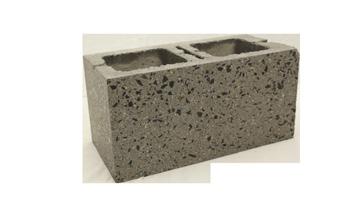
G-mix® was developed using proven methods of CO2 reduction with quantifiable, verifiable results. The environmental impact of G-mix® has been third-party tested and ASTM-verified, and the Global Warming Potential of our products is among the lowest in the industry. The carbon footprint of our normal-weight architectural CMUs is over 65% lower than the industry average.*
G-mix® is available for all Genest-manufactured products, including our full line of architectural CMUs. EPDs for each of our products, published by ASTM, provide detailed information regarding the environmental impact of our extraction, transport, and manufacturing processes and can be downloaded at: astm.org/products-services/certification/environmental-product-declarations/epd-pcr.html

www.high-profile.com July 2023 3 WWW.GENESTCONCRETE.COM GENESTCONCRETE 36 WILSON STREET, SANFORD, ME 04073
ARCHITECTURAL BUILDING & LANDSCAPE PRODUCTS
FOR SPECIFICATIONS AND INFORMATION CONTACT: Ray Petrarca, Architectural Products Consultant ray@genest-concrete.com, 207-284-0441, 1-800-649-4773 ext. 151 LOW CARBON CONCRETE COMPARISON OF CONCRETE MASONRY UNIT GLOBAL WARMING POTENTIAL *based on the Carbon Leadership Forum’s 2021 Material Baseline Report
G-mix® NORMAL WEIGHT CMU 100 400 kg CO 2 -eq 200 300 500 TYPICAL CMU (INDUSTRY AVERAGE) MATERIAL BASELINE 370 545 129
C90 SPECIFICATION REQUIREMENTS
Global Warming Potential (kg CO2-eq): Acidification Potential (kg SO2-eq): Eutrophication Potential (kg N-eq): Smog Creation Potential (kg O3-eq): Ozone Depletion Potential (kg CFC-11-eq): 129 0.65 0.16 12.9 5.99E-6 ENVIRONMENTAL PRODUCT DECLARATION (EPD) DATA




www.high-profile.com July 2023 4 On the Cover: Featuring: ADVERTISERS INDEX Publisher’s Message 6 Up-Front 7 Life Sciences 16 Awards 25 Healthcare 30 Industrial 31 Green 32 J.E.D.I. 33 Interiors 34 Build Better Podcast 35 Trends and Hot Topics 36 Technology and Innovation 37 Training and Recruitment …38 Organizations and Events 39 People 40 Calendar 42 Brennan Consulting Adds to Life Science Portfolio Sections:
EDITOR:
CONSULTING EDITORS:
Barnes and Marion Barnes ART DIRECTOR:
Lauzière, Stark Creative VICE PRESIDENT OF SALES: Rod Poe ACCOUNT EXECUTIVE: Mark Kelly ACCOUNT EXECUTIVE, CONNECTICUT: Mia Pernice FOUNDERS: Michael and Kathy Barnes Send news releases, advertising queries, articles, announcements, and calendar listings, to: editor@high-profile.com P.O. Box 7, Pembroke, MA 02359 (781) 294-4530 SUBSCRIBE ONLINE: www.High-Profile.com/subscribe Suffolk Hosts Memorial Day Flag Dedication 12 20 Maugel DeStefano Architects Completes Orthopedic Affiliates Facility 30 Allen & Major… 28 Alpine Environmental… 28 American Energy Management / Connecticut Temperature Controls… 27 American Plumbing & Heating… 2 Arden Building Companies… 15 Associated Subcontractors/MA 31 Barnes Building Management… 26 Boston Plasterers… 7 Brennan Consulting… 19 Connolly Brothers… 10 Copley Wolff Design Group… 12 Dacon… 23 DECCO… 25 Dietz & Co.… 8 Dimeo… 9 e2 engineers… 34 Energy Electric Contractors… 30 Erland Construction Inc.… 6 Genest… 3 Gray Gray & Gray… 6 Hampshire Fire Protection… 34 IBEW 103… 43 Interstate Electrical Contractors… 29 J&M Brown… 12 Jewett Construction… 7 Kaydon… 21 Kenny & Sams… 22 Lockheed… 13 Marr Scaffolding… 8 Metro Walls … 24 NEMCA… 4 Norgate Metal Inc.… 22 O’Reilly Talbot & Okun Assoc.… 17 Sea-Dar… 20 Silver Tiger Consulting… 18 SL Chasse… 39 Sprinkler Fitters 550… 5 STEM Solutions LLC… 16 Tecta America… 14 Topaz Engineering… 33 Unilock… 44 Wayne J. Griffin Electric, Inc. 11 38 26 CBC Announces 27th Annual Project Team Awards KBE Foundation Awards $18,000 in Scholarships 135 Years Promoting the Mechanical Contracting Industry for over New England MCA Mechanical Contractors Association www.nemca.org We offer membership within the Mechanical Contractors Association, Mechanical Service Contractors Association, and the National Certified Pipe Welding Bureau. We support our member contractors through our educational seminars, labor and government relations, industry news and marketing. Committed to the future of our industry, we sponsor MCA student chapter at Wentworth Institute of Technology in Boston. Our affiliation with the Mechanical Contractors Association of America and our strong, cooperative relationship with the United Association enable us to offer our members numerous opportunities to build lasting, beneficial relationships with peers while acquiring the business knowledge and tools to keep their company successful. 617.405.4221 @NewEnglandMCA
PUBLISHER: Anastasia Barnes
Emily Langner
Ralph
Yvonne




www.high-profile.com July 2023 5 Our sprinkler fitters learn their craft at our unrivaled Education Center, making them among the best trained in our industry. Our fitters and apprentices stand ready to tackle any sprinkler job that you put in front of them. Your project, big or small, will be done by our well-trained professionals, on-time and on-budget - safely, reliably and proudly. Service work? No problem, our fitters hone their skills at our Training Center, not on YOUR JOBSITE! SPRINKLER FITTERS LOCAL 550 46 ROCKLAND STREET BOSTON, MA 02132 617-323-0474 PHONE 617-323-1373 FAX www.sprinklerfitters550.org • FIRE SAFETY LAWS • COMMERCIAL / RESIDENTIAL • DESIGN / INSTALLATION / INSPECTION / REPAIR • FM200 / INERGEN • LICENSED & INSURED CONTRACTORS • 24 HOUR EMERGENCY SERVICE SPRINKLER FITTERS LOCAL 550 Installing, Inspecting and Maintaining Fire Protection Systems Since 1916 sprinklerfitters550.org • 617-323-0474 NE_Inside Front Cover_Sprinkler Fitters & Local Union 500.indd 1 3/25/19 11:57 AM
July is our annual focus on Life Sciences and Awards. We’re excited to share the many industry insights from contributors in the AEC space that address the complexities of the life science industry and the challenges and changes the sector has seen over the last year.
science workforce increase by 32% or 42,000 new jobs.” That’s quite a jump in a decade! Check out page 19 for more.

This month’s cover photo is of the 250 and 290 Binney Street development in Cambridge, Mass. Our friends over at Brennan Consulting are performing preconstruction survey services for the R&D building, 290 Binney Street. The 566,000sf, 18-story building is scheduled to open in 2026. Read more on page 20.
On page 21, Jess Hamilton of Margulies Perruzzi has written an article that highlights the importance of considering equipment needs in the early stages of a lab fit-out. He says, “For a lab, it is crucial to define early and completely the major furnishing and equipment components, along with workflow preferences.” Thanks for writing from this angle, Jess!
O’Malley explains how Vicinity is offering the big building owners in the Boston and Cambridge area a way to be in compliance with Boston’s Building Emissions Reduction and Disclosure Ordinance (BERDO). The ordinance sets requirements for large buildings to reduce their greenhouse gas emissions in an effort to achieve Boston’s goal of being net zero by 2050.
WOMEN in CONSTRUCTION

We have some exciting additions to our upcoming August edition. If you have news to share on retail/hospitality projects, we want to know about it. This also includes sports venues and arts and entertainment news. Additionally, HP will begin including more news and features on Women in Construction in upcoming issues. Let us know if you have something to share!
Jennifer Hamwey of PCS, LLC writes a wonderfully detailed overview of the life science real estate market in Boston. Hamwey says, “It is estimated that by 2033, Massachusetts will see its life


On page 35, read the recap of my interview with Matthew O’Malley of Vicinity Energy on the first episode of this season’s Build Better podcast.
In his article on page 37, Ro Bhatia, CEO of PlanHub, tells us how Artificial Intelligence (AI) has already begun to change the landscape of our industry. My dad, HP founder Michael Barnes, has been leading the charge here at High-Profile as we have already begun exploring the ways in which AI can improve and create efficiencies in our business processes. This is just the beginning, folks.
Don’t forget to follow us on LinkedIn, and if you get a chance, listen and subscribe to the Build Better podcast. Episodes 1 and 2 of the new season are streaming now! If you’re not already receiving it, don’t forget to sign up for our weekly newsletter, FastFacts Friday, where you will get the week’s recap of industry news.
Happy 4th of July everyone!

www.high-profile.com July 2023 6 Publisher’s Message
PARTNERING FOR SUCCESS IN LIFE SCIENCES Erland Construction, Inc. / www.erland.com DISCOVERY PRECONSTRUCTION CONSTRUCTION EMD Serono Horizon Building WE CAN HELP YOU MAKE PLANS FOR YOUR OWN FUTURE. Design the future you want for your firmand yourself - with the help of Gray, Gray & Gray’s Power of More , ® a comprehensive approach to strategic business and financial planning. We’ll work with you to create a pathway to achieving financial security and success, professionally and personally. Call Marty Prendergast at (781) 407-0300 to find out how the Power of More ® can help you build a better future for yourself and your business. • • • Gray, Gray & Gray, LLP CONSULTING • TAX • AUDIT & ASSURANCE PRIVATE WEALTH www.gggllp.com 781.407.0300 ® IS YOUR COMPANY ELIGIBLE FOR UP TO $26,000 IN EMPLOYEE RETENTION CREDITS? FIND OUT! *Private wealth services provided by Gray Private Wealth, LLC.
Anastasia Barnes
Up-Front
RISE to Develop Major Film Production Campus in Braintree
Braintree, MA – Development and construction management firm RISE has recently retained the development rights to the Banner Park campus in Braintree, a 123-acre site fully permitted for a major film production studio.
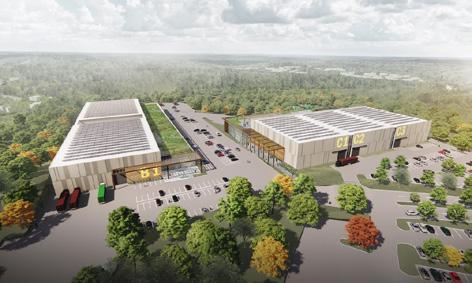
The campus will include sound stages, pre- and post-production facilities, and offices to support major television and film productions and provide a central creative hub for Massachusetts’ growing creative community and production workers. The site has recently been home to major film productions from Apple Studios and Netflix. Banner Park has worked with the Massachusetts Film Office on several incentives given to further attract this industry to the Commonwealth.
The development is shovel ready for 272,500sf of state-of-the art industrial and office buildings. The campus benefits from significant in-place infrastructure and will deliver a number of community benefits under the permits for the project. These include community benefit payments to the Town of Braintree and the Town of Weymouth to pay for traffic and infrastructure improvements and the construction of a new trail system
that connects the towns of Braintree, Weymouth, and Holbrook. Trails will connect to a large community dog park that will be accessible to the public. RISE and the Town of Braintree will also work with neighboring New England Wildlife Centers (NEWC) to create the walking trails for educational and recreational uses. RISE and NEWC will partner to create a model for healthy preservation
Boston Plasterers’ & Cement Masons – Local 534 Labor Management Cooperation Trust
Boston Plasterers’& Cement Masons Local 534 serving: MA, NH, ME & VT
AMERICA’S OLDEST BUILDING AND CONSTRUCTION TRADES INTERNATIONAL UNION SINCE 1864
Our trained and skilled craftsmen are just a phone call away. We offer reliable, responsible, highly qualified and competent personnel. State certified apprenticeship and training program. OSHA certified membership
SUB CONTRACTORS:
Island Industries NE, LLC
A1 Concrete
AET Painting, Inc.
Angelini Plastering
Austin Ornamental, Inc.
Back Bay Concrete Corp.

Bass Restoration & Waterproofing
Bidgood Associates
Boston Building & Bridge
Boston Concrete Artisans, LLC.
Buonopane Inc.
Cavalieri Construction Co., Inc.
CDS New England
Century Drywall, Inc.
Cherokee Construction, Inc.
Coastal Marine Construction
Cooper Plastering Corp.
Coviello Inc.
Custom Drywall, Inc.
Dandel Construction, Inc.
East Coast Fireproofing
Esposito Construction
Evergreen Architectural Arts
G & C Concrete
G & G Plastering, EIFS, & Drywall
Gallagher Construction
Gleeson Powers Inc. Total
H. Carr & Sons
Hart Engineering Corp.
J.C.M. Concrete Contracting, Inc.
J.L. Marshall & Sons, Inc.
J R J Construction Co.
Kiewit Cherne
LBM Construction
MacKay Concrete Construction
Marguerite Concrete, Inc.
Markus Tech Co., Inc.
Mass Acoustics, Inc.
Mattison Concrete Construction
McDonald Drywall Co.
N. E. Finish Systems NESC Inc.
New England Decks & Floors, Inc.
Northern Contracting Corp.
Prime Concrete & Sitework
Ricmor Construction, Inc.
S & F Concrete
Select Demo LLC.
Select Spray Systems
Silverback Construction
Skanska USA Civil Northeast
Stallion Concrete
Triad Associates, Inc.
Walsh Construction
PLASTERERS:
Acoustical Plaster
E.F.I.S.
Fireproofing
Historical Restoration & Preservation Intumescent
Ornamental Plaster
Portland Cement (Stucco)
Three Coat Conventional Plaster
Veneer Plaster
Venetian Polished Plaster
CEMENT MASONS:
Flat Work
Sidewalks
Pool Decks
Decorative Concrete Overlays
Stamped Concrete
Concrete Repair & Restoration
Epoxy, Seamless and Composition
Flooring *and much more*
For more information please call William Redmond, Industry Analyst
Office: (617)825-5200
Cell: (617) 901-5550
www.bostonlocal534.org
Boston Plasterers & Cement Masons Local 534
of wildlife and habitats, and continued STEM education projects.
Banner Park aligns with RISE’s mission to deliver resilient and sustainable projects for the communities it works within. The production facility will be purpose-built LEED Gold certified, and will work to reduce the environmental impact of the development. Banner Park has received MEPA approvals.
The Town of Braintree has been supportive of the proposed movie studio and the over 800 union jobs it is estimated to create for local residents. The project will also generate $8 million in tax revenue and $1.5 million in permit fees over the next 10 years for Braintree.
“The Banner Park site has been underutilized since the lottery’s relocation,” said Charles Kokoros, Mayor of Braintree. “The Town of Braintree has had great success with film projects as a temporary use of the Banner Park site. The industry feedback has been positive, and we now have a great opportunity to expand the film industry operations with a permanent location.”
“It is rare to have the opportunity to work with a movie studio component within such a dynamic campus,” said Herby Duverné, founder of RISE. “Braintree is a wonderful community, and we are looking forward to the conversations with neighbors as we move forward with this exciting project.”
RISE is working with Gensler for overall vision masterplan for the campus.
www.high-profile.com July 2023 7
Banner Park campus rendering
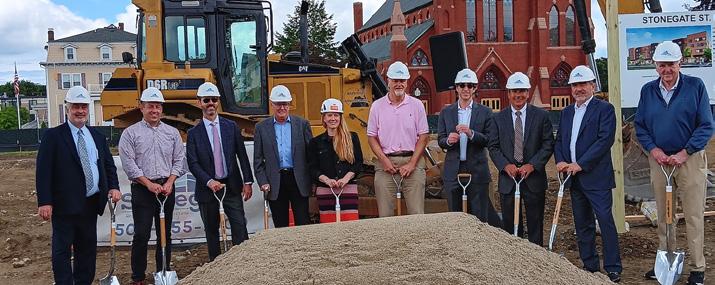
Stonegate, Nauset Break Ground on Natick Mixed-Use Development
Natick, MA – Stonegate Group and Nauset Construction recently broke ground on the Stonegate St. Patrick Redevelopment, a mixed-use project at the site of the former St. Patrick’s School that will deliver 46 apartments with 14,000sf of ground-floor restaurant and retail space with four additional two-family townhomes.

Located at 45 E. Central St., within walking distance of the Natick Center Cultural District, the project is being developed by the Natick-based Stonegate Group. The Zoning Board of Appeals unanimously approved the project last year after being stalled by the pandemic.

The official groundbreaking ceremony, hosted by the Stonegate Group, was attended by members of the Natick Select Board and other town officials; representatives from Nauset Construction, Finegold Alexander Architects, Needham Bank, Colliers, and other key development personnel; as well as members of the community.
Designed by Finegold Alexander Architects, the 89,500sf friendly 40B project will include one to three-bedroom apartments and four duplex homes containing three to four-bedroom units, with 14 apartments designated as affordable. The 4-story main structure will feature destination restaurants and retail space on the ground floor with apartments above,
and the townhomes will be constructed at the rear portion of the property (Lincoln & Wilson Streets). There will be a mix of surface and underground residential parking, with the Framingham/Worcester Commuter Rail to South Station located in under an 8-minute walk.


“Today’s groundbreaking marks a new beginning for the redevelopment of the Stonegate St. Patrick site. We are thrilled to commence construction on a
mixed-use project that will extend Natick Center while also providing much-needed housing, including 25% affordable housing, to the community,” said Stonegate CEO, Sean McGrath. Stonegate acquired the site of the former St. Patrick’s School in 2015. The buildings were demolished in April, and construction of the new redevelopment is anticipated to be completed by spring 2025.
“This project further demonstrates Nauset’s expertise in the multi-unit residential market and flexibility to expand our geographic reach from the urban core into the suburban markets,” said Anthony Papantonis, president of Nauset. “Collaborating with a wellestablished developer like Stonegate and an esteemed design firm like Finegold Alexander bodes well for delivering a high-quality mixed-use project.”
www.high-profile.com July 2023 8 High-Profile: Up-Front
www.dietzarch.com 413.733.6798 DESIGN THAT LOOKS GOOD, DOES GOOD. DIETZ CO Architects Chicopee City Hall - Chicopee, MA Image © Chodos Photography
Steel Erection I Cranes l Hoists Rigging I Scaffold l Shoring
www.marrcompanies.com
Aerial Lifts I Mast Climbers
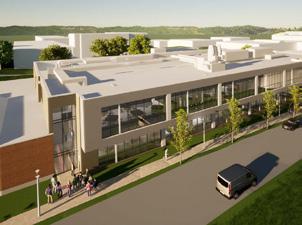
Stonegate St. Patrick redevelopment / Rendering by Finegold Alexander Architects
(l-r): Dean Calivas, Stonegate president; Jamie Errickson, Natick town administrator; Mike Hickey, former select board member; Sean McGrath; Rebecca Berry, Finegold Alexander principle and president; Bruce Evans, chair, Natick Select Board; Lucas Pelz, Stonegate senior project manager; Anthony Papantonis; Joe Campanelli, Needham Bank president and CEO; and Kevin Phelan, Colliers International co-chairman / Photo by Nauset Construction new
Hoffman Auto Group to Open Porsche Dealership in East Hartford
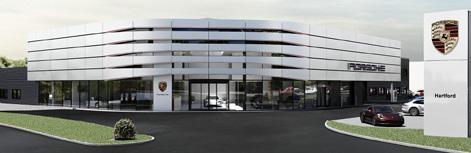
East Hartford, CT – Jewett Construction announced its latest project in partnership with Hoffman Auto Group to construct its Porsche dealership in East Hartford. The 31,000sf, state-of-the-art facility will be one of just four locations in the U.S. featuring Porsche’s brand-new Generation 5 design once complete.
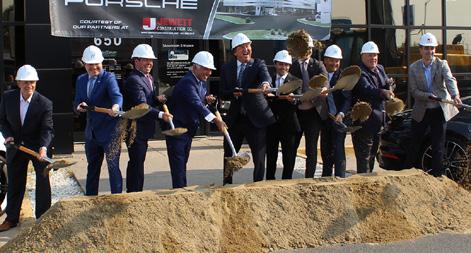
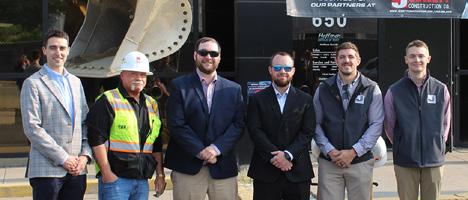
Jewett Construction hosted a groundbreaking ceremony in collaboration with Hoffman Porsche on May 22. The event, attended by The Honorable Michael P. Walsh, Mayor of East Hartford, celebrated the commencement of the design-build project.
The dealership will be LEED certified,
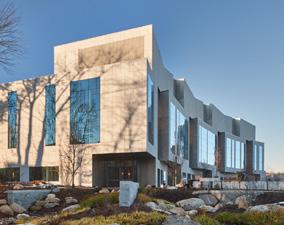
demonstrating the Hoffman Auto Group’s commitment to environmental responsibility. The exterior will showcase a blend of aluminum, composite metal, and glass curtain wall, designed to create an awe-inspiring visual spectacle. Inside, a grand showroom will be adorned with high-end finishes, illuminated by a skylight that bathes the space in natural light.
Representatives say The Hoffman Auto Group recognizes the need to create a facility that prioritizes exceptional car ownership experiences, and that this significant project represents the Hoffman Group’s most substantial investment in


its 102-year history, exemplifying their dedication to customer satisfaction.
“We could not be any more thrilled to partner with Hoffman Auto Group on their new Porsche facility,” said Dan Ray, vice president of preconstruction & design at Jewett Construction.
“Jewett Construction takes great pride in showcasing our design-build and construction management capabilities. With our extensive experience in constructing major automobile brand dealerships, we are honored to be selected for this prestigious Porsche project.”
www.high-profile.com July 2023 9 High-Profile: Up-Front
Groundbreaking for Hoffman Auto Group’s Porsche dealership in East Hartford, Conn.
Rendering of Hoffman Auto Group’s Porsche dealership
The Jewett Construction team (l-r): Dan Ray, Ron Horne, Tom Marturano, Scott Burke, Jared Nicklas, and Jon Warner
Yale
CT UCONN Science 1 • Storrs, CT RI College Clarke Science Building • Providence, RI total work in place 1.4 BILLION LF BENCH SPACE FU total square feet 3 MILLION 10K 750 total work 1.4 BILLION total square feet 3 MILLION total work in place 1.4 BILLION LF BENCH SPACE FUME HOODS total square feet 3 MILLION 10K 750 total work in place 1.4 BILLION LF BENCH SPACE FUME HOODS total square feet 3 MILLION 10K 750 total work in place 1.4 BILLION LF BENCH SPACE FUME HOODS total square feet 3 MILLION 10K 750 101 College Street • New Haven, CT
University Science Building • New Haven,
Plans Unveiled for NH Military and Veterans Campus
Franklin, NH – PROCON announced it has been selected as the design-builder for the Easterseals Military and Veteran Campus in Franklin.
The project started as a conversation with Governor Chris Sununu regarding deepening Easterseals NH’s long-term commitment to military service members, veterans, and their families and has evolved into a partnership with the State of New Hampshire to provide a central hub for housing and a variety of services. The blueprints for the 15-acre campus in Franklin are complete and construction gets underway in September for what will
be a roughly 15-month schedule.
“Our military service members stood tall for us, defending the freedoms and liberties we hold dear,” said Sununu.
“Like never before, New Hampshire is creating the gold standard for the health and wellness of America’s heroes. In the Granite State, neighbors take care of neighbors. It comes with great pride that we are able to create this historic, one-ofa-kind, all-encompassing campus.”
“New Hampshire has one of the largest per capita populations of veterans in the country, so we know the demand is high,” said Maureen Beauregard, president
and CEO of Easterseals NH. “This new campus will create a singular pathway to connect military service members, veterans, and their families with the services, programs, and assistance they need. It is a project of passion for all of us at Easterseals NH and we are deeply honored to be a part of such an important mission.”
The campus will include:
• Affordable housing: 30 units of permanent affordable rental housing for veterans;

• Hub of services: Co-location of multiple military service organizations to ensure continuum of care for each visitor to the campus;
• Retreat center with meeting and event space: 20 short-term rental bedrooms, some with kitchenettes, and opportunities to hold events/trainings;
• Therapeutic recreation components: Access to the rail trail and Merrimack River; a to-be-built multipurpose building for equine and dog therapy, a rock climbing wall and ropes course;
a military-themed playground; and an outdoor performance stage.
Easterseals NH was awarded $23 million from the State of New Hampshire through the American Rescue Plan Act (ARPA) State Fiscal Recovery Funds (SFRF) to develop a campus for military members and their families. Additional funds will need to be raised to complete the retreat center, and build the multipurpose therapeutic recreation building, military-themed playground, and outdoor performance stage.
PROCON Design-Build has the task of turning the plans into a reality and provided the renderings for the official project launch. “As a long-time supporter of Easterseals, PROCON is honored to have been selected as their designbuilder of the Easterseals Military and Veteran Campus in Franklin, N.H. We are dedicated to delivering high-quality affordable housing and a retreat center for our veterans,” said John Stebbins, managing director of PROCON.
Jones to Design Cyber Fusion Center
Northfield, VT – Jones Architecture recently signed on with Norwich University to design a 20,000 GSF Cyber Fusion Center on its historic campus. The center, funded in part by a $16.4 million federal grant, will create educational and workforce training opportunities in cybersecurity, information operations and dominance, computing, artificial intelligence and machine learning.
“This is an exciting opportunity to continue our legacy work on Norwich’s campus, and to break new ground on campus with integrating industry partners and providing expanded hands-on experience for students,” said Principal and Founder Rick Jones. “Norwich aims to offer the nation’s top cyber security program.”
The Cyber Fusion Center will be a multi-use facility, housing and integrating the programs engaged in cybersecurity, information dominance, computing,
AI, machine learning, and information warfare. All brought together into an R&D facility, the new center will serve various uses designed to bring the information advantage discussion to central Vermont. The facility will also include office, work, meeting, and event spaces; classrooms; flexible R&D labs; and maker space for innovative technologies. The project also has aggressive goals for carbon neutrality and sustainable design which will also set new standards on Norwich’s campus.
Representatives of Jones Architecture say that Norwich continues its 25-year history of educational leadership in the cyber domain with this multi-disciplinary facility, and that the Cyber Fusion Center will keep Norwich students at the forefront of cyber security and provide them with the knowledge and skills to fulfill important work in national security, as well as safeguarding businesses and other organizations from cyber threats.
www.high-profile.com July 2023 10 High-Profile: Up-Front
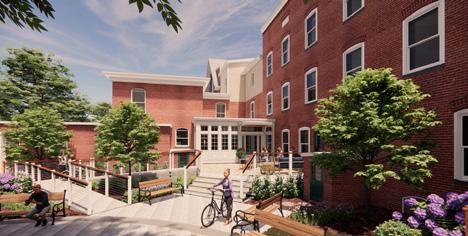
Easterseals NH is transforming and connecting two existing historic buildings, known as Henry and Webster, into 29 apartments and community space. The new construction of a connector, designed by PROCON, will enable residents and their guests to access all parts of the building, no matter one’s ability. It will include accessibility features such as a ramp for entry into the building and an elevator to each floor.
Easterseals NH is transforming what is now the “Creighton Mack” building into a space for military service organizations to ensure a continuum of care for each visitor to its campus. Also in the space will be 20 short-term rentals and space to hold trainings and events.
45 Years of Building a Legacy Together

In July 1978, Wayne Griffin opened the doors to his own electrical subcontracting business in Holliston, Mass. Fast forward 45 years and Wayne J. Griffin Electric, Inc. (Griffin Electric) has evolved from modest beginnings into one of the top electrical firms in the country. With thousands of projects to its credit over the past four decades, Griffin Electric serves clients across a range of markets throughout New England and the Southeast and has made a name for itself as an industry leader.

Success doesn’t happen overnight, and it certainly doesn’t come without putting in the work to build a strong team and culture. Griffin’s “Work with the Best. Be the Best” mentality has guided the company to hire, train, and maintain the best possible workforce and helped shape the company into what it is today. This important milestone is a reflection of the quality of people it has surrounded itself with, from its own dedicated workforce to the solid business relationships it has built and sustained over the years.
The company is proud to have once again earned the No. 1 ranking as the top electrical contractor in New England by Engineering News-Record (ENR), while each of its regional office locations in Alabama, Georgia, and North Carolina are also consistently recognized among the best and largest electrical contractors in the Southeast.

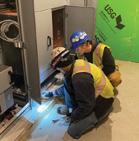
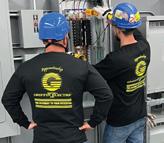


In addition to its 45th anniversary, this year also marks the 30th anniversary of Griffin Electric’s in-house Apprenticeship Training Program. Since 1993, the company has helped guide apprentices on “the pathway to potential” and prepared many men and women in pursuit of their electrical licensure. Griffin’s four-year program, consisting of classroom instruction and on-the- job learning, is federally recognized, state approved and fully accredited by the National Center for Construction Education and Research (NCCER).



Continual education is a central part of Griffin’s culture and employees are encouraged to take advantage of every opportunity to better themselves both personally and professionally. In addition to offering each employee $2,000 of annual tuition reimbursement as well as a mix of voluntary educational resources and courses throughout the year, the company is also proudly partnered with Wentworth Institute of Technology in Boston to provide licensed graduates of its Apprenticeship Training Program an opportunity to earn an associate degree. Promoting self- improvement has


helped Griffin continue to rise above any type of change or challenge it is faced with, and it can remain confident it has the type of people in its corner who can overcome anything together.

There is a lot to be grateful for, and the company looks forward to recognizing its 45th anniversary with the entire Griffin Electric team at Summer Outings in each of its five regions.

www.high-profile.com July 2023 11 High-Profile: Up-Front Corporate Headquarters: 116 Hopping Brook Road Holliston, MA 01746 (800) 421-0151 Regional Offices: Pelham, AL Doraville, GA Charlotte, NC Durham, NC 45 Building a Legacy Together years Visit us at waynejgriffinelectric.com MA Lic 4536 A1 • MA Lic 8999 A • CT Lic ELC.0201601-E1
learn more, please visit waynejgriffinelectric.com, call its recruiting hotline at 800-421- 0151, or email your resume to fieldrecruiting@wjgei.com. ADVERTORIAL
To
Suffolk Hosts Memorial Day Flag Dedication at Roxbury Headquarters
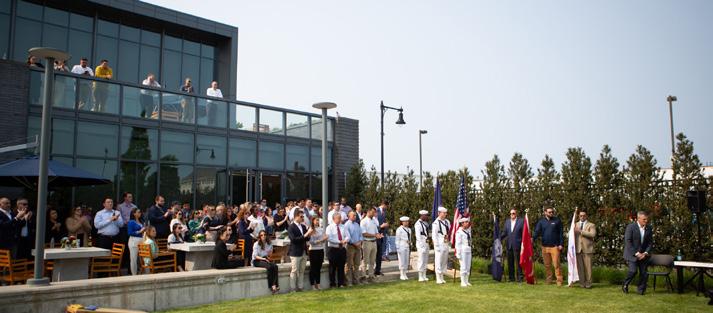
Boston – Suffolk announced it hosted a Memorial Day Flag Dedication at its headquarters at 65 Allerton St. in Roxbury. The flag dedication event was organized by Suffolk’s Veteran Business Resource Group, the company’s internal network of veterans, and Suffolk’s Northeast Regional Leadership team. The flag-raising ceremony was held in honor of Memorial Day to recognize all who serve and have served within the Suffolk family. The event included
opening remarks from Suffolk chairman and CEO, John Fish, and Jay Tangney, EVP and general counsel, who served in the U.S. Navy and the Navy Reserves as a lieutenant commander and judge advocate for over 10 years. He is an active leader of Suffolk’s Veteran Business Resource Group, which plans special events to gather its full veteran community and volunteer with local veteran organizations such as Mass Fallen Heroes. The ceremony featured the USS Constitution
Color Guard and the first ever raising of the flag at Suffolk’s headquarters.

Suffolk has more than 60 veterans working at the company, with all service branches represented from many different eras, ranging from Vietnam to Afghanistan. Representatives of the firm say that every single veteran is a valued member of the Suffolk family, and the company deeply appreciates and values their contributions to the country and the company.



www.high-profile.com July 2023 12
High-Profile: Up-Front
Photos by Dan Phillips of D Phillips Studios
John Fish
Electrical Construction ◆ Fire Alarm ◆ Special Projects ◆ Tel-Data/Security Systems Building on 100 Years of Excellence in Electrical Construction Connecting Greater Boston to a Bright Future 20 Carematrix Drive, Suite 300, Dedham, MA 02026 Tel: 617.522.6800 info@jmbco.com www.jmbco.com
RENDERING: PELLI CLARKE PELLI ARCHITECTS AND HYM GROUP Member of GREATER BOSTON
One Congress Bullfinch Crossing Boston, Massachusetts
Procopio Begins Work on Amara
NHS Breaks Ground on Senior Housing
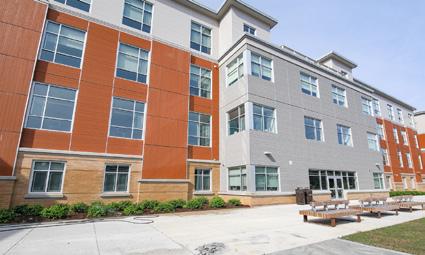
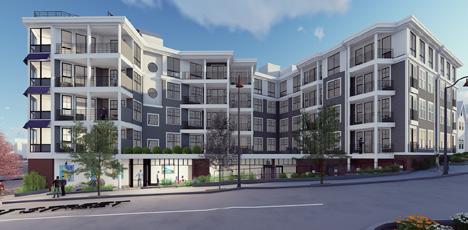
Beverly, MA – The Procopio Companies recently announced that Amara, the firm’s mixed-use development planned for 26, 28, 28R Cabot St. and 4-6, 8 Rantoul St. in Beverly, is now underway after receiving approval from the Beverly Planning Board in December of 2022.
Amara is a joint-venture partnership between Beverly Crossing and The Procopio Companies. Procopio will lead all aspects of the development moving forward, while also serving as the construction manager. The architect on the project is SV Design.
The 5-story, multifamily building will feature a mix of 60 studio, one- and two-bedroom units, as well as a garage and adjacent surface parking and views
of Beverly Harbor. It will have access to waterfront paths, local beaches, downtown Beverly, and the city’s MBTA commuter rail train station at Beverly Depot. Five units will be designated as affordable.
“We are very excited for this project to get underway. Over the next few weeks, we will be preparing the site for the start of construction,” said Tyler Palermo, development project manager at Procopio overseeing the project. “We are extremely grateful to have been part of the revitalization of Beverly’s waterfront with the completion of our Sedna project on Congress Street. Amara will join Sedna as one of the best multifamily communities on the North Shore.”
Brockton, MA – On May 24, NeighborWorks Housing Solutions (NHS) celebrated the groundbreaking of 37 units of affordable housing for seniors at the site of the former Lincoln School, 70 Highland Street in Brockton. Plans are underway, and the renovations are estimated to take between 18-24 months.

The historic restoration project brings together multiple agency partners to provide tax credits, additional funding, construction, and supportive services. The Lincoln School project will convert a historic former elementary school, originally constructed in the 1890s, into 37 modern one-bedroom and studio apartments for seniors. In addition, once complete, residents will have access to on-site services designed to help them stay connected in their community.
“We’re excited to finally be moving forward on this historic restoration,” said

Robert Corley, CEO of NHS. “We are grateful to have the support of so many at the state and local level, including the overwhelming support of Mayor Robert Sullivan of Brockton.”
Several city and state officials, including Mayor Sullivan; Rob May, director of planning and economic development for the city of Brockton; State Representative Rita Mendes; Noelle Humphries, assistant director of real estate development at NHS; Alma BalononRosen, senior relationship manager at Massachusetts Housing Partnership; and Will Morgan, senior project manager at Community Economic Development Assistance Corp.; were in attendance and spoke on behalf of the project.
Following the formal ceremony, attendees were given a brief tour of the building to view the unique and historic aspects of the former school.
www.high-profile.com July 2023 13 High-Profile: Up-Front
Rendering of Amara
SAFETY • QUALITY • INNOVATION • RELIABILITY • COST-EFFICIENCY P.O. BOX 166, PASCOAG, RI 02859 800-537-3061 LOCKHEEDSOLUTIONS.COM
Groundbreaking at 70 Highland Street
Let our 68 years of experience help you with your engineering, fabrication, and installation needs on any size commercial project throughout New England.
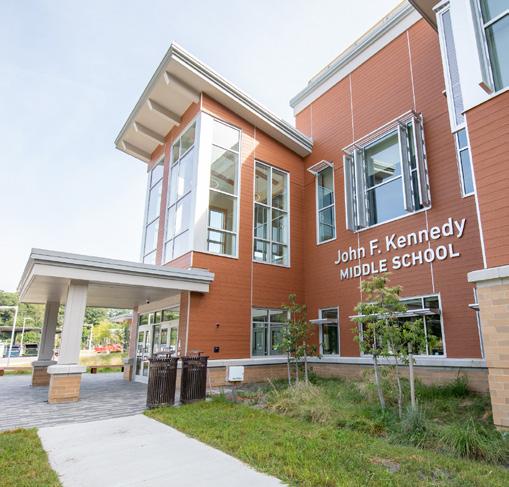
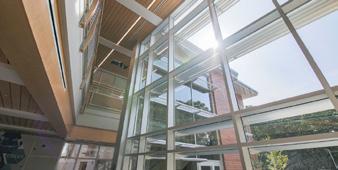
Our team specializes in fiber cement and composite panels, curtain walls, storefronts, doors, windows, skylights, translucent panels, structural glass, terracotta cladding systems, and more.
JOHN F. KENNEDY MIDDLE SCHOOL NATICK, MA
Pariseault Builders, NEMD Underway on RI Veterinary Hospital Expansion
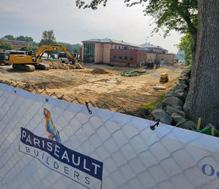
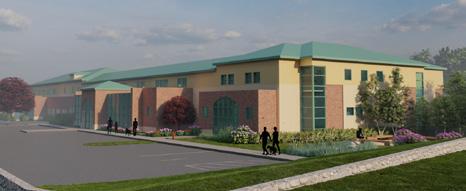
East Greenwich, RI – Ocean State Veterinary Specialists (OSVS) has enlisted the team of Pariseault Builders and n|e|m|d architects to expand its veterinary hospital in East Greenwich.

Opening in 2001 with just 12 doctors and specialists, OSVS has steadily grown over the years to now having over 200 personnel and a state-of-the-art facility that provides sophisticated treatment and procedures to its patients. The building has needed to grow with the demand and OSVS has already executed two facility expansions to accommodate the needs of the community. Back in 2001, the husband and wife team began with just over 16,800sf of space for main services. After a 7,900sf specialty center addition in 2015 and another 638sf surgical addition in 2018, they now offer internal medicine, surgery, radiology, critical care, neurology, cardiology, oncology, ophthalmology, avian/exotics and clinical pathology.
The team at n|e|m|d architects was engaged to produce the design for the most recent expansion. This time, another 9,000sf will be added to the hospital to absorb the broad referral base of over 100 hospitals stretching from eastern Connecticut to southern Massachusetts. Pariseault Builders was brought on board to collaborate with n|e|m|d and provide
preconstruction budgeting and scheduling efforts to guide the project toward the most cost-effective final design. Both the architect and construction manager have extensive hospital project experience, which representatives say helped streamline the process and get the project on the right path before Pariseault put a shovel in the ground.
“Some patients have two legs and others have four,” said Pariseault Builders president, Brian Casey. “Even though it’s an animal hospital, don’t be fooled, this is a state-of-the-art facility that offers just about everything the major human hospitals offer.”
The new facility is set to open in 2024 and will be equipped with top-ofthe-line digital radiography, ultrasound,
TectaTracker turns roof asset management into child’s play.
Manually tracking and documenting commercial roof activity is a daunting task. Whether you’ve got one building or ten, TectaTracker, our roof asset management program, compiles key details about your roofs into one comprehensive report.
With current photos, detailed roof drawings, estimated remaining service life, warranty info and more, you’ll have the data you need to prepare a more accurate roofing budget and avoid unplanned capital expenditures. Call
35

CT scan, MRI, fluoroscopy, laparoscopy, endoscopy, mechanical ventilation, and extensive monitoring equipment including telemetric EKG. The expansion will also include a new 3,500sf intensive
care unit where pets whose conditions require close observation and care are placed until they have stabilized and will be able to safely recover without being under constant observation.
Groundbreaking Held for LeClair Village
Mashpee, MA – State and local officials recently gathered for a groundbreaking ceremony at LeClair Village Apartments, a new three-building complex in Mashpee featuring 39 affordable rental units.
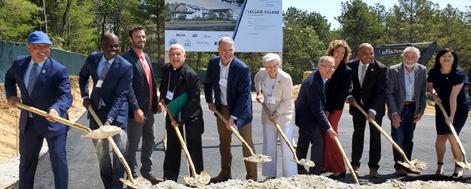
The property is named after Mary LeClair, a long-time champion of housing issues on Cape Cod and a former board member at Housing Assistance. “I’m speechless to think that kids will go to school and say they’re from LeClair Village,” said LeClair, who lives in Mashpee and continues to advocate for housing and other causes at the age of 89.
Michael Jackman, district director for U.S. Rep. Bill Keating, presented LeClair with a citation during the ceremony. Also speaking at the event were State Rep. Kip Diggs; State Rep. Steven Xiarhos; Thomas O’Hara, Mashpee Select Board vice chairman and member of the Affordable Housing Trust; Yongmei Chen, senior vice president, Eastern Bank; and Rev. Thomas Wyndham, a longtime friend of Mary Leclair.
The apartments, which are on town-owned land, will serve low- and moderate-income households. “This development will represent an 11% increase in the town’s affordable housing stock, a significant boost in a high-cost market where many seasonal employees and others struggle to find stable housing that they can afford,” said Preservation
of Affordable Housing, Inc. (POAH) president and CEO, Aaron Gornstein.
LeClair Village is designed to be certified passive house under the Passive House Institute of the US (PHIUS) standard. The enclosure (slab, walls, windows and roof) is designed and built to be airtight and super thermal performing. With the airtight enclosure and mechanized ventilation, the building and apartments are designed to provide excellent air quality and comfort to residents. It will also include a rooftop solar array and a battery for emergency back-up.
LeClair Village Apartments is under development through a partnership between Housing Assistance Corporation and POAH, with POAH serving as lead developer. The project’s design and construction team is DREAM Collaborative Architects, Horsley Witten Engineering and Delphi Construction. When completed by the summer of 2024, LeClair Village will feature 14 onebedroom apartments, 21 two-bedroom units, and 4 three-bedroom apartments.
Project partners include Massachusetts Department of Housing and Community Development, Massachusetts Affordable Housing Trust Fund, Barnstable County HOME Consortium, Massachusetts Housing Investment Corporation (MHIC), Eastern Bank and Mashpee Affordable Housing Trust.
www.high-profile.com July 2023 14
Rendering courtesy of n|e|m|d architects
High-Profile: Up-Front
Pariseault is overseeing preliminary site work at OSVS.
LeClair Village Apartments groundbreaking
Years 1988-2023 Commercial/Industrial Roofing • Tecta America NE was formerly Delta Roofing • tectaamerica.com N. Billerica, MA 800-398-1380 Brockton, MA 866-583-9499 Portland, ME 207-878-1732 E. Hartford, CT 860-828-0380 Tecta America WeatherGuard, Schenectady, NY 800-287-0442
for details about TectaTracker today!
Connecticut Children’s Underway on $326M Clinical Tower

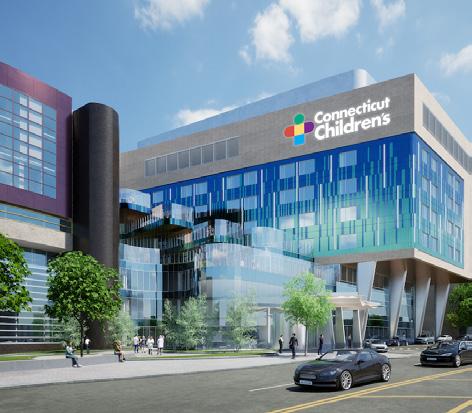
Hartford, CT – As part of Connecticut Children’s growth and expansion plan, a groundbreaking was held recently for a 190,000sf, $326 million clinical tower connected to the existing medical center in Hartford. The new tower will serve as a new front gateway for the children’s hospital when it opens in late 2025.
The clinical tower will include two floors with 50 private neonatal intensive care rooms; a fetal care center with six labor, delivery, recovery and postpartum rooms; two dedicated operating rooms; and an advanced gene therapy unit where bone marrow transplants and liquid radiation treatments can be performed. A 14-bed acuity adaptable unit can flex to accommodate any level of patient acuity. The facility also includes expanded kitchen facilities, high tech meeting and conference space, and an expanded pharmacy and gift shop. All of the care spaces in the tower are designed to be adaptable and evolve as care needs change into the future.
Experiential design also drives the new tower, and the building actively works to connect patients, their families and staff with the natural world. Each inpatient floor offers an open-air terrace for fresh air and respite and the building is sited to maximize the positive impacts

of a ground level courtyard as people arrive and move through the building. The tower’s metal palette transforms from mostly green at the lower levels to blue shades as it reaches upward toward the

sky, another nod to biophilia and nature’s impact on human health.
Connecticut Children’s team members, patient families and leaders attended the superhero themed groundbreaking
ceremony, which was held on the 10th anniversary of the health system’s superhero day – a day where patients, families, team members and supporters of Connecticut Children’s dress as their favorite superhero as a reminder of their strength, courage and bravery.
“Connecticut Children’s is proud to be a member of the Hartford community, and through our investment into the region and state, we will not only provide excellent clinical care, but also drive the local economy by creating more jobs, bringing training to the next generation of medical professionals and reinforcing Connecticut as a destination for care in the country,” said Jim Shmerling, DHA, FACHE, president and CEO, Connecticut Children’s.
The construction manager for the project is DPR Construction. Many of the design and construction team members involved in the project participated in the groundbreaking by wearing their favorite superhero costume and joining in on the theme and the fun. CannonDesign is the architect of record for the expansion, which involves dozens of local design and construction partners.
www.high-profile.com July 2023 15
High-Profile: Up-Front
• Virtual Design & Engineering • Engineering • Mechanical / HVAC • Plumbing • Pipe Fabrication Facility • Complete Project Management • Service & Maintenance • 24 Hour Emergency Service • Customized Maintenance Plans Over 60 Years of Combined Industry Experience M E C H A N I C A L S Y S
Design | Construction | Maintenance See what we can do for your building. 978-851-8900 www.corpmech.com
Rendering of Connecticut Children’s clinical tower
T E M
Considerations for Structural Design in Life Sciences Focus: Life Sciences

accommodate changing lead times and construction schedules. Here are some considerations for structural design in the life sciences sector:
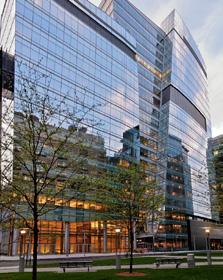
Project Delivery
By Scott Erricson
Life sciences is an attractive sector for structural engineers. The projects are well-funded and the design and construction teams tend to deliver highquality, well-coordinated work. For structural engineers who enjoy working with steel, these are dream projects.
For all the advantages, life sciences projects also come with high expectations which structural engineering consultants must meet and exceed. This type of work is fast-paced because there is a near-immediate demand for the building owner’s products and services. For this reason, structural engineers offering services in this sector need to be comfortable with diverse project approaches and be well-versed in varying materials which can be swapped out to
In our experience, design-build is the most successful project delivery method for life sciences projects. When the design and construction teams work together from the start and where real-time design, constructability, and financial information is available, magic can happen. For this project delivery method to be successful, however, structural engineers must be capable of design flexibility and nimble responses to frequent changes.
Coordination
Coordination is essential for any successful project, but with the speed and high-performance requirements of life sciences projects, it becomes even more important. Especially on designbuild teams, where information about all trades can be flying around at any time, the structural engineer must pay close attention to changing architectural and MEP designs. To aid these efforts and
cut down on loss of time due to model transfers, e2 works with BIM360, a cloudbased coordination software.
Materials
Structural steel, steel bar joists, coldformed metal framing, cast-in-place concrete, and tilt-up concrete: These are the materials we use most often on life science projects. Most structural engineers can work with these materials, but the ability to quickly adjust designs and structural drawings to accommodate lead times and schedules is essential when working in this sector.
Upgrades
Last but not least is the fact that not all life science projects are ground-up new construction. We are frequently called upon to upgrade existing buildings using vertical and horizontal additions, interior mezzanines, or gravity and lateral improvements for increased loadings. It’s always more complicated to structurally upgrade an existing building versus building new, but that does not mean that the expectations for efficient and accurate structural design do not still have to be met.
Scott Erricson is a principal and founder of e2 engineers.

STEM Solutions Chosen for CLSB Project
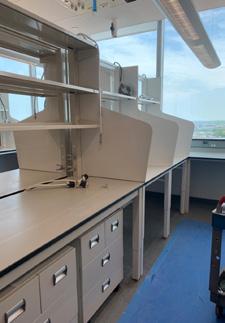
Boston – STEM Solutions, LLC was recently awarded, by Wise Construction, the Boston Children’s Hospital (BCH) 16th Floor renovation project in the Center for Life Sciences Building in Boston, designed by isGenuity LLC. The CLSB campus provides state-of-the-art laboratory and office space in the heart of Boston’s Longwood Medical and Academic area.
For this project, STEM is providing and installing hydraulic sit stand workstations that will match the laboratory benches that they are also installing. Other laboratory products being used on this project will be acrylic privacy panels, ceiling utility panels, sinks, plumbing fixtures, and glass drying racks.
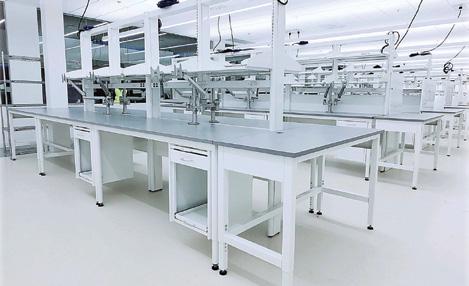
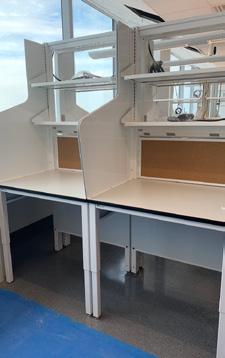
“This is our second project like this at BCH with this assortment of innovated work modules,” said Ed St.Peter, STEM’s managing member. “We are very pleased to be able to continue our partnership with BCH, isGenuity, and Wise. We all are on the same page, providing custom solutions for laboratories of the future.”
www.high-profile.com July 2023 16
Center for Life Sciences Boston
Hydraulic stations
Need help with your next LabFitOut? Invite us to bid, itb@LabFitOut.com www.labfitout.com • 617-826-6111
STEM Solutions LLC., is a national provider of laboratory equipment and casework for your LabFitOut. We can help you with your laboratory equipment, casework, flexible casework, design, project management, equipment, and installation.
Campbell-McCabe Contributes to The Possible Zone in Boston
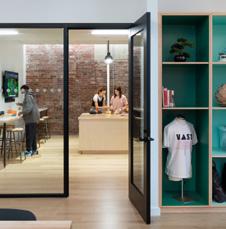
Boston – Campbell-McCabe Worldwide, LLC announced it provided door hardware consulting specification services for The Possible Zone in Boston. The 36,000sf, 5-story project included the transformation of a historic building, located at 31 Heath St. in Jackson Square, into a community center that houses an entrepreneurship program for high school students from under-resourced communities.

The Possible Zone features classrooms and makerspaces where students explore new technologies and experience practical work-based learning opportunities. It includes STEAM-based education in an immersive environment, designed

to empower students to pursue their passions and launch successful careers.

Campbell-McCabe Worldwide, LLC assisted Utile, Inc. and Elaine Construction on the renovation project. Michael Bartoloni, AHC, DHT, senior architectural hardware consultant at Campbell-McCabe Worldwide, LLC, served as the firm’s Division 8 specification consultant. He worked with Charlotte Lipschitz of Utile, Inc. to troubleshoot and resolve existing conditions to ensure code compliance throughout the building. The work included engineering new hardware sets for exit devices, and adding new card readers and automatic operators – ensuring all security, egress, and ADA
requirements were met.
“Providing specifications for historic renovations like this one present a unique set of challenges compared to a new build, as we work to accommodate existing building components and preserve historic elements of the space,” said Susan McCabe Messier, DHT, principal and owner, Campbell-McCabe Worldwide, LLC. “We enjoyed working with the teams at Utile, Inc. and Elaine Construction in giving this building new life while providing a safe and modern place for students to learn.”
The Possible Zone received a Merit award in the Interior Architecture & Spatial Design category at this year’s
Boston Society for Architecture’s (BSA) Annual Awards, with jurors commenting that the “fun, flexible, lively, and inviting space” is designed to “encourage productivity and growth.”
McCabe Messier added, “We’re proud to be a part of a project that is focused on educating and empowering students that may not otherwise have these resources at their disposal. Providing opportunities for the next generation of life sciences professionals to develop their STEM skills is so important, and it’s great to be a part of a project focused on preparing these young people to be the leaders and innovators of tomorrow.”
www.high-profile.com July 2023 17 High-Profile Focus: Life Sciences
The Possible Zone / Photos by Chuck Choi, courtesy of Utile, Inc.
Dialogue with Life Science Clients: The Changing Workplace


England Biolabs, and Sanofi. Discussion topics included:


• Return to the office outlook, policies, and lessons learned to date
• Space standards for laboratory and office environments



 By Katie Archard
As designers for life science clients, we always want to know more about the changes they see in their industry, workplaces, and current priorities. Pharmaceutical, biotech, and other life science companies are global entities, constantly responding to a rapid, highly competitive pace of change and improvement. It helps us when we know what they face and how we can help.
With this objective in mind, we invited a few of ARC’s life science clients to join us and their peers in an open-ended conversation about their fast-changing workplaces, the first of a planned series.
The virtual session was an opportunity for the clients to exchange information and ideas with their peers. For us, it provided valuable insight into their current thinking and decisions regarding the post-pandemic working environment. Participating clients included Bristol Myers Squibb, MilliporeSigma, New
• Equity considerations for remote work arrangements

• Office occupancy patterns and space management plans


• Recruitment and retention priorities and opportunities

The conversation was open-ended, allowing for candid, extemporaneous dialogue among the group. The clients took the opportunity to hear what their peers were doing, especially with returnto-work approaches. Among the takeaway themes:
• Participants discussed the importance of establishing workable guidelines for return-to-work and remote work, but many expressed their reluctance to set a policy “mandate.”
• Equity in approaches was a big topic, including how to address the varying needs among employees, especially the flexibility differences between scientific and administrative staff.

• Importance of demonstrating genuine empathy and interest in learning from people’s back-to-the-office experiences.
“It starts with seeing people and
responding to family responsibilities.”
• Need for establishing new space standards to support new working styles while recognizing that standards will need to evolve and be flexed/flexible over the coming months and years.
As in every industry adapting to post-pandemic expectations, life science leaders face unresolved challenges. Advice for handling these flowed in a lively backand-forth during our conversation. What’s clear from everything we heard is how this is an opportune moment to humanize the workplace in new ways by beta-testing new ideas and continuously learning from employee feedback.
Among the practical takes shared by the participants is the opportunity now to create “neighborhoods” and assign locations based on employee preferences. Employee involvement and communication are essential to achieve a sense of ownership and equity around these decisions. “If they are engaged and
involved, they see and appreciate that they have a voice in the decision,” one client pointed out. Another observation is how employees’ smartphones will become the de facto tool for managing and scheduling everything – seating assignments, room scheduling, lockers, etc. – via a companycreated app.
For ARC, we learned that, beyond metrics, there is a high level of interest in being responsive to the specific workplace needs of staff based on firm culture and evolving desires around work/ life balance. Clients want to know what their peers are doing effectively and what are the lessons learned. We were also reminded of a common-sense takeaway: If you want to know what’s on the mind of your clients, why not ask?
Katie Archard, AIA, LEED AP BD +C, is an architect and associate principal with ARC/Architectural Resources Cambridge. She can be reached at karchard@ardusa.com.

Erland Promotes Combs, Hires Kennedy

Burlington, MA - Erland Construction announces the promotion of Matt Combs to Advanced Technology/Life Sciences (AT/LS) group manager, and the hiring of Kelly Kennedy as business development manager.



Combs, who joined Erland in 2011, is a shareholder of Erland and has extensive experience in Greater Boston’s lab and life science industry. As group manager, he will provide oversight and guidance for all AT/LS project activities, particularly emphasizing collaboration, quality, client satisfaction, and employee growth and development.
“We are proud to name Matt Combs as the leader of the Advanced Technology/ Life Sciences Group, as he offers extensive knowledge and experience in this market and is dedicated to building and maintaining long-term relationships,” said Steve McDonald, president, Erland Construction. “His insight and expertise will be critical to our continued success in the life science and emerging technology industry as we look to the future.”
Kennedy will be responsible for developing and supporting Erland’s relationships with new and existing
clients in the advanced technology/life sciences, as well as the company’s other target market sectors, including academic, corporate/commercial, senior living and multi-family residential. She has significant experience in the life sciences industry working in operations for Codiak Biosciences, workplace planning for T3 Advisors, and real estate brokerage for Hughes Marino in Boston.
“We are excited to welcome Kelly to Erland,” said Scott Bates, vice president, strategy & development. “She will be an invaluable team member in continuing to build our brand and connections in the lab, life science and emerging technology markets. The combination of her operations and client relations experience will help serve the needs of our clients.”
www.high-profile.com July 2023 18 High-Profile Focus: Life Sciences
silvertigerconsulting.com / (781) 214-3808
Matt Combs Kelly Kennedy
Boston Tailwinds
by Jennifer Hamwey
Macroeconomics have impacted life science construction here in Boston as capital markets lose their tailwinds. While incubator space is thriving, the performance of the life science asset class is constrained. Construction financing, hefty interest payments and the demand by lenders to have a fully leased, fully occupied and stabilized development is slowing new projects. According to the Milken Institute, Massachusetts is holding No. 1 in the State Technology and Science Index where it has been since 2002, Boston continues to outpace the nation in biotech and life sciences, where California and Colorado make up the top three. Massachusetts remains a global leader in innovative research programs with emerging technologies like fusion clean energy, bioinformatics or machine learning to cure all disease and with recently announced public funding commitments to enhance labor programs.
Funding and Labor
VC appetite changed in late-2021 and lending followed in mid-2022 as the rate hikes began and now in mid-2023 owners are navigating negative leverage. Boston is still a leader in start-ups, and as expected, they are remaining in their
incubator spaces longer. As Series B capital falls sharply and IPOs cool, startup growth and novel research continue to find funding and are propelled into the Boston sublease market. Massachusetts is outpacing the U.S. life science sector job growth by over 5 points, employment in biotech R&D grew 6.2 points and life science employment grew by 3.5 points year over year as of Q1 2023. It is estimated that by 2033, Massachusetts will see its life science workforce increase by 32% or 42,000 new jobs. Scalable training programs, as life science demands increase over the next decade, are underway in the city of Boston, the
governor’s office and the Commonwealth Administration. Meeting in June at the 2023 BIO International Convention, industry and political leaders announced

public and private sector teaming, legislation and funding crafted to bolster a diverse and skilled workforce.




New and Lease Space


New construction supply is outpacing demand and fewer tenants are graduating to new space, causing Boston’s 2MSF/ year of new build absorption to flatten and shift to the sublease market. Supply of new construction continues to move ahead and 70 million sq. ft. is in the pipeline, 16 million is in active construction and 14 million is set for conversion. At the same time, tenants already in Class A space are pulling back growth projections, preserving cash and flooding the sublease supply with square footage, as expansion space is put to market instead. When financing constraints eventually ease, the quality new product will be first to fill and clusters such as Kendall Square, East Watertown, Fenway and the Seaport will see activity. Big Pharma also remains active in leasing and investment in space and Greater Boston will see more of this in the coming months, with the pipeline spread to 128, Framingham, Bedford and Devens.


Sources: CBRE, JLL, MASSBIO, Federal Reserve, Milken Institute Jennifer Hamwey, PE is principal at PCS, LLC.

www.high-profile.com July 2023 19 High-Profile Focus: Life Sciences
Photos courtesy of Getty Images
• Civil Engineering • Traffic and Transportation Engineering • Land Surveying with Laser/Lidar Scanning • Photogrammetric Mapping • Construction Layout Surveying • WBE Certified BrennanConsults.com / 781.273.3434 Rendering
courtesy Pickard Chilton
Brennan Consulting Adds to Life Science Portfolio
Burlington, MA – Brennan Consulting, Inc. announced three new additions to its life science portfolio. The WBE consulting firm is providing state-ofthe-art technology in preconstruction and construction survey services such as layout for piles, foundation, anchor bolts, steel framing and curtainwalls, as well as certified as-builts in medtech, pharma and the new fusion energy sector. A portfolio spotlight:

290 Binney Street, Cambridge
Opening in 2026, 290 Binney Street
will be one of the newest life science products to come online in Kendall Square where tech, R&D, MIT and Mass General are underway on new builds and repurposing dated structures. Designed as a 566,000sf, 18-story R&D building, with parking for 1,580 in the 8-story underground garage for both 290 and 250 Binney, the 290 tower is part of the MXD Substation Development Plan. Demo of the existing 6-story Blue Garage began in February, finished in April, and slurry wall construction is underway. Delivery

of the building is expected mid-2026 and on-site amenities include bike valet, long-term storage and an improved pedestrian experience with connections to Binney, Broadway and Galileo Galilei Way. AstraZeneca pre-leased 100% of the property for its R&D Facility for 15 years.
Commonwealth Fusion Systems, Devens
To bring clean fusion energy technology to the globe, Commonwealth Fusion Systems teamed with MIT on a 47acre energy campus in Devens. The development includes five total buildings, two for Commonwealth Fusion; a 2-story, 160,000sf manufacturing facility and corporate headquarters, and the SPARC facility which houses a compact tokamak fusion device and production capability. The SPARC also contains all operational, monitoring and maintenance capabilities for the device. Full completion is anticipated for 2025. Brennan performed additional high precision layout and asbuilts for concrete and anchor bolts for the tokamak as part of its state-of-the-art construction services.
Kempner Institute, Harvard University, Allston

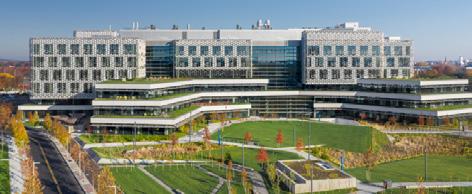
The Kempner Institute for the Study of Natural and Artificial Intelligence for Harvard University just opened in Allston. On the sixth floor of Harvard’s Science and Engineering Complex (SEC), Kempner recently welcomed its first group of graduate students to a brand-new academic machine learning cluster, one of the largest in the world. SEC is a 500,000sf, six floor research and development facility including labs,
research, maker and gathering spaces indoor and out. Kempner’s programming includes 30,000sf of cross disciplinary think spaces for researchers on-site, additional programming throughout Harvard’s campus and lofty goals including curing all disease by the end of this century. Both LEED Platinum and Living Building Challenge Petal Certified, SEC is one of the most energy efficient and sustainable laboratories in the world. Nearby is Harvard’s Enterprise Research Campus which just broke ground, the Harvard Business School, Harvard DEF and the Mass Pike.
Project Bruins, Bedford
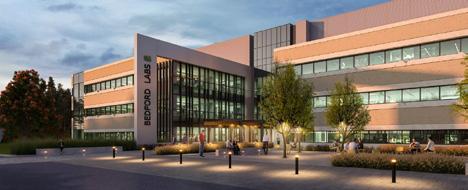
Sarepta Therapeutics, headquartered in Cambridge, entered into a 15-year lease agreement for the renovated 3-story, 288,000sf, Bedford Labs research, development and manufacturing facility. Project Bruins is on a 52-acre campus, with amenities such as a fitness center, cafeteria, and outdoor courtyards and is situated in the growing Bedford cluster in proximity to 128. The consolidation of existing lab and office space will support Phase I and II clinical manufacturing in gene therapy and centralize operations for Sarepta.
Life science projects underway at Brennan also include 2 Harbor Street, Boston; UMass Science Building, Amherst; Westford Antennae at the Haystack Observatory, Westford; Mass General Hospital, Cambridge Street, Boston; and Analog Devices, Chelmsford.
Sources: CBRE, Cambridge Redevelopment Authority, JLL, Colliers, Turner Construction, Harvard.edu, The Crimson and MassBIO
www.high-profile.com July 2023 20 High-Profile Focus: Life Sciences
Kempner Institute, Harvard University / Rendering courtesy of Behnisch Architekten
Project Bruins / Rendering courtesy of DiMella Shaffer
LIFE SCIENCE ACADEMIC INSTITUTIONAL MULTI-FAMILY SEADAR.COM COMMERCIAL / INSTITUTIONAL
290 Binney Street / Rendering courtesy of Pickard Chilton
Lab Design: The Equipment Factor


 By Jess Hamilton
One thing that all laboratories have in common is that the scientific functions within them are equipment driven. Equipment can range in size from small, tabletop vortexers, microfuges, scales, or even handheld pipetters to spaceintensive items such as freezers, anaerobic chambers, fume or biosafety hoods, automation robotics, or custom equipment.
Whether the client is an established life sciences company or a modest startup that has outgrown incubator space, the most critical element in planning a lab fitout is an accurate equipment list. It is the central design tool for the project and is integral to the process of laying out a lab.

Before design begins, an architect and/ or lab planner works with their client to define their space program that includes a room list with functional requirements, key adjacencies, headcount, and square footage. Once the basics are established, the next step is to identify what will go into those spaces. For a lab, it is crucial to define early and completely the major furnishing and equipment components, along with workflow preferences.
Typically, the client will provide the architect and/or lab planner with an itemized equipment list that includes the make, model, dimensions, clearances, weight, and intended location, as well as all associated electrical, plumbing, and gas requirements per manufacturer specifications. If this is not possible, or if the existing equipment list is insufficient for planning and design purposes, the architect and/or lab planner may need to survey the existing equipment or develop this list with input from the client based on future projections.
















This information is then entered into






an equipment matrix, an essential tool for tracking equipment through design, calculating the mechanical and electrical loads, and coordinating locations for outlets, exhaust, or plumbed utilities. Laboratory equipment requires many different utilities that must be coordinated with either base building or lab-specific systems, and sometimes even with other lab equipment. When the utilities are installed in the correct locations on day one, the client can begin operations on time and avoid costly delays.
A complete equipment matrix typically contains additional details that are especially useful to the design team. Examples include identifying requirements for associated computers, UPS or backup power, and specialty casework or storage. This is beneficial to the design process as it identifies any items that require coordination or special consideration.
For a start-up client advancing from an incubator environment to leasing their first new space, the equipment list is an informational linchpin. The design team will work with the end users or procurement team to help develop and maintain their equipment list throughout design and up until move-in day. The team will work with the client to populate the list with projected items through projected growth and workflows for equipment that may be purchased in the future. If needed, a specialized consultant may be brought on to help procure lab equipment.
A detailed equipment list provides the architect and engineering team with key information related to structural, mechanical, electrical, and plumbing design that supports equipment function and performance. Close communication and coordination between all design disciplines on the team is essential for the systems to perform in harmony in support of the equipment. The design team’s job is complete when the equipment is moved into the laboratory and connected – ready for the scientists to get to work.
Jess Hamilton is a project manager with Margulies Perruzzi.
Margulies Perruzzi Hires Kepros






Boston – Margulies Perruzzi (MP) announced it welcomed Jane Kepros, LEED GA as director of lab programming.



Reporting to Dan Perruzzi, AIA, LEED AP, principal and senior partner, Kepros will be responsible for programming and planning laboratories, specialty suites, manufacturing facilities, and support spaces for projects, establishing strong relationships with clients and industry partners, and managing, mentoring, and training staff.
Jane Kepros
Making Technology Work for You
Kepros spent eight years working as a biomedical engineer, molecular and cell biologist, and project coordinator at Synta Pharmaceuticals. For the past 12 years, she has worked for a variety of design firms in the role of lab planner, director of programming and planning, and, most recently, associate director of lab planning. Since 2011, she has been involved with over 130 projects with over 70 clients, including Biogen, Blueprint Medicines, and Takeda.

www.high-profile.com July 2023 21 High-Profile Focus: Life Sciences
Leading the industry in advanced building technology services. • Access Control • Audio Visual • Building Automation • Design/Installation • Fiber Optic • Intrusion Detection Systems • Video Surveillance • Voice & Data 781.728.4100 | sales@kaydonit.com www.kaydonit.com
Two Life Sciences Firms Choose Medford for Business Expansion
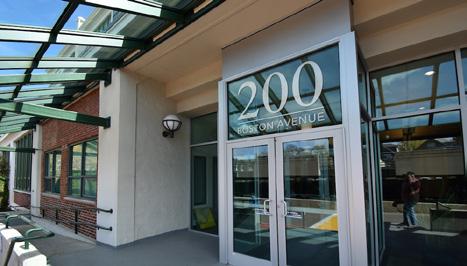
Medford, MA – Medford’s active science and technology cluster has attracted two more growing biotech firms. Myrobalan Therapeutics and Sunflower Therapeutics have leased a combined 8,500sf of converted lab space at Cummings Properties’ 200 Boston Avenue campus.
Founded in 2021, Myrobalan Therapeutics is leveraging the latest neuroscientific discoveries to treat multiple neurological disorders. A team of more than 2,000 is engaged in novel drug development at the firm’s R&D facility in Nanjing, China. Myrobalan moved its American headquarters from Watertown to Medford to support the continued growth of its U.S. employee base and overall operation.
200 Boston Avenue
Women-owned and -led Sunflower Therapeutics was founded in 2018 with the aim of making vaccines universally accessible. Its manufacturing technologies seek to simplify, expedite, and reduce the costs of drug development and production at scale. Previously stationed at locations in Hingham, Sunflower has consolidated its R&D and manufacturing teams at its new 4,000sf base on Boston Avenue.
“Medford’s thriving innovation clusters and central location make it an ideal hub for early-stage science and tech firms,” said Cummings senior leasing
director, Mike Truesdale. “And the neighboring universities provide a rich local talent pool for maturing companies seeking to scale up their operations.”
Truesdale worked with Tim Allen, John Carroll III, and Caitlin Mahoney, of Colliers Boston life science practice, on both transactions. Cummings’ in-house design/build teams performed custom lab conversions as part of Myrobalan’s and Sunflower’s leases. Both are Biosafety Level 2 facilities.
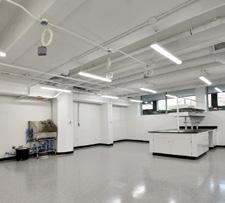
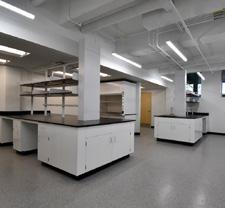
“Our ability to accommodate specialized requirements in a timely,
cost-effective manner makes Cummings Properties an attractive partner for science companies,” said Truesdale. “And with a suite of new incubator labs nearing completion, this location will be particularly appealing to startups.”
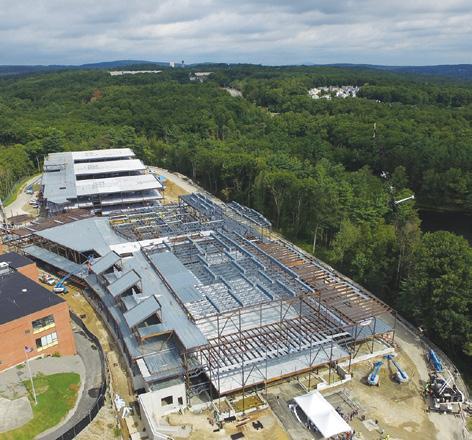
Three new prebuilt lab suites, as well as additional space for further lab expansion, will be ready for occupancy this summer. The campus also features a newly renovated lobby and exterior entry, proximity to public transit, and free covered parking.
Neighboring biotech firms on Boston Avenue include YourBio Health, BIOIVT, Evolved By Nature, GreenLight BioSciences, Travera, and numerous lab facilities operated by Tufts University.
New Life Science Facility Opens
Cambridge, MA – King Street Properties and Healthpeak Properties recently celebrated the grand opening of a new life science facility at 101 Cambridgepark Drive in Cambridge.
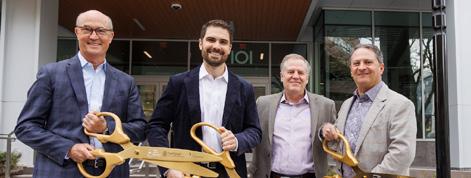
The 160,000sf laboratory property was developed by King Street Properties. “Not only does 101 Cambridgepark Drive provide exceptional lab space in the heart of the Boston-Cambridge innovation hub, but the project is a showcase of sustainable building design including LEED Gold certification and next generation flood resiliency standards,” said King Street managing director and partner, Tyson Reynoso. “The project fills a pressing need and was fully leased ahead of completion. We welcome our tenants to this location and look forward to supporting their lifechanging work.”
A two-minute walk from the MBTA’s Red Line Alewife station, 101 Cambridgepark Drive was modeled to be accessible by all means of transit: public transit, car, bike, ride share, and walk. The building includes some unique features to appeal to tenants’ commuting needs, including an on-site Blue Bike station, indoor bicycle storage and repair room, and locker room with showers. It also includes an outdoor courtyard.
The building replaces a 111-space parking lot adjacent to 87 Cambridge Park Drive. The two projects are linked by a 9,000sf boardwalk. In addition to its laboratory space, the 5-story property includes approximately 3,000sf of ground-floor retail with outdoor seating, office space, and a 247-spot underground parking garage.
www.high-profile.com July 2023 22 High-Profile Focus: Life Sciences
Lab space, Myrobalan Therapeutics
Lab space, Sunflower Therapeutics
791, 8 e Rue, La Guadeloupe QC GOM 1G0, Canada • 418.459.6988 SUPERIOR QUALITY STEELWORK NORGATEMETAL.COM LOOKING FOR PEACE OF MIND? LET NORGATE TAKE CARE OF IT! 791, 8e Rue, La Guadeloupe QC GOM 1G0, Canada T : 418 459-6988 | F : 418 459-3493 We will serve you the best. We will meet our commitments. We will provide competitive pricing. You will benefit from the expertise of our knowledgable staff. Visit us atwww.norgatemetal.com for more information.
STRUCTURAL STEEL FABRICATOR
(l-r): Steve Lynch, Tyson Reynoso, Mugar Enterprises VP Robert Reibstein, and Tom Ragno
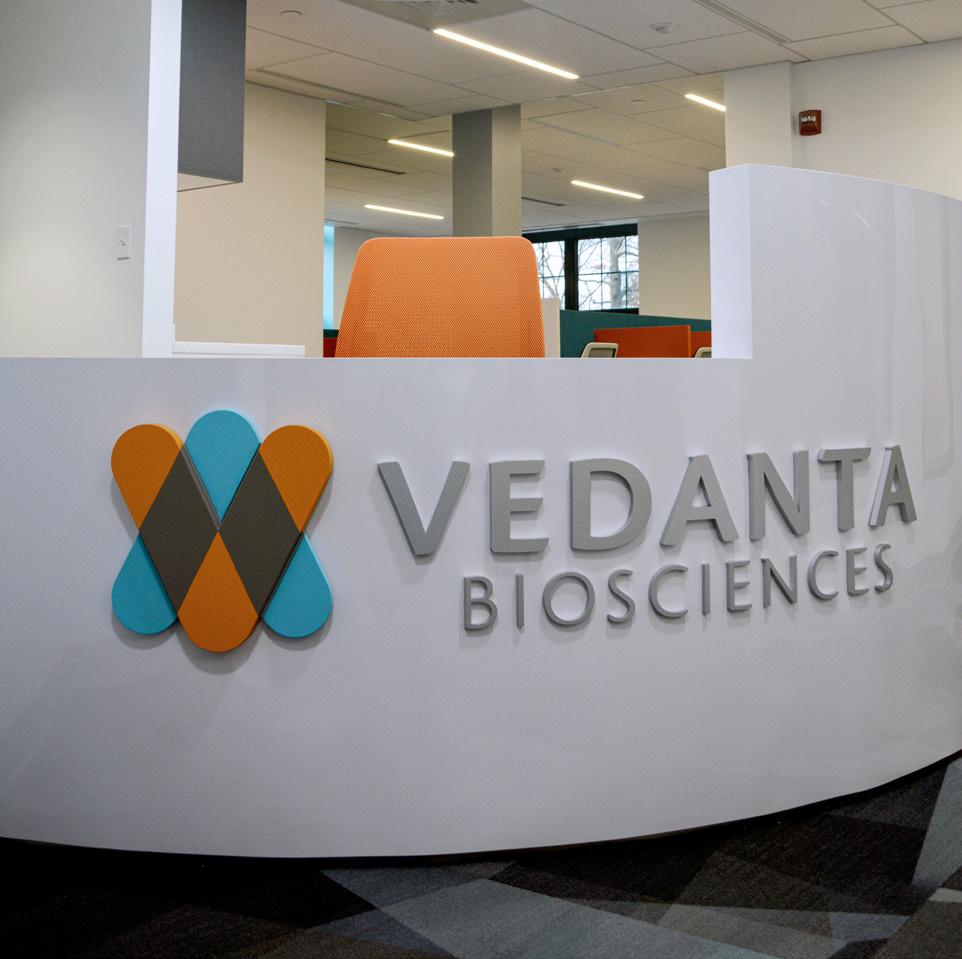

www.high-profile.com July 2023 Dacon’s design build process has a gut instinct for productive spaces that keep them growing. 16 Huron Drive | Natick, Massachusetts 01760 | 508.651.3600 | dacon1.com As pioneers in breakthrough science, Vedanta creates therapeutic medicines that improve the human microbiome.
Quantum-Si Debuts New HQ in Connecticut
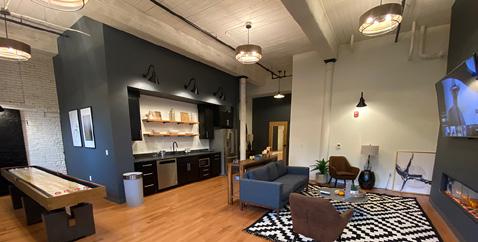
Branford, CT – Quantum-SiIncorporated, The Protein Sequencing Company, announced the official debut of the company’s new state-of-the-art, 29,420sf headquarters in Branford.
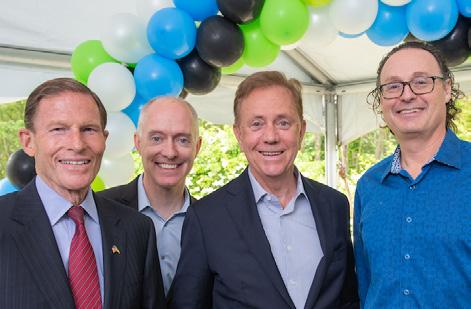
The new facility extends the company’s decade-long history in Connecticut, and includes a seven-year lease which will keep Quantum-Si in Branford at least through 2029. The official ribbon cutting, hosted on June 6, featured remarks from QuantumSi CEO, Jeff Hawkins; Quantum-Si founder and chairman, Jonathan Rothberg, PhD.; and special guests Connecticut Governor Ned Lamont, U.S. Senator Richard Blumenthal (D-CT), and Alexandra Daum, the commissioner of the Connecticut Department of Economic and Community Development (DECD).
The new facility, located at 29 Business Park Drive, provides the resources necessary for increased operational scale, development, and collaboration. This milestone represents Quantum-Si’s anticipated growth trajectory and ability to support customers and partners using Platinum, a next-generation single-molecule protein sequencing platform.
“The cities of Branford and Guilford,

and State of Connecticut have been incredible partners to Quantum-Si since our founding. Our company’s roots are here, our relationships are here, and we want to continue building a world-class company here,” said Hawkins. “Our new headquarters reflects the company’s ongoing commitment to job opportunities and innovation alongside the local community. We believe New Haven County is the perfect strategic location
to attract world-class scientific talent as we seek to grow our teams. We look forward to leading the expansion of the life sciences industry in Connecticut.”
“We have a truly transformative
product on the market in Platinum, the next-generation protein sequencer, a leadership bench of highly experienced executives, and now we have the facilities to scale alongside that growth,” said Rothberg. “Next-generation protein sequencing will be critical for the discovery of a new wave of precision therapies, and I am proud to see this work being done in the community I call home.”
“Quantum-Si’s clear commitment to cutting edge technology – and to Connecticut – are truly thrilling. Connecticut has a long history and tradition of being at the forefront of innovation and Quantum-Si carries on that legacy with their next generation protein sequencers that are advancing and accelerating our understanding of medicine and human health,” said Blumenthal. “I am grateful and excited to have celebrated this milestone today and look forward to Quantum-Si’s future endeavors in our state.”
FDA Approves BMS’ Devens Facility
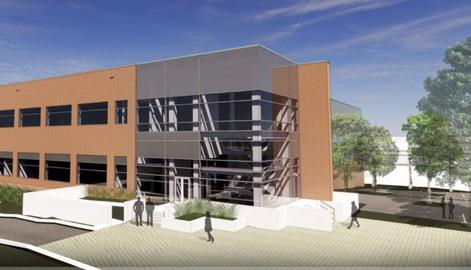

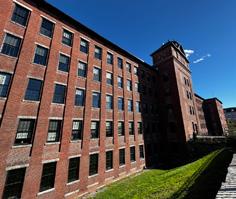
Devens, MA – Bristol Myers Squibb (BMS) announced that the U.S. Food and Drug Administration (FDA) has approved commercial production at the company’s newest cell therapy manufacturing facility in Devens. The Devens site is a critical component of BMS’ expanding global cell therapy manufacturing footprint for long-term supply of the company’s cell therapy portfolio.
“The Devens facility integrates the latest state-of-the-art technology in the industry with top talent in the Boston area that will take us into the next phase of our cell therapy journey,” said Karin Shanahan, executive vice president, Global Product Development & Supply, BMS. “We are working diligently to increase our product capacity through new sites like Devens and by implementing innovative manufacturing solutions that help patients in need.”
“Bristol Myers Squibb’s vision of putting more patients on a path to potential cure starts with delivering on the promise of our current product portfolio and future pipeline,” said Lynelle Hoch, senior vice president, global cell therapy franchise lead, BMS. “Today’s approval underscores our commitment to deliver our transformational CAR T cell therapies to more patients.”
The new 244,000sf cell therapy manufacturing facility represents the second significant expansion of BMS’ 89-acre Devens site, which has been developing, producing, and testing clinical and commercial medicines for over a decade, and will create over 500 new cell therapy jobs. BMS also operates two R&D facilities in Cambridge and will bring these two sites together into a new building at Cambridge Crossing later in 2023.
www.high-profile.com July 2023 24 High-Profile Focus: Life Sciences
At the ribbon cutting: Senator Richard Blumenthal; Jeff Hawkins; Governor Ned Lamont; and Jonathan Rothberg
MANCHESTER, NH 603-668-2648 PORTLAND, ME 207-887-9065 WESTPORT, MA 508-938-9708 METROWALLS.NET THE LINCOLN LOFTS BIDDEFORD, ME COMMERCIAL FRAMING & DRYWALL
Photo by Chinburg Properties
Focus: Awards

AGC MA Holds Annual Meeting, Announces Award Winners
Wellesley, MA – Over 200 construction professionals and others in the local construction industry gathered at Boston College’s The Connors Center in Dover on May 18 for the Associated General Contractors of Massachusetts (AGC MA) Annual Membership Meeting. Awards were given in a variety of categories, and three individuals were elected to the AGC MA board of directors.
“The Massachusetts construction sector is an economic workhorse that also has the feel of a close community,” said John Ferrante, CEO of AGC MA. “Our Membership Meeting is a welcome opportunity to bring everyone together to celebrate our dynamic and hardworking members.”
At the meeting, the AGC MA nominating committee announced its picks for membership on the AGC MA board of directors: Matt Kilty, president of Trinity Building + Construction; Craig Skurka, senior project executive, Gilbane Building Co.; and Liseth Velez, founder and CEO, L.J.V. Development.
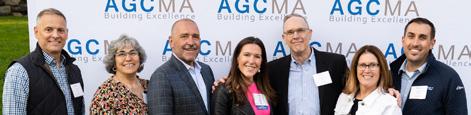
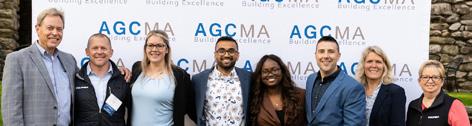
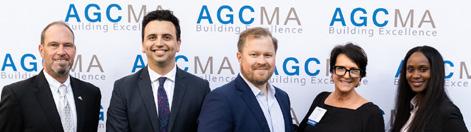
Awards for exceptional contributions were also presented. The 2023 Champion Award went to Darlene Conners, Walsh Brothers, Inc. The Outstanding Committee Chair was Diana Hasan, C.E. Floyd Company. The Safety Leadership Award was presented to Jason Edic of Lee Kennedy Co. Inc. Industry Advancement Awards were given to Leah Hoffman, TG Gallagher and Vrajesh Patel, Columbia. T.J. McCartney Inc. was named Subcontractor of the Year.
Firms that have reached AGC MA membership milestones were also recognized, including Turner Construction Company, which joined AGC MA in 1946; F.W. Madigan Company, an AGC MA member since 1953; Daniel O’Connell Sons Inc. (1955); Driscoll Insurance & Bonds (1961); Walsh Brothers Inc. (1970); Gilbane Building Company (1971); Antonelli Construction Co. Inc. (1972); and Hart Companies (1973).




“Nearly a century after AGC MA received its charter, our organization continues to thoughtfully address the challenges and opportunities that we all face,” said Ferrante. “We are committed to building a strong future for all.”

July 2023 25
The Columbia team (l-r): Bill Aalerud, Shaun Lover, Carly Hayden, Vrajesh Patel, Fabi Falaise, Jared Crowley, Katy Tassmer, and Julie Enger
The Colantonio team (l-r): Dave Dupuy, Kim Joyce, Fran Colantonio, Briana Colantonio, Chris Mayo, Amy Fahey, and Andy Kantorski
The AGC MA team (l-r): Chris Ziegler, Henry Kruger, John Ferrante, Lisa Frisbie, and Marion Jones
ULI Announces Award Finalists



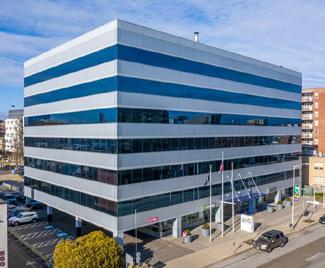
Washington – The Urban Land Institute’s (ULI) Terwilliger Center for Housing has announced four finalists for this year’s Jack Kemp Excellence in Affordable and Workforce Housing Award and eight finalists for the Terwilliger Center Award for Innovation in Attainable Housing.
“At a time when cities across the nation are struggling to build the homes their residents, businesses, and local economies require to thrive, ULI’s Terwilliger Center for Housing is privileged to share this year’s Kemp Award and Innovation Award finalists,” said Christopher Ptomey, executive director of the ULI Terwilliger Center for Housing. “Each of this year’s finalists demonstrates a creative blend of tools, strategies, and relationships aligned to deliver high quality homes at costs affordable to moderate- and lower-income households. We congratulate each firm and development team for their exemplary work.”
The Kemp Award recognizes developments that use innovative financing sources to provide attainable mixed-income housing, primarily focusing on households earning between 60% and 120% of area median income. The Award for Innovation recognizes unique yet replicable developments that offer or

AIA CT Awards Women in Architecture


preserve deeper affordability.
A new-construction project in Lowell, Massachusetts’ Hamilton Canal Innovation District, 201 Canal, is a finalist for the Jack Kemp Excellence in Affordable and Workforce Housing Award. The project includes 125 units of mixed-income housing and 5,000sf of commercial space. The site is transit-oriented and is a half-mile walk from the intermodal Charles A. Gallagher Transit Terminal. It was also built to meet high standards for energy efficiency and is certified by Enterprise Green Communities and Energy Star Homes.
Other finalists for the Jack Kemp Excellence in Affordable and Workforce Housing Award include Broadway Lofts, Mt. Pleasant, Mich.; Caton Flats, Brooklyn, N.Y.; and J-centrel, Philadelphia, Pa.
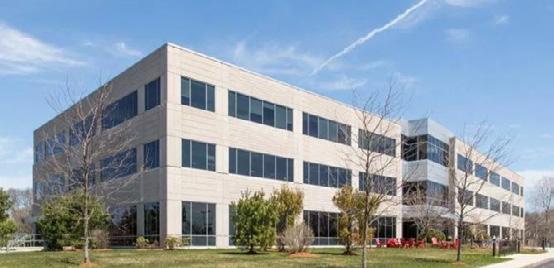
This year’s finalists for the Terwilliger Center Award for Innovation in Attainable Housing are East Clarke Place Senior Residence, Bronx, N.Y.; Gordon H. Mansfield Veterans Community, Tinton Falls, N.J.; John Parvensky Recuperative Care Center and Renaissance Legacy Lofts, Denver, Colo.; Lucille & Bruce Terwilliger Place, Arlington, Va.; Spring Flats, Washington, D.C.; The Exchange, Salt Lake City, Utah; The Hope Center & Berkeley Way, Berkeley, Calif.; and Wynne Watts Commons, Gresham, Ore.

New Haven, CT – The Connecticut Chapter of the American Institute of Architects (AIA CT) recently announced the recipients of the Women in Architecture Award and Emerging Professionals Award.


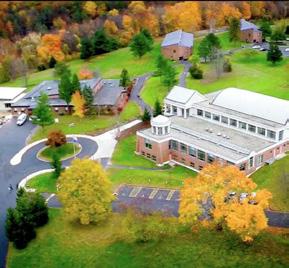
The Women in Architecture Award celebrates female architects in Connecticut who demonstrate design excellence, advocate for equitable and sustainable practices, and create a positive impact in the architecture profession and industry. The 2023 recipients are Amanda Martocchio, AIA, founder and principal of Amanda Martocchio Architecture, and Ming Thompson, AIA, IIDA, NOMA, founder and principal of Atelier Cho Thompson.
“Catalysts for positive change, both Amanda and Ming embody the spirit of design excellence and social impact,” said Gina Calabro, AIA Connecticut executive director and CEO. “Their unwavering dedication to creating inclusive spaces, mentoring aspiring professionals, and advancing the field of architecture inspires us all and we look forward to celebrating their accomplishments at our awards gala
in December.”

The Emerging Professionals Award recognizes and supports recently licensed or graduate architects who have made outstanding, innovative contributions to the discipline and/or architecture profession and have rendered exemplary service in the public realm. The 2023 Excellence recipient is Cassandra Archer, AIA, NOMA, Centerbrook Architects and Planners. The 2023 Merit Award
continued to page 38
www.high-profile.com July 2023 27 High-Profile Focus: Awards building’s Critical 200 Friberg Parkway, Suite 1004 Westborough, MA 01581 508-480-8200 aemsolutions.com 500 Corporate Row Cromwell, CT 06416 800-890-2022 cttempcontrols.com
Amanda Martocchio
Cassandra Archer
Ming Thompson
Laura Bedus
High-Profile Focus: Awards
PWC CT Awards $32,500 in Student Scholarships


Hartford, CT – The Professional Women in Construction Connecticut Chapter (PWC CT) announced it awarded $30,000 in student scholarships, along with a $2,500 donation to the Connecticut Chapter of the ACE Mentorship program. This year’s recipients were honored at the PWC CT Annual Scholarship Dinner held on May 24 at The REC Center in Hartford. The dinner and celebration for the students included guest speaker Julia Su. Jack, AIA-NCARB, NOMA, PMP, city architect for Hartford DPW. The event was sponsored by STV. The following 10 young women, listed with their college or university and major, were awarded with individual $3,000 scholarships:
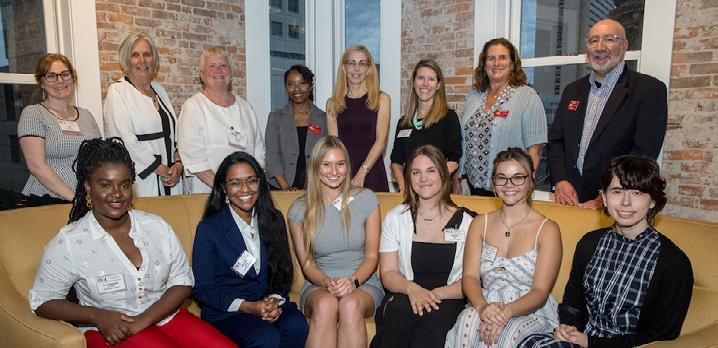
• Lydia Beers, Civil Engineering, Worcester Polytechnic Institute
• Condoleezza Coleman, Architecture, Wentworth Institute of Technology
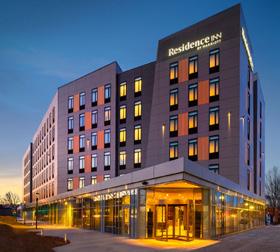

• Olivia Cognetti, Electrical Engineering, University of Southern California
• Jennifer Dushi, Architecture, University of Southern California
• Danielle Haniph, Architecture, Syracuse University
• Madison Kidd, Mechanical Engineering, Stevens Institute of Technology
• Elle Myers, Interior Design, Savannah College of Art
• Ann Pakhayev, Architecture, Cornell University
• Maria Fragione, Architecture, Worcester Polytechnic Institute
• Madison Mathieu, Construction Management, University of Massachusetts Amherst Scholarship applicants must be currently enrolled in or entering into a two-year or four-year college undergraduate or graduate program to study a construction-related discipline. Recipients must be attending a college
or university on a full-time basis and can reapply for the PWC CT scholarship each year of their schooling. Representatives of PWC CT say the scholarships are made possible through the generosity and support of its 2022/2023 sponsors and those who attended PWC CT programs this season.

www.high-profile.com July 2023 28 LET’S CONNECT: Woburn, MA: (781) 935-6889 Lakeville, MA: (508) 923-1010 Manchester, NH: (603) 627-5500 info@allenmajor.com www.allenmajor.com Allen & Major Associates, Inc. Civil Engineers | Land Surveyors | Landscape Architects We Create Value by Specializing in Land Survey, Civil Engineering, Permitting, and Landscape Architecture Design Services for Land Development.
Back row: Holly Linder, Lenell Kittlitz, Roxanne Perugino, Kyma Ganzer, Carolyn Kurth, Rebeccah Eldridge, Jennifer Marks, and Ron Paolillo. Front row: Condoleezza Coleman, Danielle Haniph, Olivia Cognetti, Madison Kidd, Maria Fragione, and Ann Pakhayev
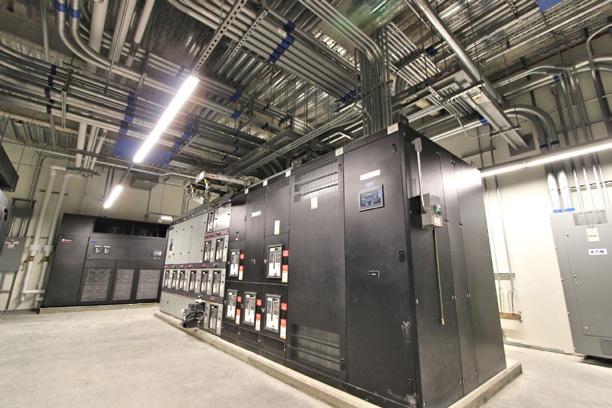

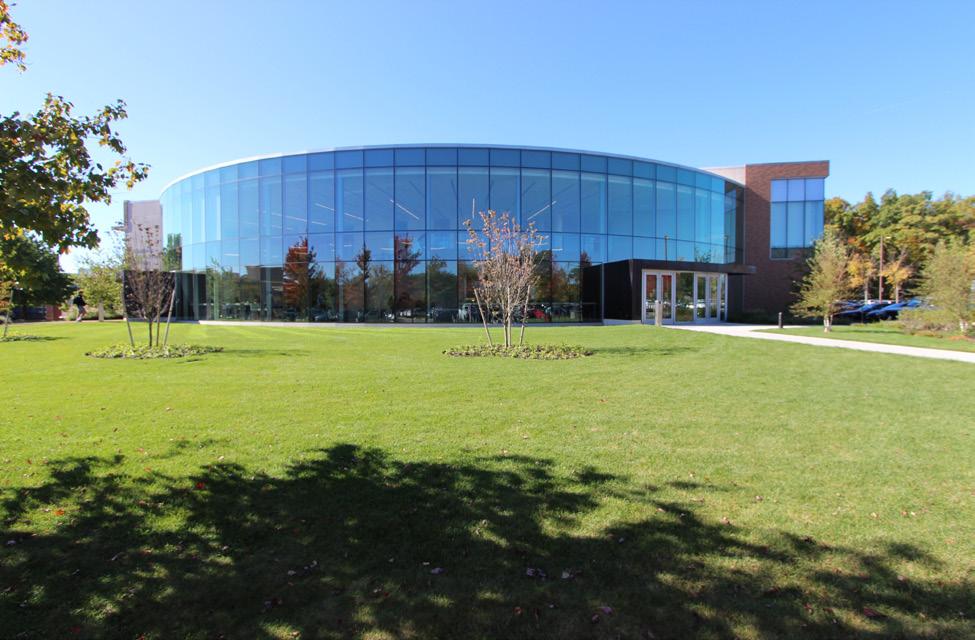
www.high-profile.com July 2023 29 INTERSTATE ELECTRICAL SERVICES CORPORATION Committed to Your Success. Committed to Excellence. INTERSTATE ELECTRICAL SERVICES CORPORATION Committed to Excellence. Committed to Your Success. MASSACHUSETTS | CONNECTICUT | RHODE ISLAND | NEW HAMPSHIRE | MAINE | VERMONT Valued Partner. Trusted Employer. 855.500.4372 www.iesc1.com Building Automa�on Process Controls 24/7 Emergency Support Service Thermal Diagnos�c Imaging Fire Alarm Installa�on & Maintenance Alterna�ve Energy Installa�on AV/Telecom/Network Systems Access Controls Arc Flash Hazard Analysis BIM and VDC Services In-House Engineering and Design
Maugel DeStefano Architects Completes Orthopedic Affiliates Facility
Hudson, MA – Maugel DeStefano Architects announced it has completed a design-build with Green Leaf Construction for the 4,200sf medical office suite for Orthopedic Affiliates, a joint and sports medicine center, and Achieve Physical Therapy, specialists in the advanced treatment of orthopedic and sport injuries. Located at the Shops at Highland Commons in Hudson,
this marks Maugel DeStefano’s fourth medical office location for Achieve Physical Therapy and its first project with Orthopedic Affiliates.
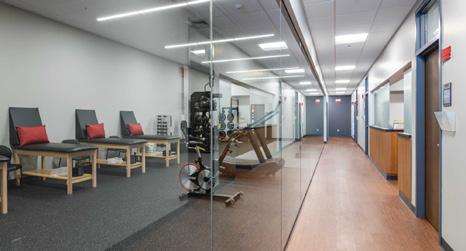
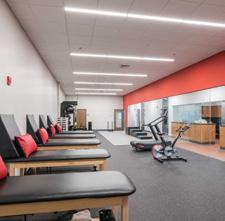
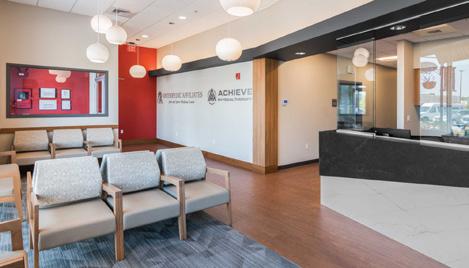
“We have worked with Maugel DeStefano Architects on numerous projects over the past 15 years. Their creative healthcare team fully understands how design impacts the patient experience,” said Bob Thomas, CEO at Achieve Physical Therapy.
“Despite the challenge of integrating the needs of two medical groups into one space, Maugel DeStefano created a cohesive space that achieved our shared vision. Their expertise and familiarity with our preferences, requirements, and brand always makes for a highly efficient and enjoyable design process.”
physical therapy space with the soothing, sophisticated style of the orthopedic practice. The design team took full advantage of the building’s high-bay ceiling height to create transitions from the open physical therapy area to the more intimate exam rooms of the orthopedic suite. The use of glazing and transparency in key locations created an inviting space that also preserved patient privacy.
Maugel DeStefano’s healthcare team worked closely with each practice to create a welcoming and comfortable environment that is safe for patients, visitors, and staff. The design challenge was to balance the vibrancy of the
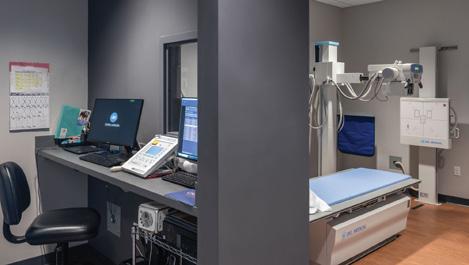
“We knew the quality of care that Achieve Physical Therapy provides to their patients, and we believed they would be a great partner; we just weren’t sure a shared space could be designed to represent the collective vision of two separate businesses,” said Jamie Richard, CEO at Orthopedic Affiliates. “The healthcare team at Maugel DeStefano and Green Leaf worked closely with each of us to make our vision for a shared suite a reality. The medical space not only looks great, but it also exceeds our expectations. We are very happy to accomplish our goal and to bring orthopedic services to the Hudson area.“
In addition to Maugel DeStefano and Green Leaf Construction, team members included engineers Design Day Mechanical and S.B. Sager & Associates.




www.high-profile.com July 2023 30 Healthcare
Physical therapy treatment room
Imaging suite
Shared reception area
Physical therapy treatment room
Ribbon Cutting Held for Rand-Whitney, Unified Global Packaging Facilities
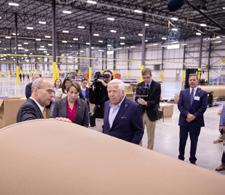
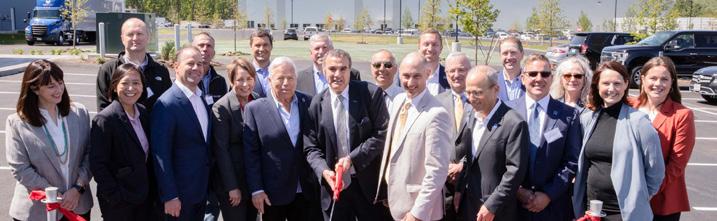
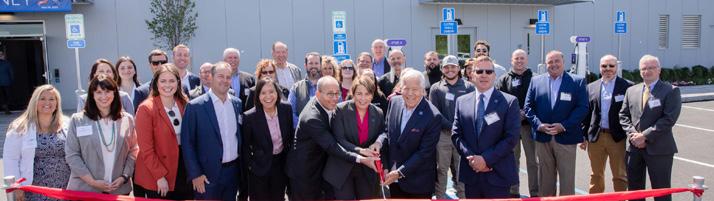
Boylston, MA – A project nearly two decades in the making finally came to fruition with a ribbon-cutting ceremony for Rand-Whitney’s new packaging facility in Boylston. The new $120 million, 384,000sf facility has 32 shipping bays, 100,000sf of storage capabilities and a new equipment BHS Corrugator which produces 8 million sq. ft. daily. This new packaging facility has the potential to manufacture 300 million boxes annually and will add between 50 and 100 new jobs to the local economy.
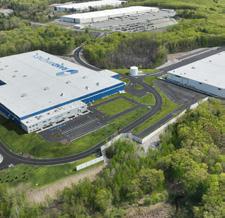
To provide the most efficient, cost-effective services possible for its customers while responding to growing demand for packaging, Rand-Whitney, a Kraft Group company, invested in stateof-the-art equipment to support increased capacity. The sustainable building features the industry’s most efficient robotics and automation equipment. The facility will produce 2.2 billion sq. ft. of corrugated packaging each year, with nearly all of it using 100% recycled material and recycled water. About a third of the company’s equipment has been moved in; the rest will arrive over the next year.

“This milestone represents an exciting moment in the history of our company,” said Nick Smith, president and CEO of Rand-Whitney. “Rand-Whitney Container remains committed to investing in improvements that will benefit and support our valued customers. Today is also a milestone in our partnership with the Boylston community and we look forward to being a big part of this community for decades to come.”
After the ribbon-cutting ceremony, Massachusetts Governor Maura Healey; Yvonne Hao, secretary for economic development for the state of Mass.; State Sen. Robyn Kennedy; and State Rep. Meghan Kilcoyne joined New England Patriots owners Robert and Jonathan Kraft, Town of Boylston officials, PROCON team members and other dignitaries on a tour of the new building.
The other building that celebrated its grand opening, adjacent to the

one used by Rand-Whitney, totals 300,000sf and will be used for storage by UN1F1ED² Global Packaging, a company specializing in protective packaging that utilizes wood, foam and corrugated materials. The company services many sectors of manufacturing industries including automotive, electronics, and semiconductor. UN1F1ED² is a joint venture between The Kraft Group and Atlas Box and Crating Co.
“Thank you to the Kraft Family and Nick and Adam at Rand-Whitney. We have always enjoyed working with you and your world-class organizations and teams. They are some of the best people to work with. Thank you to the Kraft’s for your friendship and continued trust in the PROCON design-build team. We are so proud of our long-term partnership,” said John Stebbins, managing director of PROCON.
www.high-profile.com July 2023 31 Industrial
Ribbon cutting for Rand-Whitney packaging facility
Ribbon cutting for UN1F1ED² Global Packaging facility
Tour of the Rand-Whitney facility
Since
Visit www.associatedsubs.com to join.
Only one association represents the interests of every subcontractor in the state of Massachusetts:
1950 we have represented companies of all trades, large and small, union and open shop, who work on major building projects across the commonwealth, in both the public and private sector.
Green
PROCON Adds Rooftop Solar Array to Hooksett HQ
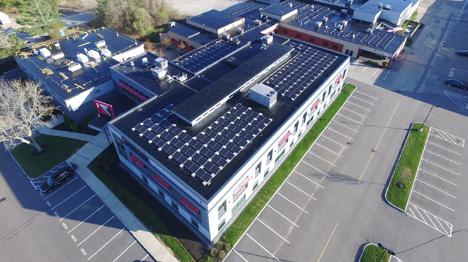
Hooksett, NH – PROCON is celebrating the completion of a 139-kilowatt solar array that sits atop the company’s headquarters in Hooksett. The array will generate an estimated 154,377-kilowatt (kW) hours of renewable energy each year, offsetting nearly 50% of the company’s electric load and over 151,000 pounds of annual carbon emissions.
“Our company is committed to sustainability, and we strive to design and build sustainable commercial buildings for our clients. We are proud that we were the first to receive the WELL certification in New Hampshire for the Unitil Emergency Operations Center in Exeter, N.H. We wanted to continue that commitment to the environment with solar at our corporate headquarters. The exciting factor is that the expected payback on this investment is less than six years. For our 88-year-old, fourth generation design-build firm, we continue to be the leaders in sustainability, and we are constantly looking at our impact on our clients, partners, team and the next generation,” said John Stebbins, managing director of PROCON.
“PROCON is continuing to demonstrate its role as a leader in New Hampshire’s building industry through this critical investment in renewable energy,” said Dan Weeks, vice president of business development at ReVision Energy. “Their 289-panel solar project demonstrates both fiscal and environmental responsibility and will inspire other companies to become energy self-sufficient in the face of rising energy costs.”
PROCON and ReVision Energy celebrated the new solar installation with a ceremony on June 2 at PROCON at 1359 Hooksett Road in Hooksett. Honored
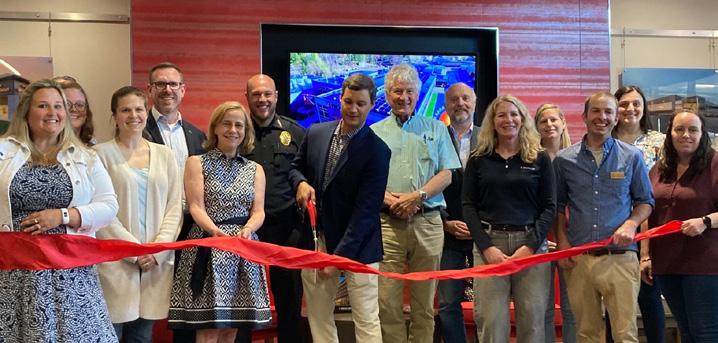
guests included Manchester Mayor Joyce Craig, Hooksett Chief of Police Justin Sargent, President and Associated Builders and Contractors NH/VT CEO Josh Reap, and leadership teams from both PROCON and ReVision Energy.
“I am so happy to be here at PROCON to celebrate the significant contribution that you are making to renewable energy. By harnessing solar power, PROCON is not only reducing its carbon footprint but also taking a proactive stance and stabilizing and reducing its electricity costs. This is an example of the values we hold dear in New Hampshire: innovation, responsible business practices and a dedication to creating a brighter future for our communities. I would like to commend everyone here at PROCON for their vision and commitment to the environmental
stewardship; your investment in solar energy sets an inspiring example for many other businesses in your state and I am
AGC MA Launches Electric Vehicle Charger Initiative
Wellesley, MA – In an effort to minimize the impact of fossil fuel emissions in the construction industry, the Associated General Contractors of Massachusetts (AGC MA) Sustainability Advisory Committee has announced the Construction EV Charger Pledge, which signals the industry’s commitment to accelerating the transition of construction sites to allow for greater use of electrified vehicles and equipment. The pledge also requests that signatories include at least one exterior NEMA 14-50 commercial grade electric vehicle charging receptacle at their places of businesses and at all construction sites.
“It’s increasingly clear that the
impacts of climate change are here,” said AGC MA Sustainability Committee chair, Abigail Roberts, sustainability program manager at Turner Construction. “Electric vehicles are an important way to lessen a growing problem. While we expect that electrification of construction vehicles and equipment will someday be the norm, it’s essential to take steps now. We’re encouraged by the support that we’re already seeing from our partners in this industry, who are not only preparing for change but are bringing it as well.”
The EV Charger Pledge is part of a wider effort by the AGC MA to increase the use of electrified vehicles and equipment in the construction process. In
addition to the installation of EV charging stations, signers of the pledge commit to promoting the use of battery powered vehicles, heavy equipment and power tools.
Construction firms that have already committed to the pledge include Consigli Construction Co., Inc.; Columbia; Commodore Builders; Gilbane; Shawmut Design & Construction; Skanska; and Turner Construction.
“As leaders in the Commonwealth’s construction community, it is on us and our partners in the industry to drive necessary change, like the prioritization and installation of electrified vehicles and equipment, on our jobsites to help
confident that your leadership here will be picked up by others because you’re showing them the way,” said Craig.
accomplish our shared sustainability goals,” said Steven Burke, director of sustainability at Consigli Construction Co., Inc. “Consigli is committed to working collaboratively with AGC MA and our fellow EV pledge cosigners to do our part and lead the construction industry toward a greener, more sustainable future.”
“We are proud of the impactful work that is being accomplished by our Sustainability Committee, and by the commitment of our member firms to this important effort,” said John Ferrante, AGC MA CEO. “The local construction sector is dedicated to building a brighter and better future for all.”
www.high-profile.com July 2023 32
Photo by Lance Bennett, PROCON co-president
Ribbon cutting ceremony
J.E.D.I.
Gilbane Celebrates Graduates of Rising Contractor Program

Providence, RI – As part of the company’s commitments to drive economic opportunity and build the capacity of diverse-owned businesses, Gilbane Building Company celebrates 76 new graduates of its Rising Contractor Program. Since being reimagined in 2020, the program has graduated over 270 diverse and disadvantaged businesses.
The Rising Contractor Program is an integral component of Gilbane’s economic inclusion strategy, as it offers participants an opportunity to expand their industry knowledge while providing formal mentorship to support their capacity for sustainable growth. The program is designed to foster partnership and promote opportunities to work on Gilbane projects. Gilbane is committed to generating $100 million in awards through 2026 for program graduates.
“Gilbane understands that committing to economic inclusion today means a more equitable, robust construction landscape tomorrow,” said Yvette Stevens, vice president and director of economic inclusion. “The expansion of our team is one more step toward achieving our goals and furthering our commitment
to economic inclusion through greater partnerships with our clients and trade partners.”
To achieve this goal, Gilbane recently named John Rodriguez as the Rising Contractor program manager. With nearly a decade of experience in managing programs aimed at small business growth and development throughout New York City and San Francisco, Rodriguez most recently served the New York City Department of Small Business Services as director of capital access programs, including the Contract Finance Loan Fund and NYC Small Business Opportunity Fund.
As program manager, Rodriguez will work to grow the Rising Contractor Program in both class size and curriculum, engaging certifying agencies throughout the country to tap new participant pools

while also broadening class offerings to ensure efficacy and innovation.
“I’m thrilled to join Gilbane and dive right into the Rising Contractor Program,” said Rodriguez. “Being a part of this effort is so fulfilling, as we have a real opportunity to grow this program across the country and work on a national level to increase the opportunities of diverse-owned small businesses within our portfolio while also helping them grow within their communities.”
“The Rising Contractor Program is an easy commitment to make,” said Richard Taylor, owner and CEO of ImbuTec,





an electrical subcontracting firm out of Pittsburgh and a member of the program class of 2021. “As a program graduate, the relationship with Gilbane gives us credibility with other major players in the market, and the mentor connection is critical to that success.”
Through these concerted efforts, Gilbane has made strong progress toward its five-year commitment to generating $4 billion in awards to certified minorityand women-owned businesses (M/WBE), disadvantaged, LGBTBE, and veteran businesses enterprises. As of the end of the 2022 calendar year, the firm reported $951 million in awards, representing 24% progress toward its overall goal.
The next session of the Rising Contractor Program is scheduled for the spring of 2024.
www.high-profile.com July 2023 33
Gilbane Rising Contractors
John Rodriguez
Visit www.topazeng.com Ink & Toner Supplies Paper / Media Equipment Service & Support The Trusted Source For All Your Document Needs. Wide Format CAD/ Graphics and Office Copiers/ Printers. ENGINEERING SUPPLY, INC For over 43 Years, the Trusted Choice of Architects, Engineers and CAD Departments Throughout New England. 35 Pond Park Road, Hingham, MA • 1.781.749.8687 1.800.255.8012 www.topazeng.com sales@topazeng.com
Interiors
Nauset Completes Tenant Fit Outs at 10 Winthrop Square
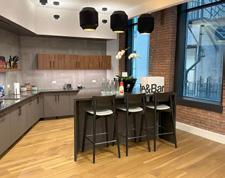


Boston – Nauset Construction recently completed the second of two interior fitouts for tenants at 10 Winthrop Square in Downtown Boston.
Extensively renovated and rebranded as “10W,” the historic, 6-story building has been reimagined as an office and retail destination. It is located in the Financial District between Post Office Square and Downtown Crossing, and across from Winthrop Center. Nauset transformed the 4,100sf second and third floor spaces from core and shell into Class A office space. The design of the office suites focuses on retaining the elegance and character of the historic building originally constructed in 1872 while incorporating modern office design and amenities.
This is the second collaboration between Nauset Construction and Chevron Partners. “As tenants downsize their office footprints, they are also striving to provide a more enticing work environment for employees returning from remote work,” said Marcel Safar, Esq., founding principal of Chevron Partners. “Nauset has delivered on the thoughtful design of these office suites, ensuring that 10W affords a comfortable workspace that promotes interaction
and collaboration while also providing a welcoming space for client visits.”


The suites are similar in layout, with materials and finishes typically reserved for high-end residential construction, and the tenants brought their own design aesthetic to the spaces. Each suite was constructed with a central workspace, surrounded by exterior offices on the perimeter. The individual offices were designed with glass doors and partitions to maintain an open space feel while allowing for abundant natural light as well as suspended overhead lighting. The existing
ceiling beams, original exposed brick, and cast iron columns were left intact and reconditioned to meet the aesthetic choices of each tenant. Nauset installed hardwood flooring throughout, and the lounge area features custom millwork with under-cabinet lighting, granite countertops, and high-end Beko appliances.
The second-floor suite was designed by the Huntsman Architectural Group for a global investment management firm and includes a second-floor terrace with a gas fire pit and a custom glass railing that overlooks Winthrop Square. The third-

floor suite was designed by Adige Design, a European material sourcing company, which also supplied the materials and design for the 10W lobby. The office features a gas fireplace in the state-of-theart conference room and is occupied by an international executive search firm.
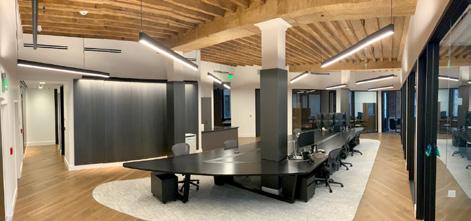


With other tenants occupying the building, the project required extensive off-hour work and creative solutions to a myriad of challenges, including material deliveries in Winthrop Square and noise and dust control within the building.


“These projects played to Nauset’s strengths: working in occupied properties in tight urban infill areas,” said Benjamin Goldfarb, vice president of Nauset Construction. “Working with a developer like Chevron Partners – that honors the integrity of the historic properties they re-invigorate – is a source of pride for our project teams.”
www.high-profile.com July 2023 34 Sales • Design • Installation • Inspections • 24/7/365 Service Main Office 8 North Wentworth Ave Londonderry, NH 03053 603.432.8221 Southern Maine 41 Spring Hill Road Saco, ME 04072 207.571.9515 Upper Valley Office 1 Commercial Street West Lebanon, NH 03784 603.448.5461 Monadnock Office 277 Old Homestead Hwy Swanzey, NH 03446 603.358.6736 www.hampshirefire.com Sales • Design • Installation • Inspections • 24/7/365 Service Main Office 8 North Wentworth Ave Londonderry, NH 03053 603.432.8221 Southern Maine Springhill Road Saco, ME 04072 207.571.9515 Upper Valley Office 1 Commercial Street West Lebanon, NH 03784 603.448.5461 Monadnock Office 277 Old Homestead Hwy Swanzey, NH 03446 603.358.6736 www.hampshirefire.com
Open work space / Photos by Chevron Partners
Kitchen
Build Better Podcast

Clean Energy Future: Breaking Down Vicinity Energy’s Net Zero Carbon Plan
by Emily Langner
On season 3, episode 1 of the Build Better podcast, Anastasia talked with Matt O’Malley, the first-ever chief sustainability officer for Vicinity Energy. He is responsible for leading Vicinity’s decarbonization efforts and guiding the execution of the firm’s Clean Energy Future, Net Zero Carbon plan. He shared more about the company’s plan which includes working with its customers, communities, and local government to decarbonize its operations across the country and reduce the impact of the energy sector on the earth’s atmosphere.
Before joining Vicinity Energy a year ago, O’Malley spent 11 years as a member of the Boston City Council, where he chaired the Environment committee. He authored the Building Energy Reduction and Disclosure Ordinance (BERDO), which required buildings to report their annual energy and water use. With buildings accounting for the vast majority of all greenhouse gas emissions in cities like Boston, O’Malley said the ordinance was eventually embraced by building
owners as they saw a decrease in energy usage and money savings for their tenants.
The 2021 amendment to BERDO gives the city authority to set emissions standards for large existing buildings, with the goal of all buildings achieving net zero emissions by 2050. As Vicinity Energy’s chief sustainability officer, O’Malley said Vicinity is “one of the companies that is stepping up to meet this moment and to both surpass the goals set therein and really changing how we do

business as a company.” With the goal of being a leader in renewable thermal energy, O’Malley explained that the company has a three-pronged approach to moving away from fossil fuels and accomplishing its decarbonization plan: electric boilers, a heat-pump complex that will rest on the River Charles, and a thermal storage capability.
O’Malley said an electric boiler is in the process of being built, and that a water intake permit has been secured for the Charles River. He said the technology
is ideal for large-scale, high-intensity buildings such as lab spaces, hospitals, hotels, and municipal buildings, and that the technology is not proprietary. “We’re happy to share it and to work with other folks because you need to use every tool in the toolbox to address the climate crisis…looking at buildings in a city like Boston or Cambridge, there’s not a onesize-fits-all approach so we need to be nimble and we need to have a wide array of tools to use.”
O’Malley said it’s great to see businesses, educational institutions, and healthcare facilities, among many others, set their own decarbonization goals, and he’s encouraged by the interest other cities around the country have shown in learning more about Vicinity’s decarbonization plan. He said as he and the leadership of Vicinity look to the next 20-30 years, they want to be “fully decarbonized across the board, and looking at new innovation and technology to support our customers,” adding that the company is focused on “continuing to help our cities and be the best corporate citizens we can be, and be the best stewards of this environment as we can be.”
www.high-profile.com July 2023 35
The design and construction industry is not just about buildings. It’s about the people
the
www.buildbetter.space To learn more about sponsoring the podcast, email anastasia@high-profile.com SEASON
Listen and subscribe here!
behind
buildings.
3, EPISODES 1 & 2 ARE LIVE!
Matt O’Malley
“...you need to use every tool in the toolbox to address the climate crisis…looking at buildings in a city like Boston or Cambridge, there’s not a one- size-fits-all approach so we need to be nimble and we need to have a wide array of tools to use.” - Matt O’Malley
Trends and Hot Topics
U.S. Demand for Low-Slope Roofing Forecast to Decline Nearly 1.0% per year
 by MarketResearch.com News Service

U.S. demand for low-slope roofing is forecast to decline nearly 1.0% per year from a high 2021 base to 78 million squares in 2026, a new Freedonia Group report shows.
Gains will be restrained by the elevated levels of reroofing activity in 2020 and 2021 that resulted from several severe weather events and building renovations that were encouraged by tax provisions and financial aid from the federal government.
Energy Efficiency Bolsters Demand for Small Volume Roofing Products
Although they will continue to account for a small share of low-slope roofing demand, a variety of small volume roofing products will see increasing use because of growing interest in environmentally friendly roofing materials that reduce a structure’s energy consumption.
Use of vegetative roofing, light-colored liquid-applied roofing coatings, and spray polyurethane foam (SPF) can minimize heat transfer and lower utility bills –important characteristics for contractors, designers, and property managers alike.
In addition, demand for vegetative roofing will be bolstered by legislation and funding projects in major metropolitan areas that promote the use of this roofing to reduce heat island effects in urban cores.
Pricing Trends
While market value for roofing will also be affected by declining demand in area terms, some growth will occur due to prices remaining elevated for most products following the inflation- and supply chain-related spikes of 2021 and 2022, an ongoing shift toward more durable roofing products, which are higher value than traditional materials.
Durability Driving Adoption of TPO and Metal Standing Seam Roofing
While demand for bituminous roofing – the most commonly installed type of low-slope roofing – is expected to decline going forward, some better-performing roofing materials are expected to see gains despite their higher cost:
Thermoplastic polyolefin (TPO) roofing has gained popularity in the low-slope market and is anticipated to be the leading product by 2026, driven by its durability, ease of installation, and its ability to meet cool roofing criteria. Standing seam roofing will also see growth, as it can withstand punctures and wind uplift while also solving the issue of leaks from fastener failures by concealing fasteners in the roof system.
The per-square price of low-slope roofing – excluding installation costs – is expected to advance 1.3% annually to $82.81 in 2026. In 2022, pricing continued to be affected by the significant supply chain issues – mostly related to the shipping of goods – that plagued numerous industries. Product shortages and higher raw material costs continued to send roofing product prices upward, especially those that required normalize. Price growth for low-slope roofing through the rest of the forecast period will be supported by such factors as: an increase in petroleum and natural gas prices increasing sales of more durable materials – such as plastic membranes with thicker scrims – that are more costly to manufacture.
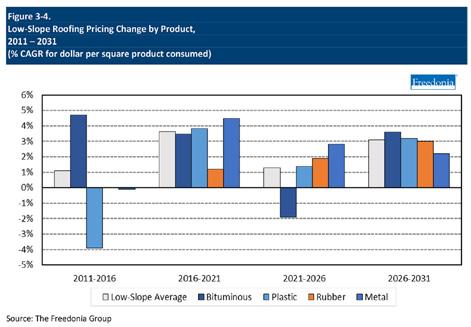
Tariffs also affect related accessories used by contractors when installing roofing materials. Metal fasteners (such as nails and staples), which are used in the mechanical installation of many products, are subject to tariffs if they are purchased from Chinese suppliers, while lumber – often used as a substrate when repairing older roof decks – is subject to import duties if it is sourced from Canadian suppliers.
However, the overall effects of these tariffs on the U.S. low-slope roofing market have been somewhat muted. In most of the affected product categories, there are numerous domestic raw materials suppliers that are able to provide U.S. firms with needed supplies. For instance, the U.S. has many producers of steel sheet (used to fabricate metal roofing) and plastic resins (used to make plastic roofing membranes). Manufacturers should have little difficulty finding alternative raw material suppliers.
Factors expected to limit price growth in low-slope roofing include manufacturer initiatives to incorporate less costly recycled materials.
Building Construction Activity
A key factor affecting demand for roofing is the health and composition of the U.S. construction industry. Roofing is installed on virtually every structure erected to keep out the elements, and can play an important role in improving a building’s energy efficiency. While the choice of roofing materials can vary due to a number of factors, structures are seldom installed without a roof.
Real building construction expenditures are expected to increase 0.2% per year through 2026, a significant decelera-
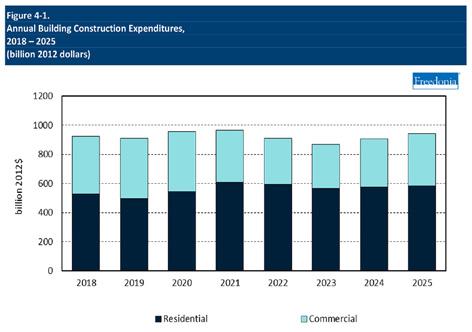
tion from the 2016-2021 period:
Residential building construction is expected to decline due to elevated interest rates and high material and labor costs and existing homeowners having already invested in their residences.
Commercial building construction is anticipated to rebound from the pandemicinduced declines of the 2016-2021 period, thereby supporting the construction of manufacturing and warehouse facilities and office, retail, and lodging sites.
MarketResearch.com provides industry intelligence for businesses, consultants, investors, and anyone seeking to understand where markets, countries, or companies are headed.
www.high-profile.com July 2023 36
Figure 4-1.
Annual Building Construction Expeditures, 2018-2025 (billion 2012 dollars)
Figure 3-4.
Low-Slope Roofing Pricing Chnage by Product, 2011-2031 (% CAGR for dollar per square product consumed)
Technology and Innovation
The Power of AI in Preconstruction and Construction
contractors and subcontractors can be better advised on the necessary components of a potential project in the early stages, increasing the possibility of successful bids while lowering the chances of project overruns so they can maintain their bottom lines and profits.
By Ro Bhatia
Artificial Intelligence (AI) is nothing new but with generative AI chatbots like ChatGPT continuing to spark conversations around the world, the concept of AI and its uses is growing in popularity and curiosity. Bloomberg estimates that mentions of AI and its related phrases have increased by 77% since last year by businesses across nearly every vertical.
The construction industry is no different, and AI is being increasingly used in the construction industry to improve productivity, safety, and efficiency. According to a recent Pymnts and American Express report, 30% of construction firms plan on investing in technology to help them save time and capital. By leveraging AI, general
Innovation Meets Construction
While the construction industry has historically been a late adopter of technology, those that have embraced the best tools have reaped the rewards of greater efficiency, accuracy, and speed. In addition, more progressive companies are more likely to be on the leading edge of adoption, offsetting costs, streamlining simple but time-consuming processes, and improving operational efficiency. For the contractors and subcontractors that haven’t yet, they’re beginning to understand the urgency of implementing this technology early rather than playing catch-up later. What was seen as a “nice to have” has become a “must have.”
AI Begins with Data
As with all new technology, human oversight is required to ensure the proper use of data sets because AI is
only as effective as the data that’s put in. Construction professionals must be deeply involved in these initial stages to craft the tasks, data, and inputs to ensure this technology achieves its potential and creates efficiencies in planning, design, operations, and more.
AI provides contractors and subcontractors with predictive analytics and is used to analyze historical data and predict future events, such as project delays or equipment breakdowns. This helps construction companies to better plan and manage their projects. In addition, AI speeds up data analysis and helps project teams make faster, better decisions with greater certainty.
AI on the Job
AI can detect potential design flaws or clashes before construction begins, reducing the risk of costly rework. Once construction has started, AI-powered equipment such as drones, excavators, and bulldozers can operate autonomously, reducing the need for human labor and increasing safety. Regarding the construction process’s safety and quality control aspects, AI-powered cameras
Suffolk Technologies Hosts Robotics in Construction Event
Boston – Suffolk Technologies recently hosted Robotics in Construction 2023 at Suffolk Construction’s Roxbury headquarters, in partnership with MassRobotics. The event, sponsored by Autodesk and Hilti Venture, brought together industry experts, investors, construction professionals and robotics startup founders from around the world for a series of panels, pitches, product demonstrations and networking opportunities.
“While the construction industry is not known for driving innovation and change, we are living in a new norm where increasing efficiencies and improving productivity are absolutely necessary for managing successful projects and providing real value for clients,” said John Fish, chairman and CEO of Suffolk.
The day-long event welcomed emerging robotics and AI technology startups solving built world challenges. “Many of our resident startups and those from across the globe are working on technologies that are able to support many industry vertices and construction is an industry ripe for adopting robotics,” said Tom Ryden, executive director, MassRobotics. “Robots can help to improve safety and accuracy as well as provide services in areas where there are labor shortages.”
Keynote speaker Josh Lobel, strategic projects executive at Autodesk, followed opening remarks from Fish and Ryden. Two panel discussions then explored the on-site challenges faced by industry incumbents for adopting new technologies and what it takes to successfully raise capital as a robotics founder in construction.
Later in the day, Johannes Paefgen, director with Hilti Venture in Boston, spoke about Hilti’s partnerships with robotics startups: “In our perspective, construction automation is an imperative – to be safer and more productive, but also
to win and retain talent in an increasingly competitive labor market. Mastering automation is not only about robots, but also about planning, coordination, collaboration, and logistics. Contractors should rethink their processes, not just their machines.”

The evening culminated with five startups pitching their solutions to the room of industry experts:
• Rugged Robotics – Autonomous vehicle which streamlines manual layout processes by marking fully-coordinated A/E designs directly onto unfinished floors.
and sensors can monitor construction sites for safety hazards such as falls or other accidents. These systems can alert workers in real-time and help prevent accidents before they occur. In addition, AI can be used to analyze construction materials and detect defects before they are installed, helping improve the quality of construction.
To wrap up, AI can potentially bring about significant changes in the construction industry. With its ability to analyze vast amounts of data and perform complex tasks, AI can help improve productivity, safety, and efficiency in construction projects. It can also enable better decision-making, reduce costs, and speed up the completion of projects. However, the successful implementation of AI in the construction industry requires significant investment and collaboration between various stakeholders. With the right approach and resources, AI can transform the construction industry and pave the way for a more innovative and sustainable future.
Ro Bhatia is the CEO of PlanHub.

• Element Exo – An exoskeleton that reduces the risk of work-related back injuries.
• Reframe Systems – Leveraging modular components and robotic microfactories to drive down the cost and delivery time of net-zero multifamily residential buildings.
• Cleo Robotics – Compact and rugged unmanned aerial vehicle equipped with cutting-edge sensing to collect critical data and assist with inspections in GPSdenied, dangerous and difficult to reach areas.
• Renovate Robotics – Robot designed to reduce work at height and make roofing more productive for contractors.
“Given the challenges the construction industry continues to grapple with, such as persistent labor shortages and shrinking margins, robotics holds incredible promise,” said Jim Lynch, senior vice president and general manager of Autodesk Construction Solutions. “Many of our forward-thinking customers are already realizing the value of robotics in applications like offsite manufacturing, reality capture and tackling repetitive tasks. When combined with the power of data and machine learning, robotics can supplement human labor to increase job site safety, ensure greater predictability, and improve quality control.”
www.high-profile.com July 2023 37
Training and Recruitment
KBE Foundation Awards $18,000 in Scholarships to Connecticut Students
Farmington, CT – The KBE Foundation has awarded $18,000 in scholarships to students pursuing post-high school careers in the commercial construction industry.
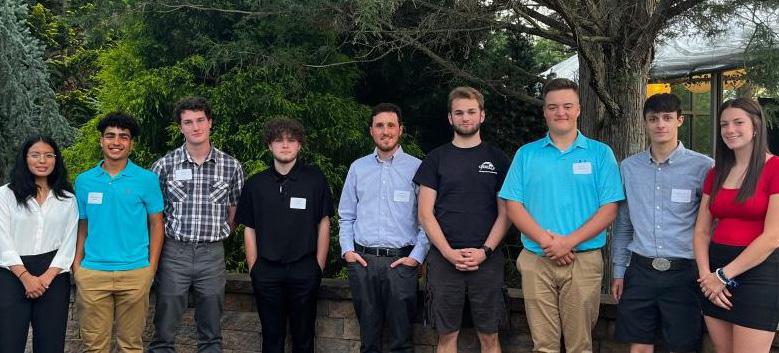
For the eighth year, the KBE Foundation has awarded its Construction Career Scholarships to 18 graduating students from the Connecticut Technical High School system and other programs, with the hopes of encouraging the state’s youth to pursue careers in the construction industry. The scholarships were presented to students at a special awards event on June 21 at Farmington Gardens in Farmington.
Guest speakers at the event included Robert G. Dunn, Esq., vice president of KBE Building Corporation and chair of the KBE Foundation; Chris Fryxell, president of the Associated Builders & Contractors of Connecticut; and Connecticut State Representative Francis Cooley (22nd Assembly District).
While most scholarships are typically earmarked for college tuition, the KBE Foundation’s Construction Career Scholarships can be used to pay for the
costs of post-high school education programs, certifications, and tools needed in the pursuit of a construction career. These programs include training
AIA CT Awards Women in Architecture
continued from page 27
recipient is Laura Bedus, AIA, WELL AP, NOMA, JCJ Architecture.
“Both Cassie and Laura exemplify dedication and passion in their respective roles within the architectural community,” said Calabro. “Cassie’s commitment to mentoring and bridging the gap between professionals and students is truly inspiring. Her involvement in NOMA CT and various DEI initiatives showcases her unwavering support for inclusivity in architecture. Likewise, Laura’s active
participation in NOMA CT, her role as co-chair for the AIA CT Emerging Professionals Community, and her commitment to meaningful growth and development within her firm demonstrate her relentless drive to create networking and mentoring opportunities for emerging professionals.
Both women are shining examples of the positive impact individuals can have in their field and in fostering an inclusive and supportive environment.”
programs in carpentry, electrical, mechanical, and plumbing trades, certification classes for state licensure, as well as 2- and 4-year degree programs in construction management.
“The construction industry in Connecticut and across the nation is facing a dire shortage of qualified workers, from trade craftworkers to construction project managers and superintendents,” explained Dunn. “At KBE, we believe we have a responsibility to encourage young women and men to pursue construction careers and help ensure a solid workforce for the future. One challenge is convincing students and their families that a construction career can be highly rewarding, both financially and personally.”
This year’s recipients include:
• Joseph Bernardo, Brookfield, Conn.: Abbott Technical High School (Electrical trade)
• Madilynn Boark, Ansonia, Conn.: Wilcox Technical High School (Electrical/Low-Voltage trade)
• Brady Doherty, Torrington, Conn.: Wolcott Technical High School (Plumbing trade)
• Brian Gregory, Woodbridge, Conn.: O’Brien Technical High School (Electrical trade)
• Kyle Hood, Wallingford, Conn.: Wilcox Technical High School (Carpentry trade)
• Jazmin Morales, Waterbury, Conn.: Kaynor Technical High School (Electrical trade)
• Thiago Nascimento, Danbury, Conn.: Abbott Technical High School (HVAC trade)
• Gael Negreros, Hartford, Conn.: AI Prince Technical High School (Plumbing trade)
• Luke Newton, Madison, Conn.: Central Connecticut State University (Construction Management)
• Brandon Nemcik, Torrington, Conn.: Wolcott Technical High School (Mechanical, Electrical, Plumbing trades)
• Christopher Nunez, Danbury, Conn.: Abbott Technical High School (HVAC trades)
• Hunter Perkins, Windham, Conn.: Windham Technical High School (HVAC trades)
• Ryan Prendergast, Southbury, Conn.: Bristol Technical High School (Welding/Plumbing trades)
• Steve Seara, Bridgeport, Conn.: Bullard Technical High School (Electrical trade)
• Drew Vanner, Torrington, Conn.: Ellis Technical High School (Carpentry trade)
• Jillien Yezierski, Berlin, Conn.: Goodwin Technical High School (Electrical trade)
• Janae Yumiceba, Ansonia, Conn.: O’Brien Technical High School (HVAC trades)
• Fanny Zhinnin, Danbury, Conn.: Abbott Technical High School (HVAC trade/Electrical Engineering)
In all, the KBE Foundation has awarded $132,000 to 119 graduating technical high school seniors and other Connecticut students pursuing construction careers since launching the scholarship program in 2015.

www.high-profile.com July 2023 38
Scholarships of $1000 were awarded to support the students’ career goals in the construction industry.
Send an email to us at previews@high-profile.com with the words “add to fastfacts” in the subject line. www.high-profile.com STAY CONNECTED!
Organizations and Events
ACE Mentor Program of Greater Boston Holds Networking Event


Boston – ACE Mentor Program of Greater Boston held its 9th annual ACE Networking Event on June 22 at the Artists for Humanity Epicenter.

This year, ACE awarded the largest amount in scholarships since its inception, totaling $210,000, to 30 high school

This year, ACE awarded the largest amount in scholarships since its inception, totaling $210,000, to 30 high school seniors in the Class of 2023. Varying from $1,000 to $20,000, the scholarships awarded to participating students in the Greater Boston area will support their college, university, or trade school education in these fields.
seniors in the Class of 2023. Varying from $1,000 to $20,000, the scholarships awarded to participating students in the Greater Boston area will support their college, university, or trade school education in these fields.
Following two years of remote learning, students were able to return to hands-on, in-person sessions for their desired professions this past fall during the 2022-2023 school year. The students worked with their mentors to design emergency shelter sites for the aftermath of a hurricane in Boston, and each team created a unique response to the design prompt. As part of a strategic plan to grow, ACE added two new sites this school year: PCA Design in Cambridge and Roxbury Community College.
ACE relies on the support of partners and donors that help provide the resources for students to learn and experience the architecture, construction, and engineering industries first-hand. After years of supporting the mission of ACE, Boylston Properties offered to up the ante with a commitment of $125,000 over the course of five years, making Boylston
www.slchassesteelfab.com

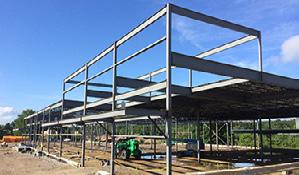
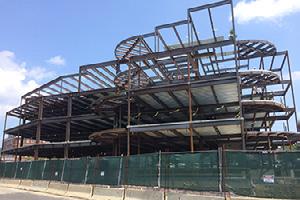
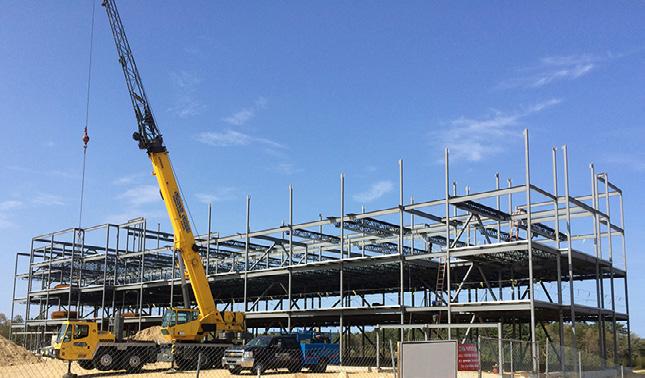
Email: info@slchassesteelfab.com


Properties the official “Presenting Sponsor” of the ACE Networking Event in 2023 for the second year.
This year, ACE also partnered with the National Organization of Minority Architects’ Boston Chapter (bosNOMA) where they provided a series of workshops on careers in design.
“We’re beyond grateful for our industry partners, both as funders and as mentors, giving ACE students a multitude of reasons to return year after year,” said Jennifer Fries, executive director of ACE Mentor Program of Greater Boston.
“Without the longstanding relationships and positive influence from our sponsors, making 2023 a milestone year for our scholarship program, we would not be able to impact as many students as we have and will continue to do so.”
ACE was recognized this year with the Commonwealth Award by the Boston Society for Architecture. The ACE Mentor Program has awarded $1,267,500 in college and trade school scholarships since its creation in 2007.
Ph: 603-886-3436
Fax: 603-881-9953
www.high-profile.com July 2023 39
8 Chris�ne Drive, Hudson, NH 03051
AISC Cer�fied Fabricator & Erector
Structural Steel | Miscellaneous Metals | Fabrica�on | Erec�on
Proud Members of:
People
Gilbert Earns LEED Green Certification
Concord, NH – North Branch Construction announced that Susane Gilbert, project manager, has recently received the LEED Green Associate credential from the U.S. Green Building Council (USGBC). According to the USGBC, LEED Green Associates are equipped with the knowledge and skills necessary to promote and implement green building practices within the workplace and community.
Two Promoted to Leadership Team
Gilbert
“Since Sue joined North Branch Construction in 2022, she has worked diligently to expand her industry knowledge and skill set to address the needs of our clients and our company,” said Joseph H. Campbell, North Branch Construction president. “Attaining LEED Green Associate credentials is an important and valuable contribution that Sue has made to the quality of the services North Branch Construction provides our clients.”
DEW Construction Welcomes Two
Williston, VT – DEW Construction announced it recently welcomed Senior Estimator Keith St. Sauveur and Senior Superintendent Mike Tremblay.
St. Sauveur has nearly 34 years of construction estimating experience, including government/municipal structures, office buildings, higher education structures, healthcare facilities, wastewater and water treatment, infrastructure, and heavy construction projects, including dams and building restorations. He has spent 30 years as a senior estimator for various construction companies in northern New England. For the past three years, he has been a senior estimator for a general contractor in Florida, working on high-speed train stations, parking garages, and educational facilities.
As part of DEW’s Williston preconstruction and estimating team, St. Sauveur will oversee all components of the firm’s preconstruction services, from preparing comprehensive estimates to working with clients and the entire project team to guarantee all commitments and
promises for every project.
Tremblay has over 30 years of industry experience, overseeing projects ranging in size and complexity, from public and private schools to institutional buildings and multi-family housing. He is OSHA 30, CPR, and First-Aid certified.

He will be responsible for overseeing the campus revitalization project at Crotched Mountain School in Greenfield, N.H. He will manage, coordinate and oversee the work of the DEW field staff and subcontractors, and will be responsible for all production aspects of the work in a timely and cost-effective manner and for maintaining a work environment that is safe and orderly.
Weston & Sampson Hires Millonig


Boston – Weston & Sampson recently welcomed Joshua Millonig, RLA to the firm as a senior project manager in its Design Practice in Boston.

He brings to the role over 16 years of experience as a landscape designer. His work includes small urban pocket parks up to large athletic complexes. He is adept at implementing landscapes that integrate existing features, new development, and compelling designs for public and private
Millonig
Hooksett, NH – PROCON has named Michael Yeatman and James Grant, PE as new members of the company’s leadership team, joining Managing Directors John Stebbins and Jennifer Stebbins Thomas and Co-Presidents James Loft, AIA, and Lance Bennett and the rest of the corporate team. Yeatman and Grant have a combined 34 years of experience in the AEC industry.
Yeatman is PROCON’s vice president of construction with 12 years of service at the company, offering extensive knowledge and experience in field and project management of large commercial construction projects. His expertise is with PROCON’s Design-Build delivery method and ensuring a smooth project delivery for clients.
Grant is vice president of construction at PROCON and entering his second year with the company. Leveraging his experience as both a structural engineer

and construction manager, representatives of the firm say he is known for his ability to multitask complex, multimillion-dollar projects with an eye toward the crucial details contributing to project excellence.
“We could not have chosen two more qualified people to receive this promotion,” said Jennifer Stebbins Thomas. “They have earned the respect of their colleagues and our clients and have been a big part of our success over their tenure. We are thrilled to have their ideas, skills, and creativity added to our leadership team.”
Lauring Names Three New Owners
sector clients. His designs focus on creating elegant and usable spaces that enrich the lives and communities of the surrounding area.
At Weston & Sampson, Millonig will be working with the firm’s clients to provide high quality design solutions and complete project services for a wide range of project types. He is a Registered Landscape Architect and a LEED Accredited Professional.
Worcester, MA – Celebrating its 75th anniversary, Lauring Construction announced it has named three new owners of the company. Actively involved with the day-to-day operations of the firm since 2010, the third generation – Dan, Mike, and Chris Lauring – will join John and Jim Lauring as owners.
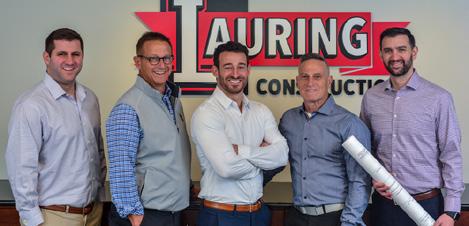
Dan Lauring joined the company in 2007. His work includes overseeing a seven-phase renovation of Lombard Dining Hall for Nichols College in Dudley. In addition to the interior renovations, new construction included an addition to the front main entrance and raising the roof structure by two stories to create an atrium-like space with a cathedral ceiling. Lauring was able to keep the dining hall open for business every day of the school year throughout the four-and-a-halfyear project. Lauring Construction has worked with Nichols College since 2006, completing more than 20 projects.
Mike Lauring joined the company in 2010. He was one of the project managers

on a 3-story, 41,000sf Health Sciences Building with an accompanying 2-story parking garage for Assumption University in Worcester. Lauring Construction has worked with Assumption University for more than 40 years. Other projects include the 64,000sf Tsotsis Family Academic Center and the Tinsley Campus Ministry Center (an addition to the Chapel of the Holy Spirit).
Chris Lauring worked summers and school breaks as a laborer and carpenter for the company from 2005 through 2011 before being promoted to project manager. Recently, he oversaw the construction of eight new buildings for Amego, Inc., an organization that supports people with autism and other developmental disabilities that has worked with Lauring Construction for five years. The project consisted of six group homes (3,600sf each) that collectively house 42 people. Additionally, Lauring built a 2,800sf community center, 1,000sf maintenance garage, playground, half basketball court, and campus-wide walking path.
www.high-profile.com July 2023 40
Yeatman Grant
Send your personnel announcements to editor@high-profile.com.
St. Sauveur Tremblay
Chris Lauring, Jim Lauring, Mike Lauring, John Lauring, and Dan Lauring
Photo by Edd Cote Photography
Suffolk Hires Roeder


Boston – Suffolk announced the addition of Suzanne Roeder to its executive leadership team as chief growth officer.

In this new role, Roeder will ensure alignment of vital business functions and oversee the Strategy, Business Development, Marketing, People and Culture, and IT teams to define and drive Suffolk’s strategy in support of its growth goals. She will report to Suffolk chairman and CEO, John Fish.
Roeder will guide the connectivity of regional-specific strategies in partnership with regional and center of excellence
ULI Appoints new Chief Strategy Officer

leadership to continue expanding Suffolk’s diverse portfolio of work nationally across highgrowth sectors including life sciences, higher education, aviation, mission critical and government buildings.
Representatives of the company say Roeder’s experience with companies that lean into technology in combination with her impressive background in operations will provide the necessary multidisciplinary understanding and approach to propel Suffolk toward its commitment to redefine what it means to be a builder.
TFMoran Welcomes Hopson
Bedford, NH – Mahreana Hopson, PE has joined TFMoran as a structural project manager in the Bedford office. She is a licensed Professional Engineer in the states of Connecticut and New Hampshire.
Washington – The Urban Land Institute (ULI) has announced the appointment of Skip Spriggs as chief strategy officer. In this role, Spriggs will help identify ULI’s strategic opportunities and priorities to chart the next chapter of the organization’s growth trajectory.
He has served in senior business roles at numerous Fortune 500 companies for over three decades, specializing in diversity and inclusion, executive and human resources leadership, and corporate board diversity.

“I’ve long admired ULI for its ambition
and transformative mission,” Spriggs said. “Together with my colleagues on the senior leadership team, we will deliver a strategic plan that represents the goals of our membership, building upon a successful 80-year legacy. Deepening all aspects of collaboration and engagement with our global members will be critical to this process – the strategic plan will be developed by members and for members, with the ultimate objective to add value to their daily professional lives both now and for years to come.”
Petersen Achieves CPSM Designation
Hopson
Hopson’s recent experience includes management, design, and documentation of multi-story steel structures with concrete foundations, including occasional mass timber and masonry elements at a national AEC firm. Major projects include new and existing structures in the private and public education, corporate, and healthcare markets.
ReArch Company Welcomes Gardner
Lebanon, NH – ReArch Company announced the hiring of Jim Gardner, CPE, LEED AP, as a senior estimator. Gardner will work out of the company’s office in Lebanon, N.H.
In his new role, Gardner will provide leadership and guidance to the estimating department and work with the field teams to ensure that all services meet the client’s expectations and are consistent
Gardner
with ReArch standards. He will collaborate with the architect, engineers, and owner teams to understand the design intent, programming, and the full scope of work to estimate the project successfully.
Gardner brings 40 years of estimating and construction expertise with project experience throughout New England.
Weyant Joins Amenta Emma Boston
Boston – Amenta Emma Architects recently announced the addition of Eric Weyant as principal in its Boston office.

The announcement was made by Anthony Amenta, AIA, founding partner, and Beth Pearcy, AIA, CPHC, LEED AP BD+C, Boston studio director. Weyant will be responsible for developing and supporting Amenta Emma’s relationships within Boston and the broader New England market.
Weyant’s experience includes work on mixed-use/multi-family, commercial workplace and lab, student residences, and hospitality projects, all of which support the firm’s key market sectors of academic, commercial, senior living, multi-family residential and workplace design. He
has led the design of significant projects for Boston Properties, Bozzuto, The Bulfinch Companies, Gerding Edlen (now The Green Cities Company), MSCBA, and Skanska in his past role as principal with Stantec.
South Windsor, CT – Nichole D. Petersen, director of marketing for Flow Tech, Inc., earned the designation of Certified Professional Services Marketer (CPSM) in March. She is among a growing number of professionals to be certified by the Society for Marketing Professional Services (SMPS), which advocates for, educates, and connects leaders in the design and building industry.
CPSMs are recognized as having the experience and knowledge to generate profitable business in the architectural, engineering, and construction marketplace. To achieve this designation, certification candidates must meet educational and experience requirements, pass a written examination, and pledge to abide by the CPSM Code of Ethics.
Takoudes Joins Tsoi Kobus Design
Boston – Tsoi Kobus Design recently announced the addition of George Takoudes, AIA, LEED AP, to its senior leadership team.

Takoudes brings over 25 years of experience and a portfolio of significant projects for clients that include DanaFarber Cancer Institute, Brigham & Women’s Hospital, Harvard University, Northeastern University, and the University of Massachusetts.
“The addition of George to our senior leadership team will fortify the principallevel attention we have delivered to our
clients for the last 40 years – an essential component of the Tsoi Kobus value proposition,” said Rick Kobus, founding partner and senior principal.
“George’s experience with highlevel, complex design projects spans all three of our primary practice areas. He has cultivated exceptional client relationships throughout his career through his strong commitment to missiondriven architecture. I look forward to collaborating with George on current and future projects in the coming years.”
Fitzemeyer & Tocci Welcomes Khaliqi
Weyant
“We are very excited to announce Eric’s arrival at Amenta Emma’s Boston office. His proven performance as a respected leader, thoughtful designer, and dedicated client advocate aligns with our core values. Eric’s substantial experience with permitting large Boston projects and his portfolio of multi-family and core and shell commercial projects will enhance our capabilities locally and beyond,” said Amenta.
Woburn, MA – Fitzemeyer & Tocci Associates, Inc. (F&T) announced the appointment of Abdullah Khaliqi, PE, CPQ as a shareholder. With this new role, Khaliqi joins Ted Fitzemeyer, Scott LeClair, Jason Butler, Terry Boland, Cathleen Jamieson, and Matt Merli as shareholders of the firm.

Khaliqi, currently a principal and market leader overseeing F&T’s academic market, brings over 20 years of experience in the design and management of electrical systems. He joined F&T in 2015 as an
electrical project engineer. Ted Fitzemeyer, CEO of F&T, said, “I am pleased to see Abdullah take on an increased leadership role in the future of F&T. His embodiment of our core values — Respect, Resourcefulness, and Reliability — is evident in his work. His dedication and expertise have been vital to our growth. Abdullah’s position as a shareholder reflects his immense value to our organization and his commitment to driving excellence in the engineering community.”
www.high-profile.com July 2023 41
High-Profile: People
Roeder
Spriggs
Petersen
Takoudes
Khaliqi
BSLA
July 11 at 5:00 PM
Inside/Out: Boston City Hall Plaza
Now in its fourth year, “Inside/Out” is an ongoing series of landscape architecture site tours across the region, prioritizing issues of climate and health, equity and resilience. The 2023 series continues at Boston City Hall Plaza where participants will explore the design and details of the newly renovated plaza, with a special focus on green infrastructure. The walking tour will begin at 5:00 p.m. on the Plaza at “Speaker’s Corner.” Tickets are free, but attendance is limited, so participants are asked to sign up online.
NAIOP MA
July 19 at 3:30 PM
Union Square & Boynton Yards Walking Tour
After years of community planning and significant investments in infrastructure and transit, Somerville’s Union Square and Boynton Yards are becoming the newest hub for life sciences innovation and creative ingenuity. Join NAIOP to learn more about how US2, Leggatt McCall Properties and DLJ Real Estate Capital Partners are strengthening the community, and tour new projects including 10 - 50 Prospect, part of the USQ master plan, as well as 101 South, 808 Windsor, and The Hive at the Boynton Yards master site.
ULI Boston

July 19 at 5:30 PM
2023 Summer Social
This event will be held at SIP in the heart of Downtown Boston at Post Office Square. Attendees are invited to share a drink and a bite to eat while catching up with ULI friends and contacts.
IIDA NE
July 20 at 4:00 PM
2023 Block Party
The IIDA New England EDI and Sponsorship Committee announce the second annual IIDA New England Block Party. The purpose of this event is to create a cultural gathering which celebrates design, multicultural cuisines, and music, while supporting local minority-owned businesses; in tandem, giving chapter sponsors and all other A+D companies in the community the opportunity to showcase products with a recommended emphasis on lines created by minority designers. Each admission ticket includes one food voucher per food truck.

ISPE Boston

July 24 at 12:00 PM
WIP 9-Hole Golf Tournament
The Women in Pharma’s 9-hole golf tournament will take place at the Robert T Lynch Golf Course in Brookline, Mass. Register in advance to purchase a foursome, twosome, contest hole sponsorship, and/or cocktail hour or logo sponsorship.
Next Issue
BSA
July 27 at 6:00 PM
Going Big with Climate Action
An amendment to the City of Boston’s Building Energy and Reporting Disclosure Ordinance, known as BERDO 2.0, will require large existing buildings to move from energy reporting and disclosure, to reducing greenhouse gas emissions to net zero by 2050. Participants of this event are invited to join the COTE and The BEC at The Boston Society of Architects to hear Dr. John Straube, Ph.D., P.Eng., principal and senior building science specialist, RDH Building Science, speak on lowcarbon design and retrofits for Boston’s larger buildings. Straube will touch on examples from other jurisdictions and discuss challenges and solutions for a range of complex projects.
AGC MA
July 31 at 8:00 AM
2023 Annual Golf Classic
This day of golf will be held at The Cape Club of Sharon in Sharon, Mass. Registration includes breakfast, golfer gifts, 18 holes, free beverage carts, a luncheon after the round, and the opportunity to win prizes through contests/raffles. The tournament is expected to sell out, so early registration is encouraged.

NAIOP MA
August 1 at 4:30 PM
Boat Cruise 2023
Connect with friends and colleagues
Retail and Hospitality
while enjoying the view of Boston’s everchanging waterfront on the decks of the NAIOP Harbor Cruise. The evening will include food, drinks, DJ entertainment and a variety of onboard activities. As part of the event, NAIOP is partnering with Heading Home to hold a fundraiser to help families buy back-to-school items. All attendees are asked to participate.
BE+
August 9 at 5:00 PM
Summer Shindig
Participants of this first-ever Summer Shindig are invited to come out to Portico Brewing’s Taproom in Somerville, Mass. and raise a glass to the local green building community. Meet and greet with the leaders, aspiring leaders, and emerging professionals driving the sustainability of the built environment. Meet and connect with BE+ members and potential members, board members, staff, and the larger BE+ community. The event will include learning more about BE+’s six thriving topic communities.
ABC NH/VT

August 10
NH Seacoast Harbor Cruise
This year’s Seacoast Harbor Cruise will be aboard the Isles of Shoals Steamship Company’s M/V Thomas Laighton Boat in Portsmouth, N.H. The event will include heavy appetizers and a cash bar.
If you have completed or are working on any of the following types of projects, this next issue is for you!

• Hotels

• Shopping Centers
• Restaurants
• Music and Theatre Venues

• Sports Complexes
Send us news of your firm’s current project(s), share your insight or advertise your services specific to these industries.


www.high-profile.com July 2023 42
Calendar
Editorial submissions are shared on HP’s daily newsfeed, weekly e-newsletter FastFacts Friday, as well as the High-Profile Monthly print and digital edition. Selected submissions are also posted to HP’s Facebook page, Twitter, and LinkedIn. To submit content, email editor@high-profile.com. For advertising queries, email ads@high-profile.com. AUGUST ARTICLE SUBMISSIONS AND AD RESERVATIONS ARE DUE JULY 24
Shawmut Design and Construction recently completed renovations of public spaces and amenities at Four Seasons Hotel Boston. Read the full story in our next issue.
Photo by Read McKendree




www.high-profile.com July 2023 43 Visit WePlugYouIn.org to find a contractor today! Ready to go electric? As the demand for electric vehicles surges, so does the need for efficient and reliable charging infrastructure. We have the expertise and training to install and maintain the complex electrical system. By working with our contractors, you’ll benefit from: Competitive pricing and reliable service Access to the latest technology and equipment High-quality workmanship and attention to detail Expertise in EV infrastructure NECA contractors and IBEW Local 103 members are ready to plug you in! Best trained and highly-skilled workforce
PER MEABLE without compromise

Designing to be environmentally friendly doesn’t mean you have to compromise your vision.
With a variety of sizes, colors, and finishes available in the Unilock permeable paver collection, you can create sustainable stormwater management solutions that seamlessly coordinate with your designs. Incorporate these systems into new developments or retrofit existing o ces, condos, retail spaces and more.


We will work closely with you to make your vision a reality.
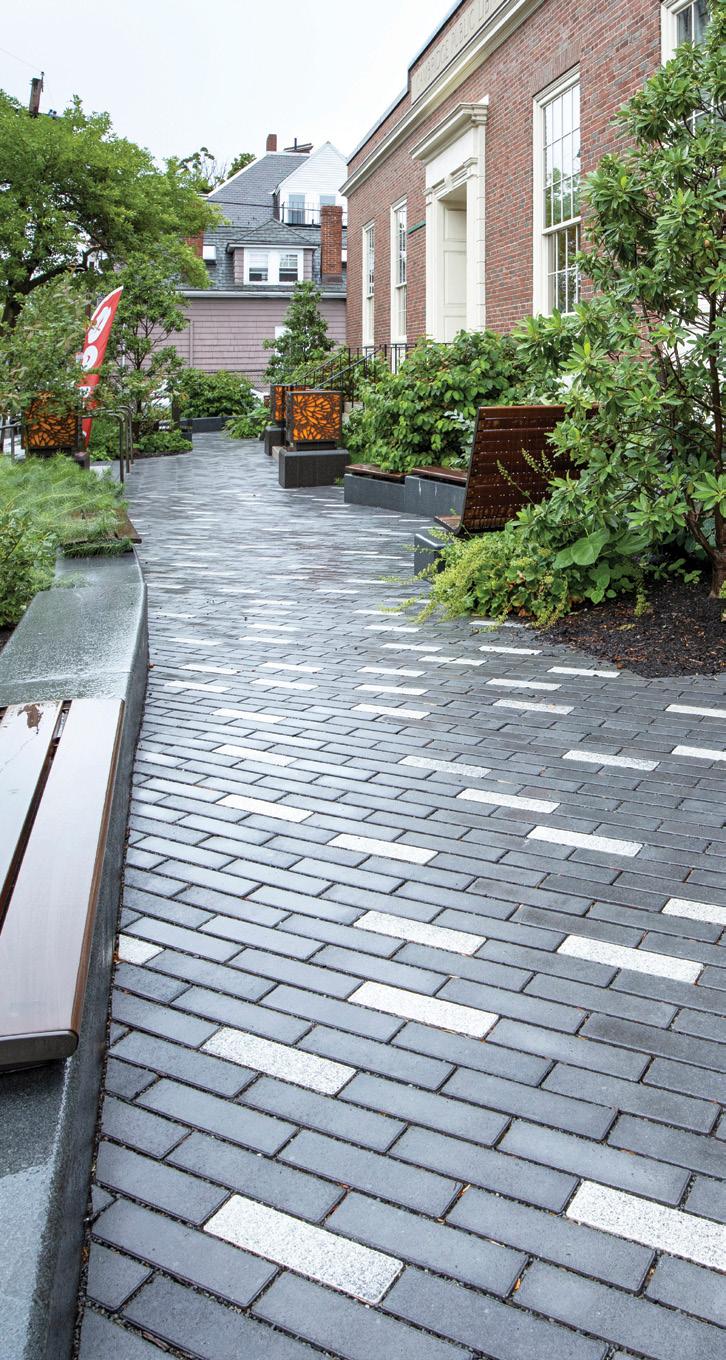
July 2023 PROJECT Cambridge Library –O’Connell Branch. Cambridge, MA. DESIGN Anjali Joshi Design & Virginia Stewart Design. PRODUCT Permeable
Rain water naturally fl ows
CONTACT US FOR SAMPLES, INFORMATION, & CEU SEMINARS
Planks with Umbriano™ finish in Midnight Sky & Winter Marvel.
between the paver joints and into the sub-base, reducing runo .
UNILOCK.COM | 1-800-UNILOCK