September 2025
42
Trends and Hot Topics
Ask the Electrician: How Do Electricians Use Thermal Imaging?
By Brian Leborgne Thermal imaging cameras are a valuable tool for modern electricians. Using infrared thermography, these cameras can safely and accurately diagnose electrical problems by detecting excessive heat, a common cause of damage to electrical components. Licensed electricians and thermographers use thermal imaging as part of a structured maintenance program. For example, they can scan a circuit breaker to check for loose connections, identify issues with breaker contacts that generate hotspots, or assess if the load on the breaker is properly balanced. After resolving any diagnosed problems, they use thermal imaging again to verify the effectiveness of the repair. Thermal imaging also offers several advantages over traditional physical contact measurement techniques, which often require power to be shut off for safety reasons. With thermal imaging,
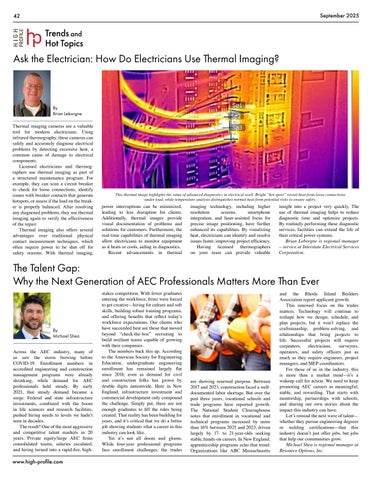
This thermal image highlights the value of advanced diagnostics in electrical work. Bright “hot spots” reveal heat from loose connections under load, while temperature analysis distinguishes normal heat from potential risks to ensure safety.
power interruptions can be minimized, leading to less disruption for clients. Additionally, thermal images provide visual documentation of problems and solutions for customers. Furthermore, the real-time capabilities of thermal imaging allow electricians to monitor equipment as it heats or cools, aiding in diagnostics. Recent advancements in thermal
imaging technology, including higher resolution screens, smartphone integration, and laser-assisted focus for precise image positioning, have further enhanced its capabilities. By visualizing heat, electricians can identify and resolve issues faster, improving project efficiency. Having licensed thermographers on your team can provide valuable
insight into a project very quickly. The use of thermal imaging helps to reduce diagnostic time and optimize projects. By routinely performing these diagnostic services, facilities can extend the life of their critical power systems. Brian Leborgne is regional manager – service at Interstate Electrical Services Corporation.
The Talent Gap: Why the Next Generation of AEC Professionals Matters More Than Ever
By Michael Shea Across the AEC industry, many of us saw the storm brewing before COVID-19. Enrollment numbers in accredited engineering and construction management programs were already shrinking, while demand for AEC professionals held steady. By early 2021, that steady demand became a surge. Federal and state infrastructure investments, combined with the boom in life sciences and research facilities, pushed hiring needs to levels we hadn’t seen in decades. The result? One of the most aggressive and competitive talent markets in 20 years. Private equity/large AEC firms consolidated teams, salaries escalated, and hiring turned into a rapid-fire, high-
www.high-profile.com
stakes competition. With fewer graduates entering the workforce, firms were forced to get creative—hiring for culture and soft skills, building robust training programs, and offering benefits that reflect today’s workforce expectations. Our clients who have succeeded best are those that moved beyond “check-the-box” recruiting to build resilient teams capable of growing with their companies. The numbers back this up. According to the American Society for Engineering Education, undergraduate engineering enrollment has remained largely flat since 2018, even as demand for civil and construction folks has grown by double digits nationwide. Here in New England, infrastructure investment and commercial development only compound the challenge. Simply put, there are not enough graduates to fill the roles being created. That reality has been building for years, and it’s critical that we do a better job showing students what a career in this industry can look like. Yet it’s not all doom and gloom. While four-year professional programs face enrollment challenges, the trades
are showing renewed purpose. Between 2017 and 2023, construction faced a welldocumented labor shortage. But over the past three years, vocational schools and trade programs have reported growth. The National Student Clearinghouse notes that enrollment in vocational and technical programs increased by more than 16% between 2021 and 2023, driven largely by 17- to 21-year-olds seeking stable, hands-on careers. In New England, apprenticeship programs echo that trend: Organizations like ABC Massachusetts
and the Rhode Island Builders Association report applicant growth. This renewed focus on the trades matters. Technology will continue to reshape how we design, schedule, and plan projects, but it won’t replace the craftsmanship, problem-solving, and relationships that bring projects to life. Successful projects still require carpenters, electricians, surveyors, operators, and safety officers just as much as they require engineers, project managers, and MEP coordinators. For those of us in the industry, this is more than a market trend—it’s a wakeup call for action. We need to keep promoting AEC careers as meaningful, stable, and rewarding. That starts with mentorship, partnerships with schools, and sharing our own stories about the impact this industry can have. Let’s remind the next wave of talent— whether they pursue engineering degrees or welding certifications—that this industry doesn’t just offer jobs, but jobs that help our communities grow. Michael Shea is regional manager at Resource Options, Inc.