DECEMBER 2026
SOCIAL HEALTH IS A CORE PART OF OUR OVERALL WELLBEING Expert insight into the growing importance of fostering real-life connections
PATIENT SAFETY IS THE CORNERSTONE OF THE PHARMACEUTICAL INDUSTRY Tata Consultancy Services’ Sanjeev Sachdeva on why human oversight is indispensable in pharmacovigilance
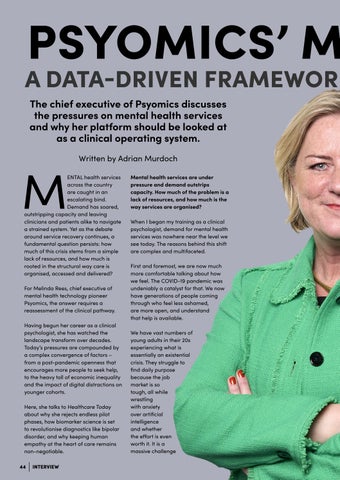
A DATA-DRIVEN FRAMEWORK FOR MENTAL HEALTHCARE Psyomics’ Melinda Rees on the presssures being felt by mental health services
www.healthcaretoday.com
WELCOME
DECEMBER 2026
We know that getting out and about, seeing friends and family can be good for us. But there is a growing understanding of just how vital social connections are for our general health and longevity. The World Health Organization calls the consequences of social disconnection “severe”, and research links loneliness and isolation to heart disease, stroke, cognitive decline and slower recovery from surgery.
28-31
Healthcare Today’s senior writer Katie Heslop hears from loneliness charity Together Co, mental health specialists Mind and Kooth, and Robin Dunbar, emeritus professor of evolutionary psychology at Oxford University, on why connection matters for our health, how social prescribing in the NHS 10 Year Health Plan could help, and where digital support fits in. Also in this issue, Sanjeev Sachdeva, global head of life sciences at Tata Consultancy Services, explains that becoming AI-native does not mean relinquishing internal governance; Psyomics CEO Melinda Rees discusses the pressures on mental health services and why her platform should be looked at as a clinical operating system; and much more...
34-37
Tell us your news: Adrian Murdoch, Editor-in-Chief adrian.murdoch@healthcaretoday.com Katie Heslop, Senior Writer katie.heslop@healthcaretoday.com Julie Penfold, Senior Writer julie.penfold@healthcaretoday.com Glen Ferris, Managing Director glen.ferris@healthcaretoday.com To download a copy of our media pack, click here.
44-47
BIOTECH VENTURE CAPITAL HEADS FOR RECORD YEAR BRITISH biotech venture capital investment reached £270 million, up 44% from £187 million in the third quarter of last year, according to new figures from the BioIndustry Association (BIA), as the sector heads for its best year since 2021. While the quarter for biotech venture investment fell below the second quarter (£2.1 billion), which was dominated by Isomorphic Labs’ £1.6 billion Series B financing, this quarter-on-quarter drop is in line with broader UK venture investment trends. This takes the sector’s total venture investment for the year so far to £2.8 billion, already more than in any full year from 2022 to 2025. The record year for UK biotech venture fundraising was 2021, when £3 billion was raised. However, 2026 has been boosted by Isomorphic’s £1.6 billion raise and CellCentric’s £163 million raise, both in the second quarter. Basecamp Research led the quarter with a £104 million Series C, which it will use to train its next generation of AI models and propel AI-designed medicines towards the clinic. NVIDIA, which counts Basecamp among the UK start-ups it backs, announced new planned investments in two more London AI biology companies this month. This is a strong indicator that the UK is where life sciences and AI come together, validated by big pharma and big tech piling into the market. UK biotech raised £421 million in total equity in the third quarter, up 113% on the same period last year (£198 million). The UK has again retained its position as the top destination for venture capital investment, raising 26% of the European total, which came to £1.1 billion. Follow-on financing reached £151 million, but Silence Therapeutics’ £130 million NASDAQ raise accounts for most of that. The UK biotech IPO winter has also continued, with no IPOs for 17 quarters. “The pattern this year is clear: UK science attracts expert global capital, but we are missing an opportunity to see returns recycled in our own ecosystem, because too few British investors are taking part. This is true in both private and public markets,” said BIA chief executive Chris Molloy. “Our focus is on making sure companies at all stages of development can access the finance they need to grow, and that the UK benefits from the upside. Government has a vital role to play in getting the environment right for that, and in incentivising wealth creators to recycle their gains.” 4
NEWS
GOVERNM ON COSME by Adrian Murdoch, Editor-in-Chief
A
LTHOUGH the government’s new legislation includes restrictions on high-risk procedures, some within the industry say that it doesn’t go
far enough.
In moves that have been welcomed by the health sector and lawyers, the crackdown on cosmetic cowboys has intensified as the government announces new restrictions on cosmetic procedures, including liquid Brazilian butt lifts (BBLs), vampire facials and chemical peels, to qualified healthcare experts only. Under the new rules, anyone carrying out the highest-risk cosmetic procedures will need to be a qualified, trained and regulated professional. Fillers injected into parts of the body other than the face, including liquid BBLs, would be legally defined as cosmetic surgical procedures, meaning only doctors could perform them. High-risk non-surgical or wellbeing treatments, including deep chemical peels, vampire facials, dermal micro-coring and some laser procedures, would also be restricted. The new rules will also close a dangerous loophole that has seen ill-qualified practitioners working out of hotel rooms performing highrisk procedures without regulatory oversight. Breaking the rules could see providers being hit with unlimited fines, or fixed penalties up to £4,000. “We want to drive cosmetic cowboys out of the market and raise standards across the board, giving reputable businesses a fair chance to thrive by helping people identify safe, qualified providers they can trust,” said health minister Karin Smyth. “I believe this is a vital step towards the required regulation and commend the
government for on,” said Victori sustainability offi Council.
“Their assuranc ‘lower risk’ trea welcomed as a the highest stan care across the she said.
“It’s good to see on this. At the m a syringe of fille public, whether training.”said M Surgery Solicito
“We see the con work; the peopl serious physica with large bills
MENT CRACKS DOWN ETIC SURGERY
r tackling this issue headia Brownlie, chief policy and fficer at the British Beauty
ce that a licensing scheme for atments will follow is also much vital turning point to ensure ndards of competence and e beauty and aesthetics sector,”
e the government finally acting moment, anyone can pick up er and treat a member of the r or not they have any medical Michael Saul, partner at Cosmetic ors.
nsequences regularly in our le we act for are often left with al injuries, and many are also left for corrective treatment.”
“The broad direction of travel has been clear since the Health and Care Act 2022 and subsequent consultations. What is interesting is that we are now seeing greater detail about how the highest-risk procedures may be regulated in practice,” added Mike Clifford, corporate partner and head of private health and care at Weightmans. But there is a sense that the legislation does not go far enough. “The proposals do not go far enough to protect patients undergoing cosmetic surgery. If the Government strengthens regulations for nonsurgical procedures while leaving cosmetic surgery largely unchanged, it will create an unacceptable gap in patient protection,” said Keith Allison, cosmetic surgery co-lead at the Royal College of Surgeons of England. There were also questions of how much of a deterrent the financial penalties would be.
“I welcome the new criminal offences, but I’m not sure a fine of up to £4,000 reflects the harm these treatments can cause. Rogue operators can make that much in a weekend, so some may simply treat it as a cost of doing business,” said Saul. “The rules will only work if there is the funding to track these people down and take action against them. I also agree with the Royal College of Surgeons that cosmetic surgery shouldn’t end up with weaker safeguards than non-surgical treatments.” The field of cosmetic surgery regulation is changing rapidly and it will continue to change. “This is a rapidly evolving area, and whether medically qualified or not, those providing aesthetic treatments must ensure they practise safely, ethically, and in full compliance with emerging regulatory requirements,” said Natasha Ricioppo, healthcare regulatory senior associate at Keystone Law. NEWS
5
Trusted by Clinicians, Chosen by Patients Located in the Harley Street Health District, Pharmacierge supports over 4,500 GPs and Consultants with seamless, secure e-Prescribing apps tailored for private practitioners. With our state-of-the-art robotically enabled dispensary and nationwide delivery, we ensure your patients receive their medications promptly, while you prescribe with confidence - anytime, anywhere.
mPrescribe® Revolutionises private prescribing by allowing you to prescribe flexibly without a laptop, for delivery to your patients nationwide. Medication range Due to the range of specialists we support, we stock and source medication not typically found outside of a hospital setting, including refrigerated, controlled, injectable and biologic medication. Courier delivery We include same weekday delivery to London postcodes, or next weekday nationally as standard. International deliveries are also available.
"Your mobile app changed my life!"
— Dr Dominic Paviour, Consultant Neurologist
"Intuitive and secure."
— Dr Tim Wigmore, Consultant Intensivist & Anaesthetist
Join thousands of clinicians today. Download the app and register online www.pharmacierge.com/register
IMMIGRATION REFORMS WILL MAKE IT HARDER TO RETAIN CRUCIAL NHS SUPPORT STAFF NHS bosses have warned that proposals to extend waiting periods for indefinite leave would create uncertainty in the workforce and lower morale. Proposed immigration reforms would make it harder to retain experienced and skilled NHS support staff, employers have warned. Home secretary Shabana Mahmood is consulting on plans to make foreign workers wait up to 15 years to achieve permanent residency, which critics fear will create uncertainty for essential staff and their managers. The proposals, which would see the period before foreign workers can claim indefinite leave to remain increase from five to 15 years, have been described as “devastating” by Helga Pile, chair of joint health unions and head of health at UNISON. Health unions and NHS Employers, which represents leaders in the organisation, are concerned that extending the settlement pathway will make it harder to retain experienced staff and damage morale. Additional visa-related employment costs also risk placing a significant financial burden on the NHS. The government should retain the five-year settlement period for healthcare support workers and other NHS staff already living and working in the UK, the groups argue. Not only would it be “extremely unfair” to change the rules for people who have planned their lives around them, said Ben Morrin, chief executive of NHS Employers, but it would also leave NHS organisations with an “eye-watering bill” due to extra administrative and visa costs. Under the proposals, the time it would take to achieve settlement status depends on the skill level of the applicant’s job, although income is taken into account as well. Those deemed to have a ‘higher skilled’ role could be looking at ten years rather than 15, while it is slashed further for high earners. It’s also understood that doctors and nurses may settle after five years. The Home Office argues the reforms will mean settlement is earned rather than automatic. More than 200,000 responses to the consultation have been received, with final details expected later this year.
0207 631 1269 | 43A Wimpole St, London, W1G 8AQ pharmacist@pharmacierge.com
REVIEW OF HEALTH INEQUALITIES IN SCOTLAND PUBLISHED
A
S THE life expectancy gap widens dramatically in the country, fragmented and short-term funding is frustrating efforts to reduce health inequalities. Funding must be distributed more fairly in order to reduce the deeply rooted health inequalities in Scotland, the authors of a new in-depth report argue. Research by the UCL Institute of Health Equity (IHE) has reaffirmed that social factors such as income, housing, work and education determine a person’s health, alongside access to care. The report, titled A Fairer, Healthier Scotland, set out to find out why, despite Scotland’s relatively progressive policies and clear ambitions, health outcomes are still worse than in England, Wales and Northern Ireland, with stark disparities between different regions. For example, men in Scotland’s most deprived areas can expect to live 16 years fewer than those in the least deprived parts; for
by Katie Heslop, Senior Writer women, the gap is almost 14 years. Meanwhile, healthy life expectancy has fallen, with a gap of more than 20 years for men and 22 years for women between the most affluent and most deprived councils. Scotland has been badly hit by the “sluggish” recovery from the 2008 economic crisis, which has affected salaries and, in turn, living conditions, explained Michael Marmot, director of the UCL Institute of Health Equity. The pandemic, climate change and political instability of the UK government have further compounded health inequalities, he said. Exploring why health inequality persists, researchers found shortterm, fragmented funding and complex delivery arrangements waste resources and make it harder to help the people who need it most. Spending also often fails to reflect the level of need. For example, early years spending per child is about the same whether a council area has high or low child poverty.
The IHE is now working with Public Health Scotland to test new approaches to funding in three areasAberdeen City, North Ayrshire and South Lanarkshire. This includes £8m being spent in South Lanarkshire on redesigning local services to support families with young children and infants before problems reach crisis point. In Aberdeen, local data on deprivation and access to community assets is being used to assess which play areas need more investment. The authors of the report want to see funding shared more equitably between councils to reflect deprivation and further action on housing and early years support. For example, expanding home visits and health and nutrition checks for 100,000 under-fives in low-income communities could reduce the healthy life expectancy gap by 10%, the researchers found. Long-term funding must be prioritised, they add, with ten-year cycles implemented to allow for prolonged change. Further, there should be a senior health equity lead in every council, bringing in businesses and the NHS as partners. NEWS
7
FEMALE PATIENTS WITH AUTOIMMUNE DISEASES FACE LONGER DIAGNOSTIC DELAYS RESEARCHERS from the Universities of Cambridge and East Anglia (UEA) analysed the reported diagnostic experiences of 6,607 international participants with autoimmune diseases. They found that females were much more likely to face delays in getting a correct diagnosis and treatment. Almost half of female participants (43%) reported that their autoimmune symptoms had previously been misattributed to a psychiatric cause, compared with 33% of males. The study found that females were also more likely to have their symptoms misdiagnosed as being psychosomatic. This was reported by 34% of females and just 22% of males.
Primary Care, and Norwich Medical School at UEA. “Our findings highlight that psychological or mental health explanations can be given too soon. This is true for both sexes, but our study suggests that females may be particularly vulnerable to these types of misdiagnoses.”
Autoimmune diseases occur when the immune system mistakenly attacks the body’s own tissues. They include conditions such as rheumatoid arthritis, lupus and multiple sclerosis. Many autoimmune diseases are more common in females, and symptoms can affect multiple parts of the body and change over time. Initial symptoms such as fatigue, pain, sleep disturbance and low mood are common in the general population.
After the researchers took into account factors such as age, disease group, continent and household finances, they found that females were almost 50% more likely to report having received a psychiatric misdiagnosis. Almost 75% of female participants were more likely to report getting a psychosomatic misdiagnosis than males. Yet, males (48%) reported being misdiagnosed with a different physical disease more than females (44%).
Female study participants reported longer periods between the onset of symptoms and receiving their diagnosis, and required more healthcare consultations. Among males, the most frequently reported time to diagnosis was less than three months. Among females, it was one to two years.
The study was co-designed with patients, charities and clinicians and it has uncovered important parts of the diagnostic journey that are not recorded in medical records, the researchers said.
“Patients with autoimmune diseases can present with symptoms that can initially be difficult to explain medically, and sometimes it can take months or years before a diagnosis becomes clear,” said Melanie Sloan, lead study researcher from the Department of Public Health and 8
NEWS
“The differences between the sexes in misdiagnoses for people with autoimmune diseases are stark,” said Shaista Tayabali, co-author of the international study and a patient partner. “The fact that females reported higher rates of psychiatric and psychosomatic misdiagnoses than males, yet lower misdiagnoses for other physical diseases, suggests that historical gender biases
remain a challenging aspect of the diagnostic journey. Although labels such as hysteria are outdated and fortunately rarely used nowadays, as women we still often have a harder time having our symptoms believed and therefore addressed accurately.” The study authors added that the high rates of reported psychiatric, psychosomatic and alternative physical misdiagnoses among both sexes reflect the difficulty of diagnosing autoimmune diseases. Researchers are calling for doctors to consider autoimmune diseases before any psychiatric or psychosomatic diagnoses are given. “This is not about saying that a psychiatric diagnosis is never correct,” said David D’Cruz, consultant rheumatologist at Guy’s Hospital. “People can have both autoimmune and psychiatric conditions, and it is increasingly understood that psychiatric symptoms can be part of an autoimmune disease, especially in diseases like lupus, which can directly affect the brain. They can also be a very natural response to living with life-changing illnesses,” he said. “The important message is that when symptoms persist, evolve or involve multiple symptoms, clinicians must be open-minded and consider whether there is an underlying autoimmune disease that has not yet been recognised and listen to patients,” D’Cruz added.
NHS WALES PAYS OUT £600M IN CLINICAL NEGLIGENCE AND INJURY CLAIMS
N
HS Wales has paid out more than £600 million in clinical negligence and personal injury claims in the past five years, the Welsh parliament has heard.
by Katie Heslop, Senior Writer government is determined to root out issues that are creating “unsustainability” in the NHS, which may in turn lead to payouts.
Darren Millar, Welsh Conservative leader, revealed the figure while addressing first minister Rhun ap Iorworth in the Senedd, describing the number as “eye-watering” and further evidence of the “crisis” engulfing the NHS in Wales.
The first minister declined to declare a health emergency, adding: “I don’t think we could be treating the NHS with a higher level of urgency than we are currently.”
Millar said that of the sum, £145 million had been paid in the last year alone.
In the summer, Plaid Cymru announced plans to spend an additional £145 million this year on slashing waiting times and diagnostic hubs.
“Every pound paid in compensation is a pound that could have been invested in delivering better care,” Millar added, demanding to know what action the government is taking to get a “grip” on the issue and urging the first minister to declare a health emergency. In response, ap Iorworth agreed that money spent on compensation payouts could have been invested in frontline services. While acknowledging that mistakes will always be made, he said the
The extra funding was part of the government’s supplementary budget for this financial year, having inherited Labour’s £27 billion budget, when the party came to power in June. Speaking to the Welsh parliament this month, ap Iorworth said he hoped his party could reduce the number of errors that happen within the health service. The debate comes as more than 11,000 patients waited more than 12 hours in
Welsh emergency departments last month. The government must take emergency action on bed capacity and hospital overcrowding, or face A&Es becoming overwhelmed this winter, the Royal College of Emergency Medicine warned. Some 11,600 patients, roughly 17%, who attended a major emergency department in September waited more than half a day before being discharged, admitted or transferred, the latest data shows. Meanwhile, only 50% of patients passed through A&E within four hours. The NHSmandated target is 95% of patients. As a result, last month was the worst September on record for long waits. The key driver, the college said, is the lack of available inpatient beds, caused largely by delays to discharges. Speaking to the parliament, Millar expressed his fear that with such bleak statistics, the compensation payout “situation” will worsen. Ap Iorworth said his government was taking steps to create a system that works well together, but this will take time. NEWS
9
Providing first class medical consulting and therapy rooms at prime locations in Central London and Liverpool London tenharleystreet.co.uk 020 7467 8300 Liverpool eightyeightrodneystreet.co.uk 0151 709 7066
er-ad-60x100.indd 1
ANTIDEPRESS YOUNG PEOP
Y
OUNG people who have experienced mental health difficulties find 13/10/2016 11:08 antidepressants are safe and effective, but are reluctant to talk about their treatment. A survey of 1,514 young people aged 16-25 across England, Scotland and Wales has found antidepressants are viewed positively, particularly with those who have experienced mental health difficulties. Commissioned by University College London’s (UCL) Grand Challenge of Mental Health and Wellbeing, the study found 58% of young people found antidepressants to be effective. This was higher among young people who have had depression (63-64%), compared to those who have never had the condition (54%). Most respondents said they thought that antidepressants were safe (65%),
by Julie Penfold, Senior Writer
and this climbed to 74% in th who were currently experien depression, and 70% in those had recovered from the men illness. Half of the study resp (53%) said they have experie depression, and 16% said the currently depressed.
Young people were also aske how they would feel if they w prescribed antidepressants. with experience of depressio most likely to say they felt ho (37%), yet 29% said being pre this form of treatment would them feel worried. In additio said they expected to feel ho
“While there is a lot of negati about antidepressants, intere our findings suggest that sce primarily comes from people have never needed mental h
SANTS ARE HELPFUL FOR PLE BUT STIGMA PERSISTS
ncing e who ntal health ondents enced ey were
ed about were Those on were opeful escribed make n, 27% peful.
ive press estingly, pticism e who health
treatment of any kind,” said Argyris Stringaris, professor of child and adolescent psychiatry at UCL and UCL Grand Challenges pro-vice provost (mental health and wellbeing). “Young people who have had depression, and particularly those who have ever taken antidepressants, appear to be the most supportive of the use of antidepressants. This underscores the importance of actively seeking the views of people who have been seriously affected, and critically evaluating the input to such questions.” Among the respondents who had experienced severe depression, more of them had tried talking therapies (76%) than antidepressants (58%). Those who had tried antidepressants overwhelmingly found them to be helpful (83%). Most of the young people surveyed said they would be comfortable with their friends (64%) and family
(58%) knowing they were prescribed antidepressant medication. But only a quarter would be comfortable with their colleagues knowing this. It demonstrates that stigma around mental health and antidepressant use persists, UCL said. Respondents were also asked about their views on whether antidepressants were addictive. Just under half (45%) said they thought they were and 23% said they did not. UCL’s research found mental health professionals were the most trusted source of mental health treatment advice, and 73% of the young people surveyed said they would trust them either a great deal or a fair amount. While GPs are typically the first point of access to mental health treatment, only 46% of respondents would trust GPs for mental health treatment advice, the survey found.
Surprisingly, most young people were sceptical about accessing mental health advice from social media or via AI. A total of 75% said they would trust generative AI only a little or not at all, and 71% said they would not trust social media platforms much for accessing mental health information. “It’s reassuring that young people are putting their trust in health professionals and NHS sources more than social media or AI tools, but there is still more work to do to tackle misinformation online,” added Annie Jeffrey, an epidemiologist and senior research fellow who is part of the UCL Psychiatry team. “It is concerning that a lot of people are not trusting of their GP to provide accurate mental health advice. As mental health problems are on the rise among children and adolescents, it’s important that young people are empowered with useful and accurate information so that they have confidence in the help that is available to them.” NEWS
11
TWO-YEAR STUDY ON WHY MALE BREAST CANCER BEHAVES DIFFERENTLY RESEARCHERS at the University of Aberdeen will begin a two-year investigative study to learn how breast cancer develops in men and the biological differences between that and female breast cancer. Male breast cancer is an area of healthcare that remains significantly under-researched. Around 400 men are diagnosed with breast cancer every year in the UK. Yet, despite clear biological differences between male and female breast cancer, most breast cancer research and clinical trials are focused on women. Consequently, men often experience delayed diagnosis and limited treatment evidence. There is also a lack of public awareness that breast cancer can affect men, as there is a misconception that breast cancer is a women’s disease, the researchers said. Valerie Speirs, professor of molecular oncology at the University of Aberdeen, will lead the two-year study to examine cancer-associated fibroblasts (CAFs). These are support cells that surround tumours and influence how the cancer grows, spreads and responds to treatment. Her team has generated cancer12
NEWS
associated fibroblasts directly from both male and female breast cancer biopsies, including samples from the Breast Cancer Now Biobank. The study will explore how these cells respond to hormones such as oestrogen and androgens to learn whether they act differently between male and female tumours, what triggers CAF activity in men, and how this may fuel tumour growth. “Male breast cancer has been understudied for decades,” Speirs explained. “By mapping the cells and signals that shape the disease in men, we hope to open the door to more personalised treatments to ensure men are no longer left behind in breast cancer research.” A current storyline in ITV soap Coronation Street is giving the disease greater public visibility. A male character received a stage three breast cancer diagnosis, and this has prompted thousands of viewers to seek information about symptoms and risk factors. Charities have also reported spikes in website traffic and helpline calls. “This research aims to build on that momentum by addressing the scientific gaps that contribute to
late diagnosis and limited treatment options for men,” Speirs added. Led by University of Aberdeen researchers, the study will also have involvement from major international and patient-focused organisations. This includes Spain’s leading research group on breast cancer (GEICAM), the Male Breast Cancer Global Alliance and the Virtual Men’s Meet Up. This research could pave the way for more tailored treatments and better outcomes for men diagnosed with male breast cancer, said Simon Vincent, chief scientific officer at Breast Cancer Now. “We’re pleased that samples from the Breast Cancer Now Biobank – the UK’s largest collection of breast cancer tissue, cells and blood samples from people with the disease – are supporting this study,” he said. “That’s exactly what our biobank is for, to give scientists around the world access to the samples and data that enable them to perform world-class research and drive progress. We look forward to seeing the findings and how they could advance our understanding and treatment of breast cancer in men.”
VR HAS POTENTIAL TO TRANSFORM TREATMENT FOR CHRONIC PAIN
R
ESEARCHERS hope their work could open the door to wearable systems that could automatically adapt chronic pain treatment in real time. Combining artificial intelligence (AI) with eye tracking in virtual reality could help to personalise drug-free treatment for millions of people living with chronic pain, according to world-first research from the University of East Anglia (UEA). The study involved 84 participants including 42 people with chronic musculoskeletal pain conditions such as arthritis and fibromyalgia. Participants completed a series of increasingly demanding memory challenges while wearing a virtual reality (VR) headset equipped with eye-tracking technology. “Chronic pain affects an estimated 1.5 billion people worldwide and is one of the leading causes of disability,” said Jordan Tsigarides, lead researcher and senior clinical research fellow at UEA’s School of Health Sciences. “Virtual reality (VR) has enormous therapeutic potential, whether that’s guiding patients through a peaceful
by Julie Penfold, Senior Writer woodland, supporting relaxation exercises or engaging them with games and puzzles that help manage pain.” It can help reduce chronic pain by immersing users in engaging, interactive environments that capture the brain’s attention and draw it away from pain, reduce pain-related stress and anxiety, and may even help retrain how the brain processes pain over time, he added. “But most virtual reality programmes offer the same experience to everyone, even though people’s pain and mental effort can fluctuate from moment to moment. Our work suggests that future systems could read mental effort through the eyes and adapt therapy in real-time to each individual.” As part of the study, researchers found that as tasks became more mentally challenging, participants’ pupil size widened and their blinking rates increased. When the AI models used in the study analysed patterns in these signals over time, they were able to distinguish between low and high
levels of mental workload with up to 88% accuracy in healthy volunteers. But their accuracy was significantly lower among participants living with chronic pain. If a VR headset can detect when a user is becoming mentally overloaded, it could potentially adapt the experience automatically to help keep them engaged and to maximise therapeutic benefit, said Tsigarides. But larger studies are needed to determine whether adaptive VR therapies can improve real-world outcomes for patients. “Our earlier research showed promising pain reductions in people with fibromyalgia using therapeutic VR,” Tsigarides added, “and these results suggest a future in which a headset could continuously monitor the brain’s workload through the eyes, automatically fine-tuning treatment to each individual user.” He added: “Our findings could help make treatments more personalised and responsive. This could enhance future VR treatments, not just for pain, but potentially for conditions like anxiety or depression.” NEWS
13
IMPROVING HEART HEALTH FOR CHEMOTHERAPY PATIENTS HOSPITAL research teams have joined forces to assess the long-term effects of anthracycline chemotherapy on the heart. Funded by the British Heart Foundation, the BHF COLLATE study is led by the academic cardiovascular unit (ACU) at James Cook University Hospital. As part of the research, 200 patients will be recruited across several UK hospitals to create a model registry of the blood samples from those receiving this type of chemotherapy. It is believed to be the first study of its kind in the UK. Anthracycline chemotherapy is used across a range of cancers including breast, lymphoma and sarcoma. As part of the study, detailed information on the participants’ health status, including their cancer treatment and followup care received, will be collected. “More patients are surviving cancer, therefore the late effects of cancer treatment are now becoming more important,” said David Austin, consultant cardiologist and co-director of the ACU at James Cook Hospital. “A small proportion of patients can have significant heart-related side effects many years later, such as an increased risk of heart failure. We need more information to help us evaluate this.” Participants will provide blood samples before and after chemotherapy treatment, and repeat bloods will be taken a year later. They will also be invited to have additional scans to establish the effects on the heart. Researchers hope this will help to uncover genetic factors or biological indicators that could lead to the development of new treatments and increase understanding of the impact on heart health. “We’re very excited to be leading this study,” Austin said. “Survivorship issues in cancer care are increasingly important, and we hope this will be an important step towards improving heart health for patients undergoing chemotherapy.” Both cardiovascular and oncology teams regularly carry out research activities, but the challenge now is working together, he added. “If we can create an upscaled national network, this will help us identify who is most at risk and how best to tailor individual treatments,” he added. 14
NEWS
CHILDREN E INCREASES
M
ORE than 80,000 children and young people in England have waited over a year for a community health appointment, the Care Quality Commission (CQC) has revealed.
This figure is almost 11 times the number of adults waiting for an appointment, the regulator’s annual State of Care report found. While there have been improvements in other areas, such as more GP appointments, children and young people are experiencing some of the sharpest increases in need and waiting times, with stark regional health inequalities apparent. Around 32% of five-year-olds in the most deprived communities have tooth decay, compared with 14% in the least deprived. Hospital admissions for children and young people with diabetes are also higher than the England average in the North East and Yorkshire. The CQC warned that falling numbers of health visitors and school nurses, despite rising demand for such services, are weakening early intervention and safeguarding.
Meanwhile, for their first services has comes amid mental distre the past thre recent gover Peter Fonagy
Andy Bell, ch for Mental H support put school and “ needs are m
The King’s Fu decline in sp intervention, mental healt waiting too l point in their
Turning to so the market is clear plan fo Homecare is providers en
EXPERIENCING SHARPEST IN WAITING TIMES by Julie Penfold, Senior Writer
the number of children waiting t contact with mental health risen by 31% in two years. This d wider concerns about rising ess among young people over ee decades, highlighted in the rnment review by psychoanalyst y.
hief executive of the Centre Health, said such long waits for children at risk of struggling at “reaching crisis point before their met.”
und also warned that the pecialist roles providing early , alongside growing demand for th services, was leaving children long for support “at a critical r lives”.
ocial care, the CQC warned that s changing rapidly, without a or how services should develop. s fragmenting, with more small ntering the market, inspectors
found. Care homes, meanwhile, are consolidating, with more beds concentrated in larger homes and institutional investors increasingly acquiring services. The regulator said financial pressures and local authorities’ differing abilities to plan and commission services were driving these changes. Some providers are increasingly seeking customers who can pay for their own care to remain financially viable, reducing the capacity for poorer people who rely on council-funded support. The report also highlighted the decline in access to publicly funded care, with around 223,000 fewer adults receiving such longterm funding than two decades earlier. The financial threshold for state-funded care remains at £23,250, despite inflation, meaning more people must pay for care themselves or rely on unpaid support. Chris Badger, the CQC’s chief inspector of adult social care and integrated care, called for “a clearer vision” for the sector, backed by sustainable funding and better commissioning. He also stressed the need to invest in leadership to deliver better care. Camille Oung, fellow at the Nuffield Trust, said the report revealed a “fractured and
patchy system that too often locks people out of publicly funded support”. Oung added it was crucial to bolster the care sector workforce, while system-wide reforms, which could take years, are in the works. The CQC did identify some improvements. For example, staff vacancy and turnover rates have fallen slightly, although leadership remains an area in need of improvement. The regulator said funding, workforce planning, commissioning and prevention must be addressed cohesively. Without a more joined-up approach, pressures in one part of the system risk undermining care elsewhere, the CQC warned. The Department of Health and Social Care said the document showed the “scale of challenges” the government inherited when elected in 2024. A spokesperson said that while the CQC recognised signs of progress on waiting lists, cancer care and general practice, patients rightly expect faster improvements, with the secretary of state committing to “go further to end corridor care, transform support for mothers and children, and deliver a new national care service.” NEWS
15
CANCER INCREASING IN UNDER-50S
N
EW cases of early-onset prostate cancer have increased from one in every 100,000 in 2001 to nearly four in every 100,000 in 2023. The World Cancer Research Fund (WCRF) analysis has also found there has been a rise in several other cancers affecting people under the age of 50. Bowel cancer cases have more than doubled between 2001 and 2023, from 1,289 cases to 2,989 cases. Similar increases for kidney cancer (510 to 1,065 cases) and uterine cancer (335 to 698 cases) among women were also observed. WCRF’s analysis adds to growing concern about the rise of earlyonset cancers around the world, but particularly pronounced in England, the US and in other high-income countries. Data from NHS England’s Cancer Registry was analysed as part of WCRF’s research. They found that early-onset cancers are also increasing in rarer forms of cancer, which could receive less funding and less of a research focus. The rise in early-onset cancer should be treated as a research wake-up call, the World Cancer Research
by Julie Penfold, Senior Writer Fund said. Understanding why these increases are happening will be key to providing improvements in prevention, screening and treatment. The charity cautioned that cancer is still less common in younger people than older adults. But revealed the data found there were increasing rates of seven cancer types among people under 50 in England: prostate, colorectal, kidney, uterine, liver, pancreas and breast. The increase in prostate cancer in people under 50 is particularly striking, the WCRF said, and should be an area of public health and research concern. Increases in pancreatic cancer in people under the age of 50 were also “troubling given the low survival rate”, they added. “These figures should make us pause and think because this current trajectory is concerning,” said Giota Mitrou, executive director of research and policy at the World Cancer Research Fund. “Behind every figure is a person facing cancer earlier than they, their family and often their doctor would expect. These findings show that the early-onset picture in England is far wider and more
complex, involving several cancers rather than bowel cancer alone. While cancer is still much more common in older adults, these changing patterns among younger generations need to be treated as a serious research and cancer prevention priority.” The potential causes of rising earlyonset cancers are likely to be complex and cannot be attributed to a single factor. WCRF, along with researchers around the world, is investigating a range of possible factors. These include: changing population trends in diet, physical activity, body weight, alcohol consumption, smoking, environmental exposure (such as the impact of air pollution, chemicals, plastics and water pollutants), and patterns of diagnosis. “We need to understand what is driving these trends, including modifiable risk factors and exposures experienced earlier in life, changes in screening and diagnosis, tumour biology, and whether some groups are being affected more than others,” added Vanessa Gordon-Dseagu, WCRF’s international research translation manager. “This information will help policymakers determine where action would have the greatest impact, both for younger generations today and for those growing up in the future.” NEWS
17
The care that Julia’s House children’s hospice provides is life-changing for us. Zoe, Mum of Ted
Support Julia’s House children’s hospice
juliashouse.org/HealthcareToday Registered Charity No. 1067125
IMPROVEMENTS TO NEUROLOGY SERVICE AN extra £2.3 million of recurrent annual funding has been allocated to increase neurology service capacity and begin reducing waiting lists in Northern Ireland. A dedicated neurology delivery team is also being established to support the implementation of the department of health’s neurology review and drive forward improvements in neurology services. “For too long, many people living with neurological conditions have faced unacceptable waits for assessment and treatment, difficulties accessing specialist support and significant variation in the services available to them,” said health minister Robbie Butler. The minister has instructed officials to establish a dedicated neurology delivery team, which will provide strategic leadership throughout the implementation of the review. The team will develop an implementation plan as an initial priority with clear milestones, deliverables and performance measures. The department’s regional neurology alliance, established last year to provide regional oversight and coordination in response to immediate pressures in neurology, will be asked to identify how the additional funding can best be used to create capacity and address waiting lists, pending the establishment of the delivery team. This will include consideration of relevant recommendations from the review. “Through the funding secured... We will take the first important steps towards delivering more responsive, equitable and sustainable neurology services for the people of Northern Ireland,” said Butler.
THOUSANDS OF DOCTORS FACE BULLYING AT WORK
A
by Katie Heslop, Senior Writer
SURVEY of more than 10,000 doctors has found that many have experienced or seen bullying and discrimination in the workplace, with calls issued for urgent action. Thousands of doctors are experiencing or witnessing bullying and discrimination at work, but many are afraid to speak out, a survey by the General Medical Council (GMC) has found. Almost one in four locally employed (LE) doctors and nearly one in three of speciality, associate specialist and specialist (SAS) doctors said they had experienced or witnessed bullying or harassment in their role. Among those who did not report incidents, 67% in both groups believed doing so would make no difference. More than half also feared negative consequences, including damage to their careers or relationships with colleagues. The findings come from a survey of more than 10,500 LE and SAS doctors, published by the GMC this month. These doctors provide patient care but do not hold formal training posts leading to consultant or GP roles. Together, they account for nearly a fifth of all doctors in the UK and are two of the fastestgrowing groups in the workforce. The survey found that doctors who qualified overseas were more likely to report negative workplace experiences than their colleagues who studied in the UK. For example, among LE doctors, 45% of those who qualified internationally reported experiencing microaggressions, such as negative comments or hostile body language. This compared with 37% of doctors who qualified in the UK. Consultants were most often identified as the source of bullying and undermining behaviour. Charlie Massey, chief executive of the GMC, said it was “deeply troubling” that such behaviour remained common. He said LE and SAS doctors made a vital contribution to the NHS, but too many continued to experience poor working conditions and felt unable to challenge discrimination. “Having reporting procedures in place is not enough to make doctors feel safe to speak up,” Massey said. “They must be confident they will be heard, supported and treated fairly when they raise concerns.” The findings may appear shocking, but most SAS and LE doctors will sadly not be surprised, said Ujjwala Mohite, co-chair of the British Medical Association’s SAS committee. While progress has been made in recent years, including making it easier for LE doctors to transfer from “exploitative” local contracts, the survey underlines the need for employers to take serious action to “support and retain this invaluable group”, Mohite added. NEWS
19
MHRA LAUNCHES ITS 2030 STRATEGY THE Medicines and Healthcare products Regulatory Agency (MHRA) has set out its plans to translate cutting-edge scientific and technological innovation into better health outcomes for patients across the UK as part of its 2030 Strategy.
data and identify potential safety issues earlier; work with the Health Data Research Service (HDRS) to use real-time surveillance to identify safety concerns sooner and collect data on investigational medicinal products.
The MHRA has said its strategy will enable the regulator to keep pace with rapid advances in science, technology and personalised healthcare to benefit patients.
Also listed as a key objective is improving the collection and use of medical device data, and enabling precise identification and traceability of devices throughout their lifecycle. Yellow Card reporting of adverse events with medicines will also be simplified for patients and healthcare professionals, the MHRA said.
The strategy also aims to position the UK as a leading place to develop, launch and use new medicines and technologies safely and effectively. Among its commitments is a plan to create an MHRA Centre for AI and Digital Health. This will help to clarify regulatory requirements for developers of digital and AI-driven medical devices and medicines. An adaptive regulatory framework for AI medical devices will also be established to better reflect how the technology continues to develop. As recently reported by Healthcare Today, this follows the government’s recent decision to accept all 44 recommendations made by the NHS doctor-led National Commission into the Regulation of AI in Healthcare. Within the strategy, the MHRA has outlined its six key objectives, in addition to providing more details on the ambitious changes it will be making. These are to: lead real-world evidence generation and regulation; enhance access to real-world data from hospitals and genomics; recruit specialised skills and expertise and use artificial intelligence (AI) to analyse real-world 20
NEWS
The regulator has also outlined that it will address risks to public safety from criminal activity, including counterfeit and illegally supplied products. The MHRA will “robustly tackle” false or misleading information about medicines, vaccines and medical devices, the strategy details. “We are in the midst of a period of extraordinary scientific and technological discovery, which is helping to reshape how diseases can be prevented, diagnosed and treated,” explained Lawrence Tallon, the MHRA’s chief executive. “AI is transforming both regulated products and how organisations are run. Cell and gene therapies are offering the possibility of longlasting or curative treatments. Precision and personalised medicines are transforming the accuracy and effectiveness of treatments. Advanced diagnostics are driving earlier intervention and better outcomes for patients,” he said. Another commitment in the strategy is to create a more flexible and risk-
proportionate regulatory framework for rare disease therapies. To help with this, the UK’s genomics capability will benefit from better connection between the NHS and the MHRA to improve access to treatments, and to establish the UK as a global leader in rare disease innovation, the MHRA said. Working closely with HDRS will provide the MHRA with a comprehensive view of product safety in real-world use, it said. This will support linked data collection for investigational medicinal products, including those being assessed under the MHRA’s new Rare Diseases Therapies Regulatory Framework. The strategy has also made a commitment to increase diversity in clinical studies. To help with this, the MHRA will launch a women’s health plan later this year to secure better outcomes for women, and to close health gaps between different ethnic groups. “We want patients to benefit faster from the latest medicines and technologies, while maintaining the highest standards of safety,” said James Frith, the government minister for health innovation. “This strategy will help the MHRA keep pace with the latest innovations in AI, data and medicine, while strengthening its ability to crack down on illegal medicines to keep the public safe.” By 2030, the MHRA aims to be even more patient-centred, support patients in having faster access to safe, effective treatments, and have more data connectivity and global influence.
SICKLE CELL COMPLICATIONS ARE NOT WELL STUDIED
NEW GUIDANCE ISSUED TO REDUCE LENGTHY DELAYS IN CHILDHOOD SARCOMA DIAGNOSES
C
HILDREN with soft tissue sarcoma can face years of diagnostic delays, charities have warned, with new guidance published this month which aims to help doctors spot the cancer sooner. Around one in ten children with soft tissue sarcoma wait more than six months for a diagnosis, compared with one in 33 children with leukaemia, while researchers have found in one instance a child waited almost four years for confirmation. Soft tissue sarcoma can occur anywhere in the body, and its symptoms can resemble less serious conditions, such as infections, bruises or benign fatty lumps, making it difficult to recognise. The new guidance, launched by CCLG: The Children & Young People’s Cancer Association through its Child Cancer Smart campaign, sets out how to assess for the condition. Sharna Shanmugavadivel, paediatric emergency medicine specialist and campaign lead, said one of the major pitfalls in diagnosing the disease is “recognising when something doesn’t fit the expected picture.” “We are seeing that a lump may be attributed to an injury despite no clear history of trauma, or continue to be diagnosed as an infection when it
by Katie Heslop, Senior Writer has not responded to antibiotics,” Shanmugavadivel said. Recognising that the lump has not improved or is getting worse and then investigating further is crucial, they added, as delays can have “serious consequences.” Longer delays mean the patient often requires more intensive treatment and, in some cases, surgery or even limb removal. The guidance aims to reduce avoidable delays and improve survival rates. It covers when clinicians should consider imaging, appropriate waiting times for ultrasound and MRI scans, and when to refer patients for further investigation. The charity has also created lists for families to help them recognise symptoms such as unexplained lumps, swelling, pain and skin changes. Other symptoms can include a limp, restricted movement, unexplained weight loss, fever, bruising and bleeding. Soft tissue sarcomas account for 7% of all childhood cancers, yet the diagnosis time is one of the longest.
PATIENTS are living longer, but trial evidence is lacking for the many complications of sickle cell diseases, a new Cochrane review has found. The review authors looked at past trials that have used blood transfusions to prevent complications such as stroke and painful crisis episodes. Red blood cell transfusions are used to treat complications, but they also carry risks such as iron overload and antibody formation. A total of 17 studies were considered by the review, which was coauthored by Lise Estcourt, director of transfusion at NHS Blood and Transfusion, Alvin Katumba and Carolyn Dorée of the Radcliffe Department of Medicine at the University of Oxford. It found there is a lack of trial evidence for many complications of sickle cell diseases. “To provide the best care for patients who are now living longer than ever, we need better trial evidence about how and when to use red blood cell transfusions to treat people with sickle cell disorder,” Estcourt said. The authors found that while there was good evidence that blood transfusions reduce the risk of stroke in children, there is a lack of high-quality evidence for adults. This was of “particular concern”, they said, as people with sickle cell diseases are living longer and may experience more of the chronic complications of these conditions. It is “imperative to have a better understanding of the comparative benefits and harms of red blood cell transfusions,” they added. In addition, well-designed trials are needed that report on patientrelevant outcomes as well as quality of life. NEWS
21
HEART SURGERY TRIAL LAUNCHES ACROSS UK
H
OSPITALS across the UK are taking part in a national research trial to identify the safest and most effective blood-thinning treatment for mitral regurgitation. Led by researchers at James Cook University Hospital, a total of 30 cardiac centres across the UK will take part in the pioneering AFFECT trial. It aims to identify the safest and most effective blood-thinning treatment to use after heart valve surgery for patients who also have a heart rhythm problem. Each year, thousands of patients have surgery for mitral regurgitation, a common heart condition where the mitral valve fails to close tightly, allowing blood to leak backwards into the heart atrium instead of pumping forward to the body. This forces the heart to work harder, which can lead to fatigue, shortness of breath, and potential heart failure.
by Julie Penfold, Senior Writer If these patients also have a heart rhythm issue, they usually need blood-thinning medication to reduce their risk of having a stroke or other complications after surgery. Current national and international guidelines recommend using a vitamin K antagonist (VKA) such as warfarin. But there is a newer group of medicines known as direct oral anticoagulants (DOACs) which are also widely used now. The study aims to recruit 1,282 adults who are having mitral valve repair surgery at cardiothoracic centres across the UK. Eligible patients will be invited to take part by their clinical teams. Participants will be randomly allocated to receive either a DOAC or a VKA, and treatment will start before they leave hospital. They will
be closely monitored for at least 12 months, with further annual check-ups for up to four years. Researchers will assess a range of outcomes, including stroke prevention, quality of life and cost-effectiveness. The AFFECT trial aims to identify which treatment option offers the best long-term outcomes for patients. “This is an important question for both patients and clinicians,” said Enoch Akowuah, consultant cardiac surgeon and chief investigator for the AFFECT trial at South Tees Hospitals NHS Trust, part of the hospital group, University Hospitals Tees. “We know anticoagulation is essential for patients with atrial fibrillation after mitral valve repair, but we do not yet know which treatment offers the best balance of safety and protection. The AFFECT Trial will provide high-quality evidence to guide national treatment decisions and improve long-term outcomes for patients across the UK and internationally.” NEWS
23
PMI-FUNDED PRIVATE HEALTHCARE ACTIVITY GROWS 9.1% IN THIRD QUARTER PMI-funded private healthcare continued to grow strongly in the third quarter of 2026, according to the latest invoice data from Healthcode, with outpatient services and hospital radiology leading the increase in activity. Healthcode processed 3.16 million invoices between July and September, a 9.1% increase compared with the same period last year. Their combined value reached £1.5 billion, up 12.2% from £1.34 billion in the same period last year. September was a particularly strong month, with invoice volumes rising 11% year-on-year to 1.12 million, while their value increased by just over 12% to £532 million. Outpatient services remained the main driver of growth, with invoice volumes increasing by 9.8% to 2.88 million in the third quarter. This follows growth of 7.3% in the first quarter and 8.5% in the second quarter, showing a steady 24
NEWS
acceleration in outpatient activity throughout the year. Admitted-care activity also increased, although more moderately, with approximately 275,000 invoices processed during the quarter, 2.6% more than in Q3 2025. Day-case volumes rose by 3.2%, while inpatient activity increased by 0.7%. Radiology recorded the strongest growth among the leading hospital specialities, with invoice volumes increasing by 27% compared with the same period last year. September was particularly strong, with radiology activity rising by approximately 30% year-on-year. Hospital oncology and cardiology also recorded growth of around 9% and 8% respectively. Meanwhile, orthopaedics and trauma remained the largest hospital speciality, although invoice volumes showed little change compared with the same period last year.
Outside hospitals, physiotherapy remained the largest recorded speciality, with invoice volumes increasing by 8%. Dermatology and obstetrics and gynaecology both recorded growth of approximately 14%, while non-hospital orthopaedics and trauma increased by 8%. “The latest figures show that PMIfunded private healthcare continues to grow, with outpatient services playing an increasingly important role. The particularly strong growth in hospital radiology also highlights the rising level of activity in diagnostic services,” said Richard Aris, director of strategic partnerships and external affairs at Healthcode. “What’s interesting is that growth isn’t happening at the same pace across every speciality. Our data gives us a valuable picture of how activity is changing across the sector, helping us understand where demand is developing and how private healthcare continues to evolve,” he added.
PROSTATE CANCER TEST COULD REDUCE UNNECESSARY INTENSIVE TREATMENTS
A
TISSUE-BASED molecular test used by researchers as part of the STAMPEDE prostate cancer clinical trial helped to identify which patients would benefit from abiraterone treatment. The ground-breaking University College London-led STAMPEDE clinical trial has shown that adding the hormone therapy abiraterone to the standard treatment for men with high-risk, localised prostate cancer could halve the risk of death from the disease and slow overall progression. Prostate cancer is the most commonly diagnosed cancer in the UK. But this type of cancer does not behave the same way in each patient. Consequently, doctors have long experienced difficulties with identifying patients who would benefit from more intensive treatment, and those who could do just as well without it. When a patient with prostate cancer is treated more aggressively than necessary, this is associated with increased side effects and poorer quality of life. Researchers at University College London (UCL) wanted to assess whether the Decipher tissue-based molecular test could help to determine which patients would benefit from this more intensive treatment.
by Julie Penfold, Senior Writer
Decipher scores were analysed from two datasets – real-world patient data of 27,607 cases (of which 5,956 were analysed for outcomes), and 401 men with non-metastatic prostate cancer randomised within the STAMPEDE abiraterone trial. Researchers found that higher Decipher scores consistently predicted worse outcomes. For every 0.1 increase in the score, the risk of distant metastasis increased with an adjusted hazard ratio of 1.49, and the risk of dying of prostate cancer had a hazard ratio of 1.38. “For men with very high-risk prostate cancer, preventing the cancer from spreading is critical, and understanding who benefits most from additional treatment can make a meaningful difference,” said Sarah Howlett, the study’s lead researcher at the UCL Cancer Institute. “Our findings suggest that a genomic test could help personalise treatment. Men with high-risk disease but a low Decipher score have low rates of cancer spread, and could potentially be spared more intensive treatment, while men with a high score would be prioritised for it.”
By showing the same pattern in both a large real-world dataset and a randomised clinical trial, this strengthens the findings, she added, but further validation in other datasets is needed before the test could be used routinely to make treatment decisions. A charity in Wales has launched the first AI prostate doctor in the UK. Prostate Cymru is optimistic it could help thousands of men to come forward who might be experiencing symptoms or may want to better understand their risk. But the charity has said it is not just a generic chatbot. “It has been rigorously trained on current guidelines from NICE, NHS Wales and Public Health bodies,” said Owen Pugsley from Prostate Cymru. “This ensures that every piece of advice and information given out is clinically accurate and safe. And behind the scenes, our dedicated team of specialist urological consultants and specialist nurses are monitoring conversations.” It may have a role in addition to traditional consultations and the diagnostic PSA test, the charity added. “It is a safe, extra resource that can help guide men towards appropriate, professional medical care when necessary,” Pugsley said. NEWS
25
GOVERNMENT CONFIRMS INDEFINITE RECOGNITION OF CE-MARKED MEDICAL DEVICES
P
ATIENTS will continue to have access to the medical devices and in vitro diagnostic devices (IVDs) after the government confirmed that it will continue to accept CE-marked medical devices on a long-term basis. The decision means the UK will not require an additional approval route for devices already approved for the EU market. More than 90% of medical devices registered for use in the UK currently carry a CE mark, meaning they have been assessed and approved for the European market, and this approval has been recognised to provide access in Britain. In a statement, the government said that continuing to recognise these devices will help maintain safe, uninterrupted access to the treatments and technologies that patients and the NHS rely on. This sits alongside the UKCA marking route, which continues to operate as the domestic approval pathway for devices. “This decision gives patients, the NHS and industry the long-term certainty
by Adrian Murdoch, Editor-in-Chief they need on access to medical devices,” said Lawrence Tallon, chief executive of the MHRA. “By continuing to recognise CEmarked devices, we’re ensuring that patients across Great Britain maintain uninterrupted access to the medical technologies they depend on, from life-saving diagnostics to everyday treatments, while our wider device reforms will ensure our regulatory framework is ready for the innovative technologies of tomorrow, including AI-powered medical devices,” he continued. Continued recognition of CE-marked devices also reflects the wider ambition of the MHRA’s 2030 Strategy to expand reliance and recognition routes with trusted regulators, reducing regulatory burden, strengthening supply resilience and supporting timely patient access. What was immediately dubbed “hugely significant” news by regulatory specialist Elaine Gemmell of InnoScot Health was widely
characterised as a pragmatic decision by the government. “Since leaving the EU, a combination of post-Brexit bureaucracy and regulatory complexities has resulted in fragmented investment efforts, a decline in SME engagement and may ultimately reduce Britain’s attractiveness as a strategic gateway to Europe. Many of our clients say regulatory uncertainty has affected business planning and funding opportunities,” said Gerard Hanratty, partner and head of health and life sciences at UK and Ireland law firm Browne Jacobson. “Regulatory predictability and avoiding unnecessary duplication are fundamental to industry investment decisions, which ultimately determine how quickly patients can access new technologies,” added Steve Lee, executive director of regulation at ABHI, who also called it a “significant and welcome” decision. The government decision follows a public consultation, which ran from February to April this year and received more than 1,000 responses from patients, healthcare organisations, industry and others. NEWS
27
SOCIAL HEALTH CORE PART OF OVERALL WELLB
T
HE slogans are well known. Eat your five a day, get plenty of fresh air and move your body. Take the stairs rather than the lift... These snappy lines advising us how to look after our bodies have been floating in the public consciousness for decades. Here’s another one: an apple a day keeps the doctor away. And in the early 2000s, awareness around mental health rose steadily, with nationwide campaigns and major figures talking about their own struggles. Now, there is growing attention on the importance of social health, and the crucial role it plays in our overall wellbeing. The term may sound woolly, but as Emily Daniel, chief executive of loneliness charity Together Co, puts it, social health centres on the quality of one’s relationships and a sense of belonging. “It’s about the connections that help us feel supported and valued,” Daniel told Healthcare Today. “We talk about our physical health, we talk about our mental health, but social health is the third part of the picture. And it has a huge impact on the other two,” she said. Last year, a report from the World Health Organization (WHO)
28
FEATURE
described the consequences of social disconnection, which is when a person doesn’t have enough social contact and doesn’t feel supported by their relationships, as “severe” and called for urgent action. The impact of loneliness is profound yet overlooked, the report argued, “despite being just as damaging as other wellknown public health risks”. And the scale of the problem is becoming increasingly difficult to ignore. WHO estimates that almost one in six people globally experienced loneliness between 2014 and 2023, while up to one in three older adults and one in four adolescents may experience social isolation. The Covid-19 lockdowns brought into sharp relief how important meaningful social interactions are, and what is lost when we’re cut off from our communities. We grasped at straws, looking forward to going to the shops, where we could exchange brief words with the cashier and look into their eyes for a few seconds and feel that tiny spark of connection. For some people, Covid pushed them further into chronic loneliness. When I became a new mum, I experienced for myself how quickly loneliness can hit you. I craved
We know that getti seeing friends and f for us. But ther understanding of ju connections are for and lon
Written by K companionship during the day when everyone else was at work. It felt like an ache in my stomach. Fortunately, there were plenty of groups I could join to meet other mums, but it made me realise how I had taken my social health for granted, and how quickly it can crumble. A quick caveat. This article has already referred several times to loneliness and social isolation. Although similar, they are not the same. Someone can see and talk to people every day in their office or at home, and therefore not be ‘isolated’, but they can still feel incredibly lonely if their primary relationships are not fulfilling. This is why your social health is also about the quality of relationships and feeling that you belong somewhere, with your tribe.
H IS A OUR BEING
ing out and about, family can be good re is a growing ust how vital social r our general health ngevity.
Katie Heslop The concept of social health is gaining traction. Together Co became familiar with the term thanks to the work of one of its ambassadors, US social scientist Kasey Killam. In 2024, Killam published The Art and Science of Connection: Why Social Health is the Missing Key to Living Longer, Healthier, and Happier. In a Guardian article to promote her book, the author argued that traditional health advice overlooks the importance of human connection, and while factors like smoking and exercise are well known, we have “a long way to go toward a broad understanding that connection is a vital determinant of overall health, wellbeing and longevity”. “She opened our eyes,” Daniel explained, “This is what we were doing.
Through our work we could see the impact of connections and the quality of relationships on people.” Research has shown that loneliness and social isolation increase the risk of stroke, heart disease, diabetes, cognitive decline and premature death. Chronic social isolation activates a stress response in our bodies, and when we remain in a fight-or-flight state for too long, hormones such as adrenaline raise our blood pressure and heart rate, placing strain on vital vessels. Our mental health is impacted too. The increase in stress triggered by social disconnection can increase the risks of depression and anxiety. Robin Dunbar, emeritus professor of evolutionary psychology at Oxford University, has spent decades studying the biological, cognitive and behavioural mechanisms that enable and underpin bonding between primates and between humans. This includes the key role of endorphins, hormones which, put very simply, improve our mood, and are activated by activities such as exercise or being with close friends. But what’s less known is that they also impact how quickly we heal.
The release of endorphins into the bloodstream, Dunbar explained, triggers the body’s immune system, in particular natural killer cells, which target viruses and some cancers. “That’s why you get these physical benefits that appear to come from having friends,” Dunbar told Healthcare Today. “It’s the biochemical effect on the immune system. Just how fast you recover from surgery is affected by the number of friends and family you have.” But it’s not just about our physiology. There are social and behavioural elements too. Those with a support system are more likely to look after their health and attend check-ups, perhaps with a reminder from their partner. And it feels obvious to say, but the more we go out, the more active we’re likely to be. The evidence linking loneliness and social isolation with wellbeing, both physical and mental, is mounting. A recent study led by the University of Bristol, Nesta and Amsterdam UMC, focusing on middle-aged and older adults, set out to establish whether loneliness and social isolation themselves contribute to poorer health. INTERVIEW FEATURE
29
The researchers therefore used three different approaches – observational analysis, comparisons between siblings and genetic analysis – to examine the relationship from different angles. The study, published in Nature Communications in the summer, found that loneliness is likely to have a detrimental impact on our mental health and wellbeing. Lauren Bowes Byatt, director of Nesta’s healthy life mission, said that while the link may seem obvious, “the topic has long been understudied”. By understanding how loneliness or social isolation may be contributing to ill-health, “we can get closer to new and more effective solutions,” she added. Charities and local councils provide vital work in helping people connect with each other. Together Co, based in Brighton and Hove, runs a befriending scheme, matching people with a ‘befriender’ who lives locally and whom they can meet regularly. Last year, 579 people were supported through the scheme. ‘Connector volunteers’ work with service users to help them engage with the outside world, by perhaps joining a choir or craft group. But it’s not enough. Daniel wants to see change on a national level, with the government recognising and prioritising social health, in order for people to live more connected lives, and in turn be healthier. That means looking at how towns and new-build estates are planned, with places for people to gather. It means teaching schoolchildren the importance of healthy relationships and the value of engaging with the local community. The NHS 10 Year Health Plan, with its focus on prevention and bringing treatment away from overcrowded hospitals and into the community, is an opportunity to address loneliness and social health, Daniel told Healthcare Today. 30
FEATURE
“We used to be ahead in the UK. Loneliness is noted in some of the government’s priorities and policies, but it’s not enough,” she said. In the 10 Year Health Plan, the NHS says social prescribing is central to shifting care into the community. This is when patients, perhaps someone with a long-term condition or a ‘low-level’ mental health issue, are introduced to activities and groups in their community, such as a running club or art group. And a government report from 2023 on the progress of tackling loneliness highlighted the benefits of the practice. So, watch this space. There is growing recognition, spurred on by the pandemic, that talking to someone on a screen is not the same as meeting them face-to-face. We all remember the draining work drinks over Zoom and the chaotic family quizzes which left us wanting to stare at a blank wall. And it all goes back to when we were primates in trees, bonds created as we groomed each other, patting and stroking one another’s fur in turn. As humans have evolved, we’ve found other activities which trigger the endorphin systems and create that warm, cosy feeling, Dunbar explained to Healthcare Today. Laughter, singing, dancing, feasting, religion, telling stories – all these do the trick. Endorphins are triggered when we move our bodies, and when we go through a profound emotional experience with others. Harder to do, perhaps, on a screen. Digital media isn’t a bad thing, Dunbar added, “but it’s no substitute for face-to-face contact. Because there’s something magical that comes out of that.” For our relationships, both romantic and platonic, to thrive, we need to keep seeing each other, making memories and having new experiences, although speaking online and on the phone is, as Dunbar put it, a handy “sticking plaster”.
Most people innately sense that ‘doing something new’ with their partner is a good thing. It shakes you out of a rut and creates a renewed sense of closeness. One way of explaining this is the self-expansion theory, developed by psychologists Arthur Aron and Elaine Aron in the 1980s. The married couple suggested that people are motivated to expand their sense of self by gaining new knowledge, perspectives and experiences. And this can happen in couples, as partners absorb each other’s worlds: trying new foods and restaurants, meeting different people. But that process naturally becomes less exciting over the years as a relationship becomes familiar. However, one way to recreate some of that early sense of discovery, the theory goes, is to experience new things together. And research led by psychologist Amy Muise, published
in the Journal of Personality and Social Psychology in 2018, found that engaging in self-expanding activities with a partner was associated with greater sexual desire, which was linked to greater relationship satisfaction. While this article has focused on the many ways ‘real life’ interactions are best for us, technology should not be viewed as the big bad. The digital world can be beneficial for people who are struggling with their mental health and want to take the first tentative step towards receiving support. Face-to-face contact is important to many of us, but it isn’t the only way we feel connected with others, Rosie Weatherly, information content manager at Mind, explained. There are lots of reasons why people may prefer different ways of communicating, Weatherly said, “like if we feel anxious, if we
have a disability that affects our communication, or if we don’t feel understood by other people.” Mental health charities and organisations now often run online services in conjunction with face-toface support, such as Mind’s peer support community, Side by Side. Lynne Green is chief clinical officer at Kooth, a mental health platform for young people, where they can access support from practitioners and, like Side by Side, connect with others going through similar experiences. For some, digital support isn’t the compromise, it’s the better fit, Green told Healthcare Today. Kooth, for example, reaches around 1.5 times more male users than traditional services. Text-based support removes the eye contact, the waiting room and the requirement to “perform being fine”, Green said, adding that “a lot of boys will type
something they would never say out loud.” But Green is clear that belonging and being physically in the company of other people are “protective” in a way no digital service can replicate. A great deal of the work Kooth practitioners do is to support young people to engage with their ‘offline life’, such as repairing a friendship that has gone wrong or walking into a youth club for the first time. “Social health is not just a ‘nice to have’ alongside mental health- it is a core part of it,” Green said. There is lots of work still to be done around recognising the integral role of our social health in our general wellbeing. In the meantime, charities like Together Co will keep on banging the drum. As Daniel put it, social health isn’t solely for those who are lonely, it matters to everyone, and we neglect it at our peril. FEATURE
31
THE UNGL THE NHS A
A
SK most people what’s wrong with the NHS, and they’ll point to waiting lists, understaffed wards, or poor communications around when you’ll be seen, or when you can leave. Spend enough time inside hospitals, as I have, and you’ll find that all of these complaints share a common source: administration that simply cannot keep pace with demand. The staff who keep patients moving through care pathways are doing the job with tools that haven’t meaningfully changed in years. They are tracking referrals, chasing results, booking appointments, and updating records across multiple ageing, disconnected systems. When administration breaks down - and it does, all the time - crucial information never reaches the right person, tasks don’t happen at the right time, and patients wait longer for care. Most damaging are missed follow-ups and slow escalations, which have a pronounced impact on patient outcomes. Almost 30% of cancer patients breach the 62-day target to start treatment following referral. A four-week delay in that window raises the risk of death by 10%. Yet I’ve seen hard-working staff in cancer care manually managing 300+ patients at once on rudimentary spreadsheets. These administrative bottlenecks exist across the NHS. A patient can 32
FEATURE
Rachel Frontie inves
be clinically re be waiting be updated. The all too often th experience is resourced adm best with wha
Non-clinical h of the NHS, so isn’t a realistic problem. Ope busy firefighti to make inroa while fragmen impossible for spare capacit slowing patien
Most Trusts ha software over used by differ parts of the pa understand th under enormo little spare cap workflows and the NHS can’t administrative disruption, an be enormous.
Much has bee play a meanin these longstan what the NHS three-fold. Fir infrastructure
LAMOROUS FIX ACTUALLY NEEDS
l Finegold, founder and chief executive of er Health, argues that the NHS should use stment in AI which can make the systems already in place work harder.
eady to move forward, but still ecause the system hasn’t been waiting, the chasing, and he complete silence patients a reflection of an underministrative function doing its at it has.
hiring is frozen across much o simply recruiting more staff c answer to the capacity erations managers are too ing breaches in real time ads into the root causes, nted systems make it almost r them to understand where ty is and what bottlenecks are nt flow.
ave accumulated layers of r years, with different systems rent departments for different atient journey. The staff who hese processes already work ous pressure, so there is pacity for them to redesign d migrate systems. Equally, afford to just rebuild the e layer from scratch. The cost, nd implementation time would .
en written about where AI might ngful role in solving some of nding problems. I’d argue that S needs from any AI solution is rstly, can it work with the existing e without the need for major
6-12-month integration projects just to get the tech into anyone’s hands? Secondly, can a typical member of the administrative workforce be easily trained to operate and oversee the technology safely? Thirdly, will it deliver measurable near-term benefits - productivity gains, cost reductions, incidents reduced, waiting lists shortened - as well as harder to measure, but nevertheless desirable goals such as improved morale and team wellbeing? Or to put it more bluntly, the NHS needs solutions to longstanding problems that simply work, and with nearimmediate effect. AI should do more than just speed up existing processes. Taking repetitive work off the desks of overloaded NHS staff won’t address the much larger administrative bottlenecks. Take patient tracking. Rather than focusing on simply completing individual tasks as a human would, AI can coordinate care pathways in ways that are difficult to achieve when information and responsibility is fragmented across individual people and disconnected systems. A new orchestration layer that connects AI agents will increase workflow visibility across the entire hospital and enable agents to independently identify the next steps on a patient’s care pathway. Going beyond individual workflows and using AI to manage the end-to-end process will unlock meaningful increases in capacity at a time when non-clinical hiring freezes are
likely to remain in place for the foreseeable future. AI can make these improvements to patient care pathways while keeping accountability and clinical decision-making with NHS staff. Trust in new AI tools should be built by ensuring every step an agent takes must be validated as it runs, every action logged and auditable, and if something doesn’t check out, it stops and flags it rather than guessing. For all my on-the-ground experience within NHS Trusts, I knew that internal buy-in and collaboration were essential to get any new technology project off the ground. So from a very early stage of inception, we’ve been working with East Sussex Healthcare NHS Trust to design, test and iterate on our own technology in high-stakes administrative environments. By working in close partnership with the Trust’s admin team, we were able to fully understand the nature of the work staff were already doing and identify where AI could safely take on repetitive tasks. The results, over just eight weeks, were seven months’ worth of work (221 days) saved on repetitive tasks and a 22% reduction in the median time patients spent on the pathway. What I’ve learnt from the experience - and our subsequent conversations, deployments and partnerships with many other Trusts, is that investment in AI can make the systems already in place work harder and unlock capacity without requiring the NHS to rebuild from the ground up. The NHS spends a lot of energy debating what AI should do in healthcare. I’d start with the unglamorous work: keeping track of patients, so nobody gets lost in the system and experiences avoidable delays in their care. FEATURE
33
SANJEEV SACHD
PATIENT SAFETY IS THE CORNE OF THE PHARMACEUTICAL IND
A
RTIFICIAL intelligence is advancing at a pace that outstrips traditional regulatory frameworks, leaving life sciences leaders to navigate an increasingly complex global landscape. Following the introduction of landmark legislation such as the European Union’s AI Act, pharmaceutical companies face stricter compliance demands than ever before. Yet as the industry evaluates how to safely and effectively harness advanced technologies, the question remains: how to accelerate innovation without compromising patient safety. For Sanjeev Sachdeva, global head of life sciences at Tata Consultancy Services (TCS), meeting this challenge requires a shift in how the sector conceptualises technology. Rather than treating artificial intelligence as an external overlay, he advocates for the rise of the AI-native pharmaceutical organisation. It is one where automated tools and intelligence capabilities are woven directly into the fabric of enterprise workflows. Here, he talks to Healthcare Today about why human oversight remains indispensable in pharmacovigilance, how the industry is guarding against model drift and data bias, and why proactive regulatory adoption is giving life sciences leaders the confidence to scale safely. AI is transforming the pharmaceutical industry, but how do we ensure that the drive for innovation never comes at the expense of patient safety? Patient safety is the fundamental principle that drives both pharma companies and regulatory authorities 34
INTERVIEW
The global head of life sciences at Tata Consultancy Services (TCS) explains that becoming AI-native does not mean relinquishing internal governance. Written by Adrian Murdoch alike. Whether you are discovering new compounds or conducting clinical trials, the entire operational framework is designed to ensure patient safety remains the top priority. As we look at the integration of AI, a common concern is the perception that these systems act as a black box capable of making autonomous choices. However, in critical domains such as pharmacovigilance and drug safety, the core principle remains unchanged: technology offers efficiency and insight, but accountability is never transferred to a machine. AI provides extraordinary power – the power to automate workflows, drive operational efficiency, and, crucially for patient safety, detect early signals of adverse events. It can rapidly process, scan and identify complex clinical patterns across vast datasets in ways that would be humanly impossible for a person to undertake alone. In this sense, AI acts as a powerful intelligence assistant, augmenting human expertise while keeping clinical judgment firmly in human hands. How do you keep the human in the loop? At a macro level, it is important to recognise that accelerating time-tomarket does not mean every step
requires human intervention. Rather, it is the critical, risk-sensitive decisions where a human in the loop is indispensable. If a task simply involves extracting data and presenting it, agentic AI can handle the process end-to-end with no direct human involvement. However, when making a clinical judgment or validation, human oversight must be invoked to evaluate the information and make the final call.
Consider two contrasting examples. The first involves drafting complex regulatory submissions that require processing massive datasets alongside deep medical knowledge – such as preparing a benefit-risk assessment for a drug profile. Compiling these comprehensive aggregate safety documents traditionally demands a significant amount of time. AI can accelerate this by analysing trends under guided parameters and generating a comprehensive draft report for a medical expert to review, validate and sign off. By contrast, when a healthcare professional initially reports an adverse event, the routine
DEVA:
ERSTONE DUSTRY
y
entry of that raw information into a safety database does not necessarily require human intervention. Because the initial step is purely operational case processing without clinical inferencing, AI can handle the entry directly. Human intervention is not needed for every repetitive administrative action; it is deployed intentionally at critical decision points to ensure no additional risk is introduced to patient safety. AI systems are only as good as the data on which they are trained. How can pharma companies guard against biased, incomplete or poor-quality data? Data quality and bias represent critical challenges in AI implementation. If you train an agent or model on an unrepresentative dataset, the AI will accept that data as absolute truth and draw its correlations and inferences accordingly. If a model is not trained on clinical data representing specific
INTERVIEW
35
demographics – such as female trial cohorts or diverse regional populations – it simply cannot generate valid clinical inferences for those unrepresented groups. To prevent these pitfalls, pharma companies must establish strict operational guardrails. Crucially, we do not simply feed raw data to an agent and allow it to learn unguided. Instead, we provide structured frameworks and explicit guidance on what the model can and cannot do. Training an AI agent is a curated, controlled process rather than an open-ended data collection exercise. While no approach offers a 100% failsafe guarantee against bias, risks are actively mitigated across two distinct operational phases. First, rigorous controls are applied during the initial training and prompt design stage. Second, once the agent is live in production, real-time monitoring and governance mechanisms continually evaluate its output. Regulation is struggling to keep pace with technological development. How can pharma companies navigate evolving rules without allowing compliance to become either a tickbox exercise or a barrier? 36
INTERVIEW
Navigating regulation is perhaps the most complex challenge facing the sector. Modern pharmaceutical companies do not operate under a single national compliance framework; they navigate a global web across dozens of health authorities and local regulatory regimes, each with its own specific rules. It is important to recognise that these compliance demands existed long before AI entered the picture. AI simply adds another layer of complexity to an already intricate system. Regulatory bodies are working to keep pace, issuing evolving frameworks and guidance rather than static, daily mandates. Industry groups are actively collaborating to establish baseline security and adoption standards. This regulatory environment explains why the pharmaceutical sector is often perceived as a slow adopter of AI. It is not a lack of technical capability or financial capital; rather, it is a deliberate, risk-averse posture. Pharma companies want absolute certainty that they remain fully compliant with all published guidance – even when that guidance
consists of broad or ambiguous frameworks that require extensive testing to interpret. However, a very encouraging trend is taking shape. Major international regulatory bodies are not merely publishing AI guidelines – they are actively integrating AI into their own operations. A prime example is the FDA’s Sentinel Initiative, which relies on AI and advanced analytics to execute proactive, population-level drug safety surveillance. When regulators themselves rely on AI to achieve their core safety missions, it gives the broader life sciences ecosystem the confidence to adopt these technologies. Companies can move forward in a measured, step-by-step fashion – navigating complex data security, personally identifiable information (PII) standards, and GDPR requirements alongside traditional health authority regulations without allowing compliance to stall innovation. Many companies are experimenting with AI, but moving from pilot projects to widespread adoption is much harder. What are the biggest obstacles?
Crucially, becoming AI-native does not mean relinquishing internal governance, clinical controls, or the core mechanisms that safeguard patient safety.
Over the past two years – particularly as generative AI became a board-level conversation – the pharmaceutical industry was predominantly in an exploratory, pilot phase. However, as organisational confidence has grown, companies have begun actively scaling these deployments. While the sector has not yet reached a state of fully automated nirvana, the past 24 months have seen a decisive shift toward real-world deployment across the pharma value chain. To build momentum, pharmaceutical companies initially targeted lowhanging fruit where compliance risk was negligible. They started with internal administrative functions like finance and HR, alongside knowledge-management systems designed to streamline internal documentation. Because these initial applications did not make critical clinical decisions, they provided a safe proving ground for testing capability. Moving beyond these early wins from pilot-stage excitement into enterprise scale brings several practical considerations into sharper focus. Leadership now demands clear
business value and demonstrable return on investment, which in turn requires clean, structured, and securely integrated enterprise data foundations. At the same time, companies must ensure model reliability and regulatory compliance, keeping outputs consistent, auditready, and fully compliant with global health standards while safeguarding proprietary data and patient privacy. Finally, effective change management remains essential to shifting internal corporate culture and embedding new digital workflows into everyday workforce habits. Rather than stalling progress, these structured requirements are encouraging a measured approach to enterprise enablement, ensuring that scaling AI delivers lasting, safe business value. Are we ever going to see AI design pharmaceuticals? Yes, absolutely! To me, the ultimate destination is clear, though it will not involve 100% full automation. At TCS, we position this future around the concept of the AI-native pharmaceutical organisation. AI will not be an artificial layer imposed
upon existing operations; instead, it will exist as an inherent, foundational component woven directly into every enterprise capability. Crucially, becoming AI-native does not mean relinquishing internal governance, clinical controls, or the core mechanisms that safeguard patient safety. While we may never see a completely autonomous pharmaceutical company, the sector will transition from today’s narrow automation toward a state of high operational autonomy. Looking ahead to 2030, a pharmaceutical organisation might not achieve 100% total autonomy, but reaching 70% to 80% autonomy is entirely realistic. That level of operational independence will be complemented by qualified clinical, medical and scientific experts ensuring oversight across research, regulatory compliance, data security and patient wellbeing. That hybrid model – combining high system autonomy with expert human oversight – is what will define a truly AI-native pharmaceutical enterprise by 2030. INTERVIEW
37
AUTOMATION ISN’T JUS
T
HE NHS workforce crisis is usually framed as a numbers problem. The NHS has more than 100,000 vacancies, outnumbering the global workforces of BT, BP and AstraZeneca. The usual response is to fill more posts, increase training places and launch recruitment drives. It’s a practical response, but it overlooks generational differences. The NHS workforce is not a monolith. It is multigenerational, and each generation brings different motivations, outlooks and expectations to work. Experienced staff are leaving early due to burnout, while younger generations have different career expectations. One thing unites all these generations. All staff undertake more administrative tasks than necessary, allowing less time for staff to practise at the “top of licence” or with patients. This is where there are opportunities to improve the workplace. Modernising the NHS through technology and automation isn’t just an efficiency measure; it is a workforce retention strategy for every generation and allows more time for patient contact. For most organisations, the majority of staff are mid-career, with lower proportions of new starters at one end and people approaching retirement at the other. That balance keeps experienced colleagues on hand to train those coming through. In many parts of the NHS, this balance is compromised, particularly since the pandemic. When I led the Greater Manchester Pathology Network, an audit found that around two-thirds of the workforce were under 45. It was observed that the number of staff aged 55 and over had reduced due to early retirements, and more so, many staff who had retired and returned simply did not return to work after the pandemic.
38
FEATURE
Chris Sleight, former chief officer of the Greater Manchester Diagnostic Network and strategic director for diagnostics at Digital Workforce, writes that automation is how the NHS will retain its people. Many of those leaving were Generation X staff, now in their 50s, and the pattern is common across many NHS staff groups. Therefore, the NHS is losing not just headcount, but the organisational leadership, knowledge and experience needed to develop the future workforce. Staff still care about patients, but many are at risk of burnout. The 2025 NHS Staff Survey found nearly one in three staff describe themselves as burnt out, with burnout rising among those with six or more years of service. Reducing administrative burden through automation can lower the risk of burnout. Looking at the younger workforce, the pressures look similar, but the explanation is different. Thousands of nurses and midwives leave the register within their first decade, with burnout among the top reasons. Gen Z have grown up watching their Generation X parents work long hours and burn out. Gen Z are stereotypically very financially savvy, and many already plan to retire early. They have also grown up with technology as commonplace. What older generations call “cutting-edge technology” is, to them, just technology. Careers not built around technology will struggle to attract them. This is not impatience; it is a reasonable judgement about how to spend a working life. Generational labels cannot explain everything, but the pattern points to one shared problem. Experienced staff are
exhausted by administrative burden, and newer staff are less likely to tolerate it. With demand rising for decades as people live longer, and a shrinking share of the population at an employable age, the NHS cannot recruit its way out of that gap, even if it could afford to do so.
The good news is that much of this burden is exactly the work automation does best. It is structured, repetitive and rules-based. It includes moving information between systems, booking appointments, requesting tests and tracking results. This offers a solution for reducing administrative burdens and cognitive load across the workforce It can work. We worked with East Cheshire NHS Trust, to automate cancer services administration. The results are already visible. Processing time was cut from three to five minutes to 27 seconds, freeing 1,300 human hours per year.
For more experienced staff, that means regaining time for the complex work the trained for. For younger colleagues, it means an organisation that values their time and works the way they expect. For patients, it means faster pathways and more time spent with health professionals.
The NHS has committed to becoming no only the country’s biggest employer but its best. Recruitment alone will not deliv that. Modernising how work gets done will. Automation is how the NHS keeps it people, across every generation.
ST ABOUT EFFICIENCY
s
e.
s ey
r
ot t ver
ts
FEATURE
39
HELPING FAMIL GOOD CARE
A
FAMILY choosing a care home needs to know whether someone will notice when their mother has stopped joining in, or recognise when their father is having a difficult morning. Those everyday moments tell us something important about care. Yet they can be difficult to see in the information available before a move.
That is part of what led me to create OpenScore. Through Autumna, I have seen how difficult it can be for families to compare services when they have little experience of care and a decision cannot wait. They need help understanding what a home is like now, and what its approach might mean for their relative. The independently commissioned survey of 1,000 UK adults, for our recently published Social Care Inspection Gap report, found that 67% believed care homes were inspected at least once a year. A family arriving with that assumption may not realise how much a home can change between assessments. Therefore, making current information easier to find helps them ask more informed questions. OpenScore brings together 65 data points, including family reviews, safety checks and dining quality, into a score out of ten that updates daily. By drawing that information together, we give families a starting point for comparing homes and help providers demonstrate their standards between regulatory assessments. At our recent roundtable with care providers, we asked what the OpenScore platform should include 40
FEATURE
by 2030 and what families would need to be able to choose a care home confidently. Providers brought the conversation back to people: staff retention, training, management and the experiences of residents and relatives. Staff retention, for example, can help families understand continuity. For someone moving into care, familiar faces matter. A team that knows a resident well may recognise a change in their mood or understand why a particular routine is reassuring. Retention figures become more useful when providers explain the period they cover and how they maintain continuity for residents when new or agency colleagues join them. The same applies to training and
Debbie Harris, found OpenScore, explai OpenScore is to help visit better informed about wha management. Families may know little about qualifications or staffing arrangements, but they understand the importance of someone being equipped to support their relative’s needs. Providers can make that connection clearer by explaining how learning changes practice and how managers support their teams through difficult situations. I was particularly interested in the discussion about team satisfaction. Understanding how supported staff feel could add another
LIES SEE WHAT E LOOKS LIKE residents who find it harder to express their views adds depth to that picture. I want families to understand how the person receiving care shapes what happens each day. As OpenScore develops, clarity must remain central. Families should be able to understand the information they are using, while providers should understand what contributes to their score and how improvements in care are reflected. The roundtable reinforced the importance of fair comparisons and clear explanations. Those principles are essential to making information useful on both sides of the care decision. Providers also highlighted the work involved in keeping information up to date across multiple platforms.
der of Autumna and ins the purpose of p families arrive at a and more confident at to ask. perspective on a home’s culture, alongside retention and resident feedback. For OpenScore, exploring these measures with providers helps us build a more rounded picture of the teams delivering care. Some of the most valuable insights concerned experiences that resist a simple description. One provider described its approach through six senses: security, belonging, continuity, purpose, achievement and significance.
These are powerful ambitions for care. They also raise a practical challenge for anyone, including us, trying to make quality easier to understand. A full activities calendar tells a family what is available. An account of how a resident has been helped to continue something they love tells them more about the life their own loved one might lead. Providers can show belonging through residents’ experiences and explain how individual preferences shape everyday decisions. These examples give meaning to the information families see. Resident and family feedback is particularly valuable here. It can show what people appreciate and how a service responds to their concerns. Explaining how a home listens to
As OpenScore develops, exploring further ways to use information homes already collect will help families access a more current picture of care, while reducing the time providers spend entering the same details in different places. For me, the purpose of OpenScore is to help families arrive at a visit better informed and more confident about what to ask. Providers, in turn, should have more opportunity to show the work behind their care. Making everyday quality visible gives that conversation a stronger foundation. The roundtable reminded me how much insight already exists within the sector. Our task is to make more of it accessible to the people choosing care, so they can understand the home and the people who will support their relative. FEATURE
41
W
HEN ransomware disrupts healthcare systems, the impact reaches far beyond IT. Diagnostic tests can be delayed, appointments postponed and treatment plans disrupted. Clinical teams may be left without access to the systems they rely on, while patients are left waiting for care. That is why ransomware resilience in healthcare cannot be measured by whether technology is eventually restored. The real measure is whether essential care can continue safely while an organisation responds and recovers. Ransomware attacks typically involve criminals encrypting an organisation’s data or systems to prevent access. In many cases, attackers also steal sensitive information and threaten to publish it unless a ransom is paid, increasing the pressure on healthcare providers to respond quickly. The 2024 attack on Synnovis, a pathology services provider supporting healthcare organisations in South East London, demonstrated the potential impact. More than 11,000 outpatient appointments and elective procedures were delayed, highlighting how disruption to a critical service can affect patient care across multiple organisations. The UK Government’s Cyber Security Breaches Survey 2025/2026 found that 33% of health and social care businesses had identified a cyber security breach or attack in the previous 12 months, compared with 43% of businesses overall. Although these figures cover a range of cyber threats rather than ransomware alone, they underline the need for strong preparation and response. For healthcare providers, resilience means being able to contain attacks, recover critical systems and maintain essential services while recovery is under way. No security strategy can guarantee that
42
FEATURE
PROTECTING P an organisation will never experience a cyber incident. Healthcare providers must therefore plan for disruption and understand how they will continue operating if critical systems become unavailable.
Carole Reeves, di operations at digit specialist ANS, expla resilience starts b
This starts with identifying the systems and data essential to patient care, understanding their dependencies and assessing the consequences of an outage. Disruption to pathology services, for example, can delay diagnostic decisions and affect treatment plans even when other systems remain operational.
Backups are fundamental to ransomware recovery, but their effectiveness depends on whether they remain accessible and trustworthy during an attack. Cyber criminals may attempt to compromise or delete backup copies before encrypting production systems, making recovery significantly more difficult.
Healthcare organisations also need to understand where they rely on third parties. Suppliers, laboratories, cloud platforms and connected services can all become part of the clinical risk picture. If one critical service is unavailable, the impact can move quickly across multiple teams and organisations.
Immutable backups help address this risk by preventing data from being altered or deleted for a defined period. Healthcare organisations should identify the information that requires protection, isolate backup copies appropriately and regularly test whether data can be restored successfully.
Four areas are particularly important to building ransomware resilience in healthcare: secure backups, prioritised recovery, tested incident response and early threat detection.
Backups alone, however, are not enough. Organisations also need to understand how long restoration will take, whether recovered data can be trusted and which services need to return first. A backup that cannot
critical clinical system. Involving clinical and operational leaders alongside IT and security specialists ensures response decisions account for patient safety and the practical challenges of delivering care during disruption.
PATIENT CARE
irector of security tal transformation ains why ransomware before an attack. be restored within an acceptable timeframe offers limited reassurance during a live incident.
Restoring a system is not the same as restoring a clinical service. Healthcare organisations need recovery plans that prioritise services according to patient safety, clinical urgency and the dependencies between systems. Recovery time objectives and recovery point objectives help establish how quickly systems must return and how much data loss can be tolerated. These targets should reflect clinical and operational requirements, rather than being based only on technical considerations. Plans must also account for alternative ways of working. Clinical downtime procedures should explain how staff can access essential information, communicate decisions and maintain
services safely while digital systems are unavailable. These arrangements must be practical, understood by the people expected to use them and regularly reviewed. When ransomware strikes, teams may need to make urgent decisions with incomplete information while clinical services face pressure to maintain care. A tested incident response plan helps reduce uncertainty. It should establish who makes key decisions, how security teams coordinate with clinical leaders, when systems should be isolated and how staff, patients and external partners will be informed. This is particularly important in healthcare because technical containment decisions can have clinical consequences. Isolating a system may reduce the spread of an attack, but it may also affect access to information or services needed for patient care. Those decisions need to be made quickly, but they also need the right clinical and operational context. Tabletop exercises can help teams work through realistic scenarios, from a compromised supplier to the loss of a
Exercises should also identify gaps in responsibilities, communications and recovery arrangements, allowing organisations to address weaknesses before an actual incident exposes them. The earlier an attack is identified, the greater the opportunity to contain it before more systems are affected. Healthcare environments can be complex, with legacy infrastructure, connected devices, third-party services and systems that cannot easily be taken offline. Continuous monitoring and effective threat detection can help security teams identify suspicious activity and respond before the damage escalates. Managed detection and response services can provide specialist expertise and monitoring outside standard working hours. However, detection is only effective when alerts reach the right people and clear processes enable them to act. An alert only has value if someone has the authority, context and route to respond. Security teams need established escalation routes, an understanding of critical systems and the ability to take appropriate action when a threat emerges. Ransomware resilience requires collaboration between security specialists, clinical leaders, operational teams and external technology partners. Everyone involved needs a shared understanding of which services must be protected and how essential care will continue during disruption. For healthcare, the objective is not simply to recover systems. It is to protect patients, support clinical teams and maintain safe services under pressure. Preparing for that challenge before an attack occurs is fundamental to protecting the care people depend on. FEATURE
43
PSYOMICS’ M
A DATA-DRIVEN FRAMEWORK The chief executive of Psyomics discusses the pressures on mental health services and why her platform should be looked at as a clinical operating system.
M
Written by Adrian Murdoch
ENTAL health services across the country are caught in an escalating bind. Demand has soared, outstripping capacity and leaving clinicians and patients alike to navigate a strained system. Yet as the debate around service recovery continues, a fundamental question persists: how much of this crisis stems from a simple lack of resources, and how much is rooted in the structural way care is organised, accessed and delivered? For Melinda Rees, chief executive of mental health technology pioneer Psyomics, the answer requires a reassessment of the clinical pathway. Having begun her career as a clinical psychologist, she has watched the landscape transform over decades. Today’s pressures are compounded by a complex convergence of factors – from a post-pandemic openness that encourages more people to seek help, to the heavy toll of economic inequality and the impact of digital distractions on younger cohorts.
Here, she talks to Healthcare Today about why she rejects endless pilot phases, how biomarker science is set to revolutionise diagnostics like bipolar disorder, and why keeping human empathy at the heart of care remains non-negotiable. 44
INTERVIEW
Mental health services are under pressure and demand outstrips capacity. How much of the problem is a lack of resources, and how much is the way services are organised? When I began my training as a clinical psychologist, demand for mental health services was nowhere near the level we see today. The reasons behind this shift are complex and multifaceted. First and foremost, we are now much more comfortable talking about how we feel. The COVID-19 pandemic was undeniably a catalyst for that. We now have generations of people coming through who feel less ashamed, are more open, and understand that help is available. We have vast numbers of young adults in their 20s experiencing what is essentially an existential crisis. They struggle to find daily purpose because the job market is so tough, all while wrestling with anxiety over artificial intelligence and whether the effort is even worth it. It is a massive challenge
MELINDA REES:
K FOR MENTAL HEALTHCARE for that generation, and I feel deeply for them. At the same time, the wealth gap is widening, and as epidemiological studies consistently demonstrate, social inequality increases vulnerability to mental illness. Living in close proximity to extreme wealth when you are struggling financially is deeply draining; it saps your energy. Then, of course, there are mobile phones. I simply do not think they are good for us. I could not do my job as dynamically as I do without one, but there is also a dark side: shorter attention spans and an increase in executive functioning difficulties in children. All of these factors combined are driving the pressure we see today. You have argued for earlier intervention and better access to community mental health services. What needs to change? What we need above all is efficiency. I say this as someone running a digital healthcare company: human touchpoints in mental healthcare are absolutely essential. There are remarkably simple ways to automate workflow and remove these administrative bottlenecks. With modern tools, clinicians can dictate notes directly, and those models will only improve as they train. Ultimately, we need to boost productivity and efficiency while
reducing unwanted variation in clinical decision-making. Mental health is, by its very nature, a subjective art; clinicians are trained in vastly different ways and hold distinct clinical philosophies. While I resist forcing patients into rigid diagnostic boxes, we do need a shared, aligned framework to understand what treatments work best for whom. At present, we simply are not doing enough of that fundamental, sensible work. Your technology aims to help services assess people more efficiently and direct them towards the right care. What difference does that make in practice? It helps to start with how our technology works. Our platform sits right at the primary access point to mental healthcare. As a patient is referred – or self-refers – into NHS or independent sector mental health services, they are given the option to complete their assessment and triage information digitally. The platform organises that data and delivers it directly to the clinician. When the clinician sits down for that initial face-to-face appointment, they already have a comprehensive suite of information provided directly by the patient. Crucially, it represents the patient’s own voice, which is an immense clinical benefit. In terms of real-world impact, the numbers speak for themselves. In the Midlands, we have seen a 78% reduction in repeat assessments for patients. Patients have told us for years how exhausting it is to constantly repeat their trauma and background; our platform largely eliminates that repetition. We have also significantly reduced referral-to-treatment times – in one INTERVIEW
45
I envision our platform as a clinical operating system – one that interacts dynamically with electronic patient record systems anywhere in the world.
mental health trust, bringing the wait down from 52 days to 29 days. While I know we can improve even further, it represents a remarkable starting point. Once our system is fully embedded into a trust’s clinical workflow, completion rates among patients with moderate to severe mental health conditions hover around 74%, which is extraordinarily high. In one independent sector children’s mental health service, completion rates reached 99% for parents filling out information on behalf of their children, and 91% for the young people themselves. The level of engagement is unmistakable. The NHS has a long history of piloting innovations that never achieve widespread adoption. What are the barriers for you? We commercialised and generated revenue for our platform for the first time about four years ago, and in all that time, we have only ever run a single pilot – and that was deliberately restricted to our very first contract. 46
INTERVIEW
Beyond that, I do not do pilots. I am explicit on this point: you either commit to the product or you do not. We allow NHS clients the time they need to evaluate the platform, however, once a Trust makes that commitment, the partnership and trust are established. On average, our contracts run for three years, and many mental health Trusts pay upfront, demonstrating real institutional backing. The primary reason we have achieved this level of adoption comes down to two factors. First, my clarity regarding the boundaries of pilots. Second, our platform possesses tremendous face validity; its practical value and logic are immediately obvious. Today, our footprint covers a population of 8 million patients, meaning any prospective mental health Trust can easily speak to a peer at another Trust to verify whether the system delivers results. We do not operate like a typical software vendor; we act as a true longterm clinical partner.
Despite that success, significant barriers to entry remain. While we have secured the early adopters and innovators, many healthcare organisations are not yet ready to drive operational change. Their primary concern is workforce adoption. Cost is another major hurdle; Trusts rarely have a dedicated budget line for digital health technology, meaning leadership must actively take a calculated risk on an initial investment. Ultimately, every NHS organisation operates by committee. On average, we log between 100 and 200 distinct touchpoints with a single organisation before a procurement decision is reached. For a lean company, that process is extraordinarily resourceintensive. It requires us to absorb substantial financial risk, which is precisely why backing from investors remains essential to navigating and scaling within this market. You are also looking at international markets, including the US. How transferable is the Psyomics model to other healthcare systems?
One of the main reasons I have spent a lot of time in the US recently is that we have validated the world’s first blood-based metabolomic biomarker for bipolar disorder here in the UK. Developing that science required substantial financial investment, and we have a duty to deploy those resources responsibly and ensure our investors see a return.
on the underlying healthcare structure. In the UK, we operate within a capitated healthcare system where providers receive a set budget per patient. In the US, while fee-for-service models remain common, there are also significant capitated models, such as “payviders” – integrated healthcare networks that combine clinical delivery with insurance coverage.
Taking our blood-based biomarker to the US market serves two clear purposes. First, it represents the largest commercial total addressable market globally. Second, it offers the fastest pathway through validation, regulation and commercialisation for a diagnostic tool of this kind. If we can accelerate the time to a bipolar diagnosis from ten years down to ten days or ten weeks, we can transform lives across a massive population. It creates a winwin scenario across clinical impact and commercial viability.
These organisations are naturally incentivised to focus on long-term health outcomes and cost containment, making our platform an ideal fit.
When it comes to our digital platform – which links directly to our work with biomarkers – its transferability depends
Psyomics is expanding beyond adult mental health assessment, including into services for children and young people. How do these strands fit into your long-term vision? I envision our platform as a clinical operating system – one that interacts dynamically with electronic patient record systems anywhere in the world, while connecting clinicians directly with their patients. At present, our system focuses on gathering self-reported
data from both adults and children. However, in the very near future, I want to integrate triangulated diagnostic indicators that go far beyond selfreporting alone. That means incorporating digital biomarkers and blood-based biomarkers. As medical science advances, we will gain access to increasingly diverse data streams reflecting not just what patients tell us, but how their bodies function and how they behave objectively. Our goal is for the Psyomics platform to serve as the underlying operating system that unifies all of these complex inputs. We began by digitising and improving the traditional clinical model – capturing the narrative stories people tell about how they feel. As the scientific evidence matures, we will continually plug in these advanced diagnostic layers to create a truly comprehensive, data-driven framework for mental healthcare. INTERVIEW
47
WHY WORKFORCE INV NOT SOLVE ANTIMICR
F
E a d p a systems an a fundame health.
In 2024, th recorded 2 bloodstr 13.1% am in in a 39 infec is p
in an pre
Nowhe more ove
The NHS m people wit £8.3 billion
Most of th have not h sores, and open for m 48
FEATURE
VESTMENT ALONE WILL ROBIAL RESISTANCE
EW challenges are as existential as antimicrobial resistance. Not only does it create complications for patients, lengthen treatment time, and increase costs for healthcare nd providers, but it also presents ental and growing risk to public
he UK Health Security Agency 20,484 antibiotic-resistant ream infections in England, up % on 2019. That is 56 a day. Deaths mong people with resistant nfections rose from 2,041 to 2,379 n a single year. Globally, there are expected to be more than million deaths from resistant ctions between now and 2050. It clear that if we want to protect public health, we need to develop ways of treating people without contributing to this problem.
Ran Frenkel, co-founder and chief executive of Polaroid Therapeutics, writes that reducing antibiotic use is essential, but so is reducing the number of infections that need antibiotics.
open door to bacteria. When infection takes hold, the patient needs antibiotics, often repeatedly. When antibiotics fail, the next steps are hospital admission and, too often, surgery. More than 180 people with diabetes lose a toe, foot, or leg every week in England. If a wound becomes infected, then antibiotic treatment is the right course of action. However, we should try to avoid this ever being the case. Every infection that is avoided reduces antibiotic exposure, making prevention an important part of antimicrobial stewardship.
The standard response is stewardship: prescribe antibiotics less often and more carefully.
A more preventative approach to antimicrobial resistance should include the technologies that can reduce infection risk before a clinician prescribes antibiotics.
That matters, but it is only half an answer. Rationing a medicine does nothing about the reason people need it. The other half is preventing the nfection in the first place, because n infection that never happens is a escription that never gets written.
In wound care, antimicrobial products have historically relied on agents such as silver and iodine, which can be effective at controlling bacteria but also have limitations, including potential toxicity to healthy cells and concerns about prolonged use. Advances in materials science are now creating alternative ways to manage bacterial colonisation without relying on the release of these traditional antimicrobial agents.
ere is that opportunity bigger, or erlooked, than in wound care.
manages around 3.8 million th a wound each year, at a cost of n.
hat money goes on wounds that healed: leg ulcers, pressure d diabetic foot ulcers that stay months. An open wound is an
Innovation is presenting new possibilities for infection prevention, with one area of research being the development of antimicrobial materials that inhibit bacterial colonisation through the properties of the material. Alongside developments in diagnostics, vaccines and other infectionprevention technologies, this innovation
can reduce the number of times antibiotics need to be prescribed. None of it should be taken on trust. New technologies have to be shown to work, which is why we have supported the new £48 million University of Hull Wound Innovation Institute, bringing together academic researchers, clinicians, the NHS and industry to develop new approaches to chronic wounds and evaluate new technologies across diabetic, venous and surgical wounds. Building this evidence base will become increasingly important as the government’s 10 Year Health Plan places greater emphasis on prevention and moving care from hospitals into community settings. In addition, the UK’s 2024-29 National Action Plan on antimicrobial resistance identifies infection prevention as a key part of reducing the need for antimicrobials. As the UK puts these plans into practice, infection prevention needs to sit alongside responsible prescribing as a core part of the response to antimicrobial resistance. This means supporting the research and clinical evidence needed to identify effective new approaches, and ensuring those that work can be adopted in everyday care. Reducing unnecessary antibiotic use remains essential, but so is reducing the number of infections that require antibiotics in the first place. Alexander Fleming’s warning was about how we use antibiotics. The lesson for the next 80 years is how often we can avoid needing them at all. FEATURE
49
EXPANS TO WO O N 1 OCTOBER, the Government introduced one of the biggest changes to illegal working compliance since Right to Work checks were first introduced, representing a fundamental shift in how compliance is assessed. The reforms drastically expand immigration compliance beyond traditional employees, apprentices, and specific worker contracts. For the healthcare industry, which relies heavily on subcontractors, labour supply chains and flexible workforce arrangements, the changes are set to have a significant impact.
Right to Work compliance was traditionally treated as an HR and recruitment issue within employeremployee relationships. Responsibility for preventing illegal working now extends more widely across an organisation, potentially affecting procurement, contractor management, labour supply arrangements and broader workforce supply chains. As a result, it is vital that those operating in the healthcare sector understand precisely how labour enters their organisation, where legal responsibility sits and whether existing compliance processes remain fit for purpose. The Right to Work scheme now applies to individuals engaged under worker contracts, individual subcontractors, certain outsourced labour arrangements, arrangements containing 50
FEATURE
sub ma and ser
The tha ext rela eng wo lab
Imp em det ma on how pra alig
For lab to c Wo tha rela
De eve fall con pro an ser Like
ION OF RIGHT ORK CHECKS Mandeep Khroud, head of immigration at the law firm Irwin Mitchell, explains that understanding Right to Work checks and how compliance is documented will be essential.
bstitution rights, where one individual ay perform work on behalf of another, d online matching and platform-based rvices.
e Home Office guidance makes clear at the definition of “employer” now tends beyond traditional employment ationships, and can include businesses gaging individual subcontractors, orker-contract arrangements and other bour supply models.
portantly, labels such as “selfmployed” or “contractor” will not be terminative. The Home Office has ade clear that the assessment will focus the reality of the arrangement and w work is supplied and performed in actice, where this may not necessarily gn with tests under employment law.
r example, a contractor engaging a bour-only subcontractor may need consider whether additional Right to ork compliance obligations arise within at arrangement, depending on how the ationship operates in practice.
espite the broader application, not ery commercial arrangement will l within scope, and the guidance nfirms that the extended liability ovisions generally do not apply where organisation is simply purchasing rvices for its own internal operations. ewise, genuine business-to-business
arrangements involving independent contractors operating through their own companies will generally remain outside the framework. This distinction will be critical, and many healthcare settings may require specialist advice to determine whether particular working arrangements fall within scope. The risks remain significant. Any organisation that fails to establish a statutory excuse may face civil penalties of up to £60,000 per illegal worker, criminal liability in serious cases, a suspension or revocation of the organisation’s sponsorship licence, and public naming as a non-compliant employer. The Home Office has also made clear that intelligence sharing with HMRC and other enforcement bodies will continue to underpin enforcement activity to identify those businesses who are non-compliant. For organisations that fall within the extended liability, provisions will need to establish a statutory excuse against that liability. To benefit from that protection, organisations must demonstrate compliance before work begins. The requirements are Contractual Controls, whereby organisations must have written contractual provisions requiring Right to Work compliance throughout the relevant contractual chain. Substitution Controls, where
contractual arrangements permit one individual to substitute another to perform the work, businesses must ensure there are appropriate processes in place to verify the identity and Right to Work status of any substitute before work commences. Organisations should not assume that a check carried out on the original worker will cover subsequent substitutes. And Identity Verification whereby organisations must have systems ensuring that the individual carrying out the work is the same individual whose Right to Work has been verified.
Healthcare organisations must consider whether they understand every route through which labour is supplied to their projects and have reviewed all subcontractor and labour-only arrangements. They should identify which relationships fall within and outside the extended Right to Work regime, ensure their contracts contain appropriate Right to Work obligations, and establish processes to verify the identity of workers and substitutes before they begin work. It is also essential that managers and supervisors understand the new requirements, that processes are documented sufficiently to establish a statutory excuse if challenged, and that procurement, commercial and site management teams receive appropriate training on the changes. The recent reforms mark a significant shift in the UK’s approach to illegal working enforcement. For healthcare organisations operating complex labour supply chains, understanding who is carrying out Right to Work checks, when those checks must take place and how compliance is documented will be essential. FEATURE
51
A CLINICIAN-LED APPRO
W
HEN electronic health records (EHR) systems first arrived in hospitals across the UK and Europe, they promised to streamline healthcare workflows, offering the tantalising prospect of a world in which patients’ records could follow nurses across shift changes, rather than sitting in a folder at the end of the bed or getting lost within the healthcare system.
a different problem. The result is that many nurses spend as much time recording care as they do delivering it, compounding time poverty in an already demanding job.
But while EHR systems may be designed to support the people delivering care, the reality is quite different. Nurses often have to adapt to EHR systems, rather than the systems adapting to them, and end up spending time at the end of 12+ hour shifts completing documentation that (in some cases) they already filled out multiple times that day.
The architecture of EHR systems was originally developed around administrative and compliance needs, rather than clinical practice, with little to no input from nurses. As a result, most EHR systems do not align with how nurses deliver care on the ward, and nurses have to fit their working practices around a system designed for someone else.
The problem is that nobody designed a nurse’s workday to include that duplication. Extra minutes of admin – from a text field added here, or a login screen added there – were likely each bolted on by a different team solving 52
FEATURE
This feeds directly into nurse burnout, a major driver of the workforce crisis in health systems across Europe.
Redesigning EHRs around nurses
Improving EHR design therefore starts with a deceptively simple question: how do nurses actually work? For example, a bedside assessment naturally moves from head to toe, yet many digital flow
Casey Riedberger, c of Dossier, writes burnout starts wit EHR around sheets list vascular or other lower-body assessments first. This mismatch forces nurses to scroll back and forth on the EHR system using an illogical sequence. A more logical flow would align digital flow sheets with the natural head-to-toe sequence of a physical assessment, thereby streamlining documentation and eliminating unnecessary friction. EHR optimisation should begin with this kind of observation. A good first step is to watch clinicians in practice, analyse benchmark data across hospital systems, and drill down into specific service areas to identify where documentation times exceed expectations. By studying how nurses navigate their charts, we can develop systems and tools that support them
OACH TO EHRs IS NEEDED
chief nursing officer s that fixing nurse th redesigning the d the ward. better. Simple changes, such as customised templates or transcription tools to auto-populate fields, can reduce unnecessary friction, duplication and labour. But we also need to remember that there is not simply one type of nurse. An emergency department nurse and a medical-surgical nurse have very different roles, workflows and needs; modern EHR systems must reflect that.
The pitfalls of systems without clinical context An EHR tool developed without clinical input may present a superficially clear but incomplete picture of clinical workflows, potentially overlooking genuine opportunities to improve efficiency and care.
A striking example of this occurred in an emergency department, where an AI-driven EHR tool incorrectly attributed long patient wait times to incomplete vital-sign tasks. In reality, a connected monitor was recording vital signs automatically, so nurses were not marking the step as complete in the EHR. This left the corresponding field blank, skewing the output data and directing clinicians toward a problem that didn’t exist. When the clinical team examined the department more closely, they found that the main cause of delays was the lack of an available CT scanner; purchasing a new one improved efficiency and reduced the burden on nursing staff. When structured fields misalign with clinical workflow and practice, we can’t rely on the insights it produces. In this instance, AI may have flagged an issue caused by the missing data field, but it took a team with direct frontline experience to identify what was actually happening. Such issues are rarely caught unless the people using the system every day are involved in
its design and its analysis, providing a clear reminder that EHR-driven tools work best with a human in the loop.
Closing the gap between EHR technology and care For EHRs to better serve the people that use them, we must remove the disconnect between how nurses actually work and how the EHR expects them to work. When digital workflows mirror the realities of the ward, the natural sequence of routine assessments, and the distinct demands of different clinical settings, unnecessary friction will soon disappear, and workflows will improve. This will help nurses return their time and attention to where they are needed most – caring for patients. A clinician-led approach to designing and redesigning EHRs could transform them into systems that genuinely support patient care instead of creating yet another competing demand. FEATURE
53
‘GAME CHANGING TRANSFORMING GP
A
T ONE CARE, we spend a lot of our time talking to practices about the challenges they face in delivering care and then finding solutions. About two years ago, our conversations with GPs and practice managers kept coming back to three things: rising demand from patients, workforce pressures and the quality of care. Practices were dealing with the Monday morning rush, and appointment books were filling up weeks in advance. Alongside this, there was more work around patient care, from processing test results to reviewing people with long-term conditions. At the same time, practices were finding it increasingly difficult to recruit and retain staff at all levels, from GPs to practice managers and administrative assistants. Then there was the pressure on the quality of care. Clinicians felt they had to move through consultations as quickly as possible, sometimes turning away from the patient after a few minutes to start typing their notes, to see as many people as they could. We decided to explore whether technology could help. After looking at the options against criteria including cost, quality and safety, we chose to trial Heidi with our member practices. Before we started the rollout, we sent a survey to staff of all levels, asking them to score themselves against some criteria. Questions included how often they felt burnt 54
SPONSORED CONTENT
Morgan Daly, Deputy Digital Director (Transformation) at One Care, the memberowned general practice federation for Bristol, North Somerset and South Gloucestershire (BNSSG) speaks about how, thanks to AI platform Heidi, doctors have more time to dedicate to their patients.
out or overwhelmed, how often they felt they had enough time to provide good quality care, and how long different types of consultations were taking. We then repeated the survey during the programme and at the end. For context, 55 practice partnerships were onboarded across BNSSG, with more than 700 clinicians adopting Heidi, using it to, for example, transcribe consultations, condense notes and draft letters to hospitals. The results of the survey showed a significant reduction in feelings of burnout and being overwhelmed, particularly among GPs, alongside an improvement in perceptions of the patient experience. GPs estimated that they were saving around 45 seconds on a straightforward ted-minute consultation and around a minute on a complex consultation. The time savings have been even more striking for some of the
administrative processes around care. Previously, GPs would dictate a referral letter, which would then be transcribed by a medical secretary. We estimated that this could take around 15 minutes per letter. Some practices are now using Heidi to draft the letter, with the GP checking it before sending it to the secretary to post, bringing the process down to around 40 seconds.
More time to get to know patients It has also helped practices tackle backlogs and delays in referrals, while reducing the burden on secretaries. The amount of time
G’ AI PLATFORM IS PS’ WORKING LIVES output from Heidi is checked by a clinician every time, and they remain responsible for ensuring that the information produced is accurate and appropriate. Patients were also kept informed about the transition, with the option to opt-out available. We agreed that practices would use a consent script explaining that an AI product was being used to listen to the consultation and that patients could say no. Information was also provided through posters, screens in waiting rooms and practice websites. To us, the pilot shows AI-scribe content still needs review, and organisations wanting to adopt the technology must ensure they have robust governance arrangements in place.
‘Game changing’ effects For many staff, the impact has been significant. practice managers spend on administration following meetings has also been cut significantly, from three hours to 45 minutes, thanks to Heidi. Getting to that point required more than simply switching on a new piece of technology. My team and I coached staff in three cohorts, beginning with those who were the most keen, meaning they could then help those who were more unsure. We also held monthly clinical dropins and made ourselves available to answer questions throughout the rollout. Practices could share what was working and learn from each
other’s experiences. We asked every practice to identify a clinical and a non-clinical champion who would be the point of contact for questions day-to-day. We also provided materials so they understood the process.
Keeping patients safe throughout Patient safety was central throughout the pilot. We carried out the necessary digital clinical safety and assurance work and established clear rules for how Heidi should be used; one of the most important being that there must always be a human in the loop. The
GPs tell me they have a better relationship with their patients. One said she is a better doctor now because she has the time to find out more about her patients’ lives and what is going on with them, rather than just going straight to the medical issue. I have heard from GPs and nursing staff who previously stayed until eight, nine or even 10pm because they were catching up on notes and administrative work. They are now able to leave roughly on time and get home to their families, and that’s a game changer. They can start to enjoy their jobs again. SPONSORED CONTENT
55
THE WISDOM
G
ROUP practices offer consultants a compelling proposition. Sharing costs can create economies of scale, while bringing consultants together creates opportunities for sub-specialisation, cross-referral and greater capacity.
The trend for consultants to form or join group practices is well established. Civica Medical Billing and Collection’s Simon Brignall looks at the challenges created by scale, and how running a group differs from running a sole practice.
Patients can benefit too, with access to a broader range of expertise within a single practice. Some specialties, such as anaesthetics and radiology, naturally favour the group model, particularly when they supply clinical services to a private hospital or an NHS trust. Groups can also improve the quality of care, because several consultants working together in the same specialty, each with their own area of expertise, give patients a more comprehensive service. For example, a urology group may include a surgeon focused on stone removal working alongside colleagues whose subspecialty is uro-oncology or urogynaecology. Groups often benefit from increased volume. Insurers and GPs are more likely to refer patients to a centre of excellence that has a wide range of expertise and the capacity to treat them promptly. But many of these advantages come from scale, and scale brings complexity. As groups grow, so does the administrative burden behind them. More consultants can mean more invoices, different fee structures, more payment pathways and significantly more reconciliation. 56
SPONSORED CONTENT
Without the right infrastructure, some of the benefits of joining a group can quickly be eroded. Civica Medical Billing and Collection (MBC) has more than 35 years’ experience in the sector and groups have always been a key part of our client base. Civica MBC partners with more than 70 groups across a wide range of specialties, so we understand the problems that arise. Our service helps groups manage these challenges and delivers financial resilience to the practice, while our modern payment solutions improve the patient experience.
The key points to consider when you set up or join a group Group structure The term “group” covers a variety of models. The simplest is the virtual group, where consultants continue to operate as individual practices under common branding, often with a shared website. Admin costs can still be shared, while the group appears as a unified entity to its patients.
More formal structures include chambers, limited liability partnerships and limited companies, often rely on pooled funds. Some have founding partners and rules governing the distribution of funds and the allocation of costs. Other well-established groups require a consultant to hit a revenue target, or work for a set period, before their income and cost allocations are equitable with other members. When success creates its own challenges Groups often become victims of their own success. Managing the volume of activity is the single biggest issue they face, and the more successful the group, the bigger the issue becomes. The administration required when consultants work together is routinely underestimated. It covers everything from raising invoices to answering calls and emails, dealing with insurers, clinics and hospitals, and coordinating clinicians. In our experience, groups set aside reconciliation and chasing first. If you do not know what is outstanding, you cannot raise shortfall invoices in good time or chase the money you are owed. Debt and cashflow suffer and, in some cases, consultants earn less than before they joined the group, which defeats the point. Delays in invoicing affect every stage of the revenue cycle. Problems that could have been resolved early go unnoticed, patients become dissatisfied and income falls.
M OF GROUPS We’ve seen groups join Civica MBC with hundreds of thousands of pounds outstanding and tens of thousands written off as bad debt. Our robust chase processes and modern payment solutions deliver an average bad debt rate of less than 0.5% across the company, and we’ve seen it as low as 0.08%. Staffing Groups are organic. Consultants join and leave, activity fluctuates and different specialties grow at different rates. That makes administrative capacity difficult to predict. Recruit for today’s workload and a growing group can quickly become stretched; recruit ahead of demand and it carries unnecessary fixed cost. This is a major reason groups choose to partner with Civica Medical Billing and Collection. Our cost model is linked to income received, so we adapt automatically as your requirements change. One group doesn’t mean one tariff Consultants’ fees may vary within a group, either by choice or, more commonly, because of their individual contractual terms with private medical insurers (PMIs). Newer consultants are often restricted to set consultation fees by the insurers, while more established colleagues may benefit from higher contracted fees. Self-pay tariffs can also vary. Depending on the hospital or procedure, they may be collected directly from the patient or as part of a fixed-price package.
The group must keep accurate records of each clinician’s price structure and payment pathways, while keeping up with changes to each insurer’s schedule and to the Clinical Coding Schedule and Development (CCSD) schedule. Billing errors cause income losses, delayed payments, recoups and, in the worst cases, derecognition. Civica MBC’s proprietary billing software and UK-based dedicated account management let us tailor our service to the specific needs of your group. Bank accounts Payment arrangements depend on the model a group adopts. Formal structures generally use one pooled bank account, although this is not always the case, while virtual models keep the money separate. Insurance billing is typically processed under each consultant’s individual provider number, so the money flows to the associated bank account. In every scenario, you must identify each payment correctly and allocate it to the right consultant, especially where onward payments are needed. Consultants who also practise outside the group need particular care. You need robust procedures to transfer payments and share remittances. Payments often go to the wrong account, and we’ve taken on groups that had missed out on income for years as a result. At Civica MBC, we’re well versed in managing consultants whose activity is split
between their own practice and the group.
Visibility is key As groups become larger and more complex, visibility becomes increasingly important. Leaders need to understand not only the financial position of the group as a whole, but what is happening at clinician level: activity, payments, outstanding debt and emerging problems. Without that visibility, issues can remain hidden until they affect cashflow or consultant income. Our reporting Dashboard recreates the group’s structure, giving you real-time reporting at both group and clinician level for income, activity, payments and aged debt. We also offer tiered access if you want to limit the information each consultant can see.
Making the most of the group model As this article shows, groups offer many benefits, but you can lose them if you don’t manage the issues that arise effectively. We work as a long-term partner invested in your outcomes, not just your invoices. If you run a group or are considering starting one, find out how Civica Medical Billing and Collection can support you. Simon Brignall is Head of Sales and Accounts at Civica Medical Billing and Collection. SPONSORED CONTENT
57
THE CONFLICT BETW THE SAFE SPACE AN DUTY OF CANDOUR IN HEALTHCARE INVESTIGATIONS
Openness and honesty when things g statutory and professional duties of ca the regulated professionals who work conflict with safe space model of pati careful balancing of stakeholder inter Technical Director – Clinical Investiga
Duty of candour The statutory duty of candour was introduced for NHS providers in 2014 and all Care Quality Commission (CQC)-regulated providers in 2015 and is governed by Regulation 20 of the Health and Social Care Act 2008 (Regulated Activities) Regulations 2014. The statutory duty of candour is enforced by the CQC. The professional duty of candour applies to regulated healthcare professionals and is overseen by their individual regulators, such as the General Medical Council, Nursing and Midwifery Council, and the General Dental Council. Both duties have the same aim – to make sure that those providing care are open and transparent when things go wrong. An apology forms part of both the statutory and professional duty of candour. Providers and professionals must provide an apology to discharge the duty properly. This is regardless of the fault in the situation – as NHS Resolution outlines “saying sorry is… always the right thing to do, not 58
SPONSORED CONTENT
an admission of liability, a way to acknowledge something could have gone better, the first step to learning from what happened and preventing it recurring.”
Safe space model for patient safety investigations The Health Services Safety Investigations Body (HSSIB) was established in April 2023 as an arm’s-length body. It replaced the Healthcare Safety Investigation Branch (HSIB) and changed the way it investigated and what privilege its investigations held. The Health and Care Act 2022 established a ‘safe space’ in HSSIB investigations. The HSSIB’s investigations have legal privilege, which means that their investigation evidence and findings are subject to protection from disclosure. The only
way these can be disclosed is with the HSSIB chief investigator’s consent or with a High Court order which has assessed the public benefit of disclosure. This aligns the HSSIB with protections in place for other industry investigations, such as aviation. The idea behind the safe space is to ensure that healthcare staff can speak freely to the HSSIB without their evidence being attributed to them. The HSSIB say that the “safe space does not hide important information from patients, families and the public… All safety relevant information HSSIB obtains will be published in our report – we just won’t attribute the evidence to individuals who shared it.” The idea behind this is that the safe space supports the HSSIB’s no-blame, systems focused investigations.
WEEN D
go wrong has been enshrined into andour for healthcare providers and k within them. This duty comes into ient safety investigation and requires rests, argues Rebecca Beaumont, ations, at Maulin Group.
Conflicting interests and the need for balance The duty of candour with its emphasis on being open and saying sorry could come into conflict with the investigatory safe space. The safe space aims to protect professionals and allow them to be open within the investigatory context but could well conflict with the interests of patients and their families, who will wish to see as much information as possible regarding the circumstances when harm has been caused. Analysis in the Medical Law Review around the time of the launch of the HSSIB by Oliver Quick said that “A reform which denies patients and families access to the whole truth is difficult to reconcile with a commitment to candour.” Where the safe space is in operation, it seems inevitable that there will be questions
from patients and their families as to whether they have been provided with the whole picture. This is in the context of a setting, healthcare, where there is an expectation of individual accountability as each regulated professional is expected to comply with a professional duty of candour. Contrasted with this is the protection the safe space offers for professionals which could be argued to encourage candour and less defensive behaviour, as they have the reassurance that their evidence cannot be used in legal, regulatory, or criminal proceedings. In Baroness Thirlwall’s recently published report following the inquiry into events at the Countess of Chester Hospital between 2015 and 2018, she found that despite freedom to speak up initiatives, staff at the hospital did not feel able to speak up, feared repercussions, and in some instances were reprimanded for voicing concerns. Cultural change is needed to ensure that freedom to speak up and whistleblowing initiatives work effectively, and the safe space is one element of investigatory practice which aims to support such change. Ensuring robust patient safety
investigations therefore requires the balancing of the interests of patients and their families and the staff involved. There is a compelling argument for the investigatory safe space to support the shift to a blame-free and just culture within healthcare. However, providers must ensure that patients and their families are not disadvantaged by or disengaged from the investigatory process as a result. Communication is key to ensure that patients and their families feel included and heard in the investigatory process, as well as ensuring that findings are delivered in a manner which is easily understood by lay people. At Maulin Investigations, we work with providers, staff, and patients as part of our investigations to ensure that all stakeholders have a voice within the process. Our expert-led and evidence-based conclusions and recommendations are delivered in a report drafted to be easy to understand and to deliver reassurance and learning in equal measure. For more information on our services, please contact info@ maulingroup.com. SPONSORED CONTENT
59
STARTING OUT IN P
GET YOUR INDEMNITY RIGHT THEMIS Clinical Defence urges clinicians setting up in private practice to check what their cover does, and does not, include before they see a single patient.
F
OR many clinicians, the move into private practice is planned around consulting rooms, referral routes and fees. Indemnity is often arranged the week before the first clinic. That is a mistake, according to George Howell-Maughan of THEMIS Clinical Defence, a specialist medical indemnity provider. “The cover a clinician chooses on day one decides who stands behind them when a claim arrives, and that can be many years later,” he said. “It deserves the same attention as the business plan.” NHS indemnity does not follow clinicians into private work. Statebacked schemes cover NHS contracts, not private patients. The GMC requires every doctor to hold adequate and appropriate insurance or indemnity covering the full scope of their UK practice, and can refuse or remove a licence where it is missing. Private hospitals also ask for evidence before granting practising privileges. Clinicians can meet the requirement in two ways. Discretionary indemnity,
60
SPONSORED CONTENT
offered by the traditional medical defence organisations, gives members the right to ask for assistance, with the decision made at the organisation’s discretion. Contractual insurance gives a policy with a stated limit and a legal right to indemnity within its terms, from
an insurer regulated by the FCA and PRA. “Both routes are recognised, and both have served clinicians well,” Howell-Maughan said. “What matters is that clinicians understand which one they are buying, and read the terms.”
PRIVATE PRACTICE?
BEFORE YOUR FIRST PATIENT expect to hear about a complaint or adverse outcome when the clinician becomes aware of it, not when a solicitor’s letter arrives. “The question we encourage every clinician to ask is: what happens to my cover when I stop?” HowellMaughan continued. “Run-off is often the thing nobody thinks about until they need it.” Scope of practice is the next area that catches people out. Premiums are rated on speciality, procedures and earnings, and the Insurance Act 2015 requires a fair presentation of the risk. Activities often left off proposal forms include aesthetic work, weightloss injections and other private prescribing, video and telephone consultations, overseas patients, medico-legal reports and treating children. New work should be declared before it starts, not at renewal. Business structure matters too. A clinician who sets up a limited company, employs nurses or joins a group may find an individual policy no longer fits. The company can be named in a claim, and an employer can be liable for the errors of staff, so cover needs to grow with the practice.
The most important of those terms is the basis of cover. Occurrence cover responds to incidents during the period of cover, whenever the claim is made. Claims-made cover responds to claims made while the policy is in force.
Because negligence claims can surface years later, especially where children are involved, clinicians on claims-made policies need a retroactive date reaching back to their first private work, and runoff cover for when they retire or stop practising. Late notification is another avoidable risk. Insurers
“None of this is complicated,” Howell-Maughan said. “But it is far easier to set up correctly than to put right after a claim. An hour with a specialist before your first clinic is time well spent.” THEMIS Clinical Defence arranges medical indemnity for clinicians in private practice SPONSORED CONTENT
61
Published by Healthcare Today Media Ltd. Healthcare Today is editorially independent. Material is governed by copyright. No part of this publication may be reproduced, stored in a retrieval system or transmitted in any form without permission, unless for the purposes of reference and comment. © Healthcare Today Media Ltd 2025 Registered office: Connect 38, 1 Dover Place, Ashford, Kent, TN23 1FB
Tell us your news: Contact: Adrian Murdoch adrian.murdoch@healthcaretoday.com +44 (0)7983 407607 Advertise with us: Advertise with us: Contact: Jake Sackman jake.sackman@healthcaretoday.com +44 (0)7785 803226 To download a copy of our media pack, click here.