Some targeted training tips for elevating overall well-being
Falling Back? Tips to Get Back Up! From Junk Food to Whole Food: Make Changes That Will Stick
Hormone-Balancing Recipe
Ask the Professional The
Avoiding Caregiver
for well-being
Senior
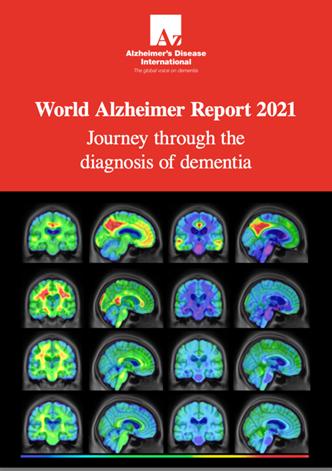
Seeking a diagnosis of demantia
Taking charge of the hearing loss
journey
Key considerations for moving
Pediatric Health
The path to lower parent stress
Founders Note
Welcome to our Fifth Issue of E3 Advocacy. A digital publication for Patient Advocates and Patient Centricity
This edition is focused on navigating the healthcare system. Even though Health care systems differ in each country, navigating them is so important to Patient Centricity in Healthcare.
We're deeply grateful to our readers for their continued interest and support. Your engagement drives us to bring insightful and valuable content to each issue. By subscribing to Heal Canada Digital Magazine, you'll stay connected with us and gain access to future issues that explore topics that matter to you and the healthcare community. Become a subscriber and visit our website at https://www.healcanada.org toenjoyallbenefits.
We are humbled at the momentum we are gaining with the information to our readers. This digital publication is being read by patient advocates, patients and care partners across the world. To ensure that our global readers feel included in our information, we are rebranding the title of this magazine/journal to: E3Advocacy/Empower,Engage,Educate.
Navigating the Canadian Healthcare System: A Comprehensive Guide for Patients and Advocate
by Cheryl Petruk, MBA
Navigating the Canadian healthcare system can be complex for patients and their families While Canada’s publicly funded healthcare system offers universal coverage, understanding how to access the care you need and advocate for your health can be challenging. This guide aims to break down the structure of the Canadian healthcare system, explain how patients can access services, and provide valuable insights on how to advocate for yourself or a loved one within the system Whether you're a patient, caregiver, or advocate, knowing how to navigate the healthcare landscape can significantly impact the quality of carereceived.
The Canadian healthcare system is often praised for its universal access to medical services, meaning that all residents are eligible for medically necessary hospital and physician services without having to pay out of pocket However, the system varies across provinces and territories, as healthcare is primarily the responsibility of provincial and territorial governments rather than the federal government. This decentralized approach leads to differences in the availability of certain services, waiting times, and healthcareinfrastructure,depending onwhereyou live
UniversalHealthCoverage
Taxes fund universal healthcare in Canada, and the Canada Health Act guides the system. This act outlinesthefivemainprinciplesof theCanadianhealthcaresystem:
While universal coverage is a core tenet, each province and territory administer its own healthcare system. Therefore, coverage for prescription drugs, vision care, dental services, and physiotherapy may differ. It's important to check your specific province or territory’s healthcare plan to understand what is covered and what isn’t. Some provinces offer extended health plans, either publicly or privately, which can cover services not included in the standard provincial healthcare. Private health insurance is also widely available and often provided by employers to supplement provincial healthcare.
Patients in Canada typically access healthcare services through primary care physicians, specialists, or hospital services. Understanding how to navigate these levels of care can help ensuretimely treatmentandminimizedelays.
Navigating the Canadian Healthcare System (con’t)
PrimaryCare
Your family doctor or primary care provider (PCP) is your first point of contact for most health concerns They manage routine care, provide preventive services like vaccinations, and can diagnose and treat a wide range of conditions. If necessary, they refer patients to specialists for more specific care. For those without a family doctor, walk-in clinics offer an alternative. These clinics are often available in urban centers and provide nonemergency care. Many provinces have also introduced virtual healthcare services, where patients can consult with doctors via phoneorvideo,making iteasiertoaccesscareremotely.
SpecialistCare
Canada, patients generally need a referral from a family doctor another primary care provider to see a specialist. Specialists focus on specific areas of medicine, such as cardiology, oncology, endocrinology. The referral process is crucial, as specialists’ officestypicallywillnotacceptnewpatientswithoutone.
Wait times to see specialists can be long, depending on the urgency the condition and the region in which you live. This is a common concern in the Canadian system and one of the primary areas wherepatientadvocacycanbecritical.
HospitalCare
In the event of an emergency, patients can visit hospital emergency rooms (ERs), where care is provided without the need for prior referral. Hospitals also offer scheduled treatments, surgeries, and diagnostic tests for non-emergent conditions,suchasMRIsorCTscans.
Provincial governments fund hospitals in Canada, and patients do not pay for most services directly. However, certain services, like private rooms or non-essential procedures, may incur additional costs, which can often be coveredbyprivateinsurance.
ChallengesintheCanadianHealthcareSystem
Although Canada’s healthcare system provides comprehensive care, it also faces several challenges that can impact patients. These challenges include long wait times, disparities in care basedongeography,andlimitedaccesstocertainservices.
WaitTimes
Wait times are one of the most criticized aspects of the Canadian healthcare system. For nonemergency treatments, the wait to see specialists, undergo diagnostic tests, or receive surgeries can be long. According to the Fraser Institute, in 2023, the average wait time from referral by a general practitioner to receipt of treatment was over 27 weeks This can be stressful for patients, particularly thosewithchronicordeteriorating conditions
Navigating the Canadian Healthcare System (con’t)
Access to healthcare can vary significantly depending on where you live Rural or remote areas may have fewer healthcare facilities, fewer specialists, and longer travel times to receive care Telehealth has helped bridge this gap somewhat, but the geographic divide remains a significant issueinensuring equal accesstotimely andcomprehensivehealthcareservices
AccesstoMentalHealthServices
While mental health is increasingly recognized as a critical component of overall well-being, access to mental health services is often limited. Many provinces do not cover the costs of psychological services, and there can be long wait times to see psychiatrists. As a result, many Canadiansfacefinancial barrierstoreceiving themental healthcarethey need
Patient advocacy plays a crucial role in ensuring that individuals receive timely and appropriate care. Advocating for yourself or someone else within the healthcare system can help overcome challenges related to waiting times, access to specialists, and care coordination. Here's how patientscaneffectively advocatefortheirhealthwithintheCanadiansystem:
CommunicationisKey
Effective communication with healthcare providers is critical. Patients should feel empowered to ask questions, seek clarification on treatment options, and express concerns about their care. Before appointments, it’s helpful to prepare a list of questions or topics to discuss and, if possible,bring someonetotheappointmentforsupportandtohelp takenotes.
KnowYourRights
Understanding your rights as a patient can help you advocate more effectively All Canadians have the right to receive medically necessary care, the right to access their medical records and the right to confidentiality Additionally, if you feel that your healthcare needs are not being met, you canrequestasecondopinionorask tobereferredtoanotherspecialist.
TheImportanceofDocumentation
Keeping a thorough record of medical history, treatments, test results, and communications with healthcare providers can be invaluable when navigating the system This documentation can help ensure that nothing is missed during appointments and can be used to facilitate referrals to specialistsorrequestsforexpeditedtreatment
Navigating the Canadian Healthcare System (con’t)
EngageinSharedDecision-Making
Shared decision-making is a collaborative approach between patients and healthcare providers, where both parties contribute to decisions about treatment plans. By actively participating in the decisionmaking process, patients can ensure that their preferences and values arerespectedwhilemaking informedchoicesabouttheircare.
ResourcesforNavigatingtheHealthcareSystem
Navigating the Canadian healthcare system can be overwhelming, but thereareseveral resourcesavailabletohelp patientsandadvocates:
ProvincialHealthWebsites
Each province and territory maintain a healthcare website where residents can find information on services covered, how to access care, and how to register for health insurance. These websites are valuable resources for learning about local healthcare regulations and availableservices.
PatientAdvocacyGroups
Organizations such as the Canadian Patient Safety Institute (CPSI) and local patient advocacy groups offer support, education, and advocacy for patients navigating the healthcare system. Many of these groups focus on specific conditions, offering tailored advice and resources for dealingwiththeuniquechallengesofaparticulardiagnosis.
OmbudsmanOffices
If patients feel that they have not received appropriate care, they can contact the provincial or territorial healthcare ombudsman. These offices investigate complaints and work to resolve issuesrelatedtohealthcareaccess,quality,andequity.
VirtualCareOptions
Telehealth and virtual care services are becoming increasingly common across Canada. These platforms allow patients to consult with healthcare providers remotely, which can be especially useful for those in rural or remote areas. Virtual care can also provide faster access tonon-urgentconsultations.
NavigatingHealthcarewithConfidence
While the Canadian healthcare system offers universal access to care, navigating its complexities requires knowledge, persistence, and effective advocacy. Understanding the system's structure, knowing how to access services, and being proactive in your care can make a significant difference in the quality and timeliness of the care you receive. By communicating clearly with healthcare providers, knowing your rights, and utilizing available resources, you cantakecontrolofyourhealthcarejourneyandadvocateforthebestpossibleoutcomes.
As the healthcare landscape evolves with technological advancements, new treatments, and an increasing focus on patient-centred care, Canadians have more tools than ever to navigate the system. For patients, caregivers, and advocates alike, being informed and proactive will remain essentialtoachievingthebestpossiblehealthoutcomesintheyearstocome.
Navigating the U.S. Healthcare System: A Guide for Patients, Caregivers and Advocates
by Cheryl Petruk, MBA
Navigating the U.S. healthcare system can be an overwhelming experience for patients due to its complexity, cost variability, and the need to understand the nuances of insurance plans and medical procedures. In this article, we’ll explore critical aspects the system, focusing on understanding insurance, selecting the right healthcare providers, managing costs, and advocating for one's care. This article aims to empower patients with the knowledge, understanding, and tools necessary to navigate the UShealthcarelandscapeconfidently.
UnderstandingHealthInsurance
Health insurance in the United States is predominantly a private-market system with some government programs like Medicare and Medicaid. Your insurance type significantly influences the healthcare services you can access, the costs you incur, and the providers you canvisit.Here’sabreakdownofcommoninsuranceoptions:
Employer-sponsored insurance is one of the most common types of insurance, where an employer covers part of the premium cost. Plans vary in coverage and cost-sharing responsibilities,soreviewingyourbenefitspackagecarefullyduringenrollmentisessential.
Marketplace plans: The Affordable Care Act (ACA) established the Health Insurance Marketplace, where individuals can purchase insurance plans. Based on their cost-sharing structures,theseplansarecategorizedintometaltiers(Bronze,Silver,Gold,Platinum).
Medicare: A federal health insurance program for people 65 and older or those with certain disabilities. It includes different parts: Medicare Part A (hospital insurance), Part B (medical insurance),PartD(prescriptiondrugcoverage),andMedicareAdvantage(PartC).
Medicaid: A state and federal program offering free or low-cost health coverage to eligible low-income individuals and families. Medicaid eligibility and coverage vary from state to state,socheckyourstate’sspecificguidelines.
Consider premiums, deductibles, copayments, and out-of-pocket maximums when choosing a plan. Additionally, check whether your preferred healthcare providers are within the insurancenetworktoavoidsurprisecosts.(HealthCare.gov.(n.d.).Healthcoveragetypes.
SelectingaHealthcareProvider
Once you have insurance, selecting the right healthcare provider is critical to receiving the necessary care. You’ll want to find a doctor or facility that suits your medical needs, budget, andlocation.Herearestepstoconsiderwhenselectingaprovider:
In-network providers: Many insurance plans have networks of healthcare providers. To minimize costs, select “ in-network” providers with your insurance plan.
Primary care physician (PCP): This is usually your first point of contact for general health issues. Your PCP manages your overall health and provides referrals to specialists if needed.
Navigating the U.S. Healthcare System (con’t)
Specialists: You may need to see a specialist for more specific health concerns. Depending on your insurance, you might need a referral from your PCP before visiting a specialist.
Telemedicine: Increasingly popular, telemedicine allows you to consult with healthcare providers remotely via video calls or phone. It can be a convenient, cost-effective option for managing routine health issues. (American Medical Association. (2020). How to choose a primary care doctor.)
ManagingHealthcareCosts
Healthcare in the U.S. can be expensive, and managing costs is often one of the most challenging aspects of navigating the system. Here are several strategiestohelpcontrolcosts:
Know your coverage: Ensure you fully understand what your insurance covers, including preventive care, surgeries, hospital stays, prescription drugs,andmentalhealthservices.
Ask about pricing upfront: Don’t hesitate to ask for cost estimates before receiving care, especially for non-emergency procedures. Hospitalsandclinicscanoftenprovideestimatesforstandardservices.
Use urgent care wisely: Urgent care centers can be a cost-effective alternative to emergency rooms for non-life-threatening issues. ER visits tend to be far more expensive and can come with higher copayments or deductibles.
Utilize preventive care: Insurance plans often cover preventive services, such as annual checkups and screenings, at no cost. Regular preventive carecanhelpcatchhealthissuesearlyandreducelong-termcosts.
Apply for financial assistance: Many hospitals offer financial assistance programs if you’re facing significant healthcare costs. Additionally, pharmaceutical companies often have assistance programs for patients struggling to afford medications.(Kaiser Family Foundation. (2019). How tohandlemedicalbillsandavoidhealthcaredebt.)
Understanding Prescription Medication Costs
Prescription medications can represent a significant portion of healthcare expenses. Understanding how to manage these costs is essential:
Generic vs. brand-name drugs: Ask your healthcare provider or pharmacist whether there are generic versions of your medications. Generic versions are typically much cheaper than brandname drugs.
Prescription drug coverage: Check your insurance plan’s formulary (a list of covered drugs) to see whether your medications are included. Some drugs may require prior authorization or have step therapy requirements, meaning you must try less expensive drugs first.
Discount programs and coupons: Several organizations offer discounts or coupons for prescription medications. Websites like GoodRx allow you to compare prices across pharmacies and access coupons.
Mail-order pharmacies: Many insurance plans offer mail-order options for long-term medications, often at a reduced cost compared to retail pharmacies.(GoodRx. (n.d.). How to save on prescriptions
Navigating the U.S. Healthcare System (con’t)
AdvocatingforYourOwnHealthcare
One of the most critical aspects of navigating the U S healthcare system is advocating for your own care Here’s how you can take control of yourhealthcarejourney:
Ask questions: Ask your doctor about your diagnosis, treatment options, and recommended tests or procedures. Ensure you fully understandyourhealthconditionandthestepsneededforrecovery.
Second opinions: It's okay to seek a second opinion for significant medical decisions, such as surgery or a new medication regimen. Another doctor’s perspective can help confirm the diagnosis and treatmentplanorofferalternativeoptions.
Keep organized records: Maintain a file with your medical history, including diagnoses, lab results, and medications. This will be valuable whenconsulting withmultipleprovidersorspecialists.
Bring a support person: If you’re feeling overwhelmed, bring a family member or friend to your medical appointments to help listen, as questions,andtakenotes National Patient Advocate Foundation (2018) Advocating for you healthcareneeds
Handling Medical Bills and Appeals
Receiving unexpected medical bills can be stressful, especially if you don’t understand why they were issued or how to address them. Here’s what to do:
Review your bills carefully: Compare the bill to the explanation of benefits (EOB) from your insurance company to ensure that charges are correct and accurately reflect what your insurance has covered.
Negotiate medical bills: If you receive an unexpectedly high bill, contact the provider’s billing office. Many hospitals and providers are willing to negotiate or set up payment plans, especially if you don’t have insurance or face financial hardship.
Appeal denied claims: You can appeal the decision if your insurance company denies coverage for a medical service or procedure. Review your insurer’s appeals process and submit the necessary documentation to support your case. (Centers for Medicare & Medicaid Services. (n.d.). How to handle denied claims.)
Navigating the U.S. healthcare system requires patients to be informed and proactive. Understanding your insurance, selecting appropriate healthcare providers, managing costs, and advocating for your care are all crucial steps. While the system can be complex, these steps can help you receive the care you need while minimizing financial strain. Remember, staying organized and asking questions are your most valuable tools for quality healthcare. By staying informed and prepared, patients can navigate the U.S. healthcare system with greater confidence and control over their health outcomes.
New treatments offer hope to patients and their loved ones. Here, we present new therapies that are available to Canadians.
This section also addresses challenges around access to new medication. Our readers will find important information to help them understand Canada's drug review processes.
An informed and engaged patient is an empowered one. We aim to equip our readers with the tools and knowledge to navigate the complex healthcare landscape because, more than ever, patients need to raise their voices to get access to services. Accessing innovative medicines can save patients' lives.
In August 2024, Health Canada (HC) approved IHEEZO, a gel used as anesthesia during eye surgery. Harrow licensed IHEEZO for the Canadian market from Sintetica. The FDA approved this product in September 2022. Three human clinical studies demonstrated the safety and efficacy of IHEEZO. It works rapidly, within 1.5 minutes, and it provides sufficient anesthesia for the surgical procedure, which takes 22 minutes.
In August 2024, HC approved ACCRUFER, an oral treatment for iron deficiency anemia. The FDA approved this product in 2019. KYE Pharmaceutical licensed Accrufer for the Canadian market from Shield Therapeutics. The AEGIS-H2H study has shown that Accrufer was noninferior to intravenous iron therapy. With Accrufer, it is possible to improve iron-deficiency anemia without requiring hospital administration. It is also a non-salt formulation of ferric iron, providing an alternative to salt-based oral iron therapies. It also carries fewer gastrointestinal side effects typically observed with salt-based therapies.
FDA and HC approved WINREVAIR in March and August 2024, respectively [PM]. Merck demonstrated the safety and efficacy of WINREVAIR in pulmonary arterial hypertension (PAH) with the STELLAR trial (NCT04576988). PAH is a rare, progressive and life-threatening disease in which blood vessels in the lungs thicken and narrow, causing significant strain on the heart [?]. WINREVAIR, added to background therapy, increases physical capability and reduces the risk of death and clinical events related to PAH with an acceptable safety profile.
FDA and HC approved VORANIGO in August 2024 for treating rare brain tumours called astrocytoma and oligodendroglioma. These rare forms of cancer have a mutation called IDH1 or IDH2. Servier supported the development of Voranigo, which blocks the action of IDH1 or IDH2 proteins, reducing cancer cell growth. The submission included the results from the INDIGO Trial (NCT04164901). In this clinical trial, Voranigo reduced the disease progression by more than half compared to the placebo (28% vs 54%). Also, during the study, patients treated with Vorangio didn't reach the median time to the subsequent treatment (TST). However, patients on the placebo reached TST at 18 months. See more details about glioma, current treatments, and their impact on patient quality of life and entourage in the article on page 19.
HC approved VOYDEYA in July 2024 as an add-on to standard therapy to treat patients with paroxysmal nocturnal hemoglobinuria (PNH) who have residual anemia The product, developed by Alexion and AstraZeneca, has been available on the USA market since April 2024. PNH is a rare, debilitating, and lifethreatening blood disorder. A mutation makes a protective protein disappear from the surface of blood cells. This anomaly causes severe anemia via massive red blood cell destruction in blood vessels. Also, patients can have blood clots duetotheactivationofwhitebloodcellsandplatelets
Health Canada recent approvals (con’t)
Patients treated with standard treatment can continue to experience severe anemia and need frequent blood transfusions. As demonstrated in the ALPHA trial, adding Voydeya to standard therapy allows patients to improve their anemia, reduce their transfusion need and reduce their fatigue compared to placebowithanacceptablesafetyprofile.
In July 2024, HC approved ZILBRYSQ for treating generalized myasthenia gravis (gMG)[PM]. The FDA (USA) and EMA (Europe) approved the product in October and December 2023, respectively [?]. gMG is a rare autoimmune disorder. The immune system attacks the connection between nerves and muscles, leading to muscle weakness. This condition occurs later in life between 40 to 60 years old. This progressive disease is debilitating and life-threatening. The initial symptoms can be eyelid drooping and difficulty keeping the mouth closed. Over time, more severe symptoms appear, like difficulty swallowing, leg paralysis and difficulty breathing. UCB Pharma sponsored the development of ZILBRYSQ, which interferes with the immune system to prevent damage to these connections. In the RAISE study, patients improved functionality over standard care with an acceptable safety profile. The improvement is significant at 12 weeks and continues to improve over time.
In June 2024, HC approved WAINUA to treat hereditary transthyretinmediated amyloidosis (hATTR) [PM]. The FDA (USA) approved the product in December 2023 [Press]. hATTR is a rare genetic debilitating disease that leads to peripheral nerve damage. A mutation in the gene transthyretin (TTR) causes the production of a dysfunctional TTR protein. These TTR proteins form aggregations and cause nerve damage. Within five years of diagnosis, patients present with motor disabilities. Without treatment, the genetic disorder is generally fatal within a decade [Cortese]. AstraZeneca and Ionis Pharma sponsored the development of WAINUA, which reduces the production of TTR proteins. In the NEURO-TTRansform study, patients treated with Wainua demonstrated consistent and sustained significant clinical benefits with an acceptable safety profile. The three significant clinical benefits are reduced serum TTR concentration, reduced nerve impairment and improved quality of life.
In June 2024, HC approved EBGLYSS to treat eczema if standard prescription skin products don’t work [PM]. This product has been approved in the USA (FDA) and Europe (EMA) since September 2023 [Press]. Several patients still struggle to control their eczema with currently available therapies. Many experience poor long-term disease control, and severe itch can significantly impact their daily lives [Chiesa]. The program included three clinical studies and 1062 patients: ADvocate 1, ADvocate 2, and Adhere. Patients treated with Ebglyss experienced a significant improvement in their skin condition compared to placebo or standard treatments, and the safety profile was acceptable.
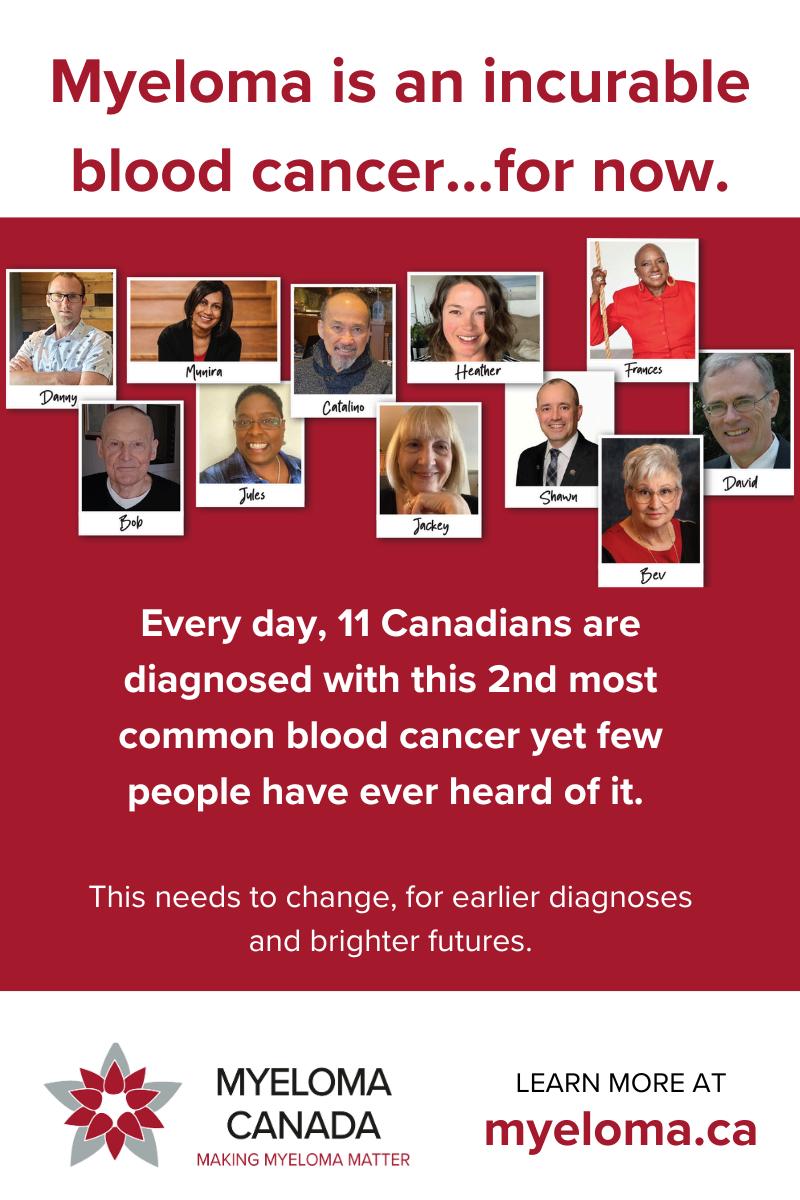
In May 2024, HC approved APRETUDE to reduce the risk of sexually acquired HIV-1 infection. The company that sponsored the submission was ViiV Healthcare ULC. Pre-exposure prophylaxis (PrEP) to reduce the risk of sexually acquired HIV is a strategy that has gained popularity in the last ten years to end the HIV epidemic. Products are already on the market, but the high level of adherence needed is not always respected. It is hoped that the availability of a long-acting injectable PrEP option will increase PrEP uptake and adherence in targeted groups. The trial showed that participants who took Apretude had 69% less risk of getting infected with HIV when compared to participants who took the current standard of care. Apretude has been on the USA market since December 2021 and has shown an acceptable safety profile.
In July 2024, HC approved TIBSOVO to treat two types of cancers positive for a specific mutation called IDH1: acute myeloid leukemia (AML) and cholangiocarcinoma. Patients with IDH1-positive AML have an inferior outcome when treated with current therapy. Servier sponsored the submission to Health Canada. During the clinical trial in AML, adding TIBSOVO to standard treatment increased the odds of responding by almost six times and reduced the odds of progressing by 67%. Similar results were observed in the cholangiocarcinoma study, where the time without progression doubled versus the placebo group, and the odds of progress were reduced by 63%.
Impactofcurrenttreatmentsongliomapatients’life
by Brigitte Leonard,Ph.D
Brain tumours (glioma), like all cancers, can destroy patients' life and their entourage. Unlike most cancers, certain forms of glioma are typically diagnosed when individuals are in their 30s or 40s. They are diagnosed when they are raising their family and fighting for a better position at work. They are diagnosed during a period of their life when they need all their physical and cognitive capabilities to support their loved ones.
These specific rare forms of glioma are called astrocytoma and oligodendroglioma. They are often referred to as low-grade gliomas and are characterized by a mutation called IDH1 or IDH2. Lowgrade glioma does not mean indolence. Astrocytoma is typically found at 36 years of age, and the survival expectancy is between 5 and 10 years. As for oligodendroglioma, it is generally identified at45yearsofage,andthesurvivalexpectancyisbetween10and14years.
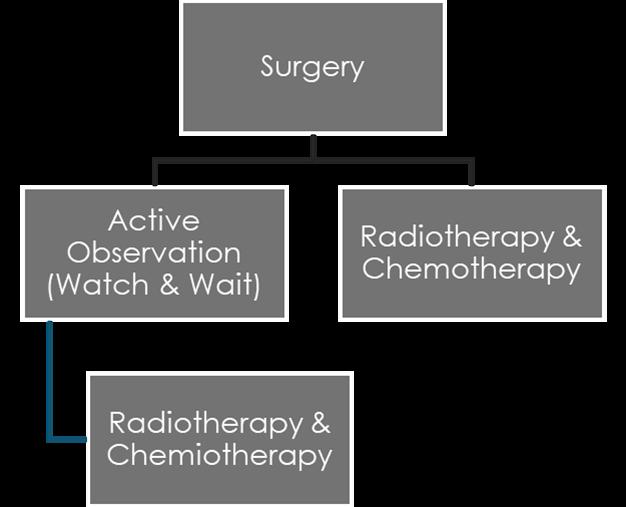
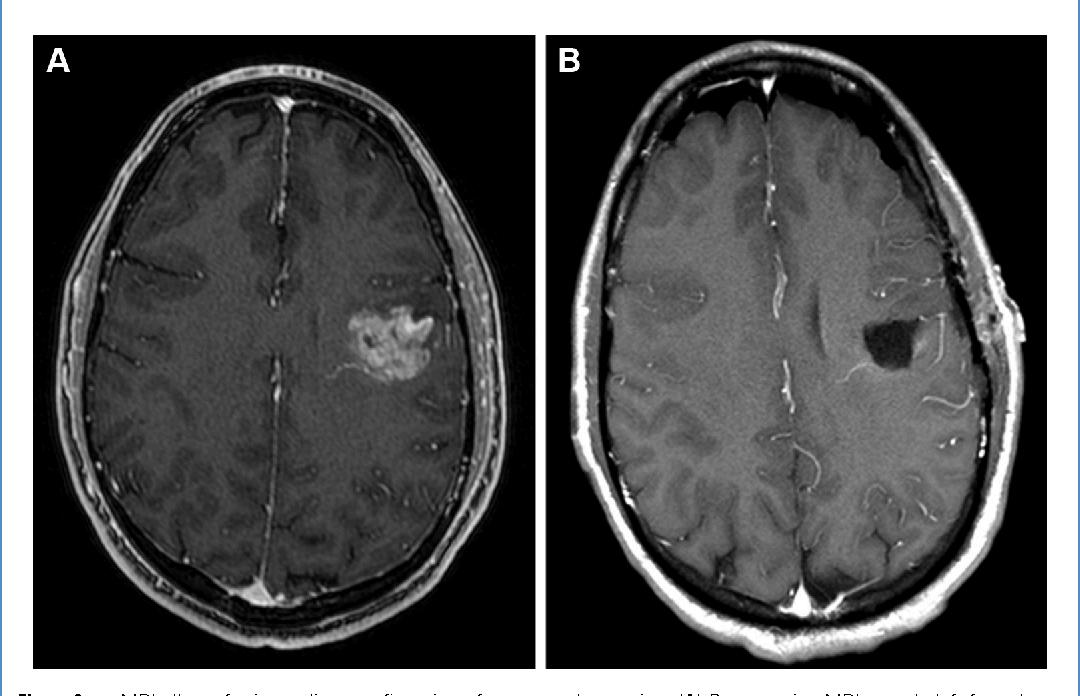
The current treatments recommended for these patients are surgery followed by active observation and/or radiotherapy combined with chemotherapy (Figure 1). Surgery is not a curable intervention; IDH1/2 gliomas will progress to more aggressiveformsafterthesurgery(Figure2).
Doctors continue to use active observation after surgery despite the high rate of progression because of the poor tolerability of radio and chemotherapy. They both have a high rate of debilitating side effects. The combination of radio and chemotherapy can prolong survival by ten years. However, they don’t improve patients' quality of life and do not allow them to get their life back. Despite a better understanding of molecular abnormalities underlying glioma, no new therapies have been developed in this space forover20years.
Heal Canada surveyed glioma patients to accurately portray how their treatments impacted their physical, cognitive, and emotional capabilities. Thanks to the 50 participants who graciously agreed to share their experiences, we hope their experiences will help this community accessbettercare.
Figure 1
Figure 2
Impact of current treatments on glioma patients’ life (con’t)
In the survey, most participants worked full-time when they received their diagnosis due to their younger age. Their disease treatments have a tremendous impact on their working capabilities. Also, all participants mentioned that their disease significantly impacted their financial situation. While 42% of participants disengaged from active life by adhering to a long-term disability program or taking early retirement, 17% needed to reduce their hours or change career paths, and only 36% of the participants kept their employment. Of these 36% of participants who stayed at work during their treatment or returned to work after, two-thirds are severely affected by their treatment. The high impact on their financial situation can explain their returntoworkdespitepoorhealthandproductivity.
Disease treatments also affect caregivers. 60% of participants mentioned that their caregivers had to miss work, reduce their hours, change career paths or retire earlier to support them in theirtreatmentjourney.
Activetreatmentsoverview
In the survey, most participants received surgery (90%), 59% received chemotherapy, and 46% received radiotherapy. While 36% of participants received only surgery, most patients received a combination of treatments. A third of the participants received all three treatments. Less than 10% of participants tolerate them well, well enough to have a minimal impact on their productivity and physical capabilities. Only two participants who received a combination of three treatments experienced few side effects and a minimal effect on their physical capacity so theycouldcontinueworkingandhaveagoodqualityoflife(QoL).
WatchandWait
53% of the participants were observed actively instead of receiving an active treatment. This clinical strategy was stressful for 94% of participants and highly anxiogenic for 70% of the participants. Access to treatments delaying the disease progression could alleviate this stress in 50%oftheparticipants.
Whydotreatmentsimpactthefinancialsituationsomuch?
Most participants will stop working for surgery and radiotherapy. They tend to return to work after 6 to 12 months. However, the recuperation period can last more than a year for 10% of participants.
Half of the patients will continue to work during chemotherapy, and they will miss an average of 1 to 2 days per week for their treatment. Patients who stop working during chemotherapy tend to come back to work between 6 and 12 months, but the recuperation period can last over 12 months.
Impact of current treatments on glioma patients’ life (con’t)
Patients who adhere to a long-term disability program tend to do it after radiotherapy (36%), chemotherapy (36%), or surgery (27%). Their treatments significantly impact their physical capacity, with more than a 75% reduction during the treatment period. Also, the long-term impactoftheirtreatmenttendstoremainsignificantlyhigh.
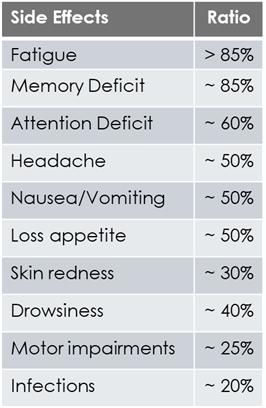
Sadly, their physical and cognitive capacity tends to stay poor or worsen over time, and neither chemotherapy nor radiotherapy allowed participants to get better over time — the high frequency of debilitating long-term side effects after treatments can explain this observation (Table 1). Long-term complications can be highly debilitating, such as loss of short-term memory, emotional changes, difficulty paying attention, headaches, and motor impairments, to name a few. In general, the profile of the treatment side effects correlateswithpatients’impactonphysicalcapacity.
Table 1
Most patients experienced a high level of stress regarding their treatments. They tend to have poor emotional and mental well-being, which affects their QoL and social activities. The poor tolerability profile of their treatments impacts their daily lives. Reduced cognitive capabilities, financial struggles, transportation issues, and family responsibilities are some of the most frequentchallengesmentionedbytheparticipants. This survey highlights the need for better-tolerated treatments that allow patients to continue to workandmaintaindecentQoL.
Treatment of IDH glioma in the VORANIGO era
In August 2024, Health Canada approved Voranigo for treating astrocytoma and oligodendroglioma (Figure 3). Servier supported the development of Voranigo, which blocks the action of IDH1 or IDH2 proteins, reducing cancer cell growth. The submission included the results from the INDIGO Trial (NCT04164901). Earlier analyses have demonstrated that IDH inhibitors are more active in patients with less advanced glioma. The acquisition of additional mutations can explain this observation during the progression [32-33]. When the disease progresses, a cocktail of drugs targeting different mutations is more effective than monotherapy in general.
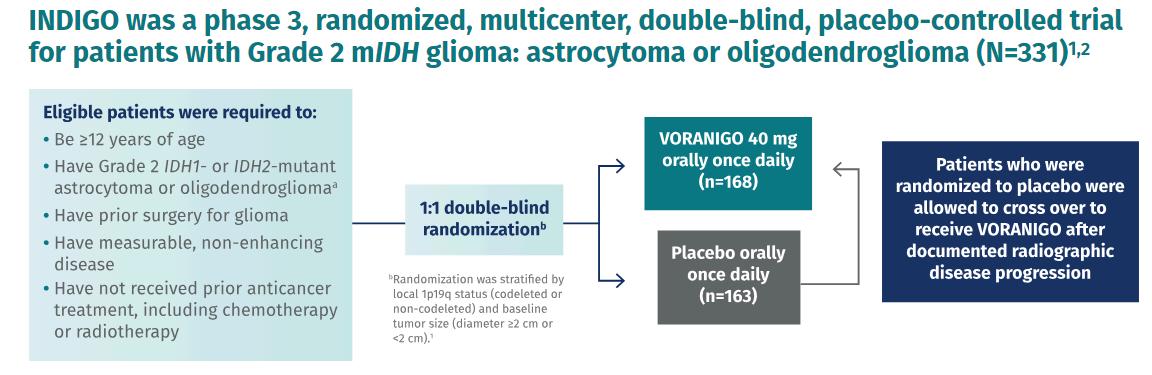
Three IDH inhibitors have been tested, and Voranigo provided the best results because of its superior capacity to penetrate the brain [35]. These trials set the stage for the INDIGO trial, which aimed to test the efficacy of vorasidenib in the upfront treatment of low-grade gliomas. Patients with low-grade glioma enrolled in INDIGO received surgery and were actively observed for one to five years. They had signs of residual or recurrent disease. See more details of the clinical trial design in Figure 4.
Figure 3
Impact
Figure 4
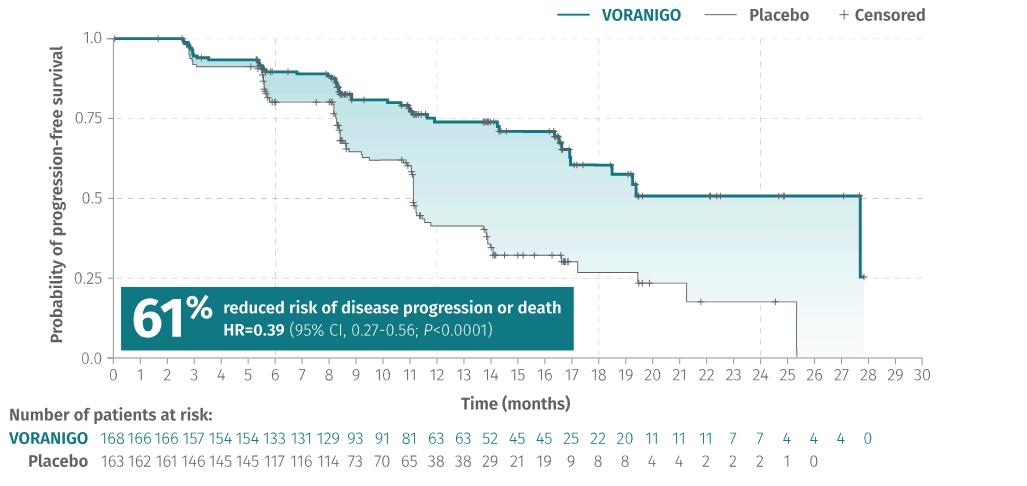
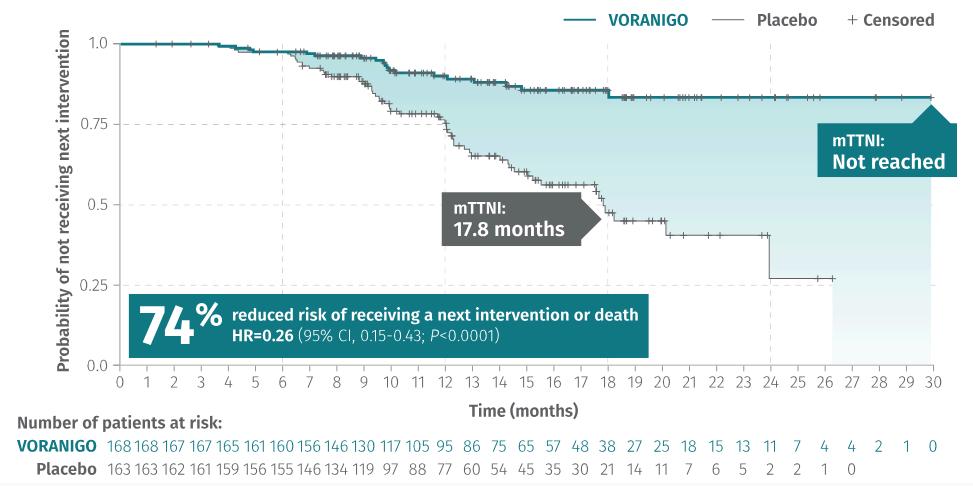
In this clinical trial, Voranigo reduced the risk of disease progression by 61% compared to the watch-and-wait strategy (placebo) (Figure 5). Also, during the study, patients treated with Vorangio didn’t reach the median time to the next treatment (mTTNI). However, patients on the placebo reached mTTNI at 17.8 months(Figure6).
It is an oral therapy, so it is more convenient than radiotherapy. The toxicities observed were mild and comparable between the Voranigo and placebo groups. Taking Voranigo didn’t meaningfully impact the patients’ quality of life. For most patients, it is challenging to be on active observation when you know that the disease is still thereandisgoingtoprogress.
Because of its efficacy and tolerability, Voranigo can replace active observation to delay progression as long as possible. Also, the usage of Voranigo can report and delay the necessity to receiveradioandchemotherapy.
Figure 5
Figure 6
Hopefully, patients will have enough energy to return to work after surgery, care for their loved ones,andlivewithadecentqualityoflifeuntilthenecessitytousemoreaggressivetreatment.
Belonging, Diversity, Inclusion and Equity
Welcome to the Belonging, Diversity, Inclusion and Equity section of Heal Canada’s Digital Magazine. In this section, we provide information on ensuring that BDEI is part of the patient conversation in our Health ecosystem. Our focus is to illuminate the pathways through which individuals grappling with health challenges can not only find their voice but also harness it to drive their own journey.
Healthcare and the patient’s experiences should not be determined by social determinants of health.
We believe that an informed and engaged patient is an empowered one. Through enlightening articles, expert insights, and inspiring stories, we aim to equip our readers with the tools and knowledge necessary to navigate the complex health care landscape.
Building
a Patient-Centric, Sustainable Infrastructure
to
Improve Recruitment and Retention in Clinical Studies.
by Cheryl Petruk, MBA
Underserved populations have historically been underrepresented in clinical studies across Canada and the United States. This lack of inclusivity compromises the generalizability of research findings and perpetuates healthcare inequities. The need for a patient-centric and sustainable infrastructure is essential to address this gap, ensuring diverse patient populations are accurately represented in clinical trials. By building such an infrastructure, we can improve the recruitment and retention of these populations and foster greater inclusivityinhealthcareinnovation.
TheImportanceofRepresentativenessinClinicalTrials
Clinical trials play a pivotal role in developing new medical treatments and interventions, but they can only be truly effective if they represent the diversity of the populations who will ultimatelybenefitfrom them.Whenclinical studiesarenotrepresentative,theresultsmaynot applytocertaindemographicgroups,particularlythosefromunderservedcommunities.These groups, which often include racial minorities, low-income individuals, rural populations, and thosewithlimitedaccesstohealthcare,arefrequentlyunderrepresentedinclinicalresearch. Forexample,racialminoritiesoftenfacedisparitiesindiseaseprevalence,treatmentresponses, and healthcare outcomes. Without adequate representation in clinical trials, treatments may notbetailoredtotheirspecificneeds,leadingtosuboptimalcare.Moreover,underrepresented groups often experience different social determinants of health, including socioeconomic status, access to care, and healthcare literacy, all of which can impact clinical outcomes. This makes their inclusion in clinical trials essential for ensuring that new treatments are safe and effectiveforallpopulations
Trust and Mistrust in the Healthcare System: Many underserved populations have historically experienced medical mistreatment or exploitation in research, which has fostered a deep mistrust of the healthcare system. This is particularly true in Black and Indigenous communities, where historical abuses, such as the Tuskegee Syphilis Study and unethical sterilization programs, have left lasting scars. Overcoming this mistrust requires a commitment to transparency, community engagement, and ethical practices that prioritize patient autonomyandsafety.
Access to Information: In many underserved communities, access to reliable healthcare information is limited. This can be due to factors such as language barriers, low health literacy, or lack of digital connectivity. Without clear, accessible information about clinical trials, potential participants may be unaware of the opportunities available to them or may not fully understandthebenefitsandrisksofparticipation.
Several barriers contribute to the underrepresentation of underserved populations in clinical trials. These barriers are multifaceted, ranging from logistical challenges to systemic biases, and they must be addressed through acomprehensive,patient-centricapproach.
Building a Patient-Centric to Improve Clinical Studies (con’t).
Logistical Challenges:
Geographic barriers, transportation costs, and time constraints often deter participation in clinical trials. For rural populations or those with limited financial resources, the burden of travelling to a trial site, taking time off work, or securing childcare can be prohibitive. These logistical hurdles disproportionately affect low-income and marginalized groups, making it difficult for them to engage in research.
Lack of Culturally Competent Care
: Many healthcare providers and researchers may not be equipped to offer culturally competent care, which can alienate potential participants from underserved backgrounds. Culturally appropriate communication, respectful interactions, and sensitivity to diverse values and beliefs are critical to building trust and engagement with these populations.
Financial Constraints: The financial burden of participation, including potential costs related to transportation, time off work, or healthcare, can deter underserved populations from enrolling in clinical trials. Even when trials offer compensation, it may not be enough to offset these costs.
Addressing these barriers requires a patient-centric, sustainable infrastructure that supports recruitment and retention efforts for underserved populations. Such an infrastructure would need to prioritize accessibility, inclusivity, and long-term engagement, while also leveraging community partnershipsandtechnology toenhanceoutreach.
1.CommunityPartnershipsandTrust-Building
One of the most effective strategies for improving recruitment and retention is building partnerships with community organizations that serve underserved populations By working with trusted local leaders, healthcare providers, and advocacy groups, researchers can foster trustandincreaseawarenessofclinicaltrialswithinthesecommunities.Thesepartnershipscan help bridge the gap between the research community and underserved populations by facilitating culturally sensitive communication, addressing concerns, and providing clear informationaboutthebenefitsandrisksofparticipation.
Community-based participatory research (CBPR) is one model that has been successful in promoting trust and collaboration between researchers and communities CBPR emphasizes the active involvement of community members in the research process, from study design to data analysis and dissemination. This approach ensures that research is relevant to the community’sneedsandpriorities,whichcanenhancerecruitmentandretention.
2.EnhancingAccesstoInformationandEducation
Improving access to information about clinical trials is essential for increasing participation from underserved populations. This can be achieved through the development of targeted, multilingual educational materials that explain the purpose of clinical trials, the benefits of participation, and the rights of participants. Information should be available in various formats, including digital, print, and in-person communications, to reach individuals with different levels of health literacyandaccesstotechnology.
Building a Patient-Centric to Improve Clinical Studies
(con’t).
Telemedicine and mobile health technologies also offer promising solutions for increasing access to clinical trials. Virtual consultations, remote monitoring, and digital consent processes can reduce the need for travel and make it easier for patients in rural or remote areastoparticipateinresearch.
3.AddressingLogisticalandFinancialBarriers
To reduce logistical and financial barriers to participation, clinical trial sponsors should consider offering flexible scheduling, transportation assistance, and childcare services. Reimbursing participants for outof-pocket expenses and providing compensation for their time can alsohelpalleviatethefinancialburdenofparticipation.
In addition, decentralizing clinical trials by offering home-based visits or utilizing telehealth platforms can make participation more convenient and accessible. By reducing the need for patients to travel to a central trial site, these strategies can make populationstoengageinresearch.
4.CulturallyCompetentCareandRepresentation
Ensuring that clinical trial staff are trained in cultural competence is critical for creating a welcoming and respectful environment for underserved populations. Researchers should be trained to communicate effectively with diverse populations and to understand the cultural, social, and economic factors that may influence their health and healthcare decisions. This includes recognizing potential biases and ensuring that recruitmentstrategiesareinclusiveandequitable.
Additionally, increasing the diversity of clinical trial staff and researchers can help create a more inclusive environment for participants. When underserved populations see themselves represented in the research team, they may be more likely to feelcomfortableandconfidentinparticipating.
5. Leveraging Data and Technology for Long-Term Engagement
Sustaining the engagement of underserved populations in clinical research requires ongoing communication and follow-up. Data analytics can be used to monitor retention rates and identify potential challenges early in the trial process. For example, if certain demographic groups drop out at higher rates, researchers can investigate the reasons and implementtargetedstrategiestoaddressthem.
Patient registries and databases that track participant outcomes and experiences can also be valuable tools for maintaining long-term relationships with underserved populations. By regularly updating participants on the research progress and its outcomes, researchers can demonstrate thevalueoftheirparticipationandencouragefutureinvolvement.
Creating a patient-centric, sustainable infrastructure that improves the recruitment and retention of underserved populations in clinical studies is essential for advancing healthcare equity. By addressing the barriers of trust, access, logistics, and cultural competence, and by building strong community partnerships, we can ensure that clinical trials reflect the diversity of the populations they aim to serve. In doing so, we can create more effective, equitable, and inclusive healthcare solutions for all.
Mental Health
Welcome to the Mental Health section of Heal Canada Digital Magazine, a dedicated space where we embrace the journey towards mental wellness with open arms and open hearts. In this edition, we delve into the empowering world of patient advocacy, engagement, empowerment, and education. Our focus is to illuminate the pathways through which individuals grappling with mental health challenges can not only find their voice but also harness it to drive their own journey.
We believe that an informed and engaged patient is an empowered one. Through enlightening articles, expert insights, and inspiring stories, we aim to equip our readers with the tools and knowledge necessary to navigate the complex mental health care landscape.
Join us as we explore how patient advocacy, active engagement and comprehensive education can transform the experience of mental health care, turning obstacles into opportunities for growth and healing.
Five Key Myths of Communication with Loved Ones While Living with Chronic Illness
by Kristy Brosz, MSW, RCSW
Living with a chronic illness often means juggling physical symptoms, emotional ups and downs, and various practical adjustments. One of the biggest challenges can be effectively communicating your needs and experiences to those you care about. This isn’t just about passing on information; it involves advocating for yourself, managing relationships, and addressing the often invisible effects of your illness that others may not fully grasp.
Good communication is vital for getting the support you need and ensuring your well-being. However, expressing these needs can be overwhelming, especially with the added stress of living with a chronic condition. Whether you’re explaining your situation to a loved one, negotiating changes around the house, or just seeking some extra support on a tough day, how you communicatecansignificantlyimpactyourinteractionsandoutcomes.
Let’s clear up five common myths about communicating with loved ones while managing a chronic illness:
Myth #1: Communication Has to Change Completely After Diagnosis
You might think that everything about your communication needs to shift dramatically because of your illness. While it’s true that the topics of your conversations may change, this doesn’t mean you have to reinvent your entire communication style. If humour was part of your relationship before, keep it alive where it still fits — enjoyed late-night chats before? Find ways to keep them meaningful. Embrace the strengths of your previous communication patterns and adapt them to suit your current situation.
Myth #2: Your Loved Ones Don’t Want to Hear the Tough Stuff
It’s natural to want to shield your loved ones from the most challenging parts of your experience. However, studies show that transparency fosters better communication. Your loved ones are likely to share your concerns and are more likely to offer support if you openly share what you’re going through. Honest conversations can lead to better problem-solving and a deeper connection. Two heads are always better than one, so bring your inner world and experiences with those who care about you the most and allow your communication to grow through this transparency.
Myth#3:YouMustHaveAlltheAnswersWhenAskingforHelp
You don’t need to be an expert in every detail of your illness or know precisely what help you’ll need each day. It’s okay to speak about your needs and accept support as it comes. Your needs may change over time, and that’s perfectly fine. Start with what you need right now and adjust as necessary. Once you begin to ask for and accept help based on where you are,itwillbecomeeasiertoaskforhelpinthenextmoment.
Five Key Myths of Communication with Loved Ones While Living with Chronic Illness (con`t)
Stating you need help or support but don’t know where to start can be a great way to ask for help! Let your loved one in to ask some questions and go from there. It will probably surprise youtoseewhatgreatoffersofhelpwillemergebeforeyou!
Myth #4: Communication Can Only Happen on Good Days
It might seem tempting to wait for a day when you feel better to have meaningful conversations, but this isn’t always practical. Symptoms can vary, and waiting for the perfect moment can be frustrating. It’s essential to communicate regularly, even on days when your symptoms, such as chronic pain or brain fog, are more intense. Adapt your communication to fit your current state, but don’t wait for ideal conditions. Ideal communication happens over time and often with more than one conversation, so engaging in these conversations across the continuum of your illness can be very important.
Myth #5: You Can’t Speak Up Because You Feel Like a Burden
Living with a chronic illness doesn’t mean you should stay silent about your needs or any issues in your relationships. Just because you’re dealing with health challenges doesn’t mean your voice should be silenced. If you would have addressed something before your illness, keep speaking up now. Use “I” statements like “I feel” or “I think” to express your thoughts and feelings. Keep the conversation open and honest, and move forward with the affirmation that you and your needs are equally important to your loved ones. Remember that every relationship has some give and take; it may be helpful to remind yourself of all you bring to the relationship.
These myths highlight that navigating communication while living with a chronic illness requires both bravery and clarity. Effective communication doesn’t mean starting from scratch; it’s about adapting and maintaining the aspects of your relationship that work well. By being transparent, acknowledging your changing needs, and keeping the lines of communication open — even on difficult days — you create a more supportive environment for yourself and those around you. Having a solid, strong relationship, using effective communication and managing your illness go hand in hand, allowing you to live your best possible life and even thrive with a chronic illness.
Kristy is a mental health therapist in private practice and is registered to see clients in 5 Canadian provinces, including BC, AB, SK, ON, and NS.
Kristy’s practice specializes in chronic illness and focuses on the intersection between trauma and grief. Kristy has presented nationally andinternationallyandhasauthoredtwotrauma-informedbooks.
Preparing for Seasonal Affective Disorder: A Guide to Combat the Winter Blues
By Janice D’souza, M.S.W., R.S.W.
As the days grow shorter and temperatures start to drop, many people experience a shift in their mood and energy levels. For some, this seasonal change triggers Seasonal AffectiveDisorder (SAD), a type of depression that typically occurs during the fall and winter months. If you or someone you know struggles with SAD, preparation can make a significant difference in managing its symptoms. Here’s a guide to understanding SAD and effective strategies to help youthroughtheseason.
Even on cloudy days, natural light can still benefit your mood. Try these strategies to maximize your exposure:
Morning Walks: Make it a habit to walk outside for at least 15-30 minutes each morning
Break Time: When possible, take your breaks outdoors, even if it's just standing outside for a few minutes
Outdoor Activities: Plan outdoor activities, like hiking or skiing, to enjoy nature and stay active
Exercise is a powerful mood booster. Regular physical activity can help alleviate symptoms of depression. Here’s how to incorporate it into your routine: Set Realistic Goals: Aim for at least 30 minutes of moderate exercise most days of the week. Find an Activity You Enjoy: Whether it’s dancing, swimming, or yoga, choose something that keeps you motivated.
Join a Group: To stay socially engaged while exercising, consider joining a fitness class or a local sports club.
Preparing for Seasonal Affective Disorder (SAD) (con’t)
FocusonNutrition
A balanced diet can have a profound effect on your mood and energy levels.Considerthesetips:
Eat a Rainbow: Fill your plate with colourful fruits and vegetables to ensureyougetawiderangeofnutrients.
Limit Sugar and Processed Foods: These can lead to energy crashes andmoodswings.
Consider Supplements: Talk to your healthcare provider about Vitamin D or Omega-3 supplements if you're concerned about deficiencies.
StayConnected
Social support is crucial in combating SAD. Here are some ways to stay connected:
Reach Out: Stay in touch with friends and family. Regular social interactionscanliftyourspirits.
Join a Support Group: Consider joining a group where members share their experiences with SAD. Connecting with others can be incrediblyvalidatingandhelpful.
Plan Regular Activities: Schedule regular get-togethers, game nights,orcoffeedatestostayengaged.
Practice Mindfulness and Stress Management.
Mental health practices can be incredibly beneficial in managing SAD. Here are a few suggestions:
Meditation and Deep Breathing: Incorporate mindfulness meditation or breathing exercises into your daily routine.
Journaling: Writing about your feelings can help process emotions and reduce stress.
Professional Help: If symptoms become overwhelming, consider talking to a therapist specializing in SAD.
Seasonal Affective Disorder can be challenging, but with proactive preparation, you can significantly improve your winter experience. By incorporating light therapy, staying active, focusing on nutrition, and nurturing social connections, you can create a supportive environment thatmitigatestheimpactofSAD.
Remember, you’re not alone; taking these steps can help you navigate the darker months more easily and resilient. If you notice persistent symptoms, don’t hesitate to seek professional help. Yourmentalhealthmatters!
Janice D’souza, M.S.W., R.S.W. Social worker Insightful Minds Therapy Inc.
If you or someone you know is struggling with their mental health and well-being, feel free to reach out to Janice D’souza, for individual therapy, at the contact information below: Email: j6dsouza@gmail.com Phone: 416-316-7686
Attention Deficit Hyperactivity Disorder (ADHD) in Older Adults
By April Colquhoun
In this fast-paced world, it can be especially challenging for older Adults with ADHD to cope on a day-to-day basis. One of the primary reasons I sought support for an ADHD diagnosis in adulthood was the chronic feeling of exhaustion with an inability to feel settled when an opportunity presented itself to relax I also demonstrated many of the symptoms that my previously diagnosed children exhibited Racing and/or anxious/unhelpful thoughts are a common experience for older adults with ADHD Our ADHD brains are primed for fixing problems and will continue to search for problemsthatmay ormay notexist.Withoutintervention,
our brains run fast and furious, leading to increased symptoms like anxiety, overwhelm and stress. Counselling, practical strategies, tools and often pharmaceutical support are excellent options to providerelieffromadultADHDsymptoms.
The ADHD brain struggles with frontal lobe processes that manage and balance our executive function tasks, such as self-control and regulation. Slower frontal lobe development or disrupted hormone activity or connectivity is responsible for this imbalance. As we age, our brain also begins to lose some of its adaptability, contributing to an increase in the severity or frequency of symptomsforolderadultswithADHD.
An older adult with ADHD may start to notice worsening or new symptoms, such as, but not limitedto:
Increasing difficulty with emotional regulation
Moodiness, irritability, quickness to anger,
Frustration, teariness, fatigue
More frequently overwhelmed
Depression and anxiety
Forgetfulness
Time management difficulties
Challenges with incorporating new information
Difficulty staying organized
Challenges maintaining routines
Social connection disruption Less life satisfaction
Are friends or family members concerned about you forgetting to return their calls or messages? Are they worried about your lateness or absence from social engagements? Are your symptoms of ADHD impacting your initiation, consistency and follow-through in areas of your life relating to work, finances or relationships? Marriages and partnerships may start to experience significant strain in older adulthood given the ADHD individuals' transitions in relation to social, emotional, familial, employment/retirement and other areas of life that have helped to create boundaries and regulate emotions. Coping skills, emotions management education, and communication strategies areoftenrequiredtobetaughtorupgradedtobring aboutmorebalanceandharmony.
Attention Deficit Hyperactivity Disorder (ADHD) in Older Adults (con't)
Life situations for adults with ADHD are further compounded by the overwhelming complexity of adult life and deep emotional wounds (trauma) experienced from years of stress and limited coping. Identification, acceptance and timely intervention can support concrete changes toward improvement in well-being Adults with ADHD who received a diagnosis earlier in life may find previous strategies are now ineffective and require updating to meet the multi-faceted demands of older adulthood.
Adults without a formal diagnosis, but reporting high symptoms, will benefit from consideration in reaching out to their physician to discuss their symptom impact and request assessment for possible adult ADHD diagnosis Some physicians may want to refer to a specialist for diagnosis, and OHIP-funded psychologists can be many months wait times If you have extended health benefits, many providers may be able to offer private pay options for psychological assessment withreducedwaittimes.
Learning how to tolerate emotional distress can help adults with ADHD to communicate and can support enhancing important relationships more effectively. Healthcare professionals experienced with ADHD are primed to support through these challenges with a wide variety of person-centered resources. In my experience, personally and professionally, intentionality and values-driven approaches appear to support ADHD-adult toward their goals of enhanced well-being, reduced stress and better coping strategies. While cognitive therapeutic approaches like Cognitive Behavioural Therapy (CBT) are tried and true, they are one tool in an ADHD-adult toolbelt. Analyzing your thought processes and identifying unhelpful patterns is a great start to recognizing possible alternatives and flexibilitytowardreducingstress.
Mindfulness and attentiveness to self-care — S L O W I N G down — are key elements in unpacking emotional strain and retraining brain patterns after decades of rollercoaster-like emotions. These strategies are often counter-intuitive and challenging for the ADHD race-car brains that love impulsivity, quick action and complexity. My personal journey with this transition involved some significant grief and loss during transformation, given that my quick processing and movements were a pivotal influence in so many of my successes and efficiencies. The reassuring part? I haven’t lost anything about myself. I’ve increased self-compassion and reduced my suffering by enhancing my coping skills and resilience through conscientious efforts to incorporate supportandself-care.
Attention Deficit Hyperactivity Disorder (ADHD) in Older Adults (con't)
Often, adults with ADHD have grown up in households that had caregivers who were ineffective communicators and often left ADHD children with unheard needs. Was there often yelling or periods of silence and stress in your household growing up? If you didn’t grow up with adults who expressed their feelings in a healthy manner or who knew how to problem-solve effectively, you likely weren’t given the necessary tools to manage in today’s dynamic interpersonal environment. Do you find yourself quick to irritability or dread interpersonal conversations?
Understanding and assessing your current communication habits can provide insight into areas of need and strength and offer additional strategies in areas of impairment The great news? With time, therapeutic guidance and small bits of concerted effort (perhaps a new hyper-focus on self-care?), you can make the necessary changes to reduce your stress and feel more day-today balanceandconnectionwithothers.
If you already have a diagnosis of adult ADHD, your healthcare professional team can support you to re-evaluate acute stress and offer alternative treatment options to suit your current maturing needs Some individuals find pharmaceutical intervention appropriate, and regardless if this is, or has not been, an option for you, counselling with an ADHD-educated/licensed social worker, psychotherapist, or psychologist can help with a thorough bio-psycho-social assessment to inform and guide a variety of therapeutic methods and recommendations to supportstressreductionandpersonalizedADHD-specificcoping strategies
ADHD and adulthood are a journey and an adventure. On the good days, ADHD is lively and dynamic and daily life doesn’t have to be overwhelming as we age. Thankfully, due to invested professionals in the field like Dr. Russell Barkley, a clinical neuropsychologist with family ADHD ties, the availability of valid information and resources for ADHD continues to evolve and be more accessible My appreciation goes out to the healthcare professionals who take ADHD seriously foradultsandattendtowomen’sspecificneedsrelating toADHD andwellness
April Colquhoun,(she, her, hers) BA, MSW, RSW, is a Registered Social Worker in good standing with the Ontario College of Social Workers and Social Service Workers (OCSWSSW). April possesses a wide variety of experience supporting Neurodiverse (ND)/ADHD individuals, couples and groups. April has supported provincial programming for parents/caregivers of children on the Autism spectrum, four provincial acute care hospitals supporting a population that includes vulnerable adults, seniors and their families; as well as a therapeutic counselling practice through Balance Counselling Guelph with a focus on supporting the ND community toward enhanced wellness. Personally diagnosed in mid-life with ADHD and a parent of children with ND brains, April possesses first-hand experience regarding the nuances of ND and uses her wealth of experience, caring and creativity to provide effective and practical therapy to support your goals toward morejoyandlifebalance.
People talk about caregiver burnout often but at the same time, it’s not spoken about enough. Family caregiving can be one of the most rewarding experiences of our lives, but it is also wrought with anxiety, frustration, depression,andfinancial distress.Many movesby seniorsintolong-term care homes are driven by family caregiver burnout, where the family sees no other solution. In this article, we'll discuss some tips for avoiding caregiver burnout. These tips could help family caregiversmaintaintheirmental healthandprovidebetterquality caretotheirlovedones
SharetheCare
One of the principal causes of caregiver burnout is the feeling that, as the primary caregiver, you must do everything yourself. Don't be scared to ask for help and establish boundaries for what you can and cannot handle. As for other priorities in your life, consider what days of the week and times of day you can help your loved one, as well as the tasks you're most suited to help with. If you do not have a car, grocery shopping and dropping food off at your loved one's home is likely difficult and time-consuming. But perhaps you are tech-savvy and can help your parent manage finances and pay bills online. If you work full time during the day, taking your parent to a doctor's appointment might not always be possible, but perhaps you could visit on the weekend and take themtochurchonSundays.
After you consider what you can do, make a list of the things that you cannot do, and consider who you can ask for help. Assistance can be found from several sources, including other family members,friends,neighbours,andpaidcaregiversorotherserviceproviders.
PlanAheadandEducateYourself
Having the correct information to make informed decisions is one of the best ways to avert a crisis. We never know when something unexpected will happen, and having the right information inadvancewillallowfordecisionstobemadecalmly,withthemostoptionsavailable.
If you have a loved one diagnosed with an illness or chronic condition, gather information on the expected progression of that condition, which could allow you to anticipate future care needs and find solutions within your budget. For example, do any home renovations need to be made? Will any mobility equipment, such as walkers or wheelchairs, be necessary? Will you need private in-home care services asthecareneedsofyourlovedoneincrease?
TalktoOthers
While every situation is unique, there are many similarities among families with aging loved ones. It would be beneficial to talk to others to gain knowledge, learn from others’ experiences, and receive advice. A doctor can tell you about the expected trajectory of a loved one’s illness and what their care needs will likely be. A financialadvisorcanhelpyoubudgetforthesecostsandestimatewhatyourloved one can spend without running out of money before end-of-life. An eldercare planner can help you create a roadmap of how to keep your loved one at home and, if needed, how to select and transition to an assisted living or care home. Talking to peers is another great way to get support. Some workplaces have employee resource groups and various peer support networks within local communitiesacrossCanada.
Avoiding Caregiver Burnout (con't)
Self-Care
We've all been told the importance of self-care for family caregivers. Like they say on planes, you should put on your oxygen mask first before assisting others. Self-carecanbeachievedthroughacombinationof factors,including proper
nutrition, sleep, exercise, and stress management techniques In addition, don't forget to take breaks, keep doing what you enjoy, and maintain social connections with friends and family.
Staying organized
Family caregivers often find themselves wearing many hats and juggling numerous tasks. In this demanding role, it's crucial to stay organized. Effective time management is key. Block off time in your calendar for essential tasks and, importantly, for your well-being. Consider delegating non-essential tasks and even outsourcing when possible. Make it a goal to delegate at least one task each week, asitcanhelpyoumaintainahealthybalance.
It's also never too late to get your legal affairs in order. If your loved one does not have a power of attorney or has not looked at their will in 20 years, it may be time to tackle those matters. If you are the family member designated as a power of attorney, ensure you have all the necessary information (such as what bills need to be paid and where the bank accounts are) before a crisis hits.
ExploreTechnology
Technology is changing to make it easier for family caregivers to monitor their loved ones remotely, easing their caregiver responsibilities. Wi-Fi-connected pill dispenserscanalertfamilymemberswhenamedicationhasn'tbeentaken.
Sensors can indicate when the front door has been opened or if their loved one hasn't gotten out of bed at the regular time in the morning. Care management apps can help multiple family caregiverscoordinatethecareandtasksbeinghandledbyeachofthem.
Caring for a loved one is a marathon, not a sprint. It's a challenging but rewarding journey, and avoiding burnout is key to providing consistent, high-quality care. Remember, caring for yourself isn't selfish — it's a necessary part of caregiving. Be kind to yourself, celebrate your daily wins, andrememberthatyoudeserveit!
Stephanie Chan is the founder and owner of two companies in the senior living industry. Her first company started in 2007, Home to Home, helps seniors and families with healthcare navigation, care planning, seniors housing selection, downsizing/transitions and estate support. Her second business, myCareBase, offers an online marketplace that connects prescreened professional caregivers with families who require private home care to help their senior loved one remain living safely at home. Stephanie can be contacted as follows: myCareBase
https://mycarebase.com
stephanie@mycarebase.com
Home to Home
https://home-to-home.ca
stephanie@home-to-home.ca
More Reading for Well-Being
by Joanna Pozzulo, Ph.D.
Reading provides several health benefits, including improving sleep quality, reducing stress, slowing cognitive decline, and improving overall wellbeing. Book clubs can offer additional reading benefits of a sense of community,includingconnectednessanddecreasingloneliness.
Over 15,000 self-help books are published yearly. It's difficult to sift through so many books. So, I created the Reading for Well-Being Community Book Club housed on a digital platform through the Mental Health and Well-Being Research and Training Hub at Carleton University. The book club is for anyone interested in evidence-based books to improve well-being. Book club members receive a monthly newsletter about the new book selection, my review (Professor Pozzulo’s Picks) and questions about the book for the electronic discussion. There are no fees, and you can sign up at: https://carleton.ca/mental-health/mewerths-reading-for-well-being-community-book-club. HerearesomeofmyfavouritepicksandwhyIlikethem.
Why We Sleep: Unlocking the Power of Sleep and Dreams by Matthew Walker. He helps us understand sleeping patterns and their function by talking about what happens to your brain and body when you sleep and when you don’t sleep. He also provides strategies for improved sleep. I liked this book because it gives an in-depth discussion of sleep, and you don’t need to read every chapter to benefit from it. The bottom line is that sleep is the foundation for well-being Make sure you get sufficient quantity and quality sleep.
Your Brain on Art: How the Arts Transform Us by Susan Magsamen and Ivy Ross. It explores how various forms and engagement with art can change brain function and ultimately improve health. They examine the field of neuroaesthetics, a scientific investigation of how the arts can alter the brain, body, and behaviour. They provided a fascinating examination of how the arts can positively influence well-being, improve overall health, and help communities thrive. The authors offer several suggestions for incorporating the arts into daily life. Reading is a form of art and counts as a medium to receivethebenefitsofart!
The
Positive Shift: Mastering
Mindset
to Improve Happiness, Health, and Longevity by Catherine A. Sanderson. She states that our level of happiness is connected to how “we think about ourselves and the world around us.” In other words, our mindset. By making small changes, we can increase our happiness. The book is chock-full of simple strategies and the science behind them to “shift your mindset.” My favourite strategy was “read a book you love!”. There were great chapters on aging, memory, and health. Hint:don’tgiveintothestereotypes!Mindsetmatters!
Choosingyourownbook
If you'd like to pick out your self-help book, take a look at the credentials of the author(s). What makes them an expert? Also, check whether the claims being made are supported by empirical research or if the author(s) only uses anecdotal or personal stories. Keep in mind that approaches thathaveworkedforonepersonmayonlyworkforsome.
In today's society, the health of senior citizens stands as a paramount concern, particularly within the framework of the Canadian healthcare system. This heightened focus is more than just a response to the growing number of seniors. Still, it is deeply rooted in recognizing their invaluable contribution to society and their unique challenges in their twilight years.
As people transition into their senior years, they bring unique health and social needs. This shift presents challenges and opportunities for the Canadian healthcare system and society.
In our Seniors Health section, we will provide information to help you in your journey, navigate daily life as a Senior, and provide resources to help you have the best quality of life.
Seeking a diagnosis of dementia and navigating care
By Claire Webster
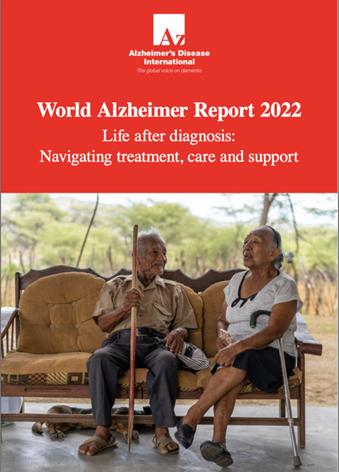
Never before has there been so much attention focused on dementia, and more specifically, Alzheimer’s disease, including early onset, afflicting people who are 55 and over. The recent World Alzheimer Reports have raised awareness that the diagnosis of dementia is only the first, albeit arduous, step on the journey (1,2). Post-diagnosis support is often a daunting field to navigate, particularly when the support systems are confusing, limited, or outrightnon-existent,dependingonwhereonelives.
Dementia is a complex condition that affects cognitive functions, including memory, communication, and decision-making. Common types of dementia include Alzheimer's disease (the most common form and may contribute to 60% of cases), vascular dementia, frontotemporal dementia and Lewy body dementia, among others. Each type of dementia may presentuniquechallengesandsymptoms,makingcaregivinganintricateprocess(3).
A common and complicated issue in dementia care is anosognosia (4). It refers to a lack of awareness or insight into one's cognitive deficits, including memory loss and other cognitive impairments. Anosognosia can be a significant challenge for both the person living with dementia and their caregivers, especially when it comes to agreeing to have a medical assessment.
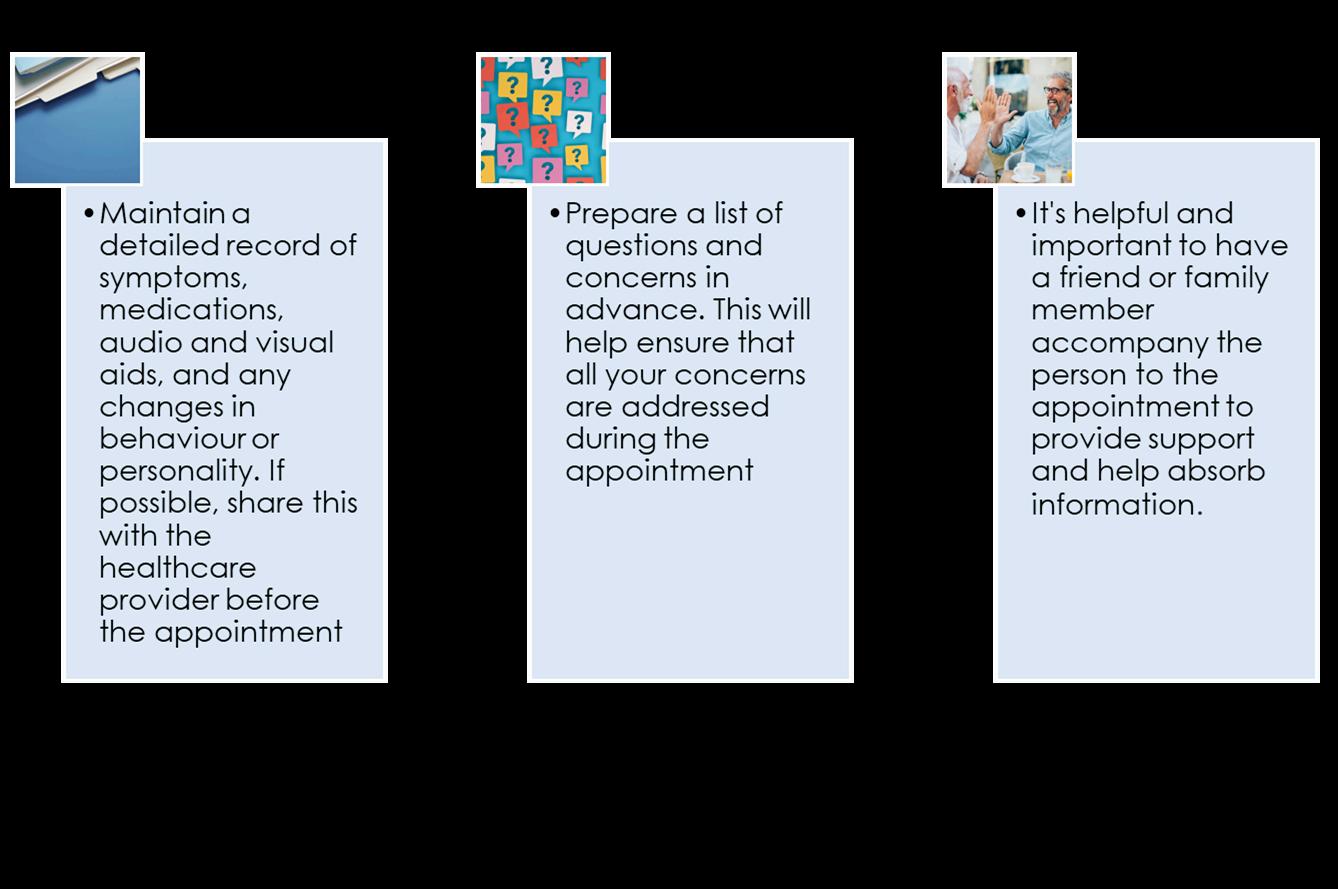
As a result of anosognosia, it may be difficult for caregivers accompanying their family members to speak openly to the healthcare professional and describe the signs and symptoms they are observing. It is recommended that caregivers be provided with an opportunity to send their list of concerns to the healthcare professional for their assessment prior to the medical appointment.
Having a medical assessment is crucial for monitoring and managing dementia. A clear diagnosis can empower the family members as they will finally know what they are dealing with and can begin toplanaccordingly.
Tomaketheseappointmentsmoreeffective:
Seeking a diagnosis of dementia and navigating care (con’t)
WhatdoCaregiversNeedtoKnow?
Receiving a diagnosis of dementia can prove to be a difficult reality for individuals and family members. The key to navigating this journey is to find acceptance and avoid denial, become as educated as possible about the disease, understand how it will progress, make healthcare plans for the future, ensure a safe home environment and provide family caregivers withasmuchsupportaspossibletoavoidcaregiverburnout.
As compared to other conditions at the time of diagnosis, the family is rarely presented with a “prescription of care” or “roadmap” of how to navigate the challenges that are associated with managing and living with such a chronic disease. Examples of common and frequently unanswered questionsarelistedintheillustrationbelow:
From the moment an individual is diagnosed with dementia, their care journey will require the assistance of a multidisciplinary team of healthcare and legal professionals, that may include family practitioners, specialists in neurology, psychiatry or geriatric medicine, nurses, social workers,occupationaltherapists,andnotaries.
All healthcare professionals who are in a position to be given a diagnosis of Mild Cognitive Impairment, Alzheimer’s disease or other dementia-related disease should have on hand material about the disease and resources to helptheirpatientsandtheircaregiversunderstandwhattheyarefacing.
An example is the “Dementia, Your Companion Guide,” developed by the McGill University Dementia Education Program and available online for free in multiple languages. With engaging illustrations and a friendly writing style, this approachable guide covers a wide array of topics to assist both the person living with dementia and their care partners. It includes information on the science and progression of dementia as well as practicaladviceonsafetyandself-care.
Another important resource is Dementia Education for Care Partners, a free online course designed to educate and support care partners of people living with dementia. The content consists of ten self-guided modules that the learner can go through at their own pace. It includes expert advice, shared experiences from participants, and solutions to the challengesof being acarepartnerinthecontextof dementia
These resources, and many more, can be accessed on the McGill University Dementia Education Program website: www.mcgill.ca/dementia.
Seeking a diagnosis of dementia and navigating care (con’t)
Here is a brief overview of the type of information that healthcare professionals should convey tofamiliesfollowingadementiadiagnosis:
Seeking a diagnosis of dementia and navigating care (con’t)
Although dementia has been around for a very long time, the stigma attached to speaking about it prevents many families and caregivers from seeking the necessary help and support they need. Healthcare professionals should consider integrating regular cognitive screening as part of routine care for older adults, especially during annual wellness visits. Tools like the Mini-Mental State Examination (MMSE) or the Montreal Cognitive Assessment (MoCA) can help identify earlysignsofcognitivedecline.
It is also very important to educate and raise awareness among older adults and their families about the signs and symptoms of cognitive impairment. These include memory loss, confusion, difficulty with familiar tasks, or changes in mood and behaviour. The more aware people are, the more likelytheywillseekhelpwhentheynoticechanges.
Alzheimer’s disease and related disorders have no cure yet, but there are symptomatic and supportive treatments. As the population ages and more people are diagnosed, we need to ensure that the public is better educated about how to managedementia.
Claire Webster is a Certified Dementia Care Consultant, Certified Professional Consultant on Aging, and conference speaker and educator in the field of caring for an individual with dementia.
She works in collaboration with the Division of Geriatric Medicine and the Faculty of Medicine and Health Sciences at McGill University, where she is the Founder and Ambassador of the McGill Dementia Education Program and McGill Cares, a webcast series designed to support family care partners.
Claire is also Founder and President of Caregiver Crosswalk Inc., a consulting firm that provides education and support services to help individuals navigate the journey of Alzheimer’s disease and dementiarelated illnesses.
As a former care partner to her late mother who had Alzheimer’s disease, Claire has lived experience on the impact this illness has on a person living with dementia and the ripple effect on family members.
Claire is one of the McGill senior co-editors of Alzheimer’s Disease International’s World Alzheimer Reports for both 2021, Journey through the diagnosis of dementia and 2022, Post-diagnostic management and support: a prescription of care. She is also a member of the Government of Canada’s Ministerial Advisory Board on Dementia.
Taking Charge of The Hearing Loss Journey Finally, At Age 40, I Had My First Big Hearing Loss AHA Moment
By Gael Hannan
Living with hearing loss for a long time is no guarantee you’regoodatit.
Regardless of the time of onset — congenital, such as case, or at a later point in life — effective navigation of chronic health condition is not intuitive. A successful hearing loss journey involves personal intent, learning, commitment. Until recently, the standard services offered to people with mild-to-severe hearing loss assessment, hearing aids, and a push-out-the-door. Patientcentred care was a thing of the future, and professionals were not trained to counsel their clients on how to betterwithhearingloss.
People like me weren’t counselled on how to live more skillfully — by sloughing off the stigma, embracing our condition, and using various strategies, including non-technological tactics that support our technology. We didn’t recognize the need to take more control of our hearing loss, and we could, especially through partnering with a patient-focused professional and the communicationpartnersinourlives.
I had been receiving hearing health care services since age two, and beyond wearing increasingly sophisticated and better hearing aids since age 20, the only strategy I consciously employed was maneuvering to read people’s lips. To understand a spoken message, visual information in many forms is crucial to augment the audible. For decades, hearing aids and speechreading were the only items in my toolbox until a major milestone changed my life in severalunexpectedways.
At age 40, I was expecting a baby. It was a mix of excitement and terror. My ability to hear and understand took on a new urgency: I would soon be responsible for a child’s wellbeing! What if I couldn’t hear my child crying in the night? What if I couldn’t hear my child burp — would he blow up? Who tells you these things? My hearing care provider at the time wasn’t an excellent resource. I didn’t know a single other person with hearing loss. My mother was a nurse, but all shecoulddotoallaymyfearswasthestandardmommycomfort;you’llbefine,dear.
For the first time in my hearing loss life, I had to stretch out for help. I discovered that a relatively new organization called the Canadian Hard of Hearing Association was having a conference in a few weeks. I walked into that event as one person and walked out three days laterasanotherdramaticallychangedperson.
Through the power of peer support, I learned that I was not alone. I learned about communication-enhancing technology, such as real-time captioning. I saw a lack of shame and anopennesstochangethatIhadneverconsideredpossibleforapersonwithhearingloss.
Taking Charge of The Hearing Loss Journey (con’t)
A mother of four sat down with me and showed me how to keep my baby safe and a path forward from good parent-child to good communication.
But most importantly, over three short days, I was on fire to take charge of my new journey. I knew what I needed and how to ask for it. It was imperative to ask for access for me and other people with theexactneeds.
It was a very loud AHA moment that kicked off a new life as a hearing health advocate. Looking back, I couldn’t have picked a better time to have a baby because, in 1995, hearing technology was starting to boom. The digital age of modern tech was creating unheard-of accessibility for people with disabilities, especially those who needed support to understand audible messages. At the same time, new concepts in hearing healthcare delivery were emerging, and prevention of noiseinducedhearinglosswasbecomingabiggertopic.
MyfirstAHAmomentwasquicklyfollowedbyanother. Enlightenment, as a person with hearing loss, gave me a toolbox bursting with attitudinal, technical, and behavioural communication strategies. Yet only the technical amplification strategies increased my physiological ability to hear better; the combination of the three enabled me to communicate better. Hearing is just one aspect of successful communication between two (or more) people. We use context, common language, visual input, personal interaction skills, and theabilitytoarticulateourneedsandhavethemmet.
Mygoalhadtochange.
I realized that I needed to communicate better instead of wanting to hear better. Communication is a bedrock of our society, the glue that connects people and the world around them. And this gluecanbeseverelyimpactedbyhearingloss.
To stop feeling victimized by my hearing loss or blaming others for poor communication, I took control of my journey. My self-identity improved, and I became honest about my hearing loss, boththefactofitandwhatIneedinindividuallisteningsituations.
Modern technology has made life easier but is less successful at handling our insecurities and emotions. That’s our job — along with asking and accepting help from others. Learning to work through the shame that I hadn’t realized I carried, to accept diversity and disability as part of life, and to commit to the best possible communication has been the greatest gift of having hearing loss.
Key Considerations for Moving into a Retirement Living Community
By Jeanette Bock
Moving into a retirement living community is a significant decision that impacts your quality of life and your family. In Ontario, various types of retirement communities offer different levels of care and amenities. To make an informed choice,considerthefollowingfactors:
Type and Level of Care Required
Current Health Conditions:
Chronic Conditions: Identify if you need specialized care for diabetes, heart disease, or respiratory issues. Some communities offer tailored plans for chronic conditions.
Mobility Challenges: Assess if you need physical support, such as mobility or wheelchair assistance, for activities and meals.
Cognitive Impairments: For memory loss or cognitive decline, look for communities offering memory care, dementia programs, and secure environments to prevent wandering.
Past Health Concerns:
Medical History: Consider if past surgeries or ongoing conditions need continuous monitoring or specialized care.
Fall Risk: If you have a history of falls, choose communities with safety features and fall prevention programs.
Type of Retirement Community
Independent Living: Suitable for self-sufficient seniors who seek a community environment with some support services like meals and housekeeping.
Independent Supportive Living: Offers a blend of independence and some assistance with daily activities.
Assisted Living: Ideal for those needing help with daily living activities such as bathing, dressing, or mobility assistance.
Memory Care/Living: Provides specialized support for individuals with dementia, including Alzheimer’s care.
Location and Proximity
Proximity to Family and Friends: Consider the community’s location relative to loved ones. Being near family can offer emotional support and ease of visiting.
Familiar Environment: Staying in a known area allows seniors to maintain their routines and personal connections and enjoy local amenities.
Local Amenities: Evaluate nearby services like healthcare facilities, shopping centers, places of worship, and recreational options. Proximity to these amenities can enhance well-being and convenience.
Cost and Financial Considerations
Budget: Evaluate your sources of income, savings, and proceeds from selling your home. Consulting a Financial Planner can assist in setting a budget amount and assessing your current and future affordability.
Key Considerations for Moving into a Retirement Living Community (con`t)
Monthly Fees: Understand what the monthly fee includes, such as meals, utilities, housekeeping,andactivities.Checkforanyadditionalchargesforextraservices.
Payment Options: Inquire about payment plans and financial assistance options. Some communitiesofferslidingscalefeesbasedonincome.
Long-Term Affordability: Assess if the cost is sustainable long-term, considering potential fee increasesandyourfinancialstability.
ServicesandAmenities
Healthcare Services: Check for on-site medical staff, such as a nurse or physician, and availablemedicalsupportformanaginghealthconditions.
Dining Options: Review the quality and variety of meals, special dietary accommodations, andprivatediningorroomserviceoptions.ServicesandAmenities
Social Activities: Look for various activities promoting socialization and engagement, such as exercise classes, arts and crafts, musical entertainment, and outings. An active social life contributestooverallhappiness.
Transportation Services: Determine if transportation is available for shopping, medical appointments,andrecreationaloutings.Somecommunitiesoffershuttleservices.
Accommodations
Living Space: Evaluate available accommodations like studios, one-bedroom, one-bedroom plusden,andtwo-bedroomsuites.Considerthelayoutandsizeoftheunits.
Accessibility: Ensure living spaces and common areas are accessible, with features such as wheelchairaccessibility,grabbars,andnon-slipflooring.
Personalization: Check if you can personalize your living space with furniture and decor to makeitfeellikehome.
StaffandCareQuality
Staff-to-Resident Ratio: A higher staff-to-resident ratio often means more personalized attention.Verifystaffavailabilityatdifferenttimesoftheday.
Staff Qualifications: Review staff qualifications, experience, and certifications. Knowledgeableandcompassionatestaffsignificantlyimpactthequalityofcare.
CommunityEnvironment
Atmosphere: Assess the community’s overall atmosphere, ensuring it is welcoming, clean, andsafe.Observetheambiance,noiselevels,andresidentandstaffinteractions.
Resident Interaction: Observe interactions among residents and staff. A friendly and engagingenvironmentenhancesyourlivingexperience.
Cultural Fit: Ensure the community’s values, lifestyle, and activities align with your preferencesandinterests.
Key Considerations for Moving into a Retirement Living Community (con`t)
Transition and Move-In Process
Transition Assistance: Inquire about support during the moving process, including downsizing services and help with packing and setting up your new suite.
Trial Periods: Ask if trial stays or short-term options are available to experience the environment and services before committing long-term.
Legal and Contractual Issues
Contract Terms: Carefully review the residency agreement, including terms related to fees, services, and termination conditions. Understand notice periods and any penalties for leaving.
Choosing a retirement living community requires careful consideration of factors such as the type of care needed, location, costs, services, accommodations, staff quality, and legal aspects. Evaluating these factors will help ensure the community meets your needs and preferences. Visit multiplecommunities,askquestions,andseekadvicetofindthebestfitforyourlifestyle
Jeanette Bock Fluid Senior Transitions
Phone: 416-518-2734
Email: Jeanette@Fluidst.ca
Website: www.Fluidst.ca
https://calendly.com/jeanette-o6m/30min
Staying physically active is crucial for seniors to maintain their overall health and quality of life. Engaging in regular fitness activities helps improve strength, flexibility, balance, and cardiovascular health, reducing the risk of injury and chronic diseases. Fortunately, many free workout resources are available, particularly online. One such valuable resource to try is the
It is a mother-and-daughter dynamic duo showcasing a variety of exercises specifically tailored for those 50 and beyond and for individuals with limited mobility. Their YouTube channel offers you more than 200 free fitness videos.
Whether it's gentle stretches, chair exercises, or low-impact cardio routines, yes2next provides a convenient and effective way for seniors and everyone to stay active and maintaintheirwell-being.
YouTube channel https://yes2next.com/
Pediatric Health
Welcome to the Pediatric Health section of Heal Canada Digital Magazine, a dedicated space where we embrace the journey toward pediatric wellness with open arms and open hearts.
We believe that an informed and engaged parent is an empowered one. Through enlightening articles, expert insights, and inspiring stories, we aim to equip our readers with the tools and knowledge necessary to navigate the complex pediatric health care landscape.
Join us as we explore how patient advocacy, active engagement and comprehensive education can transform the pediatric health care experience, turning obstacles into opportunities for growth and healing.
The Path to Lower Parent Stress and Improved Child Mental Health: Autonomy
By Emily Edlynn, PhD
There are too many parenting categories to track: helicopter, tiger, snowplow, attachment, gentle, positive, elephant, and dolphin. The human brain yearns for ways to simplify the complex so these parenting labels can feel appealing The problem is that parenting cannot be made simple or easy There is no scientific proof that the magic formula guarantees we “succeed” at parenting
However, there is a parenting approach that transcends categories and labels because it’s about a mindset. It’s a flexible framework rather than a prescription. It’s called autonomy-supportive parenting, and after investigating its body of research, writing a book about how to apply it in real life, and practicing it with my three children, I have realized it is the best-kept secret in parenting. We need to start talking about it, understanding it, and doing it for the sake of burned-outparentsandouryouthunderpressure
This science-based parenting approach has largely been ignored in favour of quick-fix promises of easy parenting because that’s what we crave for parenting to be easier. But as parents’ and children’s stress levels and mental health problems intensify for a variety of complex reasons, we may finally have arrived at the realization that “easy” parenting is an illusion for most. We may have hit the tipping point of wanting more than a parenting hack. We may finally be ready to prioritize science over hype and welcome richer parenting guidance that does not promise three steps to never yelling at our children again. (Cue guilt and self-blame when, in fact, one doesyell again )
WhatIsAutonomy-SupportiveParenting?
This approach, long studied in academia, combines an open and curious parenting mindset with applying strategies (e.g., offering choices, providing a rationale for rules, involving the child in decision-making and collaborative problem-solving, expecting independence). Over thirty years of rigorous research have shown that from toddlers to teens, autonomy-supportive parenting nurtures critical skills that increase confidence, competence, and connection through positive relationships
Being autonomy-supportive means understanding your child’s experience (“How did you make that choice?”) rather than lecturing them about a poor choice. Being autonomy-supportive means seeing opportunities for your child to build independence and confidence rather than doing things and solving problems for them. Being autonomy-supportive means ensuring your child feels choice and agency in their lives, from choosing activities for their friends to how they spend theirdowntime.
The Path to Lower Parent Stress and Improved Child Mental Health (con`t)
The end game of autonomy-supportive parenting is to raise a child who feels a sense of agency over who they are (their authentic self) and how they live their life (making choices matching their values). Using autonomy-supportive strategies promotes key ingredients of psychological health: internal motivation, belief in one’s skills, and self-awareness. Children raised in autonomy-supportive homes experience healthy outcomes, including greater psychological well-beingandlifesatisfaction.
GivingUpControlforAutonomy
In researching autonomy-supportive parenting for my recent book, I read dozens of academic papers and scrutinized my parenting. Even as a trained child and adolescent psychologist, mother of three, and alleged “parenting expert,” I discovered how reflexively I react in controlling ways with my children, particularly in times of high stress and intense emotion. In high-pressure moments like these, it’s all too easy to fall back on attempts to take control. To be controllingistheoppositeofsupportingautonomy.
Akin to helicopter/intensive/overparenting, controlling parenting includes psychological control (e.g., inducing guilt or shame) and behavioural control (e.g., pressuring a child to behave in specific ways, using threats to motivate). Not surprisingly, controlling parenting has been repeatedlylinkedtoworsepsychologicalhealthinchildren,adolescents,andyoungadults. For example, a controlling style demands straight A’s while an autonomy-supportive style focuses on boosting internal motivation for learning by understanding the child’s experience withschoolandproblem-solvingcollaborativelywhenstruggleemerges.
If given a choice between the two approaches, most parents would surely select autonomysupportive parenting because it aligns with what kind of children they want to raise and what kindofparentstheywanttobe.Yet,controllingparentingalltoooftenendsupasthedefault.
WhyParentStressMatters
Overwhelming stress depletes energy and narrows attention, resulting in more controlling behaviours Any parent attempting an evening bath with a resistant 4year-old after a stressful workday can probably relate When high stress leaves us feeling out of control, we exert more control where we can, and our children become the target. Then our children feel out of control, and behavioural and psychological problems follow, such as more outbursts, rule-breaking, substance use, andsymptomsof anxiety anddepression.
We are also more likely to be controlling as parents when we are not experiencing our autonomy When our autonomy needs are met, we can better support our children's autonomy; this means making sure we feel like we have choices to live the life we want and that we can be our authentic selves in our relationships and differentliferoles.
The Path to Lower Parent Stress and Improved Child Mental Health: Autonomy (con`t)
Parent stress doesn’t just matter to us; our children’s psychological lives depend on it, too. Despite dominant cultural messages that being a “good” parent means centering our children’s needs, this is at odds with the well-established downstream effect of parent well-being or ill-being on children. Like how yelling at our children is not a strategy but a reaction, acting controlling with our children is often a stress response, not an effort to undermine their autonomy.
Although rarely discussed in the headlines about the youth mental health crisis, effectively addressing youth mental health requires paying more attention to parents Parents do not need to worry more, get more involved in their children’s lives, or focus more on their children to support their mental health. In the current cultural moment, parents need permission to address their stress and anxiety so they can more intentionally support their children’s well-being throughnurturing theirautonomy and,along withit,psychological health.
Structural changes beyond what we can do in our homes are crucial for alleviating crushing stress and bolstering mental well-being for us and our children But we must also work from the insideouttomakechange,exerting influenceoverourfamilies
We can collectively invite autonomy-supportive parenting into the mainstream as a path forward for both parents and children. We can admit there is no secret path to easier parenting, but aiming for more autonomy and psychological health for all of us is possible and necessary.
Emily Edlynn, PhD is a licensed clinical psychologist specializing in pediatric health psychology who works in private practice with children, teens, and adults. Emily’s writing has appeared in the Washington Post, Parents, Scary Mommy, Good Housekeeping, Motherly, Psychology Today, and more. Her first book, Autonomy-Supportive Parenting: Reduce Parental Burnout and Raise Competent Confident Children, earned an Indies Foreword award for a best book in 2023. She also writes about modern parenting in her Substack newsletter (Parent Smarter, Not Harder) and co-hosts the popular Psychologists Off the Clock podcast.
For further information please visit: https://www emilyedlynnphd com/ emily@emilyedlynnphd.com
Podcast: Psychologists Off the Clock co-host Substack: https://emilyedlynn.substack.com/ Books: Autonomy-Supportive Parenting: Reduce Parental Burnout and Raise Competent, Confident Children In Your Feels: A Journal to Work Out Your Emotions (for kids)
Advocacy Spotlight
The"AdvocacySpotlight"sectionofHealCanadaDigitalMagazineis adynamicplatformdedicatedtoshiningalightonpatientadvocacy groups, both new and established. This unique feature aims to introduce these vital organizations to a broader audience, highlighting their missions, achievements, and the critical support theyofferpatientsandtheirfamilies.
Eacheditionofthissegmentmeticulouslyselectsadifferentgroup, delvingintotheirspecificfocusareas,rangingfromrarediseasesto everyday health challenges. Heal Canada amplifies these groups’ voices and fosters a deeper understanding and connection within the broader healthcare community by showcasing their stories, initiatives,andcommunityresources.
This section is more than just an informational piece; it celebrates these advocacy groups’ tireless efforts and significant impact and empowersreadersbyconnectingthemwithvaluableresourcesand supportnetworks.
Rare Diseases: A Growing Public Health Priority in Canada and the Role of the Canadian Rare Disease Network
By Karishma Samra, Engagement Coordinator
Rare diseases aren’t that rare. In Canada, rare diseases are a challenge for those directly affected and a growing public health priority. Conditions like cystic fibrosis, which affects the lungs and digestive system; spinal muscular atrophy (SMA), a progressive muscle-wasting disease; and Fabry disease, which can lead to organ damage, are just a few examples of the more than 7,000rarediseasesthatexist.
While individually rare, these diseases collectively affect a significant portion of the population, with many being life-threatening or severely debilitating. Affecting more than 1 in 12 individuals in Canada – over 3 million – these conditions often leave patients and families navigating a fragmented healthcare system, facing long diagnostic delays and misdiagnoses, limited treatment options, and emotional, social, and financial impacts. Around 400 million people globally are affected, highlighting the widespread nature of these conditions. Alarmingly, around 75% of those affected are children, and approximately 30% of them will not live to see their fifth birthday.
This staggering reality emphasizes the urgent need for systemic changes in the recognition, diagnosisandtreatmentofrarediseases.
The complexity of rare diseases presents a unique public health challenge — most healthcare systems are designed to address more common conditions, leaving those with rare diseases underserved. This has driven a national conversation about the need for timely diagnosis, equitable access to treatments, and comprehensive patient care, driven strongly by the tireless advocacyeffortsofmanypatientorganizations.
Rare Diseases and the Role of the Canadian Rare Disease Network (con’t)
In March 2023, the federal government responded with a $1.5 billion commitment as part of the NationalStrategyforDrugsforRareDiseases,sparkingmomentumfortransformativechange.
Amid this momentum, the Canadian Rare Disease Network (CRDN) – Réseau Canadien des Maladies Rares - has emerged as a driving force, uniting Canada’s leading clinical, academic, and patient expertise from coast to coast to coast and across disease boundaries to address the uniquechallengesfacedbythemillionsofchildrenandadultsaffectedbyrarediseasesinCanada.
Thenetwork’svisionisclear
To ensure that all Canadians affected by rare diseases are empowered to live to their full potential, we must create an ecosystem where innovative therapies are readily available, care is comprehensive and personalized, including family and community-centered support, and patientsreceivetherighttreatmentattherighttime,regardlessofwherethey live in Canada.
Formed in October 2023, the CRDN Steering Committee set the foundation for the network’s collaborative efforts. Led by Chair Dr. Francois Bernier, Director of the Alberta Children’s Hospital Research Institute, the committee includes representatives from healthcare, research, and patient organizations, such as the Canadian Organization for Rare Disorders (CORD) and the Regroupement Québécois des Maladies Orphelines (RQMO). This inclusive leadership ensures that CRDN remains patient-centered while addressing the broader public health impacts of rare diseases. CRDN’s official launch on Rare Disease Day, February 29, 2024, was a watershed moment, underscoring its commitment to changing how rare diseases are managed and treated across the country.
CRDN’sFourPillars:AddressingtheRareDiseaseJourney
CRDN’s work is anchored in four key pillars, which drive the network’s efforts to improve every stage of the rare disease journey — from diagnosis and treatment to comprehensive care and support:
•Diagnostics&Registries
Address diagnostic delays common for rare disease patients. Under Dr. Kym Boycott’s (CHEO) leadership, this pillar focuses on reducing the diagnostic odyssey experienced by many patients by enhancing precision diagnostics, strengthening newborn screening approaches, and supporting registriestobetterunderstandrarediseasesacrossCanada.
•InnovativeTherapies
The rarity of these diseases often means that treatment options are limited or nonexistent. Under Dr. Leanne Ward’s (CHEO) leadership and integration of new treatments. By focusing on cuttingedge research, ensuring equitable access to clinical trials and emerging pharmacological and nonpharmacological therapies, and integrating these into clinical practice so patients can benefit fromthesemedicaladvancements.
Rare Diseases and the Role of the Canadian Rare Disease Network (con’t)
•Care,Support,&Empowerment
Rare disease patients often face complex medical needs and significant social, emotional, and financial challenges. Led by Dr. Ian Stedman (York University), this pillar emphasizes holistic, patient and family-centered care and support. By building a supportive ecosystem where patients and their families can access the resources and support services they need. Empower them to confidently navigate their rare disease journey while acknowledging the critical role families and communities play in providing essential care and support.
•National&GlobalCollaboration
Collaboration is at the heart of CRDN’s work, extending across all pillars. By partnering with national and global organizations, healthcare and research efforts, and patient groups, CRDN fosters the exchange of knowledge, best practices, and resources. By fostering collaboration on a global scale, CRDN ensures that Canada is not only contributing to but also benefiting from globaladvancementsinrarediseaseresearchandcare.
JointheConversation:UpcomingCRDNTownHall
As CRDN builds momentum, it remains committed to engaging the broader rare disease community. On October 31, 2024, the CRDN will host a Town Hall, inviting patients, caregivers, healthcare providers, researchers, and advocates to engage in a critical conversation about its mission, vision, and strategic goals. This event will be an opportunity for the community to learn abouttheworkbeingdoneacrossCRDN’sfourpillars,askquestions,andsharetheirinsights. The Town Hall will also serve as a platform for co-creation, where attendees can provide input on the network’s future direction and contribute to shaping the strategic plan. It’s a unique chance to help build a stronger, more inclusive rare disease community in Canada, ready to tackle the public health challenges of rare diseases head-on. Together, through collaboration, innovation, and patient-centred care, we can ensure that no one with a rare disease is left behind.
Stayconnected!
To stay updated on CRDN’s work and future events, be sure to follow on social media (X and LinkedIn). And don’t forget to sign up for the Town Hall at www.canadianrdn.ca — it’s an opportunity disease community inCanada.
Patient Worthy: Amplifying Rare Disease Voices and Empowering Advocacy
By Colby Rogers, Patient Worthy Editor and Director of Social Strategy
In a world where 300 million individuals grapple with the complexities of rare diseases, Patient Worthy recognizes that, although every rare disease is unique, the collective experience transcendsboundaries.
At Patient Worthy, we firmly believe in the power of authentic patient voices to drive meaningful diseases. Patient Worthy recognizes that although every rare disease is unique, the collective experience transcends change. Since 2015, we have been on a mission to amplify these voices, providing a platform for rare and chronic disease patients around the globe to sharetheirstories,challenges,andtriumphs.
SharingInspiringStoriesofResilience
The rare disease community is more than just a collection of individuals; it’s a vibrant tapestry of shared experiences and unwavering support. Through our efforts, we strive to foster a sense of belonging and connection, understanding that isolation can be a significant barrier to those living with a rare condition. Through their stories, we help patients connect with peers who trulyunderstandtheirjourney,offeringsolace,empathy,andpracticaladvice.
At the heart of Patient Worthy’s mission is the belief that every patient’s story is a source of inspiration and strength. We showcase courageous patient profiles, heartfelt interviews, and thought-provoking narratives that highlight the resilience, determination, and hope that define the rare disease community. These stories serve to educate, raise awareness, and break down barriersofstigmaandmisunderstanding.
ElevatingPatientAdvocacy
Patient Worthy recognizes that advocacy is the lifeblood of the rare disease community. We empower patients to become fierce advocates for themselves and others by providing a way for policymakers, researchers, and healthcare professionals to hear authentic patient voices. Our goal is to ensure that the stories of rare disease patients are heard clearly in every decisionmakingprocessthataffectstheirlives.
Patient Worthy: Amplifying Rare Disease Voices and Empowering Advocacy
(con’t)
Acromegaly:ACollaborativeInterview
Recently, we shared an inspiring story featuring six individuals living with acromegaly, a rare hormonal disorder causing unusual growth in various body parts, particularly the extremities. These patients candidly discussed the challenges they faced in their lives and how participating in an acromegaly mentorship program has empowered them to support their patient communities.
One recurring theme we hear from patients with rare diseases is the lifeline provided by connecting and interacting with others throughout their journey. We are delighted to share that this collaborative interview reached over 10,000 readers worldwide on PatientWorthy.com, reflecting the importance of raising awareness and providing a platform for individuals to share theirexperiences.
AmplifyingYourVoice,InspiringChange
Yourstoryispowerful.AtPatientWorthy,weprovideopportunitiesforrarediseasepatientsto share their experiences with a global audience. Through patient ambassadorship, we connect you with opportunities to speak at conferences, contribute to patient programming, and engage with patients within your community. Your voice has the ability to raise awareness, challenge misconceptions,andinspirechange.
Together, we can create a world where every rare disease patient feels seen, heard, and empowered. Your story could be the spark that ignites hope and inspires change for millions worldwide.
To learn more about how Patient Worthy can help you share your authentic story and connect you with opportunities around the world, please visit www.patientworthy.com or scan the QR code.Yourstorycouldbejustthethingthatsomeoneelselikeyouneedstohear.
Patient’s Journey
The "Patient’s Journey" section of Heal Canada Digital Magazine is close to our hearts. This magazine is dedicated to patients and caregivers. We are proud to offer a platform to our community so that we can share, learn, and grow together. Here, patients can share their experiences and empower readers by connecting them with our Heal Canada community. By doing so, we can understand that whatever the situation we face, we are not alone! United, we stand in Advocacy!
Hope: A Physician's Journey
Dr. Nhung N. Tran-Davies
I can clearly remember how taken aback; I was to be still breathing when the first month of the newyearcametoaclose.
A heavy weight lifted off my shoulders because it wasn't just any January. It was the first month of a new year, after having been diagnosed with Stage 4 Colorectal Cancer just a couple of monthsprior.Ididn'tthinkIwouldlivetoseeanyofthenewyear,forthatmatter. And so, to know that I had survived and that I was indeed going to see the sunrise on the first day of the second month of a new year brought a huge sense of relief, wonder, and hope. I believed that I could do this, that I could get through this. For the first time in my 50 years of life, I was trulygratefulforeverysecondofeveryminuteofeveryday.
Being a Family Doctor and knowing how poor the prognosis can be for Stage 4; I didn't know if I was going to live. Nothing in my 20-year career as a medical doctor, not even my experience of delivering sad news and caring for palliative patients, prepared me for confronting my very own mortality.
I plunged into the depths of despair after my diagnosis, in large part because of my children still being so young. I want to be here still to see them graduate, blossom, reach their dreams, and find their true loves. I want to hold my grandbabies. There's still so much to do and more of the worldtosee,morewalksinthewoodsanddancesunderthemoonlightwithmyotherhalf.
Surprisingly, my patients drew me out of the despair. Little did I know how quickly they banded together to become my 'doctors.' It was their turn to take care of me, they said. And that they did with all the delicious food, warm blankets, and countless other gifts they inundated me with. Theywereindeedinstrumentalinliftingmethroughthedarkestmoments.
Now, ten months into this journey and two major surgeries out of the way, I realize that I've learnt a thing or two, especially as a physician looking through a patient's lenses. How can I not, after having been wheeled around half-naked on surgical gurneys, being poked and prodded, and subjected to countless needles and bloodletting, scans, doctor visits and numerous rounds ofnauseatingchemotherapy?
Facts and science are at the core of medicine and my medical practice. As a physician, we must follow evidence-based best practices and to do no harm. That is why I was so surprised when, suddenly, I found myself in the position of seeking out alternative/herbal therapies. Well, it was more so to appease my mom. She had overheard friends talk about a product that could boost the immune system and cure cancer, and that was enough for her to nudge me on. I tried to stand my ground on the lack of strong evidence, but sensing the hope this potential remedy was giving her, I finally conceded (deducing that, at least, it would cause no harm). I realized then that even if it had a one in a million chance of helping, I could not or should not deny that hope, thatpossibilityofcure,tomyfamilyandfriends,andmostofall,tomyself.
A unique lesson I've learned as a physician on this journey is seeing the world from a patient's perspective. Now that I am in the waiting room, the one on the exam bed, and the one getting my bloodpressuretaken,it'sawholenewworldoffears,uncertainties,andvulnerabilities.
Hope: A Physician's Journey (con’t)
What I've come to realize is how critical the doctor-patient relationship is to our health and sense of well-being. The physicians who've sat down at eye level with me and just talked to me to find out how I'm feeling, how I am, what my concerns are, etc., are the physicians who have not only empowered me but have also been vital in allaying my fears and uncertainties. No matter how scientifically complicated the diagnosis or prognosis can be, a good physician is a physician who infuses the discussion with warmth, compassion, and possibilities. Ultimately, all I want, as a patient,istowalkoutofthatdoctor'sofficewithasenseofhope.
One of the biggest, most humbling lessons I've learnt through all this is that there's still much we physicians and scientists don't know regarding health and healing. Yes, I've gone in for the recommended surgeries and rendered my system to the chemotherapies, as I have great respect for medical science. However, I admit I've gained a greater respect for the power of Prayers. Prayers have accentuated every medical decision and therapy I've submitted. As I am rolled into the surgical suite, as the drugs infuse into my veins, there lies at the forefront of my consciousness prayers Prayers to guide the precision of the surgeon's hand, prayers that the chemotherapy devour every cancerous cell, prayers that I will get through this. Prayers from everyone near and far, of every religion and faith in my circle of loved ones, lifted my spirit and carried me through the darkest times, giving me strength and courage to carry on with the fight. Prayersareanetherealforcethatisgivingmehope.
At the end of the day, hope is all we have. Hope empowers. Hope defies statistics and probabilities and ventures into the realms of miracles and endless possibilities. Hope is the light that shines through the dark. As per Emily Dickinson, "Hope is the thing with feathers that perchesinthesoul,andsingsthetunewithoutthewords,andneverstopsatall..."
Dr. Tran-Davies is a distinguished writer and physician, who proudly graduated from the University of Alberta. In 1979, she arrived in Canada as a refugee from the Vietnam War, accompanied by her mother and five siblings.
Dr. Tran-Davies has a passion for writing children’s stories that highlight the humanity in our lives. Her works have been shortlisted for several prestigious awards, including the Alberta LiteraryAward, Red Maple Award, and BlueSpruce Award.
Visit Dr. Tran-Davies's website to discover more about her remarkable work. https://www.nhungtrandavies.com/
Living Well
In this vibrant corner of Heal Canada Digital Magazine, we're excited to introduce you to our "Living Well" section – a treasure trove of inspiration and guidance for those seeking a healthier, happier, and more balanced life. Our mission is to empower you with expert insights, the latest health trends, and personal wellness stories that resonate withreal-lifechallengesandtriumphs.
Here, we explore the many facets of well-being, from nourishing your body with wholesome nutrition to rejuvenating your mind through meditation and mindfulness. You'll find practical advice on exercise, mental health, and preventive care, all tailored to fit into your busy lifestyle.
But "Living Well" is more than just a guide; it's a community. We encourage you to engage with us, share your journeys, and learn from others who are on similar paths. Whether you're taking the first steps towards a healthier you or are further along your journey, we're here to supportandinspireyouateveryturn.
"Living Well" will provide topics that matter the most to your health andhappiness.Let'scelebratethejoyoflivingwelltogether!
Some targeted training tips for elevating overall well-being
by Kyle Bryon, Nutrition Coach, BSC
Aging presents its challenges but also an opportunity to discover new strengths and adapt in remarkable ways. While walking is a modest option compared to more intense activities, it's a powerful tool for maintaining health and well-being. Many people find it an excellent and effective way to stay active and connected to their bodies. It's all about finding what works for youandembracingthejourneywithoptimismandresilience.
Walking
Walking is suitable for spinal health, but Pilates is much better. It also improves strength, flexibility, and coordination and burns more calories.
Walking is decent for mental health (but higher heart rate activities are better, like dancing, which is also better at suppressing dementia because of the coordination and socialization).
Walking does very little to help lose excess weight, and it does almost nothing for bone or muscle mass – two of our most vulnerable and cherished assets.
Walking is a valuable option for staying active, especially when other forms of exercise are not feasible due to injuries or limitations.
Sarcopenia
This word should scare you. It's the natural degradation of our muscle tissue with age. It starts in our mid-thirties and accelerates each year. That said, we can take an 80-year-old who has never lifted weights, get them lifting weights, and feed them a proper nutrition plan; they will gainmuscle(andbonemass).
But most people aren't lifting or eating well enough. Most folks are wasting away, strolling on walking paths. One slip on some ice or the corner of a rug could be the end of not just our sporting life but life itself. Being strong prevents falls, and having hard bones helps us survive if we do fall. The average rate of lean tissue loss is 8% per decade. For a subjective indicator, compareyournecktophotosofyour30sand50s.
Lifting weights 3-5 times a week and eating enough protein will slow or reverse sarcopenia, slow or reverse bone loss, and improve telomere length, which is one of the things we look at regardingbiologicalage.
The problem is that people need to learn how to lift weights. But nowadays, there are plenty of personal trainers around to help, and they/we are more informed than ever. Arnold Schwarzenegger had a dream in the 1960s that there would be more gyms than grocery stores. People said he was crazy, but it happened. Often, physiotherapists make great trainers, too. ThePelotonapphaswonderfulexercisevideosforbeginners.
You don't need equipment. Side planks, push-ups, and various squats can all be extremely effective if done properly and at intensity. Resistance bands are inexpensive and can be taken to parks or forests for anchor points. There isn't an excuse anymore not to perform resistance training.
Some targeted training tips for elevating overall well-being (con`t)
ProteinIntake
Despite all the existing science and protein powder, very few people eat enough protein. A low protein intake accelerates sarcopenia and bone loss. There are outdated fears about kidney health (extra protein is safe). The bulky tissue on our bodies is fat, while the muscle is very dense and small. In the elderly, dental or digestive issues can limit a person's protein intake, but that'swhatnutritioncoachesarefor.
Getting enough protein involves eating ½ to 1 fist of protein at each meal and snack. The advanced answer is getting 1.8 g of protein per Kg of your ideal weight. This means a person who is about 20 lbs. overweight would remove that weight before running this calculation. I'm 185 lbs. and in decent shape. I, therefore, aim for about 140 g of protein per day, minimum. I usually need proteinpowdertohitthisgoal,butthat'sokay.
Lifting weights without enough protein will fail to produce the adaptation that the exercise has cued.
BoneMass
Resistance training and proper nutrition will increase bone mass, even for those 50 and over. My mom improved her bone mass from age 60 to 65 thanks to eating more protein and doing resistance training. Having a few servings of dairy or fortified dairy-free products gets you part of thewaythere.
You should add about 200 mg of calcium, a multivitamin, and vitamin D, about 1000-2000 IU, to this protocol. Those are general guidelines, and I can make a specific recommendation based on age, weight, diet, etc. I support taking a Vitamin D supplement, as many Canadians are deficient andwonderwhytheyaresad,sick,andtired.
Growing older undoubtedly brings its share of challenges, but it also offers a remarkable opportunity to embrace new possibilities and embark on exciting adventures. Consider the inspiring individuals I know: women in their 60s who excel in dragon boat racing and perform impressive pull-ups, and men in their 80s who can effortlessly complete 40 push-ups in a single set. Their stories highlight how age can be transcended through commitment and community. By surrounding themselves with supportive fitness networks, they've demonstrated that age is merelyanumber,andwithencouragementandinspiration,one'spotentialremainsboundless.
You’re never alone on this journey—an entire network of support and camaraderie awaits, ready tohelpyouflourishifyou’reopentoit!
Kyle Bryon, Nutrition Coach, BSC
Kyle has been doing nutrition coaching and personal training for over 15 years. He helps everyday people and athletes eat better so they can transform their health, bodies, and lives. Kyle also works with children and families.
kyle@kylebyronnutrition.com 4164599956
https://kylebyronnutrition.com/ Located at: 30 Wellington St W, 5th Floor, Toronto
Falling Back? Tips to Get Back Up!
reprinted with permission from Your Therapy.
The end of daylight savings time will occur on Sunday, November 3rd. This means clocks will be set back an hour, and a collective disorientation will ensue. While some celebrate the extra hour of sleep, many dread the seemingly archaic concept of time change. Either way, we can all use somehelpfultipsonhowtogetbackupwhenthefall-backtimechangeknocksusoffbalance.
So why does a change in a measly hour disorient us so much? Well, we may not use it to tell time, but we still take cues from the sun. For instance, the sun impacts our sense of tiredness, falling asleep and waking up. With time change in play, this communication results in sleep disruptions and triggers the effects of poor rest, such as decreased focus and performance at school and work. Additionally, decreased daily sun exposure increases our chances of mood changes and riskofseasonalaffectivedisorder(SAD).
Now that you’re aware of the potential effects on sleep and mood let’s explore some good mood-enhancing routines as you prepare to overcome the time change and darker months ahead.
Ease into the change! Go to bed 15-30mins earlier on the days leading up to the time change. This will give you a longer transition time before the weekday routine begins. Getting a consistent sleep routine from the start will also boost yourmood.Startbygettingtobedandwakingupatthesametimeeveryday.
Get regular daylight: With the sun setting earlier, you may quickly be left in the dark after school or work. Plan to increase your exposure to daylight by getting outside in the morning or during lunchtime. Is outside not an option? Try using a lighttherapyboxwhichemitsatypeofartificiallightthatmimicsoutdoorlight. Get into Motion: Get up and move regularly to help with better sleep. Why not take a walk outside for some natural sunlight exposure to help boost your mood and energy? Just remember to avoid working out too late, as all that energy can keepyouupifit’sclosetobedtime.
Eat Right Feel Bright: Being mindful of maintaining good, regular nutrition can help with sleep and mood. In the evening, notice what takes longer to digest and keeps you awake at night. This may mean passing on that late-night glass of wine orlate-afternooncoffeetogetalltheZsatbedtime.
Turn Off and Turn Down! Darker nights may mean longer evenings spent bingewatching shows and scrolling social media. Screen management is a must when it comes to maintaining quality sleep and a good mood. Remember to reduce screen time by 1- 2 hours before bedtime, especially if it’s a device that emits bluelight.Remembertoturnitofftobeginturningdown!
This article has been reprinted with permission from Your Therapy. We appreciate their authorization to share this valuable content with our readers.
Your Therapy is a safe, welcoming counselling practice in the Greater Toronto Area that offers individual, couple, and family therapy, as well as depression therapy, anxiety therapy, and more. Please visit them at the website YourTherapy.ca or reach them at reception@yourtherapy.ca
From Junk Food to Whole Food: Make Changes That Will Stick
by Sue Lemoine, RNHP
If you’re looking to make changes to your diet plan but don’t know where to start,herearethreesimpletipstohelpyougetstarted.
MakeSimpleChanges
It's easier to create and sustain long-term health (or weight loss) if you ease yourself into it. Start by changing one or two small things that feel manageable: overhauling your lifestyle in a week will exhaust and frustrate you, and it won’t stick. Start by looking at the amount of processed foods you eat and making the firstchangesthere.
Let’s say the first thing you choose to change is breakfast. Look at the ingredients if your go-to is a quick and easy breakfast bar. Most contain high amounts of sugar and ingredients that you can’t pronounce. A good substitute would be a hard-boiled egg (you can boil it the night before) and a piece of fruit. It is quick and easy to grab, but it is low in sugar and high in protein and some good fats. I’m not saying protein bars are bad, just look at the ingredients before youbuythem.Therearegreathigh-qualityproteinbars,justbeaware.
SayYestoTreats
The great thing about making minor changes is that you don’t have to give up your favourite foods; modify them a bit. For instance, if you love snacking on popcorn, make sure it’s one of the healthier versions. The best way to make popcorn is with a hot air popper or a little oil in a pot on the stove. If you love making it in the microwave, just look for the healthier versions. Remember, the fewer ingredients, the better (and if you can’t pronounce the words, put them back on the grocery shelf). Look for brands with only three ingredients: nonGMOpopcorn,oil,andsalt. That’sall.
The same goes for the rest of your foods. If you can’t go without your chips, try swapping your heavily seasoned potato chips for chips made from vegetables with only salt and oil added. And if you really want that chocolate bar, swap your processed chocolate bar for a healthier organic dark chocolate instead. Simple, right? If you’re not sure whether it’s a healthier choice, ALWAYS take a look at the ingredients list. When you see a jumble of words that would knock you out of a spelling bee, don’t eat it! The better choices have ingredients that you can pronounce and understandandsoundlikefood,notchemicals.
EmbracetheJourney
Remember, the path to health (and weight loss) is a journey. You don’t have to be perfect to see and feel the effect of good, nourishing food. Your body will respond by being stronger and more resistant to colds and flu because your immune system will be well-nourished and able to fight off those nasty viruses that surface yearly. You will also feel more energized. When you integrate these small changes and let your body and taste buds adjust, you’re setting yourself up for longterm success and wellness. How can you integrate some of these small changes into your diet andlifestyle?Ifyouhaveanyquestions,pleasereachouttomeanytime.
Sue is a Holistic Health and Wellness Practitioner from Edmonton who teaches perimenopausal and menopausal women, who live in various parts of the world, to really enjoy this stage of their lives She does this by helping them refine their eating so they can balance their hormones naturally and holistically through food and lifestyle tweaks The greatest reward is seeing her clients emerge from her programs not only healthier, happier and more balanced, but with less menopausal symptoms. If you suffer from ANY perimenopausal or menopausal symptoms, please reach out to her for a free consultation sue@flourish-nutrition.ca .
Sue Lemoine, RHNP
Ask the Professional
Welcome to the "Ask the Professional" section of Heal Canada Digital Magazine, a dedicated space where curiosity meets expertise in the realm of healthcare.
In our pursuit to empower patients and their advocates with knowledge, this section bridges the gap between medical professionals and our readers, offering clear, accurate, and practical answers to your most pressing questions. Whether you're navigating the complexities of clinical trials, seeking advice on managing chronic conditions, or exploring the latest in wellness trends, our experts are here to provide you with insights grounded in the latest research and clinical experience.
Let's embark on this journey of understanding together, fostering a community where informed decisions lead to better health outcomes.
Ask the Professional.
Maureen Carpenter, BSC, RN, CD provides her insight
PatientAdvocates arepivotalinassistingapersoninschedulingappointments,findingtertiary care,clarifyingmedicaljargon,choosingthebesttreatment/symptomcontrolpath,etc. Therearenumerousadvocacygroupsavailablethatareadeptatprovidingguidancethroughan unknown terrain. This would be like pulling over and asking a local person for directions to “Bob’splace.”
Takecontrolofyourcare,whetherdirectlyorindirectly.Directly:informyourselfaboutyour diagnosis, treatments, appointments, and prognosis. Indirectly: have an advocate — either a loved one you trust or a professional — who you also trust, ask the right questions and tough questions, provide or obtain clarification or explanations and allow you input into the care plan. ThisissimilartoplanningyourrouteonyourGPS.
You always have the right to choose, whether you choose the best course of treatment or care for you will be based on the knowledge obtained from information gathered. This would be similar to choosing the fastest route, most scenic route, choosing to avoid toll roads, construction,etc.
Finally, once the route or plan is decided, it is important to be flexible. When planning the DDay assault, Dwight D Eisenhower said, “Plans are useless, but planning is indispensable.” This can be in the form of a different specialist, change in treatment, new medications, change of diagnosis, or change of health status. Not all changes are negative; adaptability is important whencircumstanceschange.
11- Danicopan Approved as Add-On Therapy to Ravulizumab or Eculizumab for Extravascular Hemolysis in Adults With Paroxysmal Nocturnal HemoglobinuriaThe ASCO Post
13- Lee JW, et al. Addition of danicopan to ravulizumab or eculizumab in patients with paroxysmal nocturnal haemoglobinuria and clinically significant extravascular haemolysis (ALPHA): a double-blind, randomised, phase 3 trial. The Lancet Haematology. 2023;10(12):E955-E965.
14- UCB announces U.S. FDA approval of ZILBRYSQ[®] (zilucoplan) for the treatment of adults with generalized myasthenia gravis | UCB
15- Myasthenia gravis - Wikipedia
16- Wainua (eplontersen) granted first-ever regulatory approval in the US for the treatment of adults with polyneuropathy of hereditary transthyretin-mediated amyloidosis (astrazeneca.com)
17- Cortese A, et al. Diagnostic challenges in hereditary transthyretin amyloidosis with polyneuropathy: avoiding misdiagnosis of a treatable hereditary neuropathy. J Neurol Neurosurg Psychiatry. 2017;88(5):457-458.
18- FDA Approves Lilly's EBGLYSS™ (lebrikizumab-lbkz) for Adults and Children 12 Years and Older with Moderate-to-Severe Atopic Dermatitis | Eli Lilly and Company
19- Chiesa Fuxench ZC, et al. Atopic Dermatitis in America Study: A Cross-Sectional Study Examining the Prevalence and Disease Burden of Atopic Dermatitis in the US Adult Population. Journal of Investigative Dermatology. 2019;139, 583e590;
20- FDA Approves First Injectable Treatment for HIV Pre-Exposure Prevention | FDA
21- Servier Announces FDA Approval of TIBSOVO® (ivosidenib tablets) in Combination with Azacitidine for Patients with Newly Diagnosed IDH1-mutated Acute Myeloid Leukemia | Blog
Seeking a diagnosis of demantia and navigating care
1-Gauthier S, Rosa-Neto P, Morais JA, & Webster C. 2021. World Alzheimer Report 2021: Journey through the diagnosis of dementia. London, England: Alzheimer’s Disease International.
2- Gauthier S, Webster C, Servaes S, Morais JA, Rosa-Neto P. 2022. World Alzheimer Report 2022: Life after diagnosis: Navigating treatment, care and support. London, England: Alzheimer’s Disease International.
3-Robinson L, Tang E, Taylor J-P. Dementia: timely diagnosis and early intervention. BMJ. 2015; 350.
4-de Ruijter NS, Schoonbrood AMG, van Twillert B, Hoff EI. Anosognosia in dementia: A review of current assessment instruments. Alzheimers Dement (Amst). 2020;12(1):e12079.
5-Hill DL, Walter JK, Szymczak JE, DiDomenico C, Parikh S, Feudtner C. Seven Types of Uncertainty When Clinicians Care for Pediatric Patients With Advanced Cancer. J Pain Symptom Manage. 2020;59(1):86-94. Thomas C, Alici Y, Breitbart W, Bruera E, Blackler L, Sulmasy DP. Addressing Challenges With Sedation in End-of-Life Care. J Pain Symptom Manage. 2024;67(4):3469.
6-Dreier LA, Zernikow B, Stening K, Wager J. Insights into the Frequency and Distinguishing Features of Sleep Disorders in Pediatric Palliative Care Incorporating a Systematic Sleep Protocol. Children (Basel). 2021;8(1).
7-Felt BT, Chervin RD. Medications for sleep disturbances in children. Neurol Clin Pract. 2014;4(1):82-7.
8-Mercante A, Owens J, Bruni O, Nunes ML, Gringras P, Li SX, et al. International consensus on sleep problems in pediatric palliative care: Paving the way. Sleep Med. 2024;119:574-83.
Throughout her career, Wendy has showcased her insightful perspectives through her writings,whichhaveappearedinpublicationssuchasTheMontrealGazetteandOttawa's Globe andMail. Shehasalsocontributedtospecialized platforms like Booming Encore and Refresh Reflexology Magazine, demonstrating her versatility in addressing diverse audiences.
Wendy’swritingshaveappearedinpublicationslikeTheMontrealGazetteandOttawa's GlobeandMail.SheisaregularcontributorforBoomingEncore,nicheplatformssuchas RefreshReflexologyMagazine,andnumerousonlineforums.Wendy'suniqueobservation ontheinitialdaysofthepandemiclockdowniscapturedintheanthologyChroniclingthe Days: Dispatches from the Pandemic, published by Guernica Editions in the spring of 2021.
Cheryl Petruk, MBA B.Mgt.
Cheryl A Petruk is a multifaceted professional whose career spans across patient advocacy,business,andpost-secondaryeducation,showcasingherdedicationtomakinga significantimpactineachoftheseareas
Cheryl's transition into patient advocacy was driven by a passion from her family circumstances and a deep commitment to ensuring patients' rights and access to care. Cheryl has worked tirelessly to bridge the gap between the healthcare system, patients, andpharmastakeholders,ensuringthatpatients'voicesareheardandtheirneedsaremet. Her work involves collaborating with Stakeholders and Patient Advocacy Organizations, lobbying for patient centricity, and providing patient support and guidance. Cheryl's empatheticapproachanddedicationtoadvocacyhavemadeherarespectedfigureinthis field,admiredbypatients,healthcareprofessionals,andfellowadvocates.
Cheryl also leads and is the lead faculty member at CACHEducation, Patient Advocacy Training.