
There are some editorials that practically write themselves. This isn’t one of them. Like some of you, we read about the May fire-explosion at the Robbins Lumber sawmill in Maine with a heavy heart. Weeks later came the news that co-owner Alden Robbins had succumbed to his injuries, bringing the death toll to three. The news of his death was after another devastating headline in May: 11 were killed in a white liquor tank explosion at a packaging plant in Longview, Wash. Just last month OSHA released its final report regarding the 2025 fire-explosion in Nebraska at Horizon Biofuels that claimed the lives of six, including two young girls.
The shocking reminder: These were all different facilities, different wood production processes, but all had the same unimaginable outcome.
As editors, we spend much of our time writing about new pellet plants, dryer technologies, biomass boilers, emissions controls, fuel handling systems and ways to make wood residuals more valuable. We highlight innovation because innovation keeps this industry moving forward.
But those stories only matter because of the people behind them.
The operators monitoring dryers through the night. The control room always having eyes on everything. The maintenance crews rebuilding equipment during outages. The electricians troubleshooting a sensor. The loader operators feeding fuel yards. Maintenance guys getting a call because something “just doesn’t sound right.” They are the reason this industry exists.
Wood bioenergy is built on materials that are incredibly valuable—but also inherently hazardous. Fine wood dust, dry fiber, high temperatures, rotating equipment, confined spaces, stored energy and combustible materials are part of everyday operations. Most days, those risks are managed successfully because thousands of professionals follow procedures, watch out for one another and refuse to cut corners.
The difficult truth about our industry is that catastrophic incidents are rarely random. They remind us how quickly routine can become a tragedy and how dangerous familiarity can be if it turns into complacency.
We don’t yet know every lesson these recent incidents will teach the industry. But there is one lesson we don’t need an investigation to confirm: Safety cannot become routine. Every safety meeting matters, every near miss that gets reported instead of ignored matters. Cleaning up the dust, whether the old fashioned way with a broom in a small area, or engaging with new technologies plant-wide to mitigate dust, matters.
Technology continues to improve. Automation removes people from hazardous areas. Detection systems are becoming smarter. Predictive maintenance is helping facilities identify problems earlier than ever before. But no technology can replace a workplace where people feel responsible not only for their own safety, but for the person working beside them.
The bioenergy industry has always been defined by resilience. We find value where others see waste. We transform residuals into renewable energy. We solve problems every day.
If these recent tragedies inspire one supervisor to pause a start-up because something doesn’t look right, one operator to report an unusual vibration, or one maintenance manager to move up an inspection, then perhaps some measure of good can come from an otherwise heartbreaking season.
Cover photography:
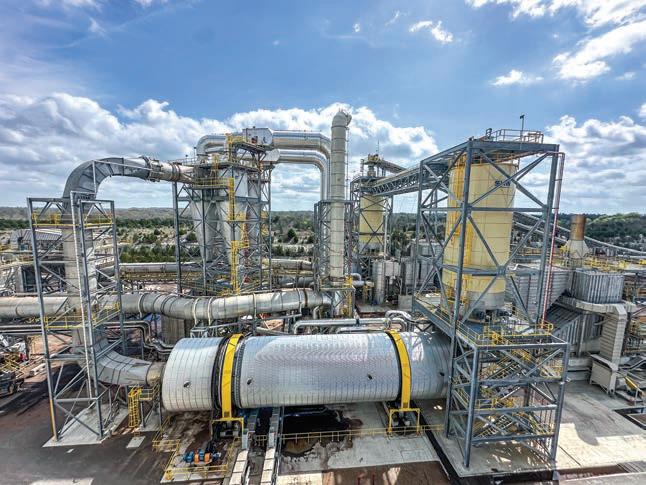
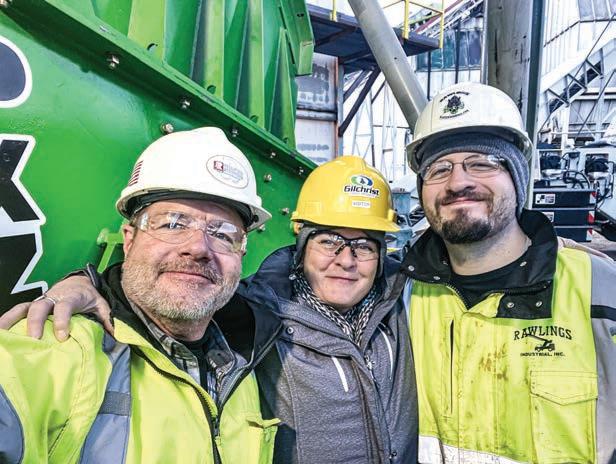
Dean Resources is turning sawmill residuals into export fuel pellets, creating a new revenue stream while exceeding production expectations in its Oregon start-up. (Dan Shell photo)


Volume 18 Number 4
Hatton-Brown Publishers, Inc.
Street Address n 225 Hanrick Street
Montgomery, AL 36104-3317
Mailing Address n P.O. Box 2268
Montgomery, AL 36102-2268
Tel: 334.834.1170 n Fax: 334.834-4525
Publisher/Adv. Sales Manager n David H. Ramsey
Chief Operating Officer n Dianne C. Sullivan
Editor-in-Chief n Rich Donnell
Managing Editor n Jessica Johnson
Senior Editor n Dan Shell
Associate Editor n Patrick Dunning
Contributing Editor n Ford Boswell
Publisher/Editor Emeritus n David (DK) Knight
Art Director/Production Manager n Cindy Segrest
Ad Production Coordinator n Patti Campbell
Circulation Director n Rhonda Thomas
Advertising Sales
North American Sales Representative
Susan Windham n P.O. Box 2268
Montgomery AL 36102-2268
334.834.1170 n Fax: 334.834.4525
E-mail: windham.susan4@gmail.com
International Sales
Murray Brett n 58 Aldea De Las Cuevas, Buzon 60 Benedoleig 03759, (Alicante) Espana +34 96 640 4165 n Mobile: +34 66 931 5837
E-mail: murray.brett@abasol.net
Classified Advertising Sales
Bridget DeVane n Tel: 334.699.7837 n 800.669.5613
E-mail: bdevane7@hotmail.com
Wood Bioenergy (ISSN 1947-5306) is published six times annually (February, April, June, August, October, December) by Hatton-Brown Publishers, Inc., 225 Hanrick St., Montgomery, AL 36104. Wood Bioenergy is free to qualified readers in the United States, including owners, managers, supervisors and other key personnel. All non-qualified U.S. subscriptions are $50 per year, Canadian subscriptions are $60 and foreign subscription are $95 per year (U.S. funds). Subscriber Inquiries and Back Issue Orders—TOLL-FREE: 800.669.5613. Fax 888.611.4525. Subscribe or renew online: www.woodbioenergymagazine.com and click on the “Subscribe” button. When requesting change of address, please specify both old and new. Periodicals postage paid at Montgomery, Ala. and at additional mailing offices.
Postmaster: Please send address changes to:
Wood Bioenergy, P.O. Box 2419, Montgomery, AL 36102-2419
All advertisements for Wood Bioenergy are accepted and published by HattonBrown Publishers, Inc. with the understanding that the advertiser and/or advertising agency are authorized to publish the entire contents and subject matter thereof. The advertiser and/or advertising agency will defend, indemnify and hold any claims or lawsuits for libel violations or right of privacy or publicity, plagiarisms, copyright or trademark infringement and any other claims or lawsuits that may arise out of publication of such advertisement. Hatton-Brown Publishers, Inc. neither endorses nor makes any representation or guarantee as to the quality of goods and services advertised in Wood Bioenergy. Copyright ® 2026. All rights reserved. Reproduction in whole or part without written permission is prohibited. Printed in USA.
ATLANTA, Ga.
The unstated message of the recent Wood Bioenergy Conference & Expo was to “turn lemons into lemonade,” with lemons being the crash of a significant portion of the pulp and paper industry and the loss of forest residues markets, and lemonade being those same forest residues feeding potential markets in the ever-emerging wood bioenergy industry.
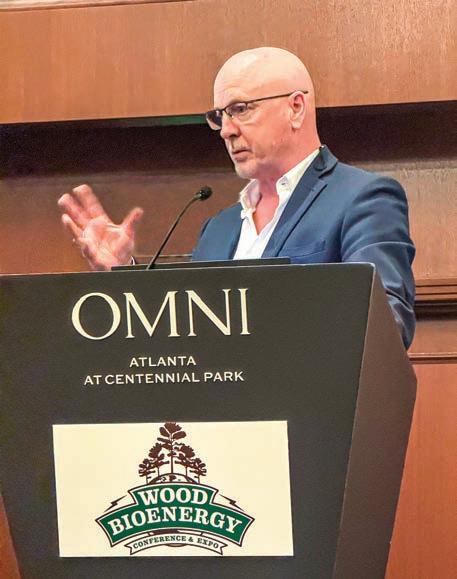
Vincent Leon, senior principal with AFRY Management Consulting, said AFRY estimates that scaling higher-value uses of forest residues in the U.S. South, within existing sustainability limits, could unlock approximately $20-25 billion per year of incremental value, whether through biopower, biofuels, biomaterials, and carbon capture.
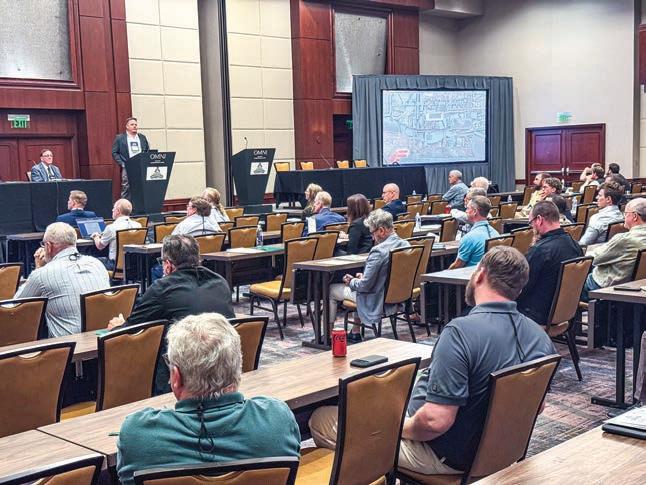
Such was the sky’s-the-limit nature of the Wood Bioenergy Conference & Expo, held April 1415 at the Omni Atlanta Hotel at Centennial Park in downtown Atlanta. Hosted by Wood Bioenergy magazine, the event attracted nearly 200 participants, featured 22 speakers and 43 exhibitors in the Grand Ballroom North of the Omni.
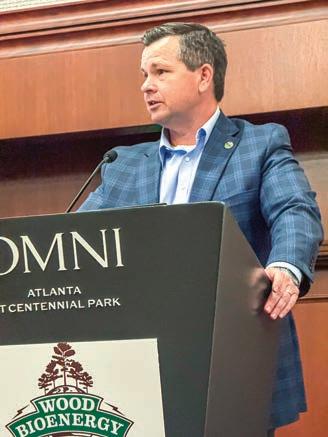
Tim Lowrimore, president and CEO of Georgia Forestry Assn. and Foundation, noted that 11 pulp mills have closed in the U.S. (mostly in the South) since 2022. The immediate and potential impacts have been enormous:
—1600 direct mill jobs lost and 6,000 total jobs impacted across the supply chain
—8.3 million tons (4.5 million in Georgia alone) of annual demand lost (chips and roundwood)
—Markets lost for chips byproducts, a critical revenue stream for sawmills
—100-150 logging crews facing shutdown
—long-term asset devaluation, reduced forest revenue, and forest health, and conversion risk for forest landowners
However, Lowrimore noted that opportunities in forestry biomass can relieve some of the pain. Biomass now left idle can be transformed into sustainable energy that accelerates decarbonization and solves a growing energy demand. New products like bio-coal

lack viable pulpwood markets. He said there’s a net surplus of 56 million bone dry tons in the U.S. But there’s a need to create scalable options to make traditional forest owners more profitable, through technology that supports supply chains and reduces costs. Where’s the investment potential? Biopower, biodiesel, mass timber, wood insulation, molded fiber packaging, to name some, as well as in ecosystem services such as carbon and biodiversity. Even endangered species conservation could be supported with biodi-
6 Wood Bioenergy / August 2026
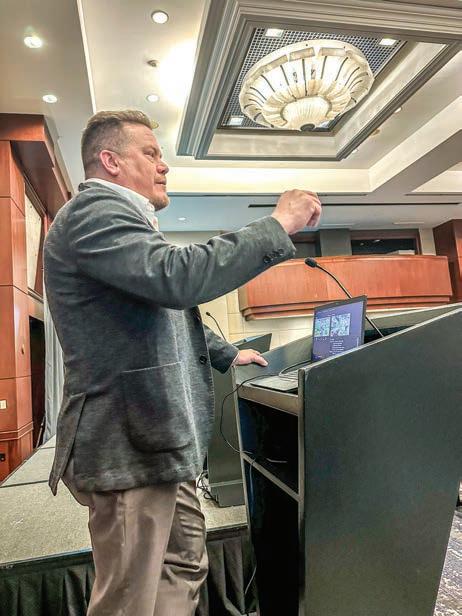
A well known figure from a well known family in the wood products business, Kyle Freres, VP
credit revenue streams and uses in concrete applications. But it also
has issues: difficulty in processing and handling; inconsistent markets; seasonal buyers; increased costs related to disposal in landfills.
Since 2006 Freres has operated a cogeneration facility to support its wood products production operations. “We didn’t know at the time that a portion of that waste stream could actually turn into a revenue stream,” he said.
The facility operates a 100,000 lb./hr boiler producing 850 lbs. steam for the turbine, which is a refurbished 10 MW GE. It produces more than 50,000 MWh’s of electricity each year. The facility consumes about 70,000 bone dry tons of biomass each year, 15-20 truckloads daily, about 30% of which comes from their own operations.
They produce about 2,000 bone dry tons of ash product each year, and 3,000 bone dry tons of biochar each year.

Initially they worked with farmers and recyclers on field and soil applications, but those opportunities disappeared during COVID and they began shipping to a landfill.
Screening, water bathing, drum separation, and more screening targets the separation of material smaller than 1 mm, considered a wood fly ash, from anything larger, the biochar.
Why go through all the trouble? “We want to find a beneficial use and highest value from every log we process, and every byproduct from our production,” Freres said.
“Finding markets for the byproducts of cogeneration, which uses wood at the end of its life with no higher or better use, is the epitome of a circular economy.” Not to mention that disposing of product in a landfill is expensive, growing to almost $400,000 per year.
“By characterizing the biochar in the byproduct stream, we have been able to market carbon credits from the biochar. We are now generating revenue from these products, while reducing our expenses.”
He said the primary market they have sold into is bulk shipments for agriculture, developing relationships with several local partners. One market that has potential is golf courses, due to the intensive management of their soils and possible reduction of water and fertilizer.
There’s also been interest in using the fine ash in some applications, which could result in additional claims for carbon credits.
Dane Floyd of Floyd Holdings addressed profitable solutions to the residuals challenge. He said lost tonnage of annual fiber since 2021 due to pulp mill closures was at 30 million tons.
He also pointed to rising energy costs in electricity, diesel, natural gas and propane. A solution, according to Floyd, is biochar—a growing market with multiple revenue streams.
“You’re not sitting on a waste problem,” Floyd said, “you are sitting on an energy reserve.” Generate your own power from your own waste and keep every kilowatt-hour on site, Floyd said, adding, “The energy locked in your fiber can be converted to the electricity and heat you need, on your terms.”
One way to make the conversion, Floyd said, is with the Floyd F60 CHP, a fixed-bed downdraft gasifier that converts wood biomass into syngas and delivers electricity, heat and high-carbon biochar simultaneously. Mutiple units are designed to work together, deployed based on how many your operation requires.

The Sustainable Biomass Program (SBP) has launched its Greenhouse Gas (GHG) Calculator designed to support SBP Certificate Holders in accurately calculating and understanding GHG emissions across the biomass supply chain.
The GHG Calculator uses data from the SBP Data Transfer System (DTS) to provide a streamlined and reliable approach to emissions calculation. Built in line with SBP Instruction Document 6D, the EU Renewable Energy Directive (REDIII), and SBP Instruction Document Japan, the tool ensures alignment with key regulatory and industry requirements.
By integrating directly with DTS exports, the Calculator reduces the need for manual data handling, minimises the risk of
human error, and reduces the requirement for specialist technical expertise. Users can select whether to apply default values or use actual data, allowing comparison of the different methodologies for emissions disclosure.
The Calculator has been developed primarily for end users, but also provides value across the supply chain. Biomass producers can use it to better understand the carbon footprint of their product, traders can assess the impact of transportation, and certification bodies can support verification activities during audits.
A key feature of the tool is its ability to compare emissions calculated using default values from the EU Renewable Energy Directive (RED) and the Japanese Feed-in Tariff (FIT) and Feed-in Premium (FIP) schemes with those based on real world data.
The Calculator also enables
analysis of emissions at different stages of the supply chain and allows, in some cases, comparison between market-based and locationbased electricity emission factors.
The Calculator has undergone independent limited assurance verification by SGS, a globally recognized testing, inspection and certification body, meaning its methodology and functionality have been reviewed and no material issues were identified, providing confidence in the reliability of the results.
Carsten Huljus, SBP Chief Executive Officer, comments, “The launch of our GHG Calculator represents an important step in improving the accessibility, transparency and consistency of greenhouse gas reporting across the biomass supply chain, and reflects SBP’s ongoing commitment to being a leading, datadriven certification scheme.”
President Trump on July 17 condemned Canada, and specifically Ottawa, for improper forest management, leading to the recent increase in forest fires and to the encroachment of smoke and polluted air into the U.S.
“We are holding Canada responsible for the fact that they are not properly maintaining their forests, and brush therein, and the United States is being unnecessarily invaded by filthy, polluted, and unhealthy air, the quality of which is dangerous, and totally unacceptable,” Trump said. “I will call the Prime Minister to find out what they are going to do about it. The cost is incalculable!”
Canada has refused to engage in basic forest management and debris removal, Trump accused. “This is willful negligence, and becoming a
yearly occurrence, costing the United States billions of dollars, which cost of this pollution must of necessity be added to the tariffs Canada is currently paying.”
Canada’s wildfire policies have failed to prioritize forest management; they will not cut firebreaks and will not thin their forests, according to one observer, who added,“This is the result of the undue influence of environmental groups who are firmly politically motivated and have divorced themselves from science and good stewardship. Canada and the rest of North America is suffering as a result.”
Days before Trump’s statement, four Republican members of Michigan's congressional delegation—Reps. Jack Bergman, John James, Lisa McClain and John Moolenaar—sent a letter to Canadian Prime Minister Mark Carney, saying residents in their state were
once again experiencing unhealthy air because of smoke drifting south from Canadian wildfires.
They wrote in part: “Our constituents in Michigan are once again under air quality alerts. Our hospitals are once again treating children, dialysis patients, and older residents for the effects of smoke that did not originate anywhere near them. This is the third consecutive year we have had to write to Canadian officials about a crisis that Canada has the tools to prevent and has chosen not to. We were told last year that this would be treated with urgency. It was not. If Canada will not manage its forests to prevent these fires, the United States will look elsewhere, and act on our own, to protect our people. That means our own agencies exploring direct involvement in cross-border fuel reduction and firefighting capacity.”

By Dan Shell
OAKLAND, Ore.
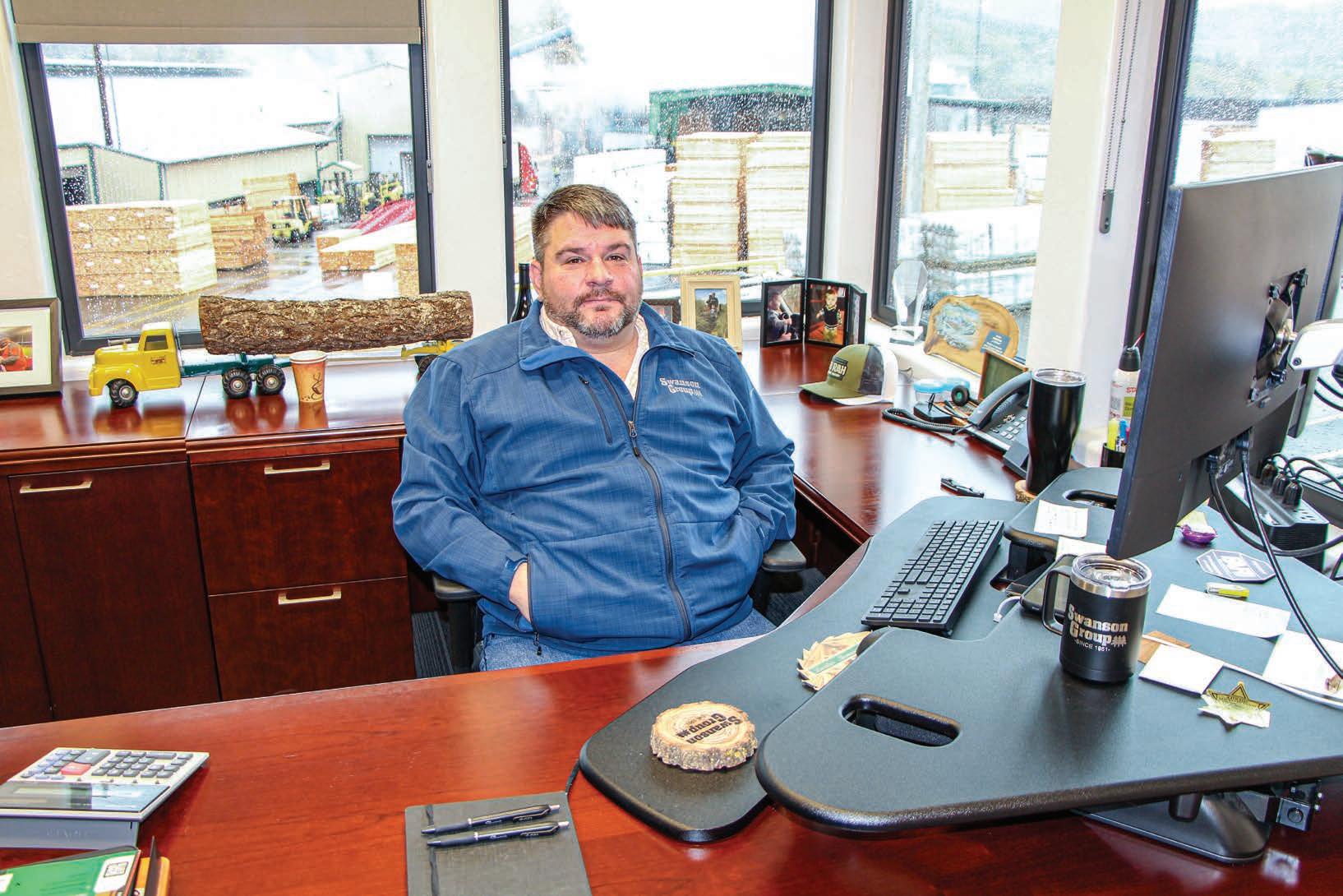
Seeking a solution to sawmill residual utilization and disposal issues while exploring new products and markets, the Swanson Group is doing both by establishing its Dean Resources subsidiary, which operates an industrial pellet mill in the community of Oakland that produces export fuel pellets destined for Asian markets.
The Swanson Group had been researching options to help with sawmill residual disposal-utilization and potential new markets, and had already decided they didn’t want to produce domestic market pellets. In 2022, when officials with Southport Lumber in Coos Bay, Ore. contacted Swanson executives about a possible joint project to develop a pellet export facility in the Port of Coos Bay that would serve export markets, the Swanson Group found the opportunity it was looking for.
The two companies—Swanson Group and Southport Lumber—formed Oregon Pellet Mills, a pellet export venture that will serve primarily Asian markets. The move into the “green energy” market with export pellet production marks a new opportunity for the Swanson Group, which operates a sawmill at its Roseburg, Ore. headquarters, and also operates ply-
wood plants at Glendale and Springfield along with the new pellet facility at Oakland.
The newly constructed almost 100,000 sq. ft. Oregon Pellet Mills pellet warehouse and loading terminal began accepting pellets in fall 2025. Its first shipment, to Japan, sailed earlier this year.
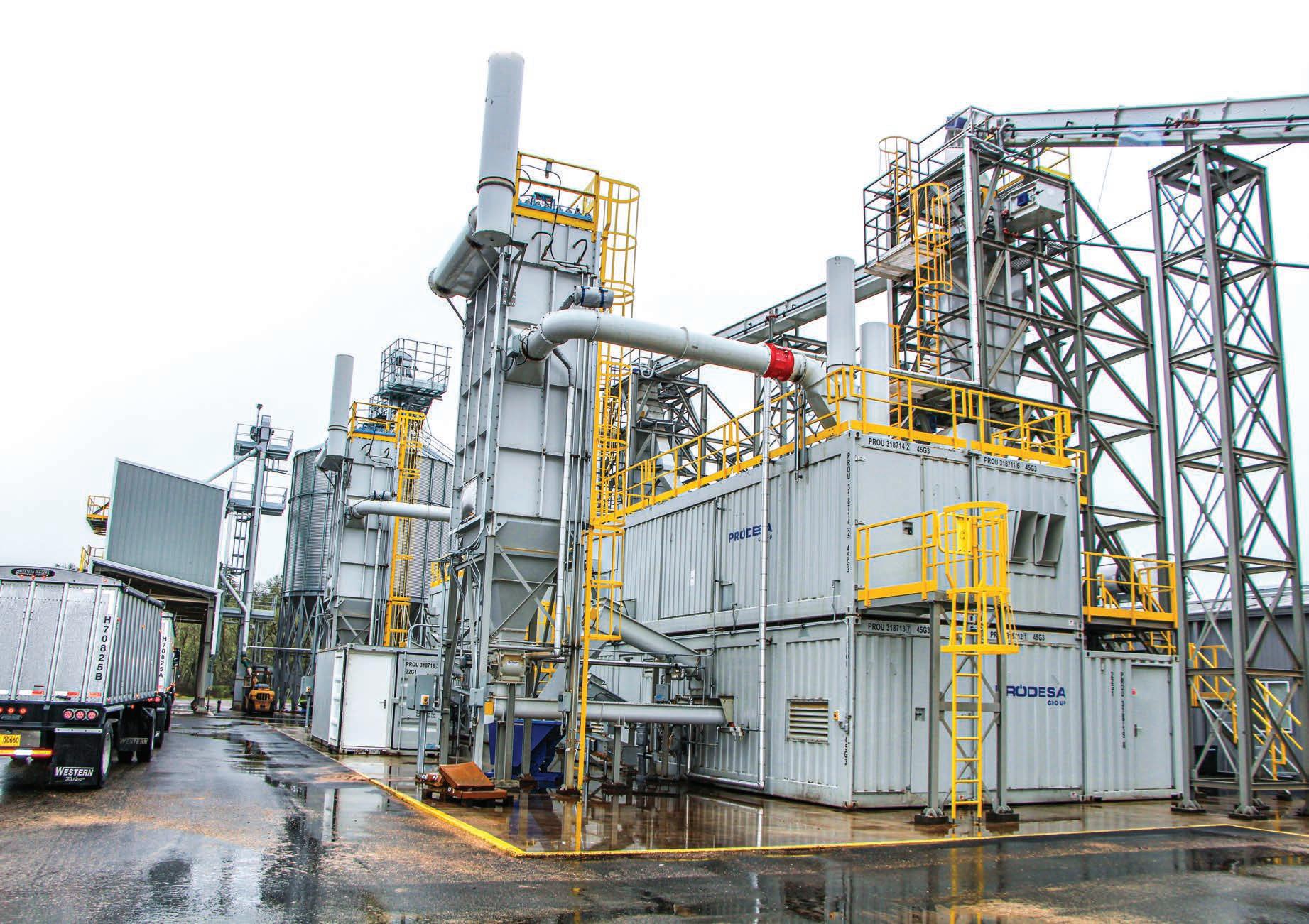
The Oregon Pellet Mills export terminal features Telestack loading equipment including a radial telescopic stacker, mobile track conveyors and a truck unloader. Bruks Siwertell provided fixed conveyors.
Swanson officials approved the project and bought the Oakland property in 2022.
After more than a year spent gaining permits, groundbreaking for the new mill was in June 2024, and the facility started up in fall 2025.
Deciding to go with Prodesa’s modular PelletBox pellet mill system, Swanson management added an extra pellet machine for the new Dean Resources
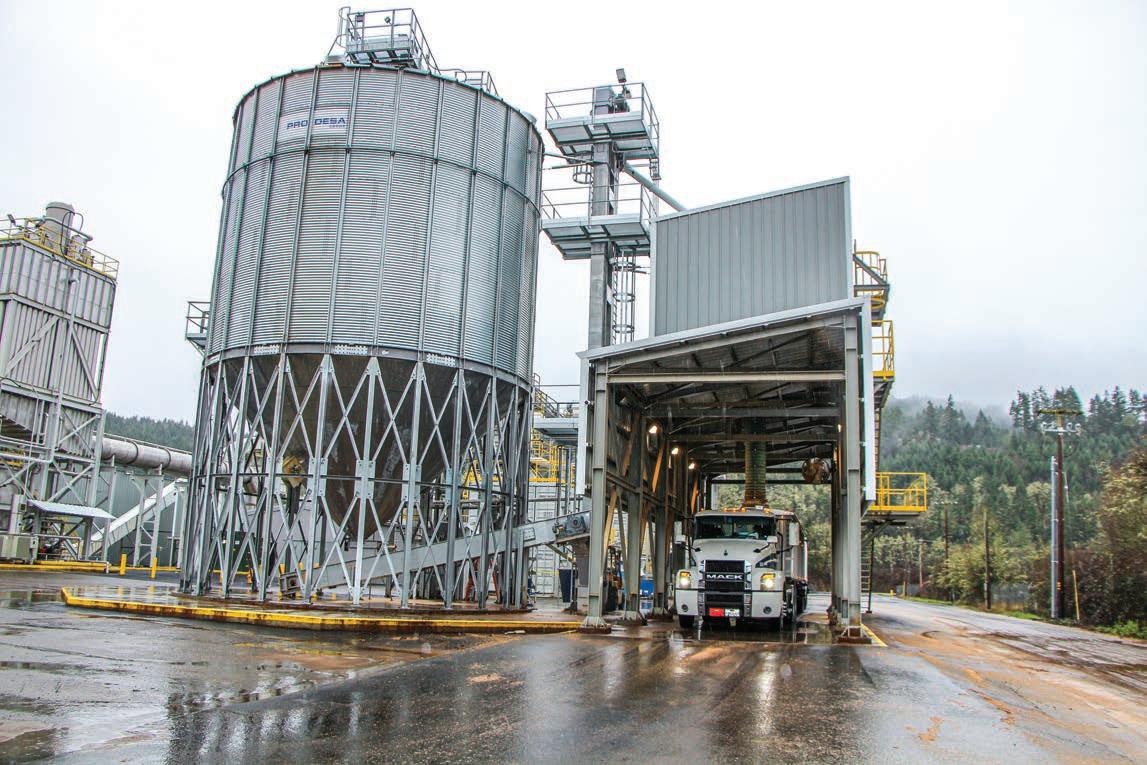
“With no real experience with pellet plants, we had some growing pains,” says Swanson Group President Chris Swanson, adding that simple unfamiliarity with equipment like a rotary dryer, pellet machines and a wet ESP emissions control system made the learning curve a bit steep. But earlier this year Swanson noted the mill crew was starting to hit its stride, moving from startup to production optimization mode. The plant was routinely hitting the 10 metric tons/hr. mark, which is above production projections.
Swanson Group moved some personnel to the new venture, and also filled some positions from the outside. Swanson’s sawmill superintendent Jason Smith transferred into the pellet plant manager role. He spent time at a near-identical pellet mill that Southport Lumber had started up to handle their sawmill residuals, and his exposure there made the new plant project and start-up go smoother.
The plant operates using green sawdust, as dry planer shavings and chips are a separate market. Swanson’s large sawmill in Roseburg provides more than half of Dean Resources’ raw materials, with the balance filled by residuals from other lumber producers. All incoming material is PEFC certified.
“We had planned on just using our own (residuals), but realized we were going to need more capacity,” Swanson says.
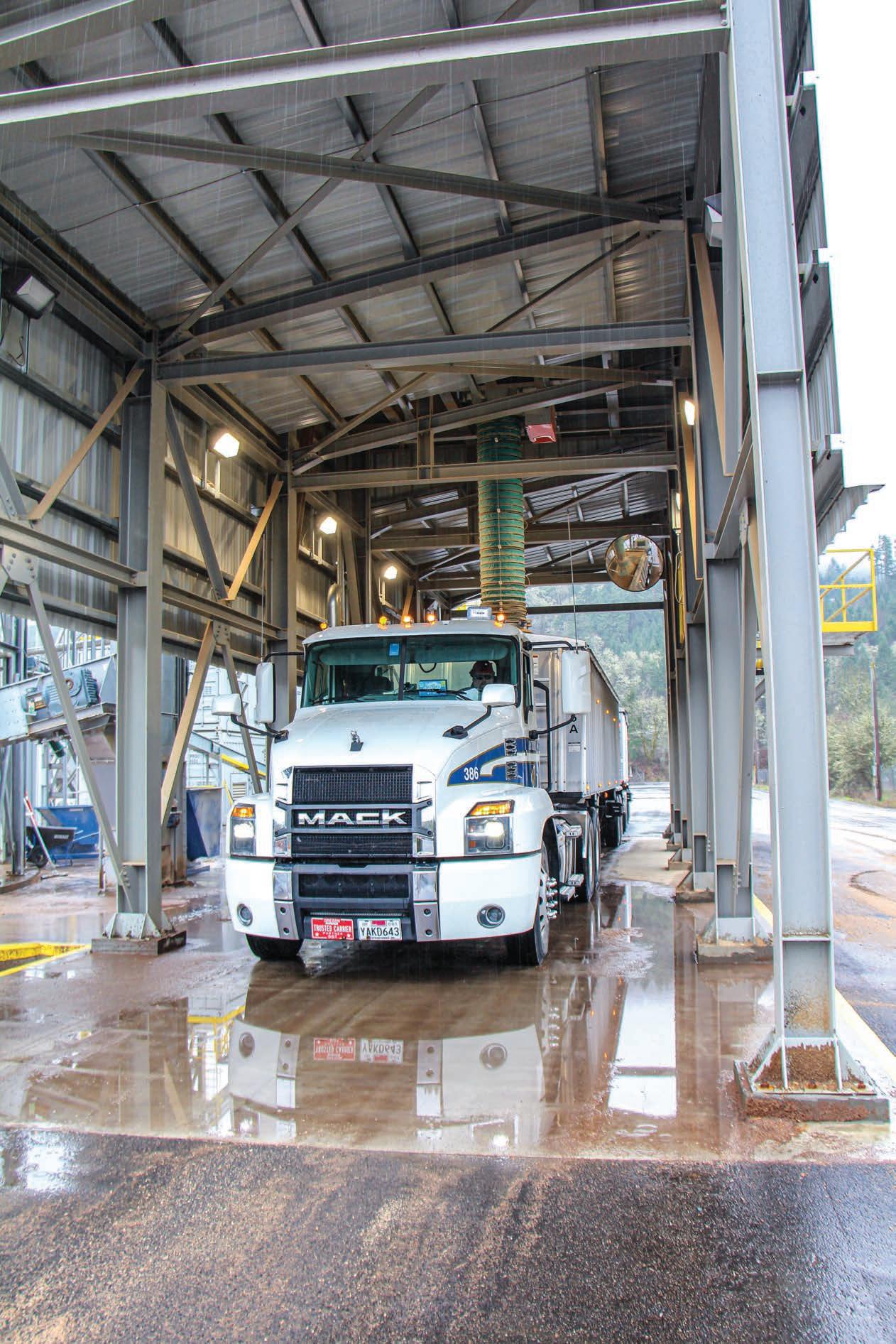
Incoming trucks bringing raw materials roll across a Mettler-Toledo scale system, and trucks fitted with livebottom trailers unload in a covered warehouse. Almost all Douglas fir, the raw material stream includes about

August 2026 / Wood Bioenergy 13

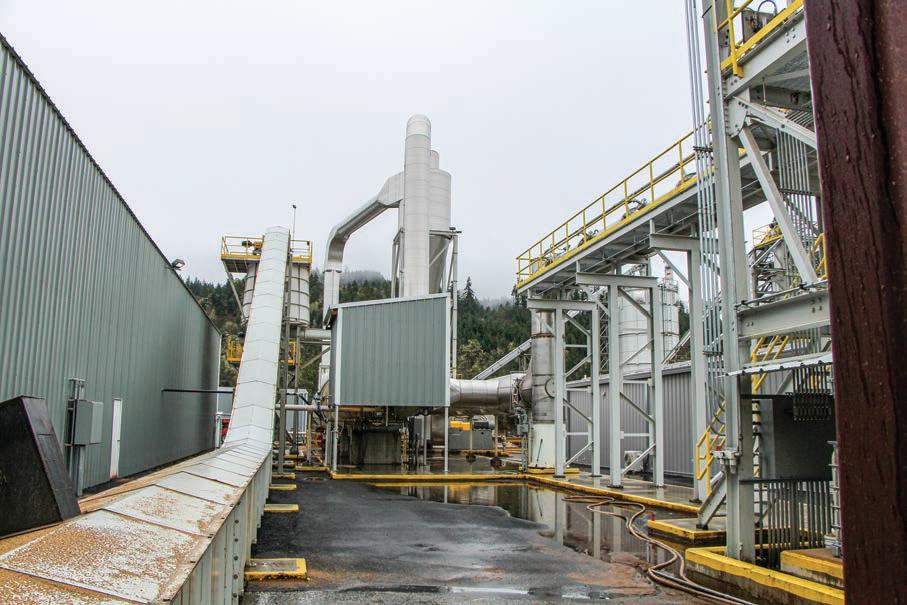
Less than a year after start-up, the facility is currently producing at a better rate than initial projections.
pellet mills. Pellets flow through the cooler section, then onto a conveyor that feeds a Prodesa storage silo at the loading area. Trucks are loaded with a Prodesa telescoping loading tube. All production goes to the Oregon Pellet Mills export facility in Coos Bay. Trucking is handled by Walsh Trucking, which has a long relationship with Swanson Group.
Moving from startup to production optimization mode, the plant was routinely hitting the 10 metric tons/hr. mark.
Plant Manager Jason Smith says the project and startup went well. “We definitely had some headaches, but for an initial startup of a whole plant, overall things went very
smooth.” Early challenges included fine-tuning the dies to use a higher compression design, and adjusting the overall process to handle variations in temperature and humidity while still producing a consistent product.
“We’re very excited about it, it’s different venture for us, and there’s a learning curve, but it’s good,” says Swanson of the new pellet plant and export venture. “The mill is running steady and producing a high quality pellet. It’s more diversity for us, and an opportunity to grow the business.”



EDITOR’S NOTE: The following companies submitted these editorial profiles and images to complement their advertisements placed elsewhere in this issue. Please refer to those advertisements for website and contact information. All statements and claims are attributable to the companies.
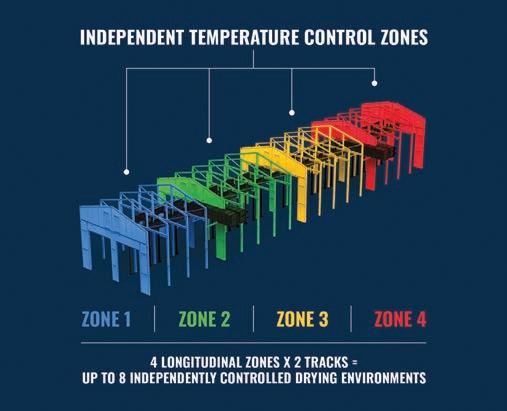
Direct-fired kilns have traditionally been controlled as a single drying environment. That approach works well when product mix remains relatively stable. Today’s mills, however, rarely operate under those conditions.
Changing dimensions, species, moisture targets, and production priorities all influence how lumber dries. Yet airflow and heat are not distributed uniformly throughout a kiln. Some areas naturally respond differently than others, making it increasingly difficult to maintain consistent moisture specifications relying on a single control strategy.
Independent zone controls address this challenge by allowing different sections of the kiln to be managed separately. Instead of applying one temperature profile across the entire system, the program automatically optimizes the conditions within each zone, improving drying consistency while giving the operator greater flexibility to accommodate changing production schedules.
This approach also creates opportunities beyond moisture control. Better temperature management can reduce over-dried and under-dried lumber, improve energy efficiency, and lead to better grades, and make transitions between products easier without sacrificing drying quality.
Recognizing these changing operational realities, Comact recently developed its direct-fired kiln zone controls. The system provides up to eight independently controlled drying environments, giving mills greater control over drying conditions while keeping operation straightforward for kiln personnel.
As production becomes increasingly dynamic, the ability to control different parts of a kiln independently is becoming less of an added feature and more of a practical operating advantage. Comact is continuing to develop state-of-theart kiln technologies that help mills adapt to changing production requirements while enhancing drying performance.
For OSB, particleboard and pellet mills, the dryer has always been more than a heat box. It is the mill’s production governor, resin-preparation system, emissions source, fire-risk zone, and energy bill rolled into one.
In OSB, the lesson has been to protect strand quality while removing water fast enough to feed the blender and press. The Wood Handbook notes that green OSB strands may be dried in triple-pass, single-pass, combination dryers, conveyor dryers, or newer continuous chain dryers; the newer systems can allow longer strands, reduce strand surface inactivation, and lower dryer outfeed temperatures. That matters because over-dried or overheated strands do not just waste fuel; they can hurt bonding and panel performance.
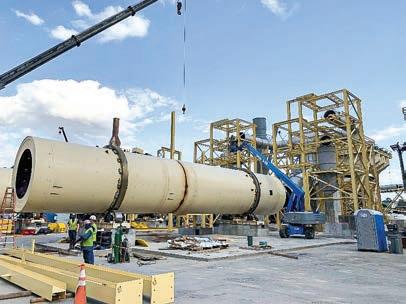
Particleboard has taught the same lesson in a finer furnish. Furnish can arrive at 10% to 20% moisture content on a dry basis, but for liquid resin systems, it may need to be brought down to roughly 2% to 7%, with dryer discharge often in the 4% to 8% range. Rotary, disk, and suspension dryers all have a place, but the real control point is consistency: particle size, inlet moisture, outlet moisture, and the relationship between drying and resin addition.
Pellet mills add another reminder: drying is part of densification, not just preparation. One referenced pellet operation used a 50 MMBTU dryer/burner to reduce residues to 7%–10% moisture before hammermilling and pelletizing; finished pellets came off at 5%–6% moisture, with no binder added. The binder was the wood itself as heat-softened lignin under pressure.
After 40 years, the best mills have learned that the cheapest BTU is the one not evaporated. Manage raw material storage, blend wet and dry furnish intelligently, maintain flights and seals, calibrate moisture sensors, and avoid running the dryer as a compensator for poor upstream discipline. The environmental lesson is equally clear: RTOs, RCOs, and biofilters can reduce VOCs and HAPs from dryer and press exhaust, but those gains can come with added energy use and greenhouse gas burdens.
The modern dryer is no longer just equipment. It is a quality control instrument, an energy strategy, and a margin protection system.
Power is rapidly becoming one of the most important competitive advantages in manufacturing. Driven by AI data centers, electrification, and growing industrial demand, utilities across North America are facing increasing pressure to supply reliable and affordable electricity. As demand rises, so do concerns about power costs, grid capacity, and long-term energy security.
For many industrial facilities, the solution may already be sitting on their property.
Every year, sawmills, wood products manufacturers, pallet companies, agricultural processors, and food producers generate significant volumes of biomass residuals such as wood chips, sawdust, nutshells, and agricultural byproducts. Too often, these materials are treated as low-value commodities or disposal challenges rather than energy assets.

FLOYD BioEnergy’s CHP F60 technology transforms dry biomass into three valuable outputs: renewable electricity, usable thermal energy, and biochar. Unlike solar, wind, and hydropower, biomass CHP provides reliable renewable baseload power, independent of weather conditions, daylight hours, or seasonal variations. This makes it a bankable energy source capable of delivering predictable, dispatchable energy when facilities need it most.
One F60 module can generate enough annual electricity to power approximately 50 to 60 U.S. homes. Sixteen modules create a 1 MW power plant capable of generating more than 8 million kWh annually, enough to power roughly 800 homes or support facilities such as sawmills, kiln operations, pellet plants, and manufacturing operations. Larger installations can be scaled to 2 MW, 3 MW, or beyond as energy requirements grow.
Beyond serving individual facilities, distributed biomass CHP can strengthen the electrical grid. A network of reliable, mid-sized CHP plants operating close to where power is consumed provides stable generation that complements intermittent renewable resources, reduces transmission losses, and improves grid resilience.
As energy demand continues to accelerate, industrial facilities that generate their own power will gain greater control over operating costs.
The future of industrial energy is not just renewable. It is local, scalable, reliable, and behind the meter.
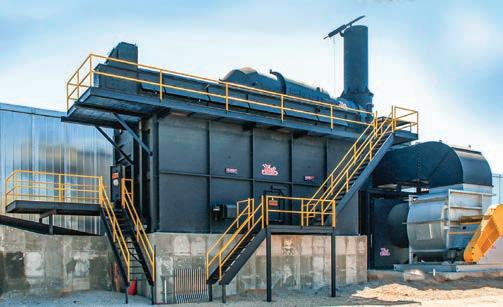
Industrial grade wood-fired burner with Hurst clean burn stoker design. Modular packages available from 5 MMBTU/HR to 250 MMBTU/HR with operating temperature ranges from 200°F to 2000°F. These proven solid fuel burner systems are a leading choice in lumber dry kilns, boiler applications, oil heaters, rotary dryers, brick kilns and more. Hurst manufactures seven different types of biomass stoker/gasifiers, which have used 2,000+ different types of biomass fuels. With installations across all industries worldwide, Hurst is recognized for the highest code standards, innovative engineering and design, Energy Star rating, and renewable, sustainable solutions for green building design and operational efficiency.
Our Hurst Stag systems are a culmination of our experience and knowledge of material handling, solid fuel combustion, and controls integration that offers a quality solution for most air heating applications. We are providing our customers with the ability to economically and efficiently satisfy their air heating requirements by utilizing readily available wood waste and sawmill residuals as a fuel source in lieu of the expensive conventional sources. Hurst delivers the quality and performance that our customers expect in a custom-engineered solution to reduce operating expenses and maximize productivity.
Achieve Cost Savings With Dry Wood Fuel Suspension Burners
Sawmills and lumber businesses can turn byproducts and sawmill residuals like bark, sawdust, and offcuts into profits. Common solutions include producing biochar and wood pellets for heating, supplying biomass to power plants, making compost/mulch, or using it on-site for heat and energy.
The Hurst Stag unit can be utilized from 5 MMBTU/HR to 250 MMBTU/HR with operating temperature ranges from 200°F to 2000°F. These systems are frequently utilized in lumber dry kilns, boiler applications, oil heaters, rotary dryers, brick kilns and much more.

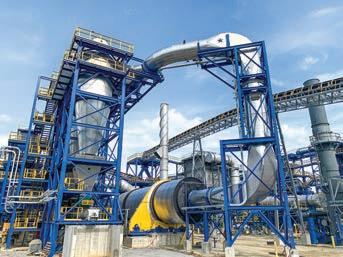
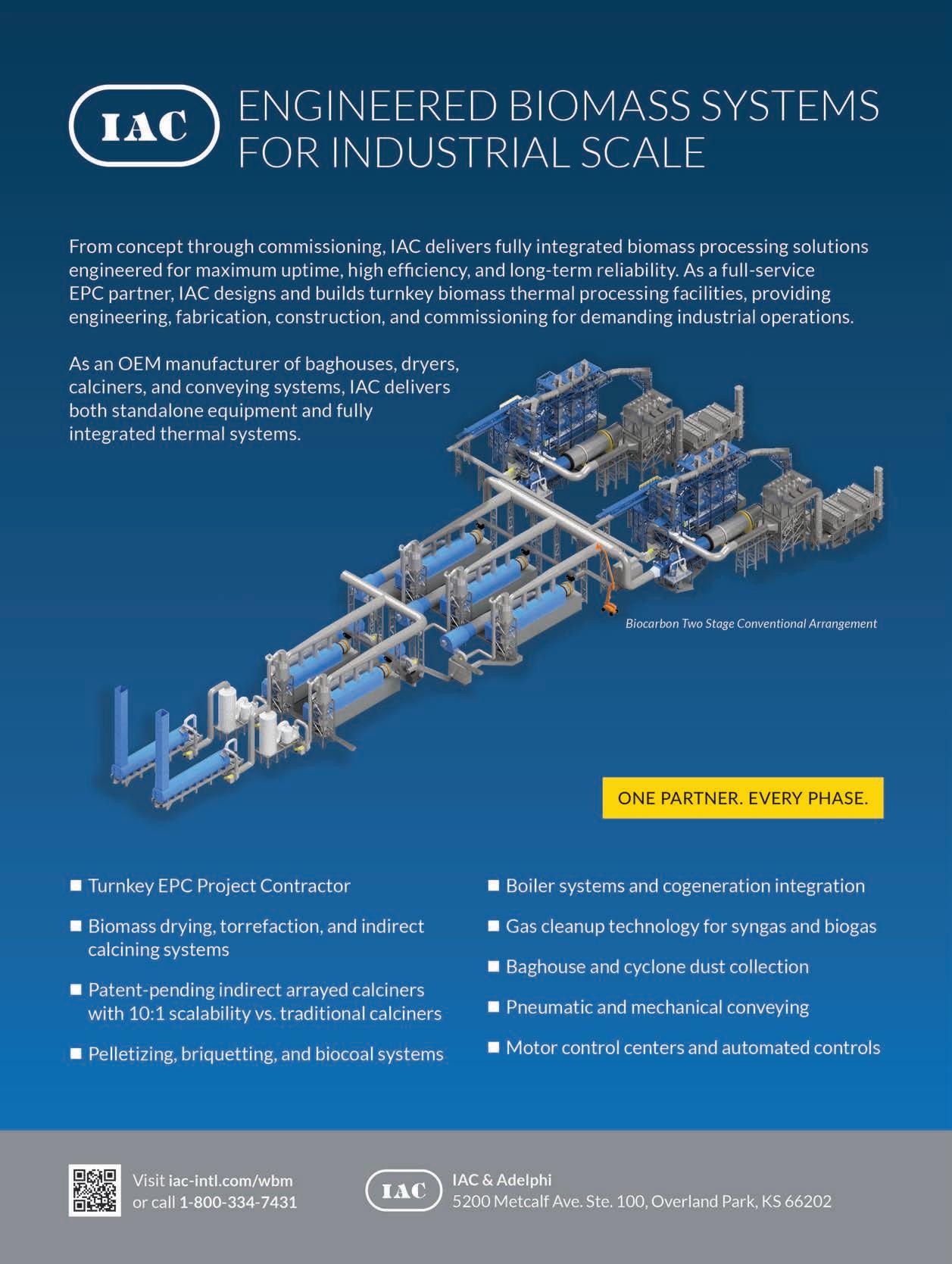
IAC rotary dryer systems are custom designed to meet the specific requirements of each customer and the materials to be dried. The design of hot process gas diverter dampers, vent fans, airlocks, screw conveyors, and vent ductwork is tailored to meet specific production requirements.
Drying energy efficiency is greater than 95% in terms of heat energy input to the dryer used for heating and water vapor evaporation. By adjusting the exhaust gas recirculation (EGR) ratios, we can establish drum exit velocities that ensure adequate dwell time for achieving the desired moisture content in the final product. Increasing the EGR percentages obtains a higher drum exit velocity while reducing the inlet temperature for even safer operation.
Safety is our highest priority. In any dryer system, the occurrence of an uncontrolled fire or explosion is unacceptable. IAC has engineered its systems to contain, control, and minimize the risk of such incidents. Safety equipment includes explosion vents, a sequenced water and/or steam snuffing system, blow-away dryer inlet and outlet sections, and a spark and fire suppression system.
As part of the drying systems, we provide engineering design services that include process flow diagrams (PFDs), heat and material balance calculations, piping and instrumentation diagrams (P&IDs), and equipment foundation design and drawings. IAC supplies the dryer system PLC with human machine interface (HMI) package, compatible with the plant’s DCS control system and capable of full integration with upstream and downstream conveyance. IAC provides installation oversight, commissioning, and startup assistance.
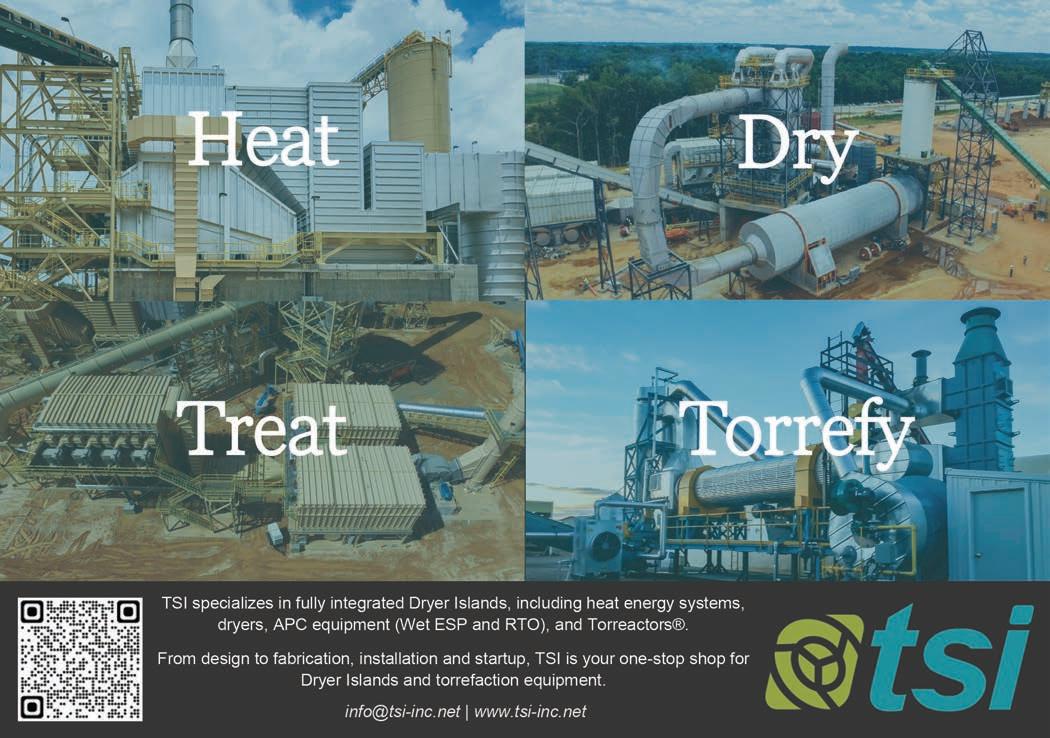
When creating a new wood products or energy facility, upgrading an existing mill, or just keeping a plant running, most of the emphasis will naturally be around the equipment that makes the final product. In processes that require biomass drying, the next most considered area will likely be the dryer island. How can the dryers or heat energy systems have the most value and longest service life? How will the bottom line be improved through the process design or improvements? Typically, dryer island emission control equipment such as wet electrostatic precipitators (WESPs) or regenerative thermal (or catalytic) oxidizers (RTOs or RCOs respectively) are considered last. This is particularly an issue with process upgrades, where capital is tight and the focus is more on production or reduced operating expenses.
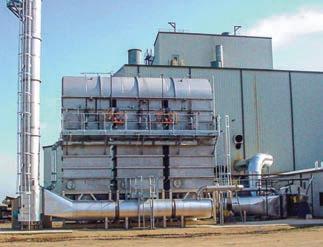
Mid-South has decades of project experience that shows that while not directly making products, dryer island emission control devices are still critical and should be addressed at the beginning of project design.
Environmental permitting is frequently a drawn-out process requiring collaboration between many stakeholders. This process amounts to a critical “long lead item” whether the project is a new greenfield facility or a brownfield upgrade. Process equipment layout, especially environmental equipment and their emission points, has a direct bearing on the ease of permitting your facility—and must occur early in the project life cycle to protect schedule.
Upgrades to existing dryers or heat sources will likely be done in established facilities with older equipment. WESPs and thermal oxidizers have tough duty in the wood products and biomass industries and have a finite service life. Technology and materials have also tangibly improved since the original equipment was installed. Evaluating pollution control equipment for repair/upgrade options, vetting the many vendors, and equipment delivery itself takes a significant amount of time, and is frequently considered on the critical path.
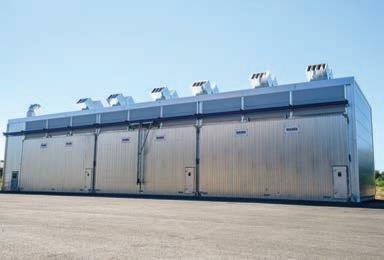
Upper Austrian timber drying specialist Mühlböck continues its international growth trajectory and has secured a project in the USA. Mühlböck is supplying four 1306 PRO dry kilns with a total volume of over 230MBF to the Californian company Alpenglow Timber. The order is worth around one million euros. The infrastructure has also been designed to allow for the seamless addition of a fifth unit in the future. The contract was awarded in April 2026. Installation of the plant is scheduled to begin in October 2026.
Alpenglow Timber is currently developing a modern and sustainable sawmill and timber processing project in the Truckee region on Lake Tahoe. The company will primarily process pine and fir timber from regional forest management and conservation measures, as a way to mitigate wildfire risks in California.

The Mühlböck 1306 PRO dry kilns are characterized by particularly low thermal energy consumption, thereby supporting the California company’s ambitious sustainability goals. “Resource conservation, low environmental impact and energy efficiency were central to this project in particular. Our technology was able to meet the customer’s requirements in the best possible way,” emphasizes Richard Mühlböck, Mühlböck Holztrocknungsanlagen GmbH, Managing Director.
The customer’s individual requirements were optimally met thanks to the technical design of the Mühlböck systems and design flexibility: Special requirements also arose from the climatic conditions at the installation site. The systems are being erected under a canopy and are designed to withstand high wind and snow loads.
For Mühlböck, the contract is an important signal of the international competitiveness of Austrian environmental and energy technology. “The fact that a company from Upper Austria has been able to secure a project in California underlines the high reputation we enjoy worldwide today,” says Mühlböck.
With this project, Mühlböck is now further expanding its presence in the North American market and once again underlining its position as an internationally sought-after supplier of energy-efficient timber drying technology. More than 13,000 Mühlböck systems are already in successful operation worldwide.
The recent federal court decision upholding the EPA’s annual PM 2.5National Ambient Air Quality Standard of 9.0 μg/m³ signals a new reality for the wood products industry. While the ruling focuses on ambient air quality, its practical impact will be felt at manufacturing facilities seeking new permits, production increases, or equipment modifications.
As regulatory expectations continue to evolve, emissions control can no longer be viewed as a collection of individual pieces of equipment. Successful compliance increasingly depends on how the entire dryer island functions as an integrated system.
NESTEC has long believed that the highest-performing systems begin with understanding the complete process—not simply specifying a burner, wet electrostatic precipitator (WESP), regenerative thermal oxidizer (RTO), or regenerative catalytic oxidizer (RCO). Combustion, airflow management, particulate collection, thermal oxidation, controls, and process integration must all work together to deliver stable, long-term environmental performance.
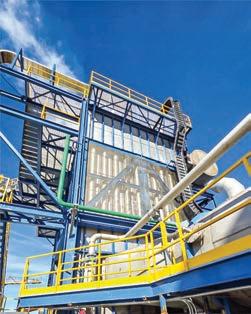
This system’s approach has become especially important as facilities address fine particulate matter, condensable aerosols, and visible blue haze. Properly engineered WESPs play a critical role by removing submicron particulate before it reaches downstream equipment, protecting thermal oxidizers from fouling, extending catalyst life, reducing maintenance requirements, and improving overall system reliability.
Likewise, burner selection and combustion system design should be based on each facility’s unique process conditions, raw material characterization, fuel characteristics, and emissions profile rather than a standard equipment package. Every dryer application presents different combustion and airflow challenges, requiring customized engineering solutions that optimize both production and environmental performance.
As permitting becomes more rigorous, facilities should evaluate whether existing dryer island systems continue to provide sufficient operating margin for future regulatory requirements. In many cases, targeted system assessments, controls optimization, combustion improvements, or emissions-control upgrades can significantly improve long-term compliance while reducing operating costs.
For more than four decades, NESTEC has partnered with wood products manufacturers to engineer integrated dryer island solutions that combine combustion expertise, advanced emissions control technologies, and practical operating experience. As industry requirements continue to evolve, designing for tomorrow—not just today’s regulations—remains the most effective NESTEC strategy for protecting both environmental performance and long-term operational reliability.
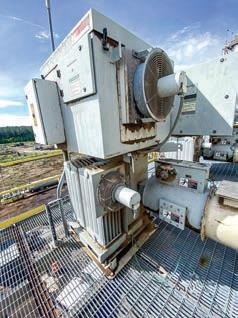
When a plant purchases a new pickup truck, no one expects it to deliver reliable service for twenty years without oil changes, filter replacements, or routine maintenance. Yet many facilities unknowingly apply that same philosophy to the electrical power supplies that energize their wet electrostatic precipitators (WESPs).
Transformer-rectifier sets, switchmode power supplies, and controllers are often expected to operate continuously for decades with little more than an occasional glance during an outage. If the WESP is running and there are no alarms, the assumption is that everything must be fine. Unfortunately, that is not always the case.
Unlike many mechanical failures, electrical issues often develop slowly and remain hidden. Moisture can accumulate in insulating oil. Gaskets begin to leak. Bushings deteriorate. Connections loosen. Components age. Performance gradually declines over time, often without attracting attention until a failure occurs or emissions begin to increase.
The difficulty is that electrical degradation is rarely obvious. A pump leak is visible.


A failed bearing is audible. Electrical degradation frequently is not. The equipment may continue operating while producing less voltage, less power, and ultimately less collection efficiency than it was designed to deliver.
Over the past decade, many facilities have reduced maintenance staffing while expecting aging equipment to remain in service far longer than originally anticipated. As a result, preventive maintenance has often given way to reactive maintenance. Equipment is repaired after it fails rather than maintained before problems develop. The consequences extend beyond the initial failure.
Today, many critical electrical components have lead times measured in months rather than days. A failed transformer-rectifier set, controller, or major power supply component can result in extended outages, temporary operating restrictions, or costly unplanned capital expenditures. In many cases, the true cost of a failure is not the repair itself, but the disruption to plant operations while replacement equipment is sourced and installed.
The good news is that identifying developing problems is often neither difficult nor expensive. Routine inspections, infrared surveys, operational reviews, and periodic insulating oil analysis can provide valuable insight into equipment condition at a relatively low cost. These activities help facilities prioritize maintenance, plan capital expenditures, and address developing issues before they become emergencies.
WESPs remain one of the most effective technologies available for controlling particulate emissions, but their performance is only as reliable as the electrical equipment that powers them. Like any critical asset, reliable long-term performance requires more than simply turning the key and expecting it to run forever.
Omega Thermal Solutions Group strives to provide customized solutions for processing biomass and other organic wastes for engineered applications. Our proprietary dehydration and thermal-treatment technology can process a wide variety of feedstocks to produce tailored products for various industries, such as renewable power, green steel, green cement, and eco-friendly agriculture. Omega’s technology can be implemented on a stand-alone basis as well as integrated with an existing system. Additionally, Omega offers robust customer satisfaction via post-sales technical troubleshooting, equipment servicing and continuous improvement for all its equipment.


A Message From Our Leader: Why Process Engineering Still Matters In The Age of Biomass Innovation
The biomass industry has changed dramatically over the past four decades. Feedstocks have evolved, energy costs have increased, environmental expectations continue to rise, and customers are asking more from every ton of material they process.
One thing, however, has never changed. Successful plants are built on sound engineering.
When Westec America was founded in 1986, our philosophy was simple: every facility deserves a drying and material handling system engineered specifically for its process—not adapted from someone else’s design.
That philosophy still guides every project we undertake today.
Whether we’re designing a rotary dryer, flash tube dryer, powder dosing system, or an integrated material handling solution, we begin with the process itself. Understanding moisture, particle characteristics, production goals, available energy sources, and downstream requirements allows us to engineer systems that deliver consistent performance for decades.
Over the years we’ve had the privilege of working with companies throughout North America and around the world in wood products, biomass energy, pellet manufacturing, biochar, MDF, OSB, and other industrial applications. Every project presents unique challenges, and solving those challenges is what continues to drive our team.
As our industry moves toward greater efficiency, lower emissions, and better utilization of renewable resources, engineered process solutions become even more important. Technology alone isn’t enough. Experience, collaboration, and thoughtful engineering are what transform good ideas into reliable operating plants.
Our goal has never been simply to supply equipment.
Our goal is to become a trusted engineering partner from concept through commissioning—and long after startup.
If you’re evaluating a new biomass project or looking to improve an existing process, we’d welcome the opportunity to discuss your objectives and explore practical engineering solutions together.
—Kimble Garrett, President, Westec America




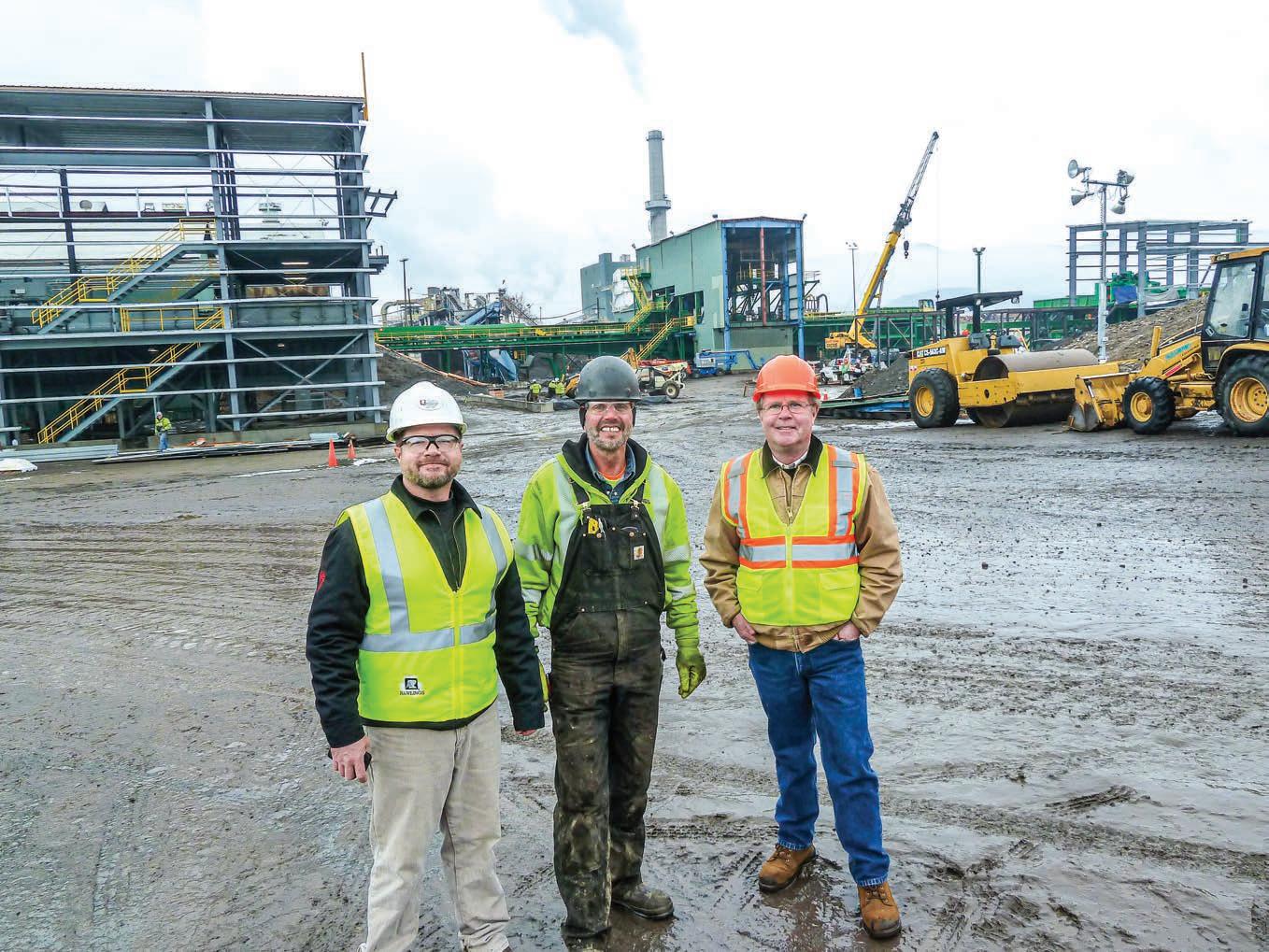
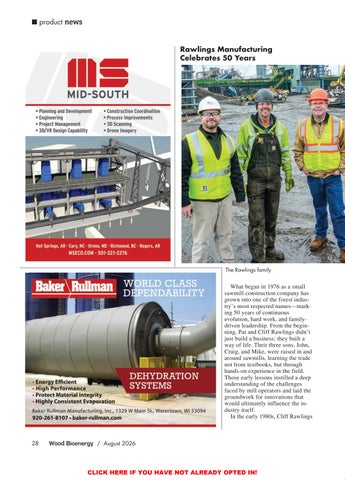
What began in 1976 as a small sawmill construction company has grown into one of the forest industry’s most respected names—marking 50 years of continuous evolution, hard work, and familydriven leadership. From the beginning, Pat and Cliff Rawlings didn’t just build a business; they built a way of life. Their three sons, John, Craig, and Mike, were raised in and around sawmills, learning the trade not from textbooks, but through hands-on experience in the field. Those early lessons instilled a deep understanding of the challenges faced by mill operators and laid the groundwork for innovations that would ultimately influence the industry itself.
In the early 1980s, Cliff Rawlings

Sr. developed a solution to a problem many mills had simply learned to accept. Traditional hammermills struggled to process stringy materials such as cedar bark, resulting in excessive maintenance, costly downtime, and operational inefficiencies.
Cliff’s answer was the solid rotary wood hog—a rugged, dependable machine engineered to process the toughest materials without constant breakdowns. It wasn’t merely an improvement; it changed the way mills approached wood waste processing.
In 1996, John Rawlings ad-
vanced the design with the introduction of the super hi-inertia rotor, significantly enhancing both durability and performance. Today, that same core technology remains the foundation of Rawlings equipment and is recognized throughout the industry for its ability to process challenging materials with exceptional reliability.
Over the past five decades, the Rawlings name has become synonymous with expertise across multiple sectors of the forest products industry.
John Rawlings, Owner and President of Rawlings Manufac-
turing and widely known throughout the industry as the “Hog Doctor,” continues to lead the company while developing innovative wood and bark recovery systems tailored to each customer’s unique application.
Mike Rawlings, President of Rawlings Industrial, has earned a reputation as a trusted partner in the construction of sawmills, chip mills, and planer mills throughout North America.
With the next generation stepping into leadership roles, Rawlings continues to evolve while staying true to its roots.