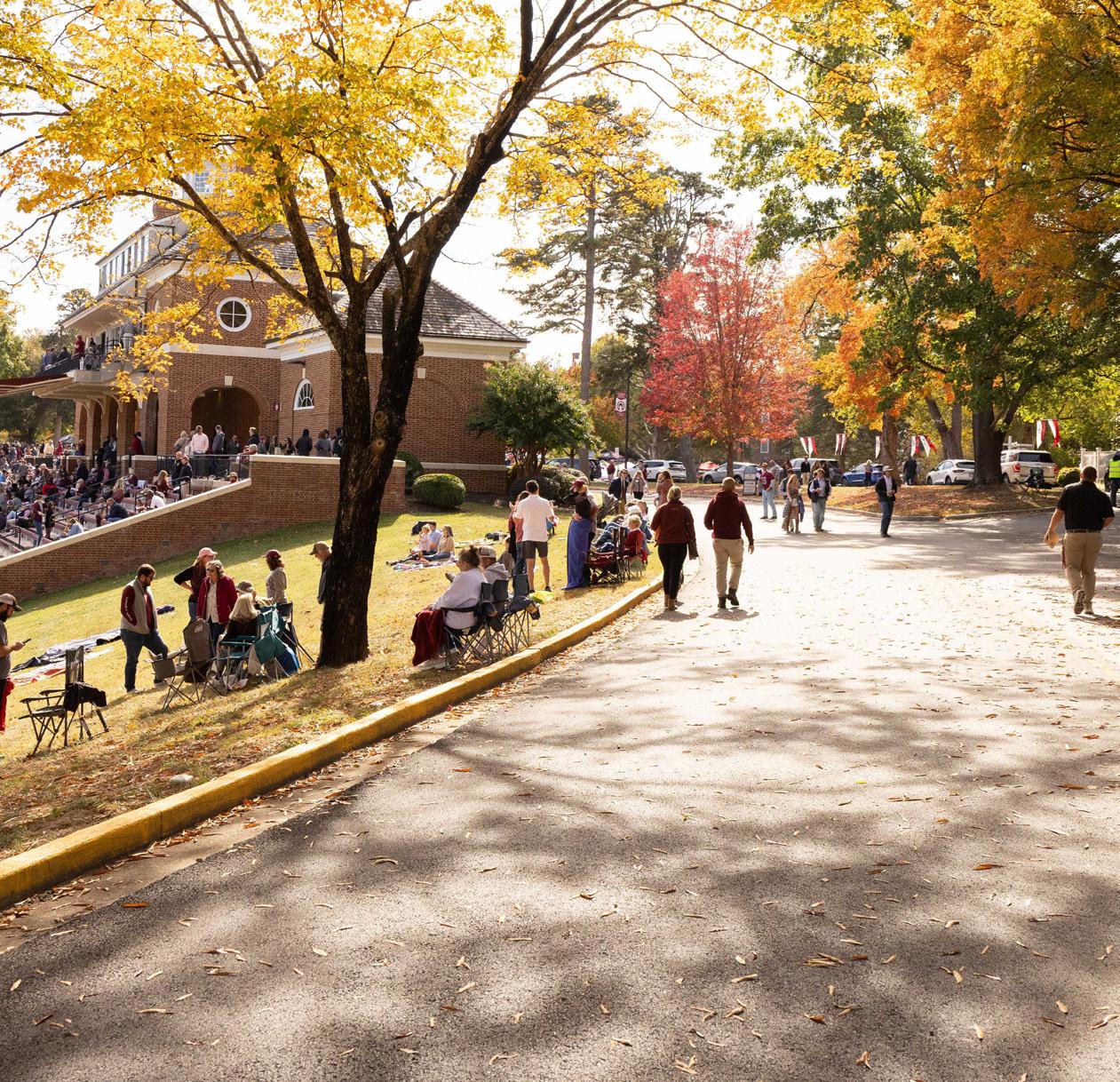
The Magazine of Hampden-Sydney College | Spring 2026
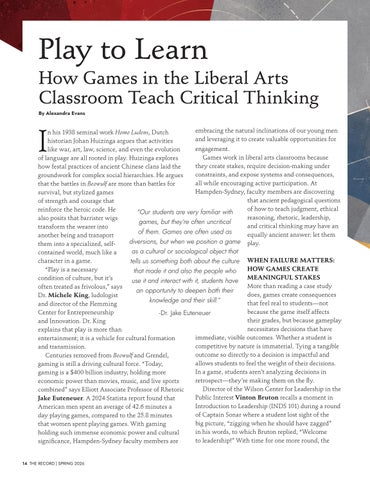
The Magazine of Hampden-Sydney College | Spring 2026

Who says college isn't all fun and games? Hampden-Sydney faculty members from diverse disciplines share how they incorporate gameplay into their courses to deepen students' engagement with the material and mimic real-world conditions, giving students practical touchpoints with complex concepts.

What comes after a wildly successful fundraising campaign like It's Time, Good Men? For Hampden-Sydney, what comes next is exactly what we've been doing for 250 years: educating the whole man, emphasizing the importance of honor and integrity, and doubling down on our committment to forming good men and good citizens.
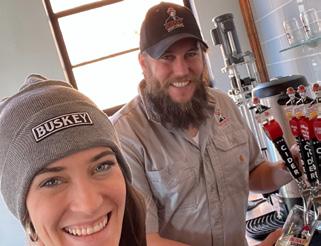
Will Correll '13 reflects on his entrepreneurial journey and his "failed" business, Buskey Cider, on its 10th anniversary.
Vol. 101, No. 3
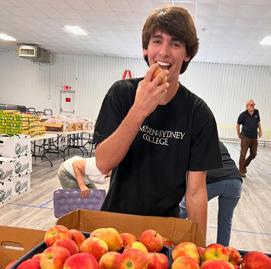
During the 250-Hour Service Challenge, Tigers completed more than 16,000 hours of service to 44 community and College-sponsored organizations, generating an astonishing economic impact of $565,485.
Ryan Sigsbee '27 is a three-time karate world champion. His journey to the top wasn't always smooth sailing though.
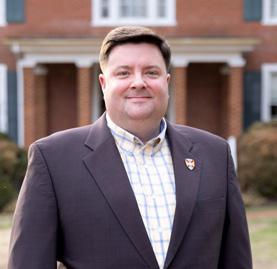
24 Alumni Director Named
Kevin Hoffer '06 returns to the Hill, taking the reins as the College's new director of alumni and parent engagement.
EDITOR AND CONTRIBUTORS
Alexandra Evans
Alexandria Grant
Copyright © 2026 by Hampden-Sydney College. Non-profit standard postage paid at Farmville, Virginia, 23901, and at additional mailing offices.
Published by Hampden-Sydney College, Hampden Sydney, Virginia 23943, as a service to its alumni and friends. Content of the Record is determined by the editor. Although the editor welcomes news about alumni, the Record does not print unsolicited articles or articles that are solicited without prior consent of the editor.
NON-DISCRIMINATION POLICY: Hampden-Sydney College, while exempted from Subpart C of the Title IX regulation with respect to its admissions and recruitment activities, does not discriminate on the basis of race, color, sex, religion, age, national origin, handicap, sexual orientation, or veteran status in the operation of its education programs and with respect to employment.
For information on this non-discrimination policy, contact the Office of Human Resources, Box 127, Hampden-Sydney College, Hampden Sydney, VA 23943, (434) 223-6220.
This issue may be viewed online at go.hsc.edu/record

"I encourage the brotherhood of Hampden-Sydney to invest in the College and the students in any way they can to continue producing good men and good citizens. It doesn’t have to be a large amount. I know firsthand that every gift makes a difference."
– Rudy Diaz ’02
Become a Tiger for Life!
If you are interested in leaving a legacy gift to Hampden-Sydney or if you have already included the College in your estate plans, please let us know so that we can thank you and honor you for your generosity.
Office of Gift and Estate Planning P.O. Box 637 Hampden Sydney, VA 23943 (434) 223-6780
hscgiving.org
I recently sent a letter to Patrick Martin ’98 to congratulate him on being named Charleston County School District’s 2026 Teacher of the Year. It made my day to receive the following reply, which will surely resonate with you, too:
I was deeply touched to receive your letter regarding my recent Teacher of the Year recognition.
While Hampden-Sydney did not offer an education major during my time there, it provided something far more valuable: a masterclass in teaching.
I was fortunate to learn from professors who modeled exceptional instruction in remarkably different ways. In Rhetoric, the sardonic yet supportive Dr. Susan Robbins taught me that tough love can apply even to split infinitives. In Tropical Biology, Dr. Gemborys demonstrated the power of project-based and place-based learning long before those terms became educational buzzwords. Dr. Martin opened avenues into the minds of great authors that I still use with my students today.
One of my most memorable lessons came not from a classroom lecture but from a hallway conversation. I overheard my Contemporary Poetry professor speaking with my Victorian Literature professor about a poem I had written. Their genuine enthusiasm taught me something about the tremendous power teachers hold over a student's sense of self-worth.
The college also allowed me to pursue an independent study on the influence of jazz on the Beat Generation, fostering a sense of discovery, agency, and intellectual ownership that continues to shape my teaching. Professor Grady invited his poetry students to his vineyard to share our final chapbooks over wine and caviar, teaching us that writing deserves an audience and that publication matters. The Honor Code instilled in me a belief that students should own both their process and their integrity.
This eloquent and meaningful testimony speaks to the power of a Hampden-Sydney College education. The sense of agency Patrick gained from his independent study project, and the selfworth inspired by overhearing two of his professors talking about his poem, are among the greatest gifts we give our students. We can and should take satisfaction in Hampden-Sydney’s steadfast commitment to providing our current students with this same extraordinary educational experience. As we work to fulfill our mission of forming good men and good citizens, we can revel in knowing that Hampden-Sydney is always seeking to embody all the best that young men can be and do.
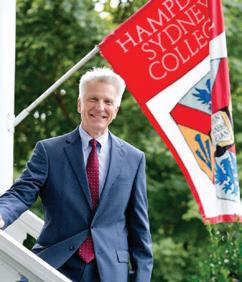
I am grateful to all who are dedicating their careers to this important work, to all who are investing in Hampden-Sydney’s mission and educational experience, and to those who—like Patrick—add value to the world because of it.
President, Hampden-Sydney College
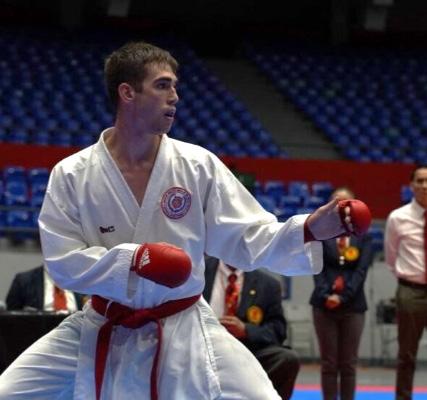
“If you had told me that the silly kid who walked into my dojo at five years old would become a threetime world champion, I’d have laughed in your face.”
John Axsom ’05 knows a thing or two about building champions. A sixth-degree black belt and a head coach for the Amateur Athletic Union (AAU) Karate National Team, Axsom has trained more than a dozen world champions at his Newport News, Virginia–based dojo, Axsom Martial Arts.
“I thought Ryan would stick around for three or four months and then quit,” he says. “Boy, am I glad I was wrong.”
The class clown turned champion athlete he is referring to is Ryan Sigsbee ’27, a threetime world champion.
“When Ryan was about 12, I was watching him train one day and thought, ‘Damn, Ryan’s good. He’s really good.’” That year, Ryan began winning major tournaments—and he hasn’t slowed down since.
Ryan remembers the shift. His mother often had to work late, which meant he stayed hours after class, training with the same group of dedicated teammates.
“There were five of us who were always there,” he says. “One day we agreed that we were going to become the best at what we do and help each other get there.”
One of those partners was Austin Galeski ’19, a five-time world champion.
The same playfulness Axsom once thought would be Ryan’s weakness eventually became his greatest strength as a fighter.
Axsom describes Ryan’s style as unorthodox, even awkward at times, making him extremely difficult for opponents to read.
“When I was younger I’d throw weird kicks just to entertain myself,” Ryan says.
“Eventually they started landing. Then I’d go back and break them down technically.”
Karate, which originated in Okinawa after Japanese authorities banned weapons, is built on relentless repetition. As Axsom puts it, the goal is building knowledge of each movement
that is “an inch wide but a mile deep.”
The monotony is deliberate. Ryan explains, “When I engage my opponent, I don’t want to make a mistake. You have just seconds to make each decision, so everything has to be calculated and technical.”
But even disciplined training cannot eliminate every mistake.
In 2021, Ryan traveled with the AAU delegation to the WUKF World Karate Championship in Romania. He proved the depth of his proficiency when he took gold in kata, where contestants demonstrate their understanding and mastery of karate by performing a series of movements solo. What Ryan was really hungry for, though, was the kumite title, where participants engage in direct sparring against an opponent. After more than a decade of training, he fought his way to the finals and was one point and just seconds away from clinching his first world kumite title.
Then he stepped out of bounds and was disqualified.
“We spent the next year doing special drills to make sure that didn’t happen again,” Axsom says.
In 2022, the championship was held in Fort Lauderdale, Florida. Once again Ryan reached the gold medal match.
Once again the fight came down to the final seconds.
And once again it ended in disqualification—this time on a mubobi call, a safety rule penalizing fighters who fail to properly protect themselves.
“Back-to-back losses like that?” Axsom says. “I figured he was done competing. I told him to take a week and decide what he wanted to do.”
The next day Axsom arrived at the dojo to do paperwork and found Ryan training alone. “I thought, ‘Okay, this kid’s not done.’”
Ryan was far from done.
In 2023, Ryan didn’t just win the national championship—he dominated it. Across multiple
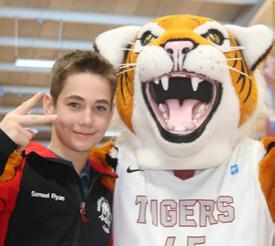
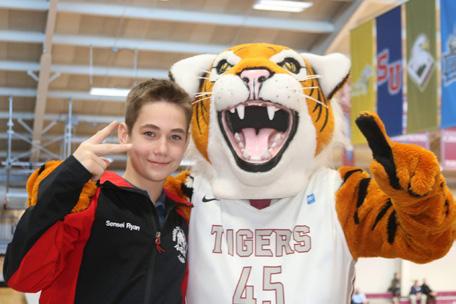
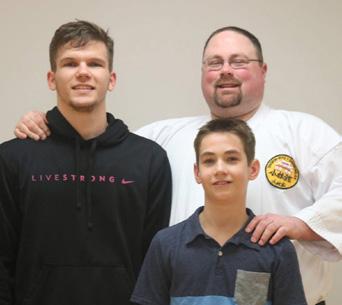
Photos R-L: Ryan’s first visit to H-SC
Austin Galeski, John Axsom, and Ryan Sigsbee
divisions, not a single opponent scored against him.
“Blanking someone is rare,” Axsom explains. “Blanking someone in the finals is almost unheard of. He ran through those divisions like he owned them.”
That momentum carried Ryan back across the Atlantic to Scotland for the 2023 WUKF World Championship, where he captured gold in two divisions—earning the first kumite world titles of his career.
“Ryan is one of the best athletes I’ve ever trained,” Axsom says. “He’s strong, he’s fast, and he’s always smiling. Even his opponents respect him.”
From early on, Axsom believed Ryan’s discipline and character made him a natural fit for Hampden-Sydney. Years earlier, Ryan had visited the Hill with Galeski, walking around fraternity circle and learning about the Honor Code. The experience stuck.
“There’s just a great culture here,” Ryan says. “I’ve found a great group at Hampden-Sydney, and I’ve definitely made the most of it.”
Ryan’s schedule looks a bit different these days. Hours in the library have replaced hours in the dojo. Despite that, Ryan managed to dominate on the international stage again when he took gold this past fall at the World Union of Karate-Do Federations (WUKF) Latin American Open Tournament. He credits maintenance of his fighting form to conditioning in the gym, cross training with the Hampden-Sydney Muay Thai and Jiu Jitsu clubs, and of course, compounding repetition.
“I’ve practiced certain takedowns and footwork drills so many times that I don’t think I’ll ever forget them,” he says. “It’s boring sometimes. But when I engage an opponent now, it’s second nature.”
As president of Phi Gamma Delta, Ryan hopes to be known as a good and thoughtful leader.
As an athlete, though, he trains to be the guy no one wants to face.
In its 250th anniversary year, Hampden-Sydney students brought the founding principle of civic engagement to life, participating in the 250-Hour Service Challenge sponsored by Tigers Serve.
Over the two years of the anniversary celebration, Hampden-Sydney students contributed more than 16,000 hours of service to 44 community and College-sponsored organizations, resulting in an astonishing economic impact of $565,485 and more than 500 lives saved through blood drive participation.
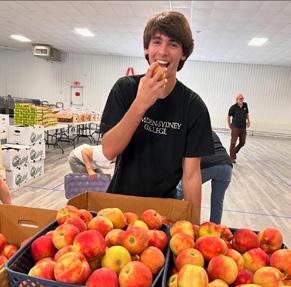
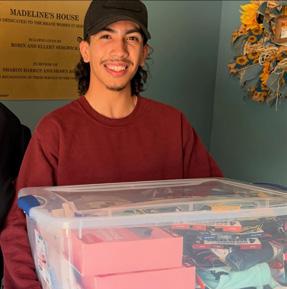
At the final pinning ceremony held on April 20, Director of Student Affairs Operations, Orientation, and Civic Engagement Sandy Cooke said, “Being a good man does not stop at the edge of this campus; that’s where being a good citizen comes in. Civic engagement is about people. It’s about understanding the needs of our neighbors and using our words and our actions to make a difference. Tigers Serve gives us the opportunity to practice what we preach, to turn our ideals into impact.”
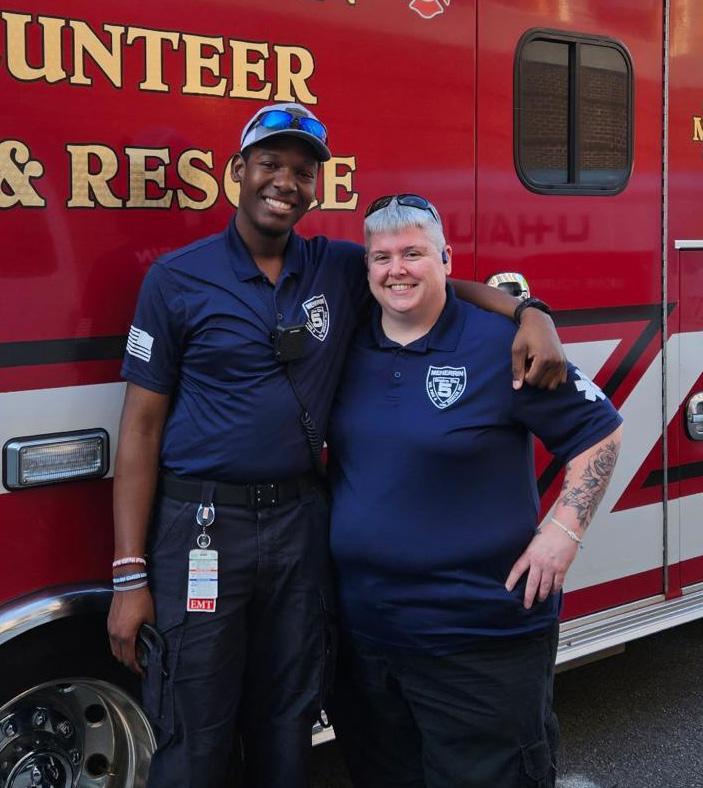
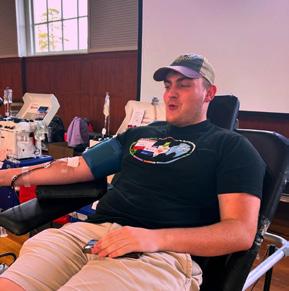
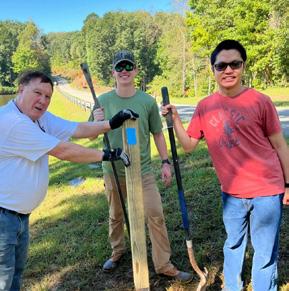
“250 hours. That is time spent tutoring children, restoring communities, comforting the lonely, feeding the hungry, and lifting up the forgotten. That is time you could have spent elsewhere, and yet you chose to serve.”
-Sandy Cooke
Damien Kerseborn ’29 logged 1,165 hours of community service during the 2025–26 academic year, the most of any individual student.
“Being a good man and good citizen is something you have to be prepared to live out.”
Read more about Damien’s commitment to community at www.hsc.edu/student-story-index/damien-kerseborn-29
Hampden-Sydney College proudly marked the 75th anniversary of the Eta of Virginia Chapter of Phi Beta Kappa in the 2025–26 academic year. This celebration coincides with the 250th anniversary of Phi Beta Kappa itself, as well as the 250th anniversary of the College.
Alumni members and the College community collaborated on events and programming that highlight the organization’s commitment to academic excellence and rigorous intellectual inquiry.
• Thanks to the generosity of Bryant McGann ’82, who started a speakers fund in honor of Professor Emeritus of Classics Jim Arieti, Eta of Virginia hosted PBK Visiting Scholar Dr. Laura Ogden, a noted cultural anthropologist, during the fall semester.
• The Office of the Provost sponsored the relaunch of the annual Academic Excellence Dinner for exceptional sophomores. Provost and Dean of the Faculty Tim Diette is a PBK member.
• In collaboration with the Office of Admission, Eta of Virginia hosted Phi Beta Kappa/Top Scholar receptions, aimed at attracting next year’s freshmen.

Phi Beta Kappa is the oldest and most prestigious academic honor society in the country. Only approximately 10 percent of colleges and universities in the U.S. have a chapter.
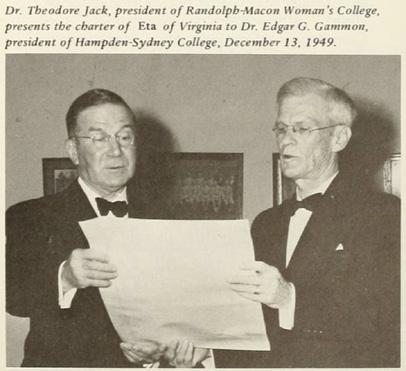
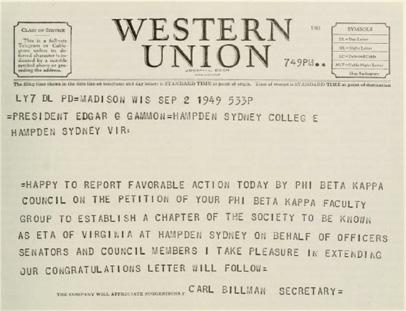
Was there a Phi Beta Kappa chapter at H-SC in 1779?
Like so much of Hampden-Sydney’s history, the origin of the College’s chapter of Phi Beta Kappa is shrouded in mystery. Claims of an earlier charter existing at Hampden-Sydney are explored by Phillip H. Ropp, H-SC Class of 1930, in the April 1953 issue of the Record. Below is an excerpt from the article:
“In July, 1779, the Phi Beta Kappa Society at William and Mary, after two and a half years of existence, became interested in expansion. Within a year the William and Mary group had issued charters for seven additional “meetings” or chapters of the society…The charter called the Delta was issued on August 14, 1779, to William Cabell…[who] attended Hampden-Sydney from August, 1777, to April, 1779…Is it not reasonable to assume that the William and Mary group…would have welcomed a chapter at the only other college in Virginia in 1779? [William Cabell’s younger brothers, Landon and Hector Cabell, were studying on the Hill at the time. Though Landon’s initiation into the William and Mary chapter in 1780 provides doubt for the claim of the Delta chapter’s existence.] There is, however, another bit of evidence which points more definitely than the above to the existence of a chapter of Phi Beta Kappa at Hampden-Sydney in the past. In an article in Atlantic Monthly for July, 1879, Edward Everett Hale, writing of the history of Phi Beta Kappa makes the following categorical statement: ‘There was once a Beta (second state chapter) of Phi Beta Kappa at Hampden-Sydney, Virginia. It is now extinct, and, on the spot, forgotten.’”
This issue’s cover is liberal arts in action. A portion of All Things Together, a choral piece commissioned in commemoration of the the 250th anniversary and conducted by Elliott Associate Professor of Fine Arts and Director of the Choral Program Helena von Rueden, is displayed physically by Professor of Physics and Astronomy Stan Cheyne using a Rubens Tube. Art and science in combustible harmony.
Musical Milestone
In honor of the 250th anniversary, the College Chorus commissioned the renowned Virginia-born composer Marques L.A. Garrett to write a piece that celebrates the promise of the Hampden-Sydney brotherhood. Alumni and current members of the choir provided input on the lyrics, and after months of dedicated rehearsals, the piece was premiered on April 17 in Crawley Forum. This was the first commissioned piece since the installation of 24th Hampden-Sydney President Christopher Howard Working with Dr. Garrett on this commission was a huge privilege. He was able to create such a meaningful text that shares a beautiful vision for the future of the College. The students rose to the occasion in performing this beautiful new work that is now a part of the Hampden-Sydney story.
-Dr. von Rueden
Art Ablaze
The Rubens Tube has a loudspeaker at one end and a continuous supply of propane at the other. Propane escapes through small holes along the top of the tube and burns as a row of flames. Without sound, the flames are nearly uniform in height. When music is played, the sound waves create pressure variations inside the tube that change how much gas escapes at each hole. Regions of higher pressure produce taller flames, while regions of lower pressure produce shorter flames. These pressure differences create the characteristic “singing” flame patterns.
-Dr. Cheyne

See the whole performance at go.hsc.edu/ AllThingsTogether
All Things Together
To form good men and good citizens. What is required of you?
Let mercy and truth never leave you; bind them around your neck; write them on the table of your heart.
Let all your things be done for good. As iron sharpens iron, so does one to another. Let your light so shine ever brighter. Let the bell on the Hill keep ringing.
To form good men and good citizens.

ACROSS
5. This president standardized the spelling of Hampden-Sydney (sometimes Sydney was spelled Sidney) in 1927.
7. This Motown Recording artist collapsed on stage in Gammon Gymnasium while performing with Marvin Gaye.
9. This Pennsylvania-based NFL team has two H-SC connections: Cindy and Rob Citrone ’87 are partial owners; and Myron Rolle, an All-American football player, Rhodes Scholar, and former Hampden-Sydney Trustee, played free safety.
11. This Founding Father sent seven of his sons to Hampden-Sydney.
14. Joseph ______, the father of this 28th U.S. president, was a professor at Hampden-Sydney.
16. The Zeta chapter of this fraternity was chartered in 1850 and called Atkinson home, making it one of the earliest fraternity houses in North America.
18. John Hampden (1594–1643) was killed at this field, which is now the namesake of one of Hampden-Sydney’s three campus lakes.
19. According to legend, Hampden-Sydney students disliked this building’s look so much that they set fire to it then stepped on firefighter’s hoses to prevent them from putting out the fire before the building was irreversibly damaged.
20. “Impossible is Nothing” was a campaign created by Boyd Coyner ’90 for this athletic footwear company.
DOWN
1. Which H-SC athletic team won an NCAA DIII national championship in 2005? This was also the first collegiate sport at the College.
2. Float like a butterfly, sting like a bee, this famous boxer was represented by Ron Tweel ’68, an alumnus of H-SC.
3. Known for his prickly personality, Algernon Sidney accrued this mammalian moniker as a result.
4. A beloved Hampden-Sydney community member, known by this diminutive nickname, only used three-pronged forks when eating in the Commons.
6. This movie stars Josh Hartnett as Matt Eversman ’88 during the 1993 Battle of Mogadishu in Somalia.
8. What nickname is used for the annual matchup between HampdenSydney and Randolph-Macon, the oldest small-school football rivalry in the South?
10. _______ Hall is the oldest continuously used four-story dormitory in the country.
12. A copy of To Manner Born, To Manners Bred: A Hip Pocket Guide to is given to every freshman student at Hampden-Sydney and has been featured in The New York Times. Its author, Tommy Shomo ’69, served as co-chair of the 250th Anniversary Committee and dedicated more than 50 years of his life in service to the College.
13. What academic discipline was listed in the initial advertisement for the College and remains today as the College’s flagship program?
15. According to legend, dye from the ____berry plant is the origin of garnet as a College color and was used by the Hampden-Sidney Boys to dye their shirts before they marched to Williamsburg to serve in the Revolutionary War, a march that was recreated by students in 2025.
17. The football stadium at the University of _______ bears the name of 1891 H-SC alumnus George Denny, who served two tenures as this university’s president.
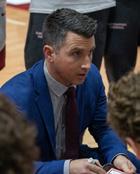
HEAD COACH CALEB KIMBROUGH
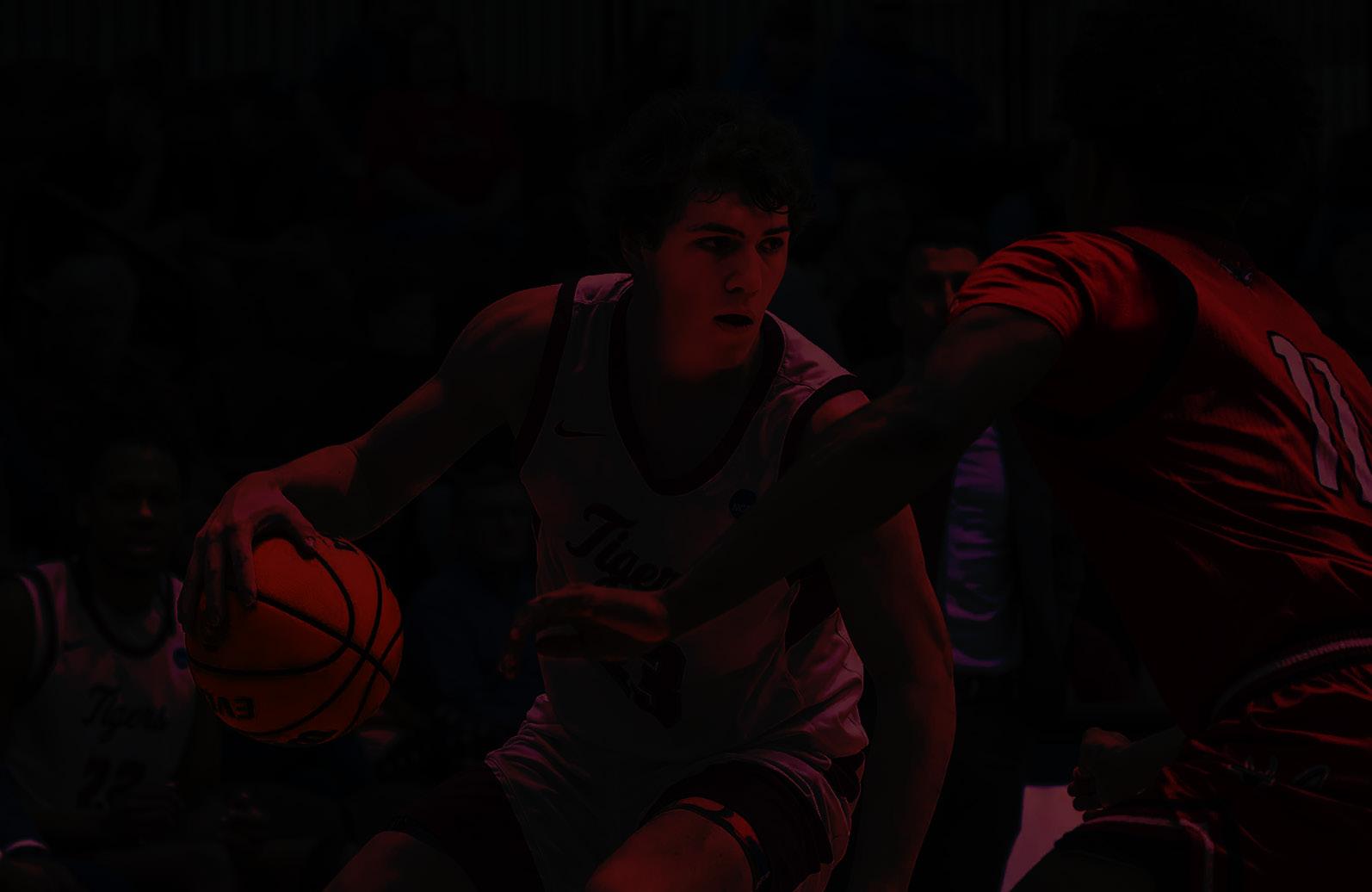
We finished 17–10, earned the No. 4 seed in the ODAC Tournament, and advanced to the semifinals. Competing deep into February in our league is never easy, and I’m proud of how this group continued to work, stayed together, and made progress. This was a team with a lot of talent and strong leadership qualities, but we didn’t always bring the level of grit and daily commitment that our program is built on. By the end of the season, we found a more connected, selfless group, and we were playing better basketball because of it. Two things can be true: we are proud, and we are not satisfied.
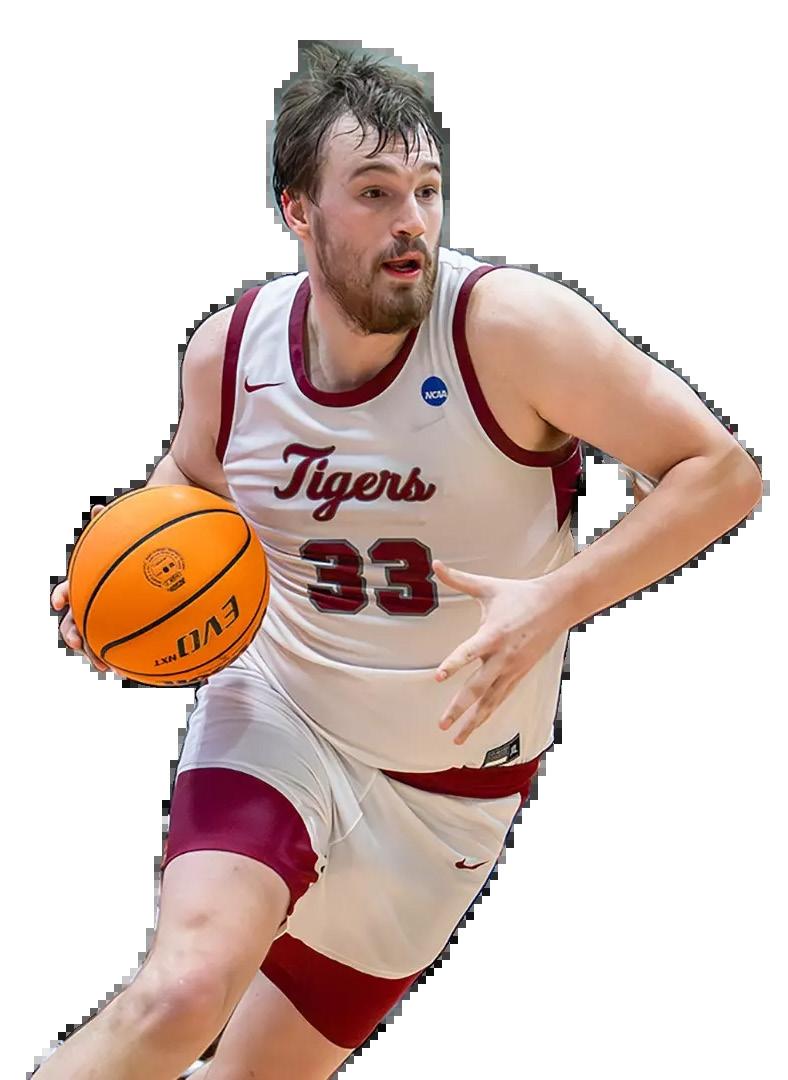
We talk a lot about “Next Play Speed,” which is our ability to quickly move forward from adversity and focus on what we can control which is what’s next. We faced a fair amount of adversity this season. We had a key returner leave the program after our first two scrimmages, dealt with injuries to Shane Fernald Santana Lynch '28 late in the year, and had illness impact our group at difficult times. That’s part of a season, but in this program, our success is not dependent on any one individual. Our success is built on commitment to our vision, values, and standards. During those times, other players stepped into larger roles. Kolby Wright Davis Cauble '26, Mason Patrick '29 Jaelen Solomon '29, and Tyree White '29 ready when their numbers were called and helped us continue to compete at a high level. The guys who were out did what they needed to do to recover, and the guys who stepped in did so without hesitation. That mindset allowed us to stay competitive and finish as a top-four team in the league.

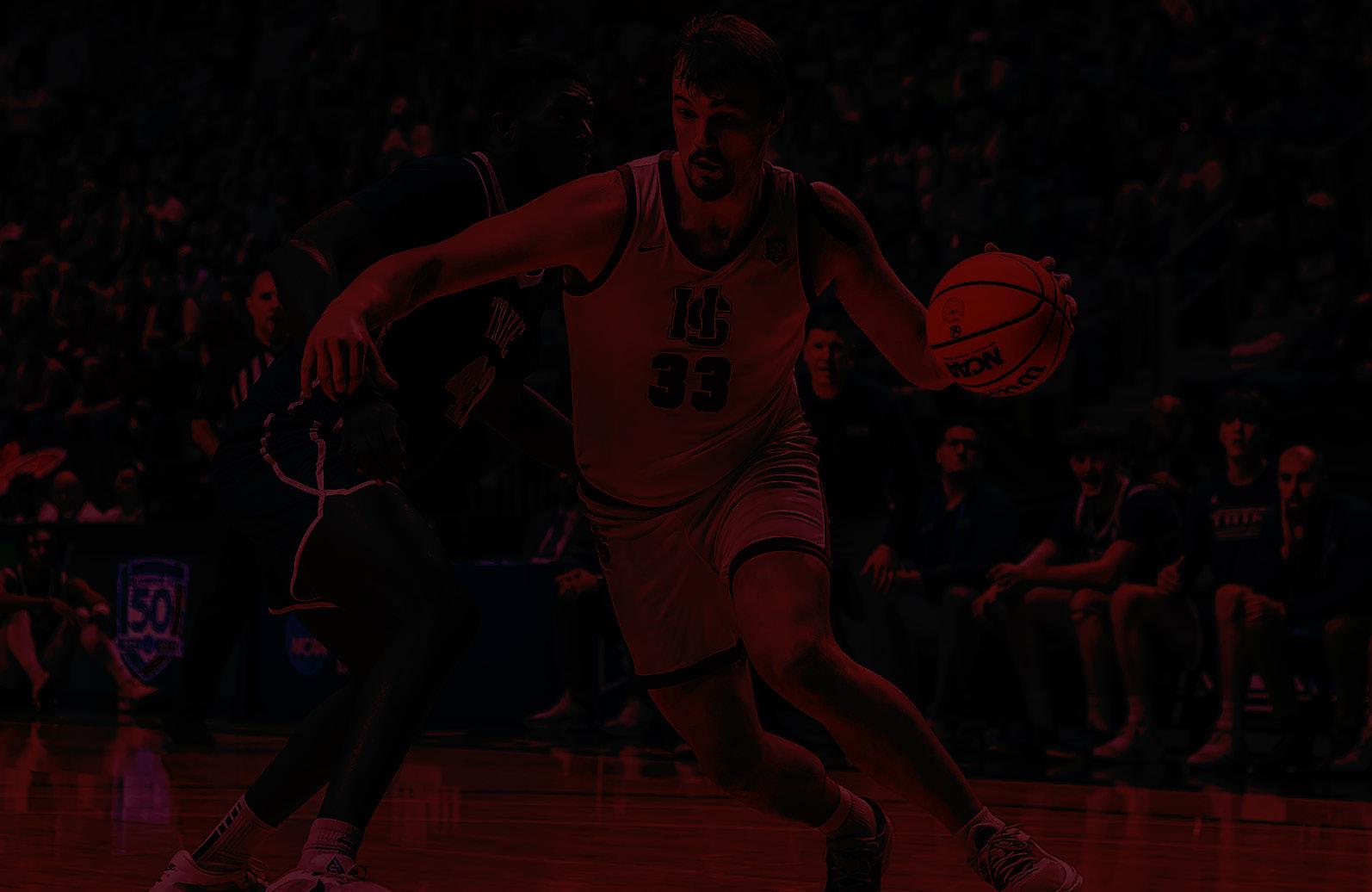
Our sophomore class took a major step forward this season. Having two sophomores, Travis Stickney Peter Moye, earn All-ODAC recognition is a significant accomplishment in a league as competitive as ours. Both of those guys were challenged as focal points of our offense, and they responded the right way. They are extremely committed to Hampden-Sydney Basketball and to their own development. What stands out most is their mindset. They are players you can win a lot of games with, but more importantly, they are players you can lose with. They come back the next day ready to work, ready to improve, and ready to lead. That consistency in approach is what gives us confidence in what they will continue to become.

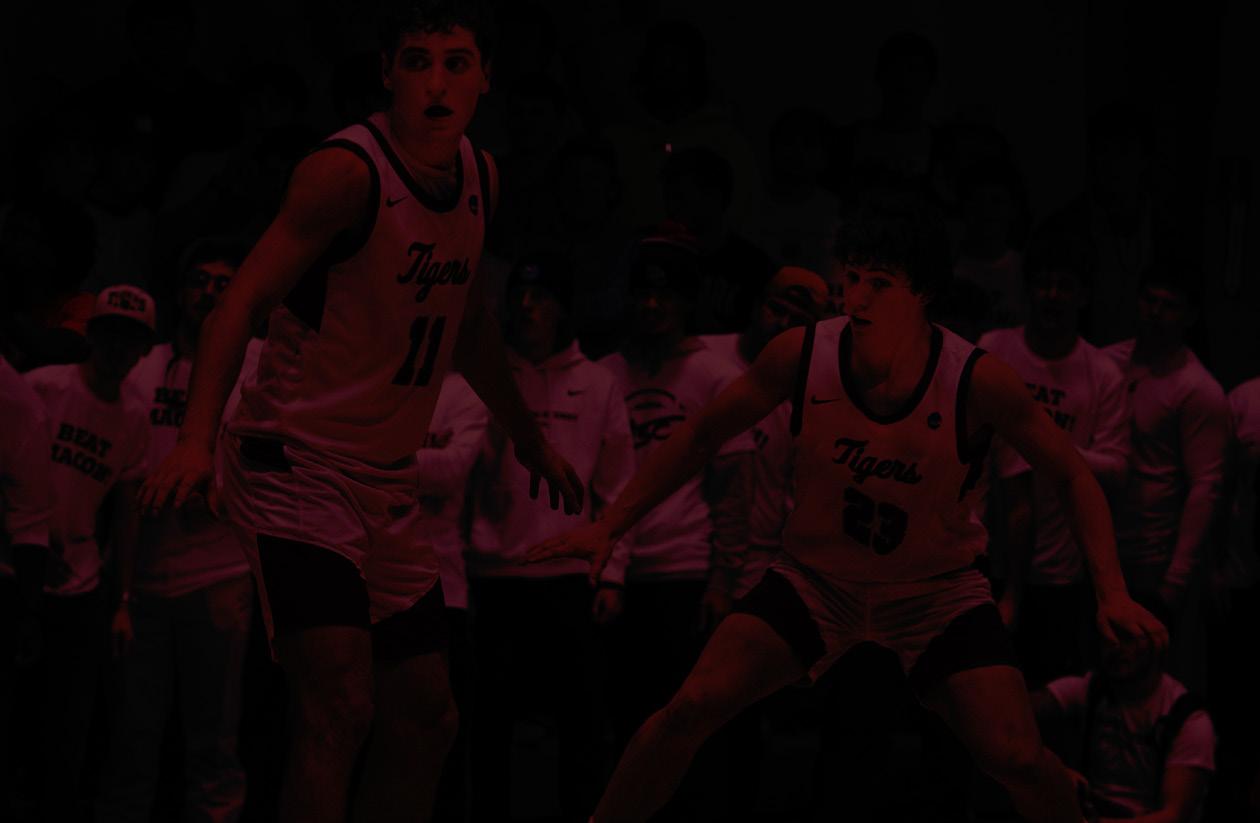
Grayson Schultz '26 represents everything that is right about HampdenSydney Basketball. Grayson’s journey from three-year manager to suiting up as a player and being voted team captain his final season speaks to his character, perseverance, and commitment to this program. He never wavered in who he was or how he approached each day. Grayson has been a part of championship teams, helped cut down nets, contributed to some of the most successful seasons in program history, and built meaningful relationships that will last a lifetime.

Gritty, humble, curious, and self-aware, Grayson leads by example, pays attention to detail, and consistently looks for ways to improve and help others. He leaves a legacy far beyond what shows up in a box score. He helped move the program forward, earning respect because he lives the standard of excellence expected by Tiger Basketball.


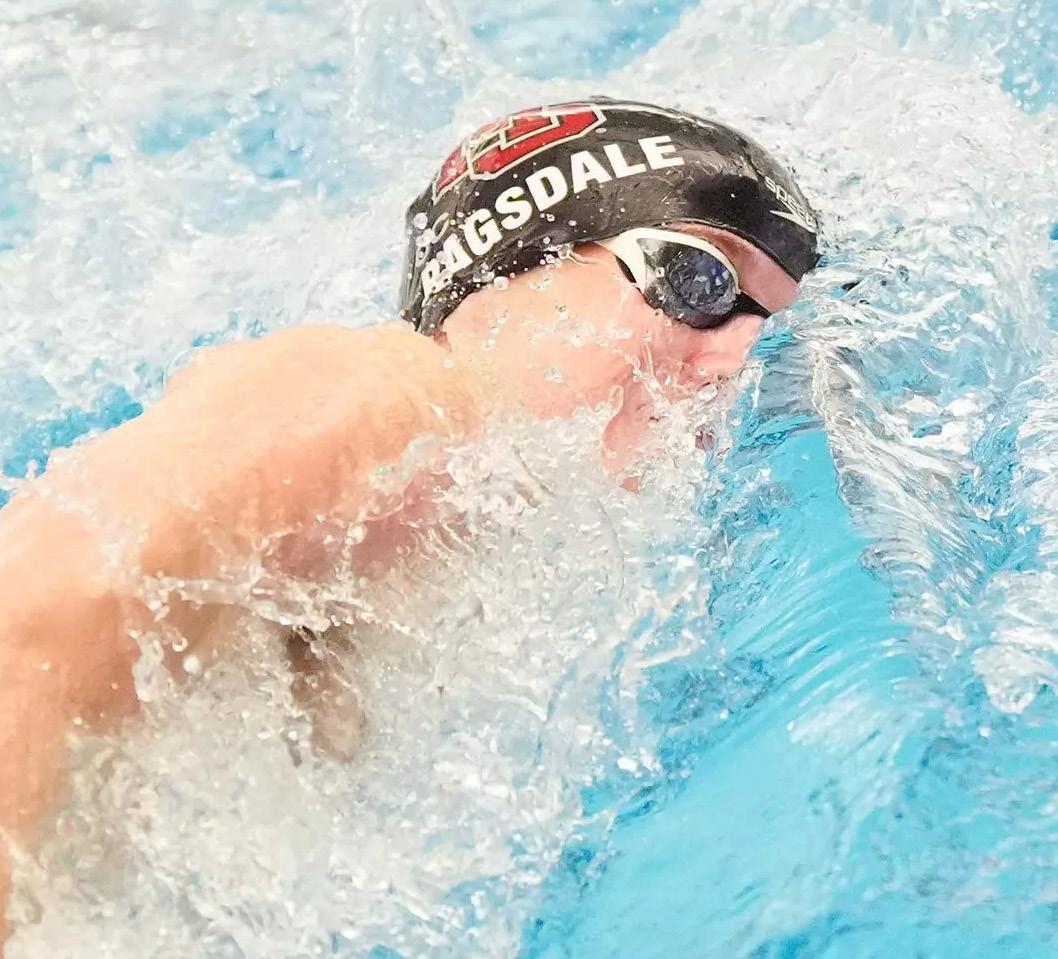
Quinlan Ragsdale ’28 is a rising star for Hampden-Sydney Swimming. Quinn has shattered the 100-yard backstroke record multiple times, now holding the three fastest times in the program’s history. He was also instrumental in breaking the 200-yard medley relay program record at last year’s ODAC Swimming Championships.
Quinn’s love for swimming began early at a local beach club, where he and his sister, Audrey, honed their skills. Quinn’s talent was undeniable, and the club allowed him to compete in swim meets despite being a year younger than the age limit. Audrey played a pivotal role, pushing him to excel as they competed on the same teams. “She was always better, but she always pushed me to be better,” Quinn recalls fondly. “It was always fun to swim with her.”
Serving as team captain at Charlottesville High School, Quinn set records in the 200-yard free relay, 400-yard free relay, and 200-yard medley relay. Though he excelled in freestyle relays, he
found his true calling in backstroke events.
Quinn credits his sister and coaches, including former University of Virginia swimmers Courtney Bartholomew and Eric Holden, for shaping his career. Courtney, a four-time All-American in backstroke, left a lasting impression. “I loved watching Courtney swim, especially because she was very good at backstroke.” He adds, “Both of them were big influences. I looked up to them, and they were always patient with me and put a lot of effort into making me a better swimmer.”
When Quinn began exploring colleges, though, swimming was not a deciding factor. Prioritizing fit, academics, and future opportunities, he settled on Hampden-Sydney as the perfect choice. Continuing his swimming career under the guidance of former coach Betsy Leonard was an added bonus.
In just two seasons in the pool, Quinn has already made waves. We look forward to seeing what a splash he makes in his remaining time as a Tiger!

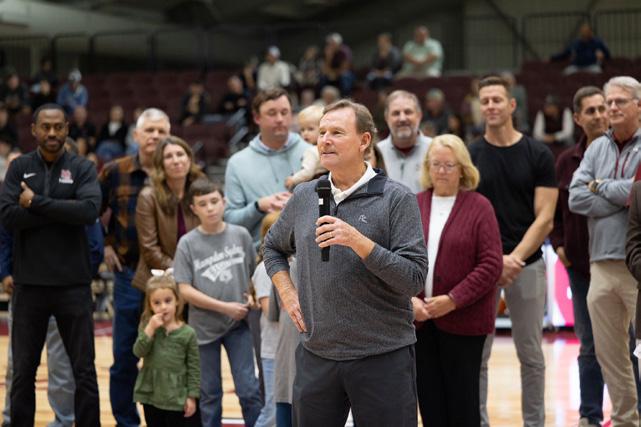
On November 22, 2025, Hampden-Sydney Basketball held a naming ceremony for the new Tony Shaver Court. The dedication honors the legacy of former Head Basketball Coach Tony Shaver, the all-time winningest basketball coach at the College, with a 358-121 record over his 17-year tenure; eight ODAC Men’s Basketball Tournament Championships; and 11 NCAA Division III Tournament Appearances, including two Final Four appearances and one runner-up finish in 1999.
The dedication was conducted before tip-off of the second annual Charlie Cobb Classic, the Tiger's first home appearance in the newly renovated Diaz Arena in Kirby Sports Center, made possible thanks to the generosity of H-SC Trustee Rudy Diaz ’02

Hampden-Sydney will add club squash to its athletic offerings beginning in the 2026–27 academic year, made possible by a generous gift from John E. Corey ’80 and the Corey family. Corey’s support funded the construction of the Corey Family Squash Center, a 7,500-square-foot, state-of-the-art facility in Kirby Sports Center featuring five courts, seating for 120 spectators, and new locker rooms to serve both squash and visiting basketball teams. Grant White, longtime assistant coach at the University of Virginia, has been named the program’s inaugural head coach and has already begun recruiting. The Tigers plan to join the College Squash Association (CSA) with the goal of achieving varsity status by 2028–29, further expanding Hampden-Sydney’s commitment to competitive excellence and student-athlete development.
By Alexandra Evans
In his 1938 seminal work Homo Ludens, Dutch historian Johan Huizinga argues that activities like war, art, law, science, and even the evolution of language are all rooted in play. Huizinga explores how festal practices of ancient Chinese clans laid the groundwork for complex social hierarchies. He argues that the battles in Beowulf are more than battles for survival, but stylized games of strength and courage that reinforce the heroic code. He also posits that barrister wigs transform the wearer into another being and transport them into a specialized, selfcontained world, much like a character in a game.
“Play is a necessary condition of culture, but it’s often treated as frivolous,” says Dr. Michele King, ludologist and director of the Flemming Center for Entrepreneurship and Innovation. Dr. King explains that play is more than entertainment; it is a vehicle for cultural formation and transmission.
embracing the natural inclinations of our young men and leveraging it to create valuable opportunities for engagement.
Games work in liberal arts classrooms because they create stakes, require decision-making under constraints, and expose systems and consequences, all while encouraging active participation. At Hampden-Sydney, faculty members are discovering that ancient pedagogical questions of how to teach judgment, ethical reasoning, rhetoric, leadership, and critical thinking may have an equally ancient answer: let them play.
"Our students are very familiar with games, but they’re often uncritical of them. Games are often used as diversions, but when we position a game as a cultural or sociological object that tells us something both about the culture that made it and also the people who use it and interact with it, students have an opportunity to deepen both their knowledge and their skill.”
-Dr. Jake Euteneuer
Centuries removed from Beowulf and Grendel, gaming is still a driving cultural force. “Today, gaming is a $400 billion industry, holding more economic power than movies, music, and live sports combined” says Elliott Associate Professor of Rhetoric Jake Euteneuer. A 2024 Statista report found that American men spent an average of 42.6 minutes a day playing games, compared to the 25.8 minutes that women spent playing games. With gaming holding such immense economic power and cultural significance, Hampden-Sydney faculty members are

More than reading a case study does, games create consequences that feel real to students—not because the game itself affects their grades, but because gameplay necessitates decisions that have immediate, visible outcomes. Whether a student is competitive by nature is immaterial. Tying a tangible outcome so directly to a decision is impactful and allows students to feel the weight of their decisions. In a game, students aren’t analyzing decisions in retrospect—they’re making them on the fly.
Director of the Wilson Center for Leadership in the Public Interest Vinton Bruton recalls a moment in Introduction to Leadership (INDS 101) during a round of Captain Sonar where a student lost sight of the big picture, “zigging when he should have zagged” in his words, to which Bruton replied, “Welcome to leadership!” With time for one more round, the

SETUP
Two teams, opposite sides of table. Each player takes a submarine role.
ROLES
Captain: Moves sub, announces directions, calls attacks
Radio Operator: Listens to enemy Captain, tracks their location
Engineer: Manages systems, prepares weapons
Chief Mate: Charges special abilities
GAMEPLAY
Turn-by-turn: Alternate actions between teams
Simultaneous: All play at once, pause only for attacks
WIN CONDITION
Locate and destroy the enemy submarine before they destroy yours.
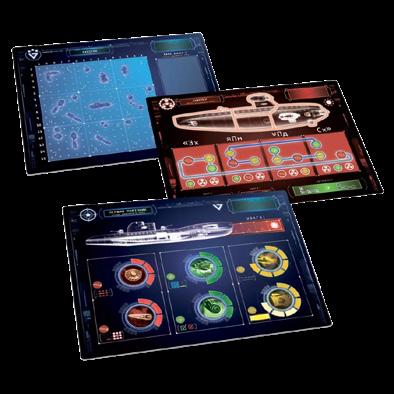
student was nominated to play captain again. This time, he managed all the information, deciphered what was important, identified gaps, and led his team to the win.
“Running this class perfectly in my mind means that my students have a 50 percent fail rate,” Bruton says. “We want them to fail when the stakes are real, albeit low, and they’re learning—not when someone’s job or a big contract is on the line. Carrying around a theoretical framework that you haven’t personally tested doesn’t do anyone a whole lot of good.”
In Computer Organization (COMS 361), taught by Assistant Professor of Mathematics and Computer Science William Tolley, students race against the clock and their peers in virtual Capture the Flag competitions to find and exploit system vulnerabilities, all while their progress is publicly tracked and displayed on live scoreboards.
This competitive structure generates stakes organically. Dr. Tolley observes that the pedagogical value of the scoreboard lies in helping students gauge: “Am I doing badly because everyone’s doing badly, or is it uniquely me?”
The public nature of performance creates accountability while providing crucial context for self-assessment. The technical challenges themselves—reverse engineering binaries, exploiting vulnerabilities, hunting for hidden flags—carry inherent stakes because failure is immediately visible. When a player lags behind while others advance on the scoreboard, the gap requires the student to pivot, seek new approaches, and persist through difficult problems.
SETUP
Solve cryptography, web security, reverse engineering, forensics, and binary exploitation problems to find digital flags.
GAMEPLAY
Compete individually or in teams on the official platform Do not attack the scoreboard or attempt external system access Difficulty escalates progressively throughout the competition Violations result in disqualification.
WIN CONDITION
Points are awarded for solving challenges, with time as the tiebreaker.
Absolute Rules: Unchangeable rules that protect the safety of all players
Immutable Rules: Core rules that require two steps to become mutable (e.g., voting procedures, turn order, win condition)
Mutable Rules: Rules that are immediately changeable that players propose, modify, or eliminate through voting
The game begins with a proposed mutable rule establishing the win condition: first player or team to 100 points wins
The class votes to pass or amend the win condition rule.
Players begin following the established turn structure. Each round consists of:
1. Proposing a Rule: Active player or team proposes a new rule or modification to existing mutable rules
Must be clearly worded and specific
Can modify win conditions, point allocation, or gameplay mechanics
Cannot contradict immutable rules
Once passed, players must abide by the exact wording
2. Discussion: All players debate the proposed rule’s merits and potential consequences
3. Voting: Players vote to accept or reject the proposal
4. Implementation: If passed, the rule immediately takes effect
Achieve victory as defined by established win condition, which may change during play.

The satisfaction of solving puzzles compounds these stakes. Each captured flag represents both technical mastery and competitive advancement, creating a feedback loop that sustains engagement.
“Games create emotionally meaningful stakes in a way that invites iteration and persistence rather than shame. Failure in a game is not a verdict on intelligence; it’s a chance to try another way."
-Dr. Michele King
But stakes alone aren’t enough. What makes games pedagogically powerful is that those stakes exist within constraints that mirror the real world.
Thompson Professor of Philosophy Marc Hight uses Normic to exemplify this principle. The objective of Normic is deceptively simple: create and exploit rules better than your opponents…ahem, classmates. Once passed, though, a rule must be followed exactly as it was worded, a sometimes-uncomfortable constraint if the proposed verbiage was imprecise.
“It encourages creativity and long-term, principled thinking, but it also encourages students to think about unintended consequences,” Hight explains. “Normic forces students to slow down to reflect upon what they really mean and all the ways that their rule could potentially be implemented in practice.”
Students quickly discover that, as Dr. Hight points out, humans are not naturally good at principled reasoning. Early gameplay leans toward conservative moves as students test boundaries. As confidence builds, creative rulebending emerges, as do unintended consequences. The game becomes a laboratory for philosophical thinking about how systems shape behavior, how language creates reality, and how strategic thinking requires anticipating others’ responses to your actions.

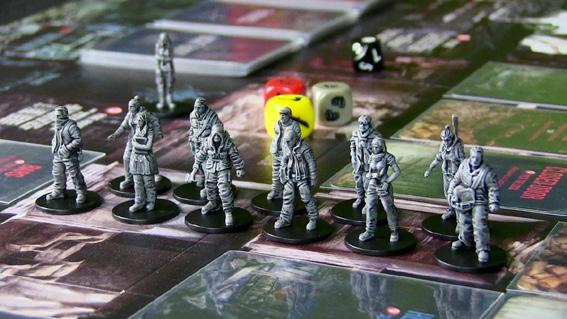
Lead a team of civilian survivors sheltering during wartime
Manage limited resources symbolized by food tokens, medicine, and other supplies
Each character needs food, rest, and protection
Daytime Decisions: Ration food, assign rest periods, manage shelter, strategize to complete the mission
Nighttime Decisions: Send scavengers, face threats, confront ethical dilemmas
Leader of the Day: Makes final decisions and manages team energy (rotates every 24-hour game cycle)
Assistant Leader: Supports decision making
Medic: Manages health and injuries
Keep your team alive through the siege and successfully complete humanitarian objectives while maintaining predetermined ethical standards.

Where Normic teaches students to manipulate abstract rules, Professor Bruton’s use of This War of Mine forces them to confront constraints with immediate moral weight. Set during the 1994 siege of Sarajevo, This War of Mine places students in control of civilians struggling to survive: “Students have to make hard decisions. Who on my team gets to eat today? Who on my team gets to sleep? Who has to venture out and scavenge?” Bruton explains.
These operational constraints force students to prioritize competing needs with scarce resources, negotiating life-and-death trade-offs, which Bruton says initially produced troubling results, reminiscent of Lord of the Flies. Students made expedient, morally questionable choices in pursuit of victory. “It really puts you in one ethical dilemma after another, and ethics is so important to leadership,” Bruton says.
To center the question of ethics, instead of mere survival, Bruton restructured the constraints. He gave students a mission such as roleplaying the part of a humanitarian volunteer organization. “I wanted them to practice living out being good men and good citizens in this really tough environment,” he explains.
The transformation was remarkable as students abandoned the brutal pragmatism of Jack Merridew for the principled governance of Ralph. With the humanitarian framework, students shifted from self-interested chaos to principled decision-making, thoughtfully debating whether to help strangers at cost to themselves.
When faced with grueling constraints such as limited time, scarce resources, incomplete information, or competing values, students can’t theorize their way out. They must decide, act, and carry “the weight of responsibility,” as Bruton puts it, adding that “ethics is a tough concept to teach without giving them one decision after another, and this game makes them do that.”



Some systems are conceptual. Some are physical. Dr. Tolley’s Capture the Flag competitions expose students to both. The technical challenges offer machine-level computing literacy, while gameplay reveals how social and political systems can be built atop infrastructure. India’s neighborhood-level internet shutdowns demonstrate precision control through infrastructure manipulation; North Korea’s twosoldier monitoring requirement shows human oversight layered atop technical architecture. Understanding how systems function empowers students to see how computers operate, and how power operates through them.
Pull out Uno and watch the negotiations begin: Can you double down on a draw two? How do you use wild cards? Do you follow the 7-0 rule? "When approached creatively, constraints don’t prevent play; they allow you to innovate."
-Dr. Michele King.
“I don’t think Alexander the Great was born and then just got to do anything he wanted,” says Elliott Professor of History James FrusettaUlfhrafn, “and I want students to understand that people make decisions in context.” One way that Professor Frusetta does this is by running Reacting to the Past games like “The Threshold of Democracy: Athens in 403 B.C.E.”
Students inhabit historical roles and debate constitutional reform, navigate factional alliances, and wrestle with the tension between oligarchy and democracy. By negotiating within the political, social, and economic systems of the era, students reverse engineer the invisible architecture that shaped historical actors’ choices. When stakes meet constraints, systems emerge.
“I don’t have to lecture them, they’re putting it together,” Frusetta observes. The game creates the conditions for discovery. The lesson transcends any single historical moment: all actors, in all periods, make choices within systems that limit what’s possible.
In Digital Media and Rhetoric (RHET 350), Professor Euteneuer uses Even Steven’s Odd to transform a simple dice game into revelations about hidden systems of fairness and power. Students race to roll specific combinations and grab a dice doll placed deliberately at the front of the room, exposing how proximity can create structural advantage. The student in back loses even when they succeed simultaneously with someone up front, making invisible inequality suddenly tangible.
This physical setup of Even Steven’s Odd becomes a lens for examining how fairness can be constructed. Does basketball favor tall people because James Naismith hung the basket high? If he had dug a hole instead, would short players dominate? The game forces students to ask: Does equality mean equal opportunity, equal starting places, or equal access to help? When does persuasion become manipulation? Even Steven’s Odd exposes how systems have the power to determine outcomes before anyone even starts playing.
The most radical thing games do is necessitate active learning, encouraging engagement with the course material in ways that traditional lectures struggle to replicate.
SETUP
Each player gets six dice.
GAMEPLAY
Announce a target (e.g., "all dice add up to 30").
Players roll simultaneously, keeping desired dice and re-rolling the others as fast as possible.
WIN CONDITION
First player to hit the target races to grab

“Cultural cues are embedded in play, both implicitly and explicitly. You learn what’s acceptable and what isn’t.” - Dr. Michele King
A game may be intended to function as a neutral vehicle to deliver course content, but the ways in which students engage with the game determine whether the outcome is collaborative, competitive, or co-opetitive—a blend of cooperation and competition. Exposure to various kinds of outcomes empowers students to forecast unintended consequences, communicate expectations more efficiently, and develop critical interpersonal skills essential for navigating ambiguous situations in their personal and professional lives.
“Games give students permission to let their guards down and think creatively,” King says.
“I still lecture. But now the lectures land differently because students have lived the questions,” says Frusetta-Ulfhrafn.
“Games require professors to cede a lot of control, and that can be uncomfortable. But it allows students to exert greater autonomy over their academic journey,” says Hight.
“The easiest, quickest way to build community is through play,” says Euteneuer.
“The more abstract a principle, the more handson a professor needs to teach it. Character and leadership are as abstract as it gets,” says Bruton.
Games can’t replace traditional pedagogy, but they can deepen students’ connections with it. For an institution now 250 years in to forming good men and good citizens, Hampden-Sydney’s embrace of gameplay as a proving ground for judgment, ethical reasoning, and leadership is more than innovative pedagogy—it’s a return to an ancient truth about how character can


By Alexandra Evans
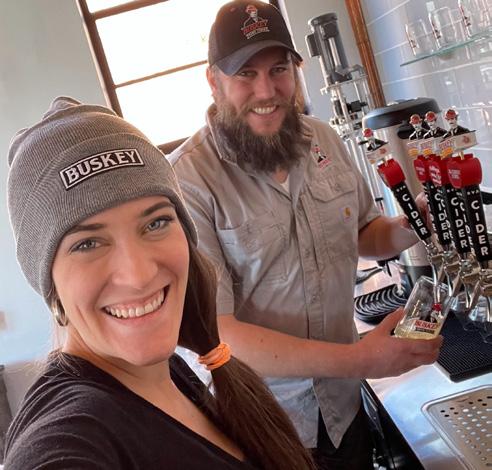
In its 10th year of operation, Richmond, Virginia-based Buskey
Cider has beaten the odds. With a whopping 75 percent of small businesses closing before their 10th anniversary, according to the U.S. Bureau of Labor Statistics, Buskey Cider is a statistical success. Still, founder and CEO Will Correll ’13 is not so sure.
“Functionally, the business that I set out to open failed,” Correll says.
This isn’t a story about success or failure, though. It isn’t even a story about how to make great cider. It’s about the makings of an entrepreneur—a journey that began in earnest right here at HampdenSydney. Because to Correll, being an entrepreneur is about so much more than keeping the lights on and maintaining profit margins. It’s about calculated risk-taking to pivot when necessary and, most importantly to Correll, solving a problem in a way that creates the most common good.
Coincidentally, pivoting is both the reason Buskey exists at all and the reason Correll says it is a failure.
In November 2012, Correll and a classmate were signed up to pitch their automation software for tracking community service hours at the Start Peninsula competition in Hampton Roads, when an unforeseen set of circumstances necessitated a parting of ways the night before the competition. Correll was determined to compete, except he had no venture
to pitch. There was one topic he had researched enough to speak on proficiently: craft cider.
Initially interested in craft beer like many of his peers at the time, Correll felt the market was already oversaturated. What he didn’t see well-represented in the market, though, was craft cider. The cider that was available wasn’t impressive—overly sweet, low-quality ingredients, brewed with a “soft drink mentality” as Correll puts it.
“I knew quite a lot about craft brewing, and I had accumulated probably 500 pages of research on cidermaking and feasibility studies that gave me a solid understanding of cider’s history and what it would take to open a cidery,” Correll says.
Armed with notes and nerve, Correll continued on to the competition, expecting to win nothing but experience pitching to investors. A combination of factors turned the wind in his favor: standing out with a unique venture in a sea of tech start-ups, a group of eager investors and mentors who felt
snubbed by other groups, and an ability to persuade honed by the Hampden-Sydney Rhetoric Program. Correll walked away from the Start Peninsula competition with $10,000 and a small army of highly experienced businesspeople, who believed in him.
Correll now had real momentum, real mentors, and real money to invest in a booming market that would grow an additional 75.4 percent in the following two years according to Chicago-based research firm IRI (now Circana). He also had a full semester of college left to complete.
“I went to Dean Klein and told him I was seriously considering stepping away from school because I needed to hit this now. It was my moment,” Correll says. He goes on to recall that Dean of Students David Klein and Correll’s campus mentor Professor of Economics Jennifer Dirmeyer encouraged him to finish his degree, but they also emphasized that doing so should in no way stop him from seizing his moment. Together, Correll and the College curated an independent study program that fulfilled his remaining credit needs while moving his business forward. “My business plan became a class of its own. I took an environmental science course that focused on how to make the business more sustainable,” Correll explains. “Functionally I had a light course load my last semester, but it wasn’t a cake walk. I was working harder than anyone around me.”
The 15 years since that pitch competition have been full of growth and continued hard work. By the time he graduated, Correll had anticipated being within months of cutting the ribbon on his cidery. That wasn’t the case. It would be another three years before he opened Buskey’s doors at 113 Leigh Street. By then, Correll had brought in Elle, his childhood friend and then girlfriend, to handle the marketing and public relations. The duo married about a year later and now share a son, Henry. The weekend they opened Buskey, Correll slept on the floor of the cidery after the lock to the front door broke. Since then, Correll has weathered a global pandemic—forgoing his own salary to ensure his employees got paid—encountered a rapidly changing industry with unpredictable consumer preferences, and failed to make the original model of scaled distribution work. In fact, Correll says the only reason they’re still in business is because they own the 6,000-square-foot warehouse that Buskey calls home, a shrewd move that many

Correll, on campus, holding an early iteration of Buskey Cider
businessmen more experienced than Correll was at the time may not have seized.
“If you can help it, don’t become an entrepreneur,” Correll says in all seriousness. Unfortunately for Correll, he can’t help it.
He may not have solved the cider problem per se, but Correll is using Buskey as a vehicle to solve other problems that he’s identified in his community—the second pillar of his entrepreneurial ethos. Particularly in the post-COVID landscape that has left many feeling isolated, Correll aims to make the Scott’s Addition-based cidery a gathering place. Scott’s Addition has been referred to as the Virginia capital city’s thirstiest neighborhood given its high number of breweries, cideries, and distilleries. More than booze though, the city is thirsty for community. Seeing families coming in with small children (coupled with a fresh frame of reference as new parents themselves), the Corrells added kid-friendly amenities to the bathrooms and chalkboards to the common areas. He and Elle have added food offerings and new product categories to serve a wider range of customers. They are exploring ways to host events at the cidery.
Correll may insist that the business he set out to build failed. But can something that meets needs and serves people ever really be a failure? More than creating good cider, Buskey creates common good. If only that could be bottled. Or, in this case, canned.

AsHampden-Sydney College celebrates the remarkable conclusion of the It’s Time, Good Men comprehensive campaign, which raised an astounding $400 million, the College stands at a pivotal moment in its rich 250-year history.
“Hampden-Sydney is closer to the end of the beginning than the beginning of the end,” says Peebles Harrison ’89, chairman of the board of trustees. “I often come back to a sentiment that Jeff Bezos shared essentially saying don’t predict the future; tell me what is not going to change.”
At Hampden-Sydney, our constants will shape our future:
A high-touch academic environment that educates the whole man.
A culture built on honor and integrity.
And a mission to form good men and good citizens in an atmosphere of sound learning.
Thanks to the generosity of our community, with the resources now available, these foundational commitments will be strengthened and enriched, ensuring that they remain the pillars of the College’s educational experience for centuries to come.
Hampden-Sydney is better positioned to deepen its signature high-touch educational experience by attracting and retaining outstanding faculty members, expanding funding for interdisciplinary learning initiatives, and strengthening cornerstone offerings like the Summer Research and Rhetoric programs and newer, transformational initiatives like Compass, the experiential learning program.
Through increased scholarship support, our community stands to benefit from new students with unique perspectives and life experiences who otherwise would not have had the chance to pursue a Hampden-Sydney education.
Facilities upgrades ensure that the quality of our physical campus complements the excellence of the academic, athletic, and student life experience Hampden-Sydney offers young men.
Every dollar invested in It’s Time, Good Men represents our collective belief in Hampden-Sydney’s mission, potential, and important place in our society.
As the College looks ahead, it does so with clarity and conviction. The vision is not about predicting every detail of the future but ensuring that Hampden-Sydney remains a beacon of sound learning and character formation in a world that will always need good men and good citizens.
See more photos at go.hsc.edu/250thCelebrationGallery
Hampden-Sydney College welcomes Kevin Hoffer ’06 as director of alumni and parent engagement and Mia Garrett as assistant director of alumni and parent engagement.
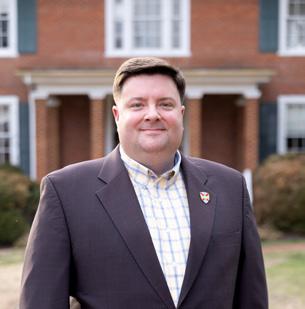
“I am thrilled to return to my alma mater as the director of alumni and parent engagement. The connections, traditions, and shared experiences that shaped my time at the College continue to inspire my commitment to strengthening the alumni brotherhood nationwide.”
While a student at Hampden-Sydney, Kevin served on the Parking Appeals Committee, worked as a tutor in the rhetoric department, and was involved with a variety of campus clubs and organizations before graduating with a Bachelor of Arts in political science. Kevin returned home to Hampton Roads, Virginia, after graduation and worked for the USO supporting military members and their families by creating engagement strategies and improving operations to further strengthen philanthropic support. Transitioning to higher education, Kevin brought his expertise in engagement to the University of Virginia (UVA) supporting the humanities. While at UVA, Kevin enhanced advisory board and donor relations by creating programs and events aimed at fostering a sense of community among key stakeholders.
The Club of New York is the recipient of the 2025 John H. Waters Memorial Cup, an honor presented to the regional alumni club that has the greatest impact in a single year in the areas of engagement, recruitment, philanthropy, and mentorship. This is the Club of New York’s second Waters Cup in recent history, having captured the top honor in 2020 as well.
The Alumni Club of New York’s dedication to bringing people together exemplifies the true spirit of alumni relations. Through shared experiences, alumni feel more connected to the College and to each other. The Alumni Club of New York sets the standard for combining opportunities to help the College, professional networking events, and social gatherings that leave a lasting impression on the alumni they serve.
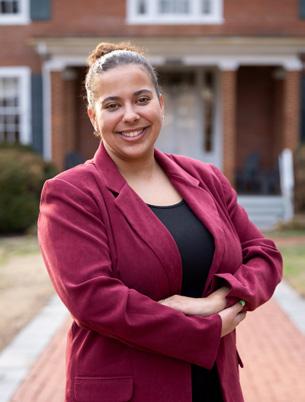
“I am passionate about building meaningful connections that strengthen the College community and foster lifelong engagement.
I look forward to continuing the strong tradition of excellence at Hampden-Sydney College.”
As assistant director of alumni and parent engagement, Mia Garrett will lead alumni outreach, regional club engagement, and athletics event initiatives. Previously, she served as assistant director of events and donor stewardship with the Duke Club at James Madison University (JMU), managing large-scale donor events and communications supporting more than 5,000 athletics donors. She began her career with Virginia Tech Football, gaining extensive experience in recruiting operations, alumni engagement, and student-athlete support within a Division I athletics environment.
During her time at Virginia Polytechnic Institute & State University, Mia was deeply involved on campus, serving as vice president of member experience for Pi Beta Phi and as vice president of Club Softball, where she helped lead her team to back-to-back national championships. She earned her bachelor’s degree in communication with a minor in event and experience management and is currently pursuing a master’s degree in sports and recreational leadership from JMU.
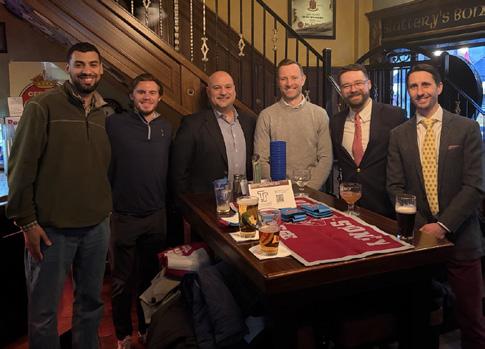
"The club and the College really benefit from having a strong presence in the country’s largest metro. We hope even more students and alumni will come to see the city as a destination of choice for internships, full-time jobs, graduate school, and connection. There is an engaged and supportive group of brothers here ready to welcome them."
-Matt Moore '08, Club President
A lot of people go to college; some never leave. But when your alma mater is Hampden-Sydney, why would you want to? Alumni faculty and staff members share why they wanted to spend their professional lives on the Hill, what’s different about H-SC now, and how today’s students can get the most out of their experience.
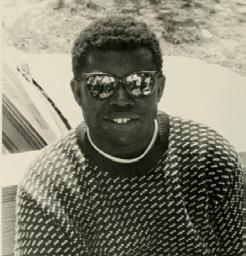
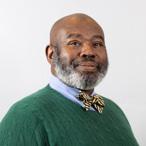
Patrick Jourdain ’88
Associate Director of Career
Education and Advising
The brotherhood is real— don’t hesitate to embrace it. It’s here to support you on your journey, both now and in the future.
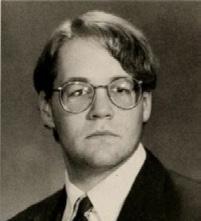
Mark Meitz ’95
Senior Associate Dean of Admission
There is something about this place that allows guys to be vulnerable and care for each other on a level that I just don’t see happening elsewhere.
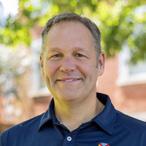
Jack Pace ’20
Associate Dean of Admission
I grew up in a very comfortable home with a ton of advantages because my grandfather and great-uncle were the first men in their families to go to college, and they chose HampdenSydney. I came back to work in the admission office because I wanted to help other families experience that same kind of generational change in trajectory.
Paul Amos ’92
Regional Development Officer for Athletics
The brotherhood across the board is stronger than it has ever been. It shows in how everyone greets each other on campus and engages with each other in ways that you don’t see off campus as much.
JB Potter ’11
Visiting Assistant Professor of Modern Languages
Hampden-Sydney gives students all the tools they will need to become good men. I encourage students to think deeply about their ideal future and the kind of men they want to be and to then build that future incrementally.
Kristian Hargadon ’01
Trinkle Professor of Biology
Working with our students and building relationships that last well beyond their four years on campus has been a true dream job for me.
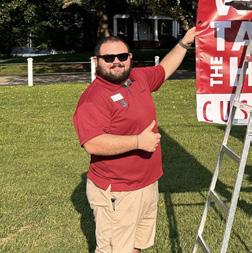
Scott Teachey ’25
Assistant Dean of Admission
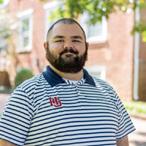
Being a Hampden-Sydney man is being a man of honor, integrity, grit, intellect, empathy, and consequence. It is a blessing to give back to the school that has transformed me into the man I am today.
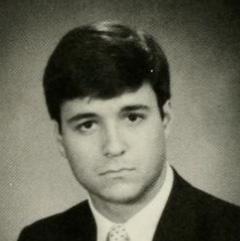
Ty Schoolar ’20
Head Coach for the Hampden-Sydney Shooting Sports Academy
I was on the shooting team all four of my years at Hampden-Sydney College. I’m honored to be part of the H-SC community again and for the opportunity to introduce men to a lifelong sport!
Hugo Rodriguez ’88
James C. Wheat Chair in Leadership
The faculty and staff’s commitment to forming good men and good citizens is the same today as it was when I arrived in 1984. We meet these young men where they are, and through attention and care, shape them into good, thoughtful adults.
Victoria Fenton ’23
Assistant Director of Alumni and Parent Engagement
H-SC offered a strong sense of community, meaningful relationships, and a place where I truly felt like I belonged. I am so blessed to work with our alumni volunteers and to be part of a team that invests so deeply in relationships and tradition.
Dwayne Bowyer ’92
Associate Dean of Students for Conduct and Character & Director of Greek Life
Aaron Dawley ’18 Regional Admission Officer
Hunter DiPaolo ’13
Assistant Director of Institutional Effectiveness
Brian Grogan ’73
Visiting Instructor of Fine Arts
Ivo Gyurovski ’09
Assistant Dean of the Faculty and Elliott
Associate Professor of Psychology
Hugh Haskins ’01 Vice President for College Advancement
Justin Isaacs ’95 Professor of Economics and Business
Tyler Langhorn ’17 Associate Dean of Admissions
Matt McKay ’18 Athletic Fields Manager
Travis Newcomb ’18 Hardware and Software Specialist Network Analyst
Richard Pantele ’13 Dean of Students
*This list is accurate as of June 1, 2026.
Jason Rostan ’03 Head Lacrosse Coach
Carson Roth ’23 Regional Admission Officer
Clayton Tucker ’20 Assistant Dean of Admission
Zach Zullinger ’07
Assistant Football Coach
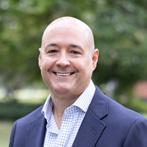
Kevin Hoffer ‘06 Director of Alumni and Parent Engagement
Rhamel Brewer ’22
Coordinator for Mentorship and Empowerment
The Record of Hampden-Sydney College welcomes news of your milestones—career updates, weddings, births and adoptions, and brotherhood beyond the Hill.
You can submit a note by visiting alumni.hsc.edu or emailing classnotes@hsc.edu.
Submissions are encouraged, but subject to editing.
We look forward to hearing from you!
Warren M. Thompson ’81 was honored with the Community Leadership Award at the Community Foundation for Northern Virginia’s 2025 Raise the Region Gala.
James F. Moseley Jr. ’84 has joined GrayRobinson to lead the firm’s admiralty and maritime team, reported a September 15, 2025, firm release. Jim is also slated to serve as the next president of the Maritime Law Association of the United States.
Dee O’Dell ’87 was elected by the WFAE Board of Directors to its governing body, University Radio Foundation, Inc., per a November 21, 2025, WFAE 90.7 news release.
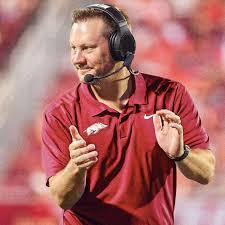
Ryan Silverfield ’03 has been named head football coach at the University of Arkansas. Silverfield spent six seasons as head coach at University of Memphis, “going 50-25, including a pair of 10+ win seasons in 2023 and 2024, while earning bowl eligibility in all six years,” reported the November 30, 2025, University of Arkansas announcement.
H-SC Trustee Michael P. Kehoe ’88 assumed the title of president of Kinsale Capital Group in March 2026. Michael also serves as Kinsale’s chairman of the board and CEO.
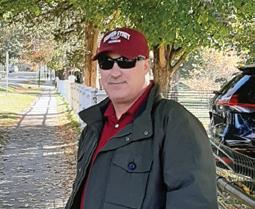
Douglas A. Spitalny ’88 has retired after a 32-year career as an Army podiatrist. Doug and his wife, Susan, moved from Ft. Leonard Wood, Missouri, back home to Peoria, Illinois, where Doug has started a new career as a financial advisor with Prudential Investments.

James Feliciano ’91 has been named venture partner with Saisei Ventures, a life science Venture Capital firm based in Japan, per a September 15, 2025, Business Wire article. He has worked as a pharmaceutical executive in Japan for over 20 years.
Carter McEntire ’92 has been named chair of the board for Center for Produce Safety per a September 12, 2025, article on The Packer. He is vice president of foodservice sales at Fresh Express.
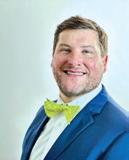
Demas Boudreaux ’02 has been named vice president for government relations and policy at ChamberRVA, the Greater Richmond Regional Chamber of Commerce, which champions regional economic growth and business interests for its over 650 members. Demas will represent the chamber before the Virginia congressional delegation, General Assembly, and executive branch, along with regional governing bodies.
Stuart P. Winston ’03 has been promoted to executive vice president and chief underwriting officer in the insurance division of Kinsale Capital Group.
Rob Luther ’03 was appointed to the Mount Vernon Board of Visitors by former Virginia Governor Glenn Youngkin.
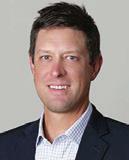
Matt Tedder ’05 has joined Pomerleau Real Estate in Burlington, Vermont, as principal broker, reported a December 11, 2025, Vermont Biz article.
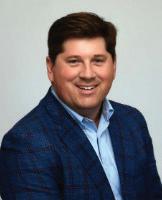
Mark Eason ’08 has joined KS Bank, Inc. as senior vice president and commercial relationship manager in Dunn, North Carolina, reported a September 10, 2025, article in the Greater Fayetteville Business Journal

Ryan C. Samuel ’09 was appointed county attorney for the Arlington County government, reported a December 2, 2025, Arlington County release. Ryan joined the Arlington County Attorney’s Office in 2018 and has served as deputy county attorney since January 2022.
Jack Savarese ’13 has joined Brown Brothers Harriman as vice president in the corporate advisory and banking group in Nashville, Tennessee, per an October 24, 2025, Nashville Business Journal article.
John P. Pittman II ’20 has joined Kaufman & Canoles as an associate in the commercial practice group at the Franklin, Virginia, office, per an October 2025 news release.
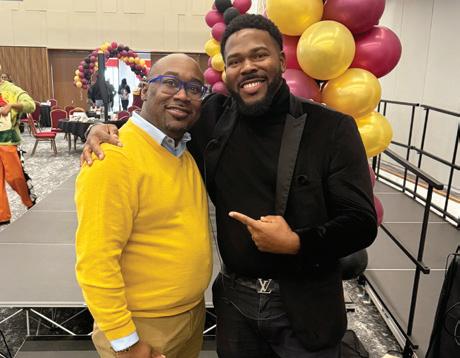
Hakeem Croom ’10 co-created and hosted the inaugural Young King Conference on November 21, 2025, at the Victor Valley College Event Center in Victorville, California. The event brought together 150 high schoolaged young men from Victor Valley, Adelanto, and Silverado high schools to explore the theme “Awaken the King Within: Walking in Purpose and Standing in Power.” Patrick Gipson ’05 served as a panelist for the "Manhood, Money & Mission” discussion, that focused on providing insight and strategies on developing positive and authentic manhood, developing mindset and skillsets to secure lucrative and rewarding careers, and discovering and fulfilling one’s mission in life.

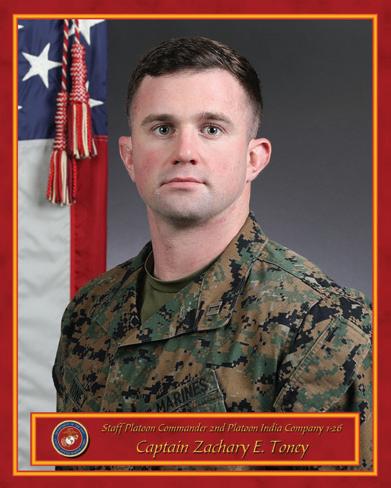
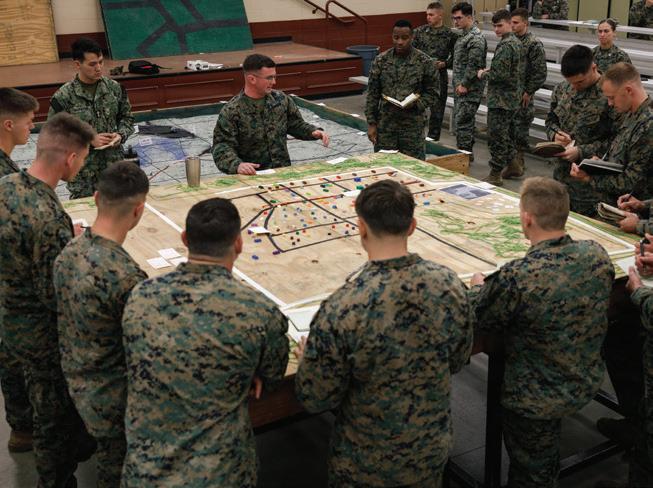
Capt. Zachary Toney ’20, a staff platoon commander and infantry officer with The Basic School (TBS), trains newly commissioned Marine officers before they head to the fleet. It’s a role he actively sought and one that carries unusual weight for a young captain. “Each of these lieutenants will directly impact the Marines they go on to lead. At TBS, we’re shaping the future of the Marine Corps,” Toney says.
It’s a big responsibility, but Toney says it is his most rewarding role yet and one that gives as much as it requires. “My lieutenants are very smart and very capable,” he says proudly. “I have to know the material well beyond what I ever thought I would need. Knowing that I’m also influencing their leadership style, I am very
deliberate in everything that I do and try to set the best example possible.”
Though Toney’s major in philosophy, along with minors in rhetoric and classical studies, may not seem the most obvious preparation for a Marine officer, he credits those disciplines with shaping the habits of mind he depends on every day. “There’s rarely a perfect solution,” he says. “It’s about weighing all options based on available information and context, choosing the best course of action, and communicating the plan effectively.” He trains lieutenants to do just that but in an environment defined by compressed timelines with unknown variables and real consequences.
Lieutenants at The Basic School are trained as
provisional rifle platoon commanders, regardless of their future specialties. Toney’s job is more than evaluating tactical skills; he also assesses character. Written exams and physical tests matter, but so do communication, command presence, and integrity. “You can be great at the technical components of the job,” Toney says, “but being a good person who cares about your Marines is just as important.”
This ethos is what he hopes the lieutenants he instructs carry with them and what he issues as his final, simple charge before they leave his tutelage: “It’s not about you. All of this training is really for the Marines you will lead when you leave here. Go forth and lead.”
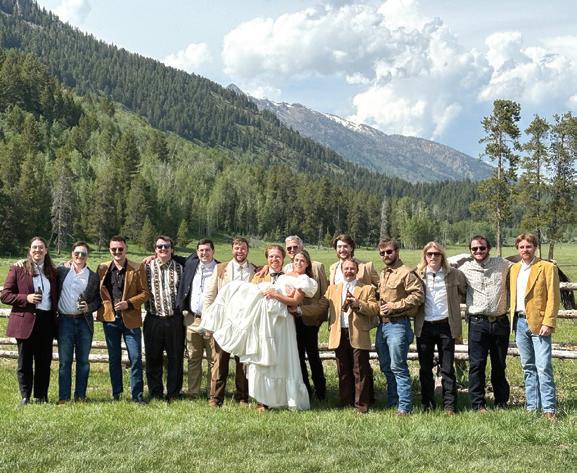
Breeden-Tillman Wedding
Gray Breeden ’21 married Kristen Tillman on June 15, 2025, in Jackson, Wyoming. The bride is a 2021 graduate of Longwood University and runs Tillylaine Vintage. The groom is a financial advisor with Elevate Financial Group. The couple resides in Richmond, Virginia. Tigers in attendance (l to r): Jared Dunlap ’20, Kyle Shank ’20, Finley Sirieys ’21, Brahm Dean ’21, Chris Thompson ’21, Scotty Bowman ’21, Eddie Breeden ’83, Elias Breeden ’26, Brennan Vaught ’21, Danny Parrish (brother of Spencer Parrish ’21), Bryson Smith ’24, Alex Dent ’21, and Tom Kinter ’23
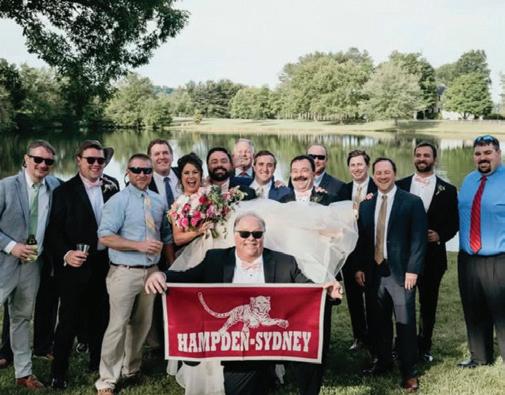
Rhea-MacRae Wedding
Gabriel Rhea ’14 married Rachel MacRae on June 1, 2024, at Blue Ridge School. The bride, a domestic engineer, is a graduate of North Carolina State University. The groom is senior project manager and owner’s representative for Suburban Capital and former chairman of the board of Habitat for Humanity Young Professionals of Hampton Roads. The couple resides in Virginia Beach, Virginia. Tigers in attendance included Tyler Ritter ’14, Craige Sprouse ’15, Carter Guice ’14, Turner Whitworth ’14, Charlie Macsherry ’13, Alex Soulas ’14, Seth Otey ’08, Ballard Payne ’09, Dickie Bragg ’89, Mike Rhea ’81, Danny Husky ’81, and Pete Atkinson ’00
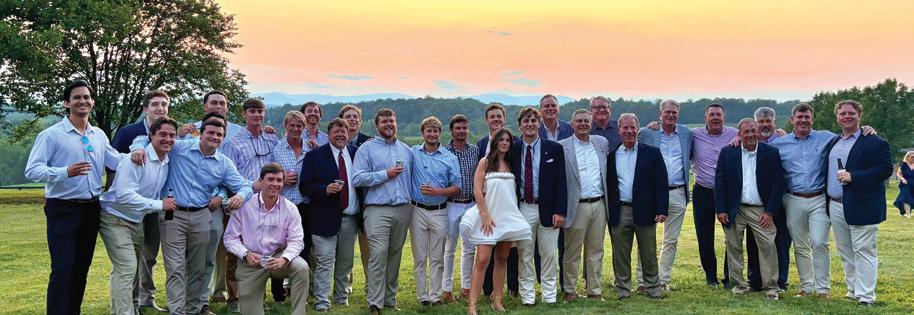
Butler-Dunn Wedding
Tillman Butler ’24 married Ellie S. Dunn on August 15, 2025, at Highland Ridge in Culpeper, Virginia. Tillman is a commercial insurance agent, and Ellie is a hairdresser. The couple resides in Culpeper, Virginia. Tigers in attendance: Trent Jones ’24, Robby Tew ’22, John Mill ’24, Nate DeFazio ’24, Kieran Conway ’22, Mark Hines ’24, Matt Osborn ’24, Noel Stock ’24, Jaxson Masterson ’25, Bennett Lloyd ’24, Tom Gates ’88, Aiden Williams ’24, TJ Gates ’24, Ryan Portes ’24, Drew Osborn ’24, Kevin Gholson ’24, Tillman Butler ’24, Pat Mulquin ’91, Tripp Butler ’91, Cabell Fooshé ’92, Camp Sommardahl ’91, Bryan Burcher ’91, Brad Pomeroy ’92, Chris Haddock ’93, Greg Hatfield ’93, Dwayne Bowyer ’92, Chip Darden ’24.
Rarefied air holds dual meaning for Juris Simanis ’91, who was among the first five people in the world to earn the distinction of being a Wilderness Medical Society (WMS) Triple Crown recipient, an achievement that required training at 10,000 feet.
The WMS Triple Crown requires completion of the Diploma in Mountain Medicine, the Diploma in Dive and Marine Medicine, and a Fellowship in the Wilderness Medical Society. The achievement places him among a small, deeply trained group of physicians who practice at the intersection of medicine, environment, and human endurance. There’s a reason so few practitioners have achieved this recognition. It takes years to acquire the necessary skills and training. Simanis began training in 2017 and was
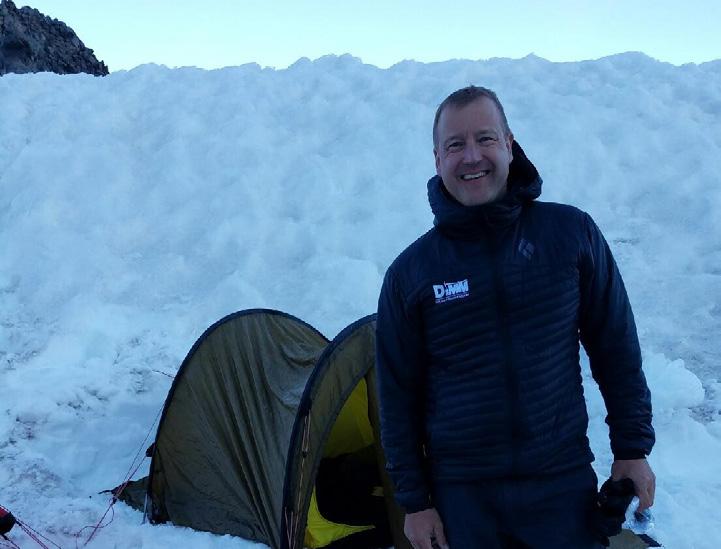
officially recognized with the inaugural group of recipients in 2023.
“Wilderness can mean any place that is uninhabited, remote, or inhospitable,” Simanis explains. “Mountains, oceans, and caves are obvious examples, but disaster zones in a big city can also count. Wilderness in this context is really anywhere you don’t have the controlled environment of a hospital or access to necessary resources.”
The Triple Crown is intentionally immersive, blending national conferences, lectures, and demanding field sessions. For the mountain diploma, Simanis trained in high-angle rescue in Utah and summited Washington State’s Mount Rainier with a 60-pound pack, spending days practicing crevasse rescue and cold-weather medicine.
For the marine diploma, he completed advanced dive medicine coursework and a liveaboard expedition in the British Virgin Islands, studying hyperbaric injuries and marine hazards in real time.
“The physicality was the hardest part,” he says, noting that his descent of Rainier aggravated the knee that would later require replacement surgery. “I remember getting to the bottom and just feeling grateful I made it.”
A former EMT at HampdenSydney, Simanis traces his interest in field care to his undergraduate years, when a marine biology course in Jamaica sparked a lifelong love of diving. Raised in Virginia's Allegheny Mountains, Simanis grew up hiking, fishing, and hunting—activities that were less hobbies and more a way of life.
In remote settings, intuition and preparation must work together. “If you’ve never seen it, you can’t diagnose it,” he says. Training expands that mental database. Whether recognizing heat illness on a dive boat or spotting dangerous overhydration at the finish line of an endurance race, catching subtle warning signs often prevents the dramatic emergency.
A sports medicine physician with two public health degrees and Peace Corps experience, Simanis sees wilderness medicine as an extension of a broader philosophy: stay curious, stay humble, and stay open. “You have to be comfortable being uncomfortable,” he says. “The more you’re exposed to, the better you understand people—and the better physician you become.”
February 16, 2026
Hampden-Sydney has been named as the long-term host for Boys State of Virginia, a leadership action program, designed to develop a working knowledge of the structure of government sponsored by The American Legion. The 83rd session was held on the Hill from June 20–27, 2026.
December 2, 2025
Hampden-Sydney College announced a partnership with Old Dominion University (ODU), creating a streamlined pathway for students pursuing careers in the medical and health sciences fields.
November 17, 2025
History and marksmanship converged on Friday, November 7, as Hampden-Sydney College officially dedicated its new Shooting Sports Academy, located at historic Slate Hill, with a ribbon-cutting ceremony.
November 17, 2025
Hampden-Sydney College announced Interim Vice President for Enrollment and Dean of Admission
Chrystal N. Russell as the College’s permanent vice president for enrollment.
October 29, 2025
A partnership between the Ferguson Career Center and Kaplan provides all students and alumni with free access to graduate school and industryspecific exam preparation tools and professional development courses.

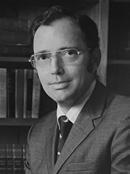
Dr. Fred True Given Jr. ’49 died on October 29, 2025. At HampdenSydney, he was a member of Sigma Chi fraternity and graduated magna cum laude. He served in the U.S. Navy as a hospital corpsman from 1945 through 1947. He re-enlisted in the active Naval Reserve in 1962 and served as the medical officer for the USMC Reserve Unit in Norfolk, Virginia, until 1970. He attended Medical College of Virginia, receiving his medical degree in 1953. His post-graduate education was done at the University Hospital in Augusta, Georgia; Johns Hopkins Hospital; and Louisiana State University Medical School/Charity Hospital, where he was a teaching fellow and gynecological cancer resident. Fred began working in Norfolk in 1958, later establishing a practice that became Tidewater Physicians for Women. He was board certified in obstetrics and gynecology. In 1976 he was one of the first doctors approved in Hampton Roads in the new sub-specialty of gynecological oncology. He was the chairman of the ob-gyn department at DePaul Hospital and served a term as president of the medical staff. The founding of Eastern Virginia Medical School allowed him to become more active in the teaching of interns, residents, and medical students. He was the first director of gyn oncology in the department of obstetrics and gynecology and retired as professor emeritus in 1995. Fred served as president of the Virginia Ob-Gyn, South Atlantic Association of Ob-Gyn, and Medical College of Virginia Alumni Association.
Retirement allowed Fred more time to travel and enjoy his hobbies of golf, tennis and playing in the sax section of big dance bands. He will be remembered for his good advice, sense of humor, colorful clothes, love of jazz and New Orleans cuisine, and determination to play golf for his 90th birthday. Fred is survived by his wife of 72 years, Jane; four children— Robert Given ’84; 12 grandchildren; and one great-grandson.
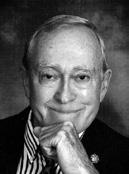
Harry Taylor Bridges ’50 died on October 1, 2025. At HampdenSydney, Harry was on the Garnet staff and a brother of Sigma Chi before earning his Bachelor of Science in foreign service from Georgetown University’s School of Foreign Service. He pursued additional studies at the College of William & Mary, George Washington University, and the Catholic University, where he completed coursework in geography. During his academic years, Harry distinguished himself through leadership and scholarship. He served as editor or associate editor for several school and fraternity publications and as president of Delta Phi Epsilon foreign service fraternity and Gamma Rho Sigma geographical research fraternity. He was active in the Sigma Chi social fraternity and the Sigma Upsilon honorary literary fraternity and participated in track, cross country, and the Glee Club. Harry began his professional career with the Hampton Roads Maritime Association. From 1952 to 1954, he proudly served in the U.S. Army Transportation Corps, stationed in Goose Bay,
Labrador. After his military service, he worked as a life insurance salesman with the Mutual Benefit Life Insurance Company in Norfolk, Virginia, and he later joined IBM as an instructor and systems engineer. Harry retired from the Federal Highway Administration, where he served for almost 20 years as an environmental engineer and geographer. Harry served as president of the YMCA’s Men’s Club and deacon at Providence Presbyterian Church, volunteered for Meals on Wheels, and was honored for serving over 20 years as an election officer for Fairfax County. An avid outdoorsman, athlete, and conservationist, Harry was a level walker for the C&O Canal Association and belonged to numerous environmental organizations, including the Potomac Appalachian Trail Club, Sierra Club, and the Northern Virginia Conservation Council. Harry’s love of travel took him to 99 countries across the globe, with highlights including hiking the Grand Canyon from rim to rim in one day, climbing Mt Kilimanjaro, and seeing the pyramids of Egypt at age 89. Harry is survived by two nephews.
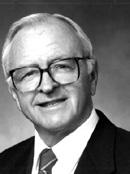
Charles Weston Smith Jr. ’51 died on December 26, 2025. Charles proudly served his country as a member of the United States Navy during World War II, enlisting on October 16, 1944, and receiving an honorable discharge on June 19, 1946, achieving the rank of seaman second class. Professionally, Charles made his mark in the real estate industry, diligently working as a broker at Chewing and Smith Realtors,
Charles W. Smith Realtors, and ultimately at Pollard & Bagby Realtors. He was a cherished member of the Downtown Club, Hermitage Country Club, and Westwood Club. Charles's warmth and his innate ability to connect with people earned him many friendships. Having fallen in love with skiing on his honeymoon, he continued to ski well into his 90s, a testament to his spirited nature and zest for life. Charles is survived by two daughters.
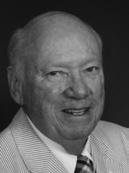
John Parker Maragon ’52 died on September 17, 2025. In 1951 he enlisted in the U.S. Air Force and served two-and-a-half years during the Korean War. He then returned to HampdenSydney, where he was a brother of Pi Kappa Alpha and earned a Bachelor of Arts in 1956. He then enjoyed a successful career in commercial real estate, which spanned over 40 years. John was an avid tennis player and founder of Cape Henry Raquet Club and a member of the American Legion. A lover of jazz music, John could be spotted driving around town in his orange 1964 ½ Ford Mustang blaring Frank Sinatra and Benny Goodman. John is survived by his wife of more than 30 years, Judy; one daughter; and two grandchildren.
William Coulter Wanbaugh Jr. ’52 died on October 24, 2025. William attended HampdenSydney College— where he was a member of Lambda Chi Alpha and the
Tiger staff—Massachusetts Institute of Technology, and the University of Maryland and graduated with a Bachelor of Science degree in electrical engineering. He later received a master’s degree in engineering administration from George Washington University. As an electrical engineer, William was involved in telecommunications systems for companies including the National Bureau of Standards, RCA, Bendix Engineering, Illinois Institute of Technology, Vitro Laboratories, and National Scientific Laboratories. He worked on the defense early warning system in Point Barrow, Alaska, in the mid-1950s, and the POSEIDON and BOMARC missile systems in the 1960s. William enjoyed solving problems and fixing things and was an avid “Do it Yourselfer.” He also enjoyed amateur radio, golfing, boating and sailing. He is survived by two children, five stepchildren, and 16 grandchildren.
George Edward Bahen Jr. ’53 died on September 19, 2025. At H-SC, George was a Kappa Sigma brother and a member of the Tiger staff and the track team. After graduating, George was stationed in Ulm, Germany, in the U.S. Army and then attended the University of Maryland School of Law. After returning to Salisbury, Maryland, he practiced law alongside his lifelong friend Hobert B. Hughes and others until his retirement. George found joy in time with his sons, in duck shanties with gunning pals, raising bird dogs, quail hunting, waterfowl shooting, offshore sailing, and spending
time in France. George is survived by three sons and four grandchildren.
Thomas H. Scales, Jr. ’58 died on September 20, 2025. At HampdenSydney, Tommy was a member of the
Kaleidescope staff and Sigma Chi. After graduating with a Bachelor of Science degree, he achieved success in the insurance business as a broker and owner/agent. An active parishioner of St. Stephen’s Church, Tommy served on the pastoral care committee as a eucharistic visitor. An avid golfer, he was a lifelong member of the Country Club of Virginia. Tommy is survived by his wife, Frances; one child; and eight grandchildren.
Dr. John Neville Ralsten ’59 died on December 6, 2025. At Hampden-Sydney College, John was a Pi Kappa Alpha brother and a member of the football and track teams. After graduating, he attended medical school at West Virginia University and completed his residency at Duke University. An Army veteran, John began his career in radiology at Walter Reed Army Medical Center. He later relocated his family to Vienna, West Virginia, where he continued his medical career until his retirement. John enjoyed skiing, vintage car racing, and above all, spending time with his family. John is survived by four children, eight grandchildren, and two great-grandchildren.
Fred “Skip” Warren ’59 died on September 22, 2025. At HampdenSydney, Skip was a proud member of Chi Phi fraternity. Skip began his career at GE and IBM before serving in roles at SEC Corp, Chase Rosen, and Wallace in Alexandria (CIA), and ultimately as a management consultant with Quisenberry and Warren. A passionate sports fan, Skip loved cheering for the Boston Celtics and the Washington Redskins and playing tennis, golf, and ping pong. Skip volunteered with the Kiwanis Club of Richmond, where he served as president of the Capital Club from 2007 to 2008. He cherished his time with the Wednesday Lunch Club group. Skip is survived by two daughters and four grandchildren.
Dr. Joseph C. Hillier ’60 died on October 20, 2025. A proud graduate of HampdenSydney College, Joe was a Pi Kappa Alpha brother and member of the Tiger football team. He often credited his alma mater for shaping his values, saying simply, "I am what I am." After graduating from the Medical College of Virginia School of Dentistry, Joe began his career serving in the U.S. Navy at the Norfolk Naval Air Station before establishing a family dental practice in Chester, Virginia, that spanned over 55 years. A visionary community leader, he helped found both the Chester Jaycees and the Kiwanis Club of Chester, served as the 1985–86 governor of the Capital District
for Kiwanis International, and played a key role in local infrastructure improvements, such as the Route 10 expansion. His vision helped shape Chester’s community spaces, including the creation of The Village Green and the Chester YMCA, where he served on the board of directors for nearly 20 years. Joe also enjoyed running a family plant nursery and sheep farming. Joe is survived by his wife of 59 years, Susanne; four daughters; and four grandchildren.
Dr. George P. Hunter Jr. ’60 died on October 6, 2025. At HampdenSydney, George was a member of the Glee Club, the Union-Philanthropic Literary Society, the Tiger staff, and Theta Chi fraternity. George was one of the kindest men that we have ever had the pleasure to know and his passing will leave a large hole in many lives. He spent his early adult years with the FAA after graduating from Hampden-Sydney College. After taking an early retirement, he found his true calling as a caring and effective counselor for people with mental health issues.
Garnett F. Smith ’60 died on July 24, 2025. At Hampden-Sydney, Garnett was a member of the Tiger staff and the Jongleurs and a brother of Theta Chi. Garnett was a cherished member of the Dezart Playhouse family, appearing in several productions, including Exquisite Potential, Casa Valentina, and many play reading series performances. Garnett brought warmth, intelligence, and quiet strength to every role he played. He
was a kind and gentle soul— thoughtful, generous, and deeply committed to his craft and community. His presence backstage was as calming and supportive as it was inspiring onstage. Garnett leaves behind a legacy of grace, talent, and friendship that touched everyone who had the pleasure of working with him.
Louis McLane "Mike" Fisher Jr. ’61 died on Saturday, December 13, 2025. A brother of Chi Phi at HampdenSydney, Mike earned additional degrees from the University of Virginia and University of Oregon. Most of his career was spent as chief financial officer of CH2M-Hill, International Engineering Company. After retiring from CH2M, Mike served on the boards of several engineering companies, and formed his own consulting company, Quaere. Mike was a lover of nature, a bird hunter, and an accomplished fly fisherman, especially on the Big Horn River in Montana and the Deschutes and Metolious rivers in Oregon. He was also crazy about lacrosse and played into his 70s. He was very proud of his championship medal from the World Games in Perth, Australia, in 2002. His love of the arts was apparent in his large collection of paintings and bronze sculptures. He was a big fan of John Denver and used to sing and play his songs on his guitar. Mike is survived by his wife of 49 years, Sue; one daughter; three sons; one stepdaughter; 13 grandchildren; and four great-grandchildren.
Garland W. Flournoy ’62 died on October 12, 2025. At HampdenSydney, Garland was on the staff of the Tiger and the Hampden-Sydney magazine. After graduating, Garland founded an insurance company in 1980, was a devoted member of the Rotary Club, and was a cherished member of many faith communities. Garland had a deep and abiding faith in God and lived each day with a profound sense of appreciation for the extraordinary blessings of life. Garland was a brave adventurer, a passionate sailor, and a devoted family man who would move mountains to care for his family. His faith, gratitude, steadfastness, and love were truly extraordinary. Garland is survived by his beloved wife, Dianne; two children; and two grandchildren.
Former H-SC Trustee Joseph F. Viar Jr. ’63 died on November 4, 2025. He cherished his time at HampdenSydney as one of the most memorable of his life, forging lifelong friendships. He served on the College’s Board of Trustees for many years. His service to the College was honored with the naming of the Viar-Christ Center for the Arts. A titan in the technology sector, Joe was a visionary leader during the rise of information technology in the business world. He served as CEO of Viar & Company in Alexandria, Virginia, for 17 years. Under his leadership, the company built information systems for
notable clients including the State of Virginia, INS, and EPA. Joe then embarked on an active retirement filled with travel, fishing, and philanthropy. A dedicated supporter of his community, Joe served as the chairman of the foundation board for Inova Alexandria Hospital. His passions extended beyond business and travel, embracing family, friends, and causes close to his heart. Joe was loved by all who met him—kind, strong, giving, and a true Southern gentleman. His warmth, generosity, and spirit will be dearly missed. Joe is survived by his partner of 35 years, Bonnie Christ; two daughters; and two grandchildren.
Daniel Walter Hancock ’65 died on September 27, 2025. Dan attended HampdenSydney College prior to serving as a medic in the U.S. Army. He then completed his education at the Medical College of Virginia and became a registered pharmacist. Dan was a long-time resident of Mecklenburg County, Virginia, serving as a community pharmacist at O'Briens (later People's) Drugstore in Chase City and Montgomery Drug in South Hill. He was a member of Centenary United Methodist Church of Chase City and South Hill United Methodist Church before relocating to North Carolina and joining Union Chapel Baptist Church in Clarksville, Virginia, where he served as a deacon. Dan is survived by his children and two grandchildren.
Morgan Elbertus “Bert” Turner Jr. ’65 died on November 18, 2025. After briefly attending HampdenSydney College, where he was a Lambda Chi Alpha brother, Bert took a job managing the Greenland Farm and Orchard. He later continued his studies at Longwood University, Virginia Commonwealth University, and Southside Virginia Community College. In the 1970s, Bert became the manager at Sunny Slope Orchard in Burkeville, Virginia, where he remained for 40 years. Bert was always interested in agriculture, growing pumpkins, peaches, apples, and other crops. He was a man of toil and a man of the soil, doing what he loved, tending God’s creations. He was a man of great faith, reading his Bible and devotions daily and kneeling each night to pray. Bert is survived by his daughter and two grandchildren.
Former H-SC Trustee Henry Powell Custis Jr. ’67 died on October 24, 2025. At HampdenSydney, he was a member of Theta Chi fraternity, serving as president during his senior year. His alma mater, and the friends made there, were an important part of his life. Henry began practicing law in 1970 with the firm of Ayres & Hartnett, before then partnering with friends to establish Tyler, Custis, Lewis & Dix. Over the next 50 years, he built a respected legal career that was one of his greatest joys. Henry was an active member of the Virginia
State Bar (VSB) and participated on numerous committees. In 2000 he was named a fellow of the Virginia Law Foundation. In 2023 he received the Tradition of Excellence Award from the VSB, honoring his lifelong commitment to the faithful practice of law. Henry was a lifelong member of Holy Trinity Episcopal Church, served as president of the Accomack County chapters of the American Cancer Society and the American Heart Association, served as chairman of the board for Shore Bank and the Bank of Hampton Roads, and was particularly proud of his role as a charter board member of the Eastern Shore Community Foundation. Henry held board positions with Shore Memorial Hospital, the Eastern Shore Historical Society, the Eastern Shore Yacht and Country Club, the Eastern Shore YMCA, and Broadwater Academy. Beyond the Shore, Henry served on the boards of trustees for Hampden-Sydney College and St. Timothy’s School. Henry is survived by his wife of 57 years, Linda; two daughters; and three grandchildren.
Roy Edward Robinson ’67 died on December 20, 2025. At HampdenSydney, Roy was on the Tiger staff and a brother of Phi Gamma Delta. Roy spoke German and French, traveled internationally, and was an avid reader. Roy spent time in the teaching field before settling into a career that brought him great enjoyment at The Sea Vacationer Virginia Beach, Virginia. He spent the later part of his career working for Tidewater AAA. Roy is survived by his beloved extended family.
Ernest Maurice "Doc" Frank Jr. ’68 died on October 29, 2025. Raised in Colonial Williamsburg, where his passion for history was cultivated, Doc went on to graduate from Hampden-Sydney with a Bachelor of Arts in history. While at Hampden-Sydney, Doc was a member of the football and wrestling teams and a brother of Pi Kappa Alpha. Doc spent his professional life as an educator and then a computer systems engineer for the State of Virginia. During his retirement Doc enjoyed being outside, hunting with friends, and living on the Rappahannock River, where he spent most days caring for his beautiful yard and sitting in his wife’s garden. Doc is survived by two children and six grandchildren.
Arthur George Costan III ’69 died on November 27, 2025. Art attended HampdenSydney College, where he was a member of Phi Gamma Delta fraternity before graduating with a degree in history. Subsequently, Art joined the U.S. Army and served tours in Korea and Germany. Art’s lifelong passion for American history, especially the Civil War, led him to earn his Master of Arts in history at Virginia Tech in 1974. Although he considered a career in teaching history, Art chose instead to work for his father at Colonial Hills Golf Course, becoming the owner of the course in 1980 and continuing the legacy begun by his father of providing "an
affordable golf course, open to all." Art was an accomplished landscape artist, donating proceeds from the sale of his paintings to charity, and a voracious reader, with a keen interest in national affairs and the history of Christianity. He regularly volunteered with Habitat for Humanity and on the board of the YMCA. A life-long and active member of St. Paul’s Episcopal Church, Art was less concerned about church doctrine than he was the moral teachings of Jesus, taking the view that what people do with their lives matters more than what they believe. Art is survived by his son, Marshall.
as the hospital chapel itself, in his honor. During retirement, Scott derived great satisfaction in donating his time and talent with groups like Bridge Builders Racial Reconciliation Partnership, Bluffton-Jasper Volunteers in Medicine, and Nourish Up. Scott is survived by his wife, Scottie; three children; and seven grandchildren.

David Scott Lindsay ’70 died on December 15, 2025. After HampdenSydney College, where he was a member of
Pi Kappa Alpha fraternity, Scott attended Union Theological Seminary in Richmond, Virginia, and became an ordained minister within the Presbyterian Church (USA). After serving as an associate pastor at First Presbyterian Church in Charlotte, North Carolina, and pastor of the Little Chapel on the Boardwalk in Wrightsville Beach, North Carolina, Scott was called to serve as the chaplain at Presbyterian Hospital (now Novant), where he experienced a multi-decade pastoral career helping and caring for thousands of people in this vital role. For someone so incredibly witty and often quite chatty, it was in acts of service where Scott’s love for others showed up most naturally. In honoring him for his tireless, compassionate care for others, Presbyterian Hospital renamed an employee scholarship, as well
Marion Wallace “Si” McCurdy Jr. ’70 died on October 27, 2025. Si’s passion for history, the arts, and the classics led him to Hampden-Sydney College. After earning his Bachelor of Arts, Si returned home and worked a summer job as a train order operator for the Southern Pacific Railroad. This experience echoed his childhood fascination with trains. Si’s dedication to education led him to earn a Master of Arts from the University of Texas at Austin in 1971, with plans to become a teacher. However, he was drafted into military service in 1971 during the Vietnam War. He chose to serve his country by enlisting in the U.S. Air Force and attending Officer Training School at Lackland Air Force Base in San Antonio, Texas, putting his teaching aspirations on hold. Si retired as a lieutenant colonel in 1993 and dedicated himself to teaching. As dean and middle school teacher at St. Anthony Catholic School in San Antonio, he shared his love of history, Latin, mythology, and etymology, and broadened his students’ horizons by introducing them to big band, jazz, and classical music. Si is survived by his wife of nearly 54 years, Laurel; four children; and five grandchildren.
Steven William Pearson ’72 died on November 27, 2025. A member of Sigma Alpha Epsilon fraternity and Circle K at Hampden-Sydney, Steve went on to earn a Juris Doctorate from the University of Virginia School of Law. After practicing law in the private sector, specializing in government relations, legislative law, and administrative law, Steve developed a reputation for integrity and advocacy. Once he started his own firm to pursue his passion for lobbying, his decades of impactful success demonstrated how well that career suited him. The most exciting time of the year for Steve was when the Virginia General Assembly was in session. Steve was widely respected by both sides of the aisle for his sharp legal mind, candid counsel, and unwavering dedication to his clients and community. In recent years, Steve enjoyed spending time in the Outer Banks, hiking, traveling, and “training” his puppy, Paddy. Steve is survived by his wife, Heidi; one son; and three stepdaughters.
Louis Stephens Waldrop Jr. ’74 died on December 31, 2025. A proud graduate of Hampden Sydney College, Steve was a member of Sigma Nu fraternity. After college, he was vice president of Waldrop Realty, serving as an appraiser with a very high designation, CCIM, which was difficult to obtain. He was the owner and president of Waldrop Appraisers, a company that specialized in commercial real estate. Steve was an active member of the Kiwanis Club, a driver for Meals on
Wheels, and fostered puppies through the SPCA until they could be adopted. Steve is survived by two children and five grandchildren. He was predeceased by his son, Adam Waldrop ’06

Lee Fowler Brooks ’75 died on December 8, 2025. Lee earned a Bachelor of Arts in psychology from HampdenSydney College, where he was a member of Sigma Nu Fraternity and made many life-long friends. Lee continued to be involved with his alma mater, including serving on the alumni board of directors and as an alumni career mentor. Lee was an accomplished private wealth advisor for 36 years at his firm, Brooks Financial Group, retiring from The Myrias Group/Ameriprise in early 2025. Lee was a longtime member of the Roanoke Jaycees, serving as president from 1986 to 1987. He was also actively involved in Camp Jaycees for many years, receiving multiple state and national awards for his vision and commitment to the local chapter, including the Sidney D. Peck Award for his leadership within the organization. Lee took great pride in coaching in the local youth soccer league and enjoyed adopting and volunteering with the Roanoke SPCA and Star City TNR & Rescue. Lee was a member of the Certified Financial Planner Board of Standards, Financial Planning Association, Partnership for Philanthropic Planning of the Blue Ridge, and the Roanoke Regional Chamber of Commerce, where he served as a board member. Lee is survived by his wife, Emily.
Alexander L. Franklin II ’75 died on September 22, 2025. A brother of Sigma Alpha Epsilon, Alex graduated from Hampden-Sydney College with a Bachelor of Arts in economics, after which he spent a summer in France working at Automobiles Peugeot, where he honed his 10 years of French study. After several years in real estate and banking, he moved to Charleston, West Virginia, where he continued his banking career. In 1988, Alex purchased a gift shop and transformed it into Alex Franklin Ltd. In retirement, he completed all three postgraduate study sessions of the Summer Institute at The Museum of Early Southern Decorative Arts in WinstonSalem, North Carolina. Alex was a board member of Craik-Patton, Inc., the CraikPatton Foundation, the University of Charleston Builders Club, Coonskin Park Trust Foundation, and the Huntington Museum of Art; an advisory board member of the Museum of Early Southern Decorative Arts; and on the Connoisseur Council of the Charleston, South Carolina, Preservation Society Symposium. He was appointed to the West Virginia Governor’s Mansion Preservation Society and the City of Charleston’s Municipal Beautification Committee. Alex served as a past president of the Collectors Club of the Avampato Art Museum at the Clay Center and the Charleston Cosmos Club. He was a member of the Rotary Club of Charleston, SAE Fraternity, The Clay Center, Greensboro Historical
Museum, Hampden-Sydney Alumni Association, Charleston Preservation Society, Decorative Arts Trust, Museum of Early Southern Decorative Arts, Virginia Museum of Fine Arts, The Metropolitan Museum, Winterthur Museum, and Colonial Williamsburg Foundation. Alex was a parishioner and vestry member of Saint Matthews Episcopal Church. Those who knew Alex remember him as the embodiment of grace and gentility. Alex is survived by his wife of almost 18 years, Ann; and two children.
Robert Anthony Benvissuto Jr. ’82 died on September 14, 2025. After earning his Bachelor of Arts degree from H-SC, where he was a Sigma Nu brother, Robert served with distinction as a captain in the United States Army Signal Corps from 1982 to 1988 and was awarded two Army Commendation Medals and two Overseas Service Ribbons in recognition of his exemplary performance and commitment to duty. Robert’s academic and military foundation laid the groundwork for a successful professional career in the states of Washington, California, and New Jersey. Robert’s interests were as varied as they were passionate. He was an avid Kumdo practitioner, a Korean martial art known as "the way of the sword" and enjoyed photography and collectables. Those closest to Robert knew him as a profound thinker with a sharp wit and enduring sense of humor. Those qualities led him into a short foray of stand-up comedy. Robert is survived by his three daughters.
Bradford R. Smith ’85 died on September 23, 2025. Brad was a member of the Sigma Chi fraternity while at HampdenSydney, and he treasured the bonds of brotherhood greatly. They remained a support network for him throughout his life. After graduating, Brad relocated to Richmond, Virginia, worked in banking, and grew a life filled with friendships and memories. A lifelong admirer of the built world, Brad’s love for architecture and design was a foundation of his life and a subject he spent his free time researching and reading about. Brad’s study of architecture was rooted in his fascination with churches and cathedrals not only because of the physical structures that mattered but also because of the spirit and the meaning they embodied. During his time in Richmond, he was an active member of several congregations, and in his final years, he found his spiritual home at St. James’s Episcopal Church. Brad is survived by his sister and her family.
Stockton Tyler Watson Sr. ’90 died on May 28, 2025. At Hampden-Sydney, Stock was a member of the HampdenSydney Lacrosse team, serving as captain his senior year. Stock had many passions in his life: music, sports, film, and politics. He even took up broadcasting Norfolk Academy and HampdenSydney lacrosse games with his good friend, coach, and mentor Tom Duquette. However, his greatest love was for his family and friends. He loved them all and always took great pride in each of their accomplishments. Stock is survived by three children

Donald “Charlie” Laing IV ’91 died on September 19, 2025. A brother of Sigma Nu, Charlie attended HampdenSydney College and then received his MBA at Columbia University. Charlie was extremely funny and a legendary jokester and impressionist—donning the voices of Donald Duck and Kermit the Frog with uncanny accuracy. He truly loved tennis, and in his prime, he was a top-100 nationally ranked player. In the '90s, he played with one of the greatest tennis players of all time, Ivan Lendl, when Charlie assisted him with running a tennis camp. He would surprise everyone with his amazing muscle memory of the game much later. Charlie is survived by his wife of 28 years, Brigitte; and two children.
Charles Daly Ryder Jr. ’95 died on November 26, 2025. He attended the University of Texas and HampdenSydney College before finishing his education at The University of Dallas. Charles loved his family, fishing at Coon Creek, playing video games, Dr. Pepper, Thursday date nights, his dogs, the Dallas Cowboys, his friends, and beautiful sunsets on the lake. Every holiday meal included prayers for our veterans and the Dallas Cowboys. He was a member of Dallas Country Club, Idlewild Club, Dallas Gun Club, and Coon Creek Club. Charles is survived by his devoted wife of 24 years, Kristi Lane, and two children.
Brendan Matthew O’Connell ’98 died on September 17, 2025. He received his undergraduate degree from HampdenSydney College and went on to graduate from the University of Baltimore School of Law. Brendan’s many talents allowed him rich professional experiences in fields ranging from hospitality to finance, and most recently, in real estate and property management. Brendan was an accomplished lacrosse player, excelling as an integral part of both his high school and college teams, eventually going on to play in men’s leagues as an adult. He was also an enthusiastic and passionate sailor, who loved racing on crews from the waters of the Bay to the deep blue of the Caribbean. Brendan’s largerthan-life personality belied a quiet, caring nature that will perhaps be the part of him most fondly remembered by those closest to him. Brendan is survived by two sons.
Brad Alan Plybon ’98 died on November 12, 2025. After graduating from HampdenSydney, he began work with Norfolk Southern Railroad—a role in which he took great pride and formed many lasting friendships. Brad had a passion for working with his hands and finding beauty in the world around him. He enjoyed landscaping, carpentry, and fishing, and he took great pride in beautifying his community. Whether crafting something from scratch or tending to the outdoors, Brad found peace and purpose in creating and improving the spaces he loved. He loved
sports and, as a testament to his loyalty, rooted for the Cleveland Browns. He loved his daughter, Hadley, boundlessly and their favorite things to do together were splash in ocean waves, go fishing, and look at the moon before bedtime. He will be remembered for his steady presence, loyalty, and the love that he showed to those around him. Brad is survived by his wife, Heather, and his daughter.
Joshua Seth Cooper ’08 died on November 29, 2025. Seth graduated Phi Beta Kappa from HampdenSydney. As a philosophy major, Seth spent his adult life searching for the truth and the meaning of life. He concluded that, “In this life, we can never know the truth on this Earth and that creating love is easy and costs us nothing, and we humans are actually capable of love.”