Professional Housebuilder & Property Developer September 2025
HOUSEBUILDER PROFESSIONAL
BUSINESS CORNER
● Multi-generational living design
● Site potential and bespoke legal agreements
● Fast-tracking local searches
LIGHTING & ELECTRICALS
lighting the grey belt
choosing an eV charging partner
bathroom electrical accessories
BUILDING FABRIC
concrete
BUSINESS CORNER
10 Design for life
Neil Walker, Design Manager at Russell Homes, reveals the proactive measures the housebuilder has taken in response to children taking longer to fly the nest
12 Legal eagle
Taylor Walton Solicitors discusses unlocking site potential with bespoke legal agreements
14 Open house
PHPD exclusively reports on the Keystone Group’s Innovation in Roofing event
LIGHTING & ELECTRICALS
16 Smart thinking
Passiv UK: Why smart controls should be on every housebuilder’s radar.
18 Let there be light
How do we light the grey belt? MEC Consulting Group explains
20 Charging ahead
22 | Knightsbridge isn’t forgetting the little details
Ohme discusses what housebuilders should look for in a home EV charging partner
22 All in the details
Knightsbridge on why electrical accessories shouldn’t be overlooked in bathrooms
BUILDING FABRIC
24 Facing the future
Tobermore: What housebuilders should consider when specifying concrete facing bricks for their developments
27 Ahead of the curve
How a Bristol development made the most of Donaldson Timber Systems’ closed panel build system
30 | Haddonstone’s impressive cast stone factory
30 A ‘cast’ act
PHPD visits Haddonstone, the family-owned cast stone manufacturer
32 And that’s ‘flat’!
A St. Andrews development uses CARSLISLE® Construction Materials’ flat roof system.
34 ‘Wood’ to be back
MEDITE SMARTPLY explores its Framing the Future survey and reframing timber in the age of carbon-conscious design
36 In small packages
H+H gives a view on support for the smaller players in the housebuilding sector
38 Mythbusting
Arclin explores some of the myths that might be ‘blocking’ housebuilders from building homes with timber
& BATHROOMS
40 Great expectations
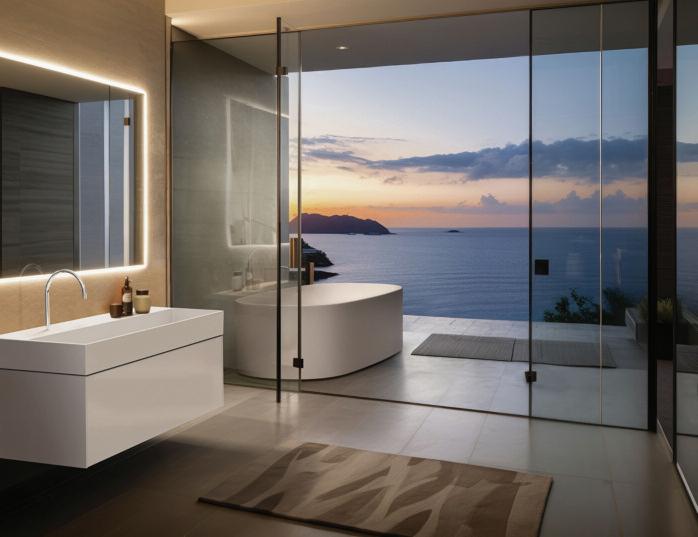
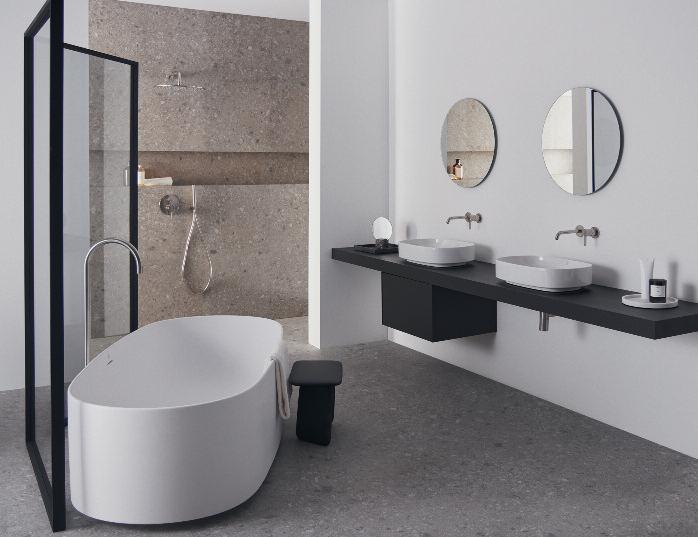
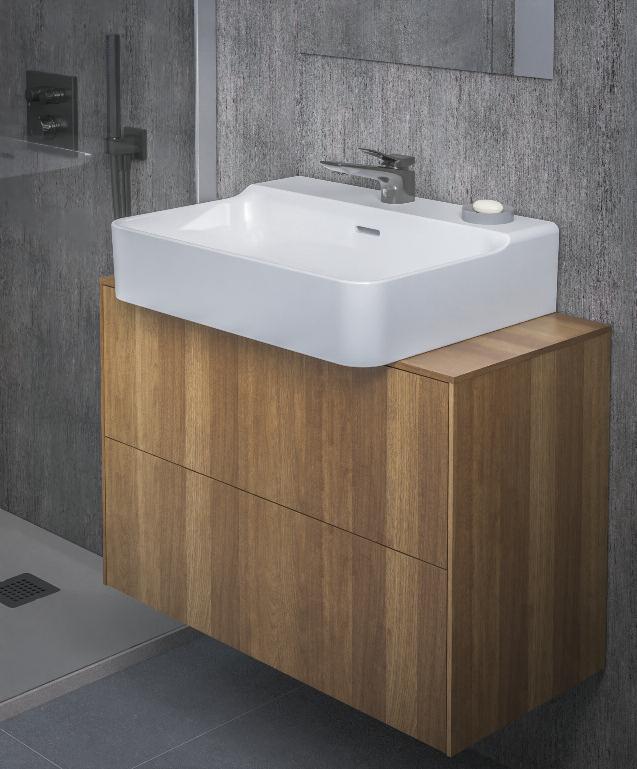
The evolution of bathroom furniture: Ideal Standard explains
| Russell Homes on designing for multi-generational living
Housebuilder & Property Developer are available at the following rates:
UK: 1 year £30 post paid Europe and Overseas:
1 year £70 post paid
Airmail: 1 year £99 post paid
To be removed from this magazine’s circulation please call 01923 237799 or email circulation@hamerville co uk
DOWNTOAT
Whilst Spring is the defining moment of new beginnings and renewal in the natural world, September can often feel like a cultural reset of sorts, at least here in the UK The first month in Autumn marks the end of the warmer months and the beginning of the colder School summer holidays finish and those strangely quiet two months of various holiday-related absences come to a close With that, comes new beginnings for the majority of those 20 and under as GCSEs, A-levels, Apprenticeships and University Courses start and a new chapter commences
You may be (rightly) wondering what on earth this has to do with housebuilding. Well, the reality is we have a well documented and rather sizeable workforce issue in the UK construction industry In fact, Places for People’s 2025 report estimates that 1 million additional construction workers will be needed by 2032. The industry itself is heavily weighted to an older demographic According to the same study, 35% of the workforce is thought to be over the age of 50, while just 20% are under 30 The journey to this point, and to the figure that 49% of state school pupils from England had started higher education by age 25 in 2022/23, can be well documented in the past 25 years
Indeed, the amount of accepted UCAS applicants doubled from 1994 to 2020 according to the House of Commons Library. While a segment of this will be owed to college admissions, the long-reaching roots of Blair’s education policy to get young people into higher education can still be felt University is in itself not a bad thing at all and it’s great that there is the option to specialise in different elements of education. It really can be a wonderful time for young people to carve out their own element of independence and go on to apply vocational skills or methodologies they’ve learned to a vast array of careers in life.
Yet, something has to be said about the emphasis placed on young people to make University the default choice once they’ve finished school The education sector has bent more and more this way, encouraging this idea of a tier of options, with a degree placed firmly at the top and a manual labour job at the bottom of the pile
Could it be that the position we’re in now is a result of a continuous cultural disdain for the chippies, brickies and muck spreaders that helped build Britain? The first two decades of the 2,000’s saw the likes of Rogue Traders and Cowboy Traders gracing our screens Whilst dodgy trades are most certainly something to combat and shine a light on, I don’t remember catching Cowboy Bankers or Rogue MPs on daytime TV
Something has to be done about the workforce problem plaguing the UK.
Thankfully there already those out there who are really trying to make a difference and with some support from Government too T-Levels, for example, are a wonderful newer option that provide a different path to construction They seem to be a great success too, with colleges like Leeds College of Building, reporting wonderful end of term results that far exceeded predictions made by the Department of Education To add to that, apprenticeship wages were also increased in last year’s Autumn Budget and organisations like CITB are renewing their effort to get more apprenticeships going in the UK And yes, while these are brilliant first steps, the real battle has to be won in mindsets It’s high time a career in construction stopped being put in last place.
COMING UP SHORT
Fall in UK installers fitting heat pumps and solar panels
This comes from a study by Wavin, which found a sharp 10% drop between Q4 2024 and Q1 2025 in heating, ventilation and air conditioning (HVAC) installers working on heat pumps, from 60% to 50% This trend is seemingly fuelled by a shortage of skills, with just half (49%) of UK installers able to fit heat pumps, compared to 83% of their German counterparts
Wavin has launched a new installer network, helping professional installers and developers deliver energy-efficient and lower-carbon homes with the introduction of Future Homes Standard www.rdr.link/dbf001
QUALITY OVER QUANTITY
NHBC Foundation releases new report
The report is titled: Maintaining quality in the design and construction of 1 5 million homes While the government is working to identify the barriers to delivering new homes, such as reforming the National Planning Policy Framework and reassessing housing targets for local authorities, the NHBC Foundation is keen to highlight the importance of quality during the planning and build process T
PLANT POWER
UK government backs PlantWorx 2025
The UK’s largest working construction equipment show in 2025 has received the backing of government, with Sarah Jones MP, Minister for Construction, issuing a welcome message to exhibitors and visitors that recognises the vital contribution the industry makes to the economy, skills, exports, and innovation
The Minister’s statement highlights how PlantWorx will showcase the technologies and solutions needed to boost productivity, cut carbon, and drive safer, smarter working across the sector
The event’s exhibitors include: JCB, who return to Plantworx with a bumper line-up of machines aimed at the civil engineering, housebuilding, highways and utilities sectors Leading the way will be the recently launched 145XR reduced tailswing excavator, unique JCB Pothole Pro, 558 260R Pro
CAN YOU DIG IT?
rotating telehandler, 4CX PRO DualDrive backhoe loader and the brand new 8008E CTS electric micro excavator
Kubota (UK), who will present the UK launch of the 14-tonne U145 crawler excavator, the 9-tonne KW095 wheeled excavator, the SVL75-3 compact tracked loader and its award-nominated mini excavator electric retrofit option Along with much more Plantworx will be taking place from 23rd to 25th September at Newark Showground. Visit www.rdr.link/dbf003 for more information.
p r o f i c i e n c y t e s t o n t h e w o r l d ’ s m o s t
f a m o u s d i g g e r – a J C
MENTAL HEALTH MATTERS
Bellway introduces ‘wellness zones ’ to support mental health of site staff
at www.rdr.link/dbf002
The housebuilder has introduced the outdoor areas, featuring picnic benches and posters promoting mental health support groups and other health-related topics, at two sites in Leicestershire and one in Northamptonshire.
The ‘wellness zones’ are designed to offer a safe place where workers on site
can take time out to discuss mental health issues in privacy with colleagues Read
Glenigan, powered by Hubexo, one of the construction industry’s leading insight and intelligence experts, released the August 2025 edition of its Construction Review
The Review focuses on the three months to the end of July 2025, covering all major (>£100m) and underlying (<£100m) projects, with all underlying figures seasonally adjusted T
CUSTOM JOB
Churchill Fellowship award for British engineer to study Europe’s secrets to scalable, sustainable custom-build housing
The research project will take engineer and sustainability expert, Ele George, to Germany and Sweden, two countries where industrialised construction and citizenled development have transformed communities.
Her aim is to bring back practical, scalable models that can help reshape the way Britain delivers housing –putting power in the hands of people.
“This isn’t just research for the sake of research – it could benefit thousands of potential home owners,” said Ele “It could also encompass social housing shared ownership models, so the potential is huge ” Read more at www.rdr.link/dbf007
OPENING DOORS
CITB champions inclusive recruitment through Mind the Gap project success
The programme was designed to open new pathways into construction for individuals with convictions – helping to address the sector’s skills shortage while supporting social mobility It has so far created more than 170 job opportunities, generating a return on social value of over £3 5m
● Choosing the right loan structure to match your objectives
● Understanding the nuances of each offering and what kind of projects or investments each one is best suited to
● Having a clear and achievable exit strategy before taking out a bridging loan
To read the full analysis visit www.rdr.link/dbf009
SUNNY SPELLS AHEAD?
BCIS reveals five-year construction industry forecast
Building costs will increase by a predicted 14% over the next five years, while tender prices will rise by 15% over the same period New work output is expected to grow by 18% between 2025 and 2030
Dr David Crosthwaite, chief economist at BCIS, said: “At the mid-point of the year, the construction sector is still stagnating, with output growth subdued Confidence continues to be weighed down by a combination of domestic uncertainty and wider global pressures.
“That said, the 27% quarterly rise in new orders we saw in the first quarter, particularly in infrastructure and industrial sectors, offered a welcome indication that demand could be starting to recover ”
Read more at www.rdr.link/dbf010
D E V E L O P M E N T S
TAMWORTH TRIO
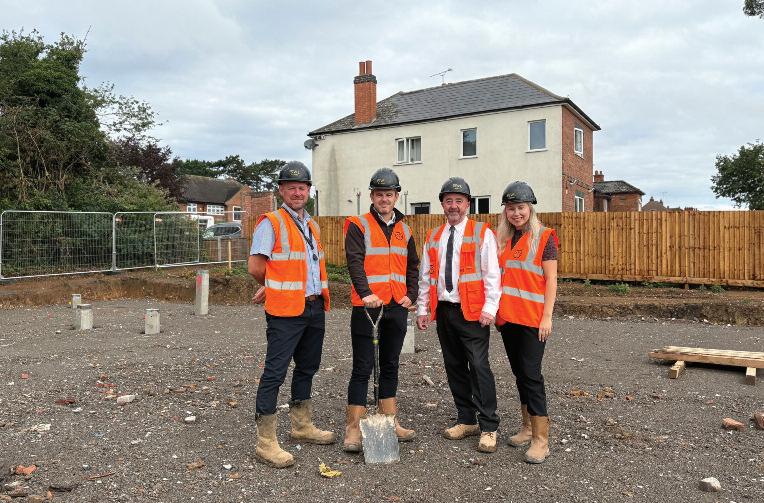
Housebuilder, Owl Homes has announced it has commenced construction on a trio of new developments, bringing 169 new homes across Leicestershire and Gloucestershire In three, sought-after village locations, the housebuilder will deliver its signature brand of high-quality, energy efficient homes, enabling individuals, couples and families to make their move The Tamworth-based housebuilder has officially broken ground at: Waltonbrook at Burton on the Wolds, Oakwood at Stoke Golding, Willowbank Meadows at Alderton For more information go to www.rdr.link/dbf011
GEORGIAN REFURB SOLD
Leading global property
AFFORDABLE HOUSING DEVELOPMENT
Poole-based affordable housing specialist AJC Group has submitted a detailed planning application to Dorset Council for 78 new homes on land north of Castle Lane, Okeford Fitzpaine The proposed development will deliver at least 40% affordable housing, totalling 31 dwellings, split between affordable rent and shared ownership The proposals for the 3 4hectare (8 4-acre) site include a varied mix of one- to four-bedroom houses and apartments, extensive landscaping, open space, and a sustainable drainage system For more information go to www.rdr.link/dbf012
HAMPSHIRE AGREEMENT
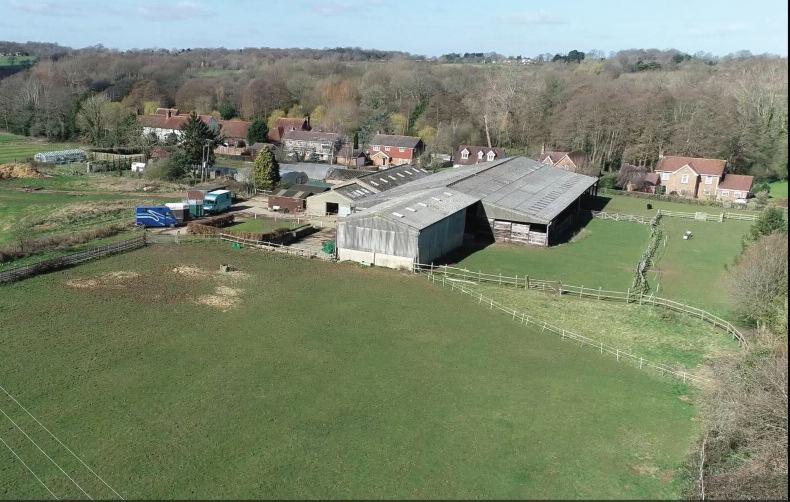
Hampshire-headquartered Bargate has agreed an option agreement with a private landowner to promote a 32hectare (77 54 acre) site in the Hampshire village of Wickham The traditional village of Wickham featured in the Muddy Stilettos’ 2024 Best Places to Live series, due to its peaceful location in the Meon Valley, has an array of listed buildings and a bustling market square For more information go to www.rdr.link/dbf013
WORK UNDERWAY AT NORTH DEVON SITE
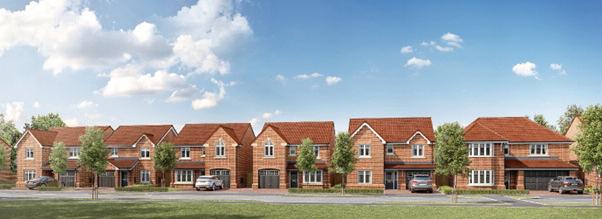
Work is underway at Tarka Coombe, the 150-home development in Landkey, North Devon as Allison Homes South West breaks ground on the site Tarka Coombe will include a mix of one- to fourbedroom homes, all taken from the housebuilder’s new house type portfolio, with 30% designated as affordable housing Future residents will be a short walk away from Landkey village centre, which offers a pub, post office and community centre. For more information go to www.rdr.link/dbf014
consultant Knight Frank has announced that Imperial Property Group has completed the acquisition of Royston House, a distinguished Grade II listed property in Bath, for £4.85 million. The historic building, comprising 13 apartments, represents a significant heritage asset in one of England's most prestigious Georgian cities The sale follows a strategic development phase that began in June 2024 when Bedstone Investments acquired the property for £3 1 million with plans to refurbish the individual apartments
For more information go to www.rdr.link/dbf015
NEW DERBYSHIRE COMMUNITY
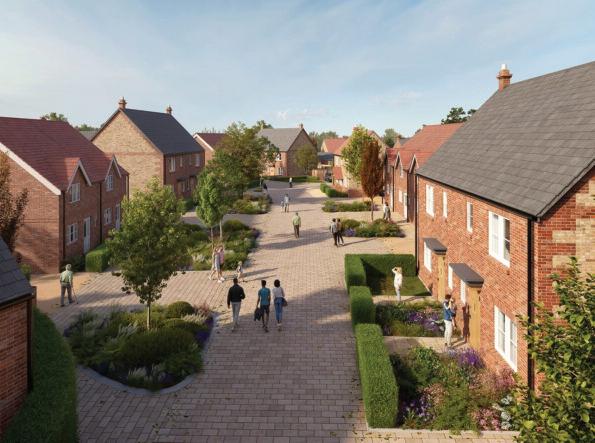
Harron Homes is set to bring a stunning new community to the Derbyshire village of Lower Somercotes, having secured planning permission and completed the purchase of a picturesque 12 5acre site The upcoming neighbourhood will deliver 90 beautiful new homes in a thoughtfully designed mix of 63 private residences and 27 affordable properties, with options ranging from charming two-bedroom starter homes to impressive five-bedroom family houses.
For more information go to www.rdr.link/dbf016
SOLD OUT
RENEWABLE HOMES
Solihull-based 5-star housebuilder Hayfield has successfully completed and sold all homes at Hayfield Manor in Adderbury, Oxfordshire. Located on Berry Hill Road, it comprises a collection of two to five-bedroom houses and bungalows, featuring solar PV panels, air source heat pumps, underfloor heating, increased thermal insulation, electric vehicle charging points, and run on 100% renewable energy Every home achieved an EPC A-rating
For more information go to www.rdr.link/dbf017
ROTHER BRICK CEREMONY
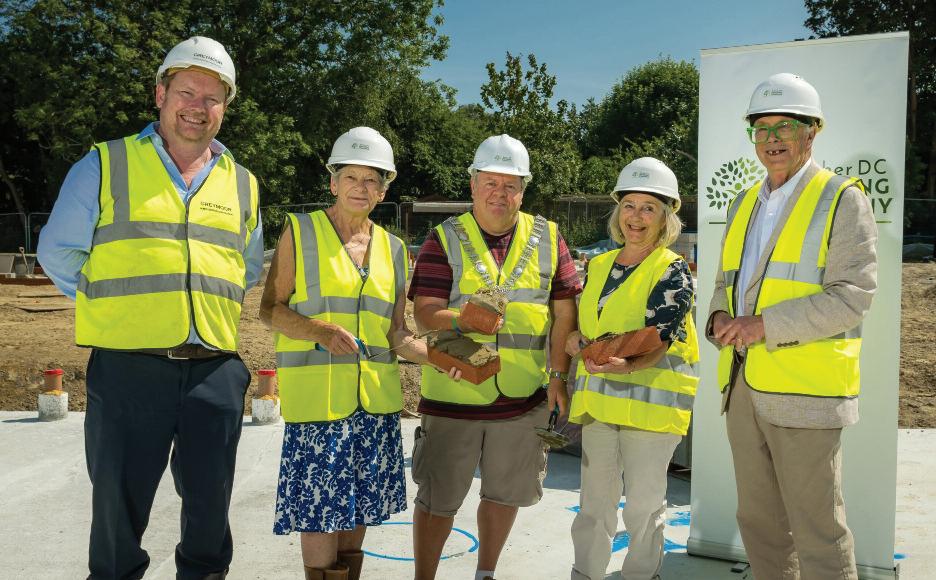
A special brick-laying ceremony to mark the start of construction of 200 new homes at the new ‘Tapestry’ development in Battle, East Sussex earlier in the summer attended by Cllr Andrew Barton, Mayor of Battle Town Council. Featuring 200 high-quality new homes, this development marks the largest housing project in a rural town within the Rother district in over a decade, thanks to the efforts of the Rother District Council Housing Company, Rother District Council and funding support from Homes England
For more information go to www.rdr.link/dbf018
HALIFAX HOMES UNDERWAY
Barratt Homes has laid the foundations for the first properties at its brand-new development in the historic town of Halifax The 75-home community on Paddock Lane, named West End Green, is now well underway ahead of its launch later this year The development will include eight affordable homes and seven discount market homes
For more information go to www.rdr.link/dbf019
MOISTURE MANAGEMENT
Moisture can be a significant risk in structural timber buildings If not properly managed, it can lead to decay, reduced performance and costly repairs
Sustained exposure can compromise structural timber As timber continues to grow in popularity for its speed, sustainability and strength, moisture control must be built into every stage of the project: right from the beginning
A Clear, Step-by-Step Approach
The Structural Timber Association’s Moisture Management Strategy, aligned with the RIBA Plan of Work, provides a practical 7-step process to control risk:
● Assign Responsibilities
Clarify who is accountable for moisture control at each stage
● Develop a Strategy Early
Build in moisture planning from project inception
● Spot the Risks
Identify and plan for potential moisture issues before they occur.
● Lock in the Details
Confirm materials, sequencing and methods that support moisture control.
● On-Site Checks
Test and record timber moisture levels before sealing in panels
● Handover Plans
Provide the client with a clear maintenance and care plan
● Monitor Over Time
Keep moisture risks under review after occupation
Where Problems Start
● Inadequate protection during delivery and storage
● Trapping moisture during the build
● Lack of ventilation in sealed panels
● Leaks post-completion with poor access for repair
What Builders and Developers Can Do
● Ensure site teams are trained on moisture risks
● Use temporary protection and allow drying time
● Confirm design and sequencing allows timber to dry
● Deliver homes with a clear maintenance strategy
The Bottom Line: Moisture control isn’t added complexity, after all, it applies to all buildings in one form or another It’s smart risk management that protects your build quality and reputation
WAN T TO KNOW MORE?
Scan the QR Code to the full guide or visit www.rdr.link/dbf020
Neil Walker, Design Manager at Russell Homes, reveals the proactive measures the housebuilder has taken in response to children taking longer to fly the nest, as well as the generation of ‘boomerang kids’ moving back in. He also shares some of the ways homeowners are using their homes to make sure the space works for everybody
DESIGN FOR LIFE
According to figures published by the Institute for Fiscal Studies, the number of 25 to 34-year-olds living with their parents has soared by a third over the last 20 years, resulting in 450,000 more young adults living at home
Our designs are constantly evolving in response to the ever-changing market in which we operate and people’s rapidlyevolving needs Creating spaces that homeowners fall in love with the second they first step foot inside them has always played an integral part in shaping our overall design vision. So too has making sure that our buyers’ homes are designed to grow with them, wherever their life journey takes them.
Mirror people’s wants and needs
As a result, what we design today may look slightly different six months down the line, and significantly different several years later Our sales team acts as our eyes and our ears, collating feedback from potential customers and buyers and sharing every valuable bit with us in the design team We then take this insight and use it to continuously fine-tune our designs, so that our individual house types and entire developments mirror people’s wants and needs
With recent studies showing homes are being populated by more bodies for longer, we’ve been refining our designs over the last decade to make sure they do exactly what people need them to do
During this time, we’ve definitely seen an increased desire for ground floor open plan living and have made sure that our 2 5-storey properties reflect this design trend At the same time, more-and-more people are looking for bright and airy spaces, which help bridge the gap between the indoors and outdoors
Providing French doors in all of our 2.5storey properties, which instantly enhance the natural light levels and ventilation, is something we didn’t do a decade ago Now it’s a key feature within our Turner, Roberts and Bower properties
Neil Walker, Design Manager at Russell Homes
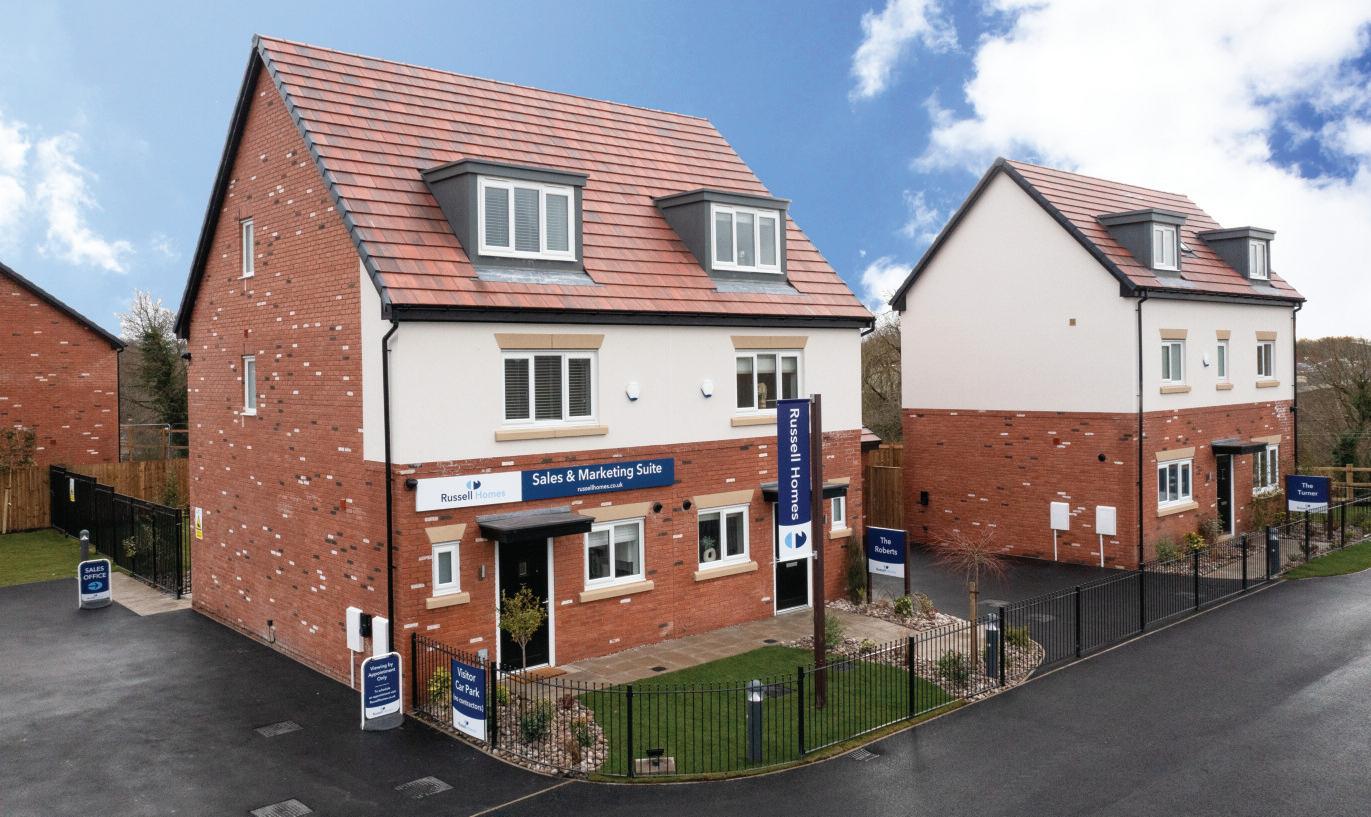
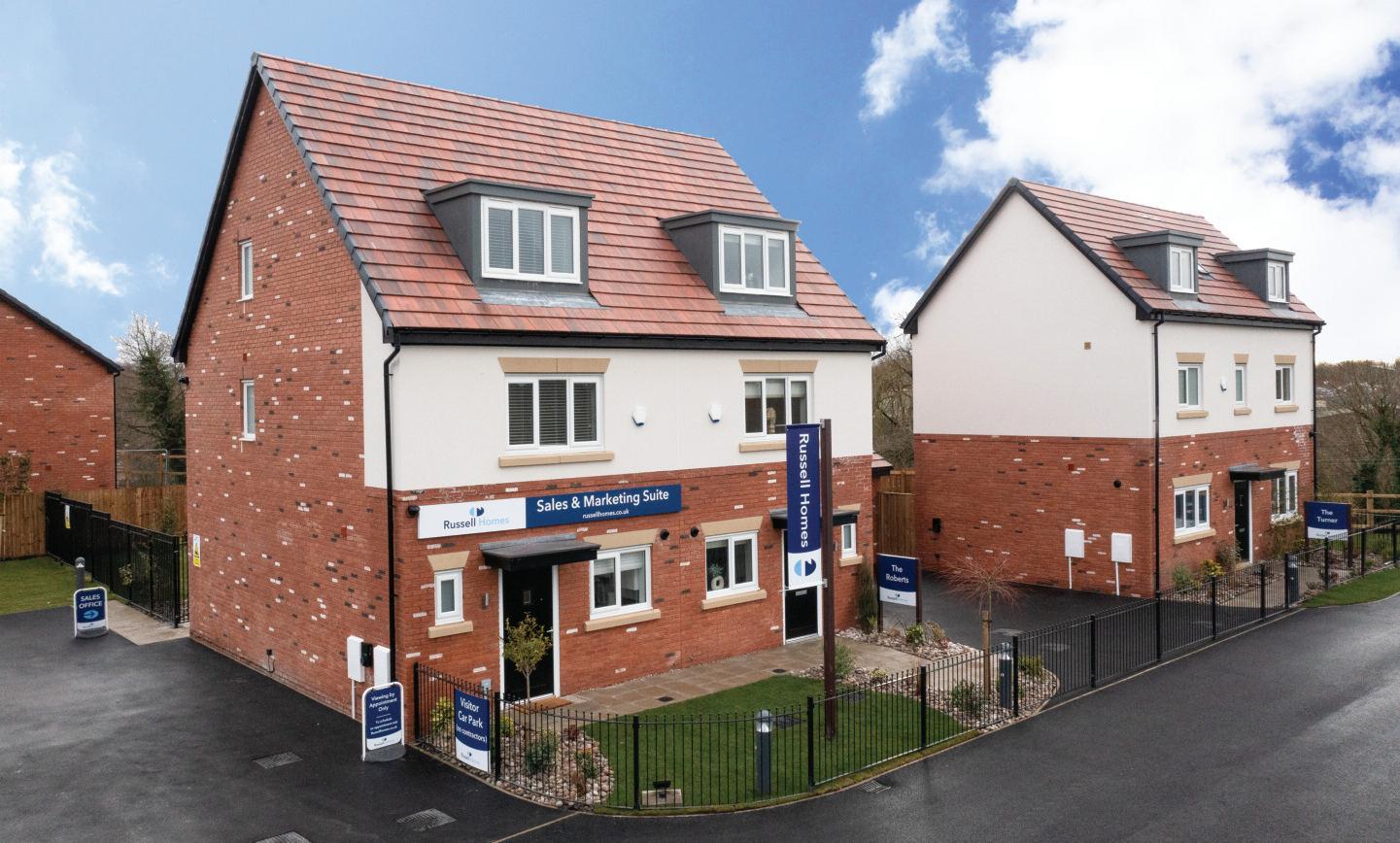
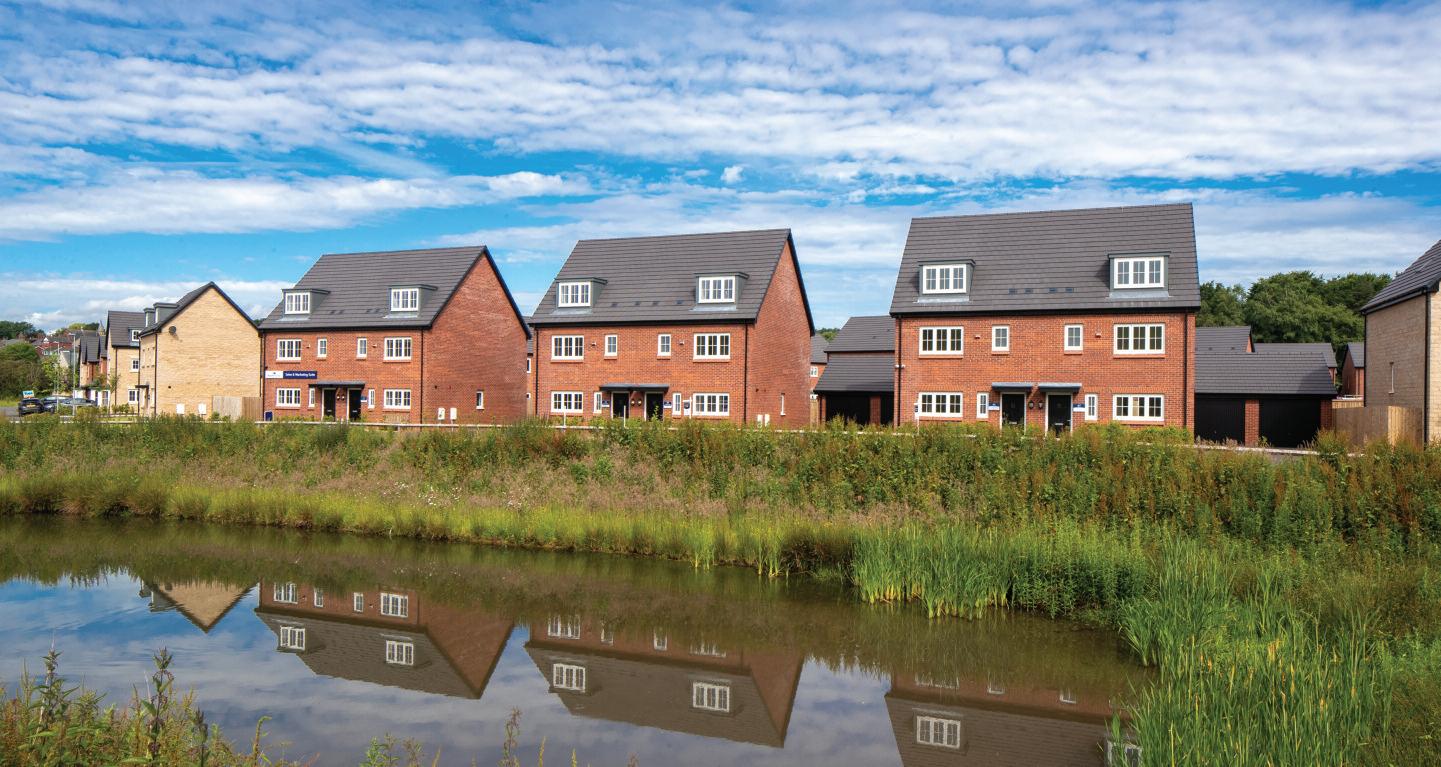
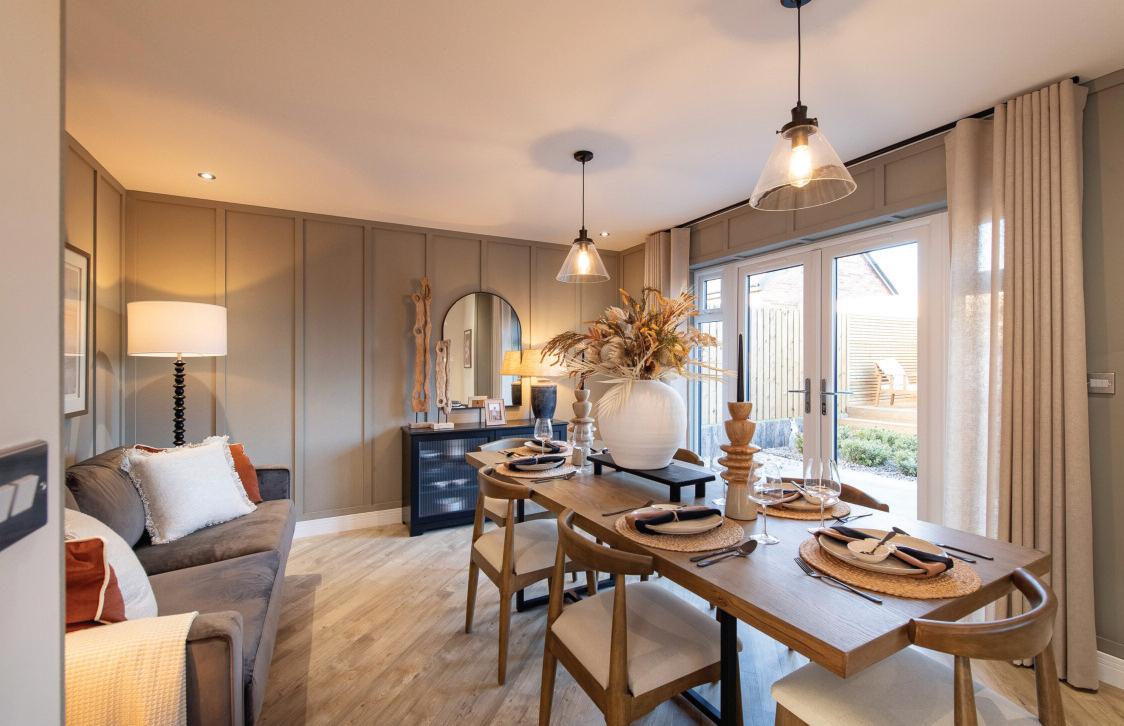
The Roberts and Turner show homes at Brook View, Wincham
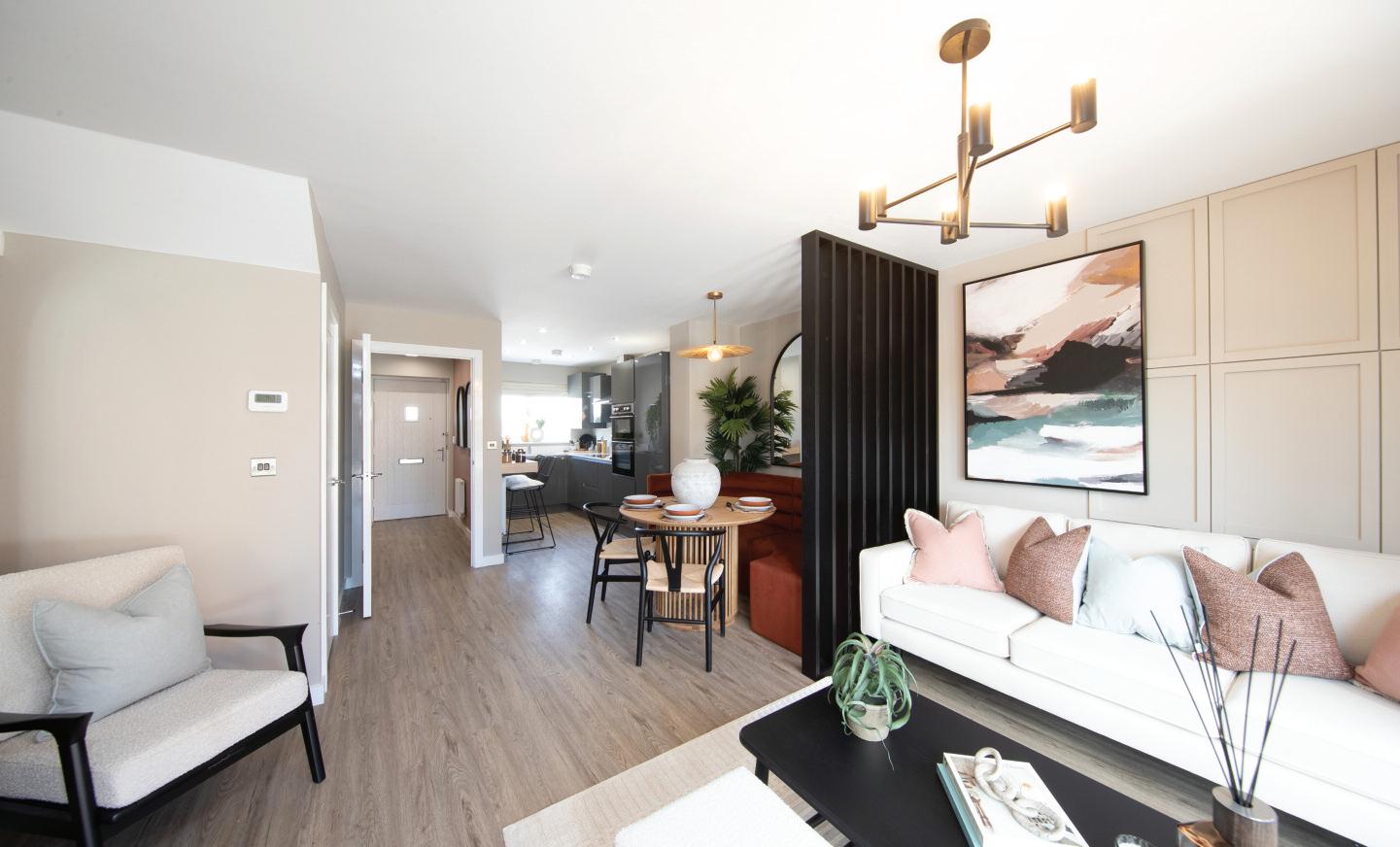
Open plan living space in the 2 5 storey Roberts house type
Multitude of purposes
As simple as they may sound, both of these design changes are helping create something that supports the larger family model Naturally, people don’t want to feel like they’re living on top of each other, and they don’t want to feel isolated in separate rooms either, which is where open plan design really comes into its own Not only can these spaces be harmoniously occupied by multiple people, they can be used for a multitude of purposes, e g cooking, playing, watching TV, hosting friends and studying Meanwhile, the addition of French doors that open out into the garden, immediately provides extra space for entertaining and relaxing.
Contrary to popular belief, 2 5-storey properties are a good choice for families because of the open plan living they provide Depending on the house type, the extra floor acts as an impressive main bedroom, freeing up space on the first floor for bedrooms or a modern home office, guest rooms or children’s play area
Teenagers’ escape
Alternatively, some of our other house types have two further double bedrooms and a shower room on the top floor, making it perfect for guests or as a teenagers’ escape – they get to enjoy an entire floor to themselves and spend time with their friends without disturbing the rest of the house! And, of course, this floor
is useful for the ‘boomerang generation’ too because they’ve got their own dedicated space that’s tucked away from their parents and the rest of the household We’ve also seen homeowners switch this floor around, e g parents with younger children use the main bedroom, so they are on the same floor as their children. When the kids get older, they move to the next floor to relax and create a serene space for themselves
Homes are more than just bricks and mortar They provide that all-important foundation for families to spend many a happy year, surrounded by spaces that work for them and, more importantly, they can live in and enjoy, for many years to come
Russell Homes is an award-winning, independent housebuilder focused on developing beautiful homes in great locations across the North of England.
Established in 2004, the company’s portfolio is varied and extensive, ranging from stunning contemporary beachfront residences to beautiful family homes in stunning locations with smart town centre addresses
The Bowers at Stubley Meadows, Littleborough
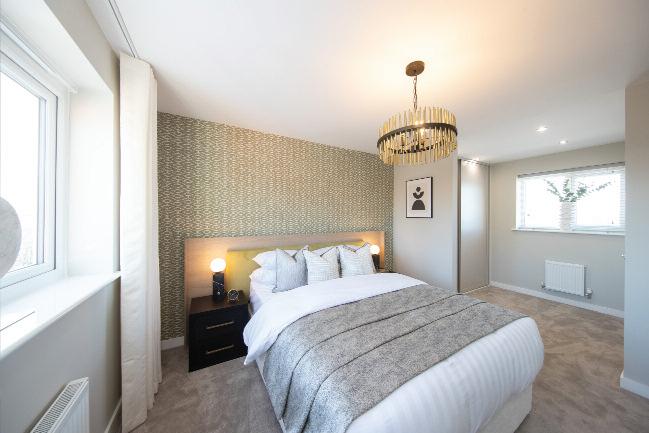
Spacious main bedroom in the Turner house type
L EGA L E AGL E
James Cheshire, Associate Solicitor at Taylor Walton Solicitors, discusses unlocking
site potential with bespoke legal agreements
It s not uncommon for developers and builders to have issues with cash flow and a recent example of commercial and legal creativity has helped an option agreement transaction over the line, so that both the land-owning developer and the acquiring developer achieved the outcome they needed
Where a developer owns a number of sites, but doesn’t have the cash to build them all out, finding someone else to swiftly purchase a site can free up much needed cash The downside to this arrangement is that it often doesn’t help improve cash flow quickly as there may be planning delays, or delays relating to a buyer’s funding, which can have the knock-on effect of holding up the ultimate sale of the land
final purchase price for the land, assuming the loan is not repaid before then Paying the loan upfront, along with the option fee, has provided a huge fi ancial boost to the landowner, so they n finish other projects
With this transaction, as well as there ing an option agreement to negotiate, ere was also a loan agreement, a legal arge over the property and a personal guarantee from a company director, all with an element of risk
There are certainly pros and cons to this type of deal but if it means that you can progress with your target site then there are ways to protect your investment If, for some reason the purchaser changes their mind on the site, the loan will be repaid to the purchaser by the landowner as per the terms of the loan agreement.
In an example which I dealt with recently the landowner – who was also a medium-sized developer – needed to offload a site reasonably quickly to free up working capital to progress other sites they were already working on and were in danger of stalling The purchaser acquiring the land, with the benefit of planning permission, was also a developer, but they crucially had a large amount of cash funds available and were looking for their next site to invest in
The parties agreed that, at the same time as exchanging an option agreement, the purchaser would loan to the landowner a seven-figure sum, roughly 40% of the purchase price in addition to paying an option fee Both of these amounts will be deducted from the
In this particular matter the purchaser’s legal charge would rank second in priority to a first legal charge in favour of a thirdparty lender, hence the need for further security via the company director’s personal guarantee
Whilst some land and property transactions can seem fraught with issues which cause delays, considering a bespoke and structured arrangement, such as in this case, can be the key to unlocking potential and striking a deal to satisfy both parties It is worth asking the question to find out what practical and legal solutions we can advise to progress your transactions
WAN T TO KNOW MORE?
For more information on Taylor Walton Solicitors visit www.rdr.link/dbf022
Improve cashflow with fast-tracked local searches
Delayed local authority searches can exacerbate cashflow problems for developers, but an industry expert said the stress of waiting for responses can be easily eradicated
There is still a huge disparity between the length of time it takes local authorities to return the local searches necessary to complete a property transaction, with some performing relatively well, while others are taking anywhere up to 60 days
For developers of all sizes, but particularly SMEs, this can cause serious cashflow headaches by slowing down completions
Amanda Giles, Director – New Build at searches specialist Move Reports, said the turnaround for local searches can be simply reduced to just 24 hours by getting ahead in the process
Amanda said: “There are few things more important than maintaining healthy cashflow in housebuilding, particularly if you are a small regional builder.
“Housebuilding is incredibly capitalintensive and front-loaded, with costs for land acquisition, planning, materials and labour all piling up before a property has been sold and any money has come in
“That is why it is particularly frustrating when local authorities hold up a sale at the final hurdle with delayed local searches It’s utterly infuriating for sales professionals
“At Move Reports we work with dozens of developers – from the biggest blue-
chip operators to SMEs – to prepare all necessary search results in advance so they can be sent out with the Contract Pack or downloaded by the panel firms upon reservation ”
Move Reports is the UK’s only new homes search specialist and can produce all the required regulated search results for new builds within 24 hours – provided on a no exchange, no fee basis.
The business’s team of experienced property professionals draw from their commercial and residential experience to prepare a bespoke New Homes Search Pack for every development across the country
These are continually updated to ensure lender compliance and they are ready to access whenever required, eliminating delays as sales target deadlines loom
Ultimately, it means developers have cash in the bank sooner – and customers are happier
Amanda added: “We provide a bespoke service for the new homes market which was developed in conjunction with the top ranked new homes law firms
“Along with the much-talked-about staff shortages at local authorities, delays with local searches often occur as a result of conveyancers deploying traditional methods that are simply not effective or
workable for the new homes market
“Instead, we produce one easy-tounderstand, fully lender compliant report – and we’ll also provide additional details including abutted planning, HS2 information and Coal & Green deal checks to alleviate further enquiries
“We understand the new homes industry and have built a product that has been used on thousands of sites across the country.”
Move Reports is also set up to help developers with tricky part exchange deals involving existing residential stock.
The businesses’ vast experience means it can reduce waiting times for local searches on secondhand properties to under two weeks
Launched in 2002, Move Reports has developed and grown to become the UK’s largest independent search company. The business has significantly increased its number of employees and boasts more than 100 years of combined property industry experience at director level
OPEN HOUSE
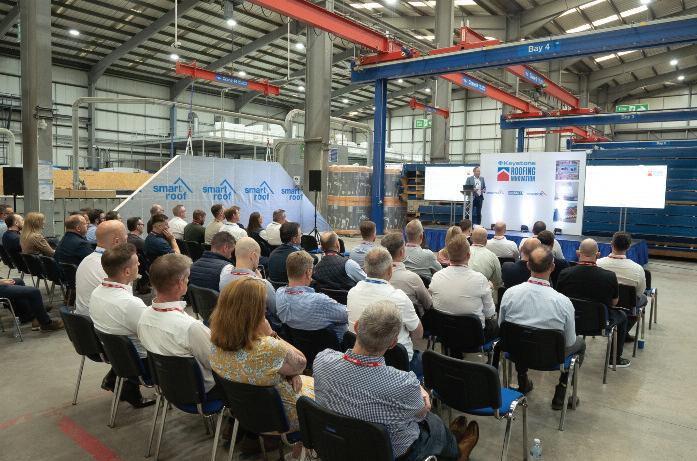
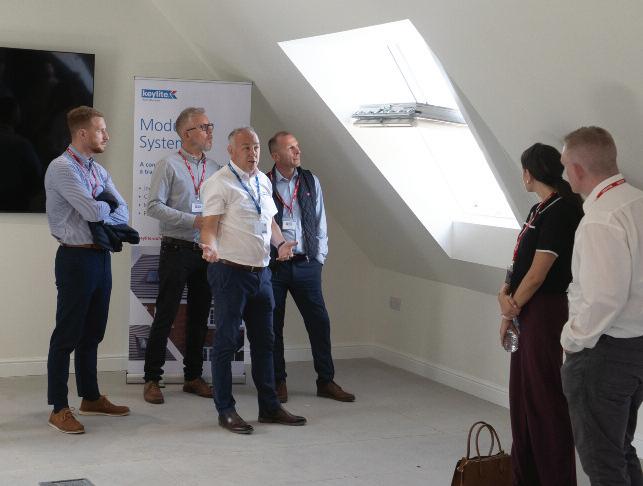
The Keystone Group recently opened the doors of its UK HQ to a select group of leading housing developers, consultants, and industry experts for a full-day event focused on Innovation in Roofing –Preparing for the Future Homes Standard. PHPD exclusively reports on the day
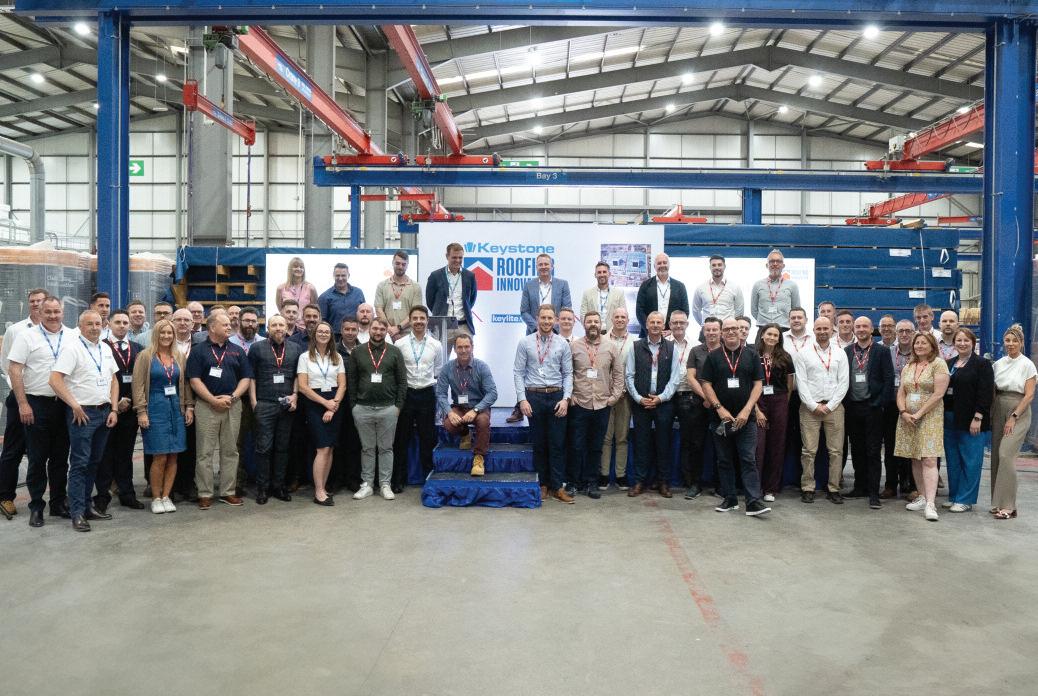
The June 26th event in Swadlincote brought together representatives from 17 national and regional housebuilders, along with key figures from sustainability consultants, heat pump manufacturers, heating designers, architects and planners, all of whom have played some part in shaping Keystone’s latest innovations
Putting the spotlight on two major product launches, SmartPUC by Smartroof and the ModuLite system by Keylite, the day also explored how forward-thinking roofing and renewable energy solutions can help the industry meet the evolving demands of the Future Homes Standard.
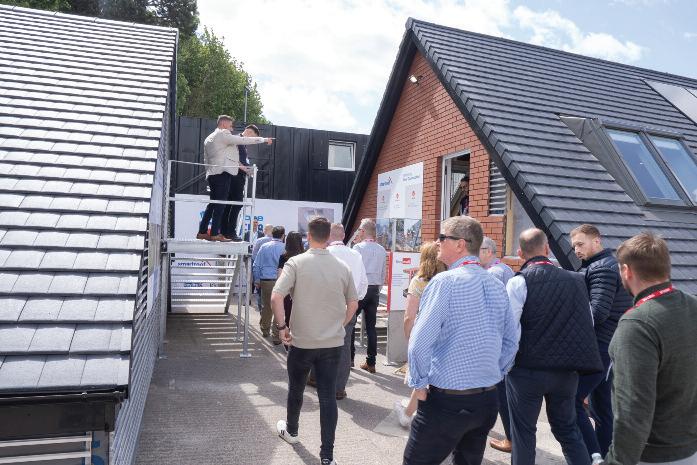
Held in the Smartroof factory at Keystone’s Swadlincote headquarters, this exclusive event provided an ideal opportunity to see innovative solutions in situ while engaging in meaningful dialogue around sustainability, compliance and collaborative innovation Over 40 attendees took part in a packed programme of presentations, product demonstrations, and informal networking with Keystone’s full brand family also on display throughout the venue
Product launches and collaborative insight
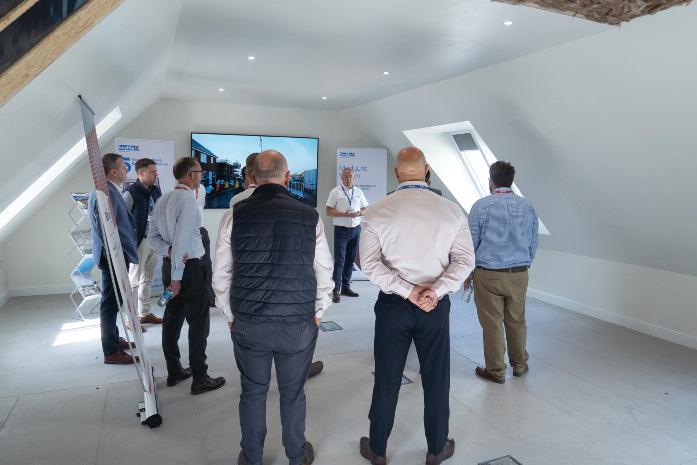
Following the welcome and introductory presentations the group were taken to the product demonstration areas, giving attendees a close-up look at the group’s precision manufacturing approach and a chance to view the new SmartPUC and
ModuLite systems in-situ
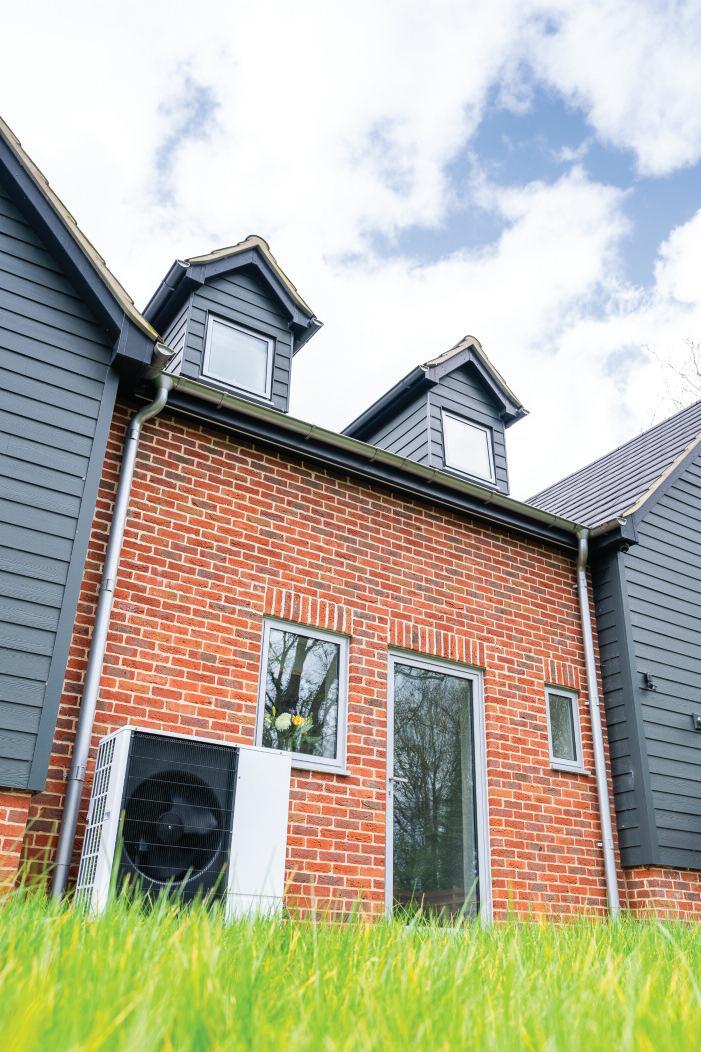
SmartPUC, a prefabricated utility cupboard / loft plant room, has been designed to meet the specific challenges posed by the transition to low-carbon homes – space for additional technologies being the main challenge. The SmartPUC is pre-manufactured offsite and utilises the unused loft space by providing a discrete, purpose-built space for new technologies such as air source heat pumps, solar PV inverters, MVHR units and larger hot water cylinders Crucially, SmartPUC frees up valuable living space, giving developers more flexibility when designing energyefficient homes of the future
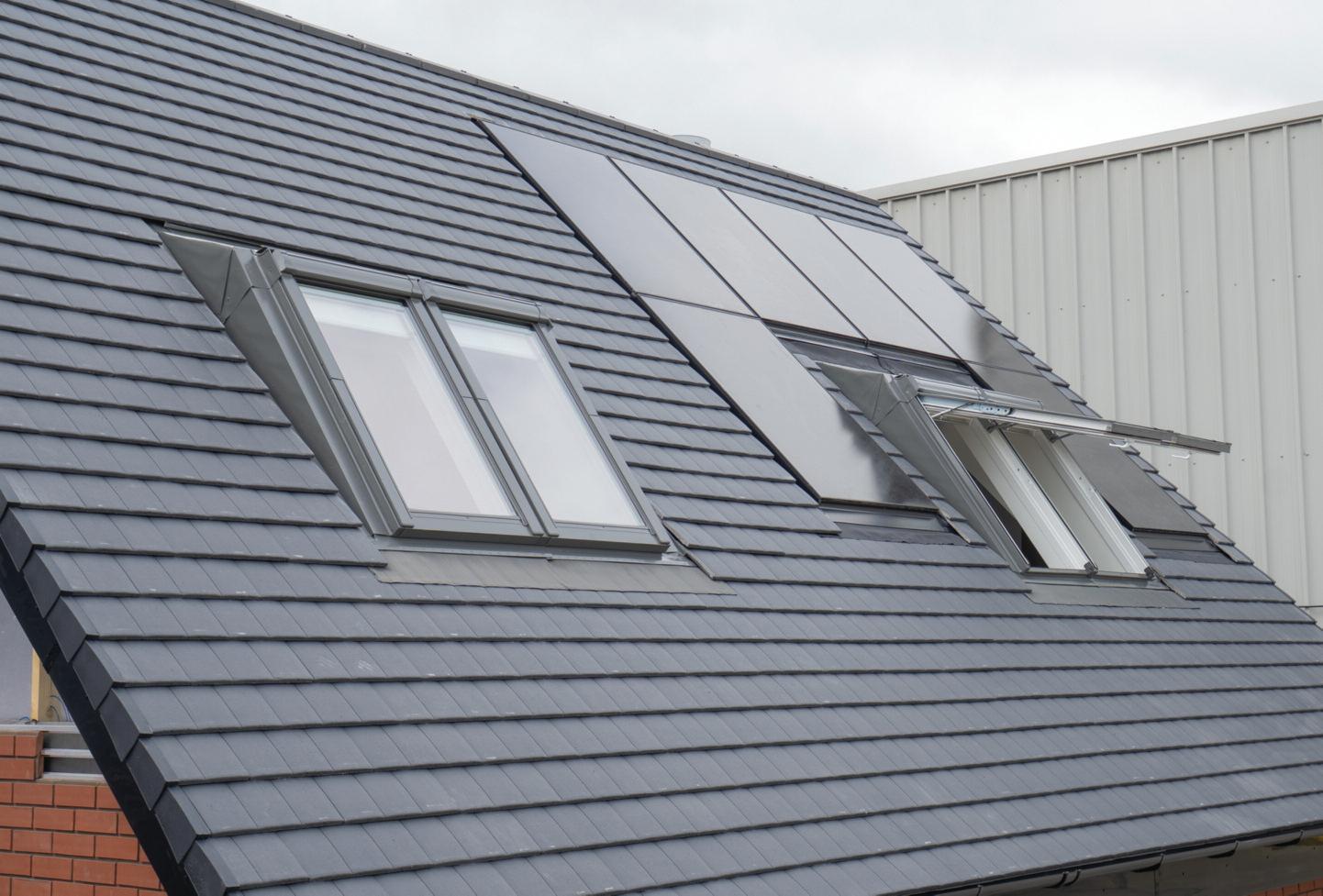
Also featured on the day was ModuLite, which has been developed by Keylite Roof Windows as a cutting-edge and highly energy-efficient alternative to traditional inroof dormers Comprising a prefabricated modular system that delivers architectural appeal and simplified installation, ModuLite supports contemporary design ambitions while aiding thermal performance a critical consideration as U-values become more demanding, whilst introducing more natural daylight Another key benefit of Modulite is that it’s available off the shelf in a matter of days as opposed to GRP dormers which tend to have much longer lead times
Throughout the day, attendees were able to view live product demonstrations, offering a practical insight into how each system integrates into modern housebuilding workflows The showcase also included a sneak preview of a forthcoming ‘loft mounted’ Air Source
Heat Pump solution, developed in collaboration with EBAC, which generated strong interest from sustainability and building services professionals alike
Responding to the Future Homes Standard
One of the highlights of the event was a presentation by AES Sustainability Consultants, who provided attendees with a comprehensive update on the Future Homes Standard, set to come into force in 2025 The session outlined how these new regulations will redefine energy performance targets for new homes in England, and why early adaptation is essential
As home designs become more complex to meet compliance, Keystone’s innovative solutions represent a practical way for developers to stay ahead of the curve The inclusion of consultants and planning specialists as part of the event reflected the collaborative nature of these innovations Each of the Keystone solutions were developed through close collaboration with housing providers, technical experts, and the end users of the technologies
Group capability
This holistic approach reinforced Keystone’s strength as a multi-brand solution provider, offering everything from structural support systems, energy saving solutions to sustainable roof design The event demonstrated how the company is positioning itself as a go-to partner for developers responding to the Future Homes Standard agenda
Evening networking
After a packed day of technical insight and innovation, the group was invited to unwind with an afternoon of go-karting, followed by dinner and live music in Birmingham. The evening provided a relaxed setting for informal networking and celebrated the strong partnerships Keystone has developed with its customers and collaborators
Feedback from attendees was overwhelmingly positive, with many praising the balance between Keystone’s constant drive for innovation and real-world practicality The SmartPUC and ModuLite launches, offer credible solutions to the mounting space, sustainability, and systems integration challenges currently faced by modern housebuilders.
With the housebuilding sector preparing for the Future Homes Standard coming into force in 2025, events such as this underline the vital role that proactive manufacturers can play
For Keystone, it was a great opportunity to reinforce its commitment to innovation, collaboration, and quality and to reaffirm its position at the forefront of roofing and smart building product design
Will Heinzelmann, Product Director at Passiv UK, explains why smart controls should be on every housebuilder’s radar
SMART THINKING
The Future Homes Standard, due to be announced this autumn, will set a new baseline for energy efficiency in new-build homes Under the rules, homes will be required to include solar panels where possible – a welcome step toward reducing carbon emissions, tackling fuel poverty, and lowering household energy bills
But meeting the standard is only half the story Without smart, integrated controls to make the most of this lowcarbon technology, much of their potential is wasted – and so is the opportunity to deliver homes that outperform on both efficiency and buyer satisfaction
Having spent a decade working in heat pump optimisation, we’ve learned a crucial lesson – technology is only as good as the experience it delivers The success of the transition to clean energy solutions is by making sure it is not just effective, but intuitive and effortless to use, ensuring it becomes a seamless part of everyday life.
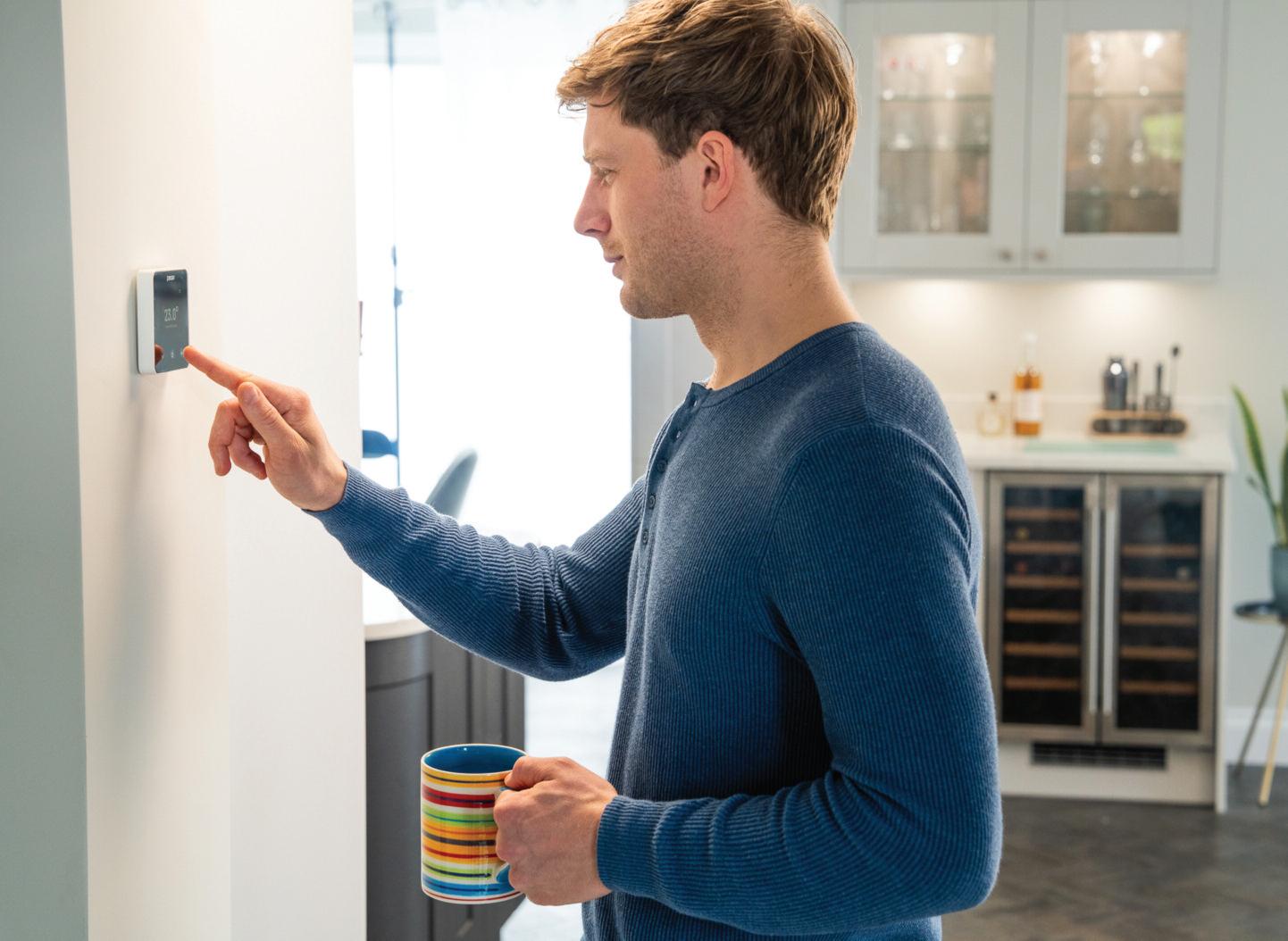
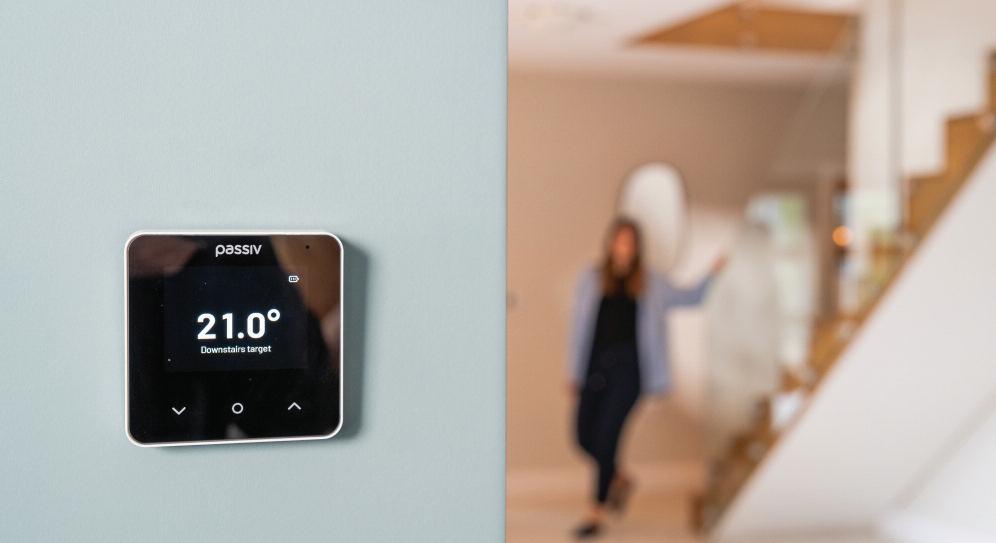
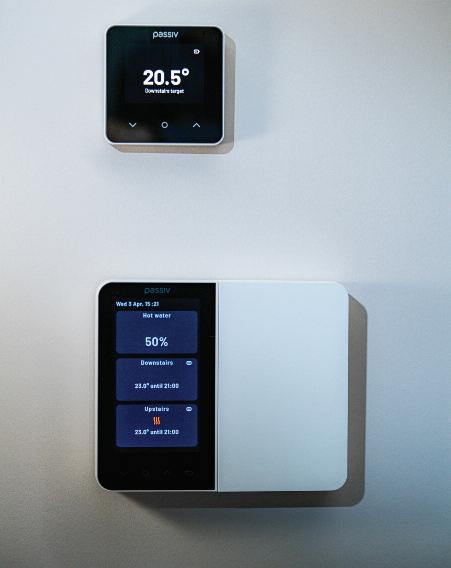
The latest intelligent heat pump controls, such as the Passiv Smart Thermostat, do exactly that They learn how the property heats up and cools down, predict solar generation, and automatically adjust heating to maximise free renewable energy, cut grid reliance, and keep running costs low
For housebuilders and developers, that means more happy residents and better performing homes that stand out in a competitive market, ready to meet the Future Homes Standard and the expectations of tomorrow’s buyers
Better system integration
In today’s new builds, heat pumps are often installed alongside solar PV and, in some cases, battery storage But without a smart control layer connecting them, homeowners miss out on much of the benefit
Using predictive algorithms, the latest generation of smart controls can anticipate when solar panels will be generating and adjust the heat pump’s operation accordingly That means more
free energy used at the right times, and up to 10% savings on heating bills – just by letting the system do the thinking
Smarter heat pump performance
Today, around a third of heat pumps are still being installed to operate at a fixed flow temperature That’s easy from a commissioning perspective, but it’s terrible for efficiency. The remainder rely on a manually set weather compensation curve, which adjusts output based on the outdoor temperature This is better – but still limited
The latest systems remove the need to set a weather compensation curve at all From the moment they’re installed, they begin learning how the home behaves and how quickly it heats up or cools down. They use that data, combined with real-time forecasts, to dynamically control the flow temperature, maximising efficiency and comfort
This means consistently warm homes with lower running costs and without the hassle of adjusting settings or understanding complex technology Bills that are reduced by as much as 30%, predictable comfort throughout the year, and systems that automatically adapt to how the household actually lives
Ready for tomorrow’s energy market
As energy tariffs become more dynamic, and as grid flexibility becomes a selling point, homes with integrated smart controls will stand out in the market – both for compliance and for consumer appeal
With the right controls, homeowners can earn rewards for allowing their systems to shift energy use to off-peak times or when renewable supply is high. It’s a future-ready feature that turns heating into a source of savings and sustainability
Smart controls aren’t just a bolt-on – they’re a fundamental part of the low-carbon home. For housebuilders and developers, the question is no longer if smart controls should be included, but how quickly you can make them part of your standard specification
WAN T TO KNOW MORE?
For more information on Passiv UK visit www.rdr.link/dbf025
LET THERE BE L IGHT
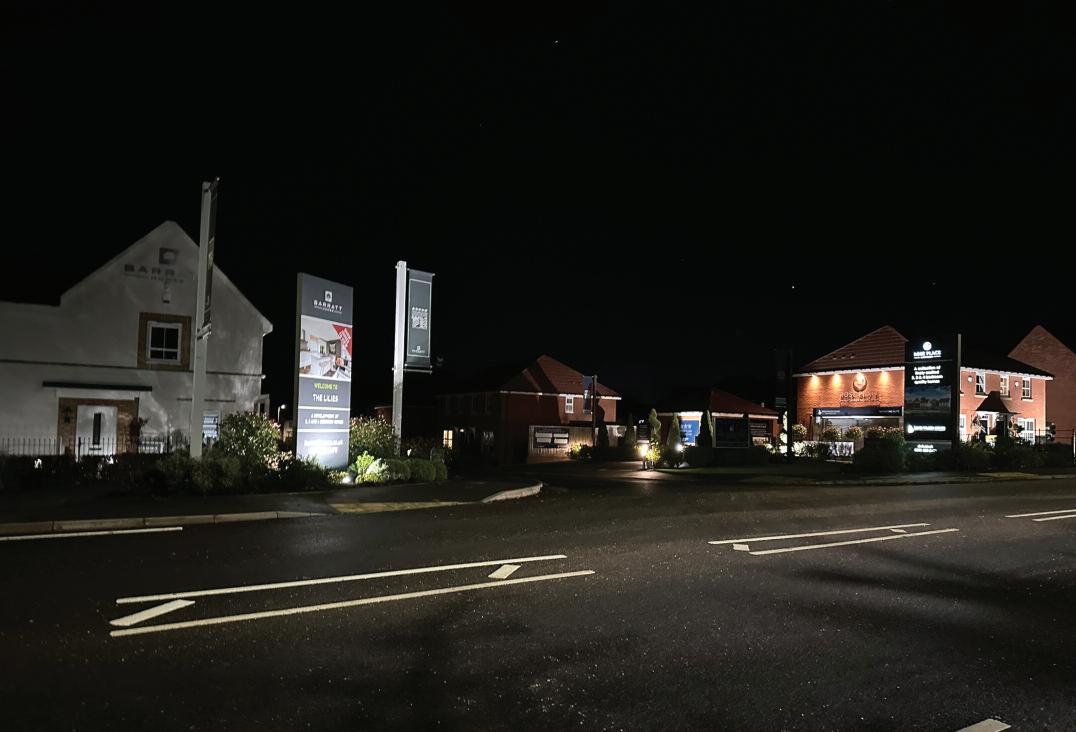
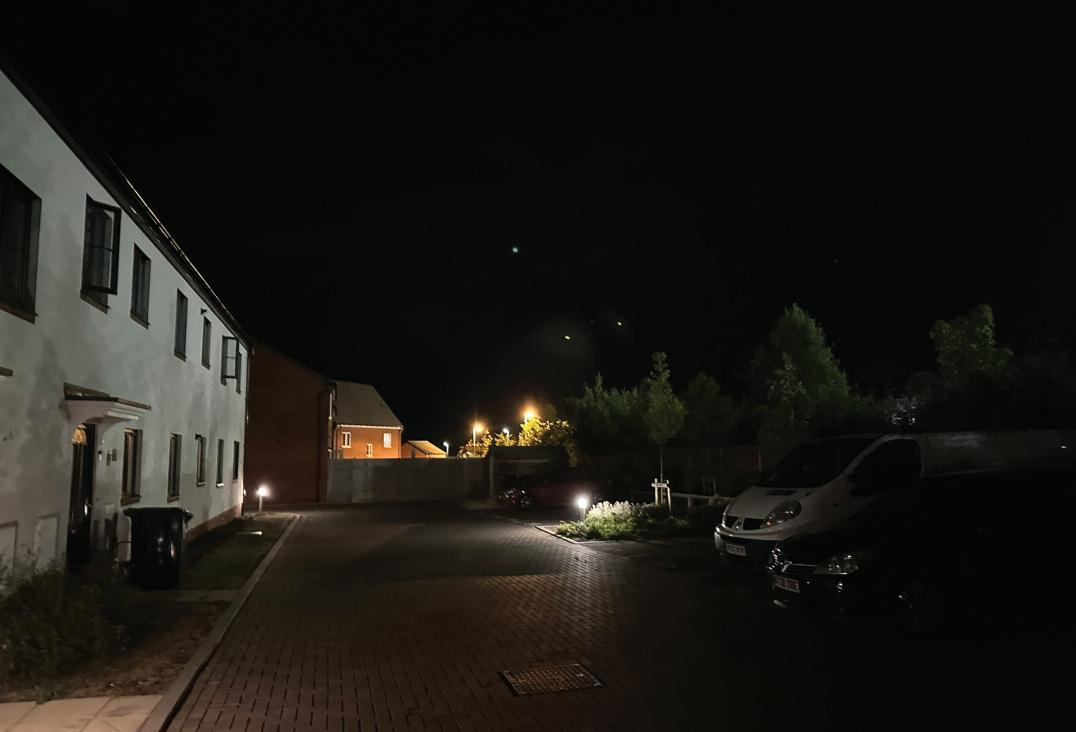
As the government continues to push housing delivery through the reclassification of green belt land, developers are increasingly working in the ‘ grey belt’. But building in these ecologically sensitive, edge-zones means external lighting design is no longer just about visibility. So what do housebuilders and developers need to consider? Nathan Allen, Associate Environmental Consultant and head of the lighting team at MEC Consulting Group, shares his insight…
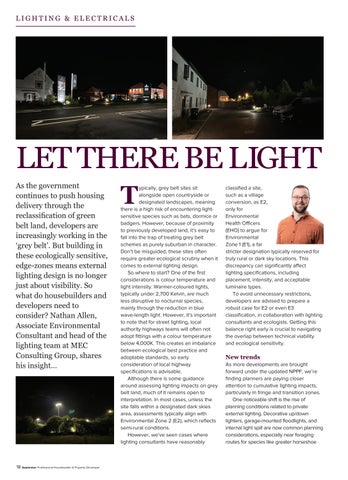
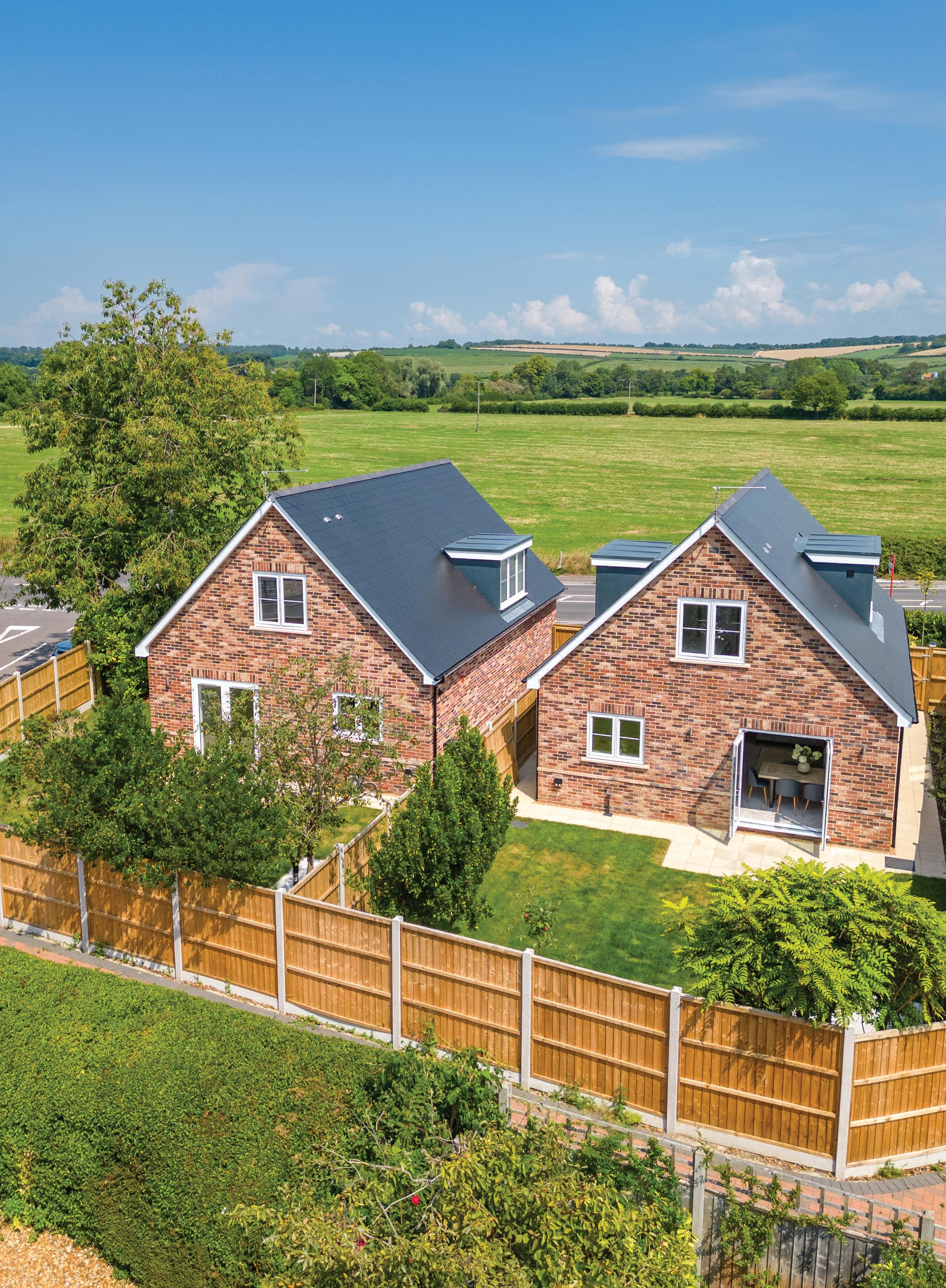
Typically, grey belt sites sit alongside open countryside or designated landscapes, meaning there is a high risk of encountering lightsensitive species such as bats, dormice or badgers. However, because of proximity to previously developed land, it’s easy to fall into the trap of treating grey belt schemes as purely suburban in character. Don’t be misguided, these sites often require greater ecological scrutiny when it comes to external lighting design
So where to start? One of the first considerations is colour temperature and light intensity Warmer-coloured lights, typically under 2,700 Kelvin, are much less disruptive to nocturnal species, mainly through the reduction in blue wave-length light. However, it’s important to note that for street lighting, local authority highways teams will often not adopt fittings with a colour temperature below 4,000K This creates an imbalance between ecological best practice and adoptable standards, so early consideration of local highway specifications is advisable
Although there is some guidance around assessing lighting impacts on grey belt land, much of it remains open to interpretation In most cases, unless the site falls within a designated dark skies area, assessments typically align with Environmental Zone 2 (E2), which reflects semi-rural conditions
However, we’ve seen cases where lighting consultants have reasonably
classified a site, such as a village conversion, as E2, only for Environmental Health Officers (EHO) to argue for Environmental Zone 1 (E1), a far stricter designation typically reserved for truly rural or dark sky locations This discrepancy can significantly affect lighting specifications, including placement, intensity, and acceptable luminaire types
To avoid unnecessary restrictions, developers are advised to prepare a robust case for E2 or even E3 classification, in collaboration with lighting consultants and ecologists Getting this balance right early is crucial to navigating the overlap between technical viability and ecological sensitivity
New trends
As more developments are brought forward under the updated NPPF, we’re finding planners are paying closer attention to cumulative lighting impacts, particularly in fringe and transition zones
One noticeable shift is the rise of planning conditions related to private external lighting Decorative up/down lighters, garage-mounted floodlights, and internal light spill are now common planning considerations, especially near foraging routes for species like greater horseshoe
bats This means lighting assessments must look beyond highways and adopt a 360degree approach to luminance
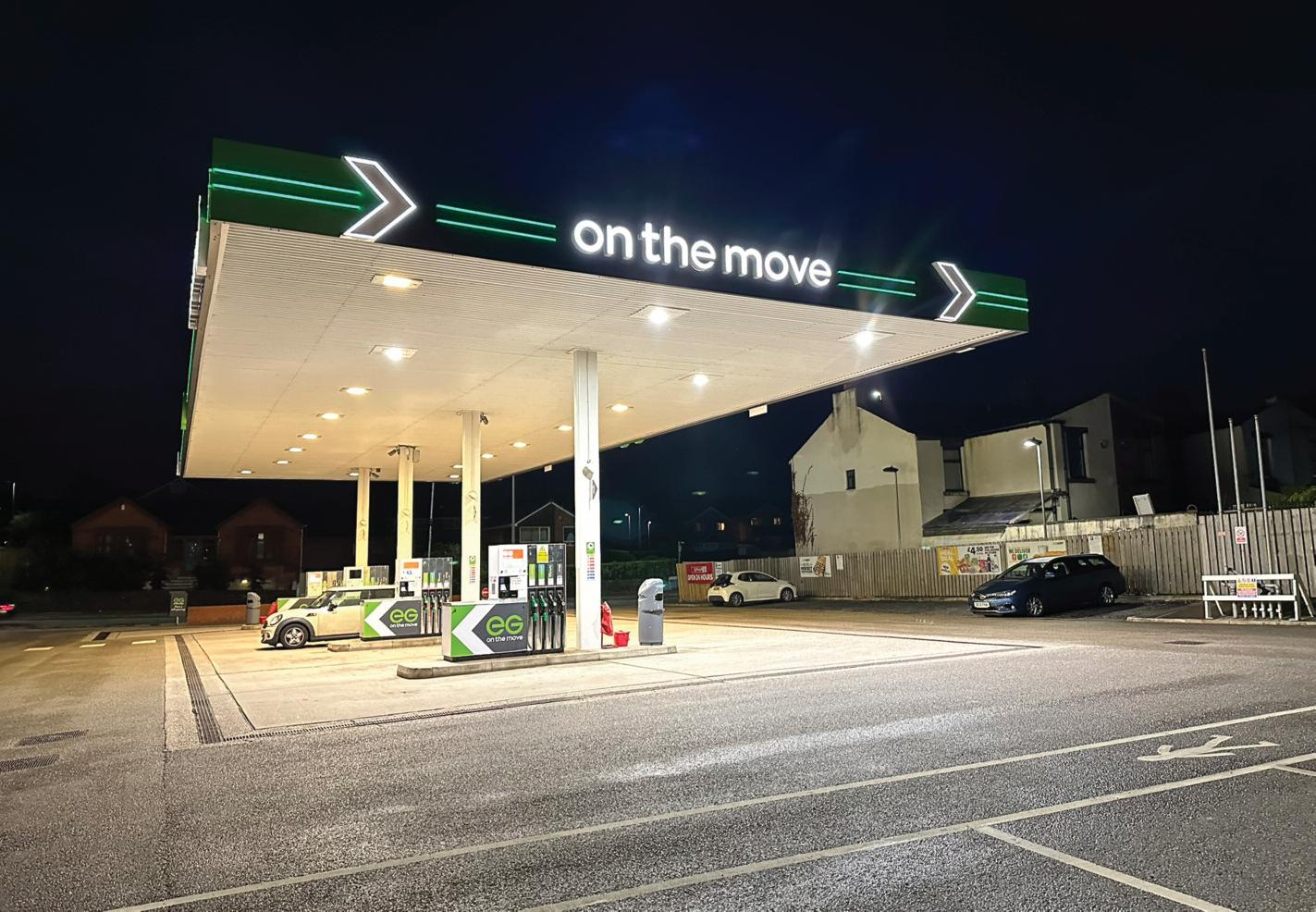
Smart lighting management is another evolving area Where possible, the use of timers or dimmable PIR sensors, rather than standard on/off triggers, helps reduce ecological disturbance Some technologies allow the output and colour temperature to change throughout the night as different uses come into play A gradual increase in brightness is far less likely to unsettle wildlife or nearby residents than a sudden increase in light This is particularly important on commercial or mixed-use developments, where lighting levels tend to be higher.
Finally, the use of solar lighting is increasing in popularity, especially to illuminate cycleways and footpaths. While it offers sustainable appeal, it’s not without limitation Most local authorities won’t adopt solar units, as performance can drop significantly in winter due to poor battery storage and limited daylight hours to charge said battery, particularly in shaded or north-facing areas
Therefore, column placement, solar exposure, and seasonal use need to be carefully factored into any specification.
Lighting vs landscaping
Rather than viewing lighting and landscaping independently, these two
should be designed in tandem, particularly for grey belt development
Trees and planting schemes can conflict with lighting columns as they mature, perhaps blocking light or increasing shadowing in unintended ways. Likewise, underground cabling routes need to respect root protection zones
Considering both elements together from the start can help avoid expensive and time-consuming redesigns
The same early engagement is advised for adoptable highways under section 38 or Section 278 Councils often have strict specifications for luminaire type, column height, spacing, and colour temperature, which may not align with what ecologists or EHOs are recommending
Developers who consider lighting design early in a development’s lifespan are far better placed to reconcile any imbalances, reduce planning objections, meet biodiversity requirements, and avoid costly redesigns or delays Ultimately, well-designed external lighting should enhance safety, security, and the habitats of wildlife and humans alike
Nathan Allen is an affiliate member of the Institute of Lighting Professionals Nathan supports housebuilders and developers with lighting assessments for planning applications, detailed lighting designs from Section 38 and 278 designs, discharge conditions, production of ecologically sensitive lighting strategies, and appeal support
CH A RGI NG A H E A D
Ohme discusses what housebuilders should look for in a home EV charging partner
The latest new car sales figures have shown that sales of electric vehicles have risen by more than a third so far this year with at least one in five of all new cars leaving showrooms being electric. 2025 will end with the UK’s highest ever level of EV sales
That, combined with the Part S Building Regulations, which arrived in June 2022 (and properly came into force from June 2023), mean that housebuilders have had to educate themselves fairly quickly on home EV chargers
All fairly straight-forward you might think, except that that the home EV charger market itself has been through lots of change in recent years
So, what should a housebuilder be looking for when choosing a home EV charging partner to ensure they pick the right unit for the needs of both their customers and them?
Buy cheap, pay twice
All that matters is how much you’re paying for a charger and ensuring that price is as low as possible, right? Er, no
There’s no question that the unit price matters, that’s obvious, but there’s a whole load of other factors to consider too
“Housebuilders and developers obviously have lots of choice, but they need to choose a product that represents the best value for them both now and in the future,” explains Charlie Mainwaring, Head of Built Environment sales at Ohme, the UK’s largest home
EV charging company “They need a product that is price competitive, but
of use.”
A fitting choice
Not all EV chargers are created equally as far as electricians are concerned, so housebuilders should be considering a charger that’s easy to fit and commission
Ask about average fitting times and ensure that a charger is a ‘first fit’ solution If an electrician can fit one extra charger per shift, that makes them more efficient and in turn brings cost savings to the electrical contractor
With a charger such the Ohme ePod favoured by the Vistry Group, the Hill Group and Tilia and Hopkins Homes, its chargers have a built-in SIM card, so they don’t require an existing wi-fi signal to connect That means an electrician can visit, fit the charger, commission it and move on – a second visit isn’t required.
Probing the product
And finally, of course, there’s the actual charger itself A few years ago, home EV chargers were little more than glorified plug sockets, now they’re far more complex than that Are they solar compatible? How user-friendly is the app to operate the charger?
With the rise in EV new car sales too, house-buyers are now far more aware of
what they’re looking for and far more demanding too Home chargers not only need to be fully compliant with the latest regulations, they also need to allow customers to access any energy supplier Ohme’s chargers are compatible with any energy supplier and the best value smart EV electricity tariffs on the market, such as Intelligent Octopus Go
Fully-charging a Volkswagen ID.5 77kWh with Ohme on a dynamic tariff such as Intelligent Octopus Go could cost just £5 39 By comparison, the same charge on the standard tariff would cost £19 82 – more than three times more
Over the course of a year – for a typical EV driver covering 6,800 miles a year – that means paying £437 41 for 12 months of motoring compared to just £119 on Intelligent Octopus Go. The same mileage in an average petrol car would
cost more than £1,000
Enabling your customers to access tariffs such as Intelligent Octopus Go will be crucially important for them if not immediately, certainly in the future as more of the move into EVs
In summary then, just as EV chargers have adapted, so does the need for housebuilders to think about them in greater depth, what the chargers can do and how they can best serve their customers and themselves.
www.rdr.link/dbf027
ALL IN THE DETAILS
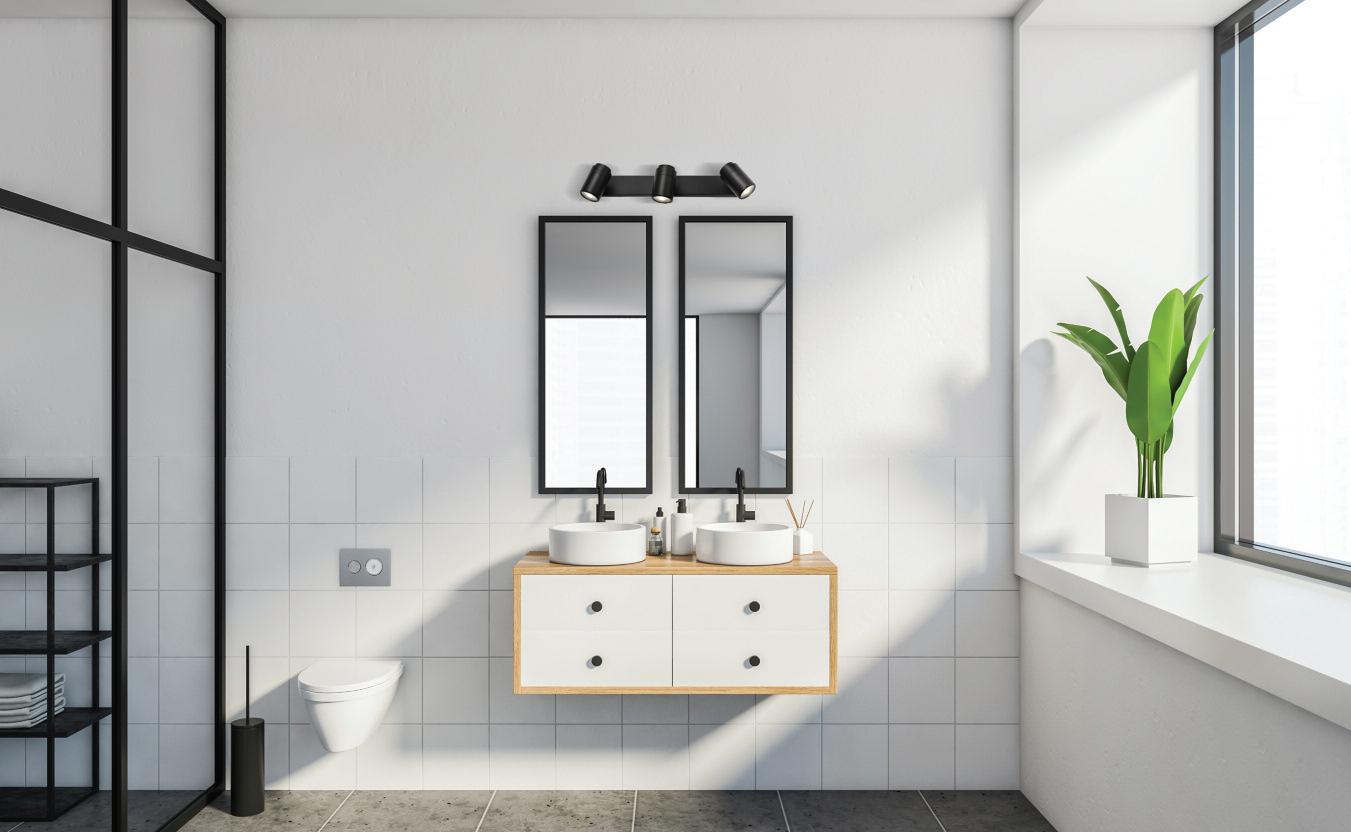
In a competitive market, differentiation is everything. While bathrooms have long been recognised as critical selling points, the finer details – particularly electrical accessories – are often overlooked. Yet these elements offer a chance to enhance buyer appeal and support premium pricing. Knightsbridge offers a few pointers
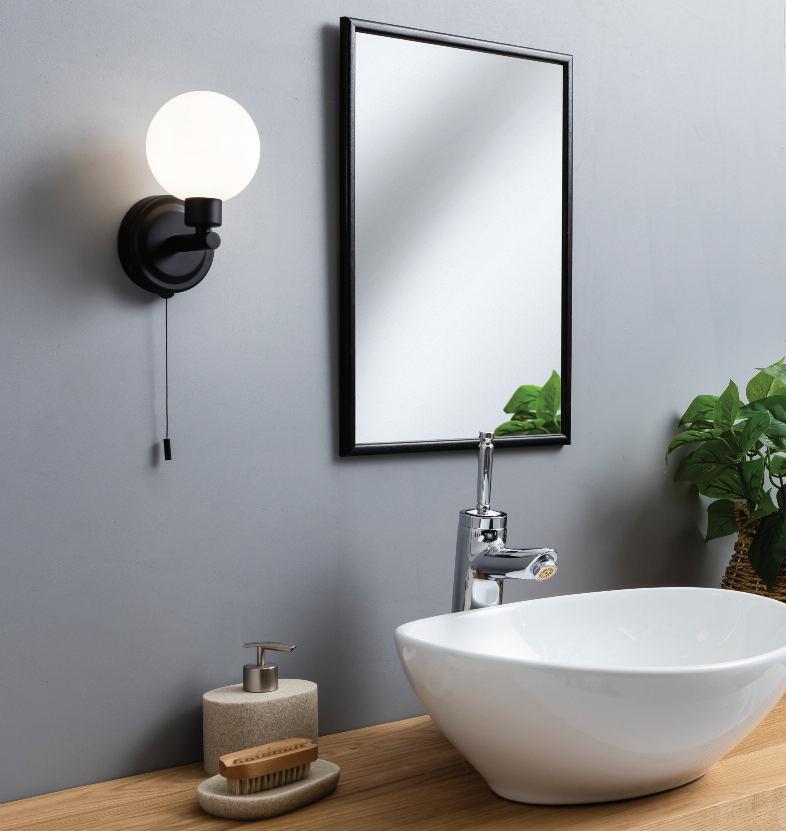
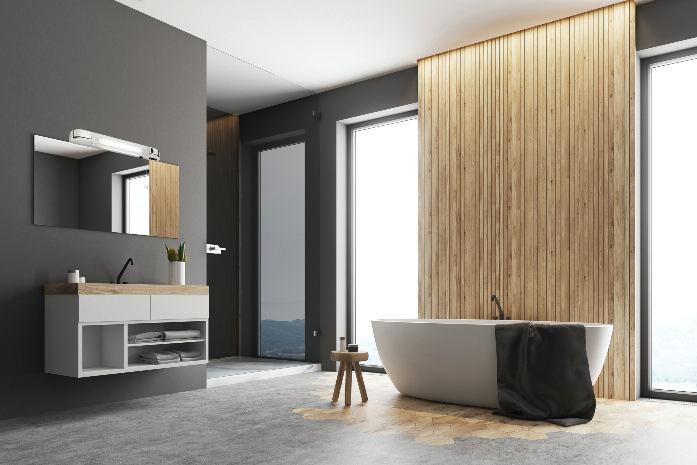
Traditionally, bathroom lighting has received the lion’s share of design attention Recessed spotlights, wall lights, illuminated mirrors and mood lighting are now standard fare, supported by a well-developed market of IP-rated luminaires that meet 18th Edition of the IET Wiring Regulations (BS 7671) and Part P of Building Regulations
By contrast, accessories such as switches, shaver sockets, extractor fans and integrated mirrors have historically been treated as functional afterthoughts –often supplied as basic white plastic boxes that meet minimum technical requirements but fall short on visual appeal
Matching the bathroom’s aesthetic to the rest of the house can be a key differentiator in a crowded market
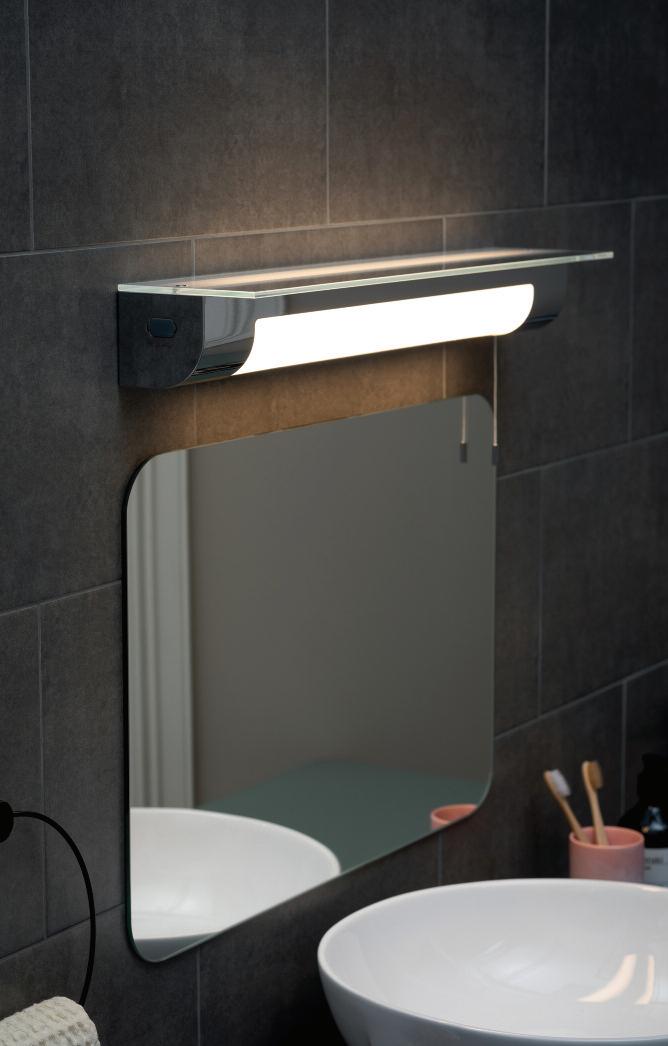
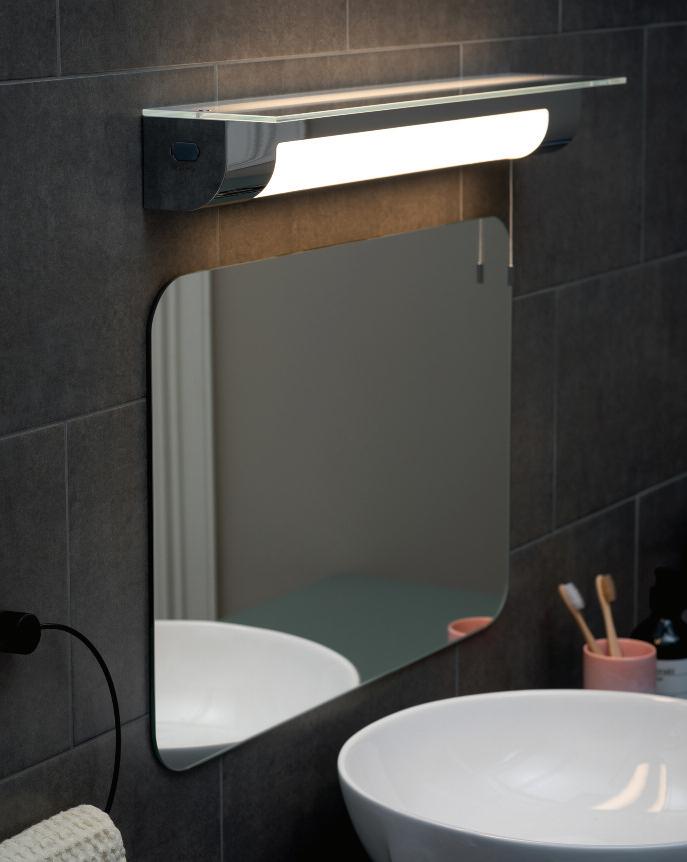
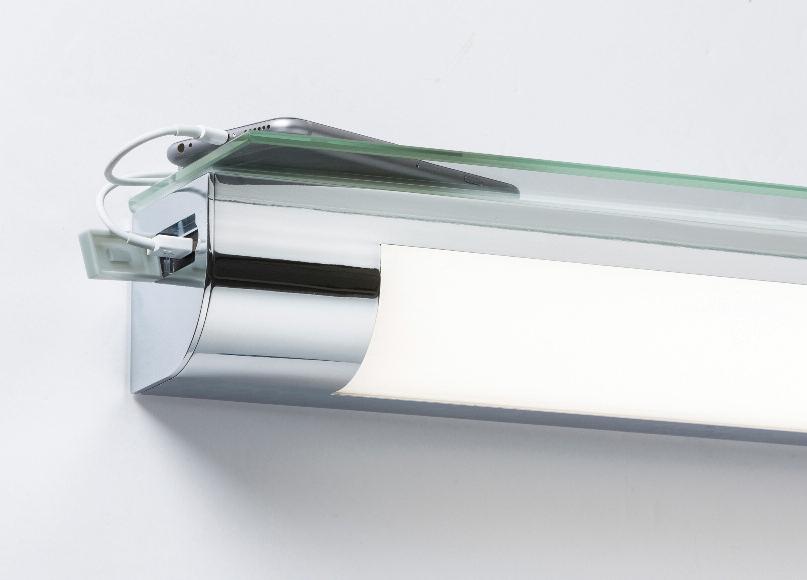
Modern homeowners demand convenience and connectivity. Integrating smart controls, dimmable LED drivers, occupancy sensors and USB chargers into bathroom accessories delivers futureproofed spaces that resonate with techsavvy buyers For example, USB outlets can now be embedded into illuminated mirrors or shaver lights – ideal for charging grooming devices and smartphones
That’s changing Just as living rooms and kitchens have embraced decorative finishes and smart technologies, bathrooms are now catching up Homeowners increasingly expect their bathrooms to reflect the same design sophistication as the rest of the home This shift is driving manufacturers to extend premium ranges –featuring screwless plates, metal finishes, USB charging and smart controls – into the bathroom space.
For developers, this evolution presents an opportunity A bathroom fitted with thoughtful, design-led accessories creates a perception of quality that directly supports property value
These enhancements not only elevate buyer perception of value but also reduce the need for aftermarket upgrades As pedigreed specifications, they help shorten snagging lists and minimise onsite variations, improving build efficiency and customer satisfaction
Compliance
Technical compliance remains nonnegotiable Bathrooms must be wired in accordance with the 18th Edition, with
particular attention to zoning requirements
Understanding bathroom zones is essential to ensure safety and avoid costly rework: Specifying accessories with the correct IP rating and RCD protection from the outset reduces site delays and simplifies sign-offs at inspection SELV (Safety Extra Low Voltage) products remain the only acceptable solution in Zone 1, while Zones 2 and 3 allow for greater flexibility with IP-rated devices
Sustainability and efficiency
Energy efficiency is another rising priority LED technology, smart sensors and lowenergy EC motors in extractor fans contribute to reduced household energy consumption and help developers meet Part L of the Building Regulations Moving away from short-life plastic fittings towards durable, efficient products aligns with both regulatory drivers and customer expectations
Design led
Manufacturers are responding with a wide array of design-led products.
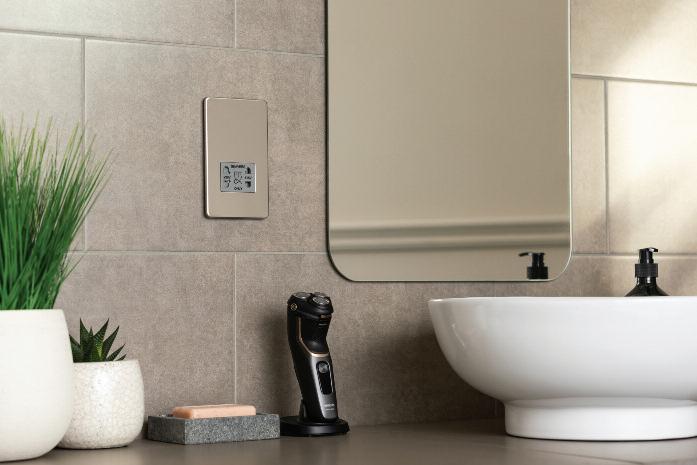
Knightsbridge, for instance, offers over 30 shaver socket models across screwless, flat plate and square edge designs in finishes ranging from brushed steel and polished brass to on-trend matt black This breadth of choice allows developers to differentiate between entry-level and premium plots while maintaining design consistency throughout the home
Innovative products such as curved shaver lights, discreetly incorporate dual USB chargers alongside traditional dual-voltage sockets – catering to both legacy grooming appliances and modern devices For younger buyers, the ability to charge devices in every room, including the bathroom, is an expectation rather than a luxury.
Extractor fans are also evolving Once purely functional, modern fans now feature LED backlighting, aesthetic finishes, and humidity-sensing functions Available in white, stainless steel, black and grey, these fans meet airflow performance standards while contributing positively to the overall design scheme
These added-value items present significant commercial opportunities
While basic white accessories offer limited margin, premium versions – especially those integrated into coordinated ranges – provide attractive upsell potential Developers specifying USB-equipped lighting or decorative extractor fans are not just meeting functional needs but also, to an extent, fulfilling lifestyle goals
The bathroom is no longer a utilitarian afterthought – it’s a lifestyle space
Upgrading electrical accessories is a move that enhances buyer appeal, supports premium pricing, and streamlines the build process By carefully specifying finishes, integrating smart functionality, and ensuring regulatory compliance, developers can deliver bathrooms that meet the expectations of today’s discerning homeowners
As the sector continues to focus on differentiation, customer satisfaction and compliance, bathroom electrical accessories are set to play an increasingly important role WAN T TO
FACING THE FUTURE
Housebuilders are facing a paradox. The UK government has urged them to ‘Get on and Build’, while British clay brick factory closures could, effectively, put a ‘block’ on building. However, there is a readily available alternative manufactured on UK soil – concrete facing bricks. So here, Tom Greening, Strategic Account Manager for Regional Housebuilders at Tobermore, explains what housebuilders should consider when specifying concrete facing bricks for their developments
Recent clay brick factory closures mean the UK market has lost between 300 million and 400 million bricks from its manufacturing capacity Those that are left are under pressure from capacity constraints and high energy prices. So, as the government wants home building to accelerate, developers could face ever-longer lead times and rising costs as clay bricks will need to be imported from the continent to meet demand These increased lead times could significantly impact the build programmes for new home developments
The problem is that delays won’t just eat into developers’ profits; they could result in hefty fines To drive the delivery of its targeted 1 5 million homes within the next five years, the UK government has announced new powers for local councils Delivery timeframes will become a condition of planning permission, and housebuilders will be compelled to submit annual reports showing build progress A ‘Delayed Homes Penalty’ worth thousands for each unbuilt home will be introduced to penalise developers who consistently fail to build on consented sites or use planning to trade land speculatively
The good news is that housebuilders can mitigate the risk of delays and safeguard material supply and prices simply by switching their specifications to concrete facing bricks
Concrete facing bricks offer design appeal
New developments must have kerb appeal to attract home buyers and may need to tie into the local plan by matching the style and colour of bricks used in the neighbourhood. So, aesthetics will always be a key specification factor for specifiers and developers
Concrete bricks are manufactured from cement, aggregates and iron-oxide pigments They come in a range of colours from warm reds and vibrant buffs to contemporary slate greys, with smooth or tumbled finishes This gives specifiers and developers a great variety to realise their design. They can choose concrete facing bricks that are virtually indistinguishable from traditional clay bricks and can opt to create a traditional finish, contemporary look or even cutting-edge designs
Concrete facing bricks offer excellent colour retention thanks to high-quality iron oxide pigments, ensuring they preserve
Concrete facing bricks increase the design appeal of new housing developments
Concrete facing bricks complement modern & traditional design aspirations
Facing bricks such as Tobermore’s Lansdowne are rumbled for a rustic appearance
their vibrant hues over time Most reputable manufacturers vapour cure their bricks for a minimum of 12 hours during the manufacturing process to help reduce efflorescence
Installation will support delivery programmes
When specifying a building material that is new to them, developers will need reassurance that it can be installed quickly and easily so that build schedules, quality standards and on-site work processes are met Although there are small differences between how clay and concrete bricks are laid, most bricklayers are proficient at both Reputable manufacturers also provide step-by-step installation guides and training, brick sample panels and on-site technical support to ensure a quick and smooth transition for those new to concrete facing bricks
In terms of the actual installation, while concrete bricks are slightly heavier than traditional clay, the difference is minimal In fact, their consistent sizing has been found to make it easier for bricklayers to achieve straight perpend joints, which improves laying speed As a result, tests have shown that concrete facing bricks can be laid as efficiently as clay, achieving lifts of 1 5 metres or 20 courses per day (BS 8000-3)
Cut levels of embodied carbon
Sustainability is an increasingly important factor in specifying construction materials, with the 2024 pilot version of the UK Net Zero Carbon Buildings Standard setting ambitious annual targets for the carbon footprint of new homes. To meet these,
developers must significantly reduce the levels of embodied carbon from construction materials
Some materials have higher levels of embodied carbon than others due to their manufacturing methods For example, the average levels of embodied carbon in clay bricks are 453 19kg CO2 per 1000 bricks This is 56% higher than the levels of CO2 in Tobermore’s Kingston Facing Bricks
To ascertain accurate sustainability credentials, always ask your manufacturer for the Environmental Product Declaration (EPD), which will include the specific levels of embodied carbon for that product.
Ensuring a reliable pipeline
To ensure that build programmes can be delivered on time and within budget, developers will need guarantees regarding the product pipeline Again, concrete facing bricks have an advantage over clay here Many UK manufacturers hold their core ranges in stock, and even if order volumes exceed readily available stock, concrete facing bricks can be produced at speed, so they can usually be delivered in line with site build schedules
In terms of price, concrete facing bricks are typically more cost-effective so, as a guide, they will cost around 10% less than clay, regardless of manufacturer.
With the government applying pressure on housebuilders to build new homes at pace under the risk of hefty penalties if they fail to deliver, it makes sense for housebuilders to secure their supply chain now Switching their specifications from clay bricks to concrete facing bricks makes good commercial sense Not only are they costeffective and readily available, but they also offer versatility of design, are easy to install and lower in embodied carbon
Housebuilders can mitigate risk of delays and safeguard material supply and prices by switching to concrete facing bricks
Tobermore’s Kingston facing bricks in Moorland create unique visual appeal
Concrete has comparable laying rates to clay, with lifts of 1 5 metres or 20 courses per day achievable (BS 8000-3)
AHEAD OF THE CURVE
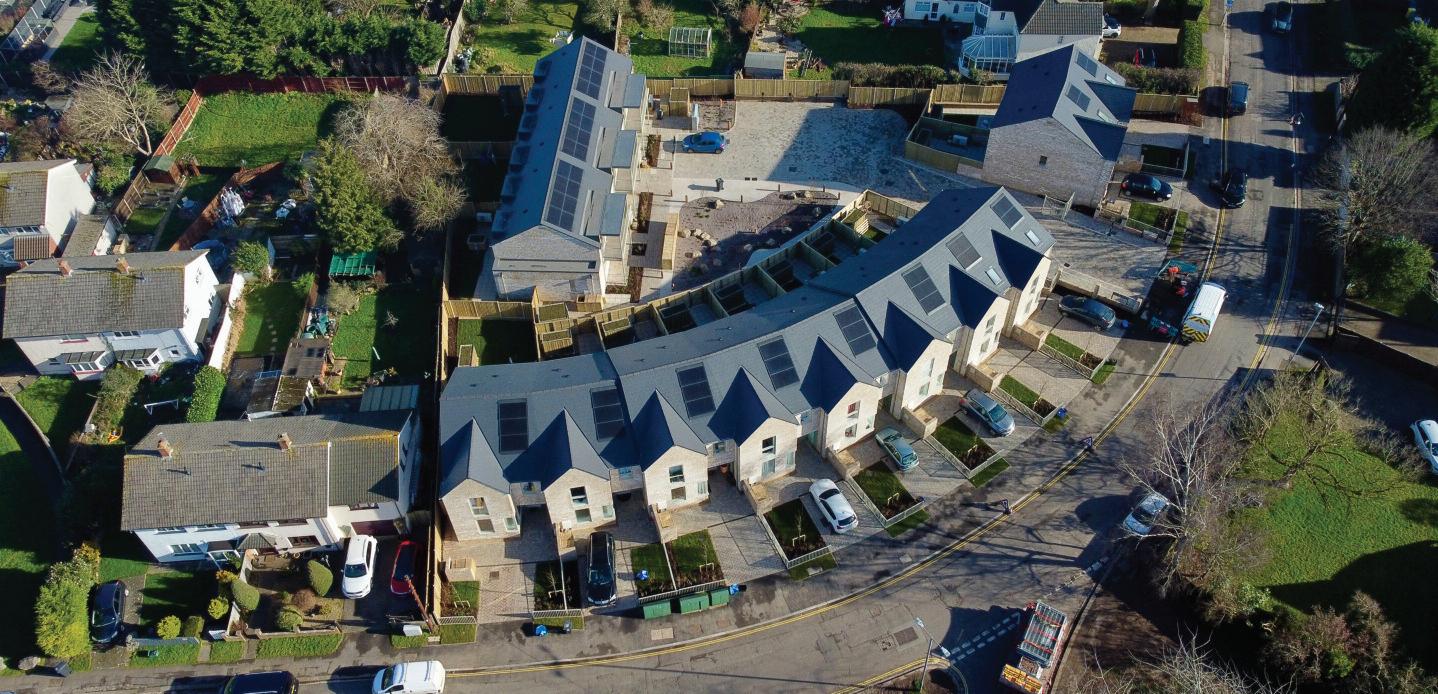
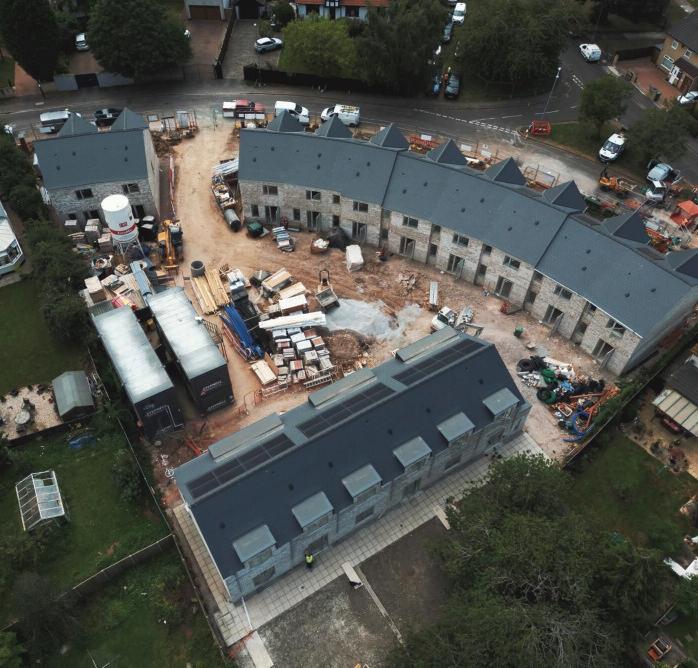
The New Kingsland development in Henbury, Bristol, demonstrates how thoughtful design innovation and timber technology can transform challenging brownfield sites into exemplary social housing that meets local planning constraints and ambitious climate targets.
Delivered by main contractor Stepnell for Bristol City Council, utilising Donaldson Timber Systems’ award-winning closed panel build system, Sigma® II, the 16-home scheme sets a benchmark for sustainable construction in the social housing sector
Sigma® II
Timber frame was specified from the outset due to its speed of construction and ability to achieve Building Regulation changes. During the project, the design team discovered that thanks to its highly innovative MMC technology, Sigma® II could meet all required performance standards without any additional complexities
Sigma® II can deliver near-Passivhaus standards of performance and sustainability, which assists with fuel poverty challenges – a vital factor for the whole-life costs and fabric performance of the home
The thermal performance enhancement at New Kingsland was particularly significant, with the timber build system achieving a 0 15 U-value through the external wall – a substantial improvement over the original masonry specification - improving the thermal performance of the homes
All 16 homes, comprising 10 houses and six cottage flats, were designed with
a fabric first approach using Sigma® II
This build system was particularly attractive to the client as it has achieved a range of independent, audited third-party accreditations, including BOPAS Plus, BBA, NHBC Accepts, and STA Gold Assure, delivering the confidence that it is durable and complies with building regulations and technical standards
Choosing timber also offered embodied carbon benefits, aligning directly with Bristol City Council's climate strategy objectives for a carbon-neutral, climate-resilient development
Construction efficiency gains were equally impressive. Using a timber build system reduced the overall build programme by five weeks compared to the masonry option This shorter build duration was of particular importance as the New Kingsland site was surrounded by occupied houses, so it vastly reduced the impact of the construction on the neighbours
Beyond performance and sustainability benefits, using Sigma® II also streamlined the construction process by reducing the number of trade interfaces, lowering the risk of delays and quality issues
Striking design
The site for this project was a small brownfield site in an attractive existing residential neighbourhood The challenge
was how to maximise accommodation on the site while providing a development that is sensitive to its location.
Using rectangular house designs on a site with a curved frontage was leading to inefficiencies and failing to make the most of the space available The architects overcame this challenge by developing a new house design where each house is wedge-shaped in plan. This allowed the houses to fit together to form a continuous crescent
The curved terrace reduces wasted space between buildings and provides a form that is thermally efficient with less energy loss through the walls. The result is also an attractive and striking addition to the area
The New Kingsland project showcases the benefit of utilising offsite timber build systems Donaldson Timber Systems was able to create bespoke frames to suit the unusual house design, while delivering superior levels of fabric performance, low u-values and speed of construction
The result exceeded client expectations, meeting all objectives in terms of design, speed and performance
The success of the project has resulted in five more projects for Donaldson Timber Systems with Stepnell and Bristol
City Council, while leaving a positive legacy in Henbury
Tom Russell, Director at Emmett Russell Architects, was impressed by the transformational impact of the Sigma® II system He said: "We have worked with Donaldson Timber Systems on two projects to deliver complex social housing projects
“It has been a revelation working with the team at Donaldson Timber Systems using the Sigma II closed panel system The system provides enhanced levels of thermal and air tightness performance, along with the reassurance of comprehensive third-party accreditation. The technical support provided by Donaldsons has been exceptional with real design rigour and attention to detail at each stage of the process ”
The New Kingsland project establishes a template for addressing multiple concurrent challenges facing the social housing sector: achieving net-zero performance standards, controlling construction costs and programmes, and delivering positive community outcomes
For an industry grappling with housing delivery targets, climate obligations, and cost pressures, these challenges need not be mutually exclusive
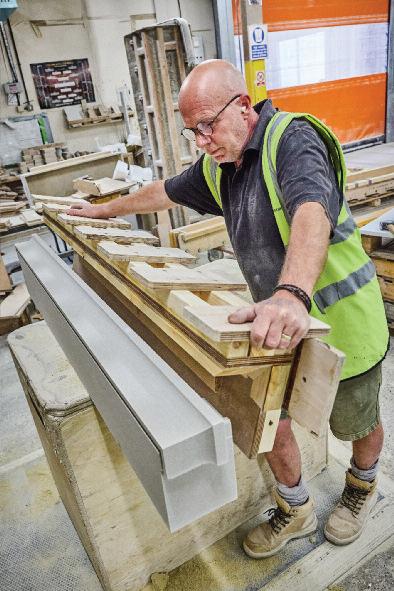
PHPD visits Haddonstone, the family-owned cast stone manufacturer
A ‘CAST’ AC T
The consistent use of stone in construction goes back longer than records themselves Indeed, from castles and pyramids to churches and cottages, it is a material that has always been as prized for its strength as its beauty This long history doesn’t just go for natural stone either Cast stone has a storied history of its own In fact, the use of cast stone as a structural material dates back thousands of years to ancient Rome, where pozzolanic cement was used along with other natural aggregates Many important buildings and structures were created using this new combination of building material, including the vaulted arches and gateways of Rome’s Colosseum and the large span dome of Athens’ Pantheon Now, in modern housebuilding, and as potential homeowners place increasing value on aesthetics, it seems to be having more and more of a resurgence
As David Barrow, Chairman of Haddonstone, former MD for over 40 years and son of the company’s founder, puts it: “Housebuilding in the 21st century is as much about creating quality places in which people want to live, as it is about the construction itself We are all encouraged to value sustainability, quality and 'kerb appeal', as much as functionality and space So, it’s no surprise that we are
seeing a resurgence of interest in beautiful, traditional and classical architecture This is where Haddonstone has always excelled – in manufacturing authentic and high-quality cast stonework for both new build properties, and in restoration and replication projects ”
Quality first
The first thing you’re struck by when visiting the East Haddon production site is the dedication to quality. Don’t expect to find an army of robots mass producing one simple template again and again Haddonstone, while embracing new tools of assistance, is most certainly a man-made operation The company’s offering comes in three different versions:
Haddonstone (semi-dry cast limestone)
This is a unique form of cast limestone, with a surface texture, feel and strength similar to Portland or natural limestone
The principal materials for this are limestone, white cement and sand, a mix which has a feel of damp sand or earth
This stone is packed into the mould either by hand or a pneumatic hand rammer No finishing is required with this material due to the quality of the mould manufacture and casting, resulting in a look that’s virtually indistinguishable from natural
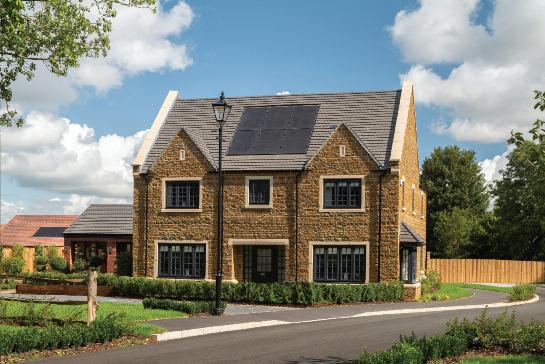
A private new-build residence in Barnet sporting Haddonstone pieces
David Barrow, Haddonstone’s outgoing Managing Director and new Chairman (l), with Nick Lantsber y, former Finance Director and now Managing Director
Haddonstone architectural stone used in P H Property Holdings’ Scholars Green development
quarried stone and weathers beautifully The vapour curing process gives the stone the equivalent of 14 days’ strength overnight, which results in reduced delivery lead times and improved handling
TecStone (wet-cast
limestone)
Denser than the standard Haddonstone, TecStone is made of much larger particle sizes and exhibits a higher water content Vapour curing isn’t required but hand finishing is necessary at the end to ensure a high quality product. The TecStone mix is poured into a mould This process gives a finish, once acid etched, much more akin to honed limestone It has a smooth and sealed surface, which makes it ideal for flooring, fireplaces, complex statuary, larger architectural products and contemporary designs where clients prefer a surface finish that does not weather quickly. Importantly, it can incorporate structural reinforcement and cast-in fixings
TecLite (fibre-reinforced)
This revolutionary cement-based material contains alkaliresistant glass fibre (Glass Fibre Reinforced Concrete) Although it closely resembles cast stone in appearance, the use of thin wall construction teamed with GRC/GFRC technology means the component weight is reduced by approximately two thirds when compared with similar Haddonstone and TecStone pieces. Robust and lightweight, TecLite can be used in conjunction with Haddonstone architectural components
Customer focus
Haddonstone boasts a vast and ever-growing catalogue of moulds (both for ornamental and architectural pieces) that are expertly maintained and remade when required Its real beauty, however, comes with its flexibility. The company has a fantastic team who are consistently working with housebuilders to create bespoke moulds for projects which are assembled in an impressive workshop of expert joiners. It’s this dedication to quality and a working relationship with customers that keeps housebuilders coming back for future builds
WAN T TO KNOW MORE?
For more information please visit www.rdr.link/dbf031
SOLAR K NOW-HOW
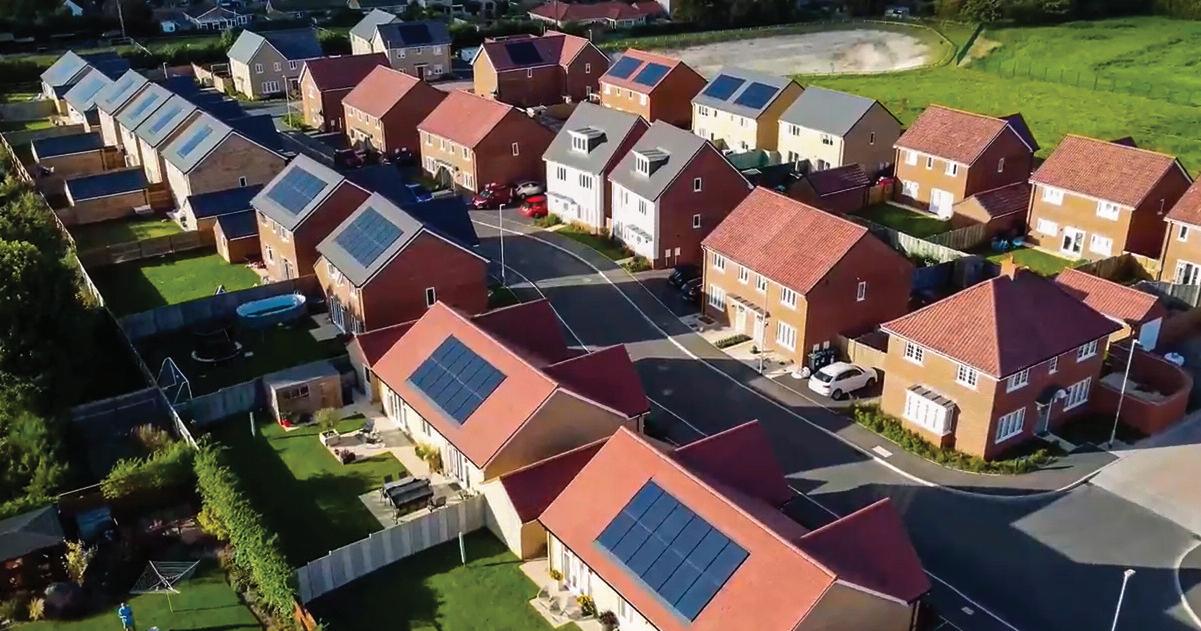
be published later this year, Kevin Taylor, Training and Technical Support Manager at Marley, is urging housebuilders and developers to prepare for an increase in the installation of solar PV panels on roofs.
The full FHS, to be released in the Autumn, is expected to mandate that most new homes will include solar PV on them
Previously, the target for solar PV installation was the equivalent of 40% of the building’s ground floor area or footprint If this could not be achieved, housebuilders and developers were able to opt out of installing solar panels entirely.
However, under the FHS, this exemption will be removed The clear message is that even two or three solar panels are better than none, with a small array potentially providing homeowners with around 25% of their annual energy needs
Only roofs where solar is not viable, such as those which are heavily shaded, out of the acceptable roof pitch range, or north facing, will be exempt
With solar PV demand increasing on the back of new legislation, it is important housebuilders and property developers now carefully assess upcoming projects, and the teams required to deliver them successfully
To further maximise onsite efficiencies and help reduce installation times, and as roof integrated solar PV systems become the norm, housebuilders should look to consider how roofing teams (charged with the installation of the roof, including solar PV panels), are required to work alongside electrical contractor teams This is important as while the Marley SolarTile® system is designed for straightforward installation, the final electrical connection requires a qualified electrician Electrical teams can also manage any further installation of inverters and battery storage solutions To further streamline the process, and ensure compliance with industry standards, housebuilders should also consider sourcing an MCS-approved installer or business capable of managing both the roofing and electrical aspects of the installation
By adopting a more holistic approach to project planning and collaboration, housebuilders have a significant opportunity to not only meet new legislative requirements but also position themselves as leaders in delivering efficient, future-ready homes
WAN T TO KNOW MORE?
For more information, visit Marley’s website at www.rdr.link/dbf032
Aiming to set a benchmark for the future of sustainable living in Scotland,
CARSLISLE® Construction
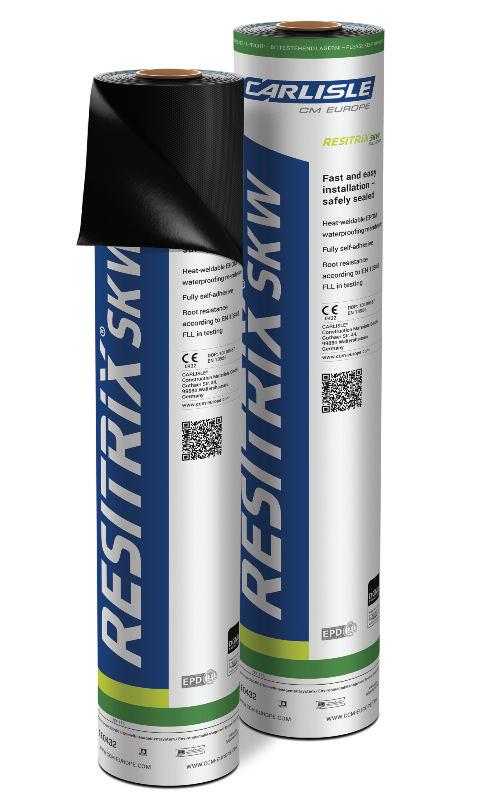
Materials walks through a St Andrews West development that combines contemporary styling and high-quality specification and made the most of the durable RESITRIX® roofing system
AND THAT’S FL AT!
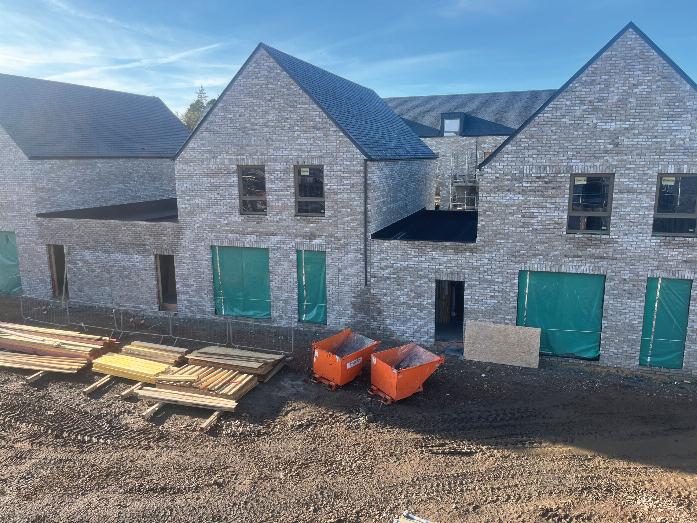
The phase 2 project, comprising 16 houses, 8 ‘Fisher Flats’ and 38 apartments, required a waterproofing system for the flat roof areas that aligns with the sustainability goals and aesthetics of the project, while delivering robust protection against the challenging east coast weather Roofing contractor, Site Roofing, proposed the RESITRIX® bitumen backed EPDM system from CARLISLE®
A seamless solution
Site Roofing are very experienced in installing RESITRIX® for prestigious projects in exposed climate conditions, and were confident in recommending the unique hybrid single ply system for the project
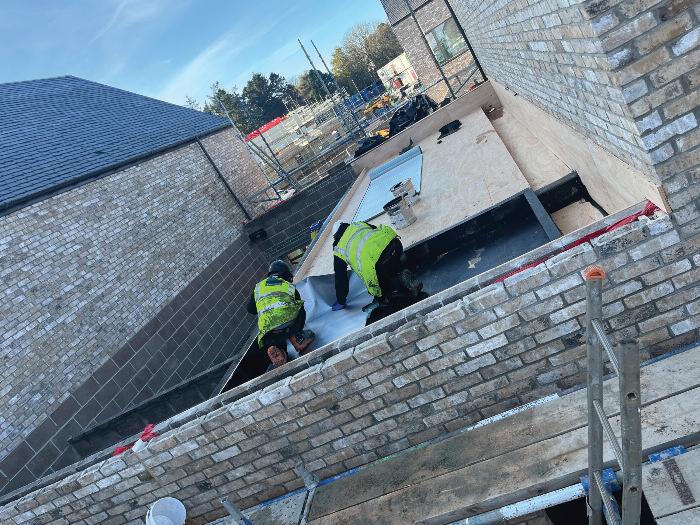
The waterproofing membrane combines the advantages of EPDM’s permanent elasticity with the durability of high-quality polymer-modified bitumen in a single membrane The self-adhesive membrane can be laid onto almost any substrate, offering flame-free installation The laps are sealed using hot air welding, reducing risk during the build phase, while providing a low maintenance service life of 50+ years
Working collaboratively with CARLISLE®, Site Roofing developed the wind loading calculations for the project aligned to the high windspeeds and gusts typical of the location The company also designed the complex detailing required for the interfaces between the flat roof areas and the pitched roof sections, working flexibly alongside the pitched roofing contractor to enable the project to progress
Confidence in the long-term durability of the roofing system was also essential RESITRIX® has excellent resistance to U/V, is not compromised by fluctuations in temperature, and is suitable for installation in the saline atmosphere of a coastal location like St Andrews
Complex details
The flat areas at St Andrews West form link roofs between pitched roof structures, and several dormers within the pitched roofs also needed to be waterproofed using the
roofing system The integrity of the interfaces between the flat and pitched roof sections was critical, and the combination of Site Roofing’s experience and the versatility of the RESITRIX® system meant that these complex details could be completed neatly and with reliable performance
Site Roofing coordinated works with the pitched roofing contractor to ensure a smooth programme and seamless finish, which was particularly crucial as the flat roof areas are visible from ground level, so any imperfection would be noticed easily
Supporting progress
With multiple trades working on the project at any one time, continued access to the flat roofs was non-negotiable. The membrane’s EPDM and bituminous composition delivered a robust yet flexible roof covering, providing a durable and puncture-resistant, walkable surface throughout the construction phase, allowing the continued progress of a complex programme involving both flat and pitched roof areas, along with other trades
Having all been trained at the CARLISLE® Academy, the Site Roofing team rose to the challenge, bringing a wealth of specific skills, in-depth knowledge, and experience to the project.
CARLISLE® provided consistent and proactive on-site support to ensure the RESITRIX® system was optimally tailored to the project's unique design challenges
Quality assured
With a collaborative and meticulous approach, the two were able to achieve the highest standards of precision and quality, resulting in watertight roof installations that adhere to best practice guidelines and meet the prestigious aesthetic requirements of the project
WAN T TO KNOW MORE?
For more information on RESITRIX® visit www.rdr.link/dbf033
MEDITE SMARTPLY explores its Framing the Future survey and reframing timber in the age of carbonconscious design
‘WOOD’ TO BE BACK
Once chosen largely for appearance or basic protection, external cladding now plays a more critical role in how homes perform From heat loss and maintenance to carbon impact and compliance, it’s fast becoming a key issue for specifiers
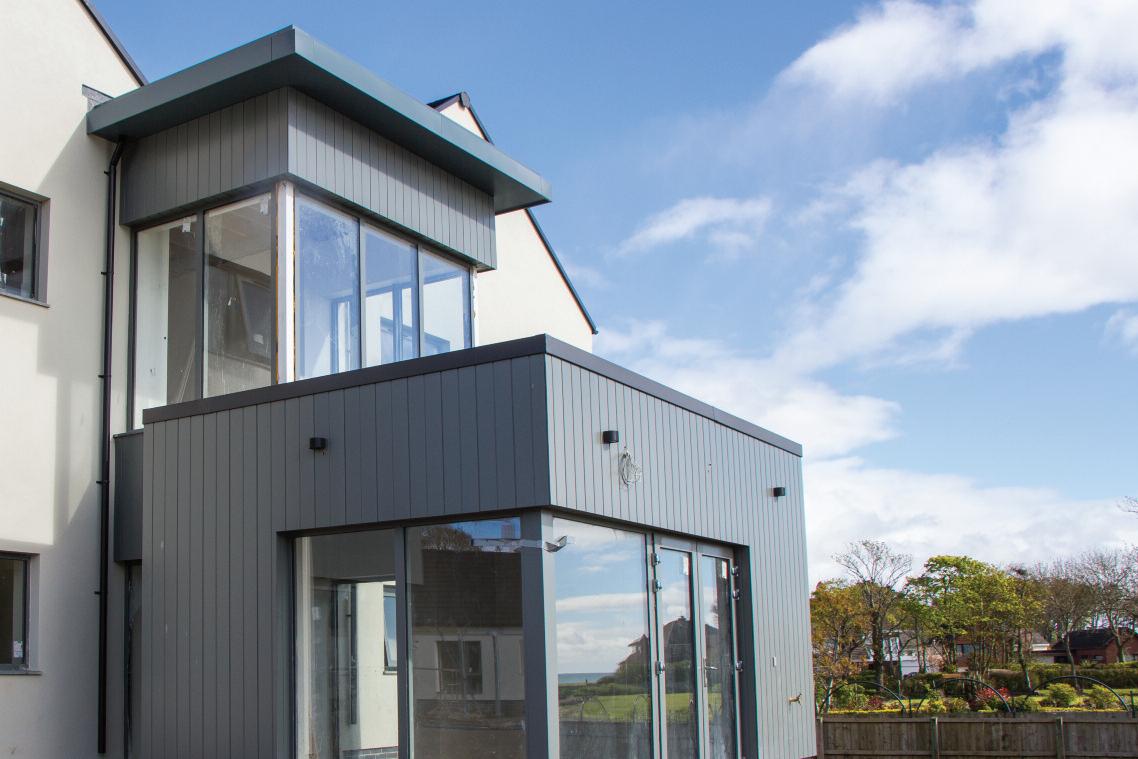
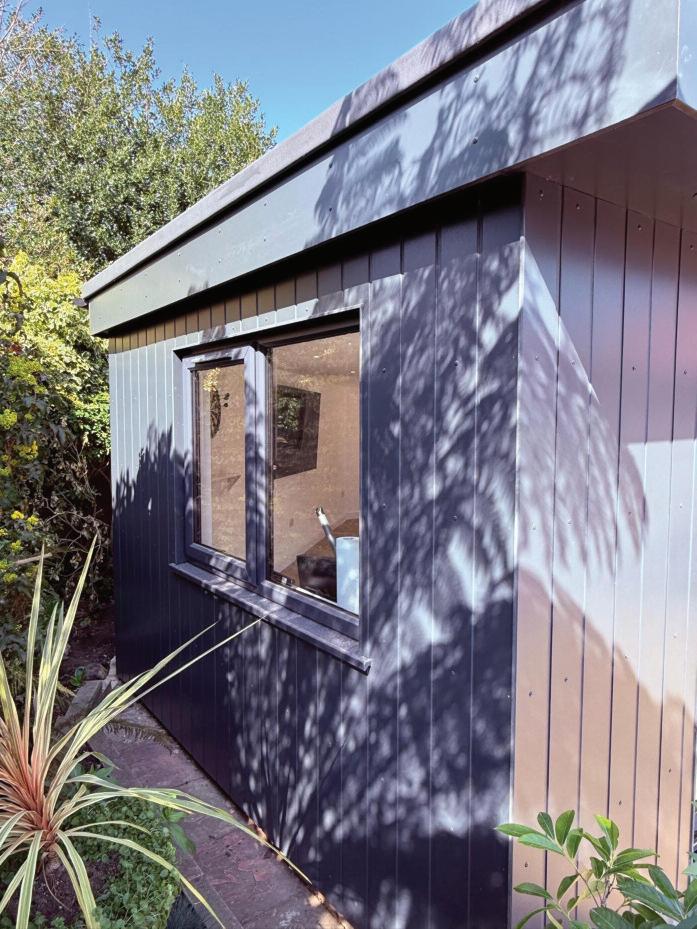
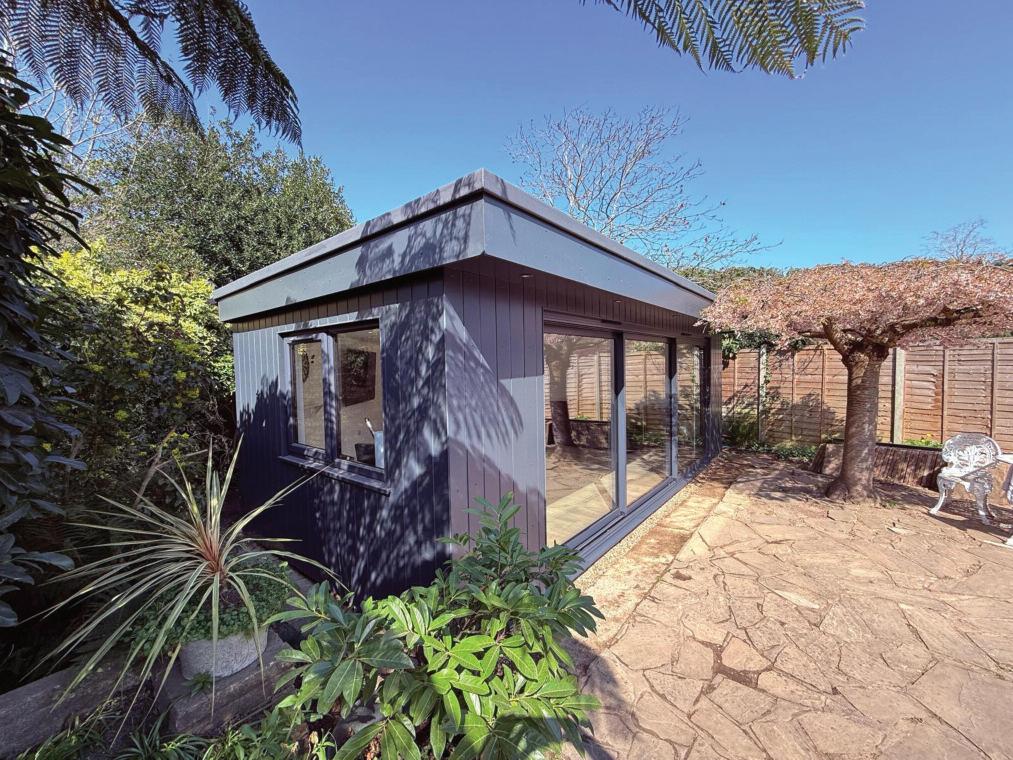
Timber is quietly returning to that conversation Once overlooked for exterior use due to concerns around durability and upkeep, recent advances in engineered timber have changed the game Improved stability, weather resistance, and long-term performance are making timber not just viable again – but, in many cases, the smarter choice for houses, garden rooms, sheds, and leisure homes
Part of that appeal lies in timber’s ability to offer a generally lower embodied carbon footprint than many cement-based or plastic-based alternatives. Responsibly sourced timber stores carbon during the tree’s growth, locking it into the product for the duration of its service life When combined with processes that extend that service life and reduce the need for frequent replacement, as with MEDITE TRICOYA EXTREME (MTX), the overall environmental profile strengthens further This balance of renewability, resource efficiency and long-term performance is helping engineered timber gain ground in projects where sustainability needs to be matched by durability and practicality
These are meaningful differences –particularly for developers looking to improve ESG performance or stay ahead of future reporting requirements MEDITE TRIMAX, a new cladding product made
from acetylated MEDITE TRICOYA EXTREME (MTX), falls firmly into this lowcarbon category compared to materials such as PVC Designed to combine the warmth of timber with the reliability of a manufactured board, it aims to deliver the kind of long-life performance and peace of mind that today’s housebuilders need.
MEDITE SMARTPLY’s recent Framing the Future survey, a nationwide study of timber frame manufacturers delivered alongside the Structural Timber Association, captured the key technical and regulatory pressures shaping specification decisions
Respondents identified a range of factors influencing how they approach the Future Homes Standard, from thermal performance and wall design to moisture control, airtightness and overheating – all of which underline the need for well-considered material choices in the building fabric.
With those factors in mind, specifiers are assessing cladding on dependable performance and upkeep rather than appearance alone TRIMAX is designed to provide high durability, dimensional stability and low maintenance finishing in exposed conditions. While it is not a moisture management solution for the wider wall build-up, it offers a robust, long-life façade option that aligns with the practical priorities highlighted by the survey
A recent UK homeowner survey found that durability and energy efficiency were the top two drivers behind cladding selection, while aesthetics – though still important – ranked lower
Professional priorities are following suit A 2024 Builder Practices Survey
found that developers are prioritising products that reduce site labour, enhance energy performance, and deliver long-term value without intensive maintenance cycles Solutions like TRIMAX – which comes primed or fully finished, and in double shiplap or double tongue and V-groove profiles – fits comfortably into that brief
Meanwhile, the legislative backdrop continues to tighten as the Future Homes Standard looms, with final regulations expected by the end of 2025 While embodied carbon is not yet formally regulated, the government has committed to consulting separately on that topic, setting a clear direction of travel for low-carbon materials and transparent lifecycle reporting
Developers are now faced with a narrowing window to specify systems that can meet tomorrow’s standards in design,
performance, durability, and assurance That makes the case for engineered timber stronger than ever
TRIMAX is part of that new standard Being manufactured from MTX, it offers exceptional resistance to rot, fungal decay, and dimensional movement. It offers a long-life alternative to composite, cement, or plastic cladding without compromising on sustainability or aesthetic choice
Timber is no longer the fragile façade material of the past As pressure builds from climate policy, insurance scrutiny, and homeowner expectations, the industry is rediscovering what engineered wood panels can achieve. Products like TRIMAX prove that with the right engineering and the right backing, timber cladding can go beyond just meeting standards – it can help to shape it
www.rdr.link/dbf034
Why SME builders matter – and how manufacturers can support them. Jenny Smith-Andrews of aircrete manufacturer
H+H gives a view on support for the smaller players in the housebuilding sector
IN SMALL PACKAGES
Our aircrete blocks are a staple of UK housebuilding. We supply the major housebuilders but we also support regional and smaller businesses This gives us a good perspective across the working habits of different housebuilding enterprises – there are some stark differences.
The volume housebuilders are just that: Volume This gives them huge power in the market but, strangely, their success also seems to entrench working practices that build in risk for the industry as a whole
We can see for example, that it’s typically the smaller companies that invest in building skills for the future According to the Federation of Master Builders, SME enterprises train 8 out of 10 construction apprentices
Innovation and the SME
In our experience, it also tends to be the SMEs who are more likely to try new methods, prepared to investigate innovations that change the very traditional ways that homes are currently built
Although at first sight H+H is rooted in traditional building, we have repeatedly introduced innovative methods that could transform the speed and efficiency with which new homes are constructed Typically it has been the smaller companies who are prepared to work with our technical teams and our on-site training support to investigate how these innovations could be employed
Our most recent introduction is the Vertical Wall Panel. It’s still aircrete, with all the performance advantages that we advocate, but in storey-high panel form Used with pre-fabricated floors and roof structures, these panels allow for the structural shell of a house to be completed on site in less than one week.
We saw this innovation as being perfect for the volume housebuilder –able to build standard house designs quickly We thought it would be particularly appealing for their Section 106 homes, where speed of build is not driven by off-plan private purchases.
While we are making inroads into the volume housebuilders with this product, we have found the smaller housebuilders to be more immediately receptive to the concept of changing their construction model
A volume solution working for a regional builder
An example of this is Karm Homes, a regional housebuilder typically completing around 15 units per year Director, Martin Keenes is always looking for ways to build more efficiently and cost-effectively and was impressed by the degree of prefabrication provided by the VWPs He has recently used them in a project of just two chalet-style homes on a small site in Dorset
For this site, the panels were supplied as part of a complete i-House system through Roofspace Solutions In this model,
the entire fabric package, including walls, floors and roof structure is provided and assembled on site It’s super-fast and takes a lot of the risk away from the developer, who can concentrate on the internal design and external façade of the structure
Martin Keenes, Director of Karm Homes, says his team enjoys building with the Vertical Wall Panels, and feels it is an ideal system for smaller housebuilders developing niche sites Where they can, they ensure the floorplate of each home is designed around the 600mm width of the Vertical Wall Panels, which allows them to reduce cuts, wastage, and time
“We have looked at other MMC systems, such as SIPs, but found them to be more expensive than this masonry solution, plus the increased fire risk and insurance premiums associated with a timber build.
“We use local architects to design our houses When we suggest H+H Vertical Wall Panels to them, they’re sometimes unaware of the option However, once they’ve seen the system in action, they’re completely converted We can’t understand why more companies are not using this solution ”
In our experience this is not an atypical reaction, and very welcome Any manufacturer will need receptive customers to support the introduction of technical innovations It’s partly about testing the model and partly about ensuring that production volume can grow in line with demand It’s down to us to support the innovative customers prepared to try new ideas
Support
where it’s needed
In our case this support is about providing technical expertise On-site training of operatives is a no-brainer, while helping customers with challenging regulatory changes is also important For example, meeting the thermal performance standards of the current Approved Document L and the imminent Future Homes Standard
For these standards, the thermal performance of external walls is a fundamental requirement, but the way
such performance is measured and evaluated changes, requiring complex calculations to demonstrate that the chosen design meets the standard An issue in this regard is the calculation of thermal linear bridging, typically characterised by heat loss at junctions
Our response to this challenge is to produce literally hundreds of heat loss calculations to cover a comprehensive range of design and material choices. These calculations are available for free download from our website
In the same vein we provide standard robust details to help with calculations of acoustic performance (relating to part E) and our Environmental Product Declarations now give embodied carbon calculations to help builders provide the whole life carbon figures increasingly required by clients.
The biggest housebuilders have the resources and the in-house teams to cover much of this work, but we see the value in a more diverse industry and are happy to work with the smaller developers, providing technical support where necessary
Government support for SMEs
It is from this position that we welcomed the recent Government announcements around more support for smaller housebuilders. Streamlining of planning, exemptions from Building Safety Act levy and biodiversity net gain requirements, alongside measures to help with access to funding and credit are all welcome However, the smaller developers will need more than this – and genuine collaboration with manufacturers is one step that could make a material difference
MYTHBUSTING
While the government is focused on eradicating the ‘blockers to building’, the housebuilding industry’s preoccupation with brick and block masonry construction may start to stand in the way of the required speed of delivery. Here, Brian Adams, Senior Director of Sales and Business Development at Arclin, explores some of the myths that might be ‘blocking’ housebuilders from building homes with timber
The government has set itself an ambitious target of building 1 5 million homes over the next parliamentary term It’s keen to succeed where successive governments have failed, so is currently overhauling the planning process and taking steps to close the construction skills gap This means the majority of new home delivery will be weighted towards the latter end of its fiveyear term, so housebuilders must be ready to deliver homes at speed and at scale Timber is widely seen as part of the solution to speed up the delivery of new, sustainable homes For example, the government’s Timber in construction roadmap, updated in 2025, advocates the use of wood in construction Currently, however, just 23% of new homes in England are built using timber frame solutions The problem seems to be that certain myths perpetuate, leading to timber frame building being perceived poorly in comparison to brick and block
Myth: Timber is a fire risk
Fact: Questions around the combustibility and fire safety of timber can be traced back to the Great Fire of London in 1666 Today though, timber is as safe to build with as other materials When it burns, it does so at a predictable rate and charcoal forms on the surface, protecting and insulating the core The wood itself is treated with chemicals to increase its fire resistance rating while construction methods are designed to protect the timber from direct fire sources As a result, modern timber frame buildings meet and surpass the UK’s stringent fire safety standards, such as Part B Dwellings (England)
Myth: Masonry construction is more energy efficient
Fact: This myth has come about because of thermal mass, essentially how a material absorbs and stores heat At a basic level bricks have greater thermal mass than wood, although timber is also an extremely good insulant However, where energy efficiency is concerned, focusing on thermal mass alone is outdated – the priority now is air tightness and very high levels of insulation Timber offers ease of construction and higher levels of precision than masonry, especially if offsite construction methods are used, which reduces thermal bridging and improves air tightness Timber also allows for more design flexibility than masonry construction This means that timber frame buildings can be manufactured with wider cavities, which can be filled with greater levels of insulation to meet increasingly strict energy efficiency standards As a result, timber frame is a popular choice for highly energy efficient properties that meet Passivhaus standards
Myth: Wet weather during construction poses a risk to timber frame homes
Fact: Yes, moisture can cause wood to rot. But if it were a common problem then Scotland, arguably known for some of the wettest weather in the UK, wouldn’t build 92% of its homes from timber. The key is to protect the wood and create a weathertight shell as quickly as possible New technology means that OSB sheathing boards can now be fused with integrated weather resistant barriers, such as Arclin’s Arctek® Dryshell™ This means that timber frame walls, SIP systems and cassettes are delivered to site with a
highly durable, weather resistant layer already in place As a result, they deliver a weather-tight shell more quickly, overcoming the risk of moisture penetrating timber panels during construction Alongside this, their vapour permeability allows incidental vapour to escape the building envelope to avoid interstitial condensation
Myth: Masonry construction costs less to build
Fact: Timber frame construction is often cheaper than traditional brick and block methods One of the biggest factors behind this is speed of programming Offsite manufacturing means that developers can build homes much faster with less skilled labour It also reduces onsite waste and increases precision, ensuring better performance standards
The faster completion time also leads to quicker returns on investment and allows housebuilders to move onto their next development sooner
So, as the UK races to meet its ambitious housing targets, it’s clear that clinging to outdated myths around timber construction could hinder progress Timber is a safe and energy-efficient building material that offers significant advantages in terms of speed, cost and sustainability What’s more, combining timber with new technologies, such as integrated weather resistant barriers, ensures that timber frame products deliver long term durability and performance. Ultimately, if housebuilders are to keep pace with government goals, then it’s time to remove the block on timber and recognise that it has a proven role in the future of UK housing
GREAT EXPECTATIONS
Jo Edwards, Channel
Director – Residential and Trade at Ideal Standard explores the evolution of bathroom furniture –function, flexibility, and personalisation
With smaller bathrooms becoming more common, the importance of furniture for potential homeowners has increased, as they look to keep these spaces clutter free This increased demand for furniture has coincided with a desire for greater personalisation, with colour and design variety playing a key part.
Cabin(et) fever
Homeowners are increasingly looking for new homes and developments that make the most of their bathroom, with furniture like wall-mounted vanities, corner units, and mirrored cabinets that offer more than just storage When specified thoughtfully, these pieces also add to the overall design and functionality of the space
Manufacturers have responded to the spike in demand by diversifying their portfolios, introducing new colours and launching furniture ranges that seamlessly combine practicality with aesthetics
Collections designed for small spaces provide an important starting point for designers, specifiers, and installers as the footprint of modern homes continues to shrink These space-saving ranges often feature some of the most innovative designs, both aesthetically and practically, offering solutions that housebuilders can leverage A great example is Ideal Standard's i life S range, which blends sleek, modern designs with functionality, making bathrooms feel more spacious while remaining practical
Function AND form
Regardless of room size, bathroom furniture is no longer just about function, it plays a vital role in creating a stylish, cohesive space
Bathrooms have evolved from purely functional spaces to personal retreats, and furniture now plays a critical role in creating a cohesive, attractive design that complements the homeowner's style
Whether the desired style is modern and streamlined or traditional and bespoke, providing a range of options can help differentiate a property and enhance its market value
In fact, nearly one in five homeowners now opt for semi-custom or fully custom vanity units, with colour playing a key role in creating personalised bathrooms
Whether it’s bold, vibrant hues or soft, neutral tones, colour has become a powerful tool for self-expression in bathroom design Given their large surface areas, furniture pieces serve as an ideal canvas for adding a splash of colour
a l i t y m a t e r i a l s ,
t h e C o n c a r a n g e a l l o w s h o u s e b u i l d e r s
t o c r e a t e u n i q u e , s t y l i s h b a t h r o o m s t h a t
s e a m l e s s l y c o m b i n e p r a c t i c a l i t y w i t h
p e r s o n a l i s a t i o n F o r h o u s e b u i l d e r s ,
o f f e r i n g c u s t o m i s a b l e o p t i o n s – w h e t h e r
t h r o u g h a c h o i c e o f f i n i s h e s , s t o r a g e
c o n f i g u r a t i o n s , o r a d d i t i o n a l f e a t u r e s
l i k e i n t e g r a t e d l i g h t i n g a n d m i r r o r s – c a n
e n h a n c e t h e a p p e a l o f a s p a c e t o
p o t e n t i a l h o m e o w n e r s
Accessing the full portfolio
As consumer demand for personalised, design-driven bathroom furniture continues to rise, there’s also a growing need for a more streamlined specification process for professionals
With manufacturers offering total bathroom solutions, including a wide range of flexible configurations and readymade options, housebuilders and developers can source all their products from a single supplier, simplifying the process and ensuring cohesive designs throughout the bathroom
Opting for products designed to work seamlessly together from a single manufacturer gives designers and specifiers the freedom to create unique, cohesive bathroom spaces without complicating procurement or installation
This approach not only streamlines the entire process but also delivers cost and time savings for housebuilders. For installers, it reduces complexity while ensuring dedicated technical support for a smooth, efficient installation. With the Singular™ process from Ideal Standard,
professionals can access a wide array of bathroom solutions from a single supplier and point of contact With the right tools, housebuilders can offer bathrooms that meet practical needs while exceeding design expectations
Meeting demands
The evolution of bathroom furniture into a central design feature mirrors the broader trends of personalisation, efficiency, and style Housebuilders must stay ahead of these shifts by providing versatile solutions that cater to modern homeowners' demands
By embracing flexible offerings and simplifying the specification process, housebuilders can ensure they meet the changing expectations of today’s consumers, creating bathrooms that are both functional and visually striking
To learn more about Ideal Standard’s Singular™ philosophy, visit www.rdr.link/dbf037
ROOFING MEMBRANE
Burton Roofing Merchants announces the launch of its exclusive Burton Blue branded membranes, developed in collaboration with industry leader Don & Low. The RoofTX 125 and RoofTX Maxi 170 membranes offer advanced technical performance to the UK roofing market, with their number designations symbolising the mass per g/m² They are low-resistance vapourpermeable air barrier underlays designed for durability, flexibility, and easy installation
For more information go to www.rdr.link/dbf038
OPEN-SPEC DRAINAGE
A brand of underground drainage products to better support contractors who require open-spec solutions has been launched by Civils & Lintels, part of the Huws Gray group of companies Centurion, as the range is known, is comprised of a full range of 110mm and 160mm pipes and fittings, plus shallow inspection chambers to suit It has been developed as the ideal ‘open specification’ solution where quality and value remain paramount. For more information go to www.rdr.link/dbf039
A
D V E R T I S E M E N T I N D E X
A Proctor Group Ltd
www rdr link/DBF100
Domus Ventilation
www rdr link/DBF101
H+H UK Ltd
www rdr link/DBF102
Move Reports UK
www.rdr.link/DBF103
Polypipe
www rdr link/DBF104
Professional BUILDER LIVE
www rdr link/DBF105
Rocket Door Frames
www rdr link/DBF106
Rolec Services Ltd
www rdr link/DBF107
Superglass Insulation Ltd
www rdr link/DBF108
Tarmac
www rdr link/DBF109
Wavin
www rdr link/DBF110
GLASS ROLLER DEFLECTOR PANEL
Designed to create a larger showering area and to prevent overspray from splashing out of the enclosure, Kudos has introduced a glass roller deflector panel for its range of Ultimate showering panels The roller deflector is 500mm wide and comes in both 8mm and 10mm toughened safety glass. Available with fittings in four coloured finishes, chrome, matt black, brushed brass and brushed nickel, the panel is 1985mm in height and the glass is treated with Lifeshield for easy cleaning
For more information go to www.rdr.link/dbf040
THE INSIDE VIEW: HOW THE FUTURE HOMES STANDARD IMPACTS INTERIOR DESIGN
With the publication of the Future Homes Standard due in Autumn, this represents an important step in the UK’s transition towards building zero carbon homes. But what are the implications of low carbon technology on showhome design? Megan Doherty, senior client account manager, Edward Thomas Interiors shares her insight…
The Future Homes Standard (FHS) will help housebuilders and developers plan and invest in low carbon technology to reduce emissions and make sustainable living more achievable for all
But as more of these technologies are integrated into new homes, how do they influence interior design?
When briefing an interior design partner, housebuilders and developers are advised to detail what renewables are included, where they are located, and the product specification/size From a design perspective, this means we can plan and adapt a room’s appearance accordingly For example, where double panel or double height radiators are used, these can limit the space so we must be more creative, perhaps adding decorative elements such as covers or shelving.
Conversely, where air source heat pumps are installed with underfloor heating, we don’t have to consider radiator positions, which gives more design flexibility This is especially useful in bathrooms and ensuites where extra storage space is always welcome!
Having these early conversations with your design team can help avoid frustrations for homeowners. Something as simple as advising on the position of a smart heating thermostat to ensure it doesn’t create an unwanted focal point shows attention to detail that can make a real difference
These briefings are equally important for highlighting any house type or layout changes The drive for energy efficiency
means some properties now have smaller windows In these homes, maximising natural light is essential so talk to your designers about practical solutions These might include deliberately positioning mirrors opposite light sources for reflection, using light fabrics such as voiles, or prioritising additional lighting. Actually, lighting is probably one of the most impacted areas of design Recessed downlighters or spotlights used to feature prominently in new homes and were great for creating bright, welcoming spaces with plenty of warmth But unfortunately, they’re not energy efficient and their use is now very much limited to kitchens and bathrooms Of course, this isn’t a deterrent for us, and we’ve risen to the challenge by sourcing fabulous alternatives such as rechargeable wall lights or pendant points to ensure the same impact!
Much of what the FHS will mandate is aligning with modern living trends and our collective commitment to future proof our homes I read recently that UK homeowners will only move on average once every 20 years, so our homes and their interiors must be more adaptable. Showhomes should display where renewables leave room for creativity and flexibility, highlighting where thoughtful design and energy efficiency go hand in hand
WAN T TO KNOW MORE? For more information go to www.rdr.link/dbf041