The importance of housing, the built environment and the construction sector has been exemplified by just how quickly our new government announced its policy position on the issue
The measure that has been met with broad approval from across the construction industry is the plan, laid out with much fanfare, in the King’s Speech to build 1 5 million new homes over the next few years
Since then, there has been a raft of ministers who’ve added to the debate, reinforcing a commitment to get Britain building
The new targets will mean councils must boost housebuilding in areas most in need, helping more people to buy their own homes. There will be a review of the greenbelt to identify ‘grey belt’ land to meet local housing needs, with ‘golden rules’ driving 50% delivery of affordable homes
Under the new system every area must have local housing plans – with the government ready to take action if areas fall off track
Targets are, of course, nothing new – we’ve been very good at setting them in recent years but on the other, achieving side of the equation there has been rather less success.
Nonetheless, NAPIT Managing Director, Frank Bertie, has responded to the plans with optimism, citing the need for a co-ordinated approach to achieving the UK’s goals: “The government has said it wants to get Britain building again and electrify the energy system which will need more heat pumps, solar panels and electric vehicle chargers
“Taken together these are very encouraging measures which will all require a highly skilled and accredited workforce to deliver the necessary changes and make the most of those opportunities I hope that government will work with industry schemes and training providers to ensure the ambitious targets in the new bills can be met ”
It appears that solar PV skills will be in high demand moving forwards with Energy Secretary, Ed Miliband, unveiling plans for a “solar rooftop revolution” which aims to see more homes fitted with solar panels. It’s expected that government will work with
industry to make it easier to buy new homes with panels installed, or install them on existing ones
There are also reports that Ministers are looking at bringing in solar-related standards for new-build properties from next year And, with new houses likely to be built using technologies such as heat pumps, solar panels and electric vehicle charge points to ensure efficiency and drive the UK to meet its net zero targets, we’re further reminded of the need for a pipeline of sufficiently skilled installers who can work across the electrical and microgeneration sectors
“The government has said it wants to get Britain building again and electrify the energy system which will need more heat pumps, solar panels and EV chargers.”
On the well-documented skills crisis, clearly there will need to be a focus on developing the skills not just for the implementation of modern technologies in new build housing, but also for high-quality retrofitting of 27 million existing homes to make them healthier, warmer and more sustainable
As always, the electrical sector, and the professionals operating within it, will have a significant part to play in the success of these potential targets. It’s now up to government, training providers and potential employers to work more collaboratively if we’re to see the numbers improve to the levels required
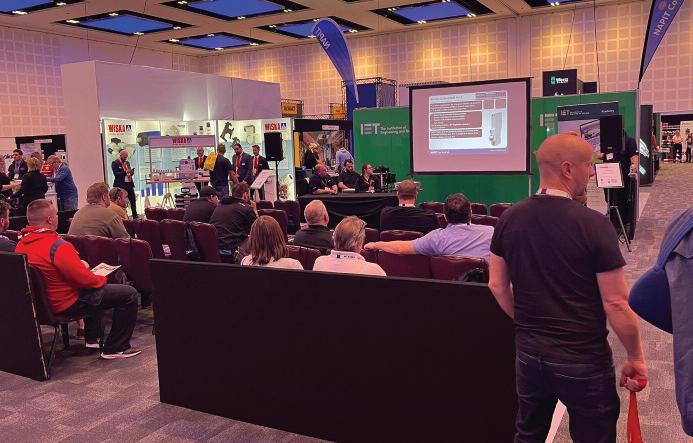
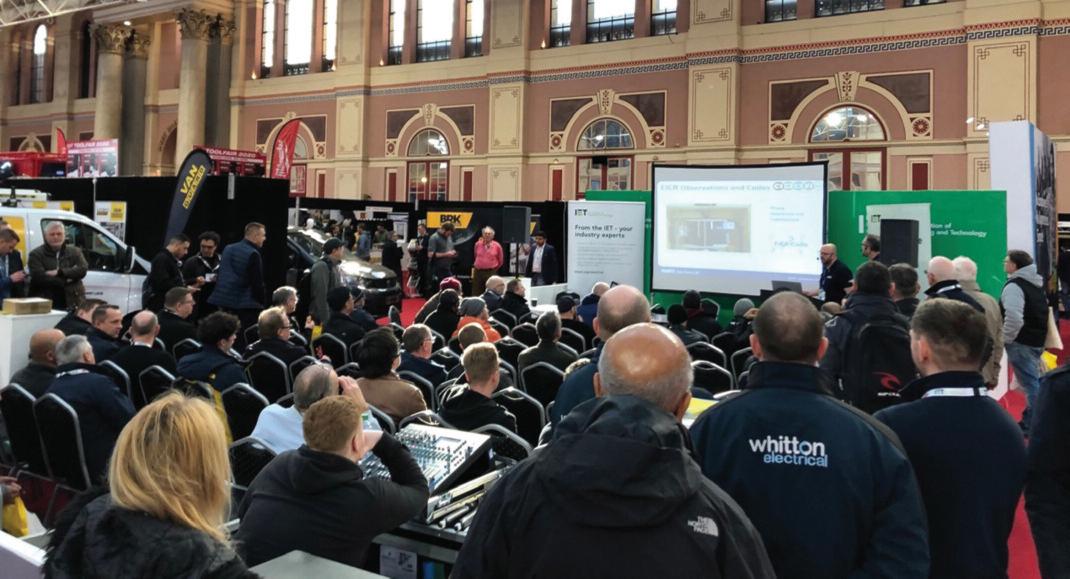
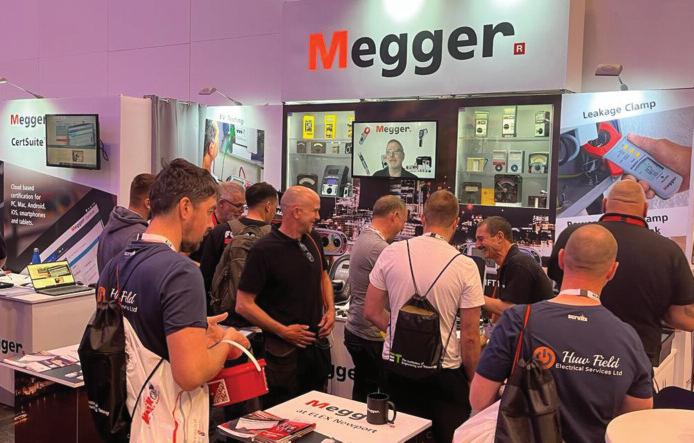
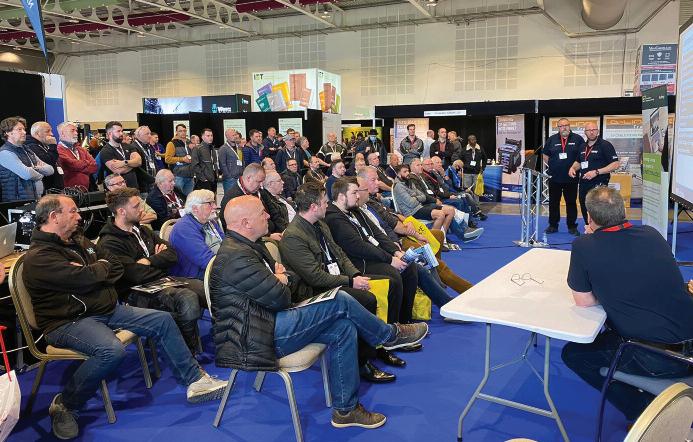
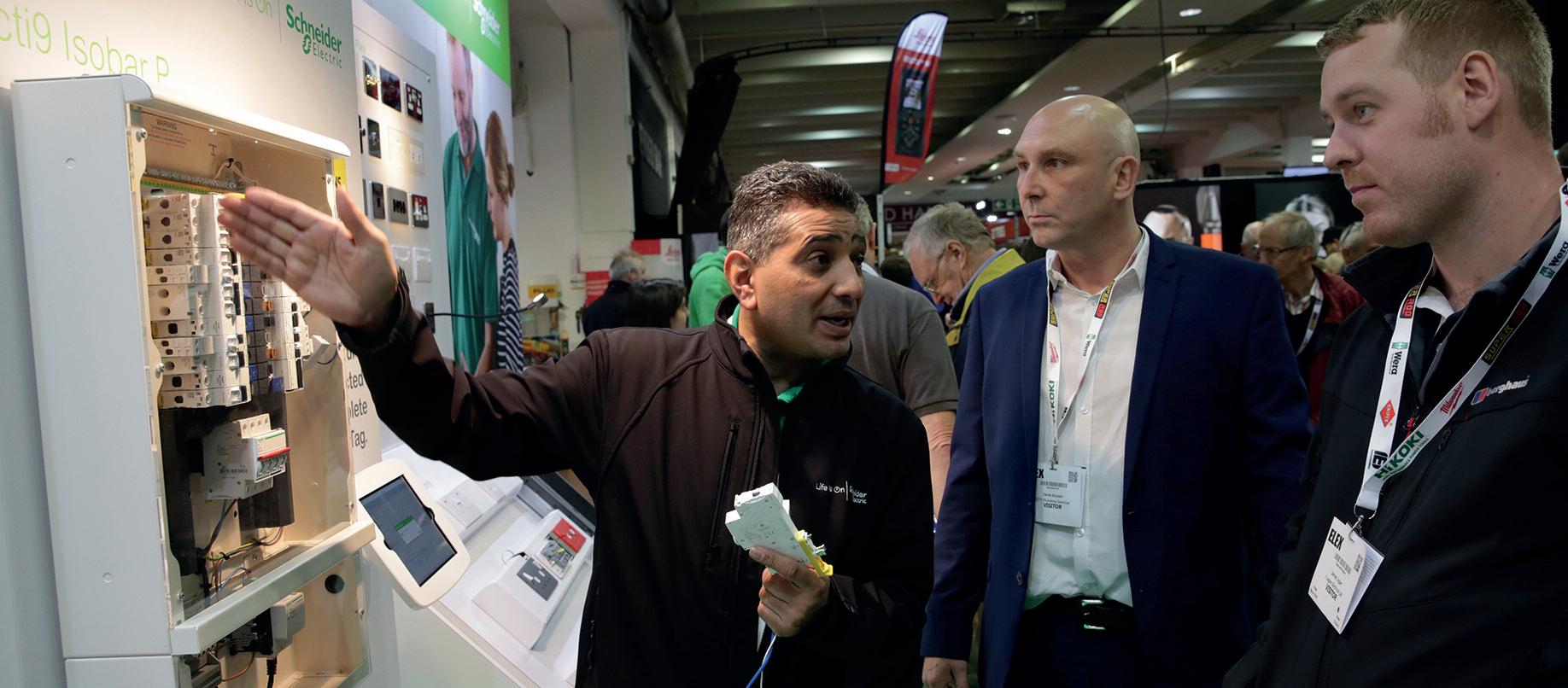
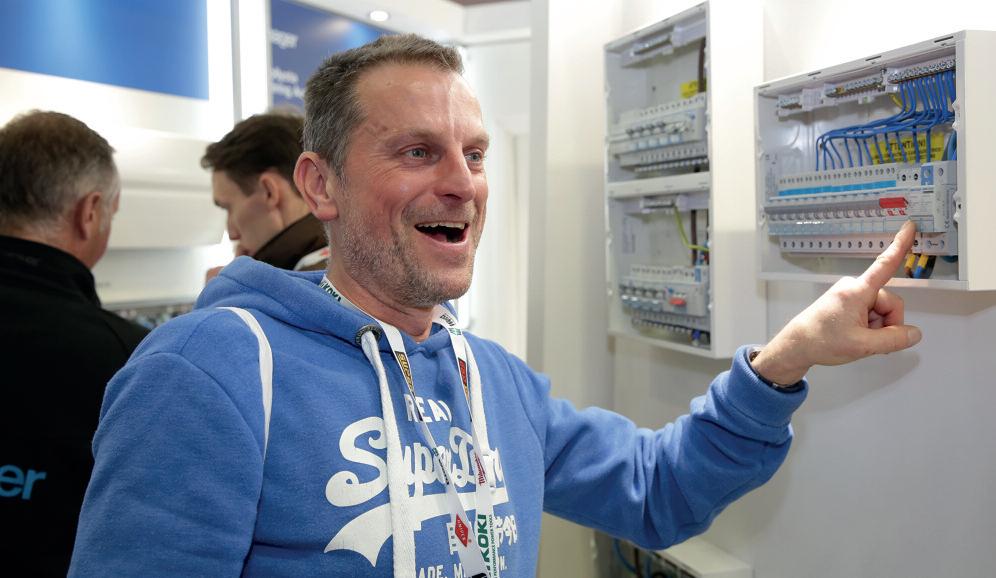
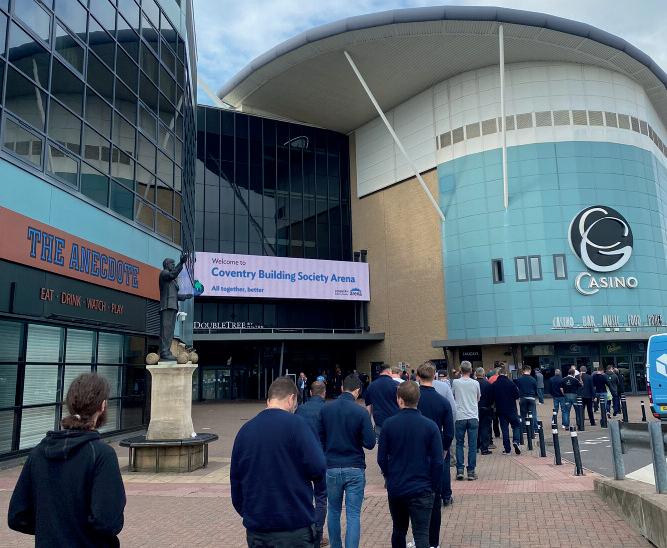
Enjoy the issue and we’ll look forward to seeing some of you at the Coventry ELEX show later this month
Richard B o wler
Amd 3 arrives industry is urg to have its say on Amd 4
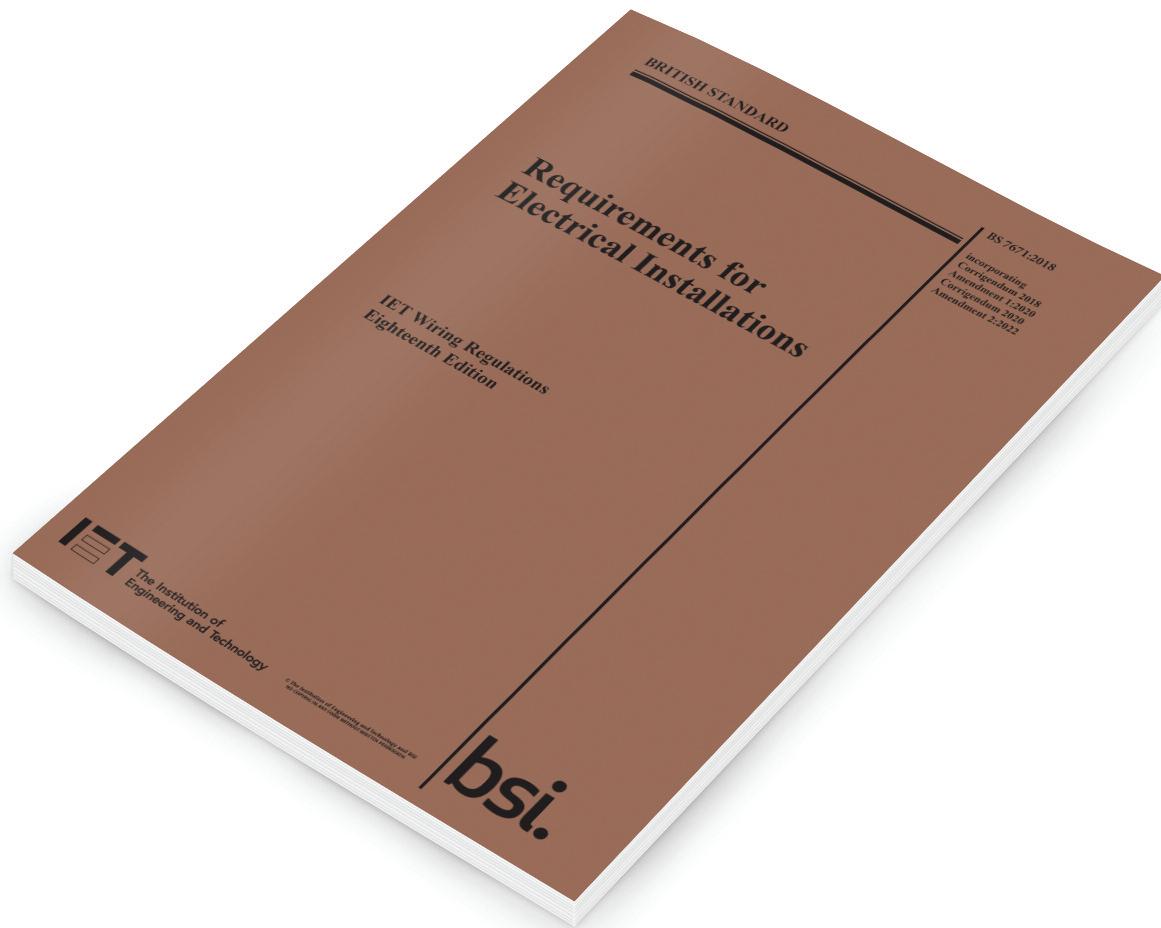
The Institution of Engineering and Technology (IET) and BSI are calling on the electrical industry to have its say on an amendment to the current BS 7671:2018 Amendment 2 (2022) + Amendment 3 (2024), which has recently gone to DPC (Draft for Public Consultation).
The amendment, known as Amendment 4, has been long-scheduled and will incorporate changes to harmonised standards at European level which the UK has to adopt within a certain time period
The DPC for Amendment 4 is hot on the heels of Amendment 3 which has just been published and is available as a free-to-download PDF ‘bolt-on’ to Amendment 2 from the IET and BSI websites
“Each area of change is a response to fast evolving technologies.”
Amend 4 is ex publish that tim installe of Ame ‘brown book’ and the Amendment 3 (2024) free PDF bolt-on – in order to be up-to-date
Comments on the DPC for Amendment 4 can be submitted through BSI’s Standards Development portal until 3rd November 2024.
IET’s Mark Coles, Head of Technical Regulations, said: “The days of the ‘evergreen electrician’ are gone Changes in technology, installation practices and developments in standardisation are happening so quickly
“It’s therefore so important that installers and designers stay well-informed of what’s happening in the industry.”
He added: “It’s intended that this Amendment will include requirements for Stationary Secondary Batteries, low voltage
(ICT)
ng on s
“Each area of change is a response to fast evolving technologies ”
The Chair of JPEL/64, Graham Kenyon, said: “The members and officers of JPEL/64 invite anyone involved in the industry to contribute to the standard by providing comments on the Draft
“We will initially focus on addressing comments related to the intent of technical changes put forward Comments made on other parts of the standard will be considered in future work of JPEL/64, both for BS 7671 and international work ”
NICEIC expands training offering across the UK
NICEIC has announced that it is expanding its training offer in Penkridge, Telford, Bristol, London Gatwick, Dartford, Manchester and Maidstone. With renewables becoming increasingly important as the UK approaches its goal of net zero, NICEIC is now offering more green energy courses at its approved training centres in the seven locations.
These qualifications cover topics such as electric vehicle charge point (EVCP) installation, solar photovoltaic (PV), and electric energy storage (EES)
Available at Penkridge
l Level 3 EAL Award in the Requirements for the Installation of Electric Vehicle Charging Points (EVCP)
l Level 3 EAL Award in the Design, Installation and Commissioning of Electrical Energy Storage Systems
l Level 3 EAL Award in the Installation of Small-Scale PV Systems
l Safe Isolation workshop
l 18th Edition Full E-Learning Course
l Electrical Fundamentals for Maintenance Operatives
Available at Telford, Bristol, London Gatwick, Dartford and Manchester
l Level 3 Award in Initial and Periodic Electrical Inspection and Testing
Available at Maidstone
l Level 3 EAL Award in the Installation of Small-Scale PV Systems
l Level 3 EAL Award in the Design, Installation and Commissioning of Electrical Energy Storage Systems
These NICEIC training programmes offer professionally accredited CPD and ensure businesses stay up-to-date with industry requirements
Neil Vincent, NICEIC Head of Business and Strategic Partnerships, commented: “This marks an important moment in the
SkillELECTRIC selects top 8 competitors
The eight SkillELECTRIC competitors who scored most highly across the recent national qualifying heats have been named as this year’s UK finalists
All have been invited to take part in the SkillELECTRIC UK Final, being held at Oldham College across the week of 18th November, with the final eight named as:
Charlie Moore – Bramham Electrical/College of West Anglia
Fabien Maciejewski – a completed T Level Learner at Leicester College
Joe Swallow – M&C Engineering/Suffolk New College
John-Ross Campbell – A Campbell Electrical Services/SECTT
Jonathan Gough – MD Electrics/Southern Regional College
Kalum Low – MS Electrical and Renewables/SECTT
Milly Smith – CS McKerlie Electrical Services/SECTT
Richard Westwood – Dudley College
SkillELECTRIC, the annual search for the UK’s best student electrician, is part of the WorldSkills UK competition framework. Those who perform well enough and are age eligible could be in with a chance of representing the UK in the Electrical Installation competition at WorldSkills 2026 in Shanghai, China
continual expansion of our training network as it is our goal to make our qualifications more accessible nationwide alongside our virtual and e-learning offering
“Our training and qualifications aim to bridge the skills gap and ensure that industry professionals meet the highest technical and safety standards ”
Bag a bundle with KNIPEX
KNIPEX has announced an exciting competition, offering the chance to win an exclusive tool bundle, packed full of its new innovations for 2024
The competition features a collection of some of KNIPEX’s most innovative and versatile tools, along with practical and durable tool storage solutions, with the lucky winner receiving a prize bundle that includes:
l Modular X18 Tool Backpack (00 21 50 LE)
l Module Bag (00 19 50 LE)
l Module Adapters Set (00 21 50 V01)
l StepCut XL Cable Cutter (95 18 225)
l TubiX S Pipe Cutter (90 31 01)
l Stripping Knife (16 50 145 SB)
Entering the competition is a simple and straightforward task, with entries closing on November 30th
GET MORE DETAILS AND ENTER THE COMPETITION AT:
A shortlist of 22 leading businesses from across the electrotechnical and engineering services sector has been chosen for this year’s prestigious ECA Industry Awards.
S y s t e m s , E n e r g yA c e, E s s e x S e r v i c e s
G r o u
M e t r o p o l i t a n , La r k Te c h n o l o g y G r o u p,
O r a n g e F ox E l e c t r i c a l , Po w e r c o r,
P r i o r y E l e c t r i c a l S e r v i c e s , P u m p
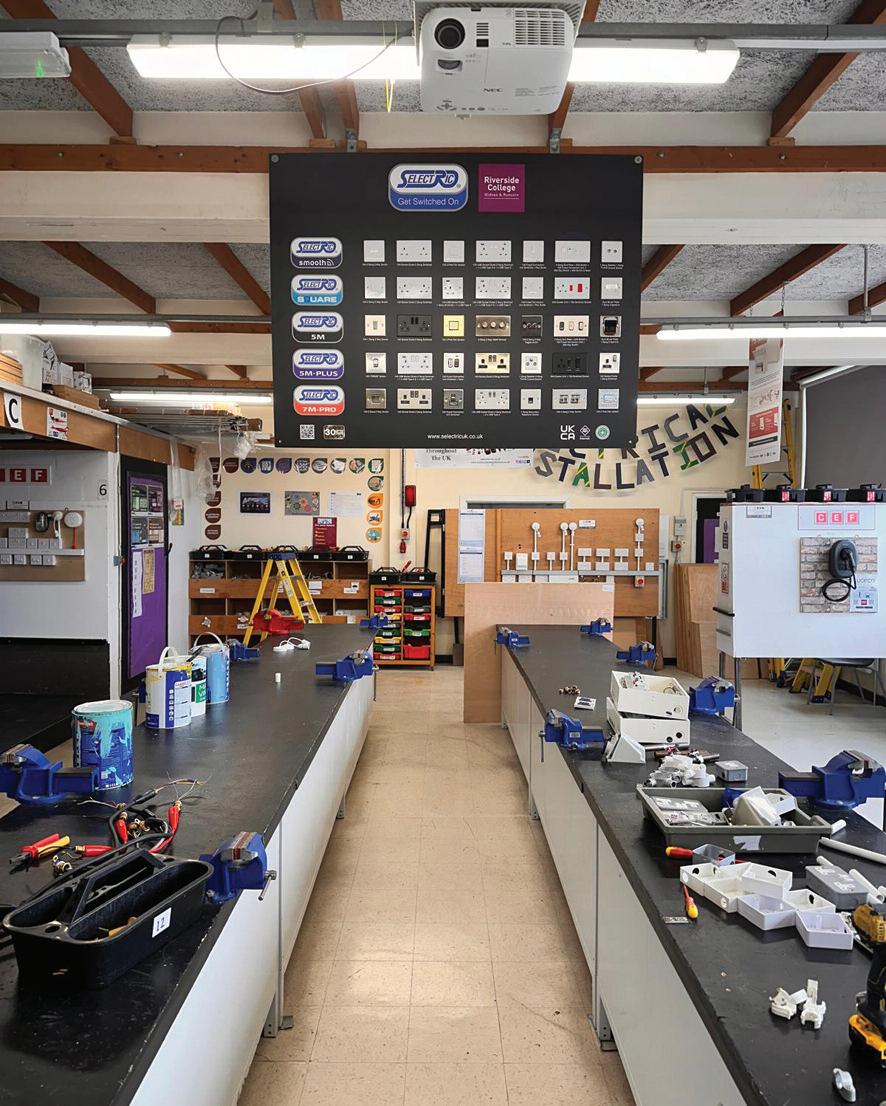
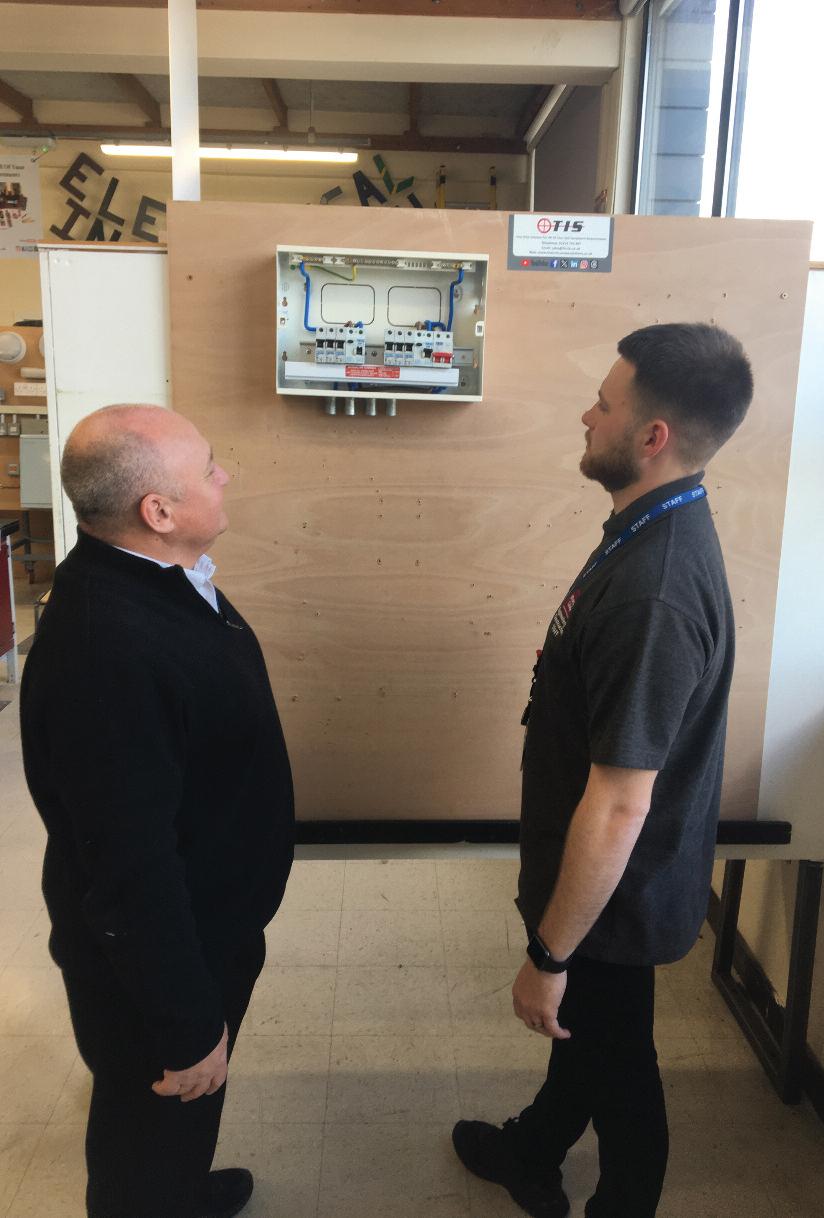
Selectric has recently donated an electrical display board to Riverside College Widnes & Runcorn.
The donation aims to enhance the educational experience of students and support the development of their electrical engineering skills. The display board is designed to provide students with hands-on experience, allowing them to explore and understand the intricate workings of various electrical products. This practical knowledge is crucial for students aspiring to excel in the field of electrical engineering
Pejman Ellis, Managing Director of Selectric, said: “We believe in investing in the future generations, and we’re committed to supporting educational institutions like Riverside College By providing this advanced learning tool, we hope to inspire and equip students with the necessary skills to succeed in their careers ”
The donation aligns with Selectric’s commitment to corporate social responsibility and fostering educational growth within the community
Riverside College is renowned for its dedication to providing high-quality education and training to its students, and this new addition will significantly enhance its practical learning environment The partnership reflects a shared vision of nurturing talent and supporting the educational journey of future professionals in the electrical engineering sector
SAY WHAT…?
Enter this month’s caption competition and you could win an amazing safe isolation kit from Test Instrument Solutions.
In the July/August issue of PE, we had the chance to catch up with father and son duo, Chris and Matthew Horne, who both work for Riverside College Widnes & Runcorn
Always ones for a bit of fun, this month Chris and Matthew have given us their permission, in conjunction with TIS, to invite readers to put words in their mouths (literally) We’re after your best, silliest and funniest caption entries, with the overall winner bagging a fantastic TIS 8000SIKIT
WHAT CAN YOU WIN?
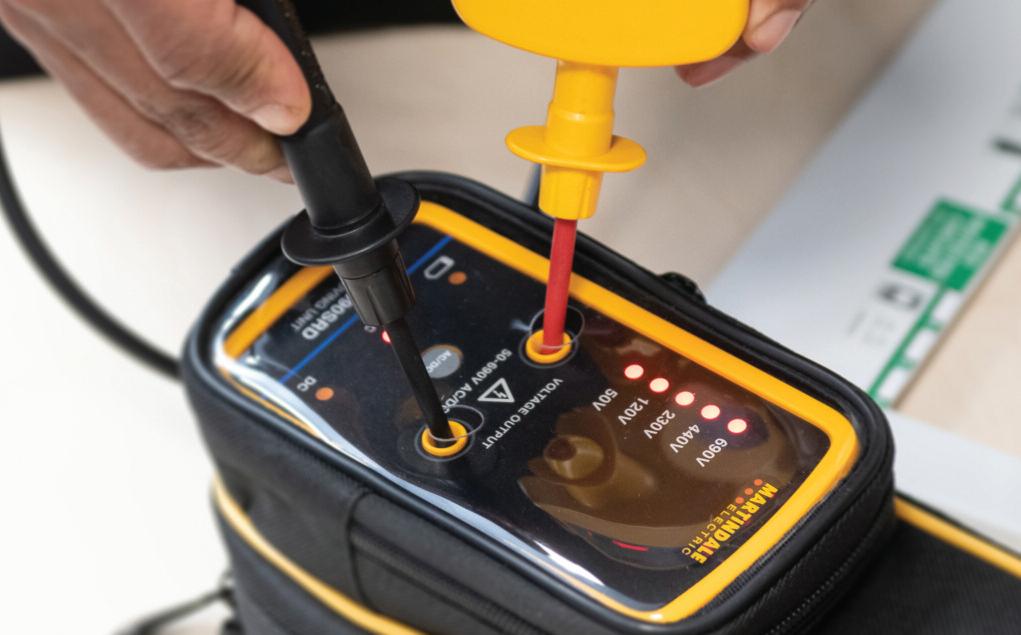
The TIS 8000SIKIT consists of:
TIS 8000
l Voltage tester with continuity conforms to BS EN 61243-3:2014
l Voltage measurement
1000 V AC, 1500 V DC
l Open jaw clamp meter 200 A AC
l Non-contact voltage detector
l Resistance
l Frequency
l Single pole detection
l Removable and replaceable test leads
l Phase rotation
l Diode test
TIS PU1
Proving unit
TIS PUK
“QUICK SON, LOOK BUSY, THE FOLKS FROM OFSTED HAVE ARRIVED!”
“JUST LIKE NORMAL THEN, DAD?”
Instrument and proving unit carry case
TIS BKIT
Full lock-off kit with single red lock and 1 x key
HOW TO ENTER
Entry is easy:
1. Email us your captions (for example, Chris: “Hello son”, Matthew: “Hello Dad”) to pe@hamerville.co.uk, stating ‘Caption Competition’ in the subject line
2. Post your captions on any of our social media channels, or send them on a direct message to us, making sure you tag the PE account in when you do. Deadline for entries: 10/10/2024 Usual T&Cs apply
Drayton launches new installer rewards programme
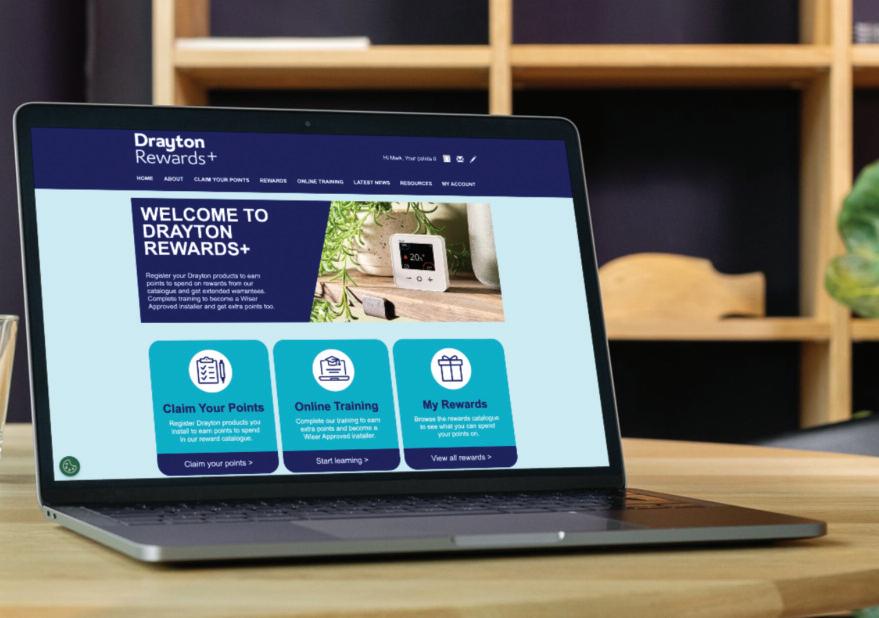
Drayton is celebrating 75 years of supporting installers, and is kicking things off with the launch of its new installer loyalty programme, Drayton Rewards+.
The new and improved loyalty programme, which replaces 9º Network, is designed to give installers more; from perks and points, through to being part of a community of like-minded heating engineers and electricians
On Drayton Rewards+, installers can earn valuable points by registering products and by completing free in-platform online training courses, which can then be redeemed against a
range of items from the rewards catalogue, including products, workwear, merchandise and more
Exclusive points bonuses will be available throughout the year, which installers can hear about via emails from Clare@Drayton and Drayton’s social media channels, including The Drayton Community Facebook group.
When members claim points for products installed, they're automatically given an extended five-year warranty they can offer their customers This gives homeowners even more reason to choose them over the competition
Training modules will also be
available for installers to access at their leisure with a bonus 500 points received for each module completed
Rhino’s ready to rack at new Nantwich site
Rhino Products has announced the opening of a brand new site in Nantwich, fully dedicated to its new MR4 van racking range.
The 37,500sq ft site will be focused solely on the stockholding and distribution of Rhino’s new van racking and accessory range, with multiple dedicated assembly, sub assembly, kitting and packing areas
The huge footprint of the premises also provides a significant amount of space for a large stockholding capacity This allows for the vast majority of MR4 van racking orders to be in stock and
ready to go at all times
JOIN THE DRAYTON REWARDS+ PROGRAMME AT: WWW.RDR.LINK/EBF005
Along with the new site comes additional staff too, with a whole new Nantwich team dedicated fully to MR4 production and sales
With plenty of room for further growth and expansion, the new premises is fully equipped to handle the MR4 van racking range as it continues to evolve
The latest addition to Rhino’s Van Racking offering, the MR4 Express Range, covers simple shelving, Rhino’s sleek aluminium fronted drawers, and a wide range of accessories – all of which is flatpacked, in stock, and ready to go
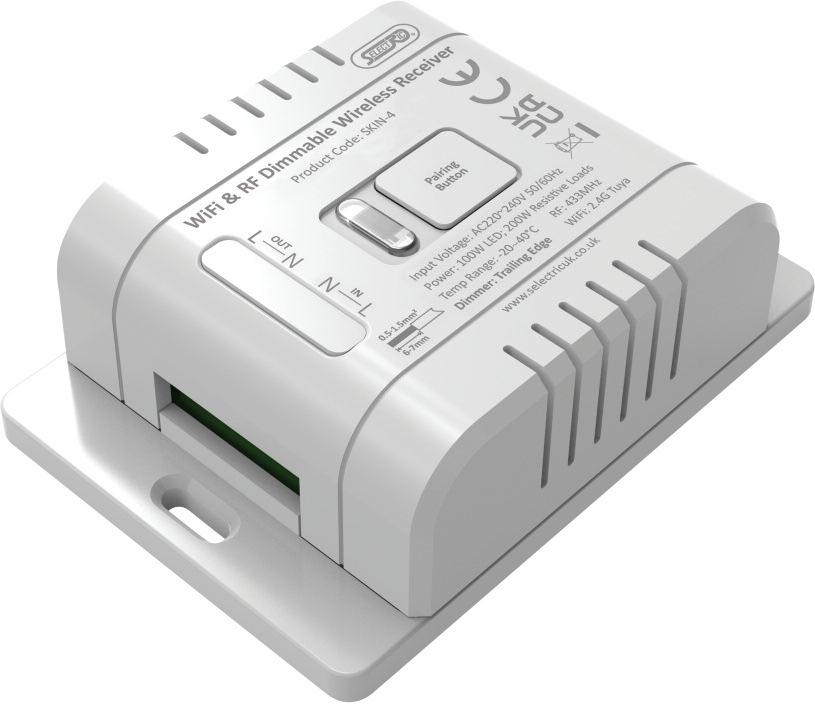
MAKE THE SWITCH TO WIRELESS WITH SELECTRIC
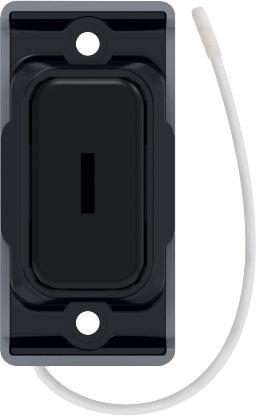
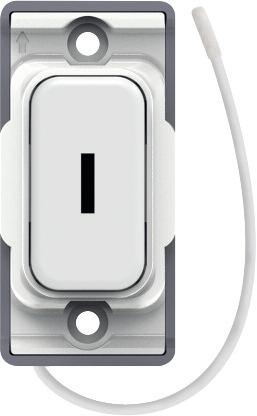
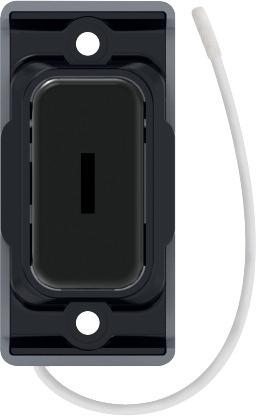
Offering a more intuitive and flexible way to control your devices, the team at Selectric provides some compelling reasons to invest in its GRID360 Kinetic wireless switches.
At Selectric, we’re committed to innovation that anticipates the needs of our clients. We understand that new products are vital for the growth and success of any business and believe that it is this proactive mindset that sets us apart from many other manufacturers operating in the electrical industry
With the strategic appointment of new key personnel and the development of cutting-edge product ranges, backed by compelling new literature and marketing endeavours, our company is firmly positioned for future growth.
As we forge ahead, we maintain focus on continuous development, regularly listening to the electrical marketplace and collaborating with industry stakeholders to develop new products that align with their ever-changing needs Recent feedback has driven us to invest significantly in our portfolio smart accessories – the GRID360 Kinetic range
Wireless is more
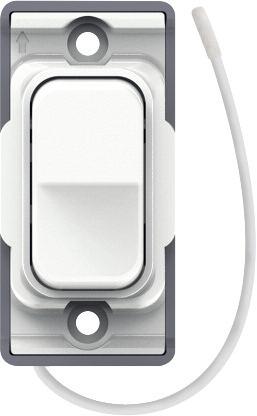
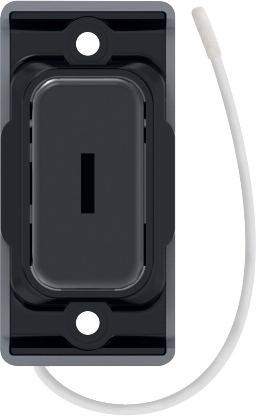
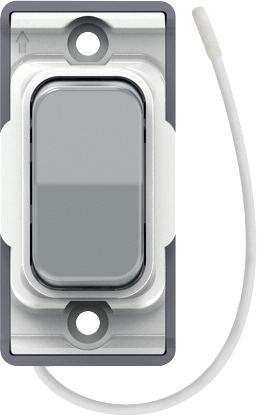
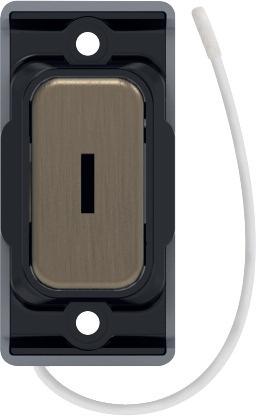
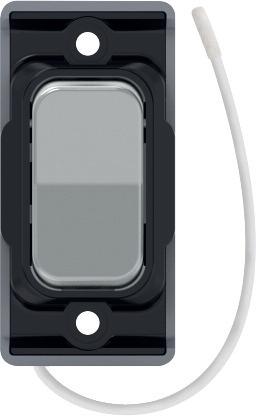
The GRID360 Kinetic range is a new revolutionary wireless switch system that represents a major leap forward in sustainability and convenience
Wireless kinetic switches operate by using kinetic energy generated from pressing a button to send a signal to a receiver, which then activates the connected device or appliance The kinetic energy from the action of pressing the button powers the transmission of the
signal, eliminating the need for batteries or wiring.
This innovative technology offers a convenient and energy-efficient solution for controlling various devices in a wireless manner This setup has several advances over traditional switches, including:
1. No wiring
First and foremost, this advanced technology eliminates the need for cumbersome and unsightly wires This not only simplifies the setup process, but also makes it possible to use the switch in a wider variety of locations
With a wireless switch, users can control their devices from a remote location, such as a different room or even outside This is particularly useful for controlling lights, fans, and other appliances in the home, as well as controlling various items of office equipment in the workplace.
2 Energy efficiency
The system uses a very small amount of
energy as it generates power through the kinetic energy of the user's interaction, making the switches a sustainable choice for smart home automation This in turn reduces overall power consumption which results in economic savings and contributes towards an improved carbon footprint
3. Flexibility
Wireless kinetic switches do not rely on traditional wiring for power which allows them to be placed in various locations without the constraints of wiring locations They can be placed virtually anywhere within their communication range, providing flexibility in switch placement and room design
4. Ease of installation
Wireless kinetic switches are easy to install because they do not require any hardwiring or complex installation processes. Simply mounting the switch where desired and pairing it with the compatible receivers or devices allows for a quick and hassle-free setup This makes
them an efficient and convenient option for those looking t their home withou professional instal
5. Reliability
Another advantage of the GRID360 Kinetic wireless switch is that it is more reliable than traditional wired switches. Since the switch does not re a physical connection to the device, there is no risk of the switch becoming disconnected or damaged due to accidental impacts This results in a more dependable and stable experience, which is particularly important for professional applications
Plenty of choice
While both Apps are quite r in functionality and user interface, the Tuya Smart App is specifically designed to work with products powered by Tuya Technology, reas the Smart p is a more generic at’s compatible nge of
various manufacturers
Ultimately, the choice between the two Apps may come down to the specific devices a user wants to connect and control within their smart home ecosystem
simplifies installation and offers a wide array of options to meet various requirements efficiently
With over 400 items and thousands of possible combinations, the options available are vast and can cater to a wide range of needs, ensuring there’s something to suit everyone's preferences and requirements
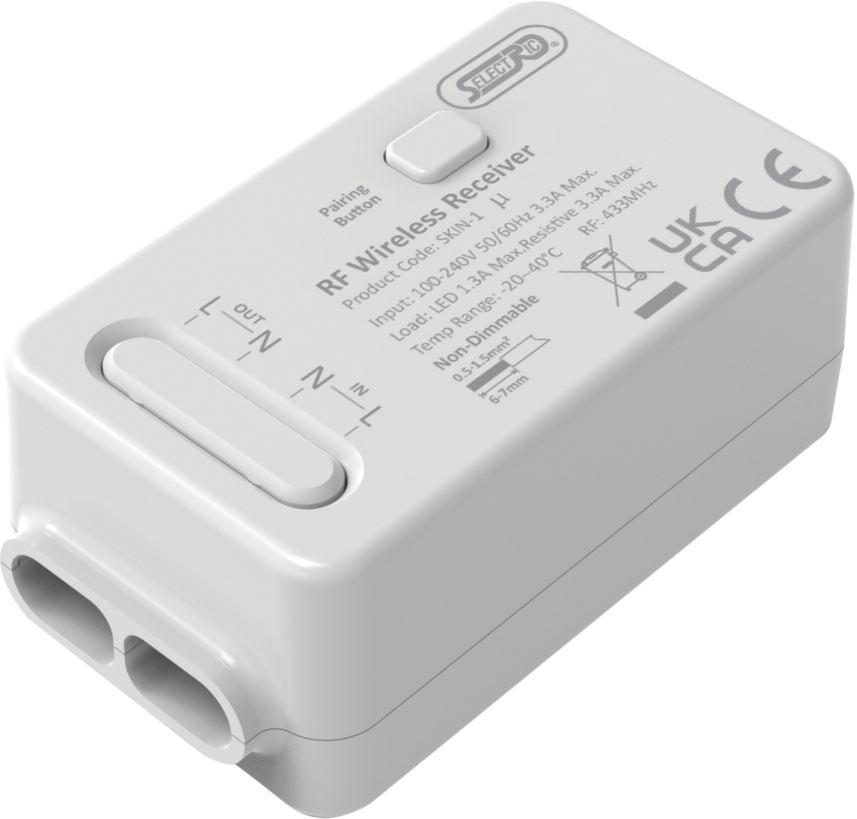
There’s a wide selection of receivers to choose from to solve real-life controlling requirements and we offer a range of nondimmable, dimmable, and smart receivers
The lowest and highest brightness level can be set by an App on the smart dimmer This helps the performance and compatibility of the dimmer to suit more dimmable light fittings whilst avoiding flicker and slow response issues often found with smart dimmers
The GRID360 Kinetic system uses both the Tuya Smart App and Smart Life App These Apps are smartphone applications that allow users to control and manage smart home devices such as lighting, thermostats, cameras, and more.
You can pair up to 10 switches with any of the Selectric receivers, offering a large range of flexibility, depending on your scenario There’s also an IP65 waterproof silicon wireless fob switch available which is ideal to add to a keyring for operating garage or shed door systems A 30 m transmission range (depending on context) ensures the switches will perform steadily under complex indoor installations, with a 70 m transmission range for outdoor.
Simple integration
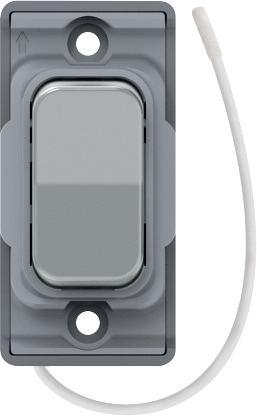
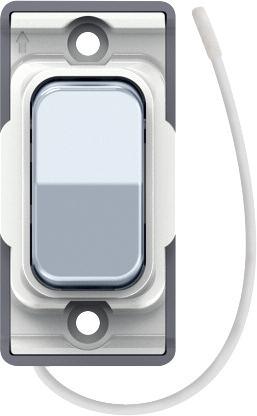
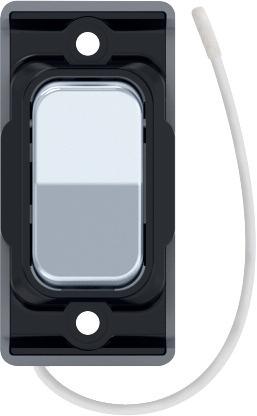
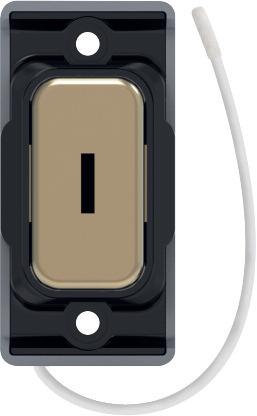
GRID360 Kinetic switches have been designed to integrate into our ever-popular GRID360 range of plates, allowing you to match all our current finishes –nging from the eneric white finish to a rich dark bronze The range offers a high level of both flexibility and customisation with s fully terchangeable grid witch modules and ates The elimination of okes by allowing modules to rew directly into each plate
Ultimately, the choice between wireless kinetic switches and traditional switches should be based on factors such as the building's design, user preferences, budget, and compatibility with existing systems So, if you’re looking for a more intuitive and flexible way to control your devices, consider investing in GRID360 Kinetic wireless switches today BROWSE
YOU CAN NEVER BE TOO SAFE!
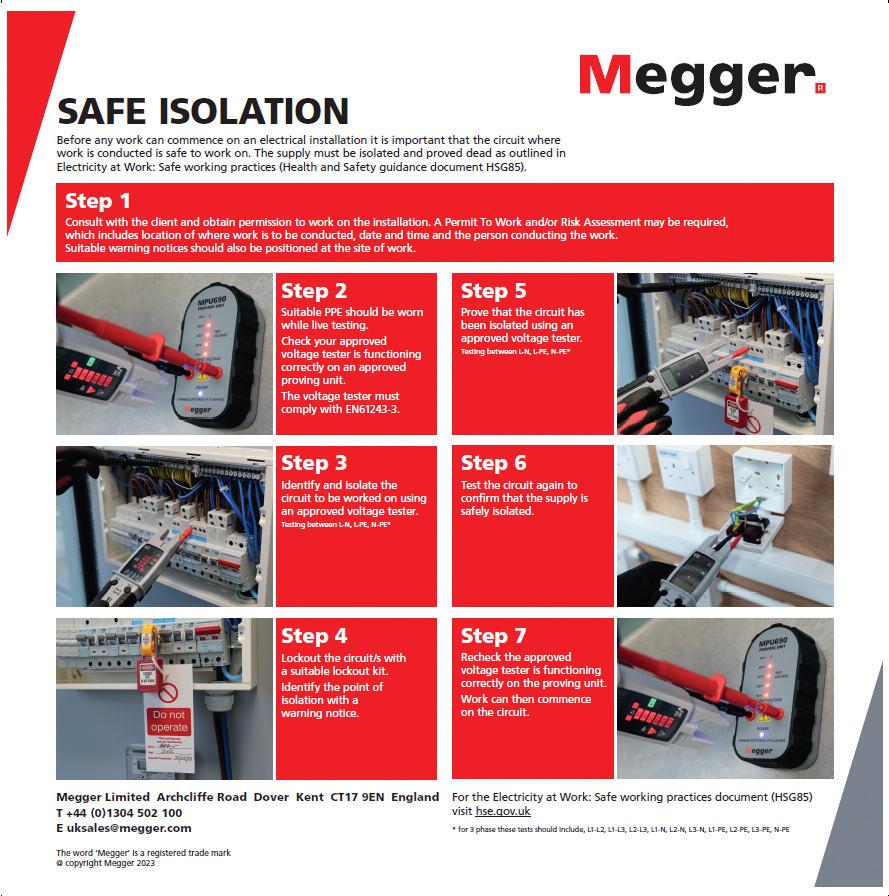
Recently the industry has had a big push on promoting safe isolation, and quite rightly so when there are still individuals being killed from electric shocks every year
Many of us are familiar with the useful safe isolation posters and best practice examples that are out there to guide us, but do you really understand the underlying complexities of safe isolation?
In this article I hope to provide some examples where just ‘blindly’ following the standard safe isolation procedure could still result in an electric shock.
Let’s start with the fundamentals first, though For example, what equipment
should we use to prove dead? GS38 HSE guidance recommends the use of a two-pole approved voltage indicator, but other test equipment still has its uses and can include volt pens, multi-meters and clamp meters
Approved BS EN 61243-3:2014 two pole voltage indicator
These require a potential difference between the poles to detect anything, with approved indicators providing a one pole warning (which non-approved versions may not). These shouldn’t have fused leads (with user safety afforded by resistors in the leads instead) and they should work in the absence of a battery as well
Pete (Monty) Monfort, Director of Arena Training Centre and Monty Electrics,
takes an in-depth look at protecting yourself from electrical shocks.
Such devices are designed purely to test voltage and whilst you may think your MFT could do the same, unfortunately a user may select the wrong test and unwittingly receive a shock.
So, make sure you have a dedicated two pole voltage indicator to prove dead, which should be used in conjunction with a proving unit
Single pole non-contact testers (volt pens)
These aren’t generally accepted as a method of proving dead but they are, in my opinion, useful tools nonetheless. Voltage is detected by way of the fluctuating electric field on an AC circuit and the operator forms part of a capacitively coupled AC circuit
Be aware, though:
l The user must have a reference to ground, so you must be holding the tester If you’re too high up a ladder, for example, the capacitive circuit could be broken, resulting in a failure to detect live parts.
l You should still prove the device on a known live circuit
l DC voltage isn’t detected because the magnetic field isn’t fluctuating
l They work on live conductors, even when there’s no load attached
l They will not detect live conductors that are shielded by armourings, screens or metal cabinets or ducting. They will detect if the armourings are live, however
l False lives can arise when you become capacitively linked to another live circuit that you might be unaware of Single pole testers can have varying levels of sensitivity too and users need to be familiar with the ranges when using them
Single pole contact testers (volt pens)
These work like their non-contact counterparts but are also not really accepted as a method of proving dead They are generally considered more accurate than non-contact testers, however, since the user can physically contact the metal under test
Clamp meters
These detect current flow in a conductor using magnetic induction and a hall sensor Clearly these devices will not detect current flow if clamped around two opposing conductors such as line and neutral since the magnetic fields will cancel each other out DC versions are available and if you’re working on solar systems these are recommended to ensure current flow is zero before connectors are disconnected
All the gear, no idea?
Despite the fact you’ve equipped yourself with an HSE approved two pole tester with proving unit and carried out the isolation procedure, you could still be at risk of receiving a shock if you encounter a particular type of scenario. These include:
1. Diverted neutral conductors
Diverted Neutral current can occur if there’s a break in the protective earth and neutral (PEN) conductors in the distribution network This can lead to dangerous voltages on the protective earthing system, including extraneous conductive parts
Whilst you may be forgiven for thinking TT and TNS systems are unaffected, you would be wrong, since much of the distribution TNS network has become hybridised and should be considered
TNCS for design and safety purposes In any event, TNS and TT systems often share extraneous conductive parts with installations in which PME conditions apply
A simple safe isolation procedure may prove the system dead when in fact, the system is energised across line, neutral and earth connections A voltage indicator that indicates live energy with a single pole function is therefore essential to avoid a shock
Guidance Note 3 Appendix D provides a detailed description of how to check for diverted neutral currents or you could check out episodes 77 and 92 of the E5 Group YouTube channel
2. Alternative supplies
Alternative supplies are becoming more prevalent and isolating a board without consideration for a secondary supply might see you working on a circuit that has become live after a generator supply has been switched on
Whilst you may assume generators such as invertors will switch off once AC supplies are isolated, this isn’t the case for systems that have the capacity to work in island mode. It’s essential that you fully examine the electrical installation and identify all points of supply ensuring that they’re correctly isolated and locked off
Meter operatives have recently altered their standard operating procedures and now check that electric vehicles are disconnected since EVs are now being used as back-up generation in some properties
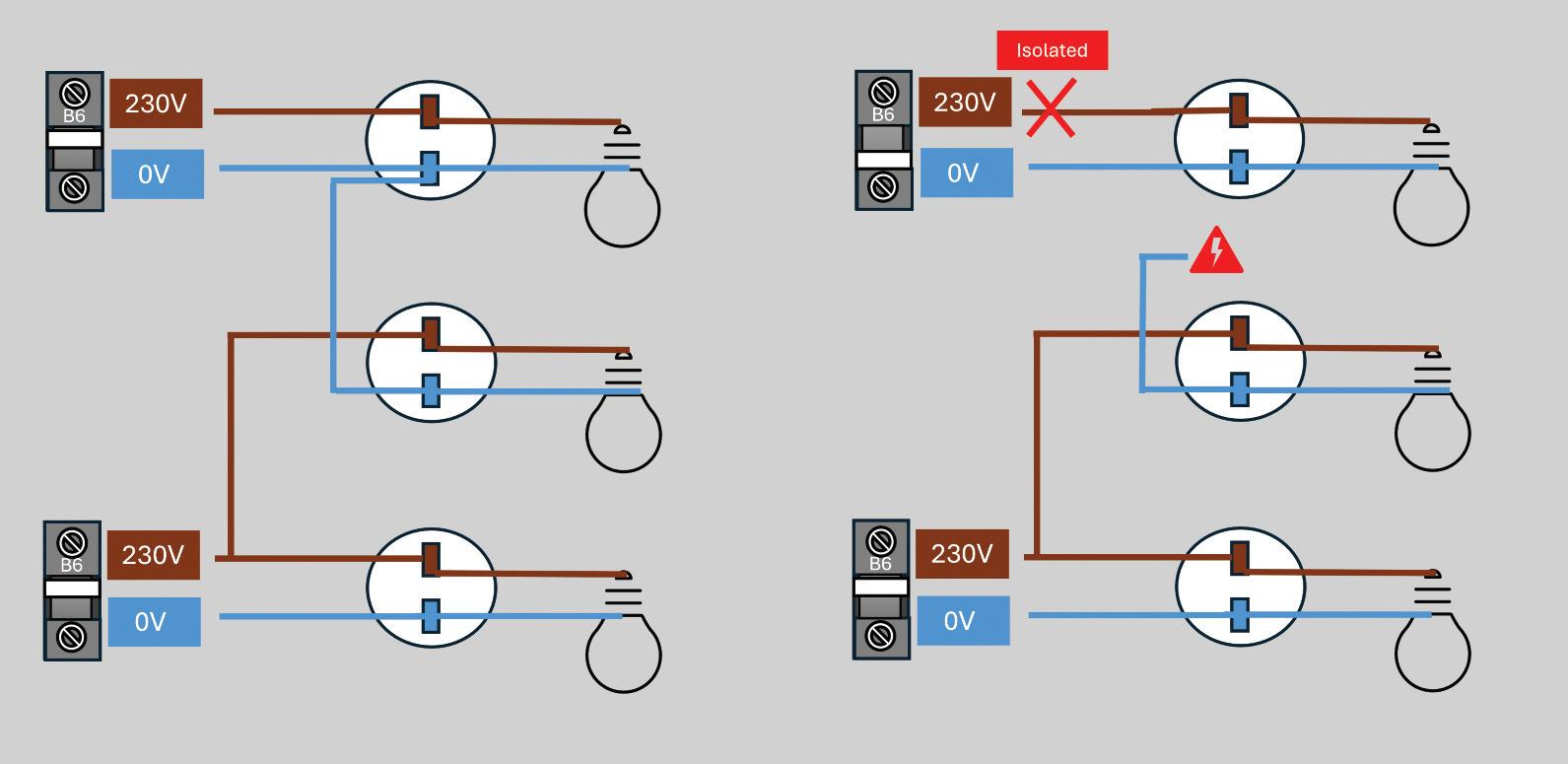
3. Borrowed neutrals
Borrowed neutrals will be familiar to many domestic electricians who’ve swapped old domestic fuse boards for modern boards
with RCDs, only to discover they can’t get the power to stay on due to upstairs and downstairs lighting circuits sharing a neutral
In the case of a borrowed neutral two circuits are supplied via protective devices and the load on one circuit is connected to the neutral of the other, often out of convenience during wiring
Isolation of one circuit can therefore lead to a dangerous situation where the circuit may prove dead but may be live or may become live during the work being undertaken Isolating the entire board may eliminate the risk but consider the scenario where the neutral is supplied from a second board
Operatives need to be fully aware of the wiring in the property and, when working in complex environments, test regularly during work or use circuit tracing technology to be confident that circuits do not share neutrals The current AM2 assessment actually incorporates a check to ensure the operation of light switches on two-way circuits does not result in a circuit becoming live
4. Capacitors
As a young lad I was always curious about how things worked and upon dismantling some electronic equipment which I had unplugged (I’m not stupid you know) I received a crack off a capacitor (but, yes, I might be ignorant!)
Safe isolation must include identifying the sources of all supplies of energy and this includes capacitors which can be sizeable in industrial systems with easily enough energy to cause a fatal shock
Capacitors should be made safe with a suitable bleeder designed to safely discharge them and they should be proved dead You’ll find them in most electronic circuits, microwave systems, motors, refrigeration circuits, furnaces, smoothing equipment and power factor correction systems
Conclusion
Whatever the scenario, I’d recommend that you think of safe isolation as a risk assessment-based approach
Essentially, you’re seeking evidence that on the balance of probabilities you are safe to work Be vigilant, check regularly and, most importantly, stay safe
THE TIME IS NOW!
With the demand for skilled electricians expected to be higher than ever as the UK pushes to meet net zero targets, the team at City & Guilds looks at why now is the perfect time to train as an electrician.
According to a survey conducted in the final quarter of 2023 by multiple key trade bodies, nearly two in five electrotechnical businesses felt labour shortages were the biggest threat to their business
B
Taking the pivot to a greener future into account, the demand for skilled electricians has never been higher From renewable energy installations to smart home technologies, electricians are at the forefront of driving sustainable change.
For businesses and consumers to be able to make greener choices it’s vital that employers, politicians and training providers recognise this growing demand and are ready to equip the workforce with the essential skills needed to thrive in the dynamic landscape of the low-carbon economy
A career gateway for all
A growing strength of the electrical sector is its renewed commitment to fostering inclusion, diversity, and equity.
To meet the increasing demand for skilled electrical professionals the sector needs to become more attractive to individuals who might not previously have considered a role as an electrician And, these individuals need to have access to the training and development opportunities that will help them succeed
Inspired by The Electrotechnical Skills Partnership (TESP) guidance and framework, which set out four pathways that aspiring electricians can follow, City & Guilds has prioritised developing career routes that cater to learners of all ages and experiences
Apprenticeships
For those who prefer hands-on learning, apprenticeships provide a structured and immersive experience, combining on-the-job training with classroom education
Full-time education (14-19)
Young enthusiasts can kick-start their electrical industry journey through full-time education, gaining foundational knowledge and skills early on
Diploma route
City & Guilds acknowledges the importance of self-driven learning. For individuals eager to invest in their own education, self-funded/part-funded options are available to pave the way to a rewarding career
Experienced
Worker route
Recognising the valuable expertise of seasoned professionals, the Experienced Worker Route allows those with industry experience to formalise their skills and qualifications.
Regardless of the career or educational background, there’s an entry point to the electrical sector available for everyone These career routes have been designed to be accessible, with funding options available through employers or public funding
Moreover, City & Guilds encourages an earn-while-you-learn approach, allowing individuals to gain valuable experience in the field while advancing their skills
For apprentices entering the sector for the first time, this offers the opportunity to practice their skills in real workplace scenarios with the support of experienced electricians – encouraging the development of both technical skills and understanding of working life
Your pathway to excellence
As both the demand and the esteem for qualified electricians increases and as we move towards a low carbon greener future, there’s never been a better time to either embark on a career as an electrician or expand your skills toolkit with City & Guilds
Whether it’s through full-time education, as an apprentice, or as an experienced worker, our career routes and CPD guide outlines clear pathways to choose from for both aspiring electricians and established professionals
Our goal is to support people at every stage in their career – from young people starting from scratch or adults pursuing a career change to electrical professionals looking to enhance or formalise skills with full qualifications or through our range of CPD courses
We work with employers, industry stakeholders, professional and trade
bodies to ensure our courses and qualifications enable learners to develop their skills to the highest and most up-to-date recognised industry standards We support our approved centres to deliver our qualifications at the highest level to ensure City & Guilds learners are well prepared to excel when joining or progressing in the electrical sector
Guilds is well-positioned to offer a roadmap to excellence in electrical training, guiding you along the stepping stones to success
Electricians have always played a vital role in our lives and now, more than ever, they’ve become a critical enabler of our low carbon greener future Thanks to 145 years of experience in the sector, City &
TR A I
N I N G
G R O U N D
Q. How long are the delays for getting an AM2S assessment booked in? My local centre is full and my apprentice’s training provider says there is a long wait for an assessment – surely this can’t be right?
In a nutshell – it’s not right! There is generally always availability elsewhere if you’re willing to travel to a different centre, should the AM2 centre your training provider normally uses be full in the short term
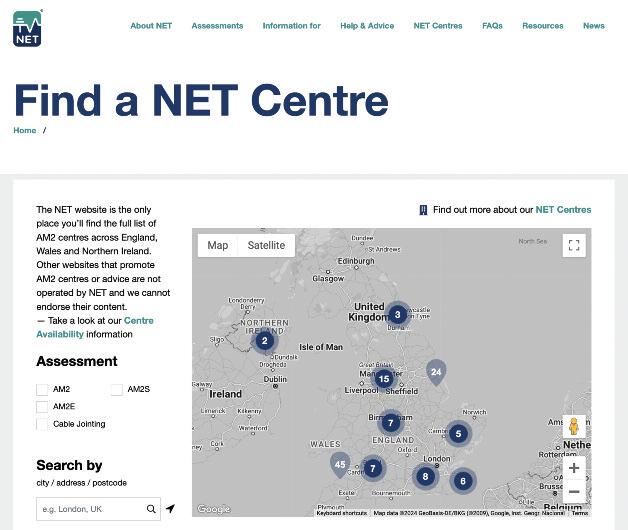
It’s often the case that a college or training provider has an existing relationship with a nearby AM2 centre and will only look at availability there There are actually around 55 NET licensed centres around England, Wales and Northern Ireland and you’re entitled to choose any of them
We have now launched a new live availability system on the NET website You can ask your training provider to look at this, or you can take a look yourself to see what’s available in your region over the coming three months You can select a month and local area to view the centres and number of available slots, then click through for a centre’s contact details
Whilst the system is in its launch period, we recommend you check this page first and if a centre near you isn’t showing availability, please contact them to enquire further
As an apprentice employer, you’re within your rights to say where the apprentice completes their End Point Assessment If your training provider seems to be selecting their nearest centre for ease but it’s full, please do insist they use the availability system to look elsewhere, or indeed contact us for help
A CHANGE WILL DO YOU GOOD!
We’ve got three new Vorteck Quick Change Sheet Steel Holesaw Sets from C.K Tools to be bagged.
The importance of having the right power tool accessories cannot be overstated, so C K Tools has launched its new Vorteck range to ensure electricians are getting the most out of their power tools
The leading premium tool brand is giving three lucky readers the opportunity to win its new Vorteck Quick Change Sheet Steel Holesaw Set this month, to tackle power tool projects with capability and ease
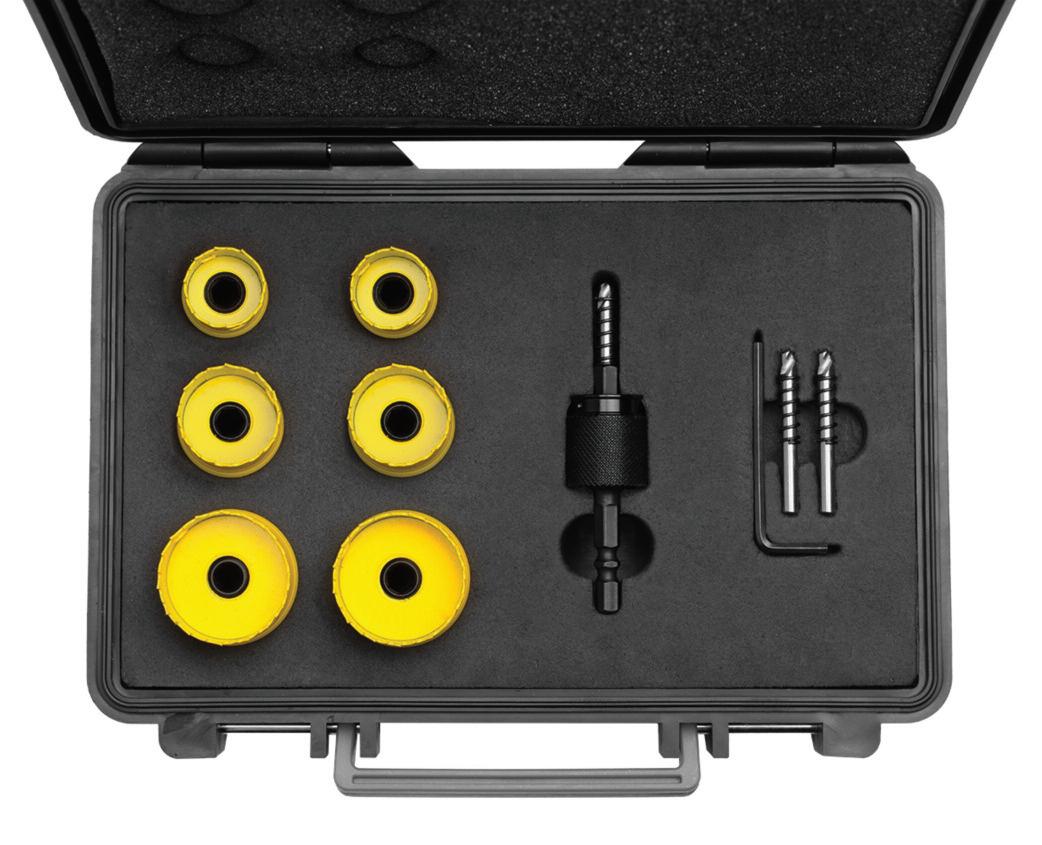
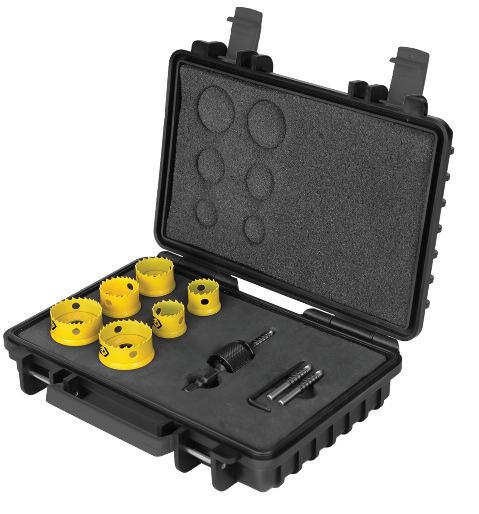
Designed for impact, this T3129 Quick Change Sheet Steel Holesaw Set has a quick-change Hex shank and tool-free mechanism for rapid holesaw change over, making light work of drilling different sized holes into steel with precision.
Developed to cope with the rigours of high torque applications exerted by impact drivers, the new set is sure to save time, enhance performance and meet the varied needs of electricians It features ProCobalt Sheet Steel holesaws in sizes 20, 25 and 32 mm with a unique quick change arbor
HOW TO ENTER
ENTER THE CPD ZONE AND EARN 1 CPD CREDIT
TOWARDS YOUR PROFESSIONAL RECORD!
continuing professional development (CPD) can be broadly defined as any type of learning you undertake which increases your knowledge, understanding and experiences of a subject area or role. To help professionals to better document and prove this process, our CPD Zone contains content and articles that have been checked, verified and accredited by a third-party specialist organisation
Collectively, the content within this section has been deemed worthy of 1 x CPD credit, or one hours’ worth of CPD
Once this content has been consumed, readers will have the opportunity to scan a QR code which will provide a bespoke, downloadable certificate that can be used as part of a
professional’s ongoing CPD record
This means that if you’re a monthly reader of PE, you could earn up to 11 credits, or 11 hours’ worth of CPD, just by reading a regular copy of your favourite independent industry magazine in 2024
DO NOT SCAN THE QR CODE UNLESS YOU HAVE READ ALL OF THE CONTENT WITHIN THIS SECTION!
A large element of CPD involves self-certification and relies on professionals being honest about what they have actually read, consumed and digested A QR code and RDRLink code have been placed with the final article in this month’s CPD Zone and ONLY once you have read ALL of the articles within this section, should you then scan/enter the code to receive your bespoke certificate
By skipping any of these steps, you’re not just cheating the system, but yourself and your fellow professionals at the same time!
NEW USERS – ACCESS YOUR BESPOKE CPD CERTIFICATE IN FIVE STEPS
1. Read ALL of the content and articles included within this month’s CPD Zone
2. Scan the QR code or enter the RDRLink code with the last article in this section
3. Enter your email address.
4. Fill out your details on the contact form.
5 Download your certificate for use as part of your annual CPD record
PREVIOUS USERS – ACCESS YOUR CPD CERTIFICATE IN FOUR STEPS
1. Read ALL of the content and articles included within this month’s CPD Zone
2. Scan the QR code or enter the RDRLink code with the last article in this section.
3. Enter your name and email address.
4. Download your certificate for use as part of your annual CPD record
All certificates are valid for one year from the issue date If you’re having any issues with downloading your certificate or using the system, please email us at: pe@hamerville.co.uk
THE CODEBREAKERS
I t is ex tremely frustrating when you are conscientious and compliant with the requirements of BS 7671, show good work manship and have pride in the qualit y of work only to find someone has tampered with your finished installation
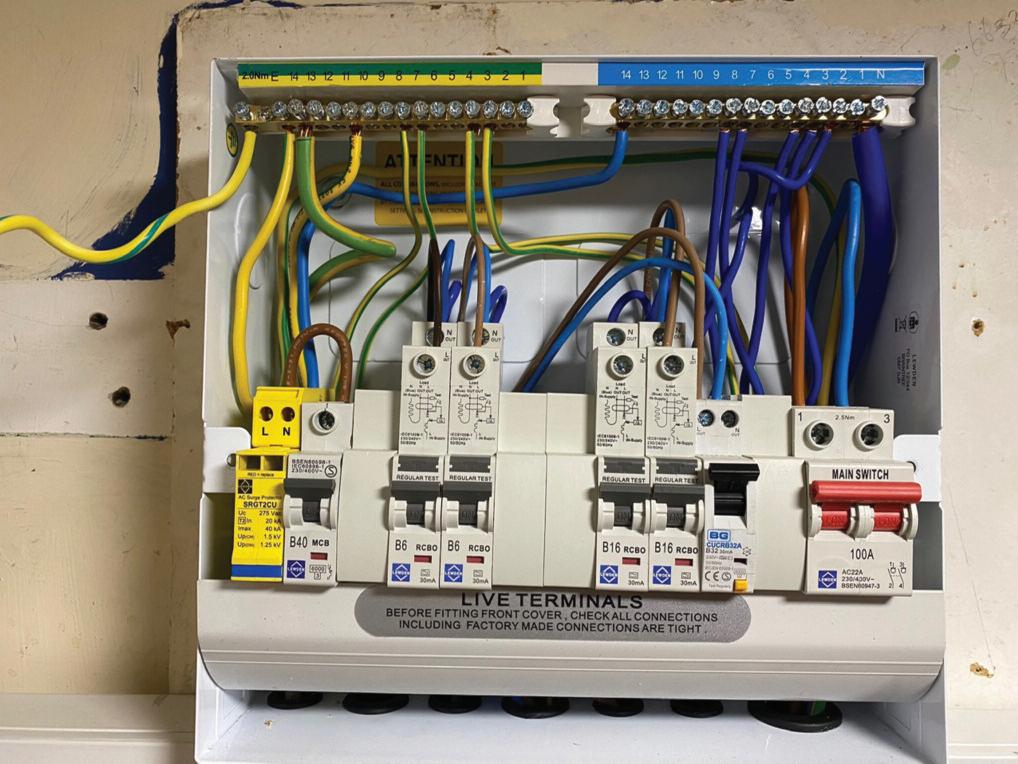
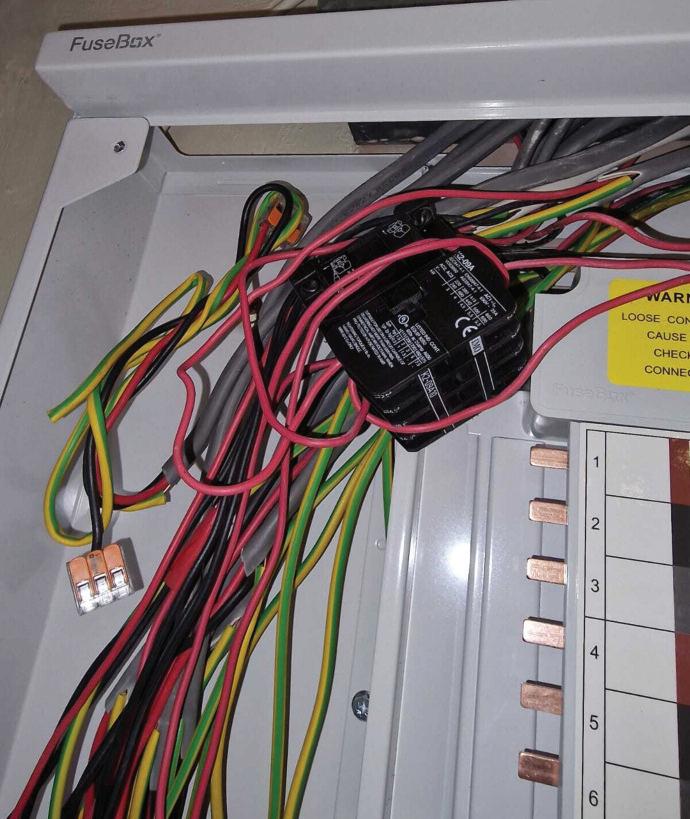
Due to the t ype testing of devices in such an assembly the manufac turer would not be able to carr y out produc t testing on devices that are not within its own produc t range
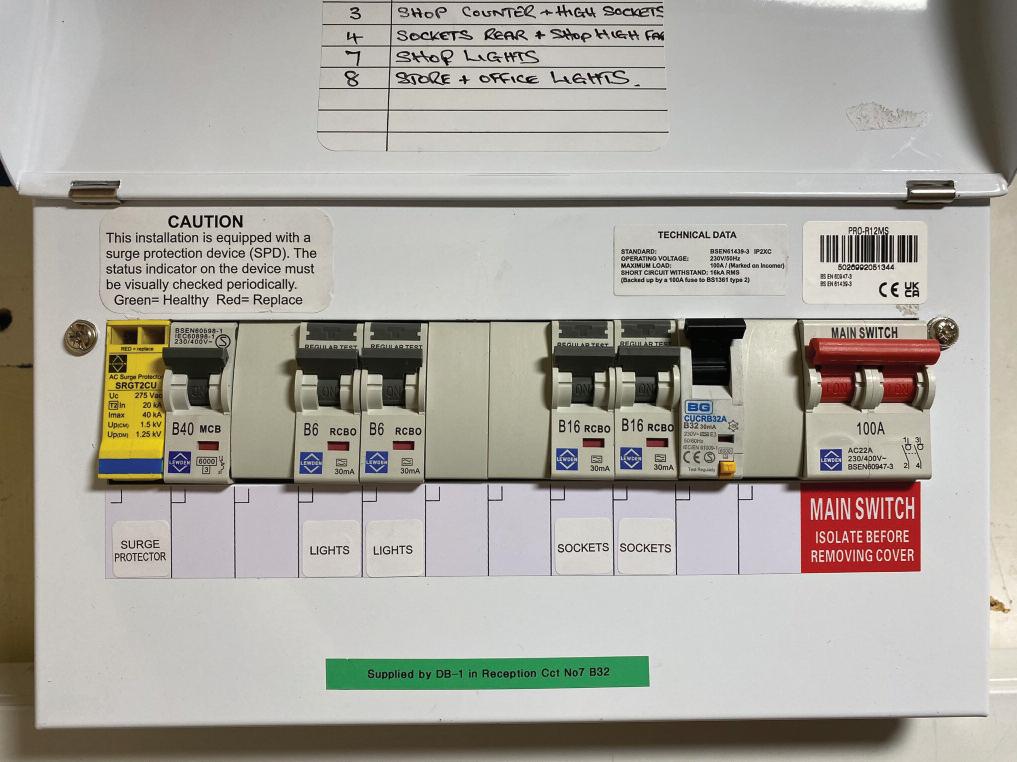
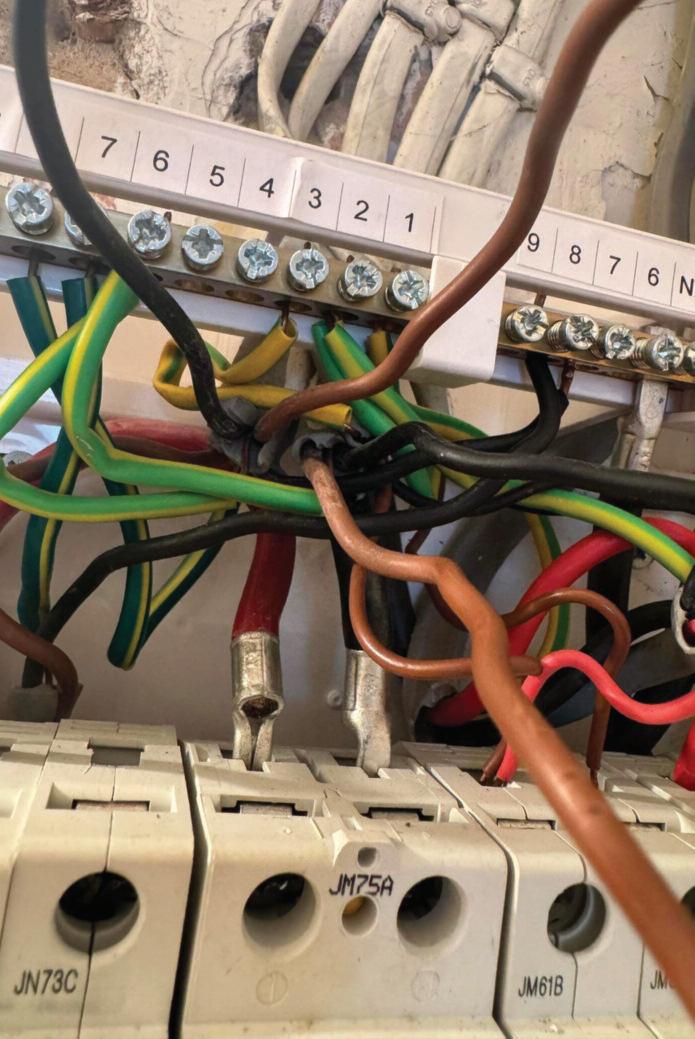
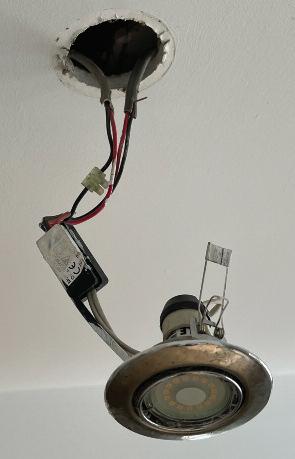
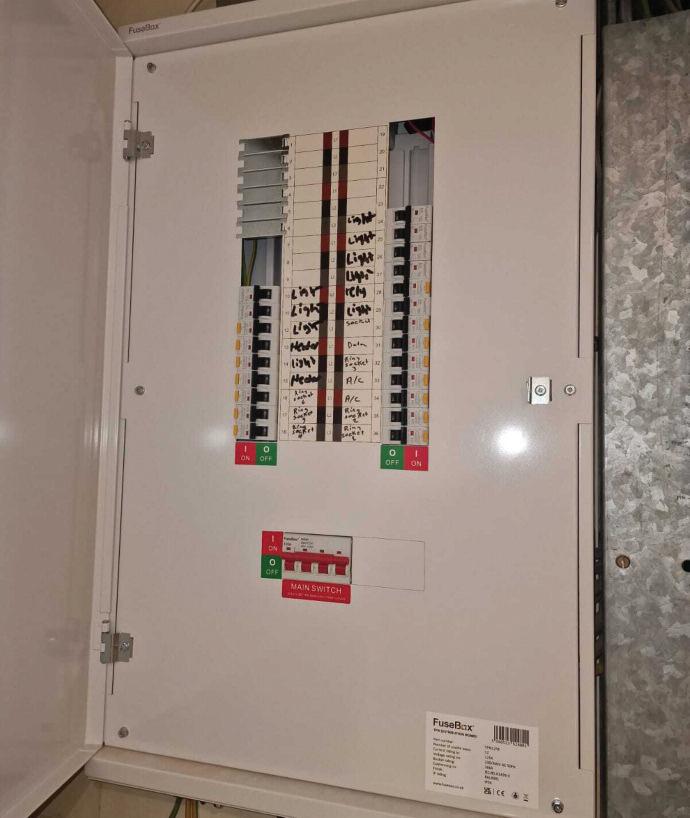
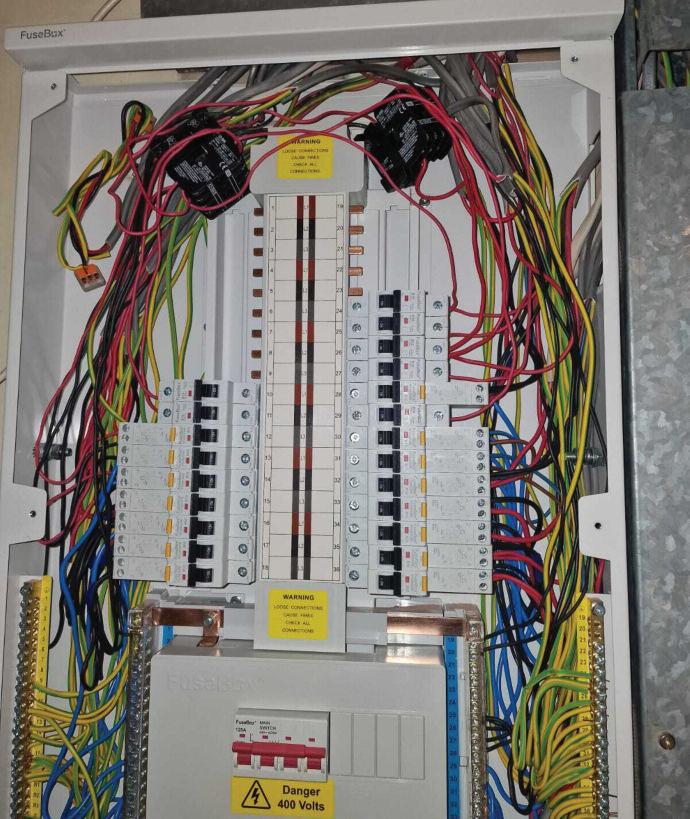
Within the Distribution Board the circuit protec tive conduc tor (cpc) of the new circuit in way 2 has not been connec ted in corresponding terminals where the cpc is in way 11 Therefore, the classification code would be a potentially dangerous C2 incompatible overcurrent and RCD protec tive device.
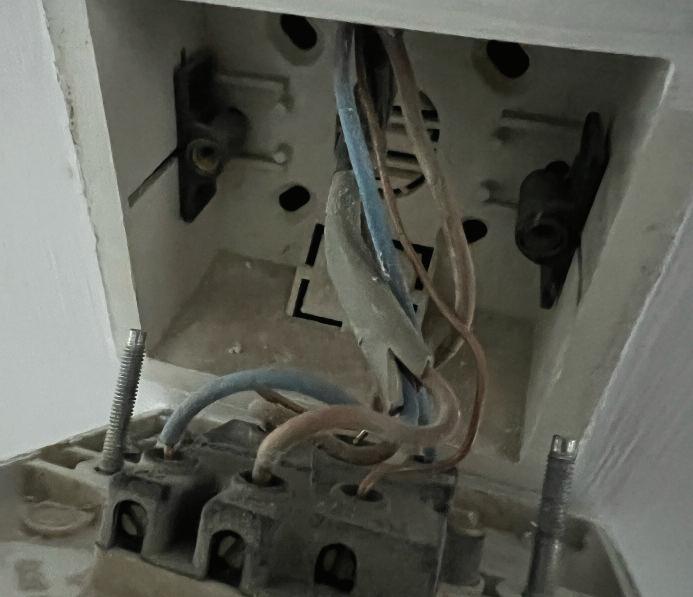
Need help with cracking those all-impor tant EICR codes? Ever y month the technical team at NAPIT will be studying your latest ‘Caught on Camera’ photos and offering advice on the next steps, should you find a similar installation. If you want the team at NAPIT to help crack your codes then send your pic tures through to us at: pe@hamer ville.co.uk
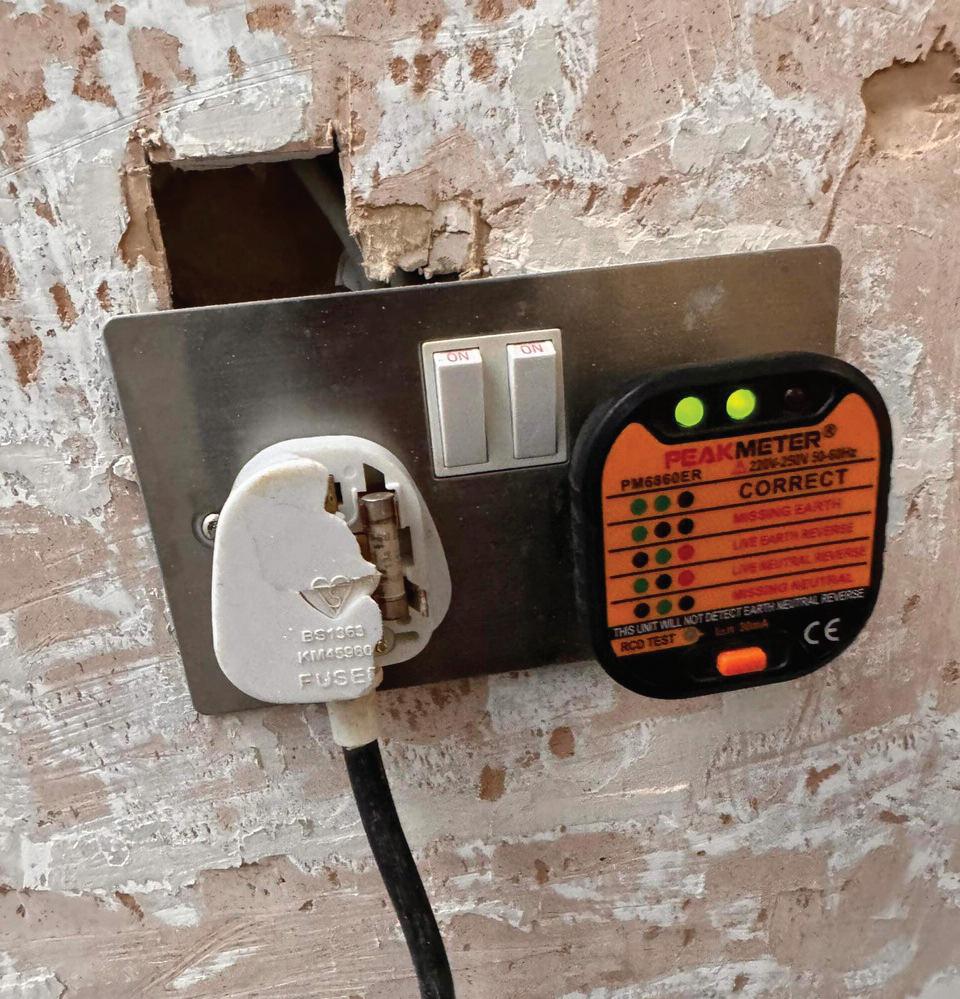
While BS 7671 is for fixed electrical installations, not por table appliances, where we come across these types of dangerous situations with immediate risk of electric shock when carr ying out an EICR we have a duty to repor t to the client and take steps to remove such a danger.
The damaged plug top exposed the live par ts of the fuse terminals and would attract a classification code C1 This is simple to rectify by switching off the plug top at the socket- outlet, removing the plug top and cutting the plug top from the flexible cable
The decorator may not be best pleased, but ever yone has a duty of care when in the work place and should not place any other trades in danger
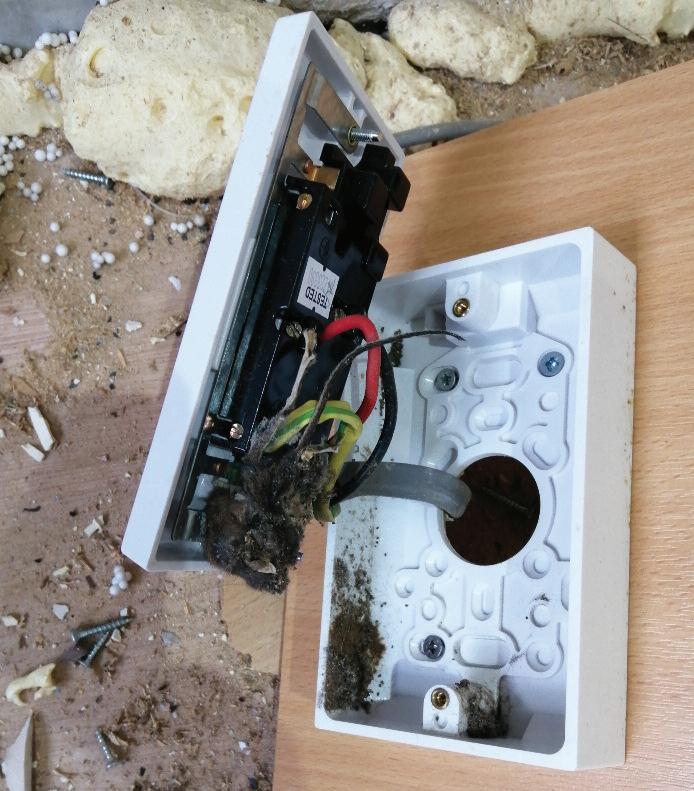
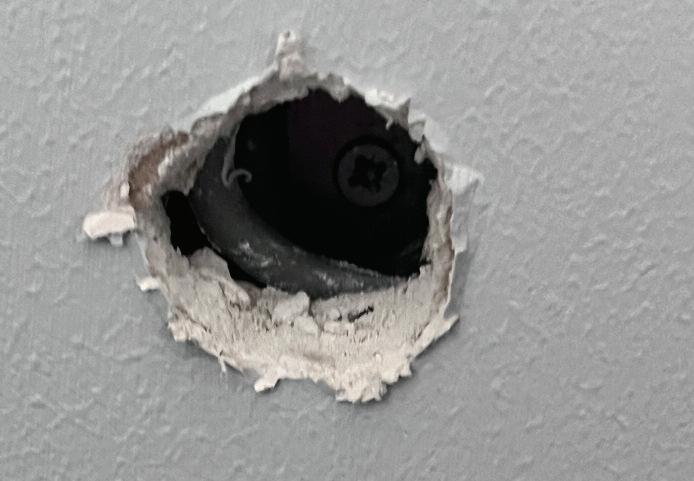
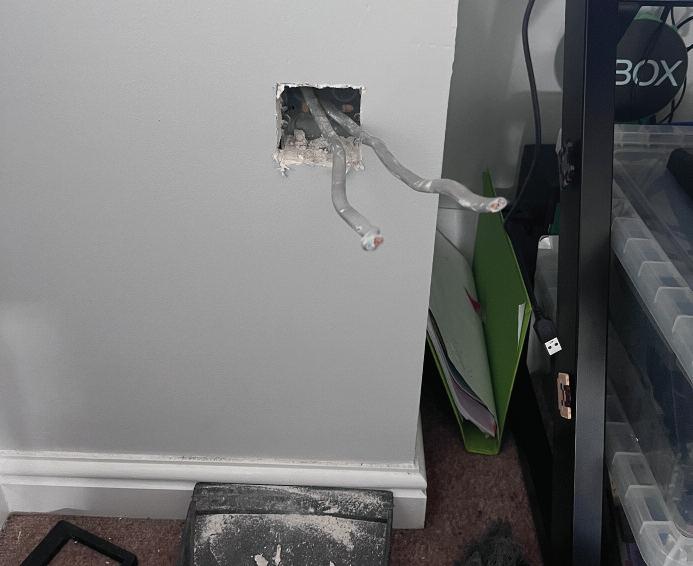
The other issue due to ongoing work is the open hole in the plasterboard above the socket- outlet which can allow access to live par ts, permit dust and debris entering the terminals of the socket- outlet While work is being carried out on or near live electrical systems these have to remain safe for those work ing in the vicinity, including any temporar y supplies that may be required
Therefore, the classification code would be a C1, Danger present -Risk of Injur y, for exposed live terminals of the plug top Additionally, the socket- outlet could also attract a C1
The Observations, Regulation infringements and Codes applicable to this observation would be: C
The A2:2022 18th Edition Codebreakers publication is priced at £22.00 (members) and £24.00 (non-members). It is available in both hard copy and digital versions * Price is VAT exempt and excludes postage and packaging.
CHRIS MARTIN: THIS IS A GENUINE PHOTO OF THE DECORATOR’S HANDY WORK AND EXTENSION LEAD PLUG.
OVERCURRENT PROTECTION –OVERLOAD
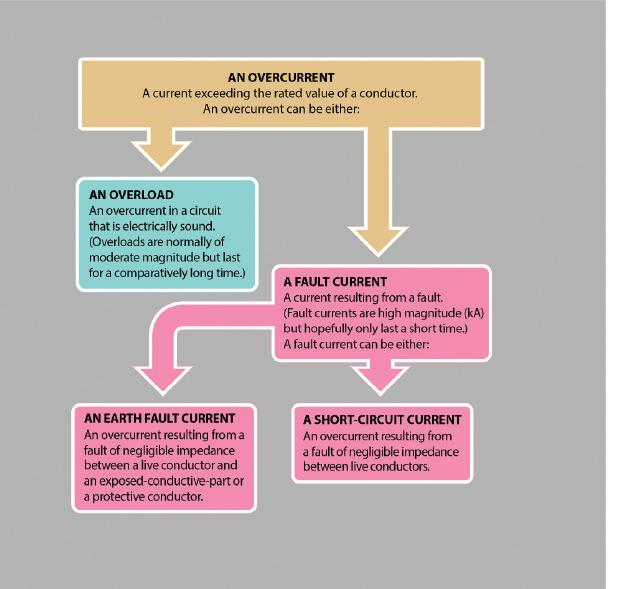
Part 2 of BS 7671, defines an overload current as being ‘An overcurrent occurring in a circuit which is electrically sound’ An overcurrent may result from ‘overworked’ electrical or electro-mechanical equipment, or by users inadvertently or deliberately connecting equipment such that the current exceeds that which the circuit was designed to carry
Fig 1 identifies the relationship between the different conditions that may
cause an overcurrent This article will only consider overload conditions
Types of loads
It should be remembered that not all electrical loads are liable to overload. Loads that are typically resistive in nature, including electric showers, immersion heater elements, instantaneous water heaters, convector heaters and the like, are unable to draw more than their rated current In such cases, a device providing protection against overload need not be provided (433 3 1 (ii))
However, where individual loads that are inherently not liable to overload are connected to a circuit, such as a ring final circuit, that circuit can be subjected to overload
All circuits, whether they are liable to overload or not, must be protected against fault current, with a few exceptions (434 3)
Ring final circuits
Ring final circuits may be considered as a
This article from the experts at NICEIC gives an introduction into overload current and how the requirements for this in BS 7671 are to be applied. It aims to assist contractors to make informed decisions during the design stage of an installation.
special case, in which to minimise the risk of overload, regulation 433 1 204 details particular conditions that need to be applied, including:
l socket-outlets and accessories must be manufactured to BS 1363 and supplied through a ring final circuit with or without unfused spurs, protected by a 30 A or 32 A protective device;
l the circuit must be wired with copper conductors having line and neutral conductors with a minimum cross-sectional area (csa) of 2 5 mm2 (where 2-core mineral insulated cables conforming to BS EN 60702-1 are used, a csa of 1 5 mm2 is permitted);
l the current-carrying capacity (Iz) of the cable, when corrected for the particular installation conditions must not be less than 20 A;
l the load current in any part of the circuit should not exceed the current-carrying capacity of the cable for long periods
Coordination between conductor and overload protective device
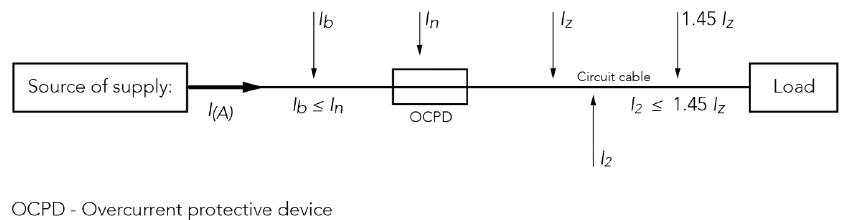
Fig 2 outlines a typical circuit, indicating the overload protective device (normally a circuit-breaker or fuse), the circuit conductors (cable) and the load When an overload occurs, the protective device is designed to
automatically disconnect the circuit by means of the circuit-breaker tripping or fuse rupturing
Should an overload occur in a circuit where there is no overload protection provided, the temperature of the circuit conductors is liable to increase significantly which, over time, may lead to damage of insulation, joints and terminations of the conductors and/or their surroundings
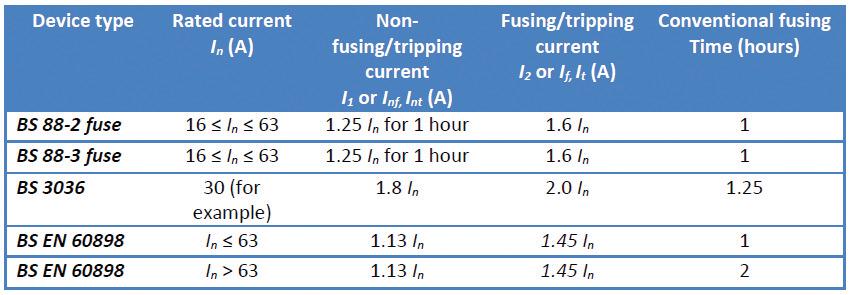
To protect against any such thermal distress, the circuit design must properly coordinate the current-carrying capacity of the conductors and the anticipated load current with the characteristics of the overload protective device (see Table 1)
capacity (Iz) of any of the conductors of the circuit
Expression (i) is self-explanatory However, it is worthwhile considering what expression (ii) means for the designer
Cable manufacturers must ensure that PVC or XLPE insulated cables can safely withstand overload currents up to 1 45 times their continuous current rating without showing any indication of deterioration
With the exception of rewireable fuses to BS 3036, where the operating characteristics of a protective device meet the requirements of 433 1 1, as reproduced in the following expressions (i) & (ii), protection against overload will be provided:
l Expression (i): Ib ≤ In ≤ Iz
– The design current of the circuit (Ib) must be less than or equal to the current rating or current setting of the protective device (In), which must be less than or equal to (Iz), the lowest current-carrying capacity of the conductors forming the circuit
l Expression (ii): I2 ≤ 1.45 Iz
– The current causing effective operation of the protective device (I2) must not exceed 1.45 times the lowest of the current-carrying
Where:
In – value of current that the protective device can carry continuously without deterioration under specified conditions
I1 – value of current specified as that which the protective device is capable of carrying for a specified time (conventional time) without operating I2 – value of current specified as that which causes operation of the protective device within a specified time (conventional time)
As an example, consider a user replaceable 16 A gG fuse to BS 88-3 (BS HD 60269-3) states that:
l non-fusing current I1 is 1 25 In (1 25 x 16 = 20 A) for 1 hour, and l fusing current I2 is 1.6 In (1.6 x 16 = 25.6 A).
Therefore, expression (ii) would be satisfied if, for a 16 A fuse, 1 6 In ≤ 1 45 Iz
Using the same 16 A fuse, a short-term overload of 20 A (1 25 In x 16 A) could be sustained for 1 hour, after which time the fuse element will weaken and break If during this process the overload was to increase to 25.6 A (1.6 In x 16 A), the fuse would rupture within the hour without causing any undue stress on the cable or associated equipment
Additionally, where a protective device, meeting one of the standards in regulation 433.1.201 is installed, compliance with the expressions (i) and (ii) will also result in compliance with indent (iii) of regulation 433 1 1
Location of overload protective devices
In general, and except where regulation 433.2.2 or 433.3 apply, a device for overload protection is required at the
F
g 2 Diagram showing the relationships of currents for overload protection
Ta b le 1 Sample of conventional times and currents for a range of overcurrent protective devices
point where a reduction occurs in the current-carrying capacity of the conductors of the installation (433 2 1)
If there are no outlets or spurs after the reduction in cross-sectional area, the protective device may be installed along the run of that conductor provided that:
l Protection against fault current is provided (434), or
l The length of run before the overload protection device does not exceed 3 m, and the circuit is installed in a manner that reduces to a minimum the risk of:
l a fault, and
l fire or danger to persons (433 2 2)
Omission of overload protective devices
Except where a location presents a risk of fire or explosion, overload protection need not be provided:
l For a conductor,
l on the load side of a point where a reduction in the value of current-carrying capacity occurs if the conductor is effectively protected against overload by a protective device installed on the supply side of that point, or
l which, because of the characteristics of the load or the supply, is not likely to carry overload current
l Where the DNO agrees that their cut-out(s) provide(s) overload protection between the origin and the main distribution point of the installation (so long as overload protection is provided at that point) (433.3.1).
Overload protection can also be omitted for safety reasons, where unexpected disconnection of supply could cause danger or damage (433 3 3)
Summary
An overload may be considered as an overcurrent occurring in a healthy circuit resulting from overworked electrical equipment, or as a consequence of the connected load exceeding the current that the circuit was designed to carry
To prevent thermal distress and damage to the circuit conductors, the protective device is designed to automatically disconnect the circuit in the event of an overload As such, any circuit design must properly co-ordinate the current-carrying capacity of the conductors and the anticipated load current with the characteristics of the overload protective device
Electrical loads such as electric showers, immersion heaters, convector heaters and the like typically have resistive characteristics and are unable to draw more current than their current rating and are therefore unable to overload. In such cases, a device providing protection against overload need not be provided
However, where individual loads that are inherently not liable to overload are connected to a circuit, such as a ring final circuit, that circuit can be subjected to overload
ISOLATION AND SWITCHING FOR MECHANICAL MAINTENANCE
Michael Peace CEng MIET MCIBSE, Senior Engineer at the IET, looks into the practicalities and requirements of BS 7671:2018+A2:2022 with respect to isolation and switching for mechanical maintenance.
The topic of heat-damaged shower pull cords was discussed on the IET EngX forum at the end of 2022, and not for the first time either During the debate, and to avoid the problem of heat-damaged isolators, it was asked whether isolators for equipment such as showers and ovens could be omitted and if it’s acceptable to rely on isolation at the consumer unit
This article answers the debate by looking at the practicalities and requirements of BS 7671:2018+A2:2022 with respect to isolation and switching for mechanical maintenance
What are the requirements for isolation?
BS 7671 is non-statutory but the Electricity at Work Regulations 1989 (EAWR) are written into law
The EAWR are general in their application and refer throughout to "danger" and "injury" Danger is defined as "risk of injury" and injury is defined in terms of certain classes of potential harm to persons Injury is stated to mean death or injury to persons from:
l Electric shock,
l Electric burn,
l Electrical explosion or arcing, or
l Fire or explosion initiated by electrical energy
Regulation 12(1)(b) of EAWR states: "where necessary to prevent danger, suitable means shall be available for [ ] the isolation of any electrical equipment", where "isolation" means the disconnection
and separation of the electrical equipment from every source in such a way that the disconnection and separation is secure
What are the requirements of BS 7671:2018+A2:2022 for isolation?
The main requirements for isolation and switching are provided in Chapter 46 and Section 537 of BS 7671:2018+A2:2022
With respect to switching off for mechanical maintenance, the term isolation can be broadly split into three categories covering different parts of the installation:
1 Installation, 2. Circuits, and 3. Equipment
Installations
Chapter 46 of BS 7671:2018+A2:2022 sets out the requirements for isolation and switching and Regulation 462 1 states that: "Each electrical installation shall have provisions for isolation from each supply " This is provided in the form of a main linked switch or linked circuit-breaker located as near as practicable to the origin of the installation as a means of switching the supply on load, as set out in Regulation 462 1 201 of BS 7671:2018+A2:2022
Circuits
Regulation 462.2 of BS 7671:2018+A2:2022 requires every circuit to be provided with isolation for all live conductors, except those detailed in Regulation 461.2 of BS 7671:2018+A2:2022,
which provides exceptions for TN-C-S and TN-S systems where the neutral or PEN conductor is reliably connected to Earth
Equipment
Devices for isolation and switching or plugs and socket-outlets can be used to provide isolation for equipment
Note that for plugs and socket-outlets, isolation is achieved by withdrawal of the plug from the socket-outlet The switch of a socket-outlet is not required to be suitable for isolation (see ‘(6)’ to Table 537 4 of BS 7671:2018+A2:2022)
Where mechanical maintenance may involve a risk of physical injury, means for switching off shall be provided in accordance with Section 464 of BS 7671:2018+A2:2022
What are the requirements of BS 7671:2018+A2:2022 for switching off for mechanical maintenance?
Regulation 464 2 of BS 7671:2018+A2:2022 requires suitable means to prevent equipment from being inadvertently or unintentionally reactivated during mechanical
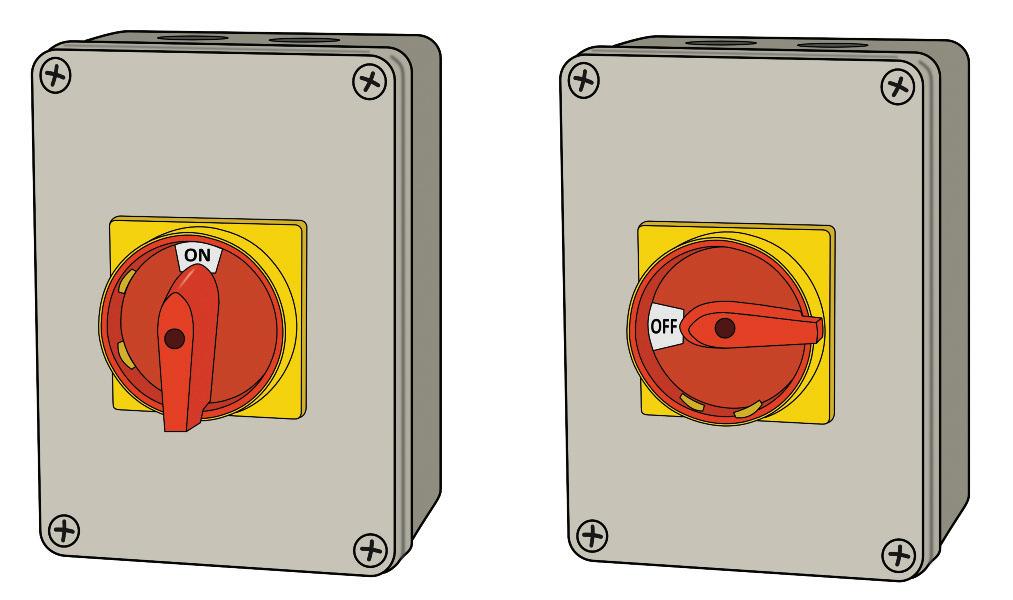
maintenance, unless the means of switching off is continuously under the control of any person performing such maintenance This is typically an isolation device designed to allow a padlock to be installed to ensure safe isolation and prevent inadvertent re-energization
Which devices are suitable for isolation?
Table 537.4 of BS 7671:2018+A2:2022 provides guidance on protective, isolation and switching devices and their suitability for isolation, emergency switching off and functional switching This includes a wide range of devices from circuit-breakers to contactors.
Where protective devices are suitable and can be used for isolation of circuits, this is marked on the side of the device, as shown in the image below
IEC 60617 – Graphical Symbols for Diagrams
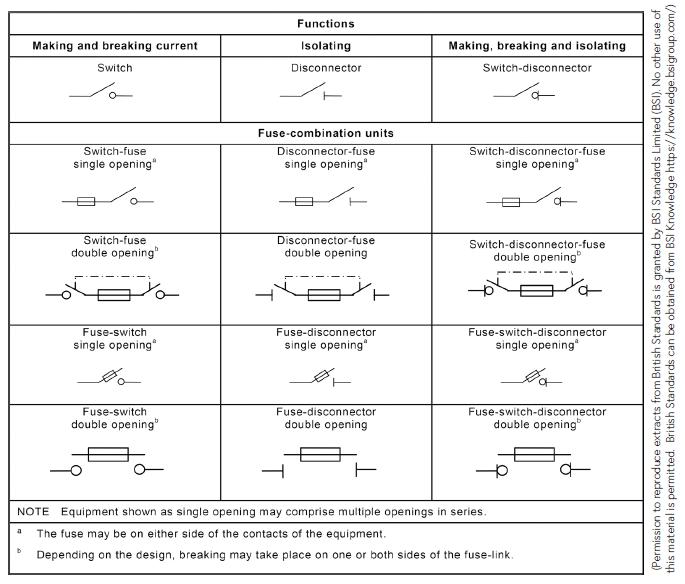
Table 1 of BS EN 60947-3:2015 provides a useful summary of the different types of equipment and definitions (see Fig 2).
Where should an isolator be located?
The isolator needs to be installed so that it
is clearly identified by position or labelling Regulation 537.3.2.4 states that: "Devices for switching off for mechanical maintenance shall be clearly identified by position or durable marking so as to be identifiable for their intended use " "Identified by position" means, for example, if it can clearly be seen that the purpose of an isolator is for a particular piece of equipment. If it is decided to locate the isolator away from the equipment for a particular reason, it shall be clearly identified
Is it acceptable to isolate at the consumer unit for mechanical maintenance?
There is nothing in BS 7671:2018+A2:2022 to prevent isolation at the consumer unit for mechanical maintenance The installation can be isolated by operating the main switch, as it is required to be a double-pole device suitable for switching the supply on load and as a means of isolation, in accordance with Regulation 462 1 201 The installation could be considered to be under continuous control or locked off if required
The main consideration is the type of equipment connected and what is required in the manufacturer’s instructions Frequently switching a high current inductive load is likely to reduce the lifespan of the protective device It’s
important to remember that the primary function is a protective device.
Then there are the practicalities to consider For example, isolation at the consumer unit in a dwelling to carry out a maintenance task to replace equipment which takes 15 minutes once every five years may be acceptable Whereas the isolation of an office block or house of multiple occupancy to carry out maintenance work on a more frequent basis will be more inconvenient and probably not acceptable
Can I use a protective device for isolation?
Isolating an individual circuit as opposed to the whole installation using the main switch is more desirable as there is less inconvenience when others are using the installation
The requirements for isolation and switching in TT systems are different to that for TN systems. For a TN-S system, where the neutral conductor can be considered to be reliably at earth potential, the neutral need not be disconnected, therefore it is permissible to use the protective device for isolation (see Regulation 531 2 2 of BS 7671:2018+A2:2022)
For TT systems, the neutral must be disconnected for isolation This could be achieved by using double-pole protective devices, but it is important to note that most readily available devices are single pole, therefore this method of isolation would not be suitable for TT installations
Whilst it is acceptable to use a protective device for isolation, it should be remembered that where protective devices such as circuit-breakers, AFDDs, RCBOs and RCDs are used, the primary function of these devices is protection and, as a consequence, they are not intended for frequent load switching.
Where a protective device is used for frequent duty, the number of operations and load characteristics according to the manufacturer’s instructions should be taken into account This is stated in ‘(5)’ to Table 537.4 of BS 7671:2018+A2:2022.
What do manufacturer’s instructions say?
Regulation 134 1 1 of BS 7671:2018+A2:2022 requires the installer to take account of manufacturer’s instructions The advice provided in manufacturer’s instructions varies. Looking at the manufacturer’s instructions for a 10.5 kW shower, the
general safety section states that a suitable double-pole isolation switch for supply disconnection must be incorporated in the fixed circuit in accordance with current wiring rules. At this point, it could be assumed that isolation at the consumer unit is acceptable but it’s important to read further
The electrical installation section on page three of the manufacturer’s instructions recommends switching off at the isolating switch when not in use, as shown in Fig 3
Given the message that "this is a safety procedure recommended with all electrical appliances", it is difficult to see how omitting a local isolator could be justified
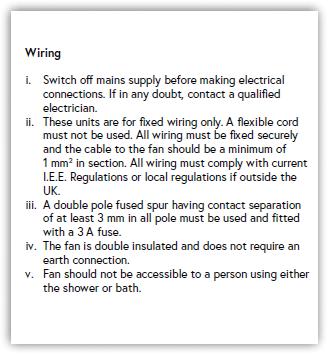
The example shown in Fig 4 is of manufacturer’s instructions for an extractor fan It states that a double-pole fused spur having contact separation of at least 3 mm in all poles must be used and fitted with a 3 A fuse
What do the product standards say?
The international standard for household and similar products is the IEC 60335 series Clause 7 12 2 of IEC 60335-1:2020
Household and similar electrical appliances – Safety – Part 1: General requirements states: “If a stationary appliance is not fitted with a supply cord and a plug, or with other means for disconnection from the supply mains having a contact separation in all poles that provide full disconnection under overvoltage category III conditions, the instructions shall state that means for disconnection must be incorporated in the fixed wiring in accordance with the wiring rules ”
Summary
Isolation at the consumer unit is permitted but it’s important to consider the practicalities and requirements of the manufacturer of the equipment Where single-pole protective devices are used, consideration for the type of earthing system is required Where protective devices are used for isolation, it is important to take account of the manufacturer’s instructions with regards to the number of mechanical and electrical operations
Manufacturers of electrical equipment often recommend the installation of device(s) for isolation and switching because turning off the equipment when not in use is a safety procedure recommended with all electrical appliances BROWSE OR DOWNLOAD A COPY OF
Dr. Zzeus
IN THIS REGULAR COLUMN, DR. TOM BROOKES, MD AT ZZEUS TRAINING AND CHAIRMAN OF THE FSA, ANSWERS YOUR QUESTIONS RELATED TO FIRE SAFETY. IN THIS MONTH’S EDITION HE LOOKS AT bs 5839-1 and whether it is safe to have just heat detectors fitted in hotel bedrooms.
The current rules in BS 5839-1 for a Category L2 fire detection and alarm system in hotels state that you may use a heat detector in hotel rooms that open onto escape routes and smoke detectors in the escape routes and corridors.
One of my customers (a risk assessor) has been told that because the Fire Safety Order requires that all relevant persons are adequately protected, the current heat detectors in bedrooms are incorrect and that smoke detection must be fitted in all hotel bedrooms.
Is this correct?
This answer has two parts, so I’ll answer the first question here: is it acceptable to install heat detectors in hotel bedrooms?
Using smoke detectors, which detect small particles, in hotel bedrooms is likely to increase false alarms These could be triggered by steam from bathrooms and kettles, aerosol sprays, cigarette smoke, and other items guests might use
More false alarms could lead to people mistrusting the fire alarm system, which might cause delays in responding to real alarms and lower
fire safety standards
Heat detectors in hotel bedrooms offer some protection for guests when a fire starts They alert hotel occupants well before a fire threatens any escape routes
Fire statistics show that the chance of a fire starting in a hotel bedroom is very low (about one bedroom fire per million guest nights each year) There are almost no deaths in the room where the fire starts, no matter what type of detector is used in the bedroom.
We who sit on the BSI committee responsible for BS 5839-1 have not received any evidence that the current recommendations for hotels need to be changed
BS 5839-1 guidance on using heat detectors in hotel bedrooms was confirmed by a specific decision from the government department in England and Wales (Chief Fire and Rescue Adviser).
This decision, called a "Determination in respect of the fire safety adequacy of fire detection in a hotel," supported the use of heat detectors in a particular hotel's bedrooms
A link to the government determination is included here, should you need to justify to a risk assessor who may not be fully conversant with fire alarm categories:
That said, specifying what category a fire system should be is often the fire risk assessor's job
So, playing devil's advocate slightly, pretend this hotel specialised in individuals with movement issues or disabilities, or maybe was used as a respite speciality hotel where loved ones can go to a hotel that gives their partners a rest from the day-to-day care of the person with the issue
With the majority of occupants likely to be elderly as well, most fire risk assessors would look at increasing the level of early detection to an L1 Category because the occupants may be unable to evacuate quickly in the event of a fire
DO YOU HAVE A QUESTION YOU'D LIKE ANSWERED? EMAIL YOUR QUERIES TO: TOM@ZZEUS.ORG.UK
GET MORE DETAILS ABOUT ZZEUS TRAINING AND THE RANGE OF COURSES ON OFFER AT: WWW.RDR.LINK/EBF014
CABLE CONCEALMENT
Frank Bertie, Managing Director at NAPIT, discusses concealed cabling and how to deal with new and existing cabling.
Concealed wiring systems within BS 7671
When designing any electrical installation, it’s important to consider the type of cable, the routing of the wiring system, as well as the method of protecting the wiring
For new installations, providing the correct wiring system is selected, including any requirements for mechanical and additional protection, there shouldn’t be any issues in complying with BS 7671
Chapter 52 Selection and Erection of Wiring Systems
Chapter 52 covers the requirements on types of wiring systems and how they are to be installed. Section 522 looks at external influences, and while all of these can affect the wiring system, the one we need to consider here is the impact outlined in Regulation 522 6
Part of Section 522 discusses the protection that is required for the appropriate parts of the wiring system.
Particular consideration is needed for any changes of direction of the wiring system and where such wiring enters any electrical equipment So, when considering any such protection, it’s those parts of the wiring system that may be subject to damage from mechanical stress.
This Regulation details concerns regarding protection, and in particular impacts with the external influence category (AG), and has the requirement to minimise damage during erection as a result of mechanical stress caused by:
l Impact
l Abrasion
l Penetration
l Tension; and
l Compression
The important thing to remember is this requirement applies during installation, use or maintenance of the electrical installation, so factors have to be considered – not just during the installation stage, but for the expected lifetime of the installation
As a result, such protection is required during the erection of the electrical installation in order to prevent any damage caused by any other trades working on the premises that can subject the wiring system to any of the previous categories listed under Regulation 522 6
Within the electrical industry, it’s fundamental to have widespread
understanding of where cables can be installed within the prescribed zones to meet the requirements of BS 7671.
Unfortunately, other trades and clients may not have this knowledge or may be unaware of these zones
It’s possible that this may lead to damage to the concealed cables when other trades install their equipment, enclosures and supports, often prior to the final fix and energisation of the electrical installation, resulting in unexplained faults
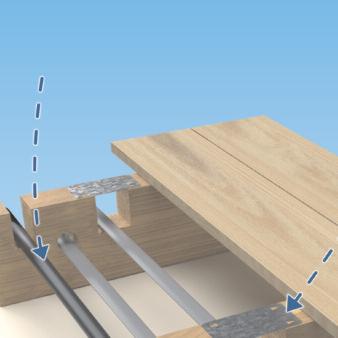
For domestic and similar installations, the cable types in use are Polyvinyl Chloride (PVC) insulated and PVC oversheathed cables in accordance with British Standard BS 6004. As they lack inherent mechanical protection, they must be positioned at least 50 mm away from any surface to avoid the risk of being penetrated by nails, screws and the like
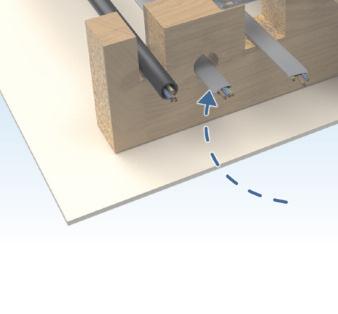
Where such cables pass through a joist within a floor or ceiling construction or under floorboards, they must be at least 50 mm from the top or bottom as appropriate to the joist or batten, as shown in Fig 1
There may be situations where similar unprotected cables are concealed within walls and partitions It isn’t usually practical to provide such cables with earthed mechanical protection such as steel conduit
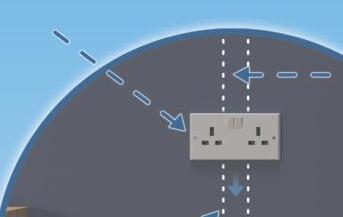
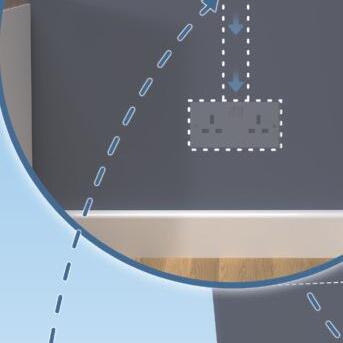
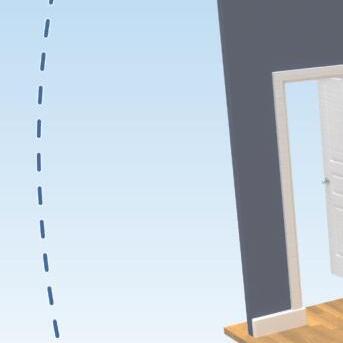
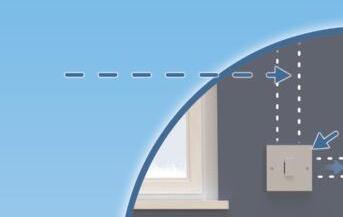
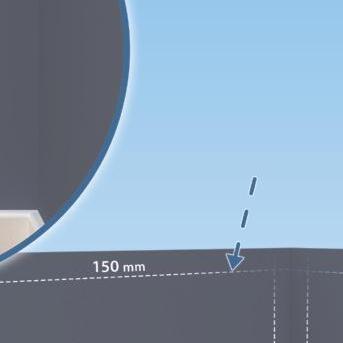
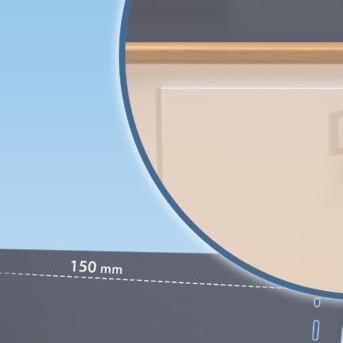
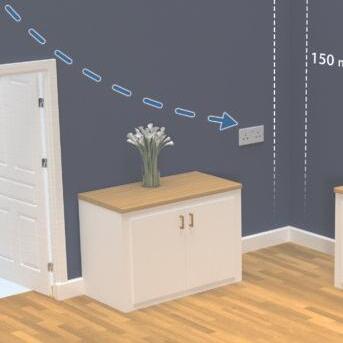
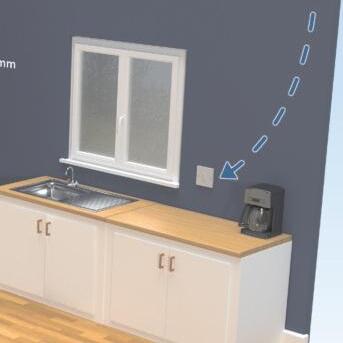
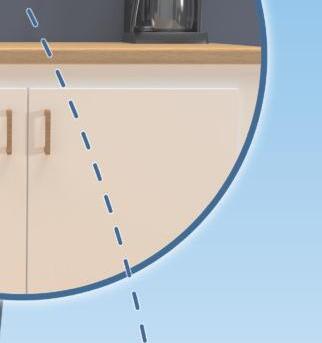
For cables less than 50 mm from the wall surface, the most practical option is to restrict the run of cables to the prescribed zones horizontally or vertically to switchgear or accessories, as detailed in Regulation 522.6.202 (i) and as shown in Fig 2. Where access can be gained to the other side of the wall or partition, an indication of the location of an outlet point, and the possible position of cables from the reverse side of the partition, can be given by simply looking at the other side prior to carrying out the drilling or
cutting into the wall or partition.
Installing a socket-outlet on one side of the partition and a blank plate on the reverse side is another option Although not always practical, this gives a clear indication that cables may have been installed vertically or horizontally to such points on both sides of the wall or partition.
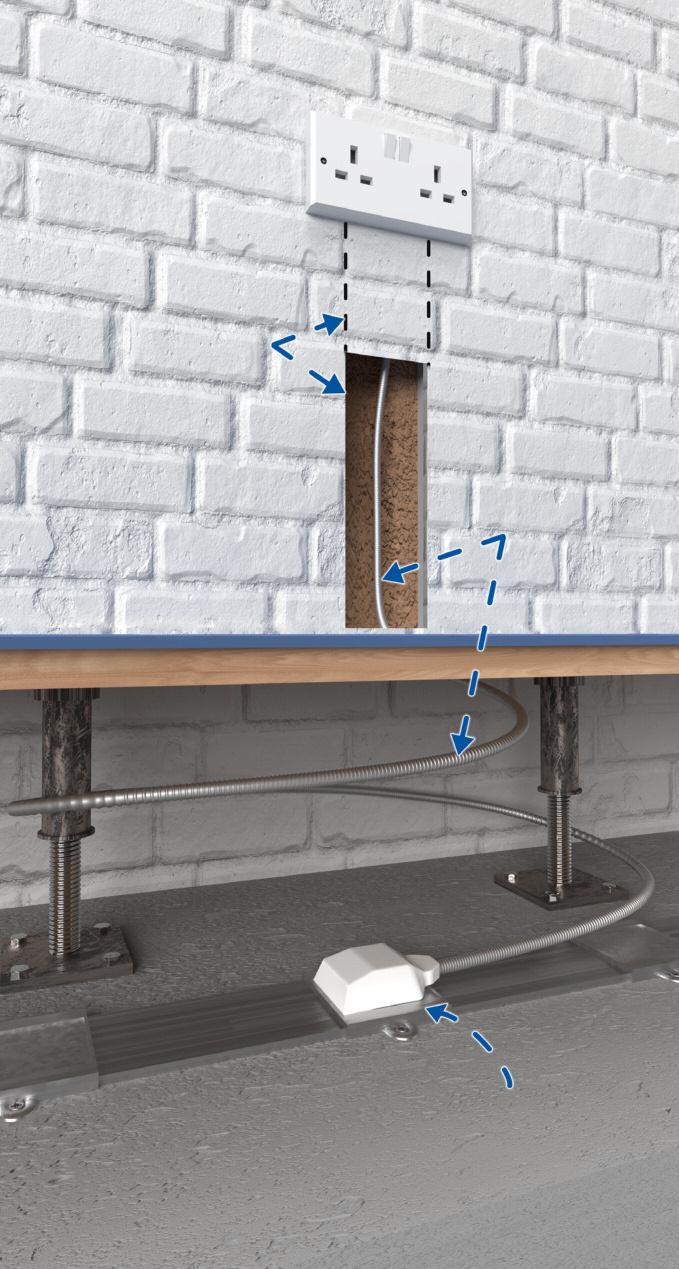
In some commercial installations, prewired metal flexible conduit is being utilised either from under floor power tracks or direct from the Distribution Boards as a means to reduce installation times
While this type of wiring has its advantages, if the location in which it is installed fails to comply with a depth of more than 50 mm or is installed in metal partitions, then Regulation 522 6 202 is applicable (see Fig 3)
This Regulation requires that the cable concealed in the metal partition wall must be additionally protected by a 30 mA RCD or it must be mechanically protected in accordance with Regulation 522 6 204
The requirement in Regulation 522 6 204, which relates to conduit, is contained in item (ii) This refers to earthed conduit which satisfies the requirements of BS 7671 for a protective conductor;
however, flexible metal conduit cannot comply with this particular requirement
As a result, unless mechanical protection is provided for the flexible metal conduit by some other means to prevent penetration of the cable by nails, screws and the like – such as that referred to in item (iv) of Regulation 522.6.204 –the use of flexible metal conduit alone cannot comply with the requirements of Regulation 522 6 204
In areas where there is a higher potential of damage from impact from either medium severity (AG2) or high severity (AG3), protection shall be provided by one of the following:
l Mechanical attributes of the wiring systems (or)
l Location of the wiring system (or)
l Provision of additional local or general protection (or)
l Any combination of the above
Concealed cables in existing electrical installations
It’s one of the main dilemmas associated with the addition or alteration of existing electrical installations where there is the
danger of penetrating concealed cables, leading to a risk of fire or electric shock.
Concealed cables that are not protected are susceptible to damage due to penetration by nails, screws and other sharp objects
Although concealed cables have had requirements for installation within safe zones and/or mechanical protection or additional protection in the form of an RCD since the 16th Edition of BS 7671, there are a multitude of premises with hidden cables without appropriate protection or routing in the correct zones
It’s always prudent to check accessories or equipment for expected routing of cables and to use a cable detector if there’s any suspicion of concealed cables
Conclusion
When considering the design of an electrical installation it’s important to take into account the proposed cable routes and the potential dangers of penetrating concealed cables
Fig 2: Restricting cables, which are
Fig 3: Underfloor busbar using a flexible metal conduit to supply a socket-outlet
Cut section diagram showing concealed cable route to the
What fuse do you need for a Type 1 SPD? Robin Earl, Market Development Manager at DEHN UK, provides some answers and warns about deviating from established norms.
DEAL BREAKERS
Tbe found in the installation guide provided with the product However, some contractors, for whatever reason, still want to deviate from the published guidance, so any change needs to consider the following
The Type 1 SPD has three different types of current that can flow through the circuit:
1. The lightning impulse current (Iimp)
This is what the SPD diverts to ground during lightning events
2. The short circuit value in cases of a fault at the location of the SPD. This is called short circuit interrupt (Isccr).
3 For spark gap Type 1 SPDs there’s a third value to consider – the line follow current (Ifi)
As an example, for the top of the range DEHNventil, a combined type 1/2/3 SPD, the lightning current value is 25 kA per pole for a total of 100 kA for all four poles
The short circuit value and the line follow current are rated as 50 kA each.
Any deviation from the specified fuses, which in the case of the DEHNventil is 250A gL/gG, needs to take account of all those values
The most requested deviation from the specification is to ask if an MCB is okay in the Type 1 SPD circuit MCBs typically have a breaking capacity of between 10-15
We ve seen what happens to MCBs after a lightning strike, it is not good We’re aware that MCBs have different ratings, for example to BS EN 60898 the rating is 10 kA and to BS EN 60947-2 it’s now 15 kA, but still not 25 kA. Using a D curve MCB will not alter anything
If the MCB is the overcurrent protection device (OCPD) in the surge circuit, then the MCB during the act of being blown apart will remove the SPD from the role of an overvoltage protection device As the SPD is in a parallel circuit, power is maintained to the installation, so the next surge will not be diverted to earth as the SPD has been removed, and further damage will happen.
MCCB usage
We also get asked about using MCCBs as they can have rupture capacities beyond 25 kA We cannot forget the short circuit interrupt value as well as the lightning impulse and we find that most MCCBs will fail one or the other during tests
The MCCB may not be fully destroyed by the tests, but it can trip and isolate the SPD. Again, the installation will remain energised, but protection has been removed
Other fuse types
Finally, we get asked about any other fuse type apart from the gG/gL, and as for the other OCPDs types listed previously, if we have not tested it and its not on the
are asked, and it s mainly in retrofit situations where there’s a panel board feeding the SPD via a MCCB or fuse and this is the simplest solution that presents itself. Alternative solutions could be a different way to break out of the board via feed thru terminals replacing the MCCB or using an isolator
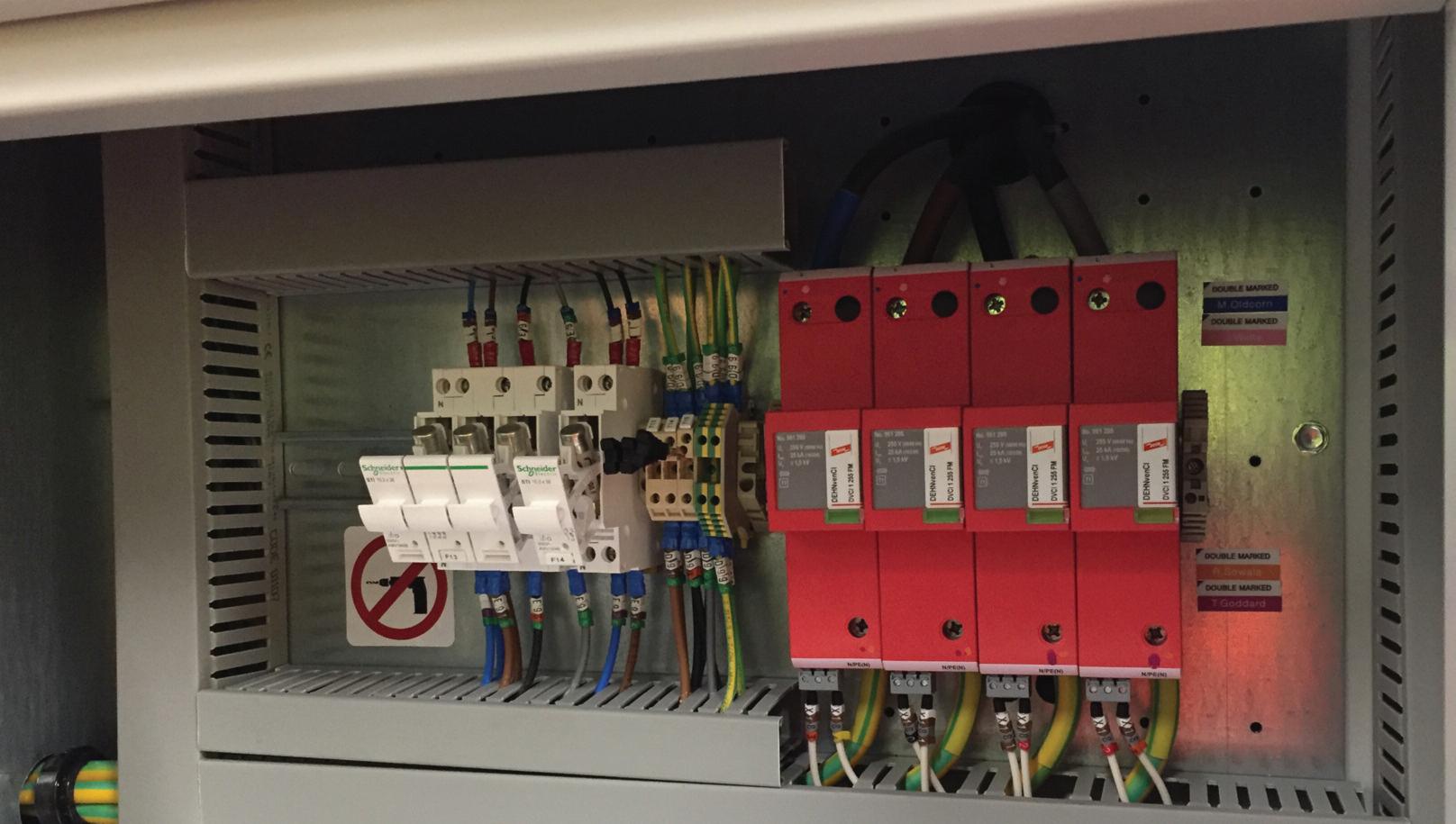
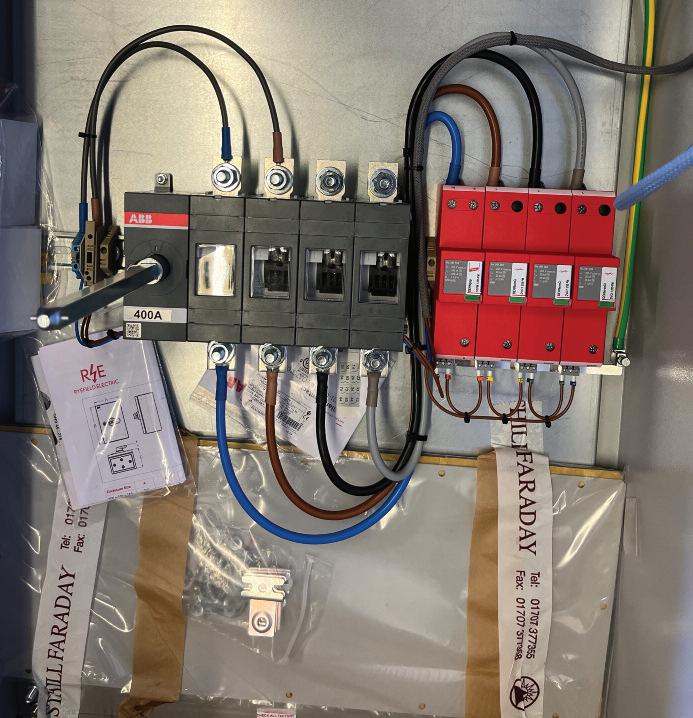
Another solution could be the Type 1 SPDs that have built-in fuses as per the DEHNventCI Then the installation just needs the connection to the phase bars with or without a dedicated surge circuit isolator
Four DEHNventCI a type 1/2 SPD with built in fuses, demonstrating how little space the combination SPD/OCPD can take up in a panel
Set of DEHNventCI combined type 1/2 SPD with built in fuses, wired into a main isolator prior to final installation, with the commoned up alarm contacts for displaying SPD health status
HOW DOES A NETWORK WORK?
Geoff Meads, Network School Trainer for CEDIA, looks at how networks are configured and operate and explains why they’re the bedrock of a quality smart home installation.
When you think about a ‘smart home’, what do you imagine? Maybe it's a huge property with fancy lights, piped music, and a TV in every room?
Perhaps there’s a sophisticated security system and curtains that open and close automatically?
Even the most modest view of a smart home might include a video doorbell, wireless speakers and maybe a ‘smart’ thermostat.
Whichever type of installation comes to mind, it will have one common technology as its backbone – an IP network
Once only found in the world of corporate IT systems, the IP (Internet Protocol) network found its way into homes with the introduction of internet access in the late 1990s For many people, it’s just known as ‘the Wi-Fi’, an anonymous black box in the corner of a room downstairs or by the front door
Nowadays, a huge amount of pressure is put on this little black box, especially with the introduction of mobile devices and internet-based TV systems like Netflix, YouTube and BBC iPlayer
Because home networks are now so ‘busy’, venturing into smart home
technology without IP networking knowledge is like trying to do electrical work without knowing your ‘twin and earth’ from your RCD You might be able to make a guess as to how it all works, but disaster won't be far away without a bit of education underpinning your work
What is a network?
So, what is an IP network? We can think of a network as an interconnected collection of devices. However, unlike simple point-to-point connections like traditional audio and video cables, network connections are different: they offer two-way communication, they split transmissions up into smaller chunks (rather than a continuous stream of data) for transmission, and information can travel through many other devices before reaching their destination
The way network traffic moves can be understood by looking at the patterns that devices form when they’re connected together
First is a ‘bus’ network Just like busses on roads,
data can be exchanged along a common ‘road’. The ‘road’ can be a cable but, in modern times, the most common bus network is Wi-Fi, which uses the air around us as the ‘road’
The second pattern we find is called a ‘star’ network Much like a roundabout, a star network uses a single, central point to bring several roads together, so traffic might move from one road to another in order to reach its final destination
Finally, we have a ‘mesh’ network. These are a little more complex, as each device has multiple incoming and outgoing connections A full explanation of a mesh network is beyond the scope of this article but is covered in many network courses
When splitting each transmission into small, more manageable chunks, (in network terms we call them ‘Packets’), the reliability of transmission is increased Also, network protocols allow for the notification and resending of missing or damaged packets, meaning a network can guarantee message integrity
Network devices exchange data with each other using addresses Each component has an ‘address’ much like each building does in the world around us The addresses for both sender and destination are added to every packet being sent, such that any device dealing with a packet en-route between origin and destination knows where the packet is destined for and who sent it, in case of problems!
Key network components
The foundation of any network is what we call its ‘physical layer’ This means the physical pathways that connect devices together These are normally formed from one of, or a combination of, three types: electrical signals via Ethernet cables (typically Cat5e or Cat6); Wi-Fi (using electromagnetic waves through the air) and light pulses, using fibre-optic cables
In order of decreasing bandwidth, the best option is fibre-optic, then Ethernet cables and finally Wi-Fi, which offers the
lowest bandwidth/network speed
Hardware network devices can be split into two types Firstly, we have ‘infrastructure’ devices These are the pieces of hardware that form the network itself and allow packets of information to move around.
The most important infrastructure device is called a ‘router’ Just about everyone has one of these at home already You might have a BT Homehub, Virgin Hub or other device that came free from your internet service provider and that is, in its most basic form, a router
You might also have a ‘switch’ These allow you to connect more than one or two wired network devices. Finally, we have ‘Wireless Access Points’ (WAPs). These provide a wireless connection into the network using radio transmissions
Typically, the router you have at home will have a WAP built in, but these rarely provide enough coverage for a whole home unless it's a smaller house with only a few occupants To extend Wi-Fi coverage, we can add more access points around the house and connect these back to the router using ethernet cables.
The second group of devices is called ‘client’ devices They operate on the end of network connections and are the things humans interact with Here, we find smart phones, laptops, televisions, security cameras and a myriad of other devices
deliver data to phones, TVs, computers, etc The potential market is huge!
However, like learning any new technology, you’re best placed if you start at the beginning Learning from first principles not only sets you up to design and install networks that will work well and be reliable in the long term, but also means you’ll be able to fault-find more quickly if things go wrong
The ideal route for new starters
CEDIA’s suite of ‘Network School’ courses are ideally positioned for new starters in networking They begin assuming zero knowledge on the part of the student and build a level of understanding that allows new engineers to approach networking from a fully professional starting point
If you just want to ’dip your toe in the water’ then the one-day ‘Residential Networking’ class is the ideal starting point It includes basic connectivity, setup, and configuration of basic network hardware to the level required for an installation in a basic family property.
Further courses in the CEDIA network pathway explore advanced configurations, remote access, and a deep dive into more sophisticated Wi-Fi setups too
What do you need to know?
If you're thinking of learning more about networking and adding it to your offering, there’s good news – every house needs a network to
ELEX 2024
CONTINUE YO UR P ROF E S SION A L DEVELOPMENT AT ELE X SHOW!
Taking place across two days, the ELEX 2024 tour still has two final stops to make this year. And better still, we’ve got great news for those visitors that are serious about their CPD!
Recent changes to The Electrotechnical Assessment
Specification (EAS) which sets out the minimum requirements for a business to be recognised as technically competent by a Certification or Registration Body, includes a requirement for businesses to maintain appropriate records of qualifications, training (including Continuing Professional Development) and experience
To support this requirement, EVERY ELEX seminar is now CPD accredited, ensuring those individuals who make the time and effort to attend will receive a direct certificate of completion, which can
form a key part of your ongoing Continuing Professional Development record.
With industry regulation and legislation changing constantly, the extensive ELEX seminar programme will cover an array of topics, including the latest Amendment 2 to the 18th Edition and the changes this covers, along with best practice and technical advice for professionals to get stuck into Presentations will be delivered by experts in their field and the only cost to delegates is their time.
All seminars will take place in the IET Seminar Theatre located centrally in the exhibition hall and there’s no need for delegates to pre-book, just pre-register to attend the show
Whether you need some advice on the direction the sector is heading, want to chat with manufacturers about their latest solutions, view live demonstrations of the latest products or bag yourself a great
YOUR S H OW, NEA R YO U. . .
l At a venue near you
l Across two days
l Free parking (van friendly)
l Free entry
l Free T-Shirt & a free bacon roll* (*limited to first 1,000 visitors)
l Show bargains
l Hands-on demos
l Meet manufacturers
l Networking opportunities
l CPD accredited seminars and certificates
show deal on tools and equipment from leading brands, your regional ELEX tradeshow has it all
The ELEX 2024 tour will be heading to the CBS Arena, Coventry this month (12th and 13th September), before concluding at Sandown Park on November 7th and 8th
Working on your own? Need some technical advice? Don’t know where to turn? Ask Megger What it doesn’t know about installing and testing electrical systems isn’t worth knowing Every question will be answered by the Megger Technical Team, and the best will be published in Professional Electrician So, take advantage of the ‘ every question answered’ guarantee today email your questions to: meggermeasures@hamerville co uk
You ask: ONE OF MY REGULAR INDUSTRIAL CUSTOMERS IS HAVING ALL SORTS OF PROBLEMS WITH THE COMPRESSED AIR SYSTEM IN HER FACTORY. THE COMPRESSOR RUNS ALL THE TIME AND IT’S COSTING HER A FORTUNE. SHE KNOWS THERE’S A LEAK, BUT SHE CAN’T FIND IT. I KNOW THIS ISN’T AN ELECTRICAL PROBLEM BUT I’D LIKE TO HELP. CAN YOU SUGGEST ANYTHING?
Megger says:
Megger has the ideal product for that: our new MPAC128 handheld acoustic imager Compressed air leaks (and other gas leaks) produce sound Some of this sound you can hear, but most is ultrasonic – above the range of our hearing The MPAC128 picks up this sound with an array of 128 microphones It uses the signals from the microphones to work out the location of the sound source, which is shown on its built-in screen as a coloured cloud map The MPAC128 also has a digital camera so what you see on the screen is a standard digital image with the acoustic image superimposed on it That means you can identify the location of the leak almost instantly You don’t even need to be very close – the imager can ‘ see ’ a leak up to 100 metres away, so you probably won’t need to climb any ladders The MPAC128 works with any gas, and you can also use it to locate electrical partial discharge Once you have one, you’ll wonder how you managed without it!
THE CIRCLE OF LIGHT
Mike Collins, Managing Director at Ovia, provides an overview of Technical Memorandum 66 (TM66) and its efforts to create a circular economy in the lighting industry.
The UK generated 40 4 million tonnes of commercial and industrial waste in 2020 The EU estimates (2023) that member states produce more than 2.2 billion tonnes of total waste every year Electronic waste has increased 47% whilst the population has only grown by a 9% in the same time span (2010-2018) This is unsustainable
The current model of product development is ‘linear’; that is, ‘Raw materials – Design - Production –Distribution – Consumption – Collection –Waste Management/Landfill’, or simplified to ‘Take, Make, Use, Shred/Landfill’. It is this model that has raised the amount of electronic waste to unsustainable levels
The circular economy is a model of production and consumption which places the emphasis on, ‘ sharing, leasing, reusing, repairing, refurbishing and recycling existing materials and products for as long as possible’
The circular model, highlighted by the image below, left, provides for greater opportunities to use, reuse, or remake prior to recycling, waste management and/or landfill. This model has the aim of significantly reducing waste
TM66: 2021 Creating a circular economy in the lighting industry, published by CIBSE ‘ sets out what designing and manufacturing to comply with circular economy principles entails and includes a checklist, a method of assessing a product’s circular economy performance, and real-world examples of good practice.’
TM66 recognises the UK government’s strategy to eliminate avoidable waste by 2050 and to this end the target is to move the lighting industry towards using fewer resources, making products more efficient and effective by using, for example, replaceable parts However, this is a simplistic consideration when considering the whole of TM66
TM66 provides practical guidance to all elements of the lighting industry, including clients, manufacturers, specifiers, wholesalers, designers and the like, in how they might better take account of all the factors which impact upon the use, re-use and re-make of lighting products.
Circular economy and design
To ensure that any lighting product follows the ‘circular economy’ model, designers must purposefully design products that follow the user’s needs whilst operating a system whereby resources, manufacturing, distribution, use and
re-use of components are given due account in the design of the product
The circular economy takes account of making use of recycled materials, but it’s more accurate to emphasise the need to design waste out of the process at the initial design phase.
For example, where an existing luminaire has failed or the space has changed its use, circular economy thinking doesn’t simply throw the luminaire(s) away, rather consideration is given to whether the luminaire can be re-imagined, re-manufactured or used in alternative locations
The key question is: how do we retain the maximum value of the luminaire? That is, how can a luminaire be kept at the highest level of economic and functional value for as long as possible? The challenge for manufacturers is to engage with this change in the nature of its design, production and distribution systems
The clear ‘direction of travel’ within the lighting industry, and one to which Ovia is committed, is to align with the government’s strategic plan to eliminate waste.
Circular Economy Assessment Method – CEAM
The Circular Economy Assessment Method (CEAM) uses two spreadsheets (‘Make’ and ‘Specify’), authored and developed by industry specialists (including the Lighting Industry Association – LIA), and are used to enable manufacturers and specifiers to assess their lighting products, and develop their systems as they work to align with the circular economy over time
The use of CEAM is not an environmental audit It is there to guide manufacturers and others in the areas where action should/could be taken to improve their alignment with the circular economy. CEAM incorporates a scoring system, giving a clear value of where a manufacturer of lighting products stands in a circular economy environment Table 1 (below) of TM66 shows the scoring system
Ovia works hard to improve its circular economy and a range of its lighting products have been certified TM66 circularity with LIA/CIBSE in the range 1 5 – 2 5 (based on the scores in Table 1)
Circular
economy and the next steps
Ovia is committed to working towards improving its circular economy for its lighting products However, the lighting industry is at a relatively early stage of
“Where LEDs and the like continue to be sent for disposal rather than considered for re-use or re-manufacture then the underlying principles of the circular economy are not being applied...”
understanding and applying the principles of the circular economy
It is widely recognised that significant improvements in lighting efficiency have taken place with the introduction of LEDs, and progress continues to be made
However, for example, where LEDs and the like continue to be sent for disposal rather than considered for re-use or re-manufacture then the underlying principles of the circular economy are clearly not being understood and applied
More broadly, the lighting industry needs to work at educating the relevant sectors within the industry to grasp the challenges and benefits of the circular economy
Other areas of necessary future development detailed within TM66 include environmental auditing, technical obsolescence (particularly as it relates to controls), incentives and corporate objectives and ethics and responsibilities
Conclusion
Legislation, standards and the need for manufacturers to be able to design, make and sell in the UK and into the wider European and world markets, will force designers, specifiers, manufacturers and the like to positively engage with the circular economy
The incorporation of TM66 and CEAM is a useful way in which businesses can assess where they’re at in terms of their direction of travel towards products being designed for use, re-use and re-making
TAMLITE CALLS ON INDUSTRY TO EMBRACE REMAN
Tamlite Lighting is urging the lighting industry and the wider built environment sector to embrace remanufacturing as a step towards achieving net zero targets
In a newly published white paper, the brand explores how significant sustainability gains can be made throughout the supply chain by applying remanufacturing processes in the lighting sector
The paper introduces the concept of the circular economy and discusses the progress being made by the lighting industry in establishing more circular approaches for the sector.
The white paper, entitled Towards Net Zero: Can Remanufacturing Create a More Sustainable Future for Lighting? draws on Tamlite’s collaborative work with CIBSE and other industry bodies to support the development of remanufactured products This includes initiatives such as CIBSE’s TM66 Circular Economy Assessment Methods (CEAM)
Richard Wharrad, Group Manager & Head of Sustainability and Social Value at Tamlite Lighting, comments: “This paper reflects our commitment to work with the wider lighting industry to evolve a model of manufactured products, with minimal waste, that can be upgraded, serviced, reused, refurbished, or recycled to support energy saving
“Remanufacturing a luminaire can result in better-than-new performance for up to 40% less cost By incorporating the latest technological advancements, bespoke upgrades enhance the product's capabilities beyond current market equivalents ”
WIN
SEE THE LIGHT AND WIN A GREAT PRIZE!
We’ve got two Timeguard LED200WFB Wi-Fi controlled floodlights to be won this month.
Timeguard has recently added world-class Wi-Fi control to its ever-popular super-compact PIR floodlight range
The super-compact, powerful and feature-filled LED200 represents everything the Timeguard brand stands for: innovation, quality, great design and listening to customers so that professional installers can gain a real edge
With the main body of the lights fitting neatly into the palm of your hand and the equally compact floodlight providing powerful illumination, the LED200WFB is great for commercial and domestic properties, especially where space is at a premium and looks matter
You’ll get a full 2000 lumens from the twin 10 W floodlights That’s as good as you’ll get from many bigger, old-school designs of floodlights With individual pan and tilt adjustment for the two heads, you’ll easily be able to align the setup to provide the right lighting, whatever the location The rugged design will also stand the test of time
Building in genuine TuYa chips to add Wi-Fi control that users know they can rely on, is simply the icing on the cake.
HOW TO ENTER
SHEDDING SOME LIGHT
The ban on halogen bulbs in the UK has been instrumental in lowering our carbon emissions.
Addressing our carbon footprint has been the driving force behind so many decisions within the energy industry, and with a predicted reduction in 1 26 million tonnes of CO2 per year according to the UK government, it’s easy to see why the halogen ban has been enacted
Despite this ban, it isn’t illegal to own or use halogen bulbs, and many Brits likely still have these bulbs tucked away in a drawer or cupboard Added to this, there are still those who regard the humble halogen as the superior light bulb So why not use them up?
Let’s look at the pros and cons of each so that you can make an informed decision:
LED BULBS – THE PROS
Energy efficiency: The largest selling point for LED bulbs is their energy efficiency, consuming significantly less power than halogen bulbs They typically use 75-80% less energy, which leads to lower electricity bills as well as reduced environmental impact
Longevity: LED bulbs have an impressive lifespan, typically lasting up to 25,000
hours compared to halogen bulbs which have up to 4,000 hours use. This longevity not only saves money on replacement costs but also reduces the hassle of frequent bulb changes
Durability: LED bulbs have robust diodes within their housing that can withstand shock much more readily than their halogen counterparts Simply put, knocking your LED bulb will not cause the bulb to fail like a halogen bulb This durability makes them ideal for various applications, including outdoor and industrial lighting
Instant light: With the exception of LEDs operated by a dimmer that utilises soft-start technology which may take a few moments to reach full brightness, LED bulbs typically illuminate instantly This feature is particularly advantageous in environments where immediate illumination is crucial, such as security or emergency lighting
Environmentally friendly: LED bulbs don’t contain toxic elements like mercury, making them much safer for our planet Additionally, their energy efficiency reduces greenhouse gas emissions, contributing to a cleaner environment
LED BULBS – THE CONS
Higher initial cost: While LED bulbs offer long-term savings, they often come with a higher initial cost compared to halogen bulbs However, this is a worthy investment as it will lower energy costs in the long run
Dimming compatibility: Not all LED bulbs are dimmable Those that are dimmable may not be compatible with traditional leading edge dimmer switches and may require the installation of a trailing edge dimmer. However, dimmable LED bulbs are widely available, providing flexibility in lighting control
Flickering: Some low-quality LED bulbs will flicker, and you may notice a slight shimmer in the light, especially at lower light levels This can be avoided, however, with higher quality LED bulbs
Enkin’s electrical expert, Don Campbell, shares his thoughts on the pros and cons of both halogen and LED bulbs.
HALOGEN BULBS – THE PROS
Low initial cost: Halogen bulbs are a generally more affordable and budget friendly option for initial installation compared to LED bulbs.
Dimmable: Halogen bulbs are inherently dimmable, offering smooth and consistent dimming performance without the need for specialised dimmers or adjustments
Colour rendering: Halogen bulbs had a reputation for providing a more natural light compared to some lower quality LED alternatives, which made them a preferable option for certain applications, such as residential lighting However, LED bulbs have improved significantly in recent years, with a wide range of colour temperatures available Improvements in the quality of light has allowed LED bulbs to bridge this gap
HALOGEN BULBS –THE CONS
Shorter lifespan: Halogen bulbs have a relatively short lifespan compared to LED bulbs, typically lasting only up to 4,000 hours, and can fail much sooner if knocked or bumped
through wasted heat, halogen bulbs are notoriously inefficient This inefficiency contributes to higher energy bills and increased environmental impact
Heat emission: Up to 90% of the electricity fed to a halogen bulb is wasted through heat, compared to just 10% in an LED bulb Using halogen bulbs poses a potential fire risk, which only increases in enclosed or sensitive environments. With only 10% of the electricity lost, LED bulbs can produce much more light without the excessive heat, meaning safer and brighter lighting
Energy inefficiency: With the considerable amount of energy that’s lost
While both LED and halogen bulbs each have their advantages and drawbacks, the benefits of LED lighting for both the home and the environment are undeniable. They’re more reliable, highly versatile, less susceptible to damage, and ultimately more efficient than their halogen counterparts
BROWSE ENKIN’S RANGE OF LED DIMMING TECHNOLOGY
SOLUTIONS AT:
WWW.RDR.LINK/EBF024
ILLUMINATING LIGHTING DESIGNS
When it comes to lighting designs and installations, there’s a whole host of things for installers to consider. Simon Shenton, Head of LED Development at Luceco, delves deeper.
Long gone are the days when it was just about fitting a functioning light Now customers, whether homeowners or commercial, are rightly demanding precise up-to-date knowledge, innovative design, energy efficiency and sustainability from their lighting products, along with exceptional quality and value for money
As a result, installers need to look for trusted manufacturers in a rapidly evolving
market – with the industry expertise deliver on all these needs and more ensuring the best results for both themselves and their clients alike
True colours
When it comes to specifying lighting, experience and expertise really counts
The Colour Rendering Index (CR for example, measures how well a l source shows the true colours of an
compared to natural light The appearance of eight colour samples (R1-R8) are compared under the light in question and a reference light source and given an Ra score (typically 70 or 80) which can be thought of as a percentage of how accurately the colour samples were reproduced.
There’s also a specific test – CRI R9 –that focusses on how well a light shows red/pink colours Red is a critical colour for many applications where an accurate representation of red is essential
In photography for example, good red light ensures natural and vibrant photos, whilst in the textile industry material colour needs to be consistent, so it’s vital for quality control.
In medical settings, however, people can look pale or even green if a light source doesn’t produce enough red, so having an accurate red rendering can help with diagnoses
Where reds are concerned, a good R9 score is required The maximum possible R9 score is 100 and achieving that is tough. Even ascertaining the R9 score of a product is difficult as most don’t specify it – and when they do, it’s often below 20.
At Luceco we’ve identified R9’s importance and can offer R9 values of greater than 50, as a special option, on most products
Shining a light on net zero
In light of the ongoing environmental issues we’re facing, Luceco recognises the important role it plays in achieving net zero. Our low-carbon products have been developed to help businesses reduce energy consumption and achieve their own sustainability targets
Our product development focusses on our commitment to low-carbon and green targets An example of this can be seen in the fact we continuously improve the Lumens per Watt of our LED products to give customers more light for every Watt of energy they use.
In addition, we’re improving how installed LEDs are distributed to reduce the number of lights needed and therefore the overall energy consumption
Sustainable lighting solutions
One example of Luceco’s sustainable
lighting solutions is the Luxbay Ultra warehouse linear product, designed to replace traditional discharge lighting in commer and industrial settings The L consumes 50% less energy c traditional lighting solutions a longer life span
And, whilst technology, es LED, is rapidly developing, it’ to ensure that the recommen standards and guidance surr the technological advances to match the potential, since help to push the sustainabilit further forward.
“The maximum possible R9 score is 100 and achieving that is tough. Even ascertaining the R9 score of a product is difficult as most don’t specify it...”
sustainable results, whilst making the most of available budgets
Achieving sustainability
goals
LED lights typically produce useful light for two or even three times longer and consume up to 80% less energy than their conventional counterparts This longer LED life produces savings throughout the product life cycle, including savings on materials and installation costs, as well as maintenance and replacement costs.
Luceco’s FType range of fire-rated downlighters has been designed to not only provide highly energy efficient lighting, conforming to all the required regulations for this type of light, but also to pack a punch when it comes to product choice
Luceco’s free Lighting Design Service
With a wealth of lighting products to choose from, installers can benefit from Luceco’s free Lighting Design Service
Combining extensive product knowledge with exceptional design expertise, our friendly team will work with customers to provide first class design solutions for any installation This ensures aesthetically pleasing, energy efficient and
Luceco's products can help businesses reduce their energy consumption and achieve their own sustainability targets By investing in low-carbon solutions, companies can make a positive impact on the environment while also saving on energy costs
Luceco is eading the way in sustainable product development and committing to reducing both its own and its customers’ carbon footprints.
Looking
forward
We believe that companies such as ours have a responsibility to recognise this need and ensure that we continually evolve our entire business operation for the benefit of all
As this demand from end users continues to grow, installers need to ensure that their chosen lighting manufacturer can deliver on this. To this end, we’re focussing on the development of low carbon products, ensuring that the plastic we use is recycled and that our packaging is recyclable
GET MORE FROM LESS
Lee Brodie, Technical Manager at Collingwood Lighting, explores how modern LED fittings allow contractors to offer multiple lighting solutions while carrying less stock on their van.
We all know that LED lighting will save energy, but the technology can offer far more than a reduced electricity bill Some modern luminaires are adaptable, so you can offer your customer more options from the same fitting to meet their lighting design needs
A good lighting design will include ambient lighting for general background illumination, accent lighting to highlight areas of interest and add depth and task lighting to provide light for specific tasks
Combining key elements of ambient, accent and task lighting will create a sophisticated multi-layered lighting scheme to bring your customer’s space to life
For example, colour adjustable LED fittings allow you to change the correlated colour temperature (CCT) of the light output to suit your customer’s preferences It means that you or your customer can switch between warm and cooler temperatures to create different moods in their spaces.
It’s now easier than ever to design and install good lighting solutions and the good news is that you’ll need fewer different fittings to do so
Changing colour temperature
Taking our own H2 Deco downlight as an example, there is a CCT switch behind the bezel that allows you to select one of four different colour temperatures: a very
warm orange yellow light of 2200K, an extra warm white 2700K, a warm white 3000K or a natural white 4000K
While the choice of colour temperature is largely subjective, your customer may well consider their options for different rooms in the house, depending on its function.
You might suggest a warm white of 3000K for the ambient lighting in the lounge and for a bedroom an even warmer light of 2200K For rooms that are more functional, such as the kitchen or a home office, a cooler white of 4000K is better
Yet this is only a guide as the colour temperature can also help enhance different decoration schemes. A warmer light is great for highlighting wood and bringing out its warmer undertones, while you might want something cooler for a white minimalist look
Your customer may also want to change the colour temperature of accent lighting to highlight different features
Having a luminaire that you can easily switch gives you this adaptability
And if they want to change the decoration or function of the room in the future, they can also switch the colour temperature of their lighting
For a really cosy atmosphere, some fittings even allow you to create a progressively warmer light as you dim it. So, while 3000K may be ideal for everyday use, you can dim the light colour all the way down to 1800K at 10% brightness for a more intimate environment
Brightness setting
Depending on the space and the room that you’re in you might also want more or
less light Instead of carrying more than one option in your van, some modern fittings give you the option of switching the wattage to vary the lumen output.
Altering beam angle
You also need to direct light where it’s needed Products with a wide beam angle of 45˚ or 50˚ will cover an area using fewer fittings to save time and money
For smaller spaces, such as hallways and corridors, you’ll need a narrower beam of 24˚ And for accent lighting, to highlight a feature you can narrow this further to 12˚ for a beam with a higher light intensity.
If you choose a fitting with an adjustable beam angle then you can adapt it to meet these different needs
LED strips
Nothing illustrates how flexible LED lighting is than a strip light – a flexible
tape that is a circuit board populated by surface mounted LEDs It allows you to create decorative lighting affects almost anywhere – under cabinets, shelves or along an alcove.
Your customer can choose from different colour temperatures and they’re easy to install since you can cut them to length or connect strips together
LED lighting technology has opened up a host of different possibilities for residential applications By making your customer aware of what’s possible you really are providing a value-added service. Better still, because so many fittings are easily adapted, you can offer this choice from fewer products BROWSE THE 2024
MAKE LIGHT WORK OF IT
Easy office lighting design is in the palm of your hands as the team at Signify reveals everything you need to know about illuminating this space through the use of its LumXpert App.
In s t a l l i n g l i g h t i n g i n a n o f f i c e c a n b e
a c h a l l e n g e f o r p r o f e s s i o n a l
i n s t a l l e r s , w h o m u s t m e e t c u s t o m e r
d e m a n d s a n d c o m p l y w i t h s p e c i f i c
w o r k s p a c e r e g u l a t i o n s a n d
r e q u i r e m e n t s
The LumXpert App from Signify, the manufacturer of professional lighting brands including Philips and EcoLink, offers a free, automated lighting calculation tool, streamlining the process
The App allows you to define the project requirements and produce a quick calculation using Philips or Ecolink luminaires LumXpert generates an exportable ‘bill of materials’ that can be assigned to your project, and furthermore, the App is able to check product availability with your local stockists.
When carrying out an office refurbishment, clients expect the new lighting to enhance the space and boost the performance, motivation, and satisfaction of workers, as lighting directly influences productivity and well-being at work Making the most of natural light is essential, but this is not always possible, and therefore office
lighting must be fit for purpose
How to light an office quickly and efficiently According to current regulations, offices must have an average illuminance of circa 500 lux In addition, the luminaires used should be ‘low glare’ for workers to comfortably carry out their daily tasks. LumXpert gives you the confidence to propose a new compliant lighting scheme in a quick and efficient manner
To do all of this, simply enter the ‘Create project’ option available within the App and choose the area of the office in which the installation will be carried out, indicating its basic parameters (length, width and height)
Once this is done, the App shows the suggested products for the installation, and can produce a simple lighting calculation showing the lighting (lux) level, making it easier to obtain the correct product and quantity
The exportable lighting calculation includes detailed information that, directly from the App, can be shared with the client by email, WhatsApp or by
downloading it This gives confidence to the customer that the lighting project best suits their needs
From this feature of the App, installers can also directly add products to the cart, obtain immediate quotes from different distributors and take advantage of a 15% discount when making their first purchase of Philips and Ecolink products. In addition, once registered, installers will have access to exclusive financing options, and shipment tracking within 48 hours
Making life easier for the installer
The LumXpert App makes the installer’s job easier and faster as it allows all the projects to be put in the same place It also offers guidance on the current regulations, details the lighting needs for each installation, and enables installers to choose the best product for each project without losing time
DALI’S COOL!
Digital Addressable Lighting Interface (DALI) technology might sound complex, but it’s basically a two-way communications protocol that simplifies the control of lighting in buildings
Unlike traditional systems where each light requires a specific control circuit (switched return/strappers), DALI allows lights to receive commands for switching, dimming, and colour change through a single 2-wire bus system This bus system, known as the DALI bus, is easy to install and can be straightforward to set up, eliminating the complexity often associated with other lighting systems
Why DALI?
The advent of DALI was primarily driven by the need to handle the heavy loads and potential overloads caused by electronic ballasts used in modern lighting systems, particularly in commercial environments
With DALI, each luminaire operates independently with power coming from a common 230 V line, while commands such as switching, dimming, and colour changing are transmitted through the DALI bus
This not only reduces the strain on physical relays but also significantly diminishes issues like flickering and afterglow in dimmable LEDs. It also allows for grouping of lights for specific rooms or spaces within a room, which are able to be changed without moving hardware or physical re-wiring
What’s the difference between DALI and DALI-2?
DALI originated in the late 1990s and was defined in IEC60929 The current (2020) version of DALI is called DALI-2.
DALI version-1 only included control devices for the luminaires (control gear) DALI-2 includes other products, such as application controllers and input devices like presence detectors, as well as bus power supplies, which were not included in DALI version-1 For electricians this means one line for lighting, emergency, switches and sensors
Grouping possibilities
With a DALI system, you have the option of assigning fixtures, accessories, controllers and input devices to groups by giving them designated “addresses” Each address can be assigned to several groups in order to provide the specific lighting level in a room and/or zone at any time of the day
In addition to these groups, you can also
Paul Foulkes and Simon Johnson of Theben Automation offer their advice on mastering DALI for advanced lighting control.
use scenes These are defined lighting outputs that, for instance, are applied with a single switch on a wall of a room or via commands from a building management system or presence detector.
Simple installation
A DALI system offers possibilities for a very extensive (and brand-independent with DALI-2) lighting plan, with only one restriction: there’s a maximum number of components that can be connected per DALI line DALI-2 allows for 128 addresses,
of which 64 are fixtures/DALI controls (control gear) and 64 are DALI-2 controls (control devices)
The lighting control dream team –presence sensors and DALI-2 Perfect light management can also be achieved with a higher-level control solution using a Building Management System and presence sensors As an input device, the presence sensor provides information regarding presence detection and lux level measurements
The higher-level control system is responsible for providing all the functions,
such as local and remote switching, constant lighting control, fully/semi-automatic (presence/absence) switching, manual override and scenes The presence sensors also support remote control commands for dimming or switching lamps, controlling blinds and HVAC, or other functions
Theben offers a wide range of DALI-2 presence sensors for nearly any need They create efficient, flexible and future-proof lighting management, which can be seamlessly integrated into building automation systems
The presence sensors can send the information via the DALI-2 bus to the higher-level control system, as per IEC 62386 part 301 Using the information, it can trigger desired actions In addition, a compact DALI-2 push button interface
and a powerful DALI-2 switch actuator can be integrated into the Building Management System
Conclusion
DALI lighting technology offers significant advantages for modern electrical installations, providing flexibility, ease of use, and enhanced control over lighting environments
As the industry evolves, staying up-to-date with such technologies will be crucial for electricians looking to expand their expertise and service offerings By understanding and implementing DALI, professionals can ensure efficient, compliant, and forward-thinking lighting solutions for their customers
EMBRACING CHANGE
Trevor Baldwin, Specification Director at lighting control professionals BEG and KNX UK member, explores how the landscape of lighting management is evolving, driven by the new PSTI regulations and technological advancements.
As the role of lighting control systems transcends beyond mere functionality, evolving into sophisticated tools for energy management and regulatory compliance, electricians find themselves at the forefront of a transformative era
We're witnessing a significant change in how we perceive and utilise lighting control systems. It's not just about turning lights on and off anymore; it's about leveraging data to optimise energy efficiency
PSTI regulations mean a new era of responsibility
Recent updates in PSTI regulations have reshaped the responsibilities within building developments, placing greater emphasis on energy monitoring and efficiency across all lighting circuits. This regulatory shift, which came into effect at the end of April, necessitates a proactive approach from building owners and electrical installers to ensure compliance
The role of data in modern lighting management
Central to effective lighting management is the ability to gain insights into energy usage patterns and trends.
KNX technology integrates seamlessly with lighting control systems, enabling real-time monitoring of energy consumption across various circuits and zones within a building This level of granularity allows electricians and building managers to identify areas of high energy usage, inefficiencies, or anomalies promptly
Occupancy sensors, daylight harvesting
sensors, and time schedules can be intelligently integrated to ensure lights are only active when and where needed This not only reduces energy waste but also enhances user comfort and productivity
For instance, in commercial applications, KNX installations have demonstrated significant energy savings by optimising lighting usage based on real-time data inputs.
By adjusting lighting levels according to occupancy and environmental conditions, buildings have achieved notable reductions in energy consumption while enhancing overall operational efficiency
Practical guidance for electricians
The trajectory of lighting technologies points towards smarter, more interconnected systems that adapt to dynamic energy demands and regulatory requirements. For electricians navigating these changes, practical guidance is essential
Let’s look at some practical insights to help you optimise lighting systems for energy efficiency:
1. Understand regulatory requirements
Familiarise yourself with the specific compliance requirements of national regulations such as PSTI and how KNX technology can help meet these standards efficiently
2 Embrace the integration of data-driven solutions
Learn how to use occupancy sensors, daylight harvesting sensors, and adaptive controls to maximise energy savings without compromising on lighting quality
or user comfort
3. Adopt future-proof technologies
As energy efficiency standards evolve and building requirements change, systems using KNX technology can easily accommodate updates and expansions without requiring extensive re-engineering or costly infrastructure changes This flexibility ensures that investments in lighting management systems remain relevant and effective in the long term
4. Training and CPD
Invest in training and continuing education programs to enhance your understanding of advanced lighting control systems
Working towards a brighter future
As electricians prepare to embrace the opportunities and challenges in lighting management, KNX UK stands ready to support with innovative solutions and expert guidance.
It offers quality training programs and CPD opportunities designed to empower electricians with the skills and knowledge to remain competitive and proficient in implementing cutting-edge lighting solutions
SOLVING A COMPLEX CASE
In this case study article we learn more about how ROBUS has helped to light up every corner of a new apartment complex.
What makes an apartment building? It's not simply about stacking living spaces on top of each other A residential property, like an apartment complex, is a beehive of key areas, each with its own purpose
These include welcoming reception areas, personal living spaces, connecting hallways and staircases, safety-first emergency exits, practical utility spots, communal laundry rooms, essential parking, and must-have storage and maintenance zones
Each of these distinct areas requires lighting specific to the function of the space From downlights to surface fittings, linear battens to LED strip, a variety of
lighting fixtures are needed.
When Mitchian Group and Mitchian Electrical approached ROBUS to conduct a lighting design for its new apartment complex, ROBUS’s extensive range of luminaires meant it was able to provide a complete and comprehensive lighting solution to satisfy the client’s needs
Tailored lighting design
Phil Mitchell from the Mitchian Group provided lighting concepts which ROBUS Project Engineer, Dave Wood, used to establish the ideal lighting design for this residential property
A key step to starting any lighting project is employing lighting designers to create a plan for how best to illuminate each space At ROBUS there’s a team of in-house lighting designers at hand, ready to turn any space into a place with a mix of lighting, art, and technology.
Dave’s completed lighting design included 2D/3D mock-ups and renders of all key areas This was generated using Relux lighting planning software
Additionally, a Material List was provided, indicating the required products, along with a detailed explanation of the rationale behind these recommendations
ROBUS has collaborated with Mitchian Group for over a decade, continually tailoring its services to meet evolving needs and ensure satisfaction.
Residential lighting for function and beauty
Lighting plays a crucial role in residential spaces, significantly impacting people's well-being, whether that’s enhancing mood, influencing how a space is perceived, ensuring safety, or promoting productivity
Let’s take a look at a few of the key highlights from the Mitchian Group Apartment project:
Statement piece LED linear batten lights
In the gated parking lot, ROBUS fitted a combination of HORIZON linear batten lights and DESMOND downlights The Lighting Design Team crafted a harmonious light effect by positioning the
downlights in the stone walkway and suspending matte black linear lights from above. The overall result was a rich lighting effect that transformed a functional space into a safe and visually appealing environment
Fire-rated downlights for living spaces and corridors
In hallways and living spaces, ULTIMUM fire rated downlights and DESMOND emergency downlights were fitted. ULTIMUM is rigorously tested for compatibility with both I-joists and metal web joists, and designed to maintain the integrity of 30, 60, and 90-minute fire rated ceilings DESMOND is equipped with anti-panic and corridor applications, providing a three-hour emergency discharge duration
With both sporting white trims to match the interior design, this installation not only met the safety standards required, but also enhanced the aesthetic appeal
Creating a strip light feature
A unique feature can go a long way to establishing an inviting reception area ROBUS designed an eye-catching wall installation using VEGAS COB to achieve this effect This fluid, dotless strip flows gracefully from wall to floor, extending into the walkway for an immersive experience VEGAS COB brings endless potential to make spaces feel personal and inviting
Superior strength surface fittings
In the stairwells and outdoor recreational areas, ROBUS selected the durable ROCCO surface fitting. Designed with weather-resistant die cast aluminium housing, ROCCO boasts an impressive IK10 impact rating It's highly reliable, featuring an IP65 rating and impressive 125 Lm/W efficacy While toughness is a key attribute, the ROCCO doesn’t compromise on style with a sleek profile and black trim eyelid
Considerations for your next large-scale project
Selecting the appropriate luminaires for a space depends on various factors, including colour temperature, brightness, beam direction, and design, along with control mechanisms and adherence to relevant regulations, such as those for fire safety and emergency lighting
At 40 years in business, ROBUS has a wealth of experience across many industries and a broad range of luminaires so you can be sure your large-scale project is managed to a high-quality standard from start to finish
BROWSE
The column where you get to put your lighting questions to the head of the Ovia lighting business, Mike Collins, and his team of technical experts
QWHERE
WOULD I USE MICROWAVE SENSOR AS OPPOSED TO A PIR?
PIR (Passive Infrared) presence detectors detect body heat and movement and are ideally suited where a defined detection pattern is required
Microwave presence detectors, alternatively, are sensitive to movement and are ideal for large spaces and areas that have an awkward shape, or where fine motion detection is required
When choosing a sensor for your application, there are many aspects to take into account, such as sensitivity, coverage and detection
PIRs are ideally suited where a defined detection pattern is required, for example down a walkway However, they require movement across the infrared beams, which means they must be installed in the right position to provide effective coverage
Microwave sensors are sensitive to objects that move, with much greater coverage and security This makes them ideal for large spaces and areas that have an awkward shape, or where fine motion detection is required such as a garden or a car pulling into a drive
Microwave sensors, par ticular ly those with an adjustable sensitivity range, can false trigger due to things such as trees blowing in the wind. They can see through plastic, glass and thin walls such as office par titions, although this is usually at a significantly reduced sensitivity level
PIR sensors are affected by the climate such as high/low temperatures whereas microwave sensors offer a more stable perfor mance and will perfor m better when subject to high/low temperatures.
If you’re looking to install lighting sensors inside residential applications, PIR will cater to your needs On the other hand, if you’re after a lighting solution with higher sensitivity, microwave detection would be ideal
PUT YOUR QUESTION TO THE ASK OVIA TEAM AT: WWW.RDR.LINK/EBF031
FIT FOR A KING!
Joshua King of JK Electrical recounts an interesting lighting design scheme for a client’s dressing room in Belgravia, pairing LED strip lighting with the Zano Controls ZBARLED.
As an NICEIC approved contractor, based in Central London, JK Electrical serves predominantly high-end residential clients across the capital, working on bespoke solutions and handmade lighting for its prestige clientele
Director of JK Electrical, Joshua started his electrical career as an electrical apprentice, working on a manor home for three years, followed by shop fitting works This prompted the switch to higher-end clientele and the start of JK Electrical –which also led to one very exciting residential installation in Belgravia
The job
Completed back in 2022, JK Electrical was approached by a client with a large-scope project – a complete electrical renovation, including unlacquered brass Forbes and Lomax plates, to meet the high-end specification. Not always common, the client also knew exactly which fixtures were dimmable across the installation
Returning to the project, however, the client had a change of heart on one particular aspect – the dressing room The joinery was far too bright for her needs, and a softer lighting finish was required
The problem
Thankfully, the initial solution was staring both the client and installer in the face – to make the lights in this space dimmable. However, the LED drivers that were installed weren’t specified to dim, so this would be a bigger task than proposed
Once these drivers were changed, the next task was to find a product capable of dimming 500 W of LED strip JK Electrical installed some dimming packs, but these weren’t able to dim such a high wattage
The company further tested another high-end dimmer with a wattage allowance large enough for the project –however this resulted in buzz and excessive heat, so JK Electrical made the swift decision to disconnect this
The solution
Once the drivers were changed and a few dimming solutions were tried, JK Electrical was at a crossroads It knew exactly what the client needed, but the solution was simply not available – or so everyone may have thought
Seeking out product recommendations, JK Electrical was approached by a lighting design engineer who knew Joshua was searching for a product that could both dim LED strip seamlessly and handle the high wattage load – Zano Controls’ ZBARLED1000
Joshua was familiar with Zano Controls, as he had used Zano’s other dimming ranges a number of times, so he headed to his local wholesaler branch and purchased the product.
After installation, the dressing room was complete, with no further issues and the LED strip lighting dimming seamlessly – and to the lighting levels that the client had required
ZBARLED1000
With award-winning digital technology, it’s a problem solver for ‘difficult-to-dim’ fixtures, such as LED panels or strip lighting, whilst also enabling multi-point dimming control.
Electricians, lighting designers and architects alike favour this product for commercial and larger scale projects, with 0-300 W/VA and 1-10 V versions also available
DAMP IS RISING
Installing a fire detection system for landlords of residential properties can lead to additional opportunities for electrical installers.
By making use of devices linked to a wireless gateway, landlords can benefit from remote monitoring of their tenants’ devices This includes early warning of conditions such as damp and mould, which could develop into health risks Other benefits of using a wireless gateway include enabling updates, alerts and network tests via a mobile App to provide the highest level of protection, and connecting multiple installations.
A high profile problem
The presence of damp, mould and/or excessive cold in rental properties has become a high profile issue over the last few years, with around 2 7 million privately rented households in England affected In addition, the Housing Ombudsman received almost double the number of complaints in 2022 concerning damp, mould and water leaks in social housing, compared to 2021
Types of damp vary from condensation, rising damp (typically external groundwater drawn up through the brickwork of a house) and penetrating damp – usually due to external defects which allow rainwater penetration
New guidelines
Following the tragic death of two-year-old Awaab Ishak in 2020 due to mould in his family home, the government issued guidance to landlords on how to ensure their accommodation is free from serious hazards – including damp and mould
It says that landlords must treat cases of damp and mould with the utmost seriousness and act promptly to protect their tenants’ health It is also the responsibility of landlords to identify and address the underlying causes of the problem, such as structural issues or inadequate ventilation.
When installing smoke detectors in residential premises, electrical contractors may have the opportunity to discuss the addition of mould detection
In order to fully benefit from the technology, a wireless gateway will need to be installed This enables landlords to directly monitor smoke, heat, CO and environmental detectors, giving them early warning of any environmental conditions which could lead to the build-up of mould or other issues
Environmental detectors that feature built-in temperature and humidity sensors are an effective and efficient way of giving early warning of conditions that could lead to harmful mould For example, WisuAlarm’s wirelessly connected devices – the
Non-fire devices such as mould detectors provide electrical contractors with an opportunity to maximise sales, as Steve Boggis, Sales Director at WisuAlarm UK and Ireland, explains.
Environmental Sensor, and Carbon Monoxide with Temperature and Humidity alarm – accurately monitor the risks of condensation, damp and mould.
When connected to the WisuLink wireless gateway, they provide landlords with real-time alerts about deteriorating humidity conditions, which can lead to damp and mould
Sales opportunities
When discussing the installation of fire detectors, there’s an opportunity for electricians to alert customers to the benefits of environmental monitoring and mould detection via a wireless gateway, which acts as the communications interface for all linked detectors
Similarly, if a customer is considering mould detection to help discharge their obligations on environmental health, electricians can explore whether there’s an opportunity to upgrade the existing fire and CO detection devices and introduce a wireless gateway, to provide a fully functioning interlinked and monitored system
Innovative tool designs can really enhance the way electricians work by boosting efficiency, elevating safety standards and increasing comfort, says David Barnes, KNIPEX UK’s Marketing Manager.
Awell-equipped toolbox featuring tools that are quick, precise and ergonomically designed can really improve an electrician's day-to-day work Navigating the complexities and time pressures of electrical contracting jobs, particularly when performed in challenging or cramped spaces, can be made easier if the tools you use are designed to carry out the task in hand to the highest levels.
By minimising the time required for each task, ensuring the integrity and safety of electrical systems and alleviating physical strain, these tools directly enhance job performance
Through continuous development, KNIPEX delivers cutting-edge, efficient, and ergonomic tools that transform the everyday work of electricians, making their routines not just manageable but more productive as well
CUTTING CREW
Electricians frequently have to efficiently and safely cutting through multi-conductor cables The StepCut XL 95 18 250 meets this challenge head on, representing a significant advancement in cable shear technology This tool is designed to cut with 60% less effort than traditional cable shears, a testament to its innovative leverage mechanics
The inclusion of a pinch guard on the StepCut XL is a deliberate enhancement that protects the user's fingers from getting pinched during operation This feature, combined with the adjustable, high-leverage bolted joint, guarantees precise and fluid cutting
The StepCut XL has an ergonomic design for superior user comfort The handles are contoured, giving a comfortable grip close to the joint, allowing for both one-handed and two-handed use. It also has a unique dual cutting zone featuring stepped cutting edges, which secure both small and large cables near the pivot, maximising precision and control
The front cutting edge is tailored for handling larger cables step-by-step, reducing user fatigue Capable of cutting solid copper or aluminium cables up to 35
fine stranded cables up to 120 mm², the StepCut XL offers great versatility.
Putting an end to the ‘Strip’ search
Cable stripping is an essential skill for electricians and it needs tools that put precision and user-friendliness first
The Stripping Knife 16 50 145 SB from KNIPEX is designed to excel in these areas, equipped with advanced features that simplify the cutting of various cable sheaths.
This knife boasts a versatile blade that operates via a ratchet system, incorporating three distinct cutting zones designed for both circular and lengthwise cuts A specially designed guide shoe safeguards the conductor’s insulation beneath the sheath, ensuring that only the sheath is removed and the conductor remains intact – critical for maintaining cable integrity and safety.
One highlight of this stripping knife is its ratchet mechanism, which makes cutting through even the most robust cable sheaths of up to 7 mm wall thickness, effortless The blade, with its sickle-shaped hook design, folds neatly for safe transportation and features four locking positions to suit different cutting requirements
The knife’s three-stage blade lock which prevents accidental deployment adds to the safety features Additionally, the ergonomically designed handle enhances user comfort, and the integrated
tether attachment point supports the Tethered Tool System, offering an added safety measure for electricians working at heights.
Taking the ‘Plier’ ground
KNIPEX is currently upgrading from pliers with multi-component handles to new comfort handles, taking the user experience from good to great These upgraded handles are made with a three-component system that enhances the tactile feel and handling of the tools through improved texture and weight distribution The components include a durable high-strength red section, a soft blue section for a secure grip and a grey area with a specialised surface structure for superior control Understanding the need for
customisation in professional tools, KNIPEX also offers the ColorCode Clip system, allowing electricians to personalise their tools. Available in 10 bright colours, these clips not only make quick identification easy but also allow users to add a personal touch to their toolkits thanks to 3D printing, making each tool distinctively theirs
Selecting tools that address the daily demands of electricians by simplifying tasks, reducing physical strain and improving job satisfaction, can enhance work conditions significantly. KNIPEX focuses on evolving the capabilities of electrical hand tools with continuous updates and attention to the changing needs of professionals
CHARGING AHEAD
If you’re looking to get in front of the EV curve following the latest government announcements, you’ll need a reliable and future-proofed charger to do. The experts at Ohme explain why.
Cast your mind back to July and, putting aside the pain of the Euros for a moment, it was certainly a busy first week
In the space of seven days, we had a new lower standard electricity tariff in place, a new government and then the new Chancellor, Rachel Reeves, declared new housebuilding targets
We know what you’re thinking: “What do any of these things have to do with me as an electrician?”
Well, if you fit EV chargers, the answer is more than you might imagine More homes being built means more electrical work, both before and after their
construction. And of course, thanks to the Part S Building Regulations, all new build properties with associated parking need to have EV chargers fitted
Customers are likely to ask your advice on which EV charger is best for their needs both now and in the future
Selfishly, you’ll want a charger that is easy and hassle-free to fit, that is not only fully compliant to the latest smart charger regulations but will also be reliable and not require a return visit.
There’s no place like Ohme
The Ohme Home Pro and ePod are designed specifically with this in mind The ePod is Ohme’s untethered charger, a neat socketed solution for those who might be after a more discreet charger, while the Home Pro is Ohme’s tethered charger with a charging lead attached. The Home Pro is also a sealed unit, so doesn’t need to be opened to be fitted
Not only are both chargers simple to install but crucially, once fitted, can be commissioned at the same time, meaning no costly and
time-consuming second visit. They’re also OZEV EVHS and WCS approved and solar compatible as well as boasting dynamic tariff integration and home power balancing
Additionally, Ohme’s new App gives the customer complete control over the times and flexibility of their EV charging and is compatible with all UK electricity tariffs; this includes the cheapest and latest dynamic smart tariffs, so buyers have the peace-of-mind knowing that they won’t be restricted with any of their future choices.
Ohme has a large, dedicated sales support team who will provide training and ongoing technical support for all your needs There’s also a large UK-based customer care team to provide a full support service and deal with any potential queries, rather than customers coming to you
The chargers are stocked by most electrical wholesalers across the UK, both online and in store, including many of the larger brands
GET MORE DETAILS ABOUT OHME’S FULL RANGE OF CHARGING SOLUTIONS AND FIND OUT HOW TO BECOME AN OFFICIAL INSTALLER AT: WWW.RDR.LINK/EBF036
TIME FOR A RETHINK?
Brett Smyth, Managing Director of IDEAL Industries EMEA
and APAC, discusses the benefits of innovative er and push-in wire nnectors for faster, sier and safer wire terminations.
It’s fair to say that tradespeople are working hard in the UK According to research, the average tradesperson works between 41 and 50 hours per week, with a fifth working more than 50 hours per week. This is compared to the UK average of 36 4 hours worked by full-time professionals per week
What’s more, the ongoing cost of living crisis is leaving tradespeople with no choice but to work longer hours and take on extra shifts in an effort to increase their level of income
With electricians run off their feet, every little helps when it comes to completing jobs in a timely manner without
compromising on quality This is exactly where lever and push-in wire connectors come in handy, as even small-time gains on a single task like wire terminations can add up to substantial time savings over the length of an installation.
Simply strip, push and connect
Suitable for joining solid, stranded or flexible conductors, lever and push-in connectors deliver faster, easier and safer wire terminations, and offer a more cost-effective alternative to terminal blocks They allow electricians to secure cables in place in mere seconds using a simple strip, push, connect action – with no screwdriver or crimping required.
Lever wire connectors are re-useable and allow the use of multiple wires of different sizes and types within the same lever connector Depending on the application and type of cable, popular brands offer various connectors that are able to accommodate wire from 0.14 mm2 to 6 mm2
Some push-in connectors are also available up to 6 mm2, but the wire range will differ between solid and stranded, so make sure the connector covers the appropriate range for the intended application
Practical design features
Lever and push-in wire connectors offer several practical features and functionalities to guarantee consistent wire termination such as a clear window at the bottom of the connector to allow easy inspection, as well as a check port for testing, enabling full safety and consistency verification at the point of installation
Other features to look out for include a wire strip guide that enables installers to check the stripping length required for the connector in question, so the correct length of insulation can been removed If working with flexible wires, most levers require lifting before insertion, whereas for solid and rigid stranded, both lever and push-in connector types can simply be pushed in Most brands ensure that their connectors are designed for applications
of current, such as cookers and showers
The right connector for every termination
Whilst lever connectors are normally available in two-, three- and five-wire
dels, push-in connectors tend come in two- to eight-wire versions, meaning electricians can safely choose the right connector – or combination of connectors – for each termination
In addition to lever and push-in styles, revolutionary in-line wire connectors are also available, which provide a faster alternative to raditional butt splices Utilising ush-in technology, such nnectors, which support a wide ge of stranded and solid wires, they provide a crimp-free, solderless butt splice at twice the speed, with one connector able to cover the same range as three traditional butt splices
Regardless of the connector style contractors choose to use, it’s vital that
they’re CE marked, UKCA and UL listed and fully compliant with the 18th Edition regulations
Save time without cutting corners
As the UK’s cost of living crisis continues to impact the construction and trades industry, the workforce will remain stretched, so it’s a no-brainer to select user-friendly products that speed up installations and make electricians’ lives easier
Designed to make wire terminations faster and simpler, lever and push-in wire connectors prevent errors and ensure consistency, allowing wire terminations to be carried out more quickly and with less risk of snagging – perfect for when time is of the essence
BROWSE IDEAL’S FULL RANGE OF WIRE CONNECTORS AT: WWW.RDR.LINK/EBF037
We catch up with the team at Prefect Controls to learn more about how a student accommodation development in Leeds managed to cut its energy load in half thanks to the use of heating controls.
HALVING THE LOAD
The Refinery is a purpose-built student accommodation development in Leeds Opened in 2021, it consists of a combination of studio and bedroom cluster flats that can accommodate 407 residents
Fresh Student Living manages the scheme on behalf of specialist investment company Curlew Capital. Kristian Mills, Director of Asset Management at Curlew Capital is responsible for the mobilisation of properties and ensuring they are operated effectively
He explains: “Over the first two years of operation we found that we were spending more on utilities than we’d expected for a property of this size Students were able to override the programming on the heaters, turning them up to maximum and leaving them running continuously.
“To exacerbate the high use of electricity, windows would be opened and closed to regulate temperature We were witnessing huge wastage, which was costly in monetary terms, but as a company fully committed to its 2030 net zero targets we needed to seriously consider this impact One of the big things we identified, within our capability, is the control of energy for heating”.
Kristian sought to reduce this, stating: “There were several solutions where sensors are placed in the bedrooms which can provide information on
humidity, CO2, light etc. and had PIRs so you could monitor occupancy But there weren’t many that controlled what was going on in individual rooms
“I’ve been in student accommodation for 20 years and have come across many heater panels with boosted control functions However, I’d never encountered anything where you can centrally control the heating system.”
The Prefect solution
Kristian turned to Prefect Controls, with the company confident that Irus could sort the problem and return results promptly
Irus is a Building Energy Management System developed for student accommodation Control units in each room monitor conditions, and switch heaters on/off, with the control units communicating with a central hub connected to the web-based Irus Portal. Managers can then monitor and control individual rooms remotely
Irus doesn’t restrict heating It avoids unnecessary energy consumption, reducing heat input when rooms are unoccupied, windows are opened, and when occupants leave a room that’s in ‘Boost’ state
“There were three distinct factors that decided the deployment of Irus”, Kristian
adds, “1. the availability of data on bedroom usage; 2 lowering of energy costs; and 3 reduction of our carbon footprint ”
The first year’s results are impressive:
l Heating energy halved – 598,892kWh to 301,910kWh
l Total electricity – 816,064kWh down to 575,420kWh
l Proportion of electricity for heating –73% down to 52%
l 50% reduction per bedroom (1,464kwh to 738kWh)
l Almost £70,000 saved
Kristian is also clear about residents’ comfort, explaining: “It’s important to emphasise there’s no restriction in the provision of heating for guests If residents need more warmth, managers can increase temperature, and lengthen boost times etc. But to run an efficient property and avoid waste, we must be able to monitor energy input and control delivery ”
He continues: “In future, we want to make Irus the standard specification for each property We don’t want to have to retrofit heating systems Instead we want to make sure that the best possible system is installed, and one that provides information and control.
He concludes: “To see a 50% reduction in heating load and close to £70,000 saved is phenomenal! We anticipate a ROI of just over three years ”
JOIN THE CLUB
Do you buy and install Dimplex products? If the answer is ‘yes’, now’s a great time to discover the advantages of Dimplex PRO Installer Club membership. Here we learn more.
Fhas been a trusted name in electric heating products, with the brand striving to offer high quality, sustainable, and innovative solutions. The company believes that flawless installation is an integral part of the ‘Dimplex Difference’ and the overall product experience for customers
Go with the PRO
The Dimplex PRO Installer Club launched last year to help installers achieve higher standards A must for professionals seeking innovation and support, this exclusive programme is specifically designed for individuals and small businesses involved in purchasing and installing Dimplex products
The free membership provides access to valuable resources, technical information, dedicated support, and free product training through the Dimplex Academy, as well as exclusive offers and special promotions
Club Partners can also earn points on Dimplex purchases which can then be redeemed on a wide range of gifts and vouchers To help generate new business enquiries, there’s also an opportunity to be featured on the Dimplex website as a trusted installer
All Dimplex purchases qualify for points accrual, but certain products such as Quantum storage heaters, Q-Rad electric
Dimplex Control Hubs allow Club Partners to earn 3 x more points and unlock even better rewards
How does it work?
Step 1
Become a Club Member by registering at: www dimplexinstaller co uk/register
Club Members get instant access to the following:
l Exclusive prize draws, competitions, and promotions,
l Information about new product launches and events,
l Free product training from the Dimplex Academy,
l Dimplex PRO Installer Club digital toolbox
Step 2
Those with professional qualifications or certifications and evidence of excellent customer service and reviews can apply to become a Club Partner and unlock even more fantastic benefits. In addition to Club Member benefits, Club Partners can:
l Earn points on qualified purchases to spend on a wide range of rewards,
l Be listed as a Dimplex PRO Installer Partner on the dimplex co uk website,
l Get access to enhanced professional-focussed aftercare and
support,
l Explore advanced training opportunities,
l Take advantage of special offers and promotions available to Club Partners only,
l Request Dimplex product literature and branded merchandise (coming soon).
Adam’s in the Club
Adam Fairfield, Director of Fairfield
Electrical 1971, is a Dimplex PRO Installer Club Partner who’s getting rewarded and enhancing his skillset through access to training and development
Speaking about his experience since becoming a Club Partner, he says: “We’ve really utilised the Club membership in a variety of ways, and this has benefited the business
“We’ve collected points for a new tablet, and as a little thank you for their hard work, we gifted our engineers with Greggs vouchers so they could treat themselves to something to eat ”
He continues: “The Dimplex Academy has been a great resource It reassures us that we can continually learn about the latest developments in the product range which we can then utilise to ensure we’re offering our clients bespoke solutions ”
GET MORE DETAILS ABOUT DIMPLEX’S PRODUCT RANGE AND HOW TO JOIN THE PRO INSTALLER CLUB AT: WWW.RDR.LINK/EBF039
1000’S OF SHOW DEALS ● TOP ELECTRICAL BRANDS ● FREE CPD SEMINARS ON WIRING REGS AMENDMENT 2, CIRCUIT PROTECTION, EICRs, EV CHARGING AND MORE ● FREE ENTRY ● FREE PARKING ● FREE PROFESSIONAL ELECTRICIAN T-SHIRT ● FREE BACON ROLL
PUMP UP THE VOLUME
Based in Wiltshire, Wilts Electrical Contracting (WEC) has successfully made a transition into the installation of renewables and more specifically, heat pumps. Its journey towards renewables underscores the opportunities available to other electrical contractors – with growing demand, coupled with government incentives, there is a lucrative market for those equipped with the right skills, training and certification
Founded in July 2004, Wilts Electrical Contracting initially focused on domestic, commercial and agricultural electrical installations. The company's expertise quickly expanded as it embraced the renewable energy sector, responding to the increasing demand for sustainable solutions In September 2010, WEC became MCS/NAPIT approved installers, marking an official entry into the renewable energy market with solar PV installations
“The renewable industry started to take off and we saw a clear opportunity to diversify our services. As electricians, it was a natural progression to incorporate renewable energy installations into our portfolio," recalls Director, Darren Axford (pictured above)
Recognising the potential of heat pump technology, WEC also expanded into the plumbing sector This move was driven by the increasing popularity of Air Source Heat Pumps (ASHP), Ground Source Heat
Pumps (GSHP) and Biomass systems as viable alternatives for heating and hot water, especially in areas off the gas grid Darren underwent training to become a heating and plumbing engineer, alongside his qualifications as an electrician, to lead this new venture effectively.
Happy customers
By May 2014, WEC had become ASHP approved installers under MCS/NAPIT, adding new plumbers to its team and
PE gets the chance to talk to an electrical contracting company that has made a successful move into renewable technology.
investing in apprenticeships to ensure a steady growth of qualified ASHP engineers This strategic move paid off, as the company capitalised on government initiatives such as the Renewable Heat Incentive, Green Homes Grants and the Boiler Upgrade Scheme, which made ASHP installations more affordable and attractive to homeowners.
“These schemes have been a game-changer for us They make the installations more affordable for homeowners and drive demand for our services,” explains Darren
“One example of the kind of installations we undertake is that of our client Mr and Mrs Durston, who approached us to replace their existing gas boiler with a greener alternative. We had previously installed solar PV and a battery storage system for them
“They were particularly keen to improve their carbon footprint and use renewable energy wherever possible The Durston’s property is a typical 1970s detached type which has been upgraded over the years with cavity wall insulation,
“Diversifying into renewables has been one of the best decisions for our business. It’s opened up new revenue streams and allowed us to contribute positively to the environment.”
loft insulation and new UPVC double glazed windows, making it a perfect property for proposed ASHP installation ”
Darren continues: “After we’d carried out a full heat loss of the building, we were able to determine the size of the Grant ASHP and the quantity of radiators to be upgraded throughout the property Once the Durston’s decided they would proceed, all works were carried out within
a two week period
“Mr and Mrs Durston are thoroughly pleased with the installation and have already recommended us to their friends and family ”
WEC installed an ASHP system that met the requirements for the Boiler Upgrade Scheme, providing the Durston family with a £7,500 grant towards their installation costs. WEC's partnership with leading heat pump supplier, Grant UK, has been instrumental in its success with heat pump installations
After several years of working with various ASHP brands, WEC was introduced to Grant's range of ASHPs Darren and his team were impressed by the quality, affordability and performance of Grant products, which also came with robust technical support.
In February 2021, WEC staff undertook the Grant Aerona ASHP installer course, becoming approved Grant G1 Installers By having access to product training at
Grant UK’s Training Academy, the WEC team have not only enhanced their technical capabilities but, as G1 Installers, they also provide customers with extended product warranties and exceptional after-sales support
“Diversifying into renewables has been one of the best decisions for our business It’s opened up new revenue streams and allowed us to contribute positively to the environment For other electrical contractors, the message is clear: there are tremendous opportunities in renewables," says Darren
Training and development
A crucial element in WEC's successful transition has been ongoing training and development. The company has invested in apprenticeships, ensuring a continuous influx of qualified engineers
This commitment to education extends to its partnership with Grant UK, where WEC installers receive comprehensive training on Grant ASHP products
Grant UK's training facility in Swindon offers a range of courses designed to equip installers with the knowledge and skills needed to install and maintain ASHP systems effectively. These courses cover everything from system design and installation to troubleshooting and maintenance, ensuring that installers can deliver high-quality service to their clients
Darren concludes: “Continuous education is vital in this industry It not only keeps us updated with the latest technologies and best practices but also ensures that we can provide the highest level of service to our customers”.
GET MORE DETAILS ON GRANT UK’S RENEWABLE TRAINING COURSES BY VISITING: WWW.RDR.LINK/EBF040
APCOA’s UK car parks get ready for the ‘STORM’
EV chargepoints from CTEK are to be installed in UK car parks managed by Europe’s leading provider of parking solutions, APCOA
APCOA, which manages 1.8 million parking spaces in 13 countries, has signed a partnership supply agreement with CTEK which will see its CHARGESTORM CONNECTED units fast charging EVs at up to 22 kW in APCOA car parks.
There’s already EV charging available in many of the UK car parks APCOA manages, with more than 1,000 chargepoints installed and a further 300+ in the pipeline for this year They’re in car parks servicing destinations including rail, health, education, hospitality, retail, local government and airports
APCOA’s first installations of CTEK chargepoints have just gone into car parks owned by Hillingdon Council in West London. APCOA is also installing chargepoints at 37 of the railway station car parks it runs for Govia Thameslink Railway (GTR)
Nathan Courts, CTEK’s Key Account Manager in the UK, said: “We’re thrilled to be working with the biggest name in UK car park management. This agreement aligns perfectly with our mission to provide reliable and intelligent destination charging solutions for a greener future
“Our new CHARGESTORM CONNECTED 3 (CC3) chargepoint meets the ISO15118 standard so is primed for the
next wave of EV charging innovation and is designed to smoothly interact with APCOA’s friction-free approach to the parking, payment and charging experience for drivers ”
Kim Challis, APCOA’s Regional Managing Director –UK & Ireland, said: “We’re very excited about this partnership with CTEK which enables us to offer our clients the very latest in dual 22 kW technology and functionality, in conjunction with APCOA’s exceptional customer and operational management services.”
at car parks
Daniel Forsberg, Marketing Manager EVSE at CTEK, added: “Partnering with APCOA enables us to significantly expand our footprint in providing cutting-edge EV charging solutions across the UK.
CC3 is CTEK’s most advanced chargepoint to-date which is ready for the next era of EV adoption including ‘plug & charge’ automatic vehicle identification It supports the latest OCPP 2.0.1 standard (Open Charge Point Protocol) for interoperability and communication.
Designed both for ease of installation and use, CC3’s robust anti-tamper enclosure and advanced cyber security features, plus its dual socket options and up to 22 kW charging, make it ideally suited to multiple chargepoint installations
“With the installation of our advanced CHARGESTORM CONNECTED units, we’re excited to contribute to a more sustainable future by making EV charging more accessible and efficient in key locations nationwide ”
VISIT THE CTEK CHARGESTORM CONNECTED 3 (CC3) PRODUCT INFORMATION PAGE AT: WWW.RDR.LINK/EBF041
ESP provides CCTV upgrade for hotel’s leisure complex
The Village Hotel Club Blackpool has long been a seaside favourite for guests With indoor and outdoor pools plus an 18-hole golf course and extensive Health & Leisure Club, it remains a popular destination for families, conference guests and golfers alike.
As part of a refurbishment programme at the hotel complex, a new CCTV system was required to replace the old and unreliable existing one A site visit by one of the ESP Area Sales Managers was set up where a full demonstration of a range of CCTV systems was carried out and discussions took place on the best system to provide cover initially for the indoor and outdoor swimming pool areas.
The swimming area previously had no coverage at all, and a suitable CCTV solution was required for health and safety reasons, with screens needed for the lifeguard and the general office areas. The CCTV system chosen was specified with a view to it being rolled out to further areas
of the hotel, once the initial swimming pool area had been resolved.
The products installed were from ESP’s 24/7 Colour CCTV range and included the 24/7 IP 64 channel, 12TB NVR, five of the 24/7 IP PoE 8 MP 2 8 mm dome cameras in a white finish, and two 19 5 cm LED monitors
With 18 individual products that make up the 24/7 Colour CCTV range, it is designed to offer superior, reliable, and straightforward installation solutions and will provide sharp detail, in colour, any time of the day or night.
BROWSE OR DOWNLOAD THE ESP 24/7 COLOUR CCTV RANGE BROCHURE AT: WWW.RDR.LINK/EBF042
Rolec installation helps Collins to ‘mine’ its own business
Based in Ripley, Collins Earthworks has been building a foundation in the civil and earthmoving sector for over 20 years
A repertoire of projects spanning two decades means the organisation has likewise developed an expansive fleet of heavy duty refuse and logistics vehicles, with the recent decision to transition to more green energy sources.
To facilitate this transition, the team at Collins reached out to Rolec to aid in the creation, implementation and management of an EV charging network to support these growing needs, starting at the company’s depot in Derbyshire
Scope
Collins’ aim was to lay the groundwork for its initial phase of EV charging to start building up its network More specifically, it wanted to deliver on an efficient DC charging network to fully support its larger vehicles such as lorries and HGVs
With the size and capacity of these vehicles in mind, provision would need to be made to make the charging experience more seamless, such as a larger electrical output via DC units and also a way to adapt the cables to be long enough to reach the typically higher charging ports
Alongside this, Collins wanted to ensure operational efficiencies of the site, including accurate vehicle downtime and quick turnaround times for charging sessions, along with a competent back-office management system that
would allow full visibility of vehicle charging status and efficient reporting systems
As Collins endeavours to become a greener company, its commitments to sustainable investments and infrastructure are becoming increasingly more important Therefore, as the network of electric vehicles grows, there needs to be room for the network to grow alongside the business
Solution
As part of the initial phase of chargepoint installation, Collins opted for two 240 kW UltraCharge units, both fitted with dual CCS2 charging cables to provide four ultra-rapid chargepoints for use by the HGV fleet.
In order to best meet the needs of these vehicles, each unit has been fitted with bespoke extended 7 m cables, allowing one side to be ducted underground. This design allows for the lorries to pull up easily in a forecourt-type layout, creating a more efficient and convenient charging system for large commercial vehicles
Benefit
Thanks to the sophisticated hardware provided by Rolec EV, Collins Earthworks is able to support the charging of its eHGV fleet seamlessly as it begins the adoption of clean energy vehicles
Additionally, this initial phase of
chargepoint installation lays out the blueprint for the further introduction of zero emission vehicles as the company embarks on its transition away from fossil-fuel dependence
Josh Holstead, Business Development Manager at Rolec EV and DC project lead, commented: “Supporting projects like this is always commendable and this initiative is no different; providing another brilliant example of Rolec's capability to deliver purpose-built, turnkey solutions tailored to any environment or unique setup requirements ”
All LED’s iCan75 downlight is set to blaze a trail
g p modern construction, safety, efficiency, and aesthetics remain paramount
Among the myriad of innovations, the iCan75 fire rated downlight from All LED stands out, offering a i i of features that make essential component building projects. Fro fire ratings to its sleek product that not only but also exceeds indu standards
Safety is the cornerstone of any construction project, and this GU10 downlight delivers exceptional fire protection with its versatile fire ratings. It’s engineered to provide 30, 60, and 90-minute fire ratings when installed in timber joists This adaptability ensures that buildings equipped with the downlight can meet varying levels of fire safety requirements
j g flexibility, and the iCan75 enhances their utility by adding reliable fire resistance
Beyond fire safety, it excels in meeting a broad spectrum of b ilding regulations, making an all-encompassing solution for modern construction. Its compliance with Part B ensures that the an75 contributes he overall fire safety of preventing the spread moke It is designed to ture ingress, protecting e and the building from damage stic performance is a eration in building mplies with Part E, helping to reduce sound transmission and enhancing the acoustic comfort within spaces
Specifically designed to offer a 30-minute fire rating with Staircraft i-Joists, it ensures that in the event of a fire, the structure retains its integrity for a significant duration, allowing safe evacuation and minimising damage.
Similarly, the iCan75 maintains a 30-minute fire rating when used with Wolf System Metal Web Joists These
Energy efficiency is paramount in contemporary construction. The iCan75 helps reduce air leakage, contributing to better temperature control and reduced energy consumption, aligning with Part L regulations
Installation is a breeze thanks to its loop-in loop-out quick connect push terminals. These terminals facilitate easy and secure connections, significantly reducing installation time and effort The open vent design is a standout feature
that enhances the lamp life by improving air circulation This design helps dissipate heat effectively, ensuring the lamp remains cool and functions optimally for a longer period.
Aesthetic appeal is crucial in modern interiors, and this GU10 downlight delivers with its low profile and ultra-slim twist and lock bezel The design allows for a sleek, unobtrusive installation that blends seamlessly with various decor styles It offers eight different finishes, including four brand new bezels
This variety ensures that designers can choose the perfect finish to complement any interior, enhancing the visual appeal while maintaining high functionality
VISIT THE PRODUCT INFORMATION PAGE AT: WWW.RDR.LINK/EBF044
NVC LIGHTING ‘Lighting in Education’ Guide
NVC Lighting has launched
‘Lighting in Education’ – a brand new brochure packed full of advice and guidance to help the education sector specify the right lighting solutions for their premises The guide outlines the critical role that commercial LED lighting can play in helping educational establishments significantly reduce energy costs and their carbon footprint, whilst also creating the optimal learning environment for pupils and staff NVC Lighting offers schools and colleges a complete end-to-end service, from site surveys and assessments, right through to technical support and design services The company’s LED lighting solutions are high quality, easy to install and maintain, and can be integrated with smart lighting control technology to maximise energy savings and positively impact student and staff performance
SNICKERS WORKWEAR Technical Mid-layers
Snickers
Workwear’s new range of lightweight mid-layers are a fusion of style and performance – built for active work in the Autumn Crafted for full flexibility on-site and offering optimal comfort, they’re fully flexible and can be worn as an outer layer when it’s warmer or a mid-layer when it’s a bit cooler They’re full of handy technical features and innovative fabrics to tame the wind, plus brand new energising colours to brighten your workday Choose from new street-smart styles such as the Windblocker half-zip hoodie or the lightweight Flexiwork mid-layer jacket – creative workwear solutions designed to make your job easier
Easy install, easy life with the Q Acoustics E300A
Q
Acoustics has introduced E300A – a ceiling-installed hi-fi amplifier that can form the centre of a smart home eco-system. Combining the company’s renowned sonic expertise with the convenience of Amazon Alexa voice control, the easy install E300A is the latest example of Q Acoustics’ ability to design high-performance audio systems
E300A is a simple and elegant solution, the main unit an speakers all fitted in the ceiling during building work or renovation, while it is also suited to pre-fitting into new builds or extensions A certified fire-resistant rating of 60 minutes means the unit maintains a fire barrier without the need to fit a separate fire hood Once installed, it offers a discreet, zero-clutter solution to your smart home audio requirements
In addition to voice, a supplied remote control gives quick and easy control of E300A together with a free iOS or Android Q Net App which is used for WiFi setup as well as EQ (bass, treble, balance) and source selection
E300A is suitable for installation in any room in the home and is just as capable of powering a single-room set-up or expansive multi-room system as it is driving an entire smart home habitat Integrated Amazon Alexa voice-control is activated by three far-field microphones, ensuring 360˚ coverage across even the largest open-plan living space.
Like many other Alexa-enabled products, E300A features an LED light ring to confirm voice interaction while its surface-mounted light sensor ensures the LED ring is set to the correct intensity, depending on the ambient light of your room Users can utilise E300A’s power of Amazon Alexa with other compatible smart home products such as light fittings, thermostats, and door entry.
The product is compatible with popular music services such as Amazon Music, Apple AirPlay 2, TIDAL Connect and Spotify Connect Hi-Fi You simply select A as a speaker to play ough on the App E300A includes a combined mini Toslink socket for optical digital audio and a 3 5 mm stereo analogue jack This input is manually selected using the emote control or App ply fit a suitable length optical digital cable from the TV to enjoy hi-fi-quality TV sound
Driven-by a high-quality stereo amplifier, E300A delivers 2 x 25 W of power at 6 ohms – optimised for Q Acoustics’ wide range of in-ceiling and in-wall speakers. It’s capable of powering up to four speakers in the same room or across multiple rooms Additionally, any pair of passive speakers, including cabinet designs between 6 and 8 ohms, can be connected No matter which you choose, E300A can fill a home with dynamic, immersive high-fidelity sound
Visitors to the ELEX Coventry show this month will be able to see a demo of the E300A in action on Stand B19
SANGAMO
Three Channel Programmable Thermostat
With energy
efficiency top of the agenda for homeowners and businesses, Sangamo is pleased to announce the launch of its new three channel programmable thermostat with RF and Wi-Fi, which provides the means to operate and control separate heating zones within a residential property and, in doing so, increase efficiency and reduce energy use and utility costs The new Sangamo Thermostat Kit is suitable for properties with two-zoned heating systems and is designed to help installers comply with the requirements of Part L Building Regulations where two zone heating is stipulated The kit comprises two RF programmable room thermostats to control heating over two zones and hot water programming, plus one receiver complete with three independent channels – two for heating and one for hot water. The system can be programmed and controlled directly or remotely via the ClickSmart+ App
V I S I T T H E P R O D U C T I N F O R M AT I O N PAG E AT:
W W W. R D R . L I N K / E B F 0 4 8
CED ELECTRICAL Meridian Lighting LED Floodlight Range
t e m p e r e d g l a s s d i f f u s e r s W i t h a 1 2 0 ˚ b e a m a n g l e, t h e y a l l
d e l i v e r a 4 0 0 0 K c o o l w h i t e t e m p e r a t u r e o u t p u t a t 1 2 0 l u m e n s
p e r w a t t T h a t ’s u p t o 6 ,0 0 0 l u m e n s f o r t h e 5 0 w a t t f i t t i n g
S u p p l i e d w i t h a d j u s t a b l e a n g l e d b r a c ke t s a n d a 1 m e t r e c o r d ,
t h e s e n e w f l o o d l i g h t s h a v e a n a v e r a g e l i f e s p a n o f 2 5 ,0 0 0
h o u r s a n d a r e f u r t h e r s u p p o r t e d w i t h a t h r e e - y e a r w a r r a n t y
Q u a l i t y i s a s s u r e d w i t h C E , E M C , LV D, Ro H S a n d R E AC H
c o m p l i a n c e s o r a p p r o v a l s .
V I S I T T H E P R O D U C T I N F O R M AT I O N PAG E AT:
W W W. R D R . L I N K / E B F 0 4 9
Products round up
ROBUS
ULTIMUM EXPRES
FIRST-FIX
ROBUS’ FIRST-FIX is designed to securely hold the twin and earth wires for your ULTIMUM EXPRESS downlight in the terminal, so you can run tests and safely leave your installation on an active site until you want to complete it That means that with FIRST-FIX you can store your downlights away until you’re ready to fit them, protecting them from damage, scuffs and unwanted paint marks You might be thinking: “Where have I seen this before?” FIRST-FIX is the first part of ROBUS’s 2 PART CONNECTOR, born from contractor interviews and surveys conducted across Ireland and the UK. You told ROBUS what you wanted, and the brand has made it happen! Since then, you’ve given ROBUS even more feedback: “Why not just sell the first part of the connector?” That’s why FIRST-FIX is now available straight off the shelf !
V I S I T T H E P R O D U C T I N F O R M AT I O N PAG E
AT: W W W. R D R . L I N K / E B F 0 5 0
Duceri Circular
( C C T ) m o d e s r a n g i n g f r o m 3 0 0 0 K t o 4 0 0 0 K
c o m e w i t h t h r e e 2 0 m m s u r f a c e k n o c ko u t s t h a t a l l o w f l e x i b i l i t y a n d
c o n v e n i e n c e f o r t h e i n s t a l l e r T h e r a n g e n o w c o m p r i s e s :
l 1 4 W L E D E m e r g e n c y C i r c u l a r B u l k h e a d
l 1 4 W L E D E m e r g e n c y C i r c u l a r B u l k h e a d w i t h M i c r o w a v e S e n s o r
l 1 4 W L E D M a i n s O n l y C i r c u l a r B u l k h e a d
l 1 4 W L E D M a i n s O n l y C i r c u l a r B u l k h e a d w i t h M i c r o w a v e S e n s o r
T h e E m e r g e n c y m o d e l s n o w i n c l u d e L i t h i u m b a t t e r i e s t o c o m p l e m e n t
t h e r e c e n t D u c e r i r e v a m p s a n d o f f e r t h r e e - h o u r d u r a t i o n p e r i o d s .
V I S I T T H E P R O D U C T I N F O R M AT I O N PAG E AT:
W W W. R D R . L I N K / E B F 0 5 1
BG SYNC EV
EV-Compatible Outdoor
Consumer Units
Fully compliant to IP65 external standards, the BG Sync EV consumer units from Luceco are the perfect solution for security lights, pond accessories, garden decorative and drive lighting, and gardening appliances as well as EV charging points. Rated IP65 as defined by BS EN 60529:1992+A2:2013 (Degrees of protection provided by enclosure) the BG outdoor consumer unit from Luceco has a lockable front cover to prevent unauthorised access to the electrical safety devices protecting the circuits The IP65 enclosure also provides protection against dust and water jets making the unit safe from accidental proximity of a garden hose or jet washer There’s also a IP20 version for indoor use IP65 products are available in smart anthracite black and white, and IP20 in white.
V I S I T T H E P R O D U C T I N F O R M AT I O N PAG E AT:
W W W. R D R . L I N K / E B F 0 5 2
ATC Tiger ECO Pure Hand Dryer
L E D o n t h e f r o n t o f t h e h a n d d r y e r i n d i c a t e s w h e n
t h e H E PA f i l t e r n e e d s t o b e c h a n g e d , a l l o w i n g f o r e a s y
m a i n t e n a n c e T h i s a l s o e n s u r e s a m o r e h y g i e n i c e x p e r i e n c e f o r
t h e u s e r o f t h e w a s h r o o m T h i s h a n d d r y e r h a s b e e n d e s i g n e d
f o r u s e i n a r e a s o f m e d i u m t o h i g h f o o t f a l l , s u c h a s h o s p i t a l s
a n d m e d i c a l f a c i l i t i e s , s c h o o l s , h o t e l s , o f f i c e s a n d l e i s u r e
f a c i l i t i e s T h e b u i l t - i n H E PA f i l t e r c a p t u r e s 9 9 9 % o f h a r m f u l
p a r t i c l e s f o r h y g i e n e a n d e f f i c i e n t h a n d d r y i n g
V I S I T T H E P R O D U C T I N F O R M AT I O N PAG E AT:
W W W. R D R . L I N K / E B F 0 5 3
Sleek, slimline fused spurs
a stylish solution
Fused spurs are being installed by electricians every day, but that’s no reason for manufacturers to take sales for granted Wall space is precious, and every device must ‘earn its keep’, so you need to choose the right device for the job and look for extra options and features that add value for the end user
It’s no surprise that Timeguard’s FST range has been a huge success in the market It combines the essential fuse with electronic timing, while still fitting a standard single-gang back box 24 hour and seven-day timing options are available, and a Wi-Fi version has also joined the family
Recently, the Timeguard design engineering focus has been on slimming the product down and paying more attention to the aesthetics The result is the new Slimline FST – now available at wholesalers
Fused spurs are used instead of conventional sockets for higher power, higher voltage devices They’re particularly useful for providing a means of isolating a circuit where access to an appliance isn’t easy, such as when white goods like washing machines and tumble dryers are under a kitchen worktop and/or fully integrated
Electrical systems for use in bathrooms, such as for heated towel rails and mirrors, are also typically protected by fused spurring This allows the device to operate on a separate cable outside the main electrical circuit in a building as a branch or ‘spur’,
providing an additional level of safety
While this may not be the same as RCD protection, you may want to look at installing fused connection units with RCDs built in This will provide additional protection against electrocution from a fault or short circuit
Offering a choice of white and rugged metal casings, Timeguard also offers an IP protected version for outdoor use, complimented by a selection of RCD protected sockets
There’s a current trend towards built-in kitchen appliances and lighting, which means that more fused spur switches will be on show above the worktop In bathrooms, demisting mirrors with integral lighting are ever more popular.
Homeowners investing in improvements like these are likely to be concerned about the look of the devices selected to put on their carefully chosen wall decor, so the Timeguard FST Slim is set to become a go-to option, providing complete control with on/off switching and timing for heaters, immersions, lighting systems or where people want to control beyond the limited time-delay function of their kitchen appliances.
A one- or two-hour push button Boost function provides a little extra heating without the risk of power being left on accidentally
The new FST Slim fits all this into a 35 mm backbox and hides its controls behind a hinge down cover A spacer bar is provided with each unit to enable you to use an existing 25 mm backbox
BROWSE TIMEGUARD’S FULL RANGE OF FUSED SPURS AT: WWW.RDR.LINK/EBF054
WD-40 Specialist Contact Cleaner
Electricians, if you’ve reached for a can of WD-40 to help free up a seized bolt or two, and let’s face it, most who make a living from their skilled trade do so daily, then adding a can of the company’s Specialist Contact Cleaner to your tool kit is a must Contact Cleaner speaks for itself Its fast-drying qualities ensure the non-conductive spray can be used on most electrical components including sensitive electrical boards Its ability to remove dirt, dust, flux residue and chase away condensation, even in damp conditions, ensures an efficient contact
Found within the company’s Specialist range, Contact Cleaner is a non-conductive cleaner developed to be used on all kinds of electrical equipment and scenarios found by electricians Prime uses include cleaning cables and tools, in particular those sensitive contact areas found in electrical power tools and battery terminals
Another classic example of use is the humble house socket which can get clogged with debris Its unique formula dries extremely quickly without leaving a sticky residue, enabling users to clean dirt, general grime, flux residue and even oil from electronics and general electrical equipment
Specialist Contact Cleaner sits within the company’s Specialist range of cleaners, lubricants and greases developed for professionals These include White Lithium Grease, Spray Grease, Silicone, Penetrant, Degreaser and Cutting Oil. As with every product within the company’s Specialist range, Contact Cleaner cans are equipped with the ‘smart’ straw; flipping the straw up ensures a powerful and yet totally accurate precise amount of solution without any overspray Flipping the straw down ensures a wide spray covering larger surface areas
Knightsbridge’s
commercial downlights meet every need
Tailored to address every commercial need, from office to factory, three new downlights offered by Knightsbridge share key features such as plug and play connectors for easy installation and dimmable drivers as standard.
The line-up consists of Kara, Sara and Seren, all of which deliver superior energy efficiency through advanced LED technology, with a rating of at least IP20
The downlights offer versatile wattage and colour temperature options to meet varying lighting requirements and are compatible with EMKIT2L to provide emergency lighting options All have generous warranty periods extending up to five years
Kara LED panels are round and recessed, employing edge-lit technology to distribute light evenly without glare or black spots
Available in power settings from 6 W to 24 W, the Kara has a slim profile that makes it easier to fit in shallow ceilings. The panels are high efficiency up to 135 lm/w, offering the choice of dimmable or non-dimmable, and have a three-year warranty
Sara downlights merge a robust die-cast aluminium construction with functional flexibility, offering TRI-CCT and TRI-Wattage options that range from 15 W to 40 W The series allows for precise lighting adjustments through its rotation and tilt capabilities, all under a five-year warranty.
Constructed from a robust die-cast aluminium body coated with a white powder finish, Seren downlights provide TRI CCT (3000K/4000K/5000K) and TRI wattage options, which means the lighting can be adapted to different environments effortlessly
There are nine wattage settings, across three different fittings, from 7 W to 40 W and high efficiency up to 175 lm/w Seren supports various control options including non-dimmable, 0-10 V dimmable, and DALI interfaces, suitable for diverse lighting environments These downlights meet IP40 when installed (IP20
from above) and are backed by a five-year warranty
Knightsbridge's expanded downlight range is specifically engineered to meet the evolving demands of the lighting industry, combining aesthetic versatility with technological innovation Each series is designed to provide reliable, high-quality solutions that can be seamlessly integrated into various commercial settings
C-TEC
Three Channel Programmable Thermostat
C-TEC has introduced the ZFP range of 1-8 loop CAST protocol addressable fire panels Feature-rich, UK built and specifically designed to meet the complex requirements of today’s multi-purpose sites, the range boasts a host of benefits, including:
l Third-party certified to all relevant EN 54 standards
l Intuitive full colour touchscreen-controlled user/engineer interface
l Two ‘soft’ addressing options – automatic via the panel or manual via a powerful handheld programmer
l Rapid loop learn, flexible cause and effects and powerful system diagnostics.
l A hi-integrity fault-tolerant RS485 networking option allowing up to 128 network nodes
l Attractive compact controllers/repeaters.
l Optional expansion PCBs
l Fully compatible with ENVISION – C-TEC’s new Cloud-based data management/remote access software.
l 40 V loop drive voltage
l Seamless integration with all of C-TEC’s CAST fire detectors, manual call points, sounders, VADs and interface units.
UNICRIMP
All-round Banding Range
Unicrimp’s All Round Banding range provides users with an expanded choice of fixing solutions, suitable across a range of applications and environments – helping installers to satisfy the latest 18th Edition regulations The pre-punched steel banding is highly versatile and has multipurpose uses – to secure cables, pipes, ducts and conduits It’s easy to cut and bend and the pre-punched holes allow for easy fixing using nail, screws, or bolts The All Round Banding range comprises a choice of a non-coated galvanized steel finish in 12 mm and 17 mm widths, LSF coated options in black (12 mm and 17 mm widths), plus red and white colour choices (available in 12 mm widths). They’re all supplied boxed in a 10 metre coil size
HIKMICRO
Thermal Imaging for Equipment Maintenance Guide
HIKMICRO has released a new online guide aimed at helping those in the electrical, plumbing and maintenance sectors understand the applications and benefits of thermal imaging cameras for equipment maintenance This detailed guide has been designed to highlight how these advanced tools can provide significant business opportunities while ensuring the efficient and safe operation of various items of industrial equipment Additionally, it covers numerous applications where thermal imaging technology can be particularly beneficial
ELUCIAN Dual Row Consumer Units
WERA
‘Take It Easy’ Tool Finder VDE Blades
Wera’s popular VDE interchangeable blades have had an update with the introduction of the “Take it Easy” Tool Finder range. Launched earlier this year, each blade is colour-coded by profile and features laser-engraved size indication to make it easier to identify the required tool quickly Along with the revised colours, each blade has been redesigned to allow comfortable use without a handle. The palm of your hand is comfortably supported on the rounded shape of the rear end of the blades, allowing quick spinning of the blade with light knurling on the shaft which accelerates the screwdriving process. Individual ‘Take it Easy’ Tool Finder blades are available now along with a Universal 1 17- piece set and a 26-piece Big Pack, both of which contain a blade-holding handle. They’ll soon be joined by two sets containing the new 837i RA, VDE Ratcheting handle
CLICK SCOLMORE Aquip Recessed Mounting Kits
Click Scolmore has introduced a new and innovative Recessed Mounting Kit for its Aquip66 2-gang weatherproof socket enclosures. It will slash socket protrusion by 50%, ensuring a sleek and discreet installation The kit is made up of three components –a polycarbonate mounting base, a black silicone rubber seal and a polycarbonate bezel Easily fitted in four simple steps, the kit is available in anthracite grey to match the IP66 Aquip Weatherproof range
THORNeco extends Zoe range as Sylvie and Maya debut
THORNeco has announced the expansion of the Zoe range with the introduction of a Prismatic diffuser version, alongside the launch of two new products – Sylvie and Maya
These additions continue the brand's tradition of providing versatile, high-quality, and easy-to-install lighting solutions for a variety of applications
The enhanced Zoe downlight range now features a prismatic diffuser variant, significantly reducing perceived glare for a more comfortable lighting experience Zoe's sleek 27 mm profile ensures it fits seamlessly into most ceiling types
With the VARIO feature, contractors can easily adjust the colour temperature on-site, while the FLEX feature allows for preferred lumen output selection, adapting to specific project requirements effortlessly
The 200 mm version has a DALI driver for complete dimmability and precise lighting control. Quick, tool-free installation is possible with an integrated connector and 4-pole push terminal, suitable for wires up to 2 5 mm² Plus, it can be converted to an emergency
version on-site with the JUST Emergency PLUG&PLAY kit, ensuring safety and compliance
The Sylvie downlight is designed for superior safety and flexibility With fire-rated protection (90/60/30 minutes), VARIO feature for on-site colour temperature adjustment, and a compact 64 mm height, Sylvie fits various ceiling types
The integrated housing design with an IP65 rating ensures robust protection, while the quick push-in connection simplifies installation, saving valuable time for contractors
Sylvie is compatible with phase-cut dimmer switches and can be covered with insulation material, making it suitable for diverse environments. It’s available with a white trim or an optional brushed nickel trim to cater to different aesthetic preferences
Maya is the ideal cost-effective solution for office lighting, replacing traditional 4 x 14 W T5 or 4 x 18 W T8 fluorescent lamps With a UGR of less than 19, Maya ensures gentle, glare-free lighting, perfect for productive
workspaces Easy to install, thanks to the 4-pole piano-key connector, it offers flexibility with a surface-mounted option via a separate kit and compatibility with the PLUG&PLAY emergency kit
Designed for longevity with a lifetime of L70 50,000 hours and backed by a three-year guarantee, Maya provides reliable, long-lasting lighting
BROWSE THORNECO’S FULL RANGE OF LED LIGHTING BY VISITING: WWW.RDR.LINK/EBF063
OVIA LIGHTING
Sentro
Frameless Floodlights
A new addition to Ovia’s extensive lighting portfolio is the Sentro – a range of IP65-rated frameless LED floodlights designed to thrive in the most demanding environments With its frameless design allowing edge-to-edge lighting, the Sentro offers a stylish and contemporary lighting choice An ideal solution for lighting large outdoor areas, these versatile luminaires are supplied in a black finish as standard and are available in a variety of wattages – 10, 20, 30 and 50 W – in standard or PIR variants A choice of warm white or cool white colour temperature options is also available with all wattages.
EATON New Look Wired Security Alarm Kit
Eaton Security has launched a new look to its wired security alarm kit based on its bestselling I-on10 panel as well as a new radio kit, featuring an all-in-one panel and keypad Both kits are designed for electricians looking for an Intrusion system to meet the needs of domestic and small commercial properties. Configuration and set-up for both kits is straightforward with logical steps via the keypad The i-on10-Kit-00 comes complete with a panel, keypad, 3 x detectors, a door contact, and a bell, whilst the Eaton-Radio-Kit comprises a compact panel with a built-in keypad, 2 x detectors, a door contact and a bell The I-on10 panel and kit offers exceptional value for money and is increasingly being used by professionals looking for a simple fit security system with straightforward controls for the end user. The radio kit will appeal to customers looking to control their security system remotely, as it’s easy to fit and program
Signify trade range is the missing Ecolink
over-the-counter range of trade lighting under a new brand – Ecolink – which is designed and developed in the UK to meet the specific needs of electrical professionals,
Ecolink delivers a competitively priced LED lighting range with the quality expected of Signify
The new range has been developed with the vision to illuminate spaces through competitively priced, energy efficient LED luminaires, delivering quality and building on the heritage of a global leader in lighting
Backed by over 130 years of innovation, Ecolink has been designed in the UK, for UK professionals
The first phase of the Ecolink launch sees the range comprising:
l LED panel with four solution possibilities – On/off, On/off + 3 hr manual emergency, DALI, and DALI + 3 hr manual emergency
l IP65 rated LED Flood light with IP65 motion sensor
l LED batten with options for plug-in self-test emergency lighting pack or, manual test emergency pack.
l LED standalone emergency range, comprising IP65 bulkhead, twin spots, recessed and surface mounted spots
ceiling mounting, all equipped with high-quality Lithium Ferro Phosphate batteries.
l LED non-corrosive fitting with the choice of manual test emergency pack or, plug-in self-test emergency lighting pack
For flexibility and ease of ordering, the same emergency pack can be used across both the LED battens and non-corrosive luminaires
Phase 2 of the range, which will be launched across September and October, sees the addition of:
l LED bulkhead – available in switchable CCT (correlated colour temperature), enabling users to select their preferred lighting colour temperature, as well as switchable lumen output allowing the brightness to be adjusted to suit the application and meet regulation requirements
l LED highbay
l LED fire rated downlight – available with switchable CCT
The new Ecolink range meets most of the lighting application requirements of UK electrical installers in day-to-day projects, offering a one-stop shop for all commercial and residential projects
MARTINDALE ELECTRIC Enhanced Safe Isolation Kit Range
With the rise of renewable energy related applications like EV infrastructure, solar and other green energy sources, more electrical contractors and engineers than ever are faced with trouble shooting and working with DC systems
To meet this increased demand, Martindale Electric has announced an upgrade to its safe isolation and voltage tester kits by introducing the ‘SRD’ range of proving units with a stepped voltage output matched to two-pole tester thresholds plus the ability to deliver either AC or DC with a simple push button.
Safe isolation procedures require voltage indicators to be proved against a known source both before and after use As a leader in safe isolation, Martindale Electric supplies a range of both Voltage Indicators and Voltage Testers in comprehensive kits which include a compatible proving unit
Currently the higher end 690 V Martindale safe isolation and voltage tester kits contain the standard PD690S AC proving unit
As of last month, new kits will now include the new PD690SRD proving unit, replacing the PD690S The PD690SRD retains all the capabilities of its predecessor, while adding stepped output and DC capability, ensuring electricians and engineers can both confidently perform standard safe isolation procedures and also verify correct DC voltage operation of their test equipment during installations.
The upgraded kits include models VIPD150-S, VIPDLOK150-S, VIPDLOKPRO150-S, VT12PD-S, VT25PD-S, and VT28PD-S These enhancements make Martindale's kits more versatile and also cover many of the evolving needs of the electrical and renewable energy sectors
CARHARTT
Women’s Utility Leggings
Carhartt has introduced a dynamic new line of women’s utility leggings, engineered for comfort and flexibility and perfectly suited to any task, from crouching under sinks to climbing ladders Available in three distinct styles –Lightweight (103609), Midweight (102482), and Heavyweight (105020) – each pair is made from high-power Carhartt Force Ponte fabric. This material, combined with Rugged Flex technology, provides breathability, superior stretch and ultimate comfort Designed to accompany you through the rigours of your workday, these leggings are highly durable, keep their colour and hold their shape, even after numerous washes. They all feature a comfort stretch waistband, abrasion resistant pockets and incorporate FastDry technology to effectively wick away sweat and fight odours. The Lightweight leggings are ideal for when the weather is warm or when you want to layer up, the Midweight leggings offer increased strength with reinforced knees, while the Heavyweight leggings are your top choice when it gets cold
VENT-AXIA
Sentinel Econiq Cool-Flow
TAMLEX
Steel Pedestal Boxes
Tamlex has developed a new range of steel pedestal boxes, specifically designed for bench mounting applications across a diverse range of sectors including education, commercial, industrial, and retail One of the standout qualities of the pedestal boxes is their remarkable ease of installation. Carefully engineered to seamlessly integrate without the need for significant alterations to existing electrical installations, these boxes provide a simple yet effective solution for enhancing power access The durable steel construction ensures exceptional longevity and reliability, thereby offering a highly cost-effective choice for demanding environments, while also minimising maintenance needs The pedestal boxes are available in a wide array of configurations and feature knockout locations in the base for both 20 mm and 25 mm options This adaptability ensures that the product can effectively cater to a diverse range of installation needs and preferences, offering unprecedented flexibility to customers Undoubtedly, safety is a top priority in any electrical installation, and this has been meticulously considered in the engineering of these pedestal boxes. They provide secure and safe access to power, effectively mitigating potential hazards The innovative weld-free construction not only enhances environmental sustainability by reducing manufacturing emissions but also ensures the integrity and strength of the product, thus maximising safety and performance. Moreover, the units are designed to be compatible with a wide range of wiring accessories, accommodating 1 gang, 2 gang, and grid/euro module plates
Vent-Axia has launched the Lo-Carbon Sentinel Econiq Cool-Flow to help housebuilders manage overheating in new homes A groundbreaking step for the brand, the innovative Lo-Carbon Sentinel Econiq Cool-Flow is the company’s latest flagship mechanical ventilation with heat recovery (MVHR) system combined with its intelligent Econiq Cool-Flow Module Designed to mitigate overheating conditions in warmer temperatures, the Lo-Carbon Sentinel Econiq Cool-Flow improves indoor air quality (IAQ) while delivering the highest level of thermal comfort Offering powerful cooling the Lo-Carbon Sentinel Econiq Cool-Flow lowers fresh air supply temperature from ambient temperatures by up to 21ºC utilising R32 refrigerant with a Global Warming Potential (GWP) of 675, over 50% lower than R134a Boasting an Energy Efficiency Ratio (EER) up to 4 12, with best-in-class Specific Fan Powers (SFPs) and thermal efficiencies up to 93% the Lo-Carbon Sentinel Econiq Cool-Flow features intelligent controls that automatically switch between heat recovery, summer bypass, and active cooling (via the intelligent Econiq Cool-Flow Module), continuously measuring internal and external temperatures to maintain comfort thresholds efficiently.
TLW GLOBAL
Lighting Product Configurator
TLW Global has announced the launch of its cutting-edge product configurator.
This revolutionary online tool, accessible via the TLW Global website, allows customers to effortlessly order bespoke COB tape and profiles tailored to their exact needs. Designed with both professionals and end-users in mind, the configurator simplifies the process of custom lighting, ensuring precision and efficiency.
The new configurator offers unparalleled flexibility in selecting COB tape, with options available for IP20 and IP65 rated tape, catering to all household requirements. Customers can choose between warm white or natural white light temperatures and select their preferred output of either 4 8 W or 9 6 W, depending on whether the application is for task lighting or ambient lighting. The tape lengths are highly customisable, ranging from 300 to 5,000 mm, with cutting increments of just 25 mm, ensuring a perfect fit for any project
In addition to the versatile COB tape, TLW Global’s configurator allows for the selection of different profiles in aluminium or black finishes to house the tape Customers can choose from surface, recessed, or corner profiles, available in lengths from 300 to 3,000 mm The profiles can be cut to the required size, with precision down to every millimetre, offering seamless integration into any design
TLW Global understands the importance of control and compatibility in lighting solutions Therefore, the configurator provides a range of driver options, including standard, dimming, and smart drivers. This ensures that customers can achieve the desired level of lighting control and compatibility with the design's needs Additionally, drivers can be ordered with or without a plug, offering further customisation based on the specific needs of the installation
C AM E RA CAUGHT ON
SOCIAL SNAPS!
ANTHONY PROTHEROE: I RECENTLY CARRIED OUT AN EICR AND FOUND THERE WAS NO CONTINUITY BETWEEN THE EARTH BARS ON A 3 PHASE METALLIC DISTRIBUTION BOARD – IT MUST HAVE BEEN LIKE IT FROM PRODUCTION HALF THE CIRCUITS ARE NOT EARTHED AND WE HAD TO REMOVE THE EARTH BAR TO TIGHTEN THE NUTS AND BOLTS
DANIEL LANDON O’HANLON: THIS IS A FIRST FOR ME – 2.5 BLACK AND BROWN T&E. IT’S NOT SLEEVED OR HEAT SHRINKED EITHER!
MARC SUGGITT: THE DIYER STRIKES AGAIN! THESE ARE JUST A SMALL SAMPLE FROM A RECENT JOB WE WERE WORKING ON TRUST ME, IT GOT WORSE FROM THERE
CARR: THIS WAS AN INTERESTING SIGHT WHEN ASKED TO FIT A NEW BOARD RECENTLY
KEVIN
WILLIAM S HOPKINS: WE WERE CARRYING OUT AN EICR AT A PROPERTY BUILT IN 2006 AND FOUND NO END-TO-END ON THE RING ON ANY OF THE CONDUCTORS LUCKILY WE HAD TWO MORE OF THE SAME PROPERTIES TO TEST AND COULD LOCATE THEM EASILY
EDWARD BRETHERTON: HOW ABOUT THIS LITTLE FELLOW SHOWING THE NEED FOR SAFE ISOLATION ?
AUSTIN COSTELLO: WHEN YOU CAN’T ACHIEVE THE FIRE RATING, SO YOU INSTALL THEM LIKE THIS INSTEAD!
LEE FINCH: TAKE A LOOK AT THESE IMAGES OF SY CABLES FROM CHECKING THE REGS, MY INTERPRETATION IS THAT IT DOES NOT CONFORM. WE’RE FINDING THIS MORE AND MORE LATELY WITH PV INSTALLERS
ADVERTISER INDEX
Here is a useful summary of all the adverts that appear in this issue of Professional Electrician. Each is listed with its page number and a direct URL that will get you straight to the relevant online information.
ALL LED Ltd ....................................................................inside front cover
www.rdr.link/EBF100
Armour Home Electronics .........................................................page 43