

& PROPERT Y DEVELOPER

LANDSCAPING & DRAINAGE
l The importance of locally manufactured products
l rethinking biodiversity strategies
l combatting extreme weather with geosynthetic solutions


C O N T E N T S
REGULARS
SPECIAL REPORTS
10 Proof positive!
We speak to Brian Adams, Senior Director of International Business at Arclin about the company’s integrated weather barrier system for timber frame homes
12 Gently does it
Nigel Booen, chartered architect and Director of Design, Boyer, looks at ‘gentle density’ and whether Georgian style development is the best means of delivering it
14 Easy being green
SME housing developers who are struggling to navigate the complexities of Biodiversity Net Gain (BNG) and Sustainable Urban Drainage (SuDS) legislation need look no further than BioScapes
16 Dive right in
PHPD talks to Eve Livett, CEO of the Association of Brickwork Contractors (ABC) about the skills gap and the growing need for diversity in the construction industry

| Proof


LANDSCAPING & DRAINAGE
18 Shop local
Michael Davies, Head of Innovation and Carbon Reduction at AG Paving and Building Products, highlights the positive impact of opting for locally manufactured products
20 Water under the bridge
Steve Skeldon, Product Manager at Wavin, shares his insight on the significance of effective residential rainwater systems in our current climate
22 Two birds, one stone
Chris Adair, Product Innovation Manager, Marshalls explains why new and upcoming legislation gives housebuilders the opportunity to rethink their biodiversity strategies
25 Holding back the flood
David Fisher, head of geosynthetic sales at Geoworks, explains why housebuilders need to act swiftly to implement geosynthetic solutions to combat the potential damage of more frequent and heavier rainstorms
VENTILATION & PLUMBING
28 Beat the heat
Whether you are working on a new build or redeveloping a property, heat pumps are an excellent choice But there are some best practices to follow to ensure the best outcomes on your development, says Andy Smith, National Sales Manager at Grant UK
30 Rising to the challenge
Ruth MacEachern, Product Manager at EnviroVent, addresses the challenges of integrating mechanical ventilation systems in ever more airtight homes, including Passivhaus properties
32 All under control
Will Heinzelmann, Product Director at Passiv UK returns to PHPD and explains why smart controls are the right choice for decarbonising domestic heating
34 In the mix
We look at the Mixergy iHP X, the ideal hot water solution for sustainable homes
36 Ready for the future


27 Product round up
25 | Holding back the flood
PHPD talks to DiscreteHeat about ThermaSkirt, its infrared radiant heating system that looks just like a traditional skirting board



38 Hedge your bets
Oliver Baker, CEO of Ambion
Heating, makes his case as to why a diverse approach to heating technology is critical for the success of the Future Homes Standard
39 Product round up

Editor Edward Kelly ekelly@hamerville co uk
Editorial Assistant
Finley Cannon fcannon@hamerville co uk
Advertisement Manager
Marcus Hooper 07711 007286 mhooper@hamerville co uk
Northern Area Sales Ian Duff 07810 353 525 probuilder@sky com
Design Adeel Qadri
Group Production Manager Carol Padgett
Production Assistant Kerri Smith
Circulation Manager Kirstie Day
Printer Stephens & George Ltd
Published by: Hamerville Media Group
Regal House, Regal Way, Watford, Herts, WD24 4YF Tel: 01923 237799
Email: phpd@hamerville co uk
Professional Housebuilder & Property Developer is a business magazine for firms and individuals involved in all aspects of the building industry The publishers and editor do not necessarily agree with the views expressed by contributors, nor do they accept responsibility for any errors of translation in the subject matter in this publication © 2024
Subscriptions to Professional Housebuilder & Property Developer are available at the following rates: UK: 1 year £30 post paid Europe and Overseas: 1 year £50 post paid
Airmail: 1 year £80 post paid
To be removed from this magazine’s circulation please call 01923 237799 or email circulation@hamerville co uk
Regulation answer
Regulations are a necessary part of any industry, and although they may be frustrating at times, really do have the ability to make improvements all round It’s through regulations that working practices are made safer, and through them too that quality of work can be vastly improved That is to say, when said regulations are done the right way
The UK construction industry is currently in quite a transformative state In fact, it seems like all we’ve been hearing about recently is new regulations coming into force and upcoming standards that are on the horizon Naturally, the biggest of these change to come is the ever impending Future Homes Standard 2025 (FHS) I’m sure you’ve all heard more than your fair share about how this is set to reform the way we build properties, drastically reducing the carbon emissions involved through changes to fabric, heat sources and so on While the concept of these ideas is sound and we are in a losing battle with the health of our planet, there’s a way to go about change and if we look at the government’s track record Well, I’m not exactly hopeful
Let’s look at one recent new regulatory change in the form of Biodiversity Net Gain (BNG) for example, which enforces enhanced biodiversity in new developments by a net 10%, preferably on-site but with an option to buy off-site credits too The roll out from the Department for Environment, Food and Rural Affairs (Defra) first came to major developments in February, then hit smaller developments in April, with nationally significant builds set to be affected from November 2025 With the first two stages already implemented, it’s safe to say the reception hasn’t been entirely positive.
In fact, a rather damning report from the National Audit Office (NAO) showed that Defra hasn’t sufficiently planned ahead for long-term success While local authorities were given funds to prepare for the changes, these were to be used at the discretion of the local authorities and no extra funds are being provided to actually monitor or enforce on-site gains. What’s more, Defra won’t be centrally monitoring how well onand off-site biodiversity gains are being enforced by local authorities, nor does the department have a legally compliant mechanism to spend income from statutory credit sales to enhance biodiversity (if they are used as a last resort because the private market can’t provide enough off-site credits)
More importantly than all of this though, is the sheer lack of communication to small developers from those responsible for the new regulations As I mentioned earlier, regulations do have the capacity to really improve an industry But when most of those in the industry don’t know what these changes are, and the infrastructure as a whole hasn’t been prepared to support them, how can we expect regulations to succeed? It seems to have almost fallen on the shoulders of manufacturers to educate the industry and while it’s great that they’re doing this, they shouldn’t have to
If a recent survey from Polypipe is anything to go by, the FHS isn’t going to be any different Almost half (49%) of housebuilders say that their business is not prepared for the FHS, and a further 61% think it will be extremely challenging to meet the legislation. So, will the powers that be learn from their mistakes and actively try to support the industry through these monumental changes? We’ll have to wait and see

Circulation: average per issue
12,664 (July 2022 – June 2023)


Simply excellent
Cala Homes and its charity partner, Samaritans are winners at this year’s Business Charity Awards 2024
The UK-wide homebuilder and the suicide prevention charity won the Charity Partnership award in the property and construction category The award-winning homebuilder has partnered with Samaritans since 2020 and since then has donated more than £620,000 to the charity through corporate donations and fundraising efforts.
The duo was shortlisted for the ‘Building Better Emotional Wellbeing’ campaign which has helped shift the conversation surrounding mental health and suicide within Cala The partnership was formed following the statistic that construction workers are almost four times more likely to die by suicide than the general public
Read more at www.rdr.link/daw001
Open for business
Anew initiative has been launched in Daventry to help support local businesses
Spitfire Homes has worked with several local and independent businesses to create the Gold Card scheme It is hoped the venture will help to integrate its newest neighbourhood at Malabar, Daventry, into the local community The initiative reflects the homebuilder’s commitment to supporting local communities, by highlighting small businesses and introducing them to a new customer-base
Read more at www.rdr.link/daw002

Break new ground
GTC and The Kensa Group join forces with the Networked Ground Source Heat Pump solution
The partnership is the largest to be agreed between a utility infrastructure provider and a UK ground source heat pump manufacturer – delivering a complete end-to-end heating, hot water, and cooling solution for housebuilders that will benefit tens of thousands of new build homes a year

part of a one-stop shop.
GTC will provide the funded solution to housing developers, along with the design, borehole drilling, and network installation, which can be implemented alongside the other utility networks as
Kensa, which has pioneered networked ground source heat pumps in the UK for more than a decade, will add its expertise in infrastructure and design capabilities and supply its highly efficient, UKmanufactured ground source heat pumps to fit each property
Read more at www.rdr.link/daw003
Certified sustainability
Elivia Homes marked World Environment Day with the announcement that it has achieved the Planet Mark business certification
The accreditation demonstrates Elivia’s ambitions to become a sustainability trailblazer for the sector, going further and faster than many of its SME peers It also acknowledges that the homebuilder is actively contributing to the UN’s Sustainable Development
Goals The regional homebuilder has a history of embracing modern
Planning for the future
Planning Portal has launched a sustainability portal to help incorporate eco-friendly practices into projects

construction methods, with 74% of its current production using sustainable timber frame, further reducing its carbon footprint and minimising waste onsite
Read more at www.rdr.link/daw004
The latest addition to the Planning Portal website, operated by TerraQuest, offers practical and user-friendly green advice on topics including complying with current legislation and applying for grants The recourses are designed to help applicants submit valid planning applications that meet the required environmental standards The site is continuously

updated alongside legislative changes or new information to ensure that the tool is accurate for all users.
Read more at www.rdr.link/daw005
Platform for success
Travis Perkins unveils first home designed and built using ground-breaking WholeHouse platform
The platform was used by Bowbridge Homes to develop a pair of semidetached properties on its site near Melton Mowbray The initiative is designed for housebuilders building up to 250 units a year. It means SME housebuilders can plan and design a bespoke digital model of a house before physically constructing it From start to
Olden but golden
Orbit Homes unearthed over 18,800 historical artefacts after excavations at its Calthorpe Gardens development
The site is now considered one of significant regional importance after Border Archaeology, Orbit Homes’ archaeology partner for the site,
Developing success
Zenzic Capital delivers over £17 million of development finance to UK SME housebuilders
The real estate credit investment manager completed over £17 million of development finance to fund the construction of 43 residential open market properties across five separate UK

finish, the process can be completed in under an hour.
Read more at www.rdr.link/daw006

discovered the remains of what is thought to be a small sized settlement from the Late Bronze Age to Middle/Late Iron Age along with a later Anglo-Saxon cemetery containing the remains of at least 52 individuals
Read more at www.rdr.link/daw007

schemes The five projects, which are well spread across the UK, are all with different SME housebuilders, and have a total GDV of over £25 Million
Read more at www.rdr.link/daw008
Standard af fair
The industry is not prepared for the Future Homes Standard, say housebuilders
Almost half (49%) of housebuilders say that their business is not prepared for the Future Homes Standard (FHS), and a further 61% think it will be extremely challenging to meet the legislation, according to new research of
100 UK housebuilders. The research, commissioned by Polypipe Building Products, also revealed that there are varying levels of confidence that the FHS will be successful
Read more at www.rdr.link/daw009

Street wise
New report highlights guiding principles for successful repurposing in Britain’s town centres
Entitled "Out with the Old, In with the New", the report offers essential insights for landlords, investors, and local authorities grappling with the challenges of the future of the nation's high streets Key findings reveal the profound changes on department stores, the challenges to shopping centres and a reduction in footfall
Read more at www.rdr.link/daw010
Green machine
The BNG Hub is a new resource, offering a complete end to end service and revolutionising the way developers approach Biodiversity Net Gain (BNG) It is a dedicated service offering everything from baseline BNG assessments to the supply of biodiversity units Mandatory BNG came into force in February to ensure steps are taken to protect and enhance vital habitats and wildlife in the UK As part of the requirement developers must now measure and quantify their impact on biodiversity

Read more at www.rdr.link/daw011

Lichfield development plans
Midlands-based homebuilder, Cameron Homes, has announced the acquisition of a new development site in Streethay, Lichfield The development will provide two, three, four and fivebedroom properties, including affordable housing, to suit a variety of customer needs The site will provide residents with access to a range of facilities, including schools, key transport links, outdoor spaces, and a shopping village For more information go to www.rdr.link/daw012
70 home application


Hampshire 40 home development
Bargate Homes has submitted an Outline Planning Application for an 8.2 acre site in Medstead, Hampshire which could see up to 70 homes delivered, including 40% allocated for affordable housing The development proposals include a mix of homes in size and tenure
Each of the properties would be built to a high EPC standard and have sustainable features included as standard, such as air source heat pumps, EV charging points and PV solar panels

For more information go to www.rdr.link/daw013

£46m Maltby site

Bolton’s net zero first Bolton’s first ever operationally net zero homes are being built as part of a radical shake up for Farnworth town centre
Several of the townhouses currently under construction on site are being built to be emission free, slashing energy bills for their residents and supporting Bolton’s Climate Change Strategy and net zero carbon ambition. The timber frames of the net zero rental homes can be seen taking shape on site. For more information go to www.rdr.link/daw015
Hampshire-based Bargate Homes has also submitted an outline planning application for a housing development in Goodworth Clatford, south of Andover The plans for the 7 2-acre site propose a development of up to 40 dwellings and new public open space 40% of the plots are allocated for affordable housing - which will be delivered and managed by VIVID. For more information go to www.rdr.link/daw014

Housebuilder, Honey has submitted plans to deliver a £46m, 185 new home development on a 39-acre site near Rotherham The proposed development will comprise a mix of two-, three-, four-bedroom homes and will include terraces, semi-detached and detached properties If given the go ahead, work is anticipated to start in the summer with the first residents expected to move into their new homes early next year For more information go to www.rdr.link/daw016
92 homes and doctor’s surgery
Boyer has secured planning permission for the development of 92 homes and a new doctor's surgery on two parcels of land at Church Lane in Sarratt, Hertfordshire. The planning consent is for two sites, one of 5 5 hectares and a second of 0.7 hectares. Of the 92 homes delivered across the two sites, 48 will be affordable homes, while nine will be self/custom-build homes

For more information go to www.rdr.link/daw017

£1m funding for Nottingham housebuilder Nottingham-based Infinity Homes has secured a £1m funding facility to deliver the company’s first development which will be located off Holmgate Road in Clay Cross The project will comprise five threebedroom bungalows and, once complete, will have a gross development value of £1 6m Work started on site in January, with the first residents expected to move into their new homes this August. For more information go to www.rdr.link/daw018
21 new homes in Golcar

Jones Homes is set to build 21 units next to its Century View development in Golcar The housebuilder is to deliver the collection of three, four and five-bedroom properties as a second phase of the development, with construction work due to start in early autumn. The second phase at Century View will feature 17 homes for private sale and four affordable homes For more information go to www.rdr.link/daw019


‘Zero Bills’ mid Sussex homes
House builder Thakeham has joined forces with the UK’s largest power supplier, Octopus Energy, to bring a total of 48 houses which are eligible for ‘Zero Bills’ at the new build development, Templegate, where homeowners will have no energy bills for at least five years, guaranteed Construction of the new homes, between Keymer Road and Folders Lane in Burgess Hill, is underway. For more information go to www.rdr.link/020



An integrated weather barrier system is heralding a new era in weatherproofing for timber frame homes. Brian Adams, Arclin’s Senior Director of International Business explains more.
Proof positive!
In May, Arclin announced it is launching Arctek® Dryshell™, an integrated weather barrier system that provides an alternative to traditional housewrap products for timber framed homes Here, we speak to Brian Adams Senior Director of International Business at Arclin to find out more
(PHPD) Arclin is a US manufacturer, so for those who

don’t know, tell us a little about the company?
(Brian Adams) Arclin is based in Atlanta and manufactures polymer and engineered products for industrial applications in the construction, agricultural, weather and fire protection sectors We recently purchased UK panel processor Trade Fabrication Systems (TFS) to establish and grow our market share in the UK and Europe
(PHPD) What is Arctek Dryshell?
(BA) Unlike any other weatherproofing solution for timber frame homes in this market, Arctek Dryshell is a proven and established technology in America
We believe it will be a real game changer for housebuilders across the UK and Europe The precision-engineered overlay is thermally bonded to OSB or plywood sheathing boards in the factory. This means timber frame walls and roofs, SIP systems and cassettes are delivered to site with the weatherproofing in place, massively speeding up installation
“In the UK alone, there’s a deficit of about four million homes, so there’s pressure on housebuilders to quickly and efficiently deliver more properties.”

(PHPD) Why have you launched Arctek Dryshell in the UK now?
(BA) The time is right There’s currently a significant and growing housing crisis across Europe In the UK alone, there’s a deficit of about four million homes, so there’s pressure on housebuilders to quickly and efficiently deliver more homes At the same time, stricter legislation means these homes must be more sustainable and achieve high standards of quality and performance
We know approximately 40% of manmade emissions come from construction, so new homes must be both energy efficient and low carbon in construction. Timber is a good insulant and using it in construction can reduce the embodied carbon of a property by up to 60%. As a result, the Government published the ‘Timber in Construction Roadmap’ to grow more trees and unlock the potential of this construction material
There’s a huge opportunity for growth England’s use of bricks and mortar means it’s lagging behind other markets – just 9% of new homes are built from timber compared to 92% in Scotland But this will change We commissioned a report by analysts Alfry which showed the ‘addressable market’ in Europe for OSB, plywood and SIPs for timber frame construction will rise from 35 million m2 annually to 50 million m2 in 2025 The greatest potential is seen in the UK, with a current addressable market of 13 million m 2 . This solution will help housebuilders overcome the competing pressures of needing to comply with stricter legislation while delivering homes at scale and speed so they can tap into this growing market
(PHPD) How does the product differ from traditional solutions?
(BA) The obvious difference is how it’s installed Housewrap products are fixed to
the outer face of timber framed structures. This takes time and effort Installers must ensure laps go in the right direction and undertake tricky installation details around window and door openings
In contrast, Arctek Dryshell is applied within the factory This means both the timber frame and the weatherproofing layer is installed in one seamless process Once the panel has been installed, there’s no details, and joints are simply taped to provide instant protection for the substrate
(PHPD) What are the benefits to housebuilders?
(BA)
The product also supports regulatory compliance. Under Part L, every new home must be tested for airtightness Products are selected for performance, but that can be undermined by poor installation
Housewrap products are loose Failures in correct detailing around doors and windows can reduce performance, but the biggest issue is tearing. This can happen during installation, but housewrap can also be inadvertently damaged by other trades, and this minor damage can become a full-scale rip if it’s caught by the wind As a result, moisture can penetrate behind the wrap and into the frame structure, and airtightness is compromised too
Because Arctek Dryshell is thermally bonded to the wood, it won’t be damaged on site. It creates a waterproof barrier for the wood-based panel, acts as a vapour control layer, promotes thorough drying to the outside and offers better prevention of air leakage than housewrap products
As the housing crisis continues to grow, we know pressure on the industry will only increase So, this launch is about helping to address fundamental issues for housebuilders that will ease those pressures – performance, quality, time and cost
“Because
Arctek Dryshell is thermally bonded to the wood, it won’t be damaged on site. It creates a waterproof barrier for the wood-based panel, acts as a vapour control layer, promotes thorough drying to the outside and offers better prevention of air leakage than housewrap products.”


further information on the Arclin Arctek Dryshell integrated weather barrier system visit: www.rdr.link/daw072

Nigel Booen, chartered architect and Director of Design, Boyer, looks at ‘gentle density’ and whether Georgian style development is the best means of delivering it


Gently does it
Density, often expressed (presumably for political purposes) as ‘gentle density’ is a central theme of the National Planning Policy Framework and, as such, directly influences the development of all new communities
And, at the time of writing this, it looks like it’s here to stay: the Georgian style is clearly a favourite with political parties and local communities Building More, Building Beautiful: How design and style can unlock the housing crisis, a forerunner to the work of the Building Better, Building Beautiful Commission, used extensive polling which showed that in the design of new homes, traditional building design was much preferred over contemporary architecture Across all demographics, a large majority agreed that newly built properties should fit in with their surroundings Support was used to substantiate the claim that NIMBYism (standing for not in my back yard!) can be overcome if design better reflects people’s desire for traditional architecture
The style is exemplified at Poundbury, the new community developed by the Duchy of Cornwall in Dorset, which is Georgian not only in its density but in every aspect of its design Properties at Poundbury sell for 55% more per hectare due to a combination of public preferences and higher densities, according to analysis by Create Streets
To understand whether ‘gentle density’
can benefit the quality and quantity of new developments requires a definition –not having had a place in the planning lexicon until now That’s where the problems start. ‘Density’ is relatively straightforward as it can be measured in quantifiable terms; a relatively simple function of homes and site area. ‘Gentle’ means very little in a planning and design context but its function, on any plain reading, is clearly to limit density rather than increase it The deceit in the wording is it purports to enable a higher volume of housebuilding, while also giving leeway to appease anti-development communities as necessary
It is no coincidence that most political parties have promoted the Georgian style of architecture as synonymous with gentle density Not only is this style of architecture popular, but Georgian-style housing can achieve up to 40-60 homes per hectare, which is significantly more than the average housing development –typically 30-35 homes per hectare on comparable greenfield sites
However, this comparison should be considered in context. While 60 homes per hectare may be considered dense in rural and suburban areas, it bears no comparison to a 40 storey apartment block in a city centre location
Furthermore, many question whether the Georgian style of architecture espoused at Poundbury should be mandated as the future of good design
Nigel Booen, chartered architect and Director of Design, Boyer

Georgian architecture may represent the very best in design to some; to others the repurposing of a centuries-old style is regarded defeatist, retrograde, even ‘Disneyesque’
Perhaps schemes such as Poundbury will be effective not only in encouraging NIMBYs to accept development, but in even higher density than they might have otherwise tolerated But this only works in those areas where the average density is lower than a typical neo-Georgian development Take that approach in London and the perfectly acceptable densities currently achieved will be lost, homes will become increasingly scarce, house prices will sky-rocket and local centres will become desolate and unviable
Over the last parliament we have seen 'beauty' and ‘gentle density’ embedded in both planning policy and case law. Through design codes, we have the structure to deliver, as the then Secretary of State Robert Jenrick said introducing the concept in 2020, a ‘higher regard’ on quality and design –one, he said, which draws on ‘the idea of design codes and pattern books that built Bath, Belgravia and Bournville’
But we still lack anything constructive to prevent other housebuilders from failing on ‘beauty’ grounds This was clearly demonstrated last April when the Secretary of State Michael Gove called in and subsequently refused planning permission for a 165 home development by Berkeley Homes in Cranbrook, Kent The outcome of the Berkeley case was ‘no’ but not ‘no, because beauty is ’ This potential test case is crying out for a clear definition of beauty, a clear selection of criteria and is yet to be addressed
In practice this (and similar, subsequent decisions) makes the whole process of designing new developments more fraught with uncertainty And uncertainty is the last thing we need at the moment, with so many other uncertainties with the planning system Unfortunately, it provides ammunition for planning committees to refuse other schemes on similar grounds. Without anyone knowing what the benchmark is, design could be an easy target to justify refusal – which, as some have suggested, was perhaps the Government’s main objective.
WAN T TO KNOW MORE?
For more information on Boyer, experts in planning consulting visit www.rdr.link/daw021
To read the Building More, Building Beautiful report visit www.rdr.link/daw022


SME housing developers who are struggling to navigate the complexities of Biodiversity Net Gain (BNG) and Sustainable Urban Drainage (SuDS) legislation need look no further than BioScapes


Easy being green
“You might think that soil and the grass that grows through it are basic commodities but we’ve always pushed the boundaries of performance and innovation,” enthuses Terry Smithson, Head of Nature Based Solutions at BioScapes – part of the Rolawn Group “At the same time we want to deliver easily adoptable and very practical solutions for our housebuilder clients.” It’s an attitude which positions the ecology and horticultural specialists as the perfect partner in a new and often unfamiliar legislative landscape.
Biodiversity Net Gain (BNG) as a concept has been a long time coming but that doesn’t mean that the confusion around compliance has abated, especially amongst smaller developers In January of 2024, legislation was introduced to compel housebuilders who were constructing 10 or more units to make a 10 per cent improvement in BNG, with some local authorities asking for as much as 20 per cent In April 2024, that requirement was extended to smaller new build schemes of one house and upwards In effect, there are now very few exemptions
So, how does that translate on the ground? Essentially, planning permission will be dependent on an assessment of
the level of biodiversity on the land, both prior and post development This can be achieved on the actual site of the new property, or it can be achieved off-site, whilst there’s a third option of purchasing statutory biodiversity credits
For a smaller developer, who is invariably focused on a quality build rather than quantity, there are obvious benefits to the on-site approach, not least providing the homeowner with an aesthetically appealing installation through which they can enjoy the acknowledged well-being benefits that engaging with nature brings. Attractive and creative biodiversity installations will equally offer the added selling point of diversifying a property from the competition
Sustainable Urban Drainage (SuDS)
It’s not just BNG that needs to be taken into account either, because developments with more than one dwelling must now demonstrate that they are implementing Sustainable Drainage Systems (SuDS) The rationale for their implementation including climate change, more frequent extreme weather events, with consequent water run-off and flooding – is well known, but it again begs the question what does it mean in practice?
Terr y Smithson is Head of Nature Based Solutions at BioScapes
“Not only are you making a statement about your green credentials, you’re also welcoming them to their new home with outdoor features that will enhance the build quality.”
“As a starting point, the four SuDS pillars are water attenuation, as well as the cleaning of water run-off from impermeable surfaces,” continues Terry “It also needs to include amenity benefits, and promote biodiversity, with that final point feeding directly back into the BNG legislation
“Whilst volume housebuilders are prepared for the new BNG and SuDS regimes it’s fair to say that there’s a distinct lack of awareness amongst SME developers,” Terry adds “Even if they are mindful of what’s required, there’s still a knowledge gap of what solutions they need and where to source them ” Indeed, there has already been criticism from the National Audit Office and the FMB which has cited additional costs and a lack of preparedness on the part of some local authorities
The message from BioScapes, however, is that it doesn’t have to be a complex or onerous process – and the company has the product range, and expertise, to prove it “Our units are all-in one solutions that come together to address SuDS management and biodiversity requirements They look good, promote wellbeing, can be comfortably introduced into relatively small spaces, and are easy to maintain ”
There’s a whole range of BioScapes products that will help housebuilders conform to BNG regulations and the same principles remain consistent throughout
Product range
The most compact on offer is the WildPod Mini®, which brings together ten interconnected habitats in a 35 x 56 x 60cm wooden unit, with the addition of a unique rainwater catcher Delivered in flat pack form, it’s easy to assemble and position, only requiring the addition of up to 80litres of topsoil and compost, 10litres

of clay for the reservoir habitat, and 6litres of deadwood habitat materials Once in place, you can watch the wildlife colonise a protected ecosystem where species will interact as they would naturally.
At the other end of the scale, the patented BioCube® can be as large as 4m2, is made from recycled steel and plastic, with a modular assembly that again makes for an easy build This solution has a much longer lifespan and flexibility in terms of what can be added Habitats come together in a layered construction which will include a main planting area, zones to attract bee and butterflies, wet habitats and much more Between these two is the mid-sized NatureArk®, which is supplied with the habitat materials required, which means only plants need to be added
“We want our BNG focused products to be plug and play,” continues Terry, “where it’s simply a matter of assembling the box and adding soil and plants The same ethos is evident with our SuDS and BNG Unit, which is simply attached to the property’s downpipe and is sufficiently compact to be added to any individual home. Moreover, in addition to the products themselves, we can provide support and guidance to smaller developers in particular on exactly what they’ll need ”
“Aside from the regulatory requirements, there’s a real benefit here for the housebuilder,” concludes Terry “Not only are you making a statement about your green credentials, you’re also welcoming them to their new home with outdoor features that will enhance the build quality ”
“We want our Biodiversity Net Gain (BNG) focused products to be plug and play where it’s simply a matter of assembling the box and adding soil and plants.”


PHPD talks to Eve Livett, CEO of the Association of Brickwork Contractors (ABC) about the skills gap and the growing need for diversity in the construction industry


Dive right in
How did you get into the construction industry?
I entered construction somewhat by accident I had a ‘dream’ of being a singer but after many years gigging, I found myself gravitating towards a more stable, reliable career! My first role within the construction environment was working at The Brick Development Association. It was here that I became enveloped with the beauty of brick and the vital role that it plays within the built environment. At that time, the Association of Brickwork Contractors (ABC) was governed by The Brick Development Association, and I remember always thinking about how much potential and sway the organisation could have in its own right, especially in taking the lead in tackling challenges such as skills shortages and the need for more trade apprenticeships I put forward my thoughts, and these proposals impelled Geoff Irvine and the company directors to offer me the first-ever employed position at the ABC Ultimately, my job role was to raise the profile of the Association and deliver on my expectations and intentions surrounding training and education
Why should there be more diversity in the industry?
Studies have shown that construction sites are more productive with women on board, which highlights the significant value of diversity and inclusivity in the trade Women bring unique perspectives
and approaches to problem-solving, fostering a more collaborative and innovative work environment
In addition to this, promoting diversity and inclusivity in the construction industry helps address the skills shortage by widening the talent pool It encourages a more inclusive culture where everyone, regardless of gender, feels valued and respected This not only boosts morale but also enhances employee retention and attracts new talent to the sector. By embracing diversity, the construction industry can build stronger, more resilient teams that are better equipped to meet the demands of projects
Why do you think there is such an issue with diversity in the industry?
In recent years, the construction and engineering sectors have witnessed a remarkable surge in the number of young women undertaking apprenticeships – a staggering 366% increase, to be precise This statistic represents a significant shift in the traditionally male-dominated landscape of these industries However, despite this encouraging trend, women still constitute a mere 15% of the current workforce
One of the primary hurdles faced by women entering construction is the enduring stigma associated with the industry. It has long been viewed as a physically demanding, male-centric

career, with stereotypes often discouraging women from pursuing roles in this sector. Breaking down these misconceptions is essential to creating a more inclusive and diverse industry
How can we fix this issue and what is the Association of Brickwork Contractors (ABC) doing to tackle it?
To effect real change, it’s vital to move away from this outdated stigma and embrace diversity wholeheartedly This entails not only fostering a culture of inclusivity within construction companies but also investing in recruitment strategies that actively seek out and welcome women into the workforce We need to see more companies invest in targeted outreach programmes, apprenticeships, and mentorship opportunities specifically tailored for women Additionally, creating supportive and inclusive work environments is key to retaining women in construction careers Providing ongoing training, professional development, and pathways for career advancement are essential components of fostering a diverse and thriving workforce.
Changing perceptions about women in construction requires a concerted effort from all stakeholders including industry leaders, educators and society at large By challenging stereotypes and showcasing the achievements of women already making waves in the sector, we can inspire the next generation of female talent to pursue careers in bricklaying and other roles in construction, not just the trades. We must work harder to showcase the diverse roles and progression opportunities available within the industry in order to dispel myths.
The ABC encourages its members to sign up to the Fairness, Inclusion and Respect programme, an industry-wide initiative that supports businesses in the
built environment to meet legal obligations around equality and diversity in order to create a more inclusive sector The programme offers training, resources and guidance so that employers can address workplace culture challenges as a way to attract and maintain a more diverse workforce
What else is the Association doing more broadly at the moment and what are its current goals?
Part of my strategy was to use the ABC and its existing members to trigger significant changes in the way a career in bricklaying has always been publicly perceived by promoting the many fantastic opportunities to young people about available apprenticeships in the sector Therefore, I worked with many further education establishments and employers to devise robust routes into the industry and review national curriculums against industry requirements This provoked the thought of establishing a more employer-led training provider working directly in line with its sector, The ABC Assessment Centre which was launched in 2018.
The ABC Assessment Centre currently provides two core services; trade and management qualifications and accredited training for bricklayers We also make sure that employers are looked after in regard to receiving any grant or funding associated with our training and qualifications A major part of what we do is supporting students and bridging the gap between education and employment This is so important and something I feel hugely passionate about There are hundreds of students on bricklaying courses in colleges who, unfortunately, never get to set foot on a construction site, or don’t get the chance to interact with employers, which in turn, sadly sees them complete their courses and not move into construction employment We work really hard to try and combat these barriers where we can


© Monkey Business Adobe Stock


Michael Davies, Head of Innovation and Carbon Reduction at AG Paving and Building Products, highlights the positive impact of opting for locally manufactured products.

Shop loca l
In an era where sustainability is becoming the cornerstone of the construction industry, the origin of materials can profoundly affect not only the success of projects but also the wellbeing of the broader community and environment
Assurance and continuity of supply

Global supply chains are notoriously vulnerable to disruptions, as evidenced by the COVID-19 pandemic, the infamous Suez Canal blockage in 2021 and ongoing conflicts in the Middle East and Ukraine The recent attacks on ships passing through the Suez Canal resulted in the rerouting of over 100 container ships around southern Africa, tacking on an additional 6,000 nautical miles to the typical journey from Asia This redirection caused product delivery times to extend by an extra 3 to 4 weeks, accompanied by unforeseen costs, causing container shipping rates to skyrocket by over 300% in just three months
This persistent uncertainty underscores the inherent risks of relying solely on international supply chains For residential projects, which often extend over long periods, local manufacturing ensures consistency in product size, colour, and finish, preventing last-minute adjustments and ensuring timely project completion
Lower environmental impact
Locally manufactured products generally have a significantly lower carbon footprint compared to imported alternatives, mainly due to the reduced transportation distances Additionally, manufacturing companies in Britain and Ireland adhere to stringent environmental regulations, reflecting the UK and EU’s ambitious commitment to achieving net-zero emissions by 2050
The environmental advantages of local sourcing are further underscored when considering supply chain disruptions like the Suez Canal blockage. Such incidents result in longer transportation routes, increased fuel consumption, and consequently higher greenhouse gas emissions and ocean pollution By opting for locally sourced materials, you can mitigate these adverse environmental impacts, contributing to a more sustainable and eco-friendly construction industry
“Utilising locally manufactured products not only reduces carbon emissions associated with transportation but also fosters regional economic growth and resilience.”
High standards, local impact
The UK is renowned for its high manufacturing standards, ensuring that products meet stringent quality criteria At AG, they undergo regular inspection and auditing and the firms commitment to excellence has earned it multiple accreditations and standards, including BES 6001, ISO 14001, ISO 45001, and ISO 9001. These certifications provide credibility and peace of mind as well as documentation that can help streamline the planning approval process
Choosing products manufactured within the UK and Ireland benefits both the local economy and community By supporting local businesses, consumers help create and retain jobs, ensuring more stable employment opportunities This circulation of money strengthens and builds more resilient local economies, reducing dependence on external markets and fostering long-term sustainability This collective support enhances economic diversity, community pride, and overall wellbeing
Crescent: A testament to local innovation and sustainability
AG’s ‘Every Project, Every Time’ initiative underscores its dedication to providing value-driven solutions that optimise cost efficiencies, environmental impact, functionality, durability, and aesthetics –across paving, walling, brick and kerbs Crescent, AG’s latest innovation, exemplifies this commitment by offering a high-quality, affordable solution that aligns with sustainable practices
This entry-level flagstone is designed to bring AG’s renowned quality to a broader audience, offering durability, safety, and aesthetic appeal for various applications, including paths and patios
Engineered with a bevelled edge to mitigate chipping and a hard-wearing, finely textured surface to ensure low slip potential, Crescent delivers durability and safety for any residential development
Available in three richly pigmented, colour-fast shades and three versatile

sizes, the 450 x 450 x 50mm format is perfect for creating pathways.
Manufactured in the UK with minimal secondary processing using 100% harvested rainwater, 100% renewable energy, and aggregates sourced exclusively from AG’s Fivemiletown quarry, the Crescent range provides a reliable, low-carbon, hard landscaping solution without compromising on quality
By embracing locally sourced materials, housebuilders and property developers can ensure a steady supply chain, support local communities, and deliver high-quality, sustainable projects.
The benefits of opting for locally manufactured products extend far beyond immediate project needs, contributing to long-term environmental and economic sustainability
Reflecting on the importance of sourcing locally, Gordon Best, Regional Director at the Minerals Product Association Northern Ireland (MPANI), emphasises, “Globally, the construction industry is increasingly recognising the importance of sourcing materials that are readily available locally Utilising locally manufactured products not only reduces carbon emissions associated with transportation but also fosters regional economic growth and resilience It’s a win-win for both the environment and the community ”
“The UK is renowned for its high manufacturing standards, ensuring that products meet stringent quality criteria.”
WAN T TO KNOW MORE?
For further information on AG’s low carbon, locally manufactured paving and building products offering, visit www.rdr.link/daw025

Water under the bridge
Steve Skeldon, Product Manager at leading plumbing and drainage manufacturer, Wavin, shares his insight on the significance of effective residential rainwater systems in our current climate.
Il w e a t h e r p a t t e r n
e m p h a s i s e s t h e n e e d f o r r o b u s t a n d
e f f i c i e n t r a i n w a t e r s y s t e m s t o p r o t e c t
h o m e s a n d i n f r a s t r u c t u r e a l l y e a r r o u n d .
Rising to the challenge
I t ’ s n o s e c r e t t h a t t h e U K h a s b e e n
e x p e r i e n c i n g i n c r e a s i n g l e v e l s o f r a i n f a l l
a n n u a l l y T h i s w o r r y i n g t r e n d ,
h i g h l i g h t e d b y t h e r e c e n t r e c o r d -
b r e a k i n g s

Effective gutter systems are essential for safeguarding properties against potential water damage, which can lead to structural issues, mould growth and increased maintenance costs The science behind these systems involves directing rainfall from the building’s roof to an underground drainage system through gutters and drainpipes However, the efficacy of this process hinges on the system’s capacity to handle the water volume from the roof, making system specifications a key consideration above ground
Efficiency in rainwater management
Ensuring a gutter system’s effectiveness requires careful planning and consideration of several key factors Critical components influencing a system’s capacity to handle the water volume it encounters include the gutter’s flow rate, its layout and the number and placement of drainage outlets.
The building’s architectural style also impacts the gutter installation process For instance, level or angled gutters may reduce overall capacity compared to straight runs, which can maximise system functionality By taking these elements into account, housebuilders can select systems that not only meet rainfall demands but also enhance efficiency and longevity
Housebuilders and developers must also consider local rainfall patterns Areas prone to heavy rainfall will require higher capacity gutters and downpipes, such as Wavin’s Osma DeepLine, which features a hydrodynamic outlet, to manage the increased water volume effectively This ensures that homes remain protected even during extreme weather conditions, reducing the risk of water ingress and associated damage.
However, the responsibility for a successful gutter system continues long after the build is completed. Regular inspection and cleaning of gutters and downpipes are crucial to prevent blockages and ensure a system operates efficiently
Housebuilders should persist with educating homeowners about the significance of these maintenance activities to prolong the life and effectiveness of their rainwater management systems

Balancing functionality and aesthetics
The aesthetic integration of guttering systems is increasingly significant in modern housebuilding. Homebuyers are not only looking for functionality but also for properties that offer visual appeal High-quality rainwater systems that blend seamlessly with a building’s design can significantly enhance curb appeal and property value For example, Wavin’s Osma StormLine range features a classic ogee shape that combines optimum performance with visual appeal The high-fronted gutter profile conceals the edge of roof tiles and optional hidden hanging brackets, for a sleek, attractive roofline
Innovative features such as the Flexiclip and unique concealing sockets also make it easier and neater to connect gutters to fittings, ensuring a clean, permanently watertight joint that’s guaranteed to perform when installed correctly These features not only improve the system’s functionality but also ensure that the installation does not detract from the overall aesthetic of the property
The choice of materials for rainwater management systems can also impact both their performance and visual appeal Modern formulations of PVC-U, offer durability and a range of colours and finishes, allowing housebuilders to match the system with the building’s design seamlessly These materials are also resistant to corrosion and UV damage, ensuring longlasting performance and minimal maintenance
Adapting to changing climate patterns
The recent spring rainfall levels in the UK highlight the importance of effective rainwater management in housebuilding – particularly for those systems collecting water above ground High-capacity residential guttering and drainage solutions, provide essential protection against the adverse effects of extreme weather patterns and the potential for increased rainfall By investing in these systems, housebuilders can enhance the resilience of new developments, protecting homes from water damage and future structural issues
As the UK faces an increasingly wet climate and homeowners brace themselves for a potentially recordbreaking wet summer, the need for robust, efficient and attractive rainwater systems in new housing developments is more urgent than ever
WAN T TO KNOW MORE?
For more information about the Wavin Osma range, please visit www.rdr.link/daw026

Two birds, one stone

“For builders looking to step up their sustainability credentials, this two-step shift presents an opportunity.”
Management Act had nudged closer to full adoption Once complete, it will put Sustainable Drainage Solutions (SUDs) central to the prevention of flooding from storm overflow discharges on new developments.


Chris Adair, Product Innovation Manager, Marshalls explains why new and upcoming legislation gives housebuilders the opportunity to rethink their biodiversity strategies.
Housebuilders have been anticipating the introduction of biodiversity net gain (BNG) for some time, with the approach described by the government as ‘one of the biggest changes to planning regulations for decades’. It became a mandatory requirement in February, but in the run up to the election, BNG was firmly back on the agenda with the leading political parties referring to it in their manifestos, and a variety of related pledges made Designed to ensure developments are contributing more positively to wildlife habitats than before, BNG forces developers and their designers to consider the different ways they can make a more significant impact to nature’s recovery However, there is also a second, similarly pertinent piece of legislation on the horizon which will require the housebuilding industry to think differently when it comes to drainage
In February, the government said Schedule 3 of the Flood and Water
For builders looking to step up their sustainability credentials, this two-step shift presents an opportunity. Now, housebuilders should reconsider their existing design principles, and instead opt for solutions which meet both requirements taneously Thankfully, a new innovation n gardens offers the answer
o-step change and Schedule 3 overlap in terms of impact on how housebuilders should oach their developments despite g two separate pieces of legislation eviously, it was up to each individual oper to decide how much of their opment would be dedicated to res that promote biodiversity Now, it egal requirement to achieve at least a 10% increase in BNG from the baseline for each site That could be through the preservation of wildlife habitats, an increase in the number of green spaces or an improvement in water quality
Similarly, while there’s been emphasis on the benefits of using SUDs in new housing developments for several years, it has always been at the developer’s discretion Now, with urbanisation, population increase, and the impact of climate change exposing towns and cities to increased risks of flooding and watercourse pollution, the introduction of Schedule 3 will dictate more about drainage plans than before
What’s key to ensuring housebuilders can navigate both crucial changes simply and efficiently, are solutions which offer the chance to both reduce the amount of water entering the sewer systems, while also adding natural beauty and biodiversity to a development This is where a new modular rain garden kerb system, soon to be available from Marshalls, comes in

An innovative solution
Already widely used across public realm and housing developments to provide a flood management system that doubles up as an attractive, biodiverse feature, rain gardens have increased in popularity amongst housing developers in recent years
Rain gardens use plants and soil to retain and slow the flow of rainwater from surrounding hard surfaces One way to use the rain garden method is by combining it with a kerb, where water flows into the garden through an inlet in the kerb, is slowed down by a diffuser flag, and is kept at surface level to be absorbed by the soil. This both supports plant life and prevents the water from immediately entering the sewer system
Currently, housebuilders looking to use rain garden kerbs must use bespoke solutions, taking up valuable resource in the design process and slowing down installation However, Marshalls has developed an off-the-shelf system comprising three simple elements to make it easier than ever to add rain gardens to a new development
Combining a left hand inlet, right hand inlet and a complementary diffuser flag, available in a variety of sizes and finishes, the system will create both a time and cost saving on site when compared to cutting or repurposing standard kerbs And, due to its modular design, the solution will reduce the margin for error usually associated with bespoke and made-to-measure designs, increasing its effectiveness
Communities of the future

communities from flooding For context, just £15million has been invested into similar, previous projects spanning the whole of the UK
By the time the project completes in 2025, rain gardens, as well as several other innovative solutions, will have played a role in storing over 58 million litres of surface water run-off, reducing the flood risk for 90,000 people in the area
Intended to be the blueprint for how to manage flooding in the future, while also making the area a greener place to live, the project is a showcase of the major impact products like the Marshalls rain garden kerb system will have on communities, as we battle to overcome the catastrophic consequences of biodiversity loss and climate change
A biodiverse, futureproofing strategy for drainage
“Already widely used across public realm and housing developments to provide a flood management system that doubles up as an attractive, biodiverse feature, rain gardens have increased in popularity amongst housing developers in recent years.”
As part of the scheme, Mansfield District Council and Nottingham County Council have invested £76million on a range of nature-based solutions to protect
As more housebuilders come to realise the benefits of rain gardens, they’ll no doubt become a more vital tool in helping achieve the requirements of BNG and Schedule 3 legislation The true beauty of Marshalls’ rain garden kerb is that it makes it easier than ever to help those working on new developments integrate the solution to their schemes when swift action is required to make longstanding and widespread change to futureproof our communities As we all attempt to make the world a better place to live, housebuilders now have more tools at their disposal to not only cater for multiple mandatory requirements but also leave a positive lasting legacy
WAN
TO


As warnings over the UK’s flood risk becomes increasingly higher on the news agenda, David Fisher, head of geosynthetic sales at Geoworks, explains why housebuilders need to act swiftly to implement geosynthetic solutions to combat the potential damage of more frequent and heavier rainstorms.

Holding back the f lood
As a nation, we are well aware of the destruction that flooding can wreak on our communities, causing untold damage to people, their livelihoods, and properties
Flooding is one of the most important climate change challenges we face, as the UK Health Security Agency noted It found that around 6 1 million people live in floodprone areas, with additional at-risk areas identified due to rising sea levels Its report said increased flooding will mean that people and properties, health and social care facilities, transport lines and schools, will all become at risk of flooding

Housebuilders and property developers undoubtedly play a pivotal role in addressing the flood threat The devastating floods of summer 2007, which damaged 55,000 properties in England and Wales, revealed that twothirds of the damage was due to overwhelmed drains, culverts, and sewers The Environment Agency report estimated the insured losses at nearly £3 billion, underscoring the significant impact of these professionals in flood prevention
It is therefore vital to harness creative, sustainability-led solutions – such as sustainable urban drainage systems (SuDS) – to the long-standing problem of surface water drainage They are a natural remedy that should be a primary consideration in urban planning
What are sustainable urban drainage systems (SuDS)?
Prompted by the 2007 floods, the SuDS Manual was published to give professional guidance on their planning, design, construction and maintenance.
As many of you may already know, SuD systems are generally accepted to be the most efficient way to manage the flood and pollution risks from urban run-off They act in an eco-friendly way by mimicking natural water processes, like ponds and wetlands, slowing down the drainage process so that it doesn’t cause problems elsewhere
The government last year launched a new approach to sustainable drainage to reduce flood risk Schedule 3 of the Flood and Water Management Act 2010 provides a framework for the widespread adoption of SuDS in new developments in England It gives local authorities the role of sustainable drainage approval body (SAB), with responsibility for checking compliance and approving their use
What are the benefits of SuDS?
SuDS combine engineering with a natural approach to reduce flooding, improve water quality, and enhance overall urban environmental sustainability They support biodiversity targets in the development of green spaces for residents
The systems are ideal when combined with geosynthetic products
David Fisher, head of geosynthetic sales at Geoworks

specifically aimed at promoting and prolonging SuDS products
The key factor is to integrate SuDS at the earliest opportunity in a project Planning early and implementing them in the initial design phase saves time and money and prevents future issues, ensuring properties are more resilient.
Which are the best types of SuDS to use?
Often the most efficient and effective method of managing rainwater and run-off is by installing infiltration or attenuation tanks These act as slow-release reservoirs for surface water run-off
They can help to improve water quality by filtering and treating the water, removing potential pollutants, and are designed to cause minimal or no longterm detrimental damage.
Non-woven geotextiles – more simply described as protection fleeces – can also be used to protect attenuation tanks and prevent impermeable membranes from being punctured
Retention ponds can be lined with geomembranes or geosynthetic clay liners (GCLs)


Other popular solutions for the management of surface water also include permeable or porous paving, such as Geoworks new Ecodeck range
What
are attenuation tanks?
The tanks temporarily store excess run-off water before returning it to the normal drainage system in a controlled manner, helping to reduce or even eliminate flooding, erosion and damage. The geosynthetic technology used will ensure that stored water does not escape from the system.
Attenuation tank liners are prefabricated, flexible, welded box liners and lids that are manufactured in a variety of materials to suit different-sized projects Once the excavation has been prepared, a protective layer of geotextile is carefully placed on the ground, ready for the prefabricated box welded liner to be installed.
The attenuation tank crates, or blocks, are laid in a predetermined pattern, before holes for inlet, outlet and vent pipes are cut to size All penetrations are sealed to ensure a 100% waterproofing performance Specialist welding material can also ensure a water-tight seal.

“Housebuilders and property developers undoubtedly play a pivotal role in addressing the flood threat. The devastating floods of summer 2007, which damaged 55,000 properties in England and Wales, revealed that two-thirds of the damage was due to overwhelmed drains, culverts, and sewers.”
Using SuDS and geosynthetic solutions early in the design process could be a game-changer in the fight against flooding, helping developers meet legislative requirements and creating improved living spaces
ROOF SHEETS FOR FENCES AND GATES

Onduline has adapted its Onduline Classic bituminous corrugated sheets for use in garden fence and gate applications Available in a range of colours, the corrugated sheets provide exceptional durability, allowing them to withstand extreme weather conditions The sheets are a popular choice for stockists due to their versatility in application and ease of installation and are supported with a 10-year anti-rot guarantee For more information go to www.rdr.link/daw029
ALUMINIUM DECKING
Experts at Clear Amber are encouraging customers to look towards aluminium decking The product has a user-friendly installation process, providing a great option for housebuilders and developers Aluminium is resistant to rust and rot, making it suitable all year-round and has a lifespan of up to 40 years
For more information go to


www.rdr.link/daw030
SLEEPER FASTENINGS
Birkdale has introduced its new FENCEMATE Sleeper Pin to provide trade professionals with a durable, pregalvanised option when securing and mounting timber railway sleepers. Sleeper Pins are designed for swift installation Simply drive the stake into the ground where the sleeper will be placed using a rubber mallet or club hammer with a timber block and finish by screwing the bracket onto the single or double-layer timber sleeper For more information go to www.rdr.link/daw031
DECKING SCREWS
When it comes to fixing soft or hardwoods, Performance Decking Screws from Samac Fixings are the ideal choice They feature a special ACQ corrosion-resistant coating, selfcountersinking ribs, a Type 17 Cut Point that reduces splitting and TX screw heads that provide increased torque transfer and reduce the likelihood of stripping The locking thread at the top of each screw will keep every decking slat securely in place. For more information go to www.rdr.link/daw032


JOINTING COMPOUND
Ease of use is a big advantage to Azpects’ EASYJoint Select The ready-to-use, all-year-round jointing compound was developed especially for ceramic and porcelain paving. It features a sweepin application method, is available in Platinum, Bronze, Tungsten, Carbon, and Jet Black and comes in fully recyclable packaging The original EASYJoint range is available in four colours –Mushroom, Buff Sand, Stone Grey, and Basalt For more information go to www.rdr.link/daw033

ARTIFICIAL LAWN RECYCLING
The Artificial Lawn Company has partnered with Let's Recycle Artificial Grass (LRAG), LRAG who will collect and recycle all old and discarded grass that the company removes, as well as offcuts, roll ends and trimmings collected during installation. LRAG will then reprocess these waste grass products and turn them into a range of every day urban furniture
For more information go to www.rdr.link/daw034

GROUND
REINFORCEMENT TILES
Ground reinforcement tiles, such as ACO’s GroundGuard and GravelGuard, ensure that grass or gravel driveways and pathways are practical, attractive and compliant with regulations GravelGuard is ideal for gravel surfaces traversed on foot, by bike or by wheelchair GroundGuard can withstand the weight of domestic vehicles and can be planted with grass as well as filled with gravel
For more information go to www.rdr.link/daw035

Whether you are working on a new build or redeveloping a property, heat pumps are an excellent choice. But there are some best practices to follow to ensure the best outcomes on your development, says Andy Smith, National Sales Manager at Grant UK.

Beat the heat
With any heat pump installation, the beginning of the process starts with the planning and thorough site surveys and assessments of the property (or plans in the case of new builds) and its heating and hot water requirements Every home will have different requirements and it is important that installers work closely with their housebuilders and property developers to ensure they specify and install a heat pump system which will fulfil their requirements

Conducting detailed site surveys and room-by-room heat loss calculations are crucial By discussing a property’s heating requirements, this allows for the specification of the appropriate products needed for the system’s design It is essential to size and install heat emitters correctly and with redevelopments, this may mean replacing the existing heat emitters All the system pipework must be sized, fitted and lagged properly otherwise this may affect
the wider system’s efficiency. Once the installation is completed, carrying out a comprehensive setup and commissioning of the heat pump and heating system is then paramount
If you are redeveloping a property and replacing a fossil fuel boiler, it is important to consider that air source heat pump installations often take longer than boiler replacements due to additional installation steps and system checks.
The customer handover is also critical After successful installation and commissioning, installers should conduct a thorough handover with the customer, ensuring they understand and are confident in operating their new heating system With new builds, when the homeowner may not be moving in for several weeks or months after the system has been commissioned, it is worth putting together handover packs that can be left in the property ready to help the homeowners when they first move in.
Preparation
Prior to commencing an installation, the following should be thoroughly assessed: Heat pump location – all heat pumps will make some noise and create a cold air discharge so factor in windows and proximity to living areas when considering
the final position of the heat pump Take neighbouring properties into account as well as the heat pump position when opening doors and windows on the customer's own property
Where possible, choose a position which is protected from the wind and where the unit will not obstruct access to doors or paths The orientation of the heat pump should also be considered – to ensure maximum efficiency, ideally a heat pump should be positioned on a warmer side of the property, preferably on a south facing side
Suitable installation base – an air source heat pump must also be installed on a firm, flat, level surface. The surface on which a heat pump is fitted must be able to support the weight of the heat pump unit and minimise the transmission of noise and vibration If a suitable surface is not already in place, installers will need to prepare a suitable base for the heat pump prior to installation by either laying a flat trowelled concrete base 150mm thick or by positioning paving slabs on compacted hard core of sufficient depth

this will negatively impact the performance of the heating system
Electrical wiring – the installation of a heat pump does involve the installation of electrical wiring so the installing engineer needs to be suitably trained and competent to complete these elements of the installation work or a qualified electrician may be required at various stages of the installation process
Installation
When it comes to installing an air source heat pump, alongside the heat pump, accessories and core components needed for the system itself, engineers also need to remember the following:
Pipework insulation – insulating all internal and external system pipework with a suitable grade of insulation is vitally important Grant UK supply a through wall insulation kit which includes heavy duty insulation to fit through the wall of the property and around the flexi hoses connected to Aerona³ heat pumps If all system pipework is not suitably insulated,
Specialist access equipment – if a heat pump is being wall mounted, additional equipment may be required depending on the maximum installation height of the heat pump specified by the manufacturer To facilitate safe working, equipment such as scaffolding and suitable ladders may be required All Grant Aerona³ R32 heat pumps can be wall mounted at a safe height, with the top of the unit no more than two metres above ground level
Training
Housebuilders and property developers can access heat pump training, from in person courses to online learning, which will help them to understand specific products, installation and develop their knowledge Grant UK, for instance, has all these training options for housebuilders available via its website To discover more about Grant UK’s products, services and training courses, please visit: www.rdr.link/daw036
“Housebuilders and property developers can access heat pump training, from in person courses to online learning, which will help them to understand specific products, installation and develop their knowledge.”


Rising to the challenge
Ruth MacEachern, Product Manager at EnviroVent, addresses the challenges of integrating mechanical ventilation systems in ever more airtight homes, including Passivhaus properties.

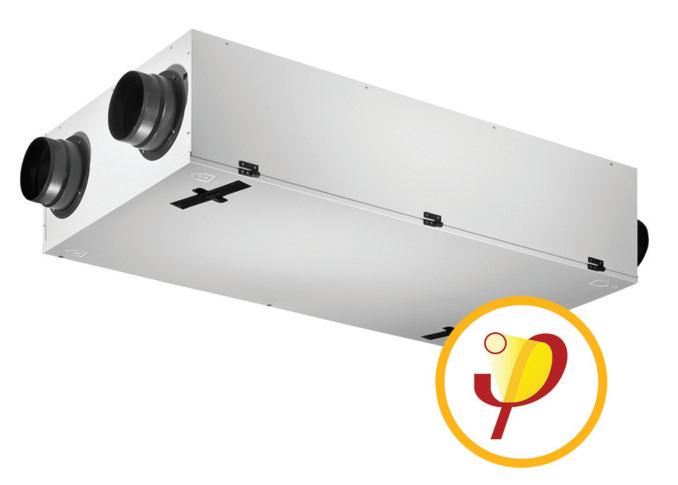
“Modern buildings are required to be more airtight and energy efficient than ever before to meet Building Regulations requirements and create more sustainable homes Although airtight buildings can be more comfortable for occupants, effective mechanical ventilation is essential to maintain consistently high levels of indoor air quality and ensure condensation and mould is not allowed to form
The main purpose of mechanical ventilation systems is to introduce fresh, filtered air and exhaust stale, contaminated air from buildings These systems filter out pollutants, allergens and odours, improving the overall health and comfort of occupants
In addition, with the rise of pollutants, such as carbon particulates, in the atmosphere, there has become a greater need for high-grade filtration systems
Mechanical ventilation systems, particularly those used in Passivhaus buildings, are often equipped with highefficiency filters that can effectively remove airborne particles and maintain a clean and healthy indoor environment
Energy efficiency and heat recovery
Mechanical ventilation with heat recovery (MVHR) systems can be the answer to making an airtight homes energy efficient, whilst achieving high levels of indoor air quality
These systems are designed to recover the heat from the outgoing air
and transfer it to the incoming fresh air
This heat exchange process means MVHR systems can significantly reduce the energy required to heat or cool the incoming air, resulting in lower energy consumption and reduced carbon emissions Heat recovery systems can typically recover about 73–95% of the heat in exhaust air – they can also significantly improve the energy efficiency of buildings.
Overheating can be mitigated with the summer by-pass function measuring indoor and outdoor temperatures, adjusting the ventilation speed accordingly However, it is important to firstly consider the main fabric of the building, orientation and shading to avert any potential overheating issues
While mechanical ventilation systems offer numerous benefits, their integration in airtight homes comes with its own set of challenges Maintaining the integrity of the building envelope is crucial as any unintended air leakage can compromise the performance of the mechanical ventilation system
Typically in newly constructed buildings, duct leakage can range from 25-40% (Source: Department of Energy report), which is unacceptable for highperformance buildings like Passivhaus To address this challenge, it is essential to ensure correct sealing of ductwork, which should minimise leakage to less than 3% of the system's air volume This requires a combination of effective design, quality installation and rigorous testing to achieve optimal airtightness
“Maintaining the integrity of the building envelope is crucial as any unintended air leakage can compromise the performance of the mechanical ventilation system.”
Insulation and seals should be inspected to ensure they are intact and there are no gaps or leaks that could compromise the airtightness of the Passivhaus concept Carrying out regular checks and maintenance is particularly important with Passivhaus ventilation systems
Design considerations
Accurate system design and sizing of mechanical ventilation units is critical to their effective operation A ventilation system must be able to provide an adequate supply of fresh air while maintaining the desired indoor air quality and comfort levels Factors such as building occupancy, room sizes and ventilation rates need to be carefully considered during the design phase
Undersized systems can lead to poor indoor air quality, while oversized systems may result in unnecessary energy consumption and increased costs
Working with a ventilation manufacturer from the design stage can help ensure the right balance for optimal performance
Commissioning
Commissioning is a vital step in the integration of mechanical ventilation systems to ensure the integrity of airtight homes At this stage, the installer ensures that the system is operating as per manufacturer’s guidance and meets the design requirements of the build Installers will test the system's performance, verify airflow rates and ensure proper control and functionality.
To address the challenges associated with integrating mechanical ventilation systems in airtight homes, performance needs to be optimised One of the ways this is achieved is through regular maintenance Filters play a vital role in removing pollutants and therefore reducing the risk of irritation and respiratory issues This helps maintain proper airflow distribution and prevents blockages that can hinder the ventilation system’s performance
Air ducts and components should be inspected periodically and cleaning of units and replacement of filters should be carried out as directed by the manufacturer in order to enhance system efficiency and ensure high levels of air quality
A professional ventilation maintenance service involves monitoring airflow and humidity and replace any faulty parts It will ensure that all components are functioning correctly and helps identify potential issues before they become a major problem
Monitoring performance
Monitoring the performance of the mechanical ventilation system is essential to ensure it operates effectively to eliminate condensation and enhance indoor air quality Regular checks on airflow rates, pressure differentials and temperature levels can help identify any issues or deviations from the desired performance This information can then be used to make necessary adjustments or repairs to optimise the system's efficiency This data is available on some mechanical ventilation systems via an App that forms part of the ventilation system controls, which is especially useful if a property is being managed by a social landlord
Integration and optimisation
Integrating mechanical ventilation systems in airtight homes, including Passivhaus buildings, presents both challenges and opportunities for the new build market
Effective ventilation system design can go a long way to address the potential challenges posed by airtightness, with the result being improved indoor air quality, energy efficiency and reduced carbon emissions
Mechanical ventilation systems play a vital role in enabling airtight buildings to benefit from high levels of indoor air quality for the long term ”

“Effective ventilation system design can go a long way to address the potential challenges posed by airtightness”
WAN T TO KNOW MORE?
For more information on achieving ventilation requirements for airtight dwellings, visit www rdr link/daw037


A ll under control
Will Heinzelmann, Product Director at Passiv
UK returns to PHPD and explains why smart controls are the right choice for decarbonising domestic heating.
We know that the UK will have to decarbonise domestic heating to meet 2050 netzero targets and that the most likely technology to move this forward will be heat pumps In fact, the UK Government is targeting 600,000 heat pump installations a year by 2028 This ambitious figure presents both opportunities and challenges for housebuilders, who will play a crucial role in heat pump adoption

The National Audit Office (NAO), the independent public spending watchdog, has reported slow progress in decarbonising the UK’s heating So, what’s the hold-up? Well, there are a number of barriers to achieving the government’s ambitious installation figures, including complex installations, high electricity costs, and the difficulties for consumers in adapting to an unfamiliar heating system
Installing smart controls alongside heat pumps can help to address many of these challenges These smart solutions can simplify the currently complex heating system controls for the consumer and offer them opportunities to earn additional income by providing flexibility to the electricity grid, both of which provide reassurance to housebuilders and their customers
Get paid for supporting the grid
Heat pumps pose a challenge to grid security They are expected to increase the UK’s peak electricity demand from about 50GW to 130GW – an increase of
over 150% Heat pumps typically consume most power during cold winter evenings –times when demand is high and there’s no sun in the sky for solar panels to utilise. However, they also offer households a great opportunity to earn extra cash, with a unique potential for flexible operation. Heat itself is an energy source that can be effectively stored and, if carefully managed, this doesn’t need to result in a cold home
To ensure that the electricity supply remains secure, heat pumps will have to form part of a smart, flexible energy system and be capable of adjusting their operation in response to national electricity requirements. This can all be enabled through smart, connected controls These new smart control solutions are designed to get the most out of heat pumps and make transitioning to a heat pump easier than ever Smart, automated controls are also already helping householders earn money with their heat pumps
The continued uptake of domestic flexibility provides an exciting new opportunity for heat pump owners Demand Side Response will become essential for the stability of our energy system as it increasingly relies on renewable sources of electricity A smart, two-way energy system allows customers to earn money through the devices they use High-power devices, such as heat pumps, offer the most valuable source of flexibility, but to do so, they need to be operated in a smart, connected way
Will Heinzelmann, Product Director at Passiv UK
“For housebuilders and developers, smart controls make properties even more attractive; they offer a solution for sustainable housing with easy-to-use heating controls that allow their customers to earn money through the grid.”
Simplifying controls
Current heat pump controls are not easy to use One study found that when presented with a typical heat pump thermostat, just 23% of people can set a heating schedule – one of the most basic and vital functions of any heating controller Why is this? Partly, it’s because most heat pump controls haven’t been designed for controlling heat pumps Heat pump manufacturers generally fall into two categories – they are either air conditioning manufacturers or boiler manufacturers who now make heat pumps And, unfortunately, they tend to use the same controls for their heat pumps that they use for their air conditioners or boilers There’s a reason the average heat pump controller looks like the air conditioning control panel you find in a hotel room and, if you’ve ever tried to use one of those, you’ll understand why current controls are so poor!
The latest generation of smart controls are designed to be simple to install and commission for an installer, as well as being really easy for a homeowner to use If heat pumps are going to be the main solution for decarbonising the UK’s heating, they need to work for everyone and that means having simpler controls Smart heat pump controls shouldn’t only be for the tech-savvy. They need to be accessible, easy to use, and suitable for anyone who has a heat pump
For housebuilders and developers, smart controls make properties even more attractive; they offer a solution for sustainable housing with easy-to-use heating controls that allow their customers to earn money through the grid The future of homebuilding is not just green, but smart and profitable.
By embracing smart controls, we can overcome the barriers to widespread heat pump adoption and ensure a smooth transition to a more sustainable and energy-efficient future


Mixergy iHP X is the ideal hot water solution for sustainable homes


In the mi x
The Mixergy iHP X is an integrated heat pump cylinder that leverages Mixergy’s patented adaptive water heating technology. This product offers a cost-effective and convenient solution for housebuilders and developers aiming to meet the Future Homes Standard It enhances the appeal of new homes, providing a smart hot water solution to buyers who are increasingly concerned about rising energy bills and their carbon footprint
According to the manufacturer, it is three times more efficient and can save upwards of five tonnes of carbon per unit,
compared to a conventional cylinder It is also described as ‘best in class’ for energy performance because the plate heat exchanger inside the heat pump unit achieves exceptional heat transfer Unlike traditional integrated heat pump cylinders that heat water from the bottom up, the iHP X heats from the top down, delivering usable hot water in under 30 minutes
This allows the unit to be up to a third smaller, making it easier to position and install in homes
One of the significant advantages of the unit is its modular design The heat pump and cylinder components can be separated
“The iHP X was installed in a cupboard that didn’t require soundproofing and has a standard single layered door.”
to make the system lighter and easier to transport, install, and maintain Each part is accessible, supporting the ‘right to repair’ ethos by allowing for individual servicing and replacement This design extends the product’s lifecycle and allow for substantial warranties – 25 years for the cylinder and five years for the heat pump unit
Control and optimisation is simplified through the Mixergy app, which allows users to programme the unit to take advantage of smart electricity tariffs and to integrate with solar PV systems for using free electricity The system's flexibility and compatibility with various energy sources make it an ideal solution for sustainable living.
A practical example of the technology in action is the renovation undertaken by Laurence Haslop, managing director of Cambridge housebuilder and developer Develory Haslop has transformed a 1970s bungalow, which originally had oil central heating, into a modern, efficient home He chose the Mixergy iHP X for its efficiency and ease of integration with other sustainable technologies, such as infrared electric heating, solar PV, and planned battery storage
Haslop, who has a strong background of utilising innovative technologies, found the Mixergy cylinder efficient and easy to install. Even without prior experience of the product, the installation was straightforward: “We installed the integrated heat pump cylinder in a cupboard downstairs, but because it’s modular, it could have easily been located upstairs The installation only took a day –with more experience, I’m sure we could install it even quicker ”
Heating engineers only need their G3 Unvented certificate. As the refrigerant is pre-gassed and completely sealed within the heat pump module, F-gas certification is not required, opening up the skill base for who can install this product

“The performance aligns well with the needs of small flats and larger houses alike, especially those aiming for the most sustainable solutions The ability to heat water quickly and efficiently, combined with compatibility with smart tariffs and solar panels, makes it a really versatile choice The householder can control how much water to heat based on their needs, optimising energy use and costs ”
Another important consideration was noise. The iHP X was installed in a cupboard that didn’t require soundproofing and has a standard single layered door. Haslop says: “It’s very quiet – which works for us!”
The system’s ducting was designed to ensure optimal performance, with air in and air out ducts terminating on different sides of the building while ensuring the runs are not unnecessarily long or complicated, to achieve the highest Coefficient of Performance (CoP) of up to 3 4
“We have used technologies in this house that our company wants to test and learn from before installing in our clients’ developments The Mixergy iHP X is a promising solution and we are happy that it will fit in various scenarios, depending on what we want to do with it, and I would recommend it to other housebuilders I am excited to see how the product develops!” he concludes
“We installed the integrated heat pump cylinder in a cupboard downstairs, but because it’s modular, it could have easily been located upstairs. The installation only took a day – with more experience, I’m sure we could install it even quicker.”


WAN T TO KNOW MORE?
To learn more about how Mixergy technology can improve the energy performance of new builds, visit www.rdr.link/daw039
Laurence Haslop, managing director of Cambridge housebuilder and developer Develor y
Ready for the future


PHPD talks to DiscreteHeat about ThermaSkirt, its radiant heating system that looks just like a traditional skirting board
Housebuilders are constantly looking for innovative products that will help them meet the latest sustainability requirements of the Building Regulations while meeting the energy efficiency and running cost reductions demanded by homebuyers –all while ensuring the homes they offer look fantastic and the technology they have is effective and simple to use
ThermaSkirt, made in the UK by DiscreteHeat, is an energy efficient infrared radiant heating system, cleverly designed to look like a traditional skirting board. Easy to clean and extremely strong, it is made of aluminium, so once

hot water enters the system, it works immediately, transferring the heat to the room like one large 360° radiator It can work with any heating system, whether that’s a gas boiler, heat pump or electric heating, and can be controlled just like conventional radiators, using thermostats and timers or smart controls
One of the many benefits of ThermaSkirt is its flexibility It can be installed throughout the home, or alternatively, if underfloor heating is being installed on the ground floor during construction, ThermaSkirt can be fitted in the upper floors instead of, or in addition to, radiators This is especially useful as part of a heat pump heating system, as ThermaSkirt replaces the need for oversized, low temperature radiators
Laura Hughes-Jones, Sales and Marketing Coordinator at Lancashirebased Kingswood Homes, explains how the company is offering ThermaSkirt as an option in all its new homes “ThermaSkirt is an optional upgrade in all our house types, which range from three to six bedrooms There’s a choice of adding it to the whole home or by floor
“The feedback we’ve received is that customers love the way it makes each room look clean and uncluttered It allows them to use wall space more practically and be even more flexible with where

their furniture can be placed without blocking any heat There are different heights, styles and colours of skirting to choose from, to suit their preferred style which is another bonus.
“At the moment, Kingswood Homes come with a gas fired combi or system boiler, but ThermaSkirt can work with any heating system and is much more energy efficient than regular radiators It also spreads the heat across the room, rather than it all coming from a single concentrated source, like a radiator
“How easy was it to install? Very! It can be completed in a day. We have even retrofitted it in our Ribchester 5 show home at Green Hills Homestead, near Blackburn. And we’ve had a number of future customers enquiring about the product and showing interest for when they reserve their homes in the coming weeks and months,” concludes Laura Kingswood Homes is different from most housebuilders because it offers flexible floor plans, putting customers in charge of their internal layout The ‘Shape your home’ concept means they can choose to have fully open plan living downstairs or they may prefer a separate lounge and dining room, or a home office or playroom And they can choose to add or remove bedrooms and add additional en-suites
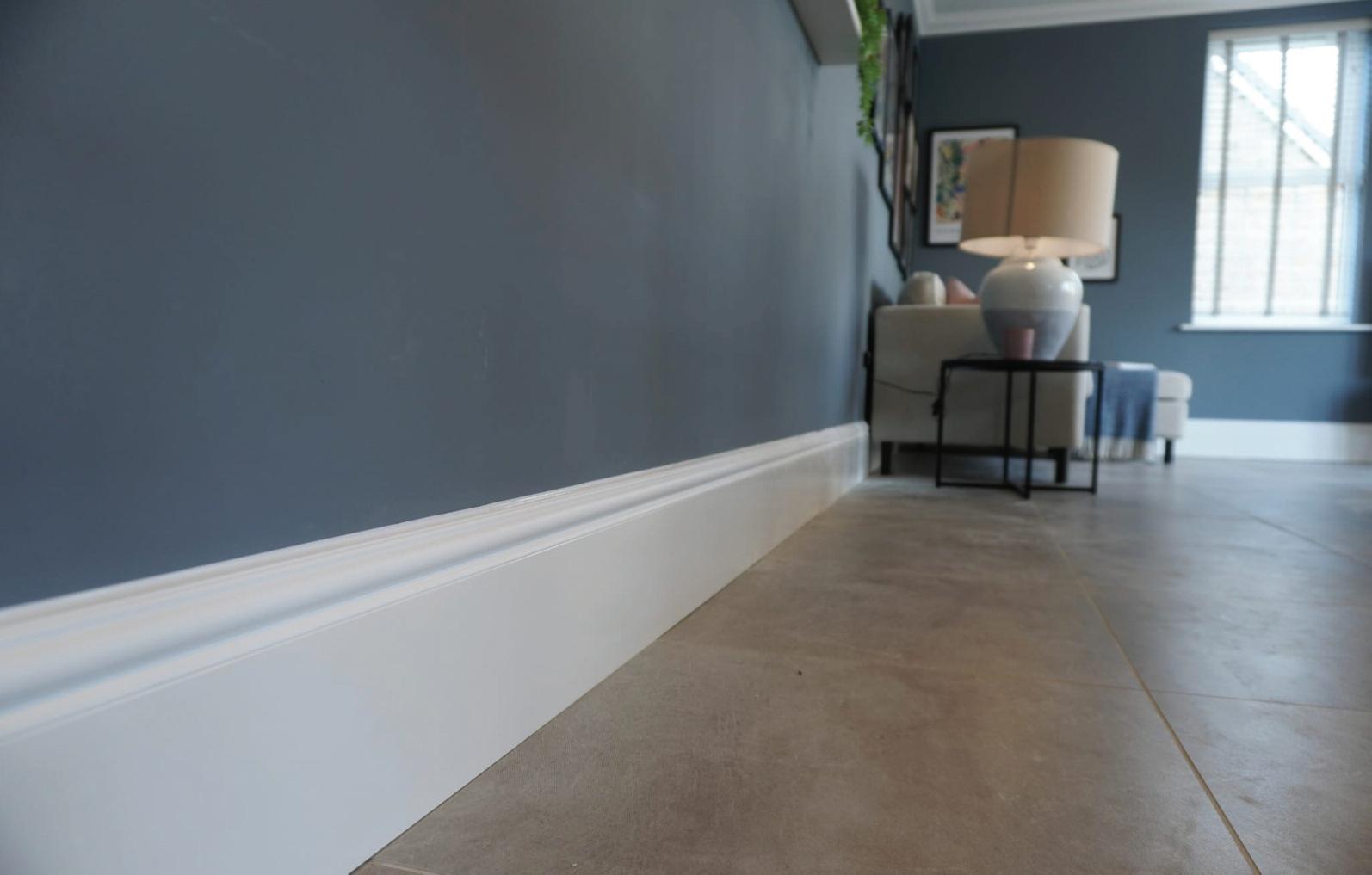
ThermaSkirt is the perfect solution for this flexible approach to providing the space the homeowner requires It is also a good fit with the other high-quality technologies that Kingswood Homes offers, so their customers can personalise their homes even further These include smart heating controls, video doorbells, EV chargers and integrated appliances.
Ethan Wadsworth, Sales and Marketing Director at DiscreteHeat, says: “ThermaSkirt is available pre-cut and fits together easily Because it combines fitting and painting the skirting with installing the heating, the installation time and costs are reduced We are happy to work with builders, developers and contractors and will provide on-site training and technical support as required
“ThermaSkirt carries ISO 9001 and is CE marked We are proud to design and make ThermaSkirt in the UK to EN standards from up to 98% recycled aluminium, so as well as saving homeowners money on their energy bills, we’re doing our bit for the environment, too ”

“Because it combines fitting and painting the skirting with installing the heating, the installation time and costs are reduced. We are happy to work with builders, developers and contractors and will provide onsite training and technical support as required.”
WAN T TO KNOW MORE?
To find out more about ThermaSkirt please visit www.rdr.link/daw040
For more about Kingswood Homes’ unique ‘Shape your home’ concept, please visit www.rdr.link/daw041

Oliver Baker, CEO of Ambion Heating, makes his case as to why a diverse approach to heating technology is critical for the success of the Future Homes Standard.


Hedge Your Bets
Next year, the Future Homes Standard (FHS) will come into effect in England Its purpose is to ensure that newly built houses are future-proofed with low-carbon heating and leading levels of energy efficiency to help the UK meet its legally binding net zero target by 2050. To effectively achieve its purpose, the FHS must take a diverse approach to heating Without it, the UK may struggle to reach its emissions target on time
Residential properties in the UK contribute to approximately 17% of the country's carbon emissions due to the majority of properties being heated with natural gas To transition homes away from fossil fuels, the new standard heavily focuses on heat pumps or heat networks to reduce emissions in future buildings, alongside improved energy efficiency measures. While many properties have already had heat pumps installed, the UK has just 412 heat pumps per 100,000 people, significantly behind its European neighbours
Eggs in multiple low-carbon baskets
With a lower-than-expected uptake for heat pumps over the last two years for existing properties, can this technology be relied on to meet the ambitions of the FHS? Heat pumps have a vital role to play in the future of heat, but they shouldn’t be the only consideration around low-carbon heating Even with world-leading levels of energy efficiency, heat pumps don’t fully address the high cost of energy and have large upfront installation costs
Space is also another factor to bear in mind for property developers and housebuilders The FHS will cover all homes, including urban and social housing, for which space is a key aspect Of the current number of heat pumps already installed, 74% were in a rural location and for typically larger homes, with an average of four bedrooms For properties in urban areas, where space is
limited, heat pumps may not be the most suitable solution, and heat networks offer little control for the occupants to change energy suppliers
Benefits of infrared heating panels
Taking all this into account, one piece of the FHS puzzle should include low-carbon infrared heating panels These are ideal for smaller homes, like flats, with no barriers around limited installation space Infrared heating is well positioned to overcome the challenges of traditional convection systems, as well as the environmental concerns of gas heating Infrared heat works like the sun, without any harmful rays. The fabric of the building and the materials within a room absorb and store the infrared waves, making it easier to maintain an ambient temperature for longer Installation is quick, easy and hasslefree, as no pipework or radiators are needed Any qualified electrician can install infrared panels, and installation costs are half that of a heat pump Infrared heating panels, when paired with Ambion’s unique control system, can also dramatically reduce energy usage and the unit cost of electricity by maintaining a room’s temperature within 0 1°C of its target, 24 hours a day This flat demand profile means there are no morning or evening energy spikes in usage, reducing costs for energy consumers as well as developers Low-carbon heat panels also provide an attractive low-carbon solution, especially when combined with solar PV and battery storage
By taking advantage of all the low-carbon heating technologies currently available, all future homes have the potential to be net zero while being cost-effective
WAN T TO KNOW MORE?
For more on infrared heating panels, visit www.rdr.link/daw042
Oliver Baker, CEO of Ambion Heating

POLYETHLENE WATER PIPE NETWORK
Three key documents have been updated by the BPF Pipes Group to ensure consultants have everything they need for specifying safe and secure polyethylene (PE) water pipe networks. The BPF Pipes Group also worked with Water UK to produce the new WIS 4-01-03 for hydrostatic pressure testing For more information go to www.rdr.link/daw043
ENERGY EFFICIENT NEW HOMES
New homes in Bewdley will be powered by air source heat pumps in a first for Elan Holmes The homebuilder is preparing to start work to deliver new homes on Stourport Road after planning consent for 79 units was granted The scheme will bring more than £380,000 of investment in the local area including a biodiversity offsetting contribution of almost £41,000 For more information go to www.rdr.link/daw044


FERNOX MINI FILTER
Fernox has launched the new sealed and ultra-compact TF1 Sigma Mini, providing a practical filter solution for smaller volume systems with restricted space The ultracompact design makes the new magnetic TF1 Sigma Mini from Fernox ideal for new build properties and smaller volume heating systems. The filter comes ready-to-install and is easy to fit in under two minutes thanks to its slip socket manifold design
For more information go to www.rdr.link/daw045
SOLAR FENCE PANEL
Innovative solar fence panels has been launched by Jacksons Fencing, providing homeowners with fence options that provide a boundary and produce energy With a 425-watt capability per panel, the Jaksun Solar Fence Panel harnesses the power of renewable energy, offering a return on the investment For connection to the mains electricity network, the expertise of a qualified solar installer is required For more information go to www.rdr.link/daw046


RENEWABLE RANGE
Wolseley Group has announced the launch of a new renewable range to help housebuilders get the job done on renewable projects ‘Renewables by Wolseley’ includes Air Source Heat Pumps, Ground Source Heat Pumps, District Heating Solutions, Solar Panels, Battery Storage and Accessories, Heat Emitters, Biomass Solutions, Ventilation Systems and Heat Interface Units The company has also launched a specialist hub to support its customers with product queries and quotations For more information go to www.rdr.link/daw047
ELECTRIC RADIATORS
The latest electric radiator series launched in the UK and Ireland by Stelrad has sparked significant interest in the heating sector The range is currently made up of 13 expertly selected steel and aluminium radiators and towel radiators The Electric Series come with a five-year warranty on the heating parts and a two-year warranty on the electric components. For more information go to www.rdr.link/daw048


HEAT PUMP
Ideal Heating has lifted the lid on its latest heat pump, and introduced a much greater choice of low carbon heating solutions for housebuilders. The HP290 monobloc heat pump is designed to provide efficient, low carbon heating and hot water throughout the year The HP290 has been designed to be simple and easy to install and maintain For more information go to www.rdr.link/daw049
HEAT PUMP FILTER

Sentinel has extended its range of Vortex filters by launching the Vortex700, a specialist filter for heat pump systems The new solutions’s dual action has a strong magnet that captures magnetic ferrous particles and a high-capacity 800 micron sieve that filters non-magnetic debris out of the system This will ensure the peace of mind of optimum system efficiency and service life
For more information go to www.rdr.link/daw050
HYBRID HEAT PUMP
The latest generation of hybrid heat pumps, the CS5800i has been launched by Worcester Bosch Offering yearround, low-carbon comfort, the product delivers instant heat for the homeowner, as well as control and comfort by allowing a heat pump and boiler to work seamlessly together Co-created with installers input and built for speed and simplicity, the new product pairs the CS5800i Heat Pump with the intelligent CS5800i Hybrid Unit

For more information go to www.rdr.link/daw051

CERAMIC SINK COATING
Nano-Tech is an ultra-thin surface layer that transforms Clearwater’s ceramic sinks, giving a mechanically flat surface and maintaining hygiene in the kitchen. The surface is dirt repellent, hydrophobic and resistant to chemical and ultraviolet light The Nano-Tech coating is available on Clearwater's premium ceramic sink models For more information go to www.rdr.link/daw052
KITCHEN WORTOP COLLECTION
The EGGER Worktop Collection 24+ has been meticulously crafted to meet the diverse needs of designers, architects, and fabricators, offering a versatile range of high-quality worktops The range comprises 39 carefully chosen decors, in two thicknesses and two profiles. Reproductions in 25 mm and 38 mm include oak, marble, stone and granite, offer a low maintenance, cost-effective alternative to solid surfaces

For more information go to www.rdr.link/daw053

MODULAR FURNITURE RANGE
The LIGNE range features a unique geometric design and is the latest modular furniture range from Bathrooms to Love. LIGNE is available in three on-trend matt shades – Smoke Blue, Oat and Graphite Grey, with a choice of sleek handle designs In stock and available to order from PJH, there’s a choice of two-drawer basin units, as well as a wall hung tall unit with shelves It is also suitable for smaller bathroom spaces For more information go to www.rdr.link/daw054
SHOWER HEAD RANGE
Bristan is boosting its shower product line up with new and updated bathroom product options The shower range includes a choice of coordinating taps and showers in a range of trend-led designs and finishes Each shower valve can also be fitted into a cavity space as small as 35mm for easier hassle-free installation and features 15mm inlet connections to fit UK standard pipework
For more information go to www.rdr.link/daw055


WATER-SAVING SHOWER RANGE
The water-saving GROHE EcoJoy technology for hand and head showers, as well as taps, helps to decrease water consumption It is available on numerous models across most style and price segments GROHE Tempesta 110 equipped with EcoJoy, can save a 4person household up to £73 on their annual water bill and up to £286 on their annual energy bill.
For more information go to www.rdr.link/daw056

MINERAL CAST WASHBASINS
S
www.rdr.link/daw057

HOWDENS KITCHEN RANGE
Howdens has launched multiple products across its kitchen, appliance, worktop, flooring and door ranges New colour options have been added to a selection of their most popular kitchen designs. New Chasewater Granite Sinks are heat, stain and fade resistant and a new microwave with a drop-down door, additions to the joinery range and new flooring categories have all been added For more information go to www.rdr.link/daw058
LAMINATE WORKSURFACES
IDS has introduced a brand new 665mm wide breakfast bar size as part of its Finesse by Kronodesign laminate range 60 laminate decors are now available in the deeper 665mm width in 4 1m lengths and 38mm thickness, providing flexibility for new projects. The new size is available for delivery in 24-72 hours nationwide from IDS’s 10 branches

For more information go to www.rdr.link/daw059

CABINET COLOUR ADDITIONS
Symphony has added two new colours to its modern Shaker-style Harvard and Linear Finesse kitchen collections The two additions are Alby Blue and Platinum, providing balance between trend-leading and timeless. As well as the new Platinum and Alby Blue colourways, the Harvard and Linear Finese kitchen ranges are also available in Hunter Green, Charcoal and Pebble
For more information go to www.rdr.link/daw060
INDUCTION HOBS AND HOODS
Franke has introduced the new K LINK technology across its Mythos and Maris induction hobs and hoods Activated through a simple hand gesture, the technology allows selected models to communicate intelligently, adjusting the hood’s suction power according to the cooking level on the hob The technology optimises energy use and reduces noise by preventing the hood from running at unnecessarily high levels
For more information go to www.rdr.link/daw061


BASIN FRAMES
New basin frames and towel rails have been launched by RAK Ceramics the basin frames are available in sleek matt black and elegant chrome finishes and are designed to complement RAK Ceramics' wall-mount basins The towel rails, available in two sizes of 76cm and 56cm, are designed to accompany the basin frames, offering convenience and style in equal measure For more information go to www.rdr.link/daw062

ONE-COAT RENDER
An innovative new through-coloured, one-coat monocouche external render has been unveiled by Baumit The new MonoPlus range offers a low-maintenance and durable finish suitable for application by hand or machine and is available in a range of 6 colours Its unique formulation is designed to reduce the effects of algae and minimise the need for regular cleaning and maintenance. For more information go to www.rdr.link/daw064


CONCRETE FACING BRICKS
A new range of concrete facing bricks, which have been manufactured using innovative carbon sequestration technology to lock in waste CO2 has been unveiled by Marshalls Bricks and Masonry. The Glenwall range incorporates cutting-edge CarbonCure technologies which inject waste CO2 directly into the concrete mix during production, with no negative impact on the performance or durability of the brick
For more information go to www.rdr.link/daw065
CAVITY SYSTEM
Rocksilk RainScreen Cavity Systems, Knauf Insulation’s range of complete tested systems designed to simplify specification and support compliance in cladding and masonry façades The systems combine existing rainscreen products with a series of new cavity barrier solutions, including open state cavity barriers with an intumescent strip, a closed state cavity barrier, and further additions to Knauf Insulation’s innovative cavity barrier range. For more information go to www.rdr.link/daw066


CLAY PANTILE
Marley has re-launched a new range of its longstanding Lincoln clay pantiles The Lincoln Clay Interlocking Pantile with an s-curve profile and thin leading edge is now available and offers a series of design enhancements, including new colourways, textures and easy-installation with its open gauge design and 22 5° minimum pitch
For more information go to www.rdr.link/daw067

LOW CARBON BUILDING FRAME
British Gypsum is working closely with suppliers to deliver metal profiles manufactured from steel with lower embodied carbon under its Gypframe® metal profiles range The new product is made from steel manufactured using an electric arc furnace rather than a blast furnace They have been proven to perform the same as the company’s existing Gypframe metal profiles but have up to 58% less embodied carbon
For more information go to www.rdr.link/daw069
STONE WOOL INSULATION
Two new non-combustible stone wool insulation products have been introduced by ROCKWOOL A new 150mm thickness of Thermal Insulation Cavity Slab 32 will support builders and tradespeople in meeting the UK's now more stringent thermal regulations The new 140mm Sound Slab provides acoustic performance for internal floors and can also be used as thermal insulation for external timber frame walls
For more information go to www.rdr.link/daw070

rdr link/DAW106 Simpson Strong-Tie
rdr link/DAW107
ECLISSE
link/DAW102
Marshalls
link/DAW105
33
TOOLFAIR inside back cover www rdr link/DAW108


