
Wild Ways: A EcologyFifth LosMetropolitanforAngeles Chris Reed


Spring 2022 Studio Report
Chris Reed A Fifth Ecology for Metropolitan Los Angeles
Critics Tomas Folch, Mpho Matsipa, Carole Voulgaris, Alex Wall
Studio Instructor Chris Reed Research Assistant
Nina-Marie Lister, Rosalea Monacella, Robert Rock, Karen Schiff, Belinda Tato, Alex Wall Final Review
Metropolitan Synergies
Jill Desimini, Jeremy Guth, Nina-Marie Lister, Beth Pratt, Robert Rock, Belinda Tato
Importantly, this is not an anti-urban or anti-human endeavor; rather, and perhaps most profoundly, it is an attempt to re-establish lost connections, re-embrace the living world, and re-engage us as social and urban and environmental creatures: as noted above, it is an attempt to re-enchant the city through the multiple lenses of all who dwell among us.
Review
Critics
Critics Marta Brocki, Renee Callahan, Danielle Choi, Michelle Delk, Jeremy Guth, Eric Höweler, Mariana Ibañez, Fadi Masoud, Nina-Marie Lister, Beth Pratt Wild Ways: A Fifth Ecology for Metropolitan Los Angeles
This studio explores themes of connectivity, resilience, and landscape infrastructure through the particular lens of metropolitanscale wildlife corridors and crossings in and around Los Angeles. It does so against a backdrop of the twin challenges of climate change and biodiversity loss in the Anthropocene. This studio fosters conversations and generates projects that address our relationships to the non-human entities and environments around us; and the ways in which we might consider new and reciprocal relationships with the creatures that inhabit the fringes and wildlands of the city. In so doing, this framing allows us to explore the conceptualization and development of new hybrid assemblages, new urban ecologies, new urban imaginaries that foster new kinships (in Donna Haraway’s words) between and among all earth’s inhabitants.
Josiah Brown, Sarah Hopper, Haimei Li, Shuyue Li, Hattie Lindsley, Zeqi Liu, Marina Recio Rodriguez, Pitchapa Setpakdee, Juan Villalón Hernando, Zilan Wang, Ziting Wang
Species Lens Review
Critics
Mid-term Review
Angela Moreno-Long Teaching Assistant Jenna Wu Students
Introduction 12 Wild Ways: A Fifth Ecology for Metropolitan Los Angeles Chris Reed 16 Wild Ways: Thinking, Relating and Being With/In Wilderness, Wild-ness and Nature in the Anthropocene Nina-Marie Lister Research 22 The Species Lens 46 Site Visit Projects 54 Airy + Aerie: Air/Ground/ California Condor/Human Pitchapa Setpakdee, Ziting Wang 70 Welcoming the Wild: Making Space for Los Angeles’ NonVehicular Residents Josiah Brown, Sarah Hopper 88 Seeding the Food Desert: Empowering School Systems to Rewild the City Shuyue Li, Zeqi Liu 100 Amphibian LA: Liquid Landscapes for a New Metropolitan Human-Amphibian Kinship Juan Villalón Hernando, Zilan Wang 114 Free Range: Redesigning the Avenue as a Multispecies Haven Marina Recio Rodriguez 132 Inversion and Aversion: The Making of a Highway for Snakes Hattie Lindsley 146 Afterlives: Re-purposing Obsolete Infrastructures at Metropolitan Edges Haimei Li 158 Final Review Photos Afterword 162 Reflections about Wild Ways: A Fifth Ecology for Los Angeles Beth Pratt 166 How Can Design Save Wildlife and Wild Places? Marta Brocki, Renee Callahan, Jeremy Guth 170 Bibliography 172 Contributors
View of downtown Los Angeles Photo by Mike Belleme.


Wild Ways: A Fifth Ecology for Metropolitan Los AngelesChrisReed
—Jennifer Wolch, “Zoöpolis,” Animal Geographies2
Our twin starting points are Reyner Banham’s observations on the distinct urbanism of Los Angeles, and Jennifer Wolch’s provocations around the development of new ethics and practices with regard to human-animal relations. In 1971, Banham’s “ecologies” were a new way to frame the very non-European city he encountered in Los Angeles. For Banham, ecologies were more about an intermixing of environment, culture, economics, geography, infrastructure, social demographics, and social life — rather than about a literal reading of scientific definitions of ecology as the study of the interrelationships between organisms and their environment; or about a traditional understanding of architectural history and urban development in Western countries. The four ecologies he described — Surfurbia, the Foothills, the Plains of Id, and Autopia — were as much physical as they were imaginative constructs; but they importantly spoke to a set of entangled and complex conditions that gave rise to unique forms of urban life in this very American city. While his writings are now 50 years old, certain aspects of Banham’s framing persist and have
12“…no city has ever been produced by such an extraordinary mixture of geography, climate, economics, demography, mechanics, and culture…”
—Reyner Banham, Los Angeles: The Architecture of Four Ecologies1 “To allow for the emergence of an ethic, practice, and politics of caring for animals and nature, we need to renaturalize cities and invite the animals back in, and in the process re-enchant the city.”
Importantly, though, hers is not an anti-people or strictly conservation stance: “…it is clear that for most of (pre)history, people ate wild animals, tamed them, and kept them captive, but also respected them as kin, friends, teachers, spirits, or gods. Their values lay both in their similarities with and differences from humans.
—Kazys Varnelis, The Infrastructural WhileCity3rather bleak, Varnelis’s perspective — written from the point of view of an urbanist who actually values the unique yet odd cultures that have been cultivated across this arid metropolitan basin — was penned just as what we now know to be radical and accelerating changes in climate and the environment was becoming more evident. Wildfires, increasing heat (particularly in inner city areas, particularly impacting low-income, multiracial and multiethnic communities of color), radical habitat and biodiversity loss, energy shortages, and strains on food and water supply are all indicators of this critical moment. From a wildlife standpoint, a significant contributor to habitat and biodiversity loss is human development, urbanization, and the construction of infrastructure. Freeways, for instance, sever critical pathways for animals (and sometimes people, too) in their bigger ambition to connect places and people via high-speed vehicular roadways. Visible roadkill contributes to the death of millions of animals each year, not counting the myriad of invertebrates swept away by vehicular drafts or smashed on windshields. Development at the fringes of cities continues to push into critical habitat, reducing or eliminating it altogether. And filling or other alteration of habitat continues at a rapid pace, even with various government-mandated mitigation measures in place. Because of all of this, many species are at the brink of extinction, others are threatened, others are simply struggling to adapt at the pace of change brought on by urbanization and acceleration of climate change. In this complex set of contexts, we ask: Can we imagine a new network of civic landscape infrastructures that re-stitch LA’s wildlands and re-connect humans and creatures in new, empathetic ways? Can we imagine a new kind of urbanism — a fifth Banhamiam (or Zoöpolitan?) ecology — built around human-creature kinship?
—Jennifer” Wolch, “Zoöpolis,” Animal Geographies2 In other words, Wolch’s vision of a Zoöpolis, in which animals are invited back in, involves deeper, respectful, sometimes useful, sometimes spiritual relationships and understandings between animals and humans and that recognize commonalities and co-dependencies as much as differences. Could Zoöpolis offer hints about new ways to live in dynamic relationships — new situated understandings of wild and wildness in rich dialogue with people and the city? As we ponder such questions, we need to recognize the heavy impact that urbanization has had on the varied environments and limited resources of Southern California. (We should also recognize our inherent bias in referring to landscape as a potentially plunderable “resource.”). 20th-century approaches to infrastructure — single-minded, wasteful, polluting — have destroyed the fragile environments that once existed, have squandered important resources by building over them or flushing them away. Urbanization here has disregarded limits and boundaries, has exceeded carrying capacities, and has erased or pushed out the environment: “Cobbled together out of swamp, floodplain, desert, and mountains, short of water and painfully dependent on far-away resources to survive, Los Angeles is sited on inhospitable terrain, located where the continent runs out of land. No city should be here.”
Jennifer Wolch’s contemporary writings are situated in a rapidly changing world impacted heavily by climate change and habitat loss, and informed by feminist writings by Donna Haraway and others. Wolch argues convincingly that dualisms brought on by Western and modernist agendas (nature/culture, urban/wild, human/non-human) have both contributed to, even exacerbated, the environmental crisis we all now face. Wolch posits that the divides that separate us as humans from the dynamic, living world and its profound diversity of creatures and species have caused us to lose connection to them, and thereby to lose our empathy with and for them (and with the environment as a whole).
caused many to consider additional ecologies that have developed since, or might develop as we move forward. Wild Ways could be that elusive fifth ecology: a climate-inspired landscape and infrastructural network that restructures relationships between and among all the creatures in the Los Angeles Basin.
13 AngelesLosMetropolitanforEcologyFifthAWays:Wild
1 Banham, Reyner. 1971. Los Angeles : the Architecture of Four Ecologies. Berkeley, Cal.: University of California Press.
2 Wolch, Jennifer. 1998. “Zoöpolis.” in Wolch, Jennifer, and Emel, Jody, eds. Animal Geographies: Place, Politics, and Identity in the Nature-Culture Borderlands. London: Verso. pp. 119-138
14ReedChris
Above: Skaters at Venice Beach. Photo by Mike Belleme.
—Reyner Banham, Los Angeles: The Architecture of Four Ecologies1 For us, though, we want to approach this through various non-human lenses first, excavating understandings of animal and plant worlds and the various interrelationships and evolutions that are at the basis of non-human sustenance in this arid environment. We want to understand how the logics of animal movement and habitat connectivity might shape a strategic re-tooling of parts of the city in order to allow creatures to better thrive, and for the ecosystem as a whole to become a positive contributor to climatic and urbanistic forces. And we will do so by creating a new civic imaginary (perhaps re-capturing a sense of civic pride and expression that accompanied early motorway infrastructure) that fully engages humans within these environments and raises our collective consciousness — by integrating life-giving landscapes with human and wildlife use and bold civic expression, as appropriate to the contexts and environments in which we work.
3 Varnelis, Kazys. 2008. The Infrastructural City: Networked Ecologies in Los Angeles. Barcelona: Actar.
The work in this studio interrogates and explores what a system of landscape infrastructure for connectivity across Southern California’s biodiversity hotspots might look like and how it might work — in the face of increasing urbanization and intensifying climate change. Proposals embrace regional networks of wildlife crossings that are generated from the primary lenses of different endangered species; that layer in humans as both users and audience (on/in the crossings versus driving underneath or over them); and that account for intensifying threats of wildfire and biodiversity loss. The goal is to invent the basis for a new metropolitan ecology—a mix of culture, geography, environment, and lifestyle (in Banham’s terms) — adapted to a rapidly evolving and warming climate.The work is in part built on concepts of mobility — mobility of creatures, mobility of seeds and roots, mobility of habitats, mobility of “people. …the language of design, architecture, and urbanism in Los Angeles is the language of movement. Mobility outweighs monumentality…”

Wild Ways: Thinking, Relating and Being With/In inWild-nessWilderness,andNaturetheAnthropoceneNina-MarieLister
16
These are slow but essential questions for urgent times. In the Anthropocene, on the edge of irreversible climate change, with biodiversity in free-fall, we must ask these questions to understand these intertwined crises as much as their solutions: to think, plan, design and make our way from dominance to coexistence, from fragmented to (re)connected, from isolated to entangled. We can only do so with intention and awareness that we are both part of and dependent on the essential diversity of life. In fact, our survival requires that we must move from dominance towards kinship with other species.
These are the provocations for Wild Ways, the companion seminar to the Wild Ways Studio, a collaboration with Chris Reed, sponsored by ARC and the National Wildlife Federation (California). Our project’s history, as is our intention, is entangled: my collaboration with ARC began 10 years ago in my role as Professional Advisor to the ARC International Wildlife Crossing Design Competition. With conservation leaders, road ecologists, wildlife biologists and engineers, we launched the first public design competition to focus on infrastructure design for wildlife. Through this collaboration, ARC was born and a multi-year federally funded research project was launched along with an international partnership. With ARC and the Ecological Design Lab at TMU, our Safe Passage research partnership focussed on reconnecting landscapes for human and wildlife mobility and developing an integrated planning and design approach to wildlife crossing infrastructure. A decade later, with robust scientific evidence and a growing
What is it to be wild? Does wild-ness matter? Is wilderness still relevant, real, or relative? Can we design with-and-for the wild? Should we (re)consider the wild in the context of the urban?
The context for this work is urgent and clear: Above: Vehicle crossings over the concretized Los Angeles River. Photo by Mike Belleme.
17 AnthropocenetheinNatureandWild-nessWilderness,With/InBeingandRelatingThinking,Ways:Wild
global network, road ecology is a mature discipline and the ARC partnership is international, with over 30 member agencies and organizations. Yet the design applications for landscape connectivity are still emerging. With new opportunities for green infrastructure to support biodiversity as well as social and ecological resilience, Chris Reed and I launched Wild Ways in 2021 as a design-research initiative to expand the reach, impact and application of landscape-based infrastructure. As a companion course to the Wild Ways studio, the Wild Ways seminar provides the research context for the design projects undertaken in the studio. The seminar invited an interdisciplinary group of design, governance, policy and education professionals (including landscape architects, architects, planners and educators) to explore, investigate and challenge changing ideas of nature (broadly) and wilderness, wild-ness and the wild (specifically).

an urbanizing planet under increasing pressure from the accelerating, twin crises of climate change and biodiversity loss. So what, we ask, does ‘nature’ and the ‘wild’ mean in the context of these looming crises? Might a renewed and reconsidered understanding offer insights, strategies, even hope for the human condition?
Wilderness as a concept has long been fraught: reified in its otherness and “purity” and challenged as a social construct; criticized as a weapon of colonial extraction and upheld as a tool of capitalism; and still, we long for the wild. At the edge of climate collapse and an extinction abyss, ideas of wilderness offer hope, imagination and inspiration for co-existence.
Grounded in transdisciplinary research across the humanities, ecology and design, the course uses visual-spatial analyses, critical reflection and artistic media to engage diverse ways of thinking and knowing about, relating to and being in wilderness and wild-ness, and from these, reflects and projects implications for design praxis. Seminar contributions are intended to facilitate and encourage un-learning colonial myths of wilderness through exploring intersectional and intercultural epistemologies of nature, and the primordial human connection to the wild through interrogating a diversity of ideas of wilderness, and wild-ness on a dynamic and urbanizing planet. The seminar is organized around three thematic units: the first, Foundations – Conflicts & Co-Existence, involves an exploration and close, critical readings of selected literatures from the environmental humanities including histories and theories of wilderness (including the concepts of biodiversity) with reference to the intersections of ‘culture’ and ‘nature’ and the space between these polarities of the Anthro-Capitalocene.Thesecondtheme, Praxis – Places & Precedents, engages critical analysis of the praxes of wilderness, from conservation ecology to restoration science to agroecology and design for rewilding. This theme is organized by biome: forest, field, mountain, desert, water, coast and city, each intended as a bio-physio-geographic place-based context for the study of evolving perspectives on wilderness, and the attendant relationships between culture and nature with both reference and application to specific sites and precedent projects. The third and final theme, Futures – Reflections and Projections, explores opportunities for assessment of and speculation on the interplay between evolving ideas about what it is to be wild, whether there remains a place for wilderness, and concepts of wild-ness in emerging, hybrid and novel ecosystems. In this culminating theme, the seminar considers the relationship between biodiversity and the wild, and design practice–as critiqued and inspired by a range of perspectives (both disciplinary and transdisciplinary), with particular attention to settler-colonialism, indigeneity, and eco-and-climate justice.
Students’ seminar projects embraced all three themes and were at once revelatory and inspiring — some of which complemented the studio projects and all of which engaged a reckoning with social-ecological urgency, resilience and diversity in ways that offered insight and hope. Explorations ranged across contexts and challenges, including the biophony of the North Atlantic ocean, urban mycorrhizal fungi, nocturnal urban wildlife pathways, rewilding the Salton Sea, and cultivating Indigenous relations with woodland bison. Projects projected new entangled futures for humans and others (from whales and birds to trees and mosquitoes) and considered the intertwined and complex relational ecologies of the sacred, the queer and the mundane. In all, the students’ work signalled a timely and thoughtful awareness of the intersectional challenges of the climate and biodiversity crises and from this, shared intentions for collaborative, co-creative designs for the complexity of our times.
We can be energized and heartened that the Wild Ways work in the research and designs shared in this book are fuelled by compassion and hope. In these pages we find ample evidence of the power and potential for human-wildlife kinship and a new horizon for landscape to activate reconciliation along with resilience.
18ListerNina-Marie
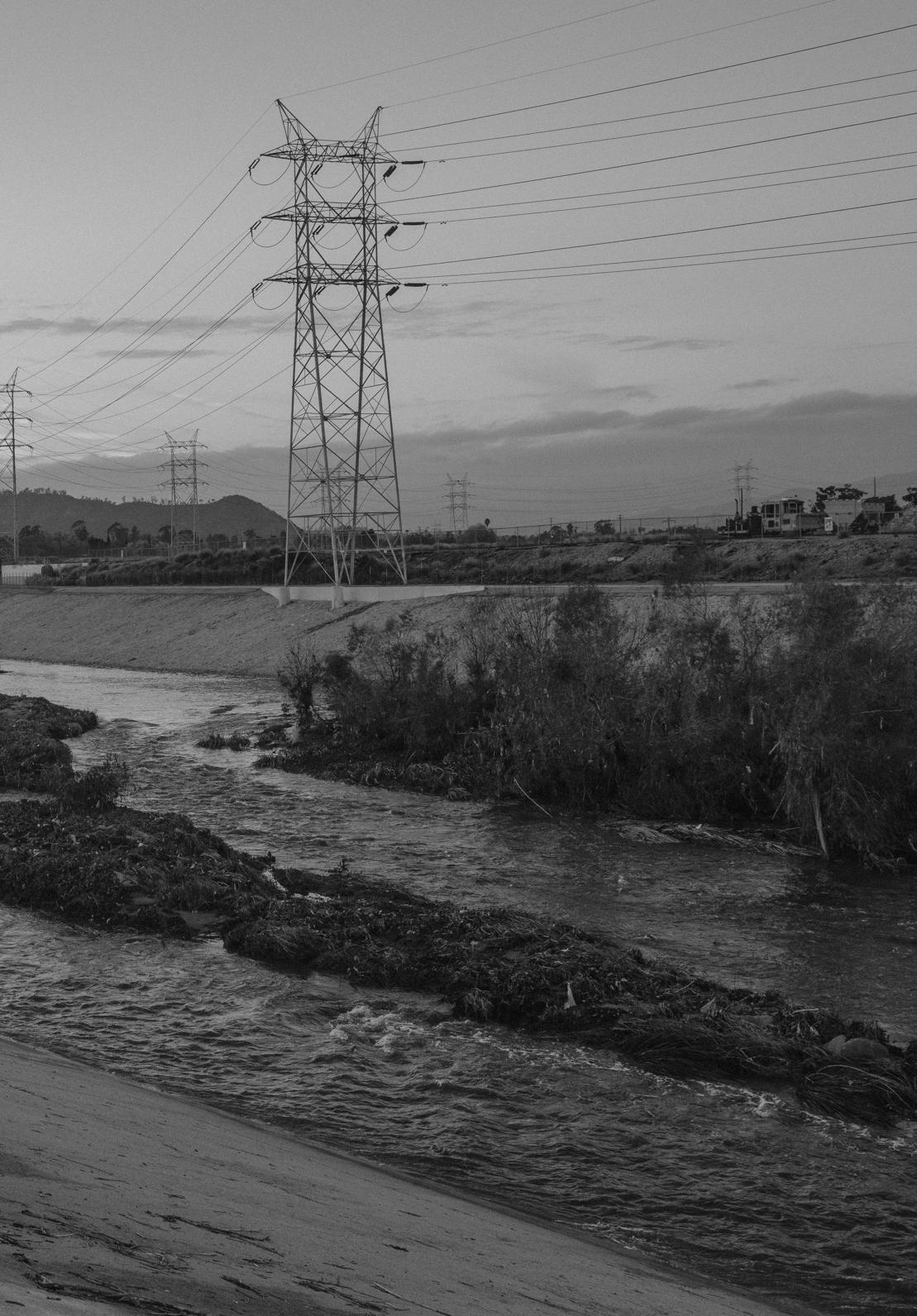
View of Los Angeles River. Photo by Mike Belleme.

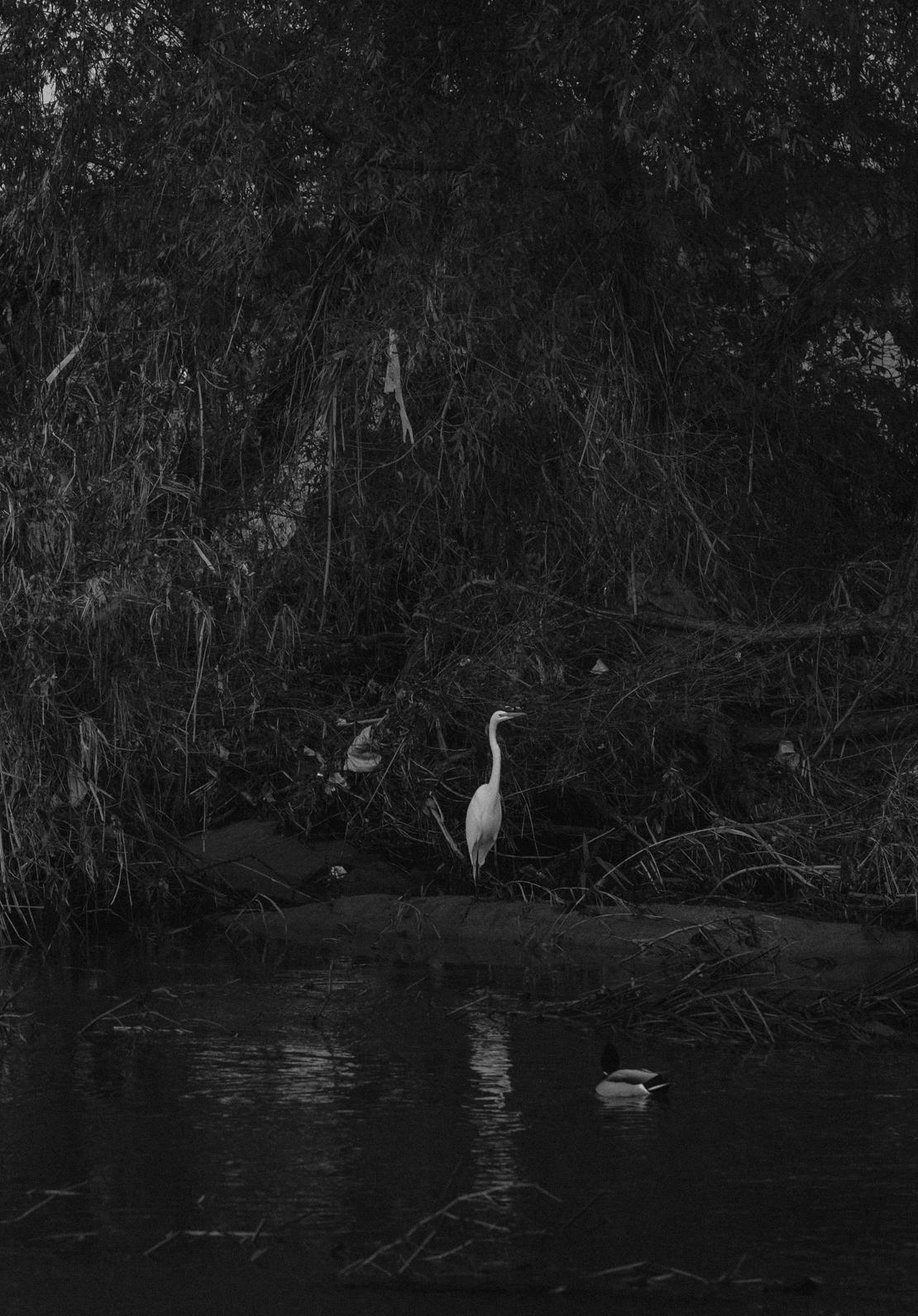
Great Blue heron along the Los Angeles River. Photo by Mike Belleme.
22
The Species Lens
The Species Lens is a research phase of work that dives deep into the habitat requirements and status of key species endemic to the LA Basin. It was critical to first understand the characteristics, behaviors, and habitat needs and extents (past, present, future) of these creatures so that we could build projects around and from the standpoint of these species. This research also seeks to understand the species’ interrelationships with humans, and the impacts human settlement and modes of living have had on them. Each student selected a single species on which to focus their research and began by mapping the species’ habitats and movements across LA. Additional drawings were developed to communicate the species’ life cycles and behaviors, predators and prey, and major threats and concerns for the species’ ongoing survival. Central to this phase of work is the specieseye view, which asks students to imagine the world through the eyes of their creature. The result of this phase is a set of drawings and documents that lay the groundwork for a new set of Wild Ways — and new forms of urbanism based on non-human/human interrelationships.
23 Mountain Lion (Puma concolor) Ziting Wang

24


25 Bobcat (Lynx rufus) Josiah Brown

26


27 Grey Fox (Urocyon cinereoargenteus) Haimei Li

28


29 Big Eared Wood Rat (Neotoma macrotis) Sarah Hopper

30


31 California Condor (Gymnogyps californianus) Pitchapa Setpakdee

32


33 California Quail (Callipepla californica) Marina Recio Rodriguez

34


35 California Kingsnake (Lampropeltis getula californiae) Hattie Lindsley

36


37 Western Fence Lizard (Sceloporus occidentalis) Zeqi Liu

38


39 California Newt (Taricha torosa) Zilan Wang

40


41 Red-Legged Frog (Rana draytonii) Juan Villalón Hernando

42


43 Monarch Butterfly (Danaus plexippus) Shuyue Li

44


Griffith Park and the Hollywood sign. Photo by Mike Belleme.

46
Site Visit
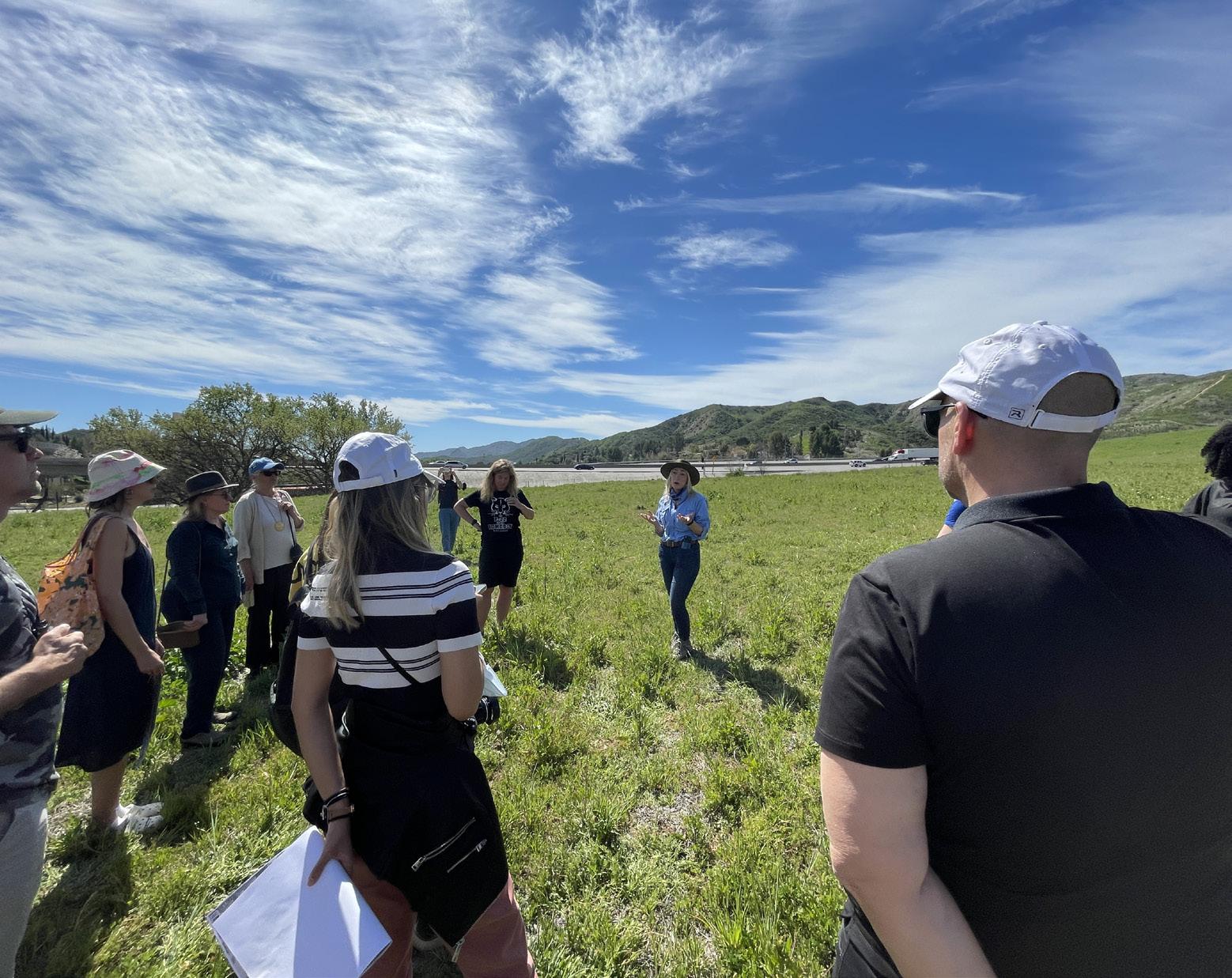
For five days in March 2022, students travelled with wildlife experts, studio sponsors, and the 2021-2022 Loeb Fellows including John Peterson (Curator) and Anna Lyman (Program Director) across the Los Angeles Basin. We visited critical biodiversity hotspots, cultural sites, and places where infrastructure and urbanization continue to have the greatest impact on wildlife habitat and connectivity. Students also visited potential sites for their project proposals, recording observations and conditions as a baseline for situating their work. Excerpts from the trip follow.
Following page (top): Ms. Rosie Lee Hooks leads a gallery tour at the Watts Arts FollowingCenter.page (bottom): Ron Finley shows the group his backyard garden.
Above (top): Urban ecologist Kat Superfisky guides a tour of the Los Angeles River along the Glendale
47
AboveNarrows.(bottom): Kat Superfisky orienting the group to the city from Elysian Park.
VisitSite


48ReedChris


49
Above (top): Members of the National Wildlife Federation’s California Center lead a tour of the future site of the Wallis Annenberg Wildlife Crossing.
VisitSite
Above (bottom): Lisa Fimiani guides a tour of the Ballona Wetlands, and students stop to see the coast in Malibu. Following page (top): Students tour Huntington Gardens. Following page (bottom): Seth Baker guides students through the Huntington Gardens and Mimi Zeiger leads a time for reflection in a pavilion in the Chinese Garden.


50ReedChris


Ducks and runners on the path along the Los Angeles River.
Photo by Mike Belleme.


Our project aims to explore the relationship between the air and the ground, to provide conditions for the future range expansion of the endangered species, the California Condor, through the broader Los Angeles metropolitan area. With research supporting correlations between ground conditions and wind flow pattern, we propose a phased development including three major aspects that work together to gradually re-establish the suitable airy & aerie condition for condor range expansion: zoning regulations, reforestation, and monument. Through lenses of both humans and wildlife, the project promotes shared interests among condors, human culture, and urban context. The proposal also manifests the monumentality of the condor as the new image of Los Angeles, raising the awareness of human and wildlife co-existence.
Airy + Aerie: Condor/HumanGround/CaliforniaAir/ Pitchapa Setpakdee Ziting Wang
54
Above: Poster bearing the California Condor, the new image of the city.
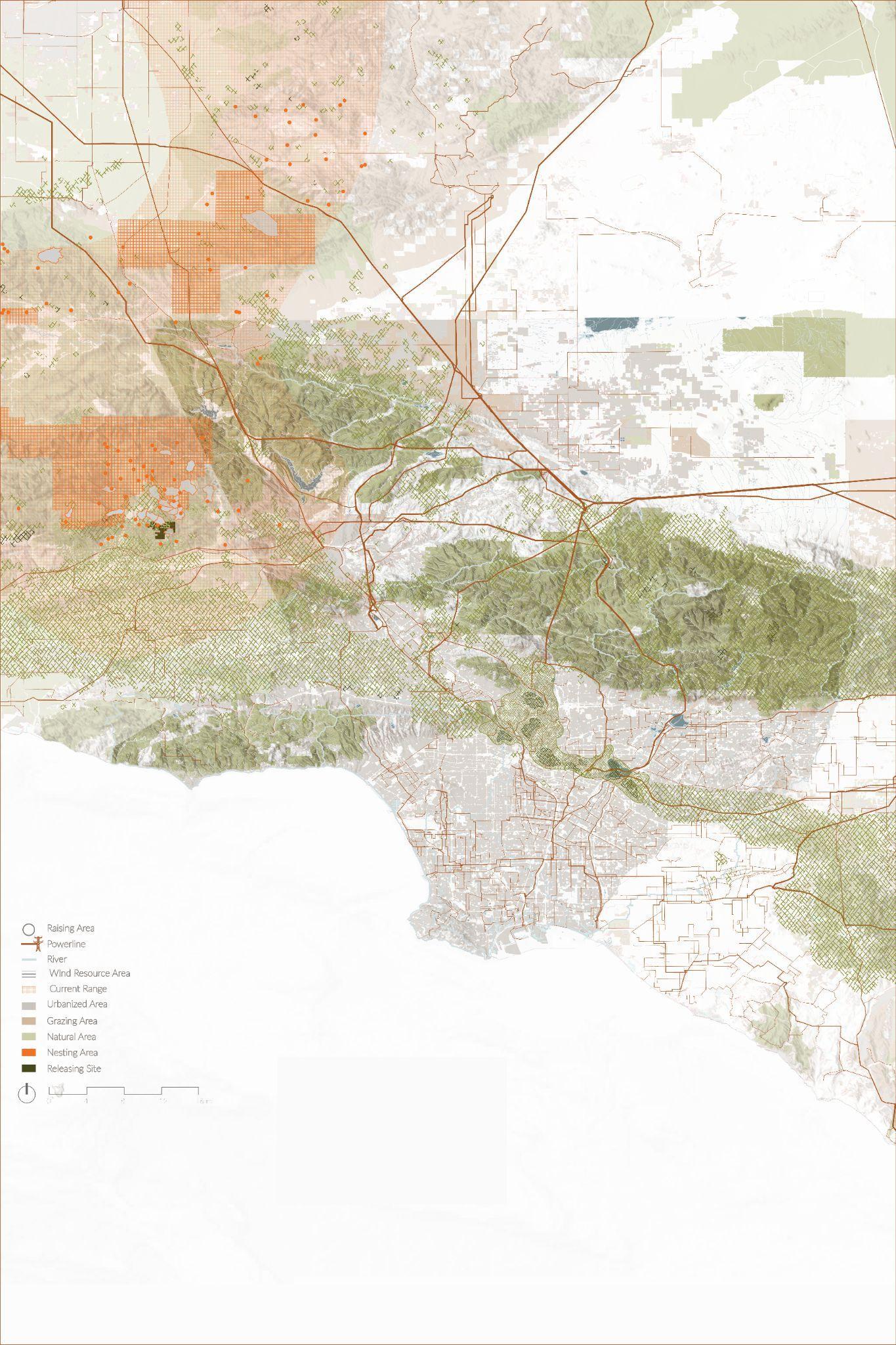
Following page (top): Regional map of California Condor habitat in Los FollowingAngeles.
page (bottom): Wind patterns over north central Los Angeles.
Aerie+Airy
55

AIRY+AERIE Connection Condor Zone Regional Map California Condor in Los Angeles Metropolitan MapWangZitingSetpakdee,Pitchapa


Aerie+Airy

WangZitingSetpakdee,Pitchapa
Previous page: Airmap of the sectional stratification of wind currents, condor flight zones, power transmission corridors, and topography.
Above: Illustration of wind pattern analysis in the city.

59 Above: Timeline of the project’s design interventions and deployment strategies.

60
61
Aerie+Airy
Following page: Conceptual model of air movement in the mountains surrounding Los Angeles.
Above: Conceptual model of air movement above the city.

62WangZitingSetpakdee,Pitchapa


63 Above: Section illustrating proposed California Condor Zone with building height and powerline restrictions.

64
Aerie+Airy

Above (bottom): Condor view of clearing for deposition of animal carcasses.
WangZitingSetpakdee,Pitchapa
66
Above (top): View of Redwood reforestation project.
Previous page: Condor view of network of sites across the city.


68 Above: View of walkway and observation deck for condor perching site in the city.

Welcoming the Wild: Making Space for Los Angeles’ ResidentsNon-Vehicular
70 We seek to design a more hospitable and inclusive urban environment in Los Angeles, a city seemingly designed with only one inhabitant in mind - the automobile. In contrast to the pervasive car-dominated landscape of Los Angeles, our project foregrounds other mobility modes - crawling, slithering, bounding, scurrying, and walking - to create an urban environment that is both welcoming and wild. Through a series of wildlife patches, corridors, and crossings, we make the first gesture in welcoming back to the city this land’s original inhabitants. An infrastructural approach of rewilding and reweaving knits the city’s more-than-human residents together, fostering a spirit of kinship and an ethic of care that ensures walking, creeping, and crawling Angelenos all have their place in theOurcity.project proposes furthering the revitalization efforts of the Los Angeles River and Verdugo Wash as well as an extended powerline corridor through North Hollywood as critical wildlife migration corridors connecting the Santa Monica and San Gabriel mountains. At Griffith Park, the meeting point of these wildlife corridors, we propose two interventions: the Griffith Wildlife Crossing and the rewilded Griffith Park Zoo Ruins. Together, these interventions serve to elevate the position of Los Angeles’ often-forgotten residents and invite us all into a place of greater kinship with the wild.
Josiah Brown Sarah Hopper
71 WildtheWelcoming


72
Previous page (bottom): Site locator map for two sites of intervention.
Above (top): Illustration of a multispecies, multi-path wildlife crossing.
HopperSarahBrown,Josiah
Previous page (top): Network Plan for critical habitat connectivity.
Above (bottom): Illustration of a rewilded zoo ruins.


Above: Bobcat in Griffith Park overlooking “The Crux” of I-5 and Freeway 134 to the San Gabriel Mountains beyond. Photo by Steve Winter. Following page (top): Diagram connect ing species to their respective micro- and Followingmacrohabitats.page (bottom): Site sketch of desire lines and potential habitat corridors.
73
WildtheWelcoming

HopperSarahBrown,Josiah
74


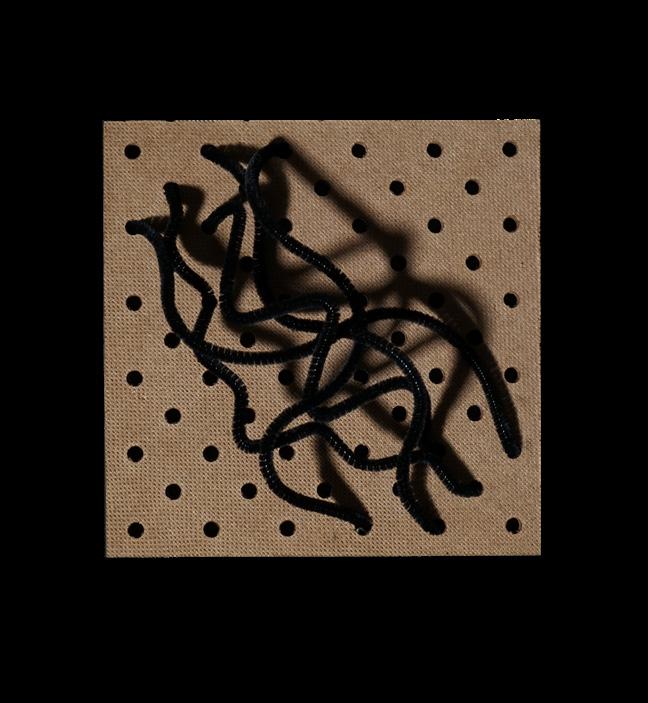
75 Above: Study models exploring threads of connectivity across the highway. Following page: Final model. WildtheWelcoming



HopperSarahBrown,Josiah


Following page: Project views from the perspective of animal, pedestrian, and driver.
77
Above: Site plan and axon of Griffith Crossing and its intended users.
WildtheWelcoming


78HopperSarahBrown,Josiah


79 Above: Satellite image and photos of the abandoned Griffith Park Zoo ruins. Following page: Site plan and axon of proposed wild reinhabitation. WildtheWelcoming


80HopperSarahBrown,Josiah


Above: Diagrammatic sketch illustrating boardwalk concept for both human and woodrat use.
WildtheWelcoming
81
Following page: Diagrams illustrating the design concept for the multi-species boardwalk and fire-retention walls.


82
HopperSarahBrown,Josiah




83 WildtheWelcoming

84
Previous page: Woodrat’s view from the bottom of the boarwalk. Above: Human’s view from the top of the boardwalk.
HopperSarahBrown,Josiah

85 WildtheWelcoming


86
Above: Final model of boardwalk and fire retention walls to help facilitate controlled burns.
HopperSarahBrown,Josiah
Previous page: Final model of boardwalk and nesting habitat structure in old zoo ruins.


Shuyue Li Zegi Liu
Among the host of issues listed in the social vulnerability index of Los Angeles, we tackled the food desert and food deprivation issues, two of the most worrisome social problems in Los Angeles. Regions like South Los Angeles are home to communities with extremely limited access to healthy fresh food and are currently defined as a food desert. The common threats between our two species of Monarch Butterfly and Western Fence Lizard are related to food as well. The Monarch Butterfly is facing food deprivation as the milkweed habitat is disappearing. The Westen Fence Lizard is facing food insecurity as the insects they feed on are polluted and toxified by pesticides and herbicides. Our strategy comes from four spatial agencies with the design potential to provide butterflies and lizards with habitat and migration corridors and serve as food sources for local residents. There are four phases of the proposal, and schools are the starting point of seeding these proposals. We first try to improve public awareness of students’ wildlife and food desert issues. The second phase activates vacant lots in the community as workshop sets and places for communicating, exchanging, and celebrating between students and neighborhoods. The third phase is enabling parkways to become test planting sites for neighborhoods. Then in the final phase, people gain the ability to plant in their front and backyards. In each phase, the project relies on cooperation between various agencies. the Food Desert: Empowering School Systems to Rewild the City
Seeding
88
89 Above: Mapping analysis of South Los Angeles food desert and butterfly habitat.


91 DesertFoodtheSeeding


92 Above: Design strategies at four typical sites of intervention in the neighborhood.
LiuZeqiLi,Shuyue


93 DesertFoodtheSeeding


94 Above: Plant selections and strategies for growing food forests in four typical sites of intervention in the neighborhood.
LiuZeqiLi,Shuyue


Following page: Axon view of proposed rewilding of the schoolyard.
DesertFoodtheSeeding
Above: View of a Western Fence Lizard enjoying its habitat in the schoolyard.
95

96LiuZeqiLi,Shuyue

97 DesertFoodtheSeeding

Above: View of a Monarch Butterfly and other area residents utilizing the neighborhood workshop spaces.
LiuZeqiLi,Shuyue
Previous page: Axon diagrams of the proposed flexible neighborhood workshop spaces.
98


Amphibian LA aims to work in the intermediate liquid landscape between the mountains and the coast: the highly engineered urban fabric that delivers water from all sources into the ocean. In doing so, the project proposes a seasonal network of patches and corridors in the buffer areas of existing engineered water flows. Implementing decentralized systems of grey and stormwater treatment, the project enables the gradual growth and penetration of amphibian habitats into the urban fabric.By embedding “amphibiousness” into existing urban infrastructure while retaining its current function, the hybrid system provides a shared human-amphibian urban landscape and develops a new type of kinship between the species. This shared landscape will allow citizens to benefit from the amphibians’ bioindicator abilities while also having critical water resources recycled for revegetation and recreational uses that can reduce the urban heat island and recharge the depleted aquifers.
Amphibian LA: Liquid Landscapes for a New Metropolitan HumanAmphibian Kinship
Juan Villalón Hernando Zilan Wang
Water is a natural and cultural element that has conditioned the urban development of the Greater Los Angeles Region and its related metropolitan wildlife. The water coming from the San Gabriel and Santa Monica Mountains allows seasonal habitats for amphibians like the red-legged frog and the Californian Newt which depends on wet habitats to survive. Meanwhile, water is a resource that has enabled the urbanization of the city and a strong water recreation culture that extends also across the mountain range and along the Pacific Ocean.
100
101

102 Above: A transect study of four potential sites along streams in the city.

SYSTEM

Above: Diagram illustrating the various inputs, outputs, and other actors of the water treatment system in Los Angeles.
104
105
Above: Site plan of the proposed interventions at Site 1, the Tujunga Spreading Ground.
Following page (top): Human’s view from the boarwalk in the sound garden.
Following page (bottom): Mayor’s aerial view of this new public landscape.
LAAmphibian

106 ● BREEDING SEASON >SOUND GARDEN ● CIVIC IMAGINARY Alandscapeofsharedownership
WangZilanHernando,VillalónJuan


Following page (bottom): Mayor’s aerial view of this parking beach pond.
LAAmphibian
Above: Site plan of the proposed interventions at Site 2, a parking lot in a residential area in Valley Glen.
Following page (top): Human’s view of the sunken path leading to the new urban beachfront along the wash.

108 ● LAYERED WATER PATH ● SUNKEN EXPERIENCE ● URBAN BEACH
WangZilanHernando,VillalónJuan


109 Seasonality Above: A shared seasonal catalog of activities that links both amphibian and human life cycles.

110
111 LAAmphibian

Previous page: Newt’s view of proposed newt breeding grounds in existing water infrastructure.
WangZilanHernando,VillalónJuan
112
Above: Frog’s view of seasonal landscape and festival pavilions whose program changes with the arrival of the rainy and dry seasons.


The linear efficiency of major roads and freeways epitomized freedom in 20th century Los Angeles. As traffic congestion and self-destructive reliance on fossil fuels increasingly call into question this ideal, we are free to redefine and expand what freedom of movement means today; to this end, this project proposes moving away from linear efficiency and towards the idea of free range—that is, movement for a multiplicity of directions, of speeds, of scales, and of users (both human and not). Redesigning Vermont Avenue, a typical Los Angeles avenue, around the California Quail purposely requires us to slow down and to realign ourselves with other living things.
114
Welcoming California’s state bird not just as a symbol but as a physical presence in Los Angeles enriches the urban experience. By highlighting the needs we have in common with another species, the re-design of a common urban typology calls into question the assumption that cities and wildlife are fundamentally incompatible and proposes that a more ecologically diverse city is also better city for humans.
Free theRedesigningRange:Avenueas a Multispecies Haven
Marina Recio Rodriguez
115 Above: Quail Trail catalog. Following page: Quail Trail site plan. RangeFree

116RodriguezRecioMarina

117 RangeFree

Above:
118
Previous page: Traffic management strategy plan guiding conversion of Vermont Ave into the Quail Trail. “Free range” concept sketch inspired by quail movement patterns.
RodriguezRecioMarina

119 RangeFree

Previous page: Conceptual diagram of “free range” arrangements along the Quail Trail.
RodriguezRecioMarina
Above: A simple geometrical arrangement is applied to many different uses along the trail, from mounds to planters to benches.
120

121 RangeFree




Above: Final models representing three different sections of the Quail Trail.
Previous page: Study models exploring strategies of sectional separation along the trail.
RodriguezRecioMarina


123 RangeFree

124 Previous page: Site plan of the Quail Trail at the Los Feliz Blvd intersection. Above: Quail trail typical sections. RodriguezRecioMarina


125 RangeFree

126 Previous page: Site plan of the Quail Trail at 11th and 12th St intersections. Above: Quail trail typical sections. RodriguezRecioMarina


127 RangeFree

128 Previous page: Site plan of the Quail Trail at the 98th St intersection. Above: Quail trail typical sections. RodriguezRecioMarina


129 Above: Quails and humans sharing space in the city along the Quail Trail.


130


133 Above and following page: Introductory illustration and text for the proposed Snake Highway. AversionandInversion
134LindsleyHattie
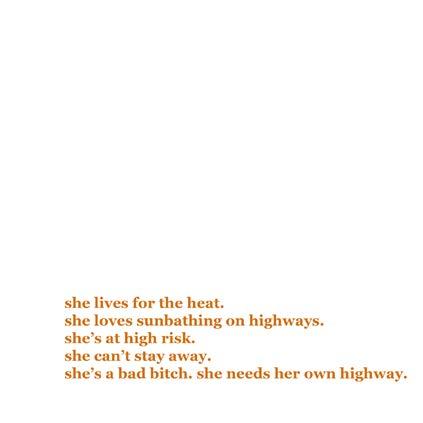
135 Above: Bird’s eye view of proposed repurposing of the Marina Freeway and Highway 405 as snake and human corridors connecting key habitat zones.

136
137 Above: Site plan with three concepts highlighted along the snake corridor. PLAN + 3 CONCEPTS

138
139
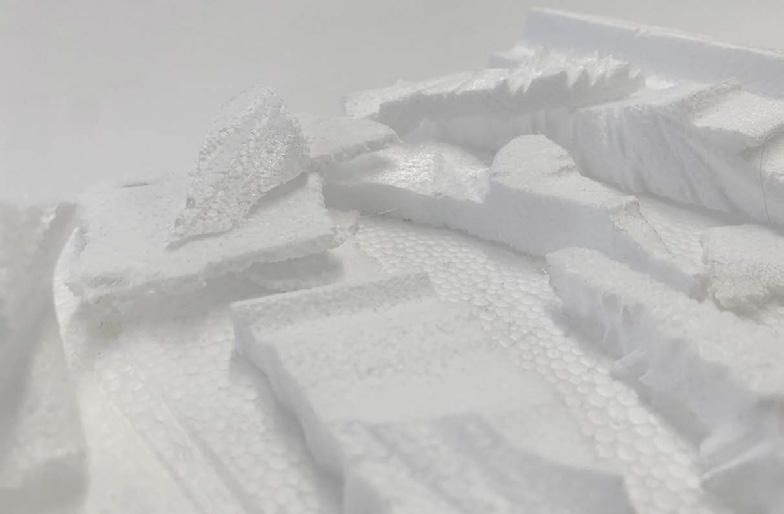
Above: Study models exploring spatial characteristics of caves under the highway structure.
AversionandInversion
Following page: Section perspective diagram illustrating design strategies to meet the needs of both snakes and humans: hydration and play.




140 DUAL PROGRAMMING: HYDRATION + PLAY PARK FOR THE PEOPLE LANDBIKESTAIRPROGRAMMINGFORMFORSPORTS LAND FORM IS A WALL FOR HUMANS BUT ACCESSIBLE FOR SNAKES LEDGES CREATE VEGETATION LEDGES ALLOW FOR WATER POOLING PARK FOR THE SNAKES LindsleyHattie


141 CHANNEL + PARK/HWY + CHANNEL SECTION AversionandInversion

Above: Perspective view of shared space along channel for humans and snakes to learn and play as allies.
HUMAN ALLIES: A SPACE TO LEARN + PLAY LindsleyHattie
Previous page: Sectional perspective of channel running along snake park/ highway.
142

143 HABITAT CONDITIONS IN THE CAVE AversionandInversion

144 Previous page: Section perspective diagram illustrating habitat conditions in the cave. Above: Perspective view of boardwalk along snake habitat. HUMAN CO CONSPIRATOR: BOARDWALK + CURIOSITY LindsleyHattie


Haimei Li
Afterlives: Repurposing MetropolitanInfrastructuresObsoleteatEdges
This project seeks to extend the Grey Fox habitat to the urban area of Los Angeles. Considering the nocturnal nature of the animal, I transformed the local infrastructures, which are unoccupied at night, into new amenities with dual programs. They serve as public space for humans during the daytime, and as fox habitats at night. To accentuate the cultural identity of the Grey Fox, I concentrated on the infrastructures dealing with afterlives, which are the cemeteries and landfills. While the cemeteries accommodate the afterlives of humans, the landfills restore the afterlives of waste. On the other hand, both are facing the destiny of being abandoned. I took advantage of their spatial characters by adding an additional layer of fox habitat. The meandering paths of cemeteries are accompanied by dense vegetation to direct visitors’ views and conceal the entrances of fox dens. The terraced landfills are partially occupied by added soil and hedges to shape new landscape and enable deep burrows. In short, the project reimagined a co-living scenario of Grey Fox and human in Los Angeles. By taking cemeteries and landfills as two common prototypes in the city, it showed how their cultural values and physical spaces can be combined with wilderness.
146
Above: Diagram illustrating fox and human habitat development through history.
Afterlives
147
Following page: Diagram illustrating seasonal and life stage cycles of the Grey Fox.

LiHaimei

Afterlives


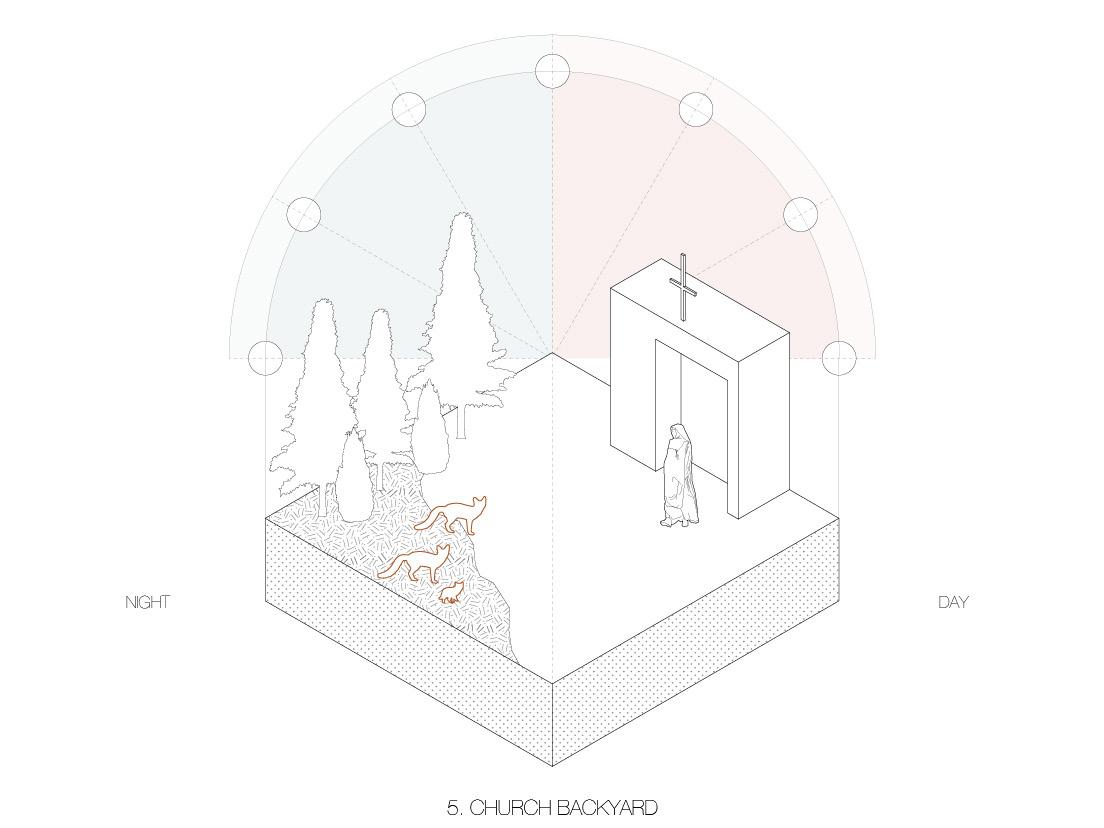

Previous page: Catalog of urban spaces of human (day) and fox (night) use.
LiHaimei
Above: Diagram illustrating daily rhythms of use in urban spaces.

151 Afterlives


152
LiHaimei
Previous page and above (bottom): Proposed site section of the cemetery.
Above (top): Isometric illustrations of cemetery spaces modified to accommodate human and fox use.
Previous page (top): Proposed site plan of first site of intervention, the cemetery.


153 Afterlives


Previous page (top): Proposed site plan of second site of intervention, the Previouslandfill. page and above (bottom): Proposed site section of the landfill. Above (top): Isometric illustrations of landfill spaces modified to accommodate human and fox use.
LiHaimei
154


155 Above: View of rewilded landfill designed to accommodate human recreational use and fox habitation.

156
157 Above and following page: Photographs from the studio’s final review on April 29, 2022. Photos by Anita Kan. PhotosReviewFinal


158KanAnita


Oil derricks and power lines on the tops of hills above Los Angeles.
Photo by Mike Belleme.


Reflections about Wild Ways: A Fifth Ecology for Los Angeles Beth Pratt
162Since 2016, I have led an annual 50-mile trek, through hill and dale and over freeways with bumper-to bumper-traffic traffic, hiking though the urban wilds of the Los Angeles area. It’s a study in contrasts: one part of my journey finds me standing at the crest of the Santa Monica Mountains, in a space as wild looking as in any national park, and gazing at a 360 view that includes the Pacific Ocean, its blue lazy waters nearly indistinguishable from the sky. Further along in my hike, I start marching down Mulholland Drive, a busy road lacking sidewalks, strolling past opulent homes of movie stars and tempting taco trucks while breathing foul exhaust instead of a salty sea breeze, and trying to avoid being hit by the Porsches and Priuses speeding past me. As improbable as this might seem in one of the most densely populated areas in the county, this trek is inspired by a mountain lion. And not just any mountain lion. I am following in the footsteps of P-22, the most famous mountain lion on the planet.Ifa perfect poster-animal for human-wildlife coexistence ever existed, it’s P-22. His moniker originates from a scientific naming system — P stands for Puma, which is just another name for mountain lion like cougar or panther, and his number means he was the 22nd cat collared in the National Park Service study (they are now up to 104). Often called the ‘Brad Pitt of the cougar world’ (by me) — they are both ruggedly handsome, live in Hollywood, beloved around the globe, and challenged with their dating lives — P-22 made a miraculous journey and crossed two of the busiest freeways in the country to make a home in Griffith Park, where he has roamed since 2012, coexisting peacefully with the over 10 million visitors a year,
After joining the partnership to build the world’s largest wildlife crossing — and the first of its scale in an urban area — I had the idea to learn about connectivity (or the lack thereof) by trying to understand how an animal views Los Angeles’ maddening sprawl and vexing freeway system. By retracing P-22’s journey on foot, I put on my “animal eyes” as I walked. And it was magical. I am even more incredulous and admiring that P-22 made it to Griffith Park after following in his footsteps. His biological imperative of finding a new home made him both a talented navigator and an intrepid adventurer. P-22’s magical journey changed a lot of minds, both scientifically and philosophically. His plight as a lonely, dateless, bachelor, roaming the Hollywood Hills, and cut off from the rest of his kind, has inspired a new paradigm in conservation. When the number-one threat to wildlife worldwide is loss of habitat, we can no longer think of our cities or towns or neighborhoods, or even our backyards, as exempt from the natural world — or as off-limits to wildlife. We need to expand our view and realize that our shared spaces are as essential to conservation as our traditional protected lands. We need to create a new model of suburban and urban wildlife refugia. And P-22 showed us this was possible, even with a large predator. If LA can coexist with a mountain lion, for instance, then what excuse can any other city offer for not making way for monarch butterflies? As his fame spread, so did his impact — P-22 is one celebrity that has used his influence for good. He inspired thousands around the globe to support the innovative Wallis Annenberg Wildlife Crossing. And he inspired the Wild Ways: A Fifth Ecology for Los Angeles studio, for his journey, his plight, and the ultimate solution he helped get built, was an entry point for the students to consider “new urban imaginaries” and to “explore the conceptualization and development of new hybrid assemblages, new urban ecologies.” Although P-22 inspired a growing movement to coexist, he’s no architect or engineer. The practical urban design solutions must follow for this movement to have impact. Wild Ways honored P-22’s legacy and advanced this movement immeasurably. During the studio presentation at Harvard, I sat in wonder and in gratitude as the students, to use a very non-academic phrase, blew my mind. As a lifelong wildlife conservationist, I felt a surge of hope as I witnessed some of the most brilliant young minds in architecture tackle how to design an urban parkway for wood rats, repurpose an abandoned freeway overpass into a kingsnake sanctuary, transform an industrial park into a “liquid landscape” for newt breeding (complete with a mobile app so folks can tweet about it), create a Quail Trail thoroughfare almost the Hiker rests in Griffith Park. Photo by Mike Belleme.
163 WaysWildaboutReflections and remaining largely unseen as befitting his species nickname, “ghost cat.” Occasionally he makes an appearance on the Ring doorbell cam of one of the homes surrounding Griffith Park — the footage from these encounters is widely shared on social media with the same excited and reverent tones a devoted fan would use upon meeting Mr. Pitt.

164PrattBeth length of LA, or map ideal wind patterns to build a city-wide aerie for condors. Mind officially blown. I witnessed a new era of urban ecology unfolding — a new paradigm not just for conservation but for design emerged right before our eyes in the studio presentation. The students — and nary a biologist among them — appeared to have with ease and care donned their own set of animal glasses, and approached the design with a non-human perspective. Ed Yong writes in his new book, An Immense World: How Animal Senses Reveal the Hidden Realms Around Us: 1 “Every animal is enclosed within its own sensory bubble, perceiving but a tiny sliver of an immense world. There is a wonderful word for this sensory bubble—Umwelt. Humans, however, possess the unique capacity to appreciate the Umwelten of other species, and through centuries of effort, we have learned much about those sensory worlds. But in the time it took us to accumulate that knowledge, we have radically remolded those worlds. Much of the devastation that we have wrought is by now familiar.”
The designs, while also incorporating the human perspective, also reflected the “umwelt” of each animal served. To design a city that allowed condors to thrive, for example, the students asked essentially, “what would a condor architect do?” They considered and made primary what is needed in a condor’s world: ideal wind patterns for soaring, good visibility to find gourmet dead carcasses, and some safe places to eat dinner. Not parameters you find in most design textbooks. Los Angeles has been deemed a “land of magical improvisation.” In shifting to a new urban ecology, some magic of the imagination is going to need to be involved. To see these students do so firsthand points to such a promising future for both wildlife and people. As Ed Yong also wrote: “To perceive the world through others’ senses is to find splendor in familiarity, and the sacred in the mundane.” These students embarked on a journey, followed in the footsteps of the animals they studied, and reimagined a human world into a shared space welcoming to all life. P-22 sends his gratitude to them for reaching across the species divide and finding kinship through their designs. 1 Young, Ed. 2022. An Immense World: How Animal Senses Reveal the Hidden Realms Around Us. New York: Random House.
Marta
Brocki, Renee Callahan, Jeremy Guth
How Can Design Save Wildlife and Wild Places?
166Roadkill is one of the most prevalent and unfortunate results of the conflict between the needs of humans and animals. The human need to get to where we are going safely and quickly has become a basic expectation and an ever expanding network of roads, highways and interchanges criss-crosses the continent, interrupting and fragmenting our landscapes — and with it, the territories and corridors of wildlife. Wild animals need to cross our roads in search of food, mates and shelter. Many are routinely struck and killed by vehicles in this most basic quest for survival.Thisiswhere the mission of the ARC partnership began — by engaging new thinking to design wildlife crossing structures that reconnect landscapes, safeguard wildlife populations, their habitats and ecosystems. Through creative collaboration across disciplines, we seek to address the challenge of designing for two very different clients — humans and wildlife — each with different needs and priorities, yet sharing one problem: the need for safe passage. The implementation of wildlife crossings across the landscape has the potential to reconnect wildlife habitats that have been split apart by our road systems; to reduce the deadly conflict between people and wildlife, and to bring human awareness and consideration to the habitats our roads interrupt and the animals that need these spaces. The role of design has been central in advancing innovative solutions for feasibility (to promote widespread implementation), adaptability (to respond to wildlife needs and reflect changing landscape conditions), and legibility (to communicate the function of wildlife crossings to motorists and enhance their connection to wildlife and wild spaces).
167 Places?WildandWildlifeSaveDesignCanHow
Ten years after the ARC International Wildlife Crossing Infrastructure Design Competition, the Wild Ways studio situated responses to the challenge of designing for the coexistence and movement of people and wildlife in one of the most urbanized landscapes on the continent — the Los Angeles Basin. The students’ work responded to these imperatives, not only as an opportunity to protect and enhance biodiversity, but to cultivate venues for the expression of cultural values through design, while fostering connection and engagement with nature — through observation, sensory immersion, and reciprocal experiences. The projects also expand the realm of possibility for new materials and mediums in the design of landscape infrastructure. By thinking beyond designing on the landscape to designing with the landscape, projects present aspirational opportunities to manipulate water and even wind flows to create new habitats and civic spaces.Contributing as a sponsor for the Wild Ways studio at the Harvard Graduate School of Design has been an inspirational and energizing experience. Just as it will take more than a single bridge for wildlife to (re)connect our fragmented landscapes, a diversity of creative solutions will be needed to restore a cultural connection with wildlife in urban centers. It is our hope that given the visionary responses to the challenge of designing the next generation of landscape infrastructure for people and wildlife, Wild Ways will become an ongoing design research effort to inspire new synergies and projects for wild spaces in an urbanized world.
Moreover, landscape fragmentation and wildlife-vehicle collisions are not merely wilderness or rural issues; these are problems that affect everyone. Those of us living and driving in busy suburban and urbanizing landscapes are even more likely to witness or experience wildlife on the road. As our landscapes become increasingly urbanized, human-wildlife interactions will continue to increase as will the need for creative solutions to address the impacts of biodiversity loss and the accelerating impacts of climate change.
Car traffic captured at night in Los Angeles. Photo by Mike Belleme.

169 Banham, Reyner. 1971. Los Angeles: the Architecture of Four Ecologies. Berkeley, Cal.: University of California Press. Berry, Rob; Jones, Victor; Sweeney, Michael; Zieger, Mimi; Danielson, Chava; Day, Joe; Grant, Thurman; McLemore, Duane. Architecture Urban Design, The Los Angeles Forum. 2018. LA Forum Reader. New York City: Actar D. https://actar.com/product/laBrenner,forum-reader/Neil; Marcuse, Peter; and Mayer, Margit. 2011. Cities for People, Not for Profit: Critical Urban Theory and the Right to the City 1st edition. London ; New York: Routledge. Didion, Joan. 1989. “Letter from Los Angeles: Fire Season in Los Angeles.” The New Yorker. September 4, 1989 issue.
Kelly. 2016. “From Civil to Civic: Replacement of an Icon / The Ribbon of LightViaduct in L.A.” Topos. No. 97. Lister,46-51.Nina-Marie. 2012. “Reconciling Mobility: Redesigning the Road, Reweaving Landscape.” Minding Nature
Staying with the Trouble: Making Kin in the
Haraway,didion-letter-from-los-angeles-newyorker.com/magazine/1989/09/04/joan-https://www.fire-seasonDonnaJ.2016. Chthulucene Duke University Hawthorne, Christopher et al. famous Los of Southern California Dornsife Victor Shannon, . Vol. 5 no. 1. Center for Human and Nature. May 2012. Maltzan,May-20123.pdfuploads/2012/05/Minding-Nature-v5n1-https://arc-solutions.org/wp-content/Michael.2011. No More Play: Conversations on Urban Speculation in Los Angeles and Beyond. Los Angeles: University of Southern California School of Architecture. Mitchell, Timothy. 2002. “Can the Mosquitoes Speak?” Rule of Experts: Egypt, TechnoPolitics, Modernity. Berkeley: University of California Press. pp. 19-53 McPhee, John. 1989. “Los Angeles Against the Mountains.” The Control of Nature. New York: The Noonday Press / Farrar, Straus and Giroux. pp. 183-272 Reed, Chris and Lister, Nina-Marie. 2014. Projective Ecologies, Cambridge and New York: Harvard Graduate School of Design and Robinson,ACTAR. Alexander. 2018. The Spoils of Dust. Reinventing the Lake That Made Los Angeles San Rafael: Oro Editions.
Durham:
J., and
Angeles as it turns 50.” University
2021. “Four (More) Ecologies: Reassessing Reyner Banham’s
book on
College of Letters, Arts and Sciences April 19, 2021. Jones,watch?v=BSajZQJKaHchttps://www.youtube.com/VictorJ.2014. (IN)formal LA: The Space of Politics. Los Angeles: eVolo. Jones,
Bibliography
Press.
170Sahagún, Louis. 2021. “Mission accomplished: Beth Pratt raised millions for a freeway overpass for L.A. cougars.” Los Angeles Times. December 11, 2021. Mona.Salazar,raised-millions-for-a-cougar-overpassenvironment/story/2021-12-https://www.latimes.com/11/beth-pratt-Alan(“PuchukYa’ai’c”)andLewis,2021.
. Sunsprite Publishing. Ventura, CA. Savoy, Lauret E. 2015. Trace: Memory, History, Race, and the American Landscape. Berkeley, California: Counterpoint Press. Ulin, David. 2015. Sidewalking: Coming to Terms with Los Angeles. Oakland: University of California Press. Varnelis, Kazys. 2008. The Infrastructural City: Networked Ecologies in Los Angeles. Barcelona: Actar. Waldheim, Charles. 2016. Landscape as Urbanism: A General Theory. Princeton: University Press. Weller, Richard. 2021. “Animals.” LA+ CREATURE. Interdisciplinary Journal of Landscape Architecture. University of Pennsylavnia Stuart Weitzman School of Design. No. 14. ORO Editions. Weller, Richard; Drozdz, Zuzanna; Kjaersgaard, Sara Padgett. 2019. “Hotspot cities: Identifying peri-urban conflict zones.” JoLA: Journal of Landscape Architecture. 1-2019. pp. 8-19. com/pdf/Weller_JOLA_Hotspot_Cities.pdfhttps://hotspotcitiesproject. Wolch, Jennifer. 1998. “Zoöpolis.” in Wolch, Jennifer, and Emel, Jody, eds. Animal Geographies: Place, Politics, and Identity in the Nature-Culture Borderlands. London: Verso. pp. Wolch,119-138Jennifer. 2007. “Green Urban Worlds.” Annals of the Association of American Geographies. 97(2). pp.373-384 Zeiger, Mimi. 2021. “On Edge.” in Reed, Chris and Belleme, Mike. Mise-en-Scène: The Lives and Afterlives of Urban Landscapes. San Francisco: ORO Editions. pp.65-72
A Tataviam Creation Story
Marta Brocki Marta is Associate Director of ARC Solutions and a graduate from the Bachelor of Urban and Regional Planning program at Toronto Metropolitan University where she worked as a Research Assistant and Project Coordinator at the Ecological Design Lab from 2013—2020. Her interests, in research and practice, center on the implementation of green and adaptive infrastructure, specifically for enhanced landscape connectivity.
Nina-Marie Lister Nina-Marie is Professor and Graduate Director in the School of Urban & Regional Planning at Toronto Metropolitan University and Visiting Professor of Landscape Architecture at Harvard University’s Graduate School of Design. A Registered Professional Planner (MCIP, RPP) trained in ecology, environmental science and landscape planning, Prof. Lister’s research, teaching and practice centre on the relationship between landscape infrastructure, biodiversity and ecological processes—specifically in the context of ecological design for resilience, health and well-being.
Contributors
Josiah Brown Josiah is an architect, landscape architect, and urban designer working to support landscapes of both human and environmental flourishing across the western United States. He is a recent graduate from the Master of Landscape Architecture program at the Harvard GSD where he participated as a student in Chris Reed’s Wild Ways design studio and NinaMarie Lister’s Wild Ways research seminar.
171 Mike Belleme Mike is a freelance photographer based in Asheville, North Carolina. His work ranges from long-form documentary projects to assignmentbased editorial work, photojournalism, and portraiture. His practice involves photographing from a space of emotional availability and vulnerability and exploring themes involving connection and disconnection from that space.
Renee Callahan
Renee Callahan has over 30 years of professional experience in federal, state, and administrative law, policy, and research. As Executive Director of ARC Solutions, Renee leads an interdisciplinary not-for-profit partnership working to ensure wildlife crossings are built whenever they are needed, with a focus on fostering design innovation in the next generation of wildlife infrastructure solutions.
Jeremy Guth Jeremy Guth is a founding Partner of ARC Solutions and co-initiated the ARC International Wildlife Crossing Infrastructure Design Competition with Dr. Tony Clevenger in 2008. He has been a trustee of the Woodcock Foundation since 2003 and developed the foundation’s large landscape conservation program with a particular focus on the preservation of ecological connectivity between Canada and the United States.
172
Chris Reed Chris Reed is Professor in Practice of Landscape Architecture and Co-Director of the Master of Landscape Architecture in Urban Design Program at the Harvard GSD. He is also Founding Director of Stoss Landscape Urbanism. He is recognized internationally as a leading voice in the transformation of landscapes and cities, and he works alternately as a researcher, strategist, teacher, designer, and advisor. Reed is particularly interested in the relationships between landscape and ecology, infrastructure, social spaces, and cities.
Beth Pratt Beth is Regional Executive Director of the California Regional Center of the National Wildlife Federation. She has worked in environmental leadership roles for over twentyfive years, and in two of the country’s largest national parks: Yosemite and Yellowstone. Beth is the author of the book, When Mountain Lions are Neighbors: People and Wildlife Working It Out In California.
HugeAcknowledgmentsthankstoour
I want to thank our review critics and our special presenters during the semester, who shared their wisdom and work with us: Kat Superfisky and Michelle Barton, both of the City of Los Angeles; Eric Howeler of the GSD and Howeler Yoon Architecture; Michael Maltzan of Michael Maltzan Architecture; and Rahul Mehrotra of the GSD and RMA Architects. Also, a special shout-out to our site tour guides, hosts, and reflection moderators while in Los Angeles: Beth Pratt of the National Wildlife Federation, who introduced us to the site of the Wallis Annenberg Wildlife Crossing; Kat Superfisky of the City of Los Angeles; Lisa Fimiani of the Friends of Ballona Wetlands; Ms. Rosie Lee Hooks of the Watts Arts Center; Ron Finley, self-described “Guerilla Gardener”; Seth Baker of Huntington Gardens; the folks at the Hammer Museum, who hosted a reception sponsored by our friends and travel companions in the Loeb Fellowship Program; and curator, writer, and design critic Mimi Zeiger. None of this would have been possible without the incredibly hard work of research assistant Angela Moreno-Long, who worked for two semesters as researcher, organizer, trip tour guide, and all around advisor. Jenna Wu was a terrific and helpful teaching assistant during the semester, and Josiah Brown kicked in at the end to compile, design, and edit this beautiful Lastreport.but not least, I am indebted to the eleven students in this studio, who took on this new agenda in a myriad of creative ways. And they did it with a spirit of generosity and inquisitiveness that went far beyond expectations. Each of you holds incredible promise for the future, and I am confident the world will be a better place knowing you are all at the helm.
173
co-sponsors and constant sources of inspiration: the National Wildlife Federation, as joyfully represented by Beth Pratt; and ARC Solutions, with their amazing leadership and staff of Jeremy Guth, Renee Callahan, and Marta Brocki. These organizations and people donated enormous amounts of time, resources, and spirit to this studio—and inspired us all to think of wild creatures as kin. Enormous credit and thanks, too, to my co-conspirator, Nina-Marie Lister, who taught an adjacent research seminar of the same name and is a constant source of intellectual and personal energy.
174
Wild Ways: A Fifth Ecology for Metropolitan Los Angeles Instructors Chris Reed Report Design Josiah Brown Report Editor Josiah Brown Dean and Josep Lluís Sert Professor of Architecture Sarah Whiting Chair of the Department of Landscape Architecture Anita CopyrightBerrizbeitia©2022 President and Fellows of Harvard College. All rights reserved. No part of this book may be reproduced in any form without prior written permission from the Harvard University Graduate School of Design. Text and images © 2022 by their authors. Image Credits Cover photograph by Mike Belleme. The editors have attempted to acknowledge all sources of images used and apologize for any errors or omissions. Harvard GraduateUniversitySchoolof Design 48 Quincy gsd.harvard.eduCambridge,StreetMA02138 Colophon

Students Josiah Brown, Sarah Hopper, Haimei Li, Shuyue Li, Hattie Lindsley, Zeqi Liu, Marina Recio Rodriguez, Pitchapa Setpakdee, Juan Villalón Hernando, Zilan Wang, Ziting Wang
Studio Report Spring 2022 Harvard DepartmentGSDof Landscape Architecture
