Mystery continues over North Sydney Olympic Pool’s 500 day re-opening delay
 By Grahame Lynch
An independent report into costly delays impacting the refurbishment of North Sydney Olympic Pool has raised more questions than answers, with mystery surrounding what accounts for nearly all of a 500 day delay in its predicted completion date.
The report by PricewaterhouseCoopers was commissioned last November and was shared with councillors the following month. However, report findings have only been partially revealed this month so that councillors can act on some of its budgetary implications at their next meeting.
The pool refurbishment commenced in March 2021 and was scheduled to be completed in November last year. But according to a version of the findings of the report tabled by council officers, PWC now believes the pool cannot be completed before April 2024. The council’s own website was still forecasting a reopening in August this year, as we went to press.
The full reasons for what would be a 500 day delay have not been quantified in what has been revealed of the PWC study. The council report says: “To date the project has experienced
22 days in delay due to Covid, 88 due to wet weather, and 38 days due to the removal of hazardous material.”
This does not explain what is behind the remaining 350 or so days of anticipated delay. The only explanation is hinted at by the following observation: “The external environment at the time of contract execution was one experiencing an unprecedented pandemic and a multi-year La Nina weather event. These external factors were not factored into contingency planning nor was the risk shared through contract negotiations.”
“The detailed independent review has been obtained under legal privilege and for commercial and contractual reasons remains confidential,” the report by council officers to councillors says.
At this stage, the pool’s costs have blown out by around $7.7m, on top of a $64m approved budget. The extra costs are mainly accounted for by variations to the contract as well as design and consultancy.
But as of April, there are currently an astonishing 93 pending variations to be considered, including 22 delay related claims and 19 early works/
latent conditions claims. “Council is currently working through an assessment and resolution process to address these claims. Council has engaged a quantity surveyor to assess these claims in accordance with contract entitlements,” the report says.
Ultimately, the PWC report forecasts that costs may rise by $25 million or more over what was originally budgeted.
Nearly half of the current $64 million budget for the pool comes from $31 million of loans. $10 million
Felicity resists the tide with North Shore victory
State North Shore member Felicity Wilson scored a surprisingly strong re -election in the March 25 election, with her primary vote of 44.23% holding up well compared to her 46.60% primary vote at the previous 2019 election.
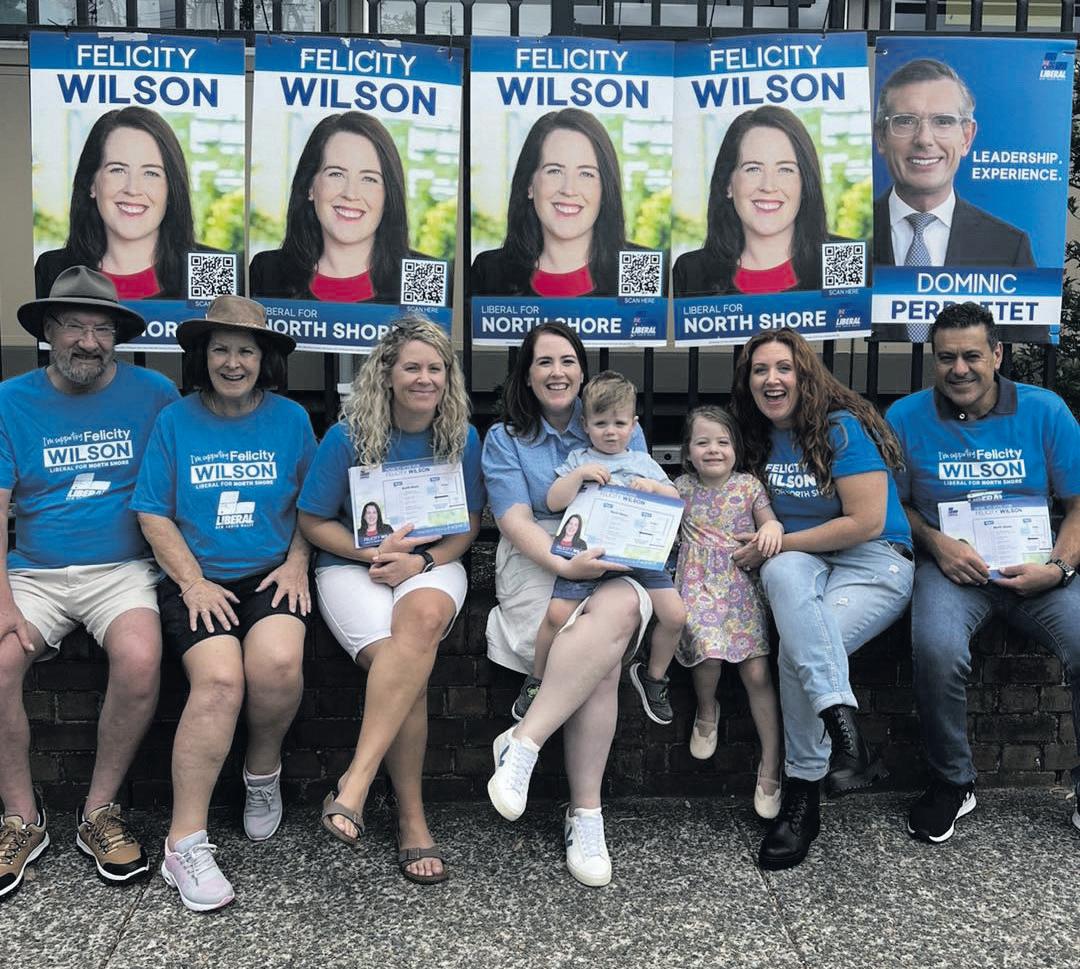
The 2.4% primary swing against Wilson compared well with a 5.2% fall in Liberal Party primary votes across the state which saw the party lose office to Labor.
The result also indicated a strong personal vote for Wilson. The North Shore vote for the Liberal Coalition for the upper house was just 37.3%, considerably less than the lower house primary vote.
Wilson’s main challenger Helen Conway was, however, partially successful in convincing Labor and Greens voters to preference her second. Conway parlayed a primary vote
Con nued page 3
comes from the federal government and $5 million from state government.
The remainder and any cost overrun will be funded by the annual council budget.
A draft budget across North Sydney Council that has also been released ahead of the late April meeting of councillors allocates $43.5 million for the pool budget and completion. $11.8 million worth of capital works have been deferred to later
Con nued page 2
Tim James re-elected with 52.6% of 2PP vote
Sitting Liberal member Tim James was re-elected to represent Willoughby with 43.6% of the primary vote and 52.61% of the 2PP vote at the March 25 state election.
Independent Larissa Penn got 26.62% of the primary vote, and a strong preference flow from the Greens and Labor, took her to over 47% of the 2PP vote. Penn won just two booths—Cammeray Public and Naremburn Community Centre—on primary votes, with James topping the count in the other 25 booths.
April 2023 Issue 22 News and views for North Sydney’s residential and business communities www.northsydneysun.com.au The open space debate | Coles’ Neutral Bay plan revealed | Great Autumn hangouts
Godfrey Santer
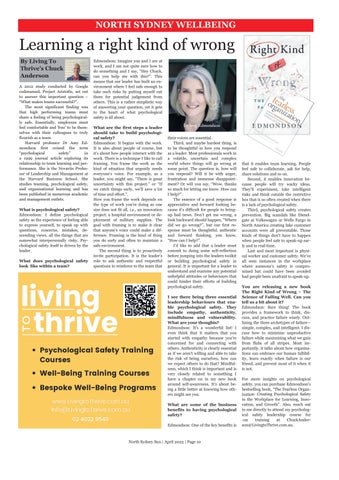
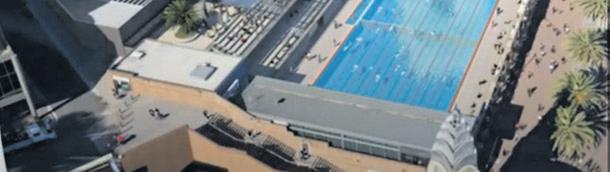
An ar st’s impression of the new pool
Mystery over North Sydney Pool’s 500 day re-opening delay
From page 2
years to partially fund the increased costs of the pool, according to the draft. This will see delays in projects such as the planned expansion of playing fields at Primrose Park.
The council report says: “while Councils have a role in providing infrastructure, undertaking large scale or complex infrastructure projects is not our core business. Entering separate design and construct contracts creates further complexity requiring high-level industry knowledge and experience to coordinate the process between design consultants, contractors and Council, and resolve issues as they arise.”
It also says that PWC noted “that the North Sydney Olympic Pool redevelopment is the largest project to be delivered by North Sydney Council in recent times and includes a mix of high-risk construction factors including heritage, archaeological, contaminated ground, high water table, brownfield and more.”
“Late identification of latent conditions on site led to rework, additional
scope and cost to the project. Access to undertake survey and testing across the full site was limited until the pool was closed,” PWC also found.
The estimated $25 million extra costs for the pool include allocations for consultants, contract works, works outside original scope such as fit outs and technology and costs associated with establishing operations for the pools, gym, creche, and kiosk. “This additional funding requirement should be considered as an additional contingency until a final forecast cost is estimated,” council officers state.
North Sydney Sun understands that the original plan was to tender out some of the commercial parts of the project such as the gym to private operators, who would have borne these costs. At some point, a decision was made to take this in-house, adding to Council costs.
Mayor Zoe Baker issued a letter to ratepayers this month, explaining the issues and promising transparency on their progress.
“PwC noted that a primary driver of decisions during the planning phase
was the desire to control the project budget. This resulted in decisions creating false economies such as removing the external project managers, deciding to proceed with separate design and construct contracts, and not allowing a contingency that took into consideration the risks relevant to the project,” she said in her letter.
“Costs such as the fit out of the gym and creche, required repairs to the Aqua Dining building and eastern stair tower were not included in the project, nor was sufficient funding for internal project management costs and consultancy,” she added.
Baker said: “I know the delayed completion date is incredibly disappointing and frustrating for regular swimmers and parents seeking a learn -to-swim class.”
“I can assure you that council’s finances are sound, and the additional cost can be managed without reducing service levels. I have visited the site twice this year and can see the steady progress that had been made between my visits. The council team is working closely with the contractors and will
Strongman breaks record at Luna Park Mall 88 opens in St Leonards
St Leonards’ retail options have improved with the opening of Mall 88 on March 23.
Located opposite the train station on the corners of Christie Street and Pacific Highway, the precinct is the most significant addition to the area in some time and is a key part of the suburbs vision surrounding the highlyanticipated Metro line.
Mall 88, advertised as a ‘cosmopolitan retail precinct’, will boast an extensive dining precinct comprising cafes, food and beverage premises with alfresco dining and a laneway eat street.
Alongside the ground level open air plaza, a new public library is being built with the space set to include a children’s reading area, study spaces and meeting rooms.
Anchoring the 8000 square metres of retail is supermarket giant Coles, accompanied by Vintage Cellars Liquor and Yaochii Asian Supermarket.
Locals won’t have to look far for a health and wellness fix either with the addition of St Leonards Family Medical Centre, Barberfield Hair Salon and Leonard Star Acupuncture.

Conveniently, 374 undercover parking spaces will be available for customers with two hours free parking alongside a spread of bike racks throughout levels B2-B6.
Six dedicated disabled parking spaces will be available from levels B2-B6 near or surrounding the elevators and/ or escalators.
The mixed-use development will also be home to approximately 637 luxury apartments and a 16,738 square metres A-Grade office tower.
A world record was broken at Luna Park: all in the name of charity.
Strongman Troy ConleyMagnusson pushed the iconic Luna Park Ferris Wheel one full rotation in 17 minutes on April 3, smashing the Guinness Book of Records benchmark of 30 minutes.
“This was a solid one and a world first, at first I was happy to move it and then to do all 24 [carriages] in nearly half the time Guinness set me as the benchmark was surreal,” Conley-Magnusson said. “I enjoy this stuff for it’s fun, it's the Little Wings that do the hard stuff.”
The record breaking feat was achieved in the name of the Pull for
Purpose organisation, a group of strongmen and strong women to ‘help make a positive difference in the world’ through ‘spectacle and showmanship’.
Conley-Magnusson founded the group in 2020 to ‘help raise money for Charities and those who need it most’. Pull for Purpose’s goal this year is to raise enough money for non-forprofit charity Little Wings to add another vehicle to their fleet providing free medical air and land transport to children with severe illness.
Little Wings CEO Clare Pearson said it is “people like Troy that help change the face of regional healthcare.”

do everything possible to keep to the revised schedule,” Baker added.
“This council cannot change the past or alter previous decisions. This council is taking responsibility for the project and is committed to sustainably managing the financial burden and delivering an exceptional experience for pool users. Please be patient a little longer - the pool you know and love will be back next year to serve our community for the next 80 years.”
The revamped pool plans will see existing 50m and 25m pools upgraded and art deco features maintained, including the harbourside wall, sundeck and heritage stair tower; a kids waterplay area with a splash pad and water spray feature; a new warm water pool suitable for gentle exercise and other programs; an expanded gym with harbour views as well as separate spin and exercise rooms.
There will also be a larger creche with private indoor and outdoor spaces; a new 970-person grandstand with permanent shade for sun-safe swimming carnivals and ramp access to pools and accessible change rooms.
“[They] help keep Little Wings in the air and on the road every single day,” she said.
“His huge heart, his commitment to supporting seriously ill children is inspiring and life-changing. He is by far our favourite Strongman!”
The donations from the feat will assist three families in regional Australia in caring for their seriously ill child.
North Sydney Sun | April 2023 | Page 2
Wilson’s victory margin surprised even her own party

From page 1
of 21.85% into a two-candidate preferred vote of 44.31%, versus 55.69% for Wilson. Wilson topped the primary vote in every single booth of North Shore. Conway’s strongest results were in Neutral Bay, McMahons Point, Kirribilli and Crows Nest.
Speaking soon after it became clear she had won, Wilson said: “A very exciting result for me, and it really just demonstrates that when you work very closely with the community and deliver outcomes and reflect their interests you can have a positive result,” she said.”
“I think one of the clearest outcomes in messages for us is I think Dominic Perrottet and Matt Kean worked incredibly hard as leaders of our party. They worked in unison to make sure that we were leading our country in the policies we delivered, particularly around actual climate change or renewables. And it shows that the Liberal Party can hold our heartland seats when we make sure we deliver good mainstream policies that make a difference across our community.”
Asked about a Climate 200 endorsed brochure circulating in the electorate that labelled her as ‘Duplicity Wilson’, she said: “My job as the member for North Shore has been one of working with my community, always being respectful of people and respectful of difference, listening and engaging.”
“And I don’t think that type of politics that was demonstrated in this campaign by other people is welcomed in our community. I think there is an expectation of respect and decency and listening and engaging.”
“So there may have been a blow back to that. But I actually think more than that, we’ve seen the recognition of the delivery we’ve had in our community and making sure that we deliver on the types of issues and policies and interests of a community like North Shore.”
She also had a final message: “And can I just say I really want to say that as a younger woman and as a mum of a two year old and a four year old, I just want to say I want to see more women like me … come into our parliament, mums can do it, we can do anything and we often have to do everything. So make sure that if you’re interested in politics, you sign up, you join up, you get involved. We want you, particularly in the Liberal Party. So I hope this is a clarion call for more people to get involved.”
Wilson’s strong result even surprised her own party insiders who had been bracing for a 5% to 10% fall in primary vote.
Rivals congratulated her. Labor’s Godfrey Santer said: “On behalf of North Shore Labor, I would like to warmly congratulate Felicity Wilson on her emphatic re-election in the seat of North Shore. Felicity has consistently worked hard to secure substantial upgrades to our local schools and facilities. We send her our sincere best wishes and hope for a successful further term in representing our community.”
The Greens’ James Mullan said: “I would like to congratulate Felicity Wilson MP on her re-election. She is a kind and hardworking person whom I wish nothing but the best for.”
Conway had a slightly more nuanced message for her supporters. She wrote: “The Liberal Party threw everything at us including having the Premier, the Treasurer and their most senior woman visit our electorate multiple times. They ran a scare campaign that a vote for an Independent was a vote for Labor and brought in a team of young supporters to aggressively advocate for just numbering one box. In diverting resources to sandbag North Shore, they held the seat but lost the State. We also faced various obstacles from third parties but we didn't allow these issues to derail our campaign.”
“Notwithstanding the challenges of optional pref-

erential voting and standing against a well-known sitting member, we were able to achieve a primary vote of 22% (two-party preferred 45%/55%), and a swing against the sitting member which makes the seat truly winnable next time.”
“The general swing to Labor across the State took some primary votes from us but the swing in North Shore was lower than the State-wide swing. And of course, even with Labor and Greens giving us their first preferences, the percentage of exhausted votes was very high,” Conway wrote.
For the record, Labor scored lifted its North
Shore vote from 12.35% in 2019 to 17.10% this time: a 4.75% swing. This was higher than the statewide 3.66% swing to Labor.
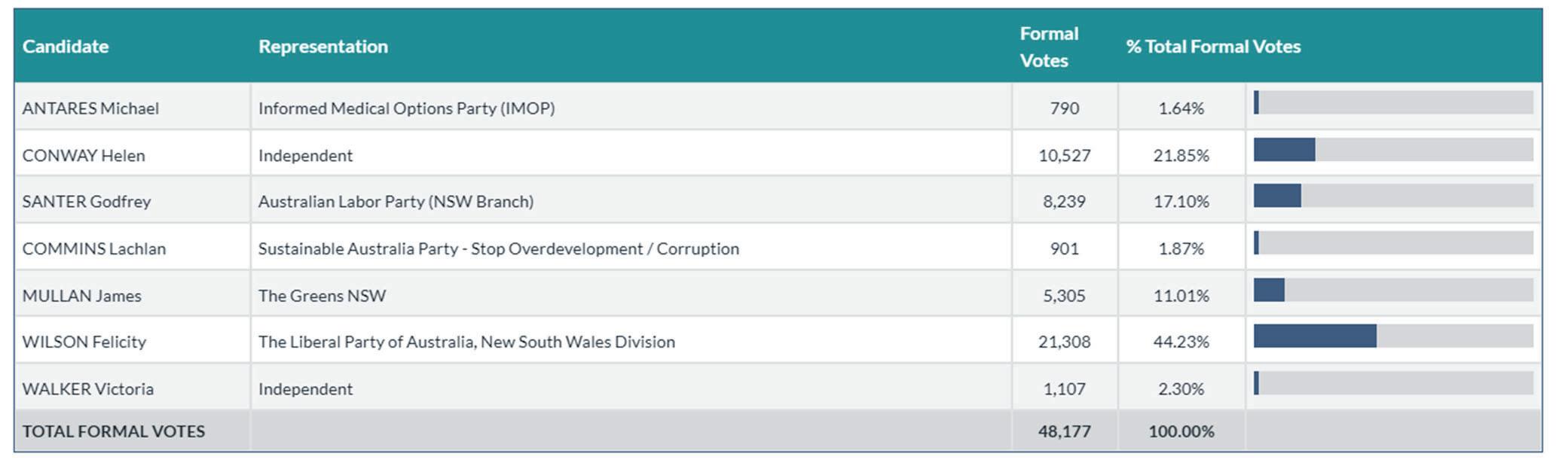
Labor candidate Santer is the serving deputy mayor of North Sydney Council and is now being viewed in some quarters as the unofficial point man for the new state government in the local area.
Although Santer polled around 5% less than Conway overall, he did beat her to run second to Wilson in several booths including ACU North Sydney, Anzac Park Public, Cammeraygal High, Neutral Bay Public and North Sydney Girls High.
North Sydney Sun | April 2023 | Page 3
The Sun Says…
The impending launch of an El Jannah’s outlet in Willoughby Rd, Crows Nest is more than just an opening of a new charcoal chicken shop.
It also represents a sociological event of seismic proportions.
Keen readers may recall the so -called Red Rooster Line, conceived by the editors of Honi Soit in 2016 and amplified by the demographer Bernard Salt.
“The formula is simple: sketch the points of all the Red Roosters in Sydney and you get a surprisingly neat indication of the border of Western Sydney,” Honi Soit said.
But as Honi Soit noted, the El Jannah line had even more relevance. “This line is perhaps more accurate than the Red Rooster line, which in itself is controversial for encompassing the airport and the Inner West suburb of Summer Hill.”
“El Jannah is at its furthest east in Bankstown, so offers a clearer geographical delineation,” Honi Soit noted at the time.
El Jannah’s push into the lower North Shore has stoked interest in terms of what it means for the presumed end of the demographic divides that define separate parts of Sydney.
The North Sydney Sun would note that this latest and welcome incursion happens in the context of another development: Crows Nest and St Leonards are becoming quite the place for late night carbs with a number of Middle Eastern and pizza places staying open way past 10pm to 12.30 and even 1.30am.
Copyright Decisive Publishing.
All rights reserved.
ACN 065 084 960
Responsibility for election
comment taken by G Lynch
Office address: Unit 704 6a Glen St Milsons Point NSW Australia 2061 Phone: 0415756208
URL: www.northsydneysun.com.au
Email for editorial: grahamelynch@northsydneysun.com.au
Founding editor and Decisive CEO: Grahame Lynch
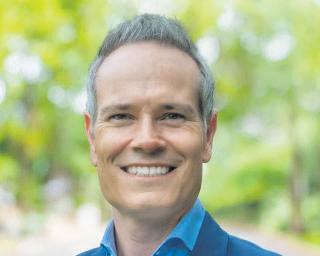
Associate publisher: James Mullan james@northsydneysun.com.au
Business Development: Amy Carswell amy@northsydneysun.com.au
Printer: Spotpress, 24-26 Lilian Fowler Place
Marrickville NSW 2204
Minimum of 15,000 copies circulated to homes and businesses in the North Shore electorate. Printer statement available on demand
A debate about open space needs to start from the basis of valid comparisons
By Grahame Lynch
North Sydney Mayor Zoe Baker used the Council’s latest quarterly newsletter to kickstart a debate about how to approach the issue of open space—or lack thereof—in the North Sydney municipality.
In what was a mostly thoughtful and sensitive article, she said “I am putting open space and density on the table as an urgent topic for discussion. I invite you to be part of the conversation so that Council can determine open space and financial priorities that we as a community can own and work towards together.”
Baker questioned the assumption that more density leads to positive urban vibrancy. “Unfortunately, no one mapped the line where the cost to our health and quality of life outweighed the benefits,” she wrote.
Baker said that the North Sydney LGA’s population density—at 6,150 people per square kilometre—ranked 3rd in Sydney behind Sydney City (8,358) and Waverley (7,424).
She went on to write: “Singapore and Hong Kong have similar densities to North Sydney (8358 and 7120) with much less open space per person (7.8 sqm and 2.8sqm). They are vibrant, creative cities. However, density without open space must change the way we live.”
Indeed, it would. But that’s not the case for North Sydney. Hong Kong and Singapore are effective island city states, requiring immigration clearance to pass borders. Hong Kong is 1,073 sq km in size, and 400 sq km of that is desginated country parks. Just 300sq km is built up. Ditto Singapore. It is 724 sq km in size, about 47% of which is considered to be public, green space.
It takes 50 minutes to traverse
Talk of the town
Hong Kong end to end. Within that reach is considerable relief from the 30-40,000 per sq km densities found on Kowloon and Hong Kong Island. Singapore can also be navigated end to end in around 45 minutes.
By contrast, the North Sydney LGA is just 11 square km in size.
It has 1.48 sq km of parks and open spaces within that area alone. It can be driven through inside eight minutes. The North Sydney LGA is a small enclave occupying less than 0.1% of the area of the entire greater Sydney area. Its boundaries are not a customs or immigration border.
Mosman to the immediate east has 3.5 sq km of bushland and parks. It takes around 15-20 minutes of travel to access a similar scale of bushland along Lane Cove River.
LGA residents are also minutes away from the parklands of Sydney City and the Eastern Suburbs as well as a 55 square kilometre harbour.
Sydney overall is 12,000 sq km in size—12 times the size of Hong Kong and 15 times Singapore—with open space constituting around 46% of the whole. That’s right. Sydney’s open space is five times greater than the entire land mass of Hong Kong or Singapore—both of which have larger populations. And contrary to perceptions, neither Hong Kong or Singapore are laggards on open space.
The World Cities Future Forum recently calculated the open space available in 40 of the world’s top cities as a percentage. Sydney ranked 4th, behind Oslo, Edinburgh and Singapore. Hong Kong ranked equal ninth. Melbourne ranked 36th.
Mayor Baker wants a “thoughtful and iterative conversation” about how “much open space we need and are prepared to pay for or perhaps, even to fight for.”
A good starting point would be to move past the assumed self-definition of North Sydney as some Antipodean incarnation of an Andorra or Gibraltar.
Coles wants to underground Grosvenor Lane parking
Coles has publicly revealed some information about its plans for the Woolworths site in Grosvenor Lane, Neutral Bay which it intends to redevelop into a Coles-branded supermarket.
The revelation comes in the form of a report from Council to the next meeting scheduled for 26 April.
According to the report, Coles, which owns the land currently occupied by Woolworths has advised that it is in the process of preparing a development application to be lodged under the current planning controls for a mixed-use residential/ commercial development.
“The development will seek to replace the existing supermarket and incorporate shop-top housing,” the report says. The DA will also seek to create an “at-grade” plaza by replac-
ing the current Grosvenor Lane carpark with an underground format as part of its redevelopment proposal.
The council report doesn’t say this but the Sun understands the plan calls for a residential development of five floors at the existing Woolworths site.
This is below the six storey threshold which has triggered acrimony from the bloc of six which controls the floor of council.
For example, this bloc opposes plans by Woolworths to build a 8-12 storey residential tower on its site in Rangers Rd. It also opposed a height extension for a Waters Rd residential development that would have provided $2 million in funds for a Grosvenor Lane plaza.
The council will consider a motion that grants Coles owner’s consent to lodge a development application for
the land described in its letter dated 20 March 2023 being parts of the Grosvenor Lane carpark, Cooper Lane, Waters Lane and Grosvenor Street. “Council notes that a consultative and collaborative design process will be required to be entered into for any future plaza at the Grosvenor Lane carpark site and Council notes that a formal negotiation process will need to be entered into to develop formal agreements for the delivery of a new plaza and associated arrangements for the delivery, access, ownership and long-term arrangements for public parking,” the motion states.
North Sydney Council has also foreshadowed the establishment of a Community Consultation Group to work with council on the redevelopment of Neutral Bay Town Centre last month.
North Sydney Sun | April 2023 | Page 4
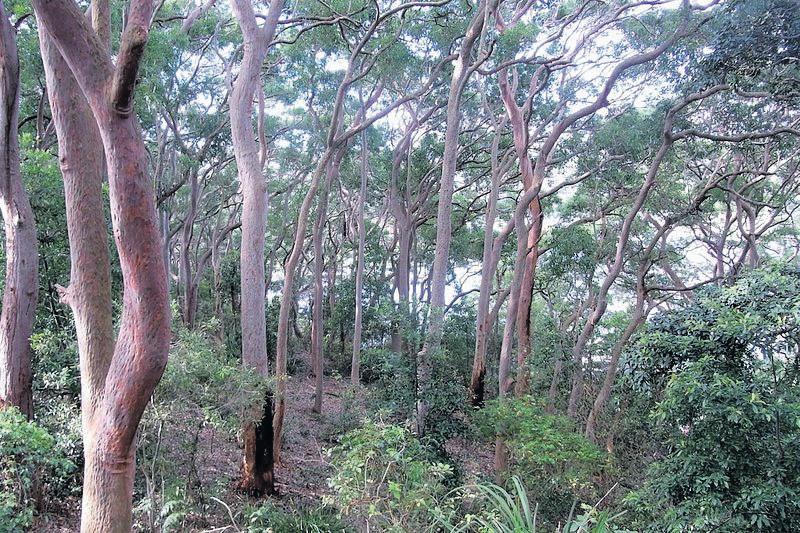
Bushland in North Sydney (Peter Woodward licensed under CC)
All roads lead to North Sydney… why that’s a big problem
The potential for the Northern Beaches to develop has been present in the minds of planners for a century or more. The failure, the concerns identified by the planners have simply not been addressed.
Moving people to and from the Northern Beaches has always been a challenge simply because Middle Harbour needed to be bridged.
* In 1915 Bradfield proposed a train line to Manly and on to Newport.
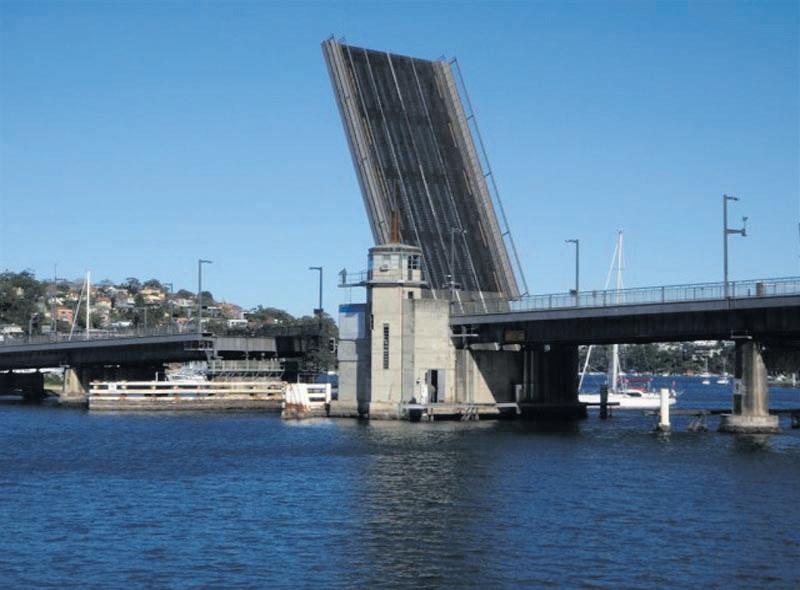
* In 1924 Manly Council decided not to wait for the train and built the first of the bridges across the Spit at Middle Harbour.
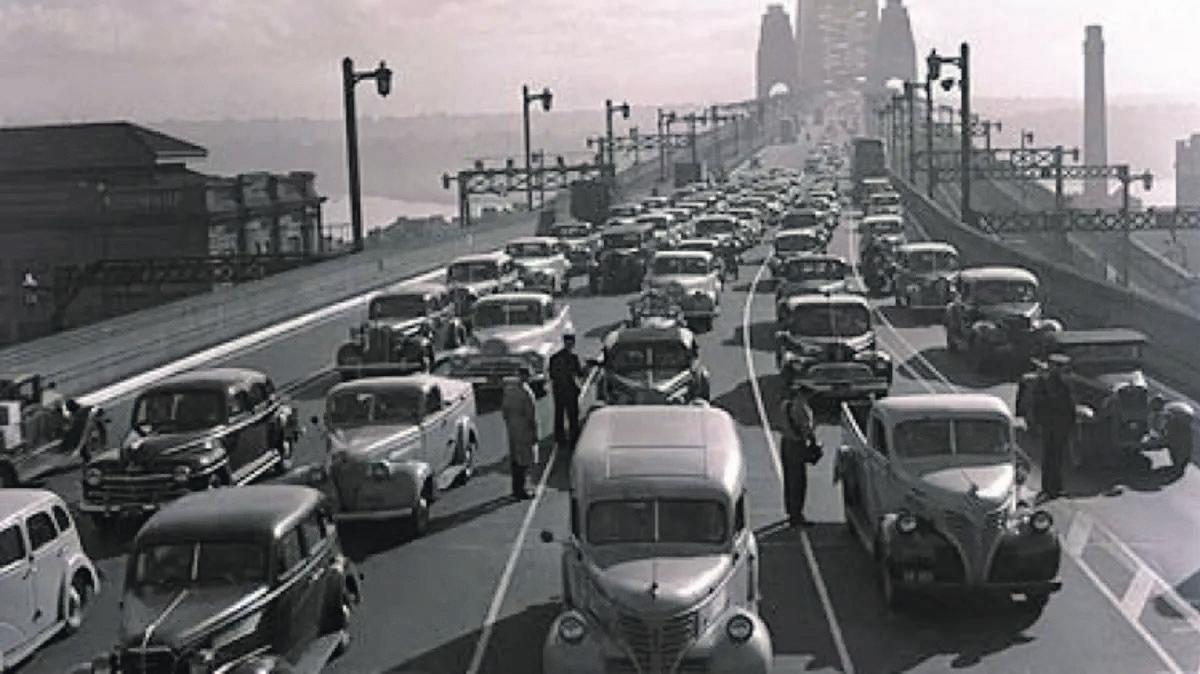
* In 1951 the County of Cumberland planners saw the growth potential and provided for a freeway from the Harbour Bridge through Castlecrag to Seaforth linking with the Wakehurst Parkway.
* In 1978 the first stage of the County of Cumberland freeway, the Warringah Freeway, between the Harbour Bridge to Chandos Str eet was opened – the next stage simply was not built (the Gore Hill freeway when added simply veered off to the Pacific Highway).
The Beaches’ Tunnel, now “abandoned”, was another attempt to connect through to Seaforth and, with it, an opportunity to limit the flow of traffic over the Spit Bridge and on to Military Road.
Now we still don’t have Bradfield’s train line, so it’s left to Spit Bridge to funnel around 69,500 vehicles and 34,000 bus passengers each day into and out of North Sydney. That is the data from last year as Transport for New South Wales has removed the traffic counters form Spit Bridge – that’s one way of solving the problem.
With development on the Northern Beaches and their hinterlands going ahead at a staggering pace, traffic volumes over Spit Bridge will increase and that has huge ramifications for North Sydney.
As Military Road fails to cope, the immediate challenge will be to protect our suburban streets that run parallel to Military R oad from becoming “rat runs” – think about:
* Belgrave and Macpherson streets and Ourimbah Road and
* Rangers Road through to Kurraba Road.
An added problem – Military Road and Pacific Highway traffic will have to circle North Sydney’s CBD as it makes its way onto and from the Warringah freeway –just think about the congestion that will result.
The longer-term challenge is to define and adopt policies that protect against gridlocked traffic – here North Sydney Council seems a bit schizophrenic. In the:
* East, it’s favouring cars over pedestrians, it decided to take the Young Street Plaza at Neutral Bay away from pedestrians and give it over to cars and is looking at plans that add more parking at Neutral Bay “village.”
* West it’s looking to restrict the number of parking spaces in new developments in some areas to, in broad terms, one space for every 4 apartments. Inevitably this will lead to on-street parking becoming relatively more scarce and isolating people by discouraging visitors.
Perhaps we should look to the City of Sydney for inspiration given its tremendous achievements in reintroducing pedestrians to the city – for starters think George (most traffic removed and wonderful lighting), Loftus Lane (a mosaic of caf es) and Circular Quay.
Tell me your thoughts on how best to deal with the traffic congestion and make our streets more welcoming to people on foot – w rite to me at imutton@crafers.com.
Ian Mutton,
councillor for Cammeraygal Ward, North Sydney Council
Adver sement Cr Ian Mu on
NumberWorks’nWords opens in North Sydney
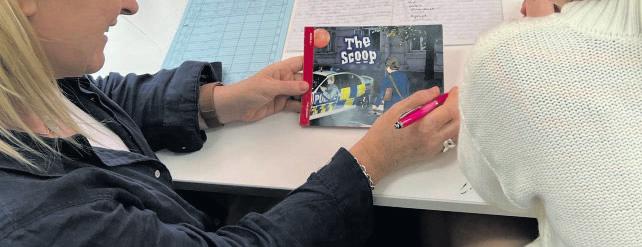
NumberWorks’nWords has opened a brand new centre at 26 Ridge Street North Sydney, owned by experienced NumberWorks’nWords franchisee, Eimear Hughes.
If you are interested in learning more about where your child is at with their learning, contact Eimear and the team at NumberWorks’nWords North Sydney for a free assessment today!

We spoke to Eimear about the launch.
Can you tell us about your background and how you came to start the company?
Before moving to Sydney in 2007, I was a teacher and senior manager of a large Primary School in Belfast for 13 years. In 2009, I took over NumberWorks’nWords Mosman. Since then, I have seen thousands of students gain confidence in themselves while they learn and develop a love of learning. It was my goal to apply the same passion, dedication and expertise to the new North Sydney centre, which is located near a number of local schools in the area. Joining me are the two managers of the North Sydney centre, Nick Gardiner and Jess Linney, who both spent many years as tutors at the Mosman centre.
How does the free assessment work?
We offer free assessments in maths and English which identify gaps and weaknesses. The maths assessments cover all aspects of the curriculum, while the English assessment addresses the core areas of reading, compre-
hension, spelling and writing. With this information, in conjunction with the parents and child, we develop a personalised learning programme to meet each child’s learning needs, which can often get overlooked in the classroom. With a small tutor to pupil ratio, our in-centre tuition is customised to each child, and delivered by trained tutors who are experts in their subjects. This personalised approach to tuition caters to students of all abilities, and complements the work that students do at school. Our tutors also place a priority on getting to know the whole students, including their hobbies and interests, and provide a safe and welcoming learning environment for all students.
What are the advantages of going with an established tutoring company over a freelance private tutor?
Using a combination of our bespoke tutoring software and experienced and engaging tutors, NumberWorks’nWords incorporates traditional learning methods into teaching practices. Maths and English tutoring with NumberWorks’nWords is beneficial for students who need extra support or are falling behind at school, as well as those students who require extension work that challenges them. We find that one-on-one private tutoring can often make the student feel more pressure and can make them afraid to get the answer wrong. With our small pupil-to-tutor ratio, we provide a safe learning environment where the tutor and the student come
to the answer together, with a focus on mental strategies, rather than just getting the answer correct. We find that this type of tuition creates more independent learners with a deeper understanding of mathematical concepts. Our tutors also go through a thorough hiring process, are trained by me and my experienced managers, and all have valid Working with Children Checks, so you know your child is in safe and capable hands.
How have you been getting involved in the North Sydney local community? We love to give back to the local community and have donated a free term of tuition to many local charities, in-
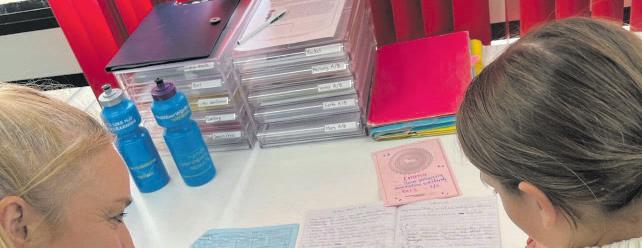
cluding Mary’s House, a refuge for women and their children escaping domestic abuse. We also regularly donate free term vouchers to local primary schools and sports clubs, including Neutral Bay Public School, Middle Harbour Public School and Collaroy Plateau Cricket Club. If you are organising a fundraiser and would like to offer a NumberWorks’nWords free term voucher as a prize, please get in touch with us!
NumberWorks’nWords
North Sydney Suite 802/803, 26 Ridge St, North Sydney, 2060 Phone: (02) 9698 9042 northsydney@numberworks.com
North Sydney Sun | April 2023 | Page 6
Adver sement
Eimear Hughes
Sydney North Health Network helps the homeless with free medicals
By Amy Carswell
Sydney North Health Network is providing free medical services to the homeless to meet the growing demand for healthcare for vulnerable people in the northern Sydney region.
The primary health network has announced that it is continuing to partner with Street Side Medics, a notfor-profit organisation providing free healthcare to vulnerable populations. Sydney North Health Network will continue to fund a weekly Street Side Medics mobile health clinic in Manly along with the weekly supplementary clinic in Hornsby it funded this year.
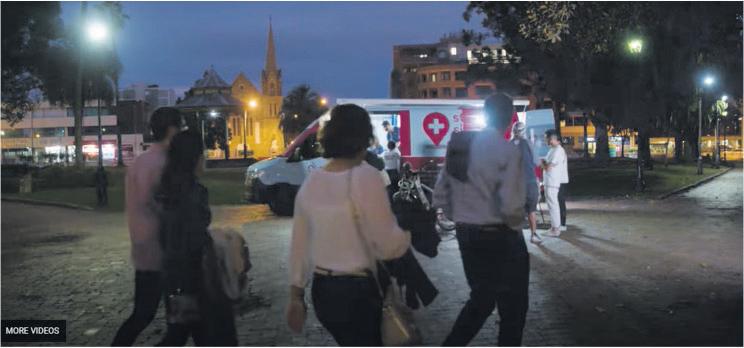
The volunteer medical team also alternate between on-site health clinics for residents at Ebbs House in Brookvale and a northside women’s shelter.
The Street Side Medics mobile clinics make primary healthcare accessible to approximately 1250 homeless people annually in the northern Sydney region by offering free-of-charge, walk -in healthcare appointments.
Clinically qualified volunteers work
from well-equipped mobile medical practice vans, helping vulnerable homeless people obtain comprehensive primary health care services at regular General Practices standards.
Sydney North Health Network's current Chief Executive Officer, Lynelle Hales, said: “Street Side Medics is delivering a comprehensive health service to those vulnerable people in our region, unable to access mainstream primary health care.
Sydney North Health Network supports this important, communitybased program to allow more people to access local healthcare regardless of their circumstances.”
Streetside Medics CEO David Ballhausen welcomed the continued support stating, “We greatly appreciate the ongoing financial support of SNHN, as well as the close and cooperative working relationship we have with its team, which strengthens and sustains our capacity to deliver this service to such a vulnerable population across northern Sydney.”
Meanwhile, Hales is departing as
CEO with Kevin Barrow set to replace her, commencing Monday, 29th May.
Barrow is currently the CEO of the Butterfly Foundation, the national charity for all Australians impacted by eating disorders and body image issues. He brings more than 20 years of healthcare industry experience across multiple sectors.
Barrow says: “I am very excited to be taking up this role and building on the work of Lynelle and the team.”
“I have always believed that to
bring about significant change in healthcare in Australia, we need to embrace the concept of truly integrated healthcare to improve services in relation to access, quality, user satisfaction and efficiency.”
He added “This can only be achieved through sector-wide collaboration. I look forward to engaging with primary health care providers and other key stakeholders in our community to understand what opportunities exist to achieve better health outcomes.”
Japanese style Cre Asion opens its doors in Eden St, North Sydney
Cozy Japanese cafe Cre Asion has opened its doors in North Sydney.
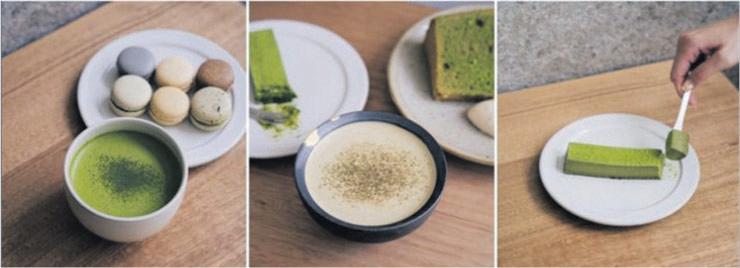
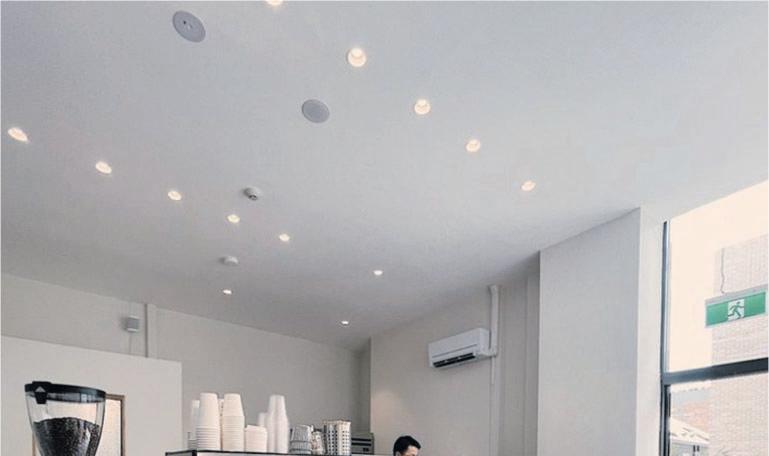
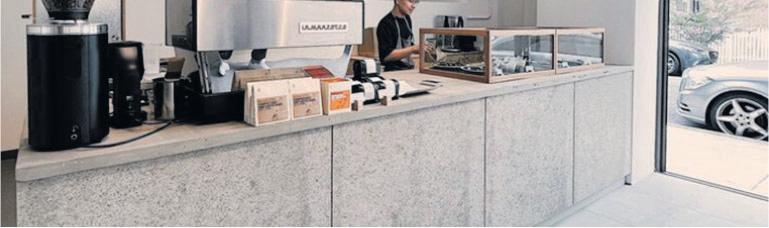
Described as ‘a place for those who appreciate a small, creative space with delicious food’, the cafe offers a range of baked goods, such as freshly made breads, cakes, pastries, and sandwiches.
Located at 18 Eden Street, the minimalist design and food specialist opened on March 21 and is open Tuesday to Friday, 8am to 3pm and on weekends 8am to 2pm.
Their signature macarons are available in both traditional and Japaneseinspired flavours, including dark chocolate, black sesame, lychee and coconut, vanilla and green tea.
The cafe also boasts mouth-watering culinary fusions of sourdough, Japanese cookies, Swiss rolls and tarts - and for those who aren’t big on sweet treats, Cre Asion also has cha lattes available in both matcha or hoji cha flavours. Owner and Chef Yu Sasaki started Cre Asion in 2011 and recently opened both the North Sydney cafe and a Pyrmont store in early February.
North Sydney Sun | April 2023 | Page 7
Proposed development at 88 Walker St
Newlands (artist impression)
Saturday 22nd April, 8PM
Kath and Kim Drag Bingo
Venue: Norths Cammeray
It’s noice, it’s different, it’s unusual! Hosted by drag queens Prada Clutch and Conchita Grande, $1000 cash and prizes are up for grabs in this fun and foxy bingo night. The night will include five rounds of bingo plus live Kath and Kim shows. Come dressed to impress as your favourite character from the iconic TV series for a chance to win the best-dressed prize with doors opening at 7:15pm. Tickets for the event are $35 (people under 18 are not permitted to attend).
Friday 21st April, 8PM
Shackleton - The Greatest Story of Survival
Venue: Hayden Orpheum
The final ever encore screening of Shackleton - The Greatest Story on Survival is showing at the Orpheum. Telling the story of polar explorer Sir Ernest Shackleton and the crew of the Endurance is explorer and adventurer
Tim Jarvis, the only man to have ever repeated their journey. Following the beset crew’s footsteps, Tim reveals the enduring legacy of Shackleton’s crisis leadership in impossible odds. Tickets for the 92 min movie are $25 for adults, $20 for concessions.
Tuesday 25th April, 12PM
Anzac Day
Venue: Norths Cammeray
Two-up from 12-4
Live music from 4pm
Thursday 27th April, 7:30PM
Opera in the Pub
Venue: The Union Hotel, North Sydney
A unique event experience brings some of opera’s favourites to life with Opera in the Pub. Partnering with The Union Hotel, the 90-minute fully costumed show will perform arias and ensembles from the world’s most adored operas such as Turandot, Rigoletto, La Boheme, Don Giovanni, Lakmé, Carmen and more. The show will also be wittily narrated to give context throughout the show for those who may be unfamiliar. Food and drinks will be available for separate purchase, and meals ordered on arrival will be served during the interval. Tickets are $45, and the show will commence at 7:30pm upstairs in The Pacific room.

Thursday 27th April, 3PM
Youth Week Colour Fest
Venue: St Leonards Park, Fig Tree Lane
North Sydney Council is celebrating Youth Week with a two hour outdoor colour run and obstacle course. People aged 12-20 are encouraged to wear their whitest clothes and prepare to get multi-coloured. Alongside the Holi Colour Powder and litres of slime, a DJ will be at the free event to keep the
WHAT’S ON IN NORTH SYDNEY
North Sydney launches Sustainability
Festival
Kicking off on April 24th, the inaugural North Sydney Living Futures Sustainability Festival aims to help inspire a more sustainable future in the district.
The free, week-long event run by North Sydney Council will bring a thought-provoking speaker series until Sunday, April 30th when a celebration at the Coal Loader will cap off the festivities.
Mayor Zoe Baker said: “Sustainability is probably the most important value and action that North Sydney Council has. I see this festival as the next step.”
“It’ll be ideas, music, culture, food, every aspect of life in the most sustainable and inspirational way that we can”
With speakers discussing diverse topics including ‘The future of food’, ‘Youth leading youth’, ‘Moving towards net zero’, ‘Sustainable style’, ‘Energy-efficient kitchens’ and ‘The built environment’, the festival aims to tackle curly sustainability questions facing individuals and businesses.
The festival will culminate in a day of activities for the whole family at the Coal Loader, Waverton on Sunday 30th April from 10 am to 4 pm. The iconic harbourside site will see stage entertainment, stalls, workshops, kids’ activities and guided walks and tours on offer.
Community members are encouraged to meet with the festival’s ambassadors and MCs: TV presenter Costa Georgiadis, Olympian and youth oceans sustainability champion Sam Fricker, and Indigenous educator and performer Charleen Aguiar Dos Santos.
good vibes going until the run concludes at 5pm.
Saturday 29th April, 7:30PM
A Star is Born - Live in Concert
Venue: Hayden Orpheum
Cult classic A Star is Born is back, except this time accompanied by a five piece band. Lady Gaga and Bradley Cooper tell the eight-time Oscarnominated story of seasoned musician Jackson Maine discovering and falling in love with struggling artist Ally. Together, they bring Ally’s dream to life as she enters the spotlight, only to face their toughest obstacle yet - Jackson’s ongoing battle with his internal demons. Be enthralled in this story of
fame, love and struggle with the vocals of Owen Campbell, Isabella Wong and Ally Friendship alongside the melodies of guitar, drums, bass and piano. The tickets are $49 and include a glass of sparkling on arrival, with doors opening at 7pm.
Friday 5th May, 7:30PM
CLYDE’S by Lynn Nottage
Venue: Ensemble Theatre
The Ensemble Theatre presents the Australian premiere of this Tony Award nominated 2021 Broadway comedy CLYDE'S. Two-time Pulitzer Prize winner (for RUINED and SWEAT) Lynn Nottage brings together wit, flavourful characters and sur-
prises set inside Clyde’s truck stop diner. Running from May 5 till May 24, tickets for the show range from $43 - $80.
Saturday 6th May, 7:30PM
Lost in Music - One Night at the Disco Venue: Big Top Luna Park
Head down to the Big Top for a night of disco mayhem! This upbeat show boasts a live band, talented cast and will celebrate some of the greatest artists of the 70s, such as Donna Summer, Gloria Gaynor, Earth, Wind and Fire, Sister Sledge and Chic. With doors opening at 6:30, come dressed to impress to get Lost in Music.
North Sydney Sun |April 2023 | Page 8
Artists impression of the Victoria Cross development
Places to go this Autumn in North Sydney
By Hannah Wilcox
Blues Point Bookshop
131 Blues Point Rd
Since opening its doors in 1996, the Blues Point Bookshop quickly became ‘the centre and hub of a very diverse community’.
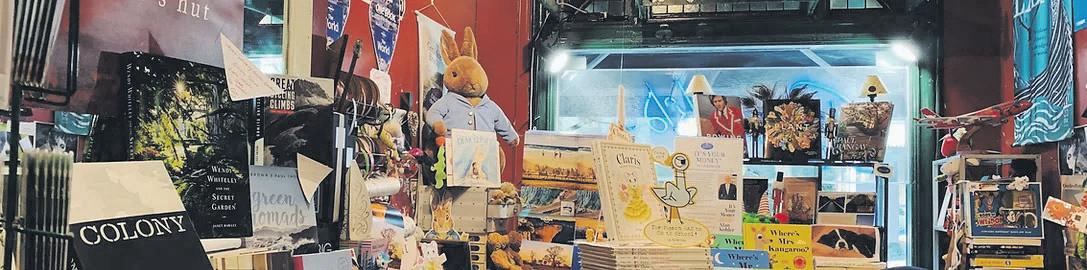
The independent bookshop, tucked away in an old terrace house on Blues Point Road, houses a trove of classic, non-fiction, fiction and childrens books. Owner Helen Baxter even leaves friendly notes and recommendations around the store for budding readers.
She also prefers to face her books cover-out to make it look more like an art gallery. Decked out like a classic European bookseller, the store has homely Persian rugs and a snug reading corner to escape into the world of words for a while.
In recent years the McMahon’s Point institution has become a bit of a tourist attraction, with a tour guide telling Ms Baxter her store looks a bit like The Shop Around The Corner in the ’90s romcom, You’ve Got Mail.
Blues Point Bookshop also runs regular author event programs, with the likes of Wendy Whiteley, Craig Silvey and Wendy McCarthy amongst thousands participating in meet and greets over the past 22 years.
The Antique Bookshop
and Curios Crows Nest
Lvl 1, 328 Pacific Highway
Peter Tinslay established The Antique Bookshop and Curios in 1976 and has continued to ‘delight customers with wonderful rare books’ ever since. The bookshop, on Pacific Highway in Crows Nest, is stocked full of old, fine, rare and out-of-print novels from all corners of the globe.
The store is a part of the International League Antiquarian Booksellers and has continued to appeal to loyal customers from all over Australia and the world for almost 50 years.
Each year, owners Peter and Sean also exhibit at the Sydney Rare Book Fair with a hand-picked selection of unique books for those with a passion for antiquity.
Last year some of the special items displayed at the fair included: a good collection of finely leather-bound books, a large number of books with signatures or inscriptions, many volumes on printing, typography, lettering and books about books, various editions of Izaak Walton's "Complete Angler", including the rare set illustrated with 54 photographic plates by Emerson and Blankhart and stunning illustrated books with illustrations by Eric Gill, Edmund Dulac, Robert Gibbings, Rayner Hoff, Pierce Egan and others.
Each month the owners put together a catalogue of novels under a varie-
ty of different genres and subheadings, including specially chosen books of the month.
The Antique Bookshop is a snug store tucked away on the main street. Unbeknownst to many, behind the big green signage on the wall is a trove of dark wooden shelves, old-fashioned chairs, an abundance of natural light as well as the opportunity to hold a piece of history in your hands.
May Gibbs Nutcote
5 Wallaringa Ave
The harbourside home of renowned children's author and illustrator May Gibbs is a museum, gift shop and cafe in remembrance of Gibbs and her loveable characters.
Nutcote was the fondly-coined name for the Neutral Bay property, which was designed for Gibbs and her husband James Ossili Kelly in 1924. Built on the shores of Sydney Harbour, it was to have ‘compactness, convenience and charm’ and was completed in 1925.
A carefully maintained example of Spanish mission architecture, the homestead is filled with cosy midcentury furniture and littered with trinkets.
Following Gibbs’ death in 1969, the author had left her home to UNICEFwhich was unable to hold property. Concerned family and friends in the late 80’s formed a nationwide campaign to ‘Save Nutcote for the Nation’, and the May Gibbs Foundation was successful in saving the property which had remained largely unaltered due to conservation orders.
In 1990, North Sydney Municipal Council purchased Nutcote for $2.86 million before renting it back to the foundation to restore it to its original 20s/30s state based on old photographs and diary entries; Nutcote opened to the public four years later.
Open Wednesday to Sunday 11am3pm, the recognisable characters of Snugglepot and Cuddlepie can be found in watercolours, postcards and prints scattered throughout the minimuseum.
In November, the foundation hosts the annual Gumnut Fair which includes Christmas gift shopping, cake, lemonade and garden stalls, Devonshire tea, sausage sizzle, face painting, craft and a May Gibbs raffle.
Visitors are able to take a bookmark on their way out to remember
their special day as Gibbs bequeathed the copyright from her characters and stories to disability charities.
Traffic Jam Galleries
41 Military Rd
Now here’s a traffic jam you’d want to get stuck in!
With a philosophy of ‘appreciating and acquiring contemporary art, Director Rebecca Pierce opened Traffic Jam Galleries in 2011 in order to bring new, fresh, dynamic and highly desirable pieces to Sydney.
The Gallery now represents over 45 Australian and International contemporary arts practitioners, with the likes of Paul Trefry, Miranda Summers and Megan Barrass regularly displaying.
Located at 41 Military Road, Neu-
tral Bay, works are presented through a mix-up of exhibitions, initiatives, art fairs and digital platforms as well as offering dinners, talks and pop-up shows. The space was previously used as a busy call centre but now has been purposefully converted back to bare concrete and had areas of render removed, with the 3.2m ceilings and all utilities exposed.
A mixture of two and threedimensional works are displayed throughout the year, with up to ten major exhibitions curated.
The ideas and goals behind Traffic Jam Galleries come to the forefront in their annual ‘untitled’ exhibition, which presents the works of up to 14 artists not currently represented by the gallery.
Where to find a copy of the Sun
Neutral Bay Community Centre
190-192 Military Road, Neutral Bay
Kirribilli Neighbourhood Centre 16-18 Fitzroy St
Nimba Bakery 4 Ennis Rd, Milsons Point
James Milson Village 4 Clark Rd, North Sydney
Kirribilli Hotel 35-37 Broughton St, Milsons Point
The Flying Bear 76 McDougall St, Kirribilli
Altitude Cafe Shop 3/48 Alfred St S, Milsons Point
Rustic Charm Cafe 2/102 Alfred St S, Milsons Point
Latitude Cafe 55 Lavender St, Milsons Point
Kirribilli Club 11 Harbourview Cres, Lavender Bay
Blues Point Hotel 116 Blues Point Rd, McMahons Point
Waverton Community Bookshelf 94A Bay Rd, Waverton
1st Sipzz Cafe 157 Walker St, North Sydney
North Sydney Council Chambers 200 Miller St
Stanton Library 234 Miller St, North Sydney
North Sydney Community Centre 220 Miller St
Crows Nest Community Centre 2 Ernest Pl, Crows Nest
North Sydney Indoor Sport Centre 36 Hume St, Crows Nest
Bean Drinking Shop 1/13 Ernest Pl, Crows Nest
Fresh Crows Nest Cafe 13 Ernest St, Crows Nest
Woolworths Crows Nest 10 Falcon St, Crows Nest
Galleria Cafe 66 Pacific Hwy, St Leonards
Norths Cammeray 12 Abbott St, Cammeray
Orpheum Theatre 380 Military Rd, Cremorne
Cremorne Paradise SP Cafe 7/332 Military Rd
Bridgepoint Shopping Centre 1/3 Brady St. Mosman
Mosman Library 605 Military Rd
Mosman Council Chambers 573 Military Rd
North Sydney Sun | April 2023 | Page 9
Learning a right kind of wrong
By Living To Thrive’s Chuck Anderson

A 2012 study conducted by Google codenamed, Project Aristotle, set out to answer this important question –“What makes teams successful?”.
The most significant finding was that high performing teams must share a feeling of being psychologically safe. Essentially, employees must feel comfortable and 'free' to be themselves with their colleagues to truly flourish as a team.
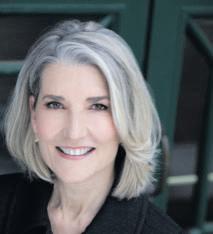
Harvard professor Dr Amy Edmondson first coined the term “psychological safety” in a 1999 journal article exploring its relationship to team learning and performance. She is the Novartis Professor of Leadership and Management at the Harvard Business School. She studies teaming, psychological safety, and organisational learning and has been published in numerous academic and management outlets.
What is psychological safety?
Edmondson: I define psychological safety as the experience of feeling able to express yourself, to speak up with questions, concerns, mistakes, descending views, all the things that are somewhat interpersonally risky. Psychological safety itself is driven by the leader.

What does psychological safety look like within a team?

Edmondson: Imagine you and I are at work, and I am not quite sure how to do something and I say, “Hey Chuck, can you help me with this?”. This means that our leader has built an environment where I feel safe enough to take such risks by putting myself out there for potential judgement from others. This is a rather simplistic way of answering your question, yet it gets to the heart of what psychological safety is all about.
What are the first steps a leader should take to build psychological safety?
Edmondson: It begins with the work. It is also about people of course, but it's about how people interact with the work. There is a technique I like to call framing. You frame the work as the kind of situation that urgently needs everyone’s voice. For example, as a leader, you might say, “There is great uncertainty with this project.” or “If we catch things early, we’ll save a lot of time and effort.”.
How you frame the work depends on the type of work you're doing as one size does not fit all, i.e., an innovation project, a hospital environment or deployment of military supplies. The goal with framing is to make it clear that anyone's voice could make a difference. Framing is the kind of thing you do early and often to maintain a safe environment.
The second thing is to proactively invite participation. It is the leader’s role to ask authentic and respectful questions to reinforce to the team that
their voices are essential.
Third, and maybe hardest thing, is to be thoughtful in how you respond as a leader. Most professionals work in a volatile, uncertain and complex world where things will go wrong at some point. The question is, how will you respond? Will it be with anger, frustration and immense disappointment? Or will you say, “Wow, thanks so much for letting me know. How can I help?”.
The essence of a good response is appreciative and forward looking because it's difficult for people to bringup bad news. Don’t get me wrong, a look backward should happen, “Where did we go wrong?”, but our first response must be thoughtful, authentic and forward thinking, you know, “How can I help?”.
I’d like to add that a leader must commit to doing some self-reflection before jumping into the leaders toolkit or building psychological safety in general. It is important for a leader to understand and examine any potential unhelpful attitudes or behaviours that could hinder their efforts of building psychological safety.
I see there being three essential leadership behaviours that enable psychological safety. They include empathy, authenticity, mindfulness and vulnerability. What are your thoughts?
Edmondson: It's a wonderful list! I even think that it matters that you started with empathy because you’re concerned for and connecting with others. Authenticity is clearly essential as if we aren't willing and able to take the risk of being ourselves, how can we expect others to do that? Mindfulness, which I think is important and is very closely related to something I have a chapter on in my new book around self-awareness. It’s about being a little better at knowing how others might see you.
What are some of the business benefits to having psychological safety?
Edmondson: One of the key benefits is
that it enables team learning. People feel safe to collaborate, ask for help, share solutions and so on.

Second, it enables innovation because people will try wacky ideas. They'll experiment, take intelligent risks and think outside the restrictive box that is so often created when there is a lack of psychological safety.
Third, psychological safety creates prevention. Big scandals like Dieselgate at Volkswagen or Wells Fargo in North America creating fake customer accounts were all preventable. Those kinds of things don't have to happen when people feel safe to speak-up early and in real-time.
Last and most important is physical worker and customer safety. We’ve all seen instances in the workplace where someone’s safety is compromised but could have been avoided had people been unafraid to speak-up.
You are releasing a new book The Right Kind of Wrong – The Science of Failing Well. Can you tell us a bit about it?
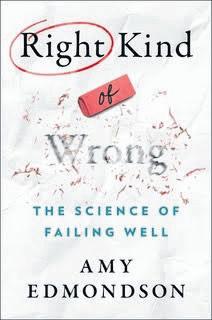
Edmondson: Sure thing! The book provides a framework to think, discuss, and practice failure wisely. Outlining the three archetypes of failure— simple, complex, and intelligent. I discuss how to minimize unproductive failure while maximizing what we gain from flubs of all stripes. Most importantly, it talks about how organisations can embrace our human fallibility, learn exactly when failure is our friend, and prevent most of it when it is not.
For more insights on psychological safety, you can purchase Edmondson’s bestselling book, “The Fearless Organization: Creating Psychological Safety in the Workplace for Learning, Innovation, and Growth”. Also, reach out to me directly to attend my psychological safety leadership course for -on training at ChuckAnderson@LivingtoThrive.com.au.
North Sydney Sun | April 2023 | Page 10
NORTH SYDNEY WELLBEING
Dr Amy Edmondson
AROUND THE GROUNDS
Bears Women crowned back to back minor premiers
By James Mullan
After winning last season's Minor Premiership with 7 wins and 1 loss, the North Sydney Bears NSW Women’s Premiership side have done it again!
The Bears set the tone from the start, winning their first three games mainly thanks to the scintillating form of Jakiya Whitfeld and Rikeya Horne who combined for 11 tries in these games. In round 5 and 6 the squad was brought back down to earth with two 10 point losses to CanterburyBankstown and Mounties.
It didn’t take long to return to form with a convincing 12-32 round 7 win over Illawarra. But perhaps the sweetest victory of the season came the following week with a 50-4 drubbing of Wests, the team that knocked the Bears out of the finals last season. NSW representative and 2022 Player of the Year, Kirra Dibb played an excellent game scoring two tries as well as booting 7 conversions.
In the final 3 rounds of the regular season the Minor Premiership was wrapped up with dominant victories over St George, Central Coast and a 70 -0 drubbing of South Sydney.


That final game was the squad's first game at North Sydney Oval with Jessica Sergis keeping Norths’ fans cheering as she crossed for 3 tries while Dibb added 30 points from 2 tries and 11 conversions. With only two losses in the season, the Bears will be confident heading into
the finals. However, the ghosts of last year will be preying on the minds of the team who will be determined to go all the way this time.
Meanwhile the North Sydney Bears men’s NSW Cup recently played their first game of the season at Bear Park hosting the South Sydney Rabbitohs on Sunday 16th of April. It was perfect conditions for footy, dry and sunny, as the NSW Cup side dismantled the Bunnies 40-14 thanks to a double from centre Junior Pauga and tries from Paul Momirovski, Sitili Tupouninua, Regan Hughes, Ben Stevanovic and Jesse Marchke who also landed 6/7 conversions. Marchke’s halves combination with new signings Zach DockerClay and Ben Stafanovic has proved to be crucial to their success in attack.
Docker-Clay has played 8 seasons of NSW Cup, most recently with the Bulldogs, and is currently second in the competition for line engagements. The 23 year old Stevanovic has found his feet with Norths after playing for both the Sea Eagles and Wests last season.
Meanwhile, Marschke is playing in his 3rd season in North Sydney, stepping up as usual by registering 60 points this year to go with 7 line breaks.
The NSW Cup squad started the season with a narrow 6 points loss to reigning premiers Penrith but quickly bounced back to defeat[extra space] Canberra, New Zealand, Wests
and the Sydney Roosters.
Interestingly, this is the final year of the feeder arrangement between Norths’ and the Roosters NRL team, meaning the Roosters have reserve grade talent in both squads this season. Now after 6 rounds away from North Sydney Oval the Bears will enjoy a string of home games throughout
late April and may including match ups with Newcastle (23 APR), New Zealand (6 MAY) and CanterburyBankstown (21 MAY).
Currently the Bears sit just outside the top 4 on the ladder but will be confident in the fact they have already beaten many of the teams just ahead and below them.
Bears booming in home opening weekend
By James Mullan
After starting the NBL1 East season with four away games the Norths Bears returned to the North Sydney Indoor Sports Centre with a bang, winning three out of their four games last weekend.
A crowd of 200 packed into the Bear Cave for the official home opener against local derby rivals the ManlyWarringah Sea Eagles.
In the round 1 this season the women’s side fell to Manly 70-55 yet the men triumphed 87-71, led by star guard Brennan Rymer’s 25 points. Now the sides were set to rematch on this side of the Spit Bridge.
The Bears’ women came into the night in red hot form having beaten Bankstown, Maitland and the undefeated BA Centre of Excellence.
This night unfortunately they couldn't keep the streak alive, losing in a heart breaking 70-73 contest. Em Simons stood out with 23 points and is averaging 16 points per game to start the season.
The men were up next, dismantling a short-handed Sea Eagles side, 78-55. Leading the charge was new signing Lewis Holey who pulled down an in-
credible 21 rebounds.
The bruising big has returned to his junior club after a successful USA college stint at St Francis Illinois, where he holds the record for most rebounds in that team's history. The leading scorer against Manly with 24 points was Junior Madut; Norths’ marquee signing for the 2023 season. Madut, originally a Blacktown junior, had played college basketball in the US for Southern Florida and Hawaii before being signed by the NBL’s South East Melbourne Phoenix.
The shooting guard is leading the league in scoring averaging 30 points per game.
It was on the Saturday, however, where Madut would make a statement to the Australian basketball world dropping a record breaking 50 points against Penrith.



This is the highest ever individual score in NBL1 East history. The 113-62 thumping of the Panthers also saw captain Mike Golding record a triple double with 11 points, 12 rebounds and 11 assists. Holey chipped in an amazing 15 points and 17 rebounds elevating him to a league leading 13 rebound per game average. Earlier that day the
women also carved up Penrith, who are playing in their first NBL1 season, 93-36 with starters Carla Pitman, Em Simons, Kate Seebohm and Sarah Schicher all scoring in double figures.
The Waratah Youth League sides also shone with the boys beating Penrith 103-78 thanks to 24 points from Deonte Williams.
Meanwhile the Youth women walked over the Panthers 98-51 on the Saturday, only to be topped on Sunday by a 139-38 blow-out of Hawkesbury with Emma Donnelly dropping an in-
credible 63 points!
Overall the Bears would be very happy with their first home games, attracting higher than average crowds and putting forward stellar performances between the lines.
The Bears will now have a string of home games through late April and early May, including match ups with Centre of Excellence, Hills, Illawarra and Canberra. They will then face North Shore rivals Hornsby-Ku Ring Gai Spiders, who are playing in their debut NBL1 season.
North Sydney Sun | April 2023 | Page 11
James Madut














www.northsydneysun.com.au SCANTOCHECKITOUT: THENORTHSYDNEY SUN ISNOWONLINE! YoucannowaccessNorthSydney's latestnewsanytimeandanywhere. Givefeedback aboutimportant issuesimpacting youandour community Yes No Unsure DoyousupporttheNSW Government'sproposalof theBeachesLink,atunnel connectingtheNorthern BeachestotheWarringah FreewayinNorthSydney?