▶ Sole proximate cause and the recalcitrant worker hybrid defense
▶ Common law negligence liability under Labor Law § 200
▶ Elevation-related risk involving a cement truck
Attorney Advertising
TOPICS: Labor Law § 240(1), Standing orders, Sole proximate cause
BIACA-NETO V. BOSTON RD. II HOUS. DEV. FUND CORP.
34 N.Y.3d 1166
February 18, 2020
The plaintiff was injured when he attempted to scale a scaffold beam and enter into the jobsite through a window cutout, unbuckling his safety harness to do so. The general contractor had issued a standing order that workers were not permitted to access the jobsite through window cutouts. The defendants argued that they had no liability under Labor Law § 240(1) because adequate safety devices were available to enter the building; the plaintiff was expected to use them; he chose not to use them without good reason; and he was injured as a result. The Court of Appeals held a triable issue of fact existed as to whether the plaintiff unambiguously knew he was expected to use provided safety devices, particularly in light of the apparent accepted practice of entering the building through window cutouts from scaffolding. The court noted the plaintiff used the hoist to access this area of the building previously and for no good reason chose “convenience over safety.” While we can certainly understand why the court reached its conclusion, this case significantly undermines a valuable defense. It establishes the only way this defense may be viable is if facts show the defendants tried to prevent the occurrence with utmost specificity.
PRACTICE NOTE: A standing order is insufficient to establish that a plaintiff had knowledge of the order, absent further proof that the order was communicated to the plaintiff.
TOPICS: Labor Law § 240(1), Standing orders, Sole proximate cause
SAAVEDRA V. 111 JOHN REALTY CORP.
115 N.Y.S. 3d 303
January 7, 2020
The First Department affirmed a finding of summary judgment in favor of the plaintiff, who established a prima facie case of Labor Law §240(1) violation with undisputed evidence that his accident occurred when the scaffold on which he was working collapsed. The defendants failed its sole proximate cause defense because, even if as they contend, the plaintiff was instructed not to use scaffolds belonging to other trades working at the site of his accident, “an instruction to avoid an unsafe practice is not a sufficient substitute for providing a worker with a safety device to allow him to complete his work safely.”
PRACTICE NOTE: An instruction to avoid unsafe work practices is not sufficient for compliance with § 240.
TOPICS: Labor Law § 241(6), Masonite, Integral part of the work
KRZYZANOWSKI V. CITY OF NEW YORK
118 N.Y.S. 3d 10
January 14, 2020
The plaintiff, a painter, alleged a Labor Law § 241(6) violation when walking down a hallway at a worksite and tripping upon wooden boards that were laying on the floor. He alleged that the boards were a tripping hazard and a violation of Industrial Code §23-1.7(e)(1) because the defendants failed to provide him with a passageway free of obstructions. The defendants argued that there could be no liability because the boards were Masonite and not scattered materials or debris. The boards were purposely laid out upon the floor each day as being “an integral part of the work.”
The court found the defendant’s testimony insufficient to establish as a matter of law that the Masonite boards were a protective floor covering integral to the work. The plaintiff’s motion was denied because he failed to establish that the boards were accumulated debris or scattered materials and not protective covering purposely placed on the floor while there was ongoing construction.
PRACTICE NOTE: In Masonite cases alleging a violation of Industrial Code §23-1.7(e)(1), the plaintiff must prove that his accident was caused by accumulated debris or scattered materials.
TOPICS: Labor Law § 241(6), Slip/trip and fall, Accumulated debris
MOONEY V. BP/CG CENTER, LLC
117 N.Y.S. 3d 206
January 14, 2020
An order granting the defendants summary judgment under Labor Law § 200 was unanimously affirmed. The plaintiff alleged personal injuries when he knelt on a screw lying on the floor of a construction site where he was installing cabinets. The record demonstrates that the defendants neither created or had notice of the condition of the floor nor exercised any control over the manner and means of the plaintiff’s work. The defendants were not liable under Labor Law § 241(6). The plaintiff cited Industrial Code §231.7(e)(1) or (e)(2). However, a single screw upon which the plaintiff knelt does not constitute “an accumulation of dirt and debris.”
PRACTICE NOTE: In order for the plaintiff to establish a § 241(6) violation based upon a violation of Industrial Code § 23-1.7(e)(1), the plaintiff must prove that his accident was caused by accumulated debris or scattered materials.
TOPICS: Bi-state entities, Labor Law § 241(6), Labor Law § 200
ROSARIO V. PORT AUTHORITY OF NEW YORK AND NEW JERSEY
114 N.Y.S. 3d 219
January 16, 2020
The court properly rejected the Port Authority’s arguments that it is a bi-state entity created by a federally approved compact and that it cannot be held liable under Labor Law §§ 240 or 241(6) for injuries the plaintiff sustained while working in a building owned by the Port Authority. The court stated that the Compact Clause of the U.S. Constitution is not implicated by the application of such state workplace safety statutes to the Port Authority worksite located in New York, which does not encroach upon federal supremacy.
PRACTICE NOTE: The Compact Clause does not impact workplace safety statutes as they apply to bi-state entities.
TOPICS: Summary judgment, Labor Law § 240(1), Gravity-related risk
UTIERREZ V. 610 LEXINGTON PROP., LLC
179 A.D.3d 513
January 16, 2020
The plaintiff claimed he fell when he lost control of a cement form that was being handed down to him from a scaffold above by other workers. In contrast, the defendants submitted evidence that the plaintiff lost control of the material when he was scratched by a nail and that he was being handed a plywood cover rather than the heavier cement form claimed by the plaintiff. The court awarded the plaintiff summary judgment on his Labor Law § 240(1) claim since both versions of the incident fell within the ambit of § 240(1).
PRACTICE NOTE: It has been a long standing rule that summary judgment on § 240(1) will be granted even when there is more than one version of events if both versions are a violation of the Labor Law.
TOPICS: Hazardous openings, Stairwell, Barricades, Gravity-related risk, Sole proximate cause, Comparative negligence, Protective equipment, Supervisory control, Burden of proof
SOTARRIBA V. 346 W. 17TH ST., LLC
118 N.Y.S.3d 90
January 28, 2020
The plaintiff, an electrical worker, fell through an unprotected stairwell opening and struck the concrete floor. The plaintiff claims he fell off a ladder, however, the defendants claim the plaintiff lost his balance while climbing over a four-foot-high barricade blocking access to the stairwell. The court found that the plaintiff was entitled to Labor Law § 240(1) despite a conflicting version of events because the plaintiff was not provided with adequate protection to prevent his fall into the unguarded stairwell opening. Further, contrary to the defendants’ contention, the plaintiff’s conduct was not the sole proximate cause of his injuries in their version of the facts because even if the plaintiff were negligent for choosing to climb over the barricade, his negligence would only raise an issue as to comparative negligence, which is not a defense to a Labor Law § 240(1) claim.
PRACTICE NOTE: In a sole proximate cause case, the court will first examine whether the defendant was compliant with § 240(1) in providing adequate fall protection as opposed to the worker’s comparative fault, which is not a defense to a § 240(1) claim.
FIRST DEPARTMENT
TOPICS: Summary judgment, Labor Law § 240(1), Gravity-related risk, Sole proximate cause
CORTES
V. MADISON SQ. GARDEN CO.
179 A.D.3d 620
January 30, 2020
Summary judgment was denied to the plaintiff, as steamfitter, on his Labor Law § 240(1) claim where the defendants raised a triable issue of fact as to whether the plaintiff was the sole proximate cause of his injuries. The plaintiff testified that a piece of Masonite, that the ladder he was using was placed upon, allegedly “kicked out.” The defendants argued that the plaintiff’s conduct was the sole proximate cause of his accident. He was provided with adequate protection; a safe ladder and that he leaned off of the ladder causing it to become unstable. The defendants further argued no casual nexus between his accident and the lack of or failure of any safety device.
PRACTICE NOTE: In order to establish that the plaintiff’s conduct was the sole proximate cause of his accident, the defendants must prove its compliance with the statute in providing proper and adequate safety devices and lack of causal connection between the accident and the lack or failure of any safety devices.
The plaintiff was injured when a stack of windows stored vertically against a wall tipped over and fell on him. The court overturned summary judgment in favor of defendants on Labor Law § 240(1) and held that the accident arose from an elevation-related risk contemplated by the statute. The plaintiff’s injuries flowed directly from the application of the force of gravity to the windows and the elevation differential was not de minimis, as the combined weight of the windows could generate a significant amount of force during the short descent. Triable issues of fact existed as to whether the windows were properly secured and the dispute as to whether a protective device could have provided adequate protection.
PRACTICE NOTE: Even though an object may be at the same level as the plaintiff, § 240(1) will still apply if the item tips and there is a height differential between the plaintiff and the
portion of the item which strikes the plaintiff. § 240(1) is applicable where a plaintiff’s injuries flow directly from the application of the force of gravity.
TOPICS: Labor Law § 240(1), Trial, Safety devices
NATOLI V. CITY OF NEW YORK
180 A.D.3d 477
February 11, 2020
The plaintiff was injured when he and a coworker were attempting to move a pallet. At trial, the plaintiff’s expert testified the pallet was of such a size, weight, and configuration that a safety device such as a hoist, crane, or other safety device should have been provided to move it. The jury concluded the defendants violated Labor Law § 240(1). The Appellate Division upheld the verdict based upon the expert finding.
PRACTICE NOTE: Expert opinions should be explored in a Labor Law case as their opinions could significantly impact a liability determination.
TOPICS: Means and methods, Authority or control over work, Industrial code regulations
LETTERESE V. A& F COMMERCIAL BLDRS., LLC
180 A.D.3d 495
February 13, 2020
The plaintiff was injured when he fell over a protruding affixed rebar dowel that allegedly blended into the surrounding area. The court upheld summary judgment in favor of the defendants on Labor Law §§ 241(6) and 200. The court held that 12 NYCRR § 23-1.7(e)(2) does not apply because the rebar dowel was an integral part of the work being performed. The court further held that the dowel was created by the means and methods of the work of the plaintiff’s employer and its subcontractor. The defendant did not direct or exercise supervisory control over the plaintiff’s work, his employer, or its subcontractor.
PRACTICE NOTE: When material or equipment was installed as an integral part of the project, it cannot be considered accumulated debris, scattered tools and materials, or a sharp projection.
TOPICS: Elevation-related hazard, Means and methods, Authority or control over work
VOHRA V. MOUNT SINAI HOSP.
180 A.D.3d 503
February 13, 2020
The plaintiff was injured while dismantling a scaffold. The court upheld summary judgment on Labor Law § 240(1) against the scaffold company as the statutory agent of the general contractor that had been hired for the installation and dismantling of scaffolding. The court also held that the property owner was entitled to common law indemnification from the scaffold company because it exercised supervision and control over the injury producing work. The scaffold company’s motion seeking dismissal of the Labor Law § 200 and common law negligence claims was properly dismissed as there were issues of fact as to whether they had notice of a dangerous condition on the worksite and whether the injury was caused by the manner in which the work was being performed.
PRACTICE NOTE: To establish § 200 liability, the defendant must exercise supervisory control over the injury-producing work.
TOPICS: Summary judgment, Labor Law § 240(1), Gravity-related risk, Sole proximate cause
TOURAY V. HFZ 11 BEACH ST., LLC
180 A.D.3d 507
February 13, 2020
Summary judgment was granted to the plaintiff on his Labor Law § 240(1) claim despite expert testimony that the plaintiff’s conduct was the cause of his own accident. The plaintiff and his coworkers were pushing an A-frame cart loaded with cement boards. As they were pushing it, the wheel of the cart became stuck. As the plaintiff and his coworkers pushed and pulled the cart, it toppled causing the cement boards to land on the plaintiff. Even though the defendant’s expert opined the cart was a sufficient safety device for the task being performed and the plaintiff’s acts caused the accident, the court found the weight and height of the cement boards in combination with the elevation differential was sufficient to award summary judgment.
PRACTICE NOTE: An expert’s opinion must be precise enough to show why § 240(1) does not apply rather than address a single component of the statute.
TOPICS: Labor Law § 240(1), Permanent structure, Ceiling collapse, Foreseeable risk, Protective equipment, Elevation-related hazard, Sole proximate cause, Labor Law § 200, Constructive notice, Renovation, Demolition, Ramp, Lifts
LIND V. TISHMAN CONSTRUCTION CORP. OF NEW YORK
118 N.Y.S. 3d 601 February, 13, 2020
The plaintiff, was injured when the lift he was working on suddenly picked up speed as he backed it down a ramp, but due to “slippery sludge” on the ramp, the lift skidded and crashed into a curb causing him to be “ricocheted “ around the lift basket sustaining personal injuries. The plaintiff was granted summary judgment on his Labor Law 240(1) claim. The court found that the lift was a safety device and that its failure to protect the plaintiff from the elevation-related risk that he faced was the proximate cause of his injury.
PRACTICE NOTE: A worker using a lift will be afforded protections under § 240(1).
TOPICS: Labor Law § 240(1), Ceiling collapse, Foreseeable risk
CLEMENTE V. 205 W. 103 OWNERS CORP.
119 N.Y.S.3d 109 February 18, 2020
The plaintiff alleged he was injured while renovating an apartment unit when the bathroom ceiling collapsed on him. There were issues of fact as to whether the ceiling was in an advanced state of disrepair due to water damage and whether the plaintiff’s work on the bathroom walls exposed him to a foreseeable risk of injury from an elevation-related hazard, the ceiling collapse. The court also determined an issue of fact as to whether the absence of a type of protective device enumerated under Labor Law § 240(1) was a proximate cause of his injuries. Because the evidence of water stains on the bathroom ceiling could provide constructive notice of a dangerous condition, summary judgment dismissing the plaintiff’s common law negligence and Labor Law § 200 claims was improperly granted. The defendants failed to show that the plaintiff was not engaged in demolition work to trigger § 241(6). His task was part of a larger project that included the demolition of interior walls, “which altered the structural integrity of the building.”
PRACTICE NOTE: To prevail on a § 240(1) claim based on an injury resulting from the failure
of a completed and permanent building structure, the plaintiff must show that the failure of the structure was a foreseeable risk, creating a need for an enumerated device.
TOPICS: Elevation-related hazard, Safety devices, Sole proximate cause
CARPENTIERI V. 309 FIFTH AVE., LLC
180 A.D.3d 571
February 20, 2020
The plaintiff was injured while applying masking tape to a wall fixture and standing on the top plank of a scaffold four feet above the floor. The plank flipped up and the plaintiff fell to the floor. The plaintiff established that were no guardrails and he was not supplied with any other safety devices. The court held that the plaintiff made a prima facie showing that his injuries were caused by a violation of Labor Law § 240(1). The defendants failed to raise a triable issue of fact with testimony of a site safety manager that he saw another scaffold at the site after the accident that did not appear defective. Even if the defendants submitted admissible evidence of the plaintiff’s negligence, the plaintiff was at most comparatively negligent, which is not a defense to § 240(1).
PRACTICE NOTE: Evidence that the non-defective device was onsite at the time of accident will not defeat a § 240(1) finding if the plaintiff’s accident was caused by a defective safety device.
TOPICS: Summary judgment, Special employee
REYES V. ROMAN CATHOLIC CHURCH OF ST. RAYMOND
180 A.D.3d 590
February 25, 2020
Summary judgment was awarded to St. Raymond’s Church dismissing the plaintiff’s Labor Law causes of action finding that plaintiff was its special employee. Although the plaintiff was an employee of a cleaning company, the court found St. Raymond’s facilities manager supervised, controlled, and directed his work, which was for the sole benefit of St. Raymond.
PRACTICE NOTE: The Labor Law practitioner should always keep in mind that a worker may have a general employer and a special employer and exploit that avenue if it can be shown that the special employer had sufficient control over the worker.
TOPICS: Labor Law § 240(1), Ladder, Permanent structure, Vibrations, Harness, Repair work, Routine maintenance, Comparative negligence, Sole proximate cause
KEHOE V. 61 BROADWAY OWNER, LLC
121 N.Y.S.3d 230
February 27, 2020
The plaintiff was ascending a ladder in an elevator shaft that vibrated and caused him to fall 20 feet to the floor of the shaft. The plaintiff was performing repair work, not routine maintenance, at the time of his accident, which falls within Labor Law § 240(1). While an unsecured ladder that moves or shifts constitutes a prima facie violation of § 240(1), here, an issue of fact existed as to whether the ladder, which was secured and permanently affixed, but nonetheless allegedly vibrated, provided proper protection for the plaintiff. To the extent a ladder fails to provide proper protection, a plaintiff’s failure to use a harness amounts at most to comparative negligence, which is not a defense to a § 240(1) claim. The court found that the defendants failed to establish that the plaintiff was the sole proximate cause of his accident, as they submitted no evidence that the plaintiff knew that he was supposed to use a harness for climbing ladders or that he disregarded “specific instructions” to do so.
PRACTICE NOTE: A plaintiff’s failure to use a harness is not a viable “sole proximate cause” defense to § 240(1) where there is no evidence that the plaintiff knew that he was supposed to use a harness for climbing ladders or that he disregarded “specific instructions” to do so.
TOPICS: Labor Law § 240(1), Sidewalk shed, Collapse, Demolition, Labor Law § 200
LEVERON V. PRANA GROWTH FUND I, LP
121 N.Y.S.3d 242
March 10, 2020
The plaintiff, an employee of a nonparty sidewalk shed contractor, was injured when three or four sections of a sidewalk shed that he was dismantling collapsed onto him. The collapse of the sidewalk shed is prima facie evidence of a violation of Labor Law § 240(1). The plaintiff’s inability to identify the specific piece of the sidewalk shed that struck him is not fatal to his claim, as he is not required to establish the exact manner in which the accident occurred. Moreover, securing the sidewalk shed against collapse would not have been contrary to the purpose of the
FIRST DEPARTMENT
undertaking. The three or four sections that collapsed onto the plaintiff when “everything slipped apart” were not the intended target of the demolition at the time of the accident. Although the plaintiff abandoned his Labor Law § 200 and common law negligence, the court further ruled that because the plaintiff’s accident resulted from the means and methods of his work, which was directed and controlled solely by his employer, the defendants were entitled to summary judgment dismissing these claims.
PRACTICE NOTE: The collapse of a sidewalk shed is prima facie evidence of a violation of § 240(1).
TOPICS: Sole proximate cause, Elevationrelated hazard
RODRIGUEZ V. BSREP UA HERITAGE LLC
181 A.D.3d 537 March 26, 2020
The plaintiff was injured when the 10-foot ladder he was working on suddenly slipped and tipped over causing him to fall to the ground. The court affirmed summary judgment on behalf of the plaintiff on the Labor Law § 240(1) claim and the portion of the Labor Law §241(6) claim that was based on violations of NYCRR § 23-1.21. The court held that the plaintiff was not required to show that the ladder was otherwise defective. The defendant failed to raise a triable issue of fact that the plaintiff was the sole proximate cause of his injuries. According to the court, the plaintiff’s failure to secure the ladder was at most comparative negligence. Further, the plaintiff’s failure to ask his coworkers to hold the ladder did not constitute the sole proximate cause of the accident because a coworker is not a safety device contemplated by the statute.
PRACTICE NOTE: A plaintiff must be the sole proximate cause of his accident in order for a defendant to prevail on summary judgment. A coworker holding a ladder is not a safety device contemplated by the statute.
TOPICS: Pipes, Tripping hazard, Doorway, Passageway, Floor, Labor Law § 241(6), Labor Law § 240(1), Restricted work area, Sole proximate cause
ARMENTAL
V. 401 PARK AVE. S. ASSOC., LLC
121 N.Y.S.3d 259 April 2, 2020
The plaintiff was injured when he was caused to fall on a pile of loose pipes near a doorway. As to the plaintiff’s Labor Law § 241(6) claim, the court found that there were questions of fact as to whether the accident was caused by a tripping hazard in a passageway per Industrial Code § 23-1.7(e)(1); whether the accident was caused by a violation of § 231.7(e)(2), since part of the floor where workers worked or passed was not kept free from scattered tools or materials; and whether the unsecured pipes, which were allegedly piled about two feet high directly in front of the doorway, were safely stored pursuant to § 23-2.1(a)(1). The court further held that Industrial Code § 23-2.1(b) (disposing of debris) is insufficiently specific to serve as a predicate for a § 241(6) claim. Due to these issues of fact regarding whether defendants negligently created the hazardous condition by directing the placement of the pipes, by failing to properly coordinate work on the site and/or had actual or constructive notice of the condition, the plaintiff’s Labor Law § 200 claim remains viable. With respect to the other Labor Law claims, the court held that § 240(1) does not cover a fall allegedly caused by stepping on a pile of unsecured pipes on the floor of a construction site.
PRACTICE NOTE: § 240(1) does not cover a fall allegedly caused by stepping on a pile of unsecured pipes on the floor of a construction site. Where there are issues of fact, including conflicting testimony about whether the plaintiff disregarded limitations on walking through a restricted area at the time of his accident, summary judgment on the a sole proximate cause defense is improper.
TOPICS: Labor Law § 200, A-Frame cart, Creation of hazardous condition, Constructive notice, Burden of proof
NASSAR V. MACY’S INC.
119 N.Y.S.3d 860
April 2, 2020
The plaintiff was injured on an A-frame cart. The defendant contends that it cannot be held liable for the plaintiff’s injuries under Labor Law
§ 200 or in common law negligence because it lacked the requisite supervisory control over the means and methods of the plaintiff’s work. However, the court found that an issue of fact existed as to whether the defendant lent the plaintiff the A-frame cart involved in his accident. If the defendant lent the cart, then the defendant must demonstrate that it neither created nor had actual or constructive notice of the dangerous or defective condition of the cart.
PRACTICE NOTE: To demonstrate that the defendant neither created nor had actual or constructive notice of the dangerous or defective condition, the defendant must do so affirmatively and cannot simply point to “gaps in plaintiff’s proof.”
TOPICS: Labor Law § 240(1), Labor Law § 241(6), Hazardous openings, Falling objects, Special verdict sheet, Evidence of negligence
BAPTISTE
V. RLP-EAST, LLC
122 N.Y.S.3d 292 April 9, 2020
The plaintiff was injured when he was struck by a plank of wood that fell from work above, triggering Labor Law § 240(1) liability. The uncontroverted evidence was that the plaintiff was in an area where he was exposed to falling objects, and that the pass through opening to the floor above should have been covered at the time of his accident, but was not, in violation of Industrial Code § 23-1.7(a)(1). The defendants failed to offer any evidence that the Industrial Code violation was not unreasonable under the circumstances, and thus did not rebut the plaintiff’s entitlement to judgment as a matter of law on his Labor Law § 241(6) claim. Notwithstanding, the court found that the trial court erred in submitting to the jury a special verdict sheet which combined all liability claims together, making it impossible to determine on which claim or claims the jury found in favor of the plaintiff. The single combined question makes it theoretically possible that the jury found in favor of the plaintiff solely on a violation of the Industrial Code, when such a violation in and of itself is insufficient to impart liability.
PRACTICE NOTE: A violation of § 240(1) in and of itself is a finding of negligence and liability, whereas a violation of a provision of the Industrial Code is only evidence of negligence, § 241(6) requires the additional finding that the violation showed a lack of reasonable care.
TOPICS: Labor Law § 241(6), Labor Law § 200, Industrial code regulations, Duty of care
OHADI V. MAGNETIC CONSTR. GROUP CORP.
182 A.D.3d 474
April 16, 2020
The plaintiff was injured when he slipped and fell down a staircase while working at a building renovation. The plaintiff alleged that after he fell, he observed dust on his clothes and at the bottom of the stairs. The evidence also showed that the walls near the staircase had been sanded just prior to the plaintiff’s accident. The plaintiff brought an action based upon violations of Labor Law §§ 200 and 241(6) predicated on violations of Industrial Code 23-1.7(e)(2) and 1.7(d). The court found an issues of fact as to whether the plaintiff slipped on dust or debris that had accumulated on the stairs and whether the staircase on which the plaintiff fell was a work area at the time of the accident. The court also denied summary judgment to a contractor that delegated cleaning work and found the contractor liable under § 241(6) as a statutory agent. The court further refused to dismiss the § 200 claim against this defendant, as there was no evidence as to when it had last cleaned the stairway.
PRACTICE NOTE: In order to make a § 241(6) case based upon a slip/trip and fall caused by debris, the plaintiff must present evidence of accumulation in the plaintiff’s work area.
TOPICS: Summary judgment, Motion practice
LYONS V. NEW YORK CITY ECONOMIC DEV. CORP.
182 A.D.3d 499
April 23, 2020
The lower court decision granting defendants’ motion for summary judgment as to the common law negligence and Labor Law § 200 causes of action was overturned and denied as premature. At the time the motion was filed, no depositions had taken place and no paper discovery had been exchanged including any records related to the installation, maintenance, or repair of the mesh walkway where the plaintiff fell.
PRACTICE NOTE: A summary judgment motion will be denied as premature when a party demonstrates that facts essential to justify opposition to the motion may lie within a defendants’ exclusive knowledge or control.
TOPICS: Labor Law § 240(1), Interceding and superseding causes
MORERA V. NEW YORK CITY TR. AUTH.
182 A.D.3d 509
April 30, 2020
The plaintiff was cleaning windows about 15-17 feet from the ground on a non-defective ladder that was being held steady at the bottom by another worker when a ceiling tile unexpectedly fell striking the ladder causing it and the plaintiff to fall. The plaintiff’s motion for summary judgment on Labor Law § 240(1) was denied by the court which found issues of fact as to whether the ceiling tile was an intervening superseding cause of the accident. The court noted the accident seemed to be caused by an unforeseeable external force that was unrelated to the work being performed.
PRACTICE NOTE: Not every accident, even if gravity related, will fall under the protection of § 240(1).
The court overturned the lower court’s decision and granted the plaintiff summary judgment on the Labor Law § 240(1) claim. The plaintiff was injured when he was hit by a plywood form that fell or was dropped by coworkers who were stripping plywood forms from the cured concrete-poured ceiling. The plaintiff had been instructed to clear the plywood debris from the floor in the area. The work being performed involved a load that required securing. The plaintiff was entitled to summary judgment on § 240(1) because his injury was a foreseeable consequence of the risk of performing the work without any safety device of the kind enumerated in the statute.
PRACTICE NOTE: A plaintiff establishes entitlement to summary judgment when his injury was a foreseeable consequence of the risk of performing the subject work without any safety device of the kind enumerated in the Labor Law statute.
TOPICS: Contractual indemnification, Labor Law § 200, Means and methods
CACKETT V. GLADDEN PROPS., LLC
183 A.D.3d 419
May 7, 2020
The plaintiff was injured when a heavy metal door that had been stored in an inadequately lit room fell over on him. The court held that the electrical subcontractor was not entitled to summary judgment on the plaintiff’s common law negligence claim because issues of fact existed as to whether the electrical subcontractor, which was responsible for lighting the premises, caused or created the purportedly inadequate lighting of the room in which the metal door was stored or had actual or constructive notice of the inadequate lighting. It was also held that the trial court correctly denied the motion for summary judgment by the owners and general contractor on their contractual indemnification claims as premature because an issue of fact existed as to whether the owner’s or general contractor’s negligence was the sole proximate cause of the worker’s underlying claim.
PRACTICE NOTE: It is inappropriate to grant conditional summary judgment on an owner’s or general contractor’s contractual indemnification claim against a subcontractor where an issue of fact exists as to whether the owner’s or general contractor’s negligence was the sole proximate cause of the underlying claim.
TOPICS: Summary judgment, Labor Law § 240(1), Gravity-related risk, Sole proximate cause
ORELLANA V. MO-HAK ASSOC., LLC
183 A.D.3d 451 May 14, 2020
Summary judgment was denied to the plaintiff on Labor Law § 240(1), where his employer testified that the plaintiff was instructed to only paint areas he could reach and not use a ladder. The court found triable issues of fact as to whether the plaintiff’s duties were expressly limited to work that did not expose him to an elevation-related hazard within purview of the Labor Law.
PRACTICE NOTE: Where the plaintiff’s work duties do not expose him to the dangers that § 240(1) is designed to protect from, if the plaintiff goes beyond those duties, the court will be reluctant to apply the Labor Law.
The plaintiff was retained by his friend, the property owner, to perform work at his home. The plaintiff was working on the roof above the defendant’s residential garage when weakened plywood collapsed under him causing him to partially fall through the roof. The court examined two issues. First, the plaintiff claimed that the defendant directed him to go onto the roof to assist roofing contractors. In the contract, the defendant claimed that he paid the plaintiff only to clean up debris at ground level. The court found that the plaintiff was engaged in an activity that placed him within the special class protected by Labor Law § 240 (1). The court also found that the plaintiff was employed as part of a larger construction project and a member “of a team that undertook an enumerated activity.” The court next examined whether the homeowner exception applied even though the defendant failed to plead it as an affirmative defense. The court found the failure was not fatal to the defense since the plaintiff was not surprised by the defense and had an opportunity to oppose it. However, both the plaintiff and defendant’s motions were denied since there were conflicting issues between the defendant’s affidavit and testimony.
PRACTICE NOTE: Regardless of the tasks the plaintiff was hired to perform, if he is performing enumerated work at the time of accident, Labor Law protections apply.
TOPICS: Labor Law § 200, Industrial code regulations, Sole proximate cause, Contractual indemnification
LANGER V. MTA CAPITAL CONSTR. CO.
184 A.D.3d 401
June 4, 2020
The plaintiff was injured in an area exposed to the elements that was improperly covered by the defendants with non-water proof planking, which resulted in an accumulation of water. When the plaintiff began his drilling operation, oily water poured on top of him, causing him to lose his balance and fall. The plaintiff, thereafter, brought an action based upon violations of Labor Law §§ 200 and 241(6). The court granted summary judgment as to § 200 finding that the plaintiff’s accident occurred
due to a defective condition on the premises that was created by one of the defendants. The court denied summary judgment as to § 241(6). Although, the plaintiff’s claim was based on a violation of Industrial Code §§ 23-1.8(a) and (c)(3) the court held the violations were not a proximate cause of the plaintiff’s injury because the plaintiff’s injury was not the result of either improper eyewear or clothing (which those sections require).
PRACTICE NOTE: Although § 200 usually takes a backseat to the other two more prominent Labor Law sections, summary judgment should still be a concern.
TOPICS: Labor Law § 240, Labor Law § 200, Gravity-related risk, Overhead protection
HEWITT V. 70TH ST., LLC
184 A.D.3d 451 June 11, 2020
The plaintiff, an employee of a subsubcontractor, was injured while he was at ground level holding an I-beam that was being hoisted, when another subcontractor dislodged a metal baluster from a third-floor balcony railing, which fell and struck the plaintiff in the head and face. The plaintiff was entitled to summary judgment on his Labor Law § 240(1) claim against the general contractor because there was no overhead protection provided. The general contractor’s testimony that the plaintiff was in an area of the worksite where he was not supposed to be at the time of his accident was, at most, comparative negligence, which is not a defense to § 240(1). The plaintiff was also entitled to summary judgment on his § 200 and common law negligence claims as to the subcontractor since there was no dispute that the subcontractor was responsible for dislodging the baluster and allowing it to fall and strike the plaintiff. There was a question of fact as to whether the general contractor actually exercised supervisory control over the worksite, so as to trigger liability under § 200. Thus, the general contractor was entitled to only conditional summary judgment on its contractual indemnification claim against the subcontractor, subject to a determination as to their respective degrees of negligence.
PRACTICE NOTE: A plaintiff’s comparative fault of standing in an area of the worksite, where he was not supposed to be at the time of his accident, is not a viable defense to § 240(1).
TOPICS: Labor Law § 241(6), Substantial factor
TORRES V. CITY OF NEW YORK
179 A.D.3d 732
January 8, 2020
The plaintiff was injured inside a steel trench box located approximately 10 feet below grade level. An excavator operator lowered a bucket into the steel trench box and crushed the plaintiff’s hand against the inside of the steel trench box. The plaintiff alleged violations of Labor Law § 241(6), specifically, a violation of Industrial code 12 NYCRR § 23-4.2(k), which prescribes that persons shall not be permitted to work in any area where they may be struck by any excavation equipment. The court found that the lower court improperly instructed the jury on the concept of comparative fault and the meaning of the term “substantial factor” requiring a new trial.
PRACTICE NOTE: For an Industrial Code violation to apply to the defendants under § 241(6), the violation must have been a substantial factor in causing the injury.
TOPICS: Labor Law § 200, Labor Law § 240(1), Labor Law § 241(6), Homeowner's exemption, Supervision
CAMPANELLO V. CINQUEMANI
179 A.D.3d 763
January 15, 2020
The plaintiff was injured while removing trees from the backyard of defendant’s property: a single-family dwelling. The defendant/ homeowner’s cousin was operating an excavator to move a downed tree that was situated on top of the tree the plaintiff was cutting. As the plaintiff was using a chainsaw to cut the branches from the downed tree, the excavator moved the top tree causing a branch to snap back and strike the plaintiff. The court affirmed the lower court’s granting of the defendant’s motion for summary judgment dismissing Labor Law §§ 240(1) and 241(6) causes of action pursuant to the homeowner’s exception. The court noted that a homeowner visiting the worksite, providing plans for the area to be worked on, making general decisions, and reviewing the progress of the work ae expected of an ordinary homeowner and do not qualify as “directing or controlling the work.” The court further held that the homeowner did not have liability under § 200 or common law negligence because the evidence showed that the homeowner did not have notice or create the alleged condition.
PRACTICE NOTE: Owners of one- and twofamily dwellings are exempt from Labor Law violations when they contract for, but do not direct or control the work. Owners will also escape common law negligence liability under § 200 if the owner did not have actual or constructive notice of the dangerous condition and did not create the dangerous condition.
TOPICS: Labor Law § 240(1), Recalcitrant worker, Sole proximate cause
CHAPA
V. BAYLES PROPS., INC.
179 A.D.3d 886
January 22, 2020
The plaintiff was injured when an extension ladder that he was standing on slid thereby causing him to fall. The ladder provided to the plaintiff lacked the rubber feet used to prevent slipping. The plaintiff alleged violations of Labor Law § 240(1) and was awarded summary judgment against the defendant upon a finding that the defendant/ owner provided defective equipment, which was a substantial factor in causing the plaintiff’s injury. The defendants failed to show that the plaintiff’s conduct in leaning the ladder against the wall was the sole proximate cause of the accident and thus were barred from using the recalcitrant worker defense.
PRACTICE NOTE: For a defendant to establish a recalcitrant worker defense as a complete bar to the plaintiff’s § 240(1) claim, the defendant must establish that the plaintiff’s conduct was the sole proximate cause of the accident.
TOPICS: Labor Law § 241(6)
MATUTE V. TOWN OF HEMPSTEAD
179 A.D.3d 1047
January 29, 2020
The plaintiff was retained to work on a new construction project and was injured using an electrical circular saw to cut wood. The defendants moved to dismiss the plaintiff’s Labor Law § 241(6) claim. The court found that the defendants did not establish their entitlement to dismissal and that there were issues of fact as to whether the plaintiff was the sole proximate cause of his accident thereby precluding defendants from a successful motion to dismiss the § 241(6) claim.
PRACTICE NOTE: When the plaintiff’s comparative negligence is at question dismissal based upon sole proximate cause cannot be granted.
TOPICS: Labor Law § 240(1), Safety devices
VON HEGEL V. BRIXMORE SUNSHINE SQ., LLC
180 A.D.3d 727
February 5, 2020
The plaintiff was assigned to perform repair work at a restaurant and was injured when the feet of a ladder he was working on slipped causing him to fall to the ground. The plaintiff alleged violations of Labor Law § 240(1) and the defendants moved for summary judgment, which was denied. The court found that the evidence showed that the accident occurred when the feet of the subject ladder, supplied by the owner and lessee, slipped from the wall. The court further noted that there was no evidence that the appropriate safety devices were “readily available” to the plaintiff within the meaning of § 240(1).
PRACTICE NOTE: Liability will be imposed on owners and general contractors when the evidence shows the ladder was inadequately secured and that the failure to secure the ladder was a substantial factor in causing the plaintiff’s injuries regardless of the plaintiff’s own negligence.
TOPICS: Labor Law § 200, Labor Law § 241(6), Industrial code regulations, Means and methods
BOODY V. EL SOL CONTR. & CONSTR. CORP.
180 A.D.3d 863
February 19, 2020
The plaintiff was injured while attempting to cross between two barges at a construction site, when a mooring line from one of the barges caught his leg and pinned it to a pillar. The plaintiff thereafter brought an action alleging violations of Labor Law §§ 200 and 241(6). The court found that the § 200 claim arose out of an alleged defect or danger due to a subcontractor’s methods or materials. However, the general contractor did not bear any responsibility for the manner in which the work related to the plaintiff’s accident was performed, therefore it did not have the supervisory control over the operation required to establish liability under the statute. The court therefore granted summary judgment as to § 200. The court also granted
summary judgment to the general contractor as to the plaintiff’s § 241(6) claim, which was based solely upon an alleged violation of 12 NYCRR § 23-1.7(e)(1). The court found that this section of the Industrial Code did not apply to the facts of the case.
PRACTICE NOTE: § 12 NYCRR 23-1.7(e)(1) states that “[a]ll passageways shall be kept free from accumulations of dirt and debris and from any other obstructions of conditions which could cause tripping. Since the plaintiff was not using a passageway this section did not apply.
TOPICS: Homeowner's exemption, Notice of condition, Authority or control over work
ALEXANDRIDIS V. VAN GOGH CONTR. CO.
180 A.D.3d 969
February 26, 2020
The plaintiff was injured when he fell while working from a ladder in the individual defendants’ single-family residence. The two defendant homeowners were each 50 percent owners of the defendant contracting company for whom the plaintiff had previously worked for as a subcontractor. Prior to starting the work, the plaintiff allegedly had a conversation with one of the defendant homeowners, saying that he would do the work on the home for free because of the amount of subcontracting work the defendant corporations had given him in the past. One of the defendant homeowners used a corporate credit card to purchase supplies for the work the plaintiff was to perform at the residence. After his accident, the plaintiff brought claims of Labor Law §§ 200, 240(1), and 241(6) against the homeowners as well as the contracting companies. The court granted the defendant homeowners summary judgment dismissing the §§ 240(1) and 241(6) violations due to the homeowner’s exemption. In dismissing these claims, the court found that any instructions the defendant homeowners gave to the plaintiff were aesthetic in nature or related to general supervision. Therefore, they did not constitute direction or control sufficient to defeat the exemption. As to the § 200 claim, the court found that the plaintiff’s accident occurred due to a dangerous condition that existed at the residence. The court found that the defendant homeowners failed to establish that the condition was latent and not discoverable upon a reasonable investigation. The court denied summary judgment to the corporate defendant as to all three Labor Law claims. For the §§ 240(1) and 241(6) claims, the court found that the
defendant corporations failed to establish that they were not owners, contractors, or statutory agents with respect to the work where the plaintiff was injured. As to the § 200 claim, the court similarly found that there were triable issues of fact as to whether the defendant corporations acted as contractors for the job and whether any constructive notice on behalf of the homeowner defendants could be attributed to the corporations due to the homeowners’ ownership in them.
PRACTICE NOTES: The court also denied the plaintiff’s motion for summary judgment as to his § 240(1) claim based upon issues of fact as to whether the defendant corporations were acting as contractors for the work where the plaintiff wears injured. There was conflicting deposition testimony as to whether one of the defendant homeowners was acting in his individual capacity when dealing with the plaintiff or as an owner of the corporation. There was also conflicting testimony as to whether the plaintiff volunteered to do the work or whether he would actually be paid by the defendant corporations.
TOPICS: Labor Law § 240(1), Gravity-related risk, Proper safety devices
XIAOEN XIE V. PARK PLACE ESTATE, LLC
181 A.D.3d 627
March 4, 2020
The plaintiff fell approximately 10 feet into an open basement of a building when a corrugated steel decking panel (Q-decking) covering the opening gave way. The plaintiff alleged Labor Law § 240(1) violations against the owner and general contractor. The court granted the plaintiff’s motion for summary judgment on the issue of liability on the cause of action alleging a violation of § 240(1).
PRACTICE NOTE: § 240(1) imposes a nondelegable duty upon owners and general contractors to provide safety devices to protect workers from elevated risks.
TOPICS: Homeowner's exemption, Control of work, Notice of condition
SALGADO V. RUBIN
183 A.D.3d 617
May 6, 2020
The plaintiff was injured when he fell while fixing a burst pipe in a one-family dwelling. He subsequently brought an action alleging
violations of Labor Law §§ 200, 240(1), and 241(6). The court found that because the defendant homeowner did not direct or control the plaintiff’s work, they were entitled to the protection of the homeowner’s exemption and dismissed the plaintiff’s §§ 240(1) and 241(6) claims. With respect to the plaintiff’s § 200 claim, the defendant was granted summary judgment because they presented evidence that they neither had the authority to control or supervise the work, nor created the defect or notice of its existence.
PRACTICE NOTES: The court noted that although the defendant requested that the plaintiff install insulation around the pipe at issue―as well as provide documentation of the work, take steps to protect the floors, and move some sentimental items from the work area before starting―this amounted to general supervision or aesthetic matters and did not rise to direction or control in the context of the homeowner’s exemption.
TOPICS: Labor Law § 241(6), Labor Law § 200, Tripping hazard, Industrial code regulations, Integral part of the work
MARTINEZ V. 281 BROADWAY HOLDINGS, LLC
183 A.D. 3d 712 May 13, 2020
The plaintiff was injured when his foot became entangled in electrical wires hanging from the ceiling at a jobsite. The plaintiff brought an action under Labor Law §§ 241(6) and 200. The court dismissed the plaintiff’s § 241(6) claim, based solely upon § 12 NYCRR 23-1.7(e)(2), finding that this section of the Industrial Code was inapplicable where the material over which the plaintiff tripped was integral to the work being performed. However, the court denied the defendants summary judgment as to the § 200 claim. The court held that because the plaintiff’s injury did not arise from the manner in which the work was performed―but rather from an allegedly dangerous condition at the worksite―liability may be imposed upon a subcontractor that had control over the worksite and either created the allegedly dangerous condition, or had actual or constructive notice of it.
PRACTICE NOTE: In dismissing the plaintiff’s § 241(6) claim, the court relied upon deposition testimony demonstrating that the electric wires at issue were an integral part of the construction rather than merely debris or accumulated construction material.
TOPICS: Contractual indemnification, Triggering language
MARTINEZ V. 281 BROADWAY HOLDINGS, LLC
183 A.D.3d 716
May 13, 2020
As noted above (this was a second appeal from the previous case), the plaintiff was injured when his right foot became entangled in electrical wires hanging from the ceiling. The owner of the building, 281 Broadway Holdings, LLC, had retained a general contractor who subcontracted S.J. Electric, Inc. to perform the electrical work at the new construction building. The plaintiff asserted violations of the Labor Law against the owner and the other defendants. Upon the plaintiff’s claims of Labor Law violations against the owner of the building, the owner moved for contractual indemnification against the electrical subcontractor. The court held that the owner was entitled to summary judgment for contractual indemnification against an electrical subcontractor because the relevant contract provided that the subcontractor would indemnify the owner against any claims arising out of the subcontractor’s work. The injured worker’s negligence claim in this case arose out of the work performed by the electrical subcontractor thereby entitling the owner to contractual indemnity.
PRACTICE NOTE: A party seeking contractual indemnification must prove itself free of negligence because to the extent its negligence contributed to the accident, it cannot be indemnified. The plaintiff’s claim must, therefore, arise out of the indemnifying party’s work.
Labor Law § 240(1), Labor Law § 241(6)
183 A.D.3d 854
May 20, 2020
The plaintiff sustained injuries when a portion of the decorative plaster ceiling above the area where the plaintiff was working fell. The fallen ceiling then caused the scaffold the plaintiff was working on to collapse and crush the plaintiff. The plaintiff moved for summary judgment on his Labor Law §§ 240(1) and 241(6) causes of action. The court found triable issues of fact existed with respect to violations of §§ 200, 240(1), and 241(6) thereby denying the plaintiff’s motion. The court also noted the lower court should not have searched the record and granted summary judgment to the
plaintiff on an issue that was not the subject of the motion before the court (i.e, res ipsa loquitor). The court found that the plaintiff failed to demonstrate that the plaster ceiling was “structural” and therefore within the control of the owner of the building pursuant to the terms of the lease.
PRACTICE NOTE: When § 240(1) causes of action are pled the plaintiff must establish that the defendants failed to provide adequate safety devices. If issues of fact are present, the plaintiff’s motion for summary judgment will be denied.
TOPICS: Labor Law § 200, Notice of condition
MODUGNO V. BOVIS LEND LEASE INTERIORS, INC.
184 A.D.3d 820 June 24, 2020
The plaintiff was injured when he fell while stripping forms from a concrete slab in a deep hole. The plaintiff alleged that he slipped due to a large amount of mud that accumulated on the ground in the hole. The defendant moved for summary judgment as to the plaintiff’s Labor Law § 200. The court found that the plaintiff’s accident resulted from a dangerous premises condition, not from the method and manner of the work. The defendant failed to demonstrate a lack of actual or constructive notice of the muddy condition that caused the plaintiff’s accident. The court therefore denied summary judgment.
PRACTICE NOTES: The lower court originally denied summary judgment on the grounds that the deposition transcripts submitted in support of the motion were unsigned and therefore inadmissible. The appellate court decided to hear the motion on its merits, but nevertheless denied summary judgment.
TOPICS:
ZHIGUE V. LEXINGTON LANDMARK PROPS., LLC
TOPICS:
Labor Law § 240(1), Sole proximate cause
SMITH V. STATE OF NEW YORK
180 A.D.3d 1270
February 27, 2020
The claimant’s decedent worked as a bridge painter on a state-owned bridge over a canal. While the decedent was working from a suspended platform, several of the platform’s cables snapped, the platform collapsed, and the decedent fell into the canal and drowned. The defendant argued that the claimant’s Labor Law § 240(1) claim should be dismissed because the sole proximate cause of decedent’s injury was the failure to use available safety devices, including wearing a life jacket or attaching his harness and lanyard to an anchorage point. The court rejected this argument and granted summary judgment to the claimant, holding that the decedents could not be the sole proximate cause of the accident when the precipitating event was the failure of the platform itself.
PRACTICE NOTE: When the primary safety device fails, failure to use additional safety devices amounts to, at most, comparative negligence, which does not preclude liability under § 240(1).
TOPICS: Labor Law § 240(1), Sole proximate cause, Enumerated activity
MARKOU V. SANO-RUBIN CONSTR. CO., INC.
182 A.D.3d 674
April 2, 2020
The plaintiff was performing electrical work on a ladder, which he fell from. The plaintiff moved for summary judgment on his Labor Law § 240(1) claim. According to testimony, the plaintiff was hired to troubleshoot and repair a nonfunctioning overhead lighting system. After determining which light fixture and junction box was faulty, the plaintiff climbed the ladder, which abruptly slid and caused the plaintiff to jump off to avoid hitting his head as the ladder fell. The defendant/owner submitted expert testimony, which asserted that the plaintiff was not performing activity protected by the Labor Law statute, but was only doing routine maintenance by changing light bulbs. The court found that the expert’s affidavit was factually unsupported, failed to address the repair work that the plaintiff was performing, and was speculative and inaccurate. Moreover, a worker engaged in a protected activity sets forth a prima facie entitlement to summary judgment “where the ladder collapses, slips or otherwise fails to perform its function
of supporting the worker and his [or her] materials.” The defendant presented no evidence that the ladder was adequate or properly placed or that the plaintiff’s actions were the sole proximate cause of his accident. The court held that the ladder did not provide adequate protection to the plaintiff, and that this violation of the statute caused the plaintiff to fall and sustain injuries. Therefore, the plaintiff’s own actions could not be the sole proximate cause of the fall.
PRACTICE NOTE: When a safety device fails to adequately protect a worker from injury, the worker’s own actions cannot be the sole proximate cause of the incident.
TOPICS: Labor Law § 200, Labor Law § 241(6), Storm in progress
STEWART V. ALCOA, INC.
184 A.D.3d 1057
June 25, 2020
The plaintiff was injured when he slipped on snow and ice while working inside a building that was partially open to the elements. The plaintiff asserted claims under Labor Law §§ 200 and 241(6), as well as common law negligence, and the defendants moved for summary judgment. The defendants first argued that the storm in progress defense precluded the § 200 and common law negligence claims. The plaintiff admitted that it was snowing heavily on the day he fell, but asserted that he fell on old ice that had been present for several days. The defendants conceded that snow had fallen earlier in the week, and did not submit clear evidence that snow and ice had been cleared after that earlier storm, or that the plaintiff had fallen on new snow rather than old ice. Thus, the court held that the plaintiff’s claims that he fell on old ice precluding summary judgment on the claims pursuant to § 200 and common law negligence. The defendants next contended that the plaintiff’s claims should have been dismissed because the plaintiff was injured by the same condition that he had been directed to remove. In particular, the plaintiff’s § 241(6) was premised upon an alleged violation of 12 NYCRR § 23-1.7(d), which states in relevant part that “[e]mployers shall not suffer or permit any employee to use a floor, passageway [or] walkway . . . which is in a slippery condition.” However, recovery under that Industrial Code provision is precluded when the injury is caused by the specific work being performed or the condition the plaintiff was charged with
removing. Similarly, recovery under § 200 is precluded when the plaintiff is engaged in remedying the defect that caused the injury. The plaintiff testified that he was assigned to brush snow off steel beams, and that after he nearly slipped on ice he decided the area needed to be salted. The defendants’ submitted evidence that the plaintiff’s crew was assigned to use ice melt on slippery areas, but not all members of the crew had that job. The defendants could not conclusively show that the plaintiff was actually engaged in removing the ice that caused his injury when he fell, only that he was reporting it. Thus, the defendants’ motion was properly denied on that basis.
PRACTICE NOTE: Evidence that a snowstorm was in progress shifts the burden to the plaintiff to produce evidence that raises an issue of fact as to whether dangerous snow and/or ice that contributed to the accident existed prior to that storm.
FOURTH DEPARTMENT
TOPICS: Labor Law § 240(1), Labor Law § 241(6)
NALBONE V. VANDERBILT PROPS, INC.
181 A.D.3d 1326
March 20, 2020
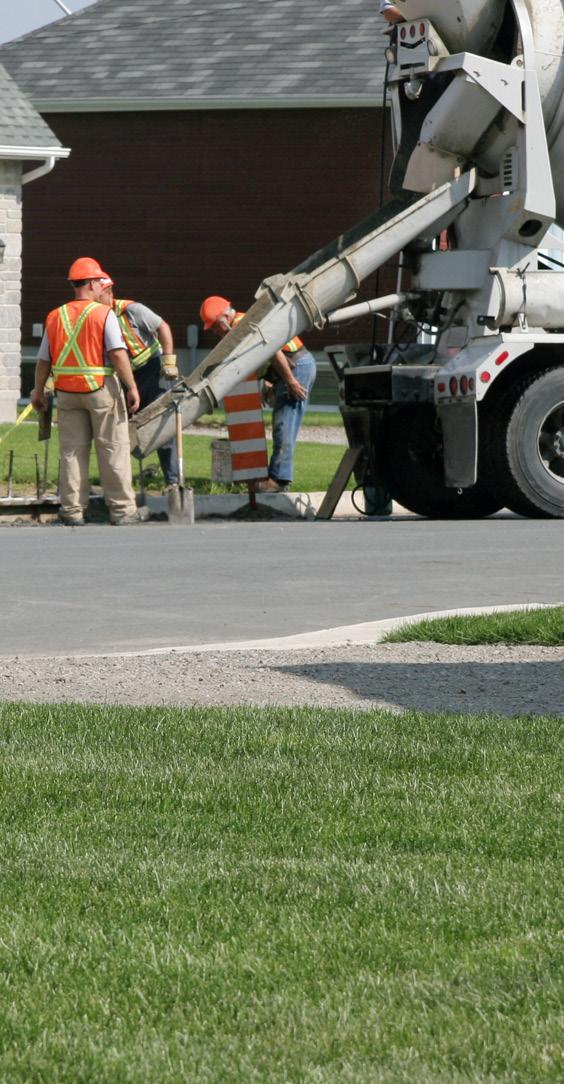
The plaintiff was employed as a cement finisher and was injured when a cement chute that was attached to a cement truck unexpectedly fell and struck him while the truck was discharging cement. The chute was attached to and locked into position on the truck at a height of 10 feet and was angled downward toward cement forms on the ground. The plaintiff argued this was an elevation-related risk based upon its height and also that the accident occurred due the effects of gravity. The defendant argued the chute was at the same height as the plaintiff and this was not the type of accident Labor Law § 240(1) was created to protect against. The court dismissed the § 240(1) claim because the plaintiff was not injured as a result of an elevation-related risk. The plaintiff also cited to a number of Industrial Code violations in support of his § 241(6) claim. However, the court dismissed the § 241(6) claim because the Industrial Code provisions cited by the plaintiff were inapplicable to the facts of the case.
PRACTICE NOTE: To support a § 240(1) claim, the plaintiff must have been injured as the result of an elevation-related risk.
HELPING YOU STAY AHEAD
Beyond providing clients our extensive experience, we also keep them up to date on issues in construction, personal-injury, and labor law through other channels.
Explore more of what Goldberg Segalla has to offer at goldbergsegalla.com/resources
Webinars
Goldberg Segalla offers complimentary, interactive webinars that explore practical implications of legal trends and developments across a range of practice areas.
Alerts
We actively monitor news and trends in the law and the industries we represent, and we use our practice group-specific alerts to provide clients with critical information and analysis of the latest developments impacting their business.
Publications
We provide print resources such as the Construction Site Personal Injury Litigation, edited by Goldberg Segalla partner and co-founder Thomas F. Segalla.
Revised in 2018, the book is available at: www.nysba.org/store/detail.aspx?id=40474
Learn more and subscribe at goldbergsegalla.com/connect-with-us.