September 2018
YOUR GLOBAL PARTNER
In this issue:
INNOVATION POWERED BY THE SUN Milling and Grain takes an exclusive look into the latest incredible turnkey project for flour and cereal production in Kazakhstan
• Virtual Mill - solving realworld training issues
Milling and Grain . Volume 129 . Issue 09 . September 2018
• Effective control of salmonella in feed • STORAGE SPECIAL SERIES - Reduce post-harvest losses • Livestock Taiwan 2018
Event review Proud supporter of
Volume 129
Issue 09
millingandgrain.com
Trusted. Tested. True.
®
Stiffened and Unstiffened Farm Bins Optimum grain protection begins with Chief’s steel sidewall system Chief roof systems are top of the line Grain Storage
Dryers
Material Handling Systems
Catwalk and Tower Systems
Lemanco Bulk Storage Systems
Caldwell Grain Conditioning
Our “W” stiffeners lead the competition in strength Globally recognized for customer service and quality products, our team of experienced Dealers and Staff will assist you in determining the system that will suit your needs.
chief.co.uk
agri.chiefind.com
silos-phenix.com
COMMERCIAL BINS
COMMERCIAL DRYERS
STEEL BUILDINGS
COMMERCIAL SWEEPS
BUCKET ELEVATORS
COMMERCIAL CONVEYORS
• 47.548m Diameter Bins (20320.9-48262.2 mt) • Tower Dryers (22.5-281.2 t/h) • Peak Load Rating (6803.8-45359.2 kg) • QuadraTouch ProTM Controls • Hopper Bins (3.65m-14.6m) • Balanced Moisture Content • Auger & Paddle sweeps available • Capacity includes 140.6-281.2 t/h • Patented Pivot Point • Industrial Grade Pushers
• Low Impact Head Design • Heavy Gauge Trunking • Patented Squaring Plates • Support Towers
• Industrial Strength • Built To Last • Higher Elemental Resistance • Capacity includes (984.3-1687.5 t/h) • Dust-tight and waterproof • Patented hip-style weather-tight cover • Catwalks
Su k u p World Headquarters - S heff ie ld , I o wa USA • www. su ku p . co m • in f o @ su ku p . co m For service in Europe contact:
Sukup Europe A/S Hedensted, Denmark Tel +45 75 68 53 11 • Fax +45 75 68 54 70 info@sukup-eu.com • www.sukup-eu.com
Pneumatic or Mechanical Ship Loaders & Unloaders Port Equipment - Turnkey Projects
1968 2018
1350 machines installed in more than 100 countries! VIGAN Engineering s.a. Rue de l’Industrie, 16 - 1400 Nivelles - Belgium Tél.: +32 67 89 50 41 • Fax : +32 67 89 50 60 • www.vigan.com • info@vigan.com
VOLUME 129 ISSUE 09
September 2018
Perendale Publishers Ltd 7 St George’s Terrace St James’ Square, Cheltenham, Glos, GL50 3PT, United Kingdom Tel: +44 1242 267700 Publisher Roger Gilbert rogerg@perendale.co.uk International Marketing Team Darren Parris Tel: +44 1242 267707 darrenp@perendale.co.uk Martha Cornwell Tel: +1 913 2083770 marthac@perendale.com Fred Norwood Tel: +1 913 6422992 fredn@perendale.com Latin America Marketing Team Iván Marquetti Tel: +54 2352 427376 ivanm@perendale.co.uk New Zealand Marketing Team Peter Parker peterp@perendale.co.uk Nigeria Marketing Team Nathan Nwosu Tel: +234 8132 478092 nathann@perendale.co.uk Production Editor Zasha Whiteway-Wilkinson zashaw@perendale.co.uk Rebecca Sherratt rebeccas@perendale.co.uk Features Editor Vaughn Entwistle vaughne@perendale.co.uk Matt Holmes matth@perendale.co.uk International Editors Dr Roberto Luis Bernardi robertob@perendale.co.uk ˘ Professor Wenbin Wu wenbinw@perendale.com Mehmet Ugur Gürkaynak mehmetg@perendale.com Design Manager James Taylor jamest@perendale.co.uk Circulation & Events Tuti Tan tutit@perendale.co.uk Development Manager Antoine Tanguy antoinet@perendale.co.uk ©Copyright 2018 Perendale Publishers Ltd. All rights reserved. No part of this publication may be reproduced in any form or by any means without prior permission of the copyright owner. More information can be found at www.perendale.com Perendale Publishers Ltd also publish ‘The International Milling Directory’ and ‘The Global Miller’ news service
Grain & Feed Milling Technology magazine was rebranded to Milling and Grain in 2015
104 - A bedrock of support for Port Constanta’s new grain terminal ISSUE HIGHLIGHTS
2
NEWS FEATURES
55 Heatwave 2018 - How enzyme systems can compensate for deficits in this year’s crop—Low amylase values, high falling numbers
FACES
6-42
PRODUCT FOCUS
50
CASE STUDY
94
58 Innovation powered by the sun
72 Understanding protein variability in Canadian fields
68 Food safety
78 Effective control of salmonella in feed
64 Virtual Mill solving realworld training issues
128 People news from the global milling industry
76 Output of livestock feed supplements doubled
EVENTS
106 Event listings, reviews and previews
STORAGE
82 Storage special 84 Reduce postharvest losses with safe and effective grain bin storage solutions 86 The big chill
TRAINING
46 Providing professionals with swine welfare education
COLUMNS
14 Mildred Cookson 18 Christophe Pelletier 31 Tuti Tan 32 Sven-Olof Malmqvist 36 Chris Jackson
4 GUEST EDITOR Bangarusamy Soundararajan
98 MARKETS Roger Gilbert
126 INTERVIEW Mehmet Ugur Gürkaynak
COVER IMAGE: Milling and Grain takes an exclusive look into the latest incredible turnkey project for flour and cereal production in Kazakhstan - See more on page 58
ISSUE HIGHLIGHTS TURNKEY PROJECT
INNOVATION POWERED BY THE SUN
Milling and Grain takes an exclusive look into the latest incredible turnkey project for flour and cereal production in Kazakhstan
PAGE 58 FLOUR
FOOD SAFETY Why metal is still the biggest and most likely contaminant
Metal remains the biggest and most likely contaminant risk within food processing and packing plants today.
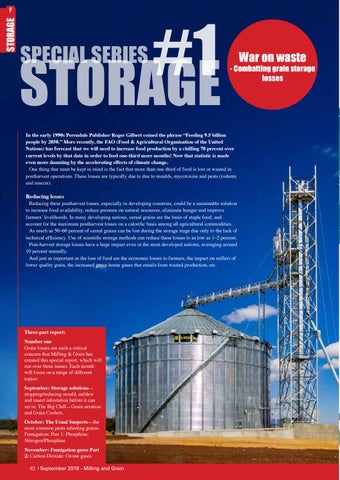
#1 STORAGE SPECIAL SERIES
War on waste
PAGE 58
- Combatting grain storage losses
PAGE 82
HEATWAVE 2018
How enzyme systems can compensate for deficits in this year’s crop—Low amylase values, high falling numbers
PAGE 55
FOOD
STORAGE
FEED
PROCESS
SALMONELLA FLOUR MILL
EFFECTIVE CONTROL OF SALMONELLA IN FEED
Virtual Mill - solving realworld training issues
The national association of British and Irish Millers (nabim) is the trade association that represents UK flour millers.
PAGE 64
FEED SUPPLEMENTS LAB Industry profile: Brabender
Duisburg-based Brabender GmbH & Co. KG is debuting its world food-industry firsts at iba 2018 in Munich in line with the Smart Transformation exhibition motto.
PAGE 92
OUTPUT OF LIVESTOCK FEED SUPPLEMENTS DOUBLED
NuTech Biosciences, Inc., founded in 2010, manufactures nutritional supplements for the animal feed industry. “Most are chelated minerals such as iron and copper,” explains company president and founder PV Reddy, DVM, PhD.
PAGE 76
The control of Salmonella in the animal industry is one of the major challenges. Salmonella is found everywhere and can survive, even at low moisture levels, for a long time. Due to the complexity to control Salmonella, several measurements need to be taken to reduce contamination, growth and survival of Salmonella in feed.
PAGE 78
Air filter 1950
The revolutionary technological path that never ends
Low pressure air filter 2018 www.ai-lati.eu
www.ocrim.com
Focusing on “GenNXT” aspects for Indian Livestock Sector Every industry needs fresh ideas from outside the system to survive and needs next-gen, young and bright minds with the clear vision and traits such as grit and perseverance to make a positive contribution to the society. It is impossible to achieve the 17 UN Sustainable Development Goals (SDGs) without significant participation and contribution from youth in every aspect. We strongly believe the country’s fast-growing livestock sector offers an ocean of opportunities for those who are willing to explore. Agriculture in India faces a number of important challenges: it needs to become more sustainable and productive, while it must at the same time remain profitable for farmers. This is particularly true for livestock farming. Modern and innovative livestock equipment and technologies are important parts of the solution to address and overcome these challenges. Furthermore, a number of innovations are occurring in plant agriculture to maximise all of the land we can sustainably cultivate. From advanced plant breeding techniques to integrated pest management, to improved varieties, scientists, industry and farmers are working together to ensure food and nutritional security of the country. Livestock is one of the fastest growing agricultural sectors driven mainly by rapid urbanisation and higher incomes. In the last decade, the world is witnessing how Internet of Things (IoT) and cloud-based technologies are transforming animal-agribusiness sector in unimaginable ways. For example, wearable devices on animals provide real-time data to monitor feed intake, stress levels or disease symptoms so that these can be addressed promptly not only to enhance productivity but animal welfare as well. Similarly, soil sensors help farmers analyse moisture or nutrient
A one day short course for aquafeed processing professionals
levels to cut down unnecessary irrigation or fertiliser application and contribute greatly to cost savings as well as environmental sustainability. These innovations provide us wealth of information to analyse every process deeper for continuous improvement. It is only a matter of time before we see all these are widely used in India. Nowadays everything in the world has come down to ‘one touch’. How the Indian government’s full support is needed to unleash the full potential of innovative livestock technologies. Furthermore, innovations like e-commerce through mobile phones, coupled with analytics positively disrupted retailing in India in the recent years. Nowadays, through mobile apps and with just a few clicks, consumers can get their preferred type, preparation, and variety of meat and seafood delivered at their doorsteps at affordable prices year-round without compromising on their two most important needs - convenience and quality. It is high time we think about who is going to feed us in future and how to ensure food and nutritional security of the billionplus population while remaining focused on sustainability of our unique and precious biological ecosystem. It is important to ensure India’s animal-agribusiness sector attracts the best talent, sparkling brains and skilled hands from different fields and retains them. Traditional business paradigms; entrenched perceptions and outdated practices must pave way to newer and fresher ideas and concepts that only today’s youth can bring in. Only then innovations can sprout and flourish. This industry must be seen as one of the preferred career paths by youngsters, who currently lack awareness about the ocean of opportunities available. Every one of us working in the industry must actively step up to create awareness among students who are aspiring to become tomorrow’s professionals, entrepreneurs, and leaders and CLFMA’s forthcoming symposium would be a great platform for such in-depth deliberations. by Bangarusamy Soundararajan, Chairman of CLFMA of India, CLFMA of India is the apex body representing the livestock sector in India. The 50-year old industry association is recognised as one among the eldest and highly reputed in India.
11th of September 2018 Taking part as part of SPACE, Rennes, France
Annual Subscription Rates Inside UK: UK£100 Outside: US$150/€133
ISSN No: 2058-5101
More Information www.millingandgrain.com http://gfmt.blogspot.co.uk
40 YEARS OF TESTED STRENGTH
One Tapco Nylon Elevator Bucket Supports a 9700 Pound* H1 HUMMER Ambient Temperature: 17 °F (-8 °C)
TAPCO’S CC-XD (Xtreme Duty) gray nylon elevator bucket supports a 9700 lb. H1 Hummer vehicle. Testing confirms that it will support over 20,000 lbs., more than two Hummers!
TAPCO’S CC-XD (Xtreme Duty) blue polyethylene bucket will support 9,000+ lbs.
Tapcoinc.com
TAPCO’S CC-HD (Heavy Duty) blue polyethylene bucket will support 5,000+ lbs.
314.739.9191 / St. Louis, Missouri USA No 814
*4399 kg
News A
SEP 18
Milling
Milling4Life charity scholarship in honour of Mark Cornwell
campaign to raise money in memory of former colleague Mark Cornwell has received a major cash injection from Tapco Inc. Mark “Cornman” Cornwell was a long-time associate of the grain and milling industry and having spent many years with World Grain, helping build a leading industry magazine, he then went on to partner with Perendale Publishers in 2014 to work on Milling and Grain magazine. He died unexpectedly at his home on September 11 2017 in Leawood Kansas at the age of 61. His death left a great hole in the grain and milling community and it set about fundraising to pay for scholarships. The charity Milling4Life (M4L) engaged with the American Feed Industry Association (AFIA) foundation and the Institute for Feed Education & Research (IFEEDER) to establish the scholarships in perpetuity in Mark’s name. The scholarships will support students wishing to study feed manufacturing via a variety of learning institutions throughout the USA, alongside Kansas State University, who offer courses in grain sciences, grain handling and processing, which is one of the prominent institutions for scholarship recipients. A donation of £5,000 from Roger Gilbert of Perendale Publishers Ltd kicked off the fundraising and Tapco have also generously donated £5,000 to the fund. Paul Taylor of Tapco said, “here at Tapco Inc we have built a long, strong relationship with Mark Cornwell and it was a sad day that he was taken from us so soon. His commitment to the grain milling and grain handling sector was globally recognised and he will be sorely missed. Tapco Inc recognises the benefits of training young new talent in our industry and as such we wholly endorse this initiative to set up a trust fund in Marks name and in perpetuity for future millers and grain handling engineers.” M4L is seeking companies in our industry, both within the USA and worldwide, prepared to contribute and who will be recognised for their contribution each time applicants are called upon to take up the scholarships. Individual donations are also welcomed and will be acknowledged via the M4L website if they wish to be identified. For more information please visit: www.milling4life.org 6 | September 2018 - Milling and Grain
Ingredients to success through appreciation – “Nothing inherently better or worse” Flour is a powder made by grinding raw grains or roots and used to make many different foods. Cereal flour (such as wheat) is the main ingredient of course of bread – a staple food for most cultures. During the milling process, different parts of the wheat grain are used to make different types of flour. White flour is made from the endosperm only, whereas wholemeal flour uses all parts of the grain – the endosperm, the wheat germ and the bran layer. Brown flour contains about 85 percent of the original grain, but some bran and germ have been removed. There are others of course, including: Wheatgerm (white or brown flour with at least 10 percent added wheatgerm), Malted wheat grain (brown or wholemeal flour with added malted grains), Stoneground (wholemeal flour ground traditionally between two stones), Organic (made from grain grown to organic standards, growers and millers must be registered and are subject to regular inspections). You can also get flours which are not made from wheat, other grains used include: rye, maize and oats. Not to mention nuts such as hazelnut, coconut, potato, peas and chickpeas. Though each of these flours will have a different nutritional make up to wheat flour and to each other, they are not inherently better for you, nor worse. Unless you have an allergy of course (such as coeliac disease) there is no medical or health benefit to choosing a non-wheat flour. Taking these facts about flour and the milling process, I’d like to make a connection to how flour is milled and how we can take this idea, that different parts of the same original object (to an extent) can still create excellent outcomes, each important and desirable in their own right. Different people offer different purposes and different benefits to a company or project, bringing different skills and expertise to something creates a much-needed diversity with these ingredients and talents. Without which, the choice for those interested in the product/business (or the flour for their bread) would be very limited, and therefore perhaps bland. This hypothesis may seem like pointing out the glaringly obvious, or perhaps even a sweeping generalisation. But sometimes even the most obvious things are the most difficult to see and appreciate. Although millers are towards the top of the food chain for arguably the most important staple food on the planet, if you were to ask the consumer or just somebody in a supermarket buying their bread – the history and work that has gone into the farm to table journey - perhaps would not be so obvious to them that without the “middle-man miller”, we’d be putting cheese or ham in-between two very dry stalks of wheat. Milling is an undeniable industry, more needed than most, but it is also possibly the most unknown. So, with that being said, take a step back from what you’re doing right now, and take a moment to appreciate all the little things that make what you’re creating great, and better than most – because it will be these little things that make it special. We all have different ‘nutritional’ make-up, but nothing inherently ‘better or worse’, just different – and different, creates choice and flavour.
GF
MT
gfmt.blogspot.com
The double sandblasting nozzle achieves a faster sandblasting process while compressing air consumption.
www.balaguer-rolls.com Twitter
18 BR-SM
Youtube
Milling News
AFIA applauds passage of bill to improve process for approving new animal drugs and food ingredients
T
he American Feed Industry Association commends Congress for sending a bill to the president this week for signature - the Animal Drug and Animal Generic Drug User Fee Amendments of 2018. This bipartisan legislation will continue providing the necessary resources to support the Food and Drug Administration’s Centre for Veterinary Medicine, with completing more expeditious reviews of new animal drugs and improving FDA’s review and approval process for animal food ingredients. “For the past several years, AFIA has voiced its members’ concerns to the FDA over the antiquated system for approving new animal food ingredients to be used in feed and pet food,” said AFIA’s President Joel G Newman. “While other countries have moved forward with safe ingredients that will enhance the safety, quality and
nutrition of feed and pet food, our US animal food ingredient manufacturers have been trapped in the lengthy and costly web at the FDA. We are encouraged that Congress has recognised the need for the US animal food industry to have greater access to novel ingredients and drugs to improve animal health and wellbeing, while reducing costs for ingredient manufacturers so they can continue investing in much-needed research and development, and urge the president to quickly sign this bill.” In recent years, the review and approval process at the FDA has slowed dramatically, preventing new animal food ingredients from reaching the marketplace. A recent study by Informa Economics, on behalf of the Institute for Feed Education and Research, found that for every year of delay in the approval process, submitting companies across the animal food industry were losing an average $1.75 million in revenue.
Review times have increased in recent years, now averaging anywhere from three-to-five or more years. The new law strikes an unnecessary provision in the Food and Drug Administration Amendments Act of 2007 that previously required the FDA to establish ingredient standards and definitions for pet food, which the agency sought to expand to all animal food. This provision is duplicative with the review process that has been in place at the Association of American Feed Control Officials for years, whereby the association sets definitions for all ingredients used in animal feed and pet food in its annual Official Publication, the legal listing by which states abide for the commercial sale of animal food products. In making this change, it ensures that the hundreds of safe ingredients that have been used in feed and pet food since the 1960s are still available in the marketplace.
True Falling Number The only validated instruments for the approved methods
• World Standard • Faster, Safer and Easier to Use • 50+ years knowledge and expertise www.perten.com Milling and Grain - September 2018 | 11
Milling News
Summer heatwave causing colossal falling numbers in wheat
T
he long drought in many regions of the European Union and Eastern Europe has caused considerable damage to the wheat crop. In many areas the harvest has had to be brought in early in order to save the few successful crops. The harsh weather conditions are affecting the quality of the wheat, as well as its quantity, the falling number of failed crops being at a unpleasant high. When millers process the 2018 harvest, they will have to supplement the natural enzymatic activity of the flour. With its enzyme system Deltamalt FN-A, Mühlenchemie GmbH & Co offers a solution to the current challenge of producing quality flours. While the grain is growing, a large amount of amylase is needed in order to form its starch content. The amylase is broken down again before dormancy. At high moisture levels the grain begins to prepare itself for germination and forms amylase again. If the wheat is harvested after a long dry period, as our summer currently is, the grain is fully dormant and therefore contains minimal quantities of amylase. In the past, when millers wanted to lower the resulting high falling number, they usually added malt flour to their product. Malt flour is made from germinated cereal grains such as wheat, barley or rye, and contains large amounts of α- and β-amylases. Through this method it is possible to lower the falling number and improve browning, alongside extending the volume yield. However, when added in large amounts, malt flours quickly result in wet doughs wrought with instability issues. In order to standardise the baking properties of the flour and meet the specifications, different malts and enzymes have to be added. With Mühlenchemie’s solution – Deltamalt FN-A – millers now have access to an enzyme system that optimises both the falling number and the baking properties of the flour simultaneously.
Allflex acquires German technology company Agrident
A
llflex, part of the Antelliq Group, has announced that it has acquired Agrident, the German-based agricultural technology company specialising in RFID data capture systems, used in process control and animal management systems worldwide. Commenting on the acquisition Brian Bolton, Antelliq Global Chief Operating Officer said, “we are very excited to welcome Agrident to our business. Agrident’s RFID readers and associated technologies are a natural expansion of our smart data products and services, enhancing our capabilities in electronic animal identification and data capture. This acquisition underlines our commitment to investing in the sustainability of livestock farmers through providing the tools they need to ensure the proper health and management of their animals in the future.” Allflex, an Antelliq company, is the world leader in the design, development, manufacturing, and delivery of animal identification and monitoring solutions. We bring cutting-edge, practical applications of visual and electronic animal identification, tissue sampling, traceability, and monitoring technologies to the world’s livestock industries. With some 1900 team members worldwide, we have a global network of experts who act as a resource to farmers, companies, and countries. Allflex has manufacturing and technology subsidiaries in North America, Europe, Israel, South America, China, Australia, and New Zealand. Our products are distributed in over 100 countries.
12 | September 2018 - Milling and Grain
Rice Milling in France; La Rizerie Du Nord, Dunkirk Milling journals of the past at The Mills Archive by Mildred Cookson, The Mills Archive, UK for the mill was supplied by a Pollett and Wigzell 225 hp engine Taken from The MILLER May 1891 with steam supplied from Sloan’s multi-tubular type boiler. In May 1891, at the time an article The rice in its rough state first passed through a magnetic in “The Miller” was written, the separator before a separator for removing any loose busks. It was French Government had relaxed the then moved to two pair of stones for breaking the shells. After import duties on rice entering the leaving the millstones it passed on to two separators of special country in its rough state, but still design, with very strong aspiration and air valves, designed to maintained the duty on cleaned rice effectively remove all the loose parts. The fairly clean rice was and rice flour. This amounted to passed on to millstones for polishing before it went for further eight francs per 100 kilos, imported treatment by vertical brushes. This operation was repeated a directly from countries out of Europe, and a levy of 11 francs 60 second and third time which cleaned the rice to a “nearly perfect centimes per 100 kilos on those European countries not having state”. It now only remained to give the rice a finishing polish, treaties with France. This gave an impetus to the French rice which was affected by a machine of similar type to the brush, milling industry and provided an immediate opportunity for but which was lined with sheepskin. milling engineers who quickly undertook measures to satisfy the After leaving this machine the rice was classed into as many market. sizes as was required by the markets, the largest rice being given The mill of La Rizerie Du Nord had just been completed by the well-known milling engineers, Jules Sloan & Co, 3 Rue du Louvre, Paris. The stipulated capacity of the mill was for an output of 25,000 kilos per 10 hours, but the mill soon reached 40,000 kilos. The article in The Miller included three diagrams of the mill: A cross-section looking towards the warehouse; a longitudinal section and a cross-section looking towards the engine room. The key provides an indication of the equipment and its arrangement. The system of ventilation at this mill was unique. Two 4ft diameter fans, blew directly into the Comerford’s patent dust collectors, which were fitted with special cylinders for catching the husks, whilst the flour was collected in the Above: Later advert emphasising the fire Above: 1886 Supplement to The Miller insurance benefits of Comerford dust collection sponsored by Carter’s usual manner. The motive power 14 | September 2018 - Milling and Grain
Images Left Left: Cross-section looking towards the warehouse Middle: Longitudinal section Right: Cross-section looking towards the engine room Key to the illustrations AA - Represent the shelling stones BB - The polishing stones and CC the brushes D - The position of a machine lined with sheepskin F - A machine lined with felt GG - Are Comerford dust collectors HH - The reels, KK the bins and LL flour reels
one more glaze, and that completed the process. The byproducts then came in for their share of attention, and were treated so that the various flours, black and white were then sacked off. The entire plant on the Hollandais system proved to be a grand success, reflecting credit on the owners as well as the engineers. The whole of the buildings were lit throughout by electricity
supplied by the same firm of engineers, and the installation consisted of one arc lamp and 50 incandescent lamps. The owners the time of the report were in course of erecting a second rice mill at Marseilles. The advertisements in our Victorian milling journals provide a fascinating area to study. The 1886 Carter supplement extols the Comerford system, pointing out that new technology made it more perfect even than Carter’s own textile-based system. Later the emphasis changed and, as in the second advertisement Carters state… “It is also a very important invention towards settling the absorbing question of heavy Fire Insurance charges for Stive Rooms and Dust Catchers.” The holdings at the Mills Archive mean that I can only provide geographical and historical snapshots. if you would like to know more please email me at mills@millsarchive.org
ANDRITZ partnership We will go all the way with you
Your partner for Feed & Biofuel Technologies
ANDRITZ Feed & Biofuel A/S Europe, Asia, and South America: andritz-fb@andritz.com USA and Canada: andritz-fb.us@andritz.com
ANDRITZ offers a broad ran ge of aftermarket services, which includes service, sup port and followups, repairs and spare and wear parts. ANDRITZ is a global leading supplier of technologies, sys tems and services of advanced industrial equipment for the feeding and fueling feed indu stries. We design and manufac ture all key process equipment as well as offer complete plant solutions.
www.andritz.com/ft
Milling and Grain - September 2018 | 15
Milling and Grain supports the aims and objectives of the Mills Archive Trust, based in Reading, England. The history of milling no matter where it has taken place - is being archived by the Trust. For well over 100 years milling technology has been global with many magazines serving or having served our industry from flour and food to feed and oilseed processing and now to fish feeds. A most recent contribution to the Trust’s collection is a complete century of past edition of the now out-of-print ‘NorthWestern Miller’ from the United States. We are proud to present here, front cover illustrations from this valued and longserving publication as a visual reminder of the importance contribution past magazines provided to our industry.
YOUR GLOBAL PARTNER
Art in the Archive We are a charity that saves the world’s milling images and documents and makes them freely available for reference. We have more than two million records. We aim to cover the entire history of milling, from its ancient origins up to the present day. Find out what we have and how you can help us grow.
millsarchive.org The Mills Archive Trust Registered Charity No 1155828
P
Milling News
Greenhouse gas as a raw material for an important feed additive
rofessor Arne Skerra of the Technical University of Munich (TUM) has succeeded for the first time in using gaseous CO2 as a basic material for the production of a chemical mass product in a biotechnical reaction. The product is methionine, which is used as an essential amino acid, particularly in animal feed, on a large scale. This newly developed enzymatic process could replace its current petrochemical production. The results have now been published in the journal Nature Catalysis. The industrial production of methionine from petrochemical source materials is currently done via a sixstep chemical process that requires highly toxic hydrogen cyanide, among other substrates. In 2013, Evonik Industries, one of the world’s largest manufacturers of methionine, invited university researchers to propose new processes for making the substance safer to produce. Methional, which occurs in nature as a degradation product of methionine, is formed as a facile intermediate during the conventional process. “Based on the idea that methionine in microorganisms is degraded by enzymes to methional with the release of CO2, we tried to reverse this process,” explains Professor Arne Skerra from the Department of Biological Chemistry at TUM, “because every chemical reaction is in principle reversible, while often only with the extensive use of energy and pressure.” Dr Skerra participated in the call for proposals with this idea, and Evonik awarded the concept and supported the project. Supported by postdoctoral researcher Lukas Eisoldt, Dr Skerra began to determine the parameters for the manufacturing process and for producing the necessary
Yemmak imaj ilanı (Global Experience)-baskı Milling & Grain EN.pdf
biocatalysts (enzymes). The scientists conducted initial experiments and determined the CO2 pressure which would be needed to produce methionine from methional in a biocatalytic process. Surprisingly, an unexpectedly high yield resulted even at a relatively low pressure – approximately corresponding to the one in a car tire of approximately two bars. Based upon the achievements after just one year, Evonik extended the funding, and now the team, reinforced by the PhD student Julia Martin, investigated the biochemical background of the reaction and optimised the enzymes involved using protein engineering. After several years of work, not only was it possible to improve the reaction on a laboratory scale to a yield of 40 percent, but also to elucidate the theoretical background of the biochemical processes. “Compared to the complex photosynthesis, in which nature also biocatalytically incorporates CO2 into biomolecules as a building block, our process is highly elegant and simple,” reports Arne Skerra. “Photosynthesis uses 14 enzymes and has a yield of only 20 percent, while our method requires just two enzymes.” In the future, the basic principle of this novel biocatalytic reaction can serve as a model for the industrial production of other valuable amino acids or precursors for pharmaceuticals. Meanwhile, Professor Skerra’s team will refine the process, which has been patented, using protein engineering so that it will become suitable for large-scale application. This could be the first time that there is a biotechnological manufacturing process using gaseous CO2 as an immediate chemical precursor. Up to now, attempts to recycle the greenhouse gas, which is a major contributor to climate change, have failed due to the extremely high energy required to do so. 2
13.06.2018
09:40
Milling and Grain - September 2018 | 17
Zaccaria and Imas cooperation contract formed
The Pelletier Column Governments should govern
by Christophe Pelletier I wish there would be more collaboration and altruism, more curiosity beyond the business sector and a better balance between the short-term and the long-term. I also wish money would not blind us so much and that we could make more decisions about people and the environment without feeling immediately restricted by financial aspects. I am not sure that even financial priorities are always that wise. Sometimes, it feels as if we spend lots of money on the wrong things and not enough on the important things, but human nature is strongly led by self-interest in the here and now that often stands in the way of rational and sensible choices. That being said, I want to discuss in this column how, with strategic planning, and collaboration and altruism from governments we can benefit the food production system. Governments should govern. Some do. Some a bit less. Sometimes, governments seem more preoccupied with ongoing campaigning than governing, and that is not good. Opposite to that, businesses should run their businesses, but in a number of occurrences they seem as much preoccupied with being involved in governing. Governments do not choose to neglect possible concerns to the food supply. A few governments and businesses do indeed choose to do nothing, but they are a minority et we know who they are as they boast about it. Most just take a prudent (probably too prudent) approach and we lose precious time. Then there is the third group of those who are ahead and deliberately choose to change their ways, but unfortunately, they are a minority and do not have enough traction yet. My opinion is that producing better food and, at least as importantly, better nutrition is everybody’s responsibility: governments, businesses, non-profits, producers, consumers, children, parents, teachers, you name it. Why is it important? For a simple reason: a society of unhealthy people will inevitably decline, and the social cost to society is a heavy financial burden that weakens society and its members. A prosperous society that wants a future takes good care of its members. So why does this seem difficult? Once again simple reason: money. Imagine there is no money and all stakeholders of society can dream of their ideal society, do you think they would think the same as when money stands in the way, especially because of the conflict between short-term and long-term cost, and who must bear the cost differential? This is a difficult conflict to solve, and this why we need strong leaders with a solid vision that all of society will buy. There is a moral dimension that will have to be addressed sooner or later. And with morals comes the topic of rewarding good behaviour and penalising bad behaviour. This definitely sounds like a true government’s job. Christophe Pelletier is a food and agriculture strategist and futurist from Canada. Working internationally, he has published two books on feeding the world’s growing population: Future Harvests Explores the Future of Food and Farming and We Will Reap What We Sow: Reflections on Human Nature, Leadership and Feeding a Growing Population. He has a very successful blog where you can follow his thoughts at “The Food Futurist: Foresight, Innovation, Philosophy, Critical Thinking and Visionary Leadership for a Prosperous Future of Food and Farming” Email: cpelletier@telus.net Skype: christophefp Web: www.hfgfoodfuturist.com 18 | September 2018 - Milling and Grain
I
mas and Zaccaria proudly announced the signing of an agreement to form a global strategic alliance between the two companies. This agreement consists of joint distribution in strategic markets, sales and promotional efforts, contributing common projects and transferring know-how to the new and existing grain milling projects. The agreement will allow both companies to combine their strengths to deliver complete solutions and adding value into the industry-leading customers, increasing influence in the global markets to penetrate new markets. By communicating and sharing technical engineers, both companies will display improved integrated grain solutions to potential customers. Imas has been manufacturing high-technology products and efficient complete projects with the Milleral brand in the grain-milling sector since 1989. Milleral has been manufacturing machinery and complete plants for milling and grain like wheat, corn, rye, oat and barley, in order to get flour and semolina for many years, with high customer satisfaction. Viteral is the brand of Imas that carries its experience since 1989 into the feed milling machinery sector by providing the production and installation of machines and complete facilities used for bovine, ovine and poultry feed production. Zaccaria, founded in Limeira, Brazil, manufactures machinery and equipment to process all type of cereals since 1925. Zaccaria has become the leader in the Brazilian milling market, reaching 70 percent of a market of 12,000,000 tons/year. Their product line also includes rice, beans and maize on a worldwide basis. Zaccaria are market leaders in Latin America, about 50 percent of paddy production there being processed by Zaccaria machinery. With the force of the Zaccaria and Imas partnership, Imas said it will move up its worldwide power by extending its reach towards even more countries, whilst adding value to its existing spread of nearly 100 countries.
The Raghavan Report Water footprint – Asia’s unique challenges and opportunities by Raghavan (‘Ragha’) Sampathkumar From the Yangtze to the Brahmaputra, through to the mighty Mekong, Asia has some of the biggest river ecosystems in the world. These rivers are the foundation of such an exceedingly varied biodiversity in the world, approximately 36 biodiversity hotspots, to be precise. A report from the United Nations says, “around 200 million people in the Asia-Pacific region directly depend on the forest for their non-timber forest products, medicine, food, fuel as well as other subsistence needs. Biodiversity and ecosystem services contributed to rapid economic growth from 1990 to 2010, benefiting its more than 4.5 billion people.” Yet, despite this, the region also is the largest with regards to population. It is one of the youngest also, which is leading to increase in food demand, particularly in favour of protein, and other high-value food products. All these demanding sidefactors place enormous pressure on the supply-side of the food industry. One example of this is palm oil, sourced from Malaysia and Indonesia. This product is often criticised for its ecological footprint and faces enormous challenges from the importing markets on account of environmental sustainability criteria. Water footprints are one of the most important parameters, not just for palm oil, but for all crops that are grown and exported from Asia, including rice and wheat. There are further challenges across three “Ps” viz, policies such as pricing; perception towards water and, of course, political concerns also playing a major role in the issue. India also suffers from similar issues to Asia, yet they have rectified these issues somewhat, to ensure a profitable, efficient mode of production. India’s agricultural segment alone consumes approximately 80 percent of the country’s water use. But, in most of the provinces it is free, leading to rampant indiscriminate use. Pricing policies must therefore be tweaked to adjust and set a
minimal pricing for water, along with measures such as microirrigation, crop diversification, crop rotation, using varieties with improved agronomic traits can improve overall WUE. Rice requires 900 - 2500 mm of water, whilst sugarcane needs 1500 – 2500 mm respectively for a cropping cycle. Rice alone consumes nearly a quarter of all water used in the country. But sadly, India’s food policies till date are unfavourable for crop diversification to make farmers grow pulses or corn which need only half the water quantity of rice, and a quarter of sugar canes water requirement. Direct seeding in rice and techniques like System of Rice Intensification (SRI) can result in significant reduction in water footprint of Indian rice crop, which remains a staggering 2020 m3 against the global average of 1325 m3. Hence, there must be a balanced and holistic approach that would consider imminent need for water pricing policy; focus on nutritional security than clinging onto the cereal-based food policies for political or other considerations; and importantly, an enabling environment where markets and regulations synergise to address growing water stress. Countries such as Malaysia, Vietnam and Thailand are actively pursuing advanced technological solutions, especially geo-spatial, to conserve water through multiple strategies. There are understandably important concerns about practical utility and arguments concerning the affordability of these technologies in Asia where small and marginal farmers dominate, possessing close to 450 million small holdings. These technologies can also be adopted beyond plantations in other small-holders dominated crop sectors, such as vegetables. Unlike in the West, small and marginal farmers of the developing countries certainly need greater support through impactful extension methods, favourable credit facilities and support, such as subsidies, for investing in tools that would help achieve optimum water usage. This requires a strong political will for reforms that is supported by holistic and integrated approaches towards food, water and environmental policies while keeping the region’s nutritional security as the top most priority.
Raghavan Sampathkumar is a food and agribusiness leader with a 360 degree understanding of the complex Geo Political, Environmental, Socio Economic, Techno - Commercial and Cultural perspectives of Agri Food value chain. He worked in various subsectors including agro inputs, international trade, biotech, and animal nutrition across Asia-Pacific and currently he is with Compound Livestock Feed Manufactures Association (CLFMA) of India as its Executive Director. He regularly writes for international publications on agri-food trends, food security and sustainability themes. Also, he pens his poems and thoughts in his personal blog - www.asmalltownkid.wordpress.com. 20 | September 2018 - Milling and Grain
Milling News
Biomin announces support for MycoSafe-South to combat mycotoxins in Sub-Saharan Africa
B
Aflatoxins are potent carcinogens produced iomin, the global leader in by strains of Aspergillus flavus and A. mycotoxin deactivation, parasiticus. Fumonisins are hepatotoxic, has recently announced its nephrotoxic and immunosuppressive involvement in a three-year, mycotoxins produced by Fusarium nearly US $1 million project to tackle proliferatum and F. verticillioides. Both mycotoxin-related food safety issues in groups of mycotoxins are detrimental to sub-Saharan Africa. humans and animals. The MycoSafe-South project aims to Mycotoxin consumption in Africa has been identify safe-use options for aflatoxinslinked to stunting among children, premature and fumonisins-contaminated food death and illness. Furthermore, mycotoxin and feed, to reduce human exposure contamination limits economic development to fungi-produced mycotoxins from in that the mycotoxin infestation of crops animal protein sources, and to promote restrict Africa’s ability to trade agricultural education and awareness efforts to Dian Schatzmayr products with the rest of the world. understand mycotoxin-associated health risks in humans and animals. The research outcomes focus on human and Delivering science-backed solutions infrastructural capacity building, and awareness building In addition to providing funding, Biomin will through on-site training of community, nutritionists, contribute knowledge and expertise to trials designed veterinarians, small-scale subsistence farmers and to demonstrate safe and efficient detoxification of mycotoxins in African dairy species, African laying hens commercial farmers. and African broilers. “Leveraging our leading EU-authorised technologies Mycotoxins jeopardise food security to combat mycotoxins, we aim to drastically reduce “Aflatoxins and fumonisins are harmful mycotoxins that mycotoxin exposure in animals and limit mycotoxin often co-occur, and constitute a serious issue in Africa,” observed Dr Dian Schatzmayr, Development Team Leader carryover into food products, which should ultimately deliver real benefits for African consumers,” explained Dr Mycotoxins at Biomin. Schatzmayr. Approved by LEAP-Agri The selection committee of EU LEAP-Agri approved the project, which is co-funded by the Belgian Federal Science Policy Office (BELSPO), Belgian National Fund for Scientific Research (NFSR), Research Council of Norway (RCN), Kenyan Ministry of Education, Science and Technology (MoEST), South Africa’s National Research Foundation (NRF), BIOMIN and Harbro Ltd. The LEAP-Agri international review panel acknowledged the research team is strong and very complementary. The project offers post-harvest solutions that are feasible to implement in African countries and creates opportunities for young researchers by assigning four PhDs students to conduct research at both European and African institutes. The MycoSafe-South consortium also acknowledges the expertise of BIOMIN in communication and dissemination of project results to stakeholders through newsletters and their worldwide distribution network, already in place in some African countries. Cape Town kick-off Biomin will host the MycoSafe-South project kick-off on October 2 2018 in Cape Town, South Africa, one day prior to the start of the 2018 World Nutrition Forum. “We highly value the opportunity to engage with scientists and the global academic community through conferences and knowledge exchanges about animal nutrition,” commented Dr Schatzmayr, who added, “We look forward to welcoming the MycoSafe-South team to Cape Town.”
22 | September 2018 - Milling and Grain
Milling News
T
AFIA applauds FDA decision he American Feed Industry Association praised the Food and Drug Administration’s announcement to extend its deadlines and inspection timeframes for when certain-sized facilities should come into compliance with some Food Safety Modernization Act (FSMA) rules and regulations. By extending the deadlines, the FDA will have more time to release the final FSMA guidance documents and train its inspectors, while the regulated animal food industry will have greater opportunity to perform the necessary retrofits to animal food safety plans and processes to ensure full compliance with federal regulations. “Throughout the rulemaking process, AFIA has asked the agency to take a staggered approach to implementation to allow the industry time to focus on current good manufacturing practice (CGMP) implementation and also to receive the necessary guidance to properly implement the hazard analysis and risk-based preventive controls (HA/PC) requirements,” said Leah Wilkinson, AFIA’s vice president of public policy and education. “AFIA applauds the agency for continuing to offer this staggered approach and flexibility as the industry implements these broad sweeping regulations.” Small-sized animal food facilities (i.e., firms with fewer than 500 employees) will need to come into compliance with the HA/PC regulations by September 17, 2018, with the FDA delaying inspections until the fall of 2019. Initially, inspections were set to begin in January 2019, but the additional nine-months provides small-sized
facilities the same opportunity that the FDA granted to large-sized facilities (i.e., those with more than 500 employees) to learn and implement the rules and regulations. The FDA intends to delay compliance for very small businesses (i.e., those with sales totalling less than US$2.5 million and certified to the FDA) from the requirements applicable to qualified facilities until the fall of 2020. Starting September 17, 2018, all three sizes of animal food businesses must comply with at least one portion of the FSMA regulations. Very small facilities must comply with the CGMPs for the first time. Large-sized facilities came into compliance with the HA/PC regulations last September, and the FDA will soon focus its inspection resources on CGMP inspections for all-sized facilities and preventive controls inspections only at large-sized facilities. While the FDA has delayed inspections, compliance with the rules and regulations per the compliance date as previously published is still required for all animal food manufacturing facilities. The FDA reserves the right to take regulatory action should an animal food safety event occur during this time. Signed into law January 4, 2011, FSMA provides the FDA with sweeping new authorities and requirements for the animal food industry. The food and feed industries originally supported the bipartisan law, which, among other provisions, authorised the FDA to: promulgate new rules for preventive controls, develop performance standards, create new administrative detention rules, recall adulterated products and hire more than 4,000 new field staff. It is estimated that if fully implemented, the law will cost the US feed and pet food industries more than US$1 billion with little improvement to animal health, animal food safety or other real benefit. It is unclear whether Congress will provide sufficient funding authorisation to fully implement the law.
Four steps to a hassle-free harvest
I
t’s Time to Inspect Your Level Indicators! Fall is coming “weather” you’re ready or not! Get a jump on harvest and cold weather preparation now with these four easy steps to ensuring you know what’s in your bin in every season. Make sure bins are outfitted with proper level control equipment. Check to be sure all level controls are in working order. Inspect inside bins for build-up and, if needed, remove it. For cold and snowy climates, inspect heaters and seals for leaks. If your level indicators are lagging, there’s still plenty of summer to explore and upgrade to more effective sensor technology like 3D scanners, radar, and SmartBob. Keep up-to-date with up-to-the-minute data on your phone, tablet or desktop with data management systems like BinView® or Binventory®. Be sure to check out the new, super bright, super readable digital display meters perfect for ground level monitoring or truck load outs.
24 | September 2018 - Milling and Grain
har�on�ou� coe���tence of technology and nature
www.tan s.com.tr
We are proud to be with you in the journey of harvesting seedlings with our technology and advancing mill solutions that have been advancing for 62 years to add blessings to what they give to the earth.
Milling News
Government funding helps breed disease and weather resilient crops
T
he Harper Adams University Fresh Produce Research Centre (FPRC) and University of Warwick Crop Centre have recently been jointly awarded the five year research grant from Department for Environment, Food and Rural Affairs (DEFRA) to help breeders produce the more resilient vegetable crops. The £1.2 million project aims to breed vegetable crops that can cope with climate extremes, pests and diseases. This important work will help ensure that countries are protected against shortages in vegetables, such as lettuce, which are less resilient to weather fluctuations. FPRC Director Dr Jim Monaghan, said: “Climate change and weather variability represent one of the greatest threats to the future of global agriculture and so to human nutrition. “Extreme weather conditions lead to both longand short-term environmental crop stresses such as drought and waterlogging. “The recent shortage of rainfall and high temperatures in the UK have led to a number of reports of growers predicting shortages in vegetable and salad crops, including lettuce and broccoli, due to these crops’ growth becoming
stunted in hot weather. The team has already identified several different vegetable Brassica lines, including broccoli, cabbage, cauliflower and kale which are more tolerant to high temperatures and stress leading to better crop growth in stressful environments. The project will also be looking at lettuce, carrot and onion plants. Promising crop varieties highlighted in the study will then progress to conventional breeding programmes with commercial partners in order to generate new crop varieties with improved resilience to environmental stress and better performance under extreme weather conditions. In this way, the team hopes to help safeguard the future of food production by increasing crop environmental durability. “By looking for traits that breeders can use in commercial crops, we can help growers supply vegetables during periods of climate extremes, not only in the UK but also internationally,” added Dr Monaghan. This research project forms part of the Vegetable Genetic Improvement Network (VeGIN), a longterm collaboration between Harper Adams and the University of Warwick.
www.perryofoakley.co.uk sales@perryofoakley.co.uk +44 (0)1404 890300
Since 1947
The UK’s Most Experienced Manufacturer of Materials Drying & Handling Equipment
Capacities of up to 1000tph available - Heavy duty, galvanised construction - Ranges suitable for grain & bulk materials • Continuous Flow Grain Driers • Belt Driers • Chain & Flight Conveyors
• • • •
Belt & Bucket Elevators Belt Conveyors Aspirator Cleaners Levelling Conveyors
• Augers & Screw Conveyors • Ducting & Valves • Twin Trace Conveyors
Call now to discuss your drying & handling needs! 28 | September 2018 - Milling and Grain
漀渀 琀栀攀 眀愀礀 琀漀 琀栀攀 昀甀琀甀爀攀
刀☀䐀 吀伀倀 ㈀㔀
圀攀 愀爀攀 愀洀漀渀最 琀栀攀 琀漀瀀 ㈀㔀 挀漀洀瀀愀渀椀攀猀 琀栀愀琀 椀渀瘀攀猀琀 洀漀猀琀 椀渀 刀☀䐀 猀琀甀搀椀攀猀 椀渀 吀甀爀欀攀礀⸀ 圀攀 愀爀攀 琀栀攀 猀攀挀琀漀爀 氀攀愀搀攀爀 椀渀 刀☀䐀 椀渀瘀攀猀琀洀攀渀琀猀⸀
眀眀眀⸀洀椀氀氀攀爀愀氀⸀挀漀洀 、䴀䄀币 䴀愀欀椀渀愀 匀愀渀愀礀椀 䄀⸀币⸀ 㐀⸀ 伀爀最愀渀椀稀攀 匀愀渀愀礀椀 䈀氀最攀猀椀 㐀 㜀⸀ 匀欀⸀ 一漀㨀㠀 㐀㈀㌀ 䬀漀渀礀愀ⴀ 吀ﰀ爀欀椀礀攀 倀 㨀 ⬀㤀 ㌀㌀㈀ ㈀㌀㤀 㐀 䘀 㨀 ⬀㤀 ㌀㌀㈀ ㈀㌀㤀 㐀㐀 眀眀眀⸀洀椀氀氀攀爀愀氀⸀挀漀洀 ⴀ 椀渀昀漀䀀洀椀氀氀攀爀愀氀⸀挀漀洀
Milling News
BALANCE IS EVERYTHING!
Laying the foundations Here in the UK, the heat wave has finally broken and we’re getting some much-needed rain. That said, the long, hot, dry summer has already impacted our grain crops and damaged many of them. But while storm clouds are breaking over the UK, we here at Perendale Publishers are experiencing a storm of new entries to our Milling and Grain Directory, which adds 10 new companies this month: • • • • • • • • • •
Cox Filter Cloth – China Goudsmith Magnetic Systems – Netherlands Mungan Flour Mill Machinery – Ankara,Turkey Agri Aqua – Narayanganj – Bangladesh FDL Packaging Online – Merseyside, UK Mirpain Milling and Baking Ingredients – Istanbul, Turkey Gemco Pellet Mill – Henan, China Primetics – Lancashire, UK Polimak – Ankara, Turkey PCE Instruments UK Ltd – Hampshire, UK
Looking ahead, the groundwork for the 2019 Directory are already being undertaken. As always, I am still encouraging more memberships. Join us and become a member of the grain and milling industry’s major directory, published continuously for over 28 years. Being included in the directory allows you to engage with customers and find new products and markets. Whether you need heavy equipment for your facility, or the tiniest part, you can find it in the directory. If you wish to submit a product for the Equipment Guides, please send a message to the contact details below. We are now accepting advertisers for the 2019 edition. Prices will be sent to you upon request. Please be sure to follow us on social media and sign up to the newsletters, which can be found on the website. www.internationalmilling.com AND GRAIN @intlmilling facebook.com/internationalmillingdirectory
Leiber brewers’ yeast products for: Improve bioavailability of nutrients & active ingredients Stimulation and support for the body‘s natural defences Binding and inactivation of pollutants & mycotoxins
leibergmbh.de
Milling and Grain - September 2018 | 31
Leading the way in multi-toxin analysis Analyse 11 legislated mycotoxins using the new 11+Myco MS-PREP® columns • Improve work flow • Excellent recoveries • Cost effective • Suitable for wide range of commodities
E-mail: info@r-biopharmrhone.com www.r-biopharm.com 32 | September 2018 - Milling and Grain
Global warming or just seasonal changes? by Sven-Olof Malmqvist, M4L Board of Trustees, Owner at Grytåsa Living in a country like Sweden and having a farm is kind of easy life. You will not be exposed to any extreme weather not too dry not too wet but this year differs. Down south in Sweden where I live (close to Copenhagen), you get your bearing right no rain since late April. It means that that the first cut of grass is fine but second is gone and we all cross our fingers for the third one. Having a number of horses, we better start to import feed stuffs. All grain is harvested with half yield and Sweden goes from net exporter to net importer of everything related with grain and roughage. An old saying in Sweden is that the sugar beet leafs should cover the field so no soil can be spotted around the very famous Swedish Midsummer (June 25th). This year still not covered, and we talk about August 10th. Farmers have been forced to enforce old initiatives like let the cattle in to the forests and in some places harvest the leaf on the branches of leafy trees, this we did last time during WW2. The dry weather in Sweden has led to wildfires in the forest up north and as when I write this column it´s still on with 100 000 of hectares affected, probably more than in California right now where they are used to it. A friend of mine told me than they have a terrible drought in New South Wales and now also Queensland as well and they have to carry water in a long distance to keep the livestock alive. In every part of the world you can find constraints and difficulties but in particular in Africa and some Asian countries where they are exposed to extremes more or less every year. A huge difference is that a rich country like Sweden has the means to overcome the situation by importing, which is not valid for all countries and there must the world society act and try to ease the situation. What I am saying is that what we are used to in the past may never be the same and so we better take some precautions, both internally and externally. The common issue is the water supply- no water – no life, it’s kind of easy for everyone to understand but what has been achieved so far? For the urban person living in a city water comes from a tap no worries so how can you expect them to understand how everything links together? On my farm we have two deep wells (70-80m depth) and so far, we still have water to the entire farm, but our neighbors just have seven to eight metres wells, so you can understand their anxiety. We all listen to the weather forecast which have promised rain more or less every week but so far nothing. Now we have strong hopes for rain coming weekend, so finger crossed again. So next time when you like to spend some money on charity think about the water supply in under development countries in Africa and Asia.
Sven Olof is an experienced export manager with a demonstrated history of working in the chemicals industry. He is skilled in marketing management, market planning, business planning, international business and sales management. He is a strong sales professional who graduated from the Swedish University of Agricultural Sciences, Malmoe.
SEFAR NYTALÂŽ. The name you can trust.
F
DA
Headquarters Sefar AG Hinterbissaustrasse 12 9410 Heiden – Switzerland Phone +41 898 57 00 filtration@sefar.com
www.sefar.com
NT
O
LI
A
FO
Since 1830, Sefar is the single-source supplier to millers for all products for sieving, grading, and dust filtration as well as connector sleeves, sieve cleaners and tensioningDequipment. SAFETY
CO MP
Milling News
National conference to focus on trust in business relationships
T
rust in business relationships will be at the forefront when Purdue University’s Center for Food and Agricultural Business hosts the 2018 National Conference for Food and Agribusiness, November 6-7, 2018 in West Lafayette. The goal of the conference is to bring together professionals from across the agri-food industry to gain industry and business insights and to thoroughly explore research directly related to the changing marketplace. The research foundation of the 2018 conference is generational shifts, industry changes and the roles of internal and external business relationships. In addition to presentations by Purdue faculty, farmer and researcher panels, and industry professionals, this year’s conference will include new breakout workshops on a variety of topics, giving attendees the chance to customise their learning experiences. “Recent studies conducted by the centre show that farms are getting larger, a generational shift is happening, and new buying processes have entered the marketplace,” said professor of agricultural economics Michael Gunderson, centre director and conference presenter. “Similar change is happening in the agri-food industries with consolidations and a new generation of sales professionals coming into the marketplace. We know that industry professionals are facing new challenges that have direct impacts on building and developing trusted business relationships and we want to offer the resources to help our industry partners position their organisations for long-term success.” Day one of the conference will include general sessions on implications of market drivers on trusted relationships, internal organizational trust, ecommerce, and becoming a trusted agribusiness advisor. Also included are a farmer panel discussion and a poster presentation highlighting applied trust in business relationships research. Participants will have the opportunity to engage in one-on-one and group conversations with speakers and industry peers. Day two will consist of hands-on professional workshops facilitated by faculty members. Workshop topics are relationships with customers, relationships with employees, farmer buying (procurement processes), and negotiation. Conference participants will develop industry-specific skills and gain valuable insights that are immediately applicable in their day-to-day business. Attendees have the option to attend one or both days but will ultimately gain the most benefit from attending both days. Early bird registration for day one is US$779 per person and the two-day bundle is US$1,195 per person through August 31, 2018. Regular registration is US$899 per person for day one and US$1,395 per person for both days. Group rates are available by contacting research project manager Masi Keshavarz at mkeshava@purdue.edu or +1 765 496 3385.
34 | September 2018 - Milling and Grain
Milling News
HIGHLY RELIABLE CONVEYING AND DISCHARGING EQUIPMENT. Ottevanger Milling Engineers offers the perfect transport solution for every specific situation and all types of raw materials. All characterized by a very efficient design that results in optimal hygiene, maximum safety and a long and trouble-free service life. Chain Conveyors Ottevanger Milling Engineers Chain Conveyors are the perfect solution for a horizontal way of transporting grains, granulates, pellets, flakes, meals and many other products. The chain conveyors are available in capacities up to 400 m3/h. These conveyors are exceptionally suitable for A Triott Company
conveying over long distances. www.ottevanger.com/conveyors
Milling and Grain - September 2018 | 35
Disruptions in the food chain – good or bad? by Chris Jackson, Export Manager UK TAG This month I am back in the UK where the weather that affects every single farmer in the world is drastically different to that experienced in Australia. Throughout the past year both countries have been hit by an astounding lack of rainfall, leading to emergency measures being announced in Australia to assist the starving livestock. As large parts of South-East Asia and China rely on imports of meat, along with the Middle East, any shortfalls have serious implications on the agricultural industry. The tragic shortage of crops will push prices up in the general market, pressurising livestock farmers into critical positions as food retailers seek to keep shop prices low to sustain their market shares with the inevitable further shrinkage of the livestock sectors. If rainfall still remains minimal, vast tracts of land will not be cropped this year, placing additional strain onto farmers. The free market has seen an increase in the quantity of water being purchased for irrigation purposes, meaning that the cost is not viable for cotton or rice. The UK is unaccustomed to water shortages, but with a hotter than average summer and less rainfall we have seen a reduction in yields which proves difficult, although not yet critical. UK livestock remains healthy despite the struggle, as they need less food to maintain their body temperatures. Whilst the farmers have to adapt their farming to align with these unusual weather conditions we have witnessed manmade factors that could have far reaching implications for production, especially for crops. Many years ago, Monasanto developed a glycophosphate weed control system that has been hugely beneficial to farmers worldwide, giving them effective weed control and a successful desiccation method to allow an even and successful harvest. 36 | September 2018 - Milling and Grain
This week we have seen an American court award a supplicant a huge sum of money as he successfully argued against Monsanto that their product had caused his cancer. This case remains subject to appeal but opens up a possible opportunity for exploitation at the hands of farmers and lawyers. Due to the endless quantities of cancer-inducing chemicals and products, it is strange to single out one specific product as a cause for one’s cancer. This event proves the importance of ensuring that our food is produced safely, whilst also maintaining profitability for farmers. With Monsanto being one of the primary farming tools used in crop production now being under fire, scientists may need to work towards alternative methods of weed control maintenance. Whilst in the UK our geneticists have managed to produce pigs that are resistant to a world-wide debilitating disease, Porcine Reproductive and Respiratory Syndrome (PRRS). This is achieved by snipping and editing the animal’s chromosomes. This breakthrough is of huge importance to the industry as it will mean that more pigs will survive and a great deal less antibiotics will be needed to maintain their health. Despite this apparent success, one group have asked the high court to intervene and halt production, as the animals are classed as being genetically modified. The question remains, whether people should be allowed to disrupt the food chain because of their own personal beliefs. It seems to me wholly wrong that these people have the choice to buy more expensive free-range product, but the majority would surely benefit from healthier animals being brought through the food chain. Science has already proven that animals fed GM soya produce meat that is absolutely identical to non-GM meat. Let us hope that common sense can prevail to keep farmers doing what they are so good at; producing primary products that are healthy, nutritious and profitable.
@AgrictecExports
Alapala Smart Automation Systems
Perfect mĹll MANAGEMENT AnywherE With Alapala Smart Automation Systems, you can control your mill remotely and instantly, monitor production results and share them with your team. Value your business with Alapala. Experience the ultimate production experience with mentor of milling Alapala’s leading solutions.
www.alapala.com Alapala
info@alapala.com /alapalagroup
/alapala2013
www.alapalaworld.com
Milling News
Wireless sensors: evaluating the feeding behaviours of animals
A
study carried out at the Ondokis Mayıs University Faculty of Agriculture, in the Department of Zootechnics has been investigating the effects of the wireless sensors placed in bovine animals. The research took place in Samsun, a city on the north coast of Turkey and examined the effects of the wireless sensors placed in bovine animals, birds as well as looking at the feeds given to birds. It has gained national interest due to its keen focus on the future of animal production and animal husbandry in Turkey. The aim of the project organised by Professor Dr Unal Kılıç, OMÜ Faculty of Agriculture Department of Zootechnics is to produce fattening cattle and milk producing animals, in a healthy and efficient manner. He explained, “We are investigating the effect of baits on the workplace.” The wireless sensors put into the cattle, which can be controlled remotely, are said to lead to more efficient production and will ensure that the scope of the project can be controlled successfully. Professor Kılıç emphasised that they are evaluating the feeding behaviours of animals fed with sensors, he explained that, “Temperature stress, acid formation by measuring the rumen temperature, sickness, chilling time, water drinking behaviour, stress, animal health and rumen
pressure,” are all monitored closely. The sensors are battery operated and last for 2.5 to three years. The battery-operated method ensures that the user knows how the animals consumed feeds, and how they affected the feeding pattern of the animals. “We have installed remote controlled wireless sensors in the workbenches of some bovine animals in different areas in the project. We are investigating what kind of effect they have on the birds after consuming the feed given to the fattening animals. “Which feeds are more beneficial to the animals - and which ones are improving the acid environment. We will ensure that fattening and dairy animals will be raised more healthily and efficiently with wireless rumen sensors,” Professor Kılıç enlightened. The information is obtained from the sensors within 30 metres of the dispensers. “This is the first time performing such a study in Turkey. We place the sensor approaching at least as close as 30 meters from the mobile phone, or to receive information on a special software we install on computers. “The information highlights how much of the feed the animals have consumed, and consequently how much has created acidic media. Then how have these results affected the pH, the feed consumption and the pH of the rumen. “We receive this every information every 15 minutes via the sensors. This means that we are aware how effective the feed is for the milk or meat production animals. They also help identify mycotoxin poisoning in the animals,” Professor Kılıç summarises.
Maximizing your grinding efficiency starts with innovative thinking. High capacity feed production. Full grinding flexibility. Healthy business.
The complete grinding solution for high quality, flexible and fast grinding results. The intelligent design of the GD hammer mill with large breaker plates guarantees an extremely effective grinding process which leads to high quality and fast grinding results. This hammer mill combined with an automatic screen exchange system and frequency controlled motor offers full grinding flexibility. By selecting the right screen and adjusting the hammer tip speed, any desired particle size and structure can be produced. The automatic screen exchange positions the screens in just one minute, maximizing the capacity of your hammer mill.
www.aarsen.com/machines/hammer-mills
2018-03-22, GRINDING 190x132mm.indd 1 38 |Adv. September 2018 - Milling
and Grain
22/03/2018 10:03
Milling News
EU Dossier for Digestarom DC as zootechnical feed additive in broilers submitted
T
he innovative feed additive firm marks another milestone in the global rollout of the new phytogenic feed additive by applying for additional zootechnical status in the EU. Following a successful start to a global launch, BIOMIN submitted a dossier for the EU authorisation of Digestarom DC, a phytogenic feed additive (PFA), for zootechnical status based on its ability to improve the performance parameters of broilers. Efficiently converting feed into broiler meat is crucial. “Phytogenics can play an important role in maintaining feed intake, improving digestibility and ultimately supporting enhanced feed conversion,” explained Michael Noonan, Global Director of Phytogenics at BIOMIN. “For poultry producers, improved feed efficiency translates into lower production costs, better margins and reduced ammonia emissions that support profits and sustainability.” The EU dossier, submitted for evaluation in June 2018, includes four broiler feeding trials that were conducted to demonstrate the efficacy and the safety of Digestarom DC.
“The trials conducted have shown better growth performance, greater weight gain and improved feed efficiency in broilers,” stated Mr Noonan. “We continue to see strong interest in scientifically-backed phytogenic feed additives for a number of applications,” he added. Digestarom DC incorporates a unique encapsulation technology that ensures continuous delivery of active phytogenic compounds throughout the digestive process, demonstrating stability under common pelleting conditions and offering easier handling. The Biomin Duplex Capsule also supports the triple action formulation of Digestarom DC, which consists of three modules: 1) Appetising and endogenous secretions, 2) Gut microbiota modulation, and 3) Gut protection. The dossier for zootechnical registration has been submitted for scientific review by the European Food Safety Authority (EFSA). “We are optimistic that the diligent work put into developing the next-generation Digestarom® and compiling the dossier complies fully with the necessary requirements,” Mr Noonan stated.
CROWN EXPANDER Flexible production of shaped products Preconditioning of pellet mixtures
AMANDUS KAHL GmbH & Co. KG Dieselstrasse 5–9 · 21465 Reinbek Hamburg, Germany +49 (0) 40 72 77 10 info@akahl.de · akahl.de
Milling and Grain - September 2018 | 39
AMINONIR® Advanced – Discover the next generation of NIR Feeling ground down by NIR? Free up your time with AMINONIR® Advanced, the new service that analyzes unground samples – at the point of delivery. Determine raw material and finished feed content in minutes, to optimize your inventory management and feed specification, and control costs. It’s fast, accurate and covers the largest number of feed ingredients used by the industry. Get started now! animal-nutrition@evonik.com www.aminonir.com
INGREDIENT ANALYSIS
Get start ed now !
FINISHED FEED ANALYSIS
ALL PARAMETERS FROM ONE SCAN
BEST NUTRITIONAL MATRIX
Milling News
Grains and ethanol take centre stage at US Grains Council meeting in Denver
I
n a global trade environment challenged by tariffs and tensions, emerging markets for grains and ethanol provided a bright spot for US farmers, agribusinesses and industry officials at the US Grains Council’s 58th Annual Board of Delegates meeting in Denver. The Council’s Middle East and Africa Director Ramy Taieb and Manager of Global Trade Alvaro Cordero spoke on a panel moderated by the Council’s Senior Director of Global Strategies Kurt Shultz, highlighting the Middle East and North Africa as a 10 million metric ton (394 million bushel) market
42 | September 2018 - Milling and Grain
for US grains in all forms. They focused on new demand in Saudi Arabia for US sorghum and distiller’s dried grains with solubles, near-term opportunities developed following years of work by Council staff and members to set the stage with local customers. “The Middle East and North Africa is a vast area with a lot of complexity,” Mr Taieb said to the group. The Council has a regional office in Tunisia and consultants in Turkey, Pakistan, Morocco, Algeria, Egypt, Saudi Arabia and Jordan, which also covers Oman and the United Arab Emirates.
“Regional imports have been growing over the past five years from 2.5 MMT (98 million bushels) in marketing year 2013/2014 to 8 MMT (315 million bushels) in marketing year 2016/2017. We are expecting to reach 10 MMT (394 million bushels) of grains in all forms to the region this year,” Mr Taieb said. “The US Grains Council has focused on being flexible and responsive to the shifting market opportunities as they arise in the region.” In addition to other sales in the region, speakers shared that US corn sales to Saudi Arabia totalled $383 million in the 2016/2017 marketing year, a 150 percent growth over the previous marketing year. Tuesday’s general sessions also featured a presentation on the economic conditions facing the United States and the farm economy by Will Secor, an economist in the knowledge exchange division at CoBank. Mr Secor said that despite developing challenges on the global trade stage, the longterm outlook for US grains demand is positive. Council Chief Economist Mike Dwyer led off the afternoon’s round of speakers, updating the farmers and other delegates in attendance on the industry’s ethanol market development efforts. The US is the world’s largest producer, consumer and exporter of fuel ethanol and is the most costcompetitive ethanol supplier due to large-scale production, industry innovation and access to competitively-priced feedstock. No other grain-in-all-forms category comes close as a driver of growing corn demand,” Mr Dwyer told the delegates about ethanol exports. “US exports of grains in all forms could rise to a record 138 MMT by 2022 if we meet our ambitious goals.” According to a recent USGC and National Corn Growers Association study, grain-inall-forms exports accounted for $55.5 billion in economic output in 2015, the most recent year with full data available, with more than 262,000 US jobs connected to these sales.
Realize the Hidden Value
Optimize high protein diets in the nursery or reduce feed costs for growing pigs. CIBENZA® DP100 is the an intrinsically heat stable protease to help you realize more value from the ingredients in your rations.
Visit www.novusint.com/CIBENZA
® NOVUS and CIBENZA are trademarks of Novus International, Inc., and are registered in the United States and other countries. ©2018 Novus International, Inc. All rights reserved. 4186_Perendale_FY19
ÂŽ
ÂŽ
GRAIN SYSTEMS
No matter what configuration you are looking for Behlen can design and engineer the facility you need. We offer some of the largest capacities in the industry which means better installed cost per ton!
For more information go to: behlengrainsystems.com or Call: 800.553.5520
Behlen is the GLOBAL solution for all of your grain storage needs. Our equipment is engineered to the highest standards; you can count on it to stand up to the rigors of today’s tough commercial and industrial applications.
ur o y p e e k o t ow h s w o n k n e l Beh ! t u o s t n e m le e e h t d n a n i grain
INNOVATIVE ROOF SYSTEM Behlen puts steel where it counts for outstanding strength and durability.
UNIQUE WALL SYSTEM Behlen flat-sided wall corrugation provides extra strength and a superior weather seal.
behlengrainsystems.com
EAVE TENSION RING Extra Heavy-Duty Tension Pipe provides superior resistance to wind damage.
800.553.5520 ÂŽ
Mill
Abbie Viscardi, research assistant professor at the K–State College of Veterinary Medicine discussed animal ethics with participants.
Training A unique course in swine training was offered to industry professionals at the IGP Institute, India, from August 14-16, 2018.
Providing professionals with swine welfare education Manufacturing and Grain Management Curriculum Manager at the IGP Institute. An array of subjects were covered during the course, ranging from pork quality assurance to food safety, animal welfare, public health, workplace safety and environment and community. Transport quality assurance topics such as pig behaviour, handling, facilities and equipment, loading, unloading and transportation were also discussed. The lectures on these topics were taught by K– State faculty and National Pork Board professionals. Participant Aida Prada, supervisor of the animal welfare program at Pork Colombia enjoys the expertise all of the speakers had. She says, “I see the importance of us taking the lead as an industry to manage our own animal welfare issues. We need to have standards and certifications in place and not wait for the government to either organise a program or to impose that.” In addition to feed manufacturing and grain quality management, the IGP Institute offers courses in the areas of grain marketing and risk management and flour milling and grain processing.
ROLE:
• Working with the sales team from a concept design to a sales order • Carrying out customer site surveys • Produce General arrangement drawings for customer approval. • Produce manufacturing drawings using Autocad for in house and sub-contract manufacture • Working closely with the Production manager • Liaising with the customer and sales throughout the project • Managing a team of site engineers during installation • Producing Method and risk assessments • Ensure Companies Health and safety policy is adhered to • Ensure all works comply with the company’s quality management procedures / system • Manage projects to the Customers’ expectations, on budget and on time. Please apply with a detailed CV to - personnel@ísfyork.com Iain Scott Fabrications Ltd (trading as ISF) The Raylor Centre, James Street, York, YO10 3DW
www.isfyork.com
@isf_york.com
46 | September 2018 - Milling and Grain
SEARCH &
CR
RE
We are looking for a Project Manager to work alongside our existing team within the company. The successful candidate will have experience in mechanical engineering and preferably in the processing industries such as Animal feed, Bio-mass, conveying or bulk handling systems. Candidates must have good communication skills at all levels and be capable of running multiple projects simultaneously; typically up to £250k in value.
ECTION SEL
B
Salary negotiable
E
R OU N
PROJECT MANAGER
N
T
Dr Temple Grandin, a famous consultant to the livestock industry on animal behaviour, has helped pave the way for courses similar to the one held this week at the IGP Institute. The US Soybean Export Council collaborated with the IGP Institute to host the Regional Agriculture Production Course (RAPCO) on Swine Welfare. “I think using animals for food is an ethical thing to do, but we’ve got to do it right,’’ says Grandin, ‘’we’ve got to give those animals a decent life and we’ve got to give them a painless death. We owe the animal respect.’’ The course hosted 23 participants from eight different countries including, Mexico, Costa Rica, Colombia, Ecuador, Dominican Republic, Peru, Guatemala and Panama. The participants played a variety of roles in the swine industry, from quality manager, to CEO, to veterinarian. “The course topics were covered by professionals from the National Pork Board, K–State College of Veterinary Medicine, and Triumph Foods. This resulted in a well-rounded learning experience for participants,” says Carlos Campabadal, Feed
UIT M E
N OW RE CRUI T I N G
CHIEF OPERATIONS OFFICERS GENERAL MANAGERS CHIEF MILLERS MAINTENANCE ENGINEERS R&D MANAGERS COMMERCIAL MANAGERS QUALITY ASSURANCE MANAGERS PLANT MANAGERS
BOURNE RECRUITMENT
+44(0)161 226 0269
www.bourne recruitment.co.uk
Mill
Training
Registration is now open for a second Hands-On Training (HOT) Program offered by the Grain Elevator and Processing Society (GEAPS) and Kansas State University (K-State).
Registration open for programme for grain conveying equipment The innovative, two-and-a-half-day training programme enables participants to work in small groups as they operate and maintain common grain conveying equipment. The first HOT Program, offered in December 2017, sold out. This year’s training takes place December 11-13, 2018, in the Hal Ross Flour Mill at K-State. The programme accommodates a maximum of 30 people to ensure personal attention and sufficient time operating equipment. Once the limit is reached, a waiting list is available. GEAPS International Board Chair Barb Kraft, Landus Cooperative, said the program provides tremendous value to companies. “It’s very expensive for any grain handling or processing facility to have downtime,” Kraft said. “The HOT program enables employees to gain valuable experience working on common grain conveying equipment. The small group format gives everyone plenty of opportunities to work on the equipment and ask instructors questions.” Participants are required to complete three hour-long, online sessions on safety, lubrication and preventive maintenance before starting the
48 | September 2018 - Milling and Grain
training on site. After a safety orientation, they are divided into groups to work on modules involving the following equipment: • Bin sweep • Bucket elevator • Chain conveyors • Distributors • Belt conveyors • Screw conveyors Participants will spend about two and one-half hours on each module before moving to the next piece of equipment. The first day will include safety orientation and two modules, the second day will include two additional modules, before completing the final module on the last day (one of the modules addresses two types of equipment.) “We all know how much easier it is to learn something when you experience it, rather than simply read or listen to a lecture about it, whether it’s learning to swim or driving a car,” said GEAPS International President Robert Taylor, Cargill. “The same is true about operating grain handling equipment.” The programme costs US$1,375 for GEAPS members and US$1,725 for non-members. Upon programme completion, participants will earn a certificate of completion and at least two continuing education units (CEUs) from GEAPS and Kansas State University. The university will provide common safety equipment, including hard hats. Participants are required to bring work attire and steel toe boots – and should dress for winter weather in Kansas, as they will be spending some of the time outdoors. Several companies generously donated more than US$350,000 worth of equipment, which made the HOT Program possible. GSI Group LLC and Sukup each pledged more than US$100,000 in machinery, making them the program’s first five Star Donors.
Expander AL300
PRODUCT FOCUS September 2018 In every edition of Milling and Grain, we take a look at the products that will save you time and money in the milling process.
The Almex expanders have a reliable and sturdy design and are equipped with a unique Active Disc system (AD-system), in order to control exact product output, and assure the quality of the product. The AD-system is easy to control, and it is easy to exchange worn parts. The AL300 efficiently eliminates heatsensitive bacteria, such as salmonella, creating an improved, hygienic end-product. The stainless-steel frame is easy to clean and non-stick, ensuring that all materials slide off the machine smoothly. The robust and simple design of the Almex AL300 guarantees years of trouble free and economical production.
www.almex.nl
Progress Pellet Mill
Hypergienic Rotary Valves
Pelleting Technology Netherlands (PTN), progress pellet mill’s vibration-free and near-silent technology ensures for a quick, effortless way to create animal feed, pharmaceutical pellets and wood pellets. Suitable for use as a two- or three-roller mill, with a conical die fitting and variable die speed from 3.5-8.0 m/s, the progress pellet mill is proven to be one of PTN's most advanced models. Models of the progress pellet mill can be purchased with one or two electric motors, and two or three rollers respectively. The pellet mill has a stainless-steel, integrated pneumatic quick-dump chute to ensure minimal waste and effort for a reliable, speedy pelleting process.
Gericke RotaVal have launched two new rotary valves, they are fully machined from solid and embody a range of detailed features. Both valves offer rapid access for cleaning, the HGMC is a manual easy clean rotary valve and the HGMF is a railed fast clean version. With both valves offering easy and fast cleaning, they ensure minimum down times and the ability to be cleaned by plant operators without the need for any special tools. There is a special multi-function shaft seal design including an FDA double lip seal assembly which provides the clean-in-place, drying and air purge.
www.ptn.nl
Magnetic Separators Goudsmit Magnetics of Waalre (NL) introduces a new generation of magnetic separators. These are used to remove metal particles (>30 µm) from foodstuffs like coffee, cocoa, malt, rice, sugar and flour, but also from other powder and bulk materials. The Easy Clean flow drawer magnet stands out from the competition due to its user-friendly cleaning, improved flow and the high Gauss values of the bars. In contrast to previous designs, in which such magnets were fitted with two layers of thin (Ø25 mm) bars, the new design contains a single row of Ø50 mm thick bars.
www.goudsmitmagnets.com 50 | September 2018 - Milling and Grain
www.rotaval.co.uk
Centrifugal sifter Kason has introduced a quick-clean CENTRISIFTER™ centrifugal sifter with a cantilevered shaft that offers greater screening area and higher capacity than any single chamber model previously offered. Designated model XO-B, the sifter can scalp in excess of 90 tonnes per hour of dry or moist powders or granular material, and de-lump materials that tend to ball or agglomerate. As bulk solid material enters the inlet, a feed screw redirects it into the cylindrical sifting chamber where rotating helical paddles accelerate the material, continuously propelling it against and through apertures in the cylindrical screen. Oversized particles are discharged through the end of the screen cylinder into a discharge outlet.
www.kasoneurope.com
FOCUS
SPECIAL FOCUS
Beumer complete packaging solutions
ream magazine. Due to its modular design, the fillpac R can be easily integrated and adjusted with existing packaging lines. The highly efficient form fill seal system fillpac FFS is used in the chemical and petrochemical industries. It forms bags from a prefabricated tubular PE film, fills them with the product of the customer and seals them. BEUMER Group introduces the fillpac FFS form fill seal system both for the high-capacity range of up to 2,600 bags per hour and for low throughputs up to 1,800 or 2,500 bags per hour. Depending on the customers’ requirements the suitable machine performance class can be selected from the extended product range. Both the fillpac R and the fillpac FFS are equipped with a specialised weighing unit which ensures the correct quantity of the filled material. In the next phase, the bags are stacked on pallets. For this, the paletpac high-capacity palletiser. It stacks even sensitive and valuable products as well as products with special flow characteristics in a gentle and efficient manner. Depending on the product requirements, it can be equipped with a clamp-type turning device or a twin-belt turning device. The robotpac, a space-saving articulated robot, for palletising cartons, boxes, canisters or trays. This fully automatic articulated robot Picture 1: BEUMER Group offers the Picture 2: The BEUMER paletpac is able to solve even complex palletising and BEUMER fillpac FFS product family in creates exact, stable, space-saving de-palletising challenges reliably and efficiently. various performance ranges. bag stacks. BEUMER has developed fully automatic Picture 4: The easy, intuitive and Picture 3: The BEUMER robotpac series gripping systems that are easily exchangeable palletises and depalletises a wide variety reliable operation of the stretch and suitable for each item to be packed. hood A is especially appealing to of packaged goods with specially customers. The stretch hood high capacity packaging designed gripping systems. system is at the heart of the packaging lines. In logistic centres for example, it covers the mixed pallet of merchandise with a highly elastic film hood, but also filled and palletised bags, boxes of detergent, buckets of paint or storage jars stacked on pallets. During transshipment and outside storage, the merchandise is protected reliably against environmental influences such as sunlight, dirt and humidity. This is important for the operators who need their products to be transported reliably and in perfect condition to the customers. The bag-in-bag offered by the system provider packages one or several filled paper bags quickly and reliably in a weather-resistant plastic film. This ensures that the contents are perfectly protected against moisture, dust, insect infestation and other environmental factors when they are transported or stored. The system can be easily integrated in existing filling or packaging systems.
The full liner delivers everything from one single source: The customer has only one single point of contact and avoids vendor interactions. The system supplier dimensions the performance of the single machines and components as well as the high-level control in an optimum way. Thus the operator receives a complete line with optimum throughput. The fillpac R filling machine fills bulk materials such as cement or building materials and other industrial pulverised goods into bags in an efficient and gentle way. It can fill very fine to very coarse materials into different bag formats and types, such as valve bottom bags and flat valve bags. BEUMER Group has now complemented the rotary filling machine with a bag placer and a
www.beumergroup.com Milling and Grain - September 2018 | 51
#
09
r u o o t e m o c l e W r! o t a g i v a N l a t i g Di t the righ d n fi n s, u ca Here yo eatment agent r t . flour dditives a r o s t n ingredie .com nchemie le h e u vigator.m www.na
A member of Stern-Wywiol Gruppe
#shareyourexperiences
Mühlenchemie. German Quality Worldwide.
Made in Germany by Mühlenchemie
“We’re very German about quality. We’re very international about service.” Sven Mattutat, Head of Global Baking Applications, Mühlenchemie
Quality. We can assure it, because we monitor the development and production processes from start to finish. It starts in the test processing of grain lots in our own milling machines as a basis for precision flour analysis – and that’s just the beginning. German thoroughness meets the latest technology, to give the whole world the best flour quality.
#understandingflour
www.muehlenchemie.com
H 2
HEATWAVE 2018
How enzyme systems can compensate for deficits in this year’s crop—Low amylase values, high falling numbers
T
by Dimitrios Vasilakopoulos, Head of Baking and Rheology Lab, Mühlenchemie David Nolte, Rheology & Milling, Mühlenchemie
he long period of drought and hot weather in large parts of Europe and Russia has caused massive damage to the 2018 wheat crop. New enzyme systems make it possible to compensate for quality deficits in low-amylase flours and lower the falling numbers. In numerous growing areas in Eastern and Western Europe, farmers experienced a state of emergency during the summer months. A drastic water shortage and extremely long periods of heat caused reduced grain set and poor grain filling in the wheat fields in many regions. At temperatures that sometimes exceeded 50°C, the grains ripened much too early and had to be threshed prematurely. Whereas farmers face massive reductions in the quantity of the harvest, millers will have to cope with deficits in quality. Since the grains remained dormant for a long time because of the dry weather, they contain only a small proportion of the enzymes normally present in cereals.
water is determined: the longer a pestle takes to penetrate the starch paste, the lower is the amylase content. Although this laboratory value does not always correlate with the results of the baking process, many bakeries regard the falling number as a quality parameter with a bearing on the price. The bread industry usually prefers values between 250 and 350 s. To ensure that mills can meet the relevant specifications even when processing the 2018 crop, Mühlenchemie offers a toolbox with different systems for regulating the falling number.
A diversity of options for lowering the falling number
In particular, the level of alpha- and beta-amylases is an important criterion for assessing the quality of flour, since it is these enzymes that determine the conversion of starches. If the amylase content is low, too little sugar is formed – sugar that the yeast needs for fermentation. This deficit results in products with a low volume and poor leavening. Flours with low amylolytic activity also have a tendency towards inadequate browning and “baking dry”, and they become stale quickly.
The most innovative compound in the falling number range is Deltamalt FN-A. With this system solution, Mühlenchemie’s Research & Development department has succeeded for the first time in combining two requirements, which were hitherto incompatible. With conventional amylolytic enzymes it was only possible to influence either the baking performance of a flour or its falling number. In order to balance the two parameters, mills had to add various active substances and enzymes to the flour – a complex procedure fraught in practice with numerous uncertainties. Deltamalt, a fungal amylase with enhanced handling characteristics, unites these two capabilities and is the first product to enable mills to optimize the relevant parameters “falling number” and “baking properties” simultaneously. In comparative tests, Deltamalt FN-A 50 lowered the falling number of a Type 550 flour from 440 s to 270 s even at a usage level below 50 ppm and at the same time improved the volume, crispness and browning of a wheat loaf. (see Fig. 1). (Insert modified figure from the flyer, without Deltamalt FN-B).
The falling number: an indicator of amylase activity
Malt flour: a regulator with side effects
A low enzyme content causes flours to bake dry
As a rule, the amylase activity of a flour and its ability to break down starch is analysed by measuring the falling number. In this method, the viscosity of a heated suspension of flour or meal and
As an alternative to Deltamalt FN-A, the toolbox offers EMCEmalt. With this classic malt flour, too, it is no problem to adjust the falling number to any desired value. When using it, Milling and Grain - September 2018 | 55
F
F Figure 1 - courtesy of ©Mühlenchemie
Severely reduced yields in the EU and CIS states
however, it must be remembered that germinated cereals contain dough-softening proteases as well as alpha- and beta-amylases, and that this may quickly result in wet doughs with poor stability. If it is not felt necessary to increase the volume of the baked goods significantly, Betamalt 25 FBD is also suitable for lowering the falling number. This amylolytic barley malt concentrate shows little proteolytic side activity, and compared with traditional malt flour it offers greater product safety and reproducibility. The fourth component of the Mühlenchemie toolbox is Alphamalt VC 5000 – an alpha-amylase derived from fungal cultures that greatly improves the baking properties of the flour and has a positive effect on oven rise and the volume of the baked goods. But since Alphamalt VC 5000 is heat-sensitive, its functionality cannot be proved by measuring the falling number.
Heterogeneous quality due to heat stress
Quite apart from the falling-number problem, mills will be faced with heterogeneous quality when processing the 2018 crop. Since heat stress affects the size of the grains, the structure of the starch and the composition of the gliadin and glutenin as well as enzymatic activity, lots of the same variety but with differing properties will be brought in for grinding. The milling industry can respond even to this challenge with additional flour treatment measures. Mühlenchemie’s portfolio includes special “on top” additives such as the anti-staling compound Alphamalt Fresh and the quality booster Alphamalt A 6003, with which flours can be standardized and optimized specifically and reliably even if their initial condition presented difficulties.
Influence on the prices of wheat, flour and flour additives As a result of the drought, the protein content of the wheat crop
The consequences of the hot, dry summer of 2018 are already showing themselves in initial harvest forecasts. Whether in Poland, France, Romania, Kazakhstan or the Ukraine, in many major growing areas, farmers have had to contend with extreme drought and high temperatures. The German Raiffeisen Association (DRV), for example, forecasts a loss of 20 percent for German winter wheat. According to the industrial service AgriCensus, Russia is reckoning with a loss of about 25 percent of the wheat harvest. And because of the “driest summer for about 60 years”, the Danish Agriculture and Food Council (DAFC) is expecting the reduction to be as much as 40 percent. The consequences of this massive fall in the yield are also to be seen in the global harvest statement. In its recently published market reports, the International Grains Council (IGC) has lowered its forecasts for the 2018/19 harvest week after week. Whereas, for example, the estimated global wheat harvest was still 737 million tonnes at the beginning of July 2018, it fell to 721 million tonnes by the end of July.
will be slightly higher than in wet seasons, but because of the smaller grains and lower yield from the harvest the amount of vital wheat gluten and wheat starch produced will be less than usual. That means the currently high prices for wheat gluten will presumably continue to rise. Although flour prices have practically no effect on the price of baked goods, the situation will make itself felt in applications in which vital wheat gluten is added in order to improve water absorption and the stability of the doughs. Recipes for sandwich loaves or hamburger buns often require the addition of 2 – 4 percent wheat gluten. This amount can be substituted with 0.2 – 0.4 percent of the enzyme compound EMCEgluten Enhancer 22. This substitution makes it possible to reduce logistics and warehousing costs as well as the cost of raw materials, since only one-tenth of the amount of wheat gluten is needed. Martina Mollenhauer is a product manager with Mühlenchemie. If you would like more information, she can be contacted at mmollenhauer@muehlenchemie.com www.muehlenchemie.com Milling and Grain - September 2018 | 57
F
INNOVATION POWERED BY THE SUN Milling and Grain takes an exclusive look into the latest incredible turnkey project for flour and cereal production in Kazakhstan
K
by Genc Degirmen, Turkey azakhstan has a large agricultural sector where livestock and cereal production play a leading role. Most professions are created in the agricultural sector. The country, which has wide and fertile lands, has a great potential in agriculture. Currently, Kazakhstan is one of the largest grain producers and exporters in the world. The share of agriculture sector in GSYIH is five to six percent. The main agricultural products of the country are wheat, maize, rice, oats, cotton, potatoes, vegetables, sugar beet and sunflower products. The country is self-sufficient in the production of bread and animal feed, which are the staple food. According to figures from the Food and Agriculture Organization of the United Nations (FAO), Kazakhstan, the world’s sixth largest exporter of grain, exports grain to about 40 countries, mainly wheat. 81 percent of the total land (222 million hectares) is arable land. This leads investors in the country to start companies that are subject to agriculture and processing of the products. The country faces environmental barriers such as water availability and harsh climate as well as fertile land. Despite these drawbacks, especially with the strength of wheat and the ease of production, production is still sustainable. There are also structural difficulties such as the shortage of skilled farm workers, the dominance of livelihood producers in basic product sectors, the weak local food supply chain, and difficult access to
58 | September 2018 - Milling and Grain
foreign markets. Due to the harsh climate, the cultivation time was reduced to a single season. March to October in the south of the country and April to September in the north can be considered as the harvest season.
Building bridges from Turkey to Kazakhstan
Genc Degirmen, who put smiles on the investor’s face, has completed nearly 50 turnkey projects in Kazakhstan and has built large silos, machinery and equipment for nearly 20 companies. The company provides solutions for the needs of the investor in the sales and service phase in Kazakhstan with two branches and provides them with high quality services and products. Investors who promote Genc Degirmen with the latest technology in the industry and are jealous of maintenance time and costs that minimise operating costs will be leaders in their region thanks to this state-of-the-art facility. With the fullcapacity automation system, the investor saves work and costs. From an industrial point of view, these achievements show that 4.0 is not a far-sighted dream. Genc Degirmen has in this factory; Construction and positioning with the dedication of all specialists in the steel floor construction “Single Line” have been implemented seamlessly.
Creating a mill with 700tpd capacity
Our company has assured to make the preparations for the new mill with a grinding capacity of 700 tonnes/day in line with the negotiations in 2017 with the operation of Best Kostanay.
F So far, Best Kostanay has set the installation area and the operating requirements. Work in this area was completed with the common position of the two companies. The plant is designed with a total capacity of 700 tonnes per day. In this design: Total capacity of dry wheat silos is 1,200 tonnes; The total capacity of wheat storage silos is 18,000 tonnes. The plant will be installed on a total area of 40,000m2 including green space applications, employee social space, parking areas and general administrative area. As part of this plan, a production area of 3000 square meters, on which our main production area and our machines are located, will be produced in the desired types and specifications. The building design should be expandable and increase capacity to meet the needs of the country and the market in the future. With this design, the goal is to increase the capacity of feeder and storage silos and the desired flour production capacity by expanding the
Quantumox Sifters with a stainless-steel surface suitable for food safety are used for screening. The entire system is monitored by the central automation system and an automatic lubrication system is integrated for the grinding department. High efficiency electric motors have been chosen to reduce system energy consumption and increase environmental sensitivity
THE PROFIT CENTER STORAGE + CONDITIONING + MATERIAL HANDLING + STRUCTURES TURN YOUR OPERATION INTO PROFIT CENTER
ÂŽ
VISIT GSIAFRICA.CO.ZA
124 Ridge Road, Laser Park, Honeydew, Ext 15, Gauteng P O Box 4012, Honeydew, 2040, South Africa Phone: +27 (011) 794 4455 Fax: +27 (011) 794 4515 Email: sales@gsiafrica.co.za Website: www.gsiafrica.co.za
Milling and Grain - September 2018 | 59
F existing machinery. The aforementioned scenarios for increasing production capacity were evaluated several times with the project.
Best Kostanay flour factory machinery park
The cleaning capacity of the system is 800 tonnes/day. The cleaning process begins with the spike separation process and the cleaning process continues with the FourClean F2 model. The stone separator and the light grain separator of the FourClean F2 model prevent empty, rotten and unhealthy wheat from entering the annealing and grinding process. The quality of the flour is increased to the optimum level with the help of the machine. FourClean F2 model separates lighter particles; it is transferred to the waste department and, after processing, converted into various products and used as bait. This separation improves the flour white value, which plays an important role in the quality values of flour. After all these processes, the products are classified according to their dimensions and the Dampening process takes place partly with the help of Triexta and intensive Dampener machines. After this phase, the products are sent to rest in the Resting Silos. The crushing operation is performed after the dampening, and the
60 | September 2018 - Milling and Grain
fracture separation is broken before the B1 bunker is removed. In the grinding area there are four double and 20 single Treximat Roller-Mills. At the same time, Quantumox Sifter with a stainless-steel surface suitable for food safety are used for screening. The entire system is monitored by the central automation system and an automatic lubrication system is integrated for the grinding department. High efficiency electric motors have been chosen to reduce system energy consumption and increase environmental sensitivity.
“A fine property, beyond the beautiful�
The macro and micro dosing and premixing system has been introduced and this facility has been presented to the investor by creating an infrastructure that allows for product diversification during full capacity operation. In this regard, the application of raw material dosing to by-products such as gluten-free bread, wholemeal bread, olive oil bread, etc. has been completed.
Geopolitical position and benefits of flour factory
Cereal production, which is produced in the north of the country, accounts for the largest share of agricultural sector
F production. The fact that the climatic conditions in the country are tough makes production difficult despite the good quality of agricultural land. In addition, there are difficulties in providing equipment and agricultural inputs to farmers. Despite all these facts, Kazakhstan ranks 12th in global wheat production and sixth in exports. Kazakhstan, one of the most important wheat producers in the world, is the most important cereal producer (especially wheat) in the Central Asian region. The majority of the world’s cereal crops (more than 95%) grow spring crops in April or May. According to an official report by the UN Food and Agriculture Organization of FAO in their country summary of January 13, 2013, total wheat acreage (representing more than 85% of total grain) decreased by 300,000 hectares in 2013 compared to the previous year. These figures show an increase of 30 percent for the year 2017. In addition, areas have been added that have not been used in recent years to sow land and increase production capacity.
In the grinding area there are four double and 20 single Treximat Roller-Mills.
MYCOFI X
MycofixÂŽ
Absolute protection Powered by science to actively defend against multiple mycotoxins* With 3 combined strategies
ADSORPTION BIOTRANSFORMATION BIOPROTECTION *Authorized by EU Regulation 1060/2013.
mycofix.biomin.net Naturally ahead
Milling and Grain - September 2018 | 61
F The region in which Best Kostanay operates is in the north of Kazakhstan, one of the world’s leading wheat producers, as mentioned earlier, and the leading cereal producer in Central Asia. The wheat, which is the raw material for the manufacture of the factory, is usually supplied by its own domestic market. This situation has a positive effect on the costs of delivering and transporting wheat. As the mill is already experienced in flour production, it also benefits from the region’s advantages in sourcing high-quality wheat.
Green alteration – Powered by the sun
“Environment is not legacy! It is a consignation for next generations! Let’s create tomorrows nature from today!” Genc Degirmen opens up to the World from Turkey and had a huge step to leave a green environment to the next generations, built the biggest solar power plant and made it the main source of energy. The recent tendency to the natural energy plants which is order of the day around the world, brought protectionbased branding besides production-based branding. Genc Degirmen which opens up to the World by its vision, and keeps being innovative, became one of the short numbers of firms which made this huge step. Genc Degirmen, which has built complete more than 300 milling systems in 54 countries around the World since 1990, now supplies the energy need of its systems by the solar power plant built on the rooftops of the production units that belongs to the firm. As one of the main purposes of Genc Degirmen is to create a viable environment to the future generations, it now has the greatest rooftop Project of the area. The people and other industries around the area can make use of the extra energy that is supplied by the firm, while the firm supplies the 100 percent natural energy. By that to contribute the widest area of nature that can be reached is aimed. “Our duty is not only to produce but also to create the most efficient, thrifty and environment friendly production systems to pay the World what we owe it,” told by Kerim Selek - the Chairman of Executive Board of Genc Degirmen who also highlighted if there is demand from consumers and an available field, the solar power plants are in the exhibition too. Also “We have a collaboration protocol with Solimpeks which produces Turkey cantered renewable energy materials and grows rapidly” he added.
The contribution to nature is on a global scale
Genc Degirmen built photovoltaic solar power panels all over the rooftops of production-based buildings to supply the energy needed by the firm and channelise the extra energy to the needy environment. By that, the firm contributes to the industry and life around it. The firm not only creates milling systems good enough for itself but also attributes value to the nature. Able to produce 1MW per hour, the 3,456 systems which have HIT technology over 325 W power, created of monocrystal photovoltaic panels has been built and expected to produce 1,600,000 KWH energy per year. By that, electricity need of 600 houses will be supplied, approximately 1200 tonnes of carbon (CO2) and cycle will be blocked, and 85,000 trees will be saved. 62 | September 2018 - Milling and Grain
An interview with Genc Digermen How has demand for your equipment and services been during the past year and in what countries and regions has demand for your products been the greatest? Our foremost products were Quantiminox Stainless Plansifter with it’s easy maintainability suitable of food security rules, and fast assembly – disassembly operations specialities; Treximat Roller-Mill with smart design for minimum vibration and noise and easy cleaning, low energy consumption and enable fast service (as Roller-Mill Roll disassemble by unscrew four screws) and remote to control by PLC systems; Four Clean we designed this machine for make an operation Four Clean does the operations that can be done with four machines. The specifications of the machine are Separator, Dry Stoner, Air Canal and Gravity Separator. FourClean takes less space. Triexta is our Trieur, with high efficiency sorting and works with minimum wheat wastage by the control part. These four machines were must request machines from our marketing department except our turnkey facilities. Last year Africa and Central Asia regions were really active markets and thanks to our branches and representatives in these areas, our market share has become higher than last years. Have you seen more activity in regard to upgrading existing facilities or in building new facilities? A lot of millers planning to increase their capacities or change their equipment with brand new ones. New generation machineries and process lines big effects on producing costs. Last innovation attempts are the results of focusing on decreasing these producing costs. What important issues in the milling industry are impacting how equipment is designed and manufactured? Energy consumption and lack of qualified personnel issues are important criteria while designing new equipment. That’s why automation and energy saving is first priority issues; second thing, minimum spaces and high performance is another function while design milling equipment. Machinery faults are an occasional thing also in milling plants. These plants are working with big tonnages and if plant stops to working, this is a loss for investor. That’s why we are working for long life and strong machinery producing and also for any possible unwanted faults we are designing our machines enable to fixing and servicing operations with take smallest time Low energy consumption, Minimum time loss for service and lubrication operations and as faultless working machinery designs are our priorities. What are the most common things your clients are asking for help with to complete their new mills or expansions? Our clients are mostly asking about energy consumption for per tonne. Also, technical service, representative office, spare part guarantee, machinery designs (as to enable easy maintenance), delivery and commissioning periods are the most important criteria for our clients choosing us.
F
Virtual Mill
solving real-world training issues by Vaughn Entwistle, Features Editor, Milling & Grain Magazine
T
he national association of British and Irish Millers (nabim) is the trade association that represents UK flour millers. nabim membership encompasses virtually all the commercial flour milling businesses in the UK. Associate members, businesses such as plant breeders, grain merchants, pest control companies, engineers or packaging manufacturers linked with the industry also play an important part in the Association. UK flour millers are proud of the role they play in society, delivering efficiently produced, high quality safe food for the consumer.
An emphasis on training
nabim is committed to the development of the people within the flour milling industry and places a high priority on education and training. For over 100 years nabim has been responsible for industry training. Its world-renowned flour milling correspondence courses form a Distance Learning Programme structured into seven modules. This programme provides an overview of the industry and process, and prepares students for examinations that lead to the nabim Advanced and Intermediate certificates in Flour Milling. The flour milling Craft Skills Certificate provides a vocational qualification for the industry. Developed by and for the industry, it provides companies with both a training programme and a means of assessing practical competency in flour milling. The flour milling industry is a highly skilled and challenging industry, with training and education playing a vital role for employee development.Â
Distance Learning certificate
Each year, nabim runs seven modular courses to provide millers with an essential understanding and underpinning knowledge of the milling industry. The courses are studied by hundreds of students around the world and lead to the nabim Advanced Certificate in Flour Milling. 64 | September 2018 - Milling and Grain
Below: Rollermill Training Room
The modules may be taken in any order or combination, so providing a flexible training package. For each module, students are allocated an individual tutor, to whom they submit four pieces of work during the course year; the tutors return this work with corrections marked and further guidance. The tutors are all experienced in the operation and management of flourmills, providing students with expert assistance in their training. Further information can be found at www.nabimtraining.com where you can also enroll online.
F The Virtual Flour Mill
nabim’s latest training tool, the Virtual Mill, has been in development over the last two years. As the name implies, this training tool exploits virtual reality technology. By donning a virtual reality headset, milling students enter a three-dimensional simulation of a flour mill where they can wander about the facility, visit various floors that simulate the various processing rooms of an actual flour mill, and interact with the machinery. The virtual mill site currently contains training rooms on purifiers, plansifters and roller mills while the ability to ‘walk around’ the mill building from floor to floor will soon be introduced. Future development is likely to include a laboratory and a packing area. There is also potential for other uses and even for individual companies to build their own ‘project rooms’ within the virtual mill. Three tutorial sessions were held in the virtual mill in early 2018 for our Module 3 students; students from 5 member companies (7 different sites) were involved and feedback was very positive.
Virtual milling
Mr Nigel Bennett, Secretary of nabim, explained the abilities of this state of the art training technology. “Don’t expect Grand Theft Auto-style graphics, but people are generally impressed with the appearance of the Virtual Mill. You can only walk on the walkways, but you get the feeling that it’s all there. We try and make it a real as possible. In our next phase, you will be able to walk around the entire mill. So after the initial session in the meeting room, you will go off to the various training rooms. For example, you could start with the purifier room. Here you would find purifiers in various states of undress,
Above: Plansifter Training Room Below: Purifier Training Room
Below: The Rollermill Floor
The Easy Way to Control Moisture Digital Moisture Sensors for Grain, Rice and Animal Feed
Hydro-Mix HT
• • • • • •
Hydro-Mix XT
Each sensor is a single, self-contained unit incorporating all functionality
Hydronix Ducting System
Easy to install in drying, ducting, conveying or mixing processes Simple ducting installation using the Hydronix System Hydronix digital measurement technology for precise results Wide moisture measurement range Simple to install, calibrate and maintain
enquiries@hydronix.com
www.hydronix.com
Milling and Grain half page horizontal 190 x 132 plus 3mm bleed.indd 1
20/06/2018 Milling and Grain - September 2018 | 6510:59:43
F some with moving parts. Here you’d find the purifier, the cover numbers, and even the right sort of stock you’ll get at each stage. If you click on it you would be taken to the Internet where you’ll see the magnified pictures of stock at various points in the machine. There are similar things in the plant sifter room and the roller mill room. If you click on them, the sifters and roller mills will start running, complete with mill noises.” A series of blue and wheat coloured lines indicate the flow of material. If a trainee wants to look inside a piece of equipment, such as a purifier, they simply click the machine to go inside. Mr Bennett cited the training benefits of the Virtual Mill. “The 2-D stuff in our training books is quite old, but when you put things in 3-D with moving animation, it becomes so much easier to understand. When we redid the mill module textbook, we had a beautiful diagram that demonstrated the flow through some over tails. We’ve now got that diagram in 3-D.” The Virtual Mill is on-going project, but once it’s completed, users will be able to walk around the entire mill where they will encounter media boards in each room they can click on to go to any page in a training module textbook. “Although the virtual mill is something beyond what we’ve done before,” Bennett says, “our plan is to incorporate all our other training resources within it. You can already watch our training videos and use our e-learning resource via the virtual mill, and our course textbooks can be placed on media boards and accessed too.”
Virtual advantages
Bennett points out that the Virtual Mill benefits more than just milling students. ‘You could have a food safety area with all your HACCP (Hazard Analysis and Critical Control Process) areas, so you can address customers’ questions and concerns. It is a hassle taking customers into real mills because it’s hard to communicate with them. But in the Virtual Mill I can click and get rid of the machinery noise.” As already stated, the Virtual Mill is still a work in progress, and nabim will be developing the mill in the coming weeks, months and years. “We need to decide upon our priorities,” Bennett explains. “After we’ve developed the mill building, we might focus on the laboratory, do simple guides on testing, or we might focus on wheat intake, or do the screen room. Packing
is another area we might focus on. We might look at providing learning support for maybe six of the seven distance learning modules. We may well build tasks on which people can be assessed, and we might introduce ‘hazard spotting’. We will also determine whether the Virtual Mill can be used to help people prepare for entry into the advanced milling diploma, our highest level of qualification.” It seems the possibilities are endless. While in the meantime, individual companies are looking to develop the Virtual Mill for themselves. Bennett explains that there is scope for private companies to develop a room that only people from that company could get into. “You would not be able to get into your company room without accessing the whole virtual mill. There would be no additional fee payable to nabim unless we feel the need to seek contributions to the annual fee to the owners of the virtual environment in which the mill resides.” But despite the hosting costs, there is huge scope to save money. “Imagine a multi-site company having a project meeting where no one has to get into a car,” Bennett says. “And once the industry fully embraces the virtual mill, I am sure suppliers will be interested in having a virtual show room.” What was bleeding edge technology a few years ago has now become mainstream, and subsequently, affordable. “For years we thought this was out of our budget,” Bennett says, “but like much of technology, suddenly it came within our budget. The hosting company we work with, Visit Ltd, got their experience working with multi-national corporations who have invested a lot of money in virtual experiences.”
Costs for use
So what does all this cost? “At the moment we discount the rates,” Bennett explains, “but for the mill mentor who will be responsible for their use of the mill, it costs £175. We charge for each successive student £150, then £125 and so on. That pays for the virtual environment and for additional development. And we’ll be building into that tasks upon which people can be assessed, and we might build in hazard spotting.” Mr Bennett added that, once users have access to the virtual mill, they are free to go there any time. www.nabim.org.uk
Extend your product range with your very own idea of malt flours.
www.schulz-craftmalting.com KASPAR SCHULZ Brauereimaschinenfabrik & Apparatebauanstalt GmbH. Bamberg – Germany
66 | September 2018 - Milling and Grain
F
Food safety Why metal is still the biggest and most likely contaminant by Fortress Technology, UK
M Right: Rapid automation uptake can increase the risk of metal contaminants entering the food chain
etal remains the biggest and most likely contaminant risk within food processing and packing plants today. But why is that? In the raw ingredient phase, food is exposed to different processes - from cutting meat, filleting fish, grinding spice or mixing dry and wet baking ingredients. Later down the line, you may be cutting larger quantities into more convenient single serve portions or preparing ready-cut vegetables - again introducing a possible metal contaminant into the food supply chain. As industrial metal detector specialists, Fortress Technology answers some of the most common questions pitched to them by food factories:
How has the rapid uptake of automation impacted food safety on food processing lines?
Using equipment to improve efficiencies, and product costs in some situations, the need for sufficient checks and preventative maintenance practices becomes mandatory. Previously, a team of manual operators would visually inspect wear of machine parts and wire mesh from sieves for example, yet with fewer manual workers on a line, the risk of metal contaminants increases. Installing a metal detection system is the first line of defense. However, it is equally important to use metal detection in conjunction with a quality assurance program, ensuring proper procedures are in place for controlling rejects, and as a fool-proof process to determine the source of any contaminants picked up. Equipped with this information, appropriate actions can be taken to protect against costly product recalls and damage to brand reputation. 68 | September 2018 - Milling and Grain
How have retailer requirements changed and what’s the impact on food safety standards?
In recent years, retailers have become more risk-averse when it comes to food safety and quality, imposing their own – increasingly stringent – protocols and standards on suppliers. Food processors can feel overwhelmed by the sheer extent of choices, food safety initiatives and third-party audits that they must contend with. Companies need to ensure that the required form of inspection and necessary specifications are in place. A retailer ‘safety net’ will also often include assurances about regular system checks to ensure that all QA systems – including metal detection – are functioning correctly. Some retailers may put pressure on suppliers, or potential suppliers, to invest in x-ray contaminant detection. Being able to demonstrate the reliability and improved sensitivity of installed metal detectors (with FM software, for example) may be one way to resist this sort of pressure.
Why choose metal detectors over x-ray?
Cost is usually a major reason why processors choose metal detectors over x-ray. X-ray remains far more expensive, both in terms of capital cost and running costs. Expect to pay in the region of US$50,000-US$57,000 to install an entry-level x-ray machine, compared to between US$5,500 and US$25,000 for metal detection, depending on the size and complexity of the application. Before selecting the type of inspection equipment, buyers should first determine the potential sources of contamination on the particular product line and manufacturing process. If the most common contaminant is metal, or mostly metal, it makes sense to consider metal detection as a first option. If a processor needs to detect physical contaminants on freefalling products, they should use metal detectors rather than
F X-ray due to the inconsistent density within the falling product stream. For manufacturers constrained by limited line space, the larger size of x-ray units may also be a decisive factor.
Does in-foil packaging rule out metal detectors?
Not necessarily. In the past, the issue of detecting metal in foil-laminate packaging was more challenging. Now, metal detectors can phase out and run products packaged in laminate foils with a good level of sensitivity. However, pure aluminum foil (i.e. an oven ready tray) may be too challenging, and that’s when a ferrous in foil detector would then be recommended. Another potential disadvantage with x-ray is even the latest systems tend not to tolerate difficult or extreme environments quite as well as metal detection. Also, an x-ray machine may have trouble detecting smaller particles and low-density metals – such as aluminum – that metal detectors will easily pick up.
Are false rejects a big problem?
Factory food waste is a large and continually growing issue for manufacturers and one where choices about production equipment (including metal detection and other quality control) can have a surprisingly significant impact on outcomes. Reliable industry experts put the annual cost of false rejects per line at around US$20,000, depending on the scale of the problem. False rejections occur when perfectly good product is identified as containing a contaminant. It’s more common on lines handling ‘wet’ items. While this way of categorizing products does include literally wet or moist consistencies (in anything from dairy products to baked bread, dips to meat) it also refers to any food matrix containing high levels of salt or other mineral fortification. The common element is a strong ‘product effect’, which registers relatively high conductivity and magnetic permeability, mimicking the signal picked
False rejects occur when good product is identified as containing a metal contaminant.
Milling and Grain - September 2018 | 69
F up from metal and making the distinction between the two hard to establish. Fortress Technology’s most recent innovation in this area, the Interceptor metal detector, applies both high and low frequency ranges to isolate the product signal and more readily identifies any contaminant signature.
How can I act more sustainably and future-proof my equipment investment?
Although today’s inspection and detection systems are good, it’s equally important to ensure they are suited to the environment you are operating in. Sensor and software upgrades usually take minutes to complete, saving thousands of dollars and Do you, for example, require eliminating downtime in busy food production plants. a certified washdown system to meet retailer’s hygiene standards? helping food processors stay compliant. Unsurprisingly, food processors can feel overwhelmed by For example, a retailer Codes of Practice update; An upgrade will the sheer extent of choices and food safety initiatives they only set a manufacturer back several hundred rather than thousands have to contend with, let alone anticipating future food safety of dollars and the cost can be offset through the maintenance requirements. budget instead of eating into capital expenditure. What’s more, The Fortress ‘Never Obsolete Commitment’ is one way manufacturers can achieve instant compliance without having to the company helps customers stay ahead of the curve. This wait for a new machine to be built and installed. backward-compatibility program enables customers to upgrade www.fortresstechnology.com any existing Fortress detector (even those built 17 years ago)
When it Comes to Aquafeed Production Carefully Choose Who You Partner With for Equipment Solutions MAX.
393.31 [9990]
MAX.
391.31 [9939]
15.00 [381]
Ă12.00 [305]
MIN.
29.19 [741] F085 SHIMPO
36.91 [937]
31.19 [792]
MIN.
67.28 [1709] 39.00 [991] 101.44 [2577]
30.38 [772] BIN Inlet
DCC Inlet
1.93 [49]
In the aquafeed business, you either 18.00 [457] sink or swim. 1.00 Contact Extru-Tech NPT today at 785-284-2153 or visit us online at www.extru-techinc.com
Extru-Tech Offers Smooth Sailing [6855] 3 Purpose Built Aquafeed Equipment Solutions _ 3 Floating or Sinking Feeds from a _ Single System 3 Advanced Densification _ Technology 199.38 3 Consistent Sub[5064]1.0mm Feed with No Waste _ 3 Team of Professional Aquafeed _ 12.56 [319] Equipment Specialists 15.88 [404] 24.59 [625]
03 54
51
06
0
15.00 [381]
256T
108.28 [2750]
P.O. Box 8 1.00 NPT [STEAM] 100 Airport Road Sabetha, KS 66534, USA 57.69 Phone: 785-284-215366.50 [1465] [1689] Fax: 53.25 785-284-3143
2.00 NPT [WATER]
2.00 NPT [STEAM]
3/4 NPT
2.00 NPT 80 NORGREN
0
88.00 [2236]
160
extru-techinc@extru-techinc.com www.extru-techinc.com 48.00
MAXUM SIZE 10
[1219]
70 | September 2018 - Milling and Grain
ET-302.indd 1
102.13 [2594]
52.19 [1325]
2
278.03 [7062]
End of Head
CYL. Disch.
269.88
What the Competition Offers
3 _ High Maintenance 3 _ Many Promises 3 _ Limited Capacity
19.16 [487]
64.83 [1647]
108.59 [2759]
30.00 [762]
[1353]
2/2/18 10:01 AM
284.00 [7214]
30
th
YEARS
A N N IV E R S A R Y
UNIVERSAL RECLAIM SYSTEM
E L P M I S • T R A M S • E F A S FIND THE PERFECT
ing inciple of undermin Based upon the pr les of bulk materials. residual pi e foot of ating action at th A continuous vibr sive layers of product, es a pile abates succ flowing, until complete e cohesive or fre sidual pile. clearance of the re
SOLUTION BIOMASS
d
Guarantee Total Clearance
Pellets • Wood chips • Sawdust Bagass • Coffee grounds
AGROFOOD
Soybean meal • Sugar • Cereals Oil seeds • Flour
INDUSTRIES
Potash • Fly ash • RDF • Plastics
CONTACT US
30 YEARS
WORLDWIDE EXPERIENCE
ISO 9001 : 2015 AB Certification
VIBRAFLOOR
Z.A. 27 rue de la Tuilerie 71640 Dracy-le-Fort / France Phone: +33 (0)3 85 44 06 78 Fax: +33 (0)3 85 44 06 79 E-mail: vibrafloor@vibrafloor.com
w w w . v i b r a f l o o r. c o m
Powe red by innova tio n
F
P
by Phil Clancy, Next Instruments, Australia
lants produce seeds in order to propagate themselves, i.e. reproduce themselves. Seeds are composed of carbohydrates, which includes sugars, starches and fibre, as well as proteins, oil and moisture. Proteins are made up of amino acids which contain nitrogen and sulphur. as such measuring protein in seeds provides a measurement of the amount of nitrogen in the seeds. Approximately 17 percent of the proteins is Nitrogen and 3.5 percent Sulphur. for every tonne of seeds stripped from the field, then there is approximately 15 to 50kg of nitrogen and two to seven kg of sulphur removed from the soil. Understanding the variability of protein across the field relates directly to the amount of nitrogen that was available for the plant’s growth and seed development. By measuring the protein and yield in real time as the seeds are stripped in the field, then maps can be generated for protein, yield, nitrogen removal and protein/yield correlation. These maps and the associated data provide the ability to develop more accurate variable rate nitrogen and sulphur fertilization prescription maps. However, many farmers have never seen data that shows how
Figure 1
72 | September 2018 - Milling and Grain
Figure 2
much variability in protein actually exists within their fields. This paper presents examples from three canadian farms showing protein, yield, nitrogen removal and protein/yield correlation maps.
Description
The CropScan 3000H On Combine Analyser is the new piece of the Precision Agriculture puzzle. Yield Maps have been available for more than 10 years but few farmers use them to develop VRF prescriptions. Yield by itself does not provide a complete understanding of the availability and uptake of Nitrogen and Sulphur by the plants. By combining Yield with Protein, then a more complete picture of how the plant has used the available Nitrogen is provided and thereby a more accurate VFR prescription can be developed. Steve Larocque, Beyond Agriculture, Calgary, Alberta, has used the CropScan 3000H to measure protein in barley. As a leading agronomist, Steve has pointed out that to achieve the correct Yield in wheat and barley, then the protein in the seeds should be between 11.5 -12.5 percent. his plot of nitrogen application vs. yield and protein, figure 1, shows that the yield figure 1. yield/ protein balance plot reaches an optimum when the protein is
Figure 3
F Figure 4
Figure 5
Figure 6
around the 11.5 percent level. The protein varies across this field from 6.5-13.2 percent, whereas the yield varies from roughly 50 to 112 Bu/Ha. Steve conducts trials for new fertilisers, insecticides etc. In this field he was trialing an injectable N fertiliser down the middle of the field. The green band down the middle of the protein map corresponds to where he applied extra N fertiliser during the flowering and filling stages of the plant development. The map shows that the areas where the protein map is green and yellow, i.e., > 12%+, correspond to the higher yield areas,
green and yellow, in the yield map. Whereas the low protein areas, red, of the protein map correspond to the low yield areas, red and orange, of the yield map. Adam Gur, Brandon, Manitoba, installed a CropScan 3000H in 2017 onto his Claas Lexion combine. Adam stripped wheat and soybeans. His soybean maps provide examples of how Protein varies in crops other than cereals. Figure 4, 5, 6 and 7 show the Protein, Yield, Protein/Yield Correlation and a VFR prescription for Nitrogen based on the maps. The Protein varies across this field from 20-37 percent with
Progress Pellet Mill
The perfect partner for process automation
A Triott Company
Our Solutions:
Specialist in Pelleting Equipment info@ptn.nl - www.ptn.nl
› › › › › ›
Design and engineering Build and installation MCC and PLC panels Software engineering PLC/SDADA MES application Batch Explorer Integration to other software packages Turn Key installations incl. training, service & support
More information? www.inteqnion.com info@inteqnion.com www.inteqnion.com
Milling and Grain - September 2018 | 73
F an average of 32 percent for loads delivered to the elevator. It is generally expected that soybeans will exhibit an inverse relation between yield and protein, i.e. the dilution theory. Figure 6, yield/protein correlation map, is a plot of four quadrants for yield and protein. The red and the yellow areas in the correlation plot are where the protein is lowest. Since protein premiums were available for soybeans in 2017, then the Gurs probably did not optimise their income from this field. However, it is the red areas where the yield was lowest and this would have had the biggest impact on their income for this field. The red areas occupy approximately 12 ha of the 58 ha field. In this area the average yield was 0.5 t/ha less than the average across the whole field. This equates to six tonnes of soybeans at roughly $600/tonne = $3600 lost income. Without knowing what their fertiliser applications were, it is possible that adding nitrogen in the reproductive stage of the plant’s development may have increased the yield in red areas as well as increasing the protein in the yellow areas. The last example is for a wheat field in Strathmore, Alberta. Chris Nelson has a small farm where he grows wheat and peas. He installed a CropScan 3000H in 2017 and used it to measure protein and moisture in wheat. Figure 8 shows the protein map for two fields on his farm. The Protein varies from 11.5-18 percent, although there is very little that is less than 12.5 percent. Chris had a contract to supply > 13 percent protein wheat to Richardson Pioneer. He used the CropScan 3000H to firstly strip only wheat above 13 percent to deliver to Richardson Pioneer. Once his contract was completed he stripped the rest of the fields. In 2017, the region had a lot of rain and the protein levels were lower than normal. Many of his neighbours were unable to meet their forward contracts and paid the penalties. Chris also passed on some more information about how he used the CropScan 3000H to increase his harvest efficiency. He had not realised the Dilution Theory is not evident across the entire field. As the correlation map shows the green areas indicate high protein + high yield. 3000H. He found that the CropScan matched extremely well to the local elevator who used NIR analysers to test for protein and moisture. He found that having a more accurate moisture measurement allowed him to operate his combine for longer hours because the CropScan was not affected by dew or rain showers like the capacitance moisture meter he had normally used in his combine. He estimated that he could strip for two to four hours extra per day which worked out to be about one day extra harvesting per week. He told us that he was finished harvesting a week before some of his neighbours and he avoided his crop being damaged
Figure 7
Figure 8
74 | September 2018 - Milling and Grain
due to rain storms that came later in the harvest period. He also told us that with a more accurate moisture measurement he could selectively strip the field based on moisture and blend the dry and wet regions to ensure that he did not deliver any out of spec moisture loads to the elevator.
Discussion
The CropScan 3000H has been designed and developed in Australia. As such, Canadian and US farmers are sceptical as to the benefits that can apply to their farms from using an on combine NIR analyser. The three farmers introduced above have provided us with excellent feedback and comments. Steve Larocque stated in his newsletter, Beyond Agronomy: “The ability to map protein and combine it with yield mapping is where the magic happens. The sensor gives you an average protein and moisture content for each hopper load. In cereals this may help you segregate high versus low protein wheat or malt barley. I’ve seen some producers do their own on farm blending using a grain cart. This technology would make it that much easier to blend grain when you know what you have. I can see this technology on every combine in the future as it holds great potential to evaluate components of your agronomy program like fertility, fungicides, seeding rates and varieties. It can also be used to segregate grain based on moisture or protein content. “ Adam Gur caught up with me at the Brandon Ag Field Days where he and his wife were very excited by their first years’ experience with the CropScan 3000H. They were amazed that the system worked so well and proved very reliable and accurate the first year They said that normally this does not happen with new technology. He later commented in an email, “The distribution in protein as indicated by the maps, comes as a bit of a surprise; in some cases, there appears to be some correlation with yield, in other cases there does not… I hope to get more out of the data this year as we will be more familiar with the product. We plan to run some more complex trials this year on the farm, which we could not do or would not attempt to do without the CropScan.” Lastly Chris Nelson, who is also a manager for Vantage Canada West, a precision ag dealer in Strathmore, commented over lunch that he knew the CropScan was good technology but until he installed it onto his own combine, he did not realise how good it was. Chris’s farm is relatively small and he wants to realise the best income he can get from it. He found the system allowed him to blend grain based on protein to ensure that he met his forward contracts and to optimise his payments at the elevator, but as well he increased his harvest efficiency by 20 percent. Farmer Business Network published a survey of mid west US farms in 2017. There was a very interesting comment from one farmer that I have heard repeated many times. Basically it states that farmers have only 40 opportunities (harvests) to get their cropping right. As such they need to make the right decisions. Technology is what helps farmers make good decisions. An international recognised soil scientist, Michael Ayers, Injecta, Adelaide, SA, stated, “The yield map correlates directly to soil performance and the Protein map is a very good proxy for plant performance. The nitrogen data is what makes everything else fit together, i.e., productivity and performance. The on combine protein analyser is a tool of exceptional value whose true value is only just starting to be well enough understood.” www.nextinstruments.com
sales@kjrolls.com www.kjrolls.com
Advantages of Our Rolls
• Helps to reduce energy costs
• Shorter downtime of the mill
• Longer roll life
• Better toughness & wear resistance
• Less maintenance costs
Materials
• Roll Grinding & Fluting Machine
• Roll Fluting Machines
• Roll Grinding Machine
• Roll Sand Blasting / Frosting Machine
Kay Jay Chill Rolls Pvt Ltd 27 Industrial Area Phase – II, Panchkula – 134 113, India. Tel: +91 9878 000 859 Fax: +91 172 256 8156 Email: sales@kjrolls.com
MANUFACTURER IN GERMANY
Walzen Irle GmbH www.walzenirle.com MANUFACTURER IN INDIA
Irle Kay Jay Rolls Pvt Ltd www.ikjrolls.com
F
OUTPUT OF LIVESTOCK FEED SUPPLEMENTS DOUBLED
N
by Steve Knauth, Marketing Manager Munson Machinery Co Inc Oneida, USA
uTech Biosciences, Inc., founded in 2010, manufactures nutritional supplements for the animal feed industry. “Most are chelated minerals such as iron and copper,” explains company president and founder PV Reddy, DVM, PhD. “Chelating is a process whereby organic materials such as amino acids react with minerals to produce compounds that make the minerals more easily absorbed by the animals.” Other products provide different nutrients, individually or in combination, for specific uses, such as supporting nutrition in pregnant dairy cows during the last weeks before calving. The NuTech product line includes Direct-to-Consumer supplements that farmers can add to livestock feed, as well as compounds prepared especially for commercial feed manufacturers. Improving its mixing operation enabled the company to double production. “We purchased a Rotary Batch Mixer from Munson in 2014 to increase production capacity,” he says. “Although the mixer has a three-tonne capacity, we typically mix about 1.8 tonnes at a time. Daily throughput is about 13.6 tonnes,” Dr Reddy says, “and 272 to 363 tonnes per month, depending on demand for product.” A previous one-tonne drum mixer processed about nine tonnes per day and 181 tonnes per month. Dr Reddy says it is still in use for mixing smaller batches of product.
Concentrated ingredients blended with carrier
The company specified a model 700-TH-140-MS which has a useable batch capacity of 4 m3 (4000 l). Dr Reddy says. “We manufacture concentrated products. Once we produce the concentrated product, we blend it down to the percentages we want in the Munson mixer.” Most often, the concentrated product is mixed with a carrier, such as bran. The product concentrate typically makes up 60 to 80 percent by volume of the product-carrier mixture, he explains. NuTech produces diverse combinations, from a single component mixed with bran to blends of multiple product components. Mixtures may be wet or dry. Ingredients are processed elsewhere in the plant and loaded manually into the mixer from bags through a stationary inlet as the mixing vessel rotates. Uniformity can be achieved in two to three minutes, but the mixer runs up to 10 minutes per batch for added insurance of uniform distribution of the concentrated ingredients. The operator unloads the blended product into a 2.7 tonne capacity bin that discharges into 25 kg bags. A digital scale tracks the weight of each bag. When the bag reaches the desired weight, it drops down to a stitching machine for closure.
Frequent product changeovers
The nature of the product line means NuTech makes frequent product
76 | September 2018 - Milling and Grain
F
Matching a mixer to the process
changeovers, says Dr Reddy. Cross-contamination is generally not a concern, due to the small amount of material remaining in the mixer after emptying and the fact that a very small amount of one product would not affect the performance of another. The only exception is not a performance or safety issue, but a cosmetic one: when changing from a coloured product mix to a white one, for example. Most of the blends are mixed with a bran carrier, which is tan or brown in colour. Before mixing a white-coloured blend after a bran mixture, the mixer must be thoroughly cleaned to prevent tan specks appearing in the white product. How extensive the cleaning process depends on the product some powdery minerals cling to the mixer’s walls, Dr Reddy says. The cleaning process starts with loosening product from the walls of the mixer through the drum’s two clean-out doors, and takes about an hour, he says. The mixer is cleaned weekly, or as needed when changing from a coloured product blend to a white one.
NuTech also considered agitated mixers with stationary vessels, and another type of drum mixer, but decided on the Rotary Batch Mixer for its tumble-turn-cut-fold mixing action, its blend quality of uniform particle distribution, and its cleanability. Dr Reddy also wanted relatively quiet operation and variable speed control. “When mixing dry material, the mixer can operate at lower speed. When adding oil to the mix, a higher speed is required,” he explains. He says, “An advantage of the rotary mixer is that you can prepare the batch in the mixer today and can bag it tomorrow. This is not possible with a stationary mixer, which would lack the power to re-start when full of product. If you have two hours left in the day, you can make the batch, even if there’s not enough time to both mix the batch and package it. www.munsonmachinery.com www.nutechbiosciences.com
EFFICIENT DRYING PERFORMANCE CAN DRIVE PROFITABILITY. Wenger Customized Dryers, Audits and Upgrades Are Designed to Match the Task Customization is key to a dryer meeting specific product needs. And Wenger delivers unsurpassed quality in custom convection drying with options at virtually all major decision points – single or multiple pass and stage, a variety of widths, heat sources, and capacities. Additionally, our dryer audit program provides thorough inspection and re-balancing of your current drying process. Upgrade opportunities for existing systems can be true game-changers. Know more about Wenger dryers as the best choice for a new process or for replacing or enhancing older, less efficient dryers. Email us at info@wenger.com today.
PHONE: 785.284.2133 | EMAIL: INFO@WENGER.COM | WENGER.COM USA
|
BELGIUM
|
TAIWAN
|
BRASIL
|
CHINA
Milling and Grain - September 2018 | 77
F
EFFECTIVE CONTROL OF SALMONELLA IN FEED
T
by Karen De Ridder, Business Development Manager Preservation & Functional Ingredients, Nutriad, Belgium
he control of Salmonella in the animal industry is one of the major challenges. Salmonella is found everywhere and can survive, even at low moisture levels, for a long time. Due to the complexity to control Salmonella, several measurements need to be taken to reduce contamination, growth and survival of Salmonella in feed.
A ubiquitous threat
Salmonella is found everywhere and can survive, even at low moisture levels, for a long time. Due to the complexity to control Salmonella, several measurements need to be taken to reduce contamination, growth and survival of Salmonella in feed. Salmonella are one of the leading pathogens associated with reduced animal performance and food-borne illness in consumers. Contaminated feeds and critical feed materials such as oil seed meals and animal derived protein meals are among the major pathways through which Salmonella enter the animal food production. The link between animal feeds and both human and animal salmonellosis was already established many years ago. However, as Salmonella are ubiquitous and persistent in a wide range of materials, they are difficult to tackle with only a single control measure. Thermal processing is one of the important measures to kill bacteria in feed but may not completely eliminate Salmonella (re)contamination. In many cases, a combination of heat treatment and chemical treatment is used to kill bacteria.
Control of Salmonella in feed
Salmonella is very difficult to control, and every possible tool needs to be used in the prevention programme. Therefore, in general three different strategies are combined to eliminate Salmonella presence in animal feeds. At first, it is important to minimise contamination of ingredients and/or feeds. Secondly, measures should be taken to prevent bacteria from propagating in the feed. A third approach should focus on trying to kill off pathogens as much as possible.
Prevent contamination
Feed ingredients, arriving at the feed mill, are regarded as the predominant source for Salmonella contamination. During each of the subsequent processing steps, additional contamination can occur. Some ingredients have more than 10 78 | September 2018 - Milling and Grain
F processing steps before it arrives at the feed mill. Therefore, a selection of suppliers which are able to provide a specification that their products are Salmonella negative is essential. At arrival, care should be taken that the ingredients don’t contaminate the rest of the feed mill. Dust has hereby been considered as a key risk factor in the mill. In addition, maximal eradication of rodents, birds and insects inside the feed mill, is a must, as they all can be carriers of Salmonella. Likewise, people who work in the plant are an important factor in spreading Salmonella. Special clothing and shoes can help to reduce contamination risk. Needless to emphasise that, within the whole hygiene protocol of the feed mill, working with clean trucks that transport the final feed to the customers is of critical importance as well. Sanitation protocols should be implemented both for trucks that deliver the final feed as well as those that deliver the feed ingredients.
Prevent growth
The most important criterium for growth of bacteria is moisture. In general, the environment of the feed mill contains not enough moisture for allowing bacteria to grow. However, there are some sources of moisture that are very difficult to avoid such as condensation or high environmental humidity. In addition, during manufacturing process, moisture is sometimes used as a “hygiene” measure, e.g. in the conditioner to increase temperature. This moisture can enable Salmonella to survive and grow, particularly when Salmonella is present in niches in the spots somewhere in the production system. Finding those spots is an important task of the mill personnel. A good sampling method and risk assessment can help to identify those growth niches.
Killing of Salmonella
In principle there are two measures to kill bacteria in the feed In the animal mill process; heat treatment, particularly via pelleting, and/or The antimicrobial action of organic acids is not restricted to the chemical treatment. Chemical treatments are generally done via feed matrix but also related to the proximal parts of the digestive the addition of acids to the diet. Formic and propionic acids are tract. However, organic acids also trigger additional effects the most common used acids and numerous tests have proven beyond antimicrobial activity: balanced commensal intestinal their ability to kill Salmonella in animal diets. flora, improved activity of digestive enzyme, increased pancreatic The efficacy of acids varies a lot and depends on numerous secretion and empowered gastrointestinal mucosa. factors such as diet composition, moisture level in the diet, physical form of the Conclusion diet, inclusion level of the acid blend, Nutriad offers a multi-level approach in It has been demonstrated long time ago the composition of the acid blend, the the prevention of Salmonella: that there is a clear link between animal chemical form of the acid product (e.g. feed and the presence of Salmonella in pure acids or salts of acids). Organic animals and even in humans. Because SALMO-NIL acids, like formic and propionic acids, Salmonella can be found anywhere and • Decontamination of Salmonella have multilevel effects: is able to survive easily for a long time, critical raw materials and feedstuffs a thorough control strategy needs to be • Residual protection against re- and implemented. cross-contamination In the feed At the feed mill, three different • Broad spectrum activity against other Organic acids have the ability to strategies should be considered: foodborne pathogens and mould and disturb the intracellular pH regulation and preventing multiplication, avoid growth yeast growth metabolic process of different bacteria. and killing bacteria. Heat and chemical Besides their bacteriostatic properties, treatment of feed are efficient in killing they also have direct toxic effects against EVACIDE bacteria like Salmonella, whereas the various potential intestinal foodborne • Improves drinking water hygiene chemical treatment has not only benefits pathogens. • Supports feed intake and digestion for the feed, but also for the plant and • Reduces horizontal transmission of animal. Moreover, acidification is feed-borne pathogens In the plant: an essential part of a multifunctional Organic acids have residual, long-term approach for optimal Salmonella control protective effects in feed, which reduce ADMIX PRECISION in feed production. recontamination and cross-contamination • Gut empowerment www.nutriad.com from milling and feeding equipment. • Improved animal performance • Reduction of Salmonella colonisation 80 | September 2018 - Milling and Grain
Great feed. Are you sure it is?
MYCOTOXIN MANAGEMENT: DISCOVER HOW WE ADD MORE Nutritionists create the best possible composition and use the best raw materials. However they can’t control the conditions in the field or during storage. Mycotoxins can have tremendous effect on health and growth of animals. Nutriad is the expert in solutions for controlling molds and mycotoxins in animal feed and raw materials. Nutriad offers a complete, EU-approved and hands-on range of solutions across species; ® ® ® such as UNIKE PLUS, TOXY-NIL and MOLD-NIL . These solutions have been tested extensively and have proven reliability. Additionally, Nutriad supports its customers with mycotoxin analytical services, providing ® accurate information on field status, which in combination with the MYCOMAN app, helps make the right choice of product and product dosage as quickly as possible. Supporting customers in protecting their animals and achieving higher performance.
Interested? Let’s get in touch: Visit nutriad.com for your local contact.
STORAGE
F
#1 STORAGE SPECIAL SERIES
- Combatting grain storage losses
In the early 1990s Perendale Publisher Roger Gilbert coined the phrase “Feeding 9.5 billion people by 2050.” More recently, the FAO (Food & Agricultural Organisation of the United Nations) has forecast that we will need to increase food production by a chilling 70 percent over current levels by that date in order to feed one-third more mouths! Now that statistic is made even more daunting by the accelerating effects of climate change. One thing that must be kept in mind is the fact that more than one-third of food is lost or wasted in postharvest operations. These losses are typically due to due to moulds, mycotoxins and pests (rodents and insects).
Reducing losses
Reducing these postharvest losses, especially in developing countries, could be a sustainable solution to increase food availability, reduce pressure on natural resources, eliminate hunger and improve farmers’ livelihoods. In many developing nations, cereal grains are the basis of staple food, and account for the maximum postharvest losses on a calorific basis among all agricultural commodities. As much as 50–60 percent of cereal grains can be lost during the storage stage due only to the lack of technical efficiency. Use of scientific storage methods can reduce these losses to as low as 1–2 percent. Post-harvest storage losses have a huge impact even in the most developed nations, averaging around 10 percent annually. And just as important as the loss of food are the economic losses to farmers, the impact on millers of lower quality grain, the increased green house gases that entails from wasted production, etc.
Three-part report: Number one Grain losses are such a critical concern that Milling & Grain has created this special report, which will run over three issues. Each month will focus on a range of different topics: September: Storage solutions— stopping/reducing mould, mildew and insect infestation before it can set in. The Big Chill—Grain aeration and Grain Coolers. October: The Usual Suspects—the most common pests infesting grains. Fumigation: Part 1: Phosphine; Nitrogen/Phosphine November: Fumigation gases Part 2: Carbon Dioxide; Ozone gases 82 | September 2018 - Milling and Grain
War on waste
STORAGE
F
Reduce post-harvest losses with safe and effective grain bin storage solutions
E
by Jon Engelstad, International Sales Manager, Superior Grain Equipment, USA
xcessive moisture, high temperature, and poor grain condition (insects or damaged kernels) are generally considered the most important factors that lead to problems with stored grain. Reducing poverty and increasing food security cannot be attained if farmers are unable to safely and efficiently store grains and sell surplus production at attractive prices. These issues can easily be addressed by proper grain storage and management. “Grain bins can dramatically reduce post-harvest losses and provide producers with a safe and effective means of storing their grain for the short or long-term and, in the end, selling a quality product at premium prices. Choosing the correct bin depends on several factors including farm size, total storage requirements, grain type, storage objectives, length of storage, location and local weather,” says Jon Engelstad, International Sales Manager at Superior Grain Equipment. Site planning is an important aspect of adding grain bin storage. It’s easy to focus on today’s production and forget to factor in future growth. As agriculture has evolved and seed varieties have improved, expected yields continue to grow. Planning for that growth or the growth brought about by farming additional land is critical to successfully selecting the best bin site. “At Superior Grain Equipment, our experts work with producers to determine the most efficient and economical bin storage solution for their needs while keeping in mind future growth,” Engelstad adds. “Since bins require more investment up front, it is important to us that a producer’s storage needs are met so they can quickly recover their costs to maximise profits.” Strength and durability are important factors when purchasing bin storage. Grain bins should be able to
84 | September 2018 - Milling and Grain
withstand the harshest elements whether it’s extreme heat or high winds. “We take pride in manufacturing using only the highest quality materials and incorporating the latest innovations to build the most durable grain bins available,” Engelstad says. “All Superior bins are made from Grade 50 steel that has a tensile strength up to 65,000 psi and a G-90 bright galvanised steel coating to protect against the elements. A strong roof is an essential part of the grain bin structure. More than that, it’s crucial to maintaining the entire structure. Full-length roof sheets, 3-1/2-inch (88.9mm) deep rigidised roof ribs,
F wind rings and corrugation for added strength are some of what sets Superior roofs apart. Superior is so confident in the quality of our roofs that we are the only manufacturer in the industry to offer a lifetime roof warranty on unstiffened farm bins.”
Pest-resistant bins and silos
Limited pest control and fumigation to control pests contributes significantly to post-harvest losses. Superior grain bins are designed to reduce pest access and can be sealed during the fumigation process to protect grain. Engelstad explains, “our vent seal kit uses a proven technique that allows the producer to completely seal the bin during the fumigation process.” For the small producer, Superior provides a line of unstiffened and stiffened farm bins with capacities ranging from 1850 bushels (50 metric tonnes) to more than 185,000 bushels (5000 metric tonnes). “Our farm bin roofs are manufactured with roof ribs that are locked to the roof wing ring so the roof acts as a single, dynamic unit,” Engelstad says. “Bottom ring strength and stability is also an important factor when purchasing a bin. Base anchors are used to secure the bin to the concrete and can often be a weak point on bins. At Superior, our unstiffened farm bins are anchored with a full 44-inch (1 117.6mm) base anchor stiffener resulting in a bottom ring strength equivalent to a ring two gauges thicker. Superior backs their bottom rings on unstiffened farm bins with a lifetime bottom ring warranty.”
Scalable strength
Larger producers are driving a demand for bigger, stronger grain systems. The ability to safely and efficiently process large amounts of grain and maximise throughput depends on systems built to withstand the stresses of daily use. Superior offers a complete line of commercial grain bins ranging from 12,580 bushels (340 metric tonnes) to more than 795,500 bushels (21,500 metric tonnes) and grain handling equipment that can be customised to fit your operation’s needs. “Our commercial bins carry vertical loads to the foundation to resist winds up to 90-miles an hour (145km/h) and feature one of the industry’s strongest roofs. Our structured roofs use tension purlins that are designed to go into tension as the weight of the roof pushes down, stabilising both the roof and sidewall sheets to eliminate distortion. This, along with A-frame rafters and X-bracing, gives our commercial bins the ability to support grain handling systems with peak loads up to 50,000 pounds (22,680kg).” Today, grain bins aren’t just storage units; they’re also conditioning units that help control temperature and moisture to improve and maintain the condition of your grain. Monitoring the temperature of grain on a regular basis gives the manager the best chance to make a correction when a temperature change is occurring, preserving good quality in grain. Knowing the temperature of the grain also makes it possible for the fans to be run only when they are needed, saving money in utilities. Superior offers a complete line of temperature monitoring and control systems, aeration fans and floors, and unloading systems that can be customised to your storage needs. Grain bin storage provides options for producers to enter the market when it makes the most sense, with the best price. It provides the time and space to be sure grain is in optimal condition so you minimise dockage and maximise profits. “Superior Grain Equipment manufactures a complete line of grain storage, handling and conditioning equipment that can be relied on for generations. Warranties, superior customer service and people with integrity is what makes Superior an excellent company to work with and a strong partner,” Engelstad concluded. www.superiorbins.com
Milling and Grain - September 2018 | 85
STORAGE
F
A
Reducing pest infestations and improving grain quality using grain-cooling technology
by Vaughn Entwistle, Milling & Grain Magazine, UK
round 10 percent of all stored grain in developed countries is lost to insect pests, moulds and mycotoxins. In developing countries, this percentage soars to as high as 40 percent. Other losses come from grain shrinkage, which results from grain’s natural ‘respiration’, and loss of moisture content. And all of these problems are directly related to elevated temperatures.
Some like it hot
Just-harvested grain is usually at its highest temperature and moisture content when it is transferred into a silo. Grain is an effective insulator and will retain its warmth in a silo for many days. Even worse, grain temperature will actually rise after it enters storage, because harvested grain is alive and continues to “breathe,” and “sweat”, taking in oxygen while releasing carbon dioxide, heat and water vapour (and therefore weight). As heat rises through the silo, the air in the head space heats and cools each day, creating ideal conditions for condensation to form and moisten the grain on the top of the stack. The high moisture content of recently harvested grain, combined with elevated temperatures, provides the perfect environmental conditions for the growth of moulds, toxins, and breeding insect pests.
A chill wind
To counter this problem, many silos employ aeration, whereby a system of fans circulates air from the bottom to the top of a silo, blowing air through the grain and cooling it. Aeration not only reduces the propagation of insect pests in the grain (by lowering the temperature and humidity in a storage bin), but also preserves grain quality and even improves seed viability. Typically, aeration works by locating a number of centrifugal blowers around the base of a silo or grain bin. The correct timing of this process is so critical that aeration systems often employ a planned control program which aims to force maximum airflow through the grain bulk as soon as it enters storage to cool the kernels and prevent the grain from sweating and heating. When grain is first loaded into storage, the aeration fans may need to run continuously for the next one to three days until the so-called “heating front” moves from the bottom to the top of the grain and up into the head space. The goal is to flush all the hot humid air out of the
Image courtesy of ©Frigortec
86 | September 2018 - Milling and Grain
F Image courtesy of ©Frigortec
grain and quickly reduce the grain temperature from the mid 30s°C down to the low 20s°C. Automated aeration systems will then run the fans intermittently to keep and maintain the grain temperature as low as possible throughout the storage period. After the aeration fans have been running continuously for two to three days, the fan run time may be reduced to nine to 12 hours per day for the next seven days. An initial reduction in grain temperature of 10°C ensures grain is less prone to damage and insect attack, while further cooling becomes a more precise task. During this final stage, automated aeration controllers generally run fans during the coolest periods of the day, averaging 100 hours per month. Grain temperature is gradually reduced as low as possible and then maintained throughout the storage period. The problem, however, is that if the relative humidity climbs to above 85 percent it is actually counterproductive to run the aeration system and the fans must be shut off.
The big chill
Enter grain coolers. Grain coolers are a proven technology where ambient temperature air is blown through banks of refrigeration coils to cool the air and increase its relative humidity. Grain coolers are often equipped with their own fans or work in
HIGH EFFICIENCY HAMMER MILLS. The Hammermill GHM is a large, industrial class, rotating hammer mill for grinding raw materials up to 20 mm down to the required particle size. The adjustable, asymmetric shape of the grinding chamber enables a significant increase in impact forces and a smooth flow of product through the grinding chamber. This results in 20 to 30 % higher capacity and less wear on the screens.
A Triott Company
Features » Designed for dual direction of rotation » Electro-pneumatic operated product guide valve » Adjustable breaker plates » Built on heavy base frame with shock absorbers » 6 rows of hammers » Suitable for frequency control
WWW.WYNVEEN.COM Milling and Grain - September 2018 | 87
F
Images courtesy of ©Consergra
concert with aeration fans to blow cool air into a silo or grain bin. Using the same technology as refrigeration equipment, grain coolers can cool grains much more rapidly than aeration alone and can reduce the holding temperature of grain in silos to a much greater degree. In fact, modern grain cooling systems which employ programmable computer control systems optimise energy consumption and—when coupled with drying systems—will actually improve the quality of grain in the silo while keeping its protein content intact. Grain coolers, such as those manufactured by Frigortec and Consergra are self-contained units mounted on wheels, so they can easily be moved from silo to silo. With a grain cooler positioned close by, the cooled air is blown into the base of a silo through its duct system. As it moves upward, the cooled air causes the grain temperature to drop and the humidity of the air to increase as moisture is drawn from the grain, drying it. The cool air flows through the entire mass of grain in an upward direction absorbing its heat. The cold air will eventually reach the top of the grain and displace all the warm, humid air in the head space, pushing it out through the ventilation ducts at the silo’s apex. When the grain has been chilled to somewhere between 10°C to 18°C, the grain cooler is stopped, the air inlet pipe at the base of the silo closed, and the grain cooler moved to the next silo. 88 | September 2018 - Milling and Grain
According to Frigortec’s Ralph Kolb, depending upon the size of the silo, the amount of grain stored inside, and the ambient temperature/humidity, the chilling operation can typically take from between two or three days. Normally we cool down one silo in two or three days. “For example,” Kolb says, “A normal silo plant has four to 10 silos. Using our Granifrigor grain cooler, the complete plant should be cooled in three weeks. You should then get no problems from fungus or insect because they won’t have sufficient time to develop.” Kolb stresses that, if the grain cooler is employed at the same time the silo is filled, the chilled air can stop the respiration of the grain before it has a chance to begin. As stated earlier, grain is a very good insulator, but in this case, it actually works to our advantage, because once it has been cooled, grain will remain cool for a prolonged period—even during the warm summer months. Although the grain may be required to be re-chilled periodically during hot spells, this rechilling can be done more quickly, with a lower energy cost, as the grain temperature will still be below the harvest temperature.
Economic advantages of grain cooling A better product - Grain cooling can help equalize moisture content, and even eliminate the need to turn the grain or move it from its silo until it is ready to be sold. It also can be employed
F
Image courtesy of ©Frigortec
on many varieties of grain including wheat, barley, beans, oilseeds, rice, and corn—and can reduce cracking problems in the last two grains. (Grain coolers are particularly popular in Asian markets where high humidity can spoil the taste of rice.)
Faster production - Ralph Kolb of Frigortec recalled how
speedier processing made possible by using a grain cooler saved a customer money, “A customer in San Antonio, Texas, was renting one of our machines for three months to try it out. But he quickly ascertained how much money he was saving money by cooling his product more quickly, which allowed him to speed up his production line. “Here is a similar example: say you have an average mill producing 250 tonnes of grain at a certain speed. The mill’s capacity is maybe 300 tonnes, but product drying causes a production bottleneck. Using a grain cooler could allow them to speed up from 250 to 300 tonnes, and that extra 50 tonnes a day multiplied by 250 days a year might bring them an additional revenue of US$4 million a year.”
Less rejection - Grain coolers can ensure reduced losses from
damage caused by insects, mould and rodents, or from the need to turn the grain, which creates dust and damages grain. In some instances, an entire load of grain might be rejected because of the presence of a single insect—dead or alive. To sell this grain may require taking the grain away and running it through an aspirator, or even driving the shipment away to try to sell it to another mill.
Lower energy costs— Aeration versus cooling - In hot summer conditions,
it may be necessary to run an aeration fan 24 hours a day, sometimes for 10 weeks, versus reducing the temperature of all the grain in the silo by running a grain cooler for three weeks. “But beyond that,” Frigortec’s Ralph Kolb explained, “because the cooling process has a drying 90 | September 2018 - Milling and Grain
effect, it can reduce the energy costs involved in running a grain drier, and in some instances may even eliminate the need to use a grain drier altogether. In Australia, the wheat comes in from harvest at 12 percent, so drying is not needed. But in the UK the wheat is harvested at 16 percent and then using a grain drier might only take it down by 0.75 percent, giving you 15.2 percent. You might then have to run it through the drier twice to bring it down to maybe 14.7 percent.”
Chemical-free grain conditioning - Using a grain cooler can often allow a chemical-free approach to controlling pests, moulds and mycotoxins. “With grain cooling there is often no need for chemical treatment,” Kolb explained, “which in turn allows you to sell certain grains such as barley to breweries, which are forbidden to buy chemically treated barley since the grain is dead and so you cannot make beer. The same is true of seeds. To be considered organic, you need to use cooling because chemical treatment is not allowed.” A rapid ROI - Consergra’s Joan Rius says that their customers typically see a rapid return on their investment. “Even when our grain coolers are used in mild weather climates, the ROI (Return Image courtesy of ©Frigotec
F On Investment) is often within the first year of use. When the stored product is properly chilled, the weight loss is minimised, fumigation avoided, product quality preserved (germination potential, flavour, colour…) the benefits are clearly demonstrated.”
Grain coolers—Necessary in light of climate change?
Summers are getting hotter worldwide, and with the entire Northern Hemisphere experiencing a summer-long heat wave, the importance of grain cooling has taken on even greater significance. “We have many customers in very hot countries that experience harsh desert conditions,” explains Consergra’s Joan Rius. “We also have customers in tropical areas that are not quite as hot, but which need a lot of cooling capacity because of the humidity. In Europe, temperatures are generally lower, but some regions in Spain, Portugal and Greece can have very high temperatures in summer. But actually, we have installed grain cooler units in countries where the ambient temperatures hardly achieve 25°C at their peak.”
Summary: Advantages of grain cooling:
• Compared to just aeration, grain coolers cool grain faster, speeding production • Controls, mould and mycotoxins, and insect infestation often without the need for fumigants or reduces fumigation costs • No chemical treatment—good for organic produce • Reduced energy costs for grain driers • Keeps grains “alive” • Grain retains moisture and, therefore, weight • Eliminates the need to turn the grain, saving energy costs and reducing grain damage and grain dust (and the risk of a dust explosion)
Image courtesy of ©Frigortec
• Cooling often eliminates or reduces the need to use a grain dryer • Cooling works on many grains, including wheat, oil seed, beans, rice and barley • Cooling can help equalise the moisture content of stored grains • Rain cooling has been researched and proven for over four decades • Improved worker safety results from reduced use of fumigants • As less energy is needed to cool the grain to safe storage conditions compared to drying it, substantial quantities of energy can be saved, reducing the impact on global warming. www.frigortec.de www.consergra.com
REVOLUTIONARY GRAIN TEMPERING FOR VISIONARY MILLING
NOVEMBER
PERFECTLY SYNCHRONIZED TECHNOLOGIES FOR FOOD AND FEED HUGE SAVINGS IN ENERGY, TIME AND SILO SPACE MORE WHITE FLOUR INCREASED SEMOLINA YIELD SUPERIOR WATER ABSORPTION VIBMMS
VIBRONET ®
JTIC
EVENT CENTER PARIS, FRANCE
VIBSMC
07. 08.
STAND G30
INCREASE YOUR PROFIT 12% LIQUID ADDITION IN ONE PASS REDUCED TEMPER TIMES 29 HOURS UNIFORM GRAIN MOISTURE IMPROVED FLAKE QUALITY SUPERIOR GELATINIZATION
MOISTURE CONTROL WATER DOSAGE
ACCELERATED GRAIN DAMPENING WEIGHING
WATER MONITORING AFTER TEMPERING
VIBRONET® GRÄF GMBH & CO. KG CEREAL DAMPING SYSTEMS NEUMÜHLE 1 35633 LAHNAU GERMANY VIBRONET.COM INFOVIBRONET.COM
Milling and Grain - September 2018 | 91
Industry Profile
Brabender
D
Where quality is measured
uisburg-based Brabender GmbH & Co. KG is debuting its world foodindustry firsts at iba 2018 in Munich in line with the Smart Transformation exhibition motto. The world’s leading baking, confectionery and snack industry exhibition takes place every three years. iba will again be the venue for international exhibitors and their trade visitors from more than 150 countries from September 15-20, 2018. Brabender develops, produces and distributes as a well-known manufacturer of instruments and equipment for testing a broad range of material properties. The range of application extends from laboratory equipment through to small-scale production. Our product portfolio provides applications of numerous industrial segments of the sectors food and chemical. The fields of deployment are located in quality control as well as in R&D.
What are smart workflows?
A demo lab and a series of innovative, digitally networked devices await visitors to the Brabender Booth 154 in Hall B5. This so-called smart workflow is reflected in this year’s exhibition motto. The automatic transfer of data that results from this smart interlinkage of separate devices increases reliability and at the same time saves time and money. Visitors will also see the Brabender Moisture Tester MT-CA in action – a proven device that can simultaneously analyse up to 10 samples.
A three-phase system
The company is exhibiting premium quality laboratory devices for the food and chemicals industries, and they are operating a live demo laboratory at the pre-mentioned iba event. The Brabender three phase system consists of: Phase 1 – Farinograph: Makes statements about the water absorption and kneading properties of dough; Phase 2 – Extensograph: Provides reliable information about the baking properties of a dough; 92 | September 2018 - Milling and Grain
Above: The new rheology lab Right: Farinograph TS makes statements about the water absorption and kneading properties of dough.
Left: Micro Visco-AmyloGraph measures temperaturedependant and timedependant viscosity properties
Industry Profile Left: Extensograph-E determines the rheological optimum for the very best baking results
Right: Glutopeak measures gluten quality in cereal flour products
Phase 3 – Amylograph: Paints an accurate picture of enzyme activity in flours and whole grains.
As well as the:
GlutoPeak: A fast and reliable method of measuring gluten quality in whole grain, flour, vital gluten and baking mixtures (incorporating Brabender MetaBridge software)
Hot topic – “gluten-free”
At iba Brabender will be showcasing the Farino-Add S 300 for the Farinograph S 300 Kneader, which analyses the rheological properties of kneadable doughs and gluten-free flours.
A highlight overview
Also, on show from Brabender - a user-friendly, flexible compact extruder that is ideal for developing products and formulations/recipes for food extrusion, protein texturisation and texturised vegetable proteins (TVP ) purposes. The new, all-purpose viscometer will be on show for the first time. This device provides a full picture of the viscosity and gelatinisation properties of and enzyme activity in flour, starch, liquids, various viscose and paste-like mixtures used at various production and application stages. www.brabender.com
The world’s leading trade fair
13 – 16 November 2018 Hanover, Germany Hotline: +49 69 24788-265 | expo@DLG.org www.eurotier.com | facebook.com/eurotier
including
RZ_Anzeige_ET_2018_130x180_EN.indd 1
29.06.18 12:03 Milling and Grain - September 2018 | 93
F CASE STUDY
CASE STUDY
Cereal revolution Agrasys is a spin-off of the Consejo Superior de Investigaciones Científicas (CSIC), located in Barcelona, and founded in 2005 by a group of scientists from the Institute of Sustainable Agriculture of Córdoba (IAS-CSIC) and professionals from the Agri-food sector.
A
grasys is dedicated to contributing to society through the development of crops with added value for human consumption, like Tritordeum (www. tritordeum.com). Its activity has been mainly focussed on the development and commercialisation of Tritordeum since 2006, when it obtained the rights of exploitation of this non gmo cereal, but also it is developing other projects directed to the sector of natural functional foods and crops for biomass and forage. In its shareholding are two venture capital companies: Uninvest, since 2008, and Inveready, since 2015. The company in recent events has been chosen in PepsiCo’s Nutrition Greenhouse Program. They will receive EU€20,000 and expert advice to promote and accelerate its growth. Agrasys has been the only Spanish start-up selected by PepsiCo within the 2018 incubation programme in the field of nutrition and wellness in Europe. This start-up is one of the 10 finalists of the 2018 second edition of PepsiCo’s Nutrition Greenhouse Programme. This programme was launched in 2017 to support emerging companies in the food and beverage sector. This year, PepsiCo offers EU€20,000 in funding to the 10 participating companies, as well as the opportunity to work with PepsiCo mentors and experts to accelerate their businesses. Agrasys, with its sustainable and more digestible cereal Tritordeum has been one of the innovative nutrition brands chosen by the PepsiCo incubator. The finalists of this year were selected according to the quality of their products and their 94 | September 2018 - Milling and Grain
positioning, their focus on health and wellness, as well as their scalable business models. “Being among the 10 finalists – out of 174 candidates – means great recognition for us within the food and beverage industry, regarding nutrition, wellness and health aspects”, says Verónica Guerra, Agrasys’ head of marketing and communication. The remaining selected companies are from Israel, France, the UK, and Bulgaria. At the end of the programme, one of them will receive an additional EU€100,000 prize. “Tritordeum’s potential is huge but we need to accelerate its growth. We will certainly take full advantage of this opportunity that PepsiCo gives us to continue the expansion of our cereal in Europe”, explains Guerra.
More than a cereal
Agrasys is focused on promoting Tritordeum, a Mediterranean cereal – the son of durum wheat (Triticum durum) and a wild barley (Hordeum chilense) – with real benefits for the environment, farmers and consumers. This new cereal allows the elaboration of a wide range of products such as flour, bread, biscuits, pasta, pizza or even beer. Tritordeum products are already available in 9 countries including Spain, Italy, France, Switzerland, Turkey, Sweden, Denmark, Germany and The Netherlands. “Tritordeum is currently conquering Spain and other countries of the old continent thanks to its nutritional advantages: high levels of fibre, fatty acids, antioxidants such as lutein and more digestible gluten”, says the communication manager of the company. Compared to wheat, it has high levels of dietary fibre with positive effects in cardiovascular health; 10 times more lutein – an antioxidant related to eye health that protects the retina from UV
F
rays and the ageing effects -; more fatty acids of the oleic type – considered as a central pillar in our Mediterranean diet. In addition, it contains more digestible gluten. According to a recent study, Tritordeum has a significant reduction of gluten proteins associated with food intolerances (gliadins) compared to wheat. Although it contains gluten and is not suitable for celiacs, it can be an alternative cereal for those who want to reduce their gluten intake or also for people with non-celiac gluten sensitivity. Source: Vaquero et. al., (2017). As a crop, Tritordeum is more sustainable and has a lower environmental footprint. It has recently received the
first prize in the “Sustainable Ingredient” category during the Sustainable Food Awards 2018, organised by Ecovia Intelligence. It is about a robust cereal that adapts to the inclemency of climate change and resists well to drought and high temperatures. The fact that Tritordeum makes efficient use of water and has a good resistance to some diseases makes Tritordeum a sustainable cereal with a lower environmental impact. It is grown in the Mediterranean area – Spain, Italy and Southern France – in conventional and ecological systems. At the moment, 70 percent of the production comes from local farmers with ecological certification.
Milling and Grain - September 2018 | 95
F CASE STUDY
About the programme
The Nutrition Greenhouse programme of PepsiCo (www. nutritiongreenhouse.com) is back for the second consecutive year in June 2018 and is focused on food and nutritional beverages designed for European consumers with a turnover of five million euros or less. Besides receiving a financial support of EU€20,000, the 10 companies will receive assistance of experts from some of PepsiCo’s leading brands, who will help them to achieve their growth objectives. During the programme, some faceto-face workshops and virtual training will be carried out, designed to address business problems of these embryonic
We Deliver.
stages and thus, overcome with immediacy the challenges that the market presents. At the end of the programme, the company that will demonstrate the most effective scalable and sustainable approach will be rewarded with a prize of EU€100,000 to continue with their business expansion. The Nutrition Greenhouse programme is part of PepsiCo’s commitment with innovation and also of their interest in collaborating with the entrepreneurs that are contributing to build a food and beverage industry for today’s and tomorrow’s consumers. www.agrasys.es
Your partner for high quality ring dies
Seedburo Equipment Co. has delivered testing, inspection and grading equipment to the grain, feed and seed industries for over 100 years. We pride ourselves on providing quality, stateof-the-art equipment. What can we deliver for you today?
NTEP UGMA Medidor de Humedad GAC2500-INTL
800-284-5779|312-738-3700|sales@seedburo.com
100_WeDeliver_Seedburo.indd 1
96 | September 2018 - Milling and Grain
29/03/2016 13:48
WWW.PCE.EU
SUPERIOR RELIABILITY THAT HOLDS HECTARES
OF EFFORT AND
YOUR FUTURE Superior offers farm and commercial bins that give you storage volume up to 795,000 bushels (21,500 metric tons).
+1.701.428.3853
SUPERIORBINS.COM
GRAIN AND OILSEED EXPORTING A bedrock of support for Port Constanta’s new grain terminal
by Roger Gilbert
“Feeding the world - We are a part of the agriculture supply chain with the challenge of feeding the world” - Andreas Zivy, President and Chairman of the Swiss-based Ameropa Group
The Danube and Black Sea Region is expected to consolidate its position as the world’s second largest grain and oilseeds exporting region - after the USA - and is projected to move over 146 million tonnes of total exports by 2030, up 26 percent on current levels. Grain and oilseed exports from the Danube-EU Black Sea Port will account for 30 million tonnes of that total, and the completion of the 200,000-tonne silo storage and handling facility by Ameropa’s Chimpex Port Facility in Constanta, Romania - completed a year ago - will play a significant role in realising that potential. According to the Ameropa Group, which is the largest grain handling and exporting company in the Danube region, the outlook is for an additional 9.2 million tonnes from 4.8 million tonnes of wheat and 4.4 million tonnes of corn exports can be expected. This optimistic scenario is also supported by Rabobank and will most likely come from production expansion in both Serbia and Hungary, provided the navigability of the Danube, which is currently limited throughout the year by either low water levels, floods or ice, can be improved, says Andreas Zivy, President and Chairman of the Swiss-based Ameropa Group which owns the new facilities at Chimpex. This is an amazing turnaround because prior to 20 years ago, when the Black Sea region was a major importing region for cereals in communist times, he adds. Dredging works on the Bulgarian Danube side have already begun, although Serbia, not being an EU member state, might delay progress. Deep water The deep-water port of Constanta is seen as the main hub and while best suited to capture the export potential from its hinterland, sourcing materials from Romania, Hungary, Serbia and Bulgaria and bring them into the harbour via the Danube-Constanta connection canal it is the imports from Asia that should not be overlooked. Constanta can handle Panamax vessels of up to 65,000 tonnes. Receiving grain by railcar means a more consistent flow of incoming materials. Railcars are becoming an increasingly important means of transporting grains to port in Romania
98 | September 2018 - Milling and Grain
Romania grain production Agriculture accounts for 4.6 percent of Romania’s GDP which is well above the EU average and it employs a staggering 23 percent of the country’s workforce, says Mr Constantin Vasile, the General Manager of Ameropa Grains in Romania. Much of that is still subsistence-based farming with a significant proportion of land in small holdings in private hands. However, modern agriculture has been making rapid progress and while average crop yields are still roughly 40 percent below the EU for wheat and 50 percent for corn the gap is closing “and the potential in this country is massive,” he explained. Over the past decade the country has seen a rapid increase in its grain and oilseed exports by four million tonnes to 12 million tonnes annually and this is expected to reach 22 million tonnes over the next decade. Romania is enjoying an increasing rise in grain and oilseed revenues that has risen from one billion Euros to three billion Euros over the past decade, says Mr Vasile.
Invited European and international journalists visiting Ameropa’s new silo and grain handling terminal at Chimpex in Port Constanta, Romania on the Black Sea
The original grain stores at Constanta - three 30,000 tonne storage silos build over 100 years ago and still being used by grain traders within the port
Not just a grain trader Unlike other traders, Ameropa is not just trading grains but has developed a network of grain silos across the country. There are some eight centres outside the dominant grain production area of Constanta county which has a similar number, all servicing the new facilities in Constanta Port operated by its subsidiary Chimpex.
IMPORT / EXPORT FUMIGATION SERVICES All services can be provided using Aluminum Phosphide, Methyl Bromide, Eco2Fume, or Sulfuryl Fluoride.
Vessel (All Commodities) Ships Barges Warehouse Space Bagged Commodities Container Import Export
Plant Protection and Quarantine [PPQ] Import Cargo / Export Cargo Air Freight Cargo Equipment Cleaning General Pest Control ProFume® Fumigations Precision ULV Fogging Programs Customized Facility Spray Applications Empty Storage Spray Applications
www.centralse.com
For more information on our services, please call +1 (800) 527-8215 central_ad1.indd 1
29/06/2018 15:01
99 | September 2018 - Milling and Grain
Ameropa has two other subsidiaries in Romania beside Chimpex - Ameropa Grain and Azomures. Chimpex operates the company’s port terminal for the other two which are exporting grains and oilseeds and importing rock phosphate respectively. The production of Azomures’ fertilisers including urea, ammonia nitrate and calcium ammonium nitrate as well as compound fertilisers such as NPK and liquid fertilisers. Romania is one of only a few EU countries selfsufficient in natural gas necessary for fertiliser production. Mr Zivy was on hand when Milling and Grain visited the company’s new port storage and handling facilities in Constanta in mid-August. He told visiting journalists that his company is playing its part, The new dust control system for the newly installed grain silos
The Chimpex quayside showing the storage system from the elevator house with control room through the silos to ship loading. Panama’s can be accommodated taking up to 65,000 tonnes being loaded in not much more than 48 hours
within the agricultural supply chain, of helping ‘to feed the world’ and its growing population. His assessment of the challenge ahead shows that in bio.Kcal/day terms, total food consumption will have risen from 6.7 bio.Kcal/ day in 1960 to 19.3 in 2010 to an expected 30.3 in 2050 - or a 500 percent increase while urban populations will represent 70 percent of our population (up from 30 percent in 1960) resulting in arable lands represented per person falling from 0.37ha to less than 0.15ha. “Grain production over this same period has trebled from 741 100 | September 2018 - Milling and Grain
Built on Grain If we are proud of our 130-year history reporting the development of the milling industry, imagine how proud Romanians must be of their association with the grain trade and the shipment of wheat and corn. Romania can trace its dedicated grain facilities at Consanta Port back to the mid-19th Century when Padishah Medgid decided to construct the Port of Kustenge (as Constanta was then called), mainly for the export of grains from the Dobrogea area. The construction work carried out by the English company Danube and Black Sea Railway and Kustendge Harbour Company Limited. However, from the beginning of the 13th Century, once Genoese traders had entered the port - which was then called Tomis - a commercial exchange point, there were quay-side granaries, had already been established. Times turned against Tomis after the Ottoman conquest, however its strategic position for the cereal trade had been established and it was this trade that brought it back to international attention in the middle of the 19th Century. After the Independence War of 1877-1878 and the reintegration of the region into the Romanian state, Constanta began to develop and by the beginning of the 20th Century the basis for a Port City was established. Today, the commercial Port of Constanta is spread over 3900ha and is the biggest port on the Black Sea while the city itself occupies less than half that area. Despite all the names changes and the coming and going of outside traders and invaders, the city has a diverse ethnic make-up from Turks, Greeks, Romani, Magyars, Armenians, Tatars, Germans, Bulgarians and Ukrainians and a diverse religious landscape of mostly Orthodoxy, which represents 80 percent of the population, alongside Christians, Muslims, Roman Catholics, Greek Catholics and Reformed Catholics.
Romania’s Grain • Is the fourth largest grain producer in the EU after France, Germany and the UK, with a total production of over 22 million tonnes • It is the third largest exporter in the EU • It is in the top 16 producers worldwide for sunflower, corn, wheat, barley and rape • Improved technical efficiencies could see yields improve by 35 to 80 percent • The average yield for wheat and corn in 2018 is about 4 mts/ha • In 2008 it produced 17.5mmt, in 2018 it is expected to produce 24.8mmt (exporting 13mmt) (latest update) • Major 10 export destinations are: Spain, Egypt, The Netherlands, Jordan, Italy, Belgium, Turkey, Saudi Arabia, Iran and Portugal • It is ISCC, GMP+ and HACCP certified • All grains planted and harvested in Romania are non-GMO • Certified goods are stored separately maintaining traceability
Community involvement What is the company’s unique selling point when it cannot offer the cheapest fertilisers or the highest prices for grain? We list entrepreneurship, integrity and family values which we offer to our farmer partners, says Mr Constantin Vasile, the General Manager of Ameropa Grains in Romania. “Our values make the biggest differences. We cannot compete on price alone. We are a longterm partner, we provide solutions to problems and are flexible in what we provide, such as paying quicker than others and providing specialists to farmers from crop protection through to marketing their products. “We do not advise when to sell but just tell farmers about market situations as they develop. We consider ourselves a family company taking our partners as part of our family,” says Mr Vasile. Ameropa Grain and Chimpex undertake projects within the communities we serve as well, he says. “We partner with high schools and universities in Constanta and offer internships at the Chimpex Terminal. We provide free English courses and summer camps for employees’ children. We also support local orphanages.”
million tonnes to 2.1 billion tonnes, with average yields per ha rising from 1.4 tonnes to 3.5 tonnes. “By 2050 we will have had to quintuple the volume of food that was needed in 1960 and at the same time conditions have become more difficult with urbanisation eating away at arable land and now water supply becoming a big subject, that might well turn out to be as big a subject as climate change.” And climate change is also a growing challenge for agriculture, he adds. The agriculture supply chain succeeded in the task of tripling calorie producing by 2010 and today there are no food shortages in the world. “Where they do occur, they are a political phenomenon and not a production or economic phenomena.” Mr Zivy quoted Amartya Sen saying: “No democracy with a free press has ever experienced a major famine.” Company activities “Our company is divided into three main activities one being the Danube Grain Group that covers the four countries of Romania, Bulgaria Serbia and Hungary. And we have our international trading side which is focused on fertilisers and gains. “We bring food from where it is grown to where it is needed. There are a number of functions that need to be fulfilled to do this and we are active along the complete supply chain - from the farm gate through cleaning and drying and transporting to feed factories or to the port for export. We also have to bring grains through importing facilities to the purchaser.
Genuine for over 50 years!
Grain Cooling
GRANIFRIGOR™ The most natural way of grain preservation
S P E C I A L I S T I N S Q U A R E S I LO S
•
Protection against insects & fungi
•
Without chemical treatment
•
Short amortisation period
•
Low energy demand
•
Independent of ambient weather
•
No respiratory losses
www.tsc-silos.com F r i g o r Te c G m b H • i n f o @ f r i g o r t e c . d e • w w w. f r i g o r t e c . c o m
101 | September 2018 - Milling and Grain
Truck, trucks and more trucks. Over 600 are accepted per day during the ‘season’
“Financing is an essential part of this agriculture production, especially for farmers where there is just one production cycle per year,” he adds. Ameropa Grains is among the top three Romanian grain and oilseed exporters and with its unique silos and warehouse network throughout the grain growing regions of the country, it purchases approximately three million tonnes of grain - wheat, corn and oilseeds - from its 2650 ‘originating partners.’ In return it provides fertilisers, seeds, soil analysis, plant protection chemicals, credit facilities and growing and marketing Table 1: Fertiliser production and consumption Million tonnes N P K World consumption 360 100 150 World trade 50 15 30 Table 2: Grain production and trade Million tonnes Wheat Corn Rice World production 750 1050 500 World trade 180 150 40 How does Ameropa compare with the major players in the grain trade business? Table 3: Sales of key traders US$ Billion Cargill 114 ADM 62 Louis Dreyfus 53 Bunge 43 Glencore 22 BatWe 8 Fernaco 6 Ameropa 6
102 | September 2018 - Milling and Grain
advice throughout the year. To ensure quality is maintained the company offers storage after harvest coupled with cleaning, drying, weighing and proper storage. Ameropa markets grains within the EU and to countries in Africa and Asia. “We are not a global player. We are a regional player. The Chinese company of COFCO International is now also in the grain handling and storage business. Mr Zivy says that Russian, the Ukraine, Romania, Serbia and Hungary are particularly suited to growing wheat from a huge agricultural land mass that has developed over the past 20 years and has more to offer. Mr Vasile of Ameropa Grains says that while the main producers and exporters are Russia and the Ukraine, the Danube region accounts for one-third of the Black Sea region exports 35 million tonnes compared to Russia’s 44 million tonnes, and Ukraine’s 40 million. In the three neighbouring countries to Romania, Ameropa Group members including MG Product in Hungary contributing 400,000 tonnes of grains annually while Konzul of Serbia provides some 370,000 tonnes of grains and Ameropa in Bulgaria contributes a further 400,000 tonnes of grains. This compliments the 2.8 million tonnes of Romanian grains sold with all of that exported passing through the new and expanded facilities developed by Chimpex, the port operator with 600,000 tonnes of storage capacity, he adds. In 2017 the facility handled over 4.5 million tonnes of grains. Ameropa Group trading in the Danube region accounted to 6.3 million tonnes of grains in 2017. The port and its operations The Port of Constanta covers a total are of almost 3926ha with 1313ha being land and the rest sea. It has 18 specialist terminals and 156 berths with 140 operational and some 300km of railway tracks.
The Port is a ‘free zone’ and has over 1000 companies operating in it and handling some 58.5 million tonnes of materials. It’s record tonnage was in 1989 at 62 .3 million tonnes. Today it is the cereal hub for Central and Easter Europe handling 20.4 million tonnes in 2016 and falling back to 18 million tonnes in 2017. It is the second largest port on the Black Sea after Novorossiysk in Russia which handles some 87 million tonnes of traffic and is the most reliable. Mr Mihai Panait, Director General of Chimpex calculates that with the same amount of fuel it takes to move 20 tonnes of grains 100km by road, it is possible to move 1500 tonnes over 300km by rail and 10,000 tonnes 370km by barge. “It would be a big advantage for Constanta Port if the Danube were included in the commercial flow of goods and cargo mainly from Asia to Western Europe,” he says.
Ship large and small take advantage of the 13.5-metre deep quayside to load and unload grains. Here, a ship is taking on 30,000 tonnes of wheat grains
The Danube is a 'green-way’ of transportation. If the Danube would be reliable in terms of the water levels with proper maintenance and dredging, that would be a significant help for the Port of Constanta. Chimpex has been operating in the port since 1971 and is the main port operator for grains as well as solid chemical products. It joined the Ameropa Group in 2012. Its operating area is 360,000 square meters with 10 operational births and a total quay length of 2.26km, with a depth of 13.5 metres. In addition, it has 10 railway tracks and access to road transport and can move up to 33,000 tonnes of cereals per day. It has a turnover of 29 million Euros per year and employs 285 staff working four shifts and seven days per week. Its services include cargo handling, storage, weighing, barge management, railcar manoeuvring, bagging and cargo conditioning, etc. The new grain terminal itself - which was completed in June 2017 - has 20 10,000-tonne silos totalling some 200,000 tonnes of capacity coupled with bulk grain warehouses of a further 280,000 tonnes. Fertilisers, phosphate, meals, vegetable oils and open storage facilities make up a further 200,000plus tonnes of storage capacity on the site. Mr Panait says grains account for 70 percent of Chimpex’s handling operations. Trucks are still very much a staple feature for incoming grains at the port with almost 75,000 truck arrivals a year compared to 38,000 railway wagons delivered. Barges account for 750 arrivals and vessels 265 arrivals. Chimpex takes its quality assurance and grain handling seriously and while maintaining several ISO standards for quality, environment, health and safety and HACCP, it complies with QHSE audits and food safety requirements. It’s shrinkage over a year of full operation is minimal at 0.01 percent! Investment Chimpex has seen investments in its business increase over the past five years to over 50 million Euros. The main investment has been in a state-of-the-art grain terminal, new operational equipment, the construction of new warehouses and revamped existing ones. And currently progress is being made towards an extension of its shipside rails to handle two vessels at the same time.
104 | September 2018 - Milling and Grain
Trade show for granules, powder & bulk solids technologies
The control room where two operators control access to 200,000 tonnes of silo and 260,000 tonnes of flat storage space for grains and oilseeds delivered and dispatched via truck, barge and vessels
In parallel with RECYCLING-TECHNIK Dortmund 2018
Get your free ticket with code:
4079
Chief Operations Officer, Serhan Yardimci, poses with two brand new Neuro grain loaders poised to swing into action on the Chimpex quayside alongside income railcars of grain in the shadow of the two rows of new 10,000-tonne silos
The two rows of 10 10,000-tonne silos were installed by the Swedish company Tornum with all the conveyors and grain handling equipment, including bucket elevators and dust handling equipment, supplied and installed by Buhler of Switzerland. The dock-side loaders are from Neuero. Operating rates for vessels are two loaders at 800 tonnes per hour, barges, rail cars and trucks can be unloaded at up to 400 tonnes per hour each. The new silos had much of their construction work undertaken underground. Some 778 piles were drilled, most to a depth exceeding 22 metres into bedrock, with 30 piles for each 10,000-tonne silo. There were 40,000 cubic meters of concrete poured and 1.2 million kg of steel structure erected using a combined workforce of 290 men and 760,000 man-hours without an accident. The construction took place while grain and other cargos were transhipped around it and during a record handling year for exports. Milling and Grain visited during a two-week window between the winter wheat harvest and the expected arrival of spring wheat to a relatively quiet intake and out loading. “An early harvest due to good weather for the winter wheat has given us this window,� adds Mr Panait.
Messe Dortmund
www.solids-dortmund.com PREMIUM PARTNERS:
105 | September 2018 - Milling and Grain
Industry events SEPTEMBER
7 - 9/09/18 - Foodpack Tanzania 2018 Tanzania WEB: www.mxmexhibitions.com 11 – 13/09/18 - 68th Australiasian Grain Science Conference Australia WEB: www.ausgrainscience.org.au 11 – 14/09/18 - SPACE France WEB: http://uk.space.fr 13 – 15/09/18 - Biofach America 2018 USA WEB: www.biofach-america.com 17 – 19/09/18 - VIV China 2018 China WEB: www.viv.net
A one day short course for aquafeed processing professionals 11th of September 2018 Taking part as part of SPACE, Rennes, France
9.30 AM 10.00 AM
19 – 22/09/18 - IndoPack 2018 Indonesia WEB: www.indoprintpackplas.com/ 30/09/18 – 2/10/18 - IAOM SEA Philippines WEB: www.iaom.info
OCTOBER
3 - 5/10/18 - World Nutrition Forum South Africa WEB: www.worldnutritionforum.info
10.45 AM
11.15 AM 11.30 AM
7 – 11/10/18 - IWCSPP Germany WEB: http://iwcspp2018.julius-kuehn.de/ 10 – 12/10/18 - 3rd International Congress on Food Technology Turkey WEB: http://intfoodtechno2018.org/
12.15 PM
17 – 19/10/18 - Vietstock Vietnam WEB: https://www.vietstock.org/en-us/
1:00 PM
18 – 21/10/18 - NAMA Annual Meeting USA WEB: http://www.namamillers.org/ meetings/2018-annual-meeting/ 21 - 23/10/18 - AACC International Annual Meeting UK WEB: https://www.aaccnet.org/ meetings/annual/pages/default.aspx 22 – 25/10/18 - IAOM MEA Kenya WEB: http://www.iaom-mea.com
Plant layout, equipment design & food safety considerations for aquatic feed facilities Tim Hartter, Corporate Project Services, USA Grinding of Raw Material for the Aqua Feed Arthur vom Hofe CPM‐Europe B.V. Lunch Break
2.00 PM
Optimization of Aqua Feed Quality Nicola Tallarico Kemin, Belgium
2.45 PM
Extruded Aqua feed quality management; Relations between technology and extruded aqua feed quality Thomas Ellegaard Mohr, ANDRITZ Feed & Biofuel‐ Europe Coffee Break
3.30 PM
3.45 PM
YOUR GLOBAL PARTNER
Registration and Welcome Tuti Tan – International Aqua Feed Magazine Introduction and Principles of Extrusion Technology Dr. Mian Riaz, Texas A&M University, USA Current up‐Date on Aqua Feed Globally Roger Gilbert Editor International Aqua Feed Magazine, UK Coffee Break
4.30 PM 5.15 PM
5.45. PM
Making floating and sinking feed with twin screw extrusion Technology Alain Brisset, Clextral‐ France Vacuum coating of Aqua feed Peter Raeven – Dinnissen, Netherlands. NIR analyzer for ingredient and raw material Per Lidén Perten Instruments Ab ‐ Sweden Q/A session and Certificate Distribution
www.bit.ly/ext_space 106 | September 2018 - Milling and Grain
KEYNOTE SPEAKERS DAN BASSE President & Founder, AgResource Co (USA)
IAN ROBERTS Chief Technical Officer, Buhler AG (Switzerland)
Trump Tariffs & Declining World Wheat Export Stocks Offers Dynamic World Grain Market in 2019
Innovating to Feed 9 Billion People in 2050: Providing Adequate Safe, Nutritious and Affordable Food in a Sustainable Manner
11-14 SEPT. 2018 RENNES - FRANCE
More than 1.440 exhibitors in 11 halls in 2017 and 250 booths outdoors. An exhibit area of 16 Ha. Free farm visits program.
More than 114.000 trade visitors, including 14.000 international from 128 countries. More than 70 conferences, Espace for the Furture and Innov’Space. > Obtain your free pass on: www.space.fr
THE INTERNATIONAL EXHIBITION FOR ANIMAL PRODUCTION LE SALON INTERNATIONAL DES PRODUCTIONS ANIMALES
@SPACERennes #SPACE2018 +33 2 23 48 28 90 / international@space.fr
Industry events
Pedal power gets behind farming charity by Matthew Holmes, Features Editor, Milling and Grain
T
he UK’s Grain and Feed Merchants have pulled together to raise a significant amount for the Farming Community Network (FCN), by cycling in a relay around the principal feed mills, ports, grain stores and supply trade businesses sites in the UK. A casual discussion after a meeting of the Bristol Grain and Feed Trade Association snowballed into a major fund-raising effort, eventually involving 617 riders from over 90 businesses visiting over 170 feed, grain and port sites and cycling a staggering 3720 miles – without a single accident or injury. “The supply trade is part of the chain we all refer to as ‘Agriculture’ and only exists because of the farming industry,” explains Richard Cooksley, one of the organisers. “With the considerable economic and political pressures that many farming businesses are increasingly finding themselves under, the discussion between a group of us at the Bristol dinner turned to whether we could do something significant and tangible to support the farming industry, and those who end up with serious problems. The outcome was the cycle relay. But we had no idea just how large it would grow or what a significant undertaking it would be.”
Working together with GAFTA
The Grain and Feed Trade Association (GAFTA) worked with the UK Grain and Feed Trade Associations, which are an integral part of UK farming community, to show their support for the UK’s farmers. “The aim of the relay was to help raise awareness of the issues facing farmers, while at the same time collecting funds to provide on-going support for all members of the farming community and their families and to have a bit of fun,” Mr Cooksley continues. All monies raised are being donated to FCN, SRABI and Rural support NI, charities that support the farming community through times of stress, anxiety and depression which can affect both farm households and farm businesses. At FCN, a team of 400 volunteers, many of whom are involved in farming, work with farmers and support them as they seek to resolve their difficulties. Over 6000 people per year benefit from FCN’s support.
About the Farming Community Network (FCN)
Since it was established in 1995, FCN has helped thousands
110 | September 2018 - Milling and Grain
of people deal with a variety of issues, including financial difficulties, animal disease, mental health and family disputes. They are anticipating a spike of enquiries in the light of the current drought. “As a charity, FCN relies solely on donations in order to continue its much-needed support of the farming community,” Richard continues. “Currently it costs approximately £1,500 a day to run FCN, but this is expected to rise in the coming years as British farming faces deep uncertainty about its future. So, if we achieve our target it will make a huge contribution to FCN’s operations and send a powerful message about the unique bond between farmers and the supply trade.” The relay was an ambitious project but received phenomenal support from across the industry. The route needed constant revision as more companies put their hands up to participate as the start date approached.
Getting started
Following the GATFA Dinner on June 19, 2018, the Relay officially started outside the Houses of Parliament on June 20, 2018, when DEFRA Minister George Eustice set the riders on their way. The aim was to visit all parts of the country. The relay travelled across the south east before heading to the South West before traversing East Anglia. It then moved up the East of the country and into Scotland. As it moved down the west of the country, the relay crossed the Irish Sea visiting businesses in Northern Ireland before travelling through the North West of England Wales and
4B Designs and Manufactures Components for Bucket Elevators and Conveyors Elevator Buckets
Elevator Bolts
Preventative Maintenance & Hazard Monitoring Systems
Belting & Splices
Speed Switches
Conveyor Chain
Belt Misalignment Sensors
With sales and technical support offices in North America, Europe, Asia, Africa and Australia along with a worldwide network of distributors, 4B can provide practical solutions for any application no matter the location.
Engineering Solutions Since 1888
Bearing Temperature Sensors
Plug Switches
www.go4b.com/milling
Industry events
Almex extruders are used for : » Pet Food extrusion » (floating) Aquafeed extrusion » Animal Feed extrusion » Oil seed extraction » Cereal processing extrusion » Compacting » Pre-conditioning prior to other processes
info@almex.nl
www.almex.nl
VIV China 2018 September 17-19, 2018 | Nanjing, China
International trade show from Feed to Food for China WWW.VIV.NET 112 | September 2018 - Milling and Grain
A Triott Company
Extruders and Expanders
Industry events
the West Midlands. The relay finished at NFU Headquarters, Agriculture House at Stoneleigh on July 31, 2018, 38 days after it started and having averaged nearly 100 miles per day. “From Cornwall to Inverness, from Carmarthen to the North Norfolk coast, this was truly a national relay and we received overwhelming commitment from the industry with both experienced cyclists and less-frequent peddlers lining up to take part. It was amazing to see the enthusiasm from all riders and along the way we had several tandems and AB Agri topped everything by having a six-seater bike which made slow if laughter-filled progress,” Richard Cooksley continues.
From bike chains to supply chains
The relay showed the unique nature of the grain and feed trade, a point not lost on Andrew Davies, Operations Director at Harpers Feeds who was one of their team and believes the relay showed the true character of the grain and feed trade. “I can’t think of another industry where the supply chain gets together like this to work for the benefits of their customer/supplier. People from many different businesses and all parts of those businesses have given their time to raise money for a good cause and send a positive message to the industry. “All the riders were willing volunteers and include mill staff, drivers, sales staff, advisors, chief executives and business owners. They were well known to the farming community and were determined to help put something back into the industry. In addition to rider sponsorship, many companies planned fund raising events. “I was also struck by the camaraderie between companies. We all work in the same industry and are competitors on a daily basis, but in the end, we are all here to help farmers and it was great to see everyone pulling together. For example, on our leg we were joined by riders from Mole Valley Farmers and for the final part of the relay riders from 12 different companies were involved.” The relay was reported extensively in the national and regional press and was supported by an active Twitter campaign, ensuring that the profile of FCN was raised. The publicity also helped direct traffic to the just giving page. The total raised in already over £45,000 and this will rise significantly as pledged donations are received. The just giving page will remain open until November.
Behind the scenes support
Richard Cooksley who drove the support van and travelled every single mile says the relay has been a huge success. “We exceeded all our expectations,” he comments. “We have secured fantastic support from the grain and feed trade, have travelled the length and breadth of the UK raising the profile of FCN, and have involved a huge number of riders with no accidents or injuries along the way. Most importantly we have raised a substantial sum to help FCN and the other charities while having a great deal of fun, banter and in my case scones and cakes!” Welcoming the riders to Stoneleigh, NFU President Minette Batters said, “This relay has been a fantastic achievement, successfully raising the profile of FCN as well as generating a significant sum to help fund FCN’s essential work. “At a time when farming is facing considerable pressure and uncertainty, the supply trade has shown enormous commitment with riders from over 90 companies visiting 170 sites around the UK and travelling a mileage equivalent to cycling from London to Kabul or completing one and three quarters Tours de France! “As an industry, farmers can be justifiably proud and grateful for the on-going support and commitment of the Grain and Feed Trade, something that will be ever more important in the weeks and years to come.”
Seeing the rewards, grateful to everyone involved
Charles Smith, Chief Executive of FCN, rode the last leg of the relay and comments, “We are so grateful to everyone who has been involved with the GAFT bike ride and dedicated their time and energy to supporting the farming community. It’s been amazing to see so many people come together and take part in this incredible challenge over the past six weeks. “The money raised will go a long way towards helping us to provide practical and pastoral support to those farmers and farming families who are in desperate need. But perhaps the even greater benefit has been the amazing amount of publicity generated which will surely have raised awareness of FCN’s availability to help those in need. “The way in which the grain and feed trade has galvanised its support behind FCN is truly wonderful, something which, I am sure, will benefit the industry for years to come. I would like to thank each and every participant who has helped make this happen.” Milling and Grain - September 2018 | 113
F
Industry events
TAIWAN TECHNOLOGIES TAKE CENTRE STAGE
LIVESTOCK TAIWAN 2018 “I sincerely hope that Asia-Tech Expo will grow each year to assist Taiwan companies find more overseas business opportunities,” says Tuti Zhi Li, Taiwan’s Deputy Minister of Council of Agriculture, when opening the second co-located exhibition that brought together Livestock Taiwan Expo and Aquaculture Taiwan 2018 with Asia Agri-Tech Expo and Forum in Taipei on July 26, 2018. That vision is being realised as this annual show – now in its second year – is proving to be an exciting attraction. Held in Taipei’s World Trade Centre which is in the heart of the city alongside the famous 101 Tower which is a landmark that clearly projects the country’s progressive attitude towards technology and its development. And no more was this evident than in the stand holders’ products at this small but burgeoning event.
A broad brush
The organisers are keen to develop as broad a spectrum event as possible to attract not only local buyers but also international interests. “We are aiming to become the most important trading portal for agriculture; livestock and aquaculture in the Asia-Pacific region,” says Chris Eve, Senior Vice-President of UBM Asia. By bringing together of these two event organisers - Asia Agri-Tech Expo and Forum joining for the first
time with Livestock and Aquaculture Taiwan Expo and Forums 2018 - is providing international buyers with a comprehensive B-2-B trading location. The event, although small in floor-area compared to some, was a concentration of specialist interests. Over three days in late-July 2018 these co-located shows attracted over 14, 000 visitors from 34 countries. This year’s combined event attracted over 200 exhibitors and show-cased leading technological developments with product brands on display from over 25 countries via either their representative partners or through subsidiary companies located in Taiwan or within the region. In addition to the Animal Health Pavilion, which was carried forward from the first edition in 2017 and which showcased feed, feed additives, market updates on antibiotic-free farming practices and health management products, this sector featured the largest display of livestock and poultry machinery in Taiwan yet. Feed companies are finding their
114 | September 2018 - Milling and Grain
Christian Eve, Senior Vice-President of UBM Asia and Ms Sabine Liu, General Manager of UBM Asia - Taiwan Branch
#WeCreateSolutions
AUTOMATION FOR
FLOUR
With more than 10 years of experience in the FEED, FLOUR & SILOS sector, serving the Middle-East from OfďŹ ces in Dubai, Jeddah, Riyadh and Khobar, we are the bridge between manufacturers and end users.
We have assisted and advised on both Turn Key Plants and the upgrading of existing plants, installing future proof automation systems that allow for remote support with detailed network diagnostics.
www.asm.net info@asm.net
FEED
SILOS
TRAINING
F
Industry events way to this show and establishing relationships with the organisers for specific booth locations on the exhibition floor. Buhler China was exhibition for the first time and expressed positive comments on the class and quality of the visitor attending their booth. Great potential for feed While not yet being led by the feed and feed ingredient and additive sectors, there is great potential for the milling side of the livestock production industry to bring to Taiwan and the region the latest technology developments with the aim of improving regional production efficiency. “There are good opportunities for refurbishment within the Taiwanese animal feed sector and this show will help companies identify the way forward for them,” one feed industry visitor told Milling and Grain. Representatives of the Taiwanese Feed Manufacturers Industry visited the show and the of Milling and Grain stand to meet our team.
This year’s Livestock Taiwan Expo also featured a Biogas Pavilion which was led by The Technology Research Institute, Taiwan’s leading technology research and development centre where biogas generators, desulfurisers and purifiers and digesters and well as plant planners and system providers were featured.
Agri-Tech and Livestock
Although well outside the preserve of livestock and feed production, the Asia Agri-Tech Expo showcased The Netherlands Pavilion which focused on vegetable seed and production equipment. There was an Agriculture Technology Pavilion organised by the Council of Agriculture (COA) with the 25 latest agriculture and livestock and aquaculture developments taking place in Taiwan at present. However, it was the later area – aquaculture - that appears to have gained the most ground over the past 12 months - despite the World
Jessica Lin Business Manager for Lemnaceae Fermentation (main picture and second from left) and J.H. Tseng, vicePresident of Lemnacear pose with their colleagues on the Technology Pavilion to explain the production of protein from Duckweed for both animal and human consumption
116 | September 2018 - Milling and Grain
Mrs Ann Wu from Tianjin Jia Tai Feng Plastic Woven Co in China exhibited their range of feed and food quality bags for the feed and livestock sectors
Your challenge may be to invest in a bulk handling solution that ensures profitable and sustainable growth for your business. Our expertise is to provide just that solution. Virtually any dry bulk material can be handled through safe and smooth Siwertell systems, and thanks to totally-enclosed conveyors, the operation is free from dust and spillage. siwertell.com
Ship unloaders
Road-mobile ship unloaders
Ship loaders
Conveying systems
Bulk terminal solutions
Parts & Service
Industry events Aquaculture Society hosting its biannual regional conference and exhibition in the same facility earlier in the year - and featured over 10 product categories including smart aquaculture equipment, environmental control systems for farms, feeds and feed additives, feed machinery, cage farming equipment, oxygen
The Idah team displaying its twin-screw extruder. But also the die that produces the finest aquafeed pellets a shrimp farmer could possibly desire! A pellet of under 01.0mm diameter. Their company’s factory is some 60km from Taipei alomg the Beiyi freeway, which connects Taipei to Ilan and runs through mountains and river valleys in northeastern Taiwan. The 12.9km Hsuehshan tunnel completed in 2004 was at that time the fifth longest worldwide
118 | September 2018 - Milling and Grain
boosters, seafood processing equipment and water treatment and inspection technologies, plus sensor systems.
Conferences and companies
There were a number of conferences running simultaneously on both animal nutrition and aquaculture. In fact, the last day’s attendance was boosted with full conferences from both organisations and companies participating at the show. It appears that there is a thirst for information about new technologies throughout the agricultural sector in Taiwan. In fact, International Aquafeed was invited to provide a presentation on ‘Facing up to Future Challenges from Consumers and Technology’ which was reported in the July edition of International Aquafeed magaizne. A company that had a most innovative product was Lemnaceae Fermentation Inc of Taiyuan, Taiwan. It is developing a production system for Duckweek both outdoors for final use in livestock and fish feeds and indoors, in sterilised conditions, for human food consumption. The dried and processed finished product with six percent moist, is 42 percent protein, three percent fat, 38 percent carbohydrate and 11 percent ash. “We have a well-developed sterile duckweed culture system for producing high-quality duckweed hydrolysates and other duckweed-related products,” says Jessica Lin the business manager at the company Lemnaceae Fermentation Inc from Taiyuan. Company vice-President J.H. Tseng explains that with the amino acid content of at least 10mg/ml the amino acids and small peptides can be absorbed easily my micro organisms “and
Industry events have been used in our fermentation process to boost the growth of our carotenoids-producing bacteria,” he adds. The sterile duckweed culture system is able to diminish the negative environmental factors and avoid contaminations of pesticides and heavy metals. “We now can grow duckweeds with guaranteed protein contents all year round and supply a variety of industries,” he adds.
PT Dwijaya Perkasa Abado of Surabaya in Indonesia was exhibiting its Zeolite products for agriculture, aquaculture and feed additives from a natural volcanic and highly porous mineral composed of silica and aluminium and works as a binder capturing undesirable materials in feeds. Here Annisa Privanti posed with her colleagues on their stand
69 JTIC es
6
CONFÉRENCES
The duckweeds being produced by the company can be incorporated into foodstuffs, such as bread and rice to improve protein levels and can also be used as an alternative protein source for pets and other animals. Taiwan production 6.56 million tonnes of compounded feed from 126 feed mills - of which approximately 440,000 tonnes is aqua feeds - for its total population of 23.7 million.
A special visit to Milling and Grain and International Aquafeed stand: Willis W.Y. Cheng, the Chairman of the Taiwan Feed Industry Association and also the chairman of Charoen Pokphand Enterpricese in Taiwan (third from right), visited along with association specialists Lisa Hung and Sandra Lee and their colleagues (far left and far right). Roger Gilbert (centre) and Alex Feng (second from left) who represents MAG and IAF in Asia
JOURNÉES TECHNIQUES DES INDUSTRIES S CÉRÉALIÈRE
PORTE DE LA VILLETTE
Bio : Comment la filière s’organise-t-elle pour répondre à la demande ?
Protéines végétales : Un levier d’innovation pour nos industries céréalières.
Récolte 2018 : Comment travailler et caractériser les blés.
Mélange d’espèces et associations variétales. Risques et opportunités.
Qualité technologique de la récolte d’orges brassicoles.
Vers la transformation de la filière céréalière.
DES SESSIONS DE PRÉSENTATION ET UN ESPACE D’EXPOSITION pour mettre en avant les nouveautés et les travaux de recherche
120 | September 2018 - Milling and Grain
1
135
EXPOSANTS
1300
#JTIC 2018
attendus par jour
www.jtic.eu
VISITEURS
Grain care, our commitment
In Symaga Silos we are passionate about storage and always look forward to the next grain care challenge. Consolidated as one of the main manufacturers of industrial silos, Symaga is currently involved in the biggest storage projects around the world. Our commitment is to offer better, all-technical, global, and tailored services to each project. We account for over 7,000 projects, with more than 28 million m³, in more than 140 countries.
Symaga To Roll Out New Project Department We are improving our technical capacity with a new PROJECT DEPARTMENT, innovating to give tailor-made solutions to every new challenge in grain handling. Our professional team is ready to assist you in your new venture. . New Department made up of Project leaders, focused on - Comprehensive planning with precise timings - Seamless follow-up with a single contact point - Prompt problem-solving
GRAIN TECH INDIA 28 - 30 August, Bangalore, India Stand: G24
symaga.com • +34 91 726 43 04 • symaga@symaga.com
Wenger Manufacturing +1 785-284-2133 www.wenger.com Yemmak +90 266 7338363 www.yemmak.com
To be included into the Market Place, please contact Tom Blacker +44 1242 267700 - tomb@perendale.co.uk
Air products Kaeser Kompressoren +49 9561 6400 www.kaeser.com
Analysis R-Biopharm +44 141 945 2924 www.r-biopharm.com Romer Labs +43 2272 6153310 www.romerlabs.com
Amino acids Evonik Nutrition & Care GmbH +49 618 1596785 www.evonik.com/animal-nutrition
Bag closing Fischbein SA +32 2 555 11 70 www.fischbein.com/eastern
Silos Cordoba +34 957 325 165 www.siloscordoba.com
Denis +33 2 37 97 66 11 www.denis.fr Morillon +33 2 41 56 50 14 www.morillonsystems.com
Bulk storage Bentall Rowlands +44 1724 282828 www.bentallrowlands.com Chief Industries UK Ltd +44 1621 868944 www.chief.co.uk Croston Engineering +44 1829 741119 www.croston-engineering.co.uk Lambton Conveyor +1 519 627 8228 www.lambtonconveyor.com Petkus +49 36921 980 www.petkus.com Silo Construction Engineers +32 51723128 www.sce.be
122 | September 2018 - Milling and Grain
Tapco Inc +1 314 739 9191 www.tapcoinc.com
GMP+ International +31703074120 www.gmpplus.org
VAV +31 71 4023701 www.vav.nl
Colour sorters
Yemtar Feed Mill Machines +90 266 733 8550 www.yemtar.com
A-MECS Corp. +822 20512651 www.a-mecs.kr Bühler AG +41 71 955 11 11 www.buhlergroup.com
Satake +81 82 420 8560 www.satake-group.com
Bin dischargers
Sweet Manufacturing Company +1 937 325 1511 www.sweetmfg.com
Certification
Imeco +39 0372 496826 www.imeco.org
Mühlenchemie GmbH & Co KG +49 4102 202 001 www.muehlenchemie.de
STIF +33 2 41 72 16 80 www.stifnet.com
TSC Silos +31 543 473979 www.tsc-silos.com
Cetec Industrie +33 5 53 02 85 00 www.cetec.net
Bakery improvers
Elevator buckets
Sukup +1 641 892 4222 www.sukup.com
Petkus +49 36921 980 www.petkus.com
TMI +34 973 25 70 98 www.tmipal.com
Yemtar Feed Mill Machines +90 266 733 8550 www.yemtar.com
Elevator & Conveyor Components 4B Braime +44 113 246 1800 www.go4b.com J-System info@jsystemllc.com www.jsystemllc.com Lambton Conveyor +1 519 627 8228 www.lambtonconveyor.com
Computer software Adifo NV +32 50 303 211 www.adifo.com
Petkus +49 36921 980 www.petkus.com
Inteqnion +31 543 49 44 66 www.inteqnion.com
Sweet Manufacturing Company +1 937 325 1511 www.sweetmfg.com
Coolers & driers
Yemtar Feed Mill Machines +90 266 733 8550 www.yemtar.com
A-MECS Corp. +822 20512651 www.a-mecs.kr
VAV +31 71 4023701 www.vav.nl
Consergra s.l +34 938 772207 www.consergra.com FrigorTec GmbH +49 7520 91482-0 www.frigortec.com
Enzymes AB Vista +44 1672 517 650 www.abvista.com
Geelen Counterflow +31 475 592315 www.geelencounterflow.com Famsun (Muyang) +86 514 87848880 www.muyang.com
JEFO +1 450 799 2000 www.jefo.com
Extruders
Petkus +49 36921 980 www.petkus.com
Almex +31 575 572666 www.almex.nl
Sukup +1 641 892 4222 www.sukup.com
Andritz +45 72 160300 www.andritz.com
Suncue Company Ltd sales@suncue.com www.suncue.com
Extru-Tech Inc. +1 785 284 2153 www.extru-techinc.com
Tornum AB +46 512 29100 www.tornum.com
Insta-Pro International +1 515 254 1260 www.insta-pro.com
Wenger Manufacturing +1 785-284-2133 www.wenger.com Yemmak +90 266 7338363 www.yemmak.com Yemtar Feed Mill Machines +90 266 733 8550 www.yemtar.com
Feed nutrition
iness, ce is crucial. e in ours.
preservatives and flavouring substances that all share Production returns will follow suit – be it meat, fish,
om for your local contact.
Hammermills Alapala +90 212 465 60 40 www.alapala.com Bühler AG +41 71 955 11 11 www.buhlergroup.com Dinnissen BV +31 77 467 3555 www.dinnissen.nl
Biomin +43 2782 8030 www.biomin.net
Ottevanger Milling Engineers +31 79 593 22 21 www.ottevanger.com
Delacon +43 732 6405310 www.delacon.com
Selis +90 222 236 12 33 www.selis.com.tr
DSM +41 61 815 7777 www.dsm.com
Viteral +90 332 2390 141 www.viteral.com.tr
Evonik Nutrition & Care GmbH +49 618 1596785 www.evonik.com/animal-nutrition
Van Aarsen International +31 475 579 444 www.aarsen.com
JEFO +1 450 799 2000 www.jefo.com
Wynveen +31 26 47 90 699 www.wynveen.com
Novus +1 314 576 8886 www.novusint.com
Yemmak +90 266 7338363 www.yemmak.com
Nutriad +32 52 40 98 24 www.nutriad.com
Yemtar Feed Mill Machines +90 266 733 8550 www.yemtar.com
Feed milling Kay Jay Rolls +91 9878 000 859 www.kjrolls.com
Zheng Chang +86 2164184200 www.zhengchang.com/eng
Laboratory equipment
Ottevanger Milling Engineers +31 79 593 22 21 www.ottevanger.com
Bastak +90 312 395 67 87 www.bastak.com.tr
Wynveen +31 26 47 90 699 www.wynveen.com
Brabender +49 203 7788 0 www.brabender.com
Van Aarsen International +31 475 579 444 www.aarsen.com
CHOPIN Technologies +33 14 1475045 www.chopin.fr
Viteral +90 332 2390 141 www.viteral.com.tr Yemmak +90 266 7338363 www.yemmak.com
Grain handling systems Cargotec Sweden Bulk Handling +46 42 85802 www.cargotec.com Cimbria A/S +45 96 17 90 00 www.cimbria.com Lambton Conveyor +1 519 627 8228 www.lambtonconveyor.com Petkus +49 36921 980 www.petkus.com Sukup Europe +45 75685311 www.sukup-eu.com Sweet Manufacturing Company +1 937 325 1511 www.sweetmfg.com Yemtar Feed Mill Machines +90 266 733 8550 www.yemtar.com
Petkus +49 36921 980 www.petkus.com
Level measurement BinMaster Level Controls +1 402 434 9102 www.binmaster.com FineTek Co., Ltd +886 2226 96789 www.fine-tek.com
Loading/un-loading equipment Golfetto Sangati +39 0422 476 700 www.golfettosangati.com Neuero Industrietechnik +49 5422 95030 www.neuero.de Vigan Engineering +32 67 89 50 41 www.vigan.com
Mill design & installation Alapala +90 212 465 60 40 www.alapala.com Bühler AG +41 71 955 11 11 www.buhlergroup.com
Genç Degirmen +90 444 0894 www.gencdegirmen.com.tr Golfetto Sangati +39 0422 476 700 www.golfettosangati.com IMAS - Milleral +90 332 2390141 www.milleral.com Ocrim +39 0372 4011 www.ocrim.com Omas +39 049 9330297 www.omasindustries.com Ottevanger Milling Engineers +31 79 593 22 21 www.ottevanger.com Petkus +49 36921 980 www.petkus.com Satake +81 82 420 8560 www.satake-group.com Selis +90 222 236 12 33 www.selis.com.tr Silo Construction Engineers +32 51723128 www.sce.be Tanis +90342337222 www.tanis.com.tr Wynveen +31 26 47 90 699 www.wynveen.com Yemtar Feed Mill Machines +90 266 733 8550 www.yemtar.com
Moisture Measurement Hydronix +44 1483 468900 www.hydronix.com
NIR systems Next Instruments +612 9771 5444 www.nextinstruments.net
Packaging Cetec Industrie +33 5 53 02 85 00 www.cetec.net Imeco +39 0372 496826 www.imeco.org Mondi Group +43 1 79013 4917 www.mondigroup.com Peter Marsh Group +44 151 9221971 www.petermarsh.co.uk TMI +34 973 25 70 98 www.tmipal.com
123 | September 2018 - Milling and Grain
Yemtar Feed Mill Machines +90 266 733 8550 www.yemtar.com
Alapala +90 212 465 60 40 www.alapala.com
Palletisers A-MECS Corp. +822 20512651 www.a-mecs.kr
Genç Degirmen +90 444 0894 www.gencdegirmen.com.tr
Cetec Industrie +33 5 53 02 85 00 www.cetec.net
IMAS - Milleral +90 332 2390141 www.milleral.com
Pelleting Technology Netherlands (PTN) +3 73 54 984 72 www.ptn.nl Viteral +90 332 239 01 41 http://viteral.com.tr Yemtar Feed Mill Machines +90 266 733 8550 www.yemtar.com
Detia Degesch GmbH +49 6201 708 401 www.detia-degesch.de
Silos Cordoba +34 957 325 165 www.siloscordoba.com
Selis +90 222 236 12 33 www.selis.com.tr
Symaga +34 91 726 43 04 www.symaga.com Top Silo Constructions (TSC) +31 543 473 979 www.tsc-silos.com
Temperature monitoring Agromatic +41 55 2562100 www.agromatic.com
Yemtar Feed Mill Machines +90 266 733 8550 www.yemtar.com
Dol Sensors +45 721 755 55 www.dol-sensors.com
Roll fluting
Inteqnion +31 543 49 44 66 www.inteqnion.com
Fundiciones Balaguer, S.A. +34 965564075 www.balaguer-rolls.com
Plant Yemtar Feed Mill Machines +90 266 733 8550 www.yemtar.com
Kay Jay Rolls +91 9878 000 859 www.kjrolls.com
Reclaim System Vibrafloor +33 3 85 44 06 78 www.vibrafloor.com
Process control
Safety equipment REMBE GmbH +49 2961 740 50 www.rembe.com
Sifters
Nawrocki Pelleting Technology +48 52 303 40 20 www.granulatory.com/en
Filip GmbH +49 5241 29330 www.filip-gmbh.com
Safe Milling +44 844 583 2134 www.safemilling.co.uk
Petkus +49 36921 980 www.petkus.com
Rolls
Selis +90 222 236 12 33 www.selis.com.tr
Silos
Fundiciones Balaguer, S.A. +34 965564075 www.balaguer-rolls.com
Bentall Rowlands +44 1724 282828 www.bentallrowlands.com
Kay Jay Rolls +91 9878 000 859 www.kjrolls.com
Chief Industries UK Ltd +44 1621 868944 www.chief.co.uk
Leonhard Breitenbach +49 271 3758 0 www.breitenbach.de
CSI +90 322 428 3350 www.cukurovasilo.com
124 | September 2018 - Milling and Grain
Silo Construction Engineers +32 51723128 www.sce.be
Sukup +1 641 892 4222 www.sukup.com
Unormak +90 332 2391016 www.unormak.com.tr
Pest control
Entil +90 222 237 57 46 www.entil.com.tr
Petkus +49 36921 980 www.petkus.com
Petkus +49 36921 980 www.petkus.com
Tanis +90342337222 www.tanis.com.tr
Yemmak +90 266 7338363 www.yemmak.com
Inteqnion +31 543 49 44 66 www.inteqnion.com
Obial +90 382 2662120 www.obial.com.tr
Pelleting Technology Netherlands (PTN) +3 73 54 984 72 www.ptn.nl
Pellet Press
DSL Systems Ltd +44 115 9813700 www.dsl-systems.com
MYSILO +90 382 266 2245 www.mysilo.com
Ocrim +39 0372 4011 www.ocrim.com
TMI +34 973 25 70 98 www.tmipal.com
Zheng Chang +86 2164184200 www.zhengchang.com/eng
Lambton Conveyor +1 519 627 8228 www.lambtonconveyor.com
Kay Jay Rolls +91 9878 000 859 www.kjrolls.com
Imeco +39 0372 496826 www.imeco.org
Rentokil Pest Control +44 0800 917 1987 www.rentokil.co.uk
J-System info@jsystemllc.com www.jsystemllc.com
Roller mills
Supertech Agroline +45 6481 2000 www.supertechagroline.com
Training Bühler AG +41 71 955 11 11 www.buhlergroup.com IAOM +1 913 338 3377 www.iaom.info IFF +495307 92220 www.iff-braunschweig.de Kansas State University +1 785 532 6161 www.grains.k-state.edu nabim +44 2074 932521 www.nabim.org.uk Ocrim +39 0372 4011 www.ocrim.com
Weighing equipment Imeco +39 0372 496826 www.imeco.org TMI +34 973 25 70 98 www.tmipal.com
Yeast products Leiber GmbH +49 5461 93030 www.leibergmbh.de
the interview
Mehmet Ugur Gürkaynak
Milling and Grain magazine has recently opened a new office in Ankara, Turkey. Mehmet Ugur Gürkaynak has been appointed to run the new office and will continue in his role of editor for the Turkish language edition of the magazine. Mehmet has been involved in the milling industry since 2005, and although he has only been in his new position with Milling and Grain for less than six months, he is already making a big impact on the reach and content for our Turkish language edition. Perendale is vey grateful to have to a such a dynamic, committed and professional employee representing us in Turkey, a country that is fast becoming a major power in the industry.
How did you get involved in the milling industry? What did you do before?
Before this job, I was consulting companies about foreign sales and marketing, consulting in customs processes, management and public relations. I got involved in the milling industry in 2005 via a private company, located in Turkey, producing rollermill rolls for the flour and feed mills, alongside for coffee, oilseeds, chocolate, plastic, steel and iron industries. Because of these rolls being the most important part in the rollermill and the mass demand for the worldwide, it gave me the opportunity to come together with most of the machine manufacturers and to make a lot of friends around the world.
Turkey is fast becoming a major player in the worldwide milling industry. What do see for the future?
Turkey is in a very strong position because of its being a bridge between the West and the East. Turkey is one of the biggest suppliers for the Middle and Far East, and for the Turkish Republics and African countries. For the last six years, Turkey has been the biggest exporter of flour. It produces 30 percent of the world’s annual need, which means over $1 billion USD annually. The main cities in Turkey, which do the highest amounts, about flour exports are Mardin, Istanbul, Gaziantep, Kırklareli and Samsun. Although Iraq’ s tax increase of £46 per ton for Turkish food products and the cooperation between Russia and Iran about buying wheat from Russia and exporting to Iraq, Turkey is still the main actor in the flour milling business.
Tell us a little about the new Perendale office you opened.
Our Perendale Milling and Grain Office is located in Eskisehir, which is about two hours and thirty minutes from our capital city Ankara, and three hours and thirty minutes to Istanbul by highway. It is also possible to reach Eskisehir via high-speed train. It takes 1 hour and 30 minutes to Ankara or Konya, and 1 hour 45 minutes to Istanbul.
How is the ongoing currency crisis affecting the Turkish milling industry? Raw material and petrol prices have increased in a short time. Consequently, this has affected the companies who rely upon raw materials which are imported via foreign currency. Although the amount of the foreign currency in the circle has not changed, psychologically, the US currency value especially has increased.
How can millers work with the government to overcome this problem?
People in Turkey changed their US Dollars to Turkish Lira. Thanks to the strong banking system in Turkey and the government acting, the strong US Dollar weakened in five to six days. Turkey made some agreements with foreign countries about working on related currency instead of US Dollars. Katar, Azerbajan, Pakistan, Italy, Germany, France, Russia and Iran announced their support of Turkey. Katar decided to make an investment in Turkey which has a value of over £11 billion. In Pakistan, alongside some other Arab countries, people changed their US Dollars to Turkish Liras in support.
How do you think the Turkish issue of Milling and Grain benefits the Turkish milling community?
The biggest advantage of Milling and Grain is having offices around the World: The United States, South America, New Zealand, China, France, Africa, Turkey and, of course, the United Kingdom as our central office. This gives the power to Milling and Grain to obtain the news directly from the region, participating fairs and conferences everywhere, meeting customers at their factories and informing other offices around the world with accurate information. As is well known, Milling and Grain is printed in English, Turkish, Chinese, Spanish, Arabic and French. Publishing in the language of the country helps to reach each person, especially those who cannot speak another language.
Our office is in the city centre with a nice corner view!
In this way, companies in the industry can express themselves to other countries in their own languages and can conduct more business.
You recently visited some major Turkish milling companies accompanied by Perendale’s Company President Darren Parris. Which companies did you visit?
What are the areas of milling most likely to develop in Turkey over the coming years and why?
Our visits started in Ankara and followed as Aksaray, Konya and finished in Eskisehir. It took nine days and we visited 35 companies in total ranging from Nasa, Meko, Bastak, Aybakar, Çift Kartal, Mysilo, Genç Degirmen, Yenkar, Imas, Molino, Entil, Selis, Ortas, Özen Degirmen, Sagbili Packaging, Necdet Kaya Degirmen, ATS Makine and more. It was a very good trip. We had the opportunity to see our friends in the industry and to discuss the market, hear the problems that they are facing, learn their needs and inform them about how our services can help solve their problems and make matters easier for them.
126 | September 2018 - Milling and Grain
Turkey has good quality, high tech products in the flour and feed milling business. A lot of them have started giving importance in the last years to R & D, and the Turkish government is giving support to the companies which would like to invest in this field.
Do you have any upcoming projects that you are excited about?
As a player coming from the manufacturing side, I feel the responsibility to introduce the Turkish flour and feed milling industry to the world market and improve the relations between Turkish and other countries’ companies.
PEOPLE THE INDUSTRY FACES New Production Editor at Milling and Grain
R
ebecca Sherratt has joined Milling and Grain magazine, as a masters graduate in English Literature from the University of Sheffield.
Rebecca Sherratt
"I am thrilled to be joining the Perendale team, and to help contribute towards the future success of Milling and Grain magazine. In my travels abroad, I have experienced the shocking differences in how places across the globe utilise technology and care for their livestock, which has made me passionate about the treatment of animals and sustainability.”
"Looking to the future, I am eagerly awaiting utilising my graduate skills, to help raise awareness of a sector that is so crucial for maintaining our planet and ecosystem.’’
Matt Holmes joins our team as Features Editor
M
att Holmes has joined Milling and Grain as our new Features Editor, joining Vaughn Entwistle in the editorial team.
Matt Holmes
Matt has been working as a journalist for 25 years and is the former editor of the Gloucestershire Echo newspaper and its website Gloucestershirelive.co.uk. He is new to the industry and keen to learn about the milling industry. He is also looking forward to attending events where he will meet and network with milling and grain experts from around the world.
New Chairman of the Board of Directors of Syngenta
O Gaoning “Frank” Ning
n Monday July 16, 2018, Gaoning “Frank” Ning was elected Chairman of the Board of Directors of Syngenta. Mr Ning was recently appointed Chairman of China National Chemical Corporation Limited.
Prior to this Mr Ning was Chairman of COFCO Corporation (COFCO) and Vice Chairman and President of China Resources (Holdings) Co Ltd. Mr Ning is one of China’s most influential business leaders; he is Co-chair of APEC Business Advisory Council (ABAC), Chairman of APEC China Business Council and an Executive Director of the International Chamber of Commerce (ICC).
Mr Ning has an MBA from the Business School of University of Pittsburgh in the United States and is a certified senior international business engineer.
Top award for Michael Bedford
T
he American Feed Industry Association honoured Michael Bedford, PhD, with the AFIA-Poultry Science Association (PSA) Nutrition Research Award.
Bedford, the research director for AB Vista in Marlborough, England, has led the development of a revolutionary feed additive that combats the anti-nutrient properties of phytate, improving production efficiency and significantly reducing pollution.
Michael Bedford
With his team, Bedford supervises more than 90 research projects each year. He has authored over 300 publications and works with more than 100 academics and nutritionists worldwide. He is a PSA board member and an adjunct professor at the University of New England, Australia.
KnipBio Welcomes Russ Heissner as Senior Vice President of Business Development & Operations
K Russ Heissner
nipBio Inc., a biotechnology company developing premium sustainable aquafeed ingredients, announced today that Russ Heissner has joined the company’s management team as Senior Vice President of Business Development & Operations. Russ has a distinguished career in commercializing industrial fermentation technologies and products. In 2004, he joined a small industrial biotechnology company which by 2008 became Verenium Corporation, where he played a key role in the development and commercialization of the company’s cellulosic ethanol transportation fuel technology. After Verenium was acquired by BP North America in 2013 he continued as the company’s Cellulosics Technology Platform Manager and Technology Licensing Manager. Larry Feinberg, CEO of KnipBio, stated, “Russ Heissner has spent his career in the industrial fermentation field and is a great addition to KnipBio’s management team. He will be responsible for managing the relationship with our production partner as well as overseeing supply agreements with feed and aquaculture companies. As we move towards commercial scale production and distribution, his industry experience and leadership skills will help guide us towards success.” Russ Heissner stated, “I am joining the KnipBio team at a extremely exciting time. With our recent production scale-up successes we are entering a new phase of our commercialization plan that focuses on strategic partnerships. I look forward to working with world-class aquaculture companies over the coming years to make KnipBio a success.”
128 | September 2018 - Milling and Grain
BĂźhler is the solution provider and future partner for the milling industry and provides comprehensive process solutions and services. We support you along the entire value chain from grain to perfect ďŹ nished products. Our extensive automation and service portfolio helps you in continuously increasing yield, quality, food safety and eďŹƒciency. buhlergroup.com/milling
The challenges are growing. Together, we convert them into opportunities.
Intake
Innovations for a better world.
Cleaning
Milling
Storage & Blending
Bagging