Case studies: Circular food delivery systems for takeaway
Read all case studies here:
Change(K)now! case studies
CIRCULAR ECONOMY
Change(K)now!
Read all case studies here:
Change(K)now! case studies
CIRCULAR ECONOMY
Change(K)now!
Testing bring-your-own and pooling systems in real market conditions
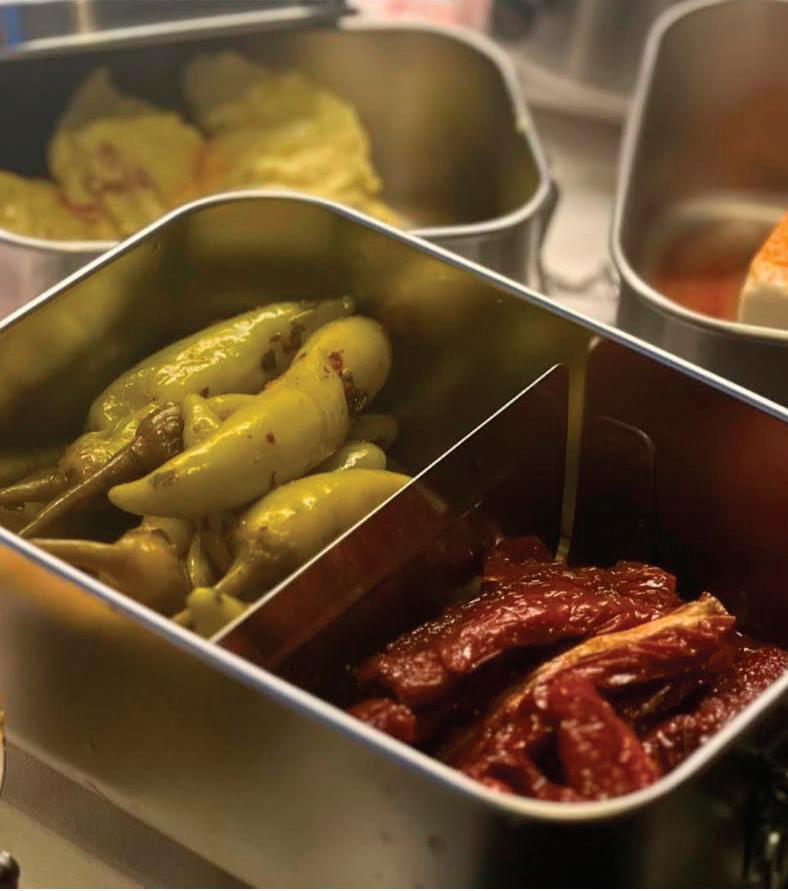
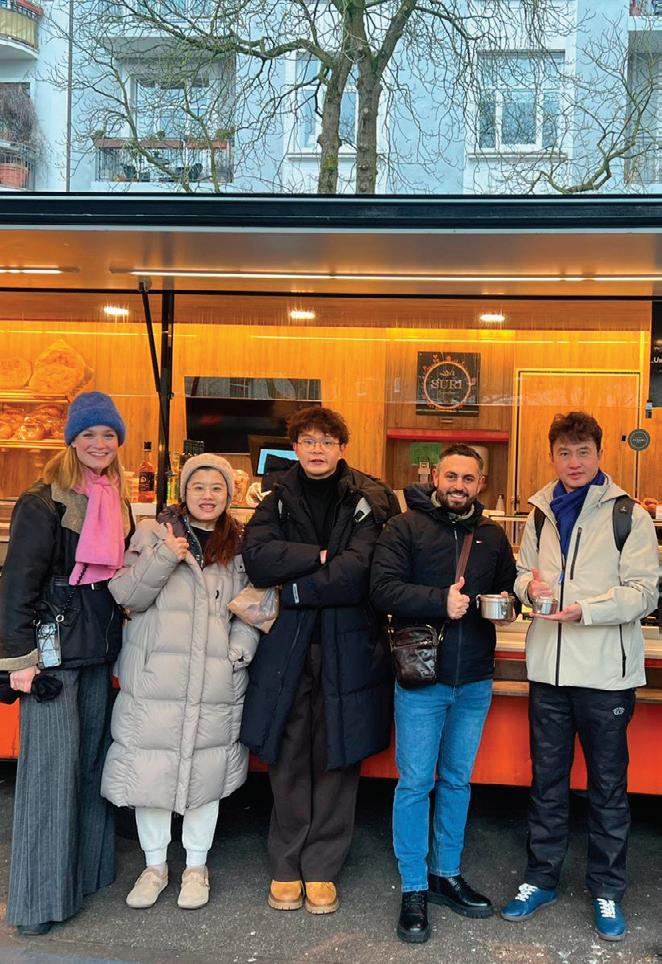
Weekly food markets are an important part of everyday food consumption in Hamburg. SURI Signature GmbH used the pilot to test whether reusable takeaway packaging could be introduced under real market conditions without reducing sales. Two markets with different customer profiles were selected: Goldbekmarkt with many regular customers and Isemarkt with a higher share of spontaneous visitors. This allowed the project to compare two reuse strategies in practice.
Reductions
Single-use takeaway containers reduced through reusable container options
Gains
Two reuse strategies tested at different weekly markets
Investment
Reusable containers
Bring-your-own containers used mainly by regular customers
Reusable bowl pooling system suited for spontaneous visitors
Operational adjustments and washing logistics
Category
Weekly food market
Theme
Reusable takeaway packaging strategies for street food
Climate technology
Bring-your-own container model and provider-owned reusable bowl pooling system
Organisations
SURI Signature GmbH, REBOWL / RECUP, BEF Germany, Kiel University
Staff training and communication materials
The pilot showed that reusable takeaway systems can work at weekly food markets without negatively affecting sales. By testing two different reuse models, the project generated insights into how customer behaviour and market structure influence the success of reusable packaging.
Customer behaviour differs strongly between markets. Locations with regular customers were more suited to bring-your-own systems, while markets with many one-time visitors required low-barrier deposit-based container systems.
Analyse customer behaviour
Identify whether the market mainly attracts regular customers or spontaneous visitors.
Reuse systems can be scaled at food markets when the chosen model matches the customer profile.
Combining different reuse strategies may be necessary in urban environments with diverse visitor groups.
Technical:
Reusable food containers and washing logistics.
Staff training and cooperation with pooling system providers.
Economic:
Investment in reusable containers and operational adjustments.
Competence:
Customer communication and behaviour-change incentives.
Select an appropriate reuse model
Test bring-your-own containers or provider-owned pooling systems depending on customer profiles.
Train staff to promote reuse
Explain the system directly at the point of sale and guide customers through the process.
Use incentives for behaviour change
Offer discounts or simple deposit systems to encourage customers to choose reusable containers.
Testing a city-wide reusable container model for restaurants and cafés
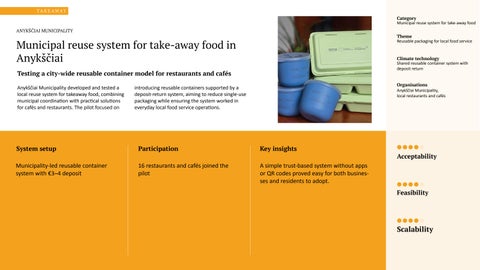
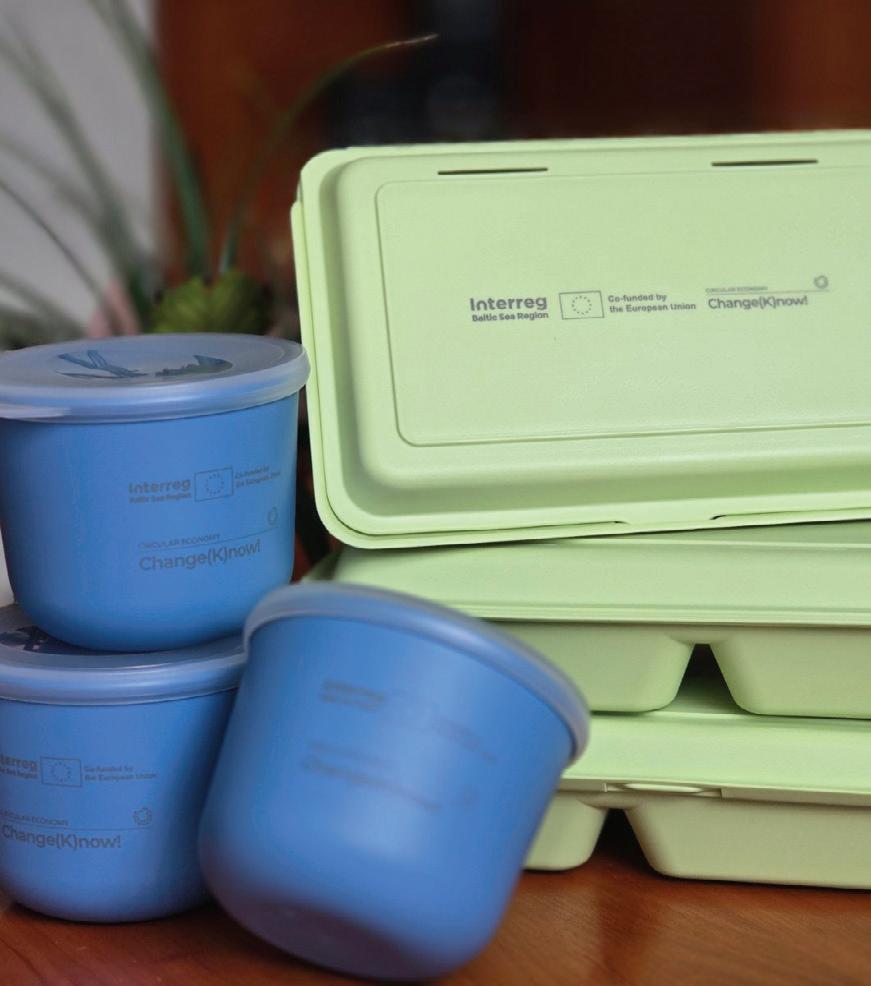
Anykščiai Municipality developed and tested a local reuse system for takeaway food, combining municipal coordination with practical solutions for cafés and restaurants. The pilot focused on introducing reusable containers supported by a deposit-return system, aiming to reduce single-use packaging while ensuring the system worked in everyday local food service operations.
System setup Participation
Municipality-led reusable container system with €3–4 deposit
Key insights
16 restaurants and cafés joined the pilot A simple trust-based system without apps or QR codes proved easy for both businesses and residents to adopt.
Category
Municipal reuse system for take-away food
Theme
Reusable packaging for local food service
Climate technology
Shared reusable container system with deposit return
Organisations
Anykščiai Municipality, local restaurants and cafés
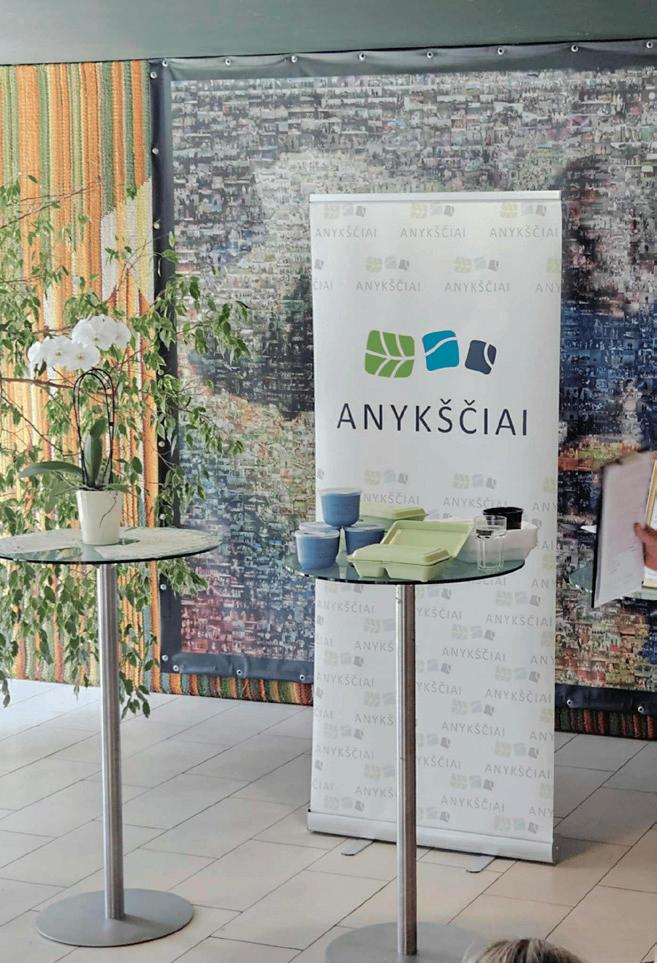
The pilot demonstrated that municipalities can initiate reuse systems even without national legislation requiring reusable packaging. By introducing a shared container pool and deposit system, Anykščiai enabled local restaurants to offer reusable take-away packaging without investing individually in infrastructure. The initiative reduced dependence on single-use packaging while strengthening cooperation between businesses and the municipality.
The system relied on voluntary participation from restaurants, which required continuous communication and trust-building. Public procurement rules prioritising the lowest price also created challenges when selecting durable reusable containers.
Build a local reuse coalition
Engage restaurants and cafés early and develop agreements for participation.
Scaling potential
The pilot shows that small municipalities can lead reuse transitions by providing shared infrastructure and coordination.
The system is transferable to other towns where restaurants are located within a compact urban area.
Standardised reusable take-away containers
Coordination between municipality and restaurants
Economic
Municipal investment in container procurement
Competence
Communication campaigns targeting both residents and businesses
Provide shared containers
Procure standardised reusable containers and distribute them to participating businesses.
Introduce a simple deposit system
Allow customers to return containers at any participating establishment.
Communicate locally
Use signage, stickers and local media to familiarise residents with the system.
Testing reusable takeaway packaging infrastructure in Copenhagen
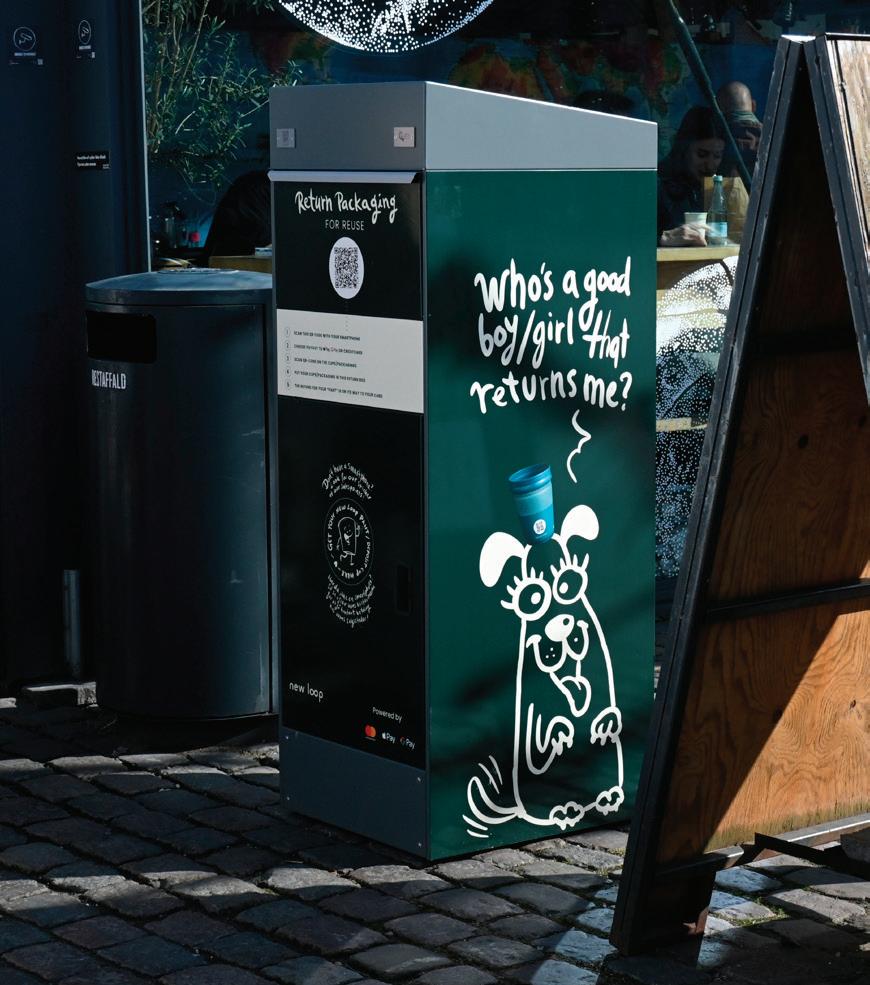
Copenhagen launched a city-wide reusable packaging system using reverse vending machines placed in public spaces. The system combines reusable takeaway packaging, digital deposit refunds and QR-based return technology to support reuse across cafés, food courts and takeaway businesses in the inner city.
Category
Urban takeaway reuse infrastructure
Theme
Reusable takeaway packaging in public spaces
Climate technology
Reusable packaging system with reverse vending machines and digital deposits
Organisations
City of Copenhagen, NewLoop, Torvehallerne and participating businesses
Single-use takeaway packaging reduced through city-wide reuse system
38 return points installed across central Copenhagen
Reverse vending machines and digital infrastructure
Digital deposit refund system launched through QR-based app
Business incentives and operational coordination
Torvehallerne food court integrated into the system
Communication and behavioural nudging activities
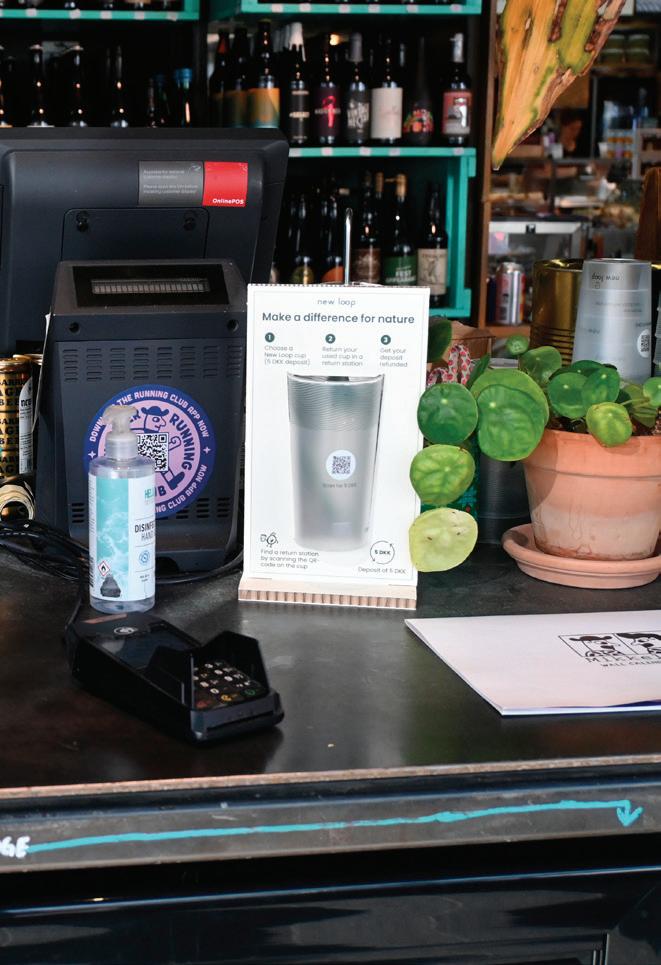
The pilot demonstrated how municipalities can support city-wide reuse systems through public procurement, strategic partnerships and financial incentives. Reverse vending machines simplified the return process and created the foundation for a scalable reuse infrastructure.
City-wide systems require strong coordination between technology providers, businesses and municipalities. User participation depends on convenient return infrastructure and clear communication.
”Reuse only becomes mainstream when returning the packaging is as easy as throwing it away.”
– City of Copenhagen
Public return infrastructure can support reusable packaging systems at city scale.
Technical:
Reverse vending machines and digital deposit systems.
The model is particularly relevant for dense urban areas with high takeaway food consumption.
Economic:
Investment in infrastructure and business incentives.
Organisational:
Coordination between operators, businesses and municipalities.
Competence:
User communication and operational management.
Simplify the return process
Use digital deposits and QR-based refunds.
Encourage user participation
Test behavioural nudging and communication measures.
Testing reusable takeaway packaging in ministry canteens in Tallinn
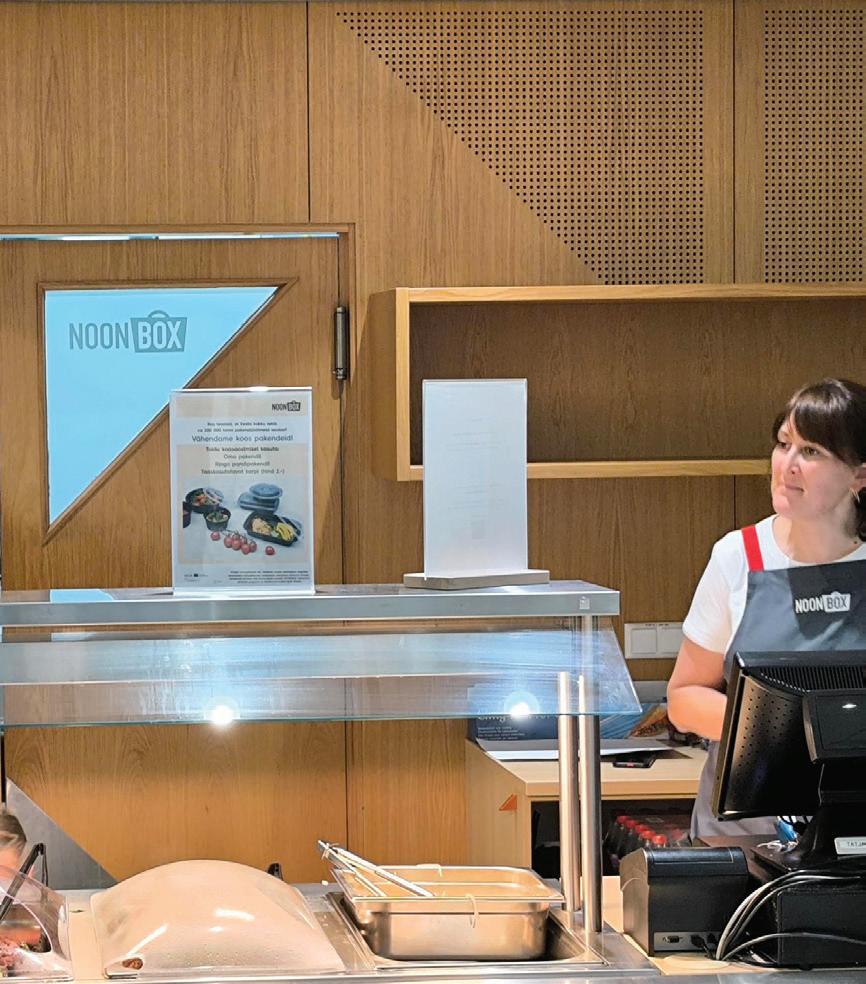
In a joint ministry building in Tallinn, two workplace canteens tested the removal of disposable packaging for takeaway food. The pilot introduced multiple reusable options including bring-yourown containers, deposit-based system and reusable boxes for purchase, aiming to reduce packaging waste in a closed workplace environment.
Category
Workplace takeaway food system
Theme
Reusable takeaway containers in institutional catering
Climate technology
Reusable container systems including bring-your-own, deposit and purchased containers
Organisations
Baltic Restaurants Estonia AS, Ringo Eco OÜ, Ministry building stakeholders
Single-use takeaway packaging removed from workplace canteens
Reusable systems adopted by employees in the ministry building
Reusable containers and deposit system setup
Bring-your-own containers widely used by customers
Deposit system introduced with limited but growing use
Staff training and communication efforts
Operational adjustments in canteen workflows
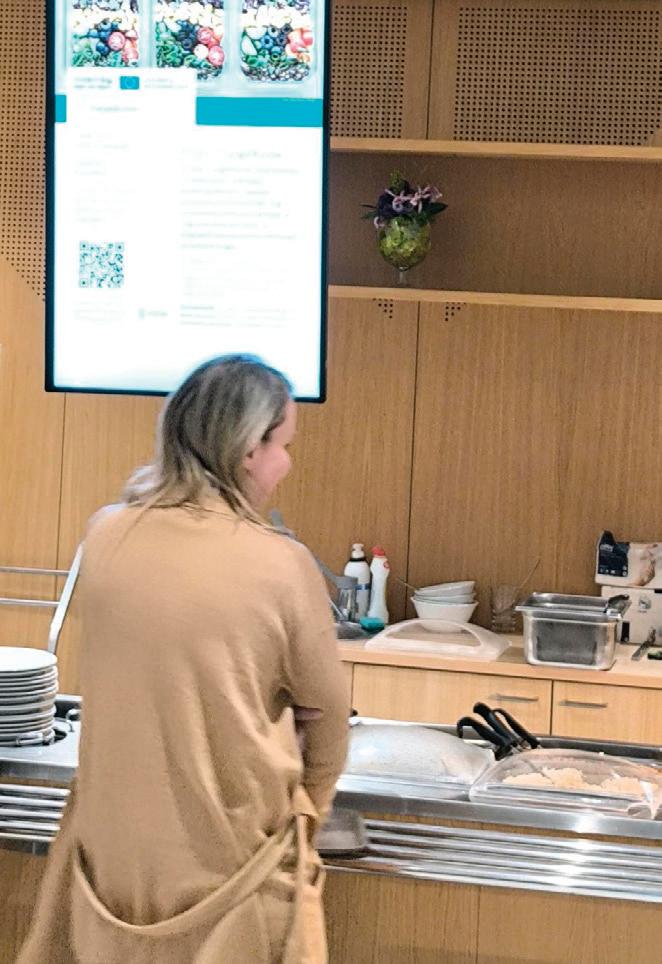
The pilot showed that removing single-use packaging can significantly reduce waste while maintaining service efficiency. By offering several reusable options, users quickly adapted to new routines and reusable systems became the default choice.
”If
you remove the disposable option, people quickly adapt to reusable solutions.”
– Tiiu Endrikson
User convenience is critical. If return systems are fragmented or require additional effort, adoption decreases. Clear communication and removing single-use alternatives are essential for success.
Remove single-use options Eliminate disposable packaging to drive behaviour change. Offer multiple reuse options
Provide deposit systems, reusable containers and bring-your-own options.
Closed environments such as office buildings are highly suitable for reusable takeaway systems. The approach can be replicated in workplaces, campuses and similar settings.
Technical:
Reusable containers and return infrastructure. Economic:
Initial investment in containers and deposit systems.
Organisational:
Staff training and coordination.
Competence:
Communication and user engagement.
Inform clients and train staff
Provide information signs and ensure employees understand new tasks and explain the system clearly to users.
Make return convenient
Install simple and accessible return solutions.
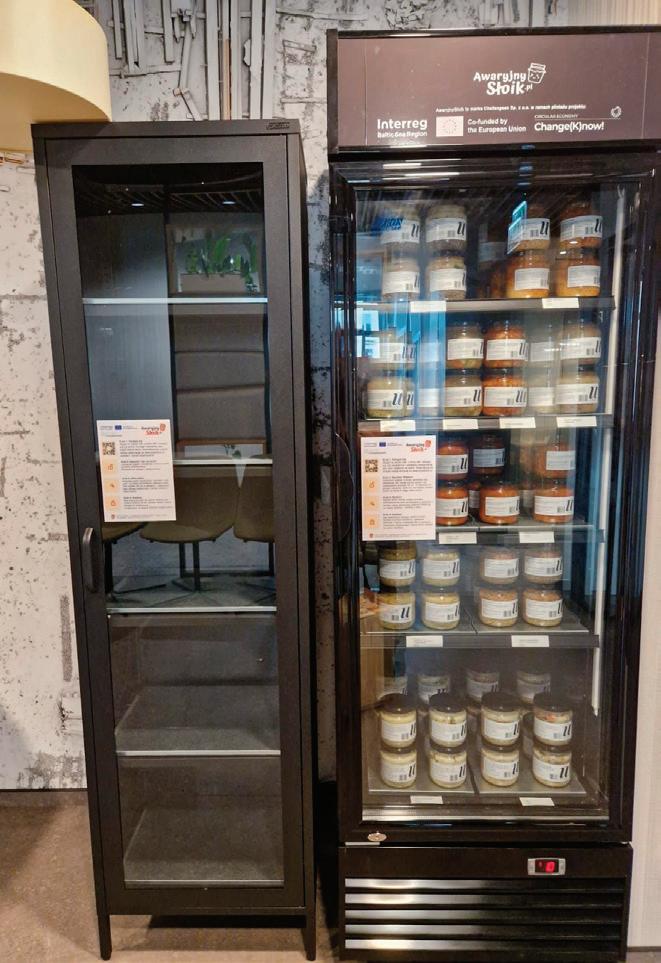
Three vending machines, one delivery and long-shelf-life meals proved that reuse can work with minimal operational overhead.
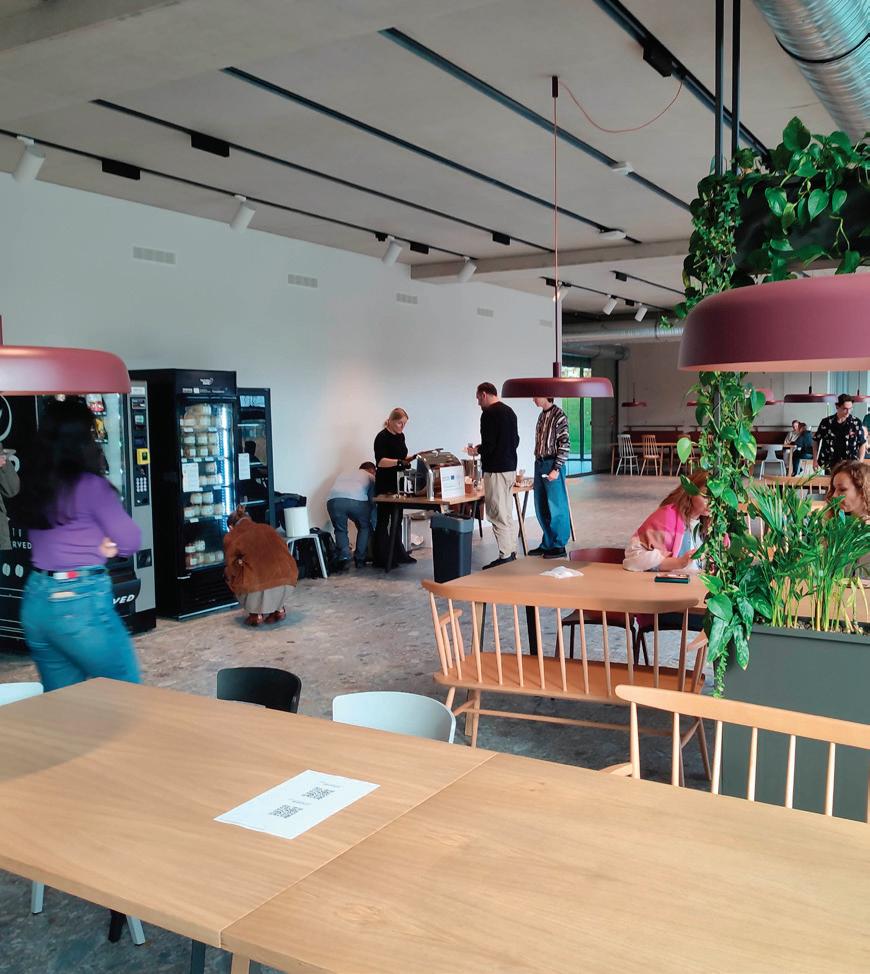
The Venloop pilot introduced reusable-jar meal vending in a real-world office setting in Poland. The goal was to test whether smart vending, reusable jars and a digital deposit flow could create a practical low-waste food distribution model in
offices. Across the pilot, the system focused less on maximising immediate climate savings and more on validating user behaviour, return habits and operational simplicity.
Reductions
~17 kg CO2 saved through returned containers entering the next reuse cycle 44% conversion from 102 onboarded users to 45 buyers
~6 kg waste avoided through 170 successful returns
return rate achieved across sold meals
delivery only
0 food waste enabled by products with a 6-month shelf life
orders per active user showing repeated behavior instead of one-off trials
sell-through (200 of 360 delivered meals
without expiry pressure)
Category
Theme
Reuse systems & circular
packaging Climate technology Smart vending, digital tracking and reusable jars
Organisations
Venloop, local restaurant partners, office hosts
The pilot is strongest as proof of behavior change and operational simplicity, not yet as a net-climate optimization case. Across 120 days, the pilot demonstrated the fundamentals required for scaling: users converted, came back repeatedly and returned jars at a very high rate without heavy logistics. At the same time, the pilot demonstrated the fundamentals required for scaling: users converted, came back repeatedly and returned jars at a very high rate without heavy logistics. Each additional order improves utilization while infrastructure and delivery effort stay comparatively stable.
This is why the pilot should be presented as validation of a working reuse loop: nearly half of users converted, active users averaged almost four orders each, and the system ran with one delivery and zero food waste.
The model is highly relevant for offices, campuses, hospitals and public buildings where users repeat purchases in the same location.
The pilot shows that long-shelf-life products decouple logistics from consumption, allowing stock to remain available without constant refilling.
As usage grows on the same installed base, CO2 per order falls while the reuse loop becomes more attractive operationally and financially.
Low utilization can make early-stage energy use look heavy on a per-order basis. That is typical for a pilot phase and should be read together with the strong return loop, low logistics burden and longshelf-life stock model.
A small share of jars is still outside the loop, but this is better described as a delayed return cycle than permanent loss because users can continue to return packaging over time. Energy use across the three machines totalled 698 kWh over 120 days (≈489 kg CO2 at 0.7 kg CO2/kWh), which looks heavy per order at this stage but will improve significantly as usage scales on the same installed base.
Technical:
Connected vending machines, payment flow and simple tracking of returns and reuse cycles
Economic:
Reusable jar inventory plus a product mix that stays saleable long enough to avoid waste
One operator coordinating vending locations, jar loop reporting and occasional collections
Competence:
User onboarding, clear return communication and simple reporting of funnel and return metrics
Find local restaurants
Start with restaurants that want to reach new customers through office distribution.
Share the Venloop playbook
Share the Venloop playbook from the Change(K)now website, including materials and instructions for preparing a product line that fits the system. 1
Launch through the platform
The restaurant joins the ready ecommerce flow and adds products directly to the platform.
Install the vending where demand exists
The operator deploys a ready Venloop machine in offices where managers choose the meal selection from the local restaurants.
The publications of Circular food delivery systems were produced under the Change(K)now! project. The Change(K)now! project is co-funded by Interreg Baltic Sea Region. The project´s main objective is a mindset change from single-use to circular or multiple-use of food delivery systems in cities and residents of the Baltic Sea Region. The responsibility for the content lies with the author(-s) and don´t necessarily reflect the funder position on these topics.
CIRCULAR ECONOMY