Case studies: Circular food delivery systems at events
Read all case studies here:
Change(K)now! case studies
CIRCULAR ECONOMY
Change(K)now!
Read all case studies here:
Change(K)now! case studies
CIRCULAR ECONOMY
Change(K)now!
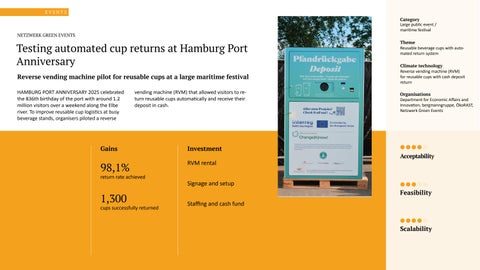
Reverse vending machine pilot for reusable cups at a large maritime festival
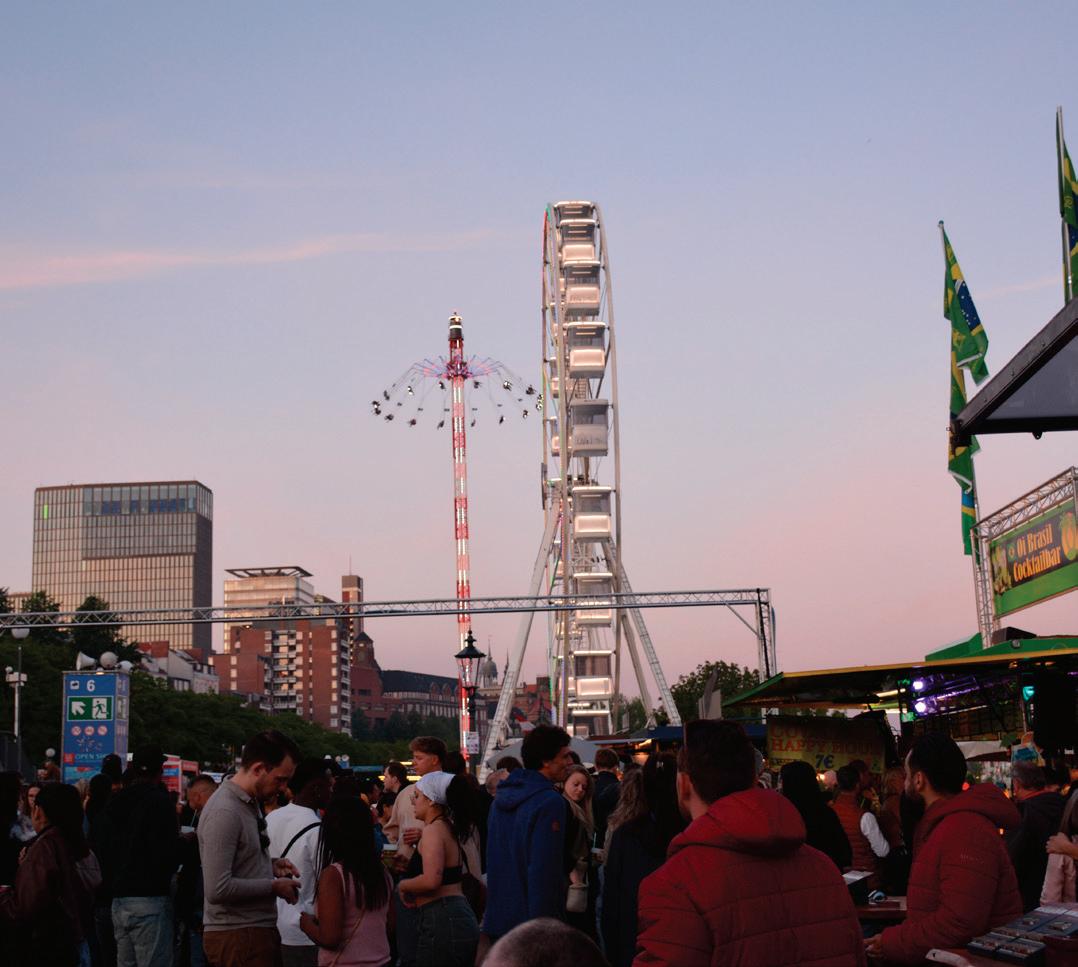
HAMBURG PORT ANNIVERSARY 2025 celebrated the 836th birthday of the port with around 1.2 million visitors over a weekend along the Elbe river. To improve reusable cup logistics at busy beverage stands, organisers piloted a reverse
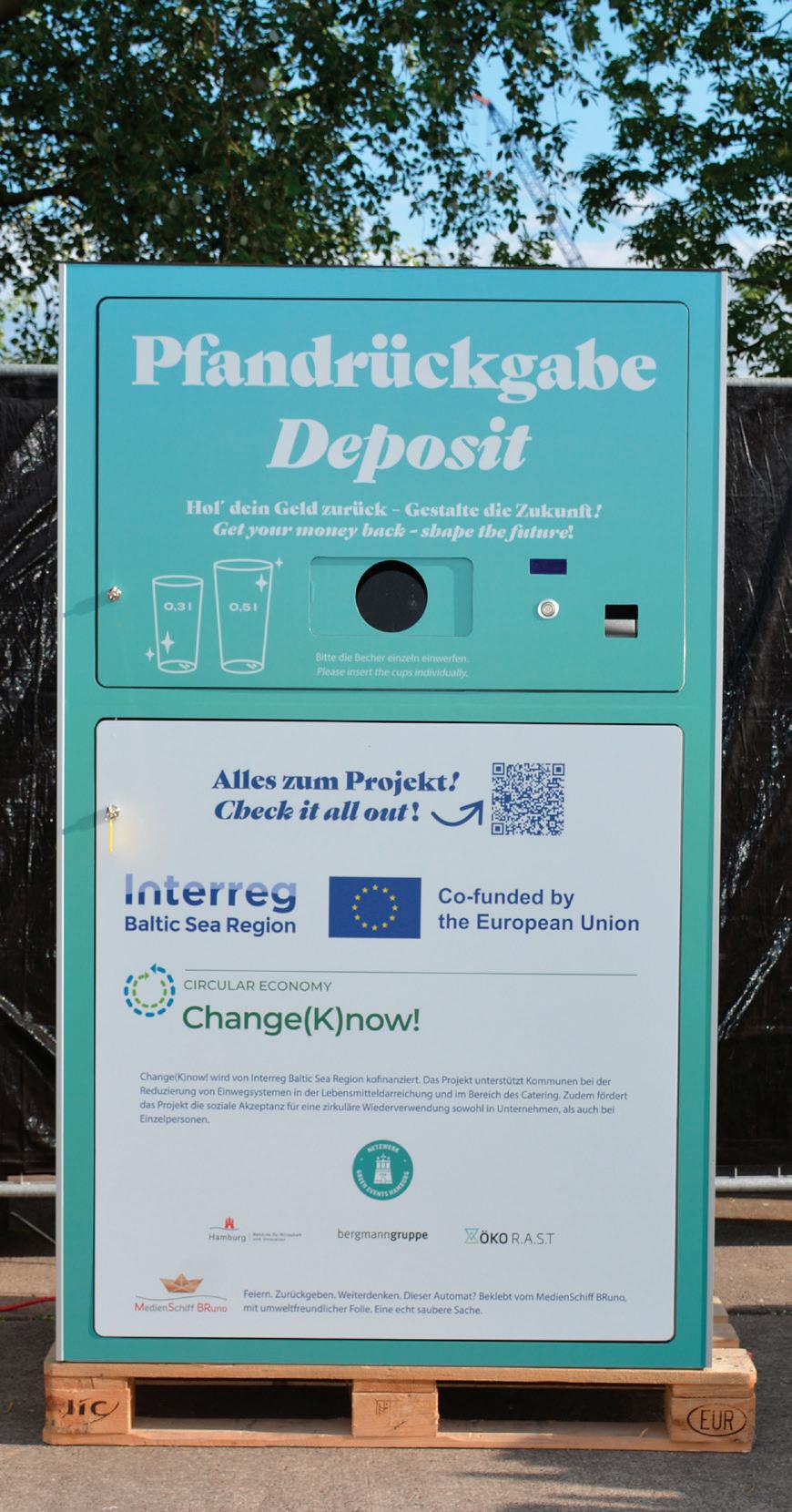
vending machine (RVM) that allowed visitors to return reusable cups automatically and receive their deposit in cash.
1,300
98,1% return rate achieved cups successfully returned
and setup Staffing and cash fund
Category
Large public event / maritime festival
Theme
Reusable beverage cups with automated return system
Climate technology
Reverse vending machine (RVM) for reusable cups with cash deposit return
Organisations
Department for Economic Affairs and Innovation, bergmanngruppe, ÖkoRAST, Netzwerk Green Events
The pilot tested whether automated cup return infra‑ structure could simplify reusable systems at large pub‑ lic events. By enabling visitors to return cups directly to a machine and receive a cash refund, the system aimed to increase return convenience and reduce workload for beverage vendors during peak hours.
”I could imaging that in the future, it will only work with such machines, that it will be standardized and all event organizers will work with them”
‑ Stand operator
Reverse vending machines require monitoring and maintenance. If the collecti‑ on bag becomes full or coin boxes empty, the system stops functioning and must be serviced quickly.
Install automated re‑ turn points. Ensure clear signage and multilingual instruc‑ tions.
Automated return systems could significantly improve reuse logistics at very large events by reducing queues and vendor workload. How‑ ever, scaling requires compatibility between cup systems and reliable operational support.
Technical:
Reverse vending machine and compatible reusable cups.
Economic:
Machine rental, logistics and deposit funds.
Organisational:
Coordination between event operators and vendors.
Train staff to assist vi‑ sitors and monitor the system.
Competence:
Staff training and visitor guidance.
Evaluate user behaviour and operational perfor‑ mance.
Testing a reusable cup system during a running event
The Hamburg Sunset Series is an evening running event held in the Wilhelmsburger Inselpark. In 2025 the event tested a reusable cup system at the water station along the running track. The aim was to reduce single use waste generated by
disposable cups while ensuring that runners could return cups safely without disrupting the race.
Disposable cups replaced with reusable cups at refreshment stations along the running track ≈700 participants in the running event
≈3,000
Reusable cups Delivery, washing and collection logistics
reusable cups used during the race Additional staff supervision for return baskets
©Johannes Schoelermann 28
Category
Sport event / running race
Theme
Reusable beverage cups at sports events
Climate technology
Reusable cup system with collection baskets and full‑loop logistics
Organisation
Hamburg Sunset Series organisers, FAIRPLATE Mehrwegsysteme GmbH, Netzwerk Green Events
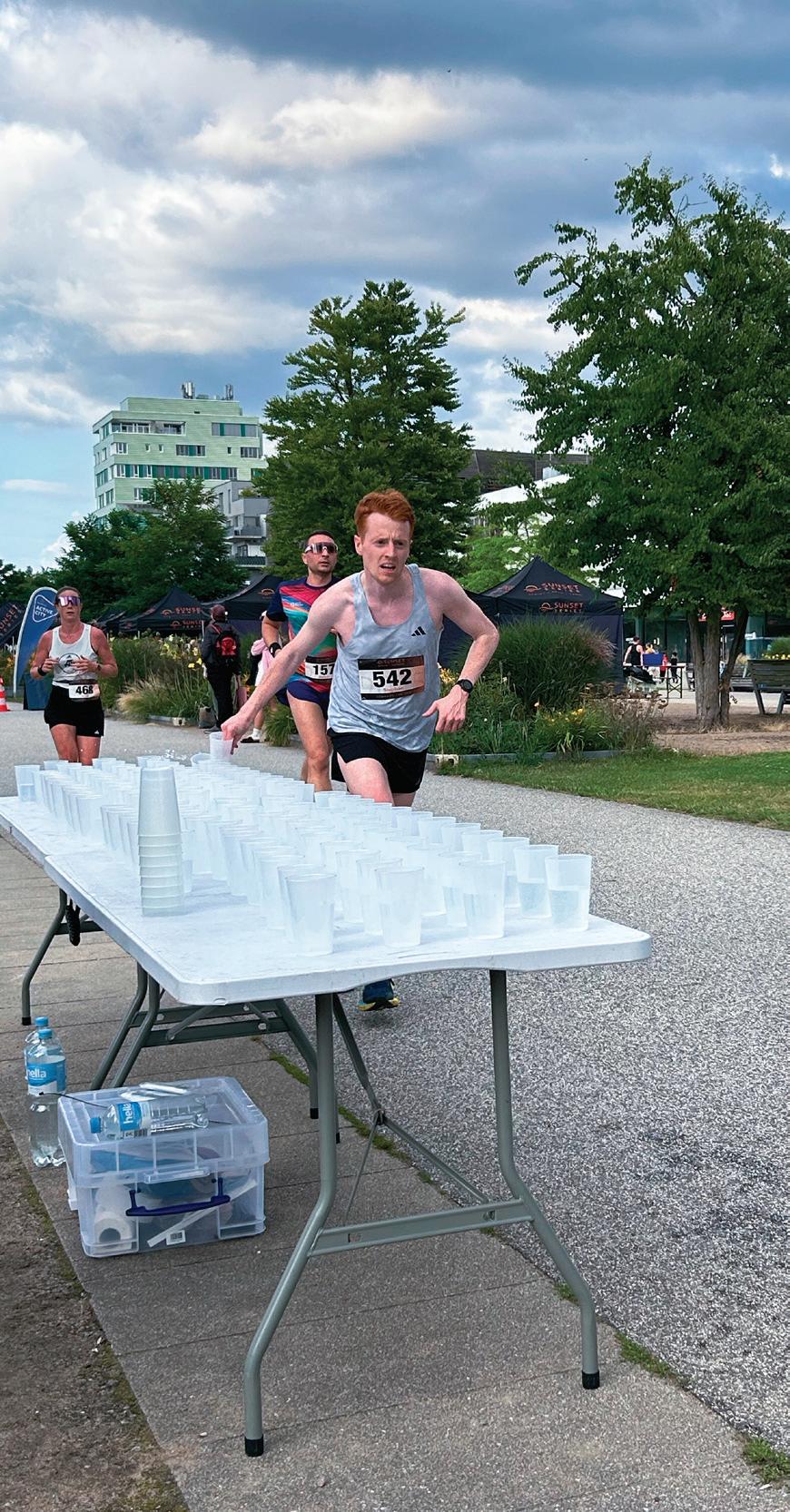
Return baskets placed along the course to enable easy cup return

The pilot demonstrated that reusable cups can work even in dynamic environments such as a running race. Cups were distributed at a refreshment station and runners returned them in baskets placed along the course. The system significantly reduced single‑use wa‑ ste and showed that participants quickly adapt when the process is intuitive.
Cups left on the running track can create tripping hazards. Clear communica‑ tion and well placed return baskets are necessary to en‑ sure safety during the race.
Partner with a reusable cup service provider.
Place return baskets near refreshment stati‑ ons.
Reusable cups can be applied to running events when supply points and return points are centralised. However, scaling to large races requires higher capacity logistics and careful safety management as well as covera‑ ge for higher costs.
Technical:
Reusable cups and collection baskets.
Economic:
Service provider for delivery, washing and collection.
Organisational:
Clear return process along the track.
Inform participants about the system in advance.
Competence:
Communication to runners be‑ fore and during the event.
Use clear signage along the track.
Scaling reusable food and beverage containers at a major international football event
The UEFA EURO 2024 Fan Zone in Hamburg brought together football fans from across Europe at Heiligengeistfeld for a month‑long public viewing and cultural programme. With more than 600,000 visitors overall, the event introduced a
binding sustainability concept including a mandatory reusable system for food and beverages. The system aimed to minimise single‑use packaging while maintaining a simple and convenient experience for international visitors.
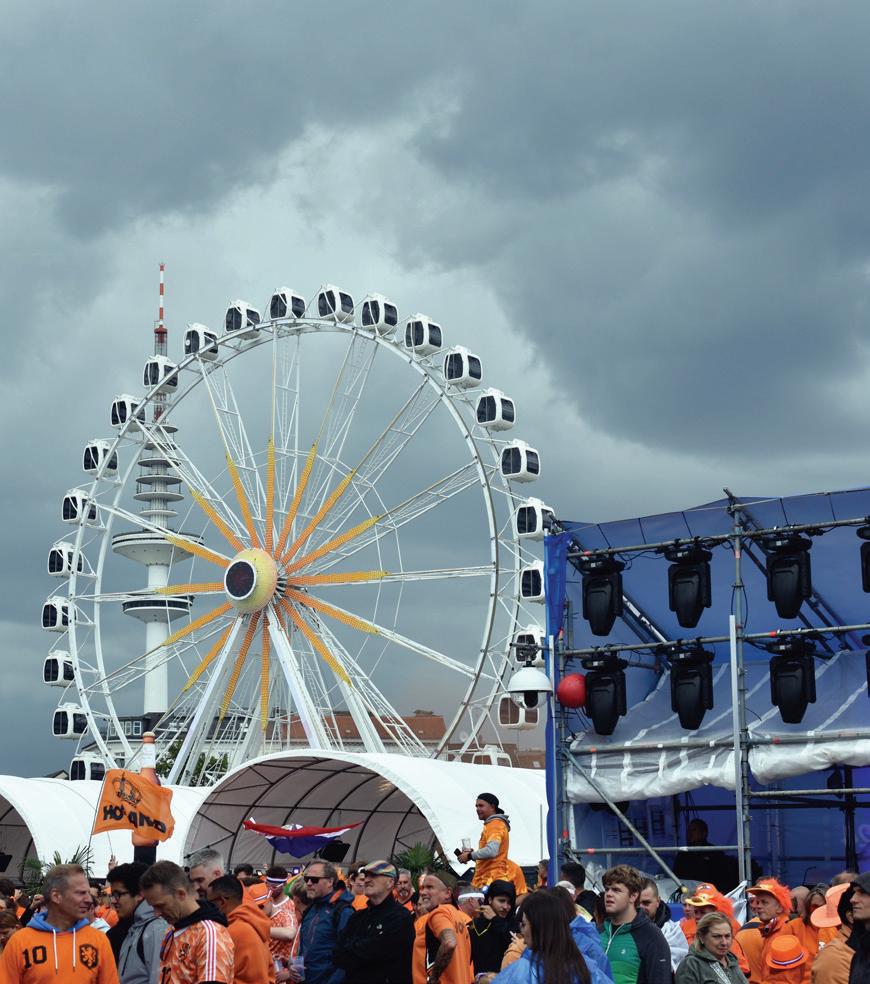
Disposable cups and containers replaced with reusable alternatives across the fan zone
≈614,000 visitors during the event
Up to 50,000 visitors per day
≈384,000 disposable cups and
≈30,000 food containers avoided
Investment
Reusable container system and washing logistics
Subsidies and coordination by the City of Hamburg
Communication materials and volunteer staffing
Category
Large international Fan Zone event
Theme
Reusable food and beverage containers at mega events
Climate technology
Organisations Mandatory reusable container system with central return station
Netzwerk Green Events, Department of Environment, Climate, Energy and Agriculture Hamburg, bergmanngruppe, FAIRPLATE Mehrwegsysteme GmbH
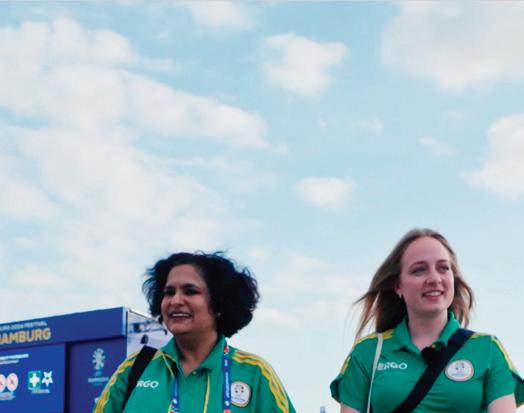



The Fan Zone demonstrated that reusable systems can operate successfully at very large events with international audiences. A mandatory reuse regulation ensured that all providers either used a centrally organized and subsidized system or implemented their own solution. The reusable system was supported by a central return point and clear communication. The approach prevented approximately 384,000 disposable cups and 30,000 disposable food containers during the event.
Selecting a service provider capable of handling the scale of the event proved challenging. An initial cash based return system without tokens led to professional cup collecting and theft. After introducing tokens, the return process stabilised. Multilingual communication was also necessary because visitors came from many different countries.
The case shows that reusable systems can be implemented at large international events when clear rules apply to all vendors and infrastructure is designed for high visitor flows. Central return stations and strong coordination are key elements for scaling reuse at major sporting events.
Technical:
Reusable food containers and cups with central return infrastructure.
Economic:
Subsidies and logistics support for reusable service providers.
Organisational:
Binding sustainability concept and vendor coordination.
Competence:
Multilingual communication and volunteer support for visitors.
Define binding reuse rules
Require all vendors to use reusable cups and food containers.
Install central return infrastructure
Support vendors and logistics
Work with a specialised service provider for washing and container logistics.
Provide easily accessible return stations for large visitor flows. 1 2 3 4
Communicate clearly with guests
Use signage, screens and volunteers to explain the reusable system.
Digital ‘reverse’ vending machines and mandatory reuse packaging optimise waste management at major city festival.
The Copenhagen Sprint is an international cycling race and festival attracting around 10,000 visitors per day. Like many free entry public events, it faces challenges with packaging waste and low return rates for reusable cups. A reverse vending
machine solution, supported by a digital deposit platform, enables visitors to return their reusable cups and either reclaim or donate their deposit, while allowing organisers to monitor return rates in real time.
71 kg waste 23,750
1,111 kg CO₂ 87.54% saved through reuse return rate achieved diverted from landfills items successfully returned Staff
Vending machines and boxes
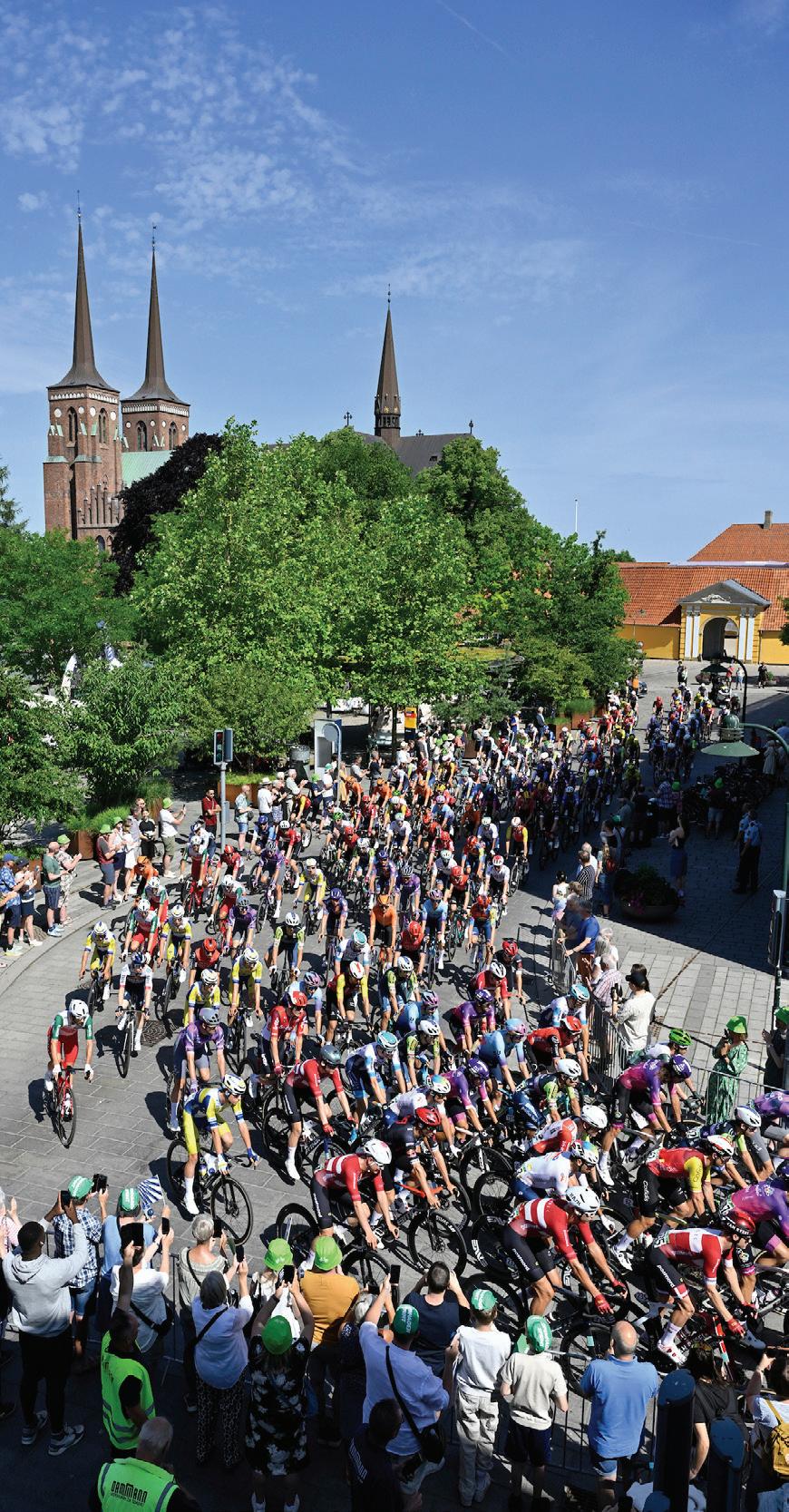
Items donated to charity
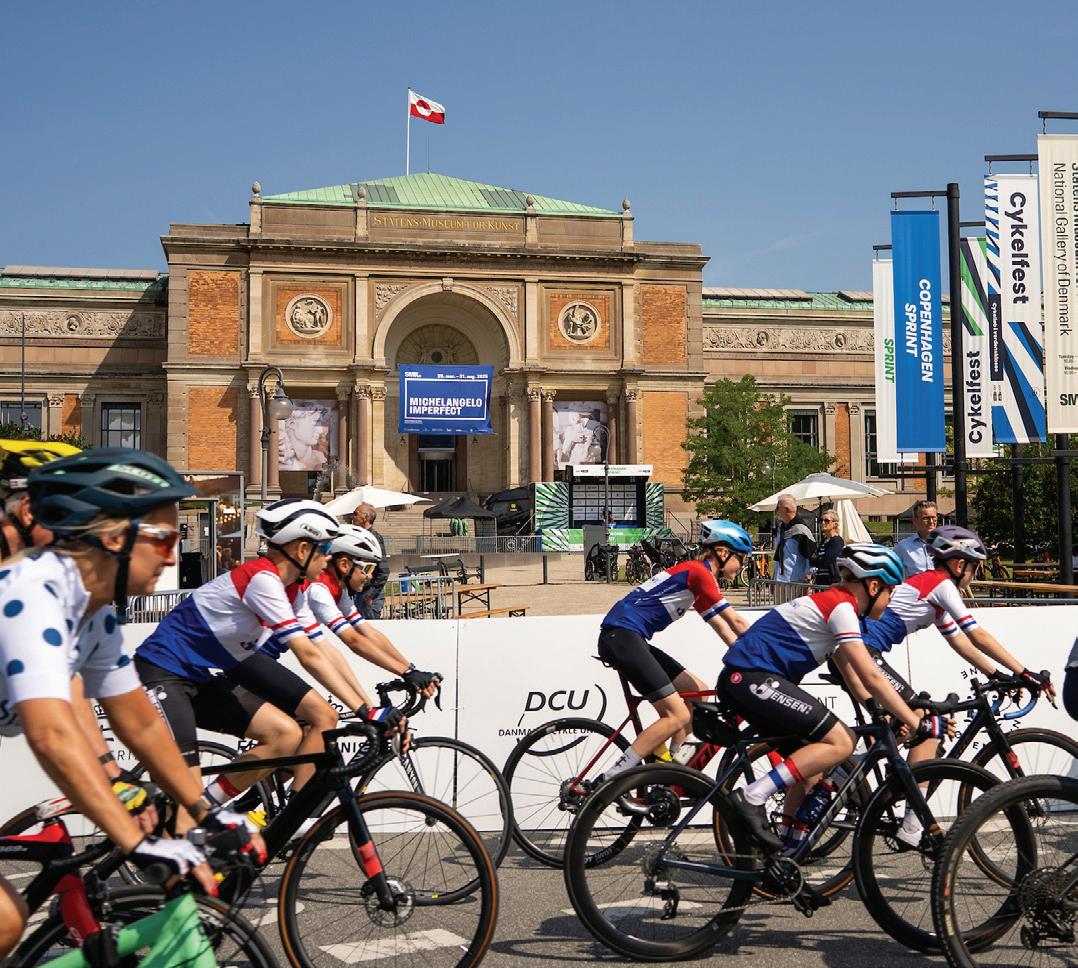
The pilot demonstrates that digital reuse systems significantly reduce the carbon footprint of large-scale public events by preventing waste at the source. The integration of a digital donation option proved to be an effective way to boost visitor acceptance and generate charity contributions without increasing operational costs. The data collected provides a solid business case for scaling the system to future city festivals, where standardisation and higher volumes will ensure even greater climate impact per invested krone.
Digital barriers and complex return steps can also cause queues. Ensure a simple UI, sufficient return capacity in boxes, and thorough staff training. Note small vendors’ challenges with storage and pre-financing.
Scaling potential
High relevance for all municipalities hosting large-scale festivals, sports events, or public celebrations.
The pilot demonstrates that standardized digital reuse systems can be implemented with low barriers by partnering with specialised service providers.
With a proven return rate and high visitor acceptance through donation incentives, the model offers a scalable ’plug-and-play’ approach to reducing waste and CO2 emissions at major city events
Technical:
IoT-enabled vending machines and a stable digital return platform.
Economic:
Subscription/leasing models and pre-financing for small vendors.
Organisational:
Centralised coordination and selection of experienced service providers
Competence:
Staff training to act as ”Reuse Ambassadors” and guide users.
Partner for logistics
Select a specialised service provider (like New Loop) to manage the deposit system and monitor real-time data
Gamify the return
Simplify the UX
Ensure the digital return process is ”one-click” or staff-assisted to avoid bottlenecks during peak hours
Integrate a donation option; users are more likely to return items if they can easily support a charitable cause 1 2 3 4
Download
Tools & templates on Change(K)now’s website.
Testing reusable food packaging and cups at a large urban sports festival
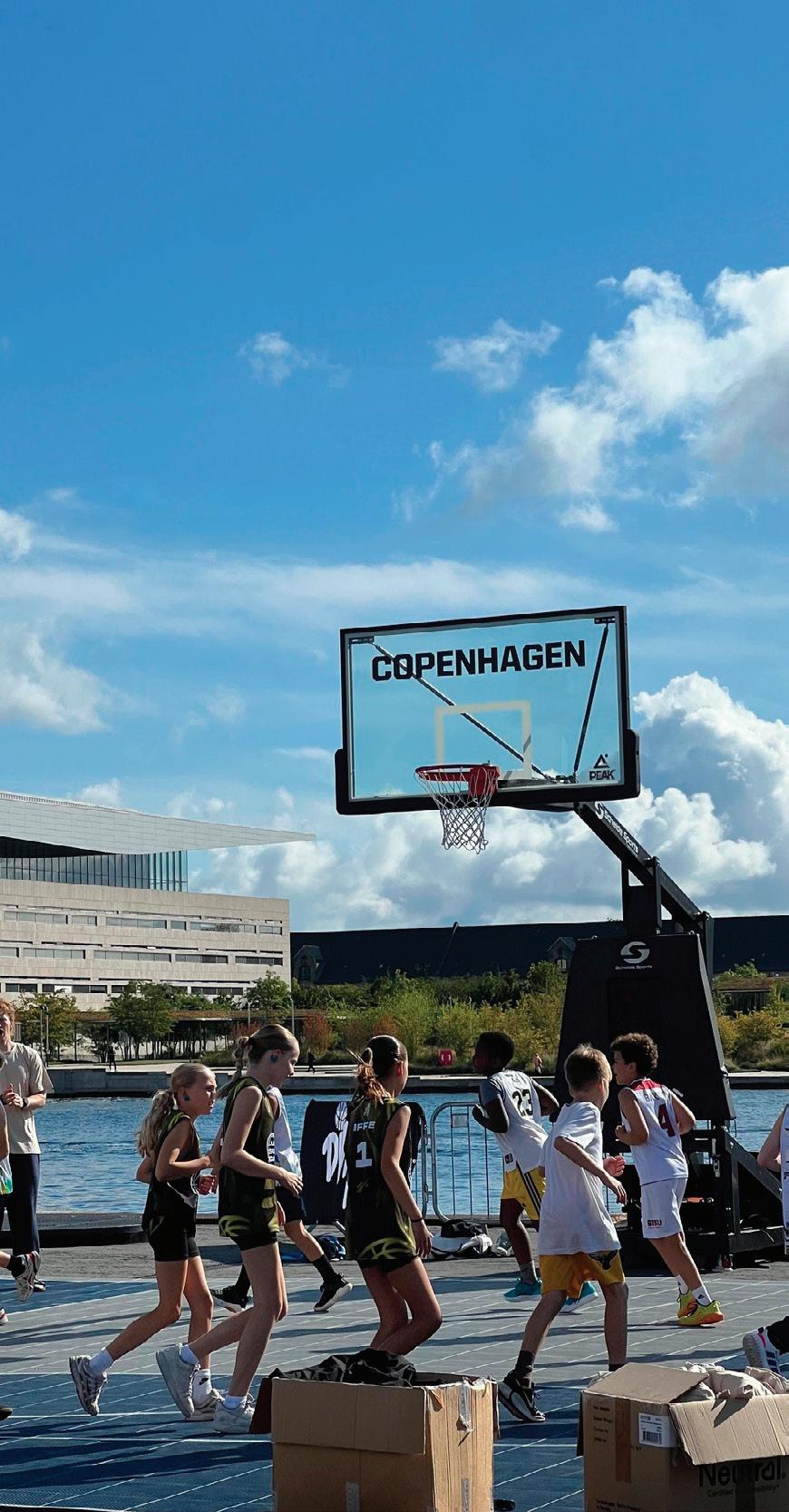
Copenhagen Street Days 2025 combined the European 3x3 Basketball Championship with an urban sports festival in central Copenhagen. Food stalls and public areas attracted thousands of visitors each day.
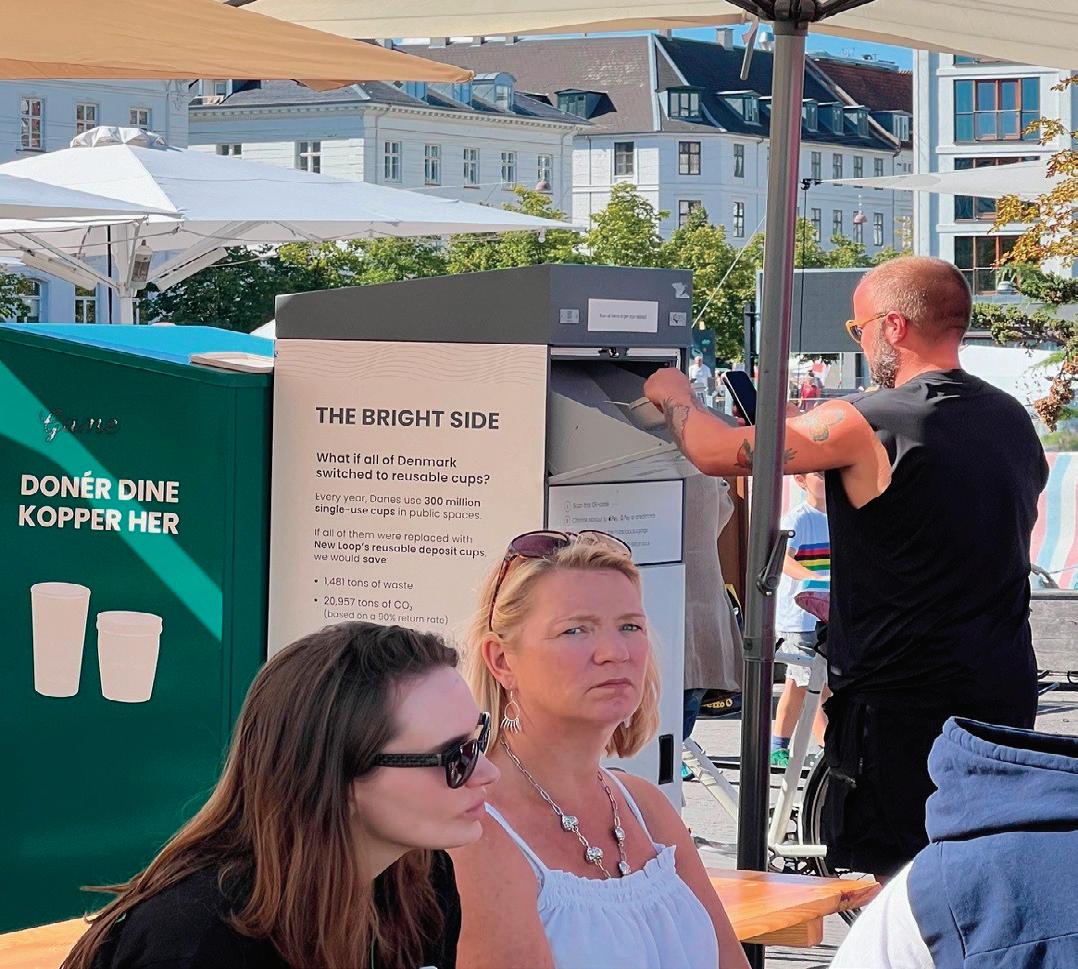
To reduce single-use waste, the organisers piloted a reuse system for food packaging and beverage cups using return stations, a digital deposit flow and a donation option.
Category
Public event / urban sports festival
Theme
Reusable food and beverage packaging
Climate technology
Organisations Digital deposit and return system for reusable cups and food containers City of Copenhagen, New Loop, event organisers and food vendors
Scaling potential
Urban festivals and sports events are well suited for reuse systems because food courts and return points can be organised centrally.
Scaling is strongest when reusable packaging is mandatory across vendors and return stations are clearly placed and staffed.
The reuse system achieved a high return rate and measurable environmental benefits while maintaining a positive visitor experience. Return stations across the venue enabled visitors to return containers and either reclaim their deposit or donate it. Overall return performance indicates that reuse can work in open urban festivals when infrastructure and communication are strong.
”Visitors
didn’t just return the containers –many chose to donate their deposit to support youth initiatives.”
– Sarosh Qureshi
Mixing reusable and single-use packaging created confusion for visitors and vendors. Digital return processes can also create friction if users must use smartphones or enter payment details.
Technical:
Return stations and a digital deposit platform.
Economic:
Vendor deposit handling and logistics for washing and transport.
Organisational:
Coordination between organisers, vendors and reuse provider.
Competence:
Staff training and clear visitor communication.
Define reuse requirements
Require reusable packaging for food and drinks. Install return infrastructure Place clearly marked return stations in central visitor areas.
Communicate the system
Use signage, staff guidance and online information.
Provide incentives
Offer deposit refunds or donation options.
Assessing a decentralised deposit system for reusable cups at a major public event
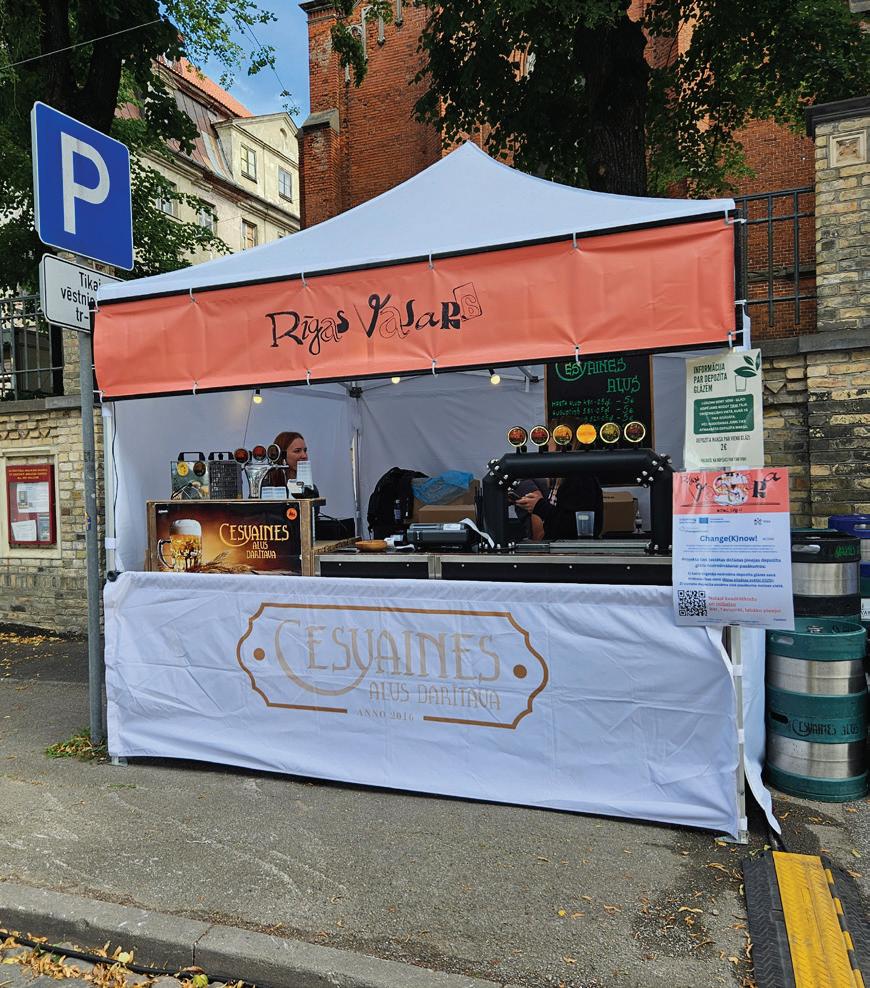
The Riga City Festival is one of Latvia’s largest public celebrations, attracting tens of thousands of visitors across multiple locations in the city. In 2025 organisers piloted a reusable cup deposit system at the main festival venue along the 11
November Embankment. The pilot tested whether a decentralised return model – where cups must be returned to the issuing vendor – could function during a large open-air event while reducing disposable beverage packaging.
Reductions Gains
Disposable beverage cups replaced with reusable cups during the festival pilot
≈60,000 visitors at the Riga City Festival
Investment
Communication materials including posters and stickers
Reusable cup system tested across multiple vendors at the main event venue
Vendor briefings and coordination by municipal organisers
Category
Large public city festival
Theme
Reusable beverage cups at public events
Climate technology
Decentralised reusable cup deposit system with vendor-based return
Organisations
Riga City Council, festival organisers and participating food and beverage vendors
Unified €2 deposit system introduced to simplify communication
Operational monitoring and data collection during the event
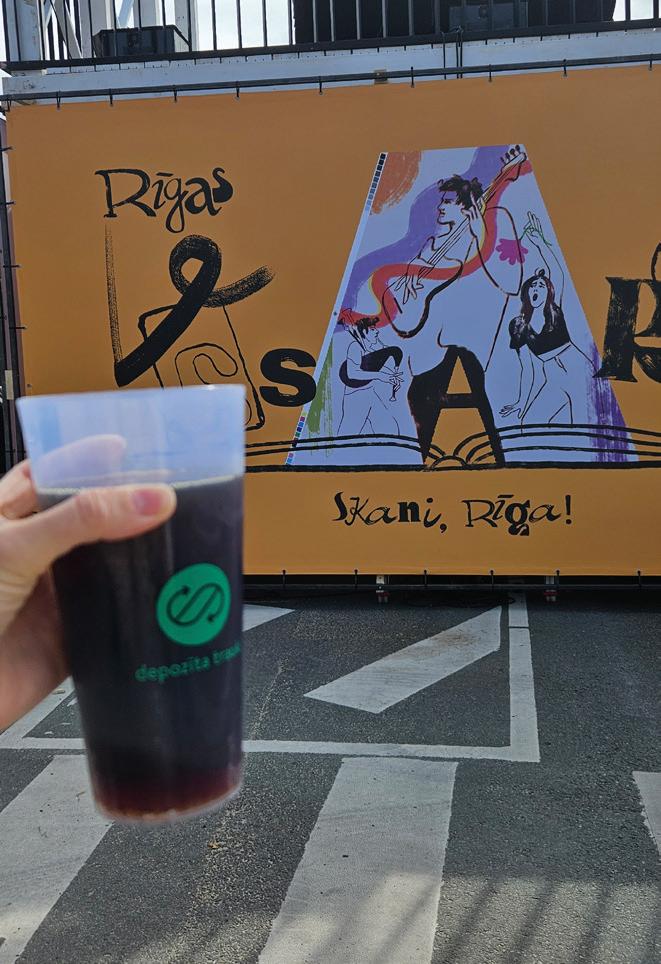
The pilot demonstrated that visitors are generally willing to participate in reuse systems when they are simple and clearly communicated. Reusable cups were distributed by participating vendors and returned to the same stands where they were issued. The system reduced disposable cup use while providing practical insights into operational challenges and visitor behaviour at large public events.
”The pilot showed that reusable cups work well – but asking visitors to return them to the exact vendor quickly creates queues. The return system must be simpler than the purchase system.”
Because cups had to be returned to the issuing vendor, the return process often merged with purchase queues, creating delays and frustration. Handling deposit refunds also proved challenging because many visitors paid by card but vendors needed small amounts of cash for refunds.
Define the return model
Decide whether deposit cup system should be organised by the municipality or vendors.
Scaling potential
Reusable cup systems can work well at large festivals, but decentralised return models can create operational challenges.
Centralised return stations with separate queues and digital refund systems could significantly improve visitor experience and vendor efficiency.
Reusable cups and deposit management system. Economic:
Printing of communication materials and coordination costs.
Organisational:
Coordination between municipality, organisers and vendors.
Competence:
Vendor training and clear visitor communication.
Separate returns from purchase queues
Place dedicated return points so visitors can return cups without waiting in vendor lines.
Simplify deposit handling
Use digital refunds or unified deposit rules to reduce cash handling for vendors.
Communicate clearly to visitors
Use signage and vendor guidance to explain where cups should be returned.
Testing reusable food packaging systems at a cultural mega-event
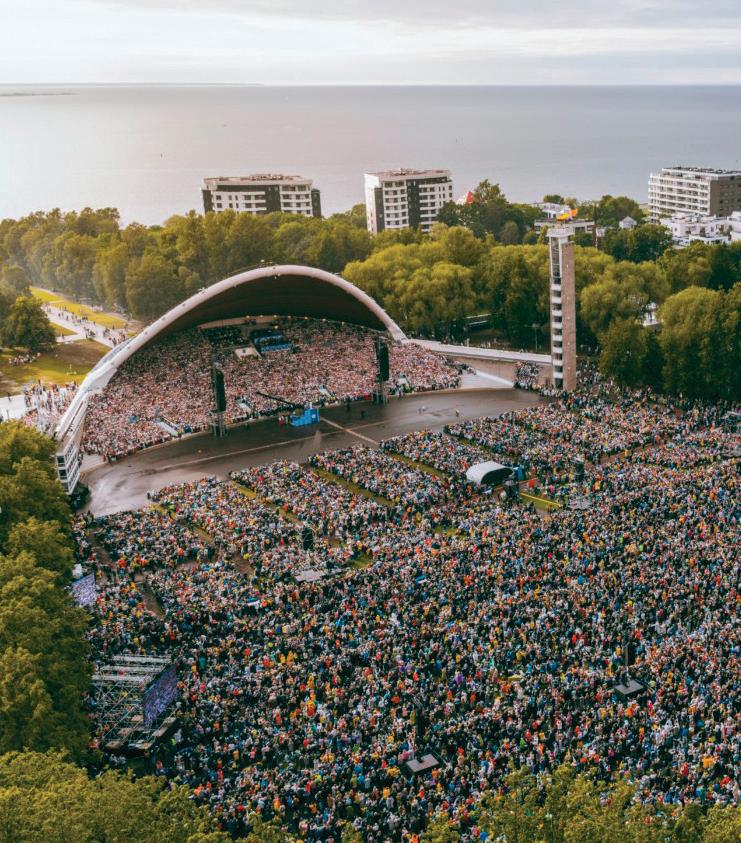
The Estonian Song and Dance Celebration in Tallinn is one of the largest cultural events in the Baltic region and part of UNESCO’s Intangible Cultural Heritage. The festival brings together performers, volunteers and visitors from across Estonia and abroad. In 2025 the organisers piloted a multi-le-
vel reuse system across performer catering, visitor food courts and meal deliveries to accommodation schools. The initiative aimed to reduce single-use packaging while testing how reuse systems can function in a complex event environment with tens of thousands of participants and visitors.
Single-use tableware replaced with reusable dishes across multiple festival areas
≈120,000 visitors and ≈40,000 performers at the festival
Investment
Reusable tableware logistics and coordination
Category
Large-scale cultural festival
Theme
Reusable food packaging and tableware at large public events
Climate technology
Multi-level reusable system including deposit-based tableware, staff-managed return points and reusable meal delivery packaging
Organisations
Tallinn Strategic Management Office, festival organisers, reuse service providers, caterers and delivery platforms
Reuse systems implemented across catering areas, food courts and accommodation schools
Communication materials and training sessions
Deposit return stations and staff-managed collection points
Volunteer staffing and return station management
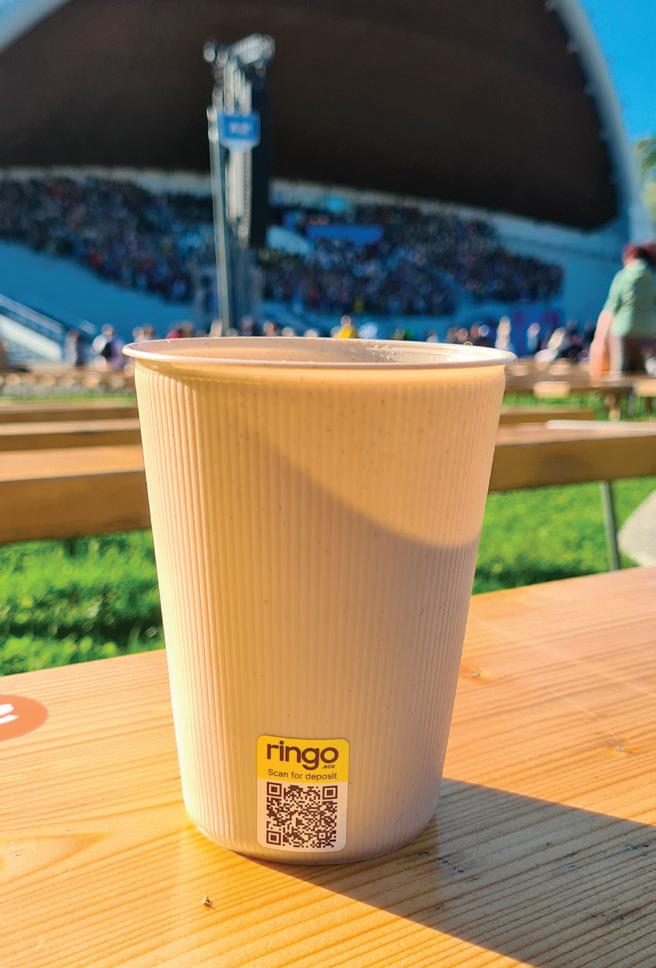
The pilot demonstrated that reuse systems can be implemented even at very large cultural events. While previous experience had already shown that reusable tableware can be implemented at large-scale events, this pilot focused on learning how to combine different return systems and service providers for different target groups within a single event. Reusable dishes and cups were introduced across several festival settings, including performer catering and visitor food courts, while reusable packaging was also tested for meal deliveries to accommodation schools. The measures reduced the use of single-use packaging and raised awareness of circular solutions among visitors, performers and organisers.
The scale and complexity of the event required strong coordination between organisers, reuse service providers, caterers, schools and volunteers. Some vendors did not always follow reuse guidelines when monitoring was limited. The overall loss rates of cups and bowls remained relatively high during the festival were lower than the typical benchmarks.
Introduce reusable tableware for both visitors and performers.
Provide clearly visible return stations and staff support.
Reuse systems can be scaled to other large festivals when communication, training and monitoring are clearly defined.
Cultural mega-events provide strong visibility for circular solutions and can help normalise reuse behaviour among large audiences.
Technical:
Reusable dishes, cups and food delivery packaging
Economic:
Communication materials, training and coordination resources
Organisational:
Cooperation between organisers, caterers, schools and volunteers
Competence:
Training sessions and clear visual communication for guests and staff
Train vendors, volunteers and organisers before the event.
Use strong visual communication and digital reminders to guide visitors.
Testing a shared reusable cup system at a youth festival
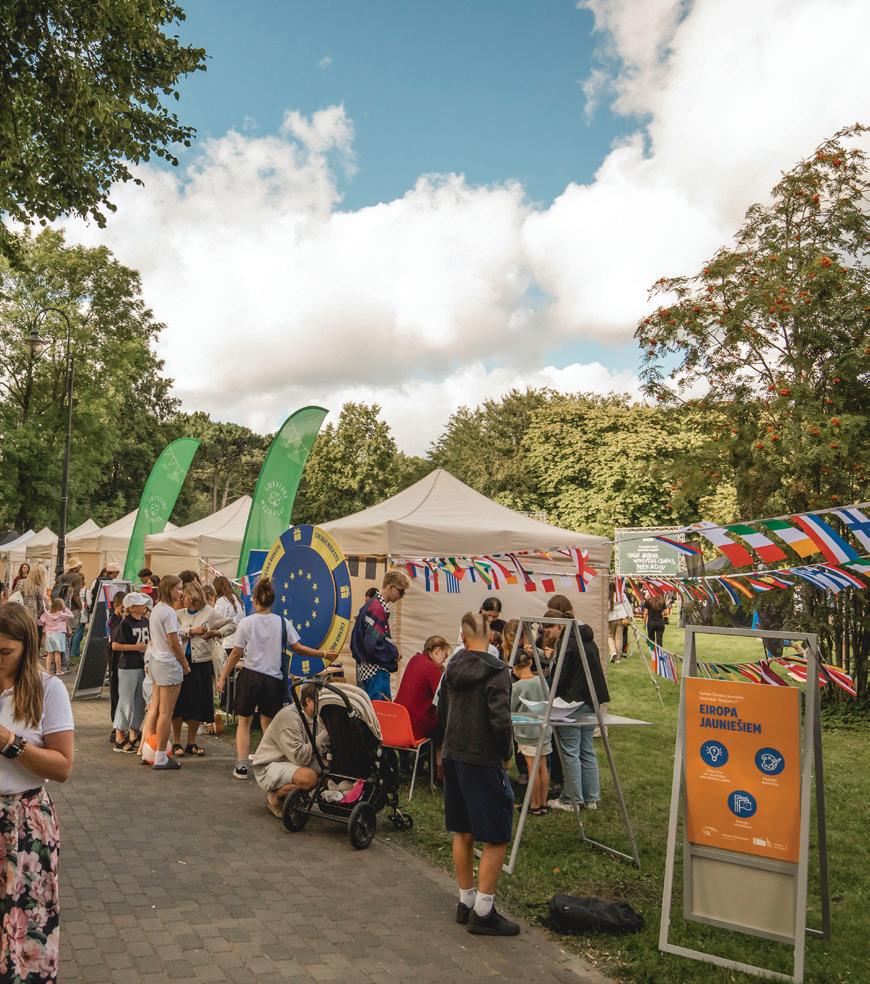
The Kopums / MAD Liepāja Youth Festival is a two day youth opportunities festival held in Jūrmalas Park by the Baltic Sea. The event brings together young people, youth organisations and the wider public to explore culture, creativity, civic enga‑
gement and social issues. In 2025 the organisers piloted a shared reusable cup and deposit system for the first time to reduce single use beverage packaging.
Reductions Gains
Disposable beverage cups repla‑ ced with reusable cups during the festival
≈16,000 participants at the youth festival
Investment
Reusable cup rental and service fees
Reusable cup system tested across multiple food and drink vendors
Communication materials and workshops for vendors
Central return station enabling card or cash deposit refunds
Operational coordination by municipal when the municipal participates in orga nizing the event
Category
Public youth festival
Theme
Reusable beverage cups at public events
Climate technology
Shared reusable cup system with a central return station and card or cash deposit refund
Organisations
Liepāja City Municipality, festival organisers and participating caterers
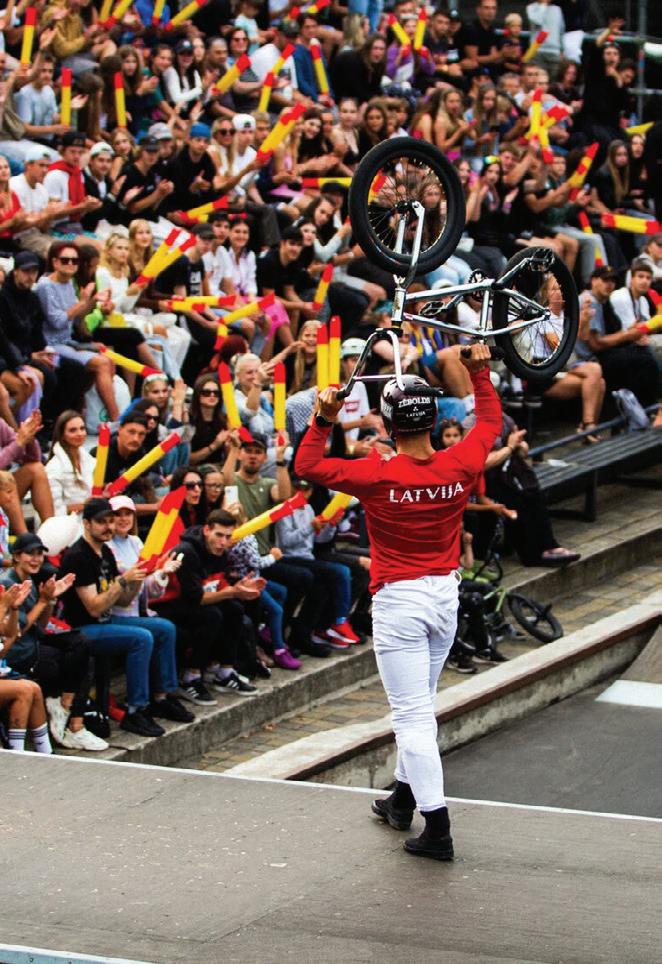
The pilot demonstrated that a shared reusable cup system can function effectively at dynamic youth‑focused outdoor events. A central return station enabled visitors to return cups and receive their deposit either by card or in cash. The system reduced disposable cup use while also raising environmen‑ tal awareness among young visitors and encouraging reuse behaviour.
Because participation in the system was voluntary, not all caterers joined the scheme. Some vendors were hesitant to prepay deposits due to cash‑flow concerns. Irregular visitor flow during the event also made it difficult to collect precise data on return rates.
Define a shared re‑ usable cup system for all vendors.
Install a clearly visible central return station.
Scaling potential
Reusable cup systems can be scaled to other public events when participation rules are mandatory and clearly communicated to all vendors. Financial support or shared cost structures can also help smaller vendors adopt reuse systems more easily.
Technical:
Reusable cups, central return sta‑ tion and deposit refund system
Economic:
Cup rental, service provision and communication materials
Organisational:
Coordination between munici‑ pality, organisers and vendors
Provide training works‑ hops for caterers and organisers.
Competence:
Training workshops and clear visitor communication
Communicate the de‑ posit system through signage, social media and local media.
The publications of Circular food delivery systems were produced under the Change(K)now! project. The Change(K)now! project is co-funded by Interreg Baltic Sea Region. The project´s main objective is a mindset change from single-use to circular or multiple-use of food delivery systems in cities and residents of the Baltic Sea Region. The responsibility for the content lies with the author(-s) and don´t necessarily reflect the funder position on these topics.
CIRCULAR ECONOMY