Case studies: Strategic frameworks for circular food delivery systems
Read all case studies here:
Change(K)now! case studies
CIRCULAR ECONOMY
Change(K)now!
Read all case studies here:
Change(K)now! case studies
CIRCULAR ECONOMY
Change(K)now!
Developing a regulatory framework for reusable food containers in Anykščiai
Anykščiai Municipality developed and adopted a municipal regulation on the use of reusable containers in public and private sector catering establishments. The objective was to create the strategic, organisational and regulatory conditions needed to reduce single-use packaging and sup-
port the transition towards reusable takeaway systems. The regulation was formally adopted by the Municipal Council in November 2024 following a stakeholder-driven development process involving local cafés, catering establishments, business representatives and municipal departments.
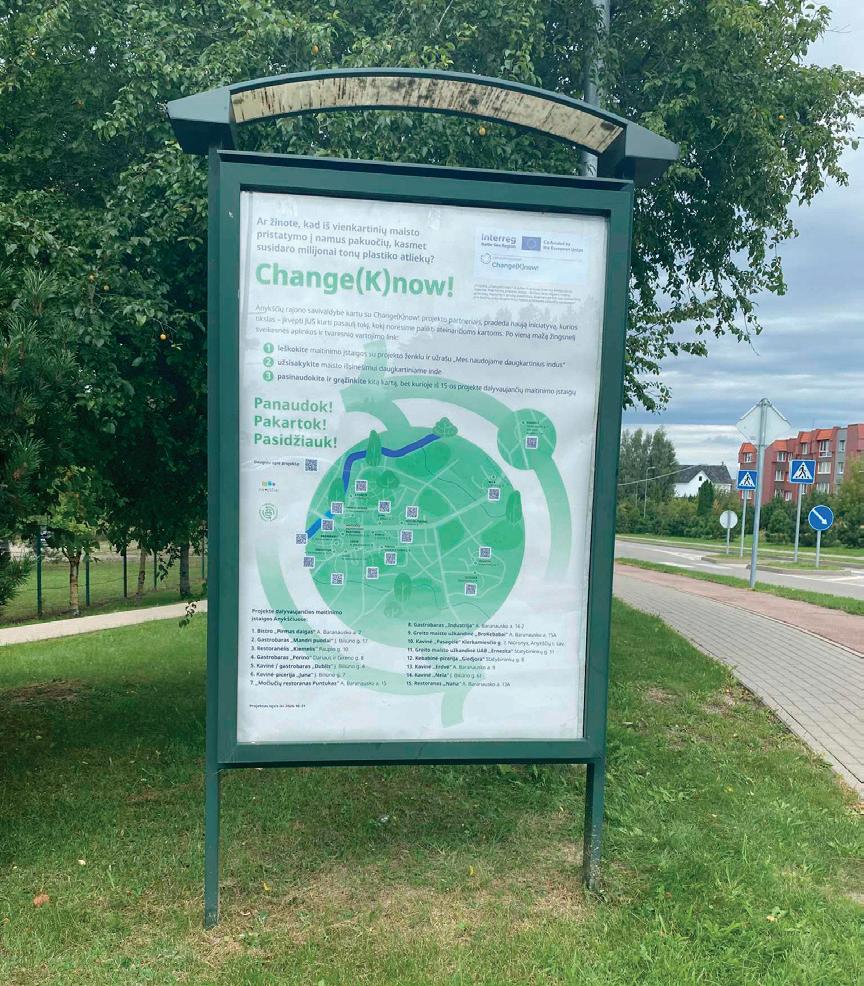
Many municipalities wish to promote reusable packaging but lack the governance structures, responsibilities and cooperation mechanisms needed for implementation. The Anykščiai roadmap demonstrates how a local authority can create an enabling framework that supports future deployment of reusable takeaway systems through regulation, stakeholder engagement and municipal coordination.
Preparation started in 2023 and involved direct dialogue with local catering establishments through meetings, phone calls, emails and workshops. A dedicated working group was established to develop the framework and ensure alignment between municipal objectives and business needs.
Category
Strategic framework and regulatory development
Theme
Reusable takeaway packaging in local food services
Climate technology
Municipal governance and reusable packaging systems
Organisations
Anykščiai Municipality, local cafés and restaurants, Tourism and Business Information Centre
The resulting regulation established
• Principles for the use of reusable containers
• Rules for a deposit-return system
• Cooperation mechanisms between stakeholders
• Hygiene and quality requirements
• Procedures for container distribution and information sharing
Strong political commitment and formal council approval.
Clear definition of responsibilities and cooperation mechanisms.
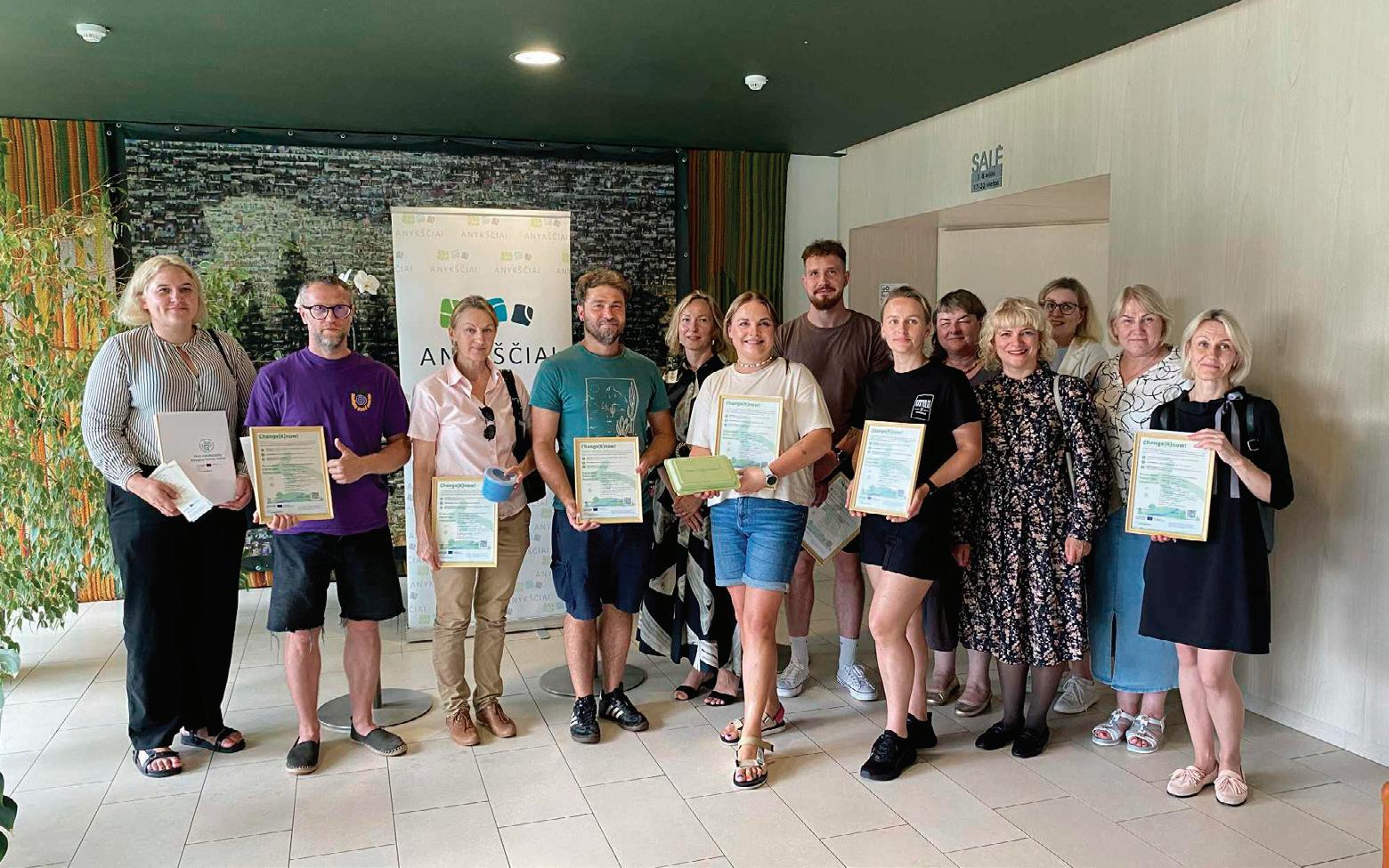
The roadmap was not developed as a stand-alone policy document. Following adoption, the municipality provided financial, infrastructural and educational support to participating businesses and signed agreements with 16 cafés and restaurants to join the reusable takeaway packaging initiative. The framework therefore served as a foundation for subsequent implementation activities and long-term cooperation between the municipality and local businesses.
The case illustrates how municipalities can begin the transition towards reusable takeaway systems by first establishing a clear governance and regulatory framework. While the specific implementation measures may vary between locations, the process of stakeholder engagement, framework development and municipal coordination is highly transferable to other municipalities.
Early involvement of businesses and relevant stakeholders.
Integration of hygiene, logistics and communication requirements into the framework.
Designing a practical deposit-return model.
Balancing voluntary participation with effective implementation.
Defining responsibilities for collection, washing and redistribution.
Ensuring effective customer engagement and awareness raising.
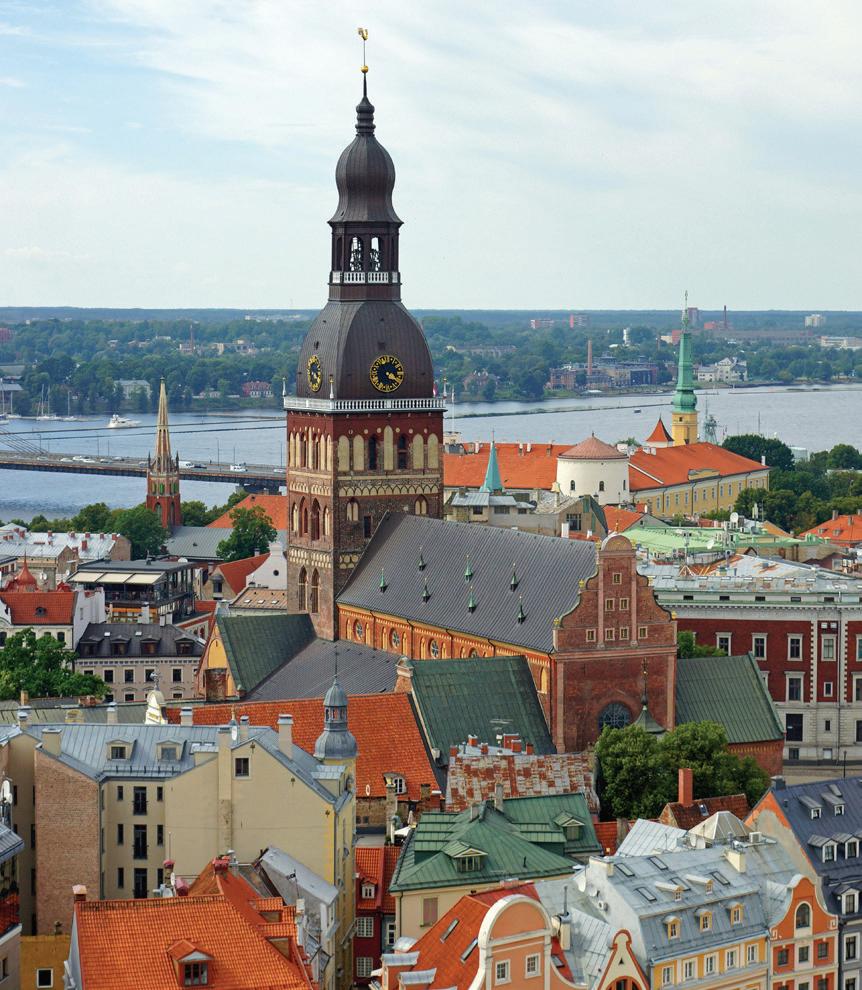
Riga Municipality is developing a strategic guidance document to support the practical implementation of reusable cup systems at public events and street trading activities. The initiative responds to the introduction of Binding Regulation RD-24286, which prohibits the use of disposable cups
during street trading at public events. While the regulation establishes the legal framework, the new guidance document is intended to help vendors, event organisers, municipal staff and service providers translate policy ambitions into workable operational solutions.
Many cities are introducing measures to reduce single-use packaging, but practical implementation often remains a challenge. Riga identified a gap between regulation and day-to-day practice, as vendors and event organisers lacked clear guidance on system selection, logistics, partner cooperation, financial management and visitor communication. The framework aims to accelerate the adoption of reusable cups by providing a shared reference point for all actors involved.
Category
Strategic framework and guidance development
Theme
Reusable cup systems for events and street trading
Climate technology
Circular food delivery systems and reusable packaging
Organisations
Riga Municipality, event organisers, street vendors, deposit system operators and service providers
The framework development began with internal discussions in early 2024 following the adoption of the municipal regulation. A working group was established within the Department of Housing and Environment, involving waste management experts, project staff and municipal decision-makers. The process included reviews of existing regulations and guidance materials, exchanges with Change(K)now! partner cities, stakeholder consultations and lessons learned from piloting a decentralised reusable cup system during the Riga City Festival in August 2025. The preparation of the final guidance document is planned through an external procurement process in 2026.
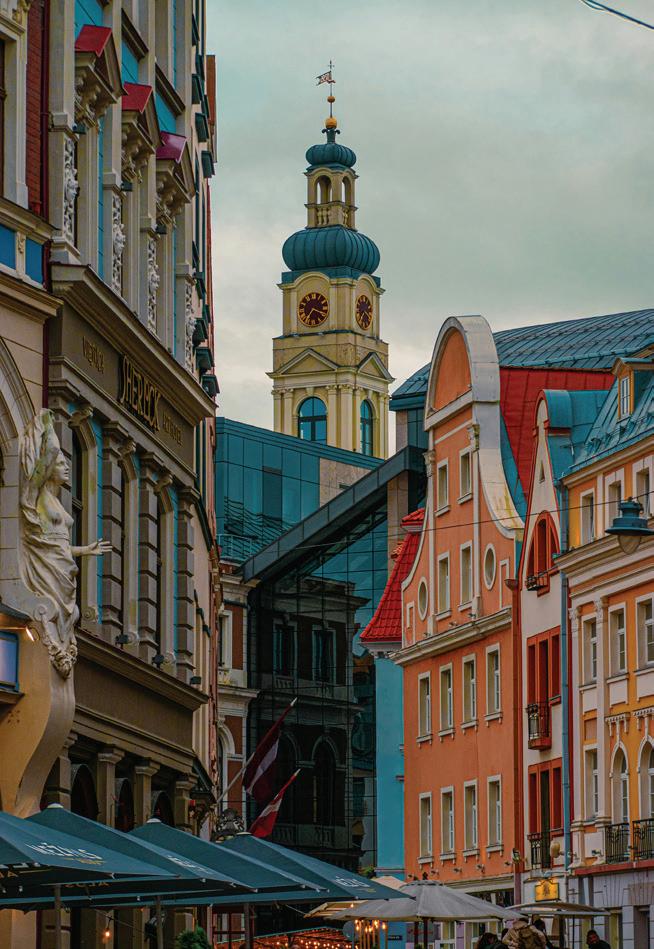
The guidance document is intended as a practical implementation tool rather than a stand-alone policy. It will support future procurement processes, municipal decision-making and the wider deployment of reusable cup systems across Riga. The municipality is already exploring the use of centralised reusable cup systems at public events and plans to update the guidance regularly to reflect new experiences, technologies and market developments.
The Riga approach demonstrates how municipalities can bridge the gap between regulation and implementation by developing practical guidance for stakeholders. The methodology of combining political commitment, pilot testing, stakeholder feedback and operational guidance is highly transferable to other municipalities seeking to introduce reusable cup systems or other circular food delivery solutions.
Stakeholder engagement has been an integral part of the development process. Feedback from visitors, vendors, event organisers and deposit system operators collected during pilot activities has informed the framework design. Once completed, the guidance document will be made publicly available through municipal channels and distributed directly to vendors during permit application processes.
• Regulatory guidance explaining applicable rules and responsibilities.
• Definitions and principles for operating reusable cup deposit systems.
• Technical requirements for reusable cups, including hygiene, durability and identification.
• Practical implementation models including closed, open, mobile and hybrid systems.
• Step-by-step guidance covering planning, operation and post-event activities.
• Logistics, storage, washing and circulation management procedures.
• Financial and accounting models for deposits, refunds and loss management.
• Communication tools and visitor information measures.
• Examples of partners, service providers and technology solutions.
• Strong political support for expanding reusable systems in public events.
• A clear regulatory foundation established through municipal legislation.
• Dedicated cross-departmental cooperation within the municipality.
• Use of pilot activities to generate practical insights and evidence.
• Alignment with broader circular economy objectives and future policy development.
• Limited availability of practical implementation guidance for stakeholders.
• A rapidly evolving market for reusable cup and deposit solutions.
• The need to accommodate different event sizes and operational models.
• Balancing regulatory requirements with practical and cost-effective implementation.
• Ensuring that guidance remains relevant as technologies and service models develop.
Reducing disposable cups at events, beaches and coastal cafes in Liepaja
Liepaja City developed a roadmap consisting of local regulations and guidelines to reduce the use of disposable cups in public spaces. The work covers street trading during events, beach and swimming area regulations, and future guidelines for re-
usable cups in cafes along the coast and in parks.
The aim is to reduce waste generation, support circular food delivery systems and protect coastal environments.
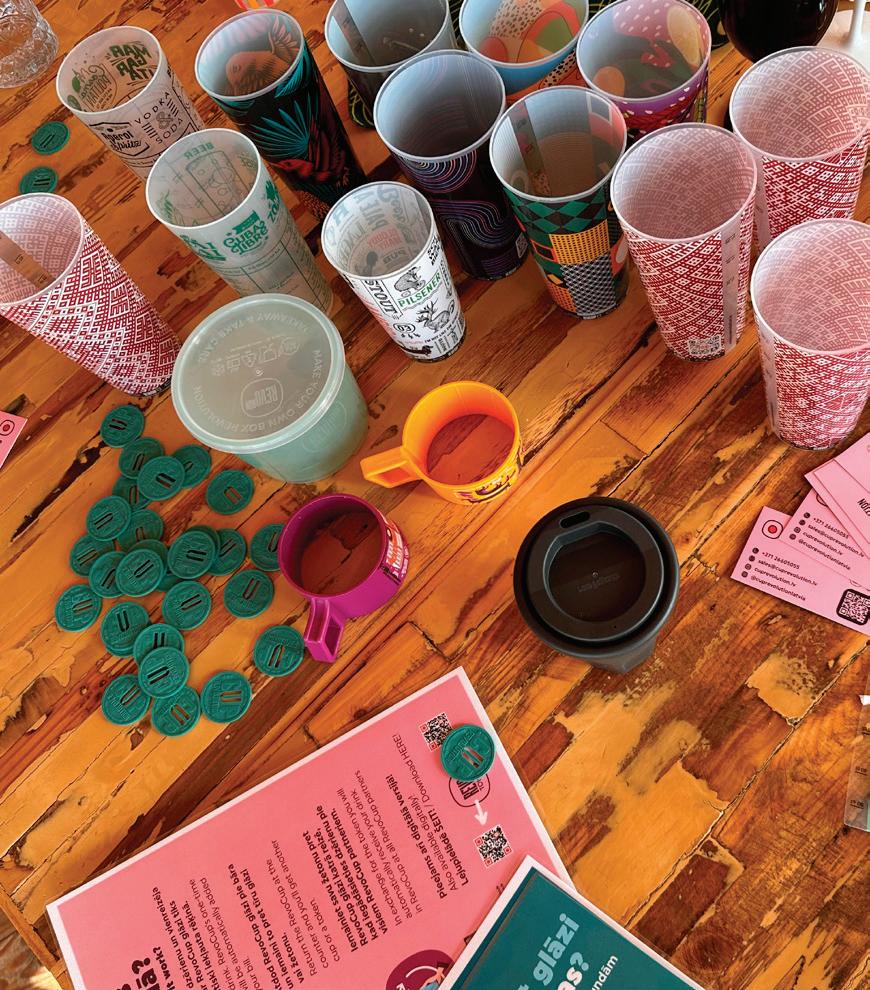
Disposable cups are a visible source of waste at events, beaches and other public places. The Liepaja roadmap shows how a municipality can use local regulation, legal clarification and stakeholder dialogue to create the conditions for reusable cup systems in public spaces. The approach also supports the city’s efforts to reduce coastal pollution and strengthen circular economy practices.
A municipal working group was established in May 2024, bringing together departments responsible for environment, real estate, customer services, communal administration, development, building administration and legal affairs. The group reviewed existing rules, legislation and strategic documents to identify where circular food delivery systems could be addressed.
Category
Strategic framework and regulatory development Theme
Reusable cups at public events, beaches and coastal cafes
Climate technology
Municipal governance and reusable cup systems
Organisations
City of Liepaja, municipal departments, caterers, event organisers and service providers
The roadmap process included:
• Adoption of regulations for street trading during public events,
• Amendments to beach and swimming area regulations,
• Dialogue with national ministries on legal possibilities,
• Meetings and seminars with beach, park and event caterers,
• Preparation of guidelines and a socio-economic feasibility study.
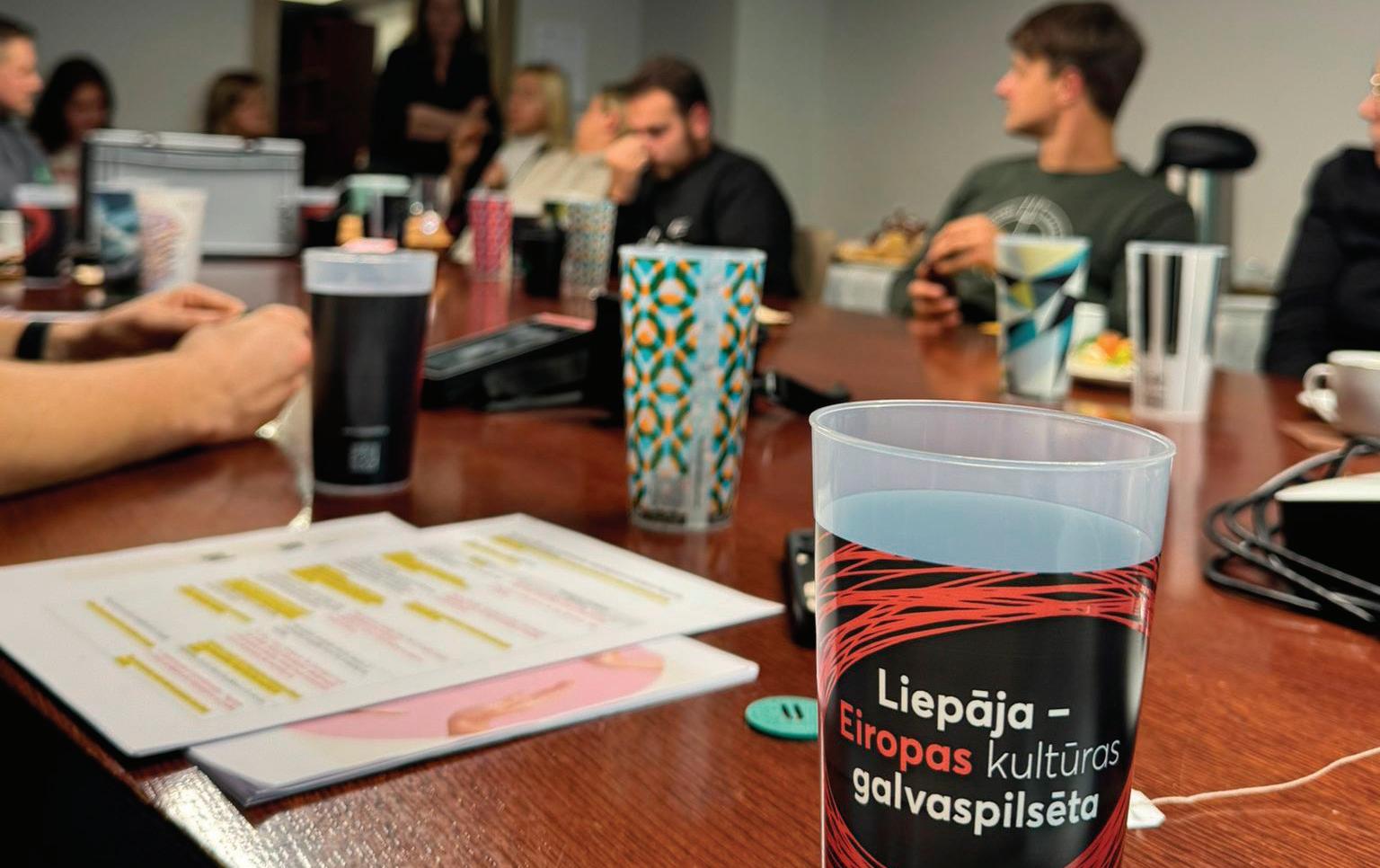
The street trading regulation prohibits the sale of beverages in non-reusable cups at public events from 1 January 2026, requiring a deposit system for reusable plastic cups. The beach regulations recommend reusable cups in beaches and swimming areas. The city is also preparing guidelines for caterers and event organisers, supported by a socio-economic study and continued dialogue with businesses.
The case illustrates how municipalities can use different regulatory tools depending on where they have legal authority. Binding requirements can be applied to public events, while recommendations and guidance can support implementation in areas where direct regulation is more limited. This combination of regulation, guidance and stakeholder engagement is transferable to other coastal cities and municipalities working to reduce disposable cups in public spaces.
Key success factors
Legal support and clarification of municipal competences.
Cross-departmental cooperation within the city administration.
Dialogue with entrepreneurs, caterers and reusable tableware providers.
Early communication through seminars, media and municipal channels.
Limited municipal authority over permanent business operations.
Ensuring that caterers have practical knowledge and implementation tools.
Balancing binding regulation with voluntary recommendations.
Clarifying logistics, washing, deposits and responsibilities for reusable cups.
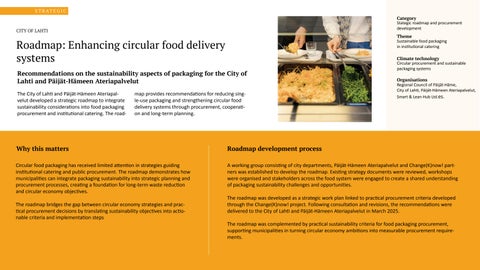
Recommendations on the sustainability aspects of packaging for the City of Lahti and Päijät-Hämeen Ateriapalvelut
The City of Lahti and Päijät-Hämeen Ateriapalvelut developed a strategic roadmap to integrate sustainability considerations into food packaging procurement and institutional catering. The roadmap provides recommendations for reducing single-use packaging and strengthening circular food delivery systems through procurement, cooperation and long-term planning.
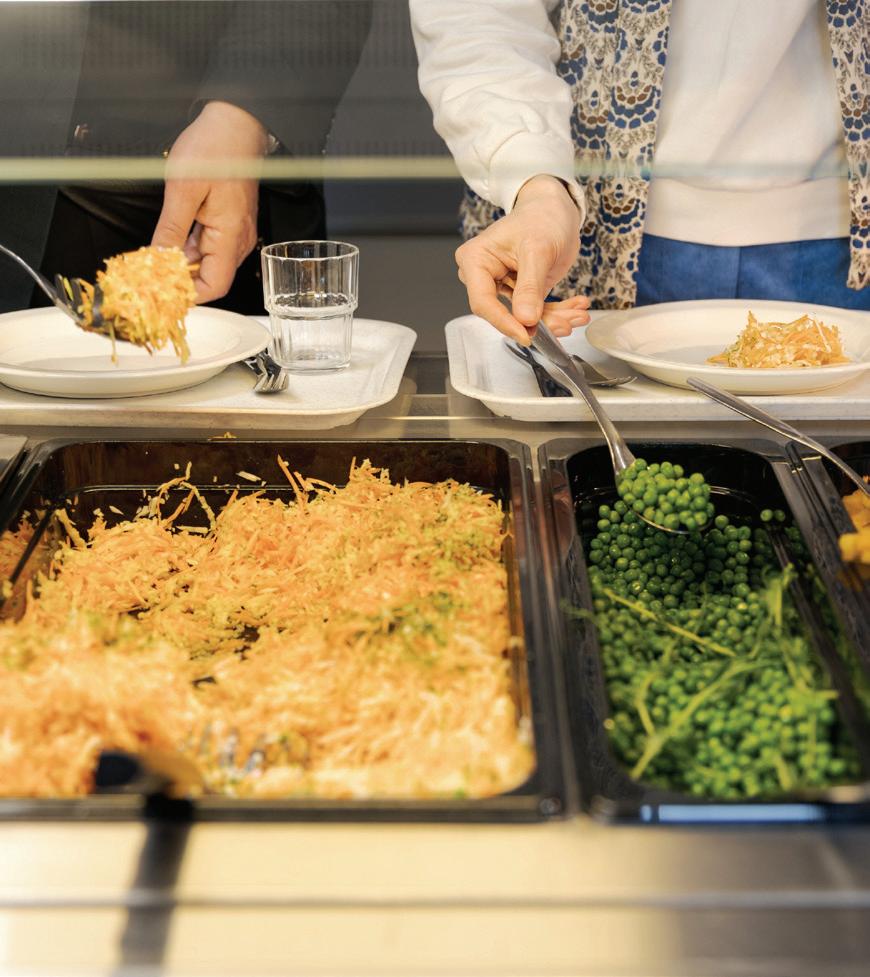
Circular food packaging has received limited attention in strategies guiding institutional catering and public procurement. The roadmap demonstrates how municipalities can integrate packaging sustainability into strategic planning and procurement processes, creating a foundation for long-term waste reduction and circular economy objectives.
The roadmap bridges the gap between circular economy strategies and practical procurement decisions by translating sustainability objectives into actionable criteria and implementation steps
Category
Stategic roadmap and procurement development
Theme
Sustainable food packaging in institutional catering
Climate technology
Circular procurement and sustainable packaging systems
Organisations
Regional Council of Päijät-Häme, City of Lahti, Päijät-Hämeen Ateriapalvelut, Smart & Lean Hub Ltd.es.
A working group consisting of city departments, Päijät-Hämeen Ateriapalvelut and Change(K)now! partners was established to develop the roadmap. Existing strategy documents were reviewed, workshops were organised and stakeholders across the food system were engaged to create a shared understanding of packaging sustainability challenges and opportunities.
The roadmap was developed as a strategic work plan linked to practical procurement criteria developed through the Change(K)now! project. Following consultation and revisions, the recommendations were delivered to the City of Lahti and Päijät-Hämeen Ateriapalvelut in March 2025.
The roadmap was complemented by practical sustainability criteria for food packaging procurement, supporting municipalities in turning circular economy ambitions into measurable procurement requirements.
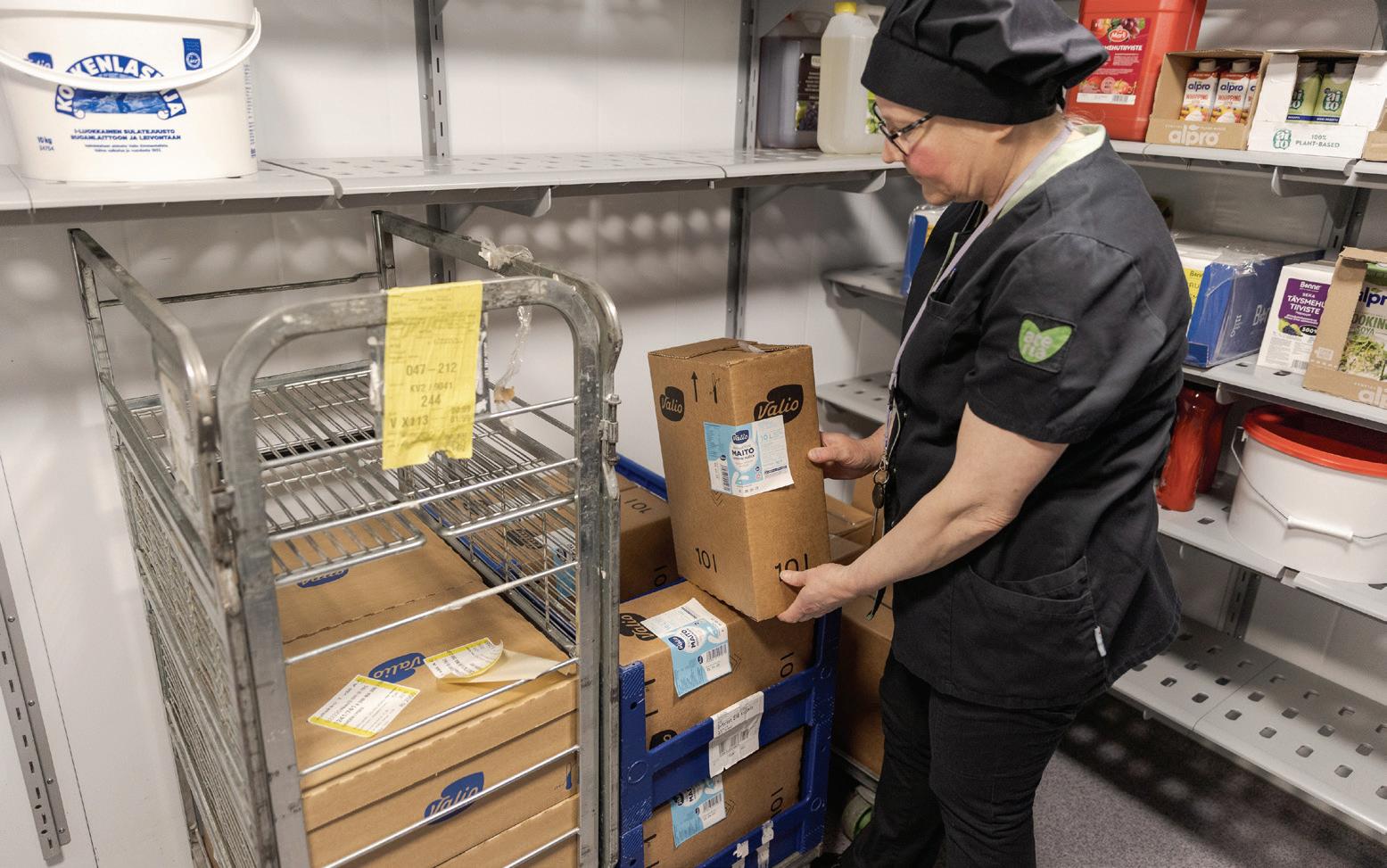
Continuous communication and cooperation were maintained throughout the process through meetings, workshops and regular dialogue between partners. Information sharing at local, regional and international levels supported learning, networking and the exchange of best practices.
Replication activities started in 2026 by providing municipalities with a practical checklist and roadmap. The approach supports municipalities in assessing their readiness, integrating packaging criteria into procurement processes and adapting the transition pathway to their local context.
Success factors
Strong collaboration between municipalities, catering services and project partners.
Training and capacity-building provided through the Change(K)now! project.
Integrating packaging sustainability into existing strategic frameworks.
Need to justify new sustainability requirements within procurement processes.
Integration of sustainability and economic considerations.
Linking strategic recommendations with practical procurement tools.
Limited national regulation and benchmark examples.
Tallinn adopted the Circular Economy Development Plan 2035 in June 2025 to establish a clear strategic direction for circular products, services and public procurement. Within Change(K)now!, the plan includes measures to expand reusable tableware and packaging systems across municipal operations and public events.

Although Tallinn had already introduced measures to reduce single-use plastics, it lacked common goals, targets and actions for scaling reusable systems. The development plan provides a shared framework for municipalities, service providers and other stakeholders.
Category
Strategic framework and action programme development
Theme
Circular food delivery systems and circular procurement
Climate technology
Municipal circular economy
governance
Organisations
City of Tallinn and key circular economy stakeholders
The initiative was inspired by Tallinn’s participation in the OECD programme ’The Circular Economy in Cities and Regions’. Following a City Council decision in February 2024, a steering structure was established involving municipal representatives, national authorities, universities and circular economy experts. Needs assessments, stakeholder mapping, workshops and consultations informed the plan, which was adopted by the City Council on 12 June 2025.

The plan translates strategy into action through training, awareness raising, reusable tableware deployment, food reuse initiatives and circular procurement measures. Reusable tableware requirements will be integrated into future municipal food and catering procurements.
The Tallinn case demonstrates how municipalities can combine political commitment, stakeholder engagement and procurement measures to create a long-term framework for circular food delivery systems.
The plan was developed through a broad co-creation process involving internal and external stakeholders. Following adoption, Tallinn communicates the strategy through municipal websites, events, awareness campaigns and targeted outreach activities.
Reusable tableware requirements at public events.
Training programmes for municipal staff and event organisers.
Awareness campaigns promoting reusable tableware and refillable water.
Expansion of reusable takeaway solutions.
Food reuse initiatives using reusable containers.
Circular procurement requirements for school meals and catering services.
Strong political commitment and leadership support.
Active stakeholder participation throughout the process.
Dedicated circular economy expertise within the municipality.
Use of European best practices and international experience.
Limited national regulation on reusable takeaway packaging.
Funding and operational requirements for reusable systems.
Integrating reuse ambitions into the city’s strategic framework for waste prevention Copenhagen has included reusable packaging as one of several initiatives supporting the city’s transition towards a circular economy. Through the Resource and Waste Strategy 2030, reuse principles, circular procurement and experiences from pilot activities are reflected in the city’s broader strategic framework for waste prevention and resource efficiency.
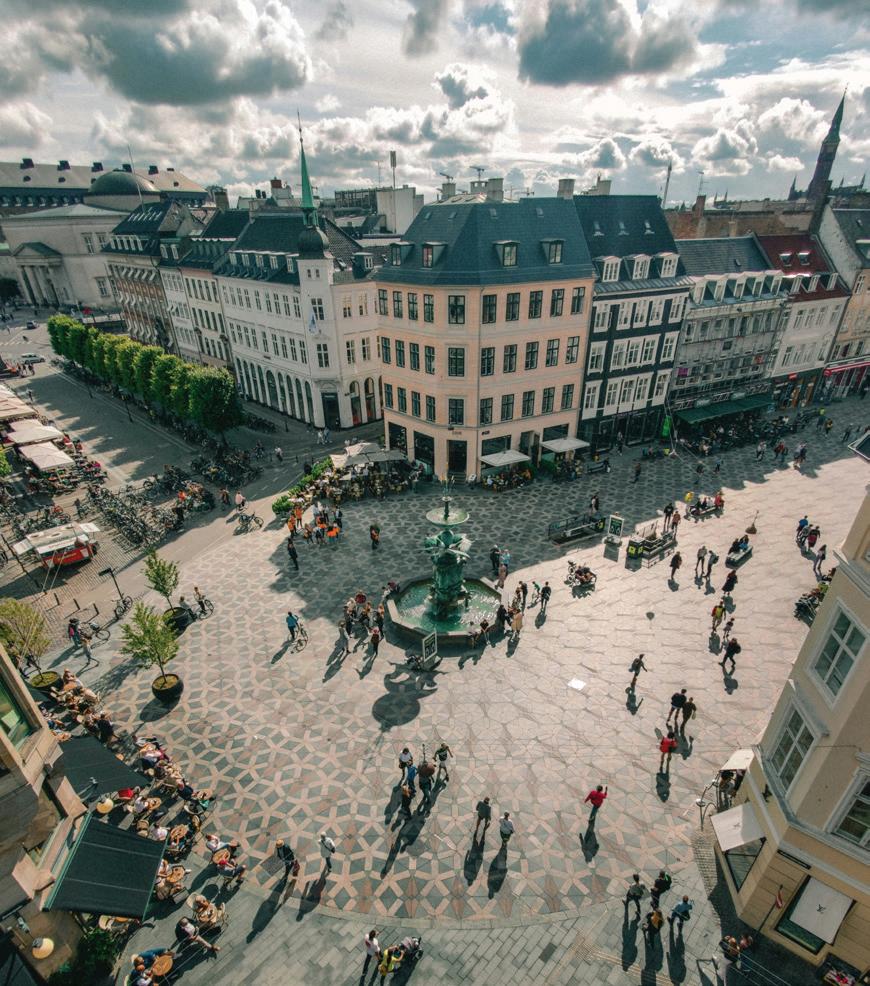
Many municipalities want to reduce single-use packaging but struggle to move beyond isolated pilot projects. Copenhagen’s approach illustrates how municipalities can connect practical reuse initiatives with broader waste prevention and circular economy strategies, helping to create a long-term framework that links policy development, procurement, stakeholder engagement and implementation activities.
The Resource and Waste Strategy 2030 was developed as part of Copenhagen’s wider transition towards a circular economy and builds on existing waste prevention initiatives, municipal sustainability objectives and practical experiences from reuse and circular economy projects. These experiences helped identify opportunities for strengthening waste prevention efforts, including through reusable packaging solutions. Reusable packaging is reflected in the city’s overall strategic framework alongside other waste prevention and circular economy initiatives.
Category
Municipal circular economy strategy
Theme
Reusable packaging in public catering, events and takeaway systems
Climate technology
Reusable packaging systems and city-wide reuse infrastructure
Organisations
City of Copenhagen, Waste and Resource Department, municipal departments and external partners
The strategy incorporates:
• reuse targets and pilot actions,
• circular procurement principles,
• stakeholder engagement and communication activities,
• support for testing and scaling reusable packaging systems,
• monitoring and data collection to support implementation.
success factors
Strong political commitment to circular economy objectives.
Cross-departmental collaboration.
The strategy is intended to guide concrete actions across the municipality. The strategy is intended to guide concrete actions across the municipality. Experiences from pilot projects, procurement activities and stakeholder partnerships contribute to its implementation and help inform future actions related to reusable packaging. The inclusion of reusable packaging in the city’s broader waste strategy helps connect these practical experiences with longer-term policy development and future scaling efforts.
The case illustrates how municipalities can accelerate the transition towards reusable packaging by integrating reuse objectives into existing waste and circular economy strategies. While the specific measures may vary between cities, the approach of combining policy development, stakeholder engagement and practical pilot activities is highly transferable.
Integration into an existing municipal strategy.
Combination of strategic planning and practical pilot activities.
Translating long-term strategic goals into operational actions.
Aligning local ambitions with national regulatory frameworks.
Coordinating multiple stakeholders and policy areas.
Scaling successful pilots into wider implementation.
The publications of Circular food delivery systems were produced under the Change(K)now! project. The Change(K)now! project is co-funded by Interreg Baltic Sea Region. The project´s main objective is a mindset change from single-use to circular or multiple-use of food delivery systems in cities and residents of the Baltic Sea Region. The responsibility for the content lies with the author(-s) and don´t necessarily reflect the funder position on these topics.
CIRCULAR ECONOMY